THE PILLARS OF BILOXI
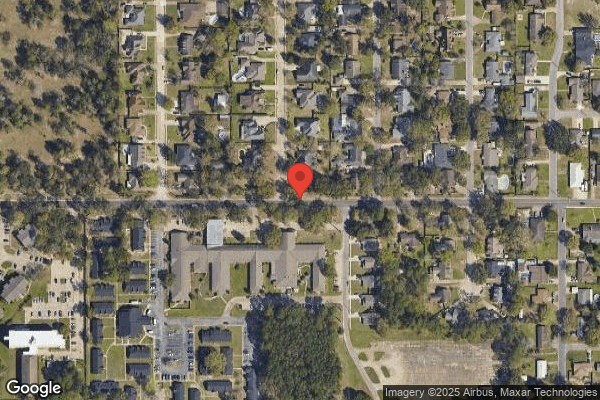
2279 ATKINSON ROAD, BILOXI, MS 39531 (228) 388-1805
For profit - Limited Liability company 180 Beds COMMUNITY ELDERCARE SERVICES Data: November 2025 3 Immediate Jeopardy citations
Trust Grade
0/100
#190 of 200 in MS
Last Inspection: April 2024

Within standard 12-15 month inspection cycle. Federal law requires annual inspections.

Overview

The Pillars of Biloxi has received a Trust Grade of F, indicating significant concerns about the quality of care and safety at the facility. Ranking #190 out of 200 in Mississippi places it in the bottom half of state facilities, and it is the last-ranked option among six homes in Harrison County. While the facility's trend is improving, having reduced serious issues from 18 to 4 over the last year, the overall situation remains troubling with 47 reported deficiencies, including critical incidents where residents were able to exit the building unsupervised. Staffing is a weakness, with a 59% turnover rate, which is concerning compared to the state average, and the facility also faces $47,692 in fines, higher than 79% of Mississippi facilities. On a positive note, the facility does have average RN coverage, which can help catch issues that might be missed by other staff.

Trust Score
F
0/100
In Mississippi
#190/200
Bottom 5%
Safety Record
High Risk
Review needed
Inspections
Getting Better
18 → 4 violations
Staff Stability
⚠ Watch
59% turnover. Above average. Higher turnover means staff may not know residents' routines.
Penalties
✓ Good
$47,692 in fines. Lower than most Mississippi facilities. Relatively clean record.
Skilled Nurses
⚠ Watch
Each resident gets only 26 minutes of Registered Nurse (RN) attention daily — below average for Mississippi. Fewer RN minutes means fewer trained eyes watching for problems.
Violations
⚠ Watch
47 deficiencies on record. Higher than average. Multiple issues found across inspections.
★☆☆☆☆
1.0
Overall Rating
★★☆☆☆
2.0
Staff Levels
★★☆☆☆
2.0
Care Quality
★☆☆☆☆
1.0
Inspection Score
Stable
2024: 18 issues
2025: 4 issues

The Good

  • Full Sprinkler Coverage · Fire safety systems throughout facility
  • No fines on record

Facility shows strength in fire safety.

The Bad

1-Star Overall Rating

Below Mississippi average (2.6)

Significant quality concerns identified by CMS

Staff Turnover: 59%

13pts above Mississippi avg (46%)

Frequent staff changes - ask about care continuity

Federal Fines: $47,692

Above median ($33,413)

Moderate penalties - review what triggered them

Chain: COMMUNITY ELDERCARE SERVICES

Part of a multi-facility chain

Ask about local staffing decisions and management

Staff turnover is elevated (59%)

11 points above Mississippi average of 48%

The Ugly 47 deficiencies on record

3 life-threatening 2 actual harm
Aug 2025 1 deficiency
CONCERN (D) 📢 Someone Reported This

A family member, employee, or ombudsman was alarmed enough to file a formal complaint

Potential for Harm - no one hurt, but risky conditions existed

Deficiency F0605 (Tag F0605)

Could have caused harm · This affected 1 resident

Based on staff interview, record review, and facility policy review, the facility failed to ensure antipsychotic medications were prescribed for residents with appropriate, clinically documented diagn...

Read full inspector narrative →
Based on staff interview, record review, and facility policy review, the facility failed to ensure antipsychotic medications were prescribed for residents with appropriate, clinically documented diagnoses for one (1) of six (6) residents reviewed for unnecessary medications. Resident #157Findings include: A review of the facility's policy, Antipsychotic Medication Use, revised 10/2022, revealed, Policy Interpretation and Implementation 1. Residents will only receive antipsychotic medications when necessary to treat specific conditions for which they are indicated and effective.A record review of the admission Record revealed the facility admitted Resident #157 on 9/20/24 with diagnoses including Major Depressive Disorder, Single Episode, Unspecified.A record review of the Discharge Summary from an acute care hospital, dated 9/20/24, revealed Resident #157's Problem List/Discharge Diagnosis included Hemorrhagic Cerebrovascular Accident, Disorientation, Pulmonary Embolism, Acute Kidney Injury, and Wheezing.A record review of the Diagnosis Report revealed Resident #157 had a diagnosis of Major Depressive Disorder, Single Episode, Unspecified with an onset date listed as 9/20/24. A record review of the Order Summary Report with an order date range of 9/20/24 through 8/31/25 revealed Resident #157 had Physician's Orders for Olanzapine (an antipsychotic medication), dated 9/20/25 for Mood, for Olanzapine, dated 10/9/24, for Psychosis, Olanzapine, dated 10/22/24 for psychotic disorder, Olanzapine, dated 11/7/24 for Major Depressive Disorder, Single Episode, Unspecified, and Zyprexa (Olanzapine), dated 1/9/25 for Major Depressive Disorder, Single Episode, Unspecified. Further review revealed Physician's Orders for Haloperidol (an antipsychotic medication), dated 1/14/25 for mood and Haloperidol, dated 10/22/24 for Psychosis.A record review of the admission Minimum Data Set (MDS) with an Assessment Reference Date (ARD) of 9/26/25 revealed Resident #157 had a diagnosis of Depression and there were no other psychiatric/mood disorders indicated.A record review of the Significant Change in Status MDS with ARD of 1/31/25 revealed Resident #157 had a diagnosis of Depression with no other psychiatric/mood disorders indicated.On 8/21/25 at 11:45 AM, in an interview with the pharmacist, he explained that his monthly reviews include evaluating appropriate diagnoses, potential interactions, and duration of therapy. He stated that he does not generally have concerns if the medical record does not contain a specific supporting diagnosis for a medication, because many medications can be prescribed for multiple conditions. On 8/21/25 at 1:32 PM, during an interview with the Director of Nursing (DON), she explained that when a physician provides a new medication order, the physician indicates the diagnosis associated with the medication. The nurse then enters the order into electronic health record, where a prompt appears requiring the associated diagnosis. She stated that orders are reviewed each morning to ensure diagnoses are in place for new medications. She further explained that the Minimum Data Set (MDS) nurse reviews diagnoses for accuracy, and for psychotropic medications, the consultant pharmacist verifies that appropriate diagnoses are present.
Apr 2025 1 deficiency 1 IJ
CRITICAL (J) 📢 Someone Reported This

A family member, employee, or ombudsman was alarmed enough to file a formal complaint

Immediate Jeopardy (IJ) - the most serious Medicare violation

Accident Prevention (Tag F0689)

Someone could have died · This affected 1 resident

Based on observation, interviews, record review, and facility policy review, the facility failed to provide adequate supervision and ensure environmental safety to prevent Resident #1, a vulnerable re...

Read full inspector narrative →
Based on observation, interviews, record review, and facility policy review, the facility failed to provide adequate supervision and ensure environmental safety to prevent Resident #1, a vulnerable resident, from exiting the facility unnoticed and unsupervised for one (1) of three (3) residents reviewed. Resident #1 On 3/23/25, Resident #1, who had a Brief Interview for Mental Status (BIMS) score of eight (8), physically pushed out and removed the window screen in his room and exited the building. Resident #1 exited the facility unnoticed and was last seen inside the facility at 6:00 AM by a Certified Nursing Assistant (CNA) and was found at 6:30 AM by facility staff (Dietary Cook) who was reporting to work. The resident was observed by the [NAME] walking around side of the building and was approximately 130 steps away from the building. Resident #1 was wearing shorts only and no shoes. The facility's failure to provide supervision and ensure environmental safety put Resident #1 and other vulnerable residents at risk for serious injury, serious harm, serious impairment, or death. The situation was determined to be Immediate Jeopardy (IJ) and Substandard Quality of Care (SQC), which began on 3/23/25, when Resident #1 exited the facility. The State Agency (SA) notified the Administrator of the IJ on 4/2/25 at 2:40 PM ad provided an IJ Template. Based on the facility's implementation of corrective actions on 3/23/25, the SA determined the IJ and SQC to be Past Non-Compliance (PNC) and the IJ was removed as of 3/24/25 prior to the SA's entrance on 4/2/25. Findings include: A review of the facility's policy, Accident and Incidents, dated 2/19/2017, revealed, .It is the policy of this facility that the resident environment remains as free of accidents and hazards as possible and those residents receive supervision and assistance devices to prevent accidents whenever possible . A review of the facility's policy, Emergency Procedure-Missing Resident, dated 3/2023, revealed, .Resident elopement resulting in a missing resident is considered a facility emergency . A record review of the facility's investigation, dated 3/25/25, revealed that on 3/23/25 at 6:30 AM, the Dietary [NAME] was entering the facility and noticed a gentleman walking from the side of the building. The gentleman approached the dietary cook at this time, but he was unable to understand him. The [NAME] asked the man to sit on the curb so that he could get some assistance. A housekeeper was within range of the facility entry door and confirmed that the man was a resident of the facility. The housekeeper notified the nurse on duty that the patient was sitting outside his room on the curb. The resident was escorted back into the facility by the Nurse Supervisor and housekeeper. The resident was unable to explain what he was doing. Through staff interviews and investigation, it was determined that the Nurse on Duty last saw the resident at approximately 4:30 AM when she gave him his medications and treatment. The resident was calm and appeared to have no signs of any type of agitation or anxiousness. Certified Nurse Aide (CNA) #1 observed Resident #1 attempting to enter another resident's room at approximately 6:00 AM on 3/23/25 and re-directed the resident. At some point after the encounter with the Nurse on duty and the CNA, the resident opened a window, removed the screen, and exited the building to get air. The weather was approximately 63 degrees and he was wearing shorts. Upon re-entering the building, the resident was assessed with no signs or symptoms of any injuries and no psychosocial harm found. A record review of the admission Record revealed the facility admitted Resident #1 on 3/5/25 with diagnoses including Squamous Cell Carcinoma of the Skin and Lip. A record review of the admission Minimum Data Set (MDS) with an Assessment Reference Date (ARD) of 3/12/25 revealed Resident #1 had a Brief Interview for Mental Status (BIMS) score of 8, which indicated his cognition was moderately impaired. A record review of the Evaluation Bundle dated 3/6/25, signed by Registered Nurse (RN) #2, indicated the resident was not identified as a wander/elopement risk. A record review of a weather report via https://www.timeanddate.com revealed the temperature at the time of the elopement was approximately 63 degrees On 4/2/25 at 6:40 AM, during an interview with the Assistant Director of Nursing (ADON), she confirmed that on 3/23/25 at 6:30 AM the Dietary [NAME] entered the back employee entrance and noticed a man dressed in shorts, no shirt, and no shoes walking from the west side of the facility. She stated the cook was unable to understand the man's speech and asked a housekeeper to confirm his identity. The housekeeper confirmed the individual was Resident #1. The cook stayed with the resident while the housekeeper retrieved the nurse, who assessed the resident for injuries. The resident was then able to walk back to his room independently. The nurse notified her immediate supervisor, who then contacted the Administrator. On 4/2/25 at 7:00 AM, during an interview with RN #1, she explained that Resident #1 did not exhibit elopement behaviors prior to the incident. She stated that around 4:30 AM on 3/23/25, she found the resident in an empty room and redirected him back to his room, completed wound care, and administered pain medication. Later that morning, the housekeeper notified her that Resident #1 had been found outside near the back entrance. She assessed the resident, noted no injuries, and assisted him back to his room. On 4/2/25 at 7:20 AM, during an interview with Housekeeper #1, she confirmed that on 3/23/25 around 6:30 AM, the Dietary [NAME] asked her if the man outside was a resident. She confirmed that he was and immediately ran to get the nurse. On 4/2/25 at 7:30 AM, during an observation of the area from Resident #1's window to the area he was found, the Assistant Director of Nursing (ADON) confirmed the resident had walked approximately 130 feet from his room to the rear entrance of the facility. On 4/2/25 at 8:00 AM, during a phone interview with CNA #1, she reported that at approximately 6:00 AM on 3/23/25, she observed Resident #1 attempting to enter another resident's room. She redirected him back to his room. At 6:30 AM, she was informed by the housekeeper that the resident had been found outside. She and the nurse assisted him back inside. On 4/2/25 at 8:30 AM, during a phone interview, the Dietary [NAME] confirmed that on 3/23/25 at approximately 6:30 AM, he observed a man walking around the back of the facility and was unable to understand him. He asked a housekeeper to confirm if the individual was a resident. Once confirmed, he remained with the resident until staff arrived. On 4/2/25 at 8:45 AM, during a phone interview with CNA #2, she confirmed that on 3/23/25, she saw Resident #1 sitting on the curb with the Dietary [NAME] as she parked her car. The resident's nurse and CNA #1 brought him back inside. On 4/2/25 at 12:00 PM, during an interview with the Administrator, she confirmed CNA #1 had redirected Resident #1 at 6:00 AM, and that he was later found outside at 6:30 AM. She stated the resident had not been previously identified as an elopement risk and he had been at the facility for a little over two weeks. She confirmed the facility performed a full assessment of the resident, accounted for all residents, conducted a Quality Assurance and Performance Improvement (QAPI) meeting the same day, and implemented corrective actions including in-services, reassessments, window safety checks, and elopement drills on all shifts. She confirmed that she reported the incident to the State Agency and the Attorney General's office. On 4/2/25 at 12:30 PM, during an interview with the Director of Nursing (DON), she stated Resident #1 was evaluated on admission and determined to not be at risk for elopement. She confirmed that he had not exhibited wandering or exit-seeking behavior since his admission, which was 18 days prior to the date of the incident. On 4/2/25 at 1:00 PM, during an interview with the Maintenance Director, he confirmed that after being informed of the elopement, he inspected all doors, windows, and keypads. He installed L-brackets on resident room windows to prevent them from opening more than six inches and conducted elopement drills for all shifts. He also confirmed attending all required in-services. On 4/2/25 at 3:00 PM, during an interview with the Nurse Practitioner (NP), she confirmed that Resident #1 was not identified as an elopement risk and had not exhibited any behavioral issues since his admission date of 3/5/25. The facility submitted a corrective action plan as follows: On 3/23/2025 at 6:35 AM, the Registered Nurse (RN) escorted the resident into the facility and assessed him with no signs or symptoms of injuries with vitals within normal limits. On 3/23/2025 at 6:50 AM, the Director of Nurse (DON) was notified by the nurse supervisor that the resident was outside on the curb and escorted back into the building. DON instructed the nurse supervisor to transfer Resident #1 to the secured unit for increased observation; as well as using a current daily census to perform a head count on all residents, and all residents were accounted for. On 3/23/2025 at 7:50AM, the Administrator was notified of the incident. On 3/23/2025 at 7:55 AM, the Administrator contacted the Maintenance Supervisor to inspect all windows. On 3/23/2025 at 9:15 AM, the Maintenance Director reported to the facility to inspect the windows, all doors, windows, and keypads were working properly. On 3/23/2025 at 9:28 AM, the Administrator notified the State Agency. On 3/23/2025 at 11:50 AM, Licensed Social Worker interviewed Resident #1; he stated he just wanted to get air, and the Licensed Social Worker found no psychosocial harm. On 3/23/2025 at 12:15 PM, the Maintenance Director placed L brackets on all resident windows, which are metal shaped so that the windows are unable to open greater than six inches. On 3/23/2025 at 12:30 PM, an Emergency Quality Assurance Performance Improvement (QAPI) meeting was held that included the Administrator, Medical Director, DON, Regional Director of Operations, Regional Nurse Consultant, Unit Manager, Infection Preventionist, and Staff Development. The QAPI team discussed the adverse event, reviewed the immediate actions taken, reviewed policy and procedures. No changes were made to the policies and procedures. It was determined through staff and resident interview Resident #1 exited the facility by opening the window and removing the screen and going out for air. It was determined the Maintenance Director placed L brackets on all resident windows, which are metal shaped so that the windows are unable to open greater than six inches. QAPI Minutes Included: On 3/23/2025 an in-service was conducted by the Administrator for all staff prior to their oncoming shift and via telephone on missing residents, elopement risk policies, whom and when to notify if there is a missing resident, elopement books and arm band placement on each resident. On 3/23/2025 all windows were verified to be in proper working order by the maintenance supervisor. All windows were secured with L shape brackets to prevent residents from exiting the facility. Maintenance will perform weekly visual inspections for four weeks and monthly thereafter to ensure that all windows and screens are in proper working order. On 3/23/2025 Elopement drills were completed on all shifts (7A-3PM, 3P-11P, 11P-7A) by the maintenance supervisor and Assistant Administrator. Drills will be continued weekly for four weeks and monthly thereafter and will be brought in for review and recommendations during monthly QAPI. Any findings will be addressed immediately by the Administrator and/or Director of Nursing. On 3/23/2025, all staff will be in-serviced for elopement/wandering. No staff will be allowed to work until they have received the in-service. On 3/23/2025, the Nurse on duty moved Resident #1 to the secure unit, every one hour checks were put into place and fresh air walks were initiated. On 3/23/2025 100% of all residents were assessed by the Licensed Practical Nurse to verify that anyone deemed at risk for wandering or elopement proper interventions were in place. In-house census of 146 residents reviewed at this time and there was a total of 58 residents deemed at risk. On 3/23/2025 100 % audit completed for all care plans to verify that any resident deemed a wandering or elopement risk were identified and updated. On 3/23/2025 the Licensed Social Worker assessed Resident #1 to determine that there were no findings of psychosocial harm. Validation: The SA validated through interview and record review view, that all corrective actions had been implemented as of 3/23/25, and the facility was in compliance as of 3/24/25, prior to the SA's entrance on 4/2/25.
Mar 2025 2 deficiencies 2 Harm
SERIOUS (G) 📢 Someone Reported This

A family member, employee, or ombudsman was alarmed enough to file a formal complaint

Actual Harm - a resident was hurt due to facility failures

Comprehensive Care Plan (Tag F0656)

A resident was harmed · This affected 1 resident

Based on interviews, record review, and facility policy review, the facility failed to implement comprehensive care plan interventions for a resident who was identified as a fall risk, resulting in a ...

Read full inspector narrative →
Based on interviews, record review, and facility policy review, the facility failed to implement comprehensive care plan interventions for a resident who was identified as a fall risk, resulting in a fall that caused the resident to sustain a mildly displaced fracture of the proximal right humerus, for one (1) out of three (3) sampled residents. Resident #1. Findings include: A review of the facility's Care Plans, Comprehensive Person-Centered, reviewed 10/2022, revealed: A comprehensive, person-centered care plan that includes measurable objectives and timetables to meet the resident's physical, psychosocial and functional needs is developed and implemented for each resident .9. Care plan interventions are chosen only after data gathering, proper sequencing of events, careful consideration of the relationship between the resident's problem areas . A record review of the care plan revealed: .Date Initiated: 09/22/2015: Focus: Resident has self-care deficit .Interventions/Tasks: Transfer: Extensive, (X2) times two (2) Assist (w) with/sit to stand lift . Date initiated: 03/21/2023. The record review of the facility investigation revealed Resident #1 had a witnessed fall on 2/13/25 at 6:49 AM. Certified Nurse Assistant (CNA) #1 reported that during the transfer of the resident from her bed to the wheelchair, the resident slipped, and CNA #1 lowered the resident to the floor. The facility sent the resident to the hospital for evaluation and treatment due to bruising and swelling to her right hand. The resident's x-rays showed a mildly displaced, slightly impacted fracture of the proximal right humerus with overlying soft tissue swelling. Following the investigation, CNA #1 was terminated because she did not follow the care plan for transferring the resident, resulting in a fall with injury. Record review of the Progress Notes revealed on 2/13/25 at 6:00 AM, while CNA #1 was attempting to transfer the resident, her foot slipped, and she fell on top of the CNA. The resident was assessed with no apparent injuries. Vital signs were taken, and the medical provider, Assistant Director of Nurses (ADON) and Resident Representative (RR) were notified. Record review of the Progress Note revealed on 2/13/25 at 5:47 PM, the resident complained of pain to her right arm. The resident's hand was swollen and bruised, and she was sent to the local emergency department. Record review of the Emergency Documentation report dated 2/13/25 at 3:23 PM reveled that patient is a patient of the nursing facility. Patient is unsure how she fell but has right upper arm pain. She has significant bruising to her right upper arm and was placed in a sling by local ambulance. The assessment was completed with a fracture of the proximal end of the humerus. The resident was prescribed a sling and pain medication, then transferred back to the facility. Record review of the diagnostic radiology on 2/13/25 revealed Impression: Mildly displaced, slightly impacted fracture of the proximal right humerus with overlying soft tissue swelling. No definitive evidence of additional fracture of the right upper extremity. Record review of the admission Record revealed the facility admitted the resident on 8/27/2013 with diagnoses including Hemiplegia and hemiparesis following cerebral infarction affecting the right dominant side. During a phone interview on 3/21/25 at 10:40 AM, CNA #1 confirmed that on 2/13/25, during the transfer of Resident #1, the resident's foot slipped, and she fell, landing on the CNA #1, who was taught to break her fall. CNA#1 stated she did not use the sit-to-stand lift for her transfer because the battery was not charged, and that was the way she transferred the resident that morning. CNA #1 confirmed that according to the care plan, she should have used the lift, but since the resident requested to get up to go smoke, she felt as if she could have transferred her without problems. On 3/21/25 at 12:00 PM, during an interview with the Minimum Data Set (MDS)/Licensed Practical Nurse (LPN) #1, confirmed that she expects all staff to follow the comprehensive care plan interventions for residents. The care plans are person-centered and address residents' needs and safety. She explained that care plans are accessible to staff through computerized charting and are reviewed periodically. MDS/ LPN #1 reported that in-service training is provided to the staff regarding following care plans but acknowledged that some staff may not consistently follow them and disciplinary action is taken when necessary. On 3/21/25 at 12:30 PM, during an interview with the Director of Nurses (DON), she confirmed that CNA #1 did not follow the care plan for the transfer of Resident #1 by using the sit-to-stand lift. She expected all staff to follow the residents' care plans, which are designed to provide each resident with care based on their individual needs. She confirmed that the resident's care plan includes the use of a sit-to-stand lift for transfers. She agreed that if this intervention had been implemented, the incident may have been prevented. Validation: The SA validated on 3/21/25, through interview and record review, that all corrective actions had been implemented as of 2/14/25, and the facility was in compliance as of 2/14/25, prior to the SA's entrance on 3/17/25.
SERIOUS (G) 📢 Someone Reported This

A family member, employee, or ombudsman was alarmed enough to file a formal complaint

Actual Harm - a resident was hurt due to facility failures

Accident Prevention (Tag F0689)

A resident was harmed · This affected 1 resident

Based on interviews, record review, and facility policy review, the facility failed to provide adequate supervision to prevent Resident #1, who was identified as a fall risk, from falling and causing ...

Read full inspector narrative →
Based on interviews, record review, and facility policy review, the facility failed to provide adequate supervision to prevent Resident #1, who was identified as a fall risk, from falling and causing the resident to sustain a mildly displaced fracture of the proximal right humerus for one (1) out of three (3) sampled residents, Resident #1. Findings include: A review of the facility's Safety and Supervision of Residents, reviewed 8/2023, revealed: Our facility strives to make the environment as free from accident hazards as possible. Resident safety and supervision and assistance to prevent accidents are facility-wide priorities. The record review of the facility investigation revealed Resident #1 had a witnessed fall on 2/13/25 at 6:49 AM. Certified Nurse Assistant (CNA) #1 reported that during the transfer of the resident from her bed to the wheelchair, the resident slipped, and CNA #1 lowered the resident to the floor. The facility sent the resident to the hospital for evaluation and treatment due to bruising and swelling to her right hand. The resident's x-rays showed a mildly displaced, slightly impacted fracture of the proximal right humerus with overlying soft tissue swelling. Following the investigation, CNA #1 was terminated because she did not follow the care plan for transferring the resident, resulting in a fall with injury. Record review of the Progress Notes revealed on 2/13/25 at 6:00 AM, while CNA #1 was attempting to transfer the resident, her foot slipped, and she fell on top of CNA #1. The resident was assessed with no apparent injuries. Vital signs were taken, and the medical provider, Assistant Director of Nurses (ADON), and Resident Representative (RR) were notified. Record review of the Progress Note revealed on 2/13/25 at 5:47 PM, the resident complained of pain to her right arm. The resident's hand was swollen and bruised, and she was sent to the local emergency department. Record review of the Emergency Documentation dated 2/13/25 at 3:23 PM revealed patient is a patient of the nursing facility. Patient is unsure how she fell but has right upper arm pain. She has significant bruising to her right upper arm and was placed in a sling by local ambulance. The assessment was completed with a fracture of the proximal end of the humerus. A sling and pain medication were prescribed, and the resident was transferred back to the facility. Record review of the diagnostic radiology on 2/13/25 revealed Impression: Mildly displaced, slightly impacted fracture of the proximal right humerus with overlying soft tissue swelling. No definitive evidence of additional fracture of the right upper extremity. Record review of the admission Record revealed the facility admitted the resident on 8/27/2013 with diagnoses including Hemiplegia and hemiparesis following cerebral infarction affecting the right dominant side. On 3/17/25 at 11:15 AM, during an interview with the Administrator in Training (AIT), he revealed that Resident #1 had a witnessed fall on 2/13/25. CNA #1 reported that during the transfer from her bed to her wheelchair, the resident slipped, and CNA #1 lowered the resident to the floor. The facility sent the resident to the hospital for evaluation and treatment due to bruising and swelling to her right hand. The resident's x-rays showed a mildly displaced, slightly impacted fracture of the proximal right humerus with overlying soft tissue swelling. Following the investigation, CNA #1 was terminated because she did not follow the care plan for transferring the resident, resulting in a fall with injury. The facility provided in-services to all care staff following the incident on accidents, transfers, care plans, and incident reporting. Additionally, the facility performed an emergency Quality Assurance Performance Improvement (QAPI) on 2/14/25. On 3/21/25 at 10:20 AM, during an interview with the ADON, she confirmed that on 2/13/25, as she was arriving at the facility at approximately 6:30 AM, Registered Nurse (RN) #2 informed her that Resident #1 had a witnessed fall by CNA #1. RN #2 did not witness the fall but observed Resident #1 lying on top of CNA #1. According to CNA #1, Resident #1 was slipping during the transfer, and she caught her and let her land on CNA #1. RN #2 assessed the resident and informed the Nurse Practitioner (NP) and Resident Representative (RR). Later in the day, the resident had noticeable bruising on her right hand. New orders were received, and she was transferred to the local hospital, where she was diagnosed with a mildly displaced, slightly impacted fracture of the proximal right humerus with overlying soft tissue swelling. On 3/21/25 at 10:40 AM, during a phone interview, CNA #1 confirmed that on 2/13/25, during the transfer of Resident #1, the resident's foot slipped, and she fell, landing on CNA #1, who was taught to break her fall. She revealed that the resident never touched the floor and landed on the CNA#1. She stated she did not use the sit-to-stand lift for the transfer because the battery was not charged, and that was the way she transferred the resident that morning. During an interview on 3/21/25 at 12:30 PM, the Director of Nurses (DON), confirmed that she was not in the facility on 2/13/25, but Resident #1 did have an accident, resulting in a mildly displaced, slightly impacted fracture of the proximal right humerus with overlying soft tissue swelling. She confirmed that CNA#1 did not follow the care plan to use the sit-to-stand lift and that the accident may not have occurred if she had used the lift. Validation: The SA validated on 3/21/25, through interview and record review, that all corrective actions had been implemented as of 2/14/25, and the facility was in compliance as of 2/14/25, prior to the SA's entrance on 3/17/25.
Aug 2024 2 deficiencies 2 IJ
CRITICAL (J) 📢 Someone Reported This

A family member, employee, or ombudsman was alarmed enough to file a formal complaint

Immediate Jeopardy (IJ) - the most serious Medicare violation

Comprehensive Care Plan (Tag F0656)

Someone could have died · This affected 1 resident

Based on interviews, record reviews, and facility policy review, the facility failed to implement care plan interventions related to wandering/elopement risk for one (1) of four (4) resident care plan...

Read full inspector narrative →
Based on interviews, record reviews, and facility policy review, the facility failed to implement care plan interventions related to wandering/elopement risk for one (1) of four (4) resident care plans reviewed. Resident #1. The facility's failure to implement care plan interventions resulted in Resident #1 exiting the facility unsupervised and unnoticed by facility staff. Facility staff took Resident #1 to the therapy gym at approximately 9:50 AM on 8/8/24. She was determined to be missing at 9:55 AM and was found at 10:23 AM, about one (1) mile from the facility. During the investigation, the SA identified an Immediate Jeopardy (IJ) which began on 8/8/24 and existed at 42 CFR: 483.21(b) Comprehensive Care Plans - F656 - Scope and Severity J. This situation placed Resident #1 and other residents at risk for wandering and elopement, at risk for likelihood of serious injury, serious harm, serious impairment, or death. The SA notified the facility's Administrator of the IJ on 8/13/24 at 3:00 PM and provided the Administrator with the IJ template. Based on the facility's implementation of corrective actions on 8/8/24, the SA determined the IJ to be Past Non-Compliance (PNC) and the IJ was removed on 8/9/24, prior to the SA's entrance on 8/12/24. Findings Include: A review of the facility's policy, Care Plans, Comprehensive Person-Centered, reviewed on 10/2022, revealed, Policy Statement: A comprehensive, person-centered care plan that includes measurable objectives and timetables to meet the resident's physical, psychosocial and functional needs is developed and implemented for each resident . A record review of the Comprehensive Care Plan date initiated 6/28/24 revealed Focus: I am an elopement risk/wanderer r/t (related to) impaired safety awareness, I wander aimlessly .Interventions/Tasks: Distract resident from wandering by offering pleasant diversions such as structured activities, food, conversation, television, book. Date initiated 06/28/2024 . A record review of the admission Record revealed the facility admitted Resident #1 on 06/17/2024 with current diagnoses Altered Mental Status. A record review of the admission Minimum Data Set (MDS) with an Assessment Reference Date (ARD) of 06/23/24 revealed Section E identified that the resident wandered on one (1) to three (3) days, but the wandering was not considered to have a significant impact on the resident. A record review of the . Wander Evaluation dated 06/28/2024 revealed the resident was at risk for wandering. A record review of the Progress Notes revealed that on 06/28/2024 at 3:48 PM, Social Services (SS) moved the resident to a new unit due to exit-seeking behavior on the Rehabilitation unit. A record review of the facility's investigation, Resident Incident Timeline, revealed that on 08/08/24 at 9:55 AM, the staff identified that Resident #1 was not in the therapy gym where she had been escorted to receive therapy services. The staff were notified that the resident was missing. After searching the building and perimeter, it was determined that the resident had left the facility. The facility called a Code W (elopement) within the facility. The missing resident procedures were initiated, and the resident was located at 10:23 AM, approximately 1 mile from the facility, walking in a residential area. On 08/13/2024 at 1:30 PM, during an interview with Licensed Practical Nurse (LPN) #1, who was also the Care Plan Coordinator, she confirmed that Resident #1 was not identified as an elopement risk upon admission. However, following the 06/28/2024 Wander Evaluation, the resident was identified as being at risk. LPN #1 confirmed that Resident #1's care plan was individualized to ensure the resident's safety. She explained that care plans are designed to provide individualized care for residents and summarize a person's health condition, treatment, and care. She added that she expected all nursing staff in the facility to implement care plan interventions for the residents' safety. During an interview on 08/13/2024 at 2:00 PM with the Director of Nursing (DON), she confirmed that care plans are very important and should be individualized for each resident. She emphasized that care plans tell the story of the resident's condition and treatment plan. The DON stated that she expected the care plan nurse to perform correctly and individualize each resident's care plan, and for all care staff to follow the care plans. She confirmed that the facility staff failed to follow the care plan by not distracting and monitoring the resident as required. The facility implemented the following Corrective Action Plan prior to the State Agency's entrance on 8/12/24: On 8/13/2024 at 3:00 PM, the State Agency presented an IJ template which notified the Administrator that the facility failed to provide supervision necessary to prevent an elopement for Resident #1, a vulnerable resident, who left the facility unnoticed and unsupervised and failed to implement care plan interventions related to wandering/elopement risks. On 8/8/2024 at 9:55 AM, the staff identified that the resident was not in the therapy gym where she was escorted to receive therapy services. The staff were notified that the resident was missing, after searching the building and perimeter, it was determined that the resident had left the facility. Missing resident procedures were initiated and the resident was located at 10:23 AM by the facilities FNP (Family Nurse Practitioner) and the SDC (Staff Development Coordinator) approximately 1 mile from the facility walking in a residential area. On 8/8/24 at 9:55 AM, RCNA (Rehabilitation Certified Nursing Assistant) noted that resident was not sitting in the chair by the rehab door. The CNA searched the therapy gym area then went back to the Serenity Unit to see if resident was there. Rehab CNA asked staff if resident had returned to the unit: staff noted resident had not returned. All staff immediately began to search for resident on the Serenity Unit. At this time the LPN #1 (Licensed Practical Nurse) on the unit directed all staff to conduct a search of all areas of the building and perimeter. On 8/8/24 at 10:00 AM, code W (elopement) initiated protocols which notified all staff to begin searching. Staff members were assigned by Administrator and DON (Director of Nursing) to search inside and outside of building. Staff members were directed to search the outside perimeters in the direction of the woods and surrounding residential areas. On 8/8/24 at 10:23 AM, LPN #2 and the NP called DON to report the resident safely walking in a residential area about 1 mile east of the facility. Resident was returned to the facility at 10:30 AM. On 8/8/24 at 10:25 AM, staff completed a headcount compared to the daily census and accounted for all residents. On 8/8/24 at 10:30 AM, the Nursing Home Administrator notified state agency of the elopement. On 8/8/24 at 10:35 AM, the resident was returned to her unit, assessed by LPN #1 and a full body audit was completed. No signs or symptoms of injury, face was noted to be flushed, and resident took fluids cooperatively. NP assessed resident on unit, ordered labs, and UA (result negative). NP contacted the psychological NP for medication after ruling out acute episode. Resident is own Resident Representative (RR) and there was no next of kin to notify. On 8/8/2024 at 10:45 AM, the resident was assessed by the LSW (Licensed Social Worker) with no psychosocial harm found. On 8/8/24 at 11:00 AM, the Administrator and DON checked all doors and keypads for proper functioning. All were secure with no issues found. On 8/8/24 at 11:15 AM, the inside door code was changed and will be used for emergency exit only. Entrance and exit through therapy door are now restricted to visitors and staff. All visitors must enter and exit through facility's main entrance. All staff must enter and exit through back door of facility. On 8/8/2024 at 12:00 PM, the Administrator notified the Attorney General's office of the incident. On 8/8/24 at 12:30 PM, Quality Assessment and Performance Improvement (QAPI) committee meeting was held involving missing resident. Staff in attendance were Medical Director, Administrator, Director of Nursing (DON), Assistant DON (ADON)/Infection Preventionist, Housekeeping Supervisor, Regional Nurse Consultant, Business Office Manager, Certified Dietary Manager, Social Services Director, Social Services Assistant, Admissions, Staff Development Coordinator, Medical Records. It was determined through staff interviews and resident interview that the resident exited the facility through the Rehabilitation (gym) door as visitors and staff frequently enter and exit these doors. Through root cause analysis by the DON and Administrator, we determined that the resident exited by following another person out the door before the door was able to close completely; the resident was sitting in a chair five feet from the door. The resident has been known to wander on her unit and exit seek. The resident also stated to the Social Worker on 8/8/24 during their interview that she went for a walk and exited the door. On 8/8/24 the QAPI committee reviewed the incident, actions taken, and the policy was reviewed with no recommendations for change. On 8/8/24, 100% facility staff in-service completed by Staff Development Coordinator, ADON, and Housekeeping Supervisor began regarding elopement/missing resident policies prior to returning to work. On 8/8/24, 100% of all residents assessed for elopement risk by ADON and Staff Development. Twenty-seven new residents were added to elopement/wandering list. On 8/8/24, 100% audit performed of care plans for those identified for elopement risk to include visual monitoring and arm bands conducted by Regional Nurse Consultant. Twenty-seven new residents added to elopement/wandering list. On 8/8/24, 100% audit of wandering residents book completed by Social Services to ensure all pictures are current. On 8/8/24, Elopement drills were performed on all shifts (7A-3P, 3P-11P, 11P-7A) by the Director of Nursing and the Staff Development Coordinator. On 8/8/24, outside keypad to therapy door disabled and removed. Inside door code changed and will be used for emergency exit only. On 8/8/24, entrance and exit through therapy door is restricted to visitors and staff. All visitors must enter and exit through facility's main entrance. All staff must enter and exit through back door of facility. All corrective actions were completed on 8/8/24 and the facility alleges the IJ was removed on 8/9/24. Validation: The State Agency (SA) validation of the Removal Plan was made on-site during the Complaint Investigation (CI) MS #26122 through record review and interviews on the 8/14/24. The SA determined all corrective actions were completed on 8/8/24 and the IJ was removed on 8/9/24.
CRITICAL (J) 📢 Someone Reported This

A family member, employee, or ombudsman was alarmed enough to file a formal complaint

Immediate Jeopardy (IJ) - the most serious Medicare violation

Accident Prevention (Tag F0689)

Someone could have died · This affected 1 resident

**NOTE- TERMS IN BRACKETS HAVE BEEN EDITED TO PROTECT CONFIDENTIALITY** Based on interviews, record reviews, facility policy reviews, and the facility's investigation, the facility failed to provide a...

Read full inspector narrative →
**NOTE- TERMS IN BRACKETS HAVE BEEN EDITED TO PROTECT CONFIDENTIALITY** Based on interviews, record reviews, facility policy reviews, and the facility's investigation, the facility failed to provide adequate supervision to prevent Resident #1, who was identified as an elopement and wandering risk, from exiting the facility unnoticed and unsupervised for one (1) of four (4) residents reviewed. The facility's failure to provide supervision resulted in Resident #1 exiting the facility unsupervised and unnoticed by facility staff. Resident #1 was brought to the therapy gym at approximately 9:50 AM on 8/8/24 and left unattended. She was determined to be missing at 9:55 AM and was found at 10:23 AM, about one (1) mile from the facility. During the investigation, the SA identified an Immediate Jeopardy (IJ) and Substandard Quality of Care (SQC) which began on 8/8/24 and existed at 42 CFR: 483.25 (d)(1)(2)- Free of Accidents Hazards/Supervision/Devices (F689) - Scope and Severity J. This situation placed Resident #1 and other residents at risk for wandering and elopement, likely for serious injury, serious harm, serious impairment, or death. The SA notified the facility's Administrator of the IJ and SQC on 8/13/24 at 3:00 PM and provided the Administrator with the IJ template. Based on the facility's implementation of corrective actions on 8/8/24, the SA determined the IJ and SQC to be Past Non-Compliance (PNC) and the IJ was removed on 8/9/24, prior to the SA's entrance on 8/12/24. Findings Include: A review of the facility's policy, Accidents and Incidents, dated August 7, 2013, revealed, Policy: It is the policy of this facility that the resident environment remains as free of accidents and hazards as possible and that residents receive supervision and assistance devices to prevent accidents whenever possible . A review of the facility's policy, Emergency Procedure-Missing Resident, reviewed 03/2023, revealed, Policy Statement: Resident elopement resulting in a missing resident is considered a facility emergency. Policy Interpretation and Implementation 1. Residents at risk for wandering and/or elopement will be monitored and staff will take necessary precautions to ensure their safety . A record review of the facility's investigation, Resident Incident Timeline, revealed that on 08/08/24 at 9:55 AM, the staff identified that Resident #1 was not in the therapy gym where she had been escorted to receive therapy services. The staff were notified that the resident was missing; after searching the building and perimeter, it was determined that the resident had left the facility. The facility called a Code W (elopement) within the facility. The missing resident procedures were initiated, and the resident was located at 10:23 AM, approximately 1 mile from the facility, walking in a residential area. Upon returning the resident to the facility, the Nurse Practitioner (NP) performed a thorough assessment, with labs and urinalysis performed. The resident's face was noted to be flushed, and the resident took fluids cooperatively. It was determined through staff and resident interviews that Resident #1 exited the facility through the Rehabilitation door, as visitors and staff frequently enter and exit through these doors. During an interview with the Administrator on 08/12/24 at 10:10 AM, it was confirmed that on 08/08/24 at approximately 10:00 AM, Resident #1 exited the facility through the rehabilitation unit and was located approximately 1 mile from the facility at 10:23 AM. The resident had been assisted to the therapy gym at approximately 9:50 AM by a Certified Nurse Aide (CNA) and she was sitting in her favorite chair looking outside the double doors. The NP and Licensed Practical Nurse (LPN) #2 found Resident #1 with a flushed face and brought her back to the facility. Resident #1 was calm while entering the automobile and spoke about robbing a bank. Upon returning to the facility, she was evaluated by the NP, with labs and urinalysis performed. Resident #1 drank water cooperatively. The weather on 08/08/24 at 10:00 AM was clear skies and a temperature of 92 degrees with no rain. The resident wore a cap, jeans, a short-sleeved shirt, a cardigan, and open-toe slides. Following the incident, all residents were accounted for, checked for any problems, and assessed for elopement risk. The resident had no family and was her own Responsible Representative (RR). The facility immediately notified the State Agency (SA) and Attorney General's Office (AGO). The facility began in-services for all staff on Elopement. The Administrator confirmed they held an emergency Quality Assurance and Performance Improvement (QAPI) meeting and began implementing corrective actions. The Administrator stated the facility began to have additional elopement drills and in-serviced all employees on elopement and supervision of residents. The Administrator provided the SA with copies of the statements received regarding the investigation and the sign-in page of the QAPI meeting that was held on the afternoon of the incident to discuss the incident and steps needed to prevent this from happening again. The facility conducted an investigation and submitted it to the SA and AG office. Following their investigation, they determined there were no signs of abuse or neglect. Through a root cause analysis by the Director of Nursing (DON) and Administrator, it was determined that the resident exited by following another person out the door before the door was able to close completely; the resident was sitting in a chair five feet from the door. The resident had been known to wander on her unit and exhibit exit-seeking behavior. During an interview with the DON on 08/12/24 at 10:20 AM, it was confirmed that Resident #1 was admitted to the facility on [DATE], was very weak, and was not initially identified as an elopement risk. She was admitted to the rehabilitation unit for therapy. During her stay, Resident #1 showed signs of improvement and began entering other residents' rooms, carrying laundry, and making/remaking beds. On 06/28/24, a second wandering evaluation was performed, and she was deemed a wandering risk. On 08/12/24 at 10:30 AM, during an interview and observation drive-through with LPN #2 of the route from the facility to the location where Resident #1 was found, the distance was determined to be 1.1 miles. LPN #2 pointed out where Resident #1 was found at the end of the sidewalk, and stated the resident was dressed in pants, a shirt, and a gray sweater with open-toe shoes. During the observation, there were sidewalks on either side of the road, but not on both sides. There were 3-4 cars on the road at the time of the observation. A large waterway was observed along one side of the route, with two signs indicating Caution Alligators and Snakes May Be Present. It was confirmed that when Resident #1 was found, the NP assessed her and observed no injuries. LPN #2 confirmed that when it was determined that Resident #1 was missing from the facility, a Code W was called throughout the entire facility. All staff began to search for Resident #1, and the NP and LPN #2 started driving in search of her. LPN #2 drove west of the building for approximately one mile and found her at the end of the sidewalk. On 08/12/24 at 10:52 AM, during an interview with Rehabilitation Certified Nurse Assistant #1 (R-CNA #1), she revealed that she learned Resident #1 was missing when walked from Resident #1's unit to the Rehabilitation unit and the Speech Therapist (ST) questioned if she had seen Resident #1, but she had not. After not locating Resident #1 in her unit, she immediately reported to the Administrator, and Code W was called, initiating a search for Resident #1. R-CNA #1 confirmed that Resident #1 always sat in the Rehabilitation Unit facing the double doors. She also confirmed that outpatients, staff, and families frequently used the rehab door. On 08/12/24 at 1:05 PM, during an interview with the Maintenance Director, it was revealed that he checked all doors daily, and all doors closed and locked as required. All doors to enter or exit the building required a code. Since the incident with Resident #1, the facility removed the numeric keypad from outside the door to prevent staff and visitors from entering unless a staff member inside the facility let them in. On 08/13/24 at 1:01 PM, during an interview with the Social Worker (SW), it was confirmed that on 06/28/24, when Resident #1 showed signs of wandering, a second wandering evaluation was performed, and the facility then placed Resident #1 in another unit. On 8/13/24 at 1:59 PM, during an interview with CNA #2, she confirmed she assisted Resident #1 to the therapy gym on 8/8/24 at approximately 9:50 AM. She was aware the resident was an elopement risk, and she advised the therapy staff the resident was sitting in her favorite chair waiting for therapy services. A record review of the weather report from the website https://www.wunderground.com/calendar/us/ms/biloxi/KGPT revealed that it was 92 degrees on 08/08/24 at 10:00 AM. A record review of the admission Record revealed that the facility admitted Resident #1 on 06/17/24 with current diagnoses including Altered Mental Status. A record review of the admission Minimum Data Set (MDS) with an Assessment Reference Date (ARD) of 06/23/24 revealed a Brief Interview for Mental Status (BIMS) score was five (5), indicating that the resident was cognitively impaired. A review of Section E, which addressed behavior, showed that the resident wandered on one (1) to three (3) days, but the wandering was not considered to have a significant impact on the resident. A record review of the Progress Notes revealed that on 06/28/24 at 3:48 PM, social services moved Resident #1 to a new unit due to exit-seeking behavior on the Rehabilitation Unit. A record review of the Wander Evaluation dated 06/17/24 revealed the Resident #1 was not at risk for wandering. A record review of the Wander Evaluation dated 06/28/24 revealed Resident #1 was identified as at risk for wandering as she had grown stronger and was able to ambulate independently on the unit. She expressed a desire to go home which formerly was Tent city for homeless. The facility implemented the following Corrective Action Plan prior to the State Agency's entrance on 8/12/24: On 8/13/2024 at 3:00 PM, the State Agency presented an IJ template which notified the Administrator that the facility failed to provide supervision necessary to prevent an elopement for Resident #1, a vulnerable resident, who left the facility unnoticed and unsupervised and failed to implement care plan interventions related to wandering/elopement risks. On 8/8/2024 at 9:55 AM, the staff identified that the resident was not in the therapy gym where she was escorted to receive therapy services. The staff were notified that the resident was missing, after searching the building and perimeter it was determined that the resident had left the facility. Missing resident procedures were initiated and the resident was located at 10:23 AM by the facilities FNP (Family Nurse Practitioner) and the SDC (Staff Development Coordinator) approximately 1 mile from the facility walking in a residential area. On 8/8/24 at 9:55 AM, RCNA (Rehabilitation Certified Nursing Assistant) noted that resident was not sitting in the chair by the rehab door. The CNA searched the therapy gym area then went back to the Serenity Unit to see if resident was there. Rehab CNA asked staff if resident had returned to the unit: staff noted resident had not returned. All staff immediately began to search for resident on the Serenity Unit. At this time the LPN #1 (Licensed Practical Nurse) on the unit directed all staff to conduct a search of all areas of the building and perimeter. On 8/8/24 at 10:00 AM, code W (elopement) initiated protocols which notified all staff to begin searching. Staff members were assigned by Administrator and DON (Director of Nursing) to search inside and outside of building. Staff members were directed to search the outside perimeters in the direction of the woods and surrounding residential areas. On 8/8/24 at 10:23 AM, LPN #2 and the NP called DON to report the resident safely walking in a residential area about 1 mile east of the facility. Resident was returned to the facility at 10:30am. On 8/8/24 at 10:25 AM, staff completed a headcount compared to the daily census and all residents were accounted for. On 8/8/24 at 10:30 AM, the Nursing Home Administrator notified state agency of the elopement. On 8/8/24 at 10:35 AM, the resident was returned to her unit, assessed by LPN #1 and full body audit was completed. No signs or symptoms of injury, face was noted to be flushed, and resident took fluids cooperatively. NP assessed resident on unit, ordered labs, and UA (resulted negative). NP contacted the psychological NP for medication after ruling out acute episode. Resident is own Resident Representative (RR) no next of kin to notify. On 8/8/2024 at 10:45 AM, the resident was assessed by the LSW (Licensed Social Worker) with no psychosocial harm found. On 8/8/24 at 11:00 AM, the Administrator and DON checked all doors and keypads for proper functioning, all were secure with no issues found. On 8/8/24 at 11:15 AM, inside door code changed and will be used for emergency exit only. Entrance and exit through therapy door are now restricted to visitors and staff. All visitors must enter and exit through facility's main entrance. All staff must enter and exit through back door of facility. On 8/8/2024 at 12:00 PM, the Administrator notified the Attorney General's office of the incident. On 8/8/24 at 12:30 PM, Quality Assessment and Performance Improvement (QAPI) committee meeting was held involving missing resident. Staff in attendance were Medical Director, Administrator, Director of Nursing (DON), Assistant DON (ADON)/Infection Preventionist, Housekeeping Supervisor, Regional Nurse Consultant, Business Office Manager, Certified Dietary Manager, Social Services Director, Social Services Assistant, Admissions, Staff Development Coordinator, Medical Records. It was determined through staff interviews and resident interview that the resident exited the facility through the Rehabilitation (gym) door as visitors and staff frequently enter and exit these doors. Through root cause analysis by the DON and Administrator, we determined that the resident exited by following another person out the door before the door was able to close completely; the resident was sitting in a chair five feet from the door. The resident has been known to wander on her unit and exit seek. The resident also stated to the Social Worker on 8/8/24 during their interview that she went for a walk and exited the door. On 8/8/24 the QAPI committee reviewed the incident, actions taken, and the policy was reviewed with no recommendations for change. On 8/8/24, 100% facility staff in-service completed by Staff Development Coordinator, ADON, and Housekeeping Supervisor began regarding elopement/missing resident policies prior to returning to work. On 8/8/24, 100% of all residents assessed for elopement risk by ADON and Staff Development. Twenty-seven new residents added to elopement/wandering list. On 8/8/24, 100% audit performed of care plans for those identified for elopement risk to include visual monitoring and arm bands conducted by Regional Nurse Consultant. Twenty-seven new residents added to elopement/wandering list. On 8/8/24, 100% audit of wandering residents book completed by Social Services to ensure all pictures are current. On 8/8/24, Elopement drills were performed on all shifts (7A-3P, 3P-11P, 11P-7A) by the Director of Nursing and the Staff Development Coordinator and will continue for 4 weeks then monthly for QAPI review and recommendations. Any findings will be addressed immediately by the Administrator or DON. On 8/8/24, outside keypad to therapy door disabled and removed. Inside door code changed and will be used for emergency exit only. On 8/8/24, entrance and exit through therapy door is restricted to visitors and staff. All visitors must enter and exit through facility's main entrance. All staff must enter and exit through back door of facility. All corrective actions were completed on 8/8/24 and the facility alleges the IJ was removed on 8/9/24. Validation: The State Agency (SA) validation of the Removal Plan was made on-site during the Complaint Investigation (CI) MS #26122 through record review and interviews on the 8/14/24. The SA determined all corrective actions were completed on 8/8/24 and the IJ was removed on 8/9/24.
Apr 2024 16 deficiencies
CONCERN (D) 📢 Someone Reported This

A family member, employee, or ombudsman was alarmed enough to file a formal complaint

Potential for Harm - no one hurt, but risky conditions existed

Investigate Abuse (Tag F0610)

Could have caused harm · This affected 1 resident

Based on interviews, record review, and facility policy review, the facility failed to complete a thorough investigation regarding an injury of unknown origin for one (1) of six (6) residents reviewed...

Read full inspector narrative →
Based on interviews, record review, and facility policy review, the facility failed to complete a thorough investigation regarding an injury of unknown origin for one (1) of six (6) residents reviewed for accidents. Resident #242 Findings include: Review of the facility's policy, Abuse, Neglect, Exploitation or Misappropriation-Reporting and Investigating, dated 10/22, revealed, Policy Statement All reports of resident's abuse (including injuries of unknown origin) .are reported .and thoroughly investigated by facility management. Findings of all investigations are documented and reported .Investigating Allegations .7. The individual conducting the investigation as a minimum .j. interviews other residents to whom the accused employee provides care or services . Record review of facility's investigation incident report, dated 3/22/24 revealed Resident #242 was transferred to the hospital for an abdominal issue and the tests revealed she had bilateral pubic ramus fractures. The facility was made aware of the fractures and began an investigation which included interviewing the resident's medical providers, staff who were assigned to the resident prior to the transfer to the hospital, and the resident's roommate. There were no interviews with other residents who reside near or on the same hall as Resident #242 to possibly identify instances of abuse from staff, visitors, or other residents. On 04/3/24 at 3:40 PM, in a phone interview with the Licensed Social Worker (LSW) for the local acute care hospital, she explained Resident #242 was transferred to the hospital on 3/16/24. She received x-rays within one (1) to one-half (1 1/2) hours of arriving at the hospital and had bilateral pelvic fractures. On 04/04/24 at 11:45 AM, in an interview with the Administrator, she confirmed Resident #242 was transferred to the hospital on 3/16/24 and tests revealed she had fractures. The facility was unable to determine how or when the fractures occurred and stated they could have occurred either during ambulance transport or while in the hospital. She said she thought about visiting the resident while she was in the hospital but was unsure if she could interview her while at the hospital. The Administrator confirmed that she did not contact the ambulance service or the hospital to determine if an incident occurred that could have caused the fractures. She stated, in hindsight I should have contacted them. The Administrator also confirmed Resident #242's roommate was interviewed during her investigation, but she did not conduct interviews with any other residents that lived near Resident #242 or on the same hall as Resident #242 to determine if there were any allegations of abuse or complaints made by those residents. Record review of admission Record revealed the facility initially admitted Resident #242 on 12/15/17 with current diagnoses including Cerebral Infarction. Record review of the Minimum Data Set (MDS) with an Assessment Reference Date of 3/15/24, revealed Resident #242 required a staff interview for cognition and her cognitive skills were severely impaired. Record review of the Computed Tomography (CT) of the Abdomen/Pelvis, dated 3/16/24, revealed, New minimal displaced bilateral pubic rami fractures.
CONCERN (D)

Potential for Harm - no one hurt, but risky conditions existed

Transfer Notice (Tag F0623)

Could have caused harm · This affected 1 resident

Based on interviews, record review, and facility policy review, the facility failed to provide written notification of facility-initiated transfers to the residents or the Resident Representatives (RR...

Read full inspector narrative →
Based on interviews, record review, and facility policy review, the facility failed to provide written notification of facility-initiated transfers to the residents or the Resident Representatives (RR) at the time of the transfer for five (5) of 28 sampled residents. Resident # 24, Resident # 75, Resident #76, Resident # 81, and Resident #126. Findings include: A review of the facility's policy, Transfer or Discharge, Emergency, dated 4/25/23, revealed, .Emergency transfers or discharges may be necessary to protect the health and/or well-being of the resident(s) .Policy Interpretation and Implementation .4. Should it become necessary or make an emergency transfer or discharge to a hospital .our facility will implement the following procedures .e. Notify the representative (sponsor) or other family member . Resident #24 A record review of the admission Record revealed the facility initially admitted Resident #24 on 4/7/2017 with diagnoses including Chronic Obstructive Pulmonary Disease. A record review of the Discharge MDS with an ARD of 11/11/2023 revealed Resident #24 was discharged to an acute hospital. A record review of the Order Audit Report revealed Resident #24 had a Physician's Order, dated 11/11/23, to Send resident to ER (Emergency Room) . A review of the medical record for Resident #24 revealed there was not a copy of a written notification of transfer provided to the resident or the RR on 5/26/23. Resident #75 A record review of the admission Record revealed the facility admitted Resident #75 on 05/28/21 with current diagnoses including Nontraumatic Acute Subdural Hemorrhage. A record review of the Discharge MDS with an ARD of 3/10/2024 revealed Resident #75 was discharged to an acute hospital. A record review of the Progress Notes, dated 03/10/2024, revealed Resident #75 was transferred to a local hospital. A review of the medical record for Resident #75 revealed there was not a copy of a written notification of transfer sent to the resident or the RR on 03/10/24. Resident # 76 A record review of the admission Record revealed the facility initially admitted Resident #76 on 1/3/20 with current diagnoses including Cerebral Palsy, Unspecified. A record review of the Discharge Minimum Data Set (MDS) with an Assessment Reference Date (ARD) of 03/03/2024 revealed Resident #76 was discharged to an acute hospital. A record review of the Progress Note dated 03/03/2024, revealed Resident #76 was transferred to a local hospital. A review of the medical record for Resident #76 revealed there was not a copy of a written notification of transfer sent to the resident or the RR on 03/03/24. On 4/3/24 at 3:48 PM, in a phone interview with the RR, she revealed she was contacted by phone at the time of the resident's hospitalization on 3/3/24, but she did not receive a written notification of the transfer. Resident #81 A record review of the admission Record revealed the facility admitted Resident #81 on 8/28/20 with diagnoses including Chronic Obstructive Pulmonary Disease. A record review of the Discharge MDS with an ARD of 12/21/23, revealed Resident #81 was discharged to an acute hospital. A record review of Progress Notes, dated 12/21/23 revealed Resident #81 was transported to a local hospital. A review of the medical record for Resident #81 revealed there was not a copy of a written notification of transfer provided to the resident or the RR on 12/21/23. Resident #126 A record review of the admission Record revealed the facility initially admitted Resident #126 on 03/04/2024 with current diagnoses including Aftercare following Joint Replacement Surgery. A record review of the Discharge MDS with an ARD of 03/26/2024 revealed Resident #126 was sent to an acute hospital. Record review of the Progress Notes dated 3/27/24 at 00:44 (12:44 AM), revealed Resident #126 was transported to a local hospital. A review of the medical record for Resident #126 revealed there was not a copy of a written notification of the hospital transfer sent to the RR on 03/26/2024. On 04/01/2024 at 2:18 PM, in an interview with the Social Services Director (SSD), she explained the nurse on duty contacted the resident's RR by phone at the time they were transferred to the hospital. The SSD reported when she received notice of a resident being sent to the hospital, she would contact the family by phone to answer any questions they may have. On 04/02/2024 at 3:00 PM, in an interview with the Business Office Manager (BOM), she stated that she mailed a notification of transfer to the families when the resident was sent to the hospital. The BOM stated she did not keep a copy of the resident's hospital discharge letter because she had a medical condition in which she was unable to walk or perform much movement. On 04/03/2024 at 8:17 AM, in an interview with the Administrator, she acknowledged the facility did not communicate the notification of hospital discharge to the RR in writing. The Administrator reported the lapse in written notification was due to the BOM dealing with a health condition and that it was her expectation that the facility notify the resident or the RR in writing when a resident is transferred to the hospital.
CONCERN (D)

Potential for Harm - no one hurt, but risky conditions existed

Deficiency F0625 (Tag F0625)

Could have caused harm · This affected 1 resident

Based on interview, record review, and facility policy review, the facility failed to provide written notification of the bed hold policy to a Resident or the Resident Representative (RR) upon transfe...

Read full inspector narrative →
Based on interview, record review, and facility policy review, the facility failed to provide written notification of the bed hold policy to a Resident or the Resident Representative (RR) upon transfer for five (5) of 28 sampled residents. Resident # 24, Resident #75, Resident #76, Resident # 81 and Resident # 126. Findings include: A review of the facility's policy, Bed-Holds and Returns, dated 4/25/23, revealed, Residents and/or representatives are informed (in writing) of the facility and state .bed-hold policies . Resident #24 A record review of the admission Record revealed the facility initially admitted Resident #24 on 4/7/2017 with diagnoses including Chronic Obstructive Pulmonary Disease. A record review of the Discharge Minimum Data Set (MDS) with an Assessment Reference Date (ARD) of 11/11/2023 revealed Resident #24 was discharged to an acute hospital. A record review of the Order Audit Report revealed Resident #24 had a Physician's Order, dated 11/11/23, to Send resident to ER (Emergency Room) . A review of the medical record for Resident #24 revealed there was not a copy of a written notification of the bed hold policy sent to the RR on 5/25/24. Resident #75 A record review of the admission Record revealed the facility admitted Resident #75 on 05/28/21 with current diagnoses including Nontraumatic Acute Subdural Hemorrhage. A record review of the Discharge MDS with an ARD of 3/10/2024 revealed Resident #75 was discharged to an acute hospital. A record review of the Progress Notes, dated 03/10/2024, revealed Resident #75 was transferred to a local hospital. A review of the medical for Resident #75 revealed there was not a copy of a written notification of the bed hold policy sent to the RR on 3/10/24. Resident # 76 A record review of the admission Record revealed the facility initially admitted Resident #76 on 1/3/20 with current diagnoses including Cerebral Palsy, Unspecified. A record review of the Discharge MDS with an ARD of 03/03/2024 revealed Resident #76 was discharged to an acute hospital. A record review of the Progress Note dated 03/03/2024, revealed Resident #76 was transferred to a local hospital. A review of the medical record for Resident #76 revealed there was not a copy of a written notification of the bed hold policy sent to the RR on 3/3/24. On 4/03/24 at 3:48 PM, in a phone interview with the RR, she revealed she was contacted by phone at the time of the resident's last hospitalization on 3/3/24 but she did not receive a written notification regarding the bed hold policy. Resident #81 A record review of the admission Record revealed the facility admitted Resident #81 on 8/28/20 with diagnoses including Chronic Obstructive Pulmonary Disease A record review of the Discharge MDS with an ARD of 12/21/23, revealed Resident #81 was discharged to an acute hospital. A record review of Progress Notes, dated 12/21/23 revealed Resident #81 was transported to a local hospital. A review of the medical record for Resident #81 revealed there was not a copy of a written notification of the bed hold policy sent to the RR on 12/21/23. Resident #126 A record review of the admission Record revealed the facility initially admitted Resident #126 on 03/04/2024 with current diagnoses including Aftercare following Joint Replacement Surgery. A record review of the Discharge MDS with an ARD of 03/26/2024 revealed Resident #126 was sent to an acute hospital. Record review of the Progress Notes dated 3/27/24 at 00:44 (12:44 AM), revealed Resident #126 was transported to a local hospital. A review of the medical for Resident #126 revealed there was not a copy of a written notification of the bed hold policy sent to the RR on 3/26/24. During an interview on 4/1/2024 at 2:18 PM, with the Social Services Director (SSD), she explained the nurse on duty contacted the resident's RR by phone at the time of the transfer to the hospital. The SSD reported that when she received notice of a resident being sent to the hospital she would contact the family by phone to answer any questions the RR may have. During an interview on 4/2/2024 at 3:00 PM, with the Business Office Manager (BOM), she stated that she mailed a bed hold letter to the families when the resident was sent to the hospital. The BOM stated she did not keep a copy of the letter because she had a medical condition in which she was unable to walk or perform much movement. During an interview on 4/3/2024 at 8:17 AM, with the Administrator, she acknowledged the facility did not communicate the bed hold policy to the RR in writing. The Administrator reported the lapse in written notification was due to the BOM dealing with a health condition and that it was her expectation that the facility inform families of the bed hold policy at the time of transfer.
CONCERN (D)

Potential for Harm - no one hurt, but risky conditions existed

Deficiency F0645 (Tag F0645)

Could have caused harm · This affected 1 resident

Based on record review and staff interview the facility failed to ensure a Preadmission Screening (PAS) received from the hospital was reviewed and accurate and a Preadmission Screening and Resident R...

Read full inspector narrative →
Based on record review and staff interview the facility failed to ensure a Preadmission Screening (PAS) received from the hospital was reviewed and accurate and a Preadmission Screening and Resident Review (PASARR) was initiated for a resident with a major mental illness for one (1) of four (4) residents reviewed for PASARR. (Resident #17). Findings include: Record review of the facility's policy, Physician Certification for Nursing Facility AND MI/MR (Mental Illness/Mental Retardation) Screening, revised of 9/15/14, revealed, .POLICY The admission Coordinator or designee will obtain a current .PAS (Pre-admission Screen) on all Medicare Part A admissions . Record review of the Pre-admission Screening (PAS) Application for Long Term Care, dated 12/26/23, and completed by acute care hospital staff prior to discharge, documentation revealed .Person has a diagnosis of a major mental illness . The response was circled No. Record review of the admission Record revealed the facility admitted Resident #17 on 12/28/23 with diagnoses that included Bipolar Disorder with an onset date of 12/28/23. On 04/02/24 at 11:30 AM, during an interview with the Administrator, she explained the Business Office Manager (BOM) was responsible for ensuring a PAS was completed for residents and she expected the PAS to be reviewed for accuracy. On 04/02/24 at 12:00 PM, during an interview with the BOM, she explained the PAS screening for Resident #17 was completed by the hospital and she did not review it for accuracy when he was admitted to the facility. She confirmed it was completed on 12/26/23 and was incorrect. She explained it did not accurately reflect that Resident #17 had a diagnosis of Bipolar Disorder, which was a major mental illness.
CONCERN (D)

Potential for Harm - no one hurt, but risky conditions existed

Comprehensive Care Plan (Tag F0656)

Could have caused harm · This affected 1 resident

Based on observation, interviews, record review, and the facility policy review, the facility failed to implement a comprehensive care plan intervention related to a securing device for indwelling cat...

Read full inspector narrative →
Based on observation, interviews, record review, and the facility policy review, the facility failed to implement a comprehensive care plan intervention related to a securing device for indwelling catheter tubing for one (1) of 30 sampled residents. Resident #53 Findings Include: A record review of the facility's policy Care Plans, Comprehensive Person-Centered dated 10/2022, revealed . A comprehensive, person-centered care plan .is developed and implemented for each resident. Policy Interpretation and Implementation . 7. The comprehensive, person-centered care plan . b. describes the services that are to be furnished to attain or maintain the resident's highest practicable physical, mental, and psychosocial well-being . Record review of the comprehensive Care Plan, undated, revealed Focus I am at risk for infection r/t (related to) I have an indwelling catheter due to Neurogenic bladder .Intervention . Catheter: Check for foley catheter strap .q (every) shift .Check urinary catheter leg strap every shift and replace as needed . During an interview on 4/02/24 at 10:30 AM, Resident #53 reported that he had an indwelling catheter and did not have a leg strap to secure the tubing. At 9:05 AM on 04/03/24, during an interview and observation with Certified Nurse Aide (CNA) #3, Resident #53 did not have a device in place to secure the catheter tubing. CNA #3 confirmed the resident was not wearing a leg strap. At 3:15 PM on 04/03/24, during an observation and interview with Registered Nurse (RN) #5, she confirmed Resident #53 was not wearing a device to secure the catheter tubing. On 04/04/24 at 12:30 PM, during an interview with Director of Nursing reported that all residents with a catheter should have a leg strap in place and should follow the care plan for providing resident care. On 04/04/24 at 12:45 PM, during an interview with the Care Plan Nurse/LPN #4, she explained the purpose of the care plan was to provide guidance for facility staff to care for the residents. She stated that she expected the facility staff to follow the care plan and always implement interventions for care. Record review of the Order Summary Report revealed Resident #53 had a Physician's Order, dated 1/17/24, for Check urinary catheter leg strap every shift and replace as needed . A record review of the admission Record revealed the facility admitted Resident #53 on 9/30/21 with current diagnoses including Neuromuscular Dysfunction of Bladder. A record review of the comprehensive Minimum Data Set (MDS) with an Assessment Reference Date (ARD) of 03/25/24, revealed Resident #53 had a Brief Interview for Mental Status (BIMS) score of 11, which indicated his cognition was moderately impaired.
CONCERN (D)

Potential for Harm - no one hurt, but risky conditions existed

ADL Care (Tag F0677)

Could have caused harm · This affected 1 resident

Based on observation, interviews, record review, and facility policy review the facility failed to provide Activities of Daily Living (ADL) care related to showers and baths for residents who require ...

Read full inspector narrative →
Based on observation, interviews, record review, and facility policy review the facility failed to provide Activities of Daily Living (ADL) care related to showers and baths for residents who require assistance for two (2) of three (3) residents reviewed for ADL care. Resident #53 and Resident #74 Findings include: A record review of the facility's policy Bath, Shower/Tub dated 8/25/14, revealed . The purposes of this procedure are to promote cleanliness, provide comfort to the resident and to observes the condition of the resident's skin . Reporting 1. Notify the supervisor if the resident refuses the shower/tub bath . Resident #53 On 04/01/24 at 11:18 AM, in an observation, Resident #53 was asleep in bed. There was a strong odor noted in the room. On 04/03/24 at 09:05 AM, during an interview and observation with Certified Nurse Aide (CNA) #3, there was a strong odor of feces in Resident #53's room. CNA #3 removed Resident #53's brief and there was a strong body odor and there were dried feces noted to the sacrum and rectal area. The resident was wearing a white tee shirt and pajama pants. On 04/03/24 at 02:45 PM, during an interview with CNA #3, she explained Resident #53 did not go to shower today and she had given him a bed bath. She reported that he did not refuse a shower, but she had chosen to give him a bed bath. At 02:55 PM on 04/03/24, during an interview and observation, Resident #53 was lying in bed and was wearing a white tee shirt and the same pajama pants from the observation at 9:05 AM. Resident #53 explained that he did not get a shower today and commented that maybe the CNA washed him off a little, but he did not receive a complete bath. He reported that it had been a long time since he had gotten a shower and the CNAs have never asked him if he wanted to get a shower. At 03:05 PM on 04/03/24, during an interview with Licensed Practical Nurse (LPN) #6, he explained he did not follow up with residents or the CNAs to ensure resident's get a bath or shower. He stated he was so busy during the day doing his job and he expected the CNAs to do their job. He confirmed that he had not been notified that Resident #53 had refused showers or baths. A record review of the Bathing: Self Performance sheet revealed Resident #53 received two (2) showers or baths in the past 30 days, which occurred on 03/16/24 and 03/25/24. A record review of the Documentation Survey Report for March 2024 and April 2024 revealed Resident #53 resident received one (1) documented shower on 03/16/24. A Record review of the admission Record revealed the facility initially admitted Resident #53 on 4/26/18 with current diagnoses including Alzheimer's Disease and Need for Assistance with Personal Care. A record review of the Comprehensive Minimum Data Set (MDS) with an Assessment Reference Date (ARD) of 03/25/24 revealed Resident #53 had a Brief Interview for Mental Status (BIMS) score of 11, which indicated his cognition was moderately impaired. Resident #74 On 04/01/24 at 10:34 AM, in an observation, Resident #74 was lying in bed and was wearing a gown. The room had a strong urine odor. On 04/01/24 at 03:42 PM, during a phone interview with the family of Resident #74, the family member complained that the resident always had a urine odor, was dirty, and appeared as if no one washed his face. At 1:55 PM on 04/02/24, during an interview with CNA #4, she explained that Resident #74 did not like to get showers and that she gave him bed baths because he refused a shower. On 04/03/24 at 9:35 AM, during an interview with Social Services #3, she explained that Resident #74's family attended a care plan meeting in March and had complaints regarding the resident not receiving showers. The Director of Nursing (DON) explained to the family they could not force the resident to go to the shower and they were unaware that the family was still dissatisfied. At 9:50 AM on 04/03/24, during an interview and observation with CNA #3, she confirmed Resident #74 was dependent upon staff for bathing and showers. CNA #3 cleaned the resident's groin area with a white washcloth. A moderate amount of brown and black discolored grime was noted on the washcloth. CNA #3 stated that it was not feces, but the resident was dirty. CNA #3 explained Resident #74 should receive showers on Tuesday, Thursday, and Saturday on the day shift, but he did not like to go to the shower. CNA #3 confirmed Resident #74 received bed baths and that he should have gotten a bed bath yesterday (4/2/24) and would receive one tomorrow (4/4/24). A record review of the Bathing: Self Performance sheet revealed documentation that Resident #74 received five (5) showers or baths in the past 30 days with total dependence of staff. A record review of the Documentation Survey Report for March 2024 and April 2024 bathing revealed Resident #74 received one (1) shower on 03/17/24 and had two (2) documented bed baths in March 2024 and one (1) documented bed bath in April 2024. Record review of the facility's Daily Bath Schedule All Units revealed .Baths must be completed daily per the schedule . Notify nurse of any refusals immediately . A record review of the admission Record revealed the facility initially admitted Resident #74 on 4/28/20 with current diagnoses including Hemiplegia and Cerebral Infarction. Record review of the Comprehensive MDS with an ARD of 3/16/24 revealed Resident #74 had a BIMS score of 7, which indicated his cognition was severely impaired. On 04/03/24 at 9:30 AM, during an interview with LPN #7, she explained residents receive showers on the day shift for residents on the A side of the room for even numbered rooms on Monday, Wednesday, and Friday (MWF) and for odd numbered rooms on Tuesday, Thursday, and Saturday (TTHS). She further explained that the evening shift provided showers for the B side of the room using the same rotation. She confirmed that she did not check behind the CNAs to ensure residents were given showers. On 4/03/24 at 3:00 PM, during an interview with LPN #5, she explained Resident #53 and #74 received showers according to the schedule at the nurse's station. She reported that if a resident refused a shower, the CNAs were to notify the nurse and the nurse would encourage the resident to take a shower. If the resident continued to refuse, the Resident Representative (RR) would be notified. On 04/04/24 at 12:30 PM, during an interview with the Director of Nurses (DON) and the Administrator, both explained they expected staff to provide ADL care to the residents. The DON explained she was aware Resident #74's sister (RR) had complained about resident not getting showers and having a body odor, but he refused to go to the shower, and they could not force him to go. She told the sister she would try to convince Resident #74 herself when he refused showers but confirmed she was not aware of the missed documentation or showers and bed baths not given. She stated the staff needed to be educated and she was unsure if staff had notified the RR that Resident #74 had missed showers. The DON was unaware Resident #53 was not given showers, and there was missed documentation indicating he did not receive his showers as was scheduled. The Administrator explained that staff cannot force residents to go to the shower, but she expected the staff to make several attempts to encourage the resident and to notify the RR that the resident has rejected care. The Administrator reported she expected all staff to do their job and to provide quality care to all residents at all times.
CONCERN (D)

Potential for Harm - no one hurt, but risky conditions existed

Incontinence Care (Tag F0690)

Could have caused harm · This affected 1 resident

Based on observation, interviews, record review, and facility policy review, the facility failed to ensure indwelling catheter tubing was secured to prevent complications for one (1) of 10 residents r...

Read full inspector narrative →
Based on observation, interviews, record review, and facility policy review, the facility failed to ensure indwelling catheter tubing was secured to prevent complications for one (1) of 10 residents reviewed for indwelling catheters. Resident #53 Findings include: A record review of the facility's policy Catheter Care, Urinary dated 8/25/14, revealed, .The purpose of this procedure is to prevent catheter-associated urinary tract infections . Changing Catheters 1. Ensure that the catheter remains secured with a leg strap to reduce friction and movement . catheter tubing should be strapped to the resident's inner thigh . A record review of the admission Record revealed the facility initially admitted Resident #53 on 4/26/18 with current diagnoses including Neuromuscular Dysfunction of Bladder. A record review of the Comprehensive Minimum Data Set (MDS) with an Assessment Reference Date (ARD) of 03/25/24, revealed Resident #53 had a Brief Interview for Mental Status (BIMS) score of 11, which indicated his cognition was moderately impaired. Record review of the Order Summary Report with active orders as of 4/3/24 revealed Resident #53 had a Physician's Order, dated 1/17/24, to Check urinary catheter leg strap every shift and replace as needed . On 04/02/24 at 10:30 AM, during an interview and observation, Resident #53, had an indwelling catheter drainage bag attached to his wheelchair. He was unsure how long he had the catheter and reported that he did not have a leg strap to secure the catheter tubing. At 9:05 AM on 04/03/24, during an interview and observation of catheter care with Certified Nurse Aide (CNA) #3, Resident #53 had a suprapubic indwelling catheter but did not have a leg strap to secure the tubing. CNA #3 confirmed that Resident #53 was not wearing a leg strap to secure the catheter tubing and commented that he had not known him to ever wear one. At 3:15 PM on 04/03/24, during an observation and interview with Registered Nurse (RN) #5, she confirmed Resident #53 did not have a leg strap to secure the catheter tubing and stated that she would get one for the resident. She explained Resident #53 should wear the leg strap to secure the tubing to prevent the tubing from pulling or becoming dislodged. On 04/04/24 at 12:30 PM, during an interview with the Administrator and the Director of Nursing (DON), the DON reported that all residents with an indwelling catheter should have a leg strap to secure the tubing. The Administrator reported that she expected the staff to always provide quality care to the residents.
CONCERN (D)

Potential for Harm - no one hurt, but risky conditions existed

Infection Control (Tag F0880)

Could have caused harm · This affected 1 resident

**NOTE- TERMS IN BRACKETS HAVE BEEN EDITED TO PROTECT CONFIDENTIALITY** Based on observation, interviews, record review, and facility policy review the facility failed to handle dinnerware in a manner...

Read full inspector narrative →
**NOTE- TERMS IN BRACKETS HAVE BEEN EDITED TO PROTECT CONFIDENTIALITY** Based on observation, interviews, record review, and facility policy review the facility failed to handle dinnerware in a manner to prevent the possible spread of infection for one (1) of one (1) resident observed for contact isolation. Resident #8 Findings include: A record review the facility's policy Contact Precautions, dated 6/6/2013, revealed Purpose: It is the intent of this facility to use contact precautions in addition to standard precautions for residents known or suspected to have serious illnesses easily transmitted by direct resident contact or by contact with items in the resident's environment . On 04/01/24 at 09:45 AM, during an observation, Resident #8's had signage on the door to the room indicating Contact Isolation. A record review of the admission Record revealed the facility admitted Resident #8 on 3/4/24 and was initially admitted on [DATE]. Current diagnoses include Extended Spectrum Beta Lactamase (ESBL) Resistance, Proteus (Mirabilis) (Morganii), Pseudomonas (Aeruginosa) (Mallei) (Pseudomallei), and Streptococcus. A record review of the Order Summary Report with active orders as of 4/4/24, revealed Resident #8 had a Physician's Order, dated, 3/4/24, for Contact precautions for ESBL urine every shift for ESBL until 04/12/24. At 12:20 PM on 04/01/24, during an observation and interview, a lunch meal tray was delivered to Resident #8 and there was washable dinnerware and silverware on his tray. Licensed Practical Nurse (LPN) #6 explained that Resident#8 recently returned from the hospital and was on contact isolation. He stated he had not noticed until now that the resident's meal tray was not disposable. On 04/01/24 at 01:00 PM, during an interview and observation, Certified Nurse Aide (CNA) #6 came out of Resident #8's room with his meal tray and placed it on the tray cart with all other residents' trays from the hall. The cart was transported back to the kitchen. There was no distinction made to indicate to other staff the tray was retrieved from an isolation room. CNA #6 confirmed the meal tray for Resident #6 contained washable dinnerware and silverware. 04/01/24 at 1:10 PM, during an interview with Dietary Manager #1, she explained she was not aware Resident #8 was on contact isolation. She stated the admission nurse sends a ticket to the kitchen as communication to make the kitchen staff aware that a resident was on contact isolation. When a resident was on isolation, all meals were delivered with disposable containers and plastic utensils to prevent the trays from being placed with the other trays and coming back to the kitchen. On 04/01/24 at 02:31 PM, during an interview with Resident #8, he confirmed he had received all his meals with regular washable dinnerware and silverware. A record review of the Quarterly Minimum Data Set (MDS) with an Assessment Reference Date (ARD) of 02/25/24 revealed Resident #8 had a Brief Interview for Mental Status (BIMS) score of 15, which indicated he was cognitively intact. On 04/03/24 at 10:10 AM, during an interview with the Infection Preventionist (IP), she reported she was unsure what happened with Resident#8's contact isolation precautions regarding meals or how the ball got dropped. The IP explained that when a resident was on contact isolation, the facility used disposable dinnerware and utensils. She stated she expected the kitchen staff to continue with contact isolation until they were told differently. On 04/03/24 at 11:00 AM, during an interview with the admission Nurse RN #4, she explained when a resident was newly admitted and had orders for isolation precautions, she completed a tray card for the resident and gave the information to the dietary staff. She did not remember if she notified the dietary department regarding contact isolation for Resident #8. At 12:25 PM on 04/04/24, during an interview with the Director of Nursing (DON), she explained when a resident had contact isolation, whatever is taken into the room should remain in the room and not be taken out of the room. The DON stated that the meals for Resident #8 should have been served with disposable dinnerware and utensils. The utensils and trays should not have been returned to the kitchen to be handled and washed with the other items. She explained these procedures are completed to help prevent the spread of infection, and she expected the staff to follow the policy and procedures to prevent the spread of infection. At 12:30 PM on 04/24/24, during an interview with the Administrator, she explained stated that she expected the staff to follow policy and procedures to prevent the spread of infection.
CONCERN (D)

Potential for Harm - no one hurt, but risky conditions existed

Deficiency F0883 (Tag F0883)

Could have caused harm · This affected 1 resident

Based on interview, record review, and facility policy review the facility failed to provide influenza and pneumococcal vaccines to residents who requested the vaccine for four (4) of 30 sampled resid...

Read full inspector narrative →
Based on interview, record review, and facility policy review the facility failed to provide influenza and pneumococcal vaccines to residents who requested the vaccine for four (4) of 30 sampled residents. Resident #17, Resident #48, Resident #31 and Resident #137. Findings include: Record review of the facility's Policy, Influenza Vaccine, dated 8/2023 revealed, .All residents .who have no medical contraindications to the vaccine will be offered influenza vaccine annually . Record review of the facility's policy, Pneumococcal Vaccine, dated 8/2023, revealed, Policy Statement: All residents are offered pneumococcal vaccines to aid in preventing pneumonia and pneumococcal infections .Policy Interpretation and Implementation: 1. Prior to or upon admission, residents are assessed for eligibility to receive pneumococcal vaccines series, and when indicated, are offered vaccine series within thirty (30) days of admission to the facility unless medically contraindicated or the resident has already been vaccinated. 2. Assessments of pneumococcal vaccine status are conducted within five (5) working days of the resident's admission if not conducted prior to admission . Resident #17: Record review of the admission Record revealed the facility admitted Resident #17 on 12/28/2023 with current diagnoses including Bipolar Disorder. Record review of the Pneumococcal Immunization Consent form, signed 12/28/23, revealed Resident #17 had a signed consent to receive the vaccine. Record review of the Order Summary Report with active orders as of 4/4/24, for Resident #17 revealed an order dated 12/28/23 Pneumococcal vaccine Record review of the medical record revealed no documentation that Resident #17 received the pneumococcal immunization. Resident #31 Record review the admission Record revealed the facility admitted Resident #31 on 12/1/23 with current diagnoses including Chronic Obstructive Pulmonary Disease (COPD). Record review of resident of the Pneumococcal Immunization Consent, dated 12/1/23, revealed Resident #31 had a signed consent to receive the vaccine. Record review of the Order Summary Report for Resident #31 revealed a Physician's Order, dated 12/1/23, for the Pneumococcal vaccine. Record review of the medical record revealed no documentation that Resident #31 received the pneumococcal immunization. Resident #48: Record review of the admission Record revealed the facility admitted Resident #48 on 12/18/23 with current diagnoses including Hypertension. Record review of the Influenza Immunization Consent form, undated, revealed Resident #48 had a signed consent to receive the vaccine. Record review of the Order Summary Report with active orders as of 4/4/24, for Resident #48 revealed an order dated 12/18/23 Pneumococcal vaccine Record review of the medical record revealed no documentation that Resident #48 received the influenza immunization. Resident #137 Record review of the admission Record revealed the facility admitted Resident #137 on 3/11/24 with current diagnoses Osteomyelitis. Record review of the Pneumococcal Immunization Consent, dated 3/11/24, revealed Resident #137 had a signed consent to receive the vaccine. Record review of the Order Summary Report with active orders as of 4/4/24, for Resident #137 revealed a Physician's Order, dated 3/11/24, for the Pneumococcal vaccine. Record review of the medical record revealed no documentation that Resident #137 received the pneumococcal immunization. On 04/03/24 at 01:35 PM, during an interview with the Administrator, she explained the Assistant Director of Nursing (ADON)/Infection Preventionist (IP) was responsible for keeping up with the immunizations of the residents. On 04/04/24 at 01:00 PM, during an interview with the Director of Nursing (DON) and the ADON/IP nurse, they both explained they did not know the immunizations were not up to date until the survey team brought it to their attention. The IP explained the admission clerk was responsible for giving consents to the admission nurse to make management aware vaccines had been requested. She confirmed the influenza and pneumonia vaccines were just missed somehow and that there was no date on the consent form for Resident #48, but she assumed it was the date of admission. The DON confirmed Resident #17, Resident #48, Resident #31, and Resident #137 all had signed consents for vaccines and no vaccines were given. She confirmed the facility provided influenza vaccines from October through March 31st and pneumonia vaccines should be given within a timely manner and not months after they are requested. She stated she expected vaccines to be given as requested by the residents.
CONCERN (D)

Potential for Harm - no one hurt, but risky conditions existed

Deficiency F0925 (Tag F0925)

Could have caused harm · This affected 1 resident

Based on observation, interview, record review, and facility policy review, the facility failed to provide effective pest control related to roaches for two (2) of four (4) days of survey. Findings I...

Read full inspector narrative →
Based on observation, interview, record review, and facility policy review, the facility failed to provide effective pest control related to roaches for two (2) of four (4) days of survey. Findings Include: Review of the facility's policy, Pest Control, reviewed 04/10/23, revealed, Policy Statement Our facility shall maintain an effective pest control program. Policy Interpretation and Implementation. 1. This facility maintains an on-going pest control program to ensure that the building is kept free of insects and rodents . On 4/1/24 at 12:10 PM, a large roach was observed moving under the door from the kitchenette to the dayroom where the residents were eating lunch. The roach continued down the hall and entered a resident's room. During an interview on 4/1/24 at 12:20 PM, with License Practical Nurse (LPN) #2, she confirmed the roach came from the kitchenette to the dayroom, and into a resident's room. LPN #2 said she had seen roaches at times inside the building but had not seen them lately. LPN #2 said the pest control service was in the facility a couple of weeks ago. During an interview on 4/1/24 at 12:30 PM, with Certified Nursing Aide (CNA) #2, she stated she had seen roaches several times and explained that it had gotten better but they are still in the facility. CNA #2 said she has seen pest control services in the building. She doesn't know how the roaches were getting into the building. During the resident council meeting 4/2/24 at 10:00 AM, the residents complained about roaches in the building. The residents said the roaches are large and some of them are afraid of them because of their size. The resident said pest control came and sprayed but it did not seem to help. During an observation and interview on 04/2/24 at 01:45 PM, a large roach moved across the dining room floor. Resident #128 was in the dining room and stated they see roaches sometimes because they come in from the outside. During an interview on 4/3/24 at 3:00 PM, with the facility's pest control vendor's technician, he confirmed he had seen roaches in the building on 3/21/24, in several residents' rooms. He explained that he had changed the pesticide to a stronger pesticide to help with the roaches and stated the roaches must be coming from outside the building. He confirmed the facility had not advised him that there were issues with roaches inside the building and he explained that they were scheduled to return to the facility on 4/9/24 for their regular monthly visit and could perform a blow out outside of the building if the facility was interested. He reported that a blow out outside of the building would help keep roaches from coming inside the building. During an interview with the Director of Nursing (DON) and Administrator on 4/4/24 at 2:00 PM, the Administrator stated that she had not seen roaches and advised a pest control service sprayed the facility monthly. The Administrator confirmed she had not reported an issue with roaches to the pest control service.
CONCERN (E)

Potential for Harm - no one hurt, but risky conditions existed

Deficiency F0565 (Tag F0565)

Could have caused harm · This affected multiple residents

Based on interviews, record review, and facility policy review the facility failed to ensure resident council concerns were resolved in a timely manner for six (6) of 6 months reviewed. (November 2023...

Read full inspector narrative →
Based on interviews, record review, and facility policy review the facility failed to ensure resident council concerns were resolved in a timely manner for six (6) of 6 months reviewed. (November 2023, December 2023, January 2024, February 2024, March 2024, April 2024) Findings Include: Review of the facility's policy, Grievances and/ or Concerns, dated 11/23/2016, revealed, Policy Statement: It is the policy of this facility to support each resident's right to voice grievances to the facility . After receiving a concern or grievance, the facility will actively seek a resolution and keep the resident appropriately appraised of its progress toward resolution .Upon receipt, the grievance or concern will be reviewed within 24 hours of receipt. The resident has the right to obtain a written decision regarding the grievance or concern within 10 working days . Record review of the documentation instructions on the Guidelines for Documentation of Resident Council Responses form revealed, Please review attached list of issues brought up at Resident Council and write your response in the appropriate section. Be sure to sign and date your response and give sheet to a department head who has not yet filled in his/her section. The response form should go to the administrator last before going to the social worker. Please help keep this form moving along as the responses should be returned to the council within two weeks of the above date . Housekeeping Record review of the Guidelines for Documentation of Resident Council Responses, dated 1/4/24, revealed the resident council voiced a concern related to toilet paper. The form did not include a date or signature of the responding department and did not include a resolution. Record review of the Guidelines for Documentation of Resident Council Responses, dated 2/2024, revealed the resident council voiced a concern related to just pulling trash. There was no date or signature of the responding department and did not include a resolution to the concern. Record review of the Guidelines for Documentation of Resident Council Responses, dated 3/5/2024, revealed the resident council voiced a concern related to not cleaning. There was no date or signature of the responding department and did not include a resolution to the concern. Laundry Record review of the Guidelines for Documentation of Resident Council Responses, dated 12/2023, revealed the resident council voiced a concern related to clothes not coming back. There was no date or signature of the responding department and did not include a resolution to the concern. Record review of the Guidelines for Documentation of Resident Council Responses, dated 1/4/24, revealed the resident council voiced a concern related to clothes don't come back on time. The form did not include a date or signature of the responding department and did not include a resolution. Record review of the Guidelines for Documentation of Resident Council Responses, dated 2/2024, revealed the resident council voiced a concern related to bringing other laundry to the wrong person. There was no date or signature of the responding department and did not include a resolution to the concern. Record review of the Guidelines for Documentation of Resident Council Responses, dated 3/5/2024, revealed the resident council voiced a concern related to put clothes in wrong room . clothes comes back on time but not getting the right things. There was no date or signature of the responding department and did not include a resolution to the concern. Dietary Record review of the Guidelines for Documentation of Resident Council Responses, dated 11/2023, revealed the resident council voiced a concern related to no fried chicken no more. The form did not include a date or signature of the responding department and did not include a resolution. Record review of the Guidelines for Documentation of Resident Council Responses, dated 1/4/24, revealed the resident council voiced a concern related to requests for big bowl of grits and ribs. The form did not include a date or signature of the responding department and did not include a resolution. Record review of the Guidelines for Documentation of Resident Council Responses, dated 2/2024, revealed the resident council voiced a concern related to different food and hot dogs, hamburgers, green bean casserole. There was no date or signature of the responding department and did not include a resolution to the concern. Record review of the Resident Council Meeting minutes, dated 4/2/24, recorded on a notebook pad revealed Food. There was no indication that Old Business was discussed and there was no follow up from the previous month's minutes. On 04/02/24 at 10:00 AM, during the resident council meeting, the resident council members revealed they have complained for over 6 months about the poor flavor of the food, including complaints the meat was tough and vegetables were unseasoned. The residents said they had expressed their concerns to the Dietary Manager on several occasions. Each month they voiced concerns regarding food and the lack of flavor. They stated they never heard back from the facility with any responses for their dietary concerns and they were not pleased with the lack of follow-up. During an interview on 04/2/24 at 11:00 AM, with the Activities Director (AD), she confirmed the residents had complained about the food for the last six (6) months. The AD stated that she did not record the food complaints every month because she had been eating the food at the facility sometimes and she thought it tasted better. The AD confirmed that she did not complete the Old Business section of the meeting minutes and did not include information that would let the residents know how the facility was attempting to resolve their concerns. The AD explained that she reported the concerns of the resident council to the department heads and the Administrator. On 4/2/24 at 1:00 PM, in an interview with the Dietary Manager (DM), she confirmed the residents had complained about the food being tough and lacking flavor. The DM also said that she attended several of the resident council meetings to discuss the food concerns with the residents. The DM confirmed she received a copy of the resident council concerns monthly. On 04/4/24 at 1:30 PM, in an interview with the Administrator and the Director of Nursing (DON), they confirmed the residents had complained about the food for the last six months. The Administrator stated she had not attended a resident council meeting in several months, however she had talked to the residents individually in their rooms. The Administrator said she was unaware the residents had concerns regarding the food and thought the dietary issue had been resolved. The Administrator confirmed that she received a copy of the resident council concerns monthly.
CONCERN (E)

Potential for Harm - no one hurt, but risky conditions existed

Safe Environment (Tag F0584)

Could have caused harm · This affected multiple residents

Based on observation, interviews, record review, and the facility policy review the facility failed to ensure residents' rights were honored for a clean and comfortable environment, as evidenced by, s...

Read full inspector narrative →
Based on observation, interviews, record review, and the facility policy review the facility failed to ensure residents' rights were honored for a clean and comfortable environment, as evidenced by, soiled privacy curtains for two (2) of 30 sampled residents. Resident #6 and Resident #27 Findings include: A record review of the facility's policy Resident Rights , dated 11/23/16, revealed, . It is the policy of this facility to promote and protect the rights of residents residing in this facility. Procedure . 3. The facility will make every effort to provide resident homelike environment . Resident #6 On 04/02/24 at 11:00 AM, during an observation and interview with Resident #6, the privacy curtain had long, brown streaks in several areas. Resident #6 explained that he had not paid attention to the curtains and was unable to determine how long they had been soiled. A record review of admission Record revealed the facility admitted Resident #6 on 04/21/20 with current diagnoses including Hemiplegia and Hemiparesis. A record review of the Comprehensive Minimum Data Set (MDS) with an Assessment Reference Date (ARD) of 02/28/24, revealed Resident #6 had a Brief Interview for Mental Status (BIMS) score of 12, which indicated his cognition was moderately impaired. Resident #27 During an observation and interview, on 4/2/24 at 11:15 AM, the privacy curtain for Resident #27 had several circular brown spots. Resident #27 confirmed the privacy curtain was soiled but was unsure how long it had been that way. A record review of the admission Record revealed the facility admitted Resident #27 on 3/27/23 with current diagnoses including Chronic Heart Failure. A record review of the Quarterly MDS with an ARD of 02/08/24 revealed Resident #27 had a BIMS score of 15, which indicated he was cognitively intact. On 4/4/24 at 12:55 PM, during an interview and observation with Housekeeper #2, she confirmed the privacy curtains were soiled for Resident #6 and Resident #27. She stated that she expected the housekeeping staff to check all curtains daily while cleaning resident rooms and notify the floor technician when curtains needed to be changed. She explained that she would ensure the soiled curtains were changed for these residents. On 4/4/24 at 12:40 PM, during an interview with the Administrator, she explained she was not aware there were soiled privacy curtains in the resident's rooms. She stated that she expected the staff to keep the facility clean and home-like for the residents.
CONCERN (E)

Potential for Harm - no one hurt, but risky conditions existed

Deficiency F0761 (Tag F0761)

Could have caused harm · This affected multiple residents

Based on observation, staff interview, and facility policy review, the facility failed to provide an opened date for a multi-use medication vial and failed to ensure medications, food, and biohazard s...

Read full inspector narrative →
Based on observation, staff interview, and facility policy review, the facility failed to provide an opened date for a multi-use medication vial and failed to ensure medications, food, and biohazard substances were not stored together for two (2) of four (4) medication rooms. Findings include: Record review of the facility's policy Storage of Drugs and Biologicals, dated 6/1/2000, revealed, Policy Statement: It is the policy of this facility that all drugs and biologicals be properly stored . During an interview with Registered Nurse (RN) #2, on 4/2/24 at 11:20 AM, she stated nurses were responsible for putting the date on vials when opening multi-dose vials, specifically the nurse that first opened them. She explained that nurses were responsible for checking the dates on all medications on the carts and medication storage rooms and for discarding any expired or undated, opened medications every shift. An observation and interview on 4/02/24 at 11:30 AM, with Licensed Practical Nurse (LPN) #2 in the Central Unit medication room, revealed a refrigerator marked as Biohazard. Opening the refrigerator revealed a container of food, Med Pass (type of Nutritional Supplement), and Grape Juice inside. RN #3 entered the medication room and had vials of blood inside a biohazard plastic bag. RN #3 opened the refrigerator and placed the vials of blood inside the refrigerator with the food items. When asked, RN #3 stated that all nurses were responsible for ensuring biologicals were stored properly. She re-opened the refrigerator, removed, and discarded the food products. RN #3 confirmed that it was an unsafe practice to store food products in a designated biohazard refrigerator because of the risk for contamination. In an interview and observation with the Director of Nursing (DON), on 4/03/24 at 10:30, in the Rehab medication room, there was a vial of Acetylcysteine 20%. The vial had been opened and there was no date indicating when the vial was opened. There was no resident's name on the vial and the DON disposed of it. The DON revealed that all opened multiuse vials should be labeled with the date it was opened. The DON also confirmed that food products should not be stored in a biohazard refrigerator because it was an unsafe practice due to contamination.
CONCERN (E) 📢 Someone Reported This

A family member, employee, or ombudsman was alarmed enough to file a formal complaint

Potential for Harm - no one hurt, but risky conditions existed

Deficiency F0865 (Tag F0865)

Could have caused harm · This affected multiple residents

Based on record review and interview the facility's Quality Assurance and Performance Improvement (QAPI) Committee failed to ensure the program was sustained during transitions in leadership and faile...

Read full inspector narrative →
Based on record review and interview the facility's Quality Assurance and Performance Improvement (QAPI) Committee failed to ensure the program was sustained during transitions in leadership and failed to maintain implemented procedures and monitor the interventions the committee put into place in March 2022. This was for two (2) recited deficiencies originally cited in March 2022 on an annual recertification survey. The deficiencies were in the area of residents' rights/environment and investigations. The facility's continued failure during two surveys shows a pattern of the facility's inability to sustain an effective QAPI Committee for two (2) of 16 deficient practice citations. Findings Include: Record review of the facility's policy, Quality Assessment and Performance Improvement, undated, revealed, .The facility will implement and maintain a Quality Assessment and Performance Improvement program. Overview: The Quality Assurance and Performance Improvement (QAPI) committee will implement a process that is ongoing .The primary purpose of the committee is to identify and analyze actual or potential quality issues, develop and implement appropriate plans to improve performance, to address identified quality issues, and monitor the effectiveness of implemented changes . F584: Based on observation, interviews, record review, and the facility policy review the facility failed to ensure residents' rights for a clean and comfortable environment were honored regarding soiled privacy curtains for two (2) of 30 sampled residents. Resident #6 and Resident #27 F610: Based on interviews, record review, and facility policy review, the facility failed to complete a thorough investigation regarding an injury of unknown origin for one (1) of six (6) residents reviewed for accidents. Resident #242 Record review of the Statement of Deficiencies and Plan of Correction (Form 2567) from the previous annual survey in March 2022, revealed F584 was cited due to shower rooms and resident wheelchairs in disrepair and F610 was cited regarding an investigation of misappropriation. During an interview with the facility's Administrator on 4/4/24 at 2:00 PM, she stated she was not working for the company at the time of the recertification survey that occurred in March 2022. The Administrator confirmed the interdisciplinary team met monthly for a QAPI meeting and discussed the high-risk issues in the facility and provided interventions. She confirmed she had reviewed Form 2567 and was aware of the facility's previous citations. The Administrator stated the QAPI committee had not discussed the soiled privacy curtains because she was unaware there was an issue. She also stated the QAPI committee did not discuss the pelvic fracture investigation because she felt she completed a thorough investigation and had ruled out neglect and abuse during the investigation.
CONCERN (F)

Potential for Harm - no one hurt, but risky conditions existed

Food Safety (Tag F0812)

Could have caused harm · This affected most or all residents

Based on observation, staff interview, and facility policy review, the facility failed to store food in accordance with professional standards for food service safety related to food items not dated w...

Read full inspector narrative →
Based on observation, staff interview, and facility policy review, the facility failed to store food in accordance with professional standards for food service safety related to food items not dated with a use-by-date, food items without an identifying label, and produce that was overly ripe and exposed for one (1) of two (2) kitchen observations. Findings include: A review of the facility's policy, Food Storage, revised 08/29/23, revealed, Policy .Any expired or outdated food products should be discarded .Procedure .All products should be inspected for safety and quality and dated upon receipt, when open, and when prepared .Any expired or outdated food products should be discarded .Fresh Fruits .1. Fresh fruit should be checked and sorted for ripeness . On 04/01/24 at 07:44 AM, an observation of the kitchen and interview with the Certified Dietary Manager (CDM), revealed the following: Refrigerator #2 had one (1) portioned glass of orange juice, undated; One (1) portioned glass of apple juice, undated; Three (3) trays containing 24 portioned glasses each of what the CDM identified as sweet tea, with no label or date; One (1) opened 46-ounce carton of thickened lemon-flavored water with no opened date; one (1) opened 46-ounce carton of thickened lemon-flavored water with no opened date; one (1) opened 46-ounce carton of thickened lemon-flavored water with no opened date, and a manufacturer's use by date of March 17, 2024. The CDM acknowledged the unlabeled, undated, and expired foods and stated whoever opened the food items were responsible for labeling them with the date they were opened. An observation of the freezer revealed three (3) frozen pie crusts in tins, with no use-by date and no manufactures date. An observation of the pantry revealed five (5) bananas in which the peelings were discolored black, not intact, and exposed the inside of the bananas. The CDM acknowledged the bananas were overly ripe. The CDM reported it was her responsibility to inventory foods for quality and this was typically done twice weekly when the food truck made deliveries to the facility. She stated that she held in-service training's monthly with the kitchen staff regarding food safety. On 04/01/24 at 08:20 AM, in an interview with the Dietary Aide Supervisor (DAS) he reported it was the responsibility of the CDM to inventory foods for expiration dates. The DAS confirmed that the person who opened a food item was responsible for putting an open date on that item. The DAS also confirmed the kitchen dietary staff receive in-service training monthly. On 04/02/24 at 2:30 PM, in an interview with the Administrator, she acknowledged there was a lapse in the protocol by the kitchen staff to monitor for unlabeled, undated, and expired food items. The Administrator reported she expected the staff to make a daily inventory of the kitchen foods to assure food quality standards were safe for the residents.
MINOR (B)

Minor Issue - procedural, no safety impact

Staffing Information (Tag F0732)

Minor procedural issue · This affected multiple residents

Based on observation, record review, and facility policy review, the facility failed to post the Daily Nurse Staffing for three (3) of four (4) days of survey. Findings include: Review of the facility...

Read full inspector narrative →
Based on observation, record review, and facility policy review, the facility failed to post the Daily Nurse Staffing for three (3) of four (4) days of survey. Findings include: Review of the facility's policy, Staffing reviewed 10/2022, revealed, .Our facility provides sufficient numbers of staff with the skills and competency necessary to provide care and services for all residents in accordance with resident's care plans and the facility assessment . On 4/01/24 at 10:05 AM, an observation revealed daily staffing numbers were dated 3/31/24. There was no staffing posted that reflected the staff for 4/1/24. On 04/02/24 at 08:30 AM, an observation revealed the daily staffing numbers were dated 03/31/24. On 04/03/24 at 08:15 AM, an observation revealed the daily staffing numbers were dated 04/02/24. There were no daily staffing numbers posted for 4/3/24. On 04/03/24 at 8:16 AM during an interview with Director of Nursing (DON), she explained Registered Nurse #1 is responsible for posting daily staffing. The DON confirmed the posted staffing information was dated 04/02/24 and that it should reflect the current date and be updated at the end of every shift to reflect the actual staffing numbers.
Feb 2023 1 deficiency
CONCERN (E) 📢 Someone Reported This

A family member, employee, or ombudsman was alarmed enough to file a formal complaint

Potential for Harm - no one hurt, but risky conditions existed

Safe Environment (Tag F0584)

Could have caused harm · This affected multiple residents

Based on observation, interviews, record review and facility policy review, the facility failed to provide adequate housekeeping and maintenance services necessary to ensure the resident's rights to a...

Read full inspector narrative →
Based on observation, interviews, record review and facility policy review, the facility failed to provide adequate housekeeping and maintenance services necessary to ensure the resident's rights to a safe, clean environment for three (3) of 25 resident rooms on the East Wing and the East Wing lounge. (Resident #3, Resident #4, and Resident #5 and Resident #6) Findings include: Review of the facility's policy, Housekeeping dated April 13, 2021, revealed, .It is the policy of this facility that nursing services personnel perform routine housekeeping functions related to nursing care .2. The housekeeping department will perform routine and daily cleaning services . Review of the facility's policy, Maintenance Service dated June 2000, revealed, .It is the policy of this facility that maintenance service be provided to all areas of the building, grounds and equipment. Procedure 1. The maintenance department is responsible for maintaining the buildings, grounds, and equipment in a safe and operable manner at all times; 2. The following functions are performed by maintenance, but are not limited to: a. Maintaining the building in compliance with current federal, state and local laws regulations and guidelines; b. Maintaining the building in good repair and free from hazard .d. Maintaining the heat/cooling system .in good working order . Resident #3's Room: On 2/02/23 at 10:50 AM, during an environmental tour of the East Wing with the Director of Nurses (DON), in Resident #3's room, the overbed table had an unstable, wobbly tabletop that was not even and slanted downward. There was also laminate missing from the top of the overbed table in which the particle board was visible and the base of the table was rusted. The DON described the overbed table as rusty. There was an area or discoloration on the floor next to the baseboard. On 2/02/23 at 10:54 AM, an interview with Housekeeper #1, she stated she was assigned to cleaning the rooms of the East Wing which included sweeping the floor next to the baseboards and in corners of the room and included cleaning the baseboards. She was responsible for sweeping, getting up the trash off the floor, and spot mop of the floors in the resident rooms. She stated she thought the discoloration of the floor next to the baseboard in Resident #3's room was a stain and that it won't come up, however the grayish discoloration next to the baseboard wiped off with a paper towel and plain water. Housekeeper #1 agreed, I see that it came off. Resident #4's Room: On 2/02/23 at 11:13 AM, during an observation of Resident #4's room and an interview with the DON, the overbed base was as diffusely covered with rust. The DON confirmed the observation of the overbed table being rusty. There were spider webs noted between the bedside table and the wall near the floor and near the top of the bedside table. There was a brown/gray substance on the floor along the wall below the window which was easily wiped off with tissue and plain water. The DON confirmed the substance appeared to be dust or dirt and described the spider webs noted between the nightstand and the wall as cobwebs. On 2/03/23 at 10:10 AM, during an observation and an interview with Resident #4 in his room, he stated he had noticed the spiderwebs next to the head of his bed that stretched between the nightstand and the wall and that he had not seen any housekeeper dusting anything in his room. Record review of the admission Record for Resident #4 revealed he was admitted by the facility on 9/03/20 with a diagnoses of Acute Kidney Failure . Record review of the Quarterly Minimum Data Set (MDS) with Assessment Reference Date (ARD) of 10/31/22 for Resident #4 revealed he had a Brief Interview for Mental Status (BIMS) score of 12 which indicated he had mild cognitive impairment. Resident #5's Room: On 2/02/23 at 11:33 AM, during an interview with the DON and observation of Resident #5's room, revealed the foot board and crank handle was missing from the bed. The air conditioner (AC) cover was missing and there was a green leaf visibly growing through the air conditioner. Upon removal of the AC filter, there was a slender green stem with leaves protruding upward through the unit. The DON stated she had no comment regarding the plant. On 2/02/23 at 11:35 AM, during an interview with Resident # 5, he stated that the air conditioner and the bed had been in disrepair a long time. He also said that he was not aware that the bed's crank handle was broken and missing. He had reported the footboard was missing from his bed to someone, but he was unable to recall who he had reported it to. Record review of the admission Record for Resident #5 revealed he was originally admitted by the facility on 4/21/20. He had diagnoses of Hemiplegia and Hemiparesis following Cerebral Infarction Affection Right Dominant Side. Record review of the Annual MDS with reference date 1/02/23 for Resident #5 revealed he had a BIMS score of 15, which indicated no cognitive impairment. Resident Bathroom (Resident #4, #5, #6) On 2/02/23 at 11:20 AM, in an interview with the DON and observation in the resident shared bathroom for Residents #4, #5 and #6 revealed the floor surrounding the toilet was discolored a rust color and the bolts that held the toilet down were entirely covered in a rough textured, rust colored substance. There was a twelve-by-twelve-inch (12X12) hole in the wall just above the baseboard on the wall opposite the toilet where the sheet rock was not missing but had been knocked in and the structure behind the sheet rock was visible. The baseboard below the hole was loose and pulled away from the wall approximately one quarter inch. The entire door facing for the door between the bathroom and Resident #6's room was covered diffusely, but consistently in a gray/black substance which wiped off easily with tissue and plain water. The DON confirmed the floor around the toilet and the bolts were rusted, that there was a hole in the wall of the bathroom (which she stated she had been unaware of), that the baseboard was pulled away from the wall opposite the toilet and said that she saw but did not know what the gray/black substance on the door facing of the bathroom door was. On 2/02/23 at 11:40 AM, during an interview with Resident #6, he said he thought the housekeeping staff could do better, the facility could do with a little more cleaning, and that some things get overlooked, like the hole in the wall. Record review of the admission Record for Resident #6 revealed he was admitted by the facility on 9/16/22 with a diagnosis of Intracerebral Hemorrhage. Record review of the Quarterly MDS with ARD 12/19/22 for Resident #6 revealed he had a BIMS score of 9, which indicated moderate cognitive impairment. Resident Common Area (Lounge) On 2/02/23 at 3:05 PM, an observation revealed the exit door leading from the lounge of the East Wing to the hallway which led to the front entrance was painted yellow with the yellow paint scratched off in various areas and all paint scratched off in other areas (about five feet from the floor). The wall next to the exit door, near the Resident lounge had an eight- and one-half inch by eleven inch (8 ½ X 11 inch) area where the yellow paint was missing and the blue paint beneath was peeling off of the wall that revealed white paint beneath. The exit door to the outside in the East Wing lounge was scuffed and scarred and had the appearance of being dirty due to spots and streaks of brownish discoloration. There were gray spider webs on the right side of the exit door frame that stretched between the door frame and the activity room door frame. On 2/02/23 at 3:10 PM, during an interview with Resident #4 in the Resident Lounge, he described the walls as scuffed and dirty. On 2/02/23 at 3:30 PM, an observation of the interior wall below the window next to the exit door to the outside revealed the sheetrock collapsed inward. The baseboard below the window was pulled away from the wall approximately one quarter inch (1/4 inch) and the floor along the wall under the windows and along the perpendicular wall and under the table situated in the corner had stains and a grayish substance which wiped away easily with a disposable antimicrobial wipe. On 2/02/23 at 3:40 PM, during an interview with the Maintenance Supervisor, he stated that the exit doors in the Resident Lounge needed to be painted. On 2/02/23 at 3:50 PM, during an interview with the Housekeeping Supervisor, she stated that the Resident Lounge on the East Wing needs a little more attention. On 2/03/23 at 9:55 AM, during an interview with Licensed Practical Nurse (LPN) #1 confirmed he was routinely assigned to care for residents on the East Wing. He stated he entered the rooms of Residents #3, #4, #5 and #6 during his shifts and that he had not noticed the missing air conditioner cover, the green plant growing through the air conditioner, or the missing footboard and broken crank handle on Resident #5's bed. Regarding the hole in the wall of the residents' bathroom, LPN #1 stated I thought that was fixed a while back. A record review of the Maintenance Work Orders Binder at the East Wing Nursing Station revealed there was no documentation regarding the disrepair of overbed tables, footboards, bed cranks, missing AC cover, or holes in the walls. On 2/03/22 at 12:05 PM, during an interview the Housekeeping Supervisor, she stated that the housekeepers were assigned to blocks of rooms and were supposed to dust, sweep and spot mop each room daily. She stated that housekeepers were instructed to record any problem that required attention of the maintenance department in the maintenance logs at the nurses station for communication with the maintenance department, but was not sure all housekeepers had that information. She stated training for housekeepers included to clean. She stated she was responsible for assessment of cleanliness of the facility and for making sure housekeepers were providing adequate cleaning services. She stated that the presence of spider webs was an indication that an area had not been cleaned or dusted. She stated That means they (housekeepers) are not dusting. It shouldn't be that way. On 2/03/22 at 12:25 PM, in an interview with the Floor Technician, he stated that he was responsible for the cleaning of the floors in the common areas such as the Resident Lounge and in the hallways. He confirmed the floor machine had been broken for approximately a month. He stated he did not wet mop all hallways and common areas daily but did mop them some days based on a revolving schedule and spot mopped on other days. He stated there should not be a problem getting floors clean next to the baseboards, behind doors, in corners or around door frames. On 2/03/23 at 1:35 PM, an interview with the Maintenance Supervisor, he explained that the overbed tables cannot be repaired and are just gone and have to be replaced. He stated that the bed for Resident #5 needed to be replaced due to the broken footboard and broken crank handle. On 2/03/23 at 2:00 PM, during an interview the Administrator, she explained that she became Administrator at the facility approximately three weeks prior on January 21, 2023. She confirmed the bed and air conditioner unit for Resident #5 and the overbed tables needs to be replaced. She verified that she had observed the maintenance and housekeeping issues on the East Wing and stated, We can do better, and we will do better. We can do that.
Mar 2022 11 deficiencies
CONCERN (D)

Potential for Harm - no one hurt, but risky conditions existed

Deficiency F0567 (Tag F0567)

Could have caused harm · This affected 1 resident

Based on interviews, facility policy review and record reviews, the facility failed to ensure residents had ready and reasonable access to personal funds for four (4) of 32 sampled residents. Resident...

Read full inspector narrative →
Based on interviews, facility policy review and record reviews, the facility failed to ensure residents had ready and reasonable access to personal funds for four (4) of 32 sampled residents. Resident #19, Resident #23, Resident #46, and Resident #77. Findings include: Record review of the facility policy Resident Trust Fund Policy and Agreement dated 10/17/2007 revealed it did not address the amount eligible to be withdrawn on the same day as a request for funds. Resident #46 On 03/6/22 at 12:22 PM, in an interview with Resident #46, she stated she has a trust fund account, but she is not able to get her money on the weekends because the business office is closed. She stated that she must get any money she wants for the weekend by Friday. Record review of Resident #46's admission Record revealed a most recent admission date of 9/24/21, with diagnosis of Type 2 Diabetes Mellitus and Atherosclerotic Heart Disease of Native Coronary Artery without Angina Pectoris. Record review of Resident #46 Quarterly Minimum Data Set (MDS) with an Assessment Reference Date (ARD) of 12/23/21 revealed a Brief Interview for Mental Status (BIMS) score of 15, which indicate cognitively intact. Resident #77 On 3/8/22 at 4:08 PM, in an interview with Resident #77, he stated he cannot get money from his trust fund on the weekend because the Business Office Manager (BOM) told him he cannot get money on the weekend because she is not there. He was never told to tell the nurse to call the BOM and she would come give him money on the weekend. Record review of Resident #77 admission Record for Resident #77, revealed the most recent admission date of 10/1/2019, with diagnoses including Pressure Ulcer of Left Buttock Stage 4, Pressure Ulcer of Right Buttock Stage 4, and Neuromuscular Dysfunction of Bladder, unspecified. Record review of Resident #77's Quarterly MDS with an ARD of 1/17/2022 revealed a BIMS of 15, which indicated he is cognitively intact. Resident #23 On 3/10/22 at 11:10 AM, in an interview with Resident #23, she stated she is unable to get money from her trust account on weekends and the BOM had told her that if she does not get her money by Friday, then she would have to wait until Monday. She had never been told that the BOM would come to the facility and give her money on a weekend. Record review of the admission Record for Resident #23, revealed an original admission date of 11/22/2019 and recent date of 4/21/21 with diagnoses including Atherosclerotic Heart Disease of Native Coronary Artery without Angina Pectoris and Essential Hypertension. Record review of Resident #23's Quarterly MDS with an ARD of 12/7/21 revealed a BIMS score of 15, which indicated she is cognitively intact. Resident #19 On 3/10/22 at 11:20 AM, in an interview with Resident #19, she stated she was told she could not get money on the weekend because nobody is here. The BOM had told her if she needs money for the weekend, to get it on Friday. She stated she was never told to have a nurse to call the BOM to come to the facility and give them money on the weekend. Record review of the admission Record for Resident #19, revealed the facility admitted her on 7/1/2019, with diagnoses including of Type 2 Diabetes Mellitus and Essential Primary Hypertension. Record review of Resident #19's Quarterly MDS with ARD of 12/3/21 revealed a BIMS score of 12, which indicated she is moderately cognitively impaired. 03/08/22 at 2:18 PM, in an interview with the Business Office Manager (BOM), she stated that if residents need money on weekends, they can call her, and she will come to the facility and give residents money out of their trust fund account. She confirmed that she has been the BOM since 2019 and she has never had to come to the facility on a weekend to give money to a resident. She stated, I guess we need to start back putting money on the cart because they used to keep money on the cart four (4) to five (5) years ago, before she became the BOM. On 3/10/22 at 10:15 AM, in an interview with Administrator, she stated that residents should be able to get their money seven (7) days a week. On 3/10/22 at 3:05 PM, in an interview with the Administrator, she stated that the nurse would have to call and the BOM would come to the facility to give resident's their money on a weekend.
CONCERN (D)

Potential for Harm - no one hurt, but risky conditions existed

Safe Environment (Tag F0584)

Could have caused harm · This affected 1 resident

**NOTE- TERMS IN BRACKETS HAVE BEEN EDITED TO PROTECT CONFIDENTIALITY** Based on observations, staff interviews, record review and facility policy review, the facility failed to maintain and provide a...

Read full inspector narrative →
**NOTE- TERMS IN BRACKETS HAVE BEEN EDITED TO PROTECT CONFIDENTIALITY** Based on observations, staff interviews, record review and facility policy review, the facility failed to maintain and provide a safe and sanitary shower room for Shower room [ROOM NUMBER] and Shower Room # 2 and failed to ensure two (2) resident wheelchairs were repaired for two (2) of six (6) days of survey. Findings include: Record review of the facility's policy Maintenance Service dated 06/2000, revealed Policy Statement, It is the policy of this facility that maintenance service be provided to all areas of the building, grounds, and equipment. Procedure 1. The maintenance department is responsible for maintaining the buildings, grounds, and equipment in a safe and operable manner at all times; 2. The following functions are performed by maintenance, but are not limited to: a. Maintaining the building in compliance with current federal, state, and local law regulations and guidelines; b. Maintaining the building in good repair and free from hazard; . j. Providing routinely scheduled maintenance service to all areas . Record review of the facility's policy, Equipment-General use for all Residents, dated June 1, 2000, revealed, Policy Statement It is the policy of this facility to provide routine equipment for the general use of resident population. Procedure 1. Wheelchairs, walkers, crutches, canes, etc., are maintained by this facility for the general use of all residents . Shower room [ROOM NUMBER] On 03/07/22 at 11:10 AM, an observation revealed Shower room [ROOM NUMBER] had an extreme malodorous smell. Shower room [ROOM NUMBER] had two shower stalls. There was a rectangle which measured fifty (50) inches by twenty-three (23) inches on the ceiling in the back left corner of the room, sagging and being black in color. There was a one inch by one inch (1x1) crack between the wall and the flooring of the back wall near the back left corner of the room. There was a rusted handrail attached to the wall behind the tub. There was a black discoloration on the tiles in the back left corner of the floor. There were black discolorations on all sides of the tiles on the floor of the two (2) shower stalls. There was dark brown to black discoloration up to the top of the third (3rd) four by four (4x4) inch ceramic tile along the grout along from floor level up all around the whirlpool tub and under the cabinet (previously described) in the back left corner of the room and around the bottom of both shower stalls where the floor and the shower stall walls met. There were tiles pulled away from the wall studs, with the studs exposed and discolored black; the tiles protrude out away from the studs approximately two (2) inches for approximately six by sixteen (6x16) inches four (4) inches from the floor next to the corner of the shower stall. There was no signage posted on the shower room door indicating the shower room was not in operating order. On 03/07/22 at 11:30 AM, an interview with Certified Nursing Assistant (CNA) #1 revealed, she has been using Shower room [ROOM NUMBER] every day for showering residents. CNA #1 stated she had told someone about the discolored area of the ceiling and the odor of the shower room a few months ago, but she was unable to recall who she had reported it to. On 03/07/22 at 11:20 AM, an interview with CNA #2 confirmed Shower room [ROOM NUMBER] was used every day except on Sundays. CNA #2 revealed Shower room [ROOM NUMBER] had an extreme odor. On 03/07/22 at 11:25 AM, an interview with Housekeeping #1 revealed, she believed the black colored rectangle in the back left corner of the ceiling of the Shower room [ROOM NUMBER] hall shower room was mildew. On 03/07/22 at 2:00 PM, an interview and observations made with the Maintenance Supervisor, revealed he stated the black discolored area of the ceiling in the back left corner of Shower room [ROOM NUMBER], to be microbial growth caused by water damage in the roof. On 03/07/22 at 2:15 PM, an interview with the Administrator, she confirmed Shower room [ROOM NUMBER] had an odor, but she was not aware the staff were utilizing the shower room for showering residents. The Administrator confirmed Shower room [ROOM NUMBER]'s ceiling had the appearance of mildew. She then closed the shower room until it received repairs. On 03/09/22 at 2:07 PM, an interview with the Maintenance Supervisor revealed Shower room [ROOM NUMBER] is now closed temporarily for maintenance repair. Shower room [ROOM NUMBER] On 03/09/22 at 9:25 AM, an interview with CNA #5 and observation of Shower room [ROOM NUMBER], revealed that Resident #101 had received a shower today (03/09/22). SA noted there were tiles missing, and there was a large hole in the wall with loose tiles noted on the left side of the room. SA also noted damage around all tiles in the shower room. CNA #5 stated she did not know how long the hole has been in the shower room wall. On 03/09/22 at 2:00 PM, during an interview with the Maintenance Supervisor, he stated he had just observed Shower room [ROOM NUMBER] and the shower room needs a makeover. He confirmed Shower room [ROOM NUMBER] had water damage and there are missing tiles with a hole in the wall with loose tiles. He explained he had replaced the tiles in the shower room before and had to replace all the doorknobs in the shower rooms. There is a maintenance binder located at each nurse's station that includes work orders. He checks the binders at each station and picks up the work orders and completes them as needed. He reported he has not had any work orders for repairs needed to Shower room [ROOM NUMBER]. Resident #57 During an observation on 03/07/22 at 11:28 AM of Resident #57's wheelchair with Licensed Practical Nurse (LPN) #4, revealed the right arm rest of the wheelchair was torn and the cushion was protruding out, with jagged irregular edges noted. Bruises and old scars were observed by the SA on Resident #57's right arm. An interview on 03/07/22 at 11:28 AM with the Resident #57 revealed she has old bruises on her right arm that were caused from the torn, jagged edges of the wheelchair arm rest. Record review of the admission Record revealed the facility admitted Resident #57 on 8/27/2013, with the diagnoses that included Hemiplegia and Hemiparesis following Cerebrovascular Disease, Right Hand Contracture and Diabetes Mellitus. Record review of the Quarterly Minimum Data Set (MDS) with the Assessment Reference Date (ARD) of 1/3/22 revealed Resident #57 had a Brief Interview for Mental Status (BIMS) score of 12 that indicated Resident #57's cognition is moderately impaired. Resident # 39 During an observation on 03/07/22 at 11:38 AM, of Resident #39, the SA noted resident's right arm sliding off the right arm rest of the wheelchair. Closer inspection of the wheelchair revealed the right arm rest cushion was missing and only metal was exposed. Resident #39 was wearing a long-sleeved shirt and the material of the shirt resting against the metal, instead of a cushion, caused her arm to slide and require repositioning. Record review of Resident #39's admission Record, revealed the facility admitted her on 10/8/19 with the diagnoses that included Alzheimer Disease and Osteoarthritis. Record review of the Quarterly MDS with the ARD of 12/20/21, Section C, Item C1000 revealed Resident# 39's cognitive skills were severely impaired. During an interview on 03/07/22 at 11:28 AM, with LPN #4, she said she was not aware the left arm rest cushion was torn on Resident #57's wheelchair and the scars and bruises were because of the disrepair to the arm rest. LPN #4 confirmed Resident #57 did have scars and bruises to her left arm. She also said she did not know the arm rest cushion was missing on Resident #39's wheelchair and she was going to notify Maintenance that both wheelchairs needed to be repaired. During an interview on 03/7/22 at 11:55 AM, with Certified Nursing Assistant (CNA) #4, she said she had not noticed the torn cushion on Resident #57's wheelchair left arm rest and the missing cushion Resident #39's wheelchair right arm rest. If she had noticed the issues with the wheelchairs, she would have logged it in the maintenance log or notified the nurse. During an interview on 3/7/22 at 12:00 PM with CNA #2, she said she did not realize Resident #57 ' s wheelchair armrest was torn, and Resident #39's right arm rest was missing. CNA #2 said the protocol is to log it in the maintenance log. During an interview on 03/11/22 at 09:12 AM with the Maintenance Director, he stated he was not aware of the cushion being torn on Resident #57's left arm rest wheelchair and the cushion missing from the right arm rest on Resident #39's wheelchair. The staff did not log it in the maintenance log. During an interview with the Administrator on 3/11/22 at 10:00 AM, she confirmed Resident #39 and Resident #57's wheelchairs needed to be repaired. The Administrator said the staff on this unit is responsible for environmental rounds and the staff should put everything that needs to be repaired in the maintenance book. The maintenance log is checked daily.
CONCERN (D)

Potential for Harm - no one hurt, but risky conditions existed

Deficiency F0604 (Tag F0604)

Could have caused harm · This affected 1 resident

Based on observations, family and staff interviews, record review and facility policy review, the facility failed to identify the use of a Geri chair with a tray as a physical restraint for one (1) of...

Read full inspector narrative →
Based on observations, family and staff interviews, record review and facility policy review, the facility failed to identify the use of a Geri chair with a tray as a physical restraint for one (1) of three (3) residents reviewed. Resident 101. Findings include: Record review of the facility's policy Physical Restraints dated August 18,2005 revealed It is the policy of this facility that our residents have the right to be free from physical restraints not required to treat the residents symptoms. Physical restraints are not to be used for the convenience of the facility . A record review of Resident #101's admission Record revealed the facility admitted him on 06/18/2019 with the diagnoses including Hemiplegia and Hemiparesis following Cerebral Infarction affecting right dominant side, Aphasia following other Nontraumatic Intracranial Hemorrhage, Repeated Falls, and Anxiety Disorder, unspecified. A record review of Resident #101's Comprehensive Significant Change Minimum Data Set (MDS) with an Assessment Reference Date (ARD) of 01/23/22 revealed no Brief Interview for Mental Status (BIMS) was conducted. The Staff Assessment for Mental Status revealed the resident had memory problems and was severely cognitively impaired. A record review of the Comprehensive Care Plan for Resident #101 revealed a Focus of I am at risk for falls/injuries . with an Intervention/Task that included Up in Geri-chair with table top for positioning/poor truck control. Every shift for when up. A record review of Resident #101 ' s Order Recap Report with Order Date: 08/01/2021 - 03/31/2022 revealed a physician order for Up in Geri-chair with table top for positioning/poor trunk control. every shift when up with an order date of 8/10/2021 and end date of 3/11/22. On 03/06/22 at 1:00 PM, the State Survey Agency (SSA) observed Resident #101 in a Geri chair in the hallway, using his left arm to hold on to the handrails and propel himself forward. When the resident reached a doorway in which there were no handrails, he would lean over the side of the chair and reach down to turn the actual wheel and push off the floor with his left hand to propel himself toward the next section of the handrail. The SSA observed that his right arm appeared to be contracted and there was a tray attachment to the front of the Geri chair. At 1:03 PM on 03/06/22, during an interview with LPN #3, who was coming onto the unit, he explained Resident #101 goes up and down the hall in the Geri chair all day. LPN #3 was not sure why Resident #101 was in a Geri chair with tray attached, but he thought it was because Resident #101 had numerous falls in the past. LPN #3 confirmed that Resident #101 usually gets up every day in his Geri chair with the tray attached and will move himself up and down the hallway using the handrails or by using whatever is close by to propel himself. He also reaches down and pushes off the floor to move his chair. He stated the resident eats his meals in his room and usually sits up on the side of the bed. He does not require assistance with meals and LPN #3 confirmed that Resident #101 does not have issues related to leaning while sitting on the side of the bed. On 03/06/22 at 1:25 PM, during an interview with CNA #3, she explained Resident #101 usually does not get up until after lunch, so he doesn't sit all day in the Geri chair with the tray attached. CNA #3 stated Resident #101 had been using the Geri chair and tray for a long time, but she was unable to say exactly how long. She confirmed Resident #101 propels up and down the hallway by using the handrails and reaching down and pushing off the floor. She also confirmed the resident is unable to remove the tray attachment to his chair and requires assistance from staff to remove it. He is unable to use his right arm due to a stroke. She reported he sits up on the side of the bed with no problems. On 03/06/22 at 2:00 PM, two (2) SSA observed Resident #101 in a Geri chair with the tray attached, pulling on the handrails propelling himself in the hallway. On 03/07/22 at 10:33 AM, during an interview Resident #101's sister, she explained the resident had been having a lot of falls and was placed in a Geri chair with a tray to prevent falls, but he cannot remove the tray by himself. On 03/08/22 at 11:25 AM, during an interview with CNA #5, she explained she is not aware of any falls Resident #101 may have had. She confirmed he can sit on the side of his bed, without leaning, and eat his meals. Resident #101 was in a wheelchair for some time when she first started working at the facility and she was not sure why he was changed to a Geri-chair. At 2:20 PM on 03/08/22, SSA observed Resident #101 sitting on the side of his bed. He was not leaning and there were no trunk control problems observed. On 03/09/22 at 8:25 AM, SSA observed Resident #101 sitting on the side of his bed, feeding himself breakfast with his left hand. Resident was not leaning and appeared to have no problems related to trunk control. On 03/09/22 9:00 AM, during an interview with the Physical Therapist, he explained the therapy department has never worked with Resident #101 since he has been working at the facility for two and half years. On 03/09/22 9:25 AM, during an observation and interview with CNA#5, she advised Resident #101 would be getting a shower today. He requires a full body lift for transfers, and he tolerates the transfers well and follows her directions. The SSA observed CNA #6 and CNA #5 transfer Resident #101 to the shower chair. He sat in the shower chair with no problems leaning or issues with controlling the trunk of his body. Resident #101 was transferred back to bed and then to his Geri chair with the tray attached. On 03/10/22 at 9:30 AM, during an interview with LPN #9/Restorative Nurse, she explained Resident #101 is not on restorative services. At 9:10 AM on 03/11/22, during an interview with the Administrator, she explained the facility is a restraint-free building, and currently do not have any residents with a restraint. She confirmed she has seen Resident #101 in the Geri chair with the tray attached. She also confirmed that if the resident cannot remove the tray by himself, it is a restraint. On 03/11/22 at 9:30 AM, during an interview with Director of Nursing, she explained Resident #101 has been in the Geri chair with the tray since she started in November 2021. SSA shared observations of that the Geri chair with the tray attached that restricted Resident #101 ' s ability to move freely. She confirmed that Resident #101 leans over the side of the chair because he is propelling himself, and not because of poor trunk control as the physician order states. She also confirmed Resident #101 can feed himself while sitting on the side of his bed without issues and she and she knows the resident does not have poor trunk control. The DON stated she is aware of the definition of a restraint and confirmed Resident #101 cannot remove the tray on the Geri-chair and that is considered a restraint. The resident has not received therapy or restorative services recently, and the facility did not implement effective interventions or try other least restrictive measures before using the tray attachment. She said the facility is a no restraint facility, but admitted the tray is a restraint.
CONCERN (D)

Potential for Harm - no one hurt, but risky conditions existed

Deficiency F0657 (Tag F0657)

Could have caused harm · This affected 1 resident

Based on staff interviews, record reviews, and facility policy review, the facility failed to revise the care plan after a resident had a fall for one (1) of thirty (32) residents reviewed for care pl...

Read full inspector narrative →
Based on staff interviews, record reviews, and facility policy review, the facility failed to revise the care plan after a resident had a fall for one (1) of thirty (32) residents reviewed for care plans. Resident #13. Findings include: A record review of the facility's policy Care Plans-Comprehensive dated June 1, 2000, revealed, Policy Statement It is the policy of this facility to develop a comprehensive care plan for each resident that includes measurable objectives and timetables to meet the resident's medical, nursing, and psychological needs . Procedure . 4. Care plans are revised as changes in the resident's condition dictates . A record review of the Progress Notes by LPN #3 for Resident #13 with an effective date of 2/27/2022 at 2: 49 PM, revealed .@ 0810 (8:10 AM) Resident noted on pad by bed on floor. This nurse assessed for injuries. Small amount blood noted at nostril .This nurse assisted resident back into bed with staff. Left eye swelling noted @ 0830 (8:30 AM). This nurse informed (Proper Name of Physician) and MD stated to monitor resident. The progress note did not address an intervention to prevent the reoccurrence of a fall. A record review of Progress notes by the DON for Resident #13 with an effective date of for 2/27/22 at 3:14 PM, revealed . Resident noted to be on the fall mat next to bed. Resident assessed with swelling noted to left eye, and small amount of blood noted in left nostril. Vitals obtained. MD notified with orders to monitor resident. Action: Not Applicable Response: Will continue to monitor. The progress note did not address an intervention to prevent the reoccurrence of fall. A record review of the facility's log Incidents by Incident Type revealed Resident #13 has had three (3) falls 12/02/21, 12/09/21, and 2/27/22. A record review of Resident #13's Comprehensive Care Plan revealed a care plan Focus for I am at high risk for falls r/t (related to) Confusion, Gait/balance problems with a Goal of The resident will not sustain serious injury through the review date. The Interventions/Tasks included 12/2/21 Increase rounds on 11-7 to every 1 hour to anticipate resident's needs and 12/9/21 Place on the 6 AM get up list to be put in Geri chair. There was no intervention indicated for Resident #13's fall on 02/27/22. Also, the Care Plan Focus was not changed from risk for falls although he had actual falls on 12/2/21, 12/9/21, and 2/27/22. At 12:00 PM on 03/09/22, during an interview with LPN #1, she explained the facility uses working care plans and they are updated daily after the daily clinical meeting. She stated that new interventions are added to the care plan with each fall. At 9:00 AM on 03/11/22, during an interview with the Director of Nursing (DON), she explained there was no identification of the root cause of the fall on 2/27/21 and there was no intervention put in to place that would decrease the likelihood for another fall. She stated it just was not done. She also confirmed a revision of the care plan Focus was not changed from at risk although he had actual falls. On 03/11/22 at 10:00 AM, during an interview with LPN #1, she reported she thought the new intervention for Resident #13's fall on 2/27/22 was a fall mat. However, she was unable to explain how it was a new intervention if the resident was found lying on a fall mat. She confirmed the care plan focus was not changed from at risk for falls even though he had actual falls documented.
CONCERN (D)

Potential for Harm - no one hurt, but risky conditions existed

Deficiency F0679 (Tag F0679)

Could have caused harm · This affected 1 resident

**NOTE- TERMS IN BRACKETS HAVE BEEN EDITED TO PROTECT CONFIDENTIALITY** Based on observations, interviews, record reviews, and facility policy review, the facility failed to implement an ongoing resid...

Read full inspector narrative →
**NOTE- TERMS IN BRACKETS HAVE BEEN EDITED TO PROTECT CONFIDENTIALITY** Based on observations, interviews, record reviews, and facility policy review, the facility failed to implement an ongoing resident-centered activities program that incorporates the resident's interests on the memory care unit for three (3) of three (3) residents out of 33 residents on the unit. Residents #57, #64, and #126. Findings include: Review of the facility's policy, Life connections Program, revised 5/4/21 revealed The Life Connection Program is based on the comprehensive assessment (Life Story), care plan, and the preferences of each resident to support his or her choice of activities both facility sponsored groups and individual activities as well as independent activities. It is designed to meet the interest of and support the physical, mental, and psychosocial well-being of each resident encouraging both independence and interaction in the community . The Life connections Program should be designed as an ongoing resident centered activities program that incorporates the resident's interests, hobbies and cultural preferences which is fundamental to maintaining and/or improving a resident's physical, mental, and psychosocial well-being and independence. Life connections activities maybe schedule seven days a week The Life Connections program may consist of individual, small and large group activities based on the comprehensive assessment and care plan choice of activities . Specialized activities will be available for residents with cognition impairment and/or intellectual disabilities that are meaningful, failure free and meets their interests . Resident #57 Record review of Resident #57's Comprehensive Care Plan revealed Focus: I participate in activities of interest such as Bingo, whamo, arts and crafts, manicures, exercise, and social time. I enjoy drinking coffee. I also love listening and dancing to music. r/t (related to) Depression, Physical Limitations .Interventions included .Encourage the resident's participation by inviting resident to activities of interest . On 3/6/22 at 2:00 PM, the SA observed Resident #57 lying in bed with head of bed elevated in her room. The room is dark and television playing. Resident #57 said she was in bed because there was nothing else to do and she was bored. Resident #57 said she has an activities calendar, but the facility does not follow the calendar. Record review of the Activities calendar revealed Rummy was scheduled for March 6, 2022, at 2:30 PM. The SA observed the day room at 2:30 PM and there were no activities in progress. Observation on 3/7/22 at 09:00 AM, of Resident #57 in her room seated in her wheelchair drinking coffee and watching television. Resident #57 said there's nothing to do except watch television or smoke. Observation on 3/7/22 at 10:00 AM, of Resident #57 seated in her wheelchair in the day room area with the television on. The resident was not looking at the television. Observation on 3/7/22 at 2:30 PM, revealed Resident #57 was seated in her wheelchair in the dayroom area with her eyes closed. The television was on with three (3) residents, including Resident #57, seated in front of the television. The Resident did not appear to be watching television and there were no activities in progress. Review of the March 7, 2022, Activities Calendar for 2:30 PM revealed Brain Games was scheduled, however there was no activity in progress. On 3/7/22 at 3:30 PM, during a general conversation, Resident #57 expressed she thinks they should have more activities. Resident #57 said she enjoys arts and crafts and enjoyed painting and making things when she was at home, but there's nothing to do here. Observation and interview on 3/8/22 at 2:00 PM. revealed Resident #57 was seated in her wheelchair in the dayroom with her eyes closed. The Resident stated she doesn't do a whole lot. Resident #57 said she's not interested in what is on the television during the daytime but likes to watch television at night. She said she is not necessarily sleeping when sitting in the dayroom area, but just closes her eyes because there's nothing to do. Record review of the admission Record revealed Resident #57 was admitted to the facility on [DATE] with diagnoses that included included Hemiplegia and Hemiparesis and Other Recurrent Depressive Disorder. Record review of the Quarterly Minimum Data Set (MDS) with an Assessment Reference Date (ARD) of 1/3/22, Section F revealed It was very important to listen to music, keep up with the news, do favorite activities and go outside to get fresh air when the weather is good. Resident#57 had a Brief Interview for Mental Status (BIMS) score of 12 that indicated Resident #57's cognition is moderately impaired. Resident #64 Record review of the Comprehensive Care Plan for Resident #64 revealed, I am dependent on staff for meeting emotional, intellectual, physical, and social needs related to cognitive deficits, and physical limitations. I enjoy being around others, smoking, watching TV, gardening, and being outside .Encourage ongoing family involvement .Introduce the resident to resident's with similar background, interests and encourage/facilitate interaction . Observation on 3/6/22 at 3:30 PM, of Resident #64 standing in the hallway looking outside of the door. The Resident was not interacting with any of the residents. Observation on 3/7/22 at 9:00 AM, revealed Resident #64 walking up and down the hallway asking, what we gonna do? Observation on 3/7/22 at 2:30 PM, revealed Resident #64 walking up and down the hallway. Record review of the March 7, 2022, Activities Calendar revealed Brain Games was scheduled at 2:30 PM. There were no activities in progress. During an observation on 3/7/22 at 3:35 PM, and interview with Resident #64's daughter-in-law revealed Resident #64 enjoys folding clothes and gardening. She wishes the facility would do some one-on-one activities to keep Resident #64 occupied because she is bored. The daughter-in-law said she has talked to the nurses several times about activities. Observation on 3/7/22 at 3:45 PM, revealed Resident #64 was standing by the door looking out the window. Resident continues to walk up and down the hallway. Observation on 3/8/22 09:00 AM, revealed Resident #64 walking up and down hallway as she was drinking coffee. Resident #64 was not interacting with the other residents. Observation on 3/8/22 at 10:30 AM, of Resident #64 walking up and down the hallway mumbling to herself. Resident #64 sat down at table with SA and asked, What are we doing today? Observation on 3/9/22 at 11:00 AM, of Resident #64 sitting in dayroom with her head on the table while the TV was playing. Observation on 3/9/22 at 2:30 PM, revealed Resident #64 walking up and down the hallway. The Activity Aide took five (5) residents off the memory care unit to a gospel concert. Resident #64 remained on the unit walking up and down the hallway. Record review of the Activity Calendar for March 9, 2022 revealed a gospel concert was scheduled. During an interview on 3/9/22 at 2:30 PM, the Activity Aide revealed Resident #64 couldn't go to the concert because she could only take so many residents and she wanders off. Record review of the admission Record revealed Resident #64 was admitted to the facility on [DATE] with diagnoses that included Unspecified Dementia with Behavioral Disturbance and Major Depressive Disorder, Recurrent, Unspecified. Record review of the Quarterly MDS with an ARD of 6/4/21, Section F revealed it is very important to do favorite activities. Resident#64 had a Brief Interview for Mental Status (BIMS) score of 0 that indicated Resident #64 is severely cognitively impaired. Resident #126 Record review of the Comprehensive Care Plan revealed to distract Resident #126 from wandering by offering pleasant diversions, structured activities, food, conversation, television, book, Resident prefers. Observation on 03/06/22 at 12:42 PM, of Resident #126 walking and saying she's bored and she wants a cigarette. The resident is hard to redirect and continued to walk up and down the hallway saying she's about to lose her mind. During an interview on 03/06/22 01:22 PM. with Resident #126 revealed she is bored with nothing to do and she's about to lose her mind. An observation on 3/6/22 at 2:00 PM, revealed Resident #126 walking around in the dining room stating she was bored and asking, what are we gonna do here? On 3/6/22 at 3:30 PM, an observation of Resident #126 sitting by the nurse's station crying, stating that she is bored. The nurse stated that we're gonna go smoke in a little while just hold on. The resident continues to sit at the nurses' station fidgety. Observation on 3/7/22 at 09:30 AM, revealed Resident #126 pacing up and down the hallway, appears very anxious and fidgety, asking the staff when are we gonna smoke? and Does anybody have any music? Observation on 3/7/22 at 10:00 AM, revealed Resident #126 sitting in the dayroom talking to herself, saying I wish I could go outside. Resident #126 continues to repeat I wish I could go outside. Observation on 3/7/22 at 2:30 PM, of Resident #126 revealed Resident seated in a chair in the dayroom with her eyes closed. The television (TV) was playing. Observation on 3/7/22 3:30 PM, of Resident #126 standing behind the entrance door watching staff and another Resident pacing up and down the hallway. The Resident asked State Agency (SA) for a battery to put in her radio. During an interview on 3/7/22 at 3:45 PM, with Resident #126 revealed the facility does not have enough activities and she enjoys music and playing games. The Resident said the facility has a calendar, but they do not follow it. Resident #126 said, it's boring around here, I'm about to lose my mind. Observation on 3/9/22 10:00 AM, of Resident #126 sitting in the hallway yelling saying, what are we gonna do, there's nothing to do, I would like to listen to my music, and does anybody have a battery that I can use for my radio? Observation on 3/9/22 at 11:00 AM, of Resident #126 sitting in the dining room talking to herself stating, I'm about to lose my mind because there's nothing in this facility to do, I want to go smoke, They're dead people in this facility, and I wish we could play cards. Record review revealed the facility admitted Resident #126 on 8/27/2021, per the admission Record, with diagnoses that included Unspecified Dementia without behavioral disturbance, Major Depressive Disorder, Anxiety Disorder and Visual and Auditory Hallucinations. Record review of the admission MDS with an ARD of 2/8/22, Section F revealed it is very important to listen to music, do things with groups of people, do favorite activities, go outside to get fresh air when the weather is good and practice in religious services or practices. Resident#13 had a Brief Interview of Mental Status (BIMS) score of 13 that indicated Resident #126 is cognitively intact. During an interview on 3/9/22 at 2:00 PM, with Activity Aide #3, she confirmed she does follow the activities calendar as scheduled. She also confirmed it is her responsibility to do activities with the residents on two halls. She said the residents don't like to participate in the activities and the residents do not pay attention to the television and will nod off or close their eyes while up in the Dayroom. She does not ask residents about what activities they enjoy, and she does what is on the schedule the best way she can. During an interview on 3/9/22 at 2:15 PM, with the Life Connections Coordinator revealed she is responsible for creating the monthly activities calendar and she uses the same calendar for the entire building. She does not make a special calendar for the memory care unit, but she will Google ideas for memory care residents because the calendar is not centered toward memory care residents. The coordinator agreed the residents do not have activities of interest. The coordinator said she is responsible for completing the resident activity assessments and care plans and she is aware of the things the residents enjoy related to activities. During an interview on 3/9/22 at 2:30 PM, with License Practical Nurse (LPN) #4, she confirmed the facility does not have enough activities to meet the needs of the resident on the memory care unit. LPN #4 stated that she sometimes buys different activities and brings them to work to help with activities. During an interview on 3/10/22 at 09:00 AM, with the Director of Nursing (DON), she confirmed the facility should do more activities with the residents on the memory care unit. During an interview on 3/10/22 at 09:10 AM, with the Administrator, she confirmed the facility needed to improve their activity program.
CONCERN (D)

Potential for Harm - no one hurt, but risky conditions existed

Accident Prevention (Tag F0689)

Could have caused harm · This affected 1 resident

Based on observations, interviews, record review, and facility policy review, the facility failed to reassess the resident fall risk, determine the root cause of a fall, address the risk factors for t...

Read full inspector narrative →
Based on observations, interviews, record review, and facility policy review, the facility failed to reassess the resident fall risk, determine the root cause of a fall, address the risk factors for the fall, and implement an intervention to reduce the likelihood of another fall for (1) of three (3) residents reviewed for falls. Resident #13. Findings include: A record review of the facility's policy Fall Risk Management (undated), .residents will be assessed for fall risk potential, interventions will be implemented .and interventions will be re-evaluated for effectiveness . Procedures .1. A fall risk assessment needs to be completed on admission, after each fall, and quarterly. 2. Follow guide of Fall evaluation. 3. Update the care plan with Fall risk and inventions. Interventions . interventions should be appropriate to the resident's cognitive and physical abilities with the root cause of falls considered. On 03/06/22 at 01:45 PM, State Survey Agency (SSA) observed Resident #13 from the hallway lying in bed and calling for help. Licensed Practical Nurse (LPN) #3 who was also in the hallway stated to the SSA that he would check on the resident. On 03/06/22 at 1:50 PM, SSA walked into the resident's room. During an observation and an interview with the resident, the SSA observed Resident #13 to have fading bruises, which had discolorations of brown, green, yellow, and red to the left orbital area. Resident #13 explained he doesn't know what happened and thinks he might have fallen. At 2:00 PM on 03/06/22, during an interview with Certified Nursing Assistant (CNA) #3, she explained Resident #13 had the black eye when she returned on Monday, 2/28/22, and was told by other staff that the resident had fallen out of the bed. On 03/06/22 at 2:20 PM, during an interview with LPN #3, he explained Resident #13 had fallen last Sunday, 2/27/22, around 8:00 AM. The resident was found on his fall mat on the floor, and he sustained a raised contusion above his left eye. He notified the physician of the fall and received orders to monitor the resident. On 03/08/21 at 1:00 PM, during an interview with CNA #5, she explained on Sunday, 2/27/22, in the morning while she was making rounds, Resident #13's roommate came out of the room and told her the resident had fallen. When she went into the room, Resident #13 had fallen on the floor onto the fall pad and was lying on his left side. A record review of the facility's log Incidents by Incident Type revealed Resident #13 had a fall on 2/27/22. A record review of the facility's report of the fall, revealed, #2232 Fall Date: 2/27/2022 15:03 (3:03 PM) Resident: (Proper Name of Resident #13) .Incident Description: Resident noted on floor mat beside bed. Small amount of blood noted in nostril @ 0800 (8:00 AM). Residents left eye swollen @ 0830 (8:30 AM). Notified (Proper Name of Physician) and he stated to monitor resident .Injuries Observed at Time of Incident .No injuries observed at time of incident .Injuries Report Post Incident .No injuries Observed Post Incident .Witnesses .No Witnesses found .Agencies/People Notified .No Notifications found. Resident's Mental Status, Level of Pain, Predisposing Environmental Factors, Predisposing Physiological Factors, and Predisposing Situation Factors were not checked which indicated the nurse did not address the risk factors for the fall. The fall report did not include an intervention that was implemented to prevent the reoccurrence of a fall. A record review of the CES Quarterly Evaluation Bundle (Clinical) - V-11 revealed Section 2: Fall Risk Evaluation, was completed for Resident #13 on 2/24/22 in which his Score was listed as 13 and Category was listed as Moderate Risk. This was the last Fall Risk Evaluation noted in the medical chart which indicated the facility did not reassess the resident fall risk after Resident #13's fall that occurred on 2/27/22. A record review of the Progress Notes by LPN #3 for Resident #13 with an effective date of 2/27/2022 at 2: 49 PM, revealed .@ 0810 (8:10 AM) Resident noted on pad by bed on floor. This nurse assessed for injuries. Small amount blood noted at nostril .This nurse assisted resident back into bed with staff. Left eye swelling noted @ 0830 (8:30 AM). This nurse informed (Proper Name of Physician) and MD stated to monitor resident. The progress note did not address an intervention to prevent the reoccurrence of a fall. A record review of Progress Notes by the Director of Nursing (DON) for Resident #13 with an effective date of 2/27/22 at 3:14 PM, revealed, . Resident noted to be on the fall mat next to bed. Resident assessed with swelling noted to left eye, and small amount of blood noted in left nostril. Vitals obtained. MD notified with orders to monitor resident. Action: Not Applicable Response: Will continue to monitor. The progress note did not address an intervention to prevent the reoccurrence of a fall. At 9:00 AM on 03/11/22, during an interview with the Director of Nursing (DON), she explained Resident #13 had fallen on the fall mat on 02/27/22. She reported she does not remember why or how Resident #13 fell and does not remember the root cause of the fall. The DON reviewed the fall incident report for Resident #13 dated 02/27/22 and confirmed the report is incomplete because it did not indicate the risk factors and mental status of the resident. There was no identification of the root cause of the fall and there was no intervention put in place that would decrease the likelihood for another fall. She stated it just was not done. The nurse did notify the physician and the DON regarding the fall on 02/27/22, but no investigation of the root cause of the fall or a revision of the care plan was completed. The DON also confirmed there was no fall risk assessment completed after the fall on 02/27/22. On 03/11/22 at 10:00 AM, during an interview with LPN #1, she reported she thought the new intervention for Resident #13's fall on 2/27/22 was a fall mat. However, she was unable to explain how it was a new intervention if the resident was found lying on a fall mat. LPN #1 confirmed she was the person who completed the fall report for on 02/27/22, but she was not Resident #13's assigned nurse. She had only helped by entering the information into the fall report for LPN #3. She agreed the fall report was incomplete. A record review Resident #13's admission Record revealed the facility admitted Resident #13 on 11/24/21 and has current diagnoses including Unqualified Visual Loss one eye, Contusion of other part of head, and Alcohol Abuse. A record review of Resident #13's admission Minimum Data Set (MDS) with an Assessment Reference Date (ARD) of 11/30/21 revealed he had Brief Interview for Mental Status (BIMS) score of 4 which indicated he is severely cognitively impaired.
CONCERN (D)

Potential for Harm - no one hurt, but risky conditions existed

Incontinence Care (Tag F0690)

Could have caused harm · This affected 1 resident

Based on observation, staff interviews, and facility policy review the facility failed to clean the suprapubic catheter tubing in a manner to prevent urinary tract infections for one (1) of five (5) c...

Read full inspector narrative →
Based on observation, staff interviews, and facility policy review the facility failed to clean the suprapubic catheter tubing in a manner to prevent urinary tract infections for one (1) of five (5) catheter care observations. Resident #77. Findings Include: Record review of the facility 's policy, Catheter Care Suprapubic, dated 8/25/2014, revealed .Steps in the Procedure .6 .Wash the outer part of the catheter tube with soap and water . On 3/9/22 at 2:30 PM, during an observation of suprapubic catheter care being performed by Licensed Practical Nurse #2 (LPN), she failed to clean the catheter tubing. On 3/9/22 at 3:45 PM, in an interview with LPN #2, she stated she should have cleaned the suprapubic catheter tubing and her actions could have caused the Resident to acquire an infection. On 3/9/22 at 4:23 PM, in an interview with the Director of Nursing (DON), she confirmed the nurse should have cleaned the catheter tubing during care. She stated the tubing was still dirty after the nurse performed the catheter care, and that is an infection control issue. Record review of Resident #77's admission Record revealed the facility originally admitted him on 4/19/2017 and the facility readmitted him on 10/1/2019. He had a diagnosis of Paraplegia and Neuromuscular Dysfunction of Bladder, unspecified. Record review of Resident #77's Quarterly Minimum Data Set (MDS) with an Assessment Reference Date (ARD) of 1/17/2022 revealed a Brief Mental Status (BIMS) score of 15, which indicated he is cognitively intact. Record review of the Order Summary Report with Active Orders As Of: 03/09/2022 for Resident #77 revealed a physician order with an order date of 10/15/2019 to Clean supra pubic cath (catheter) with soap and H2O (water) q (every) shift and prn as needed.
CONCERN (D)

Potential for Harm - no one hurt, but risky conditions existed

Medication Errors (Tag F0758)

Could have caused harm · This affected 1 resident

Based on staff interviews, record reviews, and facility policy review, the facility failed to re-evaluate the use of a psychotropic medication within 14 days, including documentation of the continued ...

Read full inspector narrative →
Based on staff interviews, record reviews, and facility policy review, the facility failed to re-evaluate the use of a psychotropic medication within 14 days, including documentation of the continued need and duration of the medication for one (1) of four (4) residents reviewed for unnecessary medications. Resident #120. Findings include: A record review of the facility's policy Psychotropic Medications with a revision date of 02/15/2018, revealed, Policy It is the policy of this facility to limit the use of psychotropic medications to only those that are necessary to treat specific conditions that are diagnosed, documented, and agreed on by the physician, IDT (Interdisciplinary Team), and resident or representative . Procedure .when any psychotropic medication is ordered the following will occur: PRN (as needed) psychotropic medications will have a 14-day period of administration time. If the prescribing MD/NP (Medical Doctor/Nurse Practitioner) orders to continue the medication beyond 14 days, the MD/NP will document rationale and the duration of the medication in the clinical record . A record review of Resident #120's admission Record revealed the facility re-admitted Resident #120 on 11/16/21, with diagnoses including Major Depressive Disorder, Recurrent, Severe with Psychotic Symptoms and Anxiety Disorder. A record review of Resident #120's Orders Summary Report with Active Orders as of 3/9/2022, revealed he had an active physician order, dated 12/16/2021, for Ativan tablet 1 mg (milligram) Give 1 tablet by mouth every 08 hours as needed for agitation related Major Depressive Disorder, Recurrent, and Severe with Psychotic Symptoms. There was no specific duration indicated on the physician order. A clinical record review for Resident #120 revealed there were no physician notations or rationale found related to the PRN Ativan order or the continued need and appropriateness of the medication. The need for medication use was not re-evaluated on 12/29/21 which was 14 days after the start date of 12/16/21 for the PRN Ativan physician's order. The physician order was active for 72 days without physician re-evaluation. A record review of Resident #120's Quarterly Minimum Data Set (MDS) with Assessment Reference Date (ARD) of 02/04/22, revealed he had a Brief Interview for Mental Status score of 09, which indicated moderate cognitive impairment. Section N revealed Resident #120 also received two (2) doses of antianxiety medications in the seven (7) day lookback period. A record review of Resident #120's Consultant Pharmacist Communication to Nursing dated 2/28/22, revealed . non-compliance with CMS' (Centers for Medicare/Medicaid Services) rule on Psychotropic PRN orders .Ativan PRN anxiety ordered. We are not in compliance with the CMS rule that states a PRN psychotropic order must be re-evaluated within 14 days of starting and the prescriber must document the continued need and appropriateness of the order along with a specific duration . On 03/11/22 at 9:00 AM, during an interview with Director of Nursing (DON), she explained when pharmacist recommendations are received monthly, she reviews them and if the recommendations are for nursing, she will respond as needed. If the recommendations are for the physician to review, she will talk to the physician or nurse practitioner for a response. The DON is responsible for ensuring the pharmacy recommendations are followed through and responses documented. She explained the physician did not want to discontinue the PRN Ativan for Resident #120, but she confirmed that no new orders had been written. The DON also verified the current active order is dated 12/16/21 and does not include a specific duration. She said she would look for physician notes and provide them to the State Agency (SA), but she did not provide any notes regarding documentation for continuing Ativan prior to survey exit.
CONCERN (D)

Potential for Harm - no one hurt, but risky conditions existed

Deficiency F0804 (Tag F0804)

Could have caused harm · This affected 1 resident

Based on observation, resident and staff interviews, record review and test tray, the facility failed to ensure food was palatable were satisfactory for four (4) of 32 sampled residents. Residents #19...

Read full inspector narrative →
Based on observation, resident and staff interviews, record review and test tray, the facility failed to ensure food was palatable were satisfactory for four (4) of 32 sampled residents. Residents #19, #23, #77 and #83. Findings Include: On 03/07/22 03:15 PM in the Resident Council meeting Residents #19, #23 and #83 stated continuously about receiving tasteless food daily. On 3/8/22 at 9:18 AM, in an interview with the Dietary Manager stated he is aware of the bland taste concerns. On 03/06/22 at 11:52 AM, in an interview with Resident # 83, she stated the food does not have any taste. It tastes like it is right out of the can. On 03/06/22 at 12:08 PM, in an interview with Resident # 77, the resident stated the food does not taste good. On the 3/8/22 at 1:10 PM, the State Agency (SA) received a test tray for lunch. The meal consisted of country fried steak with white gravy, mashed potatoes, baked pork chop, buttered rice, collard greens, and carrots. The collard greens, buttered rice and carrots did not have any taste, were not seasoned, and were not palatable. On 3/9/22 at 11:02 AM, the SA asked the DM about the lunch meal on 3/8/22. The DM stated that he does not like collard greens. He stated the collard greens could use more garlic powder. The DM stated that he will try to put flavor in the food without adding salt. He stated the food could have been seasoned better and the rice could have been cooked a little less. The DM confirmed the food was bland. On 3/11/22 at 11:00 AM, in an interview with the Administrator, she stated there is no policy related to palatable food. She was aware that the residents had complaints related to satisfactory food temperature and palatability of the food that is served. Record review of the admission Record for Resident #19, revealed an admission date of 7/1/2019, with diagnoses including Type 2 Diabetes Mellitus and Primary Hypertension. Record review of Resident #19's Quarterly Minimum Data Set (MDS) with Assessment Reference Date (ARD) of 12/3/21 revealed a Brief Mental Status (BIMS) score of 12, which indicated the resident's cognition is moderately impaired. Record review of the admission Record for Resident #23, revealed an admission date of 4/21/21 with diagnoses including Atherosclerotic Heart Disease of Native Coronary Artery without Angina Pectoris and Essential Hypertension. Record review of Resident #23's Quarterly MDS with and ARD of 12/7/21 revealed a BIMS score of 15, which indicated the resident was cognitively intact. Record review of Resident #77's admission Record revealed a most recent admission date of 10/1/2019, with diagnoses including Pressure Ulcer of left buttock Stage 4, Pressure Ulcer of right buttock Stage 4 and Neuromuscular Dysfunction of Bladder, unspecified. Record review of Resident #77's Quarterly MDS with an ARD of 1/17/2022 revealed a BIMS score of 15, which indicated the resident was cognitively intact. Record review of Resident #83's admission Record revealed with an admission date of 1/29/20, with diagnoses including Chronic Systolic (Congestive Heart Failure) and Diabetes Mellitus due to underlying conditions without complications. Record review of Resident #83's Annual MDS with an ARD of 1/14/2022 revealed a BIMS score of 15, which indicated the resident is cognitively intact.
CONCERN (D)

Potential for Harm - no one hurt, but risky conditions existed

Infection Control (Tag F0880)

Could have caused harm · This affected 1 resident

Based on observations, interviews, and facility policy review, the facility failed ensure staff washed or sanitized hands during wound care for one (1) resident of three (3) residents reviewed with wo...

Read full inspector narrative →
Based on observations, interviews, and facility policy review, the facility failed ensure staff washed or sanitized hands during wound care for one (1) resident of three (3) residents reviewed with wounds. Resident #77 Findings Include: Record review of the facility ' s policy, Dressings, Dry/Clean dated 8/25/2014, revealed .Steps in the Procedure .15. Cleanse the wound with ordered cleanser .16. Use dry gauze to pat the wound dry 17. Change gloves 18. Apply the ordered dressing . On 03/06/22 at 12:08 PM, in an interview with Resident # 77, he stated he had a pressure wound on his buttocks. During the wound care observation of the sacral wound, on 3/9/22 at 2:30 PM, for Resident #77, Licensed Practical Nurse #2 (LPN), did not change her soiled gloves, wash or sanitize her hands, or don clean gloves after cleaning the wound and before applying calcium alginate to the sacral wound. On 3/9/22 at 3:45 PM, in an interview with LPN #2, she confirmed that she should have changed her gloves and sanitized her hands before applying the calcium alginate to the wound. She stated she forgot to change gloves and her actions can cause the resident to get an infection. On 3/9/22 at 4:23 PM, in an interview with Director of Nursing (DON), she confirmed LPN #2 should have changed her gloves after cleaning the wound site and before applying calcium alginate and failing to perform these steps is an issue related to infection control. Record review of Resident #77 admission Record for Resident #77, revealed the facility originally him on 4/19/2017 and readmitted him on 10/1/2019, with diagnoses including Paraplegia, Pressure Ulcer of left buttock Stage 4, and Pressure Ulcer of right buttock Stage 4. Record review of Resident #77 Quarterly Minimum Data Set (MDS) with Assessment Reference Date (ARD) of 1/17/2022 revealed a Brief Mental Status (BIMS) score of 15, which indicated he is cognitively intact. Record review of the Order Summary Report with Active Orders As Of: 03/09/2022, revealed a physician ' s order with an order date of 3/9/22 to Cleanse stage 3 to sacrum with wound cleanser, pat dry, apply calcium alginate cover with dry dressing one time a day. Record review of LPN #2 ' s Skills Competency Dressing Change - Clean Technique form dated 11/18/21, revealed LPN #2 ' s skills were satisfactory, including the steps to .Cleans(e) the wound according to physician orders .removes gloves and performs hand hygiene applies new gloves . which indicated LPN received training on wound care.
CONCERN (E)

Potential for Harm - no one hurt, but risky conditions existed

Food Safety (Tag F0812)

Could have caused harm · This affected multiple residents

Based on observations, staff interviews, record reviews, and facility policy review the facility failed to clean the thermometer between each food item during tray line temperature testing and failed ...

Read full inspector narrative →
Based on observations, staff interviews, record reviews, and facility policy review the facility failed to clean the thermometer between each food item during tray line temperature testing and failed to record tray line temperatures for breakfast and lunch two (2) out of six (6) days of survey. Findings Include: Record review of the facility's policy, Food Temperature, dated 11/13/2009, revealed, Food is served at the correct temperature. Foods of both plant and animal origin must be cooked, maintained and stored at appropriate temperatures. Procedure . 1. b. Check temperatures of food on the steam tables before it is served .3. Use a sanitized thermometer to evaluate food temperatures of all food items to be served . On 3/8/22 at 10:45 AM, State Agency (SA) reviewed the tray line temperature check logs and found that there was no evidence that tray line temperatures were recorded for breakfast and lunch on 3/3/22 and 3/4/22. On 3/8/22 at 11:03 AM, in an interview with the Dietary Manager (DM) stated he should follow up with to make sure tray line temperatures are being done. He stated that that falls on him. He stated if days are missing, he should follow and talk to staff. He stated it is important that food is checked to make sure food is cooked thoroughly and hot when residents get their tray. He stated that food not cooked thoroughly could cause the residents to get sick. During an observation on 3/8/22 at 11:00 AM, tray line temperature checks were done by Dietary #2. He did not calibrate the thermometer. He first checked the country fried steak, mashed potatoes, and carrots. SA asked the DM if they cleaned the thermometer after each food item. The DM stated yes and handed Dietary #2 the wipes to clean the thermometer. Dietary #2 cleaned the thermometer and continued to check each item. On 3/8/22 at 4:44 PM, in an interview with Assistant Dietary Manager #3 stated that if it is not charted it is not done. She stated that the temperatures were checked and put on a clip board. She stated its very important that tray line temperatures are done daily. I apologize for that and will pay more attention next time. She stated a resident could get sick from meat not being cooked completely. She stated anything could happen. She stated the resident could get stomach virus, diarrhea, vomiting and salmonella poisoning. She stated the cook is responsible and that she should go behind them to make sure it is done. She stated she should not just take the cooks word that it is done. On 3/9/22 at 10:45 AM, in an interview with the DM stated the steps for testing tray line temperatures are: wash hands, apply gloves, calibrate thermometer in ice water, temp food, clean thermometer, and test next item. The DM stated that the thermometer not being clean after testing each food is cross contamination. On 3/9/22 at 10:50 AM, in an interview with Dietary #2/ Assistant Dietary Supervisor stated that he did not clean the thermometer after testing each food item. He stated that his actions were cross contamination. He stated he should have calibrated the thermometer before testing food temperature. On 3/9/22 at 11:02 AM, in an interview with the DM, the SA asked the DM if he had any more tray line temperature logs for 3/2/22, 3/3/22, 3/4/22 and 3/6/22. He stated that staff was used to recording tray line temperatures on a clip board. The DM stated he has a book he places sheets in after tray line temps are done. The DM presented logs for 3/2/22 and 3/6/22. SA observed the DM look in binders for the above dates. He did not have tray line temperatures for breakfast and lunch recorded on 3/3/22 and 3/4/22. The DM confirmed they were not done on 3/3/22 and 3/4/22 for breakfast and lunch. Record review of an in-service on 2/1/22 revealed Dietary Supervisor #2 and Dietary Assistant Manager #3 signatures on the sign in sheet. The in-service was on calibrating thermometers. Record review of the DM #1 training revealed infection control passed 10/29/21 cleaning and sanitizing passed 11/10/21, time and temperature control recording passed 11/10/21, and cross contamination passed 9/15/21.
May 2019 13 deficiencies
CONCERN (D)

Potential for Harm - no one hurt, but risky conditions existed

Resident Rights (Tag F0550)

Could have caused harm · This affected 1 resident

**NOTE- TERMS IN BRACKETS HAVE BEEN EDITED TO PROTECT CONFIDENTIALITY** Based on observation, record review, facility policy review, and interviews, the facility failed to ensure the residents' dignit...

Read full inspector narrative →
**NOTE- TERMS IN BRACKETS HAVE BEEN EDITED TO PROTECT CONFIDENTIALITY** Based on observation, record review, facility policy review, and interviews, the facility failed to ensure the residents' dignity was not compromised for two (2) of 24 sampled residents, Residents #21 and #37. Specifically, staff posted signage visible to others regarding a resident's personal care (Resident #21), and the facility staff failed to provide privacy for one (1) resident (Resident #37), leaving the resident's skin and/or body exposed. Findings include: Review of an undated facility policy tilted, Dignity and Respect, revealed, It is the policy of this facility to treat each resident with respect and dignity and care for each resident in a manner and environment that promotes maintenance or enhancement of his or her quality of life. 1. The staff shall display respect for residents when speaking with, caring for, or talking about them, as constant affirmation of their individuality and dignity as human beings .3. Residents shall be examined and treated in a manner that maintains the privacy of their bodies. A closed door or drawn curtains shields the residents from passer-by. People not involved in the care of the resident shall not be present without the resident's consent while they are being examined or treated. Staff members shall knock before entering the resident's room. 4. Privacy of a resident's body shall be maintained during toileting, bathing, and other activities of personal hygiene, except when staff assistance is needed for the resident's safety . Resident #21 Review of Resident #21's Minimum Data Set (MDS), Significant Change Assessment, dated 03/05/19, revealed the facility admitted the resident on 04/19/17. Both of Resident #21's legs were amputated above the knee, with the most recent amputation (right leg) occurring on 02/25/19. The resident also had diagnoses which included Paraplegia, Quadriplegia, Type 2 Diabetes, Neurogenic Bladder, Pressure Ulcers-three (3), one (1) on his sacrum, one (1) on his left buttock and one (1) on his right buttock. According to the MDS assessment, the resident had impairment on both sides of his body; had an indwelling urinary catheter; was always incontinent of bowel; and required extensive assistance with bed mobility, transferring, dressing, personal hygiene, and bathing. Observation, on 05/14/19 at 10:07 AM, of Resident #21's room, revealed the resident was in the bed nearest the entry door from the hallway. The resident's eyes were closed, and he was covered with a bedspread. There was a sign posted on the wall over the resident's bed which read, Do not fasten brief. Keep brief loose under buttocks and peri area to prevent kinking of tubing. The sign was hand written on an 8 x 11 inch piece of paper. During an observation on 05/14/19 at 11:10 AM, of Resident #21's daily wound care, revealed the sign remained posted over the resident's bed. On 05/14/19 at 2:28 PM, observation of Resident #21's room, revealed the sign remained posted on the wall above his bed. Observation on 05/15/19 at 9:03 AM, of Resident #21's room, revealed the sign remained posted over the resident's bed. Interview on 05/15/19 at 09:10 AM, with Resident #21 revealed the sign had been on the wall over his bed for about two (2) months, since he returned from the hospital following the amputation of his right leg. Resident #21 stated he did not request placement of the sign, but staff let him know they were posting it on the wall. He could not remember which staff member talked to him about the sign. The resident said that due to the condition of his lower body, and the indwelling catheter tubing, he had discomfort at the genital area if the brief was fastened. Review of Resident #21's physician's orders did not reveal placement of the sign was ordered. The care plan for Resident #21 included interventions for monitoring the resident's catheter tubing for kinks, and for observing the resident for any pain or discomfort related to the catheter. Interview, on 05/15/19 11:55 AM, with Certified Nursing Assistant (CNA) #1, revealed she thought the wound care nurse suggested the resident's brief should remain loose due to the resident's physical status, the recent amputation, the ongoing care of the resident's pressure ulcers, and the overall status of the resident's skin. CNA #1 stated she did not think the sign should be posted over the resident's bed. Instead, she said the information about the resident's brief could be communicated to nurses and CNAs at the change of each shift. CNA #1 said the information on the sign should remain confidential and should not become common knowledge for everyone who might enter the resident's room. Observation, on 05/15/19 at 12:30 PM, revealed the sign had been removed from the resident's wall. Interview on 05/15/19 at 12:40 PM, with Licensed Practical Nurse (LPN) #1, revealed the sign had just been taken down. The LPN stated she thought it was inappropriate for the sign to be posted over Resident #21's bed. She said it would alert staff to keep the resident's brief open, but visitors were also able to see the sign. She said staff should communicate resident care needs at shift change. LPN #1 further stated the sign did not enhance the resident's dignity because while posted on the wall, it informed anyone who came into the room that the resident wore a diaper. LPN #1 said the entire message on the sign was not appropriate, but she did not know when the sign was posted over the resident's bed, or who posted it. During an interview on 05/15/19 at 01:45 PM, with the Director of Nursing (DON), the DON revealed the sign should not have been posted over Resident #21's bed, and confirmed it was a dignity issue. She said the sign would inform anyone who came into the resident's room, such as visitors or non-clinical employees like maintenance staff, about the resident's personal care. The DON said she did not know who posted the sign. She said staff had other methods for communicating a resident's care needs which included; the Care Tracker system used by CNAs for updating and documenting care; another option was to communicate information about resident care during the verbal report between nursing staff that should occur at every shift change. Interview on 05/16/19 at 10:12 AM, with the facility's Administrator, revealed Departmental Staff were supposed to conduct daily rounds in assigned areas of the building, including the residents' rooms or living spaces. She said if staff persons identified concerns, they could report them at the morning meeting, so the issue(s) could be addressed as soon as possible. She said the staff who made the morning rounds had not reported any concerns with signage in residents' rooms. Resident #37 Review of Resident #37's undated Face Sheet (a document that contains demographic and diagnoses information) located in the electronic medical record, revealed the resident was admitted to the facility on [DATE], and readmitted on [DATE]. Resident #37's diagnoses list indicated the resident was admitted with pneumonia, acute and chronic respiratory failure and hypertension. Review of an admission MDS assessment, with the assessment reference date of 5/07/19, indicated Resident #37 scored a 15 (of 15) on the Brief Interview for Mental Status, indicating the resident was cognitively intact. Further review of the MDS assessment indicated the resident required two (2) staff assist for bed mobility, extensive two (2) staff assistance for transfers, dressing, toilet use and bathing and extensive one (1) staff assistance for personal hygiene. Review of Resident #37's current care plan for activities of daily living revealed the resident required staff assistance for eating, personal hygiene, toilet use, dressing and urinary incontinence. During an observation on 5/12/19 at 2:28 PM, Resident #37 was up in a wheelchair, sitting in the dining room. Her hospital gown was open in the back and pushed to the left side revealing the resident's back, left hip, thigh and part of her torso area. Interview with the RN/TCU (Transitional Care Unit) Unit Manager on 5/12/19 at 2:43 PM, following the observation of Resident #37 in the dining area, indicated she thought she was the resident was covered. Observation on 5/13/19 at 12:06 PM, Resident #37 was up in a wheelchair and was being pushed down the hallway by the Respiratory Therapist. The resident's shirt was pulled up to her breast and was exposing her stomach area and her back. When asked, CNA #3 stated the resident's shirt should be pulled down.
CONCERN (D)

Potential for Harm - no one hurt, but risky conditions existed

Transfer Notice (Tag F0623)

Could have caused harm · This affected 1 resident

Based on facility policy review, record reviews, and interviews, the facility failed to provide written notification to the Ombudsman regarding hospital transfers, for two (2) of six (6) residents who...

Read full inspector narrative →
Based on facility policy review, record reviews, and interviews, the facility failed to provide written notification to the Ombudsman regarding hospital transfers, for two (2) of six (6) residents who were reviewed for transfers, Resident #106 and Resident #46. Findings Include: Review of the facility's undated Documentation RE: Transfer/Discharge revealed, Policy Statement: It is the policy of this facility that when a resident is transferred or discharged his or her medical records be documented as to the reasons why such action was taken .Procedure 5. Facility will notify the local ombudsman of the discharge and reason for the discharge. Review of an undated, written statement provided, and signed by the Administrator, confirmed there are no discharge/transfer logs for January and February 2019. Resident #106 Review of the electronic health record for Resident #106 revealed in January 2019, Resident #106 was discharged to the hospital for surgery. Further review of the record failed to produce any record of the Ombudsman being notified of the transfer of Resident #106 to the hospital. Resident #46 Review of the electronic health record for Resident #46 revealed in February 2019, Resident #46 was discharged to the hospital due to an Acute Ischemic Stroke. Further review of the record failed to produce any record of the Ombudsman being notified of the transfer of Resident #46 to the hospital. An attempt was made to review the Ombudsman notification records for January and February of 2019, and the facility failed to produce the requested records by the survey exit. On 5/15/19 at 10:15 AM, an interview with the Business Office Manager (BOM) was conducted. The BOM stated someone else was responsible for notifying the Ombudsman in January and February 2019, and there were no records available for review to confirm the notifications were sent. On 5/15/19 at 10:20 AM, an interview with the RN Nurse Consultant (RNNC) was conducted. The RNNC confirmed there were no records available that documented the notification of the ombudsman of the two (2) hospital transfers/discharges.
CONCERN (D)

Potential for Harm - no one hurt, but risky conditions existed

Assessment Accuracy (Tag F0641)

Could have caused harm · This affected 1 resident

**NOTE- TERMS IN BRACKETS HAVE BEEN EDITED TO PROTECT CONFIDENTIALITY** Based on record review and interview, the facility failed to ensure Minimum Data Set (MDS) Assessments were completed accurately...

Read full inspector narrative →
**NOTE- TERMS IN BRACKETS HAVE BEEN EDITED TO PROTECT CONFIDENTIALITY** Based on record review and interview, the facility failed to ensure Minimum Data Set (MDS) Assessments were completed accurately for two (2) Residents, Resident #112 and Resident #122, of 26 Residents reviewed for MDS accuracy. Specifically, the facility failed to accurately assess Resident #112's fall status and Resident #122's discharge status. Findings include: Review of an undated, written statement provided by the facility MDS Consultant documented, The Pillars of Biloxi does not have a policy for MDS coding, but it is expected that the RAI (Resident Assessment Instrument) manual is followed when coding resident MDS assessments. Resident #112 Review of Resident #112's admission MDS assessment, dated 4/26/19, revealed the resident had been admitted to the facility on [DATE], with diagnosis of a fractured right wrist from a fall at home. The MDS documented the resident had not had any falls in the last month prior to admission. Review of an admission History and Physical, dated 4/16/19, revealed .The patient fell and broke her right wrist on 4/2/19 . During an interview on 5/15/19 at 11:31 AM, the MDS consultant stated the MDS was not coded correctly for the fall prior to admission. She stated the resident had a fall with fracture on 4/02/19, before being admitted to the facility. Resident #122 A closed record review for Resident #122 revealed the information provided in the discharge MDS assessment documented the resident was discharged to an acute care hospital from the facility on 3/15/19. However, a review of the discharge note, dated 3/15/19, and found in the medical record, revealed the resident was discharged to his/her home. The noted stated, Resident left the facility at 1500 [3:00 PM] via private automobile with family members present. During an interview, conducted on 5/15/19 at 5:25 PM, with the MDS Care Plan Coordinator (CPC), the MDS CPC confirmed the MDS discharge information for Resident #122 was coded incorrectly. MDS CPC did not provide an explanation for incorrect information, in the resident's record, but confirmed Resident #122 was discharged from the facility to his/her home with family.
CONCERN (D)

Potential for Harm - no one hurt, but risky conditions existed

PASARR Coordination (Tag F0644)

Could have caused harm · This affected 1 resident

Based on facility policy review, record review, and staff interview, the facility failed to provide a Level II Pre-admission Screening and Resident Review (PASRR) for one (1) of three (3) sampled resi...

Read full inspector narrative →
Based on facility policy review, record review, and staff interview, the facility failed to provide a Level II Pre-admission Screening and Resident Review (PASRR) for one (1) of three (3) sampled residents, Resident #21, reviewed for PASRR screenings. Specifically, Resident #21 was diagnosed with Schizophrenia after he was admitted to the facility, and no Level II PASRR was requested by the facility, as required, to ensure appropriate placement for a resident with a serious mental illness. Findings include: Review of the facility policy, titled Physician Certification for Nursing Facility and MI/MR Screening, revised 09/05/14, revealed the purpose of the screening was for the physician to certify that a resident was appropriate for admission to a long-term care Medicare/Medicaid facility. Additionally, the policy revealed Social Services (S.S.), the Admissions Coordinator, and Medical Records (MR) personnel (or MR designee) would be responsible for completing and submitting the PASRR screening documents to the State Agency. Review of the admission Record in Resident #21's electronic clinical record, revealed an original admission date of 04/19/17, and a readmission date of 05/09/17. The Pre-admission Screening (PAS) Level I Application for Long Term Care was completed on 05/16/17. According to the responses entered on the PAS application, Part B-Criteria for referral for Level II screening, the resident did not meet the criteria for a Level II screen. At that time there was no diagnosis of a major mental illness, no recent history of a major mental illness, and the resident was not taking psychotropic medications. Continued review Resident #21's admission Record, revealed a diagnosis of Paranoid Schizophrenia was added on 05/16/17, after the resident had been admitted to the facility. Review of Resident #21's admission Minimum Data Set (MDS) Assessment, dated 04/21/17, revealed in Section I: Active Diagnoses: Paranoid Schizophrenia was not among the resident's diagnoses. Review of Psychiatric Notes, dated 06/14/17, and 07/05/17, revealed the resident was assessed with disordered thought processes; with auditory hallucinations; as well as paranoia and persecution. The resident reported to the Psychotherapist that he believed staff were talking about killing him. Review of a MDS Significant Change Assessment, dated 03/05/19, revealed Paranoid Schizophrenia was listed among Resident #21's diagnoses. Review of Resident #21's current Physician Orders, dated 05/15/19, revealed the resident had orders for Risperidone 1.5 milligram (mg) one (1) time per day, and for Risperidone 1.75 mg at bedtime. Risperidone is an antipsychotic medication used to treat Schizophrenia and Bipolar Disorder. Review of Resident #21's Comprehensive Care Plan (CP), revealed the CP included the resident's diagnosis of Paranoid Schizophrenia with interventions for management, and for the use of psychotropic medications. In an interview, on 05/15/19 at 4:21 PM, with the Business Office Manager (BOM), she stated that she was responsible for completing the PASRR Level I screening for newly admitted residents. She said the PAS date of 05/16/17, was the date the application was submitted to the State Agency. The BOM said she usually asked the Minimum Data Set (MDS) Nurse to review newly admitted resident's medications and to let her know if the resident was taking psychotropic medications. She said she was required to answer a question on the form about the resident's use of psychotropics. The BOM said she typically did not ask a nurse or physician to review the resident's diagnoses, because when she transmitted the completed Pre-admission Screening (PAS) Level I Application for Long Term Care, she also transmitted the resident's History and Physical, their admission Face Sheet including diagnoses, and the physician's orders to the State Agency to review. She said the State Agency would review the information and would notify the facility if the resident needed a Level II screening. She said the State Agency would then send a representative to the facility to complete the Level II screening. The Business Office Manager stated in Resident #21's case, another PASRR application should have been submitted to the State Agency when the diagnosis of Paranoid Schizophrenia was added. She said, as far was she knew, there was no system in place that would alert her that a resident received a new diagnosis of a serious mental illness after their admission.
CONCERN (D)

Potential for Harm - no one hurt, but risky conditions existed

Deficiency F0645 (Tag F0645)

Could have caused harm · This affected 1 resident

**NOTE- TERMS IN BRACKETS HAVE BEEN EDITED TO PROTECT CONFIDENTIALITY** Based on facility policy review, record reviews, and interview, the facility failed to complete a Pre-admission Screening (PAS) ...

Read full inspector narrative →
**NOTE- TERMS IN BRACKETS HAVE BEEN EDITED TO PROTECT CONFIDENTIALITY** Based on facility policy review, record reviews, and interview, the facility failed to complete a Pre-admission Screening (PAS) prior to the resident's admission to a long-term care facility, as required. The facility's failure affected one (1) of five (5) residents reviewed for Pre-admission Screening applications for long term care, Resident #37. Findings include: Review of a facility policy, titled Physician Certification for Nursing Facility and MI/MR (Mental Illness/Mental Retardation) Screening, dated 9/15/14, revealed, Policy: The admission Coordinator or designee will obtain a current Medicare certification, Pre-admission Evaluation [NAME] (TN) PAS (MS), and PASRR on all Medicare Part A admissions .The Pre-Admissions Evaluation [NAME] (TN), PAS (MS) and PASRR are to be completed for Medicare A admissions including: a. New/Initial Medicare A admissions. B. Facility long-term care residents with qualifying hospitalization converting to Medicare A admission into facility. Review of Resident #37's undated Face Sheet (a document that contains demographic and diagnoses information) found in the electronic medical record, revealed the resident was admitted to the facility on [DATE], and readmitted on [DATE]. Resident #37's diagnoses included: Pneumonia, Acute and Chronic Respiratory Failure and Hypertension. Further review of Resident #37's electronic record lacked evidence of a PAS being completed for the resident, prior to admission in the long term care facility, as required. On 5/13/19 at 2:44 PM, a copy of the Pre-admission Screening (PAS) was provided by Medical Records Director with the PAS date of 5/13/19. During an interview on 5/13/19 at 2:55 PM, with the Business Office Manager (BOM), she stated she was responsible for the PAS on the residents. She indicated she had just completed the PAS on 5/13/19. The BOM confirmed this was the first PAS that had been completed for Resident #37.
CONCERN (D)

Potential for Harm - no one hurt, but risky conditions existed

Comprehensive Care Plan (Tag F0656)

Could have caused harm · This affected 1 resident

**NOTE- TERMS IN BRACKETS HAVE BEEN EDITED TO PROTECT CONFIDENTIALITY** Based on facility policy review, record reviews, and interviews, the facility failed to ensure comprehensive, resident-centered ...

Read full inspector narrative →
**NOTE- TERMS IN BRACKETS HAVE BEEN EDITED TO PROTECT CONFIDENTIALITY** Based on facility policy review, record reviews, and interviews, the facility failed to ensure comprehensive, resident-centered care plans were developed and/or implemented for three (3) of 48 sampled residents, Residents #37, #89, and #112. Findings include: A review of an undated facility policy titled, Care Plan - Comprehensive, revealed, it is the policy of this facility to develop comprehensive care plans for each resident that includes measurable objectives and timetables to meet the resident's medical, nursing, and psychological needs. In addition, the policy stated, The resident's comprehensive care plan is developed within seven (7) days of the completion of the resident's assessment or within twenty-one (21) days after the resident's admission, whichever occurs first. Resident #37 Record review of the undated care plans for Resident #37, revealed no care plan for the pressure ulcer to the right ischium. There were no interventions or goals related to the care of the pressure ulcer. Review of Resident #37's undated Face Sheet (a document that contains demographic and diagnoses information) in the electronic medical record, revealed the resident was admitted to the facility on [DATE], and readmitted on [DATE]. Resident #37's diagnoses included: Pneumonia, Acute and Chronic Respiratory Failure and Hypertension. Review of an admission Minimum Data Set (MDS) assessment, with an assessment reference date (ARD) of 5/07/19, revealed Resident #37 scored a 15 on the Brief Interview for Mental Status, indicating the resident was cognitively intact. Further review of the MDS, indicated Resident #37 required limited two (2) staff assist for bed mobility; extensive two (2) staff assistance for transfers, dressing, toilet use and bathing; and extensive one (1) staff assistance for personal hygiene. The MDS documented Resident #37 had one (1) unstageable pressure ulcer due to coverage of wound bed by slough and/or eschar (dead tissue). The MDS indicated the pressure ulcer was present upon admission. Review of the Pressure Ulcer Report, dated 5/10/19, indicated the pressure ulcer to the right ischium measured 3.5 cm (centimeters) by 4.6 cm and was a Stage 3. Observation on 5/14/19 at 10:43 AM, with the RN Wound Nurse, revealed the pressure ulcer was clean and measured 2.8 cm by 4.1 cm and was a Stage 3. During an interview on 5/14/19 at 4:08 PM, the RN Wound Nurse confirmed there was not a care plan for the pressure ulcer to the right ischium for Resident #37. During an interview on 5/15/19 at 4:10 PM, the MDS Consultant confirmed Resident #37 did not have a care plan for the pressure ulcer to the right ischium. Resident #89 A review of Resident #89's, Baseline Care Plan, dated 4/30/19, revealed the resident's care plan identified the following: A. Resident #89's Baseline Care Plan stated, I am at risk for falls related to decreased mobility. The care plan gave instructions for facility staff to ensure the resident's call light was within reach and ensure the resident was wearing appropriate footwear. B. Resident #89's, Baseline Care Plan further indicated, I have an infection. The care plan gave instructions to facility staff to ensure the resident's medication was administered as ordered and observe the resident for worsening symptoms. Resident #89's clinical record did not contain a comprehensive care plan that addressed the residents history of falls or UTI, at the time of the review. The resident's record review was on 5/14/19, 26 days after Resident #89 was admitted to the facility. A review of Resident #89's admission assessment, dated 4/25/19, revealed the resident was admitted to the facility with diagnoses that included: Anemia, Cirrhosis, Urinary Tract infection (UTI), and Hip Fracture. The assessment indicated Resident #89 used a wheelchair for mobility and needed extensive assistance of two (2) persons and a Hoyer lift for transfers. The resident was also assessed to receive antibiotics for a UTI; as well as physical therapy, occupational therapy, and speech therapy services at the facility. During an interview with the Minimum Data Set (MDS) Care Plan Coordinator (CPC) on 5/14/19 at 5:47 PM, the MDS CPC confirmed Resident #89 only had a Baseline Care Plan at the time of the record review, and further confirmed he should have had a Comprehensive Care Plan completed and implemented. The MDS CPC did not provide an explanation for facility's failure to develop and implement a Comprehensive Care Plan for Resident #89. Resident #112 Review of Resident #112's medical records lacked documentation that a comprehensive care plan for falls had been developed and implemented. Review of Resident #112's undated Face Sheet found in the electronic medical record, revealed the resident was admitted to the facility on [DATE]. Review of Resident # 112 's list of Medical Diagnosis revealed the resident was admitted with a Fractured Right Radius (forearm) and a History of Falling. Review of Resident #112's admission MDS assessment, dated 4/26/19, and the resident's Care Area Assessment (CAA) for falls, dated 5/1/19, revealed the facility was to proceed in care planning Resident #112 for falls. Care Areas are triggered by MDS responses and indicate a need for additional assessment or action for the identified care concerns. During an interview on 5/14/19 at 5:40 PM, the MDS CPC stated the resident only had baseline admission care plan. She confirmed the comprehensive care plan should have been completed and should include falls. The resident had been in the facility for 25 days and had no comprehensive, resident-centered care plan with measurable goals to achieve and/or maintain the resident's highest level of well-being. During an interview on 5/16/19 at 11:00 AM, the MDS Consultant confirmed the comprehensive care plan should be completed and implemented no later than 21 days after a resident's admission.
CONCERN (D)

Potential for Harm - no one hurt, but risky conditions existed

Deficiency F0657 (Tag F0657)

Could have caused harm · This affected 1 resident

**NOTE- TERMS IN BRACKETS HAVE BEEN EDITED TO PROTECT CONFIDENTIALITY** Based on facility policy reviews, record reviews, observations, and interviews the facility failed to ensure the care plan was u...

Read full inspector narrative →
**NOTE- TERMS IN BRACKETS HAVE BEEN EDITED TO PROTECT CONFIDENTIALITY** Based on facility policy reviews, record reviews, observations, and interviews the facility failed to ensure the care plan was updated to include all interventions to prevent falls and/or minimize injuries from falls for one (1) of 24 Residents, Resident #51, reviewed for safety, supervision and/or falls. Findings include: Review of an undated facility policy, titled Care Plans - Comprehensive, revealed, It is the policy of this facility to develop comprehensive care plans for each resident that includes measurable objectives and timetables to meet the resident's medical, nursing, and psychological needs .4. Care plans are revised as changes in the resident's condition dictates. Reviews are made at least quarterly . Review of an undated At risk for falls care plan, revealed interventions of: Bolsters on bed; Encourage resident to wear appropriate footwear when ambulating or mobilizing in wheelchair; Fall risk eval on admit, quarterly and prn (as necessary); PT (Physical Therapy) evaluate and treat as ordered and prn; Review information on past fall to determine cause of falls. Record possible root causes. Alter/remove any potential causes if possible. Educate resident/family/caregivers/IDT (interdisciplinary team) as to causes, tilt wheelchair to prevent forward leaning. The care plan lacked the interventions for a low bed and mats on the floor at her bedside, that were currently being implemented by facility staff. An observation of Resident #51 on 05/12/19 at 8:42 AM, revealed the resident laying in a low bed, with a mat on the floor, visiting with a family member. The family member stated she had asked the staff to place a mat on the floor because she did not want Resident #51 to be hurt from falling out of bed. Review of Resident #51's undated Face Sheet found in the electronic medical record, revealed the resident was admitted to the facility on [DATE], with diagnoses that included: Cerebral Infarction, Non-traumatic Subarachnoid Hemorrhage, Muscle Weakness and Hypertension. Review of the admission Minimum Data Assessment (MDS) with an assessment reference date of 03/28/19, revealed Resident #51 had long and short-term memory problems, and was moderately impaired with decision making. The resident required extensive assist of two (2) staff for bed mobility, transfer, toilet use, and required extensive one (1) staff assist for dressing, eating, and personal hygiene. The MDS also documented Resident #51 had a history of falls prior to entering the facility. Review of the CAA (Care Area Assessment) dated 03/28/19, revealed Resident #51 had difficulty maintaining sitting balance and impaired balance during transitions. The CAA indicated the resident had a potential for falls. During an interview on 5/14/19 at 3:00 PM, the MDS Coordinator confirmed the interventions of the low bed and mat to floor should have been added to the fall care plan for Resident #51. During an interview on 05/15/19 at 1:45 PM, the DON confirmed the care pan had not been updated to include the interventions for a fall mat and the low bed. She confirmed the care plan was not accurate, and it should include all interventions to prevent falls or reduce injuries from falls.
CONCERN (D)

Potential for Harm - no one hurt, but risky conditions existed

Deficiency F0676 (Tag F0676)

Could have caused harm · This affected 1 resident

**NOTE- TERMS IN BRACKETS HAVE BEEN EDITED TO PROTECT CONFIDENTIALITY** Based on staff interview, observation, and record review the facility failed to provide a means to communicate for one (1) of tw...

Read full inspector narrative →
**NOTE- TERMS IN BRACKETS HAVE BEEN EDITED TO PROTECT CONFIDENTIALITY** Based on staff interview, observation, and record review the facility failed to provide a means to communicate for one (1) of two (2) sampled residents reviewed for communication deficits. Specifically, Resident #41's primary language was not English. There was no interpreter in the facility who could translate, and the facility had not arranged for devices and/or services to communicate with the resident in a manner that the resident could understand. Findings Include: A communication policy was requested from the facility during the survey. The Registered Nurse Consultant (RNC) provided a written, signed statement, dated 5/15/19, that confirmed the facility does not have a policy related to interpreter phone usage. Review of Resident #41's quarterly Minimum Data Set (MDS), dated [DATE], revealed: Does the resident need or want an interpreter to communicate with a doctor or health care staff? Answer-No. There is no preferred language listed for Resident #41, but the resident speaks Vietnamese only. Review of the care plan with a revision date of 5/26/2017, read: Focus: I have a communication problem r/t [related to] speaks limited English/primary language Vietnamese. Goal: I will be able to make basic needs known through the review date revised on 03/27/2019. Intervention: COMMUNICATION: Resident prefers to communicate in Vietnamese. On 5/12/19 at 11:48 AM, an interview with Registered Nurse (RN) #4 was conducted. RN #4 stated Resident #41 speaks Vietnamese and does not speak English. RN #4 stated staff communicate with Resident #41 speaking in English and using hand gestures, and Resident #41 appeared to understand some English, but responds only in Vietnamese. RN #4 also stated no other type of communication (communication board, interrupter, language phone line) is used to communicate with Resident #41. RN #4 said there were no communication boards available in the facility for residents with communication concerns to use. On 5/12/19 at 2:45 PM, an interview with Life Connection Assistant (LCA) #2 was conducted. LCA #2 stated Resident #41 does participate in some activities such as ball toss, connect 4, and movies, but the visits are limited due to the language barrier. On 5/12/19 at 4:02 PM an interview with Licensed Practical Nurse (LPN) #2 was conducted. LPN #2 stated there is a communication barrier with Resident #41. The LPN states they use simple questions and the resident responses appear reliable and relevant to questioning. LPN #2 stated there is no communication board, language phone line, or interpreter available to communicate with Resident #41. On 5/14/19 at 3:06 PM, an interview with LCA #1 was conducted. LCA #1 stated he uses hand gestures to communicate with Resident #41. Resident #41 appears to understand some English but does not speak English. Resident #41's responses appear appropriate to questioning. LCA #1 stated he attempted to use his phone to translate at times. LCA #1 stated no staff speak Vietnamese and no language line is available for use. On 5/14/19 at 3:45 PM, an interview with the Social Service Director (SSD) was conducted. The SSD stated there are no staff who speak Vietnamese and Resident #41 has no family or friends involved in his care. The SSD stated Resident #41 can read written questions and respond appropriately. The SSD also stated there in no language phone line available for use. On 5/14/19 at 4:07 PM, an interview with the Minimum Data Set (MDS) Care Plan Coordinator (CPC) was conducted. The MDS CPC stated Resident #41 speaks very little English and there are no staff who speak Vietnamese. The MDS CPC stated there is a language phone line available for use in the facility. On 5/14/19 at 4:07 PM, an interview with the MDS Consultant (MDSC) was conducted. The MDSC stated there is a language phone line available for use in the facility. On 5/15/19 at 4:10 PM, an interview with the RNC was conducted. The RNC stated there is a language phone line available for use in the facility, but there is no formal training provided to staff for the use of the language/interpretive phone line. Observation on 5/12/19 at 12:15 PM, of Resident #41 in is room, revealed he was seated on the bed responding to RN #4's questioning. Resident #41 responded to questions by shaking his head.
CONCERN (D)

Potential for Harm - no one hurt, but risky conditions existed

Quality of Care (Tag F0684)

Could have caused harm · This affected 1 resident

Based on observation, record review, review of facility policies, and interview, the facility failed to ensure a resident with a diagnosis of Congestive Heart Failure (CHF) was weighed daily as ordere...

Read full inspector narrative →
Based on observation, record review, review of facility policies, and interview, the facility failed to ensure a resident with a diagnosis of Congestive Heart Failure (CHF) was weighed daily as ordered by the physician, for one (1) of one (1) resident's reviewed for daily weights, Resident #102, in a sample of 24 residents. This had the potential to cause a delay and/or alteration in treatment for Resident #102, according to weight loss or gain. Findings include: Review of a facility policy, titled Weights; Obtaining and Documenting, dated 12/27/17, revealed .Timing of Weights: 1. Daily; Daily weights should be done if ordered by the physician . Record review of Resident #102's admission Minimum Data Set (MDS) assessment, dated 4/25/19, revealed the resident was re-admitted to the facility on that date after an acute hospitalization. The MDS revealed in Section I the resident had diagnoses of Hypertension, Heart Disease, and Dementia. An observation of Resident #102 on 5/13/19 at 9:38 AM, revealed the resident was lying in bed, in her room. Her hands and arms were observed to be edematous (swollen). During an interview on 5/13/19 at 9:41 AM, Registered Nurse (RN) #2 stated the resident had gone to the hospital recently, and had been edematous since she came back. Review of the Progress Notes, dated 5/02/19, revealed the Nurse Practitioner assessment, . Chief complaint CHF, inadequate diuresis .resident with recent hospitalization .while admitted had CHF and put on #30 fluid at the time of discharge. I started her on Lasix (a diuretic) 40 daily, increasing it to bid (twice a day), she has only lost #3 (pounds) . Plan: D/c (discontinue) Lasix 40 bid, Bumex (a diuretic) 1 mg(milligram) one po bid, daily weights . Review of the resident's Physician's Order Summary Report revealed 5/02/19 .Daily weight one time a day for fluid retention . Review of the resident's Daily Weight record revealed the resident's weight on 5/03/19 was 197 pounds. There was a lack of documentation of the resident's daily weights for 5/04/19, 5/05/19, and 5/06/19. Review of Resident #102's care plans, dated 8/17/18, revealed I am on diuretic therapy r/t (related to) edema .Obtain weight as ordered .I have altered cardiovascular status r/t .HF (Heart Failure) .observe/document/report PRN (as needed) any s/sx (signs and symptoms) of Congestive Heart Failure: edema .weight gain . During an interview on 5/14/19 at 1:50 PM, Certified Nursing Assistant (CNA) #5 stated she was a restorative CNA and they were responsible for the daily weights. She stated she weighed the resident on 5/03/19, and at that time the resident was on weekly weights, she was not aware the resident had been put on daily weights until 5/07/19. During an interview on 5/14/19 at 4:00 PM, RN #1, stated she had worked on 5/04/19, 5/05/19 and 5/06/19. She stated she had notified the Director of Nursing (DON) on 5/06/19, that the weights had not been done. The DON had told her to notify the restorative CNA to do the daily weights.
CONCERN (D)

Potential for Harm - no one hurt, but risky conditions existed

Pressure Ulcer Prevention (Tag F0686)

Could have caused harm · This affected 1 resident

**NOTE- TERMS IN BRACKETS HAVE BEEN EDITED TO PROTECT CONFIDENTIALITY** Based on observations, facility policy review, record reviews, and interviews the facility failed to provide the treatments as o...

Read full inspector narrative →
**NOTE- TERMS IN BRACKETS HAVE BEEN EDITED TO PROTECT CONFIDENTIALITY** Based on observations, facility policy review, record reviews, and interviews the facility failed to provide the treatments as ordered for a pressure ulcer for one (1) of five (5) residents, Resident #104, reviewed for pressure ulcers, in a sample of 24 residents. Not providing treatment as ordered, had the potential for the pressure ulcer to deteriorate. Findings include: Review of a facility's policy titled Skin Care Process, dated 1/17/18, revealed, It is the policy of this facility to provide care and services with the goal of maintaining the resident's skin integrity and to provide care and services that meet professional standards to treat the loss of skin integrity should it occur .1. Provides treatment according to physician's orders . Review of Resident #104's undated Face Sheet found in the electronic record, revealed the resident was admitted to the facility on [DATE], with the diagnoses of Type II diabetes Mellitus, Cerebral Infarction, and Anxiety Disorder. Review of a quarterly Minimum Data Set (MDS) with the assessment reference date of 4/30/19, revealed Resident #104 had a BIMS (Brief Interview for Mental Status) of 15, which indicated the resident was alert and oriented. The MDS indicated Resident #104 required extensive assist of two (2) staff for bed mobility, transfer, dressing toilet use and personal hygiene. The MDS documented Resident #104 did not have any pressure ulcers at the time of the assessment. Review of an undated care plan for pressure ulcers, revealed Resident #104 had a Stage 2 pressure ulcer to the left medial thigh. The interventions for the Stage 2 pressure ulcer were: Administer medications as ordered; Monitor/document for side effects and effectiveness; Administer treatments as ordered and monitor for effectiveness; Assess/record/observe wound healing; Measure length, width, and depth where possible; Assess and document status perimeter, wound bed and healing progress; Report improvements and declines to the MD (Medical Doctor). Observe nutritional status; Serve diet as ordered, monitor intake and record; Observe/document/report PRN (as necessary) any changes in skin status: appearance, color, wound healing, s/s (signs and symptoms) of infection, wound size (length x(times) width x depth), stage comfort; Treat pain as per orders prior to treatment/turning to ensure the resident's comfort; Weekly treatment documentation to include measurements of each area of skin breakdown's width, length, depth, type of tissue and exudate. Review of the facility's Pressure Injury Log, dated 5/10/19, revealed Resident #104 had a facility acquired pressure ulcer measuring 1.7 by .06 centimeters (cm) which was fluid filled. The treatment order was betadine twice a day. Review of the 05/2019 Treatment Administration Record, specified wound care apply betadine and tented border gauze to Stage 2 pressure ulcer of L (left) medial thigh, 7-10 AM and 7-10 PM. Start date 5/03/19. Further review of the treatment record indicated the dressing was not completed at all on 5/04/19, the morning of 5/06/19, the afternoon of 5/08/19, and the morning 5/12/19. On 5/12/19 at 1:04 PM, the dressing to Resident #104's left thigh was observed with a date of 5/10/19, the initials on the dressing were smeared and unreadable. The resident stated she had gotten a blister from her compression stocking. Resident #104 stated the dressing had not been changed twice a day as ordered on 5/11/19 and 5/12/19. During an interview on 5/14/19 at 8:50 AM, Resident #104 stated the midnight nurse had changed the dressing. The resident said the dressing to her left thigh was to be changed twice a day, and that was not done on 5/13/19 as ordered. The date on the dressing was observed as 5/14/19. During a telephone interview on 5/15/19 at 11:AM, the RN Wound Nurse indicated she had changed the dressing on 5/14/19, and the daily dressing changes had not been getting done. The Wound Nurse said she changed the dressings weekly when she did wound measurements, and the floor nurses did the daily treatments. During an interview on 5/15/19 at 1:00 PM, the RN TCU (Transitional Care Unit) Unit Manager (UM) confirmed the dressings should have been done, and she would look into the matter. The TCU UM did not provide any additional information regarding why the dressing changes had not been done. At 1:22 PM, the TCU UM stated she had not been aware the dressings had not been done as ordered for Resident #104. The RN Wound Nurse completed a dressing change on 5/16/19 at 8:10 AM. The Resident #104 agreed to an observation of the dressing change. Appearance of the pressure ulcer revealed the fluid in the blister had been absorbed and the wound bed was dry. The RN Wound Nurse stated she was going to call the Nurse Practitioner because the wound had improved, and she now needed the dressing order discontinued to leave the wound open to air to heal.
CONCERN (D)

Potential for Harm - no one hurt, but risky conditions existed

Deficiency F0698 (Tag F0698)

Could have caused harm · This affected 1 resident

**NOTE- TERMS IN BRACKETS HAVE BEEN EDITED TO PROTECT CONFIDENTIALITY** Based on facility policy review, record reviews, and staff interviews, the facility failed to maintain ongoing communication and...

Read full inspector narrative →
**NOTE- TERMS IN BRACKETS HAVE BEEN EDITED TO PROTECT CONFIDENTIALITY** Based on facility policy review, record reviews, and staff interviews, the facility failed to maintain ongoing communication and collaboration with the dialysis facility for one (1) of one (1) residents reviewed for dialysis services (Resident #106) in a sample of 24 residents. Findings Include: Review of the Dialysis-Hemodialysis policy, Nursing Services-21, dated March 23, 2010 read: Policy Statement: Residents with end stage renal disease undergoing dialysis will receive care and services to attain or maintain the highest practicable physical, mental, and psychosocial well- being. The care and services will meet current standards of care .This facility will co-ordinate care with the dialysis provider .Medical and administrative information necessary for dialysis related care of the resident will be shared and communicated between the facility and the dialysis provider. The Clinical Practice Guideline Dialysis-Hemodialysis, dated March 24, 2010 read: Nutrition/Hydration, 5. Weight should be obtained weekly or as ordered by the physician. Pre and post dialysis weights will be obtained from the dialysis provider and sent to the facility for inclusion in the medical record. Review of Resident #106's admission Record, dated 1/22/19, revealed the resident was initially admitted on [DATE], with diagnoses including End Stage Renal Disease, and dependence on Renal Dialysis. Review of the Physician Orders dated 8/16/18, for Resident #106 revealed, Dialysis M-W-F [named clinic] Biloxi, chair time 12 PM. Review of the electronic medical record for Resident #106, dated 3/18/19 through 5/20/19, revealed four (4) completed Dialysis Transfer Forms dated 3/18/19, 5/06/19, 5/08/19, 5/13/19. Based on the physician order for three (3) visits each week, there were 25 visit opportunities during this date range. On 5/14/19 at 3:30 PM, an interview with Licensed Practical Nurse (LPN) #1 was conducted. LPN #1 stated the dialysis sheets are collected by Medical Records for placement into the resident's record. On 5/15/19 at 11:20 AM, an interview with Medical Records (MR) was conducted. The MR staff confirmed the only completed communication forms for Resident #106 are dated 3/18/19, 5/06/19, 5/08/19, and 5/13/19. The MR staff also stated the facility does not always get the communication sheets back from the resident. On 5/15/19 at 12:30 PM, an interview with the Director of Nursing (DON) was conducted. The DON stated she had no knowledge of why the documents for the dialysis visits were not in the medical record for Resident #106. The DON stated the dialysis center orders labs and reviews the results and then communicates the results to the facility. The DON also stated she was not aware of the missing communication sheets between the facility and the dialysis center for Resident #106 until she was asked about it.
CONCERN (E)

Potential for Harm - no one hurt, but risky conditions existed

Deficiency F0924 (Tag F0924)

Could have caused harm · This affected multiple residents

**NOTE- TERMS IN BRACKETS HAVE BEEN EDITED TO PROTECT CONFIDENTIALITY** Based on observations, interviews, and review of the facility policy the facility failed to ensure all corridors had handrails f...

Read full inspector narrative →
**NOTE- TERMS IN BRACKETS HAVE BEEN EDITED TO PROTECT CONFIDENTIALITY** Based on observations, interviews, and review of the facility policy the facility failed to ensure all corridors had handrails firmly secured and affixed to the corridor walls. Observations conducted on 5/12/19, and 5/15/19, revealed 15 loose handrails in four (4) of four (4) corridors of the facility. Findings include: Review of the undated facility policy titled Monthly Handrail Inspection indicated the facility was responsible for ensuring handrails were inspected monthly. The policy stated, Check all hand rails in hallways. Make sure that hand rails are secure, painted, and in proper repair. Review of the facility's checklist titled, Monthly Hand Rail Inspection Checklist, dated 8/16/18 through 4/16/19, revealed inspections documented for the past nine (9) months identified no loose handrails in the facility. Random observations conducted during an initial tour of the facility on 5/12/19 at 8:45 AM, revealed loose handrails located in all four (4) corridors of the facility. During environmental observations, conducted with the Maintenance Director present, on 5/15/19 at 11:29 AM, 15 handrails were identified as loose or broken, or not securely affixed to the wall. The following handrails were identified and confirmed to be in disrepair by the Maintenance Director: 1. Loose handrail located in front foyer entrance on the left side. 2. Loose handrail located between room [ROOM NUMBER]/110. 3. Loose handrail located between room [ROOM NUMBER]/111. 4. Loose handrail located between room [ROOM NUMBER]/104. 5. Loose handrail located between room [ROOM NUMBER]/112. 6. Loose handrail located between room [ROOM NUMBER]/106. 7. Loose handrail located between room [ROOM NUMBER] and corridor doorway. 8. Loose handrail located next to room [ROOM NUMBER]. 9. Loose handrail located outside the main dining unit. 10. Loose handrail located outside room [ROOM NUMBER]. 11. Loose handrail located outside room [ROOM NUMBER]. 12. Loose handrail located outside room [ROOM NUMBER]. 13. Loose handrail located outside shower room on the 400 unit. 14. Loose handrail located outside room [ROOM NUMBER]. 15. Loose handrail located outside room [ROOM NUMBER]. An interview conducted with the Maintenance Director on 5/15/19 at 12:02 PM, revealed the Maintenance Director had not identified the loose handrails prior to the environmental tour and confirmed there were 15 handrails identified as loose or broken. The Maintenance Director had no explanation for why the handrails were not identified during the monthly handrail inspections during the last eight (8) months.
CONCERN (F)

Potential for Harm - no one hurt, but risky conditions existed

Food Safety (Tag F0812)

Could have caused harm · This affected most or all residents

Based on facility policy reviews, observations, and staff interviews the facility failed to store, prepare, and serve food under sanitary conditions for 117 of 121 residents who receive food from diet...

Read full inspector narrative →
Based on facility policy reviews, observations, and staff interviews the facility failed to store, prepare, and serve food under sanitary conditions for 117 of 121 residents who receive food from dietary services in the facility. Specifically, food was improperly stored in the walk-in freezer, and prepared without staff wearing appropriate hair covers in the facility's kitchen. The facility reported a census of 121 at the time of the survey, with four (4) residents received tube feedings. Findings Include: The Staff Attire policy, Dining Services Policy and Procedure Manual, HCSG Policy 024, dated 9/17, read Policy Statement: All employees wear approved attire for the performance of their duties .Procedures: 1. All staff members will have their hair off the shoulders, confined in a hair net or cap, and facial hair properly restrained. The Food Storage: Cold Foods policy, Dining Services Policy and Procedure Manual, HCSG Policy 019, dated 9/17, read Policy Statement: All Time/Temperature Control for Safety (TCS) foods, frozen and refrigerated will be appropriately stored in accordance with guidelines of the FDA Food Code .Procedures .5. All foods will be stored wrapped or in covered containers, labeled dated, and arranged in a manner to prevent cross contamination. Observation on 5/12/19 at 9:01 AM, in the kitchen, revealed Dietary Aide (DA) #1 with facial hair on his chin approximately 0.25-0.50 inch in length. The DA was working in the food preparation area of the kitchen and plating fruit for lunch without wearing a facial hair cover. Observation on 5/12/19 at 9:20 AM, in the kitchen, revealed the Lead Supervisor (LS) who had a beard approximately 0.25-0.50 inch in length. The LS was working in the food preparation area of the kitchen not wearing a facial hair cover. Observation on 5/12/19 at 9:30 AM, in the kitchen, revealed the Dietary Manager (DM) who had a beard approximately 0.25-0.50 inch in length. The DM was also working in the food preparation area of the kitchen not wearing a facial hair cover. Observation on 5/12/19 at 9:20 AM, at the walk-in freezer, revealed an ice build-up that prevented the door from closing properly. The ice was approximately one (1) inch wide and three (3) inches in length. There was also ice and frost build-up on the left side of the door entering the freezer. The build-up was approximately two (2) inches thick and ran approximately 18-20 inches in length form the inside corner of the unit to approximately two-three inches into the doorway. The ice build-up was preventing the freezer door from completely closing. The freezer temperature was not affected. Additional observations in the freezer on 5/12/19 at 9:23 AM, revealed a 10 pound (lb.) box of sandwich steaks contaminated by the ice build-up located on the left side of the cooling unit that had dripped down onto the open box of meat. There was also an open box containing six 5.33-ounce frozen beef patty fritters which had freezer burn. The LS disposed of the boxes and contents at the time of the observation. On 5/12/19 at 1:40 PM, an interview with the DM was conducted. The DM confirmed he was not wearing a facial hair cover while in the food preparation area of the kitchen. The DM also confirmed LS and DA #1 were not wearing facial hair covers in the food preparation areas and should have been. The DM stated both staff members were educated on the wearing of facial hair restraints.
Understanding Severity Codes (click to expand)
Life-Threatening (Immediate Jeopardy)
J - Isolated K - Pattern L - Widespread
Actual Harm
G - Isolated H - Pattern I - Widespread
Potential for Harm
D - Isolated E - Pattern F - Widespread
No Harm (Minor)
A - Isolated B - Pattern C - Widespread

Questions to Ask on Your Visit

  • "What changes have you made since the serious inspection findings?"
  • "Why is there high staff turnover? How do you retain staff?"
  • "Can I speak with families of current residents?"
  • "What's your RN coverage like on weekends and overnight?"

Our Honest Assessment

Strengths
  • • Licensed and certified facility. Meets minimum state requirements.
Concerns
  • • Multiple safety concerns identified: 3 life-threatening violation(s), 2 harm violation(s), $47,692 in fines. Review inspection reports carefully.
  • • 47 deficiencies on record, including 3 critical (life-threatening) violations. These warrant careful review before choosing this facility.
  • • $47,692 in fines. Higher than 94% of Mississippi facilities, suggesting repeated compliance issues.
  • • Grade F (0/100). Below average facility with significant concerns.
Bottom line: This facility has 3 Immediate Jeopardy findings. Serious concerns require careful evaluation.

About This Facility

What is The Pillars Of Biloxi's CMS Rating?

CMS assigns THE PILLARS OF BILOXI an overall rating of 1 out of 5 stars, which is considered much below average nationally. Within Mississippi, this rating places the facility higher than 0% of the state's 100 nursing homes. A rating at this level reflects concerns identified through health inspections, staffing assessments, or quality measures that families should carefully consider.

How is The Pillars Of Biloxi Staffed?

CMS rates THE PILLARS OF BILOXI's staffing level at 2 out of 5 stars, which is below average compared to other nursing homes. Staff turnover is 59%, which is 13 percentage points above the Mississippi average of 46%. High turnover can affect care consistency as new staff learn residents' individual needs. RN turnover specifically is 68%, which is notably high. RNs provide skilled clinical oversight, so turnover in this role can affect medical care quality.

What Have Inspectors Found at The Pillars Of Biloxi?

State health inspectors documented 47 deficiencies at THE PILLARS OF BILOXI during 2019 to 2025. These included: 3 Immediate Jeopardy (the most serious level, indicating potential for serious harm or death), 2 that caused actual resident harm, 41 with potential for harm, and 1 minor or isolated issues. Immediate Jeopardy findings are rare and represent the most serious regulatory concerns. They require immediate corrective action.

Who Owns and Operates The Pillars Of Biloxi?

THE PILLARS OF BILOXI is owned by a for-profit company. For-profit facilities operate as businesses with obligations to shareholders or private owners. The facility is operated by COMMUNITY ELDERCARE SERVICES, a chain that manages multiple nursing homes. With 180 certified beds and approximately 144 residents (about 80% occupancy), it is a mid-sized facility located in BILOXI, Mississippi.

How Does The Pillars Of Biloxi Compare to Other Mississippi Nursing Homes?

Compared to the 100 nursing homes in Mississippi, THE PILLARS OF BILOXI's overall rating (1 stars) is below the state average of 2.6, staff turnover (59%) is significantly higher than the state average of 46%, and health inspection rating (1 stars) is much below the national benchmark.

What Should Families Ask When Visiting The Pillars Of Biloxi?

Based on this facility's data, families visiting should ask: "What changes have been made since the serious inspection findings, and how are you preventing similar issues?" "How do you ensure continuity of care given staff turnover, and what is your staff retention strategy?" "Can you walk me through typical staffing levels on day, evening, and night shifts?" "Can I visit during a mealtime to observe dining assistance and food quality?" These questions are particularly relevant given the facility's Immediate Jeopardy citations, the facility's high staff turnover rate, and the below-average staffing rating.

Is The Pillars Of Biloxi Safe?

Based on CMS inspection data, THE PILLARS OF BILOXI has documented safety concerns. Inspectors have issued 3 Immediate Jeopardy citations (the most serious violation level indicating risk of serious injury or death). The facility has a 1-star overall rating and ranks #100 of 100 nursing homes in Mississippi. Families considering this facility should ask detailed questions about what corrective actions have been taken since these incidents.

Do Nurses at The Pillars Of Biloxi Stick Around?

Staff turnover at THE PILLARS OF BILOXI is high. At 59%, the facility is 13 percentage points above the Mississippi average of 46%. Registered Nurse turnover is particularly concerning at 68%. RNs handle complex medical decisions and coordinate care — frequent RN changes can directly impact care quality. High turnover means new staff may not know residents' individual needs, medications, or preferences. It can also be disorienting for residents, especially those with dementia who rely on familiar faces. Families should ask: What is causing the turnover? What retention programs are in place? How do you ensure care continuity during staff transitions?

Was The Pillars Of Biloxi Ever Fined?

THE PILLARS OF BILOXI has been fined $47,692 across 4 penalty actions. The Mississippi average is $33,556. While any fine indicates a compliance issue, fines under $50,000 are relatively common and typically reflect isolated problems that were subsequently corrected. Families should ask what specific issues led to these fines and confirm they've been resolved.

Is The Pillars Of Biloxi on Any Federal Watch List?

THE PILLARS OF BILOXI is not on any federal watch list. The most significant is the Special Focus Facility (SFF) program, which identifies the bottom 1% of nursing homes nationally based on persistent, serious quality problems. Not being on this list means the facility has avoided the pattern of deficiencies that triggers enhanced federal oversight. This is a positive indicator, though families should still review the facility's inspection history directly.