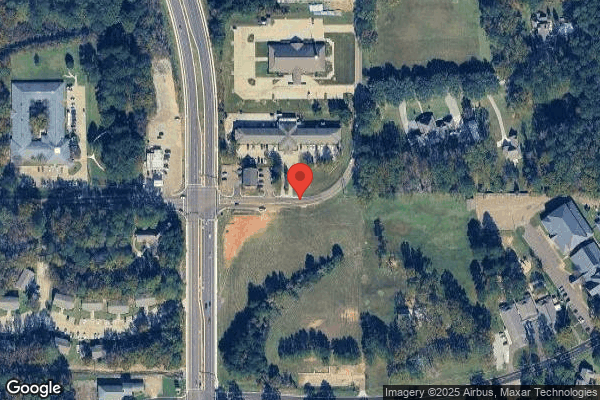
BRANDON COURT

100 BURNHAM ROAD, BRANDON, MS 39042 (601) 664-2259
For profit - Limited Liability company 100 Beds THE BEEBE FAMILY Data: November 2025
Trust Grade
85/100
#4 of 200 in MS
Last Inspection: November 2024

Within standard 12-15 month inspection cycle. Federal law requires annual inspections.

Overview

Brandon Court has a Trust Grade of B+, which means it is above average and recommended for families considering care options. It ranks #4 out of 200 facilities in Mississippi, placing it in the top half, and is the best option among nine facilities in Rankin County. However, the facility's trend is concerning, as it has worsened from four issues in 2023 to five in 2024. Staffing is average with a 3/5 rating, and the turnover rate is 52%, which is similar to the state average, indicating some staff stability, but RN coverage is below average, meaning there are fewer registered nurses available than in most facilities. Although there have been no fines, some specific incidents were noted, such as staff not addressing resident grievances promptly, a nurse failing to perform hand hygiene during PEG tube care, and residents not having access to necessary bathing supplies, which highlights both strengths and weaknesses in the facility's operations.

Trust Score
B+
85/100
In Mississippi
#4/200
Top 2%
Safety Record
Low Risk
No red flags
Inspections
Getting Worse
4 → 5 violations
Staff Stability
⚠ Watch
52% turnover. Above average. Higher turnover means staff may not know residents' routines.
Penalties
✓ Good
No fines on record. Clean compliance history, better than most Mississippi facilities.
Skilled Nurses
⚠ Watch
Each resident gets only 18 minutes of Registered Nurse (RN) attention daily — below average for Mississippi. Fewer RN minutes means fewer trained eyes watching for problems.
Violations
⚠ Watch
15 deficiencies on record. Higher than average. Multiple issues found across inspections.
★★★★★
5.0
Overall Rating
★★★☆☆
3.0
Staff Levels
★★☆☆☆
2.0
Care Quality
★★★★★
5.0
Inspection Score
Stable
2023: 4 issues
2024: 5 issues

The Good

  • Full Sprinkler Coverage · Fire safety systems throughout facility
  • No fines on record

Facility shows strength in fire safety.

The Bad

Staff Turnover: 52%

Near Mississippi avg (46%)

Higher turnover may affect care consistency

Chain: THE BEEBE FAMILY

Part of a multi-facility chain

Ask about local staffing decisions and management

The Ugly 15 deficiencies on record

Nov 2024 2 deficiencies
CONCERN (D)

Potential for Harm - no one hurt, but risky conditions existed

Grievances (Tag F0585)

Could have caused harm · This affected 1 resident

Based on interviews, record reviews, and facility policy reviews, the facility failed to ensure grievances regarding rude staff were resolved in a timely manner for five (5) of the 19 sampled resident...

Read full inspector narrative →
Based on interviews, record reviews, and facility policy reviews, the facility failed to ensure grievances regarding rude staff were resolved in a timely manner for five (5) of the 19 sampled residents. (Residents #3, #8, #9, #45 and #55) Findings included: A review of the facility's policy titled Grievances-Residents, revised 05/24, revealed, All residents are to be encouraged and assisted (if necessary) in filing grievances to include those with respect to care and treatment, the behavior of staff and other residents, and other concerns regarding their facility stay, in the event that they have a need to make a concern known . The facility shall make prompt efforts to resolve the grievances . A review of the facility's policy titled Resident Rights, dated 12/23, revealed, Every resident in this facility has the right to . 12. Be treated courteously, fairly, and with the fullest measure of dignity . On 11/20/2024 at 2:00 PM, during an interview with Resident Council members, several residents (Residents #3, #8, #9, #45, and #55) expressed concerns about rudeness from staff working the 11:00 AM to 7:00 PM shift. Residents reported that Certified Nurse Aides (CNAs) consistently displayed rude and dismissive behavior, often entering rooms with negative attitudes and phrases such as, What do you want? or Didn't someone help you earlier? Residents noted instances where CNAs turned off call lights without assisting or providing explanations. The Resident Council concluded that the issue had not been adequately resolved despite multiple complaints. On 11/21/2024 at 10:23 AM, during a follow-up interview, Resident #8 recounted that CNAs working the 11:00 AM to 7:00 PM shift frequently displayed rude behavior. She described an incident where she requested assistance pulling up her brief due to hand pain and muscle weakness. The CNA responded rudely, questioning, Can't you do that yourself? before reluctantly assisting her. Resident #8 expressed disappointment over the recurring rudeness and stated this issue had persisted for some time. On 11/21/2024 at 10:46 AM, during an interview, Resident #45 shared negative experiences with CNAs on the 11:00 PM to 7:00 AM shift. She stated that CNAs assigned to her usually entered with short tempers, expressing irritation at having to assist her. On 11/21/2024 at 11:00 AM, during an interview, the Social Services Director confirmed conducting Resident Council meetings and acknowledged persistent complaints about rude CNAs on the overnight shift. She noted that residents reported CNAs entering rooms with negative attitudes, turning off call lights without helping, and being unwilling to assist. These grievances were forwarded to the Staff Development Nurse, and copies were sent to the Administrator. On 11/21/2024 at 11:14 AM, during an interview, the Staff Development Nurse confirmed receiving the grievances and acknowledged the issue of CNA rudeness on the night shift. She explained that staff in-service training is typically used to address such concerns and disapproved of the CNAs' behavior, stating it could make residents feel uncomfortable and disrespected. A record review of the in-service sign-in sheets provided by the Staff Development Nurse revealed that in-services were conducted on 03/28/24, 05/29/24, and 07/25/24. All of these in-service sign-in sheets revealed that the attitude and rude behavior that had been reported was addressed. However, review of the sign-in sheets did not have signatures of any of the CNAs that work the 11:00 PM to 7:00 AM shifts. On 11/21/2024 at 11:36 AM, during an interview, the Administrator confirmed that all grievances are discussed during morning meetings, with a goal of resolving them within forty-eight (48) hours. She acknowledged the recurring complaints regarding rude CNAs on the 11:00 AM to 7:00 PM shift, which had been raised in previous Resident Council meetings. A record review of the corrective action plan for grievances revealed that concerns regarding rude CNAs on the 11:00 PM to 7:00 AM shift were documented on 05/22/2024 and 07/16/2024. A record review of Resident #3's admission Record revealed the facility admitted the resident on 06/17/2021. The resident had diagnoses that included Generalized Osteoarthritis and Hemiplegia and Hemiparesis affecting the left non-dominant side. A record review of Resident #3's Annual Minimum Data Set (MDS) with an Assessment Reference Date (ARD) of 09/03/2024, revealed a Brief Interview for Mental Status (BIMS) score of (15), which indicated the resident was cognitively intact. A record review of Resident #8's admission Record revealed the facility admitted the resident on 02/0/2008. The resident had diagnoses that included Generalized Muscle Weakness and Unsteadiness of Feet. A record review of Resident #8's Quarterly MDS with an ARD of 09/09/2024, revealed a BIMS score of (14), which indicated the resident was cognitively intact. A record review of Resident #9's admission Record revealed the facility admitted the resident on 06/20/2024. The resident had diagnoses that included Parkinson's Disease with Dyskinesia and Muscle Weakness. A record review of Resident #9's Quarterly MDS with an ARD of 09/23/2024, revealed a BIMS score of (14), which indicated the resident was cognitively intact. A record review of Resident #45's admission Record revealed the facility admitted the resident on 03/16/2021. The resident had diagnoses that included Unspecified Osteoarthritis and Muscle Weakness. A record review of Resident #45's Quarterly MDS with an ARD of 08/29/2024, revealed a BIMS score of (14), which indicated the resident was cognitively intact. A record review of Resident #55's admission Record revealed the facility admitted the resident on 07/26/2023. The resident had diagnoses that included Morbid Obesity and Gout. A record review of Resident #55's Quarterly MDS with an ARD of 09/06/2024, revealed a BIMS score of (14), which indicated the resident was cognitively intact.
CONCERN (D)

Potential for Harm - no one hurt, but risky conditions existed

Infection Control (Tag F0880)

Could have caused harm · This affected 1 resident

Based on observation, interviews, record review, and facility policy review, the facility failed to prevent the possible spread of infection during Percutaneous Endoscopic Gastrostomy (PEG) tube care ...

Read full inspector narrative →
Based on observation, interviews, record review, and facility policy review, the facility failed to prevent the possible spread of infection during Percutaneous Endoscopic Gastrostomy (PEG) tube care for one (1) of three (3) residents with PEG tubes. (Resident #57) Findings included: A review of the facility's policy titled Hand Hygiene, revised 01/24, revealed, Purpose * To cleanse hands to prevent transmission of infection or other conditions * To provide clean, health environment for residents, staff and visitors . Indications for Hand Washing . 4. Before and after applying gloves . On 11/20/2024 at 9:30 AM, during an observation of PEG tube care performed by Registered Nurse (RN)/Wound Care Nurse #1, after beginning care, she removed the dressing from the PEG tube site, removed her gloves, and applied clean gloves without performing hand hygiene. She cleaned the wound, removed her gloves, and applied another set of clean gloves, again without performing hand hygiene. She dried the wound and removed her gloves. Hand hygiene was not completed during the entire procedure. On 11/20/2024 at 9:40 AM, during an interview, RN #1 confirmed that she forgot to perform hand hygiene between glove changes. She acknowledged contaminating clean gloves by not washing her hands between changes and stated this could potentially result in an infection for the resident. On 11/20/2024 at 11:22 AM, during an interview, the Director of Nurses (DON) stated that RN#1 should have performed hand hygiene after each glove change. She emphasized that the resident could develop an infection at the PEG site due to this oversight and stated her expectation that all staff perform hand hygiene consistently. On 11/20/2024 at 11:34 AM, during an interview, Licensed Practical Nurse (LPN) #1 /Infection Preventionist (IP) confirmed that the RN #1 should have performed hand hygiene between glove changes. She stated that failing to do so constitutes cross-contamination and increases the risk of infection for Resident #57. She noted that she conducts hand hygiene in-services quarterly and as needed. A record review of the admission Record revealed Resident #57 was admitted by the facility on 11/02/22. The resident had diagnoses that included Dysphagia, Pharyngoesophageal Phase. A record review of Resident #57's Annual Minimum Data Set (MDS), with an Assessment Reference Date (ARD) of 9/23/2024, revealed a Brief Interview for Mental Status (BIMS) score of (99), indicating that the resident could not complete the interview. Further review of the MDS revealed staff assessment of mental status indicated that Resident #57 had severe cognitive impairment. Review of Section K revealed the resident had a PEG tube. A record review of the in-service dated 9/25/2024, revealed the signature of RN #1 on the sign-in sheet for training related to Infection Control.
Jul 2024 3 deficiencies
CONCERN (D) 📢 Someone Reported This

A family member, employee, or ombudsman was alarmed enough to file a formal complaint

Potential for Harm - no one hurt, but risky conditions existed

Deficiency F0561 (Tag F0561)

Could have caused harm · This affected 1 resident

Based on observations, interviews, and facility policy review, the facility failed to ensure that two (2) of nine (9) sampled residents had the opportunity to exercise their autonomy regarding prefere...

Read full inspector narrative →
Based on observations, interviews, and facility policy review, the facility failed to ensure that two (2) of nine (9) sampled residents had the opportunity to exercise their autonomy regarding preferences related to choice of bathing schedules and clothing. Residents #1 and #2 Findings included: Record review of the facility's policy titled Resident's Rights Policy, reviewed 12/23, revealed Every resident in this facility has the right to: .Retire and rise in accordance with reasonable requests . On 7/30/24 at 9:50 AM, during an observation and interview with Resident #2, the resident stated that she did not have any washcloths to use on the morning of 7/30/24. She said the CNAs told her there were no clean washcloths. She said that prevented her from being able to wash up and get into her wheelchair at her preferred time. Observation revealed there were no washcloths in the room or attached bathroom of Resident #2. On 7/30/24 at 10:00 AM observation revealed there were no clean washcloths or bath towels in the linen closets on the first or second floor and there were no clean washcloths or bath towels on the four (4) clean linen carts on the hall. On 7/30/23 at 10:08 AM, during an observation and an interview with Resident #1, she complained she had just received AM care and assistance to transfer into her wheelchair because she had to wait for clean linens to be delivered from the laundry. She stated she preferred to get up earlier and the reason she was told she was not able to get up at the time of her choosing was because there were no clean washcloths or bath towels. She said she preferred to bathe and then get dressed before staff assisted her to get up in her wheelchair, as this was her usual routine. She confirmed that she had not been able to wear the clothes she preferred on 7/30/24 because the clothes she preferred had not been returned from the laundry. She said that there were dresses she preferred to wear but wanted a slip or undershirt to wear beneath them and that none of her slips or undershirts had been returned from the laundry. She confirmed that the clothes she preferred to wear had been sent to the laundry several days before. Observation revealed there were no washcloths or bath towels in the room or attached bathroom of Resident #1. On 7/30/24 during an interview at 10:20 AM, CNA #2 revealed that Resident #1 and Resident #2 had to wait past their preferred time to have AM care/bed bath and get up because there were no clean washcloths or bath towels available on the morning of 7/30/24. The CNA confirmed that Resident #1's personal clothes of choice were not in her room and had not been returned from the laundry. She explained that Resident #1 had multiple slips and undershirts but none in her room. On 7/30/24 during an interview at 10:23 AM, CNA #3 confirmed that Resident #1 and Resident #2 had to wait past their preferred time to have AM care/bed bath and get up because there were no clean washcloths or bath towels available on the morning of 7/30/24. She confirmed that she and CNA #2 had searched for a slip or undershirt for Resident #1 and were unable to find any for her to wear. On 7/30/24 at 2:00 PM an interview with the Housekeeping Supervisor revealed that the facility had adequate linens, and added, but we are behind today. She confirmed that the CNAs had to wait for linens to complete the laundering process to have clean linens on 7/30/34. She said she did not know why Resident #1 had not gotten her slips or undershirts back from the laundry in a timely manner. On 7/31/24 at 1:00 PM an interview with the Administrator revealed that he confirmed that it was the responsibility of the facility to ensure that all residents had clean linens available for their care in accordance with their preferred routine for rising, showering/bathing, dressing and other activities of daily living. He confirmed that there were residents that did not have access to clean linens on the morning of 7/30/24 which interfered with the residents' right to autonomy and choice of schedule for bathing and getting out of bed. The Administrator stated that he was unaware that Resident #1 had personal clothing items which had not been returned to her and that the items would have to be located and returned to her or replaced by the facility to ensure she could dress according to her preference. Record review of the Face Sheet for Resident #1 revealed that the facility admitted the resident on 5/06/22 and the resident had diagnoses of atrial fibrillation, congestive heart failure, chronic peripheral venous insufficiency. Record review of the Quarterly Minimum Data Set (MDS) with ARD 6/13/24 for Resident #1 revealed she had a Brief Interview for Mental Status (BIMS) score of 13, which indicated no cognitive impairment. Record review of the Face Sheet for Resident #2 revealed the facility admitted the resident on 10/27/21 and the resident had diagnoses of end stage renal disease, hypertension and osteoarthritis. Record review of the Quarterly MDS with ARD 6/06/24 for Resident #2 revealed she had a BIMS score of 15, which indicated no cognitive impairment.
CONCERN (D) 📢 Someone Reported This

A family member, employee, or ombudsman was alarmed enough to file a formal complaint

Potential for Harm - no one hurt, but risky conditions existed

Deficiency F0572 (Tag F0572)

Could have caused harm · This affected 1 resident

Based on interviews, record reviews, and facility policy review, the facility failed to ensure consent was received from residents prior to changing private insurance plans to another insurance compan...

Read full inspector narrative →
Based on interviews, record reviews, and facility policy review, the facility failed to ensure consent was received from residents prior to changing private insurance plans to another insurance company for one (1) of nine (9) sampled residents. Resident #3 Findings included: Record review of the facility provided titled Resident Rights, reviewed 12/23, revealed, Every resident in this facility has the right to: . Manage their personal affairs . On 7/30/24 at 9:35 AM, in an interview with a family member of Resident #3, he said that Resident #3 was admitted by the facility on 11/16/23 for a short term stay to receive therapy services following a fall with fracture which occurred at her home. He stated that the resident was her own Responsible Party (RP) and made her own decisions. He explained that the resident was enrolled in managed care insurance at the time of admission which allowed twenty (20) days of therapy, of which, the resident and family were aware. He stated that the resident decided to transfer to a personal care facility and discharged from the facility on 12/09/23. The family member stated that after the resident's discharge from the facility, the resident had been notified by mail of her disenrollment from managed care. The family member said that the resident was without managed care coverage for two (2) months following discharge from the facility. He acknowledged that the resident did not experience injury or illness during the two months and did not suffer loss due to the disenrollment, however, it could have been detrimental to the resident's finances should she have suffered a major illness. Record review of the Notice of Medicare Non-Coverage dated 12/06/23 and signed by Resident revealed the resident was notified that The effective date coverage of your current skilled nursing facility services will end: 12/08/24. The document contained the resident's right to appeal against this decision and instructions on how to ask for an immediate appeal. On 7/31/24 at 4:00 PM, in an interview with the Business Office Manager (BOM), she confirmed that she had used on-line access to Resident #3's managed care and entered information for disenrollment. She confirmed that she had no evidence or signed permission for agreement by the resident for disenrollment from her managed care insurance. She confirmed that she was not aware of any appeal requested for Resident #3 as described in the Notice of Medicare Non-Coverage. The BOM confirmed that Resident #3 was alert and oriented and was her own Responsible Party. On 7/31/24 at 5:00 PM, during an interview with the Administrator he confirmed that the BOM had processed disenrollment for Resident #3 from her managed care insurance. He also confirmed that the facility had no written authorization by Resident #3 for disenrollment from her managed care insurance. On 8/02/24 at 12:45 PM Resident #3 returned telephone call to SA and stated that she had not authorized disenrollment form her managed care insurance plan. She stated that she was made aware of her disenrollment through a letter mailed to her home address following her discharge from the facility. Record review of the Face Sheet for Resident #3 revealed the facility admitted the resident on 11/16/24 and the resident had diagnoses that included Wedge Compression Fracture of Fourth Lumbar Vertebra, Atrial Fibrillation, Macular Degeneration and Hearing Loss. Record review of the admission Minimum Data Set (MDS), with Assessment Referral Date (ARD) 11/22/23 for Resident #3, revealed the resident had a Brief Interview for Mental Status (BIMS) score of 15, which indicated no cognitive impairment.
CONCERN (D) 📢 Someone Reported This

A family member, employee, or ombudsman was alarmed enough to file a formal complaint

Potential for Harm - no one hurt, but risky conditions existed

Safe Environment (Tag F0584)

Could have caused harm · This affected 1 resident

Based on observations, interviews, and facility policy review, the facility failed to ensure residents were provided with sufficient bath linens to allow residents to bathe at a time that they preferr...

Read full inspector narrative →
Based on observations, interviews, and facility policy review, the facility failed to ensure residents were provided with sufficient bath linens to allow residents to bathe at a time that they preferred on one (1) of three (3) days of observation. Findings included: Record review of the facility policy titled Laundry Infection Control-Department Responsibilities, reviewed 08/21, revealed, . The Laundry Department will supply a sufficient quantity of linen for proper resident care and comfort . On 7/30/24 at 9:50 AM observation and an interview with Resident #2 revealed that she had not had any washcloths to use on the morning of 7/30/24. She said the Certified Nurse Aides (CNAs) told her there were no clean washcloths. She said that prevented her from being able to wash up and get into her wheelchair at her preferred time. Observation revealed there were no washcloths in the room or attached bathroom of Resident #2. On 7/30/24 at 10:00 AM observation revealed there were no clean washcloths or bath towels in the linen closets on the first or second floor and there were no clean washcloths or bath towels on the four (4) clean linen carts on the hall. On 7/30/23 at 10:08 AM observations and an interview with Resident #1 revealed she had just received AM care and assistance to transfer into her wheelchair because she had to wait for clean linens to be delivered from the laundry. She stated she preferred to get up earlier and the reason she was told she was not able to get up at the time of her choosing was because there were no clean washcloths or bath towels. She said she preferred to get washed up and then get dressed and then get up in her wheelchair with staff assistance, as that was her usual routine. She confirmed that she had not been able to get up when she preferred on 7/30/24 or wear the clothes she preferred on 7/30/24 because she said the staff told her there was not adequate clean washcloths or towels for a bed bath and the clothes she preferred had not been returned from the laundry. She confirmed that the clothes she preferred to wear had been sent to the laundry several days before. Observation revealed there were no washcloths or bath towels in the room or attached bathroom of Resident #1. On 7/30/24 during an interview at 10:20 AM, CNA #2 revealed that Resident #1 and Resident #2 had to wait past their preferred time to have AM care/bed bath and get up because there were no clean washcloths or bath towels available on the morning of 7/30/24. On 7/30/24 during an interview at 10:23 AM, CNA #3 revealed that Resident #1 and Resident #2 had to wait past their preferred time to have AM care/bed bath and get up because there were no clean washcloths or bath towels available on the morning of 7/30/24. On 7/30/24 at 2:00 PM an interview with the Housekeeping Supervisor revealed that the facility had adequate linens, and added, but we are behind today. She confirmed that the CNAs had to wait for linens to complete the laundering process to have clean linens on 7/30/34. On 7/31/24 at 1:00 PM an interview with the Administrator revealed that he confirmed that it was the responsibility of the facility to ensure that all residents had clean linens available for their care in accordance with their preferred routine for rising, showering/bathing, dressing and other activities of daily living. He confirmed that there were residents that did not have access to clean linens on the morning of 7/30/24. Record review of the Face Sheet for Resident #1 revealed that the facility admitted the resident on 5/06/22 and the resident had diagnoses of atrial fibrillation, congestive heart failure, chronic peripheral venous insufficiency. Record review of the Quarterly Minimum Data Set (MDS) with ARD 6/13/24 for Resident #1 revealed she had a Brief Interview for Mental Status (BIMS) score of 13, which indicated no cognitive impairment. Record review of the Face Sheet for Resident #2 revealed the facility admitted the resident on 10/27/21 and the resident had diagnoses of end stage renal disease, hypertension and osteoarthritis. Record review of the Quarterly MDS with ARD 6/06/24 for Resident #2 revealed she had a BIMS score of 15, which indicated no cognitive impairment.
Jun 2023 1 deficiency
CONCERN (D) 📢 Someone Reported This

A family member, employee, or ombudsman was alarmed enough to file a formal complaint

Potential for Harm - no one hurt, but risky conditions existed

Incontinence Care (Tag F0690)

Could have caused harm · This affected 1 resident

Based on observation, interview, record review, and Nursing Proceudre review, the facility failed to ensure that a resident who was incontinent of bladder received appropriate treatment and services f...

Read full inspector narrative →
Based on observation, interview, record review, and Nursing Proceudre review, the facility failed to ensure that a resident who was incontinent of bladder received appropriate treatment and services for one (1) of five (5) residents reviewed for incontinent care. Resident #2. Findings Include: Record review of the facility document titled Perineal Care, with Revision Date 10/18, revealed, PURPOSE To cleanse the perineum, To eliminate odor, To prevent irritation or infection, To enhance the resident's dignity and self-esteem . Record review of the RESIDENT COUNCIL meeting notes dated 6/12/23 revealed, NEW BUSINESS (Grievances & Recommendations) Nursing: Residents stated that .appropriate care is not being provided by the Certified Nurse Assistants (CNAs) when the residents ask. On 6/22/23 at 3:00 PM, an interview with CNA #3 revealed the facility had provided monthly in-service training to CNAs that included instructions that CNAs were to make rounds every two (2) hours to assess needs and provide care for incontinent residents. On 6/22/23 at 3:10 PM, an interview with CNA #4, also revealed the facility had provided monthly in-service training to CNAs that included instructions that rounds were to be conducted every two (2) hours to assess and provide care for incontinent residents. On 6/23/23 at 11:20 AM, observation and interview with Resident #2 revealed the resident had thrown her bed covers off to the left against the wall and there was a dried tea-colored ring on her fitted sheet beneath the incontinence pad that the resident was lying on. The incontinence pad was colored yellow around the resident. The resident's incontinence brief was obviously wet. There was a strong smell of urine in the room which was strongest at the bedside of Resident #2. Record review of the Completed Care Details for Resident #2 dated 6/21/22 through 6/23/23 revealed there were no entries which documented toilet use for the 7:00 AM-3:00 PM shift on 6/23/23. The report also documented that Resident #2 required Extensive Assistance to Total Dependence for Toilet Use. On 6/23/23 at 11:25 AM, during an interview and observation with the Administrator at the bedside of Resident #2, the Administrator described the resident's fitted sheet as stained brown and said the resident smells loud. She also commented that it appeared to her that the resident hadn't been changed since sometime last night. The Administrator confirmed that incontinent residents required assessment and assistance every two (2) hours and that the facility had provided in-service training routinely to CNAs to ensure that they were aware of expectations and requirements for care. On 6/23/23 at 11:28 AM, during an interview and observation with the Director of Nurses (DON) at the bedside of Resident #2, the DON confirmed that the resident's incontinence brief was saturated and that the incontinence pad and fitted sheet showed signs of dried urine. She acknowledged that it would have taken an extended amount of time for the sheet, pad, and brief to have reached the condition noted. The DON confirmed that residents with incontinence required assessment and assistance every two (2) hours. On 6/23/23 at 11:30 AM, during an interview with CNA #1 at the bedside of Resident #2, the CNA confirmed that she had not provided incontinence care for Resident #2 on 6/23/23. Record review of the Face Sheet for Resident #2 revealed the resident was admitted by the facility on 10/21/20 and had diagnoses that included Heart Failure, Type 2 Diabetes, and Dementia. Record review of the Quarterly Minimum Data Set (MDS) with an Assessment Reference Date (ARD) of 4/21/23, revealed the resident had a Brief Interview for Mental Status (BIMS) score of 6, which indicated significant cognitive impairment. Further MDS review revealed Resident #2 required Extensive two-person physical assistance for bed mobility, dressing, toilet use and limited one person assistance for personal hygiene and was frequently incontinent of bowel and bladder.
Mar 2023 3 deficiencies
CONCERN (D)

Potential for Harm - no one hurt, but risky conditions existed

Resident Rights (Tag F0550)

Could have caused harm · This affected 1 resident

Based on observation, interviews, and facility policy review, the facility failed to provide care in a manner that treated residents with dignity and respect by not providing meals at the same time to...

Read full inspector narrative →
Based on observation, interviews, and facility policy review, the facility failed to provide care in a manner that treated residents with dignity and respect by not providing meals at the same time to all residents who needed assistance and were seated at the same table for one (1) of two (2) residents that required assistance with eating. Resident #67 Findings include: A review of the facility's policy titled, Resident Rights, with a revision date of 11/17, revealed . All residents in a long term care facility have rights guaranteed to them . Residents at this facility will be guaranteed a dignified existence . These rights include: 30. To be treated with dignity and respect . On 3/27/23 at 11:55 AM, during an observation of residents eating lunch in the dining room, Resident #67 was observed sitting in a Geri chair at a table for residents that required assistance with eating. Resident #67 was observed watching Licensed Practical Nurse (LPN) #1 feed an unsampled resident. On 3/27/23 at 11:59 AM, in an interview with LPN #1, she revealed that she had asked another staff member to assist with feeding Resident #67. On 03/27/23 at 12:08 PM, during an observation and interview with Resident #67, she continued to watch the unsampled resident at the same table being fed by LPN #1. Resident #67 stated I'm hungry, and looked down at her plate. LPN #1 responded to Resident #67 and stated someone was coming to feed her. On 03/27/23 at 12:10 PM, Registered Nurse (RN) #1 was observed entering the dining room and began feeding Resident #67. At this time, it was noted that the unsampled resident sitting at the same table had consumed approximately 75% of her meal. On 03/29/23 at 10:08 AM, in an interview with the Director of Nursing (DON), she confirmed all residents at a table that need to be fed should be fed at the same time. She stated LPN #1 should have fed both residents and not fed one resident while another is only able to watch. On 03/29/23 11:12 AM, in an interview with RN #1/Charge Nurse, she revealed the residents are usually fed at the same time. She confirmed LPN #1 should not have allowed a resident to sit and watch another resident be fed while her plate sat in front of her. RN #1 confirmed that LPN #1 should have sat in the center of the table and fed both residents at the same time. A record review of the Face Sheet for Resident # 67 revealed, the facility admitted the resident to the facility on 3/3/22, with diagnoses that included Alzheimer's Disease, Muscle Weakness, and Unspecified Lack of Coordination. A record review of the Physician Orders for March 2023 revealed an order, dated 3/3/2 for, Mechanical soft diet finger foods and assistance for initiation and cues during meals. A record review of the annual Minimum Data Set (MDS) with an Assessment Reference Date (ARD) of 3/6/23 for Resident #67 revealed a Brief Interview for Mental Status (BIMS) score of three (3), which indicated the resident had severe cognitive impairment and required one-person physical assistance with eating.
CONCERN (D)

Potential for Harm - no one hurt, but risky conditions existed

Respiratory Care (Tag F0695)

Could have caused harm · This affected 1 resident

Based on observation, interview, record review, and facility policy review, the facility failed to post cautionary and safety signs indicating the use of oxygen for three (3) of nine (9) residents rev...

Read full inspector narrative →
Based on observation, interview, record review, and facility policy review, the facility failed to post cautionary and safety signs indicating the use of oxygen for three (3) of nine (9) residents reviewed for oxygen usage. Residents #21, #181, and #185 Findings include: A review of the facility's policy titled, Oxygen-Administration, Concentrator, Storage, Assemblage, with a revision date of 10/17 revealed, . ADMINISTRATION PROCEDURE . 13. Post the NO SMOKING-OXYGEN IN USE sign on the door of the resident's room . Resident #21 On 3/27/23 at 2:38 PM, Resident #21 was observed lying in bed. An oxygen concentrator was noted at the bedside and oxygen was flowing at two (2) liters per minute. There was no cautionary signage posted at the entrance to the resident's room that indicated oxygen was in use. A record review of the Physician Orders for March 2023 for Resident #21, revealed an order, dated 3/13/23 for, O2 (oxygen) @ (at) 2 L/M (2 liters per minute) via nasal canula. On 3/27/23 at 2:38 PM, an observation of the door of Resident #21, who had orders for oxygen, revealed there was no sign on the door indicating that oxygen was in use. A record review of the Face Sheet for Resident # 21 revealed, the facility admitted the resident on 2/23/23, with diagnoses that included Shortness of Breath and Emphysema. Resident #181 On 3/27/21 at 2:21 PM, Resident #181 was observed sitting in her wheelchair, with her spouse at her side. There was an oxygen concentrator noted at the bedside, however, there was no cautionary signage posted at the entrance to the resident's room that indicated oxygen was in use. A record review of the Physician Orders for March 2023 for Resident #181, revealed an order, dated 3/23/23 for, O2 (oxygen) @ (at) 2 L (2 liters) NC (nasal canula) Continuously. On 3/27/23 at 2:21 PM, observation of the door of Resident # 181, who had orders for oxygen, revealed there was no sign on the door or that indicated that oxygen was used. A record review of the Face Sheet for Resident # 181 revealed, the facility admitted the resident on 3/23/23, with diagnoses that included Chronic Obstructive Pulmonary Disease and Chronic Respiratory Failure with Hypoxia. Resident #185 On 3/27/223 at 2:20 PM, an observation of Resident #185 revealed the resident was receiving oxygen at 2 liters per nasal canula. There was no cautionary signage posted at the entrance to the resident's room that indicated oxygen was in use. A record review of the Physician Orders for March 2023 for Resident #185 revealed an order dated 3/6/23 for, O2 (oxygen) @ 2 L liters) via NC (nasal canula) Continuous. On 3/27/23, at 2:20 PM, an observation of the door of Resident # 185, who had orders for oxygen revealed, there was no sign on the door stating that oxygen was in use. On 3/27/23 at 3:20 PM, during an observation and interview with the Director of Nursing (DON), she confirmed there was no sign on the door that oxygen was in use. The DON confirmed there should have been a sign to inform staff and visitors that oxygen was in use, to ensure resident and staff safety, as oxygen can be dangerous. A record review of the Face Sheet of Resident # 185 revealed, the facility admitted the resident 3/6/23, with diagnoses including Chronic Obstructive Pulmonary Disease, Heart Failure, and Dependence on Supplemental Oxygen.
CONCERN (D)

Potential for Harm - no one hurt, but risky conditions existed

Deficiency F0804 (Tag F0804)

Could have caused harm · This affected 1 resident

Based on a test tray meal observation, interviews, and facility policy review, the facility failed to provide food that is palatable with an appetizing temperature for seven (7) of seven (7) residents...

Read full inspector narrative →
Based on a test tray meal observation, interviews, and facility policy review, the facility failed to provide food that is palatable with an appetizing temperature for seven (7) of seven (7) residents reviewed for meal satisfaction. Residents #1, #11, #18, #20, #27, #31 and #50. Findings include: Review of the facility policy titled, Resident Tray Service and Delivery, revealed, Procedure: . 2. B. Hot foods are held at or over 135' F . g. The temperature of foods is taken with a calibrated thermometer and documented on the Temperature Monitoring Log . 3. A food service employee tastes food items, including modified foods, to confirm acceptability quality . An observation on 3/27/23 at 11:33 AM, revealed Resident #50's lunch meal was late. When dietary was notified that the resident didn't receive a tray, they delivered a late lunch tray of country fried steak with French fries. The resident refused to eat the food, as the meat was fried hard, and the French fries were cold. The daughter was in the room and asked for something else. Dietary bought a tray with hamburger steak and mashed potatoes. During an interview on 3/27/23 at 11:40 AM, with the Resident #1's daughter, revealed the resident's food is always cold and does not taste good. The resident's daughter stated she brings sandwiches and bananas for the resident to eat because the food is so horrible. The daughter revealed that she has scheduled a meeting with the Care Plan Team and the Dietary Manager and if things do not improve after that, she is going to move her mother to another facility. During an interview on 3/27/23 at 2:00 PM, with the six (6) Resident Council members present at the meeting, the members complained the food was cold and had no taste (Residents #1, #11, #18, #20, #27, and #31). The Council members revealed the Social Worker and the Activity Director attended their meetings and are aware of their complaints. The members also revealed they had tried to talk to the Administrator but had been told she was too busy. During an observation on 3/28/23 at 11:00 AM, the [NAME] was observed calibrating the thermometer, used for checking the temperature of the food to 40 degrees. The [NAME] revealed she thought that's what it should have been calibrated to prior to use. The thermometer was re-calibrated to the correct temperature and the temperature of all the food on the line was at or above the holding temperature. The Dietary staff started preparing the plates at 11:32 AM. The requested test tray left the kitchen area on an open food cart at 12:05 PM. The test tray was received at 12:15 PM On 3/28/23 at 12:15 PM, during an observation and interview, the Dietary Manager (DM) checked the food temperatures of the food on the test tray using the same calibrated thermometer and they were: turnip greens 80 degrees Fahrenheit (F), pinto beans 80 degrees F, and fried chicken 100 degrees F. The food was tasted with the Dietary Manager and was cold and bland. The DM confirmed the food was not warm or seasoned enough to be palatable. The DM said, the facility has to get better. The manager revealed she knew the residents were complaining about the food; however, she had only been the manager for three (3) weeks and had not had enough time to address the complaints. During an interview on 3/28/23 at 4:00 PM, with the Activity Director and Social Worker, they confirmed the residents complained the food tasted bad and was cold during the resident council meetings. The Activity Director revealed complaints are forwarded to the department director of which the complaints are about. he Activity Director and Social Worker confirmed they would follow-up with the Administrator regarding the resident complaints and the recent finding regarding the food being served. Resident #1 Record review of the Face Sheet for Resident #1, revealed the facility admitted the resident on 2/22/2022, with the diagnoses that included Heart Failure, Diabetes, and Hypertension. Record review of the annual Minimum Data Set (MDS), with an Assessment Reference Date (ARD)of 2/22/23 revealed Resident #1 had a Brief Interview for Mental Status (BIMS) score of 15, which indicated Resident #1 was cognitively intact. Resident #11 Record review of the Face Sheet for Resident #11, revealed the facility admitted the resident on 5/6/2022, with the diagnoses that included Atrial Fibrillation, Kidney Disease, and Hypertension. Record review of the quarterly MDS, with an ARD of 1/10/23, revealed Resident #11 had BIMS score of 15, that indicated Resident #11 was cognitively intact. Resident #18 Record review of the Face Sheet, for Resident #18, revealed the facility admitted the resident on 2/23/2023, with the diagnoses that included Osteoarthritis, Diabetes Mellitus, and Hypertension. Record review of the quarterly MDS with an ARD of 2/22/23, revealed Resident #18 had a BIMS score of 15, that indicated Resident #18 was cognitively intact. Resident #20 Record review of the Face Sheet for Resident #20, revealed the facility admitted the resident on 10/22/2021, with the diagnoses that included Heart Failure, Anxiety, and Hypertension. Record review of the quarterly MDS with an ARD of 1/27/23, revealed Resident #20 had a BIMS score of 15, which indicated the resident was cognitively intact. Resident #27 Record review of the Face Sheet, for Resident #27, revealed the facility admitted the resident on 10/3/13, with diagnoses that included Parkinson's Disease, Diabetes, and Hypertension. Record review of the quarterly MDS, with an ARD of 3/1/23, revealed Resident #27 had a BIMS score of 15, which indicated the resident was cognitively intact. Resident #31 Record review of the Face Sheet, for Resident #31, revealed the facility admitted the resident on 2/22/2022, with diagnoses that included Renal Disease, Diabetes, and Hypertension. Record review of the quarterly MDS, with an ARD of 2/3/23 revealed Resident #31 had a BIMS score of 15, which indicated the resident was cognitively intact. Resident #50 Record review of the Face Sheet, for Resident #50, revealed the facility admitted the resident on 10/31/2022, with the diagnoses that included Cerebrovascular Disease, Hypothyroidism, and Hypertension. Record review of the quarterly MDS, with an ARD of 2/6/23, revealed Resident #50 had a BIMS score of 12, which indicated the resident was cognitively intact.
Nov 2019 6 deficiencies
CONCERN (D)

Potential for Harm - no one hurt, but risky conditions existed

Deficiency F0557 (Tag F0557)

Could have caused harm · This affected 1 resident

Based on observation, resident and staff interview, record review, and facility policy review, the facility failed to allow residents to have personal property for one (1) of four (4) residents review...

Read full inspector narrative →
Based on observation, resident and staff interview, record review, and facility policy review, the facility failed to allow residents to have personal property for one (1) of four (4) residents reviewed, Resident #50, as evidenced by staff removing a urinary drainage system from the resident's room and did not replace the urinary drainage system or adequately compensate the resident for the system. Findings include: Review of the facility's policy, Theft and Loss, dated September 2013, revealed: It is the policy of this facility to assure each resident's right to retain and use personal possessions as space permits, unless those possessions infringe on the rights, health or safety of other residents. The Social Service Designee, Nurse Supervisor or Administrator will follow up on all reported losses and thefts and document such actions. Review of a written report, received by the State Agency (SA) on 3/1/19, revealed Resident #1 wanted to file a complaint, which involved the facility removing his urinary drainage system and throwing it away. The resident reported the system was bought by his brother for the resident's personal use and the facility should not have taken and destroyed the system. Record review of the Minimum Data Set (MDS), with an Assessment Reference Date (ARD) of 10/11/19, revealed Resident #50's Brief Interview for Mental Status (BIM) score to be 15, which indicated no cognitive impairment. During an interview on 11/04/19 at 10:40 AM, Resident #50 stated the facility gave him two (2) urinals after they took his urine drainage system out of his room. Resident #50 stated they took it out of his room during a state visit. Resident #50 stated that his brother ordered the urine drainage system on line, and could not produce a receipt. Resident #50 stated that he is very happy the facility gave him two (2) urinals to use. During an interview on 11/04/19 at 11:08 AM, the Director of Nursing (DON) stated Resident #50 did not want to get up during the night to use the restroom, and he had a system, literally a funnel draining into a catheter bag, that his brother had bought for him to use. The DON stated Resident #50 would pour his tea and cokes in the system, as well as his urine from a urinal, into the bag. The DON stated the system was not ordered by the physician and they removed the urine drainage system because it had stuff growing in it. The DON stated they replaced the system with multiple urinals. The DON stated Resident #50 told her his reason for needing the urine drainage device was because when he urinated, he filled one (1) urinal up too soon. The DON stated the resident added that when he was lying in bed using the urinal, urine would spill out because it was so full. The DON stated they gave him multiple urinals and he hasn't complained since. The DON stated the previous Administrator at the facility handled the issue with Resident #50, and she wasn't sure where it ended. Record review of a facility document titled petty cashdated 8/21/19, revealed Resident #50 was given a google play gift card for $20.00. The receipt, offered by the facility, was labeled for Resident #50's activity, but not defined as repayment for the urinal drainage system. During an interview on 11/05/19 at 9:31 AM, Resident #50 stated he did receive a Google play gift card in August, but at the time he guessed he did not realize that was to pay him back for the urinary drainage system. Resident #50 stated when the facility showed him the document on 11/4/19, he remembered the Google card was probably for repayment, but he wasn't sure. Resident #50 stated he just wanted the issue closed and done with. Resident #50 stated the Director of Nursing (DON) told him he couldn't have another urinal drainage system, so he figured he wasn't going to get the system replaced, so he just took the card. During an interview on 11/05/19 at 9:55 AM, the DON revealed she actually thought that a gift card had been bought earlier than August. The DON stated they had bought Resident #50 several gift cards in the past. The DON stated after they gave him two (2) urinals, Resident #50 said he seemed happy and that was right after the urinal system was taken from his room. The DON stated that she could not say for certain that the gift card, dated 8/21/19, was in replacement for the urinal system, since it wasn't designated especially for that on the receipt. The DON stated the reason they didn't replace the urine system, was that Resident #50 and his brother said it was ordered from Amazon, and it didn't actually come from a medical supply. The DON stated the urine drainage system was an infection control issue, because Resident #50 would place ice, tea and soda in the urinal drainage system as well as urine. During an interview on 11/05/19 at 10:32 AM, the facility Administrator revealed she had reviewed the grievance log from December 2017 forward, and there was no grievance or investigation on the urinal drainage system noted during that time. A review of the grievance log dated 12/1/17 through 11/5/19, revealed no grievance recorded on the behalf of Resident #50, nor his roommate, regarding the removal of personal property (urine drainage system) from his room. A review of facility departmental notes, dated 7/11/18, documented a CNA entered Resident #50's room to find ice chips in the urinary drainage system. No further facility departmental notes were furnished by the facility, regarding issues with the urinal drainage system. During an interview on 11/05/19 at 10:37 AM, the facility Ombudsman revealed she reported to the DON, when Resident #50 made the complaint about the urinary system was removed from his room. The Ombudsman stated the DON reported they needed a receipt in order to replace the urinary drainage system. The Ombudsman stated Resident #50 reported his brother could not find a receipt. The Ombudsman stated she reported the complaint to the State Agency, since the issue was not resolved, because at the time, Resident #50 wanted the system replaced. During an interview on 11/5/19 at 2:11 PM, the Administrator stated she found a picture of a similar urine drainage system with a value of $44.58, and showed it to Resident #50, who agreed the item was similar to the urine drainage system taken from his room earlier in the year. The Administrator stated Resident #50 wanted the money for the item instead of the facility replacing the item, so they deposited $44.58 in his facility account. A receipt dated 11/5/19, was provided for the $44.58 deposit. During an interview on 11/05/19 at 2:50 PM, the DON revealed they never intended to replace the urine drainage system, once it was removed from the room, because it was an infection control issue, as well as a fall hazard, related to spillage of urine on the floor.
CONCERN (D)

Potential for Harm - no one hurt, but risky conditions existed

Assessment Accuracy (Tag F0641)

Could have caused harm · This affected 1 resident

**NOTE- TERMS IN BRACKETS HAVE BEEN EDITED TO PROTECT CONFIDENTIALITY** Resident #73 Review of the MDS, with an ARD of 9/24/2019, revealed the MDS coded the resident was discharged to the hospital. Re...

Read full inspector narrative →
**NOTE- TERMS IN BRACKETS HAVE BEEN EDITED TO PROTECT CONFIDENTIALITY** Resident #73 Review of the MDS, with an ARD of 9/24/2019, revealed the MDS coded the resident was discharged to the hospital. Review of the face sheet and Discharge summary, dated [DATE], revealed Resident #73 was discharged home. Review of the physician orders, dated 09/17/19, revealed Resident #73 was discharged home with medications, home health physical therapy, and occupational therapy, on 9/24/19. On 11/06/19 at 2:00 PM, an interview with RN #1/MDS Coordinator, revealed Resident #73 was discharged home. RN #1 stated the MDS was coded incorrectly, that the resident was hospitalized ; the MDS should have been coded the resident was discharged home. Based on observation, staff interview, record review, and facility policy review, the facility failed to perform an accurate Minimum Data Set (MDS) Assessments on two (2) of 25 MDS Assessments reviewed, Resident #73 for discharge location, and Resident #19 for an indwelling Foley Catheter. Findings include: Review of the facility's Resident Minimum Data Set (MDS) Assessment policy, revised 09/19, revealed an assessment will be completed on each resident utilizing the MDS. The reason for assessment, schedule, and timeframes will be according to the guidance of the Resident Assessment Instrument (RAI) Manual. The Registered Nurse is responsible for verifying the completion of the assessment. Any Healthcare professional that completes a portion of the assessment must sign and certify the accuracy of the portion of the assessment they have completed. Resident #19 Review of the MDS, with an Assessment Reference Date (ARD) of 8/12/19, revealed the section, which applied to an indwelling catheter, was not checked for Resident #19. On 11/05/19 at 9:51 AM, an observation of Resident #19 revealed the resident had a Foley Catheter. Review of Resident #19's Physician's orders, dated 7/12/19, revealed the resident had orders for a Foley Catheter for retention of urine. During an interview on 11/05/19 at 10:00 AM, Resident #19 revealed he's had a Foley Catheter since July 2019. During an interview on 11/05/19 at 3:57 PM, Registered Nurse #1/MDS Nurse, revealed the MDS for Resident #19 was coded incorrectly; the resident has a Foley catheter.
CONCERN (D)

Potential for Harm - no one hurt, but risky conditions existed

Deficiency F0657 (Tag F0657)

Could have caused harm · This affected 1 resident

Based on observation, staff interview, record review and facility policy review, the facility failed to revise the care plan, related to a Dementia Diagnosis, for one (1) of 25 Comprehensive Care Plan...

Read full inspector narrative →
Based on observation, staff interview, record review and facility policy review, the facility failed to revise the care plan, related to a Dementia Diagnosis, for one (1) of 25 Comprehensive Care Plans reviewed, for Resident #16. Findings include: Review of the facility's policy, Care Plan Process, revised 8/2017, revealed following the decision to address a triggered condition on the care plan, key staff or the Interdisciplinary Team should subsequently review and revise the current care plan, as needed. Review of Resident #16's current Comprehensive Care Plan, through the next review date of 11/20/19, revealed a Dementia/Alzheimer's diagnosis was not addressed in the care plan. Review of a Psychiatric Evaluation Report, dated 4/14/19, revealed a diagnoses of Major neuro cognitive disorder of Alzheimer mixed type. Review of Resident #16's diagnoses, in the current November 2019 Physician Orders, revealed a diagnosis of unspecified Dementia with behavioral disturbance. Review of Resident #16's Minimum Data Set (MDS), with an Assessment Reference Date (ARD) of 8/12/19, revealed an active Diagnosis of Non-Alzheimer's Dementia. Review of Resident #16's MDS, with ARD date of 5/17/19, revealed a Care Area Assessment (CAA) Summary of Cognitive Loss/dementia, which triggered and directed staff to continue to care plan. In an interview on 11/07/19 at 9:15 AM, Registered Nurse (RN) #1/MDS Nurse, confirmed Resident #16 was diagnosed with Dementia in February of 2019. RN #1 stated it was the responsibility of the Social Services staff, who was no longer working at the facility, to complete the cognitive section of the MDS, and to complete the care plan after the assessment. RN #1 stated she did not know why the care plan wasn't developed for Dementia at the time of the MDS, with an ARD of 5/17/19, but since the updates in October, the nurses would now be responsible, and the care plan for Dementia would be addressed. RN #1 stated, per facility policy, Resident #16 should have a care plan for Dementia, according to the CAA summary on the MDS, to proceed to care plan.
CONCERN (D)

Potential for Harm - no one hurt, but risky conditions existed

ADL Care (Tag F0677)

Could have caused harm · This affected 1 resident

Resident #278 Observation on 11/04/2019 at 11:00 AM, revealed Resident #278 sitting in the therapy room, unshaved. Observation on 11/05/19 at 10:39 AM, revealed Resident #278 sitting in his room in a ...

Read full inspector narrative →
Resident #278 Observation on 11/04/2019 at 11:00 AM, revealed Resident #278 sitting in the therapy room, unshaved. Observation on 11/05/19 at 10:39 AM, revealed Resident #278 sitting in his room in a wheelchair, unshaved. During an interview, on 11/05/19 at 10:40 AM, Resident #278 stated he preferred to be shaved. The Resident stated that he shaved every two (2)-three (3) days when he was at home. Resident #278 could not recall if staff asked him about shaving. Review of Resident #278's most recent Brief Interview for Mental Status (BIMS) score was 11, which indicated moderate cognitive impairment. On 11/06/19 at 10:47 AM, observation revealed Resident #278 sitting in therapy, in pajamas, unshaved. During an interview on 11/06/2019 around 11:00 AM, Licensed Practical Nurse (LPN) #1 revealed residents are assisted with ADLs on a daily basis. LPN #1 stated Resident #278 was admitted to the facility for Rehabilitation and had muscle weakness. On 11/06/19 at 11:20 AM, an interview with the Director of Nursing (DON) revealed the resident gets a shower every other day and staff should offer shaving at that time. On 11/06/19 at 2:00 PM, an interview with the DON revealed the facility had purchased an electric razor, so Resident #278 could be shaved, since he was on anti-coagulation medicine and could not be shaved with disposable razors. She stated the resident's family had shaved him in the past. and she was waiting on family to come in to shave him. She stated they will shave him today. Based on observation, resident and staff interview, record review, and facility policy review, the facility failed to assist residents with Activities of Daily Living (ADL), related to grooming/shaving, for two (2) of 25 residents observed, Resident #278, and Resident #29. Findings include: Review of the Quality of Care policy, revised 4/2019, revealed: Each resident shall receive optimal care to attain and/or maintain the highest possible mental and physical functional status as determined by the comprehensive assessment and person-centered plan of care. Bathing: At the time of the bath, all residents shall also receive, if applicable, a shave. Review of the Shaving Policy, with a revision date of 11/2017, revealed all male residents will be shaved daily. Residents on Coumadin or other anti-coagulation meds will be shaved with an electric razor/shaver. Resident #29: On 11/04/19 at 11:00 AM, an observation and interview, revealed Resident #29 had hair on her chin. Resident #29 stated she does not like hair on her chin and stated her husband used to shave the hair on her chin. Observation on 11/05/19 at 10:12 AM, revealed Resident # 29 with hair on her chin. She stated she was just given her bath early this morning, and no one shaved her chin. On 11/05/19 at 3:09 PM, an Interview with Director of Nursing (DON), regarding Resident #29's grooming, revealed someone should assist the resident with her facial hair; she will make sure it gets done today. Review of the Minimum Data Sheet (MDS), with an Assessment Reference Date of 9/6/19, revealed Resident #29 required assistance of two (2) persons for ADLs. The resident's Brief Interview for Mental Status (BIMS) score was 10, which indicated moderate cognitive impairment.
CONCERN (D)

Potential for Harm - no one hurt, but risky conditions existed

Food Safety (Tag F0812)

Could have caused harm · This affected 1 resident

Based on observation, staff interview, and facility policy review, the facility failed to prevent cross contamination of food while dining, for one (1) of three (3) dining observations, which affected...

Read full inspector narrative →
Based on observation, staff interview, and facility policy review, the facility failed to prevent cross contamination of food while dining, for one (1) of three (3) dining observations, which affected Resident #66. This was evidenced by a Certified Nursing Assistance touching the resident's food with her bare hands, and feeding the resident the food. Findings include: Review of the facility's Feeding a Dependent Resident policy, with a revision date of 10/2017, revealed to allow the resident to hold finger foods as able. The policy also documented gloves were part of the supplies to be utilized during the process of feeding a resident. During the dining observation on 11/04/19 at 12:23 PM, in the dining room by the kitchen, Certified Nursing Assistant (CNA) #1 picked up a piece of fried chicken, a drum stick, with her bare hands, to assist Resident #66 to eat. CNA #1 held the drum stick with her bare hands to the resident's mouth, so the resident could take a bite. Resident #66 took the drum stick and attempted to hold it to eat. The resident dropped the chicken in his lap, which had a clothing protector in place, and the CNA picked up the chicken again, with her bare hands, and attempted to feed the resident. The resident dropped the chicken again in his lap, and CNA #1 then picked the chicken up with a napkin, and cut the meat off the bone with a knife. During an interview on 11/06/19 at 4:28 PM, the Director of Nursing (DON) stated staff touching food with bare hands was not the facility policy and it could contaminate the food. The DON stated she reviewed the video of the dining observation and she confirmed CNA #1 did touch the drum stick with her bare hands to feed the resident.
CONCERN (D)

Potential for Harm - no one hurt, but risky conditions existed

Infection Control (Tag F0880)

Could have caused harm · This affected 1 resident

Based on observation, staff interview, and facility policy review, the facility failed to prevent cross contamination during medication pass, related to the use of a pulse oximeter, for one (1) of fou...

Read full inspector narrative →
Based on observation, staff interview, and facility policy review, the facility failed to prevent cross contamination during medication pass, related to the use of a pulse oximeter, for one (1) of four (4) Nurses observed. This was evidenced by the nurse carrying the pulse oximeter in her pocket, an unsanitary location, prior to use. Findings include: Review of the Infection Control Policy for General Cleaning and Maintenance of Equipment, revealed: It is the policy of this facility that all resident care equipment will be cleaned and decontaminated after use, and will be prepared for reuse for the same or another resident. Equipment will be cleaned and decontaminated, according to manufacturer's recommendation. Procedure for General Cleaning and Maintenance of Equipment: 1. All equipment and supplies will be cleaned and decontaminated immediately after use. 2. Equipment is then decontaminated with an EPA-approved and facility-approved disinfectant. 3. Equipment is resupplied, covered, and returned to storage or resident area, ready for reuse only after decontamination. The Disinfectant facility uses is Super-Sani-Cloth. Observation on 11/05/19 at 8:20 AM, revealed License Practical Nurse (LPN) #1 removed the Pulse Oximeter from her nursing uniform pocket, then performed a pulse oximeter reading on Resident #4. LPN #1 placed the pulse oximeter in the Medication Cart top drawer, without cleaning/disinfecting the pulse oximeter before, or after use, on Resident #4. During an interview, on 11/05/19 at 8:32 AM, LPN #1 stated she should not have placed the pulse oximeter in her pocket, and she should have cleaned the pulse oximeter prior to placing it in the medication cart drawer, for sanitary reasons. During an interview, on 11/05/19 at 9:15 AM, the Director of Nursing (DON) was informed of LPN #1's use of the pulse oximeter, that she pulled the Pulse Oximeter from her nursing uniform pocket, placed it on the resident, then placed it back in the medication cart drawer, without cleaning/disinfecting the oximeter. The DON stated LPN #1 should not have placed the pulse oximeter in her pocket. She stated the pulse oximeter should have been cleaned with sanitized wipes, due to infection control issues.
Understanding Severity Codes (click to expand)
Life-Threatening (Immediate Jeopardy)
J - Isolated K - Pattern L - Widespread
Actual Harm
G - Isolated H - Pattern I - Widespread
Potential for Harm
D - Isolated E - Pattern F - Widespread
No Harm (Minor)
A - Isolated B - Pattern C - Widespread

Questions to Ask on Your Visit

  • "Can I speak with families of current residents?"
  • "What's your RN coverage like on weekends and overnight?"

Our Honest Assessment

Strengths
  • • Grade B+ (85/100). Above average facility, better than most options in Mississippi.
  • • No major safety red flags. No abuse findings, life-threatening violations, or SFF status.
  • • No fines on record. Clean compliance history, better than most Mississippi facilities.
Concerns
  • • 15 deficiencies on record. Higher than average. Multiple issues found across inspections.
Bottom line: Generally positive indicators. Standard due diligence and a personal visit recommended.

About This Facility

What is Brandon Court's CMS Rating?

CMS assigns BRANDON COURT an overall rating of 5 out of 5 stars, which is considered much above average nationally. Within Mississippi, this rating places the facility higher than 99% of the state's 100 nursing homes. This rating reflects solid performance across the metrics CMS uses to evaluate nursing home quality.

How is Brandon Court Staffed?

CMS rates BRANDON COURT's staffing level at 3 out of 5 stars, which is average compared to other nursing homes. Staff turnover is 52%, compared to the Mississippi average of 46%.

What Have Inspectors Found at Brandon Court?

State health inspectors documented 15 deficiencies at BRANDON COURT during 2019 to 2024. These included: 15 with potential for harm.

Who Owns and Operates Brandon Court?

BRANDON COURT is owned by a for-profit company. For-profit facilities operate as businesses with obligations to shareholders or private owners. The facility is operated by THE BEEBE FAMILY, a chain that manages multiple nursing homes. With 100 certified beds and approximately 74 residents (about 74% occupancy), it is a mid-sized facility located in BRANDON, Mississippi.

How Does Brandon Court Compare to Other Mississippi Nursing Homes?

Compared to the 100 nursing homes in Mississippi, BRANDON COURT's overall rating (5 stars) is above the state average of 2.6, staff turnover (52%) is near the state average of 46%, and health inspection rating (5 stars) is much above the national benchmark.

What Should Families Ask When Visiting Brandon Court?

Based on this facility's data, families visiting should ask: "Can I visit during a mealtime to observe dining assistance and food quality?" "How do you handle medical emergencies, and what is your hospital transfer rate?" "Can I speak with family members of current residents about their experience?"

Is Brandon Court Safe?

Based on CMS inspection data, BRANDON COURT has a clean safety record: no substantiated abuse findings (meaning no confirmed cases of resident harm), no Immediate Jeopardy citations (the most serious violation level indicating risk of serious injury or death), and is not on the Special Focus Facility watch list (a federal program monitoring the lowest-performing 1% of nursing homes). The facility has a 5-star overall rating and ranks #1 of 100 nursing homes in Mississippi. While no facility is perfect, families should still ask about staff-to-resident ratios and recent inspection results during their visit.

Do Nurses at Brandon Court Stick Around?

BRANDON COURT has a staff turnover rate of 52%, which is 6 percentage points above the Mississippi average of 46%. Moderate turnover is common in nursing homes, but families should still ask about staff tenure and how the facility maintains care continuity when employees leave.

Was Brandon Court Ever Fined?

BRANDON COURT has no federal fines on record. CMS issues fines when nursing homes fail to meet care standards or don't correct problems found during inspections. The absence of fines suggests the facility has either maintained compliance or corrected any issues before penalties were assessed. This is a positive indicator, though families should still review recent inspection reports for the full picture.

Is Brandon Court on Any Federal Watch List?

BRANDON COURT is not on any federal watch list. The most significant is the Special Focus Facility (SFF) program, which identifies the bottom 1% of nursing homes nationally based on persistent, serious quality problems. Not being on this list means the facility has avoided the pattern of deficiencies that triggers enhanced federal oversight. This is a positive indicator, though families should still review the facility's inspection history directly.