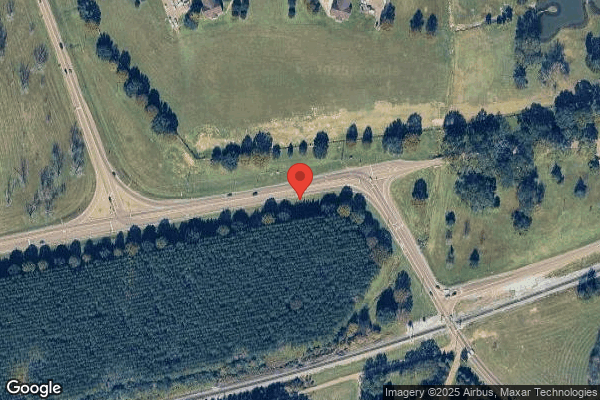
JNH-MADISON INN

3550 HIGHWAY 468 WEST, WHITFIELD, MS 39193 (601) 351-8015
Government - State 63 Beds Independent Data: November 2025
Trust Grade
90/100
#14 of 200 in MS
Last Inspection: December 2024

Within standard 12-15 month inspection cycle. Federal law requires annual inspections.

Overview

JNH-Madison Inn has an excellent Trust Grade of A, indicating it is highly recommended for families seeking care. It ranks #14 out of 200 nursing homes in Mississippi, placing it in the top half of facilities in the state, and #4 out of 9 in Rankin County, meaning only three local options are better. The facility is improving, with a decrease in issues from three in 2020 to just one in 2024. Staffing is a strong point, receiving a perfect 5/5 rating with a turnover rate of 39%, which is lower than the state average, indicating that staff members are likely to stay long-term and build relationships with residents. There have been no fines reported, suggesting solid compliance with regulations; however, recent inspections found some concerns, such as dust buildup in kitchen areas and failure to properly position a resident's bed during care, which could increase the risk of aspiration. Overall, while the facility has many strengths, these weaknesses indicate areas for improvement in maintaining a safe and sanitary environment.

Trust Score
A
90/100
In Mississippi
#14/200
Top 7%
Safety Record
Low Risk
No red flags
Inspections
Getting Better
3 → 1 violations
Staff Stability
○ Average
39% turnover. Near Mississippi's 48% average. Typical for the industry.
Penalties
✓ Good
No fines on record. Clean compliance history, better than most Mississippi facilities.
Skilled Nurses
✓ Good
Each resident gets 55 minutes of Registered Nurse (RN) attention daily — more than average for Mississippi. RNs are trained to catch health problems early.
Violations
✓ Good
Only 4 deficiencies on record. Cleaner than most facilities. Minor issues only.
★★★★★
5.0
Overall Rating
★★★★★
5.0
Staff Levels
★★★★★
5.0
Care Quality
★★★★★
5.0
Inspection Score
Stable
2020: 3 issues
2024: 1 issues

The Good

  • 5-Star Staffing Rating · Excellent nurse staffing levels
  • 5-Star Quality Measures · Strong clinical quality outcomes
  • Full Sprinkler Coverage · Fire safety systems throughout facility
  • No fines on record
  • Staff turnover below average (39%)

    9 points below Mississippi average of 48%

Facility shows strength in staffing levels, quality measures, fire safety.

The Bad

Staff Turnover: 39%

Near Mississippi avg (46%)

Typical for the industry

The Ugly 4 deficiencies on record

Dec 2024 1 deficiency
CONCERN (D)

Potential for Harm - no one hurt, but risky conditions existed

Safe Environment (Tag F0584)

Could have caused harm · This affected 1 resident

Based on observation, staff interview, and facility policy review, the facility failed to ensure a safe, sanitary, and comfortable environment by not preventing the buildup of dust and debris on kitch...

Read full inspector narrative →
Based on observation, staff interview, and facility policy review, the facility failed to ensure a safe, sanitary, and comfortable environment by not preventing the buildup of dust and debris on kitchen and dining room vent covers for two (2) out of four (4) days of survey. Findings include: A review of the facility's policy titled Cleaning of Patient/Resident Areas, dated 11/24, revealed, . II. Policy This policy provides procedures to clean and disinfect all patient/resident areas to prevent the spread of infection . Procedure B. Steps to cleaning and disinfecting a building: . 2. The following should be free of stains, visible dust, streaks, gross soil, spider webs and handprints. Clean and disinfect as needed . k. Vents . On 12/02/2024 at 10:45 AM, during an observation of Building 28, the vent cover in the pantry was noted to be unsanitary, with a significant buildup of solid dust and debris on the cover. On 12/02/2024 at 11:30 AM, during an interview with Dietary Staff #1 related to the cleaning schedule of the vents she stated, Sometimes I do it myself, but it's done once a month. On 12/03/2024 at 1:45 PM, during a follow-up observation of Building 28, the vent in the pantry was again noted to have thick dust present on the vent cover. On 12/03/2024 at 2:00 PM, during an observation of Building 34's dining room, both vent covers were noted to be heavily soiled with approximately 3/8 inch of thick dust accumulation. On 12/03/2024 at 2:30 PM, during an interview with the Administrator, she stated that a work order for cleaning the vents had been in place for a week but had not been completed at the time of the interview. On 12/03/2024 at 2:45 PM, during an interview with Maintenance Staff #1, he stated that vent cleaning is usually performed by housekeeping and was unsure of how often this is done. On 12/03/2024 at 2:55 PM, during a phone interview with the Housekeeping Supervisor, she stated that vents should be cleaned weekly. She explained that housekeeping can clean vents with a washcloth or soap but that Maintenance staff is responsible for removing and performing thorough weekly dusting of the vents. On 12/03/2024 at 3:05 PM, during an interview with Dietary Staff #2, she stated that maintenance is usually responsible for cleaning the vents but admitted , No one has been here in a while. She confirmed the vents were thickly covered in dust, adding, I see why you are concerned because the vents have a lot of dust covering them.
Jan 2020 3 deficiencies
CONCERN (D)

Potential for Harm - no one hurt, but risky conditions existed

Comprehensive Care Plan (Tag F0656)

Could have caused harm · This affected 1 resident

Based on observation, staff interview, record review, and facility policy review, the facility failed to follow comprehensive care plan related to Percutaneous Endoscopic Gastrostomy (PEG) tube care f...

Read full inspector narrative →
Based on observation, staff interview, record review, and facility policy review, the facility failed to follow comprehensive care plan related to Percutaneous Endoscopic Gastrostomy (PEG) tube care for one (1) of five (5) PEG tube care plans reviewed, Resident #49. Findings include: A review the facility's Nursing Documentation policy, dated December 2016, revealed: It is the professional responsibility of all licensed nurses to provide an accurate, in-depth clinical record of care for assigned residents. Documentation to meet this criteria included the care plan. A review of Resident #49's comprehensive care plan, revealed a problem to address the risk of aspiration related to the use of the feeding tube, onset date of 04/18/2016, and a target date of 04/02/2020. Approaches included to elevate head of bed (HOB) 30-45 degrees at all times. An observation of Resident #49's incontinent care, on 01/22/2020 at 2:29 PM, revealed Certified Nursing Assistant (CNA) #1 placed the HOB in a flat lying position for Resident #49's care. CNA #1 and CNA #2, who was assisting with incontinent care, failed to notify the nursing staff to stop the feeding pump, which had Diabetic Source running at 70 cubic centimeters (cc) per hour (cc/hr). CNA #1 placed Resident #49's HOB back in an upright position, after performing incontinent care. During an interview, on 01/22/2020 at 2:50 PM, CNA #1 and CNA #2 stated they had completed yearly competency checks which included incontinent care. Both CNAs stated they were not to touch the feeding pump, so they did not turn it off. CNA #1 further stated she was taught not to let the HOB down completely, but could provide care. CNA #1 confirmed she placed Resident #49's HOB in a flat position during incontinent care. An interview on 01/23/2020 at 1:33 PM, with the Director of Nursing (DON), revealed the facility's policy was for staff to notify the nurse to turn off the feeding pump during care to decrease the risk of aspiration. The DON stated both CNAs had received training related to the care of residents. The facility failed to provide a policy related to PEG tube care. During an interview, on 1/23/2020 at 2:55 PM, Registered Nurse (RN) #2, Minimum Data Set (MDS) Nurse, stated the expectation was for staff to follow the care plan according to the assessment.
CONCERN (D)

Potential for Harm - no one hurt, but risky conditions existed

Tube Feeding (Tag F0693)

Could have caused harm · This affected 1 resident

**NOTE- TERMS IN BRACKETS HAVE BEEN EDITED TO PROTECT CONFIDENTIALITY** Based on observation, record review, and staff interview, the facility failed to prevent the risk of aspiration for a resident w...

Read full inspector narrative →
**NOTE- TERMS IN BRACKETS HAVE BEEN EDITED TO PROTECT CONFIDENTIALITY** Based on observation, record review, and staff interview, the facility failed to prevent the risk of aspiration for a resident with a Percutaneous Endoscopic Gastrostomy (PEG) tube, as evidenced by, the Certified Nursing Assistant (CNA) placing Resident #49's head of bed (HOB) flat, without notifying licensed nurse to hold/stop a continuous feeding pump, during incontinent care, for one (1) of five (5) care observations for residents with PEG tubes. Findings include: Review of the [NAME] and [NAME] Nursing Skills and Procedures - Eighth Edition, copyright 2015, revealed: Enteral Nutrition via a Gastrostomy or Jejunostomy Tube - Elevate the head of bed to a minimum of 30 degrees (preferably 45 degrees). Rationale - Elevated head helps prevent pulmonary aspiration. A review of Resident #49's revised physician orders, dated 11/18/2019, revealed an order for Diabetic Source at 70 cubic centimeters per hour (cc/hr) with 30 cc/hr water flush. Review of Resident #49's comprehensive care plan revealed a problem to address the risk of aspiration related to the use of the feeding tube, with an onset date of 0418/2015, and target date of 04/02/2020. Approaches included to elevate the HOB 30-45 degrees at all times. An observation of Resident #49's incontinent care, on 01/22/2020 at 2:29 PM, revealed Certified Nursing Assistant (CNA) #1 lowered the head of the bed (HOB) to flat position. CNA #1 and CNA #2 failed to notify the nursing staff to stop the feeding pump before or during incontinent care. The pump was noted to be infusing Diabetic Source at 70 cc/hour. CNA #1 placed Resident #49's HOB back after performing incontinent. During an interview, on 01/22/2020 at 2:50 PM, CNA #1 and CNA #2 stated they had completed yearly competency checks, which included incontinent care. The CNA revealed they were not to touch the feeding pump, so they didn't turn it off. CNA #1 stated she was taught not to let the HOB down completely, but could provide care. CNA #1 confirmed she did let Resident #49's HOB down, while the feeding pump was running, during the resident's incontinent care. An interview on 01/23/2020 at 1:33 PM, with the Director of Nursing (DON), revealed she stated, the facility's policy was for staff to notify the nurse, to turn off the tube feeding during care, to decrease the risk of aspiration. The DON revealed both CNAs had received training related to caring for residents. The facility did not provide a copy of the training records for CNA #1 or CNA #2. The facility failed to provide of a policy related Peg Tube care and procedures. A review of the facility's Identification and Summary Sheet for Resident #49, revealed the facility admitted the resident on 04/18/2016 with diagnoses which included of Dysphagia - Peg Tube.
CONCERN (D)

Potential for Harm - no one hurt, but risky conditions existed

Infection Control (Tag F0880)

Could have caused harm · This affected 1 resident

Based on observation, staff interview, record review, and facility policy review the facility failed to prevent the possible spread of infection, during Percutaneous Endoscopic Gastrostomy (PEG) site ...

Read full inspector narrative →
Based on observation, staff interview, record review, and facility policy review the facility failed to prevent the possible spread of infection, during Percutaneous Endoscopic Gastrostomy (PEG) site care, as evidenced by placing soiled items on Resident #3's bed and floor, without the use of a biohazard bag, for one (1) of five (5) resident care observations. Findings include: Review of the facility's Skin/Wound Care policy, dated March 2014, revealed: Treatment of Wounds, the nurse will discard soiled dressings and gloves in biohazard bag. Review of Resident #3's Quarterly Minimum Data Set (MDS) Assessment, with an Assessment Reference Date (ARD) of 01/17/2020 revealed, Section K (Nutritional Status) was coded to indicate the resident had a feeding tube. During an observation of Resident #3's PEG site care, on 01/23/2020 at 10:04 AM, Registered Nurse (RN) #1 removed the soiled dressing from the stoma site, and placed the dressing inside her soiled gloves, and laid them on the resident's bed. RN #1 stated she forgot the red bag for the garbage. After completing the care, RN #1 picked up the soiled dressing and gloves from the bed, placed them in a regular garbage bag. RN #1 then placed the regular garbage bag on the floor by the sink. She washed her hands, left the room to retrieve a red biohazard bag. When RN #1 returned to the resident's room, she placed the regular garbage bag, inside of the red biohazard bag, and then placed the red biohazard bag on the floor, while she washed her hands. RN #1 never changed Resident #3's bed sheet, after providing the care. During an interview, on 01/23/2020 at 10:27 AM, RN #1 confirmed she placed the dirty items on Resident #3's bed and on the resident's floor. RN #1 revealed the issue with placing the dirty gloves and dressing on the bed and floor could cause the spread of infection. RN #1 stated she didn't know what to do with the bag while she was washing her hands. An interview with the Director of Nursing (DON), on 01/23/2020 at 1:28 PM, revealed, the facility's policy was to use the biohazard bag for disposal of waste materials. The DON revealed RN #1 was was trained on the care of PEG tube sites and discarding of waste materials. The facility did not provide a copy of RN #1's training records related to PEG site care. A review of the facility's Identification and Summary Sheet revealed, Resident #3 was admitted by the facility on 07/02/2012, with diagnoses which included Dysphagia.
Understanding Severity Codes (click to expand)
Life-Threatening (Immediate Jeopardy)
J - Isolated K - Pattern L - Widespread
Actual Harm
G - Isolated H - Pattern I - Widespread
Potential for Harm
D - Isolated E - Pattern F - Widespread
No Harm (Minor)
A - Isolated B - Pattern C - Widespread

Questions to Ask on Your Visit

  • "Can I speak with families of current residents?"
  • "What's your RN coverage like on weekends and overnight?"

Our Honest Assessment

Strengths
  • • Grade A (90/100). Above average facility, better than most options in Mississippi.
  • • No major safety red flags. No abuse findings, life-threatening violations, or SFF status.
  • • No fines on record. Clean compliance history, better than most Mississippi facilities.
  • • Only 4 deficiencies on record. Cleaner than most facilities. Minor issues only.
Concerns
  • • No significant concerns identified. This facility shows no red flags across CMS ratings, staff turnover, or federal penalties.
Bottom line: Generally positive indicators. Standard due diligence and a personal visit recommended.

About This Facility

What is Jnh-Madison Inn's CMS Rating?

CMS assigns JNH-MADISON INN an overall rating of 5 out of 5 stars, which is considered much above average nationally. Within Mississippi, this rating places the facility higher than 99% of the state's 100 nursing homes. This rating reflects solid performance across the metrics CMS uses to evaluate nursing home quality.

How is Jnh-Madison Inn Staffed?

CMS rates JNH-MADISON INN's staffing level at 5 out of 5 stars, which is much above average compared to other nursing homes. Staff turnover is 39%, compared to the Mississippi average of 46%. This relatively stable workforce can support continuity of care.

What Have Inspectors Found at Jnh-Madison Inn?

State health inspectors documented 4 deficiencies at JNH-MADISON INN during 2020 to 2024. These included: 4 with potential for harm.

Who Owns and Operates Jnh-Madison Inn?

JNH-MADISON INN is owned by a government entity. Government-operated facilities are typically run by state, county, or municipal agencies. The facility operates independently rather than as part of a larger chain. With 63 certified beds and approximately 55 residents (about 87% occupancy), it is a smaller facility located in WHITFIELD, Mississippi.

How Does Jnh-Madison Inn Compare to Other Mississippi Nursing Homes?

Compared to the 100 nursing homes in Mississippi, JNH-MADISON INN's overall rating (5 stars) is above the state average of 2.6, staff turnover (39%) is near the state average of 46%, and health inspection rating (5 stars) is much above the national benchmark.

What Should Families Ask When Visiting Jnh-Madison Inn?

Based on this facility's data, families visiting should ask: "Can I visit during a mealtime to observe dining assistance and food quality?" "How do you handle medical emergencies, and what is your hospital transfer rate?" "Can I speak with family members of current residents about their experience?"

Is Jnh-Madison Inn Safe?

Based on CMS inspection data, JNH-MADISON INN has a clean safety record: no substantiated abuse findings (meaning no confirmed cases of resident harm), no Immediate Jeopardy citations (the most serious violation level indicating risk of serious injury or death), and is not on the Special Focus Facility watch list (a federal program monitoring the lowest-performing 1% of nursing homes). The facility has a 5-star overall rating and ranks #1 of 100 nursing homes in Mississippi. While no facility is perfect, families should still ask about staff-to-resident ratios and recent inspection results during their visit.

Do Nurses at Jnh-Madison Inn Stick Around?

JNH-MADISON INN has a staff turnover rate of 39%, which is about average for Mississippi nursing homes (state average: 46%). Moderate turnover is common in nursing homes, but families should still ask about staff tenure and how the facility maintains care continuity when employees leave.

Was Jnh-Madison Inn Ever Fined?

JNH-MADISON INN has no federal fines on record. CMS issues fines when nursing homes fail to meet care standards or don't correct problems found during inspections. The absence of fines suggests the facility has either maintained compliance or corrected any issues before penalties were assessed. This is a positive indicator, though families should still review recent inspection reports for the full picture.

Is Jnh-Madison Inn on Any Federal Watch List?

JNH-MADISON INN is not on any federal watch list. The most significant is the Special Focus Facility (SFF) program, which identifies the bottom 1% of nursing homes nationally based on persistent, serious quality problems. Not being on this list means the facility has avoided the pattern of deficiencies that triggers enhanced federal oversight. This is a positive indicator, though families should still review the facility's inspection history directly.