BRANDON NURSING AND REHABILITATION CENTER
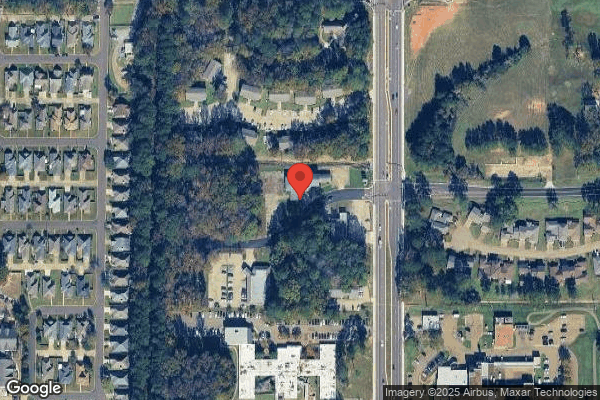

355 CROSSGATE BLVD, BRANDON, MS 39042 (601) 825-3192
For profit - Limited Liability company 230 Beds NORBERT BENNETT & DONALD DENZ Data: November 2025 6 Immediate Jeopardy citations
Trust Grade
0/100
#149 of 200 in MS
Last Inspection: July 2025

Inspected within the last 6 months. Data reflects current conditions.

Overview

Brandon Nursing and Rehabilitation Center has a Trust Grade of F, indicating poor performance with significant concerns about resident care. It ranks #149 out of 200 facilities in Mississippi, placing it in the bottom half, and #9 out of 9 in Rankin County, which means there are no better local options available. The facility is worsening, with issues increasing from 10 in 2024 to 22 in 2025, and it has a concerning 69% staff turnover rate, much higher than the state average. There are serious issues reflected in their recent inspection findings, including a critical incident where a resident with exit-seeking behavior was able to leave the facility unsupervised for about 15 minutes, leading to a risk of serious harm. Additionally, the facility has been fined $150,080, which is higher than 91% of Mississippi facilities, suggesting ongoing compliance issues. While staffing received an average rating of 3 out of 5, the facility has less RN coverage than 86% of other facilities, which is a concern for ensuring adequate resident care.

Trust Score
F
0/100
In Mississippi
#149/200
Bottom 26%
Safety Record
High Risk
Review needed
Inspections
Getting Worse
10 → 22 violations
Staff Stability
⚠ Watch
69% turnover. Above average. Higher turnover means staff may not know residents' routines.
Penalties
✓ Good
$150,080 in fines. Lower than most Mississippi facilities. Relatively clean record.
Skilled Nurses
⚠ Watch
Each resident gets only 21 minutes of Registered Nurse (RN) attention daily — below average for Mississippi. Fewer RN minutes means fewer trained eyes watching for problems.
Violations
⚠ Watch
43 deficiencies on record. Higher than average. Multiple issues found across inspections.
★☆☆☆☆
1.0
Overall Rating
★★★☆☆
3.0
Staff Levels
★☆☆☆☆
1.0
Care Quality
★☆☆☆☆
1.0
Inspection Score
Stable
2024: 10 issues
2025: 22 issues

The Good

  • Full Sprinkler Coverage · Fire safety systems throughout facility
  • No fines on record

Facility shows strength in fire safety.

The Bad

1-Star Overall Rating

Below Mississippi average (2.6)

Significant quality concerns identified by CMS

Staff Turnover: 69%

23pts above Mississippi avg (46%)

Frequent staff changes - ask about care continuity

Federal Fines: $150,080

Well above median ($33,413)

Significant penalties indicating serious issues

Chain: NORBERT BENNETT & DONALD DENZ

Part of a multi-facility chain

Ask about local staffing decisions and management

Staff turnover is elevated (69%)

21 points above Mississippi average of 48%

The Ugly 43 deficiencies on record

6 life-threatening 4 actual harm
Jul 2025 4 deficiencies
CONCERN (D)

Potential for Harm - no one hurt, but risky conditions existed

Deficiency F0561 (Tag F0561)

Could have caused harm · This affected 1 resident

Based on interviews, record review and facility policy review, the facility failed to ensure staff honored a resident's preference to be put back to bed after therapy, resulting in the resident experi...

Read full inspector narrative →
Based on interviews, record review and facility policy review, the facility failed to ensure staff honored a resident's preference to be put back to bed after therapy, resulting in the resident experiencing pain and emotional distress for one (1) of (35) sampled residents. Resident #216.Findings include:A review of the facility's policy, Resident [NAME] of Rights, no date, A .1 .15. Self-determination, which the facility must promote and facilitate through support of resident choice, consistent with his or her interest, assessment and plan of care and make other choices about aspect of his or life in the facility that are significant to the resident. Including but not limited to: activities, healthcare schedules (including sleeping, waking, bathing and eating times) and how she or he spends time .On 7/28/25 at 2:34 PM, Resident #216 shared that she typically attends therapy around 8:00 AM and finishes by 10:30 AM or 11:00 AM, after which therapy staff assist her in returning to her room. She reported that after therapy, she requested her assigned Certified Nursing Assistant (CNA) to place her back in bed due to comfort and health needs. However, she expressed that some CNAs respond dismissively, refusing to assist her. Resident #216 explains that these delays can last for hours, even after she activates her call light multiple times, staff will enter her room, turn off the light, and leave without explanation. She adds that there have been occasions when she has contacted her daughter for help. She also noted that she has brought the issue to the attention of the facility's administration, who have made temporary improvements, but a lasting solution has not yet been achieved.On 7/29/25 at 2:30 PM, during a follow-up interview, Resident #216 reported a comparable experience that day. She stated she finished therapy at approximately 11:00 AM and was taken to her room. She requested assistance from CNA #2 to return to bed but was told to wait. The resident noted discomfort due to her spinal condition when sitting for extended periods and said she was placed back in bed around 1:30 PM.On 7/30/25 at 8:36 AM, during an interview with Certified Nursing Assistant (CNA) #1, she confirmed that Resident #216's preference is to be laid back down after therapy sessions. CNA #1 stated the resident had made it known that she experiences pain when left sitting in her wheelchair for extended periods. She further stated it is common knowledge among most of the CNAs assigned to the unit that the resident wants to be in bed after therapy. Despite this knowledge, she added that some staff members refuse the resident's request and instead wait until their two o'clock rounds. CNA #1 acknowledged that staff should honor the resident's request, stating, It's not right to treat residents that way.On 7/30/25 at 8:50 AM, during an interview with CNA #2, she confirmed being assigned to Resident #216 on 7/29/25 and acknowledged awareness that the resident prefers to be put to bed after therapy. However, she stated she did not return the resident to bed until approximately 1:30 PM.On 7/31/25 at 8:30 AM, during an interview with the member of the Therapy team, she reported that it has been an ongoing challenge to get assigned CNAs to honor Resident #216's preference of lying down after therapy. She stated the resident repeatedly complains of pain and emotional turmoil from sitting too long in her wheelchair. The therapist emphasized that because the therapy sessions are physically demanding, the resident is usually tired and uncomfortable and should be returned to bed when requested.On 7/31/25 at 10:30 AM, during an interview with the Director of Nursing (DON), she stated she had no prior knowledge that Resident #216 had concerns about not being put back to bed after therapy. However, she acknowledged it is the CNAs' responsibility to honor resident preferences regardless of whether they are passing trays or engaged in other tasks.On 7/31/25 at 12:51 PM, during an interview with Resident #216's daughter, who is the Resident Representative, she stated that although she had not witnessed it personally, her mother frequently calls her in tears after therapy, reporting that the CNAs will not return her to bed. The daughter stated she had contacted the Administrator and DON multiple times, and although they resolved it temporarily, the issue continued to recur without a lasting solution.On 7/31/25 at 2:31 PM, during an interview with the Administrator, she stated she was not aware of any complaints from the resident or her daughter regarding not being returned to bed after therapy. She acknowledged that it is the responsibility of the CNAs to follow the needs and preferences of the residents.A record review of the admission Record revealed the facility admitted the resident on 5/21/25 with diagnoses including, Spondylosis, Lumbar Region and Idiopathic Scoliosis, Thoracic Region. A record review of the Minimum Data Set (MDS) with an Assessment Reference Date (ARD) of 5/28/25 revealed a Brief Interview Mental Score (BIMS) of (15), indicating the resident was cognitively intact.
CONCERN (D)

Potential for Harm - no one hurt, but risky conditions existed

Accident Prevention (Tag F0689)

Could have caused harm · This affected 1 resident

Based on observation, interview, record review and facility policy review, the facility failed to ensure that residents were transferred in a manner that could prevent accidents and potential injury f...

Read full inspector narrative →
Based on observation, interview, record review and facility policy review, the facility failed to ensure that residents were transferred in a manner that could prevent accidents and potential injury for one (1) of (3) residents reviewed for accident hazards and safety. Resident #11.Findings included:Record review of facility policy titled Accident and Incident Documentation and Investigation Resident Incident History 7/18 revealed .Accidents and incidents will be analyzed for trends or patterns to enable the facility to enhance preventive measures to reduce the occurrence of incidents.On 7/30/25 at 1:15 PM, during an observation, Certified Nurse Aide (CNA) #6 was observed transporting Resident #11 from her room to the day room on the 400-hall using a wooden chair with no wheels. CNA #6 was seen pushing the resident from behind, with no method to stabilize the chair or catch the resident if she were to fall. Resident #11 typically sat in a rolling padded chair to support her trunk. By the end of the transport, Resident #11 had slid dangerously low in the wooden chair after being jostled during transport and required repositioning.On 7/30/25 at 1:18 PM, during an interview, CNA #6 confirmed she pulled and pushed the resident in the wooden chair to get her to the dining room. She stated the resident refused to sit in her rolling chair and kept trying to get out of it, which she also believed was a fall risk.On 7/30/25 at 1:43 PM, during an interview with Licensed Practical Nurse (LPN) #1, she stated that the proper way to transport a resident was using a wheelchair or rolling chair. She explained that using a wooden chair posed a risk for falling, especially for a resident who could not support herself.During an interview on 7/31/25 at 2:00 PM, with the Director of Nursing (DON), she stated that the resident was put at risk by being transported in this manner, she easily could have fallen out of the chair and been hurt. The DON stated that the correct way to transfer the resident would have been to roll in her wheelchair.During an interview with the administrator on 7/31/25 at 2:32 PM, she stated it is her expectation that staff follow facility policy to transfer residents in a manner to prevent accidents and hazards so they can help and not hurt their residents.A record review of Resident #11's admission Record revealed the facility admitted the resident on 3/17/25 with current diagnoses including Dementia.Record review of the Quarterly Minimum Data Set (MDS) with an Assessment Reference Date (ARD) of 4/25/25 revealed Resident #11 had a Brief Interview for Mental Status (BIMS) score of 03, which indicated the resident's cognition was severely impaired and the resident uses a wheelchair for mobility.
CONCERN (D)

Potential for Harm - no one hurt, but risky conditions existed

Deficiency F0800 (Tag F0800)

Could have caused harm · This affected 1 resident

**NOTE- TERMS IN BRACKETS HAVE BEEN EDITED TO PROTECT CONFIDENTIALITY** Based on observations, interviews, facility policy review and record review, the facility failed to provide a diet taking into c...

Read full inspector narrative →
**NOTE- TERMS IN BRACKETS HAVE BEEN EDITED TO PROTECT CONFIDENTIALITY** Based on observations, interviews, facility policy review and record review, the facility failed to provide a diet taking into consideration preferences of the resident for one (1) of 35 sampled residents. Resident #42Findings include:Record review of the facility policy revealed residents have a right to reside and receive services in the facility with reasonable accommodation of resident's preferences except when to do so would endanger the health or safety of the resident or other residents.During an observation on 07/29/2025 at 12:27 PM, Resident 42 was served a tray consisting of turkey, dressing, and a sweet potato. During an interview on 7/29/25 at 12:27 PM, Resident #42, asked CNA#4 to exchange her meal for a turkey sandwich. CNA #4 went to the kitchen and brought back a tray consisting of a piece of ham, broccoli and cheese and mandarin fruit cup and black-eyed peas. She stated that she was told by kitchen staff that they were out of sandwiches but would send this instead since it was the alternative. This tray included metal silverware. Resident #42 had previously made the kitchen staff aware that she prefers not to have metal silverware since it doesn't seem clean to her. She stated she's been trying to get a salad since she's stayed here in April but never gets what she wants from the kitchen. She stated the staff doesn't come from the kitchen to address preferences and follow up. Residents do not get a choice prior to the meal arriving, they are simply brought a tray. The residents have to send it back if they don't want it, and if you ask for something else like a sandwich a lot of times the kitchen tells the CNA they're out of it.During an interview on 07/29/2025 at 2:37 PM, the Dietary Manager stated that residents are always allowed to get an alternate tray. They can just send the tray back and tell the staff what the resident wants, or the resident can come and catch us and tell us they'd rather have something else. We always have sandwiches available as well so they can exchange trays for the resident. She stated that there is no time cutoff for notifying the kitchen of wanting the alternate and they can get it. She said that she makes rounds and asks the residents what they want. She confirmed that the resident liked to get plastic silverware but was unsure why or how she was sent metal silverware on the alternate tray rather than the sandwich as was requested. She also stated that she goes often to the residents' rooms to talk to them about preferences and update them and would go talk to Resident #42 later today to update preferences.During an interview on 7/29/25 at 3:05 PM with CAN# 3 who noted that the resident often has asked for a salad and never gets it from the kitchen staff. CNA's go to the kitchen on her behalf but has not gotten but maybe one since she's been staying in the facility, and one time about a month ago. CNA #3 stated she even went to Wal-Mart herself to bring back the resident a salad because she did not get it from the kitchen.During an interview on 7/29/25 at 12:30 PM, CNA # 4 stated that she carried Resident #42's tray to the kitchen but was told sandwiches were unavailable and they could only send the alternate tray. When asked, she said this happens a lot (like every day I work). Staff are told the kitchen is out of something the resident wants, and the facility does not get it for them. She stated there is no process where residents know what is on the menu and can ask ahead of time. It is like the kitchen sends the food and it's up to the residents to send staff to the kitchen to get it changed out for something they like.During an observation on 7/30/25 at 12:40 PM, Resident #42 was served a tray consisting of a pork chop, au gratin potatoes and vegetables.During an interview on 7/30/25 at 12:45 PM, Resident #42 confirmed that she asked staff members again for a salad to come with her lunch tray, but instead she got the primary meal offered of pork chop covered in gravy, mixed veggies and noodles. She confirmed that the prior day she received an alternate tray, instead of the sandwich like she had asked for and never got. She stated she hates to complain, but feels frustrated because this is her home and at home she gets a choice of what she wants to eat but doesn't get it here. She stated she never gets a choice because she eats in her room, and a menu is never brought to her. She stated she must first see what they bring her, then send it back if it's not what she wants and is often told they are out of an alternative or don't have sandwiches by staff.During an interview on 7/31/25 at 2:09 PM, the Dietary Manager confirmed that she had not gone to Resident # 42 yet to update her preferences. She stated that she was unaware that she wanted a salad but had talked to her Monday and told her she would come back today and speak with her about her preferences. She stated it is an easy fix to get resident's what they want, and salad has been available at all times. Anything the residents want we can get. She confirmed that the resident should have been sent a sandwich when she asked for it instead of the alternate meal on 7/29/25. During an interview on 7/31/25 at 2:13 PM, the Administrator shared that her expectation of staff is that facility policy be followed with regards to dietary preferences and choices and resident rights and the facility provide them to the best of their abilities.During an interview on 07/31/2025 at 2:22 PM, the District Dietician Manager and facility Dietary Manager confirmed that the dietary staff attend regular in-services given by staff development from the nursing home staff monthly on the 29th of each month.Record review of a facility in-service dated May 2025 in-service covering resident's rights revealed the Dietary Manager signed and completed on 5/29/25.Record review of the admission Record revealed Resident #42 was admitted on [DATE] with diagnoses that included of Type 2 Diabetes Mellitus, Chronic kidney disease., Record review of Resident #42's Minimum Data Set (MDS) with an Assessment Reference Date (ARD) of 4/25/25 revealed the resident had a Brief Interview for Mental Status (BIMS) score of 15 indicating the resident was cognitively intact.
CONCERN (D)

Potential for Harm - no one hurt, but risky conditions existed

Food Safety (Tag F0812)

Could have caused harm · This affected 1 resident

Based on observation, interview and facility policy review, the facility failed to practice hand hygiene in accordance with professional standards for food services as evidenced by the District Dietar...

Read full inspector narrative →
Based on observation, interview and facility policy review, the facility failed to practice hand hygiene in accordance with professional standards for food services as evidenced by the District Dietary Manager (DDM) placing her fingers in food on the food line for one (1) of three (3) kitchen observations. Findings include:Record review of the facility policy, Proper Hand Washing and Glove Use, 2016, revealed, All employees will use proper hand washing procedures and glove usage in accordance with State and Federal Sanitation Guidelines.Procedures.5.Gloves are to be used whenever direct food contact is required.On 7/30/25 at 11:11AM, during an observation and interview with kitchen staff the District Dietary Manager (DDM) used her bare finger to poke holes in the aluminum foil which covered the pans sitting on the hot food line and peel it back to expose the food. During the tray preparation the DDM was observed holding plates in such a way as to allow rolls to touch her bare hands at the thumb. In an interview with DDM, she failed to acknowledge the need for glove use during tray service. The DDM stated we don't have to wear gloves because that's not in our policy, we are only supposed to wear gloves if our hands might come into contact with foods we are serving or are serving ready-to-eat items such as sandwiches. When the SA informed her that she was observed touching the rolls multiple times, she stated I don't think they did, but I guess it is possible if you saw it, and gloves would have prevented this or possible contamination. The DDM noted that the dietary staff attend in-services on infection control once monthly on the 29th each month; however, she does not attend in-services training because she is rarely in the building.On 07/31/2025 at 2:11 PM, an Interview with the Infection Preventionist (IP) Nurse she confirmed that dietary staff should wear gloves during the process of plating food and serving in case they are asymptomatic with certain illnesses like covid and flu which could spread very easily as the plates and food are touched by bare hands and plates are passed from the bare hands of the dietary staff to Certified Nursing Assistants (CNAs) to the residents because their hands might not have been clean.On 7/31/25 at 2:13 PM, an interview with the Administrator acknowledged the unsanitary handling of ready-to-eat food in the kitchen. The Administrator reported it is her expectation that policy be followed regarding infection prevention, to protect the residents rather than placing them at risk.Record review of Food Service Glove Usage Competency & Skills Evaluation dated 4/22/2025 and7/22/2025 revealed dietary staff had completed and met handwashing guidelines.
May 2025 6 deficiencies 5 IJ
CRITICAL (J) 📢 Someone Reported This

A family member, employee, or ombudsman was alarmed enough to file a formal complaint

Immediate Jeopardy (IJ) - the most serious Medicare violation

Free from Abuse/Neglect (Tag F0600)

Someone could have died · This affected 1 resident

**NOTE- TERMS IN BRACKETS HAVE BEEN EDITED TO PROTECT CONFIDENTIALITY** Based on observation, interviews, and record review the facility failed to protect the residents' right to be free from neglect ...

Read full inspector narrative →
**NOTE- TERMS IN BRACKETS HAVE BEEN EDITED TO PROTECT CONFIDENTIALITY** Based on observation, interviews, and record review the facility failed to protect the residents' right to be free from neglect by not ensuring staff implemented measures to mitigate the risk to prevent elopement for one (1) of six (6) sampled residents, Resident #5. On 5/01/25 at approximately 3:00 PM, the facility failed to prevent Resident #5, a resident who had recently exhibited new exit-seeking behaviors from exiting the facility unnoticed and unsupervised. The facility was unaware of Resident #5's whereabouts for approximately fifteen (15) minutes until a staff member went to his car on break and located her sitting in the passenger seat of his car with the windows up in an unshaded parking space approximately thirty-five yards from the facility entrance at approximately 3:15 PM. The parked car was in front of a sidewalk that led to a busy four-lane boulevard with no barrier or crosswalk. The facility failure to ensure Resident #5 was adequately supervised to ensure she did not exit the facility unsupervised placed her and other residents with wandering/exit seeking behaviors at risk for serious injury, harm, impairment, and/or death. The State Agency (SA) identified Immediate Jeopardy and Substandard Quality of Care which began on 5/01/25 when Resident #5 exited the facility unnoticed and unsupervised. The SA notified the facility's Administrator of the IJ and SQC on 5/09/2025 at 3:10 PM and provided the Administrator with the IJ templates. The facility submitted an acceptable Removal Plan on 5/12/2025, in which they alleged all corrective actions to remove the IJ were completed on 5/10/25 and the IJ removed on 5/11/2025. The SA validated the Removal Plan on 5/12/2025 and determined the IJ was removed on 5/11/2025, prior to exit. Therefore, the scope and severity of 42 CFR §483.12(a)(1)Free from Abuse and Neglect (F600), was lowered from a S/S of J to a S/S of D while the facility develops a plan of correction to monitor the effectiveness of systemic changes to ensure the facility sustains compliance with regulatory requirements. Findings include: Cross Reference F609, F610, F656, and F689 Record review of the facility policy titled, ABUSE PREVENTION with Revision Date 1/25 (January 2025), revealed the policy stated, The facility is committed to protecting the residents from abuse .DEFINITIONS .Neglect: A failure of the facility, its employees or service providers to provide goods and services necessary to avoid physical harm, mental anguish, emotional distress, or pain .PREVENTION .3. Identify, correct, and intervene in situations in which abuse, neglect and/or misappropriation of resident property is more likely to occur. 4. Features of the physical environment that may make abuse and/or neglect more likely to occur, such as secluded areas of the facility. 5. Examples of steps that the facility may put in place immediately to prevent further potential abuse includes, but are not limited to, staffing changes, increased supervision . Review of the admission Record for Resident #5 revealed the facility admitted the resident on 5/23/23 and the resident had diagnoses of bipolar disorder, anxiety disorder, schizophrenia and major depressive disorder. Record review of the Annual Minimum Data Set (MDS) with Assessment Reference Date (ARD) 4/10/25 for Resident #5 revealed the resident had a Brief Interview for Mental Status (BIMS) score of 14, which indicated no cognitive impairment. No mood or behavioral issues were noted, including wandering or exit seeking behaviors, during the lookback period. The MDS documented she had no restraints or wander/elopement alarms in use and was able to walk with supervision only for one hundred fifty (150) feet and was at risk for falls. Record review of the Progress Notes for Resident #5 dated 4/25/25 through 5/06/25 revealed that the resident began going to the facility front door with small bags packed with her clothes and reporting family was coming to get her on 4/25/25 after report that she sat up all night with increased confusion. According to Progress Note on 5/01/25 at 1:40 PM (13:40) by Licensed Practical Nurse (LPN) #9, Resident #5 had exit seeking behaviors that included confusion about her brother being outside to get her, constant redirection away from the front entrance and walking with a bag of her belongings and the Nurse Practitioner was notified with new order noted for urinalysis and change to insulin orders with family notified. The Progress Notes dated 5/01/25 at 3:15 PM (15:15) by LPN #8 and at 3:30 PM by LPN #9 documented that the resident exited the facility unnoticed by staff and was observed by Certified Nursing Assistant (CNA) #9 sitting in his vehicle when the CNA went on break at approximately 3:00 PM and escorted the resident back into the facility. There was no incident report noted. Progress Note dated 5/03/25 at 10:30 AM documented that Resident #5 was on 1 on 1 observation related to elopement attempts. On 5/08/25 at 1:08 PM during a telephone interview Contact #1 for Resident #5 stated that she was notified by LPN #9 on 5/01/25 at approximately 3:30 PM that Resident #5 had exited the facility and was found sitting in a staff member's car in the facility parking lot. On 5/08/25 at 2:25 PM during an interview LPN #9 stated that she was familiar with Resident #5 and her care and the resident had exit seeking behaviors which included packing her belongings in bags and going to the front door of the facility and talking about leaving for several days at least since 4/24/25. She stated that she had documented her observations in the Progress Notes but had not updated the resident's care plan and there had been no orders for application of wander management device or other supervision resulting from the behavior until after the resident's elopement on 5/01/25 at approximately 3:00 PM. LPN #9 confirmed she was assigned to the care of Resident #5 on 5/01/25 during the day shift. She stated that at approximately 3:15 PM CNA #9 arrived at the nurses station with Resident #5 who was wearing a short-sleeved shirt, long pants and a pair of shoes. She said CNA #9 reported he had gone to his car and found Resident #5 seated in his front passenger's seat. LPN #9 said she had not known the resident had exited the facility and no one had reported the resident missing. LPN #9 confirmed that the Social Services Director was notified of the incident as well as Contact #1 and the primary healthcare provider for Resident #5 who issued new orders for a wander guard. She confirmed that she did not complete an incident report and had no request to participate in any investigation into the incident. LPN #9 said that she was not aware of any head count of residents, and she had not participated in any elopement drills since the 5/01/25 incident. On 5/08/25 at 3:10 PM an interview with CNA #9 revealed that on 5/01/25 at approximately 3:15 PM he had gone out to his car, which was parked in the first parking spot to the right upon exit from the front door. CNA #9 stated, I looked at my car and saw someone sitting in the passenger seat and thought it wasn't my car, then I realized it was my car, and I opened the drivers' door and asked, 'Mam, you in my car?' and she opened the door and said she thought it was her brother's car. I went around and helped her out and took her inside. CNA #9 reported that the weather was clear, dry and moderate temperature. He said he was not aware of any head count of residents, and he had not participated in any elopement drills since the 5/01/25 incident. On 5/09/25 at 11:00 AM an interview with the Executive Director revealed that at approximately 3:30 PM on 5/01/25 he was notified by the Receptionist that Resident #5 left the facility unnoticed by staff and was outside unsupervised for approximately fifteen minutes and located in a staff members car. On 5/09/25 at 1:36 PM an interview with the facility Receptionist revealed she was familiar with Resident #5 because she had developed the behavior of packing her belongings in bags and coming to the front door prior to the 5/01/25 elopement. She stated that she had redirected Resident #5 several times, including on 5/01/25 with mixed results, explaining that sometimes the resident would return to her unit and sometimes she wasn't easily redirected and that CNAs had to come to the front and escort the resident back to her room. The Receptionist stated that on 5/01/25 around 3:00 PM she had taken a break and asked someone to fill-in for her but that she could not recall whom. She stated that she returned to her desk and shortly thereafter (could not recall time) CNA #9 came in with Resident #5 and said he had found her sitting in his car in the parking lot. She stated that the Executive Director was notified approximately five to ten minutes after CNA #9 and Resident #5 came back into the facility. On 5/09/25 at 3:00 PM observation revealed the first parking space on the right approximately fifty-five feet from the front entrance. Observation revealed one ambulance and six other vehicles traveling through the parking lot. The sidewalk which led from the facility's front porch/portico area, along the front of the parking spaces led to a busy four lane boulevard with a speed limit of thirty-five miles per hour and no cross walks; observation revealed one hundred twenty-five (125) vehicles traveling on the boulevard between 3:00 PM and 3:05 PM. Record review of the local weather history according to WWW.Wunderground, Copyright The Weather Channel, for the facility for 3:00 PM on 5/01/25 revealed the temperature was eighty-one degrees Fahrenheit, with zero precipitation, eight mile per hour winds and partly cloudy. On 5/12/25 at 4:26 PM during a telephone interview with the former DON revealed that she confirmed that she became aware that Resident #5 had exited the facility unnoticed and unsupervised on 5/01/25 at approximately 3:15 PM when CNA #9 escorted the resident back into the facility. She said there was no head count done to confirm the safety of other residents, and said she was not aware of any elopement drills or initiation of missing resident protocol. She confirmed that the care plan for Resident #5 had not been updated for wandering or exit seeking behaviors prior to the elopement. Removal Plan - IJ The facility was informed by state agency on 05/09/2025 at 5:30 PM of 5 immediate jeopardies. The state agency provided the facility with IJ template for F656, F600, F609, F610 and F689. On 05/01/2025, Resident #1 exited the facility unaccompanied and unnoticed and sitting in a staff member's car with no supervision until the resident was found by staff approximately 15 minutes later. The facility failed to implement a care plan with interventions when Resident #1 exhibited behavioral changes that included wandering and exit seeking and a history of altered mental status. The facility also failed to report the allegation of neglect within the required time frame and complete a thorough investigation. On May 1. 2025. at approximately 2:45-3 :00 PM, a CNA walked to his car on his break and noticed a resident sitting in his passenger seat. The CNA immediately told the resident that she has to come back inside. Calmly and without hesitation, the resident stated ''okay. The CNA walked the resident back inside the building, notified the front desk, and walked the resident to the sitting area on the unit The CNA also let Resident (Proper Name) nurse know what happened. The front desk notified the Administrator and the DNS. The Resident was assisted to her room by the evening shift Charge Nurse. A skin assessment was completed by the DNS with no negative findings. Vital signs were obtained. Nurse Practitioner and Sister of Resident# 1 was notified. New orders received by the Nurse Practitioner to included to apply wanderguard signaling device and consult psych services. Resident was also seen by the Physician on 05/01/25 and new orders were received for UA with C&S and Novolog sliding scale change. Resident was also seen by the Psych NP on 05/02/25 and placed 1: 1. An interview with Resident (Proper Name) on 05/01/25 who stated that she was going outside to wait on her brother, noticed a car that looked like her brother's and got in on the passenger side to wait until he signed her out. She stated that she exited the facility with other people and that her brother normally comes to take her out. Corrective Actions: The [NAME] President in-serviced the Social Services Department on 05/10/25 on ensuring that care plans and interventions are implemented for Residents with behavioral changes that verbalizing to leave the facility, exit seeking, wandering and packing belongs should be immediately assessed and elopement precautions implemented. On 05/10/25 The Executive Director notified the Mississippi Department of Health of the incident regarding Resident # 1 exiting the facility unaccompanied and unnoticed by staff. On 05/10/25 an audit was completed for all 18 Residents who were determined to be at risk for elopement risk to ensure accuracy of the care plan and appropriate interventions by the Director of Nurses. On 05/10/25 a sign was placed on all exit doors reminding staff and visitors to be cautious when entering and exiting the facility in an effort to prevent Residents from leaving the facility without staff knowledge. The Executive Director and Director of Nurses reinterviewed Resident# 1 on 05/10/25. Resident# 1 confirmed that she exited the facility from the front door by following other people out. Resident #1 could not recall how many people she followed or give a decription. Letters were mailed to family members on 05/10/25 by Social Services as a reminder to use precautions when entering and the facility in an effort to prevent Residents from exiting the facility unaccompanied or unnoticed by staff. The letter also requested that family members notify the staff of the facility if a Resident verbalizes thoughts of the leaving the facility. The Receptionist who vacated the front desk on 05/01/25 was in-serviced on 05/10/25 by the Executive Director to ensure that coverage is requested by another staff member prior to leaving the front desk. In addition to all routine staff who mans the receptionist area was in-serviced on 05/10/25 by the Executive Director. 100% audit of elopement binders were conducted on 05/10/25 by the Social Service Department to ensure the binders information was reflective of all Residents who are deemed as elopement risk. An Emergency Quality Assurance Committee was held on 05/10/25 with the following staff in attendance: [NAME] President, Executive Director, Regional Director of Clincial Services, Director of Nurses (2) Assistant Executive Directors, Social Service Director, (2) Social [NAME] vice Assistants and Medical Director. The IP nurse was present by phone. The facility completed all actions to remove the Immediate Jeopardies on 5/10/25 and alleges the IJ was removed on 5/11/25. On 5/12/25, SA validations were made onsite during the complaint investigation through interviews and record reviews that all corrective actions had been taken by the facility to remove the IJ and the IJ was removed on 5/11/25, prior to exit.
CRITICAL (J) 📢 Someone Reported This

A family member, employee, or ombudsman was alarmed enough to file a formal complaint

Immediate Jeopardy (IJ) - the most serious Medicare violation

Report Alleged Abuse (Tag F0609)

Someone could have died · This affected 1 resident

**NOTE- TERMS IN BRACKETS HAVE BEEN EDITED TO PROTECT CONFIDENTIALITY** Based on record review, policy review and interviews it was determined that the facility failed to ensure that allegations of ne...

Read full inspector narrative →
**NOTE- TERMS IN BRACKETS HAVE BEEN EDITED TO PROTECT CONFIDENTIALITY** Based on record review, policy review and interviews it was determined that the facility failed to ensure that allegations of neglect and incident of elopement were reported to the appropriate agencies, including State Agency, in accordance with State law through established procedures for one (1) of six (6) sampled residents, Resident #5. On 5/01/25 the facility failed to report to the required agencies an allegation of resident neglect related to lack of adequate supervision resulting in the elopement of Resident #5. On 5/01/25 at approximately 3:00 PM, Resident #5, who had recently exhibited new exit-seeking behaviors, exited the facility unnoticed and unsupervised. The facility was unaware of Resident #5's whereabouts for approximately fifteen (15) minutes until a staff member went to his car on break and located her sitting in the passenger seat of his car with the windows up in an unshaded parking space approximately thirty-five yards from the facility entrance at approximately 3:15 PM. The parked car was in front of a sidewalk that led to a busy four-lane boulevard with no barrier or crosswalk. The facility failure to provide adequate supervision for Resident #5 to ensure she did not exit the facility unsupervised and report the incident to the proper authorities placed her and other residents with wandering/exit seeking behaviors at risk for serious injury, harm, impairment, and/or death. The State Agency (SA) identified Immediate Jeopardy and Substandard Quality of Care which began on 5/01/25 when Resident #5 exited the facility unnoticed and unsupervised. The SA notified the facility's Administrator of the IJ and SQC on 5/09/2025 at 3:10 PM and provided the Administrator with the IJ templates. The facility submitted an acceptable Removal Plan on 5/12/2025, in which they alleged all corrective actions to remove the IJ were completed on 5/10/25 and the IJ removed on 5/11/2025. The SA validated the Removal Plan on 5/12/2025 and determined the IJ was removed on 5/11/2025, prior to exit. Therefore, the scope and severity of 42 CFR §483.12(c)(1)(4) Reporting of Alleged Violations (F609), was lowered from a S/S of J to a S/S of D while the facility develops a plan of correction to monitor the effectiveness of systemic changes to ensure the facility sustains compliance with regulatory requirements. Cross Reference F600, F610, F656, F689 Findings Include: Review of the facility policy titled, ABUSE PREVENTION with Revision Date 1/25 (January 2025), revealed the policy stated, The Executive Director, or designee, shall report any allegations of abuse, neglect, or misappropriation of resident property as well as report any reasonable suspicion of crime in accordance with Section 1150B of the Social Security Act to the Department of Health as required. Review of the facility polity titled, MISSING RESIDENT/ELOPEMENTS with Revision Date 8/04, revealed the policy stated, The Charge Nurse will complete a resident Accident/Incident report. The Executive director/Director of Nursing Services will notify the Department of Health per State Regulations. Review of the facility policy titled, Investigation and Reporting of Violation of laws dated 7/2003 (July 2003), revealed the policy stated, all alleged violation of Federal or State laws which involve mistreatment, neglect, abuse, injuries of unknown source and misappropriation of resident property (alleged violations), are reported immediately to the Executive Director of the facility. Such violations will also be reported to the state agencies as required by state and federal law .TRAINING Upon hire each new employee shall be informed of the obligation to report alleged violations . Record review of the accident/incidents log for 1/01/25 through 5/05/25 revealed no documentation of any elopement of any resident. The Progress Notes dated 5/01/25 at 3:15 PM (15:15) by Licensed Practical Nurse (LPN) #8 and at 3:30 PM by LPN #9 documented that the resident exited the facility unnoticed by staff and was observed by CNA #9 sitting in his vehicle when the CNA went on break at approximately 3:00 PM and escorted the resident back into the facility. According to the 3:15 PM Progress Note the Unit Manager and Director of Nursing Services (DON) and Social Worker were notified and according to the 3:30 PM Note the Executive Director was made aware of the elopement of Resident #5. There was no incident report noted. An interview on 5/08/25 at 3:10 PM with CNA #9 revealed that on 5/01/25 he was working at the facility and had gone on break at approximately 3:00 PM and at approximately 3:15 PM he had gone out to his car, which was parked in the first parking spot to the right upon exit from the front door. CNA #9 stated, I looked at my car and saw someone sitting in the passenger seat and thought it wasn't my car, then I realized it was my car, and I opened the drivers' door and asked, 'Mam, you in my car?' and she opened the door and said she thought it was her brother's car. I went around and helped her out and took her inside. I told the receptionist and the Executive Director as soon as we got inside. An interview on 5/09/25 at 11:00 AM with the Executive Director revealed that the facility had investigated the 5/01/25 elopement of Resident #5 on 5/08/25. The Executive Director stated that the facility did not report the incident to the State Agency because it was determined that it was not an elopement because the resident told staff that her brother was coming to pick her up. The Executive Director confirmed that the facility procedure was for any person taking a resident out on pass was required to go to the nurses station and sign the resident out in a binder with the date and time unless other arrangements had been made and that on 5/01/25 no one had arrived to take the resident out, signed her out or made any arrangements for her to go out on pass. He stated that it was thought that the resident may have exited the building with a group of Nursing Students at the facility on 5/01/25 for clinical training that had left at approximately 3:00 PM. He confirmed that no report had been made/sent to any agencies, including SA at the time of interview. An interview on 5/09/25 at 1:36 PM with the facility Receptionist revealed she returned to her desk after a break while the reception desk was manned by another staff member, she could not recall whom and shortly thereafter (could not recall time) CNA #9 came in with Resident #5 and said he had found her sitting in his car in the parking lot. She stated that the Executive Director was notified approximately five to ten minutes after CNA #9 and Resident #5 came back into the facility. On 5/12/25 at 4:26 PM during a telephone interview with the former DON revealed that she confirmed that she had become aware of the elopement of Resident #5 on 5/01/25 when CNA #9 escorted the resident back into the building. She said she had not participated in an investigation into the elopement or reported anything related to the incident to any agencies. Record review of the admission Record for Resident #5 revealed the facility admitted the resident on 5/23/23 and the resident had diagnoses of bipolar disorder, anxiety disorder, schizophrenia and major depressive disorder. Record review of the Annual Minimum Data Set (MDS) with Assessment Reference Date (ARD) 4/10/25 for Resident #5 revealed the resident had a Brief Interview for Mental Status (BIMS) score of 14, which indicated no cognitive impairment. No mood or behavioral issues were noted, including wandering or exit seeking behaviors, during the lookback period. The MDS documented she had no restraints or wander/elopement alarms in use and was able to walk with supervision only for one hundred fifty (150) feet and was at risk for falls. Removal Plan - IJ The facility was informed by state agency on 05/09/2025 at 5:30 PM of 5 immediate jeopardies. The state agency provided the facility with IJ template for F656, F600, F609, F610 and F689. On 05/01/2025, Resident #1 exited the facility unaccompanied and unnoticed and sitting in a staff member's car with no supervision until the resident was found by staff approximately 15 minutes later. The facility failed to implement a care plan with interventions when Resident #1 exhibited behavioral changes that included wandering and exit seeking and a history of altered mental status. The facility also failed to report the allegation of neglect within the required time frame and complete a thorough investigation. On May 1. 2025. at approximately 2:45-3 :00 PM, a CNA walked to his car on his break and noticed a resident sitting in his passenger seat. The CNA immediately told the resident that she has to come back inside. Calmly and without hesitation, the resident stated ''okay. The CNA walked the resident back inside the building, notified the front desk, and walked the resident to the sitting area on the unit The CNA also let Resident (Proper Name Resident #5) nurse know what happened. The front desk notified the Administrator and the DNS. The Resident was assisted to her room by the evening shift Charge Nurse. A skin assessment was completed by the DNS with no negative findings. Vital signs were obtained. Nurse Practitioner and Sister of Resident# 1 was notified. New orders received by the Nurse Practitioner to included to apply wanderguard signaling device and consult psych services. Resident was also seen by the Physician on 05/01/25 and new orders were received for UA with C&S and Novolog sliding scale change. Resident was also seen by the Psych NP on 05/02/25 and placed 1: 1. An interview with Resident (Proper Name Resident #5) on 05/01/25 who stated that she was going outside to wait on her brother, noticed a car that looked like her brother's and got in on the passenger side to wait until he signed her out. She stated that she exited the facility with other people and that her brother normally comes to take her out. Corrective Actions: The [NAME] President in-serviced the Social Services Department on 05/10/25 on ensuring that care plans and interventions are implemented for Residents with behavioral changes that verbalizing to leave the facility, exit seeking, wandering and packing belongs should be immediately assessed and elopement precautions implemented. On 05/10/25 The Executive Director notified the Mississippi Department of Health of the incident regarding Resident # 1 exiting the facility unaccompanied and unnoticed by staff. On 05/10/25 an audit was completed for all 18 Residents who were determined to be at risk for elopement risk to ensure accuracy of the care plan and appropriate interventions by the Director of Nurses. On 05/10/25 a sign was placed on all exit doors reminding staff and visitors to be cautious when entering and exiting the facility in an effort to prevent Residents from leaving the facility without staff knowledge. The Executive Director and Director of Nurses reinterviewed Resident# 1 on 05/10/25. Resident# 1 confirmed that she exited the facility from the front door by following other people out. Resident #1 could not recall how many people she followed or give a decription. Letters were mailed to family members on 05/10/25 by Social Services as a reminder to use precautions when entering and the facility in an effort to prevent Residents from exiting the facility unaccompanied or unnoticed by staff. The letter also requested that family members notify the staff of the facility if a Resident verbalizes thoughts of the leaving the facility. The Receptionist who vacated the front desk on 05/01/25 was in-serviced on 05/10/25 by the Executive Director to ensure that coverage is requested by another staff member prior to leaving the front desk. In addition to all routine staff who mans the receptionist area was in-serviced on 05/10/25 by the Executive Director. 100% audit of elopement binders were conducted on 05/10/25 by the Social Service Department to ensure the binders information was reflective of all Residents who are deemed as elopement risk. An Emergency Quality Assurance Committee was held on 05/10/25 with the following staff in attendance: [NAME] President, Executive Director, Regional Director of Clincial Services, Director of Nurses (2) Assistant Executive Directors, Social Service Director, (2) Social [NAME] vice Assistants and Medical Director. The IP nurse was present by phone. The facility completed all actions to remove the Immediate Jeopardies on 5/10/25 and alleges the IJ was removed on 5/11/25. On 5/12/25, SA validations were made onsite during the complaint investigation through interviews and record reviews that all corrective actions had been taken by the facility to remove the IJ and the IJ was removed on 5/11/25, prior to exit.
CRITICAL (J) 📢 Someone Reported This

A family member, employee, or ombudsman was alarmed enough to file a formal complaint

Immediate Jeopardy (IJ) - the most serious Medicare violation

Investigate Abuse (Tag F0610)

Someone could have died · This affected 1 resident

**NOTE- TERMS IN BRACKETS HAVE BEEN EDITED TO PROTECT CONFIDENTIALITY** Based on record review, policy review and interviews it was determined that the facility failed to initiate a thorough investiga...

Read full inspector narrative →
**NOTE- TERMS IN BRACKETS HAVE BEEN EDITED TO PROTECT CONFIDENTIALITY** Based on record review, policy review and interviews it was determined that the facility failed to initiate a thorough investigation of an allegation of neglect and incident of elopement for one (1) of six (6) sampled residents, Resident #5. On 5/01/25 the facility failed to initiate an investigation of resident neglect related to lack of adequate supervision resulting in the elopement of Resident #5. Resident #5 was out of the facility unsupervised in the parking lot of the facility at shift change and got into a car in front of a sidewalk that led to a busy four-lane boulevard with no barrier or crosswalk. This car belonged to a staff member who found her in his car around 3:15 PM and escorted her back into the facility. The facility's failure to conduct a thorough investigation of the elopement of Resident #5 on 5/1/25 placed this resident, and other residents at risk for wandering and elopement, in a situation that was likely to cause serious injury, harm, impairment, or death. The State Agency (SA) identified an Immediate Jeopardy (IJ) and Substandard Quality of Care (SQC) which began on 5/1/25 and existed at 42 CFR §483.12(c)(2)-(4) Investigate/prevent/correct Alleged Violation (F610) S/S of J. The SA notified the facility's Administrator of the IJ and SQC on 5/09/2025 at 3:10 PM and provided the Administrator with the IJ templates. The facility submitted an acceptable Removal Plan on 5/12/2025, in which they alleged all corrective actions to remove the IJ were completed on 5/10/25 and the IJ removed on 5/11/2025. The SA validated the Removal Plan on 5/12/2025 and determined the IJ was removed on 5/11/2025, prior to exit. Therefore, the scope and severity of 42 CFR §483.12(c)(2)-(4) Investigate/prevent/correct Alleged Violation (F610) was lowered from a S/S of J to a S/S of D while the facility develops a plan of correction to monitor the effectiveness of systemic changes to ensure the facility sustains compliance with regulatory requirements. Cross Reference F600, F609, F656, F689 Findings Include: Review of the facility policy titled, Investigation and Reporting of Violation of Laws dated 7/2003, revealed, .INVESTIGATION All investigations shall be conducted by the Executive Director or Director of Nursing Services .The investigation shall include interview of associates, visitors or resident who may have knowledge of the alleged incident. Factual information only should be documented, not assumptions or speculation .kept in the Executive Director's office in an administrative file .'Verification of Investigations' form shall be complete after the investigation is complete and provided to survey agencies when requested . Policy review of the facility policy titled, ABUSE PREVENTION with Revision Date 1/25 (January 2025), revealed the policy stated, INVESTIGATION: The facility will initiate at the time of any finding of potential abuse or neglect an investigation to determine case and effect, and provide protection to any alleged victims to prevent harm during the continuance of the investigation. The facility shall coordinate its investigation with the Quality Assurance and Performance Improvement Committee . Policy review of the facility policy titled, MISSING RESIDENT/ELOPEMENTS with Revision Date 8/04, revealed the policy stated, The Charge Nurse will complete a resident Accident/Incident report. Record review of the accident/incidents log for 1/01/25 through 5/05/25 revealed no documentation of any elopement of any resident. The Progress Notes dated 5/01/25 at 3:15 PM (15:15) by Licensed Practical Nurse (LPN) #8 and at 3:30 PM by LPN #9 documented that the resident exited the facility unnoticed by staff and was observed by Certified Nursing Assistant (CNA) #9 sitting in his vehicle when the CNA went on break at approximately 3:00 PM and escorted the resident back into the facility. According to the 3:15 PM Progress Note the Unit Manager and Director of Nursing Services (DON) and Social Worker were notified and according to the 3:30 PM Note the Executive Director was made aware of the elopement of Resident #5. There was no incident report noted. In an interview on 5/08/25 at 2:25 PM, LPN #9 stated that Resident #5 had exited the facility unnoticed by staff and unsupervised on 5/01/25 at approximately 3:00 PM. At approximately 3:15 PM CNA #9 reported he had gone to his car during his break and found Resident #5 seated in his front passenger's seat. LPN #9 said no missing resident procedure had been initiated. LPN #9 stated that the Unit Manager and Director of Nursing (DON) were on the unit and aware of the incident upon the return of Resident #5. LPN #9 stated she entered a progress note following the incident but did not complete an incident report and had no request to participate in any investigation into the incident. She said she was not aware of any head count of residents. In an interview with CNA #9 on 5/08/25 at 3:10 PM revealed that on 5/01/25 he was working at the facility and had gone on break at approximately 3:00 PM and at approximately 3:15 PM he had gone out to his car, which was parked in the first parking spot to the right upon exit from the front door. CNA #9 stated, I looked at my car and saw someone sitting in the passenger seat and thought it wasn't my car, then I realized it was my car, and I opened the drivers' door and asked, 'Mam, you in my car?' and she opened the door and said she thought it was her brother's car. I went around and helped her out and took her inside. I told the receptionist and the Executive Director soon as we got inside. In an interview with LPN #8 on 5/08/25 at 3:34 PM revealed she worked the 3:00 PM till 11:00 PM shift on 5/01/25 and was assigned to the care of Resident #5. She confirmed that Resident #5 was escorted back into the facility by CNA #9 at approximately 3:15 PM, who reported he had found her sitting in his car in the facility parking lot. LPN #8 stated that she had entered a Progress Note but had not completed an incident report or participated in any investigation. She confirmed that no one had reported Resident #5 as a missing resident and no missing resident code was initiated. She said she was not aware of any head count of residents. In an interview with LPN #7 on 5/08/25 at 3:50 PM revealed she was the assigned Unit Manager for Resident #5 on 5/01/25 on Unit 1. She stated she was made aware by LPN #9 that Resident #5 had left the building unnoticed and unsupervised shortly after 3:15 PM on 5/01/25. She said she had not been involved in a head count of residents following the elopement of Resident #5 on 5/01/25 or any investigation into how the resident exited the facility. She said that she recalled staff supposing that Resident #1 may have exited the building with some Nursing Students that had left the facility around 3:00 PM. In an interview with the Executive Director on 5/09/25 at 11:00 AM revealed that the facility had investigated the 5/01/25 elopement of Resident #5 on 5/08/25. The Executive Director stated that the facility did not report the incident to the State Agency because it was determined that it was not an elopement because the resident told staff that her brother was coming to pick her up. He confirmed that no report had been made/sent to any agencies, including SA. In an interview with the facility Receptionist on 5/09/25 at 1:36 PM revealed she stated that the Executive Director was notified of the elopement approximately five to ten minutes after CNA #9 and Resident #5 came back into the facility. In a telephone interview with the Nursing Instructor at the local community college, on 5/09/25 at 2:45 PM revealed that no one had contacted her concerning the elopement of any resident from the facility on 5/01/25. In a telephone interview with the former DON on 5/12/25 at 4:26 PM revealed that she confirmed that she had become aware of the elopement of Resident #5 on 5/01/25 when CNA #9 escorted the resident back into the building. She said she had not participated in an investigation into the elopement. Record review of the admission Record for Resident #5 revealed the facility admitted the resident on 5/23/23 and the resident had diagnoses of bipolar disorder, anxiety disorder, schizophrenia and major depressive disorder. Record review of the Annual Minimum Data Set (MDS) with Assessment Reference Date (ARD) 4/10/25 for Resident #5 revealed the resident had a Brief Interview for Mental Status (BIMS) score of 14, which indicated no cognitive impairment. No mood or behavioral issues were noted, including wandering or exit seeking behaviors, during the lookback period. The MDS documented she had no restraints or wander/elopement alarms in use and was able to walk with supervision only for one hundred fifty (150) feet and was at risk for falls. Removal Plan - IJ The facility was informed by state agency on 05/09/2025 at 5:30 PM of 5 immediate jeopardies. The state agency provided the facility with IJ template for F656, F600, F609, F610 and F689. On 05/01/2025, Resident #1 exited the facility unaccompanied and unnoticed and sitting in a staff member's car with no supervision until the resident was found by staff approximately 15 minutes later. The facility failed to implement a care plan with interventions when Resident #1 exhibited behavioral changes that included wandering and exit seeking and a history of altered mental status. The facility also failed to report the allegation of neglect within the required time frame and complete a thorough investigation. On May 1. 2025. at approximately 2:45-3 :00 PM, a CNA walked to his car on his break and noticed a resident sitting in his passenger seat. The CNA immediately told the resident that she has to come back inside. Calmly and without hesitation, the resident stated ''okay. The CNA walked the resident back inside the building, notified the front desk, and walked the resident to the sitting area on the unit The CNA also let Resident (Proper Name Resident #5) nurse know what happened. The front desk notified the Administrator and the DNS. The Resident was assisted to her room by the evening shift Charge Nurse. A skin assessment was completed by the DNS with no negative findings. Vital signs were obtained. Nurse Practitioner and Sister of Resident# 1 was notified. New orders received by the Nurse Practitioner to included to apply wanderguard signaling device and consult psych services. Resident was also seen by the Physician on 05/01/25 and new orders were received for UA with C&S and Novolog sliding scale change. Resident was also seen by the Psych NP on 05/02/25 and placed 1: 1. An interview with Resident (Proper Name Resident #5) on 05/01/25 who stated that she was going outside to wait on her brother, noticed a car that looked like her brother's and got in on the passenger side to wait until he signed her out. She stated that she exited the facility with other people and that her brother normally comes to take her out. Corrective Actions: The [NAME] President in-serviced the Social Services Department on 05/10/25 on ensuring that care plans and interventions are implemented for Residents with behavioral changes that verbalizing to leave the facility, exit seeking, wandering and packing belongs should be immediately assessed and elopement precautions implemented. On 05/10/25 The Executive Director notified the Mississippi Department of Health of the incident regarding Resident # 1 exiting the facility unaccompanied and unnoticed by staff. On 05/10/25 an audit was completed for all 18 Residents who were determined to be at risk for elopement risk to ensure accuracy of the care plan and appropriate interventions by the Director of Nurses. On 05/10/25 a sign was placed on all exit doors reminding staff and visitors to be cautious when entering and exiting the facility in an effort to prevent Residents from leaving the facility without staff knowledge. The Executive Director and Director of Nurses reinterviewed Resident# 1 on 05/10/25. Resident# 1 confirmed that she exited the facility from the front door by following other people out. Resident #1 could not recall how many people she followed or give a decription. Letters were mailed to family members on 05/10/25 by Social Services as a reminder to use precautions when entering and the facility in an effort to prevent Residents from exiting the facility unaccompanied or unnoticed by staff. The letter also requested that family members notify the staff of the facility if a Resident verbalizes thoughts of the leaving the facility. The Receptionist who vacated the front desk on 05/01/25 was in-serviced on 05/10/25 by the Executive Director to ensure that coverage is requested by another staff member prior to leaving the front desk. In addition to all routine staff who mans the receptionist area was in-serviced on 05/10/25 by the Executive Director. 100% audit of elopement binders were conducted on 05/10/25 by the Social Service Department to ensure the binders information was reflective of all Residents who are deemed as elopement risk. An Emergency Quality Assurance Committee was held on 05/10/25 with the following staff in attendance: [NAME] President, Executive Director, Regional Director of Clincial Services, Director of Nurses (2) Assistant Executive Directors, Social Service Director, (2) Social [NAME] vice Assistants and Medical Director. The IP nurse was present by phone. The facility completed all actions to remove the Immediate Jeopardies on 5/10/25 and alleges the IJ was removed on 5/11/25. On 5/12/25, SA validations were made onsite during the complaint investigation through interviews and record reviews that all corrective actions had been taken by the facility to remove the IJ and the IJ was removed on 5/11/25, prior to exit.
CRITICAL (J) 📢 Someone Reported This

A family member, employee, or ombudsman was alarmed enough to file a formal complaint

Immediate Jeopardy (IJ) - the most serious Medicare violation

Comprehensive Care Plan (Tag F0656)

Someone could have died · This affected 1 resident

**NOTE- TERMS IN BRACKETS HAVE BEEN EDITED TO PROTECT CONFIDENTIALITY** Based on interviews, policy review and record review it was determined that the facility failed to develop a comprehensive care...

Read full inspector narrative →
**NOTE- TERMS IN BRACKETS HAVE BEEN EDITED TO PROTECT CONFIDENTIALITY** Based on interviews, policy review and record review it was determined that the facility failed to develop a comprehensive care plan for one (2) of six (6) sampled residents, Resident #5 and Resident #6 On 5/01/25, Resident #5 with documented new wandering and exit seeking behaviors for at least a week eloped from the facility unnoticed and was outside unsupervised for approximately fifteen minutes. Documentation of the resident's change of behavior, including wandering had been reported to her primary healthcare provider with new orders noted for urinalysis to check for urinary tract infection, but the facility failed to identify exit seeking and elopement risk or develop her care plan to provide adequate supervision to prevent elopement. While Resident #5 was out of the facility unsupervised in the parking lot of the facility at shift change she got into a person's car unknown to her in front of a sidewalk that led to a busy four-lane boulevard with no barrier or crosswalk. The facility's failure to identify the need for development of an elopement risk care plan contributed to lack of adequate supervision to prevent Resident #5's elopement and placed all residents who developed wandering/exit seeking behaviors at risk for serious injury, impairment, and/or death. During the investigation of the complaint, the SA identified an Immediate Jeopardy (IJ) which began on 5/1/25 and existed at 42 CFR §483.21(b)(1) Develop/Implement Comprehensive Care Plan (F656) S/S of J. The SA notified the facility's Administrator of the IJ on 5/09/2025 at 3:10 PM and provided the Administrator with the IJ templates. The facility submitted an acceptable Removal Plan on 5/12/2025, in which they alleged all corrective actions to remove the IJ were completed on 5/10/25 and the IJ removed on 5/11/2025. The SA validated the Removal Plan on 5/12/2025 and determined the IJ was removed on 5/11/2025, prior to exit. Therefore, the scope and severity of 42 CFR §483.21(b)(1) Develop/Implement Comprehensive Care Plan (F656), was lowered from a S/S of J to a S/S of D while the facility develops a plan of correction to monitor the effectiveness of systemic changes to ensure the facility sustains compliance with regulatory requirements. Cross Reference F600, F609, F610, F689 Findings: Record review of the facility policy titled, COMPREHENSIVE PERSON-CENTERED CARE PLANS with Revision Date 1/25 (January 2025) revealed the policy stated, Each resident will have a person-centered plan of care to identify problems, needs, strengths, preferences, and goals that will identify how the interdisciplinary team (IDT) will provide care. RESPONSIBILITY: All members of the Interdisciplinary Team monitored by the Executive Director .The Interdisciplinary Team along with the resident and/or Resident Representative will identify problems, needs, strengths, life history, preferences, and goals. For each problem, need, or strength a resident-centered goal id developed. Goals should be measurable .staff approaches to be developed for each problem/strength/need .The comprehensive Person-Centered Care Plan can be reviewed and/or revised at quarterly intervals in conjunction with the completion of MDS quarterly, significant change and annual assessments per the RAI manual .Upon change in condition, the Comprehensive Person-Centered Care Plan or Baseline Care Plan will be updated or an Instant Care Plan will be initiated if applicable. An Instant Care Plan can be completed with a change in resident condition if there is no care plan available or until the Comprehensive Person-Centered Care Pan is updated. Policy review of the facility policy titled, Investigation and Reporting of Violation of laws dated 7/2003, revealed the policy stated, The Director of nursing Services or his/her designee shall initiate a care plan to reflect the resident's condition and measures to be taken to prevent recurrence, where appropriate. Resident 5: On 5/08/25 record review of the comprehensive care plan for Resident #5 and the resident's physical (paper) chart revealed she had a care plan initiated on 11/04/24 for at risk for impaired cognitive function/and impaired thought processes. There were no care plans in place for risk for elopement, wandering or other related behaviors. Review of the admission Record for Resident #5 revealed the facility admitted the resident on 5/23/23 and the resident had diagnoses of bipolar disorder, anxiety disorder, schizophrenia, and major depressive disorder. Record review of the Annual Minimum Data Set (MDS) with Assessment Reference Date (ARD) 4/10/25 for Resident #5 revealed the resident had a Brief Interview for Mental Status (BIMS) score of 14, which indicated no cognitive impairment. No mood or behavioral issues were noted, including wandering or exit seeking behaviors, during the lookback period. The MDS documented she had no restraints or wander/elopement alarms in use and was able to walk with supervision only for one hundred fifty (150) feet and was at risk for falls. Record review of Progress Notes for Resident #5 dated 4/25/25 through 5/06/25 revealed that the resident began going to the facility front door with small bags packed with her clothes and reporting family was coming to get her on 4/25/25 after report that she sat up all night with increased confusion. According to Progress Note on 5/01/25 at 1:40 PM (13:40) by Licensed Practical Nurse (LPN) #9, Resident #5 had exit seeking behaviors that included confusion about her brother being outside to get her, constant redirection away from the front entrance and walking with a bag of her belongings and the Nurse Practitioner was notified with new order noted for urinalysis and change to insulin orders with family notified. The Progress Notes dated 5/01/25 at 3:15 PM (15:15) by LPN #8 and at 3:30 PM by LPN #9 documented that the resident exited the facility unnoticed by staff and was observed by CNA #9 sitting in his vehicle when the CNA went on break at approximately 3:00 PM and escorted the resident back into the facility. Progress Note dated 5/03/25 at 10:30 AM documented that Resident #5 had been placed on one-on-one observation related to elopement attempts on 5/01/25; these interventions were not reflected in the resident's care plan. During an interview on 5/08/25 at 2:25 PM, LPN #9 stated that she was assigned to the care of Resident #5 on 5/01/25 during the day shift and that Resident #5 had exit seeking behaviors which included packing her belongings in bags, going to the front door of the facility and talking about leaving for several days, at least since 4/24/25. LPN #9 confirmed that on 5/01/25 the Social Services Director was notified of the incident as well as Contact #1 and the primary healthcare provider for Resident #5 who issued new orders for wander guard safe wandering device with monitoring of placement and functioning each shift. She stated that she had documented her observations, the incident and new orders in the Progress Notes but had not updated the resident's care plan. During an interview LPN #7 on 5/08/25 at 3:50 PM, the assigned Unit Manager for Resident #5 on 5/01/25 on Unit 1 revealed she had not updated the resident's care plan due to change in behavior/development of wandering/exit seeking behaviors prior to or on 5/01/25. She confirmed that the DON had assessed the resident upon return to the unit and obtained orders for and applied a Wander Guard wander management device to the resident's left ankle and initiated one-on-one supervision for seventy-two hours. On 5/09/25 at 11:00 AM an interview with the Executive Director revealed that the facility had investigated the 5/01/25 elopement of Resident #5 on 5/08/25 and included care plan update in follow up actions to be taken. During an interview on 5/12/25 at 11:26 AM with the Social Services Director (SSD) revealed she was made aware through visual observation and interaction with Resident #5 on 5/01/25 that the resident made multiple, repeated trips to the front hall of the facility on 5/01/25 throughout the day and packing her belongings, but had not identified exit seeking behavior but could clearly see that the resident had increased anxiety. She stated that Resident #5's behavioral changes were discussed on 4/25/25 during a Behavioral Meeting with the resident's primary healthcare provider notified of behavioral changes that at the time were not identified as elopement risk. She stated that on 5/01/25 she updated the Elopement Binders which were supposed to be located at each of the facility's four (4) nurses' stations and added Resident #5 but had not updated the resident's care plan with approaches related to wandering or elopement risk. On 5/12/25 at 12:25 PM an interview with the MDS Coordinator revealed that the interdisciplinary team (IDT) was responsible for updates to the residents' care plans. She stated that the SSD was responsible for updating the social services care plan, including elopement risk. She stated that she was not aware of the elopement of Resident #5 until 5/09/25. She stated that the development and implementation of care plans was very important, and the purpose of care plans was to let staff know how to care for residents. She stated that it was very important to update care plans as needed related to changes in resident needs, including behaviors, for the protection and to ensure the needs of the residents were met. During a telephone interview with the former DON on 5/12/25 at 4:26 PM revealed that she became aware that Resident #5 had left the facility unnoticed and unsupervised on 5/01/25 at approximately 3:15 PM when CNA #9 escorted the resident back into the facility. She confirmed that the care plan for Resident #5 had not been updated for wandering or exit seeking behaviors prior to the elopement. On 5/12/25 at 5:07 PM an interview with the DON revealed she confirmed that identifying problems and needs of residents and updating their person-centered care plans was very important for the purpose of providing instructions to staff for care. She confirmed that any member of the interdisciplinary team could update any resident's care plan as needed. Removal Plan - IJ The facility was informed by state agency on 05/09/2025 at 5:30 PM of 5 immediate jeopardies. The state agency provided the facility with IJ template for F656, F600, F609, F610 and F689. On 05/01/2025, Resident #1 exited the facility unaccompanied and unnoticed and sitting in a staff member's car with no supervision until the resident was found by staff approximately 15 minutes later. The facility failed to implement a care plan with interventions when Resident #1 exhibited behavioral changes that included wandering and exit seeking and a history of altered mental status. The facility also failed to report the allegation of neglect within the required time frame and complete a thorough investigation. On May 1. 2025. at approximately 2:45-3 :00 PM, a CNA walked to his car on his break and noticed a resident sitting in his passenger seat. The CNA immediately told the resident that she has to come back inside. Calmly and without hesitation, the resident stated ''okay. The CNA walked the resident back inside the building, notified the front desk, and walked the resident to the sitting area on the unit The CNA also let Resident (Proper Name Resident #5) nurse know what happened. The front desk notified the Administrator and the DNS. The Resident was assisted to her room by the evening shift Charge Nurse. A skin assessment was completed by the DNS with no negative findings. Vital signs were obtained. Nurse Practitioner and Sister of Resident# 1 was notified. New orders received by the Nurse Practitioner to included to apply wanderguard signaling device and consult psych services. Resident was also seen by the Physician on 05/01/25 and new orders were received for UA with C&S and Novolog sliding scale change. Resident was also seen by the Psych NP on 05/02/25 and placed 1: 1. An interview with Resident (Proper Name Resident #5) on 05/01/25 who stated that she was going outside to wait on her brother, noticed a car that looked like her brother's and got in on the passenger side to wait until he signed her out. She stated that she exited the facility with other people and that her brother normally comes to take her out. Corrective Actions: The [NAME] President in-serviced the Social Services Department on 05/10/25 on ensuring that care plans and interventions are implemented for Residents with behavioral changes that verbalizing to leave the facility, exit seeking, wandering and packing belongs should be immediately assessed and elopement precautions implemented. On 05/10/25 The Executive Director notified the Mississippi Department of Health of the incident regarding Resident # 1 exiting the facility unaccompanied and unnoticed by staff. On 05/10/25 an audit was completed for all 18 Residents who were determined to be at risk for elopement risk to ensure accuracy of the care plan and appropriate interventions by the Director of Nurses. On 05/10/25 a sign was placed on all exit doors reminding staff and visitors to be cautious when entering and exiting the facility in an effort to prevent Residents from leaving the facility without staff knowledge. The Executive Director and Director of Nurses reinterviewed Resident# 1 on 05/10/25. Resident# 1 confirmed that she exited the facility from the front door by following other people out. Resident #1 could not recall how many people she followed or give a decription. Letters were mailed to family members on 05/10/25 by Social Services as a reminder to use precautions when entering and the facility in an effort to prevent Residents from exiting the facility unaccompanied or unnoticed by staff. The letter also requested that family members notify the staff of the facility if a Resident verbalizes thoughts of the leaving the facility. The Receptionist who vacated the front desk on 05/01/25 was in-serviced on 05/10/25 by the Executive Director to ensure that coverage is requested by another staff member prior to leaving the front desk. In addition to all routine staff who mans the receptionist area was in-serviced on 05/10/25 by the Executive Director. 100% audit of elopement binders were conducted on 05/10/25 by the Social Service Department to ensure the binders information was reflective of all Residents who are deemed as elopement risk. An Emergency Quality Assurance Committee was held on 05/10/25 with the following staff in attendance: [NAME] President, Executive Director, Regional Director of Clincial Services, Director of Nurses (2) Assistant Executive Directors, Social Service Director, (2) Social [NAME] vice Assistants and Medical Director. The IP nurse was present by phone. The facility completed all actions to remove the Immediate Jeopardies on 5/10/25 and alleges the IJ was removed on 5/11/25. On 5/12/25, SA validations were made onsite during the complaint investigation through interviews and record reviews that all corrective actions had been taken by the facility to remove the IJ and the IJ was removed on 5/11/25, prior to exit. Resident # 6: Record review of Resident #6 admission record revealed an admssion date of 8/29/2023 with documented medical conditions including obstructive uropathy (blocked urine flow) that required a left nephrostomy tube for urinary drainage. The hospital discharge summary and admission nursing assessment noted the presence of the nephrostomy tube. At the time of admission, staff initiated a baseline care plan for the resident ' s immediate needs; however, there was no inclusion of the nephrostomy tube care in the initial care planning documents. The admission orders did not explicitly state the care instructions for the nephrostomy tube (e.g., flush frequency or dressing change schedule), and the facility did not reach out to the physician or specialist for guidance on nephrostomy care upon admission. Record review of Resident #6 ' s comprehensive care plan, as of 5/08/25, revealed no care plan focus or goals addressing the nephrostomy tube or related care needs. The care plan contained sections for other issues (such as nutrition, mobility, and medications), but no entry was found for Urinary Device, Nephrostomy, or similar terms. There were no interventions listed for tasks like nephrostomy site care, flushing the tube, monitoring output, or infection prevention. This indicated that since admission (over 8 months), the facility failed to develop or update the care plan to include the resident ' s nephrostomy tube management. On 5/08/25 at 1:00 PM, an interview was conducted with the facility ' s MDS Coordinator. The MDS Coordinator confirmed that Resident #6 ' s MDS assessments identified the presence of a nephrostomy tube. She explained that when such a device is noted, it should trigger a care plan update to address that device and its care needs. Upon reviewing the file, the MDS Coordinator acknowledged that no care plan was ever created for the nephrostomy tube. She stated, This looks like an oversight - we should have completed a Care Area Assessment and developed a care plan back when [Resident #6] was admitted with the nephrostomy. The MDS Coordinator agreed that the care plan should include specifics like who will do the flushing, how often to change dressings, what to monitor, and physician involvement. 5/08/2025 - Nursing Staff Interview (LPN #5): In an interview on 5/08/25 (approximately 2:15 PM), LPN #5 was asked about care planning for Resident #6 ' s nephrostomy tube. LPN #5 indicated that she had never seen a care plan instruction for the nephrostomy tube. She stated, Usually the care plan or [NAME] will tell us if we need to do special care. For [Resident #6], I didn ' t see anything about the nephrostomy. As a result, LPN #5 said she relied on general practice and common sense for the resident ' s care, such as keeping the area clean if she noticed any issue, but there was no formal guidance. She acknowledged that without a written care plan or orders, important care steps (like routine flushing) were missed, and said We should have had something in writing so everyone knows what to do. On 5/09/25 at 10:30 AM, the Director of Nursing (DON) was interviewed about the facility's care planning for Resident #6. The DON confirmed that no comprehensive care plan existed for the nephrostomy tube care. She stated that all significant medical devices or care needs must be reflected in the care plan, and a nephrostomy tube is definitely something that should be in the care plan with clear instructions. The DON explained that the care plan should have included interventions such as checking the nephrostomy site, changing dressings [at a specified frequency], flushing the tube [with specified solution and frequency], monitoring urine output and characteristics, and noting signs of infection. Additionally, the care plan should assign these tasks to nursing staff and include coordination (for example, consulting the urologist or Medical Director for orders or follow-up). The DON admitted that we missed it - the team did not create that section of the care plan upon admission or thereafter. She also acknowledged that no one contacted the physician/urology provider specifically regarding a care regimen for the nephrostomy tube, which should have been done. The DON agreed that this was a failure in the care planning process and could lead to staff confusion or neglect of critical care tasks. On 5/09/25 at 11:30 AM, the Medical Director was interviewed about Resident #6 ' s care coordination. He stated that he expects the facility to develop a care plan for any resident with specialized medical needs, such as a nephrostomy tube, and to communicate with him or the appropriate specialist to obtain necessary orders and guidance. The Medical Director said he had not been contacted about a care plan or specific orders for Resident #6 ' s nephrostomy tube since the resident ' s admission. He expressed that if he had been consulted, he would have recommended a standard protocol (e.g., weekly flushing with normal saline, weekly dressing changes, and prn as needed, with monitoring for signs of infection). The Medical Director remarked, Without a care plan in place, the staff might not know to do those things, and the resident could suffer as a result. He agreed that the lack of a nephrostomy care plan meant important preventive care was overlooked, placing Resident #6 at risk for infection or other complications.
CRITICAL (J) 📢 Someone Reported This

A family member, employee, or ombudsman was alarmed enough to file a formal complaint

Immediate Jeopardy (IJ) - the most serious Medicare violation

Accident Prevention (Tag F0689)

Someone could have died · This affected 1 resident

**NOTE- TERMS IN BRACKETS HAVE BEEN EDITED TO PROTECT CONFIDENTIALITY** Based on observation, interviews, record review and facility policy review, the facility failed to provide adequate supervision ...

Read full inspector narrative →
**NOTE- TERMS IN BRACKETS HAVE BEEN EDITED TO PROTECT CONFIDENTIALITY** Based on observation, interviews, record review and facility policy review, the facility failed to provide adequate supervision and a secure environment to prevent the elopement of one (1) of six (6) sampled residents, Resident #5. On 5/01/25 at approximately 3:00 PM Resident #5 who had documented new wandering and exit seeking behaviors for at least a week exited the facility unnoticed and was outside unsupervised for approximately fifteen minutes until a staff member located the resident sitting in his unlocked car in an unshaded parking space approximately thirty-five feet from the facility entrance with windows up. The car was in front of a sidewalk that led to a busy four-lane boulevard with no barrier or crosswalk. Documentation of the resident's change of behavior, including wandering had been reported to her primary healthcare provider with new orders noted for a urinalysis to check for urinary tract infection, but the facility failed to identify exit seeking and elopement risk or provide adequate supervision to prevent elopement. The resident was admitted on [DATE] with diagnoses of bipolar disorder, anxiety, schizophrenia and history of fall and was assessed by the facility as at risk for falls and requiring supervision for walking. The facility's failure to provide adequate supervision to prevent the elopement of Resident #5 placed this resident, and other residents at risk for wandering and elopement, in a situation that was likely to cause serious injury, harm, impairment, or death. The SA identified an Immediate Jeopardy (IJ) and Substandard Quality of Care (SQC) which began on 5/1/25 and existed at 42 CFR(s): 483.25(d)(1)(2) Free of Accidents Hazards/Supervision/Devices (F689) - Scope and Severity of J. The SA notified the facility's Administrator of the IJ and SQC on 5/09/2025 at 3:10 PM and provided the Administrator with the IJ templates. The facility submitted an acceptable Removal Plan on 5/12/2025, in which they alleged all corrective actions to remove the IJ were completed on 5/10/2025 and the IJ removed on 5/11/2025. The SA validated the Removal Plan on 5/12/2025 and determined the IJ was removed on 5/11/2025, prior to exit. Therefore, the scope and severity of 42 CFR(s): 483.25(d)(1)(2) Free of Accidents Hazards/Supervision/Devices (F689) - Scope and Severity (S/S) of J was lowered from a S/S of J to a S/S of D while the facility develops a plan of correction to monitor the effectiveness of systemic changes to ensure the facility sustains compliance with regulatory requirements. Findings: Cross Reference F600, F609, F610, F656 Record review of the facility policy titled, MISSING RESIDENT/ELOPEMENTS with Revision Date 8/04 revealed the policy stated, The Unit charge Nurse is responsible for knowing the location of their residents .RESPONSIBILITY: The Charge Nurses and all other staff. Review of the admission Record for Resident #5 revealed the facility admitted the resident on 5/23/23 and the resident had diagnoses of bipolar disorder, anxiety disorder, schizophrenia, repeated falls and major depressive disorder. Record review of the Annual Minimum Data Set (MDS) with Assessment Reference Date (ARD) 4/10/25 for Resident #5 revealed the resident had a Brief Interview for Mental Status (BIMS) score of 14, which indicated no cognitive impairment. No mood or behavioral issues were noted, including wandering or exit seeking behaviors, during the lookback period. The MDS documented she had no restraints or wander/elopement alarms in use and was able to walk with supervision only for one hundred fifty (150) feet and was at risk for falls. Record review of the Progress Notes for Resident #5 dated 4/25/25 through 5/06/25 revealed that the resident began going to the facility front door with small bags packed with her clothes and reporting family was coming to get her on 4/25/25 after report that she sat up all night with increased confusion. According to Progress Note on 5/01/25 at 1:40 PM (13:40) by LPN #9, Resident #5 had exit seeking behaviors that included confusion about her brother being outside to get her, constant redirection away from the front entrance and walking with a bag of her belongings and the Nurse Practitioner was notified with new order noted for urinalysis and change to insulin orders with family notified. The Progress Notes dated 5/01/25 at 3:15 PM (15:15) by LPN #8 and at 3:30 PM by LPN #9 documented that the resident exited the facility unnoticed by staff and was observed by C.N.A. #9 sitting in his vehicle when the C.N.A. went on break at approximately 3:00 PM and escorted the resident back into the facility. There was no incident report noted. Progress Note dated 5/03/25 at 10:30 AM documented that Resident #5 was placed on one-on-one observation related to elopement attempts. Telephone interview on 5/08/25 at 1:08 PM Contact #1 for Resident #5 stated that she was notified by LPN #9 on 5/01/25 at approximately 1:30 PM that the resident had new orders for a urinalysis due to new behaviors that included wandering and making statements about leaving and again at 3:30 PM LPN #9 notified her that Resident #5 had exited the facility and was found sitting in a staff member's car in the facility parking lot. Interview on 5/08/25 at 2:25 PM LPN #9 stated that she was familiar with Resident #5 and her care and the resident had exit seeking behaviors which included packing her belongings in bags and going to the front door of the facility and talking about leaving for several days at least since 4/24/25. She stated that she had documented her observations in the Progress Notes but had not updated the resident's care plan and there had been no orders for application of wander management device or other supervision resulting from the behavior until after the resident's elopement on 5/01/25 at approximately 3:00 PM. LPN #9 confirmed she was assigned to the care of Resident #5 on 5/01/25 during the day shift. She stated that at approximately 3:15 PM C.N.A. #9 arrived at the nurses station with Resident #5 who was wearing a short-sleeved shirt, long pants and a pair of shoes. She said C.N.A. #9 reported he had gone to his car and found Resident #5 seated in his front passenger's seat. LPN #9 said she had not known the resident had exited the facility and no one had reported the resident missing. LPN #9 confirmed that the Social Services Director was notified of the incident as well as Contact #1 and the primary healthcare provider for Resident #5 who issued new orders for wander guard. She confirmed that she did not complete an incident report and had no request to participate in any investigation into the incident. LPN #9 said that she was not aware of any head count of residents, and she had not participated in any elopement drills since the 5/01/25 incident. She confirmed that the Elopement Binder was missing from the Nurses Station. She confirmed upon review that there was not a Release During Pass form for Resident #5 in the Out on Pass binder at the Unit #1 Nurses' station. On 5/08/25 at 3:00 PM observation and record review revealed the absence of an Elopement Binder at the Unit 1 nurses' station. Resident #5's Release During Pass form was not found in the Out on Pass form was not found in the Unit 1 binder. SA located the form in the binder at the Unit 4 nurses' station with documentation of the last time Resident #5 being signed out on 12/20/24 at 11:16 AM. Interview with CNA #9 on 5/08/25 at 3:10 PM revealed that on 5/01/25 at approximately 3:15 PM he had gone out to his car, which was parked in the first parking spot to the right upon exit from the front door. CNA #9 stated, I looked at my car and saw someone sitting in the passenger seat and thought it wasn't my car, then I realized it was my car, and I opened the drivers' door and asked, 'Mam, you in my car?' and she opened the door and said she thought it was her brother's car. I went around and helped her out and took her inside. CNA #9 reported that the weather was clear, dry and moderate temperature. He said he was not aware of any head count of residents, and he had not participated in any elopement drills since the 5/01/25 incident. Interview with LPN #7 on 5/08/25 at 3:50 PM (the assigned Unit Manager for Resident #5 on 5/01/25 on Unit 1) stated that the procedure for a resident to leave for out on pass was that the person picking the resident up and taking responsibility for the resident had to report to the resident's nurses station and sign them out with date, time, address and telephone number, name and signature prior to exiting the building with the resident. LPN #7 said she worked at least five days a week and had never known the family or any person to sign Resident #5 out on pass. LPN #7 confirmed that Resident #5 had not had any order or application of any wander alarm device and that she had not updated the resident's care plan due to change in behavior/development of wandering/exit seeking behaviors, and that she had not been involved in a head count of residents following the elopement of Resident #5 on 5/01/25 or any investigation into how the resident exited the facility or any elopement drills since. She confirmed that the DON had assessed the resident upon return to the unit and obtained orders for and applied a Wander Guard wander management device to the resident's left ankle and initiated one-on-one supervision for seventy-two hours. Interview with the Executive Director on 5/09/25 at 11:00 AM revealed that the facility had investigated the 5/01/25 elopement of Resident #5 on 5/08/25. The Executive Director stated that the facility did not report the incident to the State Agency because it was determined that it was not an elopement because the resident told staff that her brother was coming to pick her up. The Executive Director confirmed that the facility procedure was for any person taking a resident out on pass was required to go to the nurses' station and sign the resident out in a binder with the date and time. He said he had not been aware that Resident #5 had new wandering/exit-seeking behaviors. He stated that the facility did not have operational security cameras. Interview with the Social Services Director (SSD) on 5/12/25 at 11:26 AM revealed she was made aware through visual observation and interaction with Resident #5 on 5/01/25 that the resident was anxious, made multiple, repeated trips to the front hall of the facility on 5/01/25 throughout the day and packing her belongings, but had not identified exit seeking behavior. She revealed she could clearly see that the resident had increased anxiety. She stated that Resident #5's behavioral changes were discussed on 4/25/25 during a Behavioral Meeting with the resident's primary healthcare provider notified of behavioral changes that at the time were not identified as elopement risk. She stated that on 5/01/25 she updated the Elopement Binders which were supposed to be located at each of the facility's four (4) nurses' stations and added Resident #5 but had not updated the resident's care plan with 'Focus' for elopement risk. She confirmed that there was 18 Residents identified as having wandering behaviors and at risk for elopement. She stated that a Trauma Screen was conducted for Resident #5 on 5/10/25. Interview with the facility Receptionist on 5/09/25 at 1:36 PM revealed she manned the desk at the front entrance and had a button she pressed which released the lock on the front door to allow entrance/exit. She stated that all the other doors required, and the front door could also be opened with numeric code entered into wall-mounted keypad on the inside or outside of the doors. She stated that she was familiar with Resident #5 because the resident had developed the behavior of packing her belongings in bags and coming to the front door prior to the 5/01/25 elopement. She said that Resident #5 had come to the front entrance at least three (3) separate times on 5/01/25 talking about going out, she said that she had to call the nurses station and a C.NA came and got the resident at least twice and escorted her back to her unit. The Receptionist stated that around 3:00 PM she had taken a break and asked someone to fill in for her but that she could not recall whom. She stated that she returned to her desk and shortly thereafter (could not recall time) and CNA #9 came in with Resident #5 and said he had found her sitting in his car in the parking lot. She stated that she notified the Executive Director approximately five to ten minutes later. She stated that the Executive Director checked the entrance door for proper locking on 5/01/25 following the return of Resident #5 and the locks were working correctly. On 5/09/25 at 3:00 PM observation revealed the first parking space on the right approximately fifty-five feet from the front entrance. Observation revealed one ambulance and six other vehicles traveling through the parking lot. The sidewalk which led from the facility's front porch/portico area, along the front of the parking spaces led to a busy four lane boulevard with a speed limit of thirty-five miles per hour and no cross walks; observation revealed one hundred twenty-five (125) vehicles traveling on the boulevard between 3:00 PM and 3:05 PM. Record review of the local weather history according to WWW.Wunderground, Copyright The Weather Channel, for the facility for 3:00 PM on 5/01/25 revealed the temperature was eighty-one degrees Fahrenheit, with zero precipitation, eight mile per hour winds and partly cloudy. Interview with the former DON on 5/12/25 at 4:26 PM by telephone revealed that she confirmed that she became aware that Resident #5 had exited the facility unnoticed and unsupervised on 5/01/25 at approximately 3:15 PM when C.N.A. #9 escorted the resident back into the facility. She said there was no head count done to confirm the safety of other residents, and said she was not aware of any missing resident protocol. She confirmed that the care plan for Resident #5 had not been updated for wandering or exit seeking behaviors prior to the elopement. Removal Plan - IJ The facility was informed by state agency on 05/09/2025 at 5:30 PM of 5 immediate jeopardies. The state agency provided the facility with IJ template for F656, F600, F609, F610 and F689. On 05/01/2025, Resident #1 exited the facility unaccompanied and unnoticed and sitting in a staff member's car with no supervision until the resident was found by staff approximately 15 minutes later. The facility failed to implement a care plan with interventions when Resident #1 exhibited behavioral changes that included wandering and exit seeking and a history of altered mental status. The facility also failed to report the allegation of neglect within the required time frame and complete a thorough investigation. On May 1. 2025 at approximately 2:45-3 :00 PM, a CNA walked to his car on his break and noticed a resident sitting in his passenger seat. The CNA immediately told the resident that she has to come back inside. Calmly and without hesitation, the resident stated ''okay. The CNA walked the resident back inside the building, notified the front desk, and walked the resident to the sitting area on the unit The CNA also let Resident (Proper Name Resident #5) nurse know what happened. The front desk notified the Administrator and the DNS. The Resident was assisted to her room by the evening shift Charge Nurse. A skin assessment was completed by the DNS with no negative findings. Vital signs were obtained. Nurse Practitioner and Sister of Resident# 1 was notified. New orders received by the Nurse Practitioner to included to apply wanderguard signaling device and consult psych services. Resident was also seen by the Physician on 05/01/25 and new orders were received for UA with C&S and Novolog sliding scale change. Resident was also seen by the Psych NP on 05/02/25 and placed 1: 1. An interview with Resident (Proper Name Resident #5) on 05/01/25 who stated that she was going outside to wait on her brother, noticed a car that looked like her brother's and got in on the passenger side to wait until he signed her out. She stated that she exited the facility with other people and that her brother normally comes to take her out. Corrective Actions: The [NAME] President in-serviced the Social Services Department on 05/10/25 on ensuring that care plans and interventions are implemented for Residents with behavioral changes that verbalizing to leave the facility, exit seeking, wandering and packing belongs should be immediately assessed and elopement precautions implemented. On 05/10/25 The Executive Director notified the Mississippi Department of Health of the incident regarding Resident # 1 exiting the facility unaccompanied and unnoticed by staff. On 05/10/25 an audit was completed for all 18 Residents who were determined to be at risk for elopement risk to ensure accuracy of the care plan and appropriate interventions by the Director of Nurses. On 05/10/25 a sign was placed on all exit doors reminding staff and visitors to be cautious when entering and exiting the facility in an effort to prevent Residents from leaving the facility without staff knowledge. The Executive Director and Director of Nurses reinterviewed Resident# 1 on 05/10/25. Resident# 1 confirmed that she exited the facility from the front door by following other people out. Resident #1 could not recall how many people she followed or give a decription. Letters were mailed to family members on 05/10/25 by Social Services as a reminder to use precautions when entering and the facility in an effort to prevent Residents from exiting the facility unaccompanied or unnoticed by staff. The letter also requested that family members notify the staff of the facility if a Resident verbalizes thoughts of the leaving the facility. The Receptionist who vacated the front desk on 05/01/25 was in-serviced on 05/10/25 by the Executive Director to ensure that coverage is requested by another staff member prior to leaving the front desk. In addition to all routine staff who mans the receptionist area was in-serviced on 05/10/25 by the Executive Director. 100% audit of elopement binders were conducted on 05/10/25 by the Social Service Department to ensure the binders information was reflective of all Residents who are deemed as elopement risk. An Emergency Quality Assurance Committee was held on 05/10/25 with the following staff in attendance: [NAME] President, Executive Director, Regional Director of Clincial Services, Director of Nurses (2) Assistant Executive Directors, Social Service Director, (2) Social [NAME] vice Assistants and Medical Director. The IP nurse was present by phone. The facility completed all actions to remove the Immediate Jeopardies on 5/10/25 and alleges the IJ was removed on 5/11/25. On 5/12/25, SA validations were made onsite during the complaint investigation through interviews and record reviews that all corrective actions had been taken by the facility to remove the IJ and the IJ was removed on 5/11/25, prior to exit.
CONCERN (D) 📢 Someone Reported This

A family member, employee, or ombudsman was alarmed enough to file a formal complaint

Potential for Harm - no one hurt, but risky conditions existed

Deficiency F0691 (Tag F0691)

Could have caused harm · This affected 1 resident

**NOTE- TERMS IN BRACKETS HAVE BEEN EDITED TO PROTECT CONFIDENTIALITY** Based on interviews, record review and facility policy review, the facility failed to provide appropriate care and services for ...

Read full inspector narrative →
**NOTE- TERMS IN BRACKETS HAVE BEEN EDITED TO PROTECT CONFIDENTIALITY** Based on interviews, record review and facility policy review, the facility failed to provide appropriate care and services for Resident #6's nephrostomy tube. Specifically, the facility did not perform or document any nephrostomy tube dressing changes or flushes since admission, creating a potential for infection due to improper device care. This deficient practice affected Resident #6, one (1) of two (2) nephrostomy appliances in the building. Findings include: Record review of facility policy Weekly Skin Audit Policy: A Skin audit will be documented on residents weekly. Any identified skin conditions will be documented and treatment initiated. Responsibility director of nursing, licensed nurses, medical records. Procedure: 1. Every resident will have a head-to-toe skin evaluation performed and documented on a weekly basis, the evaluation will be documented electronically or on a weekly scan audit form. 5. Treatment will be initiated per the physician's orders. Record review of the Mississippi Attorney General Nurse Review revealed a complaint received on 08/05/2024. The complainant, from (Proper Name of Local Hospital), reported that Resident # 6 was transferred from (Proper Name/Address of Facility). The allegation stated that upon presentation to the Emergency Room, the attending physician noted that the resident's urostomy dressing had not been changed in 14 days. No specific date of the incident was provided in the complaint. Based upon review of the documents submitted, the allegations of criminal abuse or neglect could not be substantiated. However, the review indicated concerns regarding the quality of care Resident # 6 received. It was recommended that the matter be reported to the Mississippi State Department of Health for further investigation. Record review of Resident #6 admission record revealed was admitted to the facility on [DATE] with multiple diagnoses, including a urinary obstruction that required a nephrostomy tube (a tube inserted into the kidney to drain urine). The hospital discharge records and admission notes indicated the presence of a nephrostomy tube. No physician orders for specific nephrostomy tube care (such as flushing the tube or changing the dressing) were noted upon admission, and no initial care plan addressing the nephrostomy tube was developed at that time. Record review of Resident #6's clinical record from admission through the survey date (May 2025) revealed no documentation of any nephrostomy tube dressing changes or flushes. There were no nursing notes or treatment records indicating that the nephrostomy site dressing had been changed or that the tube had been flushed to maintain patency. On 5/08/25 at approximately 11:30 AM, an interview was conducted with an RN (Registered Nurse) responsible for Resident #6's unit. The RN stated that she had not changed the nephrostomy tube dressing or flushed the tube since the resident's admission. She explained that I didn't have any specific orders or schedule for the nephrostomy tube care, and she assumed that perhaps the wound care nurse or urology provider was managing it. The RN confirmed that no documentation existed in the resident's chart for any dressing change or flush and acknowledged it should have been done; we normally would at least change the dressing weekly. She expressed concern that not performing these care routines could lead to infection or tube blockage. On 5/08/25 at 2:15 PM, Licensed Practical Nurse (LPN) #5 was interviewed. LPN #5 had frequently cared for Resident #6. She stated that she was not aware of any care plan instructions or physician orders regarding the nephrostomy tube. She confirmed that during her shifts she only monitored the site visually and would address it if it looked red or leaking, but otherwise did not perform routine maintenance. LPN #5 agreed that routine care (like dressing changes and flushes) should be in place to prevent complications and acknowledged that no such guidance or documentation was present for Resident #6. On 5/09/25 at 10:00 AM, an interview was conducted with the Director of Nursing (DON) regarding Resident #6's nephrostomy care. The DON stated that it is the facility's expectation and standard practice that any resident with an invasive device (such as a nephrostomy tube) has appropriate physician orders and nursing care routines. This includes regular dressing changes (at least weekly or more often if soiled) and periodic flushing of the tube as per physician orders or protocol, with each instance documented in the treatment record. Upon reviewing Resident #6's chart, the DON confirmed the lack of orders and documentation for nephrostomy care. She acknowledged that we should have been flushing that tube and changing the dressing on a schedule and documenting it every time. The DON described this as a failure in care and stated that staff should have contacted the physician or urology specialist upon admission to obtain orders for care if none were given. She agreed that not providing these services posed an infection control risk to the resident. On 5/09/25 at 11:00 AM, the facility's Medical Director was interviewed about Resident #6's nephrostomy tube management. He stated that a nephrostomy tube requires routine care and monitoring to prevent complications. The Medical Director expected the nursing staff to notify him or the consulting urologist if specific orders were needed for maintaining the tube. He expressed concern upon learning that no flushing or dressing changes had been done. The Medical Director said, According to standard care practices, a nephrostomy tube dressing should be changed regularly (e.g., at least weekly or when soiled) and the tube flushed as ordered to prevent blockage and infection. The absence of documentation suggested that these care tasks were not being performed or not recorded. He confirmed that the facility failed to follow professional standards of practice in this case, as nursing staff should proactively ensure all devices are cared for even if initial orders are missed.
Apr 2025 2 deficiencies 2 Harm
SERIOUS (G) 📢 Someone Reported This

A family member, employee, or ombudsman was alarmed enough to file a formal complaint

Actual Harm - a resident was hurt due to facility failures

Comprehensive Care Plan (Tag F0656)

A resident was harmed · This affected 1 resident

Based on observation, interview, record review, and facility policy review, the facility failed to implement the resident's care plan interventions related to daily skin and foot assessments for one (...

Read full inspector narrative →
Based on observation, interview, record review, and facility policy review, the facility failed to implement the resident's care plan interventions related to daily skin and foot assessments for one (1) of four (4) residents reviewed for care planning, Resident #1, which resulted in the facility not identifying or addressing developing wounds on the resident's foot, which remained untreated by facility staff for five (5) days after being discovered and treated at the dialysis center. Findings include: Record review of facility Comprehensive Person-Centered Care Plan policy dated 01/2025 revealed .Each resident will have a person-centered plan of care to identify problems, needs, strengths, preferences and goals that will identify how the interdisciplinary team will provide care .Procedure .6. Staff approaches are to be developed for each problem/strength/need .Assigned disciplines will be identified to carry out the intervention . A record review of the Care Plan Report for Resident #1 revealed a Focus of (Proper Name) has a dx (diagnosis) of Diabetes Mellitus with interventions including Check all of body for breaks in skin and treat promptly . and Inspect feet daily for open areas, sores, pressure areas, blisters, edema or redness, both initiated on 10/15/24. A record review of the Clinical Notes Report from the dialysis center revealed on 4/16/25 at 11:25 (AM) RN #2 documented that Noted today that (Proper Name of Resident) sock on rt (right) foot had some drainage and the sock was stuck to his great toe and the second toe. Skin was missing in two areas. Color of toes are black in areas. Dead skin filled his sock. Foot very dry. Pressure areas cleaned and betadine applied with a non adhesive bandaid. (Proper Name of Nursing Facility) called and the nurse assigned to (Proper Name of Resident) was given this report and that he will need to be seen in their wound care department. She report she would get the wound care doctor to evaluate. A record review of the facility's Weekly Skin assessments revealed there was no documentation of any wounds to the right foot on 4/16/25 at 2:34 PM, which was after Resident #1 had returned from dialysis in which he received treatments to the right foot wounds. The assessment was completed by LPN #2. During an observation at the dialysis facility on 04/21/25 at 11:15 AM, Resident #1 had dry scaly feet, thickened dark toenails, and a bandage across the toes dated 04/18/25. Further observation revealed a discolored area on the great toe and missing skin on the second toe. The dialysis nurse confirmed that the bandage was the same one placed on 04/18/25 by her staff. The dialysis nurse stated that although the socks had been changed, the dressing had not been replaced. During an interview on 04/22/25 at 09:30 AM, Licensed Practical Nurse (LPN) #2, who serves as the wound care nurse for Resident #1, it was revealed that the resident's care plan directed daily foot checks for open areas, sores, blisters, etc. LPN #2 stated she was not aware of any calls from an outside agency advising of issues regarding the resident's foot. She confirmed that she completed the body audits 04/16/25 after the resident had returned from dialysis and acknowledged that there was no mention of the wounds documented. After reviewing the dialysis center's documentation dated 4/16/25 regarding Resident #1's wounds, she stated she could neither confirm nor deny that she actually completed the skin check. During an interview on 04/22/25 at 9:56 AM, the facility's Wound Care Physician and LPN #3, they stated they were contracted specialists responsible for providing wound care services to the facility. The Wound Care Physician reported he received a new consultation order for Resident #1 on 04/21/25 at 2:52 PM and stated he had not previously assessed or treated Resident #1 prior to that date. He explained that he first evaluated Resident #1 between 6:00 AM and 7:00 AM on 04/22/25. During an interview on 04/22/25 at 10:00 AM, the facility's Director of Nursing (DON), she acknowledged that staff failed to implement interventions related to Resident #1's care plan regarding skin assessments and foot checks. The DON stated that although the dialysis staff notified the facility of concerns regarding potential skin breakdown and wounds, facility staff did not implement necessary interventions. The DON stated that if the audits had been completed properly, the dressing applied by the dialysis center should have been identified, prompting immediate documentation, further assessment, and medical intervention. During an interview on 04/22/25 at 3:00 PM, facility's Licensed Nursing Home Administrator (LNHA), he stated it was his expectation that staff implement a resident's care plan and promptly report any changes in a resident's condition to the resident's physician, the Director of Nursing (DON), and to himself. A record review of the admission Record revealed the facility admitted Resident #1 on 10/4/2017 with current diagnoses including End Stage Renal Disease. A record review of the Quarterly Minimum Data Set (MDS) with an Assessment Reference Date (ARD) of 3/12/2025, revealed Resident #1 had a Brief Interview for Mental Status (BIMS) score of 6, which indicated he had severe cognitive impairment.
SERIOUS (G) 📢 Someone Reported This

A family member, employee, or ombudsman was alarmed enough to file a formal complaint

Actual Harm - a resident was hurt due to facility failures

Quality of Care (Tag F0684)

A resident was harmed · This affected 1 resident

Based on observation, interview, record review, and facility policy review, the facility failed to provide necessary care and services and respond appropriately to changes in a resident's condition fo...

Read full inspector narrative →
Based on observation, interview, record review, and facility policy review, the facility failed to provide necessary care and services and respond appropriately to changes in a resident's condition for one (1) of four (4) sampled residents (Resident #1), when wounds were identified and treated by the dialysis clinic on 4/16/25 and the facility was notified, but failed to assess or initiate treatment until 4/21/25, resulting in a delay in care and placing the resident at risk for a worsening wound condition and infection. Findings include: A review of the facility's policy, Weekly Skin Audit, dated 11/17, revealed, .A skin audit will be documented on residents weekly. Any identified skin conditions will be documented and treatment initiated .Procedure: 1. Every resident will have a head-to-toe skin evaluation performed and documented on a weekly basis. The evaluation will be documented electronically or on the weekly skin audit form . A review of the facility's policy, Preventative Skin Care, dated 01/15, revealed: It is the practice of this facility to provide routine preventive skin care. This policy will serve as a guide to facilitate staff with regard to clinically acceptable techniques to be applied for skin care prevention .Procedure .4. Provide preventative skin care to all residents. The following interventions should be considered for incorporation into residents' care plans (this is not an all-inclusive list): a. Keep skin clean, dry, and cleansed at the time of soiling and at routine intervals .d. Moisturize skin with lotion to keep skin soft and pliable, giving special attention to participate in prevention . On 04/21/25 at 10:35 AM, during an interview with Registered Nurse (RN) #2 and RN #1 at the dialysis center, RN #2 explained that she was contacted by a staff nurse who had performed a routine foot check on Resident #1. She stated that the resident's sock on the right foot was visibly soiled with drainage and adhered to his great toe and second toe. Upon removal, skin was noted to be missing in two areas, the toes showed black discoloration, and the upper foot was covered with a significant amount of dry, dead skin. RN #2 stated that the pressure areas were cleaned, Betadine was applied, and a non-adhesive bandage was placed over the wounds. She reported that the nursing facility was notified, and the nurse assigned to Resident #1 was informed that the resident required follow-up from the facility's wound care team. RN #2 stated that the nurse at the facility indicated she would contact the wound care physician to evaluate the resident. RN #1 confirmed that she also received a report that wounds with necrotic tissue had been identified during the foot check and interviewed Resident #1, who reported that staff at the facility changed his socks approximately every two weeks, bathed him once per week, and changed his incontinent briefs two to three times daily. RN #1 stated that the concern was reported to the State Agency (SA) and that she and the charge nurse (CN) maintained communication with the facility. She added that after dressing the wounds, the CN placed marked gauze inside the resident's sock in order to assess whether the bandages and socks would be changed prior to the resident's next dialysis visit. On 04/21/25 at 11:00 AM, during an interview, Resident #1 stated that he typically receives bed baths once a week and that his incontinent brief is changed two to three times a day. He acknowledged that on 04/16/25, the nursing staff at the dialysis unit removed his sock and the sock had to be soaked so it could be removed. Resident #1 further acknowledged that the dialysis staff informed him of a possible wound and advised him to follow up with the wound care nurse at his facility. He reported that no one from the facility had checked the dressing on his foot, nor had a doctor evaluated it. He stated that the only dressing changes performed were by the dialysis facility. On 04/21/25 at 11:15 AM, during an observation at the dialysis facility, Resident #1 had dry scaly feet, thickened dark toenails, and a bandage across the toes dated 04/18/25. Further observation revealed a discolored area on the great toe and missing skin on the second toe. The dialysis nurse confirmed that the bandage was the same one placed on 04/18/25 by her staff. The dialysis nurse stated that although the socks had been changed, the dressing had not been replaced. On 04/21/25 at 12:23 PM, during an interview with the facility's Unit Manager, Licensed Practical Nurse (LPN) #1, she stated she had not been informed of any foot issues concerning Resident #1. A review of the 24-hour nursing reports dated 04/16/25 through 04/18/25 revealed no documentation of any communication from the dialysis center regarding foot concerns. Further review of the electronic medical record showed no evidence that a provider had been notified about the resident's foot condition, nor was there documentation of any nursing interventions implemented to address or safeguard the resident's foot health. LPN #1 stated that concerns of this nature should have been documented in the 24-hour report, communicated to the physician in real time, and appropriate medical orders obtained. On 04/22/25 at 09:30 AM, during an interview with the Licensed Practical Nurse (LPN) #2, who serves as the wound care nurse for Resident #1, it was revealed that the resident's care plan directed daily foot checks for open areas, sores, blisters, etc. LPN #2 stated she was not aware of any calls from an outside agency advising of issues regarding the resident's foot. She confirmed that she completed the body audits 04/16/25 after the resident had returned from dialysis and acknowledged that there was no mention of the wounds documented. After reviewing the dialysis center's documentation dated 4/16/25 regarding Resident #1's wounds, she stated she could neither confirm nor deny that she actually completed the skin check. On 04/22/25 at 9:56 AM, during an interview with the facility's Wound Care Physician and LPN #3, they stated they were contracted specialists responsible for providing wound care services to the facility. The Wound Care Physician reported he received a new consultation order for Resident #1 on 04/21/25 at 2:52 PM and stated he had not previously assessed or treated Resident #1 prior to that date. He explained that he first evaluated Resident #1 between 6:00 AM and 7:00 AM on 04/22/25. During the assessment, he described a macule on the resident's great toe as a dry, discolored, palpable area that was not open and had no depth. He stated he also assessed the resident's second toe, which exhibited hyperpigmentation, potentially an early sign of ischemia (lack of blood flow), and described it as dry with darkened skin. The physician emphasized the importance of weekly body audits and stated that he had received consultation requests for other residents based on findings from nursing staff during these audits. He also noted that he had telehealth capabilities available to evaluate urgent concerns remotely and that he visited the facility in person at least once per week. On 04/22/25 at 10:00 AM, during an interview with the facility's Director of Nursing (DON), she acknowledged that staff failed to ensure appropriate wound care, monitoring, and follow-up actions were taken for Resident #1. The DON stated that although the dialysis staff notified the facility of concerns regarding potential skin breakdown and wounds, facility staff did not implement necessary interventions, notify the physician, or initiate appropriate care. She further explained that weekly body audits are conducted for all residents and are expected to include a thorough head-to-toe assessment. The DON stated that if the audits had been completed properly, the dressing applied by the dialysis center should have been identified, prompting immediate documentation, further assessment, and medical intervention. On 04/22/25 at 3:00 PM, during an interview with the facility's Licensed Nursing Home Administrator (LNHA), he stated it was his expectation that nursing staff promptly report any changes in a resident's condition to the resident's physician, the Director of Nursing (DON), and to himself, as appropriate. A record review of the admission Record revealed the facility admitted Resident #1 on 10/4/2017 with current diagnoses including End Stage Renal Disease. A record review of the Quarterly Minimum Data Set (MDS) with an Assessment Reference Date (ARD) of 3/12/2025, revealed Resident #1 had a Brief Interview for Mental Status (BIMS) score of 6, which indicated he had severe cognitive impairment. A record review of the Clinical Notes Report from the dialysis center revealed on 4/16/25 at 11:25 (AM) RN #2 documented that Noted today that (Proper Name of Resident) sock on rt (right) foot had some drainage and the sock was stuck to his great toe and the second toe. Skin was missing in two areas. Color of toes are black in areas. Dead skin filled his sock. Foot very dry. Pressure areas cleaned and betadine applied with a non adhesive bandaid. (Proper Name of Nursing Facility) called and the nurse assigned to (Proper Name of Resident) was given this report and that he will need to be seen in their wound care department. She report she would get the wound care doctor to evaluate. On 4/16/25 at 11:48 (AM), RN #3 documented, .In between RT (right) toe and Second toe area is back. Skin breakdown noted to Rt Great Toe and Second toe. Pt sock was stuck to toes .On 4/16/25 at 13:22 (1:32 PM), RN #1 documented, .Rn and CN (Charge Nurse) have communicated with facility, facility states they will get wound care for patient, CN put marked gauze in patient's sock after dressing wounds to see if dressing and/or sock are changed at next visit . A record review of the Clinical Notes Report from the dialysis center revealed on 4/18/25 at 13:22 (1:32 PM), RN #2 documented, Noted today when this RN did a recheck on patient's right foot wound: same sock on foot, same gauge and bandage we applied on foot Wednesday 4/16/25 was discovered . On 4/18/25 at 13:38 (1:38 PM), RN #1 documented, CN checked patient's foot to see if marked gauze was still in sock or wound dressing was changed. The marked gauze was still in patient's sock and dressing had not been changed. CN changed dressing again and placed new marked gauze, will recheck Monday. A record review of the facility's Weekly Skin assessments revealed there was no documentation of any wounds to the right foot on 4/16/25 at 2:34 PM, which was after Resident #1 had returned from dialysis in which he received treatments to the right foot wounds. The assessment was completed by LPN #2. A record review of the Surgical Note, dated 4/22/25, for Resident #1 revealed a Wound Location of Right great toe that measured 0.4 centimeters (cm) x 0.4 cm x 0.0 cm wound, area 16 cm². Another Wound Location of right second toe that measured 5.0 cm x 2.0 cm x 0.0 cm wound, area 10 cm².
Apr 2025 2 deficiencies 1 IJ
CRITICAL (J) 📢 Someone Reported This

A family member, employee, or ombudsman was alarmed enough to file a formal complaint

Immediate Jeopardy (IJ) - the most serious Medicare violation

Comprehensive Care Plan (Tag F0656)

Someone could have died · This affected 1 resident

Based on observation, interview, record review, and facility policy review, the facility failed to implement a comprehensive care plan intervention related to the removal of a pressure dressing from a...

Read full inspector narrative →
Based on observation, interview, record review, and facility policy review, the facility failed to implement a comprehensive care plan intervention related to the removal of a pressure dressing from a dialysis access site for one (1) of four (4) sampled residents. Resident #4. Findings included: A review of the facility's policy, Comprehensive Person-Centered Care Plans, dated 1/2025 revealed, .Each resident will have a person-centered plan of care to identify problems, needs strengths, preferences, and goals that will identify how the interdisciplinary team will provide care .6 Assigned disciplines will be identified to carry out the intervention . A record review of the Care Plan Report for Resident #4 revealed Focus (Proper Name) is at risk for complications .receives hemodialysis .Interventions .Remove pressure dressing four hours post dialysis unless specified by dialysis communication sheet . The intervention was dated 10/15/24. The assigned discipline was listed as Licensed Practical Nurse/Registered Nurse (LPN/RN). On 04/01/25 at 11:41 AM, during an observation with the Unit Manager, Resident #4 was observed to have a bandage still in place on his left arm from his dialysis treatment on 03/31/25. The Unit Manager confirmed the dressing had not been removed and should have been taken off the previous night. A record review of the Order Summary Report revealed Resident #4 had a Physician's Order, dated 8/1/2024, to Remove pressure dressing 6 hours to left forearm dialysis shunt site after returning from dialysis . A record review of the admission Record revealed the facility admitted Resident #4 on 10/04/2017 with diagnoses including Dependence on Renal Dialysis. A record review of the Minimum Data Set (MDS) with an Assessment Reference Date (ARD) of 03/12/25 revealed Resident #4 had a Brief Interview for Mental Status (BIMS) score of 6, which indicated the resident was cognitively impaired. During an interview on 4/1/25 at 12:10 PM, the Director of Nursing (DON) confirmed the staff failed to remove the bandage. The DON also confirmed the staff failed to follow the care plan. The DON stated she expects the staff to follow the residents' plan of care. During an interview on 4/1/25 at 12:25 PM, with LPN #2 confirmed the facility failed to follow the comprehensive care plan by not removing the residents' bandage after dialysis. LPN #2 stated the care plan guides the residents plan of care. The staff are expected to follow the care plan. During an interview on 4/1/25 at 1:40 PM, with the Administrator he stated he did not know the residents' bandage was not being removed after dialysis. The Administrator stated he expects the staff to follow the physician's orders and the dialysis instructions. During a post survey phone interview with LPN #3 on 4/2/25 at 1:20 PM, she confirmed she failed to look at the care plan for Resident #4 regarding removing the pressure dressing.
CONCERN (D) 📢 Someone Reported This

A family member, employee, or ombudsman was alarmed enough to file a formal complaint

Potential for Harm - no one hurt, but risky conditions existed

Deficiency F0698 (Tag F0698)

Could have caused harm · This affected 1 resident

Based on observation, interview, record review, and facility policy review, the facility failed to ensure timely removal of a pressure dressing from a dialysis access site for one (1) of one (1) resid...

Read full inspector narrative →
Based on observation, interview, record review, and facility policy review, the facility failed to ensure timely removal of a pressure dressing from a dialysis access site for one (1) of one (1) resident reviewed for dialysis services. Resident #4. Findings included: A review of the facility's Dialysis Information Update Transfer Policy, dated February 2019, revealed, Policy: A 'Dialysis Information Update Transfer form' is completed each time a resident receives outpatient dialysis. This ensures enhanced communication between the two facilities .Procedure .3. The bottom section of the form is completed by personnel responsible for the resident at the dialysis facility and returned to the nursing home with the resident .5. As applicable, any instructions related to the resident care received from the dialysis unit should be relayed to the appropriate facility staff .and followed up as indicated. A record review of the Order Summary Report revealed Resident #4 had a Physician's Order, dated 8/1/2024 Remove pressure dressing 6 hours to left forearm dialysis shunt site after returning from dialysis . A record review of the Dialysis Information Update Transfer Form revealed the following instructions written on the communication form to the facility: Remove pressure dressing at 1800 (6PM) dated 3/3/25, Remove compression dressings 4-6 hrs (hours) dated 3/7/25 and Remove compression dressings 4-6 hrs post tx (treatment) @ (at) 1900-2000 (7PM -8PM) dated 3/28/25. On 04/01/25 at 10:00 AM, during an interview with the dialysis nurse, she explained the facility fails to remove the residents' pressure dressings within four (4) to six (6) hours after returning from dialysis. She stated that she had educated the facility staff, Director of Nursing (DON), and Administrator about the importance of timely bandage removal to prevent complications such as clotting or stenosis, which could lead to unnecessary surgical procedures. She referred to the access site as the resident's lifeline. On 04/01/25 at 11:41 AM, during an observation with the Unit Manager, Resident #4 was observed to have a bandage still in place on his left arm from his dialysis treatment on 03/31/25. The Unit Manager confirmed the dressing had not been removed and should have been taken off the previous night. On 04/01/25 at 11:55 AM, during an interview, Resident #4 stated that he told the nurse to remove the bandage, but it was not removed. He explained that he could not remove the dressing himself due to being visually impaired. On 04/01/25 at 12:10 PM, during an interview, the Director of Nursing (DON) confirmed that the staff failed to remove the bandage. She stated she had only been at the facility for three (3) weeks and had not been aware this was a recurring issue. She explained she expected staff to follow both physician orders and instructions provided by the dialysis unit. On 04/01/25 at 1:40 PM, during an interview, the Administrator stated he was not aware that the bandages were not being removed after dialysis. He reported that he expected staff to follow all physician orders and dialysis instructions. A record review of the admission Record revealed the facility admitted Resident #4 on 10/04/2017 with diagnoses including Dependence on Renal Dialysis. A record review of the Minimum Data Set (MDS) with an Assessment Reference Date (ARD) of 03/12/25 revealed Resident #4 had a Brief Interview for Mental Status (BIMS) score of 6, which indicated the resident was cognitively impaired.
Mar 2025 4 deficiencies 2 Harm
SERIOUS (G) 📢 Someone Reported This

A family member, employee, or ombudsman was alarmed enough to file a formal complaint

Actual Harm - a resident was hurt due to facility failures

Comprehensive Care Plan (Tag F0656)

A resident was harmed · This affected 1 resident

**NOTE- TERMS IN BRACKETS HAVE BEEN EDITED TO PROTECT CONFIDENTIALITY** Based on observation, interview, record review, and policy review, the facility failed to develop and implement care plans for t...

Read full inspector narrative →
**NOTE- TERMS IN BRACKETS HAVE BEEN EDITED TO PROTECT CONFIDENTIALITY** Based on observation, interview, record review, and policy review, the facility failed to develop and implement care plans for two (2) of eight (8) residents reviewed, Resident #5 and Resident #6. Findings Included: Policy review of the facility policy titled COMPREHENSIVE PERSON-CENTERED CARE PLANS dated 8/11 (August 2011) revealed POLICY: Each resident will have a person-centered plan of care to identify problems, needs, strengths, preferences, and goals that will identify how the interdisciplinary team will provide care . Resident #5 Record review of the comprehensive care plan revealed there was not a care plan developed related to catheter care for Resident #5. Record review of the comprehensive care plan revealed I am at risk for UTI's (urinary tract infections) and skin breakdown r/t (related to) bladder incontinence. Date Initiated 1/24/25 revealed there were no interventions that addressed the presence of an indwelling urinary catheter. Record review of comprehensive care plan included a new care plan initiated on 3/06/25 for The resident has Foley Catheter related to dx (diagnosis) of BPH (benign prostatic hypertrophy), with no mention of a collection bag cover. Observation on 3/04/25 at 5:50 PM, in the Unit 2 Dining Room revealed Resident #5 was seated in a wheelchair with a urine collection bag beneath the wheelchair, uncovered, with approximately eighty (80) milliliters of golden yellow urine visible in the collection bag. Observation and interview on 3/06/25 at 11:20 AM, with the Administrator in Resident #5's room the Administrator confirmed the resident did not have a privacy/dignity cover on his urine collection bag for his urinary catheter. On 3/06/25 at 11:35 AM, Licensed Practical Nurse (LPN) #4 confirmed that Resident #5 did not have a cover on his urine collection bag to ensure the resident's dignity. She stated that she was not aware of catheter care or monitoring prior to 3/06/25 because she was new to the facility. On 3/06/25 at 2:35 PM, an interview and observation with the Minimum Data Set (MDS) Nurse said she was not sure if Resident #5 had a catheter. Observation of the resident in the Unit 2 Dining Room with the MDS Nurse confirmed that Resident #5 had an indwelling catheter. The MDS Nurse confirmed that she had not noted an indwelling catheter at the time of the admission assessment on or around 1/15/25. She confirmed that Resident #5 needed a care plan to address his indwelling urinary catheter and that the care plan should include the provision of a collection bag cover to ensure the privacy and dignity of the resident. On 3/06/25 at 3:08 PM, during an interview, Registered Nurse (RN) #1 who is the Unit 2 Manager, stated that Resident #5 had the indwelling urinary catheter upon arrival at the facility on 1/15/25 and had the catheter in place since arrival. Resident #6 Record review of the care plan for Resident #6 revealed Focus: I have ADL (activities of daily living) self-care performance deficit r/t (related to) Dementia with behaviors .requires extensive to total dependence with ADL's .Interventions .Assist with ADL's as needed or as requested .Provide showers three (3) x weekly . On 3/05/25 at 12:00 PM, during an interview, Resident #6 reported that he needed a shower. He said he was not provided with a shower on 3/04/25 or 3/05/25 and could not recall the last time he was taken to the shower room. He stated, I need a shower, I don't want to just lay here and rot. He said he did not feel he should have to request to go to the shower because the staff had told him he was scheduled to go to the shower three times each week, so he felt they should already know. On 3/05/25 at 12:05 PM, during an interview, Certified Nurse Aide (CNA) #5 revealed Resident #6 was supposed to be assisted with a shower three times each week and upon request. She stated that she was assigned to the care of Resident #6 and had not taken Resident #6 to the shower on Thursday, 3/05/25, because his showers were scheduled for Monday, Wednesday, and Friday on the Weekly Shower List. She stated that she was not assigned to the daily care of Resident #6 on Wednesday, 3/04/25. She was unable to determine the last time Resident #6 was taken to the shower. She stated that the resident was dependent on staff for bath/shower activities and able to transfer with a mechanical lift into a shower chair. She stated that she was not aware of Resident #6 refusing care. On 3/06/25 at 2:35 PM, an interview and observation with the MDS Nurse revealed that she and the other MDS nurses developed care plans for the residents and that any nurse could update the care plans as needed based on changes to the resident's condition. She stated the purpose of care plans was to provide instructions for taking care of residents and that the development and implementation of care plans were very important. She explained that care plans were entered into the computer software and selected care instructions were pulled over into the [NAME], which all CNAs had access to via facility computers available to them. She confirmed that on 3/06/25, she had removed the specific days from the care plan for Resident #6 and left the care plan intervention as Provide Showers three (3) times weekly. On 3/06/25 at 4:45 PM, during an interview, the Director of Nurses (DON) confirmed that Resident #5 had an indwelling catheter and no care plan for catheter care. She confirmed that a discrepancy between the resident's care plan and the Weekly Shower List may have caused Resident #6 to miss scheduled showers. On 3/06/25 at 5:30 PM, during an interview, the Administrator confirmed the expectation that each resident be assessed upon admission, with reconciliation of the visual assessment, physician orders, and diagnoses. He confirmed that he expected individual care plans for each resident to be developed and implemented based on resident needs and abilities.
SERIOUS (G) 📢 Someone Reported This

A family member, employee, or ombudsman was alarmed enough to file a formal complaint

Actual Harm - a resident was hurt due to facility failures

Quality of Care (Tag F0684)

A resident was harmed · This affected 1 resident

Based on observation, interview, record review, and facility policy review, the facility failed to meet current professional standards of care as evidenced by no physician order written for a resident...

Read full inspector narrative →
Based on observation, interview, record review, and facility policy review, the facility failed to meet current professional standards of care as evidenced by no physician order written for a resident who had an indwelling foley catheter for one (1) of eight (8) residents reviewed. Resident #5. Findings Included: Policy review of the facility policy titled PHYSICIAN ORDERS dated 1/25 (January 2025) revealed Orders received from a physician must be written on a hard script and signed by a physician. RESPONSIBILITY: All Licensed Nursing Personnel . During an observation on 3/04/25 at 5:50 PM, in the Unit 2 Dining Room revealed Resident #5 was seated in a wheelchair with a urine collection bag beneath the wheelchair, uncovered, with approximately eighty (80) milliliters of golden yellow urine visible in the collection bag. During an observation and interview on 3/06/25 at 11:20 AM, the Administrator confirmed the resident did not have a privacy/dignity cover on his urine collection bag for his urinary catheter. During an interview on 3/06/25 at 11:35 AM, Licensed Practical Nurse (LPN) #4 confirmed that Resident #5 did not have a cover on his urine collection bag to ensure the resident's dignity. She stated that she was not aware of catheter care or monitoring prior to 3/06/25. During an interview and observation on 3/06/25 at 2:35 PM, the Minimum Data Set (MDS) Nurse revealed she was not sure if Resident #5 had a catheter. Observation of the resident in the Unit 2 Dining Room with the MDS Nurse confirmed that Resident #5 had an indwelling catheter. She confirmed that there were no physician orders for a catheter for Resident #5. During an interview on 3/06/25 at 3:08 PM, Registered Nurse (RN) #1 who is the Unit 2 Unit Manager, stated that Resident #5 had the indwelling urinary catheter upon arrival at the facility on 1/15/25 and had the catheter in place since arrival. Record review of the Order Summary Report with active orders of 3/6/25 revealed the resident had no physician's order for a urinary catheter. Resident #5's orders included an order for Foley catheter care every shift with an order date and start date of 3/04/25. There were no other orders for the catheter noted. During an interview on 3/06/25 at 4:45 PM, the Director of Nurses (DON) stated that it was important for staff to identify the residents' needs and abilities at the time of admission and on an ongoing basis. She explained that the nurses used the Physician Orders, Care Plans, and Treatment Administration Record as a guide for providing resident care. She stated that the RN's, Unit Managers, and she supervised the care of residents and that she expected care to be provided in accordance with the residents' physician orders. She confirmed that Resident #5 had an indwelling catheter with no physician's order in his medical record for the catheter. During an interview on 3/06/25 at 5:30 PM, the Administrator confirmed that he expected each resident to be assessed upon admission with reconciliation of the visual assessment, physician orders, and diagnoses. The Administrator confirmed that meeting these expectations was necessary for care to be provided according to current standards of practice. Record review of the admission Record for Resident #5 revealed the facility admitted the resident on 1/15/25. The resident had diagnoses of Chronic kidney disease, Neuromuscular dysfunction of the bladder and Prostatic hyperplasia. Record review of the 5-Day Minimum Data Set (MDS) for Resident #5 with an Assessment Reference Date (ARD) of 2/17/25 revealed the resident had a Brief Interview for Mental Status (BIMS) score of 3, which indicated severe cognitive impairment.
CONCERN (D) 📢 Someone Reported This

A family member, employee, or ombudsman was alarmed enough to file a formal complaint

Potential for Harm - no one hurt, but risky conditions existed

Resident Rights (Tag F0550)

Could have caused harm · This affected 1 resident

Based on observation, interview, record review, and facility policy review, the facility failed to ensure residents were treated in a dignified manner when Resident #5's urinary catheter bag was left ...

Read full inspector narrative →
Based on observation, interview, record review, and facility policy review, the facility failed to ensure residents were treated in a dignified manner when Resident #5's urinary catheter bag was left uncovered with urine visible in a public common area for one (1) of eight (8) residents reviewed. Resident #5 Findings Included: Policy review of the facility-provided Resident [NAME] of Rights with Review Date 1/15 (January 2015) revealed the document stated, It is the objective of the Facility to herein forth the rights of Residents so as to assure the protection and preservation of dignity . Facility Residents shall have the right to: 1. Privacy in treatment and personal care .26. Treated with consideration, respect, and full recognition of his/her dignity and individuality. Observation on 3/04/25 at 5:50 PM, in the Unit 2 Dining Room revealed Resident #5 was seated in a wheelchair with a urine collection bag beneath the wheelchair, uncovered, with approximately eighty (80) milliliters of golden yellow urine visible in the collection bag. Observation and interview on 3/06/25 at 11:20 AM, with the Administrator in Resident #5's room, the Administrator confirmed the resident did not have a privacy/dignity cover on his urine collection bag for his urinary catheter. Observation and interview on 3/06/25 at 11:35 AM, Licensed Practical Nurse (LPN) #4 confirmed that Resident #5 did not have a cover on his urine collection bag to ensure the resident's dignity. She stated that she was not aware of catheter care or monitoring prior to 3/06/25 because she was new to the facility. Observation and interview on 3/06/25 at 2:35 PM, with the Minimum Data Set (MDS) Nurse revealed she was not sure if Resident #5 had a catheter. Observation of the resident in the Unit 2 Dining Room with the MDS Nurse confirmed that Resident #5 had an indwelling catheter. The MDS Nurse confirmed there should be a collection bag cover to ensure the privacy and dignity of the resident. In an interview on 3/06/25 at 3:08 PM, Registered Nurse (RN) #1, who is the Unit 2 Manager, stated that Resident #5 had the indwelling urinary catheter upon arrival at the facility on 1/15/25 and had the catheter in place since arrival. Record review of the admission Record for Resident #5 revealed the facility admitted the resident on 1/15/25. The resident had diagnoses of Chronic kidney disease, Neuromuscular dysfunction of the bladder and Prostatic hyperplasia. Record review of the 5-Day MDS with an Assessment Reference Date (ARD) of 2/17/25 revealed the resident had a Brief Interview for Mental Status (BIMS) score of 3, which indicated severe cognitive impairment.
CONCERN (D) 📢 Someone Reported This

A family member, employee, or ombudsman was alarmed enough to file a formal complaint

Potential for Harm - no one hurt, but risky conditions existed

Deficiency F0676 (Tag F0676)

Could have caused harm · This affected 1 resident

Based on observation, record review, facility policy review, and interviews, the facility failed to provide necessary care for hygiene, bathing, and grooming for two (2) of eight (8) sampled residents...

Read full inspector narrative →
Based on observation, record review, facility policy review, and interviews, the facility failed to provide necessary care for hygiene, bathing, and grooming for two (2) of eight (8) sampled residents, Resident #4 and Resident #6. Findings Included: Record review of the facility policy titled SHAVING-MALE AND FEMALE dated 8/11 (August 2011) revealed the policy stated, POLICY: Residents will be free of facial hairs - both male and female. If the resident is alert and oriented and requests not to be shaved, this will be noted in the Care Plan. RESPONSIBILITY: All Nursing Assistants monitored by Charge Nurse. Record review of the facility policy titled BATH/SHOWER-DEPENDENT dated 8/11 (August 2011) revealed, POLICY: A bath (shower/tub) for cleanliness and comfort is scheduled at least weekly for each resident. RESPONSIBILITY: Nursing Assistants or Licensed Nurses monitored by Charge Nurse . Resident #4 On 3/04/25 at 3:10 PM, observation revealed Resident #4 was seated in the Unit 1 Dining/Activity Room across from the nurses' station with a long white mustache and beard. The resident was pulling his mustache into his mouth with his tongue. His mustache hair was long enough to curl over his top lip into his mouth. He reported that the long mustache hairs were too long and were bothering him. He said they interfered with his eating. He said that he wished someone would trim them for him. On 3/04/25 at 3:20 PM, an interview with Certified Nurse Aide (CNA) #1, CNA #2, CNA #3, and CNA #4 revealed all reported that grooming was traditionally done during AM and PM care, with shaving/unwanted hair removal done during showers, but that Activities of Daily Living (ADL) and grooming care could be provided at any time. On 3/04/25 at 3:35 PM, an interview with Licensed Practical Nurse (LPN) #2 and LPN #3 revealed nurses and Unit Managers supervise the care of residents to ensure care is provided according to the resident needs and abilities. Resident #6 During an interview on 3/04/25 at 4:30 PM, Resident #6 revealed the resident reported that he needed a shower. He stated that he was scheduled to have a shower three (3) times each week and had not been taken to the shower for at least two (2) weeks. During an interview on 3/05/25 at 12:00 PM, Resident #6 reported that he needed a shower. He said he was not provided with a shower on 3/04/25 or 3/05/25 and could not recall the last time he was taken to the shower room. He stated that the nursing staff had told him that he was not going to the shower because the facility no longer had a shower bed. He stated, I need a shower, I don't want to just lay here and rot. He said he did not feel he should have to request to go to the shower because the staff had told him he was scheduled to go to the shower three times each week, so he felt they should already know. During an observation and interview on 3/05/25 at 12:05 PM, CNA #5 revealed that Resident #6 was supposed to be assisted with a shower three times each week and upon request. She explained that the CNAs also used the printed Weekly Shower List located at the nurses' station as a guide for which residents were provided with showers each day. She stated that she was assigned to the care of Resident #6 and had not taken Resident #6 to the shower on Thursday, 3/05/25, because his showers were scheduled for Monday, Wednesday, and Friday on the Weekly Shower List. She stated that she was not assigned to the daily care of Resident #6 on Wednesday, 3/04/25. She was unable to determine the last time Resident #6 was taken to the shower. She stated that the resident was dependent on staff for bath/shower activities and able to transfer with a mechanical lift into a shower chair. During an observation and an interview on 3/06/25 at 4:30 PM, with the Administrator and LPN #1 revealed there was one (1) black and white shower bed labeled by the manufacturer with a five hundred (500) pound weight limit and one (1) shower chair in the Unit 1 shower room, which were available for all staff/resident use. LPN #1 stated that Resident #6 could use either the shower bed or shower chair. She confirmed the resident was to receive a shower every Tuesday, Thursday, and Saturday, and the printed Weekly Shower List at the nurses' station stated that the resident was to receive a shower every Monday, Wednesday, and Friday, but that regardless, the resident was to be provided with a shower three (3) times weekly and as requested. The Administrator stated the shower bed was stored in the Unit 1 shower room because there were more residents who required it, but that it was available for all units' use. During an interview on 3/06/25 at 4:45 PM, the Director of Nurses (DON) stated that it was important for staff to identify the residents' needs and abilities at the time of admission and on an ongoing basis and that she expected care to be provided. During an interview on 3/06/25 at 5:30 PM, the Administrator confirmed that he expected each resident to be assessed upon admission with reconciliation of the visual assessment, physician orders, and diagnoses. He confirmed that he expected care to be provided.
Jan 2025 4 deficiencies
CONCERN (D) 📢 Someone Reported This

A family member, employee, or ombudsman was alarmed enough to file a formal complaint

Potential for Harm - no one hurt, but risky conditions existed

Incontinence Care (Tag F0690)

Could have caused harm · This affected 1 resident

Based on observations, interviews, record review and facility policy review, the facility failed to ensure that a resident that required assistance with toilet use and toilet hygiene received care in ...

Read full inspector narrative →
Based on observations, interviews, record review and facility policy review, the facility failed to ensure that a resident that required assistance with toilet use and toilet hygiene received care in a routine or timely manner for one (1) of eight (8) sampled residents, Resident #6. Findings include: A review of the facility's policy, Incontinent Care dated 1/2015 revealed, Policy: To provide routine, preventive skin, perineal care to residents after an incontinence episode. RESPONSIBILITY: All Nursing Personnel. On 1/28/25 at 1:15 PM, during a telephone interview the Resident Representative (RR) for Resident #6 stated that she had visited the facility several times and observed the resident with wet incontinence briefs and that on 12/23/24 she visited, discovered the resident was wet and observed incontinence care. The resident's brief was saturated, and her clothes were wet and smelled of urine. On 1/28/25 at 3:02 PM, observation revealed Resident #6 sitting in a wheelchair in the hallway across from the Unit 3 nurses station. The resident was propelled by Staff #1 to the Bingo activity in the dining/activity room without being taken to her room. On 1/28/25 at 4:03 PM, during an interview Certified Nurses' Aide (CNA) #1 stated that she had been at work since approximately 7:00 AM and was assigned to rooms 300 through 304, 319 and 321. She said that CNA #3 had left for the day at approximately 1:30 PM, immediately after lunch trays were retrieved from residents' rooms following lunch. She said that lunch trays arrived at the unit at approximately 12:30 PM and all CNAs served lunch and assisted residents with eating as needed. She said that it was her understanding, based on a verbal report received from CNA #3 that she had not made rounds or checked any incontinent residents after lunch trays arrived on the unit. CNA #1 stated that she had not checked Resident #6 for incontinence needs or provided any care for her since assuming the care of CNA's assigned group of residents at 1:30 PM. She confirmed that based on her account of events the last time Resident #6 could have been checked or provided any care for toilet use or toilet hygiene would have been prior to 12:30 PM. CNA #1 confirmed that Resident #6 did not receive monitoring for incontinence or incontinence care from approximately 12:30 PM until approximately 4:00 PM. CNA #1 stated that every incontinent resident that required assistance for toilet use/hygiene was supposed to be checked at least every two (2) hours, as needed and upon request with assistance provided as needed. On 1/28/25 at 4:06 PM during an interview CNA #2 explained she was assigned to the care of Resident #6 for 3:00 PM through 11:00 PM and that at approximately 4:00 PM while she was making rounds, she checked the resident who was wearing a wet incontinence brief and had provided incontinence care at that time. She said she was not aware of the last time the resident received care. On 1/28/25 at 4:15 PM an interview with Licensed Practical Nurse (LPN) #8 revealed she confirmed that CNA #3 had been assigned to the routine monitoring/care for Resident #6 beginning at approximately 7:00 AM and had left at approximately 1:30 PM, immediately after picking up lunch trays. She confirmed that the LPNs and Unit Manager supervised the provision of care for residents and said she was not aware of the resident being taken to her room between 1:30 PM and approximately 4:00 PM for incontinence care. On 1/31/25 at 5:00 PM, an interview with the Director of Nurses (DON) revealed she expected all residents with incontinence who required assistance with toilet use/hygiene to be checked at least every two hours, as needed, and upon request and care provided as soon as possible. She confirmed that three and a half (3 ½) hours was too long for a resident to wait between monitoring for incontinence. She confirmed that repeated episodes of staff not working scheduled hours could affect resident care. On 10/31/25 at 5:13 PM, an interview with the Administrator confirmed that all residents who required assistance with toilet use/hygiene to be checked at least every two hours, as needed, and upon request and care provided as soon as possible. He confirmed that three and a half (3 ½) hours was too long for a resident to wait between monitoring for incontinence. Record review of the admission Record for Resident #6, revealed the facility admitted the resident on 1/05/16 and the resident had diagnoses of Dementia. Record review of the Annual Minimum Data Set (MDS) with an Assessment Reference Date (ARD) of 12/12/24 revealed Resident #6 had a Brief Interview for Mental Status (BIMS) score of 5, which indicated the resident had severe cognitive impairment. Further MDS review revealed the resident was assessed by the facility as Always Incontinent of bowel and bladder, was dependent on staff for toilet use and required maximum assistance for toilet hygiene.
CONCERN (D) 📢 Someone Reported This

A family member, employee, or ombudsman was alarmed enough to file a formal complaint

Potential for Harm - no one hurt, but risky conditions existed

Tube Feeding (Tag F0693)

Could have caused harm · This affected 1 resident

Based on observations, interviews, record review, and facility policy review, the facility failed to provide care/services to a resident who had a feeding tube according to the resident needs and cons...

Read full inspector narrative →
Based on observations, interviews, record review, and facility policy review, the facility failed to provide care/services to a resident who had a feeding tube according to the resident needs and consistent with practitioner's orders for one (1) of two (2) sampled residents reliant on feeding tubes for nutrition. Resident #7 Findings included: Record review of the facility polity titled Enteral Nutrition dated 2017 revealed .1.a.The choice of the enteral feeding depends on the medical and nutritional needs of the individual as assessed by the Registered Dietitian and physician .General Principals & Guidelines: 3.a.Continuous Drip .The TF (Tube Feeding) is usually infused for a total of 18 to 24 hours and should be individualized allowing for potential down time for personal care or rehab therapy sessions . Record review of the Order Summary Report with active orders as of 1/28/2025 for Resident #7 revealed a physician order dated 9/11/2024 Enteral Feed Order every night shift Enteral: Closed system container-Change feeding administration set with each new bottle; label the formula container, syringe and administration set with resident's name, date, time and nurse's initials. An additional order dated 2/26/2024 revealed GLUCERNA 1.5 at 50 ML/HR (milliliters per hour) CONTINUOUS FEED three times a day related to Gastrostomy status. An order dated 11/22/2024 revealed HOLD ENTERAL FEEDING 30 MINUTES PRIOR TO MEALS before meals for HOLD FEEDING. On 1/28/25 at 3:10 PM, an observation revealed Resident #7 was resting quietly in her bed in her room with Glucerna with Carbohydrates 1.5 Cal dated 1/27/25, (no time or nurse's initials documented) suspended from an infusion pole. The enteral feeding pump was turned off and the tube feeding formula was not infusing. Calibration on enteral feeding bottle measured 625 cubic centimeters (cc). On 1/28/25 at 5:30 PM, an observation revealed Resident #7's enteral feeding pump was off. Calibration on enteral feeding bottle measured 625 cc. On 1/28/25 at 6:10 PM, an observation revealed Resident #7's enteral feeding pump was off. Calibration on enteral feeding bottle measured 625 cc. On 1/28/25 at 7:04 PM, an observation revealed Resident #7's enteral feeding pump was off. Calibration on enteral feeding bottle measured 625 cc. On 1/28/25 at 7:15 PM, during an interview with Licensed Practical Nurse (LPN) #6 and the Director of Nursing (DON), LPN #6 confirmed that the enteral feeding for Resident #7 had been turned off since 3:00 PM. She expressed confusion regarding physician orders for the resident's enteral feeding, finally stated that the feeding was supposed to be turned off for an hour prior to delivery of the resident's pleasure tray at supper time. She stated that it was difficult to gauge when to turn it off because supper trays were not delivered at consistent times each evening. She confirmed that supper trays were not delivered at 4:00 PM, and said it was usually closer to 5:00 PM. The DON stated that the resident's enteral feeding should have been turned off for no longer than thirty (30) minutes and that feeding being held for over four (4) hours could have affected the resident's daily nutritional and hydration needs. On 1/31/25 at 5:13 PM an interview with the Administrator revealed that he expected physician orders and facility policies for residents who relied on enteral feeding for nutrition to be followed. On 1/31/25 at 7:00 PM an interview with the Primary Healthcare Provider for Resident #7 and facility Medical Director confirmed that the enteral feeding was to be held for thirty (30) minutes prior to the staff serving the resident a pleasure tray for supper. Record review of the admission Record for Resident #7, revealed the facility admitted the resident on 2/07/24 and the resident had diagnoses of Aphasia, Gastrostomy status, Diabetes, and Metabolic Encephalopathy.
CONCERN (D) 📢 Someone Reported This

A family member, employee, or ombudsman was alarmed enough to file a formal complaint

Potential for Harm - no one hurt, but risky conditions existed

Deficiency F0725 (Tag F0725)

Could have caused harm · This affected 1 resident

Based on observation, staff interviews, and record review, the facility failed to ensure sufficient nursing staff to meet the needs of residents for eight (8) of 16 staffing days reviewed in December ...

Read full inspector narrative →
Based on observation, staff interviews, and record review, the facility failed to ensure sufficient nursing staff to meet the needs of residents for eight (8) of 16 staffing days reviewed in December 2024, (12/16/24, 12/23/24, 12/24/24, 12/25/24, 12/26/24, 12/27/24, 12/28/24 and 12/31/24). Findings Include: On 12/21/24 an anonymous complaint revealed a lack of housekeeping staff and inadequate direct care staff to provide adequate care for residents. On 1/28/25 at 4:03 PM, interview with Certified Nursing Assistant (CNA) #1 revealed CNA #3 left at approximately 1:30 PM. Her group of residents was added to CNA #1. CNA #1 stated that she had not had time to provide incontinence monitoring or care for Resident #6 between approximately 1:30 PM and 3:00 PM. On 1/28/25 at 5:00 PM, based on a confidential interview and confirmed by record review, staff reports for their shifts, sometimes up to an hour and a half after they are scheduled to arrive. The interviewee stated that sometimes the staff being relieved would stay and sometimes they left the facility. The interviewee stated that they recently (unable to recall date) reported for duty and discovered no CNAs on Unit 3. The interviewee said they contacted the Staff Development Director and was told that she was working on it. They said they then contacted the Administrator and was told to do the best possible. The interviewee stated that when there was not adequate staff on the 7:00 AM to 3:00 PM shift staff did the best they could, which included not getting residents out of bed or provision of showers per resident preferences. On 1/30/25 at 1:20 PM, during a telephone interview Resident #1 stated that on 12/07/24, her second day at the facility she engaged her call light and was told she would have to wait because her CNA had left for the day. She said there were multiple instances on various days when she engaged her call light and had to wait for up to an hour for her needs to be met. Record review of the Facility Assessment Tool dated July 31, 2024 revealed that based on the facility's resident profile, the facility staffing plan revealed that based on resident population and their needs for care and support the total Number of staff needed to meet the needs of the residents at any given time included fifty-four (54) nurse aides (CNAs) per day and (26) to (34) licensed nurses providing direct care. Record reviews of the facility provided staffing grid for 12/16/24 through 12/31/24 revealed the facility had fifty-three (53) CNAs on 12/16/24, fifty-one (51) CNAs on 12/23/24, fifty (50) CNAs on 12/25/24, fifty-three (53) CNAs on 12/26/24, forty-nine (49) CNAs on 12/27/24, fifty (50) CNAs on 12/28/24 and fifty (50) CNAs on 12/31/24. The facility had twenty-four (24) licensed nurses at the facility providing direct care on 12/24/24. On 1/31/25 at 10:13 AM, during an interview the Housekeeping Supervisor reported that two (2) CNAs were pulled from resident care to work in the laundry due to staffing from 8:00 AM to 12:00 Noon on 1/31/25. On 1/31/25 at 4:05 PM, during an interview the Staff Development Director stated that staff call-ins were a problem for provision of adequate staffing. She stated that she had never seen the Facility Assessment and was not aware of its use in scheduling nursing staff. She stated she used the census alone for planning staffing. On 1/31/25 at 5:00 PM, during an interview the Director of Nurses (DON) said that call-ins were a problem at the facility, and it was up to her and the Staff Development Director to fill the positions of nurses and CNAs who did not report as scheduled to provide adequate care for residents. She stated that she had not advised staff that it was acceptable to leave residents in bed or fail to provide showers/bathing for residents due to low staffing. She confirmed that staff arriving up to an hour or more late for their shifts could leave staffing levels low until they arrived. She stated she was not aware that CNAs were being pulled to work in the laundry due to lack of housekeeping staff and confirmed that practice could affect resident care. On 1/31/25 at 5:13 PM, during an interview the Administrator said that the Staff Development Director was supposed to employ the Facility Assessment Tool when scheduling nursing staff to ensure adequate direct care staff to meet the needs of the residents based not only on census but resident needs and acuity as well. He said he was not aware that CNAs had been pulled to work in the laundry due to lack of housekeepers. He stated that he had hired six (6) new housekeepers between 1/28/25 and 1/31/25 but that they had not completed orientation at the time of interview. He confirmed that he had heard concerns voiced by residents and staff concerning staff arriving late, call-ins and not enough staff. The Administrator confirmed that he had completed the Facility Assessment Tool and that it was a useful aid to ensure adequate staffing and that he expected the Staff Development Director to use the tool when scheduling nurses and CNAs. Record review of the admission Record for Resident #1 revealed the facility admitted the resident on 12/06/24 and discharged the resident on 12/24/24. The resident had diagnoses of Heart Failure, Chronic Obstructive Pulmonary Disease and Diabetes. Record review of the 5 Day Minimum Data Set (MDS) with Assessment Reference Date 12/13/24 for Resident #1 revealed the resident had a Brief Interview for Mental Status (BIMS) score of 13, which indicated no cognitive impairment. Record review of the admission Record for Resident #6 revealed the facility admitted the resident on 1/05/16 and the resident had diagnoses of Alzheimer's Disease, Dementia, and Anemia. Record review of the Annual MDS with ARD 12/12/24 revealed Resident #6 had a BIMS score of 5, which indicated the resident had severe cognitive impairment.
CONCERN (E) 📢 Someone Reported This

A family member, employee, or ombudsman was alarmed enough to file a formal complaint

Potential for Harm - no one hurt, but risky conditions existed

Safe Environment (Tag F0584)

Could have caused harm · This affected multiple residents

Based on observations, interviews, facility policy review and record review the facility failed to provide a safe, functional, sanitary environment for three (3) of four (4) days of survey that affect...

Read full inspector narrative →
Based on observations, interviews, facility policy review and record review the facility failed to provide a safe, functional, sanitary environment for three (3) of four (4) days of survey that affected Residents #2, #4, #7 and #8. Finding included: Record review of the facility policy titled HOUSEKEEPING CLEANING PROCEDURES dated 6/18 revealed RESPONSIBILITY: Housekeeping Staff. PROCEDURE: .4. Survey room/remove used items/trash .11. Spot clean walls/damp wipe vertical surfaces .Dust mop and damp mop floor .Weekly Procedure .4. Wipe walls . Record review of a typed statement on facility letterhead and signed by the Administrator, undated, revealed (Proper name of facility) does not have a pest control policy. We have a [NAME] of Rights for a clean environment. Record review of the RESIDENT BILL OF RIGHTS with a history of 1/23 revealed Facility residents shall have the right to .32. A safe clean, comfortable home like environment . Resident #7 On 1/28/25 at 3:10 PM, observation revealed Resident #7 was resting quietly in her bed in her room with enteral feeding solution suspended from an infusion pole. She had oxygen via concentrator at 2 liters per minute via nasal cannula. The oxygen concentrator had scattered dried tan colored/ brown spots of a glossy, dried substance covering the top and front. The four bases of the infusion pole had egg shaped areas of dried tan colored/ brown spots of a glossy, dried substance. The base of the resident's over the bed table was covered with pea sized spots dried tan colored/ brown spots of a glossy, dried substance. On 1/28/25 at 3:15 PM, observation revealed the floor of the Day Room on Unit 4 was cluttered with trash which included food, cellophane wrapping, a white plastic fork and other unrecognizable debris. There was one resident who was sitting in a wheelchair in the room at the time. Resident #8 On 1/28/25 at 5:40 PM, observation of Resident #8's room accompanied by Certified Nursing Assistant (CNA) #5 revealed the floor had brown and gray streaks and was littered with paper in the form of candy wrappers, red crayon wrap paper, a meal tray slip, two white napkins, an opaque cup lid, a black plastic tag, a nugget sized piece of dried grilled cheese, and an upside down opaque plastic cup. There were twenty-five (25) golden yellow to tan the approximate size of pencil erasers under the privacy curtain between the resident's side of the room and his roommate's and under the resident's infusion pole holding his enteral feeding bottle and pump. There was a dried black item the size of a large bean balanced on the edge of the top of Resident #8's headboard. The base of the bed of Resident #8, the window blinds, the top and front of the air conditioner was covered by a layer of a dry, dusty, gray substance. The metal base of the resident's over the bed table was covered by pin prick to rice grain sized dry, brick red colored spots of abrasive texture. The beige privacy curtain in Resident #8's room had four palm sized brown spots midway up the length of the cloth. There were golden brown to black streaks and spots on the closet doors and drawer fronts of the attached chest of drawers. There was an empty trash can and a full bag of trash on the floor in the resident's bathroom. There were two quarter inch brown bugs crawling on the floor under the resident's bed and one crawling up the wall behind the head of the resident's bed. On 1/28/25 at 6:35 PM, an interview with the Assistant Administrator and the DON, the Assistant Administrator stated that the floor of Resident #8's room needs cleaning and mopping. She confirmed that the floor was littered with trash and food. She said she did not know what the black item balanced on the resident's headboard was and said, I don't know what that is, don't touch it. She stated that scuffs, scratches and areas of missing paint were probably wear and tear from wheelchairs. She said the floor, closet doors and chest drawer fronts looked dirty, like something dripped on it. She stated that Resident #8's bed frame could use a cleaning and described it as stained and dirty. She confirmed that she observed a roach on the floor and a roach on the wall next to and behind the resident's bed. She stated that the bed table needed to be cleaned or replaced. She confirmed that there was one roach crawling on the floor next to the resident's bed and one on the wall behind the head of his bed. On 1/28/25 at 7:06 PM, an interview with the Maintenance Director revealed that tops on the air conditioner units in residents' rooms should be dusted or wiped off by housekeepers daily and the filters were to be cleaned by the maintenance staff at least monthly. He said he did not keep a log of air conditioner maintenance or filter cleaning. Resident #2 On 1/29/25 at 11:35 PM, observation revealed Resident #2's room, there were forty-three (43) spots of a dried, glossy, golden brown, approximately the diameter of a grain of sugar, two spots the size of pencil erasers and one pea sized spot and one the size of a large lima bean on the top of the air conditioner below the window of Resident #2's air conditioner. Resident #4 On 1/30/25 at 3:20 PM, during an observation Resident #4's room revealed the floor was littered with tissue paper, candy wrappers, bits of tin foil, a writing pen, candy and cereal. There was one wheelchair footrest under the resident's bed. The wall under the window was spotted with pencil eraser sized spots of a dried, glossy, golden-brown substance. The baseboard around the walls of the room was stained with tan, brown and black streaks and spots. The floor in the corners of the room were covered in a sticky black substance. There were two chests of drawers in the room, one with empty pencil eraser sized holes in the four (4) drawers with no handles or pulls and the other with four (4) drawers that were crooked and lopsided. The drawers were streaked with tan and brown streaks. On 1/31/25 at 10:13 AM, an interview with the Housekeeping Director revealed that each resident's room should be dusted, swept, and damp mopped each day, and the attached bathrooms cleaned, and the trash containers emptied with liners replaced in the rooms and bathrooms. She stated that if there were stained walls or walls with missing paint, rusted over the bed tables or other issues involving cleanliness in the rooms outside of the scope of the housekeeping staff, she had instructed the housekeepers to notify her and she would notify the Maintenance Director. She said that housekeepers should assess bed frames for dust and provide cleaning as needed. She stated that no one had reported pests in resident rooms to her. She said that pests were supposed to be reported to the Maintenance Director or Administrator because they tended to the pest control contracts/notified contractors if needed. She stated that staffing had been a challenge. She stated that the facility had two (2) full-time housekeepers and (1) part-time housekeepers and six (6) floor technicians. She stated that the floor technicians were pulled to assist with housekeeping duties. She stated that the facility had four (4) full time laundry aids who worked 6:00 AM through 10:00 PM and delivered clean linens to the clean linen closets every two (2) hours. She confirmed that on 1/31/25 two CNAs were pulled from direct patient care to work in laundry from 8:00 AM to 12:00 PM. She stated she scheduled housekeeping daily which included assignment of rooms. She said that two (2) to three (3) rooms were scheduled for deep cleaning everyday Monday through Friday each week. She confirmed that the facility housed residents in approximately one hundred and twenty-nine (129) rooms with attached bathrooms based on census and there were several common rooms and areas including three (3) day/dining/activity rooms and eight common shower rooms in the facility. She confirmed that dining rooms should be policed by housekeepers and trash/litter/food cleaned from dining areas following meals. On 1/31/25 at 5:13 PM, an interview with the Administrator revealed that due to the conditions in the facility he had hired a new Housekeeping Director and six (6) new housekeepers which had not started employment yet. He stated that he expected the housekeeping staff to keep the residents' rooms and common areas such as day and dining rooms clean, sanitary and free from clutter and litter. He stated that any staff could wipe up spills or report maintenance issues such as rusty or broken furniture which should be cleaned, repaired or replaced.
Jun 2024 1 deficiency
CONCERN (E) 📢 Someone Reported This

A family member, employee, or ombudsman was alarmed enough to file a formal complaint

Potential for Harm - no one hurt, but risky conditions existed

Safe Environment (Tag F0584)

Could have caused harm · This affected multiple residents

**NOTE- TERMS IN BRACKETS HAVE BEEN EDITED TO PROTECT CONFIDENTIALITY** Based on observation, interviews, and facility policy review, the facility failed to ensure a safe, clean homelike environment f...

Read full inspector narrative →
**NOTE- TERMS IN BRACKETS HAVE BEEN EDITED TO PROTECT CONFIDENTIALITY** Based on observation, interviews, and facility policy review, the facility failed to ensure a safe, clean homelike environment for two (2) of six (6) residents' rooms (Resident #3 and Resident #4), one (1) of three (3) shower rooms, and one (1) of three (3) hallways observed. Findings include: Review of the facility's policy Resident Room Cleaning with History Date 6/18 (June 2018) revealed, Responsibility: Housekeeping Staff. Procedure .6. Use .disinfectant on room surfaces .10. Clean window glass. 11. Spot clean walls/damp wipe vertical surfaces/counters/ledges/sills .16. Dust mop and damp mop floor . Review of the facility's policy, Shower Room Cleaning with History Date 6/18 (June 2018) revealed, Responsibility: Housekeeping Staff. Procedure .5. Disinfect vertical and horizontal surfaces. 6. Damp mop floor with disinfectant . Resident #3 On 6/11/24 at 3:00 PM, observation and an interview with Resident #3 in in the resident's room revealed that the floor was dirty with several various items of trash and many stains on the floor. The windows were difficult to see through and appeared hazy; the windows were rough and dusty to touch. Dust was easily wiped from the windows with a paper towel and tap water; the area wiped with the wet paper towel was noticeably easier to see through in contrast to the rest of the windows. The windowsills of all three large windows which spanned one wall of the room were littered with trash and a black substance that wiped off easily with a wet paper towel. The floor beneath the bed and nightstand of Resident #3 was littered with bits of unrecognizable irregularly shaped bits of trash that ranged from dime sized to half dollar sized and dust that wiped from the floor easily with a wet paper towel. There was a pair of Resident #3's shoes under the air conditioner unit on the right side of the room beneath the window that were covered with dust. Resident #3 stated he did not know how long the shoes had been there and he confirmed that the shoes would need cleaning before he wore them due to a layer of dust on both shoes. There was a dark gray/black substance on the floor around the edge of the walls and in the corners at the entrance of the room along the walls of the bathroom and closet that wiped off easily with a wet paper towel. Resident #3 voiced disappointment in the quality of housekeeping services. He stated that he would prefer his room to be cleaner. The resident stated, They could definitely do better with housekeeping. Look at that floor. I can't do it. On 6/11/24 at 4:33 PM, an interview with the Housekeeping Supervisor confirmed she had just been hired in the position and had two new housekeepers in orientation on 6/11/24. She confirmed that each resident's room was supposed to be dusted and swept and the floor cleaned daily. She stated that the windows and windowsills should be checked and cleaned daily or as needed. Regarding the windows and windowsills, she stated, they need to be cleaned. She confirmed that she could easily notice the difference in the window where the window had been wiped with wet paper towel. She stated she had not noticed the dust that covered the decorative items in the hallway outside Resident #3's room, but that they needed to be cleaned. She said she had noticed the hand sanitizer dispensers being dirty and that she had not had a chance to clean them but had already planned to address the cleaning of the dispensers. On 6/12/24 at 2:38 PM, during a telephone interview with a family member of Resident #3, they voiced concern related to the housekeeping services and the lack of cleanliness of the resident's room. They stated they visited every week, and the floor was always messy and dirty and that the surfaces in the room were always dusty. Record review of the Face Sheet for Resident #3, revealed the facility admitted the resident on 11/10/23 and the resident had diagnoses including Depression. Record review of the Quarterly Minimum Data Set (MDS) with an Assessment Reference Date (ARD) of 5/06/24 for Resident #3 revealed the resident had a Brief Interview for Mental Status (BIMS) score of 14, which indicated no cognitive impairment. Resident #4 Record review of the Face Sheet for Resident #4, revealed the facility admitted the resident on 1/25/19 and the resident had diagnoses including Unspecified urinary incontinence. Record review of the Quarterly MDS with and ARD of 3/25/24 for Resident #4 revealed the resident had a BIMS score of 15, which indicated no cognitive impairment. On 6/11/24 at 2:00 PM, observation and an interview with Resident #4 revealed a strong urine odor in the hallway outside the resident's room. The odor was stronger in the resident's room. Resident #4 was resting in bed with the top sheet and blanket bundled in her arms. Resident #4 reported that she had an episode of bladder incontinence and was waiting for the Certified Nursing Assistant (CNA) to come change her and was trying to keep the flat sheet and blanket from getting wet. On 6/11/24 at 2:15 PM, an interview with CNA #1 revealed she was the CNA assigned to provide care for Resident #4 on 6/11/24. She confirmed that the room held the odor of urine which was notable in the hallway outside the resident's room. On 6/11/24 at 2:22 PM, observation and an interview with Registered Nurse (RN) #1 she confirmed that there was a strong urine odor inside and outside Resident #4's room. On 6/12/24 at 3:10 PM, observation and an interview with the Administrator he confirmed that there a strong urine odor inside and outside Resident #4's room. The Administrator stated that it was possible that the resident's mattress needed to be cleaned or replaced. Shower Room On 6/12/24 at 11:42 AM, observation and an interview with the Housekeeper on the back hall revealed the floor of the back hall shower room between the toilet and the door had six (6) scattered quarter to half dollar brown stains which wiped off readily with a wet paper towel. The Housekeeper reported that she was assigned to provide cleaning of the shower room which included the floor on 6/11/24 and 6/12/24. She stated she had not cleaned the floor of the shower room on 6/11/24 or 6/12/24. She confirmed that the shower room floor was dirty but said she did not know what the substance on the floor was. She stated that barriers to cleaning the shower room included being assigned to approximately thirty (30) resident rooms and not being able to clean the shower room during resident care (showers) or during mealtimes. She reported that no one had reported to her that the floor was dirty or in need of housekeeping attention. Hallway Observation revealed that on the wall in the hallway outside room [ROOM NUMBER] there was a two foot by two-foot (2' X 2') decorative wall art and a two-foot (2') wall mounted metal half vase filled with silk greenery. Both decorative pieces were covered by brownish gray dust as thick as two stacked quarters (approximately 3.5 millimeters) that were easily wiped/plucked in clumps from the items. There were nine (9) wall mounted hand sanitizer dispensers in the hallway outside the resident's room placed on both sides of the hallway between the nurse's station and the exit door. The tops of all dispensers were coated with gray substance and the floor and wall protector shields of each were discolored with a brownish gray substance not easily wiped away. On 6/12/24 at 3:00 PM an interview with the Administrator revealed he expected each resident and all common areas be provided with housekeeping services daily and as needed to provide a clean environment free of malodorous smells and that the facility housekeeping policies to be followed. He stated that there had been challenges with securing housekeeping staff and that it was an ongoing process of hiring, training and retaining housekeeping staff.
Mar 2024 8 deficiencies
CONCERN (D) 📢 Someone Reported This

A family member, employee, or ombudsman was alarmed enough to file a formal complaint

Potential for Harm - no one hurt, but risky conditions existed

Deficiency F0561 (Tag F0561)

Could have caused harm · This affected 1 resident

**NOTE- TERMS IN BRACKETS HAVE BEEN EDITED TO PROTECT CONFIDENTIALITY** Based on interviews, record review and facility policy review, the facility failed to ensure residents who smoked were allowed t...

Read full inspector narrative →
**NOTE- TERMS IN BRACKETS HAVE BEEN EDITED TO PROTECT CONFIDENTIALITY** Based on interviews, record review and facility policy review, the facility failed to ensure residents who smoked were allowed to exercise their right to smoke during the facility's designated smoking times for two (2) of 38 residents who smoke. Resident #6 and Resident #27 Findings Include: Review of the facility's policy titled, Resident [NAME] of Rights, dated 1/23, revealed, Each resident has a right to a dignified existence, self-determination, and communication .in a manner and in an environment that promotes maintenance or enhancement of (his or her) quality of life . A. Facility residents shall have the right to: . 15. Self determination, which the facility must promote and facilitate through support of resident choice . Resident #6 During an interview on 3/11/24 at 7:39 AM, Resident # 6 stated that they were not receiving their smoking breaks as scheduled or at all. She says that they are already in a nursing home and that the staff should at least honor the smoking time. Resident #6 reports that there appears to be a lot of staff horseplaying around when it comes time to smoke so they have enough people working; they simply do not want to do it. She stated that it upsets not just her but also the other residents. She went on to say that they should be allowed to smoke when they are scheduled to. A record review of Resident #6's Face Sheet revealed she was admitted on [DATE] by the facility. Resident #6's diagnoses included Nicotine Dependence. A review of the Quarterly Minimum Date Set (MDS) with an Assessment Reference Date (ARD) of 1/23/2024 revealed a Brief Interview for Mental Status (BIMS) score of 15, which indicated Resident #6 is cognitively intact. Resident #27 On 3/11/24 at 9:02 AM, resident #27 reported that workers have not consistently taken them out for their scheduled smoke breaks. He says that it can take 45 minutes to an hour for them to get out, and worse, they may not be able to go out at all during some of the breaks. When he must wait for a long time, the staff tells him that no one is available, but they are trying to find someone to take them out. However, he stated that not finding someone to take them out does not appear to be an issue because he has frequently observed numerous nurses and Certified Nursing Assistants (CNA) simply hanging out at the nurse's desk when it is time for their smoke breaks, making it difficult to think workers are unavailable. Resident # 27 complained that this is extremely frustrating because he has no control over when he can smoke and feels disrespected and unimportant. A review of the Face Sheet of Resident #27 revealed that he was admitted to the facility on [DATE]. Resident #27's diagnoses included Nicotine Dependence. A review of the Quarterly MDS with an ARD of 1/16/2024 revealed a BIMS score of 13, which indicated Resident #27 is cognitively intact. In an interview with CNA#1 on 3/12/24 at 12:34 PM, she revealed that the residents are ready to go out at the scheduled times for their smoke breaks; however, the staff is not often available to take them out. The Director of Nursing, indicated in an interview on 3/14/24 at 2:36 PM, that it is the responsibility of the Unit Managers to assign CNAs to take residents out during scheduled smoke breaks. She stated residents are often not taken when scheduled for their smoke breaks. She revealed they are working on it because she is aware of the negative impact on the residents' feelings. During an interview on 3/15/24 at 10:30 AM, with the Administrator he explained he has only been at this facility for three (3) weeks. The Administrator said he's still trying to get acclimated to this facility. The Administrator said he expects the staff to provide the residents' preferences.
CONCERN (D)

Potential for Harm - no one hurt, but risky conditions existed

Notification of Changes (Tag F0580)

Could have caused harm · This affected 1 resident

Based on interviews, record review, and facility policy review, the facility failed to ensure the attending physician was notified of repeated medication refusals for one (1) of five (5) residents rev...

Read full inspector narrative →
Based on interviews, record review, and facility policy review, the facility failed to ensure the attending physician was notified of repeated medication refusals for one (1) of five (5) residents reviewed for medications. Resident # 159 Findings include: A record review of the facility's policy titled, Notification of a Change in a Resident's Status, dated 11/17 revealed, POLICY: The attending physician/physician extender (Nurse Practitioner, Physician Assistant, or Clinical Nurse Specialist) and the resident representative will be notified of a change in a resident's condition, per standards of practice and Federal and/or State regulations . Procedure: 1. Guideline for notification of physician/responsible party (not all inclusive): . h. Repeated refusals to take prescribed medication (for two days) . 2. Document in the Interdisciplinary Team (IDT) notes: a. Resident change in condition b. Physician/physician extender notification c. Notification of responsible party. Record review of Resident #159's Physician Orders for March 2024 revealed orders for Eliquis 5 mg (milligram) tablet take one tablet by mouth in the morning and one tablet before bedtime, Depakote DR (delayed release) 250 mg tablet one tablet by mouth twice daily, Metoprolol Tartrate 25 mg tab take one tablet by mouth in the morning and 1 (one) tablet before bedtime, Cymbalta 60 mg capsule give one cap by mouth once daily, Lansoprazole DR 30 mg capsule take one tablet by mouth every morning before breakfast, Allopurinol 100 mg tablet take one tablet by mouth in the morning, Folic Acid 1 mg tablet take one tablet by mouth in the morning, Diltiazem 120 mg tablet give one (1) tablet by mouth once daily, Cymbalta 20 capsule give one cap by mouth at bedtime, Buspirone HCL 10 mg tablet take one tablet by mouth TID (three times a day), and Quetiapine Fumarate 25 mg tab give ½ tablet (12.5 mg) by mouth twice daily. Record review of Resident #159's February 2024 Electronic Medication Administration Record (eMAR) revealed the resident refused medications eight (8) out of 29 days for the entire month of February 2024. Record review of Resident #159's March 2024 eMAR documentation revealed the resident only took medications for three (3) of 13 days reviewed for March 2024. On 03/12/24 at 12:00 PM, during an interview with the Director of Nursing (DON), she explained a resident has the right to refuse medications. The facility's policy is the nurse charts refusal on the eMAR that the resident refused and then the nurse should document the refusal in a nursing note, notify the responsible party, and the physician. The nurse should make several attempts to get the resident to take their medications, but they cannot make the resident take them After a resident refuses medications numerous times, the nurse should notify the physician to discontinue the medications or try other approaches. If a resident is their own Responsible Party (RP), the nurse should still notify the next RP. On 03/13/24 at 2:00 PM, during an interview with the Pharmacy Consultant, he explained he does monthly reviews but does not always look at the resident's eMAR. He explained he mostly looks at the physician orders and labs. The Pharmacy Consultant revealed he does medication passes with nurses and checks medication carts frequently. He explained he was not aware that Resident #159 had been refusing medications that much and stated that missing medications could lead to additional medical concerns and complications. At 2:15 PM on 03/13/24, during an interview with Resident #159's Physician, he explained he is aware of the resident's behaviors and noncompliance with care. The Physician reviewed the resident's eMARs and reported that's a lot of missed medications. He explained he was not aware the resident was missing medications, he confirmed resident's Depakote was increased due to a low level, but he was not aware of the resident missing that many doses. He confirmed the resident is also on Eliquis twice a day and missing this medication is a significant medication and is needed to prevent further complications. He added, his Nurse Practitioner may have been notified because she is here in the facility four (4) to five (5) days a week. On 03/13/24 at 02:30 PM, during an interview with Nurse Practitioner (NP) #2, she explained she was not aware Resident #159 had missed that many medications. She has heard occasionally that the resident had refused medications but was never told after each time or reviewed the eMAR. She stated the resident does have behaviors and is noncompliant of care. She confirmed the resident is on Eliquis twice a day and that is a significant medication and missing it could cause further medical complications. She does not like to discontinue medications because sometimes the resident may take meds one day and not the other. The NP stated that the facility uses so much agency staffing, and some don't care whether they give medications or not. The NP stated It does depend on how the nurse approaches the resident and offers the medications. On 03/15/24 at 11:41 AM, during a telephone interview with Resident #159's Resident Representative (RR)/daughter, she explained she has not been notified of her mom not taking her medications. She stated it is the responsibility of the facility to ensure her mom is taken care of, is taking her medications, and to notify her of any changes. On 03/15/24 at 11:50 AM, during a telephone interview with the Behavioral Health Nurse Practitioner, he explained he sees Resident #159 monthly but was not aware the resident had refused so many medications for the last month including both his psychiatric and medical medications. He was not aware of any interventions put in place to encourage the resident to take her medications. Record review of the behavior notes (Formal name of behavioral consultant agency) with dates of services on 01/31/24 and 02/17/24, revealed there was no documentation addressing Resident #159's refusal of medications. At 1:40 PM on 03/15/24, during an interview with the Director of Nurses (DON) and the Administrator, both explained they were not aware Resident #159 had missed so many medications by refusing and confirmed there is no system in place at this time on other ways to approach resident with medications. They expect the nurse to notify the RP and physician each time a resident refused medications. Record review of Resident #159's Departmental Notes for February and March 2024 revealed only three (3) notes that noted the NP was notified about Resident #159 not taking medications and only one (1) note stating the RP was notified. A note dated 02/16/24 at 4:43 PM revealed . nurse has communicated with NP and management in the past and is told she always do that . RP states she wasn't aware that the resident has been refusing medications . A note dated 02/20/24 at 5:26 AM revealed .Resident said I'm not gone take no medicine . np notified . A note dated 02/22/24 at 3:35 PM revealed . resident refuses medication daily. NP notified . Record review of Resident #159's Face Sheet revealed the facility admitted the resident on 02/08/23 with diagnoses that included Metabolic Encephalopathy, Unspecified Dementia, Functional Dyspepsia, Essential (primary) Hypertension, Major Depression, Anxiety Disorder, and Unspecified Atrial Fibrillation. Record review of Resident #159's Quarterly Minimum Data Set (MDS), with Assessment Reference Date (ARD) of 01/25/24, revealed a Brief Interview for Mental Status (BIMS) score of 6, which indicated severe cognitive impairment. Section N revealed the resident received antipsychotic, antianxiety, antidepressant, and anticoagulant medications.
CONCERN (D)

Potential for Harm - no one hurt, but risky conditions existed

Safe Environment (Tag F0584)

Could have caused harm · This affected 1 resident

**NOTE- TERMS IN BRACKETS HAVE BEEN EDITED TO PROTECT CONFIDENTIALITY** Based on observations, interviews and record review the facility failed to maintain a clean, homelike environment as evidenced b...

Read full inspector narrative →
**NOTE- TERMS IN BRACKETS HAVE BEEN EDITED TO PROTECT CONFIDENTIALITY** Based on observations, interviews and record review the facility failed to maintain a clean, homelike environment as evidenced by the facility failing to ensure clean linen was available for two (2) of 35 sampled residents. Resident #120 and #194 Findings Include: Resident #120 During an observation and interview on 03/11/24 at 09:15 AM, Resident #120 was observed lying in bed. The room had a strong odor. Resident said he had a bowel movement and needed somebody to clean him up. The resident turned the call light on. On 03/11/24 9:45 at AM, an observation of Resident #120 revealed that the call light was turned off and the resident had not received the care he needed. The resident's brief was saturated with urine and a large amount of brown stool. During an interview on 03/11/24 at 9:50 AM, Certified Nursing Assistant (CNA) #6 revealed the facility does not have any clean sheets at this time. CNA #6 stated that she had explained to the resident that she was not going to get him up until she could get clean sheets. During an interview on 03/11/24 at 10:00 AM with the Registered Nurse (RN) #2, she stated she was told that the facility did not have any clean sheets. She said they told her they would bring some out as soon as they could. During an interview on 03/11/24 at 10:12 AM with Resident #120, he revealed he had received incontinent care but did not want to get up. Resident #120 said he was forced to sit up in the chair because the facility did not have any clean sheets available. The resident said this has happens several times a week. A record review of Resident #120's Face Sheet revealed the facility admitted the resident on 08/22/22 with diagnoses that included Seizures, Type 2 Diabetes Mellitus, and Angina Pectoris. A record review of the Quarterly Minimum Data Set (MDS) with an Assessment Reference Date (ARD) 01/02/24 revealed a Brief Interview for Mental Status (BIMS) score of 5, which indicated resident had severe cognitive impairment. Resident #194 On 03/11/24 at 11:06 AM, in an interview an observation of Resident #194, the resident was observed lying in bed. The bed did not have a fitted sheet on the mattress. He stated they told him they were out of sheets, he stated it happens all the time. Review of Resident #194 Face Sheet revealed Resident #194 was admitted to the facility on [DATE] with diagnoses that included Paraplegia, unspecified and Stoneflies of Vertebra, Sacral and Sacrococcygeal region. Review of Resident #194's Quarterly MDS with an ARD of 02/9/24, revealed a BIMS score of 12, which indicated the resident was cognitively intact. Section GG revealed the resident used a wheelchair as mobility and required partial or moderate assistance for transfer from bed to chair. During an interview on 03/15/24 at 8:45 AM, with the Director of Nursing (DON) stated the staff has been trained on where to get the linen when its none on the hall. The DON confirmed most of the staff working in this facility are agency staff and there are different nurses and CNA's working daily. During an interview on 03/15/24 at 09:00 AM, with the Laundry Supervisor explained the facility has plenty of linen. The staff can come to laundry when there's none on the floor. The supervisor confirmed there are no laundry staff working the 11-7 shift. The staff come in at 6:00 AM. The sheets that's left in the dryer overnight should be folded and the sheets should be placed on the floor for the morning shift. During an interview 3/15/24 at 10:35 AM, with RN #4 confirmed she did an in-service with the staff about the location of the linen because the staff was using the lack of linen as an excuse not to change the resident's beds, which caused residents to stay soiled longer. However, RN #4 also confirmed most of the staff that attended the in-service no longer work for the facility. A record review of the facility's, Linen Locations In-service dated 2/14/24 through 2/22/24 revealed the staff was educated on linen is located on each unit in the linen closet. If there is no linen present, go to laundry room. If none is present linen is in the basement then call the laundry supervisor. During an interview on 3/15/24 at 11:10 AM, with the Administrator said he was told that the laundry staff that come in at 6:00 AM should load the carts with linen and place them on the floor so the CNA's will be able to provide care. The Administrator said he did not know the staff did not have linen in the morning to provide care.
CONCERN (D) 📢 Someone Reported This

A family member, employee, or ombudsman was alarmed enough to file a formal complaint

Potential for Harm - no one hurt, but risky conditions existed

Grievances (Tag F0585)

Could have caused harm · This affected 1 resident

Based on observations, interviews, record reviews, and facility policy review, the facility failed to resolve a resident's grievance related to Activities of Daily Living (ADL) care and shower for one...

Read full inspector narrative →
Based on observations, interviews, record reviews, and facility policy review, the facility failed to resolve a resident's grievance related to Activities of Daily Living (ADL) care and shower for one (1) of 35 sampled residents reviewed for ADLs. Resident #167 Findings include: A record review of the facility's policy titled, Grievance/Missing Property dated 8/17 revealed, Purpose: To provide an opportunity for residents, resident representatives, and/or family to present concerns or grievances to the proper authorities at the facility and to receive responses to the issue(s) raised . Procedure: . 3. Social Service is responsible for notifying resident representative, family/next of kin and Ombudsman, as appropriate, of resolution. Supervisory personnel shall be responsible for notifying the resident of resolution and so indicate on grievance form. Should resolution(s) not be satisfactory and/or grievances reoccur, Social Service will notify the Grievance Official and Executive Director; and schedule a meeting with the involved parties . On 03/11/24 at 10:27 AM, during an interview Resident #167 reported she got put in here because her daughter hates the word Dementia. The resident revealed she has Dementia but has good and bad days. She stated she is supposed to get her showers on Monday, Wednesday, and Friday (MWF), but does not always get it then and she needs to have her hair washed because it's dirty and itchy. Resident #167 was observed scratching at her hair, while wearing a toboggan. On 03/12/24 at 9:28 AM, observed Resident #167 lying in bed, wearing a toboggan on her head. She explained she did not get her hair washed last night and it still itches. She is upset because it's therapy day and no one has gotten her up. At 2:00 PM on 03/12/24, during an interview with Certified Nurse Aide (CNA) #3, she explained Resident #167 gets showers on the evening shift, but sometimes the resident gets a bed bath on day shift. On 03/12/24 at 3:20 PM, during an interview with Social Services (SS) #1, she explained Resident #167's daughter usually comes and sees Resident #167 every other day. The daughter complained to her about resident's care last month in February and she filed a grievance for the daughter. The facility held an interdisciplinary team meeting including the Director of Nursing (DON), the Assistant Administrator and the new Administrator and they completed a staff in-service regarding care. She revealed she was not aware Resident #167 was still not getting showers three times a week. SS #1 confirmed the grievance is not resolved. On 03/14/24 at 03:40 PM, observed CNA #1 coming out of Resident #167's room, she explained today is the first time she has worked with the resident because she works agency and knows nothing about the resident. CNA #1 revealed she had just assisted the resident back to bed. She stated the resident did not receive a shower but, she did wipe the resident off. On 03/14/24 at 4:30 PM, during an interview with the Assistant Director of Nursing (ADON), she explained she had spoken to Resident #167's daughter about three (3) months ago. The ADON stated the daughter mostly talked about staff not doing their job, which included not giving the resident showers three (3) times a week. She did follow-up with the daughter, and she reported things were getting much better. The ADON revealed she was not aware Resident #167 was still not getting showers and stated she had not checked the records. She confirmed the facility has a lot of agency staffing in the building but was not aware of inconsistency in care, but if Resident #167 is still not getting showers, then the grievance is not resolved. At 5:00 PM on 03/14/24, during an interview with Registered Nurse (RN) #2, the 400 Hall Supervisor for 7-3, she explained if a resident refuses a shower, the CNA is to notify the nurse and the nurse will attempt to get resident to go to the shower, but if the resident continues to refuse, they will offer a bed bath. She explained she had not heard Resident #167 had been refusing showers or that the resident complained about not getting showers. She confirmed that according to the shower schedule, Resident #167 is scheduled to receive showers on Tuesday, Thursday, and Saturday on the evening shift. On 03/15/24 at 10:49 AM, during an interview with the Director of Nursing (DON) and Assistant Administrator, they both explained they don't remember what or when the team met with Resident #167's daughter or what the concern was about. At 11:00 AM on 03/15/24, during an interview with the Assistant Administrator, she explained Resident#167's daughter was spoken to over the phone last month regarding the quality of care the CNA's were providing but was not aware the concerns the RR voiced was still a problem. The Assistant Administrator confirmed if there is still a problem, then the grievance filed by the daughter is not resolved. On 03/15/24 at 2:37 PM, during an interview with SS #1, she explained when Resident #167's daughter complained she filed a grievance and that's all she charted. A record review of Resident #167's Face Sheet revealed the facility readmitted the resident ,on 02/05/24. Resident #167 has diagnoses that include Cerebrovascular Disease, Unspecified, Type 2 Diabetes Mellitus, Unspecified Convulsions, and Essential (primary) Hypertension. A record review of Resident #167's admission Minimum Data Set (MDS), with an Assessment Reference Date (ARD) of 02/12/24, revealed a Brief Interview for Mental Status (BIMS) score of 5, which indicated severe cognitive impairment. Section E revealed the resident did not reject care in the seven (7) day look back period. Section GG indicated the resident is dependent on staff for showers. Section H revealed the resident is always incontinent of bowel and bladder. A record review of Resident #167's Bathing Report for 03/01/24 through 03/12/24 revealed only three (3) bed baths during that time and no showers. A record review of Resident #167's Grievance Intake/Decision Form dated 02/12/24 revealed the daughter who is the Resident Representative expressed a grievance. The summary of the grievance revealed a concern about ADL care of her mother. The summary of pertinent findings or conclusions revealed the resident received ADL care and shower preferences updated.
CONCERN (D) 📢 Someone Reported This

A family member, employee, or ombudsman was alarmed enough to file a formal complaint

Potential for Harm - no one hurt, but risky conditions existed

Incontinence Care (Tag F0690)

Could have caused harm · This affected 1 resident

Based on observation, interviews, record reviews, and facility policy review, the facility failed to ensure residents were not left soiled for extended periods of time and received incontinent care ti...

Read full inspector narrative →
Based on observation, interviews, record reviews, and facility policy review, the facility failed to ensure residents were not left soiled for extended periods of time and received incontinent care timely for one (1) of four (4) dependent residents reviewed for activities of daily living/incontinent care. Resident #167 Findings include: Record review of the facility policy Incontinent Care with a reviewed date of 1/15 revealed POLICY: To provide routine, preventive skin, perineal care to residents after an incontinent episode . On 03/11/24 at 10:27 AM, Resident #167 reported she has to wait for long periods of time to be changed especially on night shift and sometimes only gets changed once a night. On 03/12/24 at 9:28 AM, observed Resident #167 lying in bed, she reported the night shift took long periods of times to come change her last night and she stayed wet for hours again. Resident # 167 stated This happens all the time and my daughter has already spoken to the staff about it. On 03/12/24 at 2:00 PM, during an interview with Certified Nurse Aide (CNA)#3, she explained Resident #167 is total assistance for Activities of Daily Living (ADL)s and incontinent of bowel and bladder. CNA #3 stated the resident's daughter visits frequently and often complains about different things. CNA #3 revealed there are times when the resident has complained to her about the night shift not changing her and confirmed that in the past, there have been times when she has noticed the resident was soaked with urine on the first morning rounds. On 03/12/24 at 3:20 PM, during an interview with Social Service #1, she confirmed that Resident #167's daughter did complain to her about the resident's care and especially about the resident not getting changed frequently on the shift and has stayed soiled and wet for long periods of time. Social Service #1 revealed the facility held an interdisciplinary team meeting including Director of Nursing (DON), the Assistant Administrator, and the new Administrator and everyone was aware of the complaint. During an observation on 03/13/24 at 5:40 AM, during an incontinent check with the Director of Nurses (DON) revealed a strong urine and bowel movement (BM) odor noted upon entering the room. Observation revealed a pillowcase between the legs of Resident #167 that was soaked with dark colored urine and a large amount of BM. The resident reported the pillowcase was put there because of the urine dripping so much out of the brief and it takes so long for staff to change her. The resident stated she had to do something because they do not change me when I am wet. It was noted that the pillowcase was folded and placed perfectly between the resident's legs in the groin area. On 03/13/24 at 6:00 AM, during an interview with the DON, she confirmed there was the pillowcase placed between the resident's legs and that the resident was heavily soiled. She stated she does not expect any resident to have to put anything between their legs to absorb urine. The DON stated she expects staff to complete care every two hours or more frequently as needed. On 03/13/24 at 6:50 AM, during an interview with CNA #8, he explained the last time he changed any resident was around 3:30 AM. He stated he does not know where the pillowcase came from and did not know how it got under Resident #167. At 9:50 AM on 03/13/24, during an interview with Licensed Practical Nurse (LPN)#8, the night nurse on 400 hall, she explained she makes rounds initially when she comes on to assure all residents are in their room. She stated she makes rounds opposite of the CNAs, but she revealed her rounds are only to make sure the residents are in bed and does not check the residents for being soiled or wet. She stated she does not have time for that but expects the CNAs to change and reposition all residents who are dependent on staff for care. On 03/14/24 at 4:30 PM, during an interview with the Assistant Director of Nurses (ADON), she explained she had spoken to resident's daughter about three (3) months ago and the daughter mostly talked about her mother staying wet and soiled for long periods of time. On 03/15/24 at 10:49 AM, during an interview with the DON and Assistant Administrator, they both explained they don't remember what or when the team met with Resident #167's daughter or what the concern was about. At 11:00 AM on 03/15/24, during an interview with Assistant Administrator, she explained had spoken to Resident #167's daughter over the phone last month regarding quality of care but was not aware the concerns voiced were still a problem. She stated she expects staff to not allow residents to be left soiled or wet for long periods of time. A record review of Resident #167's Face Sheet revealed the facility readmitted the resident, on 02/05/24 with diagnoses that included Cerebrovascular Disease, Unspecified, Type 2 Diabetes Mellitus, Unspecified Convulsions, and Essential (primary) Hypertension. A record review of Resident #167's admission Minimum Data Set (MDS), with an Assessment Reference Date (ARD) of 02/12/24, revealed a Brief Interview for Mental Status (BIMS) score of 5, which indicated severe cognitive impairment. Section E revealed the resident did not reject care in the seven (7) day look back period. Section GG indicated the resident is dependent on staff for showers. Section H revealed the resident is always incontinent of bowel and bladder.
CONCERN (D)

Potential for Harm - no one hurt, but risky conditions existed

Unnecessary Medications (Tag F0759)

Could have caused harm · This affected 1 resident

Based on observations, staff interviews, record review and facility policy review, the facility failed to maintain less than a 5% medication error administration rate, as evidenced by not administerin...

Read full inspector narrative →
Based on observations, staff interviews, record review and facility policy review, the facility failed to maintain less than a 5% medication error administration rate, as evidenced by not administering medications per physician's orders for four (4) of 33 medications administered, resulting in a 12.12% medication error rate. Findings include: A record review of the facility's policy titled Medication Errors, dated 01/15, revealed POLICY: Medication/Treatment errors shall be documented on the Medication Error Report. An error shall be defined as any variation in administration of medication from the physician's orders and/or facility policy . A record review of the facility's policy titled Enteral Tube Medication Administration Procedures, dated 06/23, revealed . Procedure: 1. Check MAR/eMAR (Medication Administration Record/electronic Medication Administration Record) . 8. Administer each medication separately, flushing tube with approximately 15 ml (milliliters) of water after each dose unless fluid restricted . On 03/12/24 at 11:15 AM, during an interview with Licensed Practical Nurse (LPN) #4, she explained resident gets all her medications through her PEG (Percutaneous Endoscopic Gastrostomy) tube and gets tube feedings starting at 3:00 PM. At 9:20 AM on 03/13/24, during an observation and interview, LPN #4 crushed Resident #118's medications and administered medications per the resident's PEG tube. The medications administered included Aspirin 81 mg (milligram), Sertraline 125 mg, Multivitamin with minerals, and Amlodipine 2.5 mg. After administering the medications, LPN #4 read the medication orders and explained the orders for these four (4) medications indicated they were to be given by mouth. LPN #4 confirmed that was incorrect, as the resident is to receive all medications per PEG tube. She confirmed she gave the medications per the resident's PEG tube. On 03/13/24 at 10:00 AM, during an interview with the Director of Nursing (DON), she reviewed the medication orders for Resident #118 and confirmed the medications were ordered to be given by mouth. As the resident has a PEG tube, she stated she would expect the nurse to clarify the orders with the physician prior to administration. The DON confirmed that any variation in administration of medications from the physician's orders would be considered a medication error. A record review of Resident #118's Physician Orders for March 2024 revealed orders with start date 11/15/23, for Amlodipine Besylate 2.5 mg tab administer one tablet by mouth every morning, Aspirin 81 mg chewable tablet give 1 tablet by mouth daily, Multivitamin with Minerals tab give 1 tablet by mouth daily, and Sertraline HCL (Hydrochloride) 125 mg tablet give 1 tablet by mouth daily.
CONCERN (D)

Potential for Harm - no one hurt, but risky conditions existed

Deficiency F0804 (Tag F0804)

Could have caused harm · This affected 1 resident

Based on observation, interviews and record review the facility failed to serve the residents food in a manner that was appealing and palatable for two (2) of 35 sampled residents. Residents #5 and #3...

Read full inspector narrative →
Based on observation, interviews and record review the facility failed to serve the residents food in a manner that was appealing and palatable for two (2) of 35 sampled residents. Residents #5 and #362 Findings include: Resident #5 On 03/11/24 at 08:43 AM in an interview and observation of Resident #5, the resident stated the food tastes like slop. The resident only consumed the cold cereal and milk. A record review of the Face Sheet, for Resident # 5, revealed the facility admitted the resident on 5/24/13, The resident's diagnoses included Type 2 Diabetes Mellitus and Iron Deficiency Anemia. A record review of the March 2024 Physician Orders, for Resident #5, revealed an order for a regular diet. A record review of the Annual Minimum Data Set (MDS), for Resident #5, with an Assessment Reference Date (ARD) of 1/30/24, revealed a Brief Interview for Mental Status (BIMS) score of 15, which indicated the resident was cognitively intact. Resident #362 During an interview on 03/11/24 at 11:13 AM, Resident #362 complained the food just tasted bad and was not very appealing. A record review of the Face Sheet, for Resident #362, revealed the facility admitted the resident on 02/21/24, with diagnoses that included Encounter for other Orthopedic Aftercare and Essential Hypertension. A record review of the March 2024 Physician Orders, for Resident #362, revealed an order for a regular diet. Record review of admission MDS, for Resident #362, with ARD 02/28/24, revealed a BIMS score of 15, which indicated the resident was cognitively intact. On 3/12/24 at 1:00 PM, a lunch tray was tested with the Dietician. The lunch contained a hamburger patty with gravy, carrots, black-eyed peas, cornbread, and chocolate cake. The alternate meal was baked ham, scalloped potatoes, and Mexican corn. The Mexican corn, scalloped potatoes and carrots was determined to be bland. All vegetables were bland and had no taste. On 03/12/24 1:18 PM, in an interview, the Dietician stated the carrots could be a little sweeter. She stated some residents will complain of food being too salty or spicy. On 03/12/24 at 2:53 PM, Resident #362 and personal sitter explained resident ate 50% of lunch meal today. On 03/12/24 at 3:00 PM, during an interview with Certified Nursing Assistant (CNA) #3, she explained Resident #362 has complained to her about the food. CNA #3 stated the resident likes fresh fruits and vegetables and keeps these in her personal refrigerator because the resident does not like the facility's food.
CONCERN (F)

Potential for Harm - no one hurt, but risky conditions existed

Food Safety (Tag F0812)

Could have caused harm · This affected most or all residents

Based on observation, staff interviews and facility policy review, the facility failed to ensure foods were stored safely in the walk-in refrigerator, as evidenced by food stored without being labeled...

Read full inspector narrative →
Based on observation, staff interviews and facility policy review, the facility failed to ensure foods were stored safely in the walk-in refrigerator, as evidenced by food stored without being labeled or dated with use-by dates and boxes of food stored on the floor in the walk-in freezer for one (1) of two (2) kitchen observations. Findings include: Record review of the facility's policy titled, Labeling and Dating Foods (Date Marking), from Health Technologies, Inc. Guidelines & Procedure Manual, 2016 Edition, revealed, Guideline: All foods will be properly labeled according to the following guidelines. Procedure: . 2. Date marking for refrigerated storage food items . Once opened, all ready to eat potentially hazardous food will be re-dated with a use by date according to current safe food storage guidelines or by the manufacturer's expiration date . 4. Prepared food or opened food items should be discarded when: The food item does not have a specific manufacturer expiration date and has been refrigerated for 7 days. The food item is leftover for more than 3 days. The food item is older than the expiration date. Record review of facility's policy titled, Food Storage (Dry, Refrigerated, or Frozen), from Health Technologies, Inc. Guidelines & Procedure Manual, 2016 Edition, revealed, Guideline: Food shall be stored on shelves in clean, dry area, free from contaminants. Food shall be stored at appropriate temperatures and using appropriate methods to ensure the highest level of food safety . On 03/11/24 at 7:45 AM, during the initial tour of the kitchen with the Registered Dietician (RD) #2, an observation of the walk-in refrigerator revealed clear containers with unknown substances that were neither labeled nor dated with a use-by date. Observation of the walk-in freezer revealed containers/boxes of food stored on the floor. On 03/14/24 at 9:45 AM, during an interview, RD #1, revealed that their Dietary Manager had been out sick, however today, she had decided not to return. She revealed the facility had recently undergone a Mississippi State Department of Health (MSDH) food establishment inspection for permit to operate and had received a C rating. RD #1 noted that it is the Dietary Manager's reasonability to label and date potentially hazardous foods (PHFs). She also revealed that the organization of the freezer falls on the Dietary Manager, as well as the Dietary staff. RD #1 confirmed and that foods should not be on the floor, including food in the freezer, as it should be (six) 6 inches above the floor to prevent contamination of the food. On 03/14/24 at 9:56 AM, during an interview, RD #2 confirmed that on the initial walk through of the kitchen and observation of the walk-in refrigerator and freezer, there were clear containers with unlabeled, unknown substances that were not labeled or dated with use-by dates. The Dietician also confirmed that there were containers/boxes of food stored on the floor in freezer, which did not protect the food from contamination. She revealed that food should be stored at least 6 inches above the floor on surfaces that are clean and protected from contamination, such as splashing. RD #2 acknowledged that it is the cook's reasonability to label and date PHFs, and the Dietary Manager should ensure that foods are stored at least six (6) inches above the floor. On 03/14/24 at 03:55 PM, during an interview with the Administrator, he revealed that his expectations for dietary staff was to follow food storage and labeling policies that they had in place. The Administrator also confirmed that the facility had undergone a MSDH food establishment inspection for permit to operate and received a rating of C. He stated the dietary staff was working to bring the C up to a B rating.
Jan 2024 1 deficiency
CONCERN (D) 📢 Someone Reported This

A family member, employee, or ombudsman was alarmed enough to file a formal complaint

Potential for Harm - no one hurt, but risky conditions existed

Incontinence Care (Tag F0690)

Could have caused harm · This affected 1 resident

Based on observation, interview, record review, and policy review, the facility failed to ensure a resident with indwelling urinary drainage tubes received appropriate care and services to prevent pos...

Read full inspector narrative →
Based on observation, interview, record review, and policy review, the facility failed to ensure a resident with indwelling urinary drainage tubes received appropriate care and services to prevent possible complications, as evidenced by a nephrostomy drainage bag was left over filled, for one (1) of six (6) residents reviewed with urinary drainage bags. Resident #2. Findings include: Record review of the facility policy titled, Intake and Output Measurement, dated 7/12, revealed, Policy: An accurate record of the resident's fluid intake and output will be recorded as clinically indicated .Definitions: .2. Fluid output includes urine .Procedure: .10. Total all fluid intake and output on a 24 hour basis . Record review of the Discharge Patient .Discharge Info, from the local acute care hospital for Resident #2 dated 12/31/23, revealed Resident #2 was assessed and treated at the hospital 12/22/23 through 12/31/23, due to complicated urinary tract infection .acute renal failure . Instructions .Patient needs nephrostomy bag care and bag needs to be changed when it is close to being full . On 1/11/24 at 2:00 PM, during an interview with the Ombudsman, she confirmed that she had attended a meeting on 1/05/24, in which Resident #2 voiced concerns related to the facility failing to empty the urine collection bags from her supra pubic catheter and nephrostomy tube. She stated that the facility staff reassured the resident that nursing staff would empty the bags and measure the urine output every eight hours and as needed. On 1/11/24 at 3:00 PM, an interview with Resident #2's Nurse Practitioner (NP) revealed she was familiar with Resident #2 and her care. She reported that on 1/05/24 during a meeting, Resident #2 and her father voiced concerns that the nursing staff were not emptying her urine collection bags according to physician instructions. She stated, During the meeting the group discussed strategies to make sure that the bags were monitored and emptied every eight hours and as needed. On 1/12/23 at 8:53 AM, during an interview with Resident #2's father, he revealed that he had observed and reported to facility staff on several occasions that the resident's nephrostomy drain bag was full or over filled and needed to be emptied. On 1/12/23 at 11:33 AM, an interview with Resident #2 revealed that she had repeatedly reported to multiple staff members that her urinary catheter bag was not being emptied every shift and at times it became so full, urine backed up into the catheter tubing. The resident recounted that a couple of times, the catheter collection bag had become so full, it couldn't hang on the side of the bed, and fell onto the floor. She stated that she was afraid that the facility staff's failure to empty her catheter bag would cause urinary tract infections, as she had experienced repeated urinary tract infections prior to and since admission to the facility. The resident also revealed she been diagnosed with kidney stones prior to admission to the facility. Resident #2 stated that facility staff had asked her if she could use her call light and report if her catheter bag needed to be emptied, and she had told them that she would, but could not do so if she were asleep. On 1/12/23 at 12:05 PM, during an interview with Resident #2's Unit Manager, she reported that monitoring of the resident's urine, measurement of urinary output, and emptying of urinary collection bags was to be done by the nurse assigned to the resident's care each shift. On 1/17/23 at 2:22 PM, observation and interview with Resident #2 revealed that Resident #2's nephrostomy bag was full and bulging, laying on the bed on the left side of the resident. Resident #2 stated that she had taken a nap after 12:00 PM, and when she awoke the bag was full. On 1/17/23 at 2:30 PM, an observation and interview with Licensed Practical Nurse (LPN) #1 revealed LPN #1 emptied Resident #2's nephrostomy drainage bag. LPN #1 emptied the nephrostomy drainage bag and the urinary drainage from the nephrostomy bag measured 700 milliliters. LPN #1 confirmed that the last time the nephrostomy drainage bag had been emptied was prior to 7:00 AM, that morning. Record review of the packaging label of Resident #2's nephrostomy drainage bag revealed the capacity of the bag was listed as 600 milliliters. On 1/18/24 at 1:03 PM, during a telephone interview with Resident #2's Urologist, the physician stated he had inserted a nephrostomy tube into Resident #2's left kidney to drain urine, as the resident had Hydronephrosis (increased pressure) of the left kidney. The physician stated that urine collection bags, both nephrostomy and catheter bags needed to be emptied when they were full. He stated that the nephrostomy bag should be checked every three (3) to four (4) hours and emptied as needed. The urologist stated that instructions for nephrostomy care were provided to the nursing home at the time Resident #2 was admitted . The Urologist stated that he was not able to say for sure what caused Resident #2's Hydronephrosis or Pyelonephritis (kidney infection). On 1/18/24 at 4:30 PM, an interview with the Administrator, Director of Nurses (DON), and [NAME] President (VP) of Operations, revealed the facility did not have a separate policy for the care of nephrostomies or the emptying of nephrostomy drainage bags. Record review of the Face Sheet for Resident #2 revealed that the resident was admitted by the facility on 1/06/23, with diagnoses that included Paraplegia, Acute Kidney Failure, Hydronephrosis, Calculus of kidney, and Neuromuscular dysfunction of bladder, unspecified. Record review of the Minimum Data Set (MDS) with an Assessment Reference Date (ARD) of 1/7/24, for Resident #2, revealed that the resident had a Brief Interview for Mental Status (BIMS) score of 15, which indicated Resident #2 was cognitively intact.
Apr 2023 2 deficiencies
CONCERN (D) 📢 Someone Reported This

A family member, employee, or ombudsman was alarmed enough to file a formal complaint

Potential for Harm - no one hurt, but risky conditions existed

ADL Care (Tag F0677)

Could have caused harm · This affected 1 resident

Based on observation, interview, record review, and facility policy review, the facility failed to ensure that residents who were unable to carry out activities of daily living (ADL's) receive the nec...

Read full inspector narrative →
Based on observation, interview, record review, and facility policy review, the facility failed to ensure that residents who were unable to carry out activities of daily living (ADL's) receive the necessary services to maintain grooming and personal hygiene for one (1) of five (5) residents reviewed for ADL care. Resident #2. Findings include: Review of the facility's policy, Bath/Shower - Dependent, dated 8/11, revealed, Policy: The bath (shower/tub) for cleanliness and comfort is scheduled at least weekly for each resident. Responsibility: Nursing Assistants or Licensed Nurses monitored by Charge Nurse . Procedure: . 12. Shampoo hair unless done by beautician.14. Bathe, rinse and dry lower body with special attention to groin, skin folds, and between toes . 20. Report any unusual skin appearance to the Charge Nurse. Review of the facility's policy, Fingernails/Toenails Care, reviewed 10/09, revealed, Policy: The purpose of this procedure is to clean the nail bed, to keep nails trimmed, and to prevent infections. Responsibility: Nursing Assistant or Licensed Nurse . Nails can be partially cleaned during bath care. Nursing Assistants do not trim the nails of diabetic residents. Nail care includes daily cleaning and regular trimming . Procedure: . 5. Wash the hand or foot, rinse and then dry. 7. Gently remove the dirt from around and under each nail with an orange stick . 10. Trim fingernails in an oval shape. 11. Smooth the nails with a nail file or emery board. Apply lotion as permitted. 12. Repeat the procedure for the second hand or foot . On 4/18/23 at 11:55 AM, during an observation and interview with Resident #2, he said he could not remember the last time anyone cleaned or trimmed his fingernails. All ten (10) fingernails were long and uneven, with the middle and ring fingernails of his left hand jagged. There was a dark dried substance noted beneath all the resident's fingernails. resident's fingernails were dirty with black substance under all fingernails. On 4/19/23 at 10:00 AM, an observation with Licensed Practical Nurse (LPN) #1 of Resident #2 revealed all ten (10) fingernails were long, dirty, and uneven. LPN #1 removed the socks from the feet of Resident #2 and a large quantity of white flakes fell out of the socks and off the resident's feet onto the bed sheet. There was a quarter sized patch of yellow skin with a waxy texture which fell off when LPN #1 rubbed her gloved finger over it. The resident's feet had a strong unpleasant odor. On 4/19/23 at 10:20 AM, during an interview with the Director of Nurses (DON) in the room of Resident #2, she confirmed that Resident #1's fingernails were too long and dirty and needed cleaning and trimming. She said diabetic residents were to have fingernails checked and trimmed by the licensed nurses weekly and as needed and that the Certified Nurse Aides (CNAs) were to keep fingernails clean. She confirmed fingernail care should be included during bath/showers, as well as foot care. She confirmed the resident's socks should be removed with baths and the CNAs should report dry skin and other skin issues to the resident's nurse. On 4/19/23 at 10:25 AM, during an interview LPN #2, she revealed she had worked on 4/18/23 and had been assigned to the care of Resident #2. She stated that Resident #2's scheduled bath days were Tuesday, Thursday, and Saturday, and that he should have received a bed bath or shower on 4/18/23. LPN #2 confirmed that it did not appear that Resident #1's fingernails had been cleaned or his feet bathed on 4/18/23 as the resident's fingernails were long, dirty, and uneven. Record review of the Face Sheet for Resident #2 revealed, the resident was admitted by the facility on 10/04/18, with diagnoses that included Hemiplegia following Cerebral Infarction Affecting Right Dominant Side and Left Non-Dominant Side, Diabetes, Peripheral Vascular Disease, and Vascular Dementia. Record review of the Quarterly Minimum Data Set (MDS), with Assessment Reference Date (ARD) 4/06/23 for Resident #2 revealed the resident had a Brief Interview for Mental Status (BIMS) score of 15, which indicated no cognitive impairment. Section G revealed Resident #2 required extensive assistance of one (1) staff for dressing, personal hygiene, and bathing activity.
CONCERN (D) 📢 Someone Reported This

A family member, employee, or ombudsman was alarmed enough to file a formal complaint

Potential for Harm - no one hurt, but risky conditions existed

Deficiency F0925 (Tag F0925)

Could have caused harm · This affected 1 resident

Based on observation, interviews, and facility services agreement review the facility failed to maintain an effective pest control program to ensure that resident rooms were free of pests for one (1) ...

Read full inspector narrative →
Based on observation, interviews, and facility services agreement review the facility failed to maintain an effective pest control program to ensure that resident rooms were free of pests for one (1) of five (5) sampled residents. Resident #3 Findings include: Record review of the Pest Elimination Services Agreement, dated 10/05/21, with a local pest control company. The Director of Nurses (DON), provided a copy of the Pest Services Guarantees, dated 2018, that revealed, .Covered Pests will not become established on the treated premises . On 4/18/23 at 3:17 PM, observation in the bathroom of Resident #3 revealed a large gray tote with a lid sitting on the floor in front of the sink with two (2) roaches moving around on the lid. On 4/19/23 at 9:38 AM, observation in the bathroom of Resident #3 revealed a roach moving around on the bathroom floor. On 4/19/23 at 9:40 AM, during an observation and interview with Certified Nurse's Aide (CNA) #1, she confirmed seeing a roach climbing up the wall beside the sink in Resident #3's bathroom. CNA #1 used a paper towel to catch and dispose of the roach. On 4/19/23 at 11:08 AM, during an observation and interview with the Housekeeping Supervisor in Resident #3's room, a bug was observed crawling across the floor of Resident #3's room, parallel to her bed from the foot of the bed towards the head of the bed. The Housekeeping Supervisor stepped on the bug and confirmed that the bug which he stepped on had been a roach. On 4/19/23 at 11:12 AM, in an interview with the Director of Nurses (DON) in the room of Resident #3, she revealed she had not seen the roaches but stated that the facility would get in touch with the pest control company regarding reports of roaches in the room of Resident #3. On 4/19/23 at 12:50 PM, an interview with Maintenance Assistant #1 and Maintenance Assistant #2 revealed the facility currently did not have a Maintenance Supervisor. Both stated the facility had a contract with a local pest control company and that the pest control company routinely sent technicians to the facility to treat the building for pests. Maintenance Assistant #2 stated he had accompanied a pest control technician last week throughout the facility as he treated the facility for pests. He was unsure why there were roaches in Resident #3's room. Both assistants confirmed that the facility would call and report the sightings of roaches in the building and the pest control company would send someone to address the issue in Resident' #3's room.
May 2022 9 deficiencies
CONCERN (D)

Potential for Harm - no one hurt, but risky conditions existed

Deficiency F0553 (Tag F0553)

Could have caused harm · This affected 1 resident

Based on facility policy review, resident interview, staff interviews, and record review, the facility failed to allow a resident to participate in the care planning process, as evidenced by no docume...

Read full inspector narrative →
Based on facility policy review, resident interview, staff interviews, and record review, the facility failed to allow a resident to participate in the care planning process, as evidenced by no documentation of resident participation in care planning in the medical record for one (1) of 35 resident care plans reviewed. Resident #30. Findings Include: Review of the policy titled, Interdisciplinary Care Plan Meeting, (ICP) dated 11/17, revealed, Policy: Interdisciplinary care plan meetings will be held in conjunction with the completion of the RAI (Resident Assessment Instrument) process for all residents to facilitate the provision of necessary care and services to attain and maintain the highest practicable physical, mental, and psychosocial well being of the resident and to promote the participation of the resident, and if applicable the resident representative, family, or legal representative in planning care . Procedure: .2. The Social Service staff will notify the resident and if applicable the resident representative prior to each ICP meeting and encourage them to attend the meeting and solicit their input. If unable to attend, the care plan will be reviewed with the resident/resident representative (as applicable) and family if appropriate and their response will be documented . 5. If the resident/resident representative does not attend or participate with care plan development documentation should be noted in the medical record including the steps taken to include the resident/representative . 8. An Interdisciplinary Team Care Meeting note will be entered into LTC under Interdisciplinary Notes. An interview on 05/23/22 at 03:30 PM, with Resident #30 revealed she had not been to a care plan meeting during her entire stay in the facility. Resident presented a care plan invitation letter for the meeting scheduled for 5/24/22 at 10:30 AM. Resident revealed no one had ever come to her room to ask her if she wanted help to get to the care plan meetings, that no one had come to her room to discuss a care plan with her, after the meetings, and that she had not signed any of the care plan sign-in sheets. Resident revealed she is her own Resident Representative (RR) and no one else could attend the care plan meetings for her. An interview on 5/24/22 at 02:30 PM, with Resident #30, revealed that no staff member had come to her room to discuss the care plan with her, from the care plan meeting that was held today. Interview on 5/25/22 at 10:00 AM, with the Social Worker (SW), confirmed Resident #30 had been provided invitation letters to attend the care plan meetings and revealed she had not gone to Resident #30's room to ask her if she wanted to attend the care plan meetings. The SW confirmed that Resident #30 had not attended a care plan meeting since admission to the nursing facility, and that she had never taken Resident #30's care plan into her room to review and discuss it. The SW revealed Resident #30 had never signed a care plan meeting sign-in sheet, after the care plan meeting. The SW revealed she had not entered any documentation in the medical record regarding interventions attempted to get Resident #30 to attend the care plan meetings nor had entered documentation regarding discussing the care plan with Resident #30. The SW revealed she had not asked Resident #30 if she wanted to discuss her care plan. The SW confirmed that Resident #30 should have been allowed to participate in the care planning process to assist in deciding on the care she received. An interview on 5/25/22 at 02:30 PM, with the Director of Nursing (DON) revealed the process to review the care plan with a RR, included going to the room of a resident that had signed to be their own RR to discuss the care plan with them if the resident did not attend the care plan meeting. The DON confirmed the care plan should have been taken to Resident #30's room for discussion and review. This process would allow Resident #30 to make suggestions or changes and allow Resident #30 to sign the care plan meeting sign-in sheet acknowledging she was allowed to participate in the care planning process. An interview and record review of the Interdisciplinary Care Plan Team Attendance, on 5/25/22 at 02:45 PM, with the Interim Administrator confirmed Resident #30 had not been allowed to participate in the care planning process and revealed the Social Worker should have allowed Resident #30 to participate in the care planning process, by going to the room to discuss and review the care plan with the resident. The Administrator confirmed a care plan should not be developed and implemented without participation of the resident and/or the RR. Record review of the Interdisciplinary Care Plan Team Attendance, sign-in sheets, for care plan meetings held for Resident #30 revealed, Resident . did not attend . Resident Representative . own RR, in the signature blocks for the meetings dated for 3/1/22 and 5/24/22. Record review of a copy of the Resident [NAME] of Rights dated 11/17, that was provided to Resident #30 upon admission to the nursing facility, revealed, Facility resident shall have the right to: .7. Participate in the development and implementation of his or her person-centered plan of care, including but not limited to: a. The right to participate in the planning process, including the right to identify individuals or roles to be included in the planning process, the right to request meetings, and the right to request revisions to the person-centered plan of care. b. The right to participate in establishing the expected goals and outcomes of care, the type, amount, frequency and duration of care, and any other factors related to the effectiveness of the plan of care. c. The right to be informed, in advance, of changes to the plan of care. d. The right to receive the services and/or items included in the plan of care. The right to see the care plan, including the right to sign after significant changes to the plan of care. Record review of the Face Sheet for Resident #30 revealed an admission date of 5/5/20. Record review of the Departmental Notes in the electronic medical record for 3/1/22 and 5/24/22 revealed lack of documentation from the Social Worker indicating the care plan was reviewed and discussed with Resident #30 after a care plan meeting. Record review of an Annual Minimum Data Set (MDS) Assessment, with an Assessment Reference Date (ARD) of 2/18/22 revealed a Brief Interview for Mental Status (BIMS) score of 15 indicating Resident #30 is cognitively intact.
CONCERN (D)

Potential for Harm - no one hurt, but risky conditions existed

Deficiency F0567 (Tag F0567)

Could have caused harm · This affected 1 resident

Based on staff interviews, resident interview, and record review, the facility failed to allow a resident to manage her monthly income allotment as evidence by review of monthly trust fund statements ...

Read full inspector narrative →
Based on staff interviews, resident interview, and record review, the facility failed to allow a resident to manage her monthly income allotment as evidence by review of monthly trust fund statements for one (1) of three (3) residents reviewed for personal funds. (Resident #30). Findings Include: Review of the Resident [NAME] of Rights, the document used by the facility as their policy regarding resident funds, dated 11/17, revealed, A. Facility resident shall have the right to: .22. Manage his or her financial affairs . An interview on 05/23/22 at 03:30 PM, with Resident #30, revealed the facility was keeping her $44 monthly income allotment from Social Security, towards her outstanding balance owed to the facility for skilled services, and she did not remember signing an agreement with the facility to give up her money. Resident #30 revealed she was told by a staff member in the front office that she did not have money in a resident fund account when she attempted to get some money several months ago. Resident #30 stated that she was her own Resident Representative (RR), that she had signed herself into the nursing facility, that she handles her own financial business, and that no one from the facility had explained to her how the agreement came to be. An interview on 5/25/22 at 02:30 PM, with the Business Office Manager (BOM), confirmed that Resident #30's $44 monthly income allotment was taken by the facility due to Resident #30's outstanding balance for facility services, and because the facility had not been able to collect the remainder of the monthly payment from Resident #30's pension. The BOM revealed since Resident #30's pension check was not provided to the facility for the remainder of the outstanding balance, the $44 monthly income allotment was put towards that balance. The BOM confirmed she had not spoken to Resident #30 about her account, confirmed that Resident #30 was her own RR, and confirmed that Resident #30 had not signed a letter to give permission to the facility to take the $44 monthly income allotment. The BOM revealed that there was a letter, in Resident #30's financial folder, that gave the facility permission to take Resident #30's $44 monthly income allotment that was signed by Resident #30's son. The BOM revealed that Resident #30's $44 monthly income allotment from Social Security was being wrongfully withheld by the facility, that the facility was not allowing Resident #30 to represent herself for her financial obligations to the facility, and that the facility should not have allowed the son to sign a letter to give permission to the facility to withhold Resident #30's $44 monthly income allotment. An interview on 5/25/22 at 03:30 PM, with the Interim Administrator, confirmed the facility was wrongfully withholding Resident #30's $44 monthly income allotment from Social Security, that it was being applied to her outstanding balance owed, and that the facility did not have a signed letter, from Resident #30, that gave the facility permission to withhold the $44 monthly income allotment. The Administrator also confirmed the facility should not have allowed Resident #30's son to sign the letter to give the facility permission to withhold Resident #30's $44 monthly income allotment and apply it to her outstanding balance. Record review of a letter, on the nursing facility's letterhead, dated November 13, 2020, for Resident #30, revealed RE: Resident #30 (resident's name removed) . Outstanding balance:(amount removed) . By signing below I authorize (Proper Name of Nursing Facility) to apply $44.00 from the income allotted my mother, (resident's name removed) by Medicaid be applied toward the outstanding balance beginning immediately . I understand this will be in force until the account balance is paid in full . Sign/Print name: (son's name removed) . Date: 11/3/20. Record review of a letter, on the nursing facility's letterhead, dated 5/25/22, for Resident #30, revealed, Resident (resident name removed) . Trust Fund . (Proper Name of Nursing Facility) started withdrawing $44.00 monthly starting 12/2020 until 5/2022, for the past due balance on her room and board. The letter was signed by the BOM and the Interim Administrator. Record review of Resident #30's Face Sheet revealed she was admitted by the facility on 5/5/20. Record review of an Annual Minimum Data Set (MDS) Assessment, with an Assessment Reference Date (ARD) of 2/18/22, revealed a Brief Interview for Mental Status (BIMS) score of 15, indicating Resident #30 is cognitively intact.
CONCERN (D)

Potential for Harm - no one hurt, but risky conditions existed

Deficiency F0637 (Tag F0637)

Could have caused harm · This affected 1 resident

**NOTE- TERMS IN BRACKETS HAVE BEEN EDITED TO PROTECT CONFIDENTIALITY** Based on staff interview, record review, and facility policy review the facility failed to submit a Significant Change in Status...

Read full inspector narrative →
**NOTE- TERMS IN BRACKETS HAVE BEEN EDITED TO PROTECT CONFIDENTIALITY** Based on staff interview, record review, and facility policy review the facility failed to submit a Significant Change in Status Minimum Data Set (MDS) Assessment for a resident admitted to hospice (Resident #62). Findings include: Record review of facility policy titled, MDS (Minimum Data Set) Assessment, dated 11/17, revealed, Policy: The facility shall conduct interdisciplinary assessments using the MDS item sets as defined by Federal/State regulations. These assessments provide information on the resident's condition to facilitate development of an individualized plan of care is a means by which the facility can track changes in a resident's status .3. A Significant Change in Status assessment is defined as a change in the resident's baseline status that: a. Impacts on more than one area of the resident's health status, b. Is not self limiting, c. Requires interdisciplinary review/revision of the care plan, or d. When a resident enrolls or discontinues hospice services or changes Hospice provider. Record review of Resident #62's Face Sheet revealed she was admitted to the facility on [DATE]. Diagnoses include: Type 2 Diabetes Mellitus with Diabetic Neuropathy; Hypertensive Chronic Kidney Disease, and Senile Degeneration of Brain. Record review of the 5-day admission MDS with Assessment Reference Date (ARD) of 1/28/2022, Section O - Special Treatments, Procedures, and Programs, revealed treatment of hospice care was not received. Record review of the Quarterly MDS with an ARD of 3/7/22, Section O - Special Treatments, Procedures, and Programs, revealed hospice care being received. Record review of the Physician's Telephone Orders, dated 2/12/22, revealed an order to Admit to (Proper Name of Provider) Hospice. Diagnosis: Senile Degeneration of the Brain. An interview with the MDS Coordinator, on 5/26/22 at 8:13 AM, revealed Resident #62 was placed on hospice in February 2022 and there was no Significant Change in Status Assessment for MDS completed. She stated a significant change is required for a hospice status change and/or for a dramatic decline in a resident's condition in two or more areas and since the resident was admitted to hospice, a Significant Change MDS should have been done, but it was missed. She confirmed an accurate MDS assessment was needed to accurately list the resident's needs and status and the facility failed to do this. An interview with the Administrator on 5/26/22 at 8:20 AM, revealed a Significant Change in Status Assessment was not done for Resident #62's admission to hospice. She stated the purpose of an accurate assessment is to identify a resident's previous condition and the current condition and completing a Significant Change MDS would have accurately updated the resident's status. She confirmed the facility failed to complete a Significant Change MDS assessment for a resident with a hospice admission.
CONCERN (D)

Potential for Harm - no one hurt, but risky conditions existed

ADL Care (Tag F0677)

Could have caused harm · This affected 1 resident

**NOTE- TERMS IN BRACKETS HAVE BEEN EDITED TO PROTECT CONFIDENTIALITY** Resident #9 An interview on 5/23/22 at 2:24 PM, with Resident #9 revealed she prefers her showers in the mornings or afternoons,...

Read full inspector narrative →
**NOTE- TERMS IN BRACKETS HAVE BEEN EDITED TO PROTECT CONFIDENTIALITY** Resident #9 An interview on 5/23/22 at 2:24 PM, with Resident #9 revealed she prefers her showers in the mornings or afternoons, but if the staff come to do her bath/shower after 8 PM she is too tired and will sometimes go without her bath. An interview with Resident #9 on 5/24/22 at 1:30 PM, revealed she usually gets showers three times a week. She stated she is unable to do her own care and she requires the assistance of the staff. An interview on 5/25/22 at 2:00 PM, with Resident #9 revealed she is on the shower list for Monday, Wednesday, and Friday. She stated she had not mentioned to the staff that she prefers a morning or afternoon shower. Record review of Resident #9's Bathing Report for May 2022 revealed the resident had documentation of receiving a shower or bath on 5/2/22, 5/3/22, 5/5/22, 5/8/22, 5/11/22, 5/14/22, 5/16/22, and 5/18/22. For the dates of 5/19/22 through 5/26/22, the report lists, Activity Did Not Occur. An interview with Licensed Practical Nurse (LPN) #4 on 5/25/22 at 2:30 PM, revealed the resident is scheduled for showers 3 days each week. She stated the resident will let the staff know when she wants her showers. She stated there is a shower team on some days and the showers are done on 7-3 shift and 3-11 shift and when there is not a shower team the Certified Nursing Assistants (CNA) bathe the residents. She stated this resident will usually let the staff know when she would like her shower and the staff try to work times out with the residents. She stated Resident #9 is total care with her bathing care and does not refuse care. An interview with the Resident #9 on 5/26/22 at 8:40 AM, revealed she should have received a shower yesterday, but she did not remind the staff and it was so late when they came to do her bath and at that point, she was too tired. An interview with LPN #4 on 5/26/22 at 10:15 AM, revealed the resident had not mentioned to her that she would like her showers on day shift. She stated at times around 2:30 PM the resident will tell her she wants a shower, so she passes this information to the oncoming shift. An interview with LPN #5 on 5/26/22 at 10:18 AM, revealed the resident is scheduled for a shower 3 times a week and does not refuse care. She stated she was unaware the resident had a preference on the time. An interview with CNA #6 on 5/26/22 at 11:22 AM, revealed the resident is scheduled for a shower on 3 PM - 11 PM shift on Monday, Wednesday, and Friday. She stated on some day and evening shifts, they had a shower team and on those days, the resident would occasionally get her shower on the day shift. She stated the resident had never told her that she would prefer to have her shower on one shift over another shift. She stated the CNAs receive a shower list assignment of the residents scheduled for showers that day and once it is done, it is charted in the computer. She stated she has never known the resident to refuse her shower. An interview with CNA #5 on 5/26/22 at 11:47 AM, revealed the resident loves her showers and never refuses them. She stated the resident was scheduled to get showers 3 times a week and she did not know that the resident had a preference for the shower time. She stated the resident would usually let the staff know when she wanted to receive her care. Interview with the Director of Nursing (DON) on 5/26/22 at 12:14 PM, revealed the resident should have a shower 3 times each week. She stated this resident is prim and proper and she likes to have her showers and be dressed nicely, and she requires assistance with bathing. She stated for the time on the bathing report from 5/19/22-5/26/22, the resident should have received showers, but no one marked that these as completed. She stated bathing is needed for personal hygiene and for skin protection. She confirmed the facility failed to ensure the resident received proper personal hygiene with baths and showers three times each week. Record review of Resident #9's Face Sheet revealed the resident was admitted to the facility on [DATE] with diagnoses including Paraplegia, Polyneuropathy, Primary Osteoarthritis of left shoulder, and Need for Assistance with personal care. Record review of the MDS with an ARD of 5/2/22, Section C - Cognitive Patterns, revealed a BIMS score of 15, which indicated the resident was cognitively intact. Section G - Functional Status, revealed the resident required physical help in part of bathing activity with one person physical assist. Based on observation, resident and staff interview, record review, and facility policy review, the facility failed to ensure Activities of Daily Living (ADL) assistance was provided for residents who were dependent for assistance with showering for two (2) of twelve (12) residents reviewed for ADL assistance. (Resident #129 and Resident #9). Findings include: A review of the facility's policy Bath/Shower-Dependent dated 8/11, revealed, Policy: A bath (shower/tub) for cleanliness and comfort is scheduled at least weekly for each resident. Responsibility: Nursing Assistants or Licensed Nurses Monitored by Charge Nurse . Resident #129 In an observation and interview on 05/23/22 at 3:07 PM, Resident #129 stated that he has not had a shower in a month and that they get wash offs here. The resident did not have a body odor but did have oily hair and flaky skin. The SA reviewed the 3-11 Shower schedule and confirmed that Resident #129 is on a schedule to receive baths every Monday, Wednesday, and Friday every week on the 3 PM-11 PM shift. Record review of Resident #129's Bathing Report for 4/18/22 - 5/26/22 revealed documentation indicated a shower was given on 4/18/22, 5/9/22 and 5/25/22. The Self-Performance of the Bathing Report revealed he required total dependence for showers. On 05/26/22 at 9:08 AM, the State Agency (SA) conducted an interview with CNA #2 who stated that the CNAs have a shower book to reference which days the residents are supposed to receive baths. She revealed that Resident #129 is on the list for Mondays, Wednesdays, and Fridays on the 3pm-11pm shifts to receive his bath. She confirmed that to her knowledge, the resident has not refused a shower and is very verbal/cognitively intact in what he needs. She revealed that the only time a resident does not go to shower is when they are not able to sit in a shower chair or lay out chair. On 05/26/22 at 09:42 AM, in an interview with the Director of Nursing (DON) revealed that the family is very active in his care and has not complained about care. She stated that she will consider changing his shower days. She said that the CNA should follow the bath schedule and the nurse should check behind them to ensure it has been done. If the resident refuses their shower the nurse should try to encourage the resident or get someone in the resident's family to convince the resident to take the shower. She also stated that cleanliness is important. The record review of the Face Sheet revealed that Resident #129 was admitted on [DATE] with diagnoses including Candidiasis of skin and nail and Epileptic syndrome. Record review of the admission Minimum Data Set (MDS) with an Assessment Reference Date (ARD) of 5/10/22 revealed a Brief Interview for Mental Status (BIMS) score of 5, which indicated Resident #129 had severe cognitive impairment.
CONCERN (D)

Potential for Harm - no one hurt, but risky conditions existed

Accident Prevention (Tag F0689)

Could have caused harm · This affected 1 resident

Based on observation, staff and resident interviews, and facility policy review the facility failed to properly secure a resident in a sit to stand lift while being transferred from wheel chair to bed...

Read full inspector narrative →
Based on observation, staff and resident interviews, and facility policy review the facility failed to properly secure a resident in a sit to stand lift while being transferred from wheel chair to bed for one (1) of two (2) residents observed (Resident #18). Findings Include: Review of the facility's policy, Subject: Invacare Sit-To-Stand Lift with a date of 8/16 revealed, .Procedure: .5. Transfer Sling a place sling behind resident and fasten waist belt in a comfortable manner . On 05/25/22 at 03:50 PM, the State Agency (SA) observed Certified Nurses Assistant #1 (CNA), bring Resident #18 into her room via wheelchair. CNA #1 and Licensed Practical Nurse (LPN) #2 connected the transfer sling to the sit-to-stand mechanical lift with the straps, but failed to secure the waist belt by fastening it to Resident #18. The waist belt ensures that the resident is secure from the possibility of falling during the transfer. The two continued to move the resident towards the bed and eased her down onto the bed. On 05/25/22 at 04:52 PM, an interview with LPN #1 confirmed that CNA #1 did not secure the waist belt for the sit-to-stand lift and that it should have been secured. She confirmed that the resident could have been hurt if the belt is not fastened and she is responsible for securing the buckle before transferring the resident. On 05/25/22 at 05:01 PM, an interview with CNA #1 stated that she is conscious that she made a mistake by the waist belt not being fastened to the resident when she used the lift. She agreed that the resident could have been injured by not having the belt buckled. She stated that she should have never used the lift without the waist belt being fastened and she knows exactly what she did wrong. 05/26/22 at 09:52 AM, in an interview with the Director of Nursing (DON), she confirmed that CNA #1 and LPN #1 should have fastened the waist belt when using the sit-to-stand lift. She admitted that the person assisting should have helped with that part of the transfer if they could see that it was not being done correctly. She confirmed the resident could have been injured during the transfer. Record review of Resident #18's Face Sheet revealed an admission date of 1/22/19 with medical diagnoses including Multiple Sclerosis and Muscle Spasms. Record review of the Quarterly Minimum Data Set (MDS) with an Assessment Reference Date (ARD) of 5/1/2022, revealed a Brief Interview for Mental Status (BIMS) score of 14, which indicated Resident #18 was cognitively intact. Review of section G revealed she required a two person physical assist with transfers.
CONCERN (D)

Potential for Harm - no one hurt, but risky conditions existed

Incontinence Care (Tag F0690)

Could have caused harm · This affected 1 resident

Based on observation, staff interview and facility policy review the facility failed to ensure a suprapubic catheter was secured by a leg strap for one (1) of (1) residents observed with catheters. Re...

Read full inspector narrative →
Based on observation, staff interview and facility policy review the facility failed to ensure a suprapubic catheter was secured by a leg strap for one (1) of (1) residents observed with catheters. Resident #18 Findings Include: Record review of the facility's policy, Catheter Care, with a revision date of 5/22, revealed, .Procedure .5. Secure the urinary catheter with a catheter strap . On 05/24/22 at 08:17 AM, during an observation and interview Resident #18 was sitting in a wheelchair. The State Agency (SA)observed a catheter bag hanging beside wheelchair. Resident #18 stated she has a suprapubic catheter and it came out a few weeks ago. Resident #18 pulled up her gown and pointed to the catheter site. The SA did not see a leg strap in place. The SA asked Resident #18 if she usually has a leg strap on. Resident #18 responded no. Observation on 5/25/22 at 04:03 PM, revealed Licensed Practical Nurse (LPN) #1 provided suprapubic catheter care for Resident #18. The SA observed there was not a leg strap in place prior to LPN #1 beginning catheter care. LPN #1 did not place a leg strap on Resident #18's leg after the catheter care was completed. Interview on 5/25/22 at 4:52 PM, with LPN #1 revealed that without the leg strap holding the catheter in place it could cause dislodging of the catheter. Interview on 5/26/22 at 9:52 AM, with the Director of Nursing (DON) she confirmed that there should be a leg strap placed on Resident #18's leg to prevent the catheter tubing from causing trauma to Resident #18. She stated the nurse should have obtained one to put on the resident at the time she completed the catheter care. Record review of the Face Sheet revealed an admission date of 1/22/19, with medical diagnoses of Uninhibited neuropathic bladder and Presence of urogenital implants. Record review of the Quarterly Minimum Data Set (MDS) with an Assessment Reference Date (ARD) of 5/1/2022 revealed a Brief Interview for Mental Status (BIMS) score of 14, which indicated Resident #18 was cognitively intact.
CONCERN (D)

Potential for Harm - no one hurt, but risky conditions existed

Infection Control (Tag F0880)

Could have caused harm · This affected 1 resident

**NOTE- TERMS IN BRACKETS HAVE BEEN EDITED TO PROTECT CONFIDENTIALITY** Resident #119 Record review of the Physician Orders for the month of May 2022 revealed an order dated 5/25/22 for Santyl ointmen...

Read full inspector narrative →
**NOTE- TERMS IN BRACKETS HAVE BEEN EDITED TO PROTECT CONFIDENTIALITY** Resident #119 Record review of the Physician Orders for the month of May 2022 revealed an order dated 5/25/22 for Santyl ointment clean sacral with normal saline, pat dry, apply Santyl with moist gauze and cover with foam dressing daily. On 05/26/22 at 08:25 AM, the State Agency (SA) observed wound care for Resident #119 with LPN #2, assisted by CNA #3. The resident was lying on her left side, on an incontinence pad, wearing a brief. The CNA unfastened the residents right side of her brief to expose the wound. During wound care, LPN #2 cleaned the wound with normal saline, and left the bedside to wash her hands. While she was washing her hands, CNA #3 pulled the contaminated brief and the incontinence pad over the cleaned wound bed to provide privacy, causing the contaminated brief to come in contact with the cleaned wound bed. When LPN #2 returned from washing her hands, CNA #3 pulled the brief and incontinence pad back down to expose the wound. LPN #2 then applied the Santyl and moistened gauze and covered the wound with a foam dressing. On 05/26/22 at 10:00 AM, in an interview with CNA #3, she confirmed she used the resident's brief and incontinence pad to cover the wound after it was cleaned by the LPN. She said she covered the wound on the sacrum to provide privacy for the resident. On 05/26/22 at 10:03 AM, in an interview with LPN #2, she confirmed she had cleaned the wound and went to wash her hands. When she returned, she realized the CNA had taken the contaminated brief and covered the cleaned wound. She stated that allowing the contaminated brief to touch the cleaned wound bed could have caused the wound to become infected. On 05/26/22 at 10:26 AM, in an interview with the Director of Nursing (DON), she stated she expects wound care to be provided without contamination and using the contaminated brief to cover the cleaned wound was not providing care without contamination. Record review of the Face Sheet revealed the facility admitted Resident #119 on 3/25/22 with diagnoses including Chronic Pain and Pressure Ulcer of Sacral Region. Record review of admission Minimum Data Set (MDS) with an Assessment Reference Date (ARD) of 5/26/22 revealed Resident #119 had a Brief Interview for Mental Status (BIMS) score of 15 which indicated she is cognitively intact. Based on observations, staff interviews, and record reviews, the facility failed to ensure soiled linen was discarded in a manner to prevent the spread of infection and ensure a contaminated object did no come in contact with a clean area for two (2) of four (4) days of survey (Resident #18 and Resident #119). Findings Include: Resident #18 Observation on 5/25/22 at 3:50 PM revealed Certified Nursing Assistant (CNA) #1, assisted by Licensed Practical Nurse (LPN) #1, bring Resident #18 in the room via wheelchair. The State Agency (SA) observed two white sheets and a blanket on the floor upon entering the room. She knocked the white heel protector from the from the bed on to the floor, picked it up, and placed it on Resident #18's bed. The resident adjusted herself in the bed and CNA #1 put the heel protectors onto her feet. CNA #1 placed a blanket on top of the pile of linen on the floor. She continued to pick the blanket up from the floor, fold it, and place it in the chair by the head of Resident #18 ' s bed. CNA #1 also picked up the other two sheets and blanket and placed them in the resident's wheelchair then exited the room. Interview on 5/25/22 at 4:52 PM, during an interview with LPN #1 revealed CNA #1 let a few things hit the floor, including the covers, blankets and heel protector boots. Those items should have been placed into a bag and carried out of the room. She stated that things that have been on the floor can be contaminated and that is an infection control issue. On 05/25/22 at 05:01 PM, the SA conducted an interview with CNA #1. She admitted she should have thrown the dirty linen in a bag to discard. She stated that she knows that there are germs on the floor and could cause infection. She stated that she knows that it is an infection control issue. On 05/26/22 at 09:52 AM, in an interview with Director of Nursing (DON), confirmed that holding linen against the body, picking it up off the floor, and putting it on clean surfaces is an infection control issue. She agreed that doing so spreads germs and that the resident could be at risk for infections. She stated that the linen should have been put in a dirty linen barrel and never been put on the floor. A record review of Resident #18's Face Sheet revealed that the resident was admitted on [DATE] with a diagnoses including Multiple Sclerosis and Pressure Ulcer of the heel. A record review of Resident #18's Minimum Data Set (MDS), with an Assessment Reference Date (ARD) of 05/01/22, revealed that the resident has a Brief Interview for Mental Status (BIMS) score of 14, which indicated she is cognitively intact. A record review of the facility's Educational In-Service Record dated 09/22/20 revealed Title: Infection Control and Handwashing was signed by CNA #1 as being in attendance.
CONCERN (E)

Potential for Harm - no one hurt, but risky conditions existed

Comprehensive Care Plan (Tag F0656)

Could have caused harm · This affected multiple residents

**NOTE- TERMS IN BRACKETS HAVE BEEN EDITED TO PROTECT CONFIDENTIALITY** Resident #200 The nursing facility provided documentation on the nursing facility's letterhead, dated May 26, 2022, and signed b...

Read full inspector narrative →
**NOTE- TERMS IN BRACKETS HAVE BEEN EDITED TO PROTECT CONFIDENTIALITY** Resident #200 The nursing facility provided documentation on the nursing facility's letterhead, dated May 26, 2022, and signed by the Interim Administrator, that revealed (Formal Name of Facility) does not have specific policies that address Implementation Care of Care Plan . (Formal Name of Facility) does not have specific policies that address feeding assistance. An observation and interview on 05/23/22 at 12:45 PM, revealed Resident #200 had his lunch tray in front of him, Observed noodles on the napkin that was on his chest, as a cover. The SA asked Resident #200 if he was finished eating. He quickly answered, no. Resident #200 revealed he needed help eating his meals and had difficulty due to the amount of arthritis in his hands. Resident #200 was demonstrated how difficult it was to use the regular sized utensil. Resident #200 dropped the fork, in his lap, before he could reach his mouth. Resident #200 revealed he had asked the nursing staff for help and was able to feed himself. An observation and interview on 5/24/22 at 12:45 PM, of Resident #200 with the lunch meal, revealed Resident #200 was again attempting to feed himself. Resident #200 confirmed he needed help eating. An interview on 5/25/22 at 09:30 AM, with the LPN#6, confirmed that the CNAs had not been providing assistance to Resident #200. LPN#6 stated Resident #200 was noted to be able to feed himself, and was not aware he needed help with meals. LPN #6 revealed Resident #200 had not been assessed for feeding assistance and had not been assessed for the need for built up utensils. LPN #6 revealed Resident #200 would benefit from feeding assistance. An interview on 05/25/22 at 02:30 PM, with the DON confirmed that Resident #200 had been assessed for assistance with feeding and was care planned for assistance with feeding. She stated that Resident #200's care plan should have been followed by the nursing staff and that Resident #200 should be provided feeding assistance. Record of the Face Sheet for Resident #200 revealed an admission date of 1/6/22 and included an admission diagnosis of Nutritional Deficiency, Unspecified. Record review of the Significant Change MDS Assessment revealed Section C- BIMS score of 05, indicating Resident #200 has severely impaired cognition. Section GG - Functional Abilities and Goals, with and Assessment Reference Date (ARD) of 4/21/22, revealed 03 . Eating . 03 Partial/moderate assistance . 03. Partial/moderate assistance - Helper doe LESS THAN HALF the effort. Helper lifts, holds, or supports trunk or limbs, but provides less than half the effort. Record review of the nutrition care plan for Resident #200 revealed, Problem onset: 03/23/2022 with the Problem/Need listed as Resident at nutritional risk . Approaches included, Assist resident with meals as needed. Resident #9 An interview with Resident #9 on 5/24/22 at 1:30 PM, revealed she usually gets showers three (3) times a week. She stated she is unable to do her own care and she requires the assistance of the staff. An interview with LPN #4 on 5/25/22 at 2:30 PM, revealed Resident #9 is scheduled for showers three (3) days each week. An interview on 5/26/22 at 11:45 AM with CNA #4, she stated Resident #9 is care planned to receive showers 3 times a week. An interview with CNA #5 on 5/26/22 at 11:47 AM, she stated Resident #9 is care planned to get showers three (3) times a week. Interview with the DON on 5/26/22 at 12:14 PM revealed Resident #9 should have a shower three (3) times each week and she requires assistance with bathing. She confirmed the facility failed to ensure the resident received proper personal hygiene with baths and showers three (3) times each week as care planned and the facility failed to follow the developed care plan for showers three (3) times each week. Record review of Resident #9's care plan revealed a Problem/Onset date of 6/25/2019. The Problem/Need is listed as Self care deficits related to impaired mobility, diagnoses of Paraplegia, Polyneuropathy, Anxiety Disorder, and requires extensive assist for bed mobility, transfers and toileting. Approaches included to assist with showers 3 times weekly. Record review of Resident #9's Face Sheet revealed the resident was admitted to the facility on [DATE] with diagnoses including Paraplegia, Polyneuropathy and need for assistance with personal care. Record review Resident #9's MDS with an Assessment Reference Date (ARD) of 5/2/22, Section C - Cognitive Patterns, revealed a Brief Interview for Mental Status (BIMS) score of 15, which indicated the resident was cognitively intact. Section G - Functional Status, revealed the resident required physical help in part of bathing activity with one person physical assist. Based on interviews, observation, record review, and facility policy review, the facility failed to develop a comprehensive care plan (Resident #119) and failed to implement a care plan related to Activities of Daily Living (ADLs) (Resident #9) and feeding assistance (Resident #200) for three (3) of thirty-five (35) resident's care plans reviewed. Findings Include: A review of the facility's policy, Comprehensive Person Centered Care Plans, dated 3/18, revealed Policy: Each resident will have a person centered plan of care to identify problems, needs, strengths, preferences and goals that will identify how the interdisciplinary team will provide care .Definitions .Comprehensive Person Centered Care Plan (CCP) contains services provided, preference, ability, goals for admission and desired outcomes, and care level guidelines .Procedure: 1. The comprehensive person centered care plan shall be fully developed with 7 days after the completion of the admission MDS (Minimum Data Set) assessment . Resident #119 A record review of the Face Sheet revealed Resident #119 was admitted to the facility on [DATE] with diagnoses including Chronic Pain, Pressure Ulcer of Sacral Region (Stage 4), History of Pulmonary Embolism, Laceration without Foreign Body of Right Upper Arm, Bundle Branch Block, and Gastrointestinal Hemorrhage. A record review of the MDS admission Assessment with an Assessment Reference Date (ARD) of 04/07/22 revealed Resident #119 had a Brief Interview of Mental Status (BIMS) of score of 15 which indicated she is cognitively intact. A record review of Resident #119's clinical chart revealed there were no comprehensive care plans completed. The MDS admission Assessment had been completed on 04/07/22 and the comprehensive care plan should have been completed by 04/14/22. On 05/25/22 at 03:18 PM, the State Agency (SA) conducted an interview with Licensed Practical Nurse (LPN) #3, who is also the MDS Coordinator. The interview revealed that there was no comprehensive care plan completed for Resident #119. She confirmed that a baseline care plan was completed within twenty-four (24) hours for the resident, but the comprehensive care plan that should have been completed within twenty-one (21) days of admission was not. LPN #3 agreed the care plan should have been completed timely to ensure the residents are accurately taken care of. The proper care cannot be given if the comprehensive care plan is not in place. On 05/26/22 at 09:52 AM, in an interview with the Director of Nursing (DON), she confirmed the MDS Coordinator should create a comprehensive care plan within 21 days of admission to the facility. The the care plan is used to help the Certified Nurse's Aide (CNAs) and nurses provide care to the residents. The care can be done without a care plan, but the care plan shows the details. She verified that the MDS Coordinator is responsible for the assessments and completion of the comprehensive care plan. The MDS Coordinator should be checking and making sure the comprehensive care plans are completed.
CONCERN (F)

Potential for Harm - no one hurt, but risky conditions existed

Deficiency F0565 (Tag F0565)

Could have caused harm · This affected most or all residents

Based on record review, resident interview, staff interview, and facility policy review the facility failed to respond and resolve group grievances in resident counsel for six (6) of six (6) months of...

Read full inspector narrative →
Based on record review, resident interview, staff interview, and facility policy review the facility failed to respond and resolve group grievances in resident counsel for six (6) of six (6) months of resident counsel meetings reviewed. Findings Include: Record review of the facility policy titled, Grievance/Missing Property, dated 08/17, revealed, Policy; All residents, resident representatives and families also have the right to report property/items that may be missing. Purpose: To provide an opportunity for residents, resident representatives, and/or family to present concerns or grievances to the proper authorities at the facility and to receive responses to the issue(s) raised. Procedure: A. Grievances may be presented to any staff member 1. Respective Department Head, Executive, Director and/or Grievance Official will follow-up on issues as noted .b. The supervisor will discuss the concerns/grievances and appropriate solutions with the department direction. 2. Supervisory personnel are responsible for reviewing the Grievance form within 10 working days. Department heads are responsible for reviewing, signing and forwarding the completed complaint form to the Executive Director and or Grievance Official. 3. Supervisory personnel shall be responsible for notifying the resident of resolution and so indicate on grievance form .Section 504 Grievance Procedure: .5. If the grievance has not been resolved at this point, the Section 504 Coordinator will forward it to the [NAME] President of Operations who shall have an additional 30 days to resolve the grievance . On 05/24/22 record review of the Resident Council Minutes, dated 05/09/22 revealed Laundry being returned and 18 out of 24 residents in attendance revealed, Was the issue resolved to your satisfaction, No. The form titled, Resident Council Department Response, dated 05/09/22, stated, Date response due back to the Resident Council Representative 05/16/22, clothing items not being returned in a timely manner. Record review of Resident Council Minutes, dated 04/11/22, revealed there were 21 residents in attendance. Review of Old Business listed Laundry and Was the issue resolved to your satisfaction? No. Review of New Business listed Laundry and Number of residents who share the concern, all. Record review of the Resident Council Minutes, dated 03/07/22, revealed there were 18 residents in attendance. Review of New Businessrevealed, Rumor about clothes being thrown out. Laundry not being taken back to residents. Review of Old Business revealed Was the issue resolved to your satisfaction? No Record review of the Resident Council Minutes, dated 02/14/22, revealed there were 22 residents in attendance. Review of Old Business revealed Was the issue resolved to your satisfaction? Seven residents marked no and seven residents were marked for sharing the concern for clothing. Record review of the Resident Council Minutes, dated 01/27/22 revealed, New Business, Number of residents who share the concern: 18 Laundry. Record review revealed that 23 residents were in attendance for the resident council meeting. Record review of Resident Council Minutes, dated 12/13/21 revealed 19 residents were in attendance and had concerns with Missing clothes. On 05/24/22 at 2:00 PM the resident council meeting was held with the State Agency (SA). Eleven residents were in attendance for the meeting and confirmed that every month they have discussed in their resident council meeting that they have missing clothes items and that they are sending items to the laundry and they are not getting them back. All the residents in attendance confirmed that it has been an ongoing problem and Resident #9 stated, You are not well received if you go to the laundry to tell them you have missing items. Interview with Resident #59 during the resident council meeting on 05/24/22 stated that her daughter had brought her a bedspread and a blanket and it has been missing for several months and that she had reported it several times but she has not gotten it back. Resident #12 stated, I just started getting my family to do my laundry because I was losing so many clothes when the facility did my laundry. Resident #208 stated, You don't get it back if they lose it and it is not replaced. Interview with Licensed Practical Nurse (LPN) #4 on 05/25/22 at 8:30 AM, stated that the residents have complained to her about their clothes missing, but they won't let us go back there to laundry to look for them. They send their clothes to laundry but they don't get them back. The LPN stated that the new Administrator has tried to help to make it better, but it has been a big problem with missing clothes items. Interview on 05/25/22 at 8:45 AM, with Laundry Employee #1 stated that she has worked here about a month and that they have a lost and found area for clothes but that they have not had time to go through them. An observation in the clean area of the laundry room revealed a large table that was about six foot in length and it was completely covered with clothing items of all types and was mound high about four feet in height on the table. The laundry employee told the SA this was lost/found items. There was also large compartment bins that were built into the wall that had multiple blankets, comforters and bulky items that the laundry staff did not know who they belonged to as well. The laundry employee stated that they currently do not have a supervisor for their department, so they are not sure what to do with these items. Interview with the LMSW on 05/25/22 at 9:00 AM, confirmed that she holds the Resident Council meetings each month. At one point our environment director got the complaints about missing clothes and other items sent to laundry, but right now we don't have a director for the laundry. I have been here a little over a year and we have had four environment directors since I have been here. So it falls on me to try to find the residents missing items when they report them to me. The LMSW stated that as she gets the complaints from Resident Council that she would give the department manager a form titled, Resident Council Department Response Form, and they are supposed to address the concerns and give the form back to me on how they handled it within seven days, but that hasn't happened lately because we haven't had a department manager for the laundry department. The LMSW stated that the new Administrator has helped her since she has been here but the prior Administrator was not helping to address these concerns with the residents missing clothes when they were sent to the laundry. Interview with the Administrator on 05/25/22 at 2:45 PM, confirmed that she has been the interim Administrator here for about 3-4 weeks and that she was told that the previous housekeeping director was terminated after they found bags and bags of residents clothes in an empty room in the building. She stated that they have worked to try to get the residents missing clothes items back to them and she feels that it has gotten better in the last month but she confirmed that it has been an on-going problem. She stated that from now on she will get a copy of the Resident Council meeting minutes after each meeting so that she can follow up on the grievances. The Corporate Director confirmed during the same interview that the previous Administrator wasn't made aware of the Resident Council grievances and was not following up with the residents to ensure that their grievances were resolved.
Understanding Severity Codes (click to expand)
Life-Threatening (Immediate Jeopardy)
J - Isolated K - Pattern L - Widespread
Actual Harm
G - Isolated H - Pattern I - Widespread
Potential for Harm
D - Isolated E - Pattern F - Widespread
No Harm (Minor)
A - Isolated B - Pattern C - Widespread

Questions to Ask on Your Visit

  • "What changes have you made since the serious inspection findings?"
  • "What safeguards are in place to prevent abuse and neglect?"
  • "Why is there high staff turnover? How do you retain staff?"
  • "Can I speak with families of current residents?"
  • "What's your RN coverage like on weekends and overnight?"

Our Honest Assessment

Strengths
  • • Licensed and certified facility. Meets minimum state requirements.
Concerns
  • • Multiple safety concerns identified: Federal abuse finding, 6 life-threatening violation(s), Special Focus Facility, 4 harm violation(s), $150,080 in fines, Payment denial on record. Review inspection reports carefully.
  • • 43 deficiencies on record, including 6 critical (life-threatening) violations. These warrant careful review before choosing this facility.
  • • $150,080 in fines. Extremely high, among the most fined facilities in Mississippi. Major compliance failures.
  • • Grade F (0/100). Below average facility with significant concerns.
Bottom line: This facility has a substantiated abuse finding. Extreme caution advised. Explore alternatives.

About This Facility

What is Brandon's CMS Rating?

CMS assigns BRANDON NURSING AND REHABILITATION CENTER an overall rating of 1 out of 5 stars, which is considered much below average nationally. Within Mississippi, this rating places the facility higher than 0% of the state's 100 nursing homes. A rating at this level reflects concerns identified through health inspections, staffing assessments, or quality measures that families should carefully consider.

How is Brandon Staffed?

CMS rates BRANDON NURSING AND REHABILITATION CENTER's staffing level at 3 out of 5 stars, which is average compared to other nursing homes. Staff turnover is 69%, which is 23 percentage points above the Mississippi average of 46%. High turnover can affect care consistency as new staff learn residents' individual needs. RN turnover specifically is 61%, which is notably high. RNs provide skilled clinical oversight, so turnover in this role can affect medical care quality.

What Have Inspectors Found at Brandon?

State health inspectors documented 43 deficiencies at BRANDON NURSING AND REHABILITATION CENTER during 2022 to 2025. These included: 6 Immediate Jeopardy (the most serious level, indicating potential for serious harm or death), 4 that caused actual resident harm, and 33 with potential for harm. Immediate Jeopardy findings are rare and represent the most serious regulatory concerns. They require immediate corrective action.

Who Owns and Operates Brandon?

BRANDON NURSING AND REHABILITATION CENTER is owned by a for-profit company. For-profit facilities operate as businesses with obligations to shareholders or private owners. The facility is operated by NORBERT BENNETT & DONALD DENZ, a chain that manages multiple nursing homes. With 230 certified beds and approximately 209 residents (about 91% occupancy), it is a large facility located in BRANDON, Mississippi.

How Does Brandon Compare to Other Mississippi Nursing Homes?

Compared to the 100 nursing homes in Mississippi, BRANDON NURSING AND REHABILITATION CENTER's overall rating (1 stars) is below the state average of 2.6, staff turnover (69%) is significantly higher than the state average of 46%, and health inspection rating (1 stars) is much below the national benchmark.

What Should Families Ask When Visiting Brandon?

Based on this facility's data, families visiting should ask: "What changes have been made since the serious inspection findings, and how are you preventing similar issues?" "What safeguards and monitoring systems are in place to protect residents from abuse or neglect?" "How do you ensure continuity of care given staff turnover, and what is your staff retention strategy?" "Can I visit during a mealtime to observe dining assistance and food quality?" These questions are particularly relevant given the facility's Immediate Jeopardy citations, the substantiated abuse finding on record, and the facility's high staff turnover rate.

Is Brandon Safe?

Based on CMS inspection data, BRANDON NURSING AND REHABILITATION CENTER has documented safety concerns. The facility has 1 substantiated abuse finding (meaning confirmed case of resident harm by staff or other residents). Inspectors have issued 6 Immediate Jeopardy citations (the most serious violation level indicating risk of serious injury or death). The facility is currently on the Special Focus Facility watch list (a federal program monitoring the lowest-performing 1% of nursing homes nationwide). The facility has a 1-star overall rating and ranks #100 of 100 nursing homes in Mississippi. Families considering this facility should ask detailed questions about what corrective actions have been taken since these incidents.

Do Nurses at Brandon Stick Around?

Staff turnover at BRANDON NURSING AND REHABILITATION CENTER is high. At 69%, the facility is 23 percentage points above the Mississippi average of 46%. Registered Nurse turnover is particularly concerning at 61%. RNs handle complex medical decisions and coordinate care — frequent RN changes can directly impact care quality. High turnover means new staff may not know residents' individual needs, medications, or preferences. It can also be disorienting for residents, especially those with dementia who rely on familiar faces. Families should ask: What is causing the turnover? What retention programs are in place? How do you ensure care continuity during staff transitions?

Was Brandon Ever Fined?

BRANDON NURSING AND REHABILITATION CENTER has been fined $150,080 across 2 penalty actions. This is 4.3x the Mississippi average of $34,580. Fines at this level are uncommon and typically indicate a pattern of serious deficiencies, repeated violations, or failure to correct problems promptly. CMS reserves penalties of this magnitude for facilities that pose significant, documented risk to resident health or safety. Families should request specific documentation of what issues led to these fines and what systemic changes have been implemented.

Is Brandon on Any Federal Watch List?

BRANDON NURSING AND REHABILITATION CENTER is currently an SFF Candidate, meaning CMS has identified it as potentially qualifying for the Special Focus Facility watch list. SFF Candidates have a history of serious deficiencies but haven't yet reached the threshold for full SFF designation. The facility is being monitored more closely — if problems continue, it may be added to the official watch list. Families should ask what the facility is doing to address the issues that led to this status.