COASTAL HEALTH AND REHABILITATION CENTER
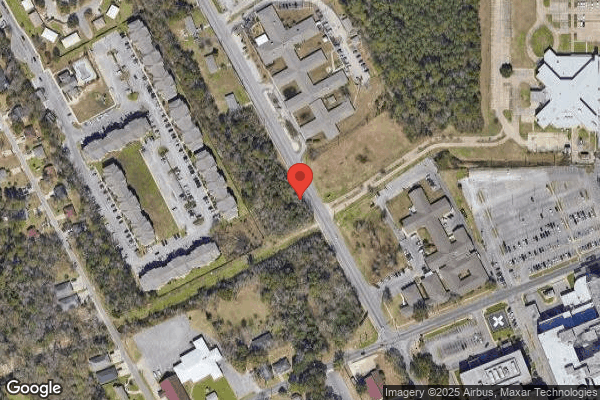
1530 BROAD AVE, GULFPORT, MS 39501 (228) 864-6544
For profit - Limited Liability company 180 Beds CONSULATE HEALTH CARE/INDEPENDENCE LIVING CENTERS/NSPIRE HEALTHCARE/RAYDIANT HEALTH CARE Data: November 2025 4 Immediate Jeopardy citations
Trust Grade
0/100
#151 of 200 in MS
Last Inspection: August 2025

Inspected within the last 6 months. Data reflects current conditions.

Overview

Coastal Health and Rehabilitation Center in Gulfport, Mississippi, has received a Trust Grade of F, indicating significant concerns about the care provided, which is far below acceptable standards. The facility ranks #151 out of 200 in the state, placing it in the bottom half for nursing homes in Mississippi, and #3 out of 6 in Harrison County, meaning only two local options are worse. Unfortunately, the situation appears to be worsening, with the number of issues increasing from 7 in 2024 to 17 in 2025. Staffing is a major concern, with a low rating of 1 out of 5 stars and a turnover rate of 71%, significantly higher than the state average of 47%, indicating instability among staff. Additionally, the facility has incurred $91,850 in fines, which is higher than 88% of Mississippi facilities, suggesting ongoing compliance problems. Importantly, there have been critical incidents, such as failing to properly assist residents during transfers and not delivering consistent care for pressure ulcers, which put residents at serious risk for harm. Families should weigh these serious issues against any potential strengths when considering this facility for their loved ones.

Trust Score
F
0/100
In Mississippi
#151/200
Bottom 25%
Safety Record
High Risk
Review needed
Inspections
Getting Worse
7 → 17 violations
Staff Stability
⚠ Watch
71% turnover. Very high, 23 points above average. Constant new faces learning your loved one's needs.
Penalties
✓ Good
$91,850 in fines. Lower than most Mississippi facilities. Relatively clean record.
Skilled Nurses
⚠ Watch
Each resident gets only 7 minutes of Registered Nurse (RN) attention daily — below average for Mississippi. Fewer RN minutes means fewer trained eyes watching for problems.
Violations
⚠ Watch
44 deficiencies on record. Higher than average. Multiple issues found across inspections.
★☆☆☆☆
1.0
Overall Rating
★☆☆☆☆
1.0
Staff Levels
★★☆☆☆
2.0
Care Quality
★☆☆☆☆
1.0
Inspection Score
Stable
2024: 7 issues
2025: 17 issues

The Good

  • Full Sprinkler Coverage · Fire safety systems throughout facility
  • No fines on record

Facility shows strength in fire safety.

The Bad

1-Star Overall Rating

Below Mississippi average (2.6)

Significant quality concerns identified by CMS

Staff Turnover: 71%

25pts above Mississippi avg (46%)

Frequent staff changes - ask about care continuity

Federal Fines: $91,850

Well above median ($33,413)

Moderate penalties - review what triggered them

Chain: CONSULATE HEALTH CARE/INDEPENDENCE

Part of a multi-facility chain

Ask about local staffing decisions and management

Staff turnover is very high (71%)

23 points above Mississippi average of 48%

The Ugly 44 deficiencies on record

4 life-threatening 7 actual harm
Aug 2025 17 deficiencies
CONCERN (D)

Potential for Harm - no one hurt, but risky conditions existed

Deficiency F0561 (Tag F0561)

Could have caused harm · This affected 1 resident

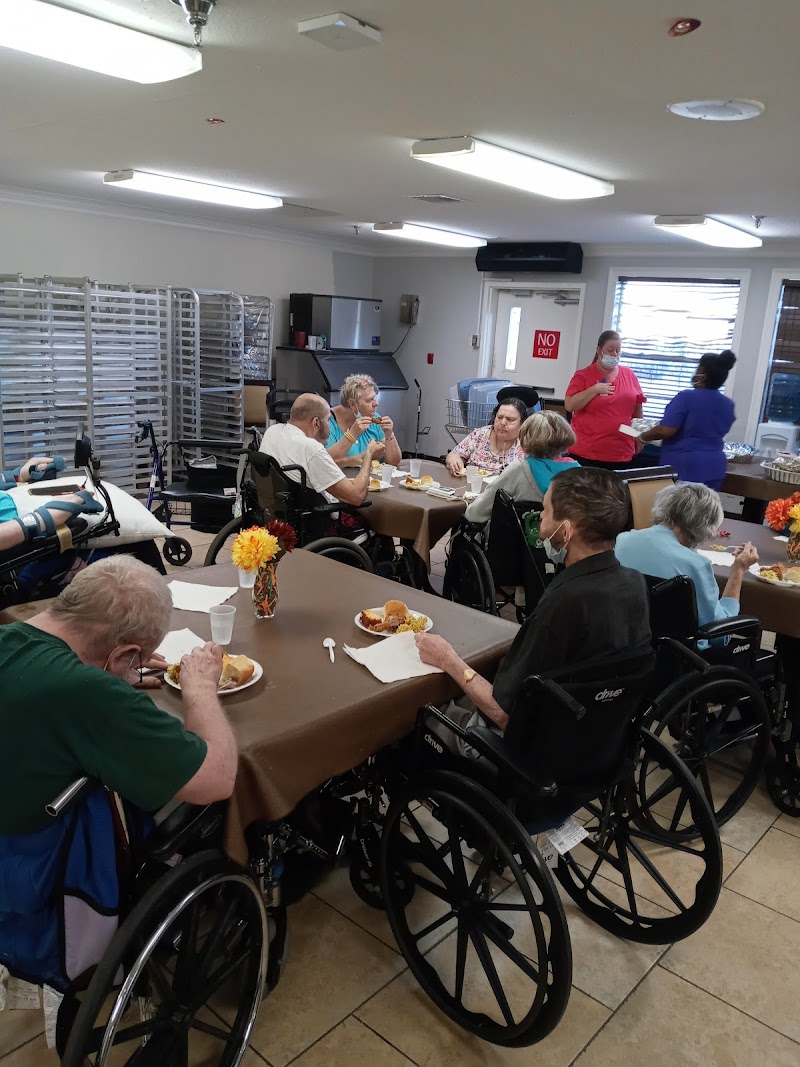
Based on record reviews, observations, and interviews, the facility failed to honor a resident's documented meal preferences for one (1) of 27 sampled residents (Resident #84). Specifically, the facil...

Read full inspector narrative →
Based on record reviews, observations, and interviews, the facility failed to honor a resident's documented meal preferences for one (1) of 27 sampled residents (Resident #84). Specifically, the facility failed to provide meals in accordance with Resident #84's documented food preferences and dietary restrictions. Findings Include: Record review of the facility policy Resident Rights revealed .The resident has a right to a dignified existence, self-determination .33. The resident has a right to reasonable accommodation of individual needs and preferences .A review of the facility's Resident Food Preferences policy, revised July 2017, revealed Policy Statement- Individual food preferences will be assess upon admission and communicated to the interdisciplinary team.3. Nursing staff will document the resident's food and eating preferences.On August 4, 2025, at 10:41 AM, Resident #84 stated that due to the food choices available, she was only able to receive oatmeal and boiled eggs. She explained that since the start of new management, the cycle of food choices has not improved. She stated that she had discussed her concerns with the Dietary Director and that her daughter brought her refrigerator food weekly to ensure she had food she could eat.On August 5, 2025, at 1:57 PM, the Dietary Manager stated he believed his staff was capable of reading and honoring resident meal preference tickets. He reported that he had been in his position for approximately three months.On August 6, 2025, at 12:35 PM, the State Agent observed Resident #84's lunch tray and corresponding meal preference ticket. The meal included baked chicken (leg and thigh), navy beans and rice, chocolate ice cream, and two glasses of water. The resident's meal preference ticket included directives for lactose-free meals, a preference for chicken breast, and restrictions excluding milk and dairy products.Resident #84 shared photographs with the State Agency of meals trays from past months showing where her documented preferences had not been honored. On August 7, 2025, at 4:46 PM, the Director of Nursing stated her expectation was that dietary staff honor resident meal preferences and check food storage daily.On August 7, 2025, at 5:05 PM, the Administrator stated his expectation was that the dietary department honor resident preferences and review meal tickets.A review of the resident's admission Record revealed the facility admitted Resident #84 on July 18, 2000, with diagnoses of primary osteoarthritis, other specified site; unspecified cirrhosis of liver; celiac disease; and unspecified anemia.A review of the Order Summary Report with active orders as of 8/4/25 revealed a physician's order dated 6/28/22 for Diet-Regular diet- Regular texture, Thin consistency.Record review of the quarterly Minimum Data Set (MDS) with an Assessment Reference Date (ARD of 6/25/25 revealed a Brief Interview for Mental Status (BIMS) score of 15, indicating the resident was cognitively intact.
CONCERN (D) 📢 Someone Reported This

A family member, employee, or ombudsman was alarmed enough to file a formal complaint

Potential for Harm - no one hurt, but risky conditions existed

Safe Environment (Tag F0584)

Could have caused harm · This affected 1 resident

Based on observation, interview, record review and facility policy review, the facility failed to ensure a safe, clean, and homelike environment for residents on four (4) of (4) days of the survey, as...

Read full inspector narrative →
Based on observation, interview, record review and facility policy review, the facility failed to ensure a safe, clean, and homelike environment for residents on four (4) of (4) days of the survey, as evidenced by limited pest control access to resident rooms, and a lack of clean bath towels available for resident care.Findings include: Review of the facility policy titled, Pest control dated 11/3/2014, revealed, Policy: The facility will maintain a pest control program, which includes inspection, reporting, and prevention. 1. A pest control contract will be maintained with licensed exterminator. 2. The contract will include routine quarterly inspections. 3. Treatment will be rendered as required to control insects and vermin. Any unusual occurrence or sighting of insects should be reported immediately to the supervisor . Proper action will be taken.On August 4, 2025, at 10:52 AM, Resident #46 stated that gnats in the building had bitten him, causing bumps on his head. He denied hoarding food. There were no gnats observed in his room at that time.On August 4, 2025, at 11:26 AM, Resident #110 reported roaches and gnats in her room, stating that roaches appeared at night and made her feel like she was living with roaches in their house. The State Agency observed clutter and boxes in her room. On August 4, 2025, at 2:27 PM, Resident #94 stated that during bath times, staff sometimes wipe residents with wet wipes due to towel shortages.On August 5, 2025, at 2:00 PM, during a Resident Council meeting attended by the State Agency and Ombudsman, residents complained about inadequate towels and bed linens, as well as roaches and gnats in rooms. On August 5, 2025, at 2:58 PM, Linen closet inspections revealed low inventory: The 200 Hall linen closet contained five bath towels, ten flat sheets, ten fitted sheets, several pads, and no face towels, with a census of 51 residents. The 100 Hall linen closet contained ten bath towels, no face towels, and eight flat and eight fitted sheets, with a census of 54 residents.On August 5, at 3:17 PM, the pest control technician stated that he visits the facility monthly and follows the person assigned by the facility, usually the Maintenance Director. He reported that he typically sprays only common areas and does not enter resident rooms unless requested. He explained that untreated areas in resident rooms can lead to roaches migrating from common areas and that the chemicals used by the facility are ineffective against gnats. He stated that he had not been informed that the facility was experiencing gnat problems.On August 6, 2025, at 8:00 AM, the 200 Hall linen closet contained six bath towels, four face cloths, and ten flat and fitted sheets; the 100 Hall closet contained 20 bath towels, no face cloths, and no sheets.On August 6, 2025, at 9:31 AM, CNA #1 confirmed there were not enough linens to meet resident care needs and stated that staff sometimes hoard towels and linens to ensure availability. On August 6,2025, at 9:37 AM, CNA #2 confirmed hoarding linens' due to shortages and stated that care is sometimes delayed until laundry is completed.On August 6, 2025, at 10:09 AM, Certified Nursing Assistant (CNA #4) confirmed that towels and linens run low daily and stated that when towels are unavailable, staff use wipes to clean and bathe residents.On August 6, 2025, at 10:17 AM, an interview with Licensed Practical Nurse (LPN) #2, Unit Manager, revealed that a shortage of bath towels occurred daily. She stated that staff must wait for laundry to be completed before they can resume bathing residents and must wait until the linen closet is restocked. On August 6, 2025, at 12:05 PM, a housekeeping/maintenance staff member confirmed a persistent towel shortage and stated that the Administrator had not ordered additional stock. She reported that laundry is collected three times daily, with laundry operations ending at 11:00 PM after the overnight shift was eliminated due to budget cuts. She further stated that some Certified Nursing Assistants discard extremely soiled towels. The State Agency observed three washers and two working dryers in the laundry room and noted only three laundry staff on duty.On August 7, 2025, at 1:06 PM, the Maintenance Director stated that visits from the pest control provider had increased but roaches and gnats persisted. He explained that pest control staff do not spray in resident rooms unless a resident requests treatment, and that they do not spray for gnats.On August 7, 2025, at 2:00 PM, the Maintenance Director confirmed receiving resident complaints about roaches and gnats and stated that pest control only treats common areas. He explained that a previous provider had used a drain gel effective against gnats, but the current provider does not. He confirmed an inadequate linen supply, noting that laundry workers wash items as quickly as possible but that some staff may discard soiled linens. He also reported that budget restrictions limit the amount of linen purchased.In an interview on August 7, 2025, at 3:20 PM, the Director of Nursing (DON) she said she did not know the residents were complaining about roaches and gnats. The DON confirmed the facility needs more linen to meet the residents. The DON said that she has only been in this position for two months.In an interview on August 7, 2025, at 3:30 PM, with the Administrator confirmed he had seen dead roaches in the facility. The Administrator said pest control comes monthly. He did not know the technician was not going in the residents' rooms. He did not know the chemical does not work for gnats. The Administrator said going forward he's going to have the pest control treat the residents' rooms and use the correct chemicals to get rid of the gnats. The Administrator confirmed a small amount of linen was ordered, which is not enough to meet the residents' needs. The facility is going to educate and monitor the linen to make sure the staff does not throw it in the garbage.Resident Council minutes dated April 24, 2025, reflected resident complaints of roaches in rooms and hallways. Resident Council minutes dated May 22, 2025, documented resident questions about whether the facility had ordered new linen.Resident #46Record review of the Minimum Data Set (MDS) with an Assessment Reference Date (ARD) of 5/21/25 revealed a Brief Interview for Mental Status (BIMS) score of 15 which indicated the resident was cognitively intact.Resident #94A record review of the resident's Quarterly MDS with an ARD of 7/23/25 revealed a BIMS score of 15, which indicated the resident was cognitively intact.Resident #110A record review of the resident's Quarterly MDS with an ARD of 6/23/25 revealed a BIMS score of 15, which indicated the resident was cognitively intact.
CONCERN (D)

Potential for Harm - no one hurt, but risky conditions existed

Deficiency F0604 (Tag F0604)

Could have caused harm · This affected 1 resident

**NOTE- TERMS IN BRACKETS HAVE BEEN EDITED TO PROTECT CONFIDENTIALITY** Based on observations, record reviews, interviews, and facility policy review the facility failed to ensure a resident was free ...

Read full inspector narrative →
**NOTE- TERMS IN BRACKETS HAVE BEEN EDITED TO PROTECT CONFIDENTIALITY** Based on observations, record reviews, interviews, and facility policy review the facility failed to ensure a resident was free from physical restraints without first completing an assessment, documentation of a medical symptom, physician orders, or monitoring, as evidenced by the resident was placed in a reclined Geri-chair, which restricted his freedom of movement for one (1) of 27 sampled residents. (Resident #114)Findings include:A review of the facility's policy and procedure Physical Restraints with a revision date of 11/06/2020 revealed Procedure: A restraint evaluation will be performed by nursing. to indicate the need. The nurse will obtain a physician's order for the restraint. This order will include the medical reason for the restraint .A review of the facility's Residents' Rights policy revealed, . 27. The resident has a right to be free from physical restraints imposed.On August 4, 2025, at 11:16 AM, the State Agency observed Resident #114 seated in a Geri-chair in the hallway. The chair was reclined back, and the resident complained of back pain, stating he wanted to sit up. The resident was observed attempting to get out of the chair. During an interview, at 11:50 AM on August 4, 2025, Certified Nursing Assistant (CNA)#3 stated that the resident frequently attempts to get out of bed, and he was placed in a Geri-chair in the hallway so staff could monitor him.On August 7, 2025, at 11:45 AM, Registered Nurse (RN)#1 stated during an interview, that a resident must have either a physician's order or an assessment to be placed in a Geri-chair and that the facility maintains a no-restraint policy. RN#1 reviewed the resident's electronic chart and confirmed there was no physician's order or assessment supporting the use of a Geri-chair. She further stated that there is no instance in which a Geri-chair is used without an order or assessment.During an interview at 12:42 PM, on August 7, 2025, CNA#3 stated that Certified Nursing Aides are instructed by nursing staff to place the resident in a Geri-chair. She stated this is a common practice and that nurses routinely direct staff to use the Geri-chair when the resident attempts to get out of bed. CNA#3 was unfamiliar with the facility's restraint policy.At 12:43 PM, Licensed Practical Nurse (LPN#3) stated during an interview, that hospice had provided the Geri-chair for the resident. LPN#3 reviewed the hospice chart but did not find a physician's order or an assessment supporting its use. She explained that the resident has poor trunk control, which is why the Geri-chair was being used. During an interview on August 7, 2025, at 4:14 PM, the Director of Clinical Services stated her expectation that hospice obtain physician orders for justification of a Geri-chair and indicated that she planned to have therapy complete an assessment for the resident.On August 7, 2025, at 5:13 PM, the Administrator stated in an interview, that his expectation is for nursing staff to obtain orders, assess the resident to determine the need for a Geri-chair, document its use in the care plan, contact the family, and notify the physician.A review of hospice records revealed a physician's order for the Geri-chair dated August 7, 2025, at 1:10 PM.Record review of the admission Record revealed the resident was admitted on [DATE], with diagnoses that included cerebral infarction due to unspecified occlusion or stenosis of an unspecified cerebral artery.Record review of the resident's Quarterly Minimum Data Set (MDS), with an Assessment Reference Date (ARD) of May 16, 2025, revealed a Brief Interview for Mental Status (BIMS) score of 15, indicating the resident was cognitively intact.
CONCERN (D)

Potential for Harm - no one hurt, but risky conditions existed

Deficiency F0657 (Tag F0657)

Could have caused harm · This affected 1 resident

Based on observation, interview, and record review, the facility failed to revise the care plan to address the resident's visual impairment needs after his glasses were broken for one (1) of (27) care...

Read full inspector narrative →
Based on observation, interview, and record review, the facility failed to revise the care plan to address the resident's visual impairment needs after his glasses were broken for one (1) of (27) care plans reviewed, Resident #86. Findings include:A record review of the Care Plan Report with a date initiated 4/8/24 revealed Focus: At risk for injury r/t (related to) visual impairment. (Proper name of Resident) wears glasses.Interventions/Task.Make sure glasses are fitted properly, clean, and of adequate strength. Ophthalmologists consult PRN (as needed) . On 8/4/25 at 3:55 PM, during an observation, Resident #86 was lying in bed and was not wearing any glasses. He stated he had poor vision he did not know where his glasses were.On 8/6/25 at 12:04 PM, during an interview, Certified Nurse Aide (CNA) #1 stated Resident #86's glasses broke on 7/28/25. On 8/7/25 at 4:36 PM, during an interview, Licensed Practical Nurse (LPN) #5 stated she was not aware that Resident #86's glasses were broken. She stated the care plan should have been revised to reflect the resident's broken glasses and she would have updated the care plan if she had known.A record review of the admission Record revealed the facility admitted Resident #86 on 8/14/24 with diagnoses including Muscle Wasting and Atrophy.A record review of the Quarterly Minimum Data Set (MDS) with an Assessment Reference Date (ARD) of 5/16/25 revealed a Brief Interview for Mental Status (BIMS) score was not entered which indicated the resident did not complete the interview. Section B revealed the resident was vision impaired and required corrective lenses.
CONCERN (D)

Potential for Harm - no one hurt, but risky conditions existed

Deficiency F0658 (Tag F0658)

Could have caused harm · This affected 1 resident

Based on record reviews, interviews and facility policy review, the facility failed to ensure services were provided in accordance with professional standards of practice as evidenced by a nurse who d...

Read full inspector narrative →
Based on record reviews, interviews and facility policy review, the facility failed to ensure services were provided in accordance with professional standards of practice as evidenced by a nurse who did not enter a Physician's Order for a resident transfer/discharge for one (1) of (27) sampled residents (Resident #93). Findings include: A review of the facility's policy, Policies and Procedures: Physician orders Effective Date 11/30/2014.Policy: The center will ensure that Physician orders are appropriately and timely documented in the medical record.Routine Orders: A Nurse may accept a telephone from the Physician.The order is transcribed to all appropriate areas of the electronic health record. A review of the clinical record revealed there was no Physician's Order obtained to transfer or discharge Resident #93 to the hospital on 7/4/2025. On 8/6/2025 at 12:12 PM, during an interview with the Director of Nursing (DON), she acknowledged the facility discharged Resident #93 to a local hospital without obtaining or entering a physician's order into the resident's medical record. The DON stated she recognized the importance of documenting and confirmed that moving forward, all verbal orders will be entered into the electronic health record. On 8/6/2025 at 2:18 PM, during an interview with Licensed Practical Nurse (LPN) #1, she stated that on 7/4/2025 she contacted the facility's Nurse Practitioner (NP) and informed her of the family's request for the resident to be sent to the hospital. The NP then ordered for the resident to be sent to the hospital. On 8/6/2025 at 2:26 PM, during an interview, LPN #2 acknowledged she was responsible for entering the physician's orders into the system but had forgotten to do so for Resident #93. She stated she would slow down in the future and ensure orders are entered promptly. On 08/07/2025 at 11:18 AM, in a follow up interview, the DON revealed the process for accepting a verbal order is to receive the order and put in the electronic health record immediately. The DON reported that if a resident is sent to the emergency room the orders are to be put in the electronic health record within 24 hours. The DON confirmed that LPN #2 forgot to transcribe the orders and the Medical Records department is responsible for monitoring the input of orders. A record review of the admission Record revealed the facility admitted Resident #93 on 12/31/2024 with diagnoses including Chronic obstructive pulmonary disease (COPD). A record review of the Discharge Minimum Data Set (MDS) with an Assessment Reference Date (ARD) of 7/4/2025 revealed Resident #93 was had an unplanned discharged with a return anticipated to a short-term general hospital.
CONCERN (D)

Potential for Harm - no one hurt, but risky conditions existed

Deficiency F0679 (Tag F0679)

Could have caused harm · This affected 1 resident

Based on observation, interviews, and facility policy review, the facility failed to ensure residents had access to independent leisure activities during all hours, including evenings and weekends, wh...

Read full inspector narrative →
Based on observation, interviews, and facility policy review, the facility failed to ensure residents had access to independent leisure activities during all hours, including evenings and weekends, when activity staff were not present, as evidenced by activity carts not being available for residents, for one (1) of four (4) days of survey.Findings included:A review of the facility's policy titled, Community Life Overview, effective date 11/1/21, revealed, Overview: Community Life programming can enhance quality of life for residents. Community Life programs are designed and adapted to be person-appropriate and to promote self-esteem, pleasure, comfort, education, creativity, success, and independence.On 8/5/25 at 2:00 PM, during a resident council meeting in the large dining room, residents reported that activity carts had been removed from the dining rooms without explanation. They stated they enjoyed playing games after the activity department closed and that weekends offered limited activity options, so they played cards and games. An observation of the dining room revealed no activity cart was present.On 8/5/25 at 2:35 PM, an observation of the smaller dining room on the 300 hall revealed no activity cart was present.On 8/7/25 at 12:00 PM, during an interview with the Activities Director, she stated she was instructed by the Administrator last week to remove the games from the two dining rooms. She stated she was not told why or whether it would be permanent. She reported that she told the Administrator the activity carts needed to remain to allow residents independent activities in the evenings after she left for the day, but the carts were removed.On 8/7/25 at 12:30 PM, during an interview with the Administrator, he acknowledged the games had been removed from the dining rooms on 8/4/25, leaving residents without access to activities when activity staff left for the day at 4:30 PM. He stated he was instructed to remove clutter from the dining rooms. He reported that residents still had access to the games if they asked activity staff before 4:30 PM or nursing staff afterward but confirmed he did not know if nursing staff had access to the activities office.On 8/7/25 at 1:10 PM, during an interview the Administrator stated the games had been returned to the dining rooms and confirmed that nursing staff did not have access to the activities office as he had previously thought.
CONCERN (D)

Potential for Harm - no one hurt, but risky conditions existed

Deficiency F0685 (Tag F0685)

Could have caused harm · This affected 1 resident

Based on observation, interview, record review and facility policy review, the facility failed to ensure the resident received proper treatment and assistive devices to maintain vision for one (1) of ...

Read full inspector narrative →
Based on observation, interview, record review and facility policy review, the facility failed to ensure the resident received proper treatment and assistive devices to maintain vision for one (1) of two (2) residents reviewed for Vision/Hearing. (Resident #86)Findings include:A review of the facility's policy titled Medical Consultation, revised 8/24/17, revealed, The members of the medical staff will request a medical consultation when appropriate .On 8/4/25 at 3:55 PM, during an observation, Resident #86 was lying in bed and calling out for help. The resident was observed searching for the call light and stated he could not see it. He stated he had poor vision and had asked staff to make an eye appointment, but he did not know where his glasses were.On 8/6/25 at 12:04 PM, during an interview, Certified Nurse Aide (CNA) #1 stated the resident's glasses broke on 7/28/25. He acknowledged that he had not informed anyone. He stated that when he returned to work the next day, the glasses were gone, and he thought another staff member may have turned them into the nurses. He confirmed the resident had poor vision.On 8/6/25 at 12:14 PM, during an interview, the Director of Nursing (DON) stated she had reported the broken glasses to the Social Worker and had requested that an eye appointment be scheduled.On 8/6/25 at 12:17 PM, during an interview, the Social Worker confirmed he received the broken glasses on 7/31/25. He stated he thought he had spoken to the scheduler to set up an appointment, but he had forgotten to do so. He stated the resident needed his glasses.On 8/7/25 at 5:00 PM, during an interview, the Administrator stated he expected the staff to make appointments to get residents' glasses fixed in a timely manner and stated this should have been discussed in morning meetings.A record review of the admission Record revealed the facility admitted Resident #86 on 8/14/24 with diagnoses including Muscle Wasting and Atrophy.A record review of the Quarterly Minimum Data Set (MDS) with an Assessment Reference Date (ARD) of 5/16/25 revealed a Brief Interview for Mental Status (BIMS) score was not entered which indicated the resident did not complete the interview. Section B revealed the resident was vision impaired and required corrective lenses.
CONCERN (D)

Potential for Harm - no one hurt, but risky conditions existed

Deficiency F0760 (Tag F0760)

Could have caused harm · This affected 1 resident

Based on interviews, record review, and facility policy review, the facility failed to ensure that new physician orders were entered into the electronic medical record and administered upon a resident...

Read full inspector narrative →
Based on interviews, record review, and facility policy review, the facility failed to ensure that new physician orders were entered into the electronic medical record and administered upon a resident's return from the hospital, which resulted in Resident #110 not receiving an ordered anticoagulant medication (Xarelto) for (14) consecutive days after discharge from the hospital for one (1) of six (6) residents observed for medication administration.Findings include:A review of the facility's policy, Physician Orders, with a revision date of 3/3/21, revealed, . The center will ensure that Physician orders are appropriately and timely documented in the medical record. Procedure: admission Orders: Information received from the referring facility or agency to be reviewed, verified with the physician and transcribed to the electronic record.On 8/4/25 at 11:22 AM, during an interview, Resident #110 explained that after being discharged from the hospital with an order for a blood thinner to prevent blood clots, the facility failed to start the medication for two (2) weeks. She stated the medication was ordered after surgery but was not administered until 4/17/25. She confirmed she had no complications from not taking the medication during that time.On 8/7/25 at 11:10 AM, during an interview with the Director of Nursing (DON), she explained that when a resident returns from the hospital, orders are sent in advance and uploaded into the system by the admission coordinator. The nurse is then responsible for entering the orders into the system, checking them off, and noting them. She stated there is a backup pharmacy for medications not in the automated dispensing system. She reviewed Resident #110's hospital discharge orders dated 4/4/25 and confirmed the resident returned with a new order for Xarelto. She verified the order was uploaded into the system on 4/4/25 but not entered as an active order until 4/17/25. She stated she was unsure what happened and had not been made aware of the incident until now.On 8/7/25 at 12:02 PM, during an interview with the admission Coordinator, she stated she uploads hospital discharge orders on the day the resident returns, before arrival, and that the nurses then enter the orders into the system. She confirmed the orders for Xarelto for Resident #110 were uploaded on 4/4/25 and accessible to nursing staff that day.On 8/7/25 at 12:26 PM, during an interview with Licensed Practical Nurse (LPN) #2, she stated she first learned about the missed Xarelto order on 4/17/25 when Resident #110 told her she had not been receiving her blood thinner since returning from the hospital on 4/4/25. LPN #2 reviewed the discharge orders and confirmed the Xarelto starter pack was not entered into the system. She noted that LPN #6 had documented no new orders on 4/4/25. LPN #2 stated she contacted the hospital nurse, who notified the discharging physician, and was instructed to notify the facility's Advanced Registered Nurse Practitioner (ARNP). After notifying the ARNP, new orders were received to start Xarelto, obtain bloodwork, and continue with hematology follow-up.On 8/7/25 at 2:45 PM, during an interview with the ARNP, she confirmed she was notified on 4/17/25 that Resident #110 had not been receiving the ordered Xarelto for two (2) weeks. She stated she immediately ordered labs and weekly bloodwork. The ARNP confirmed the resident had a diagnosis of deep vein thrombosis (DVT) and she expects all new medication to be processed and administered as ordered. On 8/7/25 at 3:30 PM, during a follow-up interview, the DON confirmed the missed medication was a significant medication error and the nursing staff should have made her aware of the situation. She stated she expects all nurses to note all orders upon a resident's return from any hospital stay or medical appointment.A record review of Resident #110's admission Record revealed the facility admitted the resident on 11/11/23 and she had current diagnoses including Cirrhosis of Liver.A record review of the Quarterly Minimum Data Set (MDS) with an Assessment Reference Date (ARD) of 6/23/25 revealed Resident #110 had a Brief Interview for Mental Status (BIMS) score of 15, which indicated she was cognitively intact.A record review of the Patient Discharge Instructions dated 3/27/25 revealed Resident #110 had a medication list with a new medication of Xarelto starter pack 15-20 mg oral tablet. A record review of the Resident #110's Progress Notes dated 4/4/25 and authored by LPN #6, revealed . Resident returned back to facility . no new orders.A record review of the ARNP's Office Visit note dated 4/17/25 revealed documentation that a new order for Xarelto was discovered during a follow-up visit and initiated at that time.A record review of the Order Listing Report revealed the Xarelto order was entered on 4/17/25, fourteen (14) days after the resident's hospital discharge.A record review of the Medication Administration Record (MAR) for April 2025 revealed no administration of Xarelto occurred until 4/17/25.
CONCERN (D)

Potential for Harm - no one hurt, but risky conditions existed

Deficiency F0804 (Tag F0804)

Could have caused harm · This affected 1 resident

**NOTE- TERMS IN BRACKETS HAVE BEEN EDITED TO PROTECT CONFIDENTIALITY** Based on observation, interview, record review and facility policy review, the facility failed to ensure meals were prepared and...

Read full inspector narrative →
**NOTE- TERMS IN BRACKETS HAVE BEEN EDITED TO PROTECT CONFIDENTIALITY** Based on observation, interview, record review and facility policy review, the facility failed to ensure meals were prepared and served to be visually appealing and palatable, as evidenced by, buns were served saturated with beet or coleslaw juice, vegetables were not served separately from bread items causing texture changes, and residents received watery and overly salty processed turkey for (14) of (14) residents reviewed for food quality. Resident #23, Resident #31, Resident #41, Resident #44, Resident #45, Resident #62, Resident #66, Resident #71, Resident #84, Resident #87, Resident #94, Resident #104, Resident #106 and Resident #110.Findings Include:Review of the facility policy titled, Quality and Palatability undated, revealed, .Food will be prepared by methods that conserve nutritive value, flavor and appearance. Food will be palatable, attractive, and served at a safe and appetizing temperature. Food and liquids are prepared and served in a manner, form, and texture to meet resident's needs. 1. The Dining Service Director and Cook(s) are responsible for food preparation. Menu items are prepared according to the menu, production guidelines, and standardized recipes.4. The Cook(s) prepare food in accordance with the recipes, and season for region and or ethnic preferences, as appropriate. Cooks use proper cooking techniques to ensure color and flavor retention.5. Hot liquids, foods or bread beverages will be served in a container (mugs, cups, and bowls) that will minimize the potential for spillage.Review of the facility's council minutes revealed the members also ask the dietary manager to attend the food committee meeting for May to discuss the food complaints. Review of the food committee meeting minutes dated 8/6/25 revealed the Committee complained the meat was tough and food too salty. On 7/2/25 the committee ask for bread and rolls to be placed in baggie's and not on the same plate with food to keep their bread from being soggy. The residents were asked to be patient because the kitchen is short of staff at this time. On 6/5/25 the committee complained about the rice being under cooked and chicken was dry. On 4/3/25 the food committee meeting voiced complaints of too much salt on the residents' meat.Observation on 08/05/2025 at 12:36 PM, the State Agency (SA) observed a test tray which revealed all the food was placed on one plate. The juice and English peas were mixed with the mashed potatoes and turkey on one plate. On 08/05/2025 at 2:00 PM, the SA and Ombudsmen were invited to the residents' council meeting to discuss grievances. The residents revealed the food is not palatable. The food does not taste good. They eat the same food all the time. One week they had Asian chicken one day, honey chicken the next day and sweet and sour chicken the next day. The have complained about the processed turkey is watery and salty. They want real turkey. The residents explained all the food is placed on one plate. The residents stated they were served barbecue on hamburger buns with beets on the same plate. The buns were saturated with beet juice. The resident was also served hot dogs with coleslaw on the same plate. The buns were saturated with coleslaw juice. The residents said they have asked that the vegetables be placed in separate bowls. The residents stated they have expressed their complaints to the dietary manager and the Administrator, but nothing has changed. The Council members said when they explained their concerns to the Administrator, appeared defensive. On 08/06/25 at 12:10 PM, the SA observed Resident #45 eating lunch in her room. The resident had a sausage dog with coleslaw on the same plate. The juice from the coleslaw caused the bun to be soggy. The resident said she was just going to eat the meat because the bun was soggy.During an interview on 8/7/25 at 10:15 AM, with the Activity Director, she explained that she attends all the resident council meetings to record the minutes. The Director confirmed the residents have been complaining for several months about the food not being appetizing or palliative. The grievances were given to the department heads. In-services were done but the complaints were never resolved.During an interview on 08/07/2025 at 11:00 AM, with Dietary #1 confirmed all the food is placed on one plate. The Dietary manager said the vegetables should be placed in a bowl. He has not had time to train Dietary #2. Dietary #2 has only been working for the facility for a couple of weeks. Dietary #1 said Dietary #2 was hired because he had a lot of cooking experience. He did not think he needed much training.During an interview on 08/07/2025 at 11:19 AM, with Dietary #2 the night cook confirmed he places all the food on one plate. Dietary #2 stated he was not taught to put the vegetables in a separate bowl. Dietary #2 said he understands that the buns would get soggy and not taste good. Dietary #2 confirmed he fixed the barbecue sandwiches and beets on the same plate for dinner. He also confirmed he placed the sausage dogs on the same plate with the coleslaw. Dietary #2 said he did not know if the facility had small bowls that he could put the vegetables in, but he would ask.During an interview on 8/7/25 at 3:20 PM, the DON explained the residents have not complained to her about the food. She has only been in this position for two months.During an interview on 8/7/25 at 3:30 PM, the Administrator explained the dietary department has new employees that have not been trained appropriately. The Administrator said he's going to invest in education on how to cook meals to be appetizing and palliative.Resident council Members:Resident #23A record review of Resident #23's admission Record revealed the facility admitted the resident on 11/10/23 with diagnoses including Type 2 Diabetes Mellitus without complications. A record review of the resident's Quarterly Minimum Data Set (MDS) with an Assessment Reference Date (ARD) of 6/16/25 revealed a Brief Interview for Mental Status (BIMS) score of 15, which indicated the resident was cognitively intact.Resident #31A record review of Resident #31's admission Record revealed the facility admitted the resident on 1/18/20 with diagnoses including Type 2 Diabetes Mellitus without complications. A record review of the resident's Quarterly MDS with an ARD of 7/2/25 revealed a BIMS score was not completed.Resident #41A record review of Resident #41's admission Record revealed the facility admitted the resident on 3/26/10 with diagnoses including Type 2 Diabetes Mellitus without complications. A record review of the resident's Quarterly MDS with an ARD of 5/5/25 revealed a BIMS score of 15, which indicated the resident was cognitively intact.Resident #44A record review of Resident #44's admission Record revealed the facility admitted the resident on 5/9/24 with diagnoses including Chronic Obstructive Pulmonary Disease. A record review of the resident's Quarterly MDS with an ARD of 6/27/25 revealed a BIMS score of 14, which indicated the resident was cognitively intact.Resident #45 Record review of the admission Record revealed the resident was admitted on [DATE] with diagnoses that included congestive heart failure.Record review of the quarterly MDS with an ARD of 7/17/25 revealed a BIMS score of 09 indicating the resident had moderate cognitive impairment.Resident #62A record review of Resident #62's admission Record revealed the facility admitted the resident on 9/14/18 with diagnoses including Spinal Stenosis Lumbar Region with Neurogenic Claudication. A record review of the resident's Quarterly MDS with an ARD of 5/13/25 revealed a BIMS score of 15, which indicated the resident was cognitively intact.Resident #66A record review of Resident #66's admission Record revealed the facility admitted the resident on 7/9/25 with diagnoses including Type 2 Diabetes Mellitus without complications. A record review of the resident's Quarterly MDS with an ARD of 7/15/25 revealed a BIMS score of 8, which indicated the resident's cognition was moderately impaired.Resident #71A record review of Resident #71's admission Record revealed the facility admitted the resident on 1/2/25 with diagnoses including Hypertension. A record review of the resident's Quarterly MDS with an ARD of 7/15/25 revealed a BIMS score of 15, which indicated the resident was cognitively intact.Resident #84A record review of Resident #84's admission Record revealed the facility admitted the resident on 7/18/20 with diagnoses including Osteoarthritis. A record review of the resident's Quarterly MDS with an ARD of 6/25/25 revealed a BIMS score of 15, which indicated the resident was cognitively intact.Resident #87 A record review of Resident #87's admission Record revealed the facility admitted the resident on 6/16/14 with diagnoses including Quadriplegia. A record review of the resident's Quarterly MDS with an ARD of 7/1/25 revealed a BIMS score of 15, which indicated the resident was cognitively intact.Resident #94A record review of Resident #94's admission Record revealed the facility admitted the resident on 3/5/2013 with diagnoses including heart disease. A record review of the resident's Quarterly MDS with an ARD of 7/23/25 revealed a BIMS score of 15, which indicated the resident was cognitively intact.Resident #104A record review of Resident #104's admission Record revealed the facility admitted the resident on 3/9/21 with diagnoses including Bilateral Osteoarthritis of the knee. A record review of the resident's Quarterly MDS with an ARD of 5/16/25 revealed a BIMS score of 11, which indicated the resident's cognition was moderately impaired.Resident #106A record review of Resident #106's admission Record revealed the facility admitted the resident on 5/8/25 with diagnoses including Hypertension. A record review of the resident's admission MDS with an ARD of 5/14/25 revealed a BIMS score of 15, which indicated the resident was cognitively intact.Resident #110A record review of Resident #110's admission Record revealed the facility admitted the resident on 9/26/22 with diagnoses including Cirrhosis of the Liver. A record review of the resident's Quarterly MDS with an ARD of 6/23/25 revealed a BIMS score of 15, which indicated the resident was cognitively intact.
CONCERN (D) 📢 Someone Reported This

A family member, employee, or ombudsman was alarmed enough to file a formal complaint

Potential for Harm - no one hurt, but risky conditions existed

Deficiency F0925 (Tag F0925)

Could have caused harm · This affected 1 resident

**NOTE- TERMS IN BRACKETS HAVE BEEN EDITED TO PROTECT CONFIDENTIALITY** Based on interview, record review, and facility policy review the facility failed to maintain an effective pest control program ...

Read full inspector narrative →
**NOTE- TERMS IN BRACKETS HAVE BEEN EDITED TO PROTECT CONFIDENTIALITY** Based on interview, record review, and facility policy review the facility failed to maintain an effective pest control program to prevent and control insects when pest control services were limited to common areas, resident rooms with reported pest activity were not routinely treated, and gnat infestations were not addressed with appropriate treatment to prevent or eradicate pest for (13) of (14) residents interviewed during the resident council meeting. Residents #23, #31, #41, #44, #62, #66, #71, #84, #87, #94, #104, #106, #110.Findings include:Review of the facility policy titled, Pest control dated 11/3/2014, revealed, Policy: The facility will maintain a pest control program, which includes inspection, reporting, and prevention. 1. A pest control contract will be maintained with licensed exterminator. 2. The contract will include routine quarterly inspections. 3. Treatment will be rendered as required to control insects and vermin. Any unusual occurrence or sighting of insects should be reported immediately to the supervisor . Proper action will be taken.Review of the facility's council minutes dated 4/24/25 revealed the residents on the 200-hall stated that they have seen a lot of roaches in their rooms and hallways. The residents also complained about the roaches and gnats on the one hundred and two hundred halls.On 08/05/2025 at 2:00 PM, the SA and Ombudsmen were invited to the residents' council meeting to discuss grievances. The members complained about the roaches and gnats in their rooms. The Council members said when they explained their concerns to the Administrator, he appeared defensive.During an interview on 08/05/2025 at 3:17 PM, with the Pest Control Technician explained that he comes once a month and if the facility needs extra treatment. The Pest Control Technician said he follows the person that the facility assigns him to follow, normally it's the Maintenance Director. The Technician said he normally sprays the common areas. The facility employees do not normally take him to the residents' rooms. The Technician said he sprayed a couple of residents rooms when the residents ask during his tour. The Technician explained the roaches will go to the residents' rooms from the commons area because those areas are not treated. The Technician explained that the chemicals that he uses for the facility do not work for gnats. The facility will have to order another chemical to treat the gnats. The facility did not let him know they were having problems with gnats.During an interview on 8/7/25 at 10:15 AM, with the Activity Director, she explained that she attends all the resident council meetings to record the minutes. The Director confirmed the residents have been complaining for several months about the roaches and gnats. The grievances were given to the department heads. In-services were done but the complaints were never resolved.During an interview on 8/7/25 at 2:00 PM, with the Maintenance Director he stated he is the supervisor for maintenance, laundry and housekeeping. The Maintenance Director confirmed the residents had complained about the roach's and gnats. The Director said he has called the pest control out several times. The director confirmed that the pest control people do not go into the residents' rooms. They only treat the common areas. The Director said the facility was using another company that provided a drain gel that assists with the gnats. The company that they use now does not have a gel drain. During an interview on 8/7/25 at 3:20 PM, the Director on Nursing (DON) said she did not know the residents were complaining about roaches and gnats. She stated she has only been in this position for two months.During an interview on 8/7/25 at 3:30 PM, the Administrator confirmed he had seen dead roaches in the facility. The Administrator said pest control comes monthly. He did not know the technician was not going into the residents' rooms. He did not know the chemical does not work for gnats. The Administrator said going forward he's going to have the pest control treat the residents' rooms and use the correct chemicals to get rid of the gnats. Resident council Member:Resident #23Record review of Resident #23's admission Record revealed the resident was admitted to the facility on [DATE] with medical diagnoses that included Type 2 Diabetes Mellitus without complications.Record review of Resident #23's Quarterly Minimum Data Set (MDS) with an Assessment Reference Date (ARD) of 6/16/25 revealed she had a Brief Interview for Mental Status (BIMS) score of 15, which indicated she was cognitively intact.Resident # 31Record review of Resident #31s admission Record revealed the resident was admitted to the facility on [DATE] with medical diagnoses that included Type 2 Diabetes Mellitus without complications.Record review of Resident #31's Quarterly Minimum Data Set (MDS) with an Assessment Reference Date (ARD) of 7/2/25 revealed she had a Brief Interview for Mental Status (BIMS) score was not done.Resident #41Record review of Resident #41's admission Record revealed the resident was admitted to the facility on [DATE] with medical diagnoses that included Type 2 Diabetes Mellitus without complications.Record review of Resident #41's Quarterly Minimum Data Set (MDS) with an Assessment Reference Date (ARD) of 5/13/25 revealed she had a Brief Interview for Mental Status (BIMS) score of 15, which indicated she was cognitively intact.Resident #44Record review of Resident #44's admission Record revealed the resident was admitted to the facility on [DATE] with medical diagnoses that included Chronic Obstructive Pulmonary Disease.Record review of Resident #44's Quarterly Minimum Data Set (MDS) with an Assessment Reference Date (ARD) of 6/27/25 revealed she had a Brief Interview for Mental Status (BIMS) score of 14, which indicated she was cognitively intact.Resident #62Record review of Resident #62's admission Record revealed the resident was admitted to the facility on [DATE] with medical diagnoses that included Spinal Stenosis Lumbar region with Neurogenic Cloudification.Record review of Resident #62's Quarterly Minimum Data Set (MDS) with an Assessment Reference Date (ARD) of 5/13/25 revealed she had a Brief Interview for Mental Status (BIMS) score of 15, which indicated she was cognitively intact.Resident #66Record review of Resident #66's admission Record revealed the resident was admitted to the facility on [DATE] with medical diagnoses that included Type 2 Diabetes Mellitus without complications.Record review of Resident #66's Quarterly Minimum Data Set (MDS) with an Assessment Reference Date (ARD) of 7/15/25 revealed she had a Brief Interview for Mental Status (BIMS) score of 8, which indicated she was cognitively impaired.Resident #71Record review of Resident #71's admission Record revealed the resident was admitted to the facility on [DATE] with medical diagnoses that included Hypertension.Record review of Resident #71's Quarterly Minimum Data Set (MDS) with an Assessment Reference Date (ARD) of 7/15/25 revealed she had a Brief Interview for Mental Status (BIMS) score of 15, which indicated she was cognitively intact.Resident #84Record review of Resident #84's admission Record revealed the resident was admitted to the facility on [DATE] with medical diagnoses that included Osteoarthritis.Record review of Resident #84's Quarterly Minimum Data Set (MDS) with an Assessment Reference Date (ARD) of 6/25/25 revealed she had a Brief Interview for Mental Status (BIMS) score of 15, which indicated she was cognitively intact.Resident #87Record review of Resident #87's admission Record revealed the resident was admitted to the facility on [DATE] with medical diagnoses that included Quadriplegic.Record review of Resident #87's Quarterly Minimum Data Set (MDS) with an Assessment Reference Date (ARD) of 7/1/25 revealed she had a Brief Interview for Mental Status (BIMS) score of 15 which indicated she was cognitively intact. Resident #94Record review of Resident #94's admission Record revealed the resident was admitted to the facility on [DATE] with medical diagnoses that included heart disease.Record review of Resident #94's Quarterly Minimum Data Set (MDS) with an Assessment Reference Date (ARD) of 7/23/25 revealed she had a Brief Interview for Mental Status (BIMS) score of 15, which indicated she was cognitively intact.Resident #104Record review of Resident #104's admission Record revealed the resident was admitted to the facility on [DATE] with medical diagnoses that included bilateral Osteoarthritis of the knee.Record review of Resident #104's Quarterly Minimum Data Set (MDS) with an Assessment Reference Date (ARD) of 5/16/25 revealed she had a Brief Interview for Mental Status (BIMS) score of 11, which indicated she was cognitively intact.Resident #106Record review of Resident #106's admission Record revealed the resident was admitted to the facility on [DATE] with medical diagnoses that included Hypertension.Record review of Resident #106 s Quarterly Minimum Data Set (MDS) with an Assessment Reference Date (ARD) of 5/14/25 revealed she had a Brief Interview for Mental Status (BIMS) score of 15, which indicated she was cognitively intact.Resident #110Record review of Resident #110's admission Record revealed the resident was admitted to the facility on [DATE] with medical diagnoses that included Cirrhosis of the Liver.Record review of Resident #110's Quarterly Minimum Data Set (MDS) with an Assessment Reference Date (ARD) of 6/23/25 revealed she had a Brief Interview for Mental Status (BIMS) score of 15, which indicated she was cognitively intact.
CONCERN (E)

Potential for Harm - no one hurt, but risky conditions existed

Deficiency F0565 (Tag F0565)

Could have caused harm · This affected multiple residents

**NOTE- TERMS IN BRACKETS HAVE BEEN EDITED TO PROTECT CONFIDENTIALITY** Based on interview, record review, and facility policy review, the facility failed to ensure Resident Council grievances were ad...

Read full inspector narrative →
**NOTE- TERMS IN BRACKETS HAVE BEEN EDITED TO PROTECT CONFIDENTIALITY** Based on interview, record review, and facility policy review, the facility failed to ensure Resident Council grievances were addressed for multiple complaints voiced over several months, including concerns with pest control, linen shortages, and food quality, for multiple residents who participated in the council meetings for three (3) of (3) meeting minutes reviewed.Findings included:A review of the facility's policy titled, Complaint/Grievance, revised 10/24/22, revealed, Policy: The Center will support each resident's right to voice a complaint/grievance without fear of discrimination or reprisal. The center will make prompt efforts to resolve the complaint/grievance and inform the resident of progress towards resolution. The resident should have reasonable expectations of care and services, and the center should address those expectations in a timely, reasonable, and consistent manner. Procedure. 4. The grievance follow-up should be completed in a reasonable time frame; this should not exceed 14 days.A review of the facility's resident council minutes dated 4/24/25 revealed residents on the 200-hall reported seeing a lot of roaches in their rooms and hallways. On 5/22/25, council members asked if the facility had ordered new linen and requested that the dietary manager attend the May food committee meeting to discuss food complaints. On 7/24/25, council members invited the Administrator to discuss resident care, linen shortages, and dietary concerns. Residents also complained about roaches and gnats on the 100 and 200 halls.A review of the food committee meeting minutes dated 8/6/25 revealed complaints that the meat was tough and the food was too salty. On 7/2/25, the committee requested that bread and rolls be placed in baggies and not on the same plate with food to prevent sogginess. The residents were told to be patient because the kitchen was short staffed. On 6/5/25, the committee complained the rice was undercooked and the chicken was dry. On 4/3/25, residents voiced concerns that too much salt was being used on the meat.On 8/5/25 at 2:00 PM, the State Agency and Ombudsman attended the resident council meeting to discuss grievances. Residents complained about not having towels to bathe in or enough sheets to change their beds. Council members stated they could not understand why all complaints made during meetings were not recorded in the minutes. They also complained about roaches and gnats in their rooms. Residents reported that the food was not palatable, stating it did not taste good and lacked variety. One week, they were served Asian chicken one day, honey chicken the next, and sweet and sour chicken the following day. They complained that the processed turkey was watery and salty and requested real turkey. Residents reported that all food was served on one plate, causing issues such as barbecue on hamburger buns served with beets, resulting in buns saturated with beet juice, and hot dogs served with coleslaw on the same plate, resulting in buns saturated with coleslaw juice. Residents requested that vegetables be placed in separate bowls. They stated they had voiced complaints to the dietary manager and the Administrator, but nothing had changed. Council members stated when they shared concerns with the Administrator, he appeared defensive.On 8/7/25 at 10:15 AM, during an interview with the Social Services Director (SSD), she stated she attends all resident council meetings and records the minutes. She confirmed that residents had been complaining for several months about roaches, gnats, linen shortages, and the food not being appetizing or palatable. She stated she did not realize the same complaints needed to be documented each month because department heads were already aware of them. On 8/7/25 at 3:30 PM, during an interview with the Administrator, he stated he was aware of the complaints of the residents and that they had not been resolved, but he was unaware they were not being recorded monthly.Resident Council Members:Resident #23A record review of Resident #23's admission Record revealed the facility admitted the resident on 11/10/23 with diagnoses including Type 2 Diabetes Mellitus without complications. A record review of the resident's Quarterly Minimum Data Set (MDS) with an Assessment Reference Date (ARD) of 6/16/25 revealed a Brief Interview for Mental Status (BIMS) score of 15, which indicated the resident was cognitively intact.Resident #31A record review of Resident #31's admission Record revealed the facility admitted the resident on 1/18/20 with diagnoses including Type 2 Diabetes Mellitus without complications. A record review of the resident's Quarterly MDS with an ARD of 7/2/25 revealed a BIMS score was not completed.Resident #41A record review of Resident #41's admission Record revealed the facility admitted the resident on 3/26/10 with diagnoses including Type 2 Diabetes Mellitus without complications. A record review of the resident's Quarterly MDS with an ARD of 5/5/25 revealed a BIMS score of 15, which indicated the resident was cognitively intact.Resident #44A record review of Resident #44's admission Record revealed the facility admitted the resident on 5/9/24 with diagnoses including Chronic Obstructive Pulmonary Disease. A record review of the resident's Quarterly MDS with an ARD of 6/27/25 revealed a BIMS score of 14, which indicated the resident was cognitively intact.Resident #45 Record review of the admission Record revealed the resident was admitted on [DATE] with diagnoses that included congestive heart failure.Record review of the quarterly MDS with an ARD of 7/17/25 revealed a BIMS score of 09 indicating the resident had moderate cognitive impairment.Resident #62A record review of Resident #62's admission Record revealed the facility admitted the resident on 9/14/18 with diagnoses including Spinal Stenosis Lumbar Region with Neurogenic Claudication. A record review of the resident's Quarterly MDS with an ARD of 5/13/25 revealed a BIMS score of 15, which indicated the resident was cognitively intact.Resident #66A record review of Resident #66's admission Record revealed the facility admitted the resident on 7/9/25 with diagnoses including Type 2 Diabetes Mellitus without complications. A record review of the resident's Quarterly MDS with an ARD of 7/15/25 revealed a BIMS score of 8, which indicated the resident's cognition was moderately impaired.Resident #71A record review of Resident #71's admission Record revealed the facility admitted the resident on 1/2/25 with diagnoses including Hypertension. A record review of the resident's Quarterly MDS with an ARD of 7/15/25 revealed a BIMS score of 15, which indicated the resident was cognitively intact.Resident #84A record review of Resident #84's admission Record revealed the facility admitted the resident on 7/18/20 with diagnoses including Osteoarthritis. A record review of the resident's Quarterly MDS with an ARD of 6/25/25 revealed a BIMS score of 15, which indicated the resident was cognitively intact.Resident #87 A record review of Resident #87 admission Record revealed the facility admitted the resident on 6/16/14 with diagnoses including Quadriplegia. A record review of the resident's Quarterly MDS with an ARD of 7/1/25 revealed a BIMS score of 15, which indicated the resident was cognitively intact.Resident #94A record review of Resident #94's admission Record revealed the facility admitted the resident on 3/5/2013 with diagnoses including heart disease. A record review of the resident's Quarterly MDS with an ARD of 7/23/25 revealed a BIMS score of 15, which indicated the resident was cognitively intact.Resident #104A record review of Resident #104's admission Record revealed the facility admitted the resident on 3/9/21 with diagnoses including Bilateral Osteoarthritis of the knee. A record review of the resident's Quarterly MDS with an ARD of 5/16/25 revealed a BIMS score of 11, which indicated the resident's cognition was moderately impaired.Resident #106A record review of Resident #106's admission Record revealed the facility admitted the resident on 5/8/25 with diagnoses including Hypertension. A record review of the resident's admission MDS with an ARD of 5/14/25 revealed a BIMS score of 15, which indicated the resident was cognitively intact.Resident #110A record review of Resident #110's admission Record revealed the facility admitted the resident on 9/26/22 with diagnoses including Cirrhosis of the Liver. A record review of the resident's Quarterly MDS with an ARD of 6/23/25 revealed a BIMS score of 15, which indicated the resident was cognitively intact.
CONCERN (E)

Potential for Harm - no one hurt, but risky conditions existed

Deficiency F0628 (Tag F0628)

Could have caused harm · This affected multiple residents

Based on interviews, record reviews, and the facility policy review the facility failed to notify a resident's representative in writing of the reason for the transfer/discharge to the hospital in a l...

Read full inspector narrative →
Based on interviews, record reviews, and the facility policy review the facility failed to notify a resident's representative in writing of the reason for the transfer/discharge to the hospital in a language they understand and notify the resident and/or resident's representative of the facility policy for bed hold, including reserve bed payment at the time of transfer for one (1) of two (2) residents reviewed for hospitalization. Resident #128Findings include:A review of the facility's policy Transfer/Discharge Notification & Right to Appeal with revision date of 10/24/2022 revealed . Notice Before Transfer: . the center must: Notify the resident and the resident representative (s) of the transfer or discharge and the reasons for the move in writing (in a language and manner they understand) .A record review of the admission Record revealed the facility admitted Resident #128 on 4/22/25 and readmitted the resident on 6/16/25 with diagnoses including Cerebral Infarction.A record review of the Discharge Minimum Data Set (MDS) with an Assessment Reference Date (ARD) of 5/8/25 revealed Resident #128 was coded as unplanned with return anticipated and discharge to an acute hospital; a Discharge MDS with an ARD of 6/8/25 was coded as unplanned with return anticipated and discharge to an acute hospital; and a Discharge MDS with an ARD of 7/7/25 was coded as unplanned with return anticipated and discharge to an acute hospital.A record review of the General Progress Note for Resident #128 revealed that on 5/8/25, he was in respiratory distress and was sent to the local hospital and on 6/8/25 and 7/7/25, he was transferred to the emergency room for evaluation and treatment.A record review of the clinical record revealed there was no documentation that notification of bed hold letters or transfer letters were provided to the resident or the resident's representative (RR) prior to any of the discharges.On 8/6/25 at 12:56 PM, during an interview, the Director of Nursing (DON) stated she could not locate the hospitalization transfer or bed hold letters and did not believe they were completed for Resident #128 for 5/8/25, 6/8/25, or 7/7/25.On 8/6/25 at 3:30 PM, during an interview, a social services staff member confirmed that the hospitalization transfer or bed hold letters were not completed for Resident #128 when he was transferred out of the facility on 5/8/25, 6/8/5, or 7/7/25. On 8/7/25 at 4:01 PM, during an interview, the Administrator stated he expected social services staff to complete all transfer and bed hold letters for residents when they are transferred. He stated he expected all staff to follow the regulations and requirements for transfers.
CONCERN (E)

Potential for Harm - no one hurt, but risky conditions existed

Deficiency F0645 (Tag F0645)

Could have caused harm · This affected multiple residents

Based on observations, interviews, record reviews, and the facility policy review, the facility failed to refer and follow through with the appropriate state-designated authority for Level II Preadmis...

Read full inspector narrative →
Based on observations, interviews, record reviews, and the facility policy review, the facility failed to refer and follow through with the appropriate state-designated authority for Level II Preadmission Screening and Resident Review (PASRR) evaluation and determination for one (1) of 27 sampled residents. Resident #8Findings include:A record review of facility policy Preadmission Screening and Resident Review (PASRR) with revised date of 11/08/21 revealed . The center will assure that all Serious Mentally Ill (SMI) and Intellectually Disabled (ID) residents received appropriate pre-admission screening according to Federal/State guidelines . Procedure: 1. It is the responsibility of the center to assess and assure that the appropriate preadmission screenings, either Level I or Level II, are conducted . 4. If it is learned after admission that a PASRR level 2 screening is indicated it will be the responsibility of social services coordinator and/or inform the appropriate agency to conduct the screening and obtain the results. A record review of Resident #8's admission Record revealed the facility admitted the resident on 05/19/2025 with diagnoses including Bipolar Disorder. A record review of Resident #8's admission Minimum Data Set (MDS) with an Assessment Reference Date (ARD) of 05/28/2025 revealed she had a Brief Interview for Mental Status (BIMS) Summary Score of 15, which indicated she was cognitively intact. Section I revealed a diagnosis of Bipolar with no diagnosis of Alzheimer's Disease or Dementia noted.A record review of the Pre-admission Screening (PAS) dated 05/13/2025, indicated Resident #8 had a diagnosis of Bipolar, that she takes or had a history of taking psychotropic medication(s), and under the PASRR Level II Categorical Determination Criteria the answer indicated that she did not have a diagnosis of Alzheimer's/Dementia.A record review of a notification from the Level II Evaluator/Contractor, dated 05/16/2025 revealed . PASRR Notice of Withdrawn PASRR Request or PASRR Cancellation . your screening request was withdrawn for the following reason: Requested information was not provided. Therefore, a PASRR determination could not be made. As a result, you will not be eligible for nursing facility services funded by Medicaid. Your application for nursing home care was withdrawn .A record review of the facility's matrix revealed . Resident #8 had a MD (Mental Disorder), ID (Intellectual Disability) or RC (Related Condition) and No PASARR Level II.On 08/06/2025 at 11:00 AM, during a phone interview with the contracted vendor #1, she explained Resident #8 did have a PAS sent 05/13/25 but the vendor requested more information from the facility to make a Level II determination. She confirmed the requested information was never received from the facility despite phone calls and voice mails made to the facility. She stated she left a voicemail specifically for Licensed Practical Nurse (LPN) #4 to return call, however there was no return call. Vendor #1 confirmed that a notification letter was sent to the facility stating the screening request was withdrawn due to the information requested not being sent. On 08/07/2025 at 9:49 AM, during an interview with LPN #4, she reported the admission Coordinator was off on vacation at the time of Resident #8's admission and the vendor did call her and ask for more information regarding resident's cognitive status and she notified the hospital, but no further information was provided, and the vendor informed her the screening was going to be withdrawn. When the admission Coordinator returned, this information was passed along to her.On 08/07/2025 at 12:00 PM, during an interview with admission Coordinator, she explained she was off during the time Resident#8 was admitted . She does not remember being informed regarding the issue with the Level II for Resident #8 and did not follow-up or follow through with it. She reviewed Resident #8's PAS and confirmed resident had a diagnosis of Bipolar and with that diagnosis a Level II determination would be required. On 08/07/2025 at 3:59 PM, during an interview with the Administrator he explained he expects an PASRR to be completed in a timely manner and to follow up on any concerns with a PASRR II.
CONCERN (E) 📢 Someone Reported This

A family member, employee, or ombudsman was alarmed enough to file a formal complaint

Potential for Harm - no one hurt, but risky conditions existed

Comprehensive Care Plan (Tag F0656)

Could have caused harm · This affected multiple residents

Based on observation, interview, record review and facility policy review, the facility failed to implement care plan interventions related to keeping skin clean and dry and providing prompt care afte...

Read full inspector narrative →
Based on observation, interview, record review and facility policy review, the facility failed to implement care plan interventions related to keeping skin clean and dry and providing prompt care after each incontinent episode for one (1) of 27 care plans reviewed, Resident #31.Findings included:A review of the facility's policy, Plans of Care, with a revision date of 9/25/17 revealed, . An individual person-centered plan of care will be established by the interdisciplinary team (IDT) with the resident and/or resident representative(s) to the extent practicable and updated in accordance with state and federal regulatory requirements. Procedure.implement an individualized Person-Centered comprehensive plan of care.The individualized Person-Centered plan of care may include . services to attain or maintain the resident's highest practicable physical, mental, and psychosocial well-being as required by state and federal regulatory requirements.A record review of the Care Plan Report revealed Resident #31 had a Focus.High Risk for Impaired Skin Integrity R/T (related to) Bowel and Bladder Incontinence.Interventions included keeping skin clean and dry and providing prompt care after each incontinent episode.On 8/6/25 at 7:30 AM, during an interview and observation, Resident #31 stated he needed assistance being changed and was unsure when night shift staff had last entered his room. Certified Nurse Assistant (CNA) #5 was in the room and observed the resident's bed sheets were saturated with urine and he had feces on the blue incontinent pad. On 8/6/25 at 7:40 AM, during an interview with CNA #5, she explained Resident #31 was dependent on staff for incontinent care and he knew when he had an incontinent episode. She stated the resident sometimes used his urinal, but that staff was still required to check on him every two (2) hours. She confirmed the resident was care planned for incontinent care and for care to be provided promptly after each incontinent episode.On 8/7/25 at 2:22 PM, during an interview with the Director of Nursing (DON), she reported she expected all residents to be changed in a timely manner and that finding a resident soaked through to the bed linens was unacceptable. She stated she expected staff to follow care plans at all times to provide the care the resident required.On 8/7/25 at 3:38 PM, during an interview with Licensed Practical Nurse (LPN) #5, she reported the purpose of the care plan was to instruct staff on how to provide care for residents. She stated she expected all staff members to follow the care plan when providing resident care.A record review of the admission Record revealed the facility admitted Resident #31 on 3/1/24 with diagnoses including Cerebral Infarction.A record review of the Quarterly Minimum Data Set (MDS) with an Assessment Reference Date (ARD) of 7/2/25 revealed Resident #31 was frequently incontinent of bowel and bladder.A record review of the Brief Interview for Mental Status (BIMS) assessment completed on 7/7/25 revealed Resident #31 was cognitively intact.
CONCERN (E) 📢 Someone Reported This

A family member, employee, or ombudsman was alarmed enough to file a formal complaint

Potential for Harm - no one hurt, but risky conditions existed

ADL Care (Tag F0677)

Could have caused harm · This affected multiple residents

Based on observation, interview, and record review, the facility failed to provide appropriate incontinence care for a resident dependent upon staff for activities of daily living (ADL) to maintain th...

Read full inspector narrative →
Based on observation, interview, and record review, the facility failed to provide appropriate incontinence care for a resident dependent upon staff for activities of daily living (ADL) to maintain the resident's comfort for one (1) of seven (7) residents reviewed for ADL care, Resident #31. Findings included:During an interview and observation on 8/6/25 at 7:30 AM, Resident #31 was lying in bed. He stated that he needed to be changed, and he was unsure when the night shift had last entered his room during the night. Certified Nurse Aide (CNA) #5 confirmed Resident #31's bed linens were saturated with urine, and he had feces on the incontinence pad on his bed. During an interview on 8/06/25 at 7:40 AM, CNA #5, she explained Resident #31 was dependent on staff for incontinent care and is aware when he has had an incontinent episode. She confirmed Resident #31 requires assistance for incontinence care and is dependent upon staff. CNA #5 stated that she does not always complete incontinent end of shift rounding with the off going shift. She reported that Resident #31 has complained about not being changed during the night and there have been times that he was saturated when she came on shift. During an interview on 8/06/25 at 10:30 AM, Licensed Practical Nurse (LPN) #2 explained she has had received numerous complaints from day shift CNAs and residents, including Resident #31 of being left soiled for long periods of time especially from the night shift. She reported Resident #31 had complained about being soiled completely through his brief to the bed linens and she had asked CNAs to do rounds before leaving and the night nurses to stay to ensure rounds were completed. Resident #31 is cognitively intact but requires staff for incontinent care. During an interview with the Director of Nursing (DON) on 8/7/25 at 2:22 PM, she stated she was not aware of problems with night shift CNAs leaving residents soiled for long periods of time but stated she would follow through with staff. She stated she expected all residents to be changed in a timely manner and that finding a resident saturated through to the bed linens was unacceptable. A record review of the admission Record revealed the facility admitted Resident #31 on 3/1/24 with diagnoses including Cerebral Infarction.A record review of the Quarterly Minimum Data Set (MDS) with an Assessment Reference Date (ARD) of 7/2/25 revealed Resident #31 was frequently incontinent of bowel and bladder. A review of Section E revealed he did not exhibit the behavior of rejecting care and Section GG revealed he had impairment to both lower extremities and required extensive maximal assistance with toileting, A record review of the Brief Interview for Mental Status (BIMS) assessment completed on 7/7/25 revealed Resident #31 was cognitively intact.
CONCERN (E)

Potential for Harm - no one hurt, but risky conditions existed

QAPI Program (Tag F0867)

Could have caused harm · This affected multiple residents

The facility's Quality Assurance and Performance Improvement (QAPI) Committee failed to ensure the program was sustained during transitions in leadership and failed to maintain implemented procedures ...

Read full inspector narrative →
The facility's Quality Assurance and Performance Improvement (QAPI) Committee failed to ensure the program was sustained during transitions in leadership and failed to maintain implemented procedures and monitor the interventions the committee put into place on November 15, 2023. The deficiencies were in the areas of unresolved grievances, transfers/discharges, Preadmission Screening and Resident Review (PASSR), Care Plans, Activities of Daily Living (ADLs) and Kitchen. The facility's continued failure during two federal surveys shows a pattern of the facility's inability to sustain an effective Quality Assurance Performance Improvement (QAPI) Committee. This was for six (6) recited deficiency originally cited November 15, 2023, on an annual recertification survey out of (17) deficiencies currently cited.Findings Include:Record Review of the facility's, Quality Assessment and Performance Improvement Program revised 10/24/2022, revealed, .The facility will implement and maintain a Quality Assessment and Performance Improvement program .The Quality Assurance and Performance Improvement (QAPI) committee will implement a process that is ongoing, multi-level, and facility wide that encompasses managerial, administrative, clinical, ancillary, and environmental services.The primary purpose of the committee is to identify and analyze actual or potential quality issues, develop and implement appropriate plans to improve performance, to address identified quality issues and monitor the effectiveness of implemented changes.F565: Based on interview, record review, and facility policy review, the facility failed to ensure the Resident Council grievances were addressed for multiple complaints voiced over several months, including concerns with pest control, linen shortages, and food quality, for multiple residents who participated in the council meetings for three (3) of three (3) meeting minutes reviewed.F628: Based on interviews, record reviews, and the facility policy review the facility failed to notify a resident's representative in writing of the reason for the transfer/discharge to the hospital in a language they understand and notify the resident and/or resident's representative of the facility policy for bed hold, including reserve bed payment at the time of transfer for one (1) of two (2) residents reviewed for hospitalization. Resident #128. This citation was previously cited on 11/25/23 as F623 and F625 and has been updated by the Centers for Medicare and Medicaid Services (CMS) and currently cited as F628.F645: Based on observations, interviews, record reviews, and the facility policy review, the facility failed to refer and follow through with the appropriate state-designated authority for Level II Preadmission Screening and Resident Review (PASRR) evaluation and determination for one (1) of 27 sampled residents. Resident #8F656: Based on observation, interview, and record review, the facility failed to implement care plan interventions related to keeping skin clean and dry and providing prompt care after each incontinent episode for one (1) of 27 care plans reviewed, Resident #31. F677: Based on observation, interview, and record review, the facility failed to provide appropriate incontinence care for a resident dependent upon staff for activities of daily living (ADL) to maintain the resident's comfort for one (1) of seven (7) residents reviewed for ADL care, Resident #31F812: Based on observation and interview, the facility failed to store, label, and maintain food in a sanitary manner to prevent contamination and ensure resident safety for one (1) of one (1) kitchen observations.During an interview with the Director of Nursing (DON) on 8/7/25 at 3:20 PM, she said she has not reviewed the CMS-2567 (a record that identifies the federal regulation in violation and describes the findings of noncompliance and the facility's plan of correction). She did not know the residents were complaining about roaches and gnats. The DON confirmed the facility needs more linen to meet the residents. The DON said the residents have not complained to her about the food. She has only been in this position for two months.During an interview with the Administrator on 8/7/25 at 5:30 PM, he stated he is aware of the past citations and the facility's plans of correction. He was not working for the company at the time of recertification survey in November 2023. The Administrator confirmed the committee has not continued the prior plans of corrections or concerns to the monthly QAPI meetings. He commented that going forward he was going to have to take these concerns back to the QAPI committee again to develop action plans and audit the areas of concern.
CONCERN (F)

Potential for Harm - no one hurt, but risky conditions existed

Food Safety (Tag F0812)

Could have caused harm · This affected most or all residents

**NOTE- TERMS IN BRACKETS HAVE BEEN EDITED TO PROTECT CONFIDENTIALITY** Based on observation, interview and facility policy review, the facility failed to store, label, and maintain food in a sanitary...

Read full inspector narrative →
**NOTE- TERMS IN BRACKETS HAVE BEEN EDITED TO PROTECT CONFIDENTIALITY** Based on observation, interview and facility policy review, the facility failed to store, label, and maintain food in a sanitary manner to prevent contamination and ensure resident safety for one (1) of (1) kitchen observations.Findings Include:Record review of the facility's Food Receiving and Storage, revised July 2014 revealed, Food shall be received and stored in a manner that complies with safe food handling practices.7. Such foods will be rotated using a first in-first out system.On August 4, 2025, at 10:15 AM, during an observation of the kitchen and an interview with the Dietary Manager, the State Agency (SA) observed molded Italian sausages stored inside a box in the walk-in cooler. An open, undated container of garlic parmesan wing sauce was also found in the cooler. In the dry goods storage room, the SA observed a container of [NAME] Sazon salsa mild enchilada sauce with visible mold inside; the product label indicated refrigerate after opening. The Dietary Manager confirmed and acknowledged the presence of molded food products in both the walk-in cooler and dry storage area and verified that these items were stored for resident use.On August 7, 2025, at 4:09 PM, during an interview with the Director of Clinical Services, she stated that her expectation is for dietary staff to check food storage daily.On August 7, 2025, at 5:09 PM, during an interview with the Administrator, he stated that his expectation is for the dietary department to rotate stock, follow manufacturer recommendations for storage and check food storage areas regularly.
Nov 2024 3 deficiencies 3 Harm
SERIOUS (G) 📢 Someone Reported This

A family member, employee, or ombudsman was alarmed enough to file a formal complaint

Actual Harm - a resident was hurt due to facility failures

Free from Abuse/Neglect (Tag F0600)

A resident was harmed · This affected 1 resident

**NOTE- TERMS IN BRACKETS HAVE BEEN EDITED TO PROTECT CONFIDENTIALITY** Based on interviews, record reviews, and facility policy reviews, the facility failed to protect the resident's right to be free...

Read full inspector narrative →
**NOTE- TERMS IN BRACKETS HAVE BEEN EDITED TO PROTECT CONFIDENTIALITY** Based on interviews, record reviews, and facility policy reviews, the facility failed to protect the resident's right to be free from neglect when the facility failed to implement measures to prevent a resident from becoming fecally impacted causing a hospitalization that included dis-impaction and intravenous fluids and neglected to communicate the impaction to the physician for one (1) of four (4) residents reviewed. Resident #1 Findings included: A review of the facility's policy titled Abuse, Neglect, Exploitation and Misappropriation, revised 11/16/22 revealed It is inherent in the nature and dignity of each resident at the center that he/she be afforded basic human rights, including the right to be free from abuse, neglect, mistreatment, exploitation and/or misappropriation of property . Neglect is the failure of the center, its employees or service providers to provide goods and services to a resident that are necessary to avoid physical harm, pain, mental anguish, or emotional distress . A review of the facility's policy titled, Resident and Patient Rights, revised 09/01/17, revealed, It is the policy of The Company that all employees will conduct themselves in a professional manner at all times, respecting the rights of each resident or patient to privacy, personal care, self-respect, and confidentiality . It is the responsibility of all care center employees to notify the Executive Director, Director of Clinical Services, or their immediate supervisor immediately if they observe or become aware of an incident of resident abuse and/or neglect, whether alleged, suspected, or observed . A review of Resident #1's Face Sheet revealed the resident was admitted to the facility on [DATE] with diagnoses including Constipation, Chronic Pain, Muscle Weakness, and Heart Failure. A review of Resident #1's comprehensive care plan, revised on 07/02/2024, revealed the resident was at risk for constipation related to limited mobility, daily use of narcotic medications, and diuretics. The interventions included administering Colace 100 milligrams (mg) orally daily and Senna-S 8.6-50 mg daily, encouraging and offering fluids every shift, providing a water pitcher at the bedside, and notifying the provider if no bowel movement occurred within three (3) days. A review of the quarterly Minimum Data Set (MDS) with the Assessment Reference Date (ARD) of 09/20/2024 revealed Resident #1 had a Brief Interview for Mental Status (BIMS) score of fifteen (15), which indicated the resident was cognitively intact. A record review of local hospital notes, dated 11/11/2024, revealed Resident #1 was admitted on [DATE] due to hypotension, constipation with generalized weakness, poor appetite, and lower abdominal pain. A Computed Tomography (CT) scan revealed severe constipation with fecal impaction, right hydronephrosis, and acute kidney injury related to severe constipation. The resident underwent dis-impactions, laxatives, intravenous (IV) fluids for dehydration, and potassium protocol for severe hypokalemia. Potassium upon admission was 2.5. The resident was discharged on 11/15/2024. During an interview on 11/25/2024 at 9:00 AM, Resident #1's son stated he visited his mother on 11/05/2024 and noticed she was weak, fatigued, and not eating. He reported these concerns to the former Administrator and staff but felt no action was taken until 11/08/2024 when the Emergency Management System (EMS) transported his mother to the hospital. During an interview on 11/25/2024 at 10:00 AM, the Social Worker stated she received a call from Resident #1's son on 11/08/2024 expressing concerns about his mother's health. He requested immediate hospitalization due to her swollen abdomen and lack of bowel movements. During an interview on 11/26/2024 at 9:00 AM, Licensed Practical Nurse (LPN) #1 confirmed she noted hard stool in Resident #1's rectum on 11/07/2024. She stated she administered MiraLAX and Lactulose and documented the incident in the Nurse Practitioner's (NP) notification book. A record review of the Nurse's Notes, dated 11/07/2024, revealed no documentation of an impaction or medication administration. A record review of the Medication Administration Record (MAR) and Physician's Orders for November 2024 revealed no documentation for MiraLAX or Lactulose until after the resident returned from the hospital on [DATE]. During an interview on 11/26/2024 at 10:15 AM, the NP stated she did not receive any notification about Resident #1's impaction. She reviewed her notification book and found no entry regarding the issue. During an interview on 11/26/2024 at 11:00 AM, the Director of Nursing (DON) confirmed there was no documentation of a possible impaction prior to 11/08/2024. She stated the resident's son requested hospitalization due to concerns about her condition.
SERIOUS (G) 📢 Someone Reported This

A family member, employee, or ombudsman was alarmed enough to file a formal complaint

Actual Harm - a resident was hurt due to facility failures

Comprehensive Care Plan (Tag F0656)

A resident was harmed · This affected 1 resident

Based on interviews, record reviews, and facility policy reviews, the facility failed to ensure the comprehensive care plan was implemented for one (1) of four (4) residents reviewed. Resident #1 Find...

Read full inspector narrative →
Based on interviews, record reviews, and facility policy reviews, the facility failed to ensure the comprehensive care plan was implemented for one (1) of four (4) residents reviewed. Resident #1 Findings included: A review of the facility's policy titled Plans of Care, revised 09/25/2017, revealed, An individualized person-centered plan of care will be established by the interdisciplinary team (IDT) with the resident and/or representative(s) to the extent practicable and updated in accordance with the state and federal regulatory requirements .Procedure .implement an Individualized Person -Centered comprehensive plan of care .as determined by the resident's needs . Record review of Resident #1's comprehensive care plan, revised on 07/02/2024, revealed (Proper name of Resident #1) is at risk for constipation R/T (related to) limited mobility (diagnosis) constipation, daily use of narcotic medication, and diuretics Interventions/Task .Observe for signs and symptoms of constipation every shift, such as abdominal bloating, abdominal pain or cramps, hypoactive bowel sounds, and watery stool .Notify provider as needed. Record review of the care plan with a revision date of 9/24/24 revealed (Proper name of Resident #1) has a self-care deficit and impaired functional abilities .R/T .Chronic pain .Interventions/Task .Check frequently (at least every 2 hours) for incontinent episodes . During an interview on 11/26/2024 at 9:00 AM, Licensed Practical Nurse (LPN) #1 confirmed she noticed the resident had runny and hard stool in her rectum on 11/07/2024. She stated she administered MiraLAX and Lactulose and documented the issue in the Nurse Practitioner's (NP) notification book. LPN #1 said she knew the resident had a history of constipation and often refused laxatives. She stated she informed the NP to check the notification book but did not call her directly. LPN #1 admitted the care plan required notifying the provider but believed documenting in the notification book was sufficient. A record review of the Progress Notes and Nurse's Notes for 11/07/2024 revealed no documentation of the runny and hard stool observed by LPN #1 indicating a possible impaction or medication administration. A record review of the Physician's Orders and Medication Administration Record (MAR) for November 2024 revealed no documentation for MiraLAX or Lactulose until 11/15/2024, after the resident returned from the hospital. During an interview on 11/26/2024 at 10:15 AM, the NP stated she checked her notification book and found no entry regarding a possible impaction. She confirmed she was not informed of Resident #1's condition. During an interview on 11/26/2024 at 10:30 AM, Registered Nurse (RN) #1 confirmed LPN #1 failed to follow the care plan by not notifying the Medical Director or NP. RN #1 stated the care plan required notifying the provider for signs and symptoms of constipation, including abdominal bloating, pain, or cramps, and hypoactive bowel sounds. RN #1 emphasized that staff were expected to follow the care plan when providing care. During an interview on 11/26/2024 at 11:00 AM, the Director of Nursing (DON) confirmed there was no documentation indicating the NP or Medical Director was informed of the possible impaction. The DON acknowledged LPN #1 failed to follow the care plan. A record review of the admission Record, for Resident #1 revealed the facility admitted the resident on 02/12/2014. The resident's diagnoses included Constipation, Chronic Pain, Muscle Weakness, and Heart Failure. A review of Resident #1's Quarterly Minimum Data Set (MDS) with the Assessment Reference Date (ARD) of 09/20/2024, revealed Resident #1 had a Brief Interview for Mental Status (BIMS) score of (15), which indicated the resident was cognitively intact.
SERIOUS (G) 📢 Someone Reported This

A family member, employee, or ombudsman was alarmed enough to file a formal complaint

Actual Harm - a resident was hurt due to facility failures

Quality of Care (Tag F0684)

A resident was harmed · This affected 1 resident

**NOTE- TERMS IN BRACKETS HAVE BEEN EDITED TO PROTECT CONFIDENTIALITY** Based on interviews, record reviews, and facility policy reviews, the facility failed to ensure a resident received care and ser...

Read full inspector narrative →
**NOTE- TERMS IN BRACKETS HAVE BEEN EDITED TO PROTECT CONFIDENTIALITY** Based on interviews, record reviews, and facility policy reviews, the facility failed to ensure a resident received care and services to prevent an impaction causing a hospitalization and a physical decline and failed to communicate the impaction to the physician for one (1) of four (4) residents reviewed. Resident #1 Findings included: A review of the facility's policy titled, Bowel and Bladder Evaluation, revised 08/28/2017, revealed Residents are evaluated for continence upon admission/readmission, quarterly, and with significant changes in status. Residents who are determined to be incontinent without a documented irreversible cause are further evaluated for potential bowel and/or bladder management . A review of the facility's policy titled, Notification of Change in Condition, dated 12/16/2020, revealed, The Center is to promptly notify the Patient/Resident, the attending physician and the Resident Representative when there is a change in the status or condition. Procedure: The nurse is responsible for notifying the attending physician and Resident Representative when there is a(): .Significant change in the patient/resident's physical, mental or psychosocial status . The nurse to complete an evaluation of the Patient/Resident. Document evaluation in the medical record. The nurse will contact the physician. In the event the attending physician does not respond in a reasonable amount of time, the Medical Director must be contacted. If the Medical Director does not respond, call 911 and document in the medical record . Document notification in the medical record . On 11/25/24 at 9:00 AM, during an interview, Resident #1's son stated he visited his mother on 11/05/24 and noticed she was weak, fatigued, and not eating. He reported his concerns to the former Administrator on 11/06/24 but felt no action was taken. He also spoke to the nurse on 11/07/24 about his concerns. On 11/08/24, he texted the Social Worker and requested the facility send his mother to the hospital. He stated the ambulance team informed him his mother was dying slowly of constipation, dehydration, and a possible slight heart attack. A record review of the Office/Clinic Notes written regarding the 11/08/2024 admission to the local hospital revealed Resident #1 was admitted to the facility related to constipation with generalized weakness, poor appetite in addition to lower abdominal pain for four (4) days. CT (Computed Tomography) of the abdomen on admission revealed markedly increased left colonic and rectal fecal content consistent with severe impaction with associated right hydronephrosis, distal mesenteric small bowel distention. Further review of the facility notes regarding the care of Resident #1 revealed Diagnoses for this Visit as Constipation, Dehydration, Hypokalemia, Hypotension Disorder of Kidney and Ureter, Urinary Tract Infection, and Altered Mental Status. On 11/26/2024 at 9:00 AM, during an interview Licensed Practical Nurse (LPN) #1 confirmed she observed hard stool in Resident #1's rectum on 11/06/2024 and 11/07/2024 while providing wound care. She stated she administered MiraLAX and Lactulose but did not directly contact the Nurse Practitioner (NP), instead documented the issue in the NP's notification book. A record review of the Progress Notes and Nurse's Notes, dated 11/07/2024, revealed no documentation of a possible impaction or administration of MiraLAX and lactulose. A record review of the Physician's Orders and Medication Administration Record (MAR) for November 2024 revealed no documentation of MiraLAX or Lactulose until 11/15/2024, after the resident returned from the hospital. On 11/26/2024 at 10:15 AM, during an interview, the NP stated she checked her notification book and found no entry regarding a possible impaction. She confirmed she was not informed of Resident #1's condition and stated she would have ordered a Kidney, Ureter, and Bladder (KUB) X-ray had she been notified. On 11/26/2024 at 11:00 AM, during an interview, the Director of Nursing (DON) confirmed there was no documentation indicating the NP or Medical Director was informed of the resident's possible impaction. She acknowledged LPN #1 failed to notify the appropriate providers as required. A review of Resident #1's admission Record revealed the resident was admitted to the facility on [DATE] with diagnoses that included Constipation, Chronic Pain, Muscle Weakness, and Heart Failure. A review of the Quarterly Minimum Data Set (MDS), with an Assessment Reference Date (ARD) of 09/20/2024, revealed Resident #1 had a Brief Interview for Mental Status (BIMS) score of fifteen (15), which indicated the resident was cognitively intact.
Oct 2024 4 deficiencies 2 Harm
SERIOUS (G) 📢 Someone Reported This

A family member, employee, or ombudsman was alarmed enough to file a formal complaint

Actual Harm - a resident was hurt due to facility failures

Comprehensive Care Plan (Tag F0656)

A resident was harmed · This affected 1 resident

**NOTE- TERMS IN BRACKETS HAVE BEEN EDITED TO PROTECT CONFIDENTIALITY** Based on interviews, record review, and facility policy review, the facility failed to implement care plan approaches or interve...

Read full inspector narrative →
**NOTE- TERMS IN BRACKETS HAVE BEEN EDITED TO PROTECT CONFIDENTIALITY** Based on interviews, record review, and facility policy review, the facility failed to implement care plan approaches or interventions related to wound care for three (3) of four (4) sampled residents. Resident #1, Resident #3, and Resident #4. The failure to implement care plan interventions resulted in Resident #1 acquiring a wound infection with hospitalization. Resident #1, Resident #3, and Resident #4 Findings Include: A review of the facility's policy titled Plans of Care, with a revision date of 09/25/2017, revealed: An individualized person-centered plan of care will be established by the interdisciplinary team (IDT) with the resident and/or resident representative(s) to the extent practicable and updated in accordance with state and federal regulatory requirements. Resident #1: A record review of the admission Record revealed that the facility initially admitted Resident #1 on 1/30/2017 and he had current diagnoses including Osteomyelitis. A record review of the Order Summary Report revealed Resident #1 had a physician's order, dated 07/03/24, to cleanse the sacrum with wound cleanser, pat dry, and gently apply Medihoney and secure with large foam dressing daily. A record review of Resident #1's Comprehensive Care Plan revealed a focus on impaired skin integrity. The interventions and tasks included: Cleanse sacrum with wound cleanser, pat dry, gently apply Medihoney, and secure with large foam dressing daily. A record review of Resident #1's Electronic Treatment Administration Record (E-TAR) for July 2024 revealed that wound care was not documented as completed on ten (10) of 28 days: July 7, 8, 10, 11, 12, 15, 20, 26, 27, and 30. A record review of Resident #1's E-TAR for August 2024 revealed that wound care was not documented as completed on seven (7) of 21 days: August 2, 5, 6, 7, 8, 14, and 16. Resident #3: A record review of the admission Record revealed that the facility admitted Resident #3 on 12/22/21 with diagnoses including Unspecified Injury to the Cervical Spine Cord and Paraplegia. Sacrum/Right Buttocks: A record review of Resident #3's Comprehensive Care Plan revealed a focus on a high risk for impaired skin integrity, with interventions and tasks including wound care for the sacrum and right buttocks daily. A record review of the Order Summary Report revealed a physician's order dated 06/26/24 to Cleanse sacrum and right buttocks with wound cleanser, pat dry gently, apply [NAME] cream to excoriated area, apply ABD (abdominal gauze) pads to cover areas, and secure with an adult diaper. No tape, daily. A record review of the E-TAR for July 2024 revealed wound care was not documented for Resident #3's sacral wound as completed on nine (9) out 31 days: July 1, 5, 7, 13, 14, 26, 27, 30, and 31. A record review of the E-TAR for August 2024 revealed wound care was not documented for Resident #3's sacral wound as completed for nine (9) of 31 days: August 2, 7, 9, 14, 15, 16, 17, 18, and 19. Left Heel: A record review of Resident #3's Comprehensive Care Plan revealed a focus on impaired skin integrity, with interventions and tasks for the left heel wound: Cleanse with wound cleanser, pat dry, cover with xeroform ABD pad, and secure with kerlix dressing daily A record review of the Order Summary Report dated 06/26/24 revealed orders for wound care for the left heel to be performed daily, as detailed above. A record review of the E-TAR for July 2024 revealed that wound care was not documented as completed on nine (9) out of 31 days: July 1, 5, 7, 13, 14, 26, 27, 30, and 31. A record review of the E-TAR for August 2024 revealed wound care was not documented for Resident #3's left heel as completed for ten (10) out of 31 days: August 2, 7, 9, 14, 15, 16, 17, 18, 25, and 26. Right Heel: A record review of the Order Summary Report revealed Resident #3 had a physician's order, dated 8/12/24, for wound care daily. Further review revealed the physician's treatment order for the right heel was changed on 8/21/24 and 8/26/24. A record review of the E-TAR for August 2024 revealed wound care was not documented for Resident #3's right heel as completed for: August 14, 15, 16, 17, 18, 25, and 26. Resident #4: A record review of the admission Record revealed that the facility admitted Resident #4 on 08/07/23 with diagnoses including Type 2 Diabetes Mellitus. Right Heel: Record review of the Care Plan with a date initiated of 10/12/2023, revealed Focus: .has actual impairment to skin integrity .Interventions .Cleanse right heel with wound cleanser, pat dry, apply betadine-soaked 4x4, and cover with dry dressing. A record review of the Order Summary Report dated 05/21/24 revealed orders for wound care to the right heel, to be completed every other day, as detailed above. A record review of the E-TAR for July 2024 revealed that wound care was not documented as completed on five (5) out of eleven (11) days: July 7, 13, 21, 27, and 31. A record review of the E-TAR for August 2024 revealed that wound care was not documented as completed on three (3) out of 19 days: August 2, 14, and 25. Sacrum: A record review of the Comprehensive Care Plan revealed a focus on actual impairment to skin integrity, with interventions and tasks for the sacral wound: Cleanse sacral wound with wound cleanser, pat dry, apply barrier cream, and cover with dry dressing every 12 hours. A record review of the Order Summary Report dated 05/21/24 revealed a physician's order for wound care to the sacral wound, to be completed every 12 hours. A record review of the E-TAR for July 2024 revealed that wound care was not documented as completed on eight (eight) days out of thirty-one (31) days, July 7, 13, 14, 21, 26, 27, 30, and 31. A record review of the E-TAR August 2024 revealed that wound care was not documented as completed on seven (7) out of nineteen (19), August 2, 5, 7, 9, 14, 17, and 25 On 09/25/24 at 12:30 PM, during an interview, Licensed Practical Nurse (LPN) #1 stated that care plans are developed to ensure individualized care and improve consistency in resident care. She added that as a manager of several halls in the facility, she expected all nursing staff to follow the care plans. On 09/25/24 at 1:00 PM, during an interview, the Interim Director of Nursing (I-DON) confirmed that wound care for Resident #1, Resident #3, and Resident #4 was not documented as completed on several occasion as per the care plan. She emphasized the importance of following the care plans for all residents, noting that the care plans provide a personalized and effective outline of care.
SERIOUS (G) 📢 Someone Reported This

A family member, employee, or ombudsman was alarmed enough to file a formal complaint

Actual Harm - a resident was hurt due to facility failures

Pressure Ulcer Prevention (Tag F0686)

A resident was harmed · This affected 1 resident

**NOTE- TERMS IN BRACKETS HAVE BEEN EDITED TO PROTECT CONFIDENTIALITY** Based on interviews, record review, and facility policy review, the facility failed to ensure residents received consistent pres...

Read full inspector narrative →
**NOTE- TERMS IN BRACKETS HAVE BEEN EDITED TO PROTECT CONFIDENTIALITY** Based on interviews, record review, and facility policy review, the facility failed to ensure residents received consistent pressure ulcer (PU) care and treatment, for three (3) of three (3) residents reviewed for wounds, Resident #1, Resident #3, and Resident #4, and resulted in Resident #1 acquiring a wound infection with hospitalization. Findings Include: A review of the facility's policy titled Skin and Wound, revised 01/24/2021, revealed, .To provide a system for identifying risk and implementing resident-centered interventions to promote skin health, prevention, and healing of pressure injuries .Skin Impairment Identification: 1. Document presence of skin impairment(s)/new skin impairment(s) when observed . Resident #1: A record review of the Order Summary Report revealed Resident #1 had a physician's order, dated 07/03/24 for wound care to the sacrum daily. A record review of Resident #1's Electronic Treatment Administration Record (E-TAR) for July 2024 revealed that wound care was not documented as completed on ten (10) of 28 days: July 7, 8, 10, 11, 12, 15, 20, 26, 27, and 30. A record review of Resident #1's E-TAR for August 2024 revealed that wound care was not documented as completed on seven (7) of 21 days: August 2, 5, 6, 7, 8, 14, and 16. A record review of the Wound-Weekly Observation Tool revealed the facility had documented Resident #1's PU to the sacrum on 07/03/24 and again on 08/09/24, which was a significant gap in weekly wound documentation. The facility failed to perform weekly wound assessments or documentation, including wound measurements, characteristics, and progression of the sacral wound for the weeks of 07/07/24, 07/14/24, 07/21/24, 07/28/24, and 08/04/24. A record review of the Progress Note Details, dated 7/3/24, indicated the Nurse Practitioner (NP) assessed Resident #1 for an Initial Wound Evaluation for the PU to the sacral region. The NP followed up with the sacral wound on 8/21/24 and determined the wound was deteriorating and recommended the resident be sent out for possible surgical debridement due to deterioration and odor. A record review of the History and Physical documentation from a local hospital, dated 08/21/24, revealed Resident #1 had a History of Present Illness listed as Sepsis, sacral wound infection .Assessment/Plan Goals indicated Resident #1 had sepsis and the source was listed as sacral wound infection, stercoral colitis, possible UTI (Urinary Tract Infection) .Status post excisional debridement on 8/26/24 by general surgery . Further review revealed he was discharged from the local hospital on [DATE]. A record review of the admission Record revealed that the facility initially admitted Resident #1 on 1/30/2017 and he had current diagnoses including Osteomyelitis. Resident #3: Sacrum/Right Buttocks: A record review of the Order Summary Report revealed Resident #3 had a physician's order, dated 6/26/24, for wound care daily. Further review revealed the physician's treatment order for the right buttocks/sacrum was changed on 8/26/24 for continued wound care daily. A record review of the E-TAR for July 2024 revealed wound care was not documented for Resident #3's sacral wound as completed on nine (9) out 31 days: July 1, 5, 7, 13, 14, 26, 27, 30, and 31. A record review of the E-TAR for August 2024 revealed wound care was not documented for Resident #3's sacral wound as completed for nine (9) of 31 days: August 2, 7, 9, 14, 15, 16, 17, 18, and 19. A record review of the Wound-Weekly Observation Tool revealed the facility had documented on 7/4/24 that Resident #3 had Moisture Associated Skin Damage (MASD) to the right buttocks/sacrum. The facility's next weekly wound documentation occurred on 8/13/24 in which the area was identified as a diabetic/ischemic wound and created a significant gap in documentation. The facility failed to perform weekly assessments or document wound measurements and progression for the sacral/right buttocks wound on the weeks of 07/07/24, 07/14/24, 07/21/24, 07/28/24, 08/04/24, and 08/18/24. Left Heel: A record review of the Order Summary Report revealed Resident #3 had a physician's order, dated 6/26/24, for wound care daily. Further review revealed the physician's treatment order for the left heel was changed on 8/22/24 for wound care daily. A record review of the E-TAR for July 2024 revealed that wound care was not documented as completed on nine (9) out of 31 days: July 1, 5, 7, 13, 14, 26, 27, 30, and 31. A record review of the E-TAR for August 2024 revealed wound care was not documented for Resident #3's left heel as completed for ten (10) out of 31 days: August 2, 7, 9, 14, 15, 16, 17, 18, 25, and 26. A review of Resident #3's medical record revealed there were no weekly wound reports documented for the wound to the left heel until 8/13/24, in which the area was classified as Diabetic/Ischemic. The facility failed to perform weekly assessments or document wound measurements and progression for the left heel wound on the weeks of 07/07/24, 07/14/24, 07/21/24, 07/28/24, and 08/04/24. Right Heel: A record review of the Order Summary Report revealed Resident #3 had a physician's order, dated 8/12/24, for wound care daily. Further review revealed the physician's treatment order for the right heel was changed on 8/21/24 and 8/26/24. A record review of the E-TAR for August 2024 revealed wound care was not documented for Resident #3's right heel as completed for: August 14, 15, 16, 17, 18, 25, and 26. A record review of the admission Record revealed that the facility admitted Resident #3 on 12/22/21 with diagnoses including Unspecified Injury to the Cervical Spine Cord and Paraplegia. Resident #4: Right Heel: A record review of the Order Summary Report revealed Resident #4 had a physician's order, dated 5/21/24, for wound care to the right heel daily. Further review revealed the order changed on 8/22/24. A record review of the E-TAR for July 2024 revealed that wound care was not documented as completed on five (5) out of eleven (11) days: July 7, 13, 21, 27, and 31. A record review of the E-TAR for August 2024 revealed that wound care was not documented as completed on three (3) out of 19 days: August 2, 14, and 25. A review of Resident #4's medical record revealed there were no weekly wound reports documented for the wound to the right heel until 8/13/24. The facility failed to perform weekly assessments or document wound measurements and progression for the left heel wound on the weeks of 07/07/24, 07/14/24, 07/21/24, 07/28/24, and 08/04/24. Sacral: A record review of the Order Summary Report revealed Resident #4 had a physician's order, dated 5/21/24, for wound care to the sacrum daily. A record review of the E-TAR for July 2024 revealed that wound care was not documented as completed on eight (eight) days out of thirty-one (31) days, July 7, 13, 14, 21, 26, 27, 30, and 31. A record review of the E-TAR for August 2024 revealed that wound care was not documented as completed on seven (7) out of nineteen (19), August 2, 5, 7, 9, 14, 17, and 25 A review of Resident #4's medical record revealed there were no weekly wound reports documented for the wound to the sacrum heel until 8/13/24. The facility failed to perform weekly assessments or document wound measurements and progression for the left heel wound on the weeks of 07/07/24, 07/14/24, 07/21/24, 07/28/24, and 08/04/24. Left Heel: A record review of the Order Summary Report revealed Resident #4 had a physician's order, dated 6/14/24, for wound care to the left heel every other day. A record review of the E-TAR for July 2024 revealed that wound care was not documented as completed on five (5) out of eleven (11) days, July 7, 13, 21, 27, and 31. A record review of the E-TAR for August 2024 revealed that wound care was not documented as completed on four (3) out of 18 days, August 2, 14, 16, and 25. A review of Resident #4's medical record revealed there were no weekly wound reports documented for the wound to left heel until 8/13/24. The facility failed to perform weekly assessments or document wound measurements and progression for the left heel wound on the weeks of 07/07/24, 07/14/24, 07/21/24, 07/28/24, and 08/04/24. A record review of the admission Record revealed that the facility admitted Resident #4 on 08/07/23 with diagnoses including Type 2 Diabetes Mellitus. On 09/24/24 at 1:00 PM, during an interview, the Physician confirmed that weekly wound reports are required for proper wound assessment and progression tracking. He noted that the facility experienced staff changes, including the resignation of the Director of Nursing (DON) and wound nurse, which impacted the consistency of wound documentation during July 2024. On 10/02/24 at 12:58 PM, during an interview with the Wound Nurse, she confirmed that weekly wound assessments should be documented electronically for communication and care planning. She stated this was essential for staff communication regarding different approaches to wound care and/or changes. During an interview on 10/2/24 at 1:10 PM, the Interim-DON revealed the weekly wound observation tool guide was a very important tool to monitor wounds and wound progress. The facility staff was performing wound care on the residents, but some may have been missed with documentation. She explained the facility used the Wound-Weekly Observation Tool to document measurements and characteristics of resident wounds and that they should be completed weekly. She confirmed that Residents #1, #3, and #4 did not have consistent weekly wound documentation completed for July and August. On 10/02/24 at 2:00 PM, during an interview with the Administrator, she acknowledged the facility's staff turnover issues in July 2024, contributed to inconsistent wound documentation. The Administrator explained that the facility had since hired a full-time wound nurse and that a Nurse Practitioner (NP) visits weekly to assess deteriorating wounds and updates care plans. On 10/4/24 at 10:00 AM, during a post survey interview with Wound Care NP, she confirmed that the facility assigned her a list of residents with wounds to be evaluated weekly, including the wounds that have deteriorated. She explained she normally evaluated five (5) or more residents weekly. She revealed she recommends measuring the wounds in the facility weekly to determine their characteristics and size, whether they have any drainage, and whether they have gotten better or worse.
CONCERN (D) 📢 Someone Reported This

A family member, employee, or ombudsman was alarmed enough to file a formal complaint

Potential for Harm - no one hurt, but risky conditions existed

Assessment Accuracy (Tag F0641)

Could have caused harm · This affected 1 resident

Based on staff interview, record review, and facility policy review, the facility failed to accurately code a Minimum Data Set (MDS) for a resident with an unhealed pressure ulcer for one (1) of three...

Read full inspector narrative →
Based on staff interview, record review, and facility policy review, the facility failed to accurately code a Minimum Data Set (MDS) for a resident with an unhealed pressure ulcer for one (1) of three (3) residents sampled residents. (Resident #1) Findings Include: A review of the facility's policy titled MDS, revised 9/25/2017, revealed: .The center conducts initial and periodic standardized comprehensive and reproducible assessments no less than every three months for each resident .using the federal and/or state-required RAI (Resident Assessment Instrument) Each person completing a section or portion of a section of the MDS signs .indicating accuracy . A record review of the admission Record revealed that the facility admitted Resident #1 on 09/07/24 with diagnoses including Osteomyelitis. A record review of the Order Summary Report revealed Resident #1 had a wound care order for his sacrum that was dated 07/03/24. A record review of the Comprehensive MDS for Resident #1, with an Assessment Reference Date (ARD) of 07/15/24, revealed Section M0210 indicated Resident #1 did not have a PU. A record review of the Weekly Observation Tool for Resident #1 revealed that on 07/03/24, a sacral pressure ulcer was present. There was no other weekly wound documentation until 8/9/24. On 10/01/24 at 1:13 PM, during an interview, Licensed Practical Nurse (LPN) #2 confirmed that there had been a significant change in Resident #1's condition on 07/15/24 due to the resident receiving dialysis. She explained the wound had not been addressed on the comprehensive MDS because there was no weekly wound report in the medical record that corresponded with the lookback period. On 10/02/24 at 1:10 PM, during an interview, the Interim Director of Nursing (I-DON) stated that if charting and wound assessment tools were not completed in the resident's chart, then the information could not be captured correctly on the MDS. She confirmed that the MDS with an ARD of 7/15/24 for Resident #1 did not accurately reflect that he had a PU.
CONCERN (D) 📢 Someone Reported This

A family member, employee, or ombudsman was alarmed enough to file a formal complaint

Potential for Harm - no one hurt, but risky conditions existed

Quality of Care (Tag F0684)

Could have caused harm · This affected 1 resident

Based on interviews, record review, and facility policy review, the facility failed to provide care and treatment in accordance with professional standards of practice, by failing to follow a Physicia...

Read full inspector narrative →
Based on interviews, record review, and facility policy review, the facility failed to provide care and treatment in accordance with professional standards of practice, by failing to follow a Physician's Order to obtain a urinalysis and to administer an antibiotic medication promptly for one (1) of four (4) sampled residents observed. Resident #2. Findings Include: A review of the facility's policy titled Physician Orders, revised on 03/03/2021, revealed: .Policy: The center will ensure that physician orders are appropriately and timely documented in the medical record. A review of the facility's policy titled Laboratory Diagnostic and X-Ray, revised on 06/21/2021, revealed: .Policy: To provide guidance on ordering, obtaining, documenting and reporting laboratory, diagnostic, and x-ray results .Procedure .Document notification of the practitioner and resident/resident representative of results .Laboratory work, diagnostic testing .to be filed in the electronic medical record . A record review of the admission Record revealed the facility admitted Resident #2 on 08/07/2024 with diagnoses including Metabolic Encephalopathy. A record review of the facility's Physician/Prescriber document revealed Resident #1 had a telephone Physician's Order received on 08/15/2024 at 6:00 PM for a Urinalysis (UA) with Culture and Sensitivity (C&S), given by a medical provider to Registered Nurse (RN) #1. A record review of the Order Summary Report revealed that on 08/17/2024, an order was received for Levaquin 750 milligrams (mg) daily for seven (7) days to treat a UTI (urinary tract infections). A record review of the Order Details for Resident #2 revealed the Physician's Order for Levaquin was entered into the electronic medical record at 2:15 PM on 8/17/2024. A record review of the medical record revealed there was no documentation indicating that a urine sample was collected and sent to the local laboratory on 8/15/24. Nor was there any documentation indicating laboratory results from a urinalysis in the medical record for Resident #2. During a phone interview on 09/23/2024 at 10:00 AM, Resident #2's daughter revealed that on 08/13/2024, she informed staff that her mother was complaining of burning with urination and requested a urine test be performed since her mother had a history of frequent UTIs. The daughter stated that she thought the urine test was done on 08/16/2024. She said there were new orders for antibiotics prescribed on 08/17/2024, however, she complained that the antibiotics were not started until 08/18/2024. On 09/25/2024 at 2:00 PM, Registered Nurse #1 confirmed that on 08/15/2024 at 6:00 PM, he received a phone order from the medical provider for Resident #2 to have a urine test with C&S late on 8/15/24. He stated that he informed his supervisor, who was responsible for obtaining the urine sample and taking it to the local hospital. However, RN #1 admitted that he did not follow up with the supervisor or other nursing staff to ensure the test was completed. During an interview on 09/26/2024 at 9:00 AM, the Interim Director of Nursing (I-DON) confirmed there was a delay in treatment for Resident #2 because the urine test, ordered on 08/15/2024, should have been collected and sent to the local hospital promptly. The I-DON also called the lab during the survey to request a copy of the U/A results, however, the lab did not have a record that the urine sample was received. She also confirmed that when the antibiotic order was received on 08/17/2024, the medication should have been administered from the facility's Omnicell (automated dispensing cabinet) the same day instead of being delayed until 08/18/2024. On 09/26/2024 at 9:30 AM, during an interview, Licensed Practical Nurse (LPN) #1/Supervisor she confirmed RN #1 advised her of the order for Resident #2 on 08/15/2024, and she had instructed another nurse to collect the urine sample and take it to the local hospital. She explained the nurse no longer worked for the facility. She stated she did not follow up to ensure the urinalysis was collected or that the results were obtained. LPN #1 explained that when the antibiotic was prescribed for Resident #2 on 08/17/2024, it should have been administered that day because the medication was available at the facility. LPN #1 acknowledged that there was a delay in treatment, as the medication was not given until 08/18/2024. On 09/26/2024 at 10:00 AM, during an interview, the Nurse Practitioner (NP) stated that although the urine test results were not available, she went ahead and prescribed a broad-spectrum antibiotic, Levaquin, on 08/17/2024 while awaiting the results of the culture and sensitivity, which can take several days to receive. The NP confirmed that she expected the facility to administer the antibiotic the day it was ordered. During an interview on 09/26/2024 at 11:00 AM, the Administrator confirmed that the urine test and the antibiotic medications should have been completed on the days they were ordered by the prescriber. On 09/26/2024 at 11:30 AM, during an interview with the Infection Preventionist (IP), she confirmed that she worked part-time at the facility and that all supervisors assist with the antibiotic stewardship program. The IP further confirmed that the urine test should have been collected on 08/15/2024 and sent to the local laboratory, and the antibiotic prescribed on 08/17/2024 should have been administered without delay. Not giving the antibiotic until 08/18/2024 constituted a delay in treatment for Resident #2.
Nov 2023 11 deficiencies 2 Harm
SERIOUS (G)

Actual Harm - a resident was hurt due to facility failures

Comprehensive Care Plan (Tag F0656)

A resident was harmed · This affected 1 resident

Based on interviews, record review, and facility policy review, the facility failed to develop and/or implement comprehensive care plans regarding incontinent care, Activities of Daily Living (ADLs), ...

Read full inspector narrative →
Based on interviews, record review, and facility policy review, the facility failed to develop and/or implement comprehensive care plans regarding incontinent care, Activities of Daily Living (ADLs), and pain for four (4) of 27 sampled residents. Resident #1, Resident #46, Resident #109, and Resident #127 Findings include: A review of the facility's policy Plans of Care, revised 9/25/2017, revealed .Policy: An individualized person-centered plan of care will be established by the interdisciplinary team (IDT) with the resident and/or representatives to the extent practicable and updated in accordance with the state and federal regulatory requirements Procedure: Develop a comprehensive plan of care for each resident that includes measurable objective and timetable to meet the resident's medical, nursing, mental, and psychosocial needs that are identified in the comprehensive assessment. Develop and implement an Individualized Person-Centered comprehensive plan of care by the Interdisciplinary Team . as determined by the resident's needs . within seven (7) days after completion of comprehensive assessment (MDS) . Resident #1 On 11/12/23 at 11:48 AM, during an observation, Resident #1's fingernails on both hands were long, jagged, and dirty. On 11/12/23 at 3:40 PM, during an interview with Certified Nursing Aide (CNA) #3, she stated that Resident #1 sometimes fights when they try to cut her nails, but she will let them cut one or two. On 11/13/23 at 4:55 PM, during an interview with the Director of Nursing (DON), she stated that long, dirty nails could lead to infection, pain, or skin breakdown. She explained that if the resident resists care, the staff should wait and go back after 15 minutes to try again. The DON stated that nail care should be included as part of the daily bath /shower care and if not done, the care plan for the resident was not followed. Record review of the comprehensive care plan for Resident #1, undated revealed Focus .Self Care Deficit .Interventions/Tasks .Nail Care as needed. Resident #1's Mood and Behavior care plan revealed Focus .High risk for altered mood and behavior patterns .episodes of declining .care .Interventions/Tasks .When (proper name of Resident #1) becomes agitated, 2 staff members to reapproach in 10-15 mins (minutes) and allow .to calm down- offer soda of choice. Record review of the admission Record revealed the facility admitted Resident #1 on 02/21/2008 with diagnoses that included Hemiplegia and Hemiparesis following unspecified Cerebrovascular Disease affecting left non-dominate side, Unspecified Dementia, Cognitive Communication Deficit, and Primary Osteoarthritis, left hand. Record review of the Comprehensive Minimum Data Set (MDS) with an Assessment Reference Date (ARD) of 9/1/23, revealed Resident #1 had a Brief Interview for Mental Status (BIMS) score as not obtained because Resident #1 was rarely/never understood. Review of Section GG revealed a score of 01 that indicated Resident #1 was dependent for all aspects of showering / bathing. Dependent indicated the helper does ALL the effort. Resident does none of the effort to complete the activity. The assistance of two (2) or more helpers is required for the resident to complete the activity. Resident #46 Record review of the comprehensive care plan, undated, for Resident #46 revealed Focus .High risk for self care deficit .Interventions/Tasks .Showers 3X (times) week and prn (as needed). Record review of the Documentation Survey Report for November 2023, for Resident #46, revealed the Intervention/Task of Shower/Bath indicated she received showers or baths on 11/3/23, 11/6/23 and 11/13/23. There was no documentation that she received a bath or shower on 11/1/23, 11/8/23, or 11/10/23. On 11/12/23 at 11:50 AM, in an interview with Resident #46, she revealed she had not had a bath in a week and was told she can only shampoo her hair once a week. On 11/14/23 at 12:40 PM, in an interview and record review with the Director of Nursing (DON), she confirmed if Resident #46 got a bath or shower, it should be documented on the task in the computer. After reviewing the CNA Documentation Survey Report, the DON confirmed Resident #46 did not get a shower as it was scheduled and there is no documentation that the resident refused the care. An interview, on 11/14/23 at 2:00 PM, with the DON confirmed that the resident's care plan was not followed for a shower three times (3x) week and as needed (prn). On 11/14/23 at 2:45 PM, in an interview with CNA #6, she confirmed there was a span of six (6) days that Resident #46 did not have a shower documented as given or refused. An interview, on 11/14/23 at 03:27 PM, with Licensed Practical Nurse (LPN) #4 revealed that the care plan is in place to provide information tailored to the care to be provided to the resident. Record review of the admission Record revealed the facility admitted Resident #46 on 1/30/23 with diagnoses that included Mild Cognitive Impairment, Muscle Weakness, and Unsteadiness on Feet. Review of the Quarterly MDS with an ARD of 10/26/23 revealed Resident #46 had a BIMS score of 15, which indicated she was cognitively intact. Resident #109 Record review of the comprehensive care plan, undated, for Resident #109 revealed Focus (Proper Name of Resident #109) has bowel and bladder incontinence . Interventions/Tasks .Clean peri(perineal) area with each incontinence episode . On 11/14/23 at 09:46 AM, during an observation, Certified Nursing Assistant (CNA #2) provided incontinent care for Resident #109. The CNA wiped the resident's buttocks with a disposable wipe and her gloves became visibly soiled with stool. She then placed an incontinent pad and clean brief underneath the resident, turned the resident, and cleansed the perineal area, while wearing the same visibly soiled gloves. During an interview on 11/15/23 at 10:15 AM, with the Director of Nursing (DON), she confirmed CNA #2 failed to follow the care plan by not providing incontinent care in a manner to prevent infections. During an interview with License Practical Nurse (LPN) #4 on 11/15/23 at 10:30 AM, she stated that she expected the staff to follow the care plan by providing care to prevent infections. Record review of the admission Record revealed the facility admitted Resident #109 on 6/14/23 with a diagnosis of Type 2 Diabetes Mellitus. Record review of the Quarterly Minimum Data Set (MDS) with an Assessment Reference Date (ARD) of 9/18/23 revealed Resident #109's cognitive skills for daily decision making were severely impaired. Review of section GG revealed Resident # 109 required Substantial Maximal assistance with toileting hygiene. Resident #127 During an observation and interview on 11/14/23 at 10:45 AM, Resident #127 was sitting on her bed crying. She complained that she had been without any pain medications because her last pill was given to her at 6:00 PM on 11/13/23. She described her pain as generalized and hurting all over. She rated her pain as a 10 on a 0-10 numerical pain scale with 10 being severe pain. Record review of the Order Summary Report with active orders as of 11/14/2023, revealed Resident #127 had a Physician's Order, dated 8/27/2023, for Norco Oral Tablet 10-325 MG (milligrams) .Give 1 tablet by mouth every 6 hours as needed for pain management. A record review of the comprehensive care plans for Resident #127 revealed there was no care plan focus which addressed pain management or narcotic medications for the resident. At 12:00 PM on 11/14/2023, during an interview with Licensed Practical Nurse (LPN)#4 (care plan nurse), she revealed that a care plan for Resident #127 had not been developed or implemented regarding pain management. She confirmed the care plan should have outlined what needs to be done to manage the resident's pain and it would help organize and prioritize the caregiving activities. At 10:30 AM on 11/15/23, during an interview with the DON, she explained she expected all residents have a completed Comprehensive Plan of Care to address all the residents' needs identified in the comprehensive assessment and confirmed the resident should have had a care plan to manage the resident's pain and to notify the Physician if concerns arise. Record review of the admission Record revealed the facility admitted Resident #127 on 08/18/2023 with diagnoses including Age-Related Physical Debility and Polyosteoarthritis. A record review of the admission Minimum Data Set (MDS), with an Assessment Reference Date (ARD) of 08/29/23, revealed Resident #127 had a Brief Interview for Mental Status (BIMS) score of 15, which indicated she was cognitively intact. Review of Section J revealed Resident #127 received pain medication in the last 5 days, and during the Pain Assessment Interview, the resident indicated she had occasional pain, rated as 05 on a Numeric rating scale of 00-10. Review of Section N revealed Resident #127 had received seven (7) days of opioid medications during the last seven (7) days.
SERIOUS (G)

Actual Harm - a resident was hurt due to facility failures

Deficiency F0697 (Tag F0697)

A resident was harmed · This affected 1 resident

Based on observations, staff and resident interviews, record review, and facility policy review, the facility failed to administer pain medication as ordered for one (1) of 27 sampled residents. (Resi...

Read full inspector narrative →
Based on observations, staff and resident interviews, record review, and facility policy review, the facility failed to administer pain medication as ordered for one (1) of 27 sampled residents. (Resident #127) Findings include: A review of the facility's policy Pain Management Guideline revised 8/28/2017, revealed . The center strives to improve patient/resident comfort and minimize pain in order to help a resident attain or maintain his or her highest practicable level of well-being .Purpose: To ensure residents receive the treatment and care in accordance with professional standards of practice, the comprehensive care plan, and the resident's choices related to pain management . On 11/14/23 at 10:45 AM, during an observation and interview, Resident #127 was sitting on her bed crying. Her face was flushed, and she was wringing her hands. Resident #127 complained that she had been without any pain medications because her last pill was given to her at 06:00 PM on 11/13/23. She explained that she had been taking pain medications for many years and described her pain as generalized and hurting all over. She rated her pain as a 10 on a 0-10 numerical pain scale, with 10 being the most severe. At 10:50 AM on 11/14/23, during an interview with Registered Nurse (RN) #1, she explained that Resident #127 had a Physician's Order for pain medication to be administered PRN (as needed). She confirmed that Resident #127 usually requested her pain medication to be administered every six (6) hours. RN #1 reported Resident #127 had asked for pain medication and had rated her pain at a 5-6 on the 0-10 pain scale, but she had taken her last dose on 11/13/23 at 06:00 PM and she was out of pain medication. She stated that she had called the facility's Nurse Practitioner (NP) yesterday, but she did not answer the phone and did not return her call. RN #1 confirmed that she did not attempt to get a prescription for the pain medication by calling the Physician and she did not notify the Director of Nursing (DON) that Resident #127 did not have any pain medication. She explained the usual procedure is that before a resident is completely out of their narcotic medication, the nurse would write in the Nurse Practitioner Communication Log that the resident needed a new written prescription. RN #1 explained the facility had a backup pharmacy and an automated medication management system (Omnicell), but the prescribed narcotic required a new prescription to obtain the pain medication, and she did not have one. At 11:20 AM on 11/14/23, during an interview and observation with the Director of Nurses (DON) revealed Resident #127 was in the hallway in her wheelchair and was crying. The DON assisted Resident #127 back to her room. The resident continued to cry and told the DON that her pain was unbearable and rated her pain at a 10 and over and that she had not received any pain medication since 6:00 PM the night before. At 11:45 AM on 11/14/23, during an interview with the DON, she explained she expected her staff to re-order medications in a timely manner so that medications can be administered as prescribed. She explained the NP had been at the facility on 11/13/23 and had written narcotic prescriptions for other residents. She reported a nurse had placed a request in the communication log for the NP on 11/12/23, but somehow it had gotten missed. The facility protocol was to communicate with the NP through the Communication Log when a resident required a new prescription for a narcotic medication. She said the NP was usually at the facility three (3) times a week and the facility had an Omnicell with medications available at all times, including narcotics such as Norco. At 09:20 AM on 11/15/23, during an interview with Licensed Practical Nurse (LPN) #6, she explained she was Resident #127's nurse on 11/12/23 and had placed a request for a new prescription for Norco in the communication log for the NP. She confirmed that the usual practice was that before a resident runs out of a narcotic, the nurse should request a new prescription on the communication log. She confirmed the NP came to the facility two (2) or three (3) times a week, and the facility had an Omnicell with extra medications. She said that if there was a prescription written for a narcotic that needed to be gotten out of the Omnicell, the pharmacy must be called to get a special code, and the device required that two (2) nurses remove the narcotic. LPN #6 admitted that she does not have access to the Omnicell, but the facility always had two (2) nurses in the building that had access. LPN #6 stated that Resident #127 asked for her narcotic medication exactly every six (6) hours. At 10:30 AM on 11/15/23, during an interview with the DON, she explained that she expected staff to call the Physician to obtain new prescriptions as needed to ensure residents do not run out of their medications. She expected all residents to receive medications as ordered to manage the residents' pain and to notify the Physician if concerns arose. At 12:20 PM on 11/15/23, during a phone interview with the NP, she explained she visited the facility at least three (3) times a week and wrote new narcotic prescriptions on those days. She explained that sometimes things got missed. She stated the facility had contacted her yesterday and she sent a new prescription immediately. She reported the Physician took call on weekends and would write any needed prescriptions. She stated that she was very familiar with Resident #127 and the resident was under the care of a cardiologist who did not want the resident to be on a scheduled dose of narcotics. She confirmed that Resident #127 asked for her pain medication every six (6) hours, and she expected the resident to receive the medication as ordered. At 12:30 PM on 11/15/23, during an interview with the Administrator, she explained the facility always had an Omnicell available that was stocked with narcotics and other medications. She expected the staff to order medications before a resident ran out of medication. Record review of the admission Record revealed the facility admitted Resident #127 on 08/18/2023 with diagnoses including Age-Related Physical Debility and Polyosteoarthritis. Record review of the Order Summary Report with active orders as of 11/14/2023, revealed Resident #127 had a Physician's Order, dated 9/27/2023, for Norco Oral Tablet 10-325 MG (milligrams) .Give 1 tablet by mouth every 6 hours as needed for pain management. A record review of the admission Minimum Data Set (MDS), with an Assessment Reference Date (ARD) of 08/29/23, revealed Resident #127 had a Brief Interview for Mental Status (BIMS) score of 15, which indicated she was cognitively intact. Review of Section J revealed Resident #127 received pain medication in the last 5 days, and during the Pain Assessment Interview, the resident indicated she had occasional pain, rated as 05 on a Numeric rating scale of 00-10. Review of Section N revealed Resident #127 had received seven (7) days of Opioid medications during the last seven (7) days. A record review of the facility's Nurse Practitioner Communication Log revealed that LPN #6 had documented that Resident #127 had a Concern/Assessment of Norco oral tablet 10/325 script (prescription) needed, dated 11/12/23 . A record review of the facility's Controlled Substances Proof of Use form, dated 11/07/23, revealed Resident #127 received 27 tablets of Hydrocodone-Acet(Acetaminophen) on 11/7/23 and the last dose was used on 11/13/23 at 1800 (6:00 PM). There were no other medication cards or Controlled Substances Proof of Use forms that indicated Norco was delivered, received, or administered to the resident after 11/13/23 at 6:00 PM.
CONCERN (D)

Potential for Harm - no one hurt, but risky conditions existed

Deficiency F0561 (Tag F0561)

Could have caused harm · This affected 1 resident

Based on observation, staff and resident interview, record review, and facility policy review, the facility failed to honor residents' rights or choices by not completing wound care in time for the re...

Read full inspector narrative →
Based on observation, staff and resident interview, record review, and facility policy review, the facility failed to honor residents' rights or choices by not completing wound care in time for the resident to enjoy the activities of his choice for one (1) of two (2) residents sampled for choices. (Resident #32) Findings include: A record review of the facility's policy Resident and Patient Rights, revised 09/01/2017, revealed . It is the policy of The Company that all employees will conduct themselves in a professional manner at all times, respecting the rights of each resident . A record review of the facility's policy Resident Rights dated 11/30/2014, revealed . Ensure that residents' rights are known to all staff . A record review of the facility's resident handout Know Your Rights, undated, revealed . As a long-term care resident, the federal government protects your right to . accommodation of medical, physical, psychological, & (and) social needs . participate in all aspects of your care . participate in social, religious, & community activities . On 11/12/23 at 11:35 AM, during an observation and interview, Resident #32 was lying in bed watching television. He explained that he had wound care daily and then the staff would assist him up out of bed. He said the staff were slow with completing the care and he had not been able to get up for the day until 11:00 AM or 12:00 PM. He stated that he wanted to be up and out of bed daily before 10:00 AM because he liked to visit with other residents and make his rounds throughout the facility. He explained that he desired and chose to be up earlier each day. On 11/12/23 at 02:00 PM, during an observation and interview with Licensed Practical Nurse (LPN)#5/Wound Care Coordinator, she explained that she had been told Resident #32 liked his wound care to be performed early in the day, but she was unsure if wound care had been completed yet. She confirmed that Resident #32 was still in his bed. On 11/13/23 at 09:45 AM, during an observation and interview, Resident #32 was lying in bed. He explained he had been at the facility for many years and had always received wound care early in the morning so that he could get up early, socialize, and work on his crafts. He stated that he had discussed the complaint with everyone including the wound care nurses, the Certified Nurse Aides (CNAs), the Director of Nursing (DON), and the Administrator, but he continued to have to stay in bed waiting for wound care until later in the day. On 11/13/23 at 03:25 PM, during an interview with CNA #5, she explained Resident #32 required two staff members to assist with transferring him to his wheelchair. She stated Resident #32 had requested for his wound care to be completed before getting out of bed daily and he wanted to be up around 10 AM or 10:30 AM. She said he had to wait for wound care all the time, even when the wound care nurses were told that the resident was waiting. CNA #5 commented that Resident #32 liked to be a social butterfly and visited other residents. He also enjoyed attending church services, but he was unable to attend yesterday because he was waiting for his wound care to be completed. At 03:45 PM on 11/13/23, during an interview with Registered Nurse (RN)#1, she confirmed that on most days Resident #32 did not get up as early as he wished due to wound care not being done early enough. RN #1 stated that Resident #32 likes to get up and socialize with other residents and he also works on his crafts. On the weekends, Resident #32 likes to get up and attend church services, but he missed church on most days because he was still in bed. RN #1 stated that on the weekends, there was only one treatment nurse, and it took longer for all the wounds to be completed. On 11/14/23 at 09:25 AM, during an observation and interview, Resident #32 was lying in bed. He explained he had not had wound care today. He reported that he had asked and asked for the wound care nurses to please come and complete his care early in the morning because he wanted to get up and work on his crafts. He enjoys building lights, bowls, and other items out of popsicle sticks and likes to get up early enough to work on his crafts. He state if he could get up early, it would only take about a week for him to complete one of his projects, but recently he had not been able to work on the crafts. He explained he was told the wound nurses would start on the other end of the building and it took longer to get to him. He stated that he had rights and he wanted to be respected just like any other resident. He further stated the facility usually had two (2) wound care nurses and it should not take all morning to have his wound care completed. On 11/14/23 at 10:20 AM, during an interview with LPN #5, she explained the facility had two (2) full time wound care nurses that complete wound care for the entire facility, and that she also assisted with the care. She explained that wound care is prioritized based on the condition of the dressings, resident with appointments, and the condition of the wounds. She reported if a resident had requested to have his wound care done first thing in the morning, and that was his preference, he had a right to get his wound care completed early. She stated that residents had rights and their choices would play into whose wound care was completed first. She confirmed the wound care nurses were aware Resident #32 requested to have his care completed early. On 11/15/23 at 11:00 AM, during an interview with the Director of Nursing (DON), she explained she was aware that Resident #32 was very sociable and enjoyed socializing with other residents. She confirmed the resident had a right or choice to manage or request for his wound care to be completed early in the day so he could attend the activities of his choice. The DON said that sometimes, due to unseen circumstances, wound care might be delayed, but that should not happen regularly. She expected staff to always respect residents' rights and choices and to meet the residents' needs. On 11/15/23 at 12:30 PM, during an interview with the Administrator, she explained the residents have the right to choose and voice their requests to accommodate their needs. She expected staff to always honor and respect the residents' choices and rights and to work with the resident to meet their needs. A record review of the admission Record revealed the facility admitted Resident #32 on 05/03/20 with a diagnosis of Paraplegia and Pressure Ulcer of Right and Left Buttock. A record review of the Annual Minimum Data Set (MDS), with an Assessment Reference Date (ARD) of 06/08/23 revealed Resident #32 had a Brief Interview for Mental Status (BIMS) score of 15, which indicated he was cognitively intact. Section F revealed it was very important for the resident to do things with groups of people, do his favorite activities, go outside, and participate in religious services.
CONCERN (D)

Potential for Harm - no one hurt, but risky conditions existed

Deficiency F0565 (Tag F0565)

Could have caused harm · This affected 1 resident

**NOTE- TERMS IN BRACKETS HAVE BEEN EDITED TO PROTECT CONFIDENTIALITY** Based on staff and resident interview, record review and facility policy review, the facility failed to promptly resolve grievan...

Read full inspector narrative →
**NOTE- TERMS IN BRACKETS HAVE BEEN EDITED TO PROTECT CONFIDENTIALITY** Based on staff and resident interview, record review and facility policy review, the facility failed to promptly resolve grievances regarding food complaints and inform residents of the progress towards a resolution for four (4) of seven (7) residents reviewed regarding grievances. Resident #22, Resident #32, Resident #64, and Resident #84 Findings Include: Review of the facility policy titled, Complaint/Grievance, revised 10/24/22, revealed, Policy: The Center will support each resident's right to voice a complaint/grievance without fear of discrimination or reprisal. The center will make prompt efforts to resolve the complaint/grievance and informed the resident of progress towards resolution .The resident should have reasonable expectations of care and services and the center should address those expectations in a timely, reasonable, and consistent manner .Procedure .4. The grievance follow-up should be completed in a reasonable time frame; this should not exceed 14 days . During the resident council meeting on 11/13/23 at 2:15 PM, four (4) of the seven (7) residents in attendance revealed that they have complained about the food at every resident council meeting. Resident #32 stated that sometimes the food is okay and sometimes it is not, but it is talked about at every resident meeting. Resident #22 stated that the food is not worth eating and she gets tired of eating the same thing. Resident #84 stated that she has requested more variety and some fresh fruit. She confirmed that they had talked about it at the resident council meetings, but nothing had changed. Resident #64 agreed with the other residents that the food is not usually good and that they get tired of having the same thing all the time. She revealed that she feels like they have too many starches and that all of this had been discussed at the most recent resident council meetings. Resident #64 stated that any complaints from the resident council meeting are carried to whatever department it is about, but the residents are not told of any resolutions for a complete month until the resident council meets again. She stated that no facility staff has followed up with them individually to let them know what they were doing to fix the issue and they have never had to sign anything from facility staff. All residents present revealed that they know how to file a grievance, but the council meeting is when they usually discuss grievances. An interview on 11/13/23 at 3:30 PM, with the Director of Nurses (DON) revealed that she can understand the complaints about food and that the residents have reported the food issues to her, but she did not document the concerns or resolutions. She revealed that the complaints from the resident council meeting were given to whatever department the complaint was regarding to work on the issue. An interview on 11/14/23 at 10:00 AM, with Social Services #1, he stated that he attended the resident council meetings and when the residents have a complaint, it was documented on the resident council meetings form and given to that specific department. He admitted that the complaints were not followed up on until the next resident council meeting which was a month later. He stated the residents often complain about the food. He admitted that when the same complaint is discussed frequently, it should be written up as a grievance so it can be documented and followed up on. An interview on 11/14/23 at 10:50 AM, with the Administrator, confirmed that she knew the residents complained about food often and they had been working on getting the menu changed. She revealed that the changed menu must be approved, and it has not been approved yet. She stated that they had been trying for a couple of months to get it finalized, but it's a process. She stated they can't really get fresh fruit because it spoils too quickly, but they do provide bananas for residents. She stated that they will discuss it with the dietary manager, and he will make changes, but the residents were not made aware of the changes until the next resident council meeting. She confirmed that with food being an ongoing issue that it should have been written up as a grievance, documented, and the residents given feedback regarding the resolution. An interview on 11/15/23 at 9:00 AM, with Social Services #2 confirmed that Social Services #1 handles the resident council meetings. She stated that when complaints happen at the meetings, he writes them down and gives them to the department it is about. The department head writes up a resolution, but it is not discussed with the residents until the next resident council meeting. She stated the Administrator also receives a copy of the resident council minutes. She revealed that if the residents are having the same complaints over and over, then the grievance is not being resolved. An interview on 11/15/23 at 9:30 AM, with the Dietary Manager confirmed that when complaints about the food come in from the resident council meetings, he writes up a plan of correction, and if it is within his power to correct it, he will. He stated that the resident council minutes do not indicate the name of the resident who complained, so he does not talk to the specific resident regarding the complaint. He revealed that the only fruit he could get was bananas and pre-chopped melons. He stated that the food company he can order from is not a produce company. He stated that he knows the residents have been wanting a different menu or more variety and that they have been working on getting that menu changed and approved by corporate for about a year. He stated he has very little power to change menus because he has an order guide to go by and he cannot [NAME] from that. Resident #22 Record review of Resident #22's admission Record revealed the resident was admitted to the facility on [DATE] with a medical diagnosis that included Type 2 Diabetes Mellitus without complications. Record review of Resident #22's Quarterly Minimum Data Set (MDS) with an Assessment Reference Date (ARD) of 10/9/23 revealed she had a Brief Interview for Mental Status (BIMS) score of 14, which indicated she was cognitively intact. Resident #32 Record review of Resident #32's admission Record revealed the resident was admitted to the facility on [DATE] with a medical diagnosis that included Paraplegia. Record review of Resident #32's Quarterly MDS with an ARD of 9/4/23 revealed in he had a BIMS score of 15, which indicated he was cognitively intact. Resident #64 Record review of Resident #64's admission Record revealed the resident was admitted to the facility on [DATE] with a medical diagnosis that included Spinal Stenosis, Lumbar Region with Neurogenic Claudication. Record review of Resident #64's Quarterly MDS with an ARD of 8/28/23 revealed she had BIMS score of 15, which indicated she was cognitively intact. Resident #84 Record review of Resident #84's admission Record revealed the resident was admitted to the facility on [DATE] with medical diagnosis that included Osteoarthritis. Record review of Resident #84's Comprehensive MDS with an ARD of 10/18/23 revealed she had a BIMS score of 15, which indicated she was cognitively intact.
CONCERN (D)

Potential for Harm - no one hurt, but risky conditions existed

Transfer Notice (Tag F0623)

Could have caused harm · This affected 1 resident

Based on interviews, record review, and facility policy review, the facility failed notify the Resident and/or Resident Representative in writing, in a language they could understand, of hospital tran...

Read full inspector narrative →
Based on interviews, record review, and facility policy review, the facility failed notify the Resident and/or Resident Representative in writing, in a language they could understand, of hospital transfers for two (2) of two (2) sampled residents reviewed for hospitalization. Residents #75 and #87 Findings Include: Review of the facility's policy titled, Transfer/Discharge Notification & Right to Appeal, revised 10/24/22, revealed, Transfer and discharges of residents, initiated by the center (facility initiated) will be conducted according to Federal and/or State regulatory requirements . Notice Before Transfer: Before a center transfers or discharges a resident the center must: Notify the resident and resident representative(s) of the transfer or discharge and the reason for the moving in writing (in a language and manner they understand). The center must send a copy of the notice to a representative of the Office of the State Long-Term Care Ombudsman. Record the reason for the transfer or discharge in the residence medical record . Resident #75 A record review of the admission Record for Resident #75 revealed the facility admitted the resident to the facility on 4/13/22. The resident's diagnoses included Hypotension, Type 2 Diabetes Mellitus, and Heart Failure. A record review of the facility's, General Progress Note, dated 2/9/23, for Resident #75, revealed the resident complained of severe pain to the right shoulder, right hip, and right arm, that was unrelieved with pain medication. The resident was sent to the local hospital ER (Emergency Room) for evaluation. Resident #87 A record review of the admission Record for Resident #87 revealed the facility admitted the resident to the facility on 1/1/22, with diagnoses that included Cardiac arrest, Hypertension, and Heart disease. A record review of Nurses Notes, dated 6/11/23, revealed Resident #87 was transferred to a local hospital ER for decreased LOC (Level of Consciousness) and elevated heart rate. During an interview on 11/15/23 at 10:10 AM, the Licensed Social Worker (LSW) confirmed he failed to send the hospital transfer notification to the Resident or the Resident's representatives. The LSW said he did not know it was his responsibility to send the letters. The LSW explained he thought the Business Office Manager (BOM) was responsible for sending the letters out. During an interview on 11/15/23 at 10:18 AM, the (BOM) revealed she only sends the monthly hospital transfer notifications to the ombudsman. The BOM stated the social worker is responsible for mailing those notifications to the Resident or Resident Representatives. In an interview on 11/15/23 at 11:23 AM, the Social Services Director (SSD) explained that she did not know Social Services was responsible for sending out the hospital transfer notifications. The SSD revealed she was unaware that the new BOM was not sending the transfer notifications to the Resident or resident Representatives, as the previous BOM had always sent them. In an interview on 11/15/23 at 11:31 AM with the Director of Nursing (DON), she stated she is not responsible for the transfer letters. The DON confirmed the nurses call the families explaining the reason the resident was sent to the ER, however, Social Services is responsible for sending out the letters. During an interview on 11/15/23 at 11:47 AM, the Administrator confirmed the hospital transfer notifications have not been sent to the Resident and Resident Representatives because of a break in communication within the facility. The Administrator confirmed that the new BOM was unaware that the previous manager had been responsible for sending the notifications and the Administrator admitted that she had not clarified who was responsible for sending the hospital notifications.
CONCERN (D)

Potential for Harm - no one hurt, but risky conditions existed

Deficiency F0625 (Tag F0625)

Could have caused harm · This affected 1 resident

Based on interview, record review, and facility policy review, the facility failed to provide the Resident or the Resident Representative (RR), written notification of the bed hold policy at the time ...

Read full inspector narrative →
Based on interview, record review, and facility policy review, the facility failed to provide the Resident or the Resident Representative (RR), written notification of the bed hold policy at the time of transfer for two (2) of two (2) sampled residents reviewed for hospitalization. Residents #75 and #87 Findings Include: Review of the facility's, Bed hold Policy, revised 11/1/2017, revealed, Policy: Resident or Resident Representative will be notified on admission, and at the time of transfer (to the hospital or therapeutic leave) of the bed hold policies, according to federal and our state requirements . Procedure: . 2. At the time of transfer to the hospital or therapeutic leave, the center will provide a copy of notification of bed hold. Requirement at time of transfer is met if the resident's copy of the notice is sent with other papers accompanying the resident to the hospital. 3. The resident and/or resident representative to sign the Bed Hold Authorization, if possible, or if not available, telephone authorization may be used and documented in the clinical record or on a bed hold authorization form Resident #75 A record review of the admission Record for Resident #75 revealed the facility admitted the resident to the facility on 4/13/22. The resident's diagnoses included Hypotension, Type 2 Diabetes Mellitus, and Heart Failure. A record review of the facility's, General Progress Note, dated 2/9/23, for Resident #75, revealed the resident complained of severe pain to the right shoulder, right hip, and right arm, that was unrelieved with pain medication. The resident was sent to the local hospital ER (Emergency Room) for evaluation. Resident #87 A record review of the admission Record for Resident #87 revealed the facility admitted the resident to the facility on 1/1/22, with diagnoses that included Cardiac arrest, Hypertension, and Heart disease. A record review of Nurses Notes, dated 6/11/23, revealed Resident #87 was transferred to a local hospital ER for decreased LOC (Level of Consciousness) and elevated heart rate. In an interview on 11/15/23 at 10:10 AM, with the facility's Licensed Social Worker (LSW), he confirmed he failed to send bed hold notifications to the Residents or Resident Representatives. The LSW said he did not know it was his responsibility to send out the bed hold notification letters. The LSW explained he thought the Business Office Manager (BOM) was responsible for sending the letters out. In an interview on 11/15/23 at 10:18 AM, with the (BOM), she revealed she does not send the bed hold letters to the Resident or Resident Representatives. The BOM said the Social Worker is responsible for mailing the bed holds letters, explaining the policy. During an interview on 11/15/23 at 11:23 AM, the Social Services Director (SSD), she explained that she did not know Social Services was responsible for sending the bed hold letters. The SSD said the previous BOM has always sent them out. On 11/15/23 at 11:31 AM, in an interview with the Director of Nursing (DON), she said she is not responsible for the bed hold letters going to the Resident of Resident Representatives. She revealed the nurses call the families, explaining the reason the resident was sent to the ER. She stated the that Social Services is responsible for sending the letters. In an interview on 11/15/23 at 11:47 AM, the Administrator confirmed the bed hold letters have not been sent to the Resident and Resident representatives. The Administrator revealed that there had been a break in communication within the facility. She stated that when the previous BOM left, the new BOM was unaware that the bed hold notifications had been being sent from her office. The Administrator admitted that she had failed to clarify who was responsible for sending the bed hold notifications.
CONCERN (D)

Potential for Harm - no one hurt, but risky conditions existed

Deficiency F0645 (Tag F0645)

Could have caused harm · This affected 1 resident

Based on interview, record review, and facility policy review, the facility failed to accurately complete a Pre-admission Screening (PAS) by not identifying a mental disorder resulting in no Level II ...

Read full inspector narrative →
Based on interview, record review, and facility policy review, the facility failed to accurately complete a Pre-admission Screening (PAS) by not identifying a mental disorder resulting in no Level II referral for evaluation for (1) of seven (7) residents reviewed for Preadmission Screening and Resident Review (PASRR). Resident #62 The findings included: A record review of facility policy Preadmission Screening and Resident Review (PASRR), revised 11/08/21 revealed Policy: The center will assure that all Serious Mentally Ill (SMI) and Intellectually Disabled (ID) residents receive appropriate pre-admission screening .Procedure: 1. It is the responsibility of the center to assess and assure that the appropriate preadmission screenings, either Level I or Level II, are conducted . 4. If it is learned after admission that a PASRR level 2 screening is indicated it will be the responsibility of Social Services coordinate and/or inform the appropriate agency to conduct the screening and obtain the results . Record review of the Discharge Summary from the local hospital dated 6/6/17 revealed an admission and discharge diagnosis of Schizophrenia. Discharge medications included Trazadone and Risperdal. A record review of the admission Record revealed the facility initially admitted Resident #62 on 06/06/17 with a diagnosis of Schizophrenia, and he was readmitted by the facility on 11/1/2017. A record review of the PAS Summary and Physician Certification, dated 8/5/2017, for Resident #62 indicated that the resident did not have a diagnosis of a major mental illness and did not take any psychotropic medications, although Schizophrenia was listed as a primary diagnosis. On 11/13/23 at 02:10 PM, during an interview with the Director of Nursing, she explained Resident #62's PAS was completed incorrectly and a Level II Screening was not completed for the resident. On 11/13/23 at 02:30 PM, during an interview with the Discharge Planner, she reviewed the PAS for Resident #62 and confirmed he had a diagnosis of Schizophrenia on admission and the form was not accurate. She explained the staff member who completed Resident #62's Pre-Screening on 07/28/2017 was longer working at the facility. On 11/15/23 at 12:30 PM, during an interview with the Administrator, she explained she was aware that the PAS was not completed accurately and that the staff member who had completed the PAS no longer worked at the facility. She stated the person currently responsible for completing the PAS for residents had been trained and completed the forms correctly to ensure Level II assessments were completed for the residents.
CONCERN (D)

Potential for Harm - no one hurt, but risky conditions existed

ADL Care (Tag F0677)

Could have caused harm · This affected 1 resident

**NOTE- TERMS IN BRACKETS HAVE BEEN EDITED TO PROTECT CONFIDENTIALITY** Based on observation, staff and resident interviews, facility policy review, and record review, the facility failed to provide a...

Read full inspector narrative →
**NOTE- TERMS IN BRACKETS HAVE BEEN EDITED TO PROTECT CONFIDENTIALITY** Based on observation, staff and resident interviews, facility policy review, and record review, the facility failed to provide activities of daily living (ADLs) related to nail care and bathing/ showers for two (2) of 136 residents observed during the initial tour. Resident #1 and Resident #46 Findings include: Review of the facility policy titled, Activities of Daily Living, dated 2/1/22, revealed, Policy: To encourage resident choice and participation in activities as of daily living (ADL) and provide oversight, cueing, and assistance as necessary. ADLs include bathing, dressing, grooming, hygiene, toileting, and eating. Procedure: 1. CNA (Certified Nurse Aide) will review the resident [NAME] for information on individual care needs and preferences .4. CNA will document care provided in the medical record. Resident #1 An observation, on 11/12/23 at 11:48 AM, revealed Resident #1's fingernails on both hands were long, jagged, and dirty. Record review of Comprehensive Care Plan, undated, for Resident #1 indicated she should receive Nail care as needed. An observation and interview, on 11/12/23 at 3:40 PM, with Registered Nurse (RN) #1 and Certified Nursing Aide (CNA) #3, confirmed Resident #1's nails were too long. She confirmed the left thumbnail was approximately one (1) inch long and was against the palm of her hand, but not pressing, and no skin breakdown. She stated there was a slight foul odor from the resident's hand. CNA #3 revealed Resident #1 sometimes fights when they try to cut her nails, but she will let them cut one or two. An interview, on 11/13/23 at 4:55 PM, with the Director of Nursing (DON) revealed the staff had cut Resident #1's fingernails. She stated that long, dirty nails could lead to infection, pain, or skin breakdown. The DON stated the nurses, and the Unit Managers, should be monitoring resident care. She stated the staff should encourage the resident, and if she is resistant, they should wait and go back after 15 minutes and try again. Nail care should be included as part of the daily bath /shower care. Record review of the Visual Bedside [NAME] Report, as of 11/15/23, revealed Resident Care included Nail care as needed. Record review of the admission Record revealed the facility admitted Resident #1 on 02/21/2008 with diagnoses that included Hemiplegia and Hemiparesis following unspecified Cerebrovascular Disease affecting left non-dominate side, Unspecified Dementia, Cognitive Communication Deficit, and Primary Osteoarthritis, left hand. Record review of the Minimum Data Set (MDS) with an Assessment Reference Date (ARD) of 9/1/23, revealed Resident #1 had a Brief Interview for Mental Status (BIMS) score as not obtained because Resident #1 was rarely/never understood. Review of Section GG revealed a score of 01 that indicated Resident #1 was dependent for all aspects of showering / bathing. Dependent indicated the helper does ALL the effort. Resident does none of the effort to complete the activity. Or the assistance of two (2) or more helpers is required for the resident to complete the activity. Resident #46 An interview, on 11/12/23 at 11:50 AM, with Resident #46 revealed she had not had a bath in a week and was told she can only shampoo her hair once a week. An interview, on 11/14/23 at 12:40 PM, with the Director of Nursing (DON) confirmed if Resident #46 got a bath or shower it should be documented on the task in the computer, but sometimes they (CNA's) are still documenting on a paper record. Following review of the CNA Documentation Survey Report with the DON, she confirmed the resident did not get her shower as it was scheduled and there is no documentation that the resident refused the care. An interview and observation, on 11/14/23 at 02:45 PM, with CNA #6 revealed that she has cared for Resident #46 at times but is not assigned to her regularly. She stated that she gave Resident #46 a shower on Sunday night but did not chart it. She stated that she knows if you don't chart it that means you didn't do it. CNA #6 confirmed there was a span of six (6) days that the resident did not have a shower/bath documented as given or refused. Record review of Comprehensive Care Plan for Resident #46 indicated she should receive showers 3x (three times) week and prn (as needed). Record review of the Documentation Survey Report for November 2023, for Resident #46, revealed the Intervention/Task of Shower/Bath indicated she received showers or baths on 11/3/23, 11/6/23 and 11/13/23. There was no documentation that she received a bath or shower on 11/1/23, 11/8/23, or 11/10/23. Record review of the admission Record revealed the facility admitted Resident #46 on 1/30/23 with diagnoses that included Atherosclerotic Heart Disease, mild Cognitive Impairment, Muscle Weakness, Unsteadiness on Feet, and Chronic Obstructive Pulmonary Disease. Review of the Quarterly MDS with an ARD of 10/26/23 revealed Resident #46 had a BIMS score of 15, which indicated she was cognitively intact.
CONCERN (D)

Potential for Harm - no one hurt, but risky conditions existed

Incontinence Care (Tag F0690)

Could have caused harm · This affected 1 resident

Based on observation, interviews, record review, and facility policy review, the facility failed to provide incontinent care in a manner to prevent infection for one (1) of four (4) incontinence care ...

Read full inspector narrative →
Based on observation, interviews, record review, and facility policy review, the facility failed to provide incontinent care in a manner to prevent infection for one (1) of four (4) incontinence care observations. (Resident # 109) Findings include: Review of the facility's policy, Perineal Care, revised 9/5/2017, revealed, .Procedure . Wash, rinse and dry skin .On female residents, wash from front to back, to avoid urethral or vaginal contamination . During an observation on 11/14/23 at 09:46 AM, Certified Nursing Assistant (CNA) #2 provided incontinent care for Resident #109. During the care, CNA #2 wiped the resident's buttocks with a disposable wipe and her gloves became visibly soiled with stool. She then placed an incontinent pad and clean brief underneath the resident, turned the resident, and cleansed the perineal area, while wearing the same visibly soiled gloves. During an interview on 11/15/23 at 10:00 AM, with CNA #2, she confirmed she failed to change her gloves while providing incontinent care to Resident #109. CNA #2 said she thought she had wiped the stool off her gloves onto the soiled brief. CNA #2 confirmed that by cleansing the resident's perineal area with gloves soiled with stool, Resident #109 could get an infection. She confirmed that she had received training on changing gloves when they were visibly soiled. During an interview on 11/15/23 at 10:15 AM, with the Director of Nursing (DON), she stated the CNA should have changed her gloves after cleansing the stool off the resident's buttocks and before cleansing the resident's perineal area to prevent infection. She explained that she expected staff to provide incontinent care in a manner to prevent infections. Record review of the admission Record revealed the facility admitted Resident #109 on 6/14/23 with a diagnosis of Type 2 Diabetes Mellitus. Record review of the Quarterly Minimum Data Set (MDS) with an Assessment Reference Date (ARD) of 9/18/23 revealed Resident #109's cognitive skills for daily decision making were severely impaired. Review of section GG revealed Resident # 109 required substantial maximal assistance with toileting hygiene.
CONCERN (D)

Potential for Harm - no one hurt, but risky conditions existed

Deficiency F0727 (Tag F0727)

Could have caused harm · This affected 1 resident

Based on record review and staff interview, the facility failed to provide Registered Nurse (RN) coverage on 4/16/23 for at least 8 hours in a 24-hour period for one (1) of 25 staffing days reviewed. ...

Read full inspector narrative →
Based on record review and staff interview, the facility failed to provide Registered Nurse (RN) coverage on 4/16/23 for at least 8 hours in a 24-hour period for one (1) of 25 staffing days reviewed. Findings Include: Record review of a typed statement on facility letterhead, signed by the facility's Administrator, revealed the facility did not have a policy regarding RN coverage. Record review of the Staffing Grid, completed by the facility, with dates from 4/1/23 through 6/24/23, indicated the number of RNs for all shifts on 4/16/23 was zero (0). An interview on 11/14/23 at 12:00 PM, with the Administrative Assistant (AA), confirmed that there was no RN on duty on 4/16/23 because the scheduled RN had called in and the facility did not replace the RN. The AA stated she was aware of the requirement to have an RN in the facility for at least eight (8) hours. She explained that the on call nurse kept the on call phone during that time and the facility had since discovered that the on-call nurses were receiving call outs but were not replacing the staff, therefore she took over the responsibility of the on call phone in May of 2023. An interview on 11/14/23 at 1:30 PM, with the Director of Nurses (DON) confirmed that there should have been an RN on duty for at least 8 hours on 4/16/23, but there was no RN at the facility on that date. She stated that she had only been at the facility for a few weeks and that not having an RN in the facility on that day was not good. An interview on 11/14/23 at 4:20 PM, with the Administrator confirmed that the facility should have an RN on duty for at least 8 hours in a 24-hour day. She revealed the purpose of having an RN on duty for at least 8 hours is to meet regulations, but also in case there are resident care needs that are required to be completed by an RN. An interview on 11/15/23 at 9:45 AM, with the DON, revealed the purpose of having an RN in the facility for at least 8 hours a day was for leadership, assessments, and Intravenous (IV) therapy. She stated that the facility did not have a policy regarding the RN requirement, but it was in the facility assessment, and they understand that it is a regulation. Record review of the Facility Assessment Tool, dated 1/19/23, revealed, .Staffing Plan .Example #2 .Describe your general staffing plan to ensure that you have sufficient staff to meet the needs of the residents at any given time .RN - 3 .
CONCERN (F)

Potential for Harm - no one hurt, but risky conditions existed

Food Safety (Tag F0812)

Could have caused harm · This affected most or all residents

Based on observation, staff interview and facility policy review, the facility failed to provide a safe and clean dietary department as evidenced by a dirty ice machine, out of date/expired food and u...

Read full inspector narrative →
Based on observation, staff interview and facility policy review, the facility failed to provide a safe and clean dietary department as evidenced by a dirty ice machine, out of date/expired food and unlabeled/undated foods in the refrigerators and dry storage area for one (1) of two (2) kitchen tours during the survey. Findings include: Review of the facility's policy, Cleaning Schedules, effective 11/30/2014, revealed, .Policy: The Dietary Department will adhere to cleaning schedules to maintain a clean and sanitary department and prevent the growth of bacteria .Procedure .Refrigerators/Freezers - wipe out, straighten and insure that everything is covered, labeled, dated and stored properly . Ice Machine - wipe out and around door and outside .Storage Guidelines .3. All opened packages of lunch meat or cheese must be tightly wrapped in plastic wrap, or sealed in a zip lock bag, and dated with date opened . 5. All dairy products must be used by Use by date, with the exception of soft cheeses such as cottage and ricotta. 6. Use following guide for storage time .Cheese (soft) Maximum Storage Time 7 (seven) days .Luncheon meats Maximum Storage Time 3-5 days loosely wrapped .Dry goods .4. Opened packages must be dated with a use by date of three months from the date opened. Package may be stored in NSF (National Safety Foundation) approved container with tight fitting lid, a zip lock bag or closed with a plastic tie .Leftovers 1. Leftovers must be labeled, dated and stored in NSF approved containers, zip-lock bags or tightly wrapped in plastic wrap .Refrigerated Foods 1. All commercially packaged foods which require refrigeration after opening must be dated when received and dated a second time when opened. Opened containers may be kept for 3 (three) months unless otherwise specified by the manufacturer. Examples of such foods include, but are not limited to: mayonnaise, mustard, pickles, pickle relish, salad dressings, Jelly and maraschino cherries .3. All opened packages of lunch meat must be wrapped in plastic and dated with a use by date of 5 (five) days from date opened . Review of the facility's policy, Storage Bins, Food, effective 01/2007, revealed, Policy: Food storage bins will be clean and sanitized according to established standards. Frequency will be noted on the facility cleaning schedule . Review of the facility's policy, Ice Machine & (and) Scoops, revised 01/2009, revealed, Ice machine will be cleaned and sanitized biannually. Ice scoops will be cleaned and sanitized daily . Initial kitchen tour on 11/12/23 at 10:20 AM, revealed numerous foods in the refrigerators that had been opened but not labeled/dated and foods that were past their use by/expiration date. These included: * One (1) gallon of unopened milk - expiration date 10/31/23 *32-ounce Ricotta cheese unopened - expiration date 2/2022 *1/3 of a bag of grated carrot/cabbage mix opened /undated *2.5 quarts of chili in a container - not labeled /dated *(1) open package of sandwich ham - not dated *(1) full loaf and two (2) opened loaves of cinnamon bread - not labeled /dated *One half (1/2) of a five (5) pound bag of opened lettuce - not labeled /dated *(1) gallon jar and one 2/3 full jar best used by date 7/20/23 of yellow mustard. A tour of the dry goods storage area revealed opened/undated food items which included: *(1) 68-ounce box of chocolate frosting mix, opened and partially used, not dated * Three (3) bags of dry pasta not dated *(1) gallon jug of Worcestershire sauce that was three-fourths full with the top covered with plastic wrap due to the bottle top missing. An observation and interview on 11/12/23 at 10:27 AM, with Dietary Staff #1 confirmed the large bins holding rice, flour, and sugar were dirty with buildup and splatters over the top and sides. The sugar bin was one fourth full, and the scoop was stored in the sugar. He stated the bins needed cleaning and the scoop stored in the sugar was not sanitary. He confirmed the unlabeled, out of date foods in the walk-in refrigerator and stand-alone refrigerator. He stated this could cause numerous health problems. An observation and interview, on 11/12/23 at 10:30 AM, with the Dietary Manager (DM) confirmed the foods in the refrigerator and dry storage were out of date and /or not properly labeled and dated. He stated that proper dating and labeling should be done so the food is not a hazard and make anyone sick. The DM stated that he and the staff are responsible for checking the food for proper labeling, dating and expiration. An interview, on 11/12/23 at 10:50 AM, with Dietary Staff #2, revealed she worked the night of 11/10/23 and placed the left over chili in the refrigerator. She stated that she remembered making a sticker for it but guessed she never put it on. She stated that she and the other dietary staff are responsible for checking and labeling foods in the refrigerator. An observation and interview, on 11/12/23 at 11:00 AM, with Dietary Staff #1, revealed the entire inside of the lid of the ice machine was covered with a coat of brownish substance. Dietary Staff #1 wiped down the inside of the lid and confirmed it was removed easily. He stated that it should be cleaned daily. He stated that this was a big bacteria issue. An interview, on 11/12 23 at 11:10 AM, with the Administrator (ADM), revealed that issues in the dietary department could cause sickness in the residents. She stated that the dietary staff is ultimately responsible for keeping the dietary department clean, including the ice machine. An interview, on 11/15/23 at 9:45 AM, with the Dietary Manager (DM), revealed that he thought Maintenance was in charge of the day-to-day cleaning and wiping down of the ice machine, but confirmed if his staff noticed build-up on it they should wipe it down or notify Maintenance. An interview, on 11/15/23 at 10:00 AM, with Maintenance Staff #1, revealed that he checks the ice machine daily five days a week. He stated he checks to make sure it is running properly and that the ice is clean and doesn't have any specks in it. He stated that the dietary department staff are responsible for the daily wiping down of the machine. He confirmed that he probably should have noticed the brown build up on the inside of the ice machine lid. An interview, on 11/15/23 at 11:00 AM, with the Director of Nursing (DON), revealed there were no cleaning schedules posted in the dietary department. Record review of the facility's In-service sign in sheet, dated 6/9/2023, revealed the facility provided training to the dietary staff on the topic of proper labeling and dating items in coolers and dry storage.
Mar 2023 4 deficiencies 4 IJ (3 affecting multiple)
CRITICAL (J) 📢 Someone Reported This

A family member, employee, or ombudsman was alarmed enough to file a formal complaint

Immediate Jeopardy (IJ) - the most serious Medicare violation

Quality of Care (Tag F0684)

Someone could have died · This affected 1 resident

**NOTE- TERMS IN BRACKETS HAVE BEEN EDITED TO PROTECT CONFIDENTIALITY** Based on observation, interviews, record review, and facility policy review, the facility failed to promptly assess a resident f...

Read full inspector narrative →
**NOTE- TERMS IN BRACKETS HAVE BEEN EDITED TO PROTECT CONFIDENTIALITY** Based on observation, interviews, record review, and facility policy review, the facility failed to promptly assess a resident for bleeding for one (1) of three (3) residents reviewed on anticoagulant medications (blood thinners) for Resident #1, out of a total of 28 residents who receive medications to thin the blood and failed to ensure residents with non-pressure wounds had consistent assessments, treatments, documentation, and Physician's Orders were followed for one (1) of four (4) residents reviewed for other skin conditions. (Resident #5). The facility's failure to promptly assess Resident #1, who was prescribed an anticoagulant (medication group that decreases the blood's ability to clot) for approximately four (4) hours after a Licensed Practical Nurse (LPN) observed him with bandages to both feet that were not intact and were saturated with blood and observed blood on the floor of his room, put Resident #1 and other residents on anticoagulant medications at risk of bleeding, in a situation that was likely to cause serious harm, injury, impairment, or death. The facility's failure to provide routine and consistent wound care, wound assessments, Physician's Orders, and wound documentation put Resident #5 and all other residents with wounds at risk for skin breakdown at risk for serious harm, injury, impairment, or death. The situation was determined to be an Immediate Jeopardy (IJ) that began on 2/7/23 when the facility's treatment nurse resigned and was not replaced, which led to wound treatments and assessments being inconsistently performed and documented. The facility Administrator was notified of the IJ on 2/23/23 at 1:45 PM. The facility provided an acceptable Removal Plan on 2/24/23, in which they alleged all corrective actions to remove the IJ were completed and the IJ removed on 2/24/23. The State Agency (SA) validated the Removal Plan on 2/27/23 and determined the IJ was removed on 2/24/23, prior to exit. Due to additional identification of IJ, the SA notified the Administrator that the IJ Template dated 2/23/23 and the Removal Plan dated 2/24/23 were being rescinded. The facility Administrator was notified of the IJ and presented a revised IJ Template on 3/2/23 at 5:10 PM. The facility provided an acceptable Removal Plan on 3/4/23, in which they alleged all corrective action to remove the IJ were completed and the IJ removed on 3/3/23. The SA validated the Removal Plan on 3/6/23 and determined the IJ was removed on 3/3/23, prior to exit. Therefore, the scope and severity for CFR 483.25 Quality of Care was lowered from a J to a D, while the facility develops a plan of correction to monitor the effectiveness of the systemic changes to ensure the facility sustains compliance with regulatory requirements. Findings include: Review of the facility's policy, Anticoagulant Therapy, revised 1/11/2019, revealed, Procedure .Monitor the resident for signs of bleeding .use pressure-dressing PRN (as needed) until bleeding stops .document in the medical record . Review of the facility's policy Skin and Wound with a revision date 01/24/2021 revealed, Policy: To provide a system for identifying risk, and implementing resident centered interventions to promote skin health, prevention, and healing of pressure injuries. Process: Pressure Injury Prevention: 1. Resident's skin will be evaluated upon admission/re-admission and documented in the medical record. 2. Nurse to complete skin evaluation and document in the medical record. 3. CNA (Certified Nurse Aide) to complete skin observations and report changes to nurse .Skin Impairment Identification: 1. Document presence of skin impairment(s)/new skin impairment(s) when observed. 2. Nurse to report changes in skin integrity to the physician/physician extender, resident/resident representative and document in the medical record .4. Monitor residents' response to treatment, modify as indicated . Resident #1 At 12:20 PM on 02/22/23, during an interview and observation, Resident #1 was lying in bed, the mattress was approximately 12 inches shorter than the footboard, and the resident's right foot was in the gap, wedged between the footboard and the bed frame. There was an area of dried blood on the side of the bed that was approximately the size of a golf ball. Resident #1 had wound bandages to both feet that were loose, not intact and both bandages were saturated with blood. He explained he had wounds to his heel and under his feet. Resident #1 reported that a housekeeper came into his room earlier in the morning to clean up the blood that had gotten on the floor from his feet, but no one had come and looked at his bandages or checked on him. On 02/22/23 at 12:30 PM, during an interview with Licensed Practical Nurse (LPN) #3, she explained that when she was on her medication pass around 8:00 AM, she noticed Resident #1's bandages were bloody and loose, and that there was blood on the floor. She explained she notified the housekeeper to clean the blood from the floor and Registered Nurse (RN) #11 that the resident's bandages needed to be changed, but she did not follow up to check on the resident or to ensure the bandages were changed. On 02/22/23 12:40 PM, during an interview with Housekeeper #1, she explained that at approximately 8:30 AM, LPN #3 was giving Resident #1 his medications and had noticed blood on the floor. LPN #3 advised Housekeeper #1 to wear shoe covers in the resident's room to clean up the blood. Housekeeper #1 stated that she cleaned the blood off the floor, and she also noticed the resident had bandages to both feet that were covered with blood, with one of the bandages hanging loosely on his foot. She said she told LPN #3 that the resident continued to have blood on his bandages. On 02/22/23 at 12:50 PM, during an interview with CNA #2, she explained she was informed by LPN #3 earlier that morning that Resident #1 had blood on the floor and to be careful when going into his room. She explained she had noticed bloody areas on the resident's floor and that there were bloody bandages that were loose and coming off his feet. She confirmed he still had the same bloody bandages on his feet now that she had noticed earlier that morning. She also confirmed there was blood on his floor. On 02/22/23 at 1:30 PM, in an observation and interview with RN #11, she assessed Resident #1's right foot and stated he had a laceration flap to the lateral side that measured 5.5 centimeters (cm) x 3.0 cm. There was a large amount of dried blood noted around the laceration and down the lateral side of the right foot. On 02/22/23 at 1:50 PM, during an interview with Resident #1, he explained he had cut his foot on the bed frame or the footboard, but he was unable to recall exactly when because he cannot feel his feet very much and he cannot tell if his feet are hurting. A record review of the admission Record revealed the facility admitted Resident #1 on 11/01/2020 with diagnoses including Paroxysmal Atrial Fibrillation, Chronic Embolism and Thrombosis of Other Specified Veins, and Type 2 Diabetes Mellitus. A record review of the Quarterly Minimum Data Set (MDS) with an Assessment Reference Date (ARD) of 1/6/23, revealed Resident #1 had a Brief Interview for Mental Status (BIMS) score of 15, which indicated he was cognitively intact. Further review of Section M revealed Resident #1 received an anticoagulant medication. A record review of the Order Summary Report with Active Orders As Of: 02/23/2023, revealed a Physician's Order for Rivaroxaban (Generic Name for Xarelto) 20 MG (Milligrams) one table by mouth at bedtime. On 02/23/23 at 09:40 AM, during an interview with the Assistant Director of Nursing (ADON), he reported he would expect a nurse who had observed a resident with bloody bandages to check for bleeding, stop the bleeding, and notify him, a supervisor, treatment nurse, and if needed, the Nurse Practitioner. On 02/23/23 at 09:55 AM, during an interview with the Administrator, she explained that if a resident had blood on the floor and had bloody bandages, she would expect her staff to notify the resident's nurse and then the nurse notify the ADON or the Director of Nursing (DON) after changing the dressing or notifying the treatment nurse. On 02/23/23 at 11:20 AM, during an interview with LPN #3, she stated the mattress has not fit the resident's bed for a long time. She also said that on 02/22/23, she asked a CNA (couldn't recall which one) to tell the treatment nurse about the condition of Resident #1's bandages because she was busy on her medication pass. She reported she had seen the wound care nurse going down the hallway and thought she was going to check on Resident #1 and that is why she never followed up regarding his bleeding. She confirmed Resident #1 is currently on Xarelto which is an anticoagulant medication. She confirmed that she should have addressed Resident #1's wound yesterday (02/22/23) morning and should have checked him for active bleeding since the bandages were saturated in blood and there was blood on the floor. At 03:15 PM on 02/23/23, during an interview with the Director of Nursing (DON), she stated she expects when a resident is seen to have bloody, loose bandages, the nurse who had knowledge would clean the wound and assess the resident for active bleeding, especially if resident is on anticoagulant medication. The physician or nurse practitioner should be notified, and the wounds rewrapped. Resident #5 At 11:45 AM on 02/28/23, during an interview with CNA #15, she explained Resident #5 was in the hospital, but she had provided care to Resident #5 while he was at the facility. She stated that he a bad wound on his back side and there was a large amount of drainage and an odor. She said that she had reported to the ADON and the DON several times regarding the increased drainage and odor. Record review of Physician/Prescriber Telephone Orders for Resident #5 dated 02/26/23 at 11:19 AM revealed . Send resident to ER (Emergency Room) for eval (evaluation) & TX (Treatment) RE: Resident pulled out foley catheter . Record review of Resident #5's admission Record revealed the facility admitted resident on 02/14/23 with the diagnoses of Osteomyelitis, Sepsis, Elevated [NAME] Blood Cell Count, Unspecified, Metabolic Encephalopathy, Acute Cystitis with Hematuria, and Paraplegia. Record review of .Admission/readmission Date Collection documentation form, dated 2/14/23, for Resident #5, revealed, .M. Skin . Right Knee (front) has open area lateral knee approx. (approximately) 17 mm x 10 mm .Right lower leg (front) scabbed over area approx. 6 mm x 2 mm at largest spot .Right ankle (outer) open area red approx. 6 mm x 3.5 mm .Sacrum has large open area . Concerns on Feet .right toe (s) missing 1st and fifth digit, forth digit red and open from burn. The document did not include the type of wounds (Pressure/Non-pressure) and there were no measurements or wound characteristics for the sacral wound. Resident #5 Right Anterior Thigh Record review of the Order Recap Report, with order dates from 2/1/23 through 2/28/23, revealed a Physician's Order dated 2/14/23 for Collagenase External Ointment .Apply to right thigh ulcer topically one time a day for ulcer . Record review of the Progress Notes Details, dated 2/17/23, completed by Wound Care Nurse Practitioner (WCNP), .Right, Anterior Thigh .Full Thickness .Burn .Not Healed. Initial wound encounter measurements are 12.47cm length x 10.08cm width x 0.1 cm depth .There is a Large amount of green drainage noted which has a Mild odor. Wound bed has 76-100% granulation, 26-50% slough .Wound Orders .Pack wound with Acetic Acid 0.25% .every day for 15 days . Review of the medical record revealed the wound care orders dated 2/17/23 by the WCNP were not executed by the facility. Resident #5 Right Distal Foot Record review of the Order Recap Report, with order dates from 2/1/23 through 2/28/23, revealed there were no Physician's Orders for treatment to the Right Distal Foot. Record review of the Progress Notes Details, dated 2/17/23, completed by Wound Care Nurse Practitioner (WCNP), .Right, Distal Foot .Full Thickness .Burn .Not Healed. Initial wound encounter measurements are 4.53cm length x 2.39cm width x 0.34 cm depth .Wound Orders .Silver Alginate - Maxsorb or Durafiber every other day and prn . Review of the medical record revealed the wound care orders dated 2/17/23 by the WCNP were not executed by the facility. Resident #5 Right Great Toe Record review of the Order Recap Report, with order dates from 2/1/23 through 2/28/23, revealed there were no Physician's Orders for treatment to the Right Great Toe. Record review of the Progress Notes Details, dated 2/17/23, completed by Wound Care Nurse Practitioner (WCNP), .Right Great Toe .Full Thickness .Burn .Not Healed. Initial wound encounter measurements are 1.95cm length x 1.43cm width .There is a small amount of sero-sanguineou drainage noted which has no odor. Wound bed has 51-75% granulation, 1-25% slough, 1-25% eschar .Wound Orders .Silver Alginate - Maxsorb or Durafiber every other day and prn . Review of the medical record revealed the wound care orders dated 2/17/23 by the WCNP were not executed by the facility. Resident #5 Right Lateral Lower Leg Record review of the Order Recap Report, with order dates from 2/1/23 through 2/28/23, revealed there were no Physician's Orders for treatment to the Right Lateral Leg. Record review of the Progress Notes Details, dated 2/17/23, completed by Wound Care Nurse Practitioner (WCNP), .Right, Lateral Lower Leg .Full Thickness Trauma Wound .Not Healed .4.85cm length x 2.61cm width x 0.1 cm depth .There is a Moderate amount of sero-sanguineous drainage noted which has no odor. Wound bed has 76-100% granulation, 1-25% slough .Wound Orders .Pack wound with Acetic Acid 0.25% .Every day for 15 days . Review of the medical record revealed the wound care orders dated 2/17/23 by the WCNP were not executed by the facility. Review of the medical record for Resident #5 revealed there were no weekly wound assessments or documentation for the month of February 2023 to include wound measurements, characteristics, and progression for any of his wounds. There was also no Braden Scale For Predicting Pressure Sore Risk Braden Scale (used to assess pressure ulcer risk factors) in the medical record for Resident #5. On 02/28/23 at 12:20 PM, during an interview with RN #1, he confirmed there had not been a Braden Scale completed for Resident #5 upon admission. Record review of Resident #5's admission MDS with an ARD of 2/21/23 revealed Resident #5 had a BIMS score of 15, which indicated he was cognitively intact. Section G revealed he needed extensive assistance with two staff for bed mobility and transfers. On 2/28/23 at 3:10 PM, during an interview with Resident #5 at an acute care hospital, he stated that he did not believe his wounds were treated consistently. While at the facility, he noticed his wounds were draining more than usual and the nurses at the facility complained the drainage from the wounds smelled like urine, but no one ever did anything about it. On 03/01/23 at 1:30 PM, during an interview with the RN #1, he confirmed the facility did not execute wound care orders from the WCNP as listed on her progress notes on 2/17/23. He also confirmed there were no active Physician Orders for Resident #5 for the Stage 4 Pressure Ulcer to the sacrum from 02/22/23 through 02/26/23. He expected nurses to complete wound care as ordered and to notify him and document any resident refusals for treatment. RN #1 verified that Resident #5 had no weekly wound assessments or weekly skin evaluations completed from the date of admission [DATE]) through the date he was admitted to an acute care hospital (2/26/23). 03/02/23 at 03:40 PM, during a phone interview with the facility's WCNP, she stated that she had written wound care orders for Resident #5 on the day she assessed him. She expected the wound care orders to be carried out and wound care to be provided as ordered. The facility submitted the following acceptable Removal Plan on 03/4/23: Quality Assessment: On 2/21/2023, at 10:00am, an Ad Hoc Quality Assurance Performance Improvement (QAPI) Committee met to review / develop / implement wound care program. Attendees were Executive Director (ED), Director of Nursing (DON), Maintenance Director, Director of Rehabilitation (DOR), Assistant Director of Nursing / Infection Control Preventionist (ADON / ICP), Business Office Manager (BOM), Human Resources Director (HRD), Medical Director (MD) attended by phone. A review of policy and procedures were: Skin and Wound Guidelines. Areas discussed: Reeducation of staff regarding wound management / treatment, reeducation of staff on wound identification, reeducate nursing staff on wound documentation to include Licensed Nurse Weekly Skin Integrity form, completing Weekly Wound Observation Tool, completing and documenting body audit on admission / readmission, one hundred (100) percent skin audits to ensure all wound are identified and treatment in place, reeducate certified nursing assistant on notifying nurse if skin concern is identified. On 2/23/2023, at 2:00pm, an Ad Hoc QAPI Committee met to conduct Root Cause Analysis (RCA) and create Removal Plan for Immediate Jeopardies received regarding F 656 -Develop / Implement Comprehensive Care Plan, F 684 Quality of Care and F 689 - Accidents / Supervision. Attendees were ED, DON, Maintenance Director, DOR, ADON / ICP, BOM, HRD, MD attended by phone. A review of policy and procedures were: Care Plan, Transfer / Mobility Evaluation Low Lift, Anticoagulant Therapy, Notification of Change in condition which required no changes. Reviewed policy and procedure Maintenance with changes made in the notification procedure to implement maintenance repair request form. Topics discussed include: reeducate all staff on notification to Maintenance or Administrator when bed not working properly, Maintenance director to check all beds to ensure working properly, all staff to notify nurse if blood is observed, bandage noted with blood, bandage not intact and nurse to properly assess resident for adverse reactions, Licensed Nurses to assess residents for active bleeding and address any adverse outcomes for residents on anticoagulant therapy, reeducate nursing staff for transferring resident in full body lift, reeducate nursing staff to follow care plan that reflects specific resident needs related to full body lifts, review and revise if indicated residents transfer / mobility status, review and revise if indicated eMAR for assessing resident for signs and symptoms regarding anticoagulant therapy. F 689, RCA determined the facility failed to properly identify an improper working bed with foot board not properly fitting bed due to staff failure of notification and additional need for education. All staff need additional training on how to report beds not properly working. RCA determined the facility failed to prevent possibility of injury by using full body sling with only one staff member, due to certified nurse assistant #1 failure to follow facility lift policy. F 684, RCA determined the facility failed to assess Resident #1 for four hours knowing there was blood on the floor, bandages not intact and saturated with blood, did not reassess after reporting the blood with resident on anticoagulant. RCA determined additional needs for education to all staff on notifying nurse of change in condition. RCA determined LPN #1 did not reassess for active bleeding and address the care related to resident on anticoagulant therapy and was educated by RN #1 on 02/22/2023 at 2:30 PM on Anticoagulant Therapy related to reassessing for active bleeding and addressing the care related to resident on anticoagulant therapy. F 656, RCA determined the facility failed to properly follow Resident #2's care plan for a full body lift with two staff members to prevent the likelihood of a serious outcome by having resident dangling midair in the lift out in the hallway with no other staff members around. RCA determined Certified Nursing Assistant (CNA) #1 failed to follow facility policy and procedure related to care plan and received a corrective termination action on 02/23/2023 at 12:30 PM. On 3/2/2023, at 5:30pm, the QAPI Committee met to revise Performance Improvement Plan for Ad Hoc QAPI Meeting dated February 21, 2023 conduct Root Cause Analysis (RCA) and to create Removal Plan for Immediate Jeopardies F 686 Treatment / Services to Prevent / Heal Pressure Ulcers, F 684 Quality of Care and F 689 - Accidents / Supervision and F 656 Development / Implement Comprehensive Care Plan. Attendees were: MD, ED, DON, Regional Director of Clinical Services (RDCS), ICP, BOM, Medical Records Licensed Practical Nurse (LPN), Minimum Data Set Registered Nurse, Minimum Data Set Licensed Practical Nurse, Certified Nursing Assistant (CNA). Policies and Procedures reviewed: Skin and Wound Guidelines, Plan of Care. Transfer / Mobility Evaluation Low Lift, Anticoagulant Therapy, Notification of Change in condition which required no changes. Reviewed policy and procedure Maintenance with changes made in the notification procedure to implement maintenance repair request form. Areas discussed included: Continue education of staff regarding wound management / treatment, continue licensed nurse to complete admission / readmission body audit, completing Braden Scale assessment, notifying provider for treatment if new wound is identified, notifying resident representative if new wound or change in wound is identified, completing treatments if wound care nurse is not available, completing weekly Skin Integrity Review on residents, completing Wound Weekly Observation Tool on wounds, review and update Wound Care Plan as indicated for residents with current wounds or potential risk, review and update wound orders as indicated, reeducate certified nursing assistants regarding notification to nurse if skin concern is identified, review and revise if indicated schedule for Licensed Nurse Weekly Skin Integrity Review and update certified nursing assistant task for residents to include Turning and Repositioning every two (2) hours on residents with pressure ulcers and / or at risk for pressure ulcers. F 689, RCA determined the facility failed to properly identify an improper working bed with foot board not properly fitting bed due to staff failure of notification and additional need for education. All staff need additional training on how to report beds not properly working. RCA determined the facility failed to prevent possibility of injury by using full body sling with only one staff member, due to certified nurse assistant #1 failure to follow facility lift policy. F 684, RCA determined the facility failed to assess Resident #1 for four hours knowing there was blood on the floor, bandages not intact and saturated with blood, did not reassess after reporting the blood with resident on anticoagulant. RCA determined additional needs for education to all staff on notifying nurse of change in condition. RCA determined LPN #1 did not reassess for active bleeding and address the care related to resident on anticoagulant therapy and was educated by RN #1 on 02/22/2023 at 2:30 PM on Anticoagulant Therapy related to reassessing for active bleeding and addressing the care related to resident on anticoagulant therapy. F 656, RCA determined the facility failed to properly follow Resident #2's care plan for a full body lift with two staff members to prevent the likelihood of a serious outcome by having resident dangling midair in the lift out in the hallway with no other staff members around. RCA determined Certified Nursing Assistant (CNA) #1 failed to follow facility policy and procedure related to care plan and received a corrective termination action on 02/23/2023 at 12:30 PM. F 686, RCA determined the facility failed to provide routine and consistent wound care, wound assessments, and wound documentation put Resident #4, Resident #5, Resident #6, and Resident #7 and all other residents who are at risk for skin breakdown at risk for serious harm, serious injury, serious impairment, or possible death. The facilities failure to implement care plan interventions related to wound care put Resident #4, Resident #5, Resident #6, and Resident #7 and all other residents who are at risk for skin breakdown at risk for serious harm, serious injury, serious impairment, or possible death. RCA determined the facility failed to have proper documentation and assessment of wounds, designated wound care nurse, complete admission body audit. RCA determined facility failed to implement new interventions related to wounds. Facility did hire new Licensed Practical Nurse three (3) weeks ago. Assessment On 2/22/23 at 1:30 PM Registered Nurse Treatment Nurse assessed Resident #1 right lateral foot with findings of a skin flap. Resident #1's bandages were changed and treatment completed following physician orders on 02/22/2023 by RN Treatment Nurse. On 02/22/2023 at 2:10 PM, Resident #1 was assessed by RN #1 for active bleeding and addressed the care related to resident on anticoagulant therapy. On 02/23/2023 at 2:10 PM, Resident #2 was assessed and a body audit was completed by RN #2 with no negative outcomes. On 02/23/2023 at 2:15 PM, a total of twenty-nine (29) residents were identified on anticoagulant therapy by RN #1. Resident assessments were completed by RN #2, RN #3, and RN #4 for any active or new change in conditions for residents on anticoagulant therapy. No residents at risk identified. On 2/23/2023, Maintenance Director completed audit of all beds for functionality. 124 beds were checked with two (2) identified with motor not working and no issues with footboard not fitting properly. Both beds identified with motor not working were replaced. On 2/23/2023, RN#10, completed Transfer / Mobility Status Criteria for forty-nine (49) residents identified as needing full body lift transfer. On 3/02/23 at 10:00 AM, Resident #4, Resident #5, and Resident #6 are currently not in the center and unable to be assessed. Resident #4, Resident #5, and Resident #6 did not have assessments completed related to a skin audit prior to leaving the center and are still out of the center as of 03/03/2023. On 3/02/2023, RN#10 and LPN#2 reviewed Care Plans for seventeen (17) resident with skin concerns and sixty-one (61) residents at risk for skin concerns per the Braden Scale. Three (3) Care Plans were updated for residents with skin concerns. On 3/2/2023, RN#1 completed Wound - Weekly Observation Tools for seventeen (17) residents with a total of thirty-five (35) wounds. Education On 02/22/2023 at 2:30 PM, RN #1 initiated education to LPN #1 on Anticoagulant Therapy related to reassessing for active bleeding and addressing the care related to resident on anticoagulant therapy. On 02/23/2023 at 2:20 PM, RN #1 initiated education to licensed nurses to properly assess residents for active bleeding and address the care for adverse outcomes related to residents on anticoagulant therapy. No current licensed nurses or newly hired licensed nurses will work without the aforementioned education. On 02/23/2023 at 2:25 PM, RN #1 initiated education to all staff to notify a nurse if blood is observed, bandage noted with blood, and bandage not intact to properly address the resident care for adverse outcomes. No current staff or newly hired staff will work without the aforementioned education. On 02/23/2023 at 2:25 PM, RN #1 initiated education to nursing staff ensuring to follow the comprehensive care plans to reflect specific resident needs related to full body lifts. No current licensed nurses or newly hired licensed nurses will work without the aforementioned education. On 02/23/2023 at 2:30 PM, the ED/RN #1 initiated education to all staff regarding notification and identification of improper working bed with foot board fitting the bed to prevent injuries. No current staff or newly hired staff will work without the aforementioned education. On 2/23/2023 at 2:30, RN #1 initiated education on mechanical lift transfers and the need for two (2) staff members to assistance. No current nursing staff or newly hired nursing staff will work without the aforementioned education. On 03/02/2023 at 6:00 PM, the ED/RN #1 initiated education to all nurses regarding wound identification and treatment to include, admission/readmission body audit, completing Braden scale assessment, notifying provider for treatment if wound is identified, completing treatment as ordered if treatment nurse is not available, ensure documentation is completed on electronic treatment administration record (eTAR), and completing weekly skin checks. No current licensed nurses or newly hired licensed nurses will work without the aforementioned education. On 03/02/203 at 6:05 PM, the ED/RN #1 initiated education with Certified Nurse Assistants (CNAs) regarding nurse notification if a skin concern is identified and following chain of command if nurse is unavailable. No current CNA or newly hired CNA will work without the aforementioned education. On 3/02/2023 at 6:10 PM, education with MDS RN and MDS LPN was initiated by the ED/RN #1 to ensure comprehensive care plan interventions are implemented for residents with current pressure ulcer wounds and resident who are at risk for skin breakdown. No current MDS licensed nurses or newly hired MDS licensed nurses will work without the aforementioned education. Corrective Action On 02/23/2023 at 12:30 PM, CNA #1, was removed from floor and corrective termination action by RN #1 related to not following facility policy and procedures related to not properly following Resident #2's care plan for a full body lift with two staff members. On 2/22/23 at 2:00 PM, the Maintenance Assistant changed out Resident #1's bed to ensure the resident was in a working bed to prevent a hazard to the resident's feet. Quality rounds were performed on 02/23/2023 beginning at 2:15 PM by the Maintenance Director and Maintenance Assistant to ensure beds working properly and foot boards are properly fitting the bed. 124 beds were checked with two (2) beds identified with motor not working and no issue with foot board not fitting properly. Both beds replaced with properly working bed. On 02/23/2023 at 2:20 PM, Minimum Data Set (MDS) Nurse completed a Quality Review of current residents to follow the comprehensive care plans to reflect specific resident needs related to full body lifts. On 3/01/2023 at 11:30 AM, RN #7 completed skin audit on Resident #7 with no new findings. Beginning on 2/23/2023 body audits initiated and completed on 3/02/2023 by 9:00 PM, by RN #2, RN #3, RN #4, RN #5, RN #6, RN #7, RN #8, and LPN #1, for current in house residents on census to determine stages of wounds. LPN #1 observed residents without identified skin concerns with instructions to notify RN if skin concerns identified. Results of the body audit identified an additional 3 residents with four (4) new wounds. RN #8 updated CNA Task in the electronic medical record with turning and repositioning for current residents so CNAs can document turning and repositioning. RN #10 and LPN #2 reviewed care plans to ensure interventions are implemented for seventeen (17) residents with current pressure ulcers and sixty-one (61) residents who are at risk for skin breakdown. RN # 1 reviewed treatment orders to ensure appropriate treatment . RN #10 and LPN #2 completed Braden scale on current[TRUNCATED]
CRITICAL (K) 📢 Someone Reported This

A family member, employee, or ombudsman was alarmed enough to file a formal complaint

Immediate Jeopardy (IJ) - the most serious Medicare violation

Comprehensive Care Plan (Tag F0656)

Someone could have died · This affected multiple residents

Based on observation, interview, record review, and facility policy review, the facility failed to implement comprehensive care plan interventions related to the use of a mechanical lift and for Press...

Read full inspector narrative →
Based on observation, interview, record review, and facility policy review, the facility failed to implement comprehensive care plan interventions related to the use of a mechanical lift and for Pressure Ulcers (PU) for five (5) of 12 care plans reviewed. (Resident #2, Resident # 4, Resident #5, Resident #6, and Resident #7). The facility did not implement the care plan intervention for a two-person transfer during a mechanical lift when the State Agency (SA) observed Certified Nurse Aide (CNA) #1 using a full body mechanical lift with Resident #2 suspended midair in a sling, without two persons. The facility also did not implement care plan interventions for treatments as ordered and assessed for PUs for Resident #4, Resident #5, Resident #6, and Resident #7. The facility's failure to implement care plan interventions placed these residents and other residents at risk, in a situation that was likely to cause serious harm, injury, impairment, or death. The situation related to the CNA using a mechanical lift without the required staff assistance was determined to be an Immediate Jeopardy (IJ) that began on 2/23/23 when the State Agency (SA) observed CNA #1 using the mechanical lift without the required number of staff. The facility Administrator was notified and presented an IJ template on 2/23/23 at 1:45 PM. The facility provided an acceptable Removal Plan on 2/24/23, in which they alleged all corrective actions to remove the IJ were completed and the IJ removed on 2/24/23. The SA validated the Removal Plan on 2/27/23 and determined the IJ was removed on 2/24/23. The SA received additional complaints on 2/27/23 and re-entered the facility on 2/28/23 to extend the survey. The SA identified that the facility did not implement care plan interventions for treatments as ordered and assessments for PUs for Resident #4, Resident #5, Resident #6, and Resident #7. The situation related to care plan interventions not implemented for PU treatments and assessments was determined to be an IJ that began on 2/7/23 when the facility's treatment nurse resigned which led to PU treatments and wound assessments being inconsistently performed and documented. Due to additional identification of IJ, the SA notified the Administrator that the IJ Template dated 2/23/23 and the Removal Plan dated 2/24/23 were being rescinded. The facility Administrator was notified of the IJ and presented a revised IJ Template on 3/2/23 at 5:10 PM. The facility provided an acceptable Removal Plan on 3/4/23, in which they alleged all corrective action to remove the IJ were completed and the IJ removed on 3/3/23. The SA validated the Removal Plan on 3/6/23 and determined the IJ was removed on 3/3/23, prior to exit. Therefore, the scope and severity for CFR 483.21 (b) (1) Comprehensive Care Plans was lowered from a K to an E, while the facility develops a plan of correction to monitor the effectiveness of the systemic changes to ensure the facility sustains compliance with regulatory requirements. Findings include: Review of the facility's Policies and Procedures with the Subject: Plans of Care, revised 9/25/2017 revealed, .An individualized person-centered plan of care will be established by the interdisciplinary team (IDT) with the resident and/or resident representative(s) to the extent practicable and updated in accordance with state and federal regulatory requirements .Procedure .Develop and implement an individualized Person-Centered comprehensive plan of care by the Interdisciplinary Team . Resident #2 A record review of the Comprehensive Care Plan for Resident #2 revealed a Focus of, (Proper Name of Resident #2) has self-care deficit R/T (related to) limited mobility - osteoarthritis (OA), Dementia and had Interventions including, Transfers - Total X2 and Hoyer Lift to be used for transfers. On 02/23/23 at 11:50 AM, during an observation, CNA #1 was operating a mechanical lift in the hallway with Resident #2 in a full body sling suspended midair, without assistance from another staff member. Resident #4 Record review of the Comprehensive Care Plan for Resident #4 revealed a Focus of (Proper Name of Resident #4) was admitted with stage 4 pressure ulcer to sacrum, SDTI (Suspected Deep Tissue Injury) to tip of right 2nd toe, and arterial wound to lateral aspect of right foot r/t disease process . and had Interventions including Administer treatments as ordered to stage IV (4) sacrum, SDTI 2nd toe, and rt (right) heel wound and Assess/record/observe wound healing. Measure length, width, and depth where possible. Assess and document status of wound perimeter, wound bed, and healing progress. Report improvements and decline to the MD (Medical Doctor)/health care provider. Record review of the Order Summary Report with Active Orders As Of 02/28/2023 revealed Resident # 4 had a Physician's Order dated 11/17/22 for Acetic Acid Solution o.25% Apply to sacrum topically every day shift for sacrum. A record review of the electronic Treatment Administration Record for 2/1/23 through 2/28/23 revealed the treatment to the sacrum had 20 missed treatments. Record review of the Order Summary Report with Active Orders As Of 02/28/2023 revealed Resident # 4 had a Physician's Order dated 12/30/22 to Cleanse Sacrum with NS/Wound Cleanser, pat dry, Apply Puraply Skin sub x 2. cover with zeroform and border dressing leave on for 7 days. If border dressing comes loose, change only outer border dressing one time a day and as needed for sacrum. A record review of the electronic Treatment Administration Record for 2/1/23 through 2/28/23 revealed the treatment to the sacrum was documented as received three (3) times for the month. Review of the medical record revealed there were no weekly wound assessments or documentation for the month of February 2022 to include wound measurements, characteristics, and progression of the wound to the sacrum. Record review of the Order Summary Report with Active Orders As Of 02/28/2023 revealed Resident # 4 had a Physician's Order dated 12/21/22 to Cleanse left lateral ankle with NS (normal saline)/Wound cleanser, pat dry, apply dura-fiber AG (silver), cover with silicone foam border dressing Monday, Wednesday, Friday and PRN (as needed) for left lateral ankle. A record review of the electronic Treatment Administration Record for 2/1/23 through 2/28/23 revealed there was 9 missed treatment administrations. Record review of the Order Summary Report with Active Orders As Of 02/28/2023 revealed Resident # 4 had a Physician's Order dated 12/22/22 to Cleanse right dorsal foot with NS/Wound cleanser, pat dry, apply dura-fiber AG, cover with silicone foam border dressing Monday, Wednesday, Friday, and PRN . A record review of the electronic Treatment Administration Record for 2/1/23 through 2/28/23 revealed there was 9 missed treatment administrations. Record review of the Order Summary Report with Active Orders As Of 02/28/2023 revealed Resident # 4 had a Physician's Order dated 12/21/22 to Cleanse Right Heel with NS/Wound Cleanser, pat dry, apply durafiber AG, cover with silicone foam border dressing Monday, Wednesday, Friday and PRN as needed for Right Heel deep tissue injury. A record review of the electronic Treatment Administration Record for 2/1/23 through 2/28/23 revealed there was 9 missed treatment administrations. Record review of the Order Summary Report with Active Orders As Of 02/28/2023 revealed Resident # 4 had a Physician's Order dated 1/2/23 to Cleanse wound to Right second Toe with NS/Wound Cleanser, pat dry, apply zeroform cover with dressing Every Monday, Wednesday, Friday one time a day . A record review of the electronic Treatment Administration Record for 2/1/23 through 2/28/23 revealed there was 9 missed treatment administrations. Review of the medical record for Resident #4 revealed there were no weekly wound assessments or documentation for the month of February 2023 to include wound measurements, characteristics, and progression for any of his wounds. Resident #5 Review of the facility's care plan implemented within 48 hours of admission revealed, Skin Concerns of Current pressure ulcer: sacral region, Stage 4 and Other skin concern or wound: wound care to R leg. Skin and wound treatments See MD orders. Record review of the Progress Notes Details, dated 2/17/23, completed by Wound Care Nurse Practitioner (WCNP), .Right, Anterior Thigh .Full Thickness .Burn .Wound Orders .Pack wound with Acetic Acid 0.25% .every day for 15 days . Record review of the Progress Notes Details, dated 2/17/23, completed by Wound Care Nurse Practitioner (WCNP), .Right, Distal Foot .Full Thickness .Burn .Wound Orders .Silver Alginate - Maxsorb or Durafiber every other day and prn . Record review of the Progress Notes Details, dated 2/17/23, completed by Wound Care Nurse Practitioner (WCNP), .Right Great Toe .Full Thickness .Burn .Wound Orders .Silver Alginate - Maxsorb or Durafiber every other day and prn . Record review of the Progress Notes Details, dated 2/17/23, completed by Wound Care Nurse Practitioner (WCNP), .Right, Lateral Lower Leg .Full Thickness Trauma Wound .Wound Orders .Pack wound with Acetic Acid 0.25% .Every day for 15 days . Record review of the Progress Notes Details, dated 2/17/23, completed by Wound Care Nurse Practitioner (WCNP), .Sacral is a Stage 4 Pressure Injury Pressure Ulcer .Wound Orders .Pack wound with Acetic Acid 0.25% .Every day for 15 days . Record review of the Progress Notes Details, dated 2/17/23, completed by Wound Care Nurse Practitioner (WCNP), .Right, Lateral Hip is a Pressure Ulcer .Wound Orders .Pack wound with Acetic Acid 0.25% .Every day for 15 days . Record review of the Progress Notes Details, dated 2/17/23, completed by Wound Care Nurse Practitioner (WCNP), revealed .Right, Posterior Thigh is a Pressure Ulcer .Wound Orders .Pack wound with Acetic Acid 0.25% .Every day for 15 days . Record review of the Progress Notes Details, dated 2/17/23, completed by Wound Care Nurse Practitioner (WCNP), revealed, .Posterior Scrotum is a Stage 4 Pressure Injury Pressure Ulcer .Wound Orders .Pack wound with Acetic Acid 0.25% .Every day for 15 days . Review of the medical record revealed that none of the wound care orders dated 2/17/23 by the WCNP were executed by the facility. Record review of the Order Recap Report, with order dates from 2/1/23 through 2/28/23, revealed a Physician's Order dated 2/14/23 for Sodium Hypochlorite External Solution .Apply to wound topically two times a day for skin disinfection. The order did not indicate the wound location to apply the solution. Review of the electronic TAR revealed for 2/1/23 through 2/28/23 revealed the Physician's Order for Sodium Hypochlorite External Solution was missed 17 times. Review of the medical record for Resident #5 revealed there were no weekly wound assessments or documentation for the month of February 2023 to include wound measurements, characteristics, and progression for any of his wounds. There was also no Braden Scale For Predicting Pressure Sore Risk Braden Scale (used to assess pressure ulcer risk factors) in the medical record for Resident #5. Resident #6 A record review of the care plan for Resident #6 revealed a Focus of The resident has sacral wound r/t Lack of sensation to affected area with an Intervention of Administer treatment as ordered. Review of the medical record for Resident #6 revealed there was no .Admission/readmission Data Collection form completed that addressed the resident's skin condition at the time of admission. Record review of the Order Summary Report with Active Orders As Of: 03/08/2023 revealed a Physician's Order, dated 2/6/23 to Cleanse Sacrum with NS/Wound cleanser, pat dry, Apply santyl with Vashe wet to dry, cover with Foam border dressing QD (Every Day) and PRN . A record review of the electronic Treatment Administration Record for 2/1/23 through 2/28/23 for Resident #6 revealed the order to the sacrum was not documented as administered 16 times. On 3/1/23 at 2:05 PM, in an interview with RN #1, he confirmed there had not been a Braden Scale completed for Resident #6 upon admission to assess his risk for developing pressure ulcers. RN #1 verified that Resident #6 had no weekly wound assessments and one (1) weekly skin evaluation completed for the month of February 2023. Resident #7 A record review of the care plan for Resident #7 revealed a Focus of The resident has sacral wound r/t Lack of sensation to affected area with an Intervention of Administer treatment as ordered. At 1:00 PM on 03/02/23, in an interview with RN #1, he confirmed that no weekly wound assessments were completed to stage, describe, or measure the wounds. A record review of the Order Summary Report with Active Orders As Of: 02/28/2023 revealed a Physician's Order dated 2/6/23 to Cleanse Right Outer Foot with NS/Wound cleanser, pat dry, apply betadine and cover with foam border dressing QOD (every other day) and PRN (as needed) one time every Mon (Monday), Wed (Wednesday), Fri (Friday) for Right foot. A record review of the electronic Treatment Administration Record for 2/1/23 through 2/28/23 for Resident #7 revealed the treatment to the right outer foot had missed documentation for eight (8) administrations. A record review of the Order Summary Report with Active Orders As Of: 02/28/2023 revealed a Physician's Order dated 2/6/23 to Cleanse Sacrum area with NS/Wound cleanser, pat dry, apply durifiber AG (silver) and cover with foam border dressing QD and PRN as needed for sacrum . A record review of the electronic Treatment Administration Record for 2/1/23 through 2/28/23 for Resident #7 revealed Resident #7 had a total of 17 missed treatment administrations for the wound to the sacrum. Review of the medical record for Resident #7 revealed there were no weekly wound assessments or documentation for the month of February 2023 to include wound measurements, characteristics, and progression for any of his wounds. During an interview with Licensed Practical Nurse (LPN) #2/Minimum Data Set (MDS) and Care Plan Nurse, on 02/23/23 at 10:30 AM, she stated that she expected staff members to follow care plans for each resident to provide care for the resident. At 3:15 PM on 02/23/23, in an interview with the DON, she stated that she expected all staff to follow the residents' care plans and the purpose of the care plan is to provide each resident with care based on their individual needs. On 03/06/23 at 09:35 AM, during an interview with LPN #2, she confirmed that the purpose of the care plan is to provide a guide for each resident's care and should be followed to provide quality care the residents need. The facility submitted the following acceptable Removal Plan on 03/4/23: Quality Assessment: On 2/21/2023, at 10:00am, an Ad Hoc Quality Assurance Performance Improvement (QAPI) Committee met to review / develop / implement wound care program. Attendees were Executive Director (ED), Director of Nursing (DON), Maintenance Director, Director of Rehabilitation (DOR), Assistant Director of Nursing / Infection Control Preventionist (ADON / ICP), Business Office Manager (BOM), Human Resources Director (HRD), Medical Director (MD) attended by phone. A review of policy and procedures were: Skin and Wound Guidelines. Areas discussed: Reeducation of staff regarding wound management / treatment, reeducation of staff on wound identification, reeducate nursing staff on wound documentation to include Licensed Nurse Weekly Skin Integrity form, completing Weekly Wound Observation Tool, completing and documenting body audit on admission / readmission, one hundred (100) percent skin audits to ensure all wound are identified and treatment in place, reeducate certified nursing assistant on notifying nurse if skin concern is identified. On 2/23/2023, at 2:00pm, an Ad Hoc QAPI Committee met to conduct Root Cause Analysis (RCA) and create Removal Plan for Immediate Jeopardies received regarding F 656 -Develop / Implement Comprehensive Care Plan, F 684 Quality of Care and F 689 - Accidents / Supervision. Attendees were ED, DON, Maintenance Director, DOR, ADON / ICP, BOM, HRD, MD attended by phone. A review of policy and procedures were: Care Plan, Transfer / Mobility Evaluation Low Lift, Anticoagulant Therapy, Notification of Change in condition which required no changes. Reviewed policy and procedure Maintenance with changes made in the notification procedure to implement maintenance repair request form. Topics discussed include: reeducate all staff on notification to Maintenance or Administrator when bed not working properly, Maintenance director to check all beds to ensure working properly, all staff to notify nurse if blood is observed, bandage noted with blood, bandage not intact and nurse to properly assess resident for adverse reactions, Licensed Nurses to assess residents for active bleeding and address any adverse outcomes for residents on anticoagulant therapy, reeducate nursing staff for transferring resident in full body lift, reeducate nursing staff to follow care plan that reflects specific resident needs related to full body lifts, review and revise if indicated residents transfer / mobility status, review and revise if indicated eMAR for assessing resident for signs and symptoms regarding anticoagulant therapy. F 689, RCA determined the facility failed to properly identify an improper working bed with foot board not properly fitting bed due to staff failure of notification and additional need for education. All staff need additional training on how to report beds not properly working. RCA determined the facility failed to prevent possibility of injury by using full body sling with only one staff member, due to certified nurse assistant #1 failure to follow facility lift policy. F 684, RCA determined the facility failed to assess Resident #1 for four hours knowing there was blood on the floor, bandages not intact and saturated with blood, did not reassess after reporting the blood with resident on anticoagulant. RCA determined additional needs for education to all staff on notifying nurse of change in condition. RCA determined LPN #1 did not reassess for active bleeding and address the care related to resident on anticoagulant therapy and was educated by RN #1 on 02/22/2023 at 2:30 PM on Anticoagulant Therapy related to reassessing for active bleeding and addressing the care related to resident on anticoagulant therapy. F 656, RCA determined the facility failed to properly follow Resident #2's care plan for a full body lift with two staff members to prevent the likelihood of a serious outcome by having resident dangling midair in the lift out in the hallway with no other staff members around. RCA determined Certified Nursing Assistant (CNA) #1 failed to follow facility policy and procedure related to care plan and received a corrective termination action on 02/23/2023 at 12:30 PM. On 3/2/2023, at 5:30pm, the QAPI Committee met to revise Performance Improvement Plan for Ad Hoc QAPI Meeting dated February 21, 2023 conduct Root Cause Analysis (RCA) and to create Removal Plan for Immediate Jeopardies F 686 Treatment / Services to Prevent / Heal Pressure Ulcers, F 684 Quality of Care and F 689 - Accidents / Supervision and F 656 Development / Implement Comprehensive Care Plan. Attendees were: MD, ED, DON, Regional Director of Clinical Services (RDCS), ICP, BOM, Medical Records Licensed Practical Nurse (LPN), Minimum Data Set Registered Nurse, Minimum Data Set Licensed Practical Nurse, Certified Nursing Assistant (CNA). Policies and Procedures reviewed: Skin and Wound Guidelines, Plan of Care. Transfer / Mobility Evaluation Low Lift, Anticoagulant Therapy, Notification of Change in condition which required no changes. Reviewed policy and procedure Maintenance with changes made in the notification procedure to implement maintenance repair request form. Areas discussed included: Continue education of staff regarding wound management / treatment, continue licensed nurse to complete admission / readmission body audit, completing Braden Scale assessment, notifying provider for treatment if new wound is identified, notifying resident representative if new wound or change in wound is identified, completing treatments if wound care nurse is not available, completing weekly Skin Integrity Review on residents, completing Wound Weekly Observation Tool on wounds, review and update Wound Care Plan as indicated for residents with current wounds or potential risk, review and update wound orders as indicated, reeducate certified nursing assistants regarding notification to nurse if skin concern is identified, review and revise if indicated schedule for Licensed Nurse Weekly Skin Integrity Review and update certified nursing assistant task for residents to include Turning and Repositioning every two (2) hours on residents with pressure ulcers and / or at risk for pressure ulcers. F 689, RCA determined the facility failed to properly identify an improper working bed with foot board not properly fitting bed due to staff failure of notification and additional need for education. All staff need additional training on how to report beds not properly working. RCA determined the facility failed to prevent possibility of injury by using full body sling with only one staff member, due to certified nurse assistant #1 failure to follow facility lift policy. F 684, RCA determined the facility failed to assess Resident #1 for four hours knowing there was blood on the floor, bandages not intact and saturated with blood, did not reassess after reporting the blood with resident on anticoagulant. RCA determined additional needs for education to all staff on notifying nurse of change in condition. RCA determined LPN #1 did not reassess for active bleeding and address the care related to resident on anticoagulant therapy and was educated by RN #1 on 02/22/2023 at 2:30 PM on Anticoagulant Therapy related to reassessing for active bleeding and addressing the care related to resident on anticoagulant therapy. F 656, RCA determined the facility failed to properly follow Resident #2's care plan for a full body lift with two staff members to prevent the likelihood of a serious outcome by having resident dangling midair in the lift out in the hallway with no other staff members around. RCA determined Certified Nursing Assistant (CNA) #1 failed to follow facility policy and procedure related to care plan and received a corrective termination action on 02/23/2023 at 12:30 PM. F 686, RCA determined the facility failed to provide routine and consistent wound care, wound assessments, and wound documentation put Resident #4, Resident #5, Resident #6, and Resident #7 and all other residents who are at risk for skin breakdown at risk for serious harm, serious injury, serious impairment, or possible death. The facilities failure to implement care plan interventions related to wound care put Resident #4, Resident #5, Resident #6, and Resident #7 and all other residents who are at risk for skin breakdown at risk for serious harm, serious injury, serious impairment, or possible death. RCA determined the facility failed to have proper documentation and assessment of wounds, designated wound care nurse, complete admission body audit. RCA determined facility failed to implement new interventions related to wounds. Facility did hire new Licensed Practical Nurse three (3) weeks ago. Assessment On 2/22/23 at 1:30 PM Registered Nurse Treatment Nurse assessed Resident #1 right lateral foot with findings of a skin flap. Resident #1's bandages were changed and treatment completed following physician orders on 02/22/2023 by RN Treatment Nurse. On 02/22/2023 at 2:10 PM, Resident #1 was assessed by RN #1 for active bleeding and addressed the care related to resident on anticoagulant therapy. On 02/23/2023 at 2:10 PM, Resident #2 was assessed and a body audit was completed by RN #2 with no negative outcomes. On 02/23/2023 at 2:15 PM, a total of twenty-nine (29) residents were identified on anticoagulant therapy by RN #1. Resident assessments were completed by RN #2, RN #3, and RN #4 for any active or new change in conditions for residents on anticoagulant therapy. No residents at risk identified. On 2/23/2023, Maintenance Director completed audit of all beds for functionality. 124 beds were checked with two (2) identified with motor not working and no issues with footboard not fitting properly. Both beds identified with motor not working were replaced. On 2/23/2023, RN#10, completed Transfer / Mobility Status Criteria for forty-nine (49) residents identified as needing full body lift transfer. On 3/02/23 at 10:00 AM, Resident #4, Resident #5, and Resident #6 are currently not in the center and unable to be assessed. Resident #4, Resident #5, and Resident #6 did not have assessments completed related to a skin audit prior to leaving the center and are still out of the center as of 03/03/2023. On 3/02/2023, RN#10 and LPN#2 reviewed Care Plans for seventeen (17) resident with skin concerns and sixty-one (61) residents at risk for skin concerns per the Braden Scale. Three (3) Care Plans were updated for residents with skin concerns. On 3/2/2023, RN#1 completed Wound - Weekly Observation Tools for seventeen (17) residents with a total of thirty-five (35) wounds. Education On 02/22/2023 at 2:30 PM, RN #1 initiated education to LPN #1 on Anticoagulant Therapy related to reassessing for active bleeding and addressing the care related to resident on anticoagulant therapy. On 02/23/2023 at 2:20 PM, RN #1 initiated education to licensed nurses to properly assess residents for active bleeding and address the care for adverse outcomes related to residents on anticoagulant therapy. No current licensed nurses or newly hired licensed nurses will work without the aforementioned education. On 02/23/2023 at 2:25 PM, RN #1 initiated education to all staff to notify a nurse if blood is observed, bandage noted with blood, and bandage not intact to properly address the resident care for adverse outcomes. No current staff or newly hired staff will work without the aforementioned education. On 02/23/2023 at 2:25 PM, RN #1 initiated education to nursing staff ensuring to follow the comprehensive care plans to reflect specific resident needs related to full body lifts. No current licensed nurses or newly hired licensed nurses will work without the aforementioned education. On 02/23/2023 at 2:30 PM, the ED/RN #1 initiated education to all staff regarding notification and identification of improper working bed with foot board fitting the bed to prevent injuries. No current staff or newly hired staff will work without the aforementioned education. On 2/23/2023 at 2:30, RN #1 initiated education on mechanical lift transfers and the need for two (2) staff members to assistance. No current nursing staff or newly hired nursing staff will work without the aforementioned education. On 03/02/2023 at 6:00 PM, the ED/RN #1 initiated education to all nurses regarding wound identification and treatment to include, admission/readmission body audit, completing Braden scale assessment, notifying provider for treatment if wound is identified, completing treatment as ordered if treatment nurse is not available, ensure documentation is completed on electronic treatment administration record (eTAR), and completing weekly skin checks. No current licensed nurses or newly hired licensed nurses will work without the aforementioned education. On 03/02/203 at 6:05 PM, the ED/RN #1 initiated education with Certified Nurse Assistants (CNAs) regarding nurse notification if a skin concern is identified and following chain of command if nurse is unavailable. No current CNA or newly hired CNA will work without the aforementioned education. On 3/02/2023 at 6:10 PM, education with MDS RN and MDS LPN was initiated by the ED/RN #1 to ensure comprehensive care plan interventions are implemented for residents with current pressure ulcer wounds and resident who are at risk for skin breakdown. No current MDS licensed nurses or newly hired MDS licensed nurses will work without the aforementioned education. Corrective Action On 02/23/2023 at 12:30 PM, CNA #1, was removed from floor and corrective termination action by RN #1 related to not following facility policy and procedures related to not properly following Resident #2's care plan for a full body lift with two staff members. On 2/22/23 at 2:00 PM, the Maintenance Assistant changed out Resident #1's bed to ensure the resident was in a working bed to prevent a hazard to the resident's feet. Quality rounds were performed on 02/23/2023 beginning at 2:15 PM by the Maintenance Director and Maintenance Assistant to ensure beds working properly and foot boards are properly fitting the bed. 124 beds were checked with two (2) beds identified with motor not working and no issue with foot board not fitting properly. Both beds replaced with properly working bed. On 02/23/2023 at 2:20 PM, Minimum Data Set (MDS) Nurse completed a Quality Review of current residents to follow the comprehensive care plans to reflect specific resident needs related to full body lifts. On 3/01/2023 at 11:30 AM, RN #7 completed skin audit on Resident #7 with no new findings. Beginning on 2/23/2023 body audits initiated and completed on 3/02/2023 by 9:00 PM, by RN #2, RN #3, RN #4, RN #5, RN #6, RN #7, RN #8, and LPN #1, for current in house residents on census to determine stages of wounds. LPN #1 observed residents without identified skin concerns with instructions to notify RN if skin concerns identified. Results of the body audit identified an additional 3 residents with four (4) new wounds. RN #8 updated CNA Task in the electronic medical record with turning and repositioning for current residents so CNAs can document turning and repositioning. RN #10 and LPN #2 reviewed care plans to ensure interventions are implemented for seventeen (17) residents with current pressure ulcers and sixty-one (61) residents who are at risk for skin breakdown. RN # 1 reviewed treatment orders to ensure appropriate treatment. RN #10 and LPN #2 completed Braden scale on current in house residents. RN #1 completed wound assessment for current in house residents with identified wounds. The State Agency (SA) validated the facility's Removal plan on 03/6/23. Quality Assessment: On 3/6/23, the SA validated through record review of the meeting sign in sheet and through staff interviews that the facility held a Quality Assurance Performance Improvement (QAPI) Committee meeting on 2/21/23. On 3/6/23, the SA validated through record review of the meeting sign in sheet and through staff interviews that the facility held a QAPI meeting on 2/23/2023 regarding care plans, anticoagulant therapy and assessments, mechanical lifts, maintenance requests related to equipment that doesn't work or does not fit the r[TRUNCATED]
CRITICAL (K) 📢 Someone Reported This

A family member, employee, or ombudsman was alarmed enough to file a formal complaint

Immediate Jeopardy (IJ) - the most serious Medicare violation

Pressure Ulcer Prevention (Tag F0686)

Someone could have died · This affected multiple residents

**NOTE- TERMS IN BRACKETS HAVE BEEN EDITED TO PROTECT CONFIDENTIALITY** Based on observation, interview, record review, and facility policy review, the facility failed to ensure residents were assesse...

Read full inspector narrative →
**NOTE- TERMS IN BRACKETS HAVE BEEN EDITED TO PROTECT CONFIDENTIALITY** Based on observation, interview, record review, and facility policy review, the facility failed to ensure residents were assessed and routine and consistent Pressure Ulcer (PU) care, assessments, and documentation related to PUs were completed for four (4) of five (5) residents reviewed for PUs. (Resident # 4, Resident #5, Resident #6, and Resident #7). The facility's failure to provide routine and consistent wound care, wound assessments, and wound documentation put Resident #4, Resident #5, Resident #6, and Resident #7 and all other residents who are at risk for skin breakdown at risk for serious harm, injury, impairment, or death. The situation was determined to be an Immediate Jeopardy (IJ) that began on 2/7/23 when the facility's treatment nurse resigned and was not replaced, which led to PU treatments and wound assessments being inconsistently performed and documented. The facility Administrator was notified of the IJ and presented an IJ Template on 3/2/23 at 5:10 PM. The facility provided an acceptable Removal Plan on 3/4/23, in which they alleged all corrective action to remove the IJ was completed and the IJ removed on 3/3/23. The SA validated the Removal Plan on 3/6/23 and determined the IJ was removed on 3/3/23, prior to exit. Therefore, the scope and severity for CFR 483.25 (b) (1) Pressure Ulcers was lowered from a K to an E, while the facility develops a plan of correction to monitor the effectiveness of the systemic changes to ensure the facility sustains compliance with regulatory requirements. Findings include: A record review of the facility's policy Skin and Wound with a revision date 01/24/2021 revealed, Policy: To provide a system for identifying risk, and implementing resident centered interventions to promote skin health, prevention, and healing of pressure injuries. Process: Pressure Injury Prevention: 1. Resident's skin will be evaluated upon admission/re-admission and documented in the medical record. 2. Nurse to complete skin evaluation and document in the medical record. 3. CNA (Certified Nurse Aide) to complete skin observations and report changes to nurse .Skin Impairment Identification: 1. Document presence of skin impairment(s)/new skin impairment(s) when observed. 2. Nurse to report changes in skin integrity to the physician/physician extender, resident/resident representative and document in the medical record .4. Monitor residents' response to treatment, modify as indicated . Resident #4 Record review of the admission Record revealed the facility admitted Resident #4 on 08/09/2022 with diagnoses of Paraplegia, Pressure Ulcer of Sacral Region Stage 4, and Type 2 Diabetes Mellitus with Hyperglycemia. At 10:00 AM on 02/28/23, during an interview with CNA #13, she reported Resident #4 would sometimes complain about night shift not turning him, but she was unable to recall exactly when or who he had complained about. She said that Resident #4 would request that his wound care be completed daily before he got up. CNA #13 stated that the resident had a bad wound to his buttocks and to his foot and he complained that the nurses were not doing his wound care. On 02/28/23 at 10:20 AM, during an interview with Licensed Practical Nurse (LPN) #9, she explained Resident #4 spoke very little English but could make his needs known. He was admitted to the facility with a wound to his coccyx, and he complained that the facility was not completing his wound care daily as he expected. Resident #4 Sacrum Record review of the Order Summary Report with Active Orders As Of 02/28/2023 revealed Resident # 4 had a Physician's Order dated 11/17/22 for Acetic Acid Solution o.25% Apply to sacrum topically every day shift for sacrum. A record review of the electronic Treatment Administration Record for 2/1/23 through 2/28/23 revealed Acetic Acid Solution 0.25% Apply to sacrum topically every day shift for sacrum was not documented as administered on 2/3/23, 2/4/23, 2/5/23, 2/8/23, 2/9/23, 2/10/23, 2/11/23, 2/12/23, 2/13/23, 2/14/23, 2/15/23, 2/16/23, 2/17/23, 2/18/23, 2/19/23, 2/20/23, 2/21/23, 2/22/23, 2/23/23, and 2/24/23, which was a total of 20 missed wound treatments. Record review of the Order Summary Report with Active Orders As Of 02/28/2023 revealed Resident # 4 had a Physician's Order dated 12/30/22 to Cleanse Sacrum with NS/Wound Cleanser, pat dry, Apply Puraply Skin sub x 2. cover with zeroform and border dressing leave on for 7 days. If border dressing comes loose, change only outer border dressing one time a day and as needed for sacrum. A record review of the electronic Treatment Administration Record for 2/1/23 through 2/28/23 revealed, Cleanse Sacrum with NS/Wound Cleanser, pat dry, Apply Puraply Skin sub x 2. cover with zeroform and border dressing leave on for 7 days. If border dressing comes loose, change only outer border dressing one time a day and as needed for sacrum was not documented as administered on 2/3/23, 2/4/23, 2/5/23, 2/8/23, 2/9/23, 2/10/23, 2/11/23, 2/12/23, 2/13/23, 2/14/23, 2/15/23, 2/16/23, 2/17/23, 2/19/23, 2/20/23, 2/21/23, 2/22/23, 2/23/23, and 2/24/23, which was a total of 19 missed wound treatments. Review of the medical record revealed there were no weekly wound assessments or documentation for the month of February 2022 to include wound measurements, characteristics, and progression of the wound to the sacrum. A record review of Skin Substitute Application for Resident #4 with date and time 1/26/23 at 0902 AM revealed . Sacrum size (cm) LxWxD (length x width c depth) 5.3 x 5 x 1.6 cm Type: Pressure Injury . Stage IV Pressure Injury Full Thickness damage extends to muscle, bone, and/or tendon . A record review of (Proper Name of Wound Care) for Resident #4 with date of service on 01/26/23.Chief complaint sacral pressure Stage IV. HPI (history personal information) Following for ongoing pressure wound greater that six (6) months. Completed IV (intravenous) antibiotics. Has had diarrhea for two (2) or three (3) weeks. This has greatly lessoned, improved, adequate diet, small area of bruising at wound base, encouraged turning side to side only. Wound status: Improved Pain: mild/intermitted . A record review of Progress Note Details for Resident #4 dated 02/08/2023 by the Wound Care Nurse Practitioner (WCNP) revealed . Wound Assessment (s) Wound #1 Sacral is a Stage 4 Pressure Injury Pressure Ulcer and has received a status of Not Healed. Subsequent wound encounter measurements are 4.56 cm length x 2.42 cm width x 1.5 cm depth, with an area of 11.035 sq (square) cm and a volume 16.552 cubic cm. Tunneling has been noted at 3:00 with a maximum distance of 2.924 cm. There is a Moderate amount of serosanguineous drainage noted which has no odor. Wound bed 76-100% granulation ,1-25% slough. The wound is improving. Resident #4 Left Lateral Ankle Record review of the Order Summary Report with Active Orders As Of 02/28/2023 revealed Resident # 4 had a Physician's Order dated 12/21/22 to Cleanse left lateral ankle with NS (normal saline)/Wound cleanser, pat dry, apply dura-fiber AG (silver), cover with silicone foam border dressing Monday, Wednesday, Friday and PRN (as needed) for left lateral ankle. A record review of the electronic Treatment Administration Record for 2/1/23 through 2/28/23 revealed, Cleanse left lateral ankle with NS/Wound cleanser, pat dry, apply durafiber AG, cover with silicon foam border dressing Monday, Wednesday, Friday and PRN one time a day . was not documented as administered at 9:00 AM on 2/3/23, 2/8/23, 2/10/23, 2/13/23, 2/15/23, 2/17/23, 2/20/23, 2/22/23, and 2/24/23, which was a total of 9 missed administrations. Resident #4 Right Dorsal Foot Record review of the Order Summary Report with Active Orders As Of 02/28/2023 revealed Resident # 4 had a Physician's Order dated 12/22/22 to Cleanse right dorsal foot with NS/Wound cleanser, pat dry, apply dura-fiber AG, cover with silicone foam border dressing Monday, Wednesday, Friday, and PRN . A record review of the electronic Treatment Administration Record for 2/1/23 through 2/28/23 revealed, Cleanse right dorsal foot with NS/Wound cleanser, pat dry, apply dura-fiber AG, cover with silicone foam border dressing Monday, Wednesday, Friday, and PRN was not documented as administered at 9:00 AM on 2/3/23, 2/8/23, 2/10/23, 2/13/23, 2/15/23, 2/17/23, 2/20/23, 2/22/23, and 2/24/23, which was a total of 9 missed administrations. Resident #4 Right Heel Record review of the Order Summary Report with Active Orders As Of 02/28/2023 revealed Resident # 4 had a Physician's Order dated 12/21/22 to Cleanse Right Heel with NS/Wound Cleanser, pat dry, apply durafiber AG, cover with silicone foam border dressing Monday, Wednesday, Friday and PRN as needed for Right Heel deep tissue injury. A record review of the electronic Treatment Administration Record for 2/1/23 through 2/28/23 revealed, Cleanse Right Heel with NS/Wound Cleanser, pat dry, apply durafiber AG, cover with silicone foam border dressing Monday, Wednesday, Friday and PRN as needed for Right Heel deep tissue injury was not documented as administered at 9:00 AM on 2/3/23, 2/8/23, 2/10/23, 2/13/23, 2/15/23, 2/17/23, 2/20/23, 2/22/23, and 2/24/23, which was a total of 9 missed administrations. Resident #4 Right Second Toe Record review of the Order Summary Report with Active Orders As Of 02/28/2023 revealed Resident # 4 had a Physician's Order dated 1/2/23 to Cleanse wound to Right second Toe with NS/Wound Cleanser, pat dry, apply zeroform cover with dressing Every Monday, Wednesday, Friday one time a day . A record review of the electronic Treatment Administration Record for 2/1/23 through 2/28/23 revealed, Cleanse wound to Right second Toe with NS/Wound Cleanser, pat dry, apply zeroform cover with dressing Every Monday, Wednesday, Friday one time a day . was not documented as administered at 9:00 AM on 2/3/23, 2/8/23, 2/10/23, 2/13/23, 2/15/23, 2/17/23, 2/20/23, 2/22/23, and 2/24/23, which was a total of 9 missed administrations. Record review of the Quarterly Braden Scale For Predicting Pressure Sore Risk for Resident #4, dated 11/14/2022 revealed he had scored an 11 which placed him in the High Risk category for developing pressure ulcer. Record review of Progress Notes for Resident #4 with effective date 2/24/23 at 9:10 PM revealed Resident transferred to ER (emergency room) by (Proper name of ambulance service). Resident was bleeding from catheter site . A record review of Physician/Prescriber Telephone Orders for Resident #4 revealed . send resident to (Proper name of hospital) ER (Emergency Room) for eval (evaluation) and Tx (treat) RE: (regarding: bleeding from Cath (catheter) site . Review of the medical record for Resident #4 revealed there were no weekly wound assessments or documentation for the month of February 2023 to include wound measurements, characteristics, and progression for any of his wounds. At 12:30 PM on 02/28/23, during an interview with the Administrator, she explained the current Director of Nursing (DON) continued to work a medication cart on the night shift and RN #1 was stepping in to assist with the survey. The Assistant Director of Nursing (ADON) had resigned and his last day at the facility was 02/24/23. She explained the Quality Assurance Performance Improvement (QAPI) meeting held on 02/21/23 was concerning the facility's wound process including weekly wound reports, weekly skin audits, wound care, and anything dealing with the wound process. She reported the current DON was responsible for completing the weekly wound reports and the LPNs on the medication carts were responsible for weekly skin audits, but the DON oversaw making sure the skin audits were completed. During an interview at 4:00 PM on 02/28/23, with RN #13 (Acute Hospital Nurse), she explained Resident #4 was currently a patient in the acute hospital and was admitted with wounds to his sacrum and feet. On 2/28/23 at 4:05 PM, during an interview with Social Worker (SW) #1 (Acute Hospital Social Worker), she explained Resident #4 does not want to go back to the facility and had asked to be placed somewhere else. Resident #4 told her he was not getting wound care and was not getting turned. On 2/28/23 at 4:10 PM, during an observation and interview with Resident #4, he was in bed wearing a gown with air pressure devices on both lower legs and feet. He stated that he was afraid he was going to die in the facility and he did not want to return. He said that the staff did not turn him, especially the night shift, and he was unable turn himself completely over because he was paralyzed from the waist down. He complained that he was left up for hours at a time in his wheelchair even after he had requested to be placed back in bed and he had not received wound care for two (2) weeks. Record review of the Quarterly Minimum Data Set (MDS) with an Assessment Reference Date (ARD) of 02/10/2023 revealed Resident #4 had a Brief Interview for Mental Status (BIMS) score of 14, which indicated he was cognitively intact. Section G revealed he required extensive two-person assistance for bed mobility and was totally dependent upon two staff members to assist with transfers. At 04:30 PM on 02/28/23, during a phone call with Resident #4's interpreter, he explained Resident #4 had complained that he was not getting wound care at the nursing home. On 03/01/23 at 10:00 AM, during an interview with RN #1, he confirmed the last Braden Scale For Predicting Pressure Sore Risk for Resident #4 was completed on 11/14/2022 and that the Braden Scale should be completed on admission, re-admission, quarterly, and with a significant change resident assessment. On 03/01/23 at 1:30 PM, during an interview with RN #1, he explained the facility used the Wound-Weekly Observation Tool to document measurements and characteristics of resident wounds, including pressure ulcers and that they should be completed weekly. He confirmed that Resident #4 did not have any weekly wound documentation completed for the month of February 2023. Resident #5 At 11:45 AM on 02/28/23, during an interview with CNA #15, she explained Resident #5 was in the hospital, but she had provided care to Resident #5 while he was at the facility. She stated that he a bad wound on his back side and there was a large amount of drainage and an odor. She said that she had reported to the ADON and the DON several times regarding the increased drainage and odor. Record review of Physician/Prescriber Telephone Orders for Resident #5 dated 02/26/23 at 11:19 AM revealed . Send resident to ER (Emergency Room) for eval (evaluation) & TX (Treatment) RE: Resident pulled out foley catheter . Record review of Resident #5's admission Record revealed the facility admitted resident on 02/14/23 with the diagnoses of Osteomyelitis, Sepsis, Elevated [NAME] Blood Cell Count, Unspecified, Metabolic Encephalopathy, Acute Cystitis with Hematuria, and Paraplegia. Record review of .Admission/readmission Date Collection documentation form, dated 2/14/23, for Resident #5, revealed, .M. Skin . Right Knee (front) has open area lateral knee approx. (approximately) 17 mm x 10 mm .Right lower leg (front) scabbed over area approx. 6 mm x 2 mm at largest spot .Right ankle (outer) open area red approx. 6 mm x 3.5 mm .Sacrum has large open area . Concerns on Feet .right toe (s) missing 1st and fifth digit, forth digit red and open from burn. The document did not include the type of wounds (Pressure/Non-pressure) and there were no measurements or wound characteristics for the sacral wound. Resident #5 Right Anterior Lower Leg Record review of the Order Recap Report, with order dates from 2/1/23 through 2/28/23, revealed there were no Physician's Orders for treatment to the Right Anterior Lower Leg. Record review of the Progress Notes Details, dated 2/17/23, completed by Wound Care Nurse Practitioner (WCNP), Right, Anterior Lower Leg .Pressure Ulcer .Not Healed. Initial wound encounter measurements are 3.87 cm length x 2.47cm width x 0.17 cm depth .There is a small amount of sero-sanguineous drainage noted which has no odor. Wound bed has 26-50% slough, 26-50% eschar . The WCNP did not indicate any new orders for the right anterior lower leg. Resident #5 Sacrum Record review of the Order Recap Report, with order dates from 2/1/23 through 2/28/23, revealed a Physician's Order dated 2/14/23 for Povidone-Iodine External Solution 10% .Apply to sacrum topically one time a day for wound for 7 days. There were no Physician Orders to treat the sacral wound from the time the order was completed (2/22/23) until Resident #5 was transferred to the hospital on 2/26/23, which was four days. Record review of the Progress Notes Details, dated 2/17/23, completed by Wound Care Nurse Practitioner (WCNP), .Sacral is a Stage 4 Pressure Injury Pressure Ulcer .Not Healed. Initial wound encounter measurements are 18.08cm length x 33.76cm width x 5.82 cm depth .Muscle and bone are exposed. There is a Large amount of green drainage noted which as a Strong odor. Wound bed has 51-75% granulation, 26-50% slough .Wound Orders .Pack wound with Acetic Acid 0.25% .Every day for 15 days . Review of the medical record revealed the wound care orders dated 2/17/23 by the WCNP were not executed by the facility. Resident #5 Right Lateral Hip Record review of the Order Recap Report, with order dates from 2/1/23 through 2/28/23, revealed a Physician's Order dated 2/14/23 for Menthol-Zinc Oxide External Ointment .Apply to penis, scrotum, hip/thigh topically three times a day for infection. Apply 1 g (gram) topically in the morning, 1 g at noon, and 1 g before bedtime. Cleanse with soap and water, pat dry, apply to penis, scrotum and redness on hip/thigh. Record review of the Progress Notes Details, dated 2/17/23, completed by Wound Care Nurse Practitioner (WCNP), .Right, Lateral Hip is a Pressure Ulcer .Not Healed. Measurements are 1.04cm length x 1.55cm width x 0.27 cm depth .Wound Orders .Pack wound with Acetic Acid 0.25% .Every day for 15 days . Review of the medical record revealed the wound care orders dated 2/17/23 by the WCNP were not executed by the facility. Resident #5 Right Posterior Thigh Record review of the Order Recap Report, with order dates from 2/1/23 through 2/28/23, revealed a Physician's Order dated 2/14/23 for Menthol-Zinc Oxide External Ointment .Apply to penis, scrotum, hip/thigh topically three times a day for infection. Apply 1 g (gram) topically in the morning, 1 g at noon, and 1 g before bedtime. Cleanse with soap and water, pat dry, apply to penis, scrotum and redness on hip/thigh. Record review of the Progress Notes Details, dated 2/17/23, completed by Wound Care Nurse Practitioner (WCNP), revealed .Right, Posterior Thigh is a Pressure Ulcer .Not Healed. Measurements are 1.86cm length x 2.28cm width x 0.42 cm depth .Wound Orders .Pack wound with Acetic Acid 0.25% .Every day for 15 days . Review of the medical record revealed the wound care orders dated 2/17/23 by the WCNP were not executed by the facility. Resident #5 Posterior Scrotum Record review of the Order Recap Report, with order dates from 2/1/23 through 2/28/23, revealed a Physician's Order dated 2/14/23 for Menthol-Zinc Oxide External Ointment .Apply to penis, scrotum, hip/thigh topically three times a day for infection. Apply 1 g (gram) topically in the morning, 1 g at noon, and 1 g before bedtime. Cleanse with soap and water, pat dry, apply to penis, scrotum and redness on hip/thigh. Record review of the Progress Notes Details, dated 2/17/23, completed by Wound Care Nurse Practitioner (WCNP), revealed, .Posterior Scrotum is a Stage 4 Pressure Injury Pressure Ulcer .Not Healed. Initial wound encounter measurements are 6.16cm x 5.15cm width x 0.51 cm depth .There is a Large amount of green drainage noted which as a Strong odor. Wound bed has 76-100% granulation, 51-75% slough .Wound Orders .Pack wound with Acetic Acid 0.25% .Every day for 15 days . Review of the medical record revealed the wound care orders dated 2/17/23 by the WCNP were not executed by the facility. Record review of the Order Recap Report, with order dates from 2/1/23 through 2/28/23, revealed a Physician's Order dated 2/14/23 for Sodium Hypochlorite External Solution .Apply to wound topically two times a day for skin disinfection. The order did not indicate the wound location to apply the solution. Review of the electronic TAR revealed for 2/1/23 through 2/28/23 revealed Sodium Hypochlorite External Solution .Apply to wound topically two times a day for skin disinfection was not documented as administered for the 9:00 AM treatment on 2/16/23, 2/17/23, 2/20/23, 2/21/23, 2/22/23, 2/23/23, 2/24/23, 2/25/23 and for the 5:00 PM treatment on 2/15/23, 2/16/23, 2/17/23, 2/20/23, 2/21/23, 2/22/23, 2/23/23, 2/24/23, and 2/25/23, which was a total of 17 treatment administrations. Review of the medical record for Resident #5 revealed there were no weekly wound assessments or documentation for the month of February 2023 to include wound measurements, characteristics, and progression for any of his wounds. There was also no Braden Scale For Predicting Pressure Sore Risk Braden Scale (used to assess pressure ulcer risk factors) in the medical record for Resident #5. On 02/28/23 at 12:20 PM, during an interview with RN #1, he confirmed there had not been a Braden Scale completed for Resident #5 upon admission. Record review of Resident #5's admission MDS with an ARD of 2/21/23 revealed Resident #5 had a BIMS score of 15, which indicated he was cognitively intact. Section G revealed he needed extensive assistance with two staff for bed mobility and transfers. On 2/28/23 at 3:10 PM, during an interview with Resident #5 at an acute care hospital, he stated that he did not believe his wounds were treated consistently and while at the facility, he noticed his wound was draining more than usual and the nurses at the facility complained the drainage from the wound smelled like urine, but no one ever did anything about it. On 3/01/23 at 1:30 PM, during an interview with the RN #1, he confirmed the facility did not execute wound care orders from the WCNP as listed on her progress notes on 2/17/23. He also confirmed there were no active Physician Orders for Resident #5 for the Stage 4 Pressure Ulcer to the sacrum from 2/22/23 through 2/26/23. He expected nurses to complete wound care as ordered and to notify him and document any resident refusals for treatment. RN #1 verified that Resident #5 had no weekly wound assessments or weekly skin evaluations completed from the date of admission [DATE]) through the date he was admitted to an acute care hospital (2/26/23). 3/02/23 at 3:40 PM, during a phone interview with the facility's WCNP, she stated that she had written wound care orders for Resident #5 on the day she assessed him. She expected the wound care orders to be carried out and wound care to be provided as ordered. Resident #6 Record review of the admission Record revealed the facility admitted Resident #6 on 01/16/23 with the diagnoses of Paraplegia, Unspecified, Urinary Tract Infection, Site not Specified, and Pressure-Induced Deep Tissue Damage of Sacral Region. Review of the medical record for Resident #6 revealed there was no .Admission/readmission Data Collection form completed that addressed the resident's skin condition at the time of admission. Record review of the .Weekly Integrity Review ., dated 1/17/23, revealed, .Weekly skin evaluation .Sacrum .Small area of redness 1cmX1cm .Wound care aware No other wounds or open areas noted . Record review of the Order Summary Report with Active Orders As Of: 03/08/2023 revealed a Physician's Order, dated 1/18/23 to Apply house barrier cream to sacrum after each incontinent episode. Every shift for Preventive. Record review of the .Weekly Integrity Review ., dated 2/6/23, revealed, .Weekly skin evaluation .Sacrum .90% black wound bed, spots of bleeding .Wound care aware . Record review of the Order Summary Report with Active Orders As Of: 03/08/2023 revealed a Physician's Order, dated 2/6/23 to Cleanse Sacrum with NS/Wound cleanser, pat dry, Apply santyl with Vashe wet to dry, cover with Foam border dressing QD (Every Day) and PRN . A record review of the Progress Note Details, dated 02/08/23, completed by the facility's WCNP revealed . Wound Assessment(s) Wound #1 Sacral is an Unstageable Pressure Injury Obscured full-thickness skin and tissue loss Pressure Ulcer .Not Healed. Initial wound encounter measurements are 14.54cm length x 12.79cm width x 0.1 cm depth . There is a Large amount of purulent drainage noted which has a Strong odor . Wound Orders .Apply wound with Collagenase Santyl Ointment 30 g every day for 15 days . A record review of the electronic Treatment Administration Record for 2/1/23 through 2/28/23 for Resident #6 revealed, Cleanse Sacrum with NS/Wound cleanser, pat dry, Apply santyl with Vashe wet to dry, cover with Foam border dressing QD (Every Day) and PRN . was not documented as administered at 9:00 AM on 2/8/23, 2/9/23, 2/10/23, 2/12/23, 2/13/23, 2/14/23, 2/15/23, 2/16/23, 2/17/23, 2/18/23, 2/19/23, 2/20/23, 2/21/23, 2/22/23, 2/23/23, and 2/24/23, which was a total of 16 missed administrations before Resident #6 was admitted to the hospital on [DATE]. On 03/01/23 at 11:40 AM, during a phone interview with Resident #6's sister who is the Resident Representative (RR), she stated that when Resident #6 was admitted to the facility, he did not have any open areas to his buttocks. She reported the area to his buttocks started out with redness and kept getting worse to the point to where the wound had a black discoloration. She said she could not get anyone at the facility to talk to her about her brother's wound and that staff was not turning the resident. She stated that the facility's CNAs commented that it was the worse they had ever seen and the hospital staff commented that the wound was bad. She said the wound was debrided at the hospital on [DATE] and Resident #6 was getting a colostomy today (3/1/23) to help in wound healing. Record review of Resident #6's Physician/Prescriber Telephone Orders, dated 2/24/23 revealed an order for send resident to ER (emergency room) .for eval (evaluation) and tx (treatment) . A record review of Resident #6's Wound Care Consultation from the hospital dated 02/25/23 revealed . Reason for consultation .sacrum-large unstageable pressure ulcer, large green/black necrotic tissue, positive odor . During an interview with RN #1 on 03/01/23 at 2:05 PM, he confirmed there had not been a Braden Scale completed for Resident #6 upon admission to assess his risk for developing pressure ulcers. RN #1 verified that Resident #6 had no weekly wound assessments and one (1) weekly skin evaluation completed for the month of February 2023. He stated that the LPNs are to complete weekly skin evaluations and the DON should complete the weekly wound assessments. A record review of the admission MDS with an ARD of 01/23/23 revealed Resident #6 had a BIMS score of 15, which indicated he was cognitively intact. Section G revealed he required extensive assist of two staff members for bed mobility and transfers. At 3:15 PM on 3/01/23, during an interview with Resident #6, in the acute hospital, he stated when he first went to the facility, he had no open areas on his skin. He said he felt like the night shift got very lazy and they began increasing the increments of turning him from every two (2) hours to every six (6) hours. He reported that his wound care was not completed daily and there were some weeks he did not receive wound care at all. He said that only certain nurses would do his wound care and his wound got worse and staff would leave him up for hours in his wheelchair. At 3:30 PM on 03/01/23, during an interview with the Acute Hospital Social Worker #4, he explained that the pressure ulcer for Resident #6 had been debrided and is treated with a wound vacuum system. Resident #6 is also scheduled to have an ostomy in place to help with wound healing. At 1:15 PM on 03/02/23, during an interview with CNA #15, she explained Resident #6 did not have any wounds when he was first admitted to the facility, but then he developed redness about the size of a golf ball that went from white discoloration to black discoloration. She said that before Resident #6 was transferred to the hospital, the wound was all black, draining, and had an odor and she had informed the nurses and the ADON. Resident #7 A record review of admission Record revealed the facility admitted Resident #7 on 02/01/23 with diagnoses including Diffuse Traumatic Brain Injury with loss of Consciousness Greater than 24 hours without Return to Pre-Existing Conscious Level with Patient Surviving, Subsequent Encounter and Hemiplegia and Hemiparesis following Nontraumatic Subarachnoid Hemorrhage Affecting Right Dominant Side. Record review of the Five (5) Day MDS with an ARD of 2/08/23, revealed Resident #7 was severely impaired with cognitive skills for daily decision making. Review of Section M revealed he had no unhealed pressure ulcers/injuries. At 11:50 AM on 2/28/23, during an interview with Resident #7's girlfriend, she stated that the resident was not being turned and he had gotten two (2) wounds since his admission to the facility on 2/1/23. She said he had gotten a bed sore on his buttocks, but she was putting cream on the area to keep it from getting worse. On 3/02/23 at 1:00 PM, during an interview and observation of wound care of by RN #1, Resident #7 had a wound to the bony prominence near the right small toe. The area had a brown discoloration that was scabbed over. The sacrum was healed and did not have any open areas. RN #1 confirmed the wounds were acquired at the facility and that no weekly wound assessments were completed to stage, describe, or measure the wounds. At 1:15 PM on 3/02/23, during an interview with CNA #15, she explained when Resident#7 first was admitted to the facility he did not have any wounds or open areas. She stated she informed the nurses and the DON when he developed an open area to his buttocks and foot. On 3/02/23 at 1:30 PM, during an interview with CNA #12, she explained Resident #7 did acquire a wound to his buttocks and his foot after admission, and still has the wound to his foot. Resident #7 Right Outer Foot A record review of the Order Summary Report with Active Orders As Of: 02/28/2023 revealed a Physician's Order dated 2/6/23 to Cleanse Right Outer Foot with NS/Wound cleanser, pat dry, apply betadine and cover with foam border dressing QOD (every other day) and
CRITICAL (K) 📢 Someone Reported This

A family member, employee, or ombudsman was alarmed enough to file a formal complaint

Immediate Jeopardy (IJ) - the most serious Medicare violation

Accident Prevention (Tag F0689)

Someone could have died · This affected multiple residents

Based on observation, interviews, record review, and facility policy review, the facility failed to ensure that the residents' environment remained free from actual harm for Resident #1 and the likeli...

Read full inspector narrative →
Based on observation, interviews, record review, and facility policy review, the facility failed to ensure that the residents' environment remained free from actual harm for Resident #1 and the likelihood for harm for Resident #2 for two (2) of five (5) sampled residents, as evidenced by the facility's failure to identify an inoperable mechanical bed with an improperly fitting footboard that resulted in a flap laceration to Resident #1's right lateral foot and failure to prevent the likelihood of injury when the State Agency (SA) observed Certified Nurse Aide (CNA) #1 using a full body mechanical lift with Resident #2 suspended mid-air in a sling, without required two (2) person assistance. The facility's failure to ensure that the residents' environment remained free from accidents/hazards placed these residents and other residents, in a situation that was likely to cause serious harm, injury, impairment, or death. The situation was determined to be an Immediate Jeopardy (IJ) that began on 2/22/23 when Resident #1 was observed with his right foot wedged between the mechanical bed's footboard and the mattress and Resident #2 was suspended in mid-air. The facility Administrator was notified of the IJ on 2/23/23 at 1:45 PM and provided an IJ Template. The facility provided an acceptable Removal Plan on 2/24/23, in which they alleged all corrective actions to remove the IJ were completed and the IJ removed on 2/24/23. The SA validated the Removal Plan on 2/27/23 and determined the IJ was removed on 2/24/23, prior to exit. Due to additional identification of IJ, the SA notified the Administrator that the IJ Template dated 2/23/23 and the Removal Plan dated 2/24/23 were being rescinded. The facility Administrator was notified of the IJ and presented a revised IJ Template on 3/2/23 at 5:10 PM. The facility provided an acceptable Removal Plan on 3/4/23, in which they alleged all corrective action to remove the IJ were completed and the IJ removed on 3/3/23. The SA validated the Removal Plan on 3/6/23 and determined the IJ was removed on 3/3/23, prior to exit. Therefore, the scope and severity for CFR 483.25 (d) (1) Accidents was lowered from a K to an E, while the facility develops a plan of correction to monitor the effectiveness of the systemic changes to ensure the facility sustains compliance with regulatory requirements. Findings include: A review of the facility's policy, Maintenance, dated 11/30/14, revealed, Policy: The facility's physical plant and equipment will be maintained through a program of preventive maintenance and prompt action to identify areas/items in need of repair. Procedure .All employees will report physical plant areas or equipment in need of repair or service to their supervisor. All items needing maintenance assistance will be reported to maintenance using the Maintenance Repair Request form . A review of the facility's policy, Transfer/Mobility Evaluation Low Lift, revised 11/1/2019, revealed, .Procedure .3. Two staff members are required when using a mechanical lift . A review of the User Manual for the mechanical lift revealed, .Warning .recommends that two assistants be used for all lifting preparation, transferring from and transferring to procedures . Resident #1 At 12:20 PM on 02/22/23, during an interview and observation, Resident #1 was lying in bed, the mattress was approximately 12 inches shorter than the footboard, and the resident's right foot was in the gap, wedged between the footboard and the bed frame. There was an area of dried blood on the side of the bed that was approximately the size of a golf ball. He explained that not only did his footboard not fit appropriately, but his mechanical bed was broken, and he could not raise or lower the bed; it would only lie flat. On 02/22/23 at 1:00 PM, during an interview and observation of Resident #1 with Registered Nurse (RN) #11, she confirmed that the bed looks faulty, and the resident's right foot was observed between the bed frame and the footboard. On 2/22/23 at 1:15 PM, in an interview and observation of Resident #1 with CNA #1, she confirmed that his right foot was under the foot board of the bed between the bed frame and the foot board and stated, the mattress does not fit the bed. She said that the bed had been broken for months and that it did not have any hand cranks to manually raise or lower the bed or a remote control to do it electronically. She said that Maintenance and Administration had been notified verbally of the broken bed because it is easier to tell them during the day. She stated that there are slips to fill out when something needs to be repaired by Maintenance. A review of the facility's maintenance repair request form revealed there were no written requests to repair Resident #1's bed. In an observation and interview with RN #11 on 02/22/23 at 1:30 PM, she assessed Resident #1's right foot and stated he had a laceration flap to the lateral side that measured 5.5 centimeters (cm) x 3.0 cm. There was a large amount of dried blood noted around the laceration and down the lateral side of the right foot. She confirmed it was a flap laceration and not a diabetic wound and the laceration could have been caused by the faulty bed or the footboard. She explained that this was the first time she had seen Resident #1 and his bed, but it was obvious the mattress does not fit the bed, and anyone should have seen the faulty bed. During an interview with Resident #1 on 02/22/23 at 1:50 PM, he explained he had cut his foot on the bed frame or the footboard, but he was unable to recall exactly when because he cannot feel his feet very much and he cannot tell if his feet are hurting. A record review of Wound-Weekly Observation Tool for Resident #1, dated 02/22/23, identified the wound location as Right Lateral Foot and the wound type as Skin flap. On 02/22/23 at 03:40 PM, during an interview with CNA #16, she explained when equipment needs to be repaired, she completes a request form and gives it to Maintenance. She explained Resident #1's bed had been broken since Thanksgiving and Administration and Maintenance had been made aware. She denied completing the request form but stated she had verbally told Maintenance and Administration. On 02/22/23 at 04:15 PM, during an interview with the Maintenance Director, he reported there were no repair request forms for Resident #1's bed. He explained about two weeks ago, he had been told that the bed was broken and needed a new remote. He said he had told his staff that he needed to know when a remote is broken because Resident #1's bed is a rental and is not like the other beds in the facility. On 02/23/23 at 09:40 AM, during an interview with the Assistant Director of Nursing (ADON), he explained he did know Resident #1's bed was broken. On 02/23/23 at 09:55 AM, during an interview with the Administrator, she stated that she walks throughout the building and that she was not advised until yesterday (02/22/23) that Resident #1's bed was not working properly. She was also not aware of any changes to the mattress or bed. She said that she expected her staff to provide care to the residents and if a hazard is identified in a resident's room, she would expect the staff to notify Maintenance or herself immediately. On 02/23/23 at 11:20 AM during an interview with Licensed Practical Nurse (LPN) #3, she stated that Resident #1's bed had been in that condition for a long time, with the bed not working and the mattress not fitting the bed. She said that she gave a verbal report to the Maintenance Department but was unable to recall how long ago that had been. A record review of the admission Record revealed the facility admitted Resident #1 on 11/01/2020 with diagnoses including Paroxysmal Atrial Fibrillation, Chronic Embolism and Thrombosis of Other Specified Veins, and Type 2 Diabetes Mellitus. A record review of the Quarterly Minimum Data Set (MDS) with an Assessment Reference Date (ARD) of 1/6/23, revealed Resident #1 had a Brief Interview for Mental Status (BIMS) score of 15, which indicated he was cognitively intact. Resident #2 On 02/23/23 at 11:50 AM, during an observation, CNA #1 was operating a mechanical lift in the hallway with Resident #2 in a full body sling suspended midair. CNA #1 was operating the lift without assistance from another staff member. The resident's wheelchair was noted to be approximately five (5) feet away from the CNA and lift. LPN #9 was at her medication cart approximately five (5) doors away for the resident's door and went over to assist and complete the transfer. At 11:55 AM on 02/23/23, during an interview, LPN #9, she explained she was passing medications and observed CNA #1 using the mechanical lift while out in the hallway with Resident #2 in a sling and his wheelchair far away from the lift. She stated she was unsure of why the CNA was transferring the resident in the hallway. She said that two (2) staff members must be present at all times when using a mechanical lift and that staff has received training on this. She said the CNA could have dropped the resident from the lift or the resident could have hit his head and caused serious damage. At 12:05 PM on 02/23/23, in an interview with CNA #1, she explained that Resident #2 assists her with transfers by holding on to the locked wheelchair when she lowers him into the chair from the mechanical lift. She confirmed she was operating a mechanical lift by herself. She explained that she had begun the transfer in the resident's room, took the wheelchair out into the hallway, and then transferred resident. She reported there was no one to help her and she had planned on using the mechanical lift to transfer other residents by herself, but she wasn't now since I'm being watched. She reported she had been trained to work independently. At 1:45 PM on 02/23/23, during an interview with the Administrator, RN #1, and RN #5, the Administrator stated that they all had heard about the CNA transferring the resident with a mechanical lift in the hallway alone. She said she expected staff to have two (2) staff members at all times when using a mechanical lift and all nursing staff had previously been trained. She stated that CNA #1 had been educated and given a return demonstration on using the lift. On 2/23/23 at 2:50 PM, during an interview with Resident #2, he stated that CNA #1 had transferred him by herself before and he helped her by using the arms of the wheelchair. He stated that everyone else transfers him with two people assisting. At 03:15 PM on 02/23/23, during an interview with the Director of Nursing (DON), she explained that when a mechanical lift is in use, two (2) staff members should be present at all times for a transfer and she had informed her staff to come get her if no one else is available. A record review of the admission Record revealed the facility admitted Resident #2 on 9/20/2013 and he had diagnoses including Diabetes Mellitus and Unspecified Dementia. A record review of the MDS with an ARD of 11/16/22, revealed Resident #2 had a BIMS score of 13 which indicated he was cognitively intact. A record review of the Order Summary Report with Active Orders As Of: 02/23/2023, revealed Resident #2 had a Physician's Order dated 6/28/22 for Hoyer lift to be used for transfer. A record review of the Orientation In-Service Acknowledgement revealed CNA #1 received training on resident handling on 12/16/21. A record review of an In-Service Sign-In Sheet dated 12/8/22 revealed CNA #1 attended a training on 12/8/22 related to Hoyer Lift Training. The facility submitted the following acceptable Removal Plan on 03/4/23: Quality Assessment: On 2/21/2023, at 10:00am, an Ad Hoc Quality Assurance Performance Improvement (QAPI) Committee met to review / develop / implement wound care program. Attendees were Executive Director (ED), Director of Nursing (DON), Maintenance Director, Director of Rehabilitation (DOR), Assistant Director of Nursing / Infection Control Preventionist (ADON / ICP), Business Office Manager (BOM), Human Resources Director (HRD), Medical Director (MD) attended by phone. A review of policy and procedures were: Skin and Wound Guidelines. Areas discussed: Reeducation of staff regarding wound management / treatment, reeducation of staff on wound identification, reeducate nursing staff on wound documentation to include Licensed Nurse Weekly Skin Integrity form, completing Weekly Wound Observation Tool, completing and documenting body audit on admission / readmission, one hundred (100) percent skin audits to ensure all wound are identified and treatment in place, reeducate certified nursing assistant on notifying nurse if skin concern is identified. On 2/23/2023, at 2:00pm, an Ad Hoc QAPI Committee met to conduct Root Cause Analysis (RCA) and create Removal Plan for Immediate Jeopardies received regarding F 656 -Develop / Implement Comprehensive Care Plan, F 684 Quality of Care and F 689 - Accidents / Supervision. Attendees were ED, DON, Maintenance Director, DOR, ADON / ICP, BOM, HRD, MD attended by phone. A review of policy and procedures were: Care Plan, Transfer / Mobility Evaluation Low Lift, Anticoagulant Therapy, Notification of Change in condition which required no changes. Reviewed policy and procedure Maintenance with changes made in the notification procedure to implement maintenance repair request form. Topics discussed include: reeducate all staff on notification to Maintenance or Administrator when bed not working properly, Maintenance director to check all beds to ensure working properly, all staff to notify nurse if blood is observed, bandage noted with blood, bandage not intact and nurse to properly assess resident for adverse reactions, Licensed Nurses to assess residents for active bleeding and address any adverse outcomes for residents on anticoagulant therapy, reeducate nursing staff for transferring resident in full body lift, reeducate nursing staff to follow care plan that reflects specific resident needs related to full body lifts, review and revise if indicated residents transfer / mobility status, review and revise if indicated eMAR for assessing resident for signs and symptoms regarding anticoagulant therapy. F 689, RCA determined the facility failed to properly identify an improper working bed with foot board not properly fitting bed due to staff failure of notification and additional need for education. All staff need additional training on how to report beds not properly working. RCA determined the facility failed to prevent possibility of injury by using full body sling with only one staff member, due to certified nurse assistant #1 failure to follow facility lift policy. F 684, RCA determined the facility failed to assess Resident #1 for four hours knowing there was blood on the floor, bandages not intact and saturated with blood, did not reassess after reporting the blood with resident on anticoagulant. RCA determined additional needs for education to all staff on notifying nurse of change in condition. RCA determined LPN #1 did not reassess for active bleeding and address the care related to resident on anticoagulant therapy and was educated by RN #1 on 02/22/2023 at 2:30 PM on Anticoagulant Therapy related to reassessing for active bleeding and addressing the care related to resident on anticoagulant therapy. F 656, RCA determined the facility failed to properly follow Resident #2's care plan for a full body lift with two staff members to prevent the likelihood of a serious outcome by having resident dangling midair in the lift out in the hallway with no other staff members around. RCA determined Certified Nursing Assistant (CNA) #1 failed to follow facility policy and procedure related to care plan and received a corrective termination action on 02/23/2023 at 12:30 PM. On 3/2/2023, at 5:30pm, the QAPI Committee met to revise Performance Improvement Plan for Ad Hoc QAPI Meeting dated February 21, 2023 conduct Root Cause Analysis (RCA) and to create Removal Plan for Immediate Jeopardies F 686 Treatment / Services to Prevent / Heal Pressure Ulcers, F 684 Quality of Care and F 689 - Accidents / Supervision and F 656 Development / Implement Comprehensive Care Plan. Attendees were: MD, ED, DON, Regional Director of Clinical Services (RDCS), ICP, BOM, Medical Records Licensed Practical Nurse (LPN), Minimum Data Set Registered Nurse, Minimum Data Set Licensed Practical Nurse, Certified Nursing Assistant (CNA). Policies and Procedures reviewed: Skin and Wound Guidelines, Plan of Care. Transfer / Mobility Evaluation Low Lift, Anticoagulant Therapy, Notification of Change in condition which required no changes. Reviewed policy and procedure Maintenance with changes made in the notification procedure to implement maintenance repair request form. Areas discussed included: Continue education of staff regarding wound management / treatment, continue licensed nurse to complete admission / readmission body audit, completing Braden Scale assessment, notifying provider for treatment if new wound is identified, notifying resident representative if new wound or change in wound is identified, completing treatments if wound care nurse is not available, completing weekly Skin Integrity Review on residents, completing Wound Weekly Observation Tool on wounds, review and update Wound Care Plan as indicated for residents with current wounds or potential risk, review and update wound orders as indicated, reeducate certified nursing assistants regarding notification to nurse if skin concern is identified, review and revise if indicated schedule for Licensed Nurse Weekly Skin Integrity Review and update certified nursing assistant task for residents to include Turning and Repositioning every two (2) hours on residents with pressure ulcers and / or at risk for pressure ulcers. F 689, RCA determined the facility failed to properly identify an improper working bed with foot board not properly fitting bed due to staff failure of notification and additional need for education. All staff need additional training on how to report beds not properly working. RCA determined the facility failed to prevent possibility of injury by using full body sling with only one staff member, due to certified nurse assistant #1 failure to follow facility lift policy. F 684, RCA determined the facility failed to assess Resident #1 for four hours knowing there was blood on the floor, bandages not intact and saturated with blood, did not reassess after reporting the blood with resident on anticoagulant. RCA determined additional needs for education to all staff on notifying nurse of change in condition. RCA determined LPN #1 did not reassess for active bleeding and address the care related to resident on anticoagulant therapy and was educated by RN #1 on 02/22/2023 at 2:30 PM on Anticoagulant Therapy related to reassessing for active bleeding and addressing the care related to resident on anticoagulant therapy. F 656, RCA determined the facility failed to properly follow Resident #2's care plan for a full body lift with two staff members to prevent the likelihood of a serious outcome by having resident dangling midair in the lift out in the hallway with no other staff members around. RCA determined Certified Nursing Assistant (CNA) #1 failed to follow facility policy and procedure related to care plan and received a corrective termination action on 02/23/2023 at 12:30 PM. F 686, RCA determined the facility failed to provide routine and consistent wound care, wound assessments, and wound documentation put Resident #4, Resident #5, Resident #6, and Resident #7 and all other residents who are at risk for skin breakdown at risk for serious harm, serious injury, serious impairment, or possible death. The facilities failure to implement care plan interventions related to wound care put Resident #4, Resident #5, Resident #6, and Resident #7 and all other residents who are at risk for skin breakdown at risk for serious harm, serious injury, serious impairment, or possible death. RCA determined the facility failed to have proper documentation and assessment of wounds, designated wound care nurse, complete admission body audit. RCA determined facility failed to implement new interventions related to wounds. Facility did hire new Licensed Practical Nurse three (3) weeks ago. Assessment On 2/22/23 at 1:30 PM Registered Nurse Treatment Nurse assessed Resident #1 right lateral foot with findings of a skin flap. Resident #1's bandages were changed and treatment completed following physician orders on 02/22/2023 by RN Treatment Nurse. On 02/22/2023 at 2:10 PM, Resident #1 was assessed by RN #1 for active bleeding and addressed the care related to resident on anticoagulant therapy. On 02/23/2023 at 2:10 PM, Resident #2 was assessed and a body audit was completed by RN #2 with no negative outcomes. On 02/23/2023 at 2:15 PM, a total of twenty-nine (29) residents were identified on anticoagulant therapy by RN #1. Resident assessments were completed by RN #2, RN #3, and RN #4 for any active or new change in conditions for residents on anticoagulant therapy. No residents at risk identified. On 2/23/2023, Maintenance Director completed audit of all beds for functionality. 124 beds were checked with two (2) identified with motor not working and no issues with footboard not fitting properly. Both beds identified with motor not working were replaced. On 2/23/2023, RN#10, completed Transfer / Mobility Status Criteria for forty-nine (49) residents identified as needing full body lift transfer. On 3/02/23 at 10:00 AM, Resident #4, Resident #5, and Resident #6 are currently not in the center and unable to be assessed. Resident #4, Resident #5, and Resident #6 did not have assessments completed related to a skin audit prior to leaving the center and are still out of the center as of 03/03/2023. On 3/02/2023, RN#10 and LPN#2 reviewed Care Plans for seventeen (17) resident with skin concerns and sixty-one (61) residents at risk for skin concerns per the Braden Scale. Three (3) Care Plans were updated for residents with skin concerns. On 3/2/2023, RN#1 completed Wound - Weekly Observation Tools for seventeen (17) residents with a total of thirty-five (35) wounds. Education On 02/22/2023 at 2:30 PM, RN #1 initiated education to LPN #1 on Anticoagulant Therapy related to reassessing for active bleeding and addressing the care related to resident on anticoagulant therapy. On 02/23/2023 at 2:20 PM, RN #1 initiated education to licensed nurses to properly assess residents for active bleeding and address the care for adverse outcomes related to residents on anticoagulant therapy. No current licensed nurses or newly hired licensed nurses will work without the aforementioned education. On 02/23/2023 at 2:25 PM, RN #1 initiated education to all staff to notify a nurse if blood is observed, bandage noted with blood, and bandage not intact to properly address the resident care for adverse outcomes. No current staff or newly hired staff will work without the aforementioned education. On 02/23/2023 at 2:25 PM, RN #1 initiated education to nursing staff ensuring to follow the comprehensive care plans to reflect specific resident needs related to full body lifts. No current licensed nurses or newly hired licensed nurses will work without the aforementioned education. On 02/23/2023 at 2:30 PM, the ED/RN #1 initiated education to all staff regarding notification and identification of improper working bed with foot board fitting the bed to prevent injuries. No current staff or newly hired staff will work without the aforementioned education. On 2/23/2023 at 2:30, RN #1 initiated education on mechanical lift transfers and the need for two (2) staff members to assistance. No current nursing staff or newly hired nursing staff will work without the aforementioned education. On 03/02/2023 at 6:00 PM, the ED/RN #1 initiated education to all nurses regarding wound identification and treatment to include, admission/readmission body audit, completing Braden scale assessment, notifying provider for treatment if wound is identified, completing treatment as ordered if treatment nurse is not available, ensure documentation is completed on electronic treatment administration record (eTAR), and completing weekly skin checks. No current licensed nurses or newly hired licensed nurses will work without the aforementioned education. On 03/02/203 at 6:05 PM, the ED/RN #1 initiated education with Certified Nurse Assistants (CNAs) regarding nurse notification if a skin concern is identified and following chain of command if nurse is unavailable. No current CNA or newly hired CNA will work without the aforementioned education. On 3/02/2023 at 6:10 PM, education with MDS RN and MDS LPN was initiated by the ED/RN #1 to ensure comprehensive care plan interventions are implemented for residents with current pressure ulcer wounds and resident who are at risk for skin breakdown. No current MDS licensed nurses or newly hired MDS licensed nurses will work without the aforementioned education. Corrective Action On 02/23/2023 at 12:30 PM, CNA #1, was removed from floor and corrective termination action by RN #1 related to not following facility policy and procedures related to not properly following Resident #2's care plan for a full body lift with two staff members. On 2/22/23 at 2:00 PM, the Maintenance Assistant changed out Resident #1's bed to ensure the resident was in a working bed to prevent a hazard to the resident's feet. Quality rounds were performed on 02/23/2023 beginning at 2:15 PM by the Maintenance Director and Maintenance Assistant to ensure beds working properly and foot boards are properly fitting the bed. 124 beds were checked with two (2) beds identified with motor not working and no issue with foot board not fitting properly. Both beds replaced with properly working bed. On 02/23/2023 at 2:20 PM, Minimum Data Set (MDS) Nurse completed a Quality Review of current residents to follow the comprehensive care plans to reflect specific resident needs related to full body lifts. On 3/01/2023 at 11:30 AM, RN #7 completed skin audit on Resident #7 with no new findings. Beginning on 2/23/2023 body audits initiated and completed on 3/02/2023 by 9:00 PM, by RN #2, RN #3, RN #4, RN #5, RN #6, RN #7, RN #8, and LPN #1, for current in house residents on census to determine stages of wounds. LPN #1 observed residents without identified skin concerns with instructions to notify RN if skin concerns identified. Results of the body audit identified an additional 3 residents with four (4) new wounds. RN #8 updated CNA Task in the electronic medical record with turning and repositioning for current residents so CNAs can document turning and repositioning. RN #10 and LPN #2 reviewed care plans to ensure interventions are implemented for seventeen (17) residents with current pressure ulcers and sixty-one (61) residents who are at risk for skin breakdown. RN # 1 reviewed treatment orders to ensure appropriate treatment. RN #10 and LPN #2 completed Braden scale on current in house residents. RN #1 completed wound assessment for current in house residents with identified wounds. The State Agency (SA) validated the facility's Removal plan on 03/6/23. Quality Assessment: On 3/6/23, the SA validated through record review of the meeting sign in sheet and through staff interviews that the facility held a Quality Assurance Performance Improvement (QAPI) Committee meeting on 2/21/23. On 3/6/23, the SA validated through record review of the meeting sign in sheet and through staff interviews that the facility held a QAPI meeting on 2/23/2023 regarding care plans, anticoagulant therapy and assessments, mechanical lifts, maintenance requests related to equipment that doesn't work or does not fit the resident appropriately. On 3/6/2023, the SA validated through record review of sign in sheets and staff interviews, the facility had a QAPI meeting on 3/2/23 regarding wound care including treatments, documentation, prevention, and assessments. Assessment On 3/6/23, the SA validated through record review and interviews that RN # 11 assessed the right lateral foot with findings of a skin flap for Resident #1 and completed the treatment per Physician Orders on 2/22/23. On 3/6/23, the SA validated through staff interview and record review that Resident #1 was assessed by RN #1 for active bleeding on 2/22/23. On 3/6/23, the SA validated through record review that Resident #2 was assessed, and a body audit was completed on 2/23/23. On 3/6/23, the SA validated through record review and staff interview that on 2/23/2023, residents identified on anticoagulant therapy were assessed. On 3/6/23, the SA validated through staff interview all beds were checked for functionality and footboard issues on 2/23/23. On 3/6/23, the SA validated through record review that on 2/23/2023, the facility audited and identified residents identified that required a full body lift transfer. On 3/6/23, the SA validated through staff interviews and record review that the facility reviewed care plans for residents with skin concerns. On 3/6/23, the SA validated through staff interview and record review that the facility completed Wound - Weekly Observation Tools for residents with wounds. Education On 3/6/23, the SA validated through staff interview and record review that the facility educated LPN #1 on Anticoagulant Therapy related to reassessing for active bleeding and addressing the care related to resident on anticoagulant therapy on 2/22/23. On 3/6/23, the SA validated through staff interview and record review that the facility provided education on 2/23/23 to licensed nurses to properly assess residents for active bleeding and address the care for adverse outcomes related to residents on anticoagulant therapy. On 3/6/23, the SA validated through staff interview and record review that the facility provided education on 02/23/2023 to all staff to notify a nurse if blood is observed, bandage noted with blood, and bandage not intact to properly address the resident care for adverse outcomes. On 3/6/23, the SA validated through staff interview and record review that the facility provided education on 02/23/2023 to nursing staff ensuring to follow the comprehensive care plans to reflect specific resident needs related to full body lifts. On 3/6/23, the SA validated through staff interview and record review that the facility provided education on 02/23/2023 to all staff regarding notification and identification of improper working bed with foot board fitting the bed to prevent injuries. On 3/6/23, the SA validated through staff interview and record review, the facility provided education on 2/23/2023 regarding mechanical lift transfers and the need for two (2) staff members to assistance. On 3/6/23, the SA validated through staff interview and record review, the facility provided education on 03/02/2023 all nurses regarding wound identification and treatment to include, admission/readmission body audit, completing Braden scale assessment, notifying provider for treatment if wound is identified, completing treatment as ordered if treatment nurse is not available, ensure documentation is completed on electronic treatment administration record (eTAR), and completing weekly skin checks. On 3/6/23, the SA validated through staff interview and record review that on 03/02/203 the facility provided education with Certified Nurse Assistants (CNAs) regarding nurse notification if a skin concern is identified and following chain of command if nurse is unavailable. On 3/6/23, the SA v[TRUNCATED]
Apr 2021 5 deficiencies
CONCERN (D)

Potential for Harm - no one hurt, but risky conditions existed

Free from Abuse/Neglect (Tag F0600)

Could have caused harm · This affected 1 resident

**NOTE- TERMS IN BRACKETS HAVE BEEN EDITED TO PROTECT CONFIDENTIALITY** Resident #55 Findings Include: A record review of the MDS with ARD dated 2/25/21 section G revealed resident requires extensive ...

Read full inspector narrative →
**NOTE- TERMS IN BRACKETS HAVE BEEN EDITED TO PROTECT CONFIDENTIALITY** Resident #55 Findings Include: A record review of the MDS with ARD dated 2/25/21 section G revealed resident requires extensive assistance with ADL's. A record review of Resident #55's admission Record revealed diagnoses of Contracture right hip and Abnormal posture. On 4/23/21 at 10:00 AM, in an interview and observation with Resident #55 revealed Resident #55 initially stated that staff had not given him a bath in 2 months. Resident #55 then stated that he had a bed bath last week by a night time CNA. A record review of the resident bath schedule revealed resident should get a bath on Monday, Wednesday and Friday. A record review of residents bath task shows resident did not get a bath in the last 7 days. On 04/23/21 02:14 PM, in an interview with Resident #55 stated he did not get a bath before going to the hospital for surgery on 4/22/21. On 04/23/21 02:40 PM, in an interview with CNA #2, stated that she helped CNA #6 get resident ready to go to the hospital. She stated she did not give resident bath that she help change resident brief and dress resident. She denied knowing if CNA#6 gave a bath to Resident #55. On 04/23/21 02:48 PM, the SA phoned CNA #6 and did not get an answer. The SA was unable to leave a message. On 4/23/21 at 3:07 PM, in an interview with LPN #2 stated the the nurses are supposed to check behind the CNA's and sign off behind the CNA's. She stated CNA#6 was supposed to give Resident # 55 a bath Wednesday morning. She looked at the sheet and confirmed there was no documentation of Resident #55 receiving a bath. She stated the nurses are responsible for checking behind the CNA's. On 4/23/21 at 3:10 PM, in an interview with CNA #6 stated that she did not give Resident #55 a shower or bed bath. She stated Resident #55 refused a shower. She stated she just wiped his bottom, face, and under the arms. She stated she did not document in the computer because she got locked out of the system and was unable to chart. She stated she tried to notify the the nurse but was unable to. On 04/23/21 04:10 PM, in an interview with the DON stated residents should get a bath. He stated it is very important for residents to get a bath. He stated it can cause skin breakdown or infection. He stated CNA #6 did not come to him about being locked out of the system to chart. Based on observation, interviews, record reviews, and facility policy review the facility failed to provide the residents who were unable to carry out Activities of Daily Living (ADL's) the necessary services to maintain good personal hygiene for four (4) of 103 residents observed. (Resident #17, Resident #101, Resident #16, and Resident #55). Resident #17 Findings Include: Review of the facility's Abuse, Neglect and Exploitation Policy, dated 11/2019, revealed: It is the policy of this facility to provide protection for the health, welfare, and rights of each resident by developing and implementing written policies and procedures that prohibit and prevent abuse, neglect, exploitation, and misappropriation of residential property. The policy also revealed the definition of neglect as Neglect means the failure of the center, its associates or service providers, to provide goods and services to a resident that are necessary to avoid physical harm, pain, mental anguish or emotional distress. Review of the facility's Covid-19 Temporary Nurse Aide Skills Competency Checklist dated 1/20/20 revealed Personal Care Attendant (PCA) #1 was in-serviced on providing Activities of Daily Living (ADL's). Review of the facility's Vulnerable Persons Act dated 01/22/2021 revealed PCA #1 was in-serviced on Abuse and Neglect. Review of the facility's In-service sign in sheet dated 3/26/21 revealed PCA #1 was in-serviced on Resident Rights and Abuse and Neglect. Review of the facilities comprehensive care plan Resident #17 has a self-care deficit related to limited mobility, general weakness often declines to change her clothes and often wears same clothes multiple days. Resident #17 is high risk for infection as evidenced by history of urinary tract infection and neurogenic bladder, and high risk for impaired skin integrity related to decreased mobility. During an observation on 04/20/21 at 11:40 AM, revealed Resident # 17 lying on her back in her bed on two reusable incontinent pads with her eyes closed. The incontinent pads Resident # 17 was lying on and the sheets were visibly wet. Resident #17's gown was also saturated in urine. Observation revealed the incontinent pads Resident # 17 was lying on and the sheets had yellow circular stains with brown rings around the edges of the yellow circular stains. Resident # 17's room had a very strong urine odor. During an interview 04/20/21 at 11:40 AM, with Resident # 17 revealed she was confused and displayed difficulty answering questions. Resident #17 confirmed she had urinated and her clothes and linen were wet. Resident # 17 stated it would be good to be dry. On 04/04/20/21 at 11:43 AM, the State Agency (SA) notified Licensed Practical Nurse (LPN)#2 that Resident # 17 was requesting assistance. LPN #2 went down the hall and spoke to the LPN #4. On 04/20/21 at 12:06 PM, observation of Resident # 17 sitting on the side of the bed wearing the same clothes with both incontinent pads folded back. Both wet pads and both wet sheets remained on Resident #17's bed. Observation on 04/20/21 at 12:15 PM, revealed Resident # 17 was sitting on the bed wearing the same clothes with both wet pads and both wet sheets still on the bed. Resident #17's lunch tray was set up in front of her. Resident #17 was eating lunch. The smell of urine continued to be very strong in Resident # 17's room. The odor was strong enough to be evident in the hallway. On 04/20/21 at 12:20 PM, an observation revealed Certified Nursing Assistant (CNA) #5 entered Resident # 17's room with linens in a clear plastic bag. CNA #5 closed the door to Resident # 17's room. On 04/20/21 at 12:25 PM, observation revealed CNA #5 exited Resident # 17's room with the full clear plastic bag. Resident # 17 was sitting on the bed eating lunch wearing the same saturated clothes. The linens on the bed were clean and the bed was clean and neat. On 04/20/21 at 12:30 PM, during an interview Resident #17 confirmed she was still wearing wet, urine-soaked clothes and saturated disposable brief. When asked if the CNA had left the same dress on but changed the brief, the resident pushed the lunch tray aside, stood up, pulled her dress up and stated No she didn't revealing a disposable brief which sagged down between Resident # 17's thighs almost to the resident's knees. The brief was saturated with urine. On 04/20/21 at 12:40 PM, an observation revealed LPN #4 entered Resident # 17's room and removed the lunch tray while Resident # 17 sat on the bed wearing the wet dress and saturated brief. The strong odor of urine remained in the room. On 04/21/21 at 02:47 PM, an observation of Resident #17 sitting on the side of the bed. Resident #17's brief and gown was saturated in urine. The urine had a strong odor. Resident #17 had three pink incontinent pads with dark brown stains. During an interview on 04/21/21 at 02:47PM, with Resident #17 confirmed her brief was saturated in urine. Resident #17 said she does normally call the staff when she needs assistance. Resident#17 said the staff will stick their head in the room sooner or later. Resident #17 said I know I stink but it's ok. Resident #17 said I do not get around like I used too. Resident #17 confirmed her incontinent pads had not been changed for several hours. Resident #17 said she did not want to bother the staff. During an observation on 04/22/21 at 05:35 AM, with PCA #1 revealed Resident #17 lying in bed. Resident #17's gown and pink incontinent pad was saturated in brown urine. Resident #17 removed her brief and threw it in the garbage can. The room had a strong urine odor. During an interview on 04/22/21 at 05:45PM, with PCA #1 confirmed Resident #17's pad was saturated with urine and dried brown stains. PCA #1 said the resident is a heavy wetter. PCA #1 said the resident took herself to the bathroom and removed her brief sometimes during the night. PCA #1 said she did not know the resident had removed her brief and laid down on the saturated pads. During an interview on 04/22/21 at 10:24 AM, with LPN #2 revealed she made the CNA assignments for the 11-7 shift CNA's/PCA's. LPN #2 said PCA #1 was assigned to the front of the hall. LPN #2 said she worked on that hall earlier that night on the medication cart. she thought PCA #1 was making rounds. LPN #2 said another nurse came in at 11:00 PM. LPN #2 went to the 200 hall until 1:00 AM. LPN #2 said it is her responsibility to make sure the PCA's and CNA's provide ADL care to the residents. LPN #2 said she has been on the medication cart for the last three weeks and is unable to monitor the staff. LPN #2 confirmed the residents could develop pressure ulcers, UTI's and other complications for laying in urine for a long period of time. LPN #2 also confirmed the residents' incontinent briefs and incontinent pads should not have brown stains on them. During an interview on 04/22/21 at 11:40 AM, with the Director of Nurses (DON) confirmed the resident's incontinent briefs and pads should not be saturated in brown tea colored urine. The DON said the resident could develop pressure ulcers, UTI's and other complications from laying in urine for several hours. The DON said this is unacceptable and will not be tolerated. The DON said the staff were educated to provide ADL care every 2 hours and as needed. Record review of the Face Sheet revealed the facility admitted Resident #17 on 1/08/18 with the diagnoses that included Major Depressive Disorder, Neuromuscular Dysfunction of bladder and Congestive Heart Failure. The admission Minimum Data Set (MDS) with an Assessment Reference Date (ARD) of 02/14/21 revealed Resident#17 had a Brief Interview for Mental Status (BIMS) of 15 that indicated Resident #17 is cognitively intact. Resident #16 Findings Include: Review of the facility's Comprehensive Care Plan revealed Resident #16 has an increased risk for infection as evidenced by recent history of urinary tract infection, high risk for impaired skin integrity related to bowel and bladder incontinence and limited mobility. Resident #16 is also at risk for incontinence of bowel and bladder related to confusion, dementia, and impaired mobility. During an Observation with PCA#1 on 04/22/21 at 05:37 AM, revealed Resident #16 was lying in bed with a saturated tea colored brief and incontinent pad. The room had a strong urine odor. In an Interview with PCA #1 04/22/21 at 05:38 AM, confirmed the brief and pad was saturated in urine with dried brown stains on the brief and pads. PCA #1 said the resident is a heavy wetter. The PCA said Resident #16 was changed 2 hours ago. In an interview on 04/22/21 at 10:24 AM, with LPN #2 revealed she made the CNA assignments for the 11-7 shift CNA's/PCA's. LPN #2 said the PCA #1 was assigned to the front of the hall. LPN #2 said she worked on that hall earlier that night on the medication cart.She thought the PCA was checking on the residents. LPN #2 said it is her responsibility to make sure the PCA's and CNA's provide ADL care to the residents. LPN #2 said she has been on the medication cart for the last three weeks and is unable to monitor the staff. LPN #2 confirmed the residents could develop pressure ulcers, UTI's and other complications for laying in urine for a long period of time. LPN #2 also confirmed the residents' incontinent briefs and incontinent pads should not have brown stains on them. Record review of the Face Sheet revealed the facility admitted Resident #16 on 1/29/2010 with diagnoses that included Mixed incontinence, Benign prostatic hyperplasia, and Dementia. The admission MDS with an (ARD) of 01/14/21, revealed Resident#16 had a BIMS score of 6 which indicated Resident #16 is cognitively impaired. Resident #101 Findings Include: Review of the facility's comprehensive care plan revealed Resident #101 has increased risk for infection as evidenced by recent history of Pseudomonal urinary tract infection, benign Prostatic Hyperplasia with lower urinary tract symptoms, Urinary Retention and Impaired skin integrity related to bowel and bladder incontinence. On 04/22/21 at 05:40 AM, an observation revealed Resident #101 lying in bed with head of the bed elevated. Resident #101 was non- verbal and confused and unable to make needs known. PCA #1 and SA observed Resident #101 lying in bed with a saturated brief. The brief and incontinent pads were saturated with tea colored urine and brown stains. In an interview on 04/22/21 at 05:41 AM, with PCA #1 said Resident #101 is a heavy wetter. PCA #1 said she tries to get to them as soon as she can. PCA #1 said the resident hit her in the mouth a few days ago so she did not provide care for him. That's on me, I'll take that one. During an interview on 04/22/21 at 05:46 AM, with Resident #101's roomate (Resident #85) confirmed the staff did not come in the room during the night to provide ADL care. Residents #85's last quarterly MDS dated [DATE], revealed a BIMS score of 15 indicating Resident #85 is cognitively intact. Resident #85 reported Resident #101 does not get ADL care often. Resident #85 stated Resident # 101 is unable to make his needs known. Resident #85 said he calls the staff often to clean Resident #101 and to assist with his meals. Resident #85 is the Resident council President for this facility. In an interview on 04/22/21 at 10:24 AM,during an interview with the LPN#2 revealed she made the CNA assignments for the 11-7 shift CNA's/PCA's. The UM said the PCA #1 assigned to the front of the hall. LPN #2 said she worked on the 100 hall earlier that night on the medication cart. she thought the PCA's were making rounds. LPN #2 said another nurse came in at 11:00 PM. LPN #2 went to the 200 hall until 1:00 AM. LPN #2 said it is her responsibility to make sure the PCA's and CNA's provide ADL care to the residents. LPN #2 said she has been on the medication cart for the last three weeks and is unable to monitor the staff. LPN #2 confirmed the residents could develop pressure ulcers, UTI's and other complications for laying in urine for a long period of time. LPN#2 also confirmed the residents' incontinent briefs and incontinent pads should not have brown stains on them. During an interview on 04/22/21 at 11:40 AM, the DON confirmed the resident's incontinent briefs and pads should not be saturated in brown tea colored urine. The DON said the residents could develop pressure ulcers, UTI's and other complications from lying in urine for several hours. The DON also said this is unacceptable and will not be tolerated. The DON said the staff were educated to provide ADL care every 2hrs and as needed. Record review of the Face Sheet revealed the facility admitted Resident #101 on 4/25/17, with diagnoses that included Pseudomonal Urinary Tract Infection, Benign Prostatic Hyperplasia with lower urinary tract symptoms, Urinary Retention, and Impaired Skin Integrity. The admission MDS with an ARD of 3/25/19 revealed Resident#101 had a BIMS of 3 indicating Resident #101 is cognitively impaired.
CONCERN (D)

Potential for Harm - no one hurt, but risky conditions existed

Deficiency F0687 (Tag F0687)

Could have caused harm · This affected 1 resident

**NOTE- TERMS IN BRACKETS HAVE BEEN EDITED TO PROTECT CONFIDENTIALITY** Resident #35 Findings Include: At 08:30 AM on 04/22/2021, observed CNA #3 providing activities of daily living care SA observed ...

Read full inspector narrative →
**NOTE- TERMS IN BRACKETS HAVE BEEN EDITED TO PROTECT CONFIDENTIALITY** Resident #35 Findings Include: At 08:30 AM on 04/22/2021, observed CNA #3 providing activities of daily living care SA observed Resident # 35 with very dry skin to lower extremities, two toes on right foot missing, and left great toenail broken down into a quick. All other toenails of Resident #35's are long and curved. On 04/22/2021 at 8:50 AM, in an interview with Resident # 35, she explained that her toenail got caught in the bed or something and broke. She complained of toe pain when touched. On 04/22/2021 at 08:40 AM, in an interview with CNA #3, she explained CNAs do not clip toenails and CNAs do nail care on Sundays unless residents are diabetics. On 04/23/2021 at 12:00 PM, in an interview with the DON regarding toenails or nail care in general, he explained nails can be done by anyone including nurses or CNAs unless the residents are diabetic. He further explained nail care is mostly done on Sundays and the Nurse Practitioner and Wound Care Nurse can also do nail care. When ask how often toenails are trimmed by Nurse Practitioner and Wound Care Nurse, he explained he does not know for sure but if the aides see a problem the nurse is notified. A record review of Resident #35's Face Sheet revealed the facility initially admitted Resident #35 on 07/16/2019 and readmitted on [DATE] with diagnoses that included End Stage Renal Disease, Type 2 Diabetes Mellitus, High Blood Pressure, and Tubulo-interstitial Nephritis. A record review of the Quarterly Minimum Data Set (MDS) with Assessment Reference Date (ARD) of 2/07/2021, Section C revealed Resident #35 had a Brief Interview for Mental Status (BIMS) score of 15 which indicated Resident #35 is cognitively intact. Section G of the MDS revealed Resident #35 required two (2) persons assist with transfer and one person assist with eating, hygiene, bathing, and toilet use. Based on observations, interviews, record reviews, and facility nursing service procedure review the facility failed to provide podiatry services for three (3) of 23 residents. (Resident #26, Resident #35, and Resident #103). Findings include The facility's, Fingernails/Toenails, Care of procedure, dated 11/2001, revealed The purposes of this procedure are to clean the nail bed, to keep nails trimmed/ to prevent infections. Key Procedural Points: (1). Nails can be cleaned during bath care. (2). Unless otherwise permitted, do not trim the nails of diabetic residents or residents with circulatory impairments. Resident #26 Findings Include: Review of Resident #26's admission Record revealed Resident #26 was admitted on [DATE] with diagnoses of Heart Disease, Dementia, Anemia, Thrombocytopenia, Hypertension, and Type 2 Diabetes Mellitus. Resident #26 was admitted to Hospice services on 10/13/20 for Alzheimer's disease, early onset. Review of Resident #26's Quarterly Minimum Data Set (MDS), dated [DATE], revealed Resident #26 required extensive assistance with one-person physical assist for personal hygiene and resident was unable to complete a cognitive assessment because resident was not interviewable. Review of Resident #26's Comprehensive Care Plan intervention initiated 2/12/2018 revealed an intervention for Podiatrist consult prn (as needed) and Podiatry at in house clinic for thick toenails. Review of Resident #26's Physician Orders revealed a current order for Xarelto 20 milligrams( mg) every (q) hour of sleep (hs), and Metformin 1000 mg two times daily. On 04/20/21 at 11:57 AM, Resident #26 was lying in bed. Resident #26's toenails were visible and were long and thick and had a yellow appearance noted to the toenails. On 04/23/21 at 9:50 AM, Resident #26 was lying in bed on his/her right side with her feet uncovered. Her toenails remain untrimmed, with yellow discoloration noted. Review of Resident #26's paper chart revealed a Podiatry Progress Note dated 11-15-19 that indicated resident with elongated/deformed/thickened/fungus nails with yellow nail plates. During an interview with Licensed Practical Nurse (LPN) #1 on 4/23/21 at 9:50 AM, regarding Resident #26's toenails, LPN #1 stated Usually podiatry does the nails. I have no time to do nails. During an interview with LPN #2 on 4/23/21 at 9:50 AM, regarding toenail care, LPN #2 stated nails are evaluated on Wednesday and Sunday by the Certified Nursing Assistants (CNAs) and they report any issues with skin or nails on a Body Audit Form that is kept in a binder at the nurse's station. LPN #2 stated a Licensed Nurse Weekly Skin Observation is performed by nurses in the electronic health record and nurses perform all toenail care for all residents. LPN #2 stated the CNA's can do toenail care for all nondiabetic residents and Registered Nurses (RNs) are required to perform diabetic nail care for those residents. LPN #2 stated there is no routine schedule or physician order for nurses to perform resident nail care. LPN #2 stated all requests for physician appointments including Podiatry are sent to the transportation aid and they schedule all appointments. Review of Resident #26's Body Audit Form dated 3/18/21 revealed one (1) Change in Skin Condition Notification Form completed by assigned CNA and did not indicate any issues with toenails. There were no other recent Body Audit Forms noted. Review of Resident #26's Licensed Nurse Weekly Skin Observation dated 3/26/21 revealed the resident does have skin issues, no new; just already existing completed by assigned Nurse. There were no other recent Licensed Nurse Weekly Skin Observations noted. In an interview with the Director of Nursing (DON) on 4/22/21 at 1:19 PM, the DON stated nail care is performed one time weekly on a certain day but is unsure of the exact day of the week. The DON states he will let State Agency (SA) know which day nail care is performed. The DON stated the facility has recently received a contract with a Podiatrist and the DON will let SA know if Podiatrist has begun visits to facility or when the Doctor is scheduled to begin in house visits. The DON stated the CNA's can do nail care unless the resident is a diabetic. If diabetic, an RN, usually the treatment nurse, performs toenail care. The DON stated he will have to check to see where the records indicating completed nail care are located and he will provide a copy when located. During a follow up interview on 4/23/21 at 12:43 PM with the DON regarding toenail care documentation, he stated there is no documentation of weekly nail care recorded as they do not record or document on resident nail care. During an interview with the Administrator on 4/22/21 at 02:00 PM, she stated the facility does not currently have a signed contract with a podiatrist. The Administrator stated the facility is in the process of securing a signed contract and the facility will set up an outside appointment with podiatry for residents as needed. In an interview with the Social Services Director on 4/22/21 at 2:07 PM, she states nurses give her Physician's orders to set up podiatry appointments as needed. The Social Services director stated she has only set up one appointment recently for a podiatry visit, but the resident has since been discharged from the facility. The Social Services director stated there are no pending appointments for podiatry at this time. The Social Services director stated if a resident complains of nail issues, she will ask an RN to cut resident's toenails She stated sometimes residents will let the physician know during rounds when nail care is needed. The Social Services director also stated CNA's look at nails during baths. Resident #103 Findings Include: Review of Resident #103's admission Record revealed she was admitted on [DATE], and has diagnoses of Heart Disease, Anxiety Disorder, Epilepsy, Hypertension, and Chronic Embolism and Thrombosis of Unspecified Vein. Review of Resident #103's Quarterly MDS, dated [DATE], revealed the resident required supervision and setup assistance for personal hygiene. Her Brief Interview for Mental Status (BIMS) summary score was 15 indicating Resident #103 was cognitively intact. Review of Resident #103's Comprehensive Care Plan revealed an intervention initiated 1/18/2018 for Follow up appointment with (Podiatrist). Review of Resident #26's Physician Orders dated 2/27/21 revealed an order for Xarelto. On 4/20/21 at 10:15 AM, Resident # 103 was noted sitting in her wheelchair in her room. The Speech Therapist was in the room working with Resident # 103 on cognition puzzles on a tablet. During an interview with Resident # 103 on 4/20/21 at 10:15 AM, the resident voiced concern about needing a podiatry physician because her toenails are long, and it is hard to put her shoes on her feet. On 4/20/21 at 4:45 PM, Resident # 103 was sitting in the resident's room in the wheelchair. During an interview with Resident #103 on 4/20/21 at 4:45 PM, the resident stated her toenails are long and cause discomfort. Resident # 103 removed her shoes and SA observed the resident's toenails to be long, thick, and yellow. On 4/21/21 at 2:30 PM, Resident #103 was sitting in her wheelchair in her room. During an interview on 4/21/21 at 2:30 PM, Resident #103 stated her nails have not been trimmed and voiced concern related to when a podiatrist will be able to come into the facility. The resident stated the shoes she is wearing are wide and her nails are still causing discomfort. She removed her shoes and her right great toenail was long and curving to the side. The resident stated the reason her shoes are causing discomfort is because the nails grow long and turn/curve to the side. Resident #103 also stated she has a history of ingrown toenails. During an interview with Resident #103 on 04/22/21 at 11:29 AM, the resident stated no one has trimmed her nails and she has to sleep with her feet out from under the sheet because her nails are so long, they get caught on the covers. On 4/22/21 at 11:29 AM, Resident #103's nails were observed to be long and thick. During an interview with Resident #103 on 4/23/21 at 9:44 AM, the resident stated that a CNA came into her room last night to perform fingernail care. Resident #103 stated she refused the fingernail care, and told the aide she needed toenail care. The resident stated the aide left her room and did not return. The resident stated that she did not receive toenail care. The resident voiced concern regarding her history of ingrown toenails and if an aide would be qualified to deal with ingrown toenails. During an interview with LPN #2 on 4/23/21 at 9:50 AM, regarding toenail care, LPN #2 stated nails are evaluated on Wednesday and Sunday by the Certified Nursing Assistants (CNAs) and they report any issues with skin or nails on a Body Audit Form that is kept in a binder at the nurse's station. LPN #2 stated a Licensed Nurse Weekly Skin Observation is performed by nurses in the electronic health record and nurses perform all toenail care for all residents. LPN #2 stated the CNA's can do toenail care for all nondiabetic residents and Registered Nurses (RNs) are required to perform diabetic nail care for those residents. LPN #2 stated there is no routine schedule or physician order for nurses to perform resident nail care. LPN #2 stated all requests for physician appointments including Podiatry are sent to the transportation aid and she schedules all appointments. Review of Resident #103's Body Audit Form dated 3/16/21 revealed one (1) change in skin condition notification form dated 3/16/21 completed by assigned CNA and indicated Resident # 103's middle toe is black and blue but no other toenail issues addressed. There were no other recent Body Audit Forms noted. Review of Resident #103's Licensed Weekly Skin assessment dated [DATE] and completed by assigned LPN revealed no issues. There were no other recent Licensed Nurse Weekly Skin Observations noted. In an interview with the Director of Nursing (DON) during a follow up interview on 4/23/21 at 12:43 PM, with the DON regarding toenail care documentation, he stated there is no documentation of weekly nail care recorded as they do not record or document on resident nail care.
CONCERN (D)

Potential for Harm - no one hurt, but risky conditions existed

Food Safety (Tag F0812)

Could have caused harm · This affected 1 resident

Based on observation, interview, record review, and facility policy review the facility failed to distribute meals in a safe manner for one (1) of 23 residents. (Resident #26) The facility's, Principl...

Read full inspector narrative →
Based on observation, interview, record review, and facility policy review the facility failed to distribute meals in a safe manner for one (1) of 23 residents. (Resident #26) The facility's, Principles of Safe Food Handling policy, dated 11/2017, revealed . 4.) Chill. Bacteria spread fastest at temperatures between 41 F and 135 F, so chilling food properly is one of the most effective ways to reduce food-borne illness . Observations on 4/22/21 at 7:30 AM, revealed meal trays being delivered to the 100 hall on a tall, open metal rack. All trays except Resident #26 were delivered to the rooms. The tray for Resident #26 was left on the tall, open metal rack, with food in three (3) individual bowls with plastic lids, no insulating dome was noted covering food on tray with a milk and a mighty shake. Observed Resident #26 lying in bed. State Agency (SA) asked resident how she is doing, and she was noted to be non-interviewable. An observation on 4/22/21 at 7:54 AM, revealed Licensed Practical Nurse (LPN) #3 walked down the hallway and into Resident # 26's room. LPN #3 walked out of Resident #26's room and another resident stopped her and asked for coffee. At 7:58 AM, LPN #3 returned to the hallway, retrieved Resident #26's tray from metal rack and took it in to the Resident #26. At 7:59 AM, SA went into Resident #26's room and used a food thermometer to acquire the temperature of Resident #26's milk, as LPN #3 was setting up Resident # 26's meal tray. On 4/22/21 at 7:59 AM the temperature of Resident #26's milk was 53 degrees Fahrenheit (F) and the temperature of the mighty shake was 54 degrees (F). The milk and mighty shake temperature was in the Danger Zone indicating temperatures were above 41 degrees Fahrenheit (F). SA asked LPN #3 to confirm temperature readings and she verified readings. During an interview with Registered Nurse (RN) #1 at 8:01 AM, the SA advised RN #1 of the temperature findings and was asked what the harm could be and he states, if its' not cold enough, bacteria can grow in it or it can spoil .
CONCERN (D)

Potential for Harm - no one hurt, but risky conditions existed

Social Worker (Tag F0850)

Could have caused harm · This affected 1 resident

Based on staff interviews, record review, and facility policy review, the facility failed to employ a Licensed/Qualified Social Worker for four (4) days of four (4) days of survey. Findings include: R...

Read full inspector narrative →
Based on staff interviews, record review, and facility policy review, the facility failed to employ a Licensed/Qualified Social Worker for four (4) days of four (4) days of survey. Findings include: Review of the facility's, Social Services policy, dated 11/2001 revealed, The Director of Social Services is a qualified social worker. During an interview with the Social Services Director on 4/22/21 at 2:30 PM, the State Agency (SA) asked for a copy of her social worker qualifications/license. The Social Services Director stated she would provide a copy to the SA. During an interview with the Administrator on 4/22/21 at 3:00 PM, to discuss qualifications and license of Social Worker, the Administrator advised SA the previous social worker had been terminated and the facility has recently made a job offer to an applicant who declined the job. The Administrator stated the Social Services Director has two master's degrees and a copy of the degrees were provided to the SA. The Administrator states the current Social Services Director does not have a degree in Social Work and is not a Licensed Social Worker. There is no Licensed Social Worker supervising the current Social Services Director. The facility is licensed for 180 beds and currently has a census of 111 residents.
CONCERN (E)

Potential for Harm - no one hurt, but risky conditions existed

Infection Control (Tag F0880)

Could have caused harm · This affected multiple residents

**NOTE- TERMS IN BRACKETS HAVE BEEN EDITED TO PROTECT CONFIDENTIALITY** Resident #20 Findings Includ: In a record review of the facility's, Respiratory Therapy Equipment, section of the Infection Cont...

Read full inspector narrative →
**NOTE- TERMS IN BRACKETS HAVE BEEN EDITED TO PROTECT CONFIDENTIALITY** Resident #20 Findings Includ: In a record review of the facility's, Respiratory Therapy Equipment, section of the Infection Control Policy, with a date November 2019, noted the purpose is to provide guidelines to help prevent nosocomial infection associated respiratory therapy equipment .5. Change oxygen cannulas and tubing every 7 days and date 6.) Keep oxygen cannulas and tubing used PRN in a plastic bag when not in use. A record review of facility's, Perineal Care section of Infection Control Policy with a date of November 2019, noted the policy's purpose is to provide cleanliness and comfort to the resident to prevent infections and skin irritation. The policy explained the steps in the procedure including to removed gloves and discard then reposition the covers and make the resident comfortable. A record review of the facility's Hand Hygiene section of Infection Control Policy with a date of November 2019, noted the policy's purpose is hand hygiene is a means of preventing the spread of infections. The policy explains in detail when associates must perform appropriate handwashing procedures including after removing gloves purpose is to provide guidelines to prevent nosocomial infections associated with respiratory equipment to residents and staff. On 04/21/2021 at 2:35 PM, in observation with RN #4, Resident #20 was not in his room and oxygen tubing was laying on the floor. A plastic bag was noted to the oxygen machine for the oxygen tubing. The oxygen tubing and bag dated for 04/21/2021. At 03:00 PM on 04/21/2021, observed RN #4 replace the nasal cannula for Resident #20 and labeled the oxygen tubing with a date of 04/21/2021. On 04/23/2021 at 2:00 PM, observed resident sitting in chair with oxygen in use at 2 liters/min (minute) via nasal cannula. The oxygen tubing and a bag hanging on the oxygen concentrator was labeled with a date of 04/21/2021 and Resident #20's formal name. In an interview with RN# 4, on 04/21/2021 at 02:25 PM, when asked what should be done with a nasal cannula when the resident it not using oxygen, she explained the cannula should be placed in the bag hanging on the oxygen concentrator. When ask if the cannula is left lying on the floor does that cause any issues, she explained it is an infection control issue and if the cannula is placed back on the resident without replacing the cannula it could cause the resident a respiratory infection. She further explained that the oxygen tubing, water bottles, and new bags are replaced weekly on Sundays by the night shift nurse, when ask how the facility knows this is done, she explained there is a duty book at the nurse station. 04/21/2021 at 02:35 PM, in an interview with RN #3, when ask for records and documentation of weekly nurse duties completed for oxygen tubing changes, he reported the facility has a new system to start on Monday 4/26/2021 that the nurses will fill out when duties are completed. When ask for documentation for previous dates, no documentation was provided. He further explained the facility did do rounds on 04/20/2021 to check all oxygen tubing and changed any that needed changing. 04/23/2021 at 2:00 PM, in an interview with Resident #20, he explained that he has been told by the nurses that he needs to put his oxygen tubing in the bag when not in use and not put it in the floor. When ask how often the oxygen tubing is changed, he explained that he really does not know and that he has not really paid attention to the tubing. A record review of Resident #20's Face Sheet revealed the facility admitted Resident #20 on 4/13/2020, with the medical diagnoses of Chronic Respiratory Failure with Hypoxia, Chronic Obstructive Pulmonary Disease (COPD), Obstructive Sleep Apnea, Essential Hypertension, Hypothyroidism, Chronic Venous Insufficiency, and History of Pneumonia. Review of the Annual Minimum Data Set (MDS) with the Assessment Reference Date (ARD) of 4/09/2021, for Resident #20, revealed for Section C, Resident #20 has a Brief Interview for Mental Status (BIMS) score of 15, which indicated he was cognitively intact. Section O of the MDS revealed oxygen therapy and Continuous positive airway pressure (CPAP). Record review of Physician Order's dated 1/25/21 revealed an order for 0xygen at 2L/min as needed. Resident #21 Findings Include: On 04/21/2021 at 09:15 AM, an observation of Resident #21 lying in bed with eyes closed. State Agency (SA) observed oxygen concentrator running at 2 liters/min, nasal cannula laying on the floor and no date noted on oxygen tubing and no bag to place oxygen tubing in. On 04/21/2021 at 11:00 AM SA observed nasal cannula laying on the floor and no bag noted to place tubing in. At 02:10 PM on 04/21/2021, SA observed nasal cannula laying on the floor. Resident awake asking for a straw and began cursing SA for not getting her a straw. A Certified Nursing Assistant (CNA) was notified to assist Resident #21. While in the room, CNA# 4 walked into room with a straw and assisted Resident #20 with drinking water. At 02:35 PM on 04/21/2021, SA observed oxygen nasal cannula in Resident #21's nostrils, the oxygen tubing was not labeled with a date. At 03:05 PM on 04/21/2021 observed RN #4 replace oxygen tubing for Resident #21 and labeled tubing for 04/21/2021. At 02:15 PM on 04/21/2021, in an interview with CNA #4, when asked does Resident #21 ever have behaviors and maybe take off oxygen. CNA #4 explained Resident #21 can be very sweet and then she can curse you out. She further explained Resident #21 takes oxygen off all the times and sometimes she will let you put it back on her and other times she will curse you out. When asked does Resident #21 throw the oxygen tubing on the floor, she explained Resident #21 does throw the oxygen tubing on the floor many times a day. At 02:25 PM on 04/21/2021, in an interview with RN #4 when ask how often oxygen tubing is changed, she explained the tubing is changed weekly on 11-7 shift by the nurse. She further explained oxygen tubing is labeled and a bag is placed for the oxygen tubing when not in use. When asked RN #4, what should be done when oxygen tubing is on the floor, she explained that the tubing should be replaced and if not that it is an infection control issue and could cause problems with infections if it is not replaced. While standing at the nurse's station talking with RN #4, CNA #4 came up to the station and reported to nurse, Resident #21's oxygen was off and, in the floor, but she got the oxygen nasal cannula placed back on Resident #21. In an interview at 02:30 PM on 04/21/2021 with CNA #4 she explained that she picked the cannula off the floor and replaced it back on Resident #21. Attempted to speak to Responsible Party for Resident #21 several times. Left several messages to return SA calls to discuss Resident #21, no return calls made. Record review of Resident #21's Face Sheet revealed Resident #21 was initially admitted on [DATE] and readmitted on [DATE] with the diagnoses of Chronic Obstructive Pulmonary Disease (COPD), Chronic Kidney Disease Stage 3, Pleural Effusion, Hypoxemia, Terminally Ill, and Obstructive Uropathy. Physician Orders for Resident #21 revealed an order was written on 1/08/2021 admit to Hospice with diagnoses of COPD and Respiratory Failure with Hypercapnia, Oxygen at 2L/min every 24 hours as needed related to COPD to keep oxygen saturation greater than 92%, and monitor oxygen saturation every shift and report drop in oxygen readings to physician and DON. Review of a significant change MDS with an ARD dated 1/14/2021, Section C revealed resident had a BIMS score of 05 which indicated Resident #21 had severe cognitive impairment. Section G revealed resident #21 requires total assistance with dressing/bathing and extensive assistance with bed mobility, transfers, and eating. Resident #5 Findings Include: At 02:40 PM on 04/21/2021, SA and RN #1 observed Resident #5's oxygen in use via nasal cannula. The oxygen tubing and bag labeled with a date of 04/21/2021. At 02:45 PM in an interview with Resident #5, she explained the oxygen tubing was changed last night 04/21/2021 on 11-7 shift and was the first time it had been changed in months. At 03:10 PM on 04/21/2021, in an interview with the Assistant Director of Nurses ( ADON) explained the facility has a new nurse duty book and a schedule in place to start on Monday April 26, 2021 after nurses are all in-serviced. At 03:30 PM on 04/21/2021, in an interview with DON, he explained that on Tuesdays he has a nurse doing Quality Assurance to check oxygen tubing and if the tubing is not labeled or dated, a new tubing is replaced. A record review of Resident #5's Face Sheet revealed the facility admitted Resident #5 initially on 01/04/2018 and readmitted on [DATE] with the diagnoses of COPD, High Blood Pressure, Acute Kidney Failure, and Schizoaffective Disorder, Bipolar Type. A review of Resident #5's Physician Orders dated 8/7/19, revealed orders for Oxygen at 2L/min via nasal cannula with humidification every shift and obtain oxygen saturation every shift and report drop in oxygen readings to Physician and DON. A record review of the Quarterly MDS with an ARD date of 1/19/2021, Section C revealed Resident #5 had a BIMS score of 15, which indicated Resident #5 was cognitively intact. Section G of the MDS revealed resident is set up only with dressing, eating, and resident is independent with toilet use, bed mobility, transfers, and locomotion. Section E of the MDS revealed no behaviors noted or no rejection of care. Section O of the MDS revealed oxygen therapy. Resident #65 Findings Include: A record review of facility's, Perineal Care section of Infection Control Policy with a date of November 2019, noted the policy's purpose is to provide cleanliness and comfort to the resident to prevent infections and skin irritation. The policy explained the steps in the procedure including to removed gloves and discard then reposition the covers and make the resident comfortable. A record review of the facility's Hand Hygiene section of Infection Control Policy with a date of November 2019, noted the policy's purpose is hand hygiene is a means of preventing the spread of infections. The policy explains in detail when associates must perform appropriate handwashing procedures including after removing gloves. On 04/22/21 at 05:45 AM, SA observed perineal care by CNA #5 with Resident #65. During peri care SA observed old, dried bowel movement on Resident # 65's left thigh. While SA observed perineal care on Resident #65, Resident #65 had a bowel movement. CNA #5 was observed not changing gloves after cleaning the bowel movement and continue to apply a clean brief on Resident #65 and touched the clean linen with the same gloves he had used to wipe the bowel movement from Resident #65. After perineal care, CNA #5 walked out of Resident # 65's room with gloves on and trash from the perineal care and did not wash his hands. CNA #5 was observed taking his gloves off in the hall and then took the trash into soiled laundry room. On 04/22/2021 at 05:50 AM, in an interview with Resident # 65, when asked did she have a bowel movement earlier tonight, she explained she did have a small bowel movement around 03:00 AM and was changed. She further explained I know that he did not clean me right. When asked did she say anything to anyone, she reported No, because it does not matter, the staff does what they want. On 04/22/2021 at 06:00 AM in an interview with CNA #5 when asked to explain how the peri care that was observed and if he knew of anything he did wrong, he explained that after cleaning Resident # 65's bowel movement, he should have changed gloves and washed his hand and applied new gloves. He further explained that he did think about changing his gloves, but he had already touched the brief and linen. When ask what would have been the best thing to do after he realized he did not change his gloves, he replied he should have stopped and started back over. He also explained that after completing care and tying up the bags of dirty linen and garbage that he should have removed his gloves and washed his hands. At 08:00 am on 04/22/2021, in an interview with Infection Preventionist, when ask about peri care and when to change gloves with peri care, she explained, CNAs should change gloves after cleaning a resident, wash hands, and reapply gloves to finish the care. She further explained gloves must be changed when going from dirty to clean and hands washed in-between glove change or use of hand sanitizer. She further explained CNA #5's actions could have caused cross contamination. A record review of Resident #65's Face Sheet revealed the facility admitted Resident #65 on 10/15/2021 with the diagnoses of Weakness, High Blood Pressure, COPD, and Type 2 Diabetes Mellitus. Resident #65 was also diagnosed with Urinary Tract Infection and Escherichia Coli in urine on 03/02/2021. A Record review of Resident #65's Physician Orders revealed an order for contact isolation for e-coli urine dated for 03/29/2021 and contact isolation for Extended Spectrum Beta-Lactamase in urine for 7 days started on 04/23/2021. A record review of the annual MDS with an ARD of 3/9/2021, for Resident #65, revealed Section C Resident #65 had a BIMS score of 15, which indicated she was cognitively intact. Section G of the MDS dated for 3/09/2021 revealed Resident #65 required extensive assistance of one (1) person with toilet use and personal hygiene. Section H of the MDS revealed Resident #65 was always incontinent of bowel and bladder. A record review of In-Service Sign in Sheet for 4/19/21 for Infection Control revealed CNA #5 was in-serviced on that day. Based on observations, interviews, record reviews, and policy review the facility failed to prevent the possible spread of infections for one (1) of six (6) incontinence care observations, one (1) of four (4) pressure ulcer observations, and two (2) of three (3) residents oxygen therapy observations. (Resident #21, Resident #65, Resident #20, Resident #55). Resident #55 Findings Include: A record review of the Minimum Data Set (MDS) with an Assessment Reference Date ( ARD) dated 2/25/21 section G revealed Resident #55 requires extensive assistance with Activities of Daily Living (ADL). A record review of the admission Record revealed diagnoses of Contracture Right Hip and Abnormal Posture. A record review of the Physician orders revealed wound care to right great toe and 3rd digit as follows: Clean with normal saline (NS) pat dry AG to nail bed and cuticle. Wrap with gauze and secure with tape. Change on Tuesday/Friday (T/F) if soiled or not intact, dated 4/12/21. Wound care to buttock as follows: Clean with cleanser of choice, pat dry, apply hydrogel dressing to open areas, no tape or adhesive to skin on T/F and as needed (prn). A record review of the Treatment Administration Record (TAR) revealed care was given per Physician orders. A review of the MDS with an ARD dated 2/25/21, revealed in Section M, Resident #55 did not have a pressure wound on 2/25/21 and in Section G, Resident #55 required extensive assistance with ADL's. 04/22/21 at 01:35 PM, in an interview with LPN#2 stated Resident #55 is noncompliant with staff at times. He complains of leg pain and back pain. She stated he is usually nice. She stated resident prefers a bed bath over shower. On 4/23/21 at 9:30 AM, an observation of wound care been performed by RN #2 at the beginning of wound care she moved the remote and call light with gloved hands. She did not remove gloves and wash hands after removing the remote and call light. She removed the dressing with the same gloved hands. She removed her gloves after removing the dressing and continued wound care. On 4/23/20 at 9:30 AM, CNA #1 was assisting RN #2 with wound care. RN #2 asked CNA #1 to go get protective barrier cream. CNA#1 removed her gloves and left the room. She did not wash or sanitize her hands after removing her gloves. She returned to the room, washed her hands and applied gloves. RN #2 asked CNA #1 to go get a incontentint blue pad. CNA #1 removed her gloves but did not wash hands. She left the room. When she returned to the room she washed her hands applied gloves and removed the soiled pad from under Resident #55. She placed the soiled pad in a clear garbage bag and tied the bag and put it on the floor. She picked up the bag off the floor and placed it on Resident #55's bed. She then left the room with the bag. On 4/23/21 at 10:30 AM, in an interview with RN #2 stated she should have removed gloves after touching remote and call light, before she removed wound dressing. She stated that she should have changed her gloves and washed her hands prior to removing the wound dressing. She stated her actions could have caused the Resident #55 to get bacteria infection, Streptococcus infection, and Methicillin Resistant Staphylococcus Aureus (MRSA). She stated that her actions could have caused Resident #55 to get an infection. On 4/23/21 at 10:45 AM, in an interview with CNA #1, stated she should have washed her hands after removing her gloves twice. She stated she have not placed the dirty trash bag on the floor and Resident #55's bed. She stated it can cause infection. It could make the resident sick. On 4/23/21 at 10:55 AM, in an interview with the Director of Nursing (DON), stated that RN #2 should have changed her gloves and sanitized her hands after removing the remote and call light from Resident #55's bed. He stated her actions had the possibility of spreading infection. The DON stated CNA #1 should have washed her hands after removing her gloves, before leaving Resident #55's room. He stated CNA #1 should have not placed the bag on the floor and then on Resident #55's bed. He stated that her actions had the potential to expose the resident to infection. He stated she should have discarded the bag and not placed it on the floor at all.
Understanding Severity Codes (click to expand)
Life-Threatening (Immediate Jeopardy)
J - Isolated K - Pattern L - Widespread
Actual Harm
G - Isolated H - Pattern I - Widespread
Potential for Harm
D - Isolated E - Pattern F - Widespread
No Harm (Minor)
A - Isolated B - Pattern C - Widespread

Questions to Ask on Your Visit

  • "What changes have you made since the serious inspection findings?"
  • "What safeguards are in place to prevent abuse and neglect?"
  • "Why is there high staff turnover? How do you retain staff?"
  • "Can I speak with families of current residents?"
  • "What's your RN coverage like on weekends and overnight?"

Our Honest Assessment

Strengths
  • • Licensed and certified facility. Meets minimum state requirements.
Concerns
  • • Multiple safety concerns identified: Federal abuse finding, 4 life-threatening violation(s), 7 harm violation(s), $91,850 in fines. Review inspection reports carefully.
  • • 44 deficiencies on record, including 4 critical (life-threatening) violations. These warrant careful review before choosing this facility.
  • • $91,850 in fines. Extremely high, among the most fined facilities in Mississippi. Major compliance failures.
  • • Grade F (0/100). Below average facility with significant concerns.
Bottom line: This facility has a substantiated abuse finding. Extreme caution advised. Explore alternatives.

About This Facility

What is Coastal Center's CMS Rating?

CMS assigns COASTAL HEALTH AND REHABILITATION CENTER an overall rating of 1 out of 5 stars, which is considered much below average nationally. Within Mississippi, this rating places the facility higher than 0% of the state's 100 nursing homes. A rating at this level reflects concerns identified through health inspections, staffing assessments, or quality measures that families should carefully consider.
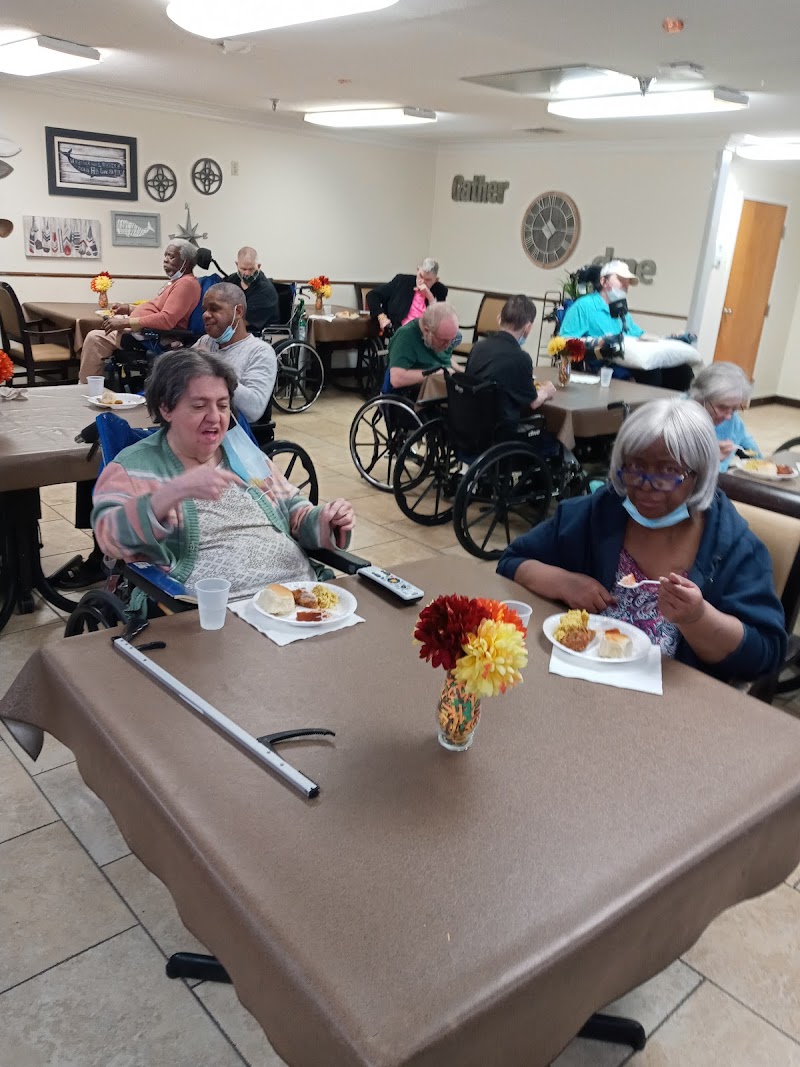
How is Coastal Center Staffed?

CMS rates COASTAL HEALTH AND REHABILITATION CENTER's staffing level at 1 out of 5 stars, which is much below average compared to other nursing homes. Staff turnover is 71%, which is 25 percentage points above the Mississippi average of 46%. High turnover can affect care consistency as new staff learn residents' individual needs. RN turnover specifically is 73%, which is notably high. RNs provide skilled clinical oversight, so turnover in this role can affect medical care quality.

What Have Inspectors Found at Coastal Center?

State health inspectors documented 44 deficiencies at COASTAL HEALTH AND REHABILITATION CENTER during 2021 to 2025. These included: 4 Immediate Jeopardy (the most serious level, indicating potential for serious harm or death), 7 that caused actual resident harm, and 33 with potential for harm. Immediate Jeopardy findings are rare and represent the most serious regulatory concerns. They require immediate corrective action.
Who Owns and Operates Coastal Center?

COASTAL HEALTH AND REHABILITATION CENTER is owned by a for-profit company. For-profit facilities operate as businesses with obligations to shareholders or private owners. The facility is operated by CONSULATE HEALTH CARE/INDEPENDENCE LIVING CENTERS/NSPIRE HEALTHCARE/RAYDIANT HEALTH CARE, a chain that manages multiple nursing homes. With 180 certified beds and approximately 121 residents (about 67% occupancy), it is a mid-sized facility located in GULFPORT, Mississippi.
How Does Coastal Center Compare to Other Mississippi Nursing Homes?

Compared to the 100 nursing homes in Mississippi, COASTAL HEALTH AND REHABILITATION CENTER's overall rating (1 stars) is below the state average of 2.6, staff turnover (71%) is significantly higher than the state average of 46%, and health inspection rating (1 stars) is much below the national benchmark.

What Should Families Ask When Visiting Coastal Center?

Based on this facility's data, families visiting should ask: "What changes have been made since the serious inspection findings, and how are you preventing similar issues?" "What safeguards and monitoring systems are in place to protect residents from abuse or neglect?" "How do you ensure continuity of care given staff turnover, and what is your staff retention strategy?" "Can you walk me through typical staffing levels on day, evening, and night shifts?" These questions are particularly relevant given the facility's Immediate Jeopardy citations, the substantiated abuse finding on record, the facility's high staff turnover rate, and the below-average staffing rating.

Is Coastal Center Safe?

Based on CMS inspection data, COASTAL HEALTH AND REHABILITATION CENTER has documented safety concerns. The facility has 1 substantiated abuse finding (meaning confirmed case of resident harm by staff or other residents). Inspectors have issued 4 Immediate Jeopardy citations (the most serious violation level indicating risk of serious injury or death). The facility has a 1-star overall rating and ranks #100 of 100 nursing homes in Mississippi. Families considering this facility should ask detailed questions about what corrective actions have been taken since these incidents.

Do Nurses at Coastal Center Stick Around?

Staff turnover at COASTAL HEALTH AND REHABILITATION CENTER is high. At 71%, the facility is 25 percentage points above the Mississippi average of 46%. Registered Nurse turnover is particularly concerning at 73%. RNs handle complex medical decisions and coordinate care — frequent RN changes can directly impact care quality. High turnover means new staff may not know residents' individual needs, medications, or preferences. It can also be disorienting for residents, especially those with dementia who rely on familiar faces. Families should ask: What is causing the turnover? What retention programs are in place? How do you ensure care continuity during staff transitions?

Was Coastal Center Ever Fined?

COASTAL HEALTH AND REHABILITATION CENTER has been fined $91,850 across 8 penalty actions. This is above the Mississippi average of $33,997. Fines in this range indicate compliance issues significant enough for CMS to impose meaningful financial consequences. Common causes include delayed correction of deficiencies, repeat violations, or care failures affecting resident safety. Families should ask facility leadership what changes have been made since these penalties.

Is Coastal Center on Any Federal Watch List?

COASTAL HEALTH AND REHABILITATION CENTER is not on any federal watch list. The most significant is the Special Focus Facility (SFF) program, which identifies the bottom 1% of nursing homes nationally based on persistent, serious quality problems. Not being on this list means the facility has avoided the pattern of deficiencies that triggers enhanced federal oversight. This is a positive indicator, though families should still review the facility's inspection history directly.