CRITICAL
(J)
Immediate Jeopardy (IJ) - the most serious Medicare violation
Report Alleged Abuse
(Tag F0609)
Someone could have died · This affected 1 resident
Based on interview, facility policy review, and record review, the facility failed to timely report an instance of elopement involving a resident with a history of hallucinations for one (1) of four (...
Read full inspector narrative →
Based on interview, facility policy review, and record review, the facility failed to timely report an instance of elopement involving a resident with a history of hallucinations for one (1) of four (4) residents reviewed for accidents and hazards (Resident #55).
Resident #55 was observed inside the facility at approximately 4:00 AM on 5/31/25 and was found unsupervised in the facility parking lot by dietary staff at approximately 4:30 AM. Facility staff were unaware the resident had left the facility through an alarmed door, which staff failed to investigate despite hearing the audible alarm. This event was not reported to the State Agency until 6/2/25.
The delay in reporting placed this resident and other residents at continued risk for exiting the facility unsupervised which increased the likelihood of serious injury, serious harm, serious impairment, or death.
The situation was determined to be Immediate Jeopardy (IJ) and Substandard Quality of Care (SQC), which began on 5/31/25, when Resident #55 exited the facility. The State Agency (SA) notified the Administrator of the IJ on 6/4/25 at 11:30 AM and provided an IJ Template.
The State Agency (SA) validated the Removal Plan on 6/5/25 and determined that the IJ was removed on 6/5/25, prior to exit. Therefore, the scope and severity for CFR 483.12 (c)(1) Reporting of Alleged Violations (F609) was lowered from a J to a D while the facility develops a plan of correction to monitor the effectiveness of the systemic changes to ensure the facility sustains compliance with regulatory requirements.
Findings Include:
A review of the facility's policy, Incident Investigation & Reporting reviewed 05/24 revealed, Purpose: To provide guidance to the Facility for .reporting incidents of abuse, neglect, exploitation, misappropriation of property and or other reportable incidents .When must it be reported All alleged violations .2) Not later than 24 hours if the alleged violation involves neglect, exploitation, mistreatment, or misappropriation of resident property and does not result in serious bodily injury .5. Additional items that .may require reporting .G. Elopement .
A record review of the admission Record revealed the facility admitted Resident #55 on 4/4/25 with the diagnoses including Parkinson's Disease with Dyskinesia, with Fluctuations, Hallucinations, and Dementia.
A record review of the admission Minimum Data Set (MDS) with an Assessment Reference Date (ARD) of 4/11/25 revealed Resident #55 had a Brief Interview for Mental Status (BIMS) score of 15, which indicated the resident was cognitively intact.
A record review of the facility's investigation, dated 6/4/25, revealed, .Resident .did in fact exit the facility via a secured door .The (State Agency) entered the facility on June 2, 2025 .Surveyors are aware of the incident/allegation and are currently investigating .
During an interview on 6/2/25 at 11:02 AM, during an interview, Resident #55 stated that on 5/31/25, she felt threatened by a nurse and decided she needed to leave the facility. The resident explained that she observed staff and checked multiple doors until she located an unlocked door in the kitchen area. She reported that she exited the facility through the unlocked kitchen door and hid behind a vehicle in the parking lot.
During an interview on 6/2/25 at 1:00 PM, Dietary #1 explained that on 5/31/25 at approximately 4:27 AM, she was arriving for work and, upon turning into the facility parking lot, observed an individual coming from around a black jeep parked outside. She stated that as she looked closer, she realized it was a resident of the facility, who was walking down the driveway toward the main road. She reported that when she stopped her car, Resident #55 approached and stated, I'm so glad you came. I need help getting out of here. A lady threatened me in the facility. Dietary #1 stated that the resident appeared confused and reported feeling tired. She assisted the resident into her car on the passenger side and immediately called the facility to notify staff that the resident was outside requesting help. Dietary #1 stated that a nurse and three (3) Certified Nursing Assistants (CNAs) came out of the building with a wheelchair to assist the resident back inside. She further noted that the resident's shirt and hair were wet from the humidity. Dietary #1 stated that she told the facility staff that came to get the resident from her car that Resident #55 had told her that she left the facility because she was threatened by staff.
During an interview on 6/2/25 at 6:00 PM, Licensed Practical Nurse (LPN) #5 stated that on 5/31/25, between 4:00 AM and 5:00 AM, the alarm sounded on both the 300 and 400 hall exit doors. She explained that she was not familiar with the code required to stop the alarm from sounding. While the door was alarming, she received a phone call from a kitchen staff member who reported that Resident #55 was outside in the facility parking lot. LPN #5 stated that she and three CNAs exited the front door with a wheelchair and assisted the resident back into the building. She reported that she contacted the Administrator to inform her that the door alarm was sounding, and the Administrator provided her with the code to silence the alarm. LPN #5 stated that she informed the Administrator that all residents were accounted for at that time but could not recall if she had specifically told the Administrator that the resident had been found outside by dietary staff, as she was focused on addressing the alarm. The nurse was unable to recall if she received any information regarding why the resident left the facility.
During an interview on 6/4/25 at 10:00 AM, the Administrator stated that she received a call around 5:00 AM on 5/31/25 from LPN #5. She reported that LPN #5 informed her that Resident #55 had exited through the 400 hall door and was seen by staff, but had been brought back into the facility. The Administrator stated that she was not made aware at that time that the resident had exited the facility and had been found by dietary staff. She reported that she did not learn those details until she returned to work on 6/2/25, when Resident #55 reported that she had left the building because she felt threatened and physically abused by a staff member. The Administrator stated that she subsequently contacted the weekend nursing staff for clarification and was informed that dietary staff had called the facility to report that Resident #55 was outside. The Administrator stated that she had not been provided that information during the initial call on 5/31/25 and was under the impression that staff had observed the resident as she pushed the door open and immediately escorted her back inside. She further stated that she was not aware the resident had exited the building and that staff were initially unaware of the resident's whereabouts until notified by Dietary #1.
During an interview on 6/4/25 at 1:00 PM, the Director of Nursing (DON) stated that Resident #55 is delusional, confused, and experiences hallucinations. She reported that she was not aware the resident had eloped from the building until Monday, 6/2/25, after the State Agency (SA) entered the facility. The DON confirmed that she did not report the alleged abuse or elopement at the time of the incident because she was unaware of the situation until 6/2/25, more than two (2) days after the event occurred.
The facility provided the following removal plan:
On June 4, 2025, at 11:30 AM the State Agency notified the Administrator that the facility was in Immediate Jeopardy (IJ) related to failure to ensure adequate supervision and a safe environment to prevent an elopement, timely report, and initiate an investigation and provided the templates.
Removal Plan - Corrective Action Plan
1.
On May 31, 2025, at approximately 5:00 AM, Licensed Practical Nurse #1 notified the Nursing Home Administrator the 400 hall door alarm was alarming and the staff was not able to silence the alarm. The Nursing Home Administrator asked Licensed Practical Nurse #1 what was the cause of the 400 hall door alarming. License Practical Nurse #1 stated Resident #55 had exited the 400 hall door. The Nursing Home Administrator inquired about the length of time Resident #55 had exited through the 400 Hall door and License Practical Nurse #1 stated it had only been a few minutes. Resident #55 was found in the parking lot by Dietary employee #1 that was arriving to work. Dietary employee #1 notified facility nursing staff that Resident # 1 was outside of the facility. Resident #55 re-entered the facility with multiple staff members at approximately 4:33 AM
2.
On June 2, 2025, facility Nursing Home Administrator reviewed video surveillance. At approximately 4:08 AM on May 31, 2025 Resident #55 exited her room and ambulated down the 400 hall. Camera's do not show the entire hallway. It is not definitive what time Resident # 55 exited the facility via 400 hall door. At 4:33 am on May 31, 2025 Resident # 55 re-enters the facility via the facility dining room door with multiple facility staff members.
3.
On May 31, 2025 at approximately 4:45 am Licensed Practical Nurse # 2 assessed Resident #55 with no injuries noted. A wander guard bracelet was applied to Resident #55 on May 31, 2025.
4.
On June 2, 2025 at approximately 11:35 am facility Director of Nursing interviewed Licensed Practical Nurse #1. Licensed Practical Nurse # 1 stated that she heard the alarm go off but did not investigate nor did any other staff member.
5.
On June 2, 2025 at approximately 11:35 am, the State Department of Health was notified of the initial report via telephone of the incident by facility Nursing Home Administrator and Corporate personnel #1. June 2, 2025 at approximately 12:11 PM, an initial report was submitted to local law enforcement.
6.
At the time of the incident Resident #55 BIMS score was 15. Resident was reassessed on June 3, 2025 with a BIMS score of 12.
7.
A facility Quality Assurance Committee meeting was held at approximately 4:00 PM, June 2, 2025 to include facility Quality Assurance Committee members which consisted of the facility Administrator #1, Director of Nursing, Assistant Director of Nursing, Dietary Manager, Nurse Case Manager, Admissions coordinator, Infection Preventionist and Medical Director via telephone. Topics discussed included: Elopement policy to include Supervision, Wander guard system, Resident Right, Investigation and Reporting with no changes to policy.
8.
The facility corrective actions were reviewed and initiated June 2, 2025 to include the following: in-service training, code drills, medical record audits, and monitoring systems ongoing. On June 2, 2025, at approximately 1:30 pm in-service training was initiated by Staff Development Nurse to include all Registered Nurses, Licensed Practical Nurses, Certified Nursing Assistants, Housekeeping and Laundry staff, office personnel and contracted therapy department on the following: (a) Incident/Accident Reporting (b) Incident/Accident Reporting to include investigation (c) Wandering/Elopement to include Supervision. On June 3, 2025, at approximately 3:30 pm an in-service on Incident/Accident Investigation and Incident/Accident Reporting was conducted by Corporate Nurse to include facility Administrator and Director of Nursing. Facility staff and agency staff if utilized will not be allowed to work until the proper in-service training has been conducted.
9.
On June 3, 2025 at approximately 11:00 am the facility elopement binder was reviewed and updated by Medical Records Nurse #1.
10.
On June 4, 2025, at approximately 12:45 pm Wandering/Elopement Code Drills were initiated by the facility Administrator to include Registered Nurses, Licensed Practical Nurses, Certified Nursing Assistants, Housekeeping and Laundry staff, office personnel and contracted therapy department. The staff were in-serviced on how to distinguish between the wander guard alarm and the fire alarm. Staff will not be allowed to work until participation in a code drill has been conducted. Code drill exercises will be performed daily until all staff have participated in at least one exercise, and then code drills will continue as outlined below.
11.
On June 4, 2025 at approximately 12:45 pm Wandering/Elopement Code Drills were initiated by the facility Administrator which included a complete facility head count 65 of 65 residents were identified.
12.
On June 4, 2025 at approximately 6:00 pm care plans were reviewed of 3 residents identified as an elopement risk by Corporate Nurse.
13.
On June 4, 2025, an outside vendor inspected 9 of 9 facility doors and identified 2 of 9 doors with delayed egress enabled. The two effected doors were deactivated and tested for proper functioning.
14.
On June 4, 2025 at approximately 3:30 pm the completion for all incident/accident reports for the last 90 days were audited by the facility Administrator to ensure proper investigation and reporting. 66 of 66 reports were audited. The results of this audit showed no issues with reporting or investigation.
15.
On June 4, 2025 monitoring systems were put in place to sustain compliance. (a) All Incident/Accident Reports will be reviewed by the facility Administrator and Director of Nursing to ensure proper investigation is complete.
16.
On June 4, 2025 monitoring systems were put in place to sustain compliance. (a) All Incident/Accident Reports will be reviewed by the facility Administrator and Director of Nursing to ensure timely reporting daily. (b) the facility began monitoring wandering/elopement code drills on all three shifts, weekly times (x) 4 weeks, monthly x 3 months, then per facility protocol thereafter (every 4 months rotating shifts).
17.
On June 4, 2025 at approximately 12:45 pm monitoring systems were put in place to sustain compliance. The facility began monitoring wandering/elopement code drills on all three shifts, weekly x 4 weeks, monthly x 3 months, then per facility protocol thereafter (every 4 months rotating shifts).
18.
The facility Administration will have a follow up Quality Assurance Meeting on June 5, 2025 and monthly times two months and then quarterly thereafter to ensure sustained compliance.
19.
The facility alleges that all corrective actions to remove the IJ were completed on June 4, 2025 and the Immediate Jeopardy was removed as of June 5, 2025.
Validation:
The SA validated on 6/5/25, through interview and record review, that actions to remove the immediacy were completed on 6/4/25, and the IJ was removed on 6/5/25, prior to the SA's exit on 6/5/25.
CRITICAL
(J)
Immediate Jeopardy (IJ) - the most serious Medicare violation
Investigate Abuse
(Tag F0610)
Someone could have died · This affected 1 resident
Based on interview, facility policy review, and record review, the facility failed to initiate an investigation timely when Resident #55, who had a history of hallucinations, exited the facility for o...
Read full inspector narrative →
Based on interview, facility policy review, and record review, the facility failed to initiate an investigation timely when Resident #55, who had a history of hallucinations, exited the facility for one (1) of four (4) residents reviewed for accidents and hazards (Resident #55).
Resident #55 was observed inside the facility at approximately 4:00 AM on 5/31/25 and was found unsupervised in the facility parking lot by dietary staff at approximately 4:30 AM. Facility staff were unaware the resident had left the facility through an alarmed door, which staff failed to investigate despite hearing the audible alarm. This event was not investigated by the facility until 6/2/25 in which the Administrator stated she was unaware of the elopement and believed the resident had been returned by staff immediately, indicating that no internal investigation was initiated as required.
The facility's delayed investigation prevented timely identification of root causes, such as the failure to respond to the alarm, the door's egress function, and the lack of staff awareness, which placed Resident #55 and other residents in a situation to elope and experience serious injury, serious harm, serious impairment, or death.
The situation was determined to be Immediate Jeopardy (IJ) and Substandard Quality of Care (SQC), which began on 5/31/25, when Resident #55 exited the facility. The State Agency (SA) notified the Administrator of the IJ on 6/4/25 at 11:30 AM and provided an IJ Template.
The State Agency (SA) validated the Removal Plan on 6/5/25 and determined that the IJ was removed on 6/5/25, prior to exit. Therefore, the scope and severity for 42 CFR 483.12(c)(2) Investigation/Prevent/Correct Alleged Violation (F610) was lowered from a J to a D while the facility develops a plan of correction to monitor the effectiveness of the systemic changes to ensure the facility sustains compliance with regulatory requirements.
Cross Reference F609, F689
Findings include:
A review of the facility's policy, Incident Investigation & Reporting reviewed 05/24 revealed, Purpose: To provide guidance to the facility for investigation .incidents of abuse, neglect, exploitation, misappropriation of property and/or other reportable incidents .5. Additional incidents that must have a thorough investigation .G. Elopement .6. The facility will investigate all alleged violations under the direct supervision of the Administrator .
A record review of the admission Record revealed the facility admitted Resident #55 on 4/4/23 with the diagnoses including Parkinson's Disease with Dyskinesia, with Fluctuations, Hallucinations, and Dementia.
A record review of the admission Minimum Data Set (MDS) with an Assessment Reference Date (ARD) of 4/11/25 revealed Resident #55 had a Brief Interview for Mental Status (BIMS) score of 15, which indicated the resident was cognitively intact.
A record review of the facility's investigation, dated 6/4/25, revealed, .Resident .did in fact exit the facility via a secured door .The (State Agency) entered the facility on June 2, 2025 .Surveyors are aware of the incident/allegation and are currently investigating .
On 6/2/25 at 11:02 AM, during an interview, Resident #55 reported that on 5/31/25, she became fearful after feeling threatened by a nurse and made the decision to leave the facility. She stated that she watched staff and checked several doors before finding one in the kitchen area that was unlocked. The resident stated that she went through the kitchen door and hid behind a vehicle in the facility's parking lot.
On 6/2/25 at 1:00 PM, during an interview, Dietary #1 stated that at approximately 4:27 AM on 5/31/25, she was arriving for work when she saw someone walking from behind a black jeep parked outside the building. As she got closer, she recognized the individual as Resident #55, who was walking down the driveway toward the main road. She stated that when she stopped her car, the resident approached her and expressed relief that she had arrived, stating that she needed help getting out because she had been threatened by a staff member in the facility. Dietary #1 stated that the resident appeared confused, tired, and her clothing and hair were damp from the humidity. She helped the resident into her car and immediately contacted facility staff to report that the resident was outside and requested assistance. Dietary #1 stated that a nurse and three Certified Nursing Assistants (CNA) came outside with a wheelchair to assist the resident back into the building. She further stated that when the staff arrived at her vehicle, she informed them that Resident #55 had reported leaving the facility due to feeling threatened by staff.
On 6/2/25 at 6:00 PM, during an interview, LPN #5 explained that on 5/31/25, between 4:00 AM and 5:00 AM, the alarms on both the 300 and 400 hall exit doors activated. She stated that she did not know the code needed to silence the alarm. While the alarm continued to sound, she received a call from a kitchen employee notifying her that Resident #55 was outside in the parking lot. Licensed Practical Nurse (LPN) #5 reported that she and three CNAs went outside through the front entrance with a wheelchair to bring the resident back into the facility. She stated that she then contacted the Administrator to report that the alarm was sounding, at which time the Administrator provided her with the code to turn off the alarm. LPN #5 recalled informing the Administrator that all residents were accounted for but was unsure if she specifically mentioned that the resident had been located outside by dietary staff, as she had been focused on silencing the alarm. The nurse stated she could not recall receiving any information regarding the reason the resident exited the building. LPN #5 also acknowledged that she did not conduct an investigation or interview the dietary staff member who observed the resident in the parking lot.
On 6/4/25 at 10:00 AM, during an interview, the Administrator stated that she was contacted by LPN #5 at approximately 5:00 AM on 5/31/25. She reported that during the call, LPN #5 informed her that Resident #55 had exited through the 400 hall door and was seen by staff before being brought back into the building. The Administrator stated that at the time of the initial call, she was not told that dietary staff had located the resident outside. She explained that she first became aware of those details on 6/2/25, after returning to work and speaking with Resident #55, who reported leaving the facility due to feeling threatened and physically abused by a staff member. The Administrator stated that after learning this information, she began contacting the weekend staff involved for clarification and was informed that dietary staff had notified the nurses when the resident was found outside. She confirmed that during the initial call on 5/31/25, she had believed staff observed the resident as she pushed open the door and immediately escorted her back inside, and was not aware that staff were initially unaware of the resident's whereabouts until notified by Dietary #1. The Administrator acknowledged that she and facility staff did not initiate an investigation into the elopement until 6/2/25, after the State Agency arrived. She reported that at that point, she began reaching out to the weekend staff who had worked the night of the incident and reviewed surveillance footage to determine when Resident #55 was last seen inside the hallway.
On 6/4/25 at 1:00 PM, during an interview, the Director of Nursing (DON) stated that Resident #55 is confused, delusional, and experiences hallucinations. She explained that she was not made aware that the resident had eloped from the facility until 6/2/25, when the State Agency (SA) arrived. She stated that once she and the Administrator learned that dietary staff had contacted nursing to report the resident was found outside wandering in the parking lot, they initiated an investigation into the incident.
The facility provided the following removal plan:
On June 4, 2025, at 11:30 AM the State Agency notified the Administrator that the facility was in Immediate Jeopardy (IJ) related to failure to ensure adequate supervision and a safe environment to prevent an elopement, timely report, and initiate an investigation and provided the templates.
Removal Plan - Corrective Action Plan
1.
On May 31, 2025, at approximately 5:00 AM, Licensed Practical Nurse #1 notified the Nursing Home Administrator the 400 hall door alarm was alarming and the staff was not able to silence the alarm. The Nursing Home Administrator asked Licensed Practical Nurse #1 what was the cause of the 400 hall door alarming. License Practical Nurse #1 stated Resident #55 had exited the 400 hall door. The Nursing Home Administrator inquired about the length of time Resident #55 had exited through the 400 Hall door and License Practical Nurse #1 stated it had only been a few minutes. Resident #55 was found in the parking lot by Dietary employee #1 that was arriving to work. Dietary employee #1 notified facility nursing staff that Resident # 1 was outside of the facility. Resident #55 re-entered the facility with multiple staff members at approximately 4:33 AM
2.
On June 2, 2025, facility Nursing Home Administrator reviewed video surveillance. At approximately 4:08 AM on May 31, 2025 Resident #55 exited her room and ambulated down the 400 hall. Camera's do not show the entire hallway. It is not definitive what time Resident # 55 exited the facility via 400 hall door. At 4:33 am on May 31, 2025 Resident # 55 re-enters the facility via the facility dining room door with multiple facility staff members.
3.
On May 31, 2025 at approximately 4:45 am Licensed Practical Nurse # 2 assessed Resident #55 with no injuries noted. A wander guard bracelet was applied to Resident #55 on May 31, 2025.
4.
On June 2, 2025 at approximately 11:35 am facility Director of Nursing interviewed Licensed Practical Nurse #1. Licensed Practical Nurse # 1 stated that she heard the alarm go off but did not investigate nor did any other staff member.
5.
On June 2, 2025 at approximately 11:35 am, the State Department of Health was notified of the initial report via telephone of the incident by facility Nursing Home Administrator and Corporate personnel #1. June 2, 2025 at approximately 12:11 PM, an initial report was submitted to local law enforcement.
6.
At the time of the incident Resident #55 BIMS score was 15. Resident was reassessed on June 3, 2025 with a BIMS score of 12.
7.
A facility Quality Assurance Committee meeting was held at approximately 4:00 PM, June 2, 2025 to include facility Quality Assurance Committee members which consisted of the facility Administrator #1, Director of Nursing, Assistant Director of Nursing, Dietary Manager, Nurse Case Manager, Admissions coordinator, Infection Preventionist and Medical Director via telephone. Topics discussed included: Elopement policy to include Supervision, Wander guard system, Resident Right, Investigation and Reporting with no changes to policy.
8.
The facility corrective actions were reviewed and initiated June 2, 2025 to include the following: in-service training, code drills, medical record audits, and monitoring systems ongoing. On June 2, 2025, at approximately 1:30 pm in-service training was initiated by Staff Development Nurse to include all Registered Nurses, Licensed Practical Nurses, Certified Nursing Assistants, Housekeeping and Laundry staff, office personnel and contracted therapy department on the following: (a) Incident/Accident Reporting (b) Incident/Accident Reporting to include investigation (c) Wandering/Elopement to include Supervision. On June 3, 2025, at approximately 3:30 pm an in-service on Incident/Accident Investigation and Incident/Accident Reporting was conducted by Corporate Nurse to include facility Administrator and Director of Nursing. Facility staff and agency staff if utilized will not be allowed to work until the proper in-service training has been conducted.
9.
On June 3, 2025 at approximately 11:00 am the facility elopement binder was reviewed and updated by Medical Records Nurse #1.
10.
On June 4, 2025, at approximately 12:45 pm Wandering/Elopement Code Drills were initiated by the facility Administrator to include Registered Nurses, Licensed Practical Nurses, Certified Nursing Assistants, Housekeeping and Laundry staff, office personnel and contracted therapy department. The staff were in-serviced on how to distinguish between the wander guard alarm and the fire alarm. Staff will not be allowed to work until participation in a code drill has been conducted. Code drill exercises will be performed daily until all staff have participated in at least one exercise, and then code drills will continue as outlined below.
11.
On June 4, 2025 at approximately 12:45 pm Wandering/Elopement Code Drills were initiated by the facility Administrator which included a complete facility head count 65 of 65 residents were identified.
12.
On June 4, 2025 at approximately 6:00 pm care plans were reviewed of 3 residents identified as an elopement risk by Corporate Nurse.
13.
On June 4, 2025, an outside vendor inspected 9 of 9 facility doors and identified 2 of 9 doors with delayed egress enabled. The two effected doors were deactivated and tested for proper functioning.
14.
On June 4, 2025 at approximately 3:30 pm the completion for all incident/accident reports for the last 90 days were audited by the facility Administrator to ensure proper investigation and reporting. 66 of 66 reports were audited. The results of this audit showed no issues with reporting or investigation.
15.
On June 4, 2025 monitoring systems were put in place to sustain compliance. (a) All Incident/Accident Reports will be reviewed by the facility Administrator and Director of Nursing to ensure proper investigation is complete.
16.
On June 4, 2025 monitoring systems were put in place to sustain compliance. (a) All Incident/Accident Reports will be reviewed by the facility Administrator and Director of Nursing to ensure timely reporting daily. (b) the facility began monitoring wandering/elopement code drills on all three shifts, weekly times (x) 4 weeks, monthly x 3 months, then per facility protocol thereafter (every 4 months rotating shifts).
17.
On June 4, 2025 at approximately 12:45 pm monitoring systems were put in place to sustain compliance. The facility began monitoring wandering/elopement code drills on all three shifts, weekly x 4 weeks, monthly x 3 months, then per facility protocol thereafter (every 4 months rotating shifts).
18.
The facility Administration will have a follow up Quality Assurance Meeting on June 5, 2025 and monthly times two months and then quarterly thereafter to ensure sustained compliance.
19.
The facility alleges that all corrective actions to remove the IJ were completed on June 4, 2025 and the Immediate Jeopardy was removed as of June 5, 2025.
Validation:
The SA validated on 6/5/25, through interview and record review, that actions to remove the immediacy were completed on 6/4/25, and the IJ was removed on 6/5/25, prior to the SA's exit on 6/5/25.
CRITICAL
(J)
Immediate Jeopardy (IJ) - the most serious Medicare violation
Accident Prevention
(Tag F0689)
Someone could have died · This affected 1 resident
**NOTE- TERMS IN BRACKETS HAVE BEEN EDITED TO PROTECT CONFIDENTIALITY** Based on observation, interview, record review, and facility policy review the facility failed to ensure supervision and impleme...
Read full inspector narrative →
**NOTE- TERMS IN BRACKETS HAVE BEEN EDITED TO PROTECT CONFIDENTIALITY** Based on observation, interview, record review, and facility policy review the facility failed to ensure supervision and implement adequate safety interventions to prevent accidents for two (2) of four (4) residents reviewed for accidents and hazards (Resident #55 and Resident #47) as evidenced by:
1) failing to monitor door alarms and failing to immediately investigate an active exit alarm to prevent Resident #55 exiting the facility unsupervised and
2) failing to ensure safe transfer techniques when staff manually lifted Resident #47 without the use of the required stand lift, resulting in the resident's foot becoming caught under the wheelchair and causing a right ankle injury.
On 5/31/25, at approximately 4:00 AM, Resident #55 exited the facility through the 400 hall exit door, which caused the door to alarm. The alarm was ignored by staff and resulted in the resident being found outside in the parking lot at approximately 4:33 AM by a dietary staff member arriving at work.
The facility's failure to immediately investigate an active alarm and provide adequate supervision for Resident #55, put this resident and all other residents at risk for serious injury, serious harm, serious impairment, or death.
The situation was determined to be an Immediate Jeopardy (IJ) and Substandard Quality of Care (SQC), which began on 5/31/25, when Resident #55 exited the facility. The State Agency (SA) notified the Administrator of the IJ on 6/4/25 at 11:30 AM and provided an IJ Template.
The State Agency (SA) validated the Removal Plan on 6/5/25 and determined that the IJ was removed on 6/5/25, prior to exit. Therefore, the scope and severity for CFR 483.25(d)(1)(2) Accidents/Hazards - F689 was lowered from a J to a D while the facility develops a plan of correction to monitor the effectiveness of the systemic changes to ensure the facility sustains compliance with regulatory requirements.
Findings include:
A record review of the facility's policy Elopement/wandering-General Policy, with reviewed date of 01/23, revealed . Elopement occurs when a resident who is incapable of adequately protecting themselves leaves the premises without necessary supervision to do so .
Resident #55
A record review of the admission Record revealed the facility admitted Resident #55 on 4/4/25 with the diagnoses including Parkinson's Disease with Dyskinesia, with Fluctuations, Hallucinations, and Dementia.
A record review of the admission Minimum Data Set (MDS) with an Assessment Reference Date (ARD) of 4/11/25 revealed Resident #55 had a Brief Interview for Mental Status (BIMS) score of 15, which indicated the resident was cognitively intact.
A record review of the facility's investigation, dated 6/4/25, revealed, .Resident .did in fact exit the facility via a secured door .The State Agency entered the facility on June 2, 2025, .Surveyors are aware of the incident/allegation and are currently investigating .
Record review of the facility's Interviews, dated 6/3/25, revealed Resident #55's BIMS score was a 12, which indicated her cognition was moderately impaired.
Record review of the local weather report from www.weatherunderground.com revealed the local weather was 70 degrees at 4:00 AM on 5/31/25.
An interview with Resident #55 on 6/2/25 at 11:02 AM, she stated that on 5/31/25, she felt threatened by a nurse and decided she needed to leave the facility. The resident explained that she observed staff and checked multiple doors until she located an unlocked door in the kitchen area. She reported that she exited the facility through the unlocked kitchen door and hid behind a vehicle in the parking lot. The resident stated that shortly afterward, a woman driving a car stopped and assisted her back into the building. The resident further reported that she was tired and thirsty at the time.
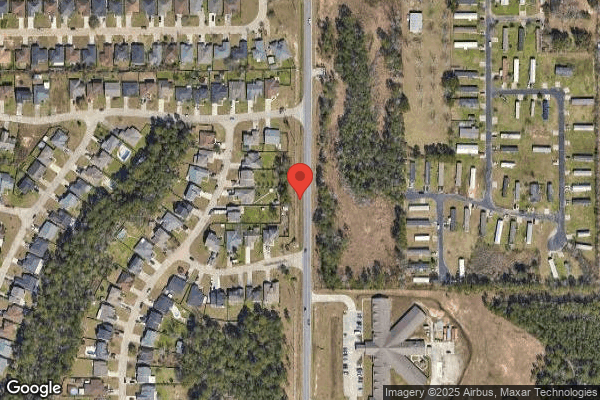
Observation on 6/2/25 at 11:15 AM of the area where Resident #55 was located outside of the facility revealed the resident was in the parking lot approximately 15 yards from the 400 Hall exit door. There was a wooded area across from the exit door and a highway in front of the facility.
An interview on 6/2/25 at 1:00 PM, Dietary #1 explained that on 5/31/25 at approximately 4:27 AM, she was arriving for work and, upon turning into the facility parking lot, observed an individual coming from around a black jeep parked outside. She stated that as she looked closer, she realized it was a resident of the facility, who was walking down the driveway toward the main road. Dietary #1 described the resident as wearing a pink shirt, capri jeans, socks, and shoes. She reported that when she stopped her car, Resident #55 approached and stated, I'm so glad you came. I need help getting out of here. A lady threatened me in the facility. Dietary #1 stated that the resident appeared confused and reported feeling tired. She assisted the resident into her car on the passenger side and immediately called the facility to notify staff that the resident was outside requesting help. Dietary #1 stated that a nurse and three (3) Certified Nursing Assistants (CNA) came out of the building with a wheelchair to assist the resident back inside. She further noted that the resident's shirt and hair were wet from the humidity.
An interview on 6/2/25 at 4:30 PM, CNA #5 stated that she was assigned to care for Resident #55 on 5/31/25. She reported that she had not observed the resident attempting to exit the facility. CNA #5 explained that while she was on break, another CNA informed her that Resident #55 had been observed outside the building. CNA #5 stated that she, along with two additional CNAs and Licensed Practical Nurse (LPN) #5, went outside to assist the resident and escorted her back into the facility. She reported that the last time she saw the resident prior to the incident was at approximately 3:00 AM, when she and the nurse provided the resident with a peanut butter sandwich because the resident had been awake and wandering in the hallway. CNA #5 stated that the resident often ambulated in the hallway at night and required redirection. She reiterated that she had not previously observed the resident attempting to exit the facility and stated that the resident was in her room when she went to lunch.
An interview on 6/2/25 at 5:30 PM, LPN #4 stated that on 5/31/25, an exit door alarm sounded sometime during the morning hours, but she could not recall the exact time. She explained that staff conducted a quick scan of the area and observed that everything appeared to be in place; however, they did not check each resident's room to verify all residents were accounted for. LPN #4 stated that she believed the exit door alarm was faulty and assumed it was beeping as it frequently did. She reported that a staff member from the dietary department later called the facility to inform them that Resident #55 was outside in the parking lot. LPN #4 stated that she exited the 300-hall door while one of the CNAs exited from another door with a wheelchair to assist in bringing the resident back into the building. She reported that she did not know how long the resident had been outside and was unsure who initially received the call from the dietary staff. LPN #4 stated that she believed LPN #5 notified the Administrator of the incident. She also reported that she typically worked only on Friday and Saturday nights and was not familiar with facility policies regarding alarms and elopements. LPN #4 stated that the last time she had seen the resident prior to the incident was when she arrived for her shift at 11:00 PM.
An interview on 6/2/25 at 6:00 PM, LPN #5 stated that between 4:00 AM and 5:00 AM on 5/31/25, the alarm on the 400 hall exit door sounded. She reported that staff looked outside the door and scanned the immediate area but did not observe any residents out of place at that time. LPN #5 confirmed that room-to-room checks were not conducted to verify that all residents were present. She also stated that staff did not know the code required to silence the exit door alarm. LPN #5 reported that she later received a phone call from Dietary #1, who informed her that Resident #55 was outside in the facility parking lot. LPN #5 stated that she, along with three CNAs, exited the building through the front door with a wheelchair to assist the resident back into the building. She recalled that Resident #55 had been up and walking around near the nurse's station earlier that morning. LPN #5 explained that the only possible exits the resident could have used were the doors on either the 300 or 400 hall. She confirmed that staff was unaware the resident had exited the building until notified by Dietary #1. LPN #5 stated that once the resident was returned to the building, she was assessed, and a head count of all residents was conducted. She reported that Resident #55 was found sitting in the passenger seat of the kitchen staff member's car when staff arrived to assist. LPN #5 further stated that she contacted the Administrator to report that the door alarm would not stop sounding, and the Administrator provided her with the code to disable the alarm. She also informed the Administrator that the resident had been located and that all residents were accounted for. LPN #5 stated that Resident #55 did not sustain any injuries during the incident.
An interview on 6/3/25 at 12:30 PM, CNA #6 stated that she was working on the 100 hall on 5/31/25. She reported that the CNA assigned to the 400 hall was on break at the time. CNA #6 stated that when the alarm sounded, staff initially believed it was the fire alarm in the nutrition room, which had been intermittently sounding for the past two days. She explained that after realizing it was not the fire alarm, staff checked the 400 hall and discovered that the exit door was open following notification from kitchen staff that a resident was outside. CNA #6 reported that she retrieved Resident #55's wheelchair and brought it outside to assist the resident. She further stated that the door was unlocked, and she was able to push it open and exit the building.
An interview on 6/3/25 at 9:00 AM, Resident #55's significant other stated that the resident reported to him that she had been threatened by facility staff and feared that they were going to harm her. He stated that the resident told him she exited the facility through the kitchen door and ran down the street. The resident also reported that it was raining and cold at the time. According to the significant other, the resident stated that a woman stopped her vehicle, assisted her into the car, and brought her back to the facility. The significant other reported that the resident had not previously been this confused and expressed concern that her condition may be declining due to her Parkinson's disease. He further stated that the resident's hallucinations had increased lately.
On 6/4/25, during interviews with multiple residents on the 400 hall, several reported hearing alarms sounding over the weekend. At 8:30 AM, Unsampled Resident A in room [ROOM NUMBER] stated he remembered the alarm going off during the night for approximately 20 minutes or longer, though he was unsure if it was a door or fire alarm. At 8:40 AM, Resident #26 in room [ROOM NUMBER]-A reported hearing the alarm late over the weekend, stating it sounded longer than usual, but she was unsure if something was wrong. At 9:00 AM, Resident #163 in room [ROOM NUMBER] stated he heard alarms during the night over the weekend, estimating the alarm sounded for approximately 30 to 45 minutes. He was unsure if someone was trying to exit the facility. At 9:10 AM, Resident #33 in room [ROOM NUMBER] stated that alarms had gone off approximately five or more times since his admission and recalled being awakened by the alarm on at least one occasion, though he could not recall the exact time. At 9:30 AM, Unsampled Resident B in room [ROOM NUMBER] stated that the alarm sounded for a long time over the weekend, and due to the length of time it sounded, she thought something might be wrong with the alarm system.
An interview on 6/4/25 at 9:00 AM, the Maintenance Director explained that the door alarm on the 400 hall is the only door that will release and open if the push bar is held down for 10 seconds. He stated that the alarm will sound immediately upon the door being pushed. The Maintenance Director reported that he has provided education to staff on multiple occasions regarding the difference between fire alarms and door alarms. He stated that staff have also received inservice training from the Administrator on how to respond when alarms sound and the appropriate actions to take. The Maintenance Director reported that on several occasions he has arrived at the facility to find alarms sounding without staff responding to them. He further stated that he has conducted one-on-one training with various staff members but does not have any signed documentation verifying completion of those individual trainings.
An interview on 6/4/25 at 10:00 AM, the Administrator stated that she was contacted by staff around 5:00 AM on Saturday morning, 5/31/25, and informed that Resident #55 had exited the building through the 400-hall door but was returned to the facility immediately. She reported that the resident was brought back into the building and that a body audit and head count were completed to ensure all other residents were accounted for. The Administrator further stated that when she arrived at work on Monday morning, a therapy staff member informed her that Resident #55 stated she did not understand why the facility had placed a WanderGuard (a type of monitoring device) bracelet on her leg. The Administrator reported that she spoke with both the resident and her significant other to explain that the WanderGuard device was being used to help staff monitor her location and ensure her safety. During this conversation, the resident reported feeling unsafe, stating that a staff member with orange fingernail polish had threatened and physically abused her. The Administrator stated that after hearing this, she contacted facility staff for clarification and was provided with additional details. She reported that LPN #5 informed her that Dietary #1 had called the facility to notify staff that Resident #55 was outside. LPN #5 also reported that she and three CNAs brought the resident back into the building. The Administrator confirmed that a body audit and head count were completed following the incident. She further stated that she reviewed the facility's surveillance footage from 5/31/25 but was unable to determine the exact time the resident exited the building. The Administrator explained that the surveillance cameras do not capture the 400 hall exit door; however, based on the resident's location and the facility layout, she determined that the 400 hall door was the only exit the resident could have used, as access through the kitchen was not possible. The footage showed the resident was last observed inside the facility at 4:06 AM and was next observed returning to the building at 4:34 AM.
An interview on 6/4/25 at 1:00 PM, the Director of Nursing (DON) stated that Resident #55 is delusional, confused, and experiences hallucinations. The DON reported that she was not aware the resident had exited the building until Monday (6/2/25), after the State Agency (SA) arrived onsite. She confirmed that both she and the Administrator began investigating the incident after learning that a dietary staff member had notified nursing staff that the resident was outside the building.
Resident #47
A record review of the facility's Lifting Policy, revised 10/23, revealed, .This facility will strive to provide a safe work environment by providing and requiring the use of safety materials, equipment and training designed to help prevent personnel and resident injury .Failure to utilize a mechanical lift when the use of this equipment is indicted in resident's plan of care, unless exception is met, could result in disciplinary action up to and including termination of employment .*Exception: Although the mechanical lift, if indicated by screening, is the preferred method of transfer it is recognized it may not always be possible due to certain circumstances. Circumstances to include emergencies, residents care needs, mechanical failure, and some areas in which mechanical lifts do not fit. In these circumstances it would be acceptable to transfer a resident manually with the assistance of one (1) or more staff as indicated .
A record review of the admission Record revealed the facility admitted Resident #47 on 12/20/24 with diagnoses including Right Femur Fracture.
A record review of the Quarterly MDS with an ARD of 3/20/25 revealed Resident #47 had a BIMS score of 15, which indicated she was cognitively intact.
A record review of the facility's incident report, dated 2/17/25, revealed Resident #47 informed therapy that she had pain in her right ankle following a transfer and the resident stated that two aides transferred her to the wheelchair and her foot got caught under the chair. The report indicated that the CNAs were educated on transfer/lift status.
A record review of a consultation for Resident #47, dated 2/20/25, revealed Findings of a right ankle sprain. Recommendations including non-steroidal anti-inflammatory drugs (NSAIDs) as needed for ankle pain and ice as needed to the right ankle. New Orders included an air cast to the right ankle and elevate the right ankle.
On 6/2/25 at 12:04 PM, during an interview, Resident #47 reported that in February 2025, a male CNA picked her up and transferred her into a chair without using a mechanical lift. She stated that during the transfer, her foot became caught under the wheelchair, resulting in a sprained ankle. Resident #47 confirmed that a lift was not used during the transfer.
On 6/4/25 at 9:14 AM, during an interview, the Rehabilitation Director/Speech Therapist stated that the Physical Therapist Assistant (PTA) had worked with Resident #47 during a therapy session on 2/17/25. She reported that during the session, the PTA observed that the resident's right ankle was swollen. When asked about the swelling, the resident informed the PTA that a CNA had lifted her by the arms during a transfer instead of using the designated mechanical lift. The resident stated that during the transfer, her foot became caught under the wheelchair.
On 6/4/25 at 12:32 PM, during an interview, the Director of Nursing (DON) stated that she was informed by the Physical Therapist Assistant that Resident #47 had sustained a sprained ankle. She reported that the resident was subsequently examined and underwent an X-ray, which revealed no evidence of a fracture. The DON stated that the CNAs involved in the improper transfer were agency staff who are no longer employed at the facility. She further explained that CNAs have since been re-educated on proper lift procedures and the importance of following each resident's assigned lift status. The DON confirmed that an incident report documenting the event was completed on 2/17/25.
On 6/5/25 at 11:40 AM, during a follow-up interview, the Director of Nursing (DON) stated that agency CNAs receive an orientation similar to facility staff, although it is typically an abbreviated version, which includes a review of client charts and care plans. The DON reported that Resident #47 had requested to get up in order to attend therapy, and the CNAs informed her that no mechanical lift was available at that time. She stated that the CNAs appeared to assume the resident could assist during the transfer. The DON further stated that she believed the footrest on the wheelchair had been removed prior to placing the resident into the chair but was unable to determine to how the resident's foot became caught under the wheelchair. The DON stated that according to the facility's policy, CNAs are allowed to determine whether a manual transfer may be used in certain situations, including for resident care needs. She also stated she understood that the resident was reportedly in a hurry to get to therapy that day. The DON further explained that the facility did not consider the transfer to be neglectful because, under the facility's policy, the transfer was permissible and no significant injury, such as a fracture, occurred. The DON agreed that the incident report regarding the injury did not include an Exception reason as to why the CNAs chose to manually lift her instead of using the mechanical lift.
On 6/5/25 at 12:03 PM, during an interview, the Physical Therapy Assistant (PTA) stated that Resident #47 was unable to fully participate in physical therapy for several weeks after the reported incident on 2/17/25 due to swelling in the right ankle. She reported that while the resident was restricted from performing weight-bearing exercises involving the affected ankle, she was able to continue participating in therapy.
On 6/5/25 at 12:13 PM, in an interview with LPN #6 (Care Plan Nurse), she explained that a yellow sticker on Resident #47's bulletin board and the care plan both indicated the resident required a stand-assist mechanical lift. She emphasized CNAs are not permitted to determine lift methods.
On 6/5/25 at 12:50 PM, during an interview with Charge Nurse/LPN #7, she stated the facility is a no-manual-lift environment and confirmed Resident #47 had required a stand-assist lift for several months. She confirmed that the CNAs involved in the incident on 2/17/25 admitted not using a lift and did not provide justification for their actions.
On 6/5/25 at 12:17 PM, during an observation and follow-up interview, Resident #47 provided additional details regarding the incident that occurred on 2/17/25. She stated that there was no footrest on the wheelchair during the transfer and noted that her knee was not functioning well at the time. The resident reported that she was wearing slippers and was unsure how her foot became positioned underneath the wheelchair. She explained that she did not refuse the lift and was not rushing the staff. She said she knew the lift was available for use because the CNAs brought the lift to the door of her room when they came in for the transfer. She stated that there were two or three CNAs present in the room at the time of the transfer, and they did not explain to her why they were not using the mechanical lift. There was a yellow circle observed on the bulletin board in her room above the headboard.
On 6/5/25 at 2:48 PM, during an interview, the Administrator acknowledged Resident #47 was transferred without a lift on 2/17/25 that resulted in the resident having a sprained ankle.
On 6/5/25 at 3:20 PM, during an interview with Agency CNA #1, he stated he and another CNA manually transferred Resident #47 from the bed to the wheelchair. He believed a two-person assist was appropriate for Resident #47 and was unable to provide a reason or exception as to why they did not use the mechanical lift.
The facility provided the following removal plan:
On June 4, 2025, at 11:30 AM the State Agency notified the Administrator that the facility was in Immediate Jeopardy (IJ) related to failure to ensure adequate supervision and a safe environment to prevent an elopement, timely report, and initiate an investigation and provided the templates.
Removal Plan - Corrective Action Plan
1.
On May 31, 2025, at approximately 5:00 AM, Licensed Practical Nurse #1 notified the Nursing Home Administrator the 400 hall door alarm was alarming and the staff was not able to silence the alarm. The Nursing Home Administrator asked Licensed Practical Nurse #1 what was the cause of the 400 hall door alarming. License Practical Nurse #1 stated Resident #55 had exited the 400 hall door. The Nursing Home Administrator inquired about the length of time Resident #55 had exited through the 400 Hall door and License Practical Nurse #1 stated it had only been a few minutes. Resident #55 was found in the parking lot by Dietary employee #1 that was arriving to work. Dietary employee #1 notified facility nursing staff that Resident # 1 was outside of the facility. Resident #55 re-entered the facility with multiple staff members at approximately 4:33 AM
2.
On June 2, 2025, facility Nursing Home Administrator reviewed video surveillance. At approximately 4:08 AM on May 31, 2025 Resident #55 exited her room and ambulated down the 400 hall. Camera's do not show the entire hallway. It is not definitive what time Resident # 55 exited the facility via 400 hall door. At 4:33 am on May 31, 2025 Resident # 55 re-enters the facility via the facility dining room door with multiple facility staff members.
3.
On May 31, 2025 at approximately 4:45 am Licensed Practical Nurse # 2 assessed Resident #55 with no injuries noted. A wander guard bracelet was applied to Resident #55 on May 31, 2025.
4.
On June 2, 2025 at approximately 11:35 am facility Director of Nursing interviewed Licensed Practical Nurse #1. Licensed Practical Nurse # 1 stated that she heard the alarm go off but did not investigate nor did any other staff member.
5.
On June 2, 2025 at approximately 11:35 am, the State Department of Health was notified of the initial report via telephone of the incident by facility Nursing Home Administrator and Corporate personnel #1. June 2, 2025 at approximately 12:11 PM, an initial report was submitted to local law enforcement.
6.
At the time of the incident Resident #55 BIMS score was 15. Resident was reassessed on June 3, 2025 with a BIMS score of 12.
7.
A facility Quality Assurance Committee meeting was held at approximately 4:00 PM, June 2, 2025 to include facility Quality Assurance Committee members which consisted of the facility Administrator #1, Director of Nursing, Assistant Director of Nursing, Dietary Manager, Nurse Case Manager, Admissions coordinator, Infection Preventionist and Medical Director via telephone. Topics discussed included: Elopement policy to include Supervision, Wander guard system, Resident Right, Investigation and Reporting with no changes to policy.
8.
The facility corrective actions were reviewed and initiated June 2, 2025 to include the following: in-service training, code drills, medical record audits, and monitoring systems ongoing. On June 2, 2025, at approximately 1:30 pm in-service training was initiated by Staff Development Nurse to include all Registered Nurses, Licensed Practical Nurses, Certified Nursing Assistants, Housekeeping and Laundry staff, office personnel and contracted therapy department on the following: (a) Incident/Accident Reporting (b) Incident/Accident Reporting to include investigation (c) Wandering/Elopement to include Supervision. On June 3, 2025, at approximately 3:30 pm an in-service on Incident/Accident Investigation and Incident/Accident Reporting was conducted by Corporate Nurse to include facility Administrator and Director of Nursing. Facility staff and agency staff if utilized will not be allowed to work until the proper in-service training has been conducted.
9.
On June 3, 2025 at approximately 11:00 am the facility elopement binder was reviewed and updated by Medical Records Nurse #1.
10.
On June 4, 2025, at approximately 12:45 pm Wandering/Elopement Code Drills were initiated by the facility Administrator to include Registered Nurses, Licensed Practical Nurses, Certified Nursing Assistants, Housekeeping and Laundry staff, office personnel and contracted therapy department. The staff were in-serviced on how to distinguish between the wander guard alarm and the fire alarm. Staff will not be allowed to work until participation in a code drill has been conducted. Code drill exercises will be performed daily until all staff have participated in at least one exercise, and then code drills will continue as outlined below.
11.
On June 4, 2025 at approximately 12:45 pm Wandering/Elopement Code Drills were initiated by the facility Administrator which included a complete facility head count 65 of 65 residents were identified.
12.
On June 4, 2025 at approximately 6:00 pm care plans were reviewed of 3 residents identified as an elopement risk by Corporate Nurse.
13.
On June 4, 2025, an outside vendor inspected 9 of 9 facility doors and identified 2 of 9 doors with delayed egress enabled. The two effected doors were deactivated and tested for proper functioning.
14.
On June 4, 2025 at approximately 3:30 pm the completion for all incident/accident reports for the last 90 days were audited by the facility Administrator to ensure proper investigation and reporting. 66 of 66 reports were audited. The results of this audit showed no issues with reporting or investigation.
15.
On June 4, 2025 monitoring systems were put in place to sustain compliance. (a) All Incident/Accident Reports will be reviewed by the facility Administrator and Director of Nursing to ensure proper investigation is complete.
16.
On June 4, 2025 monitoring systems were put in place to sustain compliance. (a) All Incident/Accident Reports will be reviewed by the facility Administrator and Director of Nursing to ensure timely reporting daily. (b) the facility began monitoring wandering/elopement code drills on all three shifts, weekly times (x) 4 weeks, monthly x 3 months, then per facility protocol thereafter (every 4 months rotating shifts).
17.
On June 4, 2025 at approximately 12:45 pm monitoring systems were put in place to sustain compliance. The facility began monitoring wandering/elopement code drills on all three shifts, weekly x 4 weeks, monthly x 3 months, then per facility protocol thereafter (every 4 months rotating shifts).
18.
The facility Administration will have a follow up Quality Assurance Meeting on June 5, 2025 and monthly times two months and then quarterly thereafter to ensure sustained compliance.
19.
The facility alleges that all corrective actions to remove the IJ were completed on June 4, 2025 and the Immediate Jeopardy was removed as of June 5, 2025.
Validation:
The SA validated on 6/5/25, through interview and record review, that actions to remove the immediacy were completed on 6/4/25, and the IJ was removed on 6/5/25, prior to the SA's exit on 6/5/25.
SERIOUS
(G)
Actual Harm - a resident was hurt due to facility failures
Comprehensive Care Plan
(Tag F0656)
A resident was harmed · This affected 1 resident
Based on observation, interview, and record review, the facility failed to ensure staff followed the comprehensive care plan for three (3) of twenty (20) sampled residents reviewed for care plan imple...
Read full inspector narrative →
Based on observation, interview, and record review, the facility failed to ensure staff followed the comprehensive care plan for three (3) of twenty (20) sampled residents reviewed for care plan implementation, Resident #164, Resident #47, and Resident #7. Specifically, the facility failed to:
1) provide Percutaneous Endoscopic Gastrostomy (PEG) tube site care for Resident #164, resulting in a purulent wound,
2) failed to ensure a call light was within reach for Resident #7, and
3) failed to use a mechanical lift as directed in the care plan for Resident #47, resulting in a right ankle sprain.
Findings include:
A review of the facility's policy titled Care Plan Process, with the latest review date of 12/24, revealed, . The comprehensive care plan is an interdisciplinary communication tool . The facility staff shall follow the care plan . A well developed and executed assessment and care plan .implements an interdisciplinary care plan based on the assessment information gathered . with necessary monitoring and follow-up . The Physician Orders, Medication Administration Record, and Treatment Administration Record are part of the Comprehensive Care Plan . Interventions are actions that promote meeting the established goal .
Resident #164
A record review of the Care Plan Report revealed Resident #164 had a Focus, initiated on 5/14/25 of The resident requires tube feeding and Interventions/Tasks initiated on 5/14/25 to Provide care to G-Tube (Gastrostomy Tube) site as ordered and observe for s/sx (signs and symptoms) of infection .
A record review of Resident #164's admission Record revealed the facility admitted the resident on 5/13/25 with diagnoses including Encounter for Surgical Aftercare Following Surgery on the Digestive System and Gastrostomy Status.
A record review of the Order Listing Report revealed there was no PEG site care orders until 6/3/25 for Resident #164.
On 6/3/25 at 8:54 AM, during an observation and interview Resident #164 reported she received a PEG tube while in the hospital. She stated no one had performed PEG site care and described the site as nasty and draining. The PEG site was observed with an old dressing that was discolored with green and black drainage and had an odor. The dressing was dated 5/30/25.
On 6/3/25 at 9:45 AM, during an observation and interview Licensed Practical Nurse (LPN) #1 confirmed the PEG site dressing was dated 5/30/25 and had green and black purulent, foul-smelling drainage. Resident #164 stated the PEG site had not been assessed in several days. The site and surrounding tissue were moderately red and macerated, with a small protrusion of red tissue.
Resident #47
A record review of the Care Plan Report revealed Resident #47 had a Focus, initiated 2/10/25, of Resident needs staff assistance with transfers with an Interventions/Tasks for Follow resident lift plan. Further review revealed a Focus, dated 2/4/25, of Resident Lifting Plan, with an Interventions/Tasks of Yellow - Caution - Stand Lift and Yellow; Medium.
A record review of the admission Record revealed the facility admitted Resident #47 on 12/20/24 with diagnoses including Right Femur Fracture.
A record review of the Quarterly Minimum Data Set (MDS) with an Assessment Reference Date (ARD) of 3/20/25 revealed Resident #47 had a BIMS score of 15, which indicated she was cognitively intact.
A record review of a consultation for Resident #47, dated 2/20/25, revealed Findings of a right ankle sprain. Recommendations including non-steroidal anti-inflammatory drugs (NSAIDs) as needed for ankle pain and ice as needed to the right ankle. New Orders included an air cast to the right ankle and elevate the right ankle.
A record review of the facility's incident report, dated 2/17/25, revealed Resident #47 informed therapy that she had pain to her right ankle following transfer and the resident stated that two aides transferred her to the wheelchair and her foot got caught under the chair. The report indicated that the CNAs were educated on transfer/lift status.
During an interview on 6/2/25 at 12:04 PM, Resident #47 confirmed a transfer from the bed to the wheelchair was performed manually without the mechanical lift and that the incident caused injury to her ankle. She reported the injury affected her ability to stand and participate in therapy sessions. She stated it occurred back in February.
During an interview with the Director of Nursing (DON) on 6/4/25 at 12:32 PM, she stated the incident was reported to her by the Physical Therapist Assistant, and an X-ray was performed which ruled out fracture. The CNAs involved were agency staff who were no longer employed, and staff were re-educated on the proper lift procedures.
On 6/5/25 at 12:13 PM, in an interview with LPN #6 (Care Plan Nurse), she explained that a yellow sticker on Resident #47's bulletin board and the care plan both indicated the resident required a stand-assist mechanical lift. She emphasized CNAs are not permitted to determine lift methods and must follow the care plan.
During an interview with Agency CNA #1 on 6/5/25 at 3:20 PM, he stated he and another CNA manually transferred the resident. He believed a two-person assist was appropriate for Resident #47 and acknowledged he had not used the a mechanical lift.
On 6/5/25 at 1:15 PM, during an interview with the DON regarding Resident #47, she stated her expectation was that all staff follow the resident's care plan and seek guidance if uncertain.
Resident #7
A record review of Resident #7's Care Plan Report with an initiation date of 4/21/25 revealed a care plan for risk of falls with an intervention indicating, . call light is within reach .
A record review of Resident #7's admission Record revealed the facility initially admitted the resident on 1/20/22 and readmitted her on 1/10/24 with diagnoses including Cerebral Infarction.
During an observation and interview on 6/2/25 at 10:30 AM, Resident #7 was lying in bed and stated she needed help but could not get anyone. There was a round palm pad call light and another call light wrapped around the light fixture, not over the resident's bed and not within reach.
During an observation and interview with CNA #4 on 6/2/25 at 10:50 AM, she confirmed that Resident #7's call light was wrapped around the light fixture and not within reach. She acknowledged that it was her responsibility to ensure call lights were accessible.
During an interview with LPN #2 on 6/5/25 at 1:00 PM, she explained there were three (3) nurses completing care plans in the facility. She stated nurses used data from the Nurse Data Collection Assessment form, Physician Orders, medications, and other parts of the medical record to create individualized care plans. She explained the purpose of the care plan was to assist staff in providing the highest quality of care and that staff were expected to follow the care plan at all times.
On 6/5/25 at 12:30 PM, during an interview with the Director of Nursing (DON), she stated she had been notified regarding the PEG site care and call light not being in reach. She explained she expected all staff to follow each resident's plan of care at all times.
On 6/5/25 at 2:48 PM, in an interview with the Administrator, she confirmed staff are expected to follow the care plan.
SERIOUS
(G)
Actual Harm - a resident was hurt due to facility failures
Tube Feeding
(Tag F0693)
A resident was harmed · This affected 1 resident
**NOTE- TERMS IN BRACKETS HAVE BEEN EDITED TO PROTECT CONFIDENTIALITY** Based on observation, interview, record review, and facility policy review, the facility failed to ensure proper care and monito...
Read full inspector narrative →
**NOTE- TERMS IN BRACKETS HAVE BEEN EDITED TO PROTECT CONFIDENTIALITY** Based on observation, interview, record review, and facility policy review, the facility failed to ensure proper care and monitoring of enteral feeding and gastrostomy sites as evidenced by not providing timely physician orders, monitoring, and dressing changes for a Percutaneous Endoscopic Gastrostomy (PEG) site which resulted in an infected site with foul-smelling, purulent drainage (Resident #164) and enteral feeding equipment not labeled (Resident #6) for two (2) of two (2) residents reviewed for tube feeding and site care.
Findings included:
A review of the facility's policy titled Tube Feedings with the latest revision date of 12/15 revealed, . 1. All tube feedings will be administered in accordance with . physician's orders .Procedures for administering tube feedings are in place and address . d. Care of insertion site e. Labeling of container .
Resident #164
On 6/3/25 at 8:54 AM, during an observation and interview, Resident #164 reported she received a PEG tube in the hospital, had just resumed eating, and still received bolus feedings and flushes. She stated no one had performed PEG site care and described the site as nasty and draining. The PEG site was observed with an old dressing that was discolored with green and black drainage and had an odor. The dressing was dated 5/30/25.
On 6/3/25 at 9:15 AM, during an interview and record review with Licensed Practical Nurse (LPN) #7, she reviewed Resident #164's physician orders and confirmed there were no orders for PEG site care or monitoring since the resident's admission on [DATE], which was approximately 21 days ago. She stated the resident was placed on antibiotics on 5/27/25 and said she would notify the wound care nurse and nurse practitioner for orders and follow-up.
On 6/3/25 at 9:45 AM, during an observation and interview, LPN #1 confirmed the PEG site dressing was dated 5/30/25 and had green and black purulent, foul-smelling drainage. Resident #164 stated the PEG site had not been assessed in several days and that she continued to receive bolus feeding four (4) times a day. The site and surrounding tissue were moderately red and macerated, with a small protrusion of red tissue.
On 6/4/25 at 10:40 AM, during an interview with LPN #8, she stated the last time she saw Resident #164 was on 5/27/25. She noticed bloody drainage at that time and notified the physician, who gave an order for antibiotics. She stated that she also notified the wound care nurse.
On 6/5/25 at 11:45 AM, during a phone interview with the Nurse Practitioner, she stated she and the attending physician alternate visits. She recalled the attending physician had seen Resident #164 and initiated antibiotic therapy due to nurse concerns. She stated she expected staff to monitor the site daily and change dressings per orders and as needed. She confirmed improper or irregular care could result in worsening infection.
On 6/5/25 at 12:30 PM, during an interview with the Director of Nursing (DON), she confirmed the resident had recently received a PEG tube prior to admission to the facility. She was unaware that Resident #164 did not have PEG site care orders or monitoring for complications. She stated she expected staff to notify the physician of any changes and follow through with all orders.
A record review of the admission Record revealed the facility admitted Resident #164 on 5/13/25 with diagnoses including Encounter for Surgical Aftercare Following Surgery on the Digestive System and Gastrostomy Status.
A record review of the Order Listing Report revealed there was no PEG site care orders until 6/3/25 for Resident #164. An order was also noted for Clindamycin HCl 300 milligrams via PEG tube three (3) times a day for wound healing related to Encounter for Surgical Aftercare following surgery on the digestive system for seven (7) days, dated 5/27/25.
A record review of the admission Minimum Data Set (MDS) with an Assessment Reference Date (ARD) of 5/20/25 revealed Resident #164 had a Brief Interview for Mental Status (BIMS) score of 15, which indicated she was cognitively intact.
Resident #6
On 6/2/25 at 10:54 AM, during an observation and interview, Resident #6 was sitting upright in a Geri-chair with tube feeding infusing at 60 ml/hr (milliliters per hour) via a feeding pump. There was a feeding bag labeled with the resident's name and date, but it did not indicate the time it was hung or the type of enteral feeding being administered. A syringe labeled with the date 6/1/25 was present. During an interview, a family member, who was at the bedside, stated Resident #6 has had the feeding tube since admission but was unaware of the type of enteral feeding being administered.
On 6/2/25 at 11:30 AM, during an interview and observation with LPN #1, she confirmed the resident had a Physician's Order for Diabetasource at 60 ml/hr.
On 6/2/25 at 11:50 AM, during an observation and interview with LPN #1, she confirmed the feeding bag was labeled only with the resident's last name and date (6/1/25), and did not include the time, type of formula, or rate. She stated the label should include the full name, rate, time and date hung, and type of feeding.
On 6/5/25 at 12:35 PM, during an interview with the Director of Nursing (DON), she stated she was aware of the issue of the unlabeled enteral feeding bag for Resident #6 and stated she expected all enteral feedings to be labeled properly at all times.
A record review of the admission Record revealed the facility admitted Resident #6 on 4/24/25 with diagnoses including Encounter for Surgical Aftercare Following Surgery on the Digestive System, Gastrostomy Status, and Dysphagia, Oropharyngeal Phase.
A record review of the Order Listing Report revealed Resident #6 had a Physician's Order, dated 5/8/25, for an enteral feeding of Diabetasource at 60 ml/hr for 20 hours.
A record review of the admission MDS with an ARD of 5/1/25 revealed Resident #6 had a feeding tube and received more than 51% of total calories through tube feedings.
CONCERN
(D)
Potential for Harm - no one hurt, but risky conditions existed
Deficiency F0558
(Tag F0558)
Could have caused harm · This affected 1 resident
Based on observation, interview, facility policy review, and record review the facility failed to ensure a call light was within reach for one (1) of 20 sampled residents, Resident #7.
Findings includ...
Read full inspector narrative →
Based on observation, interview, facility policy review, and record review the facility failed to ensure a call light was within reach for one (1) of 20 sampled residents, Resident #7.
Findings included:
A review of the facility's policy titled Call Light/Bell, with the latest revision date of 1/24, revealed: Purpose: To provide the resident a means of communication with staff members To provide staff members a means of summoning assistance when they are with the resident . Procedure: 1. Ensure resident has call light in reach .
On 6/2/25 at 10:30 AM, during an interview and observation, Resident #7 was observed lying in bed. Resident #7 stated she needed help but could not get anyone. A round palm pad call light and another call light were observed hanging and wrapped around a light fixture, not over the resident's bed and within her reach.
On 6/2/25 at 10:50 AM, during an observation and interview with Certified Nurse Aide (CNA) #4, she explained that she completes rounds first thing in the morning and sees all her residents. CNA #1 confirmed that Resident #7's call light was wrapped around the light fixture and not in reach and that the resident could not have physically wrapped the call lights around the light fixture. CNA #1 reported she could not believe she missed it that morning and acknowledged it was her responsibility to ensure all residents' call lights were within reach.
On 6/2/25 at 11:00 AM, during an interview with Licensed Practical Nurse (LPN) #1, she explained that all residents' call lights should be within reach at all times and she expected CNAs to ensure they were accessible.
On 6/5/25 at 12:40 PM, during an interview with the Director of Nursing (DON), she explained that she expected all staff to ensure call lights were within reach at all times. She confirmed that a call light should never be wrapped up on a light fixture and out of reach of the resident.
A record review of the admission Record revealed the facility initially admitted Resident #7 on 1/10/20 and readmitted her on 1/10/24 with diagnoses including Cerebral Infarction.
A record review of the Quarterly Minimum Data Set (MDS) with an Assessment Reference Date (ARD) of 4/14/25 revealed Resident # 7 had a Brief Interview for Mental Status (BIMS) score of 00, which indicated her cognition was severely impaired.
CONCERN
(D)
Potential for Harm - no one hurt, but risky conditions existed
Deficiency F0583
(Tag F0583)
Could have caused harm · This affected 1 resident
Based on observation, interview, facility policy review, and record review, the facility failed to ensure residents' rights to privacy and confidentiality were maintained, when personal care signage w...
Read full inspector narrative →
Based on observation, interview, facility policy review, and record review, the facility failed to ensure residents' rights to privacy and confidentiality were maintained, when personal care signage was posted on the resident's door for one (1) of 20 sampled residents, Resident #14.
Findings included:
A review of the facility's Resident's Rights Policy, with the latest review date of 3/24, revealed, Every resident in this facility has the right to: . 12. Be treated courteously, fairly, and with the fullest measure of dignity . 16. Have their personal and medical records treated as confidential .
A review of the facility's policy titled Dignity and Respect, with the latest review date of 7/22, revealed, A facility must treat each resident with respect and dignity and care for each resident in a manner and in an environment that promotes maintenance or enhancement of his or her quality of life recognizing each resident's individuality. The facility shall protect and promote the rights of the resident .
On 6/2/25 at 11:28 AM, during an observation and interview, Resident #14 was not present in her room. Licensed Practical Nurse (LPN) #1 explained the resident was currently at dialysis and usually returned around 2:00 PM. Signage was observed on Resident #14's door that indicated, . Resident to have a pad underneath her on MWF (Monday, Wednesday, and Friday) before she goes to dialysis. LPN #1 confirmed the signage and reported that staff already knew this information.
On 6/2/25 at 11:45 AM, during an interview with Certified Nurse Aide (CNA) #2, she reported Resident #14 went to dialysis three (3) times per week and confirmed she needed a lift pad when going. CNA #2 confirmed the signage on the resident's door and explained this information was on the resident's care plan.
On 6/2/25 at 2:30 PM, during an interview, Resident #14 stated she did not request the signage be posted on her door regarding the lift pad.
On 6/4/25 at 2:45 PM, during an interview and observation with Registered Nurse (RN) #1, she reported being aware of residents' rights and dignity regarding personal health information. She stated signs should not be posted for residents regarding care areas and confirmed that all resident health information was on the care plan. She acknowledged the signage on Resident #14's door and stated anyone could see the information. She removed the signage and stated she would follow up.
On 6/5/25 at 12:35 PM, during an interview with the Director of Nursing (DON), she explained she was notified by staff about the signage on Resident #14's door. She acknowledged that residents' personal care information should remain confidential and confirmed the sign should not have been posted. She stated she expected staff to remove such signage or notify her if it was present.
On 6/5/25 at 3:00 PM, during an interview with the Administrator, she explained that all residents should be treated with dignity and respect at all times. She stated she was aware that posting personal care information was a dignity concern and expected staff not to post such signage unless requested by the resident. If requested, she expected to be notified of the request.
A record review of the admission Record revealed the facility initially admitted Resident #14 on 10/27/21 and readmitted her on 6/1/25 with diagnoses including Chronic Kidney Disease, Unspecified and Dependence on Renal Dialysis.
A record review of the Order Listing Report revealed Resident #14 had a Physician's Order, dated 8/27/24, indicating that the resident receives dialysis services three (3) times weekly on Monday, Wednesday, and Friday.
A record review of the Quarterly Minimum Data Set (MDS) with an Assessment Reference Date (ARD) of 5/22/25 revealed Resident #14 had a Brief Interview for Mental Status (BIMS) score of 15, which indicated the resident was cognitively intact. A review of Section O revealed she received dialysis.
CONCERN
(D)
Potential for Harm - no one hurt, but risky conditions existed
Deficiency F0637
(Tag F0637)
Could have caused harm · This affected 1 resident
Based on interview and record review, the facility failed to complete a Minimum Data Set (MDS) significant change in status assessment for a resident admitted to hospice services (Resident #7) for one...
Read full inspector narrative →
Based on interview and record review, the facility failed to complete a Minimum Data Set (MDS) significant change in status assessment for a resident admitted to hospice services (Resident #7) for one (1) of 20 sampled residents' MDS assessments reviewed.
Findings included:
A review of the facility's policy titled MDS Process with a latest revision date of 12/20 revealed, .The RAI (Resident Assessment Instrument) manual is the source document to be used for . MDS coding guidelines, time schedules and requirements .
A review of the facility's policy titled Resident Assessment with the latest revision date of 9/19 revealed, .An assessment will be completed on each resident utilizing the MDS. The reason for assessment, scheduled and timeframes will be according to the guidance of the Resident Assessment Instrument (RAI) Manual. The Registered Nurse (RN) is responsible for verifying the completion of the assessment .
A review of the Resident Assessment Instrument (RAI) Manual Version 3.0, dated October 2024, revealed, .Significant Change in Status Assessment (SCSA) . An SCSA is required to be performed when a terminally ill resident enrolls in a hospice program . The ARD (Assessment Reference Date) must be within 14 days from the effective date of the hospice election (which can be the same or later than the date of the hospice election statement, but not earlier than) .
On 6/3/25 at 2:05 PM, during an interview with Registered Nurse (RN) #3, she explained Resident #7 had been on hospice services since 2024, as indicated on the facility's Roster Matrix report.
On 6/3/25 at 3:10 PM, during an interview with the Director of Nursing (DON), she explained Resident #7 had been on hospice since 2024 and confirmed the hospice admission date was 8/29/24.
On 6/5/25 at 1:00 PM, during an interview with Licensed Practical Nurse (LPN) #2, she stated when a resident experiences a significant change in condition, a Significant Change MDS must be completed within fourteen (14) days. She confirmed hospice admission is considered a reason for a significant change. LPN #2 reviewed the MDS history for Resident #7 and confirmed she was admitted to hospice services on 8/29/24 and a Significant Change in Status Assessment (SCSA) was not completed within fourteen (14) days.
On 6/5/25 at 3:05 PM, during an interview with the DON and Administrator, they both stated they expected staff to complete accurate assessments and ensure submission within required timeframes to reflect the resident's current condition.
A record review of the admission Record revealed the facility initially admitted Resident #7 on 1/10/20 and readmitted her on 1/10/24 with diagnoses including Cerebral Infarction.
A record review of the MDS assessments report for Resident #7 from 7/29/24 through 4/14/25 revealed there was no Significant Change MDS completed or submitted within fourteen (14) days of the hospice admission date of 8/29/24.
A record review of the Order Listing Report revealed Resident #7 had a Physician's Order, dated 8/29/24 to admit the resident to hospice services.
CONCERN
(D)
Potential for Harm - no one hurt, but risky conditions existed
Assessment Accuracy
(Tag F0641)
Could have caused harm · This affected 1 resident
Based on interview, facility policy review, and record review, the facility failed to ensure the accuracy of Minimum Data Set (MDS) assessments for two (2) of 20 sampled residents reviewed for assessm...
Read full inspector narrative →
Based on interview, facility policy review, and record review, the facility failed to ensure the accuracy of Minimum Data Set (MDS) assessments for two (2) of 20 sampled residents reviewed for assessment accuracy (Resident #7 and Resident #5).
Findings included:
A review of the facility's policy titled Minimum Data Set (MDS) Process with a latest revision date of 12/20 revealed, . The RAI (Resident Assessment Instrument) manual is the source document to be used for . MDS coding guidelines, time schedules and requirements .
A review of the facility's policy titled Resident Assessment with the latest revision date of 9/19 revealed, . An assessment will be completed on each resident utilizing the MDS. The reason for assessment, scheduled and timeframes will be according to the guidance of the Resident Assessment Instrument (RAI) Manual. The Registered Nurse (RN) is responsible for verifying the completion of the assessment . Any healthcare professional that completes a portion of the assessment must sign and certify the accuracy of the portion of the assessment that they have completed .
Resident #7
A record review of the admission Record revealed the facility initially admitted Resident #7 on 1/10/20 and readmitted her on 1/10/24 with diagnoses including Cerebral Infarction.
A record review of the Order Listing Report revealed Resident #7 had a Physician's Order, dated 8/29/24 to admit the resident to hospice services.
A record review of the Quarterly Minimum Data Set (MDS) with an Assessment Reference Date (ARD) of 4/14/24 revealed in Section O Resident #7 was not marked as receiving hospice care or services while a resident during the lookback period.
On 6/3/25 at 2:05 PM, during an interview with Registered Nurse (RN) #3, she explained that Resident #7 had been on hospice services since 2024.
On 6/5/25 at 1:00 PM, during an interview with Licensed Practical Nurse (LPN) #2, she explained that there were three (3) nurses completing MDS assessments and care plans. She stated that nurses used data from the Nurse Data Collection assessments, Physician Orders, medications, and other medical record information to complete MDS assessments. Different MDS sections were completed by different departments-Sections B, C, D, and E by Social Services; Section K by Dietary; and the remaining sections by MDS nurses. Each staff member was responsible for the accuracy of the sections they completed. She stated the verification button in the system allowed staff to review sections but did not prompt for specific verification. She added that the RN signature indicated completion, not accuracy, and there was no other system in place to ensure MDS accuracy. LPN #2 confirmed Resident #7 had been admitted to hospice on 8/29/24, and the 4/14/24 Quarterly MDS did not reflect hospice care in Section O.
Resident #5
A record review of the Quarterly MDS with an ARD of 2/25/25, under Section P Restraints and Alarms revealed Resident #5 had bed rails that were used daily as a physical restraint.
On 06/04/25 at 9:09 AM, an interview was conducted with LPN #2, she stated that bed rails are not considered restraints within the facility. She expressed uncertainty as to why restraints were coded on the resident's Quarterly MDS assessment and confirmed that bed rails are used to assist with resident mobility in bed, and that any designation of restraints on the MDS was an error.
A record review of the admission Record revealed the facility admitted Resident #5 on 7/21/2016 with the diagnoses including Atherosclerotic Heart Disease.
On 6/5/25, at 2:48 PM, an interview with the Administrator revealed she expected MDS assessments to accurately reflect the residents' status.
CONCERN
(D)
Potential for Harm - no one hurt, but risky conditions existed
Food Safety
(Tag F0812)
Could have caused harm · This affected 1 resident
Based on observation, staff interview, record review, and facility policy review, the facility failed to store food in a sanitary manner to prevent the potential for foodborne illness during one (1) o...
Read full inspector narrative →
Based on observation, staff interview, record review, and facility policy review, the facility failed to store food in a sanitary manner to prevent the potential for foodborne illness during one (1) of three (3) kitchen observations. Specifically, expired milk and key lime juice were observed in use and/or not stored in accordance with manufacturer guidelines.
Findings included:
A review of the facility's policy Food Storage Labeling dated 05/2018, revealed .The facility will ensure the safety and quality of food by following good storage and labeling procedures .Procedure .3. Rotation .b. Food stored in storage units will be surveyed routinely to identify and discard foods that have passed its manufacturer use by date or expiration date .
On 6/2/25 at 9:44 AM, during an observation and interview with the Dietary Manager, there was one (1) gallon of opened reduced-fat milk with an expiration date of 5/29/25 inside Reach-In Cooler #3. The Dietary Manager confirmed that the milk was expired and expressed uncertainty regarding whether Dietary Aides may have served the expired milk during the morning breakfast service. In the dry goods storage room, there was a container of Key Lime juice stored on a shelf, with manufacturer instructions indicating that it should be refrigerated after purchase. The Dietary Manager confirmed that the Key Lime juice was improperly stored on the shelf rather than in the refrigerator and acknowledged that it was not stored per manufacturer instructions to refrigerate after purchase.
On 6/5/25 at 2:48 PM, during an interview with the Administrator, she acknowledged she was aware of the findings in the kitchen and verbalized that kitchen staff are expected to ensure food is served in accordance with facility standards and that all expired foods are properly labeled and discarded in compliance with facility policy.