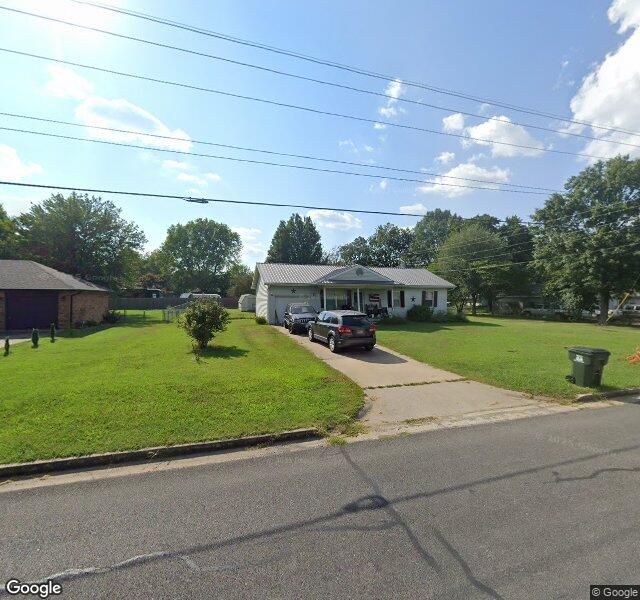
ASCEND AT AURORA

1700 SOUTH HUDSON AVENUE, AURORA, MO 65605 (417) 678-2165
For profit - Corporation 125 Beds COMMUNITY CARE CENTERS Data: November 2025 2 Immediate Jeopardy citations
Trust Grade
0/100
#325 of 479 in MO
Last Inspection: April 2024

Within standard 12-15 month inspection cycle. Federal law requires annual inspections.

Overview

Ascend at Aurora has received a Trust Grade of F, indicating significant concerns about the quality of care provided. Ranking #325 out of 479 facilities in Missouri places it in the bottom half of the state, and it is #3 out of 4 in Lawrence County, meaning only one local option is ranked lower. While the facility's trend is improving, with a reduction in issues from 18 in 2024 to just 1 in 2025, its overall performance is still rated poorly, with a staffing rating of just 1 out of 5 stars and a troubling turnover rate of 61%, which is around the state average. There have been concerning incidents, including a staff member allegedly making derogatory comments to a non-verbal resident and administering medications without proper orders, leading to hospitalization. While there is some RN coverage, the facility still struggles with serious issues that families should carefully consider.

Trust Score
F
0/100
In Missouri
#325/479
Bottom 33%
Safety Record
High Risk
Review needed
Inspections
Getting Better
18 → 1 violations
Staff Stability
⚠ Watch
61% turnover. Above average. Higher turnover means staff may not know residents' routines.
Penalties
✓ Good
$56,690 in fines. Lower than most Missouri facilities. Relatively clean record.
Skilled Nurses
⚠ Watch
Each resident gets only 22 minutes of Registered Nurse (RN) attention daily — below average for Missouri. Fewer RN minutes means fewer trained eyes watching for problems.
Violations
⚠ Watch
46 deficiencies on record. Higher than average. Multiple issues found across inspections.
★☆☆☆☆
1.0
Overall Rating
★☆☆☆☆
1.0
Staff Levels
★☆☆☆☆
1.0
Care Quality
★☆☆☆☆
1.0
Inspection Score
Stable
2024: 18 issues
2025: 1 issues

The Good

  • Full Sprinkler Coverage · Fire safety systems throughout facility
  • No fines on record

Facility shows strength in fire safety.

The Bad

1-Star Overall Rating

Below Missouri average (2.5)

Significant quality concerns identified by CMS

Staff Turnover: 61%

15pts above Missouri avg (46%)

Frequent staff changes - ask about care continuity

Federal Fines: $56,690

Above median ($33,413)

Moderate penalties - review what triggered them

Chain: COMMUNITY CARE CENTERS

Part of a multi-facility chain

Ask about local staffing decisions and management

Staff turnover is elevated (61%)

13 points above Missouri average of 48%

The Ugly 46 deficiencies on record

2 life-threatening
Jul 2025 1 deficiency
CONCERN (E) 📢 Someone Reported This

A family member, employee, or ombudsman was alarmed enough to file a formal complaint

Potential for Harm - no one hurt, but risky conditions existed

Deficiency F0561 (Tag F0561)

Could have caused harm · This affected multiple residents

**NOTE- TERMS IN BRACKETS HAVE BEEN EDITED TO PROTECT CONFIDENTIALITY** Based on observation and interview, the facility failed to protect each resident's right of self-determination when the facility...

Read full inspector narrative →
**NOTE- TERMS IN BRACKETS HAVE BEEN EDITED TO PROTECT CONFIDENTIALITY** Based on observation and interview, the facility failed to protect each resident's right of self-determination when the facility staff failed to provide routine showers per reasonable preferences of each resident and as care planned for three sampled residents (Residents #1, #2, and #3). The facility census was 54. Review of the facility policy, Your Rights and Protections as a Nursing Home Resident, undated, showed the following:-The resident has the right to be treated with dignity and respect, as well as make to make hi/s/her own schedule and participate in the activities he/she chooses;-The resident has the right to make a complaint to the staff of the nursing home, or any other person, without fear of punishment. The nursing home must address the issue promptly. Review of the facility policy, Resident Rights State and Federal, dated May 2017, showed the following:-The resident had a right to a dignified existence, self-determination, and communication with and access to persons and services inside and outside the facility and the facility must protect and promote the rights of each resident;-The resident had a right to voice grievances without discrimination or reprisal including those with respect to treatment which had been furnished as well as that which had not been furnished and prompt efforts by the facility to resolve grievances the resident may have;-The resident had the right to choose activities, schedules, and health care consistent with his/her interests, assessments, and plan of care. 1.Review of Resident #1's face sheet (admission information at a glance) showed the following:-admission date of 11/16/23;-Diagnoses included syringomyelia and syringobulbia (involve the formation of fluid-filled cavities within the spinal cord that include symptoms of pain, weakness, numbness, and changes in sensation that can cause swallowing difficulties, speech problems, and balance issues) and spinal stenosis (narrowing of the spinal cord that causes pain, tingling or weakness in hand, arm, foot or leg and can cause problems with the bowel or bladder). Review of the resident's annual Minimum Data Set (MDS - a federally mandated assessment instrument completed by facility staff), dated 11/25/24, showed the following:-Cognition was intact and resident could make choices;-The resident's daily preferences included it was somewhat important for him/her to choose between a tub bath, shower, bed bath, or sponge bath. Review of the resident's quarterly MDS, dated [DATE], showed the following:-Cognition was intact and resident was able to make choices;-Resident had limited range of motion with impairment on both sides of lower extremities;-Resident dependent on staff for showers shower and bathing self-including washing, rinsing, and drying self .-Occasionally incontinent of urine and bowel. Review of the resident's care plan, revised 11/28/23, showed the following:-Resident had an activities of daily living (ADL) self-care performance deficit;-For bathing, the resident required one staff participation with bathing two times a week. Review of the resident's June 2025 shower documentation sheets showed the following:-Resident received a shower on 06/05/25; -Resident received a shower on 06/11/25 (six days after the prior shower);-Resident received a shower on 06/17/25 (six days after the prior shower);-Resident refused a shower on 06/20/25. Review of the resident's progress note, dated 06/20/25, showed the resident refused his/her shower. Staff did not document a reason. Review of the resident's medical record showed staff did not document offers of a follow up with a shower at another date or time after 06/20/25. Review of the resident's July 2025 shower documentation sheets showed the following:-Resident received a shower on 07/01/25 (11 days after the prior offered shower);-Resident received a shower on 07/09/25 (eight days after the prior shower);-Resident received a shower on 07/16/25 (seven days after the prior shower). During interviews on 07/16/25, at 1:30 P.M., and on 07/18/25, at 11:25 A.M., the resident said the following: -Getting his/her showers was a problem;-He/she only gets one shower per week and sometimes it has been two weeks between showers;-Shower days were scheduled Tuesdays and Fridays, and he/she would get a shower in the morning usually, but sometimes in the afternoon, like 2:00 P.M. to 3:00 P.M. He/she had no preferences except twice a week. He/she didn't care what day it was, just have it twice a week. 2. Review of Resident #2's face sheet showed the following:-admission date of 11/23/24;-Diagnoses included type 2 diabetes mellitus (high blood glucose) with diabetic nephropathy(kidney damage and can't filter waste, fluids, and toxins from the kidneys), acute and chronic respiratory failure with hypoxia (low oxygen), congestive heart failure (CHF), atrial fibrillation (irregular heart rate), and high blood pressure. Review of the resident's admission MDS, dated [DATE], showed the following:-Cognition was intact and the resident could make decisions;-The resident's daily preferences showed it was very important for the resident to choose between a tub bath, shower, bed bath, or sponge bath. Review of the resident's quarterly MDS, dated [DATE], showed the following:-Cognition was intact and the resident could make decisions;-Partial/moderate assistance needed to shower/bathe. Review of the resident's care plan, revised 05/20/25, showed the following:-ADL self-care performance deficit;-The resident required one staff participation with bathing twice a week. Resident sometimes refuses showers. Review of the resident's June 2025 shower documentation sheets showed the following:-Resident resident's shower on 06/05/25 was rescheduled due to family present. It was noted a shower would be provided on 06/06/25.-Resident received a shower on 06/11/25 (at least 11 days since the last shower);-Resident received a shower on 06/18/25 (seven days after the prior shower);-Resident received a shower on 06/20/25;-Resident received a shower on 06/26/25 (six days after the prior shower). Review of the resident's July 2025 shower documentation sheets showed the following:-Resident received a shower on 07/03/25 (seven days after the prior shower);-Resident received a shower on 07/09/25 (six days after the prior shower);-Resident received a shower on 07/15/25 (six days after the prior shower). During interviews on 07/16/25, at 1:35 P.M. and 11:28 A.M., the resident said the following: -He/she would like at least two showers a week;-Staff gave him/her a shower Monday and Thursday when he/she first came there. Then staff changed the shower to Tuesday and Friday;-It did not matter what day he/she took a shower except to take a shower twice a week and not take one back-to-back or the next day;-He/she wanted at least couple of days between showers;-They used to have a makeup day;-When they have a shower aide, they have a call in, and they take the shower aide to work on the floor and then no one gets a shower;-They don't always give a shower the next day because they have that day's list of showers to do. 3. Review of Resident #3's admission MDS, dated [DATE], showed the following:-Cognition was intact and the resident could make decisions;-The resident's daily preferences showed it was somewhat important to choose between a tub bath, shower, bed bath or a sponge bath; Review of the resident's quarterly MDS, dated [DATE], showed the following:-Cognition was intact and the resident could make decisions;-Substantial/maximal assistance of staff for shower/bathing. Review of the resident's care plan, revised 09/03/24, showed the following:-ADL Self Care Performance Deficit due to impaired balance and weakness;-The resident required one staff participation with bathing two times a week. Review of the resident's June 2025 shower documentation sheets showed the following:-Resident received a shower on 06/03/25;-Resident received a shower on 06/10/25 (seven days after the prior shower);-Resident received a shower on 06/17/25 (seven days after the prior shower);-Resident received a shower on 06/20/25;-Resident received a shower on 06/26/25 (six days after the prior shower). Review of the resident's July 2025 shower documentation sheets showed the following:-Resident received a shower on 07/01/25;-Resident received a shower on 07/13/24 (12 days after the prior shower);-Resident received a shower on 07/16/25. During an interview on 07/18/25, at 11:22 A.M., the resident said the following-There were times he/she would get one shower a week;-He/she had only had one shower this week;-This had happened two or three times this past month;-There was no one in the showers to give him/her one;-His/her preference would be what everyone else would have, at least two showers a week, but his/her preference would be to have one every other night;-Here, he/she gets early morning or afternoon showers, but at home he/she would have them in the evening before bed;-He/she was supposed to get two showers a week but hasn't;-His/her shower days used to be on Tuesdays and Fridays but now they had a substitute shower aide, and he/she would get a shower on Wednesday. During an interview on 07/18/25, at 12:00 P.M., Certified Nurse Aide (CAN) E said the resident gets upset because his/her hair gets oily, and he/she doesn't want to come out of his/her room some days because his/her hair is oily. 4. During an interview on 07/16/25, at 3:00 P.M., CNA C said he/she did medical records and was the restorative aide. He/she assisted with showering residents about three weeks ago in June for one week. He/she did at least 20 showers per day for one week. The shower issue has been going on since at least the middle of June. The residents were supposed to get at least two showers minimum a week. During an interview on 07/18/25, at 12:00 P.M., CNA E said he/she worked all the halls. He/she had to do 27 to 28 showers every other day but does get pulled to work as a nurse's aide and then showers do not get done. Evening staff do not do showers. Residents need showers right now because they get sweaty and need them. The Dietary Supervisor and Activity Director who are CNAs were constantly pulled to the floor to work. During an interview on 07/16/25, at 2:55 P.M., Licensed Practical Nurse (LPN) A said the shower aide quit about 2 to 3 weeks ago. CNAs and staff were helping with showers for residents. They document showers by filling out a shower sheet and place this in the medical record box and Medical Records/CNA C scans the shower sheets into the electronic medical record under documents tab. The residents average one shower a week. They all complain about this. During an interview on 07/16/25, at 3:12 P.M., LPN D said they do showers and fill out shower sheets on residents. The charge nurse signs off on the shower sheets and this was to go to medical records to scan or file them. Once the resident received a shower, he/she would check off the shower sheet schedule. The residents were to receive at least one shower a week and they try to do at least two showers. They do try to give residents a shower if they get sweaty or go out to an appointment. During interview on 07/18/25, at 12:53 P.M., LPN F was in the memory care unit and work every Friday, Saturday, and Sunday from 6:00 A.M. to 6:00 P.M. There was no shower aide for a while. They were having staff on floor do five showers each. Two weekends ago, he/she had two nurse aides but did have one aide giving showers. Bed baths on given on some residents maybe or at least once a week. They try to give two showers but mostly it was one shower for a good month. When there was a shower aide, they give two showers a week to each resident. He/she doesn't feel that two showers a week was enough since some residents need more than two showers. They should have option to how many showers and when they will receive them. During interview on 07/18/25, at 11:44 A.M., Registered Nurse (RN) B he/she goes through the shower list for Monday, Tues, Thursday, and Friday. He/she picks and assigns residents for these aides to give a shower to. The aides cannot handle more than five showers since they assist with other personal cares, do vital signs, pass ice water, and answer call lights. The residents do get one shower a week and were supposed to have two showers. Several residents have expressed wanting to have more than one shower a week. During interviews on 07/16/25, at 3:20 P.M., and on 07/18/25, at 1:40 P.M., the Director of Nursing (DON) said they had been without a shower aide for a month. They have the nurse aides split up the showers and give five showers or so each to do. They do have staff come in on their days off to do showers. They have other staff to do as needed showers. Upon admission, they try to give a shower within 24 hours if they want one and do a full body assessment on them. If admitted on Tuesday, then Tuesday and Friday would be their shower schedule. If admitted on Monday, it would be Monday and Thursday. They try to do showers twice weekly. They always make sure the residents were clean and odor free and try to do twice weekly showers. The resident had a right to have a shower when they wanted one. They do try to accommodate this. Some of the residents complained and said they haven't had a shower in over a week.
Oct 2024 1 deficiency
CONCERN (E) 📢 Someone Reported This

A family member, employee, or ombudsman was alarmed enough to file a formal complaint

Potential for Harm - no one hurt, but risky conditions existed

Infection Control (Tag F0880)

Could have caused harm · This affected multiple residents

**NOTE- TERMS IN BRACKETS HAVE BEEN EDITED TO PROTECT CONFIDENTIALITY** Based on observation, interview, and record review, the facility failed to maintain a complete infection prevention and control ...

Read full inspector narrative →
**NOTE- TERMS IN BRACKETS HAVE BEEN EDITED TO PROTECT CONFIDENTIALITY** Based on observation, interview, and record review, the facility failed to maintain a complete infection prevention and control program when the facility failed to ensure staff posted appropriate signage and failed to ensure staff wore person protective equipment (PPE) in accordance with the Centers for Disease Control (CDC) guidelines for residents subject to enhanced barrier precautions (EBP - precautions for use during high-contact resident care activities for residents infected with a multidrug-resistant organism (MDRO-microorganisms that are resistant to one or more classes of antimicrobial agents) or any resident who has a chronic wound and/or indwelling medical device) for one resident (Resident #3), of three sampled residents, who had a indwelling medical device. Staff also failed to perform hand hygiene per standard of practice when staff did not perform appropriate hand hygiene during perineal care for three residents (Residents #4, #1, and #2) in a sample of four residents reviewed in a facility with a census of 50. 1. Review of the CDC's Implementation of Personal Protective Equipment Use in Nursing Homes to Prevent Spread of Multidrug-resistant Organisms, dated 07/12/22, showed the following: -MDRO transmission is common in skilled nursing facilities, contributing to substantial resident morbidity and mortality and increased healthcare costs; -EBP are an infection control intervention designed to reduce transmission of resistant organisms that employs targeted gown and glove use during high contact resident care activities; -EBP may be indicated (when contact precautions do not otherwise apply) for residents with any of the following: wounds or indwelling medical devices, regardless of MDRO colonization status, and infection or colonization with an MDRO; -Effective implementation of EBP requires staff training on the proper use of personal protective equipment (PPE) and the availability of PPE and hand hygiene supplies at the point of care; -EPB use of PPE refers to the use of gown and gloves during high-contact resident care activities that provide opportunities for transfer of MDROs to staff hands and clothing; -Examples of high-contact resident care activities requiring gown and glove use for EBP includes dressing, bathing/showering, transferring, providing hygiene, changing linens, changing briefs or assisting with toileting, device care or use such as central line, urinary catheter (flexible tubing that is used to drain urine from the bladder), feeding tube, and tracheostomy/ventilator, and wound care on any skin opening requiring a dressing; -Post clear signage on the door or wall outside of the resident room indicating the type of precautions and required PPE. For EBP signage should also clearly indicate the high-contact resident care activities that require the use of gown and gloves; -Make PPE, including gowns and gloves, available immediately outside of the resident room. Review of the facility's policy, Enhanced Barrier Precautions, revised 12/12/23, showed the following: -EBP refers to the use of gown and gloves for use during high-contact resident care activities for residents know to be colonized or infected with a MDRO as well as those at increased risk of MDRO acquisition (e.g. residents with wounds or indwelling medical devices); -All staff receive training on EBP upon hire and at least annually and are expected to comply with all designated precautions; -Clear signage will be posted on the door or wall outside of the resident room indicating the type of precautions, required PPE, and the high-contact resident care activities that require the use of gown and gloves; -Make gowns and gloves available. Face protection may also be needed if performing activity with risk of splash or spray; -Position a trash can inside the resident room and near the exit for discarding PPE after removal, prior to exit of the room or before providing care for another resident in the same room; -High-contact resident care activities include: dressing, bathing, transferring, providing hygiene, changing linens, changing briefs or assisting with toileting, device care or use of central lines, urinary catheters, feeding tubes, tracheostomy/ventilator tubes, wound care (any skin opening requiring a dressing). Review of Resident #3's face sheet (admission information) showed the following: -admission date of 11/03/22; -Diagnoses included transient cerebral ischemic attack (TIAs- mini strokes), dementia (progressive impairment in memory), edema (excess fluid in the tissues), congestive heart failure (CHF - chronic condition in which the heart doesn't pump blood as well as it should), Type 2 diabetes mellitus (high blood sugar), neuromuscular bladder dysfunction (lack of bladder control due to brain, spinal cord, or nerve problems), and urine retention (difficulty in urinating and emptying the bladder). Review of the resident's annual Minimum Data Set (MDS - a federally mandated assessment instrument completed by facility staff), dated 10/17/24, showed the following: -Severely impaired cognition; -Dependent with helper does all of the effort and resident does none of the effort to roll left and right; -Has the ability to transfer to and from a bed to a chair/wheelchair; -Had an indwelling catheter (flexible tubing that is used to drain urine from the bladder); -Had a urinary tract infection in the last 30 days. Review of the resident's physician orders, dated 07/12/24, showed an order for EBP. Review of the resident's care plan, dated 7/12/24, showed the following: -The resident had a catheter for neurogenic bladder (lack of bladder control due to a brain, spinal cord, or nerve condition); -Catheter care every shift and as needed (PRN) with EBP. Observation on 10/22/24, at 8:55 A.M., showed the following: -Certified Nurse Aide (CNA) A and CNA B entered the resident's room. There was no EBP signage at the entrance of the resident's room or on the door. The resident was lying on a mechanical lift vest in the bed. A Foley urinary catheter bag with urine hung on the side of the bed. -Without washing and/or sanitizing hands, both CNAs put on gloves and rolled the resident to his/her side to remove the mechanical lift vest. -CNA B picked up the catheter bag with urine, laid it on top of the bed as they turned the resident side to side to pull the mechanical lift vest from underneath the resident. -Both CNA A and CNA B removed gloves and washed hands at resident's sink before leaving the room. -No PPE, such as gowns, were present in the room; Observation on 10/22/24, at 11:10 A.M., in the resident's room showed underneath the sink there was a clear container with personal protection gowns for staff to use. During an interview on 10/22/24, at 11:40 A.M., CNA A said they did have training on EBP at the beginning of the year. If a resident had a wound and catheter, they were to put on a gown and gloves. If the resident did not have a wound, they didn't have to put on a gown. If gowns were in the room, he/she would put a gown on. The resident had just transferred from another room to this room and he/she did not see any gowns to use. During an interview on 10/22/24, at 2:00 P.M., Licensed Practical Nurse (LPN) B said he/she had worked at the facility for a couple of months and was not aware of EBP. During an interview on 10/22/24, at 2:40 P.M., the Director of Nursing (DON) said for the EBP she expected staff to put on a gown and gloves to provide cares to any residents like the resident who had a urinary catheter who was on these precautions. The gowns should be in the resident's closet and staff were to get a gown out of the closet. During interview on 10/22/24 at 3:00 P.M., the Administrator said for the EBP staff were supposed to wear gowns, gloves, and a face shield if any body fluids would splash them like for a urinary catheter. They had a policy for EBP and they had several in-services with staff. Some of the PPE, such as gowns, were in the closet or in a container under the resident's sink for staff to use. 2. Review of the facility's policy Standard Precautions Hand Hygiene, dated 2019, showed the following: -Appropriate hand hygiene is essential in preventing transmission of infectious agents; -Purpose was to cleanse hands to prevent the spread of potentially deadly infections, to provide a clean and healthy environment for residents, staff, and visitors, and to reduce the risk to the healthcare provider of colonization or infections acquired from a resident; -Hand hygiene continued to be the primary means of preventing the transmission of infection; -Wear gloves when it can be reasonably anticipated that contact with blood or other potentially infectious materials, mucous membranes, non-intact skin or potentially contaminated intact skin (e.g. of a patient incontinent of stool or urine) could occur; -Remove gloves after contact with a patient, bodily fluids/excretions, and the surrounding environment (including medical devices) using proper technique to prevent hand contamination. Do not wear the same pair of gloves for the care of more than one patient; -Change gloves during patient care if the hands will move from a contaminated body site (e.g. perineal area) to a clean body site (e.g. face, clothing, etc.). -Wear a gown, that is appropriate to the task, to protect skin and prevent soiling or contamination of clothing during procedures and patient-care activities when contact with blood body fluids, secretions, or excretions is anticipated; -Remove gown and perform hand hygiene before leaving the patient's environment. 3. Review of Resident #4's face sheet showed the following: -admission date of 10/10/22; -Diagnoses included degeneration of nervous system due to alcohol, anemia (lack of red blood cells that leads to reduced oxygen flow to the body's organs), and high blood pressure. Review of the resident's annual MDS, dated [DATE], showed the following: -Moderately impaired cognition; -Toileting hygiene - dependent on helper who does all of the effort; -Always incontinent of bowel and bladder. Review of the resident's care plan, dated 10/17/24, showed the following: -Incontinent of bowels. Staff to check every two hours for incontinence and as needed; -Bladder incontinence. Staff to check the resident every two hours and as required for incontinence; -Staff to wash, rinse, and dry perineum (space between the anus and the genitals); -Used disposable briefs. Observation on 10/22/24, at 9:00 A.M., showed the following: -CNA A and CNA B took a mechanical lift into the resident's room. The CNAs put on gloves without performing hand hygiene and transferred the resident in the mechanical lift from the wheelchair and then to the bed. -CNA B unfastened the resident's incontinence brief, used perineal wash with wipes to the front perineal area, then rolled the resident over to his/her side. The resident had a small bowel movement. The CNA cleansed the area with the perineal wash and wipes, picked up the tube of barrier cream, without washing hands and changing gloves, applied the cream to the buttocks. -Without removing gloves and washing hands, CNA B put a new incontinence brief on the resident. -CNA B removed gloves, did not perform hand hygiene, and put on another pair of gloves to pull up the resident's pants. -CNA A removed his/her gloves, did not perform hand hygiene, and moved the mechanical lift to the side of the bed. -The CNAs transferred the resident back to the wheelchair. -CNA A moved the lift to the hall and then came back to the room and washed his/her hands. -CNA B, removed his/her gloves, did not perform hand hygiene, picked up the trash bag with the soiled linens, walked down the hall to the soiled utility room, and then walked halfway back down the hall. The CNA then performed hand hygiene with hand sanitizer. 4. Review of Resident #1's face sheet showed the following: -admission date of 02/22/22; -Diagnoses included Type 2 diabetes mellitus (chronic condition that affects the way the body processes blood sugar), high blood pressure, metabolic encephalopathy (problem in the brain caused by chemical imbalance in the blood), and heart failure. Review of the resident's quarterly MDS, dated [DATE], showed the following: -Cognition intact; -Toileting hygiene - dependent on helper who does all of the effort; -Always incontinent of bowel and bladder. Review of the resident's care plan, dated 09/03/24, showed the following: -Self care performance deficit related to weakness and memory loss; -Required one staff for personal hygiene; -Staff to check for incontinence every two hours and as needed. Observation on 10/22/24, at 10:22 A.M., showed the following: -CNA A and CNA B entered the resident's room, did not wash and/or sanitize their hands, and put on gloves. -CNA A removed the resident's brief soiled with urine and bowel movement, wiped the front perineal area, turned the resident to his/her side, and cleansed the rectum and buttocks soiled with bowel movement. The CNA then changed his/her gloves without washing or sanitizing hands and applied barrier cream to the resident's buttocks. The CNA then removed his/her gloves, washed hands, and left the room. -CNA B pulled up the resident's sheets and cover and placed a pillow beneath the resident's right hip. CNA B then went over to the Resident #1's roommate, without washing hands and changing gloves, and picked up the wet wipes to perform perineal care on Resident #2. 5. Review of Resident #2's face sheet showed the following: -admission date of 08/13/24; -Diagnoses included congestive heart failure (CHF = chronic condition in which the heart, doesn't pump blood as well as it should), high blood pressure, and osteoarthritis (degeneration of joint cartilage and underlying bone which causes pain and stiffness especially in hip, knee, and thumb joints). Review of the resident's admission MDS, dated [DATE], showed the following: -Cognition was intact; -Toileting hygiene - dependent on helper who does all of the effort; -Always incontinent of bowel and bladder. Review of the resident' care plan, dated 8/14/24, showed the following: -Bladder incontinence related to impaired mobility; -Staff to change every two hours and as needed. Staff to wash, rinse, and dry perineum. -The resident used disposable briefs. Observation on 10/22/24, at 10:30 A.M., showed the following: -CNA B put on gloves without washing and/or sanitizing hands, picked up the package of cleansing wipes, and completed front perineal cleansing on the resident. The resident turned to his/her side and showed he/she had a bowel movement. -CNA B cleansed the resident's buttocks and rectum with perineal cleanser and wipes. -CNA B removed his/her gloves, did not wash or sanitize hands, put on another pair of gloves, and went to the resident's closet and got a pair of pants for the resident to wear. -CNA B then removed the mechanical lift vest wearing the same pair of gloves. 6. During an interview on 10/22/24, at 10:38 A.M., CNA B said they were to wash hands normally after they change the resident. They don't have to wash hands after doing perineal care, like if the resident had a bowel movement, they can take the soiled briefs in the trash bag to the soiled utility room and then remove gloves and wash hands. He/she used to carry hand sanitizer a long time ago, but it fell out of his/her pocket so he/she stopped carrying it. During an interview on 10/22/24, at 11:40 A.M., CNA A said he/she does not remove his/her gloves until done with the resident's care. He/she will wash hands before and after performing perineal care, but does use hand sanitizer in between. He/she does not carry hand sanitizer. Hand sanitizer is in the resident's room, on the halls, and on the medication carts. If a resident had a bowel movement and he/she did perineal care, he/she should remove gloves and wash hands, but usually just put on new gloves and don't wash his/her hands. During an interview on 10/22/24, at 2:26 P.M., LPN D said staff were to go into a resident's room, wash hands and put on gloves to do perineal care, dressings, and applying creams. They were to remove gloves, wash hands, and apply gloves after doing perineal care and before touching other items in the room. They were to always wash or sanitize hands after removing gloves and before applying gloves. During an interview on 10/22/24, at 2:40 P.M., the DON said she would expect staff to enter a resident's room, wash their hands, and put on gloves. Staff were to remove gloves and wash or sanitize hands when going from touching or performing cares and touching resident's bodily fluids and excretions to other items in the room and moving to a clean body site, clothing, or other items in the room. Staff were to remove gloves, and wash hands before leaving the resident's room and removing the trash to the soiled utility room. During interview on 10/22/24, at 3:00 P.M., the Administrator said she would expect staff to wash and or sanitize hands, and put on gloves when they enter a resident's room. They were to wash hands, change gloves when visibly soiled, prior to and after giving care. They were not to wear gloves outside the resident's room or walk down the hall with the same pair of gloves after performing cares on a resident. MO00242521
Apr 2024 17 deficiencies 2 IJ
CRITICAL (J) 📢 Someone Reported This

A family member, employee, or ombudsman was alarmed enough to file a formal complaint

Immediate Jeopardy (IJ) - the most serious Medicare violation

Free from Abuse/Neglect (Tag F0600)

Someone could have died · This affected 1 resident

Based on observation, interview, and record review, the facility failed to ensure one resident (Resident #48), who is non-verbal and dependent on staff for all personal needs and mobility, was free fr...

Read full inspector narrative →
Based on observation, interview, and record review, the facility failed to ensure one resident (Resident #48), who is non-verbal and dependent on staff for all personal needs and mobility, was free from mental abuse by staff when one staff member, Certified Nurse Aide (CNA) S, purposely made comments to the resident to upset him/her. The resident was visually upset when discussing the CNA and the comments made to him/her, including becoming red faced, teary eyed, reaching out his/her arm and grunting. A sample of 26 residents was reviewed in a facility with a census of 60. On 2/8/24, SLCR completed a complaint investigation at the facility regarding an allegation of the resident not being treated with dignity and was unable to verify deficient practice occurred. A reinvestigation began during the recertification survey. As a result of the findings of the investigation, the Administrator was notified on 04/10/24, at 6:26 P.M., of an Immediate Jeopardy (IJ). The IJ was removed on 04/11/2024, as confirmed by surveyor onsite verification. Review of the facility's Abuse Prevention Policy, dated 2021, showed the following: -Each resident has the right to be free from abuse, corporal punishment, and involuntary seclusion. Residents must not be subjected to abuse by anyone, including, but not limited to, facility staff, other residents, consultants or volunteers, staff or other agencies serving the resident, family members or legal guardians, friends or other individuals. -Abuse means the willful infliction of injury, unreasonable confinement, intimidation, or punishment with resulting physical harm, pain or mental anguish. Instances of abuse of all residents, irrespective of any mental or physical condition, cause harm, pain or mental anguish. It includes verbal abuse, and mental abuse. Willful, as used in this definition of abuse, means that the individual must have acted deliberately, not that the individual must have intended to inflict injury or harm; -Mental abuse includes but is not limited to, humiliation, harassment, and threats of punishment or deprivation. -Verbal abuse is defined as the use of oral, written or gestured language that willfully includes disparaging and derogatory terms to residents or their families, or within the hearing distance, regardless of their age, ability to comprehend, or disability. Examples of verbal abuse include, but are limited to threats of harm, saying things to frighten a resident, such as telling a resident that he/she will never be able to see his/her family again. 1. Review of Resident #48's face sheet (admission data) showed the following: -admission date of 06/05/23; -Diagnoses included stroke, aphasia (a language disorder that affects how one speaks and understands language), reduced mobility, and weakness. Review of the resident's quarterly Minimum Data Set (MDS-a federally mandated assessment instrument completed by facility staff), dated 02/01/24, showed the following: -Unclear speech-slurred or mumbled words; -Sometimes makes self understood-responds adequately to simple, direct communication only; -Sometimes able to understand others - responds adequately to simple, direct communication only; -Severely impaired cognitive skills; -Felt or appeared down, depressed or hopeless nearly every day; -Upper extremity (shoulder, elbow, wrist, hand) functional limitation in range of motion, impaired on one side; -Used a wheelchair for mobility; -Dependent on staff for personal, oral and toileting hygiene, lower extremity dressing, bathing, and all modes of mobility. Review of the resident's current care plan, revised on 02/02/24, showed the following information: -The resident had a communication problem; -Staff to monitor for and record confounding problems decline in cognitive status, mood, and decline in activities of daily living (ADLs); -Staff to monitor and document frustration level. Staff should wait 30 seconds before providing resident with word; -Use communication techniques which enhance interaction; allow adequate time to respond, repeat as necessary, do not rush, request feedback and clarification from the resident to ensure understanding, face when speaking and make eye contact, reduce environmental noise, and ask yes/no questions if appropriate. Use simple, brief, consistent words/cues, use alternative communication tools as needed, such as communication book/board, writing pad, gestures, signs and pictures; -Validate the resident's message by repeating aloud; -The resident has impaired cognitive function and dementia or impaired thought processes; -Communicate with the resident, family, caregivers regarding resident's capabilities and needs; -Use preferred name and identify yourself with each interaction. The resident understands consistent, simple directive sentences. Provide the resident with necessary cues-stop and return if the resident becomes agitated. Review of CNA Q's handwritten statement, dated 01/07/24 and provided to the State Agency on 04/10/24 by CNA Q, showed the following: -On more than one occasion he/she heard and witnessed comments being made to the resident, saying I hope you dream of [descriptor] people, because they (CNA S and CNA V) heard the resident was a racist. They did not want to help the resident at any time. During interviews conducted on 04/09/24, at 12:08 P.M., and on 04/10/24, at 10:02 A.M., CNA Q said the following: -He/she worked the night shift in December 2023 with CNA S; -CNA S made statements in the past about how he/she did not want to assist the resident and how he/she could not stand the resident because he/she heard stories the resident was racist; -The resident was nonverbal, but could make noises and sounds, shake his/her head yes or no, and scream; -The resident's roommate did not get along with CNA S so when CNA Q worked, he/she often assisted the resident's roommate; -On 12/30/23, CNA Q worked the night shift with CNA S and CNA V. That night, when CNA Q assisted the resident's roommate. He/she heard CNA S tell the resident, he/she hoped he/she (the resident) dreamed of [descriptor] people. CNA Q heard CNA S say this to the resident two times on 12/30/23 and one time on 12/31/23. CNA Q did not tell the night nurse because she did not trust him/her. He/she did not tell the day shift nurses because at the time, he/she did not know them; -On 01/07/24, CNA Q worked the day shift and assisted the resident up the hall towards the nurses' station. When the resident saw CNA S, he/she planted his/her feet onto the ground and grunted, screamed, and pointed at CNA S. After the incident, CNA Q tried to console the resident and wheeled him/her to his/her room. The resident was upset and had tears in his/her eyes; -Licensed Practical Nurse (LPN) D and Registered Nurse (RN) F saw the resident's response to CNA S and wondered what happened. CNA Q told LPN D and RN F about the incidents that occurred the weekend before; -RN F interviewed the resident about the incident and he/she became tearful; -The facility hired a new Administrator who started last Friday (04/05/24). CNA Q told the new Administrator about the incident regarding the resident because he/she did not want her blindsided. Review of a CNA CC's handwritten statement, dated 01/07/24 and provided to the State Agency on 04/10/24 by LPN D (the nurse who collected the statement and sent to the ADON), showed CNA CC documented there was a day when CNA S was giving him/her report and he/she made a comment about how the resident was completely racist and he/she sometimes told him/her Good night, hope you dream of [descriptor] people. During an interview on 04/10/24, at 3:25 P.M., CNA CC said the following: -The resident was not a fan of CNA S. Since the resident was mostly nonverbal, CNA CC said he/she knew the resident was not a fan by how he/she acted around CNA S. CNA CC could tell that something was not right. Anytime the resident saw CNA S, he/she grimaced or just acted off in his/her actions. It was hard to explain if you did not know the resident's usual actions; -CNA S told him/her (CNA CC) and others that he/she did not like the resident. CNA CC did not really know the reason CNA S did not like the resident, but thought it may stem from rumors that the resident was racist and that he/she may hold that against him/her (the resident); -Because the resident did not care for CNA S, he/she and CNA Q tried to limit the time that CNA S would need to care for the resident. They did that by making sure the resident was either in bed or ready for bed, before CNA S came on shift; -Sometime at the end of December 2023/beginning of January 2024, while completing shift rounds with CNA S, CNA S told him/her that when he/she (CNA S) tucked the resident into bed at night, he/she told the resident that he/she hoped he/she (the resident) had bad dreams of [descriptor] people. CNA S basically bragged and boasted about it to CNA CC; -One morning, around the end of December 2023/beginning of January 2024 (01/07/24), he/she and CNA Q assisted the resident out of his/her room. When CNA S walked past the resident, the resident immediately placed his/her feet on the ground and pointed at CNA S, grunting and yelling. The nurses heard and wanted to know what had happened. Certified Medication Technician (CMT) DD was in another room near the nurses' station, and heard the commotion and wanted to know the reason the resident was mad. CNA S said he/she guessed the resident was mad at him/her, then clocked out; -CNA Q and CNA CC told the nurses what they knew about CNA S's interactions with the resident; -He/she thought LPN D called one of their bosses to report it. During interviews conducted on 04/09/24, at 1:17 P.M., and on 04/10/24, at 11:55 A.M., RN F said the following: -On 01/07/24, the resident either sat in his/her wheelchair, in the hallway, or in his/her room and became upset when he/she saw CNA S. RN F talked to the resident about CNA S. When RN F mentioned CNA S's name, the resident turned red, breathed heavily and his/her eyes became teary. The resident was mostly nonverbal. He/she communicated by grunts and gestures and sometimes he/she could acknowledge yes or no; -CNA Q told RN F that when he/she (CNA Q) started working at the facility, he/she worked the night shift with CNA S. CNA S told CNA Q that when he/she (CNA S) assisted the resident to bed at night, he/she told the resident I hope you dream about [descriptor] people. then laughed about it. The RN considered CNA S's statements to the resident verbal and emotional abuse, at the very least; -The nurse did not document the incident that occurred on 01/07/24 in the resident's progress notes, but he/she should have. He/she did not know why he/she did not document, he/she usually did; -The nurse said he/she felt bad that nothing was done. During interviews conducted on 04/09/24, at 12:30 P.M., and on 04/10/24, at 12:17 P.M., LPN D said the following: -He/she did not remember the date, but one morning, during shift report, he/she heard a noise and looked up to find the source. The resident sat in his/her wheelchair, near the nurses' station, with his/her feet planted firmly on the floor seemingly to prevent CNA Q from pushing him/her further down the hall. The resident pointed his/her finger at CNA S's face, yelling angrily. CNA Q saw the resident's reaction to CNA S and asked the resident if he/she was okay and if he/she was hurt. The resident grunted and indicated he/she was not hurt; -CMT DD asked CNA S why the resident responded that way and CNA S said I guess he/she's mad at me; -LPN D said he/she could tell the resident was frustrated and scared all at the same time; -CNA Q and CNA W then told LPN D and RN F that CNA S and CNA V whispered to the resident at night, I hope you dream about [descriptor] people. That was significant because there were rumors the resident was racist. LPN D considered what the CNAs said to be verbal abuse. The nurse did not document this incident because RN F took responsibility for the hall; -Anytime CNA S was on shift, the resident's demeanor changed. It was difficult to describe how it changed but LPN D noticed a change. During an interview on 04/11/24, at 1:15 P.M., CMT DD said the following: -A few months ago in the early morning, the resident sat in his/her wheelchair in the hall. The resident saw CNA S and pointed, shook and grunted at CNA S. The resident tried to back up in his/her wheelchair like he/she was trying to get away from CNA S. The look on the resident's face was fear. The resident never acted like that before; -CNA CC told CMT DD said that CNA S told him/her that he/she tells the resident he/she hoped the resident dreamed of [descriptor] people tonight. CMT DD thought this was a significant statement because he/she did not think the resident cared for [descriptor] people. During an interview on 04/10/24, at 9:18 A.M., CNA R said the following: -The resident did not talk and communicated with actions such as putting his/her feet down if he/she did not want to go somewhere; -He/she wrote a statement about the incident that occurred on 01/07/24 between the resident and CNA S, and slid it under the former DON's office door. Review of the resident's January 2024, February 2024, and March 2024 progress notes showed staff did not document the incident that occurred on 01/07/24 or of the information obtained regarding CNA S's statements. During an interview on 04/10/24, at 12:39 P.M., the ADON said the following: -If staff told her or she heard an allegation of abuse, she obtained statements from staff and completed an assessment of the resident. She then reported the allegation to the DON, who contacted the Administrator. The Administrator then contacted the Regional Clinical Director (RCD). The DON or Administrator investigated the allegation. The DON or Administrator consulted with the RCD, and if she agreed, the Administrator would call in a self-report to the state agency; -The nurses should document the allegation in a progress note. The nurses also complete an incident report and the DON or Administrator would review it; -She did not know the entire story regarding the resident, but thought it occurred a couple months ago. A staff member told her that another staff member told the resident he/she hoped the resident dreamed of [descriptor] people. The ADON did not know who told her or who said this to the resident. The ADON was on call around that time, but nobody sent her any pictures of statements related to CNA S or the resident; -The former DON and former Administrator already knew about the incident when she reported it to them. -She considered the statement about dreaming about [descriptor] people as verbal abuse. During an interview on 4/10/24, at 4:02 P.M., the former DON said the following: -On 01/07/24, the ADON sent the former DON, via phone, employee statements that alleged when CNA S and CNA V assisted the resident to bed, they would say they hoped he/she dreamed about [descriptor] people. The former DON did not know why the staff would say this to the resident. She did not know anything about the resident's past; -The former Administrator told the former DON, that even though the CNA's comments were not considered abusive statements, corporate staff told her (the former Administrator) they needed to investigate or talk to other residents to ensure there was not something else going on with CNA S. The former DON talked with other residents regarding staff treatment of them with no identified problems. During an interview conducted on 04/11/24, at 12:17 P.M., the former Administrator said the following: -On 01/07/24, CNA S assisted the resident and the resident became upset with him/her in the hallway on his/her way to breakfast. That behavior was not abnormal for the resident because sometimes he/she did not want to go to breakfast; -On Monday morning (01/08/24) the former DON brought her paper statements from CNA Q and CMT DD. which accused CNA S of telling the resident that he/she hoped he/she (the resident) dreamed of [descriptor] people; -The former Administrator thought the statement about dreaming of [descriptor] people was borderline abuse. Observation and interview on 4/10/24, at 5:05 P.M., showed the following: -The resident laid in bed with his/her eyes closed. RN F entered the resident's room and lightly touched his/her shoulder. The resident opened his/her eyes. The RN asked the resident if he/she remembered talking about CNA S? The resident grunted in reply. The RN asked the resident if CNA S was ever mean to him/her and he/she grunted. RN F asked the resident if she ever whispered in his/her ear I hope you dream of [descriptor] people. The resident grimaced then loudly grunted. He/she tried to sit up and raised his/her left arm. The resident was clearly upset and tried to communicate by angrily grunting/yelling, and firmly shutting his/her eyes. RN F placed his/her right hand in the resident's hand and the resident calmed. After speaking with the resident briefly ensuring he/she was calm, the RN left the room. -RN F said the resident was having an off day. He/she usually communicated more verbally with the RN. He/she said the resident expressed anger by attempting to sit up and by raising his/her arm in the air. In a statement written by RN F, dated 5/10/24, she wrote that during the interview with the surveyor she asked the resident if he/she remembered when she asked him questions awhile back about CNA S and he/she grunted his reply as in yes. When asked if CNA S was ever mean to him/her, the resident grunted yes. When asked if when she put him/her to bed at night if she ever whispered in his/her ear I hope you dream of [descriptor] people, the resident got red faced, teary eyed, and started reaching his/her left arm out and grunting, trying to speak with his/her stroke, he/she is unable to verbally communicate. RN F wrote she is able to tell he/she is upset and really wants to speak when he/she grunts more than usual, reaching his/her left arm out trying to talk and when his/her face turns red and becomes teary eyed. RN F wrote the resident usually only turns red faced and grimaces when in pain. During an interview conducted on 04/11/24, at 1:35 P.M., the resident's physician said the following: -She did not know about CNA S telling the resident who he/she hoped he/she dreamed of [descriptor] people. She would consider the comment an allegation of psychological abuse; -The resident's actions on 01/07/24 were not typical for him/her and neither was his/her response to RN F's questions about CNA S. She had only seen the resident become slightly frustrated with her if she asked him/her too many questions. During an interview on 04/10/24, at 3:04 P.M., the RCD said the following: -If administration wrote up a staff member, they placed the write up in the employee's personnel file; -She expected staff to suspend an employee if named in an allegation of abuse and for staff to complete an abuse investigation; -The RCD did not know anything about comments made to the resident by CNA S. During an interview on 04/10/24, at 3:04 P.M., the Administrator said the following: -CNA Q told her about something that happened in the past, no date, regarding a night shift aide, CNA S who said something about [descriptor] people to the resident; -CNA Q said he/she told the former Administrator of the allegation; -At first, she did not know the context or reason for the comment; -She should investigate the possible allegation to find out the context; -The Administrator did not find an investigation into the comment I hope you dream about [descriptor] people conducted by the previous Administration. NOTE: At the time of the annual survey, the violation was determined to be at the immediate jeopardy level J. Based on observation, interview and record review completed during the onsite visit, it was determined the facility had implemented corrective action to remove the IJ violation at the time. A final revisit will be conducted to determine if the facility is in substantial compliance with participation requirements. At the time of exit, the severity of the deficiency was lowered to the G level. This statement does not denote that the facility has complied with State law (Section 198.026.1 RSMo.) requiring that prompt remedial action to be taken to address Class I violation(s).
CRITICAL (J) 📢 Someone Reported This

A family member, employee, or ombudsman was alarmed enough to file a formal complaint

Immediate Jeopardy (IJ) - the most serious Medicare violation

Deficiency F0760 (Tag F0760)

Someone could have died · This affected 1 resident

Based on interview and record review, the facility failed to ensure residents remained free of significant medication errors when staff administered a fentanyl patch (a narcotic patch placed on the sk...

Read full inspector narrative →
Based on interview and record review, the facility failed to ensure residents remained free of significant medication errors when staff administered a fentanyl patch (a narcotic patch placed on the skin to treat moderate to severe pain) and hydrocodone-APAP (narcotic that is used for relief of severe pain) to one resident (Resident #162) without orders, resulting in significant side effects and hospitalization. A sample of 26 residents was reviewed in a facility with a census of 60. The Administrator was notified on 04/11/24, at 2:28 P.M., of an Immediate Jeopardy (IJ) which began on 01/31/24. The resident went to the hospital and did not readmit to the facility. The IJ was removed on 04/12/24 as confirmed by surveyor onsite verification. Review of the facility's policy titled Medication Administration, dated 07/12/13, showed the following: -Administer medications to residents in a safe and timely fashion; -Observe for drug reactions; -Chart on medication record dose, time given, and any pertinent observations. Review of the facility's policy titled Medication Monitoring Medication Errors and Drug Reactions, dated 09/04/13, showed the following: -Medication errors and drug reactions must be reported to the physician immediately; -A Medication Error Report must be completed by the person discovering the error; -An Incident Report must be completed and a 72-hour observation initiated; -Follow physicians order to monitor resident and report any significant abnormalities or adverse reactions to the physician. Review of the Food and Drug Administration's (FDA) Medication Guide for Norco (hydrocodone-APAP), dated 2019, showed the following: -Serious, life-threatening, or fatal respiratory depression has been reported with the use of opioids; -While serious, life-threatening, or fatal respiratory depression can occur at any time during the use of Norco, the risk is greatest during the initiation of therapy or following a dosage increase. Monitor patients closely for respiratory depression, especially within the first 24 to 72 hours of initiating therapy with and following dosage increases of Norco; -Life-threatening respiratory depression is more likely to occur in elderly patients because they may have altered pharmacokinetics or altered clearance compared to younger, healthier patients; -Elderly patients may have increased sensitivity to Norco. Use caution when selecting a dosage for an elderly patient, usually starting at the low end of the dosing range; -Respiratory depression is the chief risk for elderly patients treated with opioids, and has occurred after large initial doses were administered to patients who were not opioid-tolerant or when opioids were co-administered with other agents that depress respiration; -Acute overdosage with Norco can be manifested by respiratory depression, somnolence progressing to stupor or coma, skeletal muscle flaccidity, cold and clammy skin, constricted pupils, and hypoxia (low blood oxygen levels). Review of the FDA's Medication Guide for Fentanyl patch, dated 03/2021, showed the following: -Indicated for the management of pain in opioid-tolerant patients; -Is not indicated as an as-needed analgesic; -Use the lowest effective dosage for the shortest duration consistent with individual patient treatment goals; -Accidental exposure to even one dose can result in a fatal overdose of fentanyl; -Serious, life-threatening, or fatal respiratory depression has been reported with the use of opioids; -Life-threatening respiratory depression is more likely to occur in elderly patients because they may have altered pharmacokinetics or altered clearance compared to younger, healthier patients; -Adverse reactions have been identified to include convulsions, depressed level of consciousness, loss of consciousness, respiratory distress, high blood pressure. 1. Review of the Resident #162's face sheet (admission data) showed the following: -admission date of 01/31/24; -Diagnoses included mini stroke, unspecified dementia, and high blood pressure. Review of the resident's hospital to facility discharge information dated 01/31/24, at 7:13 A.M., showed the following: -An order for olanzapine (an antipsychotic medication used to treat mental disorders and agitation) 10 milligrams (mg), take one tablet twice daily. The next dose due on 01/31/24 at 9:00 P.M. (The resident did not have orders for medications for pain.) Review of a physician progress note, dated 01/31/24, showed the following: -The note had the name of three residents listed on it including orders for each residents; -Resident #162's name was at the top of the list. Under his/her name, the physician wrote orders for buspirone HCL (an anti-anxiety medication) and Xanax (medication used to treat anxiety disorders). The physician did not write orders for pain medication for Resident #162; -Under the orders for Resident #162, a different resident's name was listed with orders that included a fentanyl 50 microgram (mcgs) patch; -A third's resident's name was listed with several orders listed under his/her name. Review of the resident's Physician Order Sheet (POS), dated 01/31/23, showed the following: -An order, dated 01/31/24, for buspirone HCL oral tablet 10 mg, give one tablet twice a day for anxiety; -An order, dated 01/31/24 for olanzapine 10 mg, give one tablet twice a day for unspecified dementia, unspecified severity without behavioral disturbance, psychotic disturbance, mood disturbance, and anxiety; -An order, dated 01/31/24, for Xanax 0.5 mg tablet, give one tablet every four hours for anxiety for 14 days. (The physician did not order for medications for pain.) Review of the facility's Emergency Medication Kit (E-kit - medication the facility keeps on hand to use in emergency or while waiting on pharmacy delivery) Administration Record, dated 01/31/24, showed the following: -On 01/31/24, at 10:29 A.M., RN X signed out one patch of fentanyl 50 mcg/hour (hr) for the resident; -On 01/31/24, at 10:33 A.M., RN X signed out one tablet for hydrocodone-APAP 10-325 mg tablet for the resident. Review of the resident's January 2024 Medication Administration Record (MAR) showed RN X did not document administration of fentanyl or hydrocodone-APAP to the resident in the resident's medical record. Review of the resident's progress note, dated 01/31/24,showed RN X documented the following: -At 6:40 P.M., a certified nurse aide (CNA) reported the resident having a possible seizure; -Three RNs ran back to the area and found the resident actively having a seizure; -The resident's blood pressure measured 280/74 millimeters of mercury (mmHG) (a reading greater than 120/80 mmHg is considered high); -A nurse called 911 for transport; -The resident continued to have seizures; -Resident's pupils at 2 and non reactive (an indication of possible trauma or neurological issues);. -At 6:45 P.M., staff administered two mg lorazepam (a narcotic sedative) intramuscularly (into the muscle) in the right thigh; -At 7:08 P.M., staff rechecked the resident's blood pressure and noted it at 238/110 mmHG. Staff noted resident sweating; -At 7:20 P.M., staff measured resident's blood pressure at 220/90 mmHG with blood oxygen level (SPO2) of 74% (normal is greater than 90%); -Staff moved the resident to the floor and gave oxygen flow of 15 liters, SP02 increased to 90%; -Resident mumbled throughout most of this time, but unable to understand. Review of the resident's medication error note dated 01/31/24, at 10:36 A.M., showed the following: -The former Director of Nursing (DON) documented on 01/31/24 Norco (hydrocodone-APAP) 10/325 and fentanyl 50 mcg patch were administered to the resident; -The physician in the facility wrote new orders for the resident. Orders for multiple residents were written on the same paper with Resident #162's name at the top of the page; -A new nurse saw the physician orders for the first time. The nurse and former Administrator misread the orders for the resident, as it was thought to be the orders on the page were only for Resident #162; -Staff sent the resident to the hospital. -The physician orders were placed in the correct charts for the residents. Review of RN X's written statement, dated 02/01/24, showed the following: -The resident was new admit at 9:05 A.M. (01/31/24) and the physician was present in the facility to complete the initial assessment and medication orders for the resident. The physician hand wrote medication orders under the resident's name. The physician wrote orders for multiple residents on the same page; -The RN did not see where the resident's orders ended and a different resident's orders began. The RN read the order for 50 mcg fentanyl patch and Norco as being for Resident #162. Around 10:00 A.M., the RN administered the patch and the Norco with the resident's other medications due to the resident fighting staff, tried to escape the unit, and was one-on-one status; -At 6:40 P.M., a CNA came out of the resident's room and said he/she thought the resident was having a seizure. The nurse assessed the resident and measured the resident's blood pressure as 280/180ish mmHg; -The RN administered Ativan 2 mg IM and sent the resident to the hospital; -The resident's oxygen level decreased to 76%. Staff placed the resident on the floor in case further intervention was needed. Oxygen at 15 liters given and SPO2 was at 90% plus before EMS transport. The resident mumbled and said his/her spouse's name. Review of the former Administrator's statement, dated 02/01/24, showed on 01/31/24 she personally looked at the paper that the physician had written for new orders. She did not notice the fentanyl order was listed for another resident when the RN was going to pull medications for Resident #162. During an interview on 04/11/24, at 12:31 P.M., the former Administrator said the following: -She was at the nurses' station and an aide sat with the resident; -The physician had just left the facility; -The physician wrote his/her orders on a piece of paper; -RN X said he/she needed to get the resident some medications; -RN X grabbed the sheet with all the orders; -She remembered seeing the resident's name and a fentanyl order; -On 02/1/24, she met with RN X and the former DON. The Administrator told the DON the resident had an order for a fentanyl patch and the DON said that was not the resident's order; -They looked at the paper in the shred box and the order was not for Resident #162; -The physician listed all the residents on one page and there was no line drawn on the paper between the residents; -The former Administrator said the physician writes on a piece of copy paper with names on the left and physician orders on the right, and not divided out; -If staff did not see the resident name on the left, staff could miss the order for who the order was for. It was an opportunity for a medication error; -RN X said he/she picked up the paper of the physician and gave the resident some medications; -RN X did not look at the MAR and/or POS for the resident's orders; -RN X just looked at the paper on the desk; -RN X should have entered the orders. Review of recent physician's orders, dated 03/06/24, 03/20/24, 04/03/24, and 04/10/24, showed the physician continued to write multiple residents' orders on the same piece of paper. During an interview on 04/11/24, at 2:53 P.M., LPN EE said the following: -On 01/31/24, he/she sat at the nurses' station receiving end of shift report from one of the day shift nurses, when a CNA came out of the unit and said he/she thought the resident was having a seizure. He/she, RN FF, and another night shift nurse went to the unit to assess the resident's condition. RN X, the unit's day shift nurse, had stepped away, but he/she returned shortly. The resident's color was normal, but he/she was diaphoretic (sweating profusely) and had tremors like a seizure. His/her blood pressure was very high. The nurses worried the resident would have a stroke with his/her blood pressure so high. The nurses transferred the resident to the floor in case he/she needed cardiopulmonary resuscitation (CPR - an emergency procedure that is performed when a person's heartbeat or breathing has stopped). The other night shift nurse called EMS and the nurses continued to monitor the resident's condition. -RN X left the unit and returned with lorazepam. RN X said since the resident's blood pressure was so high that maybe something to sedate him/her would help; -LPN EE did not think the resident had a seizure, but did not know exactly what was going on with the resident; -The resident calmed after RN X administered the lorazepam. EMS arrived and transported the resident to the hospital; -Sometime after midnight, the other night shift nurse received a call from the hospital. The hospital nurse said they found a fentanyl patch on the resident, but they did not find an order for it; -The next day (02/01/24), LPN EE told RN FF the hospital called and said they found a fentanyl patch on the resident. RN FF told LPN EE that RN X applied the fentanyl patch and administered a pain pill to the resident, at the same time, and did not have orders; -The physician usually wrote orders on a progress note and had a running list with different residents' names with their orders on the same page; -The nurse did not understand how the error occurred, if the nurse did not enter the order into the computer, he/she should not have administered the medication; -Usually the day shift nurse who admitted the resident entered the orders into the computer. The nurse did not know if anyone checked those orders after the admitting nurse entered them. During an interview on 04/11/24, 3:53 P.M., RN FF said the following: -When a resident admitted to the facility, sometimes the MDS Coordinator entered the orders, other times the nurse who admitted the resident entered the orders; -The physician writes orders on a progress note. He/she writes several residents' orders on the same note; -The physician used to write residents' orders in each of their paper charts. When the system changed to electronic orders, he/she would electronically sign the order, but would not enter them; -On 01/31/24, during shift change, an aide came out to the desk (from the unit) and said it looked like the resident was having a seizure or he/she was unresponsive; -RN FF told the CNA to grab the code cart and to transfer the resident onto the floor. One of the night shift nurses called EMS; -On 2/1/24, during report, LPN EE said that the hospital called and told him/her that the resident received too much medication. A nurse applied a fentanyl patch on the resident. During an interview on 04/12/24, at 12:28 P.M., CNA Y said the following: -The resident was in a recliner in the dining room sleeping (on 1/31/24); -Staff woke up the resident to do vital signs and he/she started shaking; -Nurses assessed the resident and sent him/her to the hospital; -He/she asked the resident when he/she woke up if he/she was ok and the resident said no. During an interview on 04/12/24, at 1:20 P.M., Certified Medication Technician (CMT) B said the following: -The resident paced back and forth and was almost manic; -Staff tried to walk the resident who appeared like he/she could not rest; -The resident appeared sleepy, but would not stay in bed. He/she mentioned to RN X that maybe the resident needed a Xanax. RN X said do not worry he/she had orders for a fentanyl patch for the resident. During an interview on 04/11/24, at 10:11 A.M., RN E said the following: -The resident did not have orders for a fentanyl patch or Norco; -Staff should not have administered a fentanyl patch or Norco to the resident due to the resident did not have orders for these medications; -The hospital sends orders with new admissions. Nurses review the physician orders and enter them in the computer and notify the physician with a new admission; -The Medical Director/physician writes down the resident's name and order on a sheet of paper; -The physician gives the paper to the nurse when he/she completed his/her visits; -The nurses enter the orders in the computer; -The physician writes all the orders for different residents on the same paper; -The physician writes the resident name and order underneath the name and starts new order. The physician does not write a line, just puts the resident name and orders on the same page; -The physician continued with the same process of writing different residents with different orders on the same paper; -The nurse gives the paper to medical records staff after entering the physician orders in the computer. During an interview on 04/11/24, at 10:38 A.M., Medical Record Staff said the following: -The nurses give him/her the papers with the physician's orders once per week; -All the residents are on the same page. During an interview on 04/11/24, at 10:28 A.M., the Assistant Director of Nursing (ADON) said the following: -Staff should not have administered the fentanyl patch or Norco if the resident did not have a physician order; -A fentanyl patch or Norco could cause adverse reaction such as serious allergy or death, rash, or hallucinations; -The MDS/Care Plan Coordinator gets the orders and enters them in the computer; -The SSD receives a fax from the hospital of the referral and physician orders; -The physician assesses the residents and writes the orders on a piece of paper with lines on it; -The physician writes the resident name and order on the paper and signs after each order; -All the residents are on the same paper; -He/she goes down the list and checks the orders off after he/she enters them in the computer for each resident; -He/she gives the paper to medical record staff after he/she enters the orders; -The physician continues to write the residents and orders all on the same page. During interviews on 04/11/24, at 10:50 A.M., and on 04/12/24, at 10:33 A.M., MDS/Care Plan Coordinator said the following: -The resident did not have physician orders for a fentanyl patch or Norco on his/her POS; -Staff should not have given the resident a fentanyl patch and Norco; -Adverse reactions caused from fentanyl patch and Norco could include drowsiness and lethargic; -He/she did not see documentation on the resident's MAR of administration of the fentanyl patch and Norco or any of the orders in between the resident's name and the bottom of the page; -Nurses enter the physician orders in the computer; -He/she she enters the diagnosis codes and orders in the computer for a new admission; -He/she gives the physician orders to the nurse who sends to the to pharmacy; -The Medical Director/Physician writes every resident and their orders on a progress note; -The nurse enters the physician orders into the computer when the physician has completed his/her weekly visit; -He/she did not know of staff looking at the paper and entering an order for another resident; -Different residents on the same page with orders could be a cause for a medication error; -Adverse reactions caused from fentanyl patch and Norco could include drowsiness and lethargic. During an interview on 04/11/24, at 12:15 P.M., the Social Service Director (SSD) said she just got off the phone with the resident's family member who said the facility medication error is believed to have caused the resident's seizure. During interviews on 04/11/24, at 11:55 A.M., and on 04/12/24, at 2:15 P.M., the Corporate Regional Director said the following: -Nurses should have entered and documented the fentanyl patch and Norco on the MAR; -Nurses should enter the physician orders in the computer at the end of the physician visit; -The nurse saw the resident's name on the paper and did not see the other residents' name on the paper who had the fentanyl patch and Norco order; -Possible effects from the fentanyl patch and Norco is just what happened, seizures. -She expected nurses to review a resident's MAR before administration of a medication instead of off a piece of paper. During an interview on 04/11/24, at approximately 12:20 P.M., the Administrator said the following: -Nurses should enter the physician orders in the computer before they go to the E-kit; -Staff should document on the MAR of what they took from the E-kit; -She expected education with staff and the physician for the medication error. During an interview on 04/11/24, at 1:19 P.M., the Medical Director said the following: -She writes orders on a sheet of paper on her rounds; -She gives the paper to the nurses who enter them into the computer; -All the residents names are on the same paper with all the physician orders on front and back for several residents; -This was a medication error. The nurse thought he/she had the right resident and he/she did not see the other residents' names listed; -She expects staff to look at the physician orders, enter the orders in the computer, and administer the medications; -She expects the nursing staff to document administration of medications; -She was notified of the staff giving the resident a fentanyl patch and Norco. NOTE: At the time of the survey, the violation was determined to be at the immediate jeopardy level J. Based on observation, interview, and record review, completed during the onsite visit, it was determined the facility had implemented corrective action to remove the IJ violation at the time. A final revisit will be conducted to determine if the facility is in substantial compliance with participation requirements. At the time of exit, the severity of the deficiency was lowered to the D level. This statement does not denote that the facility has complied with State law (Section 198.026.1 RSMo.) requiring that prompt remedial action to be taken to address Class I violation(s). MO00231592
CONCERN (D)

Potential for Harm - no one hurt, but risky conditions existed

Transfer Notice (Tag F0623)

Could have caused harm · This affected 1 resident

Based on record review and interview, the facility failed to notify the resident and/or the resident's representative in writing of a transfer or discharge to a hospital, including the reasons for the...

Read full inspector narrative →
Based on record review and interview, the facility failed to notify the resident and/or the resident's representative in writing of a transfer or discharge to a hospital, including the reasons for the transfer, for two residents (Resident #21 and #160), out of a sample of 26 residents. The facility census was 60. Review of the facility's document titled, Notification of Transfer or Discharge, undated, showed the following fields to be completed by facility staff: -Date of transfer, date of notice, resident name, and representative name; -Missouri Ombudsman office, address, and phone number; -You are hereby notified of our intent to transfer or discharge the above named resident for the following reason; -Name and address of location which resident will be transferred or discharged to; -Notice to resident regarding right to appeal transfer or discharge; -Person completing transfer/discharge notice; -Person delivering written notice of transfer/discharge and method of delivery. 1. Review of Resident #160's face sheet showed the following information: -admission date of 03/27/24; -Diagnoses included multiple sclerosis (MS - a long-lasting (chronic) disease of the central nervous system, that impacts the brain and spinal cord, which make up the central nervous system and controls everything we do). Review of the resident's progress notes showed the following: -On 04/03/24, at 12:57 P.M., staff documented the registered nurse (RN) was called to the resident's room at 12:19 P.M. by a CNA who observed the resident to be having seizure like activity. Upon entering the room at 12:24 P.M., the RN observed the resident with severe muscle rigidity, and uncontrollable tremors throughout his/her body. At 2:00 P.M., valium (medication that treats anxiety, seizures, muscle spasms or twitches) was given. Staff placed call to the physician with observations and obtained an order to send the resident to emergency room for evaluation and treatment. Resident left with Emergency Medical Services (EMS) at 12:43 P.M. Review of the resident's medical record showed staff did not have documentation of a written notice of transfer provided to the resident or resident's representative at transfer. 2. Review of Resident #21 face sheet showed the following: -admission date of 06/04/23; -Diagnoses included hemiplegia and hemiparesis (paralysis of one side of the body) following cerebral infarction (stroke) affecting unspecified side, congestive heart failure (CHF - condition in which the heart can't pump enough blood to the body's other organs), chronic kidney disease (CKD - kidneys are damaged and can't filter blood the way they should), schizoaffective disorder (mental health condition including schizophrenia (disorder that affects a person's ability to think, feel, and behave clearly) and mood disorder symptoms), bipolar type (disorder associated with episodes of mood swings ranging from depressive lows to manic high), and dementia (group of thinking and social symptoms that interferes with daily functioning) without behavioral disturbance, Review of the resident's progress notes showed the following: -On 02/25/24, at 3:22 A.M., staff documented the resident complained of sharp chest pain rating an 8 out of 10. The resident at first was not wanting to go to emergency room (ER). Nursing staff did education with resident then he/she agreed to go to ER. Called resident's responsible party. The resident left with EMS at 3:20 A.M. Review of the resident's medical record showed staff did not have documentation of a written notice of transfer to the resident or resident's representative at transfer. 3. During an interview on 04/10/24, at 6:28 P.M., RN F said the nursing staff send a transfer/discharge sheet with the ambulance staff, that includes all the resident's pertinent information, and a current physician order sheet. They notify the family by phone of the hospital transfer. He/she did not send anything to the family. During an interview on 04/10/24, at 7:05 P.M., RN E said nursing staff send a face sheet, physician orders, labs or results with the resident to the hospital. He/she did not send a transfer notice. During an interview on 04/11/24, at 12:03 P.M., the Assistant Director of Nursing (ADON) said staff send the physician orders, face sheet, and discharge/transfer paper with the resident to the hospital. Nursing staff notify the family and the Administration by mediprocity (secure form of messaging) of resident sent out. During an interview on 04/11/24, at 4:15 P.M., Social Services said she sends a notice at the end of every month to the ombudsman of discharged and transferred residents. She did not send a discharge letter to families or resident representatives. She was unsure if the nurses might be sending the information. During an interview on 04/12/24, at 1:53 P.M., with the Administrator and Corporate Nurse, the Administrator said staff should send a transfer letter when sending a resident to the hospital.
CONCERN (D)

Potential for Harm - no one hurt, but risky conditions existed

Deficiency F0625 (Tag F0625)

Could have caused harm · This affected 1 resident

Based on interview and record review, the facility failed to give information to the resident and/or resident's representative of the facility's bed hold policy when two residents (Residents #21 and #...

Read full inspector narrative →
Based on interview and record review, the facility failed to give information to the resident and/or resident's representative of the facility's bed hold policy when two residents (Residents #21 and #160) were transferred to the hospital, out of a sample of 26 residents. The facility census was 60. Review of the facility provided policy, dated February 2014, Bed Hold Policy & Agreement Form, showed the following: -To establish policy and procedure for facility to notify the resident and/or responsible party of the Bed Hold Policy and Agreement to Pay Charges for Bed Hold; -The bed hold agreement is to be obtained for each occurrence - hospital or therapeutic leave; -When hospital or therapeutic leave is reported on the midnight census, the business office will notify the resident and/or responsible party to sign the bed hold agreement; -The business office will address weekend or holiday transfer on the next business day; -When the resident goes to the hospital or out of the facility for overnight visitation the bed may be held by paying the rate as identified in the bed hold agreement; -A telephone call may be documented as notification on bed hold agreement; -If the resident or representative does not want the bed held then the bed will be released. Any personal belongings must be picked up in 24 hours; -If the bed is not held and the resident wants to be re-admitted to the facility, the resident's name will be placed on the waiting list for the first available bed; -Medicaid residents may be charged based on the applicable laws in the state and shall be governed by the state bed hold policy. 1. Review of Resident #160's face sheet showed the following information: -admission date of 03/27/24; -Diagnoses included multiple sclerosis (MS - a long-lasting (chronic) disease of the central nervous system, that impacts the brain and spinal cord, which make up the central nervous system and controls everything we do). Review of the resident's progress notes showed the following: -On 04/03/24, at 12:57 P.M., staff documented the registered nurse (RN) was called to the resident's room at 12:19 P.M., by a CNA who observed resident to be having seizure like activity. Upon entering the room at 12:24 P.M., the RN observed the resident with severe muscle rigidity, and uncontrollable tremors throughout his/her body. At 2:00 P.M., valium (medication that treats anxiety, seizures, muscle spasms or twitches) was given. Call placed to physician with observations, order obtained to send resident to emergency room (ER) for evaluation and treatment. Resident left with Emergency Medical Services at 12:43 P.M. Review of the resident's medical record showed staff did not document providing notice of a bed hold agreement to the resident or resident's representative at transfer. 2. Review of Resident #21 face sheet showed the following: -admission date of 06/04/23; -Diagnoses included hemiplegia and hemiparesis (paralysis of one side of the body) following cerebral infarction (stroke) affecting unspecified side, congestive heart failure (CHF - condition in which the heart can't pump enough blood to the body's other organs), chronic kidney disease (CKD - kidneys are damaged and can't filter blood the way they should), schizoaffective disorder (mental health condition including schizophrenia (disorder that affects a person's ability to think, feel, and behave clearly) and mood disorder symptoms), bipolar type (disorder associated with episodes of mood swings ranging from depressive lows to manic high), and dementia (group of thinking and social symptoms that interferes with daily functioning) without behavioral disturbance, Review of the resident's progress notes showed the following: -On 02/25/24, at 3:22 A.M., staff documented the resident complained of sharp chest pain rating an 8 out of 10. The resident at first was not wanting to go to ER. Nursing staff did education with resident then he/she agreed to go to ER. Called resident's responsible party. The resident left with EMS at 3:20 A.M. Review of the resident's medical record showed staff did not document providing notice of a bed hold agreement to the resident or resident's representative at transfer. 3. During an interview on 04/10/24, at 6:28 P.M., RN F said they do not send a bed hold notice to the resident or the family. They notify the family by phone of the hospital transfer. During an interview on 04/10/24, at 7:05 P.M., RN E said they used to send a bed hold policy, but had not done that for about one year. He/she did not know why the facility stopped sending that information. During an interview on 04/11/24, at 12:03 P.M., the Assistant Director of Nursing (ADON) said she had not ever sent a bed hold with the resident or to family. During an interview on 04/11/24, at 4:15 P.M., Social Services said she did not send a bed hold to families or resident representatives. She was unsure if the nurses might be sending the information. During an interview on 04/12/24, at 1:53 P.M., with the Administrator and Corporate Nurse, they said staff should send a bed hold when sending a resident to the hospital.
CONCERN (D)

Potential for Harm - no one hurt, but risky conditions existed

Deficiency F0698 (Tag F0698)

Could have caused harm · This affected 1 resident

Based on interview and record review, the facility failed to ensure all dialysis residents received services consistent with professional standards of practice when staff failed to routinely communica...

Read full inspector narrative →
Based on interview and record review, the facility failed to ensure all dialysis residents received services consistent with professional standards of practice when staff failed to routinely communicate and collaborate with the dialysis (a process of filtering and removing waste products from the bloodstream when the kidneys can no longer sufficiently do so) center after appointments for one resident (Resident #47) out of a sample of two residents. The facility census was 60. Review of the facility's policy titled Dialysis Communication, dated 02/2021, showed the following: -It is the policy of the facility to communicate openly and effectively with any provider of dialysis for a resident of the facility; -The Director of Nursing (DON) or designee will contact dialysis unit to establish the communication and explain the facility will be sending a communication form that will facilitate the sharing of resident information surrounding dialysis; -A dialysis communication form will be used to send information to and from the facility to the dialysis center and back; -The nurse in charge of the care of the resident on the days of scheduled dialysis shall initiate the dialysis communication form and will ensure the form is sent with the resident; -Upon return of the resident from the dialysis center, the nurse in charge of the resident will review the communication form and will obtain necessary post dialysis information; -If there are any questions regarding the completion of the form or needs of the resident, the nurse will call the dialysis center for a telephone report of any significant information needed; -The nurse will complete post dialysis information on the dialysis communication form. the completed form will be scanned into the electronic health record. 1. Review of Resident #47's face sheet (a general information sheet) showed the following: -admission date of 12/28/23; -Diagnoses included end stage renal disease (ESRD-a condition in which the kidneys lose the ability to remove waste and balance fluids), dependence on renal dialysis, and diabetes. Review of the resident's Physician Order Sheet (POS) showed the following information: -An order, dated 12/27/23, for hemodialysis (process of filtering the blood of a person whose kidneys are not working normally) every Monday, Wednesday, and Friday. Review of the resident's care plan, revised 04/10/24, showed the following: -Resident needed dialysis related to ESRD; -Encourage resident to go for the scheduled dialysis appointments; -Resident receives dialysis on Monday, Wednesday, and Friday. During interviews on 04/12/24, at 10:39 A.M., and on 04/16/24, at 1:42 P.M., the Minimum Data Set (MDS - a federally mandated assessment instrument completed by facility staff)/Care Plan Coordinator said the following: -The resident had appointments on Monday,Wednesday, and Friday when he/she was first admitted to the facility; -The resident's dialysis appointment days changed to Tuesday, Thursday, and Saturday after admission; -Nurses should have changed the physician orders to Tuesday, Thursday, and Saturday for the resident's dialysis appointments; -He/she should have updated the resident's care plan for Tuesday, Thursday, and Saturday for his/her dialysis appointments. Review of the resident's dialysis communication forms and nurses' notes, dated 02/24/24 to 04/09/24, showed nursing staff did not have communication forms for the following dates: -Saturday, 02/24/24; -Tuesday, 02/27/24; -Thursday, 02/29/24; -Tuesday, 03/05/24; -Thursday, 03/07/24; -Saturday, 03/09/24; -Thursday, 03/14/24; -Thursday, 03/21/24; -Tuesday, 03/26/24; -Thursday, 03/28/24; -Saturday, 03/30/24; -Tuesday, 04/02/24; -Thursday, 04/04/24; -Tuesday, 04/09/24. -Staff did not document the dialysis communication being received or follow-up contact with the dialysis center. During an interview on 04/08/24, at 3:57 P.M., Registered Nurse (RN) F said the following: -Nursing staff send the communication form with the resident to dialysis on Tuesday, Thursday, and Saturday: -The dialysis center should send the resident's communication form back with the resident; -Nurses should call the dialysis center if the resident did not return to the facility with the communication form; -The resident takes the communication form and the dialysis center never sends it back; -He/she did not call the dialysis center when the resident does not return with the form; -He/she tells the resident to remember to ask the center for the communication form to return; -The communication form shows any changes for the resident before and after the dialysis appointment. During an interview on 04/11/24, at 4:15 P.M., the Assistant Director of Nursing (ADON) said the following: -The nurse completes the communication form the day before the resident goes to the appointment; -Nurses should call the dialysis center if the resident did not return from the appointment with the form. During interviews on 04/12/24, at 10:39 A.M., and on 04/16/24, at 01:42 P.M., the MDS/Care Plan Coordinator said the following: -Nurses should send the communication form with the resident for the dialysis appointment; -Nurses should call the dialysis center if the form is not sent back and document in the nurses' notes; -The communication form is important to know the results and how the resident did during the appointment. During an interview on 04/12/24, at 2:15 P.M., the Administrator said she expects staff to send the communication form with the resident and it should be returned with the resident. She expects nursing staff to call the dialysis center and document in the resident's chart if the dialysis center did not return the form to the facility.
CONCERN (D)

Potential for Harm - no one hurt, but risky conditions existed

Deficiency F0740 (Tag F0740)

Could have caused harm · This affected 1 resident

Based on observation, interview, and record review, the facility failed to ensure all residents received behavioral health care and services to maintain the highest practical psychosocial well-being w...

Read full inspector narrative →
Based on observation, interview, and record review, the facility failed to ensure all residents received behavioral health care and services to maintain the highest practical psychosocial well-being when the facility failed to care plan and implement resident specific interventions for one resident (Resident #259) who exhibited signs and symptoms of depression. The facility failed to have social services follow-up with the resident when the resident expressed signs of possible depression. The facility census was 60. Review showed the facility did not provide a behavioral health policy. 1. Review of Resident #259's face sheet (a document that gives a resident's information at a quick glance) showed the following: -admission date of 03/18/24; -Diagnoses included chronic obstructive pulmonary disease (COPD - a chronic inflammatory lung disease the causes obstructed airflow from the lungs), congestive heart failure (CHF - a long-term condition in which the heart can't pump blood well enough to meet the body's needs), and encounter for palliative care. Review of a preadmission hospice visit narrative notes, dated 03/15/24 and located in the facility's medical record, showed the nurse discussed pending transfer to skilled nursing facility with resident and resident became very tearful. Review of resident's Physicians' Order Summary Report, dated 04/12/24, showed the following: -An order, dated 03/18/24, for sertraline (an antidepressant) tablet 100 milligrams (mg), give one tablet by mouth one time a day for depression. Review of the resident's quarterly Minimum Data Set (MDS - a federally mandated assessment tool completed by facility staff), dated 03/20/24, showed the following information: -Cognitively intact; -Felt down, depressed or hopeless, symptom occurred nearly every day; -Trouble falling asleep or staying asleep, or sleeping too much, symptom occurred several days; -Felt tired or had little energy, symptom occurred nearly every day; -Total resident mood score equaled 7, which indicated mild depression; -Always socially isolates; -Dependent with all activities of daily living (ADL - skills required to care for oneself) except eating and oral hygiene; -Received antidepressant medication. Review of the resident's Social Services Assessment and History, dated 03/20/24, showed the following: -Lived with spouse in own home prior to entering the facility; -Resident reported admittance to skilled nursing facility as a very stressful event; -Had trouble falling or staying asleep, or sleeping too much two to six days out of last two weeks; -Feeling tired or little energy twelve to fourteen days out of the last two weeks; -Feeling down, depressed, or hopeless twelve to fourteen days out of the last two weeks; -Resident suffered a significant loss due to not living in own home; -Resident required emotional support. Review of the resident's care plan, initiated 03/20/24, showed the following information: -Hospice services related to COPD; -Hospice provided psychosocial support; -Staff will work with hospice to ensure resident's emotional needs are met. (Staff did not care plan related to the resident's depression or antidepressant use.) Review of the resident's medical record showed social services did not document follow-up visits with the resident regarding his/her depression. Review of the resident's medical record showed staff did not document regarding activity attendance. Interview and observation on 04/08/24, at 2:14 P.M., showed the resident awake sitting in recliner in room with no television on. Resident became tearful and said he/she feels sad to be in the nursing facility and wants to go home. He/she would like to talk to someone about his feelings. During an interview on 04/11/24, at 11:00 A.M., Registered Nurse (RN) E said the following: -The resident is pleasant at times, but other days grumpy and uncooperative with care; -A psychologist visits the facility at times; -He/she would notify the physician for a resident that appeared depressed; -The physician would provide a referral to the psychologist and then he/she would advise medical records to schedule an appointment. During an interview on 04/11/24, at 11:40 A.M., RN N (the resident's hospice nurse) said the following: -The resident had a lot of psychosocial issues in his/her family; -He/she had not observed the resident tearful; -If a resident appeared depressed, he/she would get a social worker involved and some counseling; -Signs and symptoms of depression would be tearfulness, appearing withdrawn, or a change in usual activities. During interviews on 04/12/24, at 12:14 P.M. and 1:25 P.M., the MDS Coordinator said the following: -Social services conducted mood screening for the MDS; -Social services would notify nursing if an MDS screening indicated depression; -Th nurse contacts the physician for signs and symptoms of depression; -He/she does not recall social services notification regarding the resident being depressed; -He/she would notify the physician if the MDS indicated depression symptoms. During an interview on 04/12/24, at 12:36 P.M., Social Services said the following: -He/she obtained information about a resident's mood from the resident, family, or the staff; -The MDS is completed quarterly and for any changes; -Counseling services are available for residents through a contracted provider; -If a resident appeared depressed upon assessment,the MDS Coordinator would be notified and he/she notified physician; -He/she does not remember what happened with the resident's information obtained during the assessment regarding depression; -If screening results indicate depression, like the resident's did, he/she usually reported the information to MDS Coordinator. During an interview on 04/12/24, at 12:09 P.M., the Assistant Director of Nursing (ADON) said if a resident had an MDS assessment that indicated depression, the physician should be notified and the resident monitored. The physician should have been notified of the resident's depression screening results. During an interview on 04/12/24, at 2:17 P.M., the Administrator said the social worker is responsible for the resident's mood and behavior assessment. If a resident has indicators for depression, the social worker should share information with the department heads and nursing, so they are able to follow up.
CONCERN (D)

Potential for Harm - no one hurt, but risky conditions existed

Medication Errors (Tag F0758)

Could have caused harm · This affected 1 resident

Based on interview and record review, the facility failed to ensure as needed (PRN) orders for psychotropic medications were limited to 14 days when one resident (Resident #9) had an ongoing order for...

Read full inspector narrative →
Based on interview and record review, the facility failed to ensure as needed (PRN) orders for psychotropic medications were limited to 14 days when one resident (Resident #9) had an ongoing order for a psychotropic medication with no physician review and justification. The facility census was 60 residents. Review of the facility's policy Psychotropic Medication Use, dated 02/2021, showed the following: -Residents will only receive psychotropic medications when necessary to treat specific conditions which they are indicated and effective; -Gradual dose reductions of psychotropic medications will be done as outlined per federal regulations. (The policy did not address requirements for psychotropic PRN orders.) 1. Review of Resident #9's face sheet (a document that gives a resident's information at a quick glance) showed the following: -admission date of 01/05/23; -Diagnoses included anxiety disorder and major depressive disorder. Review of the resident's Minimum Data Set (MDS - a federally mandated assessment instrument completed by facility staff for care planning), dated 03/04/24, showed the following: -Cognitively intact; -Diagnosis of anxiety and depression; -Received anti-anxiety and antidepressant medications. Review of the resident's Care Plan, dated 03/07/24, showed the following: -Resident had a communication problem and staff should monitor and document frustration level; -Resident is taking anti-anxiety medication which is associated with increased risk of confusion, amnesia, loss of balance, cognitive impairment, and falls. Monitor resident for safety; -Anti-anxiety medications are given as ordered; -Monitor and document anti-anxiety medication side effects and effectiveness; -Consult with pharmacy and physician to consider dosage reduction when clinically appropriate. Review of the resident's Physician's Orders Sheet (POS), dated 04/12/24, showed the following: -An order, dated 02/21/24, for alprazolam (psychotropic medication used to treat anxiety disorders) tablet 0.25 milligrams (mg), give one tablet by mouth every six hours as needed for anxiousness. Review of the resident's February 2024 Medication Administration Record (MAR) showed staff administered the resident's as needed alprazolam three times on 02/21/24, 02/23/24, and 02/25/24. Review of the resident's March 2024 and April 2024 MAR showed staff did not administer the resident's as needed alprazolam. Review of resident's progress notes showed staff did not document a re-evaluation and justification to continue the order for alprazolam beyond the original fourteen days. During an interview on 04/12/24, at 10:30 A.M., Registered Nurse (RN) E said he/she was not aware of a 14 day limit on as needed psychotropic medications. Medications are tracked through the pharmacy and they will generally send recommendations for medications to be discontinued or reduced. During an interview on 04/12/24, at 12:09 P.M., the Assistant Director of Nursing (ADON) said psychotropic as needed medications should be dated with a 14 day expiration date. Pharmacy monitors medications and will update physician for orders that should be discontinued or should be made routine. He/she did not know why this resident's order was still active. During an interview on 04/11/24, at 1:27 P.M., the Medical Director said psychotropic medications are re-evaluated after 14 days. The pharmacy conducts monthly reviews on medications and sends a report. The medication would then be discontinued or made into a routine order after report is received. He/she did not recall why this particular order was missed during pharmacy review. During an interview on 04/12/24, at 2:17 P.M., the Administrator said as needed psychotropic medications should have an end date of fourteen days.
CONCERN (E)

Potential for Harm - no one hurt, but risky conditions existed

Safe Environment (Tag F0584)

Could have caused harm · This affected multiple residents

**NOTE- TERMS IN BRACKETS HAVE BEEN EDITED TO PROTECT CONFIDENTIALITY** Based on observation and interview, the facility failed to maintain a facility temperature range of 71 to 81 degrees Fahrenheit ...

Read full inspector narrative →
**NOTE- TERMS IN BRACKETS HAVE BEEN EDITED TO PROTECT CONFIDENTIALITY** Based on observation and interview, the facility failed to maintain a facility temperature range of 71 to 81 degrees Fahrenheit (F) and at a comfortable level of the residents in resident rooms and common areas accessible to residents affecting ten residents (Residents #160, #14, #52, #25, #50, #32, #31, #41 ,#35, and #45) out of a sample of 26 residents. The facility census was 60. Review showed the facility did not provide a policy regarding facility heating and cooling system or monitoring of facility temperature for resident comfort. 1. Review of the National Weather Service (website weather.gov) showed on 04/07/24 the high temperature measured 71.6 degrees F. 2. Review of Resident #160's admission Minimum Data Set (MDS - a federally mandated comprehensive assessment completed by the facility), dated 04/08/24, showed the following: -admission date of 03/27/24; -Cognitively intact; -Diagnoses included multiple sclerosis (MS - a long-lasting (chronic) disease of the central nervous system, that impacts the brain and spinal cord, which make up the central nervous system and controls everything one does). Observation and interview on 04/07/24, at 5:21 P.M., showed the following: -The temperature of the dining area measured 81.6 degrees F; -The resident said the building was often hot which caused his/her MS symptoms to be worse. 3. Observation on 04/07/24, at 5:35 P.M., showed the following: -The thermostat on the wall at the beginning of the 500 hall showed a temperature of 78 degrees F with a thermostat setting at 70 degrees F; -The temperature on the hall in the common area by the nurses' desk measured 84 degrees F; -The temperature on the 200 hall measured 82 degrees F. 4. Observation on 04/7/24, at 6:12 P.M., of the thermostat on the 400 hall (unit) showed the temperature measured 79 degrees F with two windows open in the dining room. 5. Review of the National Weather Service (website weather.gov) showed on 04/08/24, the high outside temperature measured 78 degrees F. 6. Review of Resident #14's face sheet showed the following: -admission date of 09/15/22; -Diagnoses included chronic obstructive pulmonary disease (COPD - a chronic inflammatory lung disease the causes obstructed airflow from the lungs) and congestive heart failure (CHF - a long-term condition in which the heart can't pump blood well enough to meet the body's needs). Review of the resident's admission MDS, dated [DATE], showed moderate cognitive impairment. During an observation and interview on 04/08/24, at 12:15 P.M., the resident called the surveyor into his/her room and said it was warm and requested the fan turned on. The resident sat in his/her recliner with a short-sleeved shirt and shorts on. Registered Nurse (RN) F entered the room and reported the air conditioner comes on in May due to the building being old. He/she said the building had only heat or air at one time possibly due to a boiler system. During an observation on 04/08/24, at 3:51 P.M., the resident sat in his/her room in a recliner with the curtains closed and a fan on. The temperature of the room measured as 82.2 degrees F based on thermometer reading. 7. Review of Resident #52's quarterly MDS, dated [DATE], showed the following: -admission date of 11/07/23; -Cognitively intact; -Diagnoses included pneumonia and respiratory failure (condition in which the blood doesn't have enough oxygen or has too much carbon dioxide) Review of Resident #25's quarterly MDS, dated [DATE], showed the following: -admission date of 10/03/22; -Cognitively intact; -Diagnoses included COPD with acute exacerbation (episode of symptom worsening). Observation and interview on 04/08/24, at 3:37 P.M., of Resident #52's and Resident #25's room showed the room had a fan on and the room temperature measured 82.8 degrees F. The residents said their room was always hot and the only time it was cool was in the winter. Resident #52 said that when he/she laid down, his/her back sweat and caused the sheets to be wet due to being too warm in the room. 8. Review of Resident #50's quarterly MDS, dated [DATE], showed the following: -admission date of 11/14/23; -Cognitively intact; -Diagnoses included end-stage renal disease (the final, permanent stage of chronic kidney disease, where kidney function has declined to the point that the kidneys can no longer function on their own). Observation and interview on 04/08/24, at 3:46 P.M., showed the resident's room temperature measured 82.4 degrees F. The resident said it was too hot most of the time in his/her room. There was no fan in the resident's room. 9. Review of Resident #32's quarterly MDS, dated [DATE], showed the following: -admission date of 08/21/21; -Cognitively intact; -Diagnoses included diabetes. Observation and interview on 04/08/24, at 3:52 P.M., showed the room temperature measured 81.6 degrees F with the window open. The resident said that his/her room was too warm and caused him/her to sweat. 10. Review of Resident #31's quarterly MDS, dated [DATE], showed the following: -admission date of 07/31/21; -Cognitively intact; -Diagnoses included respiratory failure and heart failure. Review of Resident #41's quarterly MDS, 03/20/24, showed the following: -admission date of 03/23/23; -Severe cognitive impairment; -Diagnoses included dementia (condition characterized by progressive or persistent loss of intellectual functioning, especially with impairment of memory and abstract thinking, and often with personality change, resulting from organic disease of the brain). Observation on 04/08/24, at 4:00 P.M., showed the residents' room temperature measured 81.9 degrees F with the window open and fan on. The residents said it was warm in the room. 11. Review of Resident #35's annual MDS, dated [DATE], showed the following: -admission date of 12/01/21; -Severe cognitive impairment; -Diagnoses included hemiplegia and hemiparesis (paralysis of one side of the body) following cerebral infarction (stroke) affecting left non-dominant side and dementia. Review of Resident #45 quarterly MDS, dated [DATE], showed the following: -admission date of 11/27/23; -Cognitively intact; -Diagnoses included hip fracture and dementia. Observation on 04/08/24, at 4:10 P.M., showed the residents' room temperature measured 81.2 degrees F. 12. During an interview on 04/7/24, at 6:12 P.M., Certified Nurse Aide (CNA) GG said the following: -It was constantly hot on the unit since the weather started getting nice outside; --He/she tells the charge nurse when the unit is uncomfortable because of the temperature; -One resident complained yesterday that it was hot on the unit; -He/she opened the windows in the dining room, because it was very warm. During an interview on 04/7/24, at 6:15 P.M., CNA HH said the following: -The temperature on the unit is pretty warm; -The unit stays hot even when the air conditioning is on; -The residents have complained in the past about the unit being too warm; -He/she was told the heat to the facility could not be turned off until a certain date; -The windows in the dining room were open because it was too hot; -One resident's family member opened the resident's window and brought in a fan for the resident, because his/her room is too warm. During an interview on 04/08/24, at 4:32 P.M., the Maintenance Director said the facility heating and cooling system was either hot or cold. It is a boiler and chiller system and it is either off or on. Usually, the facility changes from heat to air conditioner on April 15th of each year. This was the first day he was made aware that residents complained of being hot. He would be contacting the contractor for the system to schedule the switch to cool for the following Friday. He had not been monitoring the facility or resident room temperatures unless someone complained. If it was too hot, the facility would provide fans and open windows. The facility also had a portable AC cooler/heater that could be taken to rooms if a resident was too uncomfortable. During an interview on 04/11/24, at 12:03 P.M., the Assistant Director of Nursing (ADON) said if any residents complained of being too hot or too cold, staff could adjust the thermostat on the wall or on the unit in the resident room. Staff could open a window or provide a fan. If that did not resolve the issue staff could notify the Director of Nursing (DON), Administrator, and/or maintenance staff. During an interview on 04/12/24, at 1:53 P.M., with the Administrator and the Corporate Director of Clinical Operations, the Administrator said staff should monitor building temperatures. Staff should be going around with temperature gauge. The facility does not have an actual policy on that, but it should be done any time it is perceived that someone is uncomfortable. The Maintenance Director would be responsible, but it ultimately falls on the administrator.
CONCERN (E)

Potential for Harm - no one hurt, but risky conditions existed

Abuse Prevention Policies (Tag F0607)

Could have caused harm · This affected multiple residents

Based on interview and record review, the facility failed to follow their abuse prevention policy of screening all staff at hire when the facility failed to request a Criminal Background Checks (CBC) ...

Read full inspector narrative →
Based on interview and record review, the facility failed to follow their abuse prevention policy of screening all staff at hire when the facility failed to request a Criminal Background Checks (CBC) or Family Care Safety Register (FCSR - a database that can provide CBC along with other background checks) check prior to one staff member's (Licensed Practical Nurse (LPN) D) contact with residents. A sample of 10 hired employees was reviewed in a facility with a census of 60. Review of the facility's Abuse Prevention Policy, dated 2021, showed the following: -The facility's abuse prohibition program includes the following seven components: screening, training, prevention, identification, investigation, protection and reporting/response; -Screening: The facility will not knowingly employ individuals who have been found guilty of abusing, neglecting or mistreating residents or misappropriating their properties; -All employees will have criminal background checks, state and federal required checks, employment reference checks (previous and current), and license/certification confirmation. The facility will make reasonable efforts to uncover information about any past criminal prosecutions. 1. Review of LPN D's personnel file showed the following: -Hire date of 12/20/22 and start date of 01/06/23; -Staff did not document a CBC request; -Staff did not complete a FCSR inquiry for the employee until 08/25/23. During an interview on 04/11/24, at 4:03 P.M., the payroll/human resource (HR) staff said the following: -The hiring process included an inquiry to the FCSR/CBC for all employees; -Staff should not have contact with residents prior to the FCSR/CBC check being completed. During an interview on 04/12/24, at 7:47 A.M., the Administrator said the following: -Payroll/HR staff were responsible for completing the FCSR/CBC inquiry for all new hire employees; -No employee should have contact with residents until the FCSR/CBC inquiry was completed.
CONCERN (E)

Potential for Harm - no one hurt, but risky conditions existed

Comprehensive Care Plan (Tag F0656)

Could have caused harm · This affected multiple residents

**NOTE- TERMS IN BRACKETS HAVE BEEN EDITED TO PROTECT CONFIDENTIALITY** 3. Review of the Resident #259's face sheet showed the following: -admission date of 03/18/24; -Diagnoses included chronic obst...

Read full inspector narrative →
**NOTE- TERMS IN BRACKETS HAVE BEEN EDITED TO PROTECT CONFIDENTIALITY** 3. Review of the Resident #259's face sheet showed the following: -admission date of 03/18/24; -Diagnoses included chronic obstructive pulmonary disease (COPD - a chronic inflammatory lung disease the causes obstructed airflow from the lungs), congestive heart failure (CHF - a long-term condition in which the heart can't pump blood well enough to meet the body's needs), morbid obesity, and diabetes mellitus (disorder in which amount of sugar in the blood is elevated). Review of the resident's admission MDS, dated [DATE], showed the following information: -Cognitively intact; -Dependent on staff for bathing, dressing, and personal hygiene; -Dependent for transfers and mobility; -Resident is at risk for pressure ulcers; -Resident had no pressure ulcers. Review of the resident's care plan, revised on 04/12/24, showed the following: -Required assistance of one staff for bathing and hygiene; -Required assistance of two with transfers and mobility; -Used a wheelchair for mobility. Review of the resident's March 2024 and April 2024 Physician Order Sheets (POS) showed the following orders: -An order, dated 03/18/24, for dermaseptin 0.5%-20.65% topical ointment (skin cream) two times a day for shearing. Apply after incontinent episodes; -An order, dated 03/18/24, wound gel (wound dressing) applied to right lower leg topically one time a day for clotting formation for abrasion; -An order, dated 04/05/24, to cleanse open area to right inner upper thigh with wound cleaner and pat dry, cover with a foam dressing, change every three days and as needed; -An order, dated 04/10/24, to cleanse open area to left buttock with wound cleaner and pat dry, cover with a foam dressing, change every three days and as needed. Review of the resident's March 2024 and April 2024 Treatment Administrator Record (TAR) showed staff provided care to skin and wounds as ordered. Review of the resident's care plan, revised on 04/12/24, showed staff did not address impaired skin integrity or related interventions prior to 04/12/24. During an interview on 04/12/24, at 9:50 A.M., CMT P said the information about skin conditions should be included on the care plan, so staff know how to care for resident. During an interview on 04/12/24, at 10:30 A.M., RN E said wound care should be included on the care plan. During an interview on 04/12/24, at 12:09 P.M., the ADON said wound care should be included on the care plan. During an interview on 04/12/24, at 12:14 P.M., MDS Coordinator said wounds should be on the care plan. During an interview on 04/11/24, at 4:15 P.M., the SSD said care plans should include wounds. During an interview on 04/12/24, at 1:53 P.M., with the Administrator and Corporate Nurse, the Administrator said care plans should include skin conditions. 4. During an interview on 04/09/24, at 12:00 P.M., CNA G said that he/she can find resident care needs on the care plan at the nurses' desk or in the electronic medical record. He/she can also ask the nurse for resident care needs. During an interview on 04/12/24, at 9:37 A.M., CNA O said care plans provide information about the resident. Care plans are on the computer, or he/she can ask a nurse where to find them. During an interview on 04/12/24, at 9:50 A.M., CMT P said care plans are in a binder at the nurse station or in the computer. During interviews on 04/10/24, at 7:05 P.M., and on 04/12/24, at 10:30 A.M., RN E said the following: -The MDS Coordinator completes and updates care plans; -Care plans can be found on the computer; -Staff utilize care plans for resident daily care needs; -The care plan should include all special care needs for the resident. During interviews on 04/11/24, at 12:03 P.M., and on 04/12/24, at 12:09 P.M., the ADON said care plans are updated by Social Services and MDS staff. They should be accurate to each resident needs. During interviews on 04/12/24, at 10:02 A.M. and 12:14 P.M., the MDS Coordinator said the following: -Care plan information is obtained from hospital documents, TARs, MARs, interviews, and nursing assessments; -Care plans are updated quarterly and as needed for changes; -Social Services also updates care plans as needed; -Care plan meetings are held every three months to review the care plan and to add any new information needed for resident care. During an interview on 04/11/24, at 4:15 P.M., the SSD said care plans are reviewed quarterly and should also be updated as needed. During interviews on 04/12/24, at 12:14 P.M. and 1:53 P.M., the Administrator said care plans should be reviewed in the morning clinical meeting. Care plans should contain information that is relevant to the resident. Based on observation, interview, and record review, the facility failed to develop and implement a comprehensive person-centered care plan that included measurable objectives and timeframes to meet a resident's medical, nursing, and mental and psychosocial needs that are identified in the comprehensive assessment for all residents when staff failed to care plan oxygen use for one resident (Resident #2), failed to care plan smoking safety for one resident (Resident #160), and failed to care plan wound care for one resident (Residents #259). A sample of 26 residents was reviewed in a facility with a census of 60. Review of facility's policy titled, Care Planning - Interdisciplinary Team, dated 02/2021, showed the following: -To assess each resident's strengths, weaknesses, and care needs using the Minimum Date Set (MDS - a federally mandated assessment instrument completed by facility staff); -To use this assessment data to develop a comprehensive plan of care for each resident that will assist resident in achieving and maintaining the highest practical level of mental functioning, physical functioning, and wellbeing as possible; -The comprehensive plan of care must address all care issues that are relevant to the individual. 1. Review of Resident #2's face sheet showed the following information: -admission date of 02/24/20; -Diagnoses included pneumonia (lung inflammation caused by bacterial or viral infection) and congestive heart failure (CHF - long-term condition in which the heart can't pump blood well enough to meet the body's needs). Review of the resident's care plan, last updated 12/06/23, showed the following information: -The resident had CHF; -Staff should administer cardiac medications as ordered. Review of the resident's Physician's Order Sheet (POS), current as of 04/12/24, showed the following: -An order, dated 01/29/24, for oxygen at two to four liters per minute (LPM - flow of oxygen received from delivery device) via nasal cannula (device that delivers extra oxygen through a tube and into your nose) as needed (PRN) to keep oxygen saturation about 90% for shortness of breath related to CHF; -An order, dated 01/29/24, to clean oxygen concentrator filter weekly; -An order, dated 02/05/24, to change oxygen tubing, humidifier bottle, and plastic holding bag for oxygen tubing every Monday. Review of the resident's care plan, last updated 12/06/23, showed staff did not add oxygen use or care of oxygen equipment to the resident's care plan. Review of the resident's annual MDS, dated [DATE], showed use of oxygen. Review of the resident's care plan, last updated 12/06/23, showed staff did not add oxygen use to the resident's care plan. Review of the resident's April 2024 Medication Administration Record (MAR), current as of 04/12/24, showed the following: -Staff documented change of oxygen tubing, humidifier bottle, and plastic holding completed on 04/01/24 and 04/08/24. Observation on 04/11/24, at 10:13 A.M., showed the oxygen tubing, humidifier bottle, and plastic bag on the oxygen concentrator in the resident's room. During an interview on 04/12/24, at 9:37 A.M., Certified Nurse Assistant (CNA) O said oxygen use should be on the resident's care plan. During an interview on 04/12/24, at 9:50 A.M., Certified Medication Technician (CMT) P said information about oxygen should be included on the care plan so staff know how to care for resident. During an interview on 04/12/24, at 10:30 A.M., Registered Nurse (RN) E said oxygen use should be included on the care plan. During an interview on 04/11/24, at 4:15 P.M., the Social Service Director (SSD) said care plans should include oxygen usage. During an interview on 04/12/24, at 12:09 P.M., the Assistant Director of Nursing (ADON) said oxygen use should be included on the care plan. During an interview on 04/12/24, at 12:14 P.M., the MDS Coordinator said oxygen use should be included on the care plan. Interventions for oxygen use included change tubing, give medications as ordered, monitor blood oxygen saturation, and oxygen settings. During an interview on 04/12/24, at 1:53 P.M., with the Administrator and Corporate Nurse, the Administrator said care plans should include oxygen usage. 2. Review of Resident #160's face sheet showed the following information: -admission date of 03/27/24; -Diagnoses included multiple sclerosis (MS - a long-lasting (chronic) disease of the central nervous system, that impacts the brain and spinal cord, which make up the central nervous system and controls everything we do), muscle wasting and atrophy (decrease in size) right and left lower leg, and muscle spasm. Review of the resident's admission Minimum Data Set (MDS - a federally mandated assessment instrument completed by facility staff), dated 04/08/24, showed the following: -Cognitively intact; -Use of wheelchair for locomotion; -Required set up or clean up assistance for eating, oral hygiene, toileting hygiene, personal hygiene, upper body dressing, and lower body dressing. Review of resident's smoking assessment, dated 03/27/24, showed the following: -The resident was not a current smoker; -All residents must be supervised when smoking; -Vaping and use of electronic cigarettes was not permitted. Interviews and observation, at the following dates and times, showed the following: -On 04/07/24, at 4:52 P.M., the resident said that his/her family was bringing a new vape this night. He/she said the staff keep the vape in the locked box and he/she went outside at smoke breaks to use the vape; -On 04/08/24, at 1:30 P.M., the resident was in line to go outside for smoke break with staff; -On 04/10/24, at 9:39 A.M., the resident was on the outside smoking patio with staff. The staff handed the resident a vape from the locked box of cigarettes and supplies. Review of the resident's care plan, dated 03/27/24, showed staff did not care plan related to the resident's smoking preference. During an interview on 04/11/24, at 9:40 A.M., the MDS Coordinator said residents should be assessed for safe smoking on admission and routinely throughout the year to ensure no changes. The resident should have been re-assessed once it was determined he/she used a vape during smoke breaks and this information should also be in resident care plans. During an interview on 04/11/24, at 4:15 P.M., the SSD said that resident care plans should include any special information about the resident. This would include if they were a smoker and any interventions needed when out for smoke break. During an interview on 04/12/24, at 1:53 P.M., with the Administrator and Corporate Nurse, the Administrator said residents should be assessed for safe smoking, and if initially the resident was assessed as non-smoker, but was then participating in smoke breaks, the staff should then re-assess the resident and the information should be on the care plan.
CONCERN (E)

Potential for Harm - no one hurt, but risky conditions existed

Deficiency F0700 (Tag F0700)

Could have caused harm · This affected multiple residents

**NOTE- TERMS IN BRACKETS HAVE BEEN EDITED TO PROTECT CONFIDENTIALITY** Based on observation, interview, and record review, the facility failed to care plan use of side rails and failed to obtain info...

Read full inspector narrative →
**NOTE- TERMS IN BRACKETS HAVE BEEN EDITED TO PROTECT CONFIDENTIALITY** Based on observation, interview, and record review, the facility failed to care plan use of side rails and failed to obtain informed consent for use of side rails for two residents (Resident #6 and #12), and failed to complete gap measurements for installed side rails for three residents (Resident #6, #12, and #23) of a sample of four residents. The facility census was 60. Review of the facility's policy titled, Proper Use of Side Rails, revised December 2016, showed the following: -The purpose of these guidelines is to ensure the safe use of side rails as resident mobility aids and to prohibit the use of side rails as restraints unless necessary to treat a resident's medical symptoms; -Side rails are only permissible if they are used to treat a resident's medical symptoms or to assist with mobility and transfer of resident's; -An assessment will be made to determine the resident's symptoms, risk of entrapment and reason for using side rails. When used for mobility or transfer, an assessment will include a review of the resident's bed mobility; ability to change positions; transfer to and from bed or chair, and to stand and toilet; risk of entrapment from the use of side rails; and that the bed's dimensions are appropriate for the resident's size and weight; -The use of side rails as an assistive device will be addressed in the resident care plan; -Consent for using restrictive devices will be obtained for the resident or legal representative per facility protocol; -Documentation will indicate if less restrictive approaches are not successful, prior to considering the use of side rails; -The risk and benefits of side rails will be considered for each resident; -Consent for side rail use will be obtained from the resident or legal representative, after presenting potential benefits and risks; -The resident will be checked periodically for safety relative to side rail use; -When side rail usage is appropriate, the facility will assess the space between the mattress and side rails to reduce the risk for entrapment; -Facility staff, in conjunction with the attending physician, will assess and document the resident's risk for injury due to neurological disorders or other medical conditions. 1. Review of document provided by the facility, titled Rails. dated March 2024, showed the following: -No resident names; -List of room number with yes or no marked; -Staff did not document measurements. Review of the facility's document titled, Rails, dated April 2024, showed the following: -No resident names; -List of room numbers only, with yes or no marked next to the number; -Staff did not document measurements. 2. Review of Resident #6's face sheet (a document that gives a patient's information at a quick glance) showed the following: -admission date of 06/07/23; -Diagnoses include senile degeneration of the brain (older individuals who suffered from cognitive decline, particularly memory loss) and insomnia. Review of the resident's significant change Minimum Data Set (MDS - a federally mandated comprehensive assessment instrument completed by facility staff), dated 01/18/24, showed the following: -The resident had severe cognitive impairment; -The resident required supervision from staff to roll left and right and moderate assistance from staff to move from sitting to lying and from lying to sitting. -The resident was dependent on staff for all transfers. Observations on 04/07/24, at 03:17 P.M., on 04/08/24, at 09:10 A.M., and on 04/10/24, at 05:10 P.M. showed the resident's bed had a horseshoe side rail on both sides of his/her bed. The rails were in the upright position. Review of the resident's current care plan, revised 12/29/23, showed the following: -Resident at risk for falls due to his/her current disease process; -Resident required supervision for all transfers. He/she was able to reposition himself/herself in bed. (Staff did not care plan regarding the use of side rails.) Review showed the facility did not provide or document a side rail assessment, gap measurements, or informed consent for use of the resident's side rails. During an interview on 04/10/24, at 5:10 P.M., Restorative Nursing Aide (RNA) C said the following: -The resident had a new bed that came with side rails; -The bed the resident was using came with two options for side rail placement; -The position of the side rails on the resident's bed did not meet the measurement requirements; -The RNA said the gap between the side rails and the head of the bed was to large. During an interview on 04/11/24, at 11:58 A.M., Certified Nursing Assistant (CNA) A said the resident used his/her side rails for bed mobility. During an interview on 04/11/24, at 12:11 P.M., Certified Medical Technician (CMT) B said the resident had side rails to help him/her reposition in bed. 3. Review of Resident #12's face sheet showed the following: -admission date of 07/24/23; -Diagnoses included muscle weakness. Review of the resident's quarterly MDS, dated [DATE], showed the following information: -Resident had a severe cognitive impairment; -Dependent on staff for bed mobility and transfers. Observations on 04/07/24, at 3:42 P.M., on 04/08/24, at 11:20 A.M., on 04/09/24, at 11:27 A.M., and on 04/10/24, at 5:25 P.M., showed the resident rested in bed with half side rails up on both sides of bed. Review of the resident's current care plan, revised on 03/28/24, showed the following: -Required assistance of one staff for transfers, toileting, mobility, and dressing; (Staff did not care plan the use of side rails.) Review showed the facility did not provide or document a side rail assessment, gap measurements, or informed consent for the resident's side rails. 4. Review of Resident #23's face sheet showed the following: -admission date of 10/12/23; -Diagnoses included congestive heart failure (CHF - a long-term condition in which the heart can't pump blood well enough to meet the body's needs) and muscle weakness. Review of the resident's quarterly MDS, dated [DATE], showed the following: -Moderate moderate cognitive impairment; -Dependent on staff for bed mobility and transfers. Review of the resident's care plan, revised on 04/05/24, showed the following: -Required assistance of two staff for transfers, toileting, and dressing; -Mobility bars used as enabler; -Resident had impaired thought processes; -Risk for falls. Review of the resident's Resident Side Rail Usage and Screen, dated 05/23/23, showed resident's responsible party consented to use of side rails. Observations on 04/07/24, at 5:08 P.M., and on 04/09/24, at 11:30 P.M. showed the resident's bed had half side rails in the upright position on both sides of the bed. Review showed the facility did not provide or document gap measurements or assessment of side rails. 5. During interviews on 04/10/24, at 2:59 P.M. and 5:10 P.M., RNA C said the following: -He/she was responsible for monitoring the bed rails on admission and when the nurses tell him/her; -He/she checks the bed rails every month to ensure bed rails are not loose on the bed; -He/she did not have the measurements on the bed rails; -He/she did not have the January 2024 or February 2024 monitoring because it was given to the previous Administrator and he/she had not located the forms for those months; -He/she did not know who was responsible for completing the side rail assessment, getting the consent for side rails signed, who was responsible for measuring the side rails or who was responsible for maintaining the side rails. During an interview on 04/10/24, at 6:20 P.M., Registered Nurse (RN) F said on admission the nursing staff completes a bed rail assessment for safety with use a positioning aide only. He/she did not complete any measurements or apply bed rails to the bed frame. During an interview on 04/11/24, at 11:58 A.M., CNA A said the following: -Side rails helped residents navigate and reposition while in bed; -Maintenance staff was responsible for installing the side rails and maintaining them. During an interview on 04/11/24, at 12:11 P.M., Certified Medical Technician (CMT) B said the following: -Maintenance was responsible for putting side rails on the residents' beds; -The RNA is responsible for measuring the side rails and maintaining them. During an interview on 04/11/24, at 3:03 P.M., the Maintenance Supervisor said he was not responsible for maintenance of side rails, but did help tighten the side rails if staff asked him/her. During an interview on 04/11/24, at 3:23 P.M., the Therapy Director said the following: -Side rails are used for mobility and repositioning; -The resident or nurse, on behalf of a resident, request an evaluation from occupational or physical therapy (OT/PT), for side rails; -Therapy contacted the physician for an order to evaluate and the physician approved the order and OT/PT completed the evaluation; -When the resident was approved for side rails, staff notified the RNA or nursing staff for the side rails to be installed. During an interview on 04/12/24, at 1:53 P.M., the Administrator said residents should have a side rail assessment completed, they should be evaluated for the need for positioning, and have permission from family. The staff should measure to ensure appropriate fit to bed. The resident should have education about risks and benefits and the information should be on the care plan.
CONCERN (E)

Potential for Harm - no one hurt, but risky conditions existed

Deficiency F0805 (Tag F0805)

Could have caused harm · This affected multiple residents

Based on observation, interview, and record review, the facility failed to ensure food was prepared in a form to meet residents' needs when staff failed to prepare pureed food to the proper consistenc...

Read full inspector narrative →
Based on observation, interview, and record review, the facility failed to ensure food was prepared in a form to meet residents' needs when staff failed to prepare pureed food to the proper consistency in accordance with professional standards for one resident (Resident #26) out of four residents on a pureed texture diet. The facility census was 60. Review of the facility's policy titled, Meal production - Menu, undated, showed pureed food should not be thinner than pudding or thicker than mashed potatoes. 1. Review of Resident #26's face sheet (resident's information at a quick glance) showed the following: -admission date of 04/03/20; -Diagnoses included senile degeneration of the brain (older individuals who suffered from cognitive decline, particularly memory loss), anxiety, and vitamin A deficiency. Review of the resident's April 2024 Physician Order Summary report showed the following: -An order, dated 03/22/23, for regular diet, pureed texture. Do not change order per physician. Review of the resident's care plan, updated 12/29/23, showed the following: -The resident had a potential nutritional problem related to decline in cognition; -The resident was on a mechanical soft diet; -Staff should provide and serve the resident, the diet ordered by the physician. (Staff did not update the care plan for the order change on 03/22/23.) Review of the resident's quarterly Minimum Data Set (MDS - a federally mandated comprehensive assessment instrument completed by facility staff), dated 01/08/24, showed the following: -The resident had severe cognitive impairment; -The resident required supervision with set up and clean up of meal; -The resident was able to complete activity; -The resident received a mechanically altered diet. During an interview on 04/09/24, at 10:32 A.M., [NAME] L said they have four residents who received a pureed diet. Observation on 04/09/24, at 11:54 A.M., of Dietary Aide (DA) K showed the following: -DA K took four individual serving bowls of cherry crisp and placed them in the blender; -DA K added an unmeasured amount of apple juice to the blender and turned the blender on; -DA K poured the pureed cherry crisp into four individual serving bowls; -The bowls of cherry crisp did not have equal amounts in them; -The consistency of the pureed crisp was thin and resembled a water consistency. Review of the facility's recipe for pureed cherry crisp showed staff should add milk to cherry crisp. Observation on 04/09/24, at 12:52 P.M., during lunch, showed the following: -Certified Medication Tech (CMT) B assisted the resident with eating his/her lunch; -CMT B said the dessert (cherry crisp) was really runny and could be drank through a straw; -CMT B had difficulty keeping the dessert on the spoon for the resident; -The resident said it would be easier to drink the dessert. During an interview on 04/10/24, at 1:36 A.M., DA K said the following: -Cook helpers and DAs are responsible for pureeing desserts; -Pureed food should not be runny or drinkable; -Liquids helped make food smoother when blending; -He/she received training on pureeing food from a cook when he/she started employment; -The recipe called for the use of milk, but the Dietary Manager (DM) told him/her to use apple juice; -He/she did not follow the recipes when pureeing foods. During an interview on 04/10/24, at 2:27 P.M., the DM said the following: -The cook's helper/DA is responsible for pureeing desserts at meal time; -The DAs received training on how to puree food when hired; -If the DM was not available, the cook trained the DA on how to properly puree food items; -The DM told DA K to use apple juice instead of milk when he/she pureed the cherry crisp; -The DM said it made more sense to use apple juice with the cherry crisp as both are fruits and it would mix/taste better; -The puree consistency should not be thinner than pudding or thicker than mashed potatoes; -The DM usually checked the pureed food prior to it being served; -The DM said that staff should follow recipe when pureeing food. During an interview on 04/12/24, at 7:47 A.M., the Administrator said the following: -The cook should puree all food items; -The DM should be trained on properly pureeing food and he/she should train the staff; -Pureed consistency should not be thinner than pudding or thicker than mashed potatoes; -Staff should follow all recipes to ensure that the residents are getting all the nutrients from the meal. During an interview on 04/12/24, at 9:41 A.M., the Registered Dietician (RD) said the following: -The cook or DM manager should be pureeing all food items for the residents; -Staff should follow all recipes when pureeing food; -The DM used apple juice instead of milk with the cherry crisp because using milk would require the dessert to be refrigerated after pureed; -Pureed consistency should not be thinner than pudding or thicker than mashed potatoes.
CONCERN (F)

Potential for Harm - no one hurt, but risky conditions existed

Deficiency F0727 (Tag F0727)

Could have caused harm · This affected most or all residents

Based on record review and interview, the facility failed to designate a registered nurse (RN) to serve as the Director of Nursing (DON) on a full time basis. The facility census was 60. Review of the...

Read full inspector narrative →
Based on record review and interview, the facility failed to designate a registered nurse (RN) to serve as the Director of Nursing (DON) on a full time basis. The facility census was 60. Review of the facility's document titled, Director of Nursing Services job description showed the following: -The primary purpose of the job position is to plan, organize, develop and direct the overall operation of the nursing service department in accordance with current federal, state, and local standards, guidelines, and regulations that govern the facility, and as may be directed by the Administrator and the Medical Director to ensure that the highest degree of quality care is maintained at all times; -The Director of Nursing Services (DON) is delegated the administrative authority, responsibility, and accountability necessary for carrying out the assigned duties. In the absence of the Medical Director, the DON is charged with carrying out the resident care policies established by the facility; -Duties and responsibilities include administrative functions, committee functions, personnel functions, nursing care functions, staff development, safety and sanitation, equipment and supply functions, care plan and assessment functions, budget and planning functions, and resident rights. Review of the facility's assessment, dated 2020, showed the following: -Nursing management includes a DON for 40 plus hours a week and on call; -The DON is responsible for continuity of care, bathing scheduling, wound and skin risk management, resident weights, and various human resources duties regarding job performance of all nursing staff. 1. During an interview on on 04/07/24, at 4:02 P.M., the Administrator said the facility did not have a DON or interim DON. During an interview on 04/09/24, at 1:17 P.M., Registered Nurse (RN) F said the following: -The DON left in February 2024; -The facility had not had a DON since February 2024. During an interview on 04/11/24, at 10:11 A.M., RN E said the following: -Staff report to the Assistant Director of Nursing (ADON) or Regional Corporate Clinical; -The facility did not have an acting DON. During an interview on 04/11/24, at 10:50 A.M., the Minimum Data Set (MDS - a federally mandated assessment completed by facility staff)/Care Plan Coordinator said the following: -The facility has not had a DON since the middle of February 2024; -The facility did not have applicants for a DON. During an interview on 04/07/24, at 4:02 P.M., the Regional Director of Clinical said the following: -The facility had not had a DON or interim DON since the middle of February 2024; -The former DON quit without notice on 02/17/24; -She had set up three interviews and no one showed up; -The DON position provides oversight on the nursing staff, assists the Administrator with guidance and questions and oversees medications.
CONCERN (F)

Potential for Harm - no one hurt, but risky conditions existed

Food Safety (Tag F0812)

Could have caused harm · This affected most or all residents

Based on observation, interview, and record review, the facility failed to store food in a manner to protect it from potential contamination when staff failed to date and label stored food in refriger...

Read full inspector narrative →
Based on observation, interview, and record review, the facility failed to store food in a manner to protect it from potential contamination when staff failed to date and label stored food in refrigerators; failed to keep non-food contact surfaces clean and free of debris; and failed to sanitize dishes in the three vat sink at the minimum manufacturer's requirements. The facility's census was 60. 1. Review of the facility's policy titled, Food Storage - Refrigeration, undated, showed all leftovers shall be labeled and dated with expiration dates. Observation on 04/07/24, at 2:42 P.M., of the reach in refrigerator showed the following: -One individual serving dish of peach pie not covered, labeled, or dated; -One cheese sandwich on a plate, covered and not dated. Observation on 04/07/24, at 2:51 P.M., of the walk-in refrigerator showed the following: -An open container on the top shelf containing four apples and three lemons that were wilted, brown, and not dated; -A serving tray on the top shelf containing 12 individual condiment containers, containing a clear liquid, not labeled; -A serving tray on the top shelf containing 21 individual condiment containers, containing a yellow substance, not labeled. Observation on 04/08/24, at 9:53 A.M., of the reach in refrigerator showed the following: -Two individual serving dishes of cottage cheese not dated. Observation on 04/08/24, at 9:59 A.M., of the walk-in refrigerator showed the following: -An open container on the top shelf containing four apples and three lemons that were wilted, brown, and not dated; -A serving tray on the top shelf containing 12 individual condiment containers, containing a clear liquid, not labeled; -A serving tray on the top shelf containing 21 individual condiment containers, containing a yellow substance, not labeled. Observation on 04/09/24, at 10:01 A.M., of the reach in refrigerator showed the following: -Three plates of lettuce salad not dated; -Three plates of sandwiches not dated. Observation on 04/09/24, at 10:16 A.M., of the walk-in refrigerator showed the following: -An open container on the top shelf containing four apples and three lemons that were wilted, brown, and not dated; -A serving tray on the top shelf containing 12 individual condiment containers, containing a clear liquid, not labeled; -A serving tray on the top shelf containing 21 individual condiment containers, containing a yellow substance, not labeled. During an interview on 04/10/24, at 1:18 P.M., Dietary Aide (DA) J said kitchen staff are responsible for covering, labeling, and dating food prior to it being put in the refrigerator. During an interview on 04/10/24, at 1:36 P.M., DA K said cooks or cooks' helpers are responsible for dating and labeling food prior to being put in the refrigerator. During an interview on 04/10/24, at 2:02 P.M., [NAME] L said the following: -Cooks are responsible for dating and labeling leftover food prior to it being put in the refrigerator; -DAs are responsible for dating and labeling food items prepared by him/her prior to being put in the refrigerator. During an interview on 04/10/24, at 2:27 P.M., the Dietary Manager (DM) said the following: -The cooks and DAs are responsible for putting food in the refrigerator; -All food should be covered, labeled, and dated prior to being put in the refrigerator. During an interview on 04/12/24, at 7:47 A.M., the Administrator said staff should label and date food prior to it being put in the refrigerator. 2. Review showed the facility did not provide a policy regarding wall and floor maintenance. Review of the Food and Drug Administration (FDA) 2022 Food Code showed the following: -Nonfood-contact surfaces of equipment shall be cleaned at a frequency necessary to preclude accumulation of soil residues. Observations on 04/07/24, at 3:00 P.M., on 04/08/24, at 10:05 A.M., and on 04/09/24, at 10:21 A.M., showed the following: -A four foot line of peeling paint on the ceiling above the three vat sink and a food prep table. (The peeling paint could fall and contaminate food or food contact surfaces.); -The floor under the food preparation table to the left of the steam table had an area approximately 4 feet wide by 5 feet deep area that was a rough, porous surface that appeared to be concrete where food and dirt could become trapped. The surface was not tiled like the rest of the floor; -Seven tiles were missing in random spots throughout the kitchen where food and dirt could become trapped. During an interview on 04/10/24, at 1:18 P.M., DA J said the following: -The kitchen floor was not cleanable with a mop; -Food and debris could get in spots where tile were missing; -He/she did not think there was any peeling paint in the kitchen; -All staff were responsible for cleaning and maintaining the floor and walls in the kitchen. During an interview on 04/10/24, at 1:36 P.M., DA K said pieces of the floor could be fixed. He/she was not aware of any peeling paint in the kitchen. Maintenance staff were responsible for the upkeep of the walls and floors. During an interview on 04/10/24, at 2:02 P.M., [NAME] L said he/she would report any floor or peeling paint issues to the DM. During an interview on 04/10/24, at 2:27 P.M., the DM said the following: -The floor in the kitchen is not a cleanable surface; -The DM reports issues with the floor, walls, and ceiling to the maintenance supervisor. During an interview on 04/12/24, at 7:47 A.M., the Administrator said staff should report maintenance issues to the maintenance supervisor either by word of mouth or through the maintenance log kept at the nursing desk. The DM is responsible for the condition of the kitchen. 3. Review of the facility's policy titled, Sanitation - Ware washing, dated November 2007, showed the following: -Dinnerware and supplies shall be washed and sanitized according to food safety practices and regulatory guidelines; -All dinnerware, utensils, and preparation and service supplies shall be washed and sanitized in the pot sink; -The pot sink shall be a three sink unit with detergent in the first sink, clear rinse water in the second, and a sanitizer in the third and final sink. Review of the FDA 2022 Food Code showed utensils and food-contact surfaces of equipment shall be sanitized before use after cleaning. Observation on 04/09/24, at 11:21 A.M., showed [NAME] L used a metal pot and two flat metal pans to prepare lunch. [NAME] L used the three vat sink and submerged the pot and pans in the wash sink and washed them, rinsed the pot and pans, and skipped the sanitizer sink. [NAME] L placed the pot and pans on a clean surface to dry. During an interview on 04/10/24, at 2:02 P.M., [NAME] L said the following: -The three vat sink was used to wash, rinse, and sanitize pots and pans; -Staff were not using the sanitize sink for large items because the sink does not have a plug; -A dish pan sits inside the third sink to sanitize cooking utensils; -The DM was responsible for making sure plugs are available for the sink. During an interview on 04/10/24, at 1:36 P.M., DA K said staff use the three vat sink to wash, rinse, and sanitize items used to prepare food. The DM was responsible for making sure plugs are available for the sink. During an interview on 04/10/24, at 2:27 P.M., the DM said the following: -Cooks use the three vat sink to wash, rinse, and sanitize items used during food preparation; -Cooks were expected to use all three steps when washing dishes; -All pots and pans had to be sanitized; -Staff are sanitizing all pots and pans when using the three vat sink. -The DM did not know that a plug was needed for the three vat sink. During an interview on 04/12/24, at 7:47 A.M., the Administrator said that staff should be using the three vat sink to wash, rinse, and sanitize pots and pans used to prepare food.
CONCERN (F)

Potential for Harm - no one hurt, but risky conditions existed

Deficiency F0838 (Tag F0838)

Could have caused harm · This affected most or all residents

Based on interview and record review, the facility failed to review and update the comprehensive facility assessment annually, in accordance with all applicable Federal requirements. Failure to review...

Read full inspector narrative →
Based on interview and record review, the facility failed to review and update the comprehensive facility assessment annually, in accordance with all applicable Federal requirements. Failure to review and update the comprehensive facility assessment annually could delay the services needed to care for the residents in day-to-day operations and in emergencies. This failure could affect all facility occupants. The facility census was 60. Review showed the facility did not provide a policy regarding the facility assessment. 1. Review of the facility's assessment, showed the following: -Staff completed the facility assessment in 2020; -Staff did not document review of the facility assessment since 2020. During an interview on 04/12/24, at 2:15 P.M., the Administrator said the following: -She began the position on 04/05/24; -She is responsible for reviewing and completing the facility assessment; -The facility staff should review the facility assessment yearly; -The facility assessment determines resident acuity needs; -The facility assessment determines staffing required for resident care; -Departments heads and the physician should be involved and discuss the facility assessment; -The facility staff should review the facility assessment annually due to changes with the population, staffing, and acuity needs; -She expected the facility assessment to have been reviewed since 2020. During an interview on 04/12/24, at 2:15 P.M., the Regional Corporate Clinical Staff said she expected the facility assessment to be reviewed yearly and since 2020.
CONCERN (F)

Potential for Harm - no one hurt, but risky conditions existed

Infection Control (Tag F0880)

Could have caused harm · This affected most or all residents

**NOTE- TERMS IN BRACKETS HAVE BEEN EDITED TO PROTECT CONFIDENTIALITY** 2. Review of the facility's policy, titled Infection Prevention and Control Program, dated 2019, showed the following: -Purpose ...

Read full inspector narrative →
**NOTE- TERMS IN BRACKETS HAVE BEEN EDITED TO PROTECT CONFIDENTIALITY** 2. Review of the facility's policy, titled Infection Prevention and Control Program, dated 2019, showed the following: -Purpose was to establish and maintain an Infection Prevention and Control Program (IPCP) designed to provide a safe, sanitary and comfortable environment and to help the development and transmission of communicable diseases and infections; -It is the policy that the facility's IPCP be based upon information from the facility assessment and follows national standards and guidelines; -The facility's policy did not address the requirement of enhanced barrier precautions (EBP - refer to an infection control intervention designed to reduce transmission of multidrug-resistant organisms that employs targets gown and glove use during high contact resident care activities). Review of the Centers for Disease Control and Prevention's (CDC) Implementation of Personal Protective Equipment (PPE) Use in Nursing Homes to Prevent Spread of Multidrug-resistant Organisms (MDROs), updated 07/12/22, showed the following: -EBP may be indicated (when contact precautions do not otherwise apply) for residents with wounds or indwelling medical devices; -High-contact resident care activities requiring gown and glove use for EBP included providing hygiene, changing briefs or assisting with toileting, device care (central line (intravenous (IV) line that goes all the way up to a vein near the heart or just inside the heart), urinary catheter (a sterile tube inserted into the bladder to drain urine), and wound care; -PPE, including gowns and gloves, should be available immediately outside of the resident rooms. Review of the facility's policy titled Infection Control - Catheter Care, dated 10/19/18, showed the policy did not address the use of gowns when providing catheter care. Review of the facility's policy titled, Central Venous (intravenous (IV) line that goes all the way up to a vein near the heart or just inside the heart) and Midline (long, thin, flexible tube that is inserted into a large vein in the upper arm) Catheter Flushing, dated April 2016, showed the policy did not address the use of gowns when providing care of central venous and midline catheter flushing. Review of the facility's policy titled Pressure Ulcer/Pressure Injury Prevention, dated April 2018, showed the policy did not address precaution to be taken with wound care. 3. Review of facility provided list received on 04/12/24, at 12:54 P.M., showed the following: -Resident #110 had a peripherally inserted central catheter line (PICC - form of intravenous access that can be used for a prolonged period of time or for administration of substances) for antibiotics; -Resident #47 had a PICC line for antibiotics; -Resident #160 had an indwelling Foley catheter; -Resident #20 had an indwelling Foley catheter; -Resident #161 with pressure ulcers on coccyx; -Resident #25 with wounds on right arm. 4. Review of Resident #110's face sheet (admission data) showed the following: -admission date of 01/12/24 with readmission date of 02/13/24; -Diagnoses included osteomyelitis (inflammation of the bone cause by an infection) and diabetes. Review of the resident's quarterly Minimum Data Set (MDS - a federally mandated assessment instrument completed by facility staff), dated 04/09/24, showed the following: -Cognitive skills intact; -Received antibiotic. Review of the resident's current care plan, undated, showed the following: -The resident had intravenous (IV - fluids and medicine in the vein) access to the right side for seven days; -Monitor, document, and report to the Medical Director as needed for signs and symptoms of infiltration (fluid leaks out into the tissues under the skin where the tube has been put into the vein) at the site; -Check dressing at site daily; -Check IV site daily for redness, swelling, or drainage and report any findings to the nurse. (Staff did not care plan regarding EBP.) Review of the resident's current POS showed an order, dated 04/07/24, for ertapenem (medication used to treat infections) sodium solution reconstituted one gram (gm) IV. Review of the resident's April 2024 Treatment Administration Record (TAR) showed an order, dated 04/07/24, for ertapenem sodium solution reconstituted one gm use one gm IV every 24 hours for infection (urinary tract infection) for seven days. Staff documented administration of the medication as ordered. Observation on 04/08/24, at 9:24 A.M., showed the resident requested assistance from CNA Q to the bathroom. The resident stood up and transferred himself/herself to his/her wheelchair. CNA Q applied gloves and did not put on a gown. CNA Q assisted the resident up out of the wheelchair to the toilet. Resident sat on the toilet in his/her bathroom. CNA Q assisted the resident out of the bathroom. CNA removed his/her gloves and washed his/her hands after the resident was out of the bathroom. The facility did not have gowns inside the resident's bathroom and room. Observation on 04/08/24, at 1:12 P.M., showed the resident sat on his/her bed in his/her room. The resident had his/her call light on and told CNA O that he/she needed to use the bathroom. CNA O applied gloves and did not put on a gown. CNA O placed a gait belt around the resident. CNA O reached around the resident to place the gait belt on. CNA O wheeled the resident to his/her bathroom and assisted the resident up and onto the toilet. The resident sat on the toilet while the CNA waited outside the bathroom door to allow privacy for the resident. The resident said he/she was done and the CNA entered the resident's bathroom and assisted the resident with continence care. CNA O then assisted the resident off of the toilet to the wheelchair and wheeled the resident out of the bathroom. The CNA washed his/her hands after removed gloves. 5. Review of Resident #160's face sheet showed the following: -admission date of 03/27/24; -Diagnoses included multiple sclerosis (MS - a long-lasting (chronic) disease of the central nervous system, that impacts the brain and spinal cord, which make up the central nervous system and controls everything we do), muscle wasting and atrophy (decrease in size) right and left lower leg, neuromuscular dysfunction of the bladder (the nerves and muscles don't work together very well, the bladder may not fill or empty correctly), depression, anxiety, pain, and muscle spasm. Review of the resident's care plan, dated 03/27/24, showed the following: -The resident had multiple sclerosis; -The resident had a catheter due to neurogenic bladder; -Staff should complete catheter care every shift and as needed; -Staff should position the catheter bag and tubing below the level of the bladder and away from the entrance of the room door; -Check tubing for kinks each shift; -Monitor and document intake and output as per facility policy; -Staff should monitor, record, report to physician for signs and symptoms of urinary tract infection (UTI). (Staff did not care plan related to EBP.) Review of the resident's admission MDS, dated [DATE], showed the following: -Cognitively intact; -Resident had an indwelling catheter; -Required set up or clean up assistance for eating, oral hygiene, toileting hygiene, personal hygiene, upper body dressing, lower body dressing. Review of the resident's physician's order sheet, current as of 04/12/24, showed the following: -Indwelling catheter 20 French (catheter size), 10 milliliter (ml) balloon; -Flush Foley with 60 cubic centimeters (cc) of sterile water as needed; -Change drainage bag and catheter anchor every Sunday -Indwelling catheter care. Check catheter for anchor placement every shift and as needed. During interview and observation 04/07/24, at 4:50 P.M., the resident said he/she had a leg bag currently attached to the catheter tubing. He/she used the larger catheter bag at bedtime. He/she said that staff wear gloves when working with the catheter, but they did not wear a protective gown. Observation on 04/10/24, at 9:10 A.M., showed staff did not wear a gown when working with the resident's catheter. 6. Review of Resident #161's face sheet, showed the following: -admitted on [DATE]; -Diagnoses included displaced fracture of first cervical vertebra with routine healing (broken bone in the neck), cardiac arrest (sudden, unexpected loss of heart function, breathing, and consciousness), and chronic pain. Review of the resident's admission MDS, dated [DATE], showed the following: -Moderate cognitive impairment; -Use of wheelchair for locomotion. Review of the resident's physician orders, current as of 04/12/24, showed the following: -Cleanse open areas to buttocks with wound cleanser, pat dry, apply aquacel (wound dressing with medication) dressing every 72 hours until resolved; -Follow up appointment on 05/22/24 to have peg tube (tube inserted through the wall of the abdomen directly into the stomach) removed. Review of resident's care plan, dated 04/03/24, showed the following: -Resident had potential/actual impairment to skin integrity related to redness to coccyx (tailbone), peg tube in place; -Staff will monitor pressure areas for changes, report any changes to nurse; -Administer treatments as ordered and monitor for effectiveness; -Staff should assist resident to turn/reposition every two hours and more often as needed. (Staff did not care plan related to EBP/) Observation on 04/08/24, at 10:45 A.M., showed the Assistant Director of Nursing (ADON) entered the resident's room with supplies to complete wound care on the resident's coccyx. The ADON did not put on a gown. 7. During an interview on 04/10/24, at 9:30 A.M., Certified Nurse Aide (CNA) G said he/she was notified in report if a resident had wound, catheter, or any other special needs. He/she could ask the charge nurse if he/she had questions. He/she would wear gloves and wash hands when working with residents for infection prevention. He/she had heard of EBP. Staff do use barrier creams on residents and that hand hygiene was an effective method to prevent contamination. During an interview on 04/10/24, at 9:40 A.M., Registered Nurse (RN) E said when working with residents with wounds, IVs, catheters, or any other special needs, staff ensure to change tubing as ordered and catheters were changed every 30 days or as needed. He/she had not heard about EBP. They had infection control in-services related to hand hygiene. If a resident was on isolation or contact precautions staff would wear gown, gloves, masks, as needed. During an interview on 04/10/24, at 9:45 A.M., RN F said nurses were notified during report or on resident physician order sheets if a resident had wounds, catheter, or IVs. Staff should complete hand washing and wear gloves when working with the residents. He/she had not heard of EBP. The facility had transmission barrier precaution training and in-services. Staff should use gown, mask, gloves with residents in contact or isolation precaution due to infection. During an interview on 04/12/24, at 12:00 P.M., the ADON said he/she was the current facility Infection Preventionist and that he/she had not received any training or information related to EBP. He/she said that initially he/she thought about barrier creams when heard this question. During an interview on 04/11/24, at 9:40 A.M., the MDS/Care Plan Coordinator said he/she had not heard of EBP. He/she was aware of transmission based precautions when there was PPE outside a resident room door and a sign on the door for staff or visitor to see the nurse before entry. When using PPE the staff would dispose of dirty gown, gloves, and mask in a dedicated trash can in the resident room. During an interview on 04/12/24, at 9:48 A.M., the Therapy Director said the following: -She did not have training about EBP; -Staff are suppose to have education about enhanced barrier precautions; -Staff should wear gowns and gloves when assisting residents who have catheters or wounds; -She did not have residents on caseload who have catheters or wounds at this time; -Facility staff did not instruct her to wear a gown with residents with catheters or wounds. During an interview on 04/12/24, at 1:53 P.M., with the Administrator and Corporate Nurse, the Administrator said that the ADON/Infection Preventionist should be updated in clinical meetings of new infection control information. The Administrator said the plan was to implement and train on EBP this week. EBP included wearing gown and gloves when working with residents wound, protruding peg tubes, mid lines, catheters, and ostomies (a surgical procedure that creates an opening in your abdominal wall, a new way for waste to leave the body). There would be signs and education for staff to notify the nurse. There would be PPE stocked in supply rooms. The need for EBP would also be in the resident's care plan. Based on observation, interview, and record review, the facility failed to maintain an effective and complete infection control program when staff failed to follow the facility's policy to monitor and prevent the development Legionella bacteria (a bacteria which causes a respiratory disease when breathing in small droplets of water in the air that contain Legionella. It can become a health concern when it grows and spreads in human-made water systems) in the facility's water system. The facility also failed to update policies, educate staff, and implement policies related to Enhanced Barrier Precautions for six residents (Resident #110, #47, #160, #20, #161, and #24) out of a sample of 26 residents. The facility census was 60. 1. Review of the Centers for Disease Control (CDC) Toolkit for Legionella bacteria (officially titled Developing a Water Management Program to Reduce Legionella Growth & Spread in Buildings) showed healthcare facilities need to actively identify and manage hazardous conditions that support growth and spread of Legionella by: -Identifying building water systems for which Legionella control measures are needed; -Assessing how much risk the hazardous conditions in those water systems pose; -Applying control measures to reduce the hazardous conditions, whenever possible, to prevent Legionella growth and spread; -Make sure the program is running as designed and is effective. Review of the facility's policy titled, Water Safety Policy and Procedure, undated, showed the following: -All water outlets that are, or may remain unused, will be on a schedule of periodic flushing; -The water management team will meet quarterly forming a quarterly assessment. This assessment will be discussed at the monthly safety team meeting; -A water flow textual explanation, or flow diagram, will be maintained, reviewed, and updated when necessary on a quarterly basis; -All corrective actions will be logged in water safety team meeting notes. Review of such corrective action will be scheduled on a timeline established when corrective action is implemented. Observations on 04/10/24, starting at 9:30 A.M., showed the following: -Numerous empty resident rooms around the facility with no residents currently assigned to the rooms; -One full hall (500 hall) did not have residents assigned to the 12 rooms. Staff used some of the rooms as storage. During an interview on 04/10/24, at 4:45 P.M., the head of Environmental Services said the following: -Housekeeping staff weekly flush all showers in the facility; -Housekeeping staff will also try to flush toilets and sinks in empty rooms. There was no schedule for how often staff should flush anything; -There was no documentation of any flushing of the sinks, showers, or toilets; -Housekeeping does not flush or check utility rooms or places other than resident rooms, since utility rooms and others are always being used; -He/she did not know of any water diagram or other assessment for areas in the building that might be prone to water stagnation; -She was not part of a water management team that met monthly or quarterly. During an interview on 04/10/24, at 4:45 P.M., the Maintenance Director said the following: -He was not aware of any procedures or policies related to reducing Legionella growth and spread in the building; -He was not checking any part of the facility, in any manner, for risk and conditions related to Legionella prevention or growth; -He was not part of a water management team that met monthly or quarterly. During an interview on 04/10/24, at 4:45 P.M., the Administrator said she was new to the facility and was not familiar with any facility policy or practice for water management or Legionella prevention.
CONCERN (F)

Potential for Harm - no one hurt, but risky conditions existed

Antibiotic Stewardship (Tag F0881)

Could have caused harm · This affected most or all residents

Based on interview and record review, the facility failed to implement an effective and complete antibiotic stewardship program when staff failed to track residents on antibiotics for various infectio...

Read full inspector narrative →
Based on interview and record review, the facility failed to implement an effective and complete antibiotic stewardship program when staff failed to track residents on antibiotics for various infections in the facility by not completing a current and ongoing antibiotic log of residents with active infections. This failure could potentially place all residents at risk of infection. The facility census was 60. Review of the facility's policy, titled 'Infection Prevention and Control Program', dated 2019, showed the following: -The primary mission is to establish and maintain an Infection Prevention and Control Program (IPCP) designed to provide a safe, sanitary and comfortable environment and to help the development and transmission of communicable diseases and infections; -It is the policy that this facility's IPCP is based upon information from the facility assessment and follows national standards and guidelines to prevent, recognize, and control the onset and spread of infection whenever possible; -The IPCP includes a system for preventing, identifying, reporting, investigating and controlling infections and communicable diseases for all residents, staff, volunteers, visitors and other individuals providing services under a contractual arrangement based upon the facility assessment conducted according to regulatory requirements and following accepted national standards; -The IPCP includes an antibiotic stewardship program that includes antibiotic use protocols and system to monitor antibiotic use; -The intent of this regulation is to ensure that the facility develops and implements an ongoing IPCP to prevent, recognize, and control the onset and spread of infection to the extent possible and reviews and updates the IPCP annually, based upon the facility assessment and as necessary. This would include revision of the IPCP as national standards change; -Elements of the program include the facility will designate one or more individuals as the Infection Preventionist (IP) who is responsible for the facility's IPCP; -Surveillance, including process and outcome surveillance, will include monitoring, data analysis, documentation, and communicable diseases reporting (as required by State and Federal law and regulation). Surveillance activities will be conducted to identify practice, infection trends, and early identification of new infections and potential outbreak situations; -Antibiotic stewardship and review includes reviewing data to monitor the appropriate use of antibiotics in the resident population. Review of the facility's 'Infection Prevention and Control Program - Infection Preventionist: Responsibility, Qualifications and Functions, dated 2019, showed the following: -The IP is responsible for the IPCP; -Review microbiology culture and sensitivity report on a regular basis to identify types of organisms causing infections, antibiotic-resistant organisms, and transmission of organisms between residents; -The IP will oversee the facility antibiotic stewardship program; -Review of the use of antibiotics (including comparing prescribed antibiotics with available susceptibility reports) is a vital aspect of the infection prevention and control program; -Involve the consultant pharmacist with the oversight by identifying antibiotics prescribed for resistant organisms; -Track antibiotic use monthly and complete an antibiogram yearly or as directed by the Medical Director and the quality assurance committee. Review of facility's titled, Antibiotic Stewardship Policy, dated 03/26/18, showed the following: -Aurora Nursing Center will follow a policy of antibiotic stewardship by instituting the following procedures: -The facility will provide resident, family, and community education regarding appropriate use of antibiotics by offering Center for Disease Control (CDC) information and updates by; -Insertion of CDC published information regarding antibiotic stewardship program into the admission packet; -Mailing of CDC published information regarding antibiotic stewardship to all family members; -Offered with the resident newsletter a copy of CDC published information regarding antibiotic stewardship; -Review of CDC published information regarding antibiotic stewardship in resident council annually; -The Care Plan Coordinator is the leader of the antibiotic stewardship program. The facility Care Plan Coordinator will log and monitor antibiotic usage, trends, and that all documentation procedures are compliant with this policy; -The Care Plan Coordinator will meet with the Director of Nursing (DON) on a frequent basis to share information regarding antibiotic trends and policy and procedure. Antibiotic stewardship will be reported at each monthly quality assurance meetings at least quarterly; -The DON will maintain a form for all direct care nursing to use when communicating with the Medical Director. This form will include: -Symptoms of infectious concern regarding a resident; -Recent history of infection; -Recent use of antibiotics for current, or other infection; -Other interventions to reduce infectious symptoms; -Alternative medications or remedies previously effective; -Any culture, or lab results with specific type growth. 1. Review showed the facility did not provide an antibiotic log. Review of facility provided list of residents currently on antibiotics, as of 04/07/24, showed the following: -Resident #110 on ertapenem sodium solution (brand name Ivanz - used to treat certain serious infections) intravenous (IV - administers fluids, medications and nutrients directly into a person's vein) every 24 hours for 7 days due to urinary tract infection (UTI - bladder infection); -Resident #47 on ertapenem sodium IV every 24 hours for 7 days due to UTI; -Resident #55 on sulfamethoxazole-trimethoprim (brand name Bactrim - combination of two antibiotics, used to treat a wide variety of bacterial infections) tablet 800-160 milligram (mg), 1 tablet on Tuesday, Thursday, and Saturday for 84 days, no reason provided; -Resident #54 on cefdinir 300 mg (brand name Ceftin - treats bacterial infections) every 12 hours for 5 days, due to UTI. Review of facility provided certificate titled Infection Preventionist Training Program, completed on 01/09/24, showed the Assistant Director of Nursing (ADON) completed the training. During an interview on 04/10/24, at 4:00 P.M., the ADON/IP said the following: -He/she started in the position in December 2023; -He/she completed a map of the facility with colored markings for each resident that had an infection during the month; -He/she just started writing the type of treatment provided on the map as well; -He/she was unsure what happens with the information, other than keeping in a 3-ring binder at his/her desk; -He/she thinks the previous DON was reviewing the type of infection for monitoring; -He/she said that he/she had been working the floor mostly since starting the job in December; -The previous DON and/or Administrator had been monitoring antibiotic stewardship; -Once a resident is started on an antibiotic, they also are started on a probiotic (foods or supplements that contain live microorganisms intended to maintain or improve the good bacteria (normal microflora) in the body) per physician standing orders; -The nurse will place the resident on daily vital signs and daily monitoring; -The DON was the person that tracked antibiotic use; -He/she was unsure if any staff audit charts. Observation on 04/10/24, at 4:15 P.M., of the Infection Surveillance 3-ring binder showed maps colored with types of infections by room and medications resident taken for when and how long, for the months of January 2024, February 2024, and March 2024. There was not a resident specific log or an evaluation of information. During an interview on 04/12/24, at 1:53 P.M., with the Administrator and the Corporate Nurse said the IP should be updated in clinical meetings of new information. Antibiotic stewardship should be done by the IP. The IP should be keeping a log of all antibiotics prescribed to residents, so infection trends can be monitored in the facility.
Aug 2023 1 deficiency
CONCERN (D) 📢 Someone Reported This

A family member, employee, or ombudsman was alarmed enough to file a formal complaint

Potential for Harm - no one hurt, but risky conditions existed

Pressure Ulcer Prevention (Tag F0686)

Could have caused harm · This affected 1 resident

**NOTE- TERMS IN BRACKETS HAVE BEEN EDITED TO PROTECT CONFIDENTIALITY** Based on observation, interview, and record review, the facility failed ensure all resident pressure ulcers received treatment c...

Read full inspector narrative →
**NOTE- TERMS IN BRACKETS HAVE BEEN EDITED TO PROTECT CONFIDENTIALITY** Based on observation, interview, and record review, the facility failed ensure all resident pressure ulcers received treatment consistent with standards of practice to prevent possible infection when staff failed to to utilize appropriate infection control measures during wound care for one resident (Resident #1) with two pressure ulcers, one stage 4 pressure ulcer (a full thickness tissue loss wound with exposed bone, tendon, or muscle) and one stage 3 pressure ulcer (a full thickness tissue loss wound potentially extending to the subcutaneous fat layer), when the nurse failed to wash hands and change gloves at appropriate times during observed wound care. The facility census was 65. Review of the facility policy titled, Infection Prevention and Control Program, dated 2019, showed the following: -To establish and maintain an infection prevention and control program designed to provide a safe, sanitary, and comfortable environment to help prevent the development and transmission of communicable diseases and infections. Review of the facility policy titled, Infection Prevention and Control Manual-Standard Precautions, dated 2019, showed the following: -Appropriate hand hygiene is essential in prevention and transmission of infectious agents; -Hand hygiene continues to be the primary means of preventing the transmission of infection. Review of the facility policy titled, Pressure Ulcer/Pressure Injury (PU/PI) Prevention, revised March, 2021, showed the following: -If a PU/PI is present, provide treatment to heal it and prevent the development of additional PU/PI's. 1. Review of Resident #1's face sheet showed: -admission date of 10/24/22; -Diagnoses of osteomyelitis (an infection of the bone) of the sacral (above the tailbone) and sacrococcygeal (above the tailbone/tailbone) vertebra, stage 4 pressure ulcer of the sacrum, diabetes mellitus (type II), reduced mobility, weakness, anxiety, and depression. Review of the resident's quarterly Minimum Data Set (MDS - an federally mandated assessment tool completed by facility staff), dated 08/04/23, showed the following: -admission date of 10/24/22; -Cognitively intact; -Presence of one stage 3 pressure ulcer, not present on admission; -Presence of one stage 4 pressure ulcer, present on admission; -Pressure reducing devices to chair and bed; -Staff provided pressure ulcer care with applications of dressings/medications. Review of the resident's care plan for potential/actual impairment to skin integrity related to pressure ulcer of the sacral region, revised on 01/19/23, showed, the following: -Administer treatments as ordered and monitor for effectiveness, -Monitor/document/report to physician as needed for signs and symptoms of infection. Review of the resident's care plan for antibiotic therapy for prevention of urinary tract infection and osteomyelitis/wound infection, revised on 08/01/23, showed, in part, the following: -Administer medications as ordered; -Monitor for adverse reaction and for possible side effects. Review of the resident's wound care company progress note, dated 08/14/23, showed resident continued on intravenous (IV - administer into vein) antibiotics for osteomyelitis. Review of the facility's weekly pressure ulcer report, dated 08/15/23, showed the following: -Resident admitted to the facility on [DATE] with a stage 4 sacral pressure ulcer, currently, measured 2.0 centimeters (cm) long by 3.2 cm wide by 1.4 cm deep with granulation (new connective) tissue to the wound bed and a moderate amount of exudate (fluid/drainage that leaks from blood vessels in response to inflammation) with a mild odor; -Resident acquired one stage 3 pressure ulcer ,while at the facility on 04/03/23, measured 4.5 cm by 3.0 cm by 0.1 cm, with granulation tissue and a moderate amount of exudate with not odor. Review of the resident's current August 2023 physician order summary report showed the following: -An order, dated 07/21/23, for staff to administer Rocephin (an antibiotic) 2 grams (gm) intravenously (IV) every 24 hours for infection control for six weeks; -An order, dated 07/21/23, for staff to administer Zyvox (an antibiotic) oral tablet 600 milligram (mg) by mouth two times a day for infection for six weeks; -An order, dated 07/25/23, for staff to cleanse wound to the resident's right buttock with Vashe (a wound wash/cleanser) or comparable product, do not dry. Apply Aquacel extra (a hydrofiber dressing) to wound bed and cover with Aquacel 4 x 4 (foam cover dressing) every day and as needed for wound care; .-An order, dated 08/21/23, for staff to cleanse sacral wound bed and peri-wound with Vashe or equivalent, scrub wound bed, do not pat dry. Apply Hydrofera blue (an antibacterial wound dressing) to the wound bed and cover with Aquacel sacral (foam cover dressing) every other day and as needed. Observation on 08/17/23, at 2:00 P.M., showed Registered Nurse (RN) A performed wound care the resident's two pressure ulcers. The nurse failed to wash or sanitize hands during the wound care between the two pressure ulcers. The nurse cleansed both wounds with Vashe soaked gauze using the same gloves moving from one wound to the other (potentially spreading infection/contamination). The nurse then changed gloves, did not wash hands, and applied Aquacel extra to the wound on the right buttock (potentially spreading infection/contamination). Wearing the same gloves, the nurse then inserted Hydrofera Blue into the wound on the coccyx (potentially spreading infection/contamination). Wearing the same gloves, the nurse then applied a Aquacel foam dressing to the resident's right buttock wound (potentially spreading infection/contamination). Wearing the same gloves, the nurse covered the coccyx wound with an Aquacel dressing (potentially spreading infection/contamination). The nurse washed his/her hands upon entering the room and prior to exiting the room, but did not wash hands during wound care between care of the resident's two separate pressure ulcers. During an interview on 08/20/23, at 1:15 P.M., RN B said he/she treated each of the resident's wounds separately including washing hands and changing gloves in between care of each wound. During an interview on 08/20/23, at 4:17 P.M., Licensed Practical Nurse (LPN) C said the following: -Prior to performing resident wound care, he/she would wash his/her hands and apply gloves; -He/she would remove the soiled dressing and afterward remove gloves, wash hands, and apply clean gloves; -He/she would cleanse the wound and afterward remove gloves, wash hands, and apply clean gloves; -He/she would apply the ordered treatment/dressing to the wound, and afterward remove gloves and wash hands; -He/she would treat each wound separately, if a resident had multiple wounds, so as not to cross contaminate. During an interview on 08/22/23, at 2:52 P.M., the Administrator and Director of Nursing (DON) said the following: -The DON said, during wound care treatment, the nurses should wash hands and apply gloves before removing soiled dressing, before cleansing the wound, before applying the treatment to the wound, and should wash hands before leaving the room; -The DON said, the nurse should treat each wound separately, washing hands and changing gloves between the care of separate wounds; -The Administrator agreed with the DON regarding the frequency of handwashing and glove changing during wound care. Complaint MO00222355
Jan 2023 1 deficiency
CONCERN (E) 📢 Someone Reported This

A family member, employee, or ombudsman was alarmed enough to file a formal complaint

Potential for Harm - no one hurt, but risky conditions existed

Infection Control (Tag F0880)

Could have caused harm · This affected multiple residents

Based on observation, interview, and record review, the facility failed to maintain an infection control program that provided a safe and sanitary environment for all residents related to the Coronavi...

Read full inspector narrative →
Based on observation, interview, and record review, the facility failed to maintain an infection control program that provided a safe and sanitary environment for all residents related to the Coronavirus Disease 2019 (COVID-19 - an infectious disease caused by severe acute respiratory syndrome Coronavirus 2 (SARS-CoV-2)) when staff failed to wear face coverings properly while working with residents. The facility census was 59. Record review of the facility policy showed the following: -If up to date with COVID-19 vaccines, to maximize protection and prevent possibly spreading COVID-19 to others, wear a mask indoors in public if in an area of substantial or high transmission; -Masking is a critical public health tool for preventing spread of COVID-19, and it is important to remember that any mask is better than no mask; -To protect yourself and others from COVID-19, CDC continues to recommend that you wear the most protective mask you can that fits well and that you will wear consistently. Record review of the Centers for Disease Control and Prevention (CDC) website, updated 09/23/2022, showed the following: -When SARS-CoV-2 Community Transmission levels are high, source control (use of well-fitting cloth masks, facemasks, or respirators to cover a person's mouth and nose to prevent spread of respiratory secretions when they are breathing, talking, sneezing, or coughing) is recommended for everyone in a healthcare setting when they are in areas of the healthcare facility where they could encounter patients. Record review of the COVID Data Tracker, on the CDC website, showed the facility's county had a high community transmission rate for 1/14/2023. 1. Observation on 1/14/23 at 12:10 P.M., showed Registered Nurse (RN) A in the hall with multiple unmasked residents in the present. The RN was not wearing a mask. The RN moved close to a resident to talk to the resident due to the resident being hard of hearing. Both the RN and resident were unmasked. During interviews on 1/14/23, at 12:15 P.M. and 4:04 P.M., RN A said the following: -No staff were wearing a masks on this day; -Upper management did not tell them they should wear a mask and it was not posted anywhere like at the time clock. 2. Observation on 1/14/23 at 12:25 P.M., showed Licensed Practical Nurse (LPN) B not wearing a mask. The LPN took the medication cart back to the special care unit to administer noon medications. The LPN passed medications in the dining room on the unit to multiple unmasked residents. During interviews on 1/14/23 at 12:25 P.M. and 4:20 P.M., LPN B said the following: -He/she worked on Friday, Saturday, and Sunday and was on the special care unit today to administer medications to the residents; -No one (staff) was wearing a mask on this day; -Nobody told him/her that he/she had to wear a mask. 3. Observations on 1/14/23 at 12:28 P.M., showed Certified Nurse Aide (CNA) C on the special care unit not wearing a mask. Unmasked residents were in the dining room eating lunch. The CNA served trays to the residents and assisted them with eating. During interview on 1/14/23, at 4:22 P.M., CNA C said the following: -He/she did not wear a mask back on the locked unit since the residents could not understand him/her talking to them; -He/she said it made the residents uncomfortable; -He/she always had a mask in his/her pocket when he/she came out of the locked special care unit. 4. During interview on 1/14/23 at 4:30 P.M., CNA E said the following: -He/she worked Saturdays and Sundays; -When he/she began work today, no one was wearing a mask, so he/she did not put a mask on, because that meant they did not have to wear one. 5. During interview on 1/14/23 at 12:35 P.M., LPN D said the following: -All staff were to wear a mask and he/she told all staff to put on a surgical mask; -During the work week, all staff wear a mask, but he/she did not know about the weekend staff wearing a mask. 6. During interviews on 1/14/23 at 3:35 P.M. and 4:35 P.M., the Director of Nursing (DON) said the following: -Staff knew they were to wear a mask; -She had shown up unexpectedly on weekends to check on staff wearing masks, but was unaware of this happening today; -Their management company had told them that they did not have to wear a mask and they did not wear masks for one 24 hour day before they made them put their masks back on.
May 2022 18 deficiencies
CONCERN (D)

Potential for Harm - no one hurt, but risky conditions existed

Abuse Prevention Policies (Tag F0607)

Could have caused harm · This affected 1 resident

Based on interview and record review, the facility failed to ensure staff completed criminal background checks (CBCs) and Nurse Aide (NA) Registry (registry which shows if someone has a Federal Indica...

Read full inspector narrative →
Based on interview and record review, the facility failed to ensure staff completed criminal background checks (CBCs) and Nurse Aide (NA) Registry (registry which shows if someone has a Federal Indicator (indicates individuals who had a previous incident involving abuse, neglect, or misappropriation of property that would prevent the employee from working in a certified long-term care facility ) checks for two employees (Dietary Aide (DA) F and Licensed Practical Nurse (LPN) G). The facility census was 58. Record review of the facility's Abuse Policy, revised November 2018, showed the following: -The facility will not knowingly employ individuals who have been found guilty of abusing, neglecting or mistreating residents or misappropriating their properties; -All employees will have criminal background checks, state and federal required checks, employment reference checks (previous or current) and license/certification confirmation; -The facility will make reasonable efforts to uncover information about any past criminal prosecutions; -The facility will report any knowledge it has of actions by a court of law against an employee, which would indicate that they are unfit for services as a nurse aide or other facility staff, to the nurse aide registry, licensing authorities or other mandated state agencies. (The policy did not specifically address the need to check the NA Registry.) 1. Record review of Dietary Aide (DA) F's personnel record showed the following: -Hire/Start date of 10/19/21; -The family care and safety registry (FCSR) check letter (which can be used to check for CBC), dated 10/18/21, showed unable to process; -The facility did not complete the NA registry check for the DA prior to or upon hire. During an interview on 5/11/22 at 11:25 A.M., 12:08 P.M., and 5/16/22 at 2:08 P.M., the Accounts Payable (AP) staff said the following: -She registered the DA on the FCSR, but did not receive the letter or CBC information back; -She did not have the NA registry check on Dietary aide F. 2. Record review of Licensed Practical Nurse (LPN) G's personnel record showed the following: -Hire/start date of 10/26/21; -The facility did not have a FCSR letter (used for CBC) or separate CBC results; -The facility did not complete the NA registry check for the employee prior to or upon hire. During interviews on 5/11/22, at 11:25 A.M. and 12:08 P.M., and on 5/16/22, at 2:08 P.M., the AP staff said the following: -She registered the LPN on the FCSR, but did not receive the letter or any CBC information back; -She thought she did not have to check the NA Registry check on LPN G due to the employee was a nurse; -She did not have the NA registry check on LPN G. 3. During an interview on 5/11/22, at 11:05 A.M., the Director of Nursing (DON) said the following: -The bookkeeper (AP staff person) checked the requirements for new hires; -The bookkeeper (AP staff person) should check new hires for criminal background checks; -She did not know of the requirement to check the NA Registry for new hires. 4. During interviews on 5/11/22, at 11:25 A.M. and 12:08 P.M., and on 5/16/22, at 2:08 P.M., the AP staff said the following: -He/she checked the new hire requirements; -She checked the background checks first which is included in the FCSR; -She checked the EDL list second; -She did not know to check the NA Registry until January 2022; -She was notified January 2022 by another facility to check the NA Registry on new hired employees. 5. During an interview on 5/11/22, at 3:08 P.M., the Administrator said the facility should check the FCSR and NA registry on staff before they start work.
CONCERN (D)

Potential for Harm - no one hurt, but risky conditions existed

Deficiency F0645 (Tag F0645)

Could have caused harm · This affected 1 resident

**NOTE- TERMS IN BRACKETS HAVE BEEN EDITED TO PROTECT CONFIDENTIALITY** Based on record review and interview, the facility failed to provide a Preadmission Screening and Resident Review (PASRR - a fed...

Read full inspector narrative →
**NOTE- TERMS IN BRACKETS HAVE BEEN EDITED TO PROTECT CONFIDENTIALITY** Based on record review and interview, the facility failed to provide a Preadmission Screening and Resident Review (PASRR - a federally mandated preliminary assessment to determine whether a resident may have a mental illness (MI) or an intellectual disorder (ID), to determine the level of care needed) for one sampled resident (Resident #8) out of a sample of 23 residents. The facility census was 58. Record review showed the facility did not provide a policy regarding the completion of PASRRs. 1. Record review of Resident #8's face sheet (admission data) showed the following: -admitted to the facility on [DATE]; -readmitted to the facility on [DATE] from the hospital; -Diagnoses included unspecified convulsions, essential hypertension (high blood pressure), and unspecified mood (affective) disorder. Record review of the resident's medical record showed staff did not complete the required level one PASSR screening when the resident admitted to the facility. Record review of the resident's care plan, dated 4/18/21, showed the following: -The resident has impaired cognitive function/dementia or impaired thought processes; -Staff should discuss concerns about confusion, disease process and nursing home placement with the resident/family/caregivers; -Staff should keep the resident's routine consistent and try to provide consistent care givers as much as possible in order to decrease confusion; -Staff should monitor/document /report to the physician of any changes in cognitive function, specifically changes in: decision making ability, memory, recall and general awareness, difficulty expressing self, difficulty understanding others, level of consciousness, mental status. -The resident has depression; -Staff should monitor/document/report to physician as needed of ongoing signs and symptoms of depression; -The resident has a communication problem related to some confusion. Record review of the resident's quarterly Minimum Data Set (MDS-a federally mandated assessment instrument completed by facility staff), dated 4/20/22, showed the following: -Cognitive skills intact; -No behaviors marked; -Diagnoses of psychotic disorder (other than schizophrenia-(a psychotic disorder characterized by loss of contact with the environment, by noticeable deterioration in the level of functioning in everyday life)). During an interview on 5/5/22, at 3:05 P.M., the Social Services Director (SSD) said the following: -The hospital should send the level one screening with a resident upon admission and the hospital physician should sign; -The facility physician signs the level one screening if the hospital physician does not sign it; -She completes the level one screening for residents admitted from home and the physician signs it; -She is unable to locate the resident's level one screening; -Facility staff should review the admission paperwork and determine if the resident has an active mental disorder.
CONCERN (D)

Potential for Harm - no one hurt, but risky conditions existed

Deficiency F0658 (Tag F0658)

Could have caused harm · This affected 1 resident

Based on observation, interview, and record review, the facility failed to ensure all residents received care per the facility's policies and procedures and resident's care plan, when staff failed to ...

Read full inspector narrative →
Based on observation, interview, and record review, the facility failed to ensure all residents received care per the facility's policies and procedures and resident's care plan, when staff failed to accurately monitor and document resident bowel movements (BM) resulting in staff not administering laxatives as ordered for one resident (Resident #32). The facility had a census of 55. Record review of the facility's (undated) policy and procedure titled, For Completion (Activities of Daily Living) ADL Flow Sheets, showed the following information: -ADL (activities of daily living - dressing, grooming, bathing, eating, and toileting) Flow Sheets will be completed on each resident to ensure continuity and accuracy of care given to each resident; -The nursing assistant assigned to each hall will be responsible for documenting on the ADL Flow Sheet by the end of each shift; -The nursing assistant will be responsible for documenting the bowel movement section on the ADL Flow Sheet; -Any outside contracted services including hospice staff, therapy, etc, qualified to assist residents to the toilet will need to contact the charge nurse or nursing assistant assigned to that resident to inform them of any care delivered or pertinent information requiring documentation. Record review of the facility's (undated) policy and procedure titled, Physician's Standing Orders showed the following: -Milk of Magnesium (MOM - used for a short time to treat occasional constipation) 30 cubic centimeter (cc), as needed (PRN), every day for complaints of constipation. First choice for constipation; -Dulcolax suppository (used to treat constipation) 10 milligram (mg) suppository PRN for complaints of constipation with no bowel movements for three days if MOM failed to produce results; -Magnesium citrate (used to treat occasional constipation on a short-term basis), on day five of no bowel movement (BM) and get a KUB (a kidney, ureter, and bladder study that allows the physician to assess the organs of the urinary and gastrointestinal systems); -Senna one tablet, (a class of medications called stimulant laxatives to increase activity of the intestines to cause a bowel movement), BID (two times daily), PRN for complaints of hard stool. 1. Record review of the Resident #32's face sheet, showed the following information: -admission date of 5/1/20; -Diagnoses included chronic kidney disease (a gradual loss of kidney function), unspecified dementia without behavioral disturbance (a general term for loss of memory, language, problem-solving and other thinking abilities that are severe enough to interfere with daily life), reduced mobility, functional dyspepsia (recurring signs and symptoms of indigestion that have no obvious cause), and constipation (when a person passes less than three bowel movements a week or has difficult bowel movements). Record review of the resident's quarterly Minimum Data Set (MDS - a federally mandated comprehensive assessment instrument completed by facility staff), dated 6/8/22, showed the following information: -admission date of 8/25/21; -Cognitively intact; -Staff supervision, encouragement, or cueing with toileting. -Setup or clean-up assistance for toileting. Helper sets up or cleans up resident to complete activity; -Toilet transfer-supervision or touching assistance. Helper provides verbal cues or touching/steadying assistance as resident completes activity; -No toilet program used to manage the resident's bowel continence. Record review of the resident's current care plan showed the following: -The resident has constipation; -The resident will have a normal bowel movement at least every X (staff did not specify the number on the care plan) day through the next review date; -Follow facility bowel protocol for bowel management (physician standing order); -Monitor medications for side effects of constipation. Keep physician informed of any problems; -Monitor/document/report to the medical doctor signs/symptoms of complications related to constipation including change in mental status or new onset of confusion, sleepiness, inability to maintain posture, agitation, bradycardia (slow, low pulse), abdominal distension, vomiting, tenderness, guarding, rigidity, or fecal compaction; -Toilet use: The resident requires times one staff participation to use toilet. Record review of the resident's June 2022 physician order sheet (POS) showed the following: -A diagnoses of constipation; -An order, dated 11/25/21, for MOM suspension 400 mg/5 liters (L) - give 30 ml by mouth every 24 hours as needed for constipation daily; -An order, dated 11/25/21, for bisacodyl suppository (laxative) 10 mg -Insert one suppository rectally every 24 hours as needed for constipation, daily if no result from MOM; -An order, dated 12/1/21, for Senna-Tabs Tablet (medication used to treat constipation) give 50 mg by mouth one time a day related to constipation; -An order, dated 5/5/22, for magnesium citrate solution, give 296 milliliter (ml), by mouth as needed for constipation. May give on day five of no bowel movement, times one dose in 24 hours; -An order, dated 6/8/22, for MiraLax Packet (polyethylene glycol - used to treat occasional constipation) give 17 gram by mouth one time a day for constipation. Mix with four to six ounces of water. Record review of the resident's June 2022 ADL Flow Sheet showed the following: -Staff left bowel function on 6/25/22 blank; -Staff documented bowel function as 8 (ADL did not occur) on 6/26/22 and 6/27/22; -Staff left bowel function on 6/28/22 and 6/29/22 blank; -Staff documented bowel function as 8 on 6/30/22. Record review of the resident's Medication Administration Record (MAR), dated 6/25/22 to 6/30/22, showed the following: -Staff administered MiraLax Packet daily; -Staff administered Senna-Tabs daily. Record review of the resident's July 2022 POS showed the following: -A diagnoses of constipation; -An order, dated 11/25/21, for MOM suspension 400 mg/5L-give 30 ml by mouth every 24 hours as needed for constipation daily; -An order, dated 11/25/21, for Bisacodyl Suppository 10 mg -Insert one suppository rectally every 24 hours as needed for constipation daily if no result from MOM; -An order, dated 12/1/21, Senna-Tabs tablet (medication used to treat constipation), give 50 mg by mouth one time a day related to constipation; -An order, dated 5/5/22, for magnesium citrate solution, give 296 milliliter (ml), by mouth as needed for constipation. May give on day five of no bowel movement, times one dose in 24 hours; -An order, dated 6/8/22, MiraLax Packet (polyethylene glycol - used to treat occasional constipation) give 17 gram by mouth one time a day for constipation related to constipation, unspecified mix with 4 to 6 ounces of water. Record review of the resident's July 2022 ADL Flow Sheet showed the following: -Staff documented on the resident's bowel function from 07/01/22 through 07/11/22 with 0's or 8's indicating the resident did not have a bowel movement during that period; -Staff documented on 07/12/22 the resident had an extra-large bowel movement. Record review of the resident's MAR, dated 07/01/22 through 07/13/22, showed the following: -MiraLax Packet was given daily; -Senna-Tabs was given daily; -Bisacodyl suppository was inserted on 7/7/22 and 7/12/22; -MOM was given on 7/12/22. Record review of the resident's progress notes dated 7/12/22, at 12:38 P.M., showed the Assistant Director of Nursing (ADON) documented the following: -He/she spoke to the resident who stated he/she had not had a bowel movement (BM) for several days. Bowel sounds are hypoactive (reduced bowel sounds include a reduction in the loudness, tone or regularity of the sounds, a sign that intestinal activity has slowed, normal during sleep). Staff administered MOM this morning with no results as of so far. Notified the facility doctor. Record review of the resident's progress notes dated 7/13/22, at 12:30 A.M., showed Registered Nurse (RN) D documented the resident had a small BM and felt better after medication was given to help with BM. During interviews on 7/12/22, at 9:35 A.M, and on 7/13/22, at 9:30 A.M.,the resident said the following: -His/her constipation is on and off; -He/she is not having a bowel movement every day, maybe one time a week; -The resident's belly hurts if he/she gets constipated; -The resident's belly was hurting two or three days ago; -Staff doesn't ask him/her about his/her BMs or belly pain; -He/she might have a BM one time a week. During an interview on 7/12/22, at 11:47 A.M., the resident's family member said the following: -The resident has bowels issues and had part of his/her colon removed two years ago; -The resident cannot go more than two days without a bowel movement; -The family member said he/she has spoken to the facility in regards to the resident's bowel issues. During an interview on 7/11/22, at 12:05 P.M., the Assistant Director of Nursing (ADON) said the following: -Every shift the certified nurse aides (CNAs) and nurse aides (NAs) are responsible for recording resident bowel movements on the paper bowel monitoring form; -The aides are to check in with the charge nurses before leaving at the end of each shift to ensure all resident bowel documentation is complete; -Based on the resident bowel movements, the charge nurses make a laxative list of residents needing laxatives for the certified medication technician (CMT); -Every morning the CMT reviews the laxative list; -If a resident has not had a bowel movement in three days, the CMT administers MOM to the resident. If ineffective (no results), the next day the CMT administers a Dulcolax suppository. If ineffective, the next day the CMT administers magnesium citrate (a laxative). If ineffective, the nurse should assess the resident's bowel sounds and notify the physician for further orders. During an interview on 7/12/22, at 12:37 P.M., CMT B said the following: -ADL flow sheet are not accurate or being filled out; -He/she used to get a laxative list every day from the nurse, but the nurses cannot make a list if the BM sheets are not filled out; -Residents will get MOM if they have not had a bowel movement; -If MOM does not work, the resident would get a suppository. If suppository doesn't work, contact the doctor and will usually give magnesium citrate and get a kidney, ureter and bladder x-ray (KUB); -CMT B cannot see monthly MARS so he/she cannot see what each resident had when he/she comes back from being off work; -CNAs are not filling out the ADL sheets and there is no follow through if they don't fill them out, so CMT B cannot go by the flow sheets for BMs; -CNAs are responsible to fill out the ADL sheets before they leave and the nurses are supposed to check the sheets to make sure they are completed before the CNAs leave, it isn't being done. During an interview on 7/12/22, at 1:00 P.M., CNA G said the following: -He/she was unable to keep up with resident bowel documentation due to not having time after completing resident cares; -He/she tried to chart on resident bowel movements from memory approximately every three days. During an interview on 7/13/22, at 11:10 A.M., CNA C said the following: -ADL flowsheets should be filled out by CNAs at the end of the shift; -CNAs don't show anybody the ADL flowsheets before they leave; -CNAs usually don't have time to fill them out and sometimes he/she will stay late to fill the sheets out; -Some CNAs won't stay late to fill them out; -He/she will tell the charge nurse if there are a resident' doesn't have BM for three days; -There shouldn't be blanks on the ADL flowsheet. An 8 or 0 means the ADL didn't happen and a letter would represent the size of the BM; -When looking at the resident's flowsheets, it looks like he/she had a BM on 06/26/22 and the next BM was 7/12/22; -A nurse should have been told about the dates above with no BM; -CNAs are assigned an individual hall and should fill out the ADL flowsheet for that hall. During an interview on 7/13/22, at 12:15 P.M., the MDS Coordinator said the following: -Sometimes he/she will have to pass medication and will fill out the ADL flowsheets then; -CNAs should be filling out the sheets daily; -He/she put an ADL flowsheet coding tip sheet in front of all the hall's ADL flowsheet notebooks; -Charge nurse will look at the ADL flowsheets and fill out a laxative list of who needs MOM; -If the sheet is not filled out, he/she will ask the residents about their BMs; -If residents are alert, he/she would ask the CNAs about a BM; -He/she will give MOM on the third day if residents have not had a BM in three days; -Would also give them a suppository on the same day of the MOM and a fleet enema would be the next step plus a call the doctor; -The resident can tell a person most of the time if he/she has had a BM and take himself/herself to the restroom; -While looking at the ADL flowsheet, the MDS Coordinator said the resident had a small bowel movement on 06/25/22 and then on 07/12/22 had an extra-large BM; -The resident should have had MOM on 06/28/22; -A suppository should have been given on 07/01/22; -A fleet enema should have been given on 07/01/22 or 07/02/22; -The charge nurse should being looking at the ADL flowcharts daily to make a laxative sheet, but they can't make a list if the sheet is not filled out; -He/she uses the ADL flowsheets to complete the MDS. During an interview on 7/13/22, at 12:15 P.M., CNA D said the following: -He/she usually works the memory unit; -Staff don't have time to fill out the ADL flowsheets; -He/she will go back and fill out the sheets if there was not time the day before to complete them. During an interview on 7/13/22, at 12:15 P.M., Registered Nurse (RN) F said the following: -The CNAs are hit and miss on their resident bowel documentation; -He/she is unable to make out a resident laxative list because the aides are not charting bowel movements consistently; -He/she notified the Director of Nursing (DON) of the inability to complete a daily resident laxative list due to the continued issue of aides not documenting their bowel movements consistently. During an interview on 7/13/22, at 9:30 A.M., the DON said the following; -CNAs are responsible for filling out the ADL flowsheets daily, but have a 24 hour rule. They can fill them out the next day; -If a resident does not have bowel movement in three days, the standing order is to give MOM on the third day; -If there is no BM in 24 hours, a suppository should be given to the resident; -If there is no results, step three is to give magnesium citrate and call the doctor if there is no result; -Charge nurses are not supposed to let the CNAs leave until the charting is completed; -Laxative list is filled out by the ADON and the weekend supervisor; -Charge nurse hasn't filled out the laxative list because they miss it and not auditing the ADL flowsheets; -She is responsible for doing audits on ADL flowsheets. She will pick three or four residents on the halls and audit them. She was doing it weekly, but the audit was not completed on 06/29/22 and she is doing it once a month now. She hasn't completed July ADL audit.
CONCERN (D)

Potential for Harm - no one hurt, but risky conditions existed

Deficiency F0661 (Tag F0661)

Could have caused harm · This affected 1 resident

**NOTE- TERMS IN BRACKETS HAVE BEEN EDITED TO PROTECT CONFIDENTIALITY** Based on interview and record review, the facility failed to document a discharge summary with information regarding discharge f...

Read full inspector narrative →
**NOTE- TERMS IN BRACKETS HAVE BEEN EDITED TO PROTECT CONFIDENTIALITY** Based on interview and record review, the facility failed to document a discharge summary with information regarding discharge for one resident (Resident #53). The facility census was 58. Record review of the facility's policy titled, Discharge Summary and Plan, reviewed 1/2017, showed the following: -The discharge plan will include resident and family/caregiver education needs and will initiate or maintain collaboration between the nursing facility and other post-acute care providers to support the resident's transition to community living. The discharge plan, instructions, and summary provides a recapitulation (an act or instance of summarizing and restating the main points of something) or summary of the resident's stay. 1. Record review of Resident # 53's face sheet (admission data) showed the following information: -admission date of 1/18/22; -discharge date [DATE]; -Diagnoses included major depressive disorder, acute respiratory failure with hypoxia (an absence of enough oxygen in the tissues to sustain bodily functions), and congestive heart failure (CHF-the heart has trouble pumping blood through the body). Record review of the resident's electronic and paper closed medical records did not show any information pertaining to the resident's discharge. Staff did not document in the medical record when, how, where, or why the resident discharged from the facility. Record review of the resident's medical record did not show a discharge order to the other facility. During an interview on 5/06/22, at 9:14 A.M., Licensed Practical Nurse (LPN) G said he/she did not see a discharge summary in the medical record for the resident. During an interview on 5/06/22, at 10:08 A.M., the social worker said the following: -She should have a written a discharge note on the resident's discharge; -The resident was discharged to an assisted living facility; -There is no documentation or discharge communication to the receiving facility for the resident's 2/23/22 discharge; -She did not see a recapitulation of stay summary in the medical record; -The nurses complete the recapitulation of stay.
CONCERN (D)

Potential for Harm - no one hurt, but risky conditions existed

Quality of Care (Tag F0684)

Could have caused harm · This affected 1 resident

**NOTE- TERMS IN BRACKETS HAVE BEEN EDITED TO PROTECT CONFIDENTIALITY** 2. Record review of Resident #17's face sheet showed the following: -Diagnoses of acute and chronic respiratory failure, atrial ...

Read full inspector narrative →
**NOTE- TERMS IN BRACKETS HAVE BEEN EDITED TO PROTECT CONFIDENTIALITY** 2. Record review of Resident #17's face sheet showed the following: -Diagnoses of acute and chronic respiratory failure, atrial fibrillation (an irregular and often very rapid heart rhythm), acute diastolic (congestive) heart failure (the lower left chamber of the heart is not able to fill properly during the diastolic phase, reducing the amount of blood pumped out to the body), and chronic atrial fibrillation (heart arrhythmia that causes the top chambers of heart to quiver and beat irregularly). Record review of the resident's quarterly MDS, dated [DATE], showed the following: -Resident cognitively intact; -Lower body dressing requires substantial or maximal staff assistance; -Dressing, including donning/removing of prosthesis or Thrombo-Embolus Deterrent Stockings (TED), long fitting stockings that place mild static pressure on the legs, and staff would have to guide or maneuver of the limbs; -Resident requires a mobility device, walker or wheelchair. Record review of the resident's current care plan showed the following: -Resident has hypertension (high blood pressure) and cardiac disease (heart is not strong enough to pump blood properly): -Monitor for and document edema (swelling); -The resident has an activities of daily living (ADLs - dressing, grooming, bathing, eating, and toileting) self-care performance deficit. Assist resident to choose simple comfortable clothing that maximizes the resident's ability to assist in dressing. Record review of the resident's May 2022 physician orders showed the following: -An order, dated 3/18/22, to apply tubigrips, double layer to both lower extremities, on in morning and off in afternoon. Record review of the resident's May 2022 treatment administration record (TAR) for May 2022 showed the following: -On 5/2/22, staff initialed tubigrips were applied and taken off of the resident. Observation on 5/2/22, at 12:15 P.M., showed the resident at lunch in his/her wheelchair with swollen lower extremities and no tubigrips on the lower extremities. Record review of the resident's May 2022 TAR showed the following: -On 5/3/22, staff initialed tubigrips were applied and taken off of the resident. Observation on 5/3/22, at 10:45 A.M., showed the resident in his/her wheelchair in the television room with swollen lower extremities and no tubigrips on the lower extremities. Observation on 5/3/22, at 12:32 P.M., showed the resident in his/her wheelchair at lunch with swollen lower extremities and no tubigrips on the lower extremities. Observation on 5/3/22, at 3:53 P.M., showed the resident in his/her wheelchair in the television room with swollen lower extremities and no tubigrips on the lower extremities. Record review of the resident's May 2022 TAR showed the following: -On 5/4/22, staff initialed tubigrips were applied and taken off of the resident. Observation on 5/4/22, at 9:23 A.M., showed the resident in his/her wheelchair in his/her room with swollen lower extremities and no tubigrips on the lower extremities. Observation on 5/4/22, at 3:02 P.M., showed the resident in his/her recliner in his/her room with swollen lower extremities and no tubigrips on the lower extremities. Record review of the resident's May 2022 TAR showed the following: -On 5/10/22, staff initialed tubigrips were applied to the resident. Observation on 5/10/22, at 9:23 A.M., showed the resident in his/her recliner with lower extremities swollen and no tubigrips on the lower extremities. During an interview on 5/5/22, at 10:09 A.M., Certified Nurse Assistant (CNA)/Restorative Nurse Assistant (RNA)/ Transport Aide said the following: -Staff can check resident care plans and physician orders to see who wears tubigrips; -The resident should be wearing tubigrips; -The resident cannot put on tubi grips by himself/herself; -He/she does not know if the resident is wearing tubigrips this week; -He/she does not know if the nurses or CNAs are responsible for placing the tubigrips on the residents; -Nurses should check to see if residents have their tubigrips on. During an interview on 5/5/22, at 2:41 P.M., CNA E said the following: -The nurses will tell CNAs which residents wear tubi gribs or to look at the resident care plans; -The resident should have his/her tubigrips put on in the morning and taken off at night; -The resident is unable to put the tubigrips on by himself/herself. During an interview on 5/5/22, at 2:41 P.M., the Assistant Director of Nursing (ADON) said the following: -Night shift nurses should put tubigrips on the residents in the morning; -Tubigrips should be on the TAR; -The resident is on diuretics and should be wearing tubi grips; -The resident needs help putting the tubigrips on and off; -The facility does not have the size the resident wears, but the resident was wearing them a couple of weeks ago. The tubigrips went to the laundry and they haven't came back; -Staff should have put the tubigrips on this morning when they got the resident up. During an interview on 5/10/22, at 9:32 A.M., Certified Medication Technician (CMT) H said the following: -Tubigrips are put on by the aides; -The resident has edema. During an interview on 5/10/22, at 11:13 AM, CNA O said the following: -Information about resident's care can be found in care plans or at the nurses' station; -CNAs are responsible for putting on and taking off tubigrips; -The resident wears tubi grips; -Night staff gets the residents up and help them dress, they should have put the tubigrips on the resident; -Staff should ask a resident about tubigrips if they don't have them on during the day. During an interview on 5/10/22, at 12:23 P.M., the Director of Nursing (DON) said the following: -She would have to look at the policy to see who is responsible for putting tubi grips on the residents; -She doesn't think the resident can put tubigrips on by himself/herself; -It should be in the residents care plan if they need assistance with tubigrips. During an interview on 5/11/22, at 8:30 A.M., the resident said the following: -He/she is not capable of putting tubigrips on or taking the off; -He/she is supposed to wear them in the day and take them off at night. Based on observation, interview, and record review, facility staff failed to use clean/asepetic technique while performing physician ordered wound care to a diabetic ulcer for one resident (Resident # 41) and failed to apply physician ordered tubigrips (elastic tubular bandages) to one resident's (Resident #17's) legs in a facility with a census of 58. Record review of the facility protocol titled, Treatment Options, revised 4/2018, showed the following: -Chronic wound should be treated using clean (aseptic) treatment technique. 1. Record review of Resident #41's face sheet showed: -admission date of 3/15/22; -Diagnoses included cerebrovascular disease, hemiplegia (paralysis to one side of body) and hemiparesis (weakness on one side of the body) following cerebral infarction (stroke) affecting the left dominant side, type 2 diabetes mellitus (affects how body process sugar), peripheral vascular disease (a slow and progressive circulation disorder), personal history of diabetic foot ulcer, muscle weakness, and hyperglycemia (high blood sugar). Record review of the resident's admission Minimum Data Set (MDS - a federally mandated assessment tool completed by facility staff), dated 3/18/22, showed: -Cognitively intact; -Required limited assistance of one staff with transfers, dressing, and personal hygiene; -Required a wheelchair for mobility. Record review of the resident's treatment administration record (TAR), dated 05/01/22 to 05/03/22, showed the following: -An order to cleanse the resident's right heel with wound cleanser, apply skin prep to peri-wound, apply Santyl (an ointment that removes dead tissue from wounds) to the wound bed with calcium alginate (highly absorbent dressing made from seaweed) over, cover with dressing of choice, change daily and as needed, order discontinued on 5/3/22. Observation on 5/02/22, at 11:15 A.M., showed the following: -The resident was lying on his/her bed with bare feet, with a dressing wrapped around his/her right heel/ankle. Record review of the resident's care plan, revised on 5/3/22, showed the following: -The resident has actual impairments to skin integrity related to diabetes, a diabetic ulcer to his/her right heel; -Staff to observe extremities for signs/symptoms of poor tissue perfusion; -Staff to administer medications as ordered; -Staff to administer treatments as ordered; -Staff to assist with repositioning every two hours and as needed; -Staff to assist resident in avoiding exposure to temperature extremes; -Staff to assist resident in avoiding mechanical trauma; -Resident to avoid scratching and keep hands and body parts from excessive moisture; -Staff to keep resident's fingernails short; -Staff to avoid shearing resident's skin while repositioning in bed; -Staff to monitor pressure areas for changes in color, sensation, and temperature. Observation on 5/3/22, at 4:15 P.M., showed the following: -The Assistant Director of Nursing (ADON)/wound nurse performed wound care to the resident's right foot ulcer. The resident raised his/her right foot up and crossed it over his/her left knee exposing the sole of his/her right foot; -The ADON removed the soiled dressing to reveal a right outer heel open ulcer. The open wound appeared crater-shaped, the approximate size of a quarter, and covered with 100% yellow slough (dead cells that accumulate in the wound) to the wound bed; -The ADON cleansed the resident's wound; -The nurse obtained a small wooden spatula from an open cup of spatulas, located on an open shelf (potential contaminated), on the side of the treatment cart. The nurse placed the spatula in the resident's medicine cup of Santyl ointment. The nurse then used the wooden spatula to apply the Santyl ointment directly to the resident's open wound. The nurse completed the wound care and wrapped the resident/s right heel with a rolled gauze. Record review of the resident's treatment administration record (TAR), dated May 2022, showed the following : -An order, with a start date of 5/4/22, to cleanse the resident's right heel with wound cleanser, apply skin prep to peri-wound, apply Santyl to wound bed with calcium alginate over, cover with dressing of choice change daily and as needed (may substitute wound gel until Santyl is available). Observation on 5/10/22, at approximately 10:50 A.M., showed the following: -The resident on his/her bed, with a dressing on the resident's right heel dated 5/9/22. the ball of the resident's right foot and the underside to his/her toes were blackened and appeared to be dirt covered. During an interview on 5/10/22, at 11:53 A.M., the Director of Nursing (DON) said the following: -Per facility treatment protocol, nurses should apply wound ointment to resident wounds using a sterile swab. The DON said he/she would not want the nurses to use a wooden spatula stored in an open cup on the side of the treatment cart to apply ointment to a resident's open wound. During an interview on 5/11/22, at 10:38 A.M., the resident's physician said the following: -During wound care for diabetic ulcers, the nurse should not use a wooden spatula from an open container to apply ointment to a resident's wound bed. The nurse should use a sterile swab or clean glove to apply the ointment.
CONCERN (D)

Potential for Harm - no one hurt, but risky conditions existed

Pressure Ulcer Prevention (Tag F0686)

Could have caused harm · This affected 1 resident

**NOTE- TERMS IN BRACKETS HAVE BEEN EDITED TO PROTECT CONFIDENTIALITY** Based on observation, interview, and record review, facility staff failed to use clean/aseptic (free from contamination) techniq...

Read full inspector narrative →
**NOTE- TERMS IN BRACKETS HAVE BEEN EDITED TO PROTECT CONFIDENTIALITY** Based on observation, interview, and record review, facility staff failed to use clean/aseptic (free from contamination) technique to help prevent possible infection while performing physician ordered wound care to a pressure ulcer for one resident (Resident #43) in a facility with a census of 58. Record review of the facility protocol titled, Treatment Options, revised 4/2018, showed the following: -Chronic wound should be treated using clean (aseptic) treatment technique. 1. Record review of Resident #43's face sheet showed: -admitted to the facility on [DATE]; -Resident on hospice services; -Diagnoses included muscle weakness, schizophrenia (mental disorder in which people interpret reality abnormally), and adult failure to thrive. Record review of the resident's quarterly Minimum Data Set (MDS - a federally mandated assessment tool completed by facility staff), dated 3/23/22, showed the following: -Severe cognitive impairment; -Totally dependent on staff for assistance with bed mobility, transfers, and personal hygiene; -Required a wheelchair for mobility; -Always incontinent of bowel and bladder; -Presence of pressure ulcers; -On hospice care. Record review of the resident's care plan, revised on 4/22/22, showed the following: -The resident has actual impairments to skin integrity related to pressure ulcer to right buttock and right hip; -Evaluate wound for size, depth, margins, peri-wound (surrounding intact skin) skin, drainage, edema (swelling), wound bed appearance, and infection; -Monitor dressing when providing care to ensure it is intact and adhering, report loose dressings to treatment nurse; -Provide treatment as ordered. Record review of the resident's current physician orders showed the following: -An order, dated 3/7/22, for staff to cleanse the resident's right hip with wound cleanser, pat dry, apply skin prep to peri-wound, apply Santyl (an enzymatic deriding ointment) with collagen (protein) particles to wound bed, and secure with silicone foam dressing. Change dressing daily and as needed. Record review of the resident's treatment administration record (TAR), dated May 2022, showed the following: -An order to cleanse the resident's right hip with wound cleanser, pat dry, apply skin prep to peri-wound, apply Santyl with collagen particles to wound bed, and secure with silicone foam dressing. Change dressing daily and as needed. Record review of the resident's pressure ulcer weekly wound evaluation, dated 5/2/22, and completed by the Assistant Director of Nursing (ADON)/Wound Nurse showed the following: -Pressure ulcer, Stage III (full thickness tissue loss; subcutaneous (below skin) fat my be visible but bone, muscle, are not exposed. Slough (yellow, tan, white, stringy) may be present on some parts of the wound bed, but does not obscure the depth of tissue loss); -Location of wound - right hip; -Measurement of 4.5 centimeters (cm) in length by 5.1 cm in width by 0.1 cm in depth; -Acquired during stay at facility; -Wound bed moist with 10% slough and 90% eschar (brown, black, leathery, scab-like) to the wound bed with moderate serous (watery, clear, or slightly yellow/tan/pink fluid that has separated from the blood and presents as drainage) drainage, no odor; -Peri-wound (surrounding intact skin) is reddened; -Wound worsened. Observation on 5/3/22, at 10:36 A.M., showed the following: -The ADON/ Wound Nurse performed wound care to the resident's right hip pressure ulcer; -The ADON cleansed the resident's right hip pressure ulcer with wound cleanser; -The nurse obtained a small wooden spatula from an open cup of spatulas located on an open shelf, on the side of the treatment cart (open to contaminants). The nurse placed the spatula in a medicine cup of Santyl ointment and collagen particles and used the wooden spatula to combine the two ingredients. The nurse used the same wooden spatula to apply the mixture to the open wound. The nurse covered the wound with a foam dressing. During an interview on 5/10/22, at 11:53 A.M., the Director of Nursing (DON) said the following: -Per facility treatment protocol, nurses should apply wound ointment to resident wounds using a sterile swab. The DON said he/she would not want the nurses to use a wooden spatula stored in an open cup on the side of the treatment cart to apply ointment to a resident's open wound. During an interview on 5/11/22, at 10:38 A.M., the resident's physician said the following: -During wound care for pressure ulcers, the nurse should not use a wooden spatula from an open container to apply ointment to a resident's wound bed. The nurse should use a sterile swab or clean glove to apply the ointment.
CONCERN (D)

Potential for Harm - no one hurt, but risky conditions existed

Deficiency F0688 (Tag F0688)

Could have caused harm · This affected 1 resident

**NOTE- TERMS IN BRACKETS HAVE BEEN EDITED TO PROTECT CONFIDENTIALITY** Based on observation, record review, and interview, the facility failed to consistently provide restorative services, as recomme...

Read full inspector narrative →
**NOTE- TERMS IN BRACKETS HAVE BEEN EDITED TO PROTECT CONFIDENTIALITY** Based on observation, record review, and interview, the facility failed to consistently provide restorative services, as recommended by therapy, for two residents (Resident #40 and #45). The facility census was 58. Record review of the facility's (undated) policy titled Restorative Nursing Policy and Procedure showed the following: -It is the policy of this facility to provide restorative nursing which promotes the resident's ability to adapt and adjust to living as independently and safely as possible. Restorative nursing focuses on achieving and/or maintaining optimal physical, mental, and psychological function of the resident. The restorative nurse, restorative nurse aide (RNA), along with the interdisciplinary team (IDT), will determine what programs will be initiated for the residents; -Restorative nursing services are provided by RNA, certified nursing assistants (CNA), and other individuals trained in restorative techniques, under the supervision of a licensed nurse; -Screen residents using restorative assessment in PCC to identify appropriate candidates for programs. These may include but are not limited to: any resident recently discharged from physical, occupational, or speech therapy; any new admission, quarterly, annual and with any significant change; any resident demonstrating decline in ADL's, ROM or other change in conditions; -Specific types of restorative nursing program include: range of motion (passive and active); splint or brace assistance; bowel and bladder retraining; scheduled toileting; and training and skill practice in transfers, bed mobility, ambulation, dressing or grooming, amputation/prosthesis, communication and eating; -Each restorative service is recorded in plan on care with minutes provided per shift by the CNA or RNA. These minutes do not have to be provided consecutively as long as a minimum of 15 minutes per program are provided in a 24-hour period; -Restorative programs may be offered in groups as long as there is one group trained restorative staff member for every four residents participating; -Implement programs for a designated period of time. Re-evaluate quarterly at a minimum and revise and continue program and goal if indicated. Every resident who receives restorative nursing has a care plan with individualized, measurable goals. 1. Record review of Resident #40's face sheet (a document that gives a patient's information at a quick glance) showed the following: -admission date of 6/11/21; -Diagnoses included dementia, psychotic disorder with delusions (disorder in which a person cannot tell what is real from what is imagined), anxiety, and depression. Record review of the resident's Occupational Therapy Plan of Care (Evaluation Only), dated 2/24/22, showed the following: -Resident would remain in same skilled nursing facility (SNF) with 24/7 support/assist from staff as needed and restorative nursing program (RNP) established for three times a week. Record review of the resident's quarterly Minimum Data Set (MDS - a federally mandated assessment tool completed by facility staff), dated 3/27/22, showed the following: -Severe cognitive impairment; -Required supervision of staff for locomotion and eating, limited assistance of one staff for bed mobility and dressing and extensive assistance from one staff for transfers, toilet use and personal hygiene; -Used a wheelchair for locomotion; -No restorative program provided for at least fifteen minutes a day in the last seven calendar days. Record review of the resident's care plan, revised 3/18/22, showed the following: -The resident had an activities of daily living (ADL - dressing, grooming, bathing, eating, and toileting)/self-care performance deficit related to cognitive loss, dementia, and decreased mobility. The resident would maintain his/her current level of function through the next review date. The resident required assistance in part of bathing/showering per schedule and as necessary. Assist the resident to choose simple, comfortable clothing that maximizes the resident's ability to dress self. The resident required one staff participation with personal hygiene and oral care. The resident required one staff participation to use the toilet. The resident required one staff participation with transfers. (Staff did not care plan restorative nursing.) Record review of the restorative nursing binder for the special care unit (SCU), showed a restorative program log for the resident for March 2022 with one date (3/11/22) completed. There were no April 2022 or May 2022 logs present in the binder. During an interview on 5/10/22, at 11:29 A.M., the Director of Rehab said the following: -The resident should be on a restorative program three times a week for contracture (a permanent tightening of the muscles, tendons, skin, and nearby tissues that causes the joints to shorten and become very stiff.) management. During an interview on 5/11/22, at 8:38 A.M., the Director of Nursing (DON) said the following: -There are no restorative notes for the resident. 2. Record review of Resident #45's face sheet showed the following: -admission date of 6/14/18; -Diagnoses included dementia, Alzheimer's disease, depression, chronic pain, and anxiety. Record review of the resident's Physical Therapy Progress and Discharge summary, dated [DATE], showed the following: -Required moderate assistance (26 to 75% assist) for walking and transfers; -Discharge the resident from skilled Physical Therapy. The resident planned to remain in long term care in this facility and resided in the locked special care unit. Recommended staff assist with all mobility and participation with individualized RNP as established. Record review of the resident's Occupational Therapy Progress and Discharge summary, dated [DATE], showed the following: -Required minimum assist (1-25% assist) for toilet transfers, supervision or clean-up assistance (helper provided verbal cues or touching/steadying assistance as the resident completed the activity) for oral hygiene, set up or clean up assistance for eating, partial/moderate assistance (helper does less than half the effort) for toilet hygiene and putting on/taking off footwear and substantial/maximal assistance (helper does more than half the effort) for upper and lower body dressing; -Residents progress ceased at this time for functional Occupational Therapy and was appropriate for transition to RNP three times a week for twelve weeks. Resident completed upper body dressing with maximum assistance, lower body dressing with moderate to maximum assistance, toileting with moderate assistance and toilet transfers with contact guard/minimum assistance. Resident guarded him/her left lower extremity and reluctant to use it during activity of daily living completion. Due to significant progress not made, a discharge summary completed. The resident would remain in the same SNF with 24/7 support/assist from staff as needed and RNP three times a week for twelve weeks. Record review of the resident's quarterly MDS, dated [DATE], showed the following: -Required no assistance from staff for bed mobility, transfers, walking, locomotion, dressing, eating, toilet use and personal hygiene; -No restorative program provided for at least fifteen minutes a day in the last seven calendar days. Record review of the resident's quarterly MDS, dated [DATE], showed the following: -Required limited assistance of one staff for bed mobility and dressing, extensive assistance of one staff for transfers, toilet use and personal hygiene and supervision of staff for locomotion and eating; -No restorative program provided for at least fifteen minutes a day in the last seven calendar days. Record review of the resident's care plan, revised 3/18/22, showed the following: -He/she had an ADL self-care performance deficit. He/she would maintain current level of function in bathing. He/she was independent with all ADL's except bathing. He/she required supervision with bathing after set-up; -Staff did not care plan regarding a restorative nursing program. Record review of the restorative nursing binder for the special care unit (SCU), showed no restorative program log for the resident. During interviews on 5/6/22, at 8:35 A.M. and 12:37 P.M., the CNA/RNA/Transport Aide said the following: -He/she had a restorative program for the resident, but was unable to locate it; -He/she did not remember when therapy placed the resident on restorative, but the resident had been on his/her restorative list since he/she took the position. During an interview on 5/10/22, at 11:29 A.M., the Director of Rehab said the following: -When the resident discharged from therapy, the therapist determined the resident appropriate for a restorative program. During an interview on 5/11/22, at 8:38 A.M., the DON said the following: -There were no restorative notes for the resident. 3. During interviews on 5/6/22, at 8:35 A.M. and 12:37 P.M., the CNA/RNA/Transport Aide said the following: -Therapy assigned residents to the restorative program; -He/she had not completed restorative programs since he/she assigned to the RNA position almost a year ago; -The DON and Administrator instructed him/her to make a restorative binder for the SCU so the CNA's could document when they completed ADLs with the residents. ADLs were part of a restorative program; -The restorative program did not happen; -He/she could not complete the restorative program since he/she worked the floor three days a week and completed transports of residents to appointments; -He/she documented completion of restorative programs on 3/11/22 because he/she worked the floor in the SCU and worked with the residents; -The Administrator and DON wanted him/her to train the CNAs to complete and document restorative tasks; -The CNAs did not have time to complete restorative programs; -He/she also completed weights and scheduled physician appointments. 4. During an interview on 5/6/22, at 9:31 A.M., CNA E said the following: -If a resident had a decline in their ADLs, he/she attempted to get the resident to do as much as they could, motivated and encouraged the resident and notified the charge nurse. 5. During an interview on 5/6/22, at 1:36 P.M., CNA G said the following: -If a resident had a decline in ADLs, he/she told the charge nurse; -He/she did not see the RNA complete RNP's with the residents. 6. During an interview on 5/10/22, at 11:29 A.M., the Director of Rehab said the following: -He/she completed a screen (quick hands off look at the resident to determine therapy need) when the CNA's reported a resident had a decline and required increased assistance. He/she supposed to complete screens on all residents in the building quarterly, but did not receive a calendar for the screens. He/she also screened a resident after a fall; -Once a resident discharged from therapy, the therapist always gave a recommendation for a restorative program for any resident who continued to reside in the building. The therapist created the program when discharging a resident and nursing ensured the restorative program followed. 7. During an interview on 5/10/22, at 12:33 P.M., Registered Nurse (RN) D said the following: -The RNA should perform the RNPs for the amount and length of time recommended; -Generally, therapy created the RNPs after the resident discharged from therapy; -The RNA did not complete the RNPs because they worked the floor; -He/she did not know what residents received a RNP; -The DON oversaw the restorative program. 8. During an interview on 5/10/22, at 1:05 P.M., the DON said the following: -Restorative programs created through a collaborative effort between nursing, activities, interdisciplinary team, screening and therapy; -Therapy created the restorative programs and gave them to the RNA; -The RNA should follow the restorative program for the recommended days per week and length of time; -The RNA documented completed programs in a binder; -He/she had not enforced the restorative program; -The RNA did not work the floor, but did go on transports; -He/she had no documentation that the restorative program completed. 9. During an interview on 5/11/22, at 12:07 P.M., the Administrator said the following: -The restorative program had not worked at the facility and was not in place; -The RNA went on transports and worked the floor at times; -He/she expected the RNA to complete the restorative program, but had not enforced it; -Since he/she had worked at the facility, no residents were put on the restorative program.
CONCERN (D)

Potential for Harm - no one hurt, but risky conditions existed

Deficiency F0742 (Tag F0742)

Could have caused harm · This affected 1 resident

**NOTE- TERMS IN BRACKETS HAVE BEEN EDITED TO PROTECT CONFIDENTIALITY** Based on interview and record, the facility failed to ensure all residents received proper treatment and services for their psyc...

Read full inspector narrative →
**NOTE- TERMS IN BRACKETS HAVE BEEN EDITED TO PROTECT CONFIDENTIALITY** Based on interview and record, the facility failed to ensure all residents received proper treatment and services for their psychosocial well-being when staff did not update one resident's (Resident #1) care plan and implement new interventions and monitoring after the resident made suicidal comments and had suicidal ideations. The facility census was 58. Record review of the facility's policy titled Behavioral Assessment, Intervention and Monitoring, reviewed 1/2017, showed the following: -As part of the initial assessment, staff will identify individuals with a history of impaired cognition, altered behavior, or mental illness; -As part of the comprehensive assessment, staff will evaluate, based on input from the resident, and representative, review of medical record and general observations the resident's pattern of cognition, mood and behavior; the resident's method of communicating things like pain, hunger, thirst and other physical discomforts; and the resident's responses to stress, fatigue, fear, anxiety, frustration and other triggers; -New onset or changes in behavior will be documented regardless of the degree of risk to the resident or others; -The interdisciplinary team will evaluate new or changing behavioral symptoms in order to identify underlying causes and address any modifiable factors that may have contributed to the resident's change in condition; -The interdisciplinary team will evaluate behavioral symptoms in residents to determine the degree of severity, distress and potential safety risk to the resident, and develop a plan of care accordingly. Safety strategies will implemented immediately if necessary to protect the resident and others from harm; -Interventions will be individualized to provide the highest level of well-being for the resident; -Monitoring: Any resident with behavior that has been identified that would present a potential danger to either himself/herself or other residents will be placed on at least 15 minute checks, unless other immediate interventions are needed; -The charge nurse will initiate the monitoring task in plan of care and instruct staff on the ongoing monitoring; -If the resident remains in the facility the checks will continue and be documented; -The facility's care management team will review the resident, behaviors and documentation to determine if there is need for further monitoring, or further interventions prior to reducing or eliminating the monitoring. If the care management team feels that the resident is no longer exhibiting any behaviors that would endanger either himself/herself or another resident, they may choose to reduce the frequency of the monitoring or remove the resident from the 15 minute monitoring. 1. Record review of Resident #1's face sheet (admission data) showed the following information: -admission date of 4/2/21; -Diagnoses included generalized anxiety disorder, major depressive disorder, and unspecified intellectual disabilities. Record review of the resident's care plan, dated 4/2/21, showed the following: -The resident has adjustment issues to admission; -Staff should learn to recognize and help the resident to identify the resident's stressors which may be early warning signs of problem behavior. Intervene and remove stressors where possible. Record review of the resident's admission Minimum Data Set (MDS - a federally mandated assessment instrument completed by facility staff), dated 4/9/21, showed the following: -Moderately impaired cognitive skills; -No current feeling of being down, depressed, or of wanting to hurt self. Record review of the resident's progress note dated 4/16/21, at 10:30 A.M., showed a nurse documented the resident voiced to staff that he/she wanted to kill himself/herself with his/her call light cord. This nurse spoke with the resident in his/her room. Resident watched television. This nurse asked the resident about the comment stated to staff about killing himself/herself. The resident stated I don't mean it. This nurse took the resident to the social service director. Record review of the resident's care plan showed staff did not update the care plan regarding the resident's comment or any new interventions. Record review of the resident's level two screening by the Department of Mental Health, dated 4/21/21, showed the following: -Resident needs rehabilitative services of a lesser intensity which can be provided by the nursing facility; -Diagnoses listed included major depressive disorder, generalized anxiety disorder, and post traumatic stress disorder; -Behavior assessment: On 4/16/21, the resident voiced thoughts of self harm to staff. The physician was notified and the resident placed on 15-minute checks for 48 hours. The resident later stated he/she had not meant to say that he/she was going to harm self. The resident has a history of suicidal ideation, based on 2015 assessment reviews. The resident has not verbalized any further suicidal ideation since then; -The resident requires ongoing nursing assessment of mood, thought process and behaviors to identify any signs of increasing depression which could lead to self harm; -The resident is not known to have a prior history of actual self-harm; -The nursing facility should establish a plan to address any suicidal ideation or threats to harms self. Plan should identify clear steps that will be taken to support individual during a crisis situation, specify who to contact for assistance, how staff should work together with individual during the crisis, and identify when the physician, emergency medical services and/or law enforcement should be contacted. Facility may also utilize Department of Mental Health behavioral health crisis hotline. Record review of the resident's care plan showed staff did not update the care plan regarding the resident's comment or any new interventions. Record review of the resident's quarterly MDS, dated [DATE], showed the following: -Moderately impaired cognitive skills; -No current feeling of being down, depressed, or of wanting to hurt self. Record review of the resident's quarterly MDS assessment, dated 10/9/21, showed the following: -Moderately impaired cognitive skills; -No current feeling of being down, depressed, or of wanting to hurt self. Record review of the resident's psychiatrist evaluation, dated 10/14/21, showed the following: -The resident was recently discharged back to the facility after a psychiatric hospitalization. The resident had apparently made threats to harm himself/herself or others; -The resident believed people were talking about him and wanting to harm him/her and threatened to kill himself/herself. Record review of the resident's care plan showed staff did not update the care plan regarding the resident's suicidal comments or any new interventions. Record review of the resident's face sheet showed the following information: -readmission date on 10/25/21 from the hospital; -Diagnoses included generalized anxiety disorder, major depressive disorder, and unspecified intellectual disabilities. Record review of the resident's significant change in status MDS, dated [DATE], showed the following: -Severe cognitive impairment; -Little interest or pleasure in doing things; -Feeling down, depressed or hopeless. Record review of the resident's care plan, initiated on 1/26/22, showed the following: -The resident has a behavior of attention seeking. The resident will put himself/herself on the floor to get attention from staff; -Staff should check on the resident often to make sure his/her needs are met. (Staff did not update the care plan regarding the resident's suicidal comments or any new interventions.) Record review of the resident's psychiatrist progress note, dated 2/22/22, showed the following: -Nursing reports the resident continues to exhibit negative behaviors; resident will sit himself/herself on the floor to get the staff to help him/her, the resident circles the nurses station in his/her wheelchair all day long; -The resident recently started complaining of chest pain and sent to the emergency department on two to three occasions without identified cause; -Resident's thoughts of harming self come and go; -Staff to monitor for depression and suicide thought. Record review of the resident's care plan showed staff did not update the care plan regarding the resident's comments/ideations or any new interventions. Record review of the resident's progress note dated 3/21/22, at 7:43 P.M., showed Registered Nurse (RN) D documented the Activity Director reported to him/her that the resident was in the dining room talking about committing suicide. When the resident was asked how he/she would do this the resident stated I would suffocate myself in a pillow. The resident has seen the psychiatrist at the facility. The psychiatrist has made changes to the resident's medications. The physician was notified of the resident's behaviors. Record review of the resident's care plan showed staff did not update the care plan regarding the resident's comments/ideations or any new interventions. Record review of the resident's psychiatrist progress note dated 3/24/22, at 3:30 P.M. showed the following: -The resident is seen ahead of his/her scheduled visit for making suicidal statements; -The resident told staff on 3/21/22 that he/she was going to lay his/her head in a pillow and suffocate himself/herself; -The resident was noted to have increased anxiety. The following morning his/her roommate passed away and only worsened the situation; -The resident has been very sad and crying a lot; -The resident has a history of major depressive disorder recurrent with psychosis, borderline intellectual functioning, and suicidal ideations; -Staff stated the resident has not made any further suicidal statements that they are aware of; -Staff believe that a lot of the resident's behaviors are for attention seeking purposes; -The resident's behaviors are described as childlike and given his/her borderline intellectual functioning this would seem to make sense; -The resident said his/her thoughts of harming self was due to he/she could not go to a concert this weekend; -The resident said he/she could have already harmed himself/herself if he/she wanted to, but denied having any intent or plan; -Medications were discussed with the residents, but the resident said there were no medications that would make his/her depression any better; -The resident may benefit from psychotherapy where they can address alternative sways to have his/her needs met without threatening suicide and help him/her deal with his/her depression. Record review of the resident's care plan showed staff did not update the care plan regarding the resident's comments/ideations or any new interventions. Record review of the resident's quarterly MDS assessment, dated 4/4/22, showed the following: -Moderately impaired cognitive skills; -Little interest or pleasure in doing things marked with symptom frequency 12-14 days (nearly every day); -Feeling down, depressed or hopeless marked with symptom frequency 12-14 days (nearly everyday); -Feeling bad about self, or that you are a failure or have let self or your family down with symptom frequency 12-14 days (nearly everyday); -Thoughts that you would be better off dead, or of hurting yourself in some way with symptom frequency 12-14 days (nearly everyday). Record review of the resident's care plan, revised 4/11/22, showed the following: -The resident has a behavior problem, refuses care and can become verbally aggressive. The resident has slapped at other resident; -Staff should discuss the resident's behavior and explain why behavior is inappropriate; -Administer antipsychotic medications as ordered; -Staff should redirect the resident if he/she becomes agitated with another resident; -Staff should monitor behavior episodes and attempt to determine underlying cause. Staff should document behavior and potential causes. Record review of the resident's care plan showed staff did not update the care plan regarding the resident's comments/ideations or any new interventions. During an observation and interview on 5/05/22, at 3:52 P.M., the resident sat in his/her room in his/her wheelchair. The resident said his/her her mood is sometimes good and sometimes not so good. The resident said yes when asked if he/she gets down sometimes. During interviews on 5/05/22, at 5:19 P.M., on 5/6/22, at 12:22 P.M., on 5/10/21, at 9:21 A.M., the Activity Director said the following: -The resident stated at times, I wish I wasn't here, everyone hates me, no one loves me, my mom doesn't love me, I wish I was gone, I wish I was dead'; -He/she reported these comments to the nurse; -The resident said on 3/21/22, I'm going to put my face in my pillow and quit breathing and she reported this to the charge nurse; -She brought up the resident's comment at the staff morning meeting the next day; -The psychologist or psychiatrist came a few days later and spoke to the resident for about two hours; -Staff informed her when she started six weeks ago that the resident is attention seeking and made comments of wanting to die, nothing serious and never any suicide attempts; -Care plans should be individualized and mood behavior should be in the care plan; -She observed the resident tell other residents I wish I'd die or I wanna die ; -Suicidal ideation should be on the care plan. During interviews on 5/6/22, at 9:42 A.M. and 12:55 P.M., and on 5/10/22, at 10:09 A.M., the Social Service Director (SSD) said the following: -She completed the mood assessment of the MDS upon admission and quarterly; -She completed the cognitive, mood and behavior sections of the MDS assessment; -She discussed with the residents of ways to help them if the mood interview questions of better off dead or hurting self is answered yes; -Interventions for increased mood or talks of harming self include talking with a counselor, pastor, and encourage activities; -She did not know if the resident had been referred to Department of Mental Health; -She did not know how often the psychiatrist comes to the facility; -She did not know of the 3/21/22 progress note; -The resident's roommate passed away March 2022 and informed her before his/her death that the resident was feeling down and talked of concerning things; -She talked with the resident (regarding the former roommate's concerns) who said he/she 'didn't want to be here' and was sad about his/her parent and felt he/she was a burden with people. She discussed with resident what he/she enjoys doing and friends. She informed nursing staff and did not remember who she told. She did not document the conversation with the resident; -Nursing staff should monitor the resident to make sure he/she did not harm himself/herself; -The comment of committing suicide should be on the care plan; -She did not recall the comment of the resident's plan with the pillow; -She did not know of the 4/16/21 progress note and it should be care planned; -Comments of suicide should be taken serious; -A female resident informed her at the end of March 2022 of the resident statement of killing himself/herself and thought the resident tried to hurt himself because he tried to stand up. She did not document this incident and talked with the resident of how sad people would be if he/she was not here. She informed nursing and did not document. During an interview on 5/05/22, at 3:21 P.M., Certified Nurse Aide (CNA) E, said the following: -Nurses should inform the aides to monitor residents who may harm themselves and should be on 15 minute checks; -No one has informed him/her of reports of the resident harming himself/herself; -The resident cries and stated people did not like him/her, but did not recall him/her stating wanting to kill self. During an interview on 5/06/22, at 9:00 A.M., Nurse Aide (NA) O said the following: -Staff informed nursing staff of any resident behaviors; -Staff should report to the nurse if a resident seems sad, emotional, upset or has thoughts of harming self; -Staff should report to the nurse if they notice changes in a resident; -A resident's comment of hurting self should be on the care plan; -He/she has not heard reports of the resident's statements of hurting himself/herself; -Staff should inform nurse aides of a resident statement of hurting self due to assisting the residents. During interviews on 5/06/22, at 9:11 A.M. and 2:40 P.M., and on 5/10/22, at 2:20 P.M., the MDS/Care Plan Coordinator said the following: -She completed the MDS assessments which include entry, admission, quarterly and annual; -Staff monitored residents for mood on the treatment administration record (TAR); -Staff documented behaviors such as mood, crying, withdrawn, anger on the TAR; -Staff should notify the physician right away if a resident states self harm; -Staff monitored residents for 72 hour monitoring and informed the nurse aides in report of behaviors; -Staff should add a comment of self harm to a resident's care plan; -Staff should inform him/her of any changes of mood or behavior. A behavior of harming self should be on the care plan; -SSD entered the information for the mood section of the MDS assessment and if the mood had a change in score, staff should inform the physician; -She did not know of the 3/21/22 progress note of the resident's statement of self harm and would had care planned; -She did not know of the resident's comments of wanting to die; -She should be informed of the resident's comments daily of wanting to die or harm self that is on the mood interview; -She had not had time to review the mood assessment section due to she worked the floor as a nurse; -Care plan development involved review of the diagnosis, medications, visiting with staff; -Interventions for suicidal ideation include psychological evaluation, redirection, call family; -She did not see documentation of 15-minute checks on the resident's 3/21/22 comment. During an interview on 5/06/22, at 9:36 A.M., Certified Medication Technician (CMT) H, said the following: -Nursing staff should inform staff of a resident comment of harming self; -The resident had stated no one would miss me, but had not stated comment of killing self; -The resident had stated he/she would be better off dead; -Staff talk with the resident and he/she is fine afterwards. Staff report the comments to the nurse; -The MDS coordinator completed the care plans; -Care plans should include a resident's mood and behavior; -He/she did not know of the resident's comment of suffocating himself/herself with a pillow. During an interview on 5/06/22, at 1:50 P.M., Registered Nurse, (RN) D said the following: -Staff should contact the physician if a residents states suicide; -She placed the resident on 15 minute checks for 72 hour and it should be documented; -The Activity Director informed him/her of the resident's comment of using a pillow to kill self; -He/she had not heard the resident stating he/she would kill self daily; -He/she had heard the resident at times say I wish I would die, wish he wasn't here. During interviews on 5/06/22, at 10:35 A.M. and 11:08 A.M., the Assistant Director of Nursing (ADON) said the following: -Staff should monitor a resident if they make a statement of committing suicide; -Staff should send a resident out for a psychological evaluation if they state a plan; -She did not know of the 3/21/22 progress note; -Staff did not report this comment to him/her. He/she had not attended the morning meeting due to worked the floor and is the treatment nurse; -The resident had not made comments of committing suicide or a plan to him/her; -The suicidal ideation comments should be on the resident's TAR to monitor and document. Record review of the resident's May 2022 TAR showed no documentation of monitoring behavior of comments of harming self. During an interview on 5/06/22, at 11:14 A.M., the Director of Nursing (DON) said the following: -Her first day as DON was on 4/7/22; -She implemented on 4/13/22 weekly risk meetings for behaviors, falls and skin concerns; -Staff discussed behaviors and mood at the weekly risk meetings; -She received a list of residents with behaviors to learn the residents with behaviors; -Staff should call or text her of residents with behaviors; -She reviewed the 24 hour report daily; -She had not heard of a behavior of committing suicide of residents since she had been at the facility as DON; -Staff should contact the physician and start the resident on 15-minute checks; -Staff should follow the physician recommendations, contact the psychologist and send out for psychological evaluation if an emergent issue; -She did not know of the 4/16/21 and 3/21/22 progress notes; -The resident was seen by a psychiatrist for significant abuse from family; -This should be on the resident's care plan. During an interview on 5/06/22, at 11:43 A.M., the Administrator said the following: -Staff have discussed the resident in the morning meetings; -Staff did not discuss the 3/21/22 comment made by the resident; -Staff should keep a close eye on the resident to make sure the resident did not act upon his/her statement; -The resident seeks attention at times; -The resident liked therapy; -The resident says I am sad, I don't want to be here anymore; -Staff should include comments of self harm on the care plan.
CONCERN (D)

Potential for Harm - no one hurt, but risky conditions existed

Medication Errors (Tag F0758)

Could have caused harm · This affected 1 resident

Based on interview and record review, the facility failed to provide a medication regimen free from unnecessary medications when the facility failed to implement gradual dose reductions (GDR-a step wi...

Read full inspector narrative →
Based on interview and record review, the facility failed to provide a medication regimen free from unnecessary medications when the facility failed to implement gradual dose reductions (GDR-a step wise tapering of a dose to determine if symptoms, conditions, or risks can be managed by a lower dose or if the dose or medication can be discontinued) for one resident (Resident #4). The facility census was 58. Record review of the facility's policy titled Consultant Pharmacist Services Provider Requirements, dated 6/1/18, showed the following: -Specific activities that the consultant pharmacist performs includes, but is not limited to: reviewing the medication regimen (medication regimen review) of each resident at least monthly, or more frequently under certain conditions (e.g., upon admission or with a significant change in condition) as notified by facility, incorporating federally mandated standards of care in addition to other applicable professional standards as outlined in the procedure for medication regimen review, and documenting the review and findings in the resident's medical record or in a readily retrievable format of utilizing electronic documentation; -Communicating to the responsible prescriber and the facility leadership potential or actual problems detected and other findings relating to medication therapy orders including recommendations for changes in medication therapy and monitoring of medication therapy as well as regulatory compliance issues; -Reviewing medication administration records (MARs), treatment administration records (TARs) and physician orders during drug regimen review to ensure proper documentation of medication orders and administration of medications to residents; -The consultant pharmacist documents activities performed and services provided on behalf of the residents and the facility: A written or electronic report of findings and recommendations resulting from the activities as described above is given to the attending physician, director of nursing, medical director and others as may be appropriate (e.g., administrator, regional manager, etc.) at least monthly. The facility has a process to ensure that the findings are acted upon; resident-specific recommendations are documented. 1. Record review of Resident #4's face sheet (a document that gives a patient's information at a quick glance) showed the following: -admission date of 7/1/21; -Diagnoses included Alzheimer's disease, dementia without behavioral disturbance, depression and psychosis (a severe mental disorder in which thought and emotions are so impaired that contact is lost with external reality). Record review of the resident's quarterly Minimum Data Set (MDS - a federally mandated comprehensive assessment instrument completed by facility staff), dated 4/13/22, showed the following: -Severe cognitive impairment; -He/she had no behaviors; -Received antipsychotic medications on a routine basis only; -No GDR attempted and not documented by a physician as clinically contraindicated. Record review of the resident's care plan, revised 4/14/22, showed the following: -The resident had a behavior problem. The resident would have no incidents through next review; -Administer antipsychotic medications as ordered. Monitor and document for side effects. Record review of the Pharmacy Consultant's Note to Attending Physician Provider, dated 2/22/22, showed the following: -Gradual Dosage Reduction (GDR) Requirements for Seroquel (antipsychotic medication): Within the first year in which a resident is admitted on an antipsychotic or after the care center has initiated an antipsychotic, a GDR must be attempted in two separate quarters (with at least one month between attempts), unless clinically contraindicated. After the first year, a GDR must be attempted annually, unless clinically contraindicated. Suggest reducing the dose from 50 milligrams (mg) daily to 25 milligrams (mg) daily; -The physician documented ok and signed and dated the GDR on 3/24/22. Record review of the resident's progress notes showed the following: -On 2/22/22, at 5:13 P.M., the Pharmacy Consultant completed a GDR for Seroquel. Record review of the resident's March 2022, April 2022, and May 2022 physician order sheet (POS) showed the following: -An order, dated 12/14/21, for quetiapine fumerate tablet (Seroquel), give 50 mg by mouth two times a day related to unspecified psychosis not due to a substance or known physiological condition; -An order, dated 11/18/21, to monitor for clinically worsening, suicidal or unusual changes in behavior. During an interview on 5/6/22, at 2:06 P.M., the MDS Coordinator said the following: -The facility should have addressed the GDR for the resident; -The physician signed and agreed to the GDR, but no updated order was placed in the electronic medical record (EMR); -The pharmacist sent GDR recommendations to the Director of Nursing (DON) and the DON gave the recommendations to the physician for review. After the physician reviewed the GDRs, they gave them back to the DON and the DON delegated a staff member to put the order in the EMR; -If the physician agreed with and signed the GDR, an order should be in the EMR and the reduction should have taken place. During an interview on 5/10/22, at 9:35 A.M., the Assistant Director of Nursing (ADON) said the following: -There should be an updated order for the GDR signed by the physician on 3/24/22 for the resident; -The pharmacist looked at all of the resident's POS monthly and recommended reductions of antipsychotics as necessary and gave the recommendations to the DON. The DON gave the recommendations to the physician for review. The physician either agreed or disagreed with the recommendations and returned the GDRs to the DON. The DON was responsible for updating the orders in the EMR if the physician agreed with a reduction; -If the physician wrote ok and signed the GDR, they considered that an order and should be followed through; -There should be an updated order in the EMR by the end of the shift when the physician agreed with a reduction and returned it to the DON. During an interview on 5/10/22, at 12:33 P.M., Registered Nurse (RN) D said the following: -Facility staff should have addressed the resident's GDR. -When the pharmacy consult recommended a GDR, the DON gave them to the physician for review. After the physician reviewed them, they gave them back to the DON; -If the physician wrote ok and signed the GDR, they considered that an order; -The DON updated the resident's orders after the GDR; -Facility staff should address the signed GDRs and update the resident's orders when the physician returned them. During an interview on 5/10/22, at 1:05 P.M., the DON said the following: -Facility staff should have addressed the residents GDR; -The GDR should not have taken from 2/22/22 to 3/24/22 to be addressed by the physician and the order should have been updated. -The pharmacy consultant reviewed the resident's medications and gave the recommendations to him/her; -He/she reviewed the GDRs and gave them to the physician; -The physician reviewed the GDRs and either agreed or disagreed and returned the GDRs to the DON; -If the physician agreed with a reduction, the DON gave it to one of the charge nurses to update the orders in the EMR and then they give the GDR to medical records to scan into the resident's EMR. During an interview on 5/10/22, at 11:28 A.M., the Medical Director said the following: -Nursing staff should have addressed the resident's GDR that he/she signed and agreed with; -He/she wanted to attempt the recommended reduction with the resident; -He/she documented GDR trial failures in a physician's progress note.
CONCERN (D)

Potential for Harm - no one hurt, but risky conditions existed

Deficiency F0760 (Tag F0760)

Could have caused harm · This affected 1 resident

Based on observation, interview, and record review, the facility failed to ensure all residents were free form significant medication errors when staff failed to monitor resident bowel movements (BM) ...

Read full inspector narrative →
Based on observation, interview, and record review, the facility failed to ensure all residents were free form significant medication errors when staff failed to monitor resident bowel movements (BM) resulting in staff not administering laxatives as ordered for two residents (Resident #22) and (Resident #32). The facility had a census of 58. Record review of the facility's (undated) policy and procedure titled, For Completion ADL Flow Sheets, showed the following information: -ADL (activities of daily living - dressing, grooming, bathing, eating, and toileting) Flow Sheets will be completed on each resident to ensure continuity and accuracy of care given to each resident; -The nursing assistant assigned to each hall will be responsible for documenting on the ADL Flow Sheet by the end of each shift; -The nursing assistant will be responsible for documenting the bowel movement section on the ADL Flow Sheet; -Any outside contacted services including hospice staff, therapy, etc, qualified to assist residents to the toilet will need to contact the charge nurse or nursing assistant assigned to that resident to inform them of any care delivered or pertinent information requiring documentation. Record review of the facility's (undated) policy and procedure titled, Physician's Standing Orders showed the following: -Milk of Magnesium (MOM - used to used for a short time to treat occasional constipation) 30 cubic centimeter (cc), as needed (PRN), every day for complaints of constipation, first choice for constipation; -Dulcolax suppository (used to treat constipation) 10 milligram (mg) suppository (a dosage form used to deliver medications by insertion into a body orifice where it dissolves and or melts) PRN for complaints of constipation, no bowel movements for three days, and if MOM failed to get results; -Magnesium citrate (used to treat occasional constipation on a short-term basis), on day five of no bowel movement (BM) and get a KUB (a kidney, ureter, and bladder study that allows the physician to assess the organs of the urinary and gastrointestinal systems). 1. Record review of the Resident #32's face sheet, showed the following information: -admission date of 5/1/20; -Diagnoses included chronic kidney disease (a gradual loss of kidney function), unspecified dementia without behavioral disturbance (a general term for loss of memory, language, problem-solving and other thinking abilities that are severe enough to interfere with daily life), reduced mobility, functional dyspepsia (recurring signs and symptoms of indigestion that have no obvious cause), and constipation, unspecified (when a person passes less than three bowel movements a week or has difficult bowel movements). Record review of the resident's quarterly Minimum Data Set (MDS - a federally mandated comprehensive assessment instrument completed by facility staff), dated 3/8/22, showed the following information: -admission date of 8/25/21; -Mild cognitive impairment; -Resident needed staff supervision, encouragement or cueing with toileting. Record review of the resident's most recent care plan showed the following: -The resident has constipation; -The resident will have a normal bowel movement at least every (X) (staff did not specify the number on the care plan) day through the next review date; -Follow facility bowel protocol for bowel management; -Monitor medications for side effects of constipation. Keep physician informed of any problems; -Monitor/document/report to the medical doctor signs/symptoms of complications related to constipation including change in mental status or new onset of confusion, sleepiness, inability to maintain posture, agitation, bradycardia (slow, low pulse), abdominal distension, vomiting, tenderness, guarding, rigidity, or fecal compaction. Record review of the resident's ADL flow sheet showed the following: -For April 2022, the staff did not document on the resident's bowel function from 04/24/22 to 04/30/22 (six days); -For May 2022, staff did not document on the resident's bowel function from 05/01/22 to 05/10/22 (nine days). Record review of the resident's May 2022 physician order sheet (POS) showed the following: -A diagnoses of constipation, unspecified; -An order for magnesium citrate solution, give 296 ml (milliliter), by mouth as needed for constipation, may give on day five of no BM. Record review of the resident's progress notes dated 5/3/22, at 10:18 P.M., showed the resident requested something for constipation and staff gave the resident MOM 30 ml. During an interview on 5/4/22, at 9:29 A.M., the resident said the following: -His/her side was hurting; -The resident had not had a bowl movement in a week. Observation and interview on 5/4/22, at 3:07 P.M., showed: -The resident was bent over at the waist, facing down toward the trashcan, and spitting into his/her trashcan; -The resident said he/she felt like he/she had been running a lot and could not breathe; -His/her back and belly were hurting. During an interview on 5/5/22, at 9:10 A.M., resident said the following: -He/she felt worse than yesterday; -The resident has not had a BM in a week. During an interview on 5/5/22, at 2:31 P.M., Certified Nurse Aide (CNA) E said the the resident could tell you if he/she had a bowel movement. During an interview on 5/5/22, at 3:11 P.M., the Assistant Director of Nursing (ADON) said the resident could tell you if he/she had a bowel movement. The ADON looked at the Electronic Medication Administration Records (E-MAR) and said the resident had MOM on 5/3/22 and 5/4/22 and should had already gotten a suppository and the doctor should have been notified. During an interview on 5/5/22, at 3:48 P.M., the resident said the following he/she said they had not had a BM in 6 days. Record review of the resident's progress notes showed the following: -On 5/5/22, at 3:52 P.M., staff gave the resident MOM 30 cc this morning for no BM for six days and a Dulcolax suppository; -On 5/5/22, at 9:00 P.M., staff gave the resident 296 ml of Magnesium Citrate Solution for constipation; -On 5/6/22, at 12:52 A.M., resident said he/she has not had a BM for five to six days. Resident has had MOM on the 3rd, 4th and 5th with a suppository this evening. Staff will give the resident magnesium citrate and order KUB per standing orders. Doctor made aware through message; -On 5/6/22, at 5:22 A.M., the resident stated no results as of yet for a BM. X-ray was contacted STAT (immediately) for a KUB and will be here in the morning; -On 5/6/22, at 1:14 P.M., staff gave the resident 296 ml of MAS for constipation; -On 5/8/22, at 3:44 P.M., staff sent a message to the doctor that the resident had a BM on the morning of the 5/7/22. During an interview on 5/10/22, at 9:16 A.M., the resident said he/she had a bowel movement and was feeling better. 2. Record review of the Resident #22's face sheet showed: -admission date of 5/2/21; -Diagnoses of chronic obstructive pulmonary disease (COPD), major depression, chronic kidney disease, and cognitive communication deficit. The resident's care plan, initiated on 6/17/21, showed: -The resident had bowel and bladder incontinence; -Staff to notify nursing if the resident is incontinent during activities. -The resident uses disposable briefs; -Staff to check the resident every two hours and as required for incontinence. Record review of the resident's current physician orders showed the following order: -An order, dated 11/28/21, for MOM suspension 400 milligrams (mg)/5 milliliters (ml). Staff to administer 30 ml by mouth every 24 hours as needed for constipation. Record review of the resident's March 2022 ADL Sheets showed the following: -Staff did not document the resident's bowel function on 03/0/3/22 and 03/04/22; -Staff documented the resident did not have a BM on 03/05/22; -Staff did not document the resident's bowel function on 03/06/22 to 03/07/22, 03/12/22 to 03/28/22, 03/23/22 to 03/24/22, and 03/28/22. Record review of the resident's March 2022 medication administration record (MAR) showed staff did not document any administration of MOM. Record review of the resident's April 2022 ADL Sheets showed the following: -Staff did not document the resident's bowel function on 04/07/22, 04/11/22 to 04/15/22, 04/18/22 to 04/21/22 and 04/24/22 to 04/26/22. Record review of the resident's April 2022 (MAR) showed staff did not document any administration of MOM. Record review of the resident's progress note dated 4/26/2022, at 5:10 P.M., showed the resident was not feeling well. Resident stated his/her stomach was upset with vital signs are within normal limits. The resident refused lunch today. The resident's physician notified. Record review of the resident's ADL Flow Sheet showed staff did not document the resident's bowel function from 04/26/22 to 05/02/22. On 5/4/21, record review of the resident's April/May 2022 MAR showed the following: -Staff did not document administration of MOM during April 2022; -Staff did not document administration of MOM on 05/01/22 to 05/03/22 3. During an interview on 5/4/22, at 10:52 A.M., Certified Medical Technician (CMT) N said the following: -Staff has not been filling out the ADL/BM sheets; -Certified nursing assistants (CNAs) will go back and fill them out. 4. During an interview on 5/4/22, at 11:07 A.M., the Director of Nursing (DON) said staff have not been filling out the ADL flow sheets. 5. During an interview on 5/5/22, at 9:37 A.M., CNA/Restorative Nurse Aide (RNA)/Transport Aide said the following: -At the end of a shift, CNAs are responsible for filling out the ADL Flow Sheets of the hall they worked on that day; -ADL Flow Sheets should be done every day and that includes the BM and incontinence; -There are two shifts that should fill out the sheets each day; -The May 2022 sheets were not filled out and nurses asked him/her to fill them out; -If the blank is empty on the ADL Flow sheet, that means nobody filled them out, a zero means no movement and the size of BM should go in the blank; -ADL Flow sheets are not accurate when you go back and fill them out because staff can't remember who did what; -A CNA would tell a nurse if a resident has not had a bowel movement in three days. 6. During an interview on 5/5/22, at 2:31 P.M., CNA E said the following: -CNAs should chart on the floor they are working in the ADL Flow Sheet at the end of their shift; -Hall 300 hasn't been charted on and they are short staff; -If the blanks are empty, it means they were not filled out that day. 7. During an interview on 5/5/22, at 3:11 P.M., the ADON said the following; -The issue with the ADLs not being charted started six months ago; -CNAs should chart on the hall they work that day and should show the nurses before they leave; -The resident could tell you if he/she had a bowel movement; -It is serious if a resident has not had a bowel movement in a week; -ADON looked at the Electronic Medication Administration Records (E-MAR) and said the resident had MOM on 5/3/22 and 5/4/22 and should had already gotten a suppository and the doctor should have been notified. 8. During an interview on 5/6/22, at 10:00 A.M., Nurse Assistant (NA) O said the following: -The nurse assistants are responsible for completing all ADL charting on the residents, including bowel function charting every shift; -He/she and the other CNAs do not always have time to complete their charting due to staffing shortages. 9. During an interview on 5/10/22, at 11:00 A.M., CMT H said the following: -He/she asked one of the nurses about the facility's bowel protocol and for a list of resident's needing a laxative, but the nurse did not provide the CMT with either; -The nurse told the CMT, the nurse did not know who was supposed to make the resident laxative list; -The CMT said, if a resident was unable to remember or could not tell staff whether or not he/she had a BM, then the CMT would not have any way of knowing whether those residents needed a laxative. 10. During an interview on 5/10/22, at 12:23 P.M., the Director of Nursing (DON) said the following: -She expects the ADL Flow Sheets to be filled out every day by whoever helps that resident; -The ADL/flow sheets have not been filled out.
CONCERN (D)

Potential for Harm - no one hurt, but risky conditions existed

Deficiency F0810 (Tag F0810)

Could have caused harm · This affected 1 resident

**NOTE- TERMS IN BRACKETS HAVE BEEN EDITED TO PROTECT CONFIDENTIALITY** Based on observation, interview, and record review, the facility failed to provide special equipment for one residents (Resident...

Read full inspector narrative →
**NOTE- TERMS IN BRACKETS HAVE BEEN EDITED TO PROTECT CONFIDENTIALITY** Based on observation, interview, and record review, the facility failed to provide special equipment for one residents (Residents #5) who the facility identified as needing special equipment to assist with eating. The facility census was 58. Record review showed the facility did not provide a policy related to adaptive equipment. 1. Record review of Resident #5's face sheet (a document that gives a patient's information at a quick glance) showed the following: -admission date of 7/6/20; -Diagnoses included legal blindness, anxiety, and depression. Record review of the resident's quarterly Minimum Data Set (MDS - a federally mandated assessment instrument completed by facility staff), dated 4/14/22, showed the following: -Severe cognitive impairment; -Severely impaired vision with no corrective lenses; -Required no assistance from staff for eating. Record review of the resident's care plan, revised 4/14/22, showed the following: -The resident was blind and had prosthetic eyes; -The resident had potential nutritional problem related to altered cognition, blindness and emotional outbursts; -The resident would maintain adequate nutritional status as evidenced by maintaining weight within 5% of baseline, no signs of symptoms of malnutrition and consumed at least 50% of at least two meals daily through the review date; -Required divided scoop plate; -Occupational Therapy to screen and provide equipment for feeding as needed. Record review of the resident's May 2022 physician order sheet showed no order for a divided scoop plate. During an interview on 5/2/22, at 2:06 P.M., the resident said the CNAs told him/her what food was on his/her plate and where the food was located on the plate. Observation on 5/3/22, at 12:10 P.M., showed the following: -The resident attempted to eat his/her meal and pushed his/her food off the edge of a regular plate. His/her meal did not come on a divided scoop plate; -Resident #30 picked the Resident #5's food up off the table and placed it back on Resident #5's plate; -Neither Certified Medication Technician (CMT) H nor Certified Nursing Assistant (CNA) A attempted to assist Resident #5; -Resident #5 continued to attempt to find food on his/her plate by moving his/her fork around. Resident #30 guided Resident #5's fork to the food and then Resident #30 retrieved Resident #5's dessert and placed it in front of the resident. Observation on 5/4/22, at 11:48 A.M., showed the resident's meal delivered on a regular plate and not a divided scoop plate. Observation on 5/3/22, at 5:48 P.M., showed the following: -CNA A and CMT B did not provide assistance to the resident who pushed food around and off his/her plate; -The resident's food was not on a divided scoop plate. Observation on 5/6/22, at 11:48 A.M., showed the following: -CNA E delivered the resident's meal on a regular plate and told the resident where food on the resident's plate was located. CNA E did not attempt to call and inform the kitchen the resident did not have a divided scoop plate; -The resident scraped his/her fork around the plate to locate the food and staff left a bowl with food on the plate making access to the other food on his/her plate difficult. Neither CNA E nor CNA G attempted to assist the resident; -The resident observed to scoop with his/her fork and bring the fork to his/her mouth without any food on it; -CNA G came to the resident's table and used a hand over hand method to show the resident where his/her cake located then left the table; -CNA E came and assisted the resident to eat. The CNA scooped food onto the resident's utensil and gave the resident the utensil loaded with food to eat. During an interview on 5/6/22, at 12:12 P.M., CNA E said the following: -If a resident required assistance with eating, he/she knew by either working with the resident or would locate that information in the resident's ADL (activities of daily living - dressing, grooming, bathing, eating, and toileting) sheets. The resident's need for adaptive equipment would be on their ADL sheet and their dietary card; -If a resident required a special plate and did not get it, he/she called the kitchen to send a new tray with the correct plate; -The charge nurse informed dietary staff with a dietary order if a resident needed adaptive equipment for eating; -The resident normally ate and fed self good, but required staff assistance at times because the resident missed their food with their utensil; -The CNA did not know if the resident required a special plate. The resident's dietary card did not have any adaptive equipment on it, but the resident's ADL sheet showed the resident required a divided scoop plate. During an interview on 5/6/22, at 1:36 P.M., CNA G said the following: -If a resident required staff assistance with eating or special utensils or plate, he/she found that information on the residents dietary card or ADL sheet; -The resident required staff to tell him/her what food and the location of food on his/her plate and at times required staff assistance to guide him/her; -The resident required a special plate when eating, but the CNA had not seen the resident with the plate; -If dietary staff did not deliver the residents food on the required plate, he/she called dietary or informed the charge nurse. During an interview on 5/6/22, at 2:06 P.M., the MDS Coordinator said the following: -If a resident required assistance with eating the CNA should provide this; -If a resident required a special utensil or plate, their meal should come on the correct plate or with the special utensil. If the meal not served on the required special plate, staff should return it to the kitchen and obtain the correct plate; -He/she did not know if the resident required a special plate; -SCU staff told the resident what food and the location of the food on the resident's plate. The resident fed him/herself and asked for assistance when he/she needed it. During an interview on 5/10/22, at 9:35 A.M., the Assistant Director of Nursing (ADON) said the following: -If a resident required assistance with eating, it should be on their care plan and on the [NAME] (the purple sheets with the resident's ADLS updated when care plans change); -If a resident required assistance with eating, encourage them to do as much as they could and assist as needed; -If a resident required a special plate, the kitchen staff should send their meal out on that plate; -Either therapy or nursing told the kitchen staff when a resident required adaptive eating equipment; -The need for adaptive eating equipment was care planned and required a physician's order for the equipment needed; -The resident can feed him/herself but required staff to tell him/her the layout of his/her food on the plate and required supervision and cuing throughout the meal; -The ADON did not know if the resident required a special plate. During an interview of 5/11/22, at 9:29 A.M., the Dietary Manager said the following: -If a resident required adaptive eating equipment, the charge nurse gave him/her a pink dietary slip and he/she changed the resident's try card. If he/she not there, the staff taped the pink slip above the steam table until he/she could change the card; -The charge nurse wrote a physician's order for the adaptive equipment and placed the adaptive equipment on the resident's care plan; -The resident did not require a divided scoop plate. During an interview on 5/11/22, at 9:29 A.M., the Director of Nursing (DON) said the following: -If a resident required adaptive equipment for eating, they either received a speech therapy evaluation or a recommendation from the dietician. The dietician sent the recommendations to the Dietary Manager and the DON; -If the adaptive equipment required a physician order, the charge nurse wrote it; -Therapy discussed need for adaptive equipment in the morning meeting and the Dietary Manager gave the adaptive equipment to the resident at meals, the charge nurse wrote the order and the MDS Coordinator put it on the resident's care plan; -The charge nurse should write an order for a divided scoop plate; -If the adaptive equipment was on the residents care plan, the dietary staff should provide it at meals; -The charge nurse should make the dietary staff aware of the need for adaptive equipment and the dietary staff should provide it; -The resident did not have an order for a divided scoop plate, but it was on the resident's care plan. -He/she expected SCU staff to ensure the resident had the divided scoop plate at meals and inform the kitchen staff if they did not provide it. During an interview on 5/11/22, at 12:07 P.M., the Administrator said the following: -If the resident required adaptive equipment for eating, he/she expected the staff to provide the adaptive equipment.
CONCERN (D)

Potential for Harm - no one hurt, but risky conditions existed

Deficiency F0888 (Tag F0888)

Could have caused harm · This affected 1 resident

**NOTE- TERMS IN BRACKETS HAVE BEEN EDITED TO PROTECT CONFIDENTIALITY** Based on observation, interview, and record review, the facility staff failed to ensure 100% of the staff had been fully vaccina...

Read full inspector narrative →
**NOTE- TERMS IN BRACKETS HAVE BEEN EDITED TO PROTECT CONFIDENTIALITY** Based on observation, interview, and record review, the facility staff failed to ensure 100% of the staff had been fully vaccinated for COVID-19 (a highly contagious virus that causes serious illness or death) or granted a qualifying exemption, when one contracted staff member (Employee R) did not have the required documentation for a medical exemption. The facility failed to fully implement their Staff Vaccination Policy for COVID-19 by failing to ensure all unvaccinated staff followed facility policy and took necessary precautions to help mitigate the spread of COVID-19 by properly wearing N95 (a respiratory protective device designed to achieve a very close facial fit and very efficient filtration of airborne particles) or KN95 (a mask similar to the N95, but it has ear loops and is made to meet Chinese standards for medical masks) mask. The facility census was 58. 1. Record review of the facility's COVID-19 policy titled COVID-19 Universal Vaccination, updated 3/24/22, showed the following: -To establish that they have received the COVID-19 vaccination and are fully vaccinated, employees and personnel must present written evidence of immunization from the designated site, from another authorized healthcare provider or from their respective employer(s). Employees who do not fulfill the above requirements for vaccination will be prohibited from working or rendering service; -Individuals who decline the COVID-19 vaccination for any reason, must submit a qualified medical or religious reason for exemption of this vaccination requirement to Human resources. Those who fail to meet this requirement will be removed from the schedule pending a review of the reasons for declining or obtaining the vaccination; -Employees who do not fulfill any of the above requirements (proof of vaccination, consent to be vaccinated, religious or medical exemption forms or temporary delay for vaccination) will be placed on unpaid leave and their status will be evaluated accordingly; -All non-employed community personnel (consultants, adult students, medical providers/practitioners, volunteers, caregivers, service providers, contractors, vendors, agency, trainees,) will also be required to complete the COVID-19 vaccination consent/attestation form or the COVID-19 vaccination declination/attestation form, if one is not submitted by their respective employers or organizations. These individuals will be required to submit proof of COVID-19 vaccination or qualifying medical or religious exemption by their respective employers or organizations prior to entry, work or services rendered. These documents will be placed in a confidential file and house in a locked room. Record review of the facility's COVID-19 Staff Vaccination Status for Providers forms, completed during the 5/2/22 to 5/11/22, showed the following: -Total staff- 61; -Total staff with completed vaccination- 30; -Total staff with granted a qualifying medical or non-medical exemption-31; -Contracted staff (therapy, hospice, quality assurance nurse, beautician, registered dietician) approximately 67; -Employee R listed as a medical exemption. Staff did not have a documented medical reason or signature by physician on file for the medical exemption. Record review of facility records showed no staff or residents tested positive for COVID-19 in the prior four weeks. During interviews on 5/5/22, at 9:17 A.M. and 10:05 A.M., and on 5/5/22, at 2:06 P.M., the Director of Nursing (DON) said the following: -She and the Assitant Director of Nursing (ADON) are responsible for the COVID-19 vaccination effort; -She had Employee R's copy of a medical exemption card, but not the approved request with reason and physician signature on file; -Staff should request a medical or non-medical exemption and complete a form; -The physician reviewed the facility staff medical exemptions; -She did not have the reason for medical exemption for Employee R; -She did not know the contraindications required for medical exemptions. 2. Record review of the facility's COVID-19 policy titled COVID-19 Universal Vaccination, updated 3/24/22, showed the following: -Employees who are not fully vaccinated that are granted exemption will be required to wear an N95 mask (a respiratory protective device designed to achieve a very close facial fit and very efficient filtration of airborne particles) at all times while in the building. For N95 respirators, employees will be required to be fit tested for and wear the respirator at all times will in the community, except during meal or beverage breaks. Record review of the facility's COVID-19 Staff Vaccination Status for Providers Matrix showed Certified Nurse Aide (CNA) C had an approved vaccination exemption. Observations on 5/4/22, at 11:43 A.M. and 3:35 P.M., showed the following: -CNA C sat in chairs in the hallway of the special care unit (SCU) with his/her N95 mask around his/her neck while he/she talked with residents. He/she then went into resident room [ROOM NUMBER] and talked to Resident #46; -CNA C sat in the chairs in the hallway of the SCU next to Resident #46 with his/her N95 mask around his/her neck. During an interview on 5/4/22, at 3:38 P.M., CNA C said the following: -The facility required him/her to wear a N95 mask due to not receiving the vaccine; -He/she should wear his/her N95 masks covering his/her mouth and nose. He/she should not wear the mask under his/her nose or around his/her neck because he/she had a higher risk of spreading COVID-19. Observations on 5/5/22 showed the following: -At 6:54 A.M., CNA C wore surgical mask while he/she passed breakfast trays to the residents in the SCU. He/she talked with residents within three to four feet; -At 7:11 A.M., the CNA assisted three residents to wash their face and hands after breakfast while wearing a surgical mask; -At 7:20 A.M., the DON stopped and talked with the CNA while the CNA wore a surgical mask. The CNA then assisted Resident #4 in the resident's room; -At 7:28 A.M., the CNA sat at a table in the dining room of the SCU wearing a surgical mask and assisted the resident to look through magazines within three to four feet of the resident; -At 9:16 A.M., the CNA sat at a table with a resident in the dining room of the SCU with his/her surgical mask on his/her chin. He/she got up and offered three other residents in the dining room if they wanted something to drink and then he/she pulled his/her surgical mask up over his/her nose and mouth; -At 9:26 A.M., the CNA offered drinks and passed snacks to residents in the dining room of the SCU while he/she wore a surgical mask; -At 10:22 A.M., the CNA assisted a resident with bathing while wearing a surgical mask; -At 11:36 A.M., the CNA wore a surgical mask while he/she passed meal trays to residents in the SCU. He/she stood within three to four feet of residents while he/she assisted the resident to cut up their meat. During an interview on 5/5/22, at 11:49 A.M., CNA C said the following: -He/she should wear a N95 mask; -He/she chose to wear a surgical mask because the N95 mask hurt the top of his/her head; -He/she did not ask anyone for a different N95 mask and did not tell anyone the N95 hurt the top of his/her head; -He/she should not perform resident care without a N95 mask because he/she did not receive the vaccine. During an interview on 5/5/22, at 12:03 P.M., Registered Nurse (RN) D said the following: -Staff should wear masks over their nose and mouth. They should not wear the mask on their chin, around their neck or under their nose; -Unvaccinated staff wore N95 or KN95 (a mask similar to the N95, but it has ear loops and is made to meet Chinese standards for medical masks) masks and tested weekly for COVID-19; -He/she did not know what staff did not receive the vaccine in the facility; -Unvaccinated staff should not wear a surgical mask and should not perform resident care or sit at a dining room table with residents; -Unvaccinated staff wore N95 or KN95 masks for protection of the residents because they could spread COVID-19 easier. During an interview on 5/5/22, at 2:05 P.M., the DON said the following: -He/she required unvaccinated staff to wear a N95 or KN95 mask; -Staff should wear their N95/KN95 over their mouth and nose with one strap above and one strap below their ears. They should not wear them with only one strap, around their neck, under their nose or still folded and placed over their nose and mouth; -Supervisors monitored for correct mask and proper wearing; -The charge nurses know which staff should wear a N95/KN95 mask. During an interview on 5/5/22, at 2:36 P.M., the Administrator said the following: -During interviews and orientation, he/she and the DON educated new staff they had to wear a mask and unvaccinated staff required to wear N95 mask; -Unvaccinated staff should wear a N95 mask. The mask should cover their nose and mouth and should not be around their neck or under their nose; -Unvaccinated staff should not wear a surgical mask and provide resident care.
CONCERN (E)

Potential for Harm - no one hurt, but risky conditions existed

Deficiency F0678 (Tag F0678)

Could have caused harm · This affected multiple residents

**NOTE- TERMS IN BRACKETS HAVE BEEN EDITED TO PROTECT CONFIDENTIALITY** Based on observation, interview, and record review, the facility failed to ensure a resident's choice of code status (the level ...

Read full inspector narrative →
**NOTE- TERMS IN BRACKETS HAVE BEEN EDITED TO PROTECT CONFIDENTIALITY** Based on observation, interview, and record review, the facility failed to ensure a resident's choice of code status (the level of medical interventions a resident wishes to have if their heart or breathing stops) was clearly and consistently documented throughout the resident's medical record for three residents (Resident #3, Resident #45 and Resident #105). The facility census was 58. Record review of the facility's policy titled, Advance Directives, dated [DATE], showed the following: -Prior to or upon admission of a resident to the facility, the Social Services Director (SSD) or designee will provide written information to the resident concerning his/her right to make decisions concerning medical care, including the right to accept or refuse medical or surgical treatment, and the right to formulate advance directives; -Information about whether or not the resident has executed an advance directive shall be placed the medical record; -The plan of care for each resident will be consistent with his or her documented treatment preferences and/or advance directive. Record review of the facility's policy titled, Do Not Resuscitate Order, dated [DATE], showed the following: -Do Not Resuscitate Orders (DNR - the resident does not wish for staff to attempt cardiopulmonary resuscitation-(CPR - an emergency procedure that is performed when a person's heartbeat or breathing has stopped)) must be signed by the resident's medical practitioner; -A DNR order form must be completed and signed by the medical practitioner and resident (or resident's representative, as permitted by state law) and placed in the medical record; -DNR orders will remain in effect until the resident (or representative) provides the facility with a request to end the DNR order; -Verbal orders, from the medical practitioner, to cease the DNR will be permitted when two staff members witness such request; -Both witnesses must have heard the request and both individuals must document such information in the medical record. 1. Record review of Resident #3's face sheet (admission data) showed the following: -admission date of [DATE]; -Diagnoses included major depressive disorder, essential hypertension (HTN-high blood pressure) and anxiety disorder. Record review of the resident's DNR form showed the following: -The resident's representative signed the form on [DATE]; -The resident's physician's signed the form on [DATE]. Record review of the resident's current physician order sheet (POS), dated [DATE], showed the resident code status as a DNR. Observation on [DATE], at 5:23 P.M., showed a green (full code - wishes to received CPR) sticker on the spine of the outside of the resident's physical chart. Record review on [DATE], at 6:00 P.M., of the facility's code status book, located on the crash cart (a cart stocked with emergency medical equipment, supplies, and drugs for use by medical personnel especially during efforts to resuscitate a patient experiencing cardiac arrest-(sudden, unexpected loss of heart function, breathing, and consciousness), showed the resident listed as a DNR. Record review showed the signed DNR form uploaded into the resident's electronic health record. 2. Record review of Resident #45's face sheet showed the following: -admission date of [DATE]; -Diagnoses included dementia, Alzheimer's disease, and major depressive disorder. Record review of the resident's code status form showed the following: -The resident's guardian verbally stated the resident to be full code on [DATE]; -The SSD signed as a witness on [DATE]. Record review of the resident's medical record showed the following: -The resident's code status in the electronic medical record showed full code on his/her face sheet and the representative signed a full code status on [DATE]; -The resident's hard chart showed a red (DNR) sticker on outside spine and on the plastic divider right inside of the physical chart it. The chart showed a signed DNR dated [DATE] on red paper inside chart and DNR on face sheet inside of hard chart. Record review of the resident's care plan, updated [DATE], showed the following resident as a full code. Record review on [DATE], at 6:00 P.M., of the facility code status book located on the crash cart showed the resident listed as a full code. During an interview on at [DATE], at 6:07 P.M., Registered Nurse (RN) D said the the resident has a DNR sticker on the outside of the physical chart and a DNR form, signed and dated [DATE], inside the physical chart. The resident's electronic record showed full code status on [DATE]. The resident's code status should match throughout the record. During an interview on [DATE], at 6:21 P.M., the Director of Nursing (DON) said the resident's red sticker showed DNR on the outside of the physical chart. The resident's DNR form is on the inside of the physical chart and the electronic record showed a full code status signed 12/2021. 3. Record review of Resident #105's face sheet showed the following: -admission date of [DATE]; -Diagnoses include major depressive disorder, essential hypertension and personal history of transient ischemic attack (TIA - stroke). Record review of the resident's DNR form, dated [DATE], showed the following: -The resident's representative signed the form; -The resident's physician's signed the form on [DATE]. Record review of the resident's current POS, dated [DATE], showed the resident code status as a DNR. Observations on [DATE], at 3:45 P.M., and on [DATE], at 5:23 P.M., showed a green (full code) sticker on the spine of the outside of the resident's physical chart. A DNR form was inside of the chart signed by the POA on [DATE] and physician on [DATE]. Record review showed a signed DNR form uploaded into the resident's electronic health record. Record review on [DATE], at 6:00 P.M., of the facility code status book located on the crash cart showed the resident listed as a DNR. During an interview on at [DATE], at 6:07 P.M., RN D said the resident's code status should match throughout the medical record. During an interview on [DATE], at 6:21 P.M., the DON said the resident's physical chart has a full code sticker (green) on the outside of the physical chart. The DNR order form is on the inside of the physical chart and the electronic record showed a DNR status. 4. During an interview on [DATE], at 5:49 P.M., Certified Nurse Aide (CNA) A said the following: -He/she found the resident's code status in their care plans; -He/she found the resident's care plans at the nurse's station. 5. During an interview on [DATE], at 5:49 P.M., Certified Medication Technician (CMT) N said the following: -A resident's code status is on the outside of the physical charts; -He/she does not access the computer to verify a resident's code status; -Staff should initiate CPR if a resident is a full code status; -If a sticker on the outside of the physical chart showed DNR, staff do not resuscitate a resident; -Stickers on the outside of the physical chart should match what is on the inside of a resident chart. 6. During an interview and observation on [DATE], at 5:52 P.M., CMT B said the following: -If he/she found a resident not breathing, he/she would ask for help and make sure the resident did not have a DNR; -If the resident did not have a DNR, he/she started CPR and called 911; -He/she found the resident's code status in their care plans at the nurses' station in main area of the facility and in the medication room in the SCU; -He/she also checked with the charge nurse because the resident's code status could change, but he/she would check the hard charts on the SCU first; -He/she showed the surveyor the resident's hard charts in the medication room of the SCU and pointed out the full code or DNR stickers on spines of the resident's hard charts. 7. During an interview on [DATE], at 5:56 P.M., the Social Service Director (SSD) said the following: -The hospital staff send DNR status to the facility with new admissions; -She reviewed the code status with the resident and/or representative upon admission; -A resident is full code status until the resident or POA and the physician signed the DNR paperwork; -She scanned the code status paperwork into the computer and the nurse entered the code status into the electronic record; -She did not know who filed the DNR forms into the physical chart; -She believed the medical record staff person placed the stickers on the physical charts; -The code status sticker (green or red) on the physical chart should match the resident's code status. 8. During an interview on at [DATE], at 6:07 P.M., RN D said the following: -Social services sent the DNR form to the physician to sign and brings the signed DNR form to the nurse; -Nurses should enter the code status into the electronic record; -Nursing staff should check and make sure the code status matches throughout the medical record-meaning on the computer, physical chart, and stickers that were outside of the physical chart. 9. During an interview on [DATE], at 6:21 P.M., the Director of Nursing (DON) said the following: -A nurse should call for the crash cart if a resident quits breathing. The crash cart had a book with the residents' code status which the night charge nurse checked daily; -The code status is updated daily on the crash cart; -She believed nurses, SSD, and the Administrator can enter a resident's code status into the electronic health record; -The SSD obtained the resident code status upon admission; -The sticker on the resident's hard charts should match the resident's code status; -If the sticker on the hard chart was opposite the resident's code status, this would not cause confusion because book with the resident's code status' on the crash cart was correct. 10. During an interview on [DATE], at 6:35 P.M., the Administrator said he would expect the code status to match and be consistent throughout a resident's medical record.
CONCERN (E)

Potential for Harm - no one hurt, but risky conditions existed

Accident Prevention (Tag F0689)

Could have caused harm · This affected multiple residents

**NOTE- TERMS IN BRACKETS HAVE BEEN EDITED TO PROTECT CONFIDENTIALITY** Based on observation, interview, and record review, the facility failed to keep residents who resided in the special care unit (...

Read full inspector narrative →
**NOTE- TERMS IN BRACKETS HAVE BEEN EDITED TO PROTECT CONFIDENTIALITY** Based on observation, interview, and record review, the facility failed to keep residents who resided in the special care unit (SCU) free from possible harm by not securing hazardous chemicals and other hazardous items and by allowing resident access to a coffee pot with an external hot water spout. Thirteen residents resided on the SCU and the facility census was 58. 1. Record review showed the facility did not provide a policy related to securing hazardous chemicals. Record review of the Safety Data Sheet (SDS - a document that lists information relating to occupational safety and health for the use of various substances and products) for Provon Perineal Wash, dated 7/26/94, showed the following: -May cause eye irritation or gastric upset; -Keep out of reach of children. RecordreviewoftheSDSforGladeSprayLavenderandPeachBlossom revised2/26/15, showedthefollowing -Flammableaerosol -Containedgasunderpressure Mayexplodeifheated -Avoidcontactwithskin eyesandclothing RecordreviewoftheSDSforProConSystemsTurquoise3, dated4/9/15, showedthefollowing -Causedseriouseyeirritationandskinirritation Weareyeprotectionandprotectivegloves -Ifonskin washwithplentyofsoapandwater Takeoffcontaminatedclothesandwashbeforereusing Ifskinirritationoccursgetmedicalattention -Ifineyes rinsecontinuouslywithwaterforseveralminutes Removecontactlensesifpresentandeasytodo Continuerinsing Ifeyeirritationpersists getmedicalattention -Washhandsafterhandling -Ifingested givemilkorwatertodilutematerial Donotinducevomiting Contactapoisoncenterorphysicianifyoufeelunwell -Donotcontaminatewater foodorfeed Avoidallcontact Storeuprightinoriginalclosedcontainer Storelockedup Record review of the SDS for Pure Hard Surface, revised 04/12, showed the following: -Direct contact may cause slight eye irritation. Avoid contact with eyes. If irritation occurs, flush thoroughly with large amounts of water for 15 minutes; -If skin irritation occurs, rinse with water. Get medical attention if irritation persists. Does not stain skin; -If breathing is affected, remove the victim to fresh air and call a physician; -If ingested, do not induce vomiting. If irritation occurs consult a physician. Record review of the SDS for Ready to Go (RTG) Odor Neutralizer, dated 12/9/19, showed the following: -Contact with skin flush with flowing water for 15 minutes. In case of eye contact, rinse with plenty of water and seek medical attention if irritation persists. If inhaled, remove to fresh air. If ingested, give milk or water to dilute material. Do not induce vomiting. Call a physician or poison center immediately. Never give anything by mouth to an unconscious person; -Exposure controls: eyes use safety glasses and skin gloves recommended. Observation on 5/2/22, at 11:15 A.M., showed the following: -The door to the shower/storage room (room [ROOM NUMBER]) in the SCU propped open by wedging the handle of the main entry door with the door to the shower area in the room making it accessible to residents; -In the room were disposable razors in the shower area of the room. Electric razors, curling irons, and hair dryer on the counter next to the sink in the main area of the room. Aftershave and cuticle clippers were in the small cabinet above the sink. Observation on 5/2/22, at 11:35 A.M., showed the shower/storage room propped open and Resident #30 propelled him/herself in the room and retrieved a wash cloth to wipe off a table in the dining room. No staff attempted to stop or redirect him/her. Observationon5/2/22, at12:31 PM, showedtheshowerstorageroomproppedopen Observation on 5/2/22, at 12:44 P.M., showed Resident #30 propelled self into the propped open door to the shower/storage room, obtained a box of Kleenex and propelled to his/her room. No staff attempted to stop or redirect him/her. Observations on 5/2/22, at 2:16 P.M., showed the following: -RTG Odor Neutralizer sat unsecured on top of the cabinet on the right side of the dining room in the SCU and Pure Hard Surface Cleaner on top of the refrigerator in the SCU; -Small half door that covered the coffee maker not locked with coffee in the carafe on the coffee maker; -The shower/storage room unlocked. Observation on 5/3/22, at 9:32 A.M., showed four disposable razors on the over bed table of Resident #38. Observation on 5/3/22, at 9:56 A.M., showed the door to the shower/storage room propped open. Observation on 5/3/22, at 10:10 A.M., showed the following: -A housekeeper propped the door to the shower/storage room open after he/she cleaned the room; -A gallon jug of Provon Perineal Wash sat on a shelf of the linen cart in the room and Pure Hard Surface cleaner on a shelf in the unlocked closet in the room. Curling irons, hair dryer, and electric razors sat on the counter next to the sink and cuticle clippers in the small cabinet above the sink. Disposable razors were in the shower area of the room; -No staff present in the room. During an interview on 5/3/22, at 10:30 A.M., Resident #30 said the following: -He/she got his/her own coffee at times and staff did not say anything to him/her; -The staff always left door to the shower/storage room propped open. Observations on 5/3/22, at 3:52 P.M., showed the following: -RTG Odor Neutralizer sat unsecured on top of the cabinet on the right side of the dining room and Pro-Con Turquoise 3 disinfectant sat unsecured on the counter next to the sink on the left side of the dining room; -The small door to the coffee maker closed and unlocked and a spout that dispensed hot water accessible above the small door to the coffee maker in the SCU dining room; -Four residents sat in the dining room with no staff present; -The shower/storage room remained unlocked with disposable razors in the shower area, and Provon Perineal Wash on the linen cart in the room on the counter next to the sink in the room. Cuticle clippers in the small cabinet above the sink and Pure Hard Surface cleaner in the unlocked closet in the room; -No staff present in the room. Observation on 5/3/22, at 4:01 P.M., showed Resident #47 walked up to the Certified Medication Technician (CMT) B in the hallway of the SCU. He/she carried two disposable razors in the pocket of his/her shirt. The CMT did not attempt to take the razors from the resident. Observations on 5/4/22, at 7:21 A.M., showed the following: -The small door to the coffee pot in the dining room of the SCU shut and unlocked, the spout that dispenses hot water on the coffee pot accessible above the door; -Pro-Con Turquoise 3 disinfectant sat unsecured on the counter by the sink on the left side of the dining room, RTG Odor Neutralizer sat unsecured on top of the cabinet on the right side of the dining room and Pure hard surface cleaner sat unsecured on top of the refrigerator; -Eleven residents sat in the dining room and no staff present; -The shower/storage room unlocked. Observations on 5/4/22, at 12:19 P.M., showed the following: -Six residents sat in the dining room of the SCU with no staff present; -The small door to the coffee maker shut, but unlocked and the hot water spout accessible above the height of the door; -Pure hard surface cleaner sat unsecured on top of the refrigerator, RTG Odor Neutralizer sat unsecured on top of the cabinet to the left side of the dining room, and Pro-Con Turquoise 3 disinfectant sat unsecured on the counter next to the sink on the right side of the dining room. Observation on 5/4/22, at 12:29 P.M., showed the following: -The shower/storage room unlocked and not shut completely; -Disposable razors in the shower part of the room. Curling irons, hair dryer, and electric razors on the counter next to the sink. Glade air freshener, Pure hard surface cleaner and a portable O2 tank in a wheeled holder in the unlocked closet in the room; -No staff present in the room. Observation on 5/4/22, at 12:51 P.M., showed the following: -Four residents sat in the dining room with no staff present; -The small door covering the coffee pot shut and unlocked and the hot water spout on the coffee maker accessible above the door; -Pure hard surface sat unsecured on top of the refrigerator, RTG Odor Neutralizer sat unsecure on top of the cabinet on the right side of the dining room, and Pro-Con Turquoise 3 sat unsecured on the counter next to the sink in the dining room. Observationon5/4/22, at3:10 PM, showedthefollowing -Waterfromthehotwaterspoutonthecoffeemakerhadatemperatureof174 degreeFahrenheit(F andthecoffeeinthecarafehadatemperatureof98.8 degreesF -Thesmalldoortothecoffeemakerclosed notlocked, andeasilyopened Thehotwaterspoutonthecoffeemakeraccessibleabovethesmalldoor During an interview on 5/4/22, at 3:13 P.M., Certified Nursing Assistant (CNA) A said the following: -Staff in the SCU used the shower/storage room for a bathroom, break room, and for resident's showers; -Only the staff had access to the shower/storage room. Residents required accompaniment of staff in the room; -No residents went into the shower/storage room alone; -The SCU staff should lock and not prop the door open to the shower/storage room because residents could gain access. The room contained chemicals and disposable razors. Residents could use these to harm themselves or others; -The SCU staff did not have a key to the shower/storage room to be able to keep it locked; -The SCU staff only accessed the coffee pot; -The hot water spout accessible above the door when shut; -Resident #38 attempted to get his/her own coffee if the door was open, but would not try with the door shut; -The residents should not have access to the coffee pot or hot water spout because they could burn themselves or others; -Staff should keep chemicals locked in a cabinet. They should not be unsecured anywhere in the dining room or shower/storage room. Residents had access to the unsecured chemicals; -Residents should not have disposable razors in their rooms. They could hurt themselves or others; -He/she could not monitor the other residents when he/she assisted another resident with care in their room. During an interview on 5/4/22, at 3:38 P.M., CNA C said the following: -Only staff accessed the shower/storage room and the coffee pot; -SCU staff used the shower/storage room for their bathroom and break room; -Staff should not prop the shower/storage room door open. SCU staff did not have access to a key for that room. He/she had not seen any resident go in this room and did not know what was in that room; -Residents could access the coffee maker, but should not because they could burn themselves or others; -Staff kept hazardous chemicals in a locked cabinet. Resident's should not have access to unsecured hazardous chemicals because they could drink them or spray them in their eyes or the eyes of others; -He/she could not monitor other residents when he/she assisted another resident in their room. Observationson5/5/22, at7:00 AM, showedthefollowing -TheshowerstorageroomintheSCUhadducttapeoverthelatchplatetopreventthedoorfromcompletelylatchingandlocking Thedoortotheshowerstorageroomunlocked A curlingironpluggedin turnedonandhotonsat on thecounterbythesinkintheroom AgallonofProvonPerinealWashonthelinencartintheroom Twoboxesofdisposablerazors onespitbasinfullofdisposablerazors ProConTurquoise3 disinfectant twobottlesofPurehardsurfacecleaner onebottleofRTGodorneutralizer onecanofGladespray onegallonofProvonperinealwashandoneportabletankofoxygeninawheeledholdersintheunlockedclosetintheroom -Nostaffpresentintheroom During an interview on 5/5/22, at 7:15 A.M., the Director of Nursing (DON) said the following: -Staff made him/her aware the door to the shower/storage room did not lock and the latch plate had tape on it. He/she tried all of the keys he/she had, but could not find one that worked. He/she instructed the maintenance supervisor to change to door knob out and provide a key; -Staff should lock the room. Residents should not have free access to the room without supervision because there was shampoo, conditioners and body soaps the residents did not need access to. Observation on 5/5/22, at 7:25 A.M., showed the following: -The small door to the coffee machine unlocked and easily opened. The hot water spout accessible above the door. Observation on 5/5/22, at 9:20 A.M., showed the following: -The door to the shower/storage room open and unlocked. Curling irons, electric razors, and hair dryer were on the counter next to sink. Cuticle clippers and pliers in the small cabinet above the sink. Two boxes of disposable razors, one spit basin full of disposable razors, Pro-Con Turquoise 3 disinfectant, two bottles of Pure hard surface cleaner, one bottle of RTG odor neutralizer, one can of Glade spray, one gallon of Provon perineal wash and one portable tank of oxygen in a wheeled holders in the unlocked closet in the room; -No staff present in the room. Observation on 5/5/22, at 10:05 A.M., showed the following: -Seven residents sat in the dining room of the SCU while both staff assisted another resident with a shower in the shower/storage room; -The small door to the coffee maker unlocked and the hot water spout accessible above the door; -At 10:22 A.M., both staff returned to the dining room then took another resident to the shower leaving six residents unattended in the dining room the door to the coffee maker unlocked and hot water spout accessible over the door. Observation on 5/5/22, at 3:10 P.M., showed the following: -Seven residents sat in the dining room with no staff present; -The door to the coffee maker closed and unlocked, and the hot water spout accessible over the door. Duringaninterviewon5/6/22, at8:35 AM, CNARestorativeNursingAssistant(RNA/TransportAidesaidthefollowing -StaffshouldlockthedoorandshouldnotpropthedoortotheshowerstorageroomintheSCUopenbecauseresidentsshouldnothaveaccesstothecleaners razors aerosolcansandscissorsinthere Resident#25 andResident#30 wanderedintothatroomattimes -Hotcurlingironsanddisposablerazorsshouldnotbeaccessibletoanyresidentsinthefacilitybecausetheycouldburnorcutthemselves -Staffstoredchemicalsinthelockedutilityroom Chemicalsshouldnotbeunsecuredwithinaccessoftheresidents -ResidentsshouldnothaveaccesstothecoffeepotorhotwaterspoutintheSCUbecausetheycouldburnthemselves Staffshouldcloseandlockthedoortothecoffeemaker Evenwiththedoorclosed theycouldaccessthehotwaterspoutabovethedoor -Resident#30 gothisherowncoffeeattimesandResident#45 attemptedtomakehisherownhottea Observations on 5/6/22, at 9:12 A.M., showed the following: -Three residents sat in the dining room of the SCU with no staff present; -The door to the coffee pot unlocked and the hot water spout accessible above the door. During an interview on 5/6/22, at 9:31 A.M., CNA E said the following: -They stored hazardous chemicals in the locked cabinet in the bathroom off the dining room in the SCU. Staff should not leave chemicals unsecured within reach of the residents because the residents could drink them or spray themselves in the face; -Staff should not leave the door to the shower/storage room unlocked or propped open. The residents cannot go into that room unsupervised because there was soap and razors and the floor could be wet; -Staff should not leave the door to the coffee maker open or unlocked because the coffee and water were hot and the residents could burn themselves. Even with the door shut, the hot water spout accessible above the door. Staff had a lock for the door but did not have a key. Resident #38 attempted to get his/her own coffee at times. Observation on 5/6/22, at 9:54 A.M., showed Resident #38 walked to the coffee maker, opened the unlocked door and attempted to get his/her own coffee. CNA E walked over, moved the resident away and got a cup of coffee for him/her. Observation on 5/6/2, at 11:22 A.M., showed a lock placed on the door to the coffee maker with the hot water spout still accessible above the door. During an interview on 5/6/22, at 1:33 P.M., CNA G said the following: -Staff stored chemicals in the locked cabinet in the bathroom off the dining room. They should not be unsecured and accessible to the residents because the residents could drink them or spill and slip in them; -Staff should not leave the door to the shower/storage room unlocked or propped open. The room contained razors and the residents could not have access to these items because they could cut themselves. Staff should not leave a hot curling iron unattended in an unlocked room because the residents could burn themselves; -Staff should not leave the door to the coffee maker open or unlocked because the residents could burn themselves. Even with the door closed, the hot water spout still accessible above the door. Resident #38 attempted to get his/her own coffee at times. No residents burnt. During an interview on 5/6/22, at 2:06 P.M., the MDS Coordinator said the following: -Staff stored chemicals in a locked closet next to the medication room in the SCU. They should not store them unsecure where residents could access them because residents could drink them and cause harm; -Staff should lock and not prop the door to the shower/storage room open because residents could wander in there and not be able to get out and have access to curling irons and disposable razors. Residents could get hurt; -Staff should not leave a hot curling iron unattended in an unlocked room; -Staff should not leave the door to the coffee maker open or unlocked. They had not had a lock for it for at least five months. Even with the door closed, the hot water spout still accessible above the door. Residents could burn themselves when they attempted to get their own coffee. A staff member informed him/her that Resident #38 attempted to get his/her own coffee earlier. During an interview on 5/10/22, at 8:50 A.M., the Maintenance Supervisor said the following: -Staff stored chemicals in a locked cabinet in the bathroom off the dining room in the SCU. Staff could also store them in the shower/storage room since they locked the door. They should not store them unsecured in reach of the residents in case of an accidental spill; -Staff should not leave the door to the shower/storage room unlocked, propped open or with tape on the door frame to prevent the door from latching and locking. They did this because they lost the key. They should lock the door due to dirty utilities and chemicals stored in there that the residents should not access; -Staff should inform him/her immediately if they could not find a key. They had not informed him/her the key was gone; -The door to the coffee maker should not be unlocked or left open because the residents could burn selves when attempting to get their own coffee. The hot water spout still accessible even with the door shut. During an interview on 5/10/22, at 9:10 A.M., the Housekeeping/Laundry Supervisor said the following: -Staff stored chemicals behind locked doors. The SCU used to have a locked cabinet in the dining room to store them. They should not be unsecured within reach of the residents because residents could drink them or spay in their eyes or the eyes of others No residents had accessed chemicals to his/her knowledge; -Staff should not leave the door to the shower/storage room in the SCU unlocked or propped open. During an interview on 5/10/22, at 9:35 A.M., the Assistant Director of Nursing (ADON) said the following: -Staff stored chemicals in locked cabinets. He/she did not know if the staff had chemicals in the SCU but they locked all the shampoos in the shower/storage room in the SCU. Staff should not leave chemicals unsecured in reach of the residents because they are hazardous and need to keep the residents safe. He/she had not heard of any residents getting into chemicals; -Staff should no leave the door to the shower/storage room unlocked, propped open or put tape on the frame of the door to prevent the door from latching and locking. Residents could wander in the room and not be able to get out, they could fall in there is unsupervised or could get into the shampoo, disposable razors or curling irons and hurt themselves. He/she had not seen any residents wander into this room; -Staff should not leave a hot curling iron unattended in an unlocked room because a resident could burn themselves; -Staff should not leave the door to the coffee maker unlocked or open and the hot water spout should not be accessible above the door. A resident could burn themselves on the hot water or coffee. During an interview on 5/10/22, at 12:33 P.M., Registered Nurse (RN) D said the following: -He/she believed staff stored hazardous chemicals in the cabinets of the locked medication room in the SCU. Staff should not store them unsecured in reach of the residents because the residents could drink them and get poisoned. He/she had not hear of any residents getting into chemicals; -Staff should not leave the door to the shower/storage room unlocked or propped open because they stored chemicals, disposable razors and other harmful things in there and the residents could access them. Resident #9 wandered into the shower/storage room at times; -Staff should not leave a hot curling iron unattended in an unlocked room because a resident could wander in the room and burn themselves; -Staff should close and lock the door to the coffee maker because residents liked to try to help themselves to the coffee and burn themselves. Resident #9 and Resident #46 attempted to get their own coffee at times. Duringaninterviewon5/10/22, at1:05 PM, theDONsaidthefollowing -Staffshouldlockchemicalsupandnotstorethemunsecuredwithinreachoftheresidents Residentscouldharmthemselves Heshehadnotheardofanyresidentsgettingchemicals -Staffshouldnotleavethedoortotheshowerstorageroomunlockedorproppedopenandshouldnothaveducttapeontheframetopreventthedoorfromlatchingandlocking Theystoredshampoo conditionersanddisposablerazorsinthatroomandresidentsshouldnotaccesstheseitems Heshedidnotknowofanyresidentthatwanderedintothisroom -Ifstafflostakeytoaroom theyshouldtellmaintenancetogetitrepairedandstaffshouldmonitorthedooruntiltheycouldlockit -Staffshouldnotleavethedoortothecoffeemakeropenorunlockedandthehotwaterspoutshouldnotbeaccessibleabovethedoorbecauseresidentscouldburnthemselves Observation on 5/11/22, at 11:30 A.M., showed the following: -The shower/storage room door locked with the key in the door; -Resident #30 opened the door to the shower/storage room using the key in the door and went inside to retrieve a wash cloth to wash his/her table off. No staff attempted to stop or redirect the resident. Observation on 5/11/22, at 11:36 A.M., showed the following: -RN D opened the door to the shower/storage room using the key in the door. When he/she exited the room, he/she left the key in the door. During an interview on 5/11/22, at 12:07 P.M., the Administrator said the following: -He/she expected hazardous chemicals to be locked up if staff not using them for resident safety; -He/she expected staff to lock the shower/storage room door in the SCU for resident safety; -He/she expected staff to close and lock the door to the coffee maker for resident safety.
CONCERN (E)

Potential for Harm - no one hurt, but risky conditions existed

Deficiency F0700 (Tag F0700)

Could have caused harm · This affected multiple residents

**NOTE- TERMS IN BRACKETS HAVE BEEN EDITED TO PROTECT CONFIDENTIALITY** Based on observation, interview, and record review, the facility failed to obtain written consent for side rail use, failed to c...

Read full inspector narrative →
**NOTE- TERMS IN BRACKETS HAVE BEEN EDITED TO PROTECT CONFIDENTIALITY** Based on observation, interview, and record review, the facility failed to obtain written consent for side rail use, failed to complete a documented side rail assessment, failed to monitor and measure bed rails for risk of entrapment , failed to obtain physician orders for use of side rails, and failed to complete a risk versus benefits side rail assessment for four residents (Resident #15, #27, #38 and #40). The facility census was 58. Record review of the facility's policy titled Proper Use of Side Rails, reviewed 01/2017, showed the following: -Side rails are only permissible if they are used to treat a resident's medical symptoms or reason for using side rails; -An assessment will be made to determine the resident's symptoms or reason for using side rails; -The use of side rails as an assistive device will be addressed in the resident care plan; -Less restrictive interventions will be incorporated in care planning; -Documentation will indicate if less restrictive approaches are not successful, prior to considering the use of side rails; -The risks and benefits of side rails will be considered for each resident; -Consent for side rail, when used as a restraint, will be obtained from the resident or representative, after presenting potential benefits and risks. While the resident or representative may request a restraint, the facility is responsible for evaluating the appropriateness of that request. Record review of the facility's undated Resident Side Rail Usage Form showed the following: -The top of the form contained a space for the resident's name and date; -I, [resident's name], DO or DO NOT (please circle) request the use of side rails when I am in bed. I am aware of the negative consequences that are possible with side rail use. The reason for my choice is as follows: [enter reason]; -Negative consequences (not all inclusive) included: increasing the distance one falls from he bed, may increase severity of injury; obstructing vision; separating the care receiver from the caregiver; creating noise; causing trauma if the residents body strikes against the rail or become entangled in them; pulling on and dislodging tubes during raising and lowering; and creasing the sense of being trapped and jailed; -Spaces for the resident's, resident's representative, and facility representative signatures and date at the bottom of the form. 1. Record review of Resident #15's face sheet (admission data) showed the following: -admission date of 12/10/20; -Diagnoses included quadriplegia (the loss of the ability to move all four limbs), hypertension (HTN-high blood pressure), muscle spasm, major depressive disorder, and anxiety disorder. Record review of the resident's quarterly Minimum Data Set (MDS-a federally mandated assessment instrument completed by facility staff), dated 5/4/22, showed the following: -Cognitive skills intact; -Total dependence with bed mobility, transfer, dressing and toilet use. Record review of the resident's care plan, revised 5/2/22, showed the following: -The resident has the potential/actual impairment to skin integrity related to immobility; -Updated on 12/7/21 for bilateral mobility bars to aid in bed mobility; -Updated on 12/13/21 for the resident has limited physical mobility. Record review of the resident's physician's order sheet (POS) showed no order for bed rails. Record review of the resident's device, restraint evaluation, dated 5/4/22, showed the following: -Type of device/restraint: side rails; -Medical symptoms: bed positioning or transferring; -Physician order, including medical diagnosis for use, obtained? - not applicable marked. Record review of the resident's medical record showed staff did not document ongoing assessments or inspections of the bed frame and rails to ensure the bed rails were appropriate for use. Observation on 5/3/22, at 9:15 A.M., showed the resident in an air bed with both half side rails up on each side of the bed. Observation on 5/4/22, at 2:36 P.M., showed the resident in an air bed with both half side rails up on each side of the bed. 2. Record review of Resident #27's face sheet showed the following: -admission date of 2/22/22; -Diagnoses included displaced intertrochanteric (type of hip fracture or broken hip) fracture of the right femur (the bone of the thigh or upper hind limb), displaced fracture of the right radius (wrist fracture) styloid process (a slender projection of bone), and history of falling. Record review of the resident's significant change in status MDS assessment, dated 3/1/22, showed the following: -Moderately impaired cognitive skills; -Extensive assistance required with bed mobility, dressing; -Total dependence required with transfer, toilet use, and personal hygiene. Record review of the resident's care plan, dated 2/22/22, showed the following: -The resident is at risk for falls. The resident is unaware of his/her safety needs; (Staff did not care plan side rail use.) Observation on 5/3/22, at 9:15 A.M., showed the resident in an air bed with his/her head of the bed elevated with both half side rails up on each side of the bed. Record review of the resident's device, restraint evaluation, dated 5/4/22 showed the following: -Type of device/restraint: side rails; -Medical symptoms necessitating device/restraint: bed positioning or transferring; -The resident uses the bed rails for mobility; -Physician order, including medical diagnosis for use, obtained? - marked not applicable. Record review of the resident's care plan, revised on 5/4/22, showed the following: -The resident has requested bed rails on his/her bed so he/she can reposition; -The resident has two half bed rails used as an enabler. Observation on 5/4/22, at 2:40 P.M., showed the resident in bed with both half side rails up on each side of the bed. Record review of the resident's current POS, dated 5/19/22, showed no order for bed rails. 3. Record review of Resident #40's face sheet showed the following: -admitted on [DATE]; -Diagnoses included dementia, psychotic disorder with delusions (disorder in which a person cannot tell what is real from what is imagined), anxiety and depression; -He/she had a guardian. Record review of the resident's quarterly MDS assessment, dated 3/27/22, showed the following: -Severe cognitive impairment; -Required supervision of staff for locomotion and eating, limited assistance of one staff for bed mobility and dressing and extensive assistance from one staff for transfers, toilet use and personal hygiene; -Used a wheelchair for locomotion. Record review of the resident's care plan, revised 3/18/22, showed the following: -The resident was at risk for falls related to dementia, poor safety awareness, decreased mobility and a history of falls. The resident would remain free from injury related to falls through the next review. Interventions included bilateral mobility bars to assist with bed mobility; -The resident had an Activities of Daily Living(ADL)/self-care performance deficit related to cognitive loss, dementia and decreased mobility. The resident would maintain his/her current level of function through the next review date. The resident required one staff participation to reposition and turn in bed. Record review of the resident's POS, dated 05/2022, showed no physician's order for bed rails. Record review of the resident's Device/Restraint Evaluation, dated 5/4/22, showed the following: -The type of device used was side rails; -Medical symptoms necessitating device/restraint was bed positioning or transferring; -Benefits of device/restraint used included functional enhancement; -No physician order or restraint consent signed by the resident or responsible party. The facility did not provide a signed informed consent for bed rails. Observation on 5/6/22, at 1:49 P.M., showed the resident in bed with the half bed rail on his/her bed in the up position. He/she attempted to get out of bed and rolled against the bed rail with both feet dangling off the bed. 4. Record review of Resident #38's face sheet showed the following: -admission date of 3/4/22; -Diagnoses included Alzheimer's Disease, dementia, depression, anxiety, and diabetes. Record review of the resident's admission MDS, dated [DATE], showed the following: -Severe cognitive impairment; -Required no staff assistance for bed mobility and supervision of staff for transfers, walking, locomotion, dressing, eating, toilet use and personal hygiene; -Used a walker and wheelchair for locomotion. Record review of the resident's care plan, revised 5/4/22, showed the following: -The resident requested bed rails on his/her bed to assist with bed mobility. He/she would not have complications through the next review date. Bilateral mobility bars on his/her bed; -The resident had an ADL self-care performance deficit. The resident would maintain his/her current level of function through the next review date. The resident was able to reposition him/herself during bed mobility. Record review of the resident's POS, dated 5/2022, showed no physician's order for bed rails. Record review of the resident's Device/Restraint evaluation, dated 5/4/22, showed the following: -The type of device used was side rails; -Medical symptoms necessitating device/restraint was bed positioning or transferring; -Benefits of device/restraint used included functional enhancement; -No physician order or restraint consent signed by the resident or responsible party. Observation on 5/3/22, at 9:32 A.M., showed the resident had quarter size bed rails on both sides of the bed that felt loose. 5. During an interview on 5/6/22, at 1:36 P.M., Certified Nurse Aide (CNA) G said the following: -If a resident required bed rails, he/she told the charge nurse and maintenance put them on; -He/she told the charge nurse and maintenance installs the required bed rails; -He/she thought the bed rails required measurements; -If he/she found a bed rail loose, he/she tightened it and if not able to tighten, wrote it in the maintenance book. 6. During interviews on 5/6/22, at 9:11 A.M., 2:06 P.M., and 3:11 P.M., the MDS Coordinator said the following: -He/she recently made a list of residents who had bed rails and completed the assessments due to they were not completed; -He/she did not know who put the bed rails on the beds; -He/she or the charge nurse completed the bed rail assessments upon admission, change of condition or if the resident or resident representative asked for a bed rail; -Bed rails did not require informed consent if not a restraint; -CNA's informed maintenance staff if bed rails are loose; -Bed rails should be included in the resident's care plan; -She did not obtain a physician orders for enabler bed rails; -She assessed the bed rails for restriction of movement, the resident able to get the bed rail up and down with ease and if the resident used the bed rail for positioning. She used the bed rail assessment to determine if the bed rail was considered a restraint; -The charge nurse completed the bed rail assessment upon admission or if they had a side rail put on and she completed the assessments quarterly after that; -No facility staff completed bed rail measurements to her knowledge. 7. During an interview on 5/06/22, at 10:35 A.M., the Assistant Director of Nursing (ADON) said the following: -Nurses have just recently completed side rail assessments; -Nursing should check the side rails for gaps; -Nursing staff completed a side rail assessment in the computer. 8. During an interview on 5/10/22, at 8:50 A.M., the Maintenance Director said the following: -He installed the bed rails on the beds if the nurse ask him to; -The facility only had half bed rails or M bed rails; -He did not check the bed rails and did not know who checked them; -Staff documented in the maintenance book if they noticed a loose bed rail; -When he installed the bed rail, he ensured the bed rail above the mattress cannot get hand stuck between the mattress and the rail; -He did not have bed rail measurements for the bed rails installed on the beds in the facility. 9. During an interview on 5/10/22, at 12:33 P.M., Registered Nurse (RN) D said the following: -The facility tried to not have bed rails on the beds unless the resident or family requested them, the resident required them for mobility or was high risk for rolling out of bed; -The charge nurse placed a request for maintenance to put a bed rail on; -The CNA's or charge nurse measured the bed rails when installed. Charge nurses had a guideline for the measurements. He/she did not know what the measurements should be. He/she did not know who completed the measurements after the initial time; -The charge nurse completed a bed rail assessment upon admission to decide need and the MDS coordinator completed an assessment monthly after the initial one. 10. During interviews on 5/10/22, at 12:27 P.M. and 3:03 P.M., the Director of Nursing (DON) said the following: -The facility used half side rails; -Process of adding a half side rail to a bed includes care plan team discussion, and completing a side rail assessment; -She did not know if a physician order is required for bed rails and needed to check with the facility policy; -The maintenance staff installed the side rails on the beds; -She did not know who measured and checked for gaps on the side rails; -The facility did not have gap measurements for the bed rails.
CONCERN (E)

Potential for Harm - no one hurt, but risky conditions existed

Food Safety (Tag F0812)

Could have caused harm · This affected multiple residents

Based on observation, interview, and record review, the facility failed to ensure food items were protected from possible contamination when the Special Care Unit (SCU) that held snacks and drinks for...

Read full inspector narrative →
Based on observation, interview, and record review, the facility failed to ensure food items were protected from possible contamination when the Special Care Unit (SCU) that held snacks and drinks for the residents was kept clean. The facility's census was 58. 1. Observation on 5/4/22, at 12:19 P.M., of the refrigerator in the SCU that held snacks and drinks for the residents showed the following: -Red and brown dried on particles on the middle shelf in the door, the right and left middle shelf, and bottom shelf, inside the drawer on the left inside and bottom pan under the bottom drawers. Observation on 5/5/22, at 7:25 A.M., of the refrigerator in the SCU that held snacks and drinks for the residents showed the following: -Red and brown dried on particles on the middle shelf in the door, the right and left middle shelf and bottom shelf inside, the drawer on the left inside and bottom pan under the bottom drawers. During an interview on 5/5/22, at 9:49 A.M., Certified Nursing Assistant (CNA) A said the following: -Dietary staff cleaned the refrigerator; -The refrigerator not cleaned in the last two weeks. During interviews on 5/5/22, at 4:03 P.M. and 4:15 P.M., the Dietary Manager said the following: -The CNAs in the SCU cleaned the refrigerator. During an interview on 5/6/22, at 8:35 A.M., CNA/Restorative Nursing Aide (RNA)/Transport Aide said the following: -Housekeeping cleaned the refrigerator in the SCU. Observation on 5/6/22, at 9:22 A.M., of the refrigerator in the SCU that held snacks and drinks for the residents showed the following: -Red and brown dried on particles on the middle shelf in the door, the right and left middle shelf and bottom shelf inside, the drawer on the left inside and bottom pan under the bottom drawers. During an interview on 5/6/22, at 9:31 A.M., CNA E said the following: -The night shift CNA for the SCU responsible for cleaning the refrigerator. During an interview and observation on 5/6/22, at 1:36 P.M., CNA G said the following: -The night shift CNA for the SCU responsible for cleaning the refrigerator. During an interview and observation on 5/6/22, at 2:06 P.M., the MDS Coordinator said the following: -Housekeeping cleaned the SCU refrigerator. During an interview on 5/6/22, at 2:47 P.M., the Housekeeping/Laundry Supervisor said the following: -Nursing staff responsible for checking the temperature of the refrigerator in the SCU. Observation on 5/10/22, at 9:28 A.M., of the refrigerator in the SCU that held snacks and drinks for the residents showed the following: -Red and brown dried on particles on the middle shelf in the door, the right and left middle shelf and bottom shelf inside, the drawer on the left inside and bottom pan under the bottom drawers. During an interview on 5/10/22, at 9:35 A.M., the Assistant Director of Nursing (ADON) said the following: -He/she did not know who cleaned the refrigerator in the SCU. During an interview on 5/10/22, at 12:33 P.M., Registered Nurse (RN) D said the following: -The CNAs in the SCU cleaned the refrigerator. During an interview on 5/10/22, at 1:05 P.M., the Director of Nursing (DON) said the following: -Housekeeping cleaned the refrigerator of the SCU; -The Housekeeping supervisor monitored the refrigerator for cleanliness. During an interview on 5/11/22 at 12:07 P.M., the Administrator said the following: -No staff responsible up to this point for cleaning the refrigerator in the SCU.
CONCERN (E)

Potential for Harm - no one hurt, but risky conditions existed

Deficiency F0883 (Tag F0883)

Could have caused harm · This affected multiple residents

**NOTE- TERMS IN BRACKETS HAVE BEEN EDITED TO PROTECT CONFIDENTIALITY** Based on interview and record review, the facility failed to administer the pneumococcal (pneumonia) vaccine to two residents (R...

Read full inspector narrative →
**NOTE- TERMS IN BRACKETS HAVE BEEN EDITED TO PROTECT CONFIDENTIALITY** Based on interview and record review, the facility failed to administer the pneumococcal (pneumonia) vaccine to two residents (Resident #27 and #40), and failed to offer the pneumococcal vaccine to one resident (Resident #35). The facility census was 58. Record review of the facility policy titled, Infection Prevention and Control Manual, Resident Immunizations and Vaccinations-Pneumonia Vaccine Program, showed the following: -It is the policy of this facility that residents will be offered immunizations against pneumococcal disease; -Pneumococcal disease is a serious illness that can cause sickness and even death; -There are two pneumococcal vaccines available for use in the United States, 13 valent pneumoni conjugate vaccine (PCV13) and 23-valent pneumococcal polysaccharide vaccine (PPSV23); -The Advisory Committee on Immunization Practices (ACIP) for the Center for Disease Control (CDC) recommends that the two vaccines be given in a series to immunocompromised adults [AGE] years of age or older; -The ACIP recommends that immune adults [AGE] years of age or older who have not received the pneumococcal vaccine receive a dose of PCV13 followed after at [NAME] one year by PPSV23. The two vaccines should not be given together; -If patients do not know their vaccination history for pneumococcal vaccine they should be given both vaccines according to CDC recommendations; -Primary care physicians will be asked that all new admission be screened and given both pneumococcal vaccines according to ACIP recommended schedule, unless specifically ordered otherwise by the primary physician on admission orders; -Nursing staff does not need to contact the primary physician for orders pertaining to the administration of the vaccine for each resident unless orders were not obtained upon admission; -Every admission is screened using the criteria contained within the standing protocol and given the vaccine if indicated, after receiving education regarding the vaccine; -Licensed nursing staff performs the screening and vaccine administration; -A record of vaccination will be placed in the resident's medical record and in their vaccination record. 1. Record review of Resident #27's face sheet showed and admission date of 2/22/22. Record review of the resident's pneumococcal immunization informed consent/declination form, dated 2/23/22, showed the resident signed consent, indicating he/she wanted the vaccine. Record review of the resident's medical record showed staff did not document administration of the pneumococcal vaccine. 2. Record review of Resident #35's face sheet showed an admission date of 2/24/20. Record review of the resident's medical record showed staff did not document administration of the pneumococcal vaccine or signed consent or declination form for the vaccine. 3. Record review of Resident #40's face sheet showed an admission date of 6/11/21. Record review of the resident's pneumococcal immunization informed consent/declination form, dated 6/11/21, showed the resident signed consent, indicating he/she wanted the vaccine. Record review of the resident's medical record showed staff did not document administration of the pneumococcal vaccine. 4. During an interview on 5/11/22, at 11:54 A.M., the Director of Nursing (DON) said the following: -He/she was unsure which residents had received pneumonia vaccines; -On admission, facility staff make every attempt to find out a resident's pneumonia vaccine status and make the vaccine available to residents that want the vaccine; -Residents or their responsible parties should either sign a pneumonia vaccine consent form or a declination form on admission; -Staff should scan the form into the electronic health record for that resident; -The DON could not find any documentation regarding staff administration of pneumonia vaccine for Resident #27, #35, or #40; -Staff should have administered the vaccine.
CONCERN (F)

Potential for Harm - no one hurt, but risky conditions existed

Safe Environment (Tag F0921)

Could have caused harm · This affected most or all residents

Based on observation, interview, and record review, the facility failed to maintain a sanitary environment when the kitchen floors in a clean manner when the floors and a drain in front of the tilt sk...

Read full inspector narrative →
Based on observation, interview, and record review, the facility failed to maintain a sanitary environment when the kitchen floors in a clean manner when the floors and a drain in front of the tilt skillet were not cleaned. The facility census was 58. Record review of the Nutrition Services for Department Sanitation guideline, revised on January 2021 showed: -The purpose was to ensure a clean and sanitary work environment; to promote and protect food safety; and to maintain compliance with Federal, State, and Local guidelines and regulations governing food sanitation and safety;. -Sanitation shall be maintained in a manner to support procedures for Food Safety. Staff shall be responsible for daily and weekly cleaning assignments as determined by the Dietary Manager and/or his/her designees; -Cleaning assignments shall include all equipment, storage areas, walls, floors and refrigeration units; -Cleaning equipment condensers, lighting fixtures, vents, etc. shall be completed by the Maintenance Department as determined by the Administrator. 1. Observation on 5/2/22, at 10:37 A.M., of the kitchen showed the following: -The dish washer area had black mats on floor. The black mats had black grime and dirt under them and the floor was not visible through the quarter size holes on the mats because of debris; -The rest of the kitchen floors had black grime and stains of spilled liquid. The kitchen floors had food particles and debris on them; -The drain in front of the tilt skillet, 1 foot by 3 feet, had brown sludge that covered the drain and the drain was not visible. Flies were on the sludge. Record review of the binder with cleaning sheets were not fully filled out. Record review record review of the daily cleaning sheet showed the floors should be swept and mopped on a daily basis. Observation on 05/03/22, at 2:11 P.M., showed two flies in drain by tilt skillet. The bottom of the drain was covered with brown sludge. The floors were covered with black and brown grime and footprints. Observation on 05/04/22, at 11:51 A.M., showed brown sludge was in the drain by tilt skillet, the drain in the bottom was not visible. The kitchen floors had black grime and footsteps and food particles. Observation on 05/05/22, at 4:07 P.M., showed the kitchen floors had food on the floors and black grime with foot prints on them. The drain by the tilt skillet had brown sludge covering the bottom of the drain and could not see the drain itself. Observation on 05/06/22, at 7:35 AM, showed the kitchen floors had debris and black grime, and the unusable drain had brown sludge in it and the drain was not visible due to the sludge. Three flies were on the sludge. Observation on 05/10/22, at 10:33 AM, the kitchen floors had black grime, footsteps and food particles on them. During an interview on 5/06/22, at 10:22 AM, Dietary Aide (DA) P said the following: -Whoever has extra time cleans and initials the cleaning sheets; -If sheets are not initialed then it was not done; -Night shift mops the floors every night, and sometimes if it is bad enough, they will mop it during the day: -He/she was not sure if the drain gets clean; -They had a cleaning person who comes in and helps put away stock and helps with cleaning in a long time. During an interview on 05/06/22, at 10:29 AM, DA I said the following: -He/she works mainly in the dish area; -The cleaning sheet gets filled out by everybody; -If it isn't filled out then it isn't not getting done. During an interview on 05/06/22, at 10:40 AM, the Dietary Manger (DM) said the following: -The daily cleaning list should be initialed by the staff that does the cleaning; -The chore list should be completed every day; -If it is not initialed, it is not getting cleaned; -Staff should sweep and mop after every shift; -The drain is not getting cleaned; -The floors were not cleaned today; -Kitchen mats should be lifted and cleaned every night; -Everybody is responsible to keep the kitchen clean, the DM is responsible for making sure the kitchen is clean and papers are getting filled out. During an interview 05/11/22, at 9:42 A.M., the Administrator said the following: -On the cleanliness of the kitchen, he said we aren't there yet; -The cleanliness doesn't meet his standards; -The cleaning schedule should be daily.
Aug 2019 7 deficiencies
CONCERN (D)

Potential for Harm - no one hurt, but risky conditions existed

Resident Rights (Tag F0550)

Could have caused harm · This affected 1 resident

Based on observation, interview, and record review, facility staff failed to maintain one resident's (Resident #7) dignity by failing to properly cover a urinary catheter (a sterile tube inserted into...

Read full inspector narrative →
Based on observation, interview, and record review, facility staff failed to maintain one resident's (Resident #7) dignity by failing to properly cover a urinary catheter (a sterile tube inserted into the bladder to drain urine) bag. A sample of 24 residents was selected for review. The facility census was 53. Record review for the facility's policy titled Catheter Care, dated 10/1/18, did not show reference or guidance to staff regarding covering catheter bags to provide dignity for the resident. 1. Record review of Resident #7's face sheet (a document that gives a resident's information at a quick glance) showed the following: -admission dated 7/12/18; -Diagnoses included quadriplegia (paralysis caused by illness or injury to a human that results in the partial or total loss of use of all their limbs and torso) and flaccid neuropathic bladder (lack of bladder control due to nerve damage). Record review of the resident's annual Minimum Data Set (MDS), a federally mandated assessment instrument completed by facility staff, dated 7/26/19, showed the following: -Cognitively intact; -Extensive staff assistance required for toileting: -An indwelling catheter. Record review of the resident's plan of care, dated 7/27/19, showed direction for staff to position the catheter drainage bag away for the resident's entrance door. Observations on 8/14/19, at 9:15 A.M. and at 11:05 A.M., showed the resident's catheter did not have a dignity bag (a privacy cover for an urinary drainage bag to preserve dignity by keeping the drain bag out of view) covering the drainage bag, and showed clear yellow urine visible from the hall doorway. Observations on 8/19/19 showed the following: -At 9:57 A.M., the resident's catheter did not have a dignity bag covering the drainage bag, and showed clear yellow urine visible from the hall doorway; -At 10:25 A.M., two certified nurse assistants (CNA) exited the resident's room. The resident's catheter did not have a dignity bag covering the drainage bag and showed clear yellow urine form the doorway. During an interview on 8/19/19, at 10:19 A.M., CNA D said the resident's catheter drainage bags should always be placed in a dignity bag. During an interview on 8/19/19, at 11:10 A.M., Registered Nurse (RN) A said the resident's catheter drainage bags should be placed in a dignity cover at all times. During an interview on 8/19/19, at 12:15 P.M., the Director of Nursing (DON) said she expects staff to place all urinary drainage bags in a dignity bag to provide dignity to the resident.
CONCERN (D)

Potential for Harm - no one hurt, but risky conditions existed

Deficiency F0625 (Tag F0625)

Could have caused harm · This affected 1 resident

**NOTE- TERMS IN BRACKETS HAVE BEEN EDITED TO PROTECT CONFIDENTIALITY** Based on record review and interview, the facility failed to provide the facility's bed-hold policy to two sampled residents (Re...

Read full inspector narrative →
**NOTE- TERMS IN BRACKETS HAVE BEEN EDITED TO PROTECT CONFIDENTIALITY** Based on record review and interview, the facility failed to provide the facility's bed-hold policy to two sampled residents (Resident #45 and #47) prior to being transferred/discharged to the hospital. The facility census was 53. Record review of the facility's policy titled Bed Hold Policy and Agreement Form, revision dated February 2014, showed the following: -The bed hold agreement is to be obtained for each occurrence of hospital or therapeutic home leave; -When hospital or therapeutic home leave is reported on the midnight census, the business office will notify the resident/responsible party to sign the bed hold agreement; -The business office will address weekend or holiday transfers to the hospital or therapeutic home leave on the next business day. 1. Record review of Resident #45 face sheet (a document that gives a resident's information at a quick glance) showed the following: -admission dated 12/1/2017; -Diagnosis included kidney disease, muscle weakness, and congestive heart failure (CHF - chronic condition in which the heart doesn't pump blood as well as it should). Record review of the resident's discharge Minimum Data Sheet (MDS), a federally mandated assessment instrument completed by facility staff, dated 1/9/19, showed the resident discharged to the hospital with a return anticipated. Record review of the resident's transfer form, dated 1/9/19, showed the resident discharged to the hospital. Record review showed staff did not have documentation of written bed hold information provided to the resident at discharge. Record review of the resident's nurses note dated 6/19/19, at 3:00 P.M., showed staff documented the resident was transported to the hospital. Record review of the resident's discharge MDS, dated [DATE], showed the resident discharged to the hospital with a return anticipated. Record review of the resident's transfer form dated 6/19/19, showed the resident discharged to the hospital. Record review showed staff did not have documentation of written bed hold information provided to the resident at discharge. 2. Record review of Resident #47's face sheet showed the following: -admission dated 7/28/14; -Diagnosis included tachycardia (increased heart rate), major depressive disorder (mental health disorder characterized by persistently depressed mood or loss of interest in activities, causing significant impairment in daily life), bipolar disorder (disorder associated with episodes of mood swings ranging from depressive lows to manic highs), and cognitive communication deficit. Record review of the resident's transfer form, dated 4/20/19, showed the resident was discharged to the hospital. Record review of the resident's discharge MDS, dated [DATE], showed the resident discharged to the hospital with a return anticipated. Record review showed staff did not have documentation of written bed hold information provided to the resident at discharge. 3. During an interview on 8/19/19, at 10:23 A.M., social services said the following: -He/she is responsible for giving the residents the bed hold policy at admission; -He/she was not aware of the requirement to provide the bed hold policy upon discharge to the hospital; -The residents have not been getting the bed hold policy when discharged to the hospital. 4. During an interview on 8/19/19, at 10:58 A.M., the Director of Nursing (DON) said the following: -The nurses do not provide a copy of the bed hold policy when a resident is discharged to the hospital; -Residents are given the bed hold policy at admission, but not when they are discharged to the hospital. 5. During an interview on 8/19/19, at 10:28 A.M., the Administrator said the following: -He was not aware the bed hold policy should be provided to the resident when they are discharged to the hospital; -The facility does not currently provide residents with bed hold information when they are discharged to the hospital because there are always beds open.
CONCERN (D)

Potential for Harm - no one hurt, but risky conditions existed

Deficiency F0657 (Tag F0657)

Could have caused harm · This affected 1 resident

Based on observation, interview, and record review, the facility failed to ensure staff revised one resident's (Resident #6) comprehensive care plan to include the development of pressure ulcers, out ...

Read full inspector narrative →
Based on observation, interview, and record review, the facility failed to ensure staff revised one resident's (Resident #6) comprehensive care plan to include the development of pressure ulcers, out of a sample of 24 residents. The facility census was 53. Record review of the facility's policy titled Care Plans, Comprehensive Person-Centered, dated December 2016, showed the residents' care plans will include the following: -Services that are provided to attain or maintain the resident's highest practicable physical, mental, and psychosocial well-being; -Identified problem areas and treatment goals; -Interventions to aid in preventing or reducing decline in the resident's functional status; -Revision to the care plan when the resident's condition changes. 1. Record review of Resident #6's face sheet (a document that gives a resident's information at a quick glance) showed the following: -admission dated 3/8/18; -Diagnoses included pressure ulcer to the sacral (area at base of spine) region, chronic (long term) pain, and diabetes mellitus (a disease that results in too much sugar in the blood). Record review of the resident's plan of care, dated 6/7/19, showed direction for the following: -A coccyx (tailbone) wound; -Potential for pressure ulcer development. Utilize a pressure relieving mattress and wheel chair cushion. Record review of the resident's physician order sheet (POS), showed the following: -An order, dated 7/19/19, to apply skin prep (a liquid film that forms a protective barrier to the left heel daily. Record review of the resident's plan of care, dated 6/7/19, showed staff did not update the care plan regarding the left heel. Record review of the resident's quarterly Minimum Data Set (MDS), a federally mandated assessment instrument, completed by facility staff, dated 7/24/19, showed the following: -Cognitively intact; -Total dependence on two staff required for transfers; -Extensive staff assistance of two required for bed mobility; -At risk for pressure ulcer development; -No current unhealed pressure ulcers. Record review of the resident's physician order sheet (POS), showed the following: -An order, dated 7/25/19, to cleanse the right ankle with wound cleanser, apply skin prep around the area, apply calcium alginate (a highly absorbent dressing that promotes healing) to the wound bed, and cover with a foam dressing. Change every day and as needed. Record review of the resident's form labeled wound/skin healing record showed the following: -On 7/25/19, the resident developed a Stage II (a partial thickness loss of skin layers that present as an abrasion, blister, or shallow crater) pressure ulcer to the right ankle. Record review of the resident's plan of care, dated 6/7/19, showed staff did not update the care plan regarding the wound on the right ankle. Record review of the resident's physician order sheet (POS), showed the following: -An order, dated 8/11/19, to cleanse the left achilles (a tough band of fibrous tissue that connects the calf muscles to the heel bone) open area with wound cleanser, apply skin prep around the area, apply calcium alginate to the wound bed, and cover with a foam dressing, change every day and as needed until healed. Record review of the resident's form labeled wound/skin healing record showed the following: -On 8/11/19, the resident developed a Stage II pressure ulcer to the right achilles area. Record review of the resident's plan of care, dated 6/7/19, showed staff did not update the care plan regarding the wound on the rightt achilles area. Observations on 8/14/19, at 8:55 A.M., showed Licensed Practical Nurse (LPN) C, entered the resident's room, performed hand hygiene, and applied gloves. The resident's bare feet rested directly on the mattress. Two dressings, dated 8/13/19, laid in the bed. The LPN lifted the residents' legs. The resident had an open right ankle pressure ulcer, an open left achilles area pressure ulcer, and a darkened, non-opened area to the left heel. The resident did not have a pressure ulcer to the coccyx area. Observations on 8/16/19, at 1:24 P.M., and on 8/19/19, at 8:38 A.M., showed the resident sitting with socks on his/her feet in a wheelchair. The resident's feet rested on the wheelchair metal foot pedals. The foot pedals were not elevated. During an interview on 8/19/19 at 10:19 A.M., Certified Nurse Assistant (CNA) D said CNA's should check the resident's care plans for interventions to care for and prevent wounds. During an interview on 8/19/19 at 11:10 A.M., Registered Nurse (RN) A said the MDS Coordinator should update the resident's care plan when a new wound is identified and put interventions in place to aide with healing. During an interview on 8/19/19, the MDS Coordinator said the care plan should be reviewed and revised upon identification of a new wound to include the location, the treatment, and the interventions to be put in place. She said Resident #6 should have his/her feet elevated and should wear heel protectors. She was not aware if Resident #6's care plan had been revised when he/she developed new wounds. During an interview on 8/19/19, at 12:15 P.M., the Director of Nursing (DON) said she expects the resident's care plan to show any current wounds and interventions needed. The care plan should be updated and revised upon identification of any wounds.
CONCERN (D)

Potential for Harm - no one hurt, but risky conditions existed

Quality of Care (Tag F0684)

Could have caused harm · This affected 1 resident

**NOTE- TERMS IN BRACKETS HAVE BEEN EDITED TO PROTECT CONFIDENTIALITY** Based on observation, interview and record review the facility failed to follow physician's order for laboratory tests for two r...

Read full inspector narrative →
**NOTE- TERMS IN BRACKETS HAVE BEEN EDITED TO PROTECT CONFIDENTIALITY** Based on observation, interview and record review the facility failed to follow physician's order for laboratory tests for two residents (Resident #7 and #11) and for supplement oxygen for one resident (Resident #7) out of a sample of 24 residents. The facility census was 53. Record review of the facility's policy titled Laboratory and Diagnostic Testing, dated September 2012, showed the following: -The physician will identify and order diagnostic and lab testing based on the resident's needs; -The staff will process test requisitions and arrange for tests to be completed. Record review of the facility's undated policy titled Oxygen Therapy, showed the following: -A physician order will be obtained and followed for oxygen use. 1. Record review of Resident #7's face sheet (a document that gives a resident's information at a quick glance) showed the following: -admission dated 7/12/18; -Diagnoses included quadriplegia (paralysis that results in the partial or total loss of use of all limbs and torso) and sleep related non-obstructive alveolar hypoventilation (disorder in which a person does not take enough breaths per minute). Record review of the physician's orders, dated 7/18/18, showed the following: -Directed staff to apply supplemental oxygen at two liter per minute (LPM) via a nasal cannula (NC - a flexible tube that delivers supplemental oxygen directly into the nasal cavity); -Draw a complete metabolic profile test (CMP - a blood test to measure the sugar level, electrolyte and fluid balance, kidney function, and liver function), a complete blood count (CBC - measure of the concentration of white blood cells, red blood cells, and platelets (important for blood clotting and plugging damaged blood vessels) in the blood), lipids (a blood test to measure the amount of fatty substances in the body), and Vitamin D level (Vit-D - a blood test to measure vitamin D that is essential for healthy bones and teeth) every three months. Record review of the resident's laboratory tests showed the following: -Dated February 2019, results for a CMP, CBC, Lipid profile, and Vit D; -Dated May 2019 to August 2019, no results for the physician ordered CMP, CBC, Lipid profile, and Vit D. Record review of the resident's annual Minimum Data Set (MDS), a federally mandated assessment instrument completed by facility staff, dated 7/26/19, showed the following: -Cognitively intact; -Total dependence on two staff for transfers: -Oxygen therapy treatment. Record review of the resident's plan of care, dated 7/27/19, showed direction for staff for the following: -Oxygen required at night. Oxygen settings at 2 LPM via NC; -Monitor for respiratory distress; -At risk for dehydration; -Obtain and monitor laboratory work as ordered by the physician. Record review of a physician's order, dated 8/8/19, showed the physician directed staff to send the resident to the emergency room (ER) for an evaluation related to dyspnea (difficult breathing and low oxygen saturation in the blood). Record review of the resident's nurse progress note, dated 8/10/19, showed the resident returned to the facility with a diagnosis of pneumonia. Record review of the hospital discharge orders, dated 8/10/19, showed a physician order instructing staff to continue to administer oxygen at 2 LPM via NC every night. Record review of the resident's treatment administration record (TAR), dated 8/1/19 through 8/12/19, showed staff did not document oxygen administration to the resident at night as ordered. Observations on 8/15/19, at 10:11 A.M., and on 8/16/19, at 10:17 A.M., showed no oxygen tank or oxygen concentrator in the resident's room. Observation and interview on 8/19/19, at 9:57 A.M., showed the following: -No oxygen concentrator in the resident's room; -The resident said staff do not administer oxygen to him/her; -Staff told him/her to breathe in through his/her nose and out through his/her mouth if she gets short of breath; -He/She was in the hospital for a few days recently and had pneumonia. He/She can not recall the last time his/her blood was drawn. During an interview on 8/19/19, at 10:19 A.M., Certified Nurse Assistant (CNA) D said the resident does not have an oxygen concentrator in his/her room and the resident does not use oxygen. During an interview on 8/19/19, at 11:10 A.M., Registered Nurse (RN) A said she is not aware if the resident has an order for oxygen. There should be an oxygen concentrator in the room when a resident receives oxygen. 2. Record review of Resident #11's face sheet showed the following: -admission dated 8/2/17; -Diagnoses included chronic kidney disease (longstanding disease of the kidneys leading to kidney failure), and atherosclerosis of the aorta (plaque (fat and calcium) build up in the inside wall of a large blood vessel in the heart). Record review of the resident's quarterly MDS, dated [DATE], showed the following: -Moderately impaired cognition; -Blindness in one eye. Record review of the resident's physicians order, dated 8/2/17, instructed staff to obtain a lipid profile every three months. Record review of the resident's laboratory results showed the following: -On 8/27/18, a Lipid profile was completed; -November 2018 to August 2019, no Lipid profile results. 3. During an interview on 8/16/19, at 9:20 A.M., RN A said the charge nurses fill out the laboratory request sheets for the physician ordered laboratory tests. If the laboratory test is re-occurring, the sheet will be marked how often it is to be done. He/She is not aware of a tracking system to assure the laboratory tests are done as ordered. 4. During an interview on 8/19/19, at 12:15 P.M., the Director of Nursing (DON) said the facility uses an outside laboratory service to draw the physician ordered laboratory tests. The request can be entered into the computer. If the laboratory test is to be re-occurring, the nurse should enter the order as re-occurring and how often it is to be completed. Staff should monitor to assure the laboratory tests are completed as the physician orders. There is no assigned staff member to track the residents' laboratory tests.
CONCERN (D)

Potential for Harm - no one hurt, but risky conditions existed

Medication Errors (Tag F0758)

Could have caused harm · This affected 1 resident

Based on interview and record review, the facility failed to ensure medication regimens were free from unnecessary medication when the facility failed to provide rationale to continue an as needed (PR...

Read full inspector narrative →
Based on interview and record review, the facility failed to ensure medication regimens were free from unnecessary medication when the facility failed to provide rationale to continue an as needed (PRN) psychotropic medication (drugs that alter chemical levels in the brain which impact mood and behavior, used to treat mental illness) past 14 days for one resident (Resident #8) in a selected sample of 24. The facility census was 53. Record review of the facility's policy titled Administering Medications, dated December 2012, showed the following: -If a resident uses PRN medications frequently the physician, interdisciplinary team, and the pharmacist shall reevaluate to determine if there is a clinical reason for the PRN use of the medication ordered. 1. Record review of Resident #8's face sheet (a document that gives a resident's information at a quick glance) showed the following: -admission dated 4/26/17; -Diagnoses included stroke, chronic kidney disease (longstanding disease of the kidneys leading to kidney failure), and depression. Record review of the resident's physician's order, dated 7/26/18, showed the physician directed staff to administer Lorazepam (an anti-anxiety medication) 0.5 milligrams (mg) every four hours as needed (PRN) for anxiety. The PRN order did not show a stop date. Record review of the resident's quarterly Minimum Data Set (MDS), a federally mandated assessment instrument completed by facility staff, dated 7/21/19, showed the following: -Severely impaired cognition; -No behaviors exhibited; -Received an anti-depressant medication seven out of the seven prior days. Record review of the resident's January 2019 medication administration record (MAR) showed the following: -On 1/2/19, staff administered the resident's PRN Lorazepam one time; -On 1/3/19, staff administered the resident's PRN Lorazepam one time. Record review of the residents February 2019 MAR showed the following: -On 2/7/19, staff administered the resident's PRN Lorazepam one time; -On 2/8/19, staff administered the resident's PRN Lorazepam one time; -On 2/12/19, staff administered the resident's PRN Lorazepam one time; -On 2/13/19, staff administered the resident's PRN Lorazepam one time; -On 2/17/19, staff administered the resident's PRN Lorazepam one time. Record review of the resident's March 2019 MAR showed the following: -On 3/6/19, staff administered the resident's PRN Lorazepam one time. Record review of the resident's April 2019 MAR showed the following: -On 4/5/19, staff administered the resident's PRN Lorazepam one time; -On 4/8/19, staff administered the resident's PRN Lorazepam one time; -On 4/13/19, staff administered the resident's PRN Lorazepam one time; -On 4/28/19, staff administered the resident's PRN Lorazepam one time. Record review of the residents May 2019 MAR showed the following: -On 5/6/19, staff administered the resident's PRN Lorazepam one time; -On 5/16/19, staff administered the resident's PRN Lorazepam one time. Record review of the pharmacist's monthly medication review (MMR) showed the following: -On 2/21/19, the pharmacist documented no recommendations for the PRN Lorazepam; -On 3/24/19, the pharmacist documented no recommendations for the PRN Lorazepam; -On 4/18/19, the pharmacist documented no recommendations for the PRN Lorazepam; -On 5/28/19, the pharmacist documented no recommendations for the PRN Lorazepam; -On 6/13/19, the pharmacist documented no recommendations for the PRN Lorazepam; -On 7/12/19, the pharmacist documented no recommendations for the PRN Lorazepam. During an interview on 8/16/19, at 8:57 A.M., Certified Medication Technician (CMT) B said the resident's order for PRN Lorazepam does not have a stop date and sometimes medications will be dropped off if not given in over 90 days. During an interview on 8/16/19, at 9:20 A.M., Registered Nurse (RN) A said PRN psychotropic medications are ordered as ongoing. Stop dates are not included in the physician's order. The pharmacist reviews the resident's medication monthly and will make recommendations when needed. During an interview on 8/19/19, at 12:15 P.M., the Director of Nursing (DON) said PRN psychotropic medication orders should have a stop date. PRN anti-anxiety medications should have a stop date of 14 days or less, unless the physician documents a rationale for continuing the medication and indicates a new stop date. The pharmacist should review the residents' medications monthly and make recommendations to the physician.
CONCERN (D)

Potential for Harm - no one hurt, but risky conditions existed

Infection Control (Tag F0880)

Could have caused harm · This affected 1 resident

**NOTE- TERMS IN BRACKETS HAVE BEEN EDITED TO PROTECT CONFIDENTIALITY** Based on observation, interview, and record review, the facility failed to use appropriate infection control procedures to preve...

Read full inspector narrative →
**NOTE- TERMS IN BRACKETS HAVE BEEN EDITED TO PROTECT CONFIDENTIALITY** Based on observation, interview, and record review, the facility failed to use appropriate infection control procedures to prevent or reduce the risk of spreading bacteria or other infectious causing contaminants when staff failed to use appropriate hand hygiene while performing incontinent care for one resident (Resident #7) with a catheter and failed to perform appropriate wound care for one resident (Resident #6) in a selected sample of 24 residents. The facility census was 53. According to the Center for Disease Control's (CDC) Guideline for Hand Hygiene in Healthcare Settings, 2002, volume 51 showed the following: -The hands are the most common mode of transmitting pathogens (microorganisms); -Clean hands are the single most important factor in preventing the spread of pathogens and antibiotic resistance (infections caused by microorganisms that are resistant to antibiotics) in healthcare settings; -There is substantial evidence that hand hygiene reduces the incidence of infections. Record review of the manual titled, Nurse Assistant in a Long-term Care Facility, 2001 Revision edition, showed the following: -Wash hands before and after contact with the resident which is the single most important means of preventing the spread of infection; -Always wash hands after using gloves; -Wash hands before and after glove use; -Gloves do not eliminate the need to wash hands; -Never touch unnecessary articles in the room or one's face, hair, contact lens, or glasses when wearing gloves. Record review of the facility's policy titled Infection Control/Catheter Care, dated 10/19/18, showed the following: -Gather all necessary equipment; -Wash hands and put on gloves; -Keep drainage bag below the level of the bladder; -The drainage spout should never come in contact with the collecting container; -The catheter spout should be cleaned with an alcohol swab after emptying the catheter bag. 1. Record review of Resident #7's face sheet (a document that gives a resident's information at a quick glance) showed the following: -admission dated 7/12/18; -Diagnoses included quadriplegia (paralysis that results in the partial or total loss of use of all limbs and torso) and flaccid neuropathic bladder (lack of bladder control due to nerve damage). Record review of the resident's annual Minimum Data Set (MDS), a federally mandated assessment instrument completed by facility staff, dated 7/26/19, showed the following: -Cognitively intact; -Extensive staff assistance required with toileting: -Indwelling catheter (a tube that drains urine from the bladder to a drainage bag). Record review of the resident's plan of care, dated 7/27/19, showed direction for staff to do the following: -History of urinary tract infections, and monitor for signs of a urinary tract infection; -Keep the catheter drainage bag below the level of the bladder; -Provide perineal (washing the genitals and anal area) care after each incontinent episode. Observations on 8/13/19, at 11:55 A.M., showed Certified Nurse Assistant (CNA) E and CNA F entered the resident's room, washed their hands and put on gloves. The CNA's prepared the resident for transfer to the bed using a mechanical lift. CNA E placed the catheter drainage bag on the lift sling hook, raised the resident, and the drainage bag raised to a level above the resident's head. The CNA's lowered the resident to the bed. CNA E obtained a urinal and emptied the drainage bag. CNA E held the catheter drain port on the edge of the urinal. The CNA did not clean the port after emptying the urine. CNA E washed hands and put on clean gloves. CNA F opened the resident's closet doors, and dresser drawers to obtain supplies. The CNA's rolled the resident, and removed the resident's pants and soiled brief. The brief contained a moderate amount of soft feces. The resident continued to expel feces. CNA F began cleaning the resident. The CNA's rolled the resident onto his/her back. CNA E went to closet with gloved hands, opened the closet doors, walked to the sink and opened the cabinets looking for supplies. CNA E began cleaning the catheter tubing wearing the soiled gloves. CNA E threw the soiled wipes, over the resident, into a trash container on the opposite of the bed. The resident expeled more feces and the CNA's turned the resident to the right side and CNA E cleaned the rectal area and continued to throw the wipes over the resident into the trash container. The CNA's washed their hands and repositioned the resident. During an interview on 8/19/19, at 10:19 A.M., CNA D said staff should wash their hands and put on clean gloves if they touch anything in the room prior to completing pericare. He/she is unsure what to do if the drainage bag port touches a contaminated object. The urinals used to empty the urine from the drainage bags are rinsed between uses. During an interview on 8/19/19, at 11:10 A.M., Registered Nurse (RN) A said staff should wash their hands and put on clean gloves before starting pericare. If the gloves are contaminated, staff should wash their hands and apply clean gloves. The catheter port should be wiped with alcohol each time after emptying the drainage bag. Catheter bags should be kept below the level of the bladder at all times. 2. Record review of Resident #6's face sheet showed the following: -admission dated 3/8/18; -Diagnoses included pressure ulcer to the sacral (area at base of spine) region, chronic (long term) pain, and diabetes mellitus (a disease that affects the way the body processes blood sugar (glucose)). Record review of the resident's physician order, dated 7/19/19, showed the physician instructed staff to apply skin prep (a liquid film that forms a protective barrier) to the left heel. Record review of the resident's quarterly MDS dated [DATE], showed the following: -Cognitively intact; -Total assistance of two staff required for transfers; -Extensive staff assistance of two required for bed mobility; -At risk for pressure ulcer development; -No current unhealed pressure ulcers. Record review of the resident's physician order sheets (POS), showed the following: -Dated 7/19/19, an order to apply skin prep (a liquid film that forms a protective barrier to the left heel; -Dated 7/25/19, an order to cleanse the right ankle wound with wound cleanser, apply skin prep around the wound, apply calcium alginate (highly absorbent dressing that promotes healing) to the wound bed and cover with a foam dressing. Change every day and as needed; -Dated 8/11/19, an order to cleanse the left achilles (a tough band of fibrous tissue that connects the calf muscles to the heel bone) open area with wound cleanser, apply skin prep around the wound, apply calcium alginate to the wound bed, and cover with a foam dressing. Change every day and as needed until healed. Observations on 8/14/19, at 8:55 A.M., showed Licensed Practical Nurse (LPN) C placed a barrier on the resident's bed and placed the wound dressing supplies on the barrier. The LPN washed his/her hands and put on gloves. The Director of Nursing (DON) raised the residents left foot. LPN C spayed a darkened, unopened area on the left heel and wiped the area with gauze in a up and down scrubbing motion. The LPN washed his/her hands and applied gloves and wiped the left heel with skin prep and placed the used prep on the barrier touching the clean wound supplies. LPN C applied skin prep, calcium alginate and a foam dressing to the left achilles area wound without cleaning the wound. The LPN performed hand hygiene and put on clean gloves and sprayed the right ankle wound with wound cleanser. He/she placed the wound cleanser bottle on the bed and it rolled onto the clean dressings laying on the barrier. He/she picked up a gauze pad under the wound cleanser bottle and wiped the wound with the gauze in a scrubbing method, using the same gauze back and forth across the wound. A dime-sized piece of dried skin fell off the wound bed onto the gauze as the LPN continued to wipe the wound with the same gauze. The LPN washed his/her hands and applied skin prep, calcium alginate, and a foam dressing. 3. During an interview on 8/19/19, at 12:15 P.M., the DON said the following: -The nursing staff skill checks are completed for pericare and wound care competency; -Touching items in the resident's room contaminates the gloves. Staff should perform hand hygiene and put on clean gloves before continuing care for the resident; -Catheter drainage bags should be kept below the level of the bladder and the drainage ports should be cleaned with alcohol preps (pads used to help prevent infections, to clean the skin, and to clean wounds) after the bag is emptied; -A trash receptacle should be in easy access for staff providing care and soiled items should not be thrown over a resident; -The facility does frequent inservices on infection control; -Staff should not place soiled items on the clean barrier for wound supplies. Wound supplies should not be used in contaminated, as this puts the resident at risk for infections. All wounds should be cleaned from the center outwards; -On 8/14/19, at 8:55 A.M., she observed LPN C fail to clean a wound before applying a dressing and observed the LPN place soiled items on the wound care supply barrier and continue to use the supplies.
CONCERN (E)

Potential for Harm - no one hurt, but risky conditions existed

ADL Care (Tag F0677)

Could have caused harm · This affected multiple residents

**NOTE- TERMS IN BRACKETS HAVE BEEN EDITED TO PROTECT CONFIDENTIALITY** Based on observation, interview, and record review the facility failed to respond promptly to the toileting and bathing needs fo...

Read full inspector narrative →
**NOTE- TERMS IN BRACKETS HAVE BEEN EDITED TO PROTECT CONFIDENTIALITY** Based on observation, interview, and record review the facility failed to respond promptly to the toileting and bathing needs for five residents (Residents #7, #15, #45, #46 and #50) out of a selected sample of 24 residents. The facility census was 53. Record review of the facility's policy titled Answering the Call Light, dated October 2010, showed the following: -Answer the resident's call lights as soon as possible; -Listen to the resident's request; -Do what the resident asks of you, if permitted; -If you have promised the resident you will return, do so promptly; -If assistance is needed, turn on the call light to summon help. 1. Record review of Resident #7's face sheet (a document that gives a resident's information at a quick glance) showed the following: -admission dated 7/12/18; -Diagnoses included quadriplegia (paralysis caused by illness or injury to a human that results in the partial or total loss of use of all their limbs and torso) and flaccid neuropathic bladder (lack of bladder control due to nerve damage). Record review of the resident's annual Minimum Data Set (MDS), a federally mandated assessment instrument completed by facility staff, dated 7/26/19, showed the following: -Cognitively intact; -Extensive staff assistance required for toileting: -Indwelling catheter (a hollow, partially flexible tube maintained within the bladder for the purpose of continuous drainage of urine). Record review of the resident's plan of care, dated 7/27/19, showed direction for staff to do the following: -Respond promptly to toileting needs; -Provide bedpan and pericare after each bowel movement. Observations and interview on 8/13/19 showed the following: -At 11:14 A.M., the resident sat in a wheel chair with the call light in his/her hand. The resident said the call light had been on for at least 10 to 15 minutes and staff had not responded. He/She needed to lay down to have a bowel movement; -At 11:28 A.M., Registered Nurse (RN) A entered the resident's room. The resident told the nurse he/she needed to have a bowel movement and it has already starting. The nurse told the resident she would tell the staff and left the room; -At 11:55 A.M., two Certified Nurse Assistants (CNA) entered the resident's room. The CNA's transferred the resident into his/her bed using a mechanical lift and removed the resident's brief. The brief contained a moderate amount of feces. The resident continued to expel feces. During an interview on 8/19/19, at 9:57 A.M., the resident said he/she is aware when he/she needs to have a bowel movement. He/she is unable to sit on the toilet and needs to lay in the bed, on her side with a bedpan to have bowel movements. He/She can not hold the bowel movements once it starts. He/She often waits over an hour for staff to respond to the call light. He/she wishes staff would come help sooner. He/She has a history of urinary tract infections and does not like to get his/her catheter tubing soiled from having a bowel movement in his/her wheelchair. During an interview on 8/19/19 at 10:19 A.M., CNA D said the resident needs to lay in bed on his/her side to have bowel movements. The resident lets staff know when he/she needs to have a bowel movement. Toileting request should be a priority when answering call lights. During an interview on 8/19/19, at 11:10 A.M., RN A said the resident uses the call light to let staff know if she needs to have a bowel movement. The resident is not able to fully expel bowel movements if sitting in the wheelchair or if laying on his/her back. The resident needs to lay in bed on his/her side. 2. Record review of Resident #45's face sheet showed the following: -admission dated 12/1/2017; -Diagnosis included chronic kidney disease (longstanding disease of the kidneys leading to kidney failure), muscle weakness, congestive heart failure (CHF - chronic condition in which the heart doesn't pump blood as well as it should), and lymphedema (swelling caused by a build-up of lymph fluid under your skin) and right leg above knee amputation. Record review of the resident's annual MDS, dated [DATE], showed the following: -Cognitively intact; -Extensive staff assistance required with toileting: -Indwelling catheter. Record review of the resident's plan of care, dated 12/11/17, showed direction for staff to do the following: -Anticipate and meet the residents' needs; -Provide extensive assistance with toileting. Observations on 08/12/19 showed the following: -At 3:09 P.M., the resident's call light was on, the curtain pulled, and the door open. The resident could be heard from the hallway yelling I shouldn't be on the bed pan this long, I have a wound. Facility staff checked the resident and told the resident he/she would have to wait because the nurse needed to change the dressing on his/her bottom; -At 3:18 P.M., showed the resident continued to groan and yell he/she needed to get off of the bed pan due to pain from the wound. During an interview on 8/13/19, at 9:51 A.M., the resident said the following; -It takes a long time for facility staff to answer the call light and assist him/her with toileting; -He/She has significant pain and does not like laying down in the bed for long periods of time; -He/She has to wait 30 to 45 minutes to get the call light answered. During an interview on 8/19/19, at 2:00 P.M., CNA G said the following: -The resident uses a bed pan for bowel movements; -A resident should not wait more than 20 minutes to have their call light answered and receive assistance with toileting; -A resident should not be left on a bed pan for more time than is absolutely necessary so it does not cause them discomfort. 3. Record review of Resident #46's admission MDS, dated [DATE], showed the following: -admission date 7/10/19; -Moderately impaired cognition; -Diagnoses included high blood pressure, pain, and arthritis. Record review of the resident's social services notes showed staff documented the following: -On 07/11/19, at 3:11 P.M., the resident had an issue with his/her call light not being answered timely. SSD and Assistant Director of Nursing (ADON) spoke with the resident about the call light and assured him/her it would be monitored and corrected; -On 8/14/19 at 11:39 A.M., the resident reported last week in the early morning he/she was in the bathroom for about 25 minutes before he/she received assistance. During an interview on 08/14/19, at 12:22 P.M., the resident said he/she has been here about a month and there have been probably five times he/she had to wait at least 30 to 45 minutes for someone to answer his/her call light. 4. During interviews on 08/14/19, at 9:39 A.M., in the Resident Council meeting, residents stated the following: -Resident #50 said sometimes he/she waited from 45 minutes or up to an hour, for staff to answer his/her call light; -Resident #45 said sometimes the call light works, sometimes it does not, but he/she waited for up to two hours to have his/her call light answered; -Resident #15 said he/she really wants a shower on both Wednesday & Sunday, but only gets one on Wednesdays. He/She would like to have one on Saturday night or Sunday morning so he/she does not have an odor during church. He/She would like his/her ted hose off before going to sleep, but doesn't happen often. Once asked for help & a staff member to help and she turned off the resident's lights and walked out of the room. Record review of the Resident Council's minutes, dated 6/12/19, showed Resident #45 complained his/her call light did not work half the time. 5. During an interview on 8/17/19, at 2:00 P.M., the ADON said the following: -Answering call lights has been an issue with all the changes in staffing recently; -He/She expects staff to respond to the resident's call light within 20-30 minutes; -Staff should respond as soon as possible to residents that are soiled or using on a bed pan. 6. During an interview on 8/19/19, at 12:15 P.M., the Director of Nursing (DON) said she expects call lights to be answered promptly. She expects nursing staff to assist with resident's requests for toileting. MO00159689
Understanding Severity Codes (click to expand)
Life-Threatening (Immediate Jeopardy)
J - Isolated K - Pattern L - Widespread
Actual Harm
G - Isolated H - Pattern I - Widespread
Potential for Harm
D - Isolated E - Pattern F - Widespread
No Harm (Minor)
A - Isolated B - Pattern C - Widespread

Questions to Ask on Your Visit

  • "What changes have you made since the serious inspection findings?"
  • "What safeguards are in place to prevent abuse and neglect?"
  • "Why is there high staff turnover? How do you retain staff?"
  • "Can I speak with families of current residents?"
  • "What's your RN coverage like on weekends and overnight?"

Our Honest Assessment

Strengths
  • • Licensed and certified facility. Meets minimum state requirements.
Concerns
  • • Multiple safety concerns identified: Federal abuse finding, 2 life-threatening violation(s), $56,690 in fines. Review inspection reports carefully.
  • • 46 deficiencies on record, including 2 critical (life-threatening) violations. These warrant careful review before choosing this facility.
  • • $56,690 in fines. Extremely high, among the most fined facilities in Missouri. Major compliance failures.
  • • Grade F (0/100). Below average facility with significant concerns.
Bottom line: This facility has a substantiated abuse finding. Extreme caution advised. Explore alternatives.

About This Facility

What is Ascend At Aurora's CMS Rating?

CMS assigns ASCEND AT AURORA an overall rating of 1 out of 5 stars, which is considered much below average nationally. Within Missouri, this rating places the facility higher than 0% of the state's 100 nursing homes. A rating at this level reflects concerns identified through health inspections, staffing assessments, or quality measures that families should carefully consider.

How is Ascend At Aurora Staffed?

CMS rates ASCEND AT AURORA's staffing level at 1 out of 5 stars, which is much below average compared to other nursing homes. Staff turnover is 61%, which is 15 percentage points above the Missouri average of 46%. High turnover can affect care consistency as new staff learn residents' individual needs. RN turnover specifically is 83%, which is notably high. RNs provide skilled clinical oversight, so turnover in this role can affect medical care quality.

What Have Inspectors Found at Ascend At Aurora?

State health inspectors documented 46 deficiencies at ASCEND AT AURORA during 2019 to 2025. These included: 2 Immediate Jeopardy (the most serious level, indicating potential for serious harm or death) and 44 with potential for harm. Immediate Jeopardy findings are rare and represent the most serious regulatory concerns. They require immediate corrective action.

Who Owns and Operates Ascend At Aurora?

ASCEND AT AURORA is owned by a for-profit company. For-profit facilities operate as businesses with obligations to shareholders or private owners. The facility is operated by COMMUNITY CARE CENTERS, a chain that manages multiple nursing homes. With 125 certified beds and approximately 52 residents (about 42% occupancy), it is a mid-sized facility located in AURORA, Missouri.

How Does Ascend At Aurora Compare to Other Missouri Nursing Homes?

Compared to the 100 nursing homes in Missouri, ASCEND AT AURORA's overall rating (1 stars) is below the state average of 2.5, staff turnover (61%) is significantly higher than the state average of 46%, and health inspection rating (1 stars) is much below the national benchmark.

What Should Families Ask When Visiting Ascend At Aurora?

Based on this facility's data, families visiting should ask: "What changes have been made since the serious inspection findings, and how are you preventing similar issues?" "What safeguards and monitoring systems are in place to protect residents from abuse or neglect?" "How do you ensure continuity of care given staff turnover, and what is your staff retention strategy?" "Can you walk me through typical staffing levels on day, evening, and night shifts?" These questions are particularly relevant given the facility's Immediate Jeopardy citations, the substantiated abuse finding on record, the facility's high staff turnover rate, and the below-average staffing rating.

Is Ascend At Aurora Safe?

Based on CMS inspection data, ASCEND AT AURORA has documented safety concerns. The facility has 1 substantiated abuse finding (meaning confirmed case of resident harm by staff or other residents). Inspectors have issued 2 Immediate Jeopardy citations (the most serious violation level indicating risk of serious injury or death). The facility has a 1-star overall rating and ranks #100 of 100 nursing homes in Missouri. Families considering this facility should ask detailed questions about what corrective actions have been taken since these incidents.

Do Nurses at Ascend At Aurora Stick Around?

Staff turnover at ASCEND AT AURORA is high. At 61%, the facility is 15 percentage points above the Missouri average of 46%. Registered Nurse turnover is particularly concerning at 83%. RNs handle complex medical decisions and coordinate care — frequent RN changes can directly impact care quality. High turnover means new staff may not know residents' individual needs, medications, or preferences. It can also be disorienting for residents, especially those with dementia who rely on familiar faces. Families should ask: What is causing the turnover? What retention programs are in place? How do you ensure care continuity during staff transitions?

Was Ascend At Aurora Ever Fined?

ASCEND AT AURORA has been fined $56,690 across 2 penalty actions. This is above the Missouri average of $33,646. Fines in this range indicate compliance issues significant enough for CMS to impose meaningful financial consequences. Common causes include delayed correction of deficiencies, repeat violations, or care failures affecting resident safety. Families should ask facility leadership what changes have been made since these penalties.

Is Ascend At Aurora on Any Federal Watch List?

ASCEND AT AURORA is not on any federal watch list. The most significant is the Special Focus Facility (SFF) program, which identifies the bottom 1% of nursing homes nationally based on persistent, serious quality problems. Not being on this list means the facility has avoided the pattern of deficiencies that triggers enhanced federal oversight. This is a positive indicator, though families should still review the facility's inspection history directly.