PRAIRIE VIEW SKILLED NURSING


606 WEST MISSOURI STREET, BLOOMFIELD, MO 63825 (573) 568-2137
For profit - Limited Liability company 60 Beds PARADIGM SENIOR MANAGEMENT Data: November 2025
Trust Grade
65/100
#188 of 479 in MO
Last Inspection: April 2025

Within standard 12-15 month inspection cycle. Federal law requires annual inspections.

Overview

Prairie View Skilled Nursing has a Trust Grade of C+, which means it is slightly above average but not particularly strong. It ranks #188 out of 479 facilities in Missouri, placing it in the top half, but sits at #5 out of 7 in Stoddard County, indicating that there are a few better local options. Unfortunately, the facility's trend is worsening, with the number of issues increasing from 6 in 2024 to 7 in 2025. While staffing turnover is impressively low at 0%, which is much better than the state average, the overall staffing rating is poor at 1 out of 5 stars. There have been no fines, which is a positive sign, and RN coverage is average, meaning residents receive a decent level of nursing oversight. However, some concerning incidents were noted during inspections. For instance, the facility failed to ensure that five residents had accurate advance directives, which are critical for their medical treatment preferences. Additionally, three residents were not provided with written notices regarding their transfers or discharges, which is essential for keeping families informed. Lastly, the facility did not inform residents and their families about the bed-hold policy when transferring to the hospital, potentially leaving families unprepared for their loved ones' return. Overall, while there are strengths in staffing stability and lack of fines, the facility does have significant areas that need improvement.

Trust Score
C+
65/100
In Missouri
#188/479
Top 39%
Safety Record
Low Risk
No red flags
Inspections
Getting Worse
6 → 7 violations
Staff Stability
○ Average
Turnover data not reported for this facility.
Penalties
✓ Good
No fines on record. Clean compliance history, better than most Missouri facilities.
Skilled Nurses
⚠ Watch
Each resident gets only 29 minutes of Registered Nurse (RN) attention daily — below average for Missouri. Fewer RN minutes means fewer trained eyes watching for problems.
Violations
⚠ Watch
18 deficiencies on record. Higher than average. Multiple issues found across inspections.
★★★☆☆
3.0
Overall Rating
★☆☆☆☆
1.0
Staff Levels
★★☆☆☆
2.0
Care Quality
★★★★☆
4.0
Inspection Score
Stable
2024: 6 issues
2025: 7 issues

The Good

  • Full Sprinkler Coverage · Fire safety systems throughout facility
  • No fines on record

Facility shows strength in fire safety.

The Bad

3-Star Overall Rating

Above Missouri average (2.5)

Meets federal standards, typical of most facilities

Chain: PARADIGM SENIOR MANAGEMENT

Part of a multi-facility chain

Ask about local staffing decisions and management

The Ugly 18 deficiencies on record

Apr 2025 7 deficiencies
CONCERN (D)

Potential for Harm - no one hurt, but risky conditions existed

Transfer Notice (Tag F0623)

Could have caused harm · This affected 1 resident

**NOTE- TERMS IN BRACKETS HAVE BEEN EDITED TO PROTECT CONFIDENTIALITY** Based on interview and record review, the facility failed to provide a written copy of the notice of transfer or discharge to th...

Read full inspector narrative →
**NOTE- TERMS IN BRACKETS HAVE BEEN EDITED TO PROTECT CONFIDENTIALITY** Based on interview and record review, the facility failed to provide a written copy of the notice of transfer or discharge to the resident and/or the resident's responsible party for three residents (Residents #14, #37, and #48) out of six sampled residents. The facility census was 46. Review of the facility's policy titled, Transfer or Discharge, Facility-Initiated, dated October 2022, showed: - Facility-initiated transfers and discharges, when necessary, must meet specific criteria and require resident/representative notification and orientation, and documentation as specified in this policy; - The resident and representative are notified in writing of the specific need for transfer or discharge; - Notice of transfer is provided to the resident/representative as soon as practicable before the transfer and to the long-term care (LTC) ombudsman when practicable; - Notices are provided in a form and manner that the resident can understand, taking into account the resident's educational level, language, communication barriers, and physical or mental impairments; - Nursing notes will include documentation of appropriate orientation and preparation of the resident prior to transfer or discharge. 1. Review of Resident #14's medical record showed: - admitted on [DATE]; - The resident transferred to the hospital on [DATE], and returned to the facility on [DATE]; - No documentation of the written notification with the reason for the hospital transfer provided to the resident and/or the responsible party. 2. Review of Resident #37's medical record showed: - admitted on [DATE]; - The resident transferred to the hospital on [DATE], and returned to the facility on [DATE]; - No documentation of the written notification with the reason for the hospital transfer provided to the resident and/or the responsible party. 3. Review of Resident #48's medical record showed: - admitted on [DATE]; - The resident transferred to the hospital on [DATE], and returned to the facility on [DATE]; - No documentation of the written notification with the reason for the hospital transfer provided to the resident and/or the responsible party. During an interview on 04/02/25 at 8:59 A.M., the Social Service Director (SSD) said there should be a transfer/discharge notice given to the resident and/or the resident representative when a resident was sent to the hospital. During an interview on 04/02/25 at 9:28 A.M., Licensed Practical Nurse (LPN) A said when a resident was sent to the hospital, he/she verbally told the resident and /or the resident's representative of the reason for the transfer/discharge to the hospital. The SSD completed the transfer/discharge form. During an interview on 04/02/25 at 9:35 A.M., the Director of Nursing (DON) said when a resident was sent to the hospital, he/she verbally told the resident and/or the resident's representative of the reason for the transfer/discharge to the hospital. The SSD completed the transfer/discharge form. During an interview on 04/03/25 at 11:06 A.M., the Administrator said there should be a transfer/discharge notice given to the resident and/or the resident representative when a resident was sent to the hospital.
CONCERN (D)

Potential for Harm - no one hurt, but risky conditions existed

Deficiency F0625 (Tag F0625)

Could have caused harm · This affected 1 resident

**NOTE- TERMS IN BRACKETS HAVE BEEN EDITED TO PROTECT CONFIDENTIALITY** Based on interview and record review, the facility failed to inform the resident and the family or legal representative of their...

Read full inspector narrative →
**NOTE- TERMS IN BRACKETS HAVE BEEN EDITED TO PROTECT CONFIDENTIALITY** Based on interview and record review, the facility failed to inform the resident and the family or legal representative of their bed-hold policy at the time of the transfer to the hospital for three residents (Residents #35, #37, and #48) out of six sampled residents. The facility census was 46. Review of the facility's policy titled, Transfer or Discharge, Facility-Initiated, dated October 2022, showed: - Facility-initiated transfers and discharges, when necessary, must meet specific criteria and require resident/representative notification and orientation, and documentation as specified in this policy; - The resident and representative are notified in writing of the notice of the facility bed-hold and policies; - Notices are provided in a form and manner that the resident can understand, taking into account the resident's educational level, language, communication barriers, and physical or mental impairments; - Nursing notes will include documentation of the appropriate orientation and preparation of the resident prior to the transfer or discharge. 1. Review of Resident #35's medical record showed: - admitted on [DATE]; - The resident transferred to the hospital on [DATE], and returned to the facility on [DATE]; - No documentation the resident and/or the resident's representative was informed in writing of the facility's bed-hold policy at the time of the transfer on 12/28/24. 2. Review of Resident #37's medical record showed: - admitted on [DATE]; - The resident transferred to the hospital on [DATE], and returned to the facility on [DATE]; - The resident transferred to the hospital on [DATE], and returned to the facility on [DATE]; - No documentation the resident and/or the resident's representative was informed in writing of the facility's bed-hold policy at the time of the transfer on 01/15/25 and 02/09/25. 3. Review of Resident #48's medical record showed: - admitted on [DATE]; - The resident transferred to the hospital on [DATE], and returned to the facility on [DATE]; - No documentation the resident and/or the resident's representative was informed in writing of the facility's bed-hold policy at the time of the transfer on 01/18/25. During an interview on 04/02/25 at 8:59 A.M., the Social Service Director (SSD) said there should be a bed-hold policy notice given to the resident and/or the resident representative when a resident was sent to the hospital. During an interview on 04/02/25 at 9:32 A.M., Licensed Practical Nurse (LPN) A said when a resident was sent to the hospital, he/she verbally told the resident and/or the resident's representative of the bed-hold policy. The SSD completed the bed-hold policy form. During an interview on 04/02/25 at 9:35 A.M., the Director of Nursing (DON) said when a resident was sent to the hospital, he/she verbally told the resident and/or the resident's representative of the bed-hold policy. The SSD completed the bed-hold policy form. During an interview on 04/03/25 at 11:06 A.M., the Administrator said there should be a bed-hold policy notice given to the resident and/or the resident representative when a resident was sent to the hospital.
CONCERN (D)

Potential for Harm - no one hurt, but risky conditions existed

Deficiency F0699 (Tag F0699)

Could have caused harm · This affected 1 resident

**NOTE- TERMS IN BRACKETS HAVE BEEN EDITED TO PROTECT CONFIDENTIALITY** Based on interview and record review, the facility failed to identify, assess, and provide supportive interventions for one resi...

Read full inspector narrative →
**NOTE- TERMS IN BRACKETS HAVE BEEN EDITED TO PROTECT CONFIDENTIALITY** Based on interview and record review, the facility failed to identify, assess, and provide supportive interventions for one resident (Resident #35) with a diagnosis of post traumatic stress disorder (PTSD - a mental health condition triggered by a terrifying event - either experiencing it or witnessing it; symptoms may include flashbacks, nightmares and severe anxiety, as well as uncontrollable thoughts about the event) out of one sampled resident. The facility's census was 46. Review of the facility's policy titled, Behavioral Health Services, dated February 2019, showed: - The facility will provide and residents will receive behavioral health services as needed to attain or maintain the highest practical physical, mental, or psychosocial well-being in accordance with comprehensive assessment and plan of care; - Behavioral health services are provided to residents as needed as part of the interdisciplinary (involving two or more departments or professions), person-centered approach to care; - Residents who exhibit signs of emotional/psychosocial distress receive services and support that address their individual needs and goals for care; - Residents who do not display symptoms of, or have not been diagnosed with, mental, psychiatric, psychosocial adjustment, substance abuse or PTSD will not develop behavioral disturbances that cannot be attributed to a specific clinical condition that makes the pattern unavoidable; - Staff training regarding behavioral health services includes, but is not limited to: a. Recognizing changes in behavior that indicates psychological distress; b. Implementing care plan interventions that are relevant to the resident's diagnosis and appropriate to his/her needs; c. Monitoring care plan interventions and reporting changes in condition; d. Protocols and guidelines related to the treatment of mental disorders, psychosocial adjustment difficulties, and history of PTSD. 1. Review of Resident #35's medical record showed: - admitted on [DATE]; - Diagnoses of PTSD, major depressive disorder (MDD - long-term loss of pleasure or interest in life), and anxiety (persistent worry and fear about everyday situations) disorder. Review of the resident's March and April 2025 Physician's Order Sheets (POS), showed: - An order for risperidone (an antipsychotic medication - a medication used to treat psychosis, a collection of symptoms that affect your ability to tell what is real and what is not) 0.25 milligram (mg) by mouth two times a day related to PTSD for 14 days, dated 03/13/25 and completed on 03/27/25; - An order for fluoxetine (an antidepressant medication) 40 mg two capsules by mouth in the morning related to depression, dated 03/13/25; - An order for clonazepam (an antianxiety medication) 0.5 mg by mouth two times a day related to anxiety disorder, dated 11/14/24. Review of the resident's Preadmission Screening and Resident Review (PASARR - a federal program to prevent inappropriate admission and retention of people with mental disabilities in nursing facilities), dated 10/22/24, showed: - Diagnoses of PTSD and MDD; - No behaviors and triggers documented. Review of the resident's behavioral note charting, dated 10/19/24 - 02/08/25, showed: - Anger and hostility; - Yelling and profanity; - Refusal of medications; - Threatening behavior toward staff. Review of the resident's Trauma Screening Questionnaire (TSQ), undated, showed: - Difficulty falling or staying asleep; - Irritability or outbursts of anger; - Being jumpy or being startled at something unexpected; - No documentation of when or who completed the questionnaire. Review of the resident's care plan, revised 11/07/24, showed: - Takes an antidepressant related to PTSD; - No documentation the resident had past trauma or any triggers that would cause the resident to have behaviors. During an interview on 03/31/25 at 11:55 A.M., the resident said he/she had PTSD due to being in combat during the Vietnam War and witnessed people killed. Loud sounds, noises, and closed-in spaces made him/her upset and irritable. He/She did not like to eat in the dining room because of the closed-in space and preferred to eat in his/her room. During an interview on 04/03/25 at 9:58 A.M., the Minimum Data Set (MDS - a federally mandated assessment instrument completed by the facility staff) Coordinator said he/she completed the TSQ form and placed in a binder, but not in the resident's medical record. The questionnaire should be dated and signed upon completion. The resident's care plan should have interventions in place related to past trauma and PTSD triggers. During an interview on 04/03/25 at 11:01 A.M., the Administrator said she would expect the TSQ to be signed and dated by the person who completed the form. She would expect the care plan to include interventions addressing the resident's triggers related to PTSD.
CONCERN (D)

Potential for Harm - no one hurt, but risky conditions existed

Pharmacy Services (Tag F0755)

Could have caused harm · This affected 1 resident

Based on observation, interview, and record review, the facility failed to ensure staff reconciled narcotics (a process that allows one staff to reconcile the exact narcotic inventory on hand with ano...

Read full inspector narrative →
Based on observation, interview, and record review, the facility failed to ensure staff reconciled narcotics (a process that allows one staff to reconcile the exact narcotic inventory on hand with another staff) at each shift change for two out of two sampled medication carts. The facility also failed to implement procedures to ensure medications were accurately administered, documented, disposed of, and reconciled for one resident (Resident #12) outside of the 12 sampled residents This practice had the potential to affect all residents. The facility census was 46. Review of the facility's policy titled, Controlled Substances, last revised November 2022, showed: - Controlled substance inventory is monitored and reconciled to identify loss or potential diversion in a manner that minimizes the time between loss/diversion and detection/follow-up; - The system of reconciling the receipt, dispensing, and disposition of controlled substances includes the following: a. Records of personnel access and usage; b. Medication administration records; c. Declining inventory records; d. Destruction, waste, and return to pharmacy records; - Nursing staff count the controlled medication inventory at the end of each shift, using these records to reconcile the inventory count; - The nurse coming on duty and the nurse going off duty make the count together and document and report any discrepancies to the Director of Nursing (DON) Services; - The DON Services documents irreconcilable discrepancies in a report to the Administrator. 1. Review of the 200/300 Hall Medication Cart Narcotic Count Log for Controlled Substances showed: - For day/evening/night shifts for 12/01/24 - 12/31/24, 16 missed out of 84 opportunities to reconcile the narcotic counts; - For day/evening/night shifts for 01/01/25 - 01/31/25, 25 missed out of 84 opportunities to reconcile the narcotic counts; - For day/evening/night shifts for 02/01/25 - 02/28/25, 37 missed out of 84 opportunities to reconcile the narcotic counts; - For day/evening/night shifts for 03/01/25 - 03/31/25, 15 missed out of 84 opportunities to reconcile the narcotic counts. 2. Review of the 100/400 Hall Medication Cart Narcotic Count Log for Controlled Substances showed: - For day/evening/night shifts for 12/24/24 - 12/31/24, 6 missed out of 24 opportunities to reconcile the narcotic counts; - For day/evening/night shifts for 01/01/25 - 01/31/25, 12 missed out of 86 opportunities to reconcile the narcotic counts; - For day/evening/night shifts for 02/01/25 - 02/28/25, 31 missed out of 79 opportunities to reconcile the narcotic counts; - For day/evening/night shifts for 03/01/25 - 03/31/25, 41 missed out of 84 opportunities to reconcile the narcotic counts. 3. Review of Resident #12's medical record showed: - An admission date of 01/24/24; - An order for morphine sulfate (a narcotic pain medication) 100 milligrams (mg) per five milliliters (ml) 0.25 ml by mouth every 4 hours as needed for pain, dated 01/24/24. Review of the resident's Controlled Drug Receipt/Record/Disposition form for Bottle #2 of morphine sulfate 30 ml showed: - Zero doses signed out as administered by staff. Observation on 04/02/25 at 10:28 A.M., of the 100/400 Medication Cart showed: - Bottle #2 of morphine sulfate 30 ml bottle in a box with tape on the top of the box, and no tape on the bottom of the box; - Bottle #2 of morphine sulfate 30 ml opened, labeled with resident's last name, and with 29.5 ml in the 30 ml bottle. During an interview on 04/02/25 at 10:30 A.M., Certified Medication Technician (CMT) B said he/she thought the box of the resident's Bottle #2 of morphine was unopened so when the counts were done for each shift, the staff only counted opened boxes. The staff didn't look at boxes to see if they had been opened since it had tape on top of the box. to see if those bottles have been opened. If there was ever a discrepancy, it was reported to the DON. During an interview on 04/02/25 at 10:31 A.M., the DON said she boxes of medications that were taped should be unused and therefore a full bottle. She was unsure why Resident #12's morphine bottle had been opened in Box #2. During an interview on 04/03/25 at 9:15 A.M., CMT B said narcotics were counted every shift with the on-coming and off-going staff members. During an interview on 04/03/25 at 9:18 A.M., the DON said she expected two staff, the on-coming and the off-going, to count the narcotics on each cart for each shift. The Administrator was made aware of Resident #12's Box #2 of the opened morphine bottle and the unaccounted missing doses. An audit was done, and other discrepancies were found. During an interview on 04/03/25 at 9:30 A.M., the Administrator said narcotics should be reconciled with two staff members, the on-coming and off-going staff. The DON reported the narcotic discrepancy and an audit was completed.
CONCERN (D)

Potential for Harm - no one hurt, but risky conditions existed

Unnecessary Medications (Tag F0759)

Could have caused harm · This affected 1 resident

Based on observation, interview, and record review, the facility failed to maintain a medication error rate of less than five percent (%). There were 28 opportunities with three errors made, resulting...

Read full inspector narrative →
Based on observation, interview, and record review, the facility failed to maintain a medication error rate of less than five percent (%). There were 28 opportunities with three errors made, resulting in an error rate of 10.71% for one resident (Resident #27) out of four sampled residents. The facility's census was 46. Review of the facility's policy titled, Insulin Administration, last revised September 2014, showed: - Three key characteristics of insulin are: onset of action - how quickly the insulin reaches the bloodstream and begins to lower blood glucose, peak effects - the time when the insulin is at its maximum effectiveness, and duration of effect - the length of time during which the insulin is effective; - Rapid-acting insulin - onset of 10-15 minutes (min), peak of 0.5-3 hours (hrs.), duration of 3-6 hrs.; - Regular/short-acting insulin - onset of 0.5-1 hr., peak of 2.5-5 hrs., duration of 8-12 hrs.; - Steps in the procedure to administer insulin: wash hands, check blood glucose per the physician order or facility protocol, check and re-check the type of insulin on the vial matches the type of insulin ordered, and check the order for the amount of insulin. 1. Review of Resident #27's Physician Order Sheet (POS), dated April 2025, showed: - An order to obtain fasting blood sugars (FSBS-a blood sugar check before eating) before meals, dated 01/27/24; - An order for Humalog (fast-acting insulin) 3 unit subcutaneously (injection under the skin) with meals, dated 03/07/25; - An order for Humalog as per sliding scale if blood sugar 151 - 200 = 3 units; 201 - 250 = 6 units; 251 - 300 = 9 units; 301 - 350 = 12 units; 351 - 400 = 14 units; 401 - 999 = 16 units and call the physician, subcutaneously before meals, dated 01/26/24. Observation of the resident's medication administration on 04/01/25 at 8:26 A.M., showed: - Certified Medication Technician (CMT) B did not check the resident's blood sugar; - CMT B administered the scheduled Humalog 3 units plus Humalog 6 units for a blood sugar of 228 that was obtained at 5:00 A.M.; - CMT B failed to check the resident's blood sugar, failed to administer the correct dose of insulin, and failed to administer the insulin before the resident ate breakfast as ordered. During an interview on 04/01/25 at 8:20 A.M., CMT B said he/she used the resident's blood glucose reading completed at 5 A.M., to determine how much sliding scale Humalog to administer now. During an interview on 04/01/25 at 8:27 A.M., Resident #27 said he/she had already eaten breakfast. His/Her blood sugar was checked at 5:15 A.M. The insulin was administered 1.5 hours after his/her blood sugar was checked. Breakfast was served between 7: 00 A.M. - 7:45 A.M. During an interview on 04/01/25 at 9:10 A.M., CMT B said he/she started administering insulin at 6:15 A.M., using the blood sugar readings obtained from the night shift staff at 5 A.M. During an interview on 04/01/25 10:12 A.M., the Director of Nursing (DON) and the Administrator said staff should check blood sugars for short-acting insulin administration at no more than one hour before it was administered.
CONCERN (D)

Potential for Harm - no one hurt, but risky conditions existed

Deficiency F0760 (Tag F0760)

Could have caused harm · This affected 1 resident

Based on observation, interview, and record review, the facility failed to ensure that one resident (Residents #27) out of one sampled resident was free from significant medication errors when staff d...

Read full inspector narrative →
Based on observation, interview, and record review, the facility failed to ensure that one resident (Residents #27) out of one sampled resident was free from significant medication errors when staff did not check blood sugars prior to administering insulin (a medication that regulates blood sugar levels). The facility's census was 46. Review of the facility's policy titled, Insulin Administration, last revised September 2014, showed: - Three key characteristics of insulin are: onset of action - how quickly the insulin reaches the bloodstream and begins to lower blood glucose, peak effects - the time when the insulin is at its maximum effectiveness, and duration of effect - the length of time during which the insulin is effective; - Rapid-acting insulin - onset of 10-15 minutes (min), peak of 0.5-3 hours (hrs.), duration of 3-6 hrs.; - Regular/short-acting insulin - onset of 0.5-1 hr., peak of 2.5-5 hrs., duration of 8-12 hrs.; - Steps in the procedure to administer insulin: wash hands, check blood glucose per the physician order or facility protocol, check and re-check the type of insulin on the vial matches the type of insulin ordered, and check the order for the amount of insulin. 1. Review of Resident #27's Physician Order Sheet (POS), dated April 2025, showed: - An admission date of 01/26/24; - A diagnosis of diabetes mellitus (elevated levels of glucose in the blood); - An order to obtain fasting blood sugars (FSBS-a blood sugar check before eating) before meals, dated 01/27/24; - An order for Humalog (fast-acting insulin) 3 unit subcutaneously (injection under the skin) with meals, dated 03/07/25; - An order for Humalog as per sliding scale if blood sugar 151 - 200 = 3 units; 201 - 250 = 6 units; 251 - 300 = 9 units; 301 - 350 = 12 units; 351 - 400 = 14 units; 401 - 999 = 16 units and call the physician, subcutaneously before meals, dated 01/26/24; - An order for Lantus (long-acting insulin 66 units subcutaneously in the morning, dated 03/08/25. Observation of the resident's medication administration on 04/01/25 at 8:26 A.M., showed: - Certified Medication Technician (CMT) B did not check the resident's blood sugar; - CMT B administered Humalog 9 units; - CMT B failed to check the resident's blood sugar prior to the administration of the insulin. During an interview on 04/01/25 at 8:20 A.M., CMT B said he/she used the resident's blood glucose reading completed at 5 A.M., to determine how much sliding scale Humalog to administer now. During an interview on 04/01/25 at 8:27 A.M., Resident #27 said he/she had already eaten breakfast. His/Her blood sugar was checked at 5:15 A.M. The insulin was administered 1.5 hours after his/her blood sugar was checked. Breakfast was served between 7: 00 A.M. - 7:45 A.M. During an interview on 04/01/25 at 9:10 A.M., CMT B said he/she started administering insulin at 6:15 A.M., using the blood sugar readings obtained from the night shift staff at 5 A.M. During an interview on 04/01/25 10:12 A.M., the Director of Nursing (DON) and the Administrator said staff should check blood sugars for short-acting insulin administration at no more than one hour before it was administered.
CONCERN (D)

Potential for Harm - no one hurt, but risky conditions existed

Deficiency F0801 (Tag F0801)

Could have caused harm · This affected 1 resident

Based on observation, interview, and record record review, the facility failed to employ a qualified director of food and nutrition services. The facility did not have a Dietary Manager (DM) with a ba...

Read full inspector narrative →
Based on observation, interview, and record record review, the facility failed to employ a qualified director of food and nutrition services. The facility did not have a Dietary Manager (DM) with a background or required years of experience in food preparation, food service and/or food storage. This deficient practice had the potential to affect all residents in the facility. The facility census was 46. Review of the facility's policy titled, Dietician, dated November 2022, showed: - If a qualified dietitian is not employed full-time (35 or more hours per week), a director of food and nutrition services will be designated. The individual will: a. Be a certified dietary manager, or; b. Be a certified food service manager, or; c. Be nationally certified for food service management and safety, or; d. Have an associate's (or higher degree) in food service management or hospitality, if the course study includes food service or restaurant management, from an accredited institution, or; e. Has two or more years of experience in the position of director of food and nutrition services in a nursing facility setting and has completed a course of study in food safety and management, by no later than October 1, 2023, that includes topics integral to managing dietary operations including, but not limited to, foodborne illness, sanitation procedures, food purchasing/receiving, and meet any state requirements for food service or dietary managers; f. Receive frequently scheduled consultations from a qualified dietitian or other clinically qualified nutrition professional. Review of the facility's current employee list, dated 03/31/25, showed: - The DM's hire date of 01/16/24; - No full-time dietitian. During an interview on 03/31/25 at 9:13 A.M., the DM said upon hire in January 2024, the prior Administrator enrolled him/her in the required courses to become a certified dietary manager (CDM) within a year of his/her hire date. He/She was enrolled for the required courses, but failed to complete the certification requirement. Administration did not follow up with him/her about the progress or status of the requirement. He/She had no previous long-term care experience as a DM prior to accepting this position. The facility did not have a full-time dietitian. During an interview on 04/03/24 at 10:11 A.M., the Registered Dietician (RD) said he/she gave the facility management guidance and information regarding what course of study the dietary employee should be enrolled in to complete the dietary requirement. During an interview on 04/03/24 at 11:32 A.M., the Administrator said she had been in her position at the facility since January 2025, but would expect the employee enrolled in the required dietary courses to follow up with management on his/her status. She would also expect the person enrolled in the required courses to have the certification completed in a timely manner.
Apr 2024 6 deficiencies
CONCERN (D)

Potential for Harm - no one hurt, but risky conditions existed

Deficiency F0658 (Tag F0658)

Could have caused harm · This affected 1 resident

Based on interview and record review, the facility failed to obtain a physician's order for one resident (Resident #11) outside the sample. The facility failed to follow wound care orders for one resi...

Read full inspector narrative →
Based on interview and record review, the facility failed to obtain a physician's order for one resident (Resident #11) outside the sample. The facility failed to follow wound care orders for one resident (Resident #17) out of two sampled residents and failed to follow physician orders for Physical Therapy (PT), Occupational Therapy (OT) and Speech Therapy (ST) to evaluate and treat as indicated for two residents (Resident #26 and #30) out of four sampled residents. The facility census was 34. Review of the facility's policy titled, Physician's Services, revised February 2021, showed: - The medical care of of each resident is supervised by a licensed physician; - Once a resident is admitted , orders for the resident's immediate care and needs can be provided by a physician, physician assistant (PA), nurse practitioner (NP), or clinical nurse specialist (CNS); - Supervising the medical care of residents include participating in the resident's assessments, providing consultation or treatment when called by the facility, prescribing medications and therapy, and care planning and overseeing a relevant plan of care for the resident; - The policy did not address colostomy (a surgical procedure in which a piece of the colon is diverted to an artificial opening in the abdominal wall as to bypass a damaged part of the colon) care; - The policy did not address PT, OT, and ST; - The policy did not address wound care. 1. Review of Resident #11's medical record showed: - admission date of 01/29/24; - Diagnoses of colostomy, ileostomy (an opening into the small intestine from the outside of the body), chronic obstructive pulmonary disease (COPD - a chronic inflammatory lung disease that causes obstructed airflow from the lungs), anxiety (persistent worry and fear about everyday situations) and schizophrenia (a long term mental disorder that affects a person's ability to think, feel, or behave clearly, sometimes including delusions or hallucinations). Review of the resident's Physician Order Sheet (POS), dated April 2024, showed no order for the colostomy, colostomy care, or resident to self-perform the colostomy care. During an interview on 04/23/24 at 4:15 P.M., the resident said staff brought him/her the supplies to change his/her colostomy. He/She cut out the wafer (skin barrier) and placed it over the stoma (opening). He/She asked staff for assistance with his/her colostomy care at times. His/Her colostomy bag was changed every three to four days. During an interview on 04/26/24 at 12:22 P.M., the Assistant Director of Nursing (ADON) said Resident #11 did not have an order because he/she cleaned it independently. The facility provided the resident with the supplies to change his/her colostomy. During an interview on 04/26/24 at 12:23 P.M., the Director of Nursing (DON) said if a resident had a colostomy, there should be a physician's order and how to care for it. During an interview on 04/26/24 at 12:24 P.M., the Administrator said if a resident had a colostomy, there should be a physician's order for it and how to care for it. 2. Review of Resident #17's medical record showed: - admission date of 02/13/24; - Diagnoses of cutaneous abscess of limb (wound), atherosclerotic heart disease (fat build up in and on artery walls), diastolic congestive heart failure (main pumping chamber of the heart becomes stiff and unable to pump), acute pulmonary embolism and thrombosis of the lower extremity (blood clots in the lungs and/or deep veins in the legs). Review of the resident's POS, dated 04/22/24, showed an order to change the dressing daily and as needed for soiling, saturation, or unscheduled removal. Review of the resident's April 2024 treatment administration record (TAR) showed: - Licensed Practical Nurse (LPN) D provided wound care on 04/22/24 and 04/24/24; - Wound care was not provided on 04/23/24 and 04/25/24; - ADON provided wound care on 04/26/24; - Two out five opportunities missed. During an interview on 04/26/24 at 9:23 A.M., the ADON said orders for resident's wound care were Monday, Wednesday, and Friday and as needed. During an interview on 04/26/24 at 10:02 A.M., the ADON said the most recent wound company order showed the resident's wound care dressing should be changed daily and as needed. She was not sure how the order got missed. She was the one that scanned the orders into the system and did not check the order before scanning it. 3. Review of Resident #26's medical chart showed: - admission date of 03/22/24; - Diagnoses of arthritis and pain in the right hand. Review of the resident's POS, dated April 2024, showed: - An order for PT, OT and ST evaluation one time only for 30 days, dated 03/22/24, and the order ended on 04/21/24. No evaluation was completed; - No order for restorative therapy. During an interview on 04/24/24 at 2:48 P.M., the resident said he/she had been teaching him/herself to eat with left hand since he/she hadn't received any therapy. During an interview on 04/26/24 at 8:40 A.M., the Restorative Nurse Aid (RNA) said restorative referrals come from therapy after they had been evaluated. During an interview on 04/26/24 at 8:47 A.M., the ADON said not everyone was evaluated by therapy and Resident #26 was likely not evaluated because of insurance. 4. Review of Resident #30's medical chart showed: - admission date of 03/19/24; - Diagnoses of stroke and dysphasia (difficulty swallowing). Review of the resident's POS, dated April 2024, showed: - An order for PT, OT, ST to evaluate and treat as indicated, dated 03/19/24; - No order for restorative therapy. During an interview on 04/26/24 at 8:43 A.M., the RNA said Resident #30 was not receiving restorative services and did not know if he/she had been evaluated by therapy or not. During an interview on 04/26/24 at 10:01 A.M., the Administrator said PT/OT/ST evaluate and treat order was a standing order but evaluations were not completed unless the resident needed therapy. Evaluations were not completed if residents did not have a payor source. During an interview on 04/26/24 at 12:04 P.M., the DON said the residents should be screened on admission and she would expect an order to be completed if it was on the POS. During an interview on 04/26/24 at 12:08 P.M., the Corporate Nurse said the electronic medical records program put the orders for PT/OT/ST evaluate and treat in the facility's standing orders. During an interview on 04/26/24 at 12:08 P.M., the Administrator said all residents were screened on admission by therapy assistants but no documentation was completed. During an interview on 05/01/2024 at 3:45 P.M., the Administrator said she would expect orders to be followed and reviewed on a weekly basis. It was the charge nurse who would entered the new orders, but it would be the responsibility of the ADON and/or the Minimum Data Set (MDS - a federally mandated assessment completed by the facility) Coordinator to review the orders for changes. During an interview on 05/02/24 at 9:48 A.M., the DON said she would expect orders to be reviewed and followed. The ADON would be the one that needed to review the orders.
CONCERN (D)

Potential for Harm - no one hurt, but risky conditions existed

Deficiency F0688 (Tag F0688)

Could have caused harm · This affected 1 resident

Based on interview and record review, the facility failed to ensure residents with limited range of motion (ROM) received appropriate treatment and services to increase their ROM and/or prevent a furt...

Read full inspector narrative →
Based on interview and record review, the facility failed to ensure residents with limited range of motion (ROM) received appropriate treatment and services to increase their ROM and/or prevent a further decrease in their ROM for one resident (Resident #8) out of two sampled residents. The facility census was 34. Review of the facility's policy titled, Restorative Nursing Services, revised July 2017 showed: - Residents will receive restorative nursing care as needed to help promote optimal safety and independence; - Restorative nursing consist of nursing interventions that may or may not be accompanied by formalized rehabilitative services; - Residents may be started on a restorative nursing program upon admission and during the course of the stay; - Restorative goals and objectives are individualized and resident-centered, and are outlined in the resident's plan of care. 1. Review of Resident #8's medial record showed: - admission date of 01/23/24; - Diagnoses of muscle weakness (decreased strength in the muscles), abnormal posture (rigid body movements and chronic abnormal positions of the body), need for assistance with personal care (loss of, or loss of use of, all or part of the neurological, muscular or skeletal functions of the body to the extent that the person requires assistance of another person), and spinal stenosis of the cervical region (changes in the vertebrae of the neck and joints). Review of the resident's quarterly Minimum Data Set (MDS - a federally mandated comprehensive assessment instrument completed by facility staff), dated 04/24/24 showed: - Cognition intact; - Dependent of staff with activity of daily living (ADL's) and self care. Review of the resident's care plan, dated 04/24/24, showed: - Required assistance with ADL's due to weakness, generalized muscle weakness, left sided weakness, and need for assistance with personal care; - Wore a brace to the left upper extremity when tolerated; - Restorative care three times weekly for 90 days, dated 02/28/24, to increase left hand splint tolerance, decrease flaccidity, increase strength in the left upper extremity, demonstrate and maintain sitting up position. Review of the resident's Physician Order Sheet (POS), dated April 2024, showed an order for Restorative Nursing Services to be provided three times weekly, dated 02/28/24. Review of the resident's restorative nursing documentation, dated March 2024 through April 26, 2024, showed: - Increase left hand splint tolerance, decrease flaccidity, increase strength in the left upper extremity, and demonstrate and maintain sitting up position; - March 2024 calendar showed six missed opportunities out of 12 opportunities for restorative therapy; - April 2024 calendar showed nine missed opportunities out of 12 opportunities for restorative therapy. During an interview on 04/26/24 at 8:40 A.M., the Restorative Nurse Aide (RNA), said he/she did not get RNA tasks completed as ordered due to him/her doing the transportation for the facility. The RNA said he/she tried to do as much as he/she could. During an interview on 04/26/24 at 8:50 A.M., the Administrator said the RNA needed to let staff know when he/she was going to be out of the facility, which would allow someone else to complete the restorative tasks.
CONCERN (D)

Potential for Harm - no one hurt, but risky conditions existed

Incontinence Care (Tag F0690)

Could have caused harm · This affected 1 resident

Based on observation, interview and record review, the facility failed to ensure placement of the Foley catheter (a tube inserted into the bladder to drain urine) tubing and drainage bags for one resi...

Read full inspector narrative →
Based on observation, interview and record review, the facility failed to ensure placement of the Foley catheter (a tube inserted into the bladder to drain urine) tubing and drainage bags for one resident (Resident #27) out of four sampled residents. The facility census was 34. Review of the facility's policy titled, Urinary Catheter Care, revised August 2022, showed the position of the drainage bag should be lower than the bladder at all times to prevent urine from flowing back into the urinary bladder. 1. Review of Resident #27's medial record showed: - An admission date of 01/31/24; - Diagnosis of urinary retention (an inability to empty the bladder of urine); - Physician Order Sheet (POS), dated April 2024, with an order to change the Foley catheter monthly, dated 02/22/24. Observations of the resident showed: - On 04/23/24 at 12:10 P.M., the resident sat in a wheelchair in the dining room and the uncovered catheter drainage bag hung on the right armrest of the wheelchair; - On 04/24/24 at 11:45 A.M., the resident sat in a wheelchair in the hallway and the uncovered catheter drainage bag hung on the right armrest of the wheelchair; - Observation on 04/25/24 at 10:28 A.M., the resident sat in a wheelchair near the nurses' station and the uncovered catheter drainage bag hung on the right armrest of the wheelchair. During an interview on 04/26/24 at 9:00 A.M., Certified Nurse Aide (CNA) B said staff usually hung the resident's catheter bag on the arm of the wheelchair. There were bars under the wheelchair and staff could hang it there. The catheter bag should be placed in a privacy bag and did not know if the facility had any at this time. During an interview on 04/26/24 at 10:21 A.M., Licensed Practical Nurse (LPN) C said the catheter should be in a privacy bag if the resident was outside of his/her room. The facility had privacy bags and staff should be using them. The catheter bag should be placed under the wheelchair and always below the resident's bladder. During an interview on 04/26/24 at 10:27 A.M. the Assistant Director of Nursing (ADON) said the catheter bag should be placed underneath the wheelchair on the crossbars on the non-movable part of the wheelchair. The catheter bag should always be placed in a privacy bag. During an interview on 04/26/24 at 12:10 P.M., the Director of Nursing (DON) said the catheter drainage bag should be positioned lower than the bladder, should be placed under the wheelchair and always in a privacy bag.
CONCERN (D)

Potential for Harm - no one hurt, but risky conditions existed

Unnecessary Medications (Tag F0759)

Could have caused harm · This affected 1 resident

Based on observation, interview and record review, the facility failed to maintain a medication error rate of less than five percent (%). There were 35 opportunities with three errors made, resulting ...

Read full inspector narrative →
Based on observation, interview and record review, the facility failed to maintain a medication error rate of less than five percent (%). There were 35 opportunities with three errors made, resulting in an error rate of 8.57% for three residents (Residents #1, #5 and #22) out of three sampled residents. The facility's census was 34. Review of the facility's policy titled, Administering Medications, dated April 2019, showed: - Medications are administered in accordance with prescriber orders, including any required time frame; - The policy did not address insulin pen administration technique. Review of the Humalog/lispro (a rapid insulin injected just below the skin that helps lower mealtime blood sugar spikes) Kwik Pen (Insulin in a pen-type device) instructions, revised, July 2023, showed: - Pull the Kwik Pen cap straight off; - Wipe the rubber seal with an alcohol swab; - Check the liquid in the Pen which should be clear and colorless; - Place the new capped needle straight onto the Pen and twist the needle on until it is tight; - Pull off the outer needle shield. Do not throw away; - Pull off the inner needle shield and throw it away; - Prime the pen by turning the dose knob to two units; - Hold the pen with the needle pointing up; - Tap the cartridge holder gently to collect air bubbles at the top; - Push the dose knob in until it stops, and 0 is seen in the dose window, count to five slowly, insulin will be visible at the tip of the needle; - Select the dose; - Give the injection after selecting the area and cleaning the site with an alcohol swab. 1. Review of Resident #1's Physician Order Sheet (POS), dated April 2024, showed an order for Mucinex (medication to treat cough and colds) oral tablet extended release (ER) 600 milligram (mg) by mouth every morning and at bedtime for chronic obstructive pulmonary disease (COPD - a group of diseases that cause blockage of airflow and breathing-related problems), dated 4/04/24. Observation of Resident #1's medication administration on 04/25/24 at 7:30 A.M., showed Certified Medication Technician (CMT) A did not administer the resident's Mucinex ER 600 mg dose in the morning as ordered. 2. Review of Resident #5's POS, dated April 2024, showed an order for Keppra (a medication to treat seizures) 500 mg, give two tablets by mouth two times a day at 8:00 A.M., and 8:00 P.M., for seizures, dated 2/04/24. Observation of the resident's medication administration on 04/25/24 at 7:35 A.M., showed: - CMT A administered one Keppra 500 mg tablet to the resident; - CMT A failed to administer two Keppra 500 mg tablets to the resident as ordered. 3. Review of Resident #22's POS, dated April 2024, showed: - An order for lispro insulin pen 100 units per milliliter (ml) subcutaneous (an injection just below the skin) with meals per a sliding scale of blood sugar of if 151 - 200 = 3 Units, 201 - 250 = 6 Units, 251 - 300 = 9 Units, 301 - 350 = 12 Units, 351 - 400 = 14 Units, 401 - 999 = 16 Units and call the medical doctor (MD), dated 1/26/24. Observation of Resident #22 medication administration on 04/25/24 at 11:38 A.M., showed: - CMT A administered 14 units of lispro subcutaneously per order of the sliding scale for a blood sugar of 381 with the resident's lispro Kwik Pen; - CMT A failed to prime the lispro Kwik Pen per the manufacturer's instructions prior to the administration to the resident. During an interview on 04/25/24 at 7:38 A.M., CMT A said he/she thought Resident #5 should only get one tablet of Keppra 500 mg. During an interview on 4/25/24 at 11:36 A.M., CMT A said he/she was trained to prime the insulin pen needles prior to an insulin injection. During an interview on 05/03/24 at 8:23 A.M., the Assistant Director of Nursing (ADON) said she would expect staff to prime the insulin pen needle with 2 units of insulin before selecting the dosage amount and administering the insulin injection. She would expect staff to follow the physician's orders when administering medications.
CONCERN (D)

Potential for Harm - no one hurt, but risky conditions existed

Deficiency F0761 (Tag F0761)

Could have caused harm · This affected 1 resident

Based on observation, interview, and record review, the facility failed to label and store medications in a safe and effective manner. This had the potential to affect all residents. The facility cens...

Read full inspector narrative →
Based on observation, interview, and record review, the facility failed to label and store medications in a safe and effective manner. This had the potential to affect all residents. The facility census was 34. Review of the facility's policy titled, Medication Labeling and Storage, dated February 2023, showed: - If the facility has discontinued, outdated or deteriorated medications or biologicals, the dispensing pharmacy is contacted for instructions regarding returning or destroying these items; - Multi-dose vials that have been opened or accessed (e.g., needle punctured) are dated and discarded within 28 days unless the manufacturer specifies a shorter or longer date for the open vial. Review of the facility's policy titled, Administering Medications, dated April 2019, showed: - The expiration/beyond use date on the medication label is checked prior to administering; - When opening a multi-dose container, the date opened is recorded on the container. Review of the facility's policy titled, Insulin Administration, dated September 2014, showed: - Via syringe, check expiration date, if drawing from an opened multi-dose vial. If opening new vial, record expiration date and time on vial; - No policy was given for insulin pens. Review of the manufacturer's instructions for use for Humalog (an insulin used to lower blood sugar) In-use Pen showed throw away the Humalog Pen you are using after 28 days, even if it still has insulin left in it. Review of the manufacturer's instructions for use for lispro (an insulin used to lower blood sugar) showed do not use insulin lispro past the expiration date printed on the label or 28 days after you first use it. Review of the manufacturer's instructions for use for Victoza (medication used to improve blood sugar) showed: - Use a Victoza pen for only 30 days; - Throw away a used Victoza pen 30 days after you start using it, even if some medicine is left in the pen. Review of the manufacturer's instructions for use for Ozempic (medication used to help lower blood sugar) showed the Ozempic pen you are using should be disposed of (thrown away) after 56 days, even if it still has Ozempic left in it. Review of the manufacturer's instructions for use for Lantus (an insulin used to lower blood sugar) showed after 28 days, throw your opened Lantus pen away-even if it still has insulin in it. Observations on 04/24/2024 at 1:18 P.M., of the medication cart showed: - Three Humalog pens labeled with the resident's names but with no opened or expiration dates; - Four lispro injection pens labeled with the resident's names but with no opened or expiration dates; - One Victoza injection pen labeled with the resident's name but with no opened or expiration date; - One Ozempic injection pen labeled with the resident's name but with no opened or expiration date; - One Lantus injection pen labeled with the resident's name but with no opened or expiration date. During an interview on 04/25/2024 at 1:20 P.M., Certified Medication Technician (CMT) A said that he/she did not always date the insulin pens when opening for use. The insulin pens were good for 30 days. During an interview on 04/25/2024 at 1:22 P.M., the Assistant Director of Nursing (ADON) said that pens should be dated with either an opened date, or an expiration date when they were first opened. Some insulin pens were good for 28 days and some were for 30 days. It was the CMT's responsibility to make sure this was done. During an interview on 04/25/2024 at 2:15 P.M., the Director of Nursing (DON) and the Administrator said that medications should be dated when opened. Medications not properly labeled when opened should be disposed of.
CONCERN (D)

Potential for Harm - no one hurt, but risky conditions existed

Infection Control (Tag F0880)

Could have caused harm · This affected 1 resident

Based on observation, interview and record review, the facility failed to maintain proper infection control practices during the medication administration for one resident (Resident #5) out of four sa...

Read full inspector narrative →
Based on observation, interview and record review, the facility failed to maintain proper infection control practices during the medication administration for one resident (Resident #5) out of four sampled residents. The facility failed to maintain proper infection control practices during incontinent care for one resident (Resident #8) out of four sampled residents. The facility failed to maintain proper infection control practices during a wound care treatment for one resident (Resident #17) out of two sampled residents. The facility also failed to maintain proper infection control practices during blood glucose monitoring when the staff did not properly disinfect the glucose monitor three residents (Resident #1, #22, and #30) out of three sampled residents. The facility census was 34. Review of the facility's policy titled, Handwashing/Hand Hygiene, revised October 2023, showed: - The facility considers hand hygiene the primary means to prevent the spread of healthcare-associated infections; - All personnel are trained a regularly in-serviced on the importance of hand hygiene in preventing the transmission of healthcare-associated infections; - Hand hygiene is indicated immediately before touching a resident, after touching a resident, and after touching the resident's environment; - Perform hand hygiene before applying non-sterile gloves and after removing gloves. 1. Observation on 04/25/24 at 7:38 A.M., of the medication administration for Resident #5 showed: - Certified Medication Technician (CMT) A performed hand hygiene; - CMT A placed one levetiracetam (medication to prevent seizures) 500 milligram (mg) tablet, one benztropine (medication to improve muscle control) 1 mg tablet, one clopidogrel (heart medication) 75 mg tablet, one furosemide (a fluid medication) 20 mg tablet, one gabapentin (nerve pain medication) 800 mg tablet, one lamotrigine (an anticonvulsant medication) 25 mg tablet, one carvedilol (high blood pressure medication) 6.25 mg tablet, one isosorbide dinitrate (high blood pressure medication) 30 mg tablet, one solifenacin (a bladder relaxant medication) 10 mg tablet, one raloxifene (diabetic medication) 60 mg tablet, one potassium chloride (used to treat low potassium levels) extended release (ER) 20 milliequivalent (mEq) tablet, one pantoprazolene (heartburn medication) 40 mg tablet, one nitrofurantoin (an antibiotic) 100 mg tablet, and one metformin (diabetic medication) 500 mg tablet with his/her bare hand and then placed them into the medication cup; - CMT A, without putting on gloves and performing hand hygiene, poured two tablets of magnesium oxide (used for magnesium deficiency) 400 mg into the lid of the bottle. CMT A poured one tablet from the lid into the medication cup and held the other tablet with his/her bare fingers. CMT A placed the tablet held with his/her bare fingers back into the bottle which was used for multiple residents. 2. Observation on 04/25/24 at 2:02 P.M., of incontinent care for Resident #8 showed: - Certified Nursing Aide (CNA) B and CNA E put on gloves and did not perform hand hygiene; - CNA B and CNA E removed the resident's pants and unfastened the brief; - CNA B cleaned the front peri area; - Without changing gloves, CNA B and CNA E rolled the resident to his/her left side and CNA E cleaned the resident's rectal area; - CNA B and CNA E placed a clean brief under the resident by rolling him/her from side to side wearing the same gloves; - Continuing with the soiled gloves, CNA B and CNA E fastened the clean brief, pulled the resident's pants up, repositioned the bed linens, and clipped the resident's call light to the bed linens; - CNA B and CNA E removed the gloves, did not perform hand hygiene, and exited the resident's room with the trash. During an interview on 04/26/24 at 10:25 A.M., CNA B said he/she should have removed the gloves after performing peri care and before the clean brief was placed on the resident. He/she said staff should always wash their hands before putting gloves on and before exiting the resident's room. During an interview on 04/26/24 at 10:28 A.M., the Assistant Director of Nursing (ADON) said staff should remove their gloves between dirty and clean care, use hand sanitizer or use soap/water between glove changing. The staff should wash their hands prior to entering the resident's room and before exiting the rooms. Review of the facility's policy titled, Cleaning and Disinfecting Resident Care Items, dated September 2022, showed: - Reusable items are cleaned and disinfected or sterilized between residents; - Did not address scissors used for wound care. 3. Observations on 04/26/24 at 9:23 A.M., of Resident #17's wound care treatment showed: - ADON performed hand hygiene and put on gloves; - ADON lay the wound care supplies, including a pair of scissors, on the resident's incontinent pad next to where the resident lay without a clean barrier under the supplies; - ADON changed gloves but did not perform hand hygiene; - ADON picked up the scissors off of the resident's incontinent pad and without disinfecting the scissors, cut the Hydrofera Blue Strip (a treatment used to absorb wound drainage and for wound healing); - ADON packed the resident's wound with the Hydrofera Blue Strips with a cotton swab; - ADON changed gloves but did not perform hand hygiene; - ADON picked up the scissors from the resident's resident's incontinent pad without disinfecting them, and cut another Hydrofera Blue Strip; - ADON placed the Hydrofera Blue Strip to the wound area and finished the wound care treatment. During an interview on 04/26/24 at 11:05 A.M., the ADON said the scissors do not get cleaned before or after using them for wound dressing changes because the scissors remain in Resident #17's room. The scissors did not need to be cleaned since they remained in Resident #17's room. He/She lay the dressing supplies on the resident's incontinent pad as a barrier to the bed linens. He/She would normally sanitize or wash his/her hands between glove changes. During an interview on 05/02/2024 at 11:52 P.M., the DON said she would expect hand hygiene and equipment, such as scissors, to be disinfected anytime gloves were changed, and the scissors go from clean to dirty care. She would still expect scissors to be cleaned this way even if they were only being used for the same resident each time. Review of the facility's policy titled, Obtaining a Fingerstick Glucose Level, dated October 2011, showed: - Wear clean gloves; - Clean and disinfect reusable equipment between uses according to the manufacturer's instructions and current infection control standards of practice. Review of Cleaning and Disinfecting Procedures for Assure Prism Blood Glucose Monitoring System (a device used to read blood sugar levels by using a drop of blood collected from a finger stick), dated August 2015, showed: Cleaning: - Wear appropriate protective gear such as disposable gloves; - Open the towelette container and pull out one towelette and close the lid; - Wipe the entire surface of the meter three times horizontally and three times vertically using one towelette to clean blood and other body fluids; - Dispose of the used towelette in a trash bin; Disinfecting: - The meter should be cleaned prior to disinfection; - Pull out one new towelette and wipe the entire surface of the meter three times horizontally and three times vertically to remove blood-borne pathogens; - Dispose of the used towelette in a trash bin; - Allow exteriors to remain wet for the appropriate contact time (Super Sani-Cloth Germicidal Disposable Wipe is two minutes) and then wipe the meter using a dry cloth; - After disinfection, the user's gloves should be removed and thrown away. Wash hands before proceeding to the next patient. 4. Observation on 04/25/24 at 11:32 A.M., of the blood glucose monitoring for Resident #1 showed: - CMT A performed hand hygiene and put on gloves; - CMT A pulled glucometer supplies from the medication cart and placed on top of the cart; - CMT A picked up the glucometer strip and placed it into the glucometer, picked up a lancet, pushed the lock on the medication cart, knocked on the resident's door, and entered the resident's room; - CMT A performed the blood glucose monitoring for the resident; - CMT A, without changing gloves or performing hand hygiene, exited the resident's room and walked back to the medication cart; - CMT A opened the bottom drawer on the medication cart and removed two wipes from the Sani-Cloth Germicidal Wipes container; - CMT A wiped the glucometer in two circular motions on the front and one circular motion on the back; - CMT A placed the glucometer on the medication cart, removed the gloves and performed hand hygiene; - CMT A failed remove gloves and perform hand hygiene prior to exiting the resident's room; - CMT failed to clean the glucometer as directed in the facility's policy and he/she failed to allow the glucometer to remain wet in the sanitizing solution for two minutes. 5. Observation on 04/25/24 at 11:35 A.M., of the blood glucose monitoring for Resident #22 showed: - CMT A performed hand hygiene and put on gloves; - CMT A pulled a second glucometer from the top drawer of the medication cart and placed it on top of the cart; - CMT A picked up the glucometer strip and placed it into the glucometer, picked up a lancet, pushed the lock on the medication cart, knocked on the resident's door, and entered the resident's room; - CMT A performed the blood glucose monitoring for the resident; - CMT A, without changing gloves or performing hand hygiene, exited the resident's room and walked back to the medication cart; - CMT A opened the bottom drawer on the medication cart and removed two wipes from the Sani-Cloth Germicidal Wipes container; - CMT A wiped the glucometer in two circular motions on the front and one circular motion on the back; - CMT A placed the glucometer on the medication cart, removed the gloves and performed hand hygiene; - CMT A failed remove gloves and perform hand hygiene prior to exiting the resident's room; - CMT A failed did to clean the glucometer as directed in the facility's policy and he/she failed to allow the glucometer to remain wet in the sanitizing solution for two minutes. 6. Observation on 04/25/24 at 10:37 A.M., of the blood sugar monitoring for Resident #30 showed: - CMT A pulled glucometer supplies from the medication cart and placed on top of the cart; - CMT A performed hand hygiene and put on gloves; - CMT A pulled the medication cart from the medication room, closed the medication room door, and pushed the cart down the hall to Resident #30's room; - CMT A picked up glucometer strip and placed it into the glucometer, picked up a lancet, pushed the lock on the medication cart, knocked on the resident's door, entered the resident's room, and did not change gloves or perform hand hygiene; - CMT A performed the blood glucose monitoring for the resident; - CMT A, without changing gloves or performing hand hygiene, exited the resident's room, walked back to the medication cart, cleaned the glucometer, and removed the gloves without performing hand hygiene; - CMT A put on gloves without performing hand hygiene, opened the bottom drawer on the medication cart and removed two wipes from the Sani-Cloth Germicidal Wipes container; - CMT A wiped the glucometer in two circular motions on the front and one circular motion on the back; - CMT A placed the glucometer on the medication cart, removed the gloves and did not perform hand hygiene; - CMT A failed remove gloves and perform hand hygiene prior to exiting the resident's room; - CMT A failed did to clean the glucometer as directed in the facility's policy and he/she failed to allow the glucometer to remain wet in the sanitizing solution for two minutes. During an interview on 04/25/24 at 11:36 A.M., CMT A said he/she wiped the glucometer and it should stay wet for two minutes.
Oct 2021 5 deficiencies
CONCERN (D)

Potential for Harm - no one hurt, but risky conditions existed

Deficiency F0582 (Tag F0582)

Could have caused harm · This affected 1 resident

Based on interview and record review, the facility failed to complete and notify in the proper time frame of at least two calendar days before services were to end for the Notice of Medicare Non-Cover...

Read full inspector narrative →
Based on interview and record review, the facility failed to complete and notify in the proper time frame of at least two calendar days before services were to end for the Notice of Medicare Non-Coverage (NOMNC) form for one resident (Resident #116) out of two sampled residents. The facility census was 15. Record review of the instruction for the Notice of Medicare Non-Coverage form, showed: - The NOMNC must be delivered at least two calendar days before Medicare covered services end or the second to last day of service if care is not being provided daily. Record review of Resident #116's medical record showed: - Skilled Medicare services started on 2/5/21; - Skilled Medicare services ended on 2/23/21; - The resident signed the NOMNC form on 2/23/21; - The resident was not given two day notice as required by Medicare. During an interview on 10/22/21 at 9:37 A.M., the Social Services/Activity Director (SS/AD) said, residents should be notified at least two days before coverage is to end. The SS/AD said he/she always tries to be sure and have them notified and to sign the NOMNC form at least two days before end of coverage. He/she is not sure why it was not done for Resident #116. During an interview on 10/22/21 at 12:20 P.M., the Administrator said he would expect residents to receive notification of end of coverage at least two days before their Medicare coverage would end.
CONCERN (D)

Potential for Harm - no one hurt, but risky conditions existed

Comprehensive Care Plan (Tag F0656)

Could have caused harm · This affected 1 resident

**NOTE- TERMS IN BRACKETS HAVE BEEN EDITED TO PROTECT CONFIDENTIALITY** Based on interview and record review, the facility failed to ensure residents had complete, accurate, and individualized care pl...

Read full inspector narrative →
**NOTE- TERMS IN BRACKETS HAVE BEEN EDITED TO PROTECT CONFIDENTIALITY** Based on interview and record review, the facility failed to ensure residents had complete, accurate, and individualized care plans to address the resident's elected code status with interventions and goals. This affected four residents (Resident #2, #12, #13, and #15) out of eight sampled residents. The facility census was 15. 1. Record review of the facility's undated policy titled, Care Plan Comprehensive, showed: - An individualized comprehensive care plan that includes measurable goals and time frames will be developed to meet the resident's highest practicable physical, mental, and psychosocial well-being; - A well-developed care plan will be oriented to: - Preventing avoidable declines in functioning or functional events or otherwise clarifying why another goal takes precedence; - Managing risk factors to the extent possible or indicating the limits of such interventions; - Addressing ways to try to preserve and build upon resident strengths; - Applying current standards of practice in the care planning process; - Evaluating treatment of measurable goals, timetables and outcome of care; - Respecting the resident's right to decline treatment; - Offering alternative treatments, as applicable; - Using an appropriate interdisciplinary approach to care plan development to improve the resident's functional abilities; - Involving resident, resident's family and other resident representatives as appropriate; - Assessing and planning for care to meet the resident's medical, nursing, mental and psychosocial needs; - Involving the direct care staff with the care planning process relating to the resident's expected outcomes; - Addressing additional care planning areas that are relevant to meeting the resident's needs in a long-term care setting; -The interdisciplinary care plan team is responsible for the periodic review and updating of care plan: - When a significant change in the resident's condition has occurred; - At least quarterly; - When changes occur that impact the resident's care (i.e., change in diet, discontinuation of therapy and changes in care areas that do not require a significant change assessment. 2. Record review of Resident #2's medical record, showed: - An admission face sheet with an admission date of [DATE]; - Diagnoses of cerebral palsy (a disorder of movement, muscle tone, or posture present from birth), epilepsy (seizure disorder), weight loss, and shortness of breath; - A Code status form which showed the resident to be a Do Not Resuscitate (DNR) ( an order that instructs health care providers not to do cardiopulmonary resuscitation (CPR) lifesaving technique used if a patient's breathing stops or if the patient's heart stops beating), updated on [DATE]. Record review of Resident #2 Physician Order Sheet (POS), dated [DATE], showed: - An order for DNR. Review of the resident's care plan, last updated on [DATE], showed no updated elected code status with interventions and goals addressed on the care plan. 3. Record review of Resident #12's medical record, showed: - An admission face sheet with an admission date of [DATE]; - Diagnoses of right femur neck break, age-related physical debility, dementia (a general term used for loss of memory, language, and problem-solving), and chronic kidney disease; - An order for Full Code on the POS for [DATE], dated [DATE]. Review of the resident's care plan, last revised [DATE], and in use during the survey, showed no updated elected code status with interventions and goals addressed on the care plan. 4. Review of Resident #13's medical record, showed: - An admission face sheet with an admission date of [DATE]; - Diagnoses of urinary tract infection (UTI), hydrocephalus (a build-up of fluid in the deep cavities of the brain), diabetes, and sepsis (a life-threatening complication of an infection); - An order for Full Code on the POS for [DATE], dated [DATE]. Review of the resident's care plan, last revised [DATE], and in use during the survey, showed no updated elected code status with interventions and goals addressed on the care plan. 5. Review of Resident #15's medical record, showed: - An admission face sheet with an admission date of [DATE]; - Diagnoses included Alzheimer's disease (progressive mental deterioration) and depression; - Code status form, signed/dated [DATE], for DNR; - POS, dated [DATE], without no code status. Further review of the resident's medical record, showed no documentation regarding an updated/signed code status form since [DATE]. Review of the resident's care plan, dated [DATE] and [DATE], showed no updated elected code status with interventions and goals addressed on the care plan. During an interview on [DATE] at 12:18 P.M., the Administrator said the MDS coordinator is responsible to ensure the resident's comprehensive care plans are completed and updated to reflect the care needs of each resident. The resident's code status should be addressed on the care plan with interventions/goals to reflect the resident's current code status.
CONCERN (D)

Potential for Harm - no one hurt, but risky conditions existed

Deficiency F0657 (Tag F0657)

Could have caused harm · This affected 1 resident

Based on interview and record review, the facility failed to ensure the resident and/or the resident's family or representative were involved in the revision or updating of the resident's care plan. T...

Read full inspector narrative →
Based on interview and record review, the facility failed to ensure the resident and/or the resident's family or representative were involved in the revision or updating of the resident's care plan. This affected four residents, (Resident #1, #2, #12, and #13) out of a sample of eight. The facility census was 15. Record review of the facility's undated policy titled, Care Plan Comprehensive, showed: - An individualized comprehensive care plan that includes measurable goals and time frames will be developed to meet the resident's highest practicable physical, mental, and psychosocial well-being; - A well-developed care plan will be oriented to: - Preventing avoidable declines in functioning or functional events or otherwise clarifying why another goal takes precedence; - Managing risk factors to the extent possible or indicating the limits of such interventions; - Addressing ways to try to preserve and build upon resident strengths; - Applying current standards of practice in the care planning process; - Evaluating treatment of measurable goals, timetables and outcome of care; - Respecting the resident's right to decline treatment; - Offering alternative treatments, as applicable; - Using an appropriate interdisciplinary approach to care plan development to improve the resident's functional abilities; - Involving resident, resident's family and other resident representatives as appropriate; - Assessing and planning for care to meet the resident's medical, nursing, mental and psychosocial needs; - Involving the direct care staff with the care planning process relating to the resident's expected outcomes; - Addressing additional care planning areas that are relevant to meeting the resident's needs in a long-term care setting; - The interdisciplinary care plan team is responsible for the periodic review and updating of care plan: - When a significant change in the resident's condition has occurred; - At least quarterly; - When changes occur that impact the resident's care (i.e., change in diet, discontinuation of therapy and changes in care areas that do not require a significant change assessment. 1. During an interview on 10/19/21 at 2:30 P.M., Resident #1 said he/she did not know if he/she had ever been to a meeting where they discussed his/her care. Record review of the resident's care plan showed: - Last reviewed on 7/21/21; - Signatures for the MDS coordinator and the Social Services/Activity Director (SS/AD); - No signatures or notation of the resident or the resident's representative present. 2. Record review of Resident #2's care plan, showed: - Last reviewed on 10/6/21; - Signature for the MDS coordinator; - No signatures or notation of the resident involved or present. 3. Record review of Resident #12's care plan, showed: - Last reviewed on 8/1/21; - Signature for the MDS coordinator; - No signatures or notation of the resident or the resident's family involved or present. 4. Record review of Resident #13's care plan, showed: - Last reviewed on 10/5/21; - Signatures for the MDS coordinator and the SS/AD; - No signatures or notation of the resident or the resident's family involved or present. During an interview on 10/22/21 at 12:20 P.M., the MDS coordinator/Administrator said he knew the residents and/or their families should be involved in the care planning process, but he had not gotten their involvement started back up again since COVID. The administrator said he expected the resident and/or family member to be involved with the care plan process and care plan meeting. The care plan meeting with staff, resident and family signatures should be documented on each resident's care plan.
CONCERN (D)

Potential for Harm - no one hurt, but risky conditions existed

Deficiency F0727 (Tag F0727)

Could have caused harm · This affected 1 resident

Based on observation, interview and record review, the facility failed to designate a Registered Nurse (RN) to serve as the Director of Nursing (DON) on a full-time basis. This deficient practice had ...

Read full inspector narrative →
Based on observation, interview and record review, the facility failed to designate a Registered Nurse (RN) to serve as the Director of Nursing (DON) on a full-time basis. This deficient practice had the potential to affect all residents residing in the facility. The facility census was 15. During an interview on 10/19/21, the Administrator said they did not have a full time DON, nor had they designated an RN to serve as the DON. Record review of the facility's staffing sheets and work schedules, for 10/2021, showed: - No DON coverage; - No RN designated as the DON. During an interview on 10/21/21 at 7:00 P.M., Registered Nurse (RN) A, said he/she thought it had been several months since the facility had a DON. RN A said usually the Quality Assurance nurse or another company RN comes in to ensure the things a DON would do, gets done. During an interview on 10/22/21 at 12:20 P.M., the Administrator said 12/2020 was the last time they had a DON. The Administrator said either himself or the Quality Assurance nurse would try to make sure the care issues a DON would address, were addressed.
CONCERN (E)

Potential for Harm - no one hurt, but risky conditions existed

Deficiency F0578 (Tag F0578)

Could have caused harm · This affected multiple residents

Based on interview and record review, the facility failed to ensure the accuracy of the advance directive (a written statement of a person's wishes regarding medical treatment) regarding the resuscita...

Read full inspector narrative →
Based on interview and record review, the facility failed to ensure the accuracy of the advance directive (a written statement of a person's wishes regarding medical treatment) regarding the resuscitation status (lifesaving technique that's useful in many emergencies, such as a heart attack, in which someone's breathing or heartbeat has stopped) for five residents (#1, #5, #7, #12, and #15) out of eight sampled residents. The facility's census was 15. 1. Review of the facility's undated policy titled, Advance Directive, showed: - Purpose: The facility will respect advance directives in acceptance with state law; - Upon admission of a resident to the facility, the social service designee will provide written information to the resident concerning his/her right to make decisions concerning medical care, including the right to accept or refuse medical or surgical treatment, and the right to formulate an advance directive; - Upon admission of a resident to the facility, the social service designee will inquire of the resident, and/or his/her family members, about the existence of any written advance directive; - Information about whether or not the resident has executed an advance directive shall be displayed prominently in the medical record under the advance directive tab; - In accordance with current Omnibus Budget Reconciliation Act (OBRA) definitions and guidelines governing advance directives, the facility has defined advanced directives as preferences regarding options and include, but not limited to: - Living Will- A document that specifies a resident's preferences about measures that are used to prolong life when there is a terminal prognosis; - DO Not Resuscitate (DNR, indicates that, in case of respiratory or cardiac failure, the resident, legal guardian and/or representative has directed no cardiopulmonary resuscitation or life-saving methods are to be used. 2. Record review of Resident #1's medical record, showed: - An admission face sheet with an admission date of 11/22/19 and latest return of 1/16/21; - Diagnoses of cervical and lumbar radiculopathy (a pinched nerve in the neck and lumbar area); anxiety disorder, difficulty swallowing, abnormal weight loss, shortness of breath, diabetic and depression; - Physician Order Sheet (POS) shows an order for a full code, dated 10/20/20; - Has a living will dated 10/12/17, stating the resident's desire of his/her dying not be prolonged by the administration of artificial life-sustaining or death-prolonging procedures as set forth in the living will; - No documentation the living will had been rescinded. 3. Record review of Resident #5's medical record, showed: - An admission face sheet with an admission date of 11/16/15; - Diagnoses included depression and Huntington's disease (a hereditary disease marked by degeneration of the brain cells causing involuntary movements); - Code status form, signed/dated 8/20/19, for DNR; - POS, dated October 2021, showed an order dated 4/30/18, for full code (life saving measures to be performed); -Social service note, dated 10/20/21, showed documentation regarding the resident's code status as a DNR. 4. Review of #7's medical record, showed: - An admission face sheet with an admission date of 6/14/21; - Diagnoses included hypertension (HTN, high blood pressure) and depression; - Code status form, signed/dated 6/14/21, for DNR; - POS, dated October 2021, no code status order. 5. Record review of Resident #12's medical record, showed: - An admission face sheet with an admission date of 11/29/18; - Diagnoses included fracture of right femur neck, trouble swallowing, and repeated falls; - POS shows order for full code dated 12/04/18. Further review of the resident's medical record, showed no documentation regarding the resident's updated/signed elective code status since 12/04/18. 6. Review of Resident #15's medical record, showed: -An admission face sheet with an admission date of 5/21/19; -Diagnoses included Alzheimer's disease (progressive mental deterioration) and depression; -Code status form, signed/dated 5/21/19, for DNR; -POS, dated October 2021, no code status order. Further review of the resident's medical record, showed no documentation regarding an updated/signed code status form since 5/21/19. During an interview on 10/22/21 at 12:18 P.M., the Administrator said he expected the QA nurse to complete a chart audit to ensure each resident's code status is reviewed and updated at least annually. The resident's signed code status form should match the code status order on the POS.
Understanding Severity Codes (click to expand)
Life-Threatening (Immediate Jeopardy)
J - Isolated K - Pattern L - Widespread
Actual Harm
G - Isolated H - Pattern I - Widespread
Potential for Harm
D - Isolated E - Pattern F - Widespread
No Harm (Minor)
A - Isolated B - Pattern C - Widespread

Questions to Ask on Your Visit

  • "Can I speak with families of current residents?"
  • "What's your RN coverage like on weekends and overnight?"

Our Honest Assessment

Strengths
  • • No major safety red flags. No abuse findings, life-threatening violations, or SFF status.
  • • No fines on record. Clean compliance history, better than most Missouri facilities.
Concerns
  • • 18 deficiencies on record. Higher than average. Multiple issues found across inspections.
Bottom line: Mixed indicators with Trust Score of 65/100. Visit in person and ask pointed questions.

About This Facility

What is Prairie View Skilled Nursing's CMS Rating?

CMS assigns PRAIRIE VIEW SKILLED NURSING an overall rating of 3 out of 5 stars, which is considered average nationally. Within Missouri, this rating places the facility higher than 99% of the state's 100 nursing homes. This mid-range rating indicates the facility meets federal standards but may have areas for improvement.

How is Prairie View Skilled Nursing Staffed?

CMS rates PRAIRIE VIEW SKILLED NURSING's staffing level at 1 out of 5 stars, which is much below average compared to other nursing homes.

What Have Inspectors Found at Prairie View Skilled Nursing?

State health inspectors documented 18 deficiencies at PRAIRIE VIEW SKILLED NURSING during 2021 to 2025. These included: 18 with potential for harm.
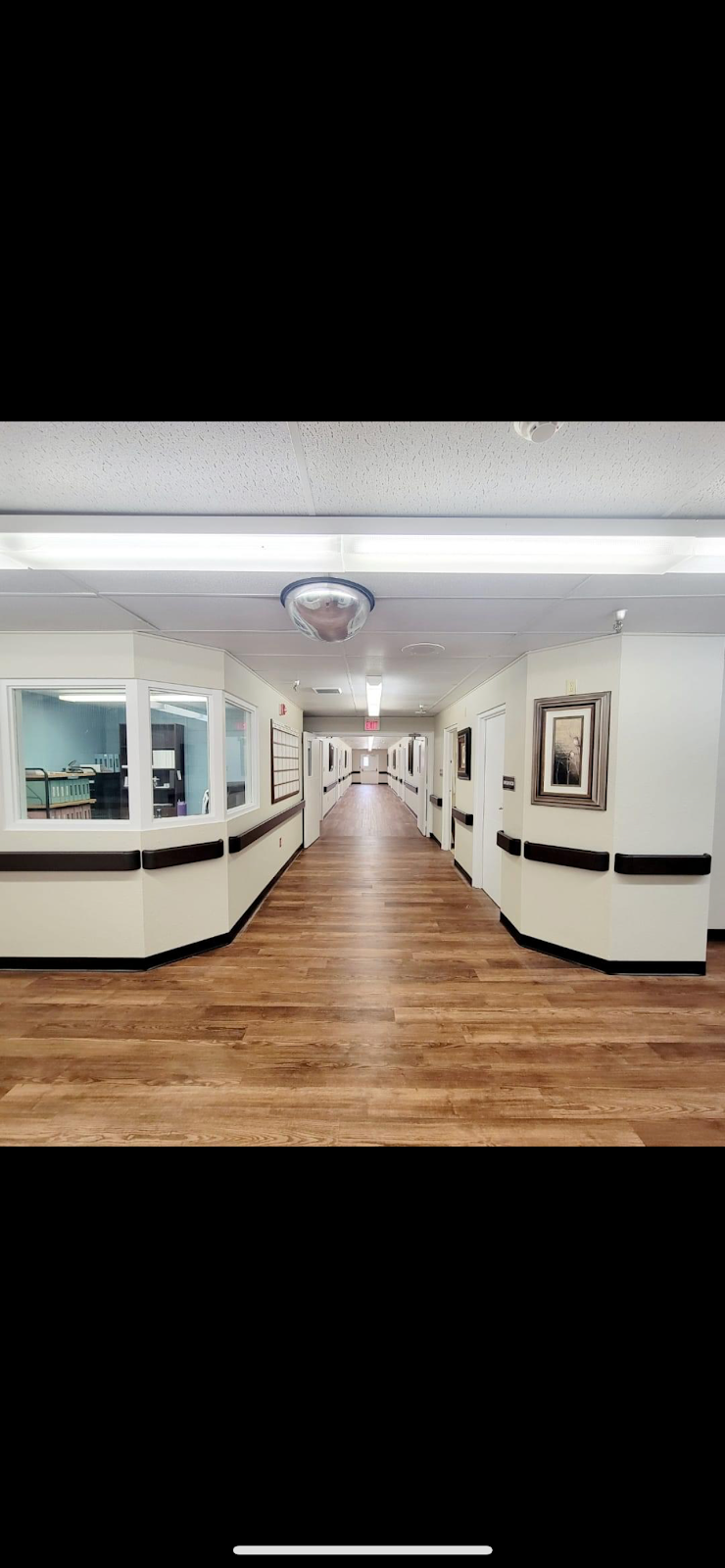
Who Owns and Operates Prairie View Skilled Nursing?

PRAIRIE VIEW SKILLED NURSING is owned by a for-profit company. For-profit facilities operate as businesses with obligations to shareholders or private owners. The facility is operated by PARADIGM SENIOR MANAGEMENT, a chain that manages multiple nursing homes. With 60 certified beds and approximately 45 residents (about 75% occupancy), it is a smaller facility located in BLOOMFIELD, Missouri.

How Does Prairie View Skilled Nursing Compare to Other Missouri Nursing Homes?

Compared to the 100 nursing homes in Missouri, PRAIRIE VIEW SKILLED NURSING's overall rating (3 stars) is above the state average of 2.5 and health inspection rating (4 stars) is above the national benchmark.

What Should Families Ask When Visiting Prairie View Skilled Nursing?

Based on this facility's data, families visiting should ask: "Can you walk me through typical staffing levels on day, evening, and night shifts?" "Can I visit during a mealtime to observe dining assistance and food quality?" "How do you handle medical emergencies, and what is your hospital transfer rate?" "Can I speak with family members of current residents about their experience?" These questions are particularly relevant given the below-average staffing rating.

Is Prairie View Skilled Nursing Safe?

Based on CMS inspection data, PRAIRIE VIEW SKILLED NURSING has a clean safety record: no substantiated abuse findings (meaning no confirmed cases of resident harm), no Immediate Jeopardy citations (the most serious violation level indicating risk of serious injury or death), and is not on the Special Focus Facility watch list (a federal program monitoring the lowest-performing 1% of nursing homes). The facility has a 3-star overall rating and ranks #1 of 100 nursing homes in Missouri. While no facility is perfect, families should still ask about staff-to-resident ratios and recent inspection results during their visit.

Do Nurses at Prairie View Skilled Nursing Stick Around?

PRAIRIE VIEW SKILLED NURSING has not reported staff turnover data to CMS. Staff turnover matters because consistent caregivers learn residents' individual needs, medications, and preferences. When staff frequently change, this institutional knowledge is lost. Families should ask the facility directly about their staff retention rates and average employee tenure.

Was Prairie View Skilled Nursing Ever Fined?

PRAIRIE VIEW SKILLED NURSING has no federal fines on record. CMS issues fines when nursing homes fail to meet care standards or don't correct problems found during inspections. The absence of fines suggests the facility has either maintained compliance or corrected any issues before penalties were assessed. This is a positive indicator, though families should still review recent inspection reports for the full picture.

Is Prairie View Skilled Nursing on Any Federal Watch List?

PRAIRIE VIEW SKILLED NURSING is not on any federal watch list. The most significant is the Special Focus Facility (SFF) program, which identifies the bottom 1% of nursing homes nationally based on persistent, serious quality problems. Not being on this list means the facility has avoided the pattern of deficiencies that triggers enhanced federal oversight. This is a positive indicator, though families should still review the facility's inspection history directly.