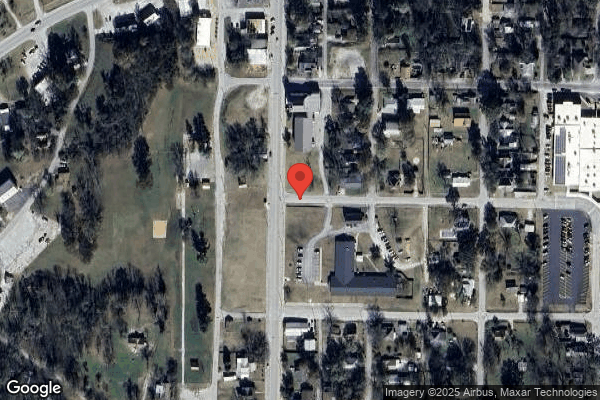
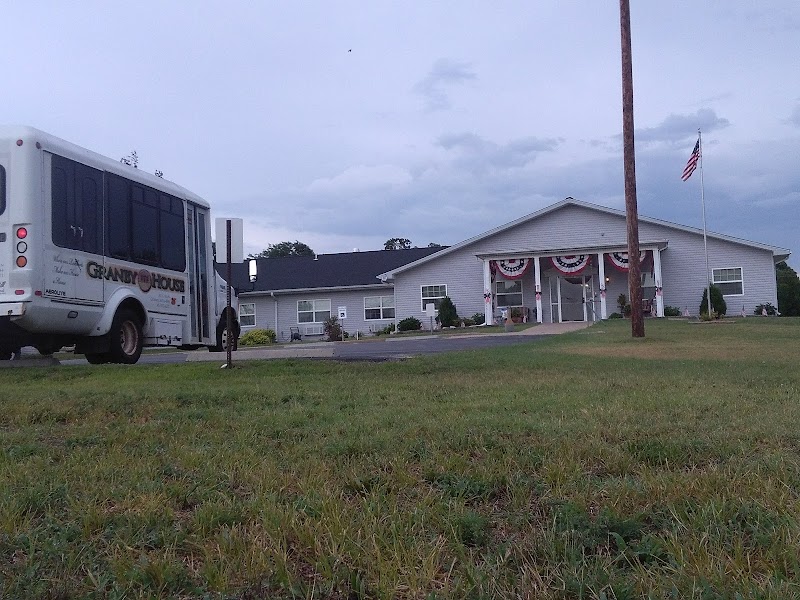

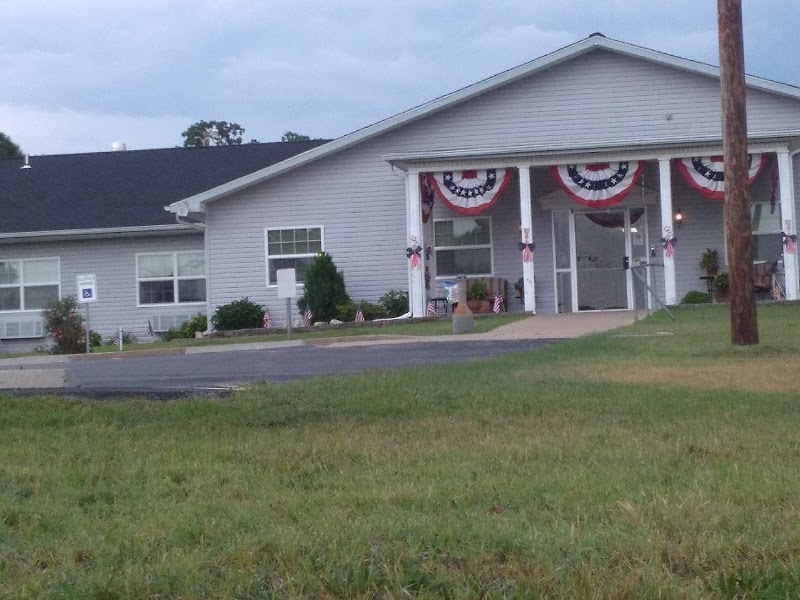
GRANBY HOUSE

301 SOUTH MAIN, GRANBY, MO 64844 (417) 472-6271
For profit - Corporation 60 Beds CIRCLE B ENTERPRISES Data: November 2025
Trust Grade
30/100
#389 of 479 in MO
Last Inspection: June 2024

Within standard 12-15 month inspection cycle. Federal law requires annual inspections.

Overview

Granby House has received a Trust Grade of F, indicating significant concerns and overall poor quality of care. Ranked #389 out of 479 facilities in Missouri, they are in the bottom half, and #4 out of 5 in Newton County means only one local option is better. The facility is showing signs of improvement, with issues decreasing from 12 in 2024 to 4 in 2025. However, staffing is a weakness, rated at 1 out of 5 stars with a turnover rate of 66%, which is higher than average. There have been serious incidents reported, including a resident suffering injuries after exiting the building when the front door alarm was turned off, and failures to maintain proper infection control protocols, which put residents at risk. While there were no fines recorded, the overall environment raises concerns about safety and cleanliness, as staff did not ensure sanitary conditions in dining areas and failed to implement basic infection control measures.

Trust Score
F
30/100
In Missouri
#389/479
Bottom 19%
Safety Record
Moderate
Needs review
Inspections
Getting Better
12 → 4 violations
Staff Stability
⚠ Watch
66% turnover. Above average. Higher turnover means staff may not know residents' routines.
Penalties
✓ Good
No fines on record. Clean compliance history, better than most Missouri facilities.
Skilled Nurses
⚠ Watch
Each resident gets only 19 minutes of Registered Nurse (RN) attention daily — below average for Missouri. Fewer RN minutes means fewer trained eyes watching for problems.
Violations
⚠ Watch
27 deficiencies on record. Higher than average. Multiple issues found across inspections.
★☆☆☆☆
1.0
Overall Rating
★☆☆☆☆
1.0
Staff Levels
★★★★☆
4.0
Care Quality
★★☆☆☆
2.0
Inspection Score
Stable
2024: 12 issues
2025: 4 issues

The Good

  • 4-Star Quality Measures · Strong clinical quality outcomes
  • Full Sprinkler Coverage · Fire safety systems throughout facility
  • No fines on record

Facility shows strength in quality measures, fire safety.

The Bad

1-Star Overall Rating

Below Missouri average (2.5)

Significant quality concerns identified by CMS

Staff Turnover: 66%

20pts above Missouri avg (46%)

Frequent staff changes - ask about care continuity

Chain: CIRCLE B ENTERPRISES

Part of a multi-facility chain

Ask about local staffing decisions and management

Staff turnover is elevated (66%)

18 points above Missouri average of 48%

The Ugly 27 deficiencies on record

1 actual harm
Apr 2025 1 deficiency
CONCERN (E) 📢 Someone Reported This

A family member, employee, or ombudsman was alarmed enough to file a formal complaint

Potential for Harm - no one hurt, but risky conditions existed

Deficiency F0576 (Tag F0576)

Could have caused harm · This affected multiple residents

**NOTE- TERMS IN BRACKETS HAVE BEEN EDITED TO PROTECT CONFIDENTIALITY** Based on observation, record review, and interview, the facility failed to provide all residents reasonable access to the use of...

Read full inspector narrative →
**NOTE- TERMS IN BRACKETS HAVE BEEN EDITED TO PROTECT CONFIDENTIALITY** Based on observation, record review, and interview, the facility failed to provide all residents reasonable access to the use of a phone in a private environment when the resident use phone was located at the nurses' station providing a lack of privacy for two residents (Resident #1 and #2) when they used the phone. The facility census was 52. Review of the facility's policy titled Resident Rights, revised February 2021, showed the following: -Employees shall treat all residents with kindness, respect, and dignity; -Resident rights included the right to privacy and confidentiality; the right to access to a telephone, mail and email; and the right to communicate in person, by mail, email, and telephone with privacy. 1. Review of Resident #1's face sheet (a document that gives a patient's information at a quick glance) showed the following: -admission date of 09/12/24; -Diagnoses included schizophrenia (a mental disorder characterized by disruptions in thought processes perceptions, emotional responsiveness and social interactions), anxiety disorder and cognitive communication deficit. Review of the resident's care plan, revised 12/05/24, showed the following: -The resident had a risk for impaired communication; -Allow adequate time for the resident's response; -Evaluate the resident's ability to comprehend. Review of the resident's quarterly Minimum Data Set (MDS - a federally mandated comprehensive assessment instrument completed by facility staff), dated 04/07/25, showed the resident's cognitive skills intact. During an interview on 04/24/25, at 7:50 A.M., the resident said the following: -He/she used the phone located behind the nurses' desk. The phone had a cord and he/she was not able to take the phone with him/her; -Facility staff talk around him/her when he/she used the phone and he/she did not have privacy; -He/she tried to talk to his/her family member every day and would like more privacy. 2. Review of Resident #2's face sheet showed the following: -admission date of 02/04/25; -Diagnoses included depression and anxiety disorder. Review of the resident's admission MDS, dated [DATE], showed the resident's cognitive skills intact. Review of the resident's care plan, dated, 02/12/25 showed the following: -The resident was unable to care for himself/herself in his/her home; -The resident had decided to remain at the facility for long term care; -Encourage the resident's family or ones close to him/her remain involved and continue to provide support. During an interview on 04/25/25, at 8:08 A.M., the resident said the following: -The phone was located at the nurses' station; -He/she did not have privacy when he/she used the phone; -Facility staff were around the nurses' station when he/she had talked on the phone and he/she felt a lot of staff listen to his/her conversation. 3. Observation on 04/24/25, at 8:30 A.M., showed a phone with a cord on the nurses' desk located by a medication cart. One nurse sat at the desk on the computer and another nurse stood at the medication cart by the nurses' desk. 4. During an interview on 04/24/25, at 8:36 A.M., Licensed Practical Nurse (LPN) A said the following: -The phone used by residents was located at the nurses' desk; -He/she did not know for sure what happened to the cordless phone; -The privacy was not what the residents deserved. During an interview on 04/24/25, at 8:50 A.M., Certified Nurse Aide (CNA) B said the following: -Staff brought residents to the nurses' desk to use the phone; -He/she worked at the facility over a year and residents have used the phone at the nurses' desk; -There was a lot of traffic at the nurses' desk and there could be a better location for the phone. During an interview on 04/24/25, at 8:55 A.M., Certified Medication Technician (CMT) C said the following: -Staff take residents to the nurses' desk to use the phone; -There was not another place to take the residents when they wanted to use the phone; -There was always some staff at the nurses' desk; -The facility used to have a cordless phone. During an interview on 04/24/25, at 9:29 A.M., the Administrator said the following: -There was no privacy for residents at the nurses' desk; -She had worked on obtaining a phone for the residents the last couple of months. MO00252857
Feb 2025 1 deficiency 1 Harm
SERIOUS (G) 📢 Someone Reported This

A family member, employee, or ombudsman was alarmed enough to file a formal complaint

Actual Harm - a resident was hurt due to facility failures

Accident Prevention (Tag F0689)

A resident was harmed · This affected 1 resident

Based on record review and interviews, the facility failed to ensure the resident's environment remained free of accident hazards when the front door alarm was turned off resulting in one resident (Re...

Read full inspector narrative →
Based on record review and interviews, the facility failed to ensure the resident's environment remained free of accident hazards when the front door alarm was turned off resulting in one resident (Resident #1) exiting the building and obtaining injuries from a fall. The facility also failed to document a complete investigation into the elopement and fall including a root cause analysis. The census was 54. Review of a facility policy entitled Accidents and Incidents - Investigating and Reporting (revised July 2017) showed the following: -All accidents or incidents involving residents occurring on our premises shall be investigated and reported to the administrator; -Data, as applicable, shall be included on the Report of Incident/Accident form included -the date and time the accident or incident took place; the nature of the injury/illness (e.g., bruise, fall, nausea, etc.); the circumstances surrounding the accident or incident; the injured person's account of the accident or incident; the name(s) of witnesses and their accounts of the accident or incident; -the date/time the injured person's attending physician was notified, as well as the time the physician responded and his or her instructions; the date/time the injured person's family was notified and by whom; the condition of the injured person, including his/her vital signs; any corrective action taken; follow-up information; other pertinent data as necessary or required; and the signature and title of the person completing the report; -Incident/Accident Reports will be reviewed by the safety committee for trends related to accident or safety hazards in the facility and to analyze any individual resident vulnerabilities. Review showed the facility did not provide a policy specific to the door alarms and locking mechanisms. 1. Review of Resident #1's face sheet (gives basic profile information at a glance) showed the following: -admission date of 05/29/20; -Diagnoses included Parkinson's disease (central nervous system disorder that affects movement often including tremors), chronic obstructive pulmonary disorder (COPD - breathing disorder), anxiety, major depressive disorder, dementia, high blood pressure, muscle weakness, difficulty in walking, repeated falls, and cognitive communication deficit. Review of the resident's quarterly Minimum Data Set (MDS - a federally mandated assessment tool completed by facility staff), dated 02/24/25, showed the following information: -Severely impaired cognition; -Independent use of manual wheelchair; -Required partial to moderate assist with toileting, standing, and transfers; -Required substantial to maximum assist with bathing, dressing, and personal hygiene; -Did not walk. Review of the resident's care plan, dated 07/30/24, showed the following: -Resident had poor safety awareness and was at risk for falls. Despite interventions in place, the resident will continue to fall; -Resident chooses to remain as independent as possible; -Staff to ensure resident is wearing appropriate footwear such as non-slip socks or shoes when ambulating or mobilizing in wheelchair; -Staff to remind resident that he/she can't walk like they used to; -Resident needs a night light to help see at night; -Resident uses a wheelchair for mobility; -Staff to round frequently; -Staff to distract from wandering by offering pleasant diversions, structured activities, food, conversation, television, book; -Staff to identify pattern of wandering (purposeful, aimless, or escapist; looking for something). Review of the resident's progress note dated 02/23/25, at 1:30 A.M., showed Registered Nurse (RN) A documented the following: -Resident observed to be lying on ground, hollering help. Staff assisted with resident to observe bruising to back of right shoulder and blood to back of head. Staff cleaned blood to find superficial abrasions to back of head. Resident was in wheelchair prior. Fall was un-witnessed fall. Staff informed physician, family member, Director of Nursing (DON), and Administrator. Resident responsive and verbalizing with staff. Staff observed no change from baseline. Nurse attempted to clean abrasion and resident kept moving head; -Staff notified physician notified, family informed of incident, and informed staff to monitor resident and that they will check in the morning. Neurological checks per fall protocol; -Resident oriented to person; -Predisposing environmental factors: poor lighting; -Predisposing physiological factors: impaired memory, weakness; -Predisposing situation factors: wanderer. Review of a Fall Documentation Checklist, dated 02/23 (no year specified) at 1:30 (no indication of A.M. or P.M.), for the resident showed the following information: -Concerns noted: open wound back of head, bruising on right shoulder; -Neighbor statement: (left blank); -Checklist indicated completion of: head to toe skin assessment including baseline comparison, legs are equal length and no rotation, grips equal or at baseline, family notified, physician notified, incident report completed, and neurological checks completed and documented; -Handwritten note stated to continue with 72-hour follow-up with required information. (The checklist did not address the resident's fall being outside of the facility or how the resident got outside of the facility.) Review showed the facility did not provide any additional investigation of the root cause for the fall or elopement and did not address interventions would prevent future falls and elopements. Review of the resident's care plan showed staff updated the care plan with the following: -On 02/23/25, staff to monitor resident whereabouts when up wandering; -On 02/24/25, elopement risk, wanders aimlessly. During an interview on 02/25/25, at 10:37 A.M., RN A said on 02/23/25, around 1:00 A.M., he/she noted the resident was in his/her wheelchair in the hallway. At approximately 1:30 A.M., he/she noticed the resident was not in the hallway or in his/her room. RN A asked Nurse Aide (NA) B and NA C if they knew the location of the resident. They said they had seen him/her in the hallway a short time prior, but did not know his/her current location. A search was made of all rooms in the building. RN A and NA B exited the front door of the building and heard the resident hollering for help. They found him/her on the ground on the parking lot pavement at the edge of the driveway with his/her the wheelchair was close by. Upon assessment, the staff noted bleeding from the back of the resident's head and an abrasion to his/her right shoulder. The resident said he/she didn't know what happened. RN A put his/her own sweatshirt on the resident while NA B went inside and quickly brought out blankets to wrap around the resident. RN A and NA B assisted the resident into the wheelchair and took him/her inside. RN A said he/she did not see the alarm system unplugged and did not know why the door would have been left unlocked and the alarm disconnected. RN A said another staff member's family members did go in/out the front door several times that evening. During an interview on 02/23/25, at 12:34 P.M., Certified Medication Technician (CMT) D said he/she worked on 02/22/25, from 2:00 P.M. until 10:00 P.M. CMT D said if the doors are not alarmed the staff should monitor the doors. He/she said they have several wanderers who would probably need frequent/15 minute checks. During an interview on 02/23/25, at 12:42 P.M., NA B said on 02/23/25, around 1:30 A.M., he/she and NA C were doing rounds to check residents. RN A came and asked them if they knew the whereabouts of the resident. They said they had seen him/her in the hallway awhile earlier, but did not know where he/she was currently. A search was made of the entire building. NA B said he/she and RN A noted the front door was not locked and the alarm did not sound when they exited the building. They heard the resident yelling for help and found him/her on the ground at the edge of the parking lot driveway. NA B ran back inside for blankets while RN A calmed and assessed the resident. NA B said the resident kept thanking them and apologizing, saying, You saved my life! NA B called the DON, and they could both hear the DON on the speaker phone. The nurse quickly assessed the resident, they assisted him/her back into the wheelchair, and took him/her back inside the building to warm him/her up. NA B said RN A tried to bandage the resident's head, but the resident kept taking of the dressing. NA B said the resident does wander around the facility in his/her wheelchair, but didn't appear to be exit seeking. During an interview on 02/23/25, at 12:00 P.M., the Maintenance Director said he/she had not received any reports of the door alarms not working, and he/she was not aware of the front door alarm being found unplugged. Staff should document any maintenance requests on the log in the employee break room or tell him/her directly if something needs immediate attention. He/she was always available by phone. During interviews on 02/23/25, at 1:40 P.M. and 3:03 P.M., the DON said the following: -The facility's front and back (employee) doors were alarmed and would emit a loud beep whenever the door was opened. He/she had not heard any reports that the front door or alarm were or had been inoperable prior to the incident. -RN A called her on 02/23/25, at approximately 1:30 A.M. and told him/her the resident was found outside on the ground in front of the building. The DON said he/she instructed the RN to complete a full assessment, clean the wounds, and to notify the family. -The resident's family was very concerned that the resident got outside in the cold temperature, but said to monitor the resident's condition and not to send the resident to the emergency department based on the current assessment. The family was going to come to the facility in the morning to see the resident. -The DON said he/she came to the facility and found the front door alarm system to be unplugged (located above the door). During interviews on 02/23/25, at 3:20 P.M. and 3:40 P.M., the Administrator the following: -He/she was not aware that the front door alarm was found unplugged; -The only reason the alarm would ever be unplugged was when the maintenance director was testing the system. No other staff should unplug the alarm system.; -Staff must enter a code on the keypad by the front and back doors before opening the door. A loud beep is heard briefly. When the front and back doors were opened without entering a code on the keypad, a loud beeping noise begins and remains sounding until the code is entered. The door alarms will also sound if the code is entered, but the door is held open too long. -If the doors are not alarmed, staff should monitor the front and back doors; -Staff should notify the Maintenance Director as soon as possible regarding immediate needs, like the door alarms not working. MO00250027
Jan 2025 2 deficiencies
CONCERN (D) 📢 Someone Reported This

A family member, employee, or ombudsman was alarmed enough to file a formal complaint

Potential for Harm - no one hurt, but risky conditions existed

Deficiency F0658 (Tag F0658)

Could have caused harm · This affected 1 resident

**NOTE- TERMS IN BRACKETS HAVE BEEN EDITED TO PROTECT CONFIDENTIALITY** Based on interview and record review, the facility failed to provide care per standards of practice when for all residents when ...

Read full inspector narrative →
**NOTE- TERMS IN BRACKETS HAVE BEEN EDITED TO PROTECT CONFIDENTIALITY** Based on interview and record review, the facility failed to provide care per standards of practice when for all residents when staff failed to administer one resident's (Resident #1) levothryroxine (medication for a low thyroid) as ordered. The facility census was 51. Review of the facility policy Administering Medications, revised April 2019, showed the following: -Medications are administered in accordance with prescriber orders, including any required time frame; -Medication errors are documented, reported, and reviewed by the QAPI (Quality Assurance and Performance Improvement) committee to inform of process changes and or the need for additional staff training. Review of the facility Electronic Medical Record admission Checklist, undated, showed the following: -Call and verify medications with provider and be sure to add to admission note; -Progress note must include the physician was notified of admission and the medication list was reviewed; -Every admission needs a TSH (thyroid stimulating hormone level - used to test the thyroid levels) lab test yearly; -Fax face sheet, discharge summary, and medication list to provider. 1. Review of Resident #1's face sheet (information at a quick glance) showed the following: -admission date of 12/05/24; -Diagnoses included systemic lupus erythematosus (a chronic illness that occurs when the immune system attacks healthy tissues and organs and can cause fatigue and joint pain and affects many parts of the body such as joints, skin, kidneys, blood cells, brain, heart, and lungs), epilepsy (seizures), hypothyroidism (low thyroid levels which may cause symptoms of fatigue, cold sensitivity, dry skin, unexplained weight gain, and hair loss), major depression, and anxiety. Review of the resident's admission Minimum Data Set (MDS - a federally mandated assessment instrument completed by facility staff), dated 12/16/24, showed the resident's cognition was intact. Review of the resident's admission information provided from the transferring facility showed the following: -Diagnoses of hypothyroidism with onset date of 12/09/19; -A physician's order, dated 12/8/24, for levothyroxine sodium 88 micrograms (mcg), one tablet by mouth in the morning for hypothyroidism. Review of the resident's December 2024 Medication Administration Record (MAR) showed staff did not document an order for levothyroxine sodium oral tablet 88 mcg, to administer one tablet by mouth one time a day for hypothyroidism. Review of the resident's physician's orders showed an order, dated 01/24/25, with start date of 01/25/25, for levothyroxine sodium oral tablet 88 mcg. Staff to administer one tablet by mouth one time a day at 4:00 A.M. for hypothyroidism. Review of the resident's January 2025 MAR showed an order, with a start date of 01/25/25, for levothyroxine sodium oral tablet 88 mcg for staff to administer one tablet a day for hypothyroidism at 4:00 A.M. (Staff did not document administering levothyroxine prior to 01/25/25.) During an interview on 01/29/25, at 10:26 A.M., the resident said he/she was at another facility in December 2024 before coming to this facility. He/she was on levothyroxine 88 mcg every day, but had not been getting the levothyroxine until a week ago or so. He/she had lupus for 24 years and had a low thyroid since he/she was [AGE] years old. During an interview on 01/29/25, at 12:00 P.M., Licensed Practical Nurse (LPN) A said the resident came from another facility and did have a physician's order summary and profile sheet. The resident was on levothyroxine, but he/she was not sure if the order did not go in the electronic medical record or if there was a misunderstanding and miscommunication from the other facility about the levothyroxine. During an interview on 01/29/25, at 12:03 P.M., Certified Medication Technician (CMT) B said the resident came from another facility. The night nurse administers thyroid medication on night shift. The resident reported to him/her that he/she had not gotten his/her levothyroxine medication. When the resident was admitted to the facility, he/she had a medication card with three pills of levothyroxine 88 mcg. This medication card was in his/her medication cart with the regular medications, but he/she did not pay attention to this since he/she does not administer the thyroid medications. The night nurse administers the levothyroxine medications from 4:00 A.M. to 5:00 A.M. During interview on 01/30/25, at 4:00 A.M., the night nurse, LPN C, said another staff member pointed it out to him/her that the resident told them about the levothyroxine. When he/she went to administer a pain medication to the resident, he/she told him/her about not getting levothyroxine medication. He/she usually administered levothyroxine medication on his/her shift from 4-5:00 A.M. During interview on 01/29/25, at 4:00 P.M., the Associate Director of Nurse (ADON) said when they admit a resident to the facility, they do an assessment of the resident and will take the resident's medication list from the hospital and go over this with the physician. When the resident admitted , they had a nurse in training. The nurse put the resident's medications in the electronic medical record and must have overlooked the medication levothyroxine. When the resident came to him/her and said he/she didn't think he/she was getting the levothyroxine, the ADON looked at the resident's medication orders and did not see the order for the levothyroxine. Usually the Director of Nursing (DON) and ADON look at the resident's admission check list to double check the medications, but they did not do this for the resident. The charge nurse would give any medications to the medication technician upon admission. The night nurse would administer the levothyroxine. If the medication order was in the computer, the medication would have popped up for the night nurse to administer. They should have double checked the medications within 24 hours from admission. During interview on 01/29/25, at 3:52 P.M., the Administrator said the nursing staff have a checklist to use on a new admission to the facility. They found they missed a routine medication for the resident who has lupus and they made a medication error report. MO00246993
CONCERN (E) 📢 Someone Reported This

A family member, employee, or ombudsman was alarmed enough to file a formal complaint

Potential for Harm - no one hurt, but risky conditions existed

Infection Control (Tag F0880)

Could have caused harm · This affected multiple residents

**NOTE- TERMS IN BRACKETS HAVE BEEN EDITED TO PROTECT CONFIDENTIALITY** Based on observation, interview, and record review, the facility failed to establish and maintain an effective infection control...

Read full inspector narrative →
**NOTE- TERMS IN BRACKETS HAVE BEEN EDITED TO PROTECT CONFIDENTIALITY** Based on observation, interview, and record review, the facility failed to establish and maintain an effective infection control program when staff failed to practice proper hand hygiene while providing care for three residents (Residents #2, #3, and #4) and when staff failed to gown as required for two residents (Resident #4 and #5) who had enhanced barrier precautions (EBP - precautions for use during high-contact resident care activities for residents infected with a multidrug-resistant organism (MDRO -microorganisms that are resistant to one or more classes of antimicrobial agents) or any resident who has a chronic wound and/or indwelling medical device) in place due to wounds. The facility census was 51. Review of the facility policy, Hand washing/Hand Hygiene, revised October 2023, showed the following: -All personnel were expected to adhere to hand hygiene policies and practices to help prevent the spread of infections to other personnel, residents, and visitors; -Hand hygiene products and supplies (sinks, soap, towels, alcohol-based hand rub, etc) were readily accessible and convenient for staff use to encourage compliance with hand hygiene policies. Alcohol-based hand-rub dispensers were placed in areas of high visibility and consistent with workflow throughout the facility; -Hand hygiene is indicated immediately before touching a resident; after contact with blood, body fluids, or contaminated surfaces; after touching a resident; after touching the resident's environment; before moving from work on a soiled body site to a clean body site on the same resident; and immediately after glove removal; -The use of gloves does not replace hand washing/hand hygiene; -When applying and removing gloves, perform hand hygiene before applying non-sterile gloves and when removing gloves, perform hand hygiene. Review of the facility policy Enhanced Barrier Precautions, dated March 2024, showed the following: -It was the policy of the facility to implement EBP for the prevention of transmission of multidrug-resistant organisms; -EBP refers to an infection control intervention designed to reduce transmission of multidrug-resistant organisms that employs targeted gown and gloves use during high contact resident care activities; -All staff receive training on EBP upon hire and at least annually and were expected to comply with all designated precautions; -All staff receive training in high-risk activities and common organisms that require EBP; -The facility will have the discretion on how to communicate to staff which residents require the use of EBP, as long as staff were aware of which residents require the use of EBP prior to providing high-contact care activities; -EBP will be initiated for residents with any of the following: wounds (chronic wounds such as pressure ulcers, diabetic foot ulcers, unhealed surgical wounds, and chronic venous stasis ulcers) and/or indwelling/implanted medical devices such as central lines, ports, urinary catheters, feeding tubes, tracheostomy/ventilator tubes) even if the resident was not known to be infected or colonized with a MDRO (multi-drug resistant organism) and infection or colonization with a CDC (Centers for Disease Control) targeted MDRO when contact precautions do not otherwise apply; -Make gowns and gloves available immediately near or outside of the resident's room (note: face protection may also be needed if performing activity with risk of splash or spray such as wound irrigation and tracheostomy care); -Personal Protective Equipment (PPE) for EBP is only necessary when performing high-contact care activities and may not need to be donned prior to entering the resident's room; -Ensure access to alcohol-based hand rub in every resident room (ideally both inside and outside of the room); -Position a trash can inside the resident room and near the exit for discarding PPE after removal, prior to exit of the room or before providing care for another resident in the same room; -Place a yellow sticker or magnet on the name plate of the resident's door to identify the need of EBP; -High-contact resident care activities include dressing, bathing, transferring, providing hygiene, changing linens, changing briefs or assisting with toileting, device care or use of central lines, urinary catheters, feeding tubes, and tracheostomy/ventilator tubes; -EBP should be followed outside the resident's room when performing transfers and assisting during bathing in a shared/common shower room and when working with residents in the therapy gym, specifically when anticipating close physical contact while assisting with transfers and mobility; -EBP should be used for the duration of the affected resident's stay in the facility or until resolution of the wound or discontinuation of the indwelling medical device that placed them at higher risk. Review of the Centers of Disease Control and Prevention (CDC) Implementation of Personal Protective Equipment (PPE) Use in Nursing Homes to Prevent Spread of Multidrug-resistant Organisms (MDROs), updated 04/02/24, showed the following; -MDRO transmission is common in skilled nursing facilities, contributing to substantial resident morbidity and mortality and increased healthcare costs; -EBP are an infection control intervention designed to reduce transmission of resistant organisms that employs targeted gown and glove use during high contact resident care activities; -EBP may be indicated (when Contact Precautions do not otherwise apply) for residents with any of the following: wounds or indwelling medical devices, regardless of MDRO colonization status Infection or colonization with an MDRO; -Effective implementation of EBP requires staff training on the proper use of personal protective equipment (PPE) and the availability of PPE and hand hygiene supplies at the point of care; -Examples of high-contact resident care activities requiring gown and glove use for EBP include dressing, bathing/showering, transferring, providing hygiene, changing linens, changing briefs or assisting with toileting, device care or use (central line, urinary catheter, feeding tube, or tracheostomy/ventilator) and wound care (any skin opening requiring a dressing). 1. Review of Resident #2's face sheet (information at a glance) showed the following: -admission date of 08/27/24; -Diagnoses included chronic obstructive pulmonary disease (COPD - lung disease that blocks air flow and makes it difficult to breathe). Review of the resident's quarterly Minimum Data Set (MDS - a federally mandated assessment instrument completed by facility staff), dated 12/02/24, showed the following: -Moderately impaired cognition; -Resident dependent on staff for personal hygiene, dressing, toileting, mobility, and transfers; -Incontinent of bowel and bladder. Review of the resident's care plan, undated, in the electronic medical record (EMR), showed the following: -Required two staff to help transfer the resident to the wheelchair; -Incontinent of both bowel and bladder related to impaired mobility. Staff were to clean perineal area with each incontinence episode. Observation on 01/30/25, at 5:00 A.M., showed the following: -Certified Nurse Aide (CNA) D asked the resident, who was in bed, if he/she wanted to get up. CNA E turned on the light, did not wash his/her hands, got a pair of gloves from the box on the wall, and put on the gloves. -CNA D could not find the cleansing wet wipes so he/she removed his/her gloves, left the room to get a box of wipes. CNA D returned and put on gloves without washing his/her hands. -CNA E shut off the oxygen concentrator and both aides dressed the resident who was in bed. -CNA D and CNA E, turned the resident to his/her side, put a clean incontinence brief underneath the resident's wet brief, removed the bed pad and brief wet with urine, and pulled up the clean incontinence brief. CNA D got the cleansing wipes and performed perineal care (without performing hand hygiene or changing gloves). CNA D took a tube of barrier cream and wiped the cream on the resident's buttocks (without performing hand hygiene or changing gloves). -CNA D removed his/her gloves, did not wash hands, and put on a clean pair of gloves. -CNA D attached the clean incontinence brief. -Both CNA D and CNA E kept the same pair of gloves on. CNA E took a mechanical lift sling and placed it underneath the resident. -CNA D removed his/her gloves and did not perform hand hygiene. CNA D put the resident's eye glasses on and his/her shoes lying on the bed. CNA E removed his/her gloves, did not perform hand hygiene, and took the trash bag of linens to the soiled utility room down the hall. CNA D touched his/her own personal watch, then got the foot pedals to the wheelchair and placed the foot pedals next to the bed. Without performing hand hygiene and donning gloves, CNA E brought the mechanical lift into the room and they attached the resident in the sling to the mechanical lift. -CNA D and CNA E transferred the resident. Without performing hand hygiene, CNA E put on gloves and tried to put the oxygen tubing per nasal cannula back on the resident who refused. CNA E put the tubing back on the machine. CNA D put a blanket over the resident's lap and sat the resident next to his/her bed and placed the call light on the resident. CNA D did not perform hand hygiene or put on gloves as he/she touched the resident personal items on the bedside table such as snacks. -CNA D removed the mechanical lift from the room and put in the hall. CNA E put on a pair of gloves without performing hand hygiene and took another bag of linens down the hall. -CNA D used the hand sanitizer on the wall as he/she left the room. 2. Review of Resident #3's face sheet showed the following: -admission date of 07/05/24; -Diagnoses included acute respiratory failure, heart failure, COPD, type 2 diabetes mellitus (high blood glucose), unspecified head injury, convulsions (seizures), peripheral vascular disease (reduced circulation of blood to a body part, other than the brain or heart, due to a narrowed or blocked blood vessel), acute kidney failure, dementia (progressive impairments in memory, thinking, and behavior which negatively impacts a person's ability to function and carry out every day activities). Review of the resident's quarterly MDS, dated [DATE], showed the following: -Severely impaired cognition; -Dependent for toileting, personal hygiene, upper/lower body dressing, and transfers; -Always incontinent of bowel and bladder. Review of the resident's care plan, undated, from the EMR, showed the following: -Required assistance with activities of daily living due to weakness in lower extremities related to a stroke; -Incontinent of both bowel and bladder related to impaired mobility. Staff to clean perineal area with each incontinence episode. Observation on 01/30/25, at 5:50 A.M., showed the following: -CNA D and CNA E entered the resident's room and did not wash or sanitize hands, and put on gloves. The resident sat up on the edge of the bed. The CNAs assisted the resident to dress. The resident wore an incontinence brief. -CNA D assisted the resident to stand up and removed the wet incontinence brief. While the resident stood, CNA E took cleansing wipes and cleansed between the resident's buttocks and outer buttocks, put a clean incontinence brief on the resident and assisted the resident to sit down in the wheelchair. -CNA D then removed his/her gloves and did not did not perform hand hygiene. CNA E removed his/her gloves, did not perform hand hygiene, and took the trash bag out of the room. -CNA D picked up a brush and brushed the resident's hair and then pushed the resident in his/her wheelchair out of the room. -CNA E came back to the room, put on gloves without performing hand hygiene, and raised the resident's bed, took the trash, removed gloves, and then used the hand sanitizer on the wall before leaving the room with the trash bag. 3. During an interview on 01/30/25, at 6:00 A.M., CNA E and CNA D both said they were to wash hands when they walk into a resident's room, before they put on gloves, and when they remove gloves. They could wash hands in the break room because there were no paper towels in the residents' rooms right now since they were changing out the towel dispensers. Most rooms had hand sanitizer. Observation on 01/30/25, at 6:03 A.M., showed there were paper towels in the towel dispenser in Resident #3's room. 4. Review of Resident #5's face sheet showed the following: -admission date of 12/28/24; -Diagnoses included type 2 diabetes mellitus (high blood glucose), acute respiratory failure with hypoxia (low oxygen level), congestive heart failure (CHF), peripheral vascular disease (reduced circulation of blood to a body part, other than the brain or heart, due to a narrowed or blocked blood vessel), kidney failure, and acquired absence of left leg above the knee. Review of the resident's admission MDS, dated [DATE], showed the following: -admission date of 12/28/24; -Intact cognition and interviewable; -Lower extremity impairment on one side; -Supervision and touching assistance for toileting and personal hygiene; -Substantial/maximal assistance with transfers; -Surgical wound with surgical wound care and application of nonsurgical dressing with or without topical medications other than to feet. Review of the resident's care plan, dated 12/30/24, showed the following: -The resident required assist with activities of daily living with the above the left knee amputation; -Required staff assistance with lower dressing, transfers, and bathing; -Required two staff assistance for transfers and toileting; -Resident had an ischemic ulcer of the right ankle and a surgical wound to left groin. -On 01/28/25, staff initiated EBP to help protect him/her from infections related to his/her wound. Intervention included a sign placed on door alerting staff and visitors of precautions, staff and visitors to clean hands with alcohol-based hand sanitizer before and after entering and leaving room, staff to wear gown and gloves when caring for resident's wound; Observation on 01/30/25, at 6:30 A.M., showed no EBP sign on the resident's door. Observation on 01/30/25, at 9:30 A.M., showed CNA F and CNA G in the resident's room. Both aides had gloves on, but did not wear a protective gown. CNA F picked up the resident's hair brush and brushed the resident's hair as he/she sat on the edge of the bed. The resident had a left leg above the knee amputation. The aides transferred the resident from the bed to the wheelchair. CNA G made the resident's bed while CNA F walked out of the room with gloves pushing a mechanical lift that had been left in the resident's room. 5. Review of Resident #4's face sheet showed the following: -admission date of 11/16/24; -Diagnoses included cutaneous abscess of left lower limb (pus filled lump that develops in the skin or tissue of the leg), type 2 diabetes mellitus (high blood glucose), and left knee effusion (excess fluid builds up in or around the knee joint). Review of the resident's annual MDS, dated [DATE], showed the following: -Intact cognition and interviewable; -Lower extremity impairment on one side; -Dependent for toilet hygiene; -Substantial/maximal assistance for personal hygiene; -Frequently incontinent of bladder and occasionally incontinent of bowel; -Partial/moderate assistance for toilet transfer; -Open lesions other than ulcers, rashes, or cuts; -Applications of nonsurgical dressings with or without topical medications/other than to feet; -Applications of ointments/medications other than to feet. Review of the resident's care plan, dated 7/25/24, showed the following: -Required moderate staff assistance with upper dressing and maximum assistance for lower dressing, two assistance for toileting and transfers; -Resident has an open abscess on left knee related to hardware; -On 01/14/25, staff initiated EBP to help protect the resident from infections related to his/her wound. Interventions included a sign placed on door alerting staff and visitors of precautions, staff and visitors to clean hands with alcohol-based hand sanitizer before and after entering and leaving room, and staff to wear gown and gloves when caring for his/her wound. Observation on 01/30/25, at 6:38 A.M., showed an EBP sign next to the door. Observation on 01/30/25, at 6:38 A.M., showed CNA F entered the room, put on a pair of gloves, without washing and or sanitizing his/her hands, did not put on a protective gown, and went into the bathroom where the resident sat in the wheelchair waiting for staff to toilet him/her. CNA F placed a gait belt around the resident and transferred the resident to the toilet. The resident did not bend his/her left knee. CNA F removed his/her gloves, and used the hand sanitizer on the wall in the room before leaving the room. At 6:43 A.M., CNA F knocked on the resident's room door, put on gloves, without washing and or sanitizing his/her hands, and did not put on a protective gown. CNA F went into the bathroom, assisted the resident to stand, wiped the resident with toilet paper, pulled up the resident's pants, and transferred the resident to the wheelchair. CNA F removed his/her gloves and sanitized his/her hands before pushing the resident in the wheelchair to the dining room. During an interview on 01/30/25, at 7:37 A.M., CNA G said the resident was on EBP because the resident's left knee had a wound. During an interview on 01/30/25, at 7:50 A.M., CNA F said the resident had a wound on his/her leg which was bandaged and had tubi grips (elastic support bandage) on his/her legs. He/she would have put on a gown if they would get gowns down on the hall. 6. During an interview on 01/30/25, at 7:37 A.M., CNA G said EBP was for staff to wear a gown, mask, and gloves for wound care, isolation, catheters, colostomies, and for contact precautions. They keep the gowns and gloves in the supply room or the nurses have them. During an interview on 01/30/25, at 7:50 A.M., CNA F said EBP was when they were to change the residents, and put ointment on them. The wound care nurse has training on EBP for wound care. PPE (Personal Protective Equipment) is gloves and if a resident was in isolation, they would put on a mask and a protective gown. They will wear gowns if the charge nurse instructs them to do this. The charge nurse will tell what they were to use. During an interview on 01/30/25, at 7:47 A.M., Licensed Practical Nurse (LPN) A (wound nurse) said there was a cart on the hall for gowns and gloves for EBP. During an interview on 01/30/25, at 8:00 A.M., LPN C said he/she was new at the facility and had not heard of EBP before and did not know who was the Infection Control Nurse at the facility. If the nursing staff asked him/her what they needed to put on to take care of a certain resident, he/she would tell staff to put on gloves, mask, and gown. During an interview on 01/30/25, at 9:05 A.M., the Assistant Director of Nursing (ADON) said he/she had been the Infection Preventionist nurse since June 2024. There had been a lot of nursing turnover and he/she had been working as charge nurse. Staff were to wash and or sanitize their hands before gloving and after removing their gloves, during wound care, when they entered a resident's room, and after perineal care performed. There was hand sanitizer in all residents' rooms on the wall. For EBP, staff were to gown up and wear gloves when in contact with any resident with wound, catheter, or colostomy. The gowns were out in the drawers in hall and in the supply room and in their shed. He/she was responsible for putting up the EBP signs on residents' doors. They have a risk meeting every week with all infections and wounds. They are constantly trying to educate nursing staff that have direct contact about EBP. During an interview on 01/30/25, at 8:56 A.M., the Administrator said staff were to wash and or sanitize hands when they go into a room and before leaving a room, before gloving, after removing gloves, and any times in between like with personal cares. They have had a couple of in-services about EBP and new staff need training on it. He/she did expect the staff to wear gowns when going into resident rooms to do personal cares.
Jun 2024 11 deficiencies
CONCERN (D)

Potential for Harm - no one hurt, but risky conditions existed

Deficiency F0561 (Tag F0561)

Could have caused harm · This affected 1 resident

Based on observation, interview, and record review, the facility failed to promote each resident's right to self-determination when staff failed to provide routine baths or showers to one resident (Re...

Read full inspector narrative →
Based on observation, interview, and record review, the facility failed to promote each resident's right to self-determination when staff failed to provide routine baths or showers to one resident (Resident #196) out of a sample of four residents. The facility had a census of 46. Review of the facility's policy titled, Resident Bathing, undated showed staff shall provide person-centered care that emphasizes the resident's comfort, independence, personal needs, and preferences. 1. Review of Resident #196's face sheet (admission data) showed the following: -admission date of 06/18/24; -Diagnoses included major depressive disorder, muscle weakness, and pain. Review of the resident's care plan, revised 06/19/24, showed the following: -Staff to provide the resident with assistance to gather items for bathing and assistance to the bathing area as needed; -Make the resident's bathing process pleasant by ensuring a non-hurried atmosphere; -Encourage the resident to wash, rinse, and dry the areas that are within his/her physical ability. (Staff did not care plan the resident's preferred frequency of showers/baths.) Review of the resident's admission Minimum Data Set (MDS - a federally mandated assessment instrument completed by facility staff), dated 06/27/24, showed the following: -Moderately impaired cognitive skills; -No rejection of care; -Required partial/moderate assistance of staff with showers and bathing; -Required partial/moderate assistance of staff with the ability to get in and out of a tub/shower. Review of the resident's shower sheets, dated 06/19/24 through 06/24/24, showed staff did not document providing or offering a shower/bath to the resident. Observations and interviews on 06/25/24, at 11:11 A.M., and on 06/26/24, at 3:06 P.M., showed the following: -The resident sat in his/her wheelchair outside in the designated smoking area. The resident had facial hair. His/her hair appeared not combed; -The resident said he/she wanted shaved; -The resident said he/she had not had a shower since his/her admission to the facility; -He/she feels grungy. During an interview on 06/26/24, at 1:04 P.M., Certified Nurse Aide (CNA) F said the following: -The resident had not had a shower since his/her admission; -The facility did not really have a shower schedule; -He/she was the shower aide and now is the restorative nurse aide; -The former Director of Nursing (DON) gave him/her a calendar for the shower schedule; -Staff should complete the shower sheet and turn in to the DON; -He/she did not report to anyone if a resident refused a shower, he/she would just pick the resident up for a shower the next time around. During an interview on 06/26/24, at 12:33 P.M., CNA B said the following: -He/she worked Wednesday and Thursdays and staff try to get the showers completed; -He/she did not know about a shower schedule. During an interview on 06/26/24, at 1:26 P.M., Licensed Practical Nurse (LPN) A said the following: -A new shower aide just moved into the position; -Residents should get two showers a week; -He/she did not know for sure about the shower schedule; -Staff should document the shower on a shower sheet; -Nurses review the completed shower sheets and turn them into the DON; -He/she did not know of the computer system the CNAs document in; -Residents have complained about showers not getting done. The shower aide is pulled to work the floor at times; -He/she expects staff to complete showers and inform him/her if they are not completed. During an interview on 06/27/24, at 10:13 A.M., the interim DON said the following: -Residents should get a showers twice per week; -The shower aide completes the shower sheet and documents it in the computer system; -She expects staff to complete showers and report to the nursing management if not completed. During an interview on 06/27/24, at 10:13 A.M., the Corporate Nurse said the following: -Staff document yes or no in the computer system after a shower is completed; -Staff should report to the DON if a resident refuses a shower; -Staff give the shower sheet to the DON who reviews the sheet for any skin issues; -She expects staff to complete showers and report to the nursing management if not completed. During an interview on 06/27/24, at 4:30 P.M., the Administrator said she expects staff to report to the charge nurse, Assistant Director of Nursing (ADON), or DON if showers are not completed. Staff should give two showers per week and as needed to residents.
CONCERN (D)

Potential for Harm - no one hurt, but risky conditions existed

Deficiency F0645 (Tag F0645)

Could have caused harm · This affected 1 resident

Based on interview and record review, the facility failed to complete the required Preadmission Screening and Resident Review (PASARR - a two level tool used to screen each resident in a nursing facil...

Read full inspector narrative →
Based on interview and record review, the facility failed to complete the required Preadmission Screening and Resident Review (PASARR - a two level tool used to screen each resident in a nursing facility for a mental disorder or intellectual disability prior to admission) prior to or at admission for one resident (Resident #21), out of five sampled residents, to ensure the resident received appropriate care and services. The facility census was 46. Review of the facility's policy titled Fiscal Management and Control, dated December 2021, showed the following: -DA-124C (form completed prior to admitting the resident to a skilled nursing facility to ensure the resident doesn't trigger a level II screening, part of the PASARR process) must be dated on or before the date of admission; -No resident will be admitted without a level II screening if the diagnosis indicates that one is required. 1. Review of Resident #21's face sheet (brief information sheet about the resident) showed the following information: -admission date of 04/17/21; -Diagnoses included recurrent major depressive disorder. Review of the resident's quarterly Minimum Data Set (MDS - a federally mandated comprehensive assessment instrument, completed by facility staff), dated 04/11/24, showed the following information: -admission date of 04/17/21; -Moderately impaired cognition; -Diagnoses included dementia (chronic or persistent disorder of the mental processes caused by brain disease or injury and marked by memory disorders, personality changes, and impaired reasoning), depression, bipolar disease (a disorder associated with episodes of mood swings ranging from depressive lows to manic highs), and Parkinson's Disease (progressive disorder that affects the nervous system and the parts of the body controlled by the nerves); -Resident received antidepressant medications. Review of resident's DA-124 A/B PASARR form (used to help ensure that individuals are not inappropriately placed in nursing homes for long term care), dated 10/13/21, showed the following information: -Diagnoses included major depressive disorder; -Potential problem areas included aggression with intermittent combativeness; -Level one screening criteria for serious mental illness showed resident diagnosed with depressive disorder and dementia with Lewy Bodies (progressive dementia that leads to a decline in thinking, reasoning, and dependent function); -Dementia with Lewy Bodies is the primary reason for nursing facility placement. (The screening was completed almost six months after the resident's admission.) During an interview on 06/27/24, at 9:31 A.M., the Social Services Director said the following: -He/she did not complete the PASARR for the resident as he/she had only been in the position 10 months; -When a resident is at the hospital the hospital will began the PASARR or level one screening. If there was a level II needed, the resident is supposed to stay in the hospital until that's completed; -If the level one is not started from the hospital, he/she completed the PASARR as soon as the resident admitted ; -If the PASARR isn't completed at the hospital, the case manager at the hospital provides SSD with a code and he/she submits the level one screening; -He/she has been checking weekly to see what resident applications have been processed. During an interview on 06/27/24, at 11:25 A.M., the Administrator said the following: -The hospital usually completes the level I screening; -SSD is responsible for making sure the level one is completed upon admission; -If a Level II is triggered, there is a code from the hospital where the SSD can view on the progress of the application; -The resident admitted in April and his/her level one screening should've been completed in April.
CONCERN (D)

Potential for Harm - no one hurt, but risky conditions existed

Deficiency F0658 (Tag F0658)

Could have caused harm · This affected 1 resident

Based on interview and record review, the facility failed to ensure all residents received care per professional standards of practice when staff failed to obtain ordered blood tests in a timely fashi...

Read full inspector narrative →
Based on interview and record review, the facility failed to ensure all residents received care per professional standards of practice when staff failed to obtain ordered blood tests in a timely fashion for one resident (Resident #19), out of five sampled residents. The facility census was 46. Review of the facility's policy titled, Laboratory, Radiology and other Diagnostic Services, undated, showed the following: -Provide or obtain laboratory, and other diagnostic services only when ordered by a physician, in accordance with state law, including scope of practice laws; -The facility is responsible for assuring the quality and timeliness of laboratory services; -The facility must provide or obtain laboratory, and other diagnostic services to meet the needs of its residents. Review showed the facility did not provide a policy regarding physician's orders. 1. Review of Resident #19's face sheet (gives basic profile information) showed the following information: -admission date of 02/09/24; -Diagnoses included hearing loss, osteoarthritis (protective tissue at the ends of the bones, wears down), cerebral atherosclerosis (arteries in the brain become hard, thick and narrow due to plaque buildup), anemia (problem of having enough healthy red blood cells or hemoglobin to carry oxygen to the body's tissue), and personal history of transient cerebral ischemic attack (interruption of blood supply to the brain). Review of the resident's care plan, dated 02/12/24, showed the following: -Report any changes in condition to physician; -Administer cardiac and diuretic medications as ordered; -Report any abnormal labs to physician. Review of the resident's quarterly Minimum Data Set (MDS - a federally mandated assessment tool completed by facility staff), dated 05/15/24, showed the following: -Cognitively intact; -Resident received an anticoagulant medication. Review of the resident's June 2024 Physician Order Sheet (POS) showed an order, dated 02/09/24, for a comprehensive metabolic panel (CMP), complete blood count (CBC), and lipids (blood test that measures the amount of certain fat molecules in the blood), be drawn every three months and yearly. Review of the resident's medical records showed the facility obtained the labs including a CMP, CBC, and lipids on 02/13/24. Review of the resident's medical record, on 06/27/24, showed staff had not obtained the CMP, CBC, and lipids labs due in May 2024. During an interview on 06/27/24, at 1:30 P.M., Certified Medication Technician (CMT) H said he/she looked in the resident's paper medical record and said the last labs were completed on 02/13/24. The labs have not been completed since then; During an interview on 06/27/24, at 1:45 P.M., Licensed Practical Nurse (LPN) I said the following: -He/she knows what labs a resident is supposed to have based upon the orders in the medical record; -The facility now has a lab tracking book where all of the lab orders are kept; -When a resident has an order for labs, staff print off the lab sheet and when the lab company comes in to draw the labs, they're given the sheet; -He/she looked on the lab company's website and did not see an order for the resident to have labs drawn; -He/she looked at the resident's orders and verified the resident did have an order to have labs drawn every three months; -The resident should have had labs drawn in May, if they were last drawn in February; -He/she doesn't know if anyone monitors to ensure the labs are being done as ordered. During an interview on 06/27/24, at 1:53 P.M., LPN J said the following: -Nurses put in orders for labs; -When a nurse received an order from physician, he/she put that order into the electronic record and made a nurse's note; -The facility now has a lab log book, where staff keeps track of what labs are being drawn and what they're being drawn for; -He/she isn't sure if lab book includes on-going orders, or only new orders; -The facility just began using this book recently; -The computer system pops up when the resident needs labs to be drawn. The night shift is usually the ones that print those out when the lab people arrive and the lab people receive a copy of the sheet. The facility keeps a copy and puts it into the book; -He/she isn't sure how it populates those labs if the labs are drawn on 02/13/24 and needed again in three months. During an interview on 06/27/24, at 2:45 P.M., the Director of Nursing (DON) and Corporate Nurse said the following: -Nurses put lab orders into the computer; -The facility now has a lab tracking book binder at the nurses' station and they are to check daily to see who needs labs drawn and when; -The nurses are supposed to pull lab orders monthly, review, and see if any are needed that month; -Nurses put the requisition in to the lab system the day the labs need to be drawn. This was not being done; -If the resident had blood drawn in February, and there was an order for every three months, he/she should've had blood drawn in May; -The orders say when the residents should have blood drawn and they should be followed; -The medical records system does not pop up a notification for when labs are to be completed, that's why the facility implemented the lab draw binder this month; -Staff are told to bring any new orders to morning meetings. They're supposed to write new orders in the books, including who they've reported the results too; -The DON is to check daily during clinical meetings to ensure labs have been completed; -The DON is to pull the labs from the system daily and input into the lab system; -CMT H is assisting with this process monthly; -The lab long binder is to record the results and responses; -The nursing staff are to notify the doctor of the results and this is documented in the lab book. During an interview on 06/27/24, at 4:30 P.M., the Administrator, DON, and Corporate Nurse said the following: -The facility now has the lab tracking binder. The nurses are pulling the orders monthly so they ensure they are being done and they are being tracked in the log; -If a resident had an order for labs to be drawn every three months, they should be drawn every three months.
CONCERN (D)

Potential for Harm - no one hurt, but risky conditions existed

Deficiency F0698 (Tag F0698)

Could have caused harm · This affected 1 resident

Based on interview and record review, the facility failed to ensure all dialysis residents received services consistent with professional standards of practice when staff failed to routinely communica...

Read full inspector narrative →
Based on interview and record review, the facility failed to ensure all dialysis residents received services consistent with professional standards of practice when staff failed to routinely communicate and collaborate with the dialysis (a process of filtering and removing waste products from the bloodstream when the kidneys can no longer sufficiently do so) center after appointments for one resident (Resident #15) out of a sample of one resident. The facility census was 46. Review of the facility's policy titled 'Hemodialysis Catheters (a flexible tube inserted through a narrow opening into a body cavity), revised February 2023, showed the nurse should document in the resident's medical record every shift as follows: -Any part of report from dialysis nurse post-dialysis being given; -Observations post-dialysis. (The policy did not refer to use of a communication form.) 1. Review of Resident #15's face sheet (admission data) showed the following: -admission date of 06/09/24; -Diagnoses included end stage renal disease (ESRD-a condition in which the kidneys lose the ability to remove waste and balance fluids), type 2 diabetes (an impairment in the way the body regulates and uses sugar (glucose) as a fuel) and muscle weakness. Review of the resident's care plan, revised 06/09/24, showed the following: -Dialysis on Monday, Wednesday and Friday; -The facility provides and coordinates transportation to the dialysis center. (The care plan did not refer to the use of a communication form.) Review of the resident's current Physician Order Sheet (POS) showed an order, dated 06/13/24 , for dialysis every Monday, Wednesday, and Friday. Review of the resident's medical record showed it did not include dialysis communication forms between the facility and the dialysis center. The nurses did not document follow-up contact with the dialysis center after each dialysis visit. During an interview on 06/25/24, at 10:50 A.M., the resident said he/she did not take a form to his/her dialysis appointments. During an interview on 06/26/24, at 11:28 A.M., the Transportation Staff said he/she did not take a communication form to or from the appointment. During an interview on 06/26/24, at 4:09 P.M., Licensed Practical Nurse (LPN) A said he/she did not send a communication form with the resident to dialysis appointments. The dialysis company will provide routine labs and will call the facility with any abnormal lab results. During an interview on 06/26/24, at 4:11 P.M. LPN J said staff used to send the communication forms to the dialysis appointments, but the company did not send them back to the facility. During an interview on 06/27/24, at 10:13 A.M., the Corporate Nurse said the following: -Nurses should complete the communication form and give to the transportation staff person and the dialysis company should send back to the facility upon the resident's return; -She did not see any communication forms completed for the resident's dialysis appointments. During an interview on 06/27/24, at 4:30 P.M., the Administrator said she expects staff to send the communication form with the resident and it should be returned with the resident.
CONCERN (D)

Potential for Harm - no one hurt, but risky conditions existed

Menu Adequacy (Tag F0803)

Could have caused harm · This affected 1 resident

Based on observation, record review, and interview, the facility staff failed to follow approved menus for all residents when staff failed to provide cornbread, or comparable substitute, at a meal for...

Read full inspector narrative →
Based on observation, record review, and interview, the facility staff failed to follow approved menus for all residents when staff failed to provide cornbread, or comparable substitute, at a meal for two resident (Resident #3 and #40), out of two sampled residents, who received pureed diets. The facility census was 46. Review of the facility's policy titled, Menu and Diet Guidelines, dated 2022, showed the following: -The pureed diet is designed for those individuals who have difficulty swallowing or cannot chew foods of the dental soft consistency; -Serve with appropriate scoop number or divide equally to provide number of portions; -All of the pureed food must be used in order to deliver the correct nutrient density to each resident. 1. Review of the facility menu, dated 06/26/24, showed turkey crunch, peas, cornbread, and pudding for the noon meal. Observations on 06/26/24, at 10:30 A.M., showed the following: -Dietary Aide (DA) K had the menu items cooked and he/she had pureed the peas; -DA K pureed the Turkey Crunch; -DA K did not puree the cornbread listed on the menu. Observation on 06/26/24, at 11:21 A.M., showed DA K placed the correct amount of pureed peas and pureed turkey crunch on the residents' plates. He/she did not give the residents cornbread, or something to replaced the cornbread. 2. Review of Resident #3's face sheet (brief information sheet about the resident) showed the following: -admission date of 12/09/20; -Diagnoses included cardiac pacemaker (used to control or increase the heartbeat) and gastro-esophageal reflux disease (GERD - stomach acid repeatedly flows back up into the tube connecting the mouth). Review of the resident's June 2024 Physician Order Sheet (POS) showed the resident received a purred diet. Review of the resident's care plan, dated 06/14/24, showed the following: -Resident on a pureed diet with nectar thickened liquids and shake with all meals; -Provide diet as ordered. Observations and interviews on 06/26/24, at 11:48 A.M. and 3:00 P.M., showed the following: -The resident had pureed peas, turkey crunch and pudding, but no cornbread; -He/she isn't sure if he/she gets the same things as other residents; -He/she likes cornbread. 3. Review of Resident #40's face sheet showed the following: -admission date of 04/20/24; -Diagnoses included cerebral infarction (disrupted blood flow to the brain due to problems with the blood vessels that supply it), type 2 diabetes (problem with the way the body regulates and uses sugar), GERD, and dysphagia (difficulty swallowing). Review of the resident's June 2024 POS showed the resident to receive a puree diet and nectar thick liquids. Review of the resident's care plan, dated 04/22/24, showed staff did not care plan regarding a pureed diet. Observations and interviews on 06/26/24, at 11:52 A.M. and 2:57 P.M., showed the following: -The resident had pureed peas, turkey crunch, pudding, and yogurt. The resident did not have cornbread; -He/she said he/she gets pureed foods and loves cornbread. 4. During an interview on 06/26/24, at 12:43 P.M., DA L said the following: -Residents receiving puree foods should receive the same food options as those on a regular diet; -He/she doesn't know if the residents on pureed foods were given the same foods normally, as those on regular foods. 5. During an interview on 06/26/24, at 12:51 P.M., DA K said the following: -Residents receiving pureed foods get the same foods as those on regular foods; -He/she can puree all foods, including rolls and cornbread; -He/she forgot to puree the cornbread today so the two residents did not receive cornbread. 6. During an interview on 06/26/24, at 12:51 P.M., DA M said the following: -There is a book in the back of the kitchen that shows how to puree all foods; -Residents on pureed foods get the same foods and amounts as those on regular diets; -If the menu has cornbread, the residents should all get cornbread unless they have a different preference. 7. During an interview on 06/26/24, at 1:21 P.M., the Dietary Manager said the following: -Residents on pureed foods are served the same foods most days; -One of the cooks likes to give chicken instead of pork that's stringy; -Residents on pureed foods should receive the same foods as those on different diets, taking into consideration their preferences and orders; -He/she did not know the residents did not receive cornbread during lunch. They should be offered cornbread. 8. During an interview on 06/27/24, at 3:05 P.M., the Registered Dietician (RD) said the following: -All residents receive the same foods, whether on pureed diet or regular. If the meal includes cornbread, the residents on pureed foods should also be given pureed cornbread; -He/she had not been told of any issues regarding staff not providing all residents the same food choices; -The staff should be following the menu and spreadsheets and this should be carried over to the pureed foods in every aspect. 9. During an interview on 06/26/24, at 2:34 P.M., the Administrator said the following: -All residents should be offered the same foods, considering their diets and preferences; -He/she was not aware that the residents did not receive cornbread during the lunch meal today.
CONCERN (E)

Potential for Harm - no one hurt, but risky conditions existed

Abuse Prevention Policies (Tag F0607)

Could have caused harm · This affected multiple residents

Based on interview and record review, the facility failed follow their abuse prevention policy when staff failed to ensure the Nurse Aide (NA) Registry was checked and staff did not have a Federal Ind...

Read full inspector narrative →
Based on interview and record review, the facility failed follow their abuse prevention policy when staff failed to ensure the Nurse Aide (NA) Registry was checked and staff did not have a Federal Indicator (a marker given to a potential employee who has committed abuse, neglect, or misappropriation of property against residents) prohibiting them to work in a certified facility for two staff members (Maintenance Supervisor and Registered Nurse (RN) P) and did not check the NA registry in a timely manner for one staff (Interim Director of Nursing (DON)). The facility census was 46. Review of the facility's policy titled, Abuse Prevention Program, revised September 2021 , showed the following: -The nurse aide registry will be checked prior to employment for each state where a nurse aide has shown to have worked, or has listed certification. Nurse aides will not be hired whose name is on any state abuse registry; -Verification of background checks, nurse aide registry checks and reference checks will be maintained in the personnel file of each employee. A notation by facility staff member of telephone contacts for registry check and previous employer checks would constitute verification. 1. Review of the Maintenance Supervisor's personnel record showed a hire/start date of 11/21/23. Review of the facility's background checks for the Maintenance Supervisor showed facility staff did not check the NA registry for a Federal Indicator. During an interview on 06/27/24, at 2:03 P.M., the Medical Record Staff said he/she did not know for sure if he/she should run the Maintenance Supervisor's NA registry check. 2. Review of RN P's personnel records showed a hire/start date of 11/30/23 . Review of the facility's background checks for RN P showed the facility did not check the NA registry for a Federal Indicator. During an interview on 06/27/24, at 2:03 P.M., the Medical Record Staff said he/she ran RN P's NA registry check, but could not find the documentation. 3. Review of the interim DON's personal records showed a hire date of 12/28/23. Review of the facility's background checks for the interim DON showed the facility checked the NA registry for a Federal Indicator on 06/18/24 (six months after his/her hire/start date). During an interview on 06/27/24, at 2:03 P.M., the Medical Record Staff person said he/she ran the interim DON's NA registry several months after hire. He/she only looked at the nurse website and did not run the NA registry check prior to that 4. During an interview on 06/27/24, at 2:03 P.M., the Medical Record Staff said the following: -He/she checked the NA registry on new employees; -The department head gives him/her the new hire information; -He/she should check the NA registry on a new hire before they start working on the floor; -The former Business Office Manager (BOM) did not explain how to do the job. 5. During an interview on 06/27/24, at 4:30 P.M., the Administrator said the following: -The medical record staff person is responsible for conducting NA registry checks; -She expects staff to check the NA registry for new employees.
CONCERN (E)

Potential for Harm - no one hurt, but risky conditions existed

ADL Care (Tag F0677)

Could have caused harm · This affected multiple residents

**NOTE- TERMS IN BRACKETS HAVE BEEN EDITED TO PROTECT CONFIDENTIALITY** Based on observation, interview, and record review, the facility failed to provide services all dependent residents to maintain ...

Read full inspector narrative →
**NOTE- TERMS IN BRACKETS HAVE BEEN EDITED TO PROTECT CONFIDENTIALITY** Based on observation, interview, and record review, the facility failed to provide services all dependent residents to maintain good grooming and personal hygiene when three dependent residents (Resident #7, #29 and #246), of four sampled residents, did not receive timely showers and had hair that appeared matted or unkept. The facility's census was 46. Review of the facility's policy titled, Resident Bathing, undated showed staff shall provide person-centered care that emphasizes the residents' comfort, independence. personal needs, and preferences. 1. Review of Resident #7's face sheet (gives basic profile information) showed the following information: -admission date of 12/22/23; -Diagnoses included left artificial hip joint, osteomyelitis (infection in a bone), fibromyalgia (widespread musculoskeletal pain accompanied by fatigue, sleep and mood issues), morbid obesity (overweight), neuromuscular dysfunction of bladder (lack bladder control due to brain, spinal cord, or nerve problems), and rheumatoid arthritis (chronic progressive disease causing inflammation in the joints and resulting in painful deformity and immobility). Review of the resident's care plan, dated 12/23/23, showed the following information: -The resident will maintain self care as evidenced by assisting with bathing face and upper/lower body; -Resident requires staff assistance with mobility and transfers; -Resident requires two person extensive assist with bed mobility Review of the resident's quarterly Minimum Data Set (MDS - a federally mandated assessment tool completed by facility staff), dated 06/07/24, showed the following: -Cognitively intact; -Partial/moderate assist for transferring from bed to chair, shower transfers, and showers/baths. Review of the resident's May 2024 Shower Sheets showed staff documented providing a shower on 05/03/24. Review of the resident's June 2024 Shower Sheets showed the following: -Staff provided a shower on 06/04/24 (31 days since the resident's last documented shower); -Staff provided a shower on 06/07/24; -Staff did not document a shower provided or offered between 06/08/24 and 06/26/24. Observations and interviews on 06/25/24, at 1:42 P.M., and on 06/26/24, at 3:30 P.M. and 5:09 P.M., showed the following: -The resident had matted hair on the back of his/her head and his/her hair was unkept; -The resident said his/her last shower was on 06/06/24; -He/she felt nasty because it had been so long since he/she had received a bath; -The facility used to have a different shower aide and he/she got showers at least one time per week which is what he/she prefers; -The new shower aide doesn't asked if the resident wants a shower. The resident will ask and sometimes the aide will do it and sometimes the aide won't give him/her a shower. During an interview on 06/26/24, at 1:04 P.M., CNA F said the following: -The resident did good with him/her with showers. The resident informed him/her when being weighed recently that staff did not come in and ask him/her for a shower. During an interview on 06/26/24, at 1:26 P.M., Licensed Practical Nurse (LPN) A said the resident was alert and oriented and can get up for a shower with the use of a slide board. 2. Review of Resident #29's face sheet showed the following information: -admission date of 04/25/24; -Diagnoses included heart disease, aphasia (affects how you communicate), physical debility (slower process of slowing and weakening), anxiety disorder (persistent feelings of worry or fear), legal blindness, deformity of right hand, personal history of transient ischemic attack and cerebral infarction (short period of symptoms similar to those of a stroke). Review of the resident's care plan, dated 04/29/24, showed the following information: -Resident required assistance to complete daily activities of care safely related to weakness in his/her lower extremities and unsteady gain; -Resident uses a wheelchair for ambulation with staff assist with transfers and mobility. He/she required assistance with dressing, toileting, and bathing; -Resident is occasionally incontinent of the bladder and bowel. Review of the resident's quarterly MDS, dated [DATE], showed the following: -Severe cognitive impairment; -Substantial assistance required for transfers, personal hygiene, showers, dressing, and toileting hygiene. Review of the resident's May 2024 Shower Sheets showed staff document a shower provided to the resident on 05/13/24. Staff did not document any other showers/baths offered or provided in May 2024. Review of the resident's June 2024 Shower Sheets showed the following: -Staff provided a shower on 06/07/24 (25 days since the resident's last documented shower); -Staff provided a shower on 06/12/24; -Staff did not document offering or providing additional showers between 06/13/24 and 06/26/24 Observations and interviews on 06/25/24, at 11:36 A.M., and on 06/27/24, at 8:47 A.M., showed the following: -The resident's hair appeared unkept and stood straight; -The resident said he/she felt dirty. During an interview on 06/26/24, at 1:04 P.M., CNA F said the resident did not refuse showers and liked to have them as scheduled During an interview on 06/26/24, at 1:26 P.M., LPN A said the resident did not refuse showers usually. During an interview on 06/27/24, at 10:13 A.M., the interim DON said the resident has dementia and staff should provide the resident showers. 3. Review of Resident #246's face sheet showed the following information: -admission date of 06/06/24; -Diagnoses included chronic kidney disease, stage 3 (kidneys have mild to moderate damage and they are less able to filter waste and fluid out of the body), muscle weakness, unsteadiness on feet, type 2 diabetes (body doesn't regulate insulin properly), osteoarthritis, and metabolic acidosis (cells throws off the chemical balance in the blood). Review of the resident's entry tracking MDS, dated [DATE], showed the following: -Moderately impaired cognition. -Required partial/moderate assistance with showers, lower body dressing, and supervision with transferring. Review of the resident's care plan, dated 06/06/24, showed staff did not address the resident's need for assistance with bathing. Review of the resident's June 2024 Shower Sheets showed the resident did not receive showers during his/her stay from 06/06/24 through discharge on [DATE]. Observations and interviews on 06/24/24, at 2:30 P.M., and on 06/27/24, at 8:47 A.M., showed the following: -The resident's hair appeared unkept and stood straight up; -The resident said he/she hadn't received a shower since he/she was admitted ; -The resident said he/she felt dirty. During an interview on 06/26/24, at 1:04 P.M., CNA F said the resident had been in isolation since his/her admission to the facility. The resident had not had a shower since his/her admission During an interview on 06/26/24, at 01:26 P.M., LPN A said staff should offer the resident a bed bath. The resident did not come out of his/her room. During an interview on 06/27/24, at 10:13 A.M., the interim DON said the previous shower aide asked about the resident last week since he/she is on isolation, the interim DON instructed the shower aide to give the resident a bed bath. She did not find documentation on the completed bed bath. 4. During an interview on 06/26/24, at 12:33 P.M., CNA B said the following: -He/she worked Wednesday and Thursdays and staff try to get the showers completed; -He/she did not know of the shower schedule. 5. During an interview on 06/26/24, at 1:04 P.M., CNA F said the following: -The facility did not really have a shower schedule; -He/she was the shower aide and now is the restorative nurse aide; -The former DON gave him/her a calendar for the shower schedule; -Staff should complete the shower sheet and turn in to the DON; -He/she did not report to anyone if a resident refused a shower, he/she would just pick the resident up for a shower the next time around. 6. During an interview on 06/27/24, at 8:50 A.M., CNA G said the following: -The facility did have a shower aide, but he/she will be taking over the showers; -The residents are given showers Monday through Friday; -There is a sheet completed each time a resident receives a shower and it shows any skin issues; -Residents are offered showers at least one timer per week, and if they refuse that's documented on the sheet; -He/she doesn't know which residents have been given showers and when; -He/she doesn't know if residents on isolation gets showers, but believe they should be offered. 7. During an interview on 06/26/24, at 1:26 P.M., LPN A said the following: -A new shower aide just moved into the position; -Residents should get two showers a week; -He/she did not know for sure of the shower schedule; -Staff should document the shower on a shower sheet; -Nurses review the completed shower sheets and turn them into the DON; -He/she did not know of the computer system the CNAs document in; -Residents have complained about showers not getting done. The shower aide is pulled to work the floor at times; -He/she expects staff to complete showers and inform him/her if they are not completed. 8. During an interview on 06/27/24, at 9:00 A.M., LPN J said the following: -He/she doesn't know if the aides have a certain process or specific days they give showers to specific residents; -Aides are to complete the shower sheets and if a resident refuses a shower, they should be marking that on the shower sheets; -Residents on isolation should still be offered showers. 9 During an interview on 06/27/24, at 10:13 A.M., the interim DON said the following: -Residents should get a showers twice per week; -The shower aide completes the shower sheet and documents it in the computer system; -She expects staff to complete showers and report to the nursing management if not completed. 10. During an interview on 06/27/24, at 10:13 A.M., the Corporate Nurse said the following: -Staff document yes or no in the computer system after a shower is completed; -Staff should report to the DON if a resident refuses a shower; -Staff give the shower sheet to the DON who reviews the sheet for any skin issues; -He/She expected staff to complete showers and report to the nursing management if not completed; -The facility replaced the former shower aide. The former aide did not report or document to staff about showers; -The DON and/or nursing management are responsible for ensuring showers are completed. 11. During an interview on 06/27/24, at 4:30 P.M. the Administrator said she expects staff to report to the assistant Director of Nursing (ADON), or DON if showers were not completed. Staff should give two showers per week and as needed to residents.
CONCERN (E)

Potential for Harm - no one hurt, but risky conditions existed

Deficiency F0728 (Tag F0728)

Could have caused harm · This affected multiple residents

Based on interview and record review, the facility failed to have a system in placed to ensure nurse aides (NA) completed their training, competencies, and testing in a timely manner when eighteen NA'...

Read full inspector narrative →
Based on interview and record review, the facility failed to have a system in placed to ensure nurse aides (NA) completed their training, competencies, and testing in a timely manner when eighteen NA's failed to complete a state approved certified nursing assistant (CNA) training program, competency evaluation, and certification test timely and continued to work providing direct care to residents. The facility's census was 64. Review of the facility policy titled, Nurse Aide Qualifications and Training Requirements, revised August 2022, showed the facility will not employ any individual as a nurse aide for more than four months full-time, temporary, per diem or otherwise unless: -That individual is competent to provide nursing care and nursing related services, and -That the individual has completed a training program and competency evaluation program, or a competency evaluation program approved by the state, or; -That individual has been deemed competent as provided in 483.150 (a) and (b) of the requirements of participation; -Nurse assistants failing to successfully complete the required training program within the first four months of their date of employment may be terminated from employment or may be reassigned to non-nursing related services. Review of the facility's Nurse Aide program syllabus form, Rules of Engagement for Class #11, undated, showed students may work as a nurse aide following the sixteen hours of orientation. If students fail the state test, students may continue to work as a nurse aide until they pass the test or satisfy a total of 120 calendar days from the beginning of the classroom training, whichever event occurs first. 1. Review of the facility's Staff Position Report, provided 06/24/24, showed the following employees' hired dates with no termination dates: -NA V was hired as a NA on 10/12/23; -NA C was hired as a NA on 10/19/23; -NA W was hired as a NA on 10/26/23; -NA X was hired as a NA on 11/08/23; -NA Y was hired as a NA on 12/04/23; -NA Z was hired as a NA on 12/14/23; -NA AA was hired as a NA on 12/21/23; -NA BB was hired as a NA on 12/21/23; -NA CC was hired as a NA on 01/04/24; -NA DD was hired as a NA on 01/22/24; -NA EE was hired as a NA on 01//11/24; -NA FF was hired as a NA on 02/05/24; -NA GG was hired as a NA on 02/23/24; -NA HH was hired as a NA on 02/22/24; -NA II was hired as a NA on 02/23/24; -NA JJ was hired as a NA on 02/29/24; -NA KK was hired as a NA on 02/29/24; -NA ZZ was hired as a NA on 03/14/24. Review of the facility's Certified Nurse Assistant Competency Score Sheet, dated December 2007, for NA C showed the following: -Started the program on 02/07/24. NA completed the required classroom, training hours, competency testing, and written exams at the facility on 05/08/24; -The NA had not completed the final written/oral exam and practicum exam. Review of the facility's Certified Nurse Assistant Competency Score Sheet, dated December 2007, for NA EE showed the following: -Started the program on 02/07/24. NA completed the required classroom, training hours, competency testing and written exams at the facility on 05/08/24; -The NA had not completed the final written/oral exam and practicum exam. Review of the facility's Certified Nurse Assistant Competency Score Sheet, dated December 2007, for NA FF showed the following: -Started the program on 02/07/24. NA completed the required classroom, training hours, competency testing and written exams at the facility on 05/08/24; -The NA had not completed the final written/oral exam and practicum exam. During an interview on 06/27/24, at 11:55 A.M., the Clinical Instructor (Nurse Aide Program) said the following: -Has worked at the facility completing the nurse aide training program for a year and a half; -The students have twelve weeks to complete the course and then complete the remainder of the final testing at a local college by appointment; -Currently there are three students waiting to take their test, but are unable to secure an appointment date. The students have one year to take the test and can work as a nurse aide during that time period. The students have three attempts to pass before they need to restart the program. Students will usually quit the program or work as a hospitality aide until they pass the course; -He/she was not aware of the 120 day regulatory timeframe to complete the course, but the staff should enforce the regulation. During an interview on 06/27/24, at 2:02 P.M., NA KK said the following: -Started at the end of February 2024 as a nurse aide in the facility training program; -Has completed his/her required prerequisite sixteen hours of training to start the program; -Scheduled to start 07/01/24 for the clinical portion of the program due to a lack of available classes; -Has not been informed of how long the course is suppose to take or how long he/she has to complete the course; -Has not been informed of any work restrictions if the course is not completed in the required training period or after the clinical portion is complete and work as a nurse aide; -Is currently working as an NA. During an interview on 06/27/24, at 2:06 P.M., NA JJ said the following: -Started at the end of February 2024 as a nurse aide in the facility training program; -Has completed his/her required prerequisite sixteen hours of training to start the program; -Scheduled to start 07/01/24 clinical portion of the program due to a lack of available classes; -Has not been informed of how long the course is suppose to take or how long he/she has to complete the course and work as a nurse aid; --Has not been informed of any work restrictions if the course is not completed in the required training period or need to work as a non-nursing hospitality aide if he/she does not pass their nurse aid testing; -Is currently working as an NA. During an interview on 06/27/24, at 2:09 P.M., NA ZZ said the following: -Started at the end of May 2024 as a nurse aide in the facility training program; -Has only completed initial orientation and is due to start the clinical portion of the program sometime next month; -Has not been informed of how long the course is supposed to take or how long he/she has to complete the course and work as a nurse aide; -Is currently working as a NA. During an interview on 06/27/24, at 4:30 P.M., with the Administrator, Cooperate Nurse, interim Director of Nursing (DON), and Clinical Instructor (Nurse Aide Program) said the following; -They were aware of the delay in getting the staff trained in the required four month completion of the course requirement; -The current staff have had to wait up to four months to start the program for a new class to begin; -The next class (starting next month) will be at a sister facility not at the current facility; -If the course is not completed within the required timeframe, the DON will make them as needed staff, hospitality and housekeeping, if available. All others will be terminated and made to restart the program.
CONCERN (E)

Potential for Harm - no one hurt, but risky conditions existed

Deficiency F0925 (Tag F0925)

Could have caused harm · This affected multiple residents

**NOTE- TERMS IN BRACKETS HAVE BEEN EDITED TO PROTECT CONFIDENTIALITY** Based on observation, interview, and record review, the facility failed to maintain an effective pest control program to control...

Read full inspector narrative →
**NOTE- TERMS IN BRACKETS HAVE BEEN EDITED TO PROTECT CONFIDENTIALITY** Based on observation, interview, and record review, the facility failed to maintain an effective pest control program to control the fly population when multiple flies were present in and around three residents (Residents #5, #12, and #29) and in resident common areas. The facility census was 46. Review of the facility policy titled Pest Control, revised May 2008, showed the following: -The facility shall maintain an effective pest control program; -This facility maintains an on-going pest control program to ensure that the building is kept free of insects and rodents. 1. Review of Resident #5's face sheet (admission data) showed the resident admitted to the facility on [DATE]. Review of the resident's quarterly minimum data sheet (MDS - a federally-mandated assessment form completed by facility staff), dated 04/25/24, showed the following: -Memory problems; -Required supervision or touching assistance of staff while eating; -Partial/moderate assistance of staff with toileting hygiene and showers. Observation on 06/24/24, at 2:44 P.M., showed the following: -The resident sat in his/her wheelchair in the hallway with his/her eyes closed; -Three flies buzzed around the resident and one fly landed on his/her left arm. Observations on 06/26/24, at 9:27 A.M. and 11:14 A.M., showed the following: -The resident sat in his/her wheelchair in the hallway; -A fly crawled on his/her back; -Two flies buzzed around the resident. Observation and interview on 06/27/24, at 9:36 A.M., showed the following: -The resident sat in his/her wheelchair in the hallway; -Two flies buzzed around the resident and crawled on him/her; -The resident said, they bother him and land on his/her food. 2. Review of Resident #12's face sheet showed the resident was admitted to the facility on [DATE]. Review of the resident's annual MDS, dated [DATE], showed the following: -Cognitive skills intact; -Set up assistance of staff with eating; -Substantial/maximal assistance of staff with toileting hygiene and showers. Observation and interview on 06/27/24, at 12:15 P.M., showed the following: -The resident sat in his/her room in his/her chair and swatted at flies; -He/she said the flies land on his/her face and had been in the facility for a while; -Beside of the resident's chair and there were two dead flies. 3. Review of Resident #29's face sheet showed the resident admitted on [DATE]. Review of the resident's quarterly MDS, dated [DATE], showed the following: -Severe cognitive impairment; -Substantial assistance of staff with transfers, personal hygiene, showers, dressing, and toileting hygiene. Observation and interview on 06/24/24, at 10:45 A.M., showed the following: -The resident sat in his/her room in his/her wheelchair; -A fly landed on the resident's face and he/she waved his/her hand during the interview in an attempt to keep the fly from his/her face; -He/she said the facility had problems with flies for some time. 4. Observation on 06/24/24, at 11:54 A.M., showed several flies in the hallway leading into the dining room and several flies buzzed around in the dining room while residents ate their meal. 5. During an interview on 06/27/24, at 7:50 A.M., Housekeeper N said the following: -All residents complained about the flies trying to land on them; -The flies are in the rooms and all over the facility. 6. During an interview on 06/27/24, at 8:50 A.M., Certified Nurse Aide (CNA) G said the following: -Several residents complained about the flies; -Many of the staff go around the facility with fly swatters and try to kill them; -He/she hasn't noticed any flies on the residents or their food. 7. During an interview on 06/27/24, at 09:39 A.M., CNA F said the following: -Flies are terrible every summer; -He/she used a fly swatter to kill the flies; -The facility had a fan on the inside of the door that goes to the smoking area; -The residents hold the door open day and night when they come inside from smoking; -Staff spray coffee on the concrete to help with the flies. 8. During an interview on 06/27/24, at 9:50 A.M., the Maintenance Director said the following: -The flies have been bad the past few weeks; -The pest company came to the facility on [DATE] and said a new product is coming out and the company will inform him/her how it works; -There is a bug light by the back door, one in the dining room, and the kitchen. 9. During an interview on 06/27/24, at 10:37 A.M. the Corporate Nurse said the following: -There is a blower by the black door and black light; -She knows it is an issue; -She expects staff to use a fly swatter to kill flies. 10. During an interview on 06/27/24, at 11:23 A.M., the Administrator said the following: -The pest control company visited the facility on 06/26/24 and is working on getting a new product out to kill the flies; -She expects the staff to kill the flies as needed.
CONCERN (F)

Potential for Harm - no one hurt, but risky conditions existed

Infection Control (Tag F0880)

Could have caused harm · This affected most or all residents

Based on observation, interview, and record review, the facility failed to maintain a complete infection prevention and control program when the facility failed to implement their policy regarding enh...

Read full inspector narrative →
Based on observation, interview, and record review, the facility failed to maintain a complete infection prevention and control program when the facility failed to implement their policy regarding enhanced barrier precautions (EBP - precautions for use during high-contact resident care activities for residents infected with a multidrug-resistant organism (MDRO -microorganisms that are resistant to one or more classes of antimicrobial agents) or any resident who has a chronic wound and/or indwelling medical device), resulting in staff not being trained on EBP, personal protective equipment (PPE) and signage present not being present for residents that met the guidelines for EBP, and staff not wearing PPE in accordance with the Centers for Disease Control (CDC) guidelines for one resident (Residents #36), of two sampled resident, who met the guidelines for EBP. The facility also failed to administer the required two step tuberculosis (TB - a communicable disease that affects the lungs characterized by fever, cough, and difficulty breathing) screening test for six sampled staff members (Dietary Aide Q, Nurse Aide (NA) R, Certified Nurse Aide (CNA) S, Dietary Aide T, Registered nurse (RN) P and CNA U.) A total sample of 16 residents was reviewed in a facility with a census of 46. 1. Review of the CDC's Implementation of Personal Protective Equipment Use in Nursing Homes to Prevent Spread of Multidrug-Resistant Organisms, dated 07/12/22, showed the following: -MDRO transmission is common in skilled nursing facilities, contributing to substantial resident morbidity and mortality and increased healthcare costs; -EBP are infection control interventions designed to reduce transmission of resistant organisms that employs targeted gown and glove use during high contact resident care activities; -EBP may be indicated (when contact precautions do not otherwise apply) for residents with any of the following: wounds or indwelling medical devices, regardless of MDRO colonization status, and infection or colonization with an MDRO; -Effective implementation of EBP requires staff training on the proper use of personal protective equipment (PPE) and the availability of PPE and hand hygiene supplies at the point of care; -EPB use of PPE refers to the use of gown and gloves during high-contact resident care activities that provide opportunities for transfer of MDROs to staff hands and clothing; -Examples of high-contact resident care activities requiring gown and glove use for EBP includes dressing, bathing/showering, transferring, providing hygiene, changing linens, changing briefs or assisting with toileting, device care or use such as central line, urinary catheter (flexible tubing that is used to drain urine from the bladder), feeding tube, and tracheotomy/ventilator, and wound care on any skin opening requiring a dressing; -Post clear signage on the door or wall outside of the resident room indicating the type of precautions and required PPE. For EBP, signage should also clearly indicate the high-contact resident care activities that require the use of gown and gloves; -Make PPE, including gowns and gloves, available immediately outside of the resident room. Review of the facility's policy titled 'Infection Control, revised October 2018, showed the following: -This facility's infection control policies and practices are intended to facilitate maintaining a safe, sanitary and comfortable environment and to help prevent and manage transmissions of diseases and infections; -The objectives of the infection control policies and practices are to prevent, detect, investigate, and control infections in the facility; maintain a safe, sanitary and comfortable environment for personnel, residents, visitors and the general public; establish guidelines for implementing isolation precautions, including standard and transmission-based precautions; establish guidelines for the availability and accessibility of supplies and equipment necessary for standard and transmission-based precautions; maintain records of incidents and corrective actions related to infections; and provide guidelines for the safe cleaning and reprocessing of reusable resident-care equipment; -The quality assurance and performance improvement committee, through the infection control committee, shall establish, review, and revise infection control policies and practices and help department heads and managers ensure that they are implemented and followed; -All personnel will be trained on the infection control policies and practices upon hire and periodically thereafter, including where and how to find and use pertinent procedures and equipment related to infection control. The depth of employee training shall be appropriate to the degree of direct resident contact and job responsibilities. Review of the facility's policy titled Enhanced Barrier Precautions, dated August 2022, showed the following information: -EBPs are utilized to prevent the spread of MDROs to residents; -EBPs are used and as an infection prevention and control intervention to reduce the spread of MDROs to residents; -EBPs employ targeted gown and glove use during high contact resident care activities when contact precautions do not otherwise apply; -Gloves and gown are applied prior to performing the high contact resident care activity (as opposed to before entering the room); -PPE is changed before caring for another resident; -Face protection may be used if there is also a risk of splash or spray; -Examples of high-contact resident care activities requiring the use of gown and gloves for EBPs include: dressing, bathing/showering, transferring, providing hygiene, changing linens, changing briefs or assisting toileting, device care or use (central line, urinary catheter, feeding tube, tracheotomy/ventilator), and wound care (any skin opening requiring a dressing); -EBPs are indicated (when contact precautions do not otherwise apply) for residents with wounds and/or indwelling medical devices regardless of MDRO colonization; -EBPs remain in place for the duration of the resident's stay or until resolution of the wound or discontinuation of the indwelling medical device that places them at increased risk; -The use of EBPs does not impose limitations on group activities or room restrictions for residents; -Staff are trained related to identifying the need for EBP and prior to caring for residents on EBPs; -Plain yellow sticker or magnet is to placed next to resident name outside room door to indicate that the resident requires EBP use; -PPE is available outside of the resident rooms; -Residents, families and visitors are notified of the implementation of EBPs throughout the facility. Review of Resident #36's face sheet (admission information at a glance) showed the following: -admission date of 01/15/24; -Diagnoses included cutaneous abscess (skin abscess) of left lower limb and left knee effusion (excess fluid builds up in and around the knee joint causing swelling and pain). Review of the resident's quarterly Minimum Data Set (MDS - a federally mandated assessment tool completed by facility staff), dated 4/15/24, showed the following: -Dependent upon staff supervision or touching for toileting, shower, and personal hygiene; -Open lesion other than ulcer, rash, or cut; -Application of non-surgical dressing other than to feet. Review of the resident's care plan, dated 05/30/24, showed the following: -Refer to wound specialist/wound clinic for evaluation; -Perform wound care as ordered; -Assess wound healing weekly; -Assess changes in skin status that indicate worsening of wound and notify the physician. (Staff did not care plan related to EBP.) Review of the resident's June 2024 Physician's Orders Sheet (POS) showed the following: -An order, dated 05/28/24, for a wound treatment to left knee. Clean with hypochlorous acid (a cleaning agent), pat dry, apply calcium alginate (a type of wound treatment), cover with ABD pad (a gauze dressing), and change daily; -An order, dated 06/12/24, for Zyvox 600 milligrams (mg) capsule (an antibiotic to treat serious highly resistant bacterial infections), administer one capsule by mouth twice a day for ten days; During an observation on 06/25/24, at 12:40 P.M., Certified Nurse Aide (CNA) F assisted the resident to the bathroom in his/her room. CNA F donned gloves, but did not put a gown on. CNA F assisted the resident to the bathroom. The CNA walked out of the resident's bathroom after he/she assisted the resident on the toilet without wearing a gown. The CNA assisted the resident off of the toilet and did not don a gown. The resident wore a bandage on his/her left knee. Observation on 06/26/24, at 9:06 A.M., showed the following: -No signage on the resident's door indicating resident was on EBP; -No PPE outside or inside of the resident's room; -Resident was up on the wheelchair with the left leg up on a footrest in the bathroom with CNA B assisting the resident. CNA B did not wear any personal protective equipment other than a pair of gloves; -Licensed Practical Nurse (LPN A) entered the room, sanitized hands, and put on a pair of gloves and completed the resident's wound treatment. The LPN did not put on any other personal protective equipment such as a gown. During an interview on 06/27/24, at 9:39 A.M., CNA F said staff did not provide education or inservices to wear a gown and gloves when he/she provides care to residents with wounds and/or indwelling devices. He/she did not know to wear gown with the resident the other day when he/she helped the resident in the bathroom. During an interview on 06/26/24, at 1:38 P.M., CNA F said the following: -One resident was on contact precautions where they had to wear gloves and gown in the room; -He/she had not heard of EBP and had not been instructed or trained regarding this. During interview on 06/26/24, at 1:45 P.M., CNA G said the following: -The staff put on gown for a resident in isolation in their room. If the door is shut or sign on the door about isolation, he/she will speak to the nurse first. -He/she did not know of EBP and had not been instructed or trained on EBP. During an interview on 06/26/24, at 2:09 P.M., Certified Medication Technician (CMT) H said the following: -Staff were to use gowns, gloves, mask, and goggles, if airborne infection is present. They will put up signs so the aides will know or everybody will know what to do; -He/she had not been instructed or trained on EBP. During an interview on 06/26/24, at 2:22 P.M., CNA E said the following: -He/she worked as needed; -He/she had not heard of EBP. During an interview on 06/26/24, at 2:29 P.M., Licensed Practical Nurse (LPN) A said the following: -He/she had heard of EBP with putting on gloves and gown for doing care with wounds, catheters, and colostomy bags; -Staff discussed it one time, but staff were not doing this. During an interview on 06/26/24, at 3:27 P.M., the Medical Director said the facility discussed the EBP precautions, but they are not implemented yet. During an interview on 06/27/24, at 2:31 P.M., the interim Director of Nursing (DON) said he/she had not been trained or educated in EBP. During an interview on 06/27/24, at 2:34 P.M., the Corporate Nurse said they had updated their infection control policy with an EBP policy, but it was not in effect at this facility. During an interview on 06/27/24, at 2:35 P.M., the Administrator said the following: -They had not trained or educated staff about EBP process; -The staff were not doing the EBP process at the facility. 2. Review of the facility's policy titled Employee Screening for Tuberculosis, revised March 2021, showed the following: -All employees are screened for latent tuberculosis infections (LTBI) and active tuberculosis (TB) disease, using tuberculin skin test or interferon gamma release assay (a blood test that measures the body's immune response to the bacteria that causes TB) and symptom screening prior to beginning employment; -Each newly hired employee is screened for LTBI and active TB disease after an employment offer has been made, but prior to the employee's duty assignment; -Screening included a baseline test for LTBI using either a TST or IGRA, individual risk assessment, and symptom evaluation; -If the baseline test is negative and the individual risk assessment indicates no risk factors for acquiring TB, then no additional screening is indicated; -If the baseline test is positive, but the individual risk assessment is negative and the individual is asymptomatic, a second test is conducted. Review of 19 CSR 20-20.100 Tuberculosis Testing for Residents and Workers in Long-Term Care Facilities and State Correctional Centers showed the following: -Long-term care facilities shall screen their staff for tuberculosis using the Mantoux method purified protein derivative (PPD) five tuberculin unit (5 TU) test; -Each facility shall be responsible for ensuring that all test results are completed and that documentation is maintained for all residents, employees, and volunteers; -All new longterm care facility employees and volunteers who work ten or more hours per week are required to obtain a Mantoux PPD two-step tuberculin test within one month prior to starting employment in the facility; -If the initial test is zero to nine millimeters (mm), the second test should be given as soon as possible within three weeks after employment begins, unless documentation is provided indicating a Mantoux PPD test in the past and at least one subsequent annual test within the past two years; -It is the responsibility of each facility to maintain a documentation of each employee ' s and volunteer ' s tuberculin status. 3. Review of Dietary Aide Q's personnel record showed the following information: -Hire/start date of 12/14/23; -Staff did not document administering the first or second step TB skin test. 4. Review of NA R's personnel record showed the following information: -Hire/start date of 03/14/24; -Staff did not document administering the first or second step TB skin test. 5. Review of CNA S's personnel record showed the following information: -Hire/start date of 04/26/23; -Staff did not document administering the first or second step TB skin test. 6. Review of Dietary Aide T's personnel record showed the following information: -Hire/start date of 09/07/23; -Staff administered the first test on 09/07/23; -Staff did not document the results of the first TB skin test; -Staff did not document administering the second step TB skin test. 7. Review of RN P's personnel record showed the following information: -Hire/start date of 11/30/23; -Staff did not document administering the first or second step TB skin test. 6. Review of CNA U's personnel record showed the following information: -Hire/start date of 07/28/23; -Staff did not document administering the first or second step TB skin test. 7. During an interview on 06/27/24, at 5:12 P.M., LPN J said he/she would sometimes administer a TB test on a new employee when they come in for orientation. He/she administered the first step and read it in three days or 72 hours later. He/she did not usually administer the second step TB skin test due to the DON or assistant DON did this. Any nurse can read the TB test. He/she documented on a paper and gave it to the DON or assistant DON. 8. During an interview on 06/27/24, at 2:03 P.M., the Corporate Nurse said the former DON was responsible for completing the employee TB skin tests. The facility has had several DONs and assistant DONs. 9. During an interview on 06/27/24, at 11:23 A.M., the Administrator said she did not find the TB skin tests for the employees. The former DON was responsible for completing the employee TB skin tests. The charge nurse can administer the TB skin test. Staff should administer the first TB skin test and read the results three days later. Staff should not work until the first TB skin test results are read.
CONCERN (F)

Potential for Harm - no one hurt, but risky conditions existed

Safe Environment (Tag F0921)

Could have caused harm · This affected most or all residents

Based on observation, record review, and interview, the facility staff failed to ensure the facility was maintained in a sanitary and comfortable fashion when light fixtures in the kitchen and dining ...

Read full inspector narrative →
Based on observation, record review, and interview, the facility staff failed to ensure the facility was maintained in a sanitary and comfortable fashion when light fixtures in the kitchen and dining area had dead bugs present, were not clean, were missing covers, and were not good working order; when the lower shelf of the prep table was not good repair with rust visible; when staff failed to keep the outside of the ice machine clean; and when the floor in the stock room had debris present and was dirty. The facility census was 46. Review of the facility's policy titled Sanitization, dated November 2022, showed the following: -All kitchens, kitchen areas, and dining areas are kept clean, free from garbage and debris, and protected from rodents and insects; -All utensils, counters, shelves, and equipment are kept clean, maintained in good repair, and are free from breaks, corrosions, open seams, cracks and chipped areas that may affect their use or proper cleaning. 1. Observations on 06/24/24, beginning at 10:00 A.M., and on 06/26/24, beginning at 10:30 A.M., of the kitchen and dining areas showed the following: -Two lights located over the steam table had several dead bugs present; -The light at the back of the kitchen, located over the cabinet, had several bugs inside the light fixture and brown spots on the outside of the fixture; -The light over the refrigerator had the cover missing from the light; -Two lights located over the stove had dead bugs in the light fixture; -One light in the back of the dining room was not working. Review of the facility's weekly June 2024 Cleaning Schedule showed no task for cleaning the ceiling lights, replacing the covers, or ensuring the lights are functioning. During an interview on 06/26/24, at 12:43 P.M., Dietary Aide (DA) L said the following: -Ceiling lights are maintained by maintenance; -He/she doesn't pay close attention to the ceiling lights so he/she didn't notice there were bugs in them, or that one of the covers was missing in the kitchen; -He/she wasn't aware of any lights not working in the dining room; -He/she doesn't let maintenance know about issues with lights. During an interview on 06/26/24, at 12:51 P.M., DA K said the following: -Maintenance takes care of the ceiling lights. They clean them on the inside and outside, replace the bulbs, and put on new covers; -He/she is not aware if the maintenance person knows the lights have bugs in them, that one of the lights in the dining room isn't working, or that one of the lights in the kitchen doesn't have a cover; -He/she verbally tells the maintenance person if there is needed repairs in the kitchen. During an interview on 06/26/24, at 12:51 P.M., DA M said the following: -Maintenance is responsible for cleaning the ceiling lights, changing the bulbs, and replacing the covers; -He/she would dust the outside of the light,s but that's about all for the ceiling lights; -Staff verbally tell the maintenance person if there are repairs needed, bulbs needing replaced, or cleaning needed for the ceiling lights; -He/she hasn't told maintenance the lights need repaired and cleaned as he/she doesn't look at the ceiling so probably didn't notice. During an interview on 06/26/24, at 1:21 P.M., the Dietary Manager (DM) said the following: -The maintenance person is responsible for cleaning the ceiling lights inside and out and replacing the covers and bulbs. He/she didn't realize the light was out in the dining room or there were bugs in several of the lights in the kitchen; -He/she knew one of the light covers were missing. There have been new covers ordered and they have been broken when they arrive or shatter when maintenance tries to install them; -He/she tells maintenance when something needs to be done. During an interview on 06/27/24, at 9:50 A.M., the Maintenance Director said the following: -He/she is responsible for changing the bulbs on the ceiling and cleaning the lights inside and out. He/she tries to keep that done; -There were covers in the dining room that were broken when they arrived. He/she wasn't aware of one of the bulbs in the dining room being burned out or the lights in the kitchen had bugs in them; -He/she needed to order new bulbs and light covers; -He/she has weekly and monthly checks, but no paperwork that assists him/her of keeping track. He/she doesn't have cleaning the lights as one of his/her checks. He/she just tries to wash them off as needed; -The kitchen staff will let him/her know when they notice something wrong. During an interview on 06/26/24, at 2:34 P.M., the Administrator said the following: -Maintenance is responsible for cleaning the inside and outside of the ceiling lights, changing the covers, and replacing lights that are burned out; -The facility has ordered several covers for the lights and they always crack; -Staff should be telling maintenance when there are issues with the ceiling lights; -Currently the maintenance person if using paper to track things that need to be done in his/her maintenance binder, where there are work orders; -The DM should be following up and overseeing to ensure maintenance is told about the things that need to be done in the kitchen and dining room and making sure they're completed. 2. Review of the 2013 Missouri Food Code showed the following information: -Nonfood-contact surfaces of equipment shall be kept free of an accumulation of dust, dirt, food residue, and other debris; -Nonfood-contact surfaces of equipment shall be cleaned at a frequency necessary to preclude accumulation of soil residues; -The physical facilities shall be cleaned as often as necessary to keep them clean. Observations on 06/24/24, beginning at 10:00 A.M., and on 06/26/24, beginning at 10:30 A.M., of the kitchen and dining areas showed the lower shelf of the prep table had grime around the edge of the shelf, was missing the initial coating over much of the top, and there was about a 16 inch X 16 inch area that had orange rust visible. Review of the facility's weekly cleaning schedule for June 2024 showed the following: -Wipe down prep table as needed on Saturday; -The week of 06/03/24, staff initialed as being completed; -The week of 06/10/24, staff initialed as being completed; -The week of 06/17/24, staff initialed as being completed. During an interview on 06/26/24, at 12:43 P.M., DA L said the following: -He/she is aware the table has grime and some of the top layer is missing and has rust. The staff put the plastic top sheet over it so the pans that sit on top won't get dirty; -They have a cleaning schedule, but there aren't many that mark things off. During an interview on 06/26/24, at 12:51 P.M., DA K said the following: -He/she is aware of the grime, and top layer of the table that's missing, as well as the rust; -The DM is aware of the issue and they put the plastic sheet over it to keep the pans from getting the rust on them; -They also put foil around the edge of the table to help keep it clean, but there's still grime and we routinely clean the table. During an interview on 06/26/24, at 12:51 P.M., DA M said the following: -He/she is aware and so is all staff of the table having the top coat missing, and the rust and grime. It's been like that for a long time; -Staff put the plastic sheet over the table between it and the pans, but the rust and grime could still get on the pans; -They clean the table and anything else that needs to be cleaned. During an interview on 06/26/24, at 1:21 P.M., the DM said the following: -They have gone through different cleaning schedules and everything they need to do isn't on them. They add and change as they go and he/she monitors the schedule to ensure the staff are completing the tasks; -The table has some of the top coat missing and rust, that's why they put the plastic on it. They try to make sure it's clean. During an interview on 06/26/24, at 2:34 P.M., the Administrator said the following: -He/she is aware the table has the top layer missing and the rust and grime. They probably need a new table. -The DM should be overseeing the cleaning schedule to ensure the dietary staff are following it. 3. Observations on 06/24/24, beginning at 10:00 A.M., and on 06/26/24, beginning at 10:30 A.M., of the kitchen and dining areas showed the outside of the ice machine in the back had several streaks of white substance and the vent on the front of the ice machine, just over the door, had fuzzy lint on it. Review of the facility's weekly cleaning schedule for June 2024 showed no task for cleaning the outside of the ice machine. Review of the facility's deep clean schedule showed no task for cleaning the ice machine. During an interview on 06/26/24, at 12:43 P.M., DA L said the following: -He/she doesn't know whose supposed to clean the outside of the ice machine; -He/she wasn't aware there was fuzzy lint on the vent over the door. During an interview on 06/26/24, at 12:51 P.M., DA K said the following: -He/she said there's been arguments with maintenance over whose responsibility it is to clean the outside of the ice machine. The facility used to have a person that serviced the machine but not anymore. During an interview on 06/26/24, at 12:51 P.M., DA M said the following: -Housekeeping is responsible for cleaning the outside of the ice machine, but he/she doesn't know how often; -He/she is not aware of the vent above the ice machine door having lint on it. During an interview on 06/27/24, at 7:50 A.M., Housekeeper N said the following: -He/she has not been told housekeeping is responsible for cleaning the outside of the ice machine; -He/she believes the kitchen staff are responsible for cleaning the ice machine. . During an interview on 06/26/24, at 1:21 P.M., the Dietary Manager (DM) said the following: -Since he/she started housekeeping has been responsible for cleaning the outside of the ice machine and the vents on the ice machine; -There has been discussion on whose job it is to clean them and he/she is going to taking over cleaning the outside and will ensure the white substance is gone and the vents are clean. During an interview on 06/27/24, at 7:53 A.M., Housekeeper O said the following: -He/she used to have a deep clean sheet that included wiping down the outside of the ice machine; -He/she wipes down the outside of the ice machine and didn't realize there was white streaks down the back of the ice machine; -Housekeeping used to clean the vent. He/she believes its on the deep clean sheet. During an interview on 06/27/24, at 9:50 A.M., the Maintenance Director said housekeeping is responsible for cleaning the outside of the ice machine and the vent. During an interview on 06/26/24, at 2:34 P.M., the Administrator said the following: -Housekeeping is responsible for wiping down the outside of the ice machine and should be cleaning the white substance on the outside; -Maintenance should be cleaning the vent that has fuzzy lint. It should be done monthly or as needed. 4. Observations on 06/24/24, beginning at 10:00 A.M., and on 06/26/24, beginning at 10:30 A.M., of the kitchen and dining areas showed the small stock room to the back of the kitchen, that holds large cans, had dirt/debris on the floor and a black substance present. Review of the facility's weekly cleaning schedule for June 2024 showed no task for sweeping or mopping the floors. Staff made a note on 06/15/24 that the kitchen floors were swept and mopped. During an interview on 06/26/24, at 12:43 P.M., DA L said the following: -They have a cleaning schedule for weekly cleaning, but there aren't many that mark things off; -Night shift is responsible for sweeping and mopping the floors; -He/she looked at the stock room and said the night shift should be sweeping it and cleaning it. During an interview on 06/26/24, at 12:51 P.M., DA K said staff have a cleaning schedule and the night shift usually clean the floor, including the storage room floors. During an interview on 06/26/24, at 12:51 P.M., DA M said the following: -Everyone helps with cleaning and there is a cleaning scheduled. Staff don't always remember to document when they clean something; -Night staff clean the storage rooms and they should be sweeping them; -He/she didn't know the storage room had a dirty floor. During an interview on 06/26/24, at 1:21 P.M., the DM said the following: -They have gone through different cleaning schedules and everything they need to do isn't on them. They add and change as they go and he/she monitors the schedule to ensure the staff are completing the tasks; -Evening shift should be cleaning the floors each night. Sometimes the stock rooms get forgotten since it is behind a closed door. During an interview on 06/26/24, at 2:34 P.M., the Administrator said the following: -All staff should be cleaning the kitchen and that would include the floors in the stock room. The floors should not be dirty; -The DM should be following up to make sure the kitchen is clean and the cleaning schedules are followed.
Jun 2024 1 deficiency
CONCERN (D) 📢 Someone Reported This

A family member, employee, or ombudsman was alarmed enough to file a formal complaint

Potential for Harm - no one hurt, but risky conditions existed

Deficiency F0602 (Tag F0602)

Could have caused harm · This affected 1 resident

Based on observation, record review, and interview, the facility failed to protect all residents from misappropriation of property, including medications, when one resident's (Resident #1) fentanyl pa...

Read full inspector narrative →
Based on observation, record review, and interview, the facility failed to protect all residents from misappropriation of property, including medications, when one resident's (Resident #1) fentanyl patch (a schedule IV controlled substance used for adults who have chronic pain) went missing from the resident while in the facility. The facility census was 42. On 05/26/24, the Administrator was notified of the Past Non-Compliance that occurred on 05/26/24. The Administrator and the charge nurse conducted an audit to ensure all other fentanyl patches were intact as placed on residents per documentation and accounted for in storage behind two locks. The Administrator notified the physician, hospice agency, police department, and the resident's family. The Administrator interviewed staff and residents and reviewed the camera surveillance. The maintenance department changed the access code on the back door utilized by the staff. Administration completed in-service education with all staff regarding controlled substances and monitoring for placement of pain patches. The facility ordered a replacement patch at their expense. The noncompliance was corrected on 05/28/24. Review of a facility policy entitled Controlled Substances, revised November 2022, showed the following: -The facility complies with all laws, regulations, and other requirements related to handling, storage, disposal, and documentation of controlled medications (listed as Schedule II-V of the Comprehensive Drug Abuse Prevention and Control Act of 1976); -Only authorized licensed nursing and/or pharmacy personnel have access to Schedule II controlled substances maintained on premises. 1. Review of Resident #1's face sheet (gives basic profile information) showed the following: -admission date of 01/09/20; -Diagnoses included atrial fibrillation (a-fib - irregular heart function) with implanted pacemaker (helps maintain regular heart beat), congestive heart failure (CHF - heart's capacity to pump blood cannot keep up with the body's need), shoulder disorder, depression, and convulsions. Review of the resident's care plan, last updated 04/23/24, showed the following: -Coordinate with physician to manage pain medication for optimum control of pain; -Observe for non-verbal signs of pain; -Observe for factors that increase/decrease pain; -Provide resident with comfort measures as needed, such as back rubs, lotion to body, sponge baths, and repositioning; -Observe for intolerable pain and notify physician if not relieved; -Give scheduled pain medicine as ordered. Review of the resident's quarterly Minimum Data Set (MDS - a federally mandated assessment instrument completed by facility staff), dated 05/02/24, showed the following information: -Severely cognitively impaired; -Resident on scheduled pain medication regimen within the last five days; -Resident received as needed pain medication within the last five days; -Resident had frequent pain that affected sleep and day to day activities frequently; -Pain intensity at level five (rating of worst pain over the last five days on a zero to ten scale, with zero being no pain and ten as the worst pain you imagine). Review of the resident's May 2024 Physician Order Sheet (POS) showed the following: -An order, dated 11/16/23, to check and record placement of fentanyl patch every shift (every 6 A.M. and 6 P.M. shift); -An order, dated 12/07/23, to record pain level every shift, every day (every 12 hours); -An order, dated 04/23/24, for fentanyl 75 microgram (mcg) transdermal (through the skin) patch. Apply to the skin every 72 hours and remove old patch. Review and record administration site. Review of the resident's May 2024 electronic Treatment Administration Record (eTAR) showed on 05/26/24, at 7:00 A.M., Licensed Practical Nurse (LPN) A documented placement of a fentanyl 75 mcg patch to the resident's left upper arm. Observation and interview on 06/06/24, at 10:20 A.M., showed camera footage of the 100 hall dated 05/26/24, at 4:30 P.M. The camera footage showed an individual identified by the Administrator as former employee CNA E entered the back door of the facility wearing a hoodie over his/her hair and turned the corner toward the resident's hall. The Administrator said the footage showed the same person in the same hoodie in the building on the previous day when they came in to pick up their last paycheck. Review of Licensed Practical Nurse (LPN) A's written statement, dated 05/26/24, showed the following: -While passing medication, he/she saw someone run out of the resident's room and out the back door; -LPN A ran to a room on the 200 hall for a direct view of the employee parking lot and called out to Certified Nurse Aide (CNA) B, who came into the room and agreed that the person getting into a vehicle was former CNA E; -LPN A and CNA B quickly went to the resident's room to assess him/her. The resident lay in bed. They noted the left gown sleeve was pulled down at the shoulder; and the fentanyl patch the LPN placed that morning was not in place. There was a slight red outline where the patch had been. During an interview on 06/06/24, at 11:00 A.M., LPN A verified his/her written statement. The nursing staff checks placement of fentanyl patches every shift and documents the body location of the patch. Review of a CNA B 's written statement, dated 05/26/24, showed the following: -He/she was passing dinner trays on the long hall (200 hall). LPN A called out to him/her and asked him/her to identify the person getting into the a vehicle. CNA B said it was former CNA E. The driver of the vehicle drove through the grass and away; -The CNA went with LPN A to the resident's room. The resident's gown was pulled off the shoulder and no patch was there. They noted redness where LPN A said he/she had place a patch that morning. During an interview on 06/07/24, at 9:02 A.M., CNA B said on 05/26/24, around 4:30 P.M., he/she was passing dinner trays on the 200 hall. LPN A called out to him/her to come into a room and look out the window. LPN A asked him/her who was getting into a vehicle in the lot. CNA B told the LPN the individual was former CNA E. CNA B said he/she could not see if CNA E was holding anything. The CNA went with LPN A to the resident's room. The resident's gown was pulled off the shoulder and no patch was there. They noted redness where LPN A said he/she had place a patch that morning. During an interview on 06/06/24, at 3:04 P.M., LPN D said staff is supposed to check the placement of all pain patches every shift (day shift and night shift). Fentanyl patches are placed every three days and staff documents where the patch is applied. All narcotics and controlled medications are counted each shift change. LPN D said the resident usually refuses to change positions in bed and stays on his/her back most of the time. The resident's pain patches do not come off easily. During an interview on 06/06/24, at 10:20 A.M., the Administrator said the following: -LPN A called the Administrator to report seeing a former employee coming out of the resident's room and going out the back door of the facility. The identity of the individual was also confirmed at the time by CNA B; -LPN A and CNA B went to the resident's room to assess him/her and noted the resident's left gown sleeve was pulled down from the shoulder, and the fentanyl patch placed that morning by LPN A was not in place. There was a slight red outline on the resident's skin where the patch had been previously; -The Administrator came into the facility to start an investigation and make notifications; -NA B stated he/she was in the dining room at that time and did see a vehicle matching the description to that of former CNA E's drive past the dining room window toward the employee parking lot, but did not see the driver; -The Administrator notified the physician, the hospice agency, the resident's family, the police department, and the State Agency of the incident and missing pain patch; -The facility had the pharmacy replace the missing fentanyl patch at facility expense. MO00236731
Aug 2022 5 deficiencies
CONCERN (D)

Potential for Harm - no one hurt, but risky conditions existed

Quality of Care (Tag F0684)

Could have caused harm · This affected 1 resident

**NOTE- TERMS IN BRACKETS HAVE BEEN EDITED TO PROTECT CONFIDENTIALITY** Based on interview and record review, the facility failed to ensure one resident (Resident #7) with a Foley catheter (a flexible...

Read full inspector narrative →
**NOTE- TERMS IN BRACKETS HAVE BEEN EDITED TO PROTECT CONFIDENTIALITY** Based on interview and record review, the facility failed to ensure one resident (Resident #7) with a Foley catheter (a flexible tube that is inserted through the urethra into the bladder to drain urine), received timely care and services for a urinary tract infection. The facility census was 51. Record review of the facility policy titled, Culture Tests, revised January 2012, showed the following: -Culture tests will only be performed when ordered by a physician; -Should the attending physician order cultures, they shall be obtained and completed as soon as practical; -All tests results shall be reported to the physician as soon as the results are obtained; -Urine cultures may be obtained by the charge nurse if a resident develops cloudy urine or other signs of urinary tract infection. An order from the physician must be obtained before the specimen is sent to the laboratory. 1. Record review of Resident #7's face sheet showed the following: -admission date of 5/5/22; -Diagnoses included displaced oblique fracture of the right humerus (upper arm), urinary tract infection, and chronic kidney disease, stage 3 (moderate). Record review of the resident's care plan, dated 5/5/22, showed the following: -The resident will have catheter removed and resume normal urinary elimination; -The resident will experience no infections from catheter use. Record review of the resident's admission Minimum Data Set (MDS - a federally mandated comprehensive assessment tool completed by facility staff), dated 5/12/22, showed the following: -Cognitively intact; -Required extensive assistance of one staff with bed mobility, transfers, and toilet use; -Had an indwelling urinary catheter. Record review of the resident's July 2022 physician order sheet showed the following: -On 7/6/22, an order to discontinue the Foley catheter; -On 7/10/22, an order to reinsert the Foley catheter due to urinary retention/pain. Record review of the resident's July 2022 physician order sheet showed the following: -An order, dated 7/15/22, for a urinalysis (UA) with culture and sensitivity (C and S), if indicated; -Registered Nurse (RN) A documented his/her signature, the date (7/15/22), and wrote noted, next to the order. Record review of the resident's daily skilled nurse note, dated 7/15/22 on the day shift, showed RN A documented the following: -Foley catheter is in place, clamped at this time to obtain a urine specimen; -Urine yellow and cloudy in appearance. Record review of the resident's daily skilled nurse notes, dated 7/16/22 and 7/17/22, showed the following: -Urine cloudy with sediment. Record review of the resident's daily skilled nurse note, dated 7/18/22 on the day shift, showed the following: -The resident's Foley catheter is in place with yellow, cloudy urine with some odor noted; -Urine specimen collected, labeled, and placed in the refrigerator. (This occurred three days after the physician's original order to obtain the specimen.) Record review of the resident's daily skilled nurse note, dated 7/18/22 on the night shift, showed the following: -A nurse flushed the resident's Foley catheter due to complaints of a distended abdomen; -The resident tolerated well; -Urine cloudy with an odor. Record review of a urinalysis, dated 7/18/22, showed the following: -Cloudy urine (normal is clear); -One plus protein (normal is negative for protein); -Three plus blood (normal is negative for blood); -Positive for nitrates (normal is negative for nitrates); -Three plus leukocytes (normal is negative for leukocytes); -Three plus white blood cells (WBC) (normal is none seen); -Two plus red blood cells (RBC) (normal is none seen); -Twp plus bacteria (normal is none seen); -Results showed faxed to the resident's physician on 7/18/22. Record review of the resident's daily skilled nurse note, dated 7/19/22, showed the following: -The resident's urine clear, yellow, and no odor; -Urinalysis lab pending; -The urine test was requested by the resident's family. Record review of the resident's daily skilled nurse notes, dated 7/21/22 and 7/22/22, showed: -The resident's urine was yellow, cloudy, and positive for odor. Record review of the resident's urinary preliminary lab report for urine culture showed the following: -Abnormal findings of gram negative rods (bacteria) greater than 100,000 colony forming units per milliliter (ml); -A handwritten notation, indicating a nurse sent these results to the resident's physician on Friday, 7/22/22 at 11:00 P.M. Record review of the resident's urinalysis C and S laboratory results dated [DATE], at 11:07 A.M., showed the following: -The urine culture showed the bacteria, Proteus Mirabilis, greater than 100,000 colonies/ml with a listed sensitivity to ciprofloxacin (an antibiotic); -A handwritten notation, indicating a nurse sent these results to the physician via fax on Saturday, 7/23/22. Record review of the resident's daily skilled nurse note, dated 7/23/22, showed the following: -The resident's urine cloudy yellow with strong smell and odor; -The nurses did not document attempts to contact the physician directly regarding the urine C and S results. Record review of the resident's nurse note, dated 7/24/22, showed the following: -The resident's urine cloudy in color, no strong odor; -The resident requested bladder training in attempt to get rid of Foley catheter; -The nurses did not document attempts to contact the physician directly regarding the urine C and S results. Record review of a second copy of the resident's culture and sensitivity results, from 7/23/22, showed a nurse again faxed the results to the physician on 7/25/22 at 8:31 A.M. Record review of the resident's July 2022 physician orders showed an order, dated 7/27/22, for Cipro (ciprofloxacin) 500 milligrams (mg) two times per day for 7 days. (Staff obtained this order four days after receiving the resident's urine C and S results showing bacteria.) Record review of the resident's July 2022 Medication Administration Record (MAR) showed the facility began administering ciprofloxacin to the resident on 7/27/22. During an interview on 8/08/22, at 3:49 P.M., Licensed Practical Nurse (LPN) C said the following: -If the physician ordered a UA with C and S on a resident, and the resident had a Foley catheter, he/she would clamp the catheter for 15 to 30 minutes. He/she would then obtain the specimen from the catheter tubing via the specimen port with a needle and syringe. He/she would then place the labeled urine specimen cup in a bag, place in the specimen refrigerator, and notify the lab by placing a requisition in the lab book; -The lab came to the facility daily Monday to Friday, and picked up specimens; -The urinalysis results generally arrived the same day or the next morning; -The Director of Nursing (DON)'s office had computer access or the DON could check for results during the week; -Nurses had access to the computers in the copy room, but he/she did not know how to use the computer; -Urine culture results generally took three days from the time the specimen was picked up; -When he/she received the results, he/she notified the physician via fax; -If the urine showed bacteria, the nurse called the physician for orders; -If the culture and sensitivity results came on a Friday, the nurse would call the results to the physician's office; -If the culture results came on a weekend he/she would call the physician directly; -Twelve days seemed like a long time for results or to obtain orders from the physician for treatment of a UTI. During an interview on 8/4/22, at 10:05 A.M., RN A said the following: -On 7/15/22, the physician ordered a urinalysis with C and S, if indicated, for the resident; -The RN obtained the first specimen, but it spilled; -Because nurses did not have a computer to communicate with the lab, he/she did not find out about the issues with the specimen; -The next time he/she worked at the facility was on 7/18/22, and he/she obtained a second urine specimen and sent it to the lab; -Residents have to wait longer for antibiotic treatment because some of other nurses at the facility did not contact the physician when lab/urine culture results came in; -The physician preferred to be faxed with results, but when the nurses faxed the physician late on a Friday or over the weekend, the physician's office sometimes did not get back with the facility until Monday or Tuesday of the following week with orders; -Twelve days was too long for a resident to wait for treatment of a urinary tract infection. During an interview on 8/08/22, at 4:31 P.M., the DON said the following: -If the physician ordered a UA with C and S for a resident, the nurse should immediately obtain a urine specimen; -The nurse should notify the lab by phone of the need to pick up the specimen, or obtain the specimen early the next morning for lab pick up; -If the physician ordered the UA on a Friday, the nurse should ask for a stat order so the specimen could be picked up the same day, or talk with the physician about the possible delay; -The lab came to the facility daily during the week (Monday to Friday); -If there was a problem with a leaking urine specimen, he/she would expect the lab to call and notify the facility; -The nurse should then notify the physician and recollect the specimen; -The nurses did not have access to the lab computer; -The DON had access to a website for the lab; -As soon as the lab results came in, the nurse should fax the results to the physician; -If the UA with C and S, showed bacteria, during the day, the nurse should call the physician, if the physician did not call the facility, the nurse should again call the physician the same day until a response; -Twelve days between an physician's order to obtain a resident UA and the start of antibiotic treatment was not timely.
CONCERN (D)

Potential for Harm - no one hurt, but risky conditions existed

Deficiency F0742 (Tag F0742)

Could have caused harm · This affected 1 resident

**NOTE- TERMS IN BRACKETS HAVE BEEN EDITED TO PROTECT CONFIDENTIALITY** Based on observation, interview, and record review, the facility failed to provide appropriate psychosocial care and services, f...

Read full inspector narrative →
**NOTE- TERMS IN BRACKETS HAVE BEEN EDITED TO PROTECT CONFIDENTIALITY** Based on observation, interview, and record review, the facility failed to provide appropriate psychosocial care and services, failed to care plan related to psychocosocial needs, and failed to ensure staff were aware of a the psychiatric history for one resident (Resident #41) with a history of attempted suicide, a history of suicidal ideation, and a history of personal trauma. The facility census was 51. Record review of the facility protocol titled, Depression-Clinical Protocol, revised [DATE], showed the following: -The physician and staff will review available information and inquire further to identity and document individuals who have a history of depression or another mood disorder, other psychiatric disorder, psychiatric treatment or hospitalizations, or suicide attempts; -The staff and physician will document in the admission medical record the presence of these conditions or events in the resident's history; -In addition, the nurse shall assess and document/report the following: vital signs; description of affect, level of activity and responsiveness; whether mood decline is associated with anorexia, crying, sleeplessness; pain assessment; suicidal ideation; onset, duration, frequency, severity of signs and symptoms; all current medications, all active diagnoses, recent or currently medical, psychological or social episodes related to condition; any previous psychiatric consults or treatments; -The staff will screen the resident for depression, using the appropriate screening tool, on admission and subsequently, if suggested by changes in mood, function or behavior; -The staff will evaluate residents (especially those with a high-risk history) for possible evidence of a mood disorder; -The physician will identify the need for additional testing and/or consultation (psychiatric, psychological, etc.) to help decline the nature, severity, causes, and complications (for example, psychosis or suicide risk) of any mood disorder; -The staff will provide pertinent individualized non-pharmacological interventions for the individual with depression; for example, addressing related psychological, spiritual, and family issues; -The physician will address underlying causes and related comorbidities; -The staff and physician should identify target symptoms and an approximate treatment timetable for any medications; -The staff and physician will monitor the resident's response to treatment for a mood disorder and will document approaches, timetables, and goals of treatment in the interdisciplinary care plan and progress notes. 1. Record review of Resident #41's face sheet showed an admission date of [DATE]. Record review of the resident's clinical health status review, completed on admission by a facility nurse, dated [DATE], showed the following: -No history of depression/mood disorder; -No indicators of depression, anxiety, or sad mood. Record review of the resident's initial social service history, completed by the facility Social Service Designee (SSD), dated [DATE], showed the following: -Family history: The resident's parent was an alcoholic and the resident was raped as a child; -Medical and psychiatric history (staff to document major health occurrences and the social, behavioral, and emotional impact): Staff left this section blank. Record review of the resident's brief trauma questionnaire, completed by the facility SSD, dated [DATE], showed the following: -Resident had had a life threatening illness; -Resident thought his/her life was in danger or he/she might be seriously injured; -Before age [AGE], resident was physically punished or beaten by a parent, caretaker, or teacher so that he/she was very frightened, or thought he/she would be injured, or he/she received bruises, cuts, welts , lumps, or other injuries; -Resident was raped as a child; -Resident has had someone make him/her or pressure him/her into having some type of unwanted sexual contact; -A close family member or friend has died violently; -The resident's fiance shot him/herself. Record review of the resident's care plan, dated [DATE], showed the following: -Resident is at risk for side effects from antidepressant medication use; -Administer medications as ordered; -Observe for adverse side effects; document and report to physician; and monitor and record target behaviors. Record review of the resident's care plan, undated, showed the following: -Resident takes Vraylar (an atypical antipsychotic) for bipolar depression (a mood disorder characterized by periods of depression and periods of abnormally elevated happiness); -Evaluate effectiveness and side effects of medication for possible decrease/elimination of psychotropic drugs; discuss side effects of drugs with resident; monitor pharmacist's drug review for potential drug interactions; and monitor resident's mood state. Record review of the resident's care plan, undated, showed the following: -Resident at risk for side effects from quetiapine (an antipsychotic) medicine; -Evaluate effectiveness and side effects of medication for possible decrease/elimination of psychotropic drugs; monitor interaction of resident with others for appropriateness; monitor pharmacist's drug review for potential drug interactions; and monitor resident's mood state. Record review of the resident's care plan, undated, showed the following: -Resident has a PASSAR level 2 (a pre-admission screening to ensure residents are not inappropriately place in nursing homes); -Medical and medication management support to be provided by nursing staff, assist and support with activities of daily living (ADLs - dressing, grooming, bathing, eating, and toileting) as indicated, notify physician of any changes in condition; medication as ordered, notify physician or adverse reaction, worsening of clinical symptoms, monitor for effectiveness, notify physician or refusals or missed doses; psychiatric and/or mental health services as indicated. Record review of the resident's social service progress notes, completed by the SSD, showed the following: -On [DATE], the resident was admitted to the nursing facility on this day. Resident states he/she was here for a short stay in 2016. Resident will stay long-term care , states he/she cannot live alone anymore. Resident is alert and oriented to person, place, time, and situation, and is self responsible, no concerns at this time; -On [DATE], the resident expressed to the SSD that he/she had a psychiatric stay in February of 2022, and he/she would like medical records sent to the nursing facility on that stay. SSD completed a medical records request and faxed the psychiatric facility for medical records. That psychiatric facility sent the resident's medical records. The SSD placed these records in the resident's chart. No concerns at this time. Record review of the resident's admission Minimum Data Set (MDS - a federally mandated comprehensive tool completed by facility staff), dated [DATE], showed the following: -admission date of [DATE]; -Cognitively intact; -Resident mood interview showed moderately severe depression; -Experienced little pleasure or interest in doing things during 7 to 11 days of the review period; -Experienced feeling down, depressed, or hopeless during 7 to 11 days of the review period; -Experienced trouble falling or staying asleep or sleeping too much; -Experienced feeling tired or having little energy during 12 to 14 days of the review period; -Experienced feeling bad about him/herself, feelings of being a failure, or of letting family down during 7 to 11 days of the review period; -Experienced trouble concentrating on things, such as reading newspaper or watching television during 7 to 11 days of the review period; -Experienced thoughts that he/she would be better off dead or of hurting him/herself in some way 2 to 6 days of the review period; -Resident able to complete activities of daily living with supervision, oversight, encouragement, or queing, and set-up help only. -Resident used a wheelchair for mobility device; -Diagnoses of suicidal ideations, borderline personality disorder, anxiety, depression, manic-depression (bipolar depression), congestive heart failure (CHF), diabetes mellitus, right wrist/hand fracture, fibromyalgia, and osteoarthritis. Record review of faxed medical records located in the resident's chart, faxed to the facility on [DATE], showed the following: -Hospital physician history and physical, dated [DATE], showed resident presented with suicidal ideation. He/she currently does not have a specific plan, but has had suicide attempts times five in the past, one of them at an inpatient facility. Resident was medically cleared by the emergency room and admitted (to the psychiatric unit); -Hospitalization Discharge summary, dated [DATE], showed the resident was admitted to the psychiatric unit with complaints of suicidal ideation and multiple medical comorbidities. He/she was initially assessed and found to be depressed with suicidal ideation and plan and some intent, but that turned around fairly quickly with increasing his/her antipsychotic medication and interventions. The resident's suicidal ideations and intent to take pills all resolved. Record review of the resident's care plan showed facility staff did not address the stay or suicidal history on the care plan. Record review of the resident's monthly behavior monitoring flowsheet, dated [DATE], showed: -Diagnosis of bipolar disorder; -Psychoactive medications included Vraylar (an atypical antipsychotic) and Seroquel (an antipsychotic); -Resident status: form not marked for safety concerns, threat to self, threat to others, impaired functional capacity, or interference with staff's ability to deliver care; -Behavioral symptoms listed paranoia, delusions, and yelling. The form indicated no episodes of any behavioral symptoms for [DATE] to [DATE]. During an interview on [DATE], at 1:00 P.M., the resident said the following: -Had a diagnosis of bipolar depression; -Had been in a psychiatric hospital several times in the past; -He/she had attempted suicide in the past; -The resident denied suicidal ideation at this time; -He/she had not seen a counselor or psychologist since being at the facility, but wanted to see one; -His/her parent passed away, a few months ago, and that caused the resident to have severe depression, but the resident was currently doing better. During observation and interview on [DATE], at 9:50 A.M., the resident said the following: -The resident sat on his/her bed and spoke in a calm manner; -The resident said he/she had not had depressive lows or thoughts of suicide since admission to the facility. During an interview on [DATE], at 10:30 A.M., Registered Nurse (RN) A said the following: -The nurse was not aware if the resident had any psychiatric problems; -The nurse then looked at the resident's physician order sheets and said the resident had a diagnosis of bipolar, but the nurse was previously unaware of that diagnosis; -All nursing staff should be aware if a resident had a diagnosis of bipolar depression, or suffered from psychiatric problems; -If a resident had suicidal ideation or a history of suicide attempts, staff should watch the resident very closely for signs and symptoms of depression, such as isolating him/herself or crying; -The facility should have a care plan for the resident detailing any psychiatric issues or suicidal ideation with interventions; -The nurse was not aware of the resident's history of suicidal ideation or previous suicide attempt. During an interview on [DATE], at 10:30 A.M., Certified Medication Technician (CMT) E said the following: -He/she did not know of any resident in the facility with suicidal ideation; -The facility should inform all nursing staff of any resident with a history of suicidal thoughts; -If he/she was aware of a resident with a history of suicidal ideation or attempts, he/she would watch the resident closer to make sure that they did not hide any pills; -This information should be on the resident's care plan and nursing should communicate the information to all staff upon admission of the resident, or as soon as the resident expressed these issues. During an interview on [DATE], at 10:50 A.M., Certified Nurse Assistant (CNA) F said the following: -He/she worked at the facility since February 2022; -He/she was not aware of any resident with a history of suicide attempt or a history of suicidal ideation; -He/she would want to know this information, either through inservice, word of mouth, or report at the beginning of shift; -He/she would keep a closer eye on any residents with this type of history, by conducting 15 minute checks, and watching the resident for signs of withdrawal, anger, or frustration; -He/she was not aware the resident had of history of suicidal ideation or suicide attempt. During an interview on [DATE], at 10:51 A.M., CNA G said the following: -The facility should have a care plan for any resident with a history of suicidal ideation; -If a resident had this history, CNA G would take measures to help ensure the resident's safety, such as removing sharp objects from his/her room and making sure the resident took his/her medications; -CNA G said he/she was not aware of the resident's history of suicidal ideation or past suicide attempts, but would want to know that information to help keep the resident safe. During an interview on [DATE], at 12:02 P.M., RN B said the following: -Since [DATE], he/she worked as the facility MDS and care plain coordinator; -He/she developed comprehensive care plans for new residents within one and one-half weeks of admission, based on nurse documentation, physician orders, and physician notes, and then added things to the care plans as needed; -He/she did not coordinate resident care plan problems/interventions with the SSD; -He/she attended interdisciplinary morning meetings (Monday to Friday) with the facility department heads, including the SSD, but they did not discuss resident personal histories; -He/she would not be aware of a resident's history of personal trauma, unless the information was in the resident's chart or passed on in the morning meeting from the SSD; -He/she reviewed the SSD assessments on new admissions, but the SSD did not keep the SSD notes in the resident charts, therefore RN B did not view the SSD notes; -The SSD kept his/her progress notes in the SSD office; -If a resident suffered a personal trauma, that information should be included in the resident's care plan along with interventions; -The facility had a psychologist or counselor that visited the building monthly; -He/she recently placed the resident on the list to see the counselor or psychologist, because he/she had several psychiatric diagnoses; -The resident had a prior hospitalization for suicidal ideation and a history of suicide attempt; -The resident did not come with a whole lot of paperwork on admission; -On admission, RN B asked the resident why he/she took psychotropic medications and the resident told RN B about his/her suicidal ideation and suicide attempt history; -RN B said the resident did not have a specific care plan related to history of suicidal ideation or suicide attempts, but his/her history was in the resident's chart; -The aides might not know, if they did not look in the chart, but the nurses would know; -When asked how nurses would communicate the resident's history to other staff, RN B said normally they pass it on in report, if they get a new admission; -When asked how staff that started working at the facility after the resident's admission would be informed of a resident's suicidal history, RN B said the nurses would be told on rounds, and so would the aides; -When asked if the resident's suicidal ideation and suicide attempt history should be in the resident's care plan, RN B responded probably so; -When asked if RN B was aware the resident was raped as a child, RN B responded no; -RN B said he/she did not get a thorough history on the resident, because he/she did not come from another facility; -Care plan interventions for a resident with a history of suicidal attempt or suicidal ideation would include: making rounds on the resident on a regular basis and monitoring the resident for changes in his/her mood for indications of depression; -The residents at the facility were not allowed to have a lot of things to hurt themselves; -He/she would encourage activities to do one on ones activities with the resident; -He/she would refer the resident to a psychologist or counselor; -The nurse should check on all residents every shift, talk with the resident to to see if the resident was upset and encourage the resident to talk about any concerns; -The aides and nurse should make rounds every two hours on the residents. During an interview on [DATE], at 1:04 P.M., the SSD said the following -He/she worked as the SSD at the facility for one year; -Upon a resident's admission, he/she completed the following: the admission packet, consent forms,social service assessment, social service progress note, depression assessment, the mood and depression portion of the MDS, and trauma assessment; -He/she completed a depression scale on all admissions within the first five days of admission; -If needed, the SSD arranged for residents to see a life coach counselor, the counselor came weekly to the facility to see residents; -He/she was unsure if the counselor had visited the resident; -The resident had a history of one suicide attempt, back in 1996 or 1998, when he/she took a lethal dose of medication. The resident had a recent psychiatric stay in February, the resident said his/her mom passed away and the resident became really depressed and was not taking his/her medication and called an ambulance; -The resident did not say he/she was having current suicidal thoughts during his/her admission assessments; -The resident's paperwork from the hospital said past suicidal attempt; -The resident did flag for depression, when the SSD completed the depression assessment;. -The resident expressed thoughts of suicide, but no plan;. -The resident should have a care plan with interventions due to his/her history of suicidal ideation; -The resident had not suffered any trauma, other that being raped as a child; -He/she documented the resident's rape on the social service assessment, so the nurses could read it in the resident's chart, but the SSD did not do anything else with the information; -The resident's rape would be considered a past trauma; -For someone with a personal history of trauma, he/she would make sure the resident was seeing the life coach counselor and make sure psychiatrist resources were available to the resident; -Since admission to the facility, the resident had not seen a psychiatrist; -Since admission, the primary physician did not give any orders for outside psychiatric treatment for the resident;. -It is important for staff to know of the resident's psychiatric history; -When the SSD admitted the resident, the SSD did not initially have the resident's past medical records, but when the SSD received the records, he/she placed them in the medical record so that everyone could look through them; -He/she did not initially know about the resident's suicidal thoughts, until the facility received the resident's hospital records, and at that point the care plan coordinator, RN B, was aware of those records as well; -RN B should have reviewed the records to obtain the resident's psychiatric history and included that information in the resident's care plan. During an interview on [DATE], at 4:31 P.M., the Director of Nursing (DON), said the following: -A counselor came to the facility weekly and saw residents on antipsychotics or would see any resident who made statements of suicidal ideation; -The DON was unsure if the counselor had seen the resident; -When the counselor came in to the facility, he/she asked nursing if anyone needed to be seen; -The counselor talked with residents, but did not give any feedback to the DON regarding his/her visits with residents and did not put any notes in the resident charts; -If a resident needed a care plan update about a specific issue/problem, any staff member could handwrite on the care plan or tell the care plan coordinator and he/she would add the information to the care plan; -The SSD generally completed the initial social service assessment within 48 hours; -The SSD generally completed the resident's depression assessment within the first 8 days of admission; -If the SSD found out a resident had a history of suicidal ideation, or suicide attempts, or history of trauma, the SSD should let nursing know immediately either at the morning meeting and this information should be on the care plan; -The DON said he/she was informed the resident had tried to attempt suicide, but was not aware of a the resident's more recent history of psychiatric issues or of being raped; -The DON said the SSD should have notified the DON of the resident's psychiatric history.
CONCERN (D)

Potential for Harm - no one hurt, but risky conditions existed

Unnecessary Medications (Tag F0759)

Could have caused harm · This affected 1 resident

Based on observation, interview, and record review, the facility failed to ensure a medication error rate below five percent when staff made two errors out of 27 opportunities, resulting in an error r...

Read full inspector narrative →
Based on observation, interview, and record review, the facility failed to ensure a medication error rate below five percent when staff made two errors out of 27 opportunities, resulting in an error rate of 7.41 percent, affecting two residents (Resident #8 and #52). The facility census was 51. Record review of the facility policy titled, Insulin Administration, revised September 2014, showed the following: -Purpose of the policy is to provide guidelines for the safe administration of insulin (medication used to help control blood sugar levels) to residents with diabetes; -The type of insulin, dosage requirements, strength, and method of administration must be verified, to assure that it corresponds with the order on the medication sheet and the physician's order; -The nursing staff shall have access to specific instructions (from the manufacturer, if appropriate) on all forms of insulin delivery systems prior to their use. Record review of the Humalog (insulin lispro - rapid acting insulin) Kwik Pen (a pre-filled multi-dose insulin pen), manufacturer's information, revised on November 2019, showed the following: -Prime the pen before each injection; -Priming the pen means removing the air from the needle and cartridge that may collect during normal use to ensure that the pen is working correctly; -If not primed before each injection, the person may get too much or too little insulin; -To prime the insulin, turn the dose knob to select two units; -Hold the pen with the needle pointing up; -Tap the cartridge holder gently to collect air bubbles at the top; -Push the dose knob in until it stops and 0 is seen in the dose window; -Hold the dose knob in and count slowly to 5. Record review of the Novolog (insulin aspart) Flex Pen (a pre-filled multi-dose insulin pen), manufacturer's instructions, revised on March 2021, showed the following: -Before each injection, a small amount of air may collect in the cartridge during normal use. To avoid and ensure proper dosing, turn the dose selector to select two units; -Hold the Novolog Flex Pen with the needle pointing up; -Tap the cartridge gently a few times to make any air bubbles collect at the top of the cartridge; -Keep the needle pointing upward, press the push button all the way in. The dose selector returns to 0; -A drop of insulin should appear the needle tip. If not, change the needle and repeat the procedure. 1. Record review of Resident #8's face sheet showed: -admission date of 9/3/21; -readmission date of 1/19/22. Record review of the resident's August 2022 physician orders and medication administration record (MAR) showed the following: -Diagnosis of Type 2 diabetes mellitus (a chronic conditon that affects how a person processes blood sugar); -An order, dated 9/23/2021, for Novolog insulin, administer subcutaneously (SQ - to inject between the skin and the muscle) per sliding scale before meals and at hour of sleep, as follows: -Blood sugar level of 60 milligrams/deciliter (mg/dL) to 140 mg/dL, administer zero units of insulin; -Blood sugar level of 141 mg/dL to 180 mg/dL, administer six units of insulin; -Blood sugar leve of 181 mg/dL to 220 mg/dL, administer eight units of insulin; -Blood sugar level of 221 mg/dL to 260 mg/dL, administer 10 units of insulin; -Blood sugar level of 261 mg/dL to 300 mg/dL, administer 12 units of insulin; -Blood sugar level of 301 mg/dL to 340 mg/dL, administer 14 units of insulin; -Blood sugar level of 341 mg/dL to 380 mg/dL, administer 16 units of insulin; -Blood sugar level of 381 mg/dL to 400 mg/dL, administer 18 units of insulin; -Notify the physician if blood sugar is under 60 mg/dL or over 400 mg/dL. Observation on 8/04/22, at 11:30 A.M., of Licensed Practical Nurse (LPN) C showed the following: -The nurse entered the resident's room and performed a blood glucose test via finger stick (Accucheck), with a result of 162 mg/dL; -The nurse then reviewed the resident's order on the medication administration record for Novolog insulin showing to administer six units per sliding scale for blood sugar level between 141 mg/dL and 180 mg/dL; -The nurse removed the cap from the resident's Humalog Kwik Pen, cleansed the rubber stopper with alcohol, inserted a disposable needle, and dialed to six units; -The nurse then entered the resident's room cleansed the resident's skin with an alcohol wipe and administered the six units of insulin via the Humalog Kwik Pen; (The nurse substituted Humalog for Novolog and did not prime the insulin pen prior to the SQ administration as per the manufacturer's recommendations.) 2. Record review of Resident #52's face sheet showed: -admission date of 2/1/22. Record review of the resident's August 2022 physician order sheets showed: -Diagnosis of Type 2 diabetes mellitus; -An order, 7/13/22 , for insulin aspart (Novolog) 12 units SQ three times per day before meals; -An order, undated, for insulin aspart staff to administer SQ the following dose per sliding scale based on blood sugar levels before meals, as follows: -Blood sugar level of 131 mg/dL to 175 mg/dL, administer four units of insulin; -Blood sugar level of 176 mgj/dL to 225 mg/dL, administer eight units of insulin; -Blood sugar level of 226 mg/dL to 275 mg/dL, administer 10 units of inslulin; -Blood sugar level of 276 mg/dL to 325 mg/dL, administer 12 units of insulin; -Blood sugar level of 326 mg/dL to 375 mg/dL, administer 16 units of insulin; -Blood sugar level of 376 mg/dL to 425 mg/dL, administer 19 units of insulin; -Blood sugar level of 426 mg/dL to 475 mg/dL, administer 21 units of insulin; -Blood sugar levle of 476 mg/dL to 500 mg/dL, administer 24 units of insulin. Observation on 8/04/22 at 11:35 A.M., of LPN C showed the following: -The nurse entered the resident's room and performed a blood glucose test via finger stick with a result of 298 mg/dL; -The nurse then reviewed the resident's order for insulin on the MAR, showing 12 units aspart (Novolog) ordered before lunch and 12 units additional per sliding scale for a blood sugar level of 276 mg/dL to 325 mg/dL, for a total of 24 units; -The nurse removed the cap from the resident's Novolog Flex Pen, cleansed the rubber stopper with alcohol, inserted a disposable needle, and dialed to 24 units; -The nurse then entered the resident's room cleansed the resident's skin with an alcohol wipe and administered the 24 units of insulin via the Novolog Flex Pen; (The nurse did not prime the insulin pen prior to the SQ administration as per the manufacturer's recommendations.) 3. During an interview on 08/04/22, at 11:40 A.M., LPN C said the following: -He/she did not prime insulin pens prior to administration of resident insulin; -He/she only primed insulin pens when using a new cartridge of insulin, not prior to each dose. 4. During an interview on 08/04/22, at 11:45 A.M., the Director of Nursing (DON) said the following: -He/she expected the nurses to administer the correct type and dose of insulin ordered for each resident; -He/she did not prime the resident insulin pens before administration of a dose of insulin. 5. During an interview on 08/08/22, at 11:35 A.M., Registered Nurse (RN) A said the following: -He/she primed insulin pens with two units prior to each resident insulin administration 6. During an interview on 8/08/22, at 4:31 P.M., the DON said the following: -He/she reviewed the insulin pen manufacturer's instructions, and the instructions direct to prime the pens using 2 units of insulin, prior to each administration.
CONCERN (D)

Potential for Harm - no one hurt, but risky conditions existed

Deficiency F0760 (Tag F0760)

Could have caused harm · This affected 1 resident

Based on observation, interview, and record review, the facility failed to ensure all residents were free from significant medication errors when staff failed to prime an insulin (medication used to c...

Read full inspector narrative →
Based on observation, interview, and record review, the facility failed to ensure all residents were free from significant medication errors when staff failed to prime an insulin (medication used to control blood sugar levels) pen prior to administration for two residents (Resident #8 and #52). The facility census was 51. Record review of the facility policy titled, Insulin Administration, revised September 2014, showed the following: -Purpose of the policy is to provide guidelines for the safe administration of insulin to residents with diabetes (a chronic condition that affects how a person process blood sugar); -The type of insulin, dosage requirements, strength, and method of administration must be verified, to assure that it corresponds with the order on the medication sheet and the physician's order; -The nursing staff shall have access to specific instructions (from the manufacturer, if appropriate) on all forms of insulin delivery systems prior to their use. Record review of the Humalog (insulin lispro - rapid acting insulin) Kwik Pen (a pre-filled multi-dose insulin pen), manufacturer's information, revised on November 2019, showed the following: -Prime the pen before each injection; -Priming the pen means removing the air from the needle and cartridge that may collect during normal use to ensure that the pen is working correctly; -If not primed before each injection, the person may get too much or too little insulin; -To prime the insulin, turn the dose knob to select two units; -Hold the pen with the needle pointing up; -Tap the cartridge holder gently to collect air bubbles at the top; -Push the dose knob in until it stops and 0 is seen in the dose window; -Hold the dose knob in and count slowly to 5. Record review of the Novolog (insulin aspart) Flex Pen (a pre-filled multi-dose insulin pen), manufacturer's instructions, revised on March 2021, showed the following: -Before each injection, a small amount of air may collect in the cartridge during normal use. To avoid and ensure proper dosing, turn the dose selector to select two units; -Hold the Novolog Flex Pen with the needle pointing up; -Tap the cartridge gently a few times to make any air bubbles collect at the top of the cartridge; -Keep the needle pointing upward, press the push button all the way in. The dose selector returns to 0; -A drop of insulin should appear the needle tip. If not, change the needle and repeat the procedure. 1. Record review of Resident #8's face sheet showed: -admission date of 9/3/21; -readmission date of 1/19/22. Record review of the resident's August 2022 physician orders and medication administration record (MAR) showed the following: -Diagnosis of Type 2 diabetes mellitus (a chronic condition that affects how a person processes blood sugar); -An order, dated 9/23/2021, for Novolog insulin, administer subcutaneously (SQ - to inject between the skin and the muscle) per sliding scale before meals and at hour of sleep, as follows: -Blood sugar level of 60 milligrams/deciliter (mg/dL) to 140 mg/dL, administer zero units of insulin; -Blood sugar level of 141 mg/dL to 180 mg/dL, administer six units of insulin; -Blood sugar level of 181 mg/dL to 220 mg/dL, administer eight units of insulin; -Blood sugar level of 221 mg/dL to 260 mg/dL, administer 10 units of insulin; -Blood sugar level of 261 mg/dL to 300 mg/dL, administer 12 units of insulin; -Blood sugar level of 301 mg/dL to 340 mg/dL, administer 14 units of insulin; -Blood sugar level of 341 mg/dL to 380 mg/dL, administer 16 units of insulin; -Blood sugar level of 381 mg/dL to 400 mg/dL, administer 18 units of insulin; -Notify the physician if blood sugar is under 60 mg/dL or over 400 mg/dL. Observation on 8/04/22, at 11:30 A.M., of Licensed Practical Nurse (LPN) C showed the following: -The nurse entered the resident's room and performed a blood glucose test via finger stick (Accucheck), with a result of 162 mg/dL; -The nurse then reviewed the resident's order on the medication administration record for Novolog insulin showing to administer six units per sliding scale for blood sugar level between 141 mg/dL and 180 mg/dL; -The nurse removed the cap from the resident's Humalog Kwik Pen, cleansed the rubber stopper with alcohol, inserted a disposable needle, and dialed to six units; -The nurse then entered the resident's room cleansed the resident's skin with an alcohol wipe and administered the six units of insulin via the Humalog Kwik Pen; (The nurse did not prime the insulin pen prior to the SQ administration as per the manufacturer's recommendations.) 2. Record review of Resident #52's face sheet showed: -admission date of 2/1/22. Record review of the resident's August 2022 physician order sheets showed the following: -Diagnoses included Type 2 diabetes mellitus; -An order, dated 7/13/22, for insulin aspart 12 units SQ three times per day before meals; -An order, undated, for insulin aspart, staff to administer SQ the following dose per sliding scale based on accuchecks (method of checking blood sugar level) before meals, as follows: -Blood sugar level of 131 mg/dL to 175 mg/dL, administer 4 units of insulin; -Blood sugar level of 176 mg/dL to 225 mg/dL, administer 8 units of insulin; -Blood sugar level of 226 mg/dL to 275 mg/dL, administer 10 units of insulin; -Blood sugar level of 276 mg/dL to 325 mg/dL, administer 12 units of insulin; -Blood sugar level of 326 mg/dL to 375 mg/dL, administer 16 units of insulin; -Blood sugar level of 376 mg/dL to 425 mg/dL, administer 19 units of insulin; -Blood sugar level of 426 mg/dL to 475 mg/dL, administer 21 units of insulin -Blood sugar level of 476 mg/dL to 500 mg/dL, administer 24 units of insulin. Observation on 8/04/22 at 11:35 A.M., LPN C showed the following: -The nurse entered the resident's room and performed a blood glucose test via finger stick with a result of 298 mg/dL; -The nurse then reviewed the resident's order for insulin on MAR, showing 12 units insulin aspart ordered before lunch and 12 units additional per sliding scale for a blood sugar level of 276 mg/dL to 325 mg/dL, for a total of 24 units; -The nurse removed the cap from the resident's Novolog Flex Pen (a pre-filled multi-dose insulin pen), cleansed the rubber stopper with alcohol, inserted a disposable needle, and dialed to 24 units; -The nurse then entered the resident's room cleansed the resident's skin with an alcohol wipe and administered the 24 units of insulin via the Novolog Flex Pen; (The nurse did not prime the insulin pen prior to the administration as per the manufacturer's recommendations.) 3. During an interview on 08/04/22, at 11:40 A.M., LPN C said the following: -He/she did not prime insulin pens prior to administration of resident insulin; -He/she only primed insulin pens when using a new cartridge of insulin, not prior to each dose. 4. During an interview on 08/04/22 at 11:45 A.M., the Director of Nursing (DON) said the following: -He/she did not prime the resident insulin pens before administration of a dose of insulin. 5. During an interview on 08/08/22, at 11:35 A.M., Registered Nurse (RN) A said the following: -He/she primed insulin pens with two units prior to each resident insulin administration 6. During an interview on 8/08/22, at 4:31 P.M., the DON said the following: -He/she reviewed the insulin pen manufacturer's instructions, and the instructions direct to prime the pens using two units of insulin, prior to each administration.
CONCERN (F)

Potential for Harm - no one hurt, but risky conditions existed

Food Safety (Tag F0812)

Could have caused harm · This affected most or all residents

Based on observation, record review, and interview, the facility failed to monitor and adjust sanitizing levels and water temperatures in the dish washing machine, and failed to ensure staff followed ...

Read full inspector narrative →
Based on observation, record review, and interview, the facility failed to monitor and adjust sanitizing levels and water temperatures in the dish washing machine, and failed to ensure staff followed acceptable practices to ensure dishware was sufficiently clean and sanitized. These failures could potentially affect all residents who eat at the facility. The facility census was 51. According to the Missouri Food Code, adopted by the Missouri Department of Health and Senior Services (DHSS) June 3, 2013, food contact surfaces and equipment shall be sanitized. Sanitization means the application of cumulative heat or chemicals on cleaned food-contact surfaces that, when evaluated for efficacy, is sufficient to yield a reduction which is equal to 99.999% reduction of representative disease microorganisms of public health importance. Record review of the facility policy (undated) for chemical sanitizing machines showed the following: -The dish washing machine water temperature should not be less than 120 degrees Fahrenheit (F) (49 degrees Celsius (C)); -Directs staff to check for proper temperatures and pressure; -Follow manufacturer's recommendations. 1. Observations in the kitchen on 8/3/22, starting at 3:17 P.M., showed the following: -The small label on the dish washing machine read 120 degrees F required rinse temperature and 50 parts per million (ppm) chlorine rinse required; -The dish washing machine was connected by tubing to chemical sanitizing solution (chlorine) and detergent buckets on the floor; -Staff left a small, unlabeled roll of what appeared to be test-strip paper for checking sanitizer levels on a piece of paper near the dish washing machine log; -Observations during three dish washing cycles showed the dish washing machine's thermometer never got above 110 degrees. During an interview on 8/8/22, at 9:54 A.M., the Dietary Manager said the following: -Kitchen staff should record dish washing machine temperature and sanitizer levels after every meal; -Only the Maintenance Director checks the water temperature for the dishwasher; -Kitchen staff check sanitizer (chlorine) levels with strips from the small paper roll left close to the log; -Wash temperatures should be at least 120 degrees, but ideally 140 degrees; -She was unsure what level the sanitizer should be for the dish washing machine; -She tested the sanitizer level with strips from the small paper roll three times during one of the dishwasher cycles. Each time, the dietary manager read results, and sanitizer levels appeared to be less than 50 ppm (according to a color guide originally included with the test strips). Record review on 8/8/22, at 10:10 A.M. ,of the dish washing machine temperature and sanitizer log for July 2022 showed the following: -Log entry boxes were available for breakfast, lunch, and supper for every day of the month; -Sixty-three of the possible 93 entries had recorded temperatures of 100; -Eight entries had recorded temperatures of 45; -One entry had a recorded temperature of 40; -Fifty-seven of the 93 entries were missing signatures (initials) of kitchen staff; -Staff recorded sanitizer levels as 200 ppm for every 93 spaces in the log (some of these entries did not have staff initials). During interview and observation on 8/8/22, starting at 1:55 P.M., Dietary Aide (DA) D said he takes temperatures and sanitizer levels of the dish washing machine at the end of every shift. He/she said he/she did not know the correct temperature for the wash cycle of the machine, but said it was likely between 100 and 150 degrees F. Staff read the temperature from the round gauge on the machine. He/she tested the sanitizer levels and read the results as 200 ppm according to the color guide. Surveyor observations showed the wash temperature never got above 108 degrees during three full cycles of dish washing, according to the gauge on the machine. During interview on 8/8/22, at 2:20 P.M., the Maintenance Director said he never takes the temperature of the dish washing machine. He does check water temperatures weekly for the kitchen area by taking the temperature at the water heater. He said hot water going to resident rooms should be less than 120 degrees, while water to the kitchen and laundry should be hotter. Record review of weekly water temperature checks, taken by maintenance at the water heater, showed the following for the water heater dedicated to the kitchen hot water supply: -127 degrees F for 7/8/22; -128 degrees F for 7/11/22; -125 degrees F for 7/20/22; -121 degrees F for 7/25/22; -120 degrees F for 8/1/22. During an on 8/8/22, starting at 4:40 P.M., the Administrator said she was unaware of any problem with the dish washing machine or hot water temperatures. She said she does not monitor the machine or the temperatures. Kitchen staff should be monitoring the dish washing machine, and notify maintenance if there are problems. She said she does not know what temperatures the dish washing machine should be at, but staff should follow manufacturer's guidelines.
Aug 2019 6 deficiencies
CONCERN (D)

Potential for Harm - no one hurt, but risky conditions existed

Deficiency F0582 (Tag F0582)

Could have caused harm · This affected 1 resident

Based on record review and interview, the facility failed to provide a Skilled Nursing Facility Advance Beneficiary Notice (SNFABN - form CMS-10055) or a denial letter at the initiation, reduction, or...

Read full inspector narrative →
Based on record review and interview, the facility failed to provide a Skilled Nursing Facility Advance Beneficiary Notice (SNFABN - form CMS-10055) or a denial letter at the initiation, reduction, or termination of Medicare Part A benefits for two residents (Resident #36 and #194) out of three sampled residents who remained in the facility upon discharge from Medicare Part A services. The facility census was 44. Record review of the Centers for Medicare and Medicaid Services Survey and Certification memo (S&C -09-20), dated 1/9/09, showed the following information: -The Notice of Medicare Provider Non-Coverage (NOMNC - form CMS-10123) is issued when all covered Medicare services end for coverage reasons; -If the skilled nursing facility (SNF) believes on admission or during a resident's stay that Medicare will not pay for skilled nursing or specialized rehabilitative services and the provider believes that an otherwise covered item or service may be denied as not reasonable or necessary, the facility must inform the resident or his/her legal representative in writing why these specific services may not be covered and the beneficiary's potential liability for payment for the non-covered services. The SNF's responsibility to provide notice to the resident can be fulfilled by use of either the SNFABN (form CMS-10055) or one of the five uniform denial letters; -The SNFABN provides an estimated cost of items or services in case the beneficiary has to pay for them his/herself or through other insurance they may have; -If the SNF provides the beneficiary with either the SNFABN or a denial letter at the initiation, reduction, or termination of Medicare Part A benefits, the provider has met its obligation to inform the beneficiary of his/her potential liability for payment and related standard claim appeal rights. Issuing the NOMNC to a beneficiary only conveys notice to the beneficiary of his/her right to an expedited review of a service termination. 1. Record review of Resident #194's Skilled Nursing Facility Beneficiary Protection Notification Review, completed by facility staff on 8/20/19, showed the following information: -Medicare Part A skilled services episode start date 6/4/19; -Last covered day of Medicare Part A service 6/12/19; -The facility initiated the discharge from Medicare Part A services when benefit days were not exhausted; -Facility staff did not provide the resident or his/her legal representative the SNFABN form CMS-10055 or alternative denial letter. 2. Record review of Resident #36's Skilled Nursing Facility Beneficiary Protection Notification Review, completed by facility staff on 8/20/19, showed the following information: -Medicare Part A skilled services episode start date 7/16/19; -Last covered day of Medicare Part A service 8/16/19; -The facility initiated the discharge from Medicare Part A services when benefit days were not exhausted; -Facility staff did not provide the resident or his/her legal representative the SNFABN form CMS-10055 or alternative denial letter. 3. During an interview on 8/23/19, at 11:59 A.M., the Social Services Director (SSD) said he/she was responsible for giving the resident or responsible party the Medicare Part A discharge paperwork. The previous SSD trained him/her for a short time. He/she did not receive guidance regarding form CMS-10055. He/she did not give the form to a resident discharged from Medicare Part A when benefit days were not exhausted. 4. During an interview on 8/23/19, at 3:35 P.M., the corporate consultant nurse and the administrator said the facility should issue a CMS-10055 or equivalent letter to any resident discharged from Medicare Part A when benefit days were not exhausted. The administrator said the current SSD was trained by the previous SSD. The administrator passes on any new information or guidelines that come in, and the corporate office can be called with any questions regarding the discharge paperwork. The facility did not have a policy pertaining to discharge forms CMS-10055 and CMS-10123.
CONCERN (D)

Potential for Harm - no one hurt, but risky conditions existed

Deficiency F0661 (Tag F0661)

Could have caused harm · This affected 1 resident

**NOTE- TERMS IN BRACKETS HAVE BEEN EDITED TO PROTECT CONFIDENTIALITY** Based on interview and record review, the facility failed to complete a comprehensive discharge summary and recapitulation of st...

Read full inspector narrative →
**NOTE- TERMS IN BRACKETS HAVE BEEN EDITED TO PROTECT CONFIDENTIALITY** Based on interview and record review, the facility failed to complete a comprehensive discharge summary and recapitulation of stay for one resident (Resident # 43). A sample of 12 residents was selected in a facility with a census of 44. Record review of the facility's policy titled, Preparing a resident for Transfer or Discharge, dated December 2016, showed the following information: -A post discharge plan is developed for each resident prior to his/her transfer or discharge; -Nursing services is responsible for obtaining an order for discharge, as well as the recommended discharge services and equipment required, preparing the discharge summary, and completing the discharge note in the medical record; -The policy did not direct the facility staff to complete a recapitulation of the resident's stay. 1. Record review of Resident #43's face sheet (a brief resident information form) showed the following information: -admitted on [DATE]; -Diagnoses of closed fracture of the left femur, abnormal gait, and weakness. Record review of the resident's May 2019 physician order sheet (POS) showed an order, dated 5/21/19, to discharge the resident from services due to meeting maximum potential level. The order did not include home health or equipment needed. Record review of the resident's nurse's note, dated 5/24/19, showed the following information: -The resident discharged with family via a personal vehicle; -The nurse sent medications with the resident's family member with instructions; -The nurse documented the family checked and signed for the personal belongings; -The resident denied pain; -The nurse gave the family discharge instructions. The family and resident verbalized understanding; -The nurse did not document if the resident was discharging with any home health services, location of where the resident was going upon discharge, or any durable medical equipment the resident required upon discharge. Record review of the resident's physical therapy notes, dated 5/24/19, showed the following information: -The resident ambulated with a rolling walker; -The resident discharged from the facility to home with home health; -The therapist did not document if the resident had a rolling walker at home or if the facility helped obtain a rolling walker for the resident. Record review of the resident's medical record did not show any documentation of a discharge summary or recapitulation of the resident's stay. During an interview on 8/23/19, at 10:37 A.M., the social worker (after looking through the closed record) did not find a comprehensive discharge note or recapitulation of the resident's stay. The social worker did not know for sure what a recapitulation of stay was. During an interview 8/23/19, at 1:44 P.M., Registered Nurse (RN) C and Licensed Practical Nurse (LPN) E said at discharge the nurse should document where the resident is going, what time they left, who took them, what their plan is for home care, belongings, and a medication list. A discharge or transfer form is supposed to go to all the department heads to fill out their portion. The bottom part is a recapitulation of the resident's stay. During an interview on 8/23/19, at 3:31 P.M., the administrator, Director of Nursing (DON) and quality assurance nurse said the following: -The facility uses a discharge form that each department head has a section to fill out; -The last section is the recapitulation of stay that should include the resident's needs for discharge including, home health, supplies, equip, etc.; -The nurse should also document about the discharge, including what was sent with the resident, any items required for discharge, where going etc.
CONCERN (D)

Potential for Harm - no one hurt, but risky conditions existed

Deficiency F0679 (Tag F0679)

Could have caused harm · This affected 1 resident

**NOTE- TERMS IN BRACKETS HAVE BEEN EDITED TO PROTECT CONFIDENTIALITY** Based on record review and interview, the facility failed to provide and document activities provided to meet and support one re...

Read full inspector narrative →
**NOTE- TERMS IN BRACKETS HAVE BEEN EDITED TO PROTECT CONFIDENTIALITY** Based on record review and interview, the facility failed to provide and document activities provided to meet and support one resident's (Resident #39), who suffered from a hearing loss, overall well-being. A sample of 12 residents was selected in a facility with a census of 44. 1. Record review of Resident #39's face sheet showed the following information: -admitted to the facility on [DATE]; -Own responsible party. Record review of the resident's current physician order sheet (POS) showed the following information: -An order dated 11/5/18, for Trazadone HCL (antidepressant) 100 milligrams (mg) for depression. Record review of the resident's May 2019 activity notes, dated 5/15/19, showed the Activities Director (AD) documented a quarterly review and said the resident comes to parties and eats, but will not come to any activities. The AD documented the resident cannot hear and he/she will write on the resident's white board to talk to him/her for one-on-ones two times a week and does the resident's shopping. The AD did not document what the one-on-one activities consisted of. Record review of the resident's current POS showed an order, dated 6/17/19, for Depakote Sprinkles 125 mg daily for mood stabilization. Record review of the resident's care plan, last revised 6/20/19, showed the following: -At risk for side effects from antidepressant, and directed staff to monitor and record targeted behaviors; -Difficulty with hearing in both ears, directed staff to speak low and clear, stand directly in front of resident, use dry erase board; -Activities to visit with and provide diversional activities. Record review of the resident's annual Minimum Data Set (MDS), a federally mandated assessment instrument completed by facility staff, dated 8/6/19, showed the following: -Cognitively intact; -No behaviors; -Independent with activities of daily living; -Diagnosed with unspecified dementia with behavioral disturbances, hearing loss bilaterally, adjustment disorder with depressed mood, and unspecified symptoms and signs involving cognitive function and awareness; -Received antidepressant medication seven days of the assessment period. Record review of the resident's activity note, dated 8/8/19, showed the AD documented the yearly review and said the resident had a hearing problem and he/she does one-on-ones twice a week, other times the AD writes on the board during the day at different times. The AD documented he/she tries to get the resident to come to activities. The AD did not document what the one-on-one activities consisted of, or what kind of activities the resident enjoyed. Record review of the facility form, titled Activities Evaluation, not dated, showed the following: -The resident desired more support and participated actively; -The resident enjoyed animals/pets, barbershop, current events/news, and family/friends visits; -The staff did not document the level of importance of each activity to the resident; -The staff documented the resident is highly impaired due to being deaf. The staff documented they write on a dry erase board to talk to the resident; -The resident had no short-term or long-term memory problems; -The resident was interested in life/activities; -The resident was depressed/anxious; -The resident was independent with ambulation and eating, had no loss of right or left hand/arm movement and was continent of bowel and bladder; -The staff did not sign or document who did the evaluation. During an interview on 8/20/19, at 11:01 A.M., the resident said the following: -admitted on e and half years ago; -None of the staff talks to him since he is deaf; -The staff think it is too much trouble to use the board. The resident is independent with cares and the staff do not come in and see him; -The resident does not attend any activities due to not being able to hear; -The AD does not come in his/her room and provide any interactions; -The resident feels isolated, lonely. During an interview on 8/22/19, at 11:50 A.M., the AD said the following: -He/she does one-on-ones with residents through week and try to them out of the room; -Resident #39 rarely allows one-on-ones; -The resident has refused to use the Bingo board; -The AD said he/she is not documenting who attends activities or one-on-ones. During an interview on 8/22/19, at 3:13 P.M., the AD said he/she does not record the activities anywhere regularly. He/she has not had time. During an interview on 8/23/19, at 12:57 P.M., Certified Nurse Aide (CNA) B said the following: -The AD will go in with the residents and spend time with them; -He/she has never seen the AD in Resident #39's room; -He/she will write down the activities, Resident #39 doesn't want to go since the resident is deaf it is not very appealing; -He/she tries to go in and spend time with the resident; -The resident misses his/her wife -One-on-one is hard with Resident #39 because staff may not understand him/her; -Resident #39 is a one-on-one since he/she does not socialize. During an interview on 8/23/19, at 1:44 P.M., Registered Nurse (RN) C and Licensed Practical Nurse (LPN) E said the following: -The resident pretty much isolates to himself. The resident will go out to smoke in the afternoon, evening, and night, but not morning; -The resident has difficulty with communication and has to use the white board; -Neither one of the nurses has seen anyone go in for 1:1s with him; -There is no way for him to talk to them. He cannot speak on the phone and they do not have a closed caption phone for him to use or interpreter services; -The resident likes to stay in his room with the lights low; -The resident can read lips if someone is face-to-face with him/her. During an interview on 8/23/19, at 3:31 P.M., the Administrator, Director of Nursing, and Quality Assurance Nurse said the following: -Activities should be documenting attendance of one-on-one's and should be documented what he/she doing with them; -The AD should do one on ones or assign them to a volunteer or other staff; -The do not currently audit of documentation activity attendance or one-on-ones.
CONCERN (D)

Potential for Harm - no one hurt, but risky conditions existed

Deficiency F0740 (Tag F0740)

Could have caused harm · This affected 1 resident

**NOTE- TERMS IN BRACKETS HAVE BEEN EDITED TO PROTECT CONFIDENTIALITY** Based on record review and interview, the facility failed to ensure one resident (Resident #39), with a depression diagnosis and...

Read full inspector narrative →
**NOTE- TERMS IN BRACKETS HAVE BEEN EDITED TO PROTECT CONFIDENTIALITY** Based on record review and interview, the facility failed to ensure one resident (Resident #39), with a depression diagnosis and hearing loss, received behavioral health services to meet his/her highest potential psychosocial well-being possible. A sample of 12 residents was selected in a facility with a census of 44. 1. Record review of the facility's policy, titled Behavioral Health Services, dated February 2019, showed the following information: -The facility will provide and resident will receive behavioral health services as needed to attain or maintain the highest practicable physical, mental and psychosocial well-being in accordance with the comprehensive assessment and plan of care; -Behavioral health services are provided to residents as needed as part of the interdisciplinary, person centered approach to care; -Residents who exhibit signs of emotional/psychosocial distress receive services and support that address their needs and goals of care; -Staff must promote dignity, autonomy, privacy, socialization and safety as appropriate for each resident and are trained in ways to support residents in distress; -Staff training regarding behavioral health services include, but not limited to, recognizing changes in behavior that indicate psychological distress, implementing the care plan interventions that are relevant to the resident's diagnosis, psychosocial adjustment difficulties and history. Record review of Resident #39's face sheet showed the following information: -admitted to the facility on [DATE]; -Own responsible party. Record review of the resident's current physician order sheet (POS) showed the following information: -An order dated 11/5/18, for Trazadone HCL (antidepressant) 100 milligrams (mg) for depression. Record review of the resident's nurse's note, dated 5/24/19, showed the physician denied the Gradual Dose Reduction (GDR) for Trazadone HCL 100 mg. Record review of the resident's nurses' notes, dated 6/17/19, showed the nurse documented the resident was demanding the nurse to come to his/her room and sit in his/her recliner to see the glare on the television from the roommate's window. The nurse went to the resident's room adjusted the chair and television so the glare was not present. The resident demanded the nurse pull the roommate's curtain more and the roommate told the nurse the resident was yelling and threatening him/her. The nurse documented he/she addressed the situation and informed social services. Record review of the facility form, titled Change in Condition, dated 6/17/19, showed the resident had increased agitation and verbal behaviors, had threatened roommate and staff with violent acts. The nurse documented the resident receives Depakote (used for mental/mood disorders such as manic phase or bipolar disorder) for behaviors. The nurse notified the physician and received new orders. Record review of the resident's current POS showed an order, dated 6/17/19, for Depakote Sprinkles 125 mg daily for mood stabilization. Record review of the resident's nurse's note, dated 6/18/19, showed the administrator documented the resident was reviewed by the Behavioral Management Team. The resident had an increase in Depakote sprinkles due to some threatening behaviors. The administrator documented the resident had no issues on 6/18/19 with staff or peers and staff was able redirect. The Administrator documented the resident takes Trazadone for depression and has a diagnosis of moderate neurocognitive disorder with behavior disturbances. Record review of the facility form, titled Behavior Monitoring, dated June 2019, showed the following: -Behavioral symptom of self-isolation, staff documented no episodes on any shift in the month of June; -Behavioral symptom of yelling, staff documented no episodes on any shift in the month of June. Record review of the resident's care plan, last revised 6/20/19, showed the following: -At risk for side effects from antidepressant, and directed staff to monitor and record targeted behaviors; -Difficulty with hearing in both ears, directed staff to speak low and clear, stand directly in front of resident, use dry erase board; -Verbally aggressive behavior and can be threatening. The care plan said the resident's temper flares up fast and directed social services to evaluate and visit with the resident; activities to visit with and provide diversional activities; -The care plan did not direct the staff when to have psychologist or therapist visits with the resident related to depression and behaviors. Record review of the facility's form, titled Behavior Monitoring, dated July 2019, showed the following: -Behavioral symptom of self-isolation, staff documented no episodes on any shift in the month of July; -Behavioral symptom of yelling, staff documented no episodes on any shift in the month of July. Record review of the resident's July 2019 nurses' notes showed staff did not document about the resident. Record review of the resident's annual Minimum Data Set (MDS), a federally mandated assessment instrument completed by facility staff, dated 8/6/19, showed the following: -Cognitively intact; -No behaviors; -Independent with activities of daily living; -Always continent; -Diagnosed with unspecified dementia with behavioral disturbances, hearing loss bilaterally, adjustment disorder with depressed mood, and unspecified symptoms and signs involving cognitive function and awareness; -Received antidepressant medication seven days of the assessment period. Record review of the facility form, titled Behavior Monitoring, dated August 2019, showed the following: -Behavioral symptom of self-isolation, staff documented no episodes on any shift in the month of August; -Behavioral symptom of yelling, staff documented no episodes on any shift in the month of August; -Behavioral symptom of hitting, staff documented no episodes on any shift in the month of August. Record review of the resident's July 2019 nurses' notes showed staff did not document about the resident. The staff did not document why they added the behavioral symptom of hitting to the resident's behavior charting. Record review of the resident's current care plan showed the staff did not document any hitting episodes, and did not document interventions for hitting. Record review of the resident's medical record showed no behavioral therapy evaluations or notes. During an interview on 8/20/19, at 11:01 A.M., the resident said the following: -admitted on e and half years ago; -None of the staff talks to him since he is deaf; -The staff think it is too much trouble to use the board. The resident is independent with cares and the staff do not come in and see him; -The resident is his/her own responsible party; -The resident feels isolated, lonely. During an interview on 8/22/19, at 11:14 A.M., Licensed Practical Nurse (LPN) D said the following -The resident and his/her roommate do not get along and are always bickering about something; -The resident will blow it out of proportion and cause a scene. During an interview on 8/23/19, at 11:45 A.M., the Social Worker said the following: -He/she meets with residents at admission and do the admission packet; -Visits with the residents every three months for their assessment privately, but she talks to them every day and asks how they are doing; -The nurses are the ones who determine if a resident needs to see a therapist. The nurses tell her that they want to see the therapist and she gets the paperwork going, obtains an order from the physician; -The therapist gives the notes to her and she files them in her chart. He/she does review them as he/she files them; -The resident admitted from a psychiatric unit; -The resident comes to his/her office and gets upset when no one comes to visit; -The Social Worker visits with him/her in the hallway; -No one sits and talks with him. He/she is hard to talk to because people do not like to write on the boards; -The resident is depressed and very lonely; -The resident would benefit from visiting with a therapist; -The resident fights with his/her roommate and they fuss and argue. The resident is picky; -The resident needs someone to talk to; -The facility is not meeting his/her psychosocial needs. During an interview on 8/23/19, at 1:44 P.M., Registered Nurse (RN) C and LPN E said the following: -The resident is somewhat mean to the staff; -The resident pretty much isolates to himself. The resident will go out to smoke in the afternoon, evening, and night, but not morning; -The resident has difficulty with communication and has to use the white board; -The resident is angry because his/her kids does not come & see him/her; -The kids call every week and the nurse will pass on their call and any information to the resident; -There is no way for the resident to talk to them. He cannot speak on the phone and they do not have a closed caption phone for him to use or interpreter services; -The resident likes to stay in his room with the lights low; -The resident can read lips if someone is face-to-face with him/her; -The nurses said it would be beneficial for him/her to see a counselor. During an interview on 8/23/19, at 3:31 P.M., the Administrator, Director of Nursing, and Quality Assurance Nurse said the following: -The facility has a clinical meeting every morning that covers last 24 hours or whole weekend if it is Monday; -If there is a concern from the charge nurse, they should let the social worker know and he/she adds the resident to the list for therapist to see; -The resident is not self-isolating, has no major behaviors; -They could see it being beneficial for the resident to see a therapist.
CONCERN (E)

Potential for Harm - no one hurt, but risky conditions existed

Deficiency F0700 (Tag F0700)

Could have caused harm · This affected multiple residents

**NOTE- TERMS IN BRACKETS HAVE BEEN EDITED TO PROTECT CONFIDENTIALITY** 4. Record review of Resident #7's face sheet showed the following information: -admission to the facility on [DATE]; -Diagnoses ...

Read full inspector narrative →
**NOTE- TERMS IN BRACKETS HAVE BEEN EDITED TO PROTECT CONFIDENTIALITY** 4. Record review of Resident #7's face sheet showed the following information: -admission to the facility on [DATE]; -Diagnoses included traumatic subdural hematoma (a collection of blood outside the brain), altered mental status, dementia, depression, and type 2 diabetes mellitus. Record review of the resident's quarterly MDS, dated [DATE], showed the following information: -Severe cognitive impairment; -Staff documented the resident had delusions and verbal behavioral symptoms 1 to 3 days in the assessment lookback period; -Required extensive assistance for bed mobility, transfers, dressing, and toilet use; -Required extensive physical assist of two staff members; -Frequently incontinent of bladder and bowel; -Bed rails marked as not used. Record review of the resident's care plan, last updated on 6/18/19, showed the following information: -Required one person extensive assistance with bed mobility and ambulation; -Required two person assistance for toileting and transfers; -At risk for side effects from hypnotic and antidepressant medications, please monitor for adverse side effects; -At risk for falls and have poor safety awareness; -Assist bar on bed for bed mobility, will try to get out of bed around it; -Required 1 to 2 person assistance for dressing; -Required two person extensive assistance for all transfers; -Resident ambulated in a wheelchair around the facility. Record review of the resident's medical record showed the following information: -Staff did not document a risk assessment prior to installing the resident's positioning bar; -Staff did not obtain a signed consent form from the resident or responsible party prior to use of the bar; -Staff did not document a Bed Rail Safety Check, including measurements, prior to the resident utilizing the bar. Observation on 8/19/19, beginning at 9:40 A.M., showed the following: -The resident's bed had positioning bars on both sides; -The positioning bars could not be lowered and remained in the upright position at all times. During an interview on 8/19/19, at 2:47 P.M., the resident's family member said: -The resident used to have half side rails on the bed that would lower and raise back up; -The Director of Nursing (DON) came in about a month ago and had all side rails removed from the beds, including the resident's side rails; -The DON told the family member the side rails were considered a restraint, so they could not be used; -The facility put on the round positioning bars, (9.25 inches in diameter), onto the bed and they do not raise or lower, they remain upright at all times; -The family member thought the positioning bars were a safety risk due to not being able to be lowered; -The staff used to lower the other side rails before beginning cares and for transfers, now they cannot do this; -They have never received education on the side rails or positioning bars, they have never signed a consent form, and the beds have never been measured that the family member is aware of. During an interview on 8/23/19, at 12:57 P.M., Certified Nurse Aide (CNA) B said: -The resident does not use the positioning bars; -They are placed too high for him/her to use and he/she doesn't use them. During an interview on 8/23/19, at 1:44 P.M., RN C said: -With cueing, the resident would use the positioning bars; -Without cueing by staff, the resident would not attempt to use the positioning bars. 5. Record review of Resident #18's face sheet showed the following information: -admission to the facility on 6/7/19; -Diagnoses included type 2 diabetes mellitus, absence of right leg above the knee, high blood pressure, and abnormalities of gait and mobility. Record review of the resident's admission MDS, dated [DATE], showed the following information: -Cognitively intact; -Required extensive physical assist of two staff members for bed mobility and transfers; -Required limited physical assistance of one staff member for dressing and toilet use; -Frequently incontinent of bladder and bowel; -Bed rail marked not used. Record review of the resident's care plan, last updated on 7/10/19, showed the following information: -Potential for falls; -Assist with ambulation, toileting, and mobility; -Have an assist rail to aid in turning; -Required staff assist of one for mobility, transfer, and toileting; -Below the knee amputee on the right side, protect against bumping stump during transfers. Record review of the resident's medical record showed the following information: -Staff did not document a risk assessment prior to installing the resident's positioning bar; -Staff did not obtain a signed consent form from the resident or responsible party prior to use of the bar; -Staff did not document a Bed Rail Safety Check, including measurements, prior to the resident utilizing the bar. During an interview on 8/20/19, beginning at 1:30 P.M., the resident said: -The DON removed the standard half side rail that was on the bed; -A new black, polyvinyl chloride (PVC) and black cloth covered quarter rail was purchased to replace it; -It is extremely flimsy and does not support his/her weight during transfers; -He/she used the standard half side rail for transfers and bed mobility to gain strength and more independence; -The new black, PVC side rail's pin always falls out and has to be reinserted; -When the pin falls out, the entire side rail falls down and is unusable; -Since there has not been a maintenance person for a while, the resident has to fix it him/herself; -The resident does not feel safe using the side rail due to the construction and the pin falling out. Observation on 8/20/19, at 2:43 P.M., showed the following: -The resident had a black quarter side rail made of polyvinyl chloride (PVC) wrapped in quarter inch black cloth, attached to the bed with an under-the-bed elastic strap and screwed into the bottom rail of the bed; -The rail could not be lowered or raised. During an interview on 8/23/19, at 1:44 P.M., the DON said the resident used his/her side rails, but it kept pulling loose so he/she has been unable to use it regularly. 6. During an interview on 8/22/19, at 1:09 P.M., the corporate QA nurse said the facility does not have any side rails in the building, so they have not obtained consents, completed safety measurements or completed assessments. 7. During an interview on 8/23/19, at 3:31 P.M., the administrator, DON, and QA nurse said the following: -Halo bars were not considered side rails; only 1/4 side rails and larger did the facility consider actual side rails; -They did not realize the facility needed an assessment, measurements and consents for the use of any bar or rail attached to the bed; -The Maintenance Department is doing periodic safety checks to make sure there were no loose or rough edges. They are not sure where those are documented; -The department heads do monthly risk checks where each department head checks concerns in another department. The DON said bed rails and beds are part of that check. This check is also checking for loose rails, defective equipment, rough edges, etc. 2. Record review of Resident #32's face sheet showed the following information: -admitted to the facility on [DATE]; -Diagnoses included lung cancer, dementia, and chronic obstructive pulmonary disease (COPD- chronic bronchitis and emphysema). Record review of the resident's care plan, dated 7/5/19, showed staff documented the following information: -Assistance needed at times for transfers, mobility, bed mobility, toileting, and dressing; -Required one person limited assistance with all transfers and bed mobility; -Staff did not document information pertaining to the use of bed rails for mobility. Record review of the resident's 5-day admission MDS, dated [DATE], showed the following information: -Cognitively intact; -Required limited one person assistance for bed mobility and transfers. During an observation and interview on 8/20/19, at 11:31 A.M., the resident's bed had round positioning bars attached to each side of the bed. The resident said he/she had requested the bars to assist him/her with positioning and getting into and out of the bed. Record review of the resident's nurses' notes since admission showed staff did not document information pertaining to the use of bed rails or positioning bars. Record review of the resident's medical record showed the following information: -Staff did not document a risk assessment prior to installing the resident's positioning bars; -Staff did not obtain a signed consent form from the resident prior to use of the bars; -Staff did not document a Bed Rail Safety Check, including measurements, prior to the resident utilizing the bars. 3. Record review of Resident #38's face sheet showed the following information: -admitted to the facility on [DATE]; -Diagnoses included acute kidney failure and weakness. Record review of the resident's care plan, dated 1/11/19, showed the following information: -Required one person extensive assistance with all transfers; -Required a mechanical lift for all transfers; -Potential for falls: observe for additional assistive devices/positioning devices as needed; -Staff did not document information pertaining to the use of a bed rail/positioning bar prior to its use. Observation on 8/19/19, at 2:04 P.M., showed one side of the resident's bed against the wall. A positioning bar was attached to the side of the bed open to the room. The bar was an open arch shape, approximately 14 inches across and extended above the mattress approximately 18 inches. Record review of the resident's 30-day admission MDS, dated [DATE], showed the following information: -Moderately impaired cognition; -Total dependence on staff assistance for bed mobility and transfers. During an interview on 8/20/19, at 2:48 P.M., the resident's family member said the facility did not discuss placement of the bed rail with him/her. He/she was afraid the resident would move around and possibly get his/her head caught in the bar's opening. Record review of the resident's medical record showed the following information: -Staff did not document a risk assessment prior to installing the resident's positioning bar; -Staff did not obtain a signed consent form from the resident or responsible party prior to use of the bar; -Staff did not document a Bed Rail Safety Check, including measurements, prior to the resident utilizing the bar. During an interview on 8/23/19, at 1:44 P.M., Registered Nurse (RN) C said he/she had not seen the resident use the positioning bar. Based on observation, interview, and record review, facility staff failed to complete a documented assessment, a quarterly risks/benefit review, and obtain signed consent for five residents (Residents #7, #18, #22, #32, and #38) prior to the use of side rails. A sample of 12 residents was selected for review. The facility census was 44. Record review of the guidance for industry and Food and Drug Administration (FDA) staff, hospital bed system dimensional and assessment guidance to reduce entrapment, issued on 3/10/2006, from the FDA, Center for Devices and Radiological Health, showed the following information: -The term medical bed and hospital bed are used interchangeably and include adult medical beds with side rails; -Evaluating the dimensional limits of the gaps in hospital beds may be one component of a bed safety program, which includes a comprehensive plan for patient and bed assessment; -Bed safety programs may also include plans for reassessment of hospital bed systems; -Reassessment may be appropriate when there is reason to believe that some components are worn, such as rails wobble, rails have been damaged, mattresses are softer, and could cause increased spaces within the bed system; when accessories such as mattress overlays or positioning poles are added or removed; when components in the bed system are changed or replaced, such as new bed rails or mattresses; -Bed rails are rigid bars that are attached to the bed and are available in a variety of sizes and configurations from full length to half, one-quarter, and one-eighth length and are used as restraints, reminders, or as assistive devices; -Zone 1 is the measurement within the rail, any open space within the perimeter of the rail, a loosened bar or rail can change the size of the space; -Zone 2 is the gap under the rail between a mattress compressed by the weight of a patient's head and the bottom edge of the rail at a location between the rail supports or next to a size rail support. Factors to consider are the mattress compressibility, which may change over time due to wear, the lateral shift of the mattress or rail, and any degree of play from loosened rails or rail supports. A restless patient may enlarge the space by compressing the mattress beyond the specified dimensional limit. This space may also change with different rail height positions and as the head or foot sections are raised or lowered; -Zone 3 is the space between the inside surface of the rail and the mattress compressed by the weight of a patient's head; -Zone 4 space is the gap that forms between the mattress compressed by the patient and the lowermost portion of the rail, at the end of the rail. Factors that may increase the gap size are mattress compressibility, lateral shift of the mattress or rail, and degree of play from loosened rails; -General testing considerations include for ease of mattress movement and measurement, and general safety, the patient should not be in the bed during the measurement procedures. Record review of the facility's policy, titled Bed Safety, dated December 2007, showed the following information: -The policy indicated the facility should strive to provide a safe sleeping environment for the residents; -The resident's sleeping environment shall be assessed by the interdisciplinary team, considering the resident's safety, medical conditions, comfort, freedom of movement, as well as input from the resident and family regarding previous sleeping habits and bed environment; -To try and prevent death/injuries from the beds and related equipment (including the frame, mattress, side rails, head board, foot board, and bed accessories), the facility shall promote inspections by maintenance staff of all beds and related equipment as part of our regular bed safety program to identify risks and problems including potential entrapment, review gaps within the bed system are within the dimensions established by the FDA, ensure that when bed systems are worn and need replaced they meet manufactures specifications, ensure bed side rails are properly installed, and identify additional safety measures for residents who have been identified as having a higher than usually risk for injury including entrapment; -The maintenance department shall provide a copy of all inspections to the administrator and report results to the quality assurance (QA) committee; -The facility's education and training activities will include instruction about risk factors for resident injuries due to beds, and strategies for reducing risk factors; -If side rails are used, there shall be an interdisciplinary assessment of the resident, consultation with the attending physician, and input from the resident and/or legal guardian; -The staff shall obtain consent for the use of side rails from the resident or the resident's legal representative; -After appropriate review and consent as specified above, resident may request the use of side rails to increase the resident's sense of security; -Side rails may be used if assessment and consultation with the attending physician has determined that they are needed to help manage a medical condition, or help the resident reposition or move in bed and transfer, and no other reasonable alternatives can be identified; -Before using side rails, for many reasons, the staff shall inform the resident and family about benefits and potential hazards associated with side rails; -When using side rails for any reason, the staff shall take measurements to reduce the risk; -Side rails shall not be used as a protective restraint. 1. Record review of Resident #22's face sheet (basic resident profile information) showed the following information: -admitted on [DATE]; -Diagnosed with pneumonia, respiratory failure, colon cancer, and stenosis (narrowing) of the carotid arteries. Record review of the resident's care plan, revised on 5/31/19, showed the following information: -Potential for falls. The care plan directed staff to monitor the resident for additional assistive devices as needed; -The resident required assistance with activities of daily living related to prior stroke and left sided weakness; -The care plan did not include or address ¼ side rails on the resident's bed. Record review of the resident's annual Minimum Data Set (MDS), a federally mandated assessment instrument completed by facility staff, dated 6/19/19, showed the following information: -Cognitively intact; -Required limited assistance with bed mobility; -Required supervision with transfers; -Upper extremity impairment on one side; -Two non-injury falls since last assessment; -No side rails documented. Record review of the resident's August 2019 physician order sheet (POS) showed no order for side rails. Record review of the resident's medical record showed staff did not consent for the use of ¼ side rails. Record review of the resident's medical record showed staff did not document an evaluation of the dimensional limits of the gaps in the bed, mattress, or side rails. Observation on 8/20/19, at 10:08 A.M., showed the resident had ¼ side rails on both sides of the bed, in the upright position toward the head of the bed. During an interview and observation on 8/22/19, at 1:09 P.M., the corporate QA nurse said the facility does not have any side rails in the building, so they have not obtained consents, measurements, or assessments. The QA nurse observed the resident's bed. The QA nurse confirmed the resident has 1/4 side rails. The holes in the side rail are small enough he/she could not become entrapped, but between mattress and side rail could be enough room to cause a problem. During an interview on 8/22/19, at 1:56 P.M., the resident said he/she has had the same bed with side rails since admission to the facility. He/she uses the side rails for bed mobility and positioning in the bed. No staff at the facility talked to him/her about the side rails, or assessed the use of the side rails.
CONCERN (F)

Potential for Harm - no one hurt, but risky conditions existed

Food Safety (Tag F0812)

Could have caused harm · This affected most or all residents

Based on observation, interview, and record review, the facility failed to protect food from possible contamination when staff failed to store food properly; staff failed to wear facial hair nets; and...

Read full inspector narrative →
Based on observation, interview, and record review, the facility failed to protect food from possible contamination when staff failed to store food properly; staff failed to wear facial hair nets; and when staff failed to record and maintain the proper internal temperatures of the freezers and coolers where food was stored and to ensure the equipment was working correctly. The facility had a census of 44 residents. 1. Record review of the 2013 FDA (Food and Drug Administration) Food Code showed food shall be protected from cross contamination by storing the food in packages, covered containers, or wrappings. Record review of the facility's policy titled, Food Receiving and Storage, dated October 2017, showed all foods stored in the refrigerator or freezer will be covered, labeled, and dated with use by date. Record review of the facility's policy titled, Food Storage, dated 2011, showed the following information: -All food items must be labeled; -Wrap food properly, never leave any food item uncovered and not labeled. Observation of the kitchen on 8/19/19, beginning at 10:02 A.M., showed the following: -Two 16 x 24 inch pans of yellow cake sat on a tiered food cart uncovered; -One four quart mixer bowl of whipped topping sat under a box of lettuce, on the second level of the metal tiered shelf in the walk-in cooler uncovered. Observation of the kitchen on 8/20/19, beginning at 9:27 A.M., showed the following: -Two 16 x 24 inch pans of cherry cobbler sat on a tiered food cart uncovered; -One 18 x 24 inch baking sheet holding 20 pieces of cooked sausage patties sat on a tiered food cart uncovered from breakfast, (was served at 7:30 A.M.). Observation of the kitchen on 8/21/19, beginning at 9:40 A.M., showed two 16 x 24 inch pans of cherry poke cake sat on top of a box of produce in the walk-in cooler uncovered. During an interview on 8/22/19, at 9:05 A.M., the Dietary Manager said: -Food should always be covered and dated; -After the desserts are cooked and pulled from the oven to cool, they should be covered with aluminum foil; -All items in walk-in coolers should be covered and dated; -He/she did not know staff left the desserts uncovered from baking time until lunch and supper service. 2. Record review of the 2013 FDA Food Code showed the following information: -Food employees shall wear hair restraints such as hats, hair coverings or nets, beard restraints, and clothing that covers body hair, that are designed to be worn to effectively keep their hair from contacting exposed food; clean equipment, utensils, and linens; and unwrapped single-service and single-use articles. Record review of the facility's policy titled, Hair Restraints, dated 2011, showed the following information: -Guidelines: Hair restraints shall be worn by all dining services staff when in food production, dishwashing areas, or when serving food from the steam table; -Staff shall wear hair restraints in all food production, dishwashing, and serving areas; -Hair restraints, hats, and/or beard guards shall be used to prevent hair from contacting exposed food. Facial hair is discouraged. Any facial hair that is longer than an eyebrow shall require coverage with a beard guard in the production and dishwashing areas; -All staff members who serve food in a location visible to the residents will be required to have no facial hair or shaven shorter than an eyebrow length. This is to preserve the homelike and non-institutional appearance in the dining room. Observation of the kitchen on 8/19/19, beginning at 10:02 A.M., showed the following: -Dietary Aide (DA) A had a full mustache and did not have a beard restraint while preparing food; -The dietary manager had a goatee and did not have a beard restraint while working in the main food area. Observation of the kitchen on 8/20/19, beginning at 9:27 A.M., showed the following: -DA A did not have on a beard restraint while preparing food; -The dietary manager did not have on a beard restraint while he/she assisted with food preparation. Observation of the kitchen on 8/21/19, beginning at 9:40 A.M., showed DA A did not have on a beard restraint while preparing food. Observation of the kitchen on 8/21/19, beginning at 10:43 A.M., showed DA A did not have on a beard restraint while preparing the pureed diet for residents. Observation of the kitchen on 8/21/19, beginning at 11:20 A.M., showed the following: -DA A set up the steam table for lunch; -DA A took temperatures of the food; -DA A served out the lunch meal; -DA A did not wear a beard restraint during this process. Observation of the kitchen on 8/22/19, beginning at 9:00 A.M., showed the following: -DA A did not have on a beard restraint while he/she prepared food; -The dietary manager did not have on a beard restraint while he/she washed and put away dishes. During an interview on 8/22/19, at 9:05 A.M., the dietary manager said: -Hair nets are required at all times; -Beard restraints are only required if the facial hair is longer than one inch and no one in the kitchen has facial hair that long; -Beard nets are not required for mustaches because they are above the chin and not on the cheeks; -He/she has ordered beard restraints in case they hire anyone in the future with facial hair that long. During an interview on 8/23/19, at 3:30 P.M., the administrator said: -All staff are expected to wear hair restraints; -If staff have any facial hair they are supposed to wear beard restraints, including if they have mustaches; -He/she did not know the kitchen staff did not wear beard restraints. 3. Record review of the 2013 Missouri Food Code showed the following information: -Refrigerated, potentially hazardous food shall be maintained at a temperature of forty-one degrees Fahrenheit (41° F) or less; -Stored frozen foods shall be maintained frozen. Record review of the facility's policy titled, Food Receiving and Storage, dated October 2017, showed the following information: -Refrigerated foods must be stored below 41° F unless otherwise specified by law; -The freezer must keep frozen foods solid; -Functioning of the refrigeration and food temperatures will be monitored at designated intervals throughout the day by the food and nutrition services manager or designee and documented according to state-specific requirements; -Refrigerators must have working thermometers and be monitored for temperature according to state-specific guidelines. Record review of the facility's policy titled, Food Storage, dated 2011, showed the following information: -Keep potentially hazardous foods out of the temperature danger zone (41°F - 135° F or per state specific regulations); -Follow and adhere to the guidelines regarding proper storage temperatures and maximum length of storage found in storage guidelines in the sanitation section of the manual; -Set refrigerators to the proper temperature. The setting must ensure the internal temperature of the food is 41° F or lower. Place hanging thermometer in the warmest part of the refrigerator; -Conduct random temperature checks of food items; -In the event of a refrigerator malfunction such as the internal thermometer registering above 41° F, a food sample will be taken from the warmest part of the unit. If the food item is 41° F or less, it will be removed from the malfunctioning unit to a functioning cold storage unit. The malfunctioning unit will be locked out, tagged out per facility maintenance policy. Any food item greater than 41° F for an unknown duration of time, such as during opening of the kitchen, will be discarded immediately; -Keep freezer at a temperature that ensures products will remain frozen (0° F); -Check freezer temperature regularly. Record review of the facility's equipment temperature log sheet for the stand-up freezer, dated 7/1/19 through 7/31/19, showed the following information: -From 7/1-7/3, staff recorded the temperature as +6° F; -On 7/4, staff recorded the temperature as +8° F; -On 7/5, staff recorded the temperature as +5° F; -On 7/6, staff recorded the temperature as +6° F; -On 7/7, staff recorded the temperature as +8° F; -On 7/8, staff recorded the temperature as +9° F; -From 7/9-7/11, staff recorded the temperature as +8° F; -On 7/12, staff recorded the temperature as +7° F; -On 7/13, staff recorded the temperature as +6° F; -On 7/14-7/15, staff recorded the temperature as +7° F; -On 7/16, staff recorded the temperature as +8° F; -On 7/17-7/18, staff recorded the temperature as +7° F; -On 7/19, staff recorded the temperature as +6° F; -On 7/20-7/21, staff did not record the temperature; -On 7/22-7/23, staff recorded the temperature as +7° F; -On 7/24, staff recorded the temperature as +6° F; -On 7/25, staff recorded the temperature as +7° F; -On 7/26, staff recorded the temperature as +9° F; -On 7/27-7/28, staff did not record the temperature; -On 7/29, staff recorded the temperature as +7° F; -On 7/30, staff recorded the temperature as +8° F; -On 7/31, staff recorded the temperature as +9° F. Record review of the facility's equipment temperature log sheet for the walk-in freezer, dated 7/1/19 through 7/31/19, showed the following information; -On 7/1, staff recorded the temperature as +14° F; -On 7/2, staff recorded the temperature as +12° F; -On 7/3, staff recorded the temperature as +16° F; -On 7/4-7/5, staff recorded the temperature as +13° F; -On 7/6, staff recorded the temperature as +12° F; -From 7/7 through 7/11, staff did not record the temperature as the freezer was down and not working; -On 7/12, staff recorded the temperature as +10° F; -On 7/13, staff recorded the temperature as +9° F; -On 7/14, staff recorded the temperature as +10° F; -On 7/15, staff recorded the temperature as +8° F; -On 7/16, staff recorded the temperature as +20° F; -On 7/17, staff recorded the temperature as +22° F; -On 7/17, staff recorded the temperature as +22° F; -On 7/18, staff did not record the temperature as the freezer was down and not working; -On 7/19, staff recorded the temperature as +34° F; -On 7/20-7/21, staff did not record the temperature; -On 7/22, staff recorded the temperature as +22° F; -From 7/23-7/25, staff recorded the temperature as +11° F; -On 7/26, staff recorded the temperature as +10° F; -On 7/27-7/28, staff did not record the temperature; -On 7/29, staff recorded the temperature as +12° F; -On 7/30, staff recorded the temperature as +10° F; -On 7/31, staff recorded the temperature as +9° F. Record review of the facility's equipment temperature log sheet for the stand-up fridge and walk-in fridge, dated 7/1/19 through 7/31/19, showed the following information: -On 7/21-7/21, staff did not record any temperature; -On 7/27-7/28, staff did not record any temperatures. Record review of the facility's equipment temperature log sheet for the stand-up freezer, dated 8/1/19 through 8/31/19, showed the following information: -On 8/1, staff recorded the temperature as +8° F; -On 8/3-8/4, staff did not record the temperature; -On 8/10-8/11, staff did not record the temperature; -On 8/13, staff did not record the temperature; -On 8/14, staff recorded the temperature as +18° F; -On 8/21-8/23, staff did not record the temperatures. Record review of the facility's equipment temperature log sheet for the walk-in freezer, dated 8/1/19 through 8/31/19, showed the following information: -On 8/1, staff recorded the temperature as +12° F; -On 8/2, staff recorded the temperature as +10° F; -On 8/3-8/4, staff did not record the temperature; -On 8/5, staff recorded the temperature as +11° F; -On 8/6, staff recorded the temperature as +12° F; -On 8/7, staff recorded the temperature as +8° F; -On 8/8, staff recorded the temperature as +10° F; -On 8/9, staff recorded the temperature as +8° F; -From 8/10 through 8/11, staff did not record the temperature; -On 8/12, staff recorded the temperature as +7° F; -On 8/13, staff did not record the temperature; -On 8/14, staff recorded the temperature as +18° F; -From 8/15 through 8/20, staff recorded the temperature as +10° F; -From 8/21 through 8/23, staff did not record the temperatures. Record review of the facility's equipment temperature log sheet for the stand-up fridge and walk-in fridge, dated 8/1/19 through 8/31/19, showed the following information: -From 8/3-8/4, staff did not record the temperatures; -From 8/10-8/11, staff did not record the temperatures; -On 8/13, staff did not record the temperatures; -From 8/21-8/23, staff did not record the temperatures. Observation of the kitchen on 8/19/19, beginning at 10:02 A.M., showed the following information: -The walk-in freezer had two internal thermometers hanging on the bottom of the top shelf on each side of the freezer approximately three feet from the door; -Both walk-in freezer internal thermometers read +15° F for the temperature. Observation of the kitchen on 8/20/19, beginning at 9:37 A.M., showed the following information: -Stand-up refrigerator had one thermometer hung from the top shelf on the door opening side; -The internal thermometer read a temperature of +48° F; -The walk-in freezer had two internal thermometers hanging on the bottom of the top shelf on each side of the freezer approximately three feet from the door; -Both internal thermometers were covered in condensation and read a temperature of +30° F. Observation of the kitchen on 8/21/19, beginning at 9:40 A.M., showed the following information: -The walk-in freezer had two internal thermometers hanging on the bottom of the top shelf on each side of the freezer approximately three feet from the door; -The thermometer on the left read +18° F and the thermometer on the right read +17° F. Observation of the kitchen on 8/21/19, beginning at 11:20 A.M., showed the following information: -The walk-in freezer had two internal thermometers hanging on the bottom of the top shelf on each side of the freezer approximately three feet from the door; -The thermometer on the left read +16° F and the thermometer on the right read +15° F. Observation of the kitchen on 8/22/19, beginning at 9:00 A.M., showed the following information: -The walk-in freezer had two internal thermometers hanging on the bottom of the top shelf on each side of the freezer approximately three feet from the door; -Both walk-in freezer internal thermometers read +16° F for the temperature. During an interview on 8/22/19, at 9:05 A.M., the dietary manager said: -Refrigerators must be at a temperature between 35°- 42° F but up to a temperature of 48° F or less for food would still be considered okay; -Freezers have a temperature range of -10° F to +10° F; -He/she records the temperatures daily when first arriving at the facility after the units have sat overnight; -They are recorded on the facility Equipment Temperature Log sheet daily; -One of the dietary aides should read them on the weekend and record the temperatures on the sheet; -The temperatures have not been read on the weekend consistently; -He/she knew that the stand-up cooler runs +45° F or higher consistently and the walk-in freezer has reached temperatures of +20° F and always runs above 0° F consistently; -As long as the refrigerator temperature does not exceed +48° F, the food would be considered okay and as long as the freezer temperatures do not exceed +20° F the food would be considered okay; -He/she has not reported the temperature concerns to the administrator. During an interview on 8/22/19, at 3:30 P.M., the administrator said: -They just had the repair people out to service the stand-up freezer, stand-up cooler, and walk-in freezer; -He/she did not know that the units still did not work correctly; -Refrigerator temperatures should be at +41° F or less and freezer temperatures should be at 0° F or less.
Understanding Severity Codes (click to expand)
Life-Threatening (Immediate Jeopardy)
J - Isolated K - Pattern L - Widespread
Actual Harm
G - Isolated H - Pattern I - Widespread
Potential for Harm
D - Isolated E - Pattern F - Widespread
No Harm (Minor)
A - Isolated B - Pattern C - Widespread

Questions to Ask on Your Visit

  • "Why is there high staff turnover? How do you retain staff?"
  • "Can I speak with families of current residents?"
  • "What's your RN coverage like on weekends and overnight?"

Our Honest Assessment

Strengths
  • • No fines on record. Clean compliance history, better than most Missouri facilities.
Concerns
  • • 27 deficiencies on record, including 1 serious (caused harm) violation. Ask about corrective actions taken.
  • • Grade F (30/100). Below average facility with significant concerns.
  • • 66% turnover. Above average. Higher turnover means staff may not know residents' routines.
Bottom line: Trust Score of 30/100 indicates significant concerns. Thoroughly evaluate alternatives.

About This Facility

What is Granby House's CMS Rating?

CMS assigns GRANBY HOUSE an overall rating of 1 out of 5 stars, which is considered much below average nationally. Within Missouri, this rating places the facility higher than 0% of the state's 100 nursing homes. A rating at this level reflects concerns identified through health inspections, staffing assessments, or quality measures that families should carefully consider.

How is Granby House Staffed?

CMS rates GRANBY HOUSE's staffing level at 1 out of 5 stars, which is much below average compared to other nursing homes. Staff turnover is 66%, which is 20 percentage points above the Missouri average of 46%. High turnover can affect care consistency as new staff learn residents' individual needs.

What Have Inspectors Found at Granby House?

State health inspectors documented 27 deficiencies at GRANBY HOUSE during 2019 to 2025. These included: 1 that caused actual resident harm and 26 with potential for harm. Deficiencies causing actual harm indicate documented cases where residents experienced negative health consequences.

Who Owns and Operates Granby House?

GRANBY HOUSE is owned by a for-profit company. For-profit facilities operate as businesses with obligations to shareholders or private owners. The facility is operated by CIRCLE B ENTERPRISES, a chain that manages multiple nursing homes. With 60 certified beds and approximately 53 residents (about 88% occupancy), it is a smaller facility located in GRANBY, Missouri.

How Does Granby House Compare to Other Missouri Nursing Homes?

Compared to the 100 nursing homes in Missouri, GRANBY HOUSE's overall rating (1 stars) is below the state average of 2.5, staff turnover (66%) is significantly higher than the state average of 46%, and health inspection rating (2 stars) is below the national benchmark.

What Should Families Ask When Visiting Granby House?

Based on this facility's data, families visiting should ask: "How do you ensure continuity of care given staff turnover, and what is your staff retention strategy?" "Can you walk me through typical staffing levels on day, evening, and night shifts?" "Can I visit during a mealtime to observe dining assistance and food quality?" "How do you handle medical emergencies, and what is your hospital transfer rate?" These questions are particularly relevant given the facility's high staff turnover rate and the below-average staffing rating.

Is Granby House Safe?

Based on CMS inspection data, GRANBY HOUSE has a clean safety record: no substantiated abuse findings (meaning no confirmed cases of resident harm), no Immediate Jeopardy citations (the most serious violation level indicating risk of serious injury or death), and is not on the Special Focus Facility watch list (a federal program monitoring the lowest-performing 1% of nursing homes). The facility has a 1-star overall rating and ranks #100 of 100 nursing homes in Missouri. While no facility is perfect, families should still ask about staff-to-resident ratios and recent inspection results during their visit.

Do Nurses at Granby House Stick Around?

Staff turnover at GRANBY HOUSE is high. At 66%, the facility is 20 percentage points above the Missouri average of 46%. High turnover means new staff may not know residents' individual needs, medications, or preferences. It can also be disorienting for residents, especially those with dementia who rely on familiar faces. Families should ask: What is causing the turnover? What retention programs are in place? How do you ensure care continuity during staff transitions?

Was Granby House Ever Fined?

GRANBY HOUSE has no federal fines on record. CMS issues fines when nursing homes fail to meet care standards or don't correct problems found during inspections. The absence of fines suggests the facility has either maintained compliance or corrected any issues before penalties were assessed. This is a positive indicator, though families should still review recent inspection reports for the full picture.

Is Granby House on Any Federal Watch List?

GRANBY HOUSE is not on any federal watch list. The most significant is the Special Focus Facility (SFF) program, which identifies the bottom 1% of nursing homes nationally based on persistent, serious quality problems. Not being on this list means the facility has avoided the pattern of deficiencies that triggers enhanced federal oversight. This is a positive indicator, though families should still review the facility's inspection history directly.