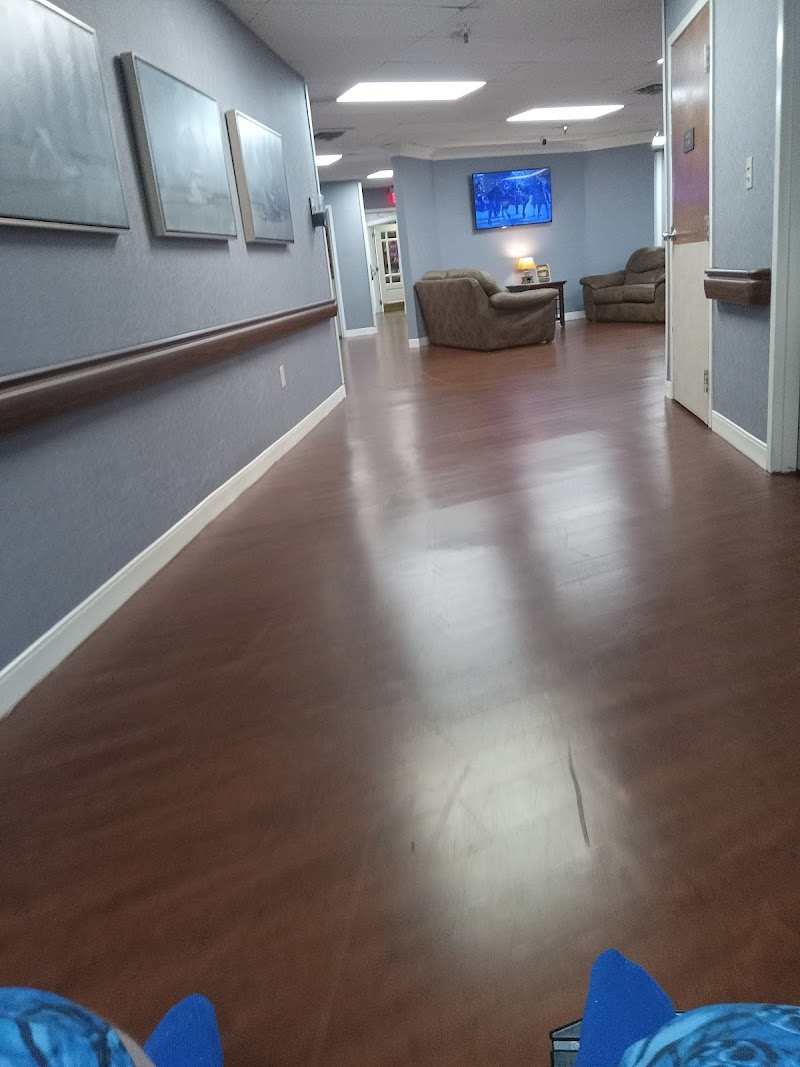
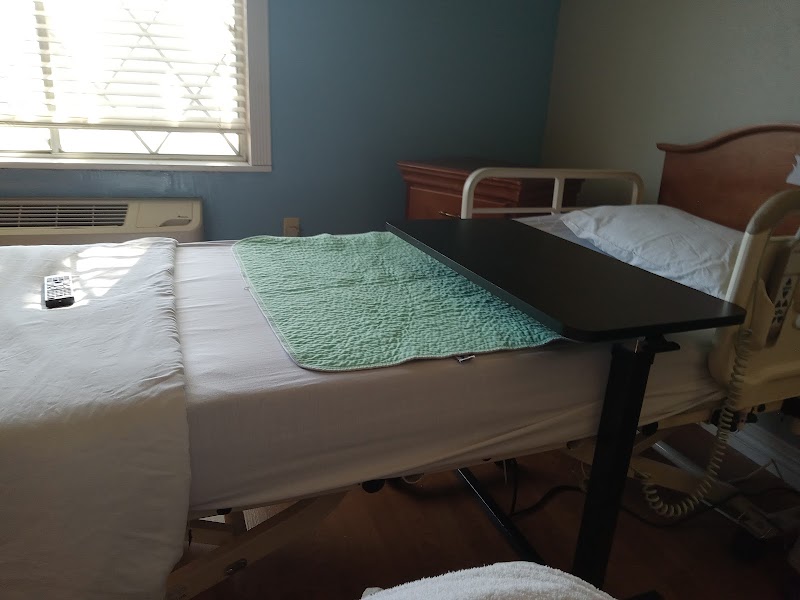
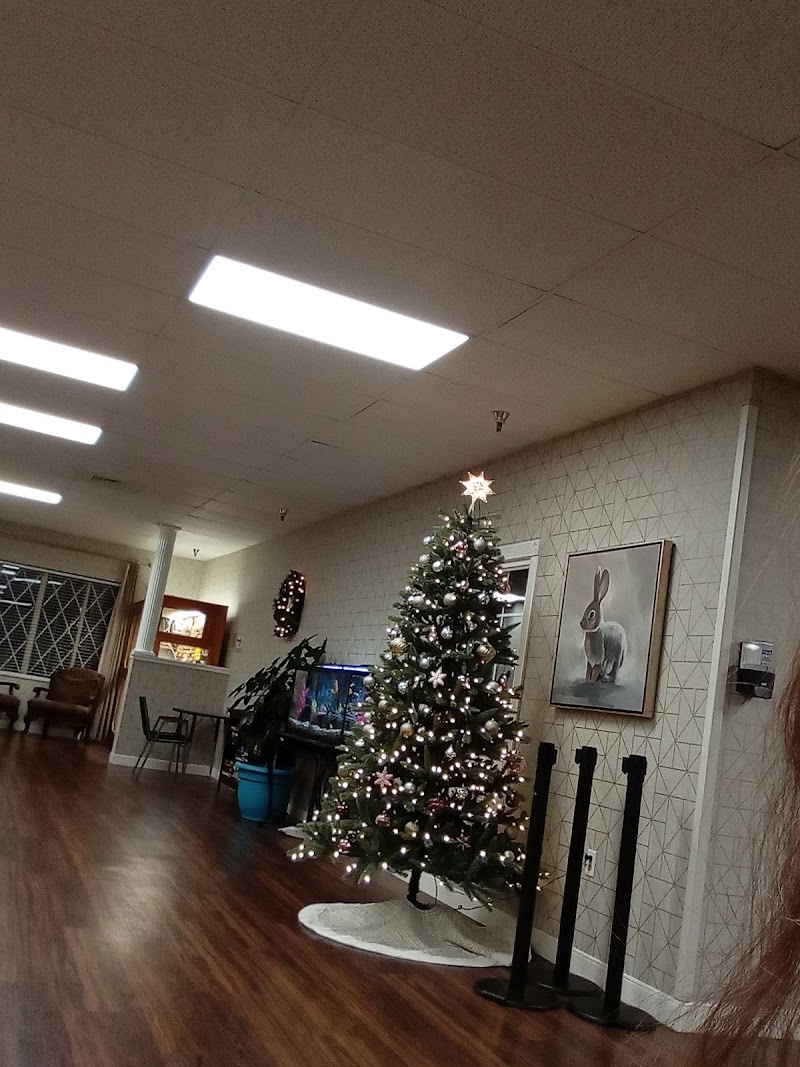
NHC HEALTHCARE, JOPLIN

2700 EAST 34TH STREET, JOPLIN, MO 64803 (417) 781-1737
For profit - Corporation 124 Beds NATIONAL HEALTHCARE CORPORATION Data: November 2025
Trust Grade
55/100
#178 of 479 in MO
Last Inspection: October 2023

Over 2 years since last inspection. Current conditions may differ from available data.

Overview

NHC Healthcare in Joplin has a Trust Grade of C, which means it is average and sits in the middle of the pack for nursing homes. In Missouri, it ranks #178 out of 479 facilities, placing it in the top half, and #2 out of 5 in Newton County, indicating it has only one local competitor that's better. The facility is showing improvement, with the number of issues decreasing from 14 in 2023 to just 1 in 2024. Staffing is also a positive aspect-while rated average overall, the turnover rate of 51% is below the state average of 57%, suggesting that staff generally stay longer and build relationships with residents. On the downside, the facility has had some serious incidents, including a failure to provide proper care for a resident's pressure ulcer, which led to a hospitalization due to infection. Additionally, staff failed to ensure that residents received regular showers, with reports indicating some residents went weeks without bathing. However, the facility has no fines recorded, which is a good sign of compliance with regulations.

Trust Score
C
55/100
In Missouri
#178/479
Top 37%
Safety Record
Moderate
Needs review
Inspections
Getting Better
14 → 1 violations
Staff Stability
⚠ Watch
51% turnover. Above average. Higher turnover means staff may not know residents' routines.
Penalties
✓ Good
No fines on record. Clean compliance history, better than most Missouri facilities.
Skilled Nurses
⚠ Watch
Each resident gets only 27 minutes of Registered Nurse (RN) attention daily — below average for Missouri. Fewer RN minutes means fewer trained eyes watching for problems.
Violations
⚠ Watch
28 deficiencies on record. Higher than average. Multiple issues found across inspections.
★★★☆☆
3.0
Overall Rating
★★★☆☆
3.0
Staff Levels
★★★☆☆
3.0
Care Quality
★★★☆☆
3.0
Inspection Score
Stable
2023: 14 issues
2024: 1 issues

The Good

  • Full Sprinkler Coverage · Fire safety systems throughout facility
  • No fines on record

Facility shows strength in fire safety.

The Bad

3-Star Overall Rating

Above Missouri average (2.5)

Meets federal standards, typical of most facilities

Staff Turnover: 51%

Near Missouri avg (46%)

Higher turnover may affect care consistency

Chain: NATIONAL HEALTHCARE CORPORATION

Part of a multi-facility chain

Ask about local staffing decisions and management

The Ugly 28 deficiencies on record

1 actual harm
Jun 2024 1 deficiency 1 Harm
SERIOUS (G) 📢 Someone Reported This

A family member, employee, or ombudsman was alarmed enough to file a formal complaint

Actual Harm - a resident was hurt due to facility failures

Pressure Ulcer Prevention (Tag F0686)

A resident was harmed · This affected 1 resident

**NOTE- TERMS IN BRACKETS HAVE BEEN EDITED TO PROTECT CONFIDENTIALITY** Based on interview and record review, the facility failed to provide pressure ulcer care and monitoring per standards of practic...

Read full inspector narrative →
**NOTE- TERMS IN BRACKETS HAVE BEEN EDITED TO PROTECT CONFIDENTIALITY** Based on interview and record review, the facility failed to provide pressure ulcer care and monitoring per standards of practice when staff failed to follow physician orders for treatment of an unstageable pressure ulcer (occurs when the base of a full-thickness tissue loss wound is covered by a layer of dead tissue that prevents staging of the ulcer) to one resident's (Resident #1's) coccyx (tailbone area), failed to update the treatment after a visit to the wound clinic, and failed to complete a weekly wound assessment of the resident's pressure ulcer. The resident developed a subsequent infection of his/her pressure ulcer that required hospitalization. The facility census was 68. Review of the facility assessment guideline titled, Assessments, dated January 2024, showed the following:: -Braden Scale (skin risk assessment completed by facility staff) completed within 24 hours of admission and then weekly for four weeks; -Weekly wound assessment; -Daily pressure ulcer monitoring will include an evaluation of the ulcer if no dressing is present; an evaluation of the status of the dressing if present (intact, drainage, leaking); status of the area surrounding the ulcer that can be observed without removal of the dressing; presence of possible complications such as signs of increasing of are of ulceration or soft tissue infection; and presence of pain. Review of the facility's policy/procedure titled, Wound Care, revised October 2010, showed the following: -The purpose of the procedure was to provide guidelines for the care of wound to promote healing; -Verify that there is a physician's order for the procedure; -The following information should be documented in the resident's medical record: the type of wound care provided; the date and time the wound care was given; the name and title of the of the individual performing the wound care; any change in the resident's condition; all assessment data (wound bed color, size, drainage, etcetera) obtained when inspecting the wound; any problems or complaints by the resident related to the procedure; if the resident refused the treatment and the reason why; and the signature and title of the person recording the data. 1. Review of Resident #1's face sheet showed the following: -admission date of 04/18/24; -Diagnoses included post coronary artery bypass graft (CABG - a medical procedure to improve blood flow to the heart), muscle weakness, and difficulty in walking. Review of the resident's admission assessment (body diagram), dated 04/18/24, completed by the facility's wound nurse, showed the wound nurse drew a circle over the resident's coccyx area with a number one, indicating an unstageable pressure ulcer to the area. Review of the resident's Wound Management Detail Report, dated 04/28/24 at 5:39 P.M., completed by the facility's wound nurse, showed the following: -Date/time identified: 04/18/24 at 5:38 P.M.; -Wound Type: Pressure ulcer; -Wound Location: Coccyx; -Present on admission: Yes -Length: 11.0 centimeters (cm) in length (head to toe direction); -Width: 2.0 cm in width (side to side direction); -Can depth be measured: No; -Exudate (drainage) amount: Light -Exudate type: Serous (clear, amber, thin, and watery); -Stage: Unstageable due to presence of slough (a yellow or white, soft, wet, or dry material that can appear in the wound bed during the inflammation phase of healing); -Tissue Type: Slough; -Skin surrounding the wound: Dark purple or rusty discoloration. Review of the resident's April 2024 Physician Order Sheet (POS) showed the following: -An order, dated 04/18/24, for staff to cleanse the affected area to the coccyx, pat dry, apply a Mepilex (silicone adhesive foam) sacrum (area of the low back directly above the coccyx) dressing. Staff to change every three days on the day shift; (6:00 A.M. to 6:00 P.M.) and daily, as needed, if missing or soiled; -An order, dated 04/18/24, for wound care company to evaluate and treat the resident as indicated. Review of the resident's April 2024 Treatment Administration Record (TAR) showed the following: -An order, dated 04/18/24, for staff to cleanse the affected area to the coccyx, pat dry, and apply a Mepilex sacrum dressing once a day (6:00 A.M. - 6:00 P.M.) every three days; -The nurses did not initial completion of the treatment on 04/18/24, the day of admission to the facility. Review of the resident's Braden Scale for Prediction of Pressure Sore Risk (Acuity), dated 04/19/24, showed staff assessed the resident as not at risk for the development of a pressure ulcer. Review of the resident's April 2024 TAR showed the nurses did not initial completion of the ordered treatment on 04/19/24 or 04/20/24. Review of the resident's April 2024 TAR showed the following: -On 04/21/24, Registered Nurse (RN) B initialed completion of the ordered treatment with a comment of Late Administration: Other, Comment: Done on night shift. (Three days after the initial treatment order was received.); -The nurses did not document completion of the treatment on 04/22/24 and 04/23/24; -On 04/24/24, RN B initialed completion of the treatment with a comment of Late Administration: Other, Comment: Done on night shift; -The nurse did not document completion of the treatment on 04/25/24. Review of the resident's wound care clinic office visit, dated 04/25/24, showed the following: -Wound Site: Sacrum; -Cause: Pressure; -Onset: 04/10/24; -Care started: 04/25/24; -Length 4.3 cm, width 2.5 cm, Depth 1.1 cm; -Stage: 4 (a full thickness skin loss that extends to muscle, bone, tendon, or ligament); -Depth: Full thickness; -Amount of Drainage: Moderate; -Drainage type: Yellow/Tan; -Slough: 26-50%; -Necrotic (black, brown, or dark dead tissue) : 26-50%; -Sacrum cleansed with soap; -Odor after cleansing: None/Absent; -Mechanical debridement (removal of dead tissue using physical force) performed with gauze and saline. -Exposure: Subcutaneous tissue (the innermost layer of skin/fat) exposed; -Peri wound skin: Denuded (loss of the skin's outer layer); -Sharp debridement (the removal of dead tissue using a sharp instrument, such as a scalpel) performed by a physician; -Patient instructions: Any wound can become infected. Signs of infection include: redness, red streaks, swelling, pus, drainage, warmth in the area of the wound, fever, or increased pain or tenderness. Call the wound center if you have any questions; -Clean the wound as directed. Apply medication to the wound as directed. Dress with supplies as directed by the nurse and physician. Change dressing as directed; -After debridement you may see some bleeding. If bleeding occurs, hold pressure on the wound and re-bandage wound. If bleeding does not stop, call the wound center or go to the nearest emergency room; -Please schedule a follow-up appointment in one week; -Orders faxed or sent to the facility. Review of the resident's wound care clinic referral form, dated 04/25/24, showed the following: -Diagnosis of pressure ulcer of sacral region, stage 4; -Wound care orders signed by the wound care physician on 04/25/24 as follows: Nursing home to perform wound care every other day and as needed (PRN). Cleanse sacrum with soap and water. Irrigate with normal saline (NS). Apply skin prep to periwound. Apply Alginate Silver (a highly-absorbent, antibacterial dressing), then cover with Mepilex Border sacrum; -Call the clinic with any questions. Review of the resident's medical record showed staff did not document the weekly wound assessment due to be completed on 04/25/24 (one week after the resident's initial wound assessment). Review of the resident's New Patient History and Physical, completed by the facility physician, dated 04/25/24, showed the following: -Chief complaint included pressure ulcer of the coccyx; -Resident has a pressure ulcer on his/her coccyx and wound care is following him/her. Review of the resident's April 2024 POS showed an order, dated 04/25/2, for nurses to complete weekly skin observation assessments on Thursdays on 6:00 P.M. - 6:00 A.M. shift. Review of the resident's April 2024 TAR showed the following: -An order, dated 04/18/24, to cleanse affected area to the coccyx, pat dry, apply a Mepilex sacrum dressing once a day (6:00 A.M. - 6:00 P.M.) every three days; -Staff did not initial completion of the treatment on 04/25/24 and 04/26/24; -Staff did not update the resident's treatment order based on the wound care clinic's orders for treatment from 04/25/24. Review of the resident's Braden Scale for Prediction of Pressure Sore Risk (Acuity), dated 4/26/24, showed the following: -Staff assessed the resident as at risk for the development of a pressure ulcer; -Pressure reducing device for chair and bed. Review of the resident's weekly skin observation sheet, dated 04/26/24, showed the following: -Resident current pressure ulcer risk score 17 (at risk); -Pressure reducing device to bed. Review of the resident's April 2024 TAR showed the following: -An order, dated 04/18/24, to cleanse affected area to the coccyx, pat dry, apply a Mepilex sacrum dressing once a day (6:00 A.M. - 6:00 P.M.) every three days; -On 4/27/24, Licensed Practical Nurse (LPN) C documented: Not administered: Other, Comment: Order changed per wound clinic; -Staff did not update the resident's treatment order based on the wound care clinic's orders for treatment from 04/25/24. Review of the resident's progress note dated 04/28/24, at 10 :30 A.M., showed a nurse documented the following: -Resident was alert and oriented, pleasant, and cooperative. He/she able to voice needs. Skin was warm/dry. Temperature measured 101.6 degrees Fahrenheit (F) (average normal temperature is 98.6 degrees F). Staff administered Tylenol and temperature is now 99.6 degrees F. Resident asked how he/she felt, and resident replied, I feel alright. Medications as ordered. Review of the resident's April 2024 TAR showed the following: -An order, dated 04/18/24, to cleanse affected area to the coccyx, pat dry, apply a Mepilex sacrum dressing once a day (6:00 A.M. - 6:00 P.M.) every three days; -Staff did not document completion of the treatment on 04/28/24 and 04/29/24; -Staff did not update the resident's treatment order based on the wound care clinic's orders for treatment from 04/25/24. Review of the resident's progress note dated 04/29/24, at 11:37 P.M., showed a nurse documented the following: -Resident started on intramuscular (IM - into the muscle injections) antibiotic for patchy left lung opacities (hazy gray areas on an X-ray that may indicate a concern, such as pneumonia or other respiratory disorder). IM injection given to the resident's left upper arm. The resident shared that he/she does not have much appetite. No adverse reaction noted or reported. Review of the resident's April 2024 TAR showed the following: -An order, dated 04/18/24, to cleanse affected area to the coccyx, pat dry, apply a Mepilex sacrum dressing once a day (6:00 A.M. - 6:00 P.M.) every three days; -On 04/30/24, LPN A initialed completion of the treatment (six days after the last documented treatment); -Staff did not update the resident's treatment order based on the wound care clinic's orders for treatment from 04/25/24. Review of the resident's progress note dated 04/30/24, at 10:24 A.M., showed a nurse documented the following: -Resident's emergency contact called the facility to request an update on the resident's condition. This nurse informed the resident's emergency contact of the resident's hemoglobin (red blood cells that carry oxygen from the lungs to the rest of the body) levels as well as the chest X-ray and antibiotics. The emergency contact expressed thankfulness for the prompt reply. No complaints of pain or discomfort. The resident began oral antibiotics this shift. No signs/symptoms of adverse reaction. Lung sounds diminished. Resident remains on room air. oxygen saturation is 93 %. Vital signs are within normal limits. Fluids encouraged. Review of the resident's progress note dated 04/30/24, at 3:52 P.M., showed a nurse documented the following: -The physician returned call related to resident's hemoglobin blood test result of 7.1 grams/deciliter (g/dL) (normal range 13.8-17.2 g/dL); -Verbal orders for labs erythrocyte sedimentation rate (ESR - a non-specific indicator or inflammation or infection in the body) and a C-Reactive protein (CRP - an indication of inflammation in the body). Review of the resident's progress note dated 04/30/24, at 4:28 P.M., showed a nurse documented the following: -Resident having decreased blood pressure this shift; -Notified the resident's physician via phone call; -Verbal physician order to discontinue amlodipine (a medication used in the treatment of high blood pressure) and lisinopril (a medication used in the treatment of high blood pressure and heart failure); -Monitor blood pressure every shift for one week and then routinely; -Continue Coreg (a medication used in the treatment of high blood pressure and heart failure) 25 milligrams (mg) twice daily; -Add parameters to Coreg, do not give if blood pressure less than 110/60 millimeters of Mercury (mm/Hg) or if pulse less than 60 beats per minute. Review of the resident's progress note dated 04/30/24, at 8:58 P.M., showed an on-call physician documented the following: -Was called because the resident had been spiking a fever of 102.2 F; -The resident apparently has a decubitus (pressure ulcer) to his/her coccyx with foul smelling discharge and has been coughing and a recent chest x-ray showed a patchy infiltrate in the left lung; -The resident is indicating a cough and is already on ceftriaxone (an antibiotic); -On-site examination was by the nurse and the resident was evaluated by the physician via video with the assistance of the nurse; -Alert/awake, not in any significant distress; -Lungs per nurse good air entry bilaterally and no wheezing or crackles; -Heart sounds regular per nurse; -Able to move arms and legs; -Assessment: 1. pneumonia, 2. possible infected decubitus (pressure ulcer); -Plan: 1. pneumonia- resident is being sent to the hospital for further evaluation and advise; 2. possible infected decubitus pressure ulcer. Review of the resident's progress note dated 04/30/24, at 9:30 P.M., showed RN B documented the following: -Resident had a fever and puking. Vital signs were as follows: Temperature = 102.2 degrees F, pulse oximetry = 87 % on room air (normal range = 95-100 %), heart rate = 97 beats per minute (normal range = 60-100), and blood pressure 142/71 mm/Hg (normal = 120/80 mm/Hg). Nurse called the on-call physician and shared what was going on with the resident. The physician advised the resident to be sent out to the hospital for further evaluation and treatment, resident agreed. The nurse called the hospital emergency room to give report and called the ambulance for transport. Resident transferred from his/her bed to the stretcher with two staff assisting from the facility and two ambulance staff assisting. Review of the resident's hospital emergency department visit documentation, dated 05/01/24, showed the following: -Seen by provider on 04/30/24, at 10:48 P.M.; -Presents in the emergency department due to fever, increased weakness. According to emergency medical services (EMS) report the patient did have a recent CABG about three weeks ago, and was at the nursing home for rehabilitation. Patient does express increased weakness, mild cough, and occasional shortness of breath, but otherwise declines physical complaints. Patient is also found to have a stage IV sacral decubitus ulcer. This was discussed with general surgery who recommended admission to the hospital with surgical consultation; -Impression/Diagnosis: Sacral decubitus ulcer, stage IV, generalized weakness. Review of the resident's hospital brief provider note, dated 05/01/24, showed the following: -Examination of the resident's sacral decubitus ulcer revealed a large, deep, gangrenous (dead tissue caused by infection or lack of blood flow) sacral decubitus ulcer, at least 10 cm in diameter, with dark, gray, gangrenous tissue throughout and a foul odor; -Recommended surgical debridement of wound. During interviews on 06/20/24, at 11:00 A.M. and 2:18 P.M., the wound nurse said the following: -Upon arrival from the hospital, the resident had a Mepilex dressing on his/her coccyx. The nurse removed the dressing and discovered an unstageable pressure ulcer; -The pressure ulcer was covered with slough and therefore he/she could not determine the depth of the wound; -He/she contacted the physician and obtained treatment orders; -He/she assessed the resident's wound and changed the resident's dressing; -He/she did not document the dressing change; -The wound nurse assessed the resident's wound on admission, but he/she then took off work for the remainder of the resident's stay at the facility; -He/she typically completed wound assessments weekly on any resident pressure ulcers; -During the resident's stay, on 04/25/24, facility staff transported the resident to an out of the facility wound clinic for treatment; -In the past, the wound clinic frequently asked the facility to leave other residents' dressings in place until their return to the wound clinic. During an interview on 06/20/24, at 11:25 A.M., LPN A said the following: -He/she cared for the resident a few times and remembered the resident had a pressure ulcer to his/her coccyx; -The resident went to a wound clinic for treatment; -He/she was unsure if any nurses at the facility measured or assessed the resident's pressure ulcer while the wound nurse was off work. During an interview on 06/20/24, at 2:27 P.M., the Director of Nursing (DON) said the following: -On 04/25/24, LPN A received a verbal phone order from the wound clinic to leave the resident's treatment in place, but LPN A did not document the order. During an interview on 06/20/24, at 2:31 P.M., LPN A said the following: -After the resident's return, the wound clinic called and told LPN A not to remove the resident's coccyx dressing because the treatment would be done at the wound clinic on the next weekly visit; -LPN A passed the information on in verbal report to the night nurse, but did not document any change in the resident's treatment order. During an interview on 06/20/24, at 3:05 P.M., LPN C said the following: -He/she did not recall ever seeing the resident's pressure ulcer; -He/she recalled during a shift to shift report, the off going nurse informed him/her not to remove the resident's coccyx dressing during a change of shift report because the wound clinic would be completing the treatment; -LPN C was unsure which day he/she heard this information. During an interview on 06/20/24, at 3:11 P.M., Registered Nurse (RN) B said the following: -He/she changed the dressing on the resident's coccyx, but did not recall any odor from the wound until 04/30/24; -On 04/30/24, the resident developed a fever, despite staff administration of ordered antibiotics for a respiratory infection; -The nurse became concerned the resident's fever might be an indication of something serious; -He/she contacted the on-call physician, and the on-call physician conducted a virtual visit with the resident; The resident exhibited increased weakness, vomiting, and a the nurse assessed a foul odor coming from his/her coccyx pressure ulcer; -RN B did not recall the appearance of the resident's pressure ulcer. During an interview on 06/24/24, at 12:37 P.M., the Transportation Director said the following: -On 04/25/24, he/she accompanied the resident to the wound clinic; -After the appointment, the wound clinic staff tried to give orders verbally to the Transport Director to not change the resident's pressure ulcer dressing for 24 hours, but he/she informed the wound care clinic staff they would need to give any orders to the facility nurse, as he/she was not a nurse; -Upon return to the facility, the Transportation Director relayed this information to the facility nurse, LPN A. During an interview on 06/24/24, at 11:15 A.M., the Director of Nursing (DON) said the following: -Staff admitted the resident to the facility on [DATE] from the hospital, but the hospital did not inform the facility of the resident's coccyx pressure ulcer upon admission to the facility and the hospital discharge paperwork did not contain an order for treatment to the pressure ulcer; -On 04/18/24, the wound nurse observed the resident's coccyx pressure ulcer and obtained a physician's order for treatment; -The wound care nurse was then off work starting on 04/19/24 for several days; -If the wound nurse or any nurse was unable to initial a pressure ulcer treatment order as completed, he or she should document the wound care performed in a progress note in the resident's medical record; -If the resident went to the wound clinic and the wound clinic did not send any paperwork back with the resident, then the nurse on duty should call the wound clinic and request the wound clinic to send the information; -The nurse working on 04/25/24, LPN A, said the wound clinic called and informed LPN A not to change the resident's dressing, but LPN A failed to document the conversation or write an order to hold the treatment; -The nurse should have entered a physician's order into the computer to discontinue the wound care order and should have documented in a progress note about the conversation; -LPN C told the DON, another nurse passed on in report to LPN C to hold (not perform) the resident's wound care, but staff did not place an order to hold or discontinue the wound care order; -LPN C should have followed the current pressure ulcer treatment order for wound care or called the wound care clinic to clarify the order, rather than just hold the treatment without an order; -Facility nurses should complete weekly skin assessments and the wound nurse should complete weekly wound assessments; -The DON did not assign another nurse to complete the weekly wound assessment during the week the wound nurse was off work, but the wound clinic assessed the wound 04/25/24; -The facility did not request the wound clinic paperwork, which included the assessment of the resident's pressure ulcer or the treatment orders until 06/20/24, after the surveyor requested the information. During an interview on 06/24/24 at 1:05 P.M., the Administrator said nurses should follow physician's orders for treatment of pressure ulcers. MO00237757
Oct 2023 9 deficiencies
CONCERN (D) 📢 Someone Reported This

A family member, employee, or ombudsman was alarmed enough to file a formal complaint

Potential for Harm - no one hurt, but risky conditions existed

Deficiency F0698 (Tag F0698)

Could have caused harm · This affected 1 resident

Based on observation, interview, and record review, the facility failed to ensure communication occurred with the dialysis (a type of treatment that helps the body remove extra fluid and waste product...

Read full inspector narrative →
Based on observation, interview, and record review, the facility failed to ensure communication occurred with the dialysis (a type of treatment that helps the body remove extra fluid and waste products from the blood when the kidneys are not able to) center for one resident (Resident #1) of one sampled resident reviewed for dialysis. This failure placed the resident at risk of complications that might otherwise have gone unnoticed. The facility census was 70. Review of the facility's Dialysis Contract, dated 10/01/18, showed the following: -Collaboration of Care - Both parties shall ensure that there is documented evidence of collaboration of care and communication between the Long-Term Care Facility and the ESRD (End-Stage Renal Disease - permanent kidney failure that requires a regular course of dialysis or a kidney transplant) Dialysis Unit; -To provide to the Long-Term Care Facility information on all aspects of the management of the ESRD resident's care related to the provision of Renal Dialysis Services. the Long-Term Care Facility shall ensure that ESRD residents are prepared to spend an extended length of time at the ESRD Dialysis Unit and have received proper nourishment and any medications prescribed for reasons other than the treatment of ESRD, as appropriate, before coming to the ESRD Dialysis Unit. 1. Review of Resident #1's Face Sheet located in the Face Sheet tab of the electronic medical record (EMR) showed the following: -admission date of 11/19/15; -Diagnoses that included ESRD, heart failure (the heart can't pump enough oxygen-rich blood to meet the body's needs), and was dependent on dialysis. Review of the the resident's Dialysis Care Plan, located in the RAI tab of the EMR, dated 04/09/21, showed the following: -Resident had stage 4 kidney disease and required dialysis; -Dialysis started in January 2020; -Resident is now getting hemodialysis (a machine filters wastes, salts and fluid from the blood when the kidneys are no longer healthy enough to do this work); -Resident had a shunt (aids the connection from a hemodialysis access point to a major artery) revision for dialysis in May 2020; -Check thrill and bruit (sounds that are made as blood passes through the dialysis fistula) every shift; -Notify the doctor as needed; -Make arrangements for resident to get to dialysis three times a week; -Monitor blood pressure, especially on dialysis days; -Notify the doctor if resident gains three pounds in a day or 5 pounds or more in two days. Review of the resident's Nutrition Care Plan, dated 04/09/21, located in the RAI tab of the EMR, showed the following: -The resident is at nutritional risk due to receiving dialysis and diagnoses of obesity & Alzheimer's; -Staff to provide foam silverware at meals (edited on 01/23/23), a regular diet (edited on 01/23/23), prefers meals in the dining room (edited on 05/04/23), one ounce extra protein at each meal; -The resident likes to choose double meat portions due to lactose intolerance (edited 08/16/21); -Lactose intolerant-requests almond milk at breakfast and lunch (edited 04/09/21); -Educate resident on the importance on protein-rich foods (edited on 04/09/21). Review of the resident's current Physician Orders located in the Orders tab of the EMR showed the following: -An order, dated 05/23/23, for dialysis on Monday, Wednesday, and Friday; -An order, dated 06/28/23, for fluid restriction of 1500 ml (milliliters) every 24 hours. Special Instructions included 120 ml with each meal; 100 ml with each medication pass, four times daily; and 400 ml each day; and 350 ml each night. Review of the resident's quarterly Minimum Data Set (MDS - a federally mandated assessment tool completed by facility staff) located in the RAI tab of the EMR with an Assessment Reference Date (ARD) of 09/09/23 showed the following: -The resident had severely impaired in cognition; -The resident was independent in eating/drinking; -The resident was dialysis. Review of the resident's Nutrition Progress Note, an 07/18/23, located in the Progress Notes tab of the EMR by the Registered Dietician (RD) showed the following: -History of bilateral lower extremity edema (swelling), but none at this time; -Remains fluid restriction of 1500 ml/24 hours; -History of forgetting the fluid restriction; -Dialysis RD recommended encouraging the resident to refrain from excess salt and fluids; -Charge nurse re-educated today per progress notes; -It is noted that with education, the resident makes healthy choices initially, but within minutes, he/she is requesting snacks (salty, high fat, or bananas) and more beverages. Review of the resident's Nutrition Care Plan, located in the RAI tab of the EMR, showed staff did not update with the RD updates or revisions regarding the dialysis RD recommendations or to show the fluid restriction. Review of the resident's quarterly Nutrition Progress Note located in the Progress Notes tab of the EMR showed current and generalized edema. The resident remains on fluid restriction of 1500 ml/24 hours. Resident has a history of forgetting the fluid restriction. Review of the resident's Resident Documents and Progress Notes sections of the EMR showed staff did not document a Post-Dialysis Communication Worksheet or documentation in the Progress Notes by nursing regarding a follow-up call regarding the resident's dialysis session or if there were any complications from July 2023 to 10/26/23. During an interview on 10/27/23, at 8:14 A.M., the Director of Nursing (DON) staff do not always get back the communication forms. The DON was not aware if staff call and get a verbal report from the dialysis center. During an interview on 10/27/23, at 10:33 A.M., the RD said she reviews the resident one time a month. Staff should be documenting better on the resident. The resident is is very demanding, and the RD does explain about the fluid restriction. The resident is not defiant, but five minutes later he/she is thirsty and even though staff remind him/her about the restriction, he/she will get upset. The RD said she was responsible for the Nutrition Care Plan and it was her fault that it had not been updated/revised, it should have been. During an interview on 10/27/23, at 11:11 A.M., Registered Nurse (RN) 2 said, when the resident goes to dialysis, the night nurse prints out the communication form and staff send it with the resident. It does not always come back though. The RN was not aware that staff needed to follow up to ensure the have had the documentation needed.
CONCERN (D) 📢 Someone Reported This

A family member, employee, or ombudsman was alarmed enough to file a formal complaint

Potential for Harm - no one hurt, but risky conditions existed

Pharmacy Services (Tag F0755)

Could have caused harm · This affected 1 resident

Based on interview and record review, the facility failed to ensure medications were available for administration for one resident (Resident #39) of five sampled residents reviewed for unnecessary med...

Read full inspector narrative →
Based on interview and record review, the facility failed to ensure medications were available for administration for one resident (Resident #39) of five sampled residents reviewed for unnecessary medications. The resident had the potential to experience adverse effects as the result of missing prescribed medications. The facility census was 70. 1. Review of Resident #39's electronic medical record (EMR) Face Sheet tab showed the following: -admission date of 02/18/22; -Diagnoses included hypertensive (high blood pressure) heart disease with heart failure (the heart can't pump enough oxygen-rich blood to meet the body's needs.), atherosclerotic heart disease (build-up of fats/cholesterol in the artery walls) of native coronary artery without angina pectoris (chest pain or discomfort that keeps coming back), hyperlipidemia (elevated blood lipids (cholesterol, triglycerides)), depression, and gastroesophageal reflux disease. Review of the resident's EMR Orders tab showed the following orders: -An order, dated 12/16/22, for atorvastatin (antilipidemic) 40 milligrams (mg), one tab to be given at bedtime for hyperlipidemia; -An order, dated 12/16/22, for Eliquis (blood thinner) 5 mg, one tablet to be given twice a day, clinical indication blood thinner; -An order, dated 12/16/22, for omeprazole capsule (used to treat acid reflux) delayed release 20 mg, one capsule to be given at bedtime for gastroesophageal reflux disease (GERD); -An order, dated 10/19/23, for Senna (a laxative medication) 8.6 mg one tablet to be given twice a day; -An order, dated 10/13/23, for Wellbutrin extend release 150 mg, one and a half tablet to be given twice daily from 07/31/23 through 10/13/23. -An order, dated 10/19/23, for Wellbutrin (an antidepressant) extend release 150 mg, one and a half tablet to be given for depression twice daily from 10/13/23 through 10/19/23; -An order, dated 10/19/23, for Wellbutrin sustained release 150 mg, one tablet to be given twice a day. Review of the resident's September 2023 and October 2023 Medication Administration Record (MAR) located under the EMR Reports tab showed the resident's prescribed medications were documented as not administered due to the medication not being available on the following occasions: -Atorvastatin was not available for administration on 09/30/23, 10/02/23, 10/04/23, 10/05/23, 10/07/23, and 10/09/23; -Eliquis was not available for administration on 10/14/23' -Omeprazole was not available for administration on 09/25/23, 10/05/23, 10/06/23, and 10/07/23; -Senna was not available for administration on 10/19/23 P.M. dose, 10/22/23 P.M. dose, 10/23/23 A.M. dose, 10/24/23 A.M. dose, 10/25/23 A.M. dose, and 10/26/23 A.M. dose; -Wellbutrin was not available for administration on 09/02/23 A.M. dose, 09/24/23 A.M. and P.M. dose, 09/25/23 A.M. dose, 09/26/23 A.M. and P.M. dose, 09/27/23 A.M. dose, 09/28/23 to 09/29/23 A.M. and P.M. doses, 09/30/23 P.M. dose, and 10/02/23 A.M. dose. During an interview on 10/26/23, at 11:22 AM, Certified Medication Technician (CMT) 1 said the resident's medications took a while to get him/her because they received his/her medications through the Veteran's Administration (VA) and the medications needed to be called in and were shipped to the facility. CMT stated the network pharmacy should be notified to send medications over when they were delayed from the VA. During an interview on 10/27/23, at 10:37 AM, the Director of Nursing (DON) confirmed the resident's medications were ordered from the VA, and the facility had a designated person who called in the next refill for VA medications once the medication was received by the facility. The network pharmacy can fill medications in the interim and provide new medications until the VA mail-in order was received. The network pharmacy delivered nightly, except on Sundays. The Senna was an over-the-counter medication and should have been available to administer to the resident. The network pharmacy will often respond that the resident's medications are filled by the VA and once nursing staff confirms with need for coverage they will send the medication over. There was no reason for the medications to be missed.
CONCERN (D) 📢 Someone Reported This

A family member, employee, or ombudsman was alarmed enough to file a formal complaint

Potential for Harm - no one hurt, but risky conditions existed

Deficiency F0757 (Tag F0757)

Could have caused harm · This affected 1 resident

Based on interview and record review, the facility failed to ensure one resident (Resident #49) of five sampled residents reviewed for unnecessary medications, was not administered an antiseptic medic...

Read full inspector narrative →
Based on interview and record review, the facility failed to ensure one resident (Resident #49) of five sampled residents reviewed for unnecessary medications, was not administered an antiseptic medication used to treat recurrent urinary tract infections while being administered an antibiotic for a urinary tract infection. This failure placed the resident at risk for complications related to the use of a medication that is not recommended to be used when being administered an antibiotic. The facility census was 70. Review of a facility policy titled, Adverse Consequences and Medication Errors, revised April 2014, showed the following: -Residents receiving any medication that has a potential for an adverse consequence will be monitored to ensure that any such consequences are promptly identified and reported. 1. Review of Resident #49's Face Sheet located in the Face Sheet tab of the electronic medical record (EMR) showed the following: -admission date of 02/16/22; -Diagnoses included Parkinson's disease (a progress disease of the nervous system) and dementia. Review of the resident's current Physician Orders located in the Orders tab of the EMR showed the following: -An order, dated 05/04/23, the for methenamine hippurate (an antiseptic medication) 1 gram twice a day. Resident to stop taking if antibiotics ordered also. Resume order when antibiotic therapy completed. Review of the resident's Nursing Progress Notes, located in the Progress Notes tab of the EMR showed the following: -On 10/10/23, at 3:27 A.M., received C&S (culture and sensitivity) final report. A new order received from physician to start resident on cephalexin (an antibiotic) 500 mg (milligrams) three times daily for seven days. Review of a 10/10/23, at 9:22 A.M., the resident's Pharmacy Progress Note located in the Progress Notes tab of the EMR showed the following: -Antibiotic review: UTI (urinary tract infection), cephalexin (10/10/23 to 10/16/23), UTI- prophylaxis-methenamine (ongoing). Review of the resident's October 2023 Medication Administration Record (MAR) showed staff did not document that the methenamine was held while the resident was administered antibiotics. During an interview on 10/27/23, at 7:54 AM, the Director of Nursing (DON) said the methenamine should have been held and the pharmacist should have caught this.
CONCERN (D)

Potential for Harm - no one hurt, but risky conditions existed

Medication Errors (Tag F0758)

Could have caused harm · This affected 1 resident

Based on observation, interview, and record review, the facility failed to establish and monitor resident-specific behaviors for the use of an antipsychotic medication for two residents (Residents #49...

Read full inspector narrative →
Based on observation, interview, and record review, the facility failed to establish and monitor resident-specific behaviors for the use of an antipsychotic medication for two residents (Residents #49 and #39) out of ten sampled residents. These failures placed residents at risk for a diminished quality of life and potential unmet care needs. The facility census was 70. Review of a facility policy titled, Medication Monitoring and Management, revised 01/09/19, showed the following: -In order to optimize the therapeutic benefit of medication therapy and minimize or prevent potential adverse consequences, facility staff, the attending physician/prescriber, and the consultant pharmacist perform ongoing monitoring for appropriate, effective, and safe medication use; -When selecting medications and nonpharmacological interventions, members of the interdisciplinary team participate in the care process to identify, assess, address, advocate for, monitor, and communicate the resident's needs and changes in condition. 1. Review of Resident #49's Face Sheet located in the Face Sheet tab of the electronic medical record (EMR) showed the following: -admission date of 02/16/22; -Diagnoses included Parkinson's disease (a progressive neurological disease) and dementia. Review of the resident's quarterly Minimum Data Set (MDS - a federally mandated assessment completed by facility staff) located in the RAI (Resident Assessment Instrument) tab of the EMR, with an Assessment Reference Date (ARD) of 09/01/23, showed the resident was cognitively intact for decision-making and was administered an antipsychotic medication daily. Review of the resident's current Physician Orders located in the Orders tab of the EMR showed the following psychotropic medications: -An order, dated 09/22/22, for olanzapine (an antipsychotic medication) 5 milligrams (mg) at bedtime; -An order, dated 04/29/22, for escitalopram (an antidepressant medication) 20 mg each morning; -An order, dated 04/29/22, for temazepam (a hypnotic medication used to treat insomnia) 30 mg at bedtime. Review of the resident's Psychiatric Condition Care Plan, dated 05/18/22 and reviewed/revised on 09/20/23,located in the RAI tab of the EMR showed the following: -The resident has dementia, depression, and insomnia; -Observe for changes in mood and in behavior; monthly drug review by pharmacy; listen attentively to concerns, fears, explain changes in routine, procedures, etc.; and consult medical doctor as needed for changes in mood and behavior; -Behavior observation every shift for anxiolytic (antianxiety medications) and/or antipsychotic use; -Assess behaviors and try to determine cause, approach in calm manner and smile, administer donepezil (medication for dementia), escitalopram, olanzapine, temazepam as ordered and observed for adverse effects. (Staff did not document specific behaviors that were to be monitored for the use of the psychotropic medications.) During an interview on 10/25/23, at 2:07 P.M., the resident was asked what the reason was he/she was prescribed an antipsychotic medication. The resident stated he/she had hallucinations. They are visual and at times are very scary. The resident said the medication was helpful to him/her. During an interview on 10/27/23, at 7:59 A.M., the DON said the 'Care Plans' are an issue. She was aware that they are not resident-specific. The resident had entered the facility on the olanzapine and staff did not know the behaviors. The DON was not aware of the visual hallucinations as the reason for the use of the antipsychotic medication. This should have been care planned. 2. Review of the Highlights of Prescribing Information for Abilify (aripiprazole), retrieved from /www.accessdata.fda.gov/, showed the following: -Abilify is an atypical antipsychotic medication indicated in the treatment of schizophrenia (delusions (false beliefs), hallucinations (seeing or hearing things that don't exist), unusual physical behavior, and disorganized thinking and speech), bipolar I (manic episodes that last for at least 7 days (nearly every day for most of the day) or by manic symptoms that are so severe that the person needs immediate medical care), adjunctive treatment of major depressive disorder, irritability associated with autistic disorder (a developmental disability caused by differences in the brain), and treatment of Tourette's (a condition of the nervous system which causes people to have tics); -The warnings and precautions included an increased incidence of stroke in elderly people (cerebrovascular problems) that can lead to death and metabolic changes included increased blood sugars and undesirable alterations in lipid levels. Review of Resident #39's EMR Face Sheet tab showed the following: -admission date of 02/18/22; -Diagnoses which included hypertensive (high blood pressure) heart disease with heart failure (a condition where the heart cannot pump sufficient blood to the organs); atherosclerotic heart disease of native coronary artery without angina pectoris (buildup of plaque in the arteries without chest pain); unspecified atrial fibrillation (irregular heartbeat that can contribute to blood clots); hyperlipidemia (elevated blood lipids); unspecified dementia, unspecified severity, without behavioral disturbance, psychotic disturbance, mood disturbance, and anxiety; depression, unspecified; and history of falling. Review of the resident's EMR Progress Notes tab located in the Resident section, on 08/23/23, showed the following: -Social Services Director (SSD) completed quarterly review with the resident. The resident is alert and able to make his needs known. Resident jokingly states that he/she will lie about all answers he/she gives and did state that he/she does not like to be asked questions because he/she does not believe anyone needs to know; -The resident refused to complete the Brief Interview for Mental Status; -The resident denied any signs/symptoms of mood at this time. Resident can easily become agitated, annoyed and can begin yelling toward others. The resident spends most time in his/her room and listens to music or watches TV; -SSD will monitor and assist as needed. Review of the resident's Active Orders in the EMR Orders tab of the resident section showed the following: -An order, dated 10/13/23, aripiprazole (Abilify) 5 mg, one tablet for clinical depression at bedtime. (The orders did not include monitoring of targeted behaviors for Abilify.) Review of the resident's Abilify Order located in the EMR Resident Documents tab in the Resident section showed the following revealed a copy of four nursing progress notes with the physician's order to add 5 milligrams of Abilify handwritten on the notes. The included notes showed: -On 09/26/23, at 6:01 A.M., the resident was noted having behaviors at the start of this shift. Resident was yelling at another resident for being in the center court and not having his dinner. Staff member offered to warm resident's food, but resident refused and proceeded to yell at staff member. Resident then went back to his room; -On 09/28/23, at 1:01 P.M., witnessed resident verbal outburst when shower aide went to his room and offered to give him/her a shower. Resident was yelling obscenities and crying, ordering shower aide out of his/her room. This nurse spoke with resident about his concerns. The resident was crying, verbally jumping from subject to subject, ranging from his/her care here, to his/her Army experiences, to his/her stay at another facility, to his/her PTSD (post-traumatic stress disorder) and other subjects. After approximately 10 minutes, he/she calmed down enough to agree to take a shower; -On 09/30/23, at 5:35 P.M., the resident refused to take all his/her medications through the shift. He/she placed his/her nightstand at the back of his door preventing staff to enter his/her room. Staff attempted to talk to the resident, but he/she just said 'No. Staff left the resident in his room while he's laying on his bed. Plan of care to continue; -On 10/09/23, at 4:00 AM, the resident refused majority of bed time medication this shift. Resident observed barricading door to room, resident stated he/she didn't want anyone in his/her room anymore, this nurse informed resident staff have to check on him/her occasionally to ensure his/her safety, but he/she has a right to not have anyone in his/her room he/she did not want unless there are concerns for safety. Resident yelled at staff twice this shift, but was able to redirect easily. Review of the resident's medical record showed it lacked evidence evidence of behavioral monitoring. During an interview on 10/26/23, at 11:13 A.M., Certified Nursing Assistant (CNA) 1 said the resident was mostly alert and oriented without confusion. CNA1 stated there was one resident who wandered that the resident did not like. The resident would yell and shut his/her door and stay in his/her room when that resident was around. The resident was loud, but generally happy and in a good mood. During an interview on 10/26/23, at 11:22 A.M. with Registered Nurse (RN) 2 and Certified Medication Technician (CMT) 1, RN 2 said the resident had post-traumatic stress disorder and would become irritated at times with some of the residents so nursing staff tried to prevent those interactions. RN2 said the resident usually calmed himself down. CMT 1 said the resident was moody and yelled at times. CMT 1 said the resident was easily calmed down. CMT 1 said the resident who wandered was no longer a resident at the facility. During an interview on 10/27/23, at 10:37 A.M., the DON said the resident cycled hard with his/her depression and had times when he/she was great and times when he/she yells and says he/she should not have come back from war. The resident had been referred for psychiatric services, but had refused previously. In a follow-up interview at 1:13 PM, the DON stated there was no behavior monitoring for the resident's Abilify. The resident did calm down eventually when upset, but how long depended on how mad he/she had gotten.
CONCERN (D) 📢 Someone Reported This

A family member, employee, or ombudsman was alarmed enough to file a formal complaint

Potential for Harm - no one hurt, but risky conditions existed

Deficiency F0760 (Tag F0760)

Could have caused harm · This affected 1 resident

Based on observation, interviews, and record review, the facility failed to ensure all residents were free from significant medication errors when staff failed to ensure one resident's (Resident # 1) ...

Read full inspector narrative →
Based on observation, interviews, and record review, the facility failed to ensure all residents were free from significant medication errors when staff failed to ensure one resident's (Resident # 1) insulin was administered per manufacturer's recommendation. The facility census was 70. , Review of the facility policy titled, Adverse Consequences and Medication Error, revised April 2014, showed the following: -A medication error is defined as the preparation or administration of drugs or biological which is not in accordance with physician's orders, manufacturer specifications, or accepted professional standards and principles of the professional(s) providing services; -Examples of medication error include wrong time. Review of the Manufacturer's Drug Insert for Novolog aspart insulin (fast acting insulin) provided by the Director of Nursing (DON) showed the following: -Inject subcutaneously (below the skin) within 5 to 10 minutes before a meal into the abdominal area, thigh, buttocks, or upper arm; -Warnings and precautions hypoglycemia (low blood sugar) may be life-threatening; -Increase frequency of glucose monitoring with changes to meal pattern and in patient with renal disease. 1. Review Resident #1's Face Sheet located in the Face Sheet tab of the electronic medical record (EMR) showed the following: -admission date of 11/19/15; -Diagnoses included diabetes (a chronic disease that occurs either when the pancreas does not produce enough insulin or when the body cannot effectively use the insulin it produces) and end-stage renal disease (a condition characterized by a gradual loss of kidney function over time. Review of the resident's quarterly Minimum Data Set (MDS - a federally mandated assessment completed by facility staff) located in the RAI (Resident Assessment Instrument) tab of the EMR with an Assessment Reference Date (ARD) of 09/08/23 showed the following: -The resident was severely impaired in cognition; -The resident was administered insulin six out of seven days during the observation period. Review of the residents's Physician Order located in the Orders tab of the EMR showed an order, dated 05/28/23, of the following: -Sliding scale insulin to be administered before meals and at bedtime order; -Novolog U-100 insulin aspart solution 100 units/ml per sliding scale; -If blood sugar is 141 milligram(mg)/deciliter (dl) to 180 mg/dl, administer 2 units of insulin; -If blood sugar is 181 mg/dl to 220 mg/dl, administer 4 units of insulin; -If blood sugar is 221 mg/dl to 260 mg/dl, administer 6 units of insulin; -If blood sugar is 261 mg/dl to 300 mg/dl, administer 8 units of insulin; -If blood sugar is 301 mg/dl to 340 mg/dl, administer 10 units of insulin; -If blood sugar is 341 mg/dl to 380 mg/dl, administer 12 units of insulin; -If blood sugar is 381 mg/dl to 400 mg/dl, administer 14 units of insulin; -If blood sugar is greater than 400 mg/dl, notify the physician. Observation on 10/25/23, at 10:32 A.M., showed Certified Medication Technician (CMT) 1 performed a Fasting Blood Sugar (FBS) test on resident. The results of the FBS test were 143 mg/dl. CMT 1 said the resident would received two units of insulin. Observation on 10/25/23, at 10:37 A.M., showed CMT 1 administered two units of the Novolog insulin into the resident's abdomen. The CMT 1 said the resident would go down to the dining room by 11:00 AM and have an appetizer. Observation on 10/25/23, at 11:09 A.M., showed the resident in bed, asleep. CMT 1 entered the resident's room to wake him/her up and to tell him/her to go to the dining room for the appetizers. The resident got up out of bed and independently self-propelled his/her wheelchair towards the dining room. Observation on 10/25/23, at 11:22 A.M., showed the resident was not provided an appetizer, but a diet coke. CMT 1 spoke with dining staff and a graham cracker packet was provided to the resident. During an interview on 10/25/23, at 11: 27 A.M., showed the Dietary Manager (DM) said the resident did not receive an appetizer on this date due to the appetizer being passed out was mozzarella sticks and since the resident was lactose intolerant. The DM said there was no alternate for the resident for the appetizer. Observation on 10/25/23, at 12:05 P.M., the resident was served lunch (one hour and 17 minutes after the sliding scale insulin was administered). During an interview on 10/16/23, at 5:45 AM, the Director of Nursing (DON) said waiting over one hour to receive a meal after insulin administration means it was too early to have been given insulin to the resident.
CONCERN (D) 📢 Someone Reported This

A family member, employee, or ombudsman was alarmed enough to file a formal complaint

Potential for Harm - no one hurt, but risky conditions existed

Deficiency F0883 (Tag F0883)

Could have caused harm · This affected 1 resident

**NOTE- TERMS IN BRACKETS HAVE BEEN EDITED TO PROTECT CONFIDENTIALITY** Based on interview and record review, the facility failed to offer or provide documentation of consent refusal of pneumonia vacc...

Read full inspector narrative →
**NOTE- TERMS IN BRACKETS HAVE BEEN EDITED TO PROTECT CONFIDENTIALITY** Based on interview and record review, the facility failed to offer or provide documentation of consent refusal of pneumonia vaccinations for two residents (Resident #1 and #42) of five sampled residents The facility census was 70. Review of Centers for Disease Control and Prevention (CDC) website titled Pneumococcal Vaccination: Summary of Who and When to Vaccinate, showed the following: -CDC recommends pneumococcal vaccination for all adults 65 years or older; -For adults 65 years or older who have not previously received any pneumococcal vaccine, CDC recommends one dose of PCV15 or PCV20. If PCV15 is used, this should be followed by a dose of PPSV23 at least one year later; -If PCV20 is used, a dose of PPSV23 is not indicated; -For adults 65 years or older who have only received a PPSV23, CDC recommends to give one dose of PCV15 or PCV20; -The PCV15 or PCV20 dose should be administered at least one year after the most recent PPSV23 vaccination;. -For adults 65 years or older who have only received PCV13, CDC recommends to give PPSV23 as previously recommended; -For adults who have received PCV13, but have not completed their recommended pneumococcal vaccine series with PPSV23, one dose of PCV20 may be used if PPSV23 is not available. If PCV20 is used, their pneumococcal vaccinations are complete. 1. Review of Resident #1's Face Sheet located in the Face Sheet tab of the electronic medical record (EMR) showed the following: -admission date of 11/19/15; -Diagnoses included end-stage renal disease, heart failure (the heart can't pump enough oxygen-rich blood to meet your body's needs.), and was dependent on dialysis (a treatment for people whose kidneys are failing); -Resident was over age [AGE]. Review of the resident's Immunizations located in the Preventative Health tab of the EMR showed the residents's last dose of PPSV 23 was dated 10/30/15 and the next scheduled dose was noted for 10/30/20. Staff did not document administration or refusal of the 10/30/20 dose. 2. Review of Resident #42's Face Sheet located in the Face Sheet tab of the EMR showed the following: -admission date of 12/29/21; -Diagnoses included Alzheimer's disease, dementia, and chronic obstructive pulmonary disease (COPD - a group of diseases that cause airflow blockage and breathing-related problems); -Resident was over age [AGE]. Review of the resident's Immunizations showed the resident was last administered the PPSV 23 pneumonia vaccine on 01/09/09. Staff did not document to show that PPSV 20 was offered or refused, upon admission to the facility, in 2022. 3. During an interview on 10/25/23, at 2:00 PM, the Director of Nursing (DON) said if staff did not document the information on the Immunization page then it was not asked of the resident.
CONCERN (D) 📢 Someone Reported This

A family member, employee, or ombudsman was alarmed enough to file a formal complaint

Potential for Harm - no one hurt, but risky conditions existed

Deficiency F0947 (Tag F0947)

Could have caused harm · This affected 1 resident

Based on record review and interview, the facility failed to ensure two of six staff members (Shower Aide (SA) 2 and Certified Medication Technician (CMT) 4) received appropriate training to meet the ...

Read full inspector narrative →
Based on record review and interview, the facility failed to ensure two of six staff members (Shower Aide (SA) 2 and Certified Medication Technician (CMT) 4) received appropriate training to meet the needs of the residents. The facility census was 70. Review of the facility's policy titled, Certified Nurse Assistant Job Description, revised date of 11/03/21, showed the following: -Certified nursing assistant or currently enrolled in a nurse aide training program, must attend in-service programs, as assigned, to learn procedures and develop skills and meet state requirements. 1. Review of SA 2's personnel file showed the following: -Hired on 08/25/23 as a certified nurse assistant (CNA); -SA 2 was identified to be scheduled to work as one of two shower aides in the facility; -SA 2's education record revealed no documented dementia care training. 2. Review of CMT 4's personnel file showed the following: -Hired on 10/04/23 as a CMT/CNA; -CMT 4's education record showed no documentation of abuse/neglect/exploitation prevention training. 3. During an interview on 10/27/23, at 9:27 A.M., the Administrator said that CMT 4 should have training from his/her previous employer. 4. During an interview 10/27/23, at 2:30 P.M., the Director of Nursing (DON) confirmed that there was no documentation of dementia care training for SA 2 and that he/she had not received CMT 4's prior training records to determine if the abuse/neglect/exploitation prevention training had been completed.
CONCERN (E) 📢 Someone Reported This

A family member, employee, or ombudsman was alarmed enough to file a formal complaint

Potential for Harm - no one hurt, but risky conditions existed

Deficiency F0725 (Tag F0725)

Could have caused harm · This affected multiple residents

Based on observations, interviews, and record review, the facility failed to have sufficient staff on duty to perform resident showers. This failure affected seven residents (Resident #6, #15, #17, #2...

Read full inspector narrative →
Based on observations, interviews, and record review, the facility failed to have sufficient staff on duty to perform resident showers. This failure affected seven residents (Resident #6, #15, #17, #21, #25, #28, and #40) on one of four halls (B hall). The facility census was 70. Review of the facility's policy titled, Certified Nurse Assistant Job Descriptions, dated 11/03/21, showed the following: -Performs all tasks/procedures included on assignment or reports to charge nurse any tasks not completed. 1. During an interview on 10/24/23, at 10:48 A.M., Resident #28 said he/she had not had shower since a week ago Tuesday. The facility got rid of the shower aide and now residents are not getting showers. During the resident group interview on 10/25/23, at 1:00 P.M., Resident #25 said he/she only gets a shower every three weeks. If residents don't give their own, resident don't get one. The residents in the group interview said the shower aide hasn't been at the facility for weeks. During an interview on 10/26/23, at 1:30 P.M., Shower Aide (SA) 2 said she had not been at the facility for 2 ½ weeks. During an an interview on 10/27/23, at 9:27 A.M., with the Director of Nurses (DON) and the Administrator, the DON said there are two bathing aides. Their work is divided up for who is to have a shower on the specific day. They are not assigned to a specific hall. The DON said they have had other staff fill in since SA 2 had been out. Review of the bathing records for the month of October 2023 for B Hall showed the following: -Resident #6 had a shower one day a week on Wednesdays with limited assistance of one. The resident had no showers documented as having been provided from 10/1/23 to 10/26/23 and four missed showers; -Resident #15 had a shower one day a week on Wednesdays with limited assistance of one. The resident had showers documented as having been provided from 10/01/23 to 10/26/23 with one refusal documented on 10/03/23; -Resident #17 did not have a specific shower day noted on the forms provided by the DON. The resident had one shower documented as having been provided on 10/12/23 during the timeframe of 10/08/23 to 10/19/23; -Resident #21 had a shower one day a week on Wednesdays and required a Hoyer lift (mechanical lift for non-weight bearing residents). The resident had no showers documented as having been provided from 10/01/23 to 10/23/23, three missed showers; -Resident #25 was not identified to have a specific shower day on the forms provided by the DON. The resident had no showers documented as having been provided from 10/01/23 to 10/25/23. -Resident #28 was not identified to have a specific shower day on the forms provided by the DON. The resident had no showers documented as having been provided from 10/1/23 to 10/26/23. -Resident #40 was identified to have a shower on Monday and Thursdays with limited assistance of one. The resident had no showers documented as having been provided from 10/9/23 to 10/16/23, four missed showers. Review of the daily staffing worksheet showed two shower aids (SA 1 and SA 2) listed on the daily staffing worksheet, except for 10/11/23, 10/18/23, 10/19/23, 10/20/23, 10/23/23, 10/24/23, and 10/25/23 when only one was listed. During an interview on 10/27/23, at 11:30 A.M., the DON confirmed showers had not been given. The DON said if it wasn't charted, it did not occur. The DON did not know why showers were not provided or reported as having been missed.
CONCERN (E)

Potential for Harm - no one hurt, but risky conditions existed

Deficiency F0887 (Tag F0887)

Could have caused harm · This affected multiple residents

Based on interview and record review, the facility failed to ensure COVID-19 resident vaccinations were offered, administered, or refused by the resident and/or resident representative for four (Resid...

Read full inspector narrative →
Based on interview and record review, the facility failed to ensure COVID-19 resident vaccinations were offered, administered, or refused by the resident and/or resident representative for four (Resident #36, #39, #42, and #49) of five sampled residents reviewed for immunizations. In addition, the facility failed to develop and implement a COVID-19 policy for resident vaccination against the COVID-19 virus. The facility census was 70. 1. Review of Resident #36's Face Sheet located in the Face Sheet tab of the electronic medical record (EMR) showed the following: -admission date of 08/21/21; -Diagnoses included multiple sclerosis (a long-lasting (chronic) disease of the central nervous system), diabetes (a chronic disease that occurs either when the pancreas does not produce enough insulin or when the body cannot effectively use the insulin it produces), and chronic kidney disease. Review of the resident's Immunizations located in the Preventative Health tab of the EMR showed no documentation staff offered the COVID-19 vaccination upon or after admission or that the resident refused. 2. Review of Resident #39's Face Sheet located in the Face Sheet tab of the EMR showed the following: -admission date of 12/18/22; -Diagnoses included heart failure (the heart can't pump enough oxygen-rich blood to meet your body's needs), irregular heart rhythm, and chronic obstructive pulmonary disease (a group of diseases that cause airflow blockage and breathing-related problems). Review of the resident's Immunizations located in the Preventative Health tab of the EMR showed no documentation staff offered the COVID-19 vaccination upon or after admission or that the resident refused. 3. Review of Resident #42's Face Sheet located in the Face Sheet tab of the EMR showed the following: -admission date of 12/29/21; -Diagnoses that included Alzheimer's disease and dementia. Review of the resident's Immunizations located in the Preventative Health tab of the EMR showed no documentation staff offered the COVID-19 vaccination upon or after admission or that the resident refused. 4. Review of Resident #49's Face Sheet located in the Face Sheet tab of the EMR showed the following: -admission date of 02/06/22; -Diagnoses that included Parkinson's disease (a progressive neurological disease) and dementia. Review of the resident's Immunizations located in the Preventative Health tab of the EMR showed no documentation staff offered the COVID-19 vaccination upon or after admission or that the resident refused. 5. During an interview on 10/25/23, at 2:00 P.M., the Director of Nursing (DON) said, if staff did not document the vaccination on the Immunizations page, then it was not offered. 6. During an interview on 10/27/23, at 9:16 AM, the DON said the facility did not develop a policy regarding immunizations for COVID-19.
Aug 2023 2 deficiencies
CONCERN (D) 📢 Someone Reported This

A family member, employee, or ombudsman was alarmed enough to file a formal complaint

Potential for Harm - no one hurt, but risky conditions existed

Deficiency F0602 (Tag F0602)

Could have caused harm · This affected 1 resident

Deficiency Text Not Available

Read full inspector narrative →
Deficiency Text Not Available
CONCERN (D) 📢 Someone Reported This

A family member, employee, or ombudsman was alarmed enough to file a formal complaint

Potential for Harm - no one hurt, but risky conditions existed

Report Alleged Abuse (Tag F0609)

Could have caused harm · This affected 1 resident

Deficiency Text Not Available

Read full inspector narrative →
Deficiency Text Not Available
Jul 2023 3 deficiencies
CONCERN (D) 📢 Someone Reported This

A family member, employee, or ombudsman was alarmed enough to file a formal complaint

Potential for Harm - no one hurt, but risky conditions existed

Deficiency F0602 (Tag F0602)

Could have caused harm · This affected 1 resident

**NOTE- TERMS IN BRACKETS HAVE BEEN EDITED TO PROTECT CONFIDENTIALITY** Based on interview and record review, the facility failed to ensure all residents were free from misappropriation when one resid...

Read full inspector narrative →
**NOTE- TERMS IN BRACKETS HAVE BEEN EDITED TO PROTECT CONFIDENTIALITY** Based on interview and record review, the facility failed to ensure all residents were free from misappropriation when one resident (Resident #2) took one resident's (Resident #1) ring and gave the ring to a family member without permission. The facility's census was 73. Review of the facility policy titled Patient Protection and Response Policy for Allegations/Incidents of Abuse, Neglect, Misappropriation of Property and Exploitation, dated 12/11/17, showed the following: -Misappropriation is the deliberate misplacement, exploitation, or wrongful temporary or permanent use of a patient's belongings or money without the patient's consent. 1. Review of Resident #1's face sheet showed the following: -A re-admission date of 07/17/23; -Diagnoses included Type 2 diabetes (a chronic condition that affects the way the body processes blood sugar), and end stage renal disease (when the kidneys are no longer able to work at a level needed for day to day life). Review of the resident's quarterly Minimum Data Set (MDS - a federally mandated assessment instrument completed by facility staff), dated 06/23/23, showed the resident was cognitively intact. Review of the resident's nursing notes dated 08/02/23, at 2:50 A.M., showed the resident appeared to be down today. When staff asked resident what was wrong, he/she reported he/she is depressed about his/her family member's ring being stolen and the fact he/she has to see them (the resident who took it) every day. 2. Review of Resident #2's face sheet showed the following: -An admission date of 10/16/22; -Diagnoses included hemiplegia (paralysis on one side of the body) and hemiparesis (muscle weakness on one side of the body) following intracerebral hemorrhage (stroke) affecting left non-dominant side, and mild dementia (a group of thinking and social symptoms that interferes with daily functioning). Review of the resident's quarterly MDS, dated [DATE], showed the resident was cognitively intact. Review of the resident's care plan, updated 07/18/23, showed the following: -Resident has difficulty adjustment, general attitude, or/or change in relationship; -Encourage to express feelings of sadness, anger, or loss. 3. Review of the facility investigation, dated 07/17/23, showed the following: -On 07/10/23, Resident #1 reported a missing ring after a room move and hospital stay; -On 07/17/23, Resident #1's roommate, Resident #2, voiced his/her thoughts of his/her family member having the ring. The police were and Resident #1 gave a statement. The officer told Resident #2 to have his/her family member bring the ring to the police station and the officer would retrieve it; -The ring was not returned; -On 07/23/23, Resident #1's family member and Resident #2's family member texted each other and Resident #2's family member apparently admitted having it, and said Resident #2 actually took the ring; -On 07/24/23, Resident #1 called the police to state Resident #2's family member brought a different ring and Resident #1 wanted to press charges. Review of the Social Services Directors (SSD) written statement, dated 07/17/23, showed the following: -Resident #1 stated that he/she had a procedure done where he/she needed to remove jewelry, and placed the jewelry into a bag in his/her bag and in a drawer in his/her over bed table. The resident went to the hospital and called before his/her return and asked to change rooms; -The resident returned on 06/23/23; -On 07/03/23, Resident #1 reported he/she was unable to find his/her ring, but had located his/her bracelet; -The SSD notified the interdisciplinary team (IDT), the Administrator, and the Director of Nursing (DON); -The SSD searched the resident's room and could not find the ring; -Resident #1 described the ring as a gold band with white gold-leaf wrap around a central diamond, and there were diamond chips on the leaf-looking parts; -On 07/17/23, Resident #1 stated that one week prior, Resident #2 came to him/her and said he/she may know where the ring was. Resident #2 apparently told Resident #1 that Resident #2's family member took it to give to his/her significant other. Resident #1 told Resident #2 to bring it back by the weekend (07/15/23 to 07/16/23); -By 07/16/23, the ring was not returned and Resident #1's family member texted Resident #2's family member. Resident #1 stated he/she had screen shots of the text conversation where Resident #2's family member admitted he/she has the ring, but instead of him/her taking the ring, Resident #2 took the ring and gave it to him/her to give to his/her significant other; -Resident #1 called the police who came to the building and took Resident #1's complaint. The police spoke to Resident #2 who explained the ring should be returned and that Resident #1 has signed documents to press charges. The police agreed to allow Resident #2's family member to return the ring to the police station and they would obtain it from them; -The ring was not returned, but a different ring was brought and put in the medication cart for safe keeping over the weekend; -Resident #1 called the police back and ran complaint charges for felony charges for Resident #2, his/her family member, and the family member's significant other. During an interview on 08/08/23, at 11:37 A.M., the SSD said the following: -On 07/03/23, Resident #1 reported his/her ring missing. The resident had just returned from the hospital and had all his/her belongings boxed up from a room move. The staff had found the resident's bracelet in the bottom of a box, but not the ring; -On 07/17/23, Resident #1 came to the SSD and said Resident #2 had come to him/her and said he/she knew where the ring was. Resident #2 told Resident #1 that Resident #2's family member had the ring. Resident #1 said he/she offered Resident #2 a week to get the ring back. When the week passed, and the ring was not returned, Resident #1 called the police and filed a report; -She would consider taking a resident's property misappropriation. During an interview on 08/08/23, at 11:00 A.M., Resident #2 said Resident #1's ring was in Resident #1's bed side table. Resident #2 said he/she showed it to his/her family member and the family member put the ring in his/her pocket and was going to show it to his/her significant other. The family member lost the ring on his/her way to show it to his/her significant other. During an interview on 08/08/23, at 10:50 A.M., Registered Nurse (RN) A said if a resident says something has been stolen, the staff should look for the item, and report to their supervisor immediately. He/she would consider taking something from a resident misappropriation. During an interview on 08/08/23, at 11:20 A.M., Licensed Practical Nurse (LPN) B said if a resident says something is stolen, social services is notified. He/she would consider taking personal property from a resident misappropriation. During an interview on 08/08/23, at 11:25 A.M., Certified Medication Technician (CMT) C said if a resident reports something missing or stolen staff should let the DON know. He/she would consider taking a resident's property to be misappropriation. During an interview on 08/08/23, at 11:30 A.M., LPN D said if a resident reports something stolen, staff should report to the DON or social services. The staff will look for the item. He/she would consider taking something from a resident misappropriation. During an interview on 08/08/23, at 11:35 A.M., Certified Nursing Assistant (CNA) E said if a resident reports something stolen, staff should report it to the nurse. He/she would consider taking a resident's personal items misappropriation. During an interview on 08/08/23, at 1:15 P.M., the DON and Administrator said if a resident says something is stolen, they expect staff to immediately let them know so it can be reported and investigated. They thought the ring had been packed in the box with the bracelet and gotten thrown away during the move to another room. They would consider taking a resident's personal item to be misappropriation. MO00222140
CONCERN (D) 📢 Someone Reported This

A family member, employee, or ombudsman was alarmed enough to file a formal complaint

Potential for Harm - no one hurt, but risky conditions existed

Report Alleged Abuse (Tag F0609)

Could have caused harm · This affected 1 resident

**NOTE- TERMS IN BRACKETS HAVE BEEN EDITED TO PROTECT CONFIDENTIALITY** Based on interview and record review, the facility staff failed to report an allegation of misappropriation of resident property...

Read full inspector narrative →
**NOTE- TERMS IN BRACKETS HAVE BEEN EDITED TO PROTECT CONFIDENTIALITY** Based on interview and record review, the facility staff failed to report an allegation of misappropriation of resident property to the State Survey Agency (Department of Health and Senior Services - DHSS) within 24 hours when staff could not account for one resident's (Resident #1) ring. The facility census was 73. Review of the facility policy titled Patient Protection and Response Policy for Allegations/Incidents of Abuse, Neglect, Misappropriation of Property and Exploitation, dated 12/11/17, showed the following: -An allegation would be considered misappropriation and reportable if it contained the following criteria: any complaint regarding the deliberate misplacement, exploitation, or wrongful, temporary or permanent use of a patient's belongings or money without the patient's consent; -Any partner having either direct or indirect knowledge of any event that might constitute misappropriation of patient property or exploitation must report the event immediately, but not later than 24 hours if the events that cause suspicion do not result in abuse or serious bodily harm. 1. Review of Resident #1's face sheet showed the following: -A re-admission date of 07/17/23; -Diagnoses included Type 2 diabetes (a chronic condition that affects the way the body processes blood sugar), and end stage renal disease (when the kidneys are no longer able to work at a level needed for day to day life). Review of the resident's quarterly Minimum Data Set (MDS - a federally mandated assessment instrument completed by facility staff), dated 06/23/23, showed the resident was cognitively intact. Review of the resident's nursing notes, dated 08/02/23, at 2:50 A.M., showed the following: -Resident was appeared to be down today. When staff asked resident what was wrong, he/she reported he/she was depressed about his/her family member's ring being stolen and the fact he/she has to see them (the resident who took the ring) every day. 2. Review of Resident #2's face sheet showed the following: -An admission date of 10/16/22; -Diagnoses included hemiplegia (paralysis on one side of the body) and hemiparesis (muscle weakness on one side of the body) following intracerebral hemorrhage (stroke) affecting left non-dominant side, and mild dementia (a group of thinking and social symptoms that interferes with daily functioning). Review of the resident's quarterly MDS, dated [DATE], showed the resident was cognitively intact. Review of the resident's care plan, updated 07/18/23, showed the resident had difficulty adjustment, general attitude, or/or change in relationship. Staff to encourage resident to express feelings of sadness, anger, or loss. 3. Review of the facility's investigation, dated 07/17/23, showed the following: -On 07/10/23, Resident #1 reported a missing ring after a room move and hospital stay; -On 07/17/23, Resident #1's roommate, Resident #2, voiced his/her thoughts of his/her family member having the ring. The police were called and Resident #1 gave a statement. The officer told Resident #2 to have his/her family member bring the ring to the police station and the officer would retrieve it; -The ring was not returned;. -On 07/23/23, Resident #1's family member and Resident #2's family member texted each other and Resident #2's family member apparently admitted having it, and said Resident #2 actually took the ring; -On 07/24/23, Resident #1 called the police to state Resident #2's family member brought a different ring and Resident #1 wanted to press charges; -Facility staff did not document reporting the allegation of misappropriation to DHSS. Review DHSS records showed the facility's self-reported the allegation of misappropriation on 07/28/23 (eleven days after the staff were made aware of the incident). Review of the Social Services Directors (SSD) written statement, dated 07/17/23, showed the following: -Resident #1 stated that he/she had a procedure done where he/she needed to remove jewelry, and placed the jewelry into a bag in his/her bag and in a drawer in his/her over bed table. The resident went to the hospital and called before his/her return and asked to change rooms. The resident returned on 06/23/23; -On 07/03/23, Resident #1 reported he/she was unable to find his/her ring, but had located his/her bracelet; -The SSD notified the interdisciplinary team (IDT), the Administrator, and the Director of Nursing (DON). The SSD searched the resident's room and could not find the ring; -Resident #1 described the ring as a gold band with white gold-leaf wrap around a central diamond, and there were diamond chips on the leaf-looking parts; -On 07/17/23, Resident #1 stated that one week prior, Resident #2 came to him/her and said he/she may know where the ring was. Resident #2 apparently told Resident #1 that Resident #2's family member took it to give to his/her significant other. Resident #1 told Resident #2 to bring it back by the weekend (07/1523 to 07/16/23); -By 07/16/23, the ring was not returned and Resident #1's family member texted Resident #2's family member. Resident #1 stated he/she had screen shots of the text conversation where Resident #2's family member admitted he/she has the ring, but instead of him/her taking the ring, Resident #2 took the ring and gave it to him/her to give to his/her significant other; -Resident #1 called the police who came to the building and took Resident #1's complaint. The police spoke to Resident #2 who explained the ring should be returned and that Resident #1 has signed documents to press charges. The police agreed to allow Resident #2's family member to return the ring to the police station and they would obtain it from them; -The ring was not returned, but a different ring was brought and put in the medication cart for safe keeping over the weekend. Resident #1 called the police back and ran complaint charges for felony charges for Resident #2, his/her family member, and the family member's significant other. During an interview on 08/08/23, at 11:37 A.M., the SSD said the following: -On 07/03/23, Resident #1 reported his/her ring missing. The resident had just returned from the hospital and had all his/her belongings boxed up from a room move. The staff had found the resident's bracelet in the bottom of a box, but not the ring; -On 07/17/23, Resident #1 came to the SSD and said Resident #2 had come to him/her and said he/she knew where the ring was. Resident #2 told Resident #1 that Resident #2's family member had the ring. Resident #1 said he/she offered Resident #2 a week to get the ring back. When the week passed, and the ring was not returned, Resident #1 called the police and filed a report; -She would consider taking a resident's property misappropriation. The SSD said she should have reported the allegation to the DHSS on 07/17/23 when Resident #2 told Resident #1 he/she knew where the ring was, and when the police came. During an interview on 08/08/23, at 10:50 A.M., Registered Nurse (RN) A said if a resident says something has been stolen, the staff should look for the item, and report to their supervisor immediately. An investigation should be started, and the State Agency should be notified immediately. He/she would consider taking something from a resident misappropriation. During an interview on 08/08/23, at 11:20 A.M., Licensed Practical Nurse (LPN) B said if a resident says something is stolen, social services is notified, an investigation is started, and the State Agency is notified within 24 hours. If a police report is made, the State Agency should be notified, especially if charges are filed. He/she would consider taking personal property from a resident misappropriation. During an interview on 08/08/23, at 11:25 A.M., Certified Medication Technician (CMT) C said if a resident reports something missing or stolen staff should let the DON know, and it should be reported to the State Agency within two hours. He/she would consider taking a resident's property to be misappropriation. During an interview on 08/08/23, at 11:30 A.M., LPN D said if a resident reports something stolen, staff should report to the DON or social services. The staff will look for the item. The staff should report to the State Agency within two hours. If the police are notified, the State Agency should be notified. He/she would consider taking something from a resident misappropriation. During an interview on 08/08/23, at 11:35 A.M., Certified Nursing Assistant (CNA) E said if a resident reports something stolen, staff should report it to the nurse. The incident should be reported within 24 hours. If the police are notified about the matter, the State Agency should be notified. He/she would consider taking a resident's personal items misappropriation. During an interview on 08/08/23, at 1:15 P.M., the Director of Nursing and Administrator said if a resident says something is stolen, they expect staff to immediately let them know so it can be reported and investigated. An allegation of misappropriation should be reported to the State Agency within 24 hours. They thought the ring had been packed in the box with the bracelet and gotten thrown away during the move to another room. They would consider taking a resident's person item to be misappropriation. MO00222140
CONCERN (D) 📢 Someone Reported This

A family member, employee, or ombudsman was alarmed enough to file a formal complaint

Potential for Harm - no one hurt, but risky conditions existed

Pressure Ulcer Prevention (Tag F0686)

Could have caused harm · This affected 1 resident

Based on observation, interview, and record review, the facility failed ensure all residents received care consistent with standards of practice to related to pressure ulcers (localized damage to the ...

Read full inspector narrative →
Based on observation, interview, and record review, the facility failed ensure all residents received care consistent with standards of practice to related to pressure ulcers (localized damage to the skin and/or underlying soft tissue usually over a bony prominence or related to a medical or other device) when the home failed to provide complete and accurate wound assessments, tracking, monitoring, and care planning of interventions and failed to obtain treatment orders timely when pressure ulcers were identified, for one resident (Resident #1) who developed pressure ulcers while at the facility. The facility census was 74. Review of the National Pressure Injury Advisory Panel's (NPIAP) Quick Reference Guide, dated 2019, showed the following: -Conduct a pressure injury risk screening as soon as possible after admission to the facility and periodically thereafter to identify individuals at risk of developing pressure injuries; -Conduct a full pressure injury risk assessment as guided by the screening outcome after admission and after any change in status; -Develop and implement a risk-based prevention plan for individuals identified as being at risk of developing pressure injuries; -Conduct a comprehensive skin and tissue assessment for all individuals at risk of pressure injuries as soon as possible after admission/transfer to the facility, as a part of every risk assessment, periodically as indicated by the individual ' s degree of pressure injury risk, and prior to discharge from the facility; -Conduct a comprehensive initial assessment of the individual with a pressure injury; -Conduct a comprehensive reassessment of the individual if the pressure injury does not show some signs of healing within two weeks despite appropriate local wound care, pressure redistribution, and nutrition; -Assess the pressure injury initially and re-assess at least weekly to monitor progress toward healing; -Select a uniform, consistent method for measuring pressure injury size and surface area to facilitate meaningful comparisons of wound measurements across time; -Assess the physical characteristics of the wound bed and the surrounding skin and soft tissue at each pressure injury assessment; -Monitor the pressure injury healing progress. Review of the facility policy titled Wound Care, dated October 2010, showed the following should be recorded in the resident's medical record: -The type of wound care given; -Any change in the resident's condition; -All assessment data (wound bed (the bottom of the wound) color, size, drainage, etc.) obtained when inspecting the wound (The policy did not address how often the wound assessments should be completed.) 1. Review of Resident #1's face sheet showed the following: -admission date of 05/05/23; -Diagnoses included Parkinson's disease (a disorder of the central nervous system that affects movement, often including tremors) and chronic kidney disease stage 3 (moderate kidney damage). Review of the resident's physician orders showed an order, dated 05/05/23, for weekly skin observations/assessments. Review of the resident's Treatment Administration Records (TAR), dated 05/05/23 to 06/04/23 showed the following: -An order, dated 05/05/23, for weekly skin observations/assessments; -Staff marked the weekly skin observation/assessment entry for 05/05/23 asChanged to Correct Day of Week and Shift. Review of the resident's medical records showed the facility staff did not document an admission skin assessment. Review of the resident's admission Minimum Data Set (MDS - a federally mandated assessment tool completed by facility staff), dated 05/11/23, showed the resident was moderately cognitively impaired and at risk for pressure ulcers, but had none present. Review of the physician orders showed an order, dated 05/12/23, for weekly skin observations/assessments. Review of the resident's TARs, dated 05/05/023 to 06/04/23, showed the following: -An order, dated 05/12/23, for weekly skin observations/assessments; -Staff did not document completing a skin assessment until 05/14/23. Review of the resident's medical records showed the following: -On 05/15/23, facility staff documented the resident had no skin issues; -On 05/22/23, facility staff documented the resident had no skin issues. Review of the resident's nursing notes, dated 05/26/23, showed the following: -Resident admitted to hospice. He/she was noted to have discoloration and a blister on the coccyx (tail bone). Staff notified the wound nurse; -Resident noted to have wounds on buttocks as well as both heels. Mepilex (a self-adherent foam absorbent dressing for treating chronic and acute wounds) heel bandages were placed by the hospice nurse. Staff notified the wound care nurse. Review of the resident's TAR, dated 05/05/23 to 06/04/23, showed the staff marked the assessment for 05/28/23 as Not Administered/Other. Review of the resident's nursing notes, dated 05/29/23, showed the following: -New area of concern to the coccyx that was a stage 2 pressure ulcer (a sore broken through the top layer of skin and part of the layer below). The wound bed presented as dark purple intact epithelium (the thin tissue forming the outer layer of a body ' s surface). Wound had scant amounts of serosanguineous (a thin, watery fluid that is pink in color due to the presence of small amounts of red blood cells) drainage. The wound had no odor. The wound edges were irregular and flush with the wound base. The peri-wound (area surrounding the wound) has purple discoloration. There were no signs of infection at this time. Measurements were 6 centimeters (cm) x 5.5 cm x 0.1 cm. Treatment order is cleanse the area and apply Allyven sacral dressing (a foam dressing that fits to the sacrum) and change every three days and as needed if missing or soiled; -New area of concern to the left heel that was a suspected deep tissue injury (an injury to the patient's underlying tissue below the skin's surface that results from prolonged pressure in an area of the body). The wound bed presented as dark purple epithelium. The wound had no drainage, odor, undermining (significant erosion underneath the visible wound), or tunneling (a chronic wound that has progressed to form an opening underneath the skin). The wound edges were well defined. The peri-wound was pink/normal in color. The wound had no signs or symptoms of infection at this time. Measurements were 4 cm x 5 cm. Treatment order of spray area with skin prep (a liquid that when applied to the skin forms a protective film or barrier) twice daily; -New area of concern to the right heel that was a suspected deep tissue injury. The wound presented as a ruptured blister with dark purple discoloration noted to the center of the wound. The wound had moderate amounts of serosanguinous drainage, with no odor. The wound had no undermining or tunneling. The wound edges were well defined. The peri-wound was red/blanchable (a reddened area that turns white when pressure is applied) with no signs or symptoms of infection. Measurements were 7 cm x 7 cm x 0.1 cm. Treatment to cleanse area, spray non open areas with skin prep, cover with ABD (a gauze pad used to absorb discharge from heavily draining wounds) wrap and secure. Change every other day and as needed if missing or soiled. Family, physician, and hospice notified of wound status. (Staff documented the wound assessments three days after the wound were initially identified.) Review of the resident's physician orders showed the following: -An order dated 05/29/23, to cleanse the area to the coccyx and apply Allyven sacral every three days and as needed if missing or soiled; -An order, dated 05/29/23, to spray the left heel with skin prep twice daily and monitor for open areas; -An order, dated 05/29/23, to cleanse the area on the right heel, spray the non-open areas with skin prep, cover with an ABD pad, wrap and secure every other day and as needed if missing or soiled. (The orders were obtained three days after the wounds were first identified.) Review of the resident's TAR, dated 05/05/23 to 06/04/23, showed the following: -An order, dated 05/29/23, to cleanse the area to the coccyx and apply Allyven sacral every three days and as needed if missing or soiled. -An order, dated 05/29/23, to spray the left heel with skin prep twice daily and monitor for open areas; -An order, dated 05/29/23, to cleanse the area on the right heel, spray the non-open areas with skin prep, cover with an ABD pad, wrap and secure every other day and as needed if missing or soiled. Review of the resident's TAR showed the following: -On 05/29/23, staff documented the treatment was provided to the resident's coccyx wound and resident's right heel. Staff documented the day shift treatment was provided to the resident's left heel. Staff documented the evening shift treatment was not provided to the resident's left heel because the heel was wrapped; -On 05/30/23, staff documented both the day and evening shift treatments were provided to the resident's left heel; -On 05/31/23, staff documented the treatment was provided to the resident's right heel. Staff documented both the day and evening shift treatments were provided to the resident's left heel; -On 06/01/23, staff documented the resident refused treatment to his/her coccyx wound. Staff documented both the day and evening shift treatments were provided to the resident's left heel; -On 06/02/23, staff documented the treatment was provided to the resident's right heel. Staff documented both the day and evening shift treatments were provided to the resident's left heel; -On 06/03/23, staff documented the day shift treatment was provided to the resident's left heel. Staff documented the evening shift treatment was not provided to the resident's left heel due to condition'; -On 06/04/23, staff documented the treatment was provided to the resident's coccyx wound and the resident's right heel. Staff documented the day shift treatment was provided to the resident's left heel. Staff documented the evening shift treatment was not provided to the resident's left heel because the heel was wrapped; -On 06/05/23, staff documented the day shift treatment was not provided to the resident's left heel because the heel was wrapped. Staff documented the evening shift treatment was provided to the resident's left heel. Review of the resident's medical records, dated 06/05/23, showed facility staff documented the resident had no skin issues. (Staff did not address the identified wounds on the resident's coccyx and heels.) Review of the resident's care plan, updated 05/24/23, showed staff did not update the care plan to reflect the resident's wounds, treatments, and interventions. During an interview on 07/06/23, at 10:56 A.M., Licensed Practical Nurse (LPN) C said he/she does the wound care for the most part, and if he/she is not available the charge nurses do the care. He/she does the measurements on Monday and documents the measurements on Tuesdays. When a resident is admitted , the nurse doing the admission is responsible for doing the admission skin assessment. If the resident has a wound, he/she is notified and assesses the wound, and a treatment is started. If it is over a weekend, he/she is made aware on Monday. The resident did not admit with a wound. His/her heels were boggy (an abnormal texture of tissue characterized by sponginess, usually because of high fluid content). He/she was wearing heel protectors. The resident did develop a sore on his/her coccyx. During an interview on 07/06/23, at 1:20 P.M., Registered Nurse (RN) B said if he/she gets an admission, he/she does an admission skin assessment and documents it in the skin assessments on the computer and in the progress notes. If the resident has a wound, he/she lets the wound nurse know. If it is on the weekend, the wound nurse is notified on Monday. If an aide finds a wound, he/she expects them to let him/her or the wound nurse know immediately. The wound nurse lets the physician know and a treatment is started. RN B does not remember if the resident had wounds. During an interview on 07/06/23, at 1:25 P.M., RN C said if an admission is done, the skin assessment is done at that time or as soon as possible. The admitting nurse does the skin assessment. The assessment is done on paper then scanned in. The measurements of any wounds are done by the wound nurse if she is present. If the wound nurse is not available, she will do it the next day. If staff finds a new wound, they send documentation to the wound nurse and the wound nurse will assess the wound. The wound nurse does weekly wound measurements, the charge nurse does the weekly skin assessments. The measurements are done on Monday. RN C said he/she did not remember if the resident had wounds on admission. Each residents' skin should be visually assessed every week. The charge nurses are responsible for a weekly visual assessment of the skin for each resident and documenting that assessment. If the resident has a wound, the wound nurse is responsible for measuring the wound and documenting the wound. During an interview on 07/06/23, at 12:50 P.M., Certified Nursing Assistant (CNA) D said if he/she finds a new wound on a resident he/she should report it to the nurse immediately. The nurse will report it to the wound nurse and the wound nurse comes to assess. He/she thinks the wound nurse contacts the physician and family. During an interview on 07/06/23, at 12:55 P.M., Certified Medication Technician (CMT) E said if staff finds a new wound they should report it to the nurse immediately. The nurse lets the wound nurse know and the wound nurse starts a treatment and lets the physician know. During an interview on 07/06/23, at 1:55 P.M., the Director of Nursing (DON) said she expects staff to obtain an initial skin assessment within 24 hours of a resident's admission, and a visual weekly skin assessment of every resident. The charge nurse is responsible for the weekly skin assessment and documenting them in the electronic medical record. The nurse performing the admission is responsible for the admission skin assessment. The wound nurse is responsible for the weekly wound measurements. Any discipline can add to the care plan. She expects wounds to be on the care plan. MO00220821
May 2021 9 deficiencies
CONCERN (D)

Potential for Harm - no one hurt, but risky conditions existed

ADL Care (Tag F0677)

Could have caused harm · This affected 1 resident

**NOTE- TERMS IN BRACKETS HAVE BEEN EDITED TO PROTECT CONFIDENTIALITY** Based on observation, interview, and record review, the facility failed to provide adequate assistance for activities of daily l...

Read full inspector narrative →
**NOTE- TERMS IN BRACKETS HAVE BEEN EDITED TO PROTECT CONFIDENTIALITY** Based on observation, interview, and record review, the facility failed to provide adequate assistance for activities of daily living (ADLs) of grooming and personal hygiene for two residents (Resident #52 and Resident #73) out of a sample of 23 residents selected for review. The facility census was 85. Record review showed the facility did not provide a shower policy when requested by the surveyor. 1. Record review of Resident #52's face sheet (brief resident profile sheet) showed the following information: -admission date of 9/18/18; -Diagnoses included atrial fibrillation (irregular heartbeat), shortness of breath, chronic obstructive pulmonary disease (chronic inflammatory lung disease that causes obstructed airflow from the lungs), chronic respiratory failure with cardiomyopathy (difficulty for the heart to pump blood to the body), dependence on supplemental oxygen, congestive heart failure, anxiety disorder, panic disorder, and major depressive disorder. Record review of the resident's electronic shower/bathing records, dated February 2021, showed the resident received four showers: 2/4/2021, 2/12/2021, 2/18/2021, and 2/24/2021. Record review of the resident's care plan, dated 2/25/2021, showed the following information: -Resident needed assistance in performing, improving, and maintaining some ADLs; -Resident required a Hoyer lift (a mechanical device with a sling attached to lift and transfer a non ambulatory resident) for transfers with assist of two staff; -Incontinent of urine and bowel movement and dependent on staff to provide peri-care; -Resident required bed baths. Record review of the resident's electronic shower/bathing records, dated March 2021, showed the resident received five showers: 3/3/2021, 3/10/2021, 3/18/2021, 3/24/2021, and 3/31/2021. Record review of the resident's five day Minimum Data Set (MDS), a federally mandated assessment instrument, completed by facility staff, dated 3/19/2021, showed the following information: -Total dependence with dressing with two person assist; -Extensive assistance with personal hygiene with one person assist; -Physical help in the part of bathing with one person assist. Record review of the resident's electronic shower/bathing records, dated April 2021, showed the resident received showers on: 4/7/2021, 4/14/2021, and 4/21/2021. Observation and interview on 4/27/2021, at 9:39 A.M., showed the resident's hair matted to the back of his/her head (previous shower on 4/21/2021). Resident #52 said the facility is short on staff. He/she only receives one shower per week. He/she would like more showers as he/she feels grungy. Record review of the resident's electronic shower/bathing records, dated April 2021, showed the resident received a shower on 4/28/2021. 2. Record review of Resident #73's face sheet showed the following information: -admission date of 6/30/2020; -Latest return 8/29/2020; -Diagnoses included hemiplegia and hemiparesis following cerebral infarction affecting right dominant side (paralysis of one side of the body due to a stroke), dysphagia following cerebral infarction (difficulty swallowing following a stroke), muscle weakness, cognitive communication deficit, anxiety disorder, panic disorder, and major depression disorder. Record review of the resident's care plan, dated 2/2/2021, showed the following information: -Resident had history of stroke which caused weakness to the resident's right side; -Resident could not walk or transfer him/herself; -Resident required staff to provide all care due to recent stroke with right side weakness; -Resident required extensive assist of one to two staff for dressing, bathing grooming, and personal hygiene. Record review of the resident's electronic shower/bathing records, dated February 2021, showed the resident received six showers: 2/2/2021, 2/5/2021, 2/12/2021, 2/19/2021, 2/23/2021, and 2/26/2021. Record review of the resident's electronic shower/bathing records, dated March 2021, showed the resident received five showers: 3/2/2021, 3/5/2021, 3/9/2021, 3/12/2021, and 3/23/2021. Record review of the resident's quarterly MDS, dated [DATE], showed the following information: -Required limited assistance with dressing with one person assist; -Required limited assistance with personal hygiene with one person assist; -Total dependence for bathing with one person assist. Record review of the resident's electronic shower/bathing records, dated April 2021, showed the resident received showers on 4/2/2021, 4/16/2021, and 4/20/2021. Observation and interview on 4/26/2021, at 1:42 P.M., (previous bath on 4/20/2021) showed the resident had dark residue underneath his/her fingernails. The resident's shirt appeared to have food stains on the front of it. Resident #73 said he/she has not had a shower since 4/20/2021. He/she has been wearing the same clothes for two to three days. He/she wore the same clothes last week from Tuesday to Friday. He/she feels dirty. Record review of the resident's electronic shower/bathing records, dated April 2021, showed the resident received showers on 4/27/2021 and 4/30/2021. 3. During an interview on 4/29/2021, at 10:30 A.M., Certified Nursing Assistant (CNA) J said residents should receive two showers per week. He/she believes residents are receiving at least one a week. CNA J will assist with showers, however the facility does have two shower aides. The shower aides are pulled to the floor occasionally. 4. During an interview on 4/29/2021, at 11:42 P.M., Certified Medication Technician (CMT) I said the facility has two shower aides. The aides are pulled to the floor sometimes. He/she is unsure how many showers residents are receiving per week. 5. During an interview on 4/29/2021, at 11:51 P.M., CMT F said the facility has two shower aides, that both get pulled to the floor sometimes. He/she is unsure how many showers residents are receiving per week. 6. During an interview on 4/29/2021, at 3:50 P.M., CNA K said that he/she is one of the two shower aides for the building. He/she said residents are supposed to get two showers per week. He/she estimates 75% of residents get two showers per week. 7. During an interview on 4/30/2021, at 10:10 A.M., CNA L said he/she is one of the two shower aides for the building. Residents are supposed to receive two showers per week. The facility is short-handed and he/she is often pulled to the floor, therefore some residents do not receive two. He/she will tell the residents that she is unable to give them a shower, and they get upset. Last week, he/she was pulled to the floor for three of his/her shifts. The week before that, he/she was pulled to the floor for two of his/her shifts. When he/she is pulled to the floor, he/she is unable to give showers. Management is aware of the issue as they are the ones telling him/her that he/she will need to be working the floor instead of giving showers. 8. During an interview on 4/30/2021, at 10:18 A.M., Licensed Practical Nurse (LPN) H said residents should be receiving two showers per week. Residents are at least receiving one. The shower aid is pulled to the floor at least once per week. 9. During an interview on 4/30/2021, at 1:01 P.M., LPN E said residents should receive two showers per week, but he/she is unsure if residents receive their two showers. 10. During an interview on 5/3/2021, at 3:06 P.M., the Director of Nursing (DON) said residents should receive showers minimally once per week. It is not appropriate to use staffing shortage as a reason residents did not get their showers. If bath aides are pulled to the floor, the evening CNAs can do the showers or the bath aide will try to work the residents in within the next couple of days. If residents have preferences on how often they would like to shower, that should be addressed in their care plan. MO00174075 MO00168577
CONCERN (D)

Potential for Harm - no one hurt, but risky conditions existed

Pressure Ulcer Prevention (Tag F0686)

Could have caused harm · This affected 1 resident

**NOTE- TERMS IN BRACKETS HAVE BEEN EDITED TO PROTECT CONFIDENTIALITY** 2. Record review of Resident #186's face sheet (basic resident information) and progress notes showed the following information:...

Read full inspector narrative →
**NOTE- TERMS IN BRACKETS HAVE BEEN EDITED TO PROTECT CONFIDENTIALITY** 2. Record review of Resident #186's face sheet (basic resident information) and progress notes showed the following information: -admitted to the facility on [DATE]; -Diagnoses included unspecified open wound to right hip, alcoholic cirrhosis of the liver, generalized edema (swelling), muscle weakness, difficulty in walking, other lack of coordination, intracranial injury with loss of consciousness, chronic obstructive pulmonary disease (COPD), pleural effusion (fluid build-up around lung), atrial fibrillation (irregular heart rhythm), long term current use of anticoagulants (prevents blood clotting), osteoarthritis (joint inflammation), and high blood pressure; -discharged to the hospital related to diminished lung sounds and air exchange. Record review of the resident's care plan, initiated on 4/2/2021, showed staff did not document interventions for a wound or documentation of the presence of a wound. Record review of the resident's hospital Discharge summary, dated [DATE], showed the following information: -admitted related to pleural effusion, atrial fibrillation, and cirrhosis; -Patient developed acute delirium on 4/14/2021; pulled out IV line, foley catheter (indwelling tube to drain the bladder), and wound VAC (vacuum-assisted closure; aids in wound healing); -Right hip wound, Stage III (a full thickness of skin is lost, exposing the subcutaneous tissues - presents as a deep crater with or without undermining adjacent tissue pressure ulcer); continue local wound care per recommendations of wound care team. Record review of nursing progress notes, dated 4/25/2021, at 1:42 P.M., showed the following information: -Patient readmitted at this time; -Skin warm/dry, color pale pink. No skin concerns noted at this time (hospital records showed the resident had a Stage III right hip wound); -Medications and orders verified for use at (this facility); -Staff did not document a description of the right hip wound or any information pertaining to a wound vac. Record review of an admission assessment (pictorial), dated 4/25/2021, showed a wound noted to the right hip. The form did not include a description of the wound or information pertaining to a wound vac. Record review of the resident's physician orders for April 2021 and May 2021, showed the following information: -Order dated 4/26/2021, change wound vac on day shift; once a day on Tuesday and Friday. The order did not specify the location of the wound. Record review of the resident's treatment administration history (TAH), dated 4/2/2021 - 5/3/2021, showed the following information: -Order dated 4/26/2021, staff to change wound vac on day shift; once a day on Tuesday and Friday (first scheduled for completion on Tuesday, 4/27/2021). Record review of nursing progress notes, dated 4/26/2021, showed staff did not document a progress note about the wound or wound vac. Record review of the resident's TAH, dated 4/2/2021 - 5/3/2021, showed the following information: -On 4/27/2021, staff documented wound vac change on day shift not completed; staff did not document an explanation or comment for why staff did not complete it. Record review of nursing progress notes showed the following information: -On 4/27/2021, at 12:16 P.M., the resident had a deep wound to the left hip (staff documented previously the wound location as right hip) that he/she will not let nursing staff address; -On 4/27/2021, at 9:25 P.M., staff did not document information pertaining to a wound. Record review of a wound care note, dated 4/28/2021, at 6:31 A.M., showed the following information: -LPN H documented the resident returned to the facility (on 4/25/2021) with a Stage III wound to the right hip; -The resident chose not to have a wound VAC placed; -No follow up noted post-surgical debridement of right hip; -Physician notified of resident's preference and need for follow-up; -Orders received to refer to hospital wound clinic; -New order received for treatment using Vashe (wound therapy solution) moistened gauze to wound bed and cover with dry dressing daily. Record review of wound management detail report, dated 4/28/2021, at 6:35 A.M., showed the following information documented by LPN H: -Right hip pressure ulcer; 5 centimeters (cm) long x 5 cm wide x 0.8 cm deep; -Light clear drainage; non-odorous; -Stage III; -No undermining or tunneling present; -Granulation tissue present; well-defined wound edges surrounded by pink/normal skin within 4 cm of wound edge; -No wound vac present. Record review of the resident's physician orders for April 2021 and May 2021, showed the following orders: -On 4/28/2021, order pertaining to wound vac discontinued; -On 4/28/2021, order changed to Vashe Wound Therapy solution; cleanse right hip, apply Vashe moistened gauze to wound bed, cover with abdominal pad and secure with tape daily and as needed if missing or soiled. Record review of the resident's TAH, dated 4/2/2021 - 5/3/2021, showed the following information: -On 4/28/2021, discontinue order pertaining to wound vac changes; -On 4/28/2021, Vashe Wound Therapy solution; cleanse right hip, apply Vashe moistened gauze to wound bed, cover with abdominal pad and secure with tape daily and as needed if missing or soiled. Record review of the resident's current care plan showed staff did not document any interventions regarding a wound or the presence of a wound. During an observation and interview on 4/29/2021, at 11:04 A.M., the surveyor noted the resident had a dressing in place on his/her right hip, dated 4/28/2021. LPN H said he/she is the wound nurse and had received and followed new treatment orders for Resident #186 the day before. LPN H said he/she thought the resident refused placement of a new wound vac during his/her hospital stay. The LPN said if he/she is not working when a resident is admitted , the admitting nurse should obtain and/or clarify orders for wound treatment. LPN H said he/she did not know for sure if any other staff completed any treatment from the resident's re-admission on [DATE], until LPN H assessed the wound and obtained orders on 4/28/2021. 3. During an interview on 5/3/2021, at 9:54 A.M., Certified Nursing Assistant (CNA) C said if staff finds a wound on a resident he/she should let the nurse know immediately. 4. During an interview on 5/3/2021, at 10:05 A.M., Certified Medication Technician (CMT) I said if staff finds a wound on a resident he/she should report the findings to a nurse immediately. 5. During an interview on 5/3/2021, at 10:05 A.M., LPN D said if staff finds a wound he/she expects them to let a nurse know immediately. Nurses will call the physician and get wound orders in place. If the wound nurse is not working, the charge nurse is responsible for completing the wound treatments for the residents on his/her hall. If an admission comes in, the admission nurse is responsible for the treatment orders. If the admission nurse is not there, the charge nurse would do the assessment. The assessment should include measurements, drainage, odor, and a description of the wound bed. The wound nurse then evaluates the wound and tracks it. It is never acceptable to not complete wound care because the wound nurse is not there or there is not enough staff. 6. During an interview on 5/3/2021, at 11:00 A.M., LPN E said he/she expects staff to alert nursing immediately if they find a new wound. Nursing will let the wound nurse know, or if the wound nurse is not available, the charge nurse will call the physician and obtain wound orders. If wound nurse is not on shift, the charge nurse should perform the treatments. If a new admission comes in, an admission wound assessment should be completed before the shift is over. A wound assessment should include measurement of the wound, drainage amounts, if an odor is present, and progression. It is never acceptable to not complete wound care on a resident because the wound nurse is not working. It is never acceptable to not complete wound care on a resident because the facility is short on staff. 7. During an interview on 5/3/2021, at 3:06 P.M., the Director of Nursing (DON) said staff should follow the physician orders for wound care. If the wound nurse is not present, the charge nurse is responsible. If a resident is admitted , the charge nurse does the assessment and obtains initial orders until the wound nurse can complete the assessment. The nurse should document an assessment in the progress notes and on the wound tracking. That nurse should complete the entry for orders; the orders should populate into the treatment administration record (TAR). If there are no wound orders, the physician should be contacted immediately for orders. The wound nurse will evaluate the resident's wound when he/she has returned to work and will track the wound. It is never acceptable to not do wound care because the wound nurse is not working. It is not acceptable to not complete wound care because of low staffing. Wound care should be completed per physician order by the charge nurse if the wound nurse is not working, even if there are fewer staff on duty on a given shift. The wound nurse should follow up. MO00178282 MO00175850 Based on observation, interview and record review, staff failed to obtain physician orders for wound care for one resident (Resident #186) and failed to provide physician prescribed wound care for two residents (Residents #42 and #186). A sample of 23 residents was selected for review in facility with a census of 85. Record review of the facility policy titled Skin and Wound Management, dated April 2018, showed the following: -The nursing staff and practitioner will assess and document an individual's significant risk factors for developing pressure ulcers; for example, immobility, recent weight loss, and a history of pressure ulcers; -The physician will order pertinent wound treatments, including pressure reduction surfaces, wound cleansing and debridement approaches, dressings, and application of topical agents; -Nursing staff will review the resident's care plan, and current physician orders; -In preparation for a dressing change, the nurse will verify a physician's order for the procedure; -In addition, the nurse shall describe and document the following: -Full assessment of pressure sore including location, stage, length, width, and depth, presence of exudates(drainage) or necrotic (dead) tissue; -Pain assessment; -Current treatments, including support surfaces; and -All active diagnoses. -The staff will examine the skin of newly admitted residents, within eight hours, for evidence of existing pressure ulcers or other skin conditions and risk factors. 1. Record review of Resident #42's Significant Change Minimum Data Set (MDS-a federally mandated comprehensive assessment instrument completed by facility staff) dated 03/10/2021, showed the following: -admission dated 12/1/2020; -Diagnoses included esophageal cancer, anemia (low red blood cells), high blood pressure, diabetes, depression and asthma. Record review of the resident's current care plan, revision date 3/11/2021, did not show staff care planned wound care as a problem. Record review of the resident's electronic progress note dated 04/2/2021 at 9:12 A.M., showed License Practical Nurse (LPN) H noted a diabetic wound to the resident's left lateral foot area, with hard eschar (a dry, dark scab) in place and a scant amount of drainage to the lower aspect of the wound bed. The physician was notified, and ordered a wound culture. Record review of resident's physician orders showed the following: -Dated 04/2/2021 at 9:12 A.M., wound to be cleaned with normal saline and covered with a dressing every other day; -Dated 04/16/2021 at 11:48 A.M., the physician changed the order to clean the left foot with normal saline, apply calcium alginate (absorbs wound drainage and forms a gel-like covering over the wound to promote the healing process, and minimize bleeding) to the wound bed and cover with a dressing. Wrap the foot with gauze and secure with tape daily and as needed if missing or soiled. Record review of the resident's electronic progress note dated 04/16/2021 at 11:48 A.M., LPN H documented the resident's left lateral foot diabetic wound as boggy eschar noted and a ruptured non-draining blister to left side of foot. The physician was notified and the wound treatment changed. Record review of the resident's Treatment Administration Records (TAR) dated 04/16/2021 to 04/27/2021, showed the following: -On 4/19/2021, treatment not administered and comment section noted two halls, giving medications, patient care and family visits; -On 4/24/2021, treatment not administered and comment section noted nurse for two halls, certified medical technician (CMT) for one hall; -On 4/25/2021, treatment not administered and no comment noted. Record review of the resident's electronic progress note dated 04/23/2021 at 12:28 P.M., showed LPN H notified the physician the wound bed as boggy eschar. An order was received for the wound clinic for debridement of the unstable eschar and treatment. During an interview on 04/27/2021, between 8:30 A.M. and 10:30 A.M., LPN H said he/she does wound care at least eight hours a day on Tuesday through Friday. He/She sometimes fills in on the floor if needed. On his/her day off or when he/she is sick, it is the charge nurses' responsibility to do dressing changes. The computer flags for wound care but he/she also keeps his/her own list. During an interview on 04/27/2021 at 10:59 A.M. the resident said the current wound dressing has been on for three days. Record review of the resident's electronic progress notes showed staff documented the following: -Dated 04/28/2021 at 6:08 A.M., LPN H notified the physician of the resident's left foot diabetic wound with unstable eschar and slough with moderate drainage. The physician ordered an X-ray of the left foot to rule out osteomyelitis (inflammation of the bone, usually due to infection); -Dated 04-29-2021 at 1:43 P.M., the left foot x-ray showed bony erosion present and a concern of osteomyelitis. The physician ordered a Magnetic Resonance Imaging (MRI - a non-invasive imagery of detailed anatomical images and a useful tool for identifying factors including osteomyelitis, fluid collections, abscesses) of the resident's left foot; -Dated 04-29-2021 at 8:41 P.M., the resident had a temperature of 102.2 degrees; -Dated 04-30-2021 at 10:16 A.M., the physician was notified of the resident's laboratory results and the resident's concern of becoming septic. The physician requested the resident go to the hospital emergency room for a work-up of possible osteomyelitis of the left foot wound. During an interview on 04/30/2021 at 10:47 A.M. the resident said he/she ran a temperature last night but does not feel any different. Record review of the resident's electronic progress notes dated 04/30/2021 at 10:49 A.M., showed the resident was transferred to the hospital.
CONCERN (D)

Potential for Harm - no one hurt, but risky conditions existed

Incontinence Care (Tag F0690)

Could have caused harm · This affected 1 resident

**NOTE- TERMS IN BRACKETS HAVE BEEN EDITED TO PROTECT CONFIDENTIALITY** Based on observation, interview, and record review, the facility failed to provide incontinent care per nursing standards for tw...

Read full inspector narrative →
**NOTE- TERMS IN BRACKETS HAVE BEEN EDITED TO PROTECT CONFIDENTIALITY** Based on observation, interview, and record review, the facility failed to provide incontinent care per nursing standards for two residents (Resident #2 and Resident #22). A sample of 23 residents was selected for review in facility with a census of 85. Record review of the facility policy, titled perineal (genital) care, dated February 2018, showed the following information: -The purposes of this procedure are to provide cleanliness and comfort to the resident, and prevent infections and skin irritation, and to observe the resident's skin condition. -Place the equipment on the bedside stand. Arrange the supplies so they can be easily reached. -Wash and dry hands thoroughly; -Wash perineal area, wiping from front to back; -The policy did not address hand hygiene when going from a soiled area to a clean area; -Rinse and dry thoroughly; -Wash and rinse the rectal area thoroughly, including the buttocks; -Dry the area thoroughly; -Remove gloves and discard into designated container; -Wash and dry hands thoroughly. Record review of the facility policy, titled handwashing/hand hygiene, dated August 2015, showed the following information: -This facility considers hand hygiene the primary means to prevent the spread of infections; -All personnel shall follow the handwashing/hand hygiene procedures to help prevent the spread of infections to other personnel, residents, and visitors; -Use an alcohol-based hand rub containing at least 62% alcohol or soap and water for the following situations: -Before moving from a contaminated body site to a clean body site during resident care. Record review of an unnamed facility form, dated January 2021, showed the facility staff documented residents had 15 urinary tract infections during the month of January, 2021. Record review of an unnamed facility form, dated February 2021, showed the facility staff documented residents had 12 urinary tract infections during the month of February, 2021. Record review of an unnamed facility form, dated March 2021, showed the facility staff documented residents had 18 urinary tract infections during the month of March, 2021. 1. Record review of Resident #2's face sheet (brief resident profile sheet) showed the following information: -admitted to the facility on [DATE]; -Diagnoses included atrial fibrillation (irregular heartbeat), obstructive sleep apnea (a sleep disorder that causes breathing to repeatedly stop and start during sleeping), chronic (persisting for a long time) kidney disease, and type 2 diabetes (a type of diabetes where the body does not use insulin properly). Record review of the resident's quarterly Minimum Data Set (MDS) a federally mandated assessment instrument, completed by facility staff, dated 1/19/2021, showed the following information: -Moderately cognitively impaired; -Always incontinent of bladder and bowels; -Required two persons to assist with bed mobility and activities of daily living such as showers, dressing, toileting, and transfers. Record review of the resident's care plan, updated 2/4/2021, showed the following information: -The resident needed assistance with turning and repositioning; -Incontinent of bowel and bladder and dependent on staff for all toileting needs. -Interventions included: -Check resident every two hours for incontinence and provide care as needed; -Observe for signs and symptoms of skin irritation and breakdown; -Provide pads and briefs as indicated. Record review of the resident's laboratory service reports, dated 11/19/2020, showed a urine culture (a test that detects and identifies bacteria and yeast in urine) that detected Klebsiella Oxytoca (a bacteria generally found in the intestinal tract, mouth, and nose), and Escherichia Coli (E.Coli- a bacteria generally found in the intestinal tract). Record review of resident's laboratory service reports, dated 1/3/2021, showed a urine culture that detected Proteus Mirabilis (a bacteria generally found in the intestinal tract), and E. Coli. Record review of the resident's laboratory service report, dated 1/20/2021, showed a urine culture that detected Proteus Mirabilis and E. Coli. Observation on 4/30/2021, at 9:38 AM, showed the following: -Certified Nursing Assistant (CNA) A and CNA B walked from the facility conference room to the resident's room to perform incontinent care. Staff did not perform hand hygiene. -CNA A and CNA B donned gloves and removed the resident's urine soaked brief; -CNA B performed incontinent care; -CNA B applied cream to the resident's buttocks and rectal area without performing hand hygiene or changing gloves; -CNA B applied cream to the resident's genitals (potentially introducing bacteria into the urinary tract) without performing hand hygiene or changing gloves; -CNA A and CNA B removed their gloves and went across the hall to perform hand hygiene. 2. Record review of Resident #22's face sheet showed the following information: -admitted to the facility on [DATE]; -Diagnoses included acute pyelonephritis (a bacterial infection causing inflammation of the kidneys), Type 2 diabetes, cognitive communication deficit (difficulty communicating because of a brain injury), history of COVID-19 (an infectious disease caused by severe acute respiratory syndrome coronavirus 2 (SARS-CoV-2)), E. Coli, and renal (kidney) disease. Record review of the resident's MDS, dated [DATE], showed the following information: -Required two persons to assist for transfers, turning and positioning in bed, and toileting assist; -Always incontinent of bladder and bowel. Record review of the resident's current care plan showed the following information: -He/she needed a staff member to assist with turning and repositioning; -He/she had episodes of incontinence. Record review of the resident's hospital Discharge summary, dated [DATE], showed the patient had blood and urine cultures that were positive for E. Coli. Observation on 5/3/2021, at 9:45 A.M. showed the following: -CNA C entered the resident's room and performed hand hygiene; -He/she cleaned the resident's genitals, and rolled him/her to his/her side, and cleaned his/her buttocks; -CNA C applied cream to the resident's buttocks and rectal area without changing gloves or performing hand hygiene, and rolled the resident back over to his/her back; -CNA C applied cream to the resident's genitals (potentially introducing bacteria into the urinary tract) without changing gloves or performing hand hygiene; -CNA C performed hand hygiene. 3. During an interview on 4/30/2021, at 9:45 A.M., CNA A said staff should use hand sanitizer before doing incontinent care and wash after performing incontinent care. If staff get their gloves soiled with bowel movement, they should change their gloves. Staff should complete hand hygiene between a dirty site and a clean site. 4. During an interview on 4/30/2021, at 9:50 A.M., CNA B said staff should sanitize hands before doing incontinent care and wash hands after. If staff get their gloves visibly soiled, they should change their gloves. Staff should perform hand hygiene between a dirty site and a clean site. 5. During an interview on 5/3/2021, at 9:54 A.M., CNA C said staff should perform hand hygiene for incontinent care when they walk into the room. If staff get something on his/her hands during the procedure, they should change gloves and complete hand hygiene. They should perform hand hygiene when finished and between a dirty site and a clean site. 6. During an interview on 5/3/2021, at 10:05 A.M., Certified Medication Technician (CMT) I said staff should perform hand hygiene before going into the resident's room, if he/she get something on his/her gloves during cares, and should change gloves and wash hands between dirty and clean, and when finished performing the cares. 7. During an interview on 5/3/2021, at 10:05 A.M., Licensed Practical Nurse (LPN) D said he/she expects staff to perform hand hygiene before starting incontinent care, between dirty sites and clean sites, if hands get soiled, and after completing the task. 8. During an interview on 5/3/2021, at 11:00 A.M., LPN E said he/she expects staff to complete hand hygiene before beginning incontinent care, if hands get soiled, and after completing the task. Staff should complete hand hygiene and change gloves between dirty and clean sites. 9. During an interview on 5/3/2021, at 3:06 P.M., the Director of Nursing (DON), said she expects staff members to complete hand hygiene before starting incontinent care, when going from a dirty site to a clean site, and at the end of the care. It is never appropriate for staff to use the same gloves throughout the procedure. It is never appropriate for staff to apply cream or topical ointments with the same gloves used to clean the resident.
CONCERN (D)

Potential for Harm - no one hurt, but risky conditions existed

Deficiency F0742 (Tag F0742)

Could have caused harm · This affected 1 resident

**NOTE- TERMS IN BRACKETS HAVE BEEN EDITED TO PROTECT CONFIDENTIALITY** Based on observation, interview, and record review, the facility failed to notify the physician and obtain psychiatric services ...

Read full inspector narrative →
**NOTE- TERMS IN BRACKETS HAVE BEEN EDITED TO PROTECT CONFIDENTIALITY** Based on observation, interview, and record review, the facility failed to notify the physician and obtain psychiatric services for one resident (Resident #24) out of a sample of 23, who displayed sadness, and had little interest and pleasure in doing things. The facility census was 85. On [DATE] and [DATE], surveyors requested the facility policy regarding obtaining mental health services and did not receive a policy. 1. Record review of Resident #24's face sheet (brief resident profile sheet) showed the following information: -admission date of [DATE]; -Latest return [DATE]; -Diagnoses included schizophrenia, bipolar disorder, restlessness and agitation, anxiety disorder, major depressive disorder, unspecified psychosis not due to a substance or known physiological condition, and unspecified dementia without behavioral disturbance. Record review of the Level One Nursing Facility Pre-admission Screening for Mental Illness/Mental Retardation or Related Condition (PASARR) completed by the hospital prior to the resident's admission to the facility, dated [DATE], showed the following information: -Resident #24 did not show any signs or symptoms of major mental disorder; -Resident #24 had not been diagnosed as having a major mental disorder. Record review of the resident's significant change in status Minimum Data Set (MDS), a federally mandated assessment instrument, completed by facility staff, dated [DATE], showed the following information: -Resident showed little interest or pleasure in doing things 12-14 days (nearly every day); -Resident felt tired or had little energy 2-6 days (several days). Record review of the resident's care plan, dated [DATE], showed the following information: -Diagnoses of bipolar, schizophrenia, anxiety, psychosis, and depression; -Resident had orders for Seroquel (Quetiapine, an antipsychotic medication that treats schizophrenia, bipolar disorder, and depression), clonazepam (Klonopin, an antipsychotic medication that treats schizophrenia or schizoaffective disorder), Lexapro (a medication that treats depression and generalized anxiety disorder), and Buspar (Buspirone, a medication that treats anxiety); -Resident had claustrophobia (an extreme or irrational fear of confined places) and does not like the door shut. Resident also repeatedly asks for the same item from different staff; -Resident had seen psychiatrist and medications were adjusted (date unknown); -Resident will have episodes of yelling out until his/her needs are met; -Physician recently increased clonazepam. Gradual Dose Reduction was contraindicated for decrease in [DATE]; -Monitor for worsening tremors and call psychiatrist as needed; -Observe for changes in behavior and mood; -Encourage resident to vent feelings if possible; -Observe for decline in mood and notify the doctor as needed; -Psychiatric services as needed. Record review of a nurse's note, dated [DATE], showed the following information: -Resident out of Klonopin, had been reordered; -Resident had increased behaviors and episode of yelling and inconsolable crying; -Physician notified; -New order of 0.5 milligram (mg) Ativan (a sedative medication that can be used to decrease anxiety) three times a day (TID) and 1 mg Ativan at bedtime to replace Klonopin. Ativan to be discontinued when Klonopin received. Record review of a nurse's note, dated [DATE], showed the resident was emotional due to roommate passing away. Record review of the physician order sheet (POS), dated [DATE]-[DATE], showed the following information: -Lexapro, 10 mg, 1 tablet, twice a day, start date [DATE] (no diagnosis listed); -Buspirone, 10 mg, 1 tablet, twice a day, start date [DATE] (no diagnosis listed); -Clonazepam, 0.5 mg, 1 tablet with meals, three times per day (no diagnosis listed); -Clonazepam, 1 mg, 1 tablet at bedtime (no diagnosis listed); -Quetiapine, (an antipsychotic medication that treats schizophrenia, bipolar disorder, and depression), 200 mg, 1 tablet at bedtime (no diagnosis listed); -Quetiapine, 50 mg, 1 tablet, once a day (no diagnosis listed). Observation on [DATE], at 2:05 P.M., showed Resident #24 crying in his/her room. Staff observed in the resident's room talking with him/her. Observation on [DATE], at 10:38, A.M., showed Resident #24 crying in his/her room. During an interview on [DATE], at 1:40 P.M., Social Services Director (SSD) said that he/she does not do anything with the PASSAR form, as the admissions staff takes care of it. During an interview on [DATE], at 1:50 P.M., Admissions Coordinator (AC) said that most residents come with a PASSAR Level 1 complete. He/she will review the Level 1 and will correct it if it is wrong. He/she would not know if a resident would need an updated PASSAR Level 1 due to a new mental health diagnosis. He/she believes social services would be responsible for completing a new Level 1. During an interview on [DATE], at 9:01 A.M., Certified Medication Technician (CMT) F said Resident #24 gets tearful throughout the day. He/she will talk to him/her and try to take his/her mind of what is bothering him/her, which is often missing family. He/she will report the behavior to the nurse. He/she does not believe that Resident #24 is receiving any counseling. During an interview on [DATE], at 9:10 A.M. Certified Nursing Assistant (CNA) G said Resident #24 is tearful frequently because of the work he/she puts on the staff. He/she is very sensitive. CNA G will try to distract Resident #24. Resident #24 will often ask for a nurse when he/she is tearful. CNA G is unsure if resident receives any mental health services. CNA G said he/she does not document any of Resident #24's behaviors and is unsure if nursing staff does. During an interview on [DATE], at 9:20 A.M., Social Services (SS) said Resident #24 is very emotional. Resident #24 does not have any patience. SS will talk with Resident #24, and will let staff know if he/she is emotional. He/she will also tell the nurse. During an interview on [DATE], at 9:28 A.M., Resident #24 said he/she is sad a lot. He/she tells staff, and they often don't do anything about it. Resident #24 would like to talk to a physician about his/her sadness. He/she has asked to see a physician and staff said he/she was already seeing one, but that was years ago that he/she saw a physician for mental health. During an interview on [DATE], at 10:18 A.M., Licensed Practical Nurse (LPN) F said Resident #24 is often tearful because of loneliness or he/she is anxious because he/she believes he/she has upset staff because he/she has to ask for help. RN F believes Resident #24 sees a mental health professional, but is not sure when. RN F checked Resident #24's electronic record during the interview and could not find any documentation regarding mental health counseling. During an interview on [DATE], at 1:01 P.M. LPN E said if a resident is tearful, he/she will check on the resident. He/she would notify the physician if there were concerns the resident could be suffering from depression. During an interview on [DATE], at 1:15 P.M., CMT I said if a resident was tearful, he/she would notify the nurse. He/she would also check on the resident to see why they were upset. During an interview on [DATE], at 3:11 P.M., the Director of Nursing (DON) said the admission Coordinator and the MDS Coordinator are responsible for the PASARR. The PASARR is updated with a change of condition and also routinely. The DON was unsure if it is updated quarterly/annually. If a resident has acute psychosocial concerns, the physician is notified. A request is made to the pharmacy to do an evaluation and the resident is referred to a psychiatrist (via telehealth). Staff reaffirms with Resident #24 often due to his/her anxiety. On [DATE], the physician did some medication changes, and there was a new order for Depakote (an anticonvulsant medication that can be used to treat bipolar disorder). On [DATE], Resident #24's roommate expired and the hospice chaplain came in and met with him/her. The facility utilizes a psychiatric consulting group and they have been rounding on all identifiable residents needing consult for psychiatric services. Resident #24 said he/she already has a psychiatric physician in the community. He/she had an appointment scheduled last July (2020), which was canceled due to COVID. The DON does not know if the appointment has been rescheduled.
CONCERN (D)

Potential for Harm - no one hurt, but risky conditions existed

Infection Control (Tag F0880)

Could have caused harm · This affected 1 resident

**NOTE- TERMS IN BRACKETS HAVE BEEN EDITED TO PROTECT CONFIDENTIALITY** Based on observation, interview, and record review, the facility failed to use appropriate infection control procedures to preve...

Read full inspector narrative →
**NOTE- TERMS IN BRACKETS HAVE BEEN EDITED TO PROTECT CONFIDENTIALITY** Based on observation, interview, and record review, the facility failed to use appropriate infection control procedures to prevent the spread of bacteria or other infectious carrying contaminants when staff failed to use appropriate hand hygiene after performing incontinent care for two residents (Resident #2 and Resident #22), in a sample of 23 residents. The facility census was 85. Record review of the facility policy, titled handwashing/hand hygiene, dated August 2015, showed the following information: -The facility considered hand hygiene the primary means to prevent the spread of infections; -All personnel shall be trained and regularly in-serviced on the importance of hand hygiene in preventing the transmission of healthcare associated infections; -Use an alcohol based hand rub containing at least 62% alcohol or alternatively soap and water for the following situations; -Before and after coming on duty; -Before and after direct contact with residents; -Before moving from a contaminated body site to a clean body site during resident care; -After removing gloves. 1. Record review of Resident #2's face sheet (resident profile sheet) showed the following information: -admitted to the facility on [DATE]; -Diagnoses included atrial fibrillation (irregular heartbeat), obstructive sleep apnea (a sleep disorder that causes breathing to repeatedly stop and start during sleeping), chronic (persisting for a long time) kidney disease, and type 2 diabetes (a type of diabetes where the body does not use insulin properly). Record review of the resident's laboratory service reports, dated 11/19/2020, showed a urine culture (a test that detects and identifies bacteria and yeast in urine) detected Klebsiella Oxytoca (a bacteria generally found in the intestinal tract, mouth, and nose), and Escherichia Coli (E.Coli- a bacteria generally found in the intestinal tract). Record review of the resident's laboratory service reports, dated 1/3/2021, showed a urine culture that detected Proteus Mirabilis (a bacteria generally found in the intestinal tract), and E. Coli. Record review of the resident's quarterly Minimum Data Set (MDS), a federally mandated assessment instrument, completed by facility staff, dated 1/19/2021, showed the following information: -Moderately cognitively impaired; -Always incontinent of bladder and bowels; -Required two persons to assist with bed mobility and activities of daily living such as showers, dressing, toileting, and transfers. Record review of the resident's laboratory service report, dated 1/20/2021, showed a urine culture that detected Proteus Mirabilis and E. Coli. Record review of the resident's care plan, updated 2/4/2021, showed the following information: -Needed assistance with turning and repositioning; -Incontinent of bowel and bladder and dependent on staff for all toileting needs. -Interventions included: --Check resident every two hours for incontinence and provide care as needed; --Observe for signs and symptoms of skin irritation and breakdown; --Provide pads and briefs as indicated. Observation on 4/30/2021, at 9:38 AM, showed the following: -Certified Nursing Assistant (CNA) A and CNA B walked from the facility conference room to the resident's room to perform incontinent care. Staff did not perform hand hygiene; -CNA A and CNA B donned gloves and removed the resident's urine soaked brief; -CNA B performed incontinent care; -CNA B applied cream to the resident's buttocks and rectal area without performing hand hygiene or changing gloves; -CNA B applied cream to the resident's genitals without performing hand hygiene or changing gloves; -CNA B touched the resident, while placing a clean brief on the resident and touched the resident's clean linens to place them back on the resident, scooted the resident up in the bed, and then went to the closed bathroom door and touched the door handle. The resident who shared the room was in the restroom; -CNA A and CNA B removed their gloves and went across the hall to perform hand hygiene. 2. Record review of Resident #22's face sheet showed the following information: -admitted to the facility on [DATE]; -Diagnoses included acute pyelonephritis (a bacterial infection causing inflammation of the kidneys), Type 2 diabetes, cognitive communication deficit (difficulty communicating because of a brain injury), history of COVID-19 (an infectious disease caused by severe acute respiratory syndrome coronavirus 2 (SARS-CoV-2)), E. Coli, and renal (kidney) disease. Record review of the resident's MDS, dated [DATE], showed the following information: -Required two persons to assist for transfers, turning and positioning in bed, and toileting assist; -Always incontinent of bladder and bowel. Record review of the resident's current care plan showed the following information: -He/she needed a staff member for assistance with turning and repositioning; -He/she had episodes of incontinence. Record review of the resident's hospital Discharge summary, dated [DATE], showed the patient had blood and urine cultures that showed positive for E. Coli. Observations on 5/3/2021, at 9:45 A.M. showed the following: -CNA C entered the resident's room and performed hand hygiene; -He/she cleaned the resident's genitals, and rolled him/her to his/her side, and cleaned his/her buttocks; -CNA C applied cream to the resident's buttocks and rectal area without changing gloves or performing hand hygiene, and rolled the resident back over to his/her back; -CNA C applied cream to the resident's genitals without changing gloves or performing hand hygiene; -CNA C removed his/her gloves, touched the resident's linens to arrange them back on the resident, touched the wipes container, touched the drawer to put the wipes away, and touched the bathroom door handle before performing hand hygiene. 3. During an interview on 4/30/2021, at 9:45 A.M., CNA A said staff should use hand sanitizer before completing incontinent care and wash after performing incontinent care. If staff get their gloves soiled with bowel movement, they should change their gloves. Staff should complete hand hygiene between a dirty site and a clean site. During an interview on 4/30/2021, at 9:50 A.M., CNA B said staff should sanitize hands before doing incontinent care and wash hands after. If staff get their gloves visibly soiled, they should change their gloves. Staff should perform hand hygiene between a dirty site and a clean site. During an interview on 5/3/2021, at 9:54 A.M., CNA C said staff should perform hand hygiene for incontinent care when they walk into the room. If staff get something on his/her hands during the procedure, they should change gloves. They should perform hand hygiene when finished and between a dirty site and a clean site. During an interview on 5/3/2021, at 10:05 A.M., Certified Medication Technician (CMT) I said staff should perform hand hygiene before going into the resident's room. If he/she gets something on his/her gloves during cares, he/she should perform hand hygiene. Staff should change gloves and wash hands between dirty and clean, and when finished performing the cares. During an interview on 5/3/2021, at 10:05 A.M., Licensed Practical Nurse (LPN) D said he/she expects staff to perform hand hygiene before starting incontinent care, between dirty sites and clean sites, if hands get soiled, and after completing the task. During an interview on 5/3/2021, at 11:00 A.M., LPN E said he/she expect staff to complete hand hygiene before beginning incontinent care, if hands get soiled, and after completing the task. Staff should complete hand hygiene and change gloves between dirty and clean sites. During an interview on 5/3/2021, at 3:06 P.M., the Director of Nursing (DON), said she expects staff members to complete hand hygiene before starting incontinent care, when going from a dirty site to a clean site, and at the end of the care. It is never appropriate for staff to use the same gloves throughout the procedure. It is never appropriate for staff to apply cream or topical ointments with the same gloves used to clean the resident. MO00184069
CONCERN (D)

Potential for Harm - no one hurt, but risky conditions existed

Safe Environment (Tag F0921)

Could have caused harm · This affected 1 resident

Based on observation, interview, and record review, the facility failed to provide a safe and clean environment in the kitchen. The facility census was 85. 1. Record review of the 2013 Missouri Food C...

Read full inspector narrative →
Based on observation, interview, and record review, the facility failed to provide a safe and clean environment in the kitchen. The facility census was 85. 1. Record review of the 2013 Missouri Food Code showed physical facilities shall be cleaned as often as necessary to keep them clean. Record review of the kitchen's dishwasher checklist, for staff training and to follow daily, showed the following information: -Make sure the dish room is wiped down, all sinks, etc. -Sweep and mop the floor, get under everything as best you can; -Take out the trash. Record review of the kitchen's cook checklist, for staff training and to follow daily, showed the following information: -Sweep and mop the walk-in, stock room and kitchen; -When cleaning the grill, make sure to clean around the fryer, too; -Clean and set up the steam table for breakfast; -Cleaning for each night included: Monday, steam table; Tuesday, top oven; Wednesday, bottom oven; Thursday, cook station and white bins; Friday, dessert station, Saturday, stove and fryer and Sunday's the milk cooler; and -Empty boxes need to be taken out. Observation on 4/26/2021, beginning at 11:17 A.M. of the kitchen showed the following: -Baseboards throughout the kitchen had a build-up of grease and lint, with some particles that could possibly move when air was blown, such as a fan; -The heaviest of the build-up on the floors was located behind the stove and under the dishwasher area; -Shelves which held dishes, near the stove, also had this heavy build-up; -The front knob areas and the bottom panel area of the stove also had this heavy build-up. During an interview on 4/27/2021, at 12:36 P.M., Dietary Aide N said the following: -He/she had not been trained on any of the cleaning tasks and did not know what his/her duties may be; -He/she did not know about the cleaning checklist hanging on the door. During an interview on 4/29/2021, at 2:55 P.M., Dietary Aide O said the following: -Dinner starts serving out at 4:35 P.M., and then he/she will start with the cleaning task; -Everyone has their own job to do; -He/she pointed out the cleaning list posted to the door; -He/she could clean more of the kitchen but if not on the list, does what he/she is told to do. -He/she will start doing more of the cleaning task. During an interview on 4/29/2021, at 12:07 P.M., the Food Service Director (FSD) said the following: -Everyone has a job to follow and is expected to complete the job each shift; -FSD reviews and and trains staff on what must be cleaned; -Will continue to educate staff. During an interview on 4/29/2021, at 2:45 P.M., the administrator said the following: -The facility has recently bought a new power washer; -He/she, the FSD, and maintenance have all discussed the current condition of the kitchen and are planning on washing everything out, from top to bottom, to give everything a good scrub; -It just had not gotten done yet.
CONCERN (E)

Potential for Harm - no one hurt, but risky conditions existed

Quality of Care (Tag F0684)

Could have caused harm · This affected multiple residents

**NOTE- TERMS IN BRACKETS HAVE BEEN EDITED TO PROTECT CONFIDENTIALITY** 2. Record review of the facility policy, titled skin and wound management, dated April 2018, showed the following information: -...

Read full inspector narrative →
**NOTE- TERMS IN BRACKETS HAVE BEEN EDITED TO PROTECT CONFIDENTIALITY** 2. Record review of the facility policy, titled skin and wound management, dated April 2018, showed the following information: -The physician will order pertinent wound treatments, including pressure reduction surfaces, wound cleansing and debridement approaches, dressings, and application of topical agents; -The nursing staff and practitioner will assess and document an individual's significant risk factors for developing pressure ulcers; for example, immobility, recent weight loss, and a history of pressure ulcers. -In addition, the nurse shall describe and document the following: -Full assessment of pressure sore including location, stage, length, width, and depth, presence of exudates(drainage) or necrotic (dead) tissue; -Pain assessment; -Current treatments, including support surfaces; and -All active diagnoses; -The staff will examine the skin of newly admitted residents, within eight hours, for evidence of existing pressure ulcers or other skin conditions and risk factors. 3. Record review of Resident #58's face sheet (brief resident profile sheet) showed the following information: -admitted to the facility on [DATE]; -Diagnoses included end stage renal disease (the kidneys no longer function on their own), chronic obstructive pulmonary disease (COPD, a group of lung diseases that causes constricted lung diseases), peripheral vascular disease (narrowing of the blood vessels), visual loss, and dependence on renal dialysis (a process of filtering and removing waste products from the bloodstream when the kidneys are no longer able to do so). Record review of the resident's quarterly Minimum Data Set (MDS), a federally mandated assessment instrument, completed by facility staff, dated 1/6/2021, showed the following information: -Severely cognitively impaired; -Needed one person to assist with transfers and positioning in bed. -Staff did not document any current wounds for the resident. Record review of the resident's current care plan showed the following information: -An entry dated 3/11/2021 showed the resident had a stasis ulcer. Staff did not document the location of the ulcer. -Staff should reassess and document weekly. Record review of the treatment administration history, dated 3/2021, showed the following information: -An order dated 3/11/2021 to assess skin as needed due to a stasis ulcer (sores on the lower legs or ankles because of circulation problems); -An order dated 3/11/2021 to measure and document progress of stasis ulcer weekly. Record review of the physician order report, dated 4/1/2021-4/30/2021, showed the following information: -An order, dated 3/30/2021, to cleanse the left third toe with normal saline, apply calcium alginate (a dressing used for wounds with a high amount of drainage), and cover with dry gauze daily and as needed if missing or soiled, once daily and as needed. Record review of the resident's current care plan showed the following information: -An entry dated 4/12/2021 showed the resident recently developed a vascular wound to the third toe and now on antibiotics with a referral to the wound clinic. Record review of the licensed nurse administration history, dated 3/1/2021-4/17/2021, showed staff did not document administration of the daily or as needed dressing to the resident's wound as ordered by the physician for time period of 3/30/2021 through 4/17/2021. Record review of the treatment administration history, dated 3/1/2021-4/17/2021 showed staff did not document administration of the daily or as needed dressing to the resident's wound as ordered by the physician for time period of 3/30/2021 through 4/17/2021. 4. Record review of Resident #402's face sheet showed the following information: -admitted to the facility on [DATE]; -Diagnoses included congestive heart failure (a condition that causes the heart to not pump as well as it should), chronic (constant) kidney disease, stage 3 (moderate kidney damage), COPD, and anxiety. Record review of the resident's quarterly MDS, dated [DATE], showed the following information: -Cognitively intact; -Required one-two person assist for transfers, dressing, and bed mobility; -Staff did not document any skin issues for the resident. Record review of the resident's physician order report, dated 9/1/2020-9/30/2020, showed the following information: -An order, dated 9/17/2020, to cleanse the left axillary (armpit) with normal saline or wound cleanser, apply calcium alginate with saline to the wound bed, cover with a dry dressing, and secure with soft cloth tape. Change on Monday, Wednesday, and Friday and as needed. Record review of the resident's licensed nurse administration history, dated 9/1/2020-9/30/2020 did not show the treatment order for the left axillary wound, dated 9/17/2020, for staff to document completion. No treatment order existed on the form. Record review of the resident's care plan, last updated 12/19/2020, showed staff did not address or document any interventions for skin issues or any current skin concerns. 5. Record review of Resident #60's face sheet showed the following information: -admitted to the facility on [DATE]; -Diagnoses included peripheral vascular disease, aftercare following an amputation, and type 2 diabetes (a condition where the body does not use insulin properly). Record review of the resident's MDS, showed no admission or discharge between 6/3/2020 and 11/2/2020. Record review of the resident's physician order report, dated 7/1/2020-9/30/2020, showed the following information: -An order, dated 8/21/2020, to monitor the PICO dressing (a wound care system which provides suction known as negative pressure wound therapy) in place to the left stump every two hours that it is functioning properly. The green light should be on. If the red light appears, see dressing change and instructions for replacement. Record review of the resident's licensed nurse administration history, dated 8/1/2020-8/30/2020, showed the following information: -The treatment order, dated 8/21/2020, to monitor the PICO dressing in place to the left stump every two hours that it is functioning properly. The green light should be on. If the red light appears, see dressing change and instructions for replacement. -On 8/23/2020, at 10:00 A.M., facility staff documented they did not monitor the dressing and staff did not document any reason for not monitoring the dressing; -On 8/23/2020, at 12:00 P.M., facility staff documented they did not monitor the dressing and staff did not document any reason for not monitoring the dressing; -On 8/24/2020, at 12:00 A.M., facility staff documented they did not monitor the dressing and staff did not document any reason for not monitoring the dressing; -On 8/24/2020, at 2:00 A.M., facility staff documented they did not monitor the dressing and staff did not document any reason for not monitoring the dressing; -On 8/24/2020, at 4:00 A.M., facility staff documented they did not monitor the dressing and staff did not document any reason for not monitoring the dressing; -On 8/24/2020, at 6:00 A.M., facility staff documented they did not monitor the dressing and staff did not document any reason for not monitoring the dressing; -On 8/24/2020, at 8:00 A.M., facility staff documented they did not monitor the dressing and staff did not document any reason for not monitoring the dressing; -On 8/24/2020, at 10:00 A.M., facility staff documented they did not monitor the dressing and staff did not document any reason for not monitoring the dressing; -On 8/24/2020, at 12:00 P.M., facility staff documented they did not monitor the dressing and staff did not document any reason for not monitoring the dressing; -On 8/25/2020, at 12:00 A.M., facility staff documented they did not monitor the dressing and staff did not document any reason for not monitoring the dressing; -On 8/25/2020, at 2:00 A.M., facility staff documented they did not monitor the dressing and staff did not document any reason for not monitoring the dressing; -On 8/25/2020, at 4:00 A.M.,facility staff documented they did not monitor the dressing and staff did not document any reason for not monitoring the dressing; -On 8/25/2020, at 6:00 A.M., facility staff documented they did not monitor the dressing and staff did not document any reason for not monitoring the dressing; -On 8/25/2020, at 8:00 A.M., facility staff documented they did not monitor the dressing and staff did not document any reason for not monitoring the dressing; -On 8/25/2020, at 10:00 A.M., facility staff documented they did not monitor the dressing and staff did not document any reason for not monitoring the dressing; -On 8/25/2020, at 12:00 P.M., facility staff documented they did not monitor the dressing and staff did not document any reason for not monitoring the dressing. Record review of the resident's progress notes showed staff did not document any progress notes from 8/21/2021 through 8/25/2021 for the resident. Record review of the resident's quarterly MDS, dated [DATE], showed the following information: -Moderately cognitively impaired; -Dependent on staff for transfers and required two persons to assist with toileting, dressing, and bed mobility; -Treatment for surgical wound. Record review of the resident's care plan, revised 4/14/2021, showed the following information: -Skin care: Resident admitted with gangrene to the left toe and the side of the left foot. The left lower extremity had to be amputated above the knee. Resident could turn and reposition him/herself effectively. Resident #60 had a treatment in place to the left stump. 6. During an interview on 5/3/2021, at 10:05 A.M., LPN D said if the wound nurse is not working, the charge nurse is responsible for doing wound treatments for the residents on his/her hall. It is never acceptable to not do wound care because the wound nurse is not there or there is not enough staff. 7. During an interview on 5/3/2021, at 11:00 A.M., LPN E said if wound nurse is not on shift, the charge nurse should perform the treatments. It is never acceptable to not do wound care on a resident because the wound nurse is not working. It is never acceptable to not do wound care on a resident because the facility is short on staff. 8. During an interview on 5/3/2021, at 3:06 P.M., the DON said staff should follow the physician orders for wound care. If the wound nurse is not present the charge nurse is responsible. It is never acceptable to not do wound care because the wound nurse is not working. It is not acceptable to not do wound care because of low staffing. MO00184223 MO00184555 MO00179605 MO00178282 MO00175850 MO00168577 MO00167443 Based on record review and interview, the facility failed to administer one resident's (Resident #39) fentanyl (narcotic pain relief) patch per physician orders. Staff failed to provide wound care for three residents (Resident #58, #60, and #402) as ordered by the physician. A sample of 23 residents was selected for review; the facility census was 85. Record review of a facility policy and procedure entitled, administering pain medications, revised October 2010, showed the following information: -The pain management program is based on a facility-wide commitment to resident comfort; -Conduct a pain assessment as indicated; -Administer pain medications as ordered. 1. Record review of Resident #39's face sheet (resident profile sheet) showed the following information: -re-admitted to the facility from the hospital on [DATE]; -Diagnoses included: Parkinson's disease, dorsalgia (back pain), neck pain, left and right shoulder pain, history of falling, muscle weakness, restless legs syndrome, muscle spasm, rheumatoid arthritis (inflammatory joint disorder), osteoarthritis (degenerative joint disease causing cartilage to wear down), gout (arthritis usually in the feet/ankles/toes characterized by severe pain, redness, and tenderness in joints; caused by uric acid deposits), deep vein thrombosis to the lower legs (DVT; blood clots), chronic kidney disease, Type 2 diabetes mellitus, diabetic neuropathy (nerve pain), disorders of bone density and structure, atrial fibrillation (irregular heart rhythm), dementia, major depressive disorder, anxiety, and insomnia; -admitted to hospice services. Record review of the resident's electronic ongoing physician order sheet (POS) showed the following orders: -On 10/27/2019: May pull narcotics and other medications from the e-kit (facility emergency use medications); -On 12/18/2020: fentanyl Schedule II (pain) patch 72-hour; 50 micrograms (mcg)/hour (hr); one a day every three days at 7:00 A.M.; apply one patch after removing old patch every 72 hours. Record review of the resident's electronic medication administration record (eMAR) for April 2021, showed the following information: -Order start date 12/18/2020, fentanyl Schedule II patch 72 hour; 50 mcg/hr; administer one patch transdermal (to the skin); once a day every three days; apply one patch after removing old patch every 72 hours for low back pain; -On 4/11/2021, Certified Medication Technician (CMT) F documented administration of the fentanyl patch scheduled for 8:00 A.M. -On 4/14/2021, at 8:00 A.M. CMT P documented Not Administered: Drug/Item Unavailable for the fentanyl pain patch. Record review of the resident's progress notes, dated 4/14/2021, showed staff did not document information pertaining to an unavailable fentanyl patch. Record review of the resident's eMAR for April 2021, showed on 4/17/2021, at 8:00 A.M. CMT Q documented Not Administered: Drug/Item Unavailable for the fentanyl pain patch. Record review of the resident's progress notes, dated 4/17/2021, showed staff did not document information pertaining to an unavailable fentanyl patch. Record review of the resident's care plan, last updated on 4/19/2021, showed the following information: -Limited ability to participate in recreational pursuits due to pain level; -History of arthritis and back pain; chronic neck pain: administer pain medication as ordered. Record review of the resident's April 2021 eMAR, showed the following information: -Start date 12/18/2020, fentanyl Schedule II patch 72 hour; 50 mcg/hr; administer one patch transdermal (to the skin); once a day every three days; apply one patch after removing old patch every 72 hours for low back pain; -On 4/20/2021, CMT F documented administration of the fentanyl patch dose for 8:00 A.M. (nine days since last administration of the patch.) Record review of the resident's progress notes, dated 4/22/2021, at 2:50 P.M., showed the following information: -Staff documented the physician visited the resident via tele-health. -Complaints of increased pain in neck and head voiced. -New orders received to increase fentanyl patch to 75 mcg every three days. -Physician to be notified if complaints continue after three days with new patch placement. Record review of the resident's electronic ongoing POS showed the following information: -On 4/22/2021, the 12/18/2020 order for fentanyl Schedule II patch 72-hour; 50 micrograms (mcg)/hour (hr); one a day every three days at 7:00 A.M.; apply one patch after removing old patch every 72 hours was discontinued; -The order changed to fentanyl patch; 75 mcg/hr (increased from 50 mcg); one a day every 3 days at 7:00 A.M.; apply one patch to skin every 72 hours. Remove old patch prior to placing new patch. Alternate placement sites. Record review of the resident's eMAR showed the following information: -Start date 4/22/2021, fentanyl Schedule II patch 72 hour; 75 mcg/hr; administer one patch transdermal; once a day every three days; apply one patch to skin every 72 hours. Remove old patch prior to placing new patch. Alternate placement sites; -Staff did not schedule the new patch placement until 4/25/2021; -On 4/25/2021, Licensed Practical Nurse (LPN) D documented administration of the fentanyl patch dose for 7:00 A.M. (five days after the previously placed patch). During an interview on 4/30/2021, at 10:10 A.M., CMT Q said he/she did not remember ever having the resident's fentanyl unavailable. If a medication is not available as pharmacy dispensed/labeled for a specific resident, they can ask the nurse to check the e-kit. Most common medications are there and can be signed out by the nurse for resident use. If the resident is on hospice services, they can call hospice for refills; hospice staff will usually bring the refill that same day or by the next day. During an interview on 4/30/2021, at 10:25 A.M. CMT F said if a medication isn't available for a resident, he/she can tell the nurse; they will check to see if the medication is available in the e-Kit. The nurse has to sign out any medications from the e-Kit. The hospices are good about bringing refills quickly; they usually get them that same day or on the next day. During interviews on 5/3/2021, at 11:09 A.M. and 3:11 P.M., the Director of Nursing (DON) said Resident #39 has a lot of pain. The DON reviewed the eMAR and confirmed the fentanyl patches were documented as unavailable on 4/14/2021, at 8:00 A.M. by CMT P and on 4/17/2021, at 8:00 A.M. by CMT Q. The DON reviewed the e-kit logs and said staff had not signed out a fentanyl patch on either 4/14/2021 or 4/17/2021. If a resident's medication has run out or is otherwise unavailable, the nurse can obtain it from the e-kit; they should call hospice or the pharmacy for a refill if needed. The nurse taking an order is responsible for entering it into the system for dose scheduling.
CONCERN (E)

Potential for Harm - no one hurt, but risky conditions existed

Respiratory Care (Tag F0695)

Could have caused harm · This affected multiple residents

**NOTE- TERMS IN BRACKETS HAVE BEEN EDITED TO PROTECT CONFIDENTIALITY** Based on observation, interview, and record review, the facility failed to provide respiratory care in accordance with professio...

Read full inspector narrative →
**NOTE- TERMS IN BRACKETS HAVE BEEN EDITED TO PROTECT CONFIDENTIALITY** Based on observation, interview, and record review, the facility failed to provide respiratory care in accordance with professional standards of practice when facility staff administered oxygen to one resident (Resident #52) for 45 days without a physician's order. The facility also failed to ensure staff changed oxygen equipment per professional standards for three residents (Resident #24, #49, and #52) out of a sample of 23 residents selected for review. The facility had a census of 85. Record review of the facility's policy titled, oxygen administration, dated October 2010, showed the following information: -Verify that there is a physician's order for this procedure. Review the physician's orders or facility protocol for oxygen administration; -Change tubing and cannula, mask or attachments every 7 days; -Document on the patient's treatment administration record (TAR) or medication administration record (MAR) or label tubing with date and your initials. 1. Record review of Resident #52's face sheet (brief resident profile sheet) showed the following information: -admission date of 9/18/2018; -Diagnoses included atrial fibrillation (irregular heartbeat), shortness of breath, chronic obstructive pulmonary disease (chronic inflammatory lung disease that causes obstructed airflow from the lungs), chronic respiratory failure with cardiomyopathy (difficultly for the heart to pump blood), dependence on supplemental oxygen, congestive heart failure, anxiety disorder, panic disorder, and major depressive disorder. Record review of the resident's electronic physician order sheet (POS), showed an order start date of 9/21/2020 for three liters of oxygen via nasal cannula continuously. Oxygen saturation to be greater than 89%. Record review of the resident's care plan, dated 2/25/2021, showed the resident received three liters per minute of oxygen per nasal cannula. Record review of the resident's electronic POS, showed the oxygen order discontinued on 3/13/2021. Record review of a nurse's note, dated 3/13/2021, showed the resident transferred to the emergency room. Record review of a nurse's note, dated 3/15/2021, showed the resident returned to the facility. Record review of a nurse's note, dated 3/16/2021, showed the resident on continuous oxygen at three liters via humidified nasal cannula. Record review of the resident's five day Minimum Data Set (MDS), a federally mandated assessment instrument, completed by facility staff, dated 3/19/2021, showed the resident received oxygen. Record review of the April 2021 POS did not show an order for oxygen. Observation on 4/27/2021, at 9:46 A.M., showed the resident receiving oxygen through a nasal cannula. The resident's oxygen tubing did not have a date indicating when staff last changed it. Observation on 4/30/2021, at 10:18 A.M., showed the resident receiving oxygen through a nasal cannula. The resident's oxygen tubing did not have a date indicating when staff last changed it. During an interview on 4/27/2021, at 9:46 A.M., Resident #52 said staff change his/her oxygen tubing when the cannula gets loose. His/her tubing has not been changed in a couple of weeks. 2. Record review of Resident #24's face sheet showed the following information: -admission date of 9/1/16; -Latest return 12/29/2020; -Diagnoses included schizophrenia, bipolar disorder, restlessness and agitation, anxiety disorder, major depressive disorder, unspecified psychosis not due to a substance or known physiological condition, unspecified dementia without behavioral disturbance, heart failure, (chronic inflammatory lung disease that causes obstructed airflow from the lungs), and respiratory failure. Record review of the resident's significant change in status MDS, dated [DATE], showed the resident received oxygen. Record review of the resident's care plan, dated 2/25/2021, showed the resident received two to three liters per minute of oxygen per nasal cannula. Record review of the resident's POS, dated 4/1/2021, showed an order for oxygen at three liters per minute via nasal cannula continuous to maintain oxygen saturation above 89%. Observation on 4/28/2021, at 12:41 P.M., showed the resident receiving oxygen through a nasal cannula. The resident's oxygen tubing did not have a date indicating when staff last changed it. Observation on 4/30/2021, at 10:25 A.M., showed the resident's oxygen tubing did not have a date indicating when staff last changed it. Resident #24 did not have his/her oxygen on and the oxygen cannula and tubing lay on the floor. During an interview on 4/28/2021, at 10:04 A.M., Resident #24 said staff change his/her oxygen when he/she needs it. 3. Record review of Resident #49's face sheet showed the following information: -admission date of 3/8/2021; -Latest return 3/24/2021; -Diagnoses included chronic obstructive pulmonary disease (chronic inflammatory lung disease that causes obstructed airflow from the lungs), respiratory failure, and dependence on supplemental oxygen. Record review of the resident's admission MDS, dated [DATE], showed the resident received oxygen. Record review of the resident's care plan, dated 3/31/2021, showed the resident received five to six liters of oxygen via nasal cannula. Record review of the resident's POS, dated 4/1/2021, showed an order for oxygen at five to six liters/minute via nasal cannula continuous to maintain oxygen saturation above 89%. Observation on 4/27/2021, at 12:41 P.M., showed the resident receiving oxygen through a nasal cannula. The resident's oxygen tubing did not have a date indicating when staff last changed it. Observation on 4/30/2021, at 10:15 A.M., showed the resident receiving oxygen through a nasal cannula. The resident's oxygen tubing did not have a date indicating when staff last changed it. During an interview on 4/27/2021, at 12:41 P.M., Resident #49 said he/she believes staff change his/her oxygen tubing weekly. 4. During an interview on 4/30/2021, at 10:08 A.M., Certified Nursing Assistant (CNA) G said nurses will change resident's oxygen tubing every few days. Oxygen tubing could be changed as needed if it looked dirty, had water in it, or if the resident had been sick. 5. During an interview on 4/30/2021, at 10:09 A.M., Certified Medication Technician (CMT) F said he/she believes the night shift changes resident's oxygen tubing. The tubing is normally dated. Oxygen tubing can also be changed as needed if it is dirty or has water in it. 6. During an interview on 4/30/2021, at 10:18 A.M., Licensed Practical Nurse (LPN) H said oxygen tubing should be changed weekly. Central supply staff is responsible for changing the tubing. The tubing should be dated. Residents that receive oxygen should have an order for oxygen and the amount they receive. 7. During an interview on 4/30/2021, at 12:22 P.M., CMT M said that he/she believes oxygen tubing is changed weekly by central supply staff. Tubing should be dated for when staff changed it. 8. During an interview on 4/30/2021, at 12:24 P.M., Central Supply staff, CNA I said he/she is responsible for changing residents' oxygen tubing on a weekly basis. He/she will walk down the hall with supplies and will visually check which residents have oxygen and will change their tubing. Residents' tubing does not always get changed weekly because he/she is often pulled to the floor to cover for a CNA or he/she also has to assist with resident transport. CNA I keeps a book with each resident who receives oxygen listed, and when he/she changes their oxygen tubing, he/she takes the sticker off of the oxygen tubing packaging, and places it in the book under the resident's name. CNA I dates the tubing when he/she changes it. 9. During an interview on 4/30/2021, at 1:01 P.M., LPN E said oxygen tubing should be changed weekly by central supply staff. Residents need an order to receive oxygen. 10. During an interview on 4/30/2021, at 1:15 P.M., CMT I said oxygen tubing is changed weekly by central supply staff. Residents need to have an order to receive oxygen. 11. During an interview on 5/3/2021, at 3:11 P.M., the Director of Nursing (DON) said the charge nurses are to obtain an order for oxygen if there is no order upon admission. Central Supply staff changes oxygen tubing weekly.
CONCERN (F)

Potential for Harm - no one hurt, but risky conditions existed

Food Safety (Tag F0812)

Could have caused harm · This affected most or all residents

Based on observation, interview, and record review, the facility staff failed to store dishes in a clean condition when they stacked dishes with food particles still inside. The facility failed to pro...

Read full inspector narrative →
Based on observation, interview, and record review, the facility staff failed to store dishes in a clean condition when they stacked dishes with food particles still inside. The facility failed to provide the required air gap between the ice machine drain pipe and the floor drain that would prevent the backflow of wastewater. The facility had a census of 85 residents. 1. Record review of the Missouri Food Code, published 2013, showed dishes are required to be air dried before being stacked and stored and the FDA guidelines mandate all wares should be air dried, while using a towel is never permitted. Record review of the facility's policy, titled Warewashing Machines Operation, dated 11/2017, from the Safety and Sanitation Best Practice Guidelines, and showed the following information: -Air dry all items; -Towels may contaminate items; -Ensure items are completely dry before stacking to prevent wet-nesting (when items are put away wet and prevented from drying, creating conditions that encourage microorganisms to grow.). Observation on 4/26/2021, beginning at 11:17 A.M., showed the following: -A large, clear, measuring bowl that it used with a countertop robot coupe food processor (used for pureeing food), stacked upside down; -The bowl sat on a metal shelf, stacked between three other identical clean bowls (potentially allowing for bacteria to grow); -The inside of the one bowl had a liquid, yellow colored substance in several spots. During an interview on 4/29/2021, at 12:07 P.M., the Food Service Director (FSD) said the following: -Dishes are air-dried on racks in the dishwashing area; -Dishes should never be stacked while still wet; -New employees are trained about this; -He did not know why this was overlooked and stacked, while still dirty. During an interview on 4/29/2021, at 2:45 P.M., the administrator said the following: -The facility has recently bought a new power washer; -The administrator, FSD, and maintenance have all discussed the current condition of the kitchen and are planning on washing everything out, from top to bottom, to give everything a good scrub; -It just had not gotten done yet. 2. Record review showed staff provided a policy for the ice machine but it only had cleaning directions and did not address the drain pipes/drains. According to the Missouri Food Code, adopted by the Missouri Department of Health and Senior Services (DHSS) June 3, 2013, in order to prevent backflow, a direct connection may not exist between the sewage system and a drain originating from equipment in which food is placed. A backflow prevention device or an air gap must be in place to prevent wastewater back-siphonage. Record review of the 2017 Food Code, issued by the Food and Drug Administration, showed an air gap between the water supply inlet and the flood level rim of the plumbing fixture, equipment, or non-food equipment shall be at least twice the diameter of the water supply inlet and may not be less than 1 inch. Observation on 4/26/2021, beginning at 11:17 A.M., showed an ice machine located in the Nurses' Hydration room (room to easily serve out to residents anything from the kitchen during off hours), located in the center of all resident halls. Observations of the ice machine showed the drain pipe, coming from the side of the ice machine, leading to a drain in the floor. The ice machine drain pipe lay on top of the floor drain and directly touched the floor drain. During an interview on 4/29/2021, at 12:07 P.M., the FSD said the following: -Staff used this ice machine to fill ice water pitchers for the residents; -He/she had not realized the pipe lay directly on the top, touching the drain; -He/she thought maintenance was responsible for cleaning the ice machines because he/she has not been having kitchen staff do the task; -Will speak with the administrator to see who will be monitoring the ice machine located in the Nurses' Hydration room. During an interview on 4/29/2021, at 2:45 P.M., the administrator said the following: -The drain pipe on the ice machine had not been brought to his/her attention, so he/she did not know of this problem; -This issue will be discussed with staff and a plan will be devised and implemented; -The maintenance department will most likely take care of the drain pipe that is touching the drain, as it needs to be lifted to a minimum of two inches.
Nov 2019 4 deficiencies
CONCERN (D)

Potential for Harm - no one hurt, but risky conditions existed

Deficiency F0638 (Tag F0638)

Could have caused harm · This affected 1 resident

Based on record review and interview, the facility failed to ensure a quarterly Minimum Data Set (MDS), a federally mandated assessment instrument completed by facility staff, had been completed withi...

Read full inspector narrative →
Based on record review and interview, the facility failed to ensure a quarterly Minimum Data Set (MDS), a federally mandated assessment instrument completed by facility staff, had been completed within the required timeframe for one resident (Resident #2) out of a sample of 19 residents. The facility census was 78. 1. Record review of Resident #2's MDS assessments showed the following information: -Staff completed a comprehensive MDS assessment on 9/25/18; -Staff completed a quarterly MDS on 5/30/19; -The staff failed to complete the required quarterly on 8/30/19. During an interview on 11/15/19, at 11:53 A.M. Licensed Practical Nurse (LPN) E said the resident should have had a quarterly MDS assessment completed before 8/30/19. During an interview on 11/15/19, at 2:38 P.M., the administrator said the former MDS coordinator had taken over the position of Director of Nursing and is now back in the position of MDS coordinator.
CONCERN (D)

Potential for Harm - no one hurt, but risky conditions existed

Incontinence Care (Tag F0690)

Could have caused harm · This affected 1 resident

**NOTE- TERMS IN BRACKETS HAVE BEEN EDITED TO PROTECT CONFIDENTIALITY** Based on observations, interviews, and record review, the facility failed to obtain a physician ordered urinalysis (a urine test...

Read full inspector narrative →
**NOTE- TERMS IN BRACKETS HAVE BEEN EDITED TO PROTECT CONFIDENTIALITY** Based on observations, interviews, and record review, the facility failed to obtain a physician ordered urinalysis (a urine test) in a timely manner for one resident (Resident #12) with a history of urinary tract infections out of 19 sampled residents in a facility with a census of 78. 1. Record review of Resident #12's face sheet showed the following: -admitted to the facility on [DATE] and readmitted on [DATE]; -Diagnoses of dementia and anxiety disorder. Record review of the resident's care plan, revised on 8/28/19, showed the following: -History of urinary tract infections (UTIs); -Observe for signs and symptoms of discomfort related to dysuria (discomfort, pain, or burning with urination); -Encourage fluid intake; -Administer antibiotics as ordered; -Notify the resident's physician of any adverse effects noted. Record review of the resident's quarterly Minimum Data Set (MDS - a federally mandated comprehensive assessment tool completed by facility staff), dated 9/1/19, showed the following: -Cognitive skills for daily decision making severely impaired; -Short and long-term memory problem; -Totally dependent on two or more staff for bed mobility, transfers, and toileting; -Totally dependent on one staff for personal hygiene; -Required wheelchair for mobility; -Always incontinent of bowel and bladder. Record review of the resident's progress note dated 11/11/19, at 1:10 P.M., showed the resident's physician ordered a urinalysis with culture (a test to find germs, such as bacteria) and sensitivity (a test to see what kind of antibiotic will best treat the infection), if required, due to a diagnosis of dysuria. Record review of the resident's progress notes showed staff did not document related to the ordered urinalysis on 11/12/19. Record review of the resident's urinalysis result, dated 11/13/19, showed the following information: -Urine specimen collected on 11/13/19 at 1:45 P.M.; -Results reported on 11/13/19 at 4:59 P.M.; -Urine clarity = slightly cloudy (reference value = clear); -Leukocyte esterase (an enzyme found in white blood cells) = 3+ (reference value = negative); -Blood = 2+ (reference value = negative); -White Blood Cells (WBC) = 51-100/high power field (hpf) (reference value = 0-2) (most commonly elevated due to a urinary tract infection); -Bacteria = 1+/hpf (reference value = negative); -Comment, urine = few mucous observed. Record review of the resident's progress notes showed staff did not document related to the ordered urinalysis on 11/13/19 or 11/14/19. Record review of the resident's progress note dated 11/15/19, at 12:19 P.M., showed the following: -The nurse notified the resident's physician of the resident's urinalysis results over the phone due to not receiving an answer via fax; -The physician ordered for the resident to begin Keflex (an antibiotic); -Nurse to continue to monitor the resident. Record review of the resident's physician order sheet, dated 11/15/19, showed the following order: -Keflex 500 milligrams (mg) one capsule three times per day for ten days; -Clinical indication of urinary tract infection (UTI). Observation on 11/15/19, at 11:20 A.M., showed staff propelling the resident in a reclining wheelchair to the assisted dining room. During an interview on 11/15/19, at 11:25 A.M., Licensed Practical Nurse (LPN) B said the following: -The physician gave an order for a urinalysis (UA) on 11/11/19; -UA obtained on 11/13/19 at 1:45 P.M.; -The resident is incontinent; -Nurses must obtain the resident's urine with a straight catheterization; -The resident is very difficult to catheterize due to immobility of his/her legs; -The LPN said he/she is one of the only nurses that has the ability to obtain a urine specimen from the resident; -On 11/13/19 (two days after the physician ordered the urinalysis) LPN B returned to work and obtained the resident's urine specimen via straight catheterization; -The results of the resident's urinalysis came back the same day on 11/13/19; -The nurse did not fax the results of the urinalysis to the physician until 11/14/19 at 10:00 A.M.; -The facility did not get a response from the physician about the faxed urinalysis results, so on 11/15/19, the nurse contacted the physician via secure text; -The physician sent back an order for Keflex (an antibiotic) 3 times per day for 10 days based on the results of the urinalysis; -The nurse said he/she had not yet administered the medication, but would be starting it shortly. During an interview on 11/15/19, at 11:45 A.M., the Director of Nursing (DON) said the following: -If a resident's family requests the physician order a UA for a resident, the nurse should assess the resident and contact the physician within the same shift; -If a nurse receives a physician order to obtain a urine specimen for UA, the nurse should attempt to obtain the UA the next time the resident voids; -If the resident is incontinent the nurse should obtain the urine specimen via straight catheterization within the same day of the order; -When a nurse receives a resident's urinalysis results, the results should be sent to the resident's physician within the same shift as they are ordered; -The facility physicians prefer the nurses fax the UA results to them; -If a nurse does not get a response from the fax, he/she should call the physician about the results of the urinalysis within the same day. During an interview on 11/15/19, at 1:32 P.M., LPN A said the following: -The resident's family member came into the facility over the weekend (11/9/19-11/10/19) and expressed concern over the resident's condition, but the nurse did not remember the specific concerns; -The nurse said he/she did not remember receiving a physician's order for the resident's urinalysis; -The nurse said when the physician orders a UA, he/she attempts to obtain the resident's urine specimen on the same shift or on the next shift after the order is received; -The nurse said when he/she works two halls at one time, it is sometimes hard to obtain a resident's urine specimen; -If the nurse does not obtain a physician ordered urine specimen from a resident, he/she passes the information on in change of shift report for the oncoming nurse to obtain the urine specimen. MO00163168
CONCERN (D)

Potential for Harm - no one hurt, but risky conditions existed

Medication Errors (Tag F0758)

Could have caused harm · This affected 1 resident

**NOTE- TERMS IN BRACKETS HAVE BEEN EDITED TO PROTECT CONFIDENTIALITY** Based on observation, interview and record review, the facility staff failed to obtain stop dates of 14 days or less on as neede...

Read full inspector narrative →
**NOTE- TERMS IN BRACKETS HAVE BEEN EDITED TO PROTECT CONFIDENTIALITY** Based on observation, interview and record review, the facility staff failed to obtain stop dates of 14 days or less on as needed (PRN) anti-psychotropic medication (a chemical substance that changes brain function and results in alterations in perception, mood, consciousness or behavior) and to document targeted behaviors for one resident (Resident #19) out of 19 sampled residents. The facility census was 78. Record review of the facility's policy titled, Medication Utilization and Prescribing-Clinical Protocol, revised April 2018, showed the following information: -Assessment and Recognition: When a medication is prescribed for any reason, the physician and staff will identify the indications (condition or problem for which it is being given, or what the medication is supposed to do or prevent), considering the resident's age, medical and psychiatric condition, risks, health status, and existing medication regimen; -Symptoms should be characterized in sufficient detail (onset, duration, frequency, intensity, location, etc) to help identify whether a problem exists or whether a symptom is just a variation of normal; -A symptom (confusion, pain, etc) may have diverse causes, so it is usually relevant to try to identify likely causes and pertinent non-pharmacologic interventions; -A diagnosis by itself may not be sufficient justification for prescribing a medication. The existence of a condition or risk does not necessarily require a treatment and the treatment may be something besides, or in addition to, medication; -As part of the overall review, the physician and staff will evaluate the rationale for existing medications that lack a clear indication or are being used intermittently on a PRN basis; -The staff and physician will periodically re-evaluate the conditions and symptoms for which each resident is receiving medications to determine if the medication and doses are still relevant and are not causing undesired complications. Record review of the facility's policy titled, Medication Orders/Stop Orders, dated 1/1/19, showed the following information: -Certain new medication orders are subject to automatic stop orders unless the medication orders specify the number of doses or duration of medication; -Procedures: If the order does not specify a number of doses or days of therapy, the following classes of medications, whether the order is for routine or PRN use, are stopped automatically after the indicated number of days, unless the prescriber specifies a different number of doses or duration of therapy to be given: 1) anti-infectives (oral and parenteral) for acute conditions 5 days; 2) PRN psychoactive medication orders 14 days. 1. Record review of Resident #19's face sheet (general information at a quick glance) showed the following information: -admitted to the facility on [DATE] and readmitted on [DATE]; -Diagnoses included unspecified dementia with behavioral disturbance, anxiety disorder, restlessness, and agitation. Record review of the resident's quarterly Minimum Data Set (MDS), a federally mandated assessment instrument completed by facility staff, dated 5/16/19, showed the following information: -Severely impaired cognitive skills; -No behaviors; -No rejection of care; -No wandering; -Inattention-present fluctuates, comes and goes; -Disorganized thinking present; -Extensive assistance required with bed mobility, transfer, dressing; -Independent with locomotion off and on unit. Record review of the resident's physician's order sheet (POS), dated 6/15/19 through 7/14/19, showed the resident's physician directed the staff to administer Haldol (an anti-psychotic medication) 2 milligrams (mg)/1 milliliter (ml) SL (sublingual - under the tongue or in the cheek) every two hours PRN (as needed) for agitation/anxiety, dated 6/4/19. The order did not contain a stop date. Record review of the resident's July 2019 POS showed an order for Haldol 2 mg/ml oral concentrate, give 0.125 -.0.25 ml PO every two hours as needed for agitation/anxiety. Record review of the resident's physician orders, dated 7/25/19 through 11/15/19, showed an order for Haldol lactate concentrate, start date of 7/22/19, 2 mg/ml 0.125-0.25 ml, every two hours PRN for agitation or anxiety. Order discontinued 11/15/19. Record review of the resident's medication administration record (MAR) showed the following information: -On 6/15/19 through -8/2019, staff did not administer the PRN Haldol. Record review of the resident's progress notes, dated 6/28/19 through 8/13/19, showed staff did not document the resident with agitation or anxiety. Record review of the resident's pharmacy consult note, dated 8/7/19, showed the pharmacy did not make a recommendation for a stop date or rationale why the PRN Haldol should be continued. Record review of the resident's progress note, dated 8/14/19, showed the following: -On 8/14/19, at 2:55 A.M., a nurse documented the resident continued on fall follow-up. The resident required frequent reminders to ask for assistance. The resident is very forgetful and can be combative at times; -On 8/14/19, at 12:14 P.M., social services documented the resident is not able to be interviewed due to his/her late stages of dementia. The resident likes to wander around in the facility in hi/her wheelchair. The resident will talk but mostly it does not make sense. Record review of the resident's quarterly MDS, dated [DATE], showed the following information: -Severely impaired cognitive skills; -No hallucinations or delusions; -No physical or verbal behaviors; -No rejection of care; -Wandering one to three days per week; -Inattention-behavior continuously present, does not fluctuate; -Disorganized thinking present. Fluctuates (comes and goes); -Extensive assistance required with bed mobility, transfer, dressing. Record review of the resident's recreation/wellness quarterly assessment dated [DATE], at 3:34 P.M., showed the resident will often visit with staff and socialize with other residents. The resident likes to talk to people. Record review of the resident's progress note dated 8/19/19, at 12:13 P.M., showed a nurse documented the resident attempted to transfer self, but the staff intervened. The resident is alert and oriented per his/her usual. The resident smiles frequently and laughs with this nurse. Record review of the resident's progress notes showed staff did not document from 8/23/19 through 9/3/19 regarding agitation or anxiety behaviors. Record review of the resident's progress note dated 9/4/19, at 3:10 P.M., showed a nurse documented the resident began antibiotic therapy for a urinary tract infection. The resident continued with increased confusion, aggression, and hallucinations. Record review of the resident's progress note dated 9/12/19, at 3:12 A.M., showed a nurse documented the resident attempted to swing at another resident. Staff intervened and the situation was resolved. Record review of the resident's September 2019 MAR showed staff did not administer PRN Haldol. Record review of the resident's October 2019 MAR showed the following: -On 10/1/19, at 7:35 A.M., staff administered PRN Haldol. Staff documented the results effective. Record review of the resident's progress notes showed staff did not document regarding behaviors on 10/1/19. Record review of the resident's progress notes, dated 10/5/19, showed the following information: -At 12:07 A.M., a nurse documented the resident continued to get up by self. Staff remind the resident to ask for help; -At 2:15 P.M., a nurse documented the resident has been up and about this shift per his/her usual. The resident is alert and oriented per his/her usual. The resident is pleasant most of the shift with some difficulty with redirection occasionally. Staff assist with most transfers, but the resident occasionally tries to transfer self. Record review of the resident's October 2019 MAR showed the following: -On 10/5/19, staff administered PRN Haldol at 1:22 P.M. Staff documented the results were effective; -On 10/19/19, at 6:04 P.M., staff administered PRN Haldol. Staff documented the results effective; -On 10/20/19, at 5:37 A.M., staff administered PRN Haldol. Staff documented the results effective; -On 10/29/19, at 9:48 A.M., staff administered PRN Haldol. Staff documented the results somewhat effective. Record review of the resident's progress notes showed staff did not document behaviors such as agitation or anxiety for 10/19/19 through 10/29/19. Record review of the resident's progress notes dated 10/28/19, showed at 6:34 P.M., the pharmacy documented gradual dose reduction evaluation for Haldol. Record review of the resident's October 2019 MAR showed an order for antipsychotic behavior side effect monitoring with special instructions to record behaviors and interventions in care assist resident tasks. Staff documented zero behaviors for 10/1/19, 10/5/19, 10/19/19, 10/20/19 and two episodes for 10/29/19. Record review of the resident's November 2019 MAR showed on 11/2/19, at 9:20 A.M., staff administered PRN Haldol. Staff documented the results were somewhat effective. (Staff did not document behaviors.) Record review of the resident's progress notes staff did not document the resident's behavior of agitation or anxiety on 11/2/19. Record review of the resident's November 2019 MAR showed on 11/9/19 staff administered PRN Haldol at 8:12 P.M. Staff documented the results were somewhat effective. (Staff document two behaviors on the MAR.) Record review of the resident's progress notes dated 11/9/19, at 7:12 A.M., showed a nurse documented the resident continued on an antibiotic for UTI. Record review of the resident's recreation/wellness quarterly assessment dated [DATE], at 9:18 A.M., showed the resident enjoys propelling around the facility. The resident often will go up and down the hallways. The resident visits with the residents and staff along the way. The resident is very confused and often talks about things that do not make sense. Record review of the resident's progress note dated 11/9/19, at 11:44 P.M., showed a nurse documented the resident continued on antibiotic for UTI without signs of adverse reactions. Resident attempted to exit the building at the end of the B hall. The resident shook the door when staff attempted to redirect the resident. The resident raised his/her fist to hit the staff, but did not. Staff administered Haldol with no relief noted. Record review of the resident's quarterly MDS, dated [DATE] showed the following information: -Severely impaired cognitive skills; -Delusions (misconceptions or beliefs that are firmly held, contrary to reality); -No physical or verbal behaviors; -No rejection of care; -Wandering: daily; -Inattention and disorganized thinking: behavior continuously present. Record review of the resident's care plan last updated, 11/11/19, showed the following information: -Mental Wellness-the resident loves to watch television and people walking by; -The resident is confused easily and often needs some redirection; -The resident has a baby doll that at times will hold and care for; -The resident has told staff he/she needs money to help a girl who made mistakes; -The resident will sit close to the front door and the alarms on the door will go off. The resident does not realize the he/she is the cause of the alarms going off. The resident needs to be redirected away from the door; -Behavior: The resident has a history of agitation, hallucinations, anxiety, restlessness, anger and threats. The resident has threatened to hit the staff but has been calm for most of the time since admission to the facility; -Administer medications as ordered. The resident is on Haldol; -Approach the resident at a later time when he/she does not comply; -Assess behavior and try to determine the cause; -Assess for stressors in the environment; -Assess if the anxiety is in response to fear, helplessness, or disruptions or changes in life style; -Notify the physician of adverse effects, behavior changes, breakthrough behaviors. Record review of the resident's November 2019 MAR showed on 11/14/19 staff administered PRN Haldol at 10:36 P.M. Staff documented the results were effective Record review of the resident's progress notes showed staff did not document behaviors for agitation or anxiety for 11/14/19. Record review of the resident's medical record did not show physician's orders or face-to-face visit for reevaluation of the resident's PRN Haldol from July 2019 through 11/14/19. During an interview on 11/14/19, at 9:09 A.M., and 11/15/19, at 1:35 P.M. and 2:38 P.M., the Director of Nursing (DON) said the following: -Staff should document and monitor residents' behaviors every shift. Staff should document residents' behaviors in the progress note; -Types of behaviors to monitor include anxiety, depression, and aggressive reactions; -To obtain a physician order for an anti-psychotic medication, staff should describe the resident's signs and symptoms of behaviors and inform the physician. The physician will make the decision; -Staff should monitor signs and symptoms of behaviors for residents on anti-psychotic that are PRN. Staff should monitor the effectiveness of the medication; -The pharmacy comes to the facility monthly to review residents' medications; -If a medication is not administered, it will flag the pharmacy to review for unnecessary medications and attempt to get the medication discontinued; -A PRN anti-psychotic medication should have an end date; -The resident's physician is at the facility weekly; -She is unable to find a physical assessment by the physician or rationale for the resident's PRN Haldol since July 2019. During an interview on 11/14/19, at 10:38 A.M., Licensed Practical Nurse (LPN) C said the following: -Staff should monitor residents' behaviors who receive an anti-psychotic medications; -The MAR section has a behavior monitoring sheet for residents; -Staff should chart on targeted behaviors every shift for residents who receive an anti-psychotic medication; -Staff should monitor residents for side effects; -Staff should document the residents' behaviors and interventions every shift. Observation on 11/15/19, at 9:57 A.M., showed the resident was observed in his/her recliner in room with his/her eyes closed and no signs of distress. During an interview on 11/15/19, at 10:06 A.M., Certified Nurse Aide (CNA) D said the following: -Types of behaviors staff should monitor include if the resident is aggravated more than usual or residents who hit; -Staff should monitor Resident #19's behaviors. The resident may say something that may come across as violent to staff or residents. The resident has not hit other residents; -Interventions for the resident include redirection, coffee, ice cream, lay down or talk of family; -One medication affects the resident different than the other. One medication tends to make the resident more irritable/sleepy than the other medication. The other medication does help and relaxes the resident. During an interview on 11/15/19, at 10:17 A.M., LPN B said the following: -New medications should include the dosage, how often received, parameters and all physician orders should have clinical indications; -An anti-psychotic PRN medication is used if a resident has a behavior and it depends on the severity of the behavior; -Staff should fax the physician and inform if the staff have noticed the times and how many days for the behavior; -Staff should check labs, determine the staging of the dementia, suggest what family said of interventions; -Behaviors include combativeness, physically abusive or swinging at staff or residents; -The physician should come to physically assess the resident who is on an anti-psychotic 14 day PRN order and have to write a brand new prescription; -The resident is the only resident who is on Haldol. The resident is on hospice; -The Haldol is for agitation/anxiety. The resident can have the medication every two hours as needed; -The Haldol is the only thing that works for the resident. The resident gets obsessive about people stealing from him/her. The resident will come to staff and demand money. The resident will get to the point to go into other residents' rooms; -The Haldol is used for the resident's aggressiveness to self transfer. The resident grabs and pinches staff; -The resident's biggest behavior is agitation and if not under control the resident will fall; -The physician order came through Hospice. During an interview on 11/15/19, at 2:38 P.M., the administrator said the physician should reevaluate the resident at the end of 14 days for PRN antipsychotic medications.
CONCERN (E)

Potential for Harm - no one hurt, but risky conditions existed

Safe Environment (Tag F0921)

Could have caused harm · This affected multiple residents

Based on observation and interview, the facility staff failed to ensure all shower hoses that extended below the flood plain (the floor) had a backflow preventer (an anti-siphon device used to prevent...

Read full inspector narrative →
Based on observation and interview, the facility staff failed to ensure all shower hoses that extended below the flood plain (the floor) had a backflow preventer (an anti-siphon device used to prevent toxic material from backing up into the facility's potable water supply). This affected four shower hoses. The facility had a census of 78. 1. Observation on 11/12/19, starting at 11:51 A.M., showed: -No backflow preventer on either shower hose in the C-wing shower room; -No backflow preventer on either shower hose in the B-wing shower room. During an interview on 11/12/19, at 5:29 P.M., the Maintenance Supervisor said he did not know shower hoses required a backflow preventer.
Understanding Severity Codes (click to expand)
Life-Threatening (Immediate Jeopardy)
J - Isolated K - Pattern L - Widespread
Actual Harm
G - Isolated H - Pattern I - Widespread
Potential for Harm
D - Isolated E - Pattern F - Widespread
No Harm (Minor)
A - Isolated B - Pattern C - Widespread

Questions to Ask on Your Visit

  • "Can I speak with families of current residents?"
  • "What's your RN coverage like on weekends and overnight?"

Our Honest Assessment

Strengths
  • • No fines on record. Clean compliance history, better than most Missouri facilities.
Concerns
  • • 28 deficiencies on record, including 1 serious (caused harm) violation. Ask about corrective actions taken.
  • • Grade C (55/100). Below average facility with significant concerns.
Bottom line: Mixed indicators with Trust Score of 55/100. Visit in person and ask pointed questions.

About This Facility

What is Nhc Healthcare, Joplin's CMS Rating?

CMS assigns NHC HEALTHCARE, JOPLIN an overall rating of 3 out of 5 stars, which is considered average nationally. Within Missouri, this rating places the facility higher than 99% of the state's 100 nursing homes. This mid-range rating indicates the facility meets federal standards but may have areas for improvement.

How is Nhc Healthcare, Joplin Staffed?

CMS rates NHC HEALTHCARE, JOPLIN's staffing level at 3 out of 5 stars, which is average compared to other nursing homes. Staff turnover is 51%, compared to the Missouri average of 46%.

What Have Inspectors Found at Nhc Healthcare, Joplin?

State health inspectors documented 28 deficiencies at NHC HEALTHCARE, JOPLIN during 2019 to 2024. These included: 1 that caused actual resident harm and 27 with potential for harm. Deficiencies causing actual harm indicate documented cases where residents experienced negative health consequences.

Who Owns and Operates Nhc Healthcare, Joplin?

NHC HEALTHCARE, JOPLIN is owned by a for-profit company. For-profit facilities operate as businesses with obligations to shareholders or private owners. The facility is operated by NATIONAL HEALTHCARE CORPORATION, a chain that manages multiple nursing homes. With 124 certified beds and approximately 81 residents (about 65% occupancy), it is a mid-sized facility located in JOPLIN, Missouri.

How Does Nhc Healthcare, Joplin Compare to Other Missouri Nursing Homes?

Compared to the 100 nursing homes in Missouri, NHC HEALTHCARE, JOPLIN's overall rating (3 stars) is above the state average of 2.5, staff turnover (51%) is near the state average of 46%, and health inspection rating (3 stars) is at the national benchmark.

What Should Families Ask When Visiting Nhc Healthcare, Joplin?

Based on this facility's data, families visiting should ask: "Can I visit during a mealtime to observe dining assistance and food quality?" "How do you handle medical emergencies, and what is your hospital transfer rate?" "Can I speak with family members of current residents about their experience?"

Is Nhc Healthcare, Joplin Safe?

Based on CMS inspection data, NHC HEALTHCARE, JOPLIN has a clean safety record: no substantiated abuse findings (meaning no confirmed cases of resident harm), no Immediate Jeopardy citations (the most serious violation level indicating risk of serious injury or death), and is not on the Special Focus Facility watch list (a federal program monitoring the lowest-performing 1% of nursing homes). The facility has a 3-star overall rating and ranks #1 of 100 nursing homes in Missouri. While no facility is perfect, families should still ask about staff-to-resident ratios and recent inspection results during their visit.

Do Nurses at Nhc Healthcare, Joplin Stick Around?

NHC HEALTHCARE, JOPLIN has a staff turnover rate of 51%, which is about average for Missouri nursing homes (state average: 46%). Moderate turnover is common in nursing homes, but families should still ask about staff tenure and how the facility maintains care continuity when employees leave.

Was Nhc Healthcare, Joplin Ever Fined?

NHC HEALTHCARE, JOPLIN has no federal fines on record. CMS issues fines when nursing homes fail to meet care standards or don't correct problems found during inspections. The absence of fines suggests the facility has either maintained compliance or corrected any issues before penalties were assessed. This is a positive indicator, though families should still review recent inspection reports for the full picture.

Is Nhc Healthcare, Joplin on Any Federal Watch List?

NHC HEALTHCARE, JOPLIN is not on any federal watch list. The most significant is the Special Focus Facility (SFF) program, which identifies the bottom 1% of nursing homes nationally based on persistent, serious quality problems. Not being on this list means the facility has avoided the pattern of deficiencies that triggers enhanced federal oversight. This is a positive indicator, though families should still review the facility's inspection history directly.