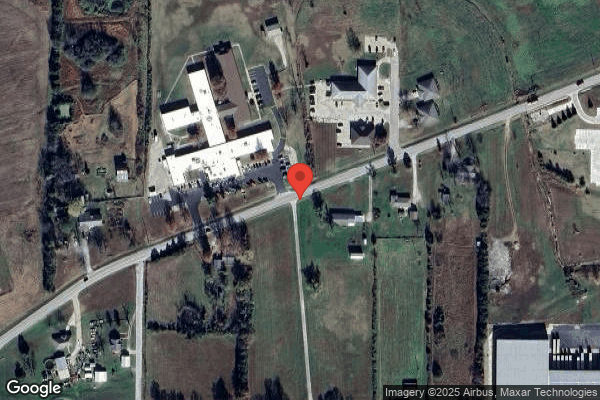

WEBCO MANOR

1687 WEST WASHINGTON, MARSHFIELD, MO 65706 (417) 859-5144
Non profit - Other 90 Beds Independent Data: November 2025
Trust Grade
50/100
#213 of 479 in MO
Last Inspection: January 2024

Within standard 12-15 month inspection cycle. Federal law requires annual inspections.

Overview

Webco Manor in Marshfield, Missouri, has a Trust Grade of C, indicating it is average compared to other nursing homes, placing it in the middle of the pack. It ranks #213 out of 479 facilities in Missouri, which means it is in the top half, and #2 out of 4 in Webster County, indicating only one local option is better. The facility is improving, with issues decreasing from 9 in 2024 to 6 in 2025. Staffing is average with a turnover rate of 62%, similar to the state average, and there have been no fines, which is a positive sign. However, there are some concerning incidents, including a failure to adequately assess and manage a resident's pain and issues with administering incorrect medication dosages, highlighting areas that need attention despite the overall improvement.

Trust Score
C
50/100
In Missouri
#213/479
Top 44%
Safety Record
Moderate
Needs review
Inspections
Getting Better
9 → 6 violations
Staff Stability
⚠ Watch
62% turnover. Above average. Higher turnover means staff may not know residents' routines.
Penalties
✓ Good
No fines on record. Clean compliance history, better than most Missouri facilities.
Skilled Nurses
⚠ Watch
Each resident gets only 23 minutes of Registered Nurse (RN) attention daily — below average for Missouri. Fewer RN minutes means fewer trained eyes watching for problems.
Violations
⚠ Watch
28 deficiencies on record. Higher than average. Multiple issues found across inspections.
★★★☆☆
3.0
Overall Rating
★★★☆☆
3.0
Staff Levels
★★★☆☆
3.0
Care Quality
★★★☆☆
3.0
Inspection Score
Stable
2024: 9 issues
2025: 6 issues

The Good

  • Full Sprinkler Coverage · Fire safety systems throughout facility
  • No fines on record

Facility shows strength in fire safety.

The Bad

3-Star Overall Rating

Above Missouri average (2.5)

Meets federal standards, typical of most facilities

Staff Turnover: 62%

16pts above Missouri avg (46%)

Frequent staff changes - ask about care continuity

Staff turnover is elevated (62%)

14 points above Missouri average of 48%

The Ugly 28 deficiencies on record

1 actual harm
Aug 2025 1 deficiency
CONCERN (E) 📢 Someone Reported This

A family member, employee, or ombudsman was alarmed enough to file a formal complaint

Potential for Harm - no one hurt, but risky conditions existed

Pharmacy Services (Tag F0755)

Could have caused harm · This affected multiple residents

**NOTE- TERMS IN BRACKETS HAVE BEEN EDITED TO PROTECT CONFIDENTIALITY** Based on interview and record review, the facility failed to provide pharmaceutical services to meet the needs of each resident ...

Read full inspector narrative →
**NOTE- TERMS IN BRACKETS HAVE BEEN EDITED TO PROTECT CONFIDENTIALITY** Based on interview and record review, the facility failed to provide pharmaceutical services to meet the needs of each resident when staff did not ensure physicians' orders and pharmacy dosage directions matched resulting in staff administering incorrect dosages of Paxlovid (oral antiviral medication used to treat coronavirus disease 2019 (COVID-19) disease (an infectious disease caused by the SARS-CoV-2 virus)) to four residents (Resident #1, Resident #2, Resident #3 and Resident #4) out of 9 sampled residents. The facility census was 55.Review of the facility's policy titled Medication Orders, revised 11/2014, showed the following:-The purpose of the procedure was to establish uniform guidelines in the receiving and recording of medication orders;-When recording orders for medication, specify the type, route, dosage, frequency and strength of the medication ordered. A placebo is considered a medication and must also have specific orders.Review of the facility's policy titled Telephone Orders, revised 02/2014, showed the following:-Verbal telephone orders may be accepted from each resident's attending physician;-Verbal telephone orders may only be received by licensed personnel. Orders must be reduced to writing, by the person receiving the order, and recorded in the resident's medical record;-The entry must contain the instructions from the physician, date, time, and the signature and title of the person transcribing the information. Review of the facility's policy titled Verbal Orders, revised 02/2014, showed the following:-Verbal orders will always be based on verbal exchange with the prescribing practitioner or on approved written protocols;-Only authorized, licensed practitioners, or individuals authorized to take verbal orders from practitioners, shall be allowed to write orders in the medical record;-If a treatment, test, or another intervention is included in a written protocol that has been reviewed and approved by the Medical Director, then a verbal order may be written for a situation that is covered by the protocol. Otherwise, a verbal order will not be written that is not based on a conversation with the practitioner.Review of the facility's policy titled Administering Medications, revised 12/2012, showed the following:-Medications shall be administered in a safe and timely manner, and as prescribed;-The Director of Nursing Services will supervise and direct all nursing personnel who administer medications and/or have related functions;-Medications must be administered in accordance with the orders, including any required time frame;-If a dosage is believed to be inappropriate or excessive for a resident, or a medication has been identified as having potential adverse consequences for the resident or is suspected of being associated with adverse consequences, the person preparing or administering the medication shall contact the resident's attending physician or the facility's medical director to discuss the concerns;-The individual administering the medication must check the label three times to verify the right resident, right medication, right dosage, right time and right method (route) of administration before giving the medicationReview of the Paxlovid prescribing information, revised 07/2025, showed the following:-Paxlovid is indicated for the treatment of mild-to-moderate coronavirus disease 2019 (COVID-19) in adults who are at high risk for progression to severe COVID-19, including hospitalization or death;-The 5-day treatment course of Paxlovid should be initiated as soon as possible after a diagnosis of COVID-19 has been made, and within 5 days of symptom onset even if baseline COVID-19 symptoms are mild. Should a patient require hospitalization due to severe or critical COVID-19 after starting treatment with Paxlovid, the patient should complete the full 5-day treatment course per the healthcare provider's discretion;-If the patient misses a dose of Paxlovid within 8 hours of the time it is usually taken, the patient should take it as soon as possible and resume the normal dosing schedule. If the patient misses a dose by more than 8 hours, the patient should not take the missed dose and instead take the next dose at the regularly scheduled time. The patient should not double the dose to make up for a missed dose;-The recommended dosage for Paxlovid is 300 milligrams (mg) nirmatrelvir (two 150 mg tablets) with 100 mg ritonavir (one 100 mg tablet) with all 3 tablets taken together orally twice daily in the morning and at bedtime for 5 days.1. Review of Resident #1's face sheet (a document that gives a patient's information at a quick glance) showed the following:-admission date of 04/26/24;-Diagnoses included COVID-19 and contact with and/or (suspected) exposure to COVID-19.Review of the resident's care plan, revised 08/22/25, showed the following:-He/she remained at risk for COVID-19 and its multiple variances;-He/she tested positive for COVID-19 on 08/13/25;-Administer his/her medications as ordered;-Monitor him/her for side effects.Review of the resident's quarterly Minimum Data Set (MDS - a federally mandated comprehensive assessment instrument completed by facility staff), dated 07/11/25, showed the resident was cognitively intact.Review of the resident's August 2025 Physician's Order Sheet (POS) showed an order, dated 08/14/25, for Paxlovid (nirmatrelvir-ritonavir) tablets dose pack, 300 mg (150 mg x 2) - 100 mg. (Dose pack instructions state medication should be administered twice daily.) Review of the resident's August 2025 Medication Administration Record (MAR) showed the following:-On 08/15/25, Paxlovid administered once daily between 6:00 A.M. and 10:00 A.M.;-On 08/16/25, Paxlovid administered once daily between 6:00 A.M. and 10:00 A.M.;-On 08/17/25, Paxlovid administered once daily between 6:00 A.M. and 10:00 A.M.;-On 08/18/25, Paxlovid administered once daily between 6:00 A.M. and 10:00 A.M.;-On 08/19/25, Paxlovid administered once daily between 6:00 A.M. and 10:00 A.M.Review of the resident's August 2025 POS showed an order, dated 08/28/25, for Paxlovid tablets dose pack (300 mg (150 mg x 2) - 100 mg), give 2 x 150 mg = 300 mg with 100 mg tablets twice daily for five days for COVID-19.Review of the resident's August 2025 MAR showed on 08/28/25, staff did not administer Paxlovid to the resident. Review of the resident's nurses' progress notes, dated 08/01/25 through 08/28/25, showed staff did not document related to the resident's Paxlovid not given per physician's order or pharmacy recommendation, contact with the physician related to the Paxlovid not given per physician's order or pharmacy recommendation, or notification of the resident or resident's responsible party related to the Paxlovid not given per physician's orders or pharmacy recommendation.During an interview on 08/28/25, at 12:40 P.M., Licensed Practical Nurse (LPN) A said the following:-The resident was originally placed on a generic order per the Infection Preventionist (IP) and the order was supposed to be changed when the pharmacy delivered the medication to the dose pack instructions;-The resident received the medication once daily from 08/15/25 through 08/19/25, but was supposed to receive the medication twice daily;-The resident had five doses left after the initial five doses were given;-A certified medication technician (CMT) noticed this and informed him/her. He/she (the LPN) put a new order in the resident's medical record. He/she was not instructed to do this but assumed the resident would need to complete the course of the medication;-He/she notified the IP, and the IP gave no other direction to him/her;-He/she did not contact the physician, but should have to get direction from the physician;-He/she did not notify the resident or their responsible party;-The resident did not receive the medication per the dose pack instructions.During an interview on 08/28/25, at 2:55 P.M., the IP said the resident did not receive his/her Paxlovid per the physician orders or at a therapeutic dose.During an interview on 08/28/25, at 3:35 P.M., the Director of Nursing (DON) said the resident did not receive his/her Paxlovid per the physician orders or at a therapeutic dose.During an interview on 08/28/25, at 3:35 P.M., the Administrator said the following:-The resident did not receive his/her Paxlovid per physician orders or at a therapeutic level;-The charge nurse should have notified the physician, resident or resident's responsible party, and the DON and documented this in the resident's nurses' progress notes.2. Review of Resident #2's face sheet showed the following:-admission date of 03/22/23;-Diagnoses included COVID-19 and contact with and/or (suspected) exposure to COVID-19. Review of the resident's care plan, revised 08/15/25, showed the following:-He/she tested positive for COVID-19 on 08/14/25;-Administer his/her medications as ordered;-Monitor him/her for side effects.Review of the resident's quarterly MDS, dated [DATE], showed the resident had had mild cognitive impairment.Review of the resident's August 2025 POS showed an order, dated 08/14/25, for Paxlovid tablets dose pack, 300 mg (150 mg x 2) - 100 mg. Administer per pack dosing, orally, once daily. (Dose pack instructions state medication should be administered twice daily.)Review of the resident's August 2025 MAR showed the following:-On 08/15/25, Paxlovid administered once daily between 6:00 A.M. and 10:00 A.M.;-On 08/16/25, Paxlovid administered once daily between 6:00 A.M. and 10:00 A.M.;-On 08/17/25, Paxlovid administered once daily between 6:00 A.M. and 10:00 A.M.;-On 08/18/25, Paxlovid administered once daily between 6:00 A.M. and 10:00 A.M.;-On 08/19/25, Paxlovid administered once daily between 6:00 A.M. and 10:00 A.M.;Review of the resident's August 2025 POS showed an order, dated 08/24/25, for Paxlovid tablets, dose pack; 150 mg (6) - 100 mg (5), give 1 tablet 150 mg and 1 tablet 100 mg tablets by mouth twice daily for five days for COVID-19. Review of the resident's MAR, dated 08/2025, showed the following:-On 08/24/25, Paxlovid administered once between 2:00 P.M. and 6:00 P.M.;-On 08/25/25, Paxlovid administered once between 6:00 A.M. and 10:00 A.M. and once between 2:00 P.M. and 6:00 P.M.;-On 08/26/25, Paxlovid administered once between 6:00 A.M. and 10:00 A.M. The P.M. dose was marked drug/item unavailable;-On 08/27/25, staff marked the drug/item unavailable for A.M. and P.M. doses;-On 08/28/25, staff marked the drug/item unavailable for the A.M. dose.Review of the resident's nurse's progress notes, dated 08/01/25 through 08/28/25, showed staff did not document related to the resident's Paxlovid not given per physician's order or pharmacy recommendation, contact with the physician related to the Paxlovid not given per physician's order or pharmacy recommendation or notification of the resident or resident's responsible party related to the Paxlovid not given per physician's orders or pharmacy recommendation.During an interview on 08/28/25, at 12:40 P.M., LPN A said the following:-A CMT noticed the resident's PO and medication did not match and informed him/her. He/she (the LPN) put a new order in the resident's medical record. He/she was not instructed to do this but assumed the resident would need to complete the course of the medication;-He/she notified the IP, and the IP gave no other direction to him/her;-He/she did not contact the physician, but should have to get direction from the physician;-He/she did not notify the resident or their responsible party;-The resident did not receive the medication per the dose pack instructions.During an interview on 08/28/25, at 2:55 P.M., the IP said the resident did not receive his/her Paxlovid per the PO or at a therapeutic dose.During an interview on 08/28/25, at 3:35 P.M., the DON said the resident did not receive his/her Paxlovid per the physician orders or at a therapeutic dose.During an interview on 08/28/25, at 3:35 P.M., the Administrator said the following:-The resident did not receive his/her Paxlovid per physician orders or at a therapeutic level;-The charge nurse should have notified the physician, resident or resident's responsible party, and DON and documented this in the resident's nurse's progress notes. 3. Review of Resident #3's face sheet showed the following:-admission date of 12/20/23;-Diagnoses included contact with and/or (suspected) exposure to COVID-19 and COVID-19.Review of the resident's care plan, revised 08/22/25, showed the following:-He/she tested positive for COVID-19 on 08/14/25;-Administer his/her medications as ordered;-Monitor him/her for side effects.Review of the resident's quarterly MDS, dated [DATE], showed they had moderate cognitive impairment.Review of the resident's August 2025 POS showed an order, dated 08/14/25, for Paxlovid tablets, dose pack; 300 mg (150 mg x 2) - 100 mg. Amount to administer per pack dosing, orally, once daily. (Dose pack instructions state medication should be administered twice daily.)Review of the resident's August 2025 MAR showed the following:-On 08/15/25, Paxlovid administered once daily between 6:00 A.M. and 10:00 A.M.;-On 08/16/25, Paxlovid administered once daily between 6:00 A.M. and 10:00 A.M.;-On 08/17/25, Paxlovid administered once daily between 6:00 A.M. and 10:00 A.M.;-On 08/18/25, Paxlovid administered once daily between 6:00 A.M. and 10:00 A.M.;-On 08/19/25, Paxlovid administered once daily between 6:00 A.M. and 10:00 A.M.;-On 08/20/25, Paxlovid administered once daily between 6:00 A.M. and 10:00 A.M.;-On 08/21/25, Paxlovid administered once daily between 6:00 A.M. and 10:00 A.M.;-On 08/22/25, Paxlovid administered once daily between 6:00 A.M. and 10:00 A.M.Review of the resident's August 2025 POS showed an order, dated 08/23/25, for Paxlovid tablets, dose pack; 300 mg (150 mg x 2) - 100 mg, give 2 x 150 mg = 300 mg with 100 mg tablets twice daily for five days for COVID-19.Review of the resident's MAR, dated 8/2025, showed the following:-On 08/23/25, Paxlovid administered once between 6:00 A.M. and 10:00 A.M. and once between 2:00 P.M. and 6:00 P.M.;-On 08/24/25, Paxlovid administered once between 6:00 A.M. and 10:00 A.M. The P.M. dose was marked drug/item unavailable;-On 08/25/25, staff marked the drug/item unavailable for A.M. and P.M. doses;-On 08/26/25, staff marked the drug/item unavailable for A.M. and P.M. doses;-On 08/27/25, staff marked the drug/item unavailable for A.M. and P.M. doses.Review of the resident's nurse's progress notes, dated 08/01/25 through 08/28/25, showed staff did not document related to the resident's Paxlovid not given per physician's order or pharmacy recommendation, contact with the physician related to the Paxlovid not given per physician's order or pharmacy recommendation or notification of the resident or resident's responsible party related to the Paxlovid not given per physician's orders or pharmacy recommendation.During an interview on 08/28/25, at 12:40 P.M., LPN A said the following:-A CMT noticed the resident's PO and medication did not match and informed him/her. He/she (the LPN) put a new order in the resident's medical record. He/she was not instructed to do this but assumed the resident would need to complete the course of the medication;-He/she notified the IP and the IP gave no other direction to him/her;-He/she did not contact the physician, but should have to get direction from the physician;-He/she did not notify the resident or their responsible party;-The resident did not receive the medication per the dose pack instructions.During an interview on 08/28/25, at 2:55 P.M., the IP said the resident did not receive his/her Paxlovid per the physician orders or at a therapeutic dose.During an interview on 08/28/25, at 3:35 P.M., the DON said the resident did not receive his/her Paxlovid per the physician orders or at a therapeutic dose. During an interview on 08/28/25, at 3:35 P.M., the Administrator said the following:-The resident did not receive his/her Paxlovid per physician orders or at a therapeutic level;-The charge nurse should have notified the physician, resident or resident's responsible party and DON and documented this in the resident's nurse's progress notes. 4. Review of Resident #4's face sheet showed the following:-admission date of 01/02/24;-Diagnoses included contact with and/or (suspected) exposure to COVID-19 and COVID-19.Review of the resident's care plan, revised 08/22/25, showed the following:-He/she remained at risk for COVID-19 and it's multiple variances;-He/she tested positive for COVID-19 on 08/12/25;-Administer his/her medications as ordered;-Monitor him/her for side effects.Review of the resident's quarterly MDS, dated [DATE], showed the resident was cognitively intact.Review of the resident's August 2025 POS showed an order, dated 08/14/25, for Paxlovid tablets dose pack, 300 mg (150 mg x 2) - 100 mg, per dose pack once daily in A.M. (Dose pack instructions state medication should be administered twice daily.)Review of the resident's August 2025 MAR showed the following:-On 08/15/25, Paxlovid administered once daily between 6:00 A.M. and 10:00 A.M.;-On 08/16/25, Paxlovid administered once daily between 6:00 A.M. and 10:00 A.M.;-On 08/17/25, Paxlovid administered once daily between 6:00 A.M. and 10:00 A.M.;-On 08/18/25, Paxlovid administered once daily between 6:00 A.M. and 10:00 A.M.;-On 08/19/25, Paxlovid administered once daily between 6:00 A.M. and 10:00 A.M.Review of the resident's August 2025 POS showed an order, dated 08/24/25, for Paxlovid tablets dose pack, 300 mg (150 mg x 2) - 100 mg according to box, oral, give 2 x 150 mg tablets = 300 mg with 100 mg tablet twice daily for 5 days for COVID.Review of the resident's MAR, dated 08/2025, showed the following:-On 08/24/25, Paxlovid administered once daily between 2:00 P.M. and 6:00 P.M.;-On 08/25/25, Paxlovid administered once between 6:00 A.M. and 10:00 A.M. and once between 2:00 P.M. and 6:00 P.M.;-On 08/26/25, Paxlovid administered once between 6:00 A.M. and 10:00 A.M. and once between 2:00 P.M. and 6:00 P.M.;-On 08/27/25, staff marked the drug/item unavailable for A.M. and P.M. doses;-On 08/28/25, staff marked the drug/item unavailable for the A.M. dose. Review of the resident's nurses' progress notes, dated 08/01/25 through 08/28/25, showed staff did not document related to the resident's Paxlovid not given per physician's order or pharmacy recommendation, contact with the physician related to the Paxlovid not given per physician's order or pharmacy recommendation or notification of the resident or resident's responsible party related to the Paxlovid not given per physician's orders or pharmacy recommendation.During an interview on 08/28/25, at 12:40 P.M., LPN A said the following:-A CMT noticed the resident's physician order and medication did not match and informed him/her, he/she (the LPN) put a new order in the resident's medical record. He/she was not instructed to do this but assumed the resident would need to complete the course of the medication;-He/she notified the IP, and the IP gave no other direction to him/her;-He/she did not contact the physician, but should have to get direction from the physician;-He/she did not notify the resident or their responsible party;-The resident did not receive the medication per the dose pack instructions. During an interview on 08/28/25, at 2:55 P.M., the IP said the resident did not receive his/her Paxlovid per the physician order or at a therapeutic dose.During an interview on 08/28/25, at 3:35 P.M., the DON said the resident did not receive his/her Paxlovid per the physician order or at a therapeutic dose.During an interview on 08/28/25, at 3:35 P.M., the Administrator said the following:-The resident did not receive his/her Paxlovid per physician order or at a therapeutic level;-The charge nurse should have notified the physician, resident or resident's responsible party and DON and documented this in the resident's nurse's progress notes.5. During interviews on 08/28/25, at 11:46 A.M. and 12:40 P.M., LPN A said the following:-He/she administered residents' medications per physician's orders;-A CMT notified him/her that some of the Paxlovid orders were put in for once daily when they should have been twice daily;-He/she changed the orders when the CMT brought this to his/her attention;-He/she notified the IP when the discrepancy was noticed;-He/she understood the residents had a generic order placed for once daily and the physician wanted the pharmacy to determine the dosing;-The charge nurse on duty when the Paxlovid came in was responsible for changing the order to the pharmacy's recommended dosing instructions;-The IP was responsible for notification of the residents' responsible parties to get authorization for the medication and for following through on ensuring the residents' orders were updated when the medication was delivered to the facility;-He/she should notify the physician, DON, and resident or their responsible party when there was a discrepancy between the physician's order in the electronic record and the medication in the medication cart. During an interview on 08/28/25, at 1:52 P.M., CMT B said the following:-If he/she noticed a medication package label and the order in the MAR were different, he/she notified the charge nurse and the charge nurse compared the two and if they did not match, the charge nurse sent the medication back to the pharmacy;-When medications arrived at the facility, CMTs and charge nurses signed them in;-When administering medications, he/she was supposed to look at the package and the MAR to ensure they matched every time he/she administered the medication;-He/she was instructed to administer Paxlovid according to the resident's order in the MAR;-If the order read to administer once daily, he/she administered it once daily;-He/she noticed residents' Paxlovid package instructions were different than the orders in their MAR and notified LPN A.During an interview on 08/28/25, at 2:13 P.M., the Assistant Director of Nursing (ADON) said the following:-When staff passed medications they should follow right route, right dose, right frequency, right medication, and right resident;-The physician gave an order, and the charge nurses entered physician's orders into residents' electronic chart;-When staff administered medications, they look at the MAR and the medication to ensure they matched. If they did not match, the CMT notified the charge nurse, and the charge nurse checked the medication and the MAR. If they confirmed the medication and the MAR did not match, the charge nurse should notify the physician to clarify the order;-The charged nurse was not allowed to change an order without the physician being notified and clarification received;-Paxlovid did not have a standard dosing, and the pharmacy provided the recommended dosing for the resident;-The physician gave orders for Paxlovid per the pharmacy's recommendation;-Staff put a generic order for Paxlovid in the residents' electronic record and when the medication arrived the charge nurses were supposed to update the physician's order to the instructions on the label of the medication;-Both charge nurses and CMTs received and checked medications in from the pharmacy;-He/she did not know if the CMTs were instructed to notify the charge nurse when the Paxlovid came in;-The CMTs were not aware there was a generic order for the Paxlovid, and he/she was not sure all the charge nurses were aware;-If the CMTs did not notice the discrepancy between the order and the medication and they were not administering the medication per the physician's orders;-If the Paxlovid was given once daily and the medication was supposed to be given twice daily, the medication was not given per physician orders;-Once the charge nurse was made aware of the discrepancy between the residents' physician orders and the medication label, they should have filled out a medication error form and given this to the CMT supervisor and notified the residents' physician, the resident or their responsible party, the DON, and Administrator;-The nurse should not have placed a new order in without contacting the physician because this was out of a nurse's scope of practice;-The IP was responsible for ensuring the charge nurses knew the process related to the Paxlovid orders and the charge nurses were responsible for ensuring the CMTs notified them when Paxlovid arrived from the pharmacy;-The Administrator was responsible for ensuring the IP completed the education with the charge nurses related to the Paxlovid orders.During an interview on 08/28/25, at 2:36 P.M., the CMT Supervisor said the following:-He/she trained new CMTs and charge nurses on the facility's policy and procedure related to medication orders and administration within the first two weeks. The DON, Administrator or human resources set this training up upon hire. He/she had not trained the IP;-CMTs should read the resident's medication card and compare the medication to the resident's MAR to ensure the right medication, resident, dose, route, and time;-If the medication and the MAR did not match, the CMTs notified the charge nurse and the charge nurse and CMT checked them together;-CMTs and charge nurses checked medication in when the medication arrived from the pharmacy;-The CMTs were not instructed to notify the charge nurse when Paxlovid was received from the pharmacy;-On 08/21/25, a CMT noticed a discrepancy between a Paxlovid order, and the medication box and alerted LPN A and LPN A said he/she would fix the order in the computer;-The physician gave orders to the IP for Paxlovid to be given per the pharmacy's dosage instructions and the IP wrote the initial order for the Paxlovid to be given once daily for all of the residents whose physician prescribed the medication;-The IP was new to the facility and did not know to alert the charge nurses to change the orders to the pharmacy's recommended dosing instructions when the medication arrived;-He/she did not know if the IP instructed the charge nurses about the Paxlovid orders;-When the discrepancies between the orders and the medication were found, the charge nurse should have contacted the physician for clarification and notified the resident or their responsible party.During an interview on 08/28/25, at 2:55 P.M., the IP said the following:-Staff should ensure right resident, dose, medication, route, and time when they administered medications;-The CMTs knew what medication was to be given when they looked at the MAR and should match the medication in the MAR to the medication package;-If a CMT noticed a discrepancy, they notified the charge nurse, and the charge nurse investigated it and then notified the physician for clarification if the medication and the MAR did not match;-Nurses should not write an order without notification of the physician;-If the nurse was alerted that medication was not given per the physician orders they notified the physician, DON, Administrator, and resident or the resident's responsible party and filled out a medication error form;-The original order from the physician said to give Paxlovid per the pharmacy recommendations;-The pharmacist at the pharmacy said the dose was 300 mg - 100 mg dosing once daily for five days so he/she wrote the order per the pharmacist instructions but also put to administer per the dose pack instructions in the special instructions section of the physician's order;-When the pharmacy sent the medications, they were 150 mg - 100 mg dosing instead of the 300 mg - 100 mg and a CMT brought that to the ADON's attention on 08/20/25;-The ADON said he/she fixed the orders of Paxlovid for the residents on the COVID-19 hall;-He/she did not instruct the CMTs to notify the nurses when Paxlovid arrived from the pharmacy and did not instruct the charge nurses to update the Paxlovid orders per the pharmacy's dosing recommendation;-He/she was not aware that LPN A did not contact the residents' physician when the discrepancy was found between the MAR and the Paxlovid packaging instructions;-LPN A should not have written the new orders without the physician's notification and clarification;-He/she was responsible for ensuring the residents' Paxlovid orders were correct in their MAR because he/she wrote the original generic order;-He/she had worked at the facility since 03/2025 and had not received training from the CMT Supervisor related to medication orders.During an interview on 08/28/25, at 3:35 P.M., the DON said the following:-He/she expected the CMTs to follow the orders as written by the physician and if they noticed a discrepancy to alert the charge nurse;-The physician gave direction to administer Paxlovid per the pharmacy's recommendations;-Once the Paxlovid arrived from the pharmacy, the charge nurses were to take the dosing instructions from the label and update the physician's order to match;-The CMTs should have checked the Paxlovid label on the box with the PO in the MAR and then take the medication to the charge nurse;-The generic orders placed in the residents' MAR for Paxlovid were for once daily and if the CMTs following procedure properly they would have noticed the discrepancy and notified the charge nurse immediately;-He/she should have been clearer in his/her communication about Paxlovid to the CMTs and the charge nurses;-LPN A should have notified the physician, Administrator, and DON of the medication errors;-LPN A should not have written new orders without notification and clarification from the residents' physician because that was not in the LPN's scope of practice;-The residents' Paxlovid was not given per physician's orders or at a therapeutic level since the residents did not receive the medication twice daily;-He/she sent new nurses to the CMT Supervisor for training and did practice in the electronic medical record program when they were hired;-He/she should have scheduled the IP for the training;-He/she was responsible for ensuring staff were aware of the medication administration process and what to do in the case of a medication error.During an interview on 08/28/25, at 3:35 P.M., the Administrator said the following:-He/she expected staff to follow the five rights (right resident, medication, route, dose and time) when they administered medications;-If a CMT noticed a discrepancy between the medication and the order they notified the charge nurse, and the charge nurse contacted the physician for clarification;-Writing an order without notification of the physician was not within a nurse's scope of practice.Complaint #2601210
Jul 2025 1 deficiency
CONCERN (E) 📢 Someone Reported This

A family member, employee, or ombudsman was alarmed enough to file a formal complaint

Potential for Harm - no one hurt, but risky conditions existed

Incontinence Care (Tag F0690)

Could have caused harm · This affected multiple residents

**NOTE- TERMS IN BRACKETS HAVE BEEN EDITED TO PROTECT CONFIDENTIALITY** Based on observation, interview, and record review, the facility staff failed to ensure residents who were incontinent of bladde...

Read full inspector narrative →
**NOTE- TERMS IN BRACKETS HAVE BEEN EDITED TO PROTECT CONFIDENTIALITY** Based on observation, interview, and record review, the facility staff failed to ensure residents who were incontinent of bladder received appropriate treatment and services to prevent and treat urinary tract infections when staff failed to notify the physician of and provide treatment for suspected urinary tract infections (UTI) two residents (Resident #17 and #51). The facility also failed to ensure proper catheter (a thin, flexible tube inserted into the body to drain fluid) use for residents when staff failed to obtain appropriate physician orders to place a catheter, to provide catheter care, and to change the catheter for one resident (Resident #43) with an indwelling urinary catheter. The facility census was 57.Review of the facility policy titled, “Urinary Tract Infections (UTI)/Bacteriuria-Clinical Protocol,” revised June 2014, showed the following:-The staff and practitioner will identify individuals with signs and symptoms suggesting a possible UTI;-The physician will help nursing staff interpret the significance of signs, symptoms, and lab test results;-The physician will order appropriate treatment for verified or suspected UTIs based on pertinent assessment. 1. Review of Resident #17’s face sheet showed:-admission date of 07/26/24;-Diagnoses included of Alzheimer’s disease, urinary tract infection, urinary incontinence, and congestive heart failure. Review of the resident’s quarterly Minimum Data Set (MDS - a federally mandated assessment tool completed by facility staff). dated 04/15/25, showed the following:-Severe cognitive impairment;-Resident ambulated with walker and independent with mobility and transfers;-Required partial to moderate assistance of staff with toileting hygiene, personal hygiene, upper and lower body dressing;-Frequently incontinent of bowel and bladder. Review of the resident’s physician orders showed an active order, dated 07/26/24, to straight catheterize as needed (PRN) to obtain urinalysis (UA), if unable to obtain by clean catch method. Review of the resident’s care plan, dated 08/06/24, showed the following:-Resident needs staff assistance with his/her activities of daily living (ADL) due to diagnosis of dementia;-Observe resident for signs or symptoms of a UTI, foul or strong urine, pain or burning with urination, or dark colored urine;-Report any symptoms to the charge nurse. Review of the resident’s nurse progress note dated 06/25/25, at 6:53 P.M., showed Registered Nurse (RN) Q documented a new order for UA with culture and sensitivity due to increased confusion. Review of the resident’s physician orders showed staff did not document a specific order for a urinalysis on 06/25/25. Review of the resident’s nurse progress note dated 06/26/25, at 5:21 A.M., showed a nurse documented UA obtained by clean catch and in fridge awaiting lab pick up. Review of the resident’s final urine culture results, reported on 06/29/25, showed the following:-Result of 10,000-49,000 colony-forming units (CFU)/milliliter (mL) of Proteus Mirabilis (a bacteria commonly associated with infections of the urinary tract);-An accompanying list of antibiotics for the bacteria with sensitivity and resistance listed. Review of the resident’s medical record, dated 06/29/25 to 07/10/25, showed staff did not document notification of the physician regarding the urine culture results. Review of the resident’s nurse progress note dated 07/11/2025, at 9:09 P.M., showed RN Q documented new orders for antibiotics. Resident started on Cefdinir (an antibiotic) 300 milligrams (mg) two times a day (BID) for a urinary tract infection (UTI). The resident received his/her first dose of therapy at 9:05 P.M. The resident will receive therapy for 7 days. Review of the resident’s physician orders showed the following orders:-An order, dated 07/11/25, for Cefdinir, capsule 300 mg, amount of 300 mg, oral twice a day for 7 days;-An order, dated 07/11/25, for acidophilus (a probiotic) capsule give 2 capsules with meals, orally two times per day, while the resident is on antibiotics. During an interview on 07/22/25, at 12:11 P.M., the Director of Nursing (DON) said the following: -The resident's urinalysis with culture and sensitivity, dated 06/29/25, was the most recent urinalysis completed on the resident;-The facility's laboratory was supposed to call the facility with critical lab results including the positive culture results, but they did not do so in this situation;-The lab results were reported to the facility via a computer portal;-The facility nurses must then print and scan a paper copy into each resident's electronic health record and place a paper copy in the physician's book for the physician to review when he/she made resident rounds at the facility;-If a culture result shows bacteria in the urine, the nurse should call the physician with the positive culture results;-The facility had an issue with the nurses not being able to view the portal results;-The issue was with laboratory portal access;-He/she was currently working on the issue;-The DON was printing the lab results off the lab portal and reviewing all results two times per week. During an interview on 07/25/25, at 1:07 P.M., Certified Medication Technician (CMT) U/Medical Records said the following:-He/she thought the facility had some issues with not being able to access the laboratory results;-For a time, only the DON and Assistant Director of Nursing (ADON) could access the laboratory results from the portal;-The facility had a few urinalysis results that nursing needed to address with the physician, but the results were delayed;-When the facility contacted the lab about the delays, the lab said the results had been sent to the facility, but he/she was unsure if the facility received those results;-The laboratory calls the facility with critical laboratory results, but he/she was unsure if the laboratory was calling urinalysis culture and sensitivity results to the facility. During an interview on 07/25/25, at 2:16 P.M, the ADON said the following:-The facility had experienced delays in obtaining urinalysis culture and sensitivity results from the laboratory;-The laboratory should call abnormal culture results to the facility;-He/she was unsure where the disconnect occurred, but the facility did not notify the physician timely of the laboratory results.-Nurses should notify the physician of culture and sensitivity results right away and the resident should be started on antibiotics within two hours of receiving the physician’s order for treatment. During an interview on 07/28/25, at 9:40 AM, the Administrator said the following:-The facility had an issue with nurses not reviewing laboratory results daily, which included urinalysis and urine culture and sensitivity results;-He/she informed the Director of Nursing (DON) he/she needed to review laboratory results at the morning meetings (Monday to Friday) to ensure timely reporting of results to the physician;-Reporting results timely to the physician, would help prevent delays in residents starting on antibiotics for infections. 2. Review of Resident #43’s face sheet showed the following:-admission date of 06/21/25;-Diagnoses included urinary retention, unspecified symptoms and signs involving the genitourinary system (two kidneys, two ureters, one urinary bladder, and one urethra), type 1 diabetes mellitus, and amputation or right lower leg. Review of the resident’s admission MDS, dated [DATE], showed the following:-Cognitively intact;-Rejected care one to three days in last week;-Required partial to moderate assistance of staff with toileting hygiene, showers, upper and lower body dressing, and transfers;-Presence of an indwelling urinary catheter;-Always incontinent of bowel and bladder. Review of the resident’s nurse progress note dated 07/01/25, at 6:32 P.M., showed CMT U/Medical Records documented the following:-Family Nurse Practitioner (FNP) here and saw the resident;-Received an order to discontinue the resident’s Foley catheter;-Resident aware of the new order. Review of the resident’s physician orders showed the following: -A previous order for Foley catheter (an indwelling urinary catheter) care every shift and as needed. The order was discontinued on 07/02/25;-No current order for a urinary foley catheter or catheter care. Review of the resident’s nurse progress note dated 07/02/25, at 1:02 P.M., showed the following:-The resident was refusing to allow the licensed practical nurse (LPN) to discontinue his/her Foley catheter as ordered by the physician at this time;-The resident said the physician did not talk with him/her about discontinuing his/her catheter and he/she would like to speak to the physician first;-Placed a request for the physician to talk with the resident about discontinuing the resident’s Foley catheter in the physician’s book. Observation and interview on 07/21/25, at 11:30 A.M., showed the following:-The resident on his/her bed;-The resident said he/she had an indwelling urinary catheter;-The resident said he/she completed his/her own catheter care;-The resident’s catheter drainage bag with yellow urine present was attached to the resident’s bed frame, suspended off the floor. During an interview on 07/25/25, at 1:43 P.M., CMT U/Medical Records said the following:-The physician gave an order to discontinue (remove) the resident’s urinary catheter, but the resident refused to allow staff to remove the catheter;-The resident wanted to speak with the physician about the pros and cons of the catheter and the physician encouraged the resident to allow nursing to remove the catheter, but the resident refused;-The resident had a diagnosis of neurogenic bladder (a condition where the nerves that control the bladder do not function properly, leading to difficulty with urination), so the physician agreed to allow the resident to keep his/her catheter. The physician told the resident nursing would change his/her catheter monthly;-Any resident with a catheter should have a physician’s order for the catheter to include size and changing frequency;-The CMT viewed the resident’s medical record and said he/she could not find a current physician’s order for the resident’s catheter or an order to change the catheter. During an interview on 07/28/25, at 2:18 P.M., RN Q said the following:-The physician or nurse practitioner discontinued the resident’s urinary catheter, but the resident refused to allow the catheter to be removed;-The resident did have a diagnosis of neurogenic bladder which qualified him/her to keep the catheter;-The nurse notified the Administrator and the resident’s physician;-The physician said the resident could keep due the indwelling urinary catheter due to his/her diagnosis a neurogenic bladder;-The nurse did not realize the resident did not have a current catheter order;-The resident should have an order for his/her indwelling urinary catheter;-The order should include catheter size, [NAME] size, and frequency of change;-The nurse said he/she thought the facility policy was for monthly changes of a urinary catheter. did not have an order, the order should include catheter size, balloon and frequency of change. During an interview on 07/28/25, at 9:40 AM, the Administrator said the following:-Nursing should obtain a physician’s order for any resident with a catheter. The order should include size of catheter and [NAME] and frequency of changing the catheter;-The physician gave staff an order to discontinue the resident’s catheter, but the resident refused removal of the catheter;-A nurse discontinued the catheter order and failed to request a new physician’s order for the catheter. 3. Review of Resident #51's face sheet showed the following:-admission date of 08/07/24;-Diagnoses included essential hypertension (HTN-high blood pressure), major depressive disorder, and chronic kidney disease stage III (moderate kidney damage). Review of the resident's progress note dated 05/07/25, at 1:01 A.M., showed a nurse documented the resident complained to the nurse that he/she voided excessively. The resident was incontinent. The resident stated that his/her bladder was low but not prolapsed. The resident would like to speak to the doctor to see if anything could be done. The resident was concerned about his/her voiding excessively. The resident did not complain of pain due to this. Review of the provider's note, dated 05/07/25, showed the provider documented urinary frequency per nursing staff and history of bladder prolapse. Check with urinalysis. Review of the resident's progress note dated 05/08/25, at 5:39 P.M., showed a nurse documented the laboratory called the facility with the urinalysis results. The white blood count was greater than 100. The nurse practitioner ordered to wait on the culture results. Review of the resident's laboratory results showed the following:-On 05/08/25, the lab was ordered;-On 05/14/25, the laboratory was verified;-Result of greater than 100,000 CFU/ml of Proteus mirabilis. Review of the resident's nurse practitioner's note, dated 05/20/25, showed the following:-Follow up on dysuria (a medical term for pain, discomfort, or a burning sensation during urination) and lab results;-Urine culture positive for proteus;-Cefdinir 300 mg twice a day for five days;-Diagnosis of UTI. Review of the resident's May 2025 Physician Order Sheet (POS) showed an order, dated 05/20/25, for Cefdinir 300 mg twice a day. (Staff documented the antibiotic order six days after the urine culture results were received.) Review of the resident's May 2025 Medication Administration Record (MAR) showed the following:-An order, dated 05/20/25, for Cefdinir 300 mg twice a day;-On 05/20/25 on the 10:00 P.M. to 10:00 A.M., shift staff administered the medication to the resident. Review of the resident's progress note dated 05/21/25, at 1:58 A.M., showed a nurse documented as a late entry for 10:00 P.M. at 05/20/25 a new order for an antibiotic for Cefdinir 300 mg to be started for treatment of a UTI. Staff administered initial dose at this time tonight. The resident had no complaints of dysuria or flank pain but did complain of urinary frequency. Review of the resident's quarterly MDS assessment, dated 05/29/25, showed the following:-Cognitive skills intact;-Substantial/maximal assistance required with toileting;-Frequently incontinent with urinary continence. Review of the resident's care plan, revised 06/03/25, showed the following:-The resident was at risk for skin breakdown and odor due to bowel and bladder incontinence;-Monitor for incontinence frequently. During an interview on 07/24/25, at 02:00 P.M., the ADON said the following:-The resident's UA culture did not result until 05/14/25 and the results were greater than 100,00, so the resident had a UTI. Staff should had called the physician right away;-The laboratory did not notify the facility of the resident's UA results and he did not think the nurses were checking the laboratory results. During an interview on 07/24/25, at 4:04 P.M., the DON said the following:-The resident's UA results were on 05/08/25, and the NP wanted to wait for results of the urine culture which was on 05/14/25. The lab should had called the facility with the resident's abnormal culture results. The resident's urine culture was in the lab portal and staff would have to search the resident in the lab portal for the culture results. Staff should had started the resident's antibiotic before 05/20/25. During an interview on 07/25/25, at 9:41 A.M., the resident said a few months ago, he/she thought in May 2025, he/she had a UTI. Staff sent the UA and he/she asked a staff member what the results were. The staff member said nothing was wrong. He/she knew there was something wrong because he/she had to urinate a lot and it burned. The physician got involved and staff sent another UA out for a culture he/she thought. It was decided he/she had a UTI and the antibiotic helped. He/she was concerned for how long the results did not come back. During an interview on 07/28/25, at approximately 04:00 P.M., CMT U/Medical Record Staff said he/she did not find the physician order for the resident's 05/08/25 UA. 4. During an interview on 07/24/25, at 02:00 P.M., the ADON said the following:-Signs and symptoms of a UTI include frequency of urination, lethargy, temperature, and strong foul-smelling urine;-Staff should call the physician for an order for a UA;-Nurses complete a lab requisition, place it in the laboratory binder, collect the UA, and the laboratory staff pick up the UA the next morning;-The laboratory company comes to the facility Monday through Friday and checks the binder for lab requisitions;-The facility receives UA results pretty quickly;-Staff find the laboratory results on the laboratory portal;-He started checking the laboratory portal every day to find results; -The nurses just quit looking for the laboratory results and they did not know how to do it and had not been showed how;-A UA culture and sensitivity report usually takes about three days for the results to come back; -Nurses should check the urine culture along with the UA on the laboratory requisition form;-Nurses notify the physician of the UA and/or culture results who orders an antibiotic if needed;-Nurses enter the antibiotic order into the computer and informs the CMTs who go to the machine and see if it is in the emergency kit. Staff should call the pharmacy if it is not in the emergency kit;-Nurses call the pharmacy for an antibiotic which is delivered within a two-hour window. During an interview on 07/28/25, at 11:30 A.M., the physician said he expected staff to inform him of the laboratory results for urinalysis and culture and sensitivity results. During an interview on 07/24/25, at 10:58 A.M., CMT K said the following:-Signs of a UTI include confusion and odors;-Staff should notify the nurse if a resident has signs of a UTI;-Nurses enter orders for labs. During an interview on 07/24/25, at 2:43 P.M., CMT U/Medical Records said the following:-Staff enter an order for a UA in the computer;-Staff collect the urine and give it to the nurse who documents clean catch in the computer;-Nurses complete a laboratory requisition form and place it in the binder and on the calendar;-The laboratory company comes to the facility Monday through Friday and take out the requisition form for the requested lab;-The facility usually receives the UA results that evening or the next morning;-A urine culture takes five days;-The laboratory company calls the facility if it is a critical lab;-If there is just slightly infection, the lab will do a culture before they send it, if it shows high in bacteria, the lab will call the facility;-Bacteria shows on the culture and not on the UA;-Nurses check the lab portal every day for results;-The facility had a lot of change in staff over the years and had with new nurses understanding the lab process;-The ADON and DON check the lab portal;-He/she rounds with the physician and places the lab results in his book;-The physician and NP signs every lab order and it is placed in the paper chart along with the lab results;-Nurses should notify the physician of a urine culture results;-Nurses place the lab results in a folder at the nurses’ desk which is taken on weekly rounds with the provider;-The physician and NP review the lab results and initial it;-Nurses should document critical level lab results, notification of the physician, and any medication change in the resident medical record;-Nurses should administer an antibiotic within two hours of receiving the order;-If an antibiotic is not in the emergency kit, they should notify the pharmacy to have it delivered with two hours. During an interview on 07/24/25, at 04:04 P.M., the DON said the following:-Signs of a UTI include a change in behaviors, mental status, and/or a change in activities of daily living;-The nursing staff should notify the physician of a possible UTI;-Nurses complete a lab requisition and place in the binder at the nurses' desk;-Nurses enter a lab order in the computer which triggers the MAR for staff to check each shift for the lab to be completed and continues until it is discontinued;-Nursing staff collect the UA and place it in the refrigerator;-The lab company comes to the facility Monday through Friday;-The lab company enters the lab results in the lab portal;-The nursing staff are supposed to check the lab portal daily for results;-Staff print off the lab results and report anything abnormal to the provider;-Staff should enter the physician order for an antibiotic, fax the order sheet to the pharmacy and pull it from the emergency kit and wait for the pharmacy to deliver it. During an interview on 07/28/25, at 9:20 A.M., the Administrator said the following:-Staff should monitor residents for signs of a UTI;-She expects staff to notify the physician with lab results and obtain the ordered antibiotic timely. Complaint 2562350
Jan 2025 4 deficiencies
CONCERN (D) 📢 Someone Reported This

A family member, employee, or ombudsman was alarmed enough to file a formal complaint

Potential for Harm - no one hurt, but risky conditions existed

Notification of Changes (Tag F0580)

Could have caused harm · This affected 1 resident

Based on interviews and record review, the facility failed to ensure all residents' families or representatives were notified of all significant changes and potential changes in care when staff did no...

Read full inspector narrative →
Based on interviews and record review, the facility failed to ensure all residents' families or representatives were notified of all significant changes and potential changes in care when staff did not notify two residents' (Resident #1 and #2) family/representative after a change in condition/allegation of abuse. The facility census was 54. Review showed the facility did not provide a policy regarding notification of resident representatives. 1. Review of Resident #1's face sheet (admission data) showed the following: -admission date of 09/07/24; -Diagnoses included unspecified dementia (loss of memory), psychotic disturbances (mental health condition that causes people to lose touch with reality, and depression (feelings of sadness). Review of the resident's care plan, last revised on 12/11/24, showed the following: -The resident had communication problems as evidenced by his/her impaired hearing. He/she usually understands; -The resident had mood problems; -Staff to establish trusting relationship with resident and encourage resident to verbalize feelings, concerns, fears, and clarify misconceptions; -Staff to notify the physician as needed if mood problems become worse; -Resident at risk for delirium as evidenced by signs and symptoms of inattention and disorganized thinking; -Cognitive loss/dementia as evidence by signs and symptoms of inattention and disorganized thinking. Resident has a diagnosis of dementia. Review of the resident's progress note dated 12/23/24, at 9:10 P.M., showed Registered Nurse (RN) G documented the resident exhibited inappropriate touching of residents of the opposite sex this shift. Staff observed resident putting hands in crotch of pants of another resident. Staff intervened and removed the resident to another table. Staff will continue to monitor. (Staff did not document notification of the resident's family/representative regarding the change of condition/abuse allegation.) 2. Review of the facility's investigation, dated 12/26/24, showed the following: -During the manager's meeting on the morning of 12/26/24, documentation from RN G dated 12/23/24 and timed at 9:10 P.M., was noted by manager and brought to the attention of those present for discussion. The nurse's note in question stated inappropriate touching of other residents this shift. Resident observed putting hands in crotch of another resident (Resident #2). Staff intervened and removed the resident to another table. Staff will continue to monitor; -Interim administrator phoned DHSS office to report the incident; -Neither the interim administrator, or the DON were notified of the incident. (Staff did not document notification of the either residents' family/representative regarding the change of condition/allegation of abuse.) 3. Review of Resident #2's face sheet showed the following: -admission date of 11/16/24, readmit date of 9/13/24; -Diagnoses included acute kidney failure (kidneys lost their ability to filter waste products from the blood), major depression, dementia, cognitive communication deficit, weakness, and acute respiratory disease (lungs are damaged making it difficult to exchange oxygen). -The resident had durable power of attorney invoked. Review of the resident's medical record showed staff did not notify the durable power of attorney of the change of condition/potential abuse. During interviews on 12/31/24, at 2:45 P.M., and on 01/02/25, at 1:35 P.M., the NOK for the resident said the MDS Coordinator called him/her a day or two before Christmas, about a wound on the resident's heal and also mentioned another resident was following Resident #2 around. Staff did not call the NOK related to the incident that occurred on 12/23/24. 4. During interviews on 12/31/24, at 11:07 A.M., and on 01/02/25, at 10:25 A.M., Licensed Practical Nurse (LPN) B said the family should be notified of the incident on 12/23/24. He/she didn't know if the families were notified of the situation with Resident # 1 and Resident #2. During an interview on 12/31/24, at 11:22 A.M., LPN E said the if the residents are not their own person, or have the capacity to consent, he/she would notify the next of kin or guardian of sexual behavior. He/she doesn't believe Resident #1 understands his/her behavior. During an interview on 01/02/25, at 10:12 A.M., LPN K said when a resident touches another resident's private parts, the residents should be separated and they would do an investigation and families are notified. During an interview on 12/31/24, at 3:11 P.M., RN G said he/she did not notify the resident's (Resident #1 and Resident #2) families of the incident on 12/23/24. During interviews on 12/31/24, at 12:09 P.M., and on 01/02/25, at 11:30 A.M., the Social Services Director said he/she was told in the care plan meeting on 01/02/25, Resident #1's family was notified over the weekend, either 12/28/24 or 12/29/24, of the incident that occurred on 12/23/24. During interviews on 12/31/24, at 11:35 A.M., and on 01/02/25, at 11:33 A.M., the Director of Nursing (DON) said the following he/she did not notify the families of Resident #1 or Resident #2 regarding the incident on 12/23/24. During interviews on 12/31/24, at 12:50 P.M., and on 01/02/25, at 11:37 A.M., the Interim Administrator said the families of the residents should be notified of allegations regarding potential abuse. He/she didn't know if Resident #1's or Resident #2's families had been notified. During interviews on 01/02/25, at 8:55 A.M. and 11:50 A.M., the RN Consultant, Administrator, and DON said the following: -When a resident-to-resident incident occurred, social services, the nurse, DON, or Administrator should notify the families of all residents; -They did not believe the families were notified of the incidents involving Resident #1 and Resident #2. During an interview on 01/02/25, at 10:48 A.M., with the Administrator said the following; -Resident to resident incidents should be reported to the charge nurse and the charge nurse should tell the DON. The nurse should notify the NOK of the incident. MO00247124
CONCERN (D) 📢 Someone Reported This

A family member, employee, or ombudsman was alarmed enough to file a formal complaint

Potential for Harm - no one hurt, but risky conditions existed

Report Alleged Abuse (Tag F0609)

Could have caused harm · This affected 1 resident

Based on interviews and record review, the facility failed to ensure all allegations of possible abuse were reported immediately to management and within two hours to the state licensing agency (Depar...

Read full inspector narrative →
Based on interviews and record review, the facility failed to ensure all allegations of possible abuse were reported immediately to management and within two hours to the state licensing agency (Department of Health and Senior Services - DHSS) when staff failed to report two allegation of sexual abuse involving three residents (Resident #1, #2, and #3) to management and DHSS in a timely fashion. The facility census was 54. Review of the facility's policy titled, Abuse and Neglect-Clinical Protocol, revised July 2017, showed the following: -Instances of abuse of all residents, irrespective of any mental or physical condition, cause physical harm, pain, or mental anguish. It includes verbal abuse, sexual abuse, physical abuse and mental abuse; -Sexual abuse is the non-consensual contact of any type with a resident. Review of the facility's policy titled, Abuse Prevention Program, revised December 2021, showed the following: -Purpose to protect residents from abuse by anyone, including but not necessarily limited to, facility staff, other residents; - Investigate and report any allegations of abuse within timeframes as required by federal requirements. 1. Review of Resident #1's face sheet (admission data) showed the following: -admission date of 09/07/24; -Diagnoses included unspecified dementia (loss of memory), psychotic disturbances (mental health condition that causes people to lose touch with reality), and depression (feelings of sadness). Review of the resident's care plan, last revised on 12/11/24, showed the following: -He/she had communication problems as evidenced by his/her impaired hearing, He/she usually understands; -He/she had activities of daily living (ADL) functional problems as evidenced by the need for staff assistance with ADLs. Resident balance wasn't always steady, but he/she was able to stabilize without staff assistance; -He/she had mood problems; -Staff to establish trusting relationship with resident. Staff to encourage resident to verbalize feelings, concerns, fears, and clarify misconceptions; -Staff to notify the physician as needed if mood problems become worse; -Resident at risk for delirium as evidenced by signs and symptoms of inattention and disorganized thinking; -Resident had cognitive loss/dementia. Review of the resident's progress note dated 12/23/24, at 9:10 P.M., showed Registered Nurse (RN) G documented inappropriate touching of other residents this shift. Resident observed putting hands in crotch of pants of another resident. Staff intervened and removed him/her to another table. Staff will continue to monitor. (The RN did not document notification of facility administration or DHSS of the allegation of abuse.) 2. Review of Resident #2's face sheet showed the following: -admission date of 11/16/24; -Diagnoses included acute kidney failure (kidneys lost their ability to filter waste products from the blood), major depression, dementia, cognitive communication deficit, weakness, and acute respiratory disease (lungs are damaged making it difficult to exchange oxygen). Review of the resident's care plan, last revised on 11/22/24, showed the following: -He/she did not always remember he/she was in the nurse facility; -He/she has cognitive loss/dementia; -At risk for psychosocial well being problems as evidenced by previously admitting that he/she had little interest of pleasure in doing things. Review of the resident's medical record showed staff did not document regarding the incident with Resident #1 on 12/23/24, or notification of manage or DHSS of the incident. 3. Review of the facility's investigation, dated 12/26/24, showed the following: -During the managers' meeting on the morning of 12/26/24, documentation from RN G, dated 12/23/24 and timed at 9:10 P.M., was noted by manager and brought to the attention of those present for discussion. The nurse's note in question stated inappropriate touching of other residents this shift. Resident observed putting hands in crotch of another resident. Staff intervened and removed Resident #1 to another table and staff will continue to monitor; -Interim Administrator phoned DHSS office to report the incident; -Neither the Interim Administrator, or the Direct of Nursing (DON) were notified of the incident. 4. Review of DHSS records showed the facility self-reported the allegation of possible abuse between Resident #1 and Resident #2 on 12/26/24, at 2:58 P.M. (three days after staff became aware of the allegation of possible abuse). 5. Review of Resident #3's face sheet showed the following: -admission date of 09/13/24; -Diagnoses included acute kidney failure, major depressive disorder, chronic pain, dementia, and cognitive communication deficit. Review of the resident's care plan, last revised on 10/28/24, showed the following: -Resident at risk for delirium as evidenced by his/her inattention, disorganized thinking; -Resident had mood problems and diagnosis of major depressive disorder; -Resident had ADL functional problems as evidenced by the need for staff to assist with ADLs; -At risk for remembering past trauma events; -Resident at risk for psychosocial well being problems as evidenced by previously admitting that he/she has little interest of pleasure in doing things. During interviews on 12/31/24, at 3:39 P.M., and on 01/02/24, at 10:57 A.M., the Activities Assistant said the following: -He/she was not completely certain of the date, but believes it was 12/11/24, or one day close to this date; -He/she was close the Administrator's door in the common area writing down the names of residents participating in the activity; -He/she heard another resident yell at Resident #1, that's not your spouse. When he/she looked at Resident #1, the resident had his/her hand on Resident #3's groin, and the resident had laid his/her head in Resident #3's lap; -He/she told Resident #1 that Resident #3 was not his/her spouse and Resident #1 said it was his/her spouse; -He/she moved Resident #1 close to the nurses' station and the MDS Coordinator asked why the Activities Assistant brought Resident #1 to the nurses' station. He/she told the MDS Coordinator what happened; -The Activities Assistant and the MDS Coordinator went to the RN Consultant and told the RN Consultant what happened between Resident #1 and Resident #3; -He/she considered inappropriate touching possible abuse and he/she was supposed to report this to the charge nurse and it's then reported to the state within 24 hours. Review of Resident #3's medical record showed no documentation of the incident with Resident #1. Review of DHSS records showed the home did not self-report the allegation of possible abuse between Resident #1 and Resident #3. 6. During an interview on 12/31/24, at 11:13 A.M., Nurse Aide (NA) C said the following: -If he/she saw a resident touch another resident's private parts, he/she would separate the two residents and tell his/her charge nurse; -If a resident touches another resident's private area this would be considered abuse and it should be reported within two hours to the state. During an interview on 12/31/24, at 11:01 A.M., Certified Nurse's Aide (CNA) A said the following: -If he/she witnessed a resident putting their hands on another resident's private area, he/she would separate the residents and tell his/her charge nurse; -If a resident puts their hand on another resident's private area, this could be abuse and should be reported to the state within two hours. During an interview on 12/31/24, at 11:19 A.M., CNA D said if he/she saw a resident touching another resident's private area, and it's unwanted, he/she would separate the residents and report it to the charge nurse. He/she would write out a statement and ensure it's reported to the state in less than two hours. During an interview on 12/31/24, at 3:24 P.M., CNA I said the following: -On 12/23/24, around 4:30 P.M. or 4:45 P.M., Resident # 1 and Resident #2 were both in the common area close to the time for the staff to begin bringing the residents into the dining room to eat dinner; -He/she walked into the common area and saw Resident #1 leaning forward in in his/her wheelchair, and Resident #1's hand was on Resident #2's inner left thigh with the fingertips touching Resident #2's groin; -He/she separated the two residents; -He/she said two other residents had told another aide that Resident #1 had Resident #2's jogging pants at the top stretched out, and was reaching into Resident #2's pants; -He/she reported the incident to RN G; -He/she was told by Activities Assistant that Resident #1 had inappropriate behaviors with two other residents, one of which was Resident #3; -He/she would consider this potential abuse, that should be investigated and reported to the state within two hours. He/she doesn't believe it was reported to the state. During an interview on 01/02/25, at 10:08 A.M., CNA J said the following; -If He/she saw a resident touching another resident's private area, he/she would separate the residents and notify the charge nurse; -Depending on the situation, if the residents are able to consent or not, would determine if it's abuse and needs to be reported to the state in two hours. During interviews on 12/31/24, at 11:07 A.M., and on 01/02/25, at 10:25 A.M., Licensed Practical Nurse (LPN) B said the following: -If he/she saw a resident put their hands on another resident's private parts, he/she would separate the residents and if the residents don't understand their actions, or if its not mutual, the incident should be reported to the supervisor and it should be reported to the state within 2 hours. During an interview on 12/31/24, at 11:22 A.M., LPN E said the following: -If he/she saw a resident touch another resident's private parts, he/she would separate the two residents and notify the DON and ensure the Administrator knew as well; -If the resident's can't consent, it could be abuse and should be reported to the state within two hours. During an interview on 01/02/25, at 10:12 A.M., LPN K said when a resident is touching another resident's private parts, the residents should be separated and the State is notified within two hours. During an interview on 12/31/24, at 3:11 P.M., RN G said the following: -He/she said an aide, he/she is not certain which aide, said Resident #1 was acting up again. The resident grabbed another resident's crotch; -He/she didn't know whose crotch Resident #1 grabbed; -He/she did not notify the DON, Administrator, or the resident's families; -He/she knows that in these types of situations it would be considered abuse and he/she should've called the DON and the Administrator; -He/she knew the state was supposed to be notified of abuse within two hours. During interviews on 12/31/24, at 12:09 P.M., and on 01/02/25, at 11:30 A.M., the Social Services Director (SSD) said the following: -If a resident was touching another resident's body parts, he/she would separate the residents and notify his/her supervisor; -He/she knew an allegation of abuse should be reported in two days. During interviews on 01/02/25, at 10:17 A.M., and on 01/03/25, the MDS Coordinator, said the following; -In resident to resident incidents, with inappropriate touching, he/she would separate the residents, notify the DON and there would be an investigation completed; -The State was notified in two hours. During interviews on 12/31/24, at 11:35 A.M., and on 01/02/25, at 11:33 A.M., the DON said the following: -If staff see a resident touching another resident in their private area, the staff should separate and notify the DON and the Administrator immediately; -He/she didn't find out until 12/26/24 when it was read in Resident #1's medical record that Resident #1 touched Resident #2 inappropriately; -He/she knows these incidents are supposed to be reported to the state within two hours and this incident was not reported within two hours; -He/she would have expected RN G to notify him/her and or the Administrator of the incident between Resident #1 and Resident #2. It should have been called into the state within two hours. During interviews on 01/02/25, at 8:55 A.M. and 11:50 A.M., the RN Consultant, Administrator and DON said the following; -They were not aware of other incidents with Resident #1 being inappropriate; -An incident with Resident #1 touching Resident #3 in the groin area was not reported to management. During interviews on 12/31/24, at 12:50 P.M., and on 01/02/25, at 11:37 A.M., the Interim Administrator said the following: -He/she expected staff to intervene if a resident was touching another resident inappropriately; -He/she expected staff to investigate the incident and report to the state within two hours; -The incident between Resident #1 and Resident #2 happened on 12/23/24, but he/she wasn't aware until 12/26/24 so it was not reported timely to the state; -He/she was not aware Resident #1 touched Resident #3's groin. This incident should've been reported to the charge nurse, DON, and or Administrator and the state called in two hours. -Resident is touching another resident in the private area He/she would expect staff to separate the two residents, notify the Administrator and DON, and begin and investigation; -The incident was to be reported to the state in two hours of being made aware of the incident; -He/she was not aware of the incident between Resident #1 and Resident #3 until today; -The incident between Resident #1 and Resident #3 should've been reported to the state within two hours of occurrence. During an interview on 01/02/25, at 10:48 A.M., the Administrator said resident to resident incidents should be reported to the charge nurse and the charge nurse should tell the DON, and the DON should begin the investigation. The state should be notified in two hours; MO00247124
CONCERN (D) 📢 Someone Reported This

A family member, employee, or ombudsman was alarmed enough to file a formal complaint

Potential for Harm - no one hurt, but risky conditions existed

Investigate Abuse (Tag F0610)

Could have caused harm · This affected 1 resident

Based on interview and record review, the facility staff failed to immediately begin an investigation of possible abuse when staff witnessed one resident (Resident #1) touch another resident (Resident...

Read full inspector narrative →
Based on interview and record review, the facility staff failed to immediately begin an investigation of possible abuse when staff witnessed one resident (Resident #1) touch another resident (Resident #3) in the groin area. The facility census was 54. Review of the facility's policy titled, Abuse and Neglect-Clinical Protocol, revised July 2017, showed the following: -Instances of abuse of all residents, irrespective of any mental or physical condition, cause physical harm, pain, or mental anguish. It includes verbal abuse, sexual abuse, physical abuse, and mental abuse including abuse; -Sexual abuse is defined as non-consensual contact of any type with a resident; -Staff, with the physician's input as needed, will investigate alleged occurrences of abuse and neglect to clarify what happened and identify possible causes. Review of the facility's policy titled, Abuse Prevention Program, revised December 2021, showed the following: -Purpose to protect residents from abuse by anyone, including but not necessarily limited to, facility staff, other residents; -Identify and assess all possible incidents of abuse; -Investigate and report any allegations of abuse within timeframes as required by federal requirements; -Protect residents during abuse investigations. 1. Review of Resident #1's face sheet (admission data) showed the following: -admission date of 09/07/24; -Diagnoses included unspecified dementia (loss of memory), psychotic disturbances (mental health condition that causes people to lose touch with reality), and depression (feelings of sadness). Review of the resident's care plan, last revised on 12/11/24, showed the following: -The resident had communication problems due to impaired hearing, He/she usually understands; -The resident had activities of daily living (ADL) functional problems. Balance wasn't always steady, but he/she was able to stabilize without staff assistance; -Resident had mood problems; -Staff to establish trusting relationship with resident. Staff to encourage resident to verbalize feelings, concerns, fears and clarify misconceptions; -Resident at risk for delirium; -Resident had cognitive loss/dementia. 2. Review of Resident #3's face sheet showed the following: -admission date of 11/16/24; -Diagnoses included acute kidney failure, major depressive disorder, chronic pain, dementia, cognitive communication, and deficit. Review of the resident's care plan, last revised on 10/28/24, showed the following: -Resident was at risk for delirium; -Resident had mood problems; -Resident had ADL functional problems; -Resident at risk for remembering past trauma events. 3. During interviews on 12/31/24, at 3:39 P.M., and 01/02/24, at 10:57 A.M., the Activities Assistant said the following: -He/she was not completely certain of the date, but believed it was 12/11/24, or one day close to this date; -He/she was close the Administrator's door, in the common area, writing down the names of residents participating in the activity; -He/she heard another resident yell at Resident #1, that's not your spouse. When he/she looked at Resident #1, the resident had his/her hand on Resident #3's groin, and the resident had laid his/her head in Resident #3's lap; -He/she told Resident #1 that Resident #3 was not his/her spouse and Resident #1 said it was his/her spouse; -He/she moved Resident #1 close to the nurses' station and the MDS Coordinator asked why the Activities Assistant brought Resident #1 to the nurses' station. He/she told the MDS Coordinator what happened; -The Activities Assistant and MDS Coordinator went to the RN Consultant and told the RN Consultant what happened between Resident #1 and Resident #3. 4. Review of Resident #1 and Resident #3's records showed staff did not document investigating the allegation of possible abuse. Review of DHSS records showed the facility did not provide an written investigation of the allegation of possible abuse. 5. During an interview on 12/31/24, at 11:13 A.M., Nurse Aide (NA) C said the following: -If he/she sees a resident touch another resident's private parts, he/she would separate the two residents and tell his/her charge nurse; -If a resident touches another resident's private area this would be considered abuse. During an interview on 12/31/24, at 11:01 A.M., Certified Nurse's Aide (CNA) A said the following: -If he/she witnessed a resident putting their hands on another resident's private area, he/she would separate the residents and tell his/her charge nurse; -If a resident puts their hand on another resident's private area, this could be abuse. During interviews on 12/31/24, at 11:07 A.M., and on 01/02/25, at 10:25 A.M., Licensed Practical Nurse (LPN) B said the following: -If he/she saw a resident put their hands on another resident's private parts, he/she would separate the residents and if the residents don't understand their actions, or if its not mutual, the incident should be reported to the supervisor; -The facility does an investigation on allegations of abuse. He/she believes the Director of Nursing (DON) or Administrator completes the investigation. During an interview on 12/31/24, at 11:22 A.M., LPN E said if he/she sees a resident touch another resident's private parts, he/she would separate the two residents and notify the DON, ensure the Administrator knows as well and they do an investigation. During interviews on 12/31/24, at 11:35 A.M., and on 01/02/25, at 11:33 A.M., the DON said the following: -If staff see a resident touching another resident in their private area, the staff should separate and notify the DON and the Administrator immediately; -Investigations are completed on allegations of abuse. He/she was not aware of the incident between Resident #1 and Resident #3 and an investigation was not completed. During interviews on 12/31/24, at 12:09 P.M., and on 01/02/25, at 11:30 A.M., Social Services Director said the following: -If a resident touched another resident's body parts, he/she would separate the residents and notify his/her supervisor; -The facility does investigate allegations of abuse. He/she has assisted in these in the past but usually doesn't anymore. During interviews on 01/02/25, at 10:17 A.M., and on 01/03/25, at 10:45 A.M., with the MDS Coordinator said the following; -In resident to resident incidents, with inappropriate touching, he/she would separate the residents, notify the DON, and there would be an investigation completed; -He/she is not aware of an incident between Resident #1 and Resident #3. During interviews on 12/31/24, at 12:50 P.M., and on 01/02/25, at 11:37 A.M., the Interim Administrator said the following: -He/she expected staff to intervene if a resident was touching another resident inappropriately; -He/she expected staff to investigate incidents of abuse; -He/she was not aware of the incident between Resident #1 and Resident #3 until today; -He/she was not aware Resident #1 touched Resident #3's groin. This incident should've been reported to the charge nurse, DON, and/or Administrator, and an investigation completed. During an interview on 01/02/25, at 10:48 A.M., the Administrator said resident to resident incidents should be reported to the charge nurse. The charge nurse should tell the DON, and the DON should begin the investigation. MO00247124
CONCERN (D) 📢 Someone Reported This

A family member, employee, or ombudsman was alarmed enough to file a formal complaint

Potential for Harm - no one hurt, but risky conditions existed

Comprehensive Care Plan (Tag F0656)

Could have caused harm · This affected 1 resident

Based on record review and interview, the facility failed to maintain a comprehensive person-centered care plan for all residents when staff failed to update the care plan for one resident (Resident #...

Read full inspector narrative →
Based on record review and interview, the facility failed to maintain a comprehensive person-centered care plan for all residents when staff failed to update the care plan for one resident (Resident #1) to include two incidents of the resident touching other residents inappropriately. The facility's census was 54 Review showed the facility did not provide a policy on updating care plans. 1. Review of Resident #1's face sheet (admission data) showed the following: -admission date of 09/07/24; -Diagnoses included unspecified dementia (loss of memory), psychotic disturbances (mental health condition that causes people to lose touch with reality), and depression (feelings of sadness). Review of the resident's care plan, last revised on 12/11/24, showed the following: -The resident had communication problems as evidenced by his/her impaired hearing. He/she usually understands; -The resident had activities of daily living (ADL) functional problems as evidenced by the need for staff assistance with ADLs due to my diagnosis of (nothing added). Balance wasn't always steady, but he/she was able to stabilize without staff assistance; -The resident had mood problems; -Staff to establish trusting relationship with resident and encourage resident to verbalize feelings, concerns, fears, and clarify misconceptions; -Staff to notify the physician as needed if mood problems become worse; -At risk for delirium as evidenced by signs and symptoms of inattention and disorganized thinking;; -Cognitive loss/dementia as evidenced by signs and symptoms of inattention and disorganized thinking. Resident had diagnosis of dementia. Review of the resident's progress note dated 12/23/24, at 9:10 P.M., showed Registered Nurse (RN) G documented the resident exhibited inappropriate touching of residents of the opposite sex this shift. Staff observed resident putting hands in crotch of pants of another resident. Staff intervened and removed him/her to another table. Staff will continue to monitor. Review of the resident's care plan showed staff did not update the care plan following the incident on 12/23/24. During interviews on 12/31/24, at 3:39 P.M., and on 01/02/24, at 10:57 A.M., the Activities Assistant said the following: -He/she was not completely certain of the date, but believes it was 12/11/24, or one day close to this date, he/she was close the Administrator's door, in the common area, where he/she was writing down the names of residents participating in the activity. He/she heard another resident yell at Resident #1, that's not your spouse. When he/she looked at Resident #1, the resident had his/her hand on Resident #3's groin, and the resident had laid his/her head in Resident #3's lap; -He/she told Resident #1 that Resident #3 was not his/her spouse and he/she moved Resident #1 away from Resident #3; -He/she moved Resident #1 close to the nurses' station and told the MDS Coordinator what just happened; -The Activities Assistant and the MDS Coordinator went to the RN Consultant and told the RN Consultant what happened between Resident #1 and Resident #3. Review of the resident's care plan showed staff did not update the care plan after the incident between Resident #1 and #3. During an interview on 12/31/24, at 11:13 A.M., Nurse Aide (NA) C said he/she has seen Resident #1 rub Resident #2's arm. During interviews on 12/31/24, at 11:07 A.M., and on 01/02/25, at 10:25 A.M., Licensed Practical Nurse (LPN) B said the following: -He/she has seen Resident #1 and Resident # 2 sitting by each other and Resident #1 will pat Resident #2 on the shoulder; -If he/she sees a resident put their hands on another resident's private parts, he/she would separate the residents; -If a resident has sexually inappropriate behavior it should be documented somewhere. The MDS Coordinator does the care plans and he/she would also add that to the care plan; -The MDS Coordinator would learn of changes in resident's behaviors by looking at the charting and attending daily meetings. During an interview on 12/31/24, at 3:11 P.M., RN G said he/she was not aware of Resident #1 having inappropriate touching in the past (prior to 12/23/24). During an interview on 12/31/24, at 3:19 P.M., CNA H said the following: -He/she has witnessed Resident #1 holding Resident #2's hands in the lobby area the day of 12/23/24; -He/she was on his/her way into the dining room when the incident occurred; -CNA I witnessed the incident between Resident #1 and Resident #2; -CNA I said Resident #1's hand was going towards Resident #2's crotch area. During an interview on 12/31/24, at 3:24 P.M., CNA I said the following: -On 12/23/24, around 4:30 P.M. or 4:45 P.M., Resident # 1 and Resident #2 were both in the common area close to the time for the staff to begin bringing the residents into the dining room to eat dinner; -He/she walked into the common area and saw Resident #1 leaning forward in his/her wheelchair, and Resident #1's hand was on Resident #2's inner left thigh and Resident #1's fingertips were on Resident #2's groin. He/she separated the two residents; -He/she said two other residents had told another aide that Resident #1 had Resident #2's jogging pants at the top pulled out and was reaching into Resident #2's pants; -He/she was told by Activities Assistant that Resident #1 had inappropriate behaviors with two other residents. During an interview on 01/02/25, at 10:08 A.M., CNA J said he/she had access to resident's care plans and inappropriate behavior would be put in there by the nurses. During an interview on 01/02/25, at 10:12 A.M., LPN K said resident behaviors are in the care plans. The MDS Coordinator puts information into the care plans but he/she didn't know how the MDS Coordinator would receive information about residents when they have a change in behavior. During interviews on 12/31/24, at 12:09 P.M., and on 01/02/25, at 11:30 A.M., Social Services Director said if a resident had inappropriate behaviors, it would be care planned. They go over residents with changes during morning meetings and the interdisciplinary meetings that are held weekly. If a resident is having sexually inappropriate behaviors it should be on the care plan. The MDS coordinator is responsible for updating the care plans as needed. During interviews on 01/02/25, at 10:17 A.M., and on 01/03/25, the MDS Coordinator said the following; -He/she is in charge of updating the resident's care plans; -He/she attends the morning stand up meetings held Monday through Friday, as well as PAR (Patients at Risk) and IDT meetings to obtain information about changes on residents that needs to be added to the care plan; -Last week, he/she saw the note in Resident #1's medical record, and during a stand up, stating the inappropriate behavior with another resident; -The behavior probably should be put in the care plan, along with interventions; -He/she is responsible for updating the care plans and he/she did not update Resident #1's care plan to reflect the changed behavior. During interviews on 12/31/24, at 11:35 A.M., and on 01/02/25, at 11:33 A.M., the Director of Nursing (DON) said the following: -He/she was not aware Resident #1 having inappropriate behaviors prior to the incident on 12/23/24; -The MDS Coordinator was responsible for updating the care plans when there are changes in resident's behaviors; -Inappropriately touching another resident, would be a behavior that should be in the care plan; -The MDS Coordinator attends the PAR and IDT meetings, as well as stand up; -The MDS Coordinator was made aware of the inappropriate behaviors of Resident #1 on 12/26/24; -The care plan should have been updated. During interviews on 12/31/24, at 12:50 P.M., and on 01/02/25, at 11:37 A.M., with the Interim Administrator, said the following; -He/she said the incident with Resident #1 and Resident #2 occurred around dinnertime on 12/23/24, but He/she was not made aware until 12/26/24; -He/she was not aware of the incident between Resident #1 and Resident #3, until today; -The MDS Coordinator is responsible updating the resident's care plans; -The MDS Coordinator is aware of resident changes by reading the documentation, and there should be communication between staff on changes in resident behaviors; -The MDS Coordinator also attends PAR meetings weekly; -The MDS Coordinator was made aware of the incident on 12/26/24 and was told to update the care plan to reflect the incident between Resident #1 and Resident #2. During an interview on 01/02/25, at 10:48 A.M., with the Administrator, said the following; -Sexually inappropriate behaviors would be discussed at the PAR meetings and the IDT; -The MDS Coordinator is involved in the PAR meetings and is responsible of updating the care plan when residents have changes in behavior; -He/she is not sure if Resident #1's care plan has been updated, but it should have been. MO00247124
Dec 2024 2 deficiencies 1 Harm
SERIOUS (G) 📢 Someone Reported This

A family member, employee, or ombudsman was alarmed enough to file a formal complaint

Actual Harm - a resident was hurt due to facility failures

Deficiency F0697 (Tag F0697)

A resident was harmed · This affected 1 resident

**NOTE- TERMS IN BRACKETS HAVE BEEN EDITED TO PROTECT CONFIDENTIALITY** Based on observation, interview, and record review, the facility failed to comprehensively assess pain, follow-up on effectivene...

Read full inspector narrative →
**NOTE- TERMS IN BRACKETS HAVE BEEN EDITED TO PROTECT CONFIDENTIALITY** Based on observation, interview, and record review, the facility failed to comprehensively assess pain, follow-up on effectiveness of pain medication, failed to try additional steps when pain was not relieved, and failed to notify the physician of the pain, ineffectiveness of the current pain medication regimen, and when an order for a new pain medication was not received from the pharmacy for one resident (Resident #1) in a review of four sampled residents. The facility census was 52. Review of the facility's policy titled 'Pain Assessment and Management, revised March 2015, showed the following: -The purposes of this procedure are to help the staff identify pain in the resident, and to develop interventions that are consistent with the resident's goals and needs and that address the underlying causes of pain; -Pain management is defined as the process of alleviating the resident's pain to a level that is acceptable to the resident and is based on his or her clinical condition and established treatment goals; -Pain management is multidisciplinary care process that includes the following: assessing the potential for pain, effectively recognizing the presence of pain, identifying the characteristics of pain, addressing the underlying causes of the pain, developing and implementing approaches to pain management, identifying and using specific strategies for different levels and sources of pain, monitoring for the effectiveness of intervention, and modifying approaches as necessary; -Assess the resident's pain and consequences of pain at least each shift for acute pain or significant changes in levels of chronic pain and at least weekly in stable chronic pain; -Document the resident's reported level of pain with adequate detail (enough information to gauge the status of pain and the effectiveness of interventions for pain) as necessary and in accordance with the pain management program; -Upon completion of the pain assessment, the person conducting the assessment shall record the information obtained from the assessment in the resident's medical record; -Report the following information to the physician or practitioner: significant changes in the level of the resident's pain, adverse effects from pain medications and prolonged, unrelieved pain despite care plan interventions. 1. Review of Resident #1''s face sheet (brief resident profile sheet) showed the following: -admission date of 03/08/23; -Diagnoses included cognitive communication deficit, rheumatoid arthritis (a chronic autoimmune disease that causes inflammation in the joints, resulting in pain, swelling, stiffness, and loss of function), osteoarthritis (a degenerative disease that worsens over time, often resulting in chronic pain), and chronic pain syndrome. Review of the resident's care plan, initiated 03/16/23, showed the following: -The resident has activities of daily living (ADL - dressing, grooming, bathing, eating, and toileting) functional problems as evidenced by the need for staff assistance with his/her ADLs due to diagnosis of arthritis. -The resident's balance is not always steady and the resident is only able to stabilize with staff assistance. -The resident required extensive assistance for ambulation, bathing, mobility, dressing, grooming, hygiene, locomotion, toileting and transfers. -Remind the resident to not transfer without assistance. Review of the resident's quarterly Minimum Data Set (MDS - a federally mandated assessment instrument completed by facility staff), dated 08/16/24, showed the following information: -Moderately impaired cognitive skills; -No impairment to upper and lower extremities; -Supervision required with toileting hygiene and showers; -Pain with pain intensity of 5 on a 1 to 10 pain scale. Review of the resident's October 2024 Physician Order Sheet (POS) showed the following: -An order, dated 03/08/23, for staff to ask the resident every shift if if he/she has any pain and document the pain number on a pain scale of 0 to 10; -An order, dated 03/08/23, for acetaminophen suppository 650 milligrams (mg) rectal every four hours as needed (PRN) for general discomfort, restlessness, or temperature above 100.5 degrees Fahrenheit (F). Do not exceed 3,000 mg acetaminophen per 24 hours for chronic pain syndrome; -An order, dated 03/08/23, for acetaminophen tablet 325 mg two tablets oral every four hours PRN for general discomfort, restlessness, or temperature above 100.5 degrees F. Do not exceed 3,000 mg acetaminophen per 24 hours for chronic pain syndrome; -An order, dated 11/02/23, for fentanyl patch (medication used to treat severe pain) 25 micrograms (mcg) transdermal (application of a medicine through the skin) once a day every three days for chronic pain syndrome; -An order, dated 11/03/23, for staff to apply Hempvana (a brand of pain relief creams and posture correctors that use hemp seed oil and other ingredients to provide temporary relief from pain and other issues) cream two times per day (BID) to effected areas (hands and/or knees and or back and or shoulders); -An order, dated 05/17/24, for acetaminophen over the counter (OTC) 325 mg two tablets oral once a day. Do not exceed 3,000 mg acetaminophen per 24 hours for chronic pain; -An order, dated 09/18/24, for duloxetine capsule (can be used to treat osteoarthritis pain) delayed release 40 mg oral once a day. Review of the facility's communication form for the physician to review upon visit, dated 10/28/24, showed Registered Nurse (RN) A documented the resident had increased pain in his/her legs/knees and was unable to transfer for four days related to pain. The resident stated he/she twisted it (right knee). Review of the resident's medical record showed staff did not document related to the resident's increased pain or inability to transfer himself/herself the prior four days (10/23/24 to 10/27/24). Review of the resident's October 2024 Medication Administration Record (MAR) showed the following: -On 10/28/24, on the 6:00 A.M. to 2:00 P.M. shift, staff documented the resident had pain level of a 3 on a pain scale of 0 to 10. -On 10/28/24, on the 6:00 A.M. to 4:00 P.M. shift, staff documented administration of the Hempvana to the resident's right knee. (Staff did not document follow-up on the resident's pain and effectiveness of the pain medications.) -On 10/28/24, on the 2:00 P.M. to 10:00 P.M. shift, staff documented the resident had pain level of a 0 on a pain scale of 0-10; -On 10/28/24 on the 4:00 P.M. to 10:00 P.M. shift, staff documented administration of the Hempvana to the resident's right knee; -On 10/28/24 on the 7:00 P.M. to 10:00 P.M. shift, staff documented administration of the acetaminophen; -On 10/28/24, on the 10:00 P.M. to 6:00 A.M. shift, staff documented the resident had pain level of a 10 on a pain scale of 0-10. Staff documented PRN medication given and cream. (Staff did not document follow-up on the resident's pain and effectiveness of the pain medications.) Review of the resident's nurse practitioner's (NP) progress note, dated 10/29/24, showed the NP saw the resident for leg pain at the request of the nursing staff. The resident did not have injuries or falls. The resident had issues with chronic pain. The NP assessed for full range of motion to all extremities. The resident used a wheelchair. The resident had significant arthritic changes in all joints. All of the resident's joints painful with decreased range of motion. The resident was alert and oriented with cognitive deficits noted. Staff to increase duloxetine to 60 milligrams (mg) and trial Lyrica (a controlled substance that can be used to treat pain) as well. The resident also had a fentanyl patch. NP reviewed the resident's medications, progress notes, and treatment plan. Review of the resident's October 2024 MAR showed the following: -On 10/29/24, at 4:10 A.M., staff administered acetaminophen 325 mg two tablets as needed medication for right knee pain. Staff documented on 10/29/24 at 8:40 A.M. somewhat effective results. (Staff did not document additional steps taken to address continued pain.) -On 10/29/24, on the 6:00 A.M. to 02:00 P.M. shift, staff documented the resident had pain level of a 8 on a pain scale of 0-10. (Staff did not document follow-up on the resident's pain.) -On 10/29/24, on the 2:00 P.M. to 10:00 P.M. shift, staff documented the resident had pain level of a 5 on a pain scale of 0-10. (Staff did not document follow-up on the resident's pain.) -On 10/29/24, at 6:44 P.M., staff documented did not administer as other/not completed of the Hempvana. -On 10/29/24, on the 7:00 P.M. to 10:00 P.M. shift, staff administered the acetaminophen 325 mg two tablets. (Staff did not document follow-up on the resident's pain and effectiveness of the pain medications.) -On 10/29/24, on the 10:00 P.M. to 06:00 A.M. shift, staff documented the resident had pain level of a 0 on a pain scale of 0-10. Review of the resident's medical record showed staff did not document notification of the resident's physician or NP of the increased pain. Review of the resident's progress note dated 10/30/24, at 3:08 A.M., showed RN A documented new orders to increase duloxetine back to 60 mg and to start Lyrica 50 mg three times per day for chronic pain. The resident's right knee was swollen, red, and warm to touch. The resident required two staff for assistance at this time. Review of the resident's October 2024 POS showed the following: -An order, dated 10/30/24 for duloxetine capsule delayed release 40 mg; amt: 60 mg oral once a day; -An order, dated 10/30/24, for Lyrica capsule 50 mg oral three time a day. Review of the resident's October 2024 MAR showed the following: -On 10/30/24, on the 6:00 A.M. to 2:00 P.M. shift, staff documented the resident had pain level of a 0 on a pain scale of 0-10; -On 10/30/24, on the 6:00 A.M. to 4:00 P.M. staff documented administration of the Hempvana to the resident's neck/shoulder; -On 10/30/24, on the 6:00 A.M. to 3:30 P.M. shift, staff administered fentanyl patch to the resident's right upper back; -On 10/30/24 at 8:22 A.M., Certified Medication Technician (CMT) I documented the Lyrica was not administered due to the drug/item unavailable; -On 10/30/24, at 11:40 A.M., CMT I documented the Lyrica not administered due to the drug/item unavailable; -On 10/30/24, on the 2:00 P.M. to 10:00 P.M. shift, staff documented the resident had pain level of a 6 on a pain scale of 0-10 (Staff did not document follow-up on the resident's pain.); -On 10/30/24, on the 4:00 P.M. to the 10:00 P.M., staff documented administration of the Hempvana to the resident's right knee; -On 10/30/24, on the 7:00 P.M. to 10:00 P.M. shift, staff administered the duloxetine; -On 10/30/24, at 7:05 P.M. CMT J documented the Lyrica not administered due to the drug/item unavailable; -On 10/30/24, on the 07:00 P.M. to 10:00 P.M. shift, staff documented administration of the acetaminophen tablet 325 mg two tablets; -On 10/30/24, on the 10:00 P.M. to 6:00 A.M. shift, staff documented the resident had pain level of a 4 on a pain scale of 0-10. (Staff did not document follow-up on the resident's pain.) Review of the resident's medical record showed staff did not document notifying the physician or NP of the Lyrica not being available. Review of the facility's document titled 'Medication Unavailable, dated 10/30/24, showed the following: -The resident's name; -Date discovered: 10/30/24; -Medication and dose unavailable: Lyrica; -What date was the medication ordered?-left blank; -CMT I signed the form; -To be completed by charge nurses of why was the medication unavailable for administration? Charge nurse did not state the reason, document a signature or date; -Medication has been received and is ready for administration with date and DON signature - not completed. Review of the resident's October 2024 MAR showed the following: -On 10/31/24, on the 6:00 A.M. to 2:00 P.M. shift, staff documented the resident had pain level of a 0 on a pain scale of 0 to 10; -On 10/31/24, on the 6:00 A.M. to 4:00 P.M., staff administered the Hempvana cream to the resident's neck and shoulders; -On 10/31/24, at 8:30 A.M., staff administered acetaminophen 325 mg two tablets as needed medication. Staff documented somewhat effective results; -On 10/31/24, at 8:39 A.M., CMT I documented the Lyrica not administered due to the drug/item unavailable; -On 10/31/24, at 11:14 A.M., CMT I documented the Lyrica not administered due to the drug/item unavailable; -On 10/31/24, on the 2:00 P.M. to 10:00 P.M. shift, staff documented the resident had pain level of a 6 on a pain scale of 0-10. (Staff did not document follow-up on the resident's pain.) -On 10/31/24, on the 4:00 P.M. to 10:00 P.M. shift staff administered the Hempvana cream to the resident's knees; -On 10/31/24, on the 7:00 P.M. to 10:00 P.M., staff documented administration of the acetaminophen tablet 325 mg two tablets; -On 10/31/24, on the 7:00 P.M. to 10:00 P.M., staff administered the duloxetine; -On 10/31/24, on the 10:00 P.M. to 6:00 A.M. shift, staff documented the resident had pain level of a 5 on a pain scale of 0-10 (Staff did not document follow-up on the resident's pain.); -On 10/31/24, at 7:35 P.M. CMT K documented the Lyrica not administered due to the drug/item unavailable. Review of the facility's document titled 'Medication Unavailable, dated 10/31/24, showed the following: -The resident's name; -Date discovered: 10/30/24; -Medication and dose unavailable: Lyrica; -What date was the medication ordered?-left blank; -CMT I signed the form; -To be completed by charge nurses of why is this medication unavailable for administration? Staff marked pharmacy had not delivered; -RN F signed and dated the form; -Medication has been received and is ready for administration with date and DON signature - not completed. Review of the resident's medical record showed staff did not document notification of the NP or physician of the resident's increased pain and the Lyrica not received from the pharmacy. Review of the resident's November 2024 MAR showed the following: -On 11/01/24, on the 6:00 A.M. to 2:00 P.M. shift, staff documented the resident had pain level of a 0 on a pain scale of 0-10; -On 11/01/24, on the 6:00 A.M. to 4:00 P.M. shift, staff administered Hempvana cream to the resident's neck and shoulders; -On 11/01/24, at 9:55 A.M., showed staff administered acetaminophen for general discomfort and documented the medication was effective; -On 11/01/24, on the 4:00 P.M. to 10:00 P.M shift, staff administered Hempvana cream to the resident's left knee; -On 11/01/24, on the 2:00 P.M. to 10:00 P.M. shift, staff documented the resident had pain level of a 0 on a pain scale of 0-10; -On 11/01/24, on the 10:00 P.M. to 6:00 A.M. shift, staff documented the resident had pain level of a 9 on a pain scale of 0-10. (Staff did not document follow-up on the resident's pain.); -On 11/01/24, at 9:48 A.M., staff documented Lyrica was not administered due to the medication was unavailable; -On 11/01/24, at 11:49 A.M., staff documented Lyrica was not administered due to the medication was unavailable; -On 11/01/24, at 9:51 P.M., staff documented Lyrica was not administered due to the medication was unavailable. Review of the resident's progress note dated 11/01/24, at 3:29 P.M. (recorded as a late entry on 11/03/24 at 1:42 P.M.), showed Licensed Practical Nurse (LPN) D documented the resident continued to complain of right knee pain. The resident's right knee was swollen, slightly red, and warm to touch. The resident required more assistance for ADLs than his/her baseline. The resident's order for Lyrica continued to be unavailable. The resident's doctor was aware. (Staff did not specify if the physician was aware of the increased pain or Lyrica not received. Staff did not document when the physician was made aware.) Review of the resident's November 2024 MAR showed the following: -On 11/02/24, on the 6:00 A.M. to 2:00 P.M. shift, staff documented the resident had pain level of a 0 on a pain scale of 0-10; -On 11/02/24, at 7:05 A.M., staff documented Lyrica was not administered due to the medication was unavailable;. -On 11/02/24, at 11:38 A.M., staff documented Lyrica was not administered due to the medication was unavailable;. -On 11/02/24, on the 6:00 A.M. to 3:30 P.M. shift, staff administered a fentanyl patch to the left resident's left shoulder; -On 11/02/24, on the 6:00 A.M. to 4:00 P.M. shift, staff administered Hempvana cream to the resident's knee. -On 11/02/24, on the 4:00 P.M. to 10:00 P.M. shift, staff administered Hempvana cream to the resident's knees; -On 11/02/24, at 9:20 P.M., staff documented Lyrica was not administered due to the medication was unavailable;. -On 11/02/24, on the 2:00 P.M. to 10:00 P.M. shift, staff documented the resident had pain level of a 0 on a pain scale of 0-10; -On 11/02/24, on the 10:00 P.M. to 06:00 A.M. shift, staff documented the resident had pain level of a 4 on a pain scale of 0-10. (Staff did not document follow-up on the resident's pain.) Review of the resident's progress note dated 11/02/24, at 9:05 A.M. (recorded as late entry on 11/03/24 at 12:31 P.M.), showed Registered Nurse (RN) E documented a certified nurse aide called him/her to the resident's room. The resident stated he/she wanted to request a second opinion for his/her knee. The resident stated he/she made more than one request to be seen by his/her doctor for his/her knee pain and swelling. The resident felt his/her knee was not being treated with sufficient urgency. RN E informed the resident that was his/her right to request and receive a second medical opinion and he/she would forward his/her request to the Social Service Director and Director of Nursing (DON) to follow up on. The resident verbalized understanding and appreciation. At this time the resident's knee was swollen as compared to his/her left knee. The resident's right knee was reddened and warm to the touch. The resident screamed in pain from passive range of motion to his/her right leg. A CNA reported the resident was unable to bear weight and his/her ability to participate in transfers had declined this shift. RN E offered the resident hot/cold packs which the resident declined. The resident repositioned and verbalized slight alleviation of pain. (Staff did not document notification of the resident's physician or NP of the resident's increased pain, request for a second opinion, resident response to the range of motion to the right leg, and decline in ADLs.) Review of the resident's progress note dated 11/02/24, at 1:01 P.M. (edited by RN F on 11/02/24 at 01:09 P.M. due to more data available), showed RN F documented staff replaced the resident's fentanyl patch which was currently on his/her left shoulder and verified by two nurses. The resident complained of pain to his/her right knee. The resident's knee was red, warm, and swollen at this time. Today the resident was upset with the current physician and voiced he/she would like a second opinion and would like a physician to see him/her in the building due to he/she did not feel he/she could make it to see a physician in the office. (Staff did not document notification of the resident's physician or NP of the resident's increased pain, request for a second opinion, or resident's concern of inability to go to a physician's office.) Review of the resident's November 2024 MAR showed the following: -On 11/03/24, on the 6:00 A.M. to 2:00 P.M. shift, staff documented the resident had pain level of a 6 on a pain scale of 0-10; -On 11/03/24, on the 6:00 A.M. to 4:00 P.M. shift, staff administered Hempvana cream to the resident's right knee; -On 11/03/24, at 7:41 A.M., staff administered acetaminophen and documented the medication was effective; -On 11/03/24, at 7:41 A.M., staff documented Lyrica was not administered due to the medication was unavailable; -On 11/03/24, at 11:09 A.M., staff documented Lyrica was not administered due to the medication was unavailable; -On 11/03/24, on the 2:00 P.M. to 8:00 P.M. shift, staff documented the resident had pain level of 8 on a pain scale of 0-10. (Staff did not document follow-up on the resident's pain.) Review of the resident's progress note dated 11/03/24, at 10:28 A.M., showed RN E documented the resident's scheduled Lyrica was unavailable. RN E called the pharmacy and left a message and requested a call back to discuss current status. At last known update, the pharmacy waiting for the provider to sign for the controlled medication. (Staff did not document notification of the NP or physician of the resident's Lyrica not received from the pharmacy) Review of the resident's progress note dated 11/03/24, at 12:40 P.M., showed RN E documented a CNA called him/her to the resident's room this morning at the resident's request to speak with a nurse. The resident reported pain to his/her right knee which had increased a lot since yesterday. The resident was tearful and sat in his/her wheelchair and stated he/she just wanted to know what was going on in reference to his/her knee pain. The resident's knee remained hot to touch, reddened, and swollen compared to his/her left knee. The CNA reported the resident was unable to bear weight and this morning required two staff with maximum assistance with a third CNA as standby for safety. RN E left a message with the pharmacy earlier this morning in regard to the Lyrica order. The medication was ordered on 10/29/24, but the pharmacy did not deliver the medication yet. RN E notified the provider and obtained an order to transfer at the resident's request and status as his/her own decision for medical. The resident requested for RN E to call his/her family member and discuss before he/she made a final determination. RN E called the resident's family member with an update and the family member verbalized agreement and insisted the resident needed to be seen if he/she experienced that much pain and unable to transfer. The resident stated he/she was ready. Staff notified the non-emergency transfer and emergency services transferred the resident at 12:17 P.M. Review of the resident's orthopedic consultation dated 11/03/24, at 3:45 P.M., showed the resident presented to the emergency department with complaints of severe knee pain. The resident stated he/she believed the pain started on Monday (10/28/24) and had not gotten better. The resident denied any fall or trauma to his/her knee, though there was some underlying dementia. The resident described the pain as a sharp shooting pain, particularly with movement. Review of the resident's progress note dated 11/03/24, at 4:51 P.M., showed RN E documented he/she received an update from the emergency room. The resident was diagnosed with a fracture of the right patella (a small, plate-shaped bone located in front of the knee joint) and scheduled for surgical repair or soonest or availability. Review of the resident's hospital history and physical dated 11/03/24, at 4:58 P.M., showed the following: -The resident had right knee pain for one week and unable to bear weight. The resident denied a fall. Bruising noted to right side. The resident's right knee was hot, swollen, and reddened. The resident was alert and oriented times three; -The resident had a history of rheumatoid arthritis. The resident noted to have right knee pain and swelling. The resident denied a fall, but is confused. The resident had evidence of falls based on bruising on his/her chest as well as deformed knee and patellar fracture. The resident's knee is painful and difficult to move with some swelling. During an observation and interview on 12/05/24, at 9:12 A.M., the resident lay in bed with his/her eyes open and closed at times during the interview. The resident said he/she did not know what happened to his/her knee it just got that way. He/she may have twisted it. He/she told the nurse it hurt and they looked at it a few times. It was a few days that it hurt and he/she needed help. He/she informed the staff his/her knee was painful and on a scale from one to ten was a nine. He/she told the nurse and aides that his/her knee hurt. During an interview on 12/05/24, at approximately 10:45 A.M., Certified Medication Technician (CMT) G said the following: -The resident required standby by assistance and limited one assistance before his/her fracture. The resident could stand and pivot and sometimes did not ask for help. He/she noticed the resident's right knee was swollen, red and fumigating heat; -He/she informed LPN D who stated the staff were aware and obtained Lyrica for pain; -He/she was unable to pull the Lyrica from the emergency kit and administered Tylenol to the resident; -The resident was very uncomfortable and reported pain to all staff; -The resident was more dependent and more confused; -Staff should review the resident's medications, offer a snack, hydration and report to the nurse if a resident complaints of pain. During an interview on 12/05/24, at 11:00 A.M., CNA H said the following: -He/she did not know the exact date, but heard in shift change report that the resident had a lot of pain in his/her right knee and did not transfer himself/herself. It was a weekend he/she heard about it. -On 11/02/24, the resident was already up in his/her wheelchair and dressed. He/she took the resident to the bathroom after breakfast with a gait belt and two staff. The resident was dead weight and did not bear weight on his/her right side. The resident said it hurt and ow when staff assisted the resident on the toilet and back in his/her chair. -CNA H informed RN E and RN F who assessed the resident. He/she informed the nurse the resident could not stand anymore and the resident did not want to bear weight on that leg. It took him/her another aide and RN E to place the resident in bed. The resident voiced he/she was not able to do on his/her own. -Staff should inform the charge nurse or CMT if a resident complains of pain. During interviews on 12/05/24, at 11:29 A.M., and on 12/06/24, at 8:10 A.M., CNA B said the following: -He/she worked on the floor a few days before the resident's shower on 10/31/24; -The resident's right knee was red, but the resident stood and said it hurt a little bit; -On 10/31/24, he/she gave the resident a shower and the resident could not stand. It took two aides to stand the resident up and one aide pulled the resident's pants down; -The resident's right knee was red and hot to touch. He/she informed the charge nurse; -The charge nurse said the resident saw the physician and staff put the resident back on the physician list; -The nurse said the physician wanted to lay the resident down and rest; -Several days after he/she gave the resident a shower on 10/31/24, the resident's right knee was so red and swollen it was hard to see anything. The resident did not scream out in pain, but could not move his/her right knee and it was difficult to get the resident on the toilet. The resident got more confused; -On 10/31/24, he/she documented the resident's right knee was reddened and hot to touch on the shower sheet; -He/she turned the shower sheet into a nurse who reviewed it; -The nurse said the resident was on the doctor list; -He/she contacted LPN C one day, about the resident's knee and LPN C said the resident was on the doctor list; -On 10/30/24, a day before the resident's 10/31/24 shower, the resident's right knee was red, swollen and hot to touch; -Staff left the resident in bed due to the resident hurt with his/her knee. The resident did not want to get up; -Staff should inform the charge nurse of any signs of pain. During an interview on 12/06/24, at 11:31 A.M., CMT I said the following: -He/she called the pharmacy on the resident's Lyrica. The pharmacy said they needed the doctor to sign the prescription; -He/she did not know if the nurses called the physician to try something different from the Lyrica; -Staff informed the former DON who said the NP looked at the resident's right knee; -Staff asked the nurses about the resident's pain and medication and the nurses said the NP saw the resident. -Staff fill out a form if a medication is unavailable and give to the supervisor or charge nurse; -Staff fill out a medication unavailable form every shift a medication is unavailable. During an interview on 12/06/24 at 11:50 A.M. CMT J said the following: -He/she called the pharmacy twice in a row and was informed a prior authorization was needed. It was an insurance issue; -He/she assisted the resident one evening, (Tuesday or Wednesday 10/29/24 or 10/30/24) in the bathroom and pulled the resident's pants down. The resident's right knee was red and swollen. He/she felt heat on the resident's right knee. He/she asked the resident if he/she had done something to it and the resident said it was just like that; -CMT J informed the nurse who said he/she was aware the the physician saw it the beginning of the week; -Staff complete a form if a medication is unavailable and give to the nurse. During an interview on 12/06/24 at 11:59 P.M. CMT K said the following: -He/she called the pharmacy after 10/30/24 or 10/31/24 who needed a pre authorization. He/she submitted the preauthorization under the physician; -On 11/13/24, the medication was not covered unless approved by insurance. The preauthorization was sent on 10/30/24 or 10/31/24 and was denied on 11/04/24. The form said can request an appeal and the resident was in the hospital at the time and was not sure if he/she would come back to the facility on the Lyrica. The resident returned from he hospital on [DATE] and the NP wrote an order to hold the Lyrica on 11/08/24 until it was available from the pharmacy. During interviews on 12/06/24, at 11:50 A.M. and 1:08 P.M., CMT K said the following: -The facility physician was at the facility on 10/28/24 and the NP was at the facility on 10/29/24; -Staff should complete a form if a medication is not available and give to the nurse. The nurse should follow up and then the DON gives to him/her to file in medical record. During interviews on 12/05/24, at 11:49 A.M. and 12:07 P.M., RN F said the following: -On 11/02/24 an aide called him/her to the resident's room. The resident complained of pain. He/she uncovered the resident's leg; -The resident was in bed. The resident's right knee was swollen, red, and tender to touch; -The resident was in his/her bed and stated his/her leg hurt; -The resident did not want his/her right leg moved and barely wanted it touched; -RN E notified the physician; -The resident was up for breakfast and was not tearful. The resident said he/she was in pain; -He/she did not know about the Lyrica or why it was not available; -Staff use a pain scale and if the resident cannot communicate pain, staff assess for facial grimacing and body movement; -Staff should check for scheduled and PRN pain medication; -Staff should call the physician if a resident has pain and obtain an order for a pain medication; -Staff should send the order to the pharmacy which usually is delivered that day or a few hours; -The physician signs the order for narcotics; -The physician signs for Lyrica; -The pharmacy handles the order if it is an insurance issue; -Staff should document in the progress notes when the physician is notified. During interviews on 12/05/24, at 1:32 P.M., and on 12/06/24, at 12:07 P.M., LPN C said the following: -The resident complained of pain to his/her right knee prior to 10/29/24; -He/she did not know when the resident's knee started hurting, but knew it was before 10/29/24 because staff placed the resident on the list for the NP to see; -The resident's Lyrica did not come in due to insurance reasons. -He/she did not receive reports of pain from the other nurses; -He/she did no[TRUNCATED]
CONCERN (D) 📢 Someone Reported This

A family member, employee, or ombudsman was alarmed enough to file a formal complaint

Potential for Harm - no one hurt, but risky conditions existed

Quality of Care (Tag F0684)

Could have caused harm · This affected 1 resident

Based on observation, interview, and record review, the facility failed to provide care per standards of practice when staff failed to address and notify the provider of a change in condition for one ...

Read full inspector narrative →
Based on observation, interview, and record review, the facility failed to provide care per standards of practice when staff failed to address and notify the provider of a change in condition for one resident (Resident #1) whose knees became swollen, red, warm, and painful. The facility census was 52. Review showed the facility did not provide a policy related to change of condition. 1. Review of Resident #1''s face sheet (brief resident profile sheet) showed the following: -admission date of 03/08/23; -Diagnoses included cognitive communication deficit, rheumatoid arthritis (a chronic autoimmune disease that causes inflammation in the joints, resulting in pain, swelling, stiffness, and tenderness), osteoarthritis (a degenerative joint disease that causes the cartilage and bone in joints to break down over time), and chronic pain syndrome. Review of the resident's care plan, dated 03/16/23, showed the following: -The resident had activities of daily living (ADL - dressing, grooming, bathing, eating, and toileting) functional problems as evidenced by the need for staff assistance with his/her ADLs due to diagnosis of arthritis. The resident's balance was not always steady. The resident was only able to stabilize with staff assistance; -The resident required extensive assistance for ambulation, bathing, mobility, dressing, grooming, hygiene, locomotion, toileting, and transfers. Review of the resident's quarterly Minimum Data Set (MDS - a federally mandated assessment instrument completed by facility staff), dated 08/16/24, showed the following information: -Moderately impaired cognitive skills; -No impairment to upper and lower extremities; -Supervision required with toileting hygiene and showers; Review of the resident's Nurse Practitioner's (NP) progress note, dated 10/29/24, showed the NP saw the resident for leg pain at the request of the nursing staff. The resident did not have injuries or falls. The resident has issues with chronic pain. NP assessed for full range of motion to all extremities. The resident used a wheelchair. The resident had significant arthritic changes in all joints. All of the resident's joints were painful with decreased range of motion. The resident was alert and oriented with cognitive deficits noted. NP ordered medications change for increased pain. NP reviewed the resident's medications, progress notes and treatment plan. Review of the resident's progress note dated 10/30/24, at 3:08 A.M. showed Registered Nurse (RN) A documented new orders for pain medication and the resident's right knee was swollen, red, and warm to touch. The resident required two staff for assistance at this time. (The RN did not document notifying the resident's physician of the change in the resident's knee.) Review of the resident's Comprehensive Certified Nurse Aide (CNA) Shower Review Sheet, dated 10/31/24, showed CNA B documented the resident's right knee was red, swollen, and hot to touch. Review of the resident's progress note dated 11/01/24, at 3:29 P.M. (recorded as a late entry on 11/03/24 at 1:42 P.M.), showed LPN D documented the resident continued to complain of right knee pain. The resident's right knee was swollen, slightly red, and warm to touch. The resident required more assistance for ADLs than his/her baseline. The resident's doctor was aware. (The LPN did not document specifically what the physician was aware of or when the physician was notified.) Review of the resident's progress note dated 11/02/24, at 9:05 A.M. (recorded as late entry on 11/03/24 at 12:31 P.M.), showed RN E documented a CNA called him/her to the resident's room. The resident stated he/she wanted to request a second opinion for his/her knee. The resident stated he/she made more than one request to be seen by his/her doctor for his/her knee pain and swelling. The resident felt his/her knee was not being treated with sufficient urgency. RN E informed the resident that it is his/her right to request and receive a second medical opinion and he/she would forward his/her request to the Social Service Director (SSD) and Director of Nursing (DON) to follow up on. The resident verbalized understanding and appreciation. At this time the resident's knee was swollen as compared to his/her left knee. The resident's right knee was reddened and warm to the touch. The resident screamed in pain from passive range of motion to his/her right leg. A CNA reported the resident was unable to bear weight and his/her ability to participate in transfers had declined this shift. RN E offered the resident hot/cold packs which the resident declined. The resident repositioned and verbalized slight alleviation of pain. (The RN did not document notifying the physician or NP of the resident's knee.) Review of the resident's progress note dated 11/02/24, at 1:01 P.M. (edited by RN F on 11/02/24 at 01:09 P.M. due to more data available), showed RN F documented staff replaced the resident's fentanyl patch which was currently on his/her left shoulder and verified by two nurses. The resident complained of pain to his/her right knee today. The resident's knee was red, warm, and swollen at this time. Today the resident was upset with the current physician and voiced he/she would like a second opinion and would like a physician to see him/her in the building due to he/she did not feel he/she could make it to see a physician in the office. (The RN did not document notifying the physician or NP of the resident's knee.) Review of the resident's progress note dated 11/03/24, at 12:40 P.M., showed RN E documented a CNA called him/her to the resident's room this morning at the resident's request to speak with a nurse. The resident reported pain to his/her right knee which had increased a lot since yesterday. The resident was tearful and sat in his/her wheelchair and stated he/she just wanted to know what was going on in reference to his/her knee pain. The resident's knee remained hot to touch, reddened, and swollen compared to his/her left knee. The CNA reported the resident was unable to bear weight and this morning required two staff with maximum assistance with a third CNA as standby for safety. RN E notified the provider and obtained an order to transfer at the resident's request and status as his/her own decision for medical. The resident requested for RN E to call his/her family member and discuss before he/she made a final determination. RN E called the resident's family member with an update and the family member verbalized agreement and insisted the resident needed to be seen if he/she experienced that much pain and unable to transfer. The resident stated he/she was ready. Staff notified the non-emergency transfer and emergency services transferred the resident at 12:17 P.M. Review of the resident's orthopedic consultation dated 11/03/24, at 3:45 P.M., showed the resident presented to the emergency department with complaints of severe knee pain. The resident stated he/she believed the pain started on Monday (10/28/24) and had not gotten better. The resident denied any fall or trauma to his/her knee, though there is some underlying dementia. The resident described the pain as a sharp shooting pain, particularly with movement. Review of the resident's progress note dated 11/03/24, at 4:51 P.M., showed RN E documented he/she received an update from the emergency room. The resident was diagnosed with a fracture of the right patella (a small, plate-shaped bone located in front of the knee joint) and scheduled for surgical repair. Review of the resident's hospital history and physical dated 11/03/24, at 4:58 P.M. showed the following: -The resident had right knee pain for one week and was unable to bear weight. The resident denied a fall. Bruising noted to right side. The resident's right knee was hot, swollen, and reddened. The resident was alert and oriented times three; -The resident had a history of rheumatoid arthritis. The resident noted to have right-sided knee pain and swelling. The resident denied a fall, but was confused. The resident had evidence of falls based on bruising on his/her chest as well as deformed knee and patellar fracture. The resident's knee is painful and difficult to move with some swelling. During an observation and interview on 12/05/24, at 9:12 A.M., the resident lay in bed with his/her eyes open and closed at times during the interview. The resident said he/she did not know what happened to his/her knee and it just got that way. He/she may have twisted it. He/she told the nurse it hurt and they looked at it a few times. It was a few days that it hurt and he/she needed help. During an interview on 12/05/24, at approximately 10:45 A.M., Certified Medication Technician (CMT) G said the following: -The resident required standby by assistance and limited one assistance before his/her fracture; -The resident could stand and pivot and sometimes did not ask staff for help; -He/she noticed the resident's right knee was swollen, red, and fumigating heat; -He/she informed LPN D who stated the staff were aware and obtained Lyrica for pain; -The resident was more dependent and more confused. -Signs of an injury or fracture include broken skin, redness, swelling and hot to touch. Staff should report to the nurse of signs of an injury or fracture. During an interview on 12/05/24, at 11:00 A.M., CNA H said the following: -He/she did not know the exact date of the start of the resident's pain in the right knee, but heard in shift change report that the resident had a lot of pain in his/her right knee and did not transfer himself/herself; -On 11/02/24, the resident was already up in his/her wheelchair and dressed. He/she took the resident to the bathroom after breakfast with a gait belt and two staff. The resident was dead weight and did not bear weight on his/her right side and said it hurt and ow when staff assisted the resident on the toilet and back in his/her chair; -CNA H informed RN E and RN F who assessed the resident. He/she informed the nurse the resident could not stand anymore and the resident did not want to bear weight on that leg; -It took him/her, another aide and RN E to place the resident in bed. The resident voiced he/she was not able to do on his/her own. -Signs of a change in condition include changes in behaviors, illness and skin breakdown; -Staff should inform the charge nurse of a change in condition; -Signs of a fracture of injury include skin breakdown, redness or a purple color; -Staff should inform the charge nurse of a sign of injury; -Signs of a change in ADLs include the resident is dependent, incontinent, lays in bed more often and transfer needs change; -Staff should inform the charge nurse of a change in a resident's ADLS. During interviews on 12/05/24, at 11:29 A.M., and 12/06/24, at 8:10 A.M., CNA B said the following: -He/she worked on the floor a few days before he/she gave the resident a shower on 10/31/24. The resident's right knee was red, but the resident stood and said it hurt a little bit; -On 10/31/24, he/she gave the resident a shower and the resident could not stand. It took two aides to stand the resident up and one aide pulled the resident's pants down; -The resident's right knee was red and hot to touch. He/she informed the charge nurse. The charge nurse said the resident saw the physician and staff put the resident back on the physician list; -Several days after the resident's 10/31/24 shower, the resident's right knee was so red and swollen it was hard to see anything. The resident did not scream out in pain, but could not move his/her right knee and it was difficult to get the resident on the toilet. The resident got more confused; -Signs of injury include bruises, lacerations and changes in behaviors; -Staff should inform the charge nurse of any signs of injury; -On 10/31/24, he/she documented on the shower sheet that the resident's right knee was reddened and hot to touch; -He/she turned the shower sheet into a nurse who reviewed it; -The nurse came into the shower and looked at the resident's skin. The nurse said the resident was on the doctor list; -He/she contacted LPN C one day, not on a shower day, one time about the resident's knee and LPN C said the resident was on the doctor list; -On 10/30/24, a day before the resident's 10/31/24 shower, the resident's right knee was red, swollen and hot to touch. Staff left the resident in bed due to the resident hurt with his/her knee. The resident did not want to get up; -Every time staff mentioned the resident's knee pain to a nurse, the nurse said they would place the resident back on the doctor list; -On 10/31/24, the resident's shower was terrible because it took several aides to help and the resident could not bear weight on his/her right knee. The resident was unable to move his/her right knee in the shower on 10/31/24. During an interview on 12/06/24, at 11:50 A.M., CMT J said the following: -He/she assisted the resident one evening, (Tuesday or Wednesday 10/29/24 or 10/30/24) in the bathroom and pulled the resident's pants down. The resident's right knee was red and swollen. He/she felt heat on the resident's right knee. He/she asked the resident if he/she had done something to it and the resident said it was just like that; -CMT J informed the nurse who said he/she was aware the the physician saw it the beginning of the week. During an interview on 12/06/24, at 1:08 P.M., CMT K said the following: -The facility physician was at the facility on 10/28/24 and the NP was at the facility on 10/29/24; -The physician did not come any other time to the facility that week. During interviews on 12/05/24, at 11:49 A.M. and 2:07 P.M., RN F said the following: -On 11/02/24, an aide called him/her to the resident's room; -The resident complained of pain. He/she uncovered the resident's leg. The resident was in bed. The resident's right knee was swollen, red, and tender to touch; -The resident was in his/her bed and stated his/her leg hurt; -The resident did not want his/her right leg moved and barely wanted it touched; -RN E called the physician on 11/02/24; -Staff should monitor the resident and report to the nurse of any signs of a change in ADLS; -Nurses should assess a resident for a change in condition and call the physician; -Signs of an injury or fracture include displacement and pain; -Staff should notify the physician to get an X-ray and notify the responsible party of a sign of a fracture or injury; -Staff should document in the progress notes when the physician is notified. During interviews on 12/05/24, at 1:32 P.M., and on 12/06/24, at 12:07 P.M., LPN C said the following: -The resident complained of pain to his/her right knee prior to 10/29/24; -He/she did not know when the resident's knee started hurting, but knew it was before 10/29/24 because staff placed the resident on the list for the NP to see; -He/she assessed the resident's right knee (on 10/29/24) and it looked like a cyst, which was not red but swollen; -The NP comes to the facility on Tuesdays; -He/she heard staff the resident was having trouble with his/her ADL's; -He/she knows someone should had called the doctor if the resident continued to have problems; -He/she did not know if the physician was aware of the resident's condition after 10/29/24. He/she did not contact the physician. -On 10/31/24, he/she left his/her shift and did not sign the shower sheet; -On 10/29/24, the resident's right knee was swollen but no redness; -He/she did not look at the resident's knee again; -Staff should call the physician if a resident had continued redness and swelling to the knee. During an interview on 12/06/24, at 10:27 A.M., LPN D said the following: -On 10/31/24 and 11/01/24, he/she worked as an aide on the floor and got the resident dressed and in the wheelchair ready for breakfast. The resident was unable to do what he/she normally does. The resident normally did everything for himself/herself and could not hardly stand. It took two aides to put the resident in his/her wheelchair; -The resident had complained of his/her right knee hurting for several days; -Staff put the resident on the list for the physician to see. Nurses write in the doctor book of anything needed to address; -The resident's right knee was a little swollen and the resident said it hurt; -The resident grimaced with pain and said oh, oh and did not want his/her knee messed with; -Staff discussed the resident's pain and did not understand why the resident hurt. Staff passed on that the physician was supposed to see the resident; -He/she did not know if the physician saw the resident for his/her right knee pain; -He/she wrote the note on 10/01/24. He/she knew the NP saw the resident and he/she was under the impression that the facility physician saw the resident. This was from other conversations with nursing staff. He/she did not personally call the physician; -The resident's right knee continued to be red and swollen. The resident declined with his/her ADLS; -Staff should had called the physician or NP ; -Signs of a change in condition include vital signs are different from baseline, changes in eating, sleeping or behaviors; -Staff should notify the physician if a resident has change in pain or mobility from baseline; -Staff should notify the resident's physician of a change in condition or increased pain and document it in the nurses' notes; -Nurses should review the completed shower sheets for any skin issues, assess and see if any changes need addressed, sign off and put in the DON box; -Nurses should report to the DON if they have questions or clarifications needed of doctor visits or orders. During an interview on 12/05/24, at 2:40 P.M., RN A said the following: -He/she did not not notice redness on the resident's right knee until 10/28/24; -The resident's knees are always swollen. On 10/28/24, the resident's right knee was pink all around the patella at the joint and slightly warm to touch; -On 10/28/24, he/she wrote a note in the doctor book of the resident's right knee was red and more painful more than usual and could the resident get an X-ray; -He/she thought the resident was confused and had trouble transferring to the bathroom; -The NP saw the resident on 10/29/24; -On 10/29/24, an aide said the resident had more trouble with transfers and stated oh my arms, my knees; -The resident was more lethargic. On 10/30/24, the resident transferred himself/herself to the bathroom and had more trouble. The resident complained of his/her right knee; -The resident could not transfer himself/herself, was tearful and frustrated because the resident could usually do for himself/herself; -He/she did not remember if he/she called the physician and it should be documented in progress notes; -On 10/30/24, the resident did not bear weight on his/her right knee. He/she thought it was popped out of joint maybe when the resident had went to the toilet. During an interview on 12/05/24, at 4:05 P.M., RN E said the following: -On 11/02/24 a CNA asked him/her to see the resident; -Multiple staff said the resident requested to see the physician for about a week for his/her knee; -On 11/02/24, he/she assessed the resident; -He/she found that the NP saw the resident on 10/29/24. The resident's NP saw the resident for general aches in all joints and was asymptomatic for an infection; -The resident's right knee was very large, definitely swollen, warm to touch, and red. He/she did not find mild findings, very obvious; -He/she asked another nurse who said the resident was placed on the provider list twice and was unaware of a follow up; -The resident said it had been awhile of requesting to see a physician for his/her knee; -He/she performed range of motion on the resident's right knee, he/she placed his/her hand on the back of the resident's right knee and ankle and extended the resident's leg. The resident screamed and he/she stopped; -The CNAs said the resident's functioning had changed over the last several days; -He/she did not call the NP or physician and placed the resident in the physician book to be seen on Monday (11/04/24); -He/she should had called the provider in retrospect due to the resident had a shattered patella. During interviews on 12/05/24, at 3:39 P.M., and on 12/06/24, at 8:22 A.M., the resident's NP said the following: -On 10/29/24, the resident complained of leg pain. She looked at both of the resident's legs. The resident said he/she hurt all over; -The resident's pain was typical of rheumatoid arthritis. The resident had no specific complaints of his/her right knee; -The resident did not have redness or swelling of his/her right knee; -Staff should had notified her or other providers with the on call group if the resident's knee was warm, red, and swollen; -Staff should had notified someone of the resident's change in condition; -She did not know of the resident's change in condition or the resident's right knee was reddened, swollen and warm to touch. She would had followed up with more interventions if she had known. It would had been concerning and a condition change with the right knee swollen, reddened, and warm to touch. During an interview on 12/05/24, at 12:19 P.M. the Facility Physician said the following: -He expected nurses to call him if a resident has an increase in pain, swelling, redness, warm to touch or a decrease in ADLs; -Staff should document in the nurses notes if they contacted the physician or NP; -The resident changed from the NP 10/29/24 visit; -He would had sent the resident to the hospital for an evaluation since the acute change; -On 11/01/24, staff should had called the provider with the resident screaming in pain with range of motion. During an interview on 12/06/24, at 1:08 P.M., the DON said the following: -He expected the nurses to notify the physician if a resident has a change in condition; -He expected the nurses to contact the physician if a resident has a decrease in ADLs. During an interview on 12/06/24, at 1:23 P.M., the Administrator said he expected nurses to call the physician with changes in condition, increased pain, and a decline in ADLs. MO00244599
Aug 2024 1 deficiency
CONCERN (D) 📢 Someone Reported This

A family member, employee, or ombudsman was alarmed enough to file a formal complaint

Potential for Harm - no one hurt, but risky conditions existed

Accident Prevention (Tag F0689)

Could have caused harm · This affected 1 resident

**NOTE- TERMS IN BRACKETS HAVE BEEN EDITED TO PROTECT CONFIDENTIALITY** Based on observation, interview, and record review, the facility failed to provide protective oversight to all residents when st...

Read full inspector narrative →
**NOTE- TERMS IN BRACKETS HAVE BEEN EDITED TO PROTECT CONFIDENTIALITY** Based on observation, interview, and record review, the facility failed to provide protective oversight to all residents when staff did not put new interventions in place after, or make all working staff aware of, elopement attempts made by one resident (Resident #1) with a history of wandering and talking about leaving the facility. The resident eloped later the same day and was found in a nearby [NAME], located between the facility and the interstate. The facility census was 53. Review of the facility's policy titled, Elopement Policy & Procedure, undated, showed the following: -Elopement included when a resident left the premises or a safe area, without authorization and/or necessary supervision placing the resident at risk for harm or injury; -It is the intent of the facility to be aware of its residents usual habits and locations as reasonably practicable; -If the resident used an electronic device that alarms, the supervisor or designee will determine location of device on resident and test any used electronic device attached to the resident; -In the event there is any doorway equipment malfunction, supervision of that area will be provided unless there is only one resident at risk in which case the assigned staff member will provide 1:1 or other frequency of observation to the resident determined by the physician and or supervisor; -Re-evaluate the resident's risk for possible elopement regardless if this event may constitute an elopement or not. Review of the facility's policy titled Safety and Supervision of Residents, revised on July 2017, showed the following: -The facility strives to make the environment as free from accident hazards as possible; -Resident safety and supervision and assistance to prevent accidents are facility-wide priorities; -Resident supervision is a core component of the systems approach to safety. The type and frequency of resident supervision is determined by the individual resident's assessed needs and identified hazards in the environment; -Resident risks and environment hazards included unsafe wandering. 1. Review of Resident #1's face sheet (a brief resident summary) showed the following: -admission date of 11/16/23; -Diagnoses included major depressive disorder (persistent feeling of sadness and loss of interest), nontraumatic intracerebral hemorrhage (subtype of stroke where hematoma is formed within the brain), non-traumatic intracranial hemorrhage (often occurs secondary to hypertensive damage to cerebral blood vessels, which eventually burst and bleed into the brain), and cognitive communication deficit. Review of the resident's July 2024 Physician's Order Sheet (POS) showed the following: -An order, dated 01/02/24, to check code alert (electronic monitoring device to help prevent elopements) expiration date every Sunday and turn in dates to medical records office; -An order, dated 01/02/24, to check code alert placement on left ankle and verify it is active each shift for elopement risk. Review of the resident's care plan, last updated on 07/22/24, showed the following: -On 11/21/23, staff updated the care plan to show resident had cognitive loss/dementia with signs and symptoms of inattention, disorganized thinking, and diagnosis of dementia. Staff to provide resident with opportunities to make decisions. Staff to ask short, simple, direct questions and provide reality orientation as needed; -On 12/04/23, staff updated the care plan to show resident at risk for falling related to unsteady balance and or history of falls. Staff to give resident verbal reminders not to ambulate/transfer without assistance. Staff to encourage resident to use environmental devices such as hand grips and hand rails. Staff to provide resident with proper, well maintained footwear, nonskid soles/socks, and anti roll backs placed on wheelchair; -On 12/12/23, staff updated the care plan to show resident had pain problems as evidenced by his/her complaints of pain related to fractures of the spine; -On 12/12/23, staff updated care plan to show resident had behavioral problems as evidenced by rejection of cares and exit seeking. Resident to remove resident from other residents' rooms and unsafe situations as needed and divert behaviors to activities; -On 12/12/23, staff updated care plan to show resident had communication problems as evidenced by impaired hearing; -On 01/02/24, staff updated the care plan to show resident would try to leave the facility to tend to his/her farm and cattle. The resident doesn't always remember he/she is in the facility. A personal electronic monitoring device (used to prevent possible elopements) had been placed on the resident's left ankle. Review of the resident's May 2024 progress notes showed the following: -On 05/11/24, at 1:36 P.M., staff noted the resident had been wandering the facility all day in his/her wheelchair. The resident required constant redirection due to exit seeking most of the time; -On 05/11/24, at 4:08 P.M., staff noted the resident was up walking with exit seeking behaviors. Staff were able to redirect the resident for an hour. Review of the resident's Abnormal Involuntary Movement Scale, completed 05/14/24, showed the following: -The resident was commonly found near facility exits or employee/services areas; -The resident verbalized a serious intent to leave facility, or has a history of previous elopement or unsafe wandering; -The resident had the physical capability of leaving the building; -The resident commonly became agitated, confused, or disoriented. The resident showed poor judgment or impulsive decision making; -Staff assessed the resident as a high risk for elopement. Review of the resident's May 2024 progress notes showed the following: -On 05/20/24, at 11:39 A.M., staff observed resident wandering the halls during the morning with no elopement attempts; -On 05/20/24, at 6:39 P.M., staff noted resident wandered around the facility and required constant cueing and reminders; -On 05/27/24, at 1:51 P.M., staff noted resident wandered around the facility and did required constant cueing and reminders. Review of the resident's June 2024 progress notes showed the following: -On 06/03/24, at 11:06 A.M., staff noted the resident wandered around the facility and required constant cueing and reminders; -On 06/10/24, at 12:33 P.M., staff noted the resident wandered around the facility and required constant cueing and reminders; -On 06//17/24, at 10:41 A.M., staff noted the resident wandered all around the facility and required constant cuing and redirection; -On 06/17/24, at 5:59 P.M., staff noted the resident roamed around building at times and was at exits; -On 06/19/24, at 8:00 P.M., staff caught the resident multiple times during the shift exit seeking and up walking without his/her wheelchair. A few times, the resident had been bent over pushing his/her chair backwards; -On 06/24/24, at 12:36 P.M., staff noted the resident wandered around the facility and required constant cuing and redirection. Review of resident's Physician Provider Note, dated 07/09/24, showed the following: -Resident conscious, alert, confused, oriented to person, and unable to name place or current year; -Resident impaired short term memory. The resident could recall some remote events; -Resident had impaired concentration and unable to stay on topic and maintain concentration throughout assessment; -Resident was asked to to state the days of the week, months and year in reverse order and he/she was unable to initiate the tasks. Review of the resident's quarterly Minimum Data Set (MDS - a federally mandated assessment tool completed by facility staff), dated 07/19/24, showed the following: -Severe cognitive impairment, with inattention and disorganized thinking present; -Wandering behavior daily; -Required partial assist with toileting hygiene, showers, upper and lower body dressing, sit to stand and lying to sitting; -Used an wheelchair for ambulation. Review of the facility's investigation, undated, showed the following: -The resident's elopement risk was high upon admission and an electronic monitoring device was placed on the resident's ankle; -Electronic monitoring devices are checked each shift for placement, working order, and replaced quarterly; -The resident was last seen in the television room at on 07/21/24, at 8:00 P.M.; -During rounds, the resident was not seen in his/her room; -Registered Nurse (RN) J was notified of the missing resident; -Current staff were instructed to start a facility search inside and outside the facility premises; -RN J notified the Administrator and RN Consultant at 9:14 P.M.; -When the resident was not located, the Director of Nursing (DON) notified additional staff to complete search; -The RN Consultant arrived to the facility at 9:30 P.M. to assist in the search; -Police department notified at 9:45 P.M. of the missing resident; -Law enforcement, including the Highway Patrol, began to search with a drone and had picked up movement in the nearby [NAME] around 10:30 P.M., but thought it was a deer; -Weather was 70 degrees outside; -Resident was able to self propel in his/her wheelchair; -Staff notified the resident's family at 10:20 P.M.; -On 07/21/24, at 10:20 P.M., the Maintenance Assistant found the resident in the corn field, approximately 100 yards from the facility; -Resident said he/she was checking on his/her cows; -Maintenance checked all exit doors for working order and all were found to alarm; -All doors with electronic monitoring capabilities all alarmed appropriately when electronic monitoring devices were close to the doors. Review of RN J's written statement, dated 07/22/24, showed the following: -The resident's family had been in to visit with the resident in the afternoon and left around 430 P.M. to 5:30 P.M.; -On 07/21/24, at approximately 5:40 P.M., the resident attempted to leave through the front door as the Activities Assistant exited at the end of his/her shift; -On 07/21/24, at approximately 6:00 P.M., the alarm for the 500 hall door sounded, triggered by the resident's wander guard device; -RN K responded to the door along with Certified Medication Tech (CMT) I; -The resident had opened the exterior door and attempted to get his/her wheelchair over the threshold; -RN J approached the resident and the resident said he/she was trying to go home; -RN J escorted the resident to his/her room on 100 hall; -RN J had a conversation with the resident regarding the facility being his/her home; -The resident was seen by other certified nurse aides working the floor over the next 60 to 90 minutes; -RN J last saw the resident on 07/21/24, at 8:00 P.M., ambulating in his/her wheelchair in the common area adjacent to the east and west nurses' station; -On 07/21/24, at approximately 8:40 P.M., Certified Nurse Aide (CNA) K asked if anyone had seen the resident lately; -CNA K went back to the resident's room and the resident was not found. CNA K reported this information to RN J about five minutes later; -RN J notified CNA E the resident was missing and RN J began to assist CNA K in searching the parameters for the resident; -All staff began to search inside and outside and the resident was not located; -On 07/21/24, at 9:14 P.M., RN J notified the DON and the Administrator of the missing resident. The DON began calling in more staff to assist in the search; -At 9:44 P.M., RN J called the police department. They arrived at 9:50 P.M.; -The resident was found at 11:42 P.M., by the Maintenance Assistant. During an interview on 08/07/24, at 12:52 P.M., RN J said the following: -Nurses have orders on the MAR that pops up when the electronic monitoring devices are to be checked; -Staff know which residents are an elopement risk and watch for the behaviors; -When the behaviors are observed, this is passed on to the aides and management is notified; -There is also a binder at the nurses' station that has a list of residents with wander guards; -When a resident is exit seeking, or has an attempt to elope, staff notify management, put the resident on 15-minute checks, redirect, and provide a higher frequency of care; -The resident had a history of going into empty rooms and closets. Until 07/21/24, he/she had not seen the resident push on doors; -The resident would talk about checking on his/her cows and the farm; -When a resident with a electronic monitoring device gets close to the doors, the keypad disengages and can't be used; -If the door is pushed for 15 seconds it will open and the alarm will sound; -On 07/21/24, he/she worked on the 300 hall and he/she and CMT I heard the alarm overhead. He/she looked at the control panel and saw that 500 hall door was open; -He/she and CMT I took off running and the resident had the door open and was trying to get his/her wheelchair over the threshold; -RN J asked the resident if they could move elsewhere so RN J could turn off the alarm. The resident said he/she wanted to go home, but agreed to move; -RN J took the resident outside to the courtyard, a locked in area, and talked to the resident who eventually came back inside; -RN J did not hear the door alarm the rest of the night; -RN J told CNA K, the aide working the hall, that the resident attempted to elope, and that staff would all be keeping a closer eye on the resident. -He/she did not do official 15-minute checks, but knows he/she probably should have done them; -The resident was in his/her room for a while with his/her roommate and watching television; -Around 8:30 P.M., or 8:45 P.M., CNA K came around the corner when RN J was doing med pass and CNA K said he/she hadn't seen the resident; -CNA K had been doing bedtime rounds, helping residents to bed and came out of one room and into the resident's room and didn't see the resident; -The resident usually went to bed early; -The resident needed some assistance with bedtime routines. The resident is care planned for one assist; -RN J saw the resident in the hallway between his/her room and the nurses' station around 8:00 P.M. No other staff had seen the resident since that time; -The 500 hall is where the resident gravitates so staff started an inside search; -The three staff each took a hall and went into each room, door-to-door. Once all rooms were cleared RN J told CNA E and CNA K to switch halls; -CMT H, searched non-care area around the building, then around the perimeter; -During the second round, RN J called the DON and he/she called other staff to assist; -RN J also called the Administrator who gave guidance; -After about 30 minutes, he/she called 911; -The Maintenance Assistant located the resident in the corn field; -He/she had not been told that the resident attempted to leave the facility while another staff have been going out the door earlier that day. During an interview on 08/07/24, at 1:47 P.M., CNA K said the following: -The nurse tells him/her when there are residents that exit seek or wander; -Staff redirect residents back to the front of the facility around other residents; -If a resident attempted to elope, they're placed the resident on 15-minute checks; -Residents with a history of wandering or attempting to elope have electronic monitoring devices; -The resident had a electronic monitoring device; -He/she didn't know who checked the electronic monitoring device to ensure it's working properly; -He/she didn't know if the door would alarm when a resident wearing a electronic monitoring device went through the door; -He/she knew the door would open after pushing on it for 15 seconds and the alarm sounds; -The resident constantly wants to go to work and when staff try to redirect the resident, he/she kept saying he/she had to go to work; -The resident went down 400 hall and looked at the door. He/she knew of one time the resident tried to open the door, but staff redirected the resident; -The resident wandered throughout the facility; -He/she worked the evening of 07/21/24; -He/she didn't hear the alarm go off at anytime during her shift; -He/she saw RN J bring the resident back up the hall and RN J said he/she caught the resident trying to get out the door; -RN J did not give any direction on increased monitoring or doing 15-minute checks; -He/she tried to keep an eye on the resident while working; -There were two CNAs working the evening shift. The two will take one hall and split the other two; -He/she hadn't seen the resident since 6:00 P.M. or 6:30 P.M.; -He/she looked in the resident's room, unsure of the times, and he/she did not see the resident. He/she assumed the resident was in the dining room; -Around 7:30 P.M., he/she went to help the resident get to bed and the resident wasn't in his/her room; -He/she got the other CNAs and told RN J, and then he/she went to look for the resident; -RN J said he/she pushed the resident into his/her room around 6:30 P.M.; -He/she thought the resident was still in the lobby and didn't know RN J had pushed the resident back to his/her room. Observation and interview on 08/06/24, at 9:48 A.M., with the RN Consultant showed the following: -The door at the end of 300 hall, going into the daycare area, did not have a electronic monitoring device alarm; -When the daycare closes, the outside door to get into the daycare is alarmed; -He/she believed the resident might have gone through the 300 hall door and then down the hall and out the daycare door; -Once through the 300 hall door, there is another door to the left that was not locked that lead to a fenced area with a gate that's kept locked; -The resident had been found in closets and other people's beds; -The resident walked, but he/she was not real steady on his/her feet; -The resident went to doors and the door alarmed; -The resident used to stay away from 500 hall, until the facility began having activities at the end of 500 hall. During an interview on 08/06/24, at 12:13 P.M., CMT A said the following: -Staff are oriented on which residents wander, exit seek, or have those types of behaviors; -Staff are to keep a closer eye on residents that talk about leaving, exit seek, or wander and those with wander guards; -Has not seen the resident close by doors. He/she wandered and talked about leaving to go feed his/her cows or check on the tractor; -He/she does not know how the resident got out of the facility on 07/21/24; -There are codes on all doors and when someone pushes the handle down for a period of time it will open, but the alarm sounds loudly; -When the door alarm sounds, staff checks all of the doors. During an interview on 08/06/24, at 12:23 P.M., CNA B said the following: -He/she was told by staff which residents have a tendency to exit seek and wander; -He/she learned which residents have a tendency to exit seek and wander; -The resident talked about his/her farm and things he/she needs to do at the farm; -He/she had not seen the resident push on the door handles or attempt to put in codes; -When anyone pushed on the door handle, it eventually opened and the alarm sounded; -Staff check all doors when the alarm sounds, and the alarm doesn't stop until staff put in a code. During an interview on 08/06/24, at 12:32 P.M., Licensed Practical Nurse (LPN) C said the following: -Nurses check the residents' electronic monitoring devices each shift when they pop up on the MAR; -Staff are told from shift-to-shift which residents are an elopement risk; -Residents at risk of elopements wear electronic monitoring devices; -Resident rounds are completed at least every two hours and sometimes hourly; -The resident wandered. He/she will go down 300 hall. He/she had been known to sleep in the day room; -The resident wore a electronic monitoring devices; -When a resident pushed the door handle and the door opened there was a loud alarm and staff check all doors; -The box at the nurses' station tells staff which door sounded the alarm. During an interview on 08/06/24, at 3:28 P.M., LPN G said the following: -All residents that wander or exit seek wear wander guards; -Staff know which residents wander or exit seek as they're told during report; -When residents having exit seeking behaviors, staff should deter the resident and offer activities; -If the resident had excessive behaviors of exit seeking and actually gets a door opened, he/she would put the resident on 15-minute checks; -He/she had seen the resident go to the door, but not push on the door; -When a resident had on a electronic monitoring devices and they were by the door, an alarm goes off at the nurses' station and at the door; -If someone pushed on the handle of the door without putting in the keypad numbers, the door opened after 15 seconds and the alarm sounded; -If staff put in a code and a resident is near or tries to go out, the door will still alarm; -Resident rounds are completed every two hours. He/she tried to lay eyes on the resident more frequently, and especially after he/she eloped. During an interview on 08/06/24, at 12:44 P.M., CNA D said the following: -Residents who exit seek or wander wear electronic monitoring devices; -Staff are told which residents are wandering, or exit seeking, at shift change and/or it's written in the communication book; -When residents are exit seeking, he/she told the nurse and they do safety plans and 15-minute checks; -Resident rounds are completed all of the time. He/she was always looking in resident rooms to see if residents need help; -The resident talks a lot about leaving; -When a resident pushed on the door handle, after 15 seconds the door opened and there was a loud alarm; -The box at the nurses' station tells staff which door is open and he/she checks all of the doors; -The staff have walkie talkies to communicate and let each other know what's been found. During an interview on 08/06/24, at 1:58 P.M., CNA E said the following: -He/she was working when the resident eloped; -The resident attempted to get out the door at the end of 500 hall earlier in the evening; -He/she had seen the resident push on doors, at least one to two times per month; -He/she redirected the resident to do something else; -The resident was being stubborn on 07/21/24; -He/she said they usually put residents by the nurses' station to keep a closer eye on residents when they try to elope; -He/she doesn't know if they put the resident by the nurses' station after he/she attempted to elope; -He/she said they weren't fully staffed and had only two aides working the floor; -Resident rounds are done first thing when the shift begins at 2:00 P.M., and then they usually get residents up to eat around 4:00 P.M.; -Around 6:00 P.M., some residents want to get ready for bed so they assist them and that can take until 8:00 P.M. and then it's time to do rounds again; -Neither CNA had seen the resident in awhile; -The resident usually got him/herself ready for bed. The resident was sometimes incontinent and needed staff assistance; -He/she believed CNA K found the resident missing when CNA was doing rounds between 8:00 P.M. and 8:30 P.M.; -CNA K said he/she couldn't find the resident; -He/she didn't hear the door alarm go off after the first elopement attempt. During an interview on 08/06/24, at 3:15 P.M., CMT F said the following: -He/she was in charge of reordering the electronic monitoring devices when they expire; -When the codes aren't put into the keypads and the doors are pushed, the lights flash on the panels at the nurses' station; -If the door is pushed in 10 to 15 seconds it opens and the door alarms. It alarms at the nurses' station; -If staff unlock the door from the outside, it alarms at the door and the nurses' station too. During an interview on 08/06/24, at 4:00 P.M., CMT H said the following: -The resident goes to the door and he/she had pushed on it at times. This happened about every two to three days; -The wander guard sets off the alarm when the resident is close to the door; -When the door is pushed for 15 to 20 seconds, the door opened and a loud alarm went off that sounded at the nurses' station; -Earlier in the evening the resident tried to go out the door with another staff and staff got to the resident before he/she got out; -The resident was not put on 15-minute checks. He/she just tried to keep an eye on the resident; -He/she was doing medication pass in the dining room when the resident tried to get out the door on 500 hall; -Alarms were going off all day. He/she heard the alarm go off for 500 hall, but before he/she got the chance to check the door, RN J and CMT I went to investigate; -The resident was found trying to go out the door; -He/she doesn't know of any interventions put in place. He/she just tried to keep and eye on the resident; -He/she did not hear an alarm the rest of the night; -When the resident wasn't located, it was thought the resident left with his/her family; -He/she gave the resident his/her medications earlier; -He/she saw the resident shortly after dinner, and that's the last time he/she remembered seeing the resident; -Close to 9:00 P.M., one of the aides said the resident was missing; -Usually the resident was in bed by 8:00 P.M. or 8:30 P.M.; -The aides were looking for the resident; -The resident did need some help getting ready for bed; -Resident rounds are completed every two hours and it's thought the resident eloped when the two CNAs were putting residents to bed; -The resident has dinner around 5:00 P.M. and then goes to the dining room; -Around 6:00 P.M., to 6:30 P.M., the aides lay residents down; -The aide checked on the the resident around 8:30 P.M. to 8:40 P.M., and the resident wasn't in his/her room; -He/she is not sure how the resident eloped. The resident will try to go out the front door after people when they're leaving; -He/she doesn't know if the electronic monitoring device would sound if the keypad code is put in and a resident tries to leave; -Nurses were responsible for checking the electronic monitoring device and ensuring it's working; -If the resident went out the door, the alarm should have gone off; -The resident did go to locked doors and check to see if they would open, but generally staff are nearby and redirect; -The resident goes down 400 and 500 halls. During an interview on 08/06/24, at 4:27 P.M., CMT I said the following: -There was a book at the nurses' station with a list of residents who have electronic monitoring devices and are an elopement risk; -When residents with electronic monitoring devices go near the door, there is an alarm that sounds, and if the code is attempted it doesn't work; -If the resident pushed the handle for 10 seconds, it will open and staff put in a different code to shut the alarm off; -There are two panels at the nurses' station and depending on the door, the light flashes by the number; -He/she responded to door alarms by going to the sound he/she hears and if not sure, he/she went to the nurses' station to see which door it is; -He/she would search outside the area if no resident was found by the door; -The resident did set off the alarm on 500 hall on 07/21/24. By the time he/she got there RN J was taking care of the resident; -RN J took the resident outside to the pavilion, a fenced in area, and talked to the resident; -Don't think 15-minute checks were put in place; -He/she didn't remember when he/she last saw the resident; -He/she only worked until 8:00 P.M. on 07/21/24; -He/she was told the resident might have gone through the door that goes to the daycare, even though it is an alarmed door. During an interview on 08/06/24, at 12:51 P.M., the Activities Director said the following: -When residents have history of elopement or wandering, it is placed in the resident's care plan and all staff have access to the care plan; -Staff should be notifying the oncoming shifts when the residents have new behaviors of wandering, talking about leaving or exit seeking; -Residents who attempt to leave are redirected with an activity and put on 15-minute checks; -Residents who wander also have on electronic monitoring devices; -Nurses check the electronic monitoring devices. He/she did not know how often; -Resident rounds are completed every two hours and as needed; -Staff kept a closer eye on residents that exit seek; -He/she had not seen the resident push on doors or keypads to get out; -When the door handles were pushed without putting in codes, the door opened after 15 seconds, alarmed and a code was required to get the alarm to shut off. During an interview on 08/07/24, at 9:40 A.M., the Maintenance Assistant said the following: -He/she had seen the resident go places he/she shouldn't be going; -When remodeling 400 hall, the resident would try to come down the hall and said he/she wanted to go home; -The resident wandered a lot; -He/she had not seen any issues with the doors not working properly; -If someone push on the door, it counts down and then opens but an alarm goes off; -On 07/21/24, he/she came in around 10:30 P.M. to assist in the search of the resident; -The resident goes down 400 hall often to look out the window of the door at the highway; -He/she thought maybe the resident went that direction since he/she looks that way; -He/she seen a couple of corn stalks knocked over, and a path with corn stalks knocked over so he/she went into the corn field; -He/she followed the knocked down corn stalks until he/she came to an open path and he/she seen the resident sitting in his/her wheelchair as the resident couldn't go any further; -He/she told the resident everyone was looking for the resident and the resident said he/she didn't mean to cause problems, he/she just wanted to go home; -He/she believed the resident walked behind his/her wheelchair to get to where he/she was located; -The resident was about 250 yards into the [NAME]; -The Maintenance Assistant called everyone and the resident was lifted out of the corn field; -When coming back out of the corn field and at the edge of the grass, he/she shined his/her light and could see marks from the resident's wheelchair in the grass; -He/she has not seen any issues with doors not working. The Maintenance Director checked them monthly and he/she checked them one to two times per week and let the Maintenance Director know. Observation and interview on 08/06/24, at 1:01 P.M., with the Maintenance Director showed the following: -When a resident with a electronic monitoring devices gets close to the doors, there is a sound and the signal turns yellow on the keypad and this disengages the keypad; -He/she had been checking the electronic monitoring system monthly and there had been no issues with any doors not alarming or opening after the 15 seconds of the handle being pushed for fire code reasons; -The door at the end of 300 hall, that leads to another part of the building, locked out at five feet instead of 10 feet; -There are six egress doors with keypads; -The door going to the other part of the building did not lock during the day as there is a daycare open; -The staff are supposed to set the alarm when they close the daycare, but sometimes one staff will call him/her to check the alarm; -He/she came up to help search for the resident when he/she eloped; -He/she had seen the resident scoot up to the door and talked about going to feed cows. He/she had not seen the resident set off the alarms; -Once outside the gate that's located outside the daycare door, after going through 300 hall, was open and the Maintenance Director said the Maintenance Assistance mowed and must have left it open;
Jan 2024 6 deficiencies
CONCERN (D)

Potential for Harm - no one hurt, but risky conditions existed

Quality of Care (Tag F0684)

Could have caused harm · This affected 1 resident

Based on observation, record review, and interview, the facility failed ensure care was completed in accordance with standards of practice when staff failed to care plan the use of a neck brace, faile...

Read full inspector narrative →
Based on observation, record review, and interview, the facility failed ensure care was completed in accordance with standards of practice when staff failed to care plan the use of a neck brace, failed to address the neck brace not fitting correctly, and failed to arrange timely follow-up physician appointments for one resident (Resident #43) who was admitted after being diagnosed with a neck fracture. The facility census was 47. Review showed the facility did not provide a policy regarding regarding appointments, medical equipments, or follow-up on hospital directives. 1. Review of Resident #43's electronic Face Sheet showed the following: -admission date of 11/16/23; -Diagnoses included neck fracture, dementia, depression, and pain. Review of the resident's hospital notes, dated 11/12/23, showed the following: -Recommendation to continue use of neck brace and discussing with orthotist (a medical professional who specializes in making braces and splints) need for better-fitting neck brace to avoid skin breakdown; -Recommended follow-up with the neurosurgeon in four to six weeks with x-rays. Review of the resident's current physician orders showed an order, dated 11/16/23, for a cervical collar (C-collar, or neck brace) at all times. Review on the resident's History and Physical (H&P) completed by the facility doctor, dated 11/17/23, showed the resident had several neck and back fractures, among other problems, and neuro-surgical follow-up would be in six to eight weeks. Review of the resident's progress note, dated 12/02/23, showed the resident had taken off his/her neck brace. The note said a nurse put the brace back on the resident, but told the resident he/she would be able to take it off in a couple days. Review of the resident's care plan, dated 12/12/23, showed the resident required significant staff assistance with transferring from the bed to his/her wheelchair, and assistance is needed when transferring to and from the toilet. (Staff did not care plan regarding the resident's neck brace.) Review of the resident's nurse progress notes, dated 12/28/23, showed the resident had taken off his/her neck brace, and was lying in bed. The resident said the neck brace didn't fit right and didn't feel balanced. The resident had broken the neck brace, but the doctor had been notified. The staff placed the neck brace back on the resident. Review of resident's January 2024 Medication Administration Record (MAR) showed the resident had the collar on all the time, even overnight, for every day in January except one refusal on 01/06/24 on the 2:00 P.M. - 10:00 PM shift. Review of the resident's record showed staff did not address a follow-up appointment with a neurosurgeon or orthotist to see the resident, complete x-rays, or to adjust fit of the neck brace. Observation on 01/15/24, at 11:47 A.M., showed the resident in the main dining room eating lunch. The resident had to lift up his/her head from the neck brace in order to open his/her mouth for food. Observation on 01/16/24, at 9:50 A.M. showed the resident in his/her wheelchair, in a common area. The neck brace did not appear to fully support the resident's head and neck. The resident's nose was level with the top of the brace (instead of the chin being supported by the neck brace, as designed). Observation on 01/16/24, at 2:25 P.M., showed the resident in bed with blankets pulled up and eyes closed. The neck brace was on the room floor, not on the resident's neck. During an interview on 01/17/24, at 10:50 A.M., the resident said he/she hated the neck brace and it didn't work. He/she didn't know why he/she had to wear the brace. The resident said he/she couldn't remember when he/she last saw a doctor. During an interview on 01/19/24, at 1:15 P.M., the Director of Nursing (DON) said the resident had a follow-up with a neurosurgeon, with x-ray, scheduled for 01/30/24 (10 ½ weeks after admission to facility). The DON said she did not know when the appointment with the neurosurgeon was made. The DON could not find any other follow-up appointments with any doctors related to the fit or continued use of the resident's neck brace. The DON did not know of the facility process was for making follow-up appointments, or which staff should be responsible for making appointments. During an interview on 01/19/24, at 5:09 P.M., the facility Administrator said she was aware the resident takes the neck brace on and off by himself/herself. She said facility staff should have followed-up earlier with a doctor regarding fit of the neck brace, and if continued use of the brace was necessary. She said the charge nurses should be making follow-up appointments as they review the resident's chart.
CONCERN (D)

Potential for Harm - no one hurt, but risky conditions existed

Incontinence Care (Tag F0690)

Could have caused harm · This affected 1 resident

Based on observation, interview, and record review, the facility failed to provide treatment to prevent possible urinary tract infections for all residents when staff failed to perform urinary cathete...

Read full inspector narrative →
Based on observation, interview, and record review, the facility failed to provide treatment to prevent possible urinary tract infections for all residents when staff failed to perform urinary catheter (tube placed into the bladder to drain urine) care for one resident (Resident #20), of two residents sampled, with an indwelling urinary catheter. The facility census was 47. Review of the facility's policy for Indwelling Catheter (Foley) Care, revised and reviewed August, 2018, showed the following: -Care for an indwelling urinary catheter can be delegated to certified nurse aides (CNAs); -Routine catheter care is a part of routine perineal hygiene; -Catheter care is performed every shift and as needed (PRN) for soiling. 1. Review of Resident #20's face sheet (admission information at a glance) showed the following: -admission date of 05/30/23; -Diagnoses included urinary tract infection (infection in the bladder and urine) and neuromuscular dysfunction of bladder (lack of bladder control due to brain, spinal cord, or nerve problems. Review of the resident's physician's order, dated 05/30/23, showed staff were to do catheter care every shift and as needed. Review of the resident's care plan, dated 06/14/23, showed the following: -Extensive assistance for bathing, dressing, grooming, and hygiene; -Indwelling urinary catheter; -Provide catheter care per facility protocol or physician's orders; -Change catheter per physician's order. Review of the resident's quarterly Minimum Data Set (MDS - a federally mandated assessment instrument completed by facility staff), dated 11/24/23, showed the following: -Cognition was intact; -Indwelling urinary catheter; -Always incontinent of bowel; -Required substantial maximal assistance for maintaining perineal hygiene and care where the helper does more than half the effort to provide toileting care. Observation on 01/16/24, at 10:40 A.M., showed CNA C and CNA G beside the resident's bed. The resident had a foley urinary catheter with cloudy yellow urine with sediment in the tubing. The resident had a large soft bowel movement. CNA C and CNA G provided incontinent care, cleaning the residents' peri-area and buttocks. The CNAs did not clean the resident's catheter. During interview on 01/17/24, at 11:26 A.M., CNA C said the night staff do catheter care on the residents for them. They do incontinence care when the resident has a bowel movement. During interview on 01/18/24, at 2:30 P.M., CNA E said they were to provide urinary catheter care to a resident when they do their perineal care or when they have a bowel movement. They were to provide this at least once a shift. During interview on 01/18/24, at 2:37 P.M., Licensed Practical Nurse (LPN) A said staff were to provide catheter care every shift, after a bowel movement, and if a resident complained of discomfort with the catheter. Typically, the nurse aides assigned to the hall where the residents had foley catheters were the aides assigned to do the catheter care. The nurses were to follow up to see if catheter care gets completed by the nurse aides since he/she was to document in the medical record that catheter care was provided for the resident. During interview on 01/18/24, at 2:40 P.M., the Director of Nursing (DON) said staff were to provide catheter care to residents on each shift and any time a resident was incontinent of bowel movement. The CNAs that work or assigned certain halls were to do the catheter care and even the nurses were to provide catheter care as needed. The nurses were to follow up with the nursing staff to see if catheter care was provided to the residents.
CONCERN (E)

Potential for Harm - no one hurt, but risky conditions existed

Deficiency F0678 (Tag F0678)

Could have caused harm · This affected multiple residents

**NOTE- TERMS IN BRACKETS HAVE BEEN EDITED TO PROTECT CONFIDENTIALITY** 4. Review of Resident #5's Face Sheet showed the following: -admission date of [DATE]; -Diagnoses included of acute kidney failu...

Read full inspector narrative →
**NOTE- TERMS IN BRACKETS HAVE BEEN EDITED TO PROTECT CONFIDENTIALITY** 4. Review of Resident #5's Face Sheet showed the following: -admission date of [DATE]; -Diagnoses included of acute kidney failure, personal history of transient ischemic attack and cerebral infarction without residual deficits (temporary stroke), type II diabetes mellitus (a chronic condition that affects the way the body processes blood sugar), aphasia following cerebral infarction (a disorder that affects how you communicate), and shortness of breath; -Advanced directive of do not resuscitate reviewed on [DATE]. Review of the resident's current physician order sheet showed an order, dated [DATE], for a code status of full code. Review of the resident's care plan, reviewed [DATE], showed the code status of do not resuscitate. 5. During an interview on [DATE], at 1:37 P.M., Certified Nurse Assistant (CNA) F said he/she would check the face sheet in the paper chart for code status. 6. During an interview on [DATE], at 1:56 P.M., Registered Nurse (RN) B said the following: -He/she would check a resident's face sheet in the electronic medical record (EMR) for code status; -The facility should have a physician signed order for an advanced directive; -He/she could use the physician orders in electronic medical record determine code status. 7. During an interview on [DATE], at 2:54 P.M., Licensed Practical Nurse (LPN) A said the following: -Staff determine code statuses by the discharge summary from the hospital, out of hospital sheet signed by the physician, or a living will; -Staff should have one of these signed documents to refer to for entering either DNR or full code into the face sheet; -Staff are required to use signed documents to make a resident's status DNR; -Staff should match the documentation available to whatever part of the record they are entering it; -Social services enters the code status in the face sheet and nursing enters the code status in the orders; -The facility has had problems with the information not matching in the record; -He/she would take any discrepancies to social services or the Director of Nursing (DON). 8. During an interview on [DATE], at 3:58 P.M., the Social Service Director (SSD) said for the following: -For most admissions, she will speak with family before the resident is admitted and with resident after they arrive to determine preference of code status; -She will have resident or resident representative sign a full code sheet or DNR sheet as part of the admission process; -he does not speak with anyone else, including facility physician, regarding code status; -If the she is out or unavailable, the Business Office Manager (BOM) will cover the task; -For residents who come in over a weekend, they are usually in process and paperwork is started by the charge nurse. 9. During an interview on [DATE], at 2:29 P.M., the DON said the following: -Staff should see the code status on a resident's Face Sheet in EMR; -Social services typically enters the code statuses in the physician orders using the information in living wills and signed orders; -He/she is unsure about auditing processes regarding advanced directives. 10. During an interview on [DATE], at 5:09 P.M., the Administrator said the following: -Staff should look at physician orders from the hospital for code statuses; -Paper charts have documentation in the front with the resident's code status; -She is not sure if the facility has an auditing system to ensure consistency, but there should be one in place; -Upon a resident's admission, the facility should have the chart in the clinical meeting within three days, the code status would be audited during that process and an audit at least quarterly during the care plan meetings. Based on observation, record review, and interview, the facility failed to ensure each resident's choice of code status (the desire to be resuscitated or not if breathing stops) was clearly documented in each resident's chart when four residents' (Resident #8, #43, #150, and #5) charts had conflicting information regarding code status. A sample of 14 residents was selected for review out of a facility census of 47. Review showed the facility did not provide a policy regarding resident choice of code status. 1. Review of Resident #8's Face Sheet, dated reviewed [DATE], showed the following: -admission date of [DATE]; -Diagnoses included congestive heart failure (the heart loses the ability to pump enough blood), chronic kidney disease, history of pneumonia and bronchitis, pain, cognitive loss, and difficulty making decisions; -Code status of do not resuscitate (DNR - a person has decided not to have cardiopulmonary resuscitation (CPR - an emergency lifesaving procedure performed when the heart stops beating) attempted). Review of the resident's care plan, dated [DATE], showed staff did not care plan regarding the resident's choice of code status. Review of the resident's current electronic Physician Order Sheet (POS) showed an order, dated [DATE], for full code (a person has decided for staff to administer CPR on them). Review of the resident's paper POS showed an order. undated, for full code. The POS was last reviewed by the facility physician on [DATE]. 2. Review of Resident #43's electronic Face Sheet, undated, showed the following: -admission date of [DATE]; -Diagnoses included neck fracture, dementia, depression, and pain; -Code status of DNR. Review of the resident's initial care plan, dated [DATE], showed staff did not care plan regarding the resident's code status. Review of the resident's paper Face Sheet, dated [DATE], showed the resident as full code. Review of the resident's electronic Physician Order Sheet (POS) showed an order, dated [DATE], for resident to be full code. Review of the resident's paper POS showed an order, undated, for full code. The POS was reviewed and signed by the facility physician on [DATE]. Review of the resident's Outside the Hospital Do Not Resuscitate (OHDNR), showed it was signed by the resident's family on [DATE] and signed by the facility physician on [DATE]. 3. Review of Resident #150's electronic Face Sheet, undated, showed the following: -admission date of [DATE]; -Diagnoses included heart disease, heart failure, and diabetes type II; -Code status of DNR. Review of the resident's initial care plan, dated [DATE], showed staff did not address the resident's code status wishes. Review of the resident's electronic POS showed an order, dated [DATE], for full code. Review of the resident's paper Face Sheet, dated [DATE], showed the resident wished to be a full code. Review of the resident's paper [DATE] POS showed an order, undated, for resident to be full code. Review of the resident's Outside the Hospital Do Not Resuscitate (OHDNR) showed it was signed by the facility physician on [DATE].
CONCERN (E)

Potential for Harm - no one hurt, but risky conditions existed

Respiratory Care (Tag F0695)

Could have caused harm · This affected multiple residents

**NOTE- TERMS IN BRACKETS HAVE BEEN EDITED TO PROTECT CONFIDENTIALITY** 2. Review of Resident #5's face sheet showed the following: -admission date of 06/09/20; -Diagnoses included shortness of breath...

Read full inspector narrative →
**NOTE- TERMS IN BRACKETS HAVE BEEN EDITED TO PROTECT CONFIDENTIALITY** 2. Review of Resident #5's face sheet showed the following: -admission date of 06/09/20; -Diagnoses included shortness of breath. Review of the resident's current physician order sheet showed a house order, dated 06/03/21, for oxygen at liters to maintain PO2 at 90% or above as needed. Review of the resident's annual MDS, dated [DATE], showed the following: -Moderately cognitively impaired; -Resident did not use oxygen in the look back period. Review of the resident's care plan, reviewed 01/08/24, showed the following: -Resident has multiple diagnoses requiring oxygen at two liters per minute per nasal cannula continuously as needed; -Change oxygen tubing, nasal cannula/mask, bag, humidifier bottles on concentrators monthly or as ordered. Review of the resident's medical record showed staff did not document regarding care of the resident's oxygen equipment. Observation on 01/16/24, at 9:15 A.M., showed the resident was laying in bed receiving oxygen via nasal cannula. The tubing and humidifier were not labeled with a date. Observation on 01/18/24, at 8:44 A.M., showed the resident laying in bed and was not receiving oxygen. The tubing and humidifier were not labeled with a date. 3. Review of Resident #9's face sheet showed the following: -admission date of 05/12/21; -Diagnoses included chronic obstructive pulmonary disease (COPD - a group of lung diseases that block airflow and make it difficult to breathe), and congestive heart failure (a chronic condition in which the heart doesn't pump blood as well as it should). Review of the resident's quarterly MDS, dated [DATE], showed the following: -Cognitively intact; -Oxygen therapy while a resident. Review of the resident's care plan, last reviewed 12/22/23, showed the facility did not have a care plan for the resident's oxygen use or care of the oxygen concentrator, humidifier, tubing, or nasal cannula. Review of the resident's current physician order showed a house order, dated 01/15/23, for oxygen at liters to maintain pulse oxygen rate at 90% or above as needed. Review of the resident's medical record showed staff did not document regarding care of the resident's oxygen equipment. Observation on 01/16/24, at 10:45 A.M., showed the resident laying in bed receiving oxygen via nasal cannula. The tubing and humidifier were not labeled with a date. Observation on 01/18/24, at 8:47 A.M., showed the resident laying in bed receiving oxygen via nasal cannula. The tubing and humidifier were not labeled with a date. 4. During an interview on 01/17/24, at 3:03 P.M., the Infection Preventionist said staff change oxygen tubing and humidifiers monthly and document on paper sheets. 5. During an interview on 01/19/24, at 1:37 P.M., Certified Nurse Assistant (CNA) F said he/she does not change oxygen tubing or humidifiers. 6. During an interview on 01/19/24, at 1:56 P.M., Registered Nurse (RN) B said he/she is not aware of the process for changing tubing for oxygen, but there should be a process and the process should be documented. 7. During an interview on 01/19/24, at 2:54 P.M., License Practical Nurse (LPN) A said the following: -CNAs are responsible for changing oxygen tubing monthly on the first day of the month and during night shift and should document on the electronic health record or a paper log; -The facility should have a physician order to change the tubing monthly for a resident on oxygen. 8. During an interview on 01/19/24, at 5:09 P.M. the Administrator said the following: -The facility should have a physicians's order for cleaning oxygen tubing, nasal cannula/mask, bag, humidifier bottles on concentrators; -Staff should change oxygen tubing monthly by standard of practice, but the nasal cannula should be changed weekly and signed off on the medical administration record (MAR); -Staff should also date and initial the tubing at time of change. Based on observation, interview, and record review, the facility failed to provide care for all residents on oxygen per professional standards of practice when staff failed to ensure oxygen equipment was cared for in a manner to prevent possible contamination or bacteria growth for three residents (Resident #20, #5, and #9) and when staff a failed to care plan regarding the care of oxygen equipment for two residents (Resident #20 and #9). The facility census was 47. Review of the facility's policy titled, Care of Oxygen Equipment, undated, showed the following: -Staff should remove the humidifier bottle weekly and wash it in warm soapy water, rinse thoroughly and air dry before refilling with distilled water; -Staff should remove and clean oxygen cannula's/masks as needed, and weekly by night nurse; -Staff should place oxygen cannula/mask and tubing in a plastic ziplock bag when not in use, and secure the bag to the tank carrier or oxygen concentrator with masking tape, and should be changed and dated weekly on tanks in the room for PRN (as needed) use; -Staff should replace the above humidifiers, cannulas/mask, and tubing at least monthly on all residents receiving oxygen. 1. Review of Resident #20's face sheet (admission information at a glance) showed the following: -admission date of 05/30/23; -Diagnoses included acute respiratory failure with hypoxia (lungs cannot get enough oxygen into the blood and makes it difficult to breathe on own with an absence of enough oxygen in the tissues to sustain bodily functions), and chronic obstructive pulmonary disease (COPD - lung disease that blocks air flow and makes it difficult to breathe). Review of the resident's quarterly Minimum Data Set (MDS - a federally mandated assessment instrument completed by facility staff, dated 11/24/23, showed the following: -Cognitively intact; -On oxygen therapy. Review of the resident's physician's order, dated 05/30/23, showed a house order for oxygen at liters to maintain PO2 (partial pressure of oxygen that reflects the amount of oxygen gas dissolved in the blood with normal ranges of 94% to 100% ) at 90% or above as needed. Review of the resident's care plan, dated 12/10/23, showed staff did not care plan regarding the care of the oxygen concentrator, humidifier, tubing, or nasal cannula. Review of the resident's medical record showed staff did not document regarding care of the resident's oxygen equipment. Observation on 01/15/24, at 11:04 A.M., showed the resident was in bed with oxygen on at two liters per hour (hr) per nasal cannula on the oxygen concentrator at the side of the bed. There was no dating or initials on the oxygen tubing to indicate when they were last changed. Observation on 01/16/24, at 10:30 A.M., showed the resident in bed with oxygen on at two liters/hr per nasal cannula on the oxygen concentrator. There was no dating or initials on the oxygen tubing to indicate when they were last changed. Observation on 01/16/24, at 3:00 P.M., showed the resident was in in bed playing a game on his/her cell phone. There was a label on the oxygen tubing which read 1/24.
CONCERN (E)

Potential for Harm - no one hurt, but risky conditions existed

Deficiency F0700 (Tag F0700)

Could have caused harm · This affected multiple residents

**NOTE- TERMS IN BRACKETS HAVE BEEN EDITED TO PROTECT CONFIDENTIALITY** 3. Review of the Resident #9's face sheet showed the following: -admission date of 06/09/20; -Diagnoses included a personal hist...

Read full inspector narrative →
**NOTE- TERMS IN BRACKETS HAVE BEEN EDITED TO PROTECT CONFIDENTIALITY** 3. Review of the Resident #9's face sheet showed the following: -admission date of 06/09/20; -Diagnoses included a personal history of transient ischemic attack and cerebral infarction without residual deficits (temporary stroke). Review of the resident's quarterly MDS, dated [DATE], showed the following: -Cognitively intact; -Dependent for most self-cares and mobility; -Resident used a wheelchair. Review of the resident's care plan, last reviewed 12/22/23, showed the following: -Activities of daily living (ADL - dressing, grooming, bathing, eating, and toileting) functional problems related to diagnosis of weakness; -Assist rails one to two as needed to enable bed mobility. Review of the resident's current physician order showed an order, dated 11/27/23, to use safety devices as needed, one to two assist rails as needed for bed mobility or positioning. Observation on 01/15/24, at 2:59 P.M., showed the resident lying in bed with bilateral U-shaped grab bars, right side in raised position and left side lowered on the bed. Observation on 01/16/24, at 10:42 A.M., showed bilateral U-shaped grab bars in raised position on the bed. Observation on 01/18/24, at 8:47 A.M., showed resident laying in bed bilateral U-shaped grab bars in raised position on the bed. Observation on 01/18/24, at 3:38 P.M., resident laying in bed with bilateral U-shaped grab bars in raised position. Review of the resident's medical record showed the facility staff did not document review of the risks vs benefits for the bed rails, assessment for entrapment, prior alternatives tried, or informed/signed consent for the bed rails. 4. Review of Resident #11's face sheet showed the following: -admission date of 09/17/21; -Diagnoses included multiple sclerosis (a disease in which the immune system eats away at the protective covering of nerves). Review of the resident's quarterly MDS, dated [DATE], showed the following: -Cognitively intact; -Resident is independent with most self-cares and mobility, with partial moderate assistance required with showers/bathing; -Resident used a wheelchair; Review of the resident's care plan, last reviewed 11/20/23, showed the following: -ADL functional problems related to diagnoses of multiple sclerosis; -Assist rails one to two as needed to enable bed mobility. Review of the resident's current POS showed an order, dated 09/17/21, to use safety devices as needed, one to two assist rails as need for bed mobility or positioning. Observation on 01/15/24, at 2:59 P.M., showed bilateral U-shaped grab bars in lowered position on the bed. Observation on 01/16/24, at 12:30 P.M., showed bilateral U-shaped grab bars in lowered position on the bed. Observation on 01/18/24, at 8:47 A.M., showed resident laying in bed with U-shaped bilateral grab bars in lowered position on the bed. Review of the resident's medical record showed the facility staff did not document review of the risks vs benefits for the bed rails, assessment for entrapment, prior alternatives tried, or informed/signed consent for the bed rails. 5. Review of Resident #13's face sheet showed the following: -admission date of 01/26/23; -Diagnoses included Alzheimer's disease (a progressive disease that destroys memory and other important mental functions). Review of the resident's quarterly MDS, dated [DATE], showed the following: -Severely cognitively impaired; -Substantial/maximal assistance with most self-cares and mobility; -Two or more falls since admission; -Resident used a wheelchair. Review of the resident's care plan, last reviewed 11/20/23, showed the following: -ADL functional problems as evidenced by the need for staff assistance with ADL'S; -At risk for falling related to unsteady balance and history of falls, and extensive assist with ADL'S; -Assist rails one to two as needed to enable bed mobility. Review of the resident's current POS showed an order, dated 02/02/23, to use safety devices as needed, one to two assist rails as needed for bed mobility or positioning. Observation on 01/15/24, at 3:10 P.M., showed the resident laying in bed on lowest setting with U-shaped bilateral grab bars in raised position on the bed. Observation on 01/18/24, at 8:47 A.M., showed the resident sitting in a wheelchair watching tv, bed in raised position, bilateral U-shaped grab bars in raised position on the bed. Observation on 01/19/24, at 9:13 A.M., showed the bed raised with bilateral U-shaped grab bars in raised position on the bed. Review of the resident's medical record showed the facility staff did not document review of the risks vs benefits for the bed rails, assessment for entrapment, prior alternatives tried, or informed/signed consent for the bed rails. 6. During an interview on 01/17/24, at 3:03 P.M., the Infection Preventionist said the facility only has residents with assist bars on their beds with a standing order from the physician. These are not considered a restraint requiring other documentation. 7. During an interview on 01/19/24, at 1:37 P.M., CNA F said the following: -The facility does not allow bed rails on beds, but residents have little assist bars; -He/she could suggest bed rails, but they are not allowed to have them because they are a restraint. 8. During an interview on 01/19/24, at 2:54 P.M., LPN A said the following: -The facility only has the assist rails, no full or half; -Staff complete an assessment on the assessment bundle if a resident requests an assist bar, which is minimal; -Staff do not obtain other assessments, measurements, risk/benefits or consents for bed rails. 9. During an interview on 01/19/24, at 1:56 P.M., Registered Nurse (RN) B said the following: -He/she would be responsible for assessing residents for bed rails, but would inquire with the Director of Nursing (DON) as he/she does not know the process; -He/she is not familiar with the requirements for the process of placement of bed rails for a resident. 10. During an interview on 01/19/24, at 11:45 A.M., the Care Plan Coordinator said there were no assessments or measuring process for using bed rails or grip bars. There were no assessments or measuring process for using the grab bars or side rails. 10. During an interview on 01/19/24, at 2:29 P.M., the DON said the following: -The facility has no bed rails in the building, only assist rails; -The facility is not required to complete side rail assessments with risk/benefits, measurements or consents for assist rails. 11. During an interview on 01/19/24, at 5:09 P.M., the Administrator said the following: -Therapy should screen residents, complete an assessment, and measurements for bed rails; -She did not know if there should be a risk/benefits completed or if a consent is necessary, but should be discussed; -Staff should have a resident sign a consent if bed rails were not deemed appropriate and resident still wants them placed. Based observation, interview, and record review, the facility failed to complete and document risks vs benefits reviewed, assessment for entrapment, prior alternatives tried, or informed/signed consent for the bed rails before installing bed rails on five residents' (Resident #1, #4, #9, #11, and #13) beds. The facility census was 47. Review of the facility's policy titled, Bed Safety and Bed Rails, revised August 2022, showed the following: -The use of bed rails is prohibited unless the criteria for use of bed rails have been met; -The resident's sleeping environment is evaluated by the interdisciplinary team; -Bed frames, mattresses and bed rails are checked for compatibility and size prior to use; -Regardless of mattress type, width, length, and/or depth, the bed frame, bed rails and mattress will leave no gap wide enough to entrap a resident's head or body. Any gaps in the bed system are within the safety dimensions established by the Food and Drug Administration (FDA); -Maintenance staff routinely inspects all beds and related equipment to identify risks and problems including potential entrapment risks; -The maintenance department provides a copy of inspections to the administrator and report results to the quality assurance and performance improvement (QAPI) committee for appropriate action; -Bed rails are properly installed and used according to the manufacturer's instructions, specifications and other pertinent safety guidance to ensure proper fit; -Additional safety measures are implemented for residents who have been identified as having a higher than usual risk for injury including ed entrapment; -For the purpose of this policy, bed rails include side rails, safety rails, and grab/assist bars; -The use of bed rails or side rails is prohibited unless the criteria for use of bed rails have been met, including attempts to use alternatives, interdisciplinary evaluation, resident assessment, and informed consent; -If attempted alternatives do not adequately meet the resident's needs, the resident may be evaluated for the use of bed rails, including the resident's risks associated with the use of bed rails, input from the resident and/or representative, and consultation with the attending physician; -The resident assessment determines potential risks to the resident associated with the use of bed rails, including accident hazards, restricted mobility, and psychosocial outcomes; -Before using bed rails for any reason, the staff shall inform the resident or representative about the benefits and potential hazards associated with bed rails and obtain informed consent. 1. Review of Resident #1's face sheet showed the following: -admission date of 12/31/91; -Diagnoses that included cerebral palsy (a congenital disorder of movement, muscle tone, or posture due to abnormal brain development often before birth), arthropathy (any disease of the joints), osteoporosis (bones become brittle and fragile from loss of tissue, typically as a result of hormonal changes, or deficiency of calcium or Vitamin D), hip subluxation (when the ball of the hip is not fully in the socket which can cause limited range of motion of the hip and can become dislocated in time), right shoulder contracture (a condition of shortening and hardening of muscles, tendons, or other tissue, often leading to deformity and rigidity of joints). Review of the resident's physician's orders, dated 01/03/18, showed the resident may use safety device of two half side rails at resident's request for sense of security. Review of the resident's quarterly Minimum Data Set (MDS - a federally mandated assessment instrument completed by facility staff), dated 12/01/23, showed the following: -The resident was interviewable; -Impaired in upper and lower extremities; -Dependent on staff to roll left and right; -The ability to move from sitting on side of bed to lying flat on the bed - dependent on helper who does all the effort. The resident does none of the effort to complete the activity; -The ability to transfer to and from a bed to a wheelchair- dependent on helper who does all the effort. The resident does none of the effort to complete the activity. Review of the resident's care plan, reviewed 12/10/23, showed the following: -For activities of daily living, the resident has spastic movements (abnormal muscle tightness due to prolonged muscle contraction associated with damage to the brain, spinal cord or motor nerves and seen in those with cerebral palsy); -The resident chose to use half side rails times two for positioning and feeling of security; -Potential for falls due to contractures, rigidity of extremities, antidepressant medications, and decreased mobility/physical condition; -Choose to use half side rails due to fear of falling. Used two half side rails as enabler for positioning per resident's request. Observation on 01/15/24, at 1:11 P.M., showed the resident had half-sized bed rails raised up on both sides of the bed. During an interview on 01/15/24, at 1:11 P.M., showed the resident said he/she used to have full bed rails a long time ago before they changed the rails to half size bed rails. Observations on 01/17/24, at 3:25 P.M., showed for two half size bed rails up on the resident's bed. Review of the resident's medical record showed the facility staff did not document review of the risks vs benefits for the bed rails, assessment for entrapment, prior alternatives tried, or informed/signed consent for the bed rails. During an interview on 01/19/24, at 1:45 P.M., Certified Nurse Aide (CNA) F said when they turned the resident, he/she was stiff and did not move. The resident was totally dependent on staff for his/her cares. CNA F said maybe it was a safety factor for the resident to have bed (side) rails. 2. Review of Resident #4's face sheet showed the following: -admission date of 02/16/21; -Diagnoses included metabolic encephalopathy (problem in the brain caused by chemical imbalance in the blood. It affects the brain and can lead to personality changes), Alzheimer's disease (progressive disease that destroys memory and other important mental functions), peripheral vascular disease (reduced circulation of blood to a body part other than brain or heart due to narrowed or blocked blood vessel), and cerebral infarction (stroke when blood supply to part of the brain is interrupted or reduced, preventing brain tissue from getting oxygen and nutrient, muscle weakness). Review of the resident's annual MDS, dated [DATE], showed the following: -Severely impaired cognition; -Dependent on staff to roll left to right in bed; -Dependent on staff for chair/bed to chair transfer-to and-from bed to a wheelchair; -No falls since admission or prior assessment. Review of the resident's progress note, dated 01/03/24, showed staff found the resident partially sitting the floor on his/her left hip/buttock, left arm through the assist rail, and legs bent to the left. The resident slid to the floor as nurse entered the room. The nurse assessed the resident and no injuries noted. Review of the resident's care plan, revised 01/05/24, showed the following: -At risk for falling related to unsteady balance and/or history of falls; -Hoyer mechanical lift transfer (mechanical lift) for all transfers; -Approaches included to keep bed in lowest position with brakes locks and assist rails one to two as needed to enable bed mobility. Observation on 01/15/24, at 1:55 P.M., showed CNA C and CNA D used the mechanical lift to transfer the resident from the wheelchair to the bed. They provided personal cares and then lowered the bed. There was an assist grab bar on the left side of the bed. The bed was pushed against the wall on the resident's right side. Observation on 01/17/24, at 9:16 A.M., showed CNA C and CNA E attached the hoyer mechanical lift sling which the resident sat on in the wheelchair and transferred the resident to the bed and lowered the bed. There was an assist grab bar on the left side of the bed. Observation on 01/17/24, at 3:25 P.M., showed the resident was not in the room but had an assist rail on the left side of her bed. The other side of the bed was against the wall. Observation on 01/19/24, at 9:45 A.M., the resident was in bed on his/her back on a low bed with one assist rail or grab rail. The right side of the bed was against the wall. Review of the resident's medical record showed the facility staff did not document review of the risks vs benefits for the bed rails, assessment for entrapment, prior alternatives tried, or informed/signed consent for the bed rails. During interview on 01/19/24, at 9:03 A.M., CNA G said the resident cannot bear wear, but can move his/her legs. The resident does try to put legs off the bed and can propel self in the wheelchair. The resident will try to get out of bed and can swing his/her legs but can't walk. He/she thinks he/she can walk. During interviews on 01/19/24, at 9:40 A.M. and 3:08 P.M., Licensed Practical Nurse (LPN) A said at times the resident gets anxious and apprehensive and will try to climb out of bed. The resident doesn't typically fall. They only do assist rails, not full or half rails for the residents. Typically when a resident requests a rail, they can apply the grab bars or positioning rails for the residents' bed. They do not do measurements or risk assessments for side rails.
CONCERN (E)

Potential for Harm - no one hurt, but risky conditions existed

Infection Control (Tag F0880)

Could have caused harm · This affected multiple residents

**NOTE- TERMS IN BRACKETS HAVE BEEN EDITED TO PROTECT CONFIDENTIALITY** Based on observation, interview, and record review, the facility staff failed to maintain an effective infection control program...

Read full inspector narrative →
**NOTE- TERMS IN BRACKETS HAVE BEEN EDITED TO PROTECT CONFIDENTIALITY** Based on observation, interview, and record review, the facility staff failed to maintain an effective infection control program when staff failed to perform proper hand hygiene while performing personal cares and perineal care on three sampled residents (Residents #20, #4, and #34). The facility census was 47. Review of the facility's policy Handwashing/Hand Hygiene, reviewed July 2019, showed the following: -Hand hygiene is the primary means to prevent the spread of infections; -Hand hygiene products and supplies (sinks, soap, towels, alcohol-based hand rub etc.) shall be readily accessible and convenient for staff use to encourage compliance with hand hygiene policies; -Wash hands with soap and water when hands are visibly soiled and after contact with a resident; -Use an alcohol-based hand rub containing at least 62% alcohol or alternatively, soap and water for the following: before and after coming on duty, before and after direct contact with residents, before donning sterile gloves, before moving from a contaminated body site to a clean body site during resident care, after contact with a resident's intact skin, after contact with blood or bodily fluids, after contact with objects (like medical equipment) in the immediate vicinity of the resident, after removing gloves; -The use of gloves does not replace hand washing/hand hygiene. The integration of glove use along with routine hand hygiene is recognized as the best practice for preventing healthcare-associated infections; -Single-use disposable gloves should be used when anticipating contact with blood or body fluids. 1. Review of Resident #20's face sheet (admission information at a glance) showed the following: -admission date of 05/30/23; -Diagnoses included urinary tract infection (infection in the bladder and urine). Review of the resident's care plan, dated 6/14/23, showed the following: -Extensive assistance for bathing, dressing, grooming, and hygiene; -Indwelling urinary catheter (flexible tube inserted into the bladder to drain urine). Review of the resident's quarterly Minimum Data Set (MDS - a federally mandated assessment instrument completed by facility staff), dated 11/24/23, showed the following: -Indwelling urinary catheter; -Always incontinent of bowel; -Required substantial maximal assistance for maintaining perineal hygiene and care where the helper does more than half the effort to provide toileting care. Observation on 01/16/24, at 10:40 A.M., showed the following: -Certified Nurse Aide (CNA) C and CNA G were beside the resident's bed; -The resident had a large soft bowel movement; -CNA C wearing gloves, opened the resident's incontinence brief and provided front perineal area; -CNA C removed the resident's incontinence brief and wiped with several wipes the resident's buttocks and coccyx (tailbone) area; -CNA C asked CNA G to get him/her a clean pair of gloves. CNA G got CNA C a pair of gloves. CNA C removed his/her gloves, did not sanitize hands or wash hands, put on the new pair of gloves, and then put the clean incontinence brief on the resident; -CNA C then assisted with the bed pad and pulled the resident up in bed; -CNA C removed his/her gloves and put them in the trash bag; -CNA C and CNA G washed hands before leaving the resident's room. 2. Review of Resident #4's face sheet showed an admission date of 02/16/21. Review of the resident's care plan, revised 11/17/23, showed the following: -Extensive physical assistance for toileting; -Provide incontinence care after each incontinent episode as needed. Review of the resident's annual MDS, dated [DATE], showed the following: -Severely impaired cognition; -Always incontinent of bowel and bladder; -Required substantial maximal assistance for maintaining perineal hygiene and care where the helper does more than half the effort to provide toileting care. Observation on 01/15/24, at 1:55 P.M., showed the following: -CNA C and CNA D washed hands and put on gloves; -CNA C and CNA D used the mechanical lift to transfer the resident from the wheelchair to the bed; -CNA C and CNA D removed their gloves, did not wash and/or sanitize hands, and put on another pair of gloves; -They pulled the resident's slacks off and removed the incontinence brief wet with urine; -CNA D provided incontinence care to the perineal area in front of the resident, then removed the mechanical lift pad beneath the resident, and placed the clean incontinence brief beneath the resident; -CNA C rolled the resident to his/her side and CNA D did incontinence care to the back of the resident between the buttocks, and then fastened the clean incontinence brief on the resident; -The CNAs removed their gloves, and did not wash or sanitize hands; -The CNAs pulled up the resident's sheet and blankets and pushed the bed back against the wall; -Without washing and/or sanitizing hands, CNA C pushed the privacy curtain back open, then lowered the bed, and tied the trash bag to remove it from the resident's room; -CNA C and CNA D washed their hands before leaving the room. Observation on 01/17/24, at 9:16 A.M. showed the following: -CNA C and CNA E entered the room and did not wash their hands; -CNA C and CNA E attached the mechanical lift sling which the resident sat on in the wheelchair and transferred the resident to the bed; -CNA C removed gloves from the box on the wall, did not wash his/her hands, and gave a pair of gloves to CNA E; -CNA C pulled the resident's sweat pants down to check the resident's brief for incontinence and the brief was wet with urine; -CNA C walked over to the closet and got a new incontinence brief for resident, without removing gloves and washing or sanitizing his/her hands; -CNA E provided incontinence care to the resident and then rolled up the soiled brief and put into the trashcan, without washing and/or sanitizing his/her hands and then removed the lift vest which was beneath the resident; -CNA H entered the room, and asked if they needed help, and gave a pair of gloves to CNA C, who removed his/her gloves, did not wash or sanitize his/her hands, put on a new pair of gloves; -The CNAs then covered the resident with the sheets and blanket; -CNA H tied up the trash bag and they lowered the bed; -Both CNA C and CNA E washed hands before leaving the room. 3. Review of Resident #34's face sheet showed an admission date of 06/04/21. Review of the resident's significant change MDS, dated [DATE], showed the following: -Cognition severely impaired and rarely or never made decisions; -Dependent on helper who does all the effort and resident does none of the effort to complete the activity for personal hygiene, oral (mouth care) hygiene, toileting, and ability to transfer to and from the bed to a wheelchair; -On hospice care. Review of the resident's care plan, dated 12/28/23, showed the following: -Extensive staff assistance with toileting and transfers; -Incontinent briefs/pads as needed and to check routinely for wetness and change resident as needed. Observation on 01/17/24, at 9:05 A.M. showed the following: -CNA C and CNA E entered the resident's room, did not wash or sanitize hands, and put on gloves; -The CNAs used the mechanical lift and transferred the resident from the broda chair (a reclining wheelchair to provide positioning) to the bed; -CNA C went to get a pair of gloves for him/her and CNA E from the box of gloves on the wall; -The CNAs put on gloves without first washing or sanitizing hands; -They removed the mechanical lift pad from beneath the resident and then CNA C unfastened the resident's brief on both sides to check the brief. The incontinence brief was dry; -CNA C and CNA E covered the resident with the sheet and blanket and lowered the bed; -Then CNA E got toothettes (disposable soft cleaning sticks) for the resident's mouth which remained open, and had dry, flaky skin around the lips; -CNA C put on gloves, without washing or sanitizing hands, and wiped the toothette in the resident's mouth with water. Then CNA C wiped the resident's mouth with a washcloth to remove excess skin; -Both CNA C and CNA E washed hands before leaving the room. 4. During interview on 01/17/24, at 1:40 P.M., CNA C said staff were to wash their hands before care, and maybe during care, like not to touch a clean incontinence brief with soiled gloves so staff must change gloves, and change gloves after care. Staff were to wash hands before they put on gloves, and wash or sanitize hands and change gloves after sanitizing hands. Staff were taught they could use hand sanitizer three times before they had to wash their hands. 5. During an interview on 01/18/24, at 10:46 A.M., CNA D said staff were to wash their hands when hands were obviously soiled, in between resident care and when they enter and exit a resident's room. He/she would wash and/or sanitize hands in between changing his/her gloves. 6. During an interview on 01/18/24, at 10:58 A.M., Licensed Practical Nurse (LPN) A said staff were to wash hands before providing care, between resident rooms like going from one resident room to another resident room. They were to wash hands and put on gloves to provide care. During perineal care, they were to remove the soiled incontinence brief and provide perineal care. They were to change their gloves by taking off the gloves and washing their hands. Before they put gloves on, they were to wash their hands. 7. During an interview on 01/18/24, at 11:15 A.M. the Director of Nursing (DON) said staff were to follow the facility policy regarding handwashing. Staff were to wash their hands before and after personal cares, any time their hands were soiled, even during care and when going between residents. They were to wash and/or sanitize their hands before putting on and removing their gloves and in between cares. If they touch other items to contaminate their hands, they were to wash and/or sanitize their hands. When they go into a resident's room, they were to wash hands and put on gloves. 8. During an interview on 01/18/24, at 5:09 P.M., the Administrator said staff were to wash and/or sanitize their hands before applying gloves and after removing their gloves.
Jul 2023 1 deficiency
CONCERN (D) 📢 Someone Reported This

A family member, employee, or ombudsman was alarmed enough to file a formal complaint

Potential for Harm - no one hurt, but risky conditions existed

Transfer Notice (Tag F0623)

Could have caused harm · This affected 1 resident

Deficiency Text Not Available

Read full inspector narrative →
Deficiency Text Not Available
May 2023 2 deficiencies
CONCERN (D) 📢 Someone Reported This

A family member, employee, or ombudsman was alarmed enough to file a formal complaint

Potential for Harm - no one hurt, but risky conditions existed

Deficiency F0602 (Tag F0602)

Could have caused harm · This affected 1 resident

Based on interview and record review, the facility failed to implement a safe and effective medication system that protected all resident's medications from misappropriation when one resident (Residen...

Read full inspector narrative →
Based on interview and record review, the facility failed to implement a safe and effective medication system that protected all resident's medications from misappropriation when one resident (Resident #1) had two cards of medication go missing while in the possession of the facility staff. The facility census was 44. Review of the facility's policy titled, Controlled Substances, revised April 2019, showed the following: -Controlled substances are reconciled upon receipt, administration, disposition, and at the end of each shift; -Upon receipt: The nurse receiving the medications and the individual delivering the medication verify the name, dose, and quantity of each controlled substance being delivered. Both individuals sign the controlled substance record of receipt. An individual resident controlled substance record is made for each resident who is receiving a controlled substances. The record contains: name of the resident; name and strength of the medication; quantity received; number on hand; name of physician; prescription number; name of issuing pharmacy; and date and time received; -At the end of each shift: Controlled medications are counted at the end of each shift. The nurse coming on duty and the nurse going off duty determine the count together. Any discrepancies in the controlled substance count are documented and reported to the Director of Nursing Services (DON) immediately. Review of the facility's policy titled, Abuse and Neglect, undated, showed the following: -Residents have the right to be free from misappropriation of resident property; -It is the responsibility of employees to promptly report any incident or suspected incident of misappropriation of resident property to facility management. All reports shall be promptly and thoroughly investigated by facility management; -Misappropriation of resident property is defined as the deliberate misplacement, exploitation, or wrongful, temporary or permanent, use of a residents belongings without the resident's consent. Review of the facility's form titled Controlled Medication Count showed the following: -Instructions stated, Must count each card and check all medications in cards are correct each shift before taking control of narcotics; -A location for documentation of month/year, day of month, number of cards, initial of staff, changes/refills, and number of remaining cards. 1. Review of the May/June 2023 CMT Controlled Medication Count form showed the following: -Multiple entries on each date with no time or shift listed; -Several entries with only one set of staff initials, some of which showed changes to total card count including addition or removal of cards of resident controlled medication from the count. 2. Review of Resident #1's face sheet showed: -admission date of 05/07/18 and readmission date of 05/19/23; -Diagnoses included of metabolic encephalopathy (a problem in the brain caused by a chemical imbalance in the blood) and sepsis (complication of infection causing chemical release in the bloodstream); -On hospice services. Review of the resident's physician orders, dated 05/19/23, showed the following: -An order, dated 05/19/23, for morphine (an opiod used to treat moderate to sever pain) 15 milligram (mg) tablets, administer one tablet by mouth every four hours as needed for pain; -An order, dated 05/19/23, for lorazepam (an anti-anxiety medication) 0.5 mg tablets, administer one tablet by mouth every two hours as needed for agitation; -A subsequent order, dated 05/19/23, to discontinue the morphine. Review of the pharmacy receipt titled, Daily Filled Prescription (Rx) Delivery List, dated 05/19/23, showed the facility received and signed for the following from the pharmacy for the resident: -Morphine sulfate 15 mg, quantity 15 tablets; -Lorazepam 0.5 mg, quantity 15 tablets. Review of the facility's May 2023 Certified Medication Tech (CMT) controlled medication count record showed the following: -On 05/19/23, staff added two cards of controlled medication for the resident to the controlled medication card count; -On 05/20/23, CMT A removed one card of morphine and one card of lorazepam, both for the resident, from the controlled medication card count. Review of the resident's May 2023 Medication Administration Record (MAR) showed the following: -Staff did not administer any does of the resident's morphine; -Staff documented on does of lorazepam in error. Review of the facility administrator's investigative conclusion, dated 05/25/23, showed the following: -Determined through all the evidence and with the drug screens being negative that the findings are inconclusive as to whether a staff member actually took the two medication cards or not. Somehow, the medications came up missing from the cart. Someone had to take the medications. The card of Ativan (lorazepam) and the card of morphine were placed in the medications cart on 05/19/23 under as needed (PRN) narcotic medications and the count sheets were placed in the in count book during the change of shift count on 05/19/23 at 2:00 P.M. Also, the counts were correct at that time; -On 05/24/23, the Social Service Director interviewed 10 residents to see if any staff engaged in misappropriations of medications and no concerns or issues noted; -Statements were obtained from all staff that had knowledge of the incident; -Licensed Practical Nurse (LPN) B was reported to the temporary agency which he/she worked for. During an interview on 05/31/23, at 11:15 A.M., the Director of Nursing (DON) said the following: -On 05/22/23, CMT A notified the DON about two cards of missing control medications belonging to the resident, one card of morphine 15 mg tablets, quantity 15, and one card of lorazepam 0.5 mg tablets, quantity 15; -CMT A said he/she removed the two cards of medications on 5/20/23 and their count sheets, because he/she thought the medications were discontinued; -The CMT said he/she handed the medications to an agency nurse working at the facility, LPN B; -On 5/22/23, staff discovered the medications were missing from the facility along with the count sheets; -LPN B said he/she did not receive the medications cards from CMT A; -Staff notified the resident's responsible party, the resident's physician, the resident's hospice provider, the Department of Health and Senior Services (DHSS), and the police department of the missing controlled medications. Review of the employee incident report completed and signed by CMT A, dated 05/22/23, showed the following: -On 05/20/23, CMT A removed two cards of controlled medications and the reconciliation sheets for the resident because the resident was on liquid medications. The CMT placed the medication cards on the medication room counter. CMT A informed LPN B the medications needed to go into the locked cabinet in the medication room and be added to that narcotic count. During an interview on 05/31/23, at 12:45 P.M., CMT A said the following: -On 05/20/23, after arriving to work and counting the controlled medications, he/she observed the resident had orders for lorazepam and morphine in both liquid and pill form, therefore, he/she removed the medications cards of lorazepam and morphine from the locked drawer in the locked medication cart, and pulled the individual controlled drug count sheets for both medications. The CMT then made an entry on the controlled medication count sheet showing removal of the resident's morphine and lorazepam. The CMT said he/she then left the medications and the count sheets on the medication room counter. The CMT said he/she told the nurse on duty, LPN B, the medications needed to be locked in the nurse locked cabinet (for controlled drug storage) in the medication room and the count sheets needed to be added to the nurse control count book. The CMT said he/she did not have LPN B sign for the medications; -At the beginning and end of each shift, he/she counted controlled drugs in the CMT medication cart; -The CMT said he/she initialed the count in the CMT controlled drug book on the controlled medication count sheet at the beginning of his/her shift; -When he/she added or removed any cards of controlled drugs from the medication cart, he/she made a notation on the controlled medication count sheet with the resident's name and medication name and plus or minus number of cards and adjusted the total card count in the cart; -He/she did not routinely have another nurse or CMT co-sign when removing controlled medications from the cart; -He/she did not routinely sign or initial the count sheet at the end of his/her shift because the oncoming nurse or CMT initials the count sheet; -The CMT said he/she did not take the controlled medications out of the medication room and was unaware of any other incidents of missing or misappropriated controlled medications at the facility. Review of the employee incident reporter completed and signed by LPN B, dated 05/22/23, showed the CMT claimed he/she handed LPN B two cards of medications (morphine and Ativan) on 05/202/3, but this did not happen. During an interview on 05/31/23, at 11:57 A.M., CMT D said the following: -He/she counts the controlled medications located in the CMT medication cart at the beginning and end of the shift; -At the beginning of his/her shift, the CMT counted the controlled medications located in the CMT medication cart with the off going CMT or nurse and initialed the controlled medication count sheet; -At the end of his/her shift, the CMT counted the controlled medications with a nurse or CMT, but did not initial the controlled medication count sheet. During an interview on 05/31/23, at 12:15 P.M., CMT E said the following: -He/she was in charge of overseeing the other CMTs and oversaw the CMTs documentation on the controlled medication count sheets; -The facility process was for the oncoming CMT to initial the controlled drug count on the sheet at the beginning of their shift; -The CMTs do not initial at the end of their shift; -The current count sheet did not have a place for two nurses/CMTs to sign together and did not have a location for the time of day of shift worked. During an interview on 05/31/23, at 2:00 P.M., LPN F said the CMTs count the CMT cart controlled medications and the nurses count the nurse controlled medications located in the medication room locked cabinet at the beginning and end of each shift. He/she initialed the nurse controlled medication count sheet at the beginning and end of each shift alongside the other nurse counting. During an interview on 05/31/23, at 2:20 P.M., CMT C said the following: -At the beginning and end of each shift, he/she counted the total number of controlled medication cards and the total number of pills in each of those cards located in the CMT medication cart locked drawer; -The CMT said he/she initials the accuracy of the count at the beginning and end of each shift; -The CMT prior to the incident of the resident's controlled drugs, if the physician discontinued a resident's order for controlled medication, he/she removed controlled drugs from the medication cart and gave the medication to the nurse, and the CMT would initial removal of the medications on the controlled medication count sheet, the CMT said he/she did not have anyone co-sign or initial the removal of the control medications from the cart. The CMT said the nurse was then responsible for placing the cards of controlled medications in the locked cabinet in the medication room and add the count to his/her her controlled medication book; -Since the incident with the resident's missing controlled drugs, he/she requested the nurse to co-sign/initial the removal of any controlled drugs from the CMT medication cart because, otherwise, the nurse could say he/she did not receive the medications from the CMT. During an interview on 05/31/23, at 3:00 P.M., the DON and Administrator said the following: -The nurses and/or CMTs should count all controlled medications together and both sign the controlled medication count sheet at the beginning and end of each shift; -Two nurses or CMTs should sign each time a container of controlled medications change hands from one staff member to another; -The resident's missing controlled medications was considered an allegation of misappropriation of resident property. Complaint # MO00218826
CONCERN (D) 📢 Someone Reported This

A family member, employee, or ombudsman was alarmed enough to file a formal complaint

Potential for Harm - no one hurt, but risky conditions existed

Transfer Notice (Tag F0623)

Could have caused harm · This affected 1 resident

Based on interview and record review, the facility failed to notify the resident and/or the resident's representative in writing of the resident's discharge to the hospital, including the reasons for ...

Read full inspector narrative →
Based on interview and record review, the facility failed to notify the resident and/or the resident's representative in writing of the resident's discharge to the hospital, including the reasons for the transfer, for one resident (Resident #1). The facility census was 47. Review of the facility's document titled, admission Agreement, undated, showed the following: -Before the facility transfers or discharges a resident, the facility shall provide the following a notice; -The notice shall notify the resident and if known, a family member or legal representative, of the resident of the transfer or discharge and the reasons thereof; -The facility shall record the reason for said transfer or discharge in the resident's clinical record; -The written notice to the resident shall contain the name, address and telephone number of the State Long Term Care Ombudsman; for the nursing facility resident with developmental disabilities, the mailing address and telephone number of the agency responsible for the protection and advocacy of developmentally disabled individuals established under part c of the Developmental Disabilities Assistance and [NAME] of Rights Act; and for the nursing facility resident who is mentally ill, the mailing address and telephone number of the agency responsible for the protection and advocacy of mentally ill individuals established under the Protection and Advocacy for Mentally Ill Individuals Act; -The timing of such notice shall be thirty days prior to the time the resident is transferred or discharged unless the safety of individuals in the facility is endangered; the health of individuals in the facility is endangered; the resident's health improves sufficiently to allow a more immediate transfer or discharge; an immediate transfer or discharge is required by the resident's urgent medical needs; or a resident has not resided in the Facility for thirty days. In the event one of the conditions are present, notice shall be as soon as practicable before transfer or discharge. 1. Review of Resident #1's face sheet showed the following: -admission date of 10/26/21; -discharged date of 06/24/23; -Diagnoses included dementia with other behavioral disturbance, general anxiety disorder, and chronic pain. Review of the resident's nursing home visit, completed by the family nurse practitioner, dated 05/01/23, showed the resident exhibited worsening cognitive decline (increased behaviors). Resident's long-term prognosis remains poor. Review of the resident's care plan, revised on 06/19/23, showed the following: -The resident had behavioral problems that may affect his/her safety and well-being. The resident chose to only take certain medications and the physician discontinued other medications; -The resident will often seek attention by putting self in the floor or repeatedly doing a task that requires staff assistant; -The resident chooses to try and enter the dining room after meals when staff is cleaning/mopping the dining room and can be hard to redirect; -Recently, the resident has began to slap and pinch staff and peers. Resident has also pulled staff pants down in common areas asking them to give him/her their clothes; -Notify the physician as needed if the resident's mood becomes worse. Psychiatry services as ordered and as needed; -Recognize the signs and symptoms of the resident needing extra attention and spend some time with the resident. Identify efficient ways to redirect the resident. Offer the resident snacks, drinks, and to the resident. Review of the resident's progress notes dated 06/23/23, at 3:38 P.M., showed the [NAME] Clerk/Certified Medication Technician (CMT) A documented the following: -The Social Service Designee (SSD) and CMT A spoke with the resident's family regarding his/her behaviors and need for a locked unit. The resident's family members were in agreement to seek a locked unit for the resident. The family members gave suggestions for possible resident placement at other skilled facilities. The SSD will move forward with finding placement. Review of the resident's progress note dated 06/23/23, at 3:45 P.M., showed the ward clerk, CMT A, documented the following: -The resident's family members came to the facility and staff informed the family members if the resident exhibited behaviors toward another resident, facility staff would contact the resident's physician and send the resident to the emergency room for a 72 hour hold due to the behaviors. The resident's family members agreed this was acceptable. Review of the resident's progress note dated 06/24/23, at 12:47 P.M., showed Registered Nurse (RN) B documented the following: -The resident was passing another resident after finishing lunch. The resident asked this resident to move, but the resident did not move fast enough and Resident #1 hit the resident with a book in the head. The incident was not witnessed. The other resident told staff about the events. The nurse notified the on-call physician and obtained an order for Resident #1 for a 96 hour hold for medication regulation. Staff called the resident's family to explain the incident and the family member was in agreement, but asked the facility to wait to call the emergency medical services for transport. Review of the resident's record showed no copy of a letter provide to the resident and/or the resident's representative regarding the discharge and home not accepting the resident back to the home. Staff did not document providing a written notice to the resident and/or resident's representative. Review of the resident's discharge Minimum Data Set (MDS - a federally-mandated assessment tool completed by facility staff), dated 06/24/23, showed the following: -discharged from the facility on 06/24/23 to an acute hospital; -Experienced memory problems; -Moderately impaired cognitive skills for daily decision making; -Disorganized thinking, behavior present, fluctuates (comes and goes, changes in severity); -Exhibited physical behavioral symptoms directed toward others (e.g., hitting, kicking, pushing, scratching, grabbing, abusing others) occurred four to six days, but less than daily; -Exhibited other behavioral symptoms not directed toward others (e.g., physical symptoms such as hitting or scratching self, pacing rummaging, public sexual acts, disrobing in public, throwing or smearing food or bodily wastes, or verbal/vocal symptoms like screaming, disruptive sounds) occurred four to six days, but less than daily; -Discharge plan, no active discharge plan in place for the resident to return to the community. During a phone interview on 07/28/23, at 10:00 A.M., the SSD said the following: -Prior to the resident's emergency discharge, the SSD, and other facility staff, had multiple discussions with the resident's family regarding the resident's increasing behaviors. The SSD informed the family if the resident had any physical altercations with residents, the facility would have to send the resident out for a psychiatric evaluation; -On 06/24/23, the resident threw a book at another resident and the Administrator asked the SSD to come to the facility and type up an emergency discharge letter. The letter explained that the facility was no longer able to care for the resident's needs and would not be able to take the resident back at the facility; -The SSD said he/she sent the letter to the social worker at the hospital. The SSD said he/she did not give or send a letter to the resident or the resident's family member/responsible party; -The SSD said during his/her conversation on 6/22/23, the resident's family told the SSD of two facilities for possible placement of the resident with secure dementia units, but the SSD did not have time to contact the other facilities about possible placement; -The SSD said he/she did not have any further communication with the resident's family after the resident's discharge to the hospital. The SSD said he/she was now having difficulty locating the letter, but had placed a call to the hospital asking for a copy. During an interview on 07/27/23, at 3:20 P.M., the Director of Nursing (DON) said the following: -On 06/23/23, the SSD and the [NAME] Clerk/CMT A, met with the resident's family in regards to the resident's increased aggressive behaviors. The SSD and CMT A told the family, if the resident's behaviors continued, the facility was no longer the appropriate place for the resident. The resident's behaviors did continue. The facility staff were unable to redirect the resident. The resident refused cares, refused medications, went into other resident rooms, and push and hit staff. The facility sent the resident to the emergency room due to the ongoing behaviors and altercations with other residents and did an emergency discharge on the resident because the resident was a danger to other residents. During a phone interview on 07/28/23, at 12:52 P.M., the Administrator said the following: -On 06/24/23, the facility contacted the Administrator by phone to inform the Administrator that the resident struck another resident. The facility staff were sending the resident out to the emergency room for a possible inpatient psychiatric stay. The Administrator contacted the hospital social worker, who informed the Administrator, in order to send the resident for a psychiatric stay, the hospital would need a discharge letter from the facility. The Administrator had the facility SSD type a letter and the facility sent the letter to the hospital social worker. The Administrator did not send a discharge letter to the family or the resident. Complaint #MO00220488
Jun 2021 4 deficiencies
CONCERN (D)

Potential for Harm - no one hurt, but risky conditions existed

Deficiency F0558 (Tag F0558)

Could have caused harm · This affected 1 resident

**NOTE- TERMS IN BRACKETS HAVE BEEN EDITED TO PROTECT CONFIDENTIALITY** Based on observation, interview, and record review, the facility failed to position a specialized call light within reach for on...

Read full inspector narrative →
**NOTE- TERMS IN BRACKETS HAVE BEEN EDITED TO PROTECT CONFIDENTIALITY** Based on observation, interview, and record review, the facility failed to position a specialized call light within reach for one resident (Resident #36) who was dependent on staff for cares and failed to provide to consistently provide a [NAME] Cup (a lightweight spill proof drinking cup with a straw and handles and will not spill when shaken or tipped over) for one resident (Resident #20) as care planned to assist the resident with drinking. A sample of 16 residents was selected for review. The facility's census was 54. Record review of the facility's policy titled, Quality of Life-Accommodation of Needs, revised August 2009, showed the following information: -The facility's environment and staff behaviors are directed toward assisting the residents in maintaining and/or achieving independent functioning, dignity, and well-being; -The resident's individual needs and preferences shall be accommodated to the extent possible, except when the health and safety of the individual or other residents would be endangered. 1. Record review of the facility's policy titled Answering the Call Light, revised 10/2010, showed the following; -The purpose of this procedure is to respond to the resident's requests and needs; -General guidelines included: demonstrate the use of the call light, ask the resident to return the demonstration so that you will be sure that the resident can operate the system, and when the resident is in bed or confined to a chair be sure the call light is within easy reach of the resident. Record review of Resident #36's face sheet, a document that gives a resident's information at a quick glance) showed the following: -Staff originally admitted the resident to the facility on [DATE], and readmitted him/her after a hospital stay on 10/31/20; -The resident's diagnoses included Cerebral Palsy unspecified-infantile (a group of disorders that affect a person's ability to move and maintain balance and posture), limitation of activities due to disability, abnormal posture, and anxiety disorder. Record review of the resident's care plan, dated 6/8/21, showed the following: -Activities of daily living (ADL - dressing, grooming, bathing, eating, and toileting) self-care performance deficit related to Cerebral Palsy; -Communication problem related to his/her hearing impairment; -Allow the resident plenty of time to answer and encourage resident to slow down when he/she talks; -Anticipate the resident's needs and check on him/her frequently, as needed; (The care plan did not address the resident's special bulb-type call light button or placement of call light within reach.) Record review of the resident's quarterly Minimum Data Set (MDS - a federally mandated comprehensive assessment instrument completed by facility staff), dated 03/08/21, showed the following: -Moderate cognitive impairment; -His/her speech was clear and he/she made himself/herself understood; -Required extensive assistance with bed mobility, dressing, eating and personal hygiene; -Dependent with transfers and toilet use; -Received occupational therapy (OT) five times per week and participated in a restorative nursing program three times per week; -The resident had impairment in range of motion (ROM) in both of his/her upper and lower extremities. Observations during survey showed the following: -The resident used a special bulb-type call light button that he/she could press his/her fingers or chin to activate. The resident had significant deficits in the ROM of his/her upper extremities that did not allow him/her to reach away from his/her body to be able to grasp a traditional call light button; -On 6/22/21, at 4:20 P.M., the resident laid in his/her bed, on his/her back, with the head of the bed in an upright position. His/her call light was on the nightstand next to his/her bed and not within his/her reach; -On 6/24/21, at 11:06 A.M., the resident laid in his/her bed. His/her call light was attached to the privacy curtain and not within his/her reach. During an interview on 6/24/21, at 11:09 A.M., Licensed Practical Nurse (LPN) A said the following: -Staff should position call lights within the residents' reach. -Staff should clip the call light to the resident's bed if the resident laid in bed; -If the resident required a special call light, the staff should position it next to the resident's hand; -The staff should not clip a resident's call light on the privacy curtain or place it on a nightstand next to the resident's bed, if the resident could not reach it. During an interview on 6/24/21, at 12:01 P.M., Certified Nursing Assistant (CNA) B said the following: -Staff should position call lights within the residents' reach; -The resident had a special call light because he/she could not use his/her hands. He/she liked the call light clipped on his/her collar so he/she could activate it using his/her chin; -If CNA B noticed a resident's call light was out of reach, he/she would move the call light where the resident could reach it. During an interview on 6/24/21, at 1:09 P.M., CNA C said the following: -The staff should position residents' call lights where the resident could easily reach it; -The resident required a special call light and if staff placed it close enough to his/her hands, he/she could reach it and activate it; -If CNA C saw a call light not in reach, he/she would place the call light within reach of the resident and tell the resident where he/she put the call light. During an interview on 6/24/21, at 1:43 P.M., the resident said the following: -If staff positioned his/her (special bulb-type) call light within reach, he/she could activate it without difficulty; -He/she yelled for help if he/she could not reach his/her call light. However, staff did not usually hear him/her because he/she could not yell very loud therefore he/she had to wait for staff to enter his/her room to get assistance. During an interview on 6/24/21, at 3:38 P.M., the Director of Nursing (DON) said the following: -The staff should position call lights within residents' reach. -The staff should check call light placement, at least, every two hours. If staff found the resident's call light out of the resident's reach, staff should address the needs the resident and place the call light within the resident's reach before exiting the room; -Per the resident's request, staff should clip his/her call light on his/her collar so he/she could press the call light with his/her chin. During an interview on 6/24/21, at 4:49 P.M., the Administrator said the following: -Staff should position the call light within the resident's reach; -If the resident was confused, staff should place the call light on a resident's clothing. If the resident required a special bulb-type call light, staff should place it near the resident's hand; -Before staff exited a resident's room, they should ensure the resident could reach the call light. -If staff found a call light out of the resident's reach, they should correct it. If staff frequently found residents' call lights out of reach, they should report it to the charge nurse; -Staff should check the placement of residents' call lights any time staff entered in a resident's room -The resident was dependent upon staff for all of his/her needs. He/she required a special bulb-type call light. He/she could not activate his/her call light unless staff placed it close to his/her hands. 2. Record review of Resident #20's face sheet showed the following: -admitted [DATE] and readmitted [DATE]; -Diagnoses included stroke, Parkinson's disease (long term degenerative disease of central nervous system that mainly affects the motor system), essential tremors (a nervous system disorder that causes rhythmic shaking, most often affect the hands), and dementia without behavioral disturbance. Record review of the resident's quarterly MDS, dated [DATE], showed the following: -Severe cognitive impairment; -Extensive assistance of one person for bed mobility, transfers, locomotion on unit, dressing and personal hygiene; -Supervision and one person assist for walking in room and eating. Record review of the resident's care plan, revised on 4/28/21, showed the following information: -Encourage the resident to consume extra amounts of fluids daily (lemonade, iced tea, milk, water etc.) to stay hydrated; -The resident required supervision for eating; -The resident had right hand contractors (state of permanent rigidity or contraction of the muscles, generally of the flexor muscles.) and tremors, which affected his/her ability to feed himself/herself; -Place all of the resident's liquids in a Kennedy cups; -Encourage fluid intake as needed; -Keep fluids accessible. Record review of the resident's progress notes showed the following: -On 4/8/21, the Certified Dietary Manager (CDM) documented the resident received a mechanical soft (making food softer, smaller and easier to eat through the use of kitchen implements like blenders, food processors and grinders.) diet. He/she had hand tremors but could eat unassisted with the use of Kennedy cups; -On 5/5/21, at 8:30 A.M., the CDM documented staff assisted the resident with meals as needed. The resident used adaptive equipment at meals; -On 5/26/21, at 11:06 A.M., LPN H documented the resident, at times, needed assistance with eating and he/she ate meals in the dining room. The resident had involuntary movements of his/her bilateral arms. Assist of one with transfers, bed mobility, grooming and oral care; -On 5/29/21, at 12:15 P.M., RN I documented the resident's right hand was contracted and he/she had tremors to bilateral (both right and left) arms. Observations showed the following: -On 6/22/21, at 11:48 A.M., the resident sat at a table in the dining room. The resident took bites of food using his/her left hand. He/she drank fluid by tipping glass to mouth and took a drank; -On 6/22/21, at 11:59 A.M., the resident sat at the dining table eating lunch. Both of the resident's hands shook with tremors. The resident had fluids in a small juice cup. The resident did not have any adaptive equipment, such as the Kennedy cup, on the table. The resident slid the cup to the edge of the table and tipped it forward balancing the bottom of the cup on the edge of the table. With both hands shaking, the resident placed his/her mouth on the lip of the cup and took a drink with hands curled closed; -On 6/22/21, at 12:30 P.M., the resident laid in bed. A regular Styrofoam cup filled with water sat on the over-the-bed table approximately four feet from the resident. The resident could not reach the cup. -On 6/23/21, at 9:43 A.M., 2:30 P.M., 3:13 P.M. and 4:19 P.M., the resident laid in bed. A regular Styrofoam cup filled with water sat on the over-the-bed table approximately three feet from the foot of the bed. The resident could not reach the cup. During an interview on 6/24/21, at 9:10 A.M., CNA C said the following: -When CNAs entered residents' rooms, about every thirty minutes, they asked the resident if he/she wanted a drink; -Staff should place the water on the resident's nightstand; -CNAs should make sure the resident could reach his/her water; -The resident can grab his/her cup; -The resident used a Kennedy cup at meals; -The resident should have a Kennedy cup in his/her room. During an interview on 6/24/21, at 9:30 A.M., CNA B said the following: -Water should be placed by the resident's beds. If it was not near the resident, staff should move it within the resident's reach; -Kennedy cups are given to the residents who need them; -The night shift CNAs will change the cups out at night, -The nurse or therapy told the CNAs who needed Kennedy cups; -The resident used a Kennedy cup at meals, but had a Styrofoam cup in his/her room. The resident should have a Kennedy cup in his/her room. During an interview on 6/24/21, at 9:38 A.M., LPN A said the following: -Water should be on the bedside table or within reach of the resident; -Kennedy cup should be used in the rooms; -Kennedy cups are recommended by therapy and it is put on their orders; -If the care plan instructed staff to place all liquids in a Kennedy cup, the resident should have a Kennedy cup in his/her room for water; -CNAs should put the cups within reach on the nightstands. During an interview on 6/24/21, at 9:54 A.M., the DON said the following: -Water should go on the bed table or nightstand so residents can reach it; -If the care plan instructed staff to place all liquids in a Kennedy cup, then the Kennedy cup should be used all the times; -Therapy will screen the residents or if the residents prefer to use a Kennedy cup, and then it will be care planned; -Night shift will get new cups on their shifts. During an interview on 6/24/21, at 12:44 P.M., the resident said he/she could drink fluids without assistance but it was easier if the cup had handles, like the Kennedy cup. During an interview on 6/24/21, at 2:24 P.M., the Dietary Manager said Kennedy cups should be used in the rooms if the care plan says to use Kennedy cup at all times. The order cards showed who uses Kennedy cups During an interview on 6/24/21, at 3:30 P.M., the Administrator said the following: -Evaluations for Kennedy cups are completed by therapy; -The administrator would expect Kennedy cups in room if the plans says all liquid in Kennedy cups; -Water should be on the nightstand or over bed table and if not, the CNAs should move them; -CNA will or restorative aid will notice how the residents hold the cups and tell the Assistant Director of Nursing (ADON) or DON. Therapy will do an evaluation and get an order if the resident should be using the Kennedy cup.
CONCERN (D)

Potential for Harm - no one hurt, but risky conditions existed

Deficiency F0688 (Tag F0688)

Could have caused harm · This affected 1 resident

**NOTE- TERMS IN BRACKETS HAVE BEEN EDITED TO PROTECT CONFIDENTIALITY** Based on observation, interview, and record review, the facility failed to timely identify, assess, document, implement interven...

Read full inspector narrative →
**NOTE- TERMS IN BRACKETS HAVE BEEN EDITED TO PROTECT CONFIDENTIALITY** Based on observation, interview, and record review, the facility failed to timely identify, assess, document, implement interventions, and follow-up on recommendations, for one resident (Resident #5) who developed limited range of motion progressing to contractures of his/her right hand out of a selected sample of 16 residents. The facility's census was 54. Record review of the facility's Functional Impairment-Clinical Protocol policy revised 9/2012, included the following: -Upon admission to the facility, at any time a significant change of condition occurs, and periodically during a resident's stay, the physician and staff will assess the resident physical condition and functional status; The physician will help identify individuals who have had a recent history of functional decline and those who are at risk for additional functional decline; -The staff will identify individuals with significant decline in function, including ability to perform activities of daily living (ADLs - dressing, grooming, bathing, eating, and toileting). -The physician should order consultations and professional evaluations that are appropriate for the resident's condition. -The physician and staff will evaluate the resident for complications secondary to functional decline and/or immobility, such as: falling, weight loss, social isolation, depression, pressure ulcers, muscle atrophy/contractures, incontinence and urinary or respiratory infections; -The physician and staff will review the results and implications of these evaluations and use them to guide subsequent care planning; The physician will help identify and explain medical causes of functional decline and/or why functional decline might be medically unavoidable; -A physician, nurse or therapist may initiate screening for the potential to benefit from rehabilitative services such as physical and occupational therapy; -Following the screening, the therapist will document whether the resident may benefit from a more detailed rehabilitation evaluation or from unskilled therapy (e.g., restorative nursing services that can be provided by caregivers or exercises with which family members can assist); -If a potential to benefit from rehabilitation therapies (either skilled or unskilled) is identified, the attending physician will order a relevant therapy evaluation (for example, by a physical or occupational therapist); -The staff will monitor and discuss with the physician the resident's functional progress, both while receiving therapy and in general while on the unit; for example, evidence of reduced ADL dependency, improved ambulation, fewer falls, etc. Record review of the facility's Resident Examination and Assessment policy, revised 2/2014, included the following: -The purpose of this procedure is to examine and assess the resident for any abnormalities in health status, which provides a basis for the care plan; -The physical exam included musculoskeletal exam for gait, mobility and range of motion of extremities, joint deformity, fractures, contractures and muscle tone; -Notify the physician of any abnormalities such as, but not limited to abnormal vital signs; labored breathing, breath sounds that are not clear, or cough, productive or nonporoductive; change in cognitive, behavioral or neurological status from baseline; distended, hard abdomen or absence of bowel sounds; wounds or rashes on the resident's skin; and worsening pain, as reported by the resident; -Report other information in accordance with facility policy and professional standards of practice. Record review of the facility's Resident Mobility and Range of Motion policy, revised 7/2017, included the following: -Residents will not experience an avoidable reduction in range of motion (ROM); -Residents with limited range of motion will receive treatment and services to increase and /or prevent a further decrease in ROM; -As part of the resident's comprehensive assessment, the nurse will identify the resident's; current range of motion of his or her joints and limitations in movement or mobility; -As part of the comprehensive assessment, the nurse will also identify conditions that place the resident at risk for complication related to ROM and mobility including pain or contractures; -The care plan will be developed by the interdisciplinary team based on the comprehensive assessment, and will be revised as needed; -The care plan will include specific interventions, exercises and therapies to maintain, prevent avoidable decline in and/or improve mobility and range of motion; -Interventions may include therapies, the provision of necessary equipment, and/or exercises and will be based on professional standards of practice and be consistent with state laws and practice acts; -Documentation of the resident's progress toward the goals and objectives will include attempts to address any changes or decline in the resident's condition or needs. 1. Record review of Resident #5's face sheet (a document that gives a patient's information at a quick glance) showed the following: -The resident admitted to the facility on [DATE]; -The resident's diagnoses included congestive heart failure (CHF - occurs when the heart muscle does not pump blood as well as it should), anxiety disorder due to known physiological condition (a medical condition includes symptoms of intense anxiety or panic that are directly caused by a physical health problem) and chronic obstructive pulmonary disease (COPD - a chronic inflammatory lung disease that causes obstructed airflow from the lungs). Record review of the resident's Rehabilitation Screening Form, dated 12/30/20, showed a therapy staff member documented he/she performed a quarterly screen and requested therapy services due to the resident's decline in safety, bed mobility, ambulation (walking) and all ADLs. (Therapy staff did not document any decline in the resident's ROM.) Record review of the resident's January 2021 and February 2021 Occupational and Physical Therapy Plans of Care, progress notes, and discharge summaries showed staff did not document regarding hand contractures or decreased range of motion in the resident's hands. Record review of the resident's quarterly Minimum Data Set (MDS - a federally mandated comprehensive assessment instrument completed by facility staff), dated 3/16/21, showed the following: -The resident usually made him/herself understood; -Cognitively intact; -Required limited assistance for bed mobility, transfers, walking, dressing, toileting and personal hygiene; -Received restorative nursing three days a week for walking; -Functional limitation in range of motion (ROM- the extent of movement of a joint, measured in degrees of a circle): no upper extremity impairment. Record review of the resident's Rehabilitation Screening Form, dated 3/19/21, showed Physical Therapy Assistant (PTA) E documented he/she performed a quarterly screen and observed no decline in any area including ROM. Record review of the resident's monthly summary, dated 4/11/21, showed the nurse documented the resident had no contractures. Record review of the resident's Rehabilitation Screening Form, dated 5/7/21, showed PTA E documented he/she performed a screen for frailty (a common geriatric syndrome that embodies an elevated risk of catastrophic declines in health and function among older adults) and observed no decline in any area including ROM. Record review of the resident's monthly summary, dated 5/11/21, showed the nurse documented the resident had no contractures. Record review of the resident's nursing progress note dated 5/19/21, at 10:15 A.M., showed a nurse documented the resident told family during a visit today, that his/her right hand hurt and he/she could not straighten his/her ring and pinkie fingers. Upon assessment by the nurse, the resident could not straighten those fingers. The resident said it happened occasionally and then would get better. The nurse placed the concern in the physician's book for the physician to assess the resident on Friday (5/21/21). Record review of the resident's nurse practitioner progress note, dated 5/21/21, showed the following: -The facility staff was concerned about the resident's right hand inability to straighten; -The resident had pain in both of his/her knees and hands; -The resident had bilateral hand contractures; -The assessment and plan included diagnosis of Dupuytren's disease (a condition that gradually causes connective tissue (fascia) under the skin of the palm to thicken and become scar-like. The thickened tissue forces several fingers, usually ring and pinky fingers, to curl in toward the palm) and the resident and staff were educated about placing palm grippers on hands to prevent signs and symptoms of breakdown. Record review of the resident's May 2021 and June 2021 physician orders showed no order for palm grippers. Record review of the resident's care plan, dated 6/8/21, showed the following: -The resident usually understood others and others usually understood him/her; -The resident required limited assistance with bed mobility, walking, transfers and grooming. -The resident required extensive assistance with dressing and bathing; -The resident had physical, occupational and speech therapy as ordered; -Place the resident in a restorative program when he/she completed skilled therapy if therapy recommended it; -The facility should assess, monitor and record any complaints of pain. (Staff did not care plan the resident's hand contractures, palm grippers, or decreased range of motion.) Record review of the resident's Rehabilitation Screening Form, dated 6/11/21, showed PTA E documented he/she performed an annual screen and the resident would benefit from therapy. The resident received hospice services. (Therapy staff did not document any decline in the resident's ROM.) Record review of the resident's monthly summary, dated 6/11/21, showed the nurse documented the resident had no contractures. Record review of the resident's significant change MDS, dated [DATE], showed the following: -Usually made himself/herself understood; -Moderate cognitive impairment; -Required limited assistance for bed mobility, transfers, walking, dressing, toileting and personal hygiene; -No skilled therapy or participation in a restorative nursing program; -The resident's functional limitation ROM showed impairment on one side for the upper extremity; -There was no mention of hospice services. During an interview and observation on 6/22/21, at 10:00 A.M., the resident said the following: -He/she used to have a good grip, but he/she does not now. The resident took her right hand out from under his/her blanket and said these two fingers (referred to right ring and little fingers) did not work anymore and he/she did not like people to look at them; -The resident briefly showed his/her right hand then placed his/her right hand back under the blanket; -The resident's right ring and little fingers curled towards his/her palm in a partial fist, at the knuckle where the finger bones meet the hand bones. During an interview and observation on 6/23/21, at 2:20 P.M., the resident said the following: -He/she did not have any splints or braces for his/her hands and staff did not place anything on his/her hands; -The resident's right ring and pinkie fingers were curled in a partial fist position; -The resident said he/she could not lift his/her fingers away from his/her palm without using his/her left hand; -The resident lifted his/her right ring and pinkie fingers away from his/her palm, using his/her left hand. During an interview on 6/24/21, at 12:56 P.M., the resident said the following: -He/she could not remember how long his/her right hand had been that way (difficulty opening his/her ring and pinkie fingers), but it had been a long time and now his/her other hand was getting that way; -His/her hands hurt, and he/she told everybody who asked that his/her hands hurt. During an interview on 6/23/21, at 4:20 P.M., the Assistant Director of Nursing (ADON) said the following: -If a resident required a hand splint, the physician wrote the order on the physician's order sheet (POS) and discussed it with nursing; -He/she did not know the nurse practitioner recommended palm grippers for the resident; -He/she did not know the resident had issues, conditions, or recommendations from the physician, regarding his/her hands. During an interview on 6/24/21, at 9:53 A.M., Certified Nursing Assistant (CNA) B said the following: -A resident had a contracture if his/her legs, arms, fingers, toes, neck or anywhere there was a joint, did not extend completely; -He/she could tell if a resident had a contracture from how he/she moved those joints. If he/she noticed a difference in how a resident moved, he/she would tell the charge nurse or Director of Nursing (DON); -About two to three weeks ago, he/she noticed when the resident placed his/her hands on his/her walker, that the resident's right pinkie got stuck (in a curled position) and the resident had to pull it away from his/her palm. He/she reported this to the charge nurse. During interviews on 6/24/21, at 10:20 A.M., at 1:25 P.M.,. and at 3:24 P.M., PTA E said the following: -Therapy screened residents upon admission, quarterly, annually, after a fall, and when they received a referral from nursing or dietary. Therapy completed annual and quarterly screens on residents who received hospice services as well. Therapy based the results of the screening on the resident's previous level of function. When completing a screen, he/she asked staff about the resident's function then asked the resident to perform ROM of his/her joints. He/she could not put his/her hands on the resident during a screen, but instructed and observed observe the resident for contractures. If the resident's contracture worsened, therapy requested an evaluation for further assessment to determine if the resident would benefit from ROM exercises or a splint. If a resident was on hospice services and had a contracture, therapy would perform a screen, inform nursing and nursing would inform hospice. Hospice would either provide their own splints, have nursing order splints, and/or approve visits for therapy to address the splints; -If he/she noticed a resident had a decline in his/her function, he/she would screen the resident and submit a payer verification form. He/she would discuss the decline with the DON and he (the DON) would sign off on the form. PTA E would take the form to the business office who would verify the resident's insurance information. The business office would call the family, have the administrator sign the form then bring the form back to therapy. Therapy took the signed form to medical records to obtain a physician's order; -He/she noticed the resident's hand issues for the first time in December 2020 when the resident received therapy. The resident told the PTA about his/her fingers then said oh those fingers. PTA E asked the resident if his/her fingers hurt and the resident said no. The resident did not have contractures, but his/her hands locked up if he/she gripped an object and he/she needed assistance to open them. He/she thought he/she told a CNA about the resident's hand, but did not know if he/she told the charge nurse or talked about the resident's hand in the Medicare Meeting (a meeting with therapy staff, administrative staff and other pertinent staff to discuss residents who received skilled therapy); -The PTA completed all of the resident's screenings (3/19/21, 5/7/21 and 6/11/21). He/she did not document the resident had difficulty with joint mobility (of his/her right hand) because the resident's ROM had not changed since he/she received therapy in December 2020. During an interview on 6/24/21, at 11:09 A.M., CNA F said the following: -A resident had a contracture if he/she could not extend his/her arms, legs, or any joint; -He/she could tell if a resident was developing a contracture by observation-if the resident had increased difficulty with movement or completing his/her ADLs; -He/she noticed yesterday (6/23/21) that the resident had difficulty getting his/her right pinkie around the walker. The resident had to open his/her pinkie using his/her other hand; -He/she reported this to the charge nurse, but did not remember which charge nurse. During interviews on 6/24/21, at 11:11 A.M. and 12:59 P.M., Licensed Practical Nurse (LPN) A said the following: -A contracture was the inability to open or move an area or limb such as the hand; -Nursing performed head-to-toe assessments on residents who received skilled services (therapy) daily and other residents as needed; -Staff would know if a resident developed a contracture in his/her hand if the resident could not hold items as easy, if the resident complained about it or during observation when working with the resident; -The nurses completed monthly summaries on every resident, which included an assessment of the resident's range of motion and if the resident had contractures. If the resident had any issues, the nurse documented it on a progress note and informed the physician; -If a CNA noticed a contracture, he/she expected him/her to report it to the charge nurse. The charge nurse would assess the resident and document the findings in a nurse's progress note; -About a month ago (5/19/21), the social worker and then the resident, told him/her of the resident's hand issue. When the resident's family brought it to his/her attention, he/she charted it and placed the concern in the physician's book for assessment. The resident told the nurse it happened frequently. The LPN did not know if the physician (or nurse practitioner) addressed the issue, he/she did not follow-up on the results of the physician's (nurse practitioner) visit; -LPN A did not know who reviewed the physician's progress notes at the facility; -Management, not the nurses, asked therapy to screen residents for services. During an interview on 6/24/21, at 1:13 P.M., LPN G said the following: -When he/she completed a MDS, he/she interviewed the resident, assessed the resident's ROM, and read the resident's medical record. He/she determined the resident's (ADL) function from reports in the resident's medical record and by talking to the CNAs, charge nurses and DON; -The nurses, DON, and MDS coordinator reviewed the physician's progress reports and followed through with the physician's recommendations. If the physician made recommendations in his/her progress report but did not write an order, the nurse would let the DON or medical record staff know. Staff uploaded the nurse practitioner's 5/21/21 progress note on 5/31/21; -As of 6/14/21, when LPN G completed the resident's most recent MDS, the resident did not have contractures; -Yesterday (6/23/21), the DON told the LPN the resident talked to the nurse practitioner about his/her hand. The DON showed him/her the nurse practitioner's recommendations for the resident. The nurse practitioner's progress report showed the resident had Dupuytren's Disease, which was a type of contracture; -Facility staff talked about placing splints on the resident's hand because the resident complained about his/her hand. During an interview on 6/24/21, at 1:29 P.M., Certified Occupational Therapist Assistant (COTA) H said the following: -In December 2020, the resident received therapy services. During that time, the resident showed the COTA he/she had difficulty opening his/her fingers; -The COTA told the resident about interventions that could help his/her hand such as massage, to stretch the tendons (a fibrous connective tissue which attaches muscle to bone), a hand splint or palm protector. At that time, the resident did not like the massage and he/she declined the use of a hand splint or palm protector; -He/she did not remember if he/she told the charge nurse (about the resident's fingers/hand). but he/she documented it in his/her therapy notes and most likely mentioned it during Medicare meeting. (The COTA's notes showed no documentation the resident had difficulty opening his/her fingers.) During an interview on 6/24/21 at 1:49 P.M., the resident said the following: -Facility staff had not offered him/her anything for his/her hand; -He/she wadded up tissues and placed them in his/her hand to hold his/her fingers open; -He/she would try anything, within reason, including a splint. During an interview on 6/24/21, at 3:38 P.M., the DON said the following: -Nursing assessed residents' ROM during nursing assessments, monthly screenings, and after a significant change. The MDS coordinator assessed residents' ROM in section G on the MDS; -Therapy assessed residents' ROM during admission screenings and quarterly screenings; -Quarterly therapy screenings coincided with the completion of the residents' MDS assessment; -The nurses should assess and document residents' upper and lower ROM during the monthly assessment; -If a CNA noticed a changed in a resident's ROM, he/she should report the change to the charge nurse, the charge nurse would assess the resident and use his/her clinical judgement to determine if the issue required follow through by the DON or the physician; -Staff should report a decline in a resident's ROM to the DON if the decline inhibited the resident's function; -If a resident or staff voiced a concern, the charge nurse assessed the resident then determined the level of severity of the resident's concern. If the issue was more acute (sudden onset) or could cause imminent harm, then the nurse would report it to DON. If the issue was not acute or could cause imminent harm, the nurse did not report to the DON, reporting only to the physician was sufficient. The DON did not expect the charge nurse to follow up with the physician on the concern; -The medical records LPN reviewed the physician's notification book, informed the physician of the resident's concerns and ensured the physician (or nurse practitioner) assessed the resident; -Nursing did not review the physician's progress notes. Staff scanned the physician's progress notes into the resident electronic medical record as a courtesy to the providers. The administrator and DON discussed, at length, their expectations with their providers and the providers acknowledged understanding. If the providers wanted staff to review their progress notes, then they should relay that expectation to facility staff. The facility staff would then develop a policy detailing those expectations; -Depending on the severity of a resident's contracture, the DON would either refer the resident to restorative therapy or skilled therapy. If the resident required restorative therapy, the restorative aide would give his/her recommendations and develop a restorative program. The DON would review the program, assess the resident and the resident's condition, and decide if the program was appropriate. The RNA would inform the MDS Coordinator of the restorative program and the MDS Coordinator would add the program to the resident's care plan; -Therapy conducted resident screenings with changes in condition and functional ability. If therapy thought the resident could improve in an area, then they should document that on the screening. Therapy should include any contractures on the screening if it was a change in condition from the resident's previous screening or if therapy thought they could facilitate an improvement; -If staff identified a new contracture, the administrator and DON would recommend a therapy evaluation if they thought therapy could improve a resident's condition. If the administrator and DON did not think the resident's medical condition would allow for improvement, then they would not recommend an evaluation; -The DON did not know the resident had an issue with his/her hand until social services mentioned it. On 5/19/21, social services staff took the family to the resident's room for a visit. At that time, the family mentioned the resident's hand issues. Social services reported the concern to the charge nurse and the charge nurse assessed the resident and wrote the concern on the physician's sheet on 5/19/21. The physician saw the resident on 5/21/21. The DON had not talked to the resident nor assessed the resident's hand. Today (6/24/21), the medical records LPN talked to the nurse practitioner (about his/her progress note dated 5/21/21) who said he/she meant to talk to facility staff about the resident's hand and forgot to write an order (for the hand splint); -Yesterday (6/23/21), a couple of CNAs asked him if the resident should have an assistive device for his/her hand because the resident asked about one. During an interview on 6/24/21, at 4:49 P.M., the Administrator said the following: -He/she expected the charge nurses to assess residents for changes in ROM; -If a CNA noticed a decline in ROM, he/she should tell the charge nurse, ADON, DON or administrator; -The charge nurse should assess the resident, document his/her findings in a nurse's progress report and check if the resident participated in a restorative nursing program. -The charge nurse should notify the ADON, DON or the nurse on call, and the physician through fax or TigerConnect (a secure healthcare messaging app) of the change in the resident's ROM; -If the charge nurse wanted the physician to assess a resident, he/she wrote the request in the physician's book. The medical records LPN gave the physician (or nurse practitioner) the book when he/she arrived to the facility. -Usually, if the physician (or nurse practitioner) made a recommendation, he/she told the medical records LPN, ADON or DON, and would write an order. The nurse would also document the recommendation/order in a nurse's progress note; -Facility staff did not depend on the physician's progress note to address a resident's problem. The medical records LPN, ADON and/or DON were responsible for tracking follow through of resident issues brought to the physician; -The medical records LPN, DON and ADON were responsible for reviewing the physician's progress notes to ensure they addressed all recommendations. Staff scanning the physician's progress notes into the resident's medical record was not just a courtesy to the providers; -Nursing assessed residents' ROM on the monthly summary and the MDS coordinator assessed the resident's ROM quarterly; -Nursing should complete a head-to-toe ROM assessment, on each resident, document the results on the monthly summary, and address any issues; -The MDS coordinator should complete a head-to-toe ROM assessment on all residents with their scheduled MDS. He/she should know the resident's prior level of function and care plan any issues. -Therapy screened residents quarterly, and whenever facility staff requested a screening. Therapy should communicate any concerns to the ADON or DON; -She knew the resident complained of hand pain to the resident's family. One of the providers assessed the resident but did not write any new orders. The administrator expected staff to contact the provider for clarification of his/her recommendations when facility staff received and reviewed the physician's progress note; -The physician had to write an order for a brace, staff could not just place a brace on a resident; -The administrator thought facility staff should have addressed the decreased ROM/contracture of the resident's right hand.
CONCERN (D)

Potential for Harm - no one hurt, but risky conditions existed

Deficiency F0692 (Tag F0692)

Could have caused harm · This affected 1 resident

Based on observation, interview, and record review, the facility failed to ensure water was consistently accessible to one (Resident #21) with a history of urinary tract infections (UTI - an infection...

Read full inspector narrative →
Based on observation, interview, and record review, the facility failed to ensure water was consistently accessible to one (Resident #21) with a history of urinary tract infections (UTI - an infection in any part of the urinary system, the kidneys, bladder or urethra) in a selected sample of 16 residents. The facility's census was 54. Record view of the facility's policy Serving Drinking Water, revised October 2010, showed the following: -The purposes of this procedure are to provide the resident with a fresh supply of drinking water and to provide adequate fluids for the resident; -Return the water pitcher to the resident's bedside stand; -Place the water pitcher and cup within easy reach of the resident. Place flexible straws next to the water pitcher. 1. Record review of Resident #21's face sheet (document that gives resident's information at a quick glance) showed the following: -Last admission date of 5/12/17; -Diagnoses included age-related physical debility, constipation, and UTI. Record review of the resident's May 2021 physician orders showed the following: -An order, dated 9/10/14, for regular liquids; -An order, dated 4/08/19, for cefuroxime axetil (used to treat bacterial infections) tablet, 250 milligrams (mg); half tab (125 mg) once a day for chronic (persisting for a long time or constantly recurring) UTI; -An order, dated 12/16/20, for cranberry extract capsule (used for reducing the risk of UTIs ) 425 mg, two capsules, once a day. Record review of the resident's quarterly Minimum Data Set (MDS - a federally mandated assessment instrument completed by facility staff, dated 4/6/21, showed the following: -Moderately impaired cognition; -Bed mobility, dressing and toileting showed extensive assistance with two person physical assist; -Extensive assist with one person physical assistance for transfers; -Walking in the room did not occur; -Needed to be supervised with one person physical assistance for meals; -Moderate hearing loss and speaker needed to increase volume and speak distinctly. Record of review the resident's care plan, dated 4/14/21, showed the following: -The resident was at risk for dehydration due to receiving antibiotics for chronic UTI; -Encourage fluid intake as needed; -Keep fluids accessible. -Assess resident for dehydration. Symptoms may include, but it not limited to: change in metal status, decreased urine output, increased urine concentration, dry or cracked lips, sunken eyes, constipation, fever, etc.; -Monitor lab work and report abnormal labs to physicians promptly. Record review of the resident's progress notes showed the following: -On 5/24/21, at 8:04 A.M., the Director of Nursing (DON) said the resident's fluid intake was an area of concern, and resident was frequently coached to drink more liquids. The resident usually would take sips, but nothing more. -On 6/7/21, at 8:03 A.M., the DON said the resident continued on a long-term antibiotic, cefuroxime 125 mg daily for chronic UTI prophylaxis. No adverse effects and no signs or symptoms present at this time. Observations and interview showed the following: -On 6/22/21, at 12:39 P.M., the resident was in bed with the resident's water on the over-the-bed table positioned the foot of the bed; -On 6/23/21, at 9:46 A.M., and 12:49 P.M., the resident was in bed with the resident's water on the over-the-bed table positioned the foot of the bed and not within reach; -On 6/23/21, at 12:49 P.M., the resident said his/her likes his/her water was inside the top drawer of his/her nightstand. He/she could drink fluids without assistance when it was close to him/her, but he/she could not walk to get the water off the table at the end of the bed; -On 6/23/21, at 2:31 P.M., the resident was in bed with his/her water on the over-the-bed table positioned the foot of the bed and not within reach. During an interview, using a communication board, on 6/24/21 at, 12:37 P.M., the resident said he/she couldn't get water glass if it was at the the foot of the bed on a table because he/she can't get up by himself/herself due to a bad hip. During an interview on 6/24/21, at 9:10 A.M., Certified Nursing Assistant (CNA) C said the following: -CNAs are responsible for documenting water intake and output; -Staff document meal intake on the meal tickets; -CNAs pass water every shift and at meals; -CNAs should always place a resident's water within reach and ask resident if he/she wanted a drink or if he/she needed help getting a drink of water; -CNAs should make sure there is water in the cups. CNAs should go into there resident's room every two hours to check for dryness; -Night shift is the shift that gets new cups each day for water; -Staff placed the resident's cup of water on his/her nightstand. The resident could drink from the cup if it was easily accessible (on his/her night stand). During an interview on 6/24/21, at 9:30 A.M., CNA B said the following: -Water is passed every shift by the CNAs; -Water should be placed near the bedside; -Night shift CNAs replaces cups for the next day; -If a resident has history of UTI's, they do not write down intake of water; -If the water was not by a resident's bed when the CNA went into the room, the CNA should move the water within reach of the resident and ask the resident if he/she would like a drink. During an interview on 6/24/21, at 9:38 A.M., Licensed Practical Nurse (LPN) A said the following: -Water should be passed every shift; -Staff should set the resident's water on the bedside table within the resident's reach; -It would not be appropriate to the leave the water at the end of the bed out of reach of the residents; -Staff should place the resident's water inside his/her top drawer on the nightstand. During an interview on 6/24/21, on 9:54 A.M., the DON said the following: -Water is passed to the residents every shift and residents should always have fresh water; -Night shift CNAs gets new cups for the next day; -Water should never be placed at the end of the bed by staff; -The resident uses a regular cup, intake fluctuates daily; -CNA should move water if it is out of reach of the resident. During an interview on 6/24/21, at 3:30 P.M., the Administrator said the following: -Water should be passed first thing on every shift by CNAs; -Night shift should get new cup, date them, and pass them to the residents; -Water should be passed throughout the day if needed by the CNAs; -If staff is in and out of the resident's room, they should offer the residents drinks; -Water should be within reach of the resident on the nightstand or the over bed table; -If water is not by the bed, the CNA should put the water by the bed, offer a cold drink and encourage residents to drink water; -Before CNAs leave the room, they should make sure the call light and water is within reach of the residents.
CONCERN (F)

Potential for Harm - no one hurt, but risky conditions existed

Infection Control (Tag F0880)

Could have caused harm · This affected most or all residents

Based on interview and record review the facility failed to provide an effective, thorough program for the prevention of the growth of the Legionella bacteria (a bacteria which causes a respiratory di...

Read full inspector narrative →
Based on interview and record review the facility failed to provide an effective, thorough program for the prevention of the growth of the Legionella bacteria (a bacteria which causes a respiratory disease when breathing in small droplets of water in the air that contain Legionella) when staff were unaware of the steps the facility needed to take to prevent Legionella; staff failed to complete a Legionella risk assessment for the facility; and staff failed to monitor water temperatures and the pH (a measure of how acidic/basic water is) levels routinely. The facility census was 54. The Centers for Disease Control (CDC) Toolkit for Legionella (which is officially titled Developing a Water Management Program to Reduce Legionella Growth & Spread in Buildings) showed that healthcare facilities need to actively identify and manage hazardous conditions that support growth and spread of Legionella by: -Identifying building water systems for which Legionella control measures are needed; -Assess how much risk the hazardous conditions in those water systems pose; -Apply control measures to reduce the hazardous conditions, whenever possible, to prevent Legionella growth and spread; -Make sure the program is running as designed and is effective; -Legionella grows best at 77-108 degrees Fahrenheit (F); -Disinfectants (one way to prevent Legionella) are only effective in certain pH levels (usually 6.5 - 8.5); -How often to check depends on several factors (which should be determined by the facility from its Water Management Program); -The water temperatures and pH levels should be checked at regular intervals. Record review of the facility's undated policy titled Legionella Water Management Program showed the following: -The facility would follow guidelines detailed by CDC for a water management program; -The facility will conduct a facility risk assessment where Legionella could grow and spread in facility water; -The facility will implement a water management program that includes control measures such as physical controls, temperature management, disinfectant level control, visual inspections, and environmental testing for pathogens; -Facility procedures for investigation and control of Legionnaire's Disease; -Facility procedures for long term control measures including review if control limits are not consistently met; if there is a major maintenance or water service change; if there are any disease cases associated with the water system; or if there are changes in laws regulations, standards or guidelines; -Facility procedures for Legionella written control scheme. Record review of the facility's undated policy titled Legionella Water Management Program, Environment Control Measures showed the following: -Water temperature is maintained according to state regulations, at 105-120 degrees. This range inhibits growth and multiplication of Legionella. A lower temperature reading requires inspection of the hot water heating system; -If pH/alkalinity levels are found to be in a range ideal for growth (pH of 5.5-9.2), chemicals are added to increase the pH and to raise ppm (parts per million) to greater than 220. (The policy did not specify how often to monitor the temperature and pH levels.) 1. Record review of the facility provided paperwork showed staff did not have documentation of a Legionella risk assessment, including a diagram or scheme for the facility's water, completed for the facility. Record review of the facility's Monthly Water Temperature/PH Level Checks sheet showed water temperatures and water pH taken at the hot water heaters on the 100, 200, 300, 400, and 500 halls, as well as in the break room, dietary, and main dining room showed: -02/2021, no temperature or pH level monitored; -On 03/08/21, no pH level documented; -On 03/18/21, no pH level documented; -04/2021, no temperature or pH level monitored; -05/2021, no temperature or pH level monitored. During an interview on 6/22/21 at 3:38 P.M., the Maintenance Director said the following: -He checked all the water heaters in the facility for temperature and pH levels monthly; -He was unaware of the need to check temp or pH levels until he recently found a list that had been completed by the previous maintenance supervisor. After checking with the administrator, he decided to re-start checking temps and pH; -He was unaware of levels of water temperature or pH appropriate to prevent the growth or spread of Legionella; -He was unaware of any diagram or scheme for the facility's water - in order to identify and prevent areas more likely to grow or spread Legionella; -He was unaware of any other steps being taken by the facility to prevent Legionella. During an interview on 6/22/21 at 4:15 P.M., the administrator said she expected the maintenance supervisor to follow the facility's water management plan. She was unaware a Legionella risk assessment was needed. The maintenance director checked water temperatures and pH levels at different areas of the facility. She was unaware of any other steps taken by any staff to enact or follow the CDC Toolkit for Legionella or follow the facility policy Legionella Water Management Program.
Mar 2019 6 deficiencies
CONCERN (D)

Potential for Harm - no one hurt, but risky conditions existed

Deficiency F0608 (Tag F0608)

Could have caused harm · This affected 1 resident

**NOTE- TERMS IN BRACKETS HAVE BEEN EDITED TO PROTECT CONFIDENTIALITY** Based on interview and record review, the facility failed to report to law enforcement a reasonable suspicion of a crime, when s...

Read full inspector narrative →
**NOTE- TERMS IN BRACKETS HAVE BEEN EDITED TO PROTECT CONFIDENTIALITY** Based on interview and record review, the facility failed to report to law enforcement a reasonable suspicion of a crime, when someone made fraudulent charges on a debit card belonging to one resident (Resident #31) out of 18 sampled residents in a facility with a census of 70. Record review of the facility's (undated) policy titled, Abuse and Neglect, showed the following information: -Residents have the right to be free from misappropriation of resident property; -It is the responsibility of our employees, facility consultants, attending physicians, family members, visitors etc., to promptly report any incident or suspected incident of theft or misappropriation of resident property; -Misappropriation of resident property is defined as the deliberate misplacement, exploitation, or wrongful temporary or permanent use of a resident's belongings or money without the resident's consent; -All alleged violations involving misappropriation or resident property, should be reported immediately, but not later than 24 hours if the events that cause the allegation do not involve abuse and do not result in serious bodily injury, to the administrator and the designated state agency Department of Health and Senior Services (DHSS) or elder abuse hotline, if after hours; -After the facility submits an immediate report of an alleged violation, the facility must conduct a thorough investigation; prevent any other incident from occurring during the course of the investigation and report the result of the investigation to the state agency within 5 working days or as designated by state law; -The facility may report the results of an investigation by completing the remainder of the reporting form and resubmitting it to the agency; -If there is reasonable suspicion of a crime, local law enforcement will also be notified; -If the events cause reasonable suspicion of a crime do not result in serious bodily injury to a resident, the facility shall report the suspicion not later than 24 hours after forming the suspicion. 1. Record review of Resident #31's Minimum Data Set (MDS), a federally mandated assessment instrument, completed by facility staff, dated 1/10/19, showed the following information: -admitted to the facility on [DATE]; -Cognitively intact; -Required staff supervision with bed mobility, transfers, ambulation, toileting, and personal hygiene; -Required limited assistance of one staff with dressing. Record review of the resident's progress notes, dated 3/15/19, at 10:05 P.M., showed the resident's family member came in and stated they were taking the resident to the hospital emergency room and signed the resident out on leave of absence. Record review of the resident's progress notes, dated 3/19/19, at 8:40 P.M., showed the resident returned to the facility via ambulance. Record review of the facility's grievance complaint log, dated March 2019, showed the following information: -On 3/22/19, facility staff documented an entry showing Resident #31 had fraudulent charges on a credit card; -Staff left blank the sections titled, Date resolved and corrective action. Record review of the resident's grievance form, dated 3/22/19, showed the following information: -Complaint information: While the resident was out of the facility to the hospital, the resident had fraudulent charges made on his/her credit/debit card. The online shopping company refunded the charges. This company will not release any contact information on the charges. The credit card was never physically taken from the facility, just the credit card number. At this time, no one is stating that they believe a staff member or resident stole this information. The online company suggested having the bank contact them directly to get more information on the charge. -Complaint resolution: If the bank is able to identify that the charge is related to a staff member or resident, the resident's family member will make the administrator aware, and the facility will escalate it to a self-report at that time. During interviews on 03/27/19, at 12:15 P.M., and 1:35 P.M., Resident #31's Family Member A said the following: -After the resident returned from the hospital on 3/19/19, another family member, Family Member B noticed someone made fraudulent charges to the resident's bank account; -The family member said the resident's debit card, located in a purse in his/her closet, appeared to have been moved by someone from the original location; -This purse remained in the resident's room at the facility during the resident's hospital stay; -Review of the resident's bank account, showed someone charged $128.82 to purchase an online shopping membership; -Family Member C reported the fraudulent charges and information about the debit card to the facility's Director of Nursing (DON) on Thursday of last week (3/21/19); -Family Member B met with the facility administrator on Friday (3/22/19) about the fraudulent charges and debit card; -Family Member A said the family is attempting to obtain fraud information from the bank so they can get the online company to release the information about who purchased the shopping membership; -The DON said he would meet with the resident's family to follow up on the situation, but he has not done so this week; -To the family member's knowledge, the facility did not conduct an investigation, contact the police, or report to DHSS misappropriation of the resident's property. During an interview on 03/28/19, at 3:54 P.M., Licensed Practical Nurse (LPN) G said the following: -Three of the resident's family members came to the nurse's desk at approximately 9:00 P.M. one evening and reported the resident's credit card had fraudulent charges on it; -The resident's purse remained in the facility while the resident was in the hospital; -The family did not report the credit card as stolen, just the credit card numbers; -The charge nurse notified the DON before 10:00 P.M., the same night; -The DON said he/she would take care of the problem; -The LPN advised the resident's family to call the bank and the online company the charges were made through the following day; -The family could not say for sure a staff member stole the number. It could have been family or might have been cyber. They were just not sure, but could not conclusively say it was staff. It could have been a visitor or a cybercrime; -The LPN did not report the fraudulent charges to the police or DHSS. During an interview on 03/28/19, at 2:06 P.M., the DON said the following: -If the facility has an allegation of misappropriation of resident property, they first ascertain who allegedly is accused of the misappropriation; -If the accused is a staff member or other resident or if they believe it may be a staff member or resident, the facility would report the matter to the appropriate agencies; -The facility would report the crime within 2 hours of becoming aware of the situation; -If the facility does not believe the person committing the crime is another resident or a staff member, the DON would meet with the family and fill out a grievance form, review the information with them and deal with any issues on a case-by-case basis. -On Thursday 3/21/19 or Friday 3/22/19, the resident's family spoke to the charge nurse on duty, LPN G and the LPN called the DON; -LPN G said the resident's family member (unsure which family member) reported someone made fraudulent online charges with the resident's debit card. The family member did not specify if he/she thought someone at the facility stole the card information. The card was at the facility and did not appear to be out of place and nothing missing and cash still present. -The following day, Friday 3/22/19, the facility administrator met with a family member of the resident. The DON did not attend the meeting. -After the meeting, the administrator showed the DON a grievance form about the fraudulent credit card charge; -The administrator asked the resident's family member if he/she believed a facility staff or resident stole the credit card number. The family member did not know. The administrator did not instruct the DON to notify the police; -He/she and the administrator did not have any reason to believe a staff member or resident stole the resident's card number; -The administrator asked the resident's family to notify the facility if they found out any more information. -The DON did not notify the police or DHSS of the theft; -If a theft of property is located physically in the facility, then he/she would notify the police, but since the administrator and DON's heads went to some type of a cyber crime, (they) did not feel it was (their) place to report; -If the facility obtained more information from the resident's family that pointed in the direction of someone at the facility, then they would notify the police; -The facility did not receive any additional information on the matter. During an interview on 03/28/19, at 2:51 P.M., the facility administrator said the following: -If a resident reports an item stolen, the facility self reports within two hours to DHSS; -If the value of the item stolen is over 25 dollars, then the facility would report it to the police. -The family reported fraudulent charges to the charge nurse on 3/19/19, the night the resident returned from the hospital, but did not make a specific allegation of staff or another resident stealing; -On 3/22/19, the resident's family met with the administrator of fraudulent charges to the resident's credit card; -The administrator asked the family member if he/she was making accusations against a specific resident or staff member and the family member said no, then the administrator asked the family member to fill out a grievance form, so the administrator would have a paper trail to show the family member was not accusing anyone at the facility; -The family member said the online company would not give any information about who made the fraudulent charges and said he/she would call the bank; -The administrator said he/she asked the family member if they felt like someone from the building stole the credit card number and the family member said he/she did not know;. -The family member thought someone had moved the resident's wallet, but nothing was missing; -He/she did not explore the possibility the thief could have been a visitor to the facility, but instead just wanted to make sure family did not believe the thief was a resident or staff member; -The administrator made the decision not to report the situation because the family member did not make accusations that a staff member or a resident was involved and the family member did not use the word stolen, just said fraudulent charges. -A fraudulent charge is just an unauthorized charge on the account; -He/she did not notify the police and did not believe that anyone else did either; -He/she could not think of any other problems with misappropriation of property in the facility.
CONCERN (D)

Potential for Harm - no one hurt, but risky conditions existed

Report Alleged Abuse (Tag F0609)

Could have caused harm · This affected 1 resident

**NOTE- TERMS IN BRACKETS HAVE BEEN EDITED TO PROTECT CONFIDENTIALITY** Based on interview and record review, the facility failed to report allegations of misappropriation of resident property within ...

Read full inspector narrative →
**NOTE- TERMS IN BRACKETS HAVE BEEN EDITED TO PROTECT CONFIDENTIALITY** Based on interview and record review, the facility failed to report allegations of misappropriation of resident property within 24 hours to the State Survey Agency (Department of Health and Senior Services-DHSS), when an unknown individual made fraudulent charges on a debit card belonging to one resident (Resident #31) out of 18 sampled residents in a facility with a census of 70. Record review of the facility's (undated) policy titled, Abuse and Neglect, showed, in part, the following information: -Residents have the right to be free from misappropriation of resident property; -It is the responsibility of our employees, facility consultants, attending physicians, family members, visitors etc., to promptly report any incident or suspected incident of misappropriation of resident property to facility management; -Misappropriation of resident property is defined as the deliberate misplacement, exploitation, or wrongful temporary or permanent use of a resident's belongings or money without the resident's consent; -All alleged violations involving misappropriation or resident property, should be reported immediately, but not later than 24 hours, if the events that cause the allegation do not involve abuse and do not result in serious bodily injury, to the administrator and the designated state agency DHSS or elder abuse hotline if after hours; -After the facility submits an immediate report of an alleged violation, the facility must conduct a thorough investigation; prevent any other incident from occurring during the course of the investigation and report the result of the investigation to the state agency within 5 working days or as designated by state law. The facility may report the results of an investigation by completing the remainder of the reporting form and resubmitting it to the agency; 1. Record review of Resident #31's Minimum Data Set (MDS) a federally mandated assessment instrument, completed by facility staff, dated 1/10/19, showed the following information: -admitted to the facility on [DATE]; -Cognitively intact; -Required staff supervision with bed mobility, transfers, ambulation, toileting, and personal hygiene; -Required limited assistance of one staff with dressing. Record review of the resident's progress notes, dated 3/15/19, at 10:05 P.M., showed the resident's family member stated they were transporting the resident to the hospital emergency room and signed the resident out on leave of absence. Record review of the resident's progress notes, dated 3/19/19, at 8:40 P.M., showed the resident returned to the facility via ambulance. Record review of the facility's grievance complaint log, dated March 2019, showed the following information: -On 3/22/19, facility staff documented an entry showing Resident #31 had fraudulent charges on a credit card; -Staff left blank the sections titled, Date resolved and corrective action. Record review of the resident's grievance form, dated 3/22/19, showed the following information: -Complaint information: While the resident was out of the facility to the hospital, the resident had fraudulent charges made on his/her credit/debit card. The online shopping company refunded the charges. This company will not release any contact information on the charges. The credit card was never physically taken from the facility, just the credit card number. At this time, no one is stating that they believe a staff member or resident stole this information. The online company suggested having the bank contact them directly to get more information on the charge. -Complaint resolution: If the bank is able to identify that the charge is related to a staff member or resident, the resident's family member will make the administrator aware, and the facility will escalate it to a self-report at that time. During interviews on 03/27/19, at 12:15 P.M., and 1:35 P.M., Resident #31's Family Member A said the following: -After the resident returned from the hospital on 3/19/19, Resident #31's Family Member B noticed someone made fraudulent charges to the resident's bank account; -The family member said the resident's debit card was left in the resident's purse in his/her closet, and the card appeared moved from the original location; -This purse remained in the resident's room at the facility during the resident's hospital stay; -Review of the resident's bank account, showed someone charged $128.82 to purchase an online shopping membership; -Family Member C reported the fraudulent charges and information about the debit card to the facility's Director of Nursing (DON) on Thursday of last week (3/21/19); -Family Member B met with the facility administrator on Friday (3/22/19) about the fraudulent charges and debit card; -Family Member A said the family is attempting to obtain fraud information from the bank so they can get the online company to release the information about who purchased the shopping membership; -The DON said he would meet with the resident's family to follow up on the situation, but he has not done so this week; -To the family member's knowledge, the facility did not report to DHSS regarding misappropriation of the resident's property. During an interview on 03/28/19, at 3:54 P.M., Licensed Practical Nurse (LPN) G said the following: -Three of the resident's family members came to the nurse's desk at approximately 9:00 P.M. one evening and reported the resident's credit card had fraudulent charges on it; -The resident's purse remained in the facility while the resident was in the hospital; -The family did not report the credit card as stolen, just the credit card numbers; -The charge nurse notified the DON before 10:00 P.M., the same night; -The DON said he/she would take care of the problem; -The LPN advised the resident's family to call the bank and the online company the charges were made through the following day; -The family could not say for sure a staff member stole the number. It could have been family or it might have been cyber, just not sure. The family could not conclusively say it was staff. It could have been a visitor or a cybercrime; -He/she did not report the fraudulent charges to DHSS. During an interview on 03/28/19, at 2:06 P.M., the DON said the following: -If the facility has an allegation of misappropriation of resident property, they first ascertain who allegedly is accused of the misappropriation; -If the accused is a staff member or other resident or if they believe it may be a staff member or resident, the facility would report the matter to the appropriate agencies; -The facility would report the crime within two hours of becoming aware of the situation; -If the facility does not believe the person committing the crime is another resident or a staff member, the DON would meet with the family and fill out a grievance form, review the information with them and deal with any issues on a case-by-case basis. -On Thursday 3/21/19 or Friday 3/22/19, the resident's family spoke to the charge nurse on duty, LPN G and the LPN called the DON; -LPN G said the resident's family member (unsure which family member) reported someone made fraudulent online charges made with the resident's debit card. The family member did not specify if he/she thought someone at the facility stole the card information. The card was at the facility and did not appear to be out of place and nothing missing and cash still present. -The following day, Friday 3/22/19, the facility administrator met with a family member of the resident. The DON did not attend the meeting. -After the meeting, the administrator showed the DON a grievance form about the fraudulent credit card charge; -The administrator asked the resident's family member if he/she believed a facility staff or resident stole the credit card number. The family member did not know; -The administrator did not instruct the DON to notify DHSS. The DON did not notify DHSS; -He/she and the administrator did not have any reason to believe a staff member or resident stole the resident's card number; -The administrator asked the resident's family to notify the facility if they found out any more information. -If a theft of property is located physically in the facility, then he/she would notify the police, but since the administrator and DON's heads went to some type of a cyber crime, (they) did not feel it was (their) place to report; -If the facility obtained more information from the resident's family that pointed in the direction of someone at the facility, then they would notify the police; -The facility did not receive any additional information on the matter. During an interview, on 03/27/19, at 12:30 P.M., the facility administrator said the facility recently received one grievance related to misappropriation involving Resident #31. During an interview on 03/28/19, at 2:51 P.M., the facility administrator said the following: -If a resident reports an item stolen, the facility self-reports within two hours to DHSS; -The family reported fraudulent charges to the charge nurse on 3/19/19, the night the resident returned from the hospital, but did not make a specific allegation of staff or another resident stealing; -On 3/22/19, the resident's family met with the administrator of fraudulent charges to the resident's credit card; -The administrator asked the family member if he/she was making accusations against a specific resident or staff member and the family member said no, then the administrator asked the family member to fill out a grievance form, so the administrator would have a paper trail to show the family member was not accusing anyone at the facility; -The family member said the online company would not give any information about who made the fraudulent charges and said he/she would call the bank; -The administrator said he/she asked the family member if they felt like someone from the building stole the credit and number and the family member said he/she did not know, -The family member thought someone had moved the resident's wallet, but nothing was missing; -The administrator did not explore the possibility the thief could have been a visitor to the facility, but instead just wanted to make sure the family did not believe the thief was a resident or staff member; -The administrator made the decision not to report the situation to DHSS because the family member did not make accusations that a staff member or a resident were involved and the family member did not use the word stolen, just said fraudulent charges. -A fraudulent charge is just an unauthorized charge on the account; -He/she did not notify DHSS and did not believe that anyone else did either; -He/she could not think of any other problems with misappropriation of property in the facility.
CONCERN (D)

Potential for Harm - no one hurt, but risky conditions existed

Investigate Abuse (Tag F0610)

Could have caused harm · This affected 1 resident

**NOTE- TERMS IN BRACKETS HAVE BEEN EDITED TO PROTECT CONFIDENTIALITY** Based on interview and record review, the facility failed to investigate misappropriation of resident property, when someone mad...

Read full inspector narrative →
**NOTE- TERMS IN BRACKETS HAVE BEEN EDITED TO PROTECT CONFIDENTIALITY** Based on interview and record review, the facility failed to investigate misappropriation of resident property, when someone made fraudulent charges on a debit card belonging to one resident (Resident #31) out of 18 sampled residents in a facility with a census of 70. Record review of the facility's (undated) policy titled, Abuse and Neglect, showed the following information: -Residents have the right to be free from misappropriation of resident property; -It is the responsibility of our employees, facility consultants, attending physicians, family members, visitors etc., to promptly report any incident or suspected incident theft or misappropriation of resident property to facility management; -All reports shall be promptly and thoroughly investigated by facility management; -Misappropriation of resident property is defined as the deliberate misplacement, exploitation, or wrongful temporary or permanent use of a resident's belongings or money without the resident's consent; -After the facility submits an immediate report of an alleged violation, the facility must conduct a thorough investigation; prevent any other incident from occurring during the course of the investigation and report the result of the investigation to the state agency within 5 working days or as designated by state law. The facility may report the results of an investigation by completing the remainder of the reporting form and resubmitting it to the agency. 1. Record review of Resident #31's Minimum Data Set (MDS), a federally mandated assessment instrument, completed by facility staff, dated 1/10/19, showed the following information: -admitted to the facility on [DATE]; -Cognitively intact; -Required staff supervision with bed mobility, transfers, ambulation, toileting, and personal hygiene; -Required limited assistance of one staff with dressing. Record review of the resident's progress notes, dated 3/15/19, at 10:05 P.M., showed the resident's family member came in and stated they were taking the resident to the hospital emergency room and signed the resident out on leave of absence. Record review of the resident's progress notes, dated 3/19/19, at 8:40 P.M., showed the resident returned to the facility via ambulance. Record review of facility's grievance complaint log, dated March 2019, showed the following information: -On 3/22/19, facility staff documented an entry showing Resident #31 had fraudulent charges on a credit card; -Staff left the sections blank titled, Date resolved and corrective action. Record review of the resident's grievance form, dated 3/22/19, showed the following information: -Complaint information: While the resident was out of the facility to the hospital, the resident had fraudulent charges made on his/her credit/debit card. The online shopping company refunded the charges. This company will not release any contact information on the charges. The credit card was never physically taken from the facility, just the credit card number. At this time, no one is stating that they believe a staff member or resident stole this information. The online company suggested having the bank contact them directly to get more information on the charge. -Complaint resolution: If the bank is able to identify that the charge is related to a staff member or resident, the resident's family member will make the administrator aware, and the facility will escalate it to a self-report at that time. During interviews on 03/27/19, at 12:15 P.M., and 1:35 P.M., Resident #31's Family Member A said the following: -The resident returned from the hospital on 3/19/19, a couple of days after re-admission, Resident #31's Family Member B noticed someone made fraudulent charges to the resident's bank account; -The resident's debit card was left in the resident's purse in his/her closet, and the card appeared moved from the original location; -This purse remained in the resident's room at the facility during the resident's hospital stay; -Review of the resident's bank account, showed someone charged $128.82 to purchase an online shopping membership; -Family Member C reported the fraudulent charges and information about the debit card to the facility's Director of Nursing (DON) on Thursday of last week (3/21/19); -Family Member B met with the facility administrator on Friday (3/22/19) about the fraudulent charges and debit card; -Family Member A said the family is attempting to obtain fraud information from the bank so they can get the online company to release the information about who purchased the shopping membership; -The DON said he would meet with the resident's family to follow up on the situation, but he has not done so this week; -To the family member's knowledge, the facility did not conduct an investigation of the misappropriation of the resident's property. During an interview on 03/28/19, at 3:54 P.M., Licensed Practical Nurse (LPN) G said the following: -Three of the resident's family members came to the nurse's desk at approximately 9:00 P.M. one evening and reported the resident's credit card had fraudulent charges on it; -The resident's purse remained in the facility while the resident was in the hospital; -The family did not report the credit card as stolen, just the credit card numbers; -The charge nurse notified the DON before 10:00 P.M., the same night; -The DON said he/she would take care of the problem; -The LPN advised the resident's family to call the bank and the online company the charges were made through the following day; -The family could not say for sure a staff member stole the number. It could have been family or it might have been cyber, just not sure. They could not conclusively say it was staff. It could have been a visitor or a cybercrime; -The LPN did not conduct an investigation into the fraudulent charges. During an interview on 03/28/19, at 2:06 P.M., the DON said the following: -If the facility has an allegation of misappropriation of resident property, they first ascertain who allegedly is accused of the misappropriation; -If the facility does not believe the person committing the crime is another resident or a staff member, the DON would meet with the family and fill out a grievance form, review the information with them and deal with any issues on a case-by-case basis. -On Thursday 3/21/19 or Friday 3/22/19, the resident's family spoke to the charge nurse on duty, LPN G and the LPN called the DON; -LPN G said the resident's family member (unsure which family member) reported someone made fraudulent online charges with the resident's debit card. The family member did not specify if he/she thought someone at the facility stole the card information. The card was at the facility and did not appear to be out of place and nothing missing and cash still present. -The following day, Friday 3/22/19, the facility administrator met with a family member of the resident. The DON did not attend the meeting. -After the meeting, the administrator showed the DON a grievance form about the fraudulent credit card charge; -The administrator asked the resident's family member if he/she believed a facility staff or resident stole the credit card number. The family member did not know; -The administrator did not instruct the DON to conduct an investigation; -He/she and the administrator did not have any reason to believe a staff member or resident stole the resident's card number; -The administrator asked the resident's family to notify the facility if they found out any more information. -The facility did not receive any additional information on the matter. During an interview on 03/27/19, at 12:30 P.M., the facility administrator said the following: -The facility did not have any current ongoing investigations into misappropriation of resident funds; -The facility had not conducted any misappropriation investigations in the last 90 days; -The facility recently received one grievance related to misappropriation involving Resident #31. During an interview on 03/28/19, at 2:51 P.M., the facility administrator said the following: -If a resident reports an item stolen, the facility interviews the resident involved, other residents, and staff to try to determine what happened or if any other similar issues; -The administrator said the family reported fraudulent charges to the charge nurse on 3/19/19, the night the resident returned from the hospital, but did not make a specific allegations of staff or another resident stealing; -On 3/22/19, the resident's family met with the administrator of fraudulent charges to the resident's credit card; -The administrator asked the family member if he/she was making accusations against a specific resident or staff member and the family member said no, then the administrator asked the family member to fill out a grievance form, so the administrator would have a paper trail to show the family member was not accusing anyone at the facility; -The family member said the online company would not give any information about who made the fraudulent charges and said he/she would call the bank; -The administrator asked the family member if they felt like someone from the building stole the credit card number and the family member said he/she did not know, -The family member thought someone had moved the resident's wallet, but nothing was missing; -The administrator said he/she did not explore the possibility the thief could have been a visitor to the facility, but instead just wanted to make sure the family did not believe the thief was a resident or staff member; -The administrator said a fraudulent charge is just an unauthorized charge on the account; -The administrator said he/she could not think of any other problems with misappropriation of property in the facility.
CONCERN (D)

Potential for Harm - no one hurt, but risky conditions existed

Deficiency F0688 (Tag F0688)

Could have caused harm · This affected 1 resident

Based on interview and record review, the facility failed to ensure one resident (Resident #63) who had limited range of motion to his/her hands and feet, received a therapy screen that addressed his/...

Read full inspector narrative →
Based on interview and record review, the facility failed to ensure one resident (Resident #63) who had limited range of motion to his/her hands and feet, received a therapy screen that addressed his/her contractures. The facility failed to ensure the resident received therapy or restorative services to prevent a further decline in range of motion (ROM) out of a sample size of 18 residents in a facility with a census of 70. Record review of the facility's policy titled, Record Mobility and Range of Motion showed the following information: -Residents will not experience an avoidable reduction in ROM. -Residents with limited range of motion will receive treatment and services to increase and/or prevent a further decrease in ROM. -Residents with limited mobility will receive appropriate services, equipment and assistance to maintain or improve mobility unless reduction in mobility is unavoidable. -As part of the resident's comprehensive assessment, the nurse will identify the resident's: a. Current range of motion of his or her joints; b. Current mobility status (per current MDS assessment tool), including his or her ability; c. Limitations in movement or mobility; d. Opportunities for improvement: and e. Previous treatment and service for mobility. 1. Record review of Resident 63's progress notes showed a nurse documented the following information: -The resident arrived to the facility on 2/16/19. The resident had severe contractions to bilateral (both) upper extremities (BUE) (arms). His/her fingers curled into the palm of his/her hands and his/her legs were also contracted. -On 2/23/19, the resident's ROM was limited in the upper extremities and almost non-existent in his/her bilateral lower extremities (BLE) (legs). Record review of the resident's rehab screening form, dated on 2/20/19, staff documented the resident could benefit from adaptive equipment for self-feeding. Staff did not mark limited range of motion as a problem or that the resident was at risk for ROM concerns. Record review of the resident's admission Minimum Data Set (MDS), a federally mandated assessment instrument, completed by facility staff, dated 2/25/19, showed the following information: -Cognitively intact; -Required extensive assistance of two staff for bed mobility, dressing, toileting, and hygiene. -Dependent on staff for transfers; -Functional limitation in ROM of BUE and BLE; -Used a wheelchair for mobility. Record review of the resident's current plan of care, showed the following information: -Severe flexion (the bending of a particular joint so that the bones that form that joint are pulled closer together) contractures in both hands, and both feet were severely dorsiflexed (the flexion of the foot in an upward direction) and frozen; -Short term goal was to maintain activities of daily living (ADL) functional abilities and did not address the contractures; -There were no interventions related to contractures. Record review of the resident's physician order sheet (POS), dated 2/16/19-3/28/19, showed the following diagnoses and orders: -Diagnoses included Rheumatoid arthritis of multiple sites, chronic pain disorder, other specified deformities of unspecified limb-bilateral upper and lower extremities and contracture of muscle, multiple sites-upper and lower extremities bilaterally; -Physical Therapy to evaluate and treat if indicated. Record review of the physician progress notes, dated 2/27/19, showed the resident had almost no use of his/her lower extremities and minimal use of upper extremities due to contractures and deteriorating joints (The physician did not document a plan regarding the resident's contractures). Record review of the restorative programs, dated 10/08/18-03/21/19, showed the resident was not listed as receiving restorative therapy. Observations on 3/25/19-3/28/19 showed the resident laid in bed. He/she had contractures to both his/her hands, his/her fingers curled to his/her palm. The resident was not able to straighten his/her fingers. The resident had contractures in both feet. Both feet appeared to be in toe drop position and pointed inward. During an interview on 3/25/19, at 10:18 A.M., on 3/25/19, at 10:56 A.M., and 3/28/19, at 11:22 A.M., the resident said staff would evaluate him/her for therapy soon, he/she but did not know if it would help. He/she did not think anything therapy could do would make a difference with his/her contractures, but they had not completed an evaluation. During an interview on 3/28/19, at 12:50 P.M., Certified Occupational Therapy Assistant (COTA) H said the following: -A screening is completed on new residents, residents with a decline in their activities of daily living(ADL), or if the facility is asked by the resident or family member; -A screening is completed within the first week of arriving, quarterly or with each fall; -Resident #63 did have a screen when he/she first arrived and therapy looked at adaptive equipment for grooming but not ROM; -After a screening is completed, staff check for a funding source to pay for the therapy; -They would like to start therapy on the resident to help with the contractures if possible, but they are waiting for Medicare to transfer to this facility; -Resident #63 hasn't done a lot of therapy, waiting for funding. The Verification Screening Slip should show they are waiting on funding. His/her Medicare should switch over on 4/1/19. During an interview on 3/28/19, at 12:50 P.M., Speech and Language Pathologist (SLP) said the following: -Referrals come through the rehabilitation coordinator. The physician can write the order or the family can request a screening; -If the residents don't have funding, they will wait for the facility to okay services or contact the family about funding; -If there is no funding for the screening, they will do the screening anyway and give it to the business office to figure who will pay for it; -They will make recommendations from screening; -SLP did not know about Resident #63. During an interview on 3/28/19, at 1:03 P.M., Resident #63 said the following: -The facility had spoken to him/her about therapy and he/she never declined it; -He/she is not getting better and doesn't think therapy will help; -He/she is happy with the facility and doesn't want to do something that might make things worse, but he/she has not declined therapy. During an interview on 3/28/19, at 2:10 P.M. Certified Nursing Assistant(CNA) E said the following: -Therapy determines if there is a need for services or restorative; -Nurses can suggest therapy; -A CNA could talk to the nurse and have them document problems; -A CNA can provide ROM as long as it isn't hurting residents; -CNA E said he/she does a little ROM when Resident #63 showers. During an interview on 3/28/19, at 2:10 P.M., Restorative Nurse Assistant (RNA) F said the following: -A therapy referral is completed if there is a decline in ADLs, a resident is falling a lot, or a nurse will request therapy; -CNAs are trained to provide some ROM; -RNA F explains to new CNAs about ROM; -He/she is not working with Resident #63; -They are working on getting an evaluation for Resident #63; -They could provide ROM for Resident #63; but, a referral has not been completed. During an interview on 3/28/19, at 2:25 P.M. Licensed Practical Nurse (LPN) G said the following: -There will be a referral to therapy or restorative when a resident falls, have a decline in health, or if they are losing strength; -He/she would approach restorative aids if there was an issue; -He/she would make a progress note to document issues; -They do turn Resident #63. But, sometimes, he/she won't let them; -Nurses document on new residents for seven days and residents receive therapy services if they are Medicare A residents; -Resident #63 should be offered some type of therapy and it should be documented if he/she refused it. During an interview on 3/28/19, at 2:44 P.M., the Director of Nursing (DON), said the following: -Restorative and therapy are a standard order; -If there is a need, the facility will get in touch with the physician or rehab and make a recommendation; -Anybody can start the process for therapy; -The DON did not know if Resident #63 receives any type of therapy or if Resident #63 has refused it; -Therapy can be used to stabilize skills. -Funding is not a factor because the facility will start therapy anyway. -After 6-10 days of therapy, they can re-evaluate to see if it is helping; -CNAs do not provide ROM. During an interview on 3/28/19, at 3:37 P.M., the administrator said any resident can receive a therapy evaluation if there are concerns. Nursing refers residents for screenings, and the resident is evaluated according to need and funding source. Every new admission should be evaluated by therapy and may go on services or restorative therapy.
CONCERN (D)

Potential for Harm - no one hurt, but risky conditions existed

Medication Errors (Tag F0758)

Could have caused harm · This affected 1 resident

**NOTE- TERMS IN BRACKETS HAVE BEEN EDITED TO PROTECT CONFIDENTIALITY** 3. During an interview on 3/28/19, at 2:10 P.M., Restorative Nurse Assistant (RNA) F said the following: -Behaviors include holl...

Read full inspector narrative →
**NOTE- TERMS IN BRACKETS HAVE BEEN EDITED TO PROTECT CONFIDENTIALITY** 3. During an interview on 3/28/19, at 2:10 P.M., Restorative Nurse Assistant (RNA) F said the following: -Behaviors include hollering, aggressiveness, hitting or cursing at other residents or staff. -To limit behaviors, a person could redirect someone, leave a person alone, take to a quiet place, watch TV or take someone to the toilet to help calm down; -Would report resident behaviors to the charge nurse. During an interview on 3/28/19, at 2:25 P.M., LPN G said the following: -Behaviors included aggressive behaviors, yelling, getting upset or exit seeking; -Would document behaviors in the progress notes. During an interview on 3/28/19, at 1:35 P.M., the director of nurses (DON) said antipsychotic medications are used when the resident has behaviors that place themselves at risk or other residents at risk for harm. The behavior can be physical with staff or residents or verbal with other residents. The nurses' chart by exception, meaning they only write in the progress notes if behaviors occur. Target behaviors are listed and charted in the electronic medication record. Behaviors would be isolating, wandering or yelling. During an interview on 3/28/19, at 2:37 P.M., the administrator said antipsychotic medications should not be used unless they are necessary due to harmful behaviors. Other interventions should be tried prior to medications, such as redirecting. Behaviors would be a high level of anxiety or combativeness. Each resident on an antipsychotic should have target behaviors that are tracked and documented. The resident should be reevaluated as needed and per guidelines to see if the medication can be reduced or discontinued. Side effects should be documented and reported to the physician. Based on record review, observation and interview the facility failed to ensure a medication regimen was free from unnecessary medications when the facility failed to document target behaviors supporting the use of anti-psychotic medications for one resident (Resident #37), failed to identify, develop and implement interventions for psychotropic medication use for one resident (Resident #37); failed to document behaviors warranting the continued use of antipsychotic medications for two residents (Resident #12 and #37) and failed to show the antipsychotic medication helped promote or maintain the resident's highest practicable mental, physical and psychological well-being for two residents (Resident #12 and #37) in a selected sample of 18 residents. The facility's census was 70. Record review of the facility's policy titled, Antipsychotic Medication Use, revised December 2016, showed the following information: -Antipsychotic medications may be considered for residents with dementia but only after medical, physical, functional, psychological, emotional psychiatric, social and environmental causes of behavioral symptoms have been identified and addressed; -The attending physician and other staff will gather and document information to clarify a resident's behavior, mood, function, medical condition, specific symptoms, and risks to the resident and others; -Diagnosis of a specific condition for which antipsychotic medications are necessary to treat will be based on a comprehensive assessment of the resident; -Antipsychotic medications shall generally be used only for conditions/diagnoses as documented in the record, these include: schizophrenia, schizo-affective disorder, psychosis in the absence of dementia, Tourette's disorder, and Huntington's disease; -Diagnoses alone do not warrant the use of antipsychotic medication. In addition antipsychotic medications will generally only be considered if the following conditions are also met: The behavioral symptoms present a danger to residents or others, and the symptoms are identified as being due to mania or psychosis, or behavioral interventions have been attempted and included in the plan of care; -Antipsychotic medications will not be used if the only symptoms are wandering, poor self-care, restlessness, impaired memory, mild anxiety, insomnia, inattention or indifference to surroundings, sadness or crying, fidgeting, nervousness or uncooperativeness. Record review of the facility's policy titled, Behavioral Assessment, Intervention, and Monitoring, revised December 2016, showed the following information: -Current guidelines recommend the use of non-pharmacological interventions for Behavioral or psychological symptoms of Dementia (BPSD); -Cause identification by the interdisciplinary team will evaluate new or changing behaviors for physical or medical changes, emotional, psychiatric and/or psychological stressors, or functional, social or environmental factors; -Interventions and approaches will be based on a detailed assessment of physical, psychological, and behavioral symptoms and their underlying causes, as well as potential situational and environmental reasons for the behavior; -Non-pharmacological approaches will be utilized to the extent possible to avoid or reduce the use of antipsychotic medications to manage behavioral symptoms; -When medications are prescribed for behavioral symptoms the documentation will include, the rationale for use, underlying causes of the behavior, other approaches and interventions tried, risks of the medication, and target behaviors. 1. Record review of Resident #12's face sheet (a document that gives a resident's information at a quick glance) showed the following information: -admission date of 3/25/18; -Diagnoses included dementia without behavioral disturbance, dementia with behavioral disturbance, Alzheimer's disease. Record review of the resident's progress notes, dated 7/1/18 to 7/31/18, showed the resident exhibited no behaviors. Record review of the July 2018 physician order sheet (POS), showed an order dated 7/27/18 for Seroquel (an antipsychotic medication), 25 milligrams (mg), ½ tablet twice per day, morning and evening, for dementia with behavioral disturbance. Record review of physician progress notes, dated 1/16/19, showed the physician spoke with a family member about possible discontinuation of some medications. One of the medications added after admission was Seroquel (an antipsychotic medication). The family member said he/she wanted the resident to remain on Seroquel because it made the resident calmer and more manageable. Record review of the resident's annual Minimum Data Set (MDS), a federally mandated assessment instrument completed by facility staff dated, 3/7/19 showed the following information: -Moderate cognitive impairment; -No mood issues; -No behaviors; -Independent with dressing, transfers, eating, and bathing. Record review of the resident's progress notes showed a nurse documented the following information: -From 2/25/19-3/18/19 staff did not document the resident exhibited behaviors warranting the use of antipsychotic medication. -On 3/19/19, at 9:39 A.M., the resident presented with altered mental status. The resident's delusions (beliefs in something that isn't true or based on reality) included seeing people who were not there. Staff would contact the Medical Director for guidance for discharge to the hospital for evaluation. -On 3/19/19, at 1:33 P.M., the physician ordered blood tests and a urinalysis (UA). -On 3/19/19, at 3:56 P.M., the resident reported confusion over the last few days and that he/she lost a large block of time. The resident was not oriented to place or time. He/she agreed to go to the hospital for an evaluation. The physician reviewed the laboratory results and ordered an antibiotic for 7 days. The resident's family no longer wanted the resident sent to the hospital; the resident's physician could reevaluate the effectiveness of the antibiotic. The resident rested quietly; -On 3/20/19, at 8:27 A.M., the resident sat quietly, in the dining room, for the morning meal. Record review of the resident's care plan, last updated 3/20/19, showed the following information: -Goal: Complaining will decrease or eliminate throughout the review period; -Monitor for adverse reactions from antipsychotic medication; -Monitor for target behaviors of delusions, increased criticism of others, and self-isolation. Record review of a physician's order, dated 3/20/19, showed an order to increase the Seroquel to 37.5 mg, once a day, for delusions, disordered thinking and irritability. Record review of the resident's progress notes showed a nurse documented the following information: -On 3/22/19, at 5:55 A.M., the resident complained of chest pain related to his/her pacemaker. The resident was confused and said he/she did not eat well yesterday; -On 3/22/19, at 6:31 A.M., the resident felt much better, with little pain. -Resident notes from 3/23/19 to 3/27/19, showed the resident continued the previously ordered antibiotic with no adverse effects. Observations of the resident from 3/25/19 to 3/28/19 showed the resident sat in a wheelchair, in his/her room, calm and quiet. He/she usually was either working a puzzle or looking at the birds out the window. During an interview the resident was alert and oriented. He/she said the care in the facility is good. Interviews on 3/25/19 at 10:44 A.M., and 3/26/19, at 11:33 A.M., the resident said he/she knew staff thought he/she could be difficult to deal with. He/she spoke up and could be bossy with staff and other residents. He/she did not like all the interruptions and checking staff do, like coming in and out of his/her room. The resident's family member could also be very particular, and staff jump to attention, when he/she visited. The resident denied any delusions or hallucinations. The resident denied being resistive or combative. During an interview on 3/27/19, at 3:25 P.M., Certified Medication Technician (CMT) J said the resident was confused (at times), but did not exhibit any behaviors. During an interview on 3/27/19, at 3:30 P.M., Certified Nurse Aide (CNA) A said the resident is stubborn and set in his/her ways. The resident was outspoken, but did not exhibit any behaviors. During an interview on 3/27/19, at 3:50 P.M., Licensed Practical Nurse (LPN) B said the resident was verbally aggressive (at times) with staff and, sometimes, other residents, but staff could easily redirect him/her. If the resident refused care, staff would talk to the resident or reproach him/her at a later time, and usually he/she would allow staff to care for him/her. During an interview on 3/28/19, at 9:50 A.M., LPN C said the resident had a sharp temper. The resident liked to be the boss of people and order staff and other residents around. Staff should document any behaviors in the progress notes, and staff should update the care plan with changes. During an interview on 3/28/19, at 10:02 A.M., CNA D said the resident liked to boss people and would stir up (agitate) female residents. The resident could be easily talked to or separated from others. During an interview on 3/28/19, at 1:35 P.M., the Director of Nursing (DON) said the resident was physically aggressive with staff (at times). He/she was usually oriented; when his/her behaviors changed or he/she was more confused, the physician usually ordered a urinalysis to check for a urinary tract infection (UTI). During an interview on 3/28/19, at 2:37 P.M., the administrator said the resident was resistive to care (at times). 2. Record review of Resident #37's face sheet showed staff admitted the resident to the facility on [DATE]. His/her diagnoses include anxiety, delusional disorder-delusional psychosis/sundowner (a symptom of Alzheimer's disease and other forms of dementia, also known as late-day confusion), unspecified dementia without behavior disturbance-advanced dementia and Alzheimer's disease. Review of the resident's physician's order, dated 5/9/18, showed an order to increase Seroquel to 50 mg at bedtime and 25 mg at noon (12:00 P.M.). Review of the resident's quarterly MDS, dated [DATE], included the following information: -Moderately impaired cognition; -Inattention fluctuated; -Mild depression; -Delusions; -No behavioral symptoms; -Required limited assistance for bed mobility, transfers, walking in his/her room, dressing, toileting and personal hygiene; -Received antipsychotic medication seven out of seven days of the look back period; -Received antipsychotic medication on a routine basis only; -GDR attempted 5/23/18; -The physician documented a GDR was clinically contraindicated on 5/23/18. Review of the resident's physician's order report showed the following information: -On 8/14/18, the physician ordered Seroquel 50 mg every day (evening) and 25 mg every day (early afternoon), (no dosage change from previous order dated 5/9/18); -On 8/16/18, the physician ordered Seroquel 25 mg every day (3:00 P.M.-6:00 P.M.). (No dosage change from the previous order). Review of the resident's physician's nursing home visit note, dated 9/19/18, showed the following information: -The resident had advanced dementia and really did not recall much from day-to-day. -Neuropsychiatric okay. The resident had dementia. -Alzheimer's disease with delusional psychosis-improved. Review of the resident's physician nursing home visit note, dated 10/10/18, showed the following information: -The resident received Seroquel because of some agitated behaviors he/she had. It had not been reassessed in a few months and it may be a good time to try a little bit of a dose reduction. The resident was known to have a tremendous amount of hollering out but I have not heard of any complaints in recent months. -Alzheimer's dementia; -Plan: No other changes indicated at this time. Review of the resident's medical record showed no physician's order to decrease the resident's dosage of Seroquel. Review of the resident's request for GDR of psychotropic medication form, dated 10/15/18, showed the following information: -On 5/9/18, the physician started the resident on Seroquel 25 mg at noon and 50 mg at bedtime; -Symptoms treated by the medication: Staff did not document the medical symptoms (this section was blank); -The diagnosis for the medication: Delusional disorder; -Date of last GDR was 6/4/18, no changes (review of the medical record showed no indication of an attempted GDR); -Outcome of the GDR: Delusions and sundowners; -Pharmacist recommendation: Medication needed for delusional behavior. -The pharmacist signed the form 10/23/18; -Continue current medication for 90 days or until the next quarterly review. -Specific symptoms the continued use of the medication improved that warranted its renewal: Stable delusions; -The physician signed the form on 10/15/18; -A nurse signed the form on 10/31/18. Review of the resident's annual MDS, dated [DATE], included the following changes from the previous assessment: -Moderately impaired cognition; -Inattention fluctuated; -Mild depression; -No delusions; -No behavioral symptoms; -Received antipsychotic medication seven out of seven days of the look back period. -Received antipsychotic medication on a routine basis only; -No GDR attempted; -The physician documented a GDR was clinically contraindicated on 5/9/18 (review of the medical record showed on 5/9/18 the physician increased the resident's dosage of Seroquel, review of the medical record showed no indication of an attempted GDR); Review of the resident's progress notes, dated 8/16/18-11/7/18 showed no documentation the resident exhibited behaviors warranting the use of antipsychotic medication. Review of the resident's care plan for Mood state, initiated 11/7/18, showed the following information: -In the past, the resident was impatient, demanding, needy and yelled. He/she had episodes of depression and anxiety and would occasionally wander in others' rooms. He/she had no awareness of personal space or boundaries. He/she had sundowners and gets more confused in the evening; -Goal: The resident's signs of distress will lessen and he/she will be content at the facility and not wander in others' rooms; -Allow the resident to express his/her feelings; -Encourage socialization and out of the room activities; -Staff explain procedures prior to care; -Offer extra TLC and reassurance; -Redirect as needed. -Evaluation notes dated 2/18/18 (included on the care plan), the resident was more content with less episodes of distress and wandering. Review of the care plan showed staff did not identify, develop or initiate interventions related to the resident's use of antipsychotic medications or for his/her diagnosis of delusions. Review of the resident's progress notes, dated 11/8/18-12/24/18 showed no documentation the resident exhibited behaviors warranting the use of antipsychotic medication. Review of the facility's psychopharmacological medication review, for the resident, dated 12/24/18, showed the following information: -Seroquel 50 mg at bedtime, ordered 5/9/18, diagnosis: Delusional disorder, last GDR: 10/5/18 (Review of the medical record did not indicate a GDR; -Seroquel 25 mg in the evening, ordered 8/16/18, diagnosis: Delusional disorder, last GDR: Next April (4/2019). Review of the resident's progress notes, dated 12/24/18-1/28/19 showed no documentation the resident exhibited behaviors warranting the use of antipsychotic medication. Review of the resident's quarterly MDS, dated [DATE], included the following changes from the previous assessment: -Severely impaired cognition; -Inattention fluctuated; -Mild depression; -No delusions; -No behavioral symptoms; -Received antipsychotic medication seven out of seven days of the look back period. -Received antipsychotic medication on a routine basis only; -GDR attempted 10/5/18 (review of the medical record did not indicate an attempted GDR); -The physician had not documented a GDR was clinically contraindicated. Review of the resident's progress notes, dated 1/28/19-2/24/19 showed no documentation the resident exhibited behaviors warranting the use of antipsychotic medication. Review of the resident's progress notes, dated 2/24/19, at 8:12 P.M., showed a nurse documented the resident experienced increased anxiety and confusion at nightfall. He/she was not easily redirected and staff must orient the resident multiple times throughout the evening. Review of the resident's progress notes, dated 2/25/19-3/5/19 showed no documentation the resident exhibited behaviors warranting the use of antipsychotic medication. Review of the resident's physician nursing home visit note, dated 3/11/19, showed the following information: -The resident had a change in his/her mental status in the past couple of months. He/she was much more anxious and involved the staff on almost a constant basis. The resident was depressed and he/she admitted he/was depressed. The resident had a long-standing order for Seroquel at moderate dosages. Staff had not documented he/she had any hallucinations, but the resident certainly had ongoing delusional disorder. Assessment: Anxiety, delusional psychosis, depression and advanced Alzheimer's dementia; -Plan: The physician would discontinue the currently ordered antidepressant; start the resident on antianxiety medication and a mood stabilizer. It was possible the resident may develop serotonin syndrome (a potentially life-threatening drug reaction) from a certain class of antidepressants and if the resident did not tolerate the mood stabilizer, the physician thought the proper approach would be to replace the Seroquel with Zyprexa (an antipsychotic medication). Review of the resident's progress notes, dated 1/28/19-3/28/19 showed a nurse documented the following information: -On 3/26/19, at 4:50 A.M., the resident yelled out requesting assistance to the bathroom. While in the bathroom the resident attempted to place a wad of used toilet paper between his/her legs. The resident refused to retrieve the toilet paper and made several inappropriate comments. Staff was able to retrieve the toilet paper when repositioning the resident. Review of the resident's medication administration history, from 8/16/18-3/28/19, showed the following information: -Staff documented the resident received Seroquel per physician's orders; -From 8/16/18-3/28/19 the special instructions portion of the form, for Seroquel, was blank. Observations during the survey showed the following: -The resident was alert, drowsy at times, with some confusion. He/she propelled his/her wheelchair independently and ate independently with encouragement and supervision. He/she required assistance with transfers, dressing, toileting, and personal hygiene. -On 3/27/19, at 4:00 P.M., CNA L and CNA D assisted the resident off the toilet and performed appropriate perineal care. The resident told CNA D he/she did not want him/her to leave him/her ever again. The aide told the resident he/she had to get the surveyor but he/she was back and could assist the resident. During an interview with the resident, on 3/25/19, at 9:56 A.M., the resident was agitated-before he/she answered each question, the resident scowled and sigh heavily. When she answered questions, he/she spoke in an elevated tone with abrupt responses. During an interview on 3/27/19, at 4:00 P.M., CNA L said the resident, at times, exhibited behaviors. Sometimes, when staff assisted the resident into his/her recliner, he/she would throw himself/herself into the chair. He/she also attempted to transfer unassisted. He/she also threw fits sometimes and was not always redirectable. His/her fits consisted of yelling/getting loud. CNA During an interview on 3/28/19, at 12:15 P.M., CNA M said the resident really did not have any behaviors. If he/she had pain, he/she would let the staff know, but he/she would be dramatic about it. The CNA never witnessed or heard of the resident having any delusions. If a resident had behaviors, he/she would tell the charge nurse and the charge nurse would document the behavior in the nurses' notes. The CNAs did not have anywhere to document resident behaviors. During an interview on 3/28/19, at 12:22 P.M., LPN N said the following: -The resident was confused and occasionally yelled for staff. He/she had occasional delusions, for example, he/she thought a family member was coming to the facility to pick up him/her or he/she thought his/her family member had not visited him/her, when the family member visited often. Sometimes the resident cried due to these delusions but he/she was easily redirected. The delusions could also be a symptom of her dementia. -The nurses document behaviors in the progress notes. CMTs may also have a place to document behaviors. -The nurse did not know the exact reason the resident took Seroquel but his/her diagnoses included dementia without behaviors, delusions and sundowning. -The nurse did not know the resident's target behaviors for the medication. They were not listed in the resident's electronic medical record. During an interview conducted on 3/28/19, at 12:55 P.M., CMT O said the following: -He/she had worked at the facility about 2 years and knew the resident well. The resident acted sleepy today, but usually he/she was up wheeling himself/herself around the facility. -The resident was confused and sometimes would whine or worry when he/she could not find specific family members; sometimes he/she was redirectable. When staff could not redirect him/her, staff called the family member who calmed the resident. -If a resident exhibited behaviors, the CMT reported the behavior to the charge nurse. The CMT could also document the behavior in the progress notes. -When asked about target behaviors, the CMT showed the surveyor the medication administration record for Seroquel, which showed the target behaviors for Seroquel were hallucinations, delusions and rapid speech. Review of the resident's medication administration history, dated 3/28/19, showed staff documented, in the special instructions portion, the target behaviors for the Seroquel was hallucinations, delusions and rapid speech. (The target behaviors were not listed on the MAR During an interview on 3/28/19, at 1:35 P.M., the director of nurses (DON) said the resident's mood and attitude fluctuate. He/she can be resistive to care, but has been less recently. Staff should chart and monitor any side effects of the medication, including sleepiness. During an interview on 3/28/19, at 2:37 P.M., the administrator said the resident was mainly lonely.
CONCERN (E)

Potential for Harm - no one hurt, but risky conditions existed

Respiratory Care (Tag F0695)

Could have caused harm · This affected multiple residents

**NOTE- TERMS IN BRACKETS HAVE BEEN EDITED TO PROTECT CONFIDENTIALITY** 3. Review of Resident #38's face sheet showed the following: -admitted to the facility on [DATE] and re-admitted on [DATE]; -Res...

Read full inspector narrative →
**NOTE- TERMS IN BRACKETS HAVE BEEN EDITED TO PROTECT CONFIDENTIALITY** 3. Review of Resident #38's face sheet showed the following: -admitted to the facility on [DATE] and re-admitted on [DATE]; -Resident on hospice services; -Diagnoses of recent pneumonia and influenza. Observation and interview on 3/27/19, at 11:45 A.M., showed the following: -Resident #38 sat in his/her wheelchair wearing an oxygen nasal cannula connected to an oxygen concentrator set to 4 liters/minute; -The resident's oxygen tubing had no date to indicate when staff last changed the tubing; -A small black bag hung from the resident's nebulizer machine containing tubing, a mouthpiece, and an attached medication chamber containing liquid, dated 3/09/19; -The resident said he/she did not know how often staff changed his/her oxygen tubing or nebulizer tubing. Review of the resident's physician order sheet showed the following orders: -An order, dated 10/16/17, for Oxygen to maintain pulse oximetry at 90% or above as needed; -An order, dated 11/23/18, staff to remove nebulizer and mask and place in a plastic (Ziploc) bag - fill with water and add 30 ml of vinegar, leave solution for 1 hour then remove and rinse. Allow to air dry on paper towels - then place in dry plastic bag next to nebulizer machine one time daily; -An order, dated 3/23/19, for staff to administer Ipratropium-albuterol solution (a bronchodilator) for nebulization; 0.5 milligrams (mg)-3 mg (2.5 mg base)/3 milliliters (mL); amount: 3 ml; inhalation three times per day. 4. Review of Resident #44's face sheet showed the following: -admitted to the facility on [DATE]; -Diagnosis of chronic obstructive pulmonary disease. Review of the resident's physician order sheet showed an order, dated 2/04/19 for albuterol sulfate solution for nebulizer 2.5 mg/3 ml, one vial per nebulizer twice daily and every four hours as needed for shortness of breath/cough. Observation on 3/27/19 11:45 A.M., showed the resident's nebulizer machine in his/her room with undated nebulizer tubing, mouth piece and attached medication chamber hanging in a black bag, dated 2/23/19, on the machine. 5. During an interview on 3/27/19, at 3:50 P.M., Licensed Practical Nurse (LPN) B said the nurses change the oxygen tubing and nebulizer tubing and clean the equipment one time per month. The computer prompts the nurses to know when the equipment is due for changing. During an interview on 3/28/19, at 9:45 A.M., LPN C said the night shift nurses monitored and changed the oxygen equipment. The night shift aides are supposed to check the dates on the equipment. During an interview on 3/28/19, at 1:35 P.M., the director of nurses (DON) said the night shift aides check the oxygen equipment and clean the nebulizer masks each night. The night nurses are responsible to change the equipment at least every 30 days and as needed. They should tag the equipment with the date change. The computer should trigger the nurses to change the equipment. Staff should remove old equipment and tubing. During an interview on 3/28/19, at 2:37 P.M., the administrator said staff should change oxygen equipment every 30 days and night shift staff should check the tubing. She did not know where staff documented checking and changing Oxygen equipment. Staff cleaned and changed the nebulizer equipment monthly, and they should date the new bags. Based on observation, interview and record review, the facility failed to ensure staff changed oxygen and nebulizer equipment per professional standards for four residents (Resident #20, #38, #44, and #56) out of a sample of 18 residents. The facility census was 70. Record review of the facility's policy titled, Oxygen Administration, dated October 2010, showed the following information: -Equipment will be cleaned at regular intervals as determined by the director of nurses (DON), and nursing management; -Prompts to clean equipment will be initiated on electronic documentation system per individual residents; -Equipment will be inspected upon cleaning and replaced as needed, but no less than one month; -Oxygen tubing and administration device will be replaced with anti-microbial containment bags, to be used for a period no longer than 30 days or as specified by the manufacturer. 1. Record review of Resident #20's face sheet (a document that gives a patient's information at a quick glance) showed the following information: -admission date of 7/20/12 with a readmission date of 3/6/18: -Diagnoses of shortness of breath, anxiety disorder, age-related physical debility. Record review of the resident's March 2019, physician order sheet (POS) showed an order, dated 3/13/19, for Oxygen at 3.5 liters per nasal cannula for 5 days, then to 2.5 if able to maintain 90% saturation. Record review of the resident's care plan, last updated 10/10/18, showed the following information: -Resident required Oxygen due to shortness of breath; -Received breathing treatments as needed and before meals. Observations on 3/25/19, at 10:33 A.M., 3/26/19, at 3:28 P.M., 3/27/19, at 11:15 A.M., and 3/28/19, at 11:25 A.M., showed the resident's oxygen tubing was dated 1/28/19, and the nebulizer mask/tubing was dated 2/20/19. Record review of the resident's March 2019 medication administration record (MAR) showed the following: -From 3/1/19 to 3/28/19, night shift (between 11:00 P.M. and 2:00 A.M.) staff documented he/she cleaned the nebulizer mask. -No documentation staff changed the resident's Oxygen tubing or nebulizer tubing/mask. 2. Record review of Resident #56's face sheet showed the following information: -admission date of 12/1/17, with readmission 1/30/19; -Diagnoses of acute and chronic respiratory failure with hypoxia (the body or region of the body is deprived of oxygen) and chronic obstructive pulmonary disease (type of lung disease characterized by long-term breathing problems and poor airflow). Record review of the resident's March 2019 POS showed an order, dated 2/13/19, for Oxygen, 2 to 4 liters, per nasal cannula to maintain saturation at 90%. Record review of the resident's care plan, last updated 11/20/18, showed the following information: -Continuous Oxygen per nasal cannula; -Monitor Oxygen saturation daily and as needed. Observations showed on 3/25/19, at 10:25 A.M., 3/26/19, at 3:22 P.M., 3/27/19, at 11:12 A.M., and 3/28/19, at 10:30 A.M., the resident's oxygen tubing and nebulizer was dated 2/22/19. Record review of the resident's medication administration record dated 3/1/19 to 3/28/19 showed the following: -From 3/1/19 to 3/28/19, night shift (between 11:00 P.M. and 2:00 A.M.) staff cleaned the nebulizer mask. No documentation staff changed the resident's Oxygen tubing or nebulizer tubing/mask.
Understanding Severity Codes (click to expand)
Life-Threatening (Immediate Jeopardy)
J - Isolated K - Pattern L - Widespread
Actual Harm
G - Isolated H - Pattern I - Widespread
Potential for Harm
D - Isolated E - Pattern F - Widespread
No Harm (Minor)
A - Isolated B - Pattern C - Widespread

Questions to Ask on Your Visit

  • "Why is there high staff turnover? How do you retain staff?"
  • "Can I speak with families of current residents?"
  • "What's your RN coverage like on weekends and overnight?"

Our Honest Assessment

Strengths
  • • No fines on record. Clean compliance history, better than most Missouri facilities.
Concerns
  • • 28 deficiencies on record, including 1 serious (caused harm) violation. Ask about corrective actions taken.
  • • Grade C (50/100). Below average facility with significant concerns.
  • • 62% turnover. Above average. Higher turnover means staff may not know residents' routines.
Bottom line: Mixed indicators with Trust Score of 50/100. Visit in person and ask pointed questions.

About This Facility

What is Webco Manor's CMS Rating?

CMS assigns WEBCO MANOR an overall rating of 3 out of 5 stars, which is considered average nationally. Within Missouri, this rating places the facility higher than 99% of the state's 100 nursing homes. This mid-range rating indicates the facility meets federal standards but may have areas for improvement.

How is Webco Manor Staffed?

CMS rates WEBCO MANOR's staffing level at 3 out of 5 stars, which is average compared to other nursing homes. Staff turnover is 62%, which is 16 percentage points above the Missouri average of 46%. High turnover can affect care consistency as new staff learn residents' individual needs.

What Have Inspectors Found at Webco Manor?

State health inspectors documented 28 deficiencies at WEBCO MANOR during 2019 to 2025. These included: 1 that caused actual resident harm and 27 with potential for harm. Deficiencies causing actual harm indicate documented cases where residents experienced negative health consequences.

Who Owns and Operates Webco Manor?

WEBCO MANOR is owned by a non-profit organization. Non-profit facilities reinvest revenue into operations rather than distributing to shareholders. The facility operates independently rather than as part of a larger chain. With 90 certified beds and approximately 51 residents (about 57% occupancy), it is a smaller facility located in MARSHFIELD, Missouri.

How Does Webco Manor Compare to Other Missouri Nursing Homes?

Compared to the 100 nursing homes in Missouri, WEBCO MANOR's overall rating (3 stars) is above the state average of 2.5, staff turnover (62%) is significantly higher than the state average of 46%, and health inspection rating (3 stars) is at the national benchmark.

What Should Families Ask When Visiting Webco Manor?

Based on this facility's data, families visiting should ask: "How do you ensure continuity of care given staff turnover, and what is your staff retention strategy?" "Can I visit during a mealtime to observe dining assistance and food quality?" "How do you handle medical emergencies, and what is your hospital transfer rate?" "Can I speak with family members of current residents about their experience?" These questions are particularly relevant given the facility's high staff turnover rate.

Is Webco Manor Safe?

Based on CMS inspection data, WEBCO MANOR has a clean safety record: no substantiated abuse findings (meaning no confirmed cases of resident harm), no Immediate Jeopardy citations (the most serious violation level indicating risk of serious injury or death), and is not on the Special Focus Facility watch list (a federal program monitoring the lowest-performing 1% of nursing homes). The facility has a 3-star overall rating and ranks #1 of 100 nursing homes in Missouri. While no facility is perfect, families should still ask about staff-to-resident ratios and recent inspection results during their visit.

Do Nurses at Webco Manor Stick Around?

Staff turnover at WEBCO MANOR is high. At 62%, the facility is 16 percentage points above the Missouri average of 46%. High turnover means new staff may not know residents' individual needs, medications, or preferences. It can also be disorienting for residents, especially those with dementia who rely on familiar faces. Families should ask: What is causing the turnover? What retention programs are in place? How do you ensure care continuity during staff transitions?

Was Webco Manor Ever Fined?

WEBCO MANOR has no federal fines on record. CMS issues fines when nursing homes fail to meet care standards or don't correct problems found during inspections. The absence of fines suggests the facility has either maintained compliance or corrected any issues before penalties were assessed. This is a positive indicator, though families should still review recent inspection reports for the full picture.

Is Webco Manor on Any Federal Watch List?

WEBCO MANOR is not on any federal watch list. The most significant is the Special Focus Facility (SFF) program, which identifies the bottom 1% of nursing homes nationally based on persistent, serious quality problems. Not being on this list means the facility has avoided the pattern of deficiencies that triggers enhanced federal oversight. This is a positive indicator, though families should still review the facility's inspection history directly.