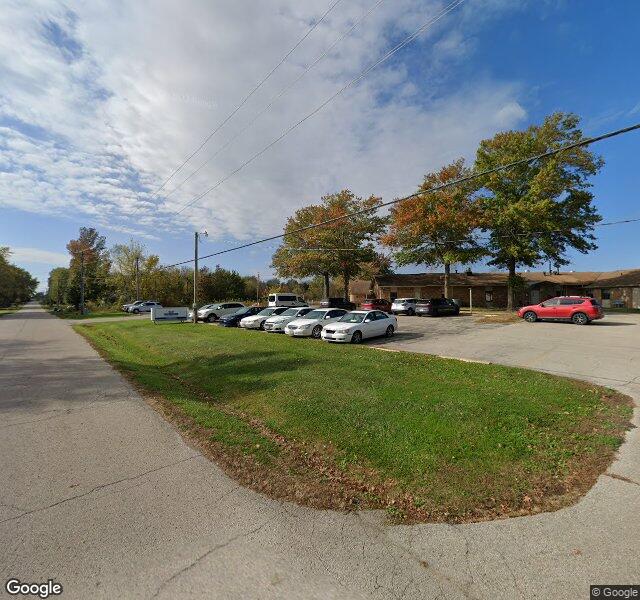
ST JAMES LIVING CENTER

415 SIDNEY STREET,, SAINT JAMES, MO 65559 (573) 265-8921
For profit - Corporation 90 Beds JAMES & JUDY LINCOLN Data: November 2025 1 Immediate Jeopardy citation
Trust Grade
28/100
#456 of 479 in MO
Last Inspection: July 2024

Within standard 12-15 month inspection cycle. Federal law requires annual inspections.

Overview

St. James Living Center has received a Trust Grade of F, indicating poor performance with significant concerns. With a state rank of #456 out of 479 and a county rank of #6 out of 6, the facility is in the bottom half of all Missouri nursing homes, suggesting limited options for improvement. However, there is a positive trend as the number of issues reported has decreased from 9 in 2024 to 3 in 2025. Staffing is rated average with a turnover rate of 46%, which is lower than the state average, indicating some stability among staff. Notably, a critical incident occurred when a resident suffered severe burns after smoking with their oxygen on, highlighting serious safety concerns. Additionally, the facility has been found lacking in maintaining cleanliness and providing a comfortable environment, with issues such as dirty bathrooms and poorly maintained kitchen areas.

Trust Score
F
28/100
In Missouri
#456/479
Bottom 5%
Safety Record
High Risk
Review needed
Inspections
Getting Better
9 → 3 violations
Staff Stability
⚠ Watch
46% turnover. Above average. Higher turnover means staff may not know residents' routines.
Penalties
✓ Good
No fines on record. Clean compliance history, better than most Missouri facilities.
Skilled Nurses
⚠ Watch
Each resident gets only 21 minutes of Registered Nurse (RN) attention daily — below average for Missouri. Fewer RN minutes means fewer trained eyes watching for problems.
Violations
⚠ Watch
39 deficiencies on record. Higher than average. Multiple issues found across inspections.
★☆☆☆☆
1.0
Overall Rating
★★★☆☆
3.0
Staff Levels
★☆☆☆☆
1.0
Care Quality
★★☆☆☆
2.0
Inspection Score
Stable
2024: 9 issues
2025: 3 issues

The Good

  • Full Sprinkler Coverage · Fire safety systems throughout facility
  • No fines on record

Facility shows strength in fire safety.

The Bad

1-Star Overall Rating

Below Missouri average (2.5)

Significant quality concerns identified by CMS

Staff Turnover: 46%

Near Missouri avg (46%)

Higher turnover may affect care consistency

Chain: JAMES & JUDY LINCOLN

Part of a multi-facility chain

Ask about local staffing decisions and management

The Ugly 39 deficiencies on record

1 life-threatening
Aug 2025 2 deficiencies
CONCERN (D) 📢 Someone Reported This

A family member, employee, or ombudsman was alarmed enough to file a formal complaint

Potential for Harm - no one hurt, but risky conditions existed

Notification of Changes (Tag F0580)

Could have caused harm · This affected 1 resident

Based on interview and record review, facility staff failed to notify one resident (Resident #1's) physician, when staff assessed the resident with a significant change in condition and administered N...

Read full inspector narrative →
Based on interview and record review, facility staff failed to notify one resident (Resident #1's) physician, when staff assessed the resident with a significant change in condition and administered Narcan for suspected overdose. The facility census was 45. 1.Review of the facility's Charting and Documentation policy, undated, showed staff are to document any time the physician is called about the resident as well as their response. 2. Review of Resident #1's Baseline care plan, dated 8/4/25, showed staff assessed the resident alert and cognitively intact, experienced seizures. Review showed staff are to monitor medications, provide safe environment, monitor condition and report changes to Director of Nursing (DON) and Physician.Review of the resident's nurse's notes, dated 08/11/2025, showed staff documented the resident was lethargic, with pinpointed pupils, and unresponsive to name. Narcan nasal spray administered, resident unresponsive. Called 911. Resident began breathing more deeply after administration. Resident transferred to local hospital for evaluation. The record did contain notification of the physician. Review of the resident's rapid drug screen, dated 8/11/25, showed the resident positive for Opiates and Benzodiazepines. 3. During an interview on 8/13/25 at 9:11 A.M., the administrator said the physician was not notified and orders have not been changed since this incident. He/She said he/she would expect the physician to be notified and is unsure why it was not done. He/She said the charge nurse, Registered Nurse (RN) A was in charge to notify the physician.During an interview on 8/13/25 at 9:30 A.M., the DON said the physician should have been notified and he/she does not know why the physician was not notified. He/She said the charge nurse is responsible for all notifications. During an interview on 12:48 P.M., the physician said he/she was not notified and there is no documentation in the chart that his/her office was notified via telephone or fax. He/She said he/she expects to be notified of changes in a resident condition. He/She said he/she was not aware of the resident's overdose and therefore has not adjusted his/her medications which needs to be done. During an interview on 8/25/25 at 8:48 A.M., Registered Nurse (RN) A said he/she entered the resident's room to pass medications, resident was hard to arouse, resident was in and out of it. He/She administered the resident nasal Narcan per his/her orders. After administering Narcan, the resident was sent to the emergency room. He/She said he/she faxed the nonemergent fax line around 10:00 P.M., but did not call the physician because the family wanted the resident sent to the hospital for evaluation. He/She did not get a faxed confirmation because he/she was busy that evening. Complaint #2587617
CONCERN (D) 📢 Someone Reported This

A family member, employee, or ombudsman was alarmed enough to file a formal complaint

Potential for Harm - no one hurt, but risky conditions existed

Investigate Abuse (Tag F0610)

Could have caused harm · This affected 1 resident

Based on interview and record review, facility staff failed to complete an investigation when one resident (Resident #1) overdosed on a Benzodiazepine (a class of central nervous system (CNS) depressa...

Read full inspector narrative →
Based on interview and record review, facility staff failed to complete an investigation when one resident (Resident #1) overdosed on a Benzodiazepine (a class of central nervous system (CNS) depressants that produce sedation, reduce anxiety, and relax muscles) and administered Narcan (a medication that can rapidly reverse the effects of an opioid overdose. The facility census was 45.1. Review of the facility's Investigation policy, undated, showed facility staff are directed to promptly and thoroughly investigate and try to determine what happened. The designated facility personnel will begin the investigation immediately. A root cause investigation and analysis will be completed. When an incident or suspected incident is reported, the administrator or designee will investigate the incident with the assistance of appropriate personnel. The investigation will include: -Who was involved;-Resident statements;-Resident roommate statements;-Interviews obtained from three to four residents who received care from alleged staff (if applicable);-Interviews obtained from three to four different department staff (if applicable);-Involved staff and witness statements of events;-Description of the resident's behavior and environment at the time of the incident;-Injuries present including a resident assessment;- Observation of resident and staff behaviors during the investigation;-Environmental considerations. 2. Review of Resident #1's Baseline care plan, dated 8/4/25, showed staff assessed the resident alert and cognitively intact, experienced seizures. Review showed staff are to monitor medications, provide safe environment, monitor condition and report changes to Director of Nursing (DON) and Physician.Review of the resident's medical records showed the medical record did not contain an investigation. Review of the resident's nurse's notes, dated 08/11/2025, showed staff documented the resident lethargic, with pinpoint pupils, and unresponsive to name. Narcan nasal spray administered, resident unresponsive. Staff called 911. Resident began breathing more deeply after administration. Resident transferred to local hospital for evaluation. Review of the resident's hospital records, dated 08/11/25, showed the resident admitted through the emergency room after an accidental overdose. Resident is on chronic opiate therapy for management of cancer related pain. Review of the resident's rapid drug screen, dated 8/11/25, showed the resident positive for Opiates and Benzodiazepines. 3. During an interview on 8/13/25 at 9:11 A.M., the Administrator said he/she was notified by the charge nurse, Registered Nurse (RN) A the resident was sent out because he/she was not stable. He/She said he/she later heard the resident was administered Narcan but was unsure if it was at the facility or at the hospital. He/She said he/she and the Director od Nursing (DON) should have been notified when Narcan was administered for a possible drug overdose at the facility and an investigation should have been started. He/She said he/she did not start an investigation because he/she was unaware of the full incident. During an interview on 8/13/25 at 9:30 A.M., the DON said he/she was not aware of any incident with the resident. He/She said he/she expects to be notified and in this case an investigation should have been started to rule out any medication errors, if medications need to be adjusted or if there was any abuse. Complaint #2587617
Jul 2025 1 deficiency 1 IJ
CRITICAL (J) 📢 Someone Reported This

A family member, employee, or ombudsman was alarmed enough to file a formal complaint

Immediate Jeopardy (IJ) - the most serious Medicare violation

Accident Prevention (Tag F0689)

Someone could have died · This affected 1 resident

**NOTE- TERMS IN BRACKETS HAVE BEEN EDITED TO PROTECT CONFIDENTIALITY** Based on observation, interview, and record review, facility staff failed to ensure one resident (Resident #1) remained free fro...

Read full inspector narrative →
**NOTE- TERMS IN BRACKETS HAVE BEEN EDITED TO PROTECT CONFIDENTIALITY** Based on observation, interview, and record review, facility staff failed to ensure one resident (Resident #1) remained free from accidents when facility staff failed to remove his/her oxygen and supervise him/her while smoking to ensure his/her safety. On 7/6/25, the resident failed to remove his/her oxygen while smoking in the courtyard and caught fire to his/her nasal cannula which resulted in severe burns to his/her nares and the right side of his/her head. The facility census was 45.The administrator was notified on 7/8/25 of the Past Non-Compliance Immediate Jeopardy (IJ) which occurred on 7/6/25. Upon discovery, the administrator conducted an investigation, notified appropriate parties, and educated Housekeeper A. Facility staff reviewed the smoking policy, audited the care plans and smoke assessments for all residents who smoke, placed signs on the courtyard door to remind staff and residents to take off oxygen, placed a oxygen rack outside the door to enter the facility, placed a fire blanket in the courtyard, and in-serviced all employees on smoking safety. The IJ was corrected on 7/8/25.1. Review of the facility's Smoking Policy for Residents, dated 02/26/24, showed staff were directed as follows:-Smoking privileges for residents must be evaluated by the Social Service Director (SSD);-Residents are not permitted to keep cigarettes, pipes, tobacco, or other smoking articles in their possession. -Every resident must pass the smoking evaluation to be an independent smoker, this assessment will be completed annually.Review of the facility's investigation, dated 07/07/25, showed staff documented on 07/06/25 Resident #1 smoked with oxygen on and received a burn to the right side of his/her face and nares.Review of Resident #1's Entry Minimum Data Set (MDS), a federally mandated assessment tool, showed the resident admitted on [DATE].Review of the resident's physician order sheet (POS), dated 07/03/25 to 7/8/25, showed an order for two liters of oxygen per minute per nasal canula as needed to keep oxygen saturation (measurement of how much oxygen your blood is carrying as a percentage of the maximum it could carry) at or above 92%.Review of the resident's nurse's notes, dated 7/6/25, showed Licensed practical Nurse (LPN) B was notified by a housekeeper, at approximately 3:30 P.M. the resident caught himself/herself on fire. LPN B ran to smoking area and found the resident in his/her wheelchair with his/her nasal canula hanging on the ground with the nose piece burnt/melted. The cigarette on the ground by the nasal canula started to burn again. The nurse stomped on the sparks, turned off the oxygen and removed the tubing from the tank. The nurse brought the resident inside the building and assessed him/her. The nurse documented the resident's mouth was darkened with soot in the back of his/her throat, burned hair on the back of the resident's shirt, and a half dollar sized burn to the side of his/her head. The nurse called the administrator, nurse on call and physician. Staff sent the resident to the emergency department. Review of the resident's progress notes, date 7/6/25, showed the resident returned from the hospital with burns to his/her nasal cavity and the right side of his/her head. New orders to apply bacitracin to his/her nasal cavities and right head. Nose is red, and uncomfortable. Denies pain to his/her right head.Review of the resident's baseline care plan, dated 7/8/25, showed staff did not assess the resident's cognition, oxygen use, or smoking ability.Review showed the resident's medical record did not contain documentation staff completed the resident's smoking assessment or interventions to ensure the resident's safety while smoking. During an interview on 7/8/25 at 1:10 P.M., the SSD said he/she was responsible for ensuring smoking assessments and smoking policies were done when a resident is admitted . He/She is supposed to have the smoking assessments and signed policy done within five days of admission, but tries to have them done as soon as possible. He/She did not have the resident's smoking assessment or policy done when he/she admitted , because the SSD also had three discharges done the same day and it got overlooked. He/She was told that on 7/7/25 the resident was outside smoking with oxygen on when the housekeeper came out to do the other residents supervised smoke break. He/She said the resident caught on fire and the housekeeper got the nurse as soon as it happened. Observation on 7/8/25 at 1:23 P.M., showed the resident with a burn to the right side of his/her head, burns to his/her nasal passages, and singed eyebrows.During an interview on 7/8/25 at 2:26 P.M., Housekeeper A said Resident #1 was already outside on Sunday (7/6) around 3:30 P.M., when he/she came out with the residents who required supervision when smoking. He/She turned toward the resident and saw flames coming from the resident's nasal cannula. The resident had ripped out the nasal cannula as he/she ran to help him/her. Sparks were coming from the cannula on the ground, so he/she stomped on it to put it out and then ran for a nurse to help. He/She had been educated on how to assist the residents during smoke breaks, but had never been told they were not allowed to use oxygen when smoking. He/She had seen the resident smoking outside several times during the day, so he/she thought the resident was an independent smoker. During an interview on 7/8/25 at 2:10 P.M., Resident #5 said Resident #1 was outside smoking when he/she and the housekeeper came out for the supervised smoke break. Housekeeper A was helping him/her when he/she saw the resident caught fire from across the courtyard. He/She yelled and Housekeeper A ran to Resident #1 and helped Resident #1 put out the fire. After the fire was put out Housekeeper A ran to get help from the nurse. He/She heard the housekeeper tell the nurse he/she was not aware the resident could not smoke with oxygen on. During an interview on 7/8/25 at 1:52 P.M., LPN B said he/she was the nurse who responded to the incident. The resident was outside smoking independently when Housekeeper A came out with the other dependent residents. Housekeeper A told him/her the resident was smoking with oxygen on when he/she brought the other residents out to smoke. The housekeeper told LPN B that he/she had his/her back to the resident when the resident caught fire. Housekeeper A came in the building yelling for help when he/she responded. The resident was sitting in his/her wheelchair, had burns to his/her nares and the right side of his/her head. The resident should have had a smoking assessment completed on admission to guide staff, but one was not completed. He/she said it is the responsibility of the SSD to complete the smoking assessment upon admission. The resident should not have been smoking with oxygen on.During an interview on 7/8/25 at 2:04 P.M., Resident #1 said he/she arrived at the facility last week. Staff were aware he/she smoked and when he/she was at this facility a couple years ago he/she was allowed to smoke independently. He/She was told not to smoke with oxygen by the administrator, but he/she had done it at home without issue and didn't think it was a big deal. He/She said residents and staff were outside when he/she went to smoke. He/She was already smoking when it blew up in his/her face. Housekeeper A ran to him/her to help him/her put it out and then the housekeeper got him/her help form the nurse.During an interview on 7/8/25 at 2:14 P.M., Certified Medication Technician (CMT) D said when the facility gets residents who smoke, staff are made aware if they are supervised or independent by looking at the resident's smoking assessment. Assessments are done on admission. During an interview on 7/8/25 at 2:17 P.M., the administrator said he/she picked the resident up last week on Thursday (7/3). The resident asked to smoke when he/she arrived at the facility, education was done at that time about not smoking with oxygen on and a policy was signed by the resident. The administrator said Resident #1 received and signed the smoking policy on 7/3/25 initially. He/She was notified on Sunday (7/6), Resident #1 was outside smoking when Housekeeper A came out for the supervised smoke break. The resident was already smoking when his/her nasal canula caught fire. He/She was told the housekeeper assisted the resident and then got help from LPN B. He/She is not sure how the resident obtained the cigarettes and lighter. Smoking assessments were to be done by the SSD upon admission, quarterly, and with a change in condition. He/She does not know why it was not done. Typically after the assessment is done the resident is placed on the smokers list under supervised or unsupervised.Complaint #1612565
Jul 2024 9 deficiencies
CONCERN (D)

Potential for Harm - no one hurt, but risky conditions existed

Deficiency F0625 (Tag F0625)

Could have caused harm · This affected 1 resident

**NOTE- TERMS IN BRACKETS HAVE BEEN EDITED TO PROTECT CONFIDENTIALITY** [NAME], [NAME] Based on interview and record review, facility staff failed to provide written information to the resident and/or...

Read full inspector narrative →
**NOTE- TERMS IN BRACKETS HAVE BEEN EDITED TO PROTECT CONFIDENTIALITY** [NAME], [NAME] Based on interview and record review, facility staff failed to provide written information to the resident and/or the resident's representative of the bed hold policy prior to transfer for four (Residents #2, #8, #19 and #41) of 23 sampled residents. The facility census was 48. 1. Review of the facilities policy titled Discharge/Transfer of Resident, undated, showed: -The purpose is to provide safe departure from the facility and to provide sufficient information for aftercare of the resident; -Explain and give copy of bed hold form to the resident and/or representative. 2. Review of Resident #2's medical record showed staff documented the resident had been transferred to the hospital on [DATE] and returned to the facility on [DATE]. The resident's medical record did not contain documentation which showed staff notified the resident and/or the representative of the facility's bed hold policy at time of the resident's transfer. 3. Review of Resident #8's medical record showed staff documented the resident had been transferred to the hospital on [DATE] and returned to the facility on [DATE], transferred to the hospital again on 04/17/24 and returned to the facility on [DATE]. The resident's medical record did not contain documentation which showed staff notified the resident and/or the representative of the facility's bed hold policy at time of the resident's transfer. 4. Review of Resident #19's medical record showed staff documented the resident had been transferred to the hospital on [DATE] and returned on 04/13/2024, transferred on 05/3/2024 and returned on 05/3/2024, transferred on 06/23/2024 and returned on 06/23/2024, and transferred on 06/24/2024 and returned on 06/27/2024. The residents medical record did not contain documentation staff notified the resident and/or representative of the facilities bed hold policy at the time of either transfer. 5. Review of Resident #41's medical record showed staff documented the resident had been transferred to the hospital on [DATE] and returned to the facility on [DATE]. The resident's medical record did not contain documentation which showed staff notified the resident and/or the representative of the facility's bed hold policy at time of the resident's transfer. 6. During an interview on 07/16/224 at 2:20 P.M., the business office manger (BOM) said the nursing staff is responsible for providing bed hold information upon resident transfer. The BOM said there is a bed hold policy in the admission packet, but he/she does not do anything further with bed holds. During an interview on 07/16/24 at 3:30 P.M., the Director of Nursing (DON) said he/she took over the position in late February and prior to this staff were unaware of what a bed hold was. The DON said the nurses are responsible for providing the bed holds and having the residents sign before transfer. The DON said social services may have some of the bed holds. During an interview on 07/16/24 at 3:43 P.M., the activities director (AD) and former social services director said he/she does not have the signed bed holds. During an interview on 07/16/24 at 4:20 P.M., the administrator said he/she had been uploading the bed holds to the facility's software program. The administrator said the nursing staff had not been giving him/her bed holds, probably because they haven't been providing the beds holds to the residents on transfer.
CONCERN (D)

Potential for Harm - no one hurt, but risky conditions existed

Deficiency F0637 (Tag F0637)

Could have caused harm · This affected 1 resident

**NOTE- TERMS IN BRACKETS HAVE BEEN EDITED TO PROTECT CONFIDENTIALITY** Based on interview and record review, facility staff failed to complete a Significant change in Status Assessment (SCSA) Minimum...

Read full inspector narrative →
**NOTE- TERMS IN BRACKETS HAVE BEEN EDITED TO PROTECT CONFIDENTIALITY** Based on interview and record review, facility staff failed to complete a Significant change in Status Assessment (SCSA) Minimum Data Set (MDS), a federally mandated assessment tool, for three residents (Resident #2, #8 and #41) out of 23 sampled residents. The facility census was 48. 1. Review of the Resident Assessment Instrument (RAI) Manual, dated 10/1/23, shows a significant change is a major decline or improvement in a resident's status that: -Will not normally resolve itself without intervention by staff or by implementing standard disease-related clinical interventions, the decline is not considered self-limiting; -Impacts more than one area of the resident's health status; -Requires interdisciplinary review and/or revision of the care plan. 2. Review of Resident #2's SCSA MDS, dated [DATE], showed staff assessed the resident as: -Independent with eating, oral hygiene and bed mobility; -Required setup assistance from staff for toilet hygiene, dressing, personal hygiene and transfers; -Required supervision from staff for bathing; -Did not fall; -Did not have ulcers or wounds. Review of the resident's Quarterly MDS, dated [DATE], showed staff assessed the resident as follows: -Required setup assistance from staff for eating; -Required maximal assistance from staff for oral hygiene, dressing, personal hygiene, bed mobility and transfers; -Dependent on staff for toilet hygiene and bathing; -Fall with injury; -Open lesion on foot. Review showed facility staff did not complete a SCSA for a decline in two or more areas of function. 3. Review of Resident #8's admission MDS, dated [DATE], showed staff assessed the resident as: -Moderate cognitive impairment; -Rejected care one to three days out of the seven day look back period (period of time used to complete the assessment); -Required set up assistance from staff for eating and oral hygiene; -Required maximal assistance from staff for dressing, personal hygiene, transfers and to propel wheelchair 150 feet; -Required moderate assistance from staff for bed mobility; -Weighed 254 pounds; -Had one stage 2 pressure injury and one unstageable pressure injury; -Did not have a diagnosis of Depression; -Did not receive an antidepressant. Review of Resident #8's Quarterly MDS, dated [DATE], showed staff assessed the resident as follows: -Severe cognitive impairment; -Rejected care four to six out of seven days during the look back period; -Independent with oral hygiene, transfers, bed mobility and to propel wheelchair 150 feet; -Required setup assistance only from staff for dressing and personal hygiene; -Weighed 228 pounds, a significant weight loss; -Two stage 2 pressure injuries; -New diagnosis of Depression; -Received antidepressant medication seven of the seven days in the look back period. Review showed facility staff did not complete a SCSA for multiple declines and improvements in two or more areas of function. 4. Review of Resident #41's SCSA, dated 02/28/24, showed staff assessed the resident as follows: -Had verbal behaviors directed towards others one to three days during the seven day look back period; -Had other behaviors not directed at others one to three days during the seven day look back period; -Wandered four to six days during the seven day look back period; -Required supervision from staff for eating; -Required moderate assistance from staff for oral hygiene; -Required maximal assistance from staff for toilet hygiene, bathing, dressing, personal, hygiene, bed mobility and transfers; -Frequently incontinent of bowel and bladder; -Did not fall; -Weighed 130 pounds. Review of the resident's quarterly MDS, dated 05/30 24, showed staff assessed the resident as follows: -Did not exhibit behaviors; -Did not wander; -Required maximal assistance from staff for eating; -Dependent on staff for oral hygiene, toilet hygiene, bathing, dressing, personal hygiene, bed mobility and transfers; -Always incontinent of bowel and bladder; -Two or more non-injury falls; -Weighed 118, a significant weight loss. Review showed facility staff did not complete a SCSA for multiple declines and improvements in two or more areas of function. 5. During an interview on 07/17/24 at 1:34 P.M. the MDS Coordinator said he/she is responsible for completing all significant change MDS assessments, and a significant change should be completed if a resident is admitted to hospice care. The MDS coordinator said he/she does not know what the RAI manual says about significant changes and when a significant change assessment is required. The MDS coordinator said he/she works the floor as a charge nurse at times, and resident #2, #8, and #41 had a significant change in status, but he/she did not know an assessment should be completed. The MDS coordinator said he/she has signed up for MDS training. During an interview on 07/17/24 at 2:45 P.M., the Director of Nursing (DON) said he/she does not know how many areas of care have to change, to trigger a significant change MDS.
CONCERN (D)

Potential for Harm - no one hurt, but risky conditions existed

Assessment Accuracy (Tag F0641)

Could have caused harm · This affected 1 resident

**NOTE- TERMS IN BRACKETS HAVE BEEN EDITED TO PROTECT CONFIDENTIALITY** Based on observation, interview, and record review, facility staff failed to document a complete and accurate Minimum Data Set (...

Read full inspector narrative →
**NOTE- TERMS IN BRACKETS HAVE BEEN EDITED TO PROTECT CONFIDENTIALITY** Based on observation, interview, and record review, facility staff failed to document a complete and accurate Minimum Data Set (MDS), a federally mandated assessment tool, when staff did not accurately code weight loss for one resident (Resident #8), restraints for one resident (Resident #34), and anticoagulant and hypnotic medication use for one resident (Resident #16) out of 23 sampled residents. The facility census was 48. 1. Review of the facility's policy titled, MDS and Care Planning Guidelines, dated 10/01/2015, showed it is the policy of the facility to use the most current Centers for Medicare and Medicaid (CMS) MDS Resident Assessment Instrument (RAI) manual, any published interim RAI manual errata documents, and applicable federal guidelines as the authoritative guide for completion of MDS, Care Area Assessments (CAAs), and resident care planning. 2. Review of Resident #8's admission MDS, dated [DATE], showed staff assessed the resident weight as 254 pounds. Review of the resident's Quarterly MDS, dated [DATE], showed staff assessed the resident weight as 228 pounds. Staff did not document this weight loss as significant. During an interview on 07/17/24 at 1:34 P.M., the MDS Coordinator said if a resident has a significant weight loss, it should be coded on the MDS. The MDS Coordinator said the resident had a significant weight loss and he/she must have overlooked it. During an interview on 07/17/24 at 2:45 P.M., the Director of Nursing (DON) said the resident should have a significant weight loss on his/her MDS. The DON said the MDS Coordinator is responsible to add the information to the MDS an ensure it is accurate. 3. Review of Resident #34's Quarterly MDS, dated [DATE], showed staff assessed the resident as follows: -Severely cognitively impaired; -Limb restraints used less than daily. Review of the resident's medical record showed medical record did not contain an order for restraint use. Observation on 7/14/24 at 12:10 P.M. showed the resident did not have limb restraints. Observation on 7/15/24 at 1:24 P.M. showed resident did not have limb restraints. Observation on 7/16/24 at 3:13 P.M. showed the resident did not have limb restraints. During an interview on 07/16/24 at 4:38 P.M., Certified Medication Technician (CMT) N said he/she was not aware of restraints ever being used on the resident. During an interview on 07/16/24 at 4:40 P.M., Certified Nurse Aide (CNA) O said he/she has worked at the facility for over a year and has never seen the resident use restraints, and has never seen a limb restraint on the resident. During an interview on 07/16/24 at 4:45 P.M., the MDS Coordinator said the resident has never had restraints and does not use them. During an interview on 07/17/24 at 1:34 P.M., the MDS Coordinator said he/she coded restraints for the resident due to bed rail use, and it was done in error. The MDS Coordinator said he/she has been in this position since November 2023 and was not fully trained, but is signed up for training in August 2024. During an interview on 07/17/24 at 2:45 P.M., the Director of Nursing (DON) said the resident does not use restraints and it should not be on the MDS. 4. Review of Resident #16's MDS, 05/28/24, showed staff assessed the resident received hypnotic (a medication used to induce or prolong sleep) and an anticoagulant (a medication used to thin the blood). Review of residents medical record showed the medical record did not contain an order for hypnotic or anticoagulant medication. During an interview on 07/17/24 at 2:00 P.M., MDS coordinator says he/she coded the resident as taking a hypnotic due to the use of amitriptyline, and he/she is unaware that it is not a hypnotic medication. The MDS coordinator said he/she coded the resident as taking an anticoagulant due to the use of Aspirin, and said he/ she is unaware it is not an anticoagulant medication. The MDS Coordinator said he/she is responsible to ensure the MDS is coded correctly.
CONCERN (E)

Potential for Harm - no one hurt, but risky conditions existed

Safe Environment (Tag F0584)

Could have caused harm · This affected multiple residents

**NOTE- TERMS IN BRACKETS HAVE BEEN EDITED TO PROTECT CONFIDENTIALITY** Based on observation, interview and record review, facility staff failed to provide a comfortable and homelike environment for r...

Read full inspector narrative →
**NOTE- TERMS IN BRACKETS HAVE BEEN EDITED TO PROTECT CONFIDENTIALITY** Based on observation, interview and record review, facility staff failed to provide a comfortable and homelike environment for residents, when the staff failed to maintain walls, floors, windows, showers and equipment in resident rooms clean and in good repair. Facility staff failed to provide an environment free of pests. The facility census was 48. 1. Review of the facility's policy's showed the facility did not provide a policy for staff to report environmental concerns. 2. Observation on 07/14/24 at 10:00 A.M., showed the water station in front of the nurse's station between the memory care unit and 400 hall contained a dried orange/brown spot on the wall behind and above the trash can. 3. Observation on 07/14/24 at 10:01 A.M., showed the shared bathroom in occupied resident rooms [ROOM NUMBERS] contained yellow stained toilet seat with two cracks in the back side at the hinges. Observation showed a bed pan and a dirty toilet riser on the floor on either side of the toilet between the wall. The bathroom walls dirty and contained black and brown smudges. The inside of the door to room [ROOM NUMBER] contained a large area of chipped paint with exposed green paint underneath and black marks along the lower portion of the door. 4. Observation on 07/14/24 at 10:02 A.M., showed occupied resident room [ROOM NUMBER] with multiple areas of the floor peeled up and three pieces of duct tape used to hold the floor together. 5. Observation on 07/14/24 at 11:00 A.M., showed occupied resident room [ROOM NUMBER] had three gouges in the floor next to the bed by the door. The inside of the bedroom door and inside of the bathroom door had chipped paint which exposed green paint underneath. During an interview on 07/14/24 at 11:00 A.M., Resident #35 said he/she had asked someone in administration for the doors to be painted but was told the request wouldn't make it through corporate. 6. Observation on 07/14/24 at 2:45 P.M. showed occupied resident room [ROOM NUMBER] contained missing drywall and paint behind the headboard of bed b, and drywall debris hanging from the wall, electric outlet, and on the floor. Observation showed half of the room had not been painted. During an interview on 07/14/24 at 2:45 P.M., Resident #1 said staff started repainting the room, but did not finish the front half and they only painted around the edges. The resident said it looks bad, and he/she is not happy that is has been over two months since it was initially started. The resident said the maintenance guy quit and no one had finished the room. 7. Observation on 07/15/24 at 8:23 A.M., showed occupied resident room [ROOM NUMBER]'s air conditioning (AC) unit without a cover and the AC line exposed. Observation showed the toilet seat had chipped paint. Observation showed the sanitizer pump was broken, with the front of the pump open and hanging down, with two pieces of tape used to hold it closed. 8. Observation on 07/15/24 at 9:24 A.M., showed occupied resident room [ROOM NUMBER] with trim peeled off the wall in front of the cabinet by the windwn. The inside of the bathroom door and the resident room door had paint gone and gouges and black marks along the bottom. 9. Observation on 07/15/24 at 9:38 A.M., showed occupied resident room [ROOM NUMBER]'s bathroom door had chipped paint. Both interior doors and door frames had scratches and paint was gone. 10. Observation on 07/15/24 at 9:47 A.M., showed occupied resident room [ROOM NUMBER]'s shower with duct tape on the tiles and over the shower handles. 11. Observations on 07/17/24 during the facility tour, showed: -Sections of missing paint and drywall on the walls by the beds in resident rooms 303, 304, 309, 406 and in the 300 hall conference room; -The cove base (a trim piece used in the transition space between a wall and floor) peeled away from the walls by the windows in resident rooms 308, 404, 506, and 509 and away from the walls in the activity room; -A hole in the 400 shower wall and an unidentifiable black speckled substance lined the area between the shower wall and floor. During an interview on 07/17/24 at 2:30 P.M., the maintenance director said he/she is responsible for maintenance of the facility's physical environment. The maintenance director said when he/she became the maintenance director in April 2024, the facility did not have a maintenance director for a period of time and there was a backlog of multiple things that needed repaired or replaced. The maintenance director said if there is something that needs repaired or replaced, staff are supposed to fill out a work order and give it to him/her so that he/she knows about the issues. The maintenance director said he/she had not received any work orders for the paint gouges, peeling cove base or 400 hall shower room and did not know about those issues. During an interview on 07/17/24 at 2:45 P.M., the administrator said the facility did not have a written policy for facility maintenance, but staff are expected to comply with state and federal guidelines. The administrator said prior to his/her employment, the facility did not have a maintenance director for a period of time and they found that the former maintenance director had not been fulfilling his/her job duties so there were a lot of things that needed attention. The administrator said if there is something that needs repaired or replaced, staff are supposed to fill out a work order and give it to maintenance director so that he/she knows about the issues and can prioritize his/her work. During an interview on 07/22/24 at 3:28 P.M., Certified Nurse Aide (CNA) U said staff fill out a work order for maintenance to fix issues. The CNA said he/she had noticed some missing paint on doors and room walls and did not report it because he/she figured maintenance already knew about it. The CNA said he/she never noticed any issues with the floors and has not noticed duct tape on floors of the rooms. The CNA said he/she has not noticed damage to toilet seats or paint. During an interview on 07/22/24 at 3:35 P.M., the Minimum Data Set (MDS) Coordinator said staff have a form to fill out and put in the maintenance door box and maintenance checks the box every day he/she is here. The MDS Coordinator said staff have not brought missing paint on the doors and walls to his/her attention and no one has told him/her of any damage on the residents' walls. The MDS Coordinator said staff have not told him/her about missing paint on toilet seats. The MDS Coordinator said he/she does recall seeing duct tape on the floor and he/she did not report it to maintenance. During an interview on 07/22/24 at 3:41 P.M., the Administrator said he/she expects staff to put work orders in with maintenance and maintenance to prioritize the issues based on severity and safety concern. The administrator said he/she is aware of the missing paint on the resident doors, but has not had the time to go in all of the rooms. The administrator said staff has not reported any issues with toilet seats. During an interview on 07/22/24 at 3:49 P.M., the Maintenance Director said staff should fill out a work order and put it in a box on the maintenance door. There has been no work orders in regard to paint on the doors or walls. The maintenance director said he/she has noticed the scratched paint on doors and walls of resident rooms. There has been no work orders in regard to pain on the toilet seats, but he/she does get a lot of work orders about broken toilet seats. He/She has not seen and is not aware of duct tape on the floor of resident rooms and staff has not reported it. 12. Observations on 07/17/24 during the facility tour showed the windows in resident rooms 101, 102, 103, 105, 106, 107, 109, 202, 203, 205, 208, 210, 403, 404, 405, 407, 408, 409, 410, 501, 502, 503, 504, 506, 507, 508, 509 sealed and did not open. During an interview on 07/17/24 at 10:10 A.M., the resident who occupied room [ROOM NUMBER] said his/her window did not open and he/she would like to be able to open it. During an interview on 07/17/24 at 10:50 A.M., the resident who occupied room [ROOM NUMBER] said his/her window did not open and he/she would like to be able to open it. During an interview on 07/17/24 at the maintenance director said he/she knew the windows in the resident rooms did not open and when he/she questioned facility management about the windows, the management told him/her that they were sealed closed during the pandemic and were okay to remain that way. During an interview on 07/17/24 at 2:45 P.M., the administrator said the facility did not have a written policy for the maintenance of windows, but staff are expected to comply with state and federal guidelines. The administrator said the maintenance director is responsible to inspect the windown monthly and make repairs as needed. The administrator said the windows in resident rooms should open and he/she did not know that they were sealed shut. 13. Observation on 07/14/24 at 10:00 A.M., showed Resident #12 in bed with several flies around the room and on the resident. Observation on 07/14/24 at 12:40 P.M., showed the resident sat on the side of his/her bed as he/she ate. Five flies flew around the resident and landed on the resident's food. The resident swatted at the flies on his/her food. Observation on 07/15/24 at 10:24 A.M., showed three flies on the resident as he/she laid in his/her bed. During an interview on 07/15/24 at 10:33 A.M., the resident said he/she complained about the flies several months ago and staff did not do anything about it. Observation on 07/15/24 at 10:45 A.M., showed six flies sat around the resident's feet, and one dead fly on the bed sheet beside the resident's feet. Observation on 07/16/24 at 8:34 A.M., showed two flies on the door frame at the entrance to the resident's room. Multiple flies flew around the resident's room and landed on the resident's breakfast, which sat on the bedside table. 14. Observation on 07/14/24 at 10:06 A.M., showed Resident #36 not in his/her room. Observation showed the sheet contained a large brown stain on the sheet. Flies were observed crawling around on the stains on the sheet and flew around the room. 15. Observation on 07/14/24 at 12:10 P.M., showed Resident #26 sat in a chair in a community area of the facility. Multiple flies landed on the resident's arms and legs. The resident slapped at the flies as they landed on him/her. Observation on 07/15/24 at 9:38 A.M., showed the resident entered his/her room and flies landed on the resident. During an interview on 07/15/24 at 9:40 A.M., the resident said he/she doesn't notice the flies. 16. Observation on 07/14/24 at 12:34 P.M., showed Resident #30 sat in a recliner in his/her room. The resident had a bedside table in front of him/her, with his/her lunch on it and a fly swatter. The resident swatted at flies that landed on his/her food. During an interview on 07/14/24 at 12:23 P.M., the resident said he/she has a problem with all the flies. Observation on 07/15/24 at 10:08 A.M., showed the resident swatted at flies in his/her room with a fly swatter. During an interview 07/15/24 at 10:08 A.M., the resident said he/she has to swat at the flies with the fly swatter to keep them off of his.her food. They're terrible. 17. Observation on 07/15/24 at 9:47 A.M., showed Resident #8 laid on his/her bed in his/her room. Three flies flew around the room. During an interview on 07/15/24 at 9:47 A.M., the resident said he/she notices the flies, and they bother him/her. 18. Observation on 07/15/24 at 3:25 P.M., showed Resident #2 in his/her bed. Flies flew around the room and landed on the resident. During an interview on 07/22/24 at 3:28 P.M., CNA U said he/she has noticed the flies in the facility and resident rooms and brought it to maintenance and the administrators attention. The CNA said maintenance said they had to call somebody to get it treated. The CNA said he/she is not aware of anyone coming in to treat for flies. The CNA said he/she is still seeing flies in the facility. During an interview on 07/22/24 at 3:35 P.M., the MDS Coordinator said he/she did notice residents with more odors had flies in their rooms. The MDS Coordinator said he/she reported the flies to maintenance and is not sure what maintenance did about the flies. During an interview on 07/22/24 at 3:41 P.M., the administrator said no one has reported an issue with flies. The administrator said he/she has seen the flies around the offices, but has not really been in rooms to witness it himself/herself. The administrator said he/she is sure if the flies are in building, the flies are in the rooms. The administrator said he/she has contacted pest control about the flies and the pest control company said there is nothing they can do. During an interview on 07/22/24 at 3:49 P.M., the Maintenance Director said he/she has not had any reports of flies in resident rooms or hallways. He/She has seen flies in the halls but not in resident rooms.
CONCERN (E)

Potential for Harm - no one hurt, but risky conditions existed

Deficiency F0657 (Tag F0657)

Could have caused harm · This affected multiple residents

**NOTE- TERMS IN BRACKETS HAVE BEEN EDITED TO PROTECT CONFIDENTIALITY** Based on observation, interview, and record review, facility staff failed to ensure the comprehensive care plans were updated fo...

Read full inspector narrative →
**NOTE- TERMS IN BRACKETS HAVE BEEN EDITED TO PROTECT CONFIDENTIALITY** Based on observation, interview, and record review, facility staff failed to ensure the comprehensive care plans were updated for oxygen use for two residents (Resident #2, and #41), depression for one resident (Resident #8), behaviors for one resident (Resident #34), wandering for one resident (Resident #36), weight loss for one resident (Resident #41), and for Activities of Daily Living (ADLs) for one resident (Resident #45) out of 23 sampled. The facility census was 48. 1. Review of the facility's policy titled, Care Plan Comprehensive, undated, showed staff were directed as follows: -An individualized comprehensive care plan that includes measurable goals and time frames will be developed to meet the resident's highest practicable physical, mental, and psychosocial well-being; -The comprehensive care plan will be based on a thorough assessment that includes, but is not limited to, the Minimum Data Set (MDS), a federally mandated assessment tool; -Assessment of each resident is an ongoing process and the care plan will be revised as changes occur in the resident's condition; -The interdisciplinary care plan team is responsible for the periodic review and updating of care plans: -When a significant change in the resident's condition has occurred; -At least quarterly; -When changes occur that impact the resident's care (i.e. change in diet, discontinuation of therapy, changes in care areas that do not require a significant change assessment). 2. Review of Resident #2's Quarterly MDS, dated [DATE], showed staff assessed the resident received oxygen. Review of the resident's care plan, dated 06/17/24, showed the care plan did not address the resident's oxygen use. Review of the resident's Physician Order Sheet (POS), dated 07/01/24, showed an order for oxygen two to four Liters Per Minute (LPM) through nasal cannula continuously, to maintain oxygen saturation above 92%, on every shift, with a start date of 05/30/24. Observation on 07/15/24 at 3:27 P.M., showed the resident with his/her oxygen on per nasal nasal cannula. During an interview on 07/17/24 at 1:31 P.M., the MDS Coordinator said oxygen should be care planned. The MDS coordinator said he/she overlooked the oxygen. During an interview on 07/17/24 at 2:45 P.M., the Director of Nursing (DON) said if a resident uses oxygen it should be on the care plan. 3. Review of Resident #8's Quarterly MDS, dated [DATE], showed staff assessed the resident had a new diagnosis of depression and received antidepressant medication seven out of seven days in the look back period. Review of the resident's care plan, dated 06/27/24, showed the care plan did not contain information related to the resident's diagnoses of depression or antidepressant medication use. Review showed the care plan did not contain symptoms for staff to monitor for or non-pharmacological interventions to use. The care plan did not show the side affects of the antidepressant the staff should monitor the resident for. Review of the resident's POS, dated 07/01/24, showed the physician order for Zoloft (antidepressant medication) 50 milligram (mg) daily for a diagnosis of depression, with a start date of 06/22/24. During an interview on 07/17/24 at 1:34 P.M., the MDS Coordinator said a diagnosis of depression and antidepressant use should be care planned. The MDS coordinator said it was overlooked. The MDS Coordinator said he/she is supposed to revise the care plans quarterly, and he/she sometimes forgets to revise the care plan. During an interview on 07/17/24 at 2:45 P.M., the DON said a diagnosis of depression, and antidepressant use should be care planned, as well as non-pharmacological interventions staff should use. The DON said he/she does not know why it was not done, it is the responsibility of the MDS coordinator to ensure it is updated. 4. Review of Resident #34's Quarterly MDS, dated [DATE], showed staff assessed the resident as follows: -Severely cognitively impaired; -Had hallucinations and delusions; -Rejected care one to three days out of the seven day look back period; -Verbal behaviors occurred one to three days out of the seven day look back period; -Diagnosis of major depressive disorder. Review of resident's care plan, dated 04/24/24, showed the care plan did not address the resident's physical and verbal behavioral care needs with appropriate interventions. Review of the resident's nurses notes showed staff documented the resident had aggressive physical and verbal behaviors toward staff on 07/13/24, 07/08/24, 06/10/24, 5/29/24, 5/23/24, and 5/23/24. During an interview on 07/17/24 at 1:34 P.M., the MDS Coordinator said he/she is aware of the resident's aggressive behaviors and the behaviors should have been care planned but he/she overlooked it. The MDS Coordinator said he/she is supposed to revise the care plans quarterly, and he/she sometimes forgets to revise the care plan. During an interview on 07/17/24 at 2:45 P.M., the Director of Nursing (DON) said the resident's aggressive behaviors should be on the care plan, and the care plans should be reviewed with significant changes, changes in care, and based on triggers for the annual and quarterly assessments. The DON said he/she does not know why it was not done. 5. Review of Resident #36's Quarterly MDS, dated [DATE], showed staff assessed the resident as follows: -Cognitive assessment unable to be completed; -Rarely/never understood; -Wanders daily; -Diagnoses of non-traumatic brain dysfunction, cerebral palsy (a group of conditions that affect movement and posture), seizures, anxiety, and depression. Review of the resident's Elopement Assessment, dated 07/02/24, showed the resident scored at high risk for elopement/wandering. The interventions listed are frequent monitoring and care plan. Review of the resident's care plan, dated 07/10/24, did not address the resident's wandering or elopement risks. Observation on 07/14/24 at 11:50 A.M. showed the resident wandered near the dining rooms and front entrance area. Observation on 07/15/24 at 8:40 A.M. showed the resident wandered near the dining rooms and front entrance area. Observation on 07/16/24 at 9:20 A.M. showed the resident wandered near the dining rooms and front entrance area. Obseravtion on 07/17/24 at 10:40 A.M. showed the resident wandered near the dining rooms and front entrance area. During an interview on 07/17/24 at 1:34 P.M., the MDS Coordinator said he/she is aware of the resident's wandering and thought that he/she had it care planned. He/She said wandering should be care planned. The MDS Coordinator said he/she is supposed to revise the care plans quarterly, and he/she sometimes forgets to revise the care plan. During an interview on 07/17/24 at 2:45 P.M., the DON said the resident's wandering should be on the care plan and care plans should be reviewed with a significant change, change in care, and based on triggers for the annual and quarterly assessments. 6. Review of the Resident #41's quarterly MDS, dated 05/30 24, showed staff assessed the resident as follows: -Severe cognitive impairment; -Required maximal assistance from staff for eating; -Dependent on staff for oral hygiene, toilet hygiene, bathing, dressing, personal hygiene, bed mobility and transfers; -Always incontinent of bowel and bladder; -Two or more non-injury falls; -Significant weight loss; -Did not require oxygen. Review of the resident's care plan, dated 05/22/24, showed it did not contain the resident's significant weight loss, interventions put in place for the weight loss, use of mechanical lift or the resident's oxygen use. Review of the resident's POS, dated 07/01/24, showed staff should apply oxygen at two LPM for shortness of breath, with a start date of 05/02/24. Observation on 07/15/24 at 8:34 A.M., showed Certified Nurse Aide (CNA) E and CNA F used a mechanical lift to transfer the resident from his/her chair to his/her bed. The resident did not provide any assistance with the transfer. Observation showed the resident received continuous oxygen. During an interview on 07/17/24 at 1:31 P.M., the MDS Coordinator said oxygen should be on the resident's MDS and it should be care planned. The MDS coordinator said he/she overlooked the oxygen. The MDS Coordinator said weight loss should be care planned. The MDS Coordinator said he/she is supposed to revise care plans quarterly, but sometimes he/she forgets to revise the care plans. During an interview on 07/17/24 at 2:45 P.M., DON said if a resident uses oxygen, it should be on the care plan. The DON said a significant weight loss and interventions should be care planned. 7. Review of Resident #45's Quarterly MDS, dated [DATE], showed staff assessed the resident as: -Severely cognitively impaired; -Required substantial/maximal assist to shower/bathe self; -Required partial/moderate assist for upper/lower body dressing, and putting on/taking off footwear; - Diagnoses of non-traumatic brain dysfunction, cognitive communication deficit, dementia (a group of thinking and social symptoms that interferes with daily functioning), and anxiety. Review of the resident's care plan, dated 07/01/24, showed it did not address the resident's Activities of Daily Living (ADL) needs and assistance levels. Observation on 07/14/24 at 3:20 P.M., showed the resident wore a gray cardigan, dark teal pants, and light blue T-shirt with flowers. Observation on 07/15/24 at 8:25 A.M. showed the resident wore the same gray cardigan, dark teal pants, and light blue T-shirt with flowers. During an interview on 07/17/24 at 1:34 P.M., the MDS Coordinator said the resident's ADL needs and assistance level should be care planned. The MDS Coordinator said he/she is supposed to revise the care plan quarterly, and he/she sometimes forgets to revise the care plan. During an interview on 07/17/24 at 2:45 P.M., the DON said the resident's care plan should have what ADL assistance they need. Care plans should be reviewed with a significant change, change in care, and based on triggers for the annual and quarterly assessments. The care plans should be updated or it would not reflect where the resident is now.
CONCERN (E)

Potential for Harm - no one hurt, but risky conditions existed

Accident Prevention (Tag F0689)

Could have caused harm · This affected multiple residents

Based on observation, record review, and interview, facility staff failed to provide safe hydraulic lift (a mechnical lift used to assist with transferring a resident) transfers for two (Resident #41 ...

Read full inspector narrative →
Based on observation, record review, and interview, facility staff failed to provide safe hydraulic lift (a mechnical lift used to assist with transferring a resident) transfers for two (Resident #41 and #47) of 23 sampled residents when staff did not ensure the base of the lift was open and stabalized. The facility census was 48. 1. Review of the facility policy titled Hydraulic lift, undated, showed, -The purpose of the policy is to enable one individual to lift and move a resident safely; -The fist step in operating the hydraulic lift is to open lift to the widest point and set the brakes. Review of the facility's hydraulic lift user manual, undated, showed: -When using an adjustable base lift, the legs must be in the maximum opened/ locked position before lifting the patient; -During transfer, with resident suspended in a sling attached to the lift, do not roll caster base over uneven surfaces that could cause the patient lift to tip over; -The legs of the lift must be in the maximum open position and the shifter handle locked in place for optimum stability and safety. 2. Observation on 07/15/24 at 8:34 A.M., showed Certified Nurse Aide (CNA) E and CNA F entered resident #41's room with the hydraulic lift. CNA E opened the legs to the hydraulic lift, propelled it forward around the resident's wheelchair. CNA E and CNA F connected the resident's sling straps to the hydraulic lift. CNA E lifted the resident from the wheelchair, and as he/she backed the lift up he/she closed the legs of the lift. CNA F backed the resident's wheelchair up and did not guide the resident in the sling when CNA E turned the lift towards the resident's bed. Observation showed the resident swayed side to side while in the hydraulic lift sling. CNA E reached around the lift and grabbed a strap on the resident's sling, and pulled the lift towards the resident's bed which resulted in the resident to sway forwards and backwards. CNA F came around the resident's chair and grabbed the resident's legs to stabilize the resident. CNA E tried to push the legs to the hydraulic lift under the bed where a mat was placed and the resident swayed back and forth in the lift sling several times until CNA E pushed the legs of the lift over the mat. CNA E and and CNA F lowered the resident to his/her bed. Staff did not transfer the resident with the base of the lift in the maximum open position. During an interview on 07/15/24 at 1:24 P.M., CNA E said staff should go in the resident's room with the mechanical lift, open the legs of the mechanical lift, strap resident in and take resident to bed. The CNA said staff should close the legs on the mechanical lift, when the resident is in air, or staff could trip over the legs of the mechanical lift and get hurt. CNA E said the resident rocked in the mechanical lift, because the resident was slanted in the sling. He/She grabbed the resident to try and prevent the resident from falling out of the sling. CNA E said he/she should have pulled the mat out from under the bed, but he/she forgot it was under there and the mechanical lift got stuck on the mat. CNA E said he/she did not know the lift legs should be kept open to help with balance. The CNA said he/she had never been trained to keep the legs of the mechanical lift open during transfers. 3. Observation on 07/15/24 at 1:28 P.M., showed CNA E and CNA F entered resident #47's room to provide care. CNA E and CNA F opened the base of the hydraulic lift and moved it in front of the resident. The CNA's attached the sling to the lift, CNA E lifted the resident, pulled the lift away from the chair and closed the legs of the lift. CNA E moved the lift over the resident's bed and lowered the resident in to his/her bed. Staff provided care and raised the resident in the hydraulic lift with the base of the lift closed and the resident held on to the cross bar of the lift. CNA opened the legs of the lift to position the resident over his/her wheelchair. Staff did not transfer the resident with the base of the lift in the maximum open position, and did not ensure the resident did not touch the lift when in use. During an interview on 07/15/24 at 1:36 P.M., CNA E said the legs of the lift are only to be opened when it is needed to get around furniture, such as a chair. The CNA said staff should close the legs of the lift all the way when the resident is in the air to prevent a tripping hazard for staff during the transfer. During an interview on 07/15/24 at 1:37 P.M., CNA F said the legs of the lift are to stay open while transporting the resident in the lift. 4. During an interview on 07/17/24 at 9:48 A.M., Minimum Data Set (MDS) coordinator said the legs of the lift should be open during the entire transfer to keep the lift stable. During an interview on 07/17/24 at 10:04 A.M., the Director of Nursing (DON) said during a hydraulic lift transfer he/she would expect staff to have the legs of the lift open. The DON said this is to create a wide base and spread out the gravity of the resident so they do not tip.
CONCERN (E)

Potential for Harm - no one hurt, but risky conditions existed

Deficiency F0727 (Tag F0727)

Could have caused harm · This affected multiple residents

Based on interview and record review, facility staff failed to provide the services of a Registered Nurse (RN), for at least eight consecutive hours per day, seven days a week. The facility census was...

Read full inspector narrative →
Based on interview and record review, facility staff failed to provide the services of a Registered Nurse (RN), for at least eight consecutive hours per day, seven days a week. The facility census was 48. 1. Review of the facility's policies showed the facility did not provide a policy for RN coverage. Review of the Payroll Based Journal (PBJ), a method to collect auditable and verifiable staffing data from nursing facilities, report for Fiscal Year 2024, Quarter 2 (January 1 through March 31) showed triggers for no RN hours for 01/22/24, 02/10/24, 02/11/24, 03/03/24, 03/16/24, 03/17/24, and 03/24/24. 2. Review of the facility's payroll staff hours, dated January 2024, showed the facility did not have an RN in the building for eight consecutive hours on 01/09/24 and 01/14/24. 3. Review of the facility's payroll staff hours, dated February 2024, showed the facility did not have an RN in the building for eight consecutive hours on: -Saturday 02/10/24; -Sunday 02/11/24; -Sunday 02/18/24; -Sunday 02/25/24. 4. Review of the facility's payroll staff hours, dated March 2024, showed the facility did not have an RN in the building for eight consecutive hours on: -Friday 03/01/24 -Sunday 03/03/24; -Saturday 03/09/24 -Saturday 03/16/24; -Sunday 03/17/24; -Sunday 03/24/24. 5. During an interview on 07/17/24 at 2:14 P.M., the Director of Nursing (DON) said there should be an RN daily for 8 hours. The DON said he/she started in February as DON, and until the end of February and part of March he/she had one RN on nights, but then he/she was the only RN. The DON said they are offering sign on bonuses, going to job fairs and sending out postcards for recruiting. The DON said the facility does not use agency nursing staff, they do have two RN's who work for corporate that will try to help when needed. The DON said he/she did not know there were days of no RN coverage during that time, and took over the DON position in mid-February, and had been working doubles on the weekend. The DON said if there was not an RN, he/she would be the one to come in if needed for changing a Peripherally Inserted Central Catheter ((PICC), a long flexible tube that's inserted into a vein in the upper arm and threaded into a large vein near the heart, line dressing or intravenous infusions). During an interview on 07/17/24 at 2:29 P.M., the administrator said he/she started May 1st and did not know of the missing coverage for that quarter. The facility struggles to get RN's hired and we are doing a job fair tomorrow. The administrator said the facility would not be able to meet the residents care needs if they did not have an RN.
CONCERN (E)

Potential for Harm - no one hurt, but risky conditions existed

Infection Control (Tag F0880)

Could have caused harm · This affected multiple residents

**NOTE- TERMS IN BRACKETS HAVE BEEN EDITED TO PROTECT CONFIDENTIALITY** Based on observation, interview, and record review, facility staff failed to use appropriate infection control procedures to pre...

Read full inspector narrative →
**NOTE- TERMS IN BRACKETS HAVE BEEN EDITED TO PROTECT CONFIDENTIALITY** Based on observation, interview, and record review, facility staff failed to use appropriate infection control procedures to prevent the spread of bacteria or other infectious causing contaminants during perineal care, when staff failed to use Enhanced Barrier Precautions ((EBP), an infection control method that involves wearing gowns and gloves during high-contact resident care activities) for one resident (Resident #19) and perform appropriate hand hygiene, and glove changes during care for two residents (Resident #35 and #47) of 23 sampled residents. Staff failed to ensure the first step of the two-step purified protein derivative (PPD) (skin test for Tuberculosis (TB)) was administered and read prior to the hire date, in accordance with their policy for seven employees (Certified nursing assistant (CNA) P, Dietary Aide (DA) Q, Certified Medication Technician (CMT) J, Maintenance Director, Laundry Aide S, Director of Nursing (DON), and Housekeeper V). The facility census was 48. 1. Review of the facility policy titled, Enhanced Barrier Precautions to Infection Control Guidance, dated March 2024, showed; -The purpose is to prevent broader transmission of Multidrug Resistant Organisms (MDRO), and to help protect patients with chronic wounds and indwelling devices; -EBP should be implemented for the period of their stay or until wounds have resolved or indwelling medical devices have been removed; -Residents with an indwelling medical device, including urinary catheter, should be on EBP; -EBP should be used with high-contact resident care activities such as providing hygiene and caring for or using an indwelling medical device. -Required equipment is gown and gloves to be donned prior to care 2. Review of Resident #19's Quarterly Minimum Data Set (MDS), dated [DATE], showed staff assessed the resident had an indwelling urinary catheter. Review of the resident's care plan, dated 07/09/24, showed staff assessed resident as follows: -Indwelling urinary catheter due to Benign Prostatic Hyperplasia ((BPH) enlargement of the prostate gland) and neurogenic bladder; -Perform catheter care every shift; -Empty catheter bag every shift and as needed. Review of the resident's medical record showed the resident had been treated for a urinary tract infection (UTI) from 04/20/24-04/20/24, 06/10/24-06/18/24, and 06/23/24-06/27/24. Observation on 07/14/24 at 9:48 A.M., showed Certified Nursing Aide (CNA) E entered the resident's room, performed hand hygiene, applied clean gloves and provided catheter care. CNA E did not wear a gown during catheter care for the resident. During an interview on 07/15/24 at 9:52 A.M., CNA E said he/she did not know about EBP. The CNA said he/she did not know what the signs on the door or the cart outside the door was for. The CNA said he/she knew the resident was on precautions but forgot what it means. During an interview on 07/17/24 at 9:48 A.M., the MDS Coordinator said EBP is for anyone who has a catheter, open wound with infection from a drug resistant organism, tracheostomy, or anytime staff could come in contact with bodily fluids. The MDS coordinator said EBP means staff must wear a gown and gloves when providing care. The MDS Coordinator said a gown and gloves should be worn when providing catheter care. If EBP are not followed this could lead to a staff member being exposed to bodily fluids and increased risk of infection to the resident. During an interview on 07/17/24 at 10:02 A.M., the Director of Nursing (DON) said EBP is another level of infection control and prevention for residents with open wounds, tracheostomies, or catheters. The DON said staff should wear a gown and gloves every time they enter these residents' rooms. The DON said if staff are not following EBP this could lead to the spread of infections. 3. Observation on 07/17/24 at 8:30 A.M., showed CNA M and CNA F entered Resident #35's room, performed hand hygiene, and applied gloves. CNA F removed the resident's soiled brief, and reached in his/her pocket, grabbed trash bags, removed one trash bag, and placed the rest of the trash bags back in to his/her pocket. CNA F continued to wear the same soiled gloves and wiped the resident's front perineal area. CNA F removed his/her soiled gloves and applied clean gloves without performing hand hygiene between glove changes. CNA F and CNA M moved the resident toward CNA M. CNA F wiped the resident's backside. CNA F continued to wear the same soiled gloves, applied barrier cream and placed a clean brief on the resident. During an interview on 07/17/24 at 8:45 A.M., CNA F said hand hygiene should be performed with all gloves changes. The CNA said he/she knew he/she should have washed his/her hands more. The CNA said there is no access to hand sanitizer in the resident rooms and soap and water hand hygiene should be performed. During an interview on 07/17/24 at 8:45 A.M., CNA M said hand hygiene should be performed when moving from dirty to clean tasks, so multiple times during care. The CNA said hand sanitizer should be kept in their pockets for performing hand hygiene during care. 4. Observation on 07/15/24 at 1:28 P.M., showed CNA E and CNA F entered Resident #47's room, applied gloves, and did not perform hand hygiene. CNA E and CNA F transferred the resident with the hydraulic lift from his/her recliner to the bed. CNA F removed the resident's soiled brief and provided perineal care. With the same soiled gloves, CNA F handed the resident's barrier cream and wipes to CNA E and moved the resident toward CNA F. CNA F wiped the residents' backside. CNA E and CNA F removed their soiled gloves, applied clean gloves and did not perform hand hygiene. CNA E applied barrier cream to the resident and wiped the excess cream off their glove on to the clean brief and put the brief on the resident. With the same soiled gloves, CNA F and CNA E transferred the resident back to his/her chair. During an interview on 07/15/24 at 1:36 P.M., CNA E said hand hygiene should be done before and after care and with all gloves changes to prevent cross contamination and infection. The CNA said a clean wipe should be used for each area during perineal care. The CNA did not say why he/she did not use a clean portion of the wipe with each swipe. The CNA said incontinence care should be performed at the beginning of your shift and at least once before the end of your shift. During an interview on 07/15/24 at 1:27 P.M., CNA F said a clean wipe should be used for each area during perineal care. During an interview on 07/17/24 at 9:48 A.M., the MDS coordinator said gloves should be changed and hand hygiene should be completed when moving from a dirty to clean task The MDS Coordinator said during perineal the resident should be wiped with a clean wipe or clean area of the wipe every time, and if not there is an increased risk of infection to the resident. During an interview on 07/17/24 at 10:02 A.M., the DON said staff should perform hand hygiene with all gloves changes, and should change their gloves when soiled or when moving from dirty to clean tasks. The DON said staff can use hand sanitizer for hand hygiene when their hands are not visibly soiled, and staff have access to small bottles they can keep in their pocket, as well as on the carts and in the hallways. 5. Review of the facility's, Tuberculosis Control policy, undated, showed once the decision has been made to employ an individual, the individual will be asked for documentation of a prior PPD. If the employee does not have documentation of a prior PPD, the first step PPD will be administered by the nursing department, documented on the Employee's Immunization record, and must be read prior to or no later than start date. 6. Review of CNA P's employee file showed: -Hire date of 07/10/24; -First step PPD on 07/11/24 and read on 07/13/24 -Review showed the employee file did not contain a documented PPD prior to the employee's start date. 7. Review of DA Q's employee file showed: -Hire date of 06/11/24; -First step PPD on 06/26/24 and read on 06/28/24; -Review showed the employee file did not contain a documented PPD prior to the employee's start date. 8. Review of CMT J's employee file showed: -Hire date of 05/30/24; -First step PPD on 05/30/24 and read on 06/01/24; -Review showed the employee file did not contain a documented PPD prior to the employee's start date. 9. Review of the Maintenance Director's employee file showed: -Hire date of 02/19/24; -First step PPD on 02/19/24 and read on 02/21/24; -Review showed the employee file did not contain a documented PPD prior to the employee's start date. 10. Review of Laundry Aide S's employee file showed: -Hire date of 01/22/24; -First step PPD on 05/07/24 and read on 05/10/24; -Review showed the employee file did not contain a documented PPD prior to the employee's start date. 11. Review of the DON 's employee file showed: -Hire date of 01/20/24; -First step PPD on 01/20/24 and read on 01/22/24; -Review showed the employee file did not contain a documented PPD prior to the employee's start date. 12. Review of Housekeeper V's employee file showed: -Hire date of 04/18/24; -First step PPD on 04/18/24 and read on 04/21/24; -Review showed the employee file did not contain a documented PPD prior to the employee's start date. During an interview on 07/16/24 at 3:29 P.M., the DON said the Assistant Director of Nursing (ADON) who no longer works at the facility, did the TB screening for staff. The DON said staff's first TB test should be read before the staff starts, otherwise that defeats the purpose of doing the TB. The DON said he/she is also the Infection Preventionist and it is his/her expectation the TB be read before the staff can even start. The DON said the listed hire date is the actual day the staff started working at the facility. During an interview on 07/17/24 at 11:07 A.M., the administrator said staff's first step of TB screening should be done during the hiring process. The administrator said the first step of the TB screening for staff, should be administered and read prior to the staff starting. The administrator said the DON is now responsible, but the ADON was responsible for the TB screening, until the ADON quit three weeks ago. The administrator said the staff's hire date is the date they started working at the facility and the staff should have had the 1st step TB read before the hire date.
MINOR (C)

Minor Issue - procedural, no safety impact

Staffing Information (Tag F0732)

Minor procedural issue · This affected most or all residents

Based on observation, interview, and record review, facility staff failed to post the required nurse staffing information, which included the total number of staff and the actual hours worked, by both...

Read full inspector narrative →
Based on observation, interview, and record review, facility staff failed to post the required nurse staffing information, which included the total number of staff and the actual hours worked, by both licensed and unlicensed nursing staff directly responsible for resident care, per shift, and on a daily basis. The facility staff also failed to keep the required daily staffing records for eighteen months. The facility census was 48. 1. Review of the facility's policies showed the facility did not have a policy for Daily Nurse staff posting. Review of the facility's records showed the facility did not retain completed nurse staff posting for 4/13/23 through 4/16/23, 6/1/23 through 6/14/23, 6/17/23, 6/18/23, 7/5/23 through 7/16/23. Review showed nurse staff form not available for 4/1/23, 6/12/23, 6/30/23, 11/10/23 through 12/31/23. Review of the facility's records showed the facility did not retain completed nurse staff posting 1/13/24, 1/14/24, 1/21/24, 2/2/24, 2/4/24, 2/13/24, 2/24/24, 4/13/24, 5/25/24; 6/13/24, and 7/8/24. Review showed nurse staff form not available 01/22/24 through 1/31/24 and 5/22/24. During an interview on 07/17/24 at 2:39 P.M, the DON said the daily nurse staff posting should be kept for a couple of years. During an interview on 07/17/24 at 2:39 P.M., the administrator said he/she did not know the appropriate amount of time keep the nurse staff posting. Observation on 07/14/24 at 11:46 A.M. showed the daily nurse staff post, dated 07/11/24, did not contain the current daily nurse staff posting until 3:17 P.M. Observation on 07/15/24 at 8:22 A.M. showed the nurse staff post did not contain the required day shift nurse staffing information. Observation on 07/16/24 at 8:17 A.M. showed the daily nurse staff post did not include evening and night shift staff and hours, and did not contain Certified Nurse Aide (CNA) hours for the day shift. Observation on 07/17/24 at 8:37 A.M. showed the nurse staff post did not contain the required day shift nurse staffing information. During an interview on 07/17/24 at 2:39 P.M., the Director of Nursing (DON) said the day shift charge nurse should be posting the nurse staff posting every morning. The DON said he/she pulls it to make sure it is correct, and the Assistant Director of Nursing (ADON) was the one in charge, but he/she took it over when the ADON quit a month ago. The DON said he/she started as DON mid-February, and has been busy trying to get everything else done and did not know they were not accurate or being saved. During an interview on 07/17/24 at 2:39 P.M., the administrator said he/she did not know the daily nurse staff postings were not being completed correctly. He/She has only been administrator here for two months and he/she is working to get processes fixed and in place.
Nov 2023 2 deficiencies
CONCERN (D) 📢 Someone Reported This

A family member, employee, or ombudsman was alarmed enough to file a formal complaint

Potential for Harm - no one hurt, but risky conditions existed

Deficiency F0602 (Tag F0602)

Could have caused harm · This affected 1 resident

Based on interview and record review, facility staff failed to prevent the misappropriation of one resident's (Resident #1's) narcotic medications when Certified Nurse Assistant (CNA) A took the medic...

Read full inspector narrative →
Based on interview and record review, facility staff failed to prevent the misappropriation of one resident's (Resident #1's) narcotic medications when Certified Nurse Assistant (CNA) A took the medication without authorization of the residents or the residents' responsible parties. The facility census was 53. 1. Review of the facility's Abuse Prohibition Policy, dated November 2017, showed the policy defined misappropriation of resident's property as the deliberate misplacement, exploitation, or wrongful temporary or permanent use of a resident's belongings or money without the resident's consent. 2. Review of Resident #1's Annual Minimum Data Set (MDS), a federally mandated assessment instrument, dated 9/17/2023, showed staff assessed the resident as follows: -Cognitively Intact; -Diagnosis of pain in the right hip, and hypertrophic osteoarthropathy (a syndrome that is characterized by a periosteal reaction of the long bones without an underlying bone lesion; -Received scheduled pain management; -Received as needed pain medication. Review of the resident's Physician's Order Sheets (POSs), dated November 2023, showed an order for Oxycodone (narcotic pain medication) 10 milligrams (mg) take one half tablet by mouth every four hours. Review of the resident's Controlled Substance Log, dated 10/17/2023, showed the residentt received a medication card of 30 oxycodone 10 mg pills from the pharmacy. Review showed staff documented the total card count for the cart. Review of the resident's Controlled Drug Receipt form, dated 10/17/2023, showed the card of 30 oxycodone 10 mg had been entered on the form and none of the pills had been signed out as given. Review of the facility's investigation, dated 10/27/23, showed Licensed Practical Nurse (LPN) B notified the Assistant Director of Nursing (ADON) CNA A had accessed the medication cart and administered Resident #1's narcotic pain medication. The facility identified when the medication was counted Resident #1's entire 30 count card was unaccounted for. The ADON notified the Administrator and the investigation started. The staff notified the police department, the resident's primary care physician (PCP), the appropriate state agency, and the resident's responsible party of the misappropriation. The Administrator terminated CNA B on 10/28/23 for misappropriation of resident's narcotic medication. During an interview on 11/3/23 at 11:30 A.M., LPN B said one of the techs came to him/her and reported CNA A had been in the medication cart. He/She said, I immediately counted the card and realized there was a full card of 30 oxycodone 10 mg missing for Resident #1. LPN B said he/she then went to CNA A and confronted him/her and he/she said Resident #1 had asked for a pain pill so he/she got the keys and gave it. When he/she asked where the card was and he/she could not produce it. He/She said He/she went into the office and contacted the ADON to report it. LPN B said the ADON arrived within ten minutes and the next thing he/she knew CNA A had bolted out the front door. The police arrived shortly after he/she had left and they never found the card of missing narcotics. During an interview on 11/3/23 at 12:00 P.M., the ADON said he/she was called by LPN B around 1:00 A.M. who reported CNA A had gotten into the medication cart and given a resident a pain medication. ADON said he/she decided to just head there since he/she is only a few minutes away. Upon arrival he/she was informed CNA A had fled out of the facility through the field and there was a missing card of oxycodone 10 mg for Resident #1. During an interview on 11/3/23 at 2:00 P.M., The Administrator and Director of Nursing (DON) said the nurses have in the past left the keys in a drawer at the nurses station and they would expect them to keep them on their person even when they are on a break as long as they are not leaving the facility. CNA A got the keys and got into the cart and passed an oxycodone 10 mg pill to Resident #1 and had reported to staff that he/she was a CMT. When the keys were returned to LPN B he/she found the entire card of oxycodone 10 mg was missing from the cart. The police were notified, Primary Care Physician notified, Investigation was started, and CNA A was terminated. During an interview on 11/9/23 at 8:40 A.M., CNA C said he/she had answered a call light and when he/she returned to the nurse's station CNA A asked what the resident wanted and he/she told him/her the resident was requesting a pain pill. CNA C said CNA A then got into the medication cart and was signing something in the book. CNA C said he/she got up and went to the other side where a different CNA was working to ask if CNA A was a Certified Medication Technician (CMT) because he/she did not believe he/she was but he/she did not know how to look it up. CNA C said he/she did not go to the nurse first because he/she was on break. CNA C said another nurse LPN E had come to the facility and so LPN B asked LPN E what he/she should do because he/she was fairly new to the facility. CNA A began acting strange at that point he/she had his/her bag and was clutching it under his/her arm as he/she walked around going in and out of bathrooms from one to the other. When the two LPN's went into the office they watched CNA A, first he/she tried to exit out a side door, then when he/she couldn't get out that door he/she walked down the other hall and the next thing he/she knew the front door alarm was sounding. CNA C said by the time he/she got to the front door CNA A was running through the field and was out of sight. During an interview on 11/9/23 at 9:33 A.M., LPN E said he/she had come to the facility to bring lunch and the staff was questioning him/her about whether CNA A was a CMT or not because he/she had reported passing Resident #1's narcotic pain pill. He/She said, I advised them to contact the ADON because I did not think he/she was a CMT. LPN B had also reported the entire card of 30 oxycodone 10 mg was missing. LPN B then contacted the ADON, and the police. LPN E said during this time CNA A had exited out the front door before the police could arrive. During an interview on 11/9/23 at 12:30 P.M., CNA F said he/she was working the hall with CNA A the night the police were called because he/she had gotten into the medication cart and gave Resident #1 a pain pill. He/She said this was maybe the third or fourth time he/she had worked with CNA A and he/she seemed nice. CNA F said this night however he/she was acting bizarre like going from one bathroom to another and would stay in there for like 15 minutes or so and then go to another one. He/She said at one point CNA A even disappeared for like 20 minutes and no one could find him/her. CNA F said there was also an incident earlier in the shift where a resident who is very alert and oriented began to scream and when he/she entered his/her room the resident reported that CNA A had tried to take his/her tray with his/her medications on it. CNA F said shortly before CNA A left the facility he/she had heard the medication drawer slam and he/she thought that is odd because the nurse had gone on break and when he/she got to the nurse's station CNA A was in the med cart. CNA F said he/she went to the nurse and reported it. When LPN B confronted CNA A he/she reported that he/she was a CMT. During an interview on 11/20/23 at 10:45 A.M., CNA A said he/she was told by LPN B to give the resident a pain pill and the keys were on top of the medication cart. He/She said the pill he/she gave was the last one in the card so he/she placed it at the nurse's station once given and he/she is unaware of where the other 29 pills went or why no one had signed any as given. He/She said yes he/she was aware that he/she was unlicensed to pass the medication to residents. CNA A said he/she could not explain why other staff reported that he/she got into the cart without permission and could not find the card of oxycodone after he/she got the keys back from him/her and counted the cart. MO00226478
CONCERN (E) 📢 Someone Reported This

A family member, employee, or ombudsman was alarmed enough to file a formal complaint

Potential for Harm - no one hurt, but risky conditions existed

Deficiency F0658 (Tag F0658)

Could have caused harm · This affected multiple residents

Based on interview and record review, facility staff failed to ensure oncoming and off-going staff members verified and reconciled the narcotic count as accurate at each shift change. The facility cen...

Read full inspector narrative →
Based on interview and record review, facility staff failed to ensure oncoming and off-going staff members verified and reconciled the narcotic count as accurate at each shift change. The facility census was 53. 1. Review of the facility's Narcotic Count Policy, undated, showed staff are directed as follows: -Controlled substances are available only to Licensed Practical Nurses (LPN's), Registered Nurses (RN's), pharmacists, and certified medical technicians (CMT's); -One RN, LPN, CMT going off duty and one RN, LPN, or CMT coming on duty must count and justify accuracy of narcotics supply for each individual resident at the change of each shift; -After the supply is counted and justified, the nurses/CMT records the date and his/her signature, verifying the count is correct. 2. Review of the Narcotic Inventory Sheet, dated October 2023, showed staff did not document or record a signature to signify the count had been completed as follows: -10/1/23 all shifts (day 6-2, evening 2-10, and night 10-6); -10/2/23 day shift; -10/3/23 day shift; -10/4/23 day shift; -10/5/23 day and night shift; -10/6/23 evening and night shift; -10/7/23 all three shifts; -10/8/223 all three shifts; -10/9/23 day shift; -10/10/23 day shift; -10/11/23 day shift; -10/12/23 day shift; -10/13/23 day and night shifts; -10/14/23 evening and night shift; -10/15/23 all three shifts; -10/16/23 evening shift; -10/17/23 evening shift; -10/18/23 night shift; -10/19/23 night shift; -10/20/23 evening and night shifts; -10/21/23 evening and night shifts; -10/22/23 evening and night shifts; -10/23/23 day and night shifts; -10/24/23 day and night shifts; -10/25/23 night shift; -10/26/23 day and night shift; -10/28/23 all three shifts; -10/29/23 all three shifts; -10/30/23 night shift; -10/31/23 night shift. During an interview on 11/3/23 at 12::00 P.M., the Assistant Director of Nurses (DON) said staff are expected to count narcotics with two nurses every shift. During an interview on 11/3/23 at 1:15 P.M., LPN H said one coming on duty and the one going off duty are supposed to count the narcotics and sign the narcotic count sheet. During and interview on 11/3/23 at 2:00 P.M., The Administrator and Director of Nurses (DON) said they expect nurses to sign together when coming on and leaving shift and they should be signing the count sheet as completed. The DON said the nurses have the bad habit of completing the count but they don't sign the book. He/She that is one thing that he/she plans to start some in-services with the licensed staff about to assure the counts are getting completed and signed. MO00226478
Jun 2023 11 deficiencies
CONCERN (D)

Potential for Harm - no one hurt, but risky conditions existed

Deficiency F0761 (Tag F0761)

Could have caused harm · This affected 1 resident

Based on observation, interview, and record review, facility staff failed to store and label medication in a safe and effective manner in two of two medication carts sampled. The facility census was 5...

Read full inspector narrative →
Based on observation, interview, and record review, facility staff failed to store and label medication in a safe and effective manner in two of two medication carts sampled. The facility census was 55. 1. Review of the facility's policy on Medications, Storage of, undated, showed staff are directed as follows: -No discontinued, outdated, or deteriorated drugs or biologicals may be retained for use. All such drugs must be returned to the issuing Pharmacy or destroyed in accordance with established guidelines; -Drugs must be stored in an orderly manner in cabinets, drawers, or carts. 2. Observation on 6/1/23 at 8:22 A.M., showed the 500 hall medication cart contained: -Three round white tablets loose in the cart; -One large white tablet loose in the cart; -One Blue oval tablet loose in the cart; -One purple oval tablet loose in the cart. 3. Observation on 6/1/23 at 8:40 A.M., showed the 300 hall medication cart contained: -One oval tablet with B10 stamped on it loose in the cart; -One round white tablet loose in the cart; -One blue and white capsule loose in the cart; -One white oval tablet loose in the cart. 4. During an interview on 6/1/23 at 8:40 A.M., Certified Medication Technician (CMT) A said they are to destroy loose or damaged medications. Narcotics when identified are then destroyed with another nurse. During an interview on 6/1/23 at 8:50 A.M., CMT B said they try to identify what the medication is and then destroy it. Narcotics require two staff to destroy. During an interview on 6/2/23 at 8:15 A.M., Licensed Practical Nurse (LPN) C said loose medications should be removed from the medication cart and destroyed. If the medication is a narcotic it requires another nurse to assist in destroying it. During an interview on 6/2/233 at 10:33 A.M., LPN D loose medications should be destroyed and if it is a narcotic medication two nurses must destroyed. During an interview on 6/2/23 at 11:31 A.M., the director of nursing and the administrator said loose medications should be destroyed and a identified narcotic should be destroyed by two nurses.
CONCERN (E)

Potential for Harm - no one hurt, but risky conditions existed

Deficiency F0578 (Tag F0578)

Could have caused harm · This affected multiple residents

**NOTE- TERMS IN BRACKETS HAVE BEEN EDITED TO PROTECT CONFIDENTIALITY** Based on interview and record review, facility staff failed to provide consistent documentation in regard to residents' Life-Sus...

Read full inspector narrative →
**NOTE- TERMS IN BRACKETS HAVE BEEN EDITED TO PROTECT CONFIDENTIALITY** Based on interview and record review, facility staff failed to provide consistent documentation in regard to residents' Life-Sustaining Treatment (designed to improve patient care by creating a medical order form that records residents' treatment wishes so staff know what treatments the resident wants in the event of a medical emergency) for four residents (Resident #7, #204, #206, and #207). The facility census was 55. 1. Review of the facility's Advance Directive policy, undated showed: -Upon admission to the facility, the social service designee will provide written information to the resident concerning his/her right to make decisions concerning medical care, including the right to accept or refuse medical or surgical treatment, and the right to formulate an advanced directive; -Upon admission to the facility, the social service designee will inquire of the resident, and/or his/her family members, about the existence of any written advanced directives; -Information about whether or not the resident has executed an advanced directive shall be displayed prominently in the medical record. Review of the facility's Healthcare Directives policy, undated, showed Social Services will provide information to resident and/or family on Advanced Healthcare Directives upon admission and annually. Review of the facility's Resident Rights policy, undated showed prior to or upon admission and annually after, residents and family/responsible party are to be informed of facility policies regarding provisions of emergency and life-sustaining care, rights to make treatment decisions and State laws related to advanced directives for health care decision-making. 2. Review of Resident #7's Entry Minimum Data Set (MDS), a federally mandated assessment tool, dated 5/03/23, showed the resident was admitted on [DATE]. Review of the resident's face sheet, dated 5/22/23 showed the resident status was Do Not Resuscitate (DNR). Review of the resident's care plan, dated 5/22/23 showed the resident status was a DNR. Further Review of the resident's Physician's Order (POS), dated 1/09/22, showed the resident's Outside The Hospital Do-Not-Resuscitate (OHDNR) form dated 12/27/21 showed the resident's status was full code. 3. Review of Resident #204's Entry MDS, dated [DATE], showed the resident was admitted on [DATE]. Review of the resident's medical record showed the record did not contain documentation the resident had an advanced directive. During an interview on 6/2/23 at 9:21 A.M., the Social Service Designee (SSD) said that the resident had signed a DNR but was waiting for the physician to sign it. 4. Review of Resident #206's Entry MDS, dated [DATE], showed the resident was admitted on [DATE]. Review of the resident's medical record showed the record did not contain documentation the resident had an advanced directive. 5. Review of Resident #207's Entry MDS, dated [DATE], showed the resident was admitted on [DATE]. Review of the resident's physician order sheet dated 5/31/23 showed it did not contain documentation of the resident's advanced directives. 6. During an interview on 6/2/23 at 9:21 A.M., the SSD said advanced directives are discussed upon admission and he/she will add it to the medical record. He/She said there are times when the families will want to confer with other family members before making a decision but should follow up or have some type of answer within a week of admission so staff can follow the resident's wishes. The SSD said residents are treated as a full code until a signed order is given by the physician. He/She said the physician has been on vacation this week and has been working on getting recent admissions completed with families and the physician. He/She said advanced directives should be discussed with care plans. During an interview on 6/2/23 at 9:50 A.M., Certified Nurse Aide (CNA) E said advanced directives are located by the resident's name in the kiosk for CNA charting. He/She said the MDS nurse keeps them up to date. During an interview on 6/2/23 at 10:08 A.M., the MDS nurse said the social service director reviews advanced directives on admission and adds it to the resident's medical record. He/She said the advanced directives are only discussed further if there is a change of condition but should be part of the care plan. The MDS nurse said if the documentation does not match in the medical records, the resident's wishes may not be met in the case of an emergency with care. During an interview on 6/2/23 at 11:33 A.M., the Director of Nursing (DON) said social services completes them on admission with the residents and/or families and it is reviewed at least quarterly and with any major changes. The advanced directives should be documented in orders, the face sheet, in the care plan and uploaded into the electronic medical record. He/She said if the documents do not match or staff do not know the resident's wishes, then a failure to perform as the resident wishes could happen.
CONCERN (E)

Potential for Harm - no one hurt, but risky conditions existed

Safe Environment (Tag F0584)

Could have caused harm · This affected multiple residents

**NOTE- TERMS IN BRACKETS HAVE BEEN EDITED TO PROTECT CONFIDENTIALITY** Based on observation, interview and record review, the facility staff failed to provide a clean, homelike and comfortable enviro...

Read full inspector narrative →
**NOTE- TERMS IN BRACKETS HAVE BEEN EDITED TO PROTECT CONFIDENTIALITY** Based on observation, interview and record review, the facility staff failed to provide a clean, homelike and comfortable environment when staff failed to clean and maintain resident rooms. The facility census was 55. 1. Review of facility's policies showed the facility did not provide an environmental policy. 2. Observation on 5/30/23 at 3:18 P.M., showed the flooring in room [ROOM NUMBER] had debris on the floor. The floor was sticky and had black tape holding the planks of the flooring together with dirt caught in the edges. Observation on 5/30/23 at 2:30 P.M., showed a puddle of urine under the bed on the floor of room [ROOM NUMBER] running from under the bed to the wall of the room. Observation on 5/31/23 at 8:12 A.M., showed Resident #15's room with black strips of tape across several floor tiles with a small corner of one of the tiles raised up. Observation on 6/1/23 at 10:00 A.M., showed the flooring in room [ROOM NUMBER] had food spilled on it. The floor was sticky with black tape holding separated floor sections together with debris stuck to the edges of the tape strips. Observation on 6/1/23 at 3:00 P.M., showed a puddle of urine was under the resident's bed in room [ROOM NUMBER]. 3. During an interview 6/2/23 at 8:45 A.M., the maintenance director said staff can put repair request in the repair book and then he/she takes care of the repair. He/She said they were aware of the damaged flooring in the facility and have made their corporate maintenance supervisor aware. During an interview on 6/2/23 at 9:41 A.M., housekeeper J said they swept and mopped daily and the floor should not have any debris or be sticky. They tell maintenance about damaged items. During an interview on 6/2/23 at 9:52 A.M., Certified Nurse Aide (CNA) E said staff fill out a repair request and put it in the maintenance book for damaged items. They put the tape on the broken flooring to prevent falls. During an interview on 6/2/23 at 11:53 A.M., the Director of Nursing (DON) and the administrator said the damaged flooring should be replaced. Deep cleans are done weekly and the floors should be swept and mopped daily.
CONCERN (E)

Potential for Harm - no one hurt, but risky conditions existed

Grievances (Tag F0585)

Could have caused harm · This affected multiple residents

Based on interview and record review, facility staff failed to provide residents with a written response to grievances. The facility census was 55. 1. Review of the facility's Resident Grievances poli...

Read full inspector narrative →
Based on interview and record review, facility staff failed to provide residents with a written response to grievances. The facility census was 55. 1. Review of the facility's Resident Grievances policy, undated showed: -A complaint must be in writing and contain the name and address of the person filing it (the grievant); -The complaint shall be investigated by the designee to determine its validity; -The designee shall issue a written decision on the grievance no later than 30 days after filing. Review of the facility's Grievance Protocol policy, undated showed: -The Social Service Director is responsible for the program, although the administrator is ultimately responsible for the proper implementation of the program; -The Social Service Director informs the Administrator of each incident. Review of the Resident's Rights policy, undated showed the resident may voice grievances and recommend changes in policies and services to facility staff or outside representatives of his/her choice. 2. Review of the facility's grievance log showed the record did not contain documentation Resident # 22's clothing was missing. During an interview on 5/30/23 at 1:41 A.M., Resident #22 said he/she has reported missing clothing items to the staff and was not informed of the outcome of the investigation. 3. Review of the facility's grievance log showed the record did not contain documentation Resident # 12's clothing was missing. During an interview on 5/31/23 at 8:15 A.M., Resident #12 said he/she has reported missing clothing items to the staff several times and was not informed of the outcome of the investigation. He/She said he/she no longer has the facility do his/her laundry due to items coming up missing. 4. During an interview on 5/31/23 at 9:58 A.M., the resident council members said they do not receive a written response from facility staff when a concern or grievance is brought up during resident council meetings. During an interview on 5/31/23 at 2:15 P.M., the Activity Director said he/she informs the Social Service Designee (SSD) of any resident grievances that arise during resident council. He/She said the SSD fills out forms with grievances and creates a log. During an interview on 6/2/23 at 8:49 A.M., Licensed Practical Nurse (LPN) C said when resident and family has care issues, he/she refers them to the Director of Nursing (DON) or tells the DON themselves. He/She does not know the process after that. During an interview on 6/2/23 at 9:21 A.M., the SSD said when a resident or family has a grievance or concern a form is filled out and given to the appropriate discipline to investigate. He/She said the administrator is informed and a log is kept of all grievances. The resident and/or family is informed verbally of the outcome of the investigation. Grievances brought up in resident council are discussed the next session. During an interview on 6/2/23 at 9:50 A.M., Certified Nurse Aide (CNA) E said if a resident has concerns like missing items, he/she would try to find it by checking with laundry. He/She said if he/she does not know the answer to the resident's concern, he/she would report it to the charge nurse but does not know what is done after that. During an interview on 6/2/23 at 10:08 A.M., LPN D said grievances can be brought to anyone, then will be given to social services to review, go through the process, and file. He/She said residents should be provided a written response of the investigation and/or outcome of the grievance. During an interview on 6/2/23 at 11:33 A.M., the Director of Nursing (DON) and Administrator said grievances are followed up on by the SSD using a form. Anyone can fill out the form and turn it into the SSD. The SSD should give an outcome back to the person with the grievance verbally and/or written if the grievant requests it.
CONCERN (E)

Potential for Harm - no one hurt, but risky conditions existed

Deficiency F0625 (Tag F0625)

Could have caused harm · This affected multiple residents

**NOTE- TERMS IN BRACKETS HAVE BEEN EDITED TO PROTECT CONFIDENTIALITY** Based on interview and record review, facility staff failed to provide written information to the resident and/or resident's rep...

Read full inspector narrative →
**NOTE- TERMS IN BRACKETS HAVE BEEN EDITED TO PROTECT CONFIDENTIALITY** Based on interview and record review, facility staff failed to provide written information to the resident and/or resident's representative of the facility's bed hold policy at the time of transfer to the hospital for five residents (Residents #1, #12, #24, #31 and #48). The facility census was 55. 1. Review of the facility's Bed Hold policy, undated, showed a copy of the policy will be given at the time of transfer to the hospital or leave. Review of the facility's admission Packet showed the facility will notify all residents, and/or their representative of the bed hold policy guidelines. This notification shall be given upon admission to the facility, at the time of transfer to the hospital or leave and at the time of non-covered therapeutic leave. 2. Review of Resident #1's medical record showed the following: -Transferred to the hospital on 5/17/23 and returned on 5/18/23; -Did not contain documentation staff notified the resident or the resident's representative of the facility's bed hold policy at time of discharge. 3. Review of Resident #12's medical record showed the following: -Transferred to the hospital on 5/18/23 and returned on 5/20/23; -Did not contain documentation staff notified the resident or the resident's representative of the facility's bed hold policy at time of discharge. 4. Review of Resident #24's medical record showed the following: -discharged on 1/24/23 and returned on 1/31/23; -discharged on 2/18/23 and returned on 2/22/23; -discharged [DATE] and returned on 3/17/23; -Did not contain documentation staff notified the resident or the resident's representative of the facility's bed hold policy at time of discharge. During an interview on 5/31/23 at 11:09 A.M., the resident said he/she went to the hospital for two or three days and facility staff did not talk about bed hold or give him/her bed hold paperwork. 5. Review of Resident #31's medical record showed the following: -Transferred to the hospital on 4/30/23 and returned on 5/2/23; -Transferred to the hospital on 5/14/23 and returned on 5/1/23; -Did not contain documentation staff notified the resident or the resident's representative of the facility's bed hold policy at time of discharge. 6. Review of Resident #48's medical record showed the following: -Transferred to the hospital on 4/6/23 and returned on 4/11/23; -Did not contain documentation staff notified the resident or the resident's representative of the facility's bed hold policy at time of discharge. 7. During an interview on 6/1/23 at 1:18 P.M., the Social Service Designee (SSD) said bed holds are discussed during admission. He/She was not aware bed holds should be issued at time of hospital discharge and had not been doing them. During an interview on 6/2/23 at 10:08 A.M., Licensed Practical Nurse (LPN) D nurse said nurses don't complete bed holds and not sure who completes them. During an interview on 6/2/23 at 11:33 A.M., the Director of Nursing (DON) said bed holds are only completed during the admission process by the social service designee. He/She said nurses do not send out bed holds.
CONCERN (E)

Potential for Harm - no one hurt, but risky conditions existed

Comprehensive Care Plan (Tag F0656)

Could have caused harm · This affected multiple residents

**NOTE- TERMS IN BRACKETS HAVE BEEN EDITED TO PROTECT CONFIDENTIALITY** Based on observation, interview and record review facility staff failed to develop and implement a comprehensive person-centered...

Read full inspector narrative →
**NOTE- TERMS IN BRACKETS HAVE BEEN EDITED TO PROTECT CONFIDENTIALITY** Based on observation, interview and record review facility staff failed to develop and implement a comprehensive person-centered care plan for four residents (Resident #9, #12, #47, and #204). The facility census was 55. 1. Review of the facility's Care Plan Comprehensive policy, undated showed: -The interdisciplinary team (IDT) with input from the resident, family and/or legal representative will develop and maintain a comprehensive care plan for each resident that identifies the highest level of functioning the resident may be expected to attain; -The IDT is responsible for the periodic review and updating of the care plans when a significant change in the resident's condition occurred, at least quarterly, and when changes occur that impact the resident's care that do not require a significant change. 2. Review of Resident #9's Significant Change Minimum Data Set (MDS), a federally mandated assessment tool, dated 5/04/23, showed staff assessed the resident as: -Severe cognitive impairment; -Diagnoses included Alzheimer's disease, depression, unspecified psychosis, panic disorder; -No hospice services while a resident or while not a resident. Review of the resident's face sheet showed Hospice as the primary payer. Review of the resident's Physician's Order Sheet (POS), showed an order on 4/17/23 for hospice consult as needed. (family request hospice). Review of the resident's nurse notes showed the following: -4/17/23, doctor in facility today and spoke with responsible party in regards to hospice services. Family agrees to have hospice. Faxed available paper to hospice; -4/18/23, resident seen by hospice. Will continue to provide plan of care; -4/30/2023, Hospice: Resident continue on hospice. Review of the resident's care plan, revised 5/05/23, showed it did not contain documentation of the resident receiving hospice services. 3. Review of Resident #12's Quarterly MDS, dated [DATE], showed facility staff assessed the resident as: -Cognitively intact; -Had no behaviors or reject care; -Required limited assistance of one staff for dressing; -Required physical assistance of one staff for bathing. Review of the resident's care plan dated, 3/8/23 showed it did not contain direction or preferences for baths and/or showers. 4. Review of Resident #47's admission MDS, dated [DATE], showed staff assessed the resident as: -Cognitively intact; -Received anticoagulants seven of seven days in the lookback period; -Had diagnosis of aneurysm (ballooning and weakened area in an artery) and dilated cardiomyopathy (the hearts main pumping chamber is enlarged). Review of the resident's POS, dated 6/1/23 showed an order dated 2/13/23 for Eliquis (blood thinner to reduce clots) 5 miligram (mg) once a day. Review of the resident's care plan, dated 5/26/23 showed the record did not contain direction or guidance for use of a blood thinner. 5. Review of Resident #204's Entry MDS, dated [DATE], showed he/she was admitted to the facility on [DATE]. Review of the resident's care plan, dated 5/30/23 showed it did not contain direction or preferences for baths and/or showers. 6. During an interview on 6/2/23 at 9:50 A.M., CNA E said he/she can see a resident's care plan on the kiosk. He/she said staff also get information about residents by verbal report from the off-going shift and the nurses. CNA E does not know what the care plan says for Resident #204 or #12's preferences for showers and does not know what it says for medications for Resident #47. During an interview on 6/2/23 at 10:08 A.M., the MDS nurse said care plans should include code status, activity of daily living assistance, preferences, and certain medications such as blood thinners and is updated when there is a change in condition or introduction of hospice services. He/She said if it is not care planned then staff are given a verbal report, or if its agency staff, a report sheet listing resident needs are given to them. The MDS nurse said that at least one full-time facility staff member is always on duty at the same time as agency staff so if there are further questions regarding residents, agency staff can ask facility staff. During an interview on 6/2/23 at 11:33 A.M., the Director of Nursing (DON) and administrator said care plans should include medications, how to care for the resident such as behaviors, falls, dietary restrictions, resident preferences and updated when there is a change in condition or preferences. He/She said the MDS nurse is responsible to update the care plans.
CONCERN (E)

Potential for Harm - no one hurt, but risky conditions existed

Deficiency F0658 (Tag F0658)

Could have caused harm · This affected multiple residents

**NOTE- TERMS IN BRACKETS HAVE BEEN EDITED TO PROTECT CONFIDENTIALITY** Based on interview and record review, facility staff failed to follow physician orders when changing one resident's catheter (Re...

Read full inspector narrative →
**NOTE- TERMS IN BRACKETS HAVE BEEN EDITED TO PROTECT CONFIDENTIALITY** Based on interview and record review, facility staff failed to follow physician orders when changing one resident's catheter (Resident #7), failed to obtain an order for a catheter for one resident (Resident #1) and staff failed to appropriately sign out administration of Schedule narcotics (drugs based on medical value and potential for abuse as classified by the Drug Enforcement Agency (DEA)) for three residents (Resident #5, #33, and #43). The facility census was 55. 1. Review of the facility's Physician Order policy, undated, showed the content of orders for a catheter should include: -The size and frequency of change; -What the catheter is to be used for. Review of the Catheter Care policy, undated, showed it did not contain direction for catheter orders or following orders. 2. Review of Resident #7's Quarterly Minimum Date Set (MDS), a federally mandated assessment tool, dated 3/30/23, showed facility staff assessed the resident as follows: -Moderately impaired cognition; -Has a urinary catheter, always continent; -Diagnoses included urinary tract infection. Review of Physician's Order, dated 04/19/23, showed an order for a size 16 French (Fr - diameters in millimeters multiplied by 3) indwelling catheter with a 30 milliliter (ml) balloon. Review of the resident's nurses note, dated 5/31/23 showed staff documented they removed an 18 Fr Foley catheter from the resident due to discomfort. Staff documented a new order for urinalysis. Staff documented they removed only 6 ml of fluid from balloon. Staff notified the Director Of Nursing (DON) who was present for placement of new catheter. Staff inserted an 18 Fr Foley catheter that drained blood-tinged urine briefly followed by dark orange urine. During an interview on 6/01/23 at 1:07 P.M., Licensed Practical Nurse (LPN) C said he/she just observed the resident's catheter was a size 18. During an interview on 6/02/23 at 10:13 A.M., LPN D said there needed to be a physician's order for a urinary catheter and the order would include the size of the catheter. LPN D said staff should use the catheter size ordered by the physician when replacing the catheter. During an interview on 6/02/23 at 11:32 A.M., the DON said the physician's catheter order should include the catheter size and the resident's catheter size should match the order. The DON also said if the resident's catheter does not match the order staff should get a new order. 3. Review of Resident #1's admission MDS, dated [DATE], showed facility staff assessed the resident as: -Required physical assistance of two staff for toileting; -Occasionally incontinent of bladder; -Did not use a catheter. Review of the resident's physician order sheet (POS), dated May 2023 and June 2023 showed the record did not contain an order for a catheter. Review of the resident's care plan, dated 5/30/23 showed the resident had an alteration in bladder function due to decreased mobility and a wound to the buttocks and coccyx (tailbone). Observation on 5/30/23 at 10:56 A.M., showed the resident in bed with a catheter in place. Observation on 5/31/23 at 11:06 A.M., showed the resident in bed with a catheter in place. During an interview on 6/2/23 at 10:08 A.M., LPN D said catheter use should have an order including why the resident needs the catheter and catheter care. The resident had the catheter placed in the hospital and was not removed upon discharge. He/She said there is no reason for the catheter. During an interview on 6/2/23 at 11:33 A.M., the DON and Administrator said catheters should have an order that covers the indication, size, balloon size, and how often to be changed. 4. Review of the facility's Medications, Scheduled II-V Policy, undated, showed: -Scheduled medications will have disposition records that are in a binder on the medication cart or area instructed by the Director of Nursing (DON); -All Scheduled II medications will be administered by the nurse or authorized Certified Medication Technician (CMT); -Did not contain direction on when to sign out narcotics during medication administration. 5. Review of Resident #5's POS, dated June 2023 showed an order for hydrocodone (a schedule II pain medication) 10/325 mg tablet and Lyrica (a schedule V pain medication) 50 mg tablet. Observation on 6/1/23 at 7:36 A.M., showed CMT A administered the medications as ordered and did not document the administration on the narcotic record. During an interview at 7:55 A.M., CMT A said he/she forgot to sign it out and it should be signed out whenever it is dispensed or discrepancies could occur. 6. Review of Resident #33's POS, dated June 2023 showed an order for Tramadol (a schedule IV pain medication) 50 mg. Observation on 6/1/23 at 8:12 A.M., showed CMT B administered the medication as ordered and did not document the administration on the narcotic record. 7. Review of Resident #43's POS, dated June 2023 showed an order for the combination drug Lorazepam/Benadryl/Haldoperidol (Schedule IV drug used for agitation) 0.5/25/50 mg cream to be applied to the wrist. Observation on 6/1/23 at 8:05 A.M., showed CMT B administer the medication as ordered to the left wrist and did not document administration on the narcotic record. 8. During an interview on 6/1/23 at 8:19 A.M., CMT B said narcotics should be signed out at the time of administration and not to wait or errors could happen. He/She said he/she forgot to sign them out. During an interview on 6/2/23 at 10:08 A.M., LPN D said narcotics should be documented at the time of administration. During an interview on 6/2/23 at 11:33 A.M., the DON and Administrator said narcotics should be signed out when popped from the card to decrease risk of error.
CONCERN (E)

Potential for Harm - no one hurt, but risky conditions existed

ADL Care (Tag F0677)

Could have caused harm · This affected multiple residents

**NOTE- TERMS IN BRACKETS HAVE BEEN EDITED TO PROTECT CONFIDENTIALITY** Based on observation, interview, and record review facility staff failed to assist four out of 14 sampled dependent residents (...

Read full inspector narrative →
**NOTE- TERMS IN BRACKETS HAVE BEEN EDITED TO PROTECT CONFIDENTIALITY** Based on observation, interview, and record review facility staff failed to assist four out of 14 sampled dependent residents (Resident #12, #27, #28 and #204) with grooming and bathing. The facility census was 55. 1. Review of the facility's Bath (Shower) policy, undated showed it did not contain direction for when to bathe or offer baths, resident preferences, care planning or documentation. Review of the facility's Activities of Daily Living (ADLs) policy, undated showed it did not contain direction for when to bathe or offer baths, resident preferences, care planning or documentation. 2. Review of Resident #12's Quarterly Minimum Data Set (MDS), a federally mandated assessment tool, dated 3/19/23, showed facility staff assessed the resident as: -Cognitively intact; -Had no behaviors and did not reject care; -Required limited assistance of one staff for dressing; -Required physical assistance of one staff for bathing. Review of the resident's care plan, dated 3/8/23, showed it did not contain direction or preferences for baths and/or showers. Review of the resident's shower sheets, dated 5/1/23 through 5/31/23, showed staff documented the resident received a shower/bath on 5/8/23, 5/11/23, 5/17/23, and 5/24/23. Staff did not provide any further shower documents. During an interview on 5/31/23 at 8:15 A.M., the resident said he/she is getting one shower/bath a week but would like one more often. He/She said staff are supposed to bathe him/her at least twice a week and attempt when he/she might need or want an extra one for appointments. He/She said he/she could complete most of the bath but gets tired and needs a little help to get it completed. 3. Review of Resident #27's quarterly MDS, a federally mandated assessment tool, dated 4/4/23, showed staff assessed the resident as follows: -Severe cognitive impairment; -Totally dependent on two plus staff for transfers; -Totally dependent on one staff for bathing. Review of the resident's care plan, dated 3/29/23, showed staff were directed to assist the resident with bathing and grooming due to physical function deficit. Review of the resident's shower sheets dated 5/1/23 through 6/1/23 showed staff documented the resident received a shower on 5/8/23/ 5/12/23, 5/17/23, and 5/31/23. Observation on 5/31/23 at 8:46 A.M., showed the resident in a Geri chair in the reclined position. The resident's hair was disheveled and greasy. Observation on 5/31/23 at 4:00 P.M., showed the resident in the same area of the facility and in the same position with greasy hair left in a disheveled condition. Observation on 6/1/23 at 11:02 A.M., showed the resident in the TV room reclined in a Geri chair. The resident's hair was uncombed and greasy in appearance. The resident had a dark substance under the fingernails of the left hand. 4. Review of Resident #28's annual MDS, dated [DATE], showed staff assessed the resident as follows: -No cognitive impairment; -Required limited assistance from one person for transfers; -Required physical help from one person for bathing. Review of the resident's care plan, dated 3/22/23, showed staff were directed to assist the resident with dressing and grooming due to physical functioning deficit. Review of the resident's shower sheets, dated 5/1/23 through 6/1/23 showed staff documented the resident received a shower on 5/9/23, 5/16/23, 5/23/23, and 5/26/23. During an interview on 5/31/23 at 11:07 A.M., the resident said he/she only gets a shower once every two weeks. He/She wanted a shower at least once a week but the staff don't do it. 5. Review of Resident #204's Entry MDS, 5/17/23 showed the resident was admitted to the facility on [DATE]. Review of the resident's care plan, dated 5/30/23 showed it did not contain direction or preferences for baths and/or showers. Review of the resident's shower sheets, dated 5/1/23 through 5/31/23, showed staff documented the resident received a shower/bath on 5/22/23. Staff did not provide any further shower documents. During an interview on 5/31/23 at 10:04 A.M., the resident said he/she has only had two showers since admission to the facility. He/She said showers always make a person feel better and he/she does not like to be dirty. One time a week is not enough to be showered. 6. During an interview on 6/1/23 at 1:16 P.M., the Director of Nursing (DON) said the CNAs work off a list and not a schedule to make sure showers are completed weekly. He/She said at least one shower is offered a week, some more or less depending on the resident preference and documented in the electronic CNA charting system. During an interview on 6/2/23 at 9:50 A.M., CNA E said showers should be given or offered at least twice a week if there is enough staff to do it. The facility does not always have staff due to call ins. He/She said when residents miss a shower, it should be offered again on the evening shift, but sometimes when there is an extra person on duty, showers are picked up then. He/She said staff cannot be in the shower room and the floor at the same time. During an interview on 6/2/23 at 10:08 A.M., Licensed Practical Nurse (LPN) D said showers are given at least once a week or as the resident prefers. During an interview on 6/1/23 at 2:00 P.M., Certified Nurse Assistant (CNA) E said showers should be done two times a week or as needed. During an in interview on 6/2/23 at 8:18 A.M., Licensed Practical Nurse (LPN) C said showers should be two or three times a week. During and interview on 6/2/23 at 8:26 A.M., Certified Medication Technician (CMT) N said showers should be when a resident asks for them or as scheduled. During an interview on 6/2/23 at 8:42 A.M., CNA O said showers are done on a schedule and should be twice a week. During an interview on 6/2/23 at 11:46 A.M., the director of nursing and the administrator said showers should be done twice a week.
CONCERN (E)

Potential for Harm - no one hurt, but risky conditions existed

Accident Prevention (Tag F0689)

Could have caused harm · This affected multiple residents

Based on observation, interview, and record review facility staff failed to ensure hazardous chemicals were stored in a safe manner. The facility census was 55. 1. Review of facility's policies showe...

Read full inspector narrative →
Based on observation, interview, and record review facility staff failed to ensure hazardous chemicals were stored in a safe manner. The facility census was 55. 1. Review of facility's policies showed the facility did not provide a policy on the storage of hazardous chemicals. Observation on 5/30/23 at 2:19 P.M., showed the 400 hall shower door unlocked with the latch taped open and the chemical Barbazide (a disinfectant for grooming tools) on a counter within the reach of residents. Observation on 5/30/23 at 2:30 P.M., showed the 100 hall shower door unlocked and contained sheet rock screws, a drill with a sheet rock mixing tip, and five gallon buckets with tools within the reach of residents. Observation on 5/31/23 at 10:00 A.M., showed the 100 hall shower door unlocked and contained the sheet rock tools and open boxed of sheet rock screws. During an interview on 6/2/23 at 8:45 A.M., the maintenance director said the shower rooms were supposed to locked. The lock was broken on the 400 hall. Hazardous materials should not be stored in the shower rooms. During an interview on 6/2/23 at 10:27 A.M., Licensed Practical Nurse (LPN) D said the shower room doors were supposed to be locked. Hazardous materials should not be stored in the shower room. During an interview on 6/2/23 at 1:48 P.M., the Director of Nursing (DON) and the administrator said the shower doors should be locked and hazardous chemicals should not be within reach.
MINOR (C)

Minor Issue - procedural, no safety impact

Deficiency F0575 (Tag F0575)

Minor procedural issue · This affected most or all residents

Based on observation, interview and record review, facility staff failed to post the telephone number for the Department of Health and Senior Services (DHSS) Adult Abuse and Neglect Hotline (used to r...

Read full inspector narrative →
Based on observation, interview and record review, facility staff failed to post the telephone number for the Department of Health and Senior Services (DHSS) Adult Abuse and Neglect Hotline (used to report allegations of abuse and neglect) in a form and manner accessible to all residents. The facility census was 55. 1. Review of the facility's policies showed the facility did not provided a policy for the required postings. Observations from 5/30/23 at 10:00 A.M. through 6/2/23 at 10:00 A.M., showed the facility did not post the name, address, and toll free telephone number for the Adult Abuse and Neglect Hotline in an accessible location for residents to use if needed. The hotline was posted between the exterior doors at the entranceway with a poster partially covering the number. The secured unit did not have the hotline number posted. During an interview on 6/2/23 at 8:49 A.M., Licensed Practical Nurse (LPN) C said nurses are provided with important numbers via a binder at the nurse station and can provide the hotline number to residents who ask for it. He/She is not aware where the hotline is posted for residents to use in confidence, if desired. During an interview on 6/2/23 at 9:21 A.M., the Social Service Director (SSD) said the hotline is posted in his/her office, next to the water fountain and by the front office. He/She said the number is provided during the admission process in the paperwork. The SSD said the number should be posted where residents have access to it, including the secured unit. He/She said the residents should be able to call without having to ask for the number. During an interview on 6/2/23 at 9:50 A.M., Certified Nurse Aide (CNA) E said the hotline is posted by the nurse station, by the front door, and by the administrator office. He/She said if the number is not posted, residents would have to ask for it. During an interview on 6/2/23 at 10:08 A.M., LPN D said the hotline is posted at the nurse station and in a binder. He/She is not sure if it is posted on the secured unit and should be accessible to all residents. During an interview on 6/2/23 at 11:33 A.M., the Director of Nursing (DON) and Administrator said the hotline is posted at the front entry, on the back of staff name tags, and reviewed during admission in the admission packets. The administrator said resident rights are discussed monthly with the residents in the council meetings. The DON said residents can ask any staff for the number to use if needed.
MINOR (C)

Minor Issue - procedural, no safety impact

Antibiotic Stewardship (Tag F0881)

Minor procedural issue · This affected most or all residents

Based on interview and record review, facility staff failed to implement an infection prevention and control program (IPCP) that included an Antibiotic Stewardship Program that addressed antibiotic us...

Read full inspector narrative →
Based on interview and record review, facility staff failed to implement an infection prevention and control program (IPCP) that included an Antibiotic Stewardship Program that addressed antibiotic use protocols and a system to monitor antibiotic use. The facility census was 55. 1. Review of the facility's 2022 Facility Assessment showed the facility: -Has an antibiotic stewardship program in place, that has been approved by the governing body to improve antibiotic usage; -Uses infection assessment tools for antibiotic usage; -Has identified the need to check with the pharmacy to see if there are reporting tools to assist the facility in tracking; -Has also identified the need to implement feedback protocols in antibiotic prescribing practices. Review of the facility's Antibiotic Stewardship Program policy, undated, showed: -The infection preventionist/designee will be responsible to audit the clinical assessment documentation at the time of the antibiotic prescription; -The infection preventionist/desginee will initiate an antibiotic time-out three days after an antibiotic is initiated. The team will review all clinical findings, diagnostic findings and resident response; -The infection preventionist/designee will monitor antibiotic initiation. This is done by taking the number of new antibiotic starts for a single indication, dividing by the total number of resident days and mutiplying by 1000. During an interview on 6/01/23 at 2:51 P.M., the Director of Nursing/Infection Preventionist (DON/IP) said facility staff use McGeer criteria to evaluate resident infections. The DON/IP said the nurse notified the doctor after completing a resident assessment which usually included vital signs, reported pain, change in eating/drinking or mental status. The DON said the assessment should be in nurse notes but they were not being audited routinely. The DON/IP said he/she was not aware of three day antibiotic time outs being done. The DON/IP also said he/she did not get monthly antibiotic use reports from the pharmacy and was not tracking or trending antibiotic use in the facility. During an interview on 6/02/23 at 1:15 P.M., the Pharmacist said he/she did not provide the facility monthly antibiotic usage reports because facility staff never asked. He/She said the facility should be able to generate usage reports from the electronic medical record. The pharmacist also said if an antibiotic order is not active he/she would not review it as part of monthly medication review.
Jan 2023 1 deficiency
CONCERN (D) 📢 Someone Reported This

A family member, employee, or ombudsman was alarmed enough to file a formal complaint

Potential for Harm - no one hurt, but risky conditions existed

Notification of Changes (Tag F0580)

Could have caused harm · This affected 1 resident

**NOTE- TERMS IN BRACKETS HAVE BEEN EDITED TO PROTECT CONFIDENTIALITY** Based on interview and record review, facility staff failed to notify one resident's (Resident #1) physician in a timely manner ...

Read full inspector narrative →
**NOTE- TERMS IN BRACKETS HAVE BEEN EDITED TO PROTECT CONFIDENTIALITY** Based on interview and record review, facility staff failed to notify one resident's (Resident #1) physician in a timely manner after the resident expired. The facility census was 59. 1. Review of the facility policy Emergency Care, General Guidelines, dated 03/2015, showed staff are directed as follows: -If resident's condition has changed, call attending physician and report changes and nursing observations; -If attending physician is not available call alternate physician or medical director; -Notify resident's family or responsible party of resident's condition; -If resident is found not breathing or is expired, call facility stat (immediately) to location and 911 and initiate Cardiopulmonary Resuscitation (CPR) unless ordered otherwise. Call the attending physician and resident's representative; -Record exact time physician was called and exact time physician responded to call. 2. Review of the Resident #1's nursing note, dated on [DATE] at 9:41 A.M., showed Registered Nurse (RN) A documented he/she entered the resident's room at approximately 6:05 A.M., and found the resident without a pulse. During an interview on [DATE] at 10:47 A.M., the administrator said RN A called him/her at 7:05 A.M. on [DATE], and notified him/her the resident had expired. He/She said RN A should have notified Emergency Medical Services (EMS), the physician, and the coroner, as soon as RN A became aware the resident had expired. During a telephone interview on [DATE] at 12:55 P.M., the NP said the physician call center sent him/her a message from the facility at approximately 10:30 A.M. on [DATE], notifying him/her the resident expired at 5:30 A.M. on [DATE]. The NP said he/she contacted RN A at 10:42 A.M. He/She said RN A should have notified him/her as soon as staff found the resident expired. During a telephone interview on [DATE] at 12:40 P.M., the physician said he expects staff to notify him/her or the on-call provider as soon as staff become aware a resident has expired. MO00212100
Dec 2021 13 deficiencies
CONCERN (D)

Potential for Harm - no one hurt, but risky conditions existed

Resident Rights (Tag F0550)

Could have caused harm · This affected 1 resident

Based on observation, interview and record review, facility staff failed to treat one resident (Resident #35) with dignity and respect, and failed to care for the resident in a manner to promote his/h...

Read full inspector narrative →
Based on observation, interview and record review, facility staff failed to treat one resident (Resident #35) with dignity and respect, and failed to care for the resident in a manner to promote his/her quality of life when they failed to recognize the resident was exposed, and failed to intervene in a timely manner. The facility census was 60. 1. Review of the facility's Your Rights communication, undated, showed staff are directed to treat each resident with consideration and respect, with full recognition of their dignity and individuality. 2. Review of Resident #35's admission Minimum Data Set (MDS), a federally mandated assessment tool completed by facility staff, dated 10/1/2021, showed staff assessed the resident as: -Cognitively impaired; -Easily distracted; -Required limited assistance of one staff member for dressing, and toileting; -Had diagnoses of Alzheimer's Disease (disease involving disorganized thoughts), Anxiety, Manic depression (depression involving mood swings ranging from manic highs to depressive lows), and Schizophrenia (disorder that effects one's ability to think, feel and behave correctly). Review of the resident's plan of care, revised 10/3/21, showed staff were directed to evaluate his/her ability to understand surroundings and give cues and redirection as needed. Observation on 12/1/21 3:46 P.M., showed the resident walked down the hallway with his/her walker, his/her brief hung out of the side of his/her pants. As the resident walked further down the hallway, his/her brief and pants fell down, and his/her bottom was exposed to residents as he/she walked passed resident rooms. He/She attempted to pull his/her pants and brief up, but was unable to. He/She then walked up to the nurse's station, with other residents and staff around, and stood at the nurse's desk. Observation on 12/03/21 at 3:50 P.M., showed the resident had his/her pants down in front of the Administrator's office, while the MDS Coordinator/Charge Nurse passed medications on the hallway. An unidentified resident walked past this resident and yelled Your pants are down!. The MDS Coordinator/Charge Nurse said No fighting guys, and did not look at the residents. Observation showed the resident ambulated down the length of the hallway to the nurse's station, where he/she sat down. The MDS Coordinator/Charge Nurse looked at the resident as he/she walked down the hallway. He/She then walked by the resident and did not redirect him/her. The resident sat at the nurse's station with his/her pants down until 4:11 P.M., when he/she was redirected by Nurses Aide (NA) H. During an interview on 12/7/21 at 11:38 A.M., Certified Nurses Aide (CNA)/Certified Medication Technician (CMT) P said if the resident does not pay attention he/she does not pull his/her pants up after he/she uses the restroom. He/She said if he/she saw a resident with his/her pants down, he/she would assist the resident by covering them up, or helping them pull their pants back up. During an interview on 12/7/21 at 11:56 A.M., Licensed Practical Nurse (LPN) J said the resident will frequently take his/her clothes off, or pull his/her pants down. He/She said he/she would expect staff to take the resident somewhere private to get his/her clothes reapplied, so the resident is not exposed. During an interview on 12/7/21 at 3:29 P.M., the Administrator said he/she would expect staff to dress the resident in clothes that fit, so his/her pants don't fall down. He/She said he/she would expect staff to intervene if the resident had his/her pants down and he/she was exposed. He/She would expect them to do something. MO00193932
CONCERN (D)

Potential for Harm - no one hurt, but risky conditions existed

Deficiency F0583 (Tag F0583)

Could have caused harm · This affected 1 resident

Based on observation and interview the facility staff failed to ensure the resident's right to personal privacy was protected, when staff left the hall kiosks open and unattended in a public hallway w...

Read full inspector narrative →
Based on observation and interview the facility staff failed to ensure the resident's right to personal privacy was protected, when staff left the hall kiosks open and unattended in a public hallway with resident information exposed. Facility census was 60. 1. Review of the facility's records, showed the facility did not provide a kiosk policy. 2. Observation on 11/30/21 at 12:37 P.M., showed the wall kiosk in the 200 hall was open with resident information exposed and left unattended. Further observation showed multiple staff walked by the kiosk. Observation on 12/1/21 at 12:00 P.M., showed the wall kiosk in the 100 hall was open with resident information exposed and left unattended. Further observation showed multiple staff walked by the kiosk. Observation on 12/2/21 at 1:53 P.M., showed the wall kiosk in the 100 hall was open with resident information exposed and left unattended. Further observation showed multiple staff walked by the kiosk. During an interview on 12/7/21 at 11:37 A.M., Certified Nurses Aide/Certified Medication Technician (CNA/CMT) P said staff are expected to sign out of the kiosks when they are finished with their documentation. He/She said staff are directed close them so resident information is not open for anyone to see. He/She said when medications are passed, staff are directed to minimize the screen, or sign out. He/She said the laptop should not be open. During an interview on 12/7/21 at 11:56 A.M., Licensed Practical Nurse (LPN) J said staff are expected to log off the kiosks and laptops when they are not in use. He/She said there is a walk away button they can select as well. He/She said no one walking by should be able to see resident information or identifiers. During an interview on 12/7/21 at 3:41 P.M., the Administrator said staff are expected to protect resident information at all times. He/she said the screens the kiosks and laptops should be minimized or the laptops should be closed, so resident information can not be seen.
CONCERN (D)

Potential for Harm - no one hurt, but risky conditions existed

Deficiency F0697 (Tag F0697)

Could have caused harm · This affected 1 resident

Based on observation, interview, and record review facility staff failed to ensure one resident's (Resident #31) pain management was consistent with professional standards of practice by failing to fo...

Read full inspector narrative →
Based on observation, interview, and record review facility staff failed to ensure one resident's (Resident #31) pain management was consistent with professional standards of practice by failing to follow up with the resident's pharmacy and physician when his/her Fentanyl patch (opioid pain medication patch applied to the skin) was not received from the pharmacy, and failed to provide the resident with adequate pain relief. The facility census was 60. 1. During an interview on 12/7/21 at 3:29 P.M., the Administrator said the facility did not have a policy or procedure for pain management. 2. Review of Resident #31's admission Minimum Data Set (MDS), a federally mandated assessment tool, dated 9/15/21, showed staff assessed the resident as: -Cognitively Intact; -Did not walk in the room; -Did not walk in the hallway; -Did not reject care; -Received scheduled pain medication; -Received As Needed (PRN) pain medication; -Had pain almost constantly; -Had limited his/her daily activity due to pain; -Pain made it hard for him/her to sleep at night; -Has diagnoses of pain in the right hip. Review of the resident's medical record, showed the resident had a diagnosis of Displaced Subtrochanteric fracture of right femur (a fracture of the long bone in the thigh, just below the hip joint). Review of Pain Assessment, completed 9/3/21, showed staff documented the following: -Had complaints of pain; -Had trouble sleeping because of pain; -Had limited his/her daily activity due to pain; -Had pain almost constantly. Review of the resident's care plan, revised 9/18/2021, showed staff were directed as follows: -Include non-pharmacological pain relief strategies as indicated; -Provide ordered medication for pain as indicated. Review of Physician's Orders, dated 11/8/21 to 12/8/21 showed the following orders: -10/1/21- Percocet (opioid pain medication) 10/325 milligrams (mg) every six hours to be administered at 5:00 A.M., 11:00 A.M., 5:00 P.M., and 11:00 P.M.; -11/19/21- Fentanyl Patch 50 micrograms (mcg)/hour applied to skin, to be changed every 72 hours. Review of the Medication Administration Record (MAR) dated 11/1/21 to 12/3/21 showed staff documented the following: -11/19/21-Fentanyl Patch 50 mcg: Not Administered: Drug/Item Not Available; -11/22/21- Fentanyl Patch 50 mcg: Not Administered: Drug/Item Not Available; -11/25/21- Fentanyl Patch 50 mcg: Not Administered: Drug/Item Not Available; -12/1/21; Fentanyl Patch 50 mcg: Not Administered: Drug/Item Not Available. Further review of the MAR, dated November 2021 to December 2021, showed staff documented a pain assessment every shift (day, evening, and night). Review showed staff documented the residents pain as follows: 11/19/21: -Day: 9 out of 10; -Evening: 4 out of 10; -Night: 0 out of 10; 11/20/21: -Day: 6 out of 10; -Evening: 0 out of 10; -Night: 0 out of 10; 11/21/21: -Day: 6 out of 10; -Evening: 0 out of 10; -Night: 0 out of 10; 11/22/21: -Day: 9 out of 10; -Evening: 5 out of 10; -Night: 4 out of 10; 11/23/21: -Day: 8 out of 10; -Evening: 8 out of 10; -Night: 6 out of 10; 11/24/21: -Day: 8 out of 10; -Evening: 7 out of 10; -Night: 4 out of 10; 11/25/21: -Day: 0 out of 10; -Evening: 0 out of 10; -Night: 0 out of 10; 11/26/21: -Day: 8 out of 10; -Evening: 0 out of 10; -Night: 0 out of 10; 11/27/21: -Day: 0 out of 10; -Evening: 0 out of 10; -Night: 0 out of 10; 11/28/21: -Day: 5 out of 10; -Evening: 0 out of 10; -Night: 0 out of 10; 11/29/21: -Day: 8 out of 10; -Evening: 0 out of 10; -Night: 0 out of 10; 11/30/21: -Day: 6 out of 10; -Evening: 0 out of 10; -Night: 0 out of 10; 12/1/21: Day: 7 out of 10; Evening: 0 out 10; Night: 0 out of 10; 12/2/21: Day: 6 out 10; Evening: 7 out of 10; Night: 0 out 10; 12/3/21: Day: 8 out of 10. Observation on 12/01/21 9:53 A.M., showed the resident lay in his/her bed. During an interview on 12/1/21 at 9:53 A.M., the resident said he/she received his/her Percocet every six hours, but it only provided relief for four hours. He/She said staff told him/her he/she had an order for a Fentanyl patch, but it would cost her 100 dollars. The resident said he/she could handle her pain being a five on a scale of one to ten. He/She said his/her pain was currently a nine, and it affected him/her pretty bad. He/She said he/she is not able to get out bed, because he/she has a broken hip. He/She said he/she would consider a different medication for his/her pain. Observation on 12/1/21 at 3:45 P.M., showed the resident lay in his/her bed. During an interview on 12/1/21 at 3:45 P.M., the resident rated his/her pain an eight on a scale of one to ten. He/She said he/she had about an hour before he/she could have his/her pain medication. Observation on 12/3/21 at 9:51 A.M., showed the resident lay in his/her bed. During an interview on 12/3/21 at 9:51 A.M., the resident rated his/her pain an eight on a scale of one to ten. He/She said he/she had an hour before he/she received his/her next pain medication. During an interview on 12/3/21 at 10:02 A.M., Certified Nursing Assistant (CNA) D said if he/she noticed a resident was in pain he/she would notify the charge nurse. Observation on 12/3/21 at 10:45 A.M., showed the resident lay in his/her bed. During an interview on 12/3/21 at 10:45 A.M., the resident rated his/her pain a eight on a scale of one to ten. He/She said he/she had about 15 minutes before he/she could get his/her pain medication. During an interview on 12/7/21 at 11:44 A.M., CNA/Certified Medication Technician (CMT) P said the resident has a lot of complaints of pain. He/She said the resident complains his/her hip hurts. He/She said sometimes the medication helps, and sometimes it does not. He/She said it depends on the day. He/She said he/she did not know why the resident did not get his/her ordered Fentanyl patch. He/She said he/she notifies the charge nurse if the resident has pain. During an interview on 12/7/21 at 12:07 P.M., Licensed Practical Nurse (LPN) J said pain has always been a big issue for the resident. He/She said the resident's pain is hard to control. He/She said the resident always has complaints of pain. He/She right now it is hit and miss, and he/she was told the resident's insurance did not want to pay for the Fentanyl patches. He/She said if an order is on the MAR it supposed to be adminstered, and if it's not a note is to be entered. He/She said he/she has not followed up with the pharmacy. He/She said if the resident continues to have complaints of pain after medication administration, the physician should be notified. He/She said the resident's pain does cause him/her to not want to do much. During an interview on 12/7/21 at 3:50 P.M., the Administrator said the resident has voiced no complaints of pain to him/her, but she said she has never physically asked the resident if he/she has pain. He/She said he/she knows the resident has an order for a Fentanyl patch, but did not know he/she had no received it until this morning. He/She said the script had been sent repeatedly to a physician the resident no longer sees. He/She said he/she would expect the staff to call the pharmacy and find out what was wrong. He/She said no one checked up on it and he/she would have expected them to. He/She said he/she would expect the staff to notify the physician about the resident's pain, or at least expect them to do something. He/She said he/she was not sure if the facility had a pain management policy. As of 12/22/21 at 3:34 P.M., the physician had not returned this surveyor's phone call for interview.
CONCERN (D)

Potential for Harm - no one hurt, but risky conditions existed

Deficiency F0740 (Tag F0740)

Could have caused harm · This affected 1 resident

Based on observation, interview and record review, facility staff failed to provide the necessary behavioral health care and services to maintain the highest practicable mental and psychosocial well-b...

Read full inspector narrative →
Based on observation, interview and record review, facility staff failed to provide the necessary behavioral health care and services to maintain the highest practicable mental and psychosocial well-being, for one resident (Resident #35), by failing to identify, address, and obtain necessary services for his/her behavioral health care needs. The facility census was 60. 1. Review of the facility's Behavior Management Program Policy, dated April 2006, showed staff were directed to: -Each resident who is receiving a psychoactive medication, residents who have had a recent dose reduction, and residents not receiving psychoactive medications, but are displaying routine behaviors, will be placed on a behavior management plan; -Each resident will have a care plan identifying the reason for the medication and behavioral interventions to be implemented by each discipline; -Each resident will be monitored quantitatively and have objectively documented behaviors; -Interventions will be individualized, incorporating both proactive and reactive approaches; -Nurses will document as incidents occur, the type and frequency of behavior, interventions implemented precipitating events and the resident's response to the interventions provided; -Nurses will also document per schedule, a weekly summary of behaviors, interventions and outcomes; -Behavior Management Committee will meet monthly to review residents on behavior management program to review behavior documentation for changes in the behavioral plans; -The team will develop an individualized behavior management plan identifying specific behaviors and non-drug interventions in an attempt to reduce these behaviors; -The team will review the care plan at least quarterly, to update with additional behavioral interventions if the targeted behaviors continue; -Identification of a new problem behavior will be assessed to rule out other possible reasons for the resident's distress; -Alternative interventions must be implemented and recorded prior to the use of a as needed medication (PRN) medication or when orders are obtained to initiate increase or reinstate a psychoactive medication. -The first choice of treatment should not be the use of psychoactive medications. The facility will implement alternative interventions prior to psychoactive medication use; -The Director of Nursing or designee will conduct regular in-services to educate the staff on the purpose of the behavior system and behavior management techniques; -All residents that receive anti-psychotic medication or exhibit behaviors will be documented on as follows: As behaviors occur: -Behavior presented -Location where behavior presented -Interventions used to attempt to alter behavior; -Outcome: -Nurses will complete a weekly summary of all behaviors, interventions tried, and outcomes to summarize what occurred during that week. 2. Review of Resident #35's admission Minimum Data Set (MDS), a federally mandated assessment tool, dated 10/1/21, showed staff assessed the resident as: -Cognitively Impaired (Brief Interview of Mental Status-BIMS of 12); -No acute change in mental status; -Showed Inattention (Inability to focus attention, being easily distracted, had difficulty keeping track of what is said) that comes and goes, and changes in severity; -No hallucinations or delusions; -Verbal behaviors directed towards others (threatening others, screaming at others, cursing at others) occurred one to three days during the seven day look back period (period of time used to assess resident for completion of MDS); -Other behavioral symptoms not directed towards others (physical symptoms such as hitting, or scratching self, pacing, rummaging, public sexual acts, disrobing in public, throwing or smearing food or bodily wastes, or verbal/vocal symptoms like screaming, and disruptive sounds) occurred one to three days during the seven day look back period; -Resident's behavior did not significantly disrupt care or living environment; -Rejected care one to three days during the seven day look back period; -Wandered one to to three days during the seven day look back period; -Resident's current behavior is the same compared to prior assessment; -Diagnoses of Alzheimer's Disease (disease associated with disorganized thought that impacts activities of daily living), Anxiety disorder, Depression, Bipolar Depression (associated with bouts of low depressive episodes, and high manic episodes), Schizophrenia ( a disorder that affects one's ability to think, feel and behave clearly), and unspecified intellectual disabilities. Review of the resident's plan of care, revised on 10/3/21, showed staff are directed to: -Notify doctor if any changes in mood, behavior, and/or psychosocial status is obvious. (increased anxiety, tearfulness/crying episodes); -Resident requires redirection when he/she has unwanted behaviors (yelling, calling other residents names,making fun of others .) -Observe for psychosocial and mental status changes. This may include things such as increased confusion, tearfulness, decreased appetite, changes in sleep habits, and increased anxiety. Document and report as indicated for appropriate interventions; -Provide in-room activities of choice; -Allow resident to use earphones to listen to music/other for distraction; -Inform resident of facility activities & encourage to attend for socialization; -Ensure resident has a compatible roommate; -Administer psychotropic medications as ordered, monitor effectiveness, and report to physician as indicated; -Encourage resident to express feelings in a positive, productive manner; -If resident becomes agitated, it may be necessary to give resident time to calm down and approach at a different time or with a different staff person. -Review of the resident's care plan showed it did not contain specific interventions for the staff to utilize for redirection when the resident has behaviors. Review of the resident's progress notes, showed staff documented the following: -On 3/24/20 at 7:54 A.M., Resident sitting at nurse's station and telling another resident that he/she is so fat he/she is going to die of a heart attack and he/she hopes that he/she does die. The nurse intervened and told resident that this was very inappropriate. Resident stated he/she didn't care and it was true. Resident said, I'm just trying to tell all of these old people that they are never going to go home. The nurse again intervened and told resident this was inappropriate and suggested going to his/her room to watch television (TV) and work on his/her puzzle; -On 3/24/20 at 9:40 P.M., Resident at nurse's station several times making rude comments to other residents, telling one go to bed, now, then telling another your mom and dad are dead, you will never go home. Staff intervened each time, and told the resident this was inappropriate, and if he/she continued to talk this way, he/she would have to return to his/her room. He/She went to his/her room, then came back to repeat it. Started telling another resident he/she was going to die a horrible death, because he/she was so fat. Asked him/her to go to his/her room, he/she had to be escorted there, then at his/her doorway, he/she threw his/her walker down the hallway. Not easily redirected. -On 4/16/20 at 5:20 A.M., resident attempted to storm after another resident three times in anger saying, He/She needed to go away redirected him/her away from other resident out of harm's way. Monitoring due to possible physical altercation if not monitored closely. -On 4/29/20 at 3:23 P.M., Social Services: Quarterly note: Resident has been in this building since 2016 He/She often will start crying and act out when he/she is frustrated. He/She often has difficulty communicating his/her frustrations and will verbally bait staff and other residents if he/she is bored or holds a grudge against that person. Review of the Social Services note did not contain interventions, or other actions taken. -On 5/6/20 7:37 A.M., Behaviors: Resident in hallway stating that he/she died and went to see Jesus and when he/she died he/she married Jesus. Attempted to redirected resident with a soda. When this nurse turned around resident was yelling at another resident. Staff took this resident and had him/her sit on the other side of nurse's station. -On 5/26/2020 8:50 A.M., Resident constantly antagonizes other residents about their physical characteristics, their cognition level, their speech, etc. Resident encouraged to go to room to stay away from other resident, but at times chooses not to go to room. Review of the progress notes showed they did not contain interventions or other actions taken. -On 6/17/2020 at 09:23 P.M., makes fun of, yells, and bosses other residents. When asked to not do this, he/she continues, asked to go to his/her room for awhile, he/she is not easily redirected, gets mad. Review of the progress notes showed they did not contain interventions or other actions taken. -On 7/18/20 at 5:10 P.M., Resident has been coming out his/her room screaming he/she is dead and he/she is Jesus. Continues to go in other residents rooms yelling at them telling them he/she is their mother and he/she is dead. Multiple residents have complaints of resident grabbing them and saying he/she is their mother and they will listen to him/her. Multiple residents continue to complain that he/she will not stay out of their room or leave his/her hands off of them. Review of the progress notes showed they did not contain interventions or other actions taken. -On 6/26/20 at 9:43 A.M., Resident constantly antagonizes other residents about their physical characteristics, their cognition level, their speech, etc. Review of the progress notes showed they did not contain interventions or other actions taken. -On 12/20/20 at 1:50 P.M., Resident approached another resident and accused him/her of taking his/her toothpaste. The other resident became agitated and began yelling at this resident. Both residents were redirected to their rooms. Review of the progress notes showed they did not contain interventions or other actions taken. -On 2/24/21 9:57 P.M., He/She told roommate he/she hated him/her. Roommate is requesting a new roommate. Review of the progress notes showed they did not contain interventions or other actions taken. -On 4/16/21 at 3:14 P.M., Staff reported to this nurse that resident had approached another resident while resident was sitting in their chair, went up to resident and pulled on his/her shirt and was yelling at him/her to get up from the chair, resident was redirected to room, as resident was aggressive. Review of the progress notes showed they did not contain interventions or other actions taken. -On 6/17/21 1:01 P.M., Resident approached another resident and trapped that resident's wheel of his/her wheelchair with a walker. Resident stated, you make me sick to the other resident. Resident was redirected away from the other. Review of the progress notes showed they did not contain interventions or other actions taken. -On 10/14/21 at 9:35 P.M., Several times throughout shift resident would come up to the nurses desk, bossing other residents, telling them what they could and could not do. He/She went into the TV room and ran another resident out of the room, yelling at resident that he/she was not allowed it there, then shutting the light out on the resident. Review of the progress notes showed they did not contain interventions or other actions taken. -On 10/17/21 at 12:59 P.M., Resident sitting at nurses station telling other residents, I hope you choke . and die . because you're old. Unable to redirect resident. Resident continued to antagonize other residents at nurses station. Review of the progress notes showed they did not contain interventions or other actions taken. -On 10/30/21 3:55 P.M., Behaviors: Resident noted to be cursing and yelling at other residents as well as staff. Redirections given but not always easy and usually for a short amount of time. Review of the progress notes showed they did not contain interventions or other actions taken. -On 11/3/21 5:02 P.M., Nurse was wheeling other resident out of the TV room resident said, bye stupid resident then was walking behind another resident going to the dining room for dinner. This resident told other resident that when the resident stepped on the scale that it says sorry one at a time. Resident then redirected back to room for supper. Review of the progress notes showed they did not contain interventions or other actions taken. -On 11/4/21 at 10:36 A.M., Behaviors: resident noted to be calling residents names. Making comments about resident having amputations or being overweight. Resident also noted to be calling roommate lazy and attempting to wake room mate up from a nap. Resident redirected to sit in hallway due to behaviors. Resident calls residents stupid bitches and yelling at residents that they will be the last to get their meal. Review of the progress notes showed they did not contain interventions or other actions taken. -On 11/05/21 8:28 P.M., Behaviors: Resident in TV room making fun of other residents. He/She made fun of birthmark on one resident's face several times today, making that resident cry. He/She told another resident that he/she was stupid because you can't talk. Several times he/she had to be redirected, with redirections either being short-lived, or unsuccessful. Review of the progress notes showed they did not contain interventions or other actions taken. -On 11/9/21 1:10 P.M., Behaviors: Resident arrived to the dining room, and began cursing and flipping people off. Resident was assisted back to her room. Resident then went to the common room and was watching TV but then began yelling at the nurse to give another resident extra medication so she will die. She stated that resident was stupid anyway. Resident was again assisted to her room. When arriving at the door to her room she told her roommate that she was stupid. Resident continued to curse and talk down to people. Review of the progress notes showed they did not contain interventions or other actions taken. -On 11/10/21 2:55 P.M., Resident noted to be yelling at other resident when brought into TV room. Resident yelled at other resident over bingo and told him/her he/she was stupid. Resident redirected by staff. Review of the progress notes showed they did not contain interventions or other actions taken. -On 11/11/2021 08:10 A.M., Resident in dining room for breakfast, but was encouraged to leave the dining room related to yelling at another resident and telling him/her he/she can't get his/her breakfast tray until last because he/she was fat. Review of the progress notes showed they did not contain interventions or other actions taken. -On 11/12/2021 at 10:21 A.M., resident seen by Nurse Practitioner (NP) Q. The resident received a new order to increase his/her Seroquel (quetiapine) (an antipsychotic medication used for the treatment of schizophrenia, bipolar disorder, and depression) from 25 mg two times per day (BID) to 50 mg BID. Review of the progress notes showed they did not contain interventions or other actions taken. -On 11/16/2021 at 9:56 P.M. Behavior: Resident at Nurse's desk, talking down to another resident. Nurse redirected resident to his/her bedroom. Upon entering bedroom, he/she grabbed the leg of his/her sleeping roommate, and shook it, telling his/her roommate It's time for you to wake up, you don't need to be sleeping. Later in the shift, resident was in his/her room. His/Her roommate started to enter the room, resident yelled at his/her roommate and told him/her This is not your room, then the resident slammed the door in his/her roommate's face. Review of the progress notes showed they did not contain interventions or other actions taken. -On 11/17/2021 01:48 PM Resident constantly calling other residents and staff you bitch, or telling others to fuck themselves. Not easily redirected. Took several attempts and a lot of talking to get resident to take his/her medications. He/She stopped at one resident's door and told him/her you're a bitch, and you're not gonna walk out of here. Guess what, I can walk, and you can't. Told another resident they couldn't go to bingo, because he/she cheats. Not easily redirected. Had to be removed from activities and from the nurse's station because of his/her behaviors. Review of the progress notes showed they did not contain interventions or other actions taken. -On 11/17/2021 at 3:31 P.M., Resident sitting up at nurse's station making fun of other residents. Telling them they are stupid, making fun of someone who is a double amputee, resident stated, haha I can walk and you cant you have no legs. Resident then redirected back to his/her room where he/she ripped the covers off of his/her roommate and was screaming at him/her to get up. Roommate was screaming at resident to stop and leave him/her alone. Nurse directed to chair in room and to leave roommate to rest. Nurse returned to nurse's station and then heard residents roommate screaming at roommate to be left alone. Resident had pulled the covers off of his/her sleeping roommate again. Resident redirected back to chair. Resident told this nurse that he/she is going to have his/her brother beat the shit out of this nurse. Resident also stated I hope you have a miscarriage. Resident sitting at nurse's station yelling at people to take their masks off. Awaiting call back from resident sister to help with redirection. Review of the progress notes showed they did not contain interventions or other actions taken. -On 11/17/2021 4:08 P.M. Received order for Ativan 0.5 milligrams (mg) for one dose. Medication administered by hall nurse at this time. Resident sister called back and resident put on the phone with sister to attempt to redirected him/her. Resident told sister he/she is going to beat the shit out of someone. Resident's sister instructed him/her to not talk that way -On 11/24/2021 at 10:13 A.M., Resident seen by NP R today with no new orders. Observation on 11/30/21 at 11:54 A.M., showed the resident in the dining room. He/She yelled because I don't smoke, loudly. Observation on 12/01/21 at 1:54 P.M., showed resident sat the nurse's station. He/She yelled Do not let them in. Observation did not show anyone in the resident's vicinity. Observation on 12/1/21 3:46 P.M., showed the resident walked down the hallway with his/her walker, his/her brief hung out of the side of his/her pants. As the resident walked further down the hallway, his/her brief and pants fell down, and his/her bottom was exposed to residents as he/she walked passed resident rooms. Observation on 12/3/21 at 10:33 A.M., showed the resident sat in a chair at the nurse's station. The resident said he/she would go to an activity if there was one. During an interview on 12/7/21 at 11:33 A.M., Certified Nurse's Aide (CNA)/Certified Medication Technician (CMT) P said he/she had worked at the facility for a little over a year. He/She said the the resident is typically ok. He/She said lately the resident had been different, and very hateful towards other residents. He/She said he/she was not aware if the resident had physically hurt any other residents, or if he/she had mad any other residents cry. He/She said staff has been directed to tell the resident to go to his/her room. He/She said they had tried some activities with the resident. He/She could not remember what the activities were. He/She said when the resident is on his/her rampage nothing works. He/She said staff are to notify the charge nurse if the resident has any behaviors. During an interview on 12/7/21 at 11:50 P.M., Licensed Practical Nurse (LPN) J said the resident says rude and snide things sometimes. He/She said staff has been directed to tell the resident to go to his/her room, but he/she said the resident says rude things to his/her roommate. He/She said he/she was not aware of the resident making another resident cry. He/She said he/she has heard the resident say you're stupid to another resident. He/She said if the staff is unable to redirect the resident, they notify the physician for medication evaluation and further guidance. He/She said it depends on the day whether or not they can meet his/her needs in regards to his/her behaviors. He/She said staff are expected to document the behaviors. He/She said he/she had not reported the resident's behaviors. He/She said nursing staff had received training in regards to behaviors. During an interview on 12/7/21 at 2:54 P.M., the Activity Director (AD) said the resident is cycling right now. He/She said right now the resident is different. He/She said he/she has seen the resident be mean to other residents. He/She said he/she had seen the resident cuss at another resident today. He/She said staff redirected the resident the best they could. During an interview on 12/7/21 at 3:29 P.M., the Administrator said with the resident it depends on the day He/She said he/she can be fine for a length of time, He/She said he/she had seen the resident be mean to other residents. He/She said he/she is horrible to them. He/She said the resident had psychiatric visit on Friday. He/She said staff are directed to have the resident go to his/her room. He/She said he/she has not seen the resident make another resident, and it has not been reported to him/her. He/She said he/she would expect staff to report an issues like that to him/her. He/She said he/she could kinda see how that would be considered abuse. He/She said if he/she made another resident cry that crosses a line. He/She said for the most part he/she believes the facility meets the resident's needs. He/She said staff have been spoken to in regards to the resident and his/her behaviors. He/She said staff have been directed to document any non-pharmalogical interventions used for redirection and document they called the physician for further guidance. Behavioral-Emotional
CONCERN (E)

Potential for Harm - no one hurt, but risky conditions existed

Safe Environment (Tag F0584)

Could have caused harm · This affected multiple residents

**NOTE- TERMS IN BRACKETS HAVE BEEN EDITED TO PROTECT CONFIDENTIALITY** Based on observation, interview and record review, facility staff failed to provide a safe, clean, comfortable and homelike envi...

Read full inspector narrative →
**NOTE- TERMS IN BRACKETS HAVE BEEN EDITED TO PROTECT CONFIDENTIALITY** Based on observation, interview and record review, facility staff failed to provide a safe, clean, comfortable and homelike environment when facility staff failed to provide routine maintenance services to maintain windows, ceilings, walls, floors, roof and packaged terminal air condition (PTAC) units (an electrical appliance designed to provide heat and air condition to designated areas) in good repair. Facility staff also failed to secure a room under renovation to protect against unauthorized entry and access to toxic chemicals and tools. The facility census was 60. 1. Review of the facility's Weekly and Monthly Preventative Maintenance Checklists, undated, showed the checklists did not contain documentation of a preventative maintenance schedule to monitor the conditions of the interior walls, floors, ceilings, windows and PTAC units. 2. Observations on 12/02/21 during the Life Safety Code tour, showed the windows in resident rooms 101, 103, 105, 107, 109, 202, 204, 206, 208, 210, 212, 303 through 310, 401 through 410, and 501 through 510 did not contain screens. During an interview on 12/02/21 at 8:25 A.M., the Maintenance Director the facility did not have window screens. The Maintenance Director said the facility's contracted maintenance company came and removed the window screens to all the rooms that line the exterior of the facility almost two years ago. The Maintenance Director said the company did not remove the screens to the rooms that line the interior courtyard since they could not come in because of the pandemic. The Maintenance Direction said he/she did not know why the company removed the screens and, while he/she assumed the screens should be present, he/she figured the company would know if they were required. During an interview on 12/02/21 at 12:10 P.M., the administrator said maintenance staff should check the windows weekly and he/she did not know about the missing window screens. 3. Observation on 12/02/21 at 8:42 A.M., showed seven brown spots of various sizes on the ceiling by the closet in resident room [ROOM NUMBER]. During an interview on 12/02/21 at 8:42 A.M., the Maintenance Director said the brown spots on the ceiling were from leaks in the roof. The Maintenance Director said the roof had leaked on the 300 and 500 halls for about two years and his/her attempts to repair the roof had not worked. The Maintenance Director said he/she had notified the administrator and corporate staff about the roof leaks and had not received a response on what they plan to do about it. 4. Observation on 12/02/21 at 9:18 A.M., showed a five and one half inch by five and three quarters inch square hole in wall behind the door in resident room [ROOM NUMBER]. During an interview on 12/02/21 at 9:18 A.M., the Maintenance Director said he/she did not know about the hole in the wall. 5. Observation on 12/02/21 at 9:20 A.M., showed an electrical receptacle pushed into the wall in resident room [ROOM NUMBER]. Further observation showed the cove base (a vinyl or rubber baseboard) by bed B peeled away from the wall. During an interview on 12/02/21 at 9:20 A.M., the Maintenance Director said he/she did not know what happened to the electrical receptacle and he/she did not know about the peeling cove base. 6. Observation on 12/02/21 at 9:50 A.M., showed electrical tape around the edges of the wall mounted PTAC in resident room [ROOM NUMBER]. During an interview on 12/02/21 at 9:50 A.M., the Maintenance Director said he/she did not know about the tape around the PTAC. The Maintenance Director said the maintenance assistant may have done it and he/she would not know why. The Maintenance Director said the maintenance assistant quit about two weeks ago. 7. Observation on 12/02/21 at 10:15 A.M., showed the trim around the 400 hall common shower torn away from the base of the walls. Observation showed the shower floor and wall behind the trim with multiple areas of unidentified brown and black substances. Further observation showed the patch to the hole in the shower wall cracked which exposed the hole in the wall. During an interview on 12/02/21 at 10:15 A.M., the Maintenance Director said he/she did not know about the issues with the shower. The Maintenance Director said he/she lost his/her assistant about two weeks ago and could only do so much by him/herself. 8. Observation on 12/02/21 at 10:23 A.M., showed the cover missing to the wall mounted PTAC in resident room [ROOM NUMBER]. Observation also showed multiple large brown spots on the ceiling over bed B in the room. During an interview on 12/02/21 at 10:23 A.M., the Maintenance Director said he/she did not know what happened to the cover to the PTAC. The Maintenance Director said he/she does not conduct routine inspections of the PTAC units. The Maintenance Director said the brown spots were from the leaks in the roof. 9. Observation on 12/02/21 at 10:28 A.M., showed two brown spots on the ceiling over bed B in resident room [ROOM NUMBER]. During an interview on 12/02/21 at 10:28 A.M., the Maintenance Director said the brown spots were from the leaks in the roof. 10. Observation on 12/02/21 at 11:20 A.M., showed the door to unoccupied resident room [ROOM NUMBER] unlocked. Further observation showed the room under construction and renovation materials, which included a bottle of hard surface cleaner, a bottle of enzyme odor eater, a 25 gallon bucket of paint, cove base adhesive and various tool, unsecured in the room. During an interview on 12/02/21 at 11:20 A.M., the Maintenance Director said his/her maintenance assistant started renovation of the room about four weeks ago. The Maintenance Director said his/her maintenance assistant left about two weeks ago and he/she had not been able to work on the room. The Maintenance Director said the door to the room did not have a lock to secure the renovation materials inside and he/she did not think about the materials being accessible to residents. 11. Observation on 12/02/21 at 11:25 A.M., showed a large section of floor tiles missing in the 100 hall common shower room. During an interview on 12/02/21 at 11:20 A.M., the Maintenance Director said a tub used to be in the area with the missing floor tiles. The Maintenance Director said the tub had been removed a long time ago and there were not any plans to fix the floor. 12. Observation on 12/02/21 at 11:30 A.M., showed the cove base peeled away from the wall in the social services office. Further observation showed the window sill removed which created a gap in the wall between the window and PTAC. During an interview on 12/02/21 at 11:30 A.M., the Maintenance Director said he/she did not know about the damaged cove base and window sill. 13. Observation on 12/02/21 at 11:40 A.M., showed a large section on the attic access broken and missing in the kitchen dry good pantry. Further observation showed a section of cove base separated from the wall. During an interview on 12/02/21 at 11:40 A.M., the Maintenance Director said he/she did not know about the damaged attic access and cove base. 14. Observation on 12/02/21 at 11:55 A.M., showed a section of the handrail missing on the 200 hall across from the mechanical room. During an interview on 12/02/21 at 11:55 A.M., the Maintenance Director said staff knocked the handrail off when they hit it with a cart. The Maintenance Director said he/she did not remember when that happened and he/she just had not fixed it. 15. During an interview on 12/02/21 at 2:50 P.M., the administrator said he/she could not locate a policy for the inspection and maintenance of the facility. The administrator said all staff are responsible to monitor the condition of the building, but the Maintenance Director would be responsible for the maintenance of the facility as a whole. The Administrator said staff are directed to document items in need of repair in the maintenance log book and the maintenance director is expected to check the book daily and make repairs as needed. The administrator said he/she would also expect the maintenance director to make repairs as needed to things he/she finds during his/her facility rounds which should occur at least monthly. The administrator said the maintenance director did notify him/her about the roof leaking and that corporate staff were aware of the issue. The administrator said the corporation had sent different people to look at the roof, but he/she did not know their plan to the fix the roof. The administrator said he/she believed the last time anyone looked at the roof for repairs was in November 2021.
CONCERN (E)

Potential for Harm - no one hurt, but risky conditions existed

Deficiency F0625 (Tag F0625)

Could have caused harm · This affected multiple residents

**NOTE- TERMS IN BRACKETS HAVE BEEN EDITED TO PROTECT CONFIDENTIALITY** Based on record review and interview, the facility staff failed to provide a written notice to the resident and resident represe...

Read full inspector narrative →
**NOTE- TERMS IN BRACKETS HAVE BEEN EDITED TO PROTECT CONFIDENTIALITY** Based on record review and interview, the facility staff failed to provide a written notice to the resident and resident representative, in writing, that specified the duration of the bed-hold policy (duration for which the resident is permitted to return and resume residence in the nursing facility) for three sampled residents (Resident #22, #35, & #53). The facility census was 60. 1. Review of the facility's Bed Hold Policy Guidelines, undated, showed the facility will notify all residents, an/or their representative of the bed hold policy guidelines. This notification shall be given: -Upon admission to the facility; -At the time of transfer to the hospital or leave. 2. Review of Resident #22's Discharge - Return Anticipated Minimum Data Set (MDS), a federally mandated assessment tool completed by facility staff, dated 8/20/21, showed staff assessed the resident as: -Cognitively Impaired; -discharged from the facility to the hospital on 8/20/21; -The facility anticipated the residents return. Review of the resident's progress notes, dated 8/20/21, showed staff documented, the resident showed signs and symptoms of slurred speech and right sided mouth drooping. A new order was received to send the resident to the hospital to be evaluated. Review of the resident's medical record showed it did not contain notification of the resident, and/or the resident's representative of the facility's bed hold policy guidelines. 3. Review of Resident #35's Discharge - Return Anticipated MDS, dated [DATE], showed staff assessed the resident as: -discharged from the facility to the hospital on 9/12/21; -The facility anticipated the residents return. Review of the resident's progress notes, dated 9/12/21, showed staff documented the resident was unable to swallow or cough up secretions. His/Her lungs sounded coarse. He/She was assisted out of the facility by emergency medical staff (EMS) to the hospital. Review of the resident's medical record showed it did not contain notification of the resident, and/or the resident's representative of the facility's bed hold policy guidelines. 4. Review of Resident #53's Discharge - Return Anticipated MDS, dated [DATE], showed staff assessed the resident as: -discharged from the facility to the hospital on [DATE]; -The facility anticipated the residents return. Review of the resident's progress notes, dated 11/30/21 showed staff documented the resident had an acute non-displaced femoral neck fracture (fracture of the hip). The resident was sent to the Emergency Department (ED) to be evaluated. Review of the resident's medical record showed it did not contain notification of the resident, and/or the resident's representative of the facility's bed hold policy guidelines. 5. During an interview on 12/03/21 at 4:32 P.M., the Social Services Designee (SSD) said bed hold paperwork should be sent with the residents when they go to the hospital. He/She said he/she keeps records of the bed hold policies that have been given to the residents when they go to the hospital. When he/she reviewed the records there were no signed bed hold policy guidelines. During an interview on 12/3/21 at 4:41 P.M., the Administrator said the bed hold policy is in existence, but is not enforced. He/She said when residents go out to the hospital they do not send a bed hold policy because they are not at capacity. He/She said it has been done that way for a long time now.
CONCERN (E)

Potential for Harm - no one hurt, but risky conditions existed

Deficiency F0657 (Tag F0657)

Could have caused harm · This affected multiple residents

**NOTE- TERMS IN BRACKETS HAVE BEEN EDITED TO PROTECT CONFIDENTIALITY** Based on observation, interview, and record review, the facility failed to ensure staff developed and updated a care plan consis...

Read full inspector narrative →
**NOTE- TERMS IN BRACKETS HAVE BEEN EDITED TO PROTECT CONFIDENTIALITY** Based on observation, interview, and record review, the facility failed to ensure staff developed and updated a care plan consistent with resident's specific conditions and needs to include interventions for respiratory treatments for five residents (Resident #8, #19, #40, #57, and #59), and code status for three residents (Resident #40, #57, and #59). The facility census was 60. 1. Review of the facility's Care Plan Requirements, undated, showed the Care Plan Team must address any and all resident needs not just the 20 Care Areas identified through the Minimum Data Set (MDS), a federally mandated assessment tool, process. Listed areas must be addressed according to individual resident need. Care Plans must be updated constantly as changes in resident condition occurs, not just quarterly. Areas included are: - Use of Oxygen (O2), nebulizer treatment (a device for producing a fine spray of liquid, used for inhaling a medicinal drug), or inhalers and reason for use; - Advance Directives. Review of the facility's Do Not Resuscitate (DNR) Protocol, revised [DATE], showed staff are directed to do the following: - The DNR/FULL Code Status shall be documented on the resident's care plan; - The resident code status will be periodically reviewed and renewed with the resident and/or legal representative, no less than quarterly during care plan review with the resident or resident representative signing the care plan; - The MDS nurse and the Interdisciplinary Care Plan (ICP) team will complete this task; - If the resident representative does not attend the care plan meeting; the care plan will be reviewed over the phone, this will be documented on the care plan to include date, person care plan reviewed with and if in agreement with care plan; - The Social Services Designee will monitor the resident code status monthly, with new admissions, readmissions, and as a resident's code status is changed to ensure all components of the program are current. 2. Review of Resident #8's significant change MDS, dated [DATE], showed staff assessed the resident as follows: - Diagnoses include: Unspecified bacterial pneumonia, heart failure, sleep apnea, unspecified; - Brief Interview of Mental Status (BIMS) - 99 (Unable to complete interview); - Received oxygen therapy while a resident. Review of the resident's care plan, reviewed [DATE], showed the record did not contain documentation of oxygen requirements or interventions. Review of Physician Order Sheet (POS), dated [DATE], showed an order for oxygen two to four Liters Per Minute (LPM) per nasal cannula as needed (PRN) for shortness of breath. Observation on [DATE] at 10:20 A.M., showed the resident wore a nasal cannula with oxygen delivered at two LPM. During an interview on [DATE] at 09:34 A.M., Licensed Practical Nurse (LPN) I said any resident with oxygen saturation (measure of oxygen in blood) under 90% gets oxygen placed. He/she also said nurse progress notes would be updated to include respiratory interventions. 3. Review of Resident #19's quarterly MDS, dated [DATE], showed staff assessed the resident as follows: - Cognitively Intact; -Diagnoses included: Heart failure, asthma, Chronic Obstructive Pulmonary Disease (COPD) or chronic lung disease, Covid-19. Review of resident's care plan, revised on [DATE], showed the record did not contain documentation of oxygen requirements or interventions. Review of POS, dated [DATE], showed an order for oxygen two to four LPM per nasal cannula to maintain saturation above 90%. Observation on [DATE] at 10:30 A.M., showed the resident wore a nasal cannula with oxygen delivered at 2 LPM. During an interview on [DATE] at 09:34 A.M., LPN I said the resident has an order for oxygen at two to four liters as needed. If his/her face is red and he/she is breathing heavy, he/she needs it. He/she will also tell you if he/she needs oxygen. 4. Review of Resident #40's quarterly MDS, dated [DATE], showed staff assessed the resident as follows: -admission date of [DATE]; -Cognitively Intact; -Diagnoses of stroke, diabetes, depression, chronic obstructive pulmonary disease (COPD); -Receiving oxygen therapy. Review of the resident's care plan, reviewed [DATE], showed staff were directed as follows: -Review code status quarterly; -Advanced directive as evidenced by a Full Code order, with a problem start date of [DATE]; -The care plan did not contain documentation of oxygen requirements or interventions. Review of the resident's medical records, showed an Advanced Directive with a DNR status dated [DATE]. Review of the resident's progress note, dated [DATE], showed resident wanted to change his/her code status to DNR. Two nurses had him/her sign paperwork for the change, educated him/her on DNR status, and informed him/her that he/she could change status later if so desired. Resident stated he/she understood and signed consent form. The forms were faxed to the physician. Review of POS dated [DATE], showed an order for oxygen two to four LPM per nasal cannula as needed (PRN) for shortness of breath to maintain saturation above 90%. 5. Review of Resident #57's admission MDS, dated [DATE], showed staff assessed the resident as follows: - admission date of [DATE]; - Severe cognitive impairment; - Diagnoses of Parkinson's disease, heart disease, high blood pressure, diabetes. Review of the resident's care plan, reviewed [DATE], showed staff were directed as follows: - Resident chooses to be a full code and plan long term care, with a problem start date of [DATE]; - In case of no pulse, no respirations start Cardio-pulmonary resuscitation (CPR) and call 911; - Review quarterly with resident, responsible party and with significant changes to ensure wishes remain the same; - The care plan did not contain documentation of respiratory treatments or interventions. Review of the resident's medical records showed an Advanced Directive with a DNR Code status dated [DATE] signed by the resident's representative. Review of POS, dated [DATE], showed an order for Levalbuterol (to treat a contracted airway) nebulizer treatments. 6. Review of Resident #59's admission MDS, dated [DATE], showed staff assessed the resident as follows: -admission date of [DATE]; -Cognitively intact; -Required extensive assistance with bed mobility, transfers, dressing, and toilet use; -Required limited assistance with personal hygiene and bathing; -Diagnoses of bilevel positive airway pressure (BiPAP)/continuous positive airway pressure (CPAP), (a machine that uses mild air pressure to keep the airways open in people with breathing problems) use, diabetes, anxiety, depression, stroke, and seizures. Review of resident's care plan, reviewed [DATE], showed the record did not contain documentation of code status and did not contain documentation of oxygen requirements or interventions. Review of the resident's medical records showed an Advanced Directive with a Full Code status dated [DATE]. Review of POS, dated [DATE], showed an order for O2 at three LPM continuously at night. O2 on at bedtime (HS) and off in A.M., and showed an order for CPAP with a setting of 13 to be worn while sleeping. 7. During an interview on [DATE] at 3:12 P.M., Certified Nursing Assistant (CNA) C said CNAs use the wall mounted kiosk to access resident information, including their code status. He/She said he/she is not sure where to locate the code status if it isn't on the face sheet screen. He/She said the charge nurse would probably have that information. During an interview on [DATE] at 9:04 A.M., LPN I said he/she expects to find the resident's code status on the Medication Administration Record (MAR) or face sheet. He/She said the code status can also be found by looking in resident's chart, although the family may have not signed anything yet, or it may not have been scanned into the computer system yet. LPN I said if there is nothing indicating code status, then staff assume the resident is Full Code until otherwise noted. During an interview on [DATE] at 10:04 A.M., CNA B said residents' code status should be on the face sheet, or it can be found in a book at the nurse's station. He/She asks the charge nurse if unsure of the code status. He/She said all residents are treated as Full Code unless documented otherwise. During an interview on [DATE] at 12:30 P.M., the MDS coordinator said care plans are adjusted after a change of condition, if he/she knows about it. He/She said Ihe/she also prints out the facility activity report (FAR) as this shows any new orders. He/She said changes in care or code status on the care plan are communicated to the staff by himself/herself, and staff should also read the care plans as well. If a resident wants to change their code status, the nurse initiates the process, contacts the physician to get the order, then nursing changes the code status in the computer, then he/she updates the care plans. He/She said he/she has only been in this position for about one month. He/She said the facility has not had a full-time MDS coordinator for about a year and a half. He/She said nursing is not used to updating the MDS coordinator with the change. He/she said he/she has not been told of any recent code status changes that needed to have care plan updated. During an interview on [DATE] at 12:36 P.M., Charge Nurse/Registered Nurse (CN/RN) L said he/she has not done a code status change. He/She said the Social Services Director (SSD) often does it, or the charge nurse who works Monday through Friday. RN L said the physician is only in the facility on Mondays, so if no physician present, two nurses will initiate the process with the resident and then will fax the physician with the change request and await a response from the physician. He/She said the administrator has also been updating the MDS and care plans. During an interview on [DATE] at 12:39 P.M., the administrator said he/she has been responsible for the MDSs, since the Director of Nursing (DON) and acting administrator and the new MDS coordinator have been in the position for about one month. He/She said typically nursing will let him/her or the MDS coordinator know of a change in code status or other new areas of concern so that it can updated in the care plan. During an interview on [DATE] at 12:42 P.M. the SSD said he/she talks to the resident to educate him/her code status and confirm the code status decision. The SSD said the MDS coordinator will monitor to see if there are any new orders and update the care plan appropriately. During an interview on [DATE] at 11:39 A.M., CNA/CMT P said the MDS Coordinator is responsible for updating residents' care plans. During an interview on [DATE] at 12:00 P.M., LPN J said the MDS Coordinator is responsible for updating residents' care plans. During an interview on [DATE] at 3:50 P.M., the administrator said the MDS Coordinator is ultimately responsible for making sure residents' care plans are up to date, however, he/she said all staff have the ability to update the plan of care. He/She said he/she expects the plan of care to contain direction for staff in regards to oxygen use, the resident's code status, and splints.
CONCERN (E)

Potential for Harm - no one hurt, but risky conditions existed

Deficiency F0658 (Tag F0658)

Could have caused harm · This affected multiple residents

**NOTE- TERMS IN BRACKETS HAVE BEEN EDITED TO PROTECT CONFIDENTIALITY** Based on observation, interview and record review, the facility failed to ensure staff followed acceptable standards of practice...

Read full inspector narrative →
**NOTE- TERMS IN BRACKETS HAVE BEEN EDITED TO PROTECT CONFIDENTIALITY** Based on observation, interview and record review, the facility failed to ensure staff followed acceptable standards of practice when staff failed to complete neurological checks for one resident (Resident #22), ensure corrective devices were in place for one resident (Resident #28), and update the code status for three residents (Resident #40, #57, and #59). The census was 60. 1. Review of the facility's Event Investigation Policy, dated [DATE], showed staff are directed to: -Assess any change in mental and cognitive status through observation and interview of resident; -Observe and assess all neurological signs; -The charge nurse is responsible for completion of the Report of Event form and and forwarding to the Director of Nursing (DON) as soon as possible; -Be certain to complete the form in full, leaving no blanks. 2. Review of the facility's Neurological Checks 72 Hour Monitoring- 8 hour shifts observation, undated, showed staff are directed as follows: -Instructions: Neurological checks required for 72 hours post (after) unwitnessed fall or head injury; -First hour- Every 15 minutes for one hour; -Second hour- Every 30 minutes for one hour; -Next two hours- Every hour for two hours; -Next 72 hours- every shift (eight hours) -Neurological Assessment consists of: -Level of consciousness; -Pupil size and response; -Strength of hand grips; -Strength of lower extremities; -Speech; -Change in response to name, environment and pain; -Dizziness, lightheadedness, seizures, nausea/vomiting; -Pain; -Blood Pressure, Pulse, and Respirations. 3. Review of Resident #22's Significant Change Minimum Data Set (MDS), a federally mandated assessment tool, dated [DATE], showed staff assessed the resident as: -Cognitively Impaired; -Required extensive assistance from one staff member for bed mobility, and transfers; -Required the use of a wheelchair; -Did not reject care; -Had diagnoses of heart failure, and degenerative disease of the nervous system (which can affect balance and movement). Review of the resident's progress notes, dated [DATE] at 11:09 P.M., showed staff documented the resident was discovered on the floor. The resident stated he/she hit the back of his/her head. Neurological checks initiated. Review of the resident's Neurological Checks 72 Hour Monitoring- 8 Hour (hr) shifts, dated [DATE] showed: -In progress; -Initiated [DATE] at 10:30 P.M.; -[DATE]: Assessments documented at 10:30 P.M., 10:45 P.M., 11:00 P.M., 11:15 P.M., 11:45 P.M., -[DATE]: Assessments documented at 12:15 A.M., 1:15 A.M., 2:15 A.M., 6:30 A.M., 2:00 P.M., and 9:30 P.M., -[DATE]: Assessments documented at 4:00 A.M., and 6:00 A.M., -[DATE]: Assessment documented at 12:41 A.M., -[DATE]: Assessment documented at 6:00 A.M. Review of the resident's progress notes, dated [DATE], at 12:13 P.M., showed staff documented the resident was found on the floor. He/She hit his/her head on the bedside table. Neurological checks initiated. Review of the resident's Neurological Checks 72 Hour Monitoring- 8 hr shifts, dated [DATE] showed: -In progress; -Initiated [DATE] at 12:00 P.M.; -[DATE]: Assessments documented at 12:00 P.M., 12:15 P.M., 12:30 P.M., 2:10 P.M., and 3:10 P.M. Review of the resident's progress notes, dated [DATE] at 6:00 A.M., showed staff documented the resident was transferred to the emergency room due to slurred speech, and right sided mouth drooping. Review of the resident's progress notes, dated [DATE] at 6:16 P.M., showed staff documented the resident was readmitted to the facility with a diagnosis of Transient Ischemic Attack (TIA) (a brief stroke-like attack). Review of the resident's progress notes, dated [DATE] at 9:21 P.M., showed staff documented the resident was found on the floor, on his/her back, with redness to his/her left front of head. Resident placed on neurological checks. Review of the resident's Neurological Checks 72 Hour Monitoring- 8 hr shifts, dated [DATE] showed: -Initiated [DATE] at 9:15 P.M., -[DATE]: Assessment documented at 9:15 P.M., -[DATE]: Assessment documented at 6:00 A.M., and 2:00 P.M. During an interview on [DATE] at 11:40 P.M., Certified Nursing Assistant (CNA)/Certified Medication Technician (CMT) P said when a resident falls, any nursing staff member can obtain their vital signs. He/She said the nurse on duty is responsible for the neurological assessment, including pupil size, grips, and orientation. During an interview on [DATE] at 12:03 P.M., Licensed Practical Nurse (LPN) J said the charge nurse on duty is expected to complete neurological checks for a resident if they had an unwitnessed fall or they hit their head. He/She said the nurses's document the neurological checks in the computer. He/She said he/she did not know why neurological checks would not be completed after after a fall. He/She said they are to be complete every 15 minutes for two hours, every 30 minutes for two hours, every hour for four hours, then every shift for three days or 72 hours. He/She said the charge nurses work eight hour shifts at this time. During an interview on [DATE] at 3:51 A.M., the Administrator said neurological checks are to be completed when the resident has an unwitnessed fall, or they have hit their head. He/She said their is an observation in the computer were nurses are supposed to document the neurological checks. He/She said he/she expects them to be accurate and complete. 4. Review of the facility's Physician Order policy, dated [DATE], showed the following information is provided to assist you in recording physician's orders: - Orders must be written and maintained in chronological order; - Current lists of orders must be maintained in the clinical record of each resident to avoid confusion and errors; - Physician orders must be reviewed and renewed; -Only a licensed nurse or therapist may accept telephone/verbal orders from a licensed physician or dentist; -Such orders must be countersigned by the issuing physician/dentist. 5. Review of Resident #28's significant change MDS, dated [DATE], showed staff assessed the resident as follows: - No speech - absence of spoken words; - Rarely / never understood; - Rarely / never understands; - Functional limitation in range of motion: Upper extremity (shoulder, elbow, wrist, hand) - impairment on both sides; - Totally dependent for assistance with personal hygiene, and bathing; - Diagnoses that included contracture, right hand; and need for assistance with personal care. Review of resident's care plan, dated [DATE], showed staff were directed to: - Assist the resident to wash hands, fingers and palms before applying splint and/or hand rolls and observe for skin breakdown and odor; - Apply left hand splint daily at bedtime for 8 hours or as long as tolerated while monitoring for redness and skin breakdown. May apply blue foam hand rolls to bilateral hands during day as tolerated. Review of Physician Order Sheet (POS) showed an open ended order dated [DATE]. Order showed Right (R) resting hand splint and Left (L) hand carrot/roll for 8 hours a day. Twice a day; 10:00 P.M. - 06:00 A.M., 06:00 A.M. - 02:00 P.M. Observation on [DATE] at 09:19 A.M. showed the resident did not have right resting hand splint or left hand carrot/roll in place Observation on [DATE] at 10:48 A.M. showed the resident reclined in wheelchair while in television room across the hall from nurses station. Hair is visibly oily and scalp has dry flaky skin, facial hair is unshaved. Heel boots in place. Right resting hand splint and left hand carrot/roll are not in place . A transfer harness is under the resident. Resident does not respond when addressed. During an interview on [DATE] at 9:50 A.M., CNA D said hand rolls, splints and heel boots may be put in place by therapy or restorative aid or staff CNA/RN. During an interview on [DATE] at 11:41 A.M., CNA/CMT P said therapy or the restorative aide is responsible for ensuring residents have their splints, hand rolls, or cones in place. He/Se said if the restorative aide is not there, the CNAs are responsible for ensuring they are in place. During an interview on [DATE] at 12:01 P.M., LPN J said the restorative aide or CNA is responsible for putting hand, rolls, splints or cones in place. He/She said the nurse is required to document they are put in place, and should check. He/She did not know why they would not be done. 6. Review of Resident #40's quarterly MDS, dated [DATE] showed staff assessed the resident as follows: - admission date of [DATE]; - Cognitively Intact; - Diagnoses of stroke, diabetes, depression, chronic obstructive pulmonary disease (COPD); Review of the resident's care plan, reviewed [DATE] showed: - The resident had advanced directive as evidenced by a Full Code order, with a start date of [DATE]; - Review the resident's code status quarterly. Review of the resident's medical record showed an advanced directive with a do not resuscitate (DNR) status dated [DATE]. Review of nursing progress note, dated [DATE], showed resident wanted to change his/her code status to DNR. Two nurses had him/her sign paperwork for the change, educated him/her on DNR status, and informed him/her that he/she could change status later if so desired. Resident stated he/she understood and signed consent form. The forms were faxed to the physician. Review of POS, dated [DATE] showed the resident's code status listed as a full code, with a start date of [DATE]. 7. Review of Resident #57's admission MDS, dated [DATE] showed staff assessed the resident as follows: - admission date of [DATE]; - Severe cognitive impairment; - Diagnosis of Parkinson's disease, heart disease, high blood pressure, diabetes. Review of the resident's care plan, dated [DATE] showed: - Resident chooses to be a full code and plan long term care; - In case of no pulse, no respirations start Cardio-pulmonary resuscitation (CPR) and call 911; - Review quarterly with resident, responsible party and with significant changes to ensure wishes remain the same. Review of the resident's medical record showed an advanced directive with a DNR code status dated [DATE], and signed by the resident's representative. Review of POS, dated [DATE], showed the record did not contain an order for code status. 8. Review of Resident #59's admission MDS, dated [DATE] showed staff assessed the resident as follows: - admission date of [DATE]; - Cognitively intact; - Diagnoses of bilevel positive airway pressure (BiPAP)/continuous positive airway pressure (CPAP) use, diabetes, anxiety, depression, stroke, and seizures. Review of the resident's medical record showed an advanced directive with a Full Code status dated [DATE]. Review of the POS, dated [DATE] showed the record did not contain an order for code status. 9. During an interview on [DATE] at 12:36 P.M., LPN I said if there is nothing indicating code status then staff would assume resident is Full Code until otherwise noted. He/she further said he/she would expect to see an order on the POS as the doctor should sign off on the code status. During an interview on [DATE] at 12:30 P.M., the MDS coordinator said he/she would print out the facility activity report (FAR) as this shows any new orders. If a resident wants to change their code status, the nurse initiates the process, contacts the physician to get the order, then nursing changes the code status in the computer During an interview on [DATE] at 12:36 P.M., Charge Nurse/Registered Nurse (CN/RN) L said nursing staff would be responsible to update the POS with the correct order. During an interview on [DATE] at 12:39 P.M., the Administrator said that it is nursing's responsibility to make sure the orders are present or changed on the POS. During an interview on [DATE] at 12:42 P.M., the SSD said when he/she is there in the facility he/she will help take care of the process of talking to the resident to educate on code status and confirm code status decision. He/she said nursing is responsible for putting orders in from the physician.
CONCERN (E)

Potential for Harm - no one hurt, but risky conditions existed

Deficiency F0679 (Tag F0679)

Could have caused harm · This affected multiple residents

**NOTE- TERMS IN BRACKETS HAVE BEEN EDITED TO PROTECT CONFIDENTIALITY** Based on observation, interview and record review, facility staff failed to provide an ongoing program to support residents in t...

Read full inspector narrative →
**NOTE- TERMS IN BRACKETS HAVE BEEN EDITED TO PROTECT CONFIDENTIALITY** Based on observation, interview and record review, facility staff failed to provide an ongoing program to support residents in their choice of activities, when they failed to consistently offer and provide activities for three residents (Resident #22, #32 and #35) and failed to consistently offer activities on the weekend. The facility census was 60. 1. Review of the facility's Resident Activity Policy, dated March 2012, showed facility staff are directed as follows: - The activities services of each facility will plan, organize, and carry out a program of activities to meet individual resident needs; -The program is designed to give residents entertainment, communication, exercise, relaxation, and an opportunity to express their creative talent; -Through the activities, the residents can fulfill basic psychological, social and spiritual needs; -The Activity Director (AD) plans and organizes a program of approved activities for residents on a group level and for individuals, to meet the needs of the residents; -All staff is responsible for assisting residents to activities of their choice; -The activity calendar should include evening and weekend activities based on resident's interests; -When movies and trips are planned, the activities staff is responsible for obtaining film, Video Cassette Recorder (VCR)/Digital Versatile Disc (DVD), TV, arranging transportation, arranging supervision of the activity, and encouraging resident participation. 2. Review of the facility's activity calendar, dated 12/2021, showed: -12/1/2021 -10:00 A.M., Bingo Christmas; -1:00 P.M., Domino's; -2:00 P.M., L.C.R. Game (a game where you roll dice); -12/2/21 -9:00 A.M., High Card or Low Card; -2:00 P.M., Music & Dancing in the hall; -12/3/21 -10:00 A.M., Making Christmas Cookies; -1:00 P.M., Bingo. 3. Review of Resident #22's Significant Change Minimum Data Set (MDS) a federally mandated assessment tool completed by facility staff, dated 9/03/21, showed staff assessed the resident as: -Cognitively Impaired; -Did not reject care; -Somewhat important to do his/her favorite activities; -Required total dependence of one staff member for locomotion on and off the unit; -Required a wheelchair for mobility; -Had diagnoses of Cerebrovascular Accident (CVA) (when blood to a portion of the brain is blocked, and results in decreased oxygen and tissue death). Review of the resident's plan of care, revised 11/29/21, showed staff are directed to invite the resident to activities which include food and drink. Further review showed the plan of care did not contain further direction for staff in regards to activities for the resident. Review of the resident's medical record showed it did not contain documentation of the resident's activity participation record for the months of September, October, November, or December. Observation on 12/1/21 at 1:33 P.M., showed the resident lay in his/her bed. Observation on 12/2/21 at 9:19 A.M., showed the resident lay in his/her bed. Observation on 12/03/21 at 10:15 A.M., showed the resident lay in his/her bed. 4. Review of Resident #32's Annual MDS, dated [DATE], showed staff assessed the resident as: -Cognitively Impaired; -Did not reject care; -Somewhat important for him/her to have books, newspapers, and magazines to read; -Somewhat important for him/her to do his/her favorite activities; -Required assistance from one staff member for locomotion on and off the unit; -Required a wheelchair for mobility; -Diagnoses of CVA. Review of the resident's plan of care, dated 9/20/21, showed it did not contain direction for staff in regards to activities for the resident. Review of the resident's medical record showed it did not contain documentation of the resident's activity participation record for the months of September, October, November, or December. Observation on 11/30/21 at 1:16 P.M., showed the resident lay in his/her bed. Observation on 12/1/21 at 1:38 P.M., showed the resident sat in his/her wheelchair in his/her room. Observation on 12/2/21 at 9:40 A.M., showed the resident lay in his/her bed. Observation on 12/3/21 at 10:22 A.M., showed the resident in his/her wheelchair in his/her room. 5. Review of Resident #35's admission MDS, dated [DATE], showed staff assessed the resident as: -Cognitively Impaired; -Occasionally rejected care; -Very important he/she had books, magazines, and newspapers; -Very important he/she listened to music; -Very important he/she kept up with news; -Somewhat important he/she got do things with groups; -Very important to do his/her favorite activities; -Diagnoses of Alzheimer's Disease and depression. Review of the resident's plan of care, revised 10/03/21, showed staff are directed to: -Provide in-room activities of choice; -Encourage and support in-room activities that are important and vital to the resident. Include activities aided by technology, as possible. Review of the resident's medical record showed it did not contain documentation of the resident's activity participation record for the months of September, October, November, or December. Observation on 12/1/21 at 1:43 P.M., showed the resident sat in a chair at the nurse's station. Observation on 12/1/21 at 2:02 P.M., showed the resident walked in the hallway. He/She held a ten dollar bill, and walked towards the snack machine. Observation on 12/1/21 at 3:46 P.M., showed the resident walked to the nurse's station, with his/her bottom exposed. Staff assisted the resident to his/her room. Staff did not encourage the resident to attend activities or provide him/her with an activity in his/her room. Observation on 12/2/21 at 9:50 A.M., showed the resident rested in his/her bed. Observation on 12/3/21 at 15 10:33 A.M., showed the resident sat in a chair at the nurse's station. The resident said he/she would go to an activity if there was one. 6. Observation on 12/3/21 at 10:30 A.M., showed the Making Christmas Cookies activity did not occur in the main dining room (MDR). 7. During an interview on 12/03/21 at 10:30 A.M., the Business Office Manager (BOM) said the Activity Director (AD) was out of the facility on a transport. He/She said he/she did not know if the activity would be completed today. Observation on 12/3/21 at 10:35 A.M., showed the AD returned to the facility from a transport. During an interview on 12/3/21 at 10:45 A.M., Certified Nursing Assistant (CNA) F said resident #22, #32 and #35 will go to activities. He/She said sometimes the AD has to go do other things. He/She did not know if the Making Christmas Cookies Activity occurred. During an interview on 12/7/21 at 11:42 A.M., CNA/Certified Medication Technician (CMT) P said when the AD is not in the facility, a CNA or other staff member will provide activities. He/She said resident #22, #32, and #35 will all go to activities if they are encouraged. He/She said typically the AD goes around and gets the residents for activities. He/She did not know why the resident's didn't go to activities. During an interview on 12/7/21 at 2:54 P.M., the AD said it is every staff members' responsibility to assist residents to activities. He/She said he/she is out of the facility three to four times a week on transports. He/She said everyone is busy, and the residents are not getting the activities they should. He/She said he/she feels like he/she is not really getting to do them. He/She said resident #22, #32, and #35 will attend activities. 8. Review of the facility's activity calendar, dated 11/2021, showed the facility had the following activities scheduled on the weekends: -11/6/21, Saturday: -9:00 A.M., Playing Domino's; -10:00 A.M., Connect Four; -1:00 P.M., Puzzles & Games; -11/7/21, Sunday: -9:30 A.M., Church on television (TV); -10:00 A.M., Puzzles & Games, Books & Magazines; 11/13/21, Saturday: -9:00 A.M., Playing Domino's; -10:00 A.M., Connect Four; -1:00 P.M., Puzzles & Games; 11/14/21, Sunday: -9:30 A.M., Church on TV; -10:00 A.M., Puzzles & Games, Books & Magazines; 11/20/21, Saturday: -9:00 A.M., Playing Domino's; -10:00 A.M., Connect Four; -1:00 P.M., Puzzles & Games; 11/21/21, Sunday: -9:30 A.M., Church on TV; -10:00 A.M., Puzzles & Games, Books & Magazines; 11/27/21, Saturday: -9:00 A.M., Playing Domino's; -10:00 A.M., Connect Four; -1:00 P.M., Puzzles & Games; 11/28/21, Sunday: -9:30 A.M., Church on TV; -10:00 A.M., Puzzles & Games, Books & Magazines. During an interview on 12/1/21 at 3:04 P.M., Resident #51 said the facility does not offer activities on the weekend. He/She said if they did have them, he/she would go. During an interview on 12/1/21 at 3:45 P.M., Resident #31 said he/she would like to have activities on the weekends. He/She said the facility does not offer them. During an interview on 12/3/21 at 10:45 P.M., CNA F said activities are not offered on the weekend. He/She said the residents do their own thing. During an interview on 12/7/21 at 11:42 A.M., CMT/CNA P said the Activity Director or a CNA conducts the activities on the weekends. He/She said Resident #31 and Resident #51 would go to activities. During an interview on 12/7/21 at 2:54 P.M., the AD said weekend activities are supposed to be completed by whichever department head is scheduled to the work that weekend. He/She said he/she knows activities are not being regularly offered on the weekend. He/She said some department heads refuse to do them. He/She said they refuse because they don't want to do them, or they are trying to get their own work done. During an interview on 12/7/21 at 3:30 P.M., the administrator said he/she expects all staff to assist residents to activities. He/She said he/she expects the AD to conduct the activities, and if he/she is not there, another staff member should do them. The administrator did not know staff had refused to conduct activities on the weekend. He/She said he/she expects staff to conduct activities.
CONCERN (E)

Potential for Harm - no one hurt, but risky conditions existed

Deficiency F0761 (Tag F0761)

Could have caused harm · This affected multiple residents

Based on observation and interview the facility staff failed to meet professional principles of labeling of drugs and biologicals when staff failed to document an open date on insulin (to treat Diabet...

Read full inspector narrative →
Based on observation and interview the facility staff failed to meet professional principles of labeling of drugs and biologicals when staff failed to document an open date on insulin (to treat Diabetes) pens and discard expired/undated drugs in the medication storage room. The census was 60. Review of the facility's Medications, Storage of Policy, dated March 2015, showed no discontinued, outdated, or deteriorated drugs or biologicals may be retained for use. All such drugs must be returned to the issuing pharmacy or destroyed in accordance with established guidelines. Review of the facility's policies, showed the facility did not provide direction on the labeling of insulin pens. Review of the insulin manufactures guidelines, showed Lantus, Aspart, Humalog, Lispro and Novolog can be used for 28 days after opening. Levemir can be used for 42 days after opening. Tresibra can be used for 56 days after opening. Observation on 11/30/21 at 10:50 A.M., showed the insulin cart contained the following insulin pens without an open date: -One Lantus insulin pen for Resident #59; -One Aspart insulin pen for Resident #59; -One Humalog insulin pen for Resident #6; -One Aspart insulin pen for Resident #19; -One Levemir insulin pen for Resident #19; -One Levemir insulin pen for Resident #40; -One Lispro insulin pen for Resident #57; -One Lantus insulin pen for Resident #57; -One Novolog insulin pen for Resident #10; -One Tresiba insulin pen for Resident #37. Observation on 11/30/21 at 11:10 A.M., showed the medication cart kept in the medication storage room contained the following medications without a expiration date: -One Levothyroxine 68mcg tablet in an unclosed baggie; -One bubble pack of Topiramate 25mg tablets; -Two bubble packs of Potassium Chloride 20meq tablets. Observation on 11/30/21 at 11:30 A.M., showed the medication storage room contained the following expired medications: -Two ear wax removal drop bottles with an expiration date of August 2021; -30 Heparin flushes with an expiration date of May 2021; -30 Heparin flushes with an expiration date of April 2021; -120 Heparin flushes with expiration dates in different months before November 2021; -120 Heparin flushes with expiration date in different months before November 2020; -A large bag of sterile cups (used to collect urine) with an expiration date of March 2021; -12 essential multi-vitamin bottles with an expiration date of October 2021; -One vitamin B-6 bottle with an expiration date of July 2021. During an interview on 11/30/21 at 11:00 A.M., Registered Nurse (RN) L said he/she does not know why the insulin pens do not have open dates on them, sometimes people just forget. He/she said she usually works weekends and does the dating then. During an interview on 12/03/21 at 04:00 P.M., the Minimum Data Set (MDS) coordinator/RN said that the pharmacy checks the medication room monthly for expired medications and disposes of them and whoever removes the insulin from the fridge to place in the cart, is expected to place an open date on the pen. During an interview on 12/03/21 at 04:10 P.M., the administrator said the pharmacy checks the medication room at the end of each month for expired medication and it was the Director of Nursing (DON)'s responsibility to check it in house, but we do not have a DON anymore. He/she said whoever removes the insulin from the fridge to place in the cart, is expected to place an open date on the pen. If someone were to open the cart and see an insulin pen without an open date, they are expected to waste it, get a new one from the fridge, and date it. If staff find expired medications or some without a date, they are expected to waste it and call the pharmacy for more. During an interview on 12/03/21 at 04:20 P.M., Licensed Practical Nurse (LPN) K said that the charge nurse usually administers the insulin but whoever removes the insulin from the fridge should place an open date on the pen. If there was an expired medication or medications without an expiration date in my cart, I would not give it and call the pharmacy for more. The medication room is checked by the nurse who is stocking the room, when expired medications are noticed, they are wasted/thrown out. During an interview on 12/15/21 at 2:03 P.M., the Administrator said facility staff are expected to utilize manufacturer's guidelines in regards to insulin expiration dates.
CONCERN (E)

Potential for Harm - no one hurt, but risky conditions existed

Deficiency F0804 (Tag F0804)

Could have caused harm · This affected multiple residents

Based on observation, interview, and record review, the facility staff failed to maintain the correct serving temperatures of 120 degrees (°) Fahrenheit (F) or higher for hot foods and 41°F or...

Read full inspector narrative →
Based on observation, interview, and record review, the facility staff failed to maintain the correct serving temperatures of 120 degrees (°) Fahrenheit (F) or higher for hot foods and 41°F or lower for cold food when it arrives to the resident on meal tray items served in resident rooms during meal services. The facility census was 60. 1. Review of the facility's Food Temperatures policy, dated May 2015, showed hot food should be at least 120°F and cold foods no greater than 40°F when served to the resident. Review of the facility's Fruit Cobbler recipe, dated August 2021, showed that the cobbler should be 41°F or lower if served cold. 2. Observation on 12/02/21 at 12:00 P.M., showed the last room tray passed contained a cup of milk, a cup of tomato juice, a bowl of chicken and dumplings, a plated piece of corn bread, and plated fried okra. The plate was covered with a plastic plate cover, without a warmer. The food temperatures measured as follows: -Milk: 48°F; -Tomato juice: 52°F; -Corn bread: 60°F; -Fried okra: 100°F. Observation on 12/03/21 at 12:17 P.M., the last room tray passed contained a cup of milk, a cup of tomato juice, a bowl of coleslaw, a bowl of peach cobbler (served cold), plated french fries, a plated piece of plain white bread (room temperature), and a plated fried filet of fish. The plate was covered with a plastic plate cover, without a warmer. The food did not look palatable, lacked flavor, and was not as warm as it should be. The food was tested and the food temperatures measured as follows: -Fries: 100°F; -Peach cobbler: 70°F; -Coleslaw: 48°F; -Milk: 56°F; -tomato juice: 54°F. 3. During an interview on 11/30/21 at 12:28 P.M., Resident #2 said the food is cold a lot of the time and if they give you something that is not liked, they are not able to request different foods because they get angry at you. During an interview on 11/30/21 at 12:43 P.M., Resident #20 said the food does not taste good, is cold most of the time. During an interview on 11/30/21 at 12:55 P.M., Resident #37 said the food is always cold and does not taste good. During an interview on 11/30/21 at 12:30 P.M., Resident #55 said they make the vegetables mushy/overcooked and the food is often cold. He/she said if I get something that is not liked, I am not able to request different foods because they get annoyed. The resident said he/she keeps instant noodles in her room for days she doesn't like the food or doesn't get a tray in her room at all. During a resident council meeting on 11/30/2021 at 1:30 P.M., all resident council attendees agreed cold food is an issue for residents who eat in their rooms. During an interview on 12/01/21 at 10:33 A.M., Resident #40 said he/she eats in his/her room always, the hot food is cold, the cold food is warm, and it usually happens like that for most meals. During an interview on 12/01/21 at 11:10 A.M., Resident #62 said he/she is served in his/her room, the food is not good, and is ice cold a lot. During an interview on 12/02/21 at 9:44 A.M., Resident #27 said the hot food is not always hot. During an interview on 12/02/21 at 10:25 A.M., Resident #316 said the food is not the best, this morning my breakfast was cold. During an interview on 12/03/21 at 12:20 P.M., Resident #62 said that the food was not good for lunch today, it tasted old. During an interview on 12/03/21 at 12:35 P.M.,Cook B said temperatures are included on the recipes. During an interview on 12/03/21 at 12:45 P.M., Resident #2 and Resident #55 said that a lot of their desserts are served cold and it would be nice if they'd be warm sometimes. During an interview on 12/03/21 at 1:00 P.M., the Dietary Manager said the cobbler is prepared the day before and was intended to be served cold. He/she said the food should be at least 120°F on the resident hall trays if a hot food item and cold food or drinks should be below 41°F when served. During an interview on 12/03/21 at 4:44 P.M., Nurse Assistant (NA) H said if he/she were to get a complaint of cold food, he/she would replace the tray for the resident. During an interview on 12/03/21 at 4:00 P.M., the Minimum Data Set (MDS) coordinator/RN said when a resident makes staff aware of cold or disliked food, he/she expects staff to bring the tray back and get a new hot tray for the resident. During an interview on 12/03/21 at 4:10 P.M., the Administrator said that if staff receive a complaint of a cold or disliked tray, they are expected to bring it back to dietary and get a new tray immediately. During an interview on 12/03/21 at 4:20 P.M., Licensed Practical Nurse (LPN) K said if he/she were to get a complaint of a cold tray, he/she would get a new tray from dietary or warm it up for the resident. During an interview on 12/03/21 at 4:34 P.M., the Dietary manager said hot food should be 120°F when it arrives to the resident and cold food should be 40°F or lower. If staff gets a complaint of ill temped food, they are expected to bring it back to the kitchen to get a new tray and definitely do not warm it back up. The Dietary Manager said they have had complaints in the past of cold food and they have tried test trays in order to test the temperature of the food and for certain residents who like it especially hot/warm, the plate is kept in the oven until served.
CONCERN (E)

Potential for Harm - no one hurt, but risky conditions existed

Infection Control (Tag F0880)

Could have caused harm · This affected multiple residents

**NOTE- TERMS IN BRACKETS HAVE BEEN EDITED TO PROTECT CONFIDENTIALITY** Based on observation, interview and record review, the facility staff failed to use appropriate infection control procedures to ...

Read full inspector narrative →
**NOTE- TERMS IN BRACKETS HAVE BEEN EDITED TO PROTECT CONFIDENTIALITY** Based on observation, interview and record review, the facility staff failed to use appropriate infection control procedures to prevent the spread of bacteria or other infectious causing contaminants when staff failed to maintain proper infection control practices during catheter care, perineal care and wound care for three residents (Resident # 8, #22 and #32), and failed to properly label, date and store resident's oxygen and nebulizer for five residents (Resident #22, #55, #59, #31 and #1). The facility census was 60. 1. Review of the facility's catheter policy, dated March 2015, showed staff is directed to use one area of the washcloth for each downward, cleansing stroke. Review of the facility's perineal care policy, dated March 2015, showed the record did not address handwashing. 2. Review of Resident #8's quarterly Minimum Date Set (MDS), a federally mandated assessment tool completed by facility staff, dated 11/4/21, showed staff assessed the resident as follows: -Brief Interview for Mental Status (BIMS) of 0 (cognitively impaired); -Required extensive, one person assistance with mobility, transfer, dressing, toileting and personal hygiene; -Use of a catheter. Observation on 12/2/21 at 8:48 A.M., showed Certified Nurse Assistant (CNA) F wiped around the catheter insertion site multiple times with the same area of the wipe. Observation on 12/2/21 at 2:07 P.M., showed Licensed Practical Nurse (LPN) I did not change the gloves he/she used to perform wound care after the gloves touched the resident's soiled trash can. During an interview on 12/7/21 at 12:11 P.M., LPN J said catheter care is supposed to be performed every two hours. He/She expects staff to wipe away from the insertion site of the catheter tube, and use a different part of the wipe for each swipe. Staff should change their gloves from dirty to clean tasks. During an interview on 12/7/21 at 4:06 P.M., the Administrator said he/she would expect staff to wipe catheter tubing away from the insertion site. 3. Review of resident #22's significant change MDS, dated [DATE], showed staff assessed the resident was cognitively impaired. Observation on 12/2/21 at 9:19 A.M., showed CNA A wiped the resident's perineal area twice with the same portion of the wipe. CNA B and CNA A rolled the resident to his/her left side, and CNA B wiped the resident's bottom. Using the same portion of the wipe soiled with fecal matter, CNA B wiped the resident's bottom again. During an interview on 12/2/21 at 9:29 A.M., CNA B and CNA A said you should never reuse a portion of the wipe once it is dirty. The wipe should be folded. CNA B said you should not use the same portion of the wipe twice. He/She didn't realize he/she had. During an interview on 12/7/21 at 4:06 P.M., the Administrator said staff should use a different part of a wipe each time when they provide care. 4. Review of Resident #32's annual MDS, dated [DATE], showed staff assessed the resident as follows: -BIMS of 3 (cognitively impaired); -Required extensive, one person assistance with transfers and toileting; -Required limited, one person assistance with mobility, locomotion, dressing and personal hygiene. Observation on 12/2/21 at 8:38 A.M., showed CNA D did not change his/her gloves after he/she performed perineal care or before he/she applied a new brief on the resident. 5. Review of the facility's Cleaning Guidelines- Suction Equipment, dated March 2015, showed staff were directed as follows: -Suction clean water through tubing each shift, if there is mucous build-up in the tube, replace the suction tube and catheter; -Rinse suction jar and empty contents into the toilet; flush toilet; -Suction canister should be emptied and decontaminated daily. Review of the facility's oxygen policy, dated March 2015, showed staff are directed to: -At regular intervals, check and clean oxygen equipment, masks, tubing and cannulas; -Place cannula tubing in plastic bag attached to concentrator when tubing is not in use. -The policy did not define regular interval; -Review of the current treatment administration record (TAR) did not provide direction to staff for when to change the oxygen supplies. 6. Review of Resident #22's significant change MDS, dated [DATE], showed staff assessed the resident as follows: -Cognitively Impaired; -Utilized oxygen. Review of the resident's Physician Order Sheets (POS), dated 5/27/21, showed the resident had an order for oxygen two liters per minute (LPM) per nasal cannula (N/C) as needed (PRN) to maintain oxygen saturation (level of oxygen carried by blood) above 90%. Observation on 11/20/21 at 1:27 P.M., showed the resident in his/her room with his/her oxygen on. The oxygen tubing was undated, and had white speckles near the nasal prongs. The resident said he/she wore his/her oxygen all the time. Observation on 12/1/21 at 1:33 P.M., showed the resident in his/her bed with his/her oxygen on. The oxygen tubing was undated, and had white speckles near the nasal prongs. A suction machine sat on the counter. The suction machine had a white substance scattered throughout the suction tube, and catheter (part of the suction machine used to obtain secretions from the mouth and lungs). The catheter sat in a box of facial tissues. Observation on 12/2/21 at 9:32 A.M., showed the resident lay in his/her bed with his/her oxygen in place. The oxygen tubing was undated with white matter on the tubing, and around the resident's nose. A suction machine sat on the counter. The suction machine had a white substance scattered throughout the suction tube, and catheter. The catheter sat in a box of facial tissues. Observation on 12/3/21 at 10:15 A.M., showed the resident lay in bed with his/her oxygen on. The oxygen tubing was undated, and had white matter scattered throughout the tubing. A suction machine sat on the counter. The suction machine had a white substance scattered throughout the suction tube, and catheter. The catheter sat on the counter. 7. Review of Resident #55's quarterly MDS, dated [DATE] showed staff assessed the resident as follows: -BIMS of 15 (cognitively intact); -Oxygen use. Observation on 12/01/21 at 11:12 A.M., showed the resident's nasal cannula was visibly discolored, malleable, brown in color with white spots, and twisted around on itself. The resident's breathing treatment tubing and face mask was visibly dirty and sat on the bed undated and not in a bag. Observation on 12/02/21 at 9:12 A.M., showed the resident's nasal cannula was visibly discolored, malleable, brown in color with white spots, and twisted around on itself. The resident's breathing treatment tubing and face mask was visibly dirty with white spots and sat on the bed undated and not in a bag. During an interview on 12/02/21 at 9:12 A.M., the resident said he/she has never been given a bag to store her nasal cannula or breathing treatment supplies and has to ask for new supplies frequently because the staff does not change them. The resident said the nasal cannula he/she has on is over a month old and he/she usually replaces his/her supplies at the hospital when sent out. 8. Review of Resident #59's admission MDS, dated [DATE], showed staff assessed the resident as follows: -BIMS of 15 (cognitively intact); -Required extensive, two person assistance with mobility and transfers; -Required extensive, one person assistance with dressing. Observation on 12/1/21 at 10:06 A.M., showed the resident's oxygen tubing was wrapped around the oxygen tank not in a bag. Observation on 12/01/21 at 1:27 P.M., showed the resident's oxygen tubing was wrapped around the oxygen tank undated and not in a bag. 9. Review of Resident #31's admission MDS, dated [DATE], showed staff assessed the resident as follows: -BIMS of 15; -Required total, two person assistance with transfers and toileting; -Required extensive, one person assistance with mobility and dressing. Observation on 12/1/21 at 10:08 A.M., showed the resident's nebulizer mask and tubing sat on the resident's bookshelf not in a bag. 10. Observation on 12/01/21 at 1:00 P.M., showed Resident #1's undated brown nasal cannula tubing sat on the chair and breathing treatment supplies sat on the bed not in a bag. Observation on 12/02/21 at 9:30 A.M., showed Resident #1's undated brown nasal cannula tubing sat on the chair and breathing treatment supplies sat on bed not in a bag. Observation on 12/03/21 at 3:30 P.M., showed Resident #1's undated brown nasal cannula tubing sat on the chair and breathing treatment supplies sate on the bed not in a bag. 11. During an interview on 12/7/21 at 11:47 A.M., Certified Mediation Technician (CMT/CNA) P said everyone is responsible for making sure oxygen tubing is not on the floor and nebulizer masks are not on the bed. Oxygen tubing should be dated, and stored in a bag if it is not in use. He/She did not know why it was not done. He/She said the charge nurses are responsible for suction machine care, and storage. During an interview on 12/7/21 at 12:09 A.M., Licensed Practical Nurse (LPN) J said oxygen tubing and nebulizer masks should be stored in bags when not in use, and should be changed weekly. They have been directed to date the tubing to make sure it gets changed. There is no reason the tubing should not be changed. The nursing staff is responsible to change it, and make sure it's stored properly. During an interview on 12/7/21 at 12:13 P.M. LPN J said suction machine tubing and catheters should be placed in a bag by the machine. The suction machine should be cleaned after every use, and should be covered with a plastic bag. There is no reason the machine or canister should not be cleaned. He/She said it's not appropriate to leave dirty equipment in a resident's room. It is the nurse's responsibility to make sure it's clean, and he/she did not know why it was not. During an interview on 12/7/21 at 4:02 P.M., the Administrator said suction machines and canisters should be cleansed after use, or new ones should be provided immediately. Used suction equipment should not be left in the resident's room for days. The catheter should be covered if not in use. Oxygen tubing and nebulizer masks should have black microbial bags to be placed in when the tubing or mask is not in use. The tubing and masks are to be changed monthly. Oxygen tubing, nebulizer mask, and nebulizer tubing should be dated.
CONCERN (F)

Potential for Harm - no one hurt, but risky conditions existed

Food Safety (Tag F0812)

Could have caused harm · This affected most or all residents

Based on observation, interview, and record review, the facility staff failed to maintain kitchen equipment, food related items, and food preparation areas in a clean and sanitary manner to prevent cr...

Read full inspector narrative →
Based on observation, interview, and record review, the facility staff failed to maintain kitchen equipment, food related items, and food preparation areas in a clean and sanitary manner to prevent cross-contamination and outdated use. Facility staff also failed to allow serving containers to dry before used for food storage, cover trash cans when not in use, and to change water filters in accordance with manufacturer's instructions. The facility census was 60. 1. Review of the facility's Cleaning Schedule policy, dated May 2015, showed: - It is the responsibility of the Dining Services Manager (DSM) to enforce the cleaning schedules and to monitor the completion of assigned cleaning tasks; - Daily, weekly, and monthly cleaning schedules prepared by the DSM; - Developing cleaning schedule: - Purpose is to ensure sanitation is at acceptable standards; - List all equipment (small and large) within each area; - List items to be cleaned within each area: walls, floors, vents, etc. Review of the facility's Dietary Regulations policy, undated, showed: - Walk in cooler and refrigerator; - Date everything you open; - Date juices, leftovers with prep date and then a use by date - three days later; - Pot/pan area; - Air dry items before putting away; - Keep dish room neat and clean; - Freezer; - Keep floor neat and clean; - Date boxes when opened; - Food preparation; - Date everything you open even the spices and the bread. Review of the facility's Guideline for Cleaning Grill, dated May 2015, showed the grill will be cleaned after each use. Review of the facility's Meal Service Cart, Guidelines for Cleaning Meal Service Carts, dated May 2015, showed carts must be washed and sanitized after each use. Review of the facility's Waste Disposal policy, dated May 2015, showed all waste must be kept covered when not in use. Review of the facility's Dishwashing policy, dated May 2015, showed allow items to thoroughly dry before unloading racks or storing items. Review of the facility's Day [NAME] Cleaning Schedule, showed: - Sinks, counters, steam table, oven spills, and can opener cleaned daily; - Cook's refrigerator, knife rack and dish cabinet cleaned weekly. Review of the facility's Evening [NAME] Cleaning Schedule, showed: - Wipe out ovens at end of night, can opener, sinks, counters, and steam table cleaned daily; - Convection oven, cooks freezer, grease trap, gas stove and shelf above, delime steamtable, convection oven, deep fryer, floors, dish cabinet, prep table and sink, cook's refrigerator, three compartment sink, and area under cabinet and convection oven cleaned weekly. Review of the facility's Day Aid Cleaning List, showed: - Carts, Counters, dishwasher area/walls, and drink dispenser cleaned daily; - Food Carts, aide's refrigerator, grease trap, dish cabinet, and storeroom containers cleaned weekly. Review of the facility's Evening Aid Cleaning List, showed: - Counters, dishwasher area and walls, drink dispenser and coffee pots and carts cleaned daily; - Aide's freezer, grease trap, black carts, coffee table and machine, shelves under prep area and grease trap, aid's and cook's refrigerators, open shelf cabinet, sliding door cabinet, coffee machine, area in front of and under doors cleaned weekly. Observation on 11/30/21 at 11:05 A.M., showed: - Freezer at dishwashing area (Aide's freezer) contained an open bag of round breaded items not dated, an open bag of shredded yellow cheese not dated; - Freezer along back wall (Cook's freezer) contained 14 individual pudding cups with hair on top of cups; - Floor throughout kitchen visibly dirty with build-up and crumbs; - Refrigerator at food preparation table (Aide's refrigerator) visibly dirty with drips and splatters on doors and grills; - Refrigerator at two compartment sink (Cook's refrigerator) visibly dirty with drips and splatters on doors and grills; - Aide's freezer and cook's freezer visibly dirty with drips and splatters on doors and grills; - A hooded jacket and baseball cap hung on the corner of the food storage shelving unit in pantry; - Floor of pantry visibly dirty with brown, wet spot on floor. Observation on 12/01/21 at 8:35 A.M., showed: - Floor throughout kitchen visibly dirty with crumbs, stains, brown and yellow build-up around baseboards and around/under equipment; - Walls throughout the kitchen visibly dirty with brown drips, spots, splashes and dried chunks; - Six of six doors throughout the kitchen visibly dirty with brown buildup around handles and bottom of door, splatters, splashes, and dried pieces on door and frames; - Light switches throughout the kitchen visibly dirty with brown buildup; - Floor at three compartment sink visibly dirty with brown and white build-up around base board and grease trap; - Front of cook's refrigerator visibly dirty with smudges and dried brown spots; - Blue, flat drying mat with drainage holes contained white and yellow build-up and standing water; - Air vents in the air conditioner unit over the microwave area and food preparation table visibly dirty with black build-up; - Top of convection oven visibly dusty with crumbs, doors visibly dirty with grease build-up, inside convection oven contained crumb build-up, knobs and bottom rail visibly dirty with build-up of brown substance, side near deep fryer visibly dirty with grease drips and splatters; - Deep fryer visibly dirty with build-up of grease, dried brown substance, and splatters; - Range hood with grease build-up on suppression nozzles without blow off caps, light covers, and filters; - Stove and oven doors visibly dirty with crumbs and brown build-up; - Floor area under stove visibly dirty with yellow build-up, four individual serving bowls, individual butters, pepper shaker. -Baseboard not attached to the wall which creates a space which can harbor pests. - Shelves under metal work table visibly dirty with crumbs, [NAME] B prepared fruit cup on the metal work table; - Can opener visibly dirty with brown build-up on cutter; - Knife holder held multiple knives with blanket hanging from knife handle and an accumulation of crumbs on knife insertion area; - Coffee station visibly dirty with dark brown build-up in overflow area, white build-up on water dispenser, dust and hair on water input area, dust and crumbs on top burner, and coffee grounds and crumbs on shelves with extra pots and condiments; - Outlets on coffee station visibly dirty with brown buildup; - Coffee filters sat unprotected on shelf near dish washing station; - Trash can at dish washing sink not covered and not in use; - Water filter, dated 2/6/19, on coffee station, with manufacturer's instructions on filter to change every twelve months; - Water filter and carbon monoxide alarm at coffee station visibly dirty with brown build-up; - Dish cabinet visibly dirty with crumbs and brown/yellow spots; - Floor at dishwashing area visibly dirty with brown build-up and crumbs around baseboards and grease trap; - Grease trap at dishwashing sink visibly dusty with yellow and white buildup on top. Stack of grey storage bins stored upside down on the top of the grease trap; - Air vent over dish washing area, to include drying area, loaded with dust; - Aide's freezer visibly dirty with drips on doors and air grill, accumulation of crumbs inside; - Aide's freezer contained open bag of breaded balls not labeled and not date, open pack of cupcakes not dated, open bag of an pastry rolled food not labeled and not dated, open bag of shredded yellow cheese not dated, open brown bag of crinkle fries not dated, open bag of dough sticks not labeled and not dated, open bag of sliced yellow squash not dated; - Cook's freezer visibly dirty with white spots and crumbs in handles; - Floor under cook's freezer visibly dirty with crumbs, brown buildup, and individual butter; - Cook's freezer contained open bag of riblets not dated, open bag of raviolis not dated, 1/2 chunk of meat stored in ziplock bag not labeled; - Two black carts in pantry stored single service supplies and visibly dirty with yellow buildup and crumbs in handles and on shelves; - Air vent in pantry loaded with dust; - [NAME] buildup present on floor behind the pantry door - Steam table visibly dirty with white splatters, brown drips, and dried substance on sides; - Metal work table near with two compartment sink visibly dirty with white splatters, brown drips, and dried substance on side. [NAME] A used the work table during resident lunch service; - Open dinner rolls not dated on counter. The dietary manager served dinner rolls during resident lunch; - Food tray cart for 300 hallway visibly dirty with white drips on inside of doors and crumb buildup inside; - Black service cart visibly dirty with yellow build-up in handle and crumbs on shelf. Dietary manager placed items for residents' lunch service on cart to include single serving ice creams; - Two flour bins and one sugar bin in pantry visibly dirty with crumbs; - Deep freezer in service hallway visibly dirty with black build-up on rubber seal and inside freezer. Observation on 12/1/21 at 9:15 AM. showed, [NAME] A removed a metal, serving pan from the sanitation water in the three compartment sink and put pureed ham in it for resident's lunch while the pan still wet. Observation on 12/1/21 at 9:21 A.M. showed, [NAME] A removed pots, pans, and lids from the sanitation water in the three compartment sink and placed them on the blue rack with white and yellow build-up and standing water to air dry. Observation 12/1/21 at 10:00 A.M. showed, the dietary manager prepared individual drinks for residents' lunch and placed them inside aide's refrigerator. Refrigerator visibly dirty on doors and grill with white drips. Observation on 12/1/21 at 10:09 A.M. showed, [NAME] B used knife from the holder on wall to cut open a package of turkey bologna, and the holder covered with an accumulation of crumbs on knife insertion area. Observation on 12/1/21 at 10:46 A.M. showed, [NAME] A used crinkle fries from undated brown bag in freezer for resident lunch. Observation on 12/1/21 at 10:58 A.M. showed, coffee brewed for resident lunch at coffee station with coffee grounds, dust, hair, and black build-up present. Observation on 12/2/21 at 9:05 A.M., showed: - Floor throughout kitchen visibly dirty with crumbs, stains, brown and yellow build-up around baseboards and around/under equipment; - Walls throughout the kitchen visibly dirty with brown drips, spots, splashes and dried chunks; - Six of six doors throughout the kitchen visibly dirty with brown buildup around handles and bottom of door, splatters, splashes, and dried pieces on door and frames; - Light switches throughout the kitchen visibly dirty with brown buildup; - Floor at three compartment sink visibly dirty with brown and white build-up around base board and grease trap; - Front of cook's refrigerator visibly dirty with smudges and dried brown spots; - Blue, flat drying mat with drainage holes contained white and yellow build-up and standing water; - Air vents in the air conditioner unit over the microwave area and food preparation table visibly dirty with black build-up; - Top of convection oven visibly dusty with crumbs, doors visibly dirty with grease build-up, inside convection oven contained crumb build-up, knobs and bottom rail visibly dirty with buildup of brown substance, side near deep fryer visibly dirty with grease drips and splatters; - Deep fryer visibly dirty with build-up of grease, dried brown substance, and splatters; - Range hood with grease build-up on suppression nozzles without blow off caps, light covers, and filters; - Stove and oven doors visibly dirty with crumbs and brown build-up; - Floor area under stove visibly dirty with yellow build-up, four individual serving bowls, individual butters, pepper shaker, and baseboard not attached to the wall; - Shelves under metal work table visibly dirty with crumbs; - Can opener visibly dirty with brown build-up on cutter; - Knife holder held multiple knives with blanket hanging from knife handle and an accumulation of crumbs on knife insertion area; - Aide's refrigerator visibly dirty on doors and grill with white drips; - Coffee station visibly dirty with dark brown build-up in overflow area, white build-up on water dispenser, dust and hair on water input area, dust and crumbs on top burner, and coffee grounds and crumbs on shelves with extra pots and condiments; - Outlets on coffee station visibly dirty with brown buildup; - Coffee filters sat unprotected on shelf near dish washing station; - Trash can at dish washing sink with garbage disposal not covered and not in use; - Water filter, dated 2/6/19, on coffee station with manufacturer's instructions on filter to change every twelve months; - Water filter and carbon monoxide alarm at coffee station visibly dirty with brown build-up; - Dish cabinet visibly dirty with crumbs and brown/yellow spots; - Floor at dishwashing area visibly dirty with brown build-up and crumbs around baseboards and grease trap; - Grease trap at dishwashing sink visibly dusty with yellow and white buildup on top; - Air vent over dish washing area, to include drying area, loaded with dust; - Aide's freezer visibly dirty with drips on doors and air grill, accumulation of crumbs inside; - Aide's freezer contained open bag of breaded balls not labeled and not date, open pack of cupcakes not dated, open bag of an pastry rolled food not labeled and not dated, open bag of shredded yellow cheese not dated, open brown bag of crinkle fries not dated, open bag of dough sticks not labeled and not dated, open bag of sliced yellow squash not dated; - Cook's freezer visibly dirty with white spots and crumbs in handles; - Floor under cook's freezer visibly dirty with crumbs, brown buildup, and individual butter; - Cook's freezer contained open bag of riblets not dated, open bag of raviolis not dated, 1/2 chunk of meat stored in ziplock bag not labeled; - Two black carts in pantry stored single service supplies and visibly dirty with yellow buildup and crumbs in handles and on shelves; - Air vent in pantry loaded with dust - [NAME] buildup present on floor behind the pantry door - Steam table visibly dirty with white splatters, brown drips, and dried substance on sides; - Metal work table near with two compartment sink visibly dirty with white splatters, brown drips, and dried substance on side; - Black service cart visibly dirty with yellow build-up in handle and crumbs on shelf; - Two flour bins and one sugar bin in pantry visibly dirty with crumbs; - Deep freezer in service hallway visibly dirty with black build-up on rubber seal and inside freezer. During an interview on 12/1/21 at 3:40 P.M., the dietary manager said he/she is responsible for ensuring the kitchen is clean and sanitary. He/She said he/she is responsible for training dietary staff on the facility's food service and cleaning policies, and the last staff training was in July, 2021. The dietary manager said staff clean the kitchen daily to include the counters, trash cans, shelving, and steam table. She said the larger equipment is cleaned weekly, to include the walls, sinks, ovens, and grease traps. The dietary manager said there is a cleaning schedule for dietary staff and it is assigned to dietary staff by position (cook or aide) and shift (A.M. and P.M.). The dietary manager said staff is responsible to check off the items they clean, and she reviews them daily. The dietary manager said he/she works in the kitchen and can monitor its cleanliness on a regular basis. He/She expects staff to clean the kitchen as needed. If something is visibly dirty then staff should clean it as soon as possible and not use it for food service or storage. The dietary manager said trash cans should be covered when not in use. He/She said open food items removed from their original packaging should be labeled and dated. Open food that is not labeled or dated should not be used for resident meals. Staff should allow food containers to air dry before using them. The maintenance director is responsible for changing the water filters in accordance with the manufacturer's instructions. The dietary manager did not know the last time staff cleaned the deep freezer. During an interview on 12/1/21 at 4:08 P.M., the administrator said kitchen staff are responsible to ensure the kitchen is maintained in a clean and sanitary manner. There is a cleaning schedule for the kitchen, and the staff have been trained on it. The administrator said she would expect staff to clean equipment that is visibly dirty as soon as possible. It is expected that the dietary manager would monitor the cleanliness of the kitchen daily and initiate the cleaning of visibly dirty kitchen equipment and areas. Staff should cover trash cans when not in use and ensure open food is labeled and dated. Staff are expected to allow dishes to air dry completely before they are used for food service.
Understanding Severity Codes (click to expand)
Life-Threatening (Immediate Jeopardy)
J - Isolated K - Pattern L - Widespread
Actual Harm
G - Isolated H - Pattern I - Widespread
Potential for Harm
D - Isolated E - Pattern F - Widespread
No Harm (Minor)
A - Isolated B - Pattern C - Widespread

Questions to Ask on Your Visit

  • "What changes have you made since the serious inspection findings?"
  • "Can I speak with families of current residents?"
  • "What's your RN coverage like on weekends and overnight?"

Our Honest Assessment

Strengths
  • • No fines on record. Clean compliance history, better than most Missouri facilities.
Concerns
  • • Multiple safety concerns identified: 1 life-threatening violation(s). Review inspection reports carefully.
  • • 39 deficiencies on record, including 1 critical (life-threatening) violation. These warrant careful review before choosing this facility.
  • • Grade F (28/100). Below average facility with significant concerns.
Bottom line: Trust Score of 28/100 indicates significant concerns. Thoroughly evaluate alternatives.

About This Facility

What is St James Living Center's CMS Rating?

CMS assigns ST JAMES LIVING CENTER an overall rating of 1 out of 5 stars, which is considered much below average nationally. Within Missouri, this rating places the facility higher than 0% of the state's 100 nursing homes. A rating at this level reflects concerns identified through health inspections, staffing assessments, or quality measures that families should carefully consider.

How is St James Living Center Staffed?

CMS rates ST JAMES LIVING CENTER's staffing level at 3 out of 5 stars, which is average compared to other nursing homes. Staff turnover is 46%, compared to the Missouri average of 46%. This relatively stable workforce can support continuity of care.

What Have Inspectors Found at St James Living Center?

State health inspectors documented 39 deficiencies at ST JAMES LIVING CENTER during 2021 to 2025. These included: 1 Immediate Jeopardy (the most serious level, indicating potential for serious harm or death), 35 with potential for harm, and 3 minor or isolated issues. Immediate Jeopardy findings are rare and represent the most serious regulatory concerns. They require immediate corrective action.

Who Owns and Operates St James Living Center?

ST JAMES LIVING CENTER is owned by a for-profit company. For-profit facilities operate as businesses with obligations to shareholders or private owners. The facility is operated by JAMES & JUDY LINCOLN, a chain that manages multiple nursing homes. With 90 certified beds and approximately 47 residents (about 52% occupancy), it is a smaller facility located in SAINT JAMES, Missouri.

How Does St James Living Center Compare to Other Missouri Nursing Homes?

Compared to the 100 nursing homes in Missouri, ST JAMES LIVING CENTER's overall rating (1 stars) is below the state average of 2.5, staff turnover (46%) is near the state average of 46%, and health inspection rating (2 stars) is below the national benchmark.

What Should Families Ask When Visiting St James Living Center?

Based on this facility's data, families visiting should ask: "What changes have been made since the serious inspection findings, and how are you preventing similar issues?" "Can I visit during a mealtime to observe dining assistance and food quality?" "How do you handle medical emergencies, and what is your hospital transfer rate?" "Can I speak with family members of current residents about their experience?" These questions are particularly relevant given the facility's Immediate Jeopardy citations.

Is St James Living Center Safe?

Based on CMS inspection data, ST JAMES LIVING CENTER has documented safety concerns. Inspectors have issued 1 Immediate Jeopardy citation (the most serious violation level indicating risk of serious injury or death). The facility has a 1-star overall rating and ranks #100 of 100 nursing homes in Missouri. Families considering this facility should ask detailed questions about what corrective actions have been taken since these incidents.

Do Nurses at St James Living Center Stick Around?

ST JAMES LIVING CENTER has a staff turnover rate of 46%, which is about average for Missouri nursing homes (state average: 46%). Moderate turnover is common in nursing homes, but families should still ask about staff tenure and how the facility maintains care continuity when employees leave.

Was St James Living Center Ever Fined?

ST JAMES LIVING CENTER has no federal fines on record. CMS issues fines when nursing homes fail to meet care standards or don't correct problems found during inspections. The absence of fines suggests the facility has either maintained compliance or corrected any issues before penalties were assessed. This is a positive indicator, though families should still review recent inspection reports for the full picture.

Is St James Living Center on Any Federal Watch List?

ST JAMES LIVING CENTER is not on any federal watch list. The most significant is the Special Focus Facility (SFF) program, which identifies the bottom 1% of nursing homes nationally based on persistent, serious quality problems. Not being on this list means the facility has avoided the pattern of deficiencies that triggers enhanced federal oversight. This is a positive indicator, though families should still review the facility's inspection history directly.