CONCERN
(D)
Potential for Harm - no one hurt, but risky conditions existed
Deficiency F0658
(Tag F0658)
Could have caused harm · This affected 1 resident
**NOTE- TERMS IN BRACKETS HAVE BEEN EDITED TO PROTECT CONFIDENTIALITY** Based on observation, interview and record review, the facility staff failed to maintain professional standards of documentation...
Read full inspector narrative →
**NOTE- TERMS IN BRACKETS HAVE BEEN EDITED TO PROTECT CONFIDENTIALITY** Based on observation, interview and record review, the facility staff failed to maintain professional standards of documentation for falls and neurological checks of two residents (Resident #11, and 13), and smoking assessments of one resident (Resident #13). The facility census was 40.
1. Review of the facility's policy titled, Neurological Assessment, revised October 2010, showed staff were directed to do the following:
-Neurological assessments will be completed upon physician's order, following an unwitnessed fall, following a fall or other accident/injury involving head trauma, or when indicated by resident's condition;
-Neurological assessment (neuro checks) will be done every 15 minutes for the first hours, then every 30 min X2, every hour X6, every 4 hours X2, every 8 hours X7 for a total of 72 hours;
-If a schedule should be interrupted due to transfer to the hospital, the schedule will be resumed upon return from the hospital;
-Any changes in vital signs or neurological status in a previously stable resident should be report to the medical practitioner immediately.
Review of the facility's policy titled, Smoking Policy -Resident, revised January 2017, showed staff were directed to do the following:
-Any resident who expressed interest to smoke will be assessed at the time of admission and at least quarterly or with any significant change to determine the level of supervision that will be needed to ensure the resident's safety;
-Based on the assessment findings the resident's care plan will be revised to reflect the level of assistance, supervision, and any assistive devices that will be needed by the resident to enable them to smoke safely;
-Residents smoking materials will be kept at the nurse's station when not in use.
2. Review of Resident #11's Quarterly Minimum Data Set (MDS), a federally mandated assessment, dated 06/28/23, showed staff assessed the resident as follows:
-Severe cognitive impairment;
-Independent with bed mobility, transfers, and walking;
-Requires limited assistance of one staff for dressing, toileting, and bathing;
-A fall risk.
Review of the resident's care plan, revised 09/16/23, showed staff were directed to do the following:
-Be sure call light is within reach;
-Educate resident to make sure his/her walker is in front of him/her and that he/she has a clear pathway when standing up;
-Ensure personal items are within reach;
-Ensure the resident is wearing appropriate footwear, shoes, or gripper socks when ambulating;
-Non-skid pad in the resident's recliner on top of cushion;
-Educate resident to ask for help when moving from sitting to standing;
-Resident uses a walker for ambulation.
Review of the resident's incident log record showed the resident had falls on 05/29/23, 07/02/23, 07/25/23, 08/07/23, and 09/16/23.
Review of the resident's nurse notes showed the following:
-Did not contain documentation of a fall on 05/29/23, 07/02/23, 09/16/23. Further review of the record showed it did not contain documentation of neurological checks, notification of the physician, notification of the responsible party, or completed 72 hours of post fall charting;
-Did not contain documentation if the 07/25/23 fall was witnessed or unwitnessed, if the resident hit his/her head, neurological checks, notification of the physician, or completed 72 hours of post fall charting;
-Did not contain documentation staff notified the physician or responsible party for the fall on 08/07/23.
3. Review of Resident #13's Annual MDS, dated [DATE], showed staff assessed the resident as follows:
-Cognitively intact;
-Required limited assistance of one staff for transfers, toileting, and personal hygiene;
-A smoker;
-A fall risk.
Review of the resident's care plan, revised 07/11/23, showed staff were directed to do the following:
-Resident is to be supervised while smoking;
-Smoking materials are kept secured by staff;
-Smoking per facility protocol;
-Anti-roll backs on resident's wheelchair;
-Be sure call light is in reach;
-Dycem (non-slip mat) between pad and wheelchair cushion;
-Ensure personal items are within reach;
-Remind resident to lock brakes on his/her wheelchair prior to transferring self.
Review of the resident's incident log record showed the resident had a fall on 06/28/23.
Review of the resident's nurse's notes showed the resident had an unwitnessed fall on 06/28/23. Further review of the record showed that the record did not contain documentation of neurological checks, notification of the physician, or completed 72 hours post fall charting.
Review of the resident's smoking assessments dated 04/01/23, 06/30/23, and 09/30/23 showed the MDS Coordinator assessed the resident has having ashes or burn holes in his/her clothing. Further review of the three smoking assessments indicated that the resident should wear a smoke apron due to being coded with ashes or burn holes in their clothing.
Observation on 10/02/23 at 1:11 P.M., showed the resident outside smoking with staff present and no smoke apron on.
Observation on 10/03/23 at 9:05 A.M., showed the resident outside smoking with staff present and no smoke apron on.
Observation on 10/03/23 at 1:10 P.M., showed the resident outside smoking with staff present and no smoke apron on.
Observation on 10/04/23 at 1:21 P.M., showed the resident outside smoking with staff present and no smoke apron on.
4. During an interview on 10/04/23 at 1:35 P.M., Registered Nurse (RN) E and RN F said they completed smoke assessments upon admission and quarterly. They also said that if a resident had a change they were to complete a new smoke assessment at that time as well. They both said that all residents' cigarettes and lighters are to be locked up at the nurse's station and staff are to always supervise all residents when smoking. RN E said that falls should be documented in the nurse's notes and under risk management. He/She said that if a fall was unwitnessed or if the resident hit their head then staff are to also do neurological assessments and document those in the resident's chart. RN E looked in Resident #13's chart on 06/28/23 and agreed that the fall was not documented correctly in the nurse's notes, and that neurological assessments were not completed.
During an interview on 10/04/23 at 1:57 P.M., Certified Nurse Assistant (CNA) C said that all residents were supposed to be supervised while smoking. He/She said that if a resident was supposed to wear a protective smoke apron that it should be documented in the care plan.
During an interview on 10/05/23 at 8:31 A.M., the MDS Coordinator said that he/she did complete Resident #13's smoking assessments on 04/01/23, 06/30/23, and 09/30/23. He/She said that he/she marked that the resident had ashes or burn holes in his clothes by mistake on all three assessments which indicated the resident needed to wear a smoke apron while smoking. He/She said that he/she will re-evaluate the resident today by observing him and correct the smoking assessment to reflect that the resident handles his/her cigarettes appropriately and does not require a smoke apron.
During an interview on 10/05/23 at 10:18 A.M., the Administrator and DON said that the both expect for documentation to be accurate. Both said that smoking assessments were to be completed upon admission and quarterly. The DON said that all falls should be documented on for 72 hours regardless of the fall. The DON said documentation should be in the nurse's notes and explain what happened, who was contacted, and the care given. He/She said that if the fall was unwitnessed, or if the resident hit their head then the staff are expected to do neurological assessments along with rendering first aide, calling the physician, contacting the responsible party, and contacting the DON and Administrator. He/She said if the fall was witnessed and the resident did not hit their head staff were not expected to do a neurological assessment. He/She said that staff reviewed the falls in the facility morning meeting the next day and put an intervention in place. He/She expected that intervention to be documented in the care plan.
CONCERN
(E)
Potential for Harm - no one hurt, but risky conditions existed
Deficiency F0567
(Tag F0567)
Could have caused harm · This affected multiple residents
Based on interview and record review, the facility failed to deposit funds in excess of $100 in an interest bearing account and credit all interest earned on resident's funds to that account from Febr...
Read full inspector narrative →
Based on interview and record review, the facility failed to deposit funds in excess of $100 in an interest bearing account and credit all interest earned on resident's funds to that account from February 2023 through August 2023. The deficient practice affected 22 residents. The facility census was 40.
1. Review of the facility's Resident Trust Fund policy, undated showed:
-Upon written authorization of a resident, the facility will hold, safeguard, manage, and account for the personal funds of the resident deposited with the facility;
-Funds in excess of fifty dollars will be deposited in an interest bearing account, which will remain separate from any facility operating accounts;
-All interest earned on the account will be credited to the individual resident account;
-If the funds are maintained in in a pooled account, a separate accounting for each residents' share will be maintained.
Review of the facility's bank statements from February 2023 through August 2023 showed the account did not contain accrued interest on resident funds in excess of one hundred dollars.
During an interview on 10/04/23 at 2:27 P.M., the Business Office Manager (BOM) said when the facility changed management in February, the resident fund account was changed from an interest baring account to a non-interest account but did not know why.
During an interview on 10/05/23 at 10:18 A.M., the Administrator said the facility changed management companies in February and the account was changed from an interest account. He/She said anytime there is funds in excess of $50.00 deposited for a resident, interest should be applied. He/She said the management company was in the process of correcting the account.
CONCERN
(E)
Potential for Harm - no one hurt, but risky conditions existed
Deficiency F0568
(Tag F0568)
Could have caused harm · This affected multiple residents
Based on interview and record review, the facility staff failed to establish and maintain a process to follow generally accepted accounting principles to reconcile the Resident Trust Fund Account mont...
Read full inspector narrative →
Based on interview and record review, the facility staff failed to establish and maintain a process to follow generally accepted accounting principles to reconcile the Resident Trust Fund Account monthly. The deficient practice affected 22 residents. The facility census was 40.
1. Review of the facility's Resident Trust Fund policy, undated showed it did not contain direction on when or how to reconcile the trust fund accounts.
Review of the Resident Trust Fund (RTF) documentation, showed the reconciliation sheets do not match the adjusted bank balance for the months of February 2023 and May 2023 through July 2023.
During an interview on 10/04/23 at 2:27 P.M., the Business Office Manager said he/she is responsible to reconcile the bank statement's monthly. He/She said when the new management took over there was some issues with the calculations and the changeover of money into a new account. He/She was not aware the numbers did not match on the reconciliation spreadsheet with the bank statements after adjusting for outstanding credits and debits.
During an interview on 10/4/23 at 10:18 A.M., the Administrator said the Business Office Manager is responsible to reconcile bank statements monthly with the RTF balances and the corporate office/governing body staff review it monthly for accuracy. He/She was not aware there was missing and/or incorrect reconciliations.
CONCERN
(E)
Potential for Harm - no one hurt, but risky conditions existed
Safe Environment
(Tag F0584)
Could have caused harm · This affected multiple residents
**NOTE- TERMS IN BRACKETS HAVE BEEN EDITED TO PROTECT CONFIDENTIALITY** Based on observation, interview and record review, the facility staff failed to provide a clean, homelike and comfortable enviro...
Read full inspector narrative →
**NOTE- TERMS IN BRACKETS HAVE BEEN EDITED TO PROTECT CONFIDENTIALITY** Based on observation, interview and record review, the facility staff failed to provide a clean, homelike and comfortable environment when staff failed to maintain the facility's exterior, resident rooms and common areas clean and in good repair. The facility census was 40.
1. Review of facility policies showed staff did not provide an environmental policy.
2. Observation on 10/02/23 at 10:49 A.M., showed the shared bathroom between room [ROOM NUMBER] and 302 contained bathroom tile that was covered with a black raised substance around the toilet. The toilet bowl base caulking sealant was covered with a black substance. The toilet seat was cracked in two and taped together with clear tape.
Observation on 10/02/23 at 11:00 A.M., showed room [ROOM NUMBER] had a urine smell. The flooring in the room had damaged tiles.
Observation on 10/02/23 at 11:15 A.M., showed the bathroom between 305 and 307 had a leak in the faucet and sink drain. The sink drain had a plastic bucket under it to catch the water from the drain. The floor tile around the toilet base was covered in a black raised substance and toilet base caulking was covered in a black substance.
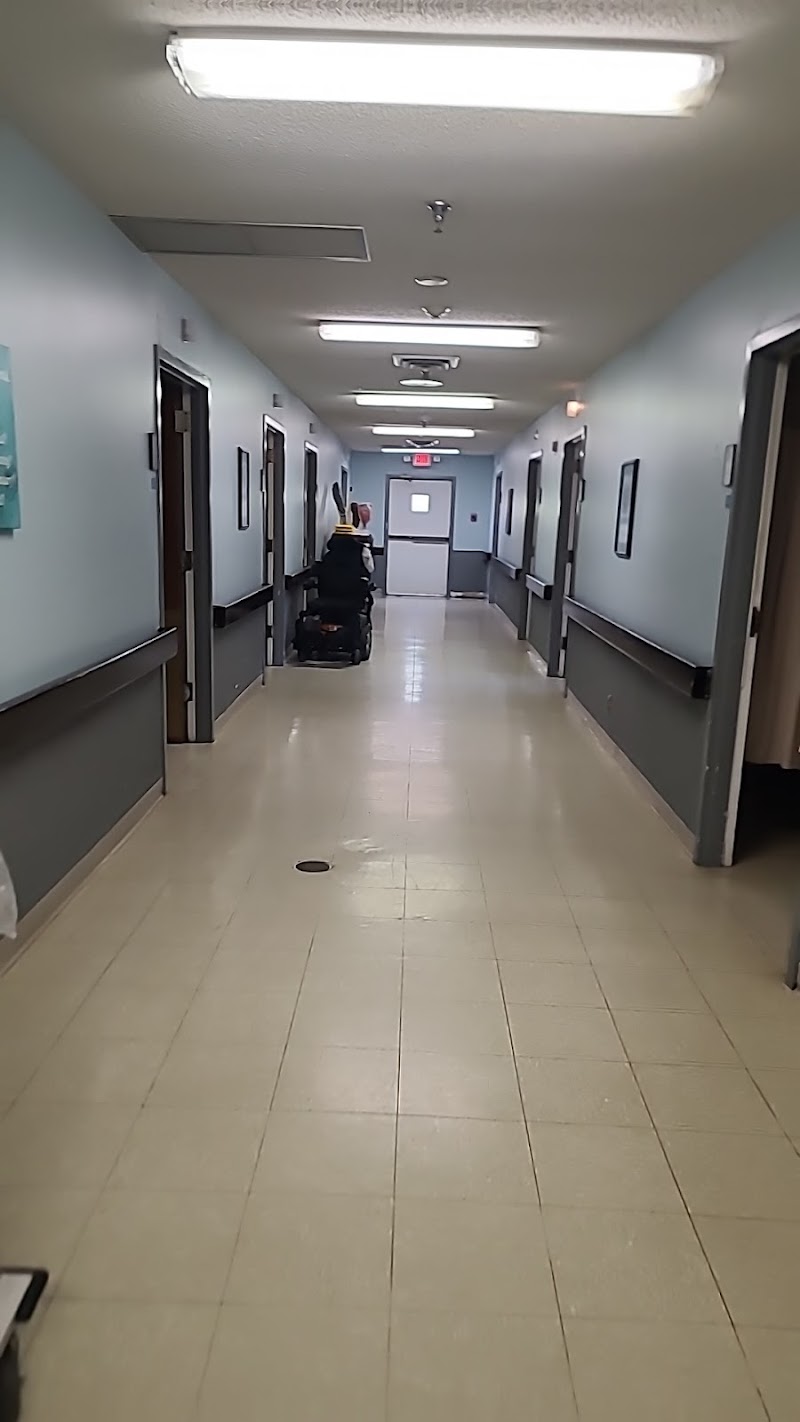
Observation on 10/02/23 at 1:27 P.M., showed a large commercial shred bin sat across from the nurse station next to three residents.
Observation on 10/02/23 at 2:16 P.M., showed a vent on the 300 hallway wall near the nurse station with large amount of debris on it.
Observation on 10/03/23 during the Life Safety Code Tour showed:
-Missing floor tiles around the toilet base in resident room [ROOM NUMBER];
-Brown stains on ceiling tile above the bed in resident room [ROOM NUMBER];
-Cracked floor tiles and a gap at the baseboard in the bathroom of resident room [ROOM NUMBER];
-A hole in the bathroom door of resident room [ROOM NUMBER];
-Brown stains on ceiling tile in resident room [ROOM NUMBER];
-Large accumulation of dust on 300 hall air duct across from nurse station;
-Veneer torn from from door to personal care room two on 300 hall;
-300 hall personal care room one had a large hole in the wall, exposing the plumbing and interior wall cavity;
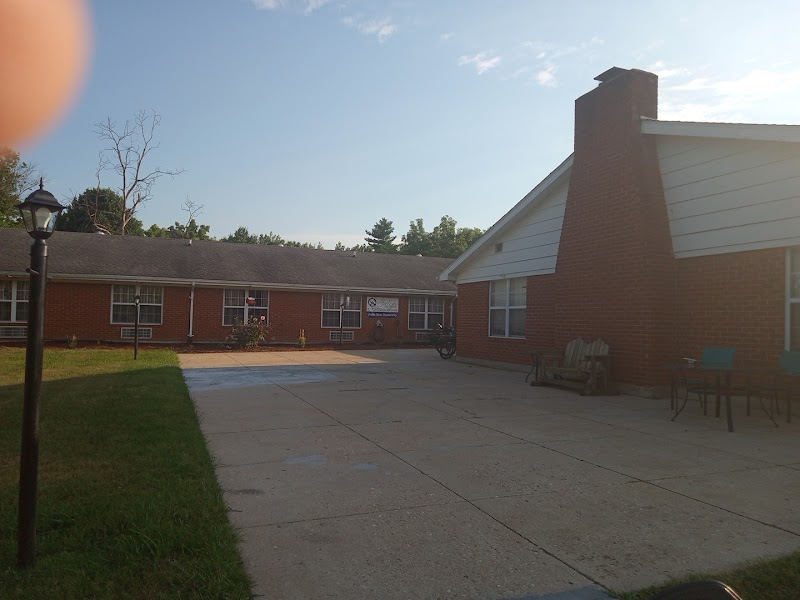
-Exterior soffit and fascia water damage and wood rot at the facility entrance and dining room;
-Damage to the the exterior soffit, fascia and gutters on the 200 hall.
Observation on 10/04/23 at 01:19 P.M., showed a commercial shred bin sat next to a resident across from the nurse station.
3. During an interview on 10/03/23 at 10:10 A.M., the maintenance director said the sprinkler system had leaked in the past, causing the brown ceiling stains. The maintenance director also said he/she is responsible for completing facility repairs but has had a hard time keeping up with the work. He/She also said facility owners are working to get the roof replaced.
During an interview on 10/03/23 at 11:20 A.M., the maintenance director said he/she started repairs last week and has not been able to finish it
During an interview on 10/04/23 at 1:33 P.M., Certified Nurse Aid (CNA) A said staff tell maintenance about damage items in a residents' room or housekeeping if it is a cleaning matter. The aid said they were not aware of the discolored flooring in the shared resident bathroom.
During an interview on 10/04/23 at 1:40 P.M., CNA B said we tell maintenance about broken items in resident rooms or anywhere in the facility directly.
During an interview on 10/04/23 at 2:11 P.M., CNA C said broken items are written up in a maintenance report. Housekeeping is told directly about dirty floors or we clean them ourselves.
During an interview on 10/04/23 at 3:40 P.M., CNA D said broken or damaged items are put in a maintenance report and the maintenance director is told directly in person.
During an interview on 10/05/23 at 9:15 A.M., the housekeeping supervisor said rooms are cleaned daily. The toilet, sink, and flooring in the bathroom is cleaned daily. They have tried to clean the black stains but it will not come up.
During an interview on 10/05/23 at 9:22 A.M., the maintenance director said staff tell him/her what items need repair and there is now a book repair request can be put into. He/She was aware of the damaged bathroom flooring. It will need to be replaced.
During an interview on 10/05/23 at 10:25 A.M., the Administrator said repair requests go to the maintenance director in a logbook. Housekeeping may also be involved. The flooring in the residents bathroom needs to be replaced. The facility owners are looking into replacing the roof. He/She also said he/she did not know about the soffit and fascia damage at the entrance/dining room.
CONCERN
(E)
Potential for Harm - no one hurt, but risky conditions existed
Abuse Prevention Policies
(Tag F0607)
Could have caused harm · This affected multiple residents
Based on interview and record review facility staff failed to check the Federal Care Safety Registry (FCSR) (a registry established by law to promote family and community safety) for one employee (Min...
Read full inspector narrative →
Based on interview and record review facility staff failed to check the Federal Care Safety Registry (FCSR) (a registry established by law to promote family and community safety) for one employee (Minimum Data Set (MDS) Coordinator), the Employee Disqualification List (EDL) (a list of individuals who have been determined to have abused or neglected a resident or misappropriated funds or property belonging to a resident) for two employees (Certified Nurse Aide (CNA) J and CNA H), and the CNA Registry for one employee (Licensed Practical Nurse (LPN) I in accordance with the facility's policy. There were seven employees sampled. The facility's census was 40.
1. Review of the facility's policy titled Pre-Employment Screening, revised 07/10/23, showed staff were directed to do the following:
-To ensure all personnel who have contact with the individuals served are qualified and capable of employment within a care facility all potential new hires will have the following screenings completed prior to employment:
-A potential employee must register with the FCSR;
-A criminal background check will be conducted through the FCSR and or highway patrol if needed;
-Potential employee check will be conducted through the EDL;
-Potential employees will be checked through Test Master University (TMU);
-Potential employee's license will be verified if applicable.
2. Review of the MDS Coordinator's personnel record showed a date of hire of 02/13/23. Further review showed the personnel record did not contain documentation the facility had completed a FCSR prior to his/her hire date. Further review showed the personnel record contained a FCSR letter that was dated 10/03/23.
3. Review of CNA J's personnel record showed a hire date of 03/23/23. Further review showed the personnel record did not contain documentation the facility had completed an EDL check.
4. Review of CNA H's personnel record showed a date of hire of 06/01/23. Further review showed the personnel record did not contain documentation the facility had completed an EDL check.
5. Review of LPN I's personnel record showed a date of hire of 08/01/23. Further review showed the personnel record did not contain documentation the facility had completed a CNA Registry check.
6. During an interview on 10/03/23 at 2:23 P.M., the Business Office Manager/Human Resource Director (BOM/HR) said that he/she took over this position a month ago and that he/she is unable to find the missing information from the employee files.
During an interview on 10/04/23 at 2:25 P.M., the BOM/HR manager said that the department head will interview a potential hire and then brings him/her the application if they chose to hire. He/She said that he/she makes sure the applicant has their first step Tuberculosis (TB) test administered at that time. He/She said that he/she will run the potential employee's background checks and once those come back he/she reviews them with the Administrator before he/she calls the new hire to set up orientation. He/She said that nobody should be working without having their EDL, FCSR, and CNA registry check done. He/She said the MDS Coordinator was previously working at the sister facility and he/she is not sure why the FCSR was not run there. He/She said that when he/she realized it was not done that he/she ran it at that time on 10/03/23.
During an interview on 10/05/23 at 10:18 A.M., the Administrator said that the BOM/HR is responsible for conduction the pre-employment background screening. He/She said that all new hires should have a completed FCSR, EDL, CNA registry and TB test prior to beginning work at the facility.
CONCERN
(E)
Potential for Harm - no one hurt, but risky conditions existed
Comprehensive Care Plan
(Tag F0656)
Could have caused harm · This affected multiple residents
**NOTE- TERMS IN BRACKETS HAVE BEEN EDITED TO PROTECT CONFIDENTIALITY** Based on observation, interview and record review, facility staff failed to develop a comprehensive person-centered care plan fo...
Read full inspector narrative →
**NOTE- TERMS IN BRACKETS HAVE BEEN EDITED TO PROTECT CONFIDENTIALITY** Based on observation, interview and record review, facility staff failed to develop a comprehensive person-centered care plan for each resident to meet the resident's medical and nursing needs when staff failed to include direction to check a catheter (tube to drain the bladder) anchor and placement for one resident (Resident #31), behaviors for one resident (Resident #2); blood thinners, code status and anti-anxiety medications for one resident (Resident #8), psychotropic medications for one resident (Resident #11), and anti-depressants and activity interests for one resident (Resident #27). The facility census was 40.
1. Review of the facility's Comprehensive Care Plan policy, dated 08/15/23 showed:
- Each resident will have a comprehensive care plan developed within (7) days of completion of the comprehensive Minimum Data Set (MDS - a federally mandated assessment tool) resident assessment;
- The MDS Coordinator or designee shall act in a case management role by:
a. Knowledge of ongoing care needs;
b. Brief audit of medical record to ensure:
i. psychotropic medication review - diagnosis, reduction
ii. wound documentation completed weekly - skin sweeps, unavoidable letter completed if appropriate, weekly measurements, treatment appropriate
iii. Medications have diagnosis, appropriate orders, administered timely and as ordered.
2. Review of Resident #31's quarterly MDS, dated [DATE], showed staff assessed the resident as follows:
-Cognitively intact;
-Diagnosis of peripheral vascular disease, diabetes mellitus, hemiplegia, urinary tract infection.
Review of the resident's Physician Order Sheet (POS), dated 05/20/23, showed staff were directed to change the catheter as need for catheter care, check catheter drainage and anchor every night shift and every Sunday, check catheter output every shift for catheter care.
Review of the resident's care plan, dated 9/29/23, showed the plan did not contain direction for staff to check catheter anchor and catheter placement.
During an interview on 10/03/23 at 8:59 A.M., the resident said he/she has a urinary tract infection and his/her catheter bag got change once monthly.
During an interview on 10/04/23 at 1:52 P.M., Certified Nurse Aid (CNA) B said they report that was given between shifts to know what care to provide a resident. They do not have access to care plans. He/She did not change catheter tubing.
During an interview on 10/04/23 at 3:37 P.M., CNA D said they go a report from the nurse on what care they are to do with each resident. Only nurses do catheter work.
During an interview on 10/05/23 at 8:19 A.M., Registered Nurse (RN) K said the care plan should contain direction on catheter maintenance.
3. Review of Resident #2's Quarterly MDS, dated [DATE] showed staff assessed the resident as:
-Cognitively intact;
-Had no behaviors or rejection of care;
-Diagnosis included Schizophrenia, Bipolar depression, and anxiety.
Review of the nurse notes dated 09/01/23 through 10/05/23 showed:
-09/08/23 at 07:37 A.M., can be verbally demanding and rude to staff at times;
-09/09/23 at 08:31 P.M., refused to let staff check and change him/her on rounds;
-09/09/23 at 09:20 P.M., verbally aggressive towards staff at this time, refusing to let staff change him/her;
-09/09/23 at 10:00 P.M., continues to be verbally aggressive toward staff;
-09/09/23 at 10:27 P.M., throwing things across room at this time becoming increasingly combative with staff, pulling the call light out of the wall;
-09/10/23 at 05:45 A.M., refusing to let staff assist him/her with dressing this morning;
-09/10/23 at 09:17 A.M., continues to refuse care from staff, cursing and threatening to hit or throw things at staff, made a comment about breaking the window and throwing his/her stuff and him/herself out the window and leaving the facility;
-09/16/23 at 11:56 P.M., being verbally aggressive toward staff, using foul language and yelling at staff;
-09/19/23 at 03:27 P.M., yelling at Certified Medication Technician (CMT) and refused medication.
Review of the resident's care plan dated 10/01/23 showed the plan did not contain direction for behavior management or history of behaviors.
4. Review of Resident #8's Significant Change MDS, dated [DATE], showed staff assessed the resident as follows:
-Severe cognitive impairment;
-Received an anticoagulant medications.
Review of the resident's POS, dated 10/04/23, showed the resident had orders for the following:
-Do Not Resuscitate (DNR);
-Lorazepam (a medication used to treat anxiety) tablet 0.5 milligram (mg), give one tablet by mouth every six hours as needed (prn) for anxiety;
-Xarelto (a medication used as a blood thinner) tablet 10 mg, give one tablet by mouth daily.
Review of the resident's care plan, revised 08/24/23, showed the plan did not contain direction for code status, Lorazepam, or for Xarelto.
5. Review of Resident #11's Quarterly MDS, dated [DATE], showed staff assessed the resident as follows:
-Severe cognitive impairment;
-Independent with bed mobility, transfers, and walking;
-At risk for pressure ulcers;
-Received antipsychotic and antidepressant medications.
Review of the resident's POS, dated 10/03/23, showed the resident had orders for the following:
-All Cotton Elastic (ACE) wraps to bilateral lower extremities (BLE) due to swelling, on in the morning (AM) off in the evening (PM);
-Lexapro (a medication used to treat depression) tablet 10 mg, give one tablet by mouth daily for depression;
-Melatonin (a medication used to treat insomnia) tablet 5 mg, give 10 mg by mouth at bedtime for insomnia;
-Seroquel (a antipsychotic mediation) tablet 100 mg, give one tablet by mouth at bedtime for hallucinations.
Review of the resident's care plan, revised on 09/28/23, showed the following:
-Did not contain direction for ACE wraps;
-Did not contain direction for the use of Melatonin;
-Did not contain interventions for the use of antidepressant or antipsychotic medication.
6. Review of Resident #27's admission MDS, dated [DATE], showed staff assessed the resident as follows:
-Cognitively intact;
-Able to make his/her activity preference known;
-Independent with bed mobility;
-Requires limited assistance of one staff for transfers, toileting, and bathing.
Review of the resident's POS, dated 10/03/23, showed the resident had and order for Lexapro 20 mg, give one tablet by mouth daily for depression.
Review of the resident's care plan, revised on 09/05/23, showed the plan did not contain direction for antidepressant medication use. Further review showed the activity care plan did not address the resident's interests such as video games and lap top use.
Observation on 10/02/23 at 1:35 P.M., showed the resident lay in his/her bed playing video games on his/her laptop.
Observation on 10/02/23 at 2:26 P.M., showed the resident lay in his/her bed watching videos on his/her laptop.
Observation on 10/04/23 at 1:23 P.M., showed the resident lay in his/her playing video games on his/her laptop.
7. During an interview on 10/04/23 at 10:30 A.M., the MDS Coordinator said that he/she started in April 2023 and the care plans were behind at that time. He/She said that he/she has been working to get them caught up, and that updating care plans is an ongoing process. He/She said that the care plans should be individualized for each resident, that they should reflect the resident's physician's orders, and match those orders. He/She said that he/she updates the care plans quarterly and as he/she needs to. He/She said that the floor nurse's update them as well. He/She said that any changes are conveyed to him/her in the facility's morning meeting and he/she updates the care plans after that. He/She said that the facility has care plan meetings quarterly and he/she will update any changes from those meetings at that time. He/She said he/she makes a care plan for each resident, then he/she assigns the appropriate department/staff to carry out that care plan (ie. Nurse, CNA, Dietary, etc). He/She said that he/she can then filter this down and print just the CNA portion of it which is what is in the binders at the desk for the aides to refer to.
During an interview on 10/04/23 at 1:57 P.M., Certified Nursing Assistant (CNA) C said that the aides use the care plans to know how to take care of each resident. He/She said that the care plan should be individualized to each resident. He/She said that the aides have a binder at the desk which contains their portion of each resident's care plan in them.
During an interview on 10/05/23 at 10:18 A.M., the Administrator and Director of Nursing (DON) said that the MDS Coordinator was responsible for updating the care plans. They said that the care plans should be updated quarterly and as needed. The DON said he/she expected the care plan to be individualized for each resident, and that the care plan and physicians orders should match. The DON said that anyone could update the care plan as long as a nurse reviewed it and signed off on the update. The DON and Administrator said that all staff had access to the care plans, and that all the nurses had been trained on how to update them as needed.
CONCERN
(E)
Potential for Harm - no one hurt, but risky conditions existed
Accident Prevention
(Tag F0689)
Could have caused harm · This affected multiple residents
**NOTE- TERMS IN BRACKETS HAVE BEEN EDITED TO PROTECT CONFIDENTIALITY** Based on observation, interviews, and record review facility staff failed to provide safe mechanical lift transfer for two resid...
Read full inspector narrative →
**NOTE- TERMS IN BRACKETS HAVE BEEN EDITED TO PROTECT CONFIDENTIALITY** Based on observation, interviews, and record review facility staff failed to provide safe mechanical lift transfer for two residents (Residents #1, and#8), failed to lock unattended treatment carts, failed to safely propel three residents (Resident #12, #9, and #3) in wheelchairs, and safely store razors and hazardous chemicals in resident showers. The facility census was 40.
1. Review of the facility's Mechanical Lift (Hoyer) policy, undated showed staff were directed to:
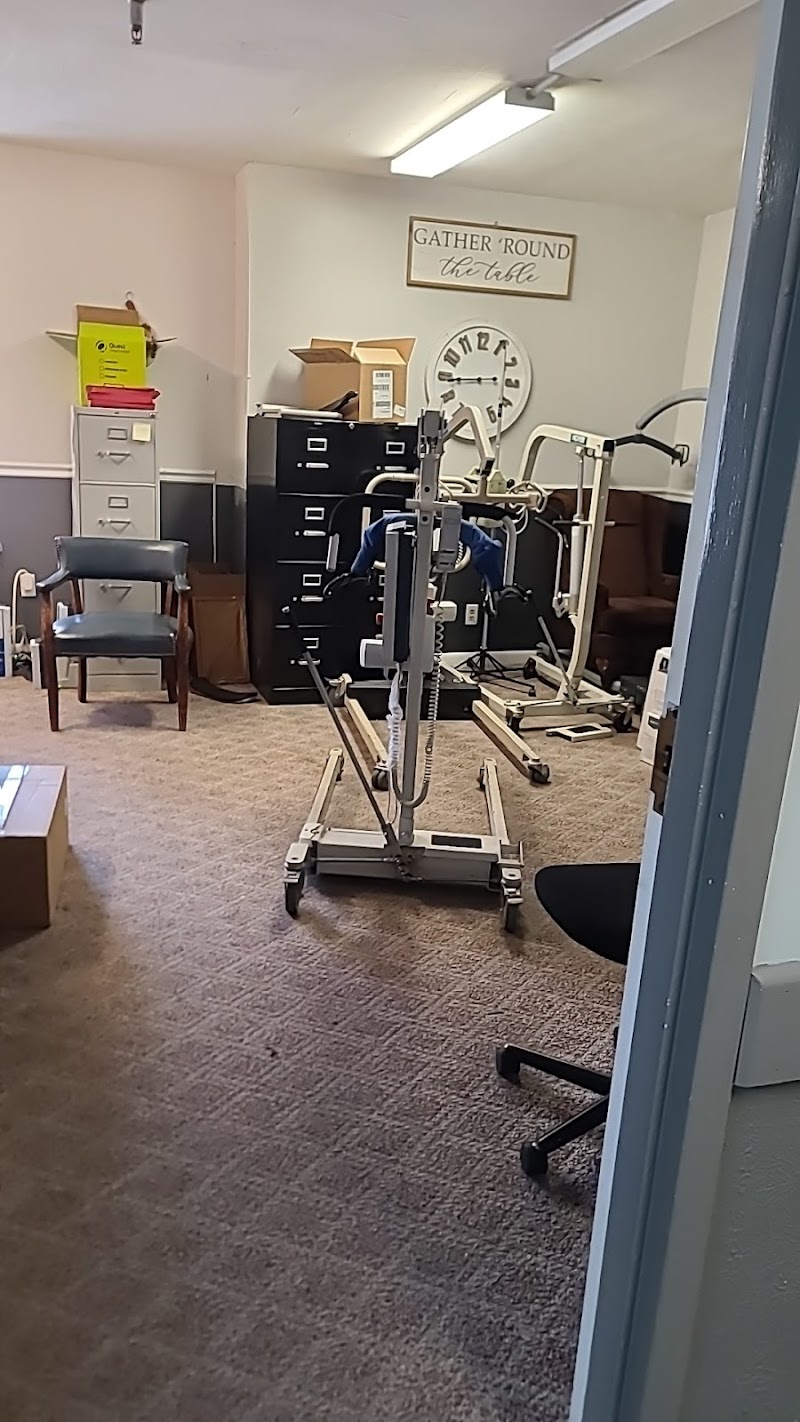
-Place the lift pad under the resident's buttocks and thighs, so that the lower edge of seat was under the knees;
-Move lift to bedside with base under the bed. Be sure to widen the base. Attach the sling to the lift;
-Position wheelchair and lock brakes. Swing resident's feet off the bed. When resident has been lifted clear of the bed, grasp and move the Hoyer to the chair;
-When transferring a resident keep base in widest position;
-To return to bed, use same procedure in reverse;
-Return lift to designated area when not in use.
2. Review of Resident #1's Quarterly Minimum Data Set (MDS) a federally mandated assessment tool, dated 07/16/23, showed staff assessed the resident as:
-Cognitively intact;
-Independent with transfers with set up assistance from staff;
-Diagnosis of Cerebral Palsy (condition affecting movement, muscle tone or posture).
Observation on 10/03/23 at 08:25 A.M., showed Certified Nurse Aid (CNA) M and CNA C entered the resident's room to transfer resident from the bed to a motorized wheelchair. The sling was positioned and hooked to the Hoyer lift. When CNA C raised the resident from the bed, CNA M left the resident suspended in the air unattended and went to position the wheelchair. Additionally, the lift base was not widened and CNA C had to move a bed control cord and a fan cord when the lift got stuck on them during the transfer. As the lift approached the wheelchair, CNA C grabbed the resident and CNA M took control of the lift, widened the base to push over the wheelchair and lowered the resident.
3. Review of Resident #8's Significant Change MDS, dated [DATE], showed staff assessed the resident as follows:
-Severe cognitive impairment;
-Totally dependent of two staff for bed mobility, transfers, dressing, toileting, and hygiene.
Observation on 10/02/23 at 3:36 P.M., showed CNA A and CNA C entered the resident's room to transfer him/her from the bed to Broda chair. The sling was positioned under him/her and attached to the Hoyer lift. CNA A raised the resident in the Hoyer lift without fully opening the leg base on the lift while CNA C positioned the Broda chair leaving the resident hanging in the Hoyer lift sling unattended. The resident was then moved from the bed to the Broda chair, once over the Broda chair CNA A then opened the leg base fully and lowered the resident to the chair while CNA C guided the resident into the chair.
During an interview on 10/05/23 at 8:12 A.M., Licensed Practical Nurse (LPN) L said there should be two staff with all Hoyer transfers, one holding to the lift and the other to guide the resident. He/She said staff should never leave the resident suspended without hand hold and always open the base of the lift during the transfer for safety reasons.
During an interview on 10/05/23 at 10:18 A.M., the Administrator and Director of Nursing said Hoyer transfers should have two people for safety. The legs of the lift should be open before moving the resident, one staff should guide the lift and the other to guide the resident. The administrator said the sling should be positioned behind the resident as if the the resident is in a sitting position. The Director of Nursing said widening the base makes the lift more stable and holding onto the resident keeps them from toppling out.
4. Review of the facility's Medication Storage/Expired Medications Policy, revised 08/27/19, showed staff were directed to do the following:
-The medication cart should always be locked unless in direct line of sight of the nurse or Certified Medication Tech (CMT);
-No medications are to be left unattended.
Observation on 10/02/23 at 1:24 P.M., showed an unlocked unattended treatment cart outside of resident room [ROOM NUMBER]. The cart contained topical prescription creams and ointments, two pair of scissors and syringes with needles.
Observation on 10/02/23 at 1:42 P.M., showed the treatment cart sat unlocked and unattended near the nurse's station.
Observation on 10/04/23 at 7:07 A.M., showed the treatment cart sat unlocked and unattended at the nurse's station.
Observation on 10/04/23 at 11:41 A.M., showed the treatment cart sat unlocked and unattended near the nurse's station.
Observation on 10/05/23 at 8:11 A.M., showed the treatment cart sat unlocked and unattended near the nurse's station.
During an interview on 10/04/23 at 8:00 A.M., LPN G said that medication or treatment carts should never be left unlocked and unattended.
During an interview on 10/04/23 at 1:35 P.M., Registered Nurse (RN) E and RN F said that medication and treatment carts should not be left unlocked or unattended. RN E said that this was for residents' safety.
During an interview on 10/05/23 at 8:12 A.M., LPN L said treatment and medication carts should be locked when out of sight for safe keeping.
During an interview on 10/05/23 at 10:18 A.M., the Administrator and Director of Nursing said treatment and medication carts should be locked when unattended for safety of other residents and protect the medications.
5. Review of facility's policies showed the facility did not provide a Wheelchair safety policy.
Observation on 10/02/23 at 11:45 A.M., showed CNA C propelled Resident #12 in his/her wheelchair without foot pedals while his/her feet dragged the floor.
Observation on 10/02/23 at 11:48 A.M., showed CNA C propelled Resident #9 in his/her wheelchair without foot pedals and his/her foot dragged the floor.
Observation on 10/04/23 at 01:28 P.M., showed medical records propelled Resident #3 from the designated smoke area to his/her room without foot pedals on the chair. Additionally, the resident was leaning forward and the toes of his/her foot slid on the floor.
During an interview on 10/04/23 at 01:32 P.M., medical records staff said residents should use leg pedals on the wheelchairs so they don't face plant. He/She said that Resident #3 normally leans forward like that and only has one foot and didn't think about putting it up on a pedal.
During an interview on 10/05/23 at 08:12 A.M., LPN L said staff were directed to apply pedals on wheelchairs to keep the resident from dragging their feet or falling from the chair.
During an interview on 10/05/23 at 10:18 A.M., the Administrator and Director of Nursing said pedals should be on wheelchairs before propelling a resident for safety.
During an interview on 10/04/23 at 1:35 P.M., RN E and RN F said that staff should not push resident's in their wheelchairs without foot pedals. Both said that this could cause resident harm such as breaking an ankle for example.
During an interview on 10/04/23 at 1:57 P.M., CNA C said that staff should not push resident's in wheelchairs without foot pedals. He/She said that if a resident does not have foot pedals on their wheelchair then the resident should propel themselves to prevent them from getting hurt.
During an interview on 10/05/23 at 10:18 A.M., the DON said that staff should not push a wheelchair without foot pedals. He/She said this can cause a risk to the resident such as tipping over or injury.
6. Review of facility' Hazardous Storage Policy, undated, showed the policy did not contain direction for the safe storage of hazardous chemicals and razors in resident showers.
Observation on 10/02/23 at 11:00 A.M., showed the 300 hall shower door was open and not in use with no staff present. Further observation showed unlocked cabinets that contained shaving razors and bottles of chemicals.
Observation on 10/02/23 at 12:12 P.M., showed the 300 hall shower door was open and unattended. The room contained two unlocked, unattended cabinets that contained disposable shaving razors and chemicals.
Observation on 10/02/23 at 3:09 P.M., showed the 300 hall shower door open with no staff present. Further the shower room contained unlocked cabinets with chemicals and shaving razors stored inside.
During an interview on 10/04/23 at 1:54 P.M., CNA A said shower doors were normally closed but can not be locked. CNA A said they stored razors in the cabinets in the shower room but it also could not be locked.
During an interview on 10/04/23 at 2:10 P.M., CNA C said shower doors should be locked and no chemicals or razors stored inside the same room.
During an interview on 10/05/23 at 8:22 A.M., RN K said showers should not contain chemicals or razors in unlocked cabinets.
During an interview on 10/05/23 at 10:18 A.M., the Director of Nursing and the Administrator said storage of chemicals and razors should not be stored in unlocked cabinets or rooms because they are a risk to the residents.
CONCERN
(E)
Potential for Harm - no one hurt, but risky conditions existed
Deficiency F0838
(Tag F0838)
Could have caused harm · This affected multiple residents
**NOTE- TERMS IN BRACKETS HAVE BEEN EDITED TO PROTECT CONFIDENTIALITY** Based on interview and record review, the facility failed to have a complete facility-wide assessment to determine what resource...
Read full inspector narrative →
**NOTE- TERMS IN BRACKETS HAVE BEEN EDITED TO PROTECT CONFIDENTIALITY** Based on interview and record review, the facility failed to have a complete facility-wide assessment to determine what resources were necessary to care for its residents competently during both day-to-day operations and emergencies. The facility census was 40.
1. Review of the facility's Facility Assessment policy, dated April 2019 showed:
-The team responsible for conduction reviewing and updating the facility assessment includes: the administrator, representative of the governing body, the medical director, the director of nursing, the director of maintenance, director of dietary, social services, activities and rehabilitation;
-The facility assessment will include a detailed review of the resident population to include religious, ethnic or cultural factors that affect the delivery of care and services, such as food and nutrition, decision making and end of life care, activities and language translation;
-A breakdown of the training, licensure, education, skill level and measures of the competency for all personnel;
-The facility assessment will include all personnel including directors, managers, regular full and part time employees, contracted staff full and part time, and volunteers.
Review of the Facility assessment dated [DATE], showed the following:
-The Administrator, Director of Nursing (DON), and Medical Director (MD) were listed as involved in completing the assessment;
-The number of residents that use oxygen therapy was blank;
-The age range of residents was blank;
-The race/ethnicity of residents was blank;
-The religious preferences of residents was blank;
-The budgeted staffing plan hours for Administration, Nursing Administration, Licensed Practical Nurses (LPN) Certified Nurse Aides (CNA) was blank;
-The individual staff assignments was blank;
-The staff education section was blank.
During an interview on 10/05/23 at 10:18 A.M., the Administrator said the facility assessment was completed when he/she took the position earlier in the year. He/She said that the administrator, director of nurses and quality assurance team review it and update it yearly but the home office (corporate/governing body) does not have input. The facility assessment should include the type of residents, type of assistance needed, types of devices, needed, and everything should be filled out without blanks. The Administrator said that the staffing needs should include the number of staff in proportion to the facility needs. He/She believed the facility assessment was completed without blanks.
CONCERN
(E)
Potential for Harm - no one hurt, but risky conditions existed
Staffing Data
(Tag F0851)
Could have caused harm · This affected multiple residents
Based on interview and record review, the facility failed to electronically submit to Centers for Medicare and Medicaid Services (CMS) a complete and accurate direct care staffing information to the P...
Read full inspector narrative →
Based on interview and record review, the facility failed to electronically submit to Centers for Medicare and Medicaid Services (CMS) a complete and accurate direct care staffing information to the Payroll Based Journal (PBJ) data from April 1, 2023 through June 30, 2023. The facility census was 40.
1. Review of the facility's policies showed the facility did not provided a PBJ policy.
Review of the CMS PBJ Staffing Data Report, dated 09/27/23 showed the report did not contain a report for the period of April 1, 2023 through June 30, 2023.
During and interview on 10/05/23 at 10:18 A.M., the Administrator and the Director of Nursing said the facility's corporate offices did not submit PBJ data during the quarter shown on the report. Corporate staff told them it was not necessary due to the facility's structure of payment. Facility staff do not self report the PBJ data themselves.
CONCERN
(E)
Potential for Harm - no one hurt, but risky conditions existed
Deficiency F0883
(Tag F0883)
Could have caused harm · This affected multiple residents
**NOTE- TERMS IN BRACKETS HAVE BEEN EDITED TO PROTECT CONFIDENTIALITY** Based on interview and record review, the facility failed to document the administration or refusal of the pneumococcal (lung in...
Read full inspector narrative →
**NOTE- TERMS IN BRACKETS HAVE BEEN EDITED TO PROTECT CONFIDENTIALITY** Based on interview and record review, the facility failed to document the administration or refusal of the pneumococcal (lung inflammation caused by bacterial or viral infection) vaccine for five of seven sampled residents. (Resident #1, #2, #31, #35, and #341). The facility census was 40 residents.
1. Review of the facility's Pneumococcal Vaccine Policy, dated 2019, showed:
-The pneumococcal guidelines are as recommended by the Center for Disease Control (CDC-the nation's health protection agency responsible for controlling the introduction and spread of infectious diseases);
-The primary care physician will be asked that all new admissions be screened and given both pneumococcal vaccines according to Advisory Committee on Immunization Practices (ACIP) recommended schedule, unless specifically ordered otherwise by the Primary physician on admission orders;
-Nursing staff will contact the primary care physician if they have questions or concerns that cannot be answered by the resident or their medical decision maker about the criteria listed in the Standing Protocol for the Pneumococcal vaccine (e.g. disease or allergy history, history of prior receipt of the vaccine);
-Every admission is screened using the criteria contained within the standing protocol and given the vaccine if indicated after receiving education regarding the vaccine;
-Licensed nursing staff performs the screening and vaccine administration;
-A record of vaccination will be placed in the resident's medical record and in their vaccination record;
-If immunization is refused, document education and refusal in the medical record.
Review of the CDC guidelines for the pneumococcal vaccine, dated 9/11/23, showed people age [AGE] or older who previously received the pneumococcal polysaccharide vaccine (PPV23) should receive one dose of PPV23 at least 1 year after the PPV23 dose.
2. Review of Resident #1's medical record showed:
-The resident was age [AGE];
-admitted to facility on 9/30/22;
-The record did not contain documentation the resident received or refused the pneumococcal vaccine.
3. Review of Resident #2's medical record showed:
-The resident was over age [AGE];
-admitted to facility on 10/08/20;
-The record did not contain documentation the resident received or refused the pneumococcal vaccine.
4. Review of resident #31's Quarterly MDS dated [DATE] showed staff assessed the resident as:
-Over age [AGE];
-admitted on [DATE];
-The record did not contain documentation the resident received or refused the pneumococcal vaccine.
5. Review of resident #35's Quarterly MDS dated [DATE], showed staff assessed the resident as:
-Over age [AGE];
-admitted on [DATE];
-The record did not contain documentation the resident received or refused the pneumococcal vaccine.
6. Review of Resident #341's admission MDS, dated [DATE], showed staff assessed the resident as:
-Over age [AGE];
-admitted on [DATE];
-The record did not contain documentation the resident received or refused the pneumococcal vaccine.
7. During an interview on 10/03/23 at 3:00 P.M., the Director of Nursing (DON) said he/she is working with the local health department to get the pneumococcal immunizations to the residents. He/She said it is the DON's responsibility to ensure residents were reviewed on admission regarding their vaccine status, and that it was up to date.
During an interview on 10/04/23 at 2:54 P.M., the DON said consents and declinations should be in the medical record but may or may not be imported yet since the change of ownership in February. Once the information on need was obtained, the facility tried to get the pneumonia vaccine through the health department. The facility cannot bill for Medicare Part B vaccines so the facility tried to use other vendors to get them administered. He/She did not have a timeline for completion.
During an interview on 10/05/23 at 10:18 A.M., the Administrator said the DON was working with the local health department to obtain the pneumococcal vaccines for the residents. He/She said nursing staff obtained consents on admission. If the resident had insurance to cover the vaccine, then the residents would be sent to an outside vendor, otherwise would receive it from the health department. The Administrator did not have a timeline for completion of the vaccine after admission. He/she said documentation of the vaccine may be an issue due to changing of ownership in February and getting everything uploaded into the system.
CONCERN
(E)
Potential for Harm - no one hurt, but risky conditions existed
Deficiency F0887
(Tag F0887)
Could have caused harm · This affected multiple residents
Based on interview and record review, facility staff failed to document, maintain and follow current guidance and procedures for immunizations of residents against COVID-19 for five (Residents #1, #31...
Read full inspector narrative →
Based on interview and record review, facility staff failed to document, maintain and follow current guidance and procedures for immunizations of residents against COVID-19 for five (Residents #1, #31, #35, #340, and #341) of seven sampled residents. The facility census was 40.
1. Review of the Centers for Disease Control (CDC) COVID-19 Long-Term Care (LTC) Residents guidance, dated 9/25/23, showed:
-CDC recommends everyone aged five years and older including people who live in long term care settings, get 1 updated COVID-19 vaccine;
-People who are moderately or severely immunocompromised can get additional COVID-19 vaccines;
-People who live in LTC settings must give consent, or agree to a COVID-19 vaccine.
Review of the facility's COVID vaccination policy, undated, showed:
-Facility residents will be provided education regarding the current recommendations for COVID-19 vaccinations upon admission, annually and as needed;
-Residents will be provided a declination form to complete if they decline the vaccine;
-If a resident requests the vaccine, they will complete a consent from, and arrangements will be made with County Health Department, or a local pharmacy to acquire and provide the current recommended COVID-19 vaccine;
-Further review showed the policy did not contain a timeline for completion of the vaccine.
2. Review of Resident #1's medical record showed:
-Most recent admission date of 09/30/22;
-The record did not contain documentation the resident received, refused, or was offered the COVID-19 vaccine.
3. Review of Resident #31's medical record showed:
-Most recent admission date of 05/19/23;
-The record did not contain documentation the resident received, refused, or was offered the COVID-19 vaccine.
4. Review of Resident #35's medical record showed:
-Most recent admission date of 04/22/23;
-The record did not contain documentation the resident received, refused, or was offered the COVID-19 vaccine.
5. Review of Resident #340's medical record on 10/04/23 at 10:03 A.M., showed:
-Most recent admission date of 09/26/23;
-The record did not contain documentation the resident received, refused or was offered the COVID-19 vaccine.
6. Review of Resident #341's medical record showed:
-Most recent admission date of 09/21/23;
-The record did not contain documentation the resident received, refused or was offered the COVID-19 vaccine.
7. During an interview on 10/03/23 at 3:00 P.M., the Director of Nursing (DON) said the administrator was working with the pharmacy to get the COVID immunizations to the residents. He/She said it is the DON's responsibility to ensure residents are reviewed on admission regarding their vaccine status, and that it is up to date.
During an interview on 10/05/23 at 10:18 A.M., the Administrator said he/she was working with the pharmacy to obtain the COVID vaccines for the residents. He/She said nursing staff obtained consents and contacted the physician for an order. If only one or two residents needed the vaccine, then they would send the residents to an outside vendor. If a larger group needed the vaccine, a clinic would be set up at the facility. The Administrator did not have a timeline for completion of the vaccine after admission. He/she said documentation of the vaccine may be an issue due to changing of ownership in February and getting everything uploaded into the system.
CONCERN
(F)
Potential for Harm - no one hurt, but risky conditions existed
Infection Control
(Tag F0880)
Could have caused harm · This affected most or all residents
**NOTE- TERMS IN BRACKETS HAVE BEEN EDITED TO PROTECT CONFIDENTIALITY** Based on observation, interview, and record review, the facility failed to develop and implement complete policies and procedure...
Read full inspector narrative →
**NOTE- TERMS IN BRACKETS HAVE BEEN EDITED TO PROTECT CONFIDENTIALITY** Based on observation, interview, and record review, the facility failed to develop and implement complete policies and procedures for the inspection, testing and maintenance of the facility water systems to inhibit growth of waterborne pathogens and reduce the risk of an outbreak of Legionnaire's Disease (LD). The facility staff also failed to use appropriate hand hygiene to prevent the spread of bacteria during incontinent care and failed to properly clean a mechanical lift between residents for three (Resident #1, #2, and #8) of four sampled residents, failed to change gloves between cares, failed to ensure sanitary conditions for a catheter bag (a container to hold urine) by keeping the catheter off the floor and a trash can, failed to properly store a Continuous Positive Airway Pressure (CPAP - machine used to keep airways open) mask for one resident (Residents #31), and failed to properly administer and document three employees (Certified Nurse Assistants (CNA) J, CNA B and the Medical Records (MR) N) two step Tuberculin (TB) skin test upon hire. The facility census was 40.
1. Review of the Centers for Medicare and Medicaid Services (CMS) Survey and Certification (S&C) letter 17-30, dated 06/02/17 and revised on 06/09/17; showed:
-The bacterium Legionella can cause a serious type of pneumonia called LD in persons at risk. Those at risk include persons who are at least [AGE] years old, smokers, or those with underlying medical conditions such as chronic lung disease or immunosuppression. Outbreaks have been linked to poorly maintained water systems in buildings with large or complex water systems including hospitals and long-term care facilities. Transmission can occur via aerosols from devices such as shower heads, cooking towers, hot tubs, and decorative fountains;
-Facilities must develop and adhere to policies and procedures that inhibit microbial growth in building water systems that reduce the risk of growth and spread of Legionella and other opportunistic pathogens in water;
-CMS expects Medicare certified healthcare facilities to have water management policies and procedures to reduce the risk of growth and spread of Legionella and other opportunistic pathogens in building water systems. An industry standard calling for the development and implementation of water management programs in large or complex building water systems to reduce the risk of legionellosis was published in 2015 by American Society of Heating, Refrigerating, and Air Conditioning Engineers (ASHRAE). In 2016, the CDC and its partners developed a toolkit to facilitate implementation of this ASHRAE Standard(https://www.cdc.gov/legionella/maintenance/wmp-toolkit.html). Environmental, clinical, and epidemiological considerations for healthcare facilities are described in this toolkit;
-Surveyors will review policies, procedures, and reports documenting water management implementation results to verify that facilities:
-Conduct a facility risk assessment to identify where Legionella and other opportunistic waterborne pathogens (e.g. Pseudomonas, Acinetobacter, Burkholderia, Stenotrophomonas, nontuberculous mycobacteria, and fungi) could grow and spread in the facility water system;
-Implement a water management program that considers the ASHRAE industry standard and the CDC toolkit, and includes control measures such as physical controls, temperature management, disinfectant level control, visual inspections, and environmental testing for pathogens;
-Specify testing protocols and acceptable ranges for control measures, and document the results of testing and corrective actions taken when control limits are not maintained.
Review of the facility's Legionella Water Management Program, provided by the administrator on 10/03/23, showed the records contained documentation of a water management team and guidelines for the creation of a facility specific water management program. Review showed the records did not contain documentation of a facility specific risk assessment, a description of the facility's water systems, and developed procedures to monitor and inhibit the growth of Legionella and other waterborne pathogen that included identification of situations than could lead to legionella growth, control measures, testing protocols, acceptable ranges for control measures and what corrective actions are to be taken when control limits are not maintained.
During an interview on 10/03/23 at 3:08 P.M., P.M., the maintenance director said he/she did not have any additional documentation related to the facility's water management program. The maintenance director said he/she checks the water temperatures in the facility monthly to ensure they are not too hot or too cold and did not have any other requirements for monitoring the facility water systems.
During an interview on 10/04/23 at 10:00 A.M., the administrator said the maintenance director is responsible for the facility's water management program and if the maintenance director did not have any additional records to provide related to the facility's water management program then he/she did not have any additional documentation to provide. The administrator said he/she did not become the administrator until the end of June 2023 and he/she did not know the water management program did not contain all required information.
2. Review of the facility's Hand Hygiene policy, dated 2019, showed:
-Hand hygiene continues to be the primary means of preventing the transmission of infection;
-Hand hygiene (handwashing and/or Alcohol Base Hand Rub (ABHR)) consistent with accepted standards of practice such as the use of ABHR instead of soap and water in all clinical situations except when: hands are visibly soiled, before eating and after using the restroom;
-Alcohol antiseptic hand rub is appropriate for routine hand hygiene in most clinical situations:
-Wash hands with plain or antimicrobial soap and water when hands are visibly dirty or contaminated with blood or bodily fluids;
-Wash hands with soap and water after use of hand rub/hand sanitizer agent when hands start to feel a build-up of a product or visibly soiled.
Review of the facility's Use of Gloves Policy, revised November 2013, showed once gloves are removed, the next step should be hand hygiene.
Review of the facility's Handwashing Policy, revised January 2022, showed staff are directed to do the following:
-Staff shall clean their hands and wrist area for at least 20 seconds in a handwashing sink that is equipped with warm water, handwashing soap, paper towels, and a trash can;
-Employees shall wash their hands after touching human body parts, after using the restroom, after handling soiled equipment/linen, when changing tasks, before donning (applying) gloves, and after engaging in any activity or task which contaminates hands.
Review of the facility's Perineal Care policy, dated October 2010, directed staff to:
-Wash and dry hands;
-Position the resident and apply gloves;
-Cleanse the resident using a front to back, inside to outside technique;
-Gently rinse and dry resident;
-Remove gloves and wash/dry hands;
-Position the resident and gather/clean used supplies;
-Wash and dry hands before leaving the room.
Review of the facility's Mechanical Lift (Hoyer) policy, undated showed the policy did not contain direction for when to cleanse the Hoyer.
3. Review of Resident #1's Quarterly Minimum Data Set (MDS), a federally mandated assessment tool, dated 07/16/23, showed staff assessed the resident as:
-Cognitively intact;
-Dependent on two staff for toileting;
-Dependent on one staff for dressing;
-Frequently incontinent of bowel and bladder;
-Diagnosis of Cerebral Palsy (congenital disorder affecting movement and tone) and hemiplegia (loss of function on one side).
Observation on 10/03/23 at 8:25 A.M., showed Certified Nurse Aide (CNA) M and CNA C entered Resident #1's room to perform incontinent care. CNA C applied gloves without washing his/her hands. CNA C did not change his/her gloves after he/she provided perineal care or before he/she assisted the resident to dress. CNA M left the room to obtain a mechanical lift (Hoyer) and returned to the room without performing hand hygiene. The resident was transferred to the wheelchair from the bed using the mechanical lift. CNA M left the room with the lift and parked it outside the room without washing his/her hands or cleansing the lift. CNA M returned to the room, applied gloves, and removed the linens from the bed without performing hand hygiene. CNA C gathered the trash and left the room without performing hand hygiene. Staff left the lift outside the resident's room without cleansing the lift.
4. Review of Resident #2's Quarterly MDS, dated [DATE], showed staff assessed the resident as:
-Cognitively intact;
-Required two staff physical assistance for dressing;
-Dependent on two staff for toileting;
-Incontinent of bowel and bladder.
Observation on 10/03/23 at 8:52 A.M., showed CNA C, CNA A, and CNA D entered the room to provide incontinent care for the resident. CNA A and CNA C cleansed the front of the resident then rolled the resident to the side. With the same visibly soiled gloves, CNA C cleansed the resident's buttocks. CNA C left the room and returned with the same mechanical lift used for Resident #1. He/she did not perform hand hygiene when leaving or returning to the room and did not cleanse the mechanical lift. CNA D gathered the trash and left the room without performing hand hygiene.
5. Review of Resident #8's Significant Change of Status MDS, dated [DATE], showed staff assessed the resident as follows:
-Severe cognitive impairment;
-Totally dependent of two staff for bed mobility, transfers, dressing, toileting, and hygiene.
Review of the resident's care plan, revised on 07/19/23, showed the resident:
-Required assistance of one or two staff to reposition in bed;
-Required assistance for personal hygiene;
-May use a mechanical lift and assistance of two staff for transfers.
Observation on 10/02/23 at 3:36 P.M., showed CNA A and CNA C provided incontinence care and transfer assistance to the resident. CNA A and CNA C did not wash their hands prior to putting on gloves to provide resident care. CNA C provided incontinence care while CNA A held the resident. CNA C did not wash his/her hands after he/she removed the gloves or before he/she assisted CNA A with the mechanical lift transfer. CNA A did not change his/her gloves after he/she assisted with incontinence care or before he/she assisted with the mechanical lift transfer. Neither CNA washed their hands after they provided care and transfer assistance. CNA A or CNA C did not sanitize the mechanical lift before or after resident transfer.
During an interview on 10/04/23 at 1:57 P.M., CNA C said staff should wash their hands before and after resident care, and anytime they change their gloves.
During an interview on 10/05/23 at 10:18 A.M., the Director of Nursing (DON) said that he/she expected staff to wash or sanitize their hands with any glove change, before and after resident care, and before staff left a resident's room. He/She said staff should use Universal Precautions. He/She said that he/she would expect staff to sanitize the mechanical lift before and after resident use as well.
6. Review of the facility's Catheter Care policy, dated 11/01/13, showed the policy did not contain direction for catheter bag positioning to decrease risk of infection.
Review of the facility's CPAP policy, dated January 2017 showed the policy did not contain direction for storage of mask when not in use to protect from spread of infection.
7. Review of Resident #31's Quarterly MDS, dated [DATE], showed staff assessed the resident as:
-Cognitively intact;
-Required one staff physical assistance for dressing and toileting;
-Used Oxygen;
-Did not use a CPAP;
-Had a catheter;
-On Hospice;
-Diagnosis of heart failure, respiratory failure, hemiplegia, and diabetes.
Review of the resident's physician order sheet (POS), dated 10/04/23, showed an order dated 09/29/23 for Bactrim DS (an antibiotic) 800-160 milligram (mg) twice a day for ten days for a urinary tract infection.
Observation on 10/03/23 at 9:46 A.M., showed CNA C performed catheter care on the resident and assisted CNA B to pivot transfer resident to the wheelchair. CNA C did not perform hand hygiene between the catheter care and transfer. The resident's catheter bag was attached to the side of the bed frame and contained dark urine with sediment in the tubing. Additionally, the bottom of the bag rested on the floor. The resident's CPAP mask sat on the nightstand not in a bag.
Observation on 10/04/23 at 1:54 P.M., showed the resident in bed with his/her catheter bag attached to the side of the trash can and the bottom of the bag rested on the floor. Additionally, the catheter bag contained a large amount of dark amber urine with sediment in the tubing. The resident's CPAP mask sat on the nightstand not in a bag.
During an interview on 10/03/23 at 10:00 A.M., the resident said he/she was currently taking antibiotics for a urinary infection. He/She said he/she needed staff to apply and remove his/her CPAP mask.
During an interview on 10/05/23 at 8:12 A.M., Licensed Practical Nurse (LPN) L said catheters should never be hung where they touch the floor or on a trash can or could risk the resident getting an infection or pull on the tubing. He/She said CPAP masks should be kept in a plastic bag after they are cleaned and when not in use to keep the risk of infection down.
During an interview on 10/05/23 at 10:18 A.M., the DON and Administrator said catheters should not be touching the floor or attached to a trash can due to the risk of infection. The DON said CPAP masks should be kept in a plastic bag when not in use to decrease risk of bacteria collecting on the mask.
8. Review of the facility's policy titled, Tuberculosis Screening - Administration and Interpretation of Tuberculin Skin Test, revised June 2010, showed the facility will administer and interpret tuberculin skin test (TST) in accordance with recognized guidelines and pertinent regulations as follows:
-A qualified nurse or healthcare practitioner will administer the first step after receiving a physician's order;
-If the first step was less than 10 millimeters (mm), the qualified nurse or healthcare practitioner will administer the second step one to two weeks after the initial TST;
-A qualified nurse or healthcare practitioner will interpret the TST forty-eight (48) to seventy-two (72) hours after administration;
-A positive reaction will be considered to be an areas of induration (palpable hardness) around the injection site.
9. Review of CNA J's personnel record showed the following:
-Hire date of 03/23/23;
-First step TB skin test was administered on 03/21/23;
-Did not contain documentation the facility had completed a second step TB test until 05/02/23.
10. Review of CNA B's personnel record showed the following:
-Hire date of 08/03/23;
-First step TB skin test was administered on 08/02/23, but did not contain any results.
-Did not contain documentation the facility had completed a second step TB test.
11. Review of the MR N personnel record showed the following:
-Hire date of 07/07/23;
-First step TB test was not administered until 07/27/23 after the date of hire.
During an interview on 10/03/23 at 2:23 P.M., the Business Office Manager/Human Resource Director (BOM/HR) said he/she took over this position a month ago and that he/she was unable to find the missing information from the employee files. He/She said the nursing leadership had changed and during that time some of the TB tests got missed. He/She said that he/she was aware that the first step TB test should be administered prior to the employee's date of hire.
During an interview on 10/04/23 at 2:25 P.M., the BOM/HR manager said the department head would interview a potential hire and then brought him/her the application if they chose to hire. He/She said that he/she made sure the applicant had their first step Tuberculosis (TB) test administered at that time. He/She said that nobody should be working without having their first TB test done.
During an interview on 10/05/23 at 10:18 A.M., the DON said that any nurse can administer the TB test. He/She said he/she was responsible for following up to ensure that the new hire staff completed their first and second step TB test.
During an interview on 10/05/23 at 10:18 A.M., the Administrator said that all new hires should have a completed TB test prior to beginning work at the facility.
MINOR
(B)
Minor Issue - procedural, no safety impact
Grievances
(Tag F0585)
Minor procedural issue · This affected multiple residents
Based on interview and record review, facility staff failed to provide the residents with written actions, responses and rationales to their concerns. The facility census was 40.
1. Review of the faci...
Read full inspector narrative →
Based on interview and record review, facility staff failed to provide the residents with written actions, responses and rationales to their concerns. The facility census was 40.
1. Review of the facility's Grievance policy, dated January 2017, showed:
-Utilization of the grievance form offers residents, families or resident representatives an opportunity to make written accounts of their concerns utilizing the grievance form;
-Any resident or their representative may complete a grievance concerning his or her treatment, medical care, safety or other issues without fear of reprisal of any type;
-The Administrator/Executive Director, will act as the facility/community designated grievance official. The Administrator, with the assistance of the Social Service designee, will be responsible for the oversight of the grievance process. Each grievance will be investigated and addressed with a response. The actual response may be completed by a department head and will be reviewed by the Administrator;
-The appropriate department head will investigate grievances, document findings, and then return the grievance form to the Social Services designee or the employee responsible for the grievance process. The SSD or employee responsible for the process will review the completed grievance with the Administrator. Review will include ensuring a response has been given to the person initiating the grievance and that the response is documented. The Administrator will sign all completed grievances, indicating review and completion.
-The response will be given to the person initiating the grievance within 5 working days of the findings and along with any corrective action accomplished.
-Copies of all grievances will be maintained per the facility/community Record Retention Policy.
2. During an interview on 10/02/23 at 10:39 A.M., Resident #1 said the only way to file a grievance is to call the Ombudsman (a resident advocate). He/She said no one at the facility would listen or tell them what resulted from the investigation.
During an interview on 10/02/23 at 1:58 P.M., Resident #2 said when reporting to the facility, the staff don't let them know the outcome and it seemed like they don't do anything about it.
During an interview on 10/03/23 at 10:19 A.M., the resident council members said facility staff did not get back with them on grievance resolutions and they do not receive written copy of the facility's grievance decision.
During an interview on 10/05/23 at 08:12 A.M., Licensed Practical Nurse (LPN) L said if the residents have a grievance, it goes to the staff, then Director of Nursing (DON), then Social Services and Administrator. They would investigate it and go back to the resident but does not know if it's a verbal or written response.
During an interview on 10/05/23 at 10:18 A.M., the Administrator and DON said there was a grievance process form available at the nurse station for residents and staff to fill out. He/She said the form goes to the social service department then to the appropriate department head, then the administrator. Once the investigation was completed, the outcome is relayed to the resident verbally and residents do not receive a copy of the completed form.