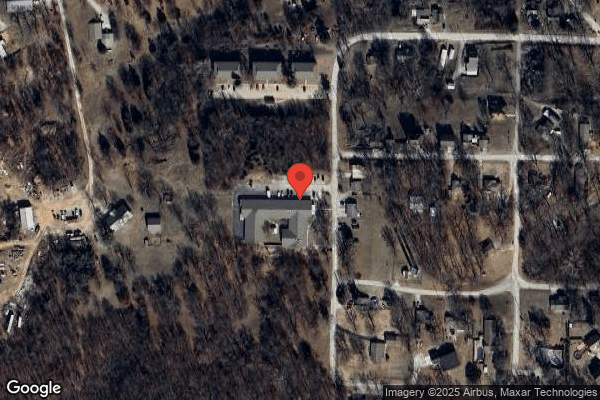

SENECA NURSING

914 CHICKESAW STREET, SENECA, MO 64865 (417) 776-8041
For profit - Limited Liability company 80 Beds COMMUNITY CARE CENTERS Data: November 2025
Trust Grade
20/100
#451 of 479 in MO
Last Inspection: January 2025

Within standard 12-15 month inspection cycle. Federal law requires annual inspections.

Overview

Seneca Nursing has a Trust Grade of F, indicating significant concerns and a poor overall performance. It ranks #451 out of 479 nursing homes in Missouri, placing it in the bottom half of all facilities, and #5 out of 5 in Newton County, meaning there are no local options that rank lower. The facility's condition is worsening, with issues increasing from 2 in 2024 to 11 in 2025. Staffing is a notable weakness, rated at 1 out of 5 stars, with a high turnover rate of 69%, which is concerning compared to the Missouri average of 57%. However, the facility does have more RN coverage than 82% of Missouri facilities, which is a positive aspect, as RNs are crucial for monitoring residents' health. There have been specific incidents reported that raise alarms. For example, six nurse aides were found to be untrained and uncertified, which raises concerns about the quality of care provided. Additionally, the facility has been without a qualified Dietary Manager for over six months, which could impact the nutritional care of residents. Lastly, controlled medications were not stored properly, as they were not kept in a locked compartment, posing a risk for unauthorized access. Overall, while there are some strengths, such as RN coverage, the significant weaknesses in staffing and compliance issues may be concerning for families considering this facility for their loved ones.

Trust Score
F
20/100
In Missouri
#451/479
Bottom 6%
Safety Record
High Risk
Review needed
Inspections
Getting Worse
2 → 11 violations
Staff Stability
⚠ Watch
69% turnover. Above average. Higher turnover means staff may not know residents' routines.
Penalties
✓ Good
No fines on record. Clean compliance history, better than most Missouri facilities.
Skilled Nurses
⚠ Watch
Each resident gets only 23 minutes of Registered Nurse (RN) attention daily — below average for Missouri. Fewer RN minutes means fewer trained eyes watching for problems.
Violations
⚠ Watch
27 deficiencies on record. Higher than average. Multiple issues found across inspections.
★☆☆☆☆
1.0
Overall Rating
★☆☆☆☆
1.0
Staff Levels
★★★★☆
4.0
Care Quality
★★☆☆☆
2.0
Inspection Score
Stable
2024: 2 issues
2025: 11 issues

The Good

  • 4-Star Quality Measures · Strong clinical quality outcomes
  • Full Sprinkler Coverage · Fire safety systems throughout facility
  • No fines on record

Facility shows strength in quality measures, fire safety.

The Bad

1-Star Overall Rating

Below Missouri average (2.5)

Significant quality concerns identified by CMS

Staff Turnover: 69%

23pts above Missouri avg (46%)

Frequent staff changes - ask about care continuity

Chain: COMMUNITY CARE CENTERS

Part of a multi-facility chain

Ask about local staffing decisions and management

Staff turnover is elevated (69%)

21 points above Missouri average of 48%

The Ugly 27 deficiencies on record

Feb 2025 2 deficiencies
CONCERN (D) 📢 Someone Reported This

A family member, employee, or ombudsman was alarmed enough to file a formal complaint

Potential for Harm - no one hurt, but risky conditions existed

Respiratory Care (Tag F0695)

Could have caused harm · This affected 1 resident

Based on record review and interview, the facility failed to provide respiratory care per standards of practice when staff failed to clarify hospital discharge orders for pulse oximetry (a test used t...

Read full inspector narrative →
Based on record review and interview, the facility failed to provide respiratory care per standards of practice when staff failed to clarify hospital discharge orders for pulse oximetry (a test used to measure the oxygen level of the blood), failed to have the resident's oxygen order on the Treatment Administration Record (TAR), and failed to document oxygen usage and pulse oximetry readings for one resident (Residents #1). The facility census was 50. Review of facility policy titled Oxygen Administration, dated February 2021, showed the following: -Verify there is a physician's order for oxygen administration; -After completing the oxygen setup or adjustment, the following information should be recorded in the resident's medical record: the date and time that the procedure was performed; the rate of oxygen flow, route; the frequency and duration of the treatment; the reason for as needed (PRN) administration; if the resident refused the procedure, the reason(s) why and the intervention taken; and the signature and title of the person recording the data. 1. Review of Resident #1's face sheet (a general information sheet) showed the following: -admission date of 12/07/24; -Diagnoses included chronic obstructive pulmonary disease (COPD - group of lung diseases that block airflow and make it difficult to breathe), respiratory failure, unspecified with hypoxia (a condition where there is an inadequate supply of oxygen to the body's tissues), and chronic kidney disease (disease that causes progressive damage and loss of function to the kidneys). Review of resident's admission Minimum Data Set (MDS - a federally mandated assessment tool completed by facility staff), dated 12/12/24, showed the resident's cognitive skills were intact and resident received oxygen therapy. Review of the resident's hospital discharge orders, dated 12/07/24, showed the following: -Oxygen home delivery concentrator with portability at two liters per minute via nasal cannula. Oxygen at a setting of two on a conserving device. Anticipated length of six months or greater; -Non monitored home continuous pulse oximeter for spot checks. Anticipated length of need of one month. Resident's baseline pulse oximeter measurement was 95% on two liters/minute by nasal cannula; -If pulse oximeter reading goes below 90% call the hospital or if in distress call 911 immediately. Review of the resident's December 2024 Physician Order Sheet (POS) showed a physician order, dated 12/07/24 , for oxygen at two liters via nasal cannula (nc) PRN for shortness of breath. (Staff did not document an order regarding pulse oximeter monitoring or direction for when to notify the physician.) Review of the resident's December 2024 Treatment Administration Record (TAR) showed staff did not document the physician order for oxygen at two liters via nasal cannula PRN or monitoring for pulse oximeter readings. Review of the resident's baseline care plan, dated 12/09/24, showed the following: -Resident was alert and cognitively intact; -Special treatment/procedures include oxygen with no rate of administration listed. (Staff did not address the pulse oximeter monitoring on the care plan.) During an interview on 02/11/25, at 12:55 P.M., Certified Nurse Aide (CNA) E said the resident was at the facility for rehabilitation and was on oxygen. During an interview on 02/11/25, at 1:07 P.M., CNA F said the following: -The resident was on oxygen; -The resident would take off his/her oxygen during the day on his/her own per his/her choice; -He/she did not remember how often staff checked the resident's vital signs. During an interview on 02/11/25, at 1:35 P.M., Certified Medication Technician (CMT) G said the resident was on oxygen as needed. The aides check residents' vital signs based on the orders in the computer. During interviews on 02/13/25, at 2:29 P.M., and on 02/14/25, at 8:25 A.M., Licensed Practical Nurse (LPN) B said the following: -The resident had a pulse oximeter at his/her bedside and checked his/her pulse oximetry himself/herself; -He/she assumed spot checks meant for staff to check a resident's oxygen saturations each shift; -He/she did not remember if he/she called the physician to clarify the hospital discharge order; -He/she checked the resident's oxygen saturation at times and did not know if he/she documented it; -Nurses review hospital discharge orders and enter them in the computer; -Pulse oximetry checks should be on a residents' TAR and staff should document; -A PRN oxygen order should be on the TAR. During interviews on 02/11/25, at 11:47 A.M. and 2:11 P.M., Registered Nurse (RN) A said the following: -The resident had a diagnosis of COPD; -The resident said he/she used oxygen, but at times he/she refused to wear the oxygen; -The hospital discharge order showed an order for a home device pulse oximeter. The facility did not have a continuous pulse oximeter; -Staff should had clarified the hospital discharge order with the physician; -He/she assumed spot checks meant to check the resident's oxygen saturations every shift and should had been documented on the TAR; -Nurses review the discharge orders and enter them in the computer; -Nurses clarify physician orders with the physician if it did not seem right. During interviews on 02/11/25, at 1:03 P.M., and on 02/13/25, at 6:20 P.M., RN C said the following: -The resident said his/her oxygen was continuous, but he/she did not always wear it; -The resident had his/her own pulse oximetry machine and would use it from time to time; -The resident had an order for oxygen; -He/she did not know of the hospital order for spot checks of the resident's oxygen saturations; -Staff should have clarified the hospital discharge order with the physician; -A normal order would read oxygen PRN to keep oxygen saturations above 90%; -When he/she or the resident took oxygen saturations they were always above 90% and staff should have documented the oxygen saturations. During an interview on 02/13/25, at 2:48 P.M., RN D said the hospital discharge order for the continues pulse oximetry was an unusual order and the facility did not do continuous pulse oximetry checks. Staff should had called the physician to clarify the order. During an interview on 02/13/25, at 6:44 P.M., the Director of Nursing (DON) said the following: -Staff should had clarified what spot checks meant with the physician; -The hospital discharge order is an order to be followed; -She did not know the resident had his/her own pulse oximetry at his/her bedside; -Nurses enter the hospital discharge orders in the computer and print them off and send to the pharmacy; -Oxygen orders should include amount of liters and if the oxygen is continuous or PRN; -She would expect staff to perform spot checks at least three times a day to make sure a resident's oxygen SATS are at 95% and if they are below 95% to notify the physician; -PRN oxygen order should be on the TAR. During an interview on 02/11/25, at 3:40 P.M., the Administrator said the following: -Nurses review physician orders and enter them in the computer; -She expected nurses to clarify orders with the physician if they had any; -On admission the charge nurse inputs new orders; -Part of the admission process is clarifying new orders with the physician; -She assumed spot checks meant if a resident had issues with oxygen not at normal ranges, staff would check a resident's oxygen saturations if a resident is confused or tired; -Oxygen orders and parameters should be specific. MO00249192
CONCERN (D) 📢 Someone Reported This

A family member, employee, or ombudsman was alarmed enough to file a formal complaint

Potential for Harm - no one hurt, but risky conditions existed

Medical Records (Tag F0842)

Could have caused harm · This affected 1 resident

**NOTE- TERMS IN BRACKETS HAVE BEEN EDITED TO PROTECT CONFIDENTIALITY** Based on observation, interview, and record review, the facility failed to maintain complete medical records for all residents w...

Read full inspector narrative →
**NOTE- TERMS IN BRACKETS HAVE BEEN EDITED TO PROTECT CONFIDENTIALITY** Based on observation, interview, and record review, the facility failed to maintain complete medical records for all residents when staff failed to document full details and notifications related to one resident (Resident #1) who died at the facility. The facility census was 50. Review of the facility's policy titled Charting and Documentation, dated February 2021, showed the following: -Chart all pertinent changes in the resident's condition, reaction to treatments, medications as well as routine observations; -Be concise, accurate and complete and use objective terms. Document only the facts. Use only approved abbreviations and symbols; -For death of a resident document code status of resident and whether CPR (cardiopulmonary resuscitation - an emergency lifesaving procedure performed when the heart stops beating) was performed; pertinent information before death (example, symptoms, vital signs, treatments, etc); date and time of death; name of physician notified and when notified; time resident representative notified and by whom; name of funeral home, time notified and by whom; when and to who the resident is released;disposition of medications and personal belongings; and time of coroner notification. 1. Review of Resident #1's face sheet (a general information sheet) showed the following: -admission date of [DATE]; -Diagnoses included chronic obstructive pulmonary disease (COPD - group of lung diseases that block airflow and make it difficult to breathe), respiratory failure, unspecified with hypoxia (a condition where there is an inadequate supply of oxygen to the body's tissues), and chronic kidney disease (disease that causes progressive damage and loss of function to the kidneys). Review of resident's admission Minimum Data Set (MDS - a federally mandated assessment tool completed by facility staff), dated [DATE], showed the following: -Cognitive skills intact; -Required set up assistance with eating and oral hygiene; -Required supervision with toileting; -Required partial/moderate assistance with shower/bathing and upper and lower body dressing. Review of the resident's [DATE] Physician Order Sheet (POS) showed a physician order, dated [DATE] , for do not resuscitate (DNR - did not wish to receive CPR). Review of the resident's baseline care plan, dated [DATE], showed the following: -Resident was alert and cognitively intact; -Required assistance of two staff for bed mobility, transfer, and toileting. Review of the resident's progress note dated [DATE], at 6:49 A.M., showed the Social Service Director (SSD) documented the resident's spouse and family member at the facility to say their goodbyes. The family took all the resident's items. The resident's spouse thanked the staff for all their care and assistance with his/her spouse. SSD expressed to the family if they need anything to let him/her know. Review of the resident's nursing notes showed staff did not document regarding the resident's death or physician and responsible party notifications. During an interview on [DATE], at 1:03 P.M., Registered Nurse (RN) C said the following: -The aides reported to him/her on [DATE], at 3:00 A.M., the resident had no pulse or heartbeat; -He/she messaged the physician and called the resident's family; -He/she did not realize he/she did not document a progress note on the resident's death; -He/she should have documented the resident's death. During an interview on [DATE], at 11:47 A.M., RN A said if a resident died unexpectedly, staff should document the physician notification and if the family was at the bedside During an interview on [DATE], at 1:41 P.M., the Director of Nursing (DON) said she expects staff to document in the progress note if a resident has a change in condition or when a resident passes away. Staff should document in the progress note the physician, responsible parties, DON, Administrator, and coroner notifications and how they found the resident. During interviews on [DATE], at 12:02 P.M. and 3:39 P.M., the Administrator said she did not see a summary of a progress note for when the resident died. She expected staff to document if a resident passed away which should include how staff found the resident, what happened and notifications to the physician and responsible parties. MO00249192
Jan 2025 9 deficiencies
CONCERN (D) 📢 Someone Reported This

A family member, employee, or ombudsman was alarmed enough to file a formal complaint

Potential for Harm - no one hurt, but risky conditions existed

Deficiency F0602 (Tag F0602)

Could have caused harm · This affected 1 resident

Based on interview and record review, the facility failed to keep all residents free from misappropriation of resident property when the staff could not account for 30 doses of medication for one resi...

Read full inspector narrative →
Based on interview and record review, the facility failed to keep all residents free from misappropriation of resident property when the staff could not account for 30 doses of medication for one resident (Resident #14) that had been signed by staff as being received from the pharmacy. The facility census was 53. Review of the facility policy Abuse, Prevention, and Prohibition, revised 10/2022, showed the following: -Misappropriation of resident property is defined as the deliberate misplacement, exploitation, or wrongful temporary or permanent use of a resident's belongings without the resident's consent; -The facility prohibits misappropriation of resident property; -The owner, licensee, administrator, employee or agent of the facility must prohibit the misappropriation of resident property; -The facility employee who becomes aware of alleged misappropriation of resident property, shall immediately report the matter to the administrator; -The facility administrator will ensure a thorough investigation of alleged violations of individual rights and document appropriate action. If a person is identified in the allegation of abuse, that person will not be allowed access to the facility while the investigation is in progress. 1. Review of Resident #14's face sheet (admission information) showed the following: -admission date of 08/15/23; -Diagnoses included anxiety disorder. Review of the resident's current physician's orders, on 01/13/25, showed an active order for alprazolam (used to treat anxiety) 0.5 milligram (mg). Staff to administer 0.5 mg by mouth at bedtime for anxiety. Review of the facility's investigation, dated 12/30/24, showed the following: -The resident's alprazolam 0.5 mg had not been delivered to facility. Staff ordered the medication before 12/19/24. The staff had been pulling this medication daily from the emergency kit) to provide to the resident; -The Director of Nursing (DON) called the local pharmacy who informed the DON the medication was delivered on 12/19/24. Licensed Practical Nurse (LPN) N signed the count sheet. The pharmacy sent a copy to the DON which showed LPN N signed for the medication; -The DON spoke with Certified Medication Technician (CMT) P who said he/she put away the medications that were delivered on 12/19/24, but he/she did not receive any medications for the resident. CMT P said the pharmacy should send a narcotic count sheet with all narcotic medications each time they deliver, however there had been occasions the pharmacy did not do this. CMT P said he/she just created a narcotic sheet and put the medication away when the pharmacy did not send a narcotic sheet with the medication; -The DON and CMT P searched both medication carts, the narcotic box, and the medication room and there was no record of the medication in the facility. The narcotic sheet was not located and the medication was never logged into the narcotic book; -The DON interviewed several nurses who worked on 12/19/24, and no staff were aware of any medication delivered during the day and had not seen any medications left sitting out at the nurse's desk or in the medication room; -The DON notified the Administrator who made a self-report to Department of Health and Senior Services for missing medication; -The DON spoke to LPN N who confirmed he/she signed medications in on 12/19/24. LPN N said he/she did not count the medications individually and did not see any narcotic medications with the white narcotic sheet around the medication. LPN N was unaware there was any narcotic medications delivered on 12/19/24 because that was how he/she identified narcotic medications upon delivery. LPN N said he/she put all delivered medications in the medication room for CMT P to put them away. The DON re-educated LPN N to properly count the medications and check them into the facility. The DON then suspended LPN N for failure to follow policy and procedure; -The DON notified and received approval from the resident's physician to order another card of medication with the facility to pay for the resident's medication and notified the resident's guardian. -The Administrator did made a self-report to the local police department for the missing medication. Review of the pharmacy's delivery log, dated 12/19/24, showed a quantity of 30 alprazolam 0.5 mg delivered to the facility and signed for by LPN N. Review of the written police voluntary statement dated 01/03/25, at 3:15 P.M., showed the following: -On 12/30/24, the DON was made aware of a card of medication missing which was the resident's alprazolam 0.5 mg; -The pharmacy sheet, dated 12/19/24, had this medication listed as delivered to the facility; -The nurse failed to properly check medication in the medication and the nurse signed to accept medications; -There is no record of the alprazolam 0.5 mg 30 tablets medication in the building. During an interview on 01/07/25, at 11:45 A.M., the resident said he/she goes up to the nurses' station to get his/her medications. For a while, the nurses had to get the alprazolam 0.5 mg medication from the e-kit since the medication card did not arrive from the pharmacy. During interviews on 01/09/25, at 10:30 A.M. and 12:16 P.M., CMT P said the following: -The pharmacy makes a delivery between 4:30 P.M. and 5:15 P.M. depending on how they are running. The narcotic medications are delivered with regular medications. They usually have a narcotic sheet wrapped around the narcotic medication card. -About 3 weeks ago, he/she was doing medications with the dinner pass. He/she was working with LPN N. He/She finished the medication pass with dinner and went into medication room and saw medications on the back counter to put away. He/She separated medications by resident name. -He/she was off work a few days and when he/she returned the resident let him/her know he/she wasn't getting his/her alprazolam at night. Some nights they were pulling it from the emergency medical kit. -If the alprazolam was ordered within the week before, it should have been delivered on 12/19/24 and should have been there in the facility. -LPN N always left the medications on the counter in the medication room. During an interview on 01/09/25, at 10:49 A.M., LPN N said the following: -When the pharmacy delivered medications, there was a sheet with all the medications listed. He/She looks at each one to see if all medications were there. He/She signs the sheet and keeps the copy and will sign the other copy and places it into a binder. -Narcotic meds come in the same tub or basket. There is a white sheet wrapped around the medication card usually. -He/She did not remember the particular day on 12/19/24. The pharmacy delivery always come in right after dinner, and they are trying to get residents laid down. -Around 12/19/24, the pharmacy delivered medications in a tub and he/she did not count them. He/she usually takes narcotic medications and puts them in the narcotic drawer and locks them up. He/she didn't remember if he/she laid it on the counter in the medication room, but he/she does not usually set narcotics on counter. He/she usually always counts the medications. -If he/she was the only nurse, and things got busy, he/she would have put it on the counter in the locked medication room. During an interview on 01/09/25, at 11:15 A.M., the DON said the following: -The resident had asked if his/her medication had come in from the pharmacy on 12/30/24, which was 11 days since the resident's medication card of alprazolam went missing and the nurses were taking the alprazolam 0.5 mg medication from the emergency medication kit. -The local pharmacy was to deliver the alprazolam 0.5 mg medication card of 30 tablets on 12/19/24; -The DON looked for the medication and was not able to find it. She found the alprazolam 0.5 mg was pulled each night from emergency medication kit. -LPN N's signature was on the pharmacy delivery paper. -The nurse was to checkmark each medication and he/she did not do this. -The DON called the local pharmacy to confirm the alprazolam 0.5 mg card of 30 was sent out on 12/19/24. During interview on 01/07/25, at 12:34 P.M., the Administrator said they did an investigation and interviewed nurses and CMTs. They were not sure what happened to the resident's alprazolam. MO00247293
CONCERN (D)

Potential for Harm - no one hurt, but risky conditions existed

Report Alleged Abuse (Tag F0609)

Could have caused harm · This affected 1 resident

Based on interview and record review, the facility failed to implement an abuse/neglect policy that ensured all reported allegations of possible abuse were reported to the State Survey Agency (Departm...

Read full inspector narrative →
Based on interview and record review, the facility failed to implement an abuse/neglect policy that ensured all reported allegations of possible abuse were reported to the State Survey Agency (Department of Health and Senior Services-DHSS) within two hours when staff failed to report a documented allegation of verbal abuse involving two residents (Resident #7 & #35). The facility census was 53. Review of the facility policy titled, Abuse, Prevention, and Prohibition Policy, undated showed the following: -Each resident has the right to be free from abuse, corporal punishment, and involuntary seclusion. Residents must not be subjected to abuse by anyone, including but not limited to, facility staff, other residents, consultants or volunteers, staff or other agencies serving the resident, family members or legal guardians, friends or other individuals. -The facility administrator is designated as the facility abuse coordinator. -Resident abuse must be reported to the administrator immediately. Review of the facility policy titled, Reporting Policy, undated,showed the following: -The facility will ensure that all alleged violations involving mistreatment, neglect, or abuse, including injuries of unknown origin and misappropriation of resident property are reported immediately to the supervisor. The supervisor will then report to the Administrator or Director of Nursing (DON); -The results of all investigations will be reported to the Administrator or DON and to the other officials in accordance with state and local laws, as well as federal regulations; -Initial report to state certifying agency will be made immediately, but not later than two hours if allegation involves abuse or serious bodily injury, or not later than 24 hours if the allegation does not involve abuse or does not result in serious bodily injury. 1. Review of Resident #7's face sheet (a brief resident profile) showed the following: -admission date of 10/29/24; -Diagnoses included schizoaffective disorder (a mental health condition including schizophrenia and mood disorder symptoms), generalized anxiety disorder, intermittent explosive disorder (a mental health condition that causes sudden and impulsive episodes of anger, aggression, or violence that are disproportionate to the situation), past history of alcohol use, drug induced myopathy (a disease that affects the muscled that control voluntary movement in the body), and drug induced subacute dyskinesia (a disease affecting the nervous system often caused by long-term use of psychiatric drugs). Review of Resident #7's admission Minimum Data Set (MDS - a federally mandated assessment tool completed by staff), dated 11/03/24, showed the following: -Cognitively intact; -Resident experienced delusions and hallucinations; -Resident had physical and verbal behavior symptoms towards others, which significantly interfere with the resident's participation activities or social interactions and significantly interrupts care or living environment. Review of the Resident #7's care plan, last revised on 01/06/25, showed the following: -Resident has behavior problems which included pulling fire alarm and laughing about it, inappropriate behaviors towards male caregivers, yelling and cursing at staff and others. -Resident will try to intimidate and bully caregivers. -Resident will urinate on the floors and on the beds in his/her room. -Resident will refuse medications and be socially inappropriate. Review of Resident #35's quarterly MDS showed the following: -admission date of 07/21/22; -Moderate cognitive impairment; -Diagnoses included stroke, hemiplegia (muscle weakness or partial paralysis on one side of the body that can affect the arms, legs and facial muscles), depression, schizophrenia (a disorder that affects a person's ability to think, feel, and behave correctly), and post-traumatic stress disorder (PTSD-a disorder in which a person has difficulty recovering after experiencing or witnessing a terrifying event); -Used a wheelchair; -Independent with most ADL's. Review of the Resident #7's nursing note dated 12/09/24, at 9:40 P.M., showed Registered Nurse (RN) U noted during the smoke break Resident #7 attempted to take a cigarette back inside when Resident #35 saw this and reminded him/her that residents are not allowed to take cigarettes inside. Resident #7 replied stating, I will cut your throat. This threat was head by other residents outside smoking. The resident denied saying this. He/she was advised making threats are very serious and not tolerated. Resident #7 verbalized understanding and again denied saying anything like that. (Staff did not document notifying management or DHSS of the allegation of verbal abuse.) Review of facility records showed staff did not provide documentation of reporting the allegation of possible abuse to DHSS. Review of DHSS records show DHSS did not have record of the facility reporting allegation of Resident #7 threatening to cut Resident #35's throat. During an interview on 01/14/25, at 7:59 A.M., Registered Nurse (RN) U said the following: -On 12/09/24, when residents were coming in from the 9:00 P.M., smoke break, Resident #35 reported to him/her Resident #7 was attempting to bring a cigarette into the facility. Resident #35 told Resident #7, he/she was not supposed to bring a cigarette back inside the facility; -Resident #7 then told Resident #35, I will cute your throat; -Another resident reported he/she also heard the threat; -He/she ensured the residents were separated and talked with Resident #7 who denied making the comment; -He/she immediately notified the Administrator and DON via text message and made a nursing note; -He/she considered it to be abusive behavior which needed to be reported to management; -He/she was unsure if the allegation should have been reported to the state; however, abuse allegations are to be reported to the state agency within two hours. -Resident #7 later admitted to making the threat and apologized. During an interview on 01/13/25, at 12:00 P.M., Certified Nurse Assistant (CNA) A said the following: -If a resident threatened to cut another resident's throat, he/she would separate the residents and report immediately to the Director of Nursing (DON) or charge nurse or both; -He/she would consider a resident threatening to cut another resident's throat to be abuse and should be reported to the state within two hours. During an interview on 01/13/25, at 12:08 P.M., Certified Medication Technician (CMT) P said he/she would consider a resident threatening to cut another resident's throat to be abuse, and he/she would report this to the Administrator immediately. The state should be notified within two hours. During an interview on 01/13/25, at 12:17 P.M., RN O said the following: -He/she was not aware of any residents threatening or being abusive to other residents; -He/she would consider a resident threatening to cut another resident's throat to be abusive; -He/she would separate residents and report to Administrator immediately and the state should be notified within two hours. During an interview on 01/13/25, at 12:30 P.M., the Infection Prevention Specialist (IPS) said the following: -She was not aware of any resident-to-resident abuse allegations, including a resident threatening to cut another resident's throat; -She would consider this to be abuse, and would separate residents, report to the DON and Administrator immediately; -The state should be notified within two hours and an investigation should be completed. During an interview on 01/13/25, at 1:24 P.M., Social Services Director (SSD) said the following: -She was not aware of any resident-to-resident abuse allegations and no grievances had been filed, including a resident threatening to cut another resident's throat; -She would consider this to be abuse and would report immediately to the DON and Administrator; -The state agency should be notified within two hours and an investigation should be completed. During an interview on 01/13/25, at 1:35 P.M., Business Office Manager (BOM) said the following: -She has no knowledge of any resident-to-resident abuse allegations, including a resident threatening to cut another resident's throat; -She would consider this to be abusive and would report immediately to management; -She would depend on management to report to the state agency within two hours if applicable. During an interview on 01/13/25, at 1:45 P.M., the Administrator said the following: -She had not received any reports of a resident being abusive to other residents; -She would consider a resident threatening to cut another resident's throat to be abusive and should be reported to her and then to the state within two hours; -She was not aware of the progress note from 12/09/24, alleging the resident told another resident he/she would cut the resident's throat; -This allegation was not reported to her.
CONCERN (D)

Potential for Harm - no one hurt, but risky conditions existed

Investigate Abuse (Tag F0610)

Could have caused harm · This affected 1 resident

Based on interview and record review, the facility failed to implement an abuse/neglect policy that ensured staff completed and documented a timely investigation of all reported allegations of possibl...

Read full inspector narrative →
Based on interview and record review, the facility failed to implement an abuse/neglect policy that ensured staff completed and documented a timely investigation of all reported allegations of possible abuse when staff failed to complete a documented investigation of a documented allegation of verbal abuse involving two residents resident (Resident #7 and #35). The facility census was 53. Review of the facility policy titled, Abuse, Prevention, and Prohibition Policy, undated, showed the following: -Each resident has the right to be free from abuse, corporal punishment and involuntary seclusion. Residents must not be subjected to abuse by anyone, including but not limited to, facility staff, other residents, consultants or volunteers, staff or other agencies serving the resident, family members or legal guardians, friends or other individuals; -The facility administrator is designated as the facility abuse coordinator and will be responsible for overseeing the Abuse Prevention and Prohibition Program and directing any abuse investigation; -Resident abuse must be reported to the administrator immediately. The administrator will do a thorough investigation of alleged violations of individual rights and document appropriate action; -A thorough investigation may include notifying resident representatives, provider, medical director, state agency, and even law enforcement if applicable, utilizing the resident abuse investigation teams, complete a report of alleged resident abuse within required timeline, resident assessment by a licensed nurse, thorough chart review, interviews with residents and employees, follow up counseling by social services to victims of abuse or neglect, and review by the regional nurse; -Resident to resident altercations: when another resident is the alleged perpetrator of the abuse, a licensed professional shall immediately evaluate the resident's physical and mental status, care plan, monitor behaviors and notify the provider for a determination regarding treatment and/or discharge options. Residents will be referred for behavior management when indicated. The safety of other residents and employees of the facility is primary concern. 1. Review of Resident #7's face sheet (a brief resident profile) showed the following: -admission date of 10/29/24; -Diagnoses included schizoaffective disorder (a mental health condition including schizophrenia and mood disorder symptoms), generalized anxiety disorder, intermittent explosive disorder (a mental health condition that causes sudden and impulsive episodes of anger, aggression, or violence that are disproportionate to the situation), past history of alcohol use, drug induced myopathy (a disease that affects the muscled that control voluntary movement in the body), and drug induced subacute dyskinesia (a disease affecting the nervous system often caused by long-term use of psychiatric drugs). Review of Resident #7's admission Minimum Data Set (MDS - a federally mandated assessment tool completed by staff), dated 11/03/24, showed the following: -Cognitively intact; -Resident experienced delusions and hallucinations; -Resident had physical and verbal behavior symptoms towards others, which significantly interfere with the resident's participation activities or social interactions and significantly interrupts care or living environment. Review of the Resident #7's care plan, last revised on 01/06/25, showed the following: -Resident has behavior problems which included pulling fire alarm and laughing about it, inappropriate behaviors towards male caregivers, yelling and cursing at staff and others. -Resident will try to intimidate and bully caregivers. -Resident will urinate on the floors and on the beds in his/her room. -Resident will refuse medications and be socially inappropriate. Review of Resident #35's quarterly MDS showed the following: -admission date of 07/21/22; -Moderate cognitive impairment; -Diagnoses included stroke, hemiplegia (muscle weakness or partial paralysis on one side of the body that can affect the arms, legs and facial muscles), depression, schizophrenia (a disorder that affects a person's ability to think, feel, and behave correctly), and post-traumatic stress disorder (PTSD-a disorder in which a person has difficulty recovering after experiencing or witnessing a terrifying event); -Used a wheelchair; -Independent with most ADL's. Review of the Resident #7's nursing note dated 12/09/24, at 9:40 P.M., showed Registered Nurse (RN) U noted during the smoke break Resident #7 attempted to take a cigarette back inside when Resident #35 saw this and reminded him/her that residents are not allowed to take cigarettes inside. Resident #7 replied stating, I will cut your throat. This threat was head by other residents outside smoking. The resident denied saying this. He/she was advised making threats are very serious and not tolerated. Resident #7 verbalized understanding and again denied saying anything like that. (Staff did not document notifying management or or beginning an investigation.) Review showed the facility did not provide a written investigation into the allegation of possible abuse. Review of Department of Health and Senior Services (DHSS) records showed a written investigation into the allegation of possible abuse was not received. During an interview on 01/14/25, at 7:59 A.M., Registered Nurse (RN) U said the following: -On 12/09/24, when residents were coming in from the 9:00 P.M., smoke break, Resident #35 reported to him/her Resident #7 was attempting to bring a cigarette into the facility. Resident #35 told Resident #7, he/she was not supposed to bring a cigarette back inside the facility; -Resident #7 then told Resident #35, I will cute your throat; -Another resident reported he/she also heard the threat; -He/she ensured the residents were separated and talked with Resident #7 who denied making the comment; -He/she immediately notified the Administrator and DON via text message and made a nursing note; -He/she considered it to be abusive behavior which needed to be reported to management; -Resident #7 later admitted to making the threat and apologized. During an interview on 01/13/25, at 12:00 P.M., Certified Nurse Assistant (CNA) A said the following: -If a resident threatened to cut another resident's throat, he/she would separate the residents and report immediately to the Director of Nursing (DON) or charge nurse or both; -He/she would consider a resident threatening to cut another resident's throat to be abuse. During an interview on 01/13/25, at 12:08 P.M., Certified Medication Technician (CMT) P said he/she would consider a resident threatening to cut another resident's throat to be abuse. During an interview on 01/13/25, at 12:17 P.M., RN O said the following: -He/she is not aware of any residents threatening or being abusive to other residents; -He/she would consider a resident threatening to cut another resident's throat to be abusive. During an interview on 01/13/25, at 12:30 P.M., the Infection Prevention Specialist (IPS) said the following: -She was not aware of any resident-to-resident abuse allegations, including a resident threatening to cut another resident's throat; -She would consider this to be abuse, and would separate residents, report to the DON and Administrator immediately; -An investigation should be completed. During an interview on 01/13/25, at 1:24 P.M., Social Services Director (SSD) said the following: -She was not aware of any resident-to-resident abuse allegations and no grievances have been filed, including a resident threatening to cut another resident's throat; -She would consider this to be abuse and would report immediately to the DON and Administrator; -An investigation should be completed. During an interview on 01/13/25, at 1:35 P.M., Business Office Manager (BOM) said the following: -She had no knowledge of any resident-to-resident abuse allegations, including a resident threatening to cut another resident's throat; -She would consider this to be abusive and would report immediately to management. During an interview on 01/13/25, at 1:45 P.M., the Administrator said the following: -She has not received any reports of a resident being abusive to other residents; -She would consider a resident threatening to cut another resident's throat to be abusive and should be reported to her and then to the state within two hours; -She was not aware of the progress note from 12/09/24, alleging the resident told another resident he/she would cut the resident's throat; -This allegation was not reported to her, and the required investigation was not completed.
CONCERN (D)

Potential for Harm - no one hurt, but risky conditions existed

Quality of Care (Tag F0684)

Could have caused harm · This affected 1 resident

Based on observation, interview, and record review, the facility failed to routinely monitor for edema (swelling caused by too much fluid trapped in the body tissues), failed to notify the physician o...

Read full inspector narrative →
Based on observation, interview, and record review, the facility failed to routinely monitor for edema (swelling caused by too much fluid trapped in the body tissues), failed to notify the physician of changes in weight and edema, and failed to apply interventions as ordered for one resident (Resident #2). The facility census was 53. Review of a facility policy titled Significant Condition Change and Notification, undated, showed the following: -Facility to ensure the resident's family and/or representative and medical practitioner are notified of the following resident changes: new wounds, bruises, or skin tears; abrupt onset of edema; onset of swelling; or a need to significantly alter treatment. When any of the listed situations exists, the nurse will contact the resident representative and their medical practitioner; -Medical practitioner contacted immediately for emergencies. Non-emergency practitioner notifications may be made the next morning if situation occurs late evening or night shift; -Each attempt will be charted as to the time the call was made, who was spoken to, and what information was given to the medical practitioner; -All significant changes will be recorded in resident record; -Charting will include an assessment of the resident's current status; -Charting will be done each shift for 72 hours; -Change of condition is reviewed by Director of Nursing (DON). 1. Review of the Resident #2's face sheet (a document that gives a resident's information at a quick glance) showed the following: -admission date of 02/13/24; -Diagnoses included schizophrenia (a mental illness that affects how a person thinks, feels, and behaves), dementia (condition that makes someone unable to remember, think clearly, or make decisions), diabetes mellitus, and chronic venous hypertension (condition in which veins valves in the legs function improperly causing swelling and skin changes) Review of the resident's quarterly Minimum Data Set (MDS - a federally mandated assessment completed by facility staff), dated 12/19/24, showed the following: -Moderate cognitive impairment; -Dependent on one staff for transfers, mobility, dressing, and showering; -Resident not taking a diuretic (medication to reduce fluid buildup in the body). Review of the resident's care plan, revised on 01/02/25, showed the following: -Dependent on one staff with transfer, dressing, and hygiene; -Monitor, document, and report to physician as needed for edema or weight gain of over two pounds a day; -Notify physician of significant weight loss or gain; -Inspect lower extremities weekly for redness, weeping, edema, tenderness, or puffiness; -Tubi grip (elasticated tubular bandage to assist with edema) stockings to bilateral lower extremities as resident allows. Review of the resident's nursing admission assessment, dated 02/15/24, showed staff noted the resident did not have edema. Review of the resident's admission paperwork, dated February 2024, showed a weight of 230.2 pounds. Review of the resident's Physician Order Sheet (POS) showed an order, dated 08/28/24, for Tubi grips to bilateral lower legs for increased edema as needed. (There was no order for a diuretic.) Review of the resident's weekly skin assessments showed staff did not document related to the resident having edema until 08/29/24. Review of the resident weekly skin assessment, dated 08/29/24, showed resident baseline is high edema to bilateral lower legs. Tubi grips applied to bilateral lower legs to help aid in scant redness and 3 to 4 plus edema noted. Review of the resident's November 2024 weight showed a weight of 235.8 pounds (an increase of 5.6 pounds since admission). Review of the resident's November 2024 progress notes showed staff did not document notification of the physician of the resident's increase in weight. Review of the resident's weekly skin assessment, dated 12/05/24, showed resident had baseline 3 to 4 plus edema in bilateral legs and wore Tubi grips to assist in edema. Review of the resident's weekly skin assessment, dated 12/19/24, showed resident had baseline 3 to 4 plus edema in bilateral legs and wore Tubi grips to assist in edema. Bilateral feet area swollen and red. (Staff did not document physician notification of the new redness noted to the resident's feet.) Review of resident's December 2024 Treatment Administration Record (TAR) showed an order to apply Tubi grips to bilateral lower legs for edema as needed. Staff did not document to indicate Tubi grips used during the month. Review of resident's December 2024 weight showed a weight of 245.6 pounds (a gain of 9.8 pounds in one month). Review of the resident's December 2024 progress notes showed staff did not document notification of the physician of the resident's increase in weight, the redness of the resident's feet, or the resident's Tubi grips not being applied. Review of resident's January 2025 Treatment Administration Record (TAR) showed an order to apply Tubi grips to bilateral lower legs for edema as needed. Staff did not document to indicate Tubi grips used during the month. Review of the resident's December 2024 progress notes showed staff did not document notification of the physician of the resident's Tubi grips not being applied. During an observation and interview on 01/13/25, at 9:39 A.M., the resident was in his/her room sitting in a wheelchair with no foot pedals. The resident's ankles appeared swollen, and the resident's pants appear visibly wet on the back side of right calf. No Tubi grips were in place. Resident said the staff were not doing much for his/her legs. During an observation on 01/13/25, at 2:40 P.M., the resident sat in his/her wheelchair with Tubi grips in place and a dressing to the right leg shin dated 01/13/24. Registered Nurse (RN) O said the resident's left leg was red and a little warm on the shin with scattered dried scabs noted. The left leg appeared to have + 1 pitting edema from the ankle to the knee and +2 to 3 pitting edema on the foot. The right leg had a small, popped blister with another small fluid filled blister noted in the middle of the shin. The right leg had + 2 pitting edema from the ankle to the knee and the foot had + 1 pitting edema. The shin area appeared red, but was not warm. During an interview on 01/13/25, at 10:00 A.M., Occupational Therapist Aide (OTA) W said the resident's legs were hot, and the back of his/her legs were wet through the pants. The right leg was swollen, red in color, scaly, and hot to the touch. Staff encouraged the resident to elevate legs due to swelling. The wound nurse puts Tubi grips on the resident sometimes. He/she was unable to find the Tubi grips in the resident room at that time. During an interview on 01/13/25, at 11:00 A.M., Nurse Aide (NA) B said the resident's legs were swollen and red with flaky skin when he/she observed them two weeks ago. During interviews on 01/13/25, at 10:10 A.M. and 2:40 P.M., Registered Nurse (RN) O said the following: -He/she would contact the physician for a resident with pitting edema to obtain an order for diuretics, compression stockings, or Tubi grips; -The wound nurse was responsible for applying Tubi grips to residents; -He/she saw the resident's legs a couple times last month and they had edema; -He/she contacted the physician due to possible cellulitis and was advised to elevate his/her legs and monitor; -He/she had not observed the resident with weeping edema (swelling that causes fluid to leak through the skin); -Each resident should have a weekly assessment conducted by the nurse; -The resident had an order for Tubi grips, but there is no documentation that they were applied on the TAR. During an interview on 01/13/25, at 10:25 A.M., the Infection Control Specialist said the following: -The resident had non pitting edema; -The resident had weeping edema with red, dry skin to the right leg, and it is possibly cellulitis (bacterial skin infection); -He/she notified the physician due to the resident possibly having cellulitis; -He/she also observed resident had two open areas to the right leg, one on the inner calf measuring 2.2 centimeters (cm) by 1.1. cm by 0.1 cm and one on the shin measuring 1.5 cm by 1.0 cm by 0.1 cm; -He/she cleaned and applied a dressing to the wounds and then applied Tubi grips; -Resident has weeping edema that comes and goes; -Resident is on a diuretic; -He/she was responsible for applying Tubi grips for residents; -The resident can wear Tubi grips continuously, but they were not on today. During an interview on 01/13/25, at 3:30 P.M., the Administrator said staff should encourage interventions such as elevation of extremities for residents with edema. Staff should advise the nurse of any resident with edema. The nurse is responsible for notifying the physician. The nurse should document in the TAR for any treatments such as Tubi grip application. If a treatment is not documented then it was not completed.
CONCERN (D)

Potential for Harm - no one hurt, but risky conditions existed

Accident Prevention (Tag F0689)

Could have caused harm · This affected 1 resident

**NOTE- TERMS IN BRACKETS HAVE BEEN EDITED TO PROTECT CONFIDENTIALITY** Based on observation, interview, and record review, the facility staff failed to ensure an environment as safe and as free from ...

Read full inspector narrative →
**NOTE- TERMS IN BRACKETS HAVE BEEN EDITED TO PROTECT CONFIDENTIALITY** Based on observation, interview, and record review, the facility staff failed to ensure an environment as safe and as free from accident hazards as possible when staff failed to complete a safe transfer, as care planned, for one resident (Resident #46) and when staff failed to care plan and transfer one resident (Resident #38) who was non-weight bearing in a safe fashion. The facility census was 53. Review of the facility policy Safe Lifting and Movement of Residents, reviewed 02/2021, showed the following: -Resident safety, dignity, comfort and medical condition will be incorporated into goals and decisions regarding safe lifting and moving of residents; -Manual lifting of residents shall be eliminated when feasible; -Staff responsible for direct resident care will be trained in the use of manual (gait/transfer belts, slide boards) and mechanical lifting devices. 1. Review of Resident #46's face sheet (admission information) showed the following: -admission date of 06/03/24; -Diagnoses that included dementia (progressive impairment in memory, thinking, and behavior), polyarthritis (joint pain), anxiety, and muscle weakness. Review of the resident's quarterly Minimum Data Set (MDS - a federally mandated assessment instrument completed by facility staff), dated 12/20/24, showed the following: -Severely impaired cognition; -Upper extremity impaired on one side; -Transfer from bed to wheelchair required substantial/maximal assistance (helper does more than half the effort). Review of the resident's care plan, dated 08/29/24, showed staff to use a gait belt (used to assist with transfer and prevent falls for weight bearing persons) at all times to transfer the resident. Observation on 01/13/25, at 10:09 A.M., showed Certified Medication Technician (CMT) P and Nurse Aid (NA) B sat the resident up on the edge of the bed to assist the resident to the wheelchair. With one arm, CMT P went underneath the resident's arm on one side and NA B put one arm beneath the resident's arm on the other side. CMT P held on to the back of the resident's pants and lifted the resident up with his/her arms and sat the resident in his/her wheelchair. The resident's feet touched the floor during the transfer. They both washed hands and then NA B wheeled the resident out of the room. (Staff did not use a gait belt to assist with the transfer as care planned.) During an interview on 01/13/25, at 10:59 A.M., CMT P said the resident did bear a little weight like 25%. He/She did not bear weight 75% of the time. Any time they try to use the gait belt, the resident gets upset. He/she should not pull up on the resident's pants to transfer the resident. During interview on 01/13/25, at 1:09 A.M., NA B said he/she did lift beneath the resident and tried not to hold on to back of her pants to transfer, but ended up doing this anyway because the resident did not bear much weight. During an interview on 01/13/25, at 12:39 A.M. Registered Nurse (RN) O said the resident ambulated with a walker when admitted to the facility. He/She fell and broke an arm, had increased pain, and declined. He/She did take part in therapy and was walking with a walker, then became depressed, and dementia had progressed. He/She can stand up and his/her knees won't buckle. He/She can be toileted. 2. Review of Resident #38's face sheet showed the following: -admission date of 04/10/23; -Diagnoses included hemiplegia (condition that causes paralysis or weakness on one side of the body) and hemiparesis (muscle weakness or partial paralysis on one side of the body that can affect arms, legs, and facial muscles) following a stroke on the right side. Review of the resident's care plan, revised 04/30/24, showed transfer with staff assistance. Review of the resident's quarterly MDS, dated [DATE], showed the following: -Severely impaired cognition; -Upper/lower extremity impairment; -Resident was dependent on staff for transfer from bed to wheelchair Observation on 01/13/25, at 10:29 A.M., showed Certified Nurse Aide (CNA A) and NA B assisted the resident to sit up on the edge of the bed. NA B asked for a gait belt and CNA A got one from behind the door. CNA A put gait belt around resident. Both CNA A and NA B both took one arm and went under the resident's arm on both sides of him/her, and held on to the gait belt in the back of the resident and then lifted the resident to the wheelchair. The resident's knees were both bent and stiff during the transfer. The resident's feet did not touch the floor. During interview on 01/13/25, at 10:43 A.M., NA B said sometimes the resident will help with his/her left legs but today, most of his/her weight was on his/her arms. During interview on 01/13/25, at 10:43 A.M., CNA A said most of the resident's weight was on his/her arms. During an interview on 01/13/25, at 12:39 A.M., RN O said the resident was a two-assist transfer. There was residual (what remains) from his/her stroke on the right side. He/She didn't think the resident bore weight. The resident shouldn't be a gait belt transfer. The resident had not declined or improved. 3. During an interview on 01/13/25, at 12:39 A.M. RN O said a resident's transfer should be in their care plan. There was a sheet that showed if a resident was a two person transfer, gait belt, walker and if there is a change whether they got better or they got worse with how they transferred. If they decline, they speak to therapy to assess them. They do try to do walk to dine. If a transfer is unsafe for residents and staff, they were to use a mechanical hoyer lift. 4. During interview on 01/13/25, at 2:23 P.M., the Administrator said the following: -If staff were to check and a resident was weak, the aide can go get the nurse or get assistance; -If staff were uncertain about how to transfer a resident, they should go ask the nurse; -If there was a change in the residents condition or maybe they had been sick, staff should get therapy involved; -Staff can always get more help if needed and use two staff to transfer the resident; -If a resident was not bearing weight, they should be a mechanical lift; -If the transfer could hurt the resident or staff, they were to use a gait belt.
CONCERN (D)

Potential for Harm - no one hurt, but risky conditions existed

Food Safety (Tag F0812)

Could have caused harm · This affected 1 resident

Based on observation, interview, and record review, the facility failed to ensure food was served in accordance with standards of practice when staff had bare hand contact with food and food contact s...

Read full inspector narrative →
Based on observation, interview, and record review, the facility failed to ensure food was served in accordance with standards of practice when staff had bare hand contact with food and food contact surfaces while assisting residents with meals. The facility census was 53. Review of the facility policy Hand Hygiene, dated 2019, showed the following: -The purpose was to cleanse hands to prevent the spread of potentially deadly infections; -The purpose was to provide a clean and healthy environment for residents, staff and visitors; -Hand hygiene was the primary means of preventing the transmission of infection. Review of the 2022 Food Code, by the Food and Drug Administration (FDA), showed the following: -Bare hand contact with ready-to-eat foods can contribute to the transmission of food borne illness; -There should be no bare hand with ready-to-eat food. 2. Observation on 01/08/25, at 12:12 P.M., during the lunch meal service, showed the following: -Nurse Assistant (NA) B was in the dining room talking to a resident and touching the resident's clothing while rubbing the resident's shoulder; -NA B did not perform hand hygiene and went to obtain a straw for another resident, opened the straw, and placed the straw in the resident's cup, touching the straw with his/her bare hands; -NA B did not perform hand hygiene and went to talk to another resident and touched the resident's clothing while rubbing the resident's back; -NA B did not perform hand hygiene and returned to the resident with the straw, picked up the cup and gave the resident a drink, touching the straw with his/her bare hand in the process. Observations on 01/08/25, at 12:21 P.M., during the lunch meal service, showed NA C assisting a resident with eating. NA C was giving the resident a bite of chicken by holding a whole piece of chicken with his/her bare hand and placing it near the resident's mouth for the resident to take a bite. During an interview on 01/09/25, at 1:04 P.M., Dietary Aide M said staff should sanitize their hands in between serving each resident food and drink. During an interview on 01/09/25, at 1:07 P.M., the Dietary Manager said staff should sanitize hands after every third plate and drink is passed to residents. During an interview on 01/08/25, at 1:27 P.M., NA B said the following: -Staff should use hand sanitizer between serving residents drinks and between assisting residents with eating; -Staff should wear gloves when assisting residents with eating and should not touch food with bare hands; -Staff should not touch residents' clothing and then assist a resident with drinking or eating without performing hand hygiene first. During an interview on 01/08/25, at 4:00 P.M., NA C said the following: -Staff should perform hand hygiene in between passing drinks to residents; -Staff should wear gloves when assisting residents with eating and should change gloves and sanitize in between residents; -Staff should not touch food with bare hands while assisting residents with eating. During an interview on 01/13/25, at 10:25 A.M., the Infection Control Specialist (ICS) said the following: -Staff should perform hand hygiene between serving residents at meal times; -Staff should not touch resident food unless using silverware. During an interview on 01/13/25, at 12:00 P.M., CNA A said the following: -Staff should perform hand hygiene in between assisting residents with eating; -Staff should wear gloves when assisting residents with eating; -Staff should perform hand hygiene after touching a resident's clothing and before assisting another resident with eating/drinking or passing trays/drinks. During an interview on 01/13/25, at 2:25 P.M., Certified Medication Technician (CMT) P said the following: -Staff should perform hand hygiene after any resident contact; -Staff should not touch resident food, gloves should be used if needed. During an interview on 01/13/25, at 12:17 P.M., Registered Nurse (RN) O said the following: -Staff should perform hand hygiene after touching a resident and before assisting another resident with eating during mealtimes; -Staff should not touch food with bare hands while assisting residents with eating. During an interview on 01/13/25, at 1:45 P.M., the Administrator said the following: -Staff should perform hand hygiene in the dining room in between assisting residents with eating/drinking; -Staff should perform hand hygiene after touching a resident's person and before assisting another resident with eating/drinking; -Staff should not touch food with bare hands when assisting residents with eating,
CONCERN (E) 📢 Someone Reported This

A family member, employee, or ombudsman was alarmed enough to file a formal complaint

Potential for Harm - no one hurt, but risky conditions existed

Deficiency F0761 (Tag F0761)

Could have caused harm · This affected multiple residents

Based on observation, interview, and record review, the facility failed to ensure all controlled medications were stored per standards of practice when controlled substances were not stored in a locke...

Read full inspector narrative →
Based on observation, interview, and record review, the facility failed to ensure all controlled medications were stored per standards of practice when controlled substances were not stored in a locked compartment. The facility's census was 53. Review of the facility policy Controlled Substance Policy, revised October 2022, showed the following: -Controlled substances were subject to special handling, storage, disposal and record-keeping requirements; -Controlled substances in Schedules II, III, and IV were subject to special handling, storage, disposal, and record-keeping requirements. Such drugs were to be accessible only to authorized nursing and pharmacy personnel. The Director of Nursing (DON) was responsible for the control of such drugs; -Drugs listed in Schedules II, III, and IV were to be stored under double-lock conditions; -The key to the separately locked storage area is not the same key that is used to gain access to other drugs; -The medication nurse or certified medication tech (CMT) on duty at the time will maintain possession of the key; -The key must remain the possession of the licensed nurse or CMT that completed the count at all times during their shift. Should it be necessary to give the keys to another licensed nurse or CMT, a count will be done to verify the inventory. A count will be done again when the keys were returned to the original licensed nurse or CMT. 1. Observation on 01/08/25, at 9:20 A.M., of the facility's medication room showed the following; -The medication room refrigerator was unlocked with the lock laying on the cabinet next to refrigerator upon entering the medication room. -The refrigerator contained three 30 milliliter (ml) vials of Ativan Intensol (antianxiety medication/controlled substance) 2 milligram (mg)/ml; -The refrigerator contained four 30 ml vials of morphine sulfate (opioid pain medication/controlled substance) 20 mg/ml. Observation on 01/13/25, at 10:05 A.M., with Registered Nurse (RN) O showed the narcotic refrigerator unlocked with the lock sitting beside refrigerator on the counter and unattended. During an interview on 01/08/25, at 9:25 A.M., Certified Medication Technician (CMT) P said the following: -He/she would advise the DON if the narcotic refrigerator was unlocked; -He/she had seen the refrigerator unlocked, but it does not happen that often; -He/she will lock the refrigerator if it is found to be unlocked. During interviewed on 01/08/25, at 9:30 A.M. and 10:45 A.M., RN O said the following: -Nurses should make sure the narcotics refrigerator is locked; -Refrigerator should only be unlocked when obtaining medication; -There have been times he/she has come in to find refrigerator unlocked; -Narcotics should be kept behind two locks; -He/she counted narcotics this morning with the off going nurse but forgot to lock the refrigerator.
CONCERN (E)

Potential for Harm - no one hurt, but risky conditions existed

Infection Control (Tag F0880)

Could have caused harm · This affected multiple residents

**NOTE- TERMS IN BRACKETS HAVE BEEN EDITED TO PROTECT CONFIDENTIALITY** Based on observation, interview, and record review, the facility failed to maintain an effective infection control program when ...

Read full inspector narrative →
**NOTE- TERMS IN BRACKETS HAVE BEEN EDITED TO PROTECT CONFIDENTIALITY** Based on observation, interview, and record review, the facility failed to maintain an effective infection control program when staff failed to perform proper hand hygiene when performing personal cares for two residents (Resident #46 and #38), when staff failed to have an Enhanced Barrier Precautions (EBP-infection control measures used to reduce transmission of resistant organisms) policy, and when staff failed to follow EBP when providing care to one resident (Resident #5) with a wound. The facility census was 53. Review of the facility policy Hand Hygiene, dated 2019, showed the following: -Purpose to cleanse hands to prevent the spread of potentially deadly infections; -Purpose to provide a clean and healthy environment for residents, staff and visitors; -Purpose to reduce the risk to the healthcare provider of colonization (when a microorganism survives on a host without causing disease. This can happen on the skin, in the respiratory tract, or in the gastrointestinal tract) or infections acquired from a resident; -Hand hygiene is the primary means of preventing the transmission of infection. 1. Review of Resident #46's face sheet (admission information) showed the following: -admission date of 06/03/24; -Diagnoses included dementia (progressive impairment in memory, thinking, and behavior), polyarthritis (joint pain), and muscle weakness. Review of the resident's quarterly Minimum Data Set (MDS - a federally mandated assessment instrument completed by facility staff), dated 12/20/24, showed the following: -Severely impaired cognition; -Toileting and personal hygiene required substantial/maximal assistance. Review of the resident's current care plan showed the resident was incontinent of bladder at times. Observation on 01/13/25, at 10:09 A.M., showed the resident lying in bed as Certified Medication Technician (CMT) P and Nurse Aide (NA) B washed their hands and put on gloves. CMT P and NA B removed the resident's incontinence brief. CMT P took several wet wipes and performed perineal care, then they turned the resident to his/her side, and took thick white barrier cream and applied it between and on the resident's buttocks which were red. The resident's brief was wet with urine. CMT P removed gloves, did not wash or sanitize hands, then put on a new pair of gloves. The CMT then put the incontinence brief, the resident's slacks, and then shoes on the resident. The CMT and NA sat the resident up on the edge of the bed and then transferred the resident to the wheelchair. CMT P then removed his/her gloves and washed his/her hands at the sink. NA B removed his/her gloves and washed his/her hands. During an interview on 01/13/25, at 10:59 A.M., CMT P said they were to wash hands when they go into the resident's room and when they leave the room. They were to wash hands after removing gloves and before putting on gloves. 2. Review of Resident #38's face sheet showed the following: -admission date of 04/10/23; -Diagnoses included hemiplegia (condition that causes paralysis or weakness on one side of the body) and hemiparesis (muscle weakness or partial paralysis on one side of the body that can affect arms, legs, and facial muscles) following a stroke on the right side. Review of the resident's quarterly MDS, dated [DATE], showed the following: -Severely impaired cognition; -Upper/lower extremity impairment; -Toilet hygiene-dependent. Review of the resident's care plan, revised 4/30/24, showed the resident was incontinent of bowel and bladder. Observation on 01/13/25, at 10:29 A.M., showed Certified Nurse Aide (CNA) A and NA B washed their hands at the sink and put on gloves. NA B pulled the privacy curtain. The resident was in bed. His/her incontinence brief was fully saturated and wet with urine. NA B used the cleansing wipes and wiped down the inner right leg with white barrier cream, then turned the wipe and wiped down the left inner leg that had the white barrier cream on the resident. Both inner legs were deep red in color. NA B cleansed the front perineal area which was covered with the white barrier cream. They turned the resident to his/her side. NA B used several cleansing wipes front to back between the buttocks. There was bowel movement smears inside the buttocks. NA B applied a little barrier cream inside buttocks and along the edge of both buttocks, then applied the cream on the front perineal area and inner right and left leg. CNA A removed gloves and applied a new pair of gloves and then removed the soiled brief. NA B removed gloves, did not sanitize or wash hands, then put on new gloves. The CNA and NA put pants on the resident after applying the incontinence brief. CNA A removed his/her gloves, and put on new pair of gloves without sanitizing or washing hands. NA B assisted CNA A to sit the resident up on the edge of the bed, put a gait belt on the resident, and transfer the resident to the wheelchair while wearing the same pair of gloves. They then removed gloves and washed their hands at the sink. During an interview on 01/13/25, at 10:44 A.M., CNA A said they were to wash hands before and after entering room. If staff take their gloves off, the should wash hands. It doing perineal care, staff will remove gloves and wash hands. He/She changed gloves at times because his/her hands sweat. During and interview on 01/13/25, at 11:09 A.M., NA B said they were to wash hands when they enter and leave a resident's room. He/she should have washed hands after removing gloves after peri care. 4. Review showed the facility did not provide a policy regarding enhanced barrier precautions (EBP). Review of the Centers for Disease Control and Prevention's Implementation of Personal Protective Equipment (PPE) Use in Nursing Homes to Prevent Spread of Multidrug-resistant Organisms (MDROs), updated 04/02/24, showed the following: -MDRO transmission is common in skilled nursing facilities, contributing to substantial resident morbidity and mortality and increased healthcare costs; -EBP are an infection control intervention designed to reduce transmission of resistant organisms that employs targeted gown and glove use during high contact resident care activities; -EBP may be indicated (when contact precautions do not otherwise apply) for residents with any of the following: wounds or indwelling medical devices, regardless of MDRO colonization status, infection, or colonization with an MDRO; -Effective implementation of EBP requires staff training on the proper use of PPE and the availability of PPE and hand hygiene supplies at the point of care; -Post clear signage on the door or wall outside of the resident room indicating the type of precautions and required PPE; -Make PPE, including gowns and gloves, available immediately outside of the resident room. Review of the Resident #5's face sheet showed the following: -admission date of 05/08/23; -Diagnoses included chronic obstructive pulmonary disease (COPD - a chronic lung disease that blocks airflow and makes it difficult to breathe), diabetes mellitus (a group of diseases that affect how the body uses blood sugar (glucose)), and muscle weakness. Review of the resident's quarterly MDS, dated [DATE], showed the following: -Moderate cognitive impairment; -Dependent on one staff for transfers, mobility, dressing, and showering; -Had a diabetic ulcer. Review of the resident's care plan, revised on 01/02/25, showed the following: -Dependent on one staff with transfer, dressing, mobility, and hygiene; -Had an abrasion on the left foot at the toe amputation site on 12/29/2024. During an observation on 01/09/25, at 1:40 P.M., the Infection Control Specialist (ICS) entered the resident's room to view a wound on the left foot. The room had no EBP signage. The ICS washed his/her hands and applied gloves, but did not don a gown to provide direct care to resident's wound. During an observation on 01/13/25, at 10:10 A.M., Registered Nurse (RN) O entered the resident's room to observe the wound on the left foot. The room ad no EBP signage. RN entered the resident room's and donned gloves, but did not don a gown to assess wound on resident's foot. During an interview on 01/13/25 at 10:25 A.M., the ICS said EBP are used to protect residents due to an increased risk of infection. EBP should be used for residents with multidrug resistant organisms (MDRO - type of bacteria that is resistant to multiple antibiotics), foley catheters (a thin flexible tube that drains urine from the bladder), tube feeding (a small tube inserted in body to provide nutrition for residents unable to eat or drink by mouth) and intravenous lines. Wounds would be included in EBP if there was significant drainage or an infection present. During an interview on 01/13/25, at 11:00 A.M., Nurse Aide (NA) B said if a resident was on EBP there should be a sign posted on the door. The resident is on EBP because of a wound and has gowns in the room, but no sign. EBP is used to protect residents from bacteria and staff should wear gowns and gloves. During an interview on 01/13/25, at 2:00 P.M., NA D said EBP is when staff wear a gown to protect residents. Staff use EBP for residents with wounds. EBP residents should have a sign in front of room with PPE stored in the room. The resident was on EBP and had a PPE cart in the room, but he/she did not know why. During an interview on 01/13/25, at 2:25 P.M., Certified Medication Technician (CMT) P said staff use EBP for residents with open wounds. EBP signage is posted outside of the door and there is a cart with PPE, such as gowns in gloves to be used.
CONCERN (F)

Potential for Harm - no one hurt, but risky conditions existed

Deficiency F0728 (Tag F0728)

Could have caused harm · This affected most or all residents

Based on observation, interview, and record review, the facility failed to ensure six nurse aides (NA) ( NA B, NA G, NA J, NA K, NA L,and NA C) completed a certified nurse aide (CNA) training program ...

Read full inspector narrative →
Based on observation, interview, and record review, the facility failed to ensure six nurse aides (NA) ( NA B, NA G, NA J, NA K, NA L,and NA C) completed a certified nurse aide (CNA) training program and obtained certification within four months of employment at the facility as a nurse aide. The facility census was 53. Review showed the facility did not provide a nurse aide certification or training policy. 1. Review of a facility list of current nurse aides showed NA B had an initial hire date of 03/28/23 and a rehire date of 12/07/24. Review of the facility's October 2024, November 2024, and December 2024, showed NA B scheduled to work. During interviews on 01/09/25, at 2:26 P.M., and on 01/13/24, at 11:00 A.M., NA B said the following: -He/she had worked at the facility for a month; -He/she had previously worked at the facility for a few years, but left and came back; -He/she provided all care to residents by herself unless the task requires two people; -He/she was not in a CNA class now, but planned to be in the next class; -The next class for nurse aides starts in February. Observation on 01/13/25, at 10:09 A.M., showed NA B provided direct care to residents. Review of the state agency CNA registry website, on 01/14/25, showed NA B was not listed as a CNA. 2. Review of a facility list of current nurse aides showed NA G had a hire date of 08/07/24 (over four months prior). Review of the facility's October 2024, November 2024, and December 2024, showed NA G scheduled to work. Review of the state agency CNA registry website, on 01/14/25, showed NA G was not listed as a CNA. 3. Review of a facility list of current nurse aides showed NA J with a hire date of 02/25/24 (over 11 month prior). Review of the facility's October 2024, November 2024, and December 2024, showed NA J scheduled to work. Review of the state agency CNA registry website, on 01/14/25, showed NA J was not listed as a CNA. 4. Review of a facility list of current nurse aides showed NA K with a hire date of 8/15/24 (four months prior). Review of the facility's October 2024, November 2024, and December 2024, showed NA K scheduled to work. Review of the state agency CNA registry website, on 01/14/25, showed NA K was not listed as a CNA. 5. Review of a facility list of current nurse aides showed NA L with a hire date of 05/15/24 (eights months prior). Review of the facility's October 2024, November 2024, and December 2024, showed NA L scheduled to work. Review of the state agency CNA registry website, on 01/14/25, showed NA L was not listed as a CNA. 6. Review of a facility list of current nurse aides showed NA C with an initial hire date of 07/13/23 and a rehire date of 04/09/24. Review of the facility's October 2024, November 2024, and December 2024, showed NA C scheduled to work. Observation and interview on 01/08/25, at 4:00 P.M., showed NA C provided direct care to residents and said he/she had been working since April and planned to take certification test in January. Review of the state agency CNA registry website, on 01/14/25, showed NA C was not listed as a CNA. 7. During an interview on 01/13/25, at 12:41 P.M., the CNA Instructor said the following: -There are no nurse aide training classes currently at the facility; -He/she completed the last NA class on 09/28/24; -There were no upcoming classes for nurse aide training scheduled; -There are two nurse aides from the September class that have not tested; -Nurse aides should become certified within 120 days or be reclassified in another position; -Nurse aides should be working with another CNA or licensed nurse staff. 8. During an interview on 01/13/25, at 3:30 P.M., the Administrator said the following: -There are currently two nurse aides working in the facility that are ready to test; -A nurse aide training class just finished within the last two weeks; -There should not be any nurse aides working in the facility for over four months; -Nurse aides should not work on the floor if certification is not obtained in four months; -He/she will relocate staff to another position in the facility if no certification is obtained within four months.
Oct 2024 1 deficiency
CONCERN (D) 📢 Someone Reported This

A family member, employee, or ombudsman was alarmed enough to file a formal complaint

Potential for Harm - no one hurt, but risky conditions existed

Resident Rights (Tag F0550)

Could have caused harm · This affected 1 resident

Based on interview and record review, the facility failed to ensure all residents were treated with dignity and respect when one staff member (Certified Nursing Assistant (CNA) B) placed his/her hand ...

Read full inspector narrative →
Based on interview and record review, the facility failed to ensure all residents were treated with dignity and respect when one staff member (Certified Nursing Assistant (CNA) B) placed his/her hand close to one resident's (Resident #1) mouth while providing cares to the resident to muffle the sound of the resident yelling. Four residents were sampled out of a facility census of 50. Review of the facility's policy titled Resident Rights, undated, showed the following: -Residents have the right to a dignified existence, self-determination, and communication with and access to persons and services inside and outside facility; -A facility must treat each resident with respect and dignity and care for each resident in a manner and environment that promotes maintenance or enhancement of her quality of life, recognizing each resident's individuality. Facility must protect and promote rights of resident; -Residents have a right to be treated with respect and dignity. 1. Review of Resident #1's face sheet (a document that gives a patient's information at a quick glance) showed the following: -admission date of 10/26/10; -Diagnoses included anxiety, dementia, and depression. Review of the resident's quarterly Minimum Data Set (MDS - a federally mandated comprehensive assessment instrument completed by facility staff), dated 09/06/24, showed the following: -The resident had severe cognitive impairment; -The resident had no behaviors; -The resident required maximum assistance from staff for toilet hygiene and was dependent on staff for personal hygiene, upper and lower body dressing, and bathing; -The resident used a wheelchair for locomotion and required moderate assistance from staff for locomotion; -The resident required maximum assistance from staff for bed mobility and was dependent on staff for all transfers. Review of the resident's care plan, revised 10/29/24, showed the following: -The resident resisted care including taking showers related to diagnoses of anxiety and psychosis. -The resident would yell out inappropriately at times and become combative with staff. -Staff to ask the resident if he/she was in pain or uncomfortable and let the nurse know if he/she was. -Staff to encourage as much participation/interaction by the resident as possible during care activities. -Staff to give the resident a clear explanation of care activities before and as they occur during each staff/resident contact. -If the resident was unable to be redirected, give him/her a few minutes to calm down and return. Review of the facility's investigation, dated 10/31/24, showed the following: -On 10/26/24, at approximately 12:05 P.M., Nursing Assistant (NA) A reported to the Business Office Manager (BOM) that CNA B put his/her hand over the resident's face; -On 10/26/24, the Administrator spoke with NA A about the NA's written statement. The NA stated he/she and the CNA were in the resident's room and were changing the resident. The resident was screaming. The CNA placed his/her hand over the resident's mouth and the NA told the CNA no. The CNA then leaned down and yelled in the resident's ear to shut up. The NA was unsure of which hand the CNA used. The NA said he/she stood on the left side of the resident's bed and the CNA stood on the right side. The CNA held the resident on his/her side while the NA cleaned the resident. When they rolled the resident to his/her back, the CNA leaned forward and told the resident to shut up. The NA did not believe the resident heard the CNA as the resident yelled louder than normal this date. The NA said the CNA then used his/her right hand and placed it above the resident's mouth for a split second and the NA told the CNA no. The CNA said he/she did not mean to actually touch the resident. The NA and CNA got the resident up with the Hoyer lift (mechanical lift); -On 10/26/24, the Administrator contacted the CNA and asked the CNA to come to the facility to discuss the incident. The CNA arrived at the facility at approximately 5:10 P.M. The Administrator and Social Worker went over the CNA's statement. The CNA said he/she went with the NA to assist the resident. The CNA said the resident said in a semi-loud voice that's enough over and over again. The CNA rolled the resident towards him/her while the NA cleaned the resident and when the resident was clean, rolled the resident back to the resident's back. The CNA noticed the NA's tattoo and started a conversation about the tattoo. The CNA said he told the NA to shut up jokingly about the NA's tattoo. The resident continued to yell louder and the CNA leaned to the resident's right ear and asked the resident to please be quiet as he/she could not hear the NA. This had no effect, so the CNA attempted to block the resident's mouth from his/her line of vision with his/her left hand. The CNA said he/she was not attempting to cover the resident's mouth, but because he/she was not looking, he/she accidentally touched the resident's chin with the loose part of his/her glove. The CNA said he/she touched the resident and he/she was sorry and the NA told the CNA that he/she could not do that. The CNA told the NA he/she did not mean to and that it would not happen again. -On 10/30/24, the Administrator, Director of Nursing (DON) and regional team determined resident abuse did not occur, however the resident was not treated with good customer service and the CNA failed to treat the resident with dignity and respect. During an interview on 10/29/24, at 10:42 A.M., NA A said the following: -He/she and CNA B were providing care for the resident; -The resident was yelling because they were changing him/her and this was normal for the resident; -CNA B told the resident to shut up and the resident continued to yell; -CNA B put his hand on the resident's mouth for a split second; -The NA told the CNA not to do this and the CNA said he/she did not mean to touch the resident; -The CNA did not strike the resident, he/she was just trying to get the resident to stop yelling; -He/she and the CNA finished caring for the resident; -He/she found the Business Office Manager (BOM) and reported the incident to the BOM; -He/she did not believe the CNA treated the resident with dignity and respect. During interviews on 10/29/24, at 11:33 A.M., and on 10/31/24, at 1:24 P.M., CNA B said the following: -He/she and NA A were changing the resident; -The resident yelled and the CNA could not hear the NA; -He/she was trying to block the sound of the resident so he/she could hear the NA; -He/she touched the resident's chin with the glove he/she had on his/her hand; -He/she did not tell the resident to shut up, but did tell the NA to shut up in a joking manner; -He/she did not believe it was appropriate to tell a resident to shut up or place a hand over the resident's mouth; -He/she was not going to cover the resident's mouth and was just trying to block the sound with his/her hand so he/she could hear the NA; -He/she did not intend to put his/her hand in the resident's face, but they way it happened, he/she did not treat the resident with dignity and respect; -Staff should treat residents with dignity and respect. During an interview on 10/29/24, at 1:12 P.M., CNA C said staff should treat residents with dignity and respect. He/she did not believe it was appropriate for staff to put a hand in front of a resident's face to muffle the sound. During an interview on 10/29/24, at 1:17 P.M., CNA E said staff should treat residents with dignity and respect. This is the residents' home. He/she did not believe it was appropriate for staff to place their hand in front of a resident's mouth and if they did this would not be treating the resident with dignity and respect. During an interview on 10/29/24, at 1:14 P.M., Registered Nurse (RN) D said staff should treat residents with dignity and respect. He/she believed it was never appropriate to for staff to put a hand in front of a residents face to muffle the sound. During interviews on 10/29/24, at 12:20 P.M. and 1:23 P.M., the BOM said the following: -On 10/26/24, NA A reported to him/her that the NA was in the resident's room with CNA B. The resident was yelling and the CNA leaned over and told the resident to be quiet and started to place his/her hand over the resident's mouth; -The NA reported he/she told the CNA to not do this; -The CNA admitted to putting his/her hand near the resident's mouth to try to muffle the resident's yelling; -The charge nurse assessed the resident and the resident had no injuries and no changes in the resident's behaviors; -CNA B did not treat the resident with dignity and respect; -Staff should treat residents with dignity and respect. This is the residents' home; -He/she did not believe it was appropriate for staff to place their hand in front of a resident's mouth. During an interview on 10/29/24, at 1:31 P.M., the Director of Nursing (DON) said the following: -When he/she spoke with CNA B, the CNA said he/she assisted NA A with changing the resident; -The CNA said he/she was making small talk with the NA and the resident was screaming and he/she asked the resident to be quiet; -The CNA reported he/she placed his/her hand up to block the noise from the resident and accidentally touched the resident's chin; -The CNA reported he/she did not place his/her hand over the resident's mouth; -The DON said the CNA did not treat the resident with dignity and respect; -The CNA should have backed away from the resident, left the resident's room, and attempted to reapproach the resident later; -If, when the CNA approached the resident later, and the resident continued to scream, the CNA should get another staff to perform the cares; -Staff should treat residents like family and with dignity and respect. MO00244168
Feb 2024 1 deficiency
CONCERN (D) 📢 Someone Reported This

A family member, employee, or ombudsman was alarmed enough to file a formal complaint

Potential for Harm - no one hurt, but risky conditions existed

Deficiency F0602 (Tag F0602)

Could have caused harm · This affected 1 resident

Based on interview and record review, the facility failed to protect all resident's from misappropriation of property when a staff member had one resident's (Resident #1's) personal cellular phone, in...

Read full inspector narrative →
Based on interview and record review, the facility failed to protect all resident's from misappropriation of property when a staff member had one resident's (Resident #1's) personal cellular phone, in his/her possession. The facility census was 52. Review of the facility policy titled, Abuse, Prevention, and Prohibition Policy, revised November 2018, showed the following: -Misappropriation of resident property is defined as the deliberate misplacement, exploitation, or wrongful, temporary or permanent use of a resident's belongings or money without the resident's consent; -The facility prohibits misappropriation of resident property; -The facility will not knowingly employ individuals who have been found guilty of abusing , neglecting, or mistreating residents or misappropriating their properties. 1. Review of Resident #1's significant change Minimum Data Set (MDS - a federally mandated comprehensive assessment tool completed by facility staff), dated 11/03/23, showed the following: -admission date of 01/19/23; -Moderate cognitive impairment; -Dependent on staff assistance for transfers, dressing, toileting, and bathing. Review of the resident's face sheet showed the following: -readmission date of 10/17/23; -Diagnoses included chronic kidney disease, heart failure, diabetes, anxiety, and depression. Review of the facility's Misappropriation of Property Self-Report showed the following: -On 01/03/24, a family member of the resident reported the resident's cell phone was missing from the resident's room. Staff searched for cell phone, but were unable to locate the phone; -On 01/04/24, Nurse Assistant (NA) A came to the Administrator concerned one of the other nurse assistants at the facility, NA B, may have stolen the resident's cell phone and given the phone to NA A's child as a gift. NA A denied stealing the phone. Staff obtained the identification number from the cell phone in NA A's possession; -On 01/11/24, NA B spoke with the Administrator and completed a written statement. NA B denied taking the resident's cell phone and denied any knowledge of the phone. The administrator suspended NA B pending the outcome of the investigation; -On 01/12/24, NA A returned the cell phone to the facility; -On 01/25/24, one of the resident's family members contacted their cell phone provider and confirmed the phone NA A returned to the facility belonged to the resident. The Administrator notified the Department of Health and Senior Services (DHSS) and the local police department of the misappropriation of resident property and terminated NA B. During an interview on 01/30/24, at 12:52 P.M., the Administrator said the following: -On 01/03/24, the family of the resident reported the resident's cell phone missing from the resident's room; -Staff attempted to locate the phone in the facility, but were unsuccessful; -On 01/04/24, NA A came to the Administrator and said he/she suspected that a phone given to his/her child as a present from NA B, could be the missing phone and staff brought the phone to the facility; -Several days later, on 1/25/24, a family member of the resident contacted the cellular phone provider and determined the phone brought into the facility by NA A was the resident's phone. The Administrator terminated NA B, who denied stealing the phone from the resident. The Administrator notified the local police and DHSS of the situation. MO00230853
Jul 2023 1 deficiency
CONCERN (D) 📢 Someone Reported This

A family member, employee, or ombudsman was alarmed enough to file a formal complaint

Potential for Harm - no one hurt, but risky conditions existed

Free from Abuse/Neglect (Tag F0600)

Could have caused harm · This affected 1 resident

Based on observation, interview, and record review, the facility failed to protect the resident's right to be free from from mental abuse from staff when a staff member took and then shared photograph...

Read full inspector narrative →
Based on observation, interview, and record review, the facility failed to protect the resident's right to be free from from mental abuse from staff when a staff member took and then shared photographs and video of one resident (Resident #1) having an incontinent episode while making comments of a demeaning nature and delaying needed care. The photographs and video were shared through texting. The facility census was 55. Review of a facility policy titled Abuse, Prevention and Prohibition Policy, revised October 2022, showed the following: -Each resident has the right to be free from abuse; -Residents must not be subjected to abuse by anyone, including, but not limited to facility staff, other residents, consultants or volunteers, staff of other agencies serving the residents, family members or legal guardians, friends or other individuals; -The facility prohibits mistreatment, neglect, or abuse of residents; -Abuse also includes the deprivation by an individual, including a caretaker, of goods or services that are necessary to attain or maintain physical, mental, and psychosocial well being; -Instances of abuse of all residents, irrespective of any mental or physical condition, cause harm, pain or mental anguish; -Abuse including verbal abuse, sexual abuse, physical abuse and mental abuse including facilitated or enabled through the use of technology; -Mental abuse includes, but is not limited to, humiliation, harassment, and threats of punishment or deprivation; -Mental abuse includes, but is not limited to, abuse that is facilitated or caused by nursing home staff taking or using photographs or recordings in any manner that would demean or humiliate a resident; -Willful as defined in the definition of abuse means the individual must have acted deliberately, not that the individual must have intended to inflict injury or harm. Review of the facility's Resident Rights showed the following: -Residents have the right to be free from abuse; -Residents have the right to have privacy and respect; -Residents have the right to privacy in medical treatment and personal care; -Residents should be treated with consideration and respect, with full recognition of dignity and individuality. Review of the facility's employee's handbook showed the following as prohibited activity: -Unauthorized disclosure of resident information on Internet sites that violate the Health Insurance Portability and Accountability Act (HIPPA), resident rights, and community policies; -Information in the context of their work environment regarding clients, residents, or other team members, including names, photos or related information of any kind violates privacy standards; -Unless approved for Community Business, the possession or use of cellular phones, pagers, and other portable communication devices is strictly prohibited while on duty; -Taking pictures or making audio recordings on Community property without explicit permission from the Administrator/Executive Director. 1. Review of Resident #1's medical record showed the following: -admission date of 04/10/23; -Diagnoses included disorders of visual cortex (disorder caused by damage to the parts of the brain that process vision) due to vascular (dealing with blood vessels) disorders left side of brain, high blood pressure, and stroke. Review of the resident's care plan, dated 04/10/23, showed the following: -Limited physical mobility related to stroke; -Requires staff assistance for bed mobility, transfers, bathing, dressing, personal hygiene and toilet use; -Impaired vision, is legally blind, can see shapes and colors; -Impaired cognitive function and thought process. Review of the resident's quarterly Minimum Data Set (MDS - a federally mandated comprehensive assessment instrument completed by facility staff), dated 07/19/23, showed the following: -Moderate cognitive impairment; -Required extensive assistance of two staff for bed mobility, transfers, locomotion, dressing and toilet use; -Occasionally incontinent of urine; -Continent of bowel. Record review of the resident's record showed no documentation that the resident had consented for pictures or video to be taken by staff. Review of the facility's investigation, that began on 07/18/23, showed the following: -On 07/18/23, at approximately 3:39 P.M., the Administrator received a call from a concerned community member. The administrator was told by this person that they wanted to report abuse by one of the facility's current nursing assistants. The person identified him/herself and told the Administrator that his/her family member was friends with this employee and his/her family member had told him/her about videos and photos of residents that he/she received from this employee. The reporter identified the staff member as Nurse Aide (NA) A. NA A allegedly sent videos and photos of resident without the resident's permission. Review of the resident's progress notes, dated 07/18/23, showed the resident stated that an employee had taken a photo of him/her while he/she had feces on him/herself. Review of NA A's signed stated, obtained on 07/18/23 at 5:40 P.M., showed the following: -NA A said he/she did not remember the date or when this situation occurred; -NA A said him/her and another coworker walked into a resident's room to provide care. It was close to the end of the shift and they had had a long and busy day. Both staff were ready to be out and to go home. When they saw the resident in the condition he/she was in, they thought this is going to be a long process of cleaning the resident which made them more stressed; -The resident had bowel movement thrown onto the floor, smeared on the bed, and on his/her pants and hands; -NA A said she took out her cell phone and recorded the resident and situation; -NA A said she knew it was wrong to take pictures of residents. -NA A said she sent the videos and photo to only one person, but did not remember who. Review the photograph and video, taken by NA A, showed the following: -A picture of the resident's bathroom with bowel all over the toilet and floor; -The video showed NA A video recording the resident's room and the resident who laid in bed. The resident's side view of face was visible in the recording. NA A said the resident's first name aloud and said let me see your hands while Certified Nurse Aide (CNA) B stood at the end of the resident's bed smiling. During an interview on 08/02/23, at 10:35 A.M., CNA B said the following: -If she witnesses abuse she immediately reports the abuse to the charge nurse; -She did not know NA A was recording a video in the resident's room; -NA A said she was on the phone texting family member; -If he/she had known NA A was taking pictures or video recording the resident he/she would have reported this immediately to the charge nurse as abuse; -Cell phones are not allowed in resident rooms or in the halls; -Staff are not allowed to take pictures or videos of residents, this is a violation of a residents privacy, it is abuse and a a violation of the residents dignity. During an interview on 07/19/23, at 4:26 P.M., CNA E said the following: -Staff are not supposed to take videos or pictures of residents; -Staff should not have phones on their person; -Phones are supposed to be left in the break room or a staff's purse; -Phones are never to be brought in a resident's room; -If he/she saw a staff taking videos or pictures of a resident he/she would tell them to stop and report the abuse to the the charge nurse, DON and Administrator. During an interview on 07/19/23, at 3:47 P.M., Certified Medication Technician (CMT) C said the following: -Staff are supposed to keep their cellular phones in their locker or car; -Staff are not supposed to have cellular phones on their person; -Staff are not supposed to ever have cellular phones in a resident room; -Staff are not supposed to ever take pictures or videos of residents; -Taking videos or pictures of a resident is against the abuse policy; -If he/she ever saw staff taking pictures or videos of a resident he/she would report this abuse immediately to the charge nurse. During an interview on 07/19/23, at 4:00 P.M., Licensed Practical Nurse (LPN) D said the following: -Staff should not take pictures or videos of residents; -Staff are not supposed to have their phones on them; -Phones are to be left in their car or locker; -LPN D said he/she would ensure the resident was okay and then report to the Director of Nursing and the Administrator immediately if staff took pictures or videos of a resident. During an interview on 07/19/23, at 4:40 P.M., the Administrator said the following: -Abuse and neglect to include mental abuse related to taking photographs and videos is not allowed by staff; -Staff cell phones are not allowed in resident rooms and should not be on staff's person; -All photographs or videos have to have the consent from a resident and/or family; -NA A should never have has a cell phone the residents room and should never have taken pictures or videos of the resident or the resident's personal area; -She received a call from a member of the community and was told NA A was taking pictures and videos of a resident. MO00221637
Mar 2023 11 deficiencies
CONCERN (D)

Potential for Harm - no one hurt, but risky conditions existed

Comprehensive Care Plan (Tag F0656)

Could have caused harm · This affected 1 resident

**NOTE- TERMS IN BRACKETS HAVE BEEN EDITED TO PROTECT CONFIDENTIALITY** Based on interview and record review, the facility failed to ensure all residents had a comprehensive care plan that addressed e...

Read full inspector narrative →
**NOTE- TERMS IN BRACKETS HAVE BEEN EDITED TO PROTECT CONFIDENTIALITY** Based on interview and record review, the facility failed to ensure all residents had a comprehensive care plan that addressed each resident's needs when staff failed to care plan one resident's (Resident #23) foley catheter (a flexible tube that a clinician passes through the urethra (the duct by which urine is conveyed out of the body from the bladder) and into the bladder to drain urine) and interventions related to the foley catheter and failed to care plan one resident's (Resident #207) anxiety and depression and anxiety and depression medications and failed to include interventions related to the resident's anxiety and depression. The facility census was 53. Record review of the facility's policy titled Care Planning - Interdisciplinary Team, reviewed 2/2021, showed the following: -Every resident will be assessed using the Minimum Data Set (MDS - a federally mandated assessment tool completed by facility staff); -The purpose is to assess each resident's strengths, weaknesses, and care needs and use this assessment data to develop a comprehensive Plan of Care (POC) for each resident that will assist a resident in achieving and maintaining the highest practical level of mental functioning, physical functioning, and wellbeing as possible. 1 Record review of Resident #23's face sheet (a document that gives a patient's information at a quick glance)showed the following: -admission date of 2/3/23; -Diagnoses included kidney injury. Record review of the resident's admission MDS, dated [DATE], showed the following: -Cognitively intact; -The resident had an indwelling catheter. Record review of the resident's March 2023 Physician's Order Sheet (POS) showed the following: -An order, dated 2/3/23, for Foley (catheter) to remain in place until urology appointment; -An order, dated 2/5/23, to change 18 French (Fr -a measure of the outer diameter of a catheter)/30 milliliter (ml) foley every 30 days and as needed (PRN) in the morning stating on the 15th and ending on the 16th every month for urinary retention; -An order, dated 2/28/23, change 18 Fr/30 ml foley every 30 days; -An order, dated 2/28/23, change 18 Fr/30 ml foley if clogged or missing as needed; -An order, dated 2/28/23, Foley (catheter) care every shift two times a day. Record review of the resident's care plan, revised 2/25/23, showed the following: -Staff did not care plan the resident's indwelling foley catheter or interventions for care of the catheter. Observations on 3/1/23, at 10:20 A.M., and on 3/6/24, at 10:24 A.M. and 12:50 P.M., showed the resident had a foley catheter. During an interview on 3/6/23, at 1:29 P.M., Licensed Practical Nurse (LPN) H said the following: -The resident had a foley catheter and it was not included in his/her care plan, but should be. During an interview on 3/6/23, at 3:16 P.M., Social Services Designee (SSD) said the following: -The resident's foley catheter was not included on their care plan, but should be. During an interview on 3/6/23, at 3:38 PM., the MDS Coordinator said the following: -The resident's foley catheter was not included in their care plan, but should be. During an interview on 3/6/23, at 3:57 P.M., the Administrator said the following: -The resident's foley catheter should be care planned. 2. Record review of Resident #207's face sheet showed the following: -admission date of 2/14/23; -Diagnoses included cerebral infarction (occurs as a result of disrupted blood flow to the brain due to problems with the blood vessels that supply it), hemiplegia (paralysis of one side of the body) of the left side and depression. Record review of the resident's admission MDS, dated [DATE], showed the following: -The resident had moderate cognitive impairment; -The resident had normal or minimal depression; -The resident had no behaviors; -The resident received antianxiety and antidepressant medication seven days of the seven day look back period. Record review of the resident's care plan, dated 2/18/23, showed the following; -Staff did not care plan the resident's anxiety and depression, anxiety/depression medications, or interventions. Record review of the resident's March 2023 POS showed the following: -An order, dated 2/14/23, for Escitalopram Oxalate (medication used to treat anxiety and depression) oral tablet 5 milligrams (mg), one tablet by mouth daily for depression and anxiety. During an interview on 3/1/23, at 8:49 A.M., the resident said the following: -His/her family member abused him/her; -Facility staff did not ask him/her about his/her past traumas. During an interview on 3/6/23, at 1:29 P.M., LPN H said the following: -The resident received Escitalopram for anxiety and depression, it was not on his/her care plan but should be; -The resident's anxiety and depression was not included on his/her care plan, but should be. During an interview on 3/6/23, at 3:16 P.M., the SSD said the following: -The resident's anxiety and depression was not included on their care plan but should be. During an interview on 3/6/23, at 3:38 PM., the MDS Coordinator said the following: -The resident's anxiety and depression medication was not included in their care plan, but should be. During an interview on 3/6/23, at 3:57 P.M., the Administrator said the following: -The resident's anxiety and depression and their medication for anxiety and depression should be care planned. 3. During an interview on 3/3/23, at 8:52 A.M., Licensed Practical Nurse (LPN) J said the following: -Several departments updated care plans; -He/she did not know who completed the initial care plan. The initial care plan included bowel and medications that trigger an area. 4. During an interview on 3/6/23, at 10:26 A.M., Certified Nursing Assistant (CNA) L said the following: -He/she did not have access to a resident's care plan; -He/she knew how to care for a resident by asking the Director of Nursing (DON) and they explained the care plan. 5. During an interview on 3/6/23, at 1:29 P.M., LPN H said the following: -He/she knew how to care for a resident by completing the resident's care, through report and the resident's care plan; -All staff had access to the residents' care plans; -Psychotropic medications and foley catheter should be care planned; -The MDS Coordinator completed the care plans. The facility just hired a new MDS Coordinator and corporate completed them before they were hired. 6. During an interview on 3/6/23, at 3:08 P.M., Certified Medication Technician (CMT) I said the following: -Psychotropic medications should be on the residents' care plan. 7. During an interview on 3/6/23, at 3:16 P.M., SSD said the following: -Residents' care plans medications such as psychotropics; -If a resident had a catheter, it should be included on their care plan and include goals and interventions; -If a resident received medications for anxiety or depression, it should be included on their care plan and include goals and interventions. 8. During an interview on 3/6/23, at 3:38 PM., the MDS Coordinator said the following: -Residents' care plans included certain medications such as depression medications and psychotropics; -He/she updated residents' care plans quarterly and as needed; -If a resident received medications for anxiety and depression, this should be care planned along with adverse effects, goals and interventions; -If a resident had a catheter, this should be care planned along with goals and interventions. 9. During an interview on 3/6/23, at 3:57 P.M., the Administrator said the following: -All nursing staff had access to residents' care plans; -If a resident had anxiety or depression, it should be included on their care plan; -If a resident received psychotropic medications, it should be included on their care plan; -If a resident had a foley catheter, it should be included on their care plan.
CONCERN (D) 📢 Someone Reported This

A family member, employee, or ombudsman was alarmed enough to file a formal complaint

Potential for Harm - no one hurt, but risky conditions existed

Deficiency F0697 (Tag F0697)

Could have caused harm · This affected 1 resident

Based on observation, interview, and record review, the facility failed to ensure consistent pain management for all residents when the facility did not have a prescribed pain medication on-site for o...

Read full inspector narrative →
Based on observation, interview, and record review, the facility failed to ensure consistent pain management for all residents when the facility did not have a prescribed pain medication on-site for one resident (Resident #40) for multiple days. The facility had a census of 53. Record review of the facility's policy Medication Ordering and Receiving From Pharmacy, dated 06/01/18, showed the following: -Medications are received from the dispensing pharmacy on a timely basis. The facility maintains accurate records of medication order and receipt; -Refills are written on a medication order form/ordered by peeling the refill label and placing it in the appropriate area on the order for provided by the pharmacy for that purpose and/or ordered electronically ordered; -Reorder medication at least three to four days in advance of need, as directed by the pharmacy order and delivery schedule, to assure an adequate supply is on hand; -The nurse who reorders the medication is responsible for notifying the pharmacy of changes in directions for use. 1. Record review of Resident #40's face sheet (a document that gives a patient's information at a quick glance) showed the following: -admission date of 03/17/21; -Diagnoses included depression, anxiety, partial contractures (condition of shortening and hardening of muscles, tendons, or other tissue, often leading to deformity and rigidity of joints) of both hands, and encephalopathy (any disease of the brain that alters brain function or structure). Record review of the resident's quarterly Minimum Data Set (MDS - a federally mandated assessment instrument completed by facility staff), dated 11/30/22, showed the following: -Cognitively intact; -Limitations in range of motion on both sides of his/her body; -Did not indicate any pain concerns. Record review of the resident's care plan, updated 03/03/23, showed the following: -He/she has a problem with pain, related to contractures and headaches; -Monitor/record pain characteristics as needed; -Administer analgesia (specify medication) as per orders. Give half-hour before treatments or care; -Anticipate the resident's need for pain relief and respond immediately to any complaint of pain; -Evaluate the effectiveness of pain interventions; -Review for compliance, alleviating of symptoms, dosing schedules and resident satisfaction with results, impact on functional ability and impact on cognition. Record review of the resident's Physician's Orders Sheet (POS), dated 02/01/23 to 03/02/23, showed an order, dated 02/3/23, for Lyrica (medication used to treat neuropathic pain), 100 milligram (mg), one capsule by mouth three times a day for pain. Record review of the resident's February 2023 Medication Administration Record (MAR) for showed the following: -An order, dated 02/03/23, for Lyrica, 100 mg, give one capsule by mouth three times a day for pain; -On 02/26/23, staff did not administer the Lyrica 100 mg capsule for two scheduled doses; -On 02/27/23, staff did not administer the Lyrica 100 mg capsule for all three scheduled doses; -On 02/28/23, staff did not administer the Lyrica 100 mg capsule for all three scheduled doses; -Staff initialed the MAR and documented 9 which was Other/See Nurse's Note. During an interview on 02/28/23, at 2:55 P.M., the resident said he/she had been taking Lyrica, but it ran out. When he/she asked staff about the medication, staff said it was being reordered. The alternative (over the counter) pain medications were able to mostly help with pain and nerves, but not like the Lyrica did. Record review of the resident's March 2023 MAR showed the following: -On 3/1/23, staff did not administer the Lyrica 100 mg capsule for all three scheduled doses. -Staff initialed the MAR and documented 9 which was Other/See Nurse's Note. Record review of the resident's progress note, dated 03/01/23, showed staff documented they spoke with pharmacy about the resident's Lyrica and it would be delivered on 03/03/23 because insurance will not cover this until that date. (This was the first note documenting the medication being unavailable and contacting the pharmacy regarding the medication.) Record review of the resident's March 2023 MAR showed the following: -On 030/2/23, staff did not administer the Lyrica 100 mg capsule for all three scheduled doses; -Staff initialed the MAR and documented 9 which was Other/See Nurse's Note. During an interview on 3/02/23, at 12:56 P.M., the resident said he/she was doing okay even though he/she was not receiving his/her pain medication Lyrica. It was starting to affect his/her nerves and he/she needed the Lyrica. He/she did take ibuprofen and Tylenol for pain, but it did not work effectively as Lyrica. Record review of the resident's March 2023 Medication Administration Record (MAR) for showed the following: -On 03/03/23, staff did not administer the Lyrica 100 mg capsule for all three scheduled doses; -On 03/04/23, staff did not administer the Lyrica 100 mg capsule for all three scheduled doses; -On 03/05/23, staff did not administer the Lyrica 100 mg capsule for all three scheduled doses; -Staff initialed the MAR and documented 9 which was Other/See Nurse's Note. During an interview on 3/06/23, at 9:58 A.M., the resident sat in the small sitting room watching tv. He/she said when he/she did not get the Lyrica, his/her pain level was 8 (moderate pain) out of 10 with 10 being the highest level of pain. When sitting there now, he/she had a level of four to five which was moderate pain. He/she did get his/her Lyrica finally. He/she said he/she had nerve pain and hurt from his/her neck down to his/her feet. Lyrica did relieve this nerve pain. During an interview on 03/06/23, at 1:46 PM, Registered Nurse (RN) E said the following: -He/she was not aware of the resident's pain medication being unavailable for several days; -Staff can pull a medication from the IStat (used for emergency medication), but he/she has never dealt with this because he/she does not do the medication pass administration; -If residents needed a refill on a medication, he/she would tear off the sticker with the bar code off the medication card and put this on the pharmacy refill form and fax this to the pharmacy; -Nurses and med techs can order meds and refill medications; -When a pharmacy order comes in, there was a packing slip with the medication listed; -He/she was unaware where to mark this medication had been refilled from the pharmacy; -The pharmacy will communicate if refills on residents' medications were unavailable; -If there was an issue with refilling a medication too soon, the pharmacy marked this on the form with the reason; -Med techs are to ensure medications are ordered, received, and administered. During an interview on 03/02/23, at 9:30 A.M., Certified Medication Technician (CMT) C said the following: -When a resident's medication is not found during the med pass, he/she checks the bottom drawer on the medication cart which was for overflow medications. If the medication was not in the bottom drawer of the cart, he/she checked the IStat (used for emergency medication); -For the resident and his/her Lyrica, the medication was not available in either place. The resident did request Tylenol and the CMT did administer Tylenol to the resident; -When doing the medication pass, CMT C makes a list of medications that need refilled and he/she will reorder the medications after completing the medication pass administration. He/she will fax a request for the medication to the pharmacy and if he/she has time, he/she will call the pharmacy to confirm the refill ordered, and ask why the medication was not there for the resident; -For this resident, the Lyrica was out on Sunday, 02/26/23, and the pharmacy was not open on Sundays. He/she left a message for the day staff to get this medication Lyrica reordered on Monday, 02/27/23, he/she was not working that day and was off work the next few days; -The normal process to reorder a medication was to tear off the top label on the medication card and fax this information to the pharmacy; -They have a binder with all the faxes to the pharmacy, but don't have time to check to confirm the pharmacy got the request to fill the medicine; -On Sunday, 02/26/23, when the resident's Lyrica was out, he/she notified the nurse, RN D, since the charge nurse was busy at the time. RN D said to check the IStat. He/she checked the IStat and the Lyrica was not a medicine kept in the IStat. He/she told RN D and then talked to the resident. He/she checked to see who the med tech who was scheduled to work Monday, but this med tech didn't come in to work; -CMT C did not fax the medication refill request for the resident's Lyrica to the pharmacy on Sunday. He/she thought someone would do this on Monday, 02/27/23 when the pharmacy was open; -Usually they request a refill when the medication card is down to 10 doses; -They don't always know if this gets done and refilled. During an interview on 3/06/23, at 2:28 P.M., the Director of Nursing (DON) said the following: -The resident's Lyrica medication order changed from twice a day to three times a day. The insurance company would not send more Lyrica for the new physician's order to increase the medication until 03/03/23; -The resident said the Tylenol and ibuprofen did help relieve pain for him/her. She was unaware the resident was out of the medication Lyrica until four days later; -The medication technicians and the nurses were responsible for ensuring meds were ordered, received, and administered; -When there was a new medication ordered for a resident, they print this out and fax it to the pharmacy; -If they were unable to get the medication from the pharmacy, and it was a new prescription order or change in prescription, they tried to see if the medication was in the IStat first; -If a medication was ordered and not delivered, the staff were to call the pharmacy and ask where the medication was; -The CMTs can send the medication label stickers to refill the medications; -The resident had as needed Tylenol and Ibuprofen for pain and the resident said it helped with the pain. During an interview on 03/06/23, at 2:36 P.M., the Administrator said the following: -Staff were to order or pull the pain medication from the I Stat; -For this resident, there was a note that said the medication was not ready to be filled from the pharmacy. The medication order changed from administering Lyrica from two to three times a day. The pharmacy wouldn't release this and she wondered if the pharmacy had the new order; -Every time she talked to the resident, he/she never said he/she was in excruciating pain or they would send the resident to the hospital. The resident did not seem like he/she was in pain. The aides are to report any pain to the nurse who will go over the pain scale or level with the resident; -If the nurses were concerned about ordering and receiving medication, they were to talk to the DON; -CMTs and charge nurses were to order or pull from IStat if a resident's medication was not available; -Staff were to communicate to the DON to have medication added to the IStat if it was not kept there. MO00214721
CONCERN (D)

Potential for Harm - no one hurt, but risky conditions existed

Medication Errors (Tag F0758)

Could have caused harm · This affected 1 resident

**NOTE- TERMS IN BRACKETS HAVE BEEN EDITED TO PROTECT CONFIDENTIALITY** Based on observation, interview, and record review, the facility staff failed to obtain stop dates of 14 days or less on as need...

Read full inspector narrative →
**NOTE- TERMS IN BRACKETS HAVE BEEN EDITED TO PROTECT CONFIDENTIALITY** Based on observation, interview, and record review, the facility staff failed to obtain stop dates of 14 days or less on as needed (PRN) anti-psychotropic medication (a chemical substance that changes brain function and results in alterations in perception, mood, consciousness or behavior) for two residents (Resident #9 and #23). The facility census was 53. Record review of the facility's policy titled Psychotropic Medication Use, reviewed 02/2021, showed the following: -Residents will only receive psychotropic medications when necessary to treat specific conditions for which they are indicated and effective; -Residents who are admitted from the community or transferred from a hospital and who are already receiving psychotropic medications will be evaluated for the appropriateness and indications for use. The interdisciplinary team will: re-evaluate the use of the psychotropic medication at the time of admission to consider whether or not the medication can be reduced, tapered, or discontinued per regulation. Based on assessing the resident's symptoms and overall situation, the medical practitioner will determine whether to continue, adjust, or stop existing psychotropic medication; -Diagnoses alone do not warrant the use of psychotropic medication; -The staff will observe, document, regarding the effectiveness of any interventions, including psychotropic medications; -Nursing staff shall monitor for side effects and adverse consequences of psychotropic medication. Side effects and adverse consequences will be reported to the medical practitioner. (The facility policy did not specifically address PRN orders.) 1. Record review of Resident #9's face sheet (a document that gives a patient's information at a quick glance) showed the following: -admission date of 2/2/23; -Diagnoses included severe dementia (a condition characterized by progressive or persistent loss of intellectual functioning, especially with impairment of memory and abstract thinking, and often with personality change, resulting from organic disease of the brain) with anxiety (a feeling of worry, nervousness, or unease, typically about an imminent event or something with an uncertain outcome). Record review of the resident's admission Minimum Data Set (MDS - a federally mandated comprehensive assessment instrument completed by facility staff), dated 2/6/23, showed the following: -Severe cognitive impairment; -Moderate depression; -Verbal behavior symptoms directed toward others (e.g. threatening others, screaming at others, cursing at others) occurred four to six days prior days but less than daily. The resident had no physical or other behaviors; -The resident received antianxiety medication two of the last seven days. Record review of the resident's care plan, revised 2/16/23, showed the following: -He/she had impaired cognitive function/dementia or impaired thought processes; -He/she used Lorazepam (a medication used to treat anxiety) .5 milligrams (mg) medication for his/her anxiety; -He/she took anti-anxiety medications which were associated with an increased risk of confusion, amnesia, loss of balance and cognitive impairment that looked like dementia, falls, and broken hips or legs; -Monitor him/her for safety; -Give anti-anxiety medications ordered by the physician; -Monitor and document side effects and effectiveness. Anti-anxiety side effects included drowsiness, lack of energy, clumsiness, slow reflexes, slurred speech, confusion, disorientation, depression, dizziness, lightheadedness, impaired thinking and judgement, memory loss, forgetfulness, nausea, stomach upset and blurred or double vision. Paradoxical (opposite of what the drug is intended to do) side effects included mania, hostility and rage, aggressive or impulsive behavior and hallucinations; -The resident had behaviors related to dementia which included yelling out help me, refusing care and combativeness with care; -When he/she was asked what was wrong after yelling out help me, he/she may answer nothing or I don't know; -He/she had a mood problem; -The resident had a behavior problem at times' -Administer antipsychotic medications as ordered. Monitor and document for side effects and effectiveness. Record review of the resident's March 2023 physician's order sheet showed the following: -An order, dated 2/2/23 with no end date, for Lorazepam oral tablet .5 mg, one table by mouth every four hours as needed for anxiety. Record review of the resident's Medication Administration Record (MAR) for February and March 2023, showed the resident received one tablet of Lorazepam .5 mg on the following dates: -On 2/3/23, at 11:03 A.M., the dose was ineffective; -On 2/4/23, at 9:10 A.M. and 2:06 P.M., both doses were effective; -On 2/5/23, at 6:35 A.M., the dose was effective; -On 2/6/23, at 4:34 P.M., the dose was ineffective; -On 2/8/23, at 2:47 P.M. and 10:07 P.M., both doses were effective; -On 2/9/23, at 8:29 P.M., the dose was effective; -On 2/10/23, at 8:14 P.M., the dose was effective; -On 2/13/23, at 1:46 P.M., the dose was effective; -On 2/19/23, at 10:22 A.M., the dose was effective; -On 2/22/23, at 6:05 P.M., the dose was effective; -On 2/23/23, at 9:23 P.M., the dose was effective; -On 2/24/23, at 3:07 P.M., the dose was effective; -On 3/1/23, at 10:06 A.M., the dose was effective. During an interview on 3/6/23, at 12:55 P.M., Certified Medication Technician (CMT) G said the following: -The resident had an order for PRN Lorazepam and he/she did not know if it had a stop date; -The medication was a psychotropic and should have a stop date. During an interview on 3/6/23, at 1:29 P.M., Licensed Practical Nurse (LPN) H said the following: -The resident had a PRN order for Lorazepam that did not have a stop date. This medication should have a stop date at fourteen days. During an interview on 3/6/23, at 3:08 P.M., CMT I said the following: -The resident had an order for Lorazepam PRN. It did not have an end date, but should. During an interview on 3/6/23, at 3:38 P.M., the MDS Coordinator said the following: -The resident had an order for Lorazepam PRN that did not have an end date. He/she did not know if the order should have an end date. During an interview on 3/6/23, at 3:57 P.M., the Administrator said the following: -The resident's order for Lorazepam PRN should have an end date of fourteen days. 2. Record review of Resident #23's face sheet showed the following: -admission date of 2/3/23; -Diagnoses included kidney injury, legal blindness and high blood pressure. Record review of the resident's admission MDS, dated [DATE], showed the following: -Cognitively intact; -Normal to minimal depression; -No behaviors; -Did not receive anti-anxiety medication during the last seven days. Record review of the resident's care plan, revised 2/25/23, showed the following: -He/she had impaired cognitive function/dementia or impaired thought processes; -Break tasks into small sub tasks to support short term memory deficits. Provide assistance with making room as homelike as can; -The resident had a mood problem. The resident took anti-anxiety medications which were associated with an increased risk of confusion, amnesia, loss of balance and cognitive impairment that looked like dementia, falls, broken hips and legs. Monitor for safety. Behavioral health consults as needed. Record review of the resident's March 2023 POS showed the following: -An order, dated 2/19/23 with no end date, for Xanax (an anti-anxiety medication) oral tablet .5 mg, one tablet by mouth every four hours as needed for agitation/anxiety. Record review of the resident's February 2023 and March 2023 MAR showed the resident received one tablet Xanax, .5 mg. on the following dates: -On 2/23/23, at 4:03 A.M. and at 7:33 P.M., both doses were effective; -On 2/24/23, at 3:36 P.M. and 8:17 P.M., both doses were effective; -On 2/25/23, at 2:06 A.M., the dose was effective; -On 2/26/23, at 2:21 A.M., the dose was effective; -On 2/27/23, at 7:42 P.M., the dose was effective; -On 2/28/23, at 7:39 P.M., the dose was effective; -On 3/1/23, at 4:26 A.M., at 6:56 P.M. and 11:41 P.M., doses were effective; -On 3/2/23, at 8:07 A.M., the dose was effective; -On 3/3/23, at 1:26 P.M. and 10:22 P.M., both doses were effective; -On 3/5/23, at 11:13 P.M., the dose was effective. During an interview on 3/6/23, at 12:55 P.M., CMT G said the following: -The resident had an order for PRN Xanax and he/she did not know if it had a stop date; -This medication was a psychotropic and should have a stop date. During an interview on 3/6/23, at 1:29 P.M., LPN H said the following: -The resident had an order for PRN Xanax and it did not have a stop date, but should have a stop date after fourteen days. During an interview on 3/6/23, at 3:08 P.M., CMT I said the following: -The resident had an order for Xanax PRN. It did not have an end date, but should. During an interview on 3/6/23, at 3:38 P.M., the MDS Coordinator said the following: -The resident had an order for Xanax PRN that did not have an end date. He/she did not know if the order needed an end date. During an interview on 3/6/23, at 3:57 P.M., the Administrator said the following: -The resident's order for Xanax PRN should have an end date after fourteen days. 3. During an interview on 3/6/23, at 12:55 P.M., CMT G said the following: -The physician wrote an order for psychotropic medications, the charge nurse added the order to the MAR and the CMT passed the medications; -PRN psychotropic medications required a start and end date. The end date should not be past ten days from the start date and the charge nurse requested a new order from the physician if needed; -If the resident did not use the medication, the order dropped off the MAR; -If the resident used the medication regularly, he/she told the charge nurse; -Psychotropic medications should be included in the resident's care plan. The Social Services Designee (SSD) or Director of Nursing (DON) updated the care plans. 4. During an interview on 3/6/23, at 1:29 P.M., LPN H said the following: -The physician should only order PRN psychotropic medications for fifteen days. These orders needed a stop date and the physician needed to renew them every fifteen days. 5. During an interview on 3/6/23, at 3:08 P.M., CMT I said the following: -PRN psychotropic medications should have an end date after a month and then the physician should reassess. 6. During an interview on 3/6/23, at 3:38 P.M., the MDS Coordinator said the following: -He/she believed if a resident had a PRN order for a psychotropic medication and the resident used the medication, the order would not need an end date. If the resident did not use the medication, the physician should discharge the order after thirty days; -The nursing staff followed how the physician ordered the medication. 7. During an interview on 3/6/23, at 3:57 P.M., the Administrator said the following: -PRN orders for psychotropic medications should have an end date after fourteen days.
CONCERN (E)

Potential for Harm - no one hurt, but risky conditions existed

Deficiency F0565 (Tag F0565)

Could have caused harm · This affected multiple residents

Based on interviews and record reviews, the facility failed to assist the residents to meet on a regular basis and failed to designated a staff person responsible for providing assistance with the mee...

Read full inspector narrative →
Based on interviews and record reviews, the facility failed to assist the residents to meet on a regular basis and failed to designated a staff person responsible for providing assistance with the meeting and responding to resident concerns brought forth in the meetings. The facility census was 53. Record review showed the facility did not provide a policy regarding resident council meetings 1. During a group interview on 03/02/23, at 10:07 AM, the residents said the following: -They do not have regular resident council meetings, but they would like for there to be; -The residents said the council is supposed to meet once a month; -There was a consensus that the council did meet in January of this year; -One resident said there has only been one resident council meeting, and it was last calendar year sometime; -When noting concerns in group, it is difficult to find specific staff where to direct concerns. Sometimes staff get back with you, sometimes they don't. During an interview on 3/1/23, at 11:00 A.M., the Resident Council President said the last meeting was last year sometime. He/she wasn't sure why they didn't have meetings, but assumed it was because the facility didn't have an activities director. Record review of Resident Council Meeting minutes showed the most recent meeting was completed in January 2023 with seven residents in attendance. During an interview on 3/1/23, at 11:20 A.M., the Administrator said there had been no other recent resident council meeting. During an interview on 3/6/23, at 5:50 P.M., the Housekeeping/Laundry Supervisor (who was formerly the activities director) said she still goes around once a month to visit with resident members. She said she talks with residents (individually, usually in resident rooms) every month about concerns, and she considers this to be the monthly resident council meeting. She said she notes the meetings in resident progress notes. The last room-to-room meeting was February 2023. For follow up to concerns, she tries to address any concerns herself, and sometimes tells the administrator about concerns. During an interview on 3/6/23, at 10:08 A.M., the Social Services Director said the following: -She has gone to resident council a couple times. It was at their request, or if she has something she wanted to tell them; -She said resident council should be meeting once a month, but she was unsure if this was happening since the facility currently does not have an activities director; -The SSD said she tries to address the resident concerns as they come, or as she hears about the concerns. During an interview on 3/6/23, starting at 5:39 P.M., the Administrator said the resident council should be meeting every month. However, since the activities director was moved to another position last year, the resident council meetings have not been completed monthly. She expects resident concerns to be addressed by staff as soon as possible, and as soon as staff are aware of a problem.
CONCERN (E)

Potential for Harm - no one hurt, but risky conditions existed

Deficiency F0570 (Tag F0570)

Could have caused harm · This affected multiple residents

Based on interview and record review, the facility failed to maintain a surety bond in an amount sufficient to ensure protection of all resident funds for two of the last twelve months. The facility's...

Read full inspector narrative →
Based on interview and record review, the facility failed to maintain a surety bond in an amount sufficient to ensure protection of all resident funds for two of the last twelve months. The facility's census was 53. Record review of the facility's policy titled Facility Resident Trust Fund Policy, revised May 2012, showed the following: -It will be the policy of the management company that the resident trust fund is managed and accounted for in accordance with state and federal regulations. Each facility should follow the state guidelines of the payment programs using the greatest level of specificity if requirements vary in state and federal programs; -The facility shall purchase and maintain a surety bond that will protect resident personal funds against loss, theft, and insolvency. The surety bond must be greater than all resident funds managed by the facility and adheres to state and federal guidelines. 1. Record review of the facility's documented surety bond showed the facility had an approved bond for $80,000.00. Record review of the facility's reconciled bank statement balances, for February 2022 to January 2023,showed the following: -April 2022 reconciled balance of $84,738.90; -December 2022 reconciled balance of $83,714.38. During an interview on 3/6/23, at 11:07 A.M., the Business Office Manager said the following: -She is in charge of the resident fund account; -She reconciles the monthly bank statements; -She calculates the average monthly balance to ensure the surety bond is appropriate and did not know to calculate the average monthly balance for the year. During an interview on 3/6/23, at 11:07 A.M., the Administrator said the following: -She did not know to calculate the average monthly balance for the year to determine the surety bond amount; -The last time the bond was updated was March of 2022.
CONCERN (E) 📢 Someone Reported This

A family member, employee, or ombudsman was alarmed enough to file a formal complaint

Potential for Harm - no one hurt, but risky conditions existed

ADL Care (Tag F0677)

Could have caused harm · This affected multiple residents

**NOTE- TERMS IN BRACKETS HAVE BEEN EDITED TO PROTECT CONFIDENTIALITY** Based on observation, interview, and record review, the facility failed to ensure all residents received the necessary services ...

Read full inspector narrative →
**NOTE- TERMS IN BRACKETS HAVE BEEN EDITED TO PROTECT CONFIDENTIALITY** Based on observation, interview, and record review, the facility failed to ensure all residents received the necessary services to maintain good personal hygiene when the home did not provide routine showers/baths to three dependent residents (Residents #40, #42, and #207). The facility census was 53. Record review showed the facility did not provide a policy related to bathing/showers. 1. Record review of the facility's Shower Schedule showed the following: -Shower sheets must be filled out and given to the charge nurse. If a resident refuses, try again then notify the charge nurse; -Showers scheduled for Monday/Thursday, Tuesday/Friday and Wednesday/Thursday with residents' names and two numbered lines next to the residents' names. 2. Record review of Resident #207's face sheet (a document that gives a patient's information at a quick glance), showed the following: -The resident admitted on [DATE] and discharged on 3/1/23; -Diagnoses included cerebral infarction (occurs as a result of disrupted blood flow to the brain due to problems with the blood vessels that supply it), hemiplegia (paralysis of one side of the body) of the left side, and depression. Record review of the resident's care plan, dated 2/18/23, showed the following: -The resident had an Activities of Daily Living (ADL - dressing, grooming, bathing, eating, and toileting) self-care performance deficit; -The resident required two staff participation to reposition and turn in bed; -The resident required one staff participation to dress; -The resident required two staff participation with transfers; -The resident required a mechanical aid for transfers. (Staff did not care plan regarding the resident's bathing preferences.) Record review of the resident's admission Minimum Data Set (MDS - a federally mandated comprehensive assessment instrument completed by facility staff), dated 2/27/23, showed the following: -Moderate cognitive impairment; -Required total assistance of two staff for bed mobility, transfers, and toilet use; -Required total assistance of one staff for locomotion, eating, personal hygiene. and bathing; -Required extensive assistance of one staff for dressing. Record review of the facility's Shower Schedule showed the following: -The shower schedule, dated 2/12/23 through 2/19/23, did not show the resident scheduled for showers. Record review of the resident's Skin Monitoring: Comprehensive CNA Shower Review sheets showed the following: -On 2/15/23, the resident received a partial bed bath. Record review of the facility's February 2023 grievance logs showed the following: -On 2/15/23, the resident's family member said the resident admitted to the facility yesterday and had not had a shower and their hair was not brushed when family came. The resolution, dated 2/26/23, showed the resident received a shower by staff and verbal education provided on proper grooming. Record review of the resident's Skin Monitoring: Comprehensive CNA Shower Review sheets showed the following: -On 2/17/23, the resident received a shower. Record review of the facility's February 2023 grievance logs showed the following: -On 2/18/23, the resident's family member said they wanted the resident to have more than two showers weekly. The resolution, dated 2/20/23, showed staff communication with the resident and added the resident to showers for three times a week. Record review of the facility's Shower Schedule showed the following: -The shower schedule, dated 2/20/23 through 2/27/23, showed the resident scheduled for showers on day shift for Mondays and Thursdays with a date of 2/23/23 on the first numbered line for the showers of the week. Record review of the resident's Skin Monitoring: Comprehensive CNA Shower Review sheets showed the following: -On 2/23/23, the resident received a shower (six days after the last documented shower). During an interview on 2/28/23, at 11:26 A.M., the resident's family member said the following: -The resident did not receive a shower for six days. On day five, he/she had a meeting with the Administrator where he/she showed them pictures of the resident wearing the same clothing for three days and not showered; -He/she said the Administrator promised the resident would have a shower that day; -The next day, the family showed up for the resident's care plan meeting and the resident was still in the same clothing and had not had a shower. The Director of Nursing (DON) told him/her the staff member who was supposed to do showers did not show up to work; -He/she did not feel the family was unreasonable to request the resident receive a shower since the resident had not received one in six days. Record review of the facility's Shower Schedule showed the following: -The shower schedule, dated 2/27/23 through 3/5/23, showed the resident scheduled for showers on day shift for Mondays and Thursdays with no date or initials on either numbered line next to the resident's name. During an interview and observation on 3/1/23, at 8:32 A.M., the resident said the following: -He/she was waiting on staff to clean him/her up and get him/her dressed so his/her family could pick him/her up; -He/she had not had a shower since a week ago; -He/she would even settle for a good bed bath; -He/she felt like he/she stunk; -The resident's hair appeared greasy, grimy, and unkempt. Record review of the resident's Skin Monitoring: Comprehensive CNA Shower Review sheets showed the following: -On 3/1/23, the resident received a bed bath (six days after the prior documented shower). During an interview on 3/6/23, at 10:26 A.M., Certified Nursing Assistant (CNA) J said the following: -The resident was scheduled for showers twice weekly and was not on the shower schedule for more than twice weekly. During an interview on 3/6/23, at 12:55 P.M., Certified Medication Technician (CMT) G said the following: -The facility scheduled the resident for three shower a week on Monday, Thursday and Saturday; -The first time he/she attempted to give the resident a shower, the resident refused and he/she filled out a shower sheet for this refusal with the date and time. During an interview on 3/6/23, at 5:38 P.M., the Administrator said the following: -The resident complained he/she had not received a shower upon admission and was upset by the time staff gave him/her a shower; -The resident wanted showered in the morning and daily and they came to the agreement on three times weekly. 3. Record review of Resident #40's face sheet showed the following: -The resident was admitted on [DATE]; -Diagnoses included depression, anxiety, and partial contractures (a condition of shortening and hardening of muscles, tendons, or other tissue, often leading to deformity and rigidity of joints) of both hands Record review of the resident's quarterly MDS, dated [DATE], showed the following: -The resident was cognitively intact; -The resident required at least two-person physical assistance for transfers; -The resident required extensive one-person physical assistance with dressing; -The resident required extensive one-person physical assistance with personal hygiene (besides bathing); -The resident required one-person physical assist with part of bathing; Record review of the resident's Skin Monitoring: Comprehensive CNA Shower Review sheets showed the resident received showers on the following days in January 2023 and February 2023: -01/06/23 -01/11/23 (five days after the previous shower) -01/13/23 -02/04/23 (three weeks after the previous shower) -02/10/23 (six days after the previous shower) -02/14/23 -02/17/23 -02/21/23 -02/23/23. During an interview on 3/2/23, at 1:46 P.M., the resident said he/she is mostly able to bathe and shower himself/herself. Still, staff still do not allow him/her to do it as much as he/she would like. Staff say there isn't enough time for staff to be with the resident when bathing. The resident said he/she would like to have at least two or three showers a week. 4. Record review of Resident #42's face sheet showed the following: -The resident was admitted on [DATE]; -Diagnoses included depression, anxiety, chronic obstructive pulmonary disease (COPD - a group of diseases that cause airflow blockage and breathing-related problems) and heart failure. Record review of the resident's quarterly MDS dated [DATE], showed the following: -The resident was cognitively intact; -The resident required at least two-person, extensive physical assistance for transfers; -The resident required extensive two-person physical assistance with dressing; -The resident required limited one-person physical assistance with personal hygiene (besides bathing); -The resident required extensive two-person physical assistance with bathing. Review of the the resident's Care Plan, last updated 2/21/23, showed the following: -The resident prefers to take a shower; -The resident requires staff assistance when bathing; -The resident requires staff assistance with dressing; Record review of the resident's Skin Monitoring: Comprehensive CNA Shower Review sheets showed the resident received showers on the following days in January 2023 and February 2023: -01/09/23; -01/13/23; -01/16/23; -01/24/23 (eight days after the previous shower); -01/31/23 (seven days after the previous shower); -02/03/23, resident refused; -02/10/23 (ten days after the previous shower). (Staff did not document any other showers in the month of February 2023.) During an interview on 3/2/23, at 1:35 P.M., the resident said he/she does not get near as many showers as he/she would like. Staff tell him/her there are not enough staff get all showers completed. The resident said he/she would like to have at least two or three showers a week. 5. During an interview on 3/6/23, at 10:26 A.M., Certified Nurse Aide (CNA) J said the following: -Staff gave showers per the shower schedule. The schedule showed which residents scheduled for which days; -Staff gave residents showers twice weekly; -If a resident wanted more than two showers a week, they could have more; -If scheduled more than two times weekly, the resident would be on the shower schedule for more than two times a week. 6. During an interview on 3/6/23, at 12:55 P.M., Certified Medication Tech (CMT) G said the following: -Staff scheduled residents for showers twice weekly. If the resident missed a shower, staff used Sundays for a make-up shower day; -If a resident wanted more than two showers a week, they could have them; -If a resident refused a shower, another staff member would ask the resident. If the resident continued to refuse, they notified the charge nurse. 7. During an interview on 3/6/23, at 1:29 P.M., Licensed Practical Nurse (LPN) H said the following: -Staff gave residents showers twice weekly; -If a resident wanted a shower more than twice weekly, they could have them; -He/she received no complaints of showers not given. 8. During an interview on 3/6/23, at 5:40 P.M., the Director of Nursing (DON) said the following: -There are days when they did not have enough staff to complete showers. 9. During interviews on 3/2/23, at 8:55 A.M., and on 3/6/23, at 5:38 P.M., the Administrator said the following: -He/she expected residents to be clean, odor free, and have their rights met when they requested a shower; -He/she did not expect residents' hair to be greasy, grimy or unkempt; -If a resident requested three showers a week, they did their best to accommodate that; -Administration left it up to staff working the floor to decide if they wanted one aide to complete the showers for that day or if they wanted to be responsible for the showers on their assigned halls; -The facility did not have a designated shower aide; -There were days when staff got busy and they used Sunday to catch up on missed showers; -Their goal was to provide two showers per week. If a resident refused a shower, staff offered the next day. MO00214721
CONCERN (E)

Potential for Harm - no one hurt, but risky conditions existed

Deficiency F0679 (Tag F0679)

Could have caused harm · This affected multiple residents

**NOTE- TERMS IN BRACKETS HAVE BEEN EDITED TO PROTECT CONFIDENTIALITY** Based on observation, interview, and record review, the facility failed have an effective activity program when the home failed ...

Read full inspector narrative →
**NOTE- TERMS IN BRACKETS HAVE BEEN EDITED TO PROTECT CONFIDENTIALITY** Based on observation, interview, and record review, the facility failed have an effective activity program when the home failed to provided to routinely scheduled activities for residents including two residents (Resident #17 and #42); failed to care plan residents' activity preferences and need for three residents (Resident #9, #207, and #208); and when the facility documented residents participated in activities when the residents were not present for the activity three residents (Resident #9, #22, and #208). The facility census was 53. Record review showed the facility did not provide a policy related to the Activity Program. 1. Observation on 3/3/23, at 9:28 A.M., of the large activity calendar by the dining room showed the scheduled activities of 7:00 A.M. news with breakfast, 10:00 A.M. chair yoga, 11:30 A.M. coffee talk, and 2:30 P.M. fun with bingo/fun word games. Observation on 3/3/23, at 10:15 A.M., showed no activity of chair yoga took place throughout the facility. Observation on 3/3/23, at 2:30 P.M., showed no bingo with friends or fun word games took place throughout the facility. Four residents sat in the back television area and watched television. 2. Observation of the large activity calendar on 3/6/23, at 10:15 A.M., showed scheduled activity at 10:00 A.M. of dance to music. No music played and no residents danced throughout the facility. 3. Record review of Resident #17's face sheet (a document that gives a patient's information at a quick glance) showed an admission date of 9/11/20. Record review of the resident's annual Minimum Data Set (MDS - a federally mandated assessment tool complete by facility staff), dated 9/21/22, showed the following: -Cognitively intact; -His/her preferences for customary routine and activities showed it was somewhat or very important to have books, newspapers, and magazines to read, listen to music, be around animals, keep up with the news, do thing with groups of people, do his/her favorite activities, go outside to get fresh air when the weather was good and participate in religious services or practices. Record review of the resident's care plan, last updated 2/1/23, showed the following: -Goal to continue to be social; -The resident enjoys playing the piano and signing with others, complete crafts, word games, plant and garden; -The resident likes to be outside in nature; -The resident likes to do things with groups of people. During an interview on 2/28/23, at 11:13 A.M., the resident said the facility hasn't had an Activities Director (AD) for months. For activities, we just stare at the walls. He/she said no staff come around to work with or provide activities. He/she enjoyed Bingo, but the facility hasn't being doing it, for an unknown reason. The resident also said there is an activity calendar posted by close to the dining room, but those activities are rarely, if ever, done. 4. Record review of Resident #42's face sheet showed the was admitted on [DATE]. Record review of the resident's annual MDS, dated [DATE], showed the following: -Cognitively intact; -He/she required significant assistance from staff for bed mobility, transfers, walking in room, eating, toilet use and personal hygiene and dressing; -He/she used a wheelchair for locomotion; -His/her preferences for customary routine and activities showed it was somewhat or very important to have books, newspapers, and magazines to read, listen to music, be around animals, keep up with the news, do his/her favorite activities, go outside to get fresh air when the weather was good and participate in religious services or practices. Record review of the resident's Care Plan, last updated 2/21/23, showed the following: -The resident enjoyed playing board games and card games, word games, and be around animals; -The resident likes to be outside when the weather is good; During an interview on 2/28/23, at 2:36 P.M., the resident said there really aren't activities anymore, and haven't been for a while. Sometimes there might be a movie, but he/she doesn't really want to go and sit for that long time in one place. He/she said staff do not come around and offer activities or ask the resident if he/she wants to participate. Things listed on the activity calendar are not done. He/she said he/she would gladly participate in more activities if they were actually offered. 5. Record review of Resident #9's face sheet showed the following: -admission date of 2/2/23; -Diagnoses included respiratory failure, kidney disease, heart failure and severe dementia (a condition characterized by progressive or persistent loss of intellectual functioning, especially with impairment of memory and abstract thinking, and often with personality change, resulting from organic disease of the brain) with anxiety (a feeling of worry, nervousness, or unease, typically about an imminent event or something with an uncertain outcome). Record review of the resident's admission MDS, dated [DATE], showed the following: -Severe cognitive impairment; -It was somewhat important to participate in religious services or practices; not very important to have books, newspapers or magazines to read, to listen to music, do things in groups of people, or do favorite activity; and not important at all to be around animals, keep up with the news, or go outside to get fresh air when the weather was good. Record review of the resident's care plan, revised 2/16/23, showed the following: -Staff did not care plan related to the resident's activity needs or preferences. During an interview on 3/1/23, at 9:09 A.M., the resident said the following: -He/she participated in activities when the facility had one; -The facility had not had any activities lately. Record review of the facility's Activity Calendar for March 2023 showed the following: -On 3/6/23, scheduled activities included 10:00 A.M. dance to music. Record review of the resident's Individual Resident Daily Activities, dated March 2023, showed the following: -On 3/6/23, the resident participated in sing along/live music. Observation on 3/6/23, at 10:15 A.M., showed the resident sat in his/her wheelchair in the door to his/her room and was not participating in the scheduled activity of dance to music. During an observation and interview on 3/6/23, at 12:52 P.M., the resident sat in the hallway in his/her wheelchair. The resident stated he/she had not participated in any activities this date. During an interview on 3/6/23, at 10:26 A.M., Certified Nursing Assistant (CNA) L said the following: -The resident would participate in activities if the Activity Director (AD) invited him/her and he/she felt like attending. During an interview on 3/6/23, at 12:55 P.M., Certified Medication Technician (CMT) G said the following: -The resident would participate in activities if he/she felt up to it and they offered an activity to him/her. During an interview on 3/6/23, at 1:29 P.M., Licensed Practical Nurse (LPN) H said the following: -The resident would benefit from activities. He/she enjoyed listening to another resident play the piano today. During an interview on 3/6/23, at 3:16 P.M., the Social Services Designee (SSD) said the following: -The resident would participate in activities. He/she enjoyed being around other people. 6. Record review of Resident #22's face sheet showed the following: -admission date of 1/4/22; -Diagnoses included Alzheimer's disease (a progressive disease that destroys memory and other important mental functions), depression and chronic pain. Record review of the resident's annual MDS, dated [DATE], showed the following: -Moderate cognitive impairment; -His/her preferences for customary routine and activities showed it was very important to listen to music, be around animals, keep up with the news, do thing with groups of people, do his/her favorite activities, go outside to get fresh air when the weather was good, and participate in religious services or practices. Record review of the resident's care plan, revised 2/4/23, showed the following: -He/she wanted to attend Christian services; -He/she enjoyed sitting around and visiting with his/her friends and others; -He/she liked to be around animals. He/she liked dogs and cats; -He/she liked to be around children; -He/she liked to go outside and get fresh air when the weather was good; -He/she liked to keep up with the news by watching television; -He/she liked to visit with other and activities with others, but there were times he/she preferred to be by him/herself. During an interview on 3/1/23, at 3:28 P.M., the resident said the following: -He/she participated in activities, but the facility did not have a lot of them; -The facility used to have bingo once in a while, but they did not do that now; -Facility staff did not follow the activity calendar; -If the facility provided activities, he/she would participate. Record review of the facility's Activity Calendar for March 2023 showed the following: -On 3/6/23, scheduled activities included 10:00 A.M. dance to music. Record review of the resident's Individual Resident Daily Activities for March 2023 showed the following: -On 3/6/23, the resident participated in sing along/live music. Observation on 3/6/23, at 10:15 A.M., showed the resident sat in the hallway and visited with another resident and was not participating in the scheduled activity of dance to music. During an interview on 3/6/23, at 10:26 A.M., CNA L said the following: -The resident participated in activities when they invited him/her. During an interview on 3/6/23, at 12:55 P.M., CMT G said the following: -The resident would participate in activities if he/she felt up to it and if the AD invited him/her. During an interview on 3/6/23, at 1:29 P.M., LPN H said the following: -The resident would benefit from activities. During an interview on 3/6/23, at 3:16 P.M., the SSD said the following: -The resident would participate in activities. 7. Record review of Resident #207's face sheet showed the following: -The resident admitted on [DATE] and discharged on 3/1/23; -The resident had a responsible party; -Diagnoses included cerebral infarction (occurs as a result of disrupted blood flow to the brain due to problems with the blood vessels that supply it), hemiplegia (paralysis of one side of the body) of the left side and depression. Record review of the resident's admission MDS, dated [DATE], showed the following: -Moderate cognitive impairment; -His/her preferences for customary routine and activities showed it was very important to have books, newspapers and magazines to read and to listen to music. It was somewhat important to participate in religious services or practices. It was not very important to keep up with the news, do things in groups of people, do his/her favorite activity or go outside and get fresh air when the weather was good. Record review of the resident's care plan, dated 2/18/23, showed the following; -Staff did not care plan regarding the resident's activity needs or preferences. Record review showed the facility did not provide a Individual Resident Daily Activities for the resident. During observation and interview on 3/1/23, at 8:38 A.M., the resident said the following: -He/she had not attended or been invited to an activity since he/she had been at the facility; -If they would have invited him/her to an activity, he/she would have attended; -The facility had activity calendars posted throughout the facility, but they did not follow them; -The staff said they lost their AD and did not currently have one. During an interview on 3/6/23, at 10:26 A.M., CNA L said the following: -He/she was not aware if the resident participated in activities while he/she was a resident; -He/she believed the resident would have participated in activities if they invited him/her. The resident was very social. During an interview on 3/6/23, at 12:55 P.M., CMT G said the following: -The resident would participate in activities if he/she felt up to it and if the AD invited him/her. During an interview on 3/6/23, at 1:29 P.M., LPN H said the following: -The resident would benefit from activities. During an interview on 3/6/23, at 3:16 P.M., the SSD said the following: -He/she did not think the resident would participate in activities because he/she did not like to get out of bed. 8. Record review of Resident #208's face sheet showed the following: -admission date of 3/1/23; -Diagnoses included depression and intellectual disabilities. Record review of the resident's care plan, revised 3/2/23, showed the following: -Staff did not care plan the resident's needs or preference related to activities. Record review of the facility's Activity Calendar for March 2023 showed the following: -On 3/6/23, scheduled activities included 10:00 A.M. dance to music. Record review of the resident's Individual Resident Daily Activities for March 2023 showed the following: -On 3/6/23, the resident participated in sing along/live music. Observation on 3/6/23, at 10:15 A.M., showed the resident walked around his/her room during the scheduled activity time not participating in the scheduled activity of dance to music. During an interview on 3/6/23, at 10:26 A.M., CNA L said the following: -The resident would participate in activities if invited. During an interview on 3/6/23, at 12:55 P.M., CMT G said the following: -The resident would participate in activities if he/she felt up to it and if the AD invited him/her. During an interview on 3/6/23, at 1:29 P.M., LPN H said the following: -The resident would benefit from activities. During an interview on 3/6/23, at 3:16 P.M., the SSD said the following: -Activities would be very beneficial for the resident. 9. During an interview on 3/6/23, at 10:26 A.M., CNA L said the following: -The facility had a new Activity Director (AD), but they were completing resident's showers this day; -He/she did not know how long the facility had been without an AD; -He/she did not see an activity take place this morning. 10. During an interview on 3/6/23, at 12:55 P.M., CMT G said the following: -The facility recently hired an AD. He/she did not know how long the facility had not had an AD; -The new AD completed residents' showers this date and he/she was not sure if the new AD was officially the AD at this time; -The AD completed activities here and there, but they did not complete activities as scheduled; -He/she did chair yoga with the residents when he/she had time. 11. During an interview on 3/6/23, at 1:29 P.M., LPN H said the following: -The facility recently hired an AD. He/she did not know how long they did not have an AD; -The AD made the activity calendar and should follow it. At times, they needed to change activities; -The residents liked schedules and liked them followed; -He/she had not seen an activity take place since he/she came three weeks ago; -Activities were important for the residents' cognition, functional ability and mood. This was the residents' world and the facility should provide the residents something to do. 12. During an interview on 3/6/23, at 3:16 P.M., the Social Service Director (SSD) said the following: -The AD was responsible for completing scheduled activities, but the facility did not currently have and AD; -The Housekeeping (HK) Supervisor used to be the AD and she made the activity calendar at this time; -They should follow the activity calendar, but they do not; -Activities were important for the residents because it gave them something to do, kept the residents from becoming bored, helped the residents move their muscles and good for the residents' moods. 13. During an interview on 3/6/23, at 3:57 P.M., the Administrator said the following: -The AD was responsible for completing scheduled activities, but the facility did not currently have an AD and had been without one for a while;; -The department heads all pitched in to complete the scheduled activities and they had outside people come in to do activities as well; -The HK Supervisor used to be the AD and he/she made the activity calendar; -Activities were important for the residents' psychosocial well-being; -They should follow the activity calendar, but sometimes had changes like today a resident played the piano; -They kept crossword puzzles and jigsaw puzzles stocked for the residents to do; -The department head who completed the scheduled activity should invite all of the residents.
CONCERN (E)

Potential for Harm - no one hurt, but risky conditions existed

Deficiency F0761 (Tag F0761)

Could have caused harm · This affected multiple residents

Based on observation, interview, and record review, the facility failed to properly store a large amount of discontinued medications in a secure proper storage area in the facility. The facility censu...

Read full inspector narrative →
Based on observation, interview, and record review, the facility failed to properly store a large amount of discontinued medications in a secure proper storage area in the facility. The facility census was 53. Record review of the facility policy titled Storage of Medications, dated 6/1/18, showed the following: -Medications and biologicals are stored safely, securely, and properly, following manufacturer's recommendations or those of the supplier. The medication supply is accessible only to licensed nursing personnel, pharmacy personnel, or staff members lawfully authorized to administer medications; -Only licensed nurses, pharmacy personnel, and those lawfully authorized to administer medications (such as medication aide) permitted to access medications. Medication rooms, carts. and medication supplies are locked when not attended by persons with authorized access; -Except for those requiring refrigeration or freezing, medications intended for internal use are stored in a medication cart or other designated area; -Medication storage conditions are monitored on a quarterly basis by the consultant pharmacist or pharmacy designee and corrective action taken if problems are identified. 1. Observation on 3/1/23, at 9:20 A.M., of the medication room showed an open shelf, close to the floor, with a medium size plastic tub containing several medication cards with medications for several residents. The tub contained the following medications: -Lisinopril (medication to treat high blood pressure) 20 milligrams (mg), 30 tablets; -Lisinopril 20 mg, 5 tablets; -Allopurinol (medication used to treat gout (a form of arthritis that is characterized by sudden, severe attacks of pain, swelling, redness and tenderness in one or more joints, most often in the big toe)) 300 mg, 14 tablets; -Levothyroxine (a thyroid hormone) 75 micrograms (mcg), 14 tablets; -Divalproex (an anticonvulsant medication) 500 mg ER (extended release), 42 capsules; -Cephalexin (an antiinfective medication) 500 mg, 2 capsules; -Cephalexin 500 mg, 3 capsules; -Cephalexin 500 mg, 3 capsules; -Cephalexin 500 mg, 5 capsules; -Doxycycline (an antiinfective medication) 100 mg, 3 capsules; -Doxycycline Hyclate 100 mg, 2 capsules; -Furosemide (a diurectic) 20 mg, 13 tablets; -Furosemide 20 mg, 14 tablets; -Amox/K Clav (used to treat bacterial infections) 875-125, 3 tablets; -Folic Acid (a form of vitamin B) 1 mg, 14 tablets; -Tamsulosin (used to treat benign prostatic hyperplasia (condition in men in which the prostate gland is enlarged)) 0.4 mg, 28 capsules; -Dicyclomine (used to treat irritable bowel syndrome) 20 mg, 56 tablets; -Xarelto (an anticoagulant) 15 mg, 14 tablets; -Famotidine (used to reduce stomach acid) 40 mg, 14 tablets; -Potassium Cl 20 meq ER, 1 tablet; -Fluticasone Propionate (used to treat allergy symptoms) nasal spray; -Spironolactone (a diuretic) 25 mg, 14 tablets; -Nitrofurantoin Mono/Mac (used to treat bladder infections) 100 mg, 4 capsules; -Potassium 20 meq (milliequivalents) ER, 6 tablets; -Atorvastatin (used to treat high cholesterol) 10 mg, 2 tablets; -Hydroxychloride (used to treat lupus) 200 mg, 28 tablets; -Midodrine (used to treat low blood pressure) 5 mg, 42 tablets; -Vitamin D 1.25 mg, 2 tablets; -Pantoprazole (reduces stomach acid) 40 mg, 14 tablets; -Gabapentin (an anticonvulsant) 300 mg, 20 capsules; -Cyclobenzapren (muscle relaxant) 5 mg, 30 tablets; -Sertraline (antidepressant) 50 mg, 14 tablets; -Primidone (used to treat seizures) 50 mg, 28 tablets; -Metoprol Succ (used to treat chest pain and high blood pressure) 50 mg, 14 tablets; -Metoprolol tartrate 25 mg, 28 tablets; -Buspirone (used to treat anxiety) 15 mg, 14 tablets; -Hydroxyzine (an antihistamine) 25 mg, 14 tablets. During an interview on 3/01/23, at 9:20 A.M., Licensed Practical Nurse (LPN) F said the following: -The medications were for residents who were no longer at the facility and he/she did not know where all the medications came from because they were not there the other day when he/she worked; -He/she said the pharmacy will take back medication cards unopened; -The Director of Nursing (DON) and someone else will destroy the medications. During an interview on 3/1/23, at 5:00 P.M., the DON said they found the bin of medications under his/her desk last week in the DON office. The medications were pushed back in a corner and she forgot about them. She said she and LPN F were to destroy the medications. During an interview on 3/2/23, at 9:35 A.M., Certified Medication Tech (CMT) C said all medications were stored in the medication room or on the medication cart which is kept in the medication room when not doing a medication pass. During interview on 3/06/23, at 1:46 P.M., Registered Nurse (RN) E said if a resident passed away, medications were destroyed. They have a gel to put medications into to destroy them. There was a bin in the medication room for these medications. The medications were kept in the medication room and in the medication cart. Medications were to be secured and locked up. During interview on 3/06/23, at 2:36 P.M., the Administrator said all medications were to be locked up in the medication room. Medications were not to be stored in the DON office. The medications were to be destroyed by two nurses and done timely.
CONCERN (E)

Potential for Harm - no one hurt, but risky conditions existed

Infection Control (Tag F0880)

Could have caused harm · This affected multiple residents

Based on interview and record review, the facility staff failed to ensure the required two step Tuberculosis (TB - a potentially serious airborne bacterial infection affecting the lungs that spreads t...

Read full inspector narrative →
Based on interview and record review, the facility staff failed to ensure the required two step Tuberculosis (TB - a potentially serious airborne bacterial infection affecting the lungs that spreads through the air when a person with TB coughs, sneezes, or talks) screening test was completed for all residents when the TB two-step test was not completed for two residents (Resident #23 and Resident #51) and staff failed to read the first step and administer the second step of the initial TB screening test for one resident (Resident #20). The facility had a census of 53. Record review of the facility policy titled Tuberculosis Surveillance, undated, showed the following: -It is facility policy to comply with state regulation for TB testing for residents; -All residents who do not have a history of positive TB tests will have the initial Mantoux Skin Test completed within one month prior to or one week after admission to the facility; -For those same residents, the second step of the Mantoux Skin Test will be completed one to three weeks after the first step was completed 1. Record review of Resident #20's immunization record showed the following: -admission date of 12/13/22; -Staff administered the first step of the two-step TB test on 12/14/22. Staff did not document reading the test; -Staff did not document administration of the second step of the TB two-step test. 2. Record review of Resident #51's immunization record showed the following: -admission date of 9/16/22; -Staff did not document completion of the two step TB test. 3. Record review of Resident #23's immunization record showed the following: -admission date of 2/3/23; -Staff did not document completion of the two step TB test. 4. During an interview on 3/3/23, at 2:04 P.M., Licensed Practical Nurse (LPN) J said he/she had given TB tests to residents and staff. The tests are read 48 to 72 hours later. During an interview on 3/06/23, at 1:46 P.M., Registered Nurse (RN) E said he/she had only done a few TB tests. Normally, the charge nurse does them. During an interview on 3/6/23, at 11:45 A.M., the Director of Nursing (DON) and LPN H said they had been updating Tuberculosis TB testing on residents. The DON said she would expect all of the immunizations to be done. During interview on 3/06/23, at 4:00 P.M. the Administrator said the resident immunizations TB testing process was to be completed and done for all residents. These were in the electronic monitoring system and they do have an infection preventionist now, LPN H, to monitor, track, and complete these.
CONCERN (E)

Potential for Harm - no one hurt, but risky conditions existed

Deficiency F0883 (Tag F0883)

Could have caused harm · This affected multiple residents

Based on record review and interview, the facility failed to ensure all residents or residents' representative were provided education regarding and offered the pneumococcal vaccine when staff failed ...

Read full inspector narrative →
Based on record review and interview, the facility failed to ensure all residents or residents' representative were provided education regarding and offered the pneumococcal vaccine when staff failed to document education and offering the pneumococcal vaccine to four residents (Residents #6, #19, #23, and #51). The facility census was 53. Record review of the facility policy titled Resident Pneumococcal Immunization Policy, undated, showed the following: -It is facility policy to offer pneumococcal immunizations to all residents; -All residents will be assessed on admission to see if they have previously been immunized; -Immunization status will be recorded in the resident immunization record; -If residents have not received a pneumococcal vaccine, it will be offered to them; -The facility will follow Centers for Disease Control and Prevention (CDC) guidelines for pneumococcal immunizations. 1. Record review of Resident #51's immunization record showed the following: -admission date of 9/16/22; -Staff did not document offering the pneumococcal vaccine offered or any education provided. 2. Record review of Resident #23's immunization record showed the following: - admission date of 2/3/23; -Staff did not document offering the pneumococcal vaccine offered or any education provided. 3. Record review of Resident #6's immunization record showed the following: -admission date of 3/4/22; -Staff did not document offering the pneumococcal vaccine offered or any education provided. 4. Record review of Resident #19's immunization record showed the following: -admission date of 4/15/22; -Staff did not document offering the pneumococcal vaccine offered or any education provided. 5. During interview on 3/06/23, at 1:46 P.M., Registered Nurse (RN) E said he/she did not have much to do with the influenza and pneumonia vaccines. He/she had administered influenza vaccines, but no pneumonia vaccines. 6. During interview on 3/6/23, at 11:45 A.M., the Director of Nursing and Licensed Practical Nurse (LPN) H said the following: -Social Services Staff K was updating influenza vaccines and status; -For pneumonia, the Business Office Manager (BOM) has the information and he/she gets consents for the pneumonia vaccines; -The DON said she would expect all of these immunizations to be done. 7. During interview on 3/06/23, at 4:00 P.M. the Administrator said the resident immunizations of pneumonia, was to be completed and done for all residents. These were in the electronic monitoring system and they do have an infection preventionist now to monitor, track, and complete these.
CONCERN (F)

Potential for Harm - no one hurt, but risky conditions existed

Deficiency F0801 (Tag F0801)

Could have caused harm · This affected most or all residents

Based on interview and record review, the facility failed to employ a Director of Food and Nutrition Services (Dietary Manager) with required education/training in food service management. The facilit...

Read full inspector narrative →
Based on interview and record review, the facility failed to employ a Director of Food and Nutrition Services (Dietary Manager) with required education/training in food service management. The facility census was 53. Record review showed the facility did not provide a policy related to the qualifications of the Dietary Manager. 1. During interviews on 3/1/23, at 8:12 A.M., and 3/3/23, at 10:50 A.M., [NAME] A said the following: -The facility did not have a Dietary Manager (DM) and had not had one for at least six months; -He/she completed the ordering and general upkeep in the kitchen including cleanliness, temperatures of refrigerators and freezers and food, and ensured food items were marked and dated; -The Administrator completed the hiring; -The facility placed advertisements for a DM, but he/she did not know if they received any responses; -The Registered Dietician (RD) came to the facility monthly and as needed. The RD was available by telephone if kitchen staff had questions. The RD inspected the kitchen and asked kitchen staff if they had questions on his/her visits. During an interview on 3/3/23, at 11:07 A.M., Dietary Aide (DA) B said the following: -The facility did not have a DM and had not for six to eight months; -The administration had not discussed efforts to hire a DM; -If he/she had issues, he/she went to the Administrator or [NAME] A; -He/she did not know how often the RD visited the facility. During an interview on 3/7/23, at 11:48 A.M., the RD said the following: -The facility did not have a qualified DM and was not sure how long they had not; -The facility did not employee him/her full-time; -He/she visited the facility monthly or as needed and was available by telephone or email as needed. During an interview on 3/3/23, at 2:17 P.M., the Administrator said the following: -The facility did not have a DM and had not had one for a long time; -He/she and the management staff helped in the kitchen when needed and [NAME] A ordered the food and took care of other tasks; -They posted the position online and the corporate office hired a recruiter to assist with filling open positions; -He/she had no staff that had their Certified Dietary Manager certification; -The RD came to the facility monthly and as needed and was available by telephone and emails as needed.
Dec 2019 2 deficiencies
CONCERN (D)

Potential for Harm - no one hurt, but risky conditions existed

Medication Errors (Tag F0758)

Could have caused harm · This affected 1 resident

**NOTE- TERMS IN BRACKETS HAVE BEEN EDITED TO PROTECT CONFIDENTIALITY** 2. Record review of Resident #28's face sheet showed the following: -admission date of 8/9/19; -Diagnoses included anxiety disor...

Read full inspector narrative →
**NOTE- TERMS IN BRACKETS HAVE BEEN EDITED TO PROTECT CONFIDENTIALITY** 2. Record review of Resident #28's face sheet showed the following: -admission date of 8/9/19; -Diagnoses included anxiety disorder, major depression, and dementia. Record review of the resident's quarterly MDS dated [DATE], showed the following: -Cognitively intact; -Received an anti-anxiety medication seven out of the previous seven days. Record review of the resident's care plan dated 10/25/19, showed direction for staff to administer anti-anxiety medication as ordered and instructed. Record review of the resident's physician order dated 11/12/19 showed the resident's physician directed staff to administer Alprazolam (an anti-anxiety medication) 1.0 mg every six hours as needed (PRN) for anxiety. The Alprazolam did not have a stop date. Record review of the resident's November 2018 Medication Administration Record (MAR) showed the following: -On 11/27/19, staff administered the resident's PRN Alprazolam two times; -On 11/28/19, staff administered the resident's PRN Alprazolam; -On 11/29/19, staff administered the resident's PRN Alprazolam two times; -On 11/30/19, staff administered the resident's PRN Alprazolam two times; Record review of the resident's December 2019 MAR showed the following: -On 12/1/19, staff administered the resident's PRN Alprazolam; -On 12/2/19, staff administered the resident's PRN Alprazolam; -On 12/4/19, staff administered the resident's PRN Alprazolam two times; -On 12/5/19, staff administered the resident's PRN Alprazolam two times; -On 12/6/19, staff administered the resident's PRN Alprazolam; -On 12/7/19, staff administered the resident's PRN Alprazolam two times; -On 12/8/19, staff administered the resident's PRN Alprazolam two times; -On 12/9/19, staff administered the resident's PRN Alprazolam; -On 12/10/19, staff administered the resident's PRN Alprazolam; -On 12/11/19, staff administered the resident's PRN Alprazolam two times. During an interview on 12/12/19 at 2:00 P.M., Licensed Practical Nurse (LPN) A said Resident #23 gets anxious when he/she removes his/her oxygen to smoke. Staff administer the resident's PRN Alprazolam when he/she is anxious. 3. During an interview on 12/12/19 at 2:50 P.M., the DON said all PRN psychotropic medication should have a stop date of 14 days or less. If the resident requires the medication past 14 days, the physician should re-evaluate and write a rationale of why the medication is needed. Nursing staff and the pharmacist should monitor for all PRN psychotropic medication to ensure the order has a stop date of 14 days and a rationale is documented by the physician if the PRN psychotropic medication is continued. Based on interview and record review, the facility failed to ensure one resident's (Resident #14) medication regime was free from unnecessary medications when the facility failed to ensure the physician provided a rationale for administering a psychotropic medication (drugs that alter chemical levels in the brain which impact mood and behavior, used to treat mental illnesses).The facility also failed to provide a rationale to continue an as needed (PRN) psychotropic medication past 14 days for one resident (Resident #28). A sample of 13 residents was reviewed in a facility with a census of 47. Record review of the U.S. Food and Drug Administration (FDA) website showed the following: -Seroquel (quetiapine, an antipsychotic medication used to treat schizophrenia (disorder that affects a person's ability to think, feel, and behave clearly), bipolar disorder (disorder associated with episodes of mood swings ranging from depressive lows to manic highs), and depression, may cause serious side effects, including risk of death in the elderly with dementia; -Medicines like quetiapine can increase the risk of death in elderly people who have memory loss (dementia); -Quetiapine is not for treating psychosis in the elderly with dementia. Record review of the facility's policy titled Antipsychotic Medication Use, revision dated December 2016 showed the following: -Residents will only receive antipsychotic medications when necessary to treat specific conditions for which they are indicated and effective; -The attending physician and other staff with gather and document information to clarify a resident's behavior, mood, function, medical condition, specific symptoms, and risks to the resident and others; -The attending physician and facility staff will identify acute psychiatric episodes, and will differentiate them from enduring psychiatric conditions; -Residents who are admitted from the community or transferred from a hospital and who are already receiving antipsychotic medications will be evaluated for the appropriateness and indications for use; -The physician shall respond appropriately by changing or stopping problematic doses or medications, or clearly documenting (based on the situation) why the benefits of the medication outweigh the risks or suspected or confirmed adverse consequences. -Resident's will not receive PRN doses of psychotropic medications (medication that affects behavior, mood, thoughts, or perception) unless that medication is necessary to treat a specific condition that is documented in the clinical record; -The need to continue PRN orders for psychotropic medications beyond 14 days requires the practitioner document the rationale for the extended order; -The duration of the PRN order will be indicated in the order; -The physician will clearly document, based on assessment, why the benefits of the medication outweigh the risks or suspected adverse consequences. 1. Record review of Resident #14's face sheet (a document that gives a resident's information at a quick glance) showed the following: -admission from the hospital dated 9/6/19; -Diagnosis of dementia without behavioral disturbance. Record review of the residents' physician's order dated 9/6/19, showed direction for staff to administer quetiapine 50 milligrams (mg) twice a day. The order did not show a diagnosis or a rationale for the medication. Record review of the resident's Medication Administration Record (MAR) dated September, 2019 showed staff documented administration of the resident's quetiapine 50 mg twice a day from 9/1/19 through 9/30/19. Record review of the resident's admission Minimum Data Set (MDS), a federally mandated assessment instrument completed by facility staff dated 9/13/19, showed the following: -Cognitively intact; -No mood symptoms exhibited over the past two weeks; -No behavior symptoms exhibited during the seven day look-back period; -Received an antipsychotic medication seven out of the previous seven days. Record review of the resident's MAR dated October, 2019 showed staff documented administration of the resident's quetiapine 50 mg twice a day, from 10/1/19 through 10/31/19. Record review of the resident's MAR dated November, 2019 showed staff documented administration of the resident's quetiapine 50 mg twice a day, from 11/1/19 through 11/30/19. Record review of the resident's MAR dated December, 2019 showed staff documented administration of the resident's quetiapine 50 mg twice a day from 12/1/19 through 12/11/19. Record review of the residents' physician's progress notes dated September through December 2019 showed a diagnosis of nonspecific dementia. The progress notes do not show a diagnosis for the use of quetiapine, or a rational for the antipsychotic use. Record review of the resident's pharmacy medication review form showed the following: -On 11/25/19, the pharmacist requested a diagnosis for the use of quetiapine the form was sent to the physician; -On 12/4/19, the physician checked the box by disagree, with a rationale of already in the (resident's) history and physical. The physician signed the review. Record review of the resident's care plan, revision dated 11/11/19, showed staff did not address the use of an antipsychotic. There was no direction to monitor the resident's behavior, and there was no associated diagnosis for the antipsychotic medication use. During an interview on 12/12/19, at 2:40 P.M., the Director of Nursing (DON) said the following: -She spoke with the resident's physician regarding use of the quetiapine; -The facility and the doctor were not able to find a rationalization in the facility records for the resident's use of the quetiapine; -The only direction they found relating to the use of quetiapine was noted in hospital records from 1/16/19; -The hospital records showed due to worsening mental status and agitation, the resident was started on quetiapine 50 mg. The quetiapine dose was later increased to 50 mg twice a day while at the hospital; -A diagnosis of agitation is insufficient for the use of the quetiapine; -The resident's physician had disagreed with the diagnosis (agitation) for quetiapine at the time of admission to the facility, but still no appropriate diagnosis or discontinuation was given for the quetiapine.
CONCERN (D)

Potential for Harm - no one hurt, but risky conditions existed

Unnecessary Medications (Tag F0759)

Could have caused harm · This affected 1 resident

Based on observation, interview, and record review, the facility failed to ensure staff administered medications with an error rate of less than five percent when staff made two errors out of 25 oppor...

Read full inspector narrative →
Based on observation, interview, and record review, the facility failed to ensure staff administered medications with an error rate of less than five percent when staff made two errors out of 25 opportunities, resulting in an error rate of 8.0 percent affecting one resident (Resident #13). The facility census was 47. According to Medscape website (medical reference website for healthcare professionals) showed the following: -Rapid-acting insulin can cause hypoglycemia (low blood glucose). This may occur when enough calories are not consumed after taking the insulin within the time frame; -Older adults may be more sensitive to the side effects of low blood glucose from rapid acting insulin's. Record review of the Novolog (rapid-acting insulin) undated manufacturer's insert showed the following: -Novolog starts acting fast; -A meal should be eaten within five to ten minutes of taking a dose of Novolog; -Dosage adjustments may be needed in regards to timing of food intake. Record review of the facility's policy titled Insulin Administration dated September 2014, showed the following: -Rapid-acting insulin has an onset of action in 10 minutes to 15 minutes and peaks in 30 minutes to 120 minutes; -Follow manufacturers guidelines as instructed on package insert. 1. Record review of Resident #13's face sheet (a document that gives a resident's information at a quick glance) showed the following: -admission dated 12/11/14; -Diagnosis of Diabetes Mellitus II (chronic condition that affects the way the body processes blood sugar (glucose)). Record review of the resident's physician order, dated 8/26/16, directed staff to administer Novolog insulin according to a sliding scale (progressive increase in the pre-meal insulin dose, based on pre-defined blood glucose ranges); -If blood glucose level is 60-140 milligrams/deciliter (mg/dL), administer no insulin; -If blood glucose level in 141-180 mg/dL, administer two units of insulin; -If blood glucose level is 181-220 mg/dL, administer four units of insulin; -If blood glucose level is 221-260 mg/dL, administer six units of insulin; -If blood glucose level is 261-300 mg/dL, administer eight units of insulin; -If blood glucose level is 301-340 mg/dL, administer ten units of insulin; -If blood glucose level is 341-380 mg/dL, administer 12 units of insulin; -If blood glucose level is 381-400 mg/dL, administer 14 units of insulin; -If blood glucose is below 60 mg/dL, or above 400 mg/dL, notify the physician. Observation on 12/10/19 showed the following: -At 11:34 A.M., Licensed Practical Nurse (LPN) A administered two units of Novolog insulin according to the sliding scale (based on a blood glucose reading of 178 mg/dL); -At 12:13 P.M., staff served the resident lunch in the dining room (39 minutes after the LPN administered the resident's insulin). Observations on 12/11/19 showed the following: -At 11:15 A.M., Registered Nurse (RN) B administered six units of Novolog insulin according to the sliding scale (based on a blood glucose reading of 239 mg/dL); -At 12:20 P.M., staff served the resident lunch in the dining room (65 minutes after the RN administered the resident's insulin). 2. During an interview on 12/12/19, at 2:07 P.M., RN C said the following: -Residents should eat within 30 minutes after receiving a rapid-acting insulin; -He/she was not aware what staff should do if the meal was not served within the time frame. 3. During an interview on 12/12/19 at 2:50 P.M., the Director of Nursing (DON) said staff should follow the manufacturer's instructions for rapid-acting insulin administration and the guidelines set for providing food after insulin administration. The charge nurse should monitor to ensure the resident receives food within the recommended time frame and monitor for signs and symptoms of low blood sugar after administering rapid-acting insulin. If the meal is not ready within the time frame a snack should be provided.
Understanding Severity Codes (click to expand)
Life-Threatening (Immediate Jeopardy)
J - Isolated K - Pattern L - Widespread
Actual Harm
G - Isolated H - Pattern I - Widespread
Potential for Harm
D - Isolated E - Pattern F - Widespread
No Harm (Minor)
A - Isolated B - Pattern C - Widespread

Questions to Ask on Your Visit

  • "What safeguards are in place to prevent abuse and neglect?"
  • "Why is there high staff turnover? How do you retain staff?"
  • "Can I speak with families of current residents?"
  • "What's your RN coverage like on weekends and overnight?"

Our Honest Assessment

Strengths
  • • No fines on record. Clean compliance history, better than most Missouri facilities.
Concerns
  • • Multiple safety concerns identified: Federal abuse finding. Review inspection reports carefully.
  • • 27 deficiencies on record. Higher than average. Multiple issues found across inspections.
  • • Grade F (20/100). Below average facility with significant concerns.
  • • 69% turnover. Above average. Higher turnover means staff may not know residents' routines.
Bottom line: This facility has a substantiated abuse finding. Extreme caution advised. Explore alternatives.

About This Facility

What is Seneca Nursing's CMS Rating?

CMS assigns SENECA NURSING an overall rating of 1 out of 5 stars, which is considered much below average nationally. Within Missouri, this rating places the facility higher than 0% of the state's 100 nursing homes. A rating at this level reflects concerns identified through health inspections, staffing assessments, or quality measures that families should carefully consider.

How is Seneca Nursing Staffed?

CMS rates SENECA NURSING's staffing level at 1 out of 5 stars, which is much below average compared to other nursing homes. Staff turnover is 69%, which is 23 percentage points above the Missouri average of 46%. High turnover can affect care consistency as new staff learn residents' individual needs. RN turnover specifically is 60%, which is notably high. RNs provide skilled clinical oversight, so turnover in this role can affect medical care quality.

What Have Inspectors Found at Seneca Nursing?

State health inspectors documented 27 deficiencies at SENECA NURSING during 2019 to 2025. These included: 27 with potential for harm.

Who Owns and Operates Seneca Nursing?

SENECA NURSING is owned by a for-profit company. For-profit facilities operate as businesses with obligations to shareholders or private owners. The facility is operated by COMMUNITY CARE CENTERS, a chain that manages multiple nursing homes. With 80 certified beds and approximately 51 residents (about 64% occupancy), it is a smaller facility located in SENECA, Missouri.

How Does Seneca Nursing Compare to Other Missouri Nursing Homes?

Compared to the 100 nursing homes in Missouri, SENECA NURSING's overall rating (1 stars) is below the state average of 2.5, staff turnover (69%) is significantly higher than the state average of 46%, and health inspection rating (2 stars) is below the national benchmark.

What Should Families Ask When Visiting Seneca Nursing?

Based on this facility's data, families visiting should ask: "What safeguards and monitoring systems are in place to protect residents from abuse or neglect?" "How do you ensure continuity of care given staff turnover, and what is your staff retention strategy?" "Can you walk me through typical staffing levels on day, evening, and night shifts?" "Can I visit during a mealtime to observe dining assistance and food quality?" These questions are particularly relevant given the substantiated abuse finding on record, the facility's high staff turnover rate, and the below-average staffing rating.

Is Seneca Nursing Safe?

Based on CMS inspection data, SENECA NURSING has documented safety concerns. The facility has 1 substantiated abuse finding (meaning confirmed case of resident harm by staff or other residents). The facility has a 1-star overall rating and ranks #100 of 100 nursing homes in Missouri. Families considering this facility should ask detailed questions about what corrective actions have been taken since these incidents.

Do Nurses at Seneca Nursing Stick Around?

Staff turnover at SENECA NURSING is high. At 69%, the facility is 23 percentage points above the Missouri average of 46%. Registered Nurse turnover is particularly concerning at 60%. RNs handle complex medical decisions and coordinate care — frequent RN changes can directly impact care quality. High turnover means new staff may not know residents' individual needs, medications, or preferences. It can also be disorienting for residents, especially those with dementia who rely on familiar faces. Families should ask: What is causing the turnover? What retention programs are in place? How do you ensure care continuity during staff transitions?

Was Seneca Nursing Ever Fined?

SENECA NURSING has no federal fines on record. CMS issues fines when nursing homes fail to meet care standards or don't correct problems found during inspections. The absence of fines suggests the facility has either maintained compliance or corrected any issues before penalties were assessed. This is a positive indicator, though families should still review recent inspection reports for the full picture.

Is Seneca Nursing on Any Federal Watch List?

SENECA NURSING is not on any federal watch list. The most significant is the Special Focus Facility (SFF) program, which identifies the bottom 1% of nursing homes nationally based on persistent, serious quality problems. Not being on this list means the facility has avoided the pattern of deficiencies that triggers enhanced federal oversight. This is a positive indicator, though families should still review the facility's inspection history directly.