LANGDON PLACE OF DOVER
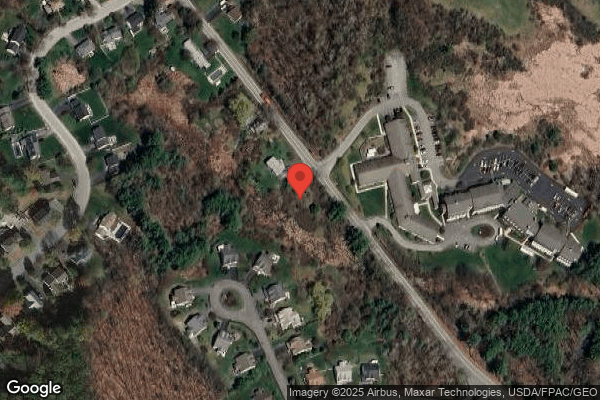
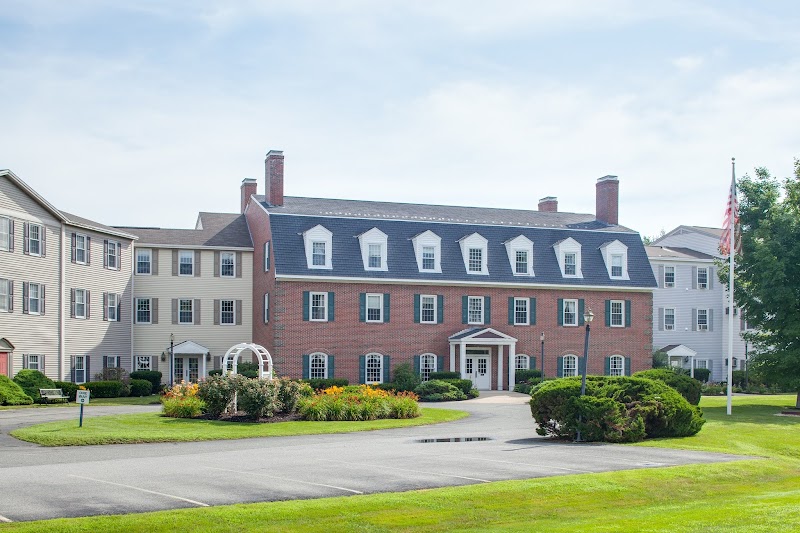
60 MIDDLE ROAD, DOVER, NH 03820 (603) 743-4110
For profit - Limited Liability company 30 Beds ROBERT RAUSMAN Data: November 2025
Trust Grade
60/100
#41 of 73 in NH
Last Inspection: February 2025

Within standard 12-15 month inspection cycle. Federal law requires annual inspections.

Overview

Langdon Place of Dover has a Trust Grade of C+, indicating that it is slightly above average but not particularly strong compared to other facilities. It ranks #41 out of 73 nursing homes in New Hampshire, placing it in the bottom half of the state, and #3 out of 6 in Strafford County, meaning there are only two local facilities that are better. The facility's trend is worsening, with the number of identified issues increasing from 1 in 2024 to 3 in 2025. Staffing is a relative strength, rated at 4 out of 5 stars, although the turnover rate is concerning at 98%, significantly higher than the state average. While the lack of fines is a positive aspect, there are notable concerns: for instance, the facility failed to properly label and store food, which could lead to foodborne illnesses, and did not implement an adequate water management program to prevent waterborne pathogens. Additionally, there were issues with maintaining proper records for controlled medications, which raises questions about safety protocols. Overall, families should weigh these strengths and weaknesses carefully when considering this nursing home for their loved ones.

Trust Score
C+
60/100
In New Hampshire
#41/73
Bottom 44%
Safety Record
Low Risk
No red flags
Inspections
Getting Worse
1 → 3 violations
Staff Stability
⚠ Watch
98% turnover. Very high, 50 points above average. Constant new faces learning your loved one's needs.
Penalties
✓ Good
No fines on record. Clean compliance history, better than most New Hampshire facilities.
Skilled Nurses
✓ Good
Each resident gets 104 minutes of Registered Nurse (RN) attention daily — more than 97% of New Hampshire nursing homes. RNs are the most trained staff who catch health problems before they become serious.
Violations
○ Average
6 deficiencies on record. Average for a facility this size. Mostly minor or procedural issues.
★★★☆☆
3.0
Overall Rating
★★★★☆
4.0
Staff Levels
★★☆☆☆
2.0
Care Quality
★★★☆☆
3.0
Inspection Score
Stable
2024: 1 issues
2025: 3 issues

The Good

  • 4-Star Staffing Rating · Above-average nurse staffing levels
  • Full Sprinkler Coverage · Fire safety systems throughout facility
  • No fines on record

Facility shows strength in staffing levels, fire safety.

The Bad

3-Star Overall Rating

Near New Hampshire average (3.0)

Meets federal standards, typical of most facilities

Staff Turnover: 98%

51pts above New Hampshire avg (47%)

Frequent staff changes - ask about care continuity

Chain: ROBERT RAUSMAN

Part of a multi-facility chain

Ask about local staffing decisions and management

Staff turnover is very high (98%)

50 points above New Hampshire average of 48%

The Ugly 6 deficiencies on record

Feb 2025 3 deficiencies
CONCERN (D)

Potential for Harm - no one hurt, but risky conditions existed

Deficiency F0761 (Tag F0761)

Could have caused harm · This affected 1 resident

Based on observation and interview, it was determined that the facility failed to follow professional principles for the storage of medications for 1 of 2 medication carts observed. Findings include: ...

Read full inspector narrative →
Based on observation and interview, it was determined that the facility failed to follow professional principles for the storage of medications for 1 of 2 medication carts observed. Findings include: Observation on 2/6/25 at 12:03 p.m. of the high side medication cart in a common area was left unlocked and unattended. Further observation revealed that there were two residents in the area of the medication cart. Interview on 2/6/25 at 12:08 p.m. with Staff C (Clinical Corporate Nurse) confirmed the above findings. Staff C stated it was the facility policy to lock the medication cart when not attended by nursing staff. Review on 2/10/25 of the facility's policy titled Medication Storage, not dated, revealed the following .Policy Explanation and Compliance Guidelines 1. General Guidelines: a. All drugs and biological's will be stored in locked compartments (i.e., Medication carts, cabinets, drawers, refrigerators, medication rooms) under proper temperatures controls. b. Only authorized personnel will have access to the keys to locked compartments. c. During medication pass, medications must be under the direct observation of the person administering medications or locked in the medication storage area/cart .
CONCERN (E)

Potential for Harm - no one hurt, but risky conditions existed

Food Safety (Tag F0812)

Could have caused harm · This affected multiple residents

Based on observation, interview, and record review, it was determined that the facility failed to label and store food in accordance with professional standards for food safety to prevent foodborne il...

Read full inspector narrative →
Based on observation, interview, and record review, it was determined that the facility failed to label and store food in accordance with professional standards for food safety to prevent foodborne illness, to measure the parts per million (PPM) for the low temperature dishwasher to ensure proper sanitization, and to maintain a clean environment for 1 of 1 kitchens observed. Findings include: Interview on 2/5/25 at approximately 8:25 a.m. with Staff J (Food Services Manager) revealed that the facility utitlized a low temperature chemical sanatizing dishwasher. Staff J stated they don't perform PPM testing as long as the temperatures were within range. Review on 2/5/25 of the Monthly Dish Machine Logs for January 2025 and February 2025 revealed that the PPM testing was not documented. The Machine Dish Log had spaced to record PPM testing 3 times a day. The Machine Dish Log contained the following statement: If temperatures or chemical concentration does not meet parameters, stop washing and alert a manager or designee. Review on 2/5/25 of the Product Specification Document copyright 2023 Ecolab USA Inc. revealed .Use a chlorine test kit and increase dosage, as necessary, to obtain the required level of available chlorine Set sanitizer concentrations at 50 parts per million. (Notice: Do not exceed 100 PPM's) . Interview on 2/6/25 at approximately 8:10 a.m. with Staff H (Regional Dietary Manager) confirmed the above findings. Observation on 2/5/25 at approximately 8:20 a.m. in the kitchen revealed the presence of dried cooked eggs, egg shells, pasta, and food debris on the floor in the food preparation area. Observation on 2/5/25 at approximately 8:25 a.m. in the walk-in refrigerator revealed a purple dried substance under the shelving. There were sdried onion skins and other miscellaneous unidentified debris. Interview on 2/5/25 at approximately 8:26 a.m. with Staff I (Cook) confirmed the above findings.
CONCERN (E)

Potential for Harm - no one hurt, but risky conditions existed

Infection Control (Tag F0880)

Could have caused harm · This affected multiple residents

**NOTE- TERMS IN BRACKETS HAVE BEEN EDITED TO PROTECT CONFIDENTIALITY** Based on interview and policy review, it was determined that the facility failed to implement a water management program for the...

Read full inspector narrative →
**NOTE- TERMS IN BRACKETS HAVE BEEN EDITED TO PROTECT CONFIDENTIALITY** Based on interview and policy review, it was determined that the facility failed to implement a water management program for the prevention of waterborne pathogens for a facility with a census of 24 residents. Findings include: Review on 2/6/25 of the facility's policy, Legionella Water Management, dated 2016, revealed the following: .III. Areas Where Legionella Could Grow and Spread: Everywhere the water temp is between 77 and 108. Which is between the mixing valve and the end use. Unoccupied rooms and apartments, more than 7 days, Storage tanks . .IV. Control Measures and Monitoring: Assure re-circulator pumps are working each week. Know where the unoccupied room and apartments are located. Do not use the water downstream of a plumbing repair. Take the water storage tank temperatures weekly . .V. Ways to Intervene When Control Limits Are Not Met: If re-circulation pumps fail, fix within 24 hours. Run the hot water in rooms and apartments that are unoccupied for more than 7 days. If water storage tank temps fall below 120 degrees, make adjustments . Review on 2/6/24 of the facility's list of unoccupied rooms for more than 6 days from October 1, 2024 to February 6, 2025 revealed the following: room [ROOM NUMBER] was unoccupied on 11/1/2024 until 11/10/2024; room [ROOM NUMBER] was unoccupied on 12/1/2024 until 12/12/2024; room [ROOM NUMBER] was unoccupied on 12/11/2024 until 12/27/2024; room [ROOM NUMBER] was unoccupied on 10/5/2024 until 10/19/2024; room [ROOM NUMBER] was unoccupied on 10/11/2024 until 1/6/2025. Interview on 2/6/25 at 11:39 a.m. with Staff K (Director of Maintenance) revealed the hot water was not run in room [ROOM NUMBER], 502, 508, 513, and 514 when the above rooms were unoccupied for more than 7 days. Interview further revealed that the facility was not taking weekly temperatures at the storage tank.
Mar 2024 1 deficiency
CONCERN (D)

Potential for Harm - no one hurt, but risky conditions existed

Deficiency F0887 (Tag F0887)

Could have caused harm · This affected 1 resident

Based on interview and record review, it was determined that the facility failed to implement policies and procedures for providing COVID-19 vaccines for 2 of 5 residents reviewed for COVID-19 immuniz...

Read full inspector narrative →
Based on interview and record review, it was determined that the facility failed to implement policies and procedures for providing COVID-19 vaccines for 2 of 5 residents reviewed for COVID-19 immunizations (Resident identifiers are #1 and #10). Findings include: Resident #1 Review on 3/12/24 of Resident #1's COVID-19 vaccine consent form, dated 2/1/24, revealed that Resident #1 had given consent to be vaccinated with the COVID-19 vaccine. Review on 3/12/24 of Resident #1's medical record revealed no documentation that Resident #1 received the COVID-19 vaccine after giving consent on 2/1/24. Resident #10 Review on 3/12/24 of Resident #10's COVID-19 vaccine consent form, dated 11/12/23, revealed that Resident #10 had given consent to be vaccinated with the COVID-19 vaccine. Review on 3/12/24 of Resident #10's immunization record revealed no documentation that Resident #10 received the COVID-19 vaccine giving consent on 11/12/23. Interview on 3/13/24 at approximately 10:15 a.m. with Staff A (Director of Nursing) confirmed the above findings. Staff A stated that the pharmacy had available single doses of COVID-19 vaccines since October 2023. Review on 3/13/24 of the facility policy titled, COVID-19 Vaccination, revision date of 2/7/24, revealed .Centers will provide the opportunity to received COVID-19 vaccinations following Centers for Disease Control and Prevention (CDC) recommendations subject to availability, to patient/residents .1. Obtain COVID-19 vaccination history .3 Based on the patient's COVID-19 vaccination history, offer the vaccination following the manufacturer's recommended schedule .5. Obtain consent .8. Obtain physician order for COVID-19 vaccination. 8.1 Use the Medical Director Authorization. 9. Administer the vaccine . Review on 3/13/24 of the facility's Updated (2023-2024 Formula) COVID-19 vaccine information from CDC, dated 9/22/23, revealed .Interim 2023-2024 COVID-19 Immunizations Schedule for Persons 6 months of Age and Older .Table 1a. For people who are NOT moderately or severely immunocompromised .2023-24 Moderna COVID-19 Vaccine .Age 12 years and older .unvaccinated (0 doses) Give 1 dose now .Any number of previous doses COVID-19 vaccines, NOT including at least 1 dose of 203-24 COVID-19 vaccine Give 1 dose at least 8 weeks (2 months) after the previous dose .Table 1b. For people who are NOT moderately or severely immunocompromised .2023-24 Pfizer-BioNTech COVID-19 Vaccine .Age 12 years and older .unvaccinated (0 doses) Give 1 dose now .Any number of previous doses COVID-19 vaccines, NOT including at least 1 dose of 203-24 COVID-19 vaccine Give 1 dose at least 8 weeks (2 months) after the previous dose .Table 2a. For people who ARE moderately or severely immunocompromised .2023-24 Moderna COVID-19 Vaccine .Age 12 years and older .unvaccinated (0 doses) Give a 3-dose initial series. Administer: Dose 1 now, Dose 2 at least 4 weeks after Dose 1 Dose 3 at least 4 weeks after Dose 2 .3 or more doses of Moderna COVID-19 Vaccine, NOT including at least 1 dose of 2023-24 COVID-19 vaccine Give 1 dose at least 8 weeks (2 months) after the previous dose .Table 2b. For people who ARE moderately or severely immunocompromised .2023-24 Pfizer-BIoNTech COVID-19 Vaccine .Age 12 years and older .unvaccinated give a 3-dose initial series. Administer: Dose 1 now, Dose 2 at least 3 weeks after Dose 1 Dose 3 at least 4 weeks after Dose 2 .3 or more doses of Pfizer-BioNTech COVID-19 Vaccine, NOT including at least 1 dose of 2023-24 COVID-19 vaccine .Give 1 dose at least 8 weeks (2 months) after the previous dose .
Jan 2023 2 deficiencies
CONCERN (D)

Potential for Harm - no one hurt, but risky conditions existed

Deficiency F0658 (Tag F0658)

Could have caused harm · This affected 1 resident

**NOTE- TERMS IN BRACKETS HAVE BEEN EDITED TO PROTECT CONFIDENTIALITY** Resident #70 Observation on 1/12/23 at approximately 8:27 a.m. with Staff D (Registered Nurse (RN)) revealed that Staff D popped...

Read full inspector narrative →
**NOTE- TERMS IN BRACKETS HAVE BEEN EDITED TO PROTECT CONFIDENTIALITY** Resident #70 Observation on 1/12/23 at approximately 8:27 a.m. with Staff D (Registered Nurse (RN)) revealed that Staff D popped 1 tablet of Resident #70's Calcium 500 Plus D3 [Vitamin D] (500-5 mg) medication from Resident #70's Calcium 500 plus D3 (500-5 mg) bingo card into a medication cup. Review on 1/12/23 with Staff D during Resident #70's medication administration revealed that Resident #70's Calcium 500 plus D3 (500-5 mg) bingo card and electronic medication administration record stated to give 2 tablets of Calcium 500 plus D3 (500-5 mg). Observation on 1/12/23 at approximately 8:30 a.m. with Staff D revealed that Staff D gave Resident #70's 1 tablet of the Calcium 500 plus D3 (500 mg-5 mg) medication. Interview on 1/12/23 at approximately 9:00 a.m. with Staff D stated that he/she completed his/her administration of medications with Resident #70. Staff D confirmed above findings. Resident #71 Observation on 1/12/23 at approximately 8:27 a.m. with Staff D revealed that 1 tablet of an over the counter medication of ferrous sulfate 325 mg was put into a medication cup by Staff D. Review on 1/12/23 with Staff D during Resident #71's medication administration revealed that Resident #71's electronic medication administration record stated to give 1 tablet of ferrous sulfate 324 mg. Observation on 1/12/23 at approximately 8:30 a.m. with Staff D revealed that Staff D gave Resident #71's 1 tablet of the ferrous sulfate 325 mg. Interview on 1/12/23 at approximately 9:00 a.m. with Staff D stated that he/she completed his/her medication pass with Resident #71. Staff D confirmed above findings with Resident #71. Staff D stated that there were no other supply of ferrous sulfate besides the 325 mg dose. Based on observation, record review, and interview it was determined that the facility failed to follow professional standards for following physician's orders for residents 1 of 2 narcotic books reviewed (Resident Identifier #11) and 2 out of 25 medication administration observed ( Resident Identifiers are #11, #70 and #71). Findings include: Standard: [NAME], [NAME] A. and [NAME]. Fundamentals of Nursing . 7th ed. St. Louis, Missouri: Mosby Elsevier, 2009 Page 336-Physicians' Orders The physician is responsible for directing medical treatment. Nurses follow physician's orders unless they believe the orders are in error or harm clients. Therefore you need to assess all orders, and if you find one to be erroneous or harmful, further clarification from the physician is necessary . Resident #11 Review on 1/12/23 at 8:45 a.m. of the medication storage and disposition of controlled drugs log on the Transitional Care Unit with Staff A (Licensed Practical Nurse (LPN)) revealed that Resident #11 has an order for morphine sulfate 10 milligrams [mg] in 5 milliliters [ml] solution (medication for pain management) give 2.5 ml by mouth every 3 hours as needed for moderate to severe pain. On 12/10/22 at 22:56 [10:56 p.m.] Resident #11 was administered 0.5 mg instead of the ordered 2.5 mg. Interview 1/12/23 at approximately 9:30 a.m. with Staff B (Interim Director of Nursing Services) confirmed the above findings.
CONCERN (E)

Potential for Harm - no one hurt, but risky conditions existed

Pharmacy Services (Tag F0755)

Could have caused harm · This affected multiple residents

**NOTE- TERMS IN BRACKETS HAVE BEEN EDITED TO PROTECT CONFIDENTIALITY** Based on record review, interview, and policy review, it was determined that the facility failed to establish a system of record...

Read full inspector narrative →
**NOTE- TERMS IN BRACKETS HAVE BEEN EDITED TO PROTECT CONFIDENTIALITY** Based on record review, interview, and policy review, it was determined that the facility failed to establish a system of records of receipt and disposition of controlled drugs in sufficient detail to enable an accurate reconciliation; and determine that drug records are in order and that an account of all controlled drugs is maintained for 2 of 2 narcotic books reviewed. Findings include: Review on 1/11/23 at 8:45 a.m. of the Transitional Care Unit low end medication cart with Staff A (Licensed Practical Nurse (LPN)) revealed that the controlled drug receipt and removal index/inventory page (inventory page used for receipt and tracking of the narcotics that are in the medication cart) in a binder did not have the two nurse receipt signatures required that log into the index/inventory page verifying that the narcotic was received and accounted for, nor did it have indication of removal from the count on the inventory page. Further investigation revealed that the controlled medication utilization record (record from pharmacy) in the alphabetical section of the narcotic count binder did not have the date received or the two nurse signatures. Interview on 1/11/23 at 8:50 a.m. with Staff A revealed that he/she usually does count with another nurse by using the binder that has the Controlled Medication Utilization record by alphabetical last name and has not used the index for logging or doing narcotic count. Staff A confirmed that he/she would not be able to confirm if a narcotic drug and controlled medication utilization record was removed from the count or from the alphabetical list of resident narcotics. Interview on 1/11/23 at 10:30 a.m. with Staff B (Interim Director of Nursing) revealed that their facility policy was for two nurses to log in narcotics and to be utilizing the index page for count. Staff B confirmed the above findings. Review on 1/12/23 at 12:20 p.m. of the facilities policy titled NSG300 Controlled Substances: Management of Revision date 04/01/22 .Policy Storage: Two Licensed nurses and/or authorized nursing personnel, per state regulations are required to document placement of controlled substances into inventory. Review on 1/20/23 at 9:00 a.m. of the facilities Omnicare 5.1 policy titled Delivery and Receipt of Routine deliveries. revised date 01/01/22 section 2.4 Immediately log accepted controlled substances into facility's controlled medication inventory system per facility policy. Standard [NAME] A. [NAME] and [NAME] Fundamentals of Nursing 7th edition page 688 .Medication Regulation and Nursing Practice .The nurse is responsible for following legal provisions when administering controlled substances or narcotics which are carefully controlled through federal and state guidelines
Understanding Severity Codes (click to expand)
Life-Threatening (Immediate Jeopardy)
J - Isolated K - Pattern L - Widespread
Actual Harm
G - Isolated H - Pattern I - Widespread
Potential for Harm
D - Isolated E - Pattern F - Widespread
No Harm (Minor)
A - Isolated B - Pattern C - Widespread

Questions to Ask on Your Visit

  • "Why is there high staff turnover? How do you retain staff?"
  • "Can I speak with families of current residents?"
  • "What's your RN coverage like on weekends and overnight?"

Our Honest Assessment

Strengths
  • • No major safety red flags. No abuse findings, life-threatening violations, or SFF status.
  • • No fines on record. Clean compliance history, better than most New Hampshire facilities.
Concerns
  • • 98% turnover. Very high, 50 points above average. Constant new faces learning your loved one's needs.
Bottom line: Mixed indicators with Trust Score of 60/100. Visit in person and ask pointed questions.

About This Facility

What is Langdon Place Of Dover's CMS Rating?

CMS assigns LANGDON PLACE OF DOVER an overall rating of 3 out of 5 stars, which is considered average nationally. Within New Hampshire, this rating places the facility higher than 0% of the state's 100 nursing homes. This mid-range rating indicates the facility meets federal standards but may have areas for improvement.

How is Langdon Place Of Dover Staffed?

CMS rates LANGDON PLACE OF DOVER's staffing level at 4 out of 5 stars, which is above average compared to other nursing homes. Staff turnover is 98%, which is 51 percentage points above the New Hampshire average of 47%. High turnover can affect care consistency as new staff learn residents' individual needs. RN turnover specifically is 90%, which is notably high. RNs provide skilled clinical oversight, so turnover in this role can affect medical care quality.

What Have Inspectors Found at Langdon Place Of Dover?

State health inspectors documented 6 deficiencies at LANGDON PLACE OF DOVER during 2023 to 2025. These included: 6 with potential for harm.
Who Owns and Operates Langdon Place Of Dover?

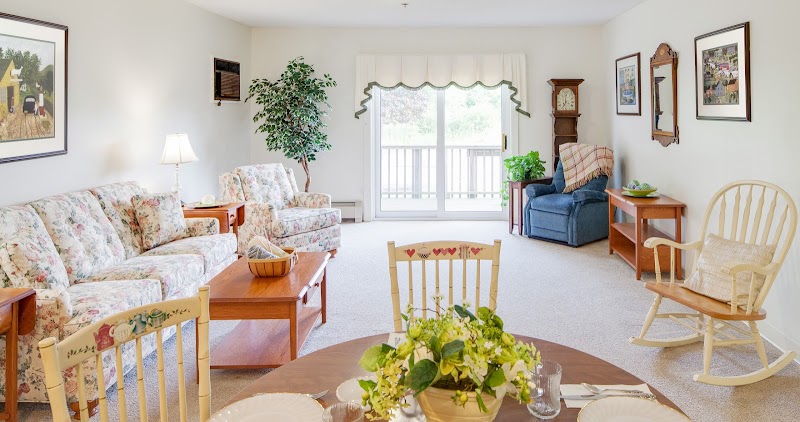
LANGDON PLACE OF DOVER is owned by a for-profit company. For-profit facilities operate as businesses with obligations to shareholders or private owners. The facility is operated by ROBERT RAUSMAN, a chain that manages multiple nursing homes. With 30 certified beds and approximately 19 residents (about 63% occupancy), it is a smaller facility located in DOVER, New Hampshire.
How Does Langdon Place Of Dover Compare to Other New Hampshire Nursing Homes?

Compared to the 100 nursing homes in New Hampshire, LANGDON PLACE OF DOVER's overall rating (3 stars) is below the state average of 3.0, staff turnover (98%) is significantly higher than the state average of 47%, and health inspection rating (3 stars) is at the national benchmark.

What Should Families Ask When Visiting Langdon Place Of Dover?

Based on this facility's data, families visiting should ask: "How do you ensure continuity of care given staff turnover, and what is your staff retention strategy?" "Can I visit during a mealtime to observe dining assistance and food quality?" "How do you handle medical emergencies, and what is your hospital transfer rate?" "Can I speak with family members of current residents about their experience?" These questions are particularly relevant given the facility's high staff turnover rate.

Is Langdon Place Of Dover Safe?

Based on CMS inspection data, LANGDON PLACE OF DOVER has a clean safety record: no substantiated abuse findings (meaning no confirmed cases of resident harm), no Immediate Jeopardy citations (the most serious violation level indicating risk of serious injury or death), and is not on the Special Focus Facility watch list (a federal program monitoring the lowest-performing 1% of nursing homes). The facility has a 3-star overall rating and ranks #100 of 100 nursing homes in New Hampshire. While no facility is perfect, families should still ask about staff-to-resident ratios and recent inspection results during their visit.

Do Nurses at Langdon Place Of Dover Stick Around?

Staff turnover at LANGDON PLACE OF DOVER is high. At 98%, the facility is 51 percentage points above the New Hampshire average of 47%. Registered Nurse turnover is particularly concerning at 90%. RNs handle complex medical decisions and coordinate care — frequent RN changes can directly impact care quality. High turnover means new staff may not know residents' individual needs, medications, or preferences. It can also be disorienting for residents, especially those with dementia who rely on familiar faces. Families should ask: What is causing the turnover? What retention programs are in place? How do you ensure care continuity during staff transitions?

Was Langdon Place Of Dover Ever Fined?

LANGDON PLACE OF DOVER has no federal fines on record. CMS issues fines when nursing homes fail to meet care standards or don't correct problems found during inspections. The absence of fines suggests the facility has either maintained compliance or corrected any issues before penalties were assessed. This is a positive indicator, though families should still review recent inspection reports for the full picture.

Is Langdon Place Of Dover on Any Federal Watch List?

LANGDON PLACE OF DOVER is not on any federal watch list. The most significant is the Special Focus Facility (SFF) program, which identifies the bottom 1% of nursing homes nationally based on persistent, serious quality problems. Not being on this list means the facility has avoided the pattern of deficiencies that triggers enhanced federal oversight. This is a positive indicator, though families should still review the facility's inspection history directly.