
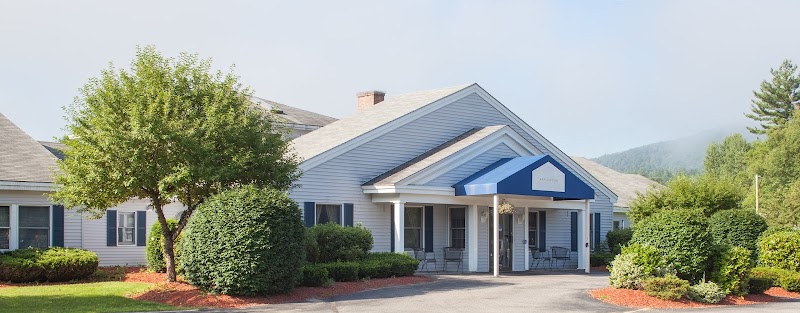
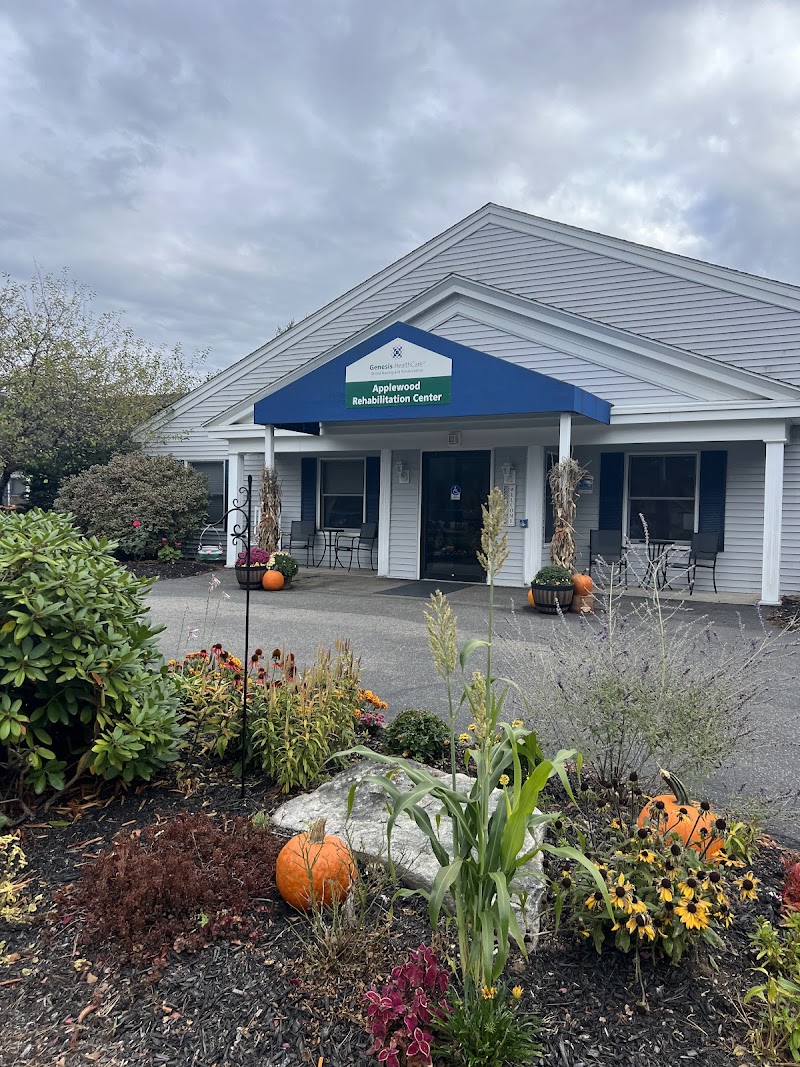

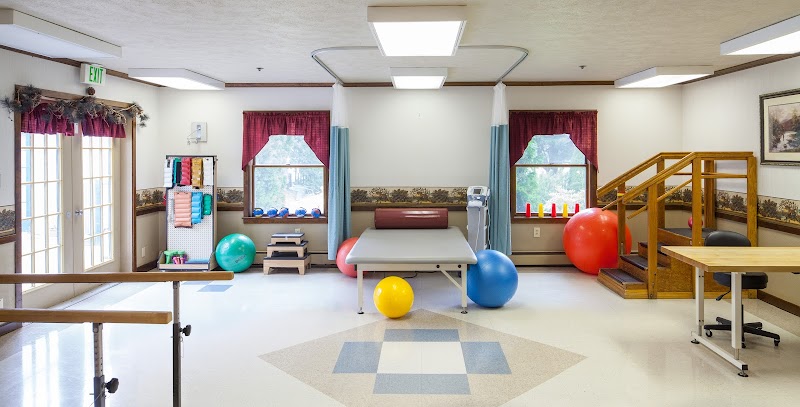
APPLEWOOD CENTER

8 SNOW ROAD, WINCHESTER, NH 03470 (603) 239-6355
For profit - Corporation 72 Beds GENESIS HEALTHCARE Data: November 2025
Trust Grade
70/100
#29 of 73 in NH
Last Inspection: May 2025

Inspected within the last 6 months. Data reflects current conditions.

Overview

Applewood Center in Winchester, New Hampshire, has a Trust Grade of B, indicating it is a good choice for families seeking care. It ranks #29 out of 73 facilities in the state, placing it in the top half of all New Hampshire nursing homes, and #4 out of 7 in Cheshire County, meaning there are only three local options that are better. However, the facility is currently facing a worsening trend, with issues increasing from 3 in 2024 to 4 in 2025. Staffing is a concern, with a rating of 2 out of 5 stars and a turnover rate of 35%, which is better than the state average but still indicates some instability. On the positive side, there have been no fines recorded, which is a strong point, and the facility has quality measures rated at 4 out of 5 stars. However, specific incidents raised during inspections include failing to implement a care plan for a resident with essential hypertension, not properly addressing PTSD in another resident, and a lack of documentation regarding medication changes for a resident on antipsychotics. These findings suggest that while some aspects of care are strong, there are critical areas that need improvement for the well-being of residents.

Trust Score
B
70/100
In New Hampshire
#29/73
Top 39%
Safety Record
Low Risk
No red flags
Inspections
Getting Worse
3 → 4 violations
Staff Stability
○ Average
35% turnover. Near New Hampshire's 48% average. Typical for the industry.
Penalties
✓ Good
No fines on record. Clean compliance history, better than most New Hampshire facilities.
Skilled Nurses
○ Average
Each resident gets 30 minutes of Registered Nurse (RN) attention daily — about average for New Hampshire. RNs are the most trained staff who monitor for health changes.
Violations
○ Average
10 deficiencies on record. Average for a facility this size. Mostly minor or procedural issues.
★★★☆☆
3.0
Overall Rating
★★☆☆☆
2.0
Staff Levels
★★★★☆
4.0
Care Quality
★★★☆☆
3.0
Inspection Score
Stable
2024: 3 issues
2025: 4 issues

The Good

  • 4-Star Quality Measures · Strong clinical quality outcomes
  • Full Sprinkler Coverage · Fire safety systems throughout facility
  • No fines on record
  • Staff turnover below average (35%)

    13 points below New Hampshire average of 48%

Facility shows strength in quality measures, fire safety.

The Bad

3-Star Overall Rating

Near New Hampshire average (3.0)

Meets federal standards, typical of most facilities

Staff Turnover: 35%

11pts below New Hampshire avg (46%)

Typical for the industry

Chain: GENESIS HEALTHCARE

Part of a multi-facility chain

Ask about local staffing decisions and management

The Ugly 10 deficiencies on record

May 2025 4 deficiencies
CONCERN (D)

Potential for Harm - no one hurt, but risky conditions existed

Comprehensive Care Plan (Tag F0656)

Could have caused harm · This affected 1 resident

Based on interview and record review, it was determined that the facility failed to implement a care plan for essential hypertension for 1 resident in a final sample of 17 residents. (Resident identif...

Read full inspector narrative →
Based on interview and record review, it was determined that the facility failed to implement a care plan for essential hypertension for 1 resident in a final sample of 17 residents. (Resident identifier is #13.) Findings include: Review on 5/13/25 of Resident #13's current care plan revealed a focus for essential hypertension with the following interventions: Monitor blood pressure and pulse as indicated. Review on 5/13/25 of Resident #13's medical record revealed a physician's order dated 4/30/25 and rewritten on 5/3/25 that read (with no changes to the order): Orthostatic BP (blood pressure) Directions for orthostatic BP: Enter BPs in the W&V (Weights and Vitals) tab directly. Take BP when lying, take BP while standing. Evaluate both recording [sic] for potential orthostatic hypotension indicated systolic drop by 20 units or diastolic drop by 10 units. Document occurrence and action taken in Progress Note. Frequency of two times daily. Review on 5/15/25 of Resident #13's W&V and April and May 2025 Medication Administration Record (MAR) revealed the following documented orthostatic blood pressure obtained twice daily was on 5/2/25. The following orthostatic blood pressure was documented once daily on 4/30/25, 5/1/25, and 5/3/25. Resident #13's lying and standing blood pressures were not both documented between 5/4/25 to 5/14/25. Interview on 5/15/25 at approximately 9:15 AM with Staff E (Director of Nursing) confirmed the above findings.
CONCERN (D)

Potential for Harm - no one hurt, but risky conditions existed

Deficiency F0699 (Tag F0699)

Could have caused harm · This affected 1 resident

Review on 5/14/25 of Resident #60's medical record revealed a Diagnosis List with a diagnosis of PTSD (Post-traumatic Stress Disorder) on admission on 10/2024. Further review of Resident #60's medical...

Read full inspector narrative →
Review on 5/14/25 of Resident #60's medical record revealed a Diagnosis List with a diagnosis of PTSD (Post-traumatic Stress Disorder) on admission on 10/2024. Further review of Resident #60's medical record revealed the following Social Service Assessments: Social Service Assessment, dated 10/15/24, .Mental Health 1. Does the patient/resident have a diagnosis of a major mental illness, 1. Yes. a1. Describe major mental illness, PTSD, anxiety .Trauma History, 1. Does the patient/resident report or does the medical record reflect any history of trauma and/or Post-Traumatic Stress Disorder, Yes .Military Related Trauma .2a. Ask: In the past month, have you had repeated, disturbing memories, thoughts or images of a stressful experience from the past? (Resident answered) Moderately. 2b. Ask In the past month, have you felt very upset when something reminded you of a stressful experience from the past? (Resident answered) Quite a bit ., Social Service Assessment, dated 4/5/25, .Trauma History .2a. Ask: In the past month, have you had repeated, disturbing memories, thoughts or images of a stressful experience from the past? (Resident answered) a little bit . 2b. Ask In the past month, have you felt very upset when something reminded you of a stressful experience from the past?(Resident answered) a little bit . Review on 5/14/25 of Resident #60's care plans revealed Focus, [Resident #60's name omitted] reports past experience of trauma as evidenced by: feeling upset when reminded of a stressful experience from the past, dx [diagnosis] of PTSD, Date initiated: 1/1/25 .Goal, [Resident #60's name omitted] will report feeling safe in the Center .[Resident #60's name omitted] will identify stressors and report to staff .Interventions, Encourage Resident/Patient to identify personal trauma and triggers and take steps to eliminate/minimize . Interview on 5/14/15 at approximately 1:00 p.m. with Staff A (Clinical Lead) revealed that there was no documentation to determine what the facility could do to mitigate/or determine if Resident #60's had any triggers. Review on 5/14/25 of the facility policy titled, OPS416 Person-Centered Care Plan, Revision Date 10/24/22, revealed: .Purpose .To eliminate or mitigate triggers that may cause re-traumatization of the patient . Review on 5/15/25 of the facility policy titled, SS100 Social Services Assessment, Revision Date 3/15/24, revealed .Purpose To determine the patient's social, functional, emotional, and cognitive status and history of trauma and or/ post-traumatic stress disorder (PTSD). To develop an individualized Social Services plan of care. Based on interview and record review, it was determined that the facility failed to ensure that trauma survivors have interventions identified to eliminate or mitigate triggers that may cause re-traumatization in 1 of 3 residents reviewed for PTSD (Post-Traumatic Stress Disorder) in a final sample of 17 residents (Resident identifier is #60). Findings include:
CONCERN (D)

Potential for Harm - no one hurt, but risky conditions existed

Drug Regimen Review (Tag F0756)

Could have caused harm · This affected 1 resident

Based on interview and record review, it was determined that the facility failed to document a rationale in the resident's medical record for no change in the medication for 1 of 1 resident reviewed f...

Read full inspector narrative →
Based on interview and record review, it was determined that the facility failed to document a rationale in the resident's medical record for no change in the medication for 1 of 1 resident reviewed for Psych/Opioid Medication Side Effects in a final sample of 17 residents. (Resident identifier is #118.) Findings include: Review on 5/13/25 of Resident #118's May 2025 Medication Administration Record (MAR) revealed the following physician's order: Quetiapine Fumarate (antipsychotic) Oral Tablet 25 mg (milligrams), Give 1 tablet by mouth one time a day for refractory insomnia, Start Date 4/3/24. Review on 5/14/25 of Resident #118's Consultation Report from the pharmacist dated, 5/3/24 revealed the following recommendation: .Please consider reducing Quetiapine to 12.5 mg or discontinuing and changing to alternative therapy . Physician response, dated 5/9/24, revealed that the physician accepted the recommendation and change to Trazodone. Follow up response, dated 5/13/24, on the Consultation Report , per request Seroquel [Quetiapine] reinstated with no documented rationale. Interview on 5/14/25 at approximately 11:45 a.m. with Staff A (Clinical Lead) confirmed that there was no GDR attempted with Resident #118's Quetiapine Fumarate and that Resident #118 had no documented behaviors. Review on 5/14/25 of the facility policy titled, 8.4 Medication Management, Dated 1/25 revealed: . Gradual Dose Reductions, . Dose reductions should occur in the modest increments over adequate periods of time to minimize withdrawal symptoms and to monitor symptom recurrence. Compliance with the requirement to perform a GDR may be met if, for example, within the first year in which a resident is admitted on psychotropic medication or after the prescribing practitioner has initiated a psychotropic medication, a facility attempts a GDR in two separate quarters (with at least one month in between attempts), unless clinically contraindicated.
CONCERN (D)

Potential for Harm - no one hurt, but risky conditions existed

Deficiency F0825 (Tag F0825)

Could have caused harm · This affected 1 resident

Based on interview and record review, it was determined that the facility failed to provide Physical Therapy (PT) services according to the physician's order frequency for 1 of 1 resident reviewed for...

Read full inspector narrative →
Based on interview and record review, it was determined that the facility failed to provide Physical Therapy (PT) services according to the physician's order frequency for 1 of 1 resident reviewed for Rehab (Rehabilitation) in a final sample of 17 residents. (Resident identifier is #57.) Findings include: Interview on 5/13/25 at approximately 11:00 a.m. with Resident #57 revealed that he/she had concerns of not receiving his/her therapy as ordered. Review on 5/14/25 of Resident #57's medical record revealed the following physician orders, rehab notes, and visits: Order #1 PT order on 4/3/25 for PT 5 x(times) weekly x 30 days to include:Therex (Therapeutic exercise), Gait training, therapeutic activities, neuro re-education (neurological re-education), group therapy, wheelchair management and training, end dated 4/15/25. Resident #57's rehab notes and visits revealed the following: Week #1: 4/3-4/9: Resident received a PT evaluation on 4/3/25, refused a visit on 4/4/25 and completed visits on 4/7/25,4/8/25, and 4/9/25. Frequency of 1 evaluation and 3 revisits Frequency not met. Week #2: 4/10/25-4/14/25 Resident received PT visits on 4/10. Resident refused visit on 4/11/25. Frequency not met. Order #2: PT order on 4/15/25 for PT 4-5 x weekly x 30 days to include:Therex, Gait training, therapeutic activities, neuro re-education (neurological re-education), group therapy, wheelchair management and training, end dated 5/1/25. Resident #57's rehab notes and visits revealed the following: Week #2: 4/22-4/28/25: Resident received therapy visits on 4/22/25, 4/23/25 and 4/28/25. The visit on 4/24 states rescheduled frequency not met. Order #3: PT order 5/1/25 for PT 4-5 x weekly for 30 days to include: Therex (Therapeutic exercise), Gait training, therapeutic activities, neuro re-education (neurological re-education), group therapy, wheelchair management and training. Resident #57's rehab notes and visits revealed the following: Week #1, 5/1/25-5/7/25: Resident #57 received therapy on 5/1/25 and 5/2/25. Frequency not met. Week #2, 5/8/25 -5/14/25 Resident #57 received therapy on 5/8/25 and 5/14/25. Frequency not met. Interview on 5/15/25 at approximately 9:00 a.m. with Staff F (Nurse Practitioner) confirmed that Staff F was not notified of Resident #57 not meeting required therapy visits and would expect to be notified. Interview on 5/15/25 at approximately 9:30 a.m. with Staff G (Director of Rehab) revealed that the expectation would be to see a resident in the same therapy week for a refusal or rescheduled visit. Staff G confirmed the above findings and confirmed that Staff F was not notified of Resident #57 not meeting physician ordered frequencies for PT services.
May 2024 3 deficiencies
CONCERN (D)

Potential for Harm - no one hurt, but risky conditions existed

Deficiency F0658 (Tag F0658)

Could have caused harm · This affected 1 resident

Based on observation, interview, record review, policy review, and manufacturer's instructions review it was determined that the facility failed to follow professional standards when administering ins...

Read full inspector narrative →
Based on observation, interview, record review, policy review, and manufacturer's instructions review it was determined that the facility failed to follow professional standards when administering insulin for 2 out of 30 medications observed (Resident Identifier #54). Findings include: Observation on 5/6/24 at approximately 7:45 a.m. of Staff C (Licensed Practical Nurse) preparing Resident #54's insulin revealed that both the Novolog insulin pen and the Semglee insulin pen were not primed prior to administration. Interview on 5/6/24 at approximately 7:45 a.m. with Staff C confirmed the above findings. Further interview revealed that Staff C was unaware of the need to prime insulin pens prior to administration and it was not his/her practice. Review on 5/6/24 of the manufacturer's instructions for Novolog insulin flexpen, dated 3/2023 revealed: .Check the insulin flow, Step 5 - Small amounts of air may collect in the cartridge during normal use. You must do an airshot before each injection to avoid injecting air and to make sure you receive the prescribed dose of your medicine . Review on 5/6/24 of the manufacturer's instruction for Semglee insulin pen, dated 7/2021 revealed: .Step 3. Perform a safety test, Always perform the safety test before each injection. Performing the safety test ensures that you get an accurate dose by: ensuring that pen and needle work properly, removing air bubbles. A. Select a dose of 2 units by turning the white dose knob, B. Take off the outer needle cap .Take off the inner needle cap and discard it .C. Hold the pen with the needle pointing upwards. D. Tap the cartridge so that any air bubbles rise up towards the needle. E. Press the purple injection button all the way in. Check if insulin comes out of the needle tip . Review on 5/6/24 of the facility's policy titled 6.0 General Dose Preparation and Medication Administration revision dated 4/30/24 revealed: 5.8 Follow manufacturer medication administration guidelines .
CONCERN (D)

Potential for Harm - no one hurt, but risky conditions existed

Deficiency F0761 (Tag F0761)

Could have caused harm · This affected 1 resident

Resident #46 Observation on 5/5/24 at approximately 9:30 a.m. in Resident #46's room revealed a bottle of One A Day Multivitamins on his/her side table. Interview on 5/5/24 at approximately 9:30 a.m. ...

Read full inspector narrative →
Resident #46 Observation on 5/5/24 at approximately 9:30 a.m. in Resident #46's room revealed a bottle of One A Day Multivitamins on his/her side table. Interview on 5/5/24 at approximately 9:30 a.m. with Staff A confirmed the above finding and that the medication should not have been unlocked. Resident #48 Observation on 5/6/24 at approximately 7:30 a.m. in Resident #48's room revealed a box of Loratidine, Allergy Relief 10 milligrams (mg) pills in a bin. Interview on 5/6/24 at approximately 7:30 a.m. with Staff C (LPN) confirmed the above finding and that the medication should not have been unlocked. Review on 5/5/24 of the facility's policy titled 5.3 Storage and Expiration Dating of Medications, Biologicals revision date of 8/7/23 revealed: page 2 .5.3 If a multidose vial of an injectable medication has been opened or accessed .the vial should be dated and discarded within 28 days unless the manufacturer specifies a different (shorter or longer) date for that opened vial . Further review of this policy revealed: page 3 .13.2 Facility should store bedside medications or biologicals in a locked compartment within the resident's room . Based on observation, interview, and record review, it was determined the facility failed to properly label a vial of multidose injectable medication when opened for 1 out of 2 medication refrigerators observed and failed to keep medications locked and secured in 2 out of 36 resident rooms observed (Resident Identifiers #46 and #48). Findings include: Observation on 5/5/24 at approximately 8:15 a.m. of the medication room vaccination refrigerator revealed an open vial of Tuberculin Purified Protein Derivative that was unlabeled with no open date or open expiration date. Interview on 5/5/24 at approximately 8:15 a.m. with Staff A (Licensed Practical Nurse (LPN)) confirmed the above findings. Review on 5/5/24 of manufacturer's instruction for Tuberculin Purified Protein Derivative revealed: Vials in use more than 30 days should be discarded.
CONCERN (D)

Potential for Harm - no one hurt, but risky conditions existed

Medical Records (Tag F0842)

Could have caused harm · This affected 1 resident

Based on interview and record review, it was determined that the facility failed to ensure residents' records were complete and accurate for 1 out of 5 residents reviewed for unnecessary medications i...

Read full inspector narrative →
Based on interview and record review, it was determined that the facility failed to ensure residents' records were complete and accurate for 1 out of 5 residents reviewed for unnecessary medications in a final sample of 18 residents (Resident Identifier #58). Findings include: Review on 5/5/24 of Resident #58's May 2024 Medication Administration Record (MAR) revealed the following physician's orders: 1. Hypoglycemia Protocol, observe signs/symptoms of hypoglycemia as needed if blood glucose is less than 70 milligrams (mg) / per deciliter (dl) or ordered low parameter follow Hypoglycemia protocol, start date: 4/23/24. 2. Check Fasting Blood Sugar (FBS) twice a day (BID), start date: 4/23/24 Further review of the MAR reavaled the following FBS results that would require an intervention: 5/1/24 at 6:00 a.m. Resident #58's FBS was 51 5/3/24 at 6:00 a.m. Resident #58's FBS was 38 Further review of Resident #58's medical record revealed that there was no documentation of the hypoglycemia protocol being followed on the above dates when Resident #58's FBS was below 70. Interview on 5/6/24 at approximately 12:20 p.m. with Staff B (Director of Nursing) confirmed that there was no documentation in Resident #58's medical record that the above FBS were addressed by the nurse. Further interview revealed that the hypogylcemic protocol was followed but it was not document in Resident #58's medical record. Review on 5/6/24 of the facility's policy titled: Hypoglycemia revision date 3/1/22 revealed: .2. Initiate the Hypoglycemia Protocol for patients experiencing a hypoglycemia episode .Patient Arousable, Conscious, Able to Swallow? Yes. Administer fast-acting oral carbohydrate (e.g. [example] 4 oz. [ounces] juice or tube of Insta-glucose gel) . repeat blood glucose in 15 minutes .
Apr 2023 3 deficiencies
CONCERN (D)

Potential for Harm - no one hurt, but risky conditions existed

Notification of Changes (Tag F0580)

Could have caused harm · This affected 1 resident

Based on interview, record review, and policy review it was determined that the facility failed to notify the physician of a residents refusal for treatment for 1 resident out of 2 residents reviewed ...

Read full inspector narrative →
Based on interview, record review, and policy review it was determined that the facility failed to notify the physician of a residents refusal for treatment for 1 resident out of 2 residents reviewed for notification in a final sample of 18 (Resident Identifier is resident #13). Findings Include: Review on 4/05/23 of Resident #13's medical record revealed Resident #13 had a diagnosis of Obstructive Sleep Apnea. Further review of Resident #13's Medication Administration Record March 2023 and April 2023 revealed the following physician's order: CPAP [Continuous Positive Air Pressure]: 15 Back-up Rate: N/A [Not Applicable] Oxygen Liter Flow (for bleed in): N/A Apply at HS [bed time] and remove in AM [morning].Dated 5/5/22. Further review revealed that in March 2023, Resident #13 refused to use the CPAP all but 6 times on 3/2/23, 3/11/23, 3/16/23, 3/23/23, 3/25/23, and 3/30/23. In the month of April 2023 Resident #13 had refused the use the CPAP from 4/1/23 to 4/4/23. Interview on 4/5/23 at 11:35 a.m. with Staff G (Registered Nurse) and Staff H (Director of Nursing) confirmed that Resident #13 had been refusing the application of the CPAP machine and that the physician had not been notified. Review on 4/5/23 at 1:00 p.m. of the facility policy titled, Treatment: Refusal of ., Revision date 03/01/22 .Process .3. Notify physician of the refusal of treatment
CONCERN (D)

Potential for Harm - no one hurt, but risky conditions existed

Accident Prevention (Tag F0689)

Could have caused harm · This affected 1 resident

Based on record review, interview, and policy review it was determined that the facility failed to re-assess a resident who goes outside independently to smoke for safety risks for 1 out of 1 resident...

Read full inspector narrative →
Based on record review, interview, and policy review it was determined that the facility failed to re-assess a resident who goes outside independently to smoke for safety risks for 1 out of 1 resident reviewed for smoking (Resident identifier is #1). Findings include: Review on 4/5/23 of Resident #1's Smoking Evaluation, Effective Date 12/29/22 revealed: . B. Cognitive . 2. Does the resident have poor memory? Yes . C. Behavior 1. Does the resident have a history of fire setting or arson? No 2. Does the resident have a history of unsafe smoking habits? Yes . E. Evaluation 1. Smoking Decision, Independent smoking is allowed. . Review on 4/5/23 of Resident #1's Progress Notes dated 1/10/23, getting down the small hill in the driveway by letting go of the wheels on [pronoun omitted] wheelchair and letting the hill take [pronoun omitted] down. Further review of the note revealed that Resident #1 was going to the smoking area independently. Education was provided to Resident #1 by the staff due to the potential dangers to his/her self. Review on 4/5/23 of Resident #1's Progress Notes dated 1/20/23, revealed that the Dietary Director brought Resident #1 inside of the building from the smoking area as [pronoun omitted] could not make it into the facility Further review of the note revealed that Resident #1 had become short of breath and needed assistance to return from the smoking area. Review on 4/5/23 of Resident #1's Progress Notes dated 2/24/23, revealed an entry from Staff J (Social Service) that Resident #1 had expressed the desire to kill [pronoun omitted] when going out to smoke and had a plan to kill [pronoun omitted]. Resident #1's plan was to wheel into traffic while outside smoking at the smoking station. Review on 4/5/23 of Resident #1's Progress Notes dated 2/24/23, revealed an entry from Staff I (Registered Nurse) stating that Resident #1 had stated that [pronoun omitted] was feeling suicidal due to thoughts that are over powering [pronoun omitted] mind. They are saying for [pronoun omitted] to wheel [pronoun omitted] wheelchair into traffic while [pronoun omitted] is out at the smoking station. Review on 4/5/23 of Resident #1's Progress Notes dated 3/30/23, revealed that while outside smoking Resident #1 called for help as [pronoun omitted] was having difficulty breathing and needed help getting back into the facility from the smoking area. Interview on 4/5/23 at approximately 1:40 p.m. with Staff G (Registered Nurse) confirmed the latest assessment for Resident #1's smoking evaluation was completed on 12/29/22 and there have been no other evaluations done for Resident #1's safety for going outside independently. Review on 4/5/23 at 2:00 p.m. of the Facility policy titled Smoking Dated: 06/01/96 revised on 10/24/22 .2.3.1 Patients will be re-evaluated quarterly and with a change in condition.
CONCERN (D)

Potential for Harm - no one hurt, but risky conditions existed

Deficiency F0692 (Tag F0692)

Could have caused harm · This affected 1 resident

**NOTE- TERMS IN BRACKETS HAVE BEEN EDITED TO PROTECT CONFIDENTIALITY** Based on observation, interview, and record review it was determined that the facility failed to identify resident's personal pr...

Read full inspector narrative →
**NOTE- TERMS IN BRACKETS HAVE BEEN EDITED TO PROTECT CONFIDENTIALITY** Based on observation, interview, and record review it was determined that the facility failed to identify resident's personal preferences with flexible dining times needed to ensure that resident's receive 3 meals a day for 1 out of 4 residents reviewed for nutrition in a final sample of 18 residents (Resident identifier is #32), Findings include: Observation on 4/3/23 at approximately 9:30 a.m. revealed Resident #32 laying in his/her bed with eyes closed. Further observation revealed Resident #32's breakfast table on the bedside table untouched. Observation on 4/3/23 at approximately 10:30 a.m. revealed Resident #32 laying in his/her bed with eyes closed. Further observation revealed Resident #32's breakfast table on the bedside table untouched. Observation on 4/3/23 at approximately 11:15 a.m. revealed Resident #32 laying in his/her bed with eyes closed. Further observation revealed Resident #32's breakfast table on the bedside table untouched. Observation on 4/5/23 at approximately 9:00 a.m. revealed Resident #32 laying in his/her bed with eyes closed. Interview on 4/5/23 at approximately 9:00 a.m. with Staff A Licensed Nursing Assistant (LNA) revealed that Resident #32 had not had breakfast and Staff A stated that he/she did not know why Resident #32 had not had breakfast. Observation on 4/5/23 at approximately 9:05 a.m. of the food truck in the hall revealed dirty trays in the cart. Resident #32's tray was in the cart untouched with his/her meal ticket ripped in half. Interview on 4/5/23 at approximately 9:05 a.m. with Staff B (Administrator in Training) revealed that sometimes Resident #32 prefers to sleep in and staff doesn't want to disturb him/her. Review on 4/5/23 of Resident #32's medical record revealed that he/she was admitted to the facility on [DATE]. Review on 4/5/23 of Resident #32's intakes for March 2023 and April 2023 revealed the following: 3/27/23 0% breakfast 3/28/23 0% breakfast 3/30/23 0% breakfast 4/1/23 0% breakfast 4/5/23 0% breakfast Interview on 4/5/23 at approximately 11:00 a.m. with Staff C (Dietary Aide) and Staff D (Dietary Aide) revealed that they were unaware of any special meal times for Resident #32. Interview on 4/5/23 at approximately 11:05 a.m. with Staff E (Lead Cook) revealed that there is currently only 1 resident with special times for meals and it is not Resident #32. Further interview with Staff E revealed that sometimes staff will bring back trays to the kitchen to warm up if the resident chooses to eat at a different time, and he/she is unaware of that happening with Resident #32. Interview on 4/5/23 at approximately 11:10 a.m. with Staff F (LNA) revealed that he/she came in at approximately 10:00 a.m. and was assigned to Resident #32. Staff F revealed that he/she was unaware that Resident #32 did not have breakfast. Interview on 4/5/23 at approximately 12:10 p.m. with Staff G (Registered Nurse) revealed that he/she would expect report of a resident not eating breakfast would be reported to staff coming on the floor. Review on 4/5/23 of Resident #32's care plans revealed the following: [Pronoun omitted] requires assistance for ADL [activities of daily living] care in . eating, ., date initiated 2/21/23. [Pronoun omitted] exhibits, or has potential to exhibit physical behaviors related to: cognitive loss/Dementia, date initiated 2/28/23. [Pronoun omitted] is at nutritional risk: related to weight loss, date initiated 3/1/23.
Understanding Severity Codes (click to expand)
Life-Threatening (Immediate Jeopardy)
J - Isolated K - Pattern L - Widespread
Actual Harm
G - Isolated H - Pattern I - Widespread
Potential for Harm
D - Isolated E - Pattern F - Widespread
No Harm (Minor)
A - Isolated B - Pattern C - Widespread

Questions to Ask on Your Visit

  • "Can I speak with families of current residents?"
  • "What's your RN coverage like on weekends and overnight?"

Our Honest Assessment

Strengths
  • • No major safety red flags. No abuse findings, life-threatening violations, or SFF status.
  • • No fines on record. Clean compliance history, better than most New Hampshire facilities.
  • • 35% turnover. Below New Hampshire's 48% average. Good staff retention means consistent care.
Concerns
  • • No major red flags. Standard due diligence and a personal visit recommended.
Bottom line: Mixed indicators with Trust Score of 70/100. Visit in person and ask pointed questions.

About This Facility

What is Applewood Center's CMS Rating?

CMS assigns APPLEWOOD CENTER an overall rating of 3 out of 5 stars, which is considered average nationally. Within New Hampshire, this rating places the facility higher than 0% of the state's 100 nursing homes. This mid-range rating indicates the facility meets federal standards but may have areas for improvement.

How is Applewood Center Staffed?

CMS rates APPLEWOOD CENTER's staffing level at 2 out of 5 stars, which is below average compared to other nursing homes. Staff turnover is 35%, compared to the New Hampshire average of 46%. This relatively stable workforce can support continuity of care.

What Have Inspectors Found at Applewood Center?

State health inspectors documented 10 deficiencies at APPLEWOOD CENTER during 2023 to 2025. These included: 10 with potential for harm.

Who Owns and Operates Applewood Center?

APPLEWOOD CENTER is owned by a for-profit company. For-profit facilities operate as businesses with obligations to shareholders or private owners. The facility is operated by GENESIS HEALTHCARE, a chain that manages multiple nursing homes. With 72 certified beds and approximately 65 residents (about 90% occupancy), it is a smaller facility located in WINCHESTER, New Hampshire.

How Does Applewood Center Compare to Other New Hampshire Nursing Homes?

Compared to the 100 nursing homes in New Hampshire, APPLEWOOD CENTER's overall rating (3 stars) is below the state average of 3.0, staff turnover (35%) is significantly lower than the state average of 46%, and health inspection rating (3 stars) is at the national benchmark.

What Should Families Ask When Visiting Applewood Center?

Based on this facility's data, families visiting should ask: "Can you walk me through typical staffing levels on day, evening, and night shifts?" "Can I visit during a mealtime to observe dining assistance and food quality?" "How do you handle medical emergencies, and what is your hospital transfer rate?" "Can I speak with family members of current residents about their experience?" These questions are particularly relevant given the below-average staffing rating.

Is Applewood Center Safe?

Based on CMS inspection data, APPLEWOOD CENTER has a clean safety record: no substantiated abuse findings (meaning no confirmed cases of resident harm), no Immediate Jeopardy citations (the most serious violation level indicating risk of serious injury or death), and is not on the Special Focus Facility watch list (a federal program monitoring the lowest-performing 1% of nursing homes). The facility has a 3-star overall rating and ranks #100 of 100 nursing homes in New Hampshire. While no facility is perfect, families should still ask about staff-to-resident ratios and recent inspection results during their visit.

Do Nurses at Applewood Center Stick Around?

APPLEWOOD CENTER has a staff turnover rate of 35%, which is about average for New Hampshire nursing homes (state average: 46%). Moderate turnover is common in nursing homes, but families should still ask about staff tenure and how the facility maintains care continuity when employees leave.

Was Applewood Center Ever Fined?

APPLEWOOD CENTER has no federal fines on record. CMS issues fines when nursing homes fail to meet care standards or don't correct problems found during inspections. The absence of fines suggests the facility has either maintained compliance or corrected any issues before penalties were assessed. This is a positive indicator, though families should still review recent inspection reports for the full picture.

Is Applewood Center on Any Federal Watch List?

APPLEWOOD CENTER is not on any federal watch list. The most significant is the Special Focus Facility (SFF) program, which identifies the bottom 1% of nursing homes nationally based on persistent, serious quality problems. Not being on this list means the facility has avoided the pattern of deficiencies that triggers enhanced federal oversight. This is a positive indicator, though families should still review the facility's inspection history directly.