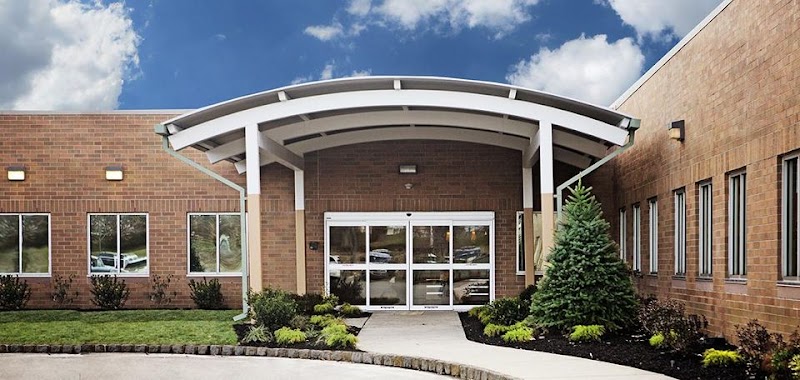
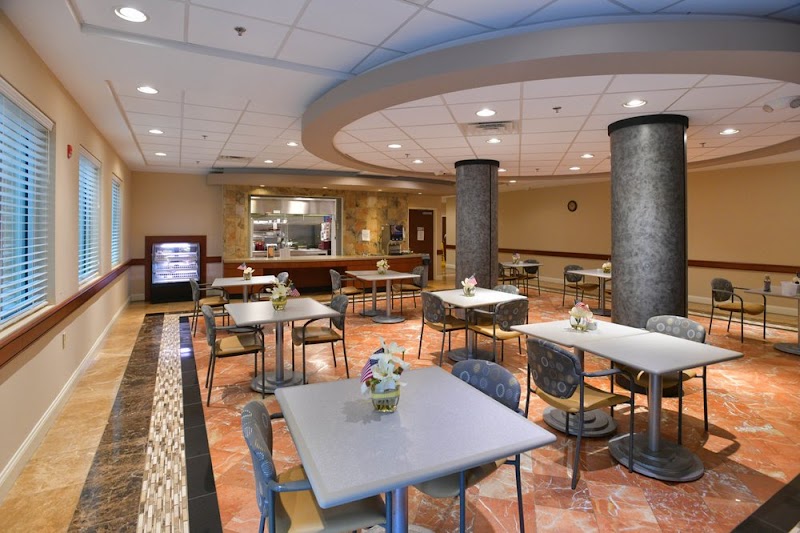
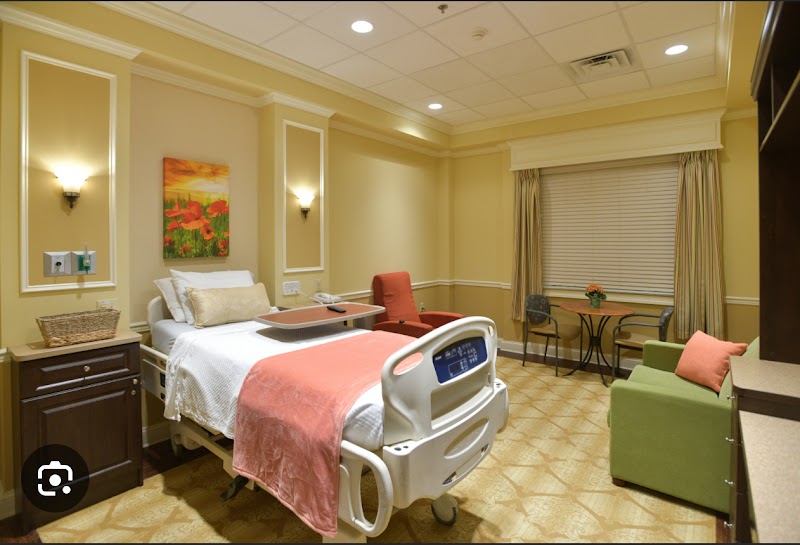
SPRING HILLS POST ACUTE HAMILTON

3 HAMILTON HEALTH PLACE, HAMILTON, NJ 08690 (609) 631-2555
For profit - Corporation 55 Beds Independent Data: November 2025
Trust Grade
53/100
#227 of 344 in NJ
Last Inspection: February 2025

Within standard 12-15 month inspection cycle. Federal law requires annual inspections.

Overview

Spring Hills Post Acute Hamilton has a Trust Grade of C, which means it is average and sits in the middle of the pack. It ranks #227 out of 344 facilities in New Jersey, placing it in the bottom half, and #8 out of 16 facilities in Mercer County, indicating limited local options. The facility's trend is worsening, with reported issues increasing from 3 in 2024 to 10 in 2025. While staffing is a concern with a high turnover rate of 70%, the RN coverage is better than 77% of facilities in New Jersey, which is a positive aspect as RNs can identify problems that CNAs might miss. However, there are serious concerns, including a failure to notify CMS about a name change and inadequate maintenance of laundry equipment, which could pose safety risks. Overall, families should weigh these strengths and weaknesses when considering this facility for their loved ones.

Trust Score
C
53/100
In New Jersey
#227/344
Bottom 35%
Safety Record
Low Risk
No red flags
Inspections
Getting Worse
3 → 10 violations
Staff Stability
⚠ Watch
70% turnover. Above average. Higher turnover means staff may not know residents' routines.
Penalties
⚠ Watch
$9,750 in fines. Higher than 96% of New Jersey facilities. Major compliance failures.
Skilled Nurses
✓ Good
Each resident gets 57 minutes of Registered Nurse (RN) attention daily — more than average for New Jersey. RNs are trained to catch health problems early.
Violations
⚠ Watch
26 deficiencies on record. Higher than average. Multiple issues found across inspections.
★★★☆☆
3.0
Overall Rating
★★☆☆☆
2.0
Staff Levels
★★★★★
5.0
Care Quality
★★☆☆☆
2.0
Inspection Score
Stable
2024: 3 issues
2025: 10 issues

The Good

  • 5-Star Quality Measures · Strong clinical quality outcomes
  • Full Sprinkler Coverage · Fire safety systems throughout facility
  • No fines on record

Facility shows strength in quality measures, fire safety.

The Bad

3-Star Overall Rating

Near New Jersey average (3.3)

Meets federal standards, typical of most facilities

Staff Turnover: 70%

23pts above New Jersey avg (46%)

Frequent staff changes - ask about care continuity

Federal Fines: $9,750

Below median ($33,413)

Minor penalties assessed

Staff turnover is elevated (70%)

22 points above New Jersey average of 48%

The Ugly 26 deficiencies on record

Feb 2025 10 deficiencies
CONCERN (D)

Potential for Harm - no one hurt, but risky conditions existed

Abuse Prevention Policies (Tag F0607)

Could have caused harm · This affected 1 resident

Based on interviews and review of pertinent documentation provided by the facility it was determined that the facility failed to ensure reference checks were completed for 6 of 10 newly hired employee...

Read full inspector narrative →
Based on interviews and review of pertinent documentation provided by the facility it was determined that the facility failed to ensure reference checks were completed for 6 of 10 newly hired employee files reviewed. This deficient practice was evidenced by the following: On 2/7/25, the surveyor reviewed Ten (10) randomly selected new employee files which revealed the following: 1. Licensed Practical Nurse (LPN)/Unit Manager with a Date of Hire (DOH) of 7/22/24, did not have a previous employee reference on file. 2. LPN #2 with a DOH of 7/22/24, did not have a previous employee reference check on file. 3. LPN/Nurse Supervisor with a DOH of 7/22/24, did not have a previous employee reference check on file. 4. Registered Nurse #1 with a DOH 7/30/24, did not have a previous employee reference check on file. 5. Physical Therapist with a DOH 6/19/24, did not have a previous employee reference check on file. 6. Dietary staff with a DOH of 11/1/24, did not have a previous employee reference check on file. On 2/7/25 at 11:04 AM, the surveyor interviewed the Human Resources/Staffing Coordinator (HR/SC), who stated he was responsible for the employee files since August of 2024. He added the Director of Rehabilitation (DR) was responsible for the therapist's files. He stated new employees should have a physical, 2 TB testing (Mantoux tuberculin skin test-a test for tuberculosis (a serious bacterial disease that affects the lungs)), a background check, a license check and 3 reference checks before they start work. The HR/SC reviewed the above mentioned files in the presence of the surveyor and confirmed that the 6 employees did not have an employee reference check in their files. He stated he identified some of the employee files were missing physicals and the two-step TB test in October of 2024. He added he started a Quality Assurance & Performance Improvement Plan (QAPI) in October. On 2/7/25 at 11:51 AM, the surveyor interviewed the DR, who stated she was responsible for reference checks for her therapists. She stated she remembered doing the reference check for the above mentioned physical therapist but she does not keep a copy of it. She was unable to explain why she doesn't keep a copy. On 2/7/25 at 2:35 PM, the surveyor conducted a follow up interview with the HR/SC, in the presence of the survey team. He presented the surveyor with a copy of his QAPI dated 1/14/25. A review of the QAPI revealed Tracking and Reporting: As of 1/14 we are at less than 35 % completion .Working on completing Physicals and PPD (TB Test) files. At that time the HR/SC stated that he will now add the employee reference checks to his QAPI since the surveyor brought it to his attention. On 2/7/25 at 12:59 PM, the survey team met with the LNHA, DON, Regional LNHA, and the [NAME] President of Nursing and presented the above concerns. No addition information was presented. A review of the facility provided New Employee Checklist for HR (Human Resources) revealed Human Resource: reference form and references checks (back of application): check box reference #1, check box reference #2.
CONCERN (D) 📢 Someone Reported This

A family member, employee, or ombudsman was alarmed enough to file a formal complaint

Potential for Harm - no one hurt, but risky conditions existed

Investigate Abuse (Tag F0610)

Could have caused harm · This affected 1 resident

Complaint #NJ00176931 Based on interviews, record review and pertinent facility documents, it was determined that the facility failed to investigate an allegation of poor nursing care for 1of 4 resid...

Read full inspector narrative →
Complaint #NJ00176931 Based on interviews, record review and pertinent facility documents, it was determined that the facility failed to investigate an allegation of poor nursing care for 1of 4 residents (Resident #232) reviewed for abuse. This deficient practice was evidenced by the following: A review of the facility provided Reportable Event Record Report dated 319/2024, revealed the facility reported an event alleging that the resident had poor nursing care while at the facility to the New Jersey Department of Health (NJDOH). The surveyor reviewed the electronic medical record (EMR) for Resident #232. A review of the admission Record (an admission summary) revealed the resident was admitted to the facility with diagnoses which included but were not limited to; Type 2 Diabetes Mellitus with Diabetic Chronic kidney disease (a condition in which the body has trouble controlling blood sugar that can affect the kidneys) and unspecified dementia, unspecified severity, without behavioral disturbance, psychotic disturbance, mood disturbance and anxiety (a mental disorder that can cause a person to lose the ability to learn, remember, think, solve problems, and make decisions). A review of the admission Minimum Data Set, an assessment tool dated 12/27/23, revealed the resident had a Brief Interview for Mental Status of 13 out of 15, indicating the resident was cognitively intact. A review of the individual comprehensive care plan (ICCP) revealed a focus of potential for a mood issue related to [their] recent admission to the center, Date Initiated: 12/28/2023 with Interventions: Educate the resident/family/caregivers regarding expectations of treatment, concerns with side effects and potential adverse effects, evaluation, maintenance, Date Initiated: 12/28/2023. A review of the progress notes did not revealed any notes or allegations of the above mentioned event. On 2/5/25 at 2:24 PM, the surveyor interviewed Licensed Practical Nurse (LPN) #1, who stated examples of abuse was neglect in care, physical, rough care, and hitting. She stated she would ask what happened and then notify the Director of Nursing (DON). LPN #1 stated an incident report would be done, and written statements would be obtained. On 2/5/25 at 12:31 PM, the surveyor interviewed LPN/Unit Manager (UM) #1, who stated examples of abuse was physical, verbal, neglect, from anyone punching, pulling, or yelling at someone. She stated she would have to report it immediately to the DON and the Licensed Nursing Home Administrator (LNHA). LPN/UM #1 stated it would have to be reported to the state (NJDOH), an incident investigation would be done and statements would be obtained. On 2/5/25 at 12:36 PM, the surveyor interviewed Certified Nursing Assistant # 1, who stated I would go to DON and have to give a statement. On 2/5/25 at 12:39 PM, the surveyor interviewed the DON, who stated types of abuse was resident to resident, staff to resident, sexual, financial abuse, mental manipulation, neglect, not feeding someone, or just not caring for the patient. She stated she would interview the resident ask for more information date and time. The DON stated an overall investigation would be done which included going back 72 hours and interview from all the nurses and aides that took care of patient. She stated she would report the event to Ombudsman and the NJDOH within 2 hours. She added definitely a written investigation would be done and the investigation would be kept. On 2/5/25 at 12:50 PM, the surveyor interviewed LPN/Nursing Supervisor (LPN/NS) #1, who stated types of abuse was elder abuse, financial, physical and emotional. She stated she would report it to the DON and the LNHA, a grievance would be taken and statements would be taken from all parties involved. LPN/NS #1 stated the purpose of the investigation was to get to the bottom of the situation and to make sure they feel safe in the building. She stated she remembered Resident #232 but did not remember the resident or their son complaining about anything. On 2/5/25 at 12:55 PM, the surveyor conducted a follow up interview with the DON, who stated the purpose of an investigation was to substantiate the claim, every claim should be taken seriously to see what was going on, to help us to know our patients and our staff and to follow through to make sure the concerns were addressed. On 2/05/25 at 1:02 PM, the surveyor interviewed the LNHA, who stated he was the abuse officer. He stated types of abuse was sexual, verbal, physical, monetary abuse and neglect. He stated, I would call the state (NJDOH) and complete the form to the Ombudsman. The LNHA stated an investigation would be started that included collecting statements from residents or family members and staff, a summary would be written, and draw up a conclusion. He stated it was important to do an investigation to see if other residents are in harm's way. During that same interview, the LNHA confirmed that there was no investigation for the above mentioned reportable event for Resident #232. He stated they (the facility) looked through the files and no one could not find anything else (for the event). He added the event should have had an investigation but we (the facility) could not find one. On 2/7/25 at 12:59 PM, the survey team met with the LNHA, DON, Regional LNHA, and the [NAME] President of Nursing and presented the above concerns. No additional information or investigations were presented. A review of the facility's policy Abuse, Neglect, Exploitation and Misappropriation Prevention Program revised April 2021, revealed Policy Statement: Residents have the right to be free from abuse, neglect, misappropriation of resident property and exploitation. Policy Interpretation and Implementation: .8. Identify and investigate all possible incidents of abuse, neglect, mistreatment, or misappropriation of resident property. 9. Investigate and report any allegations within timeframes required by federal requirements. 10. Protect resident from any further harm during investigation. A review of the facility's policy Grievances/Complaints, Record, and Investigating revised April 2017, revealed Policy Statement: All grievances and complaints filed with the facility will be investigated and corrective actins will be taken to resolve the grievance(s). Policy Interpretation and Implementation: 1. The administrator has assigned the responsibility of investigating grievances and complaints to the grievance officer. 2. Upon receiving a grievance and complaint report, the grievance office will begin an investigation into the allegations .4. The investigation and report will include, as applicable: .b. the circumstances surrounding the alleged incident .9. A copy of the resident Grievance/Complaint Investigation Form: must be attached to the Resident Grievance/complaint form and filed in the business office. 10. Copies of all reports must be signed and will be made available to the resident or person acting on behalf of the resident. NJAC 8:39 4.1 (a) (5)
CONCERN (D)

Potential for Harm - no one hurt, but risky conditions existed

Unnecessary Medications (Tag F0759)

Could have caused harm · This affected 1 resident

Based on observations, interviews, and record review, it was determined that the facility failed to ensure that all medications were administered without error of 5% or more. During the morning medica...

Read full inspector narrative →
Based on observations, interviews, and record review, it was determined that the facility failed to ensure that all medications were administered without error of 5% or more. During the morning medication administration observation on 2/5/25, the surveyor observed three (3) nurses administer medications to five (5) residents. There were 28 opportunities, and two (2) errors were observed which calculated to a medication administration error rate of 7.14%. The deficient practice was identified for two (2) of five (5) residents, (Resident #21 and #82), that were administered medications by two (2) of three (3) nurses that were observed. The deficient practices were evidenced by the following: 1. On 2/5/25 at 8:36 AM, during the morning medication administration pass, the surveyor observed Licensed Practical Nurse (LPN#1) administering medications to Resident #21. The resident stated that they would like their pain medication and their cough medicine. On 2/5/25 at 8:37 AM, the surveyor observed LPN#1 preparing to administer the resident's pain medication and cough medication. LPN#1 reviewed the electronic medication administration record (EMAR) which revealed a physician's order (PO) for Guaifenesin Oral Liquid 100 MG/ML (Guaifenesin), Give 10 ML by mouth every 6 hours as needed (PRN) for cough 10 ML=200 MG. LPN#1 removed a bottle of Tussin DM (Guaifenesin with Dextromethorphan) 100 milligrams(MG)/5 milliliter (ML) from the medication cart and stated that the Tussin DM was an over-the-counter/house stock (OTC/HS) medication, meaning that the bottle was not labeled for a specific resident because the facility purchased the medication, and it could be administered to any resident that had a PO. LPN#1 stated that Tussin DM was the OTC/HS cough medicine. On 2/5/25 at 8:41 AM, the surveyor observed LPN#1 administer 10 ML of Tussin DM to Resident #21. On 2/5/25 at 8:44 AM, upon returning to the medication cart, the surveyor with LPN#1 reviewed the electronic medication administration record (EMAR) for the PRN cough medication. The surveyor asked LPN #1 why the EMAR indicated Guaifenesin but had not indicated Dextromethorphan (DM). The LPN#1 stated that the DM did not matter and that was the OTC/HS that was in the medication cart. (ERROR #1) The surveyor reviewed the electronic medical record for Resident #21. A review of the admission Record revealed diagnoses that included but not limited to; chronic kidney disease, end stage renal disease (ESRD) (a condition which the kidneys cannot filter waste from the blood), dependence on renal dialysis (a mechanical process used to filter waste from the blood) and Diabetes Mellitus (high blood sugar). A review of the comprehensive admission Minimum Data Set (MDS), an assessment tool used to facilitate the management of care, with an assessment reference date of 12/7/2024, reflected the resident had a brief interview for mental status (BIMS) score of 15 out of 15, indicating that the resident had an intact cognition. A review of the Order Summary Report (OSR) revealed an active physician's orders (PO) with a start date of 1/21/25 for Guaifenesin Oral Liquid 100 MG/5 ML (Guaifenesin), Give 10 ML by mouth every 6 hours as needed for cough 10 ML=200 MG. On 2/5/25 at 1:30 PM, the surveyor interviewed the Director of Nursing (DON), who stated that she was responsible for educating the staff and that medication administration observations were performed by the Consultant Pharmacist (CP). The DON added that medications were administered as per PO. A review of the facility OTC/HS list provided by the Director of Nursing (DON) indicated that the facility supplied Robitussin (Guaifenesin). There was no Tussin-DM listed. On 2/5/25 at 11:02 AM, the surveyor interviewed the Unit Manager/LPN (UM/LPN), who stated that Tussin DM cannot be substituted for Guaifenesin (Robitussin). The surveyor, with the UM/LPN, observed the Tussin DM in medication cart #1. The UM/LPN stated there was no Robitussin in medication cart #1 and would have to look into it. On 2/5/25 at 11:13 AM, the UM/LPN returned to the surveyor and stated that medication cart #2 had the OTC/HS Robitussin and showed the surveyor a bottle labeled Guaifenesin 100 MG/5 ML and stated that should have been administered to Resident #21. The UM/LPN explained that the assignment of residents was split between the nurses and depending on the census, the room Resident #21 was in could have their medications kept in either medication cart #1 or #2. On 2/7/25 at 8:58 AM, the surveyor interviewed the CP via the telephone. The CP stated that she completed medication administration observations as requested by the facility and had not completed a medication administration inservice for the nurses. The CP stated that she was not familiar with LPN#1 and thought she may have been an agency nurse. The CP also stated that the PO must match the medication being administered and that Tussin DM could not be substituted for Guaifenisen. On 2/7/25 at 3:18 PM, the surveyor interviewed the DON who stated that LPN#1 had no medication administration observation completed. The DON added LPN#1 was an agency nurse and had reached out to the agency but had not received documentation of a medication administration observation. There was no facility medication administration inservice provided to the surveyor. 2. On 2/5/25 at 8:49 AM, during the morning medication administration pass (med pass), the surveyor observed LPN #2 preparing to administer five (5) medications to Resident #82. LPN#2 removed an OTC/HS Lidocaine 4% patch from the medication cart and then stated that the PO on the EMAR indicated Lidocaine 5% for Resident #82. LPN #2 returned the Lidocaine 4% patch to the medication cart and stated the Lidocaine 5% patch had to come from the provider pharmacy and there was none in the medication cart for Resident #82. On 2/5/25 at 8:37 AM, the surveyor observed LPN#2 administer four (4) medications to Resident #82. The Lidocaine 5% patch was not administered. On 2/5/25 at 9:31 AM, the surveyor interviewed LPN#2 who stated Resident #82 was alert and oriented to person, place and time. LPN #2 also stated that she would have to call the provider pharmacy to obtain the Lidocaine 5% patch for Resident #82. On 2/5/25 at 12:54 PM, the surveyor interviewed Resident #82, who stated that they had not received any pain patch today, but they were not in pain at the moment and knew that they could ask the nurse for a pain pill if needed. The resident also stated that they thought the physician had said the patch would help and thought the physician would have to order the patch and the nurses would have to get it delivered but wasn't sure if that had happened. On 2/5/25 at 12:57 PM, the surveyor interviewed LPN #2, who stated that she had sent a message to the provider pharmacy via an app on her phone but had not heard back yet. LPN#2 also stated that the process when a medication was not available was to call the pharmacy and wait until the medication came in. LPN #2 then added that maybe she could call the physician to see if the 4% patch could be used. (ERROR #2) The surveyor reviewed the medical record for Resident #82. A review of the admission Record revealed diagnoses that included but not limited to; rhabdomyolysis (a breakdown of muscle tissue). A review of the OSR revealed an active PO with a start date of 2/4/25 for Lidoderm Patch 5% (Lidocaine), Apply to per additional directions topically one time a day for lower back pain for 14 days. A review of the resident's electronic progress notes (EPN) indicated on 2/5/25 at 9:04 AM, LPN #2 had entered a Note Text: Lidoderm Patch 5% (Lidocaine), Apply to per additional directions topically one time a day for lower back pain for 14 days, awaiting from pharmacy. Sending followup. In addition, the EPN revealed at 1:16 PM, after surveyor inquiry, LPN#2 indicated Called MD (physician) calling service to speak with MD to see if lidocaine patch order can be changed to house stock 4%. Awaiting call back. Then, at 1:33 PM, LPN#2 indicated Spoke with Dr. [name redacted] received new order for 4% lidocaine patch daily. Order placed. On 2/5/25 at 1:30 PM, the surveyor interviewed the DON, who stated that she was responsible for educating the staff and that medication administration observations were performed by the CP. The DON also stated that if a medication was not available to be administered then the physician was to be contacted for follow up as to what to do and that the physician can order an alternative medication. The DON added that she would solicit help to follow up as soon as possible in order to provide the medication in a timely manner. A review of a Medication Pass Observation dated 11/12/24 provided by the DON and was completed by the CP for LPN#2 indicated that the percent error rate was 14.6%. The form indicated that one of the errors that occurred was a medication that was not administered within one hour of prescribed time. On 2/7/25 at 8:58 AM, the surveyor interviewed the CP via the telephone. The CP stated that she completed medication administration observations as requested by the facility and had not completed a medication administration inservice for the nurses. The CP added that she will do an inservice after completing a med pass with that specific nurse. The CP also stated that she tells the nurses that if a medication was not available then to enter Code 9 in the EMAR but then the physician had to be called to get instructions on what can be done about not having the medication. The CP added that the nurses cannot just document that the medication was not available or awaiting from pharmacy. The CP also stated that the nurses needed to get instructions from the physician fairly quickly when a medication was not available. On 2/7/25 at 3:18 PM, the surveyor interviewed the DON, who stated that the medication observation completed by the CP was followed up with an inservice with that nurse by the CP after the observation. The DON added that there was no further follow-up. A review of a facility policy Administering Medications dated as revised April 2019 provided by the DON reflected Medications are administered within one (1) hour of their prescribed time, unless otherwise specified (for example, before and after meals orders). Further review reflected The individual administering the medication checks the label THREE (3) times to verify the right resident, right medication, right dosage, right time and right method (route) of administration before giving the medication. NJAC 8:39-11.2(b), 29.2(a)(d)
CONCERN (D)

Potential for Harm - no one hurt, but risky conditions existed

Infection Control (Tag F0880)

Could have caused harm · This affected 1 resident

Based on observation, record review, interview, and facility policy review, the facility failed to prevent the potential for cross contamination by placing a resident with open wounds on Enhanced Barr...

Read full inspector narrative →
Based on observation, record review, interview, and facility policy review, the facility failed to prevent the potential for cross contamination by placing a resident with open wounds on Enhanced Barrier Precautions (EBP), meaning a gown and gloves be worn when performing high contact care, for one of two residents (Resident #7) with open wounds. The deficient practice was evidenced by the following: On 2/4/25 at 10:21 AM, the surveyor observed Resident #7 self-propelling their wheelchair in the hallway. The resident stated they can wheel the chair but can not stand. The surveyor observed a dressing on the right leg. The surveyor reviewed the electronic medical record (EMR) for Resident #7. A review of the Order Summary Report revealed a physician order (PO) dated 1/24/25 for Collagen-Antimicrobial External Sheet (Collagen-Antimicrobial) to the Right Lateral Ankle topically one time a day. There was also a PO dated 1/10/25 for Weekly Skin Checks every day shift every Friday. A review of the comprehensive admission Minimum Data Set (MDS), (an assessment tool) dated 1/10/25, revealed a Brief Interview for Mental Status (BIMS) of 15 out of 15, indicating an intact cognition. In addition, the MDS reflected diagnoses that included but not limited to; hypertension (elevated blood pressure), diabetes (elevated blood sugar), and a pressure ulcer of the right ankle stage 4, and the presence of a diabetic foot ulcer. The Individual Comprehensive Care Plan (ICCP), initiated 1/16/25, included a focus area of impaired skin integrity. Interventions included diets and supplements as ordered and monitoring for signs of infection. On 2/5/25 at 9:30 AM, the surveyor observed Resident #7, lying in bed. The resident stated therapy is going well but slow. The resident also stated their leg dressing gets changed every day, and that it was not done yet today. The surveyor asked Resident #7 if the surveyor could observe the dressing change. The resident stated yes, that was fine. On 2/5/25 at 10:38 AM, the surveyor observed the treatment to the right leg by Licensed Practical Nurse (LPN) #1. LPN #1 pre-medicated Resident #7 for pain and then performed the treatments to the right calf and ankle as ordered with only gloves on. The surveyor had not observed EBP signage or personal protective equipment (PPE) supply bin at the resident's doorway or in the room. On 2/05/25 at 12:43 PM, the surveyor interviewed the Infection Preventionist/LPN (IP/LPN) who stated that EBP, meaning a gown and gloves should be worn when performing high contact care, and were needed for the presence of wounds. When asked about Resident #7, she stated that the resident's wound was a diabetic ulcer which was resolved today. When reminded that EBP was not in place prior to today, she further stated that prior to today, the wound physician classified the resident's wounds as diabetic, and that her understanding was that since the wounds were classified as diabetic and not pressure ulcers then EBP was not needed. On 2/7/25 at 09:33 AM, the surveyor observed the resident lying in bed, with a dressing noted to the right leg. On 2/7/25 at 11:07 AM, the surveyor interviewed the Director of Nursing (DON), who stated that if a resident had a wound, EBP were needed. On 2/7/25 at 11:47 AM, the IP/LPN thanked the surveyor for bringing to her attention Resident # 7 had open wounds and was not on EBP. The IP/LPN stated that she double checked, and the wounds were chronic, including a current tiny opening. She further stated that she just put the resident on EBP. When asked what should have been done, she stated the resident should have been on EBP all along since there were open wounds. On 2/07/25 at 12:59 PM, the surveyor interviewed the DON and the [NAME] President of Nursing, and both confirmed that Resident #7 should have been on EBP since admission due to the presence of open wounds. A review of facility provided policy Isolation - Categories of Transmission-Based Precautions Revised October 2018 revealed: Enhanced Barrier Precautions Expand the use of PPE and refer to the use of gown and gloves during high-contact resident care activities that provide opportunities for transfer of MDROs(multi-drug resistant organisms) to staff hands and clothing. MDROs may be indirectly transferred from resident-to-resident during these high-contact care activities. Nursing home residents with wounds and indwelling medical devices are at especially high risk of both acquisition of and colonization with MDROs. The use of gown and gloves for high-contact resident care activities is indicated, when Contact Precautions do not otherwise apply, for nursing home residents with wounds and/or indwelling medical devices regardless of MDRO colonization as well as for residents with MDRO infection or colonization. Examples of high-contact resident care activities requiting gown and glove use for Enhanced Barrier Precautions include: Wound care: any skin opening requiring a dressing. N.J.A.C. 8:39-19.4 (a)
CONCERN (E) 📢 Someone Reported This

A family member, employee, or ombudsman was alarmed enough to file a formal complaint

Potential for Harm - no one hurt, but risky conditions existed

Transfer Requirements (Tag F0622)

Could have caused harm · This affected multiple residents

**NOTE- TERMS IN BRACKETS HAVE BEEN EDITED TO PROTECT CONFIDENTIALITY** A review of the facility's admission Agreement revised 1/2021, revealed 3. Resident Rights .v.)The Resident is entitiled to at l...

Read full inspector narrative →
**NOTE- TERMS IN BRACKETS HAVE BEEN EDITED TO PROTECT CONFIDENTIALITY** A review of the facility's admission Agreement revised 1/2021, revealed 3. Resident Rights .v.)The Resident is entitiled to at least thirty (30) days advance notice of transfer or discharge. A review of the facility's policy, Transfer or Discharge Notice revised 3/2021, revealed Policy Statement: Residents and/or representatives are notified in writing, and in a language and format they understand, at least thirty (30) days prior to transfer or discharge. 1. B. discharge refers to the movement of a resident from a bed in one certified facility to a bed in another certified facility or other location in the community, when return to the original facility is not expected. 2. Residents are permitted to stay in the facility and not be transferred or discharged unless: a. the transfer is necessary for the resident's welfare and the resident's needs cannot be met in the facility. 3. Except as specified below, the resident and his or her representative are given thirty (30)-day advance written notice of impending transfer or discharge from this facility. 5. The resident and representative are notified in writing of the following information: a. specific reason for the transfer or discharge; b. the effective date of the transfer or discharge; c. the location to which the resident is being transferred or discharged ; .8. The reason for the transfer or discharge are documented in the resident's medical record. NJAC 8:39-4.1(a)(31) (32) Complaint # NJ 183474 Based on interviews, record review, and review of other facility documentation, it was determined that the facility failed to document the circumstance for which randomly selected residents, from the facility provided discharge list from 9/1/24 to 2/14/25, were discharged to another long-term care (LTC) facility, for 7 of 7 residents (Resident #182, #183, #184, #185, #186, # 187, #188) reviewed.This deficient practice was evidenced by the following: 1.The surveyor reviewed the electronic medical record (EMR) for Resident #182. A review of the admission Record (an admission summary) revealed the resident was admitted to the facility with diagnoses which included but were not limited to; Polyosteoarthritis, unspecified (a condition that involves break down of [NAME] in multiple joints leading to pain, stiffness, and reduced mobility). A review of the comprehensive Minimum Data Set (MDS), an assessment tool dated 8/24/24, revealed the resident had a Brief Interview for Mental Status (BIMS) of 14 out of 15, indicating the resident was cognitively intact. A review of the individual comprehensive care plan (ICCP) revealed a focus of resident wants to stay at facility, dated 8/16/23. A review of the progress notes revealed the following: -On 9/17/2024 at 22:16 (10:16 PM), A Social Service Note, Late Entry: Note Text: SW met with resident and discussed with POA (power of attorney) regarding LTC transfer. Provided options would like to proceed with [name redacted] transfer next week. -On 9/24/2024 at 9:18 AM, Social Service Note, Note Text: Resident scheduled for LTC transfer today to [name redacted]. Resident, POA still in agreement with this plan. Additional review of the EMR did not reveal documentation to support the reason for the transfer to another long-term care facility. 2.The surveyor reviewed the EMR for Resident #183. A review of the admission Record (AR) revealed the resident was admitted to the facility with diagnoses which included but were not limited to; Type 2 Diabetes Mellitus with Diabetic polyneuropathy (a condition in which the body has trouble controlling blood sugar and can cause nerve damage) and dysphagia, unspecified (difficulty swallowing). A review of the quarterly MDS dated [DATE], revealed the resident had a BIMS score of 10 out of 15, indicating the resident was moderately cognitively impaired. A review of the ICCP revealed a focus of the resident is LTC at facility, Date initiated: 12/20/23. A review of the progress notes revealed the following: - On 9/4/2024 at 14:03 (2:03PM), Social Service Note. Late Entry: Note Text: SW met with resident and spoke with POA via phone to discuss LTC transfer. Requested records be sent to [2 LTC facility names redacted]. -On 9/6/2024 at 14:04 PM, Social Service Note. Late Entry: Note Text: SW spoke with resident and family who want to proceed with LTC transfer to [name redacted]. Set up transport for p/u between 11-2 on 9/12 per their request . All parties in agreement with this plan. -On 9/11/2024 at 14:05 (2:05 PM), Social Service Note, Late Entry: Note Text: SW spoke with resident, family and [name redacted] to confirm d/c (discharge)for tomorrow. -On 9/12/2024 at 15:25 (3:25 PM), Nursing Note, Narrative: Resident escorted by family and was discharged to another facility. On 02/14/25 at 11:38 AM, the surveyor interviewed Resident #183's the resident's representative (RR)on the phone. The RR stated Resident #183 told the RR's spouse that they have to leave because the facility was bought out and the permanent (LTC) residents had to leave. The RR informed the surveyor that the resident was in that facility because it was local to the family. The RR added that everyday a family member would go to the facility. Resident #183 told the RR they (the facility) called a meeting with the suit. They gathered in the lunch area and told all the permanent residents that they had been bought out and they (the LTC residents) have to find a dwelling elsewhere and the facility will help as much as they can. The RR stated, we were not given a choice, all LTC had to leave immediately. We were completely shocked. The RR stated the SW was a great help to them. Additional review of the EMR did not reveal documentation to support the reason for the transfer to another long-term care facility. 3. The surveyor reviewed the EMR for Resident #184. A review of the AR revealed the resident was admitted to the facility with diagnoses which included but were not limited to; unspecified dementia, unspecified severity, without behavioral disturbance, psychotic disturbance, mood disturbance and anxiety (a mental disorder that can cause a person to lose the ability to learn, remember, think, solve problems, and make decisions) and difficulty walking, not elsewhere classified. A review of the comprehensive MDS dated [DATE], revealed the resident had a BIMS score of 8 out of 15, indicating the resident was moderately cognitively impaired. A review of the ICCP revealed a focus of resident wishes to remain LTC. Date initiated: 5/8/2024. A review of the progress notes revealed the following: -On 8/12/2024 at 12:42 PM. Social Service Note.Late Entry: Note Text: Annual care conference held with resident and POA, alongside team .continues with long term care status under MLTSS. Does not wish to be asked about return to the community .has no unwanted behaviors and is pleasant and cooperative with care, reports satisfaction overall. -On 9/11/2024 at 14:24 (2:42PM), Social Service Note.Late Entry: Note Text: SW spoke with resident and POA regarding LTC transfer. Requested records be sent to [name redacted for 2 LTC facilities]. -On 9/16/2024 at 14:24 (2:24 PM). Social Service Note. Late Entry: Note Text: Resident has been accepted to both facilities and would like to proceed with transfer to [name redacted] on 9/20. Additional review of the EMR did not reveal documentation to support the reason for the transfer to another long-term care facility. 4. The surveyor reviewed the EMR for Resident #185. A review of the AR revealed the resident was admitted to the facility with diagnoses which included but were not limited to; Parkinsonism, unspecified (a disorder of the central nervous system that affects movement, often including tremors) and dysphagia, unspecified (difficulty swallowing). A review of the quarterly MDS, an assessment tool dated 9/24/24 revealed the resident had a BIMS score of 14 out of 15, indicating the resident was cognitively intact. A review of the ICCP revealed a focus of resident wishes to remain at facility. Date initiated: 6/6/2023. A review of the progress notes revealed the following: - On 11/21/2024 at 18:04 (6:04PM). Physician / Medical Provider Progress Notes . discharge planning to long-term care facility; Meds reviewed, continue current medication on discharge. - On 12/23/2024 at 12:33 PM. Nursing Note. Narrative: Pt (patient) was picked up . discharging to [name of LTC facility redacted]. Additional review of the EMR did not reveal documentation to support the reason for the transfer to another long-term care facility. 5. The surveyor reviewed the EMR for Resident #186. A review of the AR, revealed the resident was admitted to the facility with diagnoses which included but were not limited to; amyotrophic lateral sclerosis (a nervous system disease that weakens muscles and impacts physical function) and muscle wasting and atrophy not elsewhere classified, unspecified site. A review of the comprehensive MDS, an assessment tool dated 11/10/24, revealed the resident had a BIMS score of 15 out of 15, indicating the resident was cognitively intact. A review of the ICCP revealed a focus of the resident wishes to return home alone with private HHA (home health aide), Date Initiated: 11/03/2024 with an intervention of establish a pre-discharge plan with the resident/family/caregivers and evaluate progress, Date Initiated: 11/03/2024. A review of the progress notes revealed the following: - On 1/14/2025 at 20:17 (8:17PM) Physician / Medical Provider Progress Notes, revealed a Note Text: Pt is doing ok .will be transferred to a long-term facility soon. -On 1/15/2025 at 19:05 (7:05 PM), Nursing Note Narrative: At 5:34 pm, resident was discharged and transported to another nursing facility. Additional review of the EMR did not reveal documentation to support the reason for the transfer to another long-term care facility. 6. The surveyor reviewed the EMR for Resident # 187 A review of the AR revealed the resident was admitted to the facility with diagnoses which included but were not limited to; urinary tract infection, site not specified, Sepsis unspecified organism, and Methicillin resistant staphylococcus aureus infection as the cause of diseases classified elsewhere. A review of the comprehensive MDS, dated [DATE], revealed the resident had a BIMS score of 11out of 15, indicating the resident was moderately cognitively impaired. A review of the ICCP revealed a focus of [name redacted] wishes to remain at facility, Date initiated 8/3/23, a goal of [name redacted] will be long term placement in the facility, Date initiated 8/3/2023. A review of the progress notes revealed the following: - On 8/19/2024 at 14:08 (2:08 PM). Social Service Note, Late Entry: Note Text: Quarterly IDCP (interdisciplinary care plan) meeting held with resident and family via phone alongside team. Resident continues with LTC status, private pay. - On 9/20/2024 at 09:55 AM, Social Service Note, Late Entry: Note Text: SW spoke with resident and family regarding LTC transfer. They would like referrals sent to [names redacted of 5 LTC facilities]. Family will be touring the facilities in the upcoming days. -On 9/30/2024 at 09:56 AM, Social Service Note, Late Entry: Note Text: SW spoke with resident and [resident representative]. They are requesting LTC transfer on 10/2 to [name redacted] . set up transportation for 4:30 pick up. Additional review of the EMR did not reveal documentation to support the reason for the transfer to another long-term care facility. 7. The surveyor reviewed the EMR for Resident #188. A review of the admission Record revealed the resident was admitted to the facility with diagnoses which included but were not limited to; Type 2 Diabetes Mellitus without complications (a condition in which the body has trouble controlling blood sugar) and cellulitis of right lower limb (a serious bacterial skin infection). A review of the quarterly MDS dated [DATE], revealed the resident had a BIMS of 15 out of 15, indicating the resident was cognitively intact. A review of the ICCP revealed a focus of resident wishes to remain LTC, Date Initiated: 06/30/2024 with a goal of will be long term placement in the facility, Date Initiated: 09/22/2023. A review of the progress notes revealed the following: - On 9/4/2024 at 14:19 (2:19 PM),Social Service Note, Late Entry: Note Text: SW met with resident regarding LTC transfer. [identifier redacted] request I send records to [name redacted] and [name redacted]. - On 9/11/2024 at 14:20 (2:20 PM), Social Service Note, Late Entry: Note Text: Resident has been accepted to [name redacted] for LTC transfer and would like to proceed with d/c (discharge) on 9/18. Additional review of the EMR did not reveal documentation to support the reason for the transfer to another long-term care facility. On 2/14/24 at 10:28 AM, the surveyor interviewed Resident #188 on the telephone. The resident was agreeable to speak to the surveyor and confirmed that they were at another long-term care facility. The resident stated when they were admitted to the facility in 2023, they (the facility) didn't know what my plan (LTC) was. The facility suggested LTC and I was going to stay there (Springhills). The surveyor asked when did the facility tell you that you couldn't stay, They did not tell us that I could stay. The resident asked the surveyor to hold because someone was there helping them get out of bed, the call was disconnected. The surveyor tried multiple times to call the resident back but there was no answer. On 2/14/25 at 12:49 PM, the surveyors interviewed the Social Worker (SW), who stated she meets with residents and their family within 72 hours of admission for a care conference to talk about discharge planning. She stated upon request by a resident or their family would be a situation where a resident would leave the facility to another LTC facility. The SW stated if the resident transitions to LTC, she would assist or refer them with Medicaid planning, financial planner and/or elder care advisors. She stated the facility has always been both short term and LTC. The SW stated the new company came in September and the companies regional spoke to the staff that the company was geared more towards short-term rehab. The SW stated between her and the Licensed Nursing Home Administrator (LNHA) they met with residents and educated them on the change in management with the focus of short term rehabilitation and discussed their (the residents) options. She could not recall any facility-initiated discharges but stated she absolutely would be involved in a transfer to another facility. The SW stated a 30 day notice letting them (the resident) know their rights and she would look to the administrator to guide me with that process. She added, I can't force someone out, depending on the reason we would try to work with them. The SW stated, if it (transfer to another LTC facility) was a request it would be documented. At that time the surveyors reviewed the transfers of the above-mentioned residents with the SW, her responses were as follows: -Resident #182 requested a transfer because the [resident's representative] or family lives near there. -Resident #183 requested to go there because I think they knew someone who went there in the past and I think it was closer to the [resident representative] who had a family member in ocean county. She stated, there should be a note from me about why the transfer. -Resident #184 requested a local transfer because [identifier redacted] was happy here and we were offering transfers to stay here or transfer out and the resident wanted more of a long term care environment. -Resident #185 requested the transfer. -Resident # 186 requested the transfer because their primary care physician works in that facility. She stated if a resident requested a transfer it would be in my progress note. -Resident #187 requested a transfer because they were working with their family with multiple places. She stated, I think [identifier redacted] was content here. I think the place they went was smaller and the resident would get more individualized care. The SW added, we could have provided care for the resident here but that was their preference. -Resident #188 requested the referral because they knew someone that was going there. During that same interview, the SW stated, the facility did not tell them (the above residents) they could not stay. She could not speak to if a resident was happy here (the facility), in their home, why they (the facility) would give them (the residents) an option to leave. She added, it was a conversation, kind of a change in management, we (the facility) educated them (the residents) on their options . At that time the surveyors asked the SW to provide the above mentioned documentation. On 2/14/25 at 1:23 PM, the surveyors interviewed the LNHA, who stated the facility was licensed for Medicare and Medicaid and accepted both short term and long-term care residents. He added, most people come here for therapy. At that time, the surveyors reviewed the transfers of the above-mentioned residents with the LNHA. The LNHA stated he could only speak to the residents that were transferred since he started at the facility in November of 2024. His responses for 2 of the above mentioned residents that were transferred after he started at the facility: -Resident #186 was undecided on LTC or going home. I don't remember if the resident was told they could stay here. We (the facility) spoke to the resident about other facilities and recommended [name redacted] (the facility's sister facility) but the resident's doctor did not practice there. [Identifier redacted] was happy here, no complaints. I am not sure when the conversation started but once the resident's skilled part finished, then next step was LTC. The LNHA was unable to speak to whether the resident wanted to go to another LTC facility on their own. He added, [identifier redacted] just decided on their own, [identifier redacted] they wanted to go there. I didn't kick [identified redacted] out. He stated, I don't usually get involved in discharges. -Resident #185 was transferred probably because they were finished with rehab. He could not say she wasn't happy here. During this interview, the LNHA could not speak to why put a resident through a transfer if they were happy there. He added, they could technically stay here. On 2/14/25 at 1:42 PM, the surveyors interviewed the Director of Nursing (DON), who confirmed the facility accepts LTC residents and could not recall any facility-initiated discharges. At that time, the surveyors reviewed the transfers of the above-mentioned resident's with the DON, her responses were as follows: -Resident # 182 was a LTC resident but she did not know the reason the resident was transferred to another facility. She added the facility was able to care for the resident and that they seemed happy, nothing jumps out. Resident # 183 was a LTC resident but she did not know the reason the resident was transferred to another facility. She stated the facility was able to meet all [identifier redacted] needs, they seemed happy and never voiced complaints. -Resident # 184 was a LTC resident but she did not know the reason the resident was transferred to another facility. She added the facility able to meet all of the residents needs for care. -Resident #185 was a LTC resident but she couldn't recall the reason the resident was transferred to another facility. She added the facility was able to meet all the residents needs and could not recall the resident making any complaints. -Resident #186 was transferred to another facility because of insurance or maybe [identifier redacted] wanted to go. She stated the facility was able to meet all the residents needs and could not recall the resident making any complaints. -Resident #187 was a LTC resident but she couldn't recall the reason the resident was transferred to another facility. She stated the facility was able to meet all the residents need and could not recall the resident making any complaints. -Resident #188 was a LTC resident but she couldn't recall the reason the resident was transferred to another facility. She added the resident did not have any behaviors or skilled needs that the facility could not handle. At that time, the DON stated the discharge process from LTC to another LTC facility would be for the SW to get a list of LTC facilities requested by the resident or their family and send out a referral(s). Once a facility was agreed upon, typically the face sheet, discharge medication list, a transfer form, immunizations and any thing else the facility requested was sent to the receiving facility. During the same interview, the surveyors asked the DON if the above mentioned residents would be accepted back to the facility, she stated, I believe that if a resident wanted to come back, we would accept them back. As a DON, I would take back any or all of those residents from a nursing stand point. On 02/14/25 at 03:05 PM, the DON met with the surveyors and stated the SW only notifies the ombudsman's office of a discharge if the resident went to the hospital. She confirmed that she was unable to provide the surveyors with a written notification of discharge for the above residents. On 2/14/25 at 03:06 PM, during a follow up interview with the surveyors, the SW stated the facility had already provided all the progress notes for the above-mentioned residents which would include any of her documentation. She had nothing else to add. On 2/14/25 at 03:15 PM, the surveyors presented the above concerns to the DON and the [NAME] President of Nursing.
CONCERN (E) 📢 Someone Reported This

A family member, employee, or ombudsman was alarmed enough to file a formal complaint

Potential for Harm - no one hurt, but risky conditions existed

Transfer Notice (Tag F0623)

Could have caused harm · This affected multiple residents

**NOTE- TERMS IN BRACKETS HAVE BEEN EDITED TO PROTECT CONFIDENTIALITY** A review of the facility's policy, Transfer or Discharge Notice revised 3/2021, revealed Policy Statement: Residents and/or repr...

Read full inspector narrative →
**NOTE- TERMS IN BRACKETS HAVE BEEN EDITED TO PROTECT CONFIDENTIALITY** A review of the facility's policy, Transfer or Discharge Notice revised 3/2021, revealed Policy Statement: Residents and/or representatives are notified in writing, and in a language and format they understand, at least thirty (30) days prior to transfer or discharge. 3. Except as specified below, the resident and his or her representative are given thirty (30)-day advance written notice of impending transfer or discharge from this facility. 5. The resident and representative are notified in writing of the following information: a. specific reason for the transfer or discharge; .6. A copy of the notice is sent to the Office of the State Long-Term Care Ombudsman at the same time the notice of transfer or discharge is provided to the resident and representative. NJAC 8:39-5.3; 5.4 Complaint #NJ00183474 Refer to F 622 Based on interviews, record review and review of facility documentation, it was determined that the facility failed to provide written notification of the transfer to the Office of the Long-Term Care (LTC) Ombudsman (LTCO) for 7 of 7 residents (Resident #182, #183, #184, #185, #186, # 187, #188) reviewed for transfer to another LTC facility. This deficient practice was evidenced by the following: 1.The surveyor reviewed the electronic medical record (EMR) for Resident #182. A review of the admission Record (an admission summary) revealed the resident was admitted to the facility with diagnoses which included but were not limited to; Polyosteoarthritis, unspecified (a condition that involves break down of [NAME] in multiple joints leading to pain, stiffness, and reduced mobility). A review of the comprehensive Minimum Data Set (MDS), an assessment tool dated 8/24/24, revealed the resident had a Brief Interview for Mental Status (BIMS) score of 14 out of 15, indicating the resident was cognitively intact. A review of the individual comprehensive care plan (ICCP) revealed a focus of resident wants to stay at facility, dated 8/16/23. A review of the progress notes revealed on 9/24/2024 at 9:18 AM, Social Service Note, Note Text: Resident scheduled for LTC transfer today to [name redacted]. Resident, POA still in agreement with this plan. 2.The surveyor reviewed the EMR for Resident #183. A review of the admission Record revealed the resident was admitted to the facility with diagnoses which included but were not limited to; Type 2 Diabetes Mellitus with Diabetic polyneuropathy (a condition in which the body has trouble controlling blood sugar and can cause nerve damage) and dysphagia, unspecified (difficulty swallowing). A review of the quarterly MDS dated [DATE], revealed the resident had a BIMS score of 10 out of 15, indicating the resident was moderately cognitively impaired. A review of the ICCP revealed a focus of the resident is LTC at facility. Date initiated 12/20/23. A review of the progress notes revealed on 9/12/2024 at 15:25 (3:25 PM), Nursing Note, Narrative: Resident escorted by family and was discharged to another facility. 3. The surveyor reviewed the EMR for Resident #184. A review of the admission Record revealed the resident was admitted to the facility with diagnoses which included but were not limited to; unspecified dementia, unspecified severity, without behavioral disturbance, psychotic disturbance, mood disturbance and anxiety (a mental disorder that can cause a person to lose the ability to learn, remember, think, solve problems, and make decisions) and difficulty walking, not elsewhere classified. A review of the comprehensive MDS dated [DATE], revealed the resident had a BIMS score of 8 out of 15, indicating the resident was moderately cognitively impaired. A review of the ICCP revealed a focus of resident wishes to remain LTC. Date initiated: 5/8/2024. A review of the progress notes revealed on 9/16/2024 at 14:24 (2:24 PM). Social Service Note. Late Entry:Note Text: Resident has been accepted to both facilities and would like to proceed with transfer to [name redacted] on 9/20. 4. The surveyor reviewed the EMR for Resident #185. A review of the admission Record revealed the resident was admitted to the facility with diagnoses which included but were not limited to; Parkinsonism, unspecified (a disorder of the central nervous system that affects movement, often including tremors) and dysphagia, unspecified (difficulty swallowing). A review of the quarterly MDS dated [DATE] revealed the resident had a BIMS score of 14 out of 15, indicating the resident was cognitively intact. A review of the ICCP revealed revealed a focus of resident wishes to remain at facility. Date initiated: 6/6/2023. A review of the progress notes revealed on 12/23/2024 at 12:33 PM. Nursing Note. Narrative: Pt (patient) was picked up . discharging to [name of LTC facility redacted]. 5.The surveyor reviewed the EMR for Resident #186. A review of the admission Record revealed the resident was admitted to the facility with diagnoses which included but were not limited to; amyotrophic lateral sclerosis (a nervous system disease that weakens muscles and impacts physical function) and muscle wasting and atrophy not elsewhere classified, unspecified site. A review of the comprehensive MDS, an assessment tool dated 11/10/24, revealed the resident had a BIMS score of 15 out of 15, indicating the resident was cognitively intact. A review of the ICCP revealed a focus of the resident wishes to return home alone with private HHA (home health aide), Date Initiated: 11/03/2024 with an intervention of establish a pre-discharge plan with the resident/family/caregivers and evaluate progress, Date Initiated: 11/03/2024. A review of the progress notes revealed on 1/15/2025 at 19:05 (7:05 PM), Nursing Note Narrative: At 5:34 pm, resident was discharged and transported to another nursing facility. 6. The surveyor reviewed the EMR for Resident # 187. A review of the admission Record revealed the resident was admitted to the facility with diagnoses which included but were not limited to; urinary tract infection, site not specified, Sepsis unspecified organism, and Methicillin resistant staphylococcus aureus infection as the cause of diseases classified elsewhere. A review of the comprehensive MDS, dated [DATE], revealed the resident had a BIMS score of 11 out of 15, indicating the resident was moderately cognitively impaired. A review of the ICCP revealed a focus of [name redacted] wishes to remain at facility, Date initiated 8/3/23, a goal of [name redacted] will be long term placement in the facility, Date initiated 8/3/2023. A review of the progress notes revealed on 9/30/2024 at 09:56 AM, Social Service Note, Late Entry: Note Text: SW spoke with resident and [resident representative]. They are requesting LTC transfer on 10/2 to [name redacted] . set up transportation for 4:30 pick up. 7. The surveyor reviewed the EMR for Resident #188. A review of the admission Record revealed the resident was admitted to the facility with diagnoses which included but were not limited to; Type 2 Diabetes Mellitus without complications (disease (a condition in which the body has trouble controlling blood sugar) and cellulitis of right lower limb (a serious bacterial skin infection.) A review of the quarterly MDS dated [DATE], revealed the resident had a BIMS score of 15 out of 15, indicating the resident was cognitively intact. A review of the ICCP revealed a focus of [name redacted] wishes to remain LTC, Date Initiated: 06/30/2024 with a goal: [name redacted] will be long term placement in the facility, Date Initiated: 09/22/2023 A review of the progress notes revealed on 9/11/2024 at 14:20 (2:20 PM), Social Service Note, Late Entry: Note Text: Resident has been accepted to [name redacted] for LTC transfer and would like to proceed with d/c (discharge) on 9/18. On 02/14/25 at 12:43 PM, the surveyor requested the written discharge transfer notices that were given to the above 7 residents from the License Nursing Home Administrator (LNHA) for review. On 02/14/25 at 3:05 PM, the Director of Nursing (DON) met with the surveyors and stated the Social Worker (SW) only notified the ombudsman's office of a discharge if the resident went to the hospital. She confirmed that she was unable to provide the surveyors with a written notification of discharge for the above residents. On 2/14/25 at 3:06 PM, during an interview with the surveyors, the SW stated the facility had already provided all the progress notes for the above-mentioned residents which would include any of her documentation. She had nothing else to add. No additional information was presented to the surveyors. On 2/14/25 at 3:15 PM, the surveyors presented the above concerns to the DON and the [NAME] President of Nursing.
CONCERN (E)

Potential for Harm - no one hurt, but risky conditions existed

Deficiency F0698 (Tag F0698)

Could have caused harm · This affected multiple residents

REFER to F756 Based on observation, interviews and record review, it was determined that the facility failed to provide care and services in accordance with professional standards by adjusting medicat...

Read full inspector narrative →
REFER to F756 Based on observation, interviews and record review, it was determined that the facility failed to provide care and services in accordance with professional standards by adjusting medication times of administration to accommodate for dialysis (a medical treatment that removes waste products and excess fluid from the blood when the kidneys are unable to do so) scheduled times from December 2024 until surveyor inquiry February 2025. Reference: New Jersey Statutes Annotated, Title 45. Chapter 11. Nursing Board. The Nurse Practice Act for the State of New Jersey states: The practice of nursing as a registered professional nurse is defined as diagnosing and treating human responses to actual and potential physical and emotional health problems, through such services as case finding, health teaching, health counseling, and provision of care supportive to or restorative of life and wellbeing, and executing medical regimens as prescribed by a licensed or otherwise legally authorized physician or dentist. Reference: New Jersey Statutes Annotated, Title 45, Chapter 11. Nursing Board. The Nurse Practice Act for the State of New Jersey states: The practice of nursing as a licensed practical nurse is defined as performing tasks and responsibilities within the framework of case finding; reinforcing the patient and family teaching program through health teaching, health counseling and provision of supportive and restorative care, under the direction of a registered nurse or licensed or otherwise legally authorized physician or dentist. The deficient practice was identified for one (1) of one (1) resident, (Resident #21), reviewed for dialysis services and was evidenced by the following: On 2/4/25 at 10:09 AM, the surveyor interviewed Resident #21, who stated that they had been here (in the facility) since late November but had gone to the hospital for a week in January and returned. The resident also stated that they (the nurses) frequently run out of their medications. The resident added specifically I don't get my Renvela (Sevelamer) (a medication used to lower the amount of phosphorous in the blood when receiving dialysis). The resident also stated that they went out of the facility for dialysis on Tuesdays, Thursdays and Saturdays at approximately 10 AM and returned from dialysis approximately 4 PM. The resident added that they were waiting to be picked up this morning. On 2/5/25 at 8:32 AM, during the morning medication administration (med pass) observation, the surveyor with Licensed Practical Nurse (LPN #1) reviewed the electronic administration record (EMAR) for Resident #21. LPN #1 stated that she was not administering the resident's Sevelamer (Renvela) because the EMAR computer screen indicated d/c (discontinue) pending confirmation. LPN# 1 explained that meant they were verifying orders because there may be multiple orders. The surveyor reviewed the electronic medical record for Resident #21. A review of the admission Record revealed diagnoses that included, but not limited to, chronic kidney disease, end stage renal disease (ESRD) (a condition which the kidneys cannot filter waste from the blood), dependence on renal dialysis (a mechanical process used to filter waste from the blood) and essential (primary) hypertension (high blood pressure). A review of a comprehensive admission Minimum Data Set, an assessment tool used to facilitate the management of care, with an assessment reference date of 12/7/2024, reflected the resident had a brief interview for mental status score of 15 out of 15, indicating that the resident had an intact cognition. A review of the resident's individualized interdisciplinary care plan revealed a focus area, with an initiated date of 1/30/25, Resident has end stage renal disease and is on HD (hemodialysis) at [name and place redacted] on T (Tuesday)-TH (Thursday)-SAT (Saturday) chair time 11 AM. An intervention/task included, but not limited to, Ensure medication schedule is adjusted to administer medications when I am in the facility. A review of the resident's February 2025 Order Summary Report (OSR) reflected a physician's order (PO) dated 1/21/25 for HD Dialysis Tue, Thurs, Sat @ (at) [name of dialysis facility, address and phone number redacted] P/U (pick up) time: 10 AM chair time: 11AM. Further review revealed a PO with a start date of 1/25/25 for Sevelamer HCl (hydrochloride) Oral tablet 800 MG (Sevelamer HCl), Give 3 tablet by mouth with meals for ESRD until 2/28/25. There was no PO found to d/c (discontinue) pending confirmation. A review of the February 2025 electronic medication administration record (EMAR) indicated a medication administration time of 12 NOON that occurred during the time that the resident was out of the facility at dialysis. Further review of the EMAR revealed the following: -on 2/1/25 at 8:00 AM, 12 NOON and 5 PM, on 2/2/25 at 8 AM and 12 NOON and on 2/4/25 at 8 AM and 5 PM, all had a code number 9 entered for administration which corresponded to Other/see progress notes. A review of the corresponding electronic progress notes (EPN) had the following: -on 2/1/25 and 2/2/25 had no Note Text with an explanation. -on 2/4/25 at 8:02 AM had a Note Text: pharmacy contacted awaiting from pharmacy. -on 2/4/25 at 4:41 PM had a Note text: pending pharm delivery as is new order , 0 [name of electronic back up medication supply machine redacted]. On 2/5/25 at 11:02 AM, the surveyor interviewed the Unit Manager/LPN (UM/LPN) who stated that she was unaware that there was an issue with Renvela or any medications for Resident #21. The UM/LPN was aware that the medications had to be scheduled for when the resident was in the facility because they went out of the facility for dialysis. The surveyor, with the UM/LPN reviewed the February EMAR. The UM/LPN was unable to explain why there was a code number 9 entered for administration. The UM/LPN verified that 9 meant the medication was not administered and there should be a progress note explaining. The surveyor with the UM/LPN went to the medication cart and the UM/LPN stated that there was Renvela tablets labeled for Resident #21 available in the medication cart. The UM/LPN was unable to speak to why there was an issue with the Renvela. The UM/LPN added that there should not be a time of 12 NOON for the Renvela on Tuesdays, Thursdays and Saturdays because the resident was out to dialysis. Further review of the resident's December 2024 and January 2025 EMAR and EPN revealed the following: -on 12/3/24, 12/5, 12/7, 12/10, 12/12, 12/14, 12/17, 12/19, 12/21, 12/23, 12/26, 12/28 and 12/30 the 12:00 PM doses of Renvela indicated that the medication was not administered. The EMAR indicated on 12/3/24, 12/5, 12/7, 12/12, 12/14 that the resident was Absent from home without meds. There was a corresponding EPN for 12/10/24, 12/21, 12/23, 12/26, 12/28 and 12/30 that indicated the resident was at dialysis. -on 12/27/24 and 12/30/24 the 9 AM doses of Calcitriol (medication used to treat low calcium levels caused by kidney disease) Oral capsule 0.25 micrograms (MCG) Give 0.25 MCG by mouth one time a day every Mon, Wed, Fri for supplement indicated that the medication was not administered. There was a corresponding EPN on 12/27/24 n/a (not available) and on 12/30/24 awaiting. -on 12/3/24, 12/5, 12/10, 12/12, 12/17, 12/19, 12/21, 12/23, 12/26, 12/28 and 12/30 the 2:00 PM doses of Heparin (medication used to prevent blood clots) Sodium (Porcine) injection solution 5000 Unit/milliliter (ML), Inject 1 ML subcutaneously every 8 hours for blood clot prevention indicated that the medication was not administered. The EMAR indicated on 12/3/24, 12/5 and 12/28 that the resident was Absent from home without meds. In addition, on 12/12 the EMAR indicated Absent from home with meds. There was a corresponding EPN for 12/10/24, 12/19, 12/21, 12/23, 12/26 and 12/30 that indicated the resident was at dialysis. -on 1/9/25, 1/11 and 1/13 the 12:00 PM doses of TUMS oral tablet chewable (Calcium Carbonate) (Antacid) Give 2 tablet by mouth with meals for dialysis indicated that the medication was not administered. There was a corresponding EPN for 1/11 and 1/13 that indicated the resident was at dialysis. -on 1/2/25, 1/4, 1/6, 1/7, 1/8, 1/13, 1/14, 1/15, 1/25, 1/28 and 1/30 the 12:00 PM doses of Renvela indicated that the medication was not administered. The EMAR indicated on 1/4/25 that the resident was Absent from home without meds. There was a corresponding EPN for 1/25, 1/28 and 1/30 that indicated the resident was at dialysis. In addition, the corresponding EPN for 1/6/25, 1/7, 1/8, 1/13, 1/14 and 1/15 indicated that for the 8 AM, 12 NOON and 5 PM doses of Renvela were not available, awaiting from pharmacy or on order. On 2/7/25 at 8:58 AM, the surveyor interviewed the Consultant Pharmacist (CP) via the telephone. The CP stated that she completed medication administration observations as requested by the facility and had not completed a medication administration inservice for the nurses. The CP added that she will do an inservice after completing a med pass with that specific nurse. The CP also stated that she tells the nurses that if a medication was not available then to enter the code number 9 in the EMAR but then the physician had to be called to get instructions on what can be done about not having the medication. The CP added that the nurses cannot just document that the medication was not available or awaiting from pharmacy. The CP also stated that the nurses needed to get instructions from the physician fairly quickly when a medication was not available. The CP then stated that a resident that goes out to dialysis had to have their medications scheduled to accommodate them being out of the facility. The CP added that the physician would be contacted, and specific orders would be given as to the timing. On 2/7/24 at 10:34 AM, the surveyor interviewed the UM/LPN, who stated that she was unsure why the PO for Resident #21 had not been updated to accommodate the times the resident was out to dialysis. The UM/LPN added that usually a medication ordered for three times a day would only be ordered twice a day on dialysis days and scheduled for times when the resident was in the facility. On 2/7/25 at 3:18 PM, the surveyor interviewed the Director of Nursing (DON), who acknowledged medications had to be scheduled to accommodate the resident being out to dialysis. A review of a facility policy Administering Medications dated as revised April 2019 provided by the DON reflected Medications are administered within one (1) hour of their prescribed time, unless otherwise specified (for example, before and after meals orders). A review of the undated facility policy End-Stage Renal Disease, Care of a Resident with provided by the DON reflected Residents with end-stage renal disease (ESRD) will be cared for according to currently recognized standards of care. In addition, the policy revealed Education and training of staff includes, specifically f. timing and administration of medications, particularly those before and after dialysis. NJAC: 8:39-11.2(b), 27.1(a), 29.2(a)(d)
CONCERN (E)

Potential for Harm - no one hurt, but risky conditions existed

Drug Regimen Review (Tag F0756)

Could have caused harm · This affected multiple residents

REFER to F698 Based on observation, interview and record review, it was determined that the facility failed to respond in a timely manner to the Consultant Pharmacist's (CP) monthly recommendations fr...

Read full inspector narrative →
REFER to F698 Based on observation, interview and record review, it was determined that the facility failed to respond in a timely manner to the Consultant Pharmacist's (CP) monthly recommendations from December 2024 until surveyor inquiry for one (1) of six (6) residents, (Resident #21), reviewed for medication management. The deficient practice was evidenced by the following: On 2/4/25 at 10:09 AM, the surveyor interviewed Resident #21, who stated that they had been here (in the facility) since late November but had gone to the hospital for a week in January and returned. The resident also stated that they (the nurses) frequently run out of their medications. The resident added specifically I don't get my Renvela (Sevelamer) (a medication used to lower the amount of phosphorous in the blood when receiving dialysis). The resident also stated that they went out of the facility for dialysis on Tuesdays, Thursdays and Saturdays at approximately 10 AM. The resident added they were waiting to be picked up this morning. On 2/5/25 at 8:32 AM, during the morning medication administration observation, the surveyor with Licensed Practical Nurse (LPN#1) reviewed the electronic administration record (EMAR) for Resident #21. LPN#1 stated that she was not administering the resident's Sevelamer (Renvela) because the EMAR computer screen indicated d/c (discontinue) pending confirmation. LPN#1 explained that meant they were verifying orders because there may be multiple orders. The surveyor reviewed the medical record for Resident #21. A review of the resident's February Order Summary Report (OSR) reflected a physician's order (PO) dated 1/21/25 for HD Dialysis Tue, Thurs, Sat @ (at) [name of dialysis facility, address and phone number redacted] P/U (pick up) time: 10 AM chair time: 11AM. Further review revealed a PO with a start date of 1/25/25 for Sevelamer HCl (hydrochloride) Oral tablet 800 MG (Sevelamer HCl), Give 3 tablet by mouth with meals for ESRD until 2/28/25. There was no PO found to d/c (discontinue) pending confirmation. A review of the December 2024, January 2025 and February 2025 EMARs indicated there were medication administration times for Renvela, Calcitriol, TUMS and Heparin that occurred during the time that the resident was out of the facility at dialysis. A review of corresponding electronic progress notes for December 2024, January 2025 and February 2025 indicated that the Renvela, Calcitriol, TUMS and Heparin were not administered because the resident was out of the facility at dialysis. On 2/5/25 at 11:02 AM, the surveyor interviewed the Unit Manager/LPN (UM/LPN), who stated that she was unaware that there was an issue with Renvela or any medications for Resident #21. The UM/LPN was aware that the medications had to be scheduled for when the resident was in the facility because they went out of the facility for dialysis. On 2/7/25 at 8:58 AM, the surveyor interviewed the Consultant Pharmacist (CP) via the telephone. The CP stated that a resident that goes out to dialysis had to have their medications scheduled to accommodate them being out of the facility and she has made the recommendation. The CP added that the physician would be contacted, and specific orders would be given as to the timing. In addition, the CP stated that she felt the facility had improved in responding to her recommendations. A review of the Nursing Summary Report provided by the Director of Nursing (DON), dated December 6, 2024 that was completed by the CP, revealed that a recommendation was made for Resident #21, Please be sure that the medication times are charted to accommodate resident's dialysis schedule. The report was signed as completed by the Nursing Supervisor/Registered Nurse (NS/RN) and dated 12/8/24. A review of the Nursing Summary Report provided by the DON, dated January 7, 2025 that was completed by the CP, revealed that a recommendation was made for Resident #21, Please be sure that the medication times are charted to accommodate resident's dialysis schedule. Please evaluate Sevelamer scheduled 1200 on dialysis days The report was signed as completed by the NS/RN and dated 1/28/24. On 2/7/25 at 10:30 AM, the surveyor interviewed the Director of Nursing (DON), who stated that the evening NS/RN completed the CP recommendations. The DON verified that the Nursing Summary Report indicated that the NS/RN had acted upon the CP recommendations. On 2/7/25 at 10:53 AM, the surveyor attempted to contact the NS/RN via telephone. On 2/7/24 at 10:34 AM, the surveyor interviewed the UM/LPN, who stated she was unsure why the POs for Resident #21 had not been updated to accommodate the times the resident was out to dialysis. The UM/LPN added that usually a medication ordered for three times a day would be only ordered twice a day on dialysis days. On 2/7/25 at 3:18 PM, the surveyor interviewed the DON, who acknowledged that medications had to be scheduled to accommodate the resident being out to dialysis. The DON stated that she thought the CP recommendations were completed because the NS/RN had signed the reports. The DON added that she had put a call out to the NS/RN. A review of the facility's policy Pharmacy Services-Role of the Consultant Pharmacist dated as revised April 2019 was provided by the Licensed Nursing Home Administrator had not included a time frame for the facility's response to the CP recommendations pertaining to medication irregularities. NJAC 8:39-29.3(a)(1)
CONCERN (E) 📢 Someone Reported This

A family member, employee, or ombudsman was alarmed enough to file a formal complaint

Potential for Harm - no one hurt, but risky conditions existed

Deficiency F0947 (Tag F0947)

Could have caused harm · This affected multiple residents

Based on interview and review of facility documentation, it was determined that the facility failed to ensure that all Certified Nursing Assistants (CNAs) received 12 hours of mandatory in-service tra...

Read full inspector narrative →
Based on interview and review of facility documentation, it was determined that the facility failed to ensure that all Certified Nursing Assistants (CNAs) received 12 hours of mandatory in-service training as required for 3 of 5 randomly selected CNA (CNA # 3, #4, #5) files reviewed for in-service training. This deficient practice was evidenced by the following: On 2/07/25 at 9:17 AM, the surveyor reviewed in-service education hours for five randomly selected CNA files which were provided by the Director of Nursing (DON). The surveyor reviewed the following for the 2023 to 2024 calendar year, corresponding with the CNA hire dates: CNA #3 was hired on 4/1/22, CNA #4 was hired on 6/15/23, and CNA #5 was hired on 1/19/23. The facility could not provide evidence of in-service education training for the current 12-month period from hire date. On 2/07/25 at 2:01 PM, the Licensed Nursing Home Administrator (LNHA), in presence of survey team, stated that the facility cannot find the education for CNAs # 3,4 and 5. The LNHA stated the responsibility for ensuring the annual education on the regulatory topics, such as abuse, were completed by himself as well as with assistance from the corporate team as needed. He stated that the annual education should be reviewed when the annual evaluation was completed. He stated he was not versed on the exact topics, but he knew 12 hours were required. The LNHA stated the CNA education was important to make sure they (the CNAs) have their skills to know what they are doing. He further stated that the CNA in-service files were maintained by the Human Resource department. A review of the facility policy In-service Training Program, Nurse Aide dated May 2019, included Annual in-services . are no less than 12 hours per employment year. A review of an undated facility job description for Human Resource Director included Ensure training and in-services are provided on a regularly scheduled basis ., and Ensure that appropriate training records are maintained for staff personnel. A review of an undated facility job description for Director of Nursing Services included Develop and participate in the planning, conducting, and scheduling of timely in-service training classes ., and assist in developing annual in-service training programs for the nursing staff and ensure these programs meet the continuing education requirements. A review of an undated facility job description for Certified Nursing Assistant included Attend and participate in scheduled training and educational classes. NJAC 8:39-43.17 (b)
CONCERN (F)

Potential for Harm - no one hurt, but risky conditions existed

Deficiency F0836 (Tag F0836)

Could have caused harm · This affected most or all residents

**NOTE- TERMS IN BRACKETS HAVE BEEN EDITED TO PROTECT CONFIDENTIALITY** Repeat Deficiency Based on observations, interviews, and review of pertinent facility documents it was determined that the facil...

Read full inspector narrative →
**NOTE- TERMS IN BRACKETS HAVE BEEN EDITED TO PROTECT CONFIDENTIALITY** Repeat Deficiency Based on observations, interviews, and review of pertinent facility documents it was determined that the facility failed to notify CMS (Centers for Medicare & Medicaid Services) and receive authorization for a change in the facility's name in accordance with 42 CFR (Code of Federal Regulations) 424.516. This deficient practice was evidenced by the following: According to 42 CFR 424.516 Additional provider and supplier requirements for enrolling and maintaining active enrollment status in the Medicare Program: (a) Certifying compliance. CMS enrolls and maintains an active enrollment status for a provider or supplier when that provider or supplier certifies that it meets, and continues to meet, and CMS verifies that it meets, and continues to meet, all of the following requirements: (1) Compliance with title XVIII of the Act and applicable Medicare regulations. (2) Compliance with Federal and State licensure, certification, and regulatory requirements, as required, based on the type of services, or supplies the provider or supplier type will furnish and bill Medicare. (3) Not employing or contracting with individuals or entities that meet either of the following conditions: (i) Excluded from participation in any Federal health care programs, for the provision of items and services covered under the programs, in violation of section 1128 A(a)(6) of the Act. (ii) Debarred by the General Services Administration (GSA) from any other Executive Branch procurement or nonprocurement programs or activities, in accordance with the Federal Acquisition and Streamlining Act of 1994, and with the HHS Common Rule at 45 CFR part 76 (d) Reporting requirements for physicians, nonphysician practitioners, and physician and nonphysician practitioner organizations. Physicians, nonphysician practitioners, and physician and nonphysician practitioner organizations must report the following reportable events to their Medicare contractor within the specified timeframes: (1) Within 30 days - (i) A change of ownership; (ii) Any adverse legal action; or (iii) A change in practice location. (2) All other changes in enrollment must be reported within 90 days. Prior to the survey, the surveyor accessed the facility's website which listed the facility's name as Accela Post Acute Care at [NAME] at the address listed for the registered name Spring Hills Post Acute [NAME]. On 2/4/25 at 7:30 AM, upon arrival to the facility, the surveyors observed signage on the building which read, Accela Post Acute Care [NAME]. That name did not correspond with the CMS licensed, approved name and provider registered name Spring Hills Post Acute [NAME]. On 2/4/25 at 7:35 AM, upon entering the facility, the surveyors observed signage on the wall which read Spring Hills Post Acute [NAME]. The surveyor observed a sign on the receptionist desk in the front lobby which read Accela Post Acute Care [NAME]-All Visitors, please SIGN IN . At that time, License Practical Nurse/Supervisor (LPN/S) #1 greeted the surveyors wearing a black jacket with the logo Accela. On 2/4/25 at 10:23 AM, during entrance conference with the surveyor, the Licensed Nursing Home Administrator (LNHA) and the Director of Nursing (DON), the LNHA stated Accela was managing the facility as of 9/1/24 and they (Accela) are in the process of buying it. At that time, the surveyor requested the NJ approved license and the application, form 855B, for the name change to CMS from the LNHA. A review of the facility provided license revealed the New Jersey Department of Health Division of Certificate of Need & Licensing issued a license to [NAME] AMOP, LLC (Limited Liability Company) was licensed to operate Spring Hills Post Acute [NAME], effective 5/1/2024, Expires: 4/31/2025, Issued: 4/19/2024. On 2/4/25 at 3:15 PM, the surveyor interviewed the LNHA and the Regional LNHA, who stated the signage on the building was changed on 1/3/25. At that time, the LNHA provided a letter dated 9/10/24, to the Department of Health Certificate of Need and Healthcare Facility Licensure. A review of the letter dated September 10, 2024, revealed .effective September 4, 2024, [NAME] AMOP LLC, the licensed operator of the skilled nursing facility formerly doing business as Spring Hills Post Acute [NAME] has changed its trade name to Accela Post Acute Care at [NAME] .The change is limited to the doing business as name only. On 2/7/25 at 10:00 AM, during a follow up interview with the surveyor, the LNHA confirmed no approval for name change could be provided. He stated he spoke to his corporate office and 2 lawyers who stated they (the facility) only needed to do the notification. The LNHA also confirmed at that time the 855B notification to CMS was not completed. On 2/7/25 at 12:59 PM, the survey team met with the LNHA, DON, Regional LNHA, and the [NAME] President of Nursing and presented the above concerns. On 2/07/25 at 03:04 PM, a review of 10 employee files revealed 5 of those employees signed an Accela onboarding packet. A review of the packet revealed a memorandum (memo), dated 8/27/2024. The memo was on Accela Healthcare letter head with the Subject Line: Welcome to the Accela Family. Further review of the memo read: On behalf of the entire Healthcare team, we are thrilled to welcome you to the Accela Family .Our goal is to ensure that this transition is as seamless as possible. The letter was signed by the Director of Recruitment and Employee Experience. The packets were signed by the following employees: -Occupational Therapist #1, Date of Hire (DOH) 4/24/2015 -LPN/Unit Manager #1 DOH 7/22/24 -LPN #2, DOH 7/22/24 -Housekeeper, DOH 4/1/ 2018 -Registered Nurse # 1 DOH 8/24/2023 No additional information regarding the facility's name change was provided to the team. NJAC 8:39-5.1 (a)
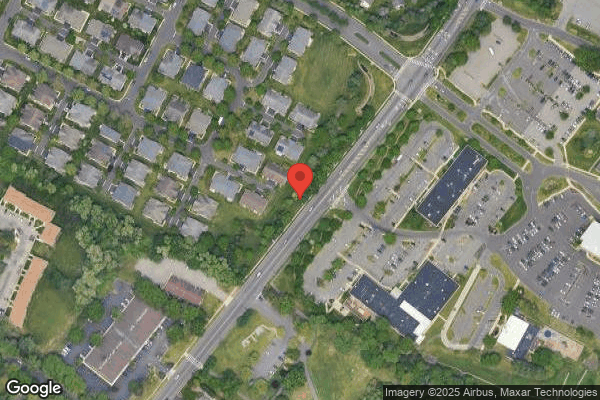
May 2024 3 deficiencies
CONCERN (D) 📢 Someone Reported This

A family member, employee, or ombudsman was alarmed enough to file a formal complaint

Potential for Harm - no one hurt, but risky conditions existed

Assessment Accuracy (Tag F0641)

Could have caused harm · This affected 1 resident

**NOTE- TERMS IN BRACKETS HAVE BEEN EDITED TO PROTECT CONFIDENTIALITY** Complain #: NJ171631 Based on interview and record review on 05/13/2024 and 05/14/2024, it was determined that the facility fail...

Read full inspector narrative →
**NOTE- TERMS IN BRACKETS HAVE BEEN EDITED TO PROTECT CONFIDENTIALITY** Complain #: NJ171631 Based on interview and record review on 05/13/2024 and 05/14/2024, it was determined that the facility failed to accurately encode a resident's wound in the Minimum Data Set (MDS) assessment for 1 of 5 residents (Resident #2) reviewed for MDS accuracy. This deficient practice was evidenced by the following: Reference: The Centers for Medicare and Medicaid Services (CMS) Long-Term Care Facility Resident Assessment Instrument 3.0 User's Manual Version 1.18.11 October 2023, under Section M: Skin Conditions .M0210 Unhealed Pressure Ulcers/Injuries .Coding Instructions Code based on the presence of any pressure ulcer/injury (regardless of stage) in the past 7 days. Code 0, no: if the resident did not have a pressure ulcer/injury in the 7-day look-back period. Then skip to M1030, Number of Venous and Arterial Ulcers. Code 1, yes: if the resident had any pressure ulcer/injury (Stage 1, 2, 3, 4, or unstageable) in the 7-day look-back period. Proceed to M0300, Current Number of Unhealed Pressure Ulcers/Injuries at Each Stage. Coding Tips If an ulcer/injury arises from a combination of factors that are primarily caused by pressure, then the area should be included in this section as a pressure ulcer/injury. Under DEFINITIONS STAGE 1 PRESSURE INJURY An observable, pressure related alteration of intact skin whose indicators, as compared to an adjacent or opposite area on the body, may include changes in one or more of the following parameters .persistent redness in lightly pigmented skin, whereas in darker skin tones, the injury may appear with persistent red, blue, or purple hues. NON-BLANCHABLE Reddened areas of tissue that do not turn white or pale when pressed firmly with a finger or device. The surveyor reviewed the closed medical record for Resident #2: According to the admission Record, Resident #2 was admitted to the facility with medical diagnoses that included but were not limited to End Stage Renal Disease (gradual loss of kidney function), Major Depressive Disorder, Difficulty in Walking and Anemia (deficiency of red blood cells in the blood). Review of the Minimum Data Set (MDS), an assessment tool used to facilitate the management of care, dated 12/07/2023 indicated that Resident #2 had a BIMS (brief interview for mental status) score of 13 indicating the resident was cognitively intact. The MDS further indicated under Section M (used to assess skin condition during a 7-day look-back period), M0150 is this resident at risk of developing pressure ulcers/injuries Indicated No. M0210, Unhealed Pressure Ulcers/Injuries indicated that the Resident did not have a pressure ulcer. Review of Resident #2's admission Evaluation assessment dated [DATE], under diagram revealed the resident was admitted with a Sacral wound with slough. Review of facility documentation showed on 12/5/2023 Resident #2 was seen by the Wound Care for Sacral Ulcer. During the interview with the Surveyor on 05/13/2024 at 2:18 P.M., the Unit Manager/Licensed Practical Nurse (UM/LPN) confirmed Resident #2 was admitted to the facility with sacral ulcer. During the interview with the Surveyor on 05/14/2024 at 10:36 A.M, the MDS Coordinator (MDSC) confirmed that previous MDS staff (who no longer work in the facility) miscoded the 12/07/2023 assessment, Section M. She further stated the MDS should have reflected that Resident #2 had a sacral ulcer. The Surveyor attempted to reach the previous MDS coordinator but was unsuccessful. The job description for Care Navigator/MDS Coordinator Job Description, undated, indicated Duties and Responsibilities Conducts patient assessments to determine the patient's prior level of function to establish patient centered goals, treatment plans that focus on recovery and discharge planning. Review of the facility policy titled Comprehensive Assessment, dated 04/2023, indicated Comprehensive assessments are conducted in accordance with criteria and timeframes established in the Resident Assessment Instrument (RAI) User Manual. NJAC 8:39-11.2(e)(1)
CONCERN (D) 📢 Someone Reported This

A family member, employee, or ombudsman was alarmed enough to file a formal complaint

Potential for Harm - no one hurt, but risky conditions existed

Deficiency F0655 (Tag F0655)

Could have caused harm · This affected 1 resident

Complaint #: NJ 171631 Based on interview, medical record review, and review of other pertinent facility documentation on 5/13/2024 and 5/14/2024, it was determined that the facility failed to develop...

Read full inspector narrative →
Complaint #: NJ 171631 Based on interview, medical record review, and review of other pertinent facility documentation on 5/13/2024 and 5/14/2024, it was determined that the facility failed to develop a Baseline Care Plan (BCP) for a newly admitted resident with a Sacral wound. This deficient practice was identified for Resident #2, 1 of 5 residents reviewed for BCP. This deficient practice was evidenced by the following: The surveyor reviewed the closed medical record for Resident #2: According to the admission Record, Resident #2 was admitted to the facility with medical diagnoses that included but were not limited to End Stage Renal Disease (gradual loss of kidney function), Major Depressive Disorder, Difficulty in Walking and Anemia (deficiency of red blood cells in the blood). Review of the Minimum Data Set (MDS), an assessment tool used to facilitate the management of care, dated 12/07/2023 indicated that Resident #2 had a BIMS (brief interview for mental status) score of 13 indicating the resident was cognitively intact. Review of Resident #2's admission Evaluation Assessment revealed the resident was admitted with a Sacral wound with slough. Review of facility documentation revealed there was no BCP initiated for Resident #2 upon admission to address Resident #2's Sacral wound. During an interview with the Surveyor on 5/13/2024 at 1:3 P.M, the Licensed Practical Nurse/Unit Manager (LPN/UM) stated that Resident #2 should have had a BCP in place for their sacral wound. The LPN/UM continued that all newly admitted residents should have a BCP upon admission. During an interview with the Surveyor on 5/13/2024 at 2:18 P.M., the Director of Nursing (DON) stated the BCP is a roadmap to the resident so that all parties (departments) know the care of the resident. The DON continued to say, if a resident is admitted with a pressure ulcer, the admitting nurse will put in a wound consult, document the wound, obtain treatment for the wound and initiate a BCP with all appropriate interventions. When presented with Resident #2's CP, the DON acknowledged there was no BCP initiated upon admission. During the survey, the Surveyor attempted to reach the admitting nurse for Resident #2 but was unsuccessful. Review of the facility policy, Care Plans-Baseline with a revised date of 04/2023, indicated under Policy Statement that, A baseline plan of care to meet the resident's immediate needs shall be developed for each resident within forty-eight (48) hours of admission. The facility policy continued under Policy Interpretation and Implementation 1. The baseline care plan includes instructions needed to provide effective, person-centered care of the resident that meet professional standards of quality care and must include the minimum healthcare information necessary to properly care for the resident including, but not limited to the following: a. Initial goals based on admission orders and discussion with the resident/representative; b. physician orders; c. Dietary orders; d. Therapy orders. NJAC 8:39-11.2(d).
CONCERN (D) 📢 Someone Reported This

A family member, employee, or ombudsman was alarmed enough to file a formal complaint

Potential for Harm - no one hurt, but risky conditions existed

ADL Care (Tag F0677)

Could have caused harm · This affected 1 resident

**NOTE- TERMS IN BRACKETS HAVE BEEN EDITED TO PROTECT CONFIDENTIALITY** Complaint #: NJ171631 Based on interview, observation, record review, and facility policy reviewed on 5/13/2024 and 5/14/2024, i...

Read full inspector narrative →
**NOTE- TERMS IN BRACKETS HAVE BEEN EDITED TO PROTECT CONFIDENTIALITY** Complaint #: NJ171631 Based on interview, observation, record review, and facility policy reviewed on 5/13/2024 and 5/14/2024, it was determined that the facility failed to provide 1 of 5 residents (Resident #2) reviewed for Activities of Daily Living (ADLs) with showers twice a week as scheduled. The Certified Nursing Aide (CNA) also failed to follow their job description. This deficient practice was identified for Resident #2, and was evidenced by the following: The surveyor reviewed the closed medical record for Resident #2: According to the admission Record, Resident #2 was admitted to the facility with medical diagnoses that included but were not limited to End Stage Renal Disease (gradual loss of kidney function), Major Depressive Disorder, Difficulty in Walking and Anemia (deficiency of red blood cells in the blood). Review of the Minimum Data Set (MDS), an assessment tool used to facilitate the management of care, dated 12/07/2023 indicated that Resident #2 had a BIMS (brief interview for mental status) score of 13 indicating the resident was cognitively intact. The MDS also indicated the resident needed partial/moderate assistance with ADL. Review of Resident #2's comprehensive Care Plan (CP), identified that Resident #2 has a self -care performance deficit. A CP Intervention. indicated, Bathing/Showering: Assist-one. Review of the facility Documentation Survey Report v2 (DSR) dated for December 2023, and January 12th 2024, revealed Resident #2's shower days were on Wednesdays and Saturdays during the 7:00 A.M to 3:00 P.M. shift. Review of Resident #2's December 2023, DSR, indicated no shower was provided on 12/02/2023 (Saturday), 12/09/2023 (Saturday), December 16,2023 (Saturday), December 20,2023 (Wednesday) and December 30, 2023 (Saturday). Review of Resident #2's January 2024 DSR, indicated no shower was provided on 1/10/2024 (Saturday). Review of Resident #2's Progress Notes (PNs) dated for December 2023 through January 2024, revealed no documentation for refusal of shower on the aforementioned dates. During a telephone interview on 5/14/2024 at 12:26 P.M., with the Certified Nuring Assistant (CNA) assigned to Resident #2, she stated, the CNAs were responsible to provide showers to all residents twice weekly on their scheduled shower days. The CNA stated that if the ADL sheet was left blank, then more than likely I did not do the showers. She further stated, sometimes the resident (Resident #2) would refuse their shower. When asked if refusal should be documented, she said Yes, if a resident refuses shower, we (CNAs) should document refusals in the Point of Care (POC) and also inform the nurse. During an interview on 5/14/2024 at 11:43 A.M., the Licensed Practical Nurse/Unit Manager (LPN/UM), revealed the CNAs were responsible to provide shower to the residents twice weekly on their scheduled shower days, and document in the POC. She confirmed blank spaces on the POC will indicate the task was not completed. The LPN/UM said the expectation is for all task to be completed and documented daily. During an interview on 5/13/2024 at 2:18 P.M., the Director of Nursing (DON) stated her expectation is for all task and documentation to be completed daily by the CNAs. She further stated blank spaces on the POC will indicate the task was not done. When asked by the Surveyor about the blank spaces on Resident #2's DSR, the DON said, technically there should be no blanks on the POC. During the exit conference on 5/14/2023 at 2:26 P.M., the DON in the presence of the Administrator and Nursing Consultant confirmed Resident #2 shower days were Wednesday and Saturdays on the 7:00 A.M. to 3:00 P.M., shift and acknowledged the blank spaces. Post survey, an email was sent by the Administrator on 5/15/2024 containing a written statement dated 5/14/2024 from the CNA previously interviewed by the Surveyor during the survey. The statement revealed: I recall having Resident #2 as an aide during their stay at Spring Hills [NAME]. Resident #2 did refuse showers often during his/her stay here and would (I) give her bed baths at his/her request. I recognize that I should've documented all the care that I performed in POC. However, there was at no time I did not provide care as scheduled and as needed at the resident's request. Review of the facility's policy titled; Bathing and Showering, dated 04/2023, under Policy indicated: The facility will offer showers and tub baths to residents in accordance with their preferences. Under Policy Interpretation and Implementation, indicated: 1. The facility will offer showers and tub baths to residents twice per week. 4. Provision and refusals of shower and or tub baths will be documented in the medical record by the certified nursing assistant and /or licensed nurse. Review of the facility undated job description for Certified Nursing Assistant under Purpose revealed: The primary purpose of your job position is to provide each of your assigned residents with routine daily nursing care and services in accordance with the resident's assessment and care plan, and as may be directed by your supervisors. Under Duties and Responsibilities Assist residents with bath functions (i.e., bed bath, tub, or shower, etc ) as directed. NJAC 8:39-27.2(i)
Oct 2023 8 deficiencies
CONCERN (D) 📢 Someone Reported This

A family member, employee, or ombudsman was alarmed enough to file a formal complaint

Potential for Harm - no one hurt, but risky conditions existed

Resident Rights (Tag F0550)

Could have caused harm · This affected 1 resident

**NOTE- TERMS IN BRACKETS HAVE BEEN EDITED TO PROTECT CONFIDENTIALITY** Complaints: NJ 157428, NJ 160764, NJ 161041, NJ 162453, NJ 167007 Based on observations, interviews, and record review, the faci...

Read full inspector narrative →
**NOTE- TERMS IN BRACKETS HAVE BEEN EDITED TO PROTECT CONFIDENTIALITY** Complaints: NJ 157428, NJ 160764, NJ 161041, NJ 162453, NJ 167007 Based on observations, interviews, and record review, the facility failed to respond in a timely manner to the resident's requests for assistance for one Resident (R)27 of 27 sample residents. Findings include: Review of R27's admission Record located in the resident's electronic medical records (EMR) section titled Profile revealed the resident was admitted to the facility on [DATE] with diagnoses that included muscle weakness, urinary tract infection, adjustment disorder, and dysphagia. Review of R27's admission Minimum Data Set (MDS) with an Assessment Reference Date (ARD) of 10/01/23 revealed the resident Brief Interview for Mental Status Score (BIMS) of 11 out 15 points indicating that she had moderately impaired cognition. The resident was dependent on staff for activities of daily living and toileting. The resident was occasionally incontinent of urine and frequently incontinent bowel. During an interview on 10/16/23 at 11:30 AM R26 revealed that on the 3-11 and 11-7 shifts there was usually a two-to-three-hour delay in staff responding to call lights. Observation on 10/16/23 at 2:20 PM revealed the flashing call light over R27's room. R27 could be heard calling for help. No staff observed at the nurses' station. Observation on 10/16/23 at 2:31 PM revealed R27's call light remained on and the resident was calling for assistance. Unidentified staff observed walking down the hallway but did not acknowledge R27's call light. Observation on 10/16/23 at 2:47 PM revealed the resident's call light was still flashing and the resident was calling for assistance. Staff member (Speech Therapist) returned another R1 to his room from activities. The therapist walked past R27's room and did not acknowledge the resident's call for assistance. Observation on 10/16/23 at 3:05 PM revealed R27's call light was still flashing, and the resident was calling for assistance. A Nursing Assistant (NA)7 returned to the unit and went to R27's room. The resident had been left on the commode. The CNA assisted the resident in cleaning up and returned the resident to her bed. Interview on 10/16/23 at 3:10 PM with NA7 revealed that staff had been trained to answer the resident's call light as soon as possible. She was unaware how long the resident's call light had been on. NA7 stated she was not assigned to the resident but would find out who was. Observation 10/17/23 at 10:00 AM revealed R27 was in bed with her breakfast. The resident had two water bottles that had spilled in her bed. The top and bottom sheets on the bed were wet. The resident's bed jacket and gown were wet. The resident's call light was placed on the night stand out of the resident's reach. The resident stated she needed help in getting cleaned up. The call light was placed within the resident's reach to call for assistance. R27 stated it took a long time for the staff to answer her call light, and sometimes it was almost two hours that she must wait. Observation on 10/17/23 at 10:14 AM revealed R27's call light was flashing, and she was calling for help. At 10:15 AM the Assistant Administrator stuck his head in the door. R27 told the Assistant Administrator that she had been calling for help. The resident showed the Assistant Administrator that her bedding and clothing was wet. The Assistant Administrator left the room without turning off the resident's call light. The Assistant Administrator could be heard telling the staff that the resident needed to be changed. At 10:17 AM a NA8 entered the room and told the resident that he would be back to get her cleaned up and left the room. NA8 entered another resident's room and did not return to R27's room. The resident's call light was still flashing. At 10:20 AM the Infection Preventionist (IP) entered the room and told the resident she would be back to clean her up. At 10:23 AM the Assistant Administrator entered the resident's room and observed the resident and left. At 10:26 AM a female staff member entered the resident's room to remove breakfast tray but did not tell the resident the staff would be in to assist her in getting changed. At 10:31 AM R27's call light remained flashing with no staff member responding. At 10:35 AM NA8 answered the resident's call light and proceeded to provide care to the resident. During an interview on 10/18/23 at 10:45 AM NA8 stated he was not assigned to the resident and had assumed the person assigned to the resident would respond to her call light. NA8 stated that he was busy trying to get his resident ready for physical therapy. Interview with the Assistant Administrator on 10/18/23 12:45 PM revealed that it was an expectation that resident's call lights were answered in a timely manner. The Assistant Administrator stated that the resident should not have waited that long before her wet bedding and clothing were changed. The Assistant Administrator stated that every attempt was made to meet the residents' needs in a timely manner. NJAC 8:39-4.1(a)12
CONCERN (D) 📢 Someone Reported This

A family member, employee, or ombudsman was alarmed enough to file a formal complaint

Potential for Harm - no one hurt, but risky conditions existed

Notification of Changes (Tag F0580)

Could have caused harm · This affected 1 resident

**NOTE- TERMS IN BRACKETS HAVE BEEN EDITED TO PROTECT CONFIDENTIALITY** Complaint #: NJ 151270, NJ 162453 Based on interview, record review and review of facility policy, the facility failed to notify...

Read full inspector narrative →
**NOTE- TERMS IN BRACKETS HAVE BEEN EDITED TO PROTECT CONFIDENTIALITY** Complaint #: NJ 151270, NJ 162453 Based on interview, record review and review of facility policy, the facility failed to notify the responsible party/family of one Resident (R)5 of 27 sample residents regarding R5's return to the facility with the x-ray and treatment results after the resident's emergency room visit. Findings include: Review of R5's admission Record located in the resident's electronic medical records (EMR) revealed the resident was admitted to the facility 10/27/21 with diagnoses that included diabetes mellitus type II, malignancy of the prostate, dysphagia, hemiplegia, and fall history. The resident was discharged home on [DATE]. Review of R5's admission Minimum Data Set (MDS) with an Assessment Reference Date (ARD) of 11/03/21 located in the resident's EMR section titled MDS revealed the resident had a Brief Interview for Mental Status (BIMS) score of six out of 15 indicating the resident had severely impaired cognition status; the resident was dependent on staff for all activities of daily living; incontinent of bladder and bowel; had impairment of lower extremities; and fall history at home. Review of R5's Nurses' Notes, dated 11/16/21 at 5:57 PM, located in the resident's EMR section titled Progress Notes revealed a noise was heard coming from R5's room. The resident was found lying on his right side on the floor. The resident stated he was trying to go to the other room and fell. The resident was examined, and skin assessment completed. No open areas were noted at this time. It was documented that the physician and the family were notified of the fall. Review of R5's Nurses Notes, dated 11/18/21 at 8:00 PM, located in the resident's EMR section titled Progress Notes revealed the resident was sitting in a wheelchair at the nurses' station when the resident attempted to stand up. Before the nurse could reach the resident, he fell backwards landing on his buttocks and hands. The resident was assessed for injuries. It was discovered the resident had sustained a deep open wound on top of the left hand that was actively bleeding. The resident sustained no other injuries. R5's spouse was notified of the fall and injury to the left hand. The physician was also notified. The resident was later transported to the emergency room for evaluation and treatment. The nurse attempted to contact R5's spouse but there was no answer. Review of R5's Nurses' Notes, dated 11/19/21 at approximately 3:00 AM, located in the resident's EMR section titled Progress Notes revealed the resident returned from the emergency room with ten steri-strips applied to the skin tear on left hand. It was documented that the resident had x-rays (hand and arm) and cat scan done which were negative. However, there was no documentation that resident's wife/family was notified of the resident's returned to the facility. On 10/17/23 at 8:40 PM a telephone interview was conducted with R5's family member. The family member stated no one from the facility notified them that the resident was sent to the emergency room for x-rays and treatment. When the family received a bill from the hospital, they began to ask questions as to how the resident sustained the injury to his hand. On 10/20/23 at 1:30 PM a telephone interview was conducted with Licensed Practical Nurse (LPN)5. LPN5 stated she remembered the resident and the fall incident. LPN5 stated R5 attempted to stand up from the wheelchair without the brakes in place and the resident fell backwards before she could reach him. LPN5 stated the resident did injure his hand during the fall. LPN5 stated that she attempted to contact R5's spouse but there was no answer when she called. LPN5 acknowledged that she did not remember notifying the resident's spouse of the resident's return to the facility. She assumed that the day shift nurse would notify the family. Interview with the Director of Nursing (DON) on 10/20/23 at 1:45 PM revealed she was not the DON at that time. However, there was an expectation that the nurse would have notified the family of the resident's return to the facility after receiving treatment. Review of the facility's policy titled Change in a Resident's Condition or Status, with a revision date of 05/23, read in part Our facility promptly notifies the resident, his or her attending physician and the resident's representative of changes in the resident's medical/mental condition or status. The nurse will notify the resident's representative when it is necessary to transfer to a hospital/treatment center. NJAC 8:39-13.1 (c)
CONCERN (D) 📢 Someone Reported This

A family member, employee, or ombudsman was alarmed enough to file a formal complaint

Potential for Harm - no one hurt, but risky conditions existed

Assessment Accuracy (Tag F0641)

Could have caused harm · This affected 1 resident

**NOTE- TERMS IN BRACKETS HAVE BEEN EDITED TO PROTECT CONFIDENTIALITY** Complaint # NJ 166867 Based on interview, record review, and policy review, the facility failed to ensure the resident assessmen...

Read full inspector narrative →
**NOTE- TERMS IN BRACKETS HAVE BEEN EDITED TO PROTECT CONFIDENTIALITY** Complaint # NJ 166867 Based on interview, record review, and policy review, the facility failed to ensure the resident assessment accurately reflected the resident's skin conditions for one (Resident (R) 9) of 27 sampled residents. This failure could result in the residents' individual needs not being addressed. Findings include: Review of R9's undated admission Record, located in the resident's electronic medical record (EMR) under the Profile tab, revealed the resident was admitted to the facility on [DATE]. Review of R9's admission Assessment Form, dated 08/10/23 and located in the resident's EMR under the Assessments tab, revealed R9 was admitted to the facility with intact skin. Review of R9's admission Minimum Data Set (MDS), located in the resident's EMR under the MDS tab and with an Assessment Reference Date (ARD) of 08/12/23, indicated R9 was not at risk for pressure ulcers and did not have any unhealed pressure ulcers. Review of R9's modified admission MDS, located in the resident's EMR under the MDS tab with an ARD of 08/12/23, revealed an updated Section M, dated 10/18/23 at 3:05 PM, to reflect R9 was at risk for pressure ulcers upon admission and had one unstageable Deep Tissue Injury (DTI) upon admission. During a telephone interview with the MDS Coordinator (MDSC) on 10/19/2023 at 11:23 AM, the MDSC was asked why the resident's admission MDS was modified. The MDSC stated she thought the pressure ulcer had healed between then and now, but the Director of Nursing (DON) said the ulcer was present on admission and had opened afterwards. The MDSC stated she had received the information from DON this week. The MDSC stated there had been confusion because it was healed and then not healed. The MDSC stated the original admission MDS had been incorrect. Review of the facility's undated MDS Coordinator Job Description document revealed that the MDS coordinator is responsible to Develop preliminary and comprehensive assessments of the nursing needs of each resident, utilizing the forms required by current rules or regulations and Center policies . Ensue that appropriate health professionals are involved in the assessment and ensure that all members of the assessment team arc aware of the importance of completeness and accuracy in their assessment functions and that they are aware of the penalties, including civil money penalties, for false certification. NJAC 8:39-11.1
CONCERN (D) 📢 Someone Reported This

A family member, employee, or ombudsman was alarmed enough to file a formal complaint

Potential for Harm - no one hurt, but risky conditions existed

Deficiency F0655 (Tag F0655)

Could have caused harm · This affected 1 resident

Complaint # NJ 167007 Based on interviews, record review, and review of facility policy, the facility failed to provide a baseline care plan within 48 hours of admission for three residents (Resident ...

Read full inspector narrative →
Complaint # NJ 167007 Based on interviews, record review, and review of facility policy, the facility failed to provide a baseline care plan within 48 hours of admission for three residents (Resident (R) 3, R26 and R27) reviewed for base line care plans out of 30 sampled residents. Findings include: 1. Review of R3's admission Minimum Data Set (MDS), with an Assessment Reference Date (ARD) of 08/31/23 and located in the electronic medical record (EMR) section titled MDS, documented the resident had a Brief Interview for Mental Status (BIMS) score of 13 out of 15, indicating the resident's cognition was intact. It was documented that the resident required limited assistance with one-person physical assistance with all activities of daily living (ADLs), had incontinence of bladder and bowel, had an unsteady balance and gait but was able to stabilize with assistance. It was also documented that the resident required the use of a wheelchair for mobility. Review of R3's Care Plans, located in the resident's EMR section titled Care Plans, failed to reveal a baseline care plan for R3. During an interview on 10/18/23 at 2:30 PM, R3 stated that he never received any document discussing his plan of care within the 48 hours of his admission to the facility. The resident stated he and his sister have attended the care plan meetings since his admission to the facility and he never received any document describing his care and treatment. 2. Review of R26 admission MDS, with an ARD of 09/27/23 and located in the resident's EMR section titled MDS, revealed the resident had a BIMS score of 11out 15, indicating the resident had moderate cognition impairment. It was documented that the resident required extensive assistance with two-persons physical assistance for all ADLs and was continent of bladder and incontinent of bowels. Review of R26's Care Plan, located in the resident's EMR section titled Care Plans, revealed the resident had only a comprehensive care plan developed and no baseline care plan. An interview on 10/18/23 at 12:39 PM with R26 and his significant other revealed they did not remember receiving or signing for a baseline care plan within the first 48 hours of his admission to the facility. 3. Review of R27's admission MDS, with ARD of 10/01/23 and located in the resident's EMR section titled MDS, revealed the resident had a BIMS score of 11out of 15, indicating the resident had moderately impaired cognition. It was documented that the resident required substantial assistance to dependent on staff for ADLs, required setup for meals, was incontinent of bladder and bowel, and utilized a wheelchair for mobility. Review of R27's Care Plans, located in the resident's EMR section titled Care Plans, revealed the resident had comprehensive care plan but not a baseline care plan within 48 hours after admission to the facility. Interview on 10/19/23 at 9:10 AM with Licensed Practical Nurse (LPN) 9 revealed the baseline care plan is developed during the admission process. LPN9 stated that she did not know who was responsible for ensuring that the resident received a copy of the care plan. Interview on 10/19/23 at 10:48 AM with the Minimum Data Set Coordinator (MDSC) revealed the baseline care plan was completed by the floor nurse during the admission process. The MDSC also stated that she did not participate in the care plan process, so she did not know if the resident or responsible party receives a copy of the baseline care plan. The MDSC also stated that she assumed the Social Services Director probably ensured the baseline care plan was given to the resident and/or family. During an interview on 10/19/23 at 2:58 PM, the Social Services Director (SSD) provided copies of the comprehensive care plan. The SSD stated the baseline care plan is completed by the floor nurse with the resident's admission date. The SSD stated she was unaware that the baseline care plan should be signed by the resident or responsible party and the signed copy of the baseline care plan given to the resident within 48 hours of the resident's admission. Review of the facility policy titled Care Plans - Baseline, with a revision date of 05/2023 reads in part . A baseline plan of care to meet the resident's immediate health and safety needs is developed for each resident within 48 hours of admission .The resident and/or representative are provided a written summary of the baseline care plan (in a language that the resident/representative can understand) that includes, but is not limited to the following: a. The stated goals and objectives of the resident . NJAC 8:39-11.1
CONCERN (D) 📢 Someone Reported This

A family member, employee, or ombudsman was alarmed enough to file a formal complaint

Potential for Harm - no one hurt, but risky conditions existed

Pressure Ulcer Prevention (Tag F0686)

Could have caused harm · This affected 1 resident

Complaint #: NJ 155628, NJ 158542, NJ167007, NJ 166867 Based on record review, interviews, and facility policy review, the facility failed to ensure wound care treatment was documented as provided acc...

Read full inspector narrative →
Complaint #: NJ 155628, NJ 158542, NJ167007, NJ 166867 Based on record review, interviews, and facility policy review, the facility failed to ensure wound care treatment was documented as provided according to physician orders for one Resident (R)3 out of 27 sample residents. Findings include: Review of R3 admission Record located in the resident's electronic medical record (EMR) section titled Profile revealed the resident was admitted to the facility 08/25/23 with diagnoses that included malignant neoplasm of the prostate, osteosarcoma status post resection and total humerus resection. Review R3's admission Minimum Data Set (MDS) with an Assessment Reference Date (ARD) of 08/31/23 located in the EMR section titled MDS revealed the resident had a Brief Interview for Mental Status (BIMS) score of 13 out of 15 indicating the resident's cognition was intact. The resident required limited assistance with one-person physical assistance for all activities of daily living. The resident had incontinence of bladder and bowel. The resident was at risk of skin breakdown. The resident had an open lesion of the left upper extremity that required dressing. Review of R3's physicians' orders, revised on 08/20/23, located in the resident's EMR section titled Orders revealed the wound care orders to cleanse the left upper extremity wound with normal saline solution (NSS) and apply medical grade Medi Honey and cover with foam dressing every day shift. Review of R3's physician orders, dated 08/26/23, located in the resident's EMR section titled Orders revealed the orders for wound care to left upper arm, apply betadine to area of dehiscence, cover with dry gauze, and cover with tegaderm every day and evening shift for wound care. Review of R3's Nursing Notes, dated 10/19/23 at 3:01 PM, located in the resident's EMR section titled Progress Notes, revealed Wound care administered to left upper arm. Minimal drainage present. No redness noted to left upper extremity or left chest area. No bleeding, odor or signs of infection noted. The open area to the left upper extremity was cleansed with NSS, patted dry. Medi honey and calcium alginate was applied to the site. The area was covered with border gauze dressing. Review of R3's Treatment Administration Records (TAR) located in the resident's EMR section titled Order - Reports revealed the resident's wound care treatment was not documented on the following dates: 08/30/23, 08/31/23, 09/04/23, 09/08/23, 09/10/23, 09/11/23, 09/26/23, 09/27/23, 10/04/23, 10/10/23, 10/12/23, and 10/13/23. Interview on 10/19/23 at 3:15 PM with Licensed Practical Nurse (LPN)1 revealed that she worked on 9/10/23, 09/26/23, and 09/27/23 but did not remember if she performed the resident's wound care on those days. LPN1 stated that sometimes they were short staffed and not all the residents' treatments were performed. But even though short staffed she did her best to meet the residents' care needs. Interview on 10/20/23 at 9:45 AM with LPN7 revealed that she worked the 7:00 AM to 7:00 PM shift on 10/10/23 and was familiar with R3's wound care. LPN7 stated that the resident's sister was very insistent about have the resident's dressing changed and sometimes the sister would take it upon herself to change the resident's dressing. LPN7 stated she believed she provided the wound care but forgot to document the wound care in the resident's EMR. Interview on 10/20/23 at 10:10 AM with the Director of Nursing (DON) revealed that she was aware of the R3's sister's concern about the resident's dressing being saturated. The DON stated the staff had tried with the resident and the family member to ensure the resident's needs were being met including wound care. The DON did not document it on the grievance logs because she thought the concern was resolved. During the interview, the resident's TAR was reviewed for August 2023, September 2023, and October 2023. The DON acknowledged that wound care was not documented consistently and if the wound care was not done as ordered this could have slowed down the healing process. The DON was asked to identify the nurses responsible for wound care on the identified days. By the end of the survey DON had not provided the requested information. Review of the facility's undated policy titled Wound Care revealed Review the resident's orders and care plan for special needs of the resident .The following information should be recorded in the resident's medical record: l. The date and lime the wound care was given. 2. The type of wound care given. 4. Any change in the residents' condition . Report other information in accordance with facility policy and professional standards of practice. NJAC 8:39-27.1 (a)
CONCERN (D) 📢 Someone Reported This

A family member, employee, or ombudsman was alarmed enough to file a formal complaint

Potential for Harm - no one hurt, but risky conditions existed

Deficiency F0730 (Tag F0730)

Could have caused harm · This affected 1 resident

Based on interview and record review, the facility failed to ensure 12 hours of required in-service training was provided for one (Certified Nurse Aide (CNA) 4) of five CNAs whose training records wer...

Read full inspector narrative →
Based on interview and record review, the facility failed to ensure 12 hours of required in-service training was provided for one (Certified Nurse Aide (CNA) 4) of five CNAs whose training records were reviewed. Findings include: On 10/19/23 at 11:00 AM, the Assistant Administrator was asked to provide the employee records for five CNAs employed at the facility. Review of the employee records revealed no documentation CNA4 had received 12 hours of in-service education in the past year. On 10/20/23 at 10:30 AM, the Assistant Administrator confirmed CNA4 did not receive the required in-service education. NJAC 8:39-43.17 (b)
CONCERN (D) 📢 Someone Reported This

A family member, employee, or ombudsman was alarmed enough to file a formal complaint

Potential for Harm - no one hurt, but risky conditions existed

Deficiency F0761 (Tag F0761)

Could have caused harm · This affected 1 resident

**NOTE- TERMS IN BRACKETS HAVE BEEN EDITED TO PROTECT CONFIDENTIALITY** Complaint # NJ 161041 Based on observation and interview, the facility failed to secure resident medications in one of four medi...

Read full inspector narrative →
**NOTE- TERMS IN BRACKETS HAVE BEEN EDITED TO PROTECT CONFIDENTIALITY** Complaint # NJ 161041 Based on observation and interview, the facility failed to secure resident medications in one of four medication carts and one of one treatment cart to prevent an unauthorized person from accessing the residents' medications. Findings include: 1. Observation of a medication cart in the hallway near resident room [ROOM NUMBER] on 10/17/23 at 8:51 AM with the Assistant Administrator revealed Licensed Practical Nurse (LPN) 10 was in room [ROOM NUMBER] and the medication cart was unlocked. The medication cart was not in the visual path of any staff member, and residents were noted in the hallway. Interview with the Assistant Administrator during the observation confirmed an unauthorized person could access the residents' medications on the cart without staff knowledge. Interview with LPN10 on 10/17/23 at 8:53 AM confirmed the medication cart was not secured and an unauthorized person could have accessed the mediations. 2. Observation on 10/18/23 at 4:35 PM revealed the Director of Nursing (DON) performing wound care for R26. After obtaining the wound supplies from the treatment cart, the cart was left unlocked. The unlocked treatment cart was positioned in the hallway facing the resident's room. The DON was assisting in providing wound care R26 who was in the bed next to the window with the privacy curtain pulled to the foot of the resident's bed. The DON was unable to observe the unlocked treatment cart from her position in the room. The DON returned to the unlocked treatment cart for additional supplies. The DON returned to the resident's bedside leaving cart unlocked and closed the room door. The unlocked cart was completely out of the DON's view. During an interview on 10/18/23 at 5:10 PM the DON acknowledged that she left the treatment cart unlocked leaving wound treatment items unsecured. The DON stated unsecured treatment items could pose a hazard to cognitively impaired residents wandering in the halls. Review of the facility policy titled Storage of Medications, with a revision date of 05/23, read in part Compartments (including, but not limited to, drawers, cabinets, rooms, refrigerators, carts, and boxes) containing drugs and biologicals are locked when not in use. Unlocked medication carts are not left unattended. NJAC 8:39-29.4 (h)
CONCERN (D) 📢 Someone Reported This

A family member, employee, or ombudsman was alarmed enough to file a formal complaint

Potential for Harm - no one hurt, but risky conditions existed

Infection Control (Tag F0880)

Could have caused harm · This affected 1 resident

**NOTE- TERMS IN BRACKETS HAVE BEEN EDITED TO PROTECT CONFIDENTIALITY** Complaint #: NJ 167007 Based on observation, interview, and record review, the facility failed disinfect glucometers after use f...

Read full inspector narrative →
**NOTE- TERMS IN BRACKETS HAVE BEEN EDITED TO PROTECT CONFIDENTIALITY** Complaint #: NJ 167007 Based on observation, interview, and record review, the facility failed disinfect glucometers after use for one (Resident (R) 21) of one resident observed receiving a fingerstick blood sugar check and failed to perform pressure ulcer dressing changes in a manner to prevent cross-contamination for one (R26) of one sampled resident observed during dressing changes. Finding included: 1. Review of R21's electronic medical record (EMR) revealed R21 was admitted to the facility on [DATE] with diagnoses that included diabetes. Observation of Licensed Practical Nurse (LPN) 9 on [DATE] at 11:50 AM revealed LPN9 obtained a plastic basket which contained the blood sugar monitor and supplies from the medication cart and carried the basket into R21's room. LPN9 placed the basket on R21's bed. LPN9 removed the blood sugar meter from the basket and placed it on R21's over bed table, next to the resident's personal items without cleaning the table surface. LPN9 obtained R21's blood sugar, disposed of the lancet (the sharp devised used to obtain the blood sample), and placed the uncleaned blood glucose meter in the basket with the clean testing supplies. LPN9 picked up the basket, placed the basket back into the top drawer of the medication cart, and documented R21's blood sugar in the EMR. When LPN9 was asked when the meter was to be disinfected. LPN9 removed the meter from the basket in the top drawer of the medication cart and obtained a wipe from a tub of PH5B alcohol wipes, wiped the glucometer briefly, and returned the glucometer to the basket in the top drawer of the medication cart. Review of the PH5B Alcohol Wipes used to wipe the blood glucose meter revealed there was no indication on the label for use on medical equipment, no Environmental Protection Agency (EPA) registry number, and no instructions for use including wet contact time. The wipes expiration date had been exceeded. Interview with LPN9 on [DATE] at 12:00PM revealed the PH5B alcohol wipes were provided to her earlier that day. LPN9 confirmed the wipes were expired and that the label of the wipes did not indicate if the wipes were intended for medical equipment disinfecting. Interview with the Director of Nursing (DON) on [DATE] at 12:10 confirmed LPN9 did not disinfect the blood glucose meter before returning the meter to the basket and medication cart. The facility reported there are ten residents with diabetes mellitus residing on Unit 1 with R21. There are three residents on Unit 1 on transmission-based precautions, one diabetic resident with blood glucose monitoring has vancomycin resistant enterococci with sepsis, and there are two residents with c-diff infections which are on precautions. Review of the facility's policy titled, Blood Glucose Meter Cleaning, Disinfecting, and Storage revealed, . Each medication cart will have a container of appropriate wipes for cleaning and disinfecting. 4. After use, the blood glucose meter must be cleaned and disinfected per the manufacturer's instructions . 2. On [DATE] at 4:35 PM, the Director of Nursing (DON) was observed preparing dressing supplies for wound care on R26's heel wound and back wound. The DON was observed scratching her head before entering the resident's room. As the DON entered the resident's room, she donned a pair of gloves without performing hand hygiene. The DON created a clean field for the wound supplies on the overbed table. The wound care physician removed the soiled dressing from the resident's heel, and the DON took the soiled dressing from him and discarded the soiled dressing in the trash can. The DON proceeded to clean the wound on the resident's heel. The DON did not change gloves and perform hand hygiene after touching the soiled dressing and cleaning the heel wound. The DON then applied ointment and clean dressing to the resident's heel wound. The wound physician performed hand hygiene and donned new gloves while the DON removed disposable items from the table and set up for the next dressing change. The wound care physician removed the soiled dressing from the resident's back. The DON did not change gloves or perform hand hygiene between dressing changes. Wearing the same gloves, the DON cleaned the resident's back wound with normal saline and applied the ointment and dressing. Interview on [DATE] at 5:10PM with the DON revealed that she was not aware that she had scratched her head prior entering the resident's and had not performed hand hygiene before donning the gloves at the start of the dressing change. The DON acknowledged that she had not changed her gloves or performed hand hygiene during the entire wound care process on both resident's wounds. The DON stated she should perform hand hygiene and changed gloves when removing soiled dressing and applying clean dressings. Review of the facility's policy titled Wound Care, with revision date of [DATE], read in part, . perform hand hygiene and don clean gloves. Remove soiled dressing and discard into designated container. Remove gloves and perform hand hygiene. Put on clean gloves. Evaluate the appearance of the wound and surrounding skin. Cleanse the wound with the ordered cleanser. Apply treatment as ordered using sterile tongue blades/applicator to remove the ointment from their containers. Apply the dressing as ordered. Perform hand hygiene . NJAC 8:39-19.4 (a)
Jan 2023 3 deficiencies
CONCERN (E)

Potential for Harm - no one hurt, but risky conditions existed

Infection Control (Tag F0880)

Could have caused harm · This affected multiple residents

Based on observation, interview and review of pertinent facility documents it was determined that the facility failed to a.) ensure the soiled and clean laundry areas were maintained and operated in a...

Read full inspector narrative →
Based on observation, interview and review of pertinent facility documents it was determined that the facility failed to a.) ensure the soiled and clean laundry areas were maintained and operated in a sanitary manner to prevent infection control breaches and b.) maintain mop bucket systems in a sanitary manner. This deficient practice was evidenced by the following: On 1/11/23 at 12:10 PM, the surveyor observed the hallway leading to the laundry area as well as both the soiled and clean laundry rooms in the presence of a second surveyor which revealed the following: 1. In the hallway just prior to entering the soiled laundry room, there was a yellow mop bucket that had a shallow amount of dark colored soiled standing water and a soiled mop head. 2. In that same area, there was a black oval mop bucket on a yellow housekeeping cart with a shallow amount of dark colored soiled standing water and a soiled mop head which sat directly in the soiled water. 3. In the soiled laundry room, there were two yellow mop buckets both of which had a shallow amount of dark colored soiled standing water in them. 4. There was a chemical dispenser nozzle which was in direct contact with the dark colored soiled standing water in one of the mop buckets. 5. There was a handwashing sink that was blocked by a cart and boxes. The faucet handle was missing. There was no soap in the dispenser and the hands-free towel dispenser was jammed. And there was an uncovered unlined tall gray garbage pail to the left of the sink. 6. In the clean laundry room, there was a small blue bin against a wall where three folded white blankets were in direct contact with a piece of sheet rock that was propped against the wall. 7. There was a rolling fabric covered office chair which had a personal coat draped over it and multiple unfolded hospital gowns directly on top of the seat and in direct contact with the personal jacket. 8. There was a personal olive-green nap sack style bag stored directly on top of a clean folding table which was in direct contact with four folded white towels. 9. There was a set of personal keys and a phone charger on the second rack of a three-tiered metal rack which had stored folded clean laundry. There was also a personal black headset stored on the bottom rack which was in direct contact with a folded beige blanket. 10. There was a long handled soiled duster, a folded light blue bed pad and a face shield stored directly on top of the dryers. On 1/11/23 at 12:20 PM, the surveyor interviewed the laundry aide (LA) in the presence of a second surveyor. She described the laundering processes and stated if there was laundry left in the washing machines from the night before she would put it in the dryers and that then she processed the COVID laundry first. She stated that the washing machine to the right was for COVID-19 linens and blankets, the middle washing machine was for non-COVID-19 linens and blankets and the washing machine was to the left was for personal clothing. She stated that she processed personal laundry throughout the day which included laundry for residents that had COVID-19. The LA further stated that when she processed laundry she applied gloves, a non disposable yellow gown and eye protection. She stated that when she removed her personal protective equipment (PPE) she put the yellow gown into a clear plastic bag and collected them to launder on Friday(s). The surveyors did not observe a designated bin for the soiled gowns, which the LA acknowledged. She also acknowledged that the hand washing sink was blocked, that there was no soap in the dispenser, that the towel dispenser was not working, and that the garbage had no liner and did not have a cover. She stated that the hand washing area had not been functional in a long while and that the garbage was not covered at all. She stated that there was no alcohol-based hand rub (ABHR) available in the soiled laundry room to perform hand hygiene. The LA was unable to state what mechanism disinfected the laundry. She stated, I don't know the settings or chemicals and I do not know the water temperature. She stated that there were no masks (surgical or N 95) available in the soiled or clean laundry rooms and could not speak to whether or not she should apply an N 95 mask when she processed COVID-19 laundry. On that same date and time, in the clean laundry room, the LA acknowledged that there was a soiled duster, a clean folded light blue bed pad and a face shield stored directly on top of the dryers. When she acknowledged the face shield she stated, that's mine. She stated that items stored on top of the dryers were a fire hazard and could not speak to any infection control concerns. She acknowledged that the three clean folded blankets were in direct contact with a piece of sheet rock and stated that the clean blankets should not be leaning against the wall. She acknowledged that the jacket that was observed on the chair and in direct contact with multiple hospital gowns was hers and should not have been stored there or touching the gowns. In reference to the hospital gowns on the chair, she then stated, I place them there when I take them out of the dryer, so then I can fold them and also stated, when the cart is full, I place them on the chair, and later stated that they should not have been on the chair, but could not speak to why not. The LA acknowledged that the table was for folding clean laundry, that she stored her personal bag on the table and that it was in direct contact with four clean folded towels. On that same day at 12:50 PM, she removed the bag off the table and placed it directly on top of the hospital gowns on the chair, then removed and held it. She acknowledged that her personal keys and phone charger were on the middle tier of the metal rack and that the rack contained clean laundry and stated, that's where I store it. She also acknowledged that a personal black headset was stored on the bottom shelf and was in direct contact with a clean folded beige blanket. She further stated that it belonged to the laundry aide that worked the evening shift. The surveyors had multiple observations of the LA touching clean laundry with her bare hands. She stated that she only wore gloves when she put wet laundry into the dryer not when folding clean laundry. She further acknowledged that there was no ABHR available in the clean laundry room to perform hand hygiene. On 1/11/23 at 1:00 PM, the surveyor interviewed the Housekeeping Director (HD) in the presence of a second surveyor. She acknowledged that there was a yellow mop bucket in the hallway with soiled standing water and a mop with a soiled mop head. She stated that her department had not used yellow mop buckets in two months and that the bucket has been there two months. The HD stated that the department switched to the black mop bucket system which had a removable mop head that could be laundered. She acknowledged that there was a black mop bucket in the hallway as well which had soiled standing water and the mop head was stored directly in the water. She stated that her staff should have emptied and rinsed the bucket and removed the mop head for laundering prior to going on a break. She acknowledged that there were two yellow mop buckets in the soiled laundry room which had soiled standing water and that there was a disinfectant dispenser nozzle that was stored directly in the soiled water. The HD stated that maintenance should have discarded the yellow mop buckets. She acknowledged that the hand washing sink was not set up for use and there was no ABHR available for hand hygiene. She stated, I have been getting on them about that for a long time. The Maintenance Director (MD) entered the soiled laundry room and stated that it was his responsibility to ensure that the sink area was functional. He further stated that the yellow mop bucket in the hallway with the soiled standing water and soiled mop head was used by his staff and stated, probably my staff used last night and they should have emptied the bucket. The MD then stated that he cleaned the mop buckets once a week. On 1/12/23 at 11:48 AM, the survey team met with the facility's administrative team. At that time, they acknowledged the surveyor's infection control concerns in the laundry area. Review of the undated facility policy Laundry and Bedding, Soiled, reflected that Soiled laundry/bedding shall be handled, transported and processed according to best practices for infection prevention and control. It also reflected that Hand hygiene products, as well as appropriate PPE (i.e., gloves and gowns) are available and used while sorting and handling contaminated linens. It further reflected that Damp laundry is not left in machines overnight. Review of the undated facility policy Cleaning and Disinfection of Environmental Surfaces, reflected that Mop heads . will be decontaminated regularly . Review of the facility policy Handwashing/Hand Hygiene with a revised date of August 2019, reflected that This facility considers hand hygiene the primary means to prevent the spread of infections. It also reflected that All personnel shall follow the handwashing/hand hygiene procedures to help prevent the spread of infections to other personnel, residents and visitors. It further reflected that Hand hygiene products and supplies (sinks, soap, towels, alcohol-based hand rub, etc.) shall be readily accessible and convenient for staff use to encourage compliance with hand hygiene policies. It also indicated to 7. Use an alcohol-based hand rub . or, alternatively, soap . and water for the following situations: a.) Before and after coming on duty . m.) After removing gloves; . 8. Hand hygiene is the final step after removing and disposing of personal protective equipment. NJAC 8:39-21.1(a,d,f,g,h,j); 21.2
MINOR (C)

Minor Issue - procedural, no safety impact

Staffing Information (Tag F0732)

Minor procedural issue · This affected most or all residents

Based on observation, interview, and review of pertinent facility documents, it was determined that the facility failed to routinely post the Nursing Home Resident Care Staff Report (NHRCSR) since 12/...

Read full inspector narrative →
Based on observation, interview, and review of pertinent facility documents, it was determined that the facility failed to routinely post the Nursing Home Resident Care Staff Report (NHRCSR) since 12/23/22 (13 days) in a place within the facility readily accessible to the residents and the visitors. This deficient practice was evidenced by the following: On 1/5/23 at 9:45 AM, the surveyor observed the NHRCSR dated 12/23/22 for the day, evening, and night shift. Each shift indicated a census of 39. The NHRCSR was observed posted behind the mounted glass wall display case to the left of the receptionist desk in the front lobby. On 1/5/23 at 1:05 PM, the surveyor interviewed the Director of Nursing who stated that a staff person from Medical Records was responsible for posting the daily nursing staffing ratio but that staff member has been out of work for two weeks and the Human Resource/Staffing Coordinator was responsible for posting the daily nursing staffing ratio. On 1/5/23 at 1:30 PM, the surveyor interviewed the Human Resource Coordinator who confirmed she was responsible for posting the nursing staffing ratio daily in the lobby. She stated she couldn't print the Nursing Home Resident Care Staff Report. We don't have access to the website. She stated the medical records staff person would normally do it for the week. We are trying to reset the password. She acknowledged that the nursing staffing ratio should be posted for each shift daily. On 1/12/23 at 12:35 PM, the survey team met with the Licensed Nursing Home Administrator, Director of Nursing, Infection Control Preventionist, and the Regional Director of Operations who were made aware of the above findings. A review of the facility's undated policy for Posting Direct Care Daily Staffing Numbers provided by the LNHA included that the facility will post on a daily basis for each shift, the number of nursing personnel responsible for providing direct care to residents. The policy also included that within two (2) hours of the beginning of each shift, the number of licensed nurses and the number of unlicensed nursing personnel directly responsible for resident care will be posted in a prominent location accessible to residents and visitors and in a clear and readable format. NJAC 8:39-41.2 (a)(b)(c)(1)
MINOR (C)

Minor Issue - procedural, no safety impact

Deficiency F0836 (Tag F0836)

Minor procedural issue · This affected most or all residents

**NOTE- TERMS IN BRACKETS HAVE BEEN EDITED TO PROTECT CONFIDENTIALITY** Based on observation, interview, and record review of pertinent facility documents, it was determined that the facility failed t...

Read full inspector narrative →
**NOTE- TERMS IN BRACKETS HAVE BEEN EDITED TO PROTECT CONFIDENTIALITY** Based on observation, interview, and record review of pertinent facility documents, it was determined that the facility failed to notify the Centers for Medicare & Medicaid Services (CMS) and apply for a change in ownership and facility name change upon 30 days of their sale in July 2021 in accordance with 42 CFR (Code of Federal Regulations) 424.516. This deficient practice was evidenced by the following: According to 42 CFR 424.516 Additional provider and supplier requirements for enrolling and maintaining active enrollment status in the Medicare Program: (a) Certifying compliance. CMS enrolls and maintains an active enrollment status for a provider or supplier when that provider or supplier certifies that it meets, and continues to meet, and CMS verifies that it meets, and continues to meet, all of the following requirements: (1) Compliance with title XVIII of the Act and applicable Medicare regulations. (2) Compliance with Federal and State licensure, certification, and regulatory requirements, as required, based on the type of services or supplies the provider or supplier type will furnish and bill Medicare. (3) Not employing or contracting with individuals or entities that meet either of the following conditions: (i) Excluded from participation in any Federal health care programs, for the provision of items and services covered under the programs, in violation of section 1128 A(a)(6) of the Act. (ii) Debarred by the General Services Administration (GSA) from any other Executive Branch procurement or nonprocurement programs or activities, in accordance with the Federal Acquisition and Streamlining Act of 1994, and with the HHS Common Rule at 45 CFR part 76 (d) Reporting requirements for physicians, nonphysician practitioners, and physician and nonphysician practitioner organizations. Physicians, nonphysician practitioners, and physician and nonphysician practitioner organizations must report the following reportable events to their Medicare contractor within the specified timeframes: (1) Within 30 days - (i) A change of ownership; (ii) Any adverse legal action; or (iii) A change in practice location. (2) All other changes in enrollment must be reported within 90 days. On 1/5/23 at 9:15 AM, the surveyor observed a large white sign on the facility which indicated Spring Hills Post-Acute [NAME]. The name on the sign did not correspond with the CMS approved name and provider registered name which was Atrium Post-Acute Care of [NAME]. On 1/5/23 at 10:48 AM, during the Entrance Conference with the Licensed Nursing Home Administrator (LNHA) and the Director of Nursing (DON), the LNHA could not speak to when the name change occurred. He stated that he began his position as the LNHA on 8/18/2022 and the facility's name was already changed to Spring Hills. The surveyor requested a copy of the facility's license. A review of the facility license that was issued by the New Jersey Department of Health Division of Certificate of Need and Licensing with an issue date of 5/6/22 and an expiration date of 4/30/23. The NJDOH issued the license for the facility name of Spring Hills Post-Acute [NAME] not Atrium Post-Acute Care of [NAME]. On 1/9/23 at 10:47 AM, the surveyor interviewed the Regional Director of Operations (RDO) who could not speak to when CMS was notified for a change in ownership and facility name change. The RDO stated that he will attempt to obtain information from the facility's lead attorney for the survey team. On 1/10/23 at 10:12 AM, the surveyor interviewed the LNHA who stated, I was not involved in the facility's name change. The LNHA had no information regarding when the change of ownership and facility name change occurred. On that same day at 10:48 AM, the surveyor interviewed the RDO who stated he began his position as the RDO in April 2022 and further stated the CHOW (change of ownership) has not happened yet. He further stated that he hopes to have information for the survey team tomorrow, 1/11/23. On 1/12/23 at 10:50 AM, the survey team met with the LNHA, DON, Infection Control Preventionist (IP), and the RDO. The RDO stated that facility was sold to Spring Hills on 7/1/2021, and provided a copy of the Certificate of Closing to the survey team which indicated that the Transfer Closing Date was dated 7/1/2021. The RDO further stated that the application for a change in ownership and name change was not submitted according to the attorney. He further stated that the attorney did not file anything to CMS until yesterday, 1/11/23. On 1/12/23 at 10:55 AM, the RDO provided a printed email from the lead attorney which indicated that he filed the CMS 855 A application dated 1/11/23. On 1/12/23 at 12:35 PM, the survey team met with the LNHA, DON, IP, and the RDO and were made aware of the above findings. NJAC 8:39-5.1 (a)
Oct 2020 2 deficiencies
CONCERN (D)

Potential for Harm - no one hurt, but risky conditions existed

Infection Control (Tag F0880)

Could have caused harm · This affected 1 resident

**NOTE- TERMS IN BRACKETS HAVE BEEN EDITED TO PROTECT CONFIDENTIALITY** Based on observation, interview and review of pertinent facility documentation, it was determined that the facility failed to en...

Read full inspector narrative →
**NOTE- TERMS IN BRACKETS HAVE BEEN EDITED TO PROTECT CONFIDENTIALITY** Based on observation, interview and review of pertinent facility documentation, it was determined that the facility failed to ensure that Medical Transport Staff (MTS) implemented the appropriate infection control precautions for donning and doffing Personal Protective Equipment (PPE) prior to entering and upon exiting a resident's room. The resident was on droplet transmission-based precautions for the observation of signs and symptoms of COVID-19. This deficient practice was identified for 2 of 2 MTS observed during the transport of 1 of 1 resident (Resident #6) and was evidenced by the following: On 10/19/20 at 10:19 AM, the surveyor observed a sign posted outside of Resident #6's door that indicated, STOP. Further instructions on the sign indicated that if a person was to enter the resident's room, an isolation gown, eye protection, and a surgical mask over a KN95 mask must be worn. The surveyor observed a plastic bin outside of the resident's room, which was stocked with surgical masks, KN95 masks, disposable gowns, and face shields. The surveyor observed two MTS outside of Resident #6's room. The surveyor observed that MTS #1 wore a surgical mask and a pair of gloves and MTS #2 wore a cloth face mask and a pair of gloves. At 10:24 AM, the surveyor observed the Registered Nurse (RN) #1 provide the two MTS with a white gown and goggles to wear prior to entering the resident's room. RN #1 assisted both MTS don the PPE. The two MTS were not observed wearing a KN95 mask prior to entering the resident's room. At 10:26 AM, the surveyor observed the two MTS exit the resident's room without removing their PPE (gowns, gloves, masks, goggles) and without performing hand hygiene. The surveyor followed the two MTS through the unit and into the main lobby, where they exited to the outside of the facility. At 10:28 AM, the surveyor conducted an interview with MTS #1 outside of the facility. MTS #1 stated that prior to transporting the resident out of the facility, the facility would let them know what to do with their gowns. MTS #1 further stated that they would keep their gowns on till further notice because the next facility might require them to remove their gowns. On 10/19/20 at 10:47 AM to 11:10 AM, the surveyor conducted an interview with the Director of Nursing/Infection Preventionist (DON/IP) in the presence of the Regional/Registered Nurse (R/RN), and Administrator. The DON/IP stated that all of the residents that currently resided in the facility were considered people under investigation because the facility recently had a staff member and another resident test positive for COVID-19. The surveyor asked the DON/IP what PPE the staff and ancillary staff such as vendors were required to wear when entering a resident's room. The DON/IP stated that all staff and vendors were required to wear goggles or a face shield, surgical masks, KN95 masks, gowns and gloves prior to entering a resident's room and would be required to remove their PPE after exiting the resident's room. The DON/IP further stated that hand hygiene such as washing hands or applying an Alcohol Based Hand Rub (ABHR) would be required upon exiting the resident's room. At 11:34 AM, the surveyor observed the same two MTS at the front desk wearing gloves and white gowns. MTS #1 was observed wearing a surgical mask. MTS #2 was observed wearing a cloth face mask. The surveyor observed the receptionist give each MTS a new blue gown to wear. The surveyor further observed the two MTS take turns going into the bathroom wearing their white gowns and come out wearing the new blue gowns that the receptionist had given them. At 11:42 AM, the surveyor observed the two MTS transfer Resident #6 into his/her bed in his/her private room. MTS #1 was observed wearing a surgical mask and MTS #2 was observed wearing a cloth face mask while in the resident's room. At 11:46 AM, the surveyor conducted a follow up interview with MTS #1 who stated that Resident #6's appointment was canceled so they remained in the ambulance and then returned the resident to the facility. MTS #1 further stated that when he and his partner entered the facility, they were wearing the same white gowns that the facility had provided to them so the receptionist gave them two new gowns to don in the bathroom. At 11:49 AM, the surveyor interviewed the Resident #6's Certified Nursing Aide (CNA) #2 who stated that when entering a resident's room, staff must wear a KN95 mask with a surgical mask over, gown, gloves, goggles, or a face shield. CNA #2 further stated that when exiting a resident's room, the gown and gloves must be removed and hand hygiene must be performed. At 12:00 PM, the surveyor conducted an interview with the Licensed Practical Nurse (LPN) #2 who stated that the facility was currently mandating isolation precautions on all of the residents in the facility because one resident tested positive for COVID-19 over the weekend. LPN #2 stated that prior to entering a resident's room PPE, such as gloves, goggles, gown, surgical mask, and KN95 mask, must be worn. LPN #2 stated that prior to exiting a resident's room, the gown and gloves were to be removed and hand hygiene was to be performed. At 12:26 PM, the surveyor conducted an interview with the RN #1 who stated that all staff were required to wear a KN95 mask, surgical mask and goggles outside of the resident's rooms and were required to put on a gown and pair of gloves before entry. RN #1 further stated that the gown and gloves would be removed before exiting the resident's room and the staff was required to perform hand hygiene. At 1:07 PM, the surveyor conducted an interview with the receptionist at the front desk who stated that she saw the two MTS were wearing the same gown that they had exited the facility with so she gave them a new gowns to put on before they entered back onto the unit. On 10/20/20 at 10:13 AM, the surveyor interviewed the DON/IP who stated that a vendor entering the facility to perform services for the resident would be responsible to follow the facilities infection control policy and procedures and abide by them. Review of Resident #6's admission Record indicated the resident was admitted to the facility approximately a month ago and had diagnoses which included but were not limited to traumatic subdural hemorrhage (a head injury that causes bleeding in the brain), unspecified fracture of left wrist, muscle weakness, and atrial fibrillation (an irregular heart rhythm). Review of Resident #6's most recent admission Minimum Data Set (MDS), an assessment tool used to facilitate the management of care dated 09/24/20, reflected that the resident had a Brief Interview of Mental Status (BIMS) score of 15 which indicated the resident was cognitively intact. Review of Resident #6's laboratory report dated 10/16/20 indicated that the resident was negative for COVID-19. Review of Resident #6's Care Plan (CP), revised on 10/19/20, indicated a focus area that the resident was on strict isolation and droplet precautions for 14 days related to COVID-19. The goal of the resident's CP included the resident would be free from complications related to COVID-19. Interventions of the resident's CP included isolation on droplet precautions and maintain droplet precautions when providing resident care such as PPE per CDC (Center for Disease Control) guidelines. Review of the facility's Policy and Practice - Infection Control - Spring Hills Senior Communities Policy and Procedure, revised October 2018, indicated, This facility's infection control policies and practices apply equally to all personnel, consultants, contractors, residents, visitors, volunteer workers, and the general public alike, regardless of race, color, creed, national origin, religion, age, sex, handicap, [NAME] or veteran status, or payer source. Review of the CDC Guidelines for Contact Transmission-Based Precautions last reviewed January 7, 2017 indicated, Use personal protective equipment (PPE) appropriately, including gloves and gown. Wear a gown and gloves for all interactions that may involve contact with the patient or the patient's environment. Donning PPE upon room entry and properly discarding before exiting the patient room is done to contain pathogens. NJAC 8:39-19.1(b), 19.4(a)(d)(f)
CONCERN (F)

Potential for Harm - no one hurt, but risky conditions existed

Room Equipment (Tag F0908)

Could have caused harm · This affected most or all residents

Based on observation and interview on 10/16/2020, in the presence of the facility Maintenance Director and laundry staff member, it was determined that the facility failed to maintain 2 of 2 commercia...

Read full inspector narrative →
Based on observation and interview on 10/16/2020, in the presence of the facility Maintenance Director and laundry staff member, it was determined that the facility failed to maintain 2 of 2 commercial clothes dryer drums in a safe and effective operating condition. This deficient practice was evidenced by the following: On 10/16/2020 at 11:52 AM, the surveyor observed 2 of 2 commercial clothes dryer drums in the facility laundry room. Both dryer drums contained a heavy coating of an unknown brown plastic-like substance embedded into the rear vents on the interior of the stainless steel rotating drums. The substance covering the vent holes could produce a delay in the heating process and cause an unsafe and ineffective operating condition. At that time, the surveyor interviewed the facility Maintenance Director and laundry staff worker. They both stated that the facility utilized water soluble bags for the laundry and that the water soluble bags may not fully dissolve in water. They further stated that when the clothes were placed into the clothes dryers, the remnants of the bags stick to the walls of the heated rotating drums. There was no policy and procedure in place or a drum cleaning log provided to the surveyor at the time of survey. If particles built-up in the vents of the rotating drums, it could cause a risk of fire. If vents became clogged, it could reduce air-flow and create excessive heat build-up that could spark a fire. On 10/16/2020 at 2:24 PM, the LNHA, in the presence of another surveyor and the ADON/IP and the Regional Nurse, was notified of the deficiency at the Life Safety Code exit conference. NJAC 8:39-31.2(e); 31.4(b)
Understanding Severity Codes (click to expand)
Life-Threatening (Immediate Jeopardy)
J - Isolated K - Pattern L - Widespread
Actual Harm
G - Isolated H - Pattern I - Widespread
Potential for Harm
D - Isolated E - Pattern F - Widespread
No Harm (Minor)
A - Isolated B - Pattern C - Widespread

Questions to Ask on Your Visit

  • "Why is there high staff turnover? How do you retain staff?"
  • "Can I speak with families of current residents?"
  • "What's your RN coverage like on weekends and overnight?"

Our Honest Assessment

Strengths
  • • No major safety red flags. No abuse findings, life-threatening violations, or SFF status.
Concerns
  • • 26 deficiencies on record. Higher than average. Multiple issues found across inspections.
  • • Grade C (53/100). Below average facility with significant concerns.
  • • 70% turnover. Above average. Higher turnover means staff may not know residents' routines.
Bottom line: Mixed indicators with Trust Score of 53/100. Visit in person and ask pointed questions.

About This Facility

What is Spring Hills Post Acute Hamilton's CMS Rating?

CMS assigns SPRING HILLS POST ACUTE HAMILTON an overall rating of 3 out of 5 stars, which is considered average nationally. Within New Jersey, this rating places the facility higher than 0% of the state's 100 nursing homes. This mid-range rating indicates the facility meets federal standards but may have areas for improvement.

How is Spring Hills Post Acute Hamilton Staffed?

CMS rates SPRING HILLS POST ACUTE HAMILTON's staffing level at 2 out of 5 stars, which is below average compared to other nursing homes. Staff turnover is 70%, which is 23 percentage points above the New Jersey average of 46%. High turnover can affect care consistency as new staff learn residents' individual needs. RN turnover specifically is 64%, which is notably high. RNs provide skilled clinical oversight, so turnover in this role can affect medical care quality.

What Have Inspectors Found at Spring Hills Post Acute Hamilton?

State health inspectors documented 26 deficiencies at SPRING HILLS POST ACUTE HAMILTON during 2020 to 2025. These included: 24 with potential for harm and 2 minor or isolated issues.

Who Owns and Operates Spring Hills Post Acute Hamilton?

SPRING HILLS POST ACUTE HAMILTON is owned by a for-profit company. For-profit facilities operate as businesses with obligations to shareholders or private owners. The facility operates independently rather than as part of a larger chain. With 55 certified beds and approximately 42 residents (about 76% occupancy), it is a smaller facility located in HAMILTON, New Jersey.

How Does Spring Hills Post Acute Hamilton Compare to Other New Jersey Nursing Homes?

Compared to the 100 nursing homes in New Jersey, SPRING HILLS POST ACUTE HAMILTON's overall rating (3 stars) is below the state average of 3.3, staff turnover (70%) is significantly higher than the state average of 46%, and health inspection rating (2 stars) is below the national benchmark.

What Should Families Ask When Visiting Spring Hills Post Acute Hamilton?

Based on this facility's data, families visiting should ask: "How do you ensure continuity of care given staff turnover, and what is your staff retention strategy?" "Can you walk me through typical staffing levels on day, evening, and night shifts?" "Can I visit during a mealtime to observe dining assistance and food quality?" "How do you handle medical emergencies, and what is your hospital transfer rate?" These questions are particularly relevant given the facility's high staff turnover rate and the below-average staffing rating.

Is Spring Hills Post Acute Hamilton Safe?

Based on CMS inspection data, SPRING HILLS POST ACUTE HAMILTON has a clean safety record: no substantiated abuse findings (meaning no confirmed cases of resident harm), no Immediate Jeopardy citations (the most serious violation level indicating risk of serious injury or death), and is not on the Special Focus Facility watch list (a federal program monitoring the lowest-performing 1% of nursing homes). The facility has a 3-star overall rating and ranks #100 of 100 nursing homes in New Jersey. While no facility is perfect, families should still ask about staff-to-resident ratios and recent inspection results during their visit.

Do Nurses at Spring Hills Post Acute Hamilton Stick Around?

Staff turnover at SPRING HILLS POST ACUTE HAMILTON is high. At 70%, the facility is 23 percentage points above the New Jersey average of 46%. Registered Nurse turnover is particularly concerning at 64%. RNs handle complex medical decisions and coordinate care — frequent RN changes can directly impact care quality. High turnover means new staff may not know residents' individual needs, medications, or preferences. It can also be disorienting for residents, especially those with dementia who rely on familiar faces. Families should ask: What is causing the turnover? What retention programs are in place? How do you ensure care continuity during staff transitions?

Was Spring Hills Post Acute Hamilton Ever Fined?

SPRING HILLS POST ACUTE HAMILTON has been fined $9,750 across 1 penalty action. This is below the New Jersey average of $33,176. While any fine indicates a compliance issue, fines under $50,000 are relatively common and typically reflect isolated problems that were subsequently corrected. Families should ask what specific issues led to these fines and confirm they've been resolved.

Is Spring Hills Post Acute Hamilton on Any Federal Watch List?

SPRING HILLS POST ACUTE HAMILTON is not on any federal watch list. The most significant is the Special Focus Facility (SFF) program, which identifies the bottom 1% of nursing homes nationally based on persistent, serious quality problems. Not being on this list means the facility has avoided the pattern of deficiencies that triggers enhanced federal oversight. This is a positive indicator, though families should still review the facility's inspection history directly.