
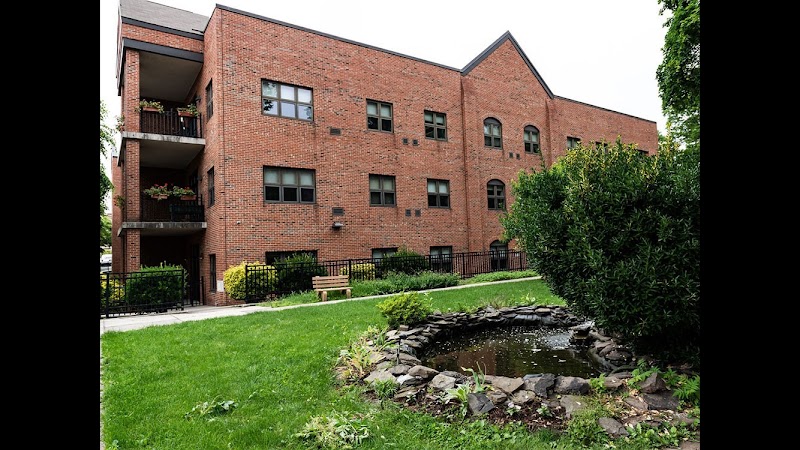


PEACE CARE ST ANN'S

198 OLD BERGEN ROAD, JERSEY CITY, NJ 07305 (201) 433-0950
Non profit - Corporation 120 Beds Independent Data: November 2025
Trust Grade
95/100
#60 of 344 in NJ
Last Inspection: October 2024

Within standard 12-15 month inspection cycle. Federal law requires annual inspections.

Overview

Peace Care St. Ann's in Jersey City, New Jersey, has earned an impressive Trust Grade of A+, which indicates it is an elite facility among nursing homes. It ranks #60 out of 344 facilities in New Jersey, placing it in the top half, and #6 out of 14 in Hudson County, meaning only five local options are better. The facility is on an improving trend, having reduced its issues from four in 2024 to just one in 2025, which is a positive sign. Staffing is also a strong point, with a perfect 5-star rating and a turnover rate of 21%, well below the state average, suggesting that staff are experienced and familiar with the residents. However, there have been some concerns, including 12 documented issues related to food safety and infection control practices, although none were life-threatening. For instance, the facility was found to have stored potentially hazardous foods improperly, and there were lapses in adhering to COVID-19 precautions for new admissions. It's important for families to weigh these strengths and weaknesses when considering this facility for their loved ones.

Trust Score
A+
95/100
In New Jersey
#60/344
Top 17%
Safety Record
Low Risk
No red flags
Inspections
Getting Better
4 → 1 violations
Staff Stability
✓ Good
21% annual turnover. Excellent stability, 27 points below New Jersey's 48% average. Staff who stay learn residents' needs.
Penalties
✓ Good
No fines on record. Clean compliance history, better than most New Jersey facilities.
Skilled Nurses
✓ Good
Each resident gets 58 minutes of Registered Nurse (RN) attention daily — more than average for New Jersey. RNs are trained to catch health problems early.
Violations
⚠ Watch
12 deficiencies on record. Higher than average. Multiple issues found across inspections.
★★★★★
5.0
Overall Rating
★★★★★
5.0
Staff Levels
★★★★☆
4.0
Care Quality
★★★★☆
4.0
Inspection Score
Stable
2024: 4 issues
2025: 1 issues

The Good

  • 5-Star Staffing Rating · Excellent nurse staffing levels
  • 4-Star Quality Measures · Strong clinical quality outcomes
  • Low Staff Turnover (21%) · Staff stability means consistent care
  • Full Sprinkler Coverage · Fire safety systems throughout facility
  • No fines on record
  • Staff turnover is low (21%)

    27 points below New Jersey average of 48%

Facility shows strength in staffing levels, quality measures, staff retention, fire safety.

The Bad

No Significant Concerns Identified

This facility shows no red flags. Among New Jersey's 100 nursing homes, only 1% achieve this.

The Ugly 12 deficiencies on record

Aug 2025 1 deficiency
CONCERN (D) 📢 Someone Reported This

A family member, employee, or ombudsman was alarmed enough to file a formal complaint

Potential for Harm - no one hurt, but risky conditions existed

Deficiency F0658 (Tag F0658)

Could have caused harm · This affected 1 resident

Complaint #: 413630Based on interviews, medical record review, and review of other pertinent facility documentation on 8/21/2025, it was determined that the facility nursing staff failed to consistent...

Read full inspector narrative →
Complaint #: 413630Based on interviews, medical record review, and review of other pertinent facility documentation on 8/21/2025, it was determined that the facility nursing staff failed to consistently document on the Medication Administration Record (MAR) according to the acceptable standards of nursing practice for 2 of 5 residents (Resident #3 and Resident #4) reviewed for medication administration documentation.This deficient practice was evidenced by the following:Reference: New Jersey Statutes Annotated, Title 45, Chapter 11. Nursing Board. The Nurse Practice Act for the State of New Jersey states: The practice of nursing as a licensed practical nurse is defined as performing tasks and responsibilities within the framework of case finding; reinforcing the patient and family teaching program through health teaching, health counseling and provision of supportive and restorative care, under the direction of a registered nurse or licensed or otherwise legally authorized physician or dentist.Reference: New Jersey Statutes Annotated Title 45. Chapter 11. New Jersey Board of Nursing Statutes 45:11-23. Definitions b. The practice of nursing as a registered professional nurse is defined as diagnosing and treating human responses to actual or potential physical and emotional health problems, through such services as case finding, health teaching, health counseling, and provision of care supportive to or restorative of life and wellbeing, and executing medical regimens as prescribe by a licensed or otherwise legally authorized physician or dentist. Diagnosing in the context of nursing practice means that identification of and discrimination between physical and psychosocial signs and symptoms essential to effective execution and management of the nursing regimen. Such diagnostic privilege is distinct from a medical diagnosis. Treating means selection and performance of those therapeutic measures essential to the effective management and execution of the nursing regimen. Human response means those signs, symptoms and processes which denote the individual's health need or reaction to an actual or potential health problem.1. According to the admission Record (AR), Resident # 3 was admitted to the facility with diagnoses which included but were not limited to: Major Depressive Disorder, Anxiety Disorder, and Asthma.According to the Quarterly Minimum Data Set (MDS), an assessment tool dated 6/5/2025, Resident #3 had a Brief Interview for Mental Status (BIMS) score of 99, which indicated the resident was unable to complete the interview.A review of Resident #3's Order Summary Report (OSR) with active orders as of 8/21/2025 reflected the following Physician's Order (PO):-Tylenol Extra Strength Oral Tablet 500 mg (acetaminophen). Give one tablet by mouth every eight hours for pain, dated 12/3/2024.A review of Resident #3's August 2025 MAR revealed a blank space for the above corresponding PO on 8/18/22025 at 1400.A review of Resident #3's August 2025 Progress Notes (PNs) did not reveal documentation that the PO was administered.2. According to the AR, Resident #4 was admitted to the facility with diagnoses which included but were not limited to: Anemia, Diabetes, and Hypertension.According to the Quarterly MDS, an assessment tool dated 8/12/2025, Resident #4 had a BIMS score of 3, which indicated the resident's cognition was severely impaired.A review of Resident #4's OSR with active orders as of 8/21/2025 reflected the following PO:- Clobetasol Propionate External cream 0.05%. Apply to affected areas topically every day and evening shift for wound care until 8/26/2025 23:59, dated 8/6/2026.A review of Resident #4's August 2025 MAR revealed blank spaces for the above corresponding PO on 8/16/2025 and 8/18/2025 on day shift.A review of Resident #4's August 2025 Progress Notes (PNs) did not reveal documentation that the PO was administered.On 8/21/2025 at 9:22 AM, the surveyor interviewed the Licensed Practical Nurse (LPN) who stated that once a medication was given it was signed out on the MAR. She further stated that if a resident had refused their medications or if it was held, the nurses had to document the reason on the MAR. She further indicated that the MAR could not be left blank.On 8/21/2025 at 1:16 PM, the surveyor interviewed the Director of Nursing (DON) who stated that the MAR was signed after the nurse administered medications to the resident. She further stated that if a resident refused a medication, the nurse would document a refusal code on the MAR. The DON confirmed that Resident #3 and Resident #4's MARs had blank spaces. She indicated that that the expectation was that there was not supposed to be any blank spaces on the MAR. The DON stated that it was important that the nurses sign out the MAR as it revealed whether the medication was administered or not.A review of the facility's undated policy titled Medication Administration, revealed under Policy, medications are administered by licensed nurses, or other staff who are legally authorized to do so in this state, as ordered by the physician and in accordance with professional standards of practice. Under Policy Explanation and Compliance Guidelines, 20. Sign MAR after administered. 22. Report and document any adverse side effects or refusals.NJAC 8:39-23.2 (a)
Oct 2024 4 deficiencies
CONCERN (D)

Potential for Harm - no one hurt, but risky conditions existed

Resident Rights (Tag F0550)

Could have caused harm · This affected 1 resident

**NOTE- TERMS IN BRACKETS HAVE BEEN EDITED TO PROTECT CONFIDENTIALITY** Based on observation, interview, record review and policy review, the facility failed to ensure dignity was provided to one (Res...

Read full inspector narrative →
**NOTE- TERMS IN BRACKETS HAVE BEEN EDITED TO PROTECT CONFIDENTIALITY** Based on observation, interview, record review and policy review, the facility failed to ensure dignity was provided to one (Resident (R)165) out of one resident regarding grooming, in that nursing staff failed to remove excessive facial hair on a female resident's chin. This deficient practice could compromise the resident's dignity and comfort. Findings include: Review of the facility's undated policy titled, Activities of Daily Living (ADLs)revealed, The facility will, based on the resident's comprehensive assessment and consistent with the resident's needs and choices, ensure a resident's abilities in ADLs do not deteriorate .care and services will be provided for the following activities of daily living: 1.grooming . Review of R165's Face Sheet located in the Electronic Medical Records (EMR) under the Profile tab revealed R165 was admitted to the facility on [DATE]. Review of R165's admission Minimum Data Set (MDS) with an Assessment Reference Date (ARD) of 10/04/24, located in the EMR under the MDS tab indicated the facility assessed R165 to have a Brief Interview for Mental Status (BIMS) score of 15 out of 15, indicating R165 was cognitively alert. Review of R165's Care Plan dated 10/04/24, located in the EMR under the Care Plan tab, revealed, R165 exhibits new onset of decreased balance, strength, and activity tolerance impacting independence with ADL . Review of the ADL Care Schedule provided by the facility revealed R165 was scheduled for ADL care on Tuesdays and Fridays. Observation on 10/15/24 at 11:37 AM, R165 had 20 to 24 half-inch white hair on her chin. Interview at this time, when asked about the excessive facial hair, R165 stated, I would like them to be removed, they bother me. Interview on 10/16/24 at 11:05 AM, Certified Nurse Aide (CNA)2 confirmed facial hair is a task that the CNAs address during ADL care. Observation on 10/17/24 at 10:01 AM, R165's facial hair remained on her chin. Interview on 10/17/24 at 10:10 AM, R165 stated that during her entire stay at the facility, no one has addressed the facial hair on her chin. The resident further stated, I have a beard. Registered Nurse (RN)2 stated at this time that when CNAs provide ADL care, they should have noticed and addressed the facial hair. RN2 stated it is the expectation of the facility that ADL care includes removing facial hair. NJAC 8:39-4.1 (a)
CONCERN (D)

Potential for Harm - no one hurt, but risky conditions existed

Assessment Accuracy (Tag F0641)

Could have caused harm · This affected 1 resident

Based on interview, record review, and review of the Resident Assessment Instrument (RAI) manual, the facility failed to accurately code the Minimum Data Set (MDS) for one (Residents (R) R62) of two r...

Read full inspector narrative →
Based on interview, record review, and review of the Resident Assessment Instrument (RAI) manual, the facility failed to accurately code the Minimum Data Set (MDS) for one (Residents (R) R62) of two residents reviewed for anticoagulant medications. Inaccuracy of the MDS could lead to problems in the care area not being addressed appropriately in the care plan. Findings include: Review of the RAI manual, dated 10/24 located at https://www.cms.gov/files/document/finalmds-30-rai-manual-v1191october2024.pdf revealed N0415: High-Risk Drug Classes: Use and Indication, Coding Instructions .Code all high-risk drug class medications according to their pharmacological classification, not how they are being used. Column 1: Check if the resident is taking any medications by pharmacological classification during the 7-day observation period (or since admission/entry or reentry if less than 7 days). Column 2: If Column 1 is checked, check if there is an indication noted for all medications in the drug class .Anticoagulants such as Target Specific Oral Anticoagulants (TSOACs), which may or may not require laboratory monitoring, should be coded in N0415E, Anticoagulant. Review of R62's quarterly MDS with an ARD date of 08/13/24, located in the MDS tab of the EMR revealed an admission date of 05/19/21.revealed a diagnosis of unspecified atrial fibrillation. The MDS was not checked for Anticoagulant medication. Review of R62's physician orders, dated 04/04/24, located in the EMR under the Order tab revealed Rivaroxaban Oral Tablet 15 MG [milligrams] (Rivaroxaban) Give 1 tablet by mouth in the evening for Afib [atrial fibrillation]. Review of R62's Medication Administration Record (MAR) dated 10/24, located in the EMR under the Order tab reveal a current order for Rivaroxaban Oral Tablet 15 MG (Rivaroxaban) Give 1 tablet by mouth in the evening for Afib -Start Date- 04/04/24. During an interview on 10/17/24 at 10:56 AM, the MDSC was asked about R62's MDS with an ARD of 08/13/24 section N. The MDSC stated nursing [unit manager] on each floor completed the medication section (Section N) in the MDS. The MDSC was asked if anticoagulant should be checked on the MDS if prescribed. The MDSC stated, Yes, anticoagulants should be coded on the MDS. During an interview on 10/17/24 at 11:13 AM, RN1 checked the EMR and confirmed that R62 was currently prescribed an anticoagulant and that she should have coded R62's MDS for anticoagulant. During an interview on 10/17/24 at 3:02 PM, the Director of Nursing (DON) was asked what her expectation was for the accurate coding of the MDS for anticoagulants. The DON stated, If there is an order for an anticoagulant it should be coded on the MDS. The DON stated the unit manager on each floor was responsible for checking the accuracy of her entries on the MDS. NJAC 8:39-33.2(d)
CONCERN (D)

Potential for Harm - no one hurt, but risky conditions existed

Deficiency F0692 (Tag F0692)

Could have caused harm · This affected 1 resident

**NOTE- TERMS IN BRACKETS HAVE BEEN EDITED TO PROTECT CONFIDENTIALITY** Based on observation, interview, record review and policy review, the facility failed to maintain acceptable nutritional paramet...

Read full inspector narrative →
**NOTE- TERMS IN BRACKETS HAVE BEEN EDITED TO PROTECT CONFIDENTIALITY** Based on observation, interview, record review and policy review, the facility failed to maintain acceptable nutritional parameters by not monitoring weights for accuracy, assessing weight changes, implementing interventions, monitoring meal intake, and/or providing meal assistance for two (Residents (R)49 and R52) of three residents reviewed for nutrition in the sample of 42 residents. This had the potential to cause further weight loss without a root cause analysis and/or additional interventions put in place. Findings include: Review of the facility's policy titled Clinical Nutrition Services, dated 10/24, provided by the facility revealed, The dietitian/qualified nutrition professional identifies residents who are at risk and/or potential risk for nutrition-related problems. The dietitian/qualified nutrition professional recommends interventions to maintain the resident's nutrition status, based on resident preference and tolerance .For residents at nutritional risk: Determine appropriate interventions based on the identified etiology/cause of the risk factor and resident preferences. Review of the facility's policy titled Standards of Care, dated 08/20, provided by the facility revealed, The Registered Dietitian (RD) or designee are responsible for monitoring and noting miscellaneous changes or other pertinent nutrition information in an interim dietary progress note of the medical record .Review resident weights and identify significant weight changes (gains and losses) as well as those with noted trends; > [greater than or equal to]5% change in one month, >7.1% (percent) in three months, >10% in six months. Complete an assessment of the weight change and document findings on a nutrition progress note or a facility utilized assessment weight change form The Registered Dietitian completes documentation, at minimum monthly, on a nutrition progress note for residents deemed at high nutritional risk form .Nutritional consults are to be addressed in a timely manner with a goal of 24 to 72 hours upon receiving by the Registered Dietitian or designee. 1. Review of R49's Face Sheet, located in the Electronic Medical Record (EMR) under the profile tab revealed the resident was admitted on [DATE] with a diagnoses of chronic obstructive pulmonary disease, type 2 diabetes mellitus, and anemia. Review of R49's Dietician Note dated 09/18/24 located in the EMR under the progress note tab revealed, R49's was classified as Malnourished, Resident has a -29.6% weight loss from July-September. Resident weight over the past two months has been of a significant decline. Resident was 164 pounds (lbs.) in June, and now it is 120.6 lbs. The resident continues to lose weight due to poor PO [by mouth] intake. The resident is documented with poor- no intake. Resident has few spoonful at mealtimes at most. The resident is encouraged by staff to increase intake without success. Goals/interventions: RD will continue to monitor R49's appetite, intake of food and fluids, and weight and make her comfortable. RD will honor any resident's food requests . Continue review of the RD notes dated, 08/20/24 revealed, significant weight loss; note dated 07/18/24 revealed, significant weight loss; and note dated 06/06/24 revealed a diet order change to Carbohydrate Controlled Diet (CCD), Heart healthy diet, pureed texture, nectar thick consistency. Review of R49's weights, located in the EMR under the Weights and Vital tab revealed the following: 01/08/24-157 pounds (lbs.) 02/14/24-171.8 lbs. 03/22/24-171.4 lbs. 04/17/24-175.7 lbs. 05/06/24-175.7 lbs. 06/04/24-170.2 lbs. 07/10/24-137.0 lbs. 08/08/24-123.8 lbs. 09/10/24-120.6 lbs. 10/08/24-108.6 lbs. Review of R49's EMR Progress notes under the Progress notes tab revealed the following amount of food consumption at the meals: On 10/15/24 consumed 100% with assistance; on 10/14/24 Dinner consumed 25% despite encouragement and assistance from staff, Resident ate 100% breakfast and lunch poorly; on 10/13/24, Dinner consumed 50% with assistance from staff, 10/13/24, Resident had poor appetite during shift; on 10/12/24, Dinner consumed 50% with assistance from staff; on 10/10/24 Resident ate 100% for both meals; on 10/04/24 Good appetite for dinner; on 10/01/24 Good appetite with dinner, consumed 75% puree meal with assistance from staff; on 09/30/24 Poor appetite with dinner, consumed two spoons of puree meal despite encouragement and assistance from staff; on 09/29/24, Breakfast and Lunch consumed 90% and drank some liquid with assistance from staff; on 09/27/24 Dinner consumed 50% and drank 4 ounces liquid with assistance from staff; on 09/27/24 Appetite good for both meals; on 09/26/24 Dinner consumed 50% and drank 4 ounces liquid with assistance from staff; on 09/23/24 Poor appetite with dinner, consumed 25% spoon-fed of puree food despite encouragement and assistance from staff. Drank 4 ounces fluids; on 09/22/24 Noted remains poor appetite with dinner, consumed 3 spoons-fed of puree food despite encouragement and assistance from staff. Drank adequate fluids; on 09/21/24 Poor appetite with dinner, consumed 25% despite encouragement and assistance from staff. Review of R49's Doctors Orders located in the EMR under the orders tab revealed no orders for nutritional supplements or medication to encourage appetite. Review of R49's Care Plan found in the EMR under the Care Plan tab last updated on 09/23/24, did not reveal any issues or concerns about R49's weight loss, nor a plan to see if the resident's weight was correct, and no indication of any nutritional supplements to be added. Interview on 10/16/24 at 3:30 PM, the RD stated that once a resident has reached 5% of weight loss, interventions are put in place. The RD stated, I should have been monitoring the resident more closely. Interview on 10/17/24 at 9:20 AM, Registered Nurse (RN3) revealed the facility's protocol for residents who have lost significant weight is to contact the RD, who will check weights, determine the reason for the weight loss, change the resident's diet, and refer to the physician to add supplements. Interview on 10/17/24 at 11:27AM, the Nurse Practitioner (NP) stated that when there was significant weight loss, several interventions can be put in place such as supplements, swallowing evaluations, and medications to encourage appetite. The NP confirmed none of the interventions mentioned were put in place for R49. Interview on 10/17/24 at 10/17/24 at 11:27AM, the Director of Nursing (DON) revealed that R49's weight loss was not handled properly by the facility. Even though this resident has gone under Hospice care in June 2024, significant weight loss not due to the resident's diagnosis should have been investigated and the proper interventions put in place to reduce any further weight loss. 2. Review of R52's quarterly Minimum Data Set (MDS) with an Assessment Reference Date (ARD) date of 07/09/24, located in the MDS tab of the EMR revealed an admission date of 04/04/23 and a Brief Interview of Mental Status (BIMS) score of two out of 15, indicating R52's cognition was severely impaired. The MDS indicated diagnoses of diabetes mellitus, dementia, malnutrition, heart failure, and adult failure to thrive. Review of R52's diet order dated 09/01/23, located in the EMR under the Order tab revealed Heart Healthy, NAS [no added salt] diet, Regular texture, Thin Liquids consistency. Review of R52's Nutritional Recommendation, dated 01/23/24, located in the hard chart under the Dietary tab revealed Weekly Weights due to weight loss. Review of R52's Care Plan, dated 04/11/24, located in the EMR under the Care Plan tab revealed R52 is at risk for malnutrition in the setting of hx. [history] significant weight loss, moderate protein-calorie malnutrition, and admitting dx [diagnosis] of Adult Failure to Thrive. The goal included, R52 will have gradual weight gain toward BMI [body mass index] > [greater than] 24.5 through review date. An intervention included, Weight monitoring (FREQ) [frequently]. Review of R52's Mini Nutritional Assessment, dated 07/11/24, located in the EMR under the Assessment tab, revealed R52 had BMI of 21 to less than 23 and was at risk of malnutrition with a score of 11. Review of R52's quarterly Nutritional assessment dated 07/14/24 located in the EMR under the Progress Note tab revealed height at 69.0 inches and weight at 154.9 pounds, at risk of malnutrition, and Resident BMI is below 23, and resident has PMH [past medical history] of dementia which puts resident at risk for malnutrition. Review of R52's order, dated 09/07/24, located in the EMR under the Order tab revealed Lasix Oral Tablet 40 MG (Furosemide)(diuretic medications) Give 1 tablet by mouth one time a day for Edema Hold for SBP [Systolic Blood Pressure] less than 100mmhg [millimeters of mercury]. Review of R52's Physician Progress Notes in the EMR under the Progress Notes tab dated 08/17/24, 09/14/24, and 10/12/24 revealed, Rt [right] arm edema . Review of R52's weight history, located in the EMR under the Weight tab, revealed R52 had lost 10 % of his body weight in 18 days, from 09/20/24 to 10/08/24 and weights were not consistently obtained: On 10/08/24 at 139.9 Lbs. Mechanical Lift, reweigh 10/16/24 at 154.5 Lbs. On 09/20/24 at 155.8 Lbs. Wheelchair On 09/11/24 at 155.8 Lbs. Wheelchair On 08/12/24 at 155.0 Lbs. Wheelchair On 07/09/24 at 154.9 Lbs. Wheelchair On 06/14/24 at 153.5 Lbs. Wheelchair On 05/03/24 at 154.0 Lbs. Wheelchair On 04/16/24 at 148.4 Lbs. Mechanical Lift Review of R52's Nutrition/Dietary Note, dated 10/18/24, located in the EMR, under the Progress Note tab revealed Possible sig.[significant] weight change. RD requested new weight to verify weight change- RD has observed resident in dining room previously with good PO [oral] intake. Pending weight change will follow up and make dietary changes PRN [as needed]. On 10/16/24 at 9:36 AM, R52 was served his breakfast in bed and feeding himself. R52's breakfast included scrambled eggs, juice, fruit, a muffin, and coffee. On 10/16/24 at 9:47 AM, certified nurse aide (CNA)1 was observed bringing R52's breakfast tray out of his room. CNA1 confirmed R52 ate 100% and nothing extra was provided. On 10/16/24 at 12:52 PM, R52 was served lunch in bed and feeding himself. His lunch included a muffin, coffee, green beans, smothered chicken, corn bread dressing, and a beverage. On 10/16/24 at 12:59 PM, R52 was observed in bed with covers over his head and his lunch tray pushed off to the side with a napkin on top of the plate. Only half of R52's meal was consumed. Staff did not offer more food or an alternative. On 10/16/24 at 1:09 PM, R52 was again observed in bed with covers over his head and his lunch tray pushed off to the side with a napkin on top of the plate. Only half of R52's meal was consumed. Staff did not offer more food or an alternative. During an interview on 10/16/24 at 1:50 PM, the RD was asked if she was aware of R52's recent weight loss of 10% in 18 days. The RD stated, Yes, she reviewed R52's weights on 10/14/24 and requested a reweigh for the 139.9-pound weight because it was off from his normal weight history. The RD confirmed R52 had a history of weight loss. The RD stated R52's weight was back to normal and he had a good intake. The RD was asked why she only documented R52's nutritional status and requested a reweigh today, 10/16/24, eight days later. The RD stated she wasn't sure. The RD was asked should a sudden weight loss be caught sooner. The RD stated she was trying to figure it out. RD was asked about R52 only eating 50% at lunch today, 10/16/24 and was R52 receiving a supplement or getting extra calories when he doesn't eat well. The RD stated, No, because he typically eats very well. The RD was asked if she was aware R52 had a recommendation on the hard chart for weekly weights in 01/24 and a nutritional supplement on 07/23. The RD stated she wasn't aware. The RD stated during the facility's morning meetings, they will discuss weight changes or poor intake. The RD was asked if R52 was discussed and the RD stated, No. The RD was asked why R52's weight was sometimes obtained by a mechanical lift and other times in a wheelchair. The RD stated she wasn't sure and wasn't aware of the requirement to be consistent with obtaining the weights. The RD was asked if R52's physician was aware of R52's significant weight loss when the weight was obtained on 10/08/14. The RD stated she wasn't sure, but she placed a paper in the hard chart to flag the physician next time they were in the building to see the resident. The RD confirmed she doesn't make a telephone call to the physician about weights. During a telephone interview on 10/17/24 at 9:47 AM, Primary Care Physician (PCP)1 was asked if R52 was her patient. PCP1 stated, Yes. PCP1 was asked if she was informed of R52's weight change of 155.8 pounds on 09/20/24 to 139.9 pounds on 10/08/24. PCP1 stated she had not been informed. PCP1 was asked how the facility informed her of weight changes. PCP1 stated they leave a paper on the front of the chart, but R52 did have a lot going on medically such as edema and fluid retention. PCP1 went on to say the facility does call her for something dramatic. PCP1 was asked if R52's weight change was dramatic and PCP1 stated, Yes. During an interview on 10/17/24 at 1:37 PM, the DON was asked if she was aware of R52's weight of 139.9 pounds on 10/08/24. The DON stated, No. The DON went on to say on the 10th of every month, all weights should be completed and then the weights are reviewed. The DON stated the certified nurse aides weighed the residents and gave the weights to the nurses to enter into the EMR. The DON stated if a reweigh was needed because of a big difference from last weight, reweighs should be right away. The DON was asked if R52's 10/08/24 weight of 139.9 pounds was discussed in the morning meetings. The DON stated, No. The DON was asked when were reweighs completed. The DON said, right away.' The DON was asked when the physician should be notified of significant weight loss. The DON stated, The same day. DON was asked why R52's weights were obtained using different methods and was she was aware of the requirement of using the same process/method for obtaining weights. DON stated, Yes, but wasn't sure why it was inconsistent. The DON was asked what her expectation was for addressing weight loss. The DON stated to notify the physician of weight loss that day. The DON confirmed the facility did not have a policy addressing weight accuracy or consistency. Review of the facility's policy Clinical Nutrition Services, revised on 10/24 revealed, The dietitian/qualified nutrition professional identifies residents who are at risk and/or potential risk for nutrition-related problems. The dietitian qualified nutrition professional should recommend interventions to maintain the resident's nutrition status, based on resident preference and tolerance . Review of the RD's responsibilities (job description) provided by the facility revealed, .for residents identified as malnutrition, the RD will log results into the MNA tracker to establish nutrition follow-up and recommendations, will meet weekly with the disciplinary team, discuss nutrition concerns with the IDPT [ Interdisciplinary Plan of Treatment], update the care plan to reflect the appropriate interventions put in place . NJAC 8:39-17.1(c) NJAC 8:39-17.2(d) NJAC 8:39-27.1(a)
CONCERN (D)

Potential for Harm - no one hurt, but risky conditions existed

Infection Control (Tag F0880)

Could have caused harm · This affected 1 resident

Based on observation, interviews, record review, review of facility policies, and Centers for Disease Control (CDC) and Prevention guidance, the facility failed to clean and disinfect patient equipmen...

Read full inspector narrative →
Based on observation, interviews, record review, review of facility policies, and Centers for Disease Control (CDC) and Prevention guidance, the facility failed to clean and disinfect patient equipment after use for two of five residents (Resident (R) 16 and 54) reviewed for infection control and failed to follow hand hygiene practices during medication pass for one of five residents (R7) reviewed for medication administration. These failures could promote the spread of multi drug resistant organisms (MDROs) throughout the facility. Findings include: 1. Review of R16's undated admission Record in the Profile tab of the electronic medical record (EMR) revealed an admission date of 06/20/15. The admission Record revealed diagnoses of atrial fibrillation and hypertension. Review of R16's quarterly Minimum Data Set (MDS) with an Assessment Reference Date (ARD) of 07/05/24, located in the EMR MDS tab, revealed a Brief Interview for Mental Status (BIMS) score of 14 out of 15 which indicated R16 was cognitively intact. During an observation in R16's room on 10/16/24 at 8:20 AM, revealed Licensed Practical Nurse (LPN) 1 performed hand hygiene, picked up a clean wrist blood pressure cuff from the clean paper towel on top of the medication cart, and took R16's vital signs. She performed hand hygiene again after obtaining vitals. LPN1 placed the dirty blood pressure cuff down on top of the clean paper towel on top of the medication cart. 2. Review of R54's undated admission Record in the Profile tab of the EMR revealed an initial admission date of 02/18/22. The admission Record revealed diagnoses of type two diabetes mellitus and hypertensive heart disease with heart failure. Review of R54's quarterly MDS with an ARD of 07/02/24, located in the EMR MDS tab, revealed a BIMS score of 15 out of 15 which indicated R54 was cognitively intact. During an observation in R54's room on 10/16/24 at 8:35 AM, revealed LPN1 performed hand hygiene, picked up the dirty blood pressure cuff from the paper towel on top of the medication cart, and took R54's vital signs. She performed hand hygiene after obtaining vitals. She set the dirty blood pressure cuff down on top of existing paper towel on top of the medication cart. During an interview on 10/16/24 at 8:46 AM, LPN1 stated, I clean the blood pressure cuff after two or three uses. It should be done between and after with bleach wipes. During an interview on 10/16/24 at 8:50 AM, the Director of Nursing (DON) stated, The nursing staff all know that they clean patient care equipment before and after each use and in between. They are to use bleach wipes and let the equipment air dry for three minutes. They have wrist blood pressure cuffs, and they can alternate and use one while the other one is drying. During an interview on 10/16/24 at 9:10 AM, Infection Preventionist (IP) stated, Staff are supposed to use the bleach wipes in the purple top containers and let air dry for two minutes after cleaning. Staff are trained to clean and disinfect all patient care equipment after they use it or touch a resident with it. Review of the facility's policy titled, Infection Prevention and Control - Cleaning of Non-Critical Equipment revised in 01/2018, indicated, under the Purpose section, To establish prevention and control procedures and policies based on recognized guidelines in the cleaning of Non-Critical Equipment . Resident care devices as identified in this section are: .blood pressure cuffs . The definition as stated in the tag is: non-critical items are defined as those that come in contact with intact skin or do not contact the resident. The Policy section indicated, All non-critical items are to be cleaned with a low-level disinfection by cleaning periodically and after visible soiling with an EPA disinfectant detergent or germicide that is approved for healthcare settings.Use EPA approved Germicidal Disposable Wipes (purple top PDI-Super Sani Cloth or equivalent) .thoroughly wet surface and objects. Treated surfaces and objects must remain visibly wet for a full two (2) minutes. Let dry. All non-critical equipment are to be thoroughly cleaned and disinfected with an EPA approved disinfectant between residents. Items that are contaminated with C-Diff spores are to be cleaned with a 1:10 ratio dilution of sodium hypochlorite (nine parts water to one part bleach). 3. Review of R7's undated admission Record in the Profile tab of the EMR revealed an initial admission date of 02/07/19. The admission Record revealed a diagnosis of chronic systolic congestive heart failure. Review of R7's quarterly MDS with an ARD of 09/30/24, located in the EMR MDS tab, revealed a BIMS score of 12 out of 15 which indicated R7 was moderately cognitively impaired. During an observation in R7's room on 10/16/24 at 8:30 AM, LPN1 performed hand hygiene, and gave R7's the cup of her morning medications. R7 took the cup of medications, touched LPN1's fingers and gave LPN1 the medicine cup back. LPN1 gave R7 a cup of water. R7 drank the water and gave the empty water cup back to LPN1. She did not perform hand hygiene. She continued to move onto the next resident preparing her medications. During an interview on 10/16/24 at 8:46 AM, LPN1 stated, I usually clean my hands after every resident. During an interview on 10/16/24 at 8:50 AM, the DON stated, All the staff know to perform hand hygiene in between each resident or when visibility soiled. Review of the facility's policy titled, Infection Prevention and Control - Hand Hygiene revised in 02/2018, indicated, Purpose, Effective hand hygiene removes transient microorganisms, dirt and organic material from the hands and decrease the risk of cross contamination from residents . The Policy section indicated, All members of the healthcare team will comply with current Centers for Disease Control and Prevention (CDC) hand hygiene guidelines. Review of the CDC website and Prevention website https://www.cdc.gov/clean-hands/hcp/clinical-safety/index.html, titled, Clinical Safety: Hand Hygiene for Healthcare Workers updated 02/27/24 revealed: Know When to Clean Your Hands: Immediately before touching a patient .After touching a patient or patient's surroundings .When to use an alcohol-based hand sanitizer (ABHS): Unless hands are visibly soiled, ABHS is preferred over soap and water in most clinical situations . NJAC 8:39-19.4 (a)(b)(c)(i)(n)
Nov 2022 5 deficiencies
CONCERN (D)

Potential for Harm - no one hurt, but risky conditions existed

Comprehensive Care Plan (Tag F0656)

Could have caused harm · This affected 1 resident

**NOTE- TERMS IN BRACKETS HAVE BEEN EDITED TO PROTECT CONFIDENTIALITY** Based on observation, interview, and record review, it was determined that the facility failed to develop and implement a compre...

Read full inspector narrative →
**NOTE- TERMS IN BRACKETS HAVE BEEN EDITED TO PROTECT CONFIDENTIALITY** Based on observation, interview, and record review, it was determined that the facility failed to develop and implement a comprehensive person centered care plan for an unstageable wound. This deficient practice was identified for 1 of 6 residents, (Resident # 9) reviewed for pressure ulcer injury. This deficient practice was evidenced by the following: On 11/2/22 at 11:51 AM, the surveyor observed Resident #9 out of bed seated in a wheelchair in the dayroom. The resident greeted the surveyor with a smile but was unable to answer any questions. The foot rest on the resident's wheelchair had a blue padded foot rest attached to the bottom of the wheelchair. On 11/16/22 at 10:00 AM, the surveyor in the presence of the Registered Nurse Unit Manager (RN/UM) and a Licensed Practical Nurse (LPN) observed the wound on the residents left foot. The LPN described the wound as a dry hard scab. The LPN further stated that she applied skin prep and left the wound open to air as ordered. The LPN and RN/UM further described the wound to the surveyor and stated that the color of the wound was pink and normal skin color around the scab area and that the scab area was dry on the bunion which appeared hardened. The surveyor reviewed the hybrid medical record for Resident # 9. A review of the resident's admission Record reflected that the resident was readmitted to the facility on [DATE] with diagnosis which included but not limited to non-ST elevation myocardial infarction (a heart attack), urinary tract infection, extended spectrum beta lactamase (ESBL) resistance (a drug resistance bacteria), and unspecified dementia, unspecified severity, without behavioral disturbance, psychotic disturbance, mood disturbance and anxiety. A review of the quarterly Minimum Data Set (MDS), an assessment tool used to facilitate the management of care dated 8/31/22, reflected the resident had a brief interview for mental status (BIMS) score of 4 out of 15, indicating that the residents cognition was severely impaired. Further review of the MDS, Section M indicated that the resident had one or more unhealed pressure ulcers. The MDS indicated the resident had one unstageable deep tissue injury. A review of the Nursing re-admission assessment dated [DATE], indicated that the resident was assessed with a DTI (deep tissue injury) on the left toe great toe. A review of the Order Summary Report for November 2022, indicated a physician's order dated 9/7/22, for skin prep spray apply to left bunion topically every shift for pressure ulcer. A review of the Wound Healing Associates wound assessment dated [DATE], indicated that the resident had a left bunion pressure ulcer which was not healed measuring 0.7 cm (centimeters) by 0.7 cm by 0 cm and staged as Deep Tissue Pressure Injury Persistent non-blanchable deep red, maroon or purple discoloration. The assessment notes reflected, Reclassified from unstageable 100% subcutaneous ecchymotic discoloration. A review of the resident's comprehensive person centered care plans revealed a focus area dated 11/29/19 for Risk for impaired skin integrity, impaired mobility, fragile skin, scattered bruise on BUE [bilateral upper extremities] and RLE [right lower extremity] cellulitis. There was no care plan developed to address the resident's left bunion pressure ulcer staged as a DTI. On 11/15/22 at 11:36 AM, the surveyor interviewed the first floor RN/UM who stated that the wound team assessed the resident's wound weekly. She further stated that the left bunion pressure ulcer was not care planned, but should have been. She stated, I'm responsible for care plans. I missed it. I should have care planned it. I forgot to. She confirmed that the resident was readmitted with the left bunion pressure ulcer on 8/27/22. Review of the facility's undated Care Plans- Comprehensive and Person Centered policy included that measurable objectives and timetables to meet the resident's physical, psychosocial and functional needs will be developed and implemented for each resident .Assessments of residents are ongoing and care plans are revised as information about the residents and the residents conditions change .The Interdisciplinary Team must review and update the care plan when there has been a significant change in the resident's condition, when the desired outcome is not met, when the resident has been readmitted to the facility from a hospital stay; and at least quarterly, in conjunction with the required quarterly MD assessment. Review of the facility's Pressure Ulcer Prevention/Management Program Policy revised 5/08, included that the interdisciplinary team will discuss the evaluation, and a specific individualized plan of care will be developed to address the resident's needs and risk factors in accordance with contemporary standards of practice. NJAC 8:39-11.2(e)(2)(f)
CONCERN (D)

Potential for Harm - no one hurt, but risky conditions existed

Deficiency F0658 (Tag F0658)

Could have caused harm · This affected 1 resident

Based on observation, interview, and record review, it was identified that the facility failed to appropriately transcribe a Physician's Order (PO) for the recommendation of a skin care treatment. Thi...

Read full inspector narrative →
Based on observation, interview, and record review, it was identified that the facility failed to appropriately transcribe a Physician's Order (PO) for the recommendation of a skin care treatment. This deficient practice was identified for 1 of 1 resident reviewed, (Resident #52) for general skin conditions. Reference: New Jersey Statutes, Annotated Title 45, Chapter 11. Nursing Board The nurse practice act for the State of New Jersey states; The practice of nursing as a registered professional nurse is defined as diagnosing and treating human responses to actual or potential physical and emotional health problems, through such services as casefinding, health teaching, health counseling, and provision of care supportive to or restorative of life and wellbeing, and executing medical regimens as prescribed by a licensed or otherwise legally authorized physician or dentist. On 10/31/22 at 10:43 AM, the surveyor interviewed the Registered Nurse/Unit Manager (RN/UM) regarding residents on the unit that had skin impairments. The RN/UM stated that Resident #52 had a rash that was a fungal dermatitis. On 11/02/22 at 11:16 AM, the surveyor observed Resident #52 in their room while the Certified Nursing Aide (CNA)#1 was performing care. CNA#1 explained to the surveyor that she would need help from another CNA to transfer the resident. The surveyor observed CNA#2 enter the resident's room. On 11/02/22 at 11:20 AM, the surveyor observed the two CNAs, place a Hoyer pad underneath the resident and attach the Hoyer pad to a sit to stand lift transfer machine. While the resident was standing, the surveyor observed CNA#1 wash Resident #52's perineal and buttocks area. The surveyor further observed CNA#1 apply a white cream to the resident's buttocks. The surveyor observed that the resident's skin was intact. The surveyor reviewed the hybrid medical record for Resident #52. A review of the resident's admission Record reflected that the resident resided at the facility for almost six years and had diagnoses which included but were not limited to epilepsy, weakness, major depressive disorder, anxiety disorder, and unspecified dementia with agitation. A review of the resident's annual Minimum Data Set (MDS), an assessment tool used to facilitate the management of care dated, 09/29/22 indicated that the resident's cognitive skills for decision making was moderately impaired. A review of the resident's Skin Assessment Report dated 11/09/22, reflected that the resident had an improving dermatologic (a disease which includes common skin infections) area on the residents back and sacrum. The recommendation made by the physician who conducted the skin assessment indicated to apply triamcinolone (a cream used to treat psoriasis, a condition in which skin cells build up and form scales and itchy, dry patches) cream twice a day to the affected areas. A further review of the resident's Skin Assessment Report dated 11/09/22, reflected that the resident had an improving fungal dermatitis under his/her left breast. The recommendation made by the physician who conducted the skin assessment indicated to apply nystatin powder twice a day with hygiene and to monitor the skin for changes. A review of the resident's November 2022 electronic Treatment Administration Record (eTAR) indicated that the recommendations made by the physician on 11/09/22 who conducted the skin assessment was not transcribed to the eTAR from 11/09/22 through 11/15/22. A review of the resident's Care Plan revised 10/13/22, reflected a focus area that the resident had potential for pressure ulcer development related to impaired mobility. The goal of the resident's Care Plan was the resident's skin would remain intact, free of redness, blisters, or discoloration by the next review date. The interventions in the residents Care Plan included to apply lotion, protective barrier after each incontinence episode and to provide early treatment to any skin impairment. On 11/15/22 at 11:07 AM, the surveyor interviewed the RN/UM who stated that the resident had psoriasis and was being seen by the physician who assessed resident's skin weekly. The surveyor asked the RN/UM what treatments were in place for the resident. The RN/UM stated that she was applying triamcinolone cream to the residents back side daily during her shift. On 11/15/22 at 11:09 AM, the surveyor further reviewed the November 2022 eTAR in the presence of the RN/UM. A review of the November 2022 eTAR reflected that the treatments for the triamcinolone cream and nystatin powder had not been re-ordered for the resident and were not documented on the November 2022 eTAR. The RN/UM stated that the resident had been seen by the physician who assessed the resident's skin on 11/09/22, and made recommendations to continue the treatments for the resident. The RN/UM told the surveyor that when facility staff received a recommendation by a physician, they would review the recommendation with the resident's primary care physician prior to carrying out the PO based off of the primary care physician's approval. The RN/UM stated that this would be documented in the resident's medical record. The RN/UM stated that the PO was not transcribed, however she was applying the triamcinolone cream and nystatin powder as routine treatments for the resident during her shift. The RN/UM could not speak to the applications of the cream during evening shift hours. On 11/15/22 at 11:31 AM, the surveyor interviewed the Registered Nurse/Infection Preventionist (RN/IP) who stated that the resident had psoriasis and was followed by a physician weekly for his/her condition. The RN/IP stated that the recommendations made by the physician who conducted the skin assessment were not transcribed onto the November 2022 eTAR. On 11/17/22 at 10:20 AM, the surveyor observed that the resident's skin on his/her back, buttocks, and under breasts were free from redness and irritation. On 11/17/22 at 12:36 PM, the surveyor conducted a follow up interview with the RN/IP who stated that the nurse working on 11/09/22, should have called Resident #52's primary care physician to review the recommendations and appropriately transcribed them onto the November 2022 eTAR. The RN/IP further stated that the resident was assessed by the physician, yesterday and the resident's skin was intact. A review of the facility's undated Physician Orders Policy and Procedure included, If a consulting physician makes an order recommendation, this recommendation will need to be relayed to the attending physician for approval before recommendations can be carried out. The facility's Physician Orders Policy and Procedure further included that transcribed treatments would be documented onto the TAR. NJAC 8:39-23.2(a)
CONCERN (D)

Potential for Harm - no one hurt, but risky conditions existed

Pharmacy Services (Tag F0755)

Could have caused harm · This affected 1 resident

Based on observation, interview and record review, it was determined that the facility failed to provide pharmaceutical services in accordance with professional standards of practice to accurately adm...

Read full inspector narrative →
Based on observation, interview and record review, it was determined that the facility failed to provide pharmaceutical services in accordance with professional standards of practice to accurately administer a medication, Potassium Chloride Extended Release to 1 of 7 residents, (Resident #47) by 1 of 3 nurses observed during the medication administration observation. Reference: New Jersey Statutes Annotated, Title 45. Chapter 11. Nursing Board. The Nurse Practice Act for the State of New Jersey states: The practice of nursing as a registered professional nurse is defined as diagnosing and treating human responses to actual and potential physical and emotional health problems, through such services as case finding, health teaching, health counseling, and provision of care supportive to or restorative of life and wellbeing, and executing medical regimens as prescribed by a licensed or otherwise legally authorized physician or dentist. Reference: New Jersey Statutes Annotated, Title 45, Chapter 11. Nursing Board. The Nurse Practice Act for the State of New Jersey states: The practice of nursing as a licensed practical nurse is defined as performing tasks and responsibilities within the framework of case finding; reinforcing the patient and family teaching program through health teaching, health counseling and provision of supportive and restorative care, under the direction of a registered nurse or licensed or otherwise legally authorized physician or dentist. This deficiency was evidenced by the following: On 11/2/22 at 8:42 AM, the surveyor interviewed the Registered Nurse (RN) who stated that she worked for an agency and that it was her first day working at the facility. On 11/2/22 at 8:55 AM, during the medication administration observation, the surveyor observed the RN preparing to administer medications to Resident #47. The RN prepared four medications which included one, 20 milliequivalent (MEQ) extended release (ER) tablet of Potassium Chloride (KCL) (a medication used to prevent or treat low potassium levels). The RN stated that the resident had a mechanical soft diet and she had to crush the resident's medications. The surveyor observed the RN place each medication in a small plastic medication bag, used a crushing device, and crushed each of the four medications. The surveyor then observed the RN proceed to a dining table where Resident #47 was seated in a wheelchair. The RN stated that the resident had just finished breakfast and would be placing the crushed medications into applesauce to administer them to the resident. The surveyor asked the RN to return to the medication cart to review the medications prior to administration. On 11/2/22 at 9:05 AM, the surveyor, with the RN, reviewed the electronic medication administration record (eMAR) which revealed a Physician's Order (PO) dated 6/17/21, for KCL ER tablet, extended release 20 MEQ, give one tablet by mouth one time a day for hypokalemia (a low blood level of potassium). The RN stated that there were no instructions noted regarding whether the KCL ER could be crushed. The RN added that the resident had a mechanical soft diet which was indicated on the eMAR and was following the diet and crushing the medications. At that time, the surveyor asked the RN to review the resident's medication label for the KCL ER. The surveyor, with the RN, reviewed the KCL ER label which had a cautionary warning, May be broken or allowed to disintegrate in water (Stir well) before swallowing. Rinse down with water. But do not chew all of the remaining particles. The RN stated that when she was preparing the KCL ER she had thought about crushing or not crushing the KCL ER. The RN further explained that, nothing states do not crush. The RN stated that she thought the KCL ER could be crushed. On 11/2/22 at 9:17 AM, the surveyor attempted to interview Resident #47, but the resident shook his/her head indicating, no at that time. On 11/2/22 at 9:18 AM, the surveyor interviewed the agency RN who stated that she was somewhat oriented to the facility's process. The RN explained that she was oriented by another nurse to the floor and the medication cart. The RN was unable to speak to whether the facility had provided an orientation or in-service on medication administration. On 11/2/22 at 9:57 AM, the surveyor interviewed the RN/Infection Preventionist (RN/IP) who stated that she was familiar with Resident #47. The RN/IP told the surveyor that she thought the resident could swallow the KCL ER tablet when broken in half or disintegrated in water as noted on the cautionary warning. The RN/IP stated that the KCL ER, cannot be totally crushed. On 11/2/22 at 10:16 AM, the surveyor interviewed the Director of Nursing (DON) who stated that when agency nurses came to work at the facility for the first day, they were given a general orientation to the floor. On 11/2/22 at 1:40 PM, the survey team met with the DON who stated that she would expect the nurses to follow the cautionary warnings such as give with food or do not crush. The DON added that she was unsure if the facility policy for the Administration of Medication spoke to following cautionary warnings, but she knew there had been in-services regarding medication administration provided to the nurses. On 11/2/22 at 2:46 PM, the survey team met with the DON who stated that the nurses who came from an agency were oriented to the floor before starting their shift. The DON added that she was relying on the agency to in-service the nurses on medication administration. On 11/6/22 at 12:45 PM, the surveyor was provided an in-service titled, Practicing Safe Medication Pass dated 8/5/22 and 9/9/22 that was performed by the Nurse Practitioner/Facility Educator (NP/FE) which revealed a list of medications that should not be crushed which included sustained release tablets and listed the more common prefixes or suffixes that indicated sustained release which included ER. Also provided was the in-service attendance record which revealed that the agency RN was not in attendance. On 11/14/22 at 9:36 AM, the surveyor, in the presence of the survey team, interviewed the NP/FE who stated that the nurses were in-serviced on medication administration by the Consultant Pharmacist (CP) and the CP performed medication observations. The NP/FE added that she was responsible for providing mandatory in-services to all staff and kept track that the staff attended the in-services. The NP/FE added that she had done in-services regarding safe medication practices. The NP/FE stated that nurses who worked for an agency and worked at the facility frequently would attend in-services when they were working. The NP/FE was unable to speak to whether she kept track of which agency nurses had attended in-services but kept sign-in sheets for all in-services. On 11/14/22 at 10:07 AM, the surveyor, in the presence of the survey team, interviewed the CP who stated that the primary CP for the facility was currently unavailable, but she was able to answer any questions. The CP stated that in-services and medication administration observations had been performed. The CP added that the nurses were instructed to follow all cautionary warnings for medications. The CP added that she thought the nurses would know that an extended-release medication cannot be crushed. The CP provided a handout card titled, Med-Pass Checklist that was provided to the facility nurses which reflected Ensure med is crushable. The surveyor reviewed the medical record for Resident #47. A review of the resident's admission Record indicated diagnoses which included dementia, hypertensive heart disease without heart failure (high blood pressure) and personal history of transient ischemic attack (stroke). A review of the quarterly Minimum Data Set (MDS), an assessment tool used to facilitate the management of care dated 8/11/22, reflected the resident had a brief interview for mental status (BIMS) score of 12 out of 15, indicating that the resident had a moderately impaired cognition. Further review of the eMAR revealed in the Diet section Heart healthy diet Mechanical soft texture, Thin liquids consistency. On 11/17/22 at 11:48 AM, the surveyor was able to interview Resident #47 who stated that his/her medications were administered by the nurses and that he/she was able to swallow the medications. The resident also stated that he/she had no problems with medication administration. The resident was unable to speak to how the medications were administered or if the medications were crushed. On 11/17/22 at 12:30 PM, the survey team met with the Licensed Nursing Home Administrator (LNHA) and RN/IP. The RN/IP stated that she was the staff member who oriented the agency RN to the floor and believed that the nurses should be aware that KCL ER cannot be crushed. On 11/18/22 at 8:49 AM, the RN/IP provided the surveyor with a Long-Term Care RN skills form for the RN that was obtained from the agency. The form was an attestation completed by the RN that she was very proficient in medication administration. A review of the facility's policy revised April 2019, for Administration of Medication provided by the DON had no reference to cautionary warnings on the medication label. The policy included that, The label on each unit dose medication container will be read 3 times: 1-when taking it from the drawer of the cart; 2-before opening the package; and 3-when comparing this package to the medication sheet. A review of the manufacturer's specifications for Potassium Chloride reflected to Swallow tablets whole without crushing, chewing or sucking. In addition, the specifications for Patient Counseling Information reflected to not crush, chew, or suck the tablets. Further review of the manufacturer specifications for, Warnings and Precautions reflected that Potassium Chloride has gastrointestinal adverse reactions and solid dosage forms can produce ulcerative and/or stenotic lesions of the gastrointestinal tract and the liquid form should be considered in patients with dysphagia, swallowing disorders or severe gastrointestinal motility disorders. NJAC 8:39-11.2(b), 29.2(d)
CONCERN (D)

Potential for Harm - no one hurt, but risky conditions existed

Staffing Data (Tag F0851)

Could have caused harm · This affected 1 resident

Based on interview and record review the facility failed to submit their Payroll Based Journal (PBJ) Report to the Centers for Medicare and Medicaid Services (CMS) within a timely manner. This deficie...

Read full inspector narrative →
Based on interview and record review the facility failed to submit their Payroll Based Journal (PBJ) Report to the Centers for Medicare and Medicaid Services (CMS) within a timely manner. This deficient practice was identified for one of two PBJ Report submissions reviewed, (Fiscal Year Quarter 3 2022, April 1 - June 30) and was evidenced by the following: A review of the PBJ Staffing Data Report CASPER Report 1705D reflected a triggered area that the facility failed to submit data for the third fiscal year quarter to the CMS. The dates of the third quarter included April 1, 2022, through June 30, 2022. On 11/01/22 at 10:17 AM, the facility's Administrator stated that the PBJ Report for the third quarter was not submitted on time and rejected by CMS because it was late. At that time, the facility's Administrator provided the survey team with documentation in electronic mail (e-mail) from CMS. A review of the e-mail dated, August 19, 2022 and timed at 7:14 AM from CMS indicated that the third quarter PBJ Report was not accepted because the facility did not submit the report in a timely manner. On 11/16/22 at 12:56 PM, the surveyor interviewed the facility's Human Resource Director (HRD) who stated that she worked at the facility for four years and was familiar with PBJ Reports. The HRD further explained that the submission of the PBJ Report was previously submitted by payroll and the facility did away with that position back in August when the third quarter PBJ Report was due. The HRD told the surveyor that the third quarter PBJ was rejected because it was submitted a day late, it was an honest mistake, and the report should have been submitted in a timely manner. NJAC 8:39-41.3(a)
CONCERN (F)

Potential for Harm - no one hurt, but risky conditions existed

Food Safety (Tag F0812)

Could have caused harm · This affected most or all residents

Based on observation, interview, and review of pertinent facility documentation, it was determined that: a.) the facility failed to store and serve potentially hazardous foods in a manner to prevent f...

Read full inspector narrative →
Based on observation, interview, and review of pertinent facility documentation, it was determined that: a.) the facility failed to store and serve potentially hazardous foods in a manner to prevent food borne illness in 3 of 3 Bistros, and b.) failed to maintain refrigerator temperatures and store food at the correct temperature for 1 of 3 Bistro refrigerators. This deficient practice was evidenced by the following: On 10/31/2022 at 10:46 AM, in the presence of the first floor Registered Nurse/Unit Manger (RN/UM) the surveyor observed the following: The surveyor observed on the first floor Bistro: 1.) The refrigerator had a clear, small bin that housed pre-sliced bologna deli meat wrapped in clear plastic wrap. The pre-sliced bologna was labeled and dated with an expiration date of 10/27/22. 2.) The refrigerator thermometer read 50 degrees Fahrenheit (F). The surveyor observed on the second floor Bistro: 3.) The refrigerator had a clear, small bin that housed pre-sliced ham and bologna deli meat wrapped in clear plastic wrap. The ham was labeled and dated with an expiration date of 10/30/22. The bologna was labeled and dated with an expiration date of 10/29/22. The surveyor observed on the third floor Bistro: 4.) The refrigerator had clear, small bin that housed pre-sliced ham, bologna and sliced yellow cheese deli meat wrapped in clear plastic wrap. The ham was labeled and dated with an expiration date of 10/24/22. The bologna was labeled and dated with an expiration date of 10/26/22. The yellow cheese was not labeled and dated. On 10/31/2022 at 12:05 PM, the surveyor interviewed the Food Service Director (FSD) who stated the Guest Service Representative (GSR), who work in collaboration with the dietary department were supposed to notify the FSD or nursing supervisor regarding issues with the refrigerators in the Bistros. The FSD further stated the GSR was responsible for the refrigerator logs and maintaining the food that was in the Bistro refrigerators. The FSD explained that the GSR were inserviced for sanitary uses and cleaning upon hire for five days, then inserviced once monthly with the kitchen staff. On 11/01/2022 at 10:25 AM, the surveyor in the presence of the first floor RN/UM and the FSD observed the following: 5.) On the first floor Bistro, the surveyor observed the refrigerator thermometer read 45 degrees F. A review the facility's undated GSR Essential Functions and Key Tasks provided by the FSD included, Consistently practices key sanitation procedures and policies, especially hand washing, proper food storage and maintaining appropriate temperature of foods. A review the facility's Unit Pantry Management Policy #7 dated 01/01/21, included to, label, date and discard outdated items per the food storage policy. A review of the facility's Storage of Food and Supplies Policy revised 12/07/20 included to, cover, label and date unused portions and open packages. Complete all sections on a Unidine Universal Date Label or use an approved labeling system. Products are good through the close of business day on the date noted on the label. A review of a work order dated 11/2/2022, indicated the refrigerator first floor Bistro was, running warm. NJAC 8:39-17.2(g)
Sept 2020 2 deficiencies
CONCERN (D)

Potential for Harm - no one hurt, but risky conditions existed

Deficiency F0688 (Tag F0688)

Could have caused harm · This affected 1 resident

**NOTE- TERMS IN BRACKETS HAVE BEEN EDITED TO PROTECT CONFIDENTIALITY** Based on observation, interview, record review and review of other pertinent facility documents, it was determined that the faci...

Read full inspector narrative →
**NOTE- TERMS IN BRACKETS HAVE BEEN EDITED TO PROTECT CONFIDENTIALITY** Based on observation, interview, record review and review of other pertinent facility documents, it was determined that the facility failed to ensure: a.) splints were applied in accordance with physician orders, and b.) accountability for resting hand splints, and c.) consistent accountability for a restorative exercise program. This deficient practice was identified for 2 of 3 residents reviewed for therapeutic splints (Resident #34 and #48). The evidence was as follows: 1. On 9/16/20 at 9:53 AM during the entrance conference, the Licensed Nursing Home Administrator (LNHA) informed the surveyor that the facility had recently transitioned into using electronic medical records for physician orders and medication/treatment administration records starting in July 2020. On 9/16/20 at 11:03 AM, two surveyors observed Resident #34 sitting in a high back wheelchair in his/her room. The resident was wearing a neck splint positioned on the right side of his/her neck. The surveyors observed two Certified Nursing Aides (CNA's) applying bilateral hand splints to the resident's left and right hands. At 11:17 AM, the surveyors observed the Resident Care Coordinator/Unit Manager (RCC/UM) enter the resident's room while the two CNA's were repositioning the resident. The RCC/UM approached the resident and removed the neck splint. The RCC/UM informed the CNA's that the resident's neck splint had been discontinued by the physician, and the RCC/UM walked out of the room with the neck splint. The surveyor observed that the resident still had the resting hand splints on his/her left and right hands. On 9/17/20 at approximately 1:00 PM, two surveyors interviewed the RCC/UM who stated that yellow highlighting on a document in the resident's medical record meant that it was discontinuedand that staff did not need to follow anything highlighted in yellow. On 9/21/20 at 11:09 AM, two surveyors observed Resident #34 in his/her private room sitting in a high back wheelchair. The resident was not wearing the bilateral hand splints. The surveyors observed that the resident's fingertips were tightly clenched into the palms of the left and right hand. The surveyor attempted to interview the resident, but the resident just stared at the surveyor. The surveyor reviewed the medical record for Resident #34. A review of the admission Record face sheet (an admission summary) reflected that the resident was admitted to the facility with diagnoses which included Alzheimer's Disease, aphasia (difficulty verbally communicating) following a stroke, and anxiety disorder. A review of the most recent quarterly Minimum Data Set (MDS), an assessment tool used to facilitate the management of care dated 7/8/2020, reflected that a brief interview for mental status (BIMS) interview was not able to be conducted, so the staff assessed the resident's cognition level. The MDS reflected that the resident had a short- and long-term memory problem with a severely impaired decision-making capacity. The assessment further included that the resident had no functional range of motion limitations to the bilateral upper and lower extremity, but he/she received restorative therapy with active and passive range of motion on a daily basis performed by staff which included the use of splints daily. A review of the resident's individualized care plan dated 7/31/18 included that the resident had a self-care deficit with a goal to prevent contractures. Interventions included PROM [passive range of motion] exercises to the bilateral upper and lower extremities; and Apply bilateral resting hand splints .from 11 AM to 3 PM daily. A review of the paper Physician's Order sheet (POS) for July 2020 included a physician's order (PO) dated 12/4/19 for the bilateral hand splints at 11 AM and remove at 3 PM daily. A review of the paper Treatment Administration Record (TAR) for July 2020 included the PO dated 12/4/19 for the bilateral hand splints. The nurses signed for the accountability of the application for the resting hand splints applied at 11 AM and removed at 3 PM through the dates of 7/15/20. A review of the electronic POS/Order Recap Report for July through September 2020 did not reflect evidence for the electronic PO for the bilateral hand splints. There was no documented evidence in the electronic POS or the paper POS that reflected that the hand splints had been discontinued by the physician. A review of the electronic TAR (eTAR) for July, August, and September 2020 did not reflect documented evidence for the accountability for the bilateral hand splints after 7/15/20 when the facility switched to the electronic medical records/physician orders. A review of the electronic Progress Notes (ePN) for July, August, and September 2020 did not reflect documented evidence that the hand splints had been discontinued by the Physician or that the resident had not been tolerating the splints. On 9/23/20 at 11:20 AM and 12:45 PM, two surveyors observed Resident #34 sitting in his/her private room in a high back wheelchair. The resident was not wearing bilateral hand splints. The surveyor observed that the resident's fingertips were clenched into the palms of his/her bilateral hands. At 11:04 AM, the surveyor interviewed the Rehabilitation Director who confirmed that the resident was seen by OT on 8/8/20 and services were discontinued the same day. The Rehabilitation Director confirmed that the reason for the therapy evaluation was solely for the review of the neck splint, and the neck splint was discontinued at that time. The Rehabilitation Director stated that the hand splints should have been continued to prevent hand contractures. She stated that the resident had not been seen for Rehab Therapy Services since that date of 8/8/20. At 12:48 PM, the two surveyors interviewed the resident's assigned Certified Nursing Aide (CNA). The CNA informed the surveyors that the resident was awake but non-verbal and depended on staff for all activities of daily living. The surveyor asked the CNA about the resident's hands that were tightly clenched into his/her palms. The CNA stated that she performed range of motion (ROM) exercises with the resident daily and that she used to have to apply the splints to the bilateral hands, but just this past week the Resident Care Coordinator/Unit Manager (RCC/UM) informed her that the resident was receiving rehab therapy, and that she wouldn't need to apply the splints again until the resident was discharged from therapy. She stated that she had applied the splints daily to the resident's hands until the middle of last week. The CNA stated that the resident was able to open his/her hands without pain. The CNA then brought the surveyors into the resident's room, and the CNA explained to the resident that she was going to open his/her hands, and the CNA was able to open the resident's bilateral hands fully with minimal effort. The CNA confirmed that the resident grips the hands, but she stated that she believed that is what therapy was working on which is why she didn't need to apply the splint per the RCC/UM. The surveyors asked if she had to document for the ROM exercises she performed on the resident, and she pulled out a CNA binder. The CNA referred to the resident's Functional Maintenance/Restorative Nursing Flow sheet for September 2020. A review of the Functional Maintenance/Restorative Nursing Flow sheet for September 2020 included a Prescription section for ROM. The area for Type, Involved Extremities, Frequency, and Repetition was blank. The goal was highlighted in yellow and reflected, AROM [active range of motion] to bilateral upper extremities and lower extremities. The flow sheet reflected that the CNA's were signing for the accountability of 10 minutes of exercises daily in September 2020. Further, a review of the Prescription for Splint was blank but a goal was highlighted in yellow, which included Apply resting hand splint and bilateral heel boots when out of bed to wheelchair. Only one date was signed in September 2020 on 9/17/20 in which the resident tolerated three (3) hours during the day shift. On the same day on 9/23/20 at 12:50 PM, the surveyor asked the CNA why the goals were highlighted in yellow, and the CNA stated that the RCC/UM highlights them for her so it stands out and she knows she has to follow the goals very carefully. The CNA could not speak to the accountability of the splint and why it was blank for dates beyond last week, when the RCC/UM had informed her that the splinting had been discontinued. At 12:55 PM, the surveyor interviewed the Licensed Practical Nurse (LPN) who stated that she floats between various nursing units. The LPN confirmed that the resident was not currently wearing the splints but stated that there was accountability for the splinting in the eTAR in which she signs. The surveyor asked the LPN if she could show her where she signs for the application of the splints, and the LPN pulled open the eTAR for September 2020 and she was unable to find evidence for the PO or the accountability for the splints. The LPN acknowledged to the surveyors there was no order for the splints in the electronic medical record since July 2020. At 12:56 PM, the two surveyors interviewed the RCC/UM who stated that Resident #34 was receiving occupational therapy, and that meant that all hand splints were to be discontinued while the resident was on therapy services. The surveyors requested clarification, and the RCC/UM confirmed that whenever a resident was on therapy services, if they had an order for hand splinting, it was stopped until the resident would be discharged from occupational therapy services. The RCC/UM confirmed that the resident had the bilateral hand splints applied on 9/16/20, but she stated that she reviewed the medical record and saw that the resident was receiving occupational therapy services, so she told the CNA's and nurses to stop applying the splints because they had been discontinued. The surveyors and the RCC/UM reviewed the resident's medical record together. The RCC/UM confirmed there was no physician's order to discontinue the hand splints. The RCC/UM stated that she thought that because there was no order in the electronic medical record and no accountability in the eTAR, that the order must have been discontinued. The surveyors and the RCC/UM reviewed the paper POS for July 2020 which reflected the order for the bilateral hand splints to be worn from 11 AM to 3 PM daily. The RCC/UM confirmed there was no documented evidence that it was discontinued from the physician either in the paper medical record or the electronic medical record. The RCC/UM showed the surveyor a physician order for skilled occupational therapy evaluation and treatment (OT) dated 8/7/20. The RCC/UM stated that she saw the PO and believed that the resident was still on skilled OT. The surveyor showed the RCC/UM a physician's order dated the next day on 8/8/20 which reflected that the OT services had been discontinued by the physician. The RCC/UM could not speak to if the resident was receiving OT services or if they had been discontinued. The RCC/UM stated that she could not find another Physician's order after 8/8/20 that reflected that the resident was receiving therapy, and she stated she assumed that if there was no order for the splints in the electronic medical record that it meant they had been discontinued. She confirmed when she made that assumption, she did not clarify with rehab services, assigned nursing staff, or the Attending Physician. At 1:00 PM, the surveyors and the RCC/UM reviewed the Functional Maintenance/Restorative Nursing Flow sheet for September 2020 together. The RCC/UM stated that she highlighted the restorative goals in yellow so that they would not be missed, and that the CNA's knew exactly what to follow and where to document. The RCC/UM could not speak to why she had informed the surveyor on 9/17/20 that yellow highlighting meant that something had been discontinued but on the Functional Maintenance/Restorative Nursing Flow sheet, she highlighted it in yellow for CNA's to mean the opposite, so they wouldn't forget to do it. The RCC/UM could not speak to whether the resident needed the hand splints or not. She confirmed there was no discontinue order from the physician but stated that she wasn't sure. The RCC/UM acknowledged that there was no accountability for the bilateral hand splinting for September 2020. The surveyor asked for additional accountability for the hand splints, but the RCC/UM was unable to provide documented evidence since July 2020 when the facility transitioned to electronic medical records/physician's orders. On 9/23/20 at 2:20 PM, the survey team with the LNHA and Director of Nursing (DON) to review the findings. On 9/24/20 at 10:53 AM, the surveyor interviewed the LNHA and DON. The DON stated that nurses do the rehab screening if there is a functional change, and those screenings get faxed to the therapy department. She stated that the Physician was notified and if necessary, skilled therapy would be initiated. The DON confirmed that orders for hand splints are not discontinued just because a resident may be participating in OT, and the DON could not speak to why the RCC/UM would have told the surveyors that. The LNHA stated that they believe that order was not carried over into the electronic medical record in July 2020 when they transitioned to electronic, which was why it was not in the eTAR for the nurses to sign. The DON confirmed that CNA's sign for the application of the splint during restorative programing in the Functional Maintenance/Restorative Nursing Flow sheet, and the nurses sign to verify its in place in the eTAR. The DON also confirmed that yellow highlighting should have a consistent meaning to reflect that the item was discontinued. The DON confirmed it should not mean discontinued for nursing and mean something else for the CNA's. The DON also confirmed there was no documented evidence of splinting in the eTAR, and the administrative team was unable to provide documented evidence of the Restorative exercises for July and August 2020 and evidence of the application of the splints for August and September 2020 in accordance with the physician's order. The DON was unable to speak to if the resident needed the hand splints, but confirmed she could not find a physician's order that they had been discontinued. She confirmed that the resident had not had a functional decline and the resident still did not have any functional range of motion limitations. 2. On 9/16/20 at 11:34 AM, the two surveyors observed Resident #48 with his/her eyes closed in bed on an air mattress. The surveyor observed that the resident's right elbow was in a flexed position and the right wrist and hand appeared stiff and contracted (permanent stiffening or shortening of the muscle, joint, or tendons causing deformity). The resident was not wearing a splint to the right hand or arm. The surveyor observed the resident move his/her left arm to rub his/her nose, but the resident's right arm did not extend or move. The resident did not open his/her eyes. The surveyor reviewed the medical record for Resident #48. A review of the admission Record face sheet revealed that Resident #48 was admitted to the facility with a diagnosis of hemiplegia (paralysis on one side of the body) and hemiparesis (muscle weakness on one side of the body) following a stroke affecting the right dominant side. A review of a significant change MDS assessment dated [DATE] reflected that a BIMS interview could not be conducted so staff assessed the resident's cognition. The MDS reflected that the resident had a short- and long- term memory problem with a modified independence decision-making capacity. The assessment further included that the resident had a functional range of motion limitation to one upper extremity and one lower extremity, the resident was on rehab therapy services and on a splinting/brace program. A review of the resident's individualized care plan dated 7/22/20, included that the resident had contractures of the right hand and left knee. The goal specified that the contractures will not progress. Interventions dated 8/23/20 included to apply the right resting hand splint at 10 AM - 2 PM; and 5 PM to 10 PM; Apply elbow extension splint at 10 AM - 2 PM. It further included to perform PROM exercises on the right upper extremities and the left leg. The care plan further indicated that the resident was at risk for complications related to use of the right hand, elbow and left knee due to contractures. Interventions included to ensure splint fits properly and that it is in the correct position. The care plan also included that the resident was resistive to care. A review of the physician's Order Summary Report for September 2020, included a PO dated 8/13/20 to discontinue skilled OT services, and perform PROM exercises on the right upper extremity and right lower extremity for 3x10 reps, and AROM exercise on the left upper/lower extremity for 3 x 10 reps as tolerated. The Order summary report reflected a PO dated 8/14/20 included to apply the right elbow extension splint from 10 AM to 2 AM. There was a second PO dated 8/14/20 to apply modified resting hand splint every evening shift from 5 PM to 10 PM daily or as tolerated. The order for the modified hand splint did not specify if the splint was to be applied on the left or right hand. A review of the undated Nurse Aide Care Plan indicated that the resident was on a Restorative program which included right upper extremity splinting from 10 AM to 2 PM and 5 PM to 10 PM. On 9/23/20 at 12:50 PM, the surveyor interviewed the CNA, who was responsible for the restorative nursing book. The CNA confirmed that it was the only restorative accountability book. The surveyor asked if there was a restorative program accountability for Resident #48, and the CNA and surveyors looked through it together and it was not in the book. The CNA stated that she would have to ask the RCC/UM regarding where it is. On 9/23/20 at 12:59 PM, the two surveyors observed Resident #48 in bed, awake. The resident was not wearing the right elbow extension splint. The surveyor observed two splints stored on the resident's hamper in the room. The surveyor attempted to interview the resident, but the resident grunted and did not respond. The surveyor attempted to interview the resident's assigned CNA, but she was not available. At 1:02 PM, the two surveyors interviewed the resident's assigned LPN who stated that she was familiar with the resident and worked four days a week with Resident #48. The LPN stated that the resident was alert, confused and dependent on staff for all care. She stated that the resident had behaviors of combativeness and refusing care. The surveyor asked the LPN about the resident's splinting and restorative program. The LPN stated that she applies the resident's splints, and that only nurses apply the splints and not the CNA's. The surveyor asked her when she applies the resident's splints and she stated in the morning she puts it on, she the proceeded to walk around the resident's bed to the left side of the resident and she removed the blanklet uncovering the resident's left arm. She stated that the resident's splint was currently not on. The surveyor asked what arm she puts the splints on, and the LPN stated that she would reference the physician order. The surveyors and the LPN reviewed the eTAR for September 2020 together, which reflected that the LPN signed for the application of the right elbow extension splint from 10 AM to 2 PM for that day. She also confirmed that she was the nurse that worked on 9/16/20 during the day shift and that she confirmed that she signed for the application of the right elbow splint. She could not speak to why it wouldn't have been on the resident on 9/16/20 at 11:34 AM. The surveyor asked if the resident refuses the splint and the LPN stated that the resident will attempt to pull off the splint, move his/her arm and that sometimes his/her skin would be sensitive to touch and it would exacerbate the resident's combative behaviors. The surveyor asked how long the resident was able to tolerate the right elbow splint, and she stated that it varied day to day depending on the resident's mood. She stated that she removed the elbow splint around 12:30 PM today when she gave the resident a nutritional supplement. She stated that there should be documentation in the progress notes if the resident refuses the splinting or if he/she does not tolerate the full 4 hours. The LPN confirmed there was no documentation or ePN on 9/16/20 that the resident was refusing the splint, and she stated that today she would add documentation that she removed it at 12:30 PM because the resident was becoming agitated with it on. She stated that the resident gets routine pain medication and that the resident had received his/her pain medication as scheduled to promote tolerance. The LPN confirmed that the order for the resting hand splint should be clarified to reflect what hand it goes on at 5 PM. At 1:25 PM, the surveyor interviewed the RCC/UM who stated that the resident was transferred to the long term care floor from the rehab unit on 9/15/20. She confirmed there was only one Functional Maintenance/ Restorative Nursing Flow sheet book for the floor. The CNA and RCC/UM confirmed there was no flow sheet with the resident's name in the accountability book. The surveyor asked where the form was, and the RCC stated in the presence of two surveyors that the resident was transferred to the floor on 9/15/20, and because the surveyors came the next day on 9/16/20, she didn't have a chance to make one yet. She confirmed she did not have it for the days in which the resident resided on the Long Term Care unit. At 1:30 PM, the surveyor interviewed the Rehabilitation Director who stated that Resident #48 was very combative for rehab services, and splinting was recommended as only as tolerated due to his/her behaviors. On 9/24/20 at 10:37 AM, the surveyor interviewed the DON and the LNHA in the presence of the survey team. The DON stated that the CNA's apply the hand splints and the LPN's sign that they are in place on the eTAR. If a resident refuses a splint or cannot tolerate it for the length of time it was ordered, that it should be documented in the ePN. She stated the ePN did not address why there was no splinting on 9/16/20. The DON provided the surveyor a copy of the Functional Maintenance /Restorative Nursing Flow sheet for September 2020, which reflected that the resident had the right elbow extension splint on at 10 AM and off at 2 PM daily while on the LTC unit. The surveyor asked where the sheet came from when the RCC/UM admitted to both surveyors that she had not created one while the resident had been on the floor. The DON and LNHA could not speak to it. There was no documentation provided as to why the date of 9/16/20 was circled by staff. At 11:23 AM, the surveyor interviewed the Occupational Therapist (OT) who confirmed that the resident was able to move his/her right arm slightly but that it was contracted, and he/she would often use the non-dominant left arm to remove or attempt to remove the splint on the right arm. The OT stated that splinting is recommended as tolerated due to the resident's behaviors, and that therapy had screened him/her again on 9/17/20 to ensure the splinting program and restorative program was appropriate for the resident. The OT confirmed the resting hand splint was for the right hand which was contracted. The OT stated that there was no unplanned functional decline in the resident's right arm. A review of the facility's Increase/Prevent Decrease in ROM/Mobility policy revised 4/2018 did not include a process or procedure including notification, documentation, accountability or assessment procedures. A review of the facility's undated Splinting Program policy included to follow instructions for the use of the device, apply the device according to the resident's plan of care . It did not include who was responsible for application of the splint, accountability of the splinting, and a process as to what to do in the event splinting is refused or not tolerated. NJAC 8:39-27.1(a)
CONCERN (E)

Potential for Harm - no one hurt, but risky conditions existed

Infection Control (Tag F0880)

Could have caused harm · This affected multiple residents

**NOTE- TERMS IN BRACKETS HAVE BEEN EDITED TO PROTECT CONFIDENTIALITY** Based on observation, interview, record review, and review of pertinent facility documentation, it was determined that the facil...

Read full inspector narrative →
**NOTE- TERMS IN BRACKETS HAVE BEEN EDITED TO PROTECT CONFIDENTIALITY** Based on observation, interview, record review, and review of pertinent facility documentation, it was determined that the facility failed to follow the Centers for Disease Control (CDC) guidance with regards to the use of Transmission Based Precautions (TBP) for new admissions or re-admissions from the hospital to mitigate the spread of COVID-19 for 6 of 6 residents newly admitted in the last 14 days (Resident #24, #42, #132, #133, #234 and #235). This deficient practice was evidenced as follows: 1. On 9/16/20 at 9:53 AM, during the entrance, the Licensed Nursing Home Adminstrator (LNHA) and the Director of Nursing (DON) confirmed that there were no residents with an active COVID-19 infection, and no residents on transmission based precautions/identified to be persons under investigation (PUI) for COVID-19 currently in the facility. The surveyor reviewed the medical records for 6 of 6 residents that were admitted to the facility less than 14 days, Resident #24, #42, #132, #133, #234 and #235. On 9/16/20 at approximately 9:54 AM prior to the initial tour of the facility's subacute rehab unit, the surveyor questioned the second floor Resident Care Coordinator/Unit Manager (RCC/UM) if any residents on the unit were COVID-19 positive or if any of the residents were on Transmission Based Precautions (TBP). The RCC/UM stated that there were not any residents that were COVID-19 positive or on TBP. On 09/16/20 at approximately 10:00 AM during initial tour of the facility's second floor unit, the surveyor observed Resident #42's room, which did not contain any signage to stop and check with the nurse before entering or signage to indicate TBP in place or any bin containing personal protective equipment (PPE) to be used to enter the room. On 9/17/2020 during review of Resident #42's medical record, the surveyor reviewed the Progress Notes which indicated that Resident #42 had been re-admitted to the facility following a hospitalization on 9/15/20. On 9/17/2020 at 11:00 AM, during surveyor interview, the Registered Nurse (RN) stated that Resident #42 returned from a hospital in the evening on 9/15/2020 at approximately 10:00 PM. The RN further stated that Resident #42 had a COVID-19 nasal swab test performed on 9/16/2020 with a negative result that was communicated to the facility on 9/17/2020. On 9/17/2020 at 11:05 AM, during surveyor interview, the RCC/UM stated that residents that are admitted or readmitted from the hospital will have a COVID-19 nasal swab test performed within 24 hours of admission. She further stated that they are not placed on TBP, but that all residents from the hospital are cohorted in private rooms on this unit for observation for 14 days and if they have no symptoms and two negative COVID-19 tests, the residents will be transferred to the other units after the 14 days is complete if they are long term care. She stated that the first test is performed within 24 hours and that the second test is performed in 7 to 10 days following the first test. A review of the U.S. Centers for Disease Control and Prevention (CDC) Responding to COVID-19, Considerations for the Public Health Response to COVID-19 in Nursing Homes guidance updated on 4/30/20, revealed the following under the section titled, Considerations for new admissions or readmissions to the facility: All recommended COVID-19 PPE [personal protective equipment] should be worn during care of residents under observation, which includes use of an N95 [respirator mask] or higher-level respirator (or facemask if a respirator is not available), eye protection (i.e., goggles or a disposable face shield that covers the front and sides of the face), gloves, and gown Testing residents upon admission could identify those who are infected but otherwise without symptoms and might help direct placement of asymptomatic COVID-19 infected residents into the COVID-19 care unit. However, a single negative test upon admission does not mean that the resident was not exposed or will not become infected in the future. Newly admitted or readmitted residents should still be monitored for evidence of COVID-19 for 14 days after admission and cared for using all recommended COVID-19 PPE. Testing should not be required prior to transfer of a resident from an acute-care facility to a nursing home. New residents could be transferred out of the observation area or from a single to a multi-resident room if they remain afebrile and without symptoms for 14 days after their last exposure (e.g., date of admission). Testing at the end of this period could be considered to increase certainty. 4. On 9/22/20 at 12:10 PM, the surveyor interviewed the Registered Nurse/Infection Preventionist (RN/IP), who stated that she has been the facility's RN/IP for two years. The RN/IP stated that the facility was using the U.S. CDC guidelines for the prevention/responding to COVID-19 in nursing homes. She stated that there were no residents with active COVID-19 in the facility and that there was no current outbreak at the facility. She stated that the facility was currently not able to accept residents that were COVID-19 positive, so they ensure the hospital tests the residents for COVID-19 before admission to the facility. She stated that upon admission, the facility tests the residents within 24 hours for COVID-19 and all the residents were currently negative for COVID-19 and no residents were symptomatic for the virus. The surveyor asked how residents are managed the first 14 days of admission to the facility, and the RN/IP stated that they are placed in private rooms and cohorted on the second floor for observation for 14 days. She stated the significance of the 14 days was because it was the understood incubation period of the virus. She stated at that time, residents were monitored every shift for signs and symptoms of the virus. The RN/IP confirmed that while staff monitored the residents for signs of the virus, it was known that individuals can be asymptomatic and test positive for COVID-19. The RN/IP stated that this was why the facility tested all the residents on admission to ensure they were negative. The surveyor asked about TBP for the new admission, and the RN/IP stated that they do not implement TBP for new admissions because they are cohorted on the second floor unit in private rooms for 14 days and that because they test them on admission, TBP were not indicated. She stated that that facility did not consider new admissions to the facility as PUI. The surveyor asked the RN/IP to provide document evidence from the U.S. CDC regarding what the facility was using for the guidelines for new admissions. On 9/23/20 at approximately 1:50 PM, the RN/IP provided the surveyor a copy of the U.S. CDC guidelines for new admissions. The RN/IP acknowledged the guidelines to place new admissions on TBP and the recommended guidance to test the newly admitted residents at 14 days to ensure the resident was not asymptomatic positive. She stated that it all made sense and that they were working toward a resolution. She confirmed that their COVID-19 response plan did not address a rationale as to why the facility may not be aligning with the U.S. CDC guidelines for new admissions. The RN/IP stated that the facility tries to restrict therapy use for new admissions less than 14 days and confirmed that therapy services were not necessarily performed in the resident's individual rooms during the quarantine period. On 9/24/20 at 11:00 AM, the LNHA and DON acknowledged that new admissions were not placed on TBP for the 14 days. A review of the facility's Coronavirus / COVID-19 Preparedness and Response Plan revised 8/10/20 included, Quarantining new Admissions/Returning Residents Staff will follow standard precautions and wear a face mask at all times. and when staff enter the resident's room-practice extended use of PPE per CDC guidelines, if necessary. It did not address the implementation of TBP for the first 14 days of admission. NJAC 8:39-19.4(a)(1-6) 3. On 9/17/20 at 9:19 AM, the surveyor observed the LPN, during the medication pass, administer six (6) medications to Resident #235. The surveyor observed the LPN enter the resident's room and the resident was sitting in a wheelchair with a disposable breakfast tray on the overbed table. The resident stated that he/she was going to be going to therapy. Upon returning to the medication cart, the surveyor observed the LPN perform hand hygiene with an alcohol based hand rub (ABHR). The LPN was wearing a surgical mask and no gown or eye protection. On 9/17/20 at 9:26 AM, the surveyor observed the same LPN, during the medication pass, administer medications to Resident #234. The surveyor observed the LPN enter the resident's room and the resident was in bed with a disposable breakfast tray on the overbed table. The surveyor observed the LPN administer three (3) medications which included a subcutaneous (SC) injection of Lovenox (a medication used to prevent blood clots). The surveyor observed the LPN perform hand hygiene with soap and water before putting gloves on, to administer the SC injection into the resident's left abdomen, and after removing the gloves. The surveyor did not observe any signage for TBP to stop before entering either of the resident's rooms. In addition, the surveyor had not observed bins containing personal protective equipment (PPE) to be worn in close proximity of the doors of either resident rooms. The surveyor reviewed the medical records for Resident #234 and Resident #235. A review of the admission Records reflected that both residents were admitted to the facility less than 14 days prior to 9/17/20: Resident #234 was admitted to the facility on [DATE]. Resident #235 was admitted to the facility on [DATE]. A review of the Physician Orders and Interdisciplinary Plan of Care (IDCP) for both residents reflected that there was no physician orders or plan of care indicating that either resident was on transmission based precautions. A review of the Covid testing done for Resident #234 reflected negative results dated 8/31/20 (prior to admission to the facility) and 9/14/20. A review of the Covid testing done for Resident #235 reflected negative results dated 8/25/20 (prior to readmission to the facility) and 9/15/20. 2. On 9/16/2020 at 11:43 AM, during the initial tour of the facility, the surveyor observed that there were no signs or PPE outside the room to indicate that Resident #24 was under TBP. Administration had provided the surveyor with a Matrix for Providers that indicated that Resident #24 had been admitted to the facility on [DATE]. The surveyor reviewed the resident's nursing progress notes from 9/9/2020 and 9/10/2020, which revealed that Resident #24 had been sent to the hospital on 9/9/2020 at 7:00 PM for reinsertion of a feeding tube. The resident was readmitted to the facility on [DATE] at 4:30 PM. The facility provided a copy of the COVID-19 tests performed at the hospital on 9/9/2020 and at the facility on 9/11/2020. Both of these laboratory results showed that Resident #24 was negative for the COVID-19 virus. On 9/16/2020 at 11:51 AM, the surveyor observed Resident #132 sleeping in bed. The Matrix for Providers revealed that Resident #132 was admitted to the facility on [DATE]. Review of the resident's census in the electronic medical record revealed that Resident #132 was transferred to the hospital on 9/7/2020 and returned to the facility on 9/12/2020. There was no sign hanging or PPE located outside the resident's room to indicate that the resident was under any special precautions. Review of the resident's Covid-19 testing in the hospital on 9/8/2020 and at the facility on 9/14/2020 reflected that Resident #132 tested negative for the virus on both occasions. On 9/16/2020 at 1:19 PM, the surveyor observed Resident #133 in his/her room. The resident spoke to the surveyor regarding several recent hospitalizations. The Matrix for Providers indicated that Resident #133 was admitted to the facility on [DATE]. The surveyor reviewed the resident's medical record which revealed that Resident #133 was originally admitted to the facility on [DATE] and readmitted on [DATE]. There were no signs or PPE outside the resident's room to indicate that extra precautions needed to be taken when visiting a resident who had been admitted to the facility less than 14 days prior. Review of the resident's Covid-19 tests in the hospital on 8/7/2020 and at the facility on 9/10/2020 revealed that Resident #133 tested negative for the virus each time. On 9/17/2020 at 12:42 PM, the surveyor observed a Certified Nursing Aid (CNA) assisting Resident #133 with lunch in his/her room. The CNA was wearing a surgical mask. She was not wearing a gown or face shield. On 9/21/2020 at 9:31 AM, the surveyor observed that Resident #133 was out of his/her room. The CNA stated to the surveyor that Resident #133 was out to the Physical Therapy Department. On 9/22/2020 at 10:56 AM, the surveyor observed the CNA enter the room of Resident #133. She stated to the resident that she was returning with his/her toothbrush and tooth paste. The CNA was not wearing a gown over her scrubs. She assisted the resident in the bathroom by adjusting his/her chair near sink, so that Resident #133 could perform personal hygiene independently. The CNA was wearing a face mask. She was not wearing a shield, goggles or gloves. On 09/22/20 at 11:07 AM, the surveyor observed that on 9/16, 9/17, 9/21 and 9/22/2020, on the second floor, where the residents who were admitted to the facility less than 14 days prior resided, there was no use of PPE other than surgical face masks. The surveyor observed all staff go in and out of rooms wearing surgical face masks, including nurses, CNA's and housekeepers. No other PPE was worn by staff such as gloves, gowns, face shields or goggles. Residents were transported to the Rehabilitation Department by staff wearing surgical face masks and no other PPE. On 9/22/2020 at 11:39 AM, the surveyor observed the Rehabilitation Department. There were eight residents exercising, using various pieces of equipment. All of the residents were wearing either surgical or cloth face masks and were spaced more than six feet apart. Once durable medical equipment and exercise equipment was used, including reachers, barbells and stacking cups, the staff would bring them to the sink area. The rehabilitation staff were observed sanitizing the small equipment with a liquid in a bottle labeled hdqC2. Three staff members were assisting residents in the Rehabilitation Department. The only PPE that the Rehabilitation staff were wearing were surgical masks. On 9/22/20 at 11:44 AM, the surveyor interviewed the Rehabilitation Director. She stated that the majority of patients who were brought to the Rehab Department were past 14 days of admission to the facility. The Director of Rehabilitation stated many of the residents seen from the Second Floor were admitted to the facility 20 to 30 days prior. She stated that she had not seen Resident #133 in the Rehab Department, lately. When the surveyor stated that Resident #133 was in the Rehabilitation Department on 9/21/2020, the Director stated that the resident was admitted two weeks ago. Then she checked her computer and stated that the resident was admitted on [DATE] and that today (9/22/20) was the resident's 14th day. She also stated that she had asked the Director of Nursing (DON), who indicated that if the residents didn't have any active signs of COVID-19, no symptoms and they negative when they came from the Hospital, they could be seen in the Rehab Department. When asked again if Resident #133 was seen in the Rehabilitation Department on 9/21/2020, 13 days after admission from the hospital, the Director stated, Yes. The Director of Rehab also explained the methods the staff used to sanitize equipment between uses. She stated that they sprayed some equipment with the hdqC2 spray and let it air dry. The bikes and other large pieces of equipment were wiped with Micro Kill bleach wipes. The Rehab Director stated that everyone in the department wore a surgical face mask and no other PPE. She stated that there was alcohol hand sanitizer available in the department.
Understanding Severity Codes (click to expand)
Life-Threatening (Immediate Jeopardy)
J - Isolated K - Pattern L - Widespread
Actual Harm
G - Isolated H - Pattern I - Widespread
Potential for Harm
D - Isolated E - Pattern F - Widespread
No Harm (Minor)
A - Isolated B - Pattern C - Widespread

Questions to Ask on Your Visit

  • "Can I speak with families of current residents?"
  • "What's your RN coverage like on weekends and overnight?"

Our Honest Assessment

Strengths
  • • Grade A+ (95/100). Above average facility, better than most options in New Jersey.
  • • No major safety red flags. No abuse findings, life-threatening violations, or SFF status.
  • • No fines on record. Clean compliance history, better than most New Jersey facilities.
  • • 21% annual turnover. Excellent stability, 27 points below New Jersey's 48% average. Staff who stay learn residents' needs.
Concerns
  • • 12 deficiencies on record. Higher than average. Multiple issues found across inspections.
Bottom line: Generally positive indicators. Standard due diligence and a personal visit recommended.

About This Facility

What is Peace Care St Ann'S's CMS Rating?

CMS assigns PEACE CARE ST ANN'S an overall rating of 5 out of 5 stars, which is considered much above average nationally. Within New Jersey, this rating places the facility higher than 99% of the state's 100 nursing homes. This rating reflects solid performance across the metrics CMS uses to evaluate nursing home quality.

How is Peace Care St Ann'S Staffed?

CMS rates PEACE CARE ST ANN'S's staffing level at 5 out of 5 stars, which is much above average compared to other nursing homes. Staff turnover is 21%, compared to the New Jersey average of 46%. This relatively stable workforce can support continuity of care.

What Have Inspectors Found at Peace Care St Ann'S?

State health inspectors documented 12 deficiencies at PEACE CARE ST ANN'S during 2020 to 2025. These included: 12 with potential for harm.

Who Owns and Operates Peace Care St Ann'S?

PEACE CARE ST ANN'S is owned by a non-profit organization. Non-profit facilities reinvest revenue into operations rather than distributing to shareholders. The facility operates independently rather than as part of a larger chain. With 120 certified beds and approximately 111 residents (about 92% occupancy), it is a mid-sized facility located in JERSEY CITY, New Jersey.

How Does Peace Care St Ann'S Compare to Other New Jersey Nursing Homes?

Compared to the 100 nursing homes in New Jersey, PEACE CARE ST ANN'S's overall rating (5 stars) is above the state average of 3.3, staff turnover (21%) is significantly lower than the state average of 46%, and health inspection rating (4 stars) is above the national benchmark.

What Should Families Ask When Visiting Peace Care St Ann'S?

Based on this facility's data, families visiting should ask: "Can I visit during a mealtime to observe dining assistance and food quality?" "How do you handle medical emergencies, and what is your hospital transfer rate?" "Can I speak with family members of current residents about their experience?"

Is Peace Care St Ann'S Safe?

Based on CMS inspection data, PEACE CARE ST ANN'S has a clean safety record: no substantiated abuse findings (meaning no confirmed cases of resident harm), no Immediate Jeopardy citations (the most serious violation level indicating risk of serious injury or death), and is not on the Special Focus Facility watch list (a federal program monitoring the lowest-performing 1% of nursing homes). The facility has a 5-star overall rating and ranks #1 of 100 nursing homes in New Jersey. While no facility is perfect, families should still ask about staff-to-resident ratios and recent inspection results during their visit.

Do Nurses at Peace Care St Ann'S Stick Around?

Staff at PEACE CARE ST ANN'S tend to stick around. With a turnover rate of 21%, the facility is 24 percentage points below the New Jersey average of 46%. Low turnover is a positive sign. It means caregivers have time to learn each resident's needs, medications, and personal preferences. Consistent staff also notice subtle changes in a resident's condition more quickly. Registered Nurse turnover is also low at 22%, meaning experienced RNs are available to handle complex medical needs.

Was Peace Care St Ann'S Ever Fined?

PEACE CARE ST ANN'S has no federal fines on record. CMS issues fines when nursing homes fail to meet care standards or don't correct problems found during inspections. The absence of fines suggests the facility has either maintained compliance or corrected any issues before penalties were assessed. This is a positive indicator, though families should still review recent inspection reports for the full picture.

Is Peace Care St Ann'S on Any Federal Watch List?

PEACE CARE ST ANN'S is not on any federal watch list. The most significant is the Special Focus Facility (SFF) program, which identifies the bottom 1% of nursing homes nationally based on persistent, serious quality problems. Not being on this list means the facility has avoided the pattern of deficiencies that triggers enhanced federal oversight. This is a positive indicator, though families should still review the facility's inspection history directly.