PEACE CARE ST JOSEPH'S

537 PAVONIA AVENUE, JERSEY CITY, NJ 07306 (201) 653-8300
Non profit - Corporation 139 Beds Independent Data: November 2025
Trust Grade
45/100
#216 of 344 in NJ
Last Inspection: November 2024

Within standard 12-15 month inspection cycle. Federal law requires annual inspections.

Overview

Peace Care St. Joseph's in Jersey City, New Jersey, has a Trust Grade of D, indicating below-average performance and some concerning issues. The facility ranks #216 out of 344 in New Jersey, placing it in the bottom half of all state nursing homes, and #12 out of 14 in Hudson County, meaning only one local option is better. While the facility is showing signs of improvement, with the number of reported issues decreasing from 8 in 2023 to 7 in 2024, it still has significant challenges, including $215,415 in fines, which is concerning and higher than 96% of New Jersey facilities. Staffing is considered a strength, earning a 4-star rating with a turnover rate of 43%, which is average for the state; the facility also has strong RN coverage, exceeding 89% of state facilities. However, there are serious concerns, such as a resident's untreated pressure ulcer that worsened over a month and issues with pharmaceutical services and quality assurance meetings, highlighting areas that need immediate attention. Families should weigh both the strengths and weaknesses carefully when considering this facility.

Trust Score
D
45/100
In New Jersey
#216/344
Bottom 38%
Safety Record
High Risk
Review needed
Inspections
Getting Better
8 → 7 violations
Staff Stability
○ Average
43% turnover. Near New Jersey's 48% average. Typical for the industry.
Penalties
⚠ Watch
$215,415 in fines. Higher than 81% of New Jersey facilities, suggesting repeated compliance issues.
Skilled Nurses
✓ Good
Each resident gets 61 minutes of Registered Nurse (RN) attention daily — more than 97% of New Jersey nursing homes. RNs are the most trained staff who catch health problems before they become serious.
Violations
⚠ Watch
15 deficiencies on record. Higher than average. Multiple issues found across inspections.
★★★☆☆
3.0
Overall Rating
★★★★☆
4.0
Staff Levels
★★★★☆
4.0
Care Quality
★★★☆☆
3.0
Inspection Score
Stable
2023: 8 issues
2024: 7 issues

The Good

  • 4-Star Staffing Rating · Above-average nurse staffing levels
  • 4-Star Quality Measures · Strong clinical quality outcomes
  • Full Sprinkler Coverage · Fire safety systems throughout facility
  • No fines on record
  • Staff turnover below average (43%)

    5 points below New Jersey average of 48%

Facility shows strength in staffing levels, quality measures, fire safety.

The Bad

3-Star Overall Rating

Near New Jersey average (3.3)

Meets federal standards, typical of most facilities

Staff Turnover: 43%

Near New Jersey avg (46%)

Typical for the industry

Federal Fines: $215,415

Well above median ($33,413)

Significant penalties indicating serious issues

The Ugly 15 deficiencies on record

1 actual harm
Nov 2024 7 deficiencies
CONCERN (D)

Potential for Harm - no one hurt, but risky conditions existed

ADL Care (Tag F0677)

Could have caused harm · This affected 1 resident

**NOTE- TERMS IN BRACKETS HAVE BEEN EDITED TO PROTECT CONFIDENTIALITY** Based on observation, interview, record review, and review of facility-provided documentation, it was determined that the facili...

Read full inspector narrative →
**NOTE- TERMS IN BRACKETS HAVE BEEN EDITED TO PROTECT CONFIDENTIALITY** Based on observation, interview, record review, and review of facility-provided documentation, it was determined that the facility failed to ensure that incontinence care was provided to dependent residents in a timely manner for 3 of 6 residents (Resident #22, #109, and #87) observed for incontinence care on 1 of 3 units, the 4th floor Unit. This deficient practice was evidenced by the following: a. On 11/4/24 at 11:55 AM, the surveyor interviewed the Certified Nursing Assistant (CNA #1) on the 4th floor unit. CNA #1 stated that she had 8 residents on her assignment and was also helping another aide with some of their residents. On 11/4/24 at 12:00 PM, the surveyor and CNA #1 entered Resident #22's room and observed the resident in bed. CNA #1 stated that she had not provided care to Resident #22 yet as she was very busy all morning. The CNA exposed Resident #22's incontinence brief which was saturated with urine. At that time when CNA #1 exposed the incontinence brief another incontinence brief was observed which was also saturated with urine. CNA #1 acknowledged the two briefs were saturated with urine and stated that no residents should be wearing two incontinence briefs. CNA #1 stated that it was the night CNA who double-diapered the resident. A review of Resident #22's admission Record reflected the Resident was admitted to the facility with diagnoses which included but were not limited to anxiety, kidney failure, and legal blindness. A review of Resident #22's quarterly Minimum Data Set (MDS) an assessment tool dated 10/11/24 revealed Resident #22 had a Brief Interview for Mental Status (BIMS) score of 1 out of 15 which indicated Resident #22 had a severe cognitive impairment. The MDS further assessed Resident #22 required extensive assistance from staff for personal hygiene and was always incontinent of bowel and bladder. The surveyor reviewed Resident #22's Individual Care Plans (ICPs) which revealed there were no care plans initiated that focused on the resident's Bowel and Bladder Incontinence. b. On 11/4/24 at 12:15 PM, the surveyor and CNA #1 observed Resident #109 in bed. CNA #1 stated that she had not provided care for Resident 109 until this time. The CNA exposed the resident's incontinence brief which was saturated with urine. CNA #1 acknowledged that she should have provided incontinence care for Resident #109 every two hours but stated that she had been too busy. A review of Resident #109's admission Record reflected the Resident was admitted to the facility with diagnoses which included but were not limited to hemiplegia (mild or partial weakness or loss of strength on one side of the body), hemiparesis (severe or complete loss of strength or paralysis on one side of the body) and dysphagia. A review of Resident #109's quarterly MDS dated [DATE] revealed Resident #109 had a BIMS score of 1 out of 15 which indicated Resident #109 had a severe cognitive impairment. The MDS further assessed that the resident required maximum assistance from staff for personal hygiene, and he/she was always incontinent of bowel and bladder. The surveyor reviewed Resident #109's ICPs which revealed there were no care plans initiated that focused on the resident's Bowel and Bladder Incontinence. c. On 11/4/24 at 12:30 PM, the surveyor observed Resident #87 in bed. The resident stated that she/he had not been changed or bathed all morning and further stated that she/he wanted to get washed up and changed. On 11/4/24 at 12:35 PM, the surveyor interviewed CNA #2 who stated that Resident #87 was on her assignment. CNA #2 confirmed she had 10 Residents on her assignment and had not yet provided care to Resident #87. At that time, CNA #2 and the surveyor entered Resident #87's room. CNA #2 exposed Resident #87's incontinence brief which was wet, and both the surveyor and CNA #2 observed the resident had a bladder pad inserted within the incontinence brief. CNA #2 stated that she doesn't use bladder pads, that it was the night CNA that put it there. A review of Resident #87's admission Record reflected Resident #87 was admitted to the facility with diagnoses which included but were not limited to dementia, diabetes mellitus, and chronic kidney disease. A review of Resident #87's admission MDS dated [DATE] revealed Resident #87 had a BIMS score of 12 out of 15 which indicated Resident #87 had a moderate cognitive impairment. The MDS further revealed that the resident required maximum assistance from staff for personal hygiene, and he/she was always incontinent of bowel and bladder. The surveyor reviewed Resident #87's ICPs which revealed there were no care plans initiated that focused on the resident's Bowel and Bladder Incontinence. On 11/4/24 at 1:34 PM, the survey team met with the Licensed Nursing Home Administrator and Director of Nursing (DON) to discuss the above observations and concerns. The DON confirmed that incontinence rounds should be done every two hours and that no resident should have two incontinence briefs. The DON further stated that bladder pads should be used only if the resident requests. On 11/6/24 at 2:15 PM, the surveyor interviewed the DON who stated that all residents who were incontinent of bowel and bladder should have a care plan in place since incontinence care was part of the resident's care. The surveyor attempted a phone interview with the 12:00 AM-8:00 AM, CNA who was assigned to Resident #22, #109 and #87. The surveyor left a voice message with no return call. NJAC 8:39-27.1 (a), 27.2 (h)
CONCERN (D)

Potential for Harm - no one hurt, but risky conditions existed

Respiratory Care (Tag F0695)

Could have caused harm · This affected 1 resident

Based on observation, interview, record review, and review of pertinent facility documents, it was determined that the facility failed to administer oxygen therapy according to the physician's order f...

Read full inspector narrative →
Based on observation, interview, record review, and review of pertinent facility documents, it was determined that the facility failed to administer oxygen therapy according to the physician's order for 1 of 1 resident, (Resident #6). This deficient practice was evidenced by the following: Reference: New Jersey Statutes Annotated, Title 45. Chapter 11. Nursing Board. The Nurse Practice Act for the State of New Jersey states: The practice of nursing as a registered professional nurse is defined as diagnosing and treating human responses to actual and potential physical and emotional health problems, through such services as case-finding, health teaching, health counseling, and provision of care supportive to or restorative of life and wellbeing, and executing medical regimens as prescribed by a licensed or otherwise legally authorized physician or dentist. Reference: New Jersey Statutes Annotated, Title 45, Chapter 11. Nursing Board. The Nurse Practice Act for the State of New Jersey states: The practice of nursing as a licensed practical nurse is defined as performing tasks and responsibilities within the framework of case finding; reinforcing the patient and family teaching program through health teaching, health counseling, and provision of supportive and restorative care, under the direction of a registered nurse or licensed or otherwise legally authorized physician or dentist. On 10/31/24 at 12:25 PM, the surveyor observed Resident #6 in bed on a specialty mattress with his/her eyes closed and the head of the bed elevated. The surveyor observed the tube feeding (TF) running via a machine. The surveyor observed Resident #6 wearing a nasal cannula (NC) with an oxygen concentrator on and the gauge was set at 4 liters per minute (LPM). A review of Resident #6's admission record revealed Resident #6 was admitted to the facility with diagnoses that included but were not limited to Alzheimer's disease, pressure ulcer of sacral region, stage 3 (a wound that involves full thickness loss of skin) and gastrostomy status (a tube that is surgically inserted into the stomach to provide nutritional support). A review of Resident #6's annual Minimum Data Set (MDS), an assessment tool, dated 8/6/24 revealed Resident #6 had aphasia (inability to speak), was unable to make him/her self-understood and was unable to understand others. The MDS further assessed that Resident #6 was dependent on staff for Activities of Daily Living (ADLs), had a stage 3 pressure ulcer, and received oxygen therapy. A review of the Individual Care Plan (ICP) initiated on 2/21/24 reflected a focus area: resident has shortness of breath with interventions that included but were not limited to Oxygen continuous at 2 LPM via NC. A Review of the November 2024 Order Summary Report (OSR) revealed an active physician order (PO) with an order date of 2/28/23 for Oxygen 2 LPM via NC every shift for shortness of breath (SOB). On 11/1/24 at 1:07 PM, the surveyor observed Resident #6 in bed with the head of the bed elevated, the TF running via a machine. The surveyor observed Resident #6 wearing a nasal cannula (NC) with an oxygen concentrator on and the gauge was set at 4 LPM. On 11/1/24 at 1:10 PM, the surveyor asked the Licensed Practical Nurse (LPN) to accompany her to Resident #6's room. The surveyor and the LPM entered Resident #6's room, and both observed the resident in the bed with the head of the bed elevated, and a TF running via a machine. The resident was wearing a NC and the oxygen concentrator was on with the gauge set at 4 LPM. The LPN confirmed the concentrator was on and the gauge was set at 4 LPM. On that same day at the same time, the surveyor and the LPN together reviewed the electronic medical record (EMR) for the resident's order for oxygen. The LPN stated that the resident's PO was for 2 LPM, not 4 LPM and acknowledged the PO should have been followed. On 11/1/24 at 1:29 PM, the surveyor discussed the above observations and concerns with the Director of Nursing (DON) who confirmed the PO should have been followed for the administration of Oxygen. A review of the facility's Oxygen Therapy policy and procedure dated 5/24 indicated .The purpose of oxygen therapy is to administer oxygen in cases where insufficient oxygen is carried to the tissues by the blood .oxygen therapy is administered only as ordered by a physician .the physician's order will specify the rate of oxygen flow. NJAC 8:39 27.1 (a)
CONCERN (D)

Potential for Harm - no one hurt, but risky conditions existed

Deficiency F0725 (Tag F0725)

Could have caused harm · This affected 1 resident

Based on observation, interview, and review of pertinent facility documentation, it was determined the facility failed to maintain the required minimum direct care staff-to-resident ratios as mandated...

Read full inspector narrative →
Based on observation, interview, and review of pertinent facility documentation, it was determined the facility failed to maintain the required minimum direct care staff-to-resident ratios as mandated by the state of New Jersey. This deficient practice was evidenced by the following: Reference: NJ State requirement, CHAPTER 112. An Act concerning staffing requirements for nursing homes and supplementing Title 30 of the Revised Statutes. Be It Enacted by the Senate and General Assembly of the State of New Jersey: C.30:13-18 Minimum staffing requirements for nursing homes effective 2/1/21. 1. a. Notwithstanding any other staffing requirements as may be established by law, every nursing home as defined in section 2 of P.L.1976, c.120 (C.30:13-2) or licensed pursuant to P.L.1971, c.136 (C.26:2H-1 et seq.) shall maintain the following minimum direct care staff -to-resident ratios: (1) one certified nurse aide (CNA) to every eight residents for the day shift; (2) one direct care staff member to every 10 residents for the evening shift, provided that no fewer than half of all staff members shall be certified nurse aides, and each staff member shall be signed in to work as a certified nurse aide and shall perform certified nurse aide duties; and (3) one direct care staff member to every 14 residents for the night shift, provided that each direct care staff member shall sign in to work as a certified nurse aide and perform certified nurse aide duties b. Upon any expansion of resident census by the nursing home, the nursing home shall be exempt from any increase in direct care staffing ratios for a period of nine consecutive shifts from the date of the expansion of the resident census. c. (1) The computation of minimum direct care staffing ratios shall be carried to the hundredth place. (2) If the application of the ratios listed in subsection a. of this section results in other than a whole number of direct care staff, including certified nurse aides, for a shift, the number of required direct care staff members shall be rounded to the next higher whole number when the resulting ratio, carried to the hundredth place, is fifty-one hundredths or higher. (3) All computations shall be based on the midnight census for the day in which the shift begins. d. Nothing in this section shall be construed to affect any minimum staffing requirements for nursing homes as may be required by the Commissioner of Health for staff other than direct care staff, including certified nurse aides, or to restrict the ability of a nursing home to increase staffing levels, at any time, beyond the established minimum . A review of New Jersey Department of Health Long Term Care Assessment and Survey Program Nurse Staffing Reports (AAS-11 and AAS-12) for the 11/07/2024 Standard survey at Peace Care St. Joseph's revealed the following. There were no deficient practices identified for Registered Nurse staffing as submitted for the 2 weeks of AAS-12 staffing from 10/13/2024 to 10/26/2024. The facility was deficient in CNA staffing for residents on 4 of 14 day shifts for the 2 weeks of AAS-11 staffing from 10/13/2024 to 10/26/2024, as follows: -10/13/24 had 14 CNAs for 123 residents on the day shift, required at least 15 CNAs. -10/18/24 had 15 CNAs for 128 residents on the day shift, required at least 16 CNAs. -10/19/24 had 15 CNAs for 128 residents on the day shift, required at least 16 CNAs. -10/20/24 had 15 CNAs for 128 residents on the day shift, required at least 16 CNAs. On 11/4/24 at 12:30 PM, the surveyor observed Resident #87 in bed. The resident stated that she/he had not been changed or bathed all morning and further stated that she/he wanted to get washed up and changed. On 11/4/24 at 12:35 PM, the surveyor interviewed the CNA who stated that Resident #87 was on her assignment. The CNA confirmed that she had 10 Residents on her assignment and had not yet provided care to Resident #87. At that time, the CNA and the surveyor entered Resident #87's room. The CNA exposed Resident #87's incontinence brief which was wet, and both the surveyor and the CNA observed the resident had a bladder pad inserted within the incontinence brief. The CNA stated that she doesn't use bladder pads on resident. She stated that it was the night CNA who put it there. On 11/4/24 at 1:34 PM, in the presence of the survey team, the Director of Nursing (DON) stated that incontinence care should be provided to the residents every 2 hours. The surveyor informed the DON and Licensed Nursing Home Administrator of the staffing ratio concerns on 11/7/24 at 1:00 PM. No further information was provided to the surveyor by the facility administration. Refer to F677D NJAC 8:39-5.1(a); 27.1(a); 27.2(d); 27.2(h)
CONCERN (E)

Potential for Harm - no one hurt, but risky conditions existed

Pharmacy Services (Tag F0755)

Could have caused harm · This affected multiple residents

Based on observation, interview, record review and review of other facility provided documents, it was determined that the facility failed to provide pharmaceutical services in accordance with profess...

Read full inspector narrative →
Based on observation, interview, record review and review of other facility provided documents, it was determined that the facility failed to provide pharmaceutical services in accordance with professional standards to ensure, a.) consistent maintenance of the system of record keeping of the Drug Enforcement Agency (DEA) order Form-222 (a federal narcotic requisition form), that enabled accurate reconciliation of controlled-dangerous substances (narcotic medications, that due to their high potential for abuse, are tracked with a degree of detail and attention) that was ordered and received, b) the development and implementation of policy and procedure for DEA order Form-222, c) removal and disposition of a discharged Resident's medication from the active inventory, and d.) properly label an opened blood glucose test strip. The deficient practice was identified for five (5) of 12 DEA Form-222s reviewed, one (1) of two (2) medication storage rooms, one (1) of three (3) medication carts inspected during the medication storage and labeling observation. The evidence was as follows: Reference: 21 CFR 1305 Part 1. Purchaser Information 6.Purchaser must make a copy of the order form for its records before mailing the original to the supplier. Part 5 1. The purchaser fills out this section on its copy of the original order form. 2. Enter the number of packages received and date received for each line item. 21 CFR 1305.16 6. Lost or stollen order forms must be documented and reported to your local DEA office. 21 CFR 1305.18 7. Unused order forms should be voided and returned to Drug Enforcement Administration . 1.) On 11/6/24 at 12:11 PM, the surveyor and the newly appointed Director of Nursing (DON) reviewed the DEA Form-222 together. The DON informed the surveyor that the Consultant Pharmacist was at the facility the day before to organize the facility's record keeping file for the DEA Form-222. A review of the DEA Form-222 from September 2023 revealed the following: -231381123 and 231381124 were missing. -240365257 had the incorrect address. -240365258 and 240365259 were at that time, missing, (which was later found), unexecuted (not used), not voided and had the incorrect address. Further review of the DEA Form-222 revealed the staff did not consistently complete Part 5, as instructed on the front of DEA Form-222 (for the accurate reconciliation and accountability of the ordered narcotic medication against the received narcotic medication from the supplier). The discrepancies were identified on the following forms: -231381125 the number received, and the date received were blank and had no packing slip (facility signed invoiced quantities received from the supplier). -240531774 the number received, and the date received were blank. Part 1 of the requirement for this form was to enumerate the total quantity ordered. This line item was also blank. -231381120 the number received, and the date received were blank and had no packing slip. -231381119 the number received, and the date received were blank and had no packing slip. On 11/6/24 at 3:06 PM, in the presence of the survey team, the Licensed Nursing Home Administrator (LNHA) and the Director of Nursing (DON), the surveyor discussed the concerns regarding the inconsistencies in reconciliation, accountability for the narcotic medications ordered and received utilizing the DEA Form-222. On 11/7/24 at 10:07 AM, in the presence of the survey team, the LNHA stated that when the previous DON had left (no longer employed in the facility) he took all the unused DEA Form-222 for safe keeping. The LNHA also stated that the DON was responsible for ensuring the tracking and accountability of the narcotic medication ordered and received. At that time, the LNHA provided the surveyor the unused/unexecuted DEA-Form 222 (240365258 and 240365259), acknowledged that those forms had the incorrect address and voided the forms. At that time, the new DON informed the LNHA that the same forms had to be returned to the DEA. On 11/7/24 at 10:10 AM, in the presence of the survey team, the DON confirmed and acknowledged that there were errors, and the evidence of the tracking and accountability was not present. The DON stated that moving forward she would track all the DEA-Form 222 and its associated requirements. 2.) At that time, the surveyor requested for the facility's policy and procedures for controlled dangerous substance/ narcotic medications for the discrepancies identified with the DEA Form-222 (the process the facility follows for resolving discrepancies, process for accurate ordering, receiving, administering of narcotic medications, and when drug diversion was found). On 11/7/24 at 12:01 PM, in the presence of the survey team, the DON stated that there were no other policies for the tracking, ordering, and receiving, identification of diversion of controlled dangerous substance/narcotic medications in relation to the DEA Form-222. 3.) On 11/6/24 at 9:43 AM, in the presence of the Registered Nurse/Nurse Supervisor (RN/NS) the surveyor began the medication room observation located on the First floor. At that time, the surveyor and the RN/NS observed 2 clear plastic bags, that had a pharmacy label for Resident #179 and reflected the following: Rx 84570805 contained 2 bottles of Retacrit (injectable medication for anemia with increased risks, that includes death and stroke, requiring monitoring of blood levels prior to administration) dated 9/21/24. Rx 85083139 contained 1 bottle of Retacrit dated 10/27/24. At that time, the RN/NS stated that Resident #179 was discharged last week, and the resident's medication should have been removed from the active inventory to prevent medication administration errors. All nurses on all shifts were responsible to ensure discontinued medications and discharged residents' medication were removed from active inventory, returned to the pharmacy, or disposed. The RN/NS stated that she would remove the medication, return to the pharmacy, and inform her supervisor. 4.) On 11/6/24 at 10:39 AM, in the presence of the RN, the surveyor began the medication cart observation located on the Third floor. At that time, the surveyor and the RN observed an opened bottle of the blood glucose test strip that was opened and not dated. The RN stated that the test strips should have been dated immediately after it was opened to know the use by date. The RN stated she would dispose of the undated, opened blood glucose test strop and replace it with a new one. According to the blood glucose test strip manufacturer's package insert, under storage and handling, reflected instructions that included, to use within 6 months of first opening or the expiration date on the label, whichever comes first. On 11/6/24 at 3:06 PM, in the presence of the survey team, the LNHA and the DON, the surveyor discussed the concern regarding the discharged resident's Retacrit and the opened and undated blood glucose test strips. At that time, the DON acknowledged the concerns and informed the surveyor that she was made aware of the observation by the nurses. The DON confirmed the Retacrit should have been removed and the test strip should have been dated. A review of the facility policy provided; Medication Storage dated/revised 1/1/24 included the following: It is the policy of this facility to ensure all medications housed on our premises will be stored in the pharmacy and /or medication rooms according to the manufacturer's recommendations . Policy Explanation and Compliance Guidelines 2.Narcotics and Controlled Substances: c. Any discrepancies which cannot be resolved mist be reported immediately as follows: i. Notify the DON, charge nurse, or designee and the pharmacy. ii Complete an incident report detailing the discrepancy, steps taken to resolve it, and the names of all licensed staff working when the discrepancy was noted . 8. Unused Medications: all medication rooms are routinely inspected by the consultant pharmacist for discontinued, outdated, defective, or deteriorated medication with worn, illegible, or missing labels. These medications are destroyed in accordance with our destruction of unused drug policy. No further information was provided. NJAC 8:39-29.4 (c)(g)(h)(k),29.7(c)
CONCERN (E)

Potential for Harm - no one hurt, but risky conditions existed

Deficiency F0868 (Tag F0868)

Could have caused harm · This affected multiple residents

REPEAT DEFICIENCY Based on interview and record review, it was determined that the facility failed to assure that the required staff attended the quarterly Quality Assurance (QA) meetings. This was id...

Read full inspector narrative →
REPEAT DEFICIENCY Based on interview and record review, it was determined that the facility failed to assure that the required staff attended the quarterly Quality Assurance (QA) meetings. This was identified for 4 of 4 quarterly QA meetings reviewed. This deficient practice was evidenced by the following: On 10/31/24 at 10:00 AM, upon entrance conference, the surveyor requested to review the QA meeting sign in sheets for the last few quarters of QA meetings held. On 11/4/24 at 10:30AM, the surveyor received QA meeting sign in sheets dated, 10/17/24, 7/18/24, 4/18/24 and 1/18/24, which revealed that the Infection Preventionist (IP) was not in attendance for any of those scheduled meetings. At 10:35 AM, the surveyor interviewed the Administrator who stated that if the IP is in the building during the QA meeting, then, she will attend and could not explain why she was not in attendance for those 4 QA meetings. The surveyor reviewed the Infection Preventionist policy and procedure, dated 2/2024, which revealed that the facility's IP must have time necessary to participate in required committees such as QAA. The surveyor reviewed the Quality Assurance and Performance Improvement policy and procedure, dated 3/2024, which revealed the QA committee shall consist of a minimum of . The Infection Preventionist. N.J.A.C. 8:39-33.1 (b)
CONCERN (E)

Potential for Harm - no one hurt, but risky conditions existed

Infection Control (Tag F0880)

Could have caused harm · This affected multiple residents

**NOTE- TERMS IN BRACKETS HAVE BEEN EDITED TO PROTECT CONFIDENTIALITY** 2. The surveyor observed Resident #6 on 10/31/24 at 12:25 PM, in bed on a specialty mattress with their eyes closed, and the hea...

Read full inspector narrative →
**NOTE- TERMS IN BRACKETS HAVE BEEN EDITED TO PROTECT CONFIDENTIALITY** 2. The surveyor observed Resident #6 on 10/31/24 at 12:25 PM, in bed on a specialty mattress with their eyes closed, and the head of the bed elevated. The surveyor observed the tube feeding (TF) running via a machine and the Oxygen concentrator on with the gauge set on 4 LPM via a nasal cannula. A review of Resident #6's medical record revealed the following. The resident's admission Record noted the resident was admitted with diagnoses that included but were not limited to Alzheimer's disease, pressure ulcer of sacral region, stage 3 (a wound that involves full thickness loss of skin), and gastrostomy status (a tube that is surgically inserted into the stomach to provide nutritional support). A review of the November 2024 Physician Order Summary (POS) included a physician's order dated 11/3/24 to cleanse the sacral opening with Normal Saline, pack the sacral wound with moistened soaked gauze of ¼ strength Dakins solution, apply skin prep to the outer wound and periguard to the surrounding area every day and evening shift and when needed. A review of the quarterly Minimum Data Set (MDS) dated [DATE], an assessment tool, indicated that Resident #6 had aphasia (inability to speak), was unable to make him/herself understood and was unable to understand others. The MDS further assessed that Resident #6 was dependent on staff for Activities of Daily Living (ADLs), had a stage 3 pressure ulcer, and received oxygen therapy. A review of the Individual Care Plan with a focus area indicated the Resident had an impairment to their skin integrity r/t history of stage 4 pressure wound to sacrum upon admission with interventions which included but were not limited to wound consult weekly if needed, weekly skin assessment by nurse, air mattress, incontinence care every 2 hours and to keep skin clean and dry. The surveyor observed the pressure ulcer treatment on 11/4/24 at 11:10 AM. The treatment was performed by the Licensed Practical Nurse (LPN) who was assisted by the Certified Nursing Assistant (CNA #1). After reviewing the physician's treatment order, the LPN proceeded to the resident's bathroom and performed hand washing. The LPN set up the clean field and wound treatment supplies on the sanitized over-bed table and proceeded to Resident #6's bedside to begin the treatment. The supplies included a full package of 4x4 gauze pads, a bottle of Dakin's ¼ Strength Solution, a bottle of Normal Saline (NSS), skin prep pads, a full tube of periguard, and 6 bordered dressings. All supplies were contained in a plastic bag. The LPN donned a disposable gown and gloves and removed the soiled dressing from the resident's sacral area. The LPN described the dressing as having a copious amount of serosanguinous exudate. The LPN removed her gloves and washed her hands. The LPN applied clean gloves, reached into the package of 4x4 gauze pads, wet the pad with NSS and in a circular motion cleansed the peri-wound area. The LPN discarded the gauze pad and using the same gloves, reached into the package of 4x4 gauze pads and removed another pad. The LPN wet the pad with NSS, cleansed the peri-wound, and then using the same contaminated gauze pad, cleansed the inside of the wound bed. The third cleansing was performed by wiping from the outside of the peri-wound area back into the wound bed. The LPN removed the gloves, sanitized her hands using Alcohol Based Hand Rub (ABHR), poured Dakin's solution onto a cleanse gauze pad placed it inside the wound bed, and placed the dated, initialed bordered gauze dressing over the wound onto the excoriated peri wound without first applying the Perigaurd. The LPN applied the Periguard to the portion of the peri-wound that was not covered and then covered the area with another bordered dressing. The LPN brought all of the supplies out of the room and put them back into the treatment cart. The surveyor discussed the breaks in technique with the LPN on 11/4/24 at 11:45 AM. The LPN stated that the wound should be cleansed from the center of the wound to the peri wound. The LPN acknowledged that she should have only brought the supplies needed for the treatment into the resident's room and should have discarded the bag of contaminated 4x4 gauze pads and the contaminated bottle of NSS. The LPN confirmed that she should have applied the Periguard to the peri-wound before she applied the first bordered dressing. The surveyor interviewed the Infection Control Nurse (ICN) on 11/4/24 at 12:55 PM, who confirmed the supplies brought into the resident's room should have been discarded, not put back into the treatment cart. On 11/4/24 at 1:34 PM, the surveyor discussed the observations and concerns with the Licensed Nursing Home Administrator (LNHA) and Director of Nursing (DON). The DON confirmed only supplies needed for the wound treatment should be brought into the resident's room. A review of the Treatment Observation Protocol included .Treatment Procedure .understands steps of wound care procedure; follow treatment order as written .cleanse wound as per MD order and pat dry with sterile 4x4. Preparing Treatment .tubes of cream and ointments are kept out of resident rooms .place amount needed on sterile 4x4 .place used supplies in receptacles . 3. On 11/4/24 at 12:00 PM, the surveyor observed CNA #1 obtained a bag of personal care supplies from the resident in room [ROOM NUMBER] bed 1 and used the same personal care items for the resident in 417 bed 2 (Resident #22). At that same time, the surveyor observed the linen cart that contained linens for multiple residents on the 4th floor unit was inside room [ROOM NUMBER]. After the CNA had provided care for Resident #22, CNA #1 put the bag of personal care items she had used for both residents in room [ROOM NUMBER] onto the linen cart and pushed the cart out into the hallway. At that time, CNA #1 acknowledged she should not have shared the personal care items between residents and that the items should be kept in each resident's room. CNA #1 confirmed that only the linen needed for each resident should be brought into the room not the entire linen cart for infection control reasons. On 11/4/24 at 12:50 PM, the surveyor interviewed the Registered Nurse/ Unit Manager on the 4th-floor unit who stated that linen carts should remain outside of rooms, only linen needed for each resident should be brought into the room, and personal care items should be used for only one resident, not shared between residents. On 11/4/24 at 1:34 PM, the surveyor discussed the above observations and concerns with the LNHA and DON. 4. On 11/4/24 at 12:40 PM, the surveyor observed CNA #2 entered the bathroom in Resident room [ROOM NUMBER]. The surveyor observed CNA #2 applied soap to her hands and immediately placed her hands under the stream of running water without first lathering her hands outside of the running water. At that same time, the surveyor interviewed CNA #2 who acknowledged that she should have applied soap and then lathered her hands for 20 seconds outside the stream of water. On 11/4/24 at 1:34 PM, the surveyor discussed the above observations and concerns with the LNHA and DON. NJAC 8:39 19.4 (a) (n) Based on observation, interview, and record review it was determined that the facility failed to a) maintain infection control standards and procedures during wound care treatments for 2 of 5 residents (Resident #181, #6) reviewed for care and services for pressure ulcers, b) provide a safe and sanitary environment to prevent the potential spread of infection and cross-contamination to both residents and staff by sharing personal care items between residents and a linen cart which contained linen for multipe residents was brought into a Resident room (room [ROOM NUMBER]) and then back out into the hallway, observed for 1 of 3 CNAs (CNA #1) on 1 of 4 nursing units, (4th-floor unit) and c) failed to practice acceptable hand hygiene as recommended by the CDC. This deficient practice was evidenced by the following: According to the CDC Clinical Safety: Hand Hygiene for Healthcare Workers dated 02/27/24 revealed: Healthcare personnel should use an alcohol-based hand rub (ABHR) or wash with soap and water for the following clinical indications: Immediately before touching a patient . Before moving from work on a soiled body site to a clean body site on the same patient . After touching a patient or the patient's immediate environment After contact with blood, body fluids, or contaminated surfaces Immediately after glove removal. 1. The surveyor observed Resident #181 on 11/1/24 at 9:30 AM sitting up in bed eating breakfast. A review of the electronic medical record revealed the following. The resident's admission Record noted the resident was admitted with Parkinson's disease. The 8/17/24 admission Minimum Data Set assessment tool (MDS) indicated the resident was cognitively intact as referenced by a score of 15 on the Brief Interview for Mental Status (BIMS) in Section C. Section M indicated the resident was at risk for developing pressure ulcers. The 11/1/24 Wound Assessment Report included documentation regarding a sacral pressure ulcer. The ulcer was noted to have initially been identified as a full thickness wound which was currently improving without complications. The treatment recommendation (which was reflected in the November 2024 physician's order summary) was for the following treatment to be performed twice daily and as needed - cleanse with normal saline, pat dry, apply 0.5% Dakin's solution (a topical antiseptic) moistened fluffed gauze, and cover with a bordered gauze. The surveyor observed the pressure ulcer treatment on 11/6/24 at 11:24 AM. The treatment was performed by RN #1 who was assisted by RN #2. After reviewing the physician's treatment order, RN #1 proceeded to the resident's bathroom to perform hand washing. RN #1 wet her hands, applied soap, and lathered outside of running water for 10 seconds. RN #1 turned off the faucet handle with bare wet hands. RN #1 set up the clean field and wound treatment supplies on the sanitized over bed table and proceeded to Resident #181's bedside to begin the treatment. RN #1 removed the soiled dressing from the resident's sacral area, removed her gloves, and proceeded to the bathroom to perform hand washing. RN #1 lathered outside of running water for 5 seconds, rinsed and dried her hands, and closed the faucet with a wet paper towel. RN #1 applied clean gloves and cleansed the wound by wiping in a circular motion from inside the wound bed to the outside peri-wound area (the correct method to keep from re-introducing bacteria into the wound bed). The second cleansing was performed by wiping from inside the wound bed to the outside peri-wound area and back into the wound bed. RN #1 wearing the same gloves (now considered soiled) patted the wound with a dry gauze pad. RN #1 wearing the same soiled gloves poured Dakin's solution onto a clean gauze pad and pulled the gauze pad apart to fluff it. RN #1 placed the area of the gauze pad which had been touched by soiled gloves into the wound bed. The bordered gauze dressing was placed over the wound while RN #1 wore soiled gloves. RN#1 reached into her uniform pocket with soiled gloves to obtain a pen. She wrote the date and her initials on the bordered gauze which had already been applied to the resident's sacrum. RN #1 placed the pen which she had handled with soiled gloves back into the uniform pocket. The surveyor interviewed RN #1 after she had completed the treatment. RN #1 stated the facility policy for handwashing required to lather outside of running water for at least 20 seconds. She stated the wound should be cleansed from in to out only. She stated she knew she erroneously wiped back in again contaminating the wound . She acknowledged she should have dated the dressing prior to placing it on the resident's body. The surveyor discussed the treatment observation with the Director of Nursing (DON) and the Licensed Nursing Home Administrator (LNHA) on 11/06/24 at 3 PM . The DON stated the resident was an agency nurse and he would contact the nursing agency to see if there was education done for hand hygiene and pressure ulcer treatment. On 11/07/24 at 10:17 AM the LNHA stated he was unable to obtain nurse education for RN #1 from the nursing agency. At that same time the DON provided a photocopy of a remedial treatment observation and handwashing evaluation performed with RN #1 on 11/6/24. The documents indicated hands should be lathered outside of running water for 20 seconds before rinsing. A new paper towel should be used to turn off faucets. Gloves should be discarded when soiled. The method for cleaning the wound was not addressed, nor was the correct method for documenting on the bordered gauze cover dressing.
CONCERN (E)

Potential for Harm - no one hurt, but risky conditions existed

Deficiency F0883 (Tag F0883)

Could have caused harm · This affected multiple residents

**NOTE- TERMS IN BRACKETS HAVE BEEN EDITED TO PROTECT CONFIDENTIALITY** Based on observation, interview, and record review, it was determined that the facility failed to ensure pneumococcal vaccinatio...

Read full inspector narrative →
**NOTE- TERMS IN BRACKETS HAVE BEEN EDITED TO PROTECT CONFIDENTIALITY** Based on observation, interview, and record review, it was determined that the facility failed to ensure pneumococcal vaccination was offered according to the current Centers for Disease and Control Prevention (CDC) and the Advisory Committee on Immunization Practices (ACIP) recommendations for Residents #23, #36 and #83. This deficient practice was identified for three (3) of five (5) residents reviewed for immunization status. The deficient practice was evidenced by the following: Reference: A review of the CDC's Advisory Committee on Immunization Practices (ACIP) for Pneumococcal Vaccine Recommendations dated/last reviewed on 9/12/24, included the following. The CDC recommends a single dose of PCV21 (pneumococcal 21-valent conjugate vaccine; Capvaxive), PCV20 (pneumococcal 20-valent conjugate vaccine), or PCV15 (pneumococcal 15-valent conjugate vaccine) greater than or equal to 1 year after the last PPSV23 (pneumococcal 23-valent polysaccharide vaccine; Pneumovax23) dose. Reference [previous guidelines] A review of the CDC's Advisory Committee on Immunization Practices (ACIP) for Pneumococcal Vaccine Recommendations dated/last reviewed on 3/15/23, included the following: The CDC recommends a single dose of PCV20 or PCV15 greater than or equal to 1 year after PPSV23. On 11/4/24 at 1:13 PM, during an interview with a surveyor, the Registered Nurse/Infection Preventionist stated that the pneumococcal vaccine offered at the facility was the PCV21 (Capvaxive) and that she was aware of the new guidelines for the pneumococcal vaccine. At that time, the RN/IP stated that the facility had not offered the newest pneumococcal vaccine to residents who had previously received the vaccine. 1.) On 10/31/24 at 11:13 AM, the surveyor observed Resident #23 seated in a wheelchair, mobile and conversant. The resident informed the surveyor of their diagnosis of heart failure and how they have worked hard during rehabilitation treatment to achieve the mobility they currently have. The surveyor reviewed the hybrid (combination of paper and electronic) medical record for Resident #23. According to the admission Record (AR; an admission summary) reflected Resident #23 was admitted to the facility with diagnoses which included but were not limited to type 2 diabetes (high blood sugar) heart failure, and chronic obstructive pulmonary disease (a condition that causes airflow blockage and breathing-related problems). Resident # 23's most recent quarterly Minimum Data Set (qMDS), an assessment tool used to facilitate the management of care, dated 8/6/24, reflected that the resident had a Brief Interview for Mental Status (BIMS) score of 15 out 15 which indicated the resident's cognition was intact. Further review of the qMDS dated [DATE], under section O0300 A. Is the resident's Pneumococcal vaccine to date? The response was marked 1, which reflected Yes. A review of the electronic Medical Record (eMR) reflected Resident #23 had received Pneumovax on 11/22/22. A review of the paper-based chart for Resident #23 did not reveal documentation that the pneumococcal vaccine was offered, or was declined, and that education was provided to the resident in 2023. 2. On 10/31/24 at 10:48 AM, the surveyor observed Resident #36 in bed with oxygen infusing at 3 liters per minute (lpm) via a nasal cannula (a device used to deliver supplemental oxygen), and the head of the bed was elevated approximately 40 degrees. According to the AR Resident #36 was admitted to the facility with diagnoses which included but were not limited malignant neoplasm of the colon (colon cancer) and chronic obstructive pulmonary disease (a condition that causes airflow blockage and breathing-related problems). Resident # 36's most recent Annual Minimum Data Set (AMDS), an assessment tool used to facilitate the management of care, dated 9/18/24, reflected that the resident had a BIMS score of 15 out 15 which indicated the resident's cognition was intact. Further review of the AMDS dated [DATE], under section O0300 A. Is the resident's Pneumococcal vaccine to date? The response was marked 1, which reflected Yes. A review of the eMR reflected Resident #36 had received Pneumovax on 8/4/21. A review of the paper-based chart did not reveal documentation that the pneumococcal vaccine was offered, or was declined, and that education was provided to the resident in 2023. 3. On 10/31/24 at 11:45 AM, the surveyor observed Resident #83 ambulating on the 4th floor unit. According to the AR Resident #83 was admitted to the facility with diagnoses which included but were not limited to dementia, anxiety, and hypertension. Resident #83's most recent quarterly MDS dated [DATE] reflected the resident had a BIMs score of 6 out of 15 which indicated a severe cognitive impairment. Further review of the qMDS , under section O0300 A. Is the resident's Pneumococcal vaccine to date? The response was marked 1, which reflected No. Under section 0300 B. If Pneumococcal vaccine not received state the reason .the box was left blank. A review of the eMR reflected Resident #83 had received Pneumovax on 11/12/22. On 11/6/24 at 3:06 PM, the surveyor requested any documentation showing that the resident was offered and or had declined the Pneumococcal Vaccine. On 11/6/24 at 3:06 PM, in the presence of the survey team, the Director of Nursing (DON) and the Licensed Nursing Home Administrator (LNHA), the surveyor discussed the concern regarding Resident #23, #36 and #83 who were not offered pneumococcal vaccination according to the current Centers for Disease and Control Prevention (CDC) and the Advisory Committee on Immunization Practices (ACIP) recommendations. On 11/7/27 at 10:10 AM, in the presence of the survey team, and the LNHA, the DON confirmed that there was no further information that could be provided regarding the concerns for the pneumococcal vaccine. A review of the undated facility policy for Pneumococcal Vaccine included: It is our policy to offer residents and staff immunization against pneumococcal disease in accordance with current CDC guidelines and recommendations (policy references included CDC dated 10/26/24). No further information was provided. N.J.A.C. 8:39-19.4 (i)
Aug 2023 8 deficiencies 1 Harm
SERIOUS (G) 📢 Someone Reported This

A family member, employee, or ombudsman was alarmed enough to file a formal complaint

Actual Harm - a resident was hurt due to facility failures

Pressure Ulcer Prevention (Tag F0686)

A resident was harmed · This affected 1 resident

**NOTE- TERMS IN BRACKETS HAVE BEEN EDITED TO PROTECT CONFIDENTIALITY** Complaint # NJ00161813 Based on interview and record review it was determined that the facility failed to provide effective care...

Read full inspector narrative →
**NOTE- TERMS IN BRACKETS HAVE BEEN EDITED TO PROTECT CONFIDENTIALITY** Complaint # NJ00161813 Based on interview and record review it was determined that the facility failed to provide effective care and services to promote healing of a pressure ulcer for 1 of 2 residents reviewed for pressure ulcers. Resident #105's right heel wound was left untreated for more than a month. During this period the wound's length doubled in size. The deficient practice was evidenced by the following: The surveyor reviewed Resident #105's closed hybrid medical record which revealed the following information. The admission Record indicated the resident was admitted to the facility from the hospital on [DATE]. The nurse documented in a 12/5/22 admission Summary Progress Note that the resident had a small skin opening on the coccyx and an Ace Wrap (an elastic bandage wrap) on the right lower extremity. The nurse documented in a 12/6/22 Nursing admission Screening/History report that the resident was admitted with a fibula and tibia fracture (not indicating whether left or right leg) and a Stage II coccyx skin opening measuring a length of 0.1 centimeter (cm) x a width of 0.1 cm x by a depth of 0.1 cm (a Stage II is a partial thickness loss of dermis presenting as a shallow open ulcer; may also present as an intact or open blister). The resident's Pressure Ulcer Comprehensive Care Plan, initiated on 12/6/22 and revised on 1/30/23, listed a Focus area of [resident] has potential for pressure ulcer development due to decreased mobility and incontinency of bladder. An entry was added on 1/23/23 which read noted with a stage 2 pressure ulcer and right heel DTI [deep tissue injury]. One intervention was added on 1/23/23 to apply an air mattress. All other care plan interventions were initiated on 12/6/22 consisting of general measures to prevent pressure ulcers. The 12/12/22 admission Minimum Data Set assessment tool coded the resident as having no long or short term memory impairment (Section C), having an other fracture (Section I) and one Stage II pressure ulcer (Section M) present on admission. A 12/15/22 Report of Consultation written by the orthopedic physician indicated a cast was applied to the right leg for a diagnosis of right tibia fibula fracture. A 1/12/23 Report of Consultation written by the same orthopedic physician indicated the right leg cast was removed and a right leg CAM walker boot was prescribed. (A CAM boot is an adjustable walking boot used for the treatment and stabilization of fractures.) The orthopedic physician's 1/12/23 physical examination indicated the skin to the right leg was dry and intact. The nurse documented in a 1/27/23 Wound-Weekly Observation Tool that a right heel wound was acquired on 12/29/22 and was improving. The wound was measured at a length of 15 millimeters (mm) x a width of 15 mm x a depth of 1 mm. The tool's section for the current treatment plan noted the use of Skin Prep (a protective barrier wipe). A review of physician and nursing progress notes from 12/29/22 through 1/26/23 failed to reveal evidence of the development of a right heel pressure ulcer on 12/29/22. A 1/27/23 Wound Consultation indicated the resident was observed with a full thickness wound of the right heel, 1.5 cm x 1.5 cm x 0.1 cm. (This is equivalent to 15 mm x 15 mm x 1 mm.) Wound base dry eschar [necrotic tissue], no drainage noted. The treatment plan was identified to cleanse affected area with NSS [normal saline solution]; apply skin prep twice daily; offload affected; continue/upgrade to alternating pressure mattress. A review of December 2022 and January 2023 Treatment Administration Records failed to reveal a physician's order for a wound treatment to the right heel. There was a 12/6/22 physician's order to maintain right leg splint and a 12/7/22 physician's order to monitor skin integrity to right leg while using splint. However, there was no physician's order for a treatment to the right heel in December 2022 or January 2023. A 2/3/23 Wound Consultation indicated the right heel was a full thickness wound measuring 2 cm x 2 cm (no depth measurement noted). It was noted by the practitioner that the size increased. Treatment plan was to continue Skin Prep. A 2/10/23 Wound Consultation indicated the right heel full thickness wound had increased in size to 3 cm x 2 cm. Skin Prep treatment was to continue. A 2/17/23 Wound Consultation noted the size of the right heel wound was stable at 3 cm x 2 cm. The practitioner's treatment plan was to discontinue Skin Prep and start Santyl-Collagenase ointment to the wound daily. A review of the February 2023 TAR included a 2/18/22 physician's order for a right heel wound treatment of Medihoney/Burn Dressing External Paste dressing; apply to right heel topically every day shift for wound treatment; cleanse with NS [normal saline], pat dry, apply Medihoney and cover with dressing. The right heel wound treatment was documented as completed by nursing on 2/19/23 and 2/20/23. A second physician's right heel wound treatment order was written on 2/20/23 for Santyl [an enzymatic debridement agent used to destroy necrotic tissue within a wound bed] External Ointment 250 units/gram (Collagenase); apply to right heel topically every day shift for wound care post wash with NSS; pat dry then cover with dry dressing. The wound treatment was documented as completed on 2/21/23. A 2/20/23 (17:41) Health Status Note documented Resident #105 was transferred to the hospital at 5:01 PM due to unresponsiveness. The surveyor interviewed a unit Licensed Practical Nurse (LPN) on 8/17/23 at 11:47 AM. The LPN stated she did not remember Resident #105. She further stated the Wound Consultant discusses the proposed wound treatment with the unit nurse and the Consultant writes the order. The surveyor interviewed a unit Registered Nurse (RN) on 8/17/23 at 12:04 PM. The RN did not remember Resident #105. The RN stated the Wound Consultant discusses the recommended treatment with the unit nurses and the Consultant calls the physician who then writes the treatment order. The surveyor interviewed the Director of Nursing (DON) and the Administrator on 8/17/23 at 12:30 PM. The DON stated the facility procedure is for the Wound Consultant to discuss the recommendations with the unit nurse. The unit nurse contacts the physician, who writes the order. The DON stated Resident #105 was first observed with a right heel wound on 1/23/23, not on 12/29/22. She stated a right heel treatment was initiated on 1/23/23. The DON was unable to provide evidence that a wound treatment was initiated on 1/23/23. The DON stated that the nurse who first observed the right heel wound on 1/23/23 did not follow facility protocol by calling the primary physician with the Wound Consultant's recommendation. The nurse was terminated. The surveyor interviewed the Wound Consultant on 8/18/23 at 11:47 AM. She stated that if the resident was receiving Skin Prep, she would have no way of knowing whether it was applied since the medication is clear and a dressing is not used to cover the wound. She further stated she discusses wound treatments with the unit nurse. The unit nurse contacts the primary physician to write the order. The Pressure Injury Prevention Guidelines, implemented 11/20/21 and reviewed/revised 2/20/23, was presented to the surveyor on 8/16/23 by the DON. Step 9 stated that the effectiveness of interventions will be monitored through ongoing assessment of the resident and/or the wound. Considerations for needed modifications included development of a new pressure ulcer and lack of progression of the wound. The Consulting Physician/Practitioner Orders policy, implemented 10/2021 and reviewed/revised 8/2023, was presented to the surveyor on 8/18/23 by the DON. Step 2 indicated the consulting physician/practitioner discusses the order recommendation with the nurse. The nurse contacts the primary physician to verify the order. NJAC 8:39-25.2(b)(c) NJAC 8:39-27.1(e)
CONCERN (D)

Potential for Harm - no one hurt, but risky conditions existed

Assessment Accuracy (Tag F0641)

Could have caused harm · This affected 1 resident

**NOTE- TERMS IN BRACKETS HAVE BEEN EDITED TO PROTECT CONFIDENTIALITY** Based on the interview and record review, it was determined that the facility failed to accurately complete the Minimum Data Set...

Read full inspector narrative →
**NOTE- TERMS IN BRACKETS HAVE BEEN EDITED TO PROTECT CONFIDENTIALITY** Based on the interview and record review, it was determined that the facility failed to accurately complete the Minimum Data Set (MDS) for 5 of 24 residents reviewed (Residents #34, 49, 52, 48, and #84). The deficient practice was evidenced by the following: 1. On 08/10/23 at 10:10 AM, the surveyor observed Resident #34, eyes closed, sitting in the wheelchair in front of the nurses' station, talking to the other residents. The surveyor reviewed the medical records of Resident #34, which revealed the following: The Significant MDS (SMDS), dated [DATE], reflected that the resident had a Brief Interview for Mental Status (BIMS) score of 0 out of 15, indicating that the resident's cognition is severely impaired. The SMDS Section J Fall History on Admission/Entry/Reentry was coded 0 (zero) or No, which did not reflect the resident's fall incident on 7/02/23. The Care Plan initiated on 7/02/23 reflected, Focus: Is at risk for falls r/t Gait/balance problems/Vision problems (legally blind) actual fall 7/2/23 hallucinating, wandered to the bathroom, tripped and fell. Sustained fracture of the head of the right humerus with moderate displacement. The Progress Notes on 7/02/2023 stated that While eating dinner resident thought someone took her cup and she followed the person and went to the bathroom where she tripped. She screamed for help and when aide, who was with the resident 5 minutes before, went to room and found her lying in the bathroom. On 08/18/23 at 11:30 AM, the surveyor interviewed the MDS Coordinator, who worked in the facility for three years, and stated that the part-time MDS Coordinator, who had worked there for 8-9 years, did not capture the fall incident. The MDS Coordinator stated that he will make a note to the part-time MDS Coordinator if there's any fall so that the part-time MDS will capture the fall moving forward. 2. On 08/09/23 at 11:04 AM, the surveyor observed Resident #49 sitting in the chair with an eye patch to his right eye. The surveyor reviewed the medical records of Resident #49, which revealed the following: The Quarterly MDS (QMDS), dated [DATE], reflected that the resident had a BIMS score of 12 out of 15, indicating that the resident's cognition is mildly impaired. The QMDS Section N, Medications Received: Anticoagulant was coded 7 (seven), which did not reflect the resident's use of anticoagulant medication in the facility. The Order Summary Report (OSR) in July and August does not reflect anticoagulant use in the facility. The Medication and Treatment Administration Record in July and August does not reflect anticoagulant use in the facility. The Dialysis Communication Form dated 7/07/2023 under Dialysis treatment (to be completed in Dialysis). Medications Given in Dialysis: Heparin 2,000 units. On 08/18/23 at 12:05 PM, the surveyor interviewed the MDS Coordinator, who stated that he did not see the anticoagulant the resident was taking in July. The MDS Coordinator added that the resident was going to the dialysis, and the heparin was given there. The MDS coordinator should capture the anticoagulant if provided in the facility. It should not be captured in the MDS assessment if given in the hospital, dialysis, and doctor's office. 3. On 08/10/23 at 11:20 AM, the surveyor observed Resident #52 sleeping in a bed covered with a blanket. The surveyor reviewed the medical records of Resident #52, which revealed the following: The SMDS dated [DATE], reflected that the resident had a BIMS score of 0 out of 15, indicating that the resident's cognition is severely impaired. The SMDS Section N, Antipsychotic Medication Review, was coded 0 (zero), which did not reflect the resident's use of antipsychotic medication in the facility. The OSR revealed that Resident #52 had a Physician's Order (PO) for Seroquel (antipsychotic medication) oral tablet 50 mg, one tablet by mouth at bedtime. The Care Plan initiated on 11/03/2021 reflected, Focus: Uses psychotropic medications (Seroquel) r/t Behavior management, had multiple episodes of hallucination at night, seeing things and people that aren't there. On 08/18/23 at 11:40 AM, the surveyor interviewed the MDS Coordinator and stated that the resident is taking Seroquel and it should be coded yes that the resident was receiving it during look back period. 5. On 8/10/23 at 12:22 PM, the surveyor observed Resident #84 in bed. The resident spoke another language but was able to understand English. The resident stated that he/she did not want to talk and was resting. The surveyor reviewed the medical record for Resident #84. The admission Record (admission summary) reflected that the resident was admitted to the facility with diagnoses that included but were not limited to dementia, psychosis and anxiety disorder. The QMDS with an Assessment Review Date (ARD) of 5/16/23, reflected a BIMS score of 11 out of 15, indicating that the resident had a moderately impaired cognition. In addition, in Section N: Medications indicated that antipsychotics were received five (5) days out of the last seven (7) days. Further review of Section N had conflicting information for the Antipsychotic Medication Review section that indicated the resident had not received antipsychotics which then prompted additional questions regarding whether the physician documented a gradual dosage reduction (GDR) as clinically contraindicated to be skipped. A review of the Order Summary Report revealed a PO dated 1/10/23 for Seroquel (an antipsychotic medication) and was currently an active PO and was being administered. A review of the electronic medication administration record (EMAR) for May 2023 revealed a PO for Seroquel oral tablet 50 milligram (MG) (Quetiapine Fumarate), give 1 tablet by mouth in the evening for Parkinson's related psychosis hallucination/delusions with an administration time of 10 PM and nurse's signatures for administration for the month of 5/23. In addition, there was another PO for Seroquel Tablet 25 MG (Quetiapine Fumarate), give 1 tablet by mouth in the evening for Parkinson's related psychosis hallucination/delusions with a discontinuation date of 6/6/23. On 8/18/23 12:54 PM, the survey team met with the DON and Licensed Nursing Home Administrator (LNHA). The surveyor reviewed the MDS for Resident #84 and the DON stated that she would have to check with the MDS Coordinator. On 8/21/23 at 9:30 AM, the survey team met with the DON and LNHA. The DON provided the surveyor with a modification to the MDS for Resident #84 completed by the MDS Coordinator. On 8/21/23 at 10:25 AM, the surveyor interviewed the MDS Coordinator who stated that he had completed the modification of the MDS dated [DATE] for Resident #84 and confirmed that the MDS had inaccurate information for Section N. The MDS Coordinator stated that the nurse who completed the Section N was unaware that the electronic entries for psychiatrist consults had been changed and was no longer entered in progress notes and was being entered in the miscellaneous section. The MDS further explained that if the nurse had seen the psychiatrist consult notes then that would have helped the nurse to realize that they should have answered the following questions for the Antipsychotic Medication Review correctly. The MDS Coordinator stated that he was responsible for the accuracy of the MDS. NJAC 8:39-11.1, 11.2(e)(1) 4. The surveyor observed Resident #48 awake in bed on 8/9/23 at 12:03 PM. The surveyor interviewed the unit Licensed Practical Nurse (LPN #1) on 8/18/23 at 11:32 AM. She stated the resident was admitted with an external urinary catheter. The 5/11/23 Skilled Charting tool, documented by nursing, indicated the resident was incontinent of urine and used an external urinary catheter. The 5/17/23 admission MDS assessment tool indicated the resident was always incontinent of urine (Section H). The MDS did not indicate that the resident used an external urinary catheter upon admission to the facility. On 8/18/23 at 12:55 PM the surveyor discussed with the Director of Nursing (DON) the admission MDS coding error related to the use of an external urinary catheter. On 8/21/23 the DON provided a modified (corrected) MDS to reflect the resident used an external catheter upon admission.
CONCERN (D)

Potential for Harm - no one hurt, but risky conditions existed

Comprehensive Care Plan (Tag F0656)

Could have caused harm · This affected 1 resident

**NOTE- TERMS IN BRACKETS HAVE BEEN EDITED TO PROTECT CONFIDENTIALITY** 2. On 08/10/23 at 11:20 AM, the surveyor observed Resident #52 in bed, covered with a blanket. The surveyor reviewed the medica...

Read full inspector narrative →
**NOTE- TERMS IN BRACKETS HAVE BEEN EDITED TO PROTECT CONFIDENTIALITY** 2. On 08/10/23 at 11:20 AM, the surveyor observed Resident #52 in bed, covered with a blanket. The surveyor reviewed the medical records of Resident #52, which revealed the following: The Significant MDS dated [DATE] reflected that the resident had a BIMS score of 0 out of 15, indicating that the resident's cognition is severely impaired. The SMDS Section O, Hospice Care, was coded yes. The Order Summary Report OSR revealed that Resident #52 had a Physician's Order (PO) 7/20/2023 for admission to hospice for senile degeneration of the brain with behavioral disturbances on 7/20/23. On 8/18/23 at 11:56 AM, the surveyor interviewed the LPN/UM and stated that the care plan upon admission to hospice was missed. On 8/18/23 at 12:55 PM, the surveyor discussed with the administrator and the Director of Nursing (DON) related to the missing care plan and did not provide further information. The facility policy titled Comprehensive Care Plans reviewed date on 2/2023 revealed under Policy Explanation and Compliance Guidelines: 5. The comprehensive care plan will be reviewed and revised by the interdisciplinary team after each comprehensive and quarterly MDS assessment. NJAC 8:39-11.1 Based on observation, interview, and record review, it was determined that the facility failed to develop a comprehensive, person-centered care plan addressing a resident's continence (Resident #48) and addressing a resident's hospice care (Resident #52). The deficient practice was observed for 2 of 23 residents reviewed for comprehensive care plans and is evidenced by the following: 1. The surveyor observed Resident #48 awake in bed on 8/9/23 at 12:03 PM. The surveyor interviewed the unit Licensed Practical Nurse (LPN #1) on 8/18/23 at 11:32 AM. She stated the resident was admitted with an external urinary catheter and had begun to use a urinal. Additionally, the Certified Nursing Assistant (CNA #1) stated the resident had bowel movements in the adult incontinence brief and called staff to be cleaned. A review of the hybrid medical record revealed the following information: The 5/11/23 Skilled Charting tool, documented by nursing, indicated the resident was incontinent of urine and used an external urinary catheter. The 5/17/23 admission Minimum Data Set (MDS) assessment tool indicated the resident was always incontinent of urine and bowel (Section H). The comprehensive care plan did not include a Focus area for bowel incontinence or the use of an external urinary catheter. The care plan for pressure ulcers related the multiple pressure ulcers present on admission were noted to be related to immobility and incontinence. Care plan interventions failed to address continence-related measures or interventions.
CONCERN (D)

Potential for Harm - no one hurt, but risky conditions existed

Pharmacy Services (Tag F0755)

Could have caused harm · This affected 1 resident

2. The surveyor reviewed the medical records for Resident #34 that revealed the following: According to the OSR, Resident #34 had a PO for medications and treatments to be administered to the resident...

Read full inspector narrative →
2. The surveyor reviewed the medical records for Resident #34 that revealed the following: According to the OSR, Resident #34 had a PO for medications and treatments to be administered to the resident at different times of the day. The July 2023 eMAR revealed that the following medication that was due had no documentation of being administered: - Oxycodone (for pain) for 1 of 31 doses due. The July 2023 eTAR revealed that the following treatments that were due had no documentation of being administered: - Zinc oxide (supplement) for 4 of 31 doses due. - Arm sling in place at all times for 1 of 31 due. - Monitor right arm skin integrity while using the arm sling for 4 of 31 due. 3. The surveyor reviewed the medical records for Resident #49 that revealed the following: According to the OSR, Resident #49 had a PO for medications/treatments to be administered to the resident at different times of the day. The July 2023 eMAR revealed that the following medication that was due had no documentation of being administered: - Atorvastatin (anti-cholesterol) for 1 of 31 doses due. - Prolensa ophthalmic solution (anti-inflammation) for 1 of 31 doses due. - Ofloxacin ophthalmic solution (antibiotic) for 1 of 31 doses due. - Prednisolone ophthalmic solution (anti-inflammation) for 1 of 31 doses due. - Ventolin aerosol (for ) for 1 of 31 doses due. - Nephro liquid (supplement) for 1 of 31 doses due. - Pain assessment every shift for 1 of 31 due. The July 2023 eTAR revealed that the following treatment that was due had no documentation of being administered: - Fluid restriction for 1 of 31 due. - Apply eye shield to left eye at the hour of sleep for 5 of 31 due. - Check for bruit and thrill on the left arm for 6 of 31 due. - Monitor whereabouts of hearing aids for 5 of 31 due. 4. The surveyor reviewed the medical records for Resident #52 that revealed the following: According to the OSR, Resident #52 had a PO for medications/treatments to be administered to the resident at different times of the day. The July 2023 eMAR revealed that the following medication that was due had no documentation of being administered: - Cholecalciferol (supplement) for 1 of 31 doses due. - Levothyroxine (for thyroid) for 1 of 31 doses due. - Multivitamin (supplement) for 1 of 31 doses due. - Pain assessment every shift for 1 of 31 due. - Vital signs every shift for 2 of 31 due. The July 2023 eTAR revealed that the following treatments that was due had no documentation of being administered: - Bacitracin ointment for 2 of 31 due. - Maintain both hands elevated every shift for 2 of 31 due. 5. The surveyor reviewed the medical records for Resident #67 that revealed the following: According to the OSR, Resident #67 had a PO for treatments to be administered to the resident at different times of the day. The July 2023 eTAR revealed that the following treatment that was due had no documentation of being administered: - Offload heels every shift for 5 of 31 due. - Periguard ointment for 5 of 31 due. On 08/14/23 at 11:36, the surveyor interviewed the Licensed Practical Nurse/Unit Manager (LPN/UM) regarding the omitted medication and treatment administration signature in the eMAR/eTAR; she said she didn't know about it. On 8/15/23 at 01:27 PM, the survey team met with the Licensed Nursing Home Director (LNHA) and Director of Nursing (DON) but did not comment further. The facility policy titled Medication Administration with the revised date on 08/14/2023 stated under Policy Explanation and Compliance Guidelines: 17. Sign MAR after administered. For those medications requiring vital signs, record the vital signs onto the MAR. NJAC 8:39-11.2(b), 29.2(d) Based on observation, interview and record review, it was determined that the facility failed to provide pharmaceutical services in accordance with professional standards to a.) accurately document the administration of medications in the electronic administration record and electronic treatment administration record, and b.) clarify duplicate physician's orders for an over-the-counter pain patch (Lidocaine) and document the removal of the Lidocaine patch. The deficient practice occurred for 5 of 9 residents, (Resident #34, #48, #49, #52 and #67) reviewed for medication management. Reference: New Jersey Statutes Annotated, Title 45. Chapter 11. Nursing Board. The Nurse Practice Act for the State of New Jersey states: The practice of nursing as a registered professional nurse is defined as diagnosing and treating human responses to actual and potential physical and emotional health problems, through such services as case finding, health teaching, health counseling, and provision of care supportive to or restorative of life and wellbeing, and executing medical regimens as prescribed by a licensed or otherwise legally authorized physician or dentist. Reference: New Jersey Statutes Annotated, Title 45, Chapter 11. Nursing Board. The Nurse Practice Act for the State of New Jersey states: The practice of nursing as a licensed practical nurse is defined as performing tasks and responsibilities within the framework of case finding; reinforcing the patient and family teaching program through health teaching, health counseling and provision of supportive and restorative care, under the direction of a registered nurse or licensed or otherwise legally authorized physician or dentist. This deficiency was evidenced by the following: 1. On 8/15/23 at 9:13 AM, during the medication administration observation, the surveyor observed the Registered Nurse (RN #1) preparing to administer four (4) medications, which included a Lidocaine 5% patch, to Resident #48. On 8/15/23 at 9:27 AM, the surveyor observed the RN #1 go into the room to administer medications to Resident #48. The surveyor with the RN #1 observed that there were already (2) patches on the resident's left foot, one on top of the left foot and one under the bottom of the left foot, both with a date of 8/15 written in marker on the patches. Resident #48 stated that the other nurse had put the patches on his/her foot that morning. On 8/15/23 at 9:30 AM, the surveyor observed the RN #1 remove the patch on the top of the left foot and applied the Lidocaine 5% patch that she had prepared for administration which she dated, put her initials and time on the patch and applied to the top of the resident's left foot where she had removed the first patch. On 8/15/23 at 9:32 AM, the surveyor, in the presence of the RN #1, interviewed the resident who stated that he/she thought the patches were being applied to the top and the bottom of his/her left foot but was unsure. The resident then stated that he/she thought the top patch worked best. The resident added that the nurses came in and took care of the patches and was not concerned. Upon returning to the medication cart, the RN #1 electronically signed the physician's order (PO) for the administration of the Lidocaine 5% patch to the left foot. The RN #1 stated that according to the electronic medication administration record (EMAR) the PO indicated only one patch to be applied to the top of the left foot at 9 AM and was unable to speak to why there was two (2) patches already on the resident's left foot. The RN #1 added that she thought there was a separate PO to remove the Lidocaine patch but there was no PO to remove the patch on her shift. On 8/15/23 at 11:03 AM, the surveyor interviewed the RN #2 who stated that she was the acting unit manager. The surveyor, with the RN #2, reviewed electronically Resident #48's EMAR. The RN #2 stated that there was two POs for the Lidocaine patch which indicated to administer one to the dorsal section of the left foot and one to administer to the plantar (bottom of the foot) section of the left foot, both ordered for 8 AM. The RN #2 added that the 8 AM PO was the responsibility of the 12 midnight to 8 AM nurse's responsibility. The RN #2 also stated that there was a 9AM PO for Lidocaine 5% patch to be applied to the top of the left foot which was the responsibility of the 8 AM to 4 PM nurses' responsibility. The RN #2 stated she thought when the PO was changed that they forgot to discontinue the 9 AM PO. The RN #2 added that there was usually a PO to remove the Lidocaine patch but was unable to find one and needed to check. On 8/15/23 at 12:40 PM, the surveyor interviewed the RN #2 who stated that she had spoken with Resident #48 and the resident no longer needed the Lidocaine patches, so she had discontinued the POs. The RN #2 also stated that there should be a removal PO for the Lidocaine 5% patch but was unable to find the documentation and was unable to speak to why there was no PO for the removal. The surveyor reviewed the medical record for Resident #48. A review of the resident's admission Record revealed diagnoses which included non-pressure chronic ulcer of other part of left foot limited to breakdown of skin and difficulty in walking. A review of the admission Minimum Data Set (MDS), an assessment tool used to facilitate the management of care with a assessment reference date of 5/17/23, reflected the resident had a brief interview for mental status (BIMS) score of 15 out of 15, indicating that the resident had an intact cognition. A review of the August 2023 EMAR revealed a PO for Lidoderm External Patch 5% (Lidocaine), Apply to left foot topically one time a day for pain management apply for 12 hours and remove. with an administration time of 9 AM and had nurses' signatures for administration which began on 8/4/23 and continued to 8/15/23. Another PO was noted on the EMAR for Lidoderm External Patch 5% (Lidocaine), Apply to left dorsal of the foot topically one time a day for pain management on for 12 hours and off 12 hours. with an administration time of 8 AM and was signed as administered by the nurses beginning from 8/1/23 and continued to 8/15/23. An additional PO was noted on the EMAR for Lidoderm External Patch 5% (Lidocaine), Apply to left plantar of foot topically one time a day for pain management on for 12 hours and off 12 hours. with an administration time of 8 AM and was signed as administered by the nurses beginning from 8/1/23 and continued to 8/15/23. The EMAR had no dates of when the above POs were started. A review of the Order Summary Report (OSR) revealed a PO dated 7/22/23 for Lidoderm External Patch 5% (Lidocaine), Apply to left dorsal of the foot topically one time a day for pain management on for 12 hours and off 12 hours. This PO was currently active. In addition, the OSR revealed a PO dated 7/22/23 for Remove Lidoderm patch one time a day for remove Lidoderm patch from dorsal left foot. with a discontinue date of 8/3/23. Further review of the OSR revealed a PO dated 7/22/23 for Lidoderm External Patch 5% (Lidocaine), Apply to left plantar of foot topically one time a day for pain management on for 12 hours and off 12 hours. This PO was currently active. In addition, the OSR revealed a PO dated 7/22/23 for Remove Lidoderm patch one time a day for remove Lidoderm patch from plantar left foot. with a discontinue date of 8/3/23. There was no PO noted on the OSR that correlated with the EMAR for the 9 AM PO Lidoderm External Patch 5% (Lidocaine), Apply to left foot topically one time a day for pain management apply for 12 hours and remove. On 8/15/23 at 1:40 PM, the survey team met with the Licensed Nursing Home Administrator (LNHA) and the Director of Nursing (DON). The surveyor reviewed the duplicate PO for Lidocaine 5% that had occurred on the medication administration observation and the removal of the Lidocaine 5% patch for Resident #48. The DON stated that she had reviewed the resident's EMAR and saw that there were two (2) POs for a Lidocaine 5% patch to be applied at 8 AM and 9 AM. The DON also stated that the 9 AM Lidocaine 5% PO should have been discontinued. The DON confirmed that the RN #1 should not have removed and replaced the Lidocaine 5% patch that had been applied at 8 AM. On 8/16/23 at 10:12 AM, the surveyor interviewed the Consultant Pharmacist (CP) via the telephone. The CP stated that the facility had recently changed the provider pharmacy and had not met with the new provider pharmacy representative but was unable to speak to whether there were any issues with the change in provider pharmacy. The CP stated that the PO for a Lidocaine patch would specify the site of application and would have to have a separate PO entered electronically to document the removal of the patch. On 8/18/23 at 9:30 AM, the DON provided the surveyor with the content of an inservice that was performed for the nurses after the medication observation on 8/15/23 to emphasize that for pain patches All orders received should have the TIME of application and the TIME for removal. A facility policy dated as implemented 2/15/23 and review/revised 8/14/23 for Medication Administration reflected that Medications are administered by licensed nurses, or other staff who are legally authorized to do so in this state, as ordered by the physician and in accordance with professional standards of practice, in a manner to prevent contamination or infection. In addition, the policy reflected to Correct any discrepancies and report to nurse manager. A facility policy dated as implemented 2/15/23 and review/revised 8/14/23 for Medication Transcription reflected To facilitate effective communication, documentation, and aid in prevention of medication errors, medication errors, medication orders should be clear and concise and free of potentially dangerous abbreviations. In addition, the policy indicates for Order Clarification that The prescriber is contacted by nursing to verify or clarify an order (i.e., when the resident has allergies to the medication, there are contraindications to medications, significant drug interactions or presence, the directions are confusing. Further review of the policy reflected If an Electronic Health Record (EHR) system is used, specific procedures should be followed and may differ slightly from the procedures for using paper physician order sheets, verbal telephone order sheets and MARs/TARs. Electronic systems also describe in the system user manuals procedures will vary between the various electronic systems available. On 8/15/23 at 9:13 AM, during the medication administration observation, the surveyor observed the RN #1 preparing to administer four (4) medications, which included Coreg 6.25 milligrams (MG) (a medication used to treat high blood pressure), to Resident #48. The RN #1 stated that she did not have the Coreg for Resident #48 in her medication cart. At that time, the RN #1 reported to her supervisor at the nursing desk that she did not have the Coreg 6.25 MG for Resident #48. On 8/15/23 at 9:32 AM, the surveyor observed the Infection Preventionist (IP) bring two (2) tablets of Coreg 3.125 MG to RN #1 at the medication cart. The IP stated that she had taken the Coreg tablets from the facility electronic back up supply. On 8/15/23 at 9:38 AM, during the medication administration observation, the surveyor observed the RN #1 administer the two (2) tablets of Coreg 3.125 MG to Resident #48. Upon returning to the medication cart, the surveyor observed the RN #1 electronically sign for the administration of the PO for Coreg 6.25 MG. The RN #1 stated that the PO was for 6.25 MG but all they had in the back up supply was 3.125 MG, so she was administering two (2) 3.125 MG tablets to make the dose of 6.25 MG. The surveyor reviewed the medical record for Resident #48. A review of the resident's admission Record revealed diagnoses which included hypertension (high blood pressure) (HTN). A review of the admission Minimum Data Set (MDS), an assessment tool used to facilitate the management of care with a assessment reference date of 5/17/23, reflected the resident had a brief interview for mental status (BIMS) score of 15 out of 15, indicating that the resident had an intact cognition. A review of the August 2023 EMAR revealed a PO for Coreg oral tablet 6.25 MG (Carvedilol), give one tablet by mouth two times a day for HTN. A review of the Order Summary Report revealed a PO dated 5/26/23 for Coreg oral tablet 6.25 MG (Carvedilol), give one tablet by mouth two times a day for HTN. On 8/15/23 at 1:40 PM, the survey team met with the LNHA and the DON. The surveyor reviewed the Coreg administration for Resident #48. The DON verified that the facility backup supply had Coreg 3.125 MG tablets and did not have 6.25 MG tablets. The DON acknowledged that the nurses should document what was administered on the EMAR. The DON stated that there should have been a PO for the one-time dose of two (2) tablets of Coreg 3.125 MG to equal the dose of 6.25 MG. The DON was unable to speak to why the Coreg 6.25 MG was not available. On 8/16/23 at 10:12 AM, the surveyor interviewed the Consultant Pharmacist (CP) via the telephone. The CP stated that the EMAR must reflect what was being administered. The CP added that if the Coreg 6.25 MG was not available then the nurses should have documented that two (2) tablets of the Coreg 3.125 MG was administered to equal the 6.25 MG dose. A facility policy dated as implemented 2/15/23 and review/revised 8/14/23 for Medication Administration reflected that Medications are administered by licensed nurses, or other staff who are legally authorized to do so in this state, as ordered by the physician and in accordance with professional standards of practice, in a manner to prevent contamination or infection. In addition, the policy reflected to Administer medication as ordered in accordance with manufacturer specifications.
CONCERN (D)

Potential for Harm - no one hurt, but risky conditions existed

Food Safety (Tag F0812)

Could have caused harm · This affected 1 resident

Based on observation, interview, record review and policy review, it was determined that the facility failed to sanitize and air dry steam table pans in a manner to prevent microbial growth. This defi...

Read full inspector narrative →
Based on observation, interview, record review and policy review, it was determined that the facility failed to sanitize and air dry steam table pans in a manner to prevent microbial growth. This deficient practice was evidenced by the following: On 8/9/23 at 11:48 AM, in the presence of the Food Service Director (FSD) and the Administrator, the surveyor observed the following: On a shelf near the wall of the kitchen, the surveyor observed eight quarter sized deep-set steam table pans stacked with water between them, 15 eighth sized steam table pans stacked with water between them, and 12 small square steam table pans stacked with water between them. The FSD stated that these should be air dried before stacking. The surveyor reviewed the ware washing policy and procedure dated 10/1/22, which revealed that once equipment or utensils onto a clean surface to air dry and once equipment and utensil are completely air dried, they can be returned to storage. NJAC 8:39-17.2(g)
CONCERN (D)

Potential for Harm - no one hurt, but risky conditions existed

Infection Control (Tag F0880)

Could have caused harm · This affected 1 resident

Based on observation, interview, and record review, it was determined that the facility failed to a.) adhere to accepted standards of infection control practices for the proper disposable of gloves, b...

Read full inspector narrative →
Based on observation, interview, and record review, it was determined that the facility failed to a.) adhere to accepted standards of infection control practices for the proper disposable of gloves, b.) implement hand hygiene between glove changes during care, and c.) perform proper hand washing to prevent the spread of infection during care and preparation of food. This deficient practice was evidenced by the following: On 8/10/23 at 12:15 PM, the surveyor observed meal service in the 3rd-floor dining room. The dietary aide (DA) doffs gloves and places them on the cart used for food preparation in front of her. The DA continued to prepare the food after removing the gloves and did not perform hand hygiene. The surveyor got the DA's attention, then went to the sink and washed her hands. The surveyor observed the DA performing hand washing. The aide washed her hands for 18 seconds and did not completely wipe off her hands with the paper towel, and the water dripped onto both hands. The dietary aide was asked how long they should be handwashing; she responded 20 seconds and did not comment further. On 8/10/23 at 12:44 PM, while passing in the hallway, the surveyor observed the certified nursing aide (CNA #1) going out of the resident's room wearing gloves, touching the soiled linen cart cover, and returning to the resident's room without doffing and performing hand hygiene. The surveyor interviewed the aide, stating that she left the resident's room to look for her co-worker to help her and didn't realize she was wearing gloves. CNA #1 added that the gloves should not wear out of the hallway and perform hand washing after removing the gloves. The aide did not comment further on touching the soiled linen cover. On 8/10/23 at 01:15 PM, the surveyor interviewed the unit manager (UM). The UM stated that the aide should not wear gloves in the hallway, touch soiled linen cover and return to the resident's room wearing the same gloves they are supposed to wash their hands after removing the gloves. On 8/18/23 at 01:00 PM, the surveyor reviewed the above observations with the Administrator and the Director of Nursing (DON). The DON stated that she did the handwashing in-service for all the staff that day of 8/10/23, including weekends, but did not know about the dietary aide staff. The DON added that she would add the dietary/kitchen for the in-service in proper handwashing. The facility policy titled Subject: Handwashing/Hand Hygiene, with the reviewed date of 5/23/23, stated under Policy Interpretation and Implementation 7. Use an alcohol-based hand rub containing at least 62% alcohol; or, alternatively, soap (antimicrobial or non-antimicrobial) and water for the following situations: m. After removing gloves; 8. Hand hygiene is the final step after removing and disposing of personal protective equipment. continues on next. Washing Hands 1. Vigorously lather hands with soap and rub them together, creating friction to all surfaces, for a minimum of 20 seconds (or longer) under a moderate stream of running water, at a comfortable temperature. 3. Dry hands thoroughly with paper towels and then turn off faucets with a clean, dry paper towel. Applying and Removing Gloves, 5. Perform hand hygiene. The facility policy titled Handwashing Guidelines for Dietary Employees with the reviewed date of 8/22/23, stated under 7. Handwashing Procedure: 4. Rub together vigorously for at least 20 seconds, 8. Thoroughly dry and turn water off with paper towels touching faucet handles. The facility policy titled Personal Protective Equipment with the reviewed date of 8/16/2023 stated under Policy Explanation and Compliance Guidelines: 4 Indications/considerations for PPE use: a. Gloves: vii. Dispose of gloves in appropriate waste receptacle. NJAC 8:39-19.4(a)(1)
CONCERN (E)

Potential for Harm - no one hurt, but risky conditions existed

Deficiency F0698 (Tag F0698)

Could have caused harm · This affected multiple residents

2. On 08/09/23 at 11:04 AM, the surveyor observed Resident #49 sitting in the chair with an eye patch to his right eye. The resident stated that he would go to dialysis today at 1:00 p.m. The surveyo...

Read full inspector narrative →
2. On 08/09/23 at 11:04 AM, the surveyor observed Resident #49 sitting in the chair with an eye patch to his right eye. The resident stated that he would go to dialysis today at 1:00 p.m. The surveyor reviewed the medical records of Resident #49, which revealed the following: The 7/07/2023 Quarterly MDS tool indicated the resident had end-stage renal disease and was dependent on renal dialysis (Section I). Physician Orders for Dialysis every MWF at 2 PM and Check for Bruit and Thrill on L arm q shift every shift for monitoring. The care plan in July and August does not reflect the order for left arm monitoring for bruit and thrill. The surveyor reviewed Progress Notes for 13 days in July and 4 days in August, during which the resident went out for RD. There's no nursing documentation post-RD assessment of the AV shunt on 3 of those days. Seventeen days RD days did not have post-RD nursing assessments of the AV shunt. On 08/15/23 at 11:04 AM, the surveyor interviewed the unit manager and stated there was no consistent documentation from the nurses/staff when the resident returned from dialysis. On 8/15/23 at 1:37 PM, The surveyor discussed concerns with the DON; no further information was provided. On 8/16/23 at 1:38 PM, the DON provided the surveyor with the facility policy and procedure for Hemodialysis, reviewed/revised on 3/2023. Step 8 states, The nurse will monitor and document the status of the resident's access site(s) upon return from the dialysis treatment to observe for bleeding or other complications. On 8/17/23 at 10:05 AM, the DON stated to the survey team that the nurses were supposed to document the post-RD assessments in the electronic progress notes. She further stated that this was done inconsistently. 3. The Order Summary Report (OSR) for Resident #49 was revealed in the Physician's Order (PO) dated 10/19/2022 for Fluid Restriction: 1000 ml/day. Nursing =176 ml (8-4 shift = 120 ml, 4-12 shift = 30 ml, 12-8 shift = 26 ml) Supplements = 344 ml, and Dietary = 480 ml. The Electronic Medication Administration Record (eMAR) in July 2023 reflected the above 10/19/22 order for 1000 ml Fluid Restriction per day. The order was also specified on the eMAR as 176 ml per day for nursing. The July 2023 eMAR reflected that nurses administered fluids 18 times outside the physician-ordered fluid restriction for Nursing of 176 ml per day on the following dates: 7/01/23: The nurse administered 290 ml per day. 7/02/23: The nurse administered 260 ml per day. 7/05/23: The nurse administered 210 ml per day. 7/06/23: The nurse administered 240 ml per day. 7/07/23: The nurse administered 266 ml per day. 7/08/23: The nurse administered 360 ml per day. 7/09/23: The nurse administered 266 ml per day. 7/10/23: The nurse administered 195 ml per day. 7/13/23: The nurse administered 266 ml per day. 7/14/23: The nurse administered 296 ml per day. 7/17/23: The nurse administered 232 ml per day. 7/22/23: The nurse administered 386 ml per day. 7/23/23: The nurse administered 266 ml per day. 7/24/23: The nurse administered 206 ml per day. 7/25/23: The nurse administered 266 ml per day. 7/27/23: The nurse administered 270 ml per day. 7/28/23: The nurse administered 200 ml per day. 7/29/23: The nurse administered 266 ml per day. On 8/14/23 at 11:36 AM, the surveyor interviewed the LPN/UM and stated that the resident goes out on pass with the son, who is both aware of the fluid restriction. The staff continued educating the resident and son on maintaining the fluid restriction. On 8/15/23 at 01:27 PM, the survey team met with the Licensed Nursing Home Director (LNHA) and Director of Nursing (DON) and did not comment further. The facility policy titled Fluid Restriction with the revised date of 08/14/2023 stated under Policy: It is the policy of this facility to ensure that fluid restrictions will be followed in accordance to physician's orders. NJAC 8:39-27.1(a) Based on observation, interview, and record review, it was determined that the facility failed to a.) assess for complications upon their return from the renal dialysis center for 2 of 2 residents (Resident #61, and #49) and b.) consistently monitor fluid restriction instructions in accordance with the physician's order for 1 of 2 resident (Resident #49) reviewed for dialysis care. The deficient practice was evidenced by the following: 1. The surveyor observed Resident #61 awake in bed on 8/14/23 at 11:41 AM. At that time, the unit Licensed Practical Nurse (LPN #1) stated the resident went to the renal dialysis (RD) clinic on Tuesdays, Thursdays, and Saturdays. The LPN stated an assessment of vital signs and the RD access site prior to leaving for the RD clinic and upon return from the RD clinic were documented in electronic nurse progress notes. A review of the hybrid medical record revealed the following information: The 6/15/23 Quarterly Minimum Data Assessment (MDS) tool indicated the resident had end stage renal disease and was dependent on renal dialysis (Section I). The Medication Review Report included an 8/17/23 physician order for Dialysis Tues/Thurs/Sat at [hospital name] at 9am and Check left arm AV shunt q shift for bruit/thrill/bleeding. (The AV shunt is the RD venous access site which is assessed by sound and feel.) The RD Care Plan (initiated 3/14/22, revised 8/15/23 and 8/17/23) instructed nursing staff to check left arm AV shunt q shift for bruit/thrill/bleeding. The surveyor reviewed Nurse Progress Notes for 13 days in July and 6 days in August during which the resident went out for RD. Nursing documented a post-RD assessment of the AV shunt on 3 of 19 days. The surveyor interviewed the unit LPN #1 a second time on 8/15/23 at 9:35 AM. The LPN stated nursing should document vitals and access site assessments before and after the resident receives RD in the electronic progress notes. The surveyor discussed concerns with the Director of Nursing (DON) and the Administrator on 8/15/23 at 1:37 PM. During that discussion, no further information was provided by the DON or Administrator. On 8/16/23 at 1:38 PM the DON provided the surveyor with the facility policy and procedure for Hemodialysis, reviewed/revised 3/2023. Step 8 stated that The nurse will monitor and document the status of the resident's access site(s) upon return from the dialysis treatment to observe for bleeding or other complications. On 8/17/23 at 10:05 AM the DON stated to the survey team that the nurses were supposed to document the post-RD assessments in the electronic progress notes. She further stated that this had been done inconsistently.
CONCERN (E)

Potential for Harm - no one hurt, but risky conditions existed

Deficiency F0868 (Tag F0868)

Could have caused harm · This affected multiple residents

Based on interview and record review, it was determined that the facility failed to assure that the required staff attended the quarterly Quality Assurance (QA) meetings. This was identified for 2 of ...

Read full inspector narrative →
Based on interview and record review, it was determined that the facility failed to assure that the required staff attended the quarterly Quality Assurance (QA) meetings. This was identified for 2 of 2 quarterly QA meetings reviewed. This deficient practice was evidenced by the following: On 8/09/23 at 10:25 AM , the surveyor requested to review the QA meeting sign in sheets for the last 2 quarters dated April 26, 2023 and January 25, 2023 upon entrance. On 8/10/23 at 10:00 AM, the Administrator asked the surveyor for more time to locate the QA meeting sign in sheets. On 8/14/23 at 9:40 AM, the Administrator stated that he needed more time to find the QA meeting sign in sheets, as the person who was responsible for holding those documents is away on vacation and unable to be reached. He stated that he will look one more time in that person's office to locate the sign in sheets. On 8/15/23 at 9:24 AM, the Administrator stated that he cannot locate the QA meeting sign in sheets and that there were QA meetings held in January 2023 and April 2023. The Administrator stated that he does not know who attended these meetings and he cannot prove that the correct individuals were in attendance. The Administrator stated that he and the Director of Nursing are in the process of monitoring the April 2023 QA meeting concerns and that there will be another QA meeting this month after survey is over. The surveyor reviewed QA plan and QA monitoring policy and procedure with a revised date of 4/24/23, which revealed that the facility's QA committee meets quarterly to analyze data collected through planned and routine data collection activities and the committee shall consist of at a minimum of the Director of Nursing Services, Medical Director, Infection Preventionist, and at least three other members of the facility's staff. N.J.A.C. 8:39-33.1 (b)
Understanding Severity Codes (click to expand)
Life-Threatening (Immediate Jeopardy)
J - Isolated K - Pattern L - Widespread
Actual Harm
G - Isolated H - Pattern I - Widespread
Potential for Harm
D - Isolated E - Pattern F - Widespread
No Harm (Minor)
A - Isolated B - Pattern C - Widespread

Questions to Ask on Your Visit

  • "Can I speak with families of current residents?"
  • "What's your RN coverage like on weekends and overnight?"

Our Honest Assessment

Strengths
  • • 43% turnover. Below New Jersey's 48% average. Good staff retention means consistent care.
Concerns
  • • Multiple safety concerns identified: 1 harm violation(s), $215,415 in fines, Payment denial on record. Review inspection reports carefully.
  • • 15 deficiencies on record, including 1 serious (caused harm) violation. Ask about corrective actions taken.
  • • $215,415 in fines. Extremely high, among the most fined facilities in New Jersey. Major compliance failures.
  • • Grade D (45/100). Below average facility with significant concerns.
Bottom line: Trust Score of 45/100 indicates significant concerns. Thoroughly evaluate alternatives.

About This Facility

What is Peace Care St Joseph'S's CMS Rating?

CMS assigns PEACE CARE ST JOSEPH'S an overall rating of 3 out of 5 stars, which is considered average nationally. Within New Jersey, this rating places the facility higher than 0% of the state's 100 nursing homes. This mid-range rating indicates the facility meets federal standards but may have areas for improvement.
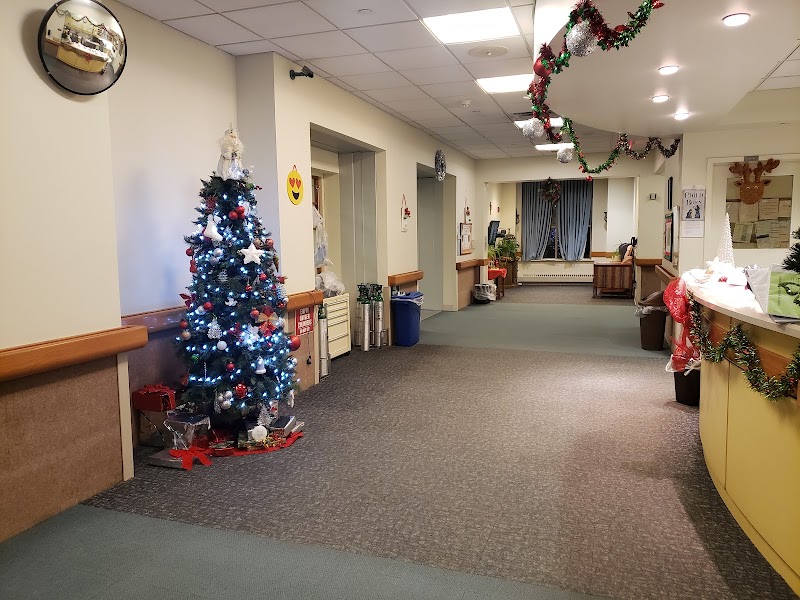
How is Peace Care St Joseph'S Staffed?

CMS rates PEACE CARE ST JOSEPH'S's staffing level at 4 out of 5 stars, which is above average compared to other nursing homes. Staff turnover is 43%, compared to the New Jersey average of 46%. This relatively stable workforce can support continuity of care.

What Have Inspectors Found at Peace Care St Joseph'S?

State health inspectors documented 15 deficiencies at PEACE CARE ST JOSEPH'S during 2023 to 2024. These included: 1 that caused actual resident harm and 14 with potential for harm. Deficiencies causing actual harm indicate documented cases where residents experienced negative health consequences.
Who Owns and Operates Peace Care St Joseph'S?

PEACE CARE ST JOSEPH'S is owned by a non-profit organization. Non-profit facilities reinvest revenue into operations rather than distributing to shareholders. The facility operates independently rather than as part of a larger chain. With 139 certified beds and approximately 130 residents (about 94% occupancy), it is a mid-sized facility located in JERSEY CITY, New Jersey.
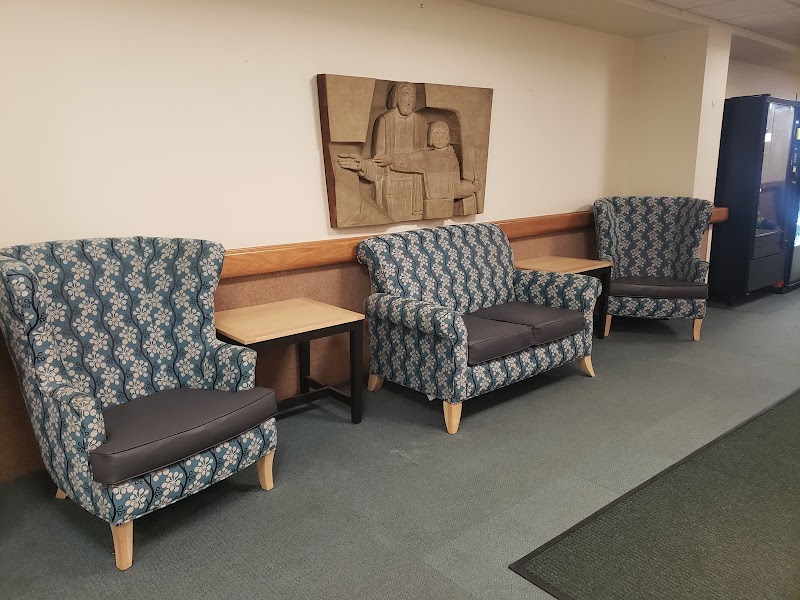
How Does Peace Care St Joseph'S Compare to Other New Jersey Nursing Homes?

Compared to the 100 nursing homes in New Jersey, PEACE CARE ST JOSEPH'S's overall rating (3 stars) is below the state average of 3.3, staff turnover (43%) is near the state average of 46%, and health inspection rating (3 stars) is at the national benchmark.

What Should Families Ask When Visiting Peace Care St Joseph'S?

Based on this facility's data, families visiting should ask: "Can I visit during a mealtime to observe dining assistance and food quality?" "How do you handle medical emergencies, and what is your hospital transfer rate?" "Can I speak with family members of current residents about their experience?"

Is Peace Care St Joseph'S Safe?

Based on CMS inspection data, PEACE CARE ST JOSEPH'S has a clean safety record: no substantiated abuse findings (meaning no confirmed cases of resident harm), no Immediate Jeopardy citations (the most serious violation level indicating risk of serious injury or death), and is not on the Special Focus Facility watch list (a federal program monitoring the lowest-performing 1% of nursing homes). The facility has a 3-star overall rating and ranks #100 of 100 nursing homes in New Jersey. While no facility is perfect, families should still ask about staff-to-resident ratios and recent inspection results during their visit.

Do Nurses at Peace Care St Joseph'S Stick Around?

PEACE CARE ST JOSEPH'S has a staff turnover rate of 43%, which is about average for New Jersey nursing homes (state average: 46%). Moderate turnover is common in nursing homes, but families should still ask about staff tenure and how the facility maintains care continuity when employees leave.

Was Peace Care St Joseph'S Ever Fined?

PEACE CARE ST JOSEPH'S has been fined $215,415 across 32 penalty actions. This is 6.1x the New Jersey average of $35,233. Fines at this level are uncommon and typically indicate a pattern of serious deficiencies, repeated violations, or failure to correct problems promptly. CMS reserves penalties of this magnitude for facilities that pose significant, documented risk to resident health or safety. Families should request specific documentation of what issues led to these fines and what systemic changes have been implemented.

Is Peace Care St Joseph'S on Any Federal Watch List?

PEACE CARE ST JOSEPH'S is not on any federal watch list. The most significant is the Special Focus Facility (SFF) program, which identifies the bottom 1% of nursing homes nationally based on persistent, serious quality problems. Not being on this list means the facility has avoided the pattern of deficiencies that triggers enhanced federal oversight. This is a positive indicator, though families should still review the facility's inspection history directly.