PINE ACRES REHABILITATION AND HEALTHCARE
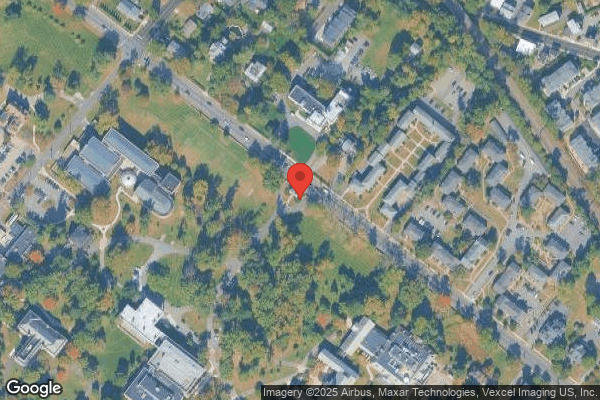
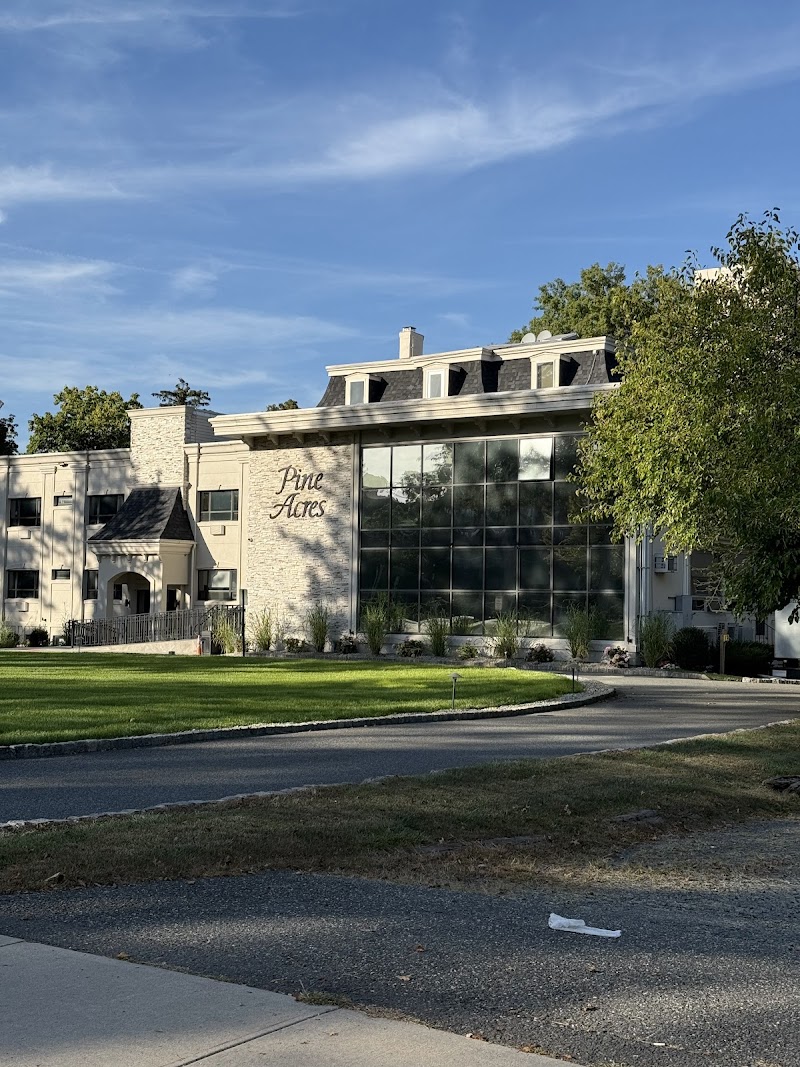
51 MADISON AVE, MADISON, NJ 07940 (973) 377-2124
For profit - Partnership 102 Beds MB HEALTHCARE Data: November 2025
Trust Grade
90/100
#61 of 344 in NJ
Last Inspection: August 2024

Within standard 12-15 month inspection cycle. Federal law requires annual inspections.

Overview

Pine Acres Rehabilitation and Healthcare in Madison, New Jersey, has an impressive Trust Grade of A, indicating that the facility is excellent and highly recommended. It ranks #61 out of 344 nursing homes in New Jersey, placing it in the top half of facilities in the state, and #6 out of 21 in Morris County, meaning only five local options are better. However, the facility is experiencing a worsening trend, with the number of issues found increasing from 2 in 2022 to 4 in 2024. While staffing is a concern, rated at 2 out of 5 stars with a turnover rate of 54%, which is significantly above the state average, the facility boasts no fines and 5 out of 5 stars in overall quality measures. Specific issues noted by inspectors include failures to maintain sanitation in the kitchen, which put residents at risk for food-borne illness, and inadequate care planning for residents with specific needs, such as those requiring assistance with eating due to physical limitations. Overall, while Pine Acres has strong quality ratings and no fines, families should be aware of the staffing concerns and recent issues highlighted in inspections.

Trust Score
A
90/100
In New Jersey
#61/344
Top 17%
Safety Record
Low Risk
No red flags
Inspections
Getting Worse
2 → 4 violations
Staff Stability
⚠ Watch
54% turnover. Above average. Higher turnover means staff may not know residents' routines.
Penalties
✓ Good
No fines on record. Clean compliance history, better than most New Jersey facilities.
Skilled Nurses
⚠ Watch
Each resident gets only 26 minutes of Registered Nurse (RN) attention daily — below average for New Jersey. Fewer RN minutes means fewer trained eyes watching for problems.
Violations
○ Average
8 deficiencies on record. Average for a facility this size. Mostly minor or procedural issues.
★★★★★
5.0
Overall Rating
★★☆☆☆
2.0
Staff Levels
★★★★★
5.0
Care Quality
★★★★★
5.0
Inspection Score
Stable
2022: 2 issues
2024: 4 issues

The Good

  • 5-Star Quality Measures · Strong clinical quality outcomes
  • Full Sprinkler Coverage · Fire safety systems throughout facility
  • No fines on record

Facility shows strength in quality measures, fire safety.

The Bad

Staff Turnover: 54%

Near New Jersey avg (46%)

Higher turnover may affect care consistency

Chain: MB HEALTHCARE

Part of a multi-facility chain

Ask about local staffing decisions and management

The Ugly 8 deficiencies on record

Aug 2024 4 deficiencies
CONCERN (D)

Potential for Harm - no one hurt, but risky conditions existed

Comprehensive Care Plan (Tag F0656)

Could have caused harm · This affected 1 resident

**NOTE- TERMS IN BRACKETS HAVE BEEN EDITED TO PROTECT CONFIDENTIALITY** Based on observation, interview, and record review, it was determined that the facility failed to develop and implement a person...

Read full inspector narrative →
**NOTE- TERMS IN BRACKETS HAVE BEEN EDITED TO PROTECT CONFIDENTIALITY** Based on observation, interview, and record review, it was determined that the facility failed to develop and implement a person-centered comprehensive care plan (CP) to meet the resident's needs. This deficient practice was observed for 2 of 19 residents reviewed, Resident #30 and #15, as evidenced by the following: 1. On 08/26/24 at 08:22 AM, the surveyor observed Resident #30 in the dining room eating, using their left hand. The resident stated to the surveyor that their right hand was weak. The resident further stated that the facility provided something for their right hand, but they refused to wear it. On 08/27/24 at 10:05 AM, the surveyor interviewed the Certified Nurse Assistant #2 (CNA#2) who was assigned to Resident #30. CNA #2 stated the resident used the left arm most of the time due to the weakness of the right arm. On 08/27/24 at 12:01 PM, the surveyor interviewed the Licensed Practical Nurse #3 (LPN#3) assigned to Resident #30, who stated that the resident refused to wear the right-hand splint. The surveyor reviewed the electronic record medical record which revealed the following: According to the admission Record (an admission summary) (AR), Resident #30 was admitted to the facility with diagnoses that included but were not limited to Hemiplegia (one-side paralysis) and Hemiparesis (one-sided muscle weakness) following Cerebral Infarction (disruptive blood flow to the brain) affecting the right dominant side. A review of the Quarterly Minimum Data Set (an assessment tool used to facilitate the management of care) (Q/MDS), dated [DATE], revealed in Section C. Cognitive Patterns that the resident had a Brief Interview for Mental Status (BIMS) score of 14 out of 15, indicating intact cognition. Further review of Q/MDS revealed Section GG - Functional Limitation in Range of Motion, A. Upper extremity (shoulder, elbow, wrist, hand) 1. Impairment on one side. B. Lower extremity (hip, knee, ankle, foot) 1. 1. Impairment on one side. The surveyor reviewed Resident #30's comprehensive CP which did not reflect the resident's refusal to wear the right-hand splint. 2. On 08/26/24 at 08:40 AM, the surveyor observed Resident #15 in bed with eyes closed. On 08/28/24 at 11:11 AM, the surveyor interviewed CNA#1, who stated that the resident had a resting hand splint during the night and CNA #1 removed it at the start of her shift at 7AM. On 08/28/24 at 11:20 AM, the surveyor interviewed LPN#1, who confirmed to the surveyor that the resident had a physician's order for a resting hand splint at night. The surveyor reviewed the electronic record medical record that revealed the following: According to the AR, Resident #15 was admitted to the facility with diagnoses that included but were not limited to other Genetic-Related Intellectual Disability. A review of the Q/MDS, dated [DATE], revealed in Section C - Cognitive Patterns the resident had a BIMS score of 99, indicating severe cognition impairment. A review of the August 2024 Order Summary Report revealed a PO dated 8/12/24 to Apply left resting hand splint at night to wear up to 6+ hours as tolerated. Monitor skin daily and remove if pressure points or redness present. Every night shift for contraction prevention. A review of the Progress Notes dated 7/29/24, documented left-hand splint in place per orders. The surveyor reviewed the residents' comprehensive CP which did not reflect the resident's use of resting hand splint at night. A review of the facility's policy and procedure with a review date of 01/2024 titled Care Plans under Policy revealed that: A comprehensive care plan will be developed for each resident within seven (7) days of completion of resident assessment. The care plan must include measurable objectives and timetables to meet the resident's medical, nursing, and psychosocial needs as identified in the comprehensive assessment. The Interdisciplinary Team shall develop quantifiable objectives for the highest level of functioning the resident may be expected to attain, based on comprehensive assessment. On 08/29/24 at 01:07 PM, the survey team met with the Licensed Nursing Home Administrator, Director of Nursing, Infection Preventionist and discussed the above concern. No further information was provided. NJAC 8:39-11.2 (e)
CONCERN (D)

Potential for Harm - no one hurt, but risky conditions existed

Infection Control (Tag F0880)

Could have caused harm · This affected 1 resident

**NOTE- TERMS IN BRACKETS HAVE BEEN EDITED TO PROTECT CONFIDENTIALITY** Based on observation, interview, and review of medical records, it was determined that the facility failed to a.) follow appropr...

Read full inspector narrative →
**NOTE- TERMS IN BRACKETS HAVE BEEN EDITED TO PROTECT CONFIDENTIALITY** Based on observation, interview, and review of medical records, it was determined that the facility failed to a.) follow appropriate hand hygiene practices to prevent the potential spread of infection observed during care for Resident #15 and b.) provide urinary care in a sanitary manner for 1 of 2 for Resident #59. This deficient practice was evidenced by the following: According to the CDC Clinical Safety: Hand Hygiene for Healthcare Workers dated 02/27/24 revealed: Healthcare personnel should use an alcohol-based hand rub (ABHR) or wash with soap and water for the following clinical indications: Immediately before touching a patient . Before moving from work on a soiled body site to a clean body site for the same patient, After touching a patient or the patient's immediate environment After contact with blood, body fluids, or contaminated surfaces Immediately after glove removal. A review of the U.S. Centers for Disease Control and Prevention (CDC) guidelines, Clean Hands Count for Healthcare Providers, reviewed 1/8/2021, included, When cleaning your hands with soap and water, wet your hands first with water, apply the amount of product recommended by the manufacturer to your hands, and rub your hands together vigorously for at least 15 seconds, covering all surfaces of the hands and fingers. Rinse your hands with water and use disposable towels to dry. 1. On 8/28/24 at 11:11 AM, the surveyor in the presence of the Certified Nursing Assistant #1 (CNA#1) went inside the resident's room to see Resident #15. CNA #1 donned a new pair of clean gloves and touched resident's blanket. After CNA #1 put the blanket in place, CNA#1 then removed her used gloves and discarded them in the garbage bin. The surveyor observed CNA #1 walked outside the resident's room without performing any hand hygiene or use of ABHR. The surveyor also observed CNA #1 placed her hand inside her pocket. CNA#1 went inside another resident's room to perform hand hygiene when the surveyor observed CNA #1 lathered her hands for a total of eight (8) seconds. During the interview, CNA #1 stated to the surveyor that handwashing must be at least 40-60 seconds. CNA #1 further stated that she should have performed hand hygiene after removing the gloves. On 08/29/24 at 09:25 AM, the surveyor interviewed the facility's Infection Preventionist/Registered Nurse (IP/RN), who stated that the staff were in serviced regarding hand washing. The IP confirmed that CNA #1 should have performed hand hygiene after removing the gloves. On 08/29/24 at 01:07 PM, the survey team met with the Licensed Nursing Home Administrator (LNHA), Director of Nursing (DON), IP/RN and discussed the above concern. No further information was provided. A review of the facility's Policy titled, Handwashing/Hand Hygiene with a review date of 01/2024 provided by LNHA revealed under procedure: 1. d. After removing gloves and under Washing Hands stated 1. Vigorously lather hands with soap and rub them together, creating friction to all surfaces, for twenty (20) seconds under a moderate stream of running water, at a comfortable temperature. 2. On 8/26/24 at 9:00 AM, the surveyor observed Resident #59 in their room seated in a wheelchair eating breakfast. The surveyor observed the bathroom and found a urinary catheter bag (UCB) (a container or collector for the urine as it leaves the body and passes through the catheter tube) with urine present in the tubing hanging on to the rail next to the toilet. The UCB was not in a plastic bag and the end of the catheter tubing was exposed and not capped. A review of the AR reflected Resident #59 was admitted to the facility on [DATE], with diagnoses that included Hypertension (elevated blood pressure), Neuromuscular dysfunction of the Bladder (lack of bladder control) and Benign Prostatic Hyperplasia (enlarged prostate). A review of the Annual Minimum Data Set, an assessment tool dated 7/11/24, reflected a brief interview for mental status (BIMS) score of 13 out of 15, which indicated intact cognition. Further review revealed in Section H. Bladder and Bowel the resident had an indwelling urinary catheter. A review of the August 2024 Physician Orders Summary Report revealed a physician's order dated 1/11/24, to change the urinary drainage bag to a leg bag (pouch that is worn on the leg to collect urine from catheter) while out of bed daily. A review of the individual person-centered care plan CP revealed that the resident was at risk for multidrug resistant organism (MDRO) infections and was placed on an enhanced barrier precautions (an infection control intervention designed to reduce transmission of MDRO in nursing homes) related to the use of indwelling catheter(hollow, partially flexible tube that collects urine from the bladder and leads to a drainage bag), dated 4/10/24, reflected a goal which included, the resident would not contract MDRO infection. Some of the CP interventions included but not limited to implement the use of gown and gloves for high contact care activities such as device care for indwelling urinary catheter. On 8/26/24 at 9:20 AM, the surveyor interviewed Resident #59's CNA#1 who stated that she performed the resident's care. CNA #1 further stated that the resident had an indwelling urinary catheter, and she removed the urinary catheter bag, placed a leg bag on the resident and stored the urinary bag in the bathroom. The surveyor showed CNA #1 the urinary bag and she stated that she omitted the plastic bag and the urinary bag should not be hung in the bathroom that way. On 8/26/24 at 9:30, the surveyor interviewed Licensed Practical Nurse (LPN#2) who stated that the urinary bag should not be hung on the handrail in the bathroom and must be placed in a plastic bag when removed. On 8/28/24 at 12:50 PM, the surveyor interviewed the IP/RN who stated the urinary drainage bag was changed weekly, washed daily and stored in a plastic bag in the bathroom. The IP/RN further stated that the CNA must clean the tip of the catheter with an alcohol pad and then place a blue cap at the end of the catheter to prevent any contamination. On 08/29/24 at 01:07 PM, the survey team met with the LNHA, DON, and IP/RN and discussed the above concern. No further information was provided. The surveyor reviewed the facility's policy titled, Care and Maintenance of Foley Drainage System dated 11/23, which revealed when the drainage bag was not it use the facility will clean the bag by rinsing the bag out with water and capped and place in a plastic bag and be hung in the resident's bathroom for later use. NJAC 8:39-19.4(a) (n)
MINOR (B)

Minor Issue - procedural, no safety impact

Assessment Accuracy (Tag F0641)

Minor procedural issue · This affected multiple residents

**NOTE- TERMS IN BRACKETS HAVE BEEN EDITED TO PROTECT CONFIDENTIALITY** Based on the interview and record review, it was determined that the facility failed to accurately complete the Minimum Data Set...

Read full inspector narrative →
**NOTE- TERMS IN BRACKETS HAVE BEEN EDITED TO PROTECT CONFIDENTIALITY** Based on the interview and record review, it was determined that the facility failed to accurately complete the Minimum Data Set (MDS), an assessment tool used to facilitate the management of care, in accordance with the federal guidelines for 1 of 19 residents (Resident #75) reviewed for the accuracy of MDS completion. The deficient practice was evidenced by the following: On 08/26/24, at 09:05 AM, the surveyor observed Resident #75 seated in bed eating their meal. On 08/27/24 at 12:54 PM, the surveyor reviewed Resident #75's electronic medical record, which revealed the following information: According to the admission Record (an admission summary), Resident #75 was admitted to the facility with diagnoses that included but were not limited to unspecified Dementia (loss of memory) and other behavioral disturbances. A review of the admission MDS (A/MDS), dated [DATE], reflected that the resident had a Brief Interview for Mental Status score of 04 out of 15, indicating that the resident had severe cognitive impairment. Further review of the A/MDS Section N. Medications under Section N0415 High-Risk Drug Classes: Use and Indication 1. Is taking - Check if the resident is taking any medications by pharmacological classification, not how it is used, during the last 7 days 1. Is taking A. Antipsychotic was checked indicating that the resident used an anti-psychotic medication. Further review of the A/MDS under Section N0450 Antipsychotic Medication Review A. Did the resident receive antipsychotic medications since admission or reentry or the prior OBRA assessment, whichever is more recent? indicated 0 (zero) No - antipsychotics were not received. A review of the August 2024 Order Summary Report revealed a physician's order (PO) dated 7/15/24 for Risperdal oral tablet 0.5 mg (Risperidone) Give 1 tablet by mouth at bedtime which was an anti-psychotic drug. A review of the July 2024 Medication Administration Record revealed a PO indicating a start date of 7/15/24 for, Risperdal oral tablet 0.5 mg (Risperidone) give 1 tablet by mouth at bedtime. The medication was signed as administered on July 15, 16, and July 17, 2024. On 08/28/24 at 11:30 AM, the surveyor interviewed the Registered Nurse who worked part-time as a MDS Coordinator (MDS/C). The part-time MDS/C stated that she missed to code the medication to reflect in the A/MDS. The MDS/C added that they follow the Resident Assessment Instrument (RAI) Manual for guidance. The surveyor reviewed the Centers for Medicare and Medicaid Services (CMS) RAI Version 3.0 Manual, updated October 2023. The RAI manual revealed under Chapter 3, page N-14, Any medication that has a pharmacological classification or therapeutic category of antipsychotic medication must be recorded in this section, regardless of why the medication is being used. On 08/29/24 at 01:07 PM, the survey team met with the Licensed Nursing Home Administrator, Director of Nursing, Infection Preventionist and discussed the above concern. No further information was provided. NJAC 8:39-33.2(c)2, (d)
MINOR (C)

Minor Issue - procedural, no safety impact

Deficiency F0836 (Tag F0836)

Minor procedural issue · This affected most or all residents

Based on observation, interview, and review of pertinent facility documents it was determined that the facility failed to notify CMS (Centers for Medicare & Medicaid Services) and receive authorizatio...

Read full inspector narrative →
Based on observation, interview, and review of pertinent facility documents it was determined that the facility failed to notify CMS (Centers for Medicare & Medicaid Services) and receive authorization for a change in facility name in accordance with 42 CFR (Code of Federal Regulations) 424.516. This deficient practice was evidenced by the following: According to 42 CFR 424.516 Additional provider and supplier requirements for enrolling and maintaining active enrollment status in the Medicare Program: (a) Certifying compliance. CMS enrolls and maintains an active enrollment status for a provider or supplier when that provider or supplier certifies that it meets, and continues to meet, and CMS verifies that it meets, and continues to meet, all of the following requirements: (1) Compliance with title XVIII of the Act and applicable Medicare regulations. (2) Compliance with Federal and State licensure, certification, and regulatory requirements, as required, based on the type of services, or supplies the provider or supplier type will furnish and bill Medicare. (3) Not employing or contracting with individuals or entities that meet either of the following conditions: (i) Excluded from participation in any Federal health care programs, for the provision of items and services covered under the programs, in violation of section 1128 A(a)(6) of the Act. (ii) Debarred by the General Services Administration (GSA) from any other Executive Branch procurement or nonprocurement programs or activities, in accordance with the Federal Acquisition and Streamlining Act of 1994, and with the HHS Common Rule at 45 CFR part 76 (d) Reporting requirements for physicians, nonphysician practitioners, and physician and nonphysician practitioner organizations. Physicians, nonphysician practitioners, and physician and nonphysician practitioner organizations must report the following reportable events to their Medicare contractor within the specified timeframes: (1) Within 30 days - (i) A change of ownership; (ii) Any adverse legal action; or (iii) A change in practice location. (2) All other changes in enrollment must be reported within 90 days. On 8/26/24 at 7:30 AM, upon arrival of the surveyors to the facility, the surveyor observed a signage outside the facility that stated, Pine Acres Rehab + Healthcare outside the building and had a name that did not correspond with the CMS licensed, approved name and provider registered name Pine Acres Convalescent Center. On 08/26/24 at 09:44 AM, the surveyor met with the Licensed Nursing Home Administrator (LNHA), Director of Nursing (DON), Infection Preventionist (IP), and Administrator in Training for Entrance Conference. On 8/26/24 at 11:30 AM, the surveyor reviewed various documents and facility policies that were provided by the LNHA that were titled, Pine Acres Rehab + Healthcare. A review of the facility admission agreement revealed under the facility name section as Pine Acres Rehabilitation and Health Care Center. The Business cards provided to the surveyors upon entrance reflected the facility name as Pine Acres Rehab + Healthcare. On 08/29/24 1:06 PM, the surveyor met with the LNHA, DON, Operations and IP to discuss the above noted documents did not match the documentation according to what they were licensed for. On 8/30/24 at 9:10 AM, the surveyor met with the LNHA who explained that the facility is called Pine Acres Convalescent Center, and the facility didn't change their name. The surveyor asked if the facility had filed a 855B form to CMS and the LNHA explained that they have not done the 855B form. A review of the facility license that was issued by the New Jersey Department of Health Division of Certificate of Need and Licensing with an issue date of June 11, 2024, and an expiration date of August 31, 2025 revealed the name licensed to operate was Pine Acres Convalescent Center and not Pine Acres Rehab + Healthcare. NJAC 8:39-5.1 (a)
Aug 2022 2 deficiencies
CONCERN (F)

Potential for Harm - no one hurt, but risky conditions existed

Food Safety (Tag F0812)

Could have caused harm · This affected most or all residents

Based on observations, interviews, record review, and policy review, the facility failed to ensure staff followed sanitation procedures for the sanitizing of dishware through the dishwasher and failed...

Read full inspector narrative →
Based on observations, interviews, record review, and policy review, the facility failed to ensure staff followed sanitation procedures for the sanitizing of dishware through the dishwasher and failed to label and date residents' food and monitor the freezer temperatures for the residents' refrigerators located at the nursing stations. These failures had the potential for 86 out of 89 residents to be at risk for food-borne illness (three residents received nutrition via feeding tubes). Findings include: 1.The kitchen inspection was conducted on 08/22/22 from 10:42 AM to 11:23 AM. The following observations and interviews revealed the dish machine rinse temperature did not meet the minimum temperature specification of 180 F. Staff did not follow their policy to ensure adequate sanitizing of the dishware: At approximately 10:45 AM, the Dietary Aide (DA) was washing breakfast dishes and indicated the minimum required temperatures were 150 degrees F for wash and 180 degrees F for rinse as she pointed to the dish machine instructions that were posted on the wall next to the dish machine. The instructions verified minimum wash and rinse temperatures of 150 F and 180 F. The wash temperature exceeded the requirement at 165 F; however, the rinse temperature was too low at 169 F, verified by the DA. A second cycle was observed, and the rinse temperature reached 170 F. Although the rinse temperature was not hot enough, DA1 and a second dietary staff continued to wash dishes. At approximately 11:10 AM, the Dietary Director (DD) stated they had been having issues with the dish machine lately. DA and a second staff member had been washing dishes continuously since 10:45 AM. The DD and the surveyor watched a cycle of dish washing and the DD verified a maximum rinse temperature of 170 F. The DD showed the surveyor the dish machine log and temperatures of 170 were recorded for rinse the day before (08/21/22) for both breakfast and lunch. A temperature of 180 was recorded for dinner on 08/21/22. The DD stated she should have been notified, but had not been, of the rinse temperatures of 170 on 08/21/22 for breakfast and lunch and the low temperature that morning. A fourth cycle of dishwashing was observed with the DD and the rinse temperature continued to be 170 F. The DD stated she thought 170 F for rinse was acceptable to sanitize the dishes and staff continued to use the machine. During an interview on 08/22/22 at 12:30 PM, the Administrator stated he had not been informed the dish machine rinse temperature was not reaching the minimum required temperature. The Administrator stated the machine could be run with chemical sanitizer if it was not meeting the minimum required temperatures. During an interview on 08/22/22 at 12:41 PM, the Administrator stated dietary staff would not use the machine and would serve lunch on disposable dishware for lunch until the machine was serviced. During observation of the second floor on 08/22/22 at 1:21 PM, two carts with used dishes from lunch were observed. Most residents had finished eating. There were regular ceramic plates and plastic bowls, coffee cups, and regular silverware observed on the trays. Disposable dishware was not observed on any of the trays on the second floor. During observations of the third floor on 08/22/22 at 01:31 PM, residents were served on both disposable and regular dishware, approximately half the residents on disposable and half with regular dishware. During an interview, the Infection Preventionist (IP) contacted the kitchen to find out why some residents were served on disposable and some on regular dishware and reported disposable dishware was being used because the dishwasher was broken. The IP verified residents on the third floor had been served on both disposable and regular dishware. During observations of the first floor on 08/22/22 at 1:43 PM, the cart with residents' used meal trays was in the dining/activity room outside the kitchen entrance. All trays contained regular dishware; no disposable dishware was observed. During an interview 08/22/22 at approximately 2:30 PM, the Corporate Food Service Director stated the booster on the dish machine (which heated the water) was now working following a repair being made on the dish machine after lunch. He stated the policy was if the machine was not working properly, staff were to call the service provider and they generally came quickly. He stated if the machine was not working properly, meals should be served on disposable dishware. Review of the dish machine service Invoice dated 08/22/22 and provided by the facility revealed, The booster is not hitting temp [temperature] even after we fixed it last month. Tech Notes: Worked on booster. I put thermostat on higher temp and checked all 3 legs. It was working fine . Review of the facility's policy titled, Dish Machine Operation dated 11/21/21 revealed, High Temperature Dish Machine: Use hot water to clean and sanitize . If water is not hot enough it will not sanitize Final rinse temperature must reach at least 180 [degrees Fahrenheit (F)] If the temperature drops the technician and chemical company are contacted If it is not repaired before the following meal the procedure is as follows: Turn off the booster and activate the chemical sanitizer making it a Low Temp If the above option is not available, meals will be served on disposable until repairs are completed . 2. Review of an undated typed document attached to the residents' refrigerators at the nursing stations on all resident floors (first, second, and third) titled 72 Hour Rotation read, All incoming food items once opened for freshly made must be dated and labeled with the resident's name and room number. These items must be discarded after 3 days. If take out is delivered on the 6th, it can only be consumed/used till the end of the 8th and then thrown away. An exception to this rule would be purchase dressings, sauces, and mayonnaise. These items have 30 days. Items with their own expiration date are only acceptable while they are sealed. Observation of the residents' second floor refrigerator/freezer at the nursing station on 08/23/22 at 3:46 PM, revealed the log for recording temperatures measured the refrigerator temperature only. The freezer temperature was not monitored. Observation of the residents' third floor refrigerator/freezer on 08/23/22 at 3:52 PM revealed the log for recording temperatures measured the refrigerator temperature only. The freezer temperature was not monitored. In addition, numerous food items were not labeled or not labeled properly as follows: One brown paper bag with a restaurant take out container was noted without a name, room number, or date. Two packages of opened cheese were labeled with a room number but no date. One of the bricks of cheese had green spots of mold. Licensed Practical Nurse (LPN)2 verified the presence of the mold on the cheese. One opened package of pepperoni with a room number but no date was noted. A partially used bottle of Italian salad dressing without a name and a date of 04/18. One opened carton of Almond Breeze milk with a room number but no date was noted. An unlabeled and undated sandwich was noted. An opened package of cream cheese with a room number but no date was noted. During an interview with LPN2 on 08/23/22 at 3:54 PM', LPN2 stated, the nurses were supposed to go through the refrigerator once a day and check for expired dates on the food. LPN2 stated food could be held three days and stated the night shift nurse was responsible for taking and recording the refrigerator temperature on daily basis. LPN2 confirmed the log only indicated refrigerator temperatures and that the freezer was not being monitored. During an interview on 08/23/22 at 3:56 PM, Unit Manager (UM)2 of the third floor, stated food was not allowed to remain in the refrigerator past three days. UM2 verified the presence of unlabeled food items in the refrigerator and stated the labels should include the date the foods were placed in the refrigerator. Observation of the residents' first floor refrigerator/freezer on 08/23/22 at 4:05 PM revealed the log for recording temperatures measured the refrigerator temperature only. The freezer temperatures were not being monitored Inside the refrigerator was a cup of fruit in a disposable cup with lid with a room number but no date. There was also a sandwich wrapped in paper that that had no label. UM1 stated the sandwich and fruit should have labels with the date the items went into the refrigerator and the resident's name or room number. During an observation of the residents' refrigerators on 08/24/22 at 10:05 AM, the Corporate Food Service Director (CFSD) stated he conducted monthly audits of the refrigerators on the floor and had identified issues with labeling and dating the residents' foods. The CFSD stated staff should be monitoring and recording both refrigerator and freezer temperatures. During an interview on 08/24/22 at 1:37 PM, the Housekeeper stated he cleaned the residents' refrigerators on all three floors every Tuesday. He stated, he would notify the UM if food was expired based on the date. The Housekeeper stated nursing staff were responsible for disposing of expired food. During an interview on 08/25/22 at 9:48 AM, the Administrator stated cleaning the refrigerator was the responsibility of housekeeping and managing residents' food including disposing of expired food was the responsibility of nursing staff. The Administrator stated he had been notified of issues regarding labeling and dating food in residents' refrigerators by the Corporate Food Service Director. Review of the facility's policy titled, Storage and Use of Food and Beverage Brought in for Residents dated February 2022 revealed, Policy: To provide safe and sanitary storage of all foods provided to residents including those provided by family and other visitors. Procedure: 1. Any leftover personal food or food from local restaurants that enters the facility by family members or visitors will be brought to the nursing station for safe storage. 2. Food that requires refrigeration or freezing will be labeled by facility employees or family members in a sealed food container. The label will include the date it was brought into the facility and name/room number of the resident who is to receive the food item. 3. Leftover foods will be used within 3 days or discarded. 4 All refrigerator and freezer temperatures will be checked daily and recorded on temperature log to ensure within desirable range . Review of the facility's policy titled Refrigerators dated 12/18/19 revealed, This facility will ensure safe refrigerator maintenance temperatures, and sanitation, and will observe food expiration guidelines . Nursing employees will check and record refrigerator temperatures daily . All food shall be appropriately dated to ensure proper rotation by expiration dates . Supervisors will be responsible for ensuring food items in pantry refrigerators are not expired or past perish dates . NJAC 8:39-17.2(g)
CONCERN (F)

Potential for Harm - no one hurt, but risky conditions existed

Garbage Disposal (Tag F0814)

Could have caused harm · This affected most or all residents

Based on observation and interview, the facility failed to ensure the dumpster area was maintained in a sanitary manner on two of two days in which a significant amount of garbage was on the ground ar...

Read full inspector narrative →
Based on observation and interview, the facility failed to ensure the dumpster area was maintained in a sanitary manner on two of two days in which a significant amount of garbage was on the ground around the dumpster creating the potential for harborage of pests. Findings include: 1. During the initial dietary inspection on 08/22/22 from 10:42 AM - 11:23 AM, the dumpster area revealed two dumpsters on a concrete pad located next to a parking area. The dumpsters lids were closed; however, there were approximately 30 pieces of garbage on the concrete pad behind the dumpsters and in the grass adjacent to the dumpster extending approximately 25 feet in front of four parked cars. The garbage consisted of used latex gloves, disposable face masks, plastic cups, paper debris, plastic bottles and lids, cans, cardboard pieces, and a gallon jug of a cleaning product. 2. A second observation of the dumpster area was made on 8/24/22 at 10:01 AM with the Corporate Food Service Director (CFSD). The dumpster lids remained closed with masks, gloves, plastic debris, cups, bottles, paper, cardboard, and an empty gallon of a chemical located on the concrete behind the dumpster and in the grass in front of four parked cars. The CFSD indicated the area was not sanitary and stated it needed to be cleaned up. The Food Service Director stated he was not sure who was responsible for maintaining the area. 3. A third observation of the dumpster area was made on 8/24/22 at 1:37 PM with the Housekeeper. There was a piece of broken glass, a half and half container, a few plastic pieces, and a few pieces of paper/cardboard behind the dumpster on the concrete and in the grass in front of the parked cars. The Housekeeper stated, Normally we clean it up when we see it. It is not scheduled. 4. During an interview on 08/25/22 at 8:52 AM, the Administrator stated the housekeeping department was responsible for maintenance of the dumpster area including cleanliness. He stated there was no facility policy regarding the dumpster area. During a subsequent interview on 08/25/22 at 9:48 AM, the Administrator stated the dumpster area should be free of garbage on the ground. NJAC 8:39-19.3(c)
Feb 2020 2 deficiencies
CONCERN (D)

Potential for Harm - no one hurt, but risky conditions existed

MDS Data Transmission (Tag F0640)

Could have caused harm · This affected 1 resident

**NOTE- TERMS IN BRACKETS HAVE BEEN EDITED TO PROTECT CONFIDENTIALITY** Based on interview and record review, it was determined that the facility failed to complete and transmit a Minimum Data Set (MD...

Read full inspector narrative →
**NOTE- TERMS IN BRACKETS HAVE BEEN EDITED TO PROTECT CONFIDENTIALITY** Based on interview and record review, it was determined that the facility failed to complete and transmit a Minimum Data Set (MDS) in accordance with federal guidelines. This deficient practice was identified for 4 of 23 residents reviewed for resident assessment (Resident #1, #53, #289, #290) and was evidenced by the following: On 02/20/20 at 9:30 AM, the surveyor reviewed the facility assessment task that included the Resident's MDS Assessments. The MDS is a comprehensive tool that is a federal mandated process for clinical assessment of all residents that must be completed and transmitted to the Quality Measure System. 1. Resident #1 was triggered under the survey facility task as MDS record over 120 days old. Review of Resident #1's Nurses Notes revealed that the resident was discharged on 09/27/19 to the community. The surveyor reviewed the MDS 3.0 assessment tool, including all the completed MDS assessments for the resident. The MDS assessment history revealed that the Discharge Assessment for Resident #1 was not submitted until 02/16/20. MDS discharge assessments must be submitted no later than 28 days after the discharge. 2. Resident #53 was admitted to the facility on [DATE]. The surveyor reviewed the MDS 3.0 assessment tool, including all the completed MDS assessments for the resident. The MDS assessment history revealed that there was no Entry tracking record for the resident's admission to the facility. An Entry MDS assessment is used to track residents and gather quality data at transition points, such as when they enter a facility. MDS entry assessments must be submitted no later than 7 days from admission. 3. Resident #289 was admitted to the facility on [DATE]. The surveyor reviewed the MDS 3.0 assessment tool, including all the completed MDS assessments for the resident. The MDS assessment history revealed that there was no Entry tracking record for the resident's admission to the facility. MDS entry assessments must be submitted no later than 7 days from admission. 4. Resident #290 was admitted to the facility on [DATE]. The surveyor reviewed the MDS 3.0 assessment tool, including all the completed MDS assessments for the resident. The MDS assessment history revealed that there was no Entry tracking record for the resident's admission to the facility. MDS entry assessments must be submitted no later than 7 days from admission. Further review of the record showed that there was no Admission/Comprehensive MDS assessment that was completed. MDS admission Comprehensive assessments must be submitted no later than 28 days from admission. On 02/20/20 at 9:50 AM, the surveyor spoke to the Director of Nursing and the MDS Coordinator regarding the above concern. The MDS Coordinator acknowledged that the assessments were not submitted timely in accordance with the federal regulations. NJAC 8:39-11.2
CONCERN (D)

Potential for Harm - no one hurt, but risky conditions existed

Deficiency F0658 (Tag F0658)

Could have caused harm · This affected 1 resident

Based on observation, interview and record review, it was determined that the facility failed to ensure that a.) the Registered Nurse (RN) assessed a resident after a the resident fell and sustained a...

Read full inspector narrative →
Based on observation, interview and record review, it was determined that the facility failed to ensure that a.) the Registered Nurse (RN) assessed a resident after a the resident fell and sustained an injury, and b.) the resident received an evaluation and treatment, in accordance with nursing standards of clinical practice and the facility's fall policy. This deficient practice was identified for Resident #2, 1 of 2 residents reviewed for falls and was evidenced by the following: Reference: New Jersey Statutes, Annotated Title 45, Chapter 11. Nursing Board The Nurse Practice Act for the State of New Jersey stated, The practice of nursing as a registered professional nurse is defined as diagnosing and treating human responses to actual or potential physical and emotional health problems, through such services as case finding, health teaching, health counseling, and provision of care supportive to or restorative of life and wellbeing, and executing medical regimens as prescribed by a licensed or otherwise legally authorized physician or dentist. Reference: New Jersey Administrative Code, Title 13, Law and Public Safety, Chapter 37, New Jersey Board of Nursing, under 13:37-6.5 Non-Delegable Nursing Tasks, includes: A registered professional nurse shall no delegate the physical, psychological, and social assessment of the patient, which requires professional nursing judgement, intervention, referral, or modification of care. Reference: New Jersey Statutes, Annotated Title 45, Chapter 11. Nursing Board The Nurse Practice Act for the State of New Jersey stated, The practice of nursing as a licensed practical nurse is defined as performing tasks and responsibilities within the framework of casefinding; reinforcing the patient and family teaching program through health teaching, health counseling and provision of supportive and restorative care, under the direction of a registered nurse or licensed or otherwise legally authorized physician or dentist. On 02/18/2020 at 10:07 AM, the surveyor observed Resident #2 lying in a low bed with a bed alarm and floor mat next to the right side of the bed. On 02/20/20 at 8:41 AM, the surveyor observed the resident seated in the bed as a Certified Nursing Assistant (CNA #1) provided feeding assistance. At that time, CNA #1 informed the surveyor that the resident was cognitively impaired, required total assistance with activities of daily living (ADLs), incontinent, and needed to be fed. She stated that the resident was non-ambulatory and on fall precautions. CNA #1 stated the resident had a history of falls but was unable to identify the date of the resident's last fall. A review of the resident's Face Sheet (an admission summary), disclosed that the resident had diagnoses that included, but were not limited to, history of falling, dementia, and fracture of the right hip with routine healing. A review of the 10/05/19 Discharge Minimum Data Set (MDS), an assessment tool used to facilitate the management of care, indicated the resident had severely impaired cognition. The MDS revealed that the resident had a fall with a major injury. A review of the Incident/Accident (I/A) Report, provided by the Director of Nursing (DON), showed that the resident had a witnessed fall on 10/04/19 at 7:25 PM, in another resident's room. A review of the Investigation of Incident/Accident Statement, signed by LPN #1 and attached to the 10/04/19 I/A Report, revealed that the resident was observed on the floor laying on the right side and holding his/her right leg. LPN #1's I/A Statement indicated that the x-ray of the right hip was ordered and PRN [as needed] Tylenol was given. The I/A Report documented that the primary physician ordered an x-ray of the right hip. A review of the Summary of Investigation form, signed by the RN/UM and attached to the 10/04/19 I/A Report, revealed she was notified by the primary nurse, on 10/04/19 at 7:25 PM, that the resident was noted lying on his/her right side on the floor in another resident's room. The statement included that a full assessment was rendered by the nurse. The resident was able to move all extremities but was noted guarding the right leg. The physician was notified, an x-ray was ordered and the resident was given PRN Tylenol. X-ray results received on 10/05/19 and the physician was made aware. The resident was transferred to the hospital. A review of the medical records, evidenced there was a lack of documentation that the resident was assessed by a Registered Nurse (RN) on 10/04/19, after the resident's fall. A review of the Progress Notes (PN) showed that on 10/04/19 at 21:22 (9:22 PM), the x-ray company called back to state that the x-ray might not be possible tonight but would be done early the following morning. There was no documentation in the medical record that the physician was made aware that the x-ray could not be done until the following day. A review of the PN showed that on 10/05/20 at 11:52 AM, LPN #2 administered PRN Tylenol to Resident #2 for a complaint of right hip pain and when the x-ray of the right hip was performed. In addition, the 10/05/19 PN revealed that the Medical Director ordered the transfer. Resident #2 was transferred to the hospital around 12:20 PM on 10/05/19. A review of a New Jersey Universal Transfer Form, dated 10/05/19, showed the resident was transferred to the hospital with the reason for transfer listed as fracture/dislocation of right hip. The surveyor reviewed the Physician's Order, which revealed that Resident #2 had a physician's order, dated 04/03/19, for Acetaminophen (Tylenol) 325 milligram (mg) two tablets (tabs) for a total of 650 mg by mouth (po) every 6 hours (hrs) as needed (PRN) for mild pain that was signed by Licensed Practical Nurse (LPN #1). A review of the October 2019 electronic Medication Administration Record (eMAR) showed that the PRN Tylenol was given on 10/04/19 at 8:05 PM for a pain level of four and at 9:21 PM, the follow-up pain level was two. During a phone conversation on 02/20/20 at 12:56 PM, LPN #1 informed the survey team that Resident #2 was cognitively impaired with an unsteady gait, had a fall incident on 10/04/19, which resulted in a right hip fracture. He stated that the resident was found lying on the right side in another resident's room holding his/her right leg and complaining of pain. He further stated, as far as I remember, it was me who assessed the resident post-fall. During the same phone conversation, LPN #1 informed the surveyor that he reported the fall incident to the facility manager, who was not in the building. He further stated that the primary physician ordered an x-ray to rule out injury. In addition, LPN #1 stated, I can't remember if the physician was notified that the x-ray could not be carried out immediately, but would be done the following morning. On 02/21/20 at 8:53 AM, the surveyor called and left a message for the primary physician to return the call for an interview. The primary physician did not return the surveyor's call. On 02/21/20 at 9:07 AM, the survey team interviewed the Licensed Practical Nurse/Unit Manager (LPN/UM). The LPN/UM informed the surveyor that if a resident fell and was then observed guarding a body part, it indicated the resident was in pain and the area should be immobilized. She stated that the physician should be called to order an x-ray to determine the extent of the injury. She further stated that if the x-ray could not be done immediately or on that day, the physician should be called to get an order for a transfer to the hospital. LPN/UM stated that she was not sure of the facility's policy with regard to fall incident and hospital transfer. She stated, as a nurse, that should have been done. On 02/21/20 at 9:43 AM, the survey team spoke to the Administrator, DON, and Regional Administrator regarding the above observations and concerns. The DON informed the surveyors that the RN/UM was not in the facility at the time of the fall. The DON stated that the RN/UM's I/A statement for the 10/04/19 fall, was created on 10/07/19 according to the information supplied to her by LPN #1's report by phone conversation. The DON stated that the RN/UM documented that the resident was guarding the left leg according to LPN #1's report. During the above team meeting with the DON, she could not give any further information as to why there was no RN assessment at the time of the fall and the facility did not transfer the resident to the hospital according to their Fall Investigation Report policy. On 02/24/20 at 9:01 AM, the surveyor called and left a message to interview LPN #3 and CNA #2, who were scheduled as working on 10/04/19 when the resident fell. LPN #3 and CNA #2 did not call back and could not be interviewed. On 02/24/20 at 9:03 AM, the surveyor called CNA #3 who was also scheduled to work on 10/04/19, when Resident #2 fell. CNA #3 stated, I can't remember anything that had happened on that day, I'm sorry. On 02/24/20 at 9:06 AM, the surveyor called the agency that employs CNA #4, who was scheduled to work in the facility on 10/04/19 when the resident fell. The agency representative stated that CNA #4 no longer worked with the agency, since 01/19/20. The agency representative could not provide any further follow-up information. A review of the Fall Investigation Report Policy, dated revised on 05/11/09, provided by the Administrator, reflected that if a fracture was suspected, an x-ray must be done. The policy also indicated that if there were any signs symptoms of a fracture observed, the resident must be transferred to the hospital for evaluation and treatment. NJAC 8:39-11.2 (b)
Understanding Severity Codes (click to expand)
Life-Threatening (Immediate Jeopardy)
J - Isolated K - Pattern L - Widespread
Actual Harm
G - Isolated H - Pattern I - Widespread
Potential for Harm
D - Isolated E - Pattern F - Widespread
No Harm (Minor)
A - Isolated B - Pattern C - Widespread

Questions to Ask on Your Visit

  • "Can I speak with families of current residents?"
  • "What's your RN coverage like on weekends and overnight?"

Our Honest Assessment

Strengths
  • • Grade A (90/100). Above average facility, better than most options in New Jersey.
  • • No major safety red flags. No abuse findings, life-threatening violations, or SFF status.
  • • No fines on record. Clean compliance history, better than most New Jersey facilities.
Concerns
  • • No significant concerns identified. This facility shows no red flags across CMS ratings, staff turnover, or federal penalties.
Bottom line: Generally positive indicators. Standard due diligence and a personal visit recommended.

About This Facility

What is Pine Acres Rehabilitation And Healthcare's CMS Rating?

CMS assigns PINE ACRES REHABILITATION AND HEALTHCARE an overall rating of 5 out of 5 stars, which is considered much above average nationally. Within New Jersey, this rating places the facility higher than 99% of the state's 100 nursing homes. This rating reflects solid performance across the metrics CMS uses to evaluate nursing home quality.
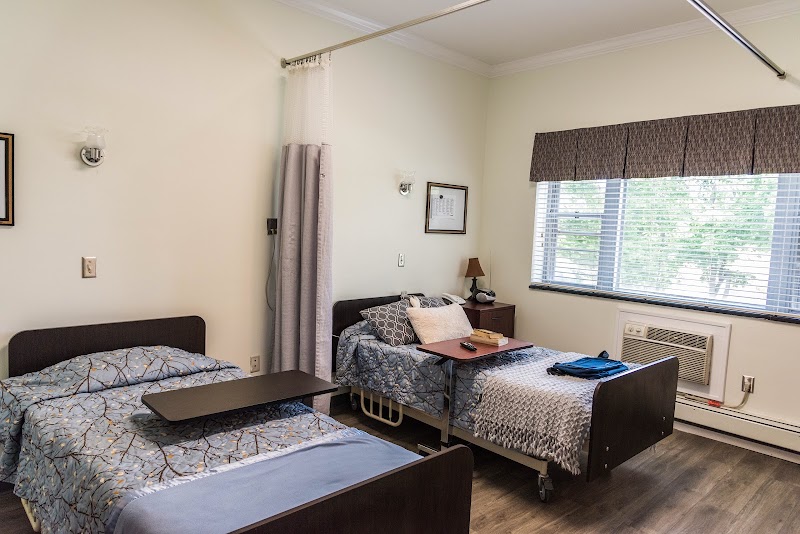
How is Pine Acres Rehabilitation And Healthcare Staffed?

CMS rates PINE ACRES REHABILITATION AND HEALTHCARE's staffing level at 2 out of 5 stars, which is below average compared to other nursing homes. Staff turnover is 54%, compared to the New Jersey average of 46%. RN turnover specifically is 64%, which is notably high. RNs provide skilled clinical oversight, so turnover in this role can affect medical care quality.

What Have Inspectors Found at Pine Acres Rehabilitation And Healthcare?

State health inspectors documented 8 deficiencies at PINE ACRES REHABILITATION AND HEALTHCARE during 2020 to 2024. These included: 6 with potential for harm and 2 minor or isolated issues.
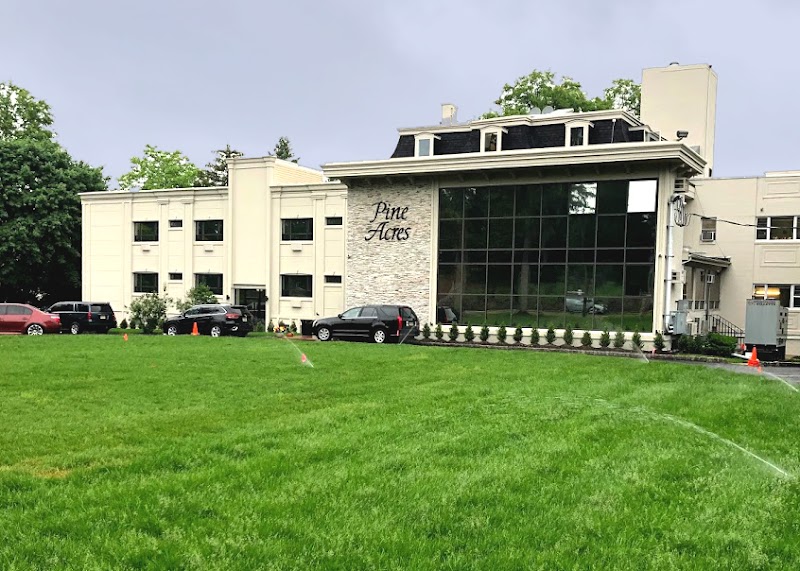
Who Owns and Operates Pine Acres Rehabilitation And Healthcare?

PINE ACRES REHABILITATION AND HEALTHCARE is owned by a for-profit company. For-profit facilities operate as businesses with obligations to shareholders or private owners. The facility is operated by MB HEALTHCARE, a chain that manages multiple nursing homes. With 102 certified beds and approximately 81 residents (about 79% occupancy), it is a mid-sized facility located in MADISON, New Jersey.
How Does Pine Acres Rehabilitation And Healthcare Compare to Other New Jersey Nursing Homes?

Compared to the 100 nursing homes in New Jersey, PINE ACRES REHABILITATION AND HEALTHCARE's overall rating (5 stars) is above the state average of 3.3, staff turnover (54%) is near the state average of 46%, and health inspection rating (5 stars) is much above the national benchmark.

What Should Families Ask When Visiting Pine Acres Rehabilitation And Healthcare?

Based on this facility's data, families visiting should ask: "Can you walk me through typical staffing levels on day, evening, and night shifts?" "Can I visit during a mealtime to observe dining assistance and food quality?" "How do you handle medical emergencies, and what is your hospital transfer rate?" "Can I speak with family members of current residents about their experience?" These questions are particularly relevant given the below-average staffing rating.

Is Pine Acres Rehabilitation And Healthcare Safe?

Based on CMS inspection data, PINE ACRES REHABILITATION AND HEALTHCARE has a clean safety record: no substantiated abuse findings (meaning no confirmed cases of resident harm), no Immediate Jeopardy citations (the most serious violation level indicating risk of serious injury or death), and is not on the Special Focus Facility watch list (a federal program monitoring the lowest-performing 1% of nursing homes). The facility has a 5-star overall rating and ranks #1 of 100 nursing homes in New Jersey. While no facility is perfect, families should still ask about staff-to-resident ratios and recent inspection results during their visit.

Do Nurses at Pine Acres Rehabilitation And Healthcare Stick Around?

PINE ACRES REHABILITATION AND HEALTHCARE has a staff turnover rate of 54%, which is 8 percentage points above the New Jersey average of 46%. Moderate turnover is common in nursing homes, but families should still ask about staff tenure and how the facility maintains care continuity when employees leave.

Was Pine Acres Rehabilitation And Healthcare Ever Fined?

PINE ACRES REHABILITATION AND HEALTHCARE has no federal fines on record. CMS issues fines when nursing homes fail to meet care standards or don't correct problems found during inspections. The absence of fines suggests the facility has either maintained compliance or corrected any issues before penalties were assessed. This is a positive indicator, though families should still review recent inspection reports for the full picture.

Is Pine Acres Rehabilitation And Healthcare on Any Federal Watch List?

PINE ACRES REHABILITATION AND HEALTHCARE is not on any federal watch list. The most significant is the Special Focus Facility (SFF) program, which identifies the bottom 1% of nursing homes nationally based on persistent, serious quality problems. Not being on this list means the facility has avoided the pattern of deficiencies that triggers enhanced federal oversight. This is a positive indicator, though families should still review the facility's inspection history directly.