CONCERN
(D)
Potential for Harm - no one hurt, but risky conditions existed
Safe Environment
(Tag F0584)
Could have caused harm · This affected 1 resident
2. On 4/18/23 at 12:15 PM, during lunch meal service on the 4th floor dining room, the surveyor observed that all the meals in the DR were served on meal trays and were left on the trays in front of t...
Read full inspector narrative →
2. On 4/18/23 at 12:15 PM, during lunch meal service on the 4th floor dining room, the surveyor observed that all the meals in the DR were served on meal trays and were left on the trays in front of the residents.
On 4/18/23 at 12:24 PM, the surveyor interviewed the 4th floor Licensed Practical Nurse (LPN)/UM. She stated that the CNAs and Nurses will assist the residents to open everything for them and that if the residents require assistance with feeding, they will be assisted. She further stated that the residents' meals are served on the trays during the duration of the meals. The LPN/UM agreed that leaving the meals in the trays does not create a homelike environment for the residents during mealtimes.
On 4/21/23 at 1:28 PM, the team met with the LNHA and DON. The surveyor verbalized the above concern. The LNHA stated, The items on the trays should be removed during mealtimes.
N.J.A.C. 8:39-4.1(a)12
Based on observation and interview it was determined that the facility failed to provide a homelike environment during meal service as evidenced by the following. The deficient practice was observed on 2 out of 3 facility floors during lunch service observation.
This deficient practice was evidenced by the following:
1. On 4/10/23 at 1:00 PM, during the lunch meal service located on the 2nd Floor dining room (DR), the surveyor observed that all meals in the DR were served and remained on meals trays. The surveyor also observed the Certified Nursing Assistants (CNA's) who were providing assistance with set-up to the residents in the DR left the lid from the food plate on the table and placed all the empty milk and juice containers along with straw papers and other trash in front of the resident. The garbage along with the meal tray was left on the table in front of the resident through the entirety of the meal, while residents were eating.
On 4/11/23 at 12:55 PM, during the lunch meal service on the 2nd Floor DR, the surveyor observed that all meals in the DR were once again served and remained on meals trays. The surveyor also observed the Certified Nursing Assistants (CNAs) who were providing assistance with set-up to the resident in the DR left the lid from the food plate on the table and placed all the empty milk and juice container along with straw papers and other trash in front of the resident. The meal was left on the meal tray as well as the garbage in front of the resident through the entirety of the meal, while residents were eating.
On 4/12/23 at 8:50 AM, during the breakfast meal service located on the 2nd Floor DR, the surveyor observed that all meals in the DR were served and remained on meals trays throughout the meal. The surveyor also observed this on the second floor dayroom area, where the breakfast trays remained under the meal served while the resident was eating.
On 4/20/23 at 10:52 AM, the surveyor interviewed the 2nd floor RN Unit Manager (UM), who stated, it's the facilities' normal practice to leave the trays on the tables with the plates, cups and utensils for the resident in the dining as well as for residents who eat in their rooms. The UM did agree that leaving the meals on the trays does not create a homelike environment.
On 4/20/23 at 1:54 PM, the surveyor team met with the Licensed Nursing Home Administrator (LNHA), the Director of Nursing (DON) and Regional Director on Nursing (RDON) to review our concerns. The LNHA stated they would provide response tomorrow.
On 4/21/23 at 12:47 PM, the surveyor team met with the LNHA and DON for their responses. The DON agreed that all items should be removed off trays for resident in the dining room to create a homelike environment.
CONCERN
(D)
Potential for Harm - no one hurt, but risky conditions existed
Deficiency F0655
(Tag F0655)
Could have caused harm · This affected 1 resident
Based on observation, interview, and record review, it was determined that the facility failed to develop and implement a person-centered baseline care plan (CP) for a resident within 48 hours of admi...
Read full inspector narrative →
Based on observation, interview, and record review, it was determined that the facility failed to develop and implement a person-centered baseline care plan (CP) for a resident within 48 hours of admission. This deficient practice was identified for 1 of 2 residents reviewed, (Resident #381) who had impaired communication related to language barrier.
This deficient practice was evidenced as follows:
On 4/10/23 at 12:43 PM, during the initial tour, the surveyor observed Resident #381 sitting in a wheelchair in their room. The surveyor greeted the resident who responded in Spanish.
On 4/17/23 at 12:20 PM, the surveyor observed Resident #381 sitting in their wheelchair in their room. The surveyor greeted the resident who responded in Spanish.
At around the same date and time, the surveyor interviewed the Licensed Practice Nurse (LPN) assigned to the resident. The LPN stated that Resident #381 speaks and understands only Spanish and that a translator and a communication board would be needed. The surveyor brought the LPN to Resident #381's room. The LPN acknowledged that there was no communication board tool located in the resident's room and that the resident never had one.
A review of Resident #381's medical record revealed the following:
A Face Sheet (an admission record) revealed that Resident #381 was admitted to the facility with diagnoses that included but not limited to Pneumonia, unspecified organism, Dependence of Renal Dialysis, and Essential (primary) Hypertension. A further review of the face sheet revealed that the resident's preferred language was Spanish.
The admission Minimum Data Set (MDS), an assessment tool used to facilitate the management of care, with an Assessment Reference Date of 4/6/23, revealed a Brief Interview Status score of 7 out of 15, indicating that the resident had severely impaired cognition. The MDS assessment further reflected under Section A1100, Language that Resident #381 needed/wanted an interpreter to communicate with a doctor or healthcare staff and Spanish was his/her preferred language.
A review of Resident #381's CP did not identify that the resident was Spanish-speaking and required a communication board and an interpreter.
On 4/17/23 at 12:52 PM, the surveyor interviewed the Registered Nurse/Unit Manager. She stated that Resident #381 speaks and understands only Spanish and that a translator and a communication board would be needed. The RN/UM acknowledged that the resident did not have a baseline CP implemented to address the impaired communication/language barrier. She further stated that a baseline CP should have been initiated for the resident because it should be important to relay their needs. The RN/UM was not able to locate or demonstrate a communication board in the resident's room.
A review of the facility policy titled, Care Plans-Baseline with a reviewed date of 2/2023, revealed the following under Policy Statement, A baseline plan of care to meet the resident's immediate needs shall be developed for each resident within forty eight (48) hours of admission. A further review of the policy indicated under Policy Interpretation and Implementation, 1. To assure that the resident's immediate care needs are met and maintained, a baseline care plan will be developed within forty-eight (48) hours of the resident's admission. 3. The baseline care plan will be used until the staff can conduct the comprehensive assessment and develop an interdisciplinary person-centered care plan.
On 4/21/23 at 1:08 PM, the team met with the Licensed Nursing Home Administrator and Director of Nursing (DON). The surveyor verbalized the above concern. The DON acknowledged that Resident #381 did not have a baseline CP implemented to address impaired communication/language barrier which should have been implemented.
NJAC 8:39-27.1(a)
CONCERN
(D)
Potential for Harm - no one hurt, but risky conditions existed
Deficiency F0658
(Tag F0658)
Could have caused harm · This affected 1 resident
**NOTE- TERMS IN BRACKETS HAVE BEEN EDITED TO PROTECT CONFIDENTIALITY** On 4/19/2023 at 11:10 AM, the surveyor observed wound care on Resident #114 performed by the facility Wound Care Licensed Practi...
Read full inspector narrative →
**NOTE- TERMS IN BRACKETS HAVE BEEN EDITED TO PROTECT CONFIDENTIALITY** On 4/19/2023 at 11:10 AM, the surveyor observed wound care on Resident #114 performed by the facility Wound Care Licensed Practical Nurse (WC LPN).
A review of Resident #114's medical record revealed the following:
A review of Resident #114 AR reflected that the resident was admitted to the facility with diagnoses which included but were not limited to malignant neoplasm of larynx (cancer cells), acute and chronic respiratory failure with hypoxia(deficiency in the amount of oxygen reaching the tissues), tracheostomy(an opening created at the front of the neck so a tube can be inserted into the windpipe (trachea) to help you breathe), pressure ulcer of sacral region (pressure sores).
A review of the Quarterly MDS dated , 3/5/2023, revealed a BIMS score 15 of 15. This score suggests that Resident #114 has an intact cognition.
A review of the electronic Medication Administration Record (eMAR), dated 4/19/2023, revealed a Physician's Order (PO) dated 2/15/2023 cleanse sacral wound with normal saline solution, pack with silver alginate dressing then cover with optifoam (make sure to pack undermining).
A review of the Care Plan dated 6/23/2022 for Pressure Ulcer/ Injury revealed an intervention of weekly consult with wound healing solutions.
A review of the Progress Notes dated 4/19/2003 through and including 4/20/2023 revealed the lack of any documentation from the nurse observed (by the surveyor) performing wound care on the 4/19/2023 day shift.
A review of the Treatment Administration History 3/25/2023 through 4/24/2023 revealed that the documentation on the eMAR for wound care performed on 4/19/2023 day shift was not the initials of the Wound Care Licensed Practical Nurse observed.
During the chart review, the surveyor could not find any nursing wound documentation by nursing for daily wound care, only consultant documentation was noted.
On 4/20/2023 at 11:33 AM, the surveyor interviewed the WC LPN who performed the wound care for Resident #114. The surveyor asked her why she did not sign off the wound care in the eMAR, as she was observed performing it. The WC LPN responded, I don't know why, I never do. A wound care note is not documented daily when I do treatment care on the resident.
On 4/20/2023 at 11:40 AM, the surveyor interviewed the residents assigned registered nurse (RN) who signed the eMAR and documented that she performed the wound treatment observed by the surveyor. The RN explained that she was asked to sign the eMAR by the WC LPN. The RN indicated, I don't know but knew it was not right.
On 4/20/23 at 11:45 AM, the surveyor discussed her concerns with the DON. The DON stated, the facility expectation is to follow the policy appropriately and the prescribed order. The nurse should document and adjust the care plan as needed. The wound care nurse should do the treatment, document appropriately and document what she has done. Then sign off in the eMAR. It is not appropriate to ask the staff nurse to sign off the eMAR if she did not perform the treatment.
A review of facility Charting and Documentation policy, version 1.2 (H5MAPL0124), adopted 11/2018, updated 1/2022, reviewed by the facility on 3/2023, revealed #7 Documentation of procedures and treatments will include care-specific details, including:
The date and time the procedure /treatment was provided.
The name and title of the individual(s) who provided care.
The assessment data and /or any unusual findings obtained during the procedure/treatment. How the resident tolerated the procedure/ treatment.
The signature and title of the individual documenting.
A review of facility Wound Care policy, version 1.2 (H5MAPL0296), adopted 11/2018, updated 10/2019, updated 5/2021, reviewed 1/2023, revealed, section Documentation #4, the name and title of the individual performing the wound care.
On 4/20/23 at 1:30 PM, the surveyor met with the Director of Nursing (DON), the Licensed Nursing Home Administrator (LNHA) and the Regional LNHA to discuss the issue involving appropriate signing of the eMAR by the treatment performing nurse. No further information was provided.
NJAC 8:39-27.1 (a)
Complaint # NJ00156374
4. On 4/17/23 at 12:26 PM, the surveyor reviewed the closed medical record for Resident #478.
A review of Resident #478's AR revealed that the resident was admitted to the facility with diagnoses that included but were not limited to; tracheostomy (a surgically created hole (stoma) in your windpipe (trachea) that provides an alternative airway for breathing), dependence on respirator [ventilator] (a machine used to help a patient breathe) and gastrostomy (A surgical opening into the stomach used for feeding, usually via a feeding tube called a gastrostomy tube).
A review of the Progress Notes (PN) included the following note written by nursing staff, 7/17/22 3:34 PM: during rounds, resident noted with face purplish color and lethargic and abdominal breathing. VS (vital signs: blood pressure-pulse-respirations-temperature) 143/64-88-24-101- 02 sat (oxygen saturation) 93% with 02 (oxygen) at 50%. Dr. made aware and order to transfer to . ER (Emergency Room). supervisor was informed, family and ER made aware. resident was transferred for AMS (altered mental status), hypoxia (a state in which oxygen is not available in sufficient amounts at the tissue level to maintain adequate homeostasis) and abdominal breathing.
Further review of the PN included the following note written by nursing staff, 7/15/22 10:46 PM: Son requested that resident be checked for pneumonia. Placed a call to PMD (primary medical doctor) and new order for Chest X-ray (CXR)received.
Another nursing PN reviewed, 7/16/22 1:11 PM: vent-dependent with expressive aphasia, for portable CXR will be for tomorrow, 02 sat 97-100%. total care with ADL's (Activities of Daily Living). kept clean, dry and comfortable. family visited and very supportive, at the time resident was sleeping, easy and unlabored breathing.
An additional review of the PN included the following note written by nursing staff,
7/17/22 10:51 PM: admitted to hospital DX (diagnosis): pneumonia (an infection that affects one or both lungs that causes the air sacs, or alveoli, of the lungs to fill up with fluid or pus).
Resident #478 did not return to the facility noted by the Universal Transfer Form dated 7/17/22, that revealed Resident #478 was transferred to the ER for altered mental status and hypoxia.
A review of the July 2022 Physician Order Report (POR) revealed that there was no order for a CXR.
There was no documented evidence of an order for a CXR or that a CXR was performed during the timeframe of 7/15/22 at 10:46 PM when the request for a CXR was made until 7/17/22 at 3:34 PM, when Resident #478 was transferred to the ER.
On 4/19/23 at 11:13 AM, the surveyor interviewed the 5th floor Licensed Practical Nurse Unit Manager (LPN/UM) regarding Resident #478 and the process of obtaining a CXR. The 5th floor LPN/UM confirmed that she could not find a CXR ordered in the electronic medical record for Resident #478 from 7/15/22 to 7/17/22. She revealed that she was not familiar with Resident #478.
The 5th floor LPM/UM stated that if a family member would have requested a CXR, the nurse would call the physician, get an order and then enter the order in the computer system. The LPN/UM then stated that if the CXR was ordered stat (immediately) then the CXR would be performed the same day and if it was not ordered stat then the CXR would be performed the following day.
On 4/19/23 at 12:52 PM, the surveyor interviewed the DON regarding Resident #478 and the process for obtaining a CXR. The DON stated that the current electronic medical record system for documentation that the facility was using had been in use for the last four to five years and that the order for a CXR could be in the progress notes. She added that the facility in the past had also used the hospitals electronic system and that the CXR order could be in the hospitals electronic system. The surveyor then requested documented evidence that a CXR was ordered by the facility on or after 7/15/22.
On 4/20/23 at 10:07 AM, in the presence of the Regional Clinical Specialist (RCS) and Regional LNHA (RLNHA), the surveyor interviewed the DON regarding Resident #478. The DON could not provide the surveyor a CXR order or CXR result that was previously requested. The DON revealed that a CXR was not ordered or done and that the Physician had seen the resident on 7/15/22, documenting that the resident was stable.
The DON added that the family requested the CXR later that day. The DON stated that the CXR was planned for 7/17/22. The DON explained that the resident was stable when the physician examined the resident and the CXR was not ordered stat. The DON was not sure of the reason the family requested the CXR.
The DON explained the process for obtaining a CXR included getting a Physician's order, then calling the radiology department in the hospital for an appointment. The DON did not present any evidence of a Physician's order or an appointment with the hospital radiology department.
On 4/20/23 at 10:36 AM, in the presence of the hospital's Director of Clinical Operations, the surveyor interviewed the hospital's Radiology Manager (RM) regarding the process of obtaining a CXR. The RM stated that the hospital would have to have a physician's order to perform a CXR on a resident from the nursing home facility since the resident would be considered an outpatient.
The surveyor asked the RM if there was an order for a CXR for Resident #478. The RM reviewed the hospital's electronic medical record computer system and revealed that there was no order received for a CXR from 7/15/22 to 7/17/22 prior to the ER admission. The RM confirmed that the only CXR performed was done in the ER at 20:38 on 7/17/22.
The surveyor reviewed the process with the RM who explained that it was the responsibility of the nursing home to obtain a CXR for the nursing home through the hospital. The RM explained that the hospital would have to receive a physician's order for the CXR via fax from the facility. The RM added that the hospital would then be responsible to scan the order into the hospital's computer system. He verified that the hospital would not perform an X-ray without a physician's order or without the order being in the computer system.
A review of the document titled image.png provided by the RM, revealed that there were no orders for a CXR from 7/15/22 until the ER encounter on 7/17/22.
On 4/20/23 at 12:24 PM, the surveyor interviewed the DON and RCS regarding the CXR report that was provided to the survey team that day at 10:29 AM. The DON confirmed that the CXR report provided was done after the resident was transferred to the ER. The RCS then verified that they could not find an order for the CXR requested.
On 4/20/23 at 1:52 PM, in the presence of the DON, RCS, LNHA, RLNHA and a DON from another facility, the surveyor team discussed the concern regarding the lack of a Physician's order and request for a CXR ordered or performed for Resident #478 in a timely manner.
A review of the facility provided policy titled Request for Diagnostic Services with a facility review date of 2/2023 included the following:
1. All requests for diagnostic services must be ordered by the resident's Attending Physician.
2. All orders for diagnostic services must be entered into the resident's medical record and signed by the Attending Physician.
3. Orders for diagnostic services will be carried out as instructed by the physician's order.
4. Emergency requests must be labeled stat to assure that prompt action is taken.
On 4/21/23 at 12:53 PM, in the presence of the survey team, the DON stated that she could not find any documenting orders, change of condition or an order for a CXR. The DON confirmed that there should have been an order for a CXR. No further information was provided. Based on observation, interview and record review, it was determined that the facility failed to maintain professional standards of nursing practice for 3 of 31 sampled residents observed, Resident #92, #228 and #114 .
This deficient practice was evidenced by the following:
Reference: New Jersey Statutes Annotated, Title 45, Chapter 11. Nursing Board. The Nurse Practice Act for the State of New Jersey states: The practice of nursing as a licensed practical nurse is defined as performing tasks and responsibilities within the framework of casefinding; reinforcing the patient and family teaching program through health teaching, health counseling and provision of supportive and restorative care, under the direction of a registered nurse or licensed or otherwise legally authorized physician or dentist.
1. On 4/18/23 at 8:45 AM, during the medication administration observation (med pass), the Surveyor observed the 5th Floor Registered Nurse (RN) preparing crushed medications for administration to a gastric tube (Gtube) resident, Resident #92. The RN opened a packet prepared by the pharmacy, marked for 9:00 AM administration. The Surveyor noted that the RN's computer was on the screen saver mode. No electronic medication administration record (eMAR) was checked prior to preparing the medication removed from the packet.
The RN then opened the eMAR to check for other medications that were due to be administered to Resident #92.
The RN noted that there were two controlled substance medications ordered for Resident #92 that the RN removed from the control lock box located in the medication cart. The RN removed 1 tablet of Phenobarbital 64.8 mg and 20 ml of Vimpat (Lacosamide) Solution 10 mg/ml both used to prevent seizures.
The RN crushed the medications for administration to Resident #92 and completed the administration process.
Once the RN had completed her med pass for Resident #92, the surveyor interviewed her. The RN explained that she should have verified the medications in the packet with the physician orders documented on the eMAR before removing the medication from the packet containing numerous medications prepared by the pharmacy.
The Surveyor also asked the RN if she had documented the removal of the 2 control substance medications from the Controlled Drug Administration Record. The RN opened the sheets designated for the Phenobarbital 64.8 mg and Lacosamide Solution 10 mg/ml, which were dated, signed but lacked any documentation of time that the sheets were signed. The RN revealed that she had documented the removal of both medications on the declining sheets prior to removing the medication and prior to starting Resident #92's med pass.
The RN indicated that this is not the appropriate process for documenting on the control substance declining sheet. The RN clarified that she should check the amounts listed on the declining sheet prior to removing the medication from storage, see that the amounts match and only document after removing the medication, including the time the medication was removed from storage.
A review of Resident #92's medical record revealed the following:
Review of Resident #92's admission Record (AR) indicated that the resident was admitted with diagnoses that included but were not limited to Acute Respiratory Failure with Hypoxia, Anoxic Brain Damage, Tracheostomy, Gastrostomy and Seizures.
A review of the most recent Quarterly Minimum Data Set (MDS) an assessment tool used to facilitate the management of care, dated 1/27/2023, identified that Resident #92 should not have a Brief Interview for Mental Status (BIMS) evaluation as the resident's cognition is severely impaired.
2. On 4/18/23 at 10:06 AM, during the med pass, the Surveyor observed the 4th floor Licensed Practical Nurse (LPN) preparing whole medication for administration to Resident #228. The LPN opened a packet containing numerous medications prepared by the pharmacy, marked for 9:00 AM administration.
The Surveyor noted that the LPN's computer was on the screen saver mode. No eMAR was checked prior to preparing the medication removed from the packet.
The LPN then opened the eMAR to check for other medications that were due to be administered to Resident #228. The LPN prepared numerous other medications placed in a medication cup. The LPN poured water in a cup and proceeded to enter Resident #228's room.
Resident #228 was seated in a wheelchair with a family member seated next to the resident. The family member advised the LPN that Resident #228 received crushed medication and thickened liquid. The LPN and Surveyor exited the room.
The LPN proceeded to check the Physician's order for Resident #228 in the presence of the Surveyor. The Physician's order dated 4/12/23 stated, Medications that can be crushed per the manufacturer may be crushed and administered together. Another Physician's order dated 4/14/23 stated, Diabetic, Nectar Thick, Pureed.
The LPN proceeded to crush the medication and pour Nectar Thick water for administration to Resident #228.
After completing the med pass for Resident #228, the Surveyor interviewed the LPN. The LPN stated that she was not familiar with this resident. The LPN acknowledged that she should have verified the Physician's orders carefully to familiarize herself with Resident #228's orders.
A review of Resident #228's medical record revealed the following:
Review of Resident #228's Face Sheet AR indicated that the resident was admitted with diagnoses that included but were not limited to Cerebral Infarction, Pneumonia, Dysphagia, Facial weakness, Altered Mental Status and Unspecified Hearing Loss.
Review of Resident #228's admission MDS dated [DATE], identified that Resident #228 had a BIMS of 99, indicating that the resident was unable to complete an interview.
Review of Resident #228's Care Plan (CP) describes that the resident, has cognitive impairment related to Altered Mental Status, Dementia, decreased in ability to communicate needs. In addition the CP documented that the resident, does not speak in the dominant language of the facility.
Review of the Speech Therapy Evaluation and Plan of Treatment dated 4/13/23, documents the recommendation for mildly thick liquid and pureed modified diet.
An interview with the Speech Pathologist (SP) on 4/24/23 at 1:33 PM verified that only swallow of food (Pureed) and liquid (Nectar Thick) was evaluated. The SP added that there was never a request to evaluate for swallow of medications. The Physician ordered to crush the medication.
Review of the Administering Medications Policy, under the Policy Interpretation and Implementation indicated:
5. The individual administering the medication must check the label against the Physician's order to verify the right resident, right medication, right dosage, right time and right method (route) of administration before giving the medication.
On 4/18/23 at 1:47 PM , the surveyor met with the Director of Nursing (DON), the Licensed Nursing Home Administrator (LNHA) and the Regional LNHA to discuss the results of the observation of morning med pass. The DON acknowledged that all medications should be verified with the Physician's orders prior to administration. The DON added that diet restrictions are posted within the eMAR and should be verified and followed.
CONCERN
(D)
Potential for Harm - no one hurt, but risky conditions existed
ADL Care
(Tag F0677)
Could have caused harm · This affected 1 resident
Complaint # NJ00154588
Based on observations, interviews, review of medical records, and review of other pertinent facility documents, it was determined that the facility failed to ensure that timely ...
Read full inspector narrative →
Complaint # NJ00154588
Based on observations, interviews, review of medical records, and review of other pertinent facility documents, it was determined that the facility failed to ensure that timely incontinence care was provided to 1 of 3 residents dependent on staff for care. This deficient practice was observed during a care tour and involved Resident #100.
This deficient practice was evidenced by the following:
On 4/19/23 at 11:46 AM, the surveyor conducted a care tour with the 2nd floor Licensed Practical Nurse/Unit Manager (LPN/UM). Resident #100 was checked for incontinent care by the 2nd floor LPN/UM. The surveyor observed Resident #100, who was lying in bed, wearing a disposable incontinent brief which appeared to be saturated with urine. There was an absorbent cloth pad underneath Resident #100 which had a yellowish stain on it. The outer border of the stain was a darker yellowish color. The 2nd floor LPN/UM confirmed that the yellow color stain was from urine.
On 4/19/23 at 12:00 PM, the surveyor interviewed the 2nd floor LPN/UM. The 2nd floor LPN/UM indicated that Resident #100's incontinent brief and pad underneath should not have been saturated with urine. The 2nd floor LPN/UM identified that residents should be checked every two hours.
On 4/19/23 at 12:23 PM, the surveyor conducted an interview with the Certified Nurse Aide (CNA #1) assigned to Resident #100. CNA #1 stated that she made rounds on her assigned residents when she started her shift and that she would check the residents' incontinent briefs. CNA #1 added that if the resident's briefs were soiled, she would change them before the breakfast trays were delivered to the residents.
CNA #1 stated that she checked incontinent briefs every two hours. CNA #1 stated that she had about 10 residents on her assignment and that half of the residents were incontinent. She added that sometimes she had 11 residents on her assignment to care for when the unit only had 6 CNA's.
CNA #1 indicated that she checked Resident #100 around 8:30 or 9:00 AM and that the resident was dry. She added that she has a routine and was changing another resident who was soiled. CNA #1 demonstrated that she was planning on going to change Resident #100 after completing the previous resident.
CNA #1 explained that Resident #100 was very soiled and should not have been left like that. She added that she tried her best to check her residents every two hours but that it does not always happen. CNA #1 confirmed that it had been more than two hours and that she had not checked the resident prior to the surveyor finding Resident #100 soaked. CNA #1 confirmed that the resident did not have any skin breakdown.
On 4/19/23 at 1:04 PM, the surveyor interviewed the Director of Nursing (DON) regarding incontinent care. The DON stated that the residents should be changed as frequently as possible. The DON indicated that her expectations were that residents should not have incontinent briefs saturated with urine as well as the pad underneath them wet with urine.
On 4/21/23 at 9:55 AM, the surveyor went to interview Resident #100. The surveyor was unable to interview the resident who was not in the facility at that time.
The surveyor reviewed Resident #100's medical record.
A review of the admission Record (AR) indicated that the resident was admitted to the facility and had diagnoses which included but were not limited to; chronic respiratory failure with hypoxia (condition that occurs when the lungs cannot get enough oxygen into the blood or eliminate enough carbon dioxide from the body), severe protein-calorie malnutrition (nutritional status in which reduced availability of nutrients leads to changes in body composition and function) and chronic obstructive pulmonary disease (COPD a group of diseases that cause airflow blockage and breathing-related problems).
A review of the quarterly Minimum Data Set (MDS), an assessment tool dated 2/17/23, reflected a Brief Interview of Mental Status (BIMS) score of 14 out of 15 which indicated intact cognition.
Section G of the MDS indicated under Toilet use that the resident required extensive assistance. Section H indicated under urinary incontinence that the resident was always incontinent.
A review of the resident's individualized care plan reflected a focused area dated 8/11/22, that the resident was at risk for skin breakdown secondary to impaired mobility and incontinence. Interventions included but were not limited to: Offer toileting assistance upon arising, before/after meals, at bedtime and PRN. Provide incontinence care after each incontinent episode.
On 4/20/23 at 1:53 PM, in the presence of the DON, Regional Clinical Specialist (RCS), Regional Licensed Nursing Home Administrator (RLNHA) and a DON from another facility, the surveyor discussed their concern that the incontinent care for Resident #100 was not performed in a timely manner during their observation.
A review of the facility provided policy titled, Urinary Continence and Incontinence-Assessment and Management with a revised date of September 2010 included the following:
1. The staff and practitioner will appropriately screen for, and manage, individuals with urinary incontinence.
2. Management of incontinence will follow relevant clinical guidelines.
3. The physician and staff will provide appropriate services and treatment to help residents restore or improve bladder function and prevent urinary tract infections to the extent possible.
The policy did not include how often incontinence care would be provided.
A review of the facility provided policy titled, Activities of Daily Living (ADL's), Supporting with an updated date of 10/2021, included the following, Policy Statement: Residents will [be] provided with care, treatment, and services as appropriate to maintain or improve their ability to carry activities of daily living (ADLs).
Residents who are unable to carry out activities of daily living independently will receive the services necessary to maintain good nutrition, grooming and personal and oral hygiene.
Review of the Policy Interpretation and Implementation section documented,
2. Appropriate care and services will be provided for residents who are unable to carry out ADLs independently, with the consent of the resident and in accordance with the plan of care, including appropriate support and assistance with:
.c. Elimination (toileting); .
On 4/21/23 at 12:54 PM, in the presence of the DON, RCS, RLNHA, a DON from another facility and the survey team, the Licensed Nursing Home Administrator (LNHA) shared that the minimum time for incontinent care was every two hours and more frequently if needed. No further information was provided.
N.J.A.C. 8:39-27.1 (a)
CONCERN
(D)
Potential for Harm - no one hurt, but risky conditions existed
Accident Prevention
(Tag F0689)
Could have caused harm · This affected 1 resident
Based on observation, interview, review of the medical record and other facility documentation, it was determined that the facility failed to follow and maintain fall prevention interventions document...
Read full inspector narrative →
Based on observation, interview, review of the medical record and other facility documentation, it was determined that the facility failed to follow and maintain fall prevention interventions documented on the resident's care plan (CP) for 1 of 2 residents reviewed for falls, Resident #119.
The deficient practice was evidenced by the following:
On 4/10/2023 at 12:21 PM, the surveyor observed the resident in bed with eyes closed with the right-side floor mat off the floor and leaning against the bed rail.
On 4/11/2023 at 12:22 PM, the surveyor observed the resident in bed with eyes closed with the right-side floor mat off the floor and once again leaning against the bed rail.
A review of the admission Record face sheet (an admission summary) indicated that the resident had diagnoses which included but was not limited to acute respiratory disease (a serious lung condition that causes low blood oxygen), unspecified dementia (a mental disorder in which a person loses the ability to think, remember, learn, make decisions, and solve problems.), generalized muscle weakness (weakness or decreased strength of the muscles).
A review of the Quarterly Minimum Data Set (MDS), an assessment tool, dated 1/22/2023. The resident had a brief interview for mental status (BIMS, cognitive screening measure that focuses on orientation and short-term word recall) score coded as 4 of 15 indicating they had a severely impaired cognition.
A review of the residents CP with an initiated date of 10/21/2020 and revised on 4/17/2023, reflected that the resident was at risk for falls secondary to generalized weakness and poor safety awareness. Interventions reflect floor mats at bedside initiated on 10/21/2021.
A review of the resident's orders dated 10/21/2021 indicated that the order was active. The order reads, Bilateral floor mats when resident in bed, check placement every shift.
On 4/18/2023 at 10:37 AM, the surveyor interviewed the Licensed Practical Nurse (LPN) responsible for the care of Resident #119. The LPN informed the surveyor, floor mats are used for safety. When the resident is in bed they are always supposed to be on the floor. The LPN added that the proper positioning for bilateral floor mats is next to the bed. In addition the LPN explained, when the resident is in the bed both floor mats should be down, both mats should be flat, only if staff is with resident and resident is in bed could it be up.
On 4/18/2023 at 11:10 AM, the surveyor interviewed the Director of Nursing (DON) who stated, when we identify a patient, the facility puts the floor mats in the room to prevent injury, then the patient will be care planned for it. The only time the floor mat should not be down is if the patient is eating because the bedside table cannot roll under bed if mats are down, or a visitor is in the room at bedside.
A review of the Falls Risk Evaluation policy, provided by the DON on 4/18/2023 at 12:23 PM, under section labeled Policy: The Fall Risk Evaluation (completed on admission) will determine fall risk factors. The intradisciplinary team identifies and implements appropriate interventions to reduce the risk of falls or injuries while maximizing dignity and independence. Under the section labeled Procedure:
2) Implement goal and interventions with resident /patient/family for inclusion in the intradisciplinary plan of care (IPOC) based on individual needs.
On 4/18/2023 at 1:00 PM, the surveyor met with the DON, Licensed Nursing Home Administrator (LNHA) and the Regional LNHA to discuss the deficient practice. No further information was provided.
N.J.A.C. 8:39-27.1 (a)
CONCERN
(D)
Potential for Harm - no one hurt, but risky conditions existed
Respiratory Care
(Tag F0695)
Could have caused harm · This affected 1 resident
Based on observation, interview, and record review it was determined that the facility failed to: a) maintain respiratory care and services for a resident who was receiving an oxygen treatment accordi...
Read full inspector narrative →
Based on observation, interview, and record review it was determined that the facility failed to: a) maintain respiratory care and services for a resident who was receiving an oxygen treatment according to the standards of practice. The deficient practice was identified for 2 of 4 residents, Resident #382 and #114 reviewed for respiratory care.
This deficient practice was evidenced by the following:
a) On 4/10/23 at 12:56 PM, during the initial tour, the surveyor observed Resident #382 sitting in their wheelchair with oxygen (O2) in use via nasal cannula (n/c) set at 3 liters per minute (3 L/min) attached to a humidified O2 concentrator (a medical device used for delivering O2). The O2 tubing was dated 4/6/23.
On 4/18/23 at 11:58 AM, the surveyor observed Resident #382 not in their room. The surveyor observed a nasal cannula on the floor, dated 4/13/23, not in use, and connected to the O2 concentrator.
The surveyor reviewed Resident #382's medical record that revealed the following:
The Face Sheet revealed that Resident #382 was admitted to the facility with diagnoses that included but not limited to Other pulmonary embolism without acute cor Pulmonale (right sided heart failure) and Hypoxemia (a low level of oxygen in the blood).
The admission Minimum Data Set, an assessment tool used to facilitate the management of care, with an Assessment Reference Date of 3/19/23, revealed a Brief Interview Status score of 14 out 15, which indicated that the resident was cognitively intact. A further review in Section O. Treatment and Procedures, indicated that the resident received oxygen treatments in the facility.
The April 2023 Physician Order Report revealed the following:
O2 at 3 L/min via n/c continues every shift with a start date of 3/13/23 and a discontinued date of 4/7/23.
O2 at 3 L/min via every shift as needed (PRN) for shortness of breath (SOB) with a start date of 4/7/23 and a discontinued date of 4/19/23.
On 4/18/23 at 12:00 PM, the surveyor brought the Licensed Practical Nurse/Unit Manager (LPN/UM) inside the resident's room. During the interview, the LPN/UM acknowledged that the nasal cannula should have been placed inside a plastic bag when not in use for proper storage, she stated, It shouldn't have been on the floor.
A review of the facility policy titled, Departmental (Respiratory Therapy)-Prevention of Infection with a review date of 2/2023 under Purpose: The purpose of this procedure is to guide prevention of infection associated with respiratory therapy tasks and equipment. The policy further indicated under Infection Control Considerations Related to Oxygen Administration: 5. Keep the oxygen cannula and tubing used PRN in a plastic bag when not in use.
On 4/21/23 at 1:08 PM, the team met with the Licensed Nursing Home Administrator and Director of Nursing. The surveyor verbalized the above concern. The LNHA and DON acknowledged that the nasal cannula should have been placed inside a plastic bag when not in use.
b) On 4/19/2023 at 11:10 AM, the surveyor observed wound care on Resident #114, who was observed having an opening at the front of their neck with a tube inserted into their windpipe (trachea) to help them breathe (Trach).
On 4/19/2023 at 11:28 AM, after wound care the resident requested to speak privately with the surveyor. Resident #114 had trouble speaking, so they conversed through written conversation. The surveyor proceeded to have a written conversation with the resident. Resident #114 communicated with the surveyor via writing and mouthing (with no sound) their needs.
On 4/19/2023 at 11:33 AM, the surveyor interviewed Resident #114,
who informed the surveyor that they had sought out help from the Respiratory therapist (RT) by informing him that they were in distress. Resident #114 wrote out, I need constant suctioning. I need to be repositioned. I must buzz for the nurse 20 minutes or so and I am gasping for breath. Please help me. The resident explained that they informed, the RT and the social worker (SW). Resident #114 added, the RT told me he has been trying to get me moved to his department, which was the 5th floor Ventilator unit.
A review of Resident #114's admission Record (AR) indicated that they were admitted to the facility with diagnoses which included but were not limited to malignant neoplasm of larynx (malignant cancer cells), acute and chronic respiratory failure with hypoxia (deficiency in the amount of oxygen reaching the tissues), tracheostomy (an opening created at the front of the neck so a tube can be inserted into the windpipe (trachea) to help you breathe) (Trach), and pressure ulcer of sacral region (pressure sores).
A review of the Quarterly MDS dated , 3/5/2023, revealed a BIMS score of 15 of 15. This score suggested that Resident #114 had intact cognition.
A review of the Comprehensive Care Plan with an admission date of 7/20/2020, revealed .
~at risk for Activities of daily living (ADL) decline, dated 6/23/2022. with an intervention in place is to have a pen and paper within reach to communicate.
~is on a Tbar, (T-shaped tubing used to deliver oxygen therapy) as ordered and dated on 6/23/2022 with an intervention to suction as needed and every shift by the RT and nurse.
A review of the electronic Medication Administration Record (eMAR), dated 11/20/2022 through 4/21/23, revealed a Physician's Order (PO) dated 3/20/2023, Trach suction as needed for increased secretions every shift and PRN (as needed).
A review of the Progress Notes dated 3/20/2023 through 4/19/2003 did not reveal any documentation from the RT stating that the resident had told him of their concerns regarding suctioning. There was no documentation from the RT that anyone else was made aware of the concerns that Resident #114 was experiencing, including the LNHA or DON.
On 4/19/23 at 12:14 PM, the surveyor interviewed the social worker (SW). Who stated, I am unaware of Resident #114 having trouble breathing. The Resident has not discussed specifically with me about moving to the 5th floor.
On 4/19/23 at 12:52 PM, the surveyor interviewed the Licensed Nursing Home Administrator (LNHA). The LNHA stated, I am unaware of any breathing/ suctioning issues. I have not been informed by the RT that Resident #114 requested a move to the 5th floor.
On 4/19/2023 at 12:33 PM, the surveyor interviewed the DON. The DON informed the surveyor, I was unaware of the resident having trouble breathing. It was never brought to my attention that the resident wanted to move to the 5th floor. The only request I was informed of was that Resident #114 wanted a window bed which we have recently gotten them.
On 4/19/23 at 1:48 PM, the surveyor interviewed the RT who stated, The resident has stated that they were short of breath, and I told the staff on the floor to call me, and I will come down to suction them. The surveyor asked the RT if he informed his supervisor, the DON or the LNHA of the resident's breathing issues? The RT stated, No, I have not. I did tell the resident I would try to move them back to 5th floor. The RT indicated that nothing was documented referring to his discussions with Resident #114 or in reference to the resident's concerns.
A review of facility Charting and Documentation policy, version 1.2 (H5MAPL0124), adopted 11/2018, updated 1/2022, reviewed by the facility on 3/2023, revealed #7 Documentation of procedures and treatments will include care-specific details, including:
The date and time the procedure /treatment was provided.
The name and title of the individual(s) who provided care.
The assessment data and /or any unusual findings obtained during the procedure/treatment. How the resident tolerated the procedure/ treatment.
The signature and title of the individual documenting.
A review of the Oxygen administration policy adopted 11/2018, revised 10/2020, and updated by the facility on 10/2019 revealed under reporting section #2- Report other information in accordance with facility policy and professional standards of practice.
A review of the facility Employee Lease agreement between the Hospital Medical Center and the facility, states that the RT is an employee of the hospital and leased to the facility for respiratory care services. The agreement was signed by the President of the hospital and dated on 3/16/2023.
The surveyor reviewed the original contract for the lease of the respiratory therapist dated 3/10/1997 signed by the [NAME] President and Chief Executive Officer of the Medical Center hospital. It states in the body of the agreement: technical management oversight by our director of Respiratory Service at the Medical Center.
The RT failed to follow up with the discomfort that Resident #114 was experiencing discussed with him. The RT failed to follow protocol by notifying the Respiratory Director at the Medical Center, the facility's DON or LNHA of the resident's concerns, care, or alterations in medical issues that Resident #114 was experiencing and discussed with him.
The RT did not follow up with a progress note on the resident's chart documenting the issues that Resident #114 was having. There was no documentation or verbal discussions provided to the surveyor relaying that any of the discussions that Resident #114 had with the RT took place.
On 4/21/23 at 12:54 PM, in the presence of the DON, Regional Clinical Specialist, Regional LNHA, and a DON from another facility, the survey team further discussed the issue surrounding Resident #114's suctioning concerns and the request to move to another unit that provided a higher level of care. No further information was provided.
NJAC 8:39-4.1 (a) 5
CONCERN
(D)
Potential for Harm - no one hurt, but risky conditions existed
Deficiency F0725
(Tag F0725)
Could have caused harm · This affected 1 resident
Complaint # NJ00154588
Based on observation, interview, record review, and review of other pertinent facility documentation, it was determined that the facility failed to provide sufficient nursing st...
Read full inspector narrative →
Complaint # NJ00154588
Based on observation, interview, record review, and review of other pertinent facility documentation, it was determined that the facility failed to provide sufficient nursing staff to ensure resident's highest practical wellbeing by failing to: a.) provide incontinence care in a timely manner, b.) maintain the required minimum direct care staff-to-shift ratios as mandated by the state of New Jersey.
This deficient practice was evidenced by the following:
Reference: New Jersey Department of Health (NJDOH) memo, dated 01/28/2021, Compliance with N.J.S.A. (New Jersey Statutes Annotated) 30:13-18, new minimum staffing requirements for nursing homes, indicated the New Jersey Governor signed into law P.L. 2020 c 112, codified at N.J.S.A. 30:13-18 (the Act), which established minimum staffing requirements in nursing homes.
The following ratio(s) were effective on 02/01/2021:
One Certified Nurse Aide (CNA) to every eight residents for the day shift.
One direct care staff member to every 10 residents for the evening shift, provided that no fewer than half of all staff members shall be CNAs, and each direct staff member shall be signed in to work as a CNA and shall perform nurse aide duties: and
One direct care staff member to every 14 residents for the night shift, provided that each direct care staff member shall sign in to work as a CNA and perform CNA duties.
On 4/19/23 at 11:46 AM, the surveyor conducted a care tour with the 2nd floor LPN/UM. Resident #100 was checked for incontinent care by the 2nd floor LPN/UM. The surveyor observed Resident #100, who was lying in bed, wearing a disposable incontinent brief which was saturated with urine. There was an absorbent cloth pad underneath Resident #100 which had a yellowish stain on it. The outer border of the stain was a darker yellowish color. The 2nd floor LPN/UM confirmed that the yellow color stain was from urine.
The 2nd floor LPN/UM explained that Resident #100's incontinent brief and pad underneath should not have been saturated with urine. She explained that the resident's CNA was taking care of another resident and hadn't gotten to care for Resident #100 yet.
The 2nd floor LPN/UM verified that residents should be checked every two hours for need of care. She added that the residents had breakfast and now the CNAs were taking care of them.
The 2nd floor LPN/UM specified that there was seven CNAs on the unit that day. The LPN/UM indicated that the CNAs had nine residents, and some had ten residents to care for. She then added that sometimes the unit had eight CNAs and sometimes six CNAs. The surveyor requested the CNA assignment sheet.
A review of the 7:00 to 3:00 PM consisting of 7 CNA's Assignment sheet dated 4/19/23 included the following:
Assignment 1, 2 and 3 had 10 residents each
Assignment 4 and 5 had 9 residents each
Assignment 6 and 7 had 8 residents each with 1 resident on each of those assignments marked with a black line through it which indicated that there was not a resident in that bed that needed to be cared by.
CNA #1 (The CNA assigned to care for Resident #100) was listed under Assignment 4 with 9 residents.
On 4/19/23 at 12:23 PM, the surveyor conducted an interview with the CNA #1, assigned to Resident #100. CNA #1 stated that she made rounds on her assigned residents when she started her shift and that she would check the residents' incontinent briefs and if their briefs were soiled, she would change them before the breakfast trays were delivered to the residents.
CNA #1 stated that she checked the resident and their incontinent briefs every two hours. CNA #1 informed the surveyor that she had about ten residents and that half of the residents were incontinent. She added that sometimes she had eleven residents on her assignment when the unit only had six CNAs.
CNA #1 identified that she checked Resident #100 around 8:30 or 9:00 AM and that the resident was dry. She added that she has a routine and was changing another resident who was soiled before returning to change Resident #100.
CNA #1 revealed that Resident #100 was really soiled and should not have been left like that. She added that she tries her best to check her residents every two hours but that it does not always happen. CNA #1 confirmed that it had been more than two hours and that she had not checked the resident prior to the .surveyor finding the resident
On 4/19/23 at 12:35 PM, the surveyor interviewed the 2nd floor LPN/UM regarding staffing and the ratio of residents to CNA. The 2nd floor LPN/UM stated that there was a staffing coordinator who determines staffing needs. She indicated that she was not sure of the staffing ratio mandate.
On 4/19/23 at 1:04 PM, the surveyor interviewed the Director of Nursing (DON) regarding incontinence care and staffing. The DON stated that the expectation was for staff to perform incontinent care and change residents as frequent as possible. The DON informed the surveyor that there was a staffing coordinator and that they try to staff the building with as many CNAs as possible per unit.
The DON stated that she was aware of the mandated ratio of staff to residents. The DON added that they try to have eight residents per CNA on the day shift but that sometimes there are callouts. The DON revealed that two CNAs called out in the morning.
The surveyor reviewed the Nursing Home Resident Care Staffing Report posted on the Receptionist Desk. The Staffing Report included the following:
4/19/2023-Day shift
Shift Hours: 7:00 AM-3:00 PM Current Resident Census:167
Certified Nurses Aide (CNA) # of Staff: 30; Total hours Worked: 240.00; Staff to Resident Ratio: 1 CNA: 5.6 Residents
On 4/21/23 at 9:59 AM, the surveyor interviewed the Staffing Coordinator (SC) regarding the process for staffing. The SC stated that she staffed the building with CNAs per unit. She then stated that if she was under the mandated ratio, she would call in agency staff to meet the needed staff numbers. The SC stated that she was aware of the mandated staffing ration, it was eight residents for 1 CNA.
The SC stated that if staffing is found to be under the mandated ratio she would notify the Assistant DON, DON and Licensed Nursing Home Administrator.
The surveyor asked the SC to explain the posted Staffing report for 4/19/23 that had a ratio of 5.6 residents for 1 CNA when the 2nd floor was found to have an assignment of nine or ten residents per 1 CNA. The SC explained that she counts all the CNAs in the building and calculates the ratio by the facility census. The SC explained that she was directed to count all the CNAs in building, including CNAs that were not given assignments to care for residents. She added that she was a CNA and was counted in the total number of CNAs Staffing Ratio. In addition, the SC explained that the Functional Maintenance Program CNAs (provide services to optimize and maintain a client's performance after they are discharged from therapy) were also counted in calculating the Staffing Ratio. She revealed that those CNAs did not have resident assignments but that they can help feed residents and sometimes do care.
The SC explained that the purpose of the Staffing Ratio was to give residents proper care and have enough staff to comply with resident's need. She revealed that with frequent staffing callouts the staffing ratio is frequently below the standard amount. The SC explained that she reviews each unit and will call staff in to work. The SC stated that she was not sure why this was not the process for the 2nd floor on 4/19/23.
On 4/21/23 at 10:59 AM, the surveyor interviewed the DON, in the presence of a DON from another facility and the Regional Licensed Nursing Home Administrator (RLNHA) regarding the process for staffing. The DON stated that they try to staff each unit based on the census on that unit.
The DON was aware of the mandated ratios. She stated that the facility tries their best to staff according to the ratio. The DON explained that the posted Staffing Ratio included all CNAs in the building, even CNAs that did not have assignments but go to the units to help with feeding and care. The DON added that the posted number was an average for the CNAs in the entire building.
The RLNHA stated that the facility goal is to at least meet the ratio for CNA assignments. The DON stated that she was not aware of the CNA ratio on the 2nd floor unit having nine or ten residents per CNA on 4/19/23.
On 4/21/23 at 1:05 PM, the surveyor, in the presence of the survey team, further discussed the concern that the 2nd floor unit had CNAs assigned to nine and ten residents and that the facility was reporting and posting that ratio of resident to CNA was 5.6 residents with the DON and Licensed Nursing Home Administrator
The facility did not provide any additional information.
As per the Nurse Staffing Report completed by the facility for the weeks of 5/01/2022 to 5/07/2022 and 5/08/2022 to 5/14/2022, the facility was deficient in CNA staffing for residents on 10 of 14 day shifts, deficient in CNAs to total staff on 1 of 14 evening shifts, and deficient in total staff for residents on 1 of 14 overnight shifts as follows:
-05/01/22 had 19 CNAs for 184 residents on the day shift, required 23 CNAs.
-05/02/22 had 21 CNAs for 184 residents on the day shift, required 23 CNAs.
-05/06/22 had 20 CNAs for 180 residents on the day shift, required 22 CNAs.
-05/07/22 had 13 CNAs for 180 residents on the day shift, required 22 CNAs.
-05/08/22 had 13 CNAs for 180 residents on the day shift, required 22 CNAs.
-05/08/22 had 10 CNAs to 22 total staff on the evening shift, required 11 CNAs.
-05/09/22 had 20 CNAs for 180 residents on the day shift, required 22 CNAs.
-05/10/22 had 20 CNAs for 180 residents on the day shift, required 22 CNAs.
-05/11/22 had 20 CNAs for 180 residents on the day shift, required 22 CNAs.
-05/12/22 had 11 total staff for 180 residents on the overnight shift, required 13 total staff.
-05/13/22 had 20 CNAs for 182 residents on the day shift, required 23 CNAs.
-05/14/22 had 18 CNAs for 179 residents on the day shift, required 22 CNAs.
A review of the facility provided policy titled, Staffing with a revised date of October 2017, included the following:
Policy Statement
Our facility provides sufficient numbers of staff with the skills and competency necessary to provide care and services for all residents in accordance with resident care plans and the facility assessment.
Policy Interpretation and Implementation
1. Licensed nurses and certified nursing assistants are available 24 hours a day to provide direct resident care services.
2. Staffing numbers and the skill requirements of direct care staff are determined by the needs of the residents based on each resident's plan of care or applicable federal/state laws .
4. Direct care staffing information per day (including agency and contract staff) is submitted to the CMS payroll-based journal system on the schedule specified by CMS, but no less than once a quarter.
5. Inquiries or concerns relative to our facility's staffing should be directed to the Administrator or his/her designee.
N.J.A.C. 8:39-27.1 (a)
CONCERN
(D)
Potential for Harm - no one hurt, but risky conditions existed
Pharmacy Services
(Tag F0755)
Could have caused harm · This affected 1 resident
**NOTE- TERMS IN BRACKETS HAVE BEEN EDITED TO PROTECT CONFIDENTIALITY** Based on observation, interview, and record review it was determined that the facility failed to hold a medication used to treat...
Read full inspector narrative →
**NOTE- TERMS IN BRACKETS HAVE BEEN EDITED TO PROTECT CONFIDENTIALITY** Based on observation, interview, and record review it was determined that the facility failed to hold a medication used to treat high blood pressure in accordance with physician orders. This deficient practice was identified for 2 of 34 residents reviewed for medication management (Resident #124, Resident #92). The evidence was as follows:
1.) On 4/10/23 at 10:35 AM, the surveyor observed Resident #124 in the room with eyes closed. The resident was non-interviewable.
The surveyor reviewed Resident #124's medical record. The resident was admitted to the facility on [DATE] with diagnoses that included but not limited to Hypertension and Anoxic Brain Damage.
A review of the electronic Physician Orders for April 2023 reflected a physician order (PO) with a start date of 3/2/23 for a medication, Metoprolol Tartrate. The order specified to give 1 tablet of 25 milligrams (mg) every 12 hours for Hypertension and to hold the medication for a systolic blood pressure (SBP) (top number of a blood pressure reading) less than 100.
A review of the electronic Medication Administration Record (eMAR) for January 2023 through March 2023 reflected for the medication Metoprolol Tartrate was to be administered at 9:00 AM and 9:00 PM. The eMAR revealed that the Metoprolol Tartrate was signed as given when the resident's SBP was less than 100. Review of the January 2023 eMAR showed that the medication was administered 4 times, February 2023 showed that the medication was administered 13 times and March 2023 showed that the medication was administered 6 times.
2.) On 4/10/23 at 12:30 PM, the surveyor observed Resident #92 in the room with eyes closed. The resident was non-interviewable.
The surveyor reviewed Resident #92's medical record. The resident was admitted to the facility on [DATE] with diagnoses that included but not limited to Hypertension and Respiratory Failure.
A review of the electronic Physician Orders for April 2023 reflected a PO with a start date of 9/23/22 for a medication, Metoprolol Tartrate. The order specified to give 1 tablet of 25 mg every 12 hours for Hypertension and to hold the medication for a SBP less than 100.
A review of the eMAR for January 2023 through March 2023 reflected for the medication Metoprolol Tartrate was to be administered at 9:00 AM and 9:00 PM. The eMAR revealed that the Metoprolol Tartrate was signed as given when the resident's SBP was less than 100. Review of the January 2023 eMAR showed that the medication was administered 2 times, February 2023 showed that the medication was administered 3 times and March 2023 showed that the medication was administered 1 time.
On 4/21/23 at 1:15 PM, the surveyor informed the Administrator and the Director of Nursing in the presence of the survey team who both acknowledged that the eMAR was signed to reflect that the resident received the Metoprolol Tartrate when his/her SBP was below the hold parameters according to the PO from January 2023 through March 2023. They were unable to provide additional documentation as to why the nurses administered the medication without regard to the physician orders.
NJAC 8:39- 29.2 (d)
CONCERN
(D)
Potential for Harm - no one hurt, but risky conditions existed
Unnecessary Medications
(Tag F0759)
Could have caused harm · This affected 1 resident
**NOTE- TERMS IN BRACKETS HAVE BEEN EDITED TO PROTECT CONFIDENTIALITY** Based on observation, interview, and record review, it was determined that the facility failed to maintain a medication rate err...
Read full inspector narrative →
**NOTE- TERMS IN BRACKETS HAVE BEEN EDITED TO PROTECT CONFIDENTIALITY** Based on observation, interview, and record review, it was determined that the facility failed to maintain a medication rate error below 5%. The surveyor observed 2 nurses administer 26 doses of medication to 3 residents and there were 3 errors which resulted in a medication error rate of 11.50 %.
The deficient practice was evidenced by the following:
1. On 4/18/23 at 8:45 AM, during the medication administration observation (med pass), the Surveyor observed the 5TH Floor Registered Nurse (RN) preparing crushed medications for administration to a gastric tube (gtube) resident, Resident #92. The RN opened a packet prepared by the pharmacy, marked for 9:00 AM administration that included 2 medications, Metoprolol Tartrate 25 mg to be administered every 12 hours Hold if Systolic Blood Pressure (SBP) is less than (<) 100 and Famotidine 20 mg twice daily.
The Surveyor noted that the RN referred to a paper that contained handwritten room numbers and vitals for numerous residents, including Resident #92. The paper documented a SBP of 126/60 for Resident #92. When asked the RN could not give an accurate time that she took Resident #92's vitals.
On 4/18/23 at 9:13 AM, as the RN was preparing to administer the medication to Resident #92, the surveyor requested that the SBP be checked. The RN agreed and the SBP was 108/77.
The RN was interviewed after the administration of the medication to Resident #92. The RN agreed that the SBP should be checked just prior to the preparation and administration of medication to the resident when a parameter is ordered by the Physician.
Review of Resident #92's Face Sheet (admission summary) indicated that the resident was admitted with diagnoses that included but were not limited to Acute Respiratory Failure with Hypoxia, Anoxic Brain Damage, Tracheostomy, Gastrostomy and Seizures.
A review of the most recent Quarterly Minimum Data Set (MDS) an assessment tool used to facilitate the management of care, dated 1/27/2023, identified that Resident #92 should not have a BIMS evaluation as the resident's cognition is severely impaired.
2. On 4/18/23 at 10:06 AM, during the med pass, the Surveyor observed the 4th floor Licensed Practical Nurse (LPN) preparing whole medication for administration to Resident #228. The LPN opened a packet prepared by the pharmacy, marked for 9:00 AM administration that contained two medications that had physician's orders which included parameters, Amlodipine 5 mg daily Hold for SBP <110 for Hypertension and Metoprolol Tartrate 25 mg twice daily Hold for SBP < 100 and Heart Rate (HR) < 60.
The Surveyor noted that the LPN referred to a paper that contained handwritten room numbers and vitals for numerous residents, including Resident #228. The paper documented a SBP of 120/63 and a HR of 79 for Resident #228. When asked the LPN could not give an accurate time that she took Resident #228's vitals.
On 4/18/23 at 10:15 AM, prior to the administration of the medication to Resident #228, the surveyor requested that the SBP and HR be checked. The LPN rechecked the vitals which resulted in the SBP for Resident #228 being 101/60 and the HR 78.
The LPN continued to administer both medications to Resident #228.
The LPN was interviewed after the administration of the medication to Resident #228. The LPN agreed that the SBP and HR should be checked just prior to preparation and administration of medication to the resident when parameters are ordered by the Physician. The LPN agreed that she should not have administered the Amlodipine 5 mg to Resident #228, as the SBP was 101 prior to administration and the physician's order documented that the medication should be held if the SBP is < 110.
Review of Resident #228's Face Sheet (admission summary) indicated that the resident was admitted with diagnoses that included but were not limited to Cerebral Infarction, Pneumonia, Dysphagia, Facial weakness, Altered Mental Status, Hypertension and Unspecified Hearing Loss.
Review of Resident #228's admission MDS dated [DATE], identified that Resident #228 had a BIMS of 99, indicating that the resident was unable to complete an interview.
Review of Resident #228's Care Plan (CP) describes that the resident, has cognitive impairment related to Altered Mental Status, Dementia, decreased in ability to communicate needs. In addition the CP documented that the resident, does not speak in the dominant language of the facility.
Review of the Administering Medications Policy, under the Policy Interpretation and Implementation indicated:
2. Medications must be administered in accordance with the orders, including any required time frame.
6. The following information must be checked/verified for each resident prior to administering medications
b. Vital signs, if necessary
On 4/18/23 at 1:47 PM , the surveyor met with the Director of Nursing (DON), the Licensed Nursing Home Administrator (LNHA) and the Regional LNHA to discuss the results of the observation of morning med pass. The DON acknowledged that when there are medications ordered with parameters by the physician, the vitals should be checked just before preparing the resident's medication.
NJAC 8:39-29.2 (d)
CONCERN
(D)
Potential for Harm - no one hurt, but risky conditions existed
Deficiency F0836
(Tag F0836)
Could have caused harm · This affected 1 resident
**NOTE- TERMS IN BRACKETS HAVE BEEN EDITED TO PROTECT CONFIDENTIALITY** Based on observation, interview, and review of pertinent facility documents it was determined that the facility failed to notify...
Read full inspector narrative →
**NOTE- TERMS IN BRACKETS HAVE BEEN EDITED TO PROTECT CONFIDENTIALITY** Based on observation, interview, and review of pertinent facility documents it was determined that the facility failed to notify CMS (Centers for Medicare & Medicaid Services) and receive authorization for a change in facility name in accordance with 42 CFR (Code of Federal Regulations) 424.516.
This deficient practice was evidenced by the following:
According to 42 CFR 424.516 Additional provider and supplier requirements for enrolling and maintaining active enrollment status in the Medicare Program:
(a) Certifying compliance. CMS enrolls and maintains an active enrollment status for a provider or supplier when that provider or supplier certifies that it meets, and continues to meet, and CMS verifies that it meets, and continues to meet, all of the following requirements:
(1) Compliance with title XVIII of the Act and applicable Medicare regulations.
(2) Compliance with Federal and State licensure, certification, and regulatory requirements, as required, based on the type of services, or supplies the provider or supplier type will furnish and bill Medicare.
(3) Not employing or contracting with individuals or entities that meet either of the following conditions:
(i) Excluded from participation in any Federal health care programs, for the provision of items and services covered under the programs, in violation of section 1128 A(a)(6) of the Act.
(ii) Debarred by the General Services Administration (GSA) from any other Executive Branch procurement or nonprocurement programs or activities, in accordance with the Federal Acquisition and Streamlining Act of 1994, and with the HHS Common Rule at 45 CFR part 76
(d) Reporting requirements for physicians, nonphysician practitioners, and physician and nonphysician practitioner organizations. Physicians, nonphysician practitioners, and physician and nonphysician practitioner organizations must report the following reportable events to their Medicare contractor within the specified timeframes:
(1) Within 30 days -
(i) A change of ownership;
(ii) Any adverse legal action; or
(iii) A change in practice location.
(2) All other changes in enrollment must be reported within 90 days.
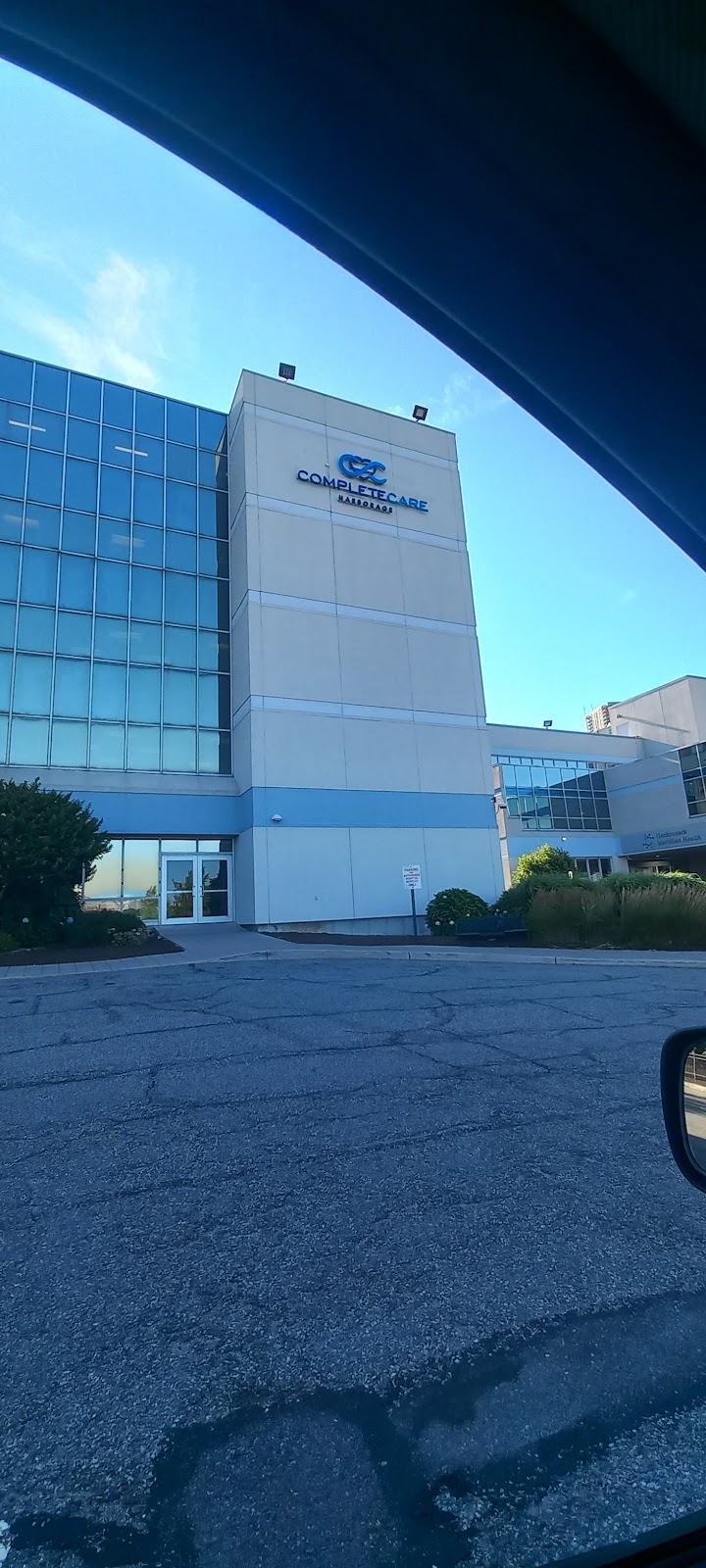
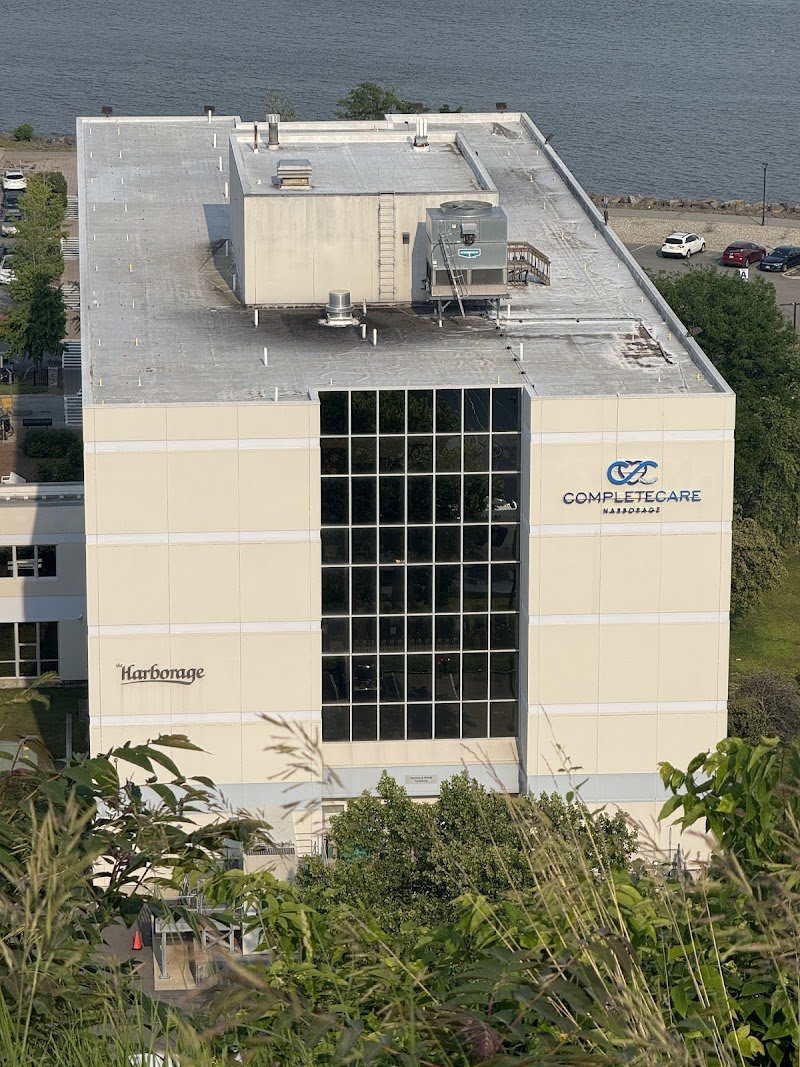
On [DATE] at 9:00 AM, upon arrival of the surveyors to the facility, the surveyor observed a facility sign, Complete Care at the Harborage that had a name that did not correspond with the CMS licensed, approved name and provider registered name The Harborage.
Once the survey team entered the facility, there were numerous displayed signs with the same name Complete Care at the Harborage. The facility name displayed on the entrance area of the facility and in the administration office area, Complete Care at the Harborage did not correspond with the CMS(Center for Medicaid and Medicare Services) licensed and approved name of The Harborage.
On [DATE] at 10:43 AM, the State Surveyor met with the Licensed Nursing Home Administrator (LNHA), Director of Nursing (DON), for Entrance Conference. During the discussion the facility LNHA informed the surveyor that the facility was purchased by Complete Care in [DATE] and, that's when the facility name changed.
On [DATE] at 11:16 AM, the surveyor reviewed various documents and facility policies that were provided by the LNHA that were titled, Complete Care at the Harborage. The documents provided showed that the facility name currently in use did not match the facility's licensed name. The facility name, Complete Care at the Harborage utilized was not approved by CMS.
The Surveyor reviewed the facility license which documented, Harborage, The as the facility name. The license issued by the New Jersey Department of Health (NJDOH) Division of Certificate of Need and Licensing was issued on [DATE] and expired on [DATE].
On [DATE] at 10:40 AM, the state surveyor met with the Regional Administrator who explained that an email would be sent from the company paralegal explaining the authorization of the facility name change by the Department of Health (DOH).
On [DATE] at 11:27 AM, an email was received from the company paralegal that included an attached letter from the DOH dated [DATE]. The DOH letter attached explained, The Department of Health (Department) has reviewed the applications for the transfer of ownership interests in the above mentioned facilities. Based on the application and responses to completeness questions, the Department is authorizing the above transfers of ownership to proceed.
The documentation on page 4 of the DOH letter stated, Although the new owner is authorized to operate the facility following the transaction, the Department will not issue the license under the new ownership until the items listed below are received and reviewed by staff from the Department. The letter continues to list a number of items that need to be submitted for the NJDOH to issue a new license for the new owners allowing them to change the name of the facility.
On [DATE] at 1:47 PM, the surveyor discussed the DOH letter with the Regional Clinical Specialist who stated, No other documentation was available for name change approval only sale approval. The Regional Clinical Specialist agreed that the facility name change had not been approved and the facility license is still for The Harborage.
On [DATE] at 1:52 PM, the Surveyor met with the facility LNHA, DON, Regional Administrator, Regional Clinical Specialist and Regional Nurse to
discuss the deficient practice of utilizing the facility name Complete Care at the Harborage without NJDOH Licensure approval. No further information or documentation was provided to the survey team to refute these findings.
NJAC 8:39-5.1 (a)
CONCERN
(D)
Potential for Harm - no one hurt, but risky conditions existed
Infection Control
(Tag F0880)
Could have caused harm · This affected 1 resident
Based on observation, interview, and record review, it was determined that the facility failed to maintain proper infection control practices to mitigate the spread of infection for 3 of 36 Residents ...
Read full inspector narrative →
Based on observation, interview, and record review, it was determined that the facility failed to maintain proper infection control practices to mitigate the spread of infection for 3 of 36 Residents observed, Resident #92, #39, and #228. The deficient practice was observed on 2 out of 4 facility floors during medication administration observation.
This deficient practice was evidenced by the following:
1. On 4/18/23 at 8:45 AM, the Surveyor observed medication administration (med pass) on the 5th floor, Vent Unit performed by a Registered Nurse (RN). The State Surveyor observed the RN prepare the crushed medication for a gastric tube (gtube), ventilator dependent Resident, Resident #92 without washing her hands.
The surveyor requested that the RN check Resident #92's vitals due to the physician parameter order. The RN proceeded to check Resident #92's vitals without sanitizing the stethoscope before or after use on this compromised Resident.
The RN put on gloves without sanitizing or washing her hands and retrieved gtube administration supplies (container filled with water and bulb syringe) from the resident's bathroom.
The RN placed the gtube supplies on the Resident's over bed table without cleaning the surface.
The RN opened Resident #92's blanket, exposing the resident's gastric tubing lying on a towel. The RN removed the towel and placed it on top of the blanket.
The RN then shut Resident #92's feed and removed the feed tubing from the gtube attachment placing it on the contaminated towel. The RN did not place a protective cap on the end of the feed tubing to protect it from contamination.
On 4/18/23 at 9:36 AM, the RN proceeded to administer the medication to Resident #92 without sanitizing/washing her hands or changing her gloves.
The surveyor observed the RN pour water into the crushed medication cups. She then poured the medication into the gtube and used the plunger, stored on the contaminated towel to aide in the flow of the medication through the gtube.
This process continued throughout the med pass with continued storage of the plunger on the contaminated towel and at times on the contaminated over bed table without any clean barrier used.
When the RN completed the administration of the medication to Resident #92, the surveyor interviewed the RN. The RN acknowledged that her administration procedure was not sanitary and could expose compromised Resident #92 to infection. The RN stated that she should have washed her hands prior to glove use, changing gloves when they were contaminated, like touching the feeding machine or towel. The RN realized that the overbed table and towel used were contaminated and should have not been used to store sanitary items, gastric tubing end without it being capped, and the plunger.
2. On 4/18/23 at 9:59 AM, the surveyor noted that the 4th floor Licensed Practical Nurse (LPN) sanitized her hands prior to preparing medication for Resident #39.
The LPN administered the medication to Resident #39 and continued to Resident #228 med pass without sanitizing/washing her hands.
3. On 4/18/23 at 10:06 AM, the surveyor observed the LPN prepare medication for Resident #228 without sanitizing/washing her hands.
The surveyor requested that the LPN check Resident #228's vitals due to the physician parameter orders. The LPN proceeded to check Resident #228's vitals without sanitizing the stethoscope before or after use on this resident.
Review of the Administering Medication Policy documented as reviewed 2/2023, under 12., Staff shall follow established facility infection control procedures (e.g, handwashing, antiseptic techniques, gloves, isolation precautions, etc.) for administration of medications, as applicable.
Review of Handwashing/Hand Hygiene Policy documented as reviewed 2/2023, under 7., Use an alcohol-based hand rub containing at least 70% alcohol; or, alternatively, soap and water for the following situations: b. Before and after direct contact with residents; c. Before preparing or handling medications; f. Before donning sterile gloves; i. After contact with a resident's intact skin; l. After contact with objects (e.g., medical equipment) in the immediate vicinity of the resident; m. After removing gloves. Continued review of the Handwashing/Hand Hygiene Policy under 9. The use of gloves does not replace hand washing/hand hygiene. Integration of glove use along with routine hand hygiene is recognized as the best practice for preventing healthcare-associated infections.
On 4/20/23 at 1:52 PM, the surveyor met with the Director of Nursing, Licensed Nursing Home Administrator (LNHA), Regional LNHA and Transitional Regional Nurse to discuss the infection control breaches. No further information was provided.
NJAC 8:39 - 19.4(a)