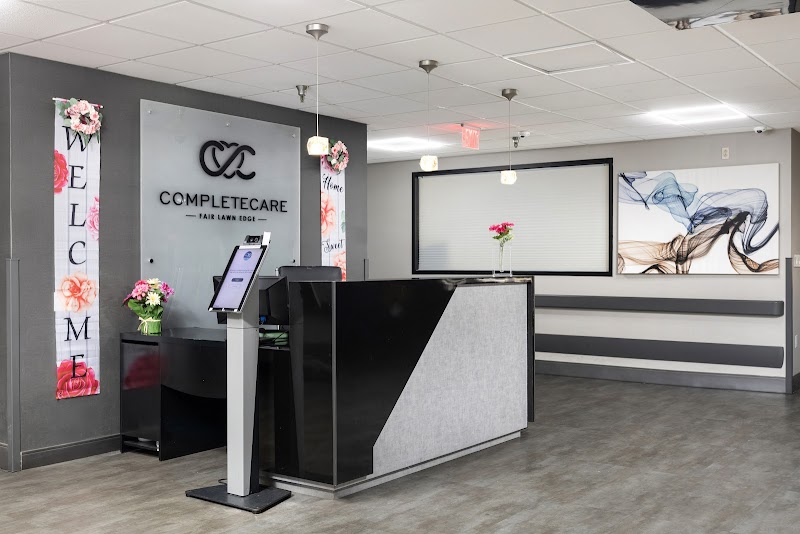
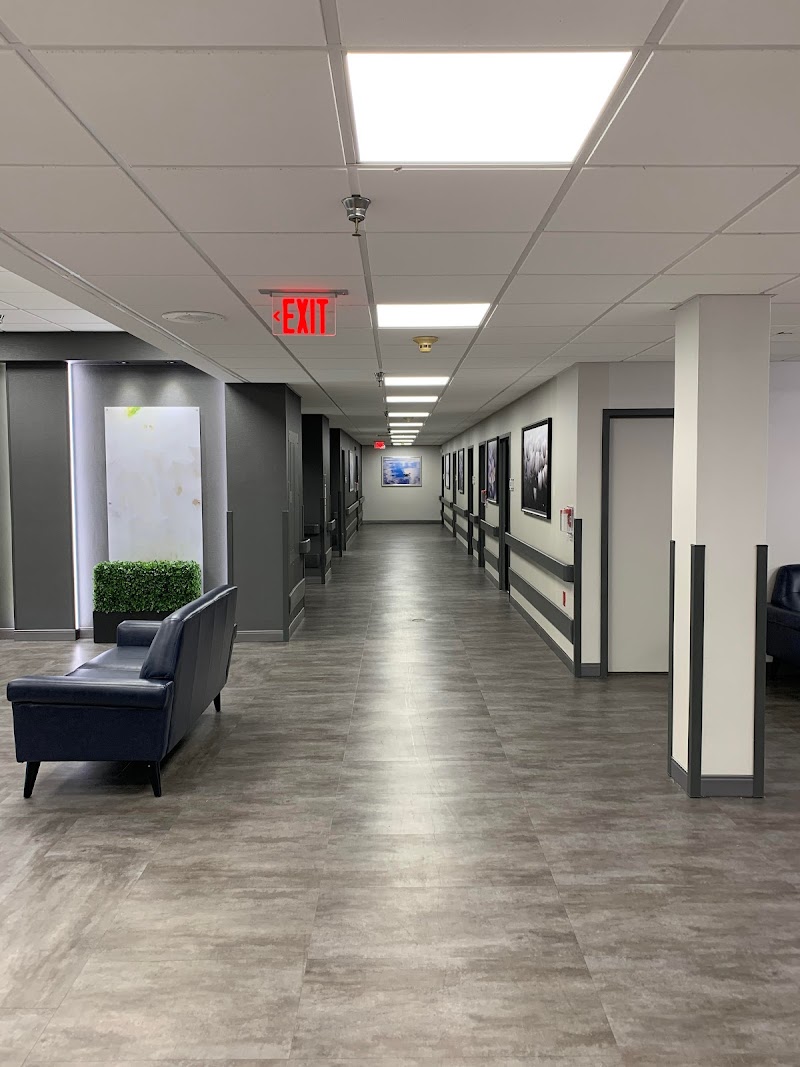
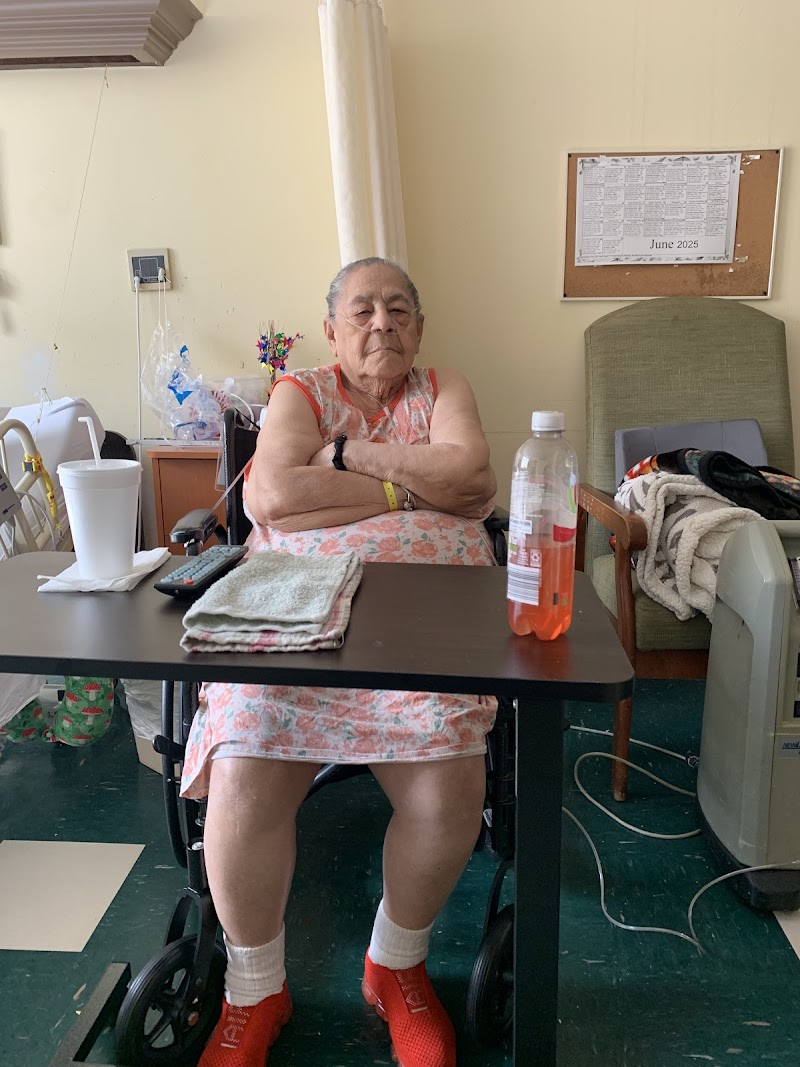
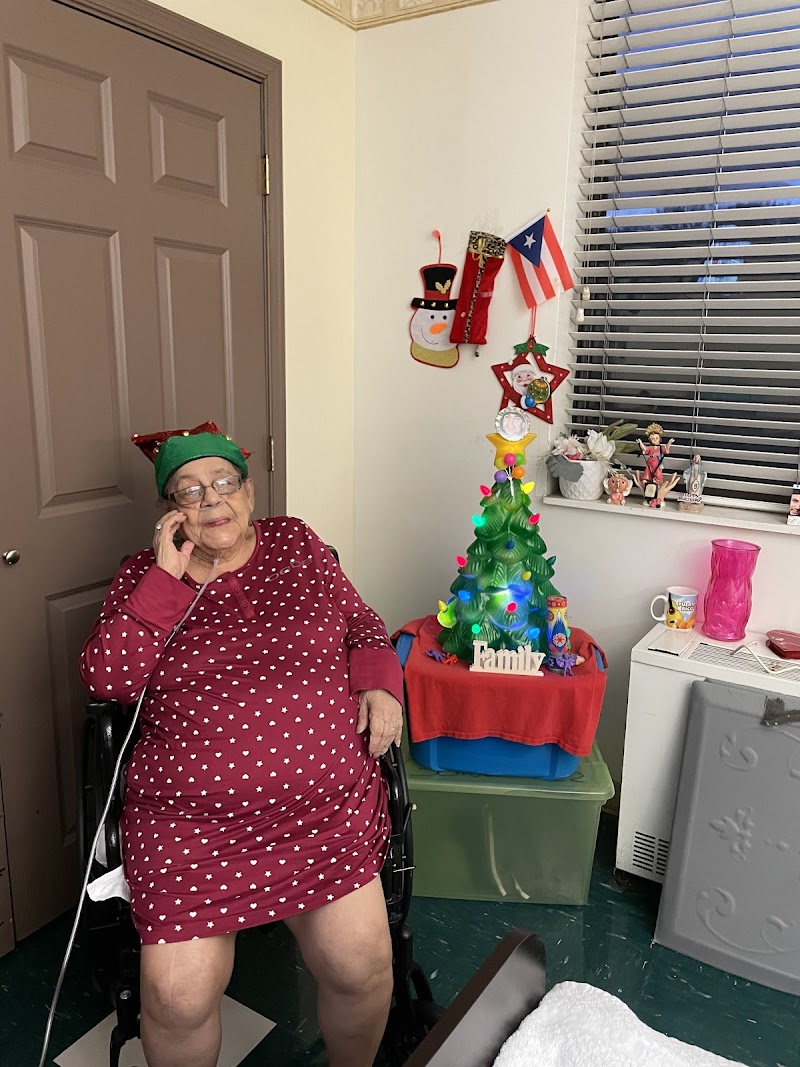
COMPLETE CARE AT FAIR LAWN EDGE

77 EAST 43RD STREET, PATERSON, NJ 07514 (973) 754-6700
For profit - Individual 180 Beds COMPLETE CARE Data: November 2025 1 Immediate Jeopardy citation
Trust Grade
36/100
#255 of 344 in NJ
Last Inspection: April 2024

Within standard 12-15 month inspection cycle. Federal law requires annual inspections.

Overview

Complete Care at Fair Lawn Edge has a Trust Grade of F, indicating a poor performance with significant concerns about care quality. It ranks #255 out of 344 facilities in New Jersey, placing it in the bottom half of the state and #12 out of 18 in Passaic County, meaning there are only a few local options that are better. The facility's situation is improving, having reduced issues from 12 in 2022 to 8 in 2024, though it still faces serious challenges. Staffing is average with a 3/5 rating and a turnover rate of 46%, which is around the state average, while RN coverage is also average, meaning there is no exceptional oversight. However, the facility has faced $10,036 in fines, which is concerning, and there were critical incidents where residents were able to leave the facility unsupervised, posing serious safety risks. Overall, while there are some positive signs of improvement, families should weigh the significant risks against the strengths.

Trust Score
F
36/100
In New Jersey
#255/344
Bottom 26%
Safety Record
High Risk
Review needed
Inspections
Getting Better
12 → 8 violations
Staff Stability
⚠ Watch
46% turnover. Above average. Higher turnover means staff may not know residents' routines.
Penalties
○ Average
$10,036 in fines. Higher than 57% of New Jersey facilities. Some compliance issues.
Skilled Nurses
⚠ Watch
Each resident gets only 23 minutes of Registered Nurse (RN) attention daily — below average for New Jersey. Fewer RN minutes means fewer trained eyes watching for problems.
Violations
⚠ Watch
28 deficiencies on record. Higher than average. Multiple issues found across inspections.
★★☆☆☆
2.0
Overall Rating
★★★☆☆
3.0
Staff Levels
★★★★☆
4.0
Care Quality
★★☆☆☆
2.0
Inspection Score
Stable
2022: 12 issues
2024: 8 issues

The Good

  • 4-Star Quality Measures · Strong clinical quality outcomes
  • Full Sprinkler Coverage · Fire safety systems throughout facility
  • No fines on record

Facility shows strength in quality measures, fire safety.

The Bad

2-Star Overall Rating

Below New Jersey average (3.2)

Below average - review inspection findings carefully

Staff Turnover: 46%

Near New Jersey avg (46%)

Higher turnover may affect care consistency

Federal Fines: $10,036

Below median ($33,413)

Minor penalties assessed

Chain: COMPLETE CARE

Part of a multi-facility chain

Ask about local staffing decisions and management

The Ugly 28 deficiencies on record

1 life-threatening
Apr 2024 8 deficiencies 1 IJ
CRITICAL (J) 📢 Someone Reported This

A family member, employee, or ombudsman was alarmed enough to file a formal complaint

Immediate Jeopardy (IJ) - the most serious Medicare violation

Accident Prevention (Tag F0689)

Someone could have died · This affected 1 resident

**NOTE- TERMS IN BRACKETS HAVE BEEN EDITED TO PROTECT CONFIDENTIALITY** Complaint #NJ 165064 Complaint #NJ 166666 Based on interviews, record review, and review of other pertinent facility documentat...

Read full inspector narrative →
**NOTE- TERMS IN BRACKETS HAVE BEEN EDITED TO PROTECT CONFIDENTIALITY** Complaint #NJ 165064 Complaint #NJ 166666 Based on interviews, record review, and review of other pertinent facility documentation, it was determined that the facility failed to 1.) provide adequate supervision for a cognitively impaired, exit seeking resident and ensure exit doors were securely locked which resulted in Resident # 353 eloping from the facility on 06/15/2023 and 2.) follow facility elopement policy which resulted in Resident # 355 eloping from the facility on 08/17/2023. This deficient practice was identified for 2 of 3 residents (Resident # 353 and Resident # 355) reviewed for elopement. The facility failed to monitor and supervise a cognitively impaired, exit seeking resident from being able to exit the facility through an unsecured exit door. This posed a serious and immediate risk to the health, safety, and well-being of Resident #353. During an annual Recertification survey on 04/19/24, the survey team identified an Immediate Jeopardy (IJ) running from 06/15/23 at 8:53 PM, when the resident eloped from the facility, to 06/15/23 at 9:05 PM, when the resident was found. The Immediate Jeopardy (IJ) situation was determined to have existed on 06/15/2023, when Resident #353 exited the building without staff knowledge and was found by facility staff several blocks away from the facility, adjacent to a wide, double-lane roadway. The facility developed and implemented a corrective action plan, and the past-noncompliance IJ was determined to have been removed on 06/15/2023. The facility's noncompliance was corrected on 06/16/2023. On 04/19/2024 at 2:39 PM, the Licensed Nursing Home Administrator (LNHA), Director of Nursing (DON), and regional staff were informed of the past non-compliance IJ situation. This deficient practice was evidenced by the following: Part A 1. Review of a facility policy with a review date of 6/2023 titled, Elopement indicated under Policy Interpretation and Implementation, section l . Staff shall promptly report any resident who tries to leave the premises or is suspected of being missing to the Charge Nurse or Director of Nursing. The surveyor reviewed the electronic medical record (EMR) for Resident #353 which revealed the following: Review of the admission Record for Resident #353 included diagnoses but were not limited to; encephalopathy (a broad term for any brain disease that alters brain function or structure), epilepsy (a seizure disorder), and schizophrenia (a mental illness that affects how a person thinks, feels, and behaves). Review of a Comprehensive Minimum Data Set (MDS), an assessment tool used to facilitate the management of care, dated 1/19/23, reflected the resident had a brief interview for mental status (BIMS) score of 0 out of 15, indicating that the resident had severe cognitive impairment. Review of a Quarterly Minimum Data Set (MDS) dated [DATE], reflected that the facility documented the resident was rarely/never understood and testing for a BIMS score was not performed. Review of a Quarterly Minimum Data Set (MDS) dated [DATE], reflected the facility documented under section G that the resident was able to Locomotion off unit-how resident moves to and from distant areas on the floor 2. Limited assistance 2. One person physical assist. A review of the physicians' orders revealed there were no physician orders for wandering or elopement risks for Resident #353. Review of an elopement risk assessment dated [DATE], indicated the resident scored a 7 upon the assessment, indicating the resident was a low risk for elopement. Review of a nursing progress note (PN) dated 5/17/23, documented that Resident # 353 was wandering in the unit hallway stating they wanted to go home. The PN further indicated the resident's family member was present and the resident was redirected by staff. Review of a PN dated 6/12/23 at 5:12 AM, documented the resident was found waiting around the lobby stating they were getting ready to go downtown. The resident was returned to their unit and would be monitored for exit seeking. Further review of the PNs, revealed documentation dated 6/15/23 at 1:53 PM, indicating that Resident #353 was alert and confused, ambulating up and down the unit hallway. Resident #353 had to be redirected from entering the elevator and was stating, I have to go home today. Review of the comprehensive care plan (CP) for Resident #353 initiated on 6/15/2023 indicated, At risk for elopement related to: Resident states 'I am leaving, going home'. The documented interventions in the CP included: involving the resident in preferred activities, involving resident in decision making regarding daily choices, redirecting the resident from doors, shift to shift endorsement to visually monitor resident especially during shift changes or when the resident talks about going home, involving family when the resident starts to verbalize desire to go home by having them call or visit (frequently when possible), encourage family to bring in personal possessions, and evaluate the effect of cognitive impairment with the resident's ability to understand changes in surroundings. Review of a PN dated 6/15/23 at 11:34 PM documented the following: -At 4:10 PM, Resident #353 was calm and seen sitting in the lobby downstairs. -At 5:00 PM, the assigned Licensed Practical Nurse (LPN) #5 received a call from the third-floor unit manager that the resident wanted to go home and did not want to return upstairs. The resident's family members were called and stated they would come to see the resident. The resident then agreed to return to their room. - At 7:00 PM, the resident's family members came, visited with the resident, and left the resident in their room. - At 8:00 PM, LPN #5 received a call from the receptionist that the resident was downstairs in the lobby. The receptionist escorted Resident #353 back to the unit and the resident was provided a snack. The resident was left in their room and did not verbalize to staff needing anything else. - At 8:53 PM, LPN #5 received a call from the front lobby that the resident had left the facility, code gray was initiated and the staff searched for the resident. - At 9:05 PM the resident was found near the facility sitting upright in no acute distress. The nursing staff stayed with Resident #353 until emergency medical services (EMS). The resident was sent to the hospital emergency room (ER) for a complete evaluation. A PN dated 6/16/23 at 6:47 AM documented the resident was admitted to the hospital with a diagnosis of hyponatremia. Resident #353 did not return to the facility. A review of an investigation report completed by the facility indicated that Resident #353 had an actual elopement on 6/15/23 at 8:53 PM, and the investigation revealed the following: At 8:53 PM, Resident #353 was observed by a housekeeping staff exiting the ground kitchen door from their view from the 2nd floor balcony. The housekeeping staff ran downstairs to inform the front desk. The facility's elopement protocol-code gray was initiated, and staff started to search for the resident. At 9:05 PM, Resident #353 was found sitting near the facility, staff stayed with the resident until EMS arrived and brought the resident to the hospital for further evaluation. The resident was uninjured during initial assessment by facility staff and was admitted to the hospital with a diagnosis of hyponatremia. A review of a written statement dated 6/15/23, documented by LPN #5 indicated the location of where Resident #353 was found which was several blocks away from the facility adjacent to a wide, double lane roadway. Interventions listed at time of the elopement included: An investigation and a search were initiated. The police were called at time of elopement. Immediate in-service education with the facility staff regarding elopement was initiated. An employee was assigned to guard the exit door. The summary and conclusion of the investigation included: The resident exited through the side kitchen door. The resident was a low risk for elopement, a score of 7, based on the 1/12/23, elopement assessment completed. The investigation further documented, The door is [NAME] locked (a type of door lock that uses magnetism to secure a barrier) but a staff member deactivated the alarm system to access the dumpster area thus allowing the resident to leave the facility. The elopement was reported to the New Jersey Department of Health and the Ombudsman's office the day of the incident. On 4/18/24 at 11:56 AM, the surveyor interviewed the DON about the elopement of Resident #353. The DON stated it was believed the door was not closed properly which left the door unsecured and the resident was able to exit the facility. The DON stated there was no camera footage and could not identify the last staff member who used the exit door. The DON explained that the exit door was used by kitchen staff to access the loading dock and dumpster area. On 4/18/24 at 1:40 PM, the survey team met with the LNHA, DON, and regional staff. The surveyor informed the facility of the concern for the unsecured door and the resident exhibiting exit seeking behavior. The LNHA stated that the alarmed and [NAME]-locked exit door was believed to have malfunctioned, which led the exit door to remain unlocked and not alarm at the time of the elopement. The LNHA confirmed that there was no camera footage, and he could not determine which staff member last used the exit door prior to the resident's elopement. The LNHA added that there was 24-hour receptionist staff in the lobby. On 4/19/24 at 8:48 AM, the surveyor interviewed Receptionist #1 who was working in the lobby on the shift of the resident's elopement. Receptionist #1 stated that he recalled the resident was in the lobby in the afternoon prior to the elopement. Receptionist #1 could not recall the specific time and stated the resident was assisted back upstairs to their room. Receptionist #1 stated for the actual elopement he recalled someone coming to the front desk informing him that the resident left the facility, and he called to inform nursing staff. A code gray was called and the search for the resident began. On 4/19/24 at 12:15 PM, the surveyor interviewed the Maintenance Director who stated there were no known issues with the kitchen exit door prior to Resident #353's elopement. On 4/19/24 at 2:39 PM, the survey team met with the LNHA, DON and regional staff about the elopement of Resident #353 and informed them of the IJ past non-compliance. The survey team informed the facility that the failure to ensure a secure door remained locked and provide supervision to Resident #353, who exhibited exit-seeking behaviors, led up to the actual elopement on 6/15/23, resulted in an IJ situation. On 4/22/24 at 9:30 AM, the facility provided a copy of their corrective action plan that was developed and implemented beginning 6/15/23, after Resident #353 eloped from the facility. Review of the plan revealed the following actions taken on 6/15/23: .Door noted to malfunction on 6/15/23. 24 hr. door monitor initiated . Elopement and wandering residents' policy was reviewed . In-service education with all staff on Identification of Residents at Risk for Elopement, Elopement and Wandering policies . Daily door checks initiated daily x 2 weeks and weekly thereafter . The plan further indicated ongoing education to staff regarding elopement precautions and policies, keypad access doors and door safety education, weekly inspection of exit doors and function; Quality assurance performance improvement project to review and interpret all audit findings. After conducting observations, interviews, record review and review of pertinent documents, the survey team verified the facility implemented all components of the action plan and the deficient practice was corrected on 6/16/23, prior to the annual survey entrance. On 4/22/24 at 11:26 AM, the surveyor conducted a telephone interview with LPN #5 who stated Resident #353 was alert with periods of confusion, able to verbalize their needs, and ambulated independently. LPN #5 stated for wandering and elopement risk residents, interventions included keeping exit doors secured, encouraging recreational activity, performing visual observations of the resident. LPN #5 further stated that in the afternoon prior to the resident's elopement she received a call from the unit manager at the time that the resident was in the lobby and wanted to go home. LPN #5 explained she called the resident's family member who came to visit the resident and the resident agreed to stay at the facility. LPN #5 further stated she could only recall later that evening she received a phone call from Receptionist #1 who reported that the resident left the facility. She further explained a code gray was called and the search for the resident was initiated expanding outside the facility. The LNHA, DON, ADON, physician, the resident's family member and police were called and made aware of the resident's elopement. LPN #5 stated the resident was found by staff not far from the facility. The resident was unharmed. Part B 2. On 4/15/24 at 12:58 PM, the surveyor reviewed the Facility Reported Event (FRE), which revealed Resident #355 had eloped from the facility on 8/17/23, and did not return to the facility due to Resident #355 being arrested during the elopement. On 4/15/24 at 1:15 PM, the surveyor reviewed the admission Record (AR) for Resident #355 which reflected the resident was admitted to the facility on [DATE], with diagnoses that included but were not limited to bipolar disorder, displaced segmental fracture of shaft right tibia and displaced fracture of proximal phalanx of left thumb. A review of the admission MDS dated [DATE], indicated the resident had a BIMS score of 15, indicating Resident #355 was cognitively intact. A review of the Order Summary report included a discontinued physician's order dated 8/13/2023, which indicated, Resident can go out on pass with responsible party from 8 AM to 8 PM. A review of Resident #355's care plan listed under the intervention section stated, Out of pass (OOP) order discontinued (d/c), privileges were removed with an initiated date of 8/14/2023. On 4/16/24 at 12:10 PM, the surveyor reviewed the facility investigation report provided by the Director of Nursing (DON). The facility investigation report revealed that on 8/17/23 at 7:15 PM, Resident #355 told the front desk receptionist he/she has going outside to smoke and then would be going OOP. The receptionist did not verify with the nursing staff that Resident #355 was going OOP. At 8 PM during the medication pass, it was discovered Resident #355 eloped when his/her wheelchair was found in the front lobby. A search of the facility property was conducted, and the resident was not located. The [NAME] police were contacted and informed of the issue. Facility staff were able to contact Resident #355 on their cell phone and the resident stated he/she was at the [name redacted] in [NAME] dealing with a family issue and would return to the facility at 3:00 AM. At 3:20 AM, the staff attempted to contact Resident #355, but their phone went directly to voicemail. At 7:00 AM on 8/18/23, a [NAME] Police Officer arrived at the facility and informed the staff that they would go to the [name redacted] and return with Resident #355. Resident #355 was arrested due to an outstanding warrant and did not return to the facility. On 4/16/24 at 01:04 PM, the surveyor conducted an interview with the DON who stated the front desk receptionist should not have let Resident #355 outside to the first floor patio to smoke because all smoking is supposed to take place on the second floor patio as per their policy. The receptionist should have also confirmed the OOP with the nursing staff on the unit as per the facility policy. The DON confirmed that Resident #355 OOP privileges had been discontinued on 8/13/23, related to a previous issue and the receptionist should have been informed of Resident #355 OOP status. On 4/18/24 at 11:30 AM, the surveyor interviewed the 4th floor Registered Nurse Unit Manager (RN/UM). The RN/UM stated when a resident's OOP privileges are suspended or discontinued, the facility has a team meeting to discuss the concern, the social worker meets with the resident to alert them of their OOP status, the receptionist is alerted, and the resident's picture is added to the elopement risk sheet located at the front desk. On 4/18/24 at 12:47 PM, the surveyor interviewed Receptionist #2, who stated the OOP procedure is as follows, when a resident comes to the receptionist desk to go OOP, we call their unit to confirm they are allowed to go OOP. The resident and responsible party sign out in the logbook and sign in upon return. The surveyor asked if a resident had their OOP privileges suspended are you alerted? Receptionist #2 stated, In that event we are alerted by the administrator, director of nursing or the social worker that a resident cannot go out on pass and their picture is added to the elopement risk list. Receptionist #2 was asked if residents can smoke in the front on building? Receptionist #2 stated, any residents who are smokers go out on the second floor, which is the designated smoking area. On 4/19/24 at 09:05 AM, the surveyor interviewed the Social Worker (SW) who stated Resident #355 was made aware of their OOP privileges are suspended and understood why without issue. Resident #355's photo was added to elopement list at the reception desk. On 4/17/24 at 12:20 PM the Regional Director of Clinical Services (RDCS) provided with surveyor with facilities policies titled, Smoking Policy - Residents, Staff and Visitors and Out on Pass Policy with a revision date of 10/2023. The smoking policy indicated under the policy interpretation and Implementation, 1. Prior to admission and upon entry, Residents, Staff and Visitors shall be informed of the facility smoking policy, including designated smoking areas, times for residents and the extent to which the facility can accommodate their smoking or non-smoking preferences. Review of the Out of Pass policy indicated under the procedure 6. Upon leaving the facility, the resident/responsible party will inform the Change Nurse and sign out on pass; 8. The resident/responsible party must sign in and out at the lobby desk; and 10. The nurse will notify security if a pass is rescinded. On 4/19/24 at 11:52 AM, the survey team met with the Licensed nursing Home Administrator (LNHA), the DON, the RDCS and [NAME] President of Operations (VPO) to discuss the above concerns. The LNHA stated there was a breakdown in communication and facility policies with regards to Resident #355 elopement and in-services will be conducted. There was no further information provided. NJAC 8:39-33.1(d)
CONCERN (D)

Potential for Harm - no one hurt, but risky conditions existed

Deficiency F0658 (Tag F0658)

Could have caused harm · This affected 1 resident

**NOTE- TERMS IN BRACKETS HAVE BEEN EDITED TO PROTECT CONFIDENTIALITY** 4. On 4/15/23 at 12:59 PM, the surveyor observed Resident #122 seated in a geri-chair (a large, padded chair that is designed to...

Read full inspector narrative →
**NOTE- TERMS IN BRACKETS HAVE BEEN EDITED TO PROTECT CONFIDENTIALITY** 4. On 4/15/23 at 12:59 PM, the surveyor observed Resident #122 seated in a geri-chair (a large, padded chair that is designed to help seniors with limited mobility), combed, and well dressed. The resident was conversant and stated that they felt well that day. The surveyor observed a bottle of Osmolite 1.5 (nutritional formula) hanging on an intravenous (IV) pole. The Osmolite 1.5 bottle had a light brown liquid remainder less than 200 milliliters (ml/s). The pump was off but was set to a rate of 65 and had delivered 985 milliliters at that time. The surveyor reviewed the hybrid medical record for Resident #122. A review of Resident #122's admission Record (AR; an admission summary) reflected that the resident was admitted to the facility with diagnoses which included but were not limited to congestive heart failure (CHF; a chronic condition wherein the heart does not pump blood as well as it should), type 2 diabetes without complications (high blood sugar), dysphagia (difficulty or discomfort in swallowing) and gastrostomy status (resident with feeding tube). A review of Resident #122's most recent quarterly Minimum Data Set (qMDS), an assessment tool used to facilitate the management of care, dated 3/31/24, reflected that the resident had a Brief Interview for Mental Status (BIMS) score of 3 out of 15, which indicated that Resident #122's cognition was severely impaired. Additionally, the MDS revealed that the resident was independent for eating. Review of the qMDS, Section K - Swallowing/Nutritional Status reflected the resident had a feeding tube and was on a therapeutic diet. Further review of the qMDS, dated [DATE], Section M - Skin Conditions indicated the resident was at risk of developing pressure ulcers and had no pressure ulcer for that review date. A review of the resident's wound assessment dated [DATE], indicated the resident had a stage 2 sacrum pressure ulcer that had reopened and was acquired on 4/9/24. A review of the Order Summary (physician orders) that were active as of 4/17/24, included the following: -Enteral feed order, every day shift document total ml infused; the order start date was on 4/10/24. -Enteral feed order, every evening shift for patency check tube for residual prior to continuous feeding. Of residual is greater than 100 ml, hold feeding for 1 hour and recheck. If residual is greater than 50 mls on recheck, notify MD; the order start date was on 4/14/24. -Osmolite 1.5 at 65ml/hr (per hour) via gastrostomy tube (g-tube), up at 4:00 PM and infused until total volume (TV) of 1300 ml is infused, providing 1950 kcal/day (kilo calorie per day), 82 g (gram) of PRO (protein); the order start date was on 4/10/24. -Enteral Feed Order six times a day for patency, provide water flushes via PEG-tube (percutaneous endoscopic gastrostomy; feeding tube insertion is the placement of a feeding tube through the skin and the stomach wall) of 155 ml 6 times a day; the order start date was on 2/6/24. -Monthly weight;the order was started on 1/26/24. A review of the Registered Dietician's (RD), Nutrition Progress Note (NPN) dated 4/10/24, included the following recommendations: - Resident #122 was noted with vomit on 4/9/24. - Trial of Osmolite for tolerance, monitor blood glucose/A1C (a blood test that reveals the average blood sugar over the past two to three months) - Osmolite 1.5 via PEG continuous at 65 ml/hr, TV 1300ml with free water of - 15 g of PRO from Prostat (protein supplement) - 150 ml of free water flush from 150ml 6 times per day an additional of 900 ml - Weekly weights for 2 weeks. The RD also documented that the family was made aware of the TF changes. A review of the resident's weights reflected the following: -4/17/24, 161 pounds via mechanical lift -4/10/24, 160 pounds via mechanical lift -3/4/24, 161 pounds via mechanical lift -2/14/24, 159 pounds via mechanical lift -1/15/24, 164 pounds via mechanical lift -1/9/24, 164 pounds via mechanical lift During an interview with the surveyor on 4/17/23 at 11:08 AM, the RD stated he reviewed the medical record for Resident #122 and made recommendations based on diagnosis, laboratory results, weights, therapeutic diet needs, hospital records, the resident's wishes, familial consent, and collaborated with nurses, physicians and other health care ancillary involved with the resident. At that time, the RD confirmed his recommendations for the decrease of free water to 150 ml six (6) times a day (for flushing and hydration), and the new order for Prostat (a protein supplement used to promote wound healing related to the stage 2 sacral pressure ulcer that had reopened on 4/9/24) were not part of the active orders on 4/17/24. The RD was unsure why it was not part of the active orders or of it the recommendation was missed. On 4/17/24 at 11:54 AM, during an interview with the surveyor, the Regional Registered Dietician (RRD) explained the process for recommendations made. The RRD stated that the recommendations were entered into the electronic Medical Record (eMR) as pending, then validated by a nurse and when the medical doctor (MD) or the nurse practitioner (NP) agreed, the order was changed from pending to an active order. At that time, the RRD clarified that if the MD or the NP did not agree with the recommendation, the RD would have entered a follow-up NPN documenting the recommendations were not followed. At that time, the RRD confirmed that there were no documented follow-up NPN for the recommendation of the 150ml free water six times a day and the Prostat order. At that time, the RRD acknowledged the recommendations should have been acted upon. A review of the facility policy provided Consults/Recommendation Policy with a copyright date of 2024 included the following: Policy: The attending physician shall authenticate orders for the care and treatment of assigned residents. Policy Explanation and Compliance Guideline: 1. Consulting physician/practitioner orders are those orders provided to the facility by a physician/practitioner other than the resident's attending physician .A consulting physician/practitioner may include, but is not limited to, a resident's .e. Nurse Practitioner, clinical nurse specialist, dietitian, or physician assistant to any of the above physicians. 2. For consulting physician/practitioner orders received in writing or via fax in a timely manner will: a. Call the attending physician to verify the order. b. Will confirm order in EMR system. c. Follow facility procedures for verbal or telephone orders including noting the order, submitting to pharmacy, transcribing to medication or treatment administration record. 3. For consulting physician/practitioner orders received via telephone the nurse will: a. Document the order on the physician order or EMR system, notating the time date name and title of the person providing the order, and the signature and title of the person receiving the order. b. Call the attending physician to verify the order. c. Follow facility procedures for verbal or telephone orders including noting the order, submitting to pharmacy, transcribing to medication or treatment administration record. On 4/18/24 at 1:36 PM, in the presence of the survey team, the Licensed Nursing Home Administrator (LNHA), the [NAME] President of Operations (VPO), the Director of Clinical Services (DCS), the Regional Registered Nurse (RRN), the Director of Nursing (DON), Assistant DON and the concerns regarding the RD recommendations were discussed. At that time they confirmed the process was that the recommendations should have been entered as pending and it was not. No further information was provided. NJAC 8:39-27.1(a) 2. On 04/16/24 11:29 AM, the surveyor observed that Resident #84 in bed, awake and alert. A review of the facility admission Sheet for Resident #84 revealed that the resident was admitted to the facility with diagnoses which included but were not limited to End Stage Renal Disease, Anemia, Benign Prostatic Hypertrophy, Dependence on Renal (kidney) Dialysis and Dementia. A review of Resident #84's Quarterly Minimum Data Set (MDS) an assessment tool used to facilitate management of care, dated 3/31/24, reflected that the resident had a Brief Interview Mental Status (BIMS) score of 12 out of 15, which indicated that the resident had moderate cognitive impairment. A review physician's orders for April 2024 read: HEMO-DIALYSIS THREE TIMES WEEKLY ON (TUES, THURSDAY, SATURDAY 6:30 AM) at [dialysis center's name, address and telephone number] pick up at 5:45 AM by [Transportation company's name and telephone number]. A physician's order dated 12/23/23 read: Calcium Acetate tab (tablet) 667mg (milligrams) give 2 tabs (tablets) by mouth three times a day every TThS (Tuesday, Thursday, Saturday) timed at 9:00 AM, 1:00 PM and 5:00 PM. A review of the January 2024 electronic Medication Administration Record (eMAR) revealed that the resident was scheduled to receive the Calcium Acetate medication as ordered above every TThS at 0900 [9 AM]. The entries for 1/4/24, 1/6/24, 1/23/24 and 1/27/24 were signed by the nurses with 7 which indicated Other/See nurses notes and that the medication was not administered. A review of the February 2024 eMAR revealed that the resident was scheduled to receive the Calcium Acetate medication as ordered above every TThS at 0900 [9 AM]. The entry for 0900 on 2/7/24, was signed by the nurse with 7 which indicated Other/See Nurse Notes, and on 2/17/24 was signed by the nurse with 3 which indicated Hold/See Nurse Notes and that the medication was not administered. A review of the March 2024 eMAR revealed that the resident was scheduled to receive the Calcium Acetate medication as ordered above every TThS at 0900 [9 AM]. The entry for 0900 on 3/7/24, 3/9/24, 3/12/24, 3/14/24, was signed by the nurse with 7 which indicated Other/See Nurse Notes, and on 3/30/24 was signed by the nurse with 3 which indicated Hold/See Nurse Notes and that the medication was not administered. A review of the nurses' progress notes in the Electronic Medical Record (EMR) revealed that the medication was not administered on the entries identified above as the resident was out to dialysis during the medication administration time. On 4/19/24 at 2:38 PM, the surveyor discussed the above concern to the facility's the Licensed Nursing Home Administrator (LNHA), the [NAME] President of Operations (VPO), the Director of Clinical Services (DCS), the Regional Registered Nurse (RRN), the Director of Nursing (DON), Assistant DON. The DON stated that the facility's protocol for medications to be scheduled to accommodate resident when they are out for dialysis. The facility's DON, VPO, RRN acknowledged that the medication should have been scheduled to accommodate the resident dialysis schedule. A review of the facility's policy titled Hemodialysis , did not reveal anything related to medication timing to ensure that medications are times with the dialysis days/schedule of the resident. 3. On 04/15/24 12:10 PM, the surveyor observed Resident #2 seated in their wheelchair. The surveyor further observed that the resident was on continuous oxygen via nasal canula with the rate set at 8 liters/minutes. The resident was Spanish speaking. A review of the facility admission Sheet for Resident #2 revealed that the resident was admitted to the facility with diagnoses which included but were not limited to Coronary Artery Disease, Chronic Obstructive Pulmonary Disease, Hypertension and Parkinsonism. A review of Resident #2's Quarterly Minimum Data Set (MDS) an assessment tool used to facilitate management of care, dated 1/19/24, reflected that the resident had a Brief Interview Mental Status (BIMS) score of 8 out of 15, which indicated that the resident had moderate cognitive impairment. A review of the physician's order dated 4/8/24 revealed a PO for Oxygen at 2 l/min (liters/minute) via nasal cannula continuously. On 4/15/24 at 12:35 PM, the surveyor interviewed the 3rd floor Unit Manager (UM)/LPN #2 who confirmed that the PO for oxygen was to be administered at the rate of 2 l/min. The UM/LPN #2 in the presence of the surveyor went inside the resident's room. The UM/LPN #2 stated to the surveyor that the resident was on oxygen rate set at 8 l/min. On 4/15/24 at 12:41 PM, the surveyor in the presence of another surveyor who speaks Spanish interviewed Resident #2. The resident stated in Spanish that he/she does not touch the oxygen to change the flow rate. On 4/15/24 at 12:48 PM, the surveyor interviewed LPN #3 assigned to Resident #2 who stated that he checked the oxygen including the rate set of every resident in the morning during the beginning of his shift at 7:00 AM and before the end of the shift at 3:00 PM. On 4/19/24 at 2:38 PM, the surveyor discussed the above concern to the facility's the Licensed Nursing Home Administrator (LNHA), the [NAME] President of Operations (VPO), the Director of Clinical Services (DCS), the Regional Registered Nurse (RRN), the Director of Nursing (DON), Assistant DON. There was no further information provided. Based on observation, interview, record review and review of facility documents, it was determined that the facility failed to adhere to acceptable standards of nursing practice. This deficient practice was identified in 4 of 7 residents who had medication improperly prepared for administration, 1. Resident #86, #199, #73, #200, 2. facility failed to ensure a resident's medication times were adjusted to accommodate their dialysis (a clinical purification of blood as a substitute for the normal function of the kidneys) schedule for 1 of 3 Residents reviewed for accurate dialysis scheduling of medication times, Resident #84, 3. failed to ensure that the oxygen rate was administered according to Physician's Order (PO), for 1 of 1 Residents reviewed for Oxygen use, Resident #2 4. facility failed to ensure recommendations made by the Registered Dietician was acted upon in a timely manner as per facility policy and in accordance with professional standards of clinical practice for one (1) of two (2) residents reviewed for tube feed, Resident #122. The deficient practice was evidenced by the following: Reference: New Jersey Statutes Annotated, Title 45. Chapter 11. Nursing Board. The Nurse Practice Act for the State of New Jersey states: The practice of nursing as a registered professional nurse is defined as diagnosing and treating human responses to actual and potential physical and emotional health problems, through such services as case finding, health teaching, health counseling, and provision of care supportive to or restorative of life and wellbeing, and executing medical regimens as prescribed by a licensed or otherwise legally authorized physician or dentist. Reference: New Jersey Statutes Annotated, Title 45, Chapter 11. Nursing Board. The Nurse Practice Act for the State of New Jersey states: The practice of nursing as a licensed practical nurse is defined as performing tasks and responsibilities within the framework of case finding; reinforcing the patient and family teaching program through health teaching, health counseling and provision of supportive and restorative care, under the direction of a registered nurse or licensed or otherwise legally authorized physician or dentist. 1. On 4/15/24 at 1:01 PM the surveyor entered the 3rd Floor medication room. The surveyor observed the Licensed Practical Nurse (LPN) #2 standing by her medication cart with a stack of medication cups on top of the cart. Closer examination by the surveyor of the medication cups revealed 4 stacked cups all with medication in them. Examination of each cup with LPN#2 revealed that each cup had the resident's first name written on each cup except the bottom cup, which had no name written on it. The surveyor requested that LPN#2 identify the resident and what was in the medication cup. LPN#2 could not identify the residents or the medication in the cup without referring to the electronic medication administration record (eMAR). Along with LPN#2 each cup was examined and identified: Cup 1 was identified as belonging to Resident #86 and contained 3 tablets of Hydralazine 25mg (an antihypertensive medication). Cup 2 was identified as belonging to Resident #199 and contained 1 tablet Depakote 25 mg (an antiseizure and mood stabilizing medication). Cup 3 was identified as belonging to Resident # 73 and contained 2 tablets of Methadone 10 mg (a controlled substance used for pain relief). Cup 4 was identified as belonging to Resident # 200 and contained 3 tablets of Depakote 250 mg (mood stabilizing medication). Review of the Individual Patient Controlled Substance Administration Record (Inventory Sheet) for Methadone 10mg tablets with LPN#2 revealed that there were 46 tablets left in stock. Examination of the actual inventory of Methadone 10 mg tablets in stock was 44 tablets. The surveyor interviewed LPN#2 who stated, I didn't give it yet. LPN#2 was not aware that the Inventory Sheet needed to be signed out for the tablets removed from inventory at the time of the removal. The surveyor continued the interview with LPN#2 who could not explain why she prepared the medications for 4 residents in advance, instead of individually preparing and administering medication to each resident. LPN#2 stated that she knows that this was not best practice. The surveyor reviewed the facility hybrid documents: A. Review of the facility admission Sheet for Resident #86 revealed that the resident was admitted to the facility with diagnoses which included but were not limited to Chronic Obstructive Pulmonary Disease, Pulmonary Hypertension, Chronic Kidney Disease and Diastolic Heart Failure. A review of Resident #86's Quarterly Minimum Data Set (MDS), an assessment tool used to facilitate the management of care, dated 3/29/24, reflected that Resident #86 had a BIMS score of 15 out of 15, indicating an intact cognition. The surveyor reviewed the April 2024 eMAR which documented a Physician's order (PO) dated 10/29/23 for Hydralazine 25 mg Give 3 tablets by mouth every 8 hours for Hypertension. B. Review of the facility admission Sheet for Resident #199 revealed that the resident was admitted to the facility with diagnoses which included but were not limited to Seizures, Adjustment Disorder with Anxiety, and Other Psychoactive Substance Induced Disorder. A review of Resident #199's Quarterly Minimum Data Set (MDS), an assessment tool used to facilitate the management of care, dated 1/31/24, reflected that Resident #199 had a BIMS score of 8 out of 15, indicating a moderately impaired cognition. The surveyor reviewed the April 2024 eMAR which documented a Physician's order (PO) dated 11/3/23 for Depakote Tablet Delayed Release 125 mg 1 tablet 3 times daily for convulsion. C. Review of the facility admission Sheet for Resident #73 revealed that the resident was admitted to the facility with diagnoses which included but were not limited to Other Psychoactive Substance Abuse, Complicated, Adjustment Disorder with Anxiety, and Acquired absence of right and left leg above the knee. A review of Resident #73's Quarterly Minimum Data Set (MDS), an assessment tool used to facilitate the management of care, dated 2/19/24, reflected that Resident #73 had a BIMS score of 15 out of 15, indicating an intact cognition. The surveyor reviewed the April 2024 eMAR which documented a Physician's order (PO) dated 11/27/23 for Methadone 10 mg Give 2 tablets by mouth 3 times a day for pain. D. Review of the facility admission Sheet for Resident #200 revealed that the resident was admitted to the facility with diagnoses which included but were not limited to Epilepsy, Schizophrenia, and Mood Disorder. A review of Resident #200's admission Minimum Data Set (MDS), an assessment tool used to facilitate the management of care, dated 4/11/24, reflected that Resident #200 had a BIMS score of 9 out of 15, indicating a moderately impaired cognition. The surveyor reviewed the April 2024 eMAR which documented a Physician's order (PO) dated 3/29/24 for Depakote Delayed Release 250 mg Give 3 tablets 3 times daily for Schizophrenia. Review of the facility Administering Medications Policy explains, Medications shall be administered in a safe and timely manner, and as prescribed. The policy continues to explain, 4. The individual administering medications must verify the resident's identity before giving the resident his/her medications. and 5. The individual administering the medication must check the label against the Physician's order to verify the right resident, right medication, right dosage, right time, and right method (route) of administration before giving the medication. Review of the facility Documentation of Medication Administration Policy explains, 4. When giving controlled subtance when removed from the lock box, it must be signed on the declining sheet. Once administered it must be signed on the eMAR. On 4/15/24 at 1:45 PM, the surveyor discussed the above deficient practice with the Director of Nursing (DON) and the Assistant DON who could not explain why LPN#2 prepared the medication for Resident #86, #199, #73 and #200 in a stack of cups. The DON stated that this is not the proper way to administer medication to residents in the facility. The DON added that all medications administered to a resident should be reviewed, administered, and documented, one resident at a time. The DON commented that LPN#2 should not have prepared medication for a number of residents and should have known to sign out narcotics from the inventory sheet when she removed the narcotic medication from inventory.
CONCERN (D)

Potential for Harm - no one hurt, but risky conditions existed

Pressure Ulcer Prevention (Tag F0686)

Could have caused harm · This affected 1 resident

Based on observation, interview, record review, and review of pertinent facility documents, it was determined that the facility failed to a.) maintain infection control practices to reduce the risk of...

Read full inspector narrative →
Based on observation, interview, record review, and review of pertinent facility documents, it was determined that the facility failed to a.) maintain infection control practices to reduce the risk of infection during a pressure ulcer (PU) treatment; b.) to assess a resident for risk for pressure ulcer quarterly and c.) ensure a physician's order was administered as ordered consistently for preventative measures for skin for 1 of 2 residents (Resident #25) reviewed for PU/injury. This deficient practice was evidenced by the following: On 4/15/24 at 11:44 AM, the surveyor observed Resident #25 asleep in bed with resident's daughter at the bedside. The surveyor interviewed Resident #25's daughter who stated that the resident had a PU, and that the PU was getting better. Resident #25's daughter further stated that the staff turned and changed the resident. On 4/18/24 at 9:56 AM, the surveyor observed the Assistant Director of Nursing (ADON) and Licensed Practical Nurse (LPN) #1 perform Resident #25's PU treatment. The ADON and LPN #1 performed hand hygiene (HH) with an alcohol based hand rub (ABHR) prior to donning (put on) a gown and gloves. The ADON and LPN #1 did not perform handwashing prior to the start of the PU treatment. Later in the PU treatment, the ADON removed the dressing on Resident #25's sacrum. The ADON removed her gloves and performed HH with ABHR and donned a new pair of gloves. LPN #1 prepared 4 X 4 dressings with Normal Saline (NS) and handed the NS moistened 4 X 4 dressings to the ADON. The ADON placed her left gloved hand on Resident #25's right buttock and left her hand on the buttock while the ADON used her right gloved hand to wipe the area around the PU with the moistened 4 X 4. The ADON then repeated the process with a new moistened 4 X 4 that LPN #1 handed to her, while her left hand remained on the resident's right buttock. The ADON then cleaned the PU with a new moistened 4 X 4 that LPN #1 handed to her with her right gloved hand while her left gloved hand remained on the resident's buttock. The ADON then repeated the process again with a new moistened 4 X 4. LPN #1 then removed a piece of foam gauze that was not a full piece and was previously cut from an already opened package. LPN #1 then cut a small piece of the foam gauze and placed Santyl ointment on the foam gauze with a tongue depressor and handed it to the ADON's right gloved hand. The ADON whose left hand was still on the resident's right buttock then used her right gloved hand to place the foam gauze on the resident's PU. LPN #1 opened the border gauze dressing and with her gloved hand took the pen that was attached to her badge and dated the border gauze dressing. LPN #1 then handed the border gauze dressing to the ADON who placed the border gauze dressing over the foam dressing on Resident #25's sacral area. The ADON did not doff (to take off) gloves, perform HH and don a pair of new clean gloves after cleaning the PU and prior to applying the Santyl and foam dressing. The ADON and LPN #1 did not use a new sterile foam dressing for the placement of Santyl to the PU. At the end of the PU treatment the ADON and LPN #1 doffed their gown and gloves and performed handwashing with soap and water. The ADON and LPN #1 did not disinfect the over the bed table that was used for the PU treatment. At approximately 10:42 AM, the surveyor interviewed the ADON regarding the PU treatment. The ADON confirmed that the foam dressing was not a new unopened packaged and that it had been opened and pieces cut from it for prior treatments. She added that the foam dressing was a large piece and that they cut a small piece to fit the size of the PU at each PU treatment for that resident. The ADON stated that she did not have to change her gloves after she cleaned the PU if the gloves were not visibly soiled. The ADON stated that she should have wiped the table after the PU treatment was done. A review of Resident #25's admission Record face sheet (an admission summary) reflected that the resident was admitted to the facility with diagnoses which included but were not limited to anemia, (condition in which the blood doesn't have enough healthy red blood cells and hemoglobin, a protein found in red blood cells, to carry oxygen all through the body), Type 2 diabetes mellitus with hyperglycemia (a condition that happens because of a problem in the way the body regulates and uses sugar as a fuel with elevated blood sugars) and severe protein-calorie malnutrition (state of inadequate intake of food (as a source of protein, calories, and other essential nutrients) occurring in the absence of significant inflammation, injury, or another condition that elicits a systemic inflammatory response). A review of Resident #25's electronic Progress Notes included a note dated 01/03/24 which included the following: The resident is being evaluated for new skin alteration to sacrum. A review of Resident #25's Significant change in status Minimum Data Set (MDS), an assessment tool used to facilitate the management of care, dated 01/10/24, reflected that the resident had a Brief Interview for Mental Status (BIMS) score of 01 out of 15, which indicated that Resident #25's cognition was severely impaired. Further review indicated that the resident had one (1) unstageable PU that was not present on admission/entry or reentry. A review of Resident #25's December 2023 Treatment Administration Record (TAR) included the following order: Apply Zinc Oxide (used to treat or prevent minor skin irritations such as burns, cuts, and diaper rash) on sacrum every shift. The December TAR included 6 of 30 day shifts, 11 of 30 evening shifts and 6 of 30 night shifts that were blank which indicated the nurse did not sign that the zinc oxide was not administered. A review of Resident #25's electronic medical record indicated that the resident had a Braden Scale for Predicting Pressure Sore Risk (BSFPPSR) dated 3/17/23. Further review of the medical record did not include any quarterly BSFPPSR assessments for the rest of 2023. There was a Nurses Quarterly Assessment, which included the BSFPPSR, dated 4/10/24. There was not a BSFPPSR assessment done in January 2024. On 4/18/24 at 11:28 AM, the surveyor interviewed the UM/LPN 2nd floor unit regarding how often the BSFPPSR was done. The UM/LPN stated that they were done quarterly. On 4/18/24 at 12:24 PM, the surveyor interviewed LPN #1. LPN #1 stated that zinc oxide was used to prevent skin breakdown. She added that she was not sure why there was blanks on the TAR and what the blanks meant. On 4/18/24 at 12:31 PM, the surveyor interviewed UM/LPN 2nd floor unit regarding Resident #25's quarterly BSFPPSR. The UM/LPN stated that she did not know why the resident did not have the assessments and that she did not know why they were not triggered in the computer. On 4/18/24 at 12:33 PM, the surveyor interviewed the Director of Nursing (DON). The DON stated that the Braden Scale was done on admission and quarterly and it was documented in the computer system under the assessment tab. The DON stated that if there were blanks on the TAR that it meant that it was not given. The DON stated that zinc oxide was a skin protectant. The DON stated that Handwashing should be done prior to a PU treatment and the table should be wiped after the treatment. The DON stated that he had to check what the policy had in regard to changing gloves. The DON stated that a piece of foam could be saved to use that same day for the same resident but that it should not be saved for another day. On 4/18/24 at 01:16 PM, in the presence of the survey team, the surveyor told the Licensed Nursing Home Administrator (LNHA), Director of Nursing (DON), ADON, VP of Operations (VPoO) and Regional Nurse the concern regarding Resident #25's wound treatment, Braden Scale not done quarterly and the missing administrations of zinc oxide. On 4/19/24 at 11:53 AM, in the presence of the survey team, LNHA, DON and VPoO, the Regional Nurse stated that the staff were in serviced on the wound treatment including changing gloves, not cutting the foam, and wiping the table. She stated that the staff applied the zinc oxide but that they just did not document it. She added that the staff were in serviced. The Regional Nurse stated that the facility policy has HH, and that handwashing did not have to be done if the hands were not visibly soiled or the nurse was not in contact with C. difficile (Clostridioides difficile; a bacterium that causes an infection of the colon, the longest part of the large intestine and symptoms can range from diarrhea to life-threatening damage to the colon). A review of the facility provided policy titled, Wound Care with an updated date of 5/2023 included the following: Purpose: The purpose of this procedure is to provide guidelines for the care of wounds to promote healing. Steps in the Procedure: 2. Perform hand hygiene . 11. Wear clean gloves when physically touching the wound or holding a moist surface over the wound. 12. Place one (1) gauze to cover all broken skin. Wash tissue around the wound that is usually covered by the dressing, tape or gauze with normal saline as ordered. 13. Remove dry gauze. Apply treatments as indicated. 14. Dress wound. Pick up sponge with paper and apply directly to area. [NAME] tape with initials, time and date and apply dressing. Be certain all clean items are on clean field . 19. Return the overbed table to its proper position. 20. Wipe reusable supplies with alcohol as indicated . A review of the facility provided policy titled, Assessment Frequency/Timelines with a copyright date of 2023, included the following: Policy: The purpose of this policy is to provide a system to complete standardized assessments in a timely manner, according to the current RAI Manual. Policy Explanation and Compliance Guidelines: 4. A quarterly review assessment will be completed no less than once every 3 months On 4/19/24 at 01:23 PM, in the presence of the survey team, the Regional Nurse stated that Resident #25 did not have some of the quarterly Braden Scale assessments done. The facility did not provide any further information. N.J.A.C. 8:39-27.1
CONCERN (D)

Potential for Harm - no one hurt, but risky conditions existed

Deficiency F0711 (Tag F0711)

Could have caused harm · This affected 1 resident

4. On 4/16/24 at 12:00 PM, the surveyor reviewed Resident #138's hybrid medical records. The admission Record (AR) documented that Resident #138 had diagnoses that included but were not limited, schi...

Read full inspector narrative →
4. On 4/16/24 at 12:00 PM, the surveyor reviewed Resident #138's hybrid medical records. The admission Record (AR) documented that Resident #138 had diagnoses that included but were not limited, schizoaffective disorder, depression, and hyperlipidemia. A review of the physician progress notes (PN), revealed there were no notes written by Physician #1 from November 2023 to March 2024. 5. On 4/16/24 at 12:00 PM, the surveyor reviewed Resident #63's hybrid medical records. The admission Record (AR) documented that Resident #138 had diagnoses that included but were not limited, cerebral infarction (stroke) with hemiplegia (paralysis on one side of the body) and hemiparesis (weakness affecting one side of the body), hypertension, and type 2 diabetes. A review of the PN, revealed there were no notes written by Physician #1 from November 2023 to March 2024. On 4/17/24 at 11:34 AM, the surveyor interviewed LPN/UM #2 about PN. LPN/UM #2 stated Physician #1 did not work with a nurse practitioner and documented in the electronic medical record (EMR). On 4/18/24 at 10:53 AM, the surveyor interviewed the ADON who stated Physician #1 documented in the EMR. The ADON reviewed the EMR of Resident #138 and Resident #63. The ADON could not find PNs by Physician #1 who was the residents' primary physician. The ADON stated she would follow up to provide further information. On 4/18/24 at 1:40 PM, the survey team met with the LNHA, DON and regional staff. The surveyor informed them of the concern of Resident #138 and Resident #63 not having any PN by their primary physician. On 4/19/24 at 9:13 AM, the surveyor interviewed the Medical Director who stated it was expected for physician visits at least monthly and every two months when alternating visits with a nurse practitioner or physician assistant. The Medical Director acknowledged it would be expected for physicians to document upon visiting residents. On 4/19/24 at 11:53 AM, the survey team met with the LNHA, DON and Director of Clinical Services (DCS). The DCS stated Physician #1 was in-serviced about documentation. The facility provided a PN that Physician #1 completed yesterday for April 2024. There was no additional information provided by the facility. On 4/23/24 at 10:32 AM, the survey team interviewed Physician #1 over the phone who stated physicians were required to visit residents at least once a month and he visited his residents in the facility 3-4 times a week. Physician #1 stated when visiting, he wrote PN, but would handwrite notes sometimes when computers were not available. Physician #1 further explained he would put it in the resident's paper chart and that it should be there. The surveyor informed Physician #1 there were no notes found in the paper chart of the residents identified and the facility did not provide any additional documentation. Physician #1 could not speak to why there were no PN for the residents identified. Physician #1 stated he understood the importance of completing PNs as it shows he is reviewing the residents' plan of care and visiting the residents. NJAC 8:39-23.2(b)(d) Based on observation, interview, and record review, it was determined that the facility failed to assure that the physician responsible for supervising the care of residents completed monthly progress notes. This deficient practice continued over several months for 5 of 31 residents reviewed, Resident #71, #142, #352, #138 and #63 reviewed for physician progress notes and current physician orders. This deficient practice was evidenced by the following: 1. On 4/15/24 at 11:36 AM, the surveyor observed Resident #71 sitting in a wheelchair in their room. The resident was lethargic and non-arousal. The surveyor reviewed the hybrid medical records of Resident #71 which revealed the following: Review of Resident #71 admission Record (AR) reflected that Resident #18 was admitted to the facility with medical diagnoses that included but were not limited to major depression, schizophrenia, type 2 diabetes mellitus and heart failure. A review of Resident # 71's hybrid medical records revealed that from 6/4/21 to 1/26/24 the Primary Physician (Physician #1) had not written any monthly Medical Progress Notes (PN) in the electrotonic or paper chart. On 4/17/24 at 10:40 AM, the Licensed Nursing Home Administrator (LNHA) provided the surveyor team with a facility policy titled, Physician Visits. with a revised date of April 2020. Under the policy interpretation and implementation section of the policy it states, 5. The Attending Physician must perform relevant tasks at the time of each visit, including a review of the resident's total program of care and appropriate documentation. On 4/19/24 at 11:52 AM, the surveyor team met with the LNHA, Director of Nursing (DON), Regional Director of Clinical Services (RDCS) and [NAME] President of Operations (VPO) with discuss concerns. The RDCS stated the Physician #1 should be documenting on their residents at the time of visit, they have spoken the Physician # and provided an in-service on timely documentation. On 4/23/24 at 10:29 AM, the surveyor team conducted a phone interview with Physician #1. Physician #1 stated, he sees the residents' multiple times per week at the facility but does not always put his notes in the computer but will write handwritten notes in the physical chart. Physician #1 further stated, he needs to document more in the electronic chart, and agreed that most of his resident visits were not documented. On 4/23/24 at 12:10 PM, the surveyor team met with the LHNA, DO, RDCS and VPO. No further comments made regarding physician visit documentation. 2. On 4/18/24 at 9:45 AM, the surveyor reviewed Resident #142's hybrid medical record which revealed that the resident's physician only documented one visit which was dated 4/11/24. There was not a documented physician's visit for Resident #142's admission and subsequent monthly visit for February 2024 and March 2024. On 4/18/24 at 9:47 AM, the surveyor interviewed the Unit Manager/Licensed Practical Nurse (UM/LPN) of the second floor unit. The UM/LPN stated that Resident #142's physician visited residents a couple times a week but that she did not know how often the physician would write a note regarding the visit. She added that the physician would document the notes in the electronic medical record. On 4/18/24 at 12:44 PM, the surveyor interviewed the Director of Nursing (DON) regarding physician visits. The DON stated that the physician should write a note monthly. He added that Resident #142's physician did not have a partner or any other staff that would have written a note. On 4/18/24 at 01:16 PM, in the presence of the survey team, the surveyor told the Licensed Nursing Home Administrator, DON, Assistant DON and Regional Nurse the concern that Resident #142's physician did not have any documented visits prior to 4/11/24. On 4/19/24 at 12:00 PM, in the presence of the survey team, the Regional Nurse stated that there was no other documentation by Resident #142's physician and that there should have been. 3. On 4/22/24 at 12:23 PM, the surveyor reviewed Resident #352's hybrid medical records. The resident was discharged from the facility on 1/31/24. The admission Record (AR) documented that Resident #352 had diagnoses that included but were not limited, Acute Respiratory Failure, Pneumonia, Type II Diabetes Mellitus and Bipolar Disorder. A review of the physician progress notes (PN), revealed there were no notes written by Physician #1 from November 2023 to January 2024.
CONCERN (D)

Potential for Harm - no one hurt, but risky conditions existed

Deficiency F0761 (Tag F0761)

Could have caused harm · This affected 1 resident

Based on observation, interview, and record review it was determined that the facility failed to properly store and accurately label medications found during the initial unit inspection. This deficien...

Read full inspector narrative →
Based on observation, interview, and record review it was determined that the facility failed to properly store and accurately label medications found during the initial unit inspection. This deficient practice was observed for 1 of 3 facility units examined, as evidenced by the following: On 4/15/24 at 12:50 PM, the surveyor inspected the 2nd floor low medication cart. Within the low medication cart the surveyor observed an opened 10ml bottle of Acetylcysteine 20% that was not labeled. Further examination of the bottle of Acetylcysteine revealed that the bottle did not have any documentation of a date or time the bottle was opened. Inspection of the bottle of Acetylcysteine 20% indicated on the label, Store in refrigerator after opening. and Discard opened vial after 96 hours. The surveyor interviewed the 2nd floor UM/LPN#1 who stated that it might belong to Resident #146 who does have an order for Acetylcysteine. The UM/LPN#1 confirmed that the medication should not have been stored without a label, date/time opened. Review of the facility admission Sheet for Resident #146 revealed that the resident was admitted to the facility with diagnoses which included but were not limited to Acute Respiratory Failure with Hypoxia and Chronic Obstructive Pulmonary Disease. A review of Resident #146's Comprehensive Minimum Data Set (MDS), an assessment tool used to facilitate the management of care, dated 3/26/24, reflected that Resident #86 had a BIMS score of 15 out of 15, indicating an intact cognition. The surveyor reviewed the April 2024 electronic medication administration record (eMAR) which documented a Physician's order (PO) dated 3/20/24 for Acetylcysteine Solution 20% 10 ml inhale via nebulizer every 6 hours for mucous secretions. On 4/15/24 at 1:30 PM, the surveyor discussed the unlabeled, undated/untimed Acetylcysteine with the Director of Nursing (DON) who could not explain why the medication was stored this way. No further information was provided. NJAC 8:39- 29.4(b)2
CONCERN (D)

Potential for Harm - no one hurt, but risky conditions existed

Dental Services (Tag F0791)

Could have caused harm · This affected 1 resident

Based on observation, interview, and record review, it was determined that the facility failed to provide the mandatory annual dental care services. This deficient practice was observed for 1 of 31 re...

Read full inspector narrative →
Based on observation, interview, and record review, it was determined that the facility failed to provide the mandatory annual dental care services. This deficient practice was observed for 1 of 31 residents reviewed for dental care services, Resident #56, as evidenced by the following: On 04/15/24 12:27 PM, the surveyor observed the resident in bed, awake and alert. A review of the admission Record for Resident #56 reflected that the resident was admitted to the facility with diagnoses that included but not limited to Depression, Post Traumatic Stress Disorder, Anorexia, Hypertension and Fracture of the left femur. A review of Resident #56's Quarterly Minimum Data Set, an assessment tool used to facilitate the management of care, dated 1/11/24, reflected that the Brief Interview for Mental Status score of 15 of 15 indicating that the resident had intact cognition. The resident was admitted in the facility on 2/9/2023 and was recipient of Medicaid effective 3/19/23 and should have had at least an annual examination and treatment by a Dentist. The surveyor could not find any documentation that revealed visits from a Dentist nor any refusal of dental visits. On 4/19/24 at 2:38 PM, the surveyor discussed the above concern to the facility's the Licensed Nursing Home Administrator (LNHA), the [NAME] President of Operations (VPO), the Director of Clinical Services (DCS), the Regional Registered Nurse (RRN), the Director of Nursing (DON), Assistant DON. On 4/23/24 at10:45 AM, the facility's RRN confirmed to the surveyor that Resident #56 was not seen and evaluated by a Dentist since the resident was admitted to the facility. There was no further information provided. NJAC 8:39-15.1(a)
CONCERN (D)

Potential for Harm - no one hurt, but risky conditions existed

Food Safety (Tag F0812)

Could have caused harm · This affected 1 resident

Based on observation, interview, and review of facility policies, it was determined that the facility failed to maintain proper kitchen sanitation practices as well as store potentially hazardous food...

Read full inspector narrative →
Based on observation, interview, and review of facility policies, it was determined that the facility failed to maintain proper kitchen sanitation practices as well as store potentially hazardous foods in a manner to prevent food borne illness. This deficient practice was observed and evidenced by the following: On 4/15/24 at 09:21 AM, the surveyor in the presence of the entered the Food Service Director (FSD) observed the following during the kitchen tour: 1. During the kitchen inspection, the surveyor observed inside walk-in freezer, multiple boxed items stacked above 18 inches from ceiling. FSD stated he will do rearrange the boxes, so they are stored below the 18 inches from the ceiling. 2. On 4/16/24 at 10:38 AM, during the lunch meal preparation, the surveyor observed the Dietary Chef (DC), check the temperature of ground pork with a non-disinfected thermometer. The FSD had given the thermometer to the DC, who opened the thermometer probe and inserted the thermometer into the ground pork without disinfecting. The surveyor asked the chef why they did not disinfect the thermometer prior to checking the temperature of the ground pork, the chef stated, I thought the FSD disinfected the thermometer. The FSD stated, this was my fault, I should have told the chef to disinfect the thermometer prior to checking the food temperatures. We will discard the ground pork, because we contaminated the product. On 4/18/24 at 12:52 PM, the Regional Director of Clinical Services (RDCS) provided the surveyor with multiple facility policies including Food Receivable and Storage Policy and Kitchen Cleaning Policy both with a revised date of February 2024. The Food Receivable and Storage Policy states under the procedure section, 5. Store all items at least 6 off the floor, 18 from ceiling and aways from refrigerator, freezer, and dry storage area walls. The Kitchen Cleaning Policy states under the procedure section, All equipment used in the handling of food shall be cleaned and sanitized and handled in a manner to prevent contamination. On 4/19/24 at 11:52 AM, the surveyor team met with the Licensed Nursing Home Administrator (LNHA), Director of Nursing (DON), RDCS and [NAME] President of Operations (VPO) with discuss concerns. The DON agreed that the DC had made a mistake by not disinfecting the food thermometer prior to checking the food temperatures and all stored items in the freezer must below stored below 18 inches from the ceiling. The DON further stated that the FSD has conducted an in-service with his staff for both kitchen concerns. No further comments made. NJAC 8:39-17.2(g)
CONCERN (D)

Potential for Harm - no one hurt, but risky conditions existed

Infection Control (Tag F0880)

Could have caused harm · This affected 1 resident

**NOTE- TERMS IN BRACKETS HAVE BEEN EDITED TO PROTECT CONFIDENTIALITY** Based on observation, interview, and record review, it was determined that the facility failed to maintain proper infection cont...

Read full inspector narrative →
**NOTE- TERMS IN BRACKETS HAVE BEEN EDITED TO PROTECT CONFIDENTIALITY** Based on observation, interview, and record review, it was determined that the facility failed to maintain proper infection control practices to mitigate the spread of infection for 2 of 3 Nurses observed during medication administration, and [NAME] statement observed during wound treatment. The deficient practice was observed on 2 (3rd and 4th floor) out of 3 nurses observed during medpass or facility floors during medication administration observation. This deficient practice was evidenced by the following: 1. On 4/18/24 at 8:39 AM, the surveyor observed medication administration (med pass) performed on the 3rd floor, performed by a Licensed Practical Nurse (LPN) #3. The State Surveyor observed LPN#3 put his soapy hands immediately under the running water without scrubbing away from the water first. LPN#3 could not explain why he did not scrub his soapy hands away from the running water prior to rinsing the soap off. 2. On 4/18/23 at 8:52 AM, the surveyor observed med pass performed on the 4th floor, performed by LPN#4. The State Surveyor observed LPN#4 scrub her soapy hands for 5 seconds away from the water before rinsing them clean. LPN#4 could not explain why she did not scrub her soapy hands away from the running water for 20 seconds prior to rinsing the soap off. Review of Handwashing/Hand Hygiene Policy documented, The facility considers hand hygiene the primary means to prevent the spread of infections. Documented under Procedure, under Washing Hands 1. Vigorously lather hands with soap and rub them together, creating friction to all surfaces, for a minimum of 20 seconds. 2. Rinse hands thoroughly under running water. On 4/18/23 at 11:52 AM, the surveyor met with the Director of Nursing, and the Assistant DON to discuss medpass. Medpass evaluations of LPN#2, 3/27/24 and LPN#3 2/6/24 were provided that showed requirements met during the evaluation. No further information was provided to explain the deficient practice during observation of hand washing. NJAC 8:39 - 19.4(a)
Feb 2022 12 deficiencies
CONCERN (D)

Potential for Harm - no one hurt, but risky conditions existed

Safe Environment (Tag F0584)

Could have caused harm · This affected 1 resident

Based on observation, interview, record review and review of other pertinent documentation, it was determined that the facility failed to maintain a residents wheelchair and cushion in a clean and hom...

Read full inspector narrative →
Based on observation, interview, record review and review of other pertinent documentation, it was determined that the facility failed to maintain a residents wheelchair and cushion in a clean and homelike manner. This deficient practice was identified for 1 of 3 residents reviewed for care of equipment and maintenance, Resident #63 and was evidenced by the following: The surveyor toured the 400's Unit on 2/11/2022 at 11:30 AM and observed Resident #63 siting on the bed, he/she did not acknowledged the surveyor when the surveyor entered the room. Next to the bed the surveyor observed a ripped and torn wheelchair, the cushion was torn in several places exposing the yellow foam. Some particles and food like debris were noted on the torn cushion. On 2/14/2022 at 11:45 AM, the surveyor observed Resident #63 sitting in the room, the wheelchair was noted at the bedside, ripped and torn in different places. The cushion was ripped and also torn in different areas. The surveyor reviewed Resident #63's medical record on 2/26/2022. The admission Face Sheet revealed that Resident #63 was admitted to the facility with diagnoses which included but not limited to Alzheimer's Disease, Depression and Schizophrenia, acquired absence of right leg below knee, and acquired absence of left leg below knee. A review of the Quarterly Minimum Data Set (MDS) an assessment tool used to prioritize care, dated 11/18/21, coded Resident #63 as being severely cognitively impaired with a score of 03 out of 15 on the Brief Interview for Mental Status (BIMS). On 2/15/22 at 11:05 AM, an interview with the Unit Manager Registered Nurse (UM/RN) revealed that housekeeping power washed the wheelchairs every Monday but she was not aware that the wheelchair needed to be repaired. On 2/15/22 at 11:19 AM, the surveyor interviewed the Physical Therapy (PT) Director regarding Resident #63's wheelchair's condition. He stated that he was not aware of the wheelchair condition. He stated that he attended daily morning meeting and was never informed of the wheelchair condition. The surveyor showed the wheelchair's picture to the PT Director who stated that, it was unacceptable and that he would take care of it. On 2/16/2022 at 10:00 AM, the surveyor interviewed the Certified Nursing Assistant (CNA) who cared for the resident. The CNA stated that Resident #63 was able to assist with care and that he/she was able to use the wheelchair independently. The surveyor observed Resident #63's wheelchair and cushion still in the same condition. The wheelchair was ripped and torn in different parts. On 2/16/2022 at 11:55 AM, the surveyor interviewed the unit Licensed Practical Nurse (LPN) who stated that staff were supposed to inform maintenance and housekeeping if something was broken or needed cleaning. The LPN had no explanation for why this equipment was not brought to the attention of maintenance and housekeeping. During a pre-exit conference with the facility administrative staff on 2/23/2022 at 10:40 AM, the Director of Nursing (DON) indicated that the wheelchair cushion was immediately removed and the staff was in -serviced on reporting on any damaged/ broken equipment. On 2/16/2022 at 9:09 AM, the DON provided the policy titled, Cleaning and Disinfection of Resident- Care Items and Equipment The policy Statement indicated the following: Resident-care equipment, including reusable items and durable medical equipment will be cleaned and disinfected according to current CDC recommendations for disinfection and the OSHA Bloodborne Pathogens Standard. The policy did not addressed wheelchair replacement. NJAC 8: 39 -31.4 ( c)
CONCERN (D)

Potential for Harm - no one hurt, but risky conditions existed

Comprehensive Assessments (Tag F0636)

Could have caused harm · This affected 1 resident

Based on interview, record review and review of facility provided documentation, it was determined that the facility failed to complete a Comprehensive admission 14-day Minimum Data Set (MDS) assessme...

Read full inspector narrative →
Based on interview, record review and review of facility provided documentation, it was determined that the facility failed to complete a Comprehensive admission 14-day Minimum Data Set (MDS) assessment or Comprehensive Annual MDS assessment as required according to the Resident Assessment Instrument (RAI) for 5 of 24 residents reviewed for MDS completion (Resident #2, #4, #5, #8 and #363). The deficient practice was evidenced by the following: Reference: The Centers For Medicare and Medicaid (CMS) Resident Assessment Instrument (RAI) Version 3.0 Manual classified the Observation (Look Back) Period as the time period over which the resident's condition or status was to be captured by the MDS. The Assessment Reference Date (ARD) referred to the last day of the observation (or look back) period that the assessment covered for the resident. At a minimum, facilities are required to complete a comprehensive assessment for each resident within 14 calendar days after admission to the facility, when there is a significant change in the resident's status and not less than once every 12 months while a resident, where 12 months refers to a period within 366 days. On 2/15/22, the surveyor reviewed the MDS assessments, an assessment tool used to facilitate the management of care, for the timeliness of submission for 23 system-selected residents. Information provided by the facility revealed the following for the 5 residents: 1. Resident #2 had an Assessment Reference Date (ARD) of 12/8/21. The assessment was not completed until 2/9/22. 2. Resident #4 had an ARD of 12/29/21. The assessment was not completed until 2/14/22. 3. Resident #5 had an ARD of 12/19/21. The assessment was not completed until 2/14/22. 4. Resident #8 had an ARD of 12/29/21. The assessment was not completed until 2/14/22. 5. Resident #363 had an ARD of 1/20/22. The assessment was not completed until 2/15/22. On 2/15/22 at 10:31 AM, the surveyor interviewed the MDS Coordinator who stated that there was 14 days to complete the assessment after the ARD. She then confirmed that she had not completed the five MDS. She stated that she was trying to catch up with the assessments when she started in October after the last MDS coordinator left. On 2/23/22 at 10:09 AM, during surveyor interview, the Director of Nursing (DON) confirmed that the MDS assessments were not done and that they should have been completed in 14 days. A review of the facility provided policy titled, Resident Assessment Policy and Procedure dated 2020, included the following: Purpose and Policy. To ensure that .upon a resident's admission and periodically thereafter, conducts a comprehensive, accurate, standardized, reproducible assessment of each resident's functional capacity. Procedure . II. Comprehensive assessment/Resident assessment instrument. A. The Facility shall make a comprehensive assessment of a resident's needs, strengths, goals, life history and preferences, using the resident assessment instrument (RAI) specified by CMS B. Timeframe for conducting resident assessments. The Facility shall conduct comprehensive assessment of residents: a. Within 14 calendar days after admission, excluding readmissions in which there is no significant change in the resident's physical or mental condition . c. Not less often than once every 12 months. d. The facility may be subject to additional state requirements and timelines. N.J.A.C. 8:39-11.2
CONCERN (D)

Potential for Harm - no one hurt, but risky conditions existed

Deficiency F0638 (Tag F0638)

Could have caused harm · This affected 1 resident

Based on interview, record review and review of facility provided documents, it was determined that the facility failed to complete a Quarterly Minimum Data Set (MDS) assessment, a periodic and federa...

Read full inspector narrative →
Based on interview, record review and review of facility provided documents, it was determined that the facility failed to complete a Quarterly Minimum Data Set (MDS) assessment, a periodic and federally mandated, standardized assessment tool, within the required time frame, according to the Resident Assessment Instrument (RAI) for 15 of 24 residents reviewed for MDS completion (Resident #1, #3, #6, #7, #9, #10, #11, #19, #23, #25, #27, #28, #29, #30 and #50). The deficient practice was evidenced by the following: Reference: The Centers For Medicare and Medicaid (CMS) Resident Assessment Instrument (RAI) Version 3.0 Manual classified the Observation (Look Back) Period as the time period over which the resident's condition or status was to be captured by the MDS. The Assessment Reference Date (ARD) referred to the last day of the observation (or look back) period that the assessment covered for the resident. The Quarterly assessment was considered timely if 1). The Assessment Reference Date (ARD) of the Quarterly MDS was within 92 days after the ARD of the previous MDS and; 2). the completion date was no later than 14 days after the ARD. On 2/15/22, the surveyor reviewed the MDS's, an assessment tool used to facilitate the management of care, for the timeliness of completion for 1 new admission resident and 23 system-selected residents. Information provided by the facility revealed the following for the 15 residents: 1. Resident #1 had an Assessment Reference Date (ARD) of 12/31/21. The assessment was not completed until 2/14/22. 2. Resident #3 had an ARD of 12/28/21. The assessment was not completed until 2/14/22. 3. Resident #6 had an ARD of 12/19/21. The assessment was not completed until 2/14/22. 4. Resident #7 had an ARD of 12/19/21. The assessment was not completed until 2/14/22. 5. Resident #9 had an ARD of 12/26/21. The assessment was not completed until 2/15/22. 6. Resident #10 had an ARD of 12/24/21. The assessment was not completed until 2/15/22. 7. Resident #11 had an ARD of 12/23/21. The assessment was not completed until 2/14/22. 8. Resident #19 had an ARD of 12/29/21. The assessment was not completed until 2/14/21. 9. Resident #23 had an ARD of 12/28/21. The assessment was not completed until 2/15/22. 10. Resident #25 had an ARD of 1/4/22. The assessment was not completed until 2/15/22. 11. Resident #27 had an ARD of 1/4/22. The assessment was not completed until 2/15/22. 12. Resident #28 had an ARD of 1/4/22. The assessment was not completed until 2/15/22. 13. Resident #29 had an ARD of 1/7/22. The assessment was not completed until 2/16/22. 14. Resident #30 had an ARD of 1/7/22. The assessment was not completed until 2/15/22. 15. Resident #50 had an ARD of 1/9/22. The assessment was not completed until 2/15/22. On 2/15/22 at 10:31 AM, the surveyor interviewed the MDS Coordinator who stated that there was 14 days to complete the assessment after the ARD. She then confirmed that she did not complete the MDS. She stated that she was trying to catch up with the assessments when she started in October after the last MDS coordinator left. On 2/23/22 at 10:09 AM, during surveyor interview, the Director of Nursing confirmed that the MDS assessments were not done and that they should have been completed in 14 days. A review of the facility provided policy titled, Resident Assessment Policy and Procedure dated 2020, included the following: Purpose and Policy. To ensure that .upon a resident's admission and periodically thereafter, conducts a comprehensive, accurate, standardized, reproducible assessment of each resident's functional capacity. Procedure . III. Quarterly review assessment. The Facility shall assess a resident using the quarterly review instrument specified by the State and approved by CMS not less frequently than once every 3 months. N.J.A.C. 8:39-11.2
CONCERN (D)

Potential for Harm - no one hurt, but risky conditions existed

ADL Care (Tag F0677)

Could have caused harm · This affected 1 resident

**NOTE- TERMS IN BRACKETS HAVE BEEN EDITED TO PROTECT CONFIDENTIALITY** Based on observation, interview and record review, it was determined that the facility failed to provide personal grooming care ...

Read full inspector narrative →
**NOTE- TERMS IN BRACKETS HAVE BEEN EDITED TO PROTECT CONFIDENTIALITY** Based on observation, interview and record review, it was determined that the facility failed to provide personal grooming care to a resident that was dependent on the staff for hygiene for 1 of 23 residents, Resident #63. This deficient practice was evidenced by the following: On 2/17/22 at 10:19 AM, the surveyor observed Resident #63 in the room, awake and was seated on the bed. The resident did not look at the surveyor or speak when spoken to. The resident's fingernails on both hands were long and extended beyond the fingertips. The surveyor also observed Resident #63 with a long, scattered facial hair. The surveyor reviewed the admission record that indicated Resident #63 was admitted to the facility on [DATE] with diagnoses that included but not limited to Alzheimer's Disease, Depression and Schizophrenia. A review of the Quarterly Minimum Data Set, an assessment tool used to facilitate care management dated 11/18/21, indicated a Brief Interview for Mental Status scored at 03, which indicated that the resident had severely impaired cognition. The surveyor reviewed the interdisciplinary progress notes from November 2021 through February 2022 which reflected that there was no documentation for any refusal of hygiene personal care. On 2/17/22 at 10:21 AM, the surveyor spoke to the Licensed Practical Nurse (LPN) assigned to the resident who stated that Resident #63 was non-compliant with hygienic care. The surveyor interviewed the Certified Nursing Assistant (CNA) who stated that part of her responsibility during the morning rounds, included but was not limited to check resident's facial hair and nails. The LPN and the CNA both agreed that the resident's facial hair and fingernails were long and needed to be shaved and trimmed. A review of the facility's policy titled, Resident Care revealed that the purpose of the procedure was to ensure that each resident shall be cared for in a manner that promotes and enhances his or her sense of well-being, level of satisfaction with life, feeling of self-worth and self-esteem. On 2/22/22 at 12:30 PM, the surveyor discussed the above concern to the Administrator, Regional Nurse and Director of Nursing. The DON also agreed that the facial hair and the fingernails of Resident #63 needed to be trimmed. No further information was provided. NJAC 8:39 - 27.2 (g)
CONCERN (D)

Potential for Harm - no one hurt, but risky conditions existed

Quality of Care (Tag F0684)

Could have caused harm · This affected 1 resident

**NOTE- TERMS IN BRACKETS HAVE BEEN EDITED TO PROTECT CONFIDENTIALITY** Based on observation, interview, and record review, it was determined that the facility staff failed to follow the physician ord...

Read full inspector narrative →
**NOTE- TERMS IN BRACKETS HAVE BEEN EDITED TO PROTECT CONFIDENTIALITY** Based on observation, interview, and record review, it was determined that the facility staff failed to follow the physician orders for the administration of Ozempic (an anti-diabetic medication) for the treatment of type 2 diabetes mellitus creating a delay in treatment, and failed to assess the resident for first dose response. This deficient practice was identified for Resident #37, one of 23 residents reviewed and was evidenced by the following: Resident #37 was admitted to the facility with diagnoses which included unspecified atrial fibrillation, type 2 diabetes mellitus with hyperglycemia (elevated blood sugar), chronic kidney disease and unspecified glaucoma. The Annual Minimum Data Set (MDS - an assessment tool) dated 02/02/22, revealed that Resident #37 had a Brief Interview for Mental Status (BIMS) score of 07/15 which indicated the resident was moderately cognitively impaired. During the medication pass observation on 02/14/22 at 9:10 AM, the Registered Nurse (RN) informed the surveyor that she had to administer Ozempic to Resident #37. The RN could not locate the Ozempic pen on the medication cart. The RN went to the medication room, retrieved the Ozempic pen and returned with the sealed box containing the Ozempic pen. The RN stated that she was not familiar with the medication. The RN enlisted the assistance of the Unit Manager RN, UM/RN and the Consultant Pharmacist (CP), to instruct her how to dial the correct dose on the pen. The RN administered the Ozempic dose as ordered, initialed the Medication Administration Record (MAR), and exited the room. The surveyor asked the RN for Resident #37's blood sugar level, the RN stated that there was no order to monitor Resident #37's blood sugar prior to administering the Ozempic pen. On 02/14/22 at 10:30 AM, the surveyor interviewed the CP regarding his role at the facility and the process for any new medication. The CP indicated that he did not in-service the staff regarding the Ozempic pen. He went on to state that he reviewed all resident orders monthly and would address any irregularities with the facility. A review of Resident #37's clinical record revealed the following physician order dated 02/11/22: Ozempic (0.25 mg/ml [milligram / milliliter] or 0.5 mg/dose) Solution Pen-injector 2 mg/1.5 ml Semaglutide (0.25 or 0.5 mg/dose) inject 0.25 mg subcutaneously one time a day for DM [Diabetes Mellitus] for 1 week. The Ozempic pen was ordered on 02/11/22 and arrived from the pharmacy on 02/12/22. The Ozempic pen was to be administered weekly according to the instructions on the box. The order to administer daily was entered incorrectly into the clinical record. The provider pharmacy did not catch the discrepancy nor alert the Attending Physician. On 02/13/22, the CP forwarded an e-mail to the Director of Nursing (DON) regarding the discrepancy. The facility failed to act in a timely manner and use all available resources to correct the discrepancy. The Medical Director was not called for guidance when the Attending Physician could not be reached. On 02/14/22 at 10:49 AM, the RN Nursing Supervisor (RN/NS), who received the telephone order revealed that Resident #37's laboratory results were critical and that she reached out to the physician. The physician next gave her the verbal order for Ozempic. The RN/NS further stated that she read the order back to the attending physician to verify. She entered the order into the electronic clinical record where the pharmacy provider obtained, reviewed and sent the Ozempic to the facility. A review of the February 2022 MAR revealed that the order was entered to be given daily for 7 days. It was also noted that two nurses signed the MAR indicating that Ozempic 0.25 mg was administered to Resident #37 on 02/12/22 and 02/13/22. On 02/16/22 at 11:28 AM, the surveyor called the pharmacist and was informed that the pharmacy technician who took the order was not available. The surveyor spoke with the pharmacist supervisor who stated that the order should be 0.25 mg once a week. She further stated that the order was checked incorrectly and the pharmacist should have called to clarify the order and notify the facility. Upon further inquiries, she indicated that the order was not double checked. She went on to state that only Intravenous and controlled drugs are double checked. She stated that the resident should be monitored for side effects such as nausea, dizziness diarrhea, and low blood sugar. The surveyor further asked the pharmacist how many Ozempic pens were delivered. The pharmacist stated only one Ozempic pen was sent to the facility on [DATE]. The surveyor asked if Ozempic was ever ordered daily, the pharmacist replied, No. It is ordered weekly. The pharmacist supervisor indicated that she would investigate further as the pharmacist should have caught the discrepancy and alerted the physician. On 02/16/22 at 12:06 PM, the surveyor interviewed RN #1 who confirmed that one pen was retrieved from the medication room and the box was sealed. RN #1 indicated that once opened, the pen could be stored in the medication cart. RN #1 further stated that she should have read the information on the box as it clearly indicated to administer the Ozempic weekly. A telephone interview was conducted on 02/16/22 at 12:20 PM with RN #2. RN #2 stated she had worked on 02/12/22 and could not remember if the medication was available and that she signed the MAR in error. RN #2 stated she did not remember if she had documented it because she had 30 patients that day. RN #2 did not make any late entry documentations. A telephone interview was conducted on 02/16/22 at 12:40 PM with RN #3. RN #3 had signed for the Ozempic administration on 02/13/22 and stated that she did not administer the medication that day. RN #3 further stated she had signed for the Ozempic but did not administer it. She stated the medication was in the refrigerator and was to be given weekly but that she did not clarify the order nor call the doctor because it was a hectic night. RN #3 stated she did not enter a note in the clinical record to indicate that the Ozempic medication needed to be clarified, nor did she address the issue with the nursing supervisor on duty or the DON. The Ozempic medication was ordered to be given on 02/12/22. Although the medication was available, the staff failed to administer the Ozempic dose to Resident #37 as ordered by the physician. The facility did not clarify the order with the provider pharmacist. The physician was not made aware that Resident #37 did not receive the Ozempic dose as ordered until 02/14/22. An interview with the Medical Director on 02/16/22 at 10:55 AM, confirmed that the facility did not call to clarify the Ozempic order until 02/15/22. The DON had received the e-mail on 02/13/22. The DON stated that she could not reach the attending physician. However, the DON did not call the Medical Director for guidance. The Medical Director informed the survey team that he was available 24 hours a day, 7 days a week. He further added, The facility knew how to reach me with any concerns. On 02/16/22 at 12:17 PM, the DON stated that when she would receive the CP recommendation report, she would review it with the supervisors and call the physician with the recommendations. The DON stated that sometimes the physician would agree and sometimes the physician would not. The DON indicated that she attempted to call the attending physician regarding the Ozempic medication, but the physician could not be reached. The DON acknowledged she did not call the Medical Director for guidance. On 02/23/22 at 10:30 AM, the DON acknowledged that there was a delay in treatment. The Administrator added that the pharmacist should have picked up the discrepancy and clarified the order with the physician. Although Resident #37 received the Ozempic first dose on 02/14/22, there was no measures in place to monitor for any responses or side effects associated with the medication. The RN/NS who transcribed the verbal order revealed that the Attending Physician did not inform her of any side effects to monitor for. According to interviews with the nurses, they were not familiar with the medication, they did not consult the nurse educator nor alert the staff on possible side effects that could be associated with the medication. The facility did not ask the physician about any glucose monitoring. NJAC 8:39-27.1(a)
CONCERN (D)

Potential for Harm - no one hurt, but risky conditions existed

Respiratory Care (Tag F0695)

Could have caused harm · This affected 1 resident

Based on observation, interview, record review, and review of other pertinent documents provided by the facility, it was determined that the facility failed to post cautionary signage to indicate that...

Read full inspector narrative →
Based on observation, interview, record review, and review of other pertinent documents provided by the facility, it was determined that the facility failed to post cautionary signage to indicate that oxygen therapy was in use and to administer oxygen therapy according to the physician's order. This deficient practice was identified for one of two residents reviewed for respiratory care (Resident #24), and was evidenced by the following: Resident #24 was admitted to the facility with diagnoses which included Chronic Obstructive Pulmonary Disease (COPD), acute kidney failure, diabetes mellitus, and mild intermittent asthma. A review of the most recent Quarterly Minimum Data Set (MDS - an assessment tool) dated 01/08/2022, revealed that Resident #24 was coded as being dependent on staff for some activities of daily living and was coded as having received Oxygen care. Resident #24 was coded a 12 on the Brief Interview for Mental Status which indicated intact cognition. During the initial tour on 2/11/2022 at 12:04 PM, the surveyor observed Resident #24 in bed, with oxygen running via (by way of) a nasal cannula (tubing placed in nose for the delivery of oxygen). The oxygen was connected to a concentrator (device used for oxygen delivery). The setting on the concentrator was set to deliver oxygen at 3 liters via nasal cannula. The connected tubing was not labeled or dated. There was no signage at the entrance door to indicate that oxygen therapy was in use. On 2/11/2022 at 12:40 PM, during a brief review of Resident #24's clinical record, the surveyor noted that the order was for Resident #24 to receive oxygen therapy at 2 liter/per minutes. On 2/14/2022 at 8:15 AM, the surveyor observed Resident #24 in bed. The oxygen concentrator was turned off. The nasal cannula was noted to be directly on the chair not in any protective covering. On 2/15/22 at 10:01 AM, the surveyor observed Resident #24 in bed. The oxygen concentrator was turned off. The nasal cannula was noted on the chair on top of the resident's clothing and not in any protective covering. On 2/16/2022 at 10:04 AM, the surveyor observed the nasal cannula lying direct contact with the floor. Resident #24 was not in the room. The oxygen concentrator was on and titrated at 2.5 liters via nasal cannula. The tubing was labeled and dated 2/14/2022. There was no bag attached to the oxygen concentrator for the storage of the nasal cannula when not in use. There was no signage at the entrance door to indicate that oxygen therapy was in use. A review of Resident #24's clinical record revealed the following physician orders Oxygen inhalation (via nasal cannula at 2 Liters/ minute) every shift, check every shift. Start date 10/30/2021. A second order indicated the following: Oxygen Equipment -Change tubing every days, every night shift, every Sunday. Start date 10/31/2021. A review of Resident #24's comprehensive care plan dated 7/01/2021 revealed the following focus: I have Asthma/ COPD. The goal was for Resident #24 to be free of respiratory infections. The intervention was as follow: Check Oxygen saturation every shift as ordered. Avoid extreme of hot and cold. Give aerosol or bronchodilators as ordered. On 2/16/2022 at 10:05 AM, the surveyor interviewed the Licensed Practical Nurse (LPN) regarding the physician order for the oxygen. The LPN confirmed that the order was for oxygen therapy to be delivered at 2 liters per minute. The surveyor escorted the LPN to the room where we both observed the oxygen concentrator titrated at 2.5 liters and the nasal cannula was noted lying in direct contact with the floor and there was no oxygen in use signage posted at the entrance door. The LPN told the surveyor that the 11:00 PM-7:00 PM shift was responsible to change the tubing and ensure that the nasal cannula was protected. The LPN exited the room and left the nasal cannula lying in direct contact with the floor. The LPN did not adjust the oxygen flow to reflect the physician's order. That same day at 10:30 AM, the surveyor escorted the Assistant Director of Nursing (ADON) to Resident #24's room where we both observed the nasal cannula still lying in direct contact with the floor and no bag attached to the oxygen concentrator to protect/store the nasal cannula when not in use. The ADON removed the oxygen tubing from the floor, turned off the concentrator, exited the room and told the surveyor that she would replace the setting. On 2/16/2022 at 10:37 AM, the surveyor observed the ADON and the Unit Manager Registered Nurse, (UM/RN) enter Resident #24's room with a new concentrator, new tubing and a plastic bag to store the tubing when not in use. A review of the Treatment Administration Record (TAR) on 0/21/2022 at 11:20 AM, revealed that the nurses had signed that the Oxygen therapy had been delivered at 2 liters even on the days the surveyor observed that the oxygen settings were at 3 liters (2/11/2022 ) and at 2.5 liters (2/16/2022). On 2/17/2022 at 8:34 AM, the DON provided a policy titled, Oxygen Administration. The undated facility's policy indicated that Oxygen will be administered as per MD [Medical Doctor] order to aid in breathing. Emergency oxygen may be administered by licensed nurse without an MD order. The MD will be consulted as soon as possible and order oxygen if continuation is required. This policy confirmed that it was the procedure of the facility to place a No Smoking sign on the resident's door, to check Resident every 2 hours and as needed including source and change as necessary. Lastly to date and initial tubing and humidifiers when started each week. Procedure Check MD order Wash hands Assemble Equipment. Attach No smoking sign to wall outside the door. Add nasal cannula or mask with tubing to oxygen source. Check for flow and apply to resident. The DON also provided another undated form titled,Respiratory Therapy Prevention of infectionswhich revealed under procedure steps 7 and 8 the following: 7. Change the oxygen cannula and tubing every (7) days, or as needed 8. Keep the oxygen cannula and tubing used PRN in a plastic bag when not in use. The procedure was not being followed. On 2/22/2022 at 12:45 PM, the Director of Nursing (DON) and the Licensed Nursing Home Administrator were informed of these concerns and were asked to provide the team with any follow up and policy for oxygen therapy. NJAC 8:39-11.2(b); 27.1(a)
CONCERN (D)

Potential for Harm - no one hurt, but risky conditions existed

Deficiency F0710 (Tag F0710)

Could have caused harm · This affected 1 resident

**NOTE- TERMS IN BRACKETS HAVE BEEN EDITED TO PROTECT CONFIDENTIALITY** Based on interview, record review and review of pertinent facility documentation, it was determined that the facility failed to ...

Read full inspector narrative →
**NOTE- TERMS IN BRACKETS HAVE BEEN EDITED TO PROTECT CONFIDENTIALITY** Based on interview, record review and review of pertinent facility documentation, it was determined that the facility failed to seek clarification of a medication order from the Medical Director (MD) when unable to reach a resident's ordering physician. This deficient practice was identified for Resident #37, one of nine residents reviewed during medication administration observation. The deficient practice was evidenced by the following: On 02/14/22 at 9:01 AM, the surveyor observed the Registered Nurse (RN) on the 4th floor, administering medications to residents including Resident #37. The RN opened a box with a pen injector of Ozempic (an anti-diabetic medication). The RN reviewed the physician order and was unsure of how to use the delivery system pen injector and asked the Unit Manager for assistance. The RN administered the Ozempic. The box which contained the medication revealed in large print that the medication was a once weekly dose. Review of the February 2022 Medication Administration Record (MAR) revealed that the Ozempic had been signed off as administered on 02/12/22, 02/13/22, and 02/14/22. A review of Resident #37's admission Record revealed that he/she was admitted to the facility with diagnoses which included but were not limited to Type 2 Diabetes Mellitus (DM) and chronic kidney disease. A review of Resident #37's medical record progress notes revealed a telephone order from a physician to the facility on [DATE] for Ozempic 0.25 mg (milligram) or 0.5 mg/dose, Solution Pen-injector 2 mg / 1.5 ml (milliliter) inject 0.5 mg subcutaneously one time a day for DM for 1 week. On 02/14/22 at 11:49 AM, the Nursing Supervisor (NS) who transcribed the verbal order from the physician, stated the process was to enter the order into the computer and document it in the progress note. The NS stated that if the order was questionable, the pharmacy would call and notify the facility. She went on to state that the pharmacy did not call regarding any discrepancies on the Ozempic and that it was a new medication. The NS stated she was not sure if any monitoring needed to be done. She indicated that she read the order back to the physician for clarification and next plotted the order on the MAR for 7 days. The NS stated that she was not too sure if other nurses were familiar with the medication Ozempic and that there was a drug book that the nurses could consult for protocol regarding new medication. On 02/14/22 at 12:15 PM, two surveyors attempted to phone the ordering physician and a voicemail message indicated that the mailbox was full, so the surveyors were unable to leave a message for the ordering physician. The surveyors attempted to phone the ordering physician's office with no answer. During an interview on 02/14/22 at 12:17 PM, the Director of Nursing (DON) stated to two surveyors that the Consultant Pharmacist (CP) sent her a recommendation via email on 02/13/22 regarding the Ozempic being a weekly dose. The DON stated she phoned but was unable to reach the ordering physician, so she called the pharmacy who delivers the medications to the facility. She stated she called the pharmacy this morning and the pharmacy was 'looking into' why the order was not clarified. The DON further stated that if a nurse was not familiar with a medication, the expectation would be for the nurse to 'look it up' and that the RN supervisor who was unfamiliar with the Ozempic should have looked it up. The DON stated that a medication being given for the first time in the facility, should be accompanied by education to the nurses. A review of the electronic progress note dated 02/14/22 at 12:47 PM, revealed the DON attempted to call the ordering physician again to clarify Ozempic order that was given but was unable to get him. During an interview on 02/14/22 at 1:40 PM, the DON stated that since she was unable to reach the ordering physician, she called the facility Medical Director (MD) and obtained an order to discontinue the Ozempic, do Accuchecks (blood sugar testing) before and after meals for 3 weeks and if less than 120 mg/dl (milligrams per deciliter), call the MD. The DON stated an incident occurrence report would be completed. The DON acknowledged that she had not tried to reach the MD to clarify the order until the following day when the surveyors brought it to her attention. During an interview on 02/15/22 at 9:46 AM, the DON stated she had attempted to call the ordering physician again to clarify the Ozempic order that was given but was unable to get him. She further stated that any new medication should have some form of monitoring and documentation and if the staff were unable to reach the ordering physician, they should have called the MD. During an interview on 02/16/22 at 12:17 PM, the DON acknowledged that she called the ordering physician, but could not reach him and stated she had not called the MD for guidance. The DON stated the consequences of a resident receiving too much of the Ozempic could lead to a low blood sugar. The DON acknowledged the resident's blood sugars have not been monitored since November 2021. On 02/16/22 at 10:55 AM, the surveyor interviewed the MD who stated he visited the facility weekly or twice weekly and had an answering service so he was available 24 hours a day, 7 days a week. The MD stated the facility staff were aware that he could be reached at any time. A review of the Physician's Progress Note entered by the MD and dated 02/15/22 at 11:27 AM, included at this point, we will allow permissive hyperglycemia as I (MD) am more concerned about a greater risk of hypoglycemia. A review of the facility provided, Facility Occurrence Report from the pharmacy, dated 02/14/22, included but was not limited to the error category as incorrect direction and delayed/no clarification. A review of the facility provided, Attending Physician Qualifications and Conditions, revised 4/13, included but was not limited to Policy Statement: attending physicians having privileges to practice in the facility will meet the minimum qualifications and accept the conditions of practice established in the policy. Interpretation and Implementation: 1.c. designate an alternate physician to care for residents during the primary physician's absence; 5. having practice privileges implies that the physician has agreed in writing to abide by relevant rules and regulations and accepts the Medical Director's authority to oversee physician practice in the facility. NJAC 8:39-23.1(a)(5)
CONCERN (D)

Potential for Harm - no one hurt, but risky conditions existed

Pharmacy Services (Tag F0755)

Could have caused harm · This affected 1 resident

Based on observation, interview, and record review, it was determined that the facility failed to provide appropriate pharmaceutical services, which included ensuring accurate administering of all dru...

Read full inspector narrative →
Based on observation, interview, and record review, it was determined that the facility failed to provide appropriate pharmaceutical services, which included ensuring accurate administering of all drugs, in accordance with professional standards of practice. This deficient practice was identified for 2 of 23 residents reviewed (Resident #76 and #37) and was evidenced by the following: 1.) The surveyor reviewed the medical record for Resident #76. A review of the Face Sheet (an admission summary) reflected that the resident was admitted to the facility with diagnoses which included Epilepsy, Cerebral Palsy, Quadriplegia and Gastrostomy Status (G-Tube), a tube inserted into the stomach that allows nutrition to be directly administered into the stomach. A review of the admission Minimum Data Set (MDS), an assessment tool used to facilitate the management of care, dated 1/4/22 reflected that the resident had a Brief Interview for Mental Status (BIMS) score of 0 out of 15, which indicated the resident was severely cognitively impaired. A review of the resident's individualized, comprehensive care plan reflected that Resident #76 had a Seizure Disorder. Interventions included were to provide seizure medication as ordered by the doctor and to monitor/document the side effects and effectiveness. A review of the Physician Order Summary Report for Resident #76, indicated a Physician's order with a start date of 11/24/21. The order revealed for the resident to receive Nothing by mouth due to dysphasia (difficulty swallowing), and a Physician's order start date of 11/24/21 for Vimpat (a controlled medication used to treat/prevent seizures) 50 mg tablet give 2 tablets via G-Tube. A review of the Manufacturer's recommendations for Vimpat reflected that Vimpat should not be crushed. On 2/22/22 at 12:17 PM, the surveyor interviewed the Licensed Practical Nurse (LPN) who regularly administered medications to Resident #76. The LPN stated to the surveyor that she crushed Resident #76's medications including the Vimpat and administered all the medications through the G-tube. The surveyor inquired to the LPN if she was aware that Vimpat should not be crushed. The LPN replied, no I wasn't aware, I will call the doctor now. A review of the Certified Consultant Pharmacist Monthly Progress Notes dated 1/22/22 did not indicate any recommendations for Vimpat to be changed to a liquid form, or that the Vimpat should not be crushed. On 2/22/22/at 3:28 PM, the surveyor conducted a phone interview with Resident #76's Primary Care Physician (PCP) who stated that he was not familiar with the medication Vimpat and had not been aware it could not be crushed. He further stated that the pharmacy provider and consultant should have caught this and should have brought it to my attention. He told the surveyor that the hospital physician had originally ordered it and he just renewed it. The PCP acknowledged that he should have reviewed and become familiar with the medications prior to renewing them. On 2/22/22 at 3:43 PM, the surveyor conducted a phone interview with the Consultant Pharmacist (CP) who stated she was unaware that Vimpat could not be crushed until now. She further stated that she used the American Society of Consultant Pharmacy Medications not to be crushed list, and Vimpat was not on the list. She further stated that the Pharmacy Provider should have identified this, and then should have notified the facility and the Physician. On 2/23/22 at 9:47 AM, the surveyor discussed the above observations and concerns with the Licensed Nursing Home Administrator and the DON who stated that the nurses should not be crushing the Vimpat and that she would be providing education to the nurses. 2. A review of Resident #37's admission Summary revealed the resident was admitted to the facility with diagnoses which included Unspecified Atrial Fibrillation, Type 2 diabetes mellitus with hyperglycemia, chronic kidney disease and unspecified glaucoma. The Annual MDS. with an assessment reference date of 2/02/2022. coded Resident #37 as being moderately cognitively impaired. Resident #37 scored 07 out of 15 on the BIMS. During the medication pass observation on 2/14/2022 at 9:10 AM, the Registered Nurse (RN) informed the surveyor that she had to administer Ozempic an anti-diabetic medication to Resident #37. The RN could not locate the Ozempic pen on the medication cart. The RN went to the medication room, retrieved the Ozempic pen and returned with a sealed box containing the Ozempic pen. The RN stated that she was not familiar with the medication. The RN enlisted the assistance of the Unit Manager RN, UM/RN, then the Consultant Pharmacist to dial the correct dose on the pen. The RN administered the Ozempic pen, initialed the Medication Administration Record and exited the room. The surveyor asked the RN for Resident #37's blood sugar level, the RN indicated that there was no order to monitor Resident #37's blood sugar prior to administer the Ozempic Pen. On 2/14/2022 at 10:30 AM, the surveyor interviewed the Consultant Pharmacist regarding his role at the facility and the process for any new medication. The Consultant Pharmacist indicated that he did not in-service the staff regarding the Ozempic Pen. He went on to state that he reviewed all residents orders monthly and addressed any irregularities with the facility. A review of Resident #37's clinical record on 2/14/2022, revealed the following order: Ozempic (0.25 mg/or 0.5 mg/dose) [milligram/milliliter] Solution Pen-injector 2 mg/1.5 ml) Semaglutide (0.25 or 0.5 mg/dos) inject 0.25 mg subcutaneously one time a day for DM [Diabetes Mellitus] for 1 Week. The Ozempic pen arrived from the pharmacy on 2/12/2022 and was to be administered daily for one week with a start date of 2/12/2022. The order was entered incorrectly into the clinical record. The provider pharmacy did not catch the discrepancy nor did they alert the Attending Physician of the discrepancy. The Consultant Pharmacist conducted a chart review on 2/12/2022 and sent the discrepancy regarding the Ozempic Pen order via email to the Director of Nursing on 2/13/2022. On 2/15/2022 at 11:00 AM, the DON stated that she reached out to the provider's pharmacy and the provider pharmacy agreed that the discrepancy should have been addressed by the pharmacist who filled the order and the Attending Physician should have been notified. On 2/15/2022 at 11:40 AM, the DON provided a Facility Occurrence Report generated by the provider pharmacy. The following were documented: Summary of Occurrence The facility entered the directions wrong as daily. No clarification was done by RPH [Registered Pharmacist] to inform the facility to change the order from daily to weekly. The coder coded the order as once daily weekly without entering the stop date. The days supply was entered wrong. Instead of 7 days supply, the coder enter 28 days supply. Error Category Delayed/ No Clarification Incorrect Directions Plan of Correction Upon Investigation, the following actions are being taken to improve organizational performance. Inservice Education. Other: After coding the order the data entry technician should utilize the Preview SIG tab and review what was entered. The sig entered for this order had been entered as Subcutaneous once daily weekly. These directions are incomplete and confusing since they state to give the injection daily and weekly. The pharmacist should have caught this error and informed the data entry technician the order was entered incorrectly In addition they should have had the order clarified since Ozempic is a once a week medication, not a daily medication. Both the coder and the pharmacist to be inserviced regarding this error. An interview with the provider pharmacy on 2/16/2022 at 11:28 AM, confirmed that the Physician order was for Ozempic .25 milligram (mg ) to be administered daily for one week. She went on to state, Absolutely it is overdosed, the order was checked incorrectly. The pharmacist who filled the order should have called the physician and clarified the order. A review of the facility's provider pharmacy agreement provided by the DON on 2/16/2022 at 9:10 AM, delineated the following responsibilities: Distribution and related services: For the benefit of residents of the facility, the pharmacy agrees as follows: Supplies products and services in compliance with all applicable federal, State and local laws, ordinances, rules and regulations (collectively, Law or Laws ) for residents at facility; Render all services in accordance with any Laws, Joint Commission on the Accreditation of Health Care Organizations standards, as required, and the pharmacy's Policies and Procedures Manual, attached hereto and incorporated herein as Exhibit A; Label all products in accordance with applicable Laws; Provide Products and Services in a prompt and timely manner, as specified herein; Provide drug information the facility's license professional staff regarding Products ordered for residents by members of the facility's professional staff; Provide nurse consulting services, in accordance with applicable Laws, set forth in Exhibit B hereto, including, but not limited to, attending monthly Quality Assurance Committee meetings, consulting on medication administration, and issues related to cost containment. The provider pharmacy failed to inform the facility of the discrepancy with the Ozempic Pen ordered by the physician. During an interview on 2/16/2022 at 11:35 AM, with the physician who ordered the Ozempic Pen on 2/11//2022, he stated, I was surprised that the provider pharmacy filled the order and sent the medication to the facility. He further stated that the provider pharmacy should have caught the discrepancy . A review of the Facility's Policy and Procedure entitled, Pharmacy Services-Role of the Consultant Pharmacist indicated: The Consultant Pharmacist shall provide consultation on all aspects of pharmacy services in the facility and collaborate with the facility and medical director to: Develop, implement, evaluate, and revise (as necessary) the procedures for the provision of all aspects of pharmacy services, including procedures to support resident quality of life such as safe individualized medication administration programs. NJAC 8:39 - 27.1 (a); 29.3 (a); 29.1 (c);
CONCERN (D)

Potential for Harm - no one hurt, but risky conditions existed

Deficiency F0761 (Tag F0761)

Could have caused harm · This affected 1 resident

Based on observation, interview and record review, it was determined that the facility failed to ensure that biological drugs and supplies were removed from the crash cart when expired. This deficient...

Read full inspector narrative →
Based on observation, interview and record review, it was determined that the facility failed to ensure that biological drugs and supplies were removed from the crash cart when expired. This deficient practice was identified on one of two units and was evidenced by the following: On 02/14/2022 at 10:30 a.m., the surveyor inspected the 400's Unit crash cart with the Unit Manager Registered Nnurse (UM/RN) and noted 3 bottles of normal saline solution with an expiration date of 03/2021. The Ambu bag (a self inflating, hand held device commonly used to provide ventilations to patients who are not breathing ) with a used by date of 04/2021. An interview with the nurse on 2/14/2021 at 11:30 a.m., revealed that the night supervisor was responsible to check the crash cart. The nurse could not provide any rationale regarding the expired saline solution bottles and the Ambu bag still on the crash cart for use in an emergency. The facility was made aware of the above issue on 2/21/2022 at 1:15 p.m. On 2/23/2022 at 10:15 a.m.; the Director of Nursing (DON) stated that the expired saline and the Ambu bag were removed from the crash cart. The DON further stated that the 11:00 PM- 07:00 AM supervisor was in- serviced on removing expired drugs and supplies from the crash cart. No policy was provided. NJAC 8:39-29.4 (g)
CONCERN (D)

Potential for Harm - no one hurt, but risky conditions existed

Infection Control (Tag F0880)

Could have caused harm · This affected 1 resident

On 2/14/22 at 8:58 AM, the surveyor observed a staff member walking down a resident hall and back again past the surveyor. The surveyor observed the staff member was wearing a black cloth mask under a...

Read full inspector narrative →
On 2/14/22 at 8:58 AM, the surveyor observed a staff member walking down a resident hall and back again past the surveyor. The surveyor observed the staff member was wearing a black cloth mask under an N95 fitted mask. During an interview at that time, the staff member was identified as a CNA. The CNA stated she had worked at the facility for 3 years, had been educated on PPE, and had been fit tested for the N95 mask. Donning (applying) and doffing (removing) personal protective equipment (PPE) and washing hands. The CNA further stated she wore the cloth mask under the N95 mask because it was easier to breath that way. The CNA stated she knew she should not have worn the masks like that but was not sure why. On 2/14/22 at 9:44 AM, the DON stated if a staff member wore two masks, there should not be any mask under a fitted N95 because that would cause the N95 to not be properly fitted at that point. A review of the facility provided in-service topic Mask N-95 to be worn at all times, staff must properly wear N-95, dated 1/18/22, revealed that the CNA had attended the educational in-service. A review of the facility provided in-service topic to wear PPE put on and take off, dated 2/1/22, revealed that the CNA had attended the educational in-service. A review of the CDC N95 PPE, Respirators (https://www.cdc.gov/coronavirus/2019-ncov/hcp/respirator-use-faq.html) included the following: A respirator is a personal protective device that is worn on the face or head and covers at least the nose and mouth. A respirator is used to reduce the wearer ' s risk of inhaling hazardous airborne particles (including infectious agents), gases or vapors. Respirators, including those intended for use in healthcare settings, are certified by the CDC/NIOSH. N95 respirators reduce the wearer ' s exposure to airborne particles, from small particle aerosols to large droplets. N95 respirators are tight-fitting respirators that filter out at least 95% of particles in the air, including large and small particles. Not everyone is able to wear a respirator due to medical conditions that may be made worse when breathing through a respirator. Before using a respirator or getting fit-tested, workers must have a medical evaluation to make sure that they are able to wear a respirator safely. Achieving an adequate seal to the face is essential. United States regulations require that workers undergo an annual fit test and conduct a user seal check each time the respirator is used. Workers must pass a fit test to confirm a proper seal before using a respirator in the workplace. When properly fitted and worn, minimal leakage occurs around edges of the respirator when the user inhales. This means almost all of the air is directed through the filter media. Unlike NIOSH-approved N95s, facemasks are loose-fitting and provide only barrier protection against droplets, including large respiratory particles. No fit testing or seal check is necessary with facemasks. Most facemasks do not effectively filter small particles from the air and do not prevent leakage around the edge of the mask when the user inhales. The role of facemasks is for patient source control, to prevent contamination of the surrounding area when a person coughs or sneezes. Patients with confirmed or suspected COVID-19 should wear a facemask until they are isolated in a hospital or at home. The patient does not need to wear a facemask while isolated. NJAC 8:39-19.4(a)(1-2), (b), (k), (n) Based on observation, interview, record review, and review of pertinent facility documentation, it was determined that the facility failed to 1) store respiratory care equipments in a manner to prevent infections, 2) adhere to infections control practices for hand hygiene according to CDC (Center for Disease Control) and the facility policy, and 3) failed to properly wear an N95 fitted respiratory mask. This deficient practice was identified for three staff members on two units. The deficient practice was evidenced by the following: 1) On 2/11/2022 at 12:04 PM, the surveyor toured the 400's Unit and observed Resident # 24 in bed. The oxygen concentrator (an oxygen delivery system) was set to deliver oxygen therapy at 3 Liters via (by way of) nasal cannula (tubing that is applied to the nose that delivers oxygen). The oxygen tubing and the nasal cannula were not labeled or dated and were observed on top of the concentrator not in any protective covering. On 2/14/2022 at 8:15 AM, the surveyor observed Resident #24 in bed, the oxygen concentrator was turned off. The nasal cannula was on the chair next to the bed and not in any protective covering. On 2/15/22 at 10:01 AM, the survery observed that the oxygen concentrator was turned off. The nasal cannula was noted on top of the resident's clothing on the chair next to the bed and not in any protective covering. On 02/16/22 at 10:04 AM, the surveyor went to the room and observed the oxygen tubing and the nasal cannula in direct contact with the floor. The concentrator was running and the oxygen flow was set to deliver oxygen at 2.5 liter/per minute. There was no bag attached to the concentrator to store the nasal cannula when not in use. On 02/16/22 at 10:05 AM, the surveyor interviewed the Licensed Practical Nurse (LPN) who administered medications that day. The LPN confirmed that Resident #24 had an physician's order for oxygen to be delivered at 2 liters. The surveyor escorted the LPN to the room where we both observed the flow rate sets to deliver oxygen therapy at 2.5 liters and the oxygen tubing and nasal cannula in direct contact with the floor. Upon further inquiry, the LPN stated that that the night shift was responsible to change the tubing and ensure that the nasal cannula was stored in a plastic bag when not in use. The LPN exited the room and left the oxygen tubing and the nasal cannula lying in direct contact with the floor. That same day at 10:30 AM the surveyor escorted the Assistant Director of Nursing (ADON) to Resident #24's room where we both observed the nasal cannula still lying in direct contact with the floor. There was no bag attached to the oxygen concentrator to protect/store the nasal cannula when not in use. The ADON removed the oxygen tubing from the floor, turned off the concentrator, exited the room and told the surveyor that she would replace the setting. On 2/16/2022 at 10:37 AM, the surveyor observed the ADON and the Unit Manager Registered Nurse (UM/RN) entered Resident #24's room with a new concentrator, new tubing and a plastic bag to store the tubing when not in use. On 2/17/2022 at 10:30 AM, the ADON provided an in-serviced education folder which addressed care of the oxygen tubing. The following were noted: The tubing must be dated and changed weekly on Sunday with the date. When not in use the tube must be stored in a plastic bag. If the nurse observed the tubing on the floor, the tubing must be thrown away and replaced with a new one. 2. On 02/14/20222 at 08:25 AM, the surveyor informed the Registered Nurse (RN) that she would be observed for medication pass administration. Prior to the start of the medication pass, the RN entered the room, identified and informed the resident of the procedure. The RN proceeded to the sink and performed hand hygiene. The RN lathered her hands for 07:09 seconds and completed the hand hygiene under running water. On 2/14/2022 at 9:01 AM, the surveyor observed the RN administer the following medications to Resident # 30 an unsampled resident: Lioresal 10 mg (milligram ) Neurontin 300 mg Hydrochlorothiazide 12.5 mg Lisinopril 5 mg Paxil 20 mg 1 tablet Multivitamin 1 tablet. The RN stated that the medications had to be given with apple sauce. The RN placed the tablets in the medication cup and added the apple sauce. During the procedure, the RN dropped one of the medications on the medication cart. The RN picked the tablet up with her bare hand and added it to the other medications that were already in the cup. The RN locked the medication cart and proceeded to enter Resident #30's room to administer the medications. The surveyor stopped the procedure and informed the RN that she could not proceed with the medication administration. The RN told the surveyor I should have discarded the tablet and poured another one. The RN went to the medication room, got the drug buster and destroy the above medications. After the medication pass, the RN again washed her hands for 12.04 seconds. The surveyor showed the RN the timing on the phone. The RN stated: I singed Happy Birthady too fast. On 2/14/2022 at 9:10 AM, the surveyor observed the RN preparing Ozempic (an antidiabetic medication pen) for Resident #37. The RN entered the room, informed Resident #37 of the procedure and washed her hands. The RN returned to the medication cart, prepared the Ozempic pen aided by the Consultant Pharmacist, then returned to the bedside to administer the medication. The RN used an alcohol swab to disinfect the site, then proceed to administer the Ozempic pen without donning (putting on) gloves. The surveyor observed that some of the medication was dripping from the site, the RN wiped the site, disposed of the used alcohol pad in the receptacle bin at the bedside and washed her hands for 12.31 seconds. An interview with the RN regarding the observed practice stated that she should have donned gloves prior to administer the Ozempic for infection control practices. She went on to state that she had received in-services and education on infection control. A review of the RN's file confirmed receipt of in-services and education on Insulin administration. The facility was made aware of the observed practices on 2/15/2022. On 2/16/2022 at 9:41 AM, the Director of Nursing (DON) provided a policy titled, Handwashing/ Hand Hygiene, dated 01/05/2021. The following were noted: Policy Statement The facility considers hand hygiene the primary means to prevent the spread of infections. Policy Interpretation and implementation All personnel should be trained and regularly in-serviced on the importance of hand hygiene in preventing the transmission of healthcare-associated infections. All personnel should follow the handwashing/hand hygiene procedures to help prevent the spread of infections to other personnel, residents, and visitors. Including in the policy was for staff to Rub hands together using full friction for twenty seconds (20 sec ) ( Not under running water ) singing happy birthday. A review of the RN's files confirmed that she received in- services education on infections control.
CONCERN (E)

Potential for Harm - no one hurt, but risky conditions existed

Deficiency F0658 (Tag F0658)

Could have caused harm · This affected multiple residents

On 2/16/22 at 10:20 AM, Surveyor #4 reviewed the Behavior Monitoring Forms for Resident #89 for January 2022 which included the following: The Behavior Monitoring Form for the psychoactive medication...

Read full inspector narrative →
On 2/16/22 at 10:20 AM, Surveyor #4 reviewed the Behavior Monitoring Forms for Resident #89 for January 2022 which included the following: The Behavior Monitoring Form for the psychoactive medication Risperdal 3 mg twice a day (BID) had indicated that the behavioral symptoms of delusions were to have been monitored and documented daily on all three shifts. A review of the Behavioral Monitoring Form reflected that the symptom of delusions was only documented for the 7 AM to 3 PM shift and on the 3 PM to 11 PM shift each day for the month of January. The 11 PM to 7 AM shift were blank (not documented) for each day of the month of January. On 2/17/22 at 11:45 AM, Surveyor #4 reviewed Resident #89's Behavior Monitoring Form for January 2022 again and additional information was added to the forms which included the following: The Behavior Monitoring Form for Risperdal 3 mg BID had the behavioral symptom of delusions documented for the 11 PM to 7 AM shift for each day of the month of January. On 2/16/22 at 11:14 AM, Surveyor #4 reviewed Resident #84's Behavior Monitoring Forms for Resident #84 for January 2022 which included the following: The Behavior Monitoring Form for the psychoactive medication Risperdal had indicated that the behavioral symptoms of sexually preoccupied were to have been monitored and documented daily on all three shifts. A review of the Behavioral Monitoring Form reflected that the symptom of sexually preoccupied was only documented for the 7 AM to 3 PM shift and on the 3 PM to 11 PM shift each day for the month of January. The 11 PM to 7 AM shift were blank (not documented) for each day of the month of January. On 2/17/22 at 11:46 AM, Surveyor #4 reviewed Resident #84's Behavior Monitoring Form for January 2022 again and additional information was added to the forms which included the following: The Behavior Monitoring Form for Risperdal had the behavioral symptom of sexually preoccupied documented for the 11 PM to 7 AM shift for each day of the month of January. On 2/17/22 at 12:53 PM, the DON and LNHA met with the survey team. The DON stated that it should not be happening that one staff member signs behavior monitoring every day whether or not they are present on the unit. The DON stated that documentation goes, forward and that staff should not go backwards to change documentation logs. On 2/18/22 at 9:05 AM, the DON presented the survey team a statement from the LPN who changed the Behavior Monitoring Forms. The statement indicated that the LPN signed and backdated the January 2022 Behavioral Monitoring Sheets and stated that it was an unwritten common practice to sign the logs for the dates where the nurses can not [be] reached to sign the log as need demands. On 2/22/22 at 8:30 AM, the DON presented the survey team a statement from the Registered Nurse Supervisor which indicated that, Nurses are reminded to complete and initial the behavior monitoring forms every shift during 11-7 shift. The facility policy, Behavioral Assessment, Intervention and Monitoring, revised March 2019 indicated that staff will evaluate the resident's mood and behavior, will identify and document the onset, duration, intensity and frequency of behavioral symptoms, and when medications are prescribed for behavioral symptoms, documentation will include monitoring for efficacy and adverse consequences. A review of the facility provided, Charting and Documentation policy and procedure, revised 7/17, included but was not limited to policy statement: all services provided to the resident, progress toward the care plan goals, or changes in the resident's medical, physical, functional or psychosocial condition, shall be documented in the resident's medical record. The medical record should facilitate communication between the interdisciplinary team regarding the resident's condition and response to care. Interpretation and implementation: 2. the following information is to be documented in the resident medical record: a. objective observations; b. medications administered; c. treatments or services performed; d. changes in the resident's condition; 3. events, incidents or accidents involving the resident; and f. progress toward or changes in the care plan goals and objectives. NJAC 8:39-11.2 (b), 27.1(a) 5) On 2/16/22 at 10:40 AM, Surveyor #3 reviewed Resident #39's Behavior Monitoring Forms for January 2022 which included the following: One form for the psychoactive medication Buspar 5 mg had indicated that the behavioral symptoms of hitting and pacing were to have been monitored and documented daily on all three shifts. A review of the form reflected that the symptom of hitting was only documented for the 7 AM to 3 PM shift each day of the month of January. The 3 PM to 11 PM shift and 11 PM to 7 AM shift were blank (not documented) for each day of the month of January. The symptom of pacing was only documented for the 7 AM to 3 PM and 3 PM to 11 PM shift each day of the month of January. The 11 PM to 7 AM shift were blank (not documented) for each day of the month of January. One form for the psychoactive medication Abilify 2 mg had indicated that the behavioral symptom of hitting was to have been monitored daily on all three shifts. A review of the form reflected that the symptom of hitting was only documented for the 7 AM to 3 PM shift and 3 PM and 11 PM shift each day of the month of January. 11 PM to 7 AM shift were blank (not documented) for each day of the month of January. On 2/17/22 at 11:40 AM, Surveyor #3 reviewed Resident #39's Behavior Monitoring Forms for January 2022 again and additional information was added to the forms which included the following: One form for psychoactive medication Buspar 5 mg had the symptoms of hitting and pacing documented for the 11 PM to 7 AM shift for each day of the month of January. One form for psychoactive medication Abilify 2 mg had the symptom of hitting documented for the 11 PM to 7 AM shift for each day of the month of January. At 12:22 PM, Surveyor #3 interviewed the fourth floor Unit Manager (UM). The UM confirmed that the 11 PM to 7 AM shift documentation on both of Resident #39's Behavior Monitoring Forms was not on the forms the day before. She added that a staff member must have signed it during the night. The UM also confirmed that the initial listed each day on the 11 PM to 7 AM shift appeared to be the same initial. She then added that only the staff member that is working on that date should sign the form for that date. 6) On 2/14/22 at 8:27 AM, Surveyor #1 observed LPN #1 during the LPN's medication administration pass. LPN #1 was observed to have used her personal blood pressure cuff with a Velcro wrist band, directly on the right wrist of an unsampled resident #1. Surveyor #1 observed that the facility provided portable vitals machine, which included a blood pressure monitor, was in the hall across from LPN #1's medication cart. 7) On 2/14/22 at 8:18 AM, Surveyor #1 was observing LPN #1 during medication administration. LPN #1 had attempted to administer medications to two unsampled residents. The unsampled resident #2 had refused one both medications that were to be administered. LPN #1 returned to the medication cart with the refused medications in a paper pill cup and threw them both into the sharp's container located on the side of the medication cart. At 8:39 AM, the unsampled resident #3 had refused one of four medications to be administered. LPN #1 returned to the medication cart with the refused medication in a paper pill cup and threw it into the sharp's container located on the side of the medication cart. On 2/14/22 at 9:24 AM, LPN #1 stated the facility provided a medication destroyer but it wasn't around so she just threw the refused medications in the sharp's container. LPN #1 stated her personal wrist blood pressure cuff she was using had been approved by the DON for her to use on residents. On 2/14/22 at 9:43 AM, the DON stated if a resident refused medications, those pills are to be discarded in the drug buster. The DON stated the medications should not be thrown into the sharp's container because the facility would want to be sure nobody can get to them. On 2/14/22 at 10:10 AM, the DON stated that the staff were not to use their own personal blood pressure cuffs because a wrist blood pressure cuff was different than an arm blood pressure cuff and there would be no way to document the wrist blood pressure. Also, that there was no way to assure the accuracy of the staff's personal equipment. A review of the facility provided, Medication Pass Observation, dated 12/1/21 for LPN #1, included but was not limited to PRN, refused and/or partial doses are properly documented and disposed of. The Medication Pass Observation that LPN #1 had been deemed competent / had passed the medication pass observation competency. A review of the facility provided Inservice with the topic of Medication Pass, dated 1/14/22, included if any medication needs to be wasted must use the drug buster, and was signed by LPN #1. A review of the facility provided, Blood Pressure, Measuring policy and procedure, updated 10/19, included but was not limited to a stop in the procedure to wrap the blood pressure cuff evenly around the upper arm, approximately one inch from the elbow. Based on observation, interview, record review, and review of pertinent facility documentation, it was determined that the facility failed to 1) follow acceptable standards of practice for the administration of a controlled medication and 2) failed to maintain accurate accountability and documentation of a controlled medication for 1 of 23 Residents reviewed, Resident # 76, 3) clarifying a physician's medication order for 1 of 9 residents reviewed for medication administration Resident #37; 4) sign for the administration of medication that was not administered for 1 of 9 residents reviewed for medication administration Resident #37, 5) sign for behavior monitoring that was not completed for 3 of 9 residents (Resident #89, #84,and #39) reviewed for behavior logs, 6) use a facility approved blood pressure cuff for 1 of 2 nurses observed for medication administration pass; and 7) use the required method for disposing of unused or refused medications for 1 of 2 nurses observed for medication administration pass. These deficient practices were evidenced by the following: Reference: New Jersey Statutes, Annotated Title 45, Chapter 11. Nursing Board. The Nurse Practice Act for the state of New Jersey states: The practice of nursing as a registered professional nurse is defined as diagnosing and treating human responses to actual or potential physical and emotional health problems, through such services as case finding, health teaching, health counseling and provision of care supportive to or restorative of life and wellbeing, and executing medical regimes as prescribed by a licensed or otherwise legally authorized physician or dentist. Reference: New Jersey Statutes, Annotated Title 45, Chapter 11. Nursing Board. The Nurse Practice Act for the state of New Jersey states: The practice of nursing as a licensed practical nurse is defined as performing tasks and responsibilities within the framework of case finding, reinforcing the patient and family teaching program through health teaching, health counseling and provision of supportive and restorative care, under the direction of a registered nurse or licensed or otherwise legally authorized physician or dentist. This deficient practice was evidenced by the following: 1) The Surveyor #2 reviewed the medical record for Resident #76. A review of the Face Sheet (an admission summary) reflected that the resident was admitted to the facility with diagnoses which included Epilepsy, Cerebral Palsy, Quadriplegia and Gastrostomy Status (tube inserted into the stomach that allows nutrition to be directly administered into the stomach). A review of the admission Minimum Data Set (MDS), an assessment tool used to facilitate the management of care, dated 1/4/22 reflected that the resident had a brief interview for mental status (BIMS) score of 00 out of 15, which indicated severely impaired cognition. A review of the resident's individualized, comprehensive care plan reflected that Resident #76 had a Seizure Disorder with Interventions that included give seizure medication as ordered by doctor. Monitor/document side effects and effectiveness. A review of the electronic Physician Order Summary Report indicated a Physician's order start date of 11/24/21 for Resident #76 to receive Nothing by mouth due to dysphasia (difficulty swallowing) and a Physician's order start date of 11/24/21 for Vimpat (a controlled medication used to treat/prevent seizures) 50 mg tablet give 2 tablets via G-Tube. A review of the Manufacturer's recommendations for Vimpat reflected that Vimpat should not be crushed. On 2/22/22 at 12:17 PM, Surveyor #2 interviewed the Licensed Practical Nurse (LPN)#2 who regularly administered medications to Resident #76. LPN #2 told the surveyor that she crushed Resident #76's medications including the Vimpat and administered all the medications through the G-tube. The surveyor asked LPN #2 if she was aware that Vimpat should not be crushed. LPN #2 replied, no I wasn't aware, I will call the doctor now. Review of the Certified Consultant Pharmacist Monthly Progress Notes dated 1/22/22 did not document any recommendations related to the Vimpat tablets being crushed. On 2/22/22/at 3:28 PM, Surveyor #2 conducted a phone interview with Resident #76's Primary Care Physician (PCP) who stated that he was not familiar with the medication Vimpat and wasn't aware it could not be crushed. He further stated that the pharmacy provider and consultant should have caught this and should have brought it to my attention. He told the surveyor that the hospital physician had originally ordered it and he just renewed it. The PCP acknowledged that he should have reviewed the medications prior to renewing them. On 2/22/22 at 3:43 PM, Surveyor #2 conducted a phone interview with the Consultant Pharmacist (CP) who stated she was unaware that Vimpat could not be crushed because she used the American Society of Consultant Pharmacy Medications not to be crushed list and Vimpat was not on it. She further stated that the Pharmacy Provider should have identified this and should have notified the facility and the Physician. 2.) On 02/23/22 at 9:02 AM, Surveyor #2 observed the LPN exit Resident #76's room and stated she had just administered the liquid Vimpat to Resident #76. The surveyor observed that the LPN had not signed the Individual Patient Controlled Substance Administration Record (IPCSAR) for the dose the LPN had already administered. The LPN stated, I Can't sign before I give it. The LPN further stated that it was her routine practice to sign the IPCSAR and Medication Administration Record (MAR) after she administered the medications. On 2/23/22 at 9:07 AM, Surveyor #2 interviewed the Registered Nurse/Unit Manager (RN/UM) who stated that she signed the IPCSAR and MAR after the medications were administered. On 2/23/22 at 9:12 AM, the Nursing Supervisor stated that the IPCSAR should be signed when the medication is removed from the locked box and that the MAR should be signed after the medication was administered. On 2/23/22 at 9:47 AM, Surveyor #2 discussed the above observations and concerns with the Licensed Nursing Home Administrator (LNHA) and the DON who stated that the IPCSAR should definitely be signed when the medication is removed from the locked box and prior to the administration of the medication. The DON stated she would be providing education to the nurses. A review of the Controlled Medication Administration Policy Revised April 2007 indicated: The facility shall comply with all laws, regulations, and other requirements related to handling, storage, disposal, and documentation of Schedule II and other controlled substances. No other information was provided by the facility. 3) On 2/14/22 at 9:01 AM, Surveyor #5 observed the Registered Nurse (RN) on the 4th floor administering medications to residents including Resident #37. RN #3 opened a box with a pen injector of Ozempic (a medication used to control high blood sugar) medication. RN #3 reviewed the order, was unsure of how to use the delivery system pen injector and asked the Unit Manager (UM) for help. RN #3 administered the Ozempic. The box which contained the medication revealed that the medication was a once weekly dose. Review of the Medication Administration Record (MAR) revealed that the Ozempic had been signed off as administered on 2/12/22, 2/13/22, and 2/14/22. A review of Resident #37's admission Record revealed he/she was admitted to the facility with diagnoses which included but were not limited to Type 2 Diabetes Mellitus and chronic kidney disease. A review of Resident #37's medical record progress notes revealed a telephone order from a physician to the facility on 2/12/22 for Ozempic 0.25 milligram (mg) or 0.5 MG/DOSE, Solution Pen-injector 2 milligram (MG)/1.5 milliliter (ML) Inject 0.5 mg subcutaneously one time a day for DM for 1 Week. On 2/14/2022 at 11:49 AM, the Nursing Supervisor (NS) who took the verbal order stated the process was to call the physician, enter the order into the computer and document in the progress note. The NS stated that the pharmacy would obtain the order directly from the electronic medical record where the order was entered. The NS stated that if the order was questionable, the pharmacy would call. She went on to state that the pharmacy did not call regarding the Ozempic, that Ozempic was a new medication, she was not familiar with and was not sure if any monitoring needed to be done. She indicated that she plotted the order on the MAR for 7 days. The NS stated that she was not too sure if other nurses were familiar with the Ozempic and that there was a drug book that the nurses can consult for protocol for new medication. During an interview on 2/14/22 at 12:17 PM, the DON stated to two surveyors that the consultant pharmacist sent her a recommendation via email on 2/13/22 regarding the Ozempic being weekly. The DON stated she phoned but was unable to reach the ordering physician on 2/13/22. The DON stated she next called the pharmacy who delivers the medications to the facility this morning 2/14/22. The DON further stated that if a nurse was not familiar with a medication, the expectation would be to look it up (the medication) and that the RN supervisor who was unfamiliar with the Ozempic, should have looked up the Ozempic. The DON stated that a medication being given for the first time in the facility, should be accompanied by education to the nurses. During an interview on 2/14/2022 at 1:40 PM, the DON acknowledged that she had not tried to reach the medical director to clarify the order until the following day when the surveyors brought it to her attention. An interview with RN #1 revealed that she should have prime the pen to ensure that the correct dose was delivered. She further stated that she should have read the instructions inside the box prior to administer the Ozempic. Later on during medication reconciliation it was noted that Ozempic was ordered and transcribed incorrectly. The pharmacy consultant indicated on the medication review form that Ozempic should be administered weekly not daily. The form was faxed to the Director of Nursing on 02/13/2022 for follow up. Further review of the MAR revealed that nurses signed that Ozempic was administered on 02/12 and 02/13/2022. An interview with the provider pharmacy on 02/16/2022 at 10:28 AM, revealed that one Ozempic pen was delivered at the facility on 02/12/2022. The facility indicated that Ozempic was a new medication and no other resident was ordered Ozempic at the facility. On 02/16/2022 at 12:20 PM an interview with RN #2 who initialed the MAR on 02/12/2022 indicated that she could not remember if the Ozempic pen was available. She stated that she signed the MAR in error. A review of the electronic progress notes failed to indicate that the nurse assessed Resident #37 for first dose response or indicate that the Ozempic pen was not available. The surveyor reviewed the electronic progress notes from 02/14/2022 to 02/23/2022 and could not find any late entry in the clinical record regarding the Ozempic order. An interview with Registered Nurse #3 on 02/16/2022 at 12:40 PM, who signed the MAR on 02/13/2022, indicated that she did not administer the Ozempic pen although she signed the MAR. Nurse #3 stated that she was aware that the medication was available but failed to administer the Ozempic dose because the medication was to be administered weekly. There was no documented evidence that RN #3 clarified the order with the provider pharmacy or called the physician to clarify the order. She did not discussed the order with the Nursing Supervisor on duty that day nor left a note for the DON to follow up. On 02/17/2022 at 12:50 PM, the DON was asked to comment on the Ozempic order. The DON indicated that she was aware that the Ozempic medication had not been administered on 02/12/22 and 02/13/22 as reflected on the MAR. She further stated that the physician was notified, the nurses were in-serviced and disciplinary action will follow. On 02/22/2022 at 10:01 AM, the survey team met with the administrator, the DON, ADON and the Regional Nurse and discussed again the above observations and concerns. The surveyor requested the facility's policy and procedure for following physician order and for medication administration. On 02/23/2022 the DON provided a form titled, Administering Medications last revised April 2019, which indicated the following: Policy heading Medications are administered in a safe and timely manner, and as prescribed. Policy interpretation and implementation. Only persons licensed or permitted by this state to prepare, administer and document the administration medications may do so. The Director of Nursing Services supervises and directs all personnel who administer medications and/or have related functions. Medications are administered in accordance with prescriber orders, including any required time frame. Medications errors are documented, reported, and reviewed by the QAPI committee to inform process changes, and or the need for additional staff training. If a dosage is believed to be inappropriate or excessive for a resident, or a medication has been identified as having potential adverse consequences for the resident or is suspected of being associated with adverse consequences, the person preparing or administering the medication will contact the prescriber, the resident's Attending Physician, or the Medical Director to discuss the concerns. The individual administering the medication checks the label three (3 ) times to verify the right resident, right medication, right dosage, right time and right method (route ) of administration before giving the medication. Each nurses' station has a current Physician's Desk Reference (PDR) and/other medication reference, as well as a copy of the surveyor guidance for 755-761 (Pharmacy Services ) available. Manufacturer's instructions or user's manuals related to any medication administration devices are kept with the devices or at the nurses' station. The policy was not being followed. The facility did not contact the Medical Director for guidance until the above concern was brought to the DON's attention on 02/15/2022. 4) On 2/15/22 at 9:44 AM, the DON stated that the Medical Director discontinued the Ozempic, ordered blood sugars and monitoring. On 2/16/22 at 9:29 AM, the ordering physician of the Ozempic for Resident #37 stated the maximum dose of Ozempic would be 1 mg a week and the resident had received three doses of 0.25 mg. On 2/16/22 at 12:26 PM, Surveyor #5 phoned RN #3 who stated that she signed but did not administer the Ozempic. RN #3 stated that she signed in error because she had 30 residents and just did not document that she did not administer the Ozempic. On 2/22/22 at 9:14 AM, the DON stated that she had spoken to RN #3 and LPN #4 about administering the Ozempic. The DON stated that both nurses informed her they never administered the medication, had signed that they did, and never documented differently. On 2/16/22 at 12:45 PM, Surveyor #2 reviewed the Behavior Monitoring Form (BMF) for Resident #44 for January 2022 which included the following: The Behavior for the psychoactive medication for Depakote 250 mg daily at bedtime had indicated that the behavioral symptoms of disruptive behaviors were to have been monitored and documented daily on all three shifts. A review of the BMF reflected that the symptom of disruptive behavior was only documented for the 7 AM to 3 PM shift and on the 3 PM to 11 PM shift each day for the month of January. The 11 PM to 7 AM shift were blank (not documented) for each day of the month of January. On 2/17/22 at 11:09 AM, Surveyor #2 reviewed Resident #44's BMF for January 2022 again and the surveyor observed that additional information had been added to the forms which included the following: The BMF for Depakote 250 mg had the behavioral symptom of disruptive behaviors documented for the 11 PM to 7 AM shift for each day of the month of January. On 2/17/22 at 11:10 AM, the 4th floor RN/UM stated that the LPN worked last night and that his signature was not there yesterday. On 2/17/22 at 12:53 PM, the Director of Nursing (DON) and Licensed Nursing Home Administrator (LNHA) met with the survey team. The DON stated that it should not be happening that one staff member signs behavior monitoring every day whether or not they are present on the unit. The DON stated that documentation goes, forward and that staff should not go backwards to change documentation logs. On 2/18/22 at 9:05 AM, the DON presented the survey team a statement from the LPN who changed the BMFs. The statement indicated that the LPN signed and backdated the January 2022 Behavioral Monitoring Sheets and stated that it was an unwritten common practice to sign the logs for the dates where the nurses cannot [be] reached to sign the log as need demands. On 2/22/22 at 8:30 AM, the DON presented the survey team a statement from the Registered Nurse Supervisor which indicated that, Nurses are reminded to complete and initial the behavior monitoring forms every shift during 11-7 shift. The facility policy, Behavioral Assessment, Intervention and Monitoring, revised March 2019 indicated that staff will evaluate the resident's mood and behavior, will identify, and document the onset, duration, intensity ad frequency of behavioral symptoms, and when medications are prescribed for behavioral symptoms, documentation will include monitoring for efficacy and adverse consequences. The facility policy, Charting and Documentation, revised July 2017 indicated that documentation in the medical record will be objective, complete, and accurate.
CONCERN (E)

Potential for Harm - no one hurt, but risky conditions existed

Medication Errors (Tag F0758)

Could have caused harm · This affected multiple residents

**NOTE- TERMS IN BRACKETS HAVE BEEN EDITED TO PROTECT CONFIDENTIALITY** 7. On 2/16/22 at 10:13 AM, surveyor #4 observed Resident#79 lying in bed, awake and alert, calm and soft spoken but with clear s...

Read full inspector narrative →
**NOTE- TERMS IN BRACKETS HAVE BEEN EDITED TO PROTECT CONFIDENTIALITY** 7. On 2/16/22 at 10:13 AM, surveyor #4 observed Resident#79 lying in bed, awake and alert, calm and soft spoken but with clear speech and was able to answer questions appropriately. A review of the admission Record reflected that the resident was admitted on [DATE] and was readmitted to the facility from the hospital on [DATE]. A review of the 1/6/22, admission MDS indicated a BIMS score of 11, which reflected that the resident's cognition was moderately impaired. A review of the POS reflected physician orders for Mirtazapine Tablet 15 MG, Give 1 tablet via G-Tube at bedtime for Depression and Escitalopram Oxalate Tablet 10 MG, Give 1 tablet via PEG-Tube one time a day for Depression. On 2/17/22 at 12:22 PM, the surveyors observed a black binder titled 3RD FLOOR-HIGH SIDE with Behavior Monitoring Form(s) in the binder and Resident #79's form could not be located in the binder. Registered Nurse/Supervisor (RN/S) informed the surveyors that residents' BMF should be in the 3rd floor low side binder. While the RN/S was looking for the binder, she stated we started filling them out last night. RN/S stated that when a resident was on psychotropic medications, the nurses should complete the BMF(s) daily on every shift. On the same date at 12:28 PM, 3rd floor Licensed Practical Nurse #1 (LPN#1) provided BMF(s) to surveyor #4. The surveyor and LPN#1 could not find BMF for Resident #79. LPN#1 stated that the resident was receiving psychotropic medications and there were supposed to be completed BMFs for the resident. LPN#1 stated, I'm looking for it. At 1:09 PM, on the same day, the surveyor met again with RN/S and LPN#1 and they both stated that the nurses should complete BMF(s) for the residents who were on psychotic and antianxiety medications. RN/S and LPN#1 also stated that they did not complete BMF(s) for residents who were on antidepressant medications but monitored for side effects by completing Suspected Side Effect Codes forms. LPN#1 stated the suspected side effects form for Resident#79 was not completed and stated, it was not addressed. The RN/S informed the surveyor that there were no Suspected Side Effect Codes forms completed for the resident and stated, You won't be able to find one. The RN/S showed an undated BMF for Resident #79 and stated, it's not dated. The form reflected a written Monitor S/E (side effects) and a line across the form. The opposite side of the form titled Suspected Side Effect Codes was blank and not filled out. The RN/S could not provide further information. LPN#2 informed the surveyor that monthly psych notes for residents on psych medications were generated programmatically, which alerted the nurses to complete psych notes that were due for the residents and stated, computer is programmed, and it will pop in the computer to alert us that it is due for monthly psych notes for the resident. The 3rd floor RN/UM informed the surveyor that the nurses should document initial psych notes electronically, a month after the resident was admitted to the facility for newly or readmitted residents. She stated, the nurse was supposed to keep tab when the patient came with psych meds and know when to do the initial psych notes. RN/UM also stated that when the initial psych notes was initiated and completed electronically, the computer will automatically alert the nurses for due monthly psych notes documentation thereafter. The 3rd floor RN/UM stated that the resident was readmitted to the facility on [DATE] with psych medications and the nurses should've been done initial psych notes on 1/30. The 3rd floor RN/UM informed the surveyor that the initial monthly psych notes was missed and there were no initial psych notes completed for Resident #79 after his/her readmission on [DATE]. She also stated that she will remind the nurse to complete monthly psych notes for the resident so it will start rolling. The RN/UM was unable to provide further information. Surveyor #4 reviewed resident's hybrid medical records reflected there were no monthly behavioral notes for December 2021 and January 2022. 3. On 2/16/2022 at 9:46 AM, surveyor #5 observed Resident #89 in bed in their room. The surveyor reviewed the medical record for Resident #89. A review of the admission Record reflected that the resident was admitted to the facility with diagnoses which included but were not limited to anxiety disorder, psychosis, schizoaffective disorder, and schizophrenia. A review of the quarterly Minimum Data Set (MDS), dated [DATE] reflected that the resident had a brief interview for mental status (BIMS) score of 9 out of 15, which indicated moderately impaired cognition. A further review of the MDS, indicated that the resident exhibited no behavioral symptoms and received antipsychotic medications on 7 out of the last 7 days during the look back period. A review of the resident's individualized, comprehensive care plan dated 12/24/2020 included a care concern that the resident received antipsychotic medication related to schizophrenia, pervasive developmental disorder, and autism. Interventions included to monitor for the effectiveness of the medication and to monitor for signs and symptoms of adverse reactions to the medication every shift. A review of the POS indicated an order dated 6/8/2021 for Risperdal (a medication used to treat psychosis) 3 milligrams 1 tablet by mouth two times a day. The Order Summary Report indicated that Risperdal was an active order, and that Resident #89 was still ordered to receive the medication. On 2/16/2022 at 10:20 AM, the surveyor reviewed the BMF(s) for Resident #89. The review indicated incomplete behavior monitoring in November 2021 with no monitoring occurring on any 7 AM- 3 PM shifts or on any 3 PM- 11 PM shifts. The review failed to indicate any BMF for December 2021. The review indicated an incomplete BMF for January 2022 with no monitoring occurring on any 11 PM to 7 AM shifts. The review failed to indicate any BMF for February 2022. The BMF for November 2021 listed Resident #89's behavioral symptom as yelling. The BMF for January 2022 listed Resident #89's behavioral symptom as delusions. The Psychotropic Note Monthly effective on 12/10/21 and inclusive of Resident #89's behaviors for the month of November 2021 listed the resident's targeted behaviors as cursing affecting others and hallucinations. The Psychotropic Note Monthly indicated that the resident had 6 episodes of cursing affecting other and 4 episodes of hallucinations. The BMF for November 2021 indicated that Resident #89 was being monitored for yelling and failed to indicate that the resident was being monitored for either cursing affecting others or hallucinations. The Psychotropic Note Monthly effective on 1/10/22 and inclusive of Resident #89's behaviors for the month of December 2021 listed the resident's targeted behaviors at cursing affecting others and hallucinations. The Psychotropic Note Monthly indicated that the resident had 6 episodes of cursing and 5 episodes of hallucinations. There was no evidence of a Behavior Monitoring Form for December 2021. The Psychotropic Note Monthly effective on 2/14/22 and inclusive of Resident #89's behaviors for the month of January 2022 listed the resident's targeted behaviors as cursing affecting others and hallucinations. The Psychotropic Note Monthly indicated that the resident had 0 episodes of either behavior. The Behavior Monitoring Form for January 2021 indicated that Resident #89 was being monitored for delusions and failed to indicate that the resident was being monitored for cursing affecting others or hallucinations. On 2/16/2022 at 10:35 AM, the surveyor interviewed the RN regarding the February BMF, the RN stated, I don't see any right now and went on to state that there should be a February BMF. On 2/16/2022 at 11:09 AM, the 4th floor RNUM provided two surveyors with BMF(s) for the past year. A review of these forms failed to indicate BMF(s) for December 2021 or February 2022 on Resident #89 or #84 or on any other resident. On 2/16/2022 at 11:32 AM, two surveyors interviewed the Assistant Director of Nursing (ADON). The ADON stated that she would expect to see daily monitoring over all three shifts. The ADON further stated that she would expect for the Behavior Monitoring Sheets to lend themselves to the monthly summaries and that the monitored behavioral symptoms would be the same for both. On 2/17/2022 at 10:39 AM, two surveyors requested all of the past Behavior Monitoring Forms from the RNUM. The RNUM provided the surveyors the monitoring forms. The surveyors asked if this was all of the monitoring that existed for the unit. The RNUM stated, yes. A review of these BMF revealed a February 2022 BMF for Resident #89 that began on 2/16/2022. The review failed to reveal a BMF for December 2021. On 2/17/2022 at 12:53 PM, the survey team interviewed the Director of Nursing (DON) and the Licensed Nursing Home Administrator (LNHA). The DON stated that the behaviors monitored on the BMF should match the Psychotropic Note Monthly. The DON stated that it is the responsibility of the night shift nursing supervisor to make sure that the BMF(s) are created monthly. On 2/18/2022 at 9:35 AM, the survey team again interviewed the DON and LNHA. The DON stated that the behaviors being monitored need to be accurate and that the behaviors logs need to be updated to make sure that each behavior is logged and accounted for. The DON also stated that each shift is responsible to complete the Behavior Monitoring Forms daily. 4. On 2/16/2022 at 10:34 AM, the surveyor observed Resident #84 in a wheelchair in their room. The surveyor reviewed the medical record for Resident #84. A review of the admission Record reflected that the reflected that the resident was admitted to the facility with diagnoses which included but were not limited to Alzheimer's Disease, psychosis, and dementia. A review of the quarterly Minimum Data Set (MDS), an assessment tool used to facilitate the management of care, dated 12/3/2021 reflected that the resident had a brief interview for mental status (BIMS) score of 1 out of 15, which indicated severely impaired cognition. A further review of the MDS, indicated that the resident exhibited no behavioral symptoms and received antipsychotic and antidepressant medications on 7 out of the last 7 days during the look back period. A review of the resident's individualized, comprehensive care plan dated 10/9/2020 included a care concern that the resident had a psychosocial well-being problem related to depression and schizophrenia and indicated that the resident was taking antidepressant and antipsychotic medications. Another care concern was included indicated that the resident had a problem related to sexually inappropriate behavior. Interventions included to monitor and document Resident #84's behaviors. A review of the Order Summary Report indicated an order dated 7/18/2021 for a Mirtazapine (a medication used to treat depression) tablet 15 mg given once a day which was active, and an order dated 9/27/2021 for Risperdal (a medication used to treat psychosis) 0.25 mg given at bedtime every Monday, Wednesday, and Friday which was discontinued on 1/19/2021. On 2/16/2022 at 11:14 AM, the surveyor reviewed the Behavior Monitoring Forms for Resident #84. The review failed to indicate behavior monitoring for November or December 2021 or for February 2022. The review indicated incomplete behavior monitoring for January 2022 with no monitoring completed on the 11 PM- 7AM shift for the month of January. The Behavior Monitoring Form for January 2022 listed the targeted behavioral symptom as sexually preoccupied. The Psychotropic Note Monthly effective on 12/13/21 and inclusive of Resident #84's behaviors for the month of November 2021 listed the resident's targeted behaviors as appetite disturbances and delusions disrupting care. The Psychotropic Note Monthly failed to indicate the number of times that the resident exhibited each behavior. There was no evidence of a Behavior Monitoring Form for November 2021. The Psychotropic Note Monthly effective on 1/13/22 and inclusive of Resident #84's behaviors for the month of December 2021 listed the resident's targeted behaviors as disrobing and as delusions disrupting care. The Psychotropic Note Monthly indicated that each of these behaviors were not exhibited during the month of December. There was no evidence of a Behavior Monitoring Form for December 2021. The Psychotropic Note Monthly effective on 2/12/22 and inclusive of Resident #84's behaviors for the month of January 2022 listed the resident's targeted behaviors as appetite disturbances and as helplessness. The Psychotropic Note Monthly failed to indicate the number of times that the resident exhibited each behavior. The Behavior Monitoring Form for January 2022 failed to indicate that the resident was being monitored for either appetite disturbances or helplessness. 8. On 2/11/22 at 9:46 AM, Surveyor #2 observed Resident #39 lying in bed with the sheet covering his/her head. Resident #39 then sat up in the bed but did not respond to Surveyor #2. The surveyor reviewed the medical record for Resident #39. A review of the admission Record reflected that the resident was admitted to the facility with diagnoses which included, but were not limited to, dementia without behavioral disturbance, psychosis (an abnormal condition of the mind that results in difficulties determining what is real and what is not real) and hypertension (high blood pressure). A review of the quarterly MDS, dated [DATE] reflected that the resident had a brief interview for mental status (BIMS) score of 1 out of 15, which indicated severe impaired cognition. A further review of the MDS, indicated that the resident had no behaviors and received psychotropic medications, an antipsychotic medication and an antianxiety medication, on 7 out of the last 7 days during the look back period. A review of the resident's individualized, comprehensive care plan dated included a care concern that the resident used psychotropic medications (medication affecting the mind or mental processes) with diagnosis of MNC DIS (major neurocognitive disease) with behavioral disturbance. Interventions included, but were not limited to, monitor/record occurrence of for target behavior symptoms (specify: pacing, wandering, disrobing, inappropriate response to verbal communication, violence/aggression towards staff/others, etc.) and document per facility protocol. A review of the POS of active orders as of 2/17/22, indicated the following psychotropic medication orders: Abilify tablet (medication used for the short-term treatment of agitation that occurs with certain mental/mood disorders) 2 mg give ½ tablet by mouth one time a day for behavioral disturbance; Buspirone tablet (medication used to treat anxiety) 5 mg give 1 tablet by mouth two times a day for anxiety; Depakote tablet (medication used to treat certain psychiatric conditions) delayed release 125 mg give 1 tablet by mouth three times a day for agitation. A review of Resident #39's November 2021, December 2021, January 2022 and February 2022 electronic Medication Administration Record (eMAR) reflected that the resident received the three psychotropic medications of Abilify, Buspirone and Depakote, each month. On 2/16/22 at 10:30 AM, in the presence of Surveyor #5, Surveyor #2 asked the Registered Nurse (RN) where the facility documented the behavior monitoring for residents that received psychotropic medications. The RN provided Surveyor #2 a black binder labeled Behavior Monitoring which contained BMFs for the residents on the fourth floor that received psychotropic medications. Surveyor #2 looked in the binder to obtain Resident #39's February 2022 Behavior Monitoring sheet. There was no BMF(s) for February 2022 for Resident #39. There was 3 BMF(s) for January 2022 for Resident #39. Surveyor #2, in the presence of Surveyor #5, asked the RN what the process was for behavior monitoring for residents on psychotropic medications. The RN stated that they use the BMF(s) for any resident on psychotropic medications to monitor target behaviors and for side effects of the medications. She added that the forms for the month were kept in the black binder and that a monthly summary was done in the computer. The RN confirmed that there was not a Behavior Monitoring Form for February 2022 for Resident #39. She added that there should be. Surveyor #2 then reviewed Resident #39's BMF(s) for January 2022 which included the following information: One form for the psychoactive (also known as psychotropic) medication Buspar 5 mg had indicated that the behavioral symptoms of hitting and pacing were to have been monitored and documented daily on all three shifts. A review of the form reflected that the symptom of hitting was only documented for the 7 AM to 3 PM shift each day of the month of January. The 3 PM to 11 PM shift and 11 PM to 7 AM shift were blank (not documented) for each day of the month of January. The symptom of pacing was only documented for the 7 AM to 3 PM and 3 PM to 11 PM shift each day of the month of January. The 11 PM to 7 AM shift were blank (not documented) for each day of the month of January. The form indicated that Resident #39 did not have any episodes of hitting or pacing for the month of January 2022. One form for the psychoactive medication Abilify 2 mg had indicated that the behavioral symptom of hitting was to have been monitored daily on all three shifts. A review of the form reflected that the symptom of hitting was only documented for the 7 AM to 3 PM shift and 3 PM to 11 PM shift each day of the month of January. The 11 PM to 7 AM shift were blank (not documented) for each day of the month of January. The form indicated that Resident #39 did not have any episodes of hitting for the month of January 2022. One form for the psychoactive medication Depakote 125 mg had indicated that the behavioral symptom of hitting was to have been monitored daily on all three shifts. A review of the form reflected that the symptom of hitting was only documented for the 7 AM to 3 PM shift and 3 PM to 11 PM shift each day of the month of January. The 11 PM to 7 AM shift were blank (not documented) for each day of the month of January. The form indicated that Resident #39 did not have any episodes of hitting for the month of January 2022. There was no evidence that the facility documented Resident #39's behavior monitoring daily on all three shifts for January 2022. At 10:57 AM, Surveyor #2 reviewed Resident #39's January 2022 Monthly Psychotropic Note dated 2/13/22, which included the following: 1st Psychotropic Medication-Busipirone (Buspar) 5 mg; Target Behavior- Pacing affecting others; Monthly total-9. 2nd Psychotropic Medication- Depakote 125 mg; Target Behavior- Pacing affecting others; Monthly total-left blank. 3rd Psychotropic Medication-Aripiprazole (Abilify) 2 mg; Target Behavior- Pacing affecting others; Monthly total-9. Resident #39's Monthly Psychotropic Note and the Behavior Monitoring Forms for January 2022 did not contain the same information. The target behaviors that were to be monitored for each medication and the total amount of episodes that occurred during the month were different when the facility summarized the daily Behavior Monitoring Forms into the Monthly Psychotropic Note. On 2/16/22 at 11:32 AM, in the presence of Surveyor #5, Surveyor #2 interviewed the Assistant Director of Nursing (ADON) regarding the facility process for behavior monitoring for residents on psychotropic medications. The ADON stated that the staff are to document daily on all three shifts on the Behavior Monitoring Form and if they need to describe the behavior additionally, they should write a note in the computer. She then added that the staff would use the daily Behavior Monitoring Forms to document the monthly Psychotropic Note Summary. Surveyor #2 then asked the ADON if the information should be the same on the Behavior Monitoring Form and the monthly Psychotropic Note Summary. The ADON stated that the information should be the same. At 11:35 AM, Surveyor #2 asked the fourth floor Unit Manager (UM) for Resident #39's November 2021 and December 2021 Behavior Monitoring Forms. At 11:38 AM, the UM provided Surveyor #2 an additional black binder which contained previous months of Behavioral Monitoring Forms. The binder contained forms from 2021 for the months of January, February, March, June, July and November. Surveyor #2 then asked the UM for Resident #39's December 2021. The UM stated that she would look in her office for the December 2021 forms. Surveyor #2 then reviewed Resident #39's Behavior Monitoring Forms for November 2021 which included the following information: One form for the psychoactive medication Buspar 5 mg had indicated that the behavioral symptom of hitting and pacing was to have been monitored daily on all three shifts. A review of the form reflected that the symptoms of hitting and pacing was only documented for the 11 PM to 7 AM shift for November 1 through November 23. The remaining 11 PM to 7 AM shifts from November 24 through November 30 were blank (not documented). The 7 AM to 3 PM and 3 PM to 11 PM shift were blank (not documented) for each day of the month of November. The form indicated that Resident #39 did not have any episodes of hitting or pacing for the November 2021. One form for the psychoactive medication Abilify 2 mg had indicated that the behavioral symptom of hitting and pacing was to have been monitored daily on all three shifts. A review of the form reflected that the symptoms of hitting was only documented for the 11 PM to 7 AM shift for November 1 through November 28. The remaining 11 PM to 7 AM shifts from November 29 through November 30 were blank (not documented). The symptom of pacing was only documented for the 11 PM to 7 AM shift for November 1 through November 23. The remaining 11 PM to 7 AM shifts from November 24 through November 30 were blank (not documented). The 7 AM to 3 PM and 3 PM to 11 PM shift were blank (not documented) for each day of the month of November. The form indicated that Resident #39 did not have any episodes of hitting or pacing for the November 2021. One form for the psychoactive medication Depakote 125 mg had indicated that the behavioral symptom of hitting and pacing was to have been monitored daily on all three shifts. A review of the form reflected that the symptoms of hitting and pacing was only documented for the 11 PM to 7 AM shift for November 1 though November 23. The remaining 11 PM to 7 AM shifts from November 24 through November 30 were blank (not documented). The symptom of hitting was documented on the 3 PM to 11 PM on November 1. The remaining 3 PM to 11 PM shifts were blank (not documented). The 7 AM to 3 PM shifts were blank (not documented). The form indicated that Resident #39 did not have any episodes of hitting or pacing for the November 2021. There was no evidence that the facility documented Resident #39's behavior monitoring daily on all three shifts for January 2022. Surveyor #2 then reviewed Resident #39's November 2021 Monthly Psychotropic Note dated 12/10/21, which included the following: 1st Psychotropic Medication-Busipirone (Buspar) 5 mg; Target Behavior- Pacing affecting others; Monthly total-left blank. 2nd Psychotropic Medication- Depakote 125 mg; Target Behavior- Pacing affecting others; Monthly total-left blank. 3rd Psychotropic Medication-Aripiprazole (Abilify) 2 mg; Target Behavior- Pacing affecting others; Monthly total-left blank. The Monthly Psychotropic Note and the Behavior Monitoring Forms for November 2021 did not contain the same information. The target behaviors that were to be monitored for each medication were different when the facility summarized the daily Behavior Monitoring Forms into the Monthly Psychotropic Note. On 2/17/22 at 12:22 PM, Surveyor #2 interviewed the UM. The UM stated that she did not find Resident #39's December 2021 BMF. Surveyor #2 then reviewed Resident #39's December 2021 Monthly Psychotropic Note dated 1/10/22, which included the following: 1st Psychotropic Medication-Busipirone (Buspar) 5 mg; Target Behavior- Pacing affecting others; Monthly total-9. 2nd Psychotropic Medication- Depakote 125 mg; Target Behavior- Pacing affecting others; Monthly total-left blank. 3rd Psychotropic Medication-Aripiprazole (Abilify) 2 mg; Target Behavior- Pacing affecting others; Monthly total-9. 9. On 2/11/22 at 9:41 AM, Surveyor #2 observed Resident #363 lying in bed and was repeating a phrase in Spanish. Resident #363 did not respond to the surveyor. The surveyor reviewed the medical record for Resident #363. A review of the admission record reflected that the resident was admitted to the facility with diagnoses which included, but were not limited to, Alzheimer's disease, hypertension (high blood pressure) and persistent mood disorder. A review of the admission MDS, dated [DATE], reflected that the resident had a BIMS score of 6 out of 15, which indicated severe impaired cognition. A further review of the MDS, indicated that the resident had verbal behavioral symptoms directed toward others daily and other behavioral symptoms not directed toward others daily. The MDS also indicated that the resident received psychotropic medication, an antidepressant, on 7 out of the last 7 days during the look back period. A review of the resident's individualized, comprehensive care plan included a care concern for the resident that had depression, mood disorder and anxiety and included yelling/screaming at times. Interventions included but were not limited to; allow resident to vent feelings; if resident exhibits any abnormal behavior, allow to calm down and then reapproach; medication reductions as needed. A review of the POS of active orders indicated the following psychotropic medication orders: Depakote Tablet Delayed release 250 mg give 1 tablet by mouth two times a day for mood disorder; Lexapro tablet (medication used to treat depression and anxiety) 5 mg give 1 tablet by mouth one time a day for depression/general anxiety. A review of Resident #363's January 2022 and February 2022 electronic Medication Administration Record (eMAR) reflected that the resident received the two psychotropic medications of Depakote and Lexapro each month. On 2/16/22 at 10:30 AM, in the presence of Surveyor #5, Surveyor #2 asked the Registered Nurse (RN) where the facility documented the behavior monitoring for residents that received psychotropic medications. The RN provided Surveyor #2 a black binder labeled Behavior Monitoring which contained BMF(s) for the residents on the fourth floor that received psychotropic medications. Surveyor #2 looked in the binder to obtain Resident #363's February 2022 Behavior Monitoring Form. There was no BMF for February 2022 for Resident #363. There was no evidence that the facility documented Resident #363's behavior monitoring daily on all three shifts for February 2022. Surveyor #2 then looked in the binder to obtain Resident #363's January 2022 B. There was no BMF for January 2022 for Resident #363. The RN stated that Resident #363 was originally admitted to the third floor unit in January and that Resident #363's January 2022 BMF may still be in that unit's binder. At 12:23 PM, the third floor Unit Manager provided Surveyor #2 Resident #363's January 2022 Behavior Monitoring Form. Surveyor #2 then reviewed Resident #363's BMF for January 2022 which included the following information: One form with no medication listed under Psychoactive Medication had indicated that the behavioral symptoms of yelling and screaming was to have been monitored daily on all three shifts starting 1/14/22 (day after admission). A review of the form reflected that the symptoms of yelling and screaming was only documented for the 7 AM to 3 PM shift on 1/15/22. The remaining 7 AM to 3 PM shifts from January 16 through January 31 were blank (not documented). The 3 PM to 11 PM and 11 PM to 7 AM shift were blank (not documented) for each day of the month of January. There was no evidence that the facility documented Resident #363's behavior monitoring daily on all three shifts for the days the resident resided at the facility during January 2022. Surveyor #2 then reviewed Resident #363's electronic health record (EHR) for the January 2022 Monthly Psychotropic Note. There was no January 2022 Monthly Psychotropic Note in the EHR. On 2/17/22 at 12:59 PM, during surveyor interview, the Director of Nursing stated that Resident #363 should have had a Monthly Psychotropic Note done for January 2022. She added that the Monthly Psychotropic Note should be done by the fifteenth of the month. A review of the facility policy titled, Behavioral Assessment, Intervention and Monitoring with a revised date of March 2019 included the following: Policy Statement 1. The facility will provide and residents will receive behavioral health services as needed to attain or maintain the highest practicable physical, mental and psychosocial well-being in accordance with the comprehensive assessment and plan of care. 2. Behavioral symptoms will be identified using facility-approved behavioral screening tools and the comprehensive assessment 6. The facility will comply with regulatory requirements related to the use of medications to manage behavioral changes. Policy Interpretation and Implementation Management 10. When medications are prescribed for behavioral symptoms, documentation will include: . e. Specific target behaviors and expected outcomes; . h. Monitoring for efficacy and adverse consequences . Monitoring 1. If the resident is being treated for altered behavior or mood, the IDT (interdisciplinary team) will seek and document any improvements or worsening in the individual's behavior, mood and function. 2. The IDT will monitor the progress of individuals with impaired cognition and behavior until stable. New or emergent symptoms will be documented and reported. A review of the facility provided, Charting and Documentation policy and procedure, revised 7/17, included but was not limited to policy statement: all services provided to the resident, progress toward the care plan goals, or changes in the resident's medical, physical, functional or psychosocial condition, shall be documented in the resident's medical record. The medical record should facilitate communication between the interdisciplinary team regarding the resident's condition and response to care. Interpretation and implementation: 2. the following information is to be documented in the resident medical record: a. objective observations; b. medications administered; c. treatments or services performed; d. changes in the resident's condition; 3. events, incidents or accidents involving the resident; and f. progress toward or changes in the care plan goals and objectives. A review of the facility policy titled, Tapering Medications and Gradual Drug Dose Reduction with a revised date of April 2007, included the following: The Attending Physician and staff will identify target symptoms for which a resident is receiving various medications. The staff will monitor for improvement in those target symptoms, and provide the Physician with that information . The staff and practitioner will monitor side effects closely for antidepressant. When a medication is tapered or stopped, the staff will closely monitor the resident and will inform the Physician if there is a return or worsening of symptoms. The facility did not provide the surveyors a policy regarding the Behavioral Monitoring Forms or the Monthly Psychotropic Note. NJAC[TRUNCATED]

Apr 2021 8 deficiencies
CONCERN (D)

Potential for Harm - no one hurt, but risky conditions existed

Deficiency F0658 (Tag F0658)

Could have caused harm · This affected 1 resident

Based on observation, interview, and record review, it was determined that the facility failed to a.) follow a Dietician's recommendation for 1 of 7 residents reviewed for nutrition (Resident #49), an...

Read full inspector narrative →
Based on observation, interview, and record review, it was determined that the facility failed to a.) follow a Dietician's recommendation for 1 of 7 residents reviewed for nutrition (Resident #49), and b.) to set the appropriate weight in an air mattress used to promote wound healing for 1 of 4 residents (Resident #106) reviewed for pressure ulcers according to professional standards of practice. This deficient practice was evidenced by the following: Reference: New Jersey Statutes Annotated, Title 45. Chapter 11. Nursing Board. The Nurse Practice Act for the State of New Jersey states: The practice of nursing as a registered professional nurse is defined as diagnosing and treating human responses to actual and potential physical and emotional health problems, through such services as case-finding, health teaching, health counseling, and provision of care supportive to or restorative of life and wellbeing, and executing medical regimens as prescribed by a licensed or otherwise legally authorized physician or dentist. Reference: New Jersey Statutes Annotated, Title 45, Chapter 11. Nursing Board. The Nurse Practice Act for the State of New Jersey states: The practice of nursing as a licensed practical nurse is defined as performing tasks and responsibilities within the framework of case finding; reinforcing the patient and family teaching program through health teaching, health counseling, and provision of supportive and restorative care, under the direction of a registered nurse or licensed or otherwise legally authorized physician or dentist. 1. On 3/30/21 at 10:00 AM, the Registered Nurse/Unit Manager (RN/UM) informed the surveyor that Resident #49 was cognitively impaired, his/her appetite varied, was on supplements, and the weights were stable. The RN/UM stated that the resident takes their health shake supplement well. On that same date at 10:33 AM, the surveyor toured with the RN/UM and both observed the resident laying on the air mattress. A review of Resident #49's Face Sheet (an admission summary), indicated that the resident had diagnoses that included, Polyarthritis (defined as arthritis or joint pain that affects five or more joints simultaneously), Hypertension (elevated blood pressure), Osteoporosis (causes bones to become weak and brittle), and Alzheimer's Disease (a general term for memory loss and other cognitive abilities enough to interfere with daily life). A review of the 12/25/20 Quarterly/Minimum Data Set (Q/MDS), an assessment tool used to facilitate the management of care, revealed a Brief Interview for Mental Status (BIMS) score of 1, which indicated that the resident's cognition was severely impaired. A review of the March 2021 Order Summary Report (OSR) showed an order dated 11/23/20 for the nutritional supplement health shake 120 milliliters/4 ounces by mouth in the morning. A review of the March 2021 electronic Medication Administration Record (eMAR) showed that the above order was signed as given daily by the nurses. A review of the 3/29/21 Dietary Alert Sheet revealed a recommendation to increase the health shake from once a day to three times a day. Further review of the medical records showed that there was no documented evidence that the recommendation was followed. On 4/1/21 at 11:18 AM, the surveyor interviewed the RN/UM who stated usually the dietician will flag and talk to me regarding her recommendations. The RN/UM stated then I immediately notify the doctor about the recommendation. On that same date and time, the RN/UM stated that she did not know about the recommendation and it was not flagged. That was why the recommendation to increase the health shake was not followed. On 4/1/21 at 2:15 PM, the surveyors met with the Licensed Nursing Home Administrator (LNHA), Director of Nursing (DON), Assistant Director of Nursing (ADON), and discussed the above observations and concerns On 4/6/21 at 11:35 AM, the Dietician informed the surveyors that It was my fault, I forgot to write the recommendations in the Food Service supplement system book that goes to the kitchen to alert them to the increase. The Dietician stated that the resident had no weight loss., The surveyor reviewed the resident's weight record which noted on 2/12/21 the resident's weight was 73.0 lbs and on 3/3/21 the weight was 73.4 lbs. On 4/6/21 at 1:17 PM, the DON in the presence of the LNHA and ADON, informed the surveyors that the Dietician did not put the order down and that was why the recommended increase in health shakes was missed and the order never instituted. A review of the undated facility Supplements Policy, provided by the DON, included Supplements will be recommended by MD, RD or Nursing. Order will be placed in the following MD approval. Dietitian or Nursing will notify Food Service to place order in the Food Service supplement system. 2. On 3/30/21 at 10:08 AM, the surveyor toured with the RN/UM, who informed the surveyor that Resident #106 was cognitively intact, required total assistance with activities of daily living (ADL) due to Quadriplegia (paralysis of all four limbs), and had non-facility acquired pressure ulcers. She indicated that the wounds were getting better and that the resident is on a specialized mattress to promote wound healing. On that same date and time, both the surveyor and the RN/UM observed that the resident was lying on an air mattress. The air mattress was set for a resident who would weigh approximately 180 pounds (lbs) and the alternating pressure cycle was set for 10 cycles. The RN/UM stated that the resident was not 180 lbs; the mattress was not set according to the manufacturer's specific instructions. She further stated I don't know why it was set at 180 lbs. I'm not sure what was the resident's weight. The RN/UM stated that it was the nurse's responsibility to make sure that the air mattress weight was correct. She indicated that she did not receive education about the air mattress. Furthermore, the RN/UM informed the surveyor that there should be an order for nurse accountability to check the function of the air mattress in the electronic Treatment Administration Record (eTAR). On 3/31/21 at 10:05 AM, the surveyor observed a CNA reposition Resident #106 in the wheelchair and leave the room. The air mattress was still set at 180 lbs. The resident informed the surveyor that their air mattress was comfortable and he/she had no complaints about it. The resident was unable to remember who initially set up the air mattress, it was the nurse's responsibility to check the air mattress, and no one touches the air mattress except the nurse. A review of the resident's Face Sheet indicated that the resident had diagnoses that included, Spina bifida (is a birth defect that occurs when the spine and spinal cord don't form properly), Diabetes, and Quadriplegia. A review of the 12/26/20 Q/MDS revealed a BIMS score of 15, which indicated that the resident's cognition was intact. A review of the March 2021 OSR and eTAR did not include an order for monitoring and checking the air mattress. On 3/31/21 at 10:14 AM, the Licensed Practical Nurse (LPN) informed the surveyor that he was Resident #106's regular nurse. The LPN stated that it was the nurse's responsibility to monitor the set weight in the air mattress and sign the eTAR that he checked the air mattress every shift and it was the correct inflation for the resident's weight. On that same date and time, the surveyor and the LPN checked the resident's air mattress and observed that it was set at 180 lbs. The LPN stated that I don't know what happened when asked by the surveyor why the mattress pressure was not set for the resident's correct weight and there was no accountability ordered to check the air mattress function. He further stated that he did not have an in-service about the air mattress. On 3/31/21 at 2:00 PM, the surveyors met with the LNHA, DON, ADON, and discussed the above observations and concerns. The surveyor asked for additional information about the air mattress, and the DON stated that they will get back to the surveyor. The DON acknowledged that the staff should have been educated about the air mattress. On 4/1/21 at 2:15 PM, the DON in the presence of the LNHA and ADON informed the surveyors that they were not sure who entered the 180 lbs in the air mattress. The DON stated that it was dropped which was why there was no order to monitor the air mattress and was not entered in the eTAR. The DON further stated that there was an ongoing education on the specialized mattress now. Furthermore, the DON stated that there was no negative effect on the resident. She further stated that the left hip and right buttock wounds were improving, and the stage 3 sacrum ulcer had resolved on 3/29/21. A review of the undated facility Alternating Pressure Mattress (air mattress) Policy, provided by the ADON, included Objective: 1. To prevent and treat pressure ulcer. 2. To alternate pressure under bony prominence's. 3. To provide comfort for the patient. Procedure: 6. See pump based on resident's weight. 9. Nurse to check the functioning of pump every shift, if not functioning notify maintenance. A review of the manufacturer's air mattress specification that was provided by the ADON included Digital adjustable setting allows for customized pressure by resident weight. On 4/7/21 at 1:39 PM, the surveyors met with the LNHA, DON, ADON, and there was no additional information provided by the facility. NJAC 8:39-11.2 (b)
CONCERN (D)

Potential for Harm - no one hurt, but risky conditions existed

Deficiency F0688 (Tag F0688)

Could have caused harm · This affected 1 resident

**NOTE- TERMS IN BRACKETS HAVE BEEN EDITED TO PROTECT CONFIDENTIALITY** Based on observation, interview, and record review, it was determined that the facility failed to provide appropriate services t...

Read full inspector narrative →
**NOTE- TERMS IN BRACKETS HAVE BEEN EDITED TO PROTECT CONFIDENTIALITY** Based on observation, interview, and record review, it was determined that the facility failed to provide appropriate services to a resident with limited mobility. This was noted for 2 of 4 residents, Resident #95 and #73, reviewed for a limited range of motion (ROM). This deficient practice was evidenced by the following: 1. On 3/30/21 at 10:15 AM, the surveyor observed Resident #95 seated in a wheelchair in the hallway. The resident was noted to have limitation of movement in their left hand and arm and weakness in their left lower leg. The resident was able to self propel the wheelchair a short distance with the use of their right hand. On that same date and time, the RN/UM informed the surveyor that the resident was non-ambulatory and not sure if the resident was on a Functional Maintenance Program (FMP). A review of Resident #95's Face Sheet (an admission summary) reflected that the resident was admitted to the facility with diagnoses that included Hypertension (elevated blood pressure), Cerebrovascular disease (refers to a variety of conditions that affect the supply of blood to the brain, example stroke), and Hemiplegia and Hemiparesis following cerebrovascular disease (weakness on half of the body). A review of the Quarterly Minimum Data Set (QMDS) assessment tool dated 2/5/21, reflected a brief interview for mental status (BIMs) score of 9, which indicated that the resident had moderately impaired cognition. The QMDS reflected that Resident #95 had limitations to the upper and lower left side of the body. A review of the Rehab-General Quarterly note (R-GQn) dated 2/5/21 showed that Resident #95 should have been on left upper and lower extremity passive range of motion exercises (PROME) and active range of motion exercises (AROME) due to history of CVA. Further review of Resident #95's medical records showed there was no accountability that the PROME and AROME were being done according to the 2/5/21 R-GQn. On 4/1/21 at 11:34 AM, the Certified Nursing Aide (CNA) informed the surveyor that the resident had periods of confusion, required extensive to total assists with activities of daily living (ADLs) due to left-sided weakness because of stroke. On that same date and time, the CNA stated that there was no accountability for the ROM exercises. On 4/1/21 at 1:32 PM, the RN/UM informed the surveyor that the Assistant Director of Nursing (ADON) was responsible for rehab recommendations for the Functional Maintenance Program (FMP) and that there should be an order for the FMP, carried over to the electronic Treatment Administration Record (eTAR). The task of doing the FMP is assigned to the CNA. The RN/UM stated I don't know why there was no order for ROM when it was documented on the 2/5/21 R-GQn of the therapist. On 4/1/21 at 1:36 PM, the ADON informed the surveyor that it was her responsibility to notify the physician with the FMP recommendations from the therapy department, transcribed it to the eTAR and assigned the tasks of the CNA. The ADON stated that she was not aware of the 2/5/21 R-GQn and there was no communication provided to her. On 4/6/21 at 1:17 PM, the surveyors met with the Licensed Nursing Home Administrator (LNHA), Director of Nursing (DON), and the ADON, who were made aware of the above concerns. The DON informed the surveyors that we did not get the recommendation for ROM that was why the order for ROM of Resident #95 was not placed and carried out to the eTAR and the CNA tasks. The DON stated that it was a communication problem between the therapy and nursing. On that same date and time, the DON further stated that the resident was evaluated by Occupational Therapist (OT) on 4/1/21 and was picked up for rehab to re-establish the ROM. The DON indicated that according to the OT evaluation, there was no decline noted. 2. On 3/30/21 at 10:38 AM, the surveyor observed Resident #73 in his room sitting in a high back wheelchair and watching television. The resident was dressed and groomed and was observed eating some chips. The resident was alert but not interviewable. A review of the resident's face sheet reflected that the resident was re-admitted to the facility on [DATE] with a diagnoses that included Difficulty Walking, Hemiplegia, Syncope and Collapse (Temporary loss of consciousness cause by a fall of blood pressure) and Cerebrovascular Disease. A review of the Quarterly Minimum Data Set (QMDS), an assessment tool, dated 1/16/21, reflected a brief interview for mental status (BIMs) score of 7, which indicated that the resident had moderately impaired cognition. The QMDS reflected that Resident #95 had limitations to the upper and lower half side of the body. A review of the Rehab-General admission note (R-GQn) dated 3/8/21 showed that Resident #73 should have been on AAROME for the Left Lower extremities and should have been on PROME for the right lower extremities. Further review of Resident #73's medical records showed there was no accountability that the above PROM for the lower right extremities and the AROM for the lower left extremities were being done according to the 3/8/21 R-GQn. On 4/1/21 at 12:00 PM, the surveyor interviewed CNA#2 who stated that the resident gets PROM on the lower right extremity and AROM on the lower left extremity. She told the surveyor that FMP is usually done after getting the resident dressed in the morning. She showed where she will sign off for FMP in the [NAME]. She told the surveyor that she's currently on light duty and another CNA will do the FMP for the resident. On 4/6/21 at 9:00 AM, the surveyor reviewed the March 2021 Treatment Administration Record which revealed that Resident #73's FMP included PROM RLE and AAROME to LLE 3 X 10 in all planes and use of right knee extension splint as tolerated throughout the day every shift for FMP was discontinued on 3/5/21. On 4/6/21 at 8:45 AM, the surveyor interviewed a Physical Therapist who stated that Resident #73 is currently receiving no Physical, Occupational, or Speech Therapy. She was not able to tell the surveyor if the resident is currently on an FMP program but told the surveyor that if the resident was receiving therapy in the past then the resident should be on an FMP program. On 4/6/21 at 10:15 AM, the surveyor interviewed CNA #3 who was providing care for Resident #73 and she stated that resident performed FMP during morning care. CNA #3 was unable to explain how she could sign the [NAME] for FMP if the resident had no active order. On 4/6/21 at 10:20 AM, the surveyor in the presence of the 3rd floor Unit Manager (UM) looked at Resident #73's electronic medical record and was unable to find an active order for FMP. The surveyor interviewed the UM who stated that Resident #73's FMP was probably discontinued by Rehabilitation when the resident was re-admitted to the facility. The UM stated that the CNAs probably were doing FMP because they know the resident but was unable to explain how they can sign off that the resident received FMP without an active order. On 4/6/21 at 1:05 PM, the surveyor interviewed the Director of the Rehab who stated that when the resident was screened by therapy on 3/8/21 the therapist didn't realize that Resident #73 was re-admitted to the facility. The therapist did not write a recommendation to continue FMP and thought it would have carried over. The Head of Rehab stated that the discontinuation of FMP was a result of lack of communication between Rehab and Nursing. On 4/8/21 at 12:30 PM, the surveyor interviewed the DON who stated that there is no new order for FMP because the resident will need to be re-screened by the therapy department before a new order for FMP can be written. A review of the facility's policy for Functional Maintenance Program provided by the DON with a reviewed date of 6/1/20 included 1. After completion of rehab, the rehab department will provide nursing with a FMP order for the resident. 2. Nursing will put in the order. 3. The order will appear in the TAR and the CNAs Task. 4. FMP will be done as order. On 4/7/21 at 1:39 PM, the surveyors met with the LNHA, DON, ADON and there was no additional information provided by the facility. NJAC 8:39-27.1(a), 27.2(m)
CONCERN (D)

Potential for Harm - no one hurt, but risky conditions existed

Deficiency F0692 (Tag F0692)

Could have caused harm · This affected 1 resident

**NOTE- TERMS IN BRACKETS HAVE BEEN EDITED TO PROTECT CONFIDENTIALITY** Based on observation, interview, record review and review of pertinent facility documents, it was determined that the facility f...

Read full inspector narrative →
**NOTE- TERMS IN BRACKETS HAVE BEEN EDITED TO PROTECT CONFIDENTIALITY** Based on observation, interview, record review and review of pertinent facility documents, it was determined that the facility failed to a.) verify, monitor and document a resident's weights after significant weight changes, b.) consistently reassess estimated nutritional requirements in accordance with facility policy, and c.) modify nutritional interventions. This was identified for 1 of 7 residents reviewed for nutrition (Resident #26). This deficient practice was evidenced by the following: On 3/31/21 at 12:31 PM, the surveyor observed Resident #26 in bed with the head of the bed elevated. There was a tube feeding pump at the bedside. The resident's eyes were open but the resident did not respond to the surveyor. A review of the admission Record for Resident #26 revealed that he/she was initially admitted [DATE] and readmitted [DATE] with diagnoses that included cerebral palsy, gastrostomy status (gastrostomy is the creation of an artificial external opening into the stomach for nutritional support), and pressure ulcers (localized damage to the skin and/or underlining tissue usually as a result of long-term pressure) . A review of an Annual Minimum Data Set (MDS), an assessment tool used to facilitate the management of care, dated 2/28/21, reflected that the resident had a Brief Interview for Mental Status (BIMS) score of 00 which indicated severe cognitive impairment. The MDS further indicated that the resident was 148 pounds (Lbs), had a significant weight gain and had a feeding tube which was the sole source of nutrition and hydration delivery. A review of the Order Summary Reports reflected the following Enteral Feed Order's which provide the residents nutrition: 5/8/20: Jevity 1.5 at 50 milliliters (ml)/hour (hr) for a total volume (TV) of 1000 ml in 24 hrs which provided 1500 calories (kcal's)/day. 5/9/20: Jevity 1.5 at 75 ml/hr for a TV of 1000 ml in 24 hrs which provided 1500 kcal's/day. 6/15/20: Jevity 1.5 at 80 ml/hr for a TV of 1200 ml in 24 hrs which provided 1800 kcal's/day. Further review of the 6/15/20 Order Summary Reports reflected the same Enteral Feed Order's continued to present. 4/7/21: Jevity 1.5 at 80 ml/hr for a TV of 1200 ml in 24 hrs which provided 1800 kcal's/day. A review of the Weights & Vitals section in the electronic medical record revealed the following weights entered by the Registered Dietitian with calculated weight changes: 3/1/2021 145.9 Lbs 2/26/2021 148.0 Lbs weight gain of 8 Lbs (6%) 1/12/2021 140.0 Lbs 12/3/2020 137.6 Lbs 11/9/2020 137.5 Lbs 10/14/2020 136.5 Lbs 9/13/2020 137.5 Lbs 9/3/2020 135.9 Lbs 8/24/2020 134.9 Lbs 8/3/2020 134.2 Lbs weight loss of 10.8 Lbs (7.5%) 7/11/2020 145.0 Lbs weight gain of 13.6 Lbs (10.4%) 6/6/2020 131.4 Lbs weight loss of 8.8 Lbs (6.3%) 5/11/2020 140.2 Lbs weight loss of 13.8 Lbs (9%) 4/29/2020 154.0 Lbs There was no documented evidence of reweighs or weekly weights to verify the accuracy of the gains and losses A review of the RD's nutrition notes reflected the following: 5/15/20: readmission note indicated a 4/29/20 hospital weight of 154 Lbs and did not reflect a readmission weight nor a significant weight loss. The note acknowledged the resident had a pressure ulcer that increased his/her nutritional needs. Based on this information the RD reassessed the resident's nutritional needs to be 1750-2100 kcal's/ day (25-30 kcal's/ kilogram (kg) of body weight); [(Lbs divided by 2.2 yields a person's weight in kg's]. The resident did not eat anything by mouth (NPO) and had a tube feeding order of Jevity 1.5 with a TV of 1000 ml/day which would have provided 1500 kcal/day. The RD indicated that she recommended to increase the formula to 1200 ml/day which would have provided 1800 kcal's/day and 25.7 kcal/kg. 5/19/20: Late entry note acknowledged a significant weight loss after hospitalization of 13.8 Lbs/ 9% over a two week period, that the current tube feeding order was inadequate to meet the residents nutritional needs and recommended an increase to Jevity 1.5 with a TV of 1200 ml/day as stated in the 5/15/20 note. There was no evidence of the RD reassessing the resident's nutritional needs after acknowledging a significant weight loss. 6/25/20: Weight note reflected a significant weight loss of 8.8 Lbs/ 6.3% over a 30-day period noting a 6/6/20 weight of 131.4 Lbs. The RD indicated that the resident had increased nutritional needs due to multiple wounds. Based on this information the RD reassessed the resident's nutritional needs to be 1792-2090 kcal's/day (30-35 kcal's/kg). The tube feeding order remained Jevity 1.5 with a TV of 1200 ml/day which provided 1800 kcal's and 30 kcal's/kg. The RD did not recommend any further interventions or modifications of existing interventions. 7/21/20: Weight follow-up note reflected a significant weight gain of 13.6 Lbs/10.4% over a 30-day period noting a 7/11/20 weight of 145 Lbs. There was no evidence of the RD reassessing the resident's nutritional needs after acknowledging a significant weight gain. The RD again acknowledged that the resident had increased nutritional needs due to multiple pressure ulcers and the tube feeding remained Jevity 1.5 with a TV of 1200 ml/day which provided 1800 kcal's and 27 kcal's/kg. The RD further indicated that there were no additional nutritional needs identified at that time. 8/28/20: Quarterly nutrition review and weight note reflected a significant weight loss of 11 Lbs/7.6% over a 30-day period and a current weight of 134.9 Lbs. There was no evidence of the RD reassessing the resident's nutritional needs after acknowledging a significant weight loss. The RD again acknowledged that the resident had increased nutritional needs due to multiple pressure ulcers and the tube feeding remained Jevity 1.5 with a TV of 1200 ml/day which provided 1800 kcal's and 29 kcal's/kg. The RD further indicated that there were no additional nutritional needs identified at that time. From 9/30/20 through 1/12/21, the residents weights were stable and ranged from 136 to 140 Lbs. The 2/26/21 weight was noted to be 148 Lbs. 3/15/21: Annual note reflected a significant weight gain of 8.3 Lbs /6%. The RD entered a weight of 145.9 Lbs and estimated the residents nutritional needs to be 1658-1989 kcal's/day (25-30 kcal/kg). Impaired skin status remained noted and with improvement. The tube feeding order remained the Jevity 1.5 with a TV of 1200 ml/day which provided 1800 kcal's and 27 cal/kg. During an interview with the surveyor on 4/07/21 at 11:20 AM, the fourth floor Registered Nurse/Unit Manager (RN/UM) stated that she was not aware that Resident #26 experienced significant weight changes. The surveyor and RN/UM reviewed the weights documented in the electronic medical record. She further stated that the RD entered the weights and had not notified her of the weight changes we reviewed. The RN/UM further stated that the resident had a history of good tolerance to the tube feedings and that his/her wounds were almost healed. During an interview with the surveyor on 4/07/21 at 1:21 PM, in the presence of the Director of Nursing (DON) and the survey team, the RD stated that Resident #26 had been meeting his/her nutritional needs due to guaranteed nutrition delivery via the tube feeding. She further stated that she kept track of resident weights, including reweighs and weekly weights but on her own papers which she doesn't always keep. In addition, she stated that she did not enter reweighs or weekly weights in the electronic medical record. The RD also stated that if a reweight was done she would have documented that in her notes. She could not speak to the resident's significant weight changes at this time. During an interview with the surveyor on 4/08/21 at 10:45 AM, and in the presence of the Licensed Nursing Home Administrator (LNHA), DON, the Assistant Director of Nursing (ADON) and two surveyors, the RD presented an undated facility policy Guidelines for Calculating Nutrition Needs. In accordance with the policy presented, the RD stated she would calculate energy or kcal requirements for mild stress as 30-35 kcal's/kg and 35-45 kcal's/kg for severe stress and gave an examples of severe stress to include medical issues and significant or insidious weight loss. She then stated that if a resident had weight loss she would start assessment for nutrition needs at 30 kcal's/kg and would increase if there was further weight loss. The RD further stated that if a resident had wounds stages two through four, she would calculate kcal requirements at 30-40 kcal's/kg. In addition, she stated that she would have modified nutritional interventions as needed based on the information discussed above. The surveyor reviewed the significant weight changes Resident #26 experienced and the RD's documentation in the presence of the survey and facility team. The RD could not speak to why she had not, a.) documented and could not provide evidence of reweights or weekly weights, b.) documented reassessment of kcal needs after there were significant changes in weight status and in accordance with facility policy, c.) modified the tube feeding. During an interview with the surveyor on 4/08/21 at 11:15 AM, and in the presence of the LNHA, DON, the RD and two surveyors, the ADON stated that weights were obtained upon admission and readmission and were taken for four weeks afterwards as well as after significant weight changes. During an interview with the surveyor on 4/08/21 at 11:18 AM, in the presence of the LNHA, DON, the ADON and two surveyors, the RD she should have increased the residents tube feeding (kcal's) due to weight loss and increased nutritional needs due to impaired skin status. A review of the undated facility policy Guidelines for Calculating Nutrition Needs, reflected the following: Condition: Energy Requirements (kcal's/kg) Normal: 25-30 Stress mild: 30-35 Stress moderate to severe: 35-45 A review of the undated facility policy Weight Policy, reflected that as part of the assessment process each resident would be weighed upon admission and readmission. It also reflected that weekly weights would be taken per the physician or at the RD's discretion. All residents would be weighed monthly and if a weight varies by +/- 5 Lbs from the previous months weight, the resident would be reweighed for verification. It further reflected that the RD's notes should be completed no later than the 20th of the month or five days from the date the weight was obtained. In addition, significant weight changes were defined as 5% over a 30-day period, 7.5% over a 90-day period and 10% over a 180-day period. A review of the undated facility job description for the Dietitian, reflected the following: The dietitian should identify dietary needs, plan and implement appropriate interventions and medical nutrition therapy for residents to help them achieve the highest levels of health, wellness and quality of life. Duties and responsibilities included assess residents' anthropometric indicators (i.e. weight as a measure of health), food and nutrition intake adequacy, nutrition diagnoses with interventions, monitor progress and adjust interventions and plans of care based on required needs. NJAC 8:39-17.1(c); 17.2 (d); 27.2 (e), (k)
CONCERN (D)

Potential for Harm - no one hurt, but risky conditions existed

Deficiency F0761 (Tag F0761)

Could have caused harm · This affected 1 resident

Based on observation, interview, and record review, it was determined that the facility failed to properly label and dispose of medications in 3 of 5 medication carts and 1 of 2 medication refrigerato...

Read full inspector narrative →
Based on observation, interview, and record review, it was determined that the facility failed to properly label and dispose of medications in 3 of 5 medication carts and 1 of 2 medication refrigerators inspected. This deficient practice was evidenced by the following: On 4/6/21 at 9:00 AM, the surveyor inspected the 3rd floor low-side medication cart in the presence of a Licensed Practical Nurse (LPN#1). The surveyor observed an opened bottle of Blood Glucose test strips that was not dated. The surveyor interviewed LPN #1 who stated that an opened bottle of Blood Glucose test strips should have been dated. On 4/6/21 at 9:20 AM, the surveyor inspected the 4th floor low-side medication cart in the presence of LPN #2. The surveyor observed two opened Anoro Ellipta Inhalers, an opened Levemir Flex Touch insulin pen, an opened Humalog insulin vial, an opened Novolog insulin vial, and an opened bottle of blood glucose test strips. None had been dated when opened. The surveyor interviewed LPN #2 who stated that all the opened medications and test strips listed above should have been dated when opened. LPN #2 also stated that an opened bottle of Blood Glucose test strips and an opened Anoro inhaler should have been dated. On 4/6/21 at 9:45 AM, the surveyor inspected the 4th floor medication refrigerator in the presence of LPN #3. The surveyor observed two bottles of Augmentin suspension that had an expiration date of 4/5/21 and was still stored in the medication refrigerator. The surveyor interviewed LPN #3 who stated that the medication was discontinued and should have been removed from the refrigerator. On 4/6/21 at 10:00 AM, the surveyor inspected the 3rd floor high side medication cart in the presence of LPN #4. The surveyor observed an opened bottle of Blood Glucose test strips that was not dated. The surveyor interviewed LPN #4 who stated that an opened bottle of Blood Glucose test strips should have been dated. A review of the Manufacturer's Specifications for the above medications indicated the following: 1. Blood Glucose test strips, once opened, had an expiration date of 90-days. 2. Humalog Insulin vial, once opened, had an expiration date of 28-days. 3. Levemir Flex Touch insulin pen, once opened, had an expiration date of 42-days. 4. Anoro Ellipta inhaler, once opened, had an expiration date of 42-days. 5. Novolog insulin vial, once opened, had an expiration date of 28-days. A review of the facility's policy titled Medication Labeling, Storage and Distribution following under 10. All medications dispensed and or provided by the Provider Pharmacy will have expiration date in accordance with all federal and state regulations and discarded as per manufactures recommendation. a. Staff will check to ensure no expired medications are in their carts. b. Expired medications will be removed and discarded. NJAC: 8:39-29.4 (a) (h) (d)
CONCERN (E)

Potential for Harm - no one hurt, but risky conditions existed

Deficiency F0804 (Tag F0804)

Could have caused harm · This affected multiple residents

**NOTE- TERMS IN BRACKETS HAVE BEEN EDITED TO PROTECT CONFIDENTIALITY** Based on observation, interview, and review of pertinent facility documents, it was determined that the facility failed to ensur...

Read full inspector narrative →
**NOTE- TERMS IN BRACKETS HAVE BEEN EDITED TO PROTECT CONFIDENTIALITY** Based on observation, interview, and review of pertinent facility documents, it was determined that the facility failed to ensure the safe and appetizing temperatures of cold food and drink served to the residents. This deficient practice was identified for 5 of 5 residents interviewed during the Resident Council meeting and confirmed during the lunchtime meal service on 4/7/21 for 2 of 2 nursing units tested for food temperatures by four surveyors and was evidenced by the following: On 4/01/21 at 10:33 AM, the surveyor met with the residents for council meeting. five out of five residents stated that they were displeased with food temperatures and that cold food items were not consistently served cold enough. On 4/7/21 at 10:30 AM, the surveyors calibrated four thermometers in ice water to 32 degrees Fahrenheit (F) in the presence of the team coordinator. On 4/7/21 at 11:25 AM, Surveyor #1 observed food Cart 1 arrive on the third floor. The surveyor observed that Certified Nursing Assistants (CNA) began to delivery meal trays to residents at 11:30 AM. After the last meal tray was delivered to a resident at 11:46 AM, the surveyor took the temperatures of the following items (regular consistency) in the presence of CNA #1: 4-ounce (oz) cup of creamy coleslaw 53.1 degrees F 4 oz cup of peach cobbler 63.9 degrees F 4 oz container of whole milk 52.1 degrees F On 4/7/21 at 11:35 AM, Surveyor #2 observed food Cart 2 arrive on the third floor. The surveyor observed that Certified Nursing Assistants (CNA) began to delivery meal trays to residents. After the last meal tray was delivered to a resident at 11:45 AM, the surveyor took the temperatures of the following items (regular consistency): 4 oz cup of creamy coleslaw 59.2 degrees F 4 oz cup of chilled peaches 62.9 degrees F 4 oz container of whole milk 51.9 degrees F 4 oz container of diet ice cream 32 degrees F (soft to touch) On 4/7/21 at 11:51 AM, surveyor #3 and #4 observed food truck (Cart 7) arrive on the fourth floor. The surveyors observed that Certified Nursing Assistants (CNA) began to delivery meal trays to residents at 11:53 AM. After the last meal tray was delivered to a resident at 12:00 PM, the surveyors took the temperatures of the following items (regular consistency): 4 oz cup of creamy coleslaw 54 degrees F 4 oz cup of chilled peaches 53 degrees F 8 oz container of whole milk 45 degrees F 4 oz container of apple juice 48 degrees F On 4/7/21 at 12:02 PM, Surveyors #3 and #4 observed food Cart 8 arrive at on the fourth floor. The surveyors observed that Certified Nursing Assistants (CNA) began to delivery meal trays to residents at 12:03 AM. At that same time, they took the temperatures of the following items (regular consistency): 4 oz cup of creamy coleslaw 52 degrees F 4 oz cup of chilled peaches 57 degrees F 4 oz container of whole milk 42 degrees F On 4/07/21 at 12:24 PM, the surveyor requested today's tray line temperature log from the Food Service Director (FSD). There was no documented evidence that temperatures were taken and monitored for any of the cold food/fluid items for the lunch meal. The surveyor interviewed the cook that served lunch that day. He stated that he only took and documented the hot food items at 11:20 AM. The FSD stated that the Registered Dietitian (RD) took the temperatures of cold foods (I.e. milk, juice, [NAME] slaw and dessert) in his and the FSD's presence before the lunch meal. The FSD acknowledged that none of these items were documented on the Daily Food Temperatures form. He stated that the kitchen got busy and they never logged the temps. The FSD acknowledged and stated that he could not ensure that the cold food items were held at proper temperatures in the kitchen to ensure they were not in the danger zone (41-135 degrees F). On 4/07/21 at 1:04 PM, the surveyor interviewed the RD in the presence of the survey team and the Director of Nursing (DON). She stated that before the lunch meal was served, she observed the FSD take the temperatures of the cold food/fluids and acknowledged that he had not document them on the temperature log. The RD stated that the FSD should have documented the temperatures for accountability and to ensure the items were held at safe temperatures. She further stated, if it's not documented, it's not done. A review of the facility document Daily Food Temperatures, the temperatures for the vegetable, dessert, milk, juice and other were not recorded. There were guidelines for acceptable cold item temperatures, however this information had been cut off the form. A review of the facility policy Food Preparation signed 4/2/21, reflected that cold foods should be maintained at a temperature of 40 degrees F or below. A review of the undated facility job description for the Food Service Director, reflected the following: The FSD was responsible for coordinating quality food service and overseeing all phases of food production, service, sanitation and safety. The FSD was responsible to oversee supervisors, production staff and food service workers. The FSD's duties and responsibilities included ensuring menus adhere to standards including safety and palatability; and oversees that food was served at appropriate temperatures. Review of the undated facility job description for the Food Service Supervisor,reflected the following: The FSS was responsible for coordinating quality food service, including sanitation and safety with the goal to provide excellence in quality food service. The FSS's duties and responsibilities included ensuring completion and accuracy of required records and reports; records daily temperatures; and to ensure proper standards of safety and sanitation were maintained. Review of the undated facility job description for the Cook , reflected the following: The Cook's duties and responsibilities included to obey and enforce all safety and sanitation regulations. Review of the undated facility job description for the Food Service Worker, reflected the following: The food service worker was supervised by the FSD or the FSS. The food service workers were responsible to provide quality meal service; maintain sanitation and safety standards in the kitchen, as well as recognize and use safe food handling practices. NJAC 8:39-17.4(e)
CONCERN (E)

Potential for Harm - no one hurt, but risky conditions existed

Infection Control (Tag F0880)

Could have caused harm · This affected multiple residents

**NOTE- TERMS IN BRACKETS HAVE BEEN EDITED TO PROTECT CONFIDENTIALITY** Based on observation, interview, and record review, it was determined that the facility failed to: a) to follow transmission-bas...

Read full inspector narrative →
**NOTE- TERMS IN BRACKETS HAVE BEEN EDITED TO PROTECT CONFIDENTIALITY** Based on observation, interview, and record review, it was determined that the facility failed to: a) to follow transmission-based precautions (TBP) for 1 of 2, Resident #3 reviewed for infection; b.) follow appropriate infection control practices during the wound treatment observation for 1 of 1, Resident #49 to prevent the spread of infection; c.) ensure designated containers to dispose personal protective equipment (PPE) were inside 5 of 9 PUI rooms; d.) ensure PPE was discarded in accordance with nationally accepted guidelines for infection prevention and control; e.) perform hand hygiene according to CDC and facility guidelines; f.) ensure TBP signs were posted for 9 of 9 rooms on the person under investigation (PUI) unit and f.) ensure transport personal wore the appropriate PPE on the PUI unit. This deficient practice was evidenced by the following: According to the U.S. CDC guidelines Precautions to Prevent Transmission of Infectious Agents, page last reviewed 7/22/19 included Contact Precautions are intended to prevent transmission of infectious agents, including epidemiologically important microorganisms, which are spread by direct or indirect contact with the patient of patient's environment as described in 1.B.3.a. Contact Precautions also apply where the presence of excessive wound drainage, fecal incontinence, or other discharges from the body suggest an increased potential for extensive environmental contamination and risk of transmission. Healthcare personnel caring for patients on Contact Precautions wear a gown and gloves for all interactions that may involve contact with the patient or potentially contaminated areas in the patient's environment. Donning PPE upon room entry and discarding before exiting the patient room is done to contain pathogens, especially those that have been implicated in transmission through environmental contamination. According to the U.S. CDC guidelines Hand Hygiene Recommendations, Guidance for Healthcare Providers for Hand Hygiene and COVID-19, page last reviewed 1/8/2021 included, Hands should be washed with soap and water for at least 20 seconds when visibly soiled, before eating, and after using the restroom. Immediately after glove removal. It further specified the procedure for hand hygiene which included, When cleaning your hands with soap and water, wet your hands first with water, apply the amount of product recommended by the manufacturer to your hands, and rub your hands together vigorously for at least 15 seconds, covering all surfaces of the hands and fingers. Rinse your hands with water and use disposable towels to dry. Use a towel to turn off the faucet. Other entities have recommended that cleaning your hands with soap and water should take around 20 seconds. Either time is acceptable. The focus should be on cleaning your hands at the right times. 1.On 3/30/21 at 10:00 AM, the Registered Nurse/Unit Manager#1 (RN/UM#1) informed the surveyor that there were no residents on the 4th floor that were currently on isolation or precaution. RN/UM #1 stated that Resident #3 was alert with some forgetfulness and had a facility-acquired wound to the sacrum. On that same date at 10:29 AM, the surveyor toured with the RN/UM #1, and both observed the resident asleep with right upper arm peripherally inserted central catheter (PICC line-is a form of intravenous access that is used for a prolonged period for antibiotic treatment) dressing intact. There was a Meropenem intravenous (IV) (an antibiotic that is used to treat severe infections of the skin) hung on a pole and dated today. The RN/UM#1 stated, I forgot to mention that the resident was on antibiotic for a wound infection. Furthermore, the RN/UM#1 stated that she forgot what kind of infection and that she will get back to the surveyor. There was no isolation sign and PPE box outside the resident's room. A review of the resident's Face Sheet (an admission summary), indicated that the resident had diagnoses that included, Local infection of the skin and subcutaneous tissue, Diabetes, Functional Quadriplegia (complete immobility due to severe disability caused by another medical condition, without physical injury or damage to the brain/spinal cord), Anemia (refers to low levels of healthy red blood cells), and Parkinson's disease (progressive nervous system disorder that affects movement). A review of the 2/18/21 Comprehensive/Minimum Data Set (C/MDS), an assessment tool used to facilitate the management of care, revealed a Brief Interview for Mental Status (BIMS) score of 12, which indicated that the resident's cognition was moderately impaired. A review of the 3/12/21 wound culture 3/12/21 laboratory report was positive for the bacteria Extended-spectrum beta-lactamase (ESBL) and contact precautions were indicated. A review of the March 2021 Order Summary Report (OSR) did not include an order for contact precaution. Further review of the March 2021 OSR revealed orders dated 3/17/21 for the antibiotics Vancomycin 1 gram (gm) IV every 12 hours (hrs) and Meropenem 1 gm IV every 8 hrs for 21 days for wound infection. There was an order for the antibiotic Doxycline 100 milligram 1 tablet twice a day for wound infection that had been discontinued on 3/18/21. On 3/31/21 at 11:18 AM, the surveyor and the Licensed Practical Nurse#1 (LPN#1) went to the resident's room. There was no contact precaution sign and PPE box outside the room. LPN#1 informed the surveyor that Resident #3 had an ESBL in the sacral wound and was currently treated with an IV antibiotic. LPN#1 stated that even though ESBL was considered a contact precaution, it does not apply to ESBL in the wound that was why there was no contact precaution sign and PPE box outside the resident's room. On that same date and time, the LPN stated that contact precaution ESBL only applies to urinary tract infection (UTI). She further stated that staff does not need to wear an isolation gown when caring for a resident because ESBL infection was in the resident's sacral wound. On 3/31/21 at 12:58 PM, the Infectious Disease Doctor (IDD) called back and informed the surveyor that Resident #3 should be on contact precaution for positive ESBL in the wound and the facility should know better to use proper PPE i.e. isolation gown, gloves when caring for the resident and before entry to the room. He further stated that I was on assumption that the facility was following the contact precaution already. On 3/31/21 at 2:00 PM the surveyors met with the Licensed Nursing Home Administration (LNHA), Director of Nursing (DON), Assistant Director of Nursing (ADON), and made aware of the above concerns. On 4/1/21 at 2:15 PM, the DON informed the surveyors in the presence of the LNHA and ADON that we should have called and confirmed with the doctor the order for isolation when the nurse relayed the lab results reported on 3/12/21 for positive ESBL in the sacral wound. The DON stated that there should have a contact precaution sign and PPE box outside the resident's door. On 4/7/21 at 1:39 PM, the surveyors met with the LNHA, DON, ADON, and there was no additional information provided by the facility. 2. On 3/30/21 at 10:00 AM, the RN/UM informed the surveyor that Resident #49 had a facility acquired stage 3 or 4 wound to the sacrum and was currently on antibiotics for an infection in the wound. A review of the lab results report date of 3/25/21 showed a wound culture organism identification of E. Coli. Escherichia coli is a bacteria causes wound infections, usually a result of fecal contamination. A review of the March 2021 OSR showed an order dated 3/25/21 for the antibiotic Augmentin suspension, give 875 mg by mouth two times a day for ten days to treat the wound infection During the wound treatment observation on 3/31/21 at 10:26 AM, the surveyor observed LPN#1 and the Certified Nursing Aide#1 (CNA#1) wearing a mask and gloves. Both LPN#1 and the CNA#1 were not wearing an isolation gown. CNA#1 performed handwashing under the stream of running water. Later on, during the wound treatment, the surveyor observed CNA#1 performed handwashing twice for 13 and 8 seconds respectively. On that same date and time, LPN#1 removed the old dressing, did not perform handwashing after removing the contaminated gloves, immediately went to her treatment cart to get an adhesive dressing, dated the dressing with a pen that she took from her uniform pocket. Then LPN#1 performed handwashing, put on gloves, cleansed and dried the sacral wound, applied Santyl ointment (an approved prescription medicine that removes dead tissue from wounds so they can start to heal), and covered the wound with an adhesive dressing. LPN#1 did not change gloves and or perform hand hygiene when she soiled her gloves after cleaning the wound and immediately applied the ointment and the clean dressing. On that same date at 11:03 AM, LPN#1 stated I probably forgot to wash my hands after removing her gloves when she disposed of the old dressing to the treatment cart. LPN#1 further stated I don't' know when the surveyor asked LPN#1 why she did not change gloves and performed hand hygiene in between cleaning of wounds and applying a new dressing. CNA#1 was present and acknowledged that he observed LPN#1 did not change gloves and perform hand hygiene after soiling her gloves when she cleaned the wound and when she applied a new clean dressing. CNA #1 also stated, I should wash my hands outside the water. LPN#1 stated that they do not need to wear an isolation gown during wound treatment even though the resident had a wound infection and currently on antibiotic treatment. On 3/31/21 at 2:00 PM, the surveyors met with the LNHA, DON, ADON, and were made aware of the above concerns. On 4/1/21 at 2:15 PM, the ADON in the presence of the LNHA and DON informed the surveyors that the staff was provided an in-service regarding handwashing, use of isolation gown during wound treatment, and the proper wound treatment. The ADON further stated that the CNA acknowledged that he was not washing his hands appropriately during the wound observation of the surveyor. The ADON indicated that there was no negative effect on the resident and that the sacral wound was healing. On 4/7/21 at 1:39 PM, the surveyors met with the LNHA, DON, ADON, and there was no additional information provided by the facility. 3. On 3/30/21 during the entrance conference, the ADON informed the surveyor that the facility's dedicated PUI unit was on the low side of the 3rd floor. She provided the survey team with the facility's updated floor plan which indicated that rooms 301 through 311 were PUI rooms. On 3/30/21 at 11:15 AM, the surveyor toured the dedicated PUI unit with RN/UM#2. The surveyor observed two PPE disposable trash bins in the hallway. One bin was observed in the hallway near room [ROOM NUMBER] and the second bin was observed in the hallway near room [ROOM NUMBER]. The RN/UM #2 stated that the PPE disposable trash bins should not be in the hallway and instructed CNA #2 to place them back into the rooms. Neither RN/UM #2 or CNA #2 could not speak to why the bins were in the hallway. The surveyor observed both PPE bins half filled with used yellow disposable gowns. On that same date and time, the surveyor observed there was no designated container to dispose of PPE inside five PUI rooms (rooms 302, 303, 305, 307, and 311). The RN/UM could not speak to why those rooms had no designated containers for disposal of contaminated PPE. 4. On 3/30/21 at 11:45 AM, the surveyor observed a housekeeper in the doorway of room [ROOM NUMBER] remove her gloves and discard the gloves into the housekeeping trash bin. She then took off her yellow disposable gown, rolled it up and discarded the gown into the PPE trash bin in the hallway near room [ROOM NUMBER]. The housekeeper did not perform hand hygiene after disposing the yellow gown. The surveyor interviewed the housekeeper with the assistance of a translator. The housekeeper stated that is where she was supposed to put the disposable gown. She further stated she always washes her hands. On 3/31/21 at 1:52 PM, the survey team met with the LNHA, DON, and the ADON and discussed the above observations and concerns. Both the DON and the ADON acknowledged that the PPE bins to dispose PPE should not have been in the hallway and could not speak to how that happened. They also acknowledged that each room on the dedicated PUI unit should have a designated container to dispose PPE. They further acknowledged that the housekeeper should have noticed that room [ROOM NUMBER] did not have a designated container to dispose PPE and she should have performed hand hygiene after removing her gloves and gown. 5. On 3/30/21 at 11:15 AM and on 3/31/21 at 10:45 AM, the surveyor toured the dedicated PUI unit and observed that rooms 301 through room [ROOM NUMBER] did not have any TBP signs posted on or near the door to indicate stop and see nurse before entering or droplet precautions signs. On 3/31/21 at 12:30 PM the surveyor interviewed LPN #3. She stated that all the staff members know that the low side hallway are PUI rooms and everyone knows to put on gown and gloves before going into these rooms. The surveyor inquired how would any outside vendor such as a lab technician, medical transport or physician know that the low side hallway was the dedicated PUI rooms. LPN #3 stated we would tell them what they would have to put on before going inside the room. LPN #3 did acknowledge that each room should have a sign indicating that it is a TBP room. On 3/31/21 at 1:52 PM, the survey team met with the LNHA, DON, and the ADON and discussed the above observations and concerns. The DON stated it was facility policy to have signs on the door for any TBP room so that staff knows what kind of precautions to take before entering the rooms. 6. On 3/30/21 at 12:15 AM, during the tour of the dedicated PUI unit, the surveyor in the presence of RN/UM #2 and LPN #2 observed two transport company individuals on the unit near room [ROOM NUMBER]. The two individuals were not wearing eye protection or an N-95 mask. They did not enter any PUI rooms. The one individual was observed wearing a black cloth mask and the other individual was observed wearing a blue surgical mask. On that same date and time, the RN/UM stated they should know what to wear. It's not our job to tell them what to wear. The surveyor interviewed both individuals who stated that they were screened downstairs in the lobby before coming upstairs but that no one told them they had to wear eye protection or an N-95 mask. On that same date at 1:00 PM, the surveyor interviewed a male receptionist who stated that everyone who comes into the facility is screened for COVID-19 and if a transport company comes into the facility, he always asks what unit they are going onto and ensures they are wearing the proper PPE. The receptionist could not speak to why the two transport company individuals on the PUI unit wear not wearing eye protection or an N-95 mask. On 3/31/21 at 1:52 PM, the survey team met with the LNHA, DON, and the ADON and discussed the above observations and concerns. The DON and the ADON acknowledged that the transport company individuals should have worn eye protection and an N-95 mask on the PUI unit. A review of the undated facility Isolation Precautions Policy and Procedure, provided by the ADON, included Contact Precaution: for residents with known or suspected infections that represent an increased risk for contact transmission: Ensure appropriate patient placement. Use personal protective equipment (PPE) appropriately, including gloves and gown. Wear a gown and gloves for all interactions that may involve contact with the patient or the patient's environment. Donning PPE upon room entry and properly discarding before exiting the patient room is done to contain pathogens. A review of the undated facility Handwashing/Hand Hygiene Policy, provided by the DON, included Use an alcohol-based rub containing at least 62% alcohol; or alternatively, soap and water for the following situations: f. before donning sterile gloves; g. before handling clean or soiled dressing, gauze pads, etc.; h. before moving from a contaminated body site to a clean body site during resident care; j. after contact with blood or bodily fluids; k. after handling used dressings, contaminated equipment, etc.; m. after removing gloves. Washing hands: 6. Rub hands together using full friction for twenty seconds (20 sec) (Not under running water) singing happy birthday song. A review of the undated facility Nursing Services Policy and Procedure Manual for Long-Term Care Infection Control provided by the DON included 5. Wear personal protective equipment as necessary to prevent exposure to spills or splashes of blood or body fluids or other potentially infectious materials. A review of the undated facility Dressing Change Policy that was provided by the ADON included Procedure: #12. Put on clean gloves and remove soiled dressing #13. Remove gloves and wash hands. #14. Put on a clean pair of gloves. #15. Clean/irrigate wound with prescribed solution and sterile/clean gauze pads/sponges. Remove gloves and wash hands. #16. Put on another pair of sterile gloves. #17. Apply ointment/medication and sterile dressing. Secure dressing with tape as necessary. A review of the facility's Isolation-Categories of Transmission-Based Precautions undated policy provided by the DON indicated that transmission-based precautions are additional measures that protect staff, visitors and other residents from becoming infected .the signage informs the staff of the type of CDC [Centers for Disease Control and Prevention] precaution(s), instructions for use of PPE, and/or instructions to see a nurse before entering the room .Droplet precautions may be implemented for an individual documented or suspected to be infected with microorganism transmitted by droplets (large-particle droplets[larger than 5 microns in size] that can be generated by the individual coughing, sneezing, talking, or by the performance of procedures such as suctioning) .masks will be worn when entering the room .gloves, gown and goggles should be worn if there is risk of spraying respiratory secretions. A review of the facility's Infection Control Patient's Under Investigation (PUI) policy reviewed 2/1/20 indicated to enter the PUI unit goggles or face shield and an N-95 mask is required .when leaving the room, gown, gloves are to be removed and discarded in the rooms in the containers provided, followed by washing hands. NJAC 8:39-19.4 (a) (1) (n) (2)
CONCERN (F)

Potential for Harm - no one hurt, but risky conditions existed

Food Safety (Tag F0812)

Could have caused harm · This affected most or all residents

Based on observation, interview and review of documentation provided by the facility, it was determined that the facility failed to maintain proper kitchen sanitation practices and properly label, dat...

Read full inspector narrative →
Based on observation, interview and review of documentation provided by the facility, it was determined that the facility failed to maintain proper kitchen sanitation practices and properly label, date and store potentially hazardous foods in a safe and sanitary environment to prevent the development of food borne illness. This deficient practice was evidenced by the following: On 3/30/21 at 9:36 AM, during a tour with the Food Service Director (FSD) the surveyor observed the following: The diamond plate (a steel or stainless steel non porous metal of industrial strength) was pulled away from the wall behind the handwashing sink which exposed the damaged wall. In the walk-in refrigerator the following was observed: There were multiple closed cases of 4-ounce health shakes that had received dates but no thaw dates including an opened case which had a variety of 4-ounce health shakes which were not individually labeled. The FSD stated the cases were pulled from the freezer yesterday but stated unless a pull or thaw date was indicated on the case he could not be sure how long the health shakes were good for because they were only good for 14 days once thawed. There were two opened - five-pound packages of sliced American cheese that had a received date of 3/24/21 but no open date. The FSD stated that the cheese was good for seven days once opened but could not be sure if the cheese was still good since there was no open date. There were six raw eggs on an egg crate on a sheet pan stored on a shelf above prepared food. The FSD stated the raw eggs should not have been stored there and removed the eggs. There was an opened five-pound bag of grated cheese with a received date of 3/24/21 with no opened date. There was an opened 1-gallon container of Italian salad dressing with a received date of 11/25/20 with no opened date. There was an opened 1-gallon container of mayonnaise with a received date of 3/23/21 with no opened date. There were two fan covers coated with a heavy buildup of a blackish substance. The FSD stated its mold and needs to be cleaned. All 12 of the refrigerator metro style plastic storage racks had a heavy buildup of debris on the top and a blackish substance on the undersides. The FSD stated the racks needed to be cleaned. He stated they were cleaned every two months and should have been cleaned as needed. The three-door reach in freezer temperature was 15 degrees, had ice buildup by the fans and the fans were not working. The temperature log indicated the freezer was at 5 degrees Fahrenheit at 5 AM. The freezer had an opened and undated bag of stuffed shells, tater tots, and sweet potato fries. The FSD could not state when they were received nor opened and discarded the products. The surveyor observed that the freezer held premade food products and frozen vegetables which were solid to the touch. The FSD stated he would move the product into the walk-in freezer and placed the reach in freezer out of order. There were multiple undated unopened bags of frozen sliced zucchini, chopped spinach, and broccoli florets. The FSD stated that without indication of dates he could not be sure when they were received and could not effectively ensure first in first out (FIFO) for food quality and safety. There were 12 baffles in the hood over the cooking equipment that had a heavy buildup of a brownish/reddish sticky substance. There were five lights not working under the hood, and the metal light covers had a black sticky fuzzy substance hanging from each of them. The steamer gasket was in disrepair. There were two of three dollie racks which were covered with food debris and a thick pink substance. One rack held clean mugs and cups mouth side down. The FSD removed that rack and acknowledged the dollie had debris and stated they needed to be cleaned. There was food debris on the clean side of the stainless-steel dish machine table where the clean dishware was placed. The FSD acknowledged this and stated that area should have been clean. There was food debris on top of the dish machine. The FSD stated that should not have been there. There were blackish dots on the wall behind the dish machine and on the grout. The FSD stated that it was dust and should not be there. At 10:13 AM, the breakfast dishware had been cleaned. The FSD stated the dish machine was a high temperature machine and that the temperatures for the wash and rinse water should be 145 degrees and 180 degrees Fahrenheit, respectively. He then stated that the wash temperature should be 165 degrees. The FSD was unaware that the manufacturer water temperature specifications were etched on the machine which indicated that the wash temperature should be 160 degrees and the rinse temperature 180 degrees. After the FSD made eight attempts of running dish racks through the dish machine, the temperatures were unable to reach 160 for the wash nor 180 for the rinse. The machine had a heat booster that was observed to be set at 185 degrees. At 10:27 AM, the surveyor reviewed a black binder that had temperature logs for refrigeration and the dish machine. The log sheets were not in any order. The dish machine temperature log for March was not readily available. The FSD stated that the logs are all mixed. The FSD found the dish machine log for March 2021 and it was reviewed with the surveyor. There was no documented evidence of the rinse temperature for the morning. In addition, the rinse temperatures recorded for breakfast, lunch, and dinner from 3/1/21 through 3/29/21 were between 170-174 degrees. The FSD could not speak to this observation and further stated that the supervisor was responsible for monitoring this process and that he should have monitored her. The FSD stated that he was ultimately responsible to ensure the dish machine was working properly and that the correct temperatures were logged. The FSD stated that going forward until the dish machine could be fixed the residents meals would be served with disposable dishware and silverware. During an interview with the surveyor on 3/30/21 at 10:35 AM, Dietary Aide (DA) #1 stated that he did not know and was not trained as to what the temperatures were supposed to be for the wash and rinse on the dish machine. He further stated that he did not monitor temperatures and was never told to document the temperatures on a log/form. During an interview with surveyor on 3/30/21 at 10:35 AM, DA #2 stated that a former employee trained him and that the wash temperature should be 145 degrees and 180 degrees for the rinse temperature. He further stated that he was never instructed to document the temperatures on a log/form. In addition, DA #2 stated that he could not recall the last time he received training as to how to use the dish machine. During an interview with surveyor on 3/30/21 at 10:41 AM, the FSD stated that he had trained DA #1 and #2 on the dish machine process but could not recall when. He could not produce any documentation to verify said training. He further stated that they should have known the correct dish machine temperatures and to document the temperatures on the log/form. The FSD stated that their chemical company recently serviced the dish machine when the new heat booster was installed. During an interview with surveyor on 3/30/21 at 10:42 AM, the Food Service Supervisor (FSS) stated that the temperatures for the wash and rinse water should be 145 degrees and 180 degrees Fahrenheit, respectively. She then stated that the wash temperature should be 165 degrees. The FSS stated that she had trained DA #2 on the dish machine process but could not recall when. She could not produce any documentation to verify said training. On 3/31/21 at 10:39 AM in the presence of the surveyor, the FSD, and Director of Maintenance, the Licensed Nursing Home Administrator (LNHA) observed the dish machine running, however, the wash temperature did not reach 160 degrees and the rinse temperature did not reach 180 degrees. This observation was after the dish machine received service and the heat booster was set to 192 degrees. The dish machine had not been used for china and reusable dishware and silverware; the residents still received disposable items for their meals and snacks. A review of the facility policy Preventing Cross Contamination dated 4/2/21, reflected that raw foods should be stored separately from ready to eat foods. It further reflected that ready to eat foods should be stored above raw foods. In addition, the document reflected that employees should be educated in preventing cross contamination. A review of the facility policy First-In First-Out signed 4/2/21, reflected that all foods will be labeled and dated upon receipt. It further reflected that items opened that will be reused will be dated upon opening for first use. In addition, the document reflected that food items with the oldest received date would be used first and that stock would be rotated daily to ensure older food items were most easily accessible. A review of the facility policy Receiving signed 4/2/21, reflected that all incoming cases of items shall be dated by the person receiving them to ensure first in /first out rotation. A review of the facility policy Storage - Refrigeration and Freezers signed 4/2/21, reflected that the goal was to provide safe and sanitary storage of food items received to provide the safest, freshest and most palatable meals possible to the residents. It further reflected that frozen storage should be maintained below 0 degrees Fahrenheit and that the first-in, first-out system for stock rotation should be observed. In addition, the document reflected that containers of food should be stored on clean shelves and racks in a manner protected from contamination. A review of the facility policy Cleaning and Sanitizing signed 4/2/21, reflected that the goal was to provide a safe and sanitary kitchen environment to provide the safest and freshest food possible. It further reflected that cleaning and sanitizing of the Food Service department was conducted on a routine basis to reduce the risk of foodborne illness. In addition, the document reflected that cleaning removed visible solids and sanitizing reduced pathogens to safe levels. The policy indicated that walk-in refrigerators were to be cleaned and sanitized daily, that walk and roll refrigerator interiors were to be cleaned and sanitized weekly and that the hood was to be cleaned and sanitized monthly. A review of the facility Daily Dietary Cleaning List P.M. dated 3/27/21, reflected that the Pot washer position was responsible for cleaning the dish machine; however, the task was not initialed to indicate completion. There was also no indication that a staff member was assigned to the Special Cleaning task for Oven Hoods & Vents and subsequently, no initialization that the task was completed. A review of the undated facility policy Proper Dishroom and Sanitizing Procedures, reflected the following procedures: Know and be aware of dishwasher temperatures. Temperature logs should be kept at the dish machine. Temperatures will be recorded prior to using the dish machine. The wash temperature should be 160 degrees. The rinse temperature should be 180 degrees. When finished, the dish washer screens, wash arms, nozzles and walls should be scrubbed with detergent. A review of the undated facility job description for the Food Service Director, reflected the following: The FSD was responsible for coordinating quality food service and overseeing all phases of food production, service, sanitation and safety. The FSD was responsible to oversee supervisors, production staff and food service workers. The FSD's duties and responsibilities included daily operations, oversees delivery of food and sanitation of the kitchen. A review of the undated facility job description for the Food Service Supervisor, reflected the following: The FSS was responsible for coordinating quality food service, including sanitation and safety. The FSS's duties and responsibilities included ensuring completion and accuracy of required records and reports; records daily temperatures; ensures proper standards of safety and sanitation were maintained; oversees and/or maintains temperature and inspection logs; conducts inspection rounds as required; oversees cleaning and sanitation of refrigerators and oversees cleaning of walls behind equipment. A review of the undated facility job description for the Cook , reflected the following: The Cook's duties and responsibilities included to obey and enforce all safety and sanitation regulations; cleans all equipment that was used; cleans and sanitizes all refrigerators; and cleans walls behind equipment. A review of the undated facility job description for the Food Service Worker, reflected the following: The food service worker was supervised by the FSD or the FSS. The food service workers were responsible to maintain sanitation and safety standards in the kitchen, as well as recognize and use safe food handling practices. NJAC 8:39-17.1(a);17.2(g)
MINOR (B)

Minor Issue - procedural, no safety impact

Medical Records (Tag F0842)

Minor procedural issue · This affected multiple residents

Based on observation, interview, and record review, it was determined that the facility failed to maintain complete, accurate, and readily accessible medical records (monthly Physician Progress notes ...

Read full inspector narrative →
Based on observation, interview, and record review, it was determined that the facility failed to maintain complete, accurate, and readily accessible medical records (monthly Physician Progress notes from February 2020 until March 2021). This deficient practice was identified for 1 of 23 residents reviewed, Resident #20, and was evidenced by the following: This deficient practice was evidenced by the following: On 3/30/21 at 10:52 AM, during the tour, the surveyor observed Resident #20 seated in a wheelchair watching television. The surveyor attempted to interview the resident. The resident refused an interview. A review of the resident's Face sheet (an admission summary), disclosed that the resident had diagnoses that included, Peripheral Vascular Disease, Major Depressive Disorder, Hypertension (elevated blood pressure), Presence of Cardiac Pacemaker and Acquired Absence of Limb. A review of the Quarterly Minimum Data Set (QMDS) assessment tool used to facilitate care management dated 3/5/21, indicated a Brief Interview for Mental Status (BIMS) scored at 09, which indicated that the resident had moderately impaired cognition. On 3/31/21 at 10:00 AM, the surveyor reviewed Resident #20's electronic medical record which revealed they were no monthly physician progress notes in the electronic medical record. A Nurses Note from 2/14/21 at 12:59 PM, revealed that the physician visited the resident and had no new orders. On 3/31/21 at 10:30 AM, the surveyor reviewed Resident #20's medical chart which revealed the last monthly Physician Progress Notes (PPN) in the chart was from 2/28/21. The medical chart also revealed that the physician signed the monthly physician orders, responded to the Consultant pharmacist recommendations, the physician asked for a Psychiatrist evaluation to discontinue Remeron (anti-depressant) and an order for the resident to be seen by the Cardiologist to have a cardiac pace maker check. On 3/31/21 at 11:30 AM, the surveyor interviewed the Assistant Director of Nursing (ADON) who stated that since the pandemic that Resident #20's physician has been using Telemedicine (Face-Time medical visits). The surveyor asked the ADON if she can supply him with all the monthly PPN's. On 4/1/21 at 9:00 AM, the ADON provided the surveyor with a monthly PPN dated 2/28/20 and stated that Resident #20's physician will be sending all of the resident's monthly PPN which are stored in his laptop. On 4/1/21 at 11:35 AM, the surveyor in the presence of a third floor Registered Nurse (RN) reviewed Resident #20's medical chart which revealed the last monthly PPN was from 2/28/20. On 4/1/21 at 11:42 AM, the surveyor interviewed the RN who stated that Resident #20 was seen by the physician, but he usually comes in the off hours when she's not working. The RN stated that the physician will call the nurse if he wants to order a new medication, lab or if the resident needs an evaluation. The RN stated that there is good communication between the physician and the nursing staff. On 4/1/21 at 2:30 PM, the surveyor interviewed the Director of Nursing (DON), Administrator and ADON who stated that the physician comes to the facility too see the resident and will enter his progress notes in his laptop. The DON did not now why the progress notes were not in the medical record which included the electronic and paper medical record. She told the surveyor that the physician will provide the facility all the progress notes from February 2020 till March 2021. They also presented the surveyor with a Quality Assurance and Performance Improvement (QAPI) which addressed issues with physician not leaving medical information in the chart which included Resident #20's physician. On 4/6/21 at 9:30 AM, the surveyor reviewed Resident #20's medical chart which revealed that all missing PPN's were added to the chart. A review of the facility's policy titled Physician Services Policy and Procedures under II. Physician Visits. The physician must: B. Write, sign and date progress notes at each visit. NJAC 8:39-35.2 (d)(5)
Understanding Severity Codes (click to expand)
Life-Threatening (Immediate Jeopardy)
J - Isolated K - Pattern L - Widespread
Actual Harm
G - Isolated H - Pattern I - Widespread
Potential for Harm
D - Isolated E - Pattern F - Widespread
No Harm (Minor)
A - Isolated B - Pattern C - Widespread

Questions to Ask on Your Visit

  • "What changes have you made since the serious inspection findings?"
  • "Can I speak with families of current residents?"
  • "What's your RN coverage like on weekends and overnight?"

Our Honest Assessment

Strengths
  • • Licensed and certified facility. Meets minimum state requirements.
Concerns
  • • Multiple safety concerns identified: 1 life-threatening violation(s). Review inspection reports carefully.
  • • 28 deficiencies on record, including 1 critical (life-threatening) violation. These warrant careful review before choosing this facility.
  • • $10,036 in fines. Above average for New Jersey. Some compliance problems on record.
  • • Grade F (36/100). Below average facility with significant concerns.
Bottom line: Trust Score of 36/100 indicates significant concerns. Thoroughly evaluate alternatives.

About This Facility

What is Complete Care At Fair Lawn Edge's CMS Rating?

CMS assigns COMPLETE CARE AT FAIR LAWN EDGE an overall rating of 2 out of 5 stars, which is considered below average nationally. Within New Jersey, this rating places the facility higher than 0% of the state's 100 nursing homes. A rating at this level reflects concerns identified through health inspections, staffing assessments, or quality measures that families should carefully consider.

How is Complete Care At Fair Lawn Edge Staffed?

CMS rates COMPLETE CARE AT FAIR LAWN EDGE's staffing level at 3 out of 5 stars, which is average compared to other nursing homes. Staff turnover is 46%, compared to the New Jersey average of 46%. This relatively stable workforce can support continuity of care. RN turnover specifically is 64%, which is notably high. RNs provide skilled clinical oversight, so turnover in this role can affect medical care quality.

What Have Inspectors Found at Complete Care At Fair Lawn Edge?

State health inspectors documented 28 deficiencies at COMPLETE CARE AT FAIR LAWN EDGE during 2021 to 2024. These included: 1 Immediate Jeopardy (the most serious level, indicating potential for serious harm or death), 26 with potential for harm, and 1 minor or isolated issues. Immediate Jeopardy findings are rare and represent the most serious regulatory concerns. They require immediate corrective action.

Who Owns and Operates Complete Care At Fair Lawn Edge?

COMPLETE CARE AT FAIR LAWN EDGE is owned by a for-profit company. For-profit facilities operate as businesses with obligations to shareholders or private owners. The facility is operated by COMPLETE CARE, a chain that manages multiple nursing homes. With 180 certified beds and approximately 172 residents (about 96% occupancy), it is a mid-sized facility located in PATERSON, New Jersey.

How Does Complete Care At Fair Lawn Edge Compare to Other New Jersey Nursing Homes?

Compared to the 100 nursing homes in New Jersey, COMPLETE CARE AT FAIR LAWN EDGE's overall rating (2 stars) is below the state average of 3.2, staff turnover (46%) is near the state average of 46%, and health inspection rating (2 stars) is below the national benchmark.

What Should Families Ask When Visiting Complete Care At Fair Lawn Edge?

Based on this facility's data, families visiting should ask: "What changes have been made since the serious inspection findings, and how are you preventing similar issues?" "Can I visit during a mealtime to observe dining assistance and food quality?" "How do you handle medical emergencies, and what is your hospital transfer rate?" "Can I speak with family members of current residents about their experience?" These questions are particularly relevant given the facility's Immediate Jeopardy citations.

Is Complete Care At Fair Lawn Edge Safe?

Based on CMS inspection data, COMPLETE CARE AT FAIR LAWN EDGE has documented safety concerns. Inspectors have issued 1 Immediate Jeopardy citation (the most serious violation level indicating risk of serious injury or death). The facility has a 2-star overall rating and ranks #100 of 100 nursing homes in New Jersey. Families considering this facility should ask detailed questions about what corrective actions have been taken since these incidents.

Do Nurses at Complete Care At Fair Lawn Edge Stick Around?

COMPLETE CARE AT FAIR LAWN EDGE has a staff turnover rate of 46%, which is about average for New Jersey nursing homes (state average: 46%). Moderate turnover is common in nursing homes, but families should still ask about staff tenure and how the facility maintains care continuity when employees leave.

Was Complete Care At Fair Lawn Edge Ever Fined?

COMPLETE CARE AT FAIR LAWN EDGE has been fined $10,036 across 1 penalty action. This is below the New Jersey average of $33,179. While any fine indicates a compliance issue, fines under $50,000 are relatively common and typically reflect isolated problems that were subsequently corrected. Families should ask what specific issues led to these fines and confirm they've been resolved.

Is Complete Care At Fair Lawn Edge on Any Federal Watch List?

COMPLETE CARE AT FAIR LAWN EDGE is not on any federal watch list. The most significant is the Special Focus Facility (SFF) program, which identifies the bottom 1% of nursing homes nationally based on persistent, serious quality problems. Not being on this list means the facility has avoided the pattern of deficiencies that triggers enhanced federal oversight. This is a positive indicator, though families should still review the facility's inspection history directly.