COMPLETE CARE AT BRAKELEY PARK, LLC
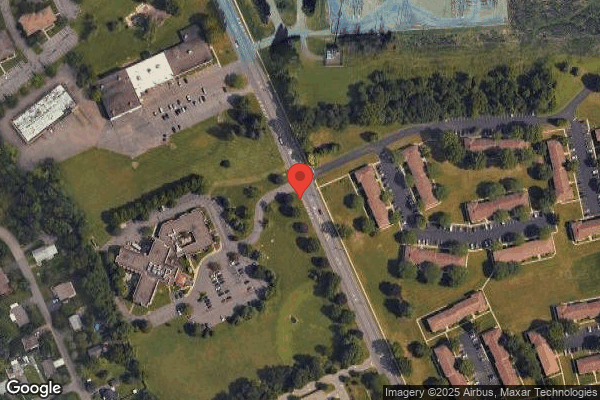
290 RED SCHOOL LANE, PHILLIPSBURG, NJ 08865 (908) 859-2800
For profit - Limited Liability company 120 Beds COMPLETE CARE Data: November 2025 1 Immediate Jeopardy citation
Trust Grade
23/100
#253 of 344 in NJ
Last Inspection: May 2025

Inspected within the last 6 months. Data reflects current conditions.

Overview

Complete Care at Brakeley Park, LLC has received a Trust Grade of F, indicating significant concerns about the quality of care provided. It ranks #253 out of 344 nursing homes in New Jersey, placing it in the bottom half of facilities in the state, and #4 out of 6 in Warren County, meaning only two options are worse nearby. Although the facility is improving, with issues decreasing from 12 in 2024 to 10 in 2025, it still has a concerning number of deficiencies, including critical incidents where life-saving measures were not taken for a resident who was unresponsive. Staffing has a moderate rating of 3/5, with a turnover rate of 31%, which is better than the state average, but RN coverage is below average, being less than 78% of other facilities. Additionally, the facility has incurred $55,647 in fines, higher than 84% of New Jersey facilities, which raises questions about ongoing compliance issues.

Trust Score
F
23/100
In New Jersey
#253/344
Bottom 27%
Safety Record
High Risk
Review needed
Inspections
Getting Better
12 → 10 violations
Staff Stability
○ Average
31% turnover. Near New Jersey's 48% average. Typical for the industry.
Penalties
○ Average
$55,647 in fines. Higher than 54% of New Jersey facilities. Some compliance issues.
Skilled Nurses
⚠ Watch
Each resident gets only 25 minutes of Registered Nurse (RN) attention daily — below average for New Jersey. Fewer RN minutes means fewer trained eyes watching for problems.
Violations
⚠ Watch
27 deficiencies on record. Higher than average. Multiple issues found across inspections.
★★☆☆☆
2.0
Overall Rating
★★★☆☆
3.0
Staff Levels
★★★★☆
4.0
Care Quality
★★☆☆☆
2.0
Inspection Score
Stable
2024: 12 issues
2025: 10 issues

The Good

  • 4-Star Quality Measures · Strong clinical quality outcomes
  • Full Sprinkler Coverage · Fire safety systems throughout facility
  • No fines on record
  • Staff turnover below average (31%)

    17 points below New Jersey average of 48%

Facility shows strength in quality measures, fire safety.

The Bad

2-Star Overall Rating

Below New Jersey average (3.2)

Below average - review inspection findings carefully

Staff Turnover: 31%

15pts below New Jersey avg (46%)

Typical for the industry

Federal Fines: $55,647

Above median ($33,413)

Moderate penalties - review what triggered them

Chain: COMPLETE CARE

Part of a multi-facility chain

Ask about local staffing decisions and management

The Ugly 27 deficiencies on record

1 life-threatening 1 actual harm
May 2025 10 deficiencies
CONCERN (D)

Potential for Harm - no one hurt, but risky conditions existed

Deficiency F0552 (Tag F0552)

Could have caused harm · This affected 1 resident

Based on observation, interview, and record review, it was determined that the facility failed to inform the resident or their representative in advance of treatment risks and benefits, options, and a...

Read full inspector narrative →
Based on observation, interview, and record review, it was determined that the facility failed to inform the resident or their representative in advance of treatment risks and benefits, options, and alternatives to a resident receiving antipsychotic medications. This deficient practice was identified for 1 (one) of 5 residents (Resident #25) reviewed for unnecessary medications. This deficient practice was evidenced by the following: On 5/12/25 at 10:41 AM, the surveyor observed Resident #25 lying in bed, awake, unable to answer the surveyor's inquiry. On 5/14/25 at 10:25 AM, the surveyor reviewed the electronic Health Record (eHR)/ hybrid medical record (paper and electronic) of Resident #25, which revealed the following: A review of the admission Record (an admission summary) (AR) reflected that Resident #25 was admitted with diagnoses that included but were not limited to unspecified dementia (loss of memory), unspecified severity with agitation and anxiety (feelings of fear, tension, and worry) disorder, unspecified. A review of the recent quarterly Minimum Data Set (Q/MDS) (an assessment tool used to facilitate the management of care), which was dated 4/7/25, indicated that the facility assessed the residents' cognitive status using a Brief Interview for Mental Status (BIMS) score of 3 out of 15, which indicated that the resident had severe impairment of cognition. A review of the Order Summary Report (OSR) revealed the following: 1. Ativan 0.5 mg tablet by mouth (PO) every 8 hours as needed (PRN) for anxiety, which started on 1/8/25 and ends on 1/23/25 2. Quetiapine fumarate 25 mg PO three times a day every Monday, Tuesday, Wednesday, Thursday, Friday, and Saturday for psychosis with an order date of 2/25/25 and end on 4/23/25. 3. Quetiapine fumarate 25 mg PO three times a day for psychosis with an order date of 4/23/25. 4. Alprazolam 0.5 mg (milligram) tablet by mouth is given every 6 hours PRN for 14 days, 30 minutes prior to care for agitation, which starts on 5/12/25 and ends on 5/27/25. A review of the Electronic Medication Administration Record (eMAR) revealed the following 1. Ativan 0.5 mg was given on 1/15/25 at 5:21 PM, 1/16/25 at 10:16 AM, and 1/20/25 at 9:10 AM, respectively. 2. Quetiapine fumarate 25 mg was given by the nurses 3x/day every Monday, Tuesday, Wednesday, Thursday, Friday, and Saturday, starting from 2/25/25 until 4/23/25. 3. Quetiapine fumarate 25 mg was given by the nurses 3 times daily from 4/23/25 to 5/14/25. A review of the eHR revealed no informed consent for starting Ativan 0.5 mg PRN before the order date of 1/8/25, Quetiapine fumarate 25 mg 3x/day from Monday to Saturday, quetiapine fumarate 25 mg 3x/day daily, and the alprazolam 0.5 mg PRN before the order date of 5/12/25. On 5/14/25 at 10:13 AM, the surveyor interviewed the Licensed Practical Nurse/Unit Manager (LPN/UM), who stated that the family member or resident should first be informed if there are any new recommendations to start or increase psychotropic medications. On 5/14/25 at 1:46 PM, the surveyor met with the Licensed Nursing Home Administrator, Director of Nursing, and the two Nursing Regionals regarding the concern above, but did not provide further information. A review of the facility policy titled Use of Psychotropic Medication(s) with the implemented date of 3/15/25 stated under Policy Explanation and Compliance Guidelines: 9. Prior to initiating or increasing a psychotropic medication, the resident, family, and/or resident representative must be informed of the benefits, risks, and alternatives for the medication, including any black box warnings for antipsychotic medications, in advance of such initiation or increase. NJ 8:39-4.1(a)2
CONCERN (D)

Potential for Harm - no one hurt, but risky conditions existed

Deficiency F0558 (Tag F0558)

Could have caused harm · This affected 1 resident

**NOTE- TERMS IN BRACKETS HAVE BEEN EDITED TO PROTECT CONFIDENTIALITY** Based on observation, interview, and record review, it was determined that the facility failed to ensure the resident's call dev...

Read full inspector narrative →
**NOTE- TERMS IN BRACKETS HAVE BEEN EDITED TO PROTECT CONFIDENTIALITY** Based on observation, interview, and record review, it was determined that the facility failed to ensure the resident's call device was readily accessible. The deficient practice was identified for 2 (two) of the 10 residents (Residents #25 and #41) reviewed for reasonable accommodations of needs/preferences. This deficient practice was evidenced by the following: 1. On 5/12/25 at 10:41 AM, the surveyor observed Resident #25 lying in bed, awake. The surveyor observed that the call light was not within the resident's reach. It was hanging on the upper left side of the resident's bed, beside the light switch and behind the tapestry. On 5/14/25 at 10:25 AM, the surveyor reviewed the hybrid medical record (paper and electronic) of Resident #25, which revealed the following: A review of the admission Record (an admission summary) (AR) reflected that Resident #25 was admitted with diagnoses that included but were not limited to unspecified dementia (loss of memory), unspecified severity with agitation and anxiety (feelings of fear, tension, and worry) disorder, unspecified. A review of the recent quarterly Minimum Data Set (Q/MDS) (an assessment tool used to facilitate the management of care), which was dated 4/7/25, indicated that the facility assessed the residents' cognitive status using a Brief Interview for Mental Status (BIMS) score of 3 out of 15, which indicated that the resident had severe impairment of cognition. Further review of Q/MDS, reflected in section GG, revealed that the resident depends on staff assistance for daily living activities. A review of the Care Plan Report initiated on 4/27/22 focused on the resident's self-care deficit related to dementia and impaired balance. Interventions included, but were not limited to, encouraging the resident to use the bell to call for assistance. 2. On 5/12/25 at 10:36 AM, the surveyor observed Resident #41 asleep in bed. The surveyor observed that the call light was between the oxygen concentrator (a device that supplies oxygen) and the bedside table, not within the resident's reach. On 5/14/25 at 11:25 AM, the surveyor reviewed the hybrid medical record of Resident #41, which revealed the following: A review of the AR reflected that Resident #41 was admitted with diagnoses that included, but were not limited to, unspecified dementia. A review of the significant change Minimum Data Set (Sc/MDS), dated [DATE], indicated that the facility assessed the residents' cognitive status using a BIMS score of 3 out of 15, indicating severe cognitive impairment. Further review of Sc/MDS, reflected in section GG, revealed that the resident depends on staff assistance for daily living activities. A review of the Care Plan Report initiated on 4/27/22 focused on the resident's risk for falls due to cognitive loss related to dementia. Interventions included, but were not limited to, placing the call light within reach while in or near the bed. On 5/12/25 at 10:48 AM, the surveyor interviewed the Certified Nursing Assistant (CNA), who stated that the call bell should be within the resident's reach. On 5/12/25 at 11:03 AM, the surveyor interviewed the Licensed Practical Nurse (LPN), who stated that the call bell should be within the residents' reach and that the staff should place it if it is not. On 5/14/25 at 1:46 PM, the surveyor met with the Licensed Nursing Home Administrator, Director of Nursing, and the two Nursing Regionals regarding the concern above, but did not provide further information. A review of the facility policy titled Call Lights, updated on 1/2025, revealed under Procedure: 5. Always position call light conveniently for use and within the reach of the resident. NJAC 8:39-31.8(c)9
CONCERN (D)

Potential for Harm - no one hurt, but risky conditions existed

Incontinence Care (Tag F0690)

Could have caused harm · This affected 1 resident

Based on observation, interview, and record review, it was determined that the facility failed to ensure that a resident with an indwelling catheter (inserted into the urethra (tube) and draining urin...

Read full inspector narrative →
Based on observation, interview, and record review, it was determined that the facility failed to ensure that a resident with an indwelling catheter (inserted into the urethra (tube) and draining urine to the bag) had a privacy bag for dignity. This deficient practice was identified for 1 (one) of 2 (two) residents (Resident #320) who were reviewed for urinary catheter use and bowel and bladder incontinence. This deficient practice was evidenced by the following: On 5/12/25 at 10:12 AM, the surveyor observed Resident #320 lying in bed awake, with their catheter bag hanging from the bed frame. The catheter bag was not in a privacy bag and was visible from the hallway. On 5/13/25 at 9:37 AM, the surveyor reviewed the electronic Health Record (eHR)/ hybrid medical record (paper and electronic) of Resident #320, which revealed the following: A review of the admission Record (an admission summary) (AR) reflected that Resident #320 was admitted with diagnoses that included but were not limited to obstructive and reflux uropathy (the flow of urine is blocked in the bladder, causing the urine to flow backward), unspecified. A review of the recent quarterly Minimum Data Set (Q/MDS) (an assessment tool used to facilitate the management of care), which was dated 3/1/25, indicated that the facility assessed the residents' cognitive status using a Brief Interview for Mental Status (BIMS) score of 5 out of 15, which indicated that the resident had severe impairment of cognition. Further review of Q/MDS revealed in Section H - Bladder and Bowel that Resident #320 has an indwelling catheter. A review of the Order Summary Report (OSR) revealed an active order for indwelling catheter care every shift as of 3/31/25. A review of the Care Plan Report initiated on 11/25/24 focused on the resident's indwelling catheter due to obstructive uropathy. Interventions included, but were not limited to, changing the catheter bag per facility policy. On 5/12/25 at 10:20 AM, the surveyor interviewed the Certified Nurse Assistant (CNA), who stated that the CNA does not provide the resident with a privacy bag. On 5/13/25 at 10:23 AM, the surveyor interviewed a Licensed Practical Nurse (LPN) who stated that the resident's privacy bag for an indwelling catheter should be provided. On 5/13/25 at 12:50 PM, the surveyor interviewed the LPN/Unit Manager, who stated that she realized that the indwelling catheter privacy bag was not in the resident's room and she provided it. On 05/14/25 at 12:30 PM, the surveyor discussed the above concerns with the facility administration team, which consisted of the Licensed Nursing Home Administrator (LNHA), Director of Nursing (DON), Regional LNHA, and DON. A review of the facility policy titled Catheter Care revealed under Policy Explanation: 2. Privacy bags will be available and catheter drainage bags will be covered at all times while in use. NJAC 8:39-33.2(c)5
CONCERN (D)

Potential for Harm - no one hurt, but risky conditions existed

Respiratory Care (Tag F0695)

Could have caused harm · This affected 1 resident

Repeat Deficiency Based on observation, interview, record review of medical records, and pertinent facility documentation, it was determined that the facility failed to ensure that the physician's ord...

Read full inspector narrative →
Repeat Deficiency Based on observation, interview, record review of medical records, and pertinent facility documentation, it was determined that the facility failed to ensure that the physician's orders were followed according to the standard of clinical practice. This deficient practice was identified for one of the residents (Resident #81) who was reviewed for respiratory care. This deficient practice was evidenced by the following: On 5/12/25 at 10:28 AM, the surveyor observed Resident #81 sitting in a wheelchair wearing a nasal cannula (NC - plastic prongs attached to a tube, inserted into the nostrils which oxygen flows) connected to the oxygen (O2) concentrator (a device that supplies oxygen) at 3 (three) lpm (liters per minute). On 5/13/25 at 8:56 AM, the surveyor observed the resident out of bed to the wheelchair on O2 via NC at 3 lpm connected to the O2 concentrator. Resident #81 stated that they needed the O2, especially at night. On 5/13/25 at 11:10 AM, the surveyor reviewed the electronic Health Record (eHR)/ hybrid medical record (paper and electronic) of Resident #81, which revealed the following: A review of the admission Record (an admission summary) (AR) reflected that Resident #81 was admitted with diagnoses that included but were not limited to Chronic Obstructive Pulmonary Disease (COPD - a pulmonary disease that damages the airways or other parts of the lungs), unspecified. A review of the admission Minimum Data Set (A/MDS) (an assessment tool used to facilitate the management of care), which was dated 4/12/25, indicated that the facility assessed the residents' cognitive status using a Brief Interview for Mental Status (BIMS) score of 15 out of 15, which indicated that the resident had intact cognition. Further review of the A/MDS in Section O -Special Treatments, Procedures and Programs revealed that Resident #81 used oxygen while in the facility. A review of the Order Summary Report (OSR) showed an active order for oxygen at 2 (two) lpm via nasal cannula continuously, every shift, with the start date of 4/9/25. A review of the Electronic Medication Administration Record (eMAR) revealed that the nurses were signing the order for oxygen at 2 lpm via nasal cannula continuously, with the start date of 4/9/25. A review of Resident #81's Care Plan Report initiated on 4/10/25, focused on the resident's Emphysema (a lung disease that causes shortness of breath), COPD related to smoking, and acute respiratory failure with hypoxia (low level of oxygen). Interventions included, but were not limited to, oxygen at 2 lpm via nasal cannula. On 5/12/25 at 10:49 AM, the surveyor interviewed the Licensed Practical Nurse (LPN) who stated that it was 2 lpm via nasal cannula continuously, and she should check the order to ensure it was correct. On 5/13/25 at 09:46 AM, the surveyor interviewed the LPN/Unit Manager (LPN/UM) regarding the above concern. The UM/LPN stated that the nurses should always follow the doctor's orders for oxygen administration and check if the resident's oxygen concentrator is correct. On 5/14/25 at 1:03 PM, the surveyor met with the Licensed Nursing Home Administrator, Regional Clinical Nurse, and Director of Nursing to discuss the above concern; however, no further information was provided. A review of the facility policy titled Oxygen Concentrator, implemented on 9/1/24, revealed the following under Policy Explanation and Compliance Guidelines: 3. Use of the Concentrator: a. The nurse shall verify physician orders for the rate of flow and route of administration of oxygen (mask, nasal cannula, etc.). NJAC 8:39-25.2(c)3
CONCERN (D)

Potential for Harm - no one hurt, but risky conditions existed

Drug Regimen Review (Tag F0756)

Could have caused harm · This affected 1 resident

**NOTE- TERMS IN BRACKETS HAVE BEEN EDITED TO PROTECT CONFIDENTIALITY** Based on observation, interview, and record review, it was determined that the Consultant Pharmacist (CP) failed to clarify medi...

Read full inspector narrative →
**NOTE- TERMS IN BRACKETS HAVE BEEN EDITED TO PROTECT CONFIDENTIALITY** Based on observation, interview, and record review, it was determined that the Consultant Pharmacist (CP) failed to clarify medication route for a resident during the monthly medication reviews for 1 of 6 Residents, (Resident #68). The deficient practice was evidenced by the following: On 5/12/25 at 10:50 AM, the surveyor observed Resident #68 in bed with eyes closed and a tube feeding (TF) machine (enteral nutrition or tube feeding is a method of supplying nutrition through a feeding tube. This tube goes directly into the stomach or small intestine, bypassing the mouth and esophagus next to the resident's bed) at bedside. On 5/12/24 at 11:50 AM, the surveyor reviewed Resident #68's hybrid (paper and electronic) medical chart which revealed the following: A review of the Resident #68's admission Record (an admission summary) revealed the resident was admitted to the facility with diagnoses that included but were not limited to: dysphagia (difficulty swallowing), unspecified speech disturbances, and fragile X chromosome. A review of the Annual [NAME] Data Set (MDS) an assessment tool used for the management of care date 2/6/25, revealed under Section C, a Brief Interview for Mental Status (BIMS) was unable to be performed due to Resident #68 is rarely/never understood. The MDS further revealed under Section K, that Resident #68 was receiving TF. A review of the May 2025 Physician Orders (PO) included a PO dated 2/25/25 that read, Nothing by Mouth (NPO) diet, NPO texture, NPO consistency, for diet by G-tube. And an addition PO dated 3/24/2025, Olanzapine Tablet 10 milligram (MG). Give 10 mg by mouth at bedtime every Monday, Tuesday, Wednesday, Thursday, Friday, and Saturday for impulsive. A review of the CP medication review for April 2025 read, This report includes consultant pharmacist activities between 4/6/2025 and 4/8/2025. The list included Resident #68 with no mention of the resident's medication being listed as by mouth and also having a PO of NPO. On 5/13/25 at 11:55 AM, the surveyor conducted a phone interview with the CP who stated they missed the medication being listed by mouth and also the resident being NPO. No further information provided by the CP On 5/14/25 at 10:38 AM, the director of Nursing (DON) provided the surveyor with a facility policy titled, Medication Regimen Review with an implemented date of 9/1/2024. Under the policy explanation portion of the policy it states, 1. Medication Regimen Review (MMR), or Drug Regimen Review, is a thorough evaluation of the medication regimen of a resident, with the goal of promoting positive outcomes and minimizing adverse consequences and potential risks associated with medication. The MMR includes: a. Review of the medical record in order to prevent, identify, report, and resolve medication related problems, medication errors, or other irregularities. On 5/14/25 at 1:03 PM, the surveyor met with the Licensed Nursing Home Administrator (LNHA), Regional Clinical Nurse (RCN) and the DON to review concerns found during the survey. The DON stated that Resident #68 PO was entered incorrectly, and that PO has been corrected for the medication to be administrated via G-tube. On 5/16/25 at 11:30 AM, the surveyor met with the LNHA, RCN and DON for the exit conference. No other pertinent information provided. NJAC 8:39- 29.3 (a)
CONCERN (D)

Potential for Harm - no one hurt, but risky conditions existed

Infection Control (Tag F0880)

Could have caused harm · This affected 1 resident

Based on observation, interview, review of medical records, and pertinent facility documentation, it was determined that the facility failed to follow appropriate infection control practices for nasal...

Read full inspector narrative →
Based on observation, interview, review of medical records, and pertinent facility documentation, it was determined that the facility failed to follow appropriate infection control practices for nasal cannula (a device that delivers oxygen) storage and care. This deficient practice was identified for one of the residents (Resident #81) who was reviewed for respiratory care. This deficient practice was evidenced by the following: On 5/12/25 at 10:28 AM, the surveyor observed Resident #81 sitting in a wheelchair wearing a nasal cannula (NC - a plastic prongs attached to a tube, inserted into the nostrils which oxygen flows) connected to the oxygen concentrator (a device that supplies oxygen) at 3 (three) lpm (liters per minute). On 5/13/25 at 9:03 AM, the surveyor observed the resident's nasal cannula lying on the floor beside their wheelchair. Resident #81 stated they did not know why the NC was on the floor. On 5/13/25 at 11:10 AM, the surveyor reviewed the electronic Health Record (eHR)/ hybrid medical record (paper and electronic) of Resident #81, which revealed the following: A review of the admission Record (an admission summary) (AR) reflected that Resident #81 was admitted with diagnoses that included but were not limited to Chronic Obstructive Pulmonary Disease (COPD - a pulmonary disease that damages the airways or other parts of the lungs), unspecified. A review of the admission Minimum Data Set (A/MDS) (an assessment tool used to facilitate the management of care), which was dated 4/12/25, indicated that the facility assessed the residents' cognitive status using a Brief Interview for Mental Status (BIMS) score of 15 out of 15, which indicated that the resident had intact cognition. Further review of the A/MDS in Section O -Special Treatments, Procedures and Programs revealed that Resident #81 used oxygen while in the facility. A review of the Order Summary Report (OSR) with the start date of 4/9/25 oxygen at 2 (two) lpm via NC continuously, every shift. A review of the Electronic Medication Administration Record (eMAR) revealed that the nurses were signing the order for oxygen at 2 lpm via NC continuously, with the start date of 4/9/25. A review of Resident #81's Care Plan Report initiated on 4/10/25, focused on the resident's Emphysema (a lung disease that causes shortness of breath), COPD related to smoking, and acute respiratory failure with hypoxia (low level of oxygen). Interventions included, but were not limited to, oxygen at 2 lpm via NC. On 5/13/25 at 9:06 AM, the surveyor interviewed the Licensed Practical Nurse/Unit Manager (LPN/UM), who stated that the NC should not be on the floor and in a plastic bag when not in use. The LPN/UM picked up the NC from the floor and threw it in the garbage can. On 5/13/25 at 10:16 AM, the surveyor interviewed the LPN/Infection Preventionist (LPN/IP), who stated that NCs should be put in a plastic bag when not in use, as this is part of infection control prevention. On 5/14/25 at 1:03 PM, the surveyor met with the Licensed Nursing Home Administrator, Regional Clinical Nurse, and Director of Nursing to discuss the above concern; however, no further information was provided. A review of the facility policy titled Oxygen Concentrator, which was implemented on 9/1/24, revealed the following under Policy Explanation and Compliance Guidelines: 3. Use of the Concentrator k. Keep delivery devices covered in a plastic bag when not in use. NJAC 8:39-19.1
CONCERN (E)

Potential for Harm - no one hurt, but risky conditions existed

Pharmacy Services (Tag F0755)

Could have caused harm · This affected multiple residents

**NOTE- TERMS IN BRACKETS HAVE BEEN EDITED TO PROTECT CONFIDENTIALITY** Based on observation, interview, and record review, it was determined that the facility failed to 1. ensure that a medication wa...

Read full inspector narrative →
**NOTE- TERMS IN BRACKETS HAVE BEEN EDITED TO PROTECT CONFIDENTIALITY** Based on observation, interview, and record review, it was determined that the facility failed to 1. ensure that a medication was administered according to the physician orders (PO) and acceptable standards of practice in accordance with the New Jersey Board of Nursing. This deficient practice was identified in 2 (two) of 4 (four) residents (Resident #94 and Resident #170) observed during the medication observation pass and 2. failed to clarify a PO for an enteral feeding resident. This deficient practice was identified in 1 (one) of 2 (two) residents (resident #68). The deficient practice was evidenced by the following: Reference: New Jersey Statutes Annotated, Title 45. Chapter 11. Nursing Board. The Nurse Practice Act for the State of New Jersey states: The practice of nursing as a registered professional nurse is defined as diagnosing and treating human responses to actual and potential physical and emotional health problems, through such services as case-finding, health teaching, health counseling, and provision of care supportive to or restorative of life and wellbeing, and executing medical regimens as prescribed by a licensed or otherwise legally authorized physician or dentist. Reference: New Jersey Statutes Annotated, Title 45, Chapter 11. Nursing Board. The Nurse Practice Act for the State of New Jersey states: The practice of nursing as a licensed practical nurse is defined as performing tasks and responsibilities within the framework of case finding; reinforcing the patient and family teaching program through health teaching, health counseling, and provision of supportive and restorative care, under the direction of a registered nurse or licensed or otherwise legally authorized physician or dentist. 1. On 05/13/25 at 9:45 AM, during the medication administration observation, the surveyor observed the Registered Nurse (RN#1) in the room of Resident #170. The surveyor observed RN#1 checking the resident's identification bracelet and informed Resident #170 that she would be administering the resident's medications. On 04/22/25 at 8:35 AM, the surveyor observed RN#1 preparing to administer six (6) medications to Resident #170 which included the following: Bisoprolol 5 mg tablets (blood pressure), Lexapro 10 mg (anti-depressant), Glimepiride 4 mg tablet (diabetes), Lidocaine 4%(pain patch), Bio-Freeze (pain cream),and Acetaminophen 500 mg tablet (pain). The surveyor observed RN#1 administered Resident #170 medications. A review of the admission Record (an admission summary) reflected that the resident was admitted to the facility with diagnoses that included but not limited to Parkinson's disease (a disorder of the central nervous system that affects movement, often including tremors), hypertension (a condition in which the force of the blood against the artery walls is too high), and hyperlipidemia (a condition in which there are high levels of fat particles (lipids) in the blood ,). A review of the admission Minimum Data Set, an assessment tool used to facilitate the management of care, dated 4/23/25, reflected that the resident's cognitive skills for daily decision-making score was 15 out of 15, which indicated that the resident's cognition was cognitively intact. A review of the May 2025 Order Summary Report (OSR) revealed a Physician's Order (PO) dated 5/14/25, for Bisoprolol Fumarate 5 mg (milligrams) give 1 tablet by mouth one time a day for hypertension and a PO dated 4/23/25, for Escitalopram Oxalate (Lexapro) 10 mg tablet, give 1 tablet by mouth one time a day for depression. A review of the May 2025 EMAR revealed an order dated 05/14/25, for Bisoprolol Fumarate 5 mg, give 1 tablet by mouth one time a day for hypertension (administration time for 8 AM) and an order dated 4/23/25, for Escitalopram Oxalate (Lexapro) 10 mg tablet, give 1 tablet by mouth one time a day for depression (administration time for 8AM). On 5/13/25 at 10:20 AM, the surveyor interviewed RN#1 who acknowledge that Resident #170's Bisoprolol and Lexapro had an administration time of 8 AM and should have been administered no later than 9AM. She acknowledges that both medications were administered late. 2. On 05/13/25 at 8:43 AM, during the medication administration observation, the surveyor observed a Licensed Practical Nurse (LPN#1) entered the 1st floor activity/dining room where she checked Resident #94's identification bracelet and informed the resident that she will be administering their medications On 05/13/25 at 10:10 AM, the surveyor observed LPN #1 preparing to administer four (4) medications to Resident #94 which included the following: Lactase 3000 tablets (lactose intolerance), Vitamin B-12 1000 (supplement), Calcium Carbonate 500 mg (supplement), and Vitamin D3 5000-unit capsules (supplement). The surveyor observed LPN#1 take a bottle of Vitamin D3 5000-unit tablets and added it into a medication cup with the other 3 other medications and crushed it. LPN#1 stated that the resident is administered their medications crush with apple sauce. LPN#1 also stated that Lactase 3000 should have been administered before breakfast and that she will be holding the medication and reach out to the physician for guidance. The surveyor observed LPN#1 administered the resident's medications. At that time, the surveyor in the presence of LPN#1 reviewed Resident #94's physician's orders. LPN#1 acknowledge that the resident should have received the Lactase prior to breakfast. When asked why medications were being delivered late, she stated that it was due to two nurses calling out. She stated that medications are usually delivered on time. A review of the admission Record (an admission summary) reflected that the resident was admitted to the facility with diagnoses that included but not limited to macular degeneration (an eye disease that causes vision loss), osteoporosis (a condition in which bones become weak and brittle), and dementia (a group of thinking and social symptoms that interfere with daily functioning). A review of the quarterly Minimum Data Set, an assessment tool used to facilitate the management of care, dated 3/25/25, reflected that the resident's cognitive skills for daily decision-making score was 3 out of 15, which indicated that the resident's cognition was severely impaired. A review of the May 2025 OSR revealed a PO dated 10/30/24, for Lactase 3000-unit tablet, give 1 tablet by mouth before meals for lactose intolerance. A review of the May 2025 EMAR revealed an order dated 10/30/24, for Lactase 3000-unit tablet, give 1 tablet by mouth before meals for lactose intolerance ( administration time was at 7:30 AM). On 05/14/25 at 12:30 PM, the surveyor discussed the above concerns with the facility administration team that consisted of both the Director of Nursing and the Regional Licensed Nursing Home Administrator. There was no additional information provided. A review of the facility's policy for Medication Administration which was dated 07/1/24 and revealed the following: 11. Compare medication source (bubble pack, vial, etc.) with MAR to verify resident name, medication name, form, dose, route, and time. a. Refer to drug reference material if unfamiliar with the medication, including its mechanism of action or common side effects. b. Administer within 60 minutes prior to or after scheduled time unless otherwise ordered by physician. c. If other than PO route, administer in accordance with facility policy for relevant route of administration (i.e., injection, eye, ear, rectal, etc.) NJAC 8:39-11.2 (b), 29.2 (d) 3. On 5/12/25 at 10:50 AM, the surveyor observed Resident #68 in bed with eyes closed and a tube feeding (TF) machine (enteral nutrition or tube feeding is a method of supplying nutrition through a feeding tube. This tube goes directly into the stomach or small intestine, bypassing the mouth and esophagus next to the resident's bed.) at bedside. On 5/12/24 at 11:50 AM, the surveyor reviewed Resident #68's hybrid (paper and electronic) medical chart which revealed the following: A review of the Resident #68's admission Record (an admission summary) revealed the resident was admitted to the facility with diagnoses that included but were not limited to: dysphagia (difficulty swallowing), unspecified speech disturbances, and fragile X chromosome. A review of the Annual [NAME] Data Set (MDS) an assessment tool used for the management of care date 2/6/25, revealed under Section C, a Brief Interview for Mental Status (BIMS) was unable to be performed due to Resident #68 is rarely/never understood. The MDS further revealed under Section K, that Resident #68 was receiving TF. A review of the May 2025 Physician Orders (PO) included a PO dated 2/25/25 that read, Nothing by Mouth (NPO) diet, NPO texture, NPO consistency, for diet by G-tube. And an addition PO dated 3/24/2025, Olanzapine Tablet 10 milligram (MG). Give 10 mg by mouth at bedtime every Monday, Tuesday, Wednesday, Thursday, Friday, and Saturday for impulsive. On 5/13/25 at 10:38 AM, the surveyor interviewed Registered Nurse (RN #1), who stated Resident #68's olanzapine medication was given via G-tube last night per the nursing shift report. Surveyor asked RN#1 to review the olanzapine PO, upon review RN #1 stated the medication was ordered to give by mouth, but the resident also has an additional PO that Resident #68 is NPO. RN #1 stated the PO should have been clarified to be administer the medication via G-tube. On 5/13/25 at 11:40 AM, the surveyor interviewed the Licensed Practical Nurse (LPN #1), who entered the PO for Resident #68. LPN #1 stated they had entered the medication incorrectly. On 5/14/25 at 10:38 AM, the director of Nursing (DON) provided the surveyor with a facility policy titled, Medication Administration with a reviewed date of 7/1/24. Under the policy explanation portion of the policy it states, 10. Review MAR to identify medication to be administered. 11. Complete medication source (bubble pack, vial, etc.) with MAR to verify resident name, medication name, form dose, route, and time .14. Administer medication as ordered in accordance with manufacturer specifications. On 5/14/25 at 1:03 PM, the surveyor met with the Licensed Nursing Home Administrator (LNHA), Regional Clinical Nurse (RCN) and the DON to review concerns found during the survey. The DON stated that Resident #68 PO was entered incorrectly, and that PO has been corrected for the medication to be administrated via G-tube. On 5/16/25 at 11:30 AM, the surveyor met with the LNHA, RCN and DON for the exit conference. No other pertinent information provided. NJAC 8:39-29.7
CONCERN (E)

Potential for Harm - no one hurt, but risky conditions existed

Deficiency F0919 (Tag F0919)

Could have caused harm · This affected multiple residents

**NOTE- TERMS IN BRACKETS HAVE BEEN EDITED TO PROTECT CONFIDENTIALITY** Based on observations and interviews on 05/15/2025 in the presence of the Maintenance Director (MD), it was determined that the ...

Read full inspector narrative →
**NOTE- TERMS IN BRACKETS HAVE BEEN EDITED TO PROTECT CONFIDENTIALITY** Based on observations and interviews on 05/15/2025 in the presence of the Maintenance Director (MD), it was determined that the facility failed to ensure that the call bell light above the room could be seen, and the volume of the resident call bell system was set to a level to be heard. This deficient practice had the potential to affect 57 residents and was evidenced by the following: An observation at 12:55 PM revealed that when testing the call bell for resident room [ROOM NUMBER], there was no audible notification of the call bell activation at the nurse's station. In an interview at the time, 2 staff members at the nurse's station were asked how they would be notified of a call bell activation. The infection control nurse (ICN) stated that they would hear and see it at the call bell annunciator. The surveyor asked if they could tell if there were any currently active calls. The ICN looked at the computer and stated resident room [ROOM NUMBER] is showing an active call and confirmed that they would not have known of the call because there was not audible notification of the call bell activation and because they were not looking in the direction of the light above the door. An observation at 1:05 PM revealed that when testing the call bell in room [ROOM NUMBER], there was no audible notification of a call bell activation and the call bell light above the room could not bee seen from the nurse's station because it was being blocked by the smoke barrier wall. In an interview at the time, the 6 staff members at the nurse's station were unaware of the call bell activation. The MD confirmed that that the 6 staff members were unaware of the call bell activation because there was not audible notification and because the light over the door was being blocked by the smoke barrier wall. The facility's Administrator was informed of the deficient practice at the Life Safety Code exit conference on 05/16/2025 at 1:00 PM. NJAC 8:39-31.8(c)9
CONCERN (F)

Potential for Harm - no one hurt, but risky conditions existed

Deficiency F0804 (Tag F0804)

Could have caused harm · This affected most or all residents

Based on observation, interview, and review of pertinent facility documents it was determined that the facility failed to ensure meals were served at a palatable on 1 of 2 units reviewed for food temp...

Read full inspector narrative →
Based on observation, interview, and review of pertinent facility documents it was determined that the facility failed to ensure meals were served at a palatable on 1 of 2 units reviewed for food temperatures. The deficient practice was evidenced by the following: On 5/14/24 at 11:30 AM, the surveyor calibrated a state issued digital thermometer via the ice bath method to 32 degrees Fahrenheit (F) in the presence of the Regional Food Service Director (RFSD). At 11:51 AM, the surveyor and RFSD observed the first food truck arrived on the 1st floor unit. The surveyor and RFSD observed the first lunch tray being served at 11:55 AM, at that time a test tray of a regular diet and regular consistency was identified by the surveyor and RFSD, this tray was removed from the food truck and placed at the nurse's station by the RFSD. After the last meal tray was delivered to a resident at 12:00 PM, the surveyor took the temperatures of the following items in the presence of FSD with calibrated thermometers and were a followed: Chicken Parmesan 139.8 Fahrenheit (F) Spaghetti 136.5 F Zucchini 121.3 Butterscotch pudding 51.5 F Coffee 122 F At 12:10 PM, following the food temperature recording, the RFSD stated agreed the zucchini, pudding and coffee were not in range for serving temperature. The RFSD further stated corrective action would be taken immediately. On 5/15/25 at 9:00 AM, the Licensed Nursing Home Administrator (LNHA) provided the surveyor with a facility policy titled, Food: Quality and Palatability, with a revised dated on 2/2023. Under the definitions section of the policy it states, Proper temperature, food should be at the appropriate temperature as determined by the type of food to ensure resident's satisfaction and minimizes the risk for scalding and burns. The Service Standards portion of the policy states, Hot beverages should be served above 150F, Vegetables should be served above 130F, and all cold foods should be served at 45 F or lower. On 5/15/25 at 1:20 PM, the surveyor met the LNHA, Director of Nursing (DON) and Regional Clinical Nurse (RCR) to review kitchen concerns. The LNHA stated all mentioned concerns will be corrected immediately. On 5/16/25 at 11:30 AM, the surveyor met with the LNHA, DON, and RCR for the exit conference, no further pertinent information provided. NJAC 8:39-17.2(a) 2, (e)
CONCERN (F)

Potential for Harm - no one hurt, but risky conditions existed

Food Safety (Tag F0812)

Could have caused harm · This affected most or all residents

Repeat Deficiency Based on observation, interview, and review of facility policies, it was determined that the facility failed to maintain proper kitchen sanitation practices in a manner to prevent f...

Read full inspector narrative →
Repeat Deficiency Based on observation, interview, and review of facility policies, it was determined that the facility failed to maintain proper kitchen sanitation practices in a manner to prevent food borne illness. This deficient practice was observed and evidenced by the following: On 5/12/25 at 9:15 AM, the surveyor in the presence of the Food Service Director (FSD) observed the following during the kitchen tour. 1. In the dry storage area, the surveyor observed two 28 ounce (oz) opened bags of whole wheat bread and one 16oz opened bag hamburger buns. All items were missing open and use by labels. FSD stated all items once opened need to be properly labeled and dated. 2. In the three-door standing freezer the surveyor observed an opened bag of vegetable burgers without an opened and use by label. 3. On top of the standing two door oven, the surveyor observed a grease like substance. The FSD stated all kitchen equipment should be cleaned daily. 4. On the shelf of the 6-range stove top, the surveyor observed a grease like substance. 5. On the inside of oven #1, the surveyor observed a black colored burnt substance on the bottom of the oven. FSD stated the ovens are cleaned daily but could not state why oven #1 had not been cleaned. 6. On the inside tubing of the 3-spout coffee dispenser, the surveyor observed a brownish color debris on tube #1. The FSD stated the tube would be disconnected and cleaned immediately. On 5/14/25 at 11:30 AM, the Licensed Nursing Home Administrator (LNHA) provided the surveyor with two kitchen policies. The policy titled, Date marking for food safety with a created date of 9/2024 stated under the policy explanation, 2. The food shall be clearly marked to indicate the date or day by which the food shall be consumed or discarded. 3. The individual opening or preparing a food shall be responsible for date marking the food at the time the food is opened or prepared .6. The head Cook, or designee shall be responsible for checking the refrigerator daily of items that are expiring and shall discard accordingly. The policy titled, General kitchen cleaning policy with a revised date of 2/2025 states under the procedure section, 1. Cleaning and sanitation for the kitchen will be recorded. 2. Tasks will be assigned to the responsibility of specific positions. 3. Frequency of cleaning for each task will be defined . 5. A cleaning schedule will be posted. Employees will be trained on the cleaning schedule and how to perform duties. On 5/15/25 at 1:20 PM, the surveyor met the LNHA, Director of Nursing (DON) and Regional Clinical Nurse (RCR) to review kitchen concerns. The LNHA stated all mentioned concerns will be corrected immediately. On 5/16/25 at 11:30 AM, the surveyor met with the LNHA, DON, and RCR for the exit conference, no further pertinent information provided. NJAC 8:39-17.2(g)
Sept 2024 1 deficiency
CONCERN (D) 📢 Someone Reported This

A family member, employee, or ombudsman was alarmed enough to file a formal complaint

Potential for Harm - no one hurt, but risky conditions existed

Deficiency F0810 (Tag F0810)

Could have caused harm · This affected 1 resident

**NOTE- TERMS IN BRACKETS HAVE BEEN EDITED TO PROTECT CONFIDENTIALITY** Based on observation, interview, and record review it was determined that on 09/24/24 the facility failed to: (a) ensure a lip p...

Read full inspector narrative →
**NOTE- TERMS IN BRACKETS HAVE BEEN EDITED TO PROTECT CONFIDENTIALITY** Based on observation, interview, and record review it was determined that on 09/24/24 the facility failed to: (a) ensure a lip plate and a Kennedy cup was provided to a resident during a meal service, (b) follow this intervention as deemed necessary in the resident's Comprehensive Care Plan (CCP), and (c) provide supervision or assistance in feeding the resident. This deficient practice was identified for 1 of 3 residents (Resident #2) reviewed for need of feeding assistance and was evidenced as follows: According to Resident #2's admission Record (AR), Resident #2 had the following diagnoses but not limited to Dementia without Behavioral Disturbance, Dysphagia following Cerebral Infarction, Hemiplegia and Hemiparesis following Cerebral Infarction affecting left non-dominant side, Hypertensive Chronic Kidney Disease, Muscle Weakness, and Lack of Coordination. According to the Minimum Data Set (MDS), an assessment tool that provides a comprehensive assessment of each resident's functional capabilities, dated 09/17/2024, Resident #2 had a Brief Interview for Mental Status (BIMS) score of 02 indicating her/his Cognitive Skills was severely impaired. Resident #2 MDS further revealed in Section GG Functional Abilities and Goals that Resident was dependent on staff for the completion of his/her ADLs such as personal hygiene, dressing, toileting, shower, or bath, and was supervision or touching assistance on eating or feeding. On 09/24/2024 at 12:29 pm, the surveyor observed Resident #2 in bed in her/his hospital gown in room with lunch tray on a over bed tray table in front of her/him. Resident #2 was noted picking food from her/his plate with her/his right hand and feeding self. Her/his head of bed was raised, and Resident was seen leaning on her/his left side while eating. Multiple food debris were observed on her/his chest area. The surveyor noted Resident #2's left hand appeared weak. No staff member was in the room beside or near the Resident providing assistance. Surveyor attempted to interview the Resident. Resident was verbally responsive, confused, speech was slurred. On Resident #2's tray, surveyor observed a regular white dish in warmer plate, a regular coffee cup, and a liquid supplement in carton. At that point, a Certified Nursing Assistant (CNA) #1 went inside the Resident's room appeared to be picking up trays.When asked by surveyor, CNA #1 stated Resident #2 needed assist in feeding. CNA #1 further stated she was the Aide assigned to Resident #2. She said Resident #2 can feed self at times and that she [CNA #1] would oversee her every now and then. A review of Resident #2 Care Plan (CP) initiated 03/11/2024 showed Focus: ADL self-care performance deficit r/t [related to] dementia, CVA and under the Interventions: .Provide [Resident's name] with assist of one feed for eating as needed; can feed self at times. Furthermore, the CP revealed under same Interventions: adaptive equipment with meals: Kennedy cup and lip plate with date initiated on 09/01/2024 and revision on 09/24/2024. A review of Order Summary Report (OSR) Active Orders As Of: 09/24/2024, the OSR revealed a physician order of Regular diet Regular texture, Thin consistency, lip plate, Kennedy cup all trays for DYSPHAGIA with Order and Start Date of 04/16/2024. A review of Resident #2's document [NAME], a comprehensive list of plans of care for residents, indicated under Communication: adaptive equipment with meals: Kennedy cup and lip plate. On 09/24/2024 at 3:14 pm [afternoon], the surveyor interviewed the Director of Rehab (DOR) and the Speech Therapist (ST). The DOR stated, together with ST, would assess and evaluate need for adaptive devices for the residents. ST stated the lip plate, a plate with a raised or scooped periphery is indicated for residents with difficulty scooping their food from plate. The function of the raised side would enable the resident to scoop food whereas the Kennedy cup is a cup with a handle and straw in the middle of the lid. She further stated the Kennedy cup is indicated for residents who frequently have spillage accidents while drinking. The ST affirmed that Resident #2 uses lip plate and Kennedy cup as adaptive devices while and during eating. Furthermore, ST stated Resident #2 required supervision or touching assistance during feeding as reflected in the Section GG of the Resident's recent MDS. On 09/25/2024 at 3:08 pm, the surveyor interviewed the Food Service Director (FSD) who stated each resident had a meal slip ticket that indicated which type of diet the resident was to receive, portion size, the menu items and any adaptive equipment required. The ST would give the updated diet slips and FSD would enter in the system computer and print out. The FSD added the dietary aides were responsible for adding the adaptive equipment to the meal trays. The surveyor reviewed the Resident Adaptive Equipment Report the FSD provided. The list showed Resident #2 was on the list with her/his diet and the adaptive equipment as follows: [NAME] Cup with Dinner, [NAME] Cup with Breakfast, Lip Plate with Breakfast, [NAME] Cup with Lunch, Lip Plate with Lunch, and Lip Plate with Dinner. A review of the facility Policy on Adaptive Feeding Equipment revised August 2024 under Policy Explanation and Compliance Guidelines: .5. Appropriate utensils should be placed on the resident's food tray, at each meal, and returned to the dietary department, on the food tray, for sanitization. NJAC 8:39-27.5 (b)
Aug 2024 1 deficiency
CONCERN (E) 📢 Someone Reported This

A family member, employee, or ombudsman was alarmed enough to file a formal complaint

Potential for Harm - no one hurt, but risky conditions existed

Deficiency F0658 (Tag F0658)

Could have caused harm · This affected multiple residents

Complaint: NJ00176533 Based on observation, interviews, record review, and review of other pertinent facility documents, it was determined that the facility failed to obtain appropriate physician's or...

Read full inspector narrative →
Complaint: NJ00176533 Based on observation, interviews, record review, and review of other pertinent facility documents, it was determined that the facility failed to obtain appropriate physician's orders (POs) for WanderGaurd (WG) (a small, wearable device designed to alert caregivers and/or restrict access when residents have wandered beyond a designated area), follow the facility's policy titled Physician Orders, and follow the facility's Nurse Manager job description for 1 of 2 residents (Resident #1) reviewed for standards of clinical practice. This deficient practice was evidenced by the following: Reference: New Jersey Statutes, Annotated Title 45, Chapter 11. Nursing Board. The Nurse Practice Act for the state of New Jersey states: The practice of nursing as a registered professional nurse is defined as diagnosing and treating human responses to actual or potential physical and emotional health problems, through such services as case finding, health teaching, health counseling and provision of care supportive to or restorative of life and wellbeing, and executing medical regimes as prescribed by a licensed or otherwise legally authorized physician or dentist. Reference: New Jersey Statutes, Annotated Title 45, Chapter 11. Nursing Board. The Nurse Practice Act for the state of New Jersey states: The practice of nursing as a licensed practical nurse is defined as performing tasks and responsibilities within the framework of case finding, reinforcing the patient and family teaching program through health teaching, health counseling and provision of supportive and restorative care, under the direction of a registered nurse or licensed or otherwise legally authorized physician or dentist. The surveyor reviewed Resident #1's medical record on 8/29/2024 and 8/30/2024. Resident #1's admission Record reflected that the resident was admitted to the facility with diagnoses that included but were not limited to Alzheimer's Disease with late onset; Major Depressive Disorder, recurrent, severe with psychotic symptoms; and Anxiety Disorder, unspecified. Review of Resident #1's Care Plan (CP) revealed a Focus that Resident #1 was at risk for elopement because the resident made statements about leaving and going home. This CP focus was initiated on 4/7/2024. Resident #1's CP listed Interventions which included pt has wandergaurd initiated on 4/7/2024 and revised on 8/24/2024. The most recent Minimum Data Set (MDS) an assessment tool used to facilitate the management of care dated 8/7/2024, reflected that the resident had a Brief Interview for Mental Status (BIMS) score of 2 out of 15. This indicated that the resident had severely impaired cognition (significant trouble with cognitive tasks, and likely needed extensive help to navigate daily life). A review of the Order Summary Report (OSR) for Active orders as of 08/30/2024 reflected a PO with an order date of 8/25/2024 for Wander Gaurd/Wander Elopement Device due to poor safety awareness . Check placement and function of wander guard every shift. Review of the Medication Administration Record (MAR) for Resident #1 revealed orders for checks of WG placement and function were initiated on 8/22/2024 and discontinued on 08/25/2024. The MAR reflected new orders for checks of WG placement and function every shift with an order date of 8/25/2024 at 9:38 A.M. Review of Resident #1's MARs for April, May, June, and July of 2024 revealed no orders for checks of WG placement and function. On 8/29/2024 at 10:47 A.M., an interview was conducted with the Unit Manager (UM) of the second floor. The UM stated that checks of WG function and placement were performed by nurses every shift and these checks were documented on the MAR. The UM stated that Resident #1 had not eloped before but had exhibited exit-seeking behavior, which was the reason Resident#1 had a WG. In an interview conducted at 10:20 A.M. on 8/30/2024 the UM stated that a PO should have been obtained for checks of WG function and placement when the resident was identified as an elopement risk. The UM verified that no PO was obtained for WG placement or function checks prior to 8/22/2024 for Resident #1. The UM confirmed that UMs were responsible for verifying that appropriate POs were in place and reflected on the MARs. On 8/30/2024 an interview was conducted with the Regional Nurse (RN). The RN stated that elopement assessments/evaluations were completed for each resident on admission and more frequently as needed. The RN stated that it was the responsibility of the Director of Nursing (DON) or the UM to ensure that physician orders were obtained for WG. The RN confirmed that there were no POs or documentation of WG function or placement for Resident #1 prior to 8/22/2024. Review of the facility's Job Description/Competency/Evaluation document for Nurse Manager revealed the following under the document section titled Specific Job Function: Inform the Director when physician and responsible party when there is a change in the resident's condition, Review nurses' notes to ensure that they are informative and descriptive of the nursing care being provided, and Encourage attending physicians to record and sign progress notes, physicians' orders, etc., on a timely basis and in accordance with current regulations. NJAC 8:39-27.1(a)
Jan 2024 10 deficiencies 1 IJ
CRITICAL (J)

Immediate Jeopardy (IJ) - the most serious Medicare violation

Deficiency F0678 (Tag F0678)

Someone could have died · This affected 1 resident

**NOTE- TERMS IN BRACKETS HAVE BEEN EDITED TO PROTECT CONFIDENTIALITY** Based on interview, review of facility records, and other pertinent facility documents on [DATE], it was determined that the fac...

Read full inspector narrative →
**NOTE- TERMS IN BRACKETS HAVE BEEN EDITED TO PROTECT CONFIDENTIALITY** Based on interview, review of facility records, and other pertinent facility documents on [DATE], it was determined that the facility failed to initiate life saving measures for a resident who was found unresponsive and was designated by the facility as a full code (Initiate Cardiopulmonary Resuscitation if the heart stops and respirations cease), as well as failed to follow the facility policy titled; Cardiopulmonary Resuscitation (CPR) and failed to call emergency services/911. This deficient practice was identified for 1 of 2 residents who were reviewed for in-facility deaths and were deemed a full code status (Resident #112). On [DATE] at 6:05 AM, Resident #112 was found by Licensed Practical Nurse (LPN #1) with no pulse or respirations. The LPN #1 failed to initiate CPR and the resident was pronounced dead at 6:25 AM, without attempting to resuscitate the resident or call emergency services/911. This was not in accordance with the resident's wishes as documented in the medical record, as stated by the resident's physician, or according to the facility's policy. In addition, there was no documentation in the medical record to explain LPN #1's decision to not attempt resuscitation. The facility's failure to honor the code status of a resident and initiate life saving measures (CPR) posed a serious and immediate threat to the safety and well-being of Resident #112 and all other residents in the facility who were designated as full code status. This resulted in an Immediate Jeopardy (IJ) determination. The Licensed Nursing Home Administrator (LNHA), Regional Director of Nursing (RDON), and the Director of Nursing (DON) were notified of the IJ and provided the IJ template on [DATE] at 4:20 PM. The IJ began on [DATE] at 6:05 AM when Resident #112 was found unresponsive by the LPN #1 assigned to the resident and continued until the initial removal was provided to the surveyor on [DATE] at 9:43 PM. The removal plan was adjusted and was verified on-site on [DATE] at 1:48 PM during survey. Reference: The American Heart Association (AHA) 2010 . guidelines every five years for CPR and Emergency Cardiovascular Care (ECC). These guidelines reflect global resuscitation science and treatment recommendations . In the guidelines, AHA has established evidenced-based decision-making guidelines for initiating CPR when cardiac or respiratory arrest occurs in or out of the hospital. AHA urges all potential rescuers to initiate CPR unless: 1) a valid Do Not Resuscitate (DNR) order is in place; 2) obvious clinical signs of clinical death (e.g., rigor mortis, dependent lividity, decapitation, transection, or decomposition) are present; or 3) initiating CPR could cause injury or peril to the rescuer. AHA guidelines for CPR provide the standard for the American Red Cross, state EMS agencies, healthcare providers, and the general public. The evidence was as follows: On [DATE] 11:29 AM, the surveyor reviewed the electronic and paper copies of the medical records for Resident #112 which revealed the following: The nurse's admission note was dated [DATE] at 4:50 PM. The note revealed Patient (Pt) was admitted for the following reason(s): Exacerbation of Respiratory Condition Teaching and Training Therapy fracture Status post fall Pain Management The pt. had been hospitalized for greater than 5 days. Additional details about this note: resident alert and responsive. on 6L o2 via NC. occasional cough noted. Neurological system reviewed Mental Status: Alert. Oriented to Person Oriented to Place Oriented to Time. Vision Reviewed Hearing and Speech reviewed Minimal difficulty hearing. A review of the note by the Advanced Practice Nurse (APN) dated [DATE] at 10:45 PM, revealed Resident #112 was admitted with diagnoses that included but were not limited to chronic obstructive pulmonary disease (COPD- a group of diseases that cause airflow blockage and breathing-related problems), pneumothorax (a collapsed lung), hypertension (high blood pressure), hyperlipidemia (increased lipids in the blood), rheumatoid arthritis (an arthritic diease), bladder cancer, and abdominal aortic aneurysm (swelling in the aorta which carries blood to the heart and the abdomen). On home oxygen at 3-4 L, was treated in the hospital for exacerbation of COPD, Hiatal Hernia that is into the Left Hemithorax. A review of the Physician's Orders (PO) included an [DATE] order for Full Code Status. A review of the nurses note by the 1st Floor Unit Manager/LPN (UM/LPN#2) dated [DATE] 6:30 AM, read: Patient found on rounds not breathing, no RR, cool to touch. RN notified. Third eye notified. Daughter, [NAME], notified. This note was electronically signed by UM/LPN #2 at 7:09 AM. On [DATE] at 01:55 PM, the surveyor interviewed Certified Nursing Assistant (CNA #1). The CNA #1 stated that they were the normal CNA for Resident #112 during the 11 PM to 7 AM shift. The CNA #1 further stated that during the shift on [DATE] at 4:30 AM, the Resident #112 rang their call bell, and upon entering the room, Resident #112 stated that they were cold and the CNA #1 observed that the resident had four blankets on at that time. Also, the CNA # 1 stated that the resident complained of feeling wet. The CNA #1 observed that the resident had an incontinence episode of the bladder, which she stated was not normal for Resident #112, as they were normally continent of the bladder. The CNA #1 informed the LPN #1 of the change in the resident's condition. The CNA #1 stated that they last checked on Resident #112 at 6 AM and the resident was observed sleeping and snoring loudly. On [DATE] at 2:19 PM, the surveyor interviewed the LPN #1 who stated that Resident #112 had been a full code status. The LPN #1 stated that the CNA #1 had informed him of the resident's change in status but could not provide an explanation of why an assessment was not completed at that time. The LPN #1 stated, I was going to give him/her their morning medications and noted they were not breathing. I told the Registered Nurse Supervisor (RN #1) that the resident wasn't responsive. The RN #1 said he/she was dead. The RN #1 checked the resident's pulse. No CPR was performed because he/she was completely dead. The RN #1 said there was nothing we could do. 911 was not called. On [DATE] at 2:25 PM, the surveyor interviewed RN #1. The RN #1 stated, The LPN #1 informed me of the patient's status. The patient was cold. I am aware he/she was a full code. I was thinking to go get the crash cart because of full code status, but changed my mind as I determined the resident was already gone and [there was] nothing left to do. I checked everything, there was no pulse, respiration or breathing. The surveyor asked, as an RN when do you initiate CPR? The RN #1 stated, when the patient is still warm and you think you can save their life. In this case [resident's name] was cold. I don't know why we didn't do CPR. It looked like [resident's name] had been gone for an hour. On that night I was assigned as a nurse because we had callouts. The UM/LPN#2 came in, they took care of the notes and contacting the family. On [DATE] at 2:40 PM, the survey team interviewed the UM/LPN #2. The UM/LPN #2 stated, The resident was Full code, but no CPR was performed because CPR would have been futile at that point. The surveyor asked which nurse pronounced the resident's death. The UM/LPN #2 stated, RN #1 pronounced the death and I wrote the progress notes. The UM/LPN #2 was unable to explain why 911 was not called. On [DATE] at 4:20 PM, the surveyor interviewed the Director of Nursing (DON) in the presence of the surveyor team as well as the LNHA and RDON. The DON stated, All resident's code statuses need to be followed as ordered. In the case of Resident #112, the staff should have performed CPR and called 911. On [DATE] at 4:25 PM, the surveyor reviewed the facility's policy and procedure titled, Cardiopulmonary Resuscitation (CPR) dated 2/2023. Under Policy it reads; It is the policy of this facility to adhere to residents' rights to formulate advance directives. In accordance to these rights, this facility will implement guidelines regarding cardiopulmonary resuscitation (CPR). Under Policy Explanation and Compliance Guidelines it reads; 1. The facility will follow current American Heart Association (AHA) guidelines regarding CPR. 2. If a resident experiences a cardiac arrest, facility staff will provide basic life support, including CPR, prior to the arrival of emergency medical services, and: a. In accordance with the resident's advance directives. The IJ was identified on [DATE] and the LNHA was notified of the IJ at 4:20 PM. A removal plan was received the same day at 9:43 PM. It included: all licensed nurses being educated on the facility's policy and procedure for initiating CPR, alerting emergency services, residents' change in condition, audits on new admissions to compare the resident's advance directives to the physician orders for accuracy, the facility updated all resident wrist bands with the new process of code status identification, and all resident code status orders being verified. The implementation of the Removal Plan was verified on-site on [DATE], through observations, interviews with facility staff, and a review of in-service education and revised facility's Cardiopulmonary Resuscitation policy. The F689 continues at a D level, for no actual Harm with potential for more than minimal Harm that is not Immediate Jeopardy. NJAC 8:39-4.1(31)iii NJAC 8:39-9.6(g)
CONCERN (D)

Potential for Harm - no one hurt, but risky conditions existed

Deficiency F0557 (Tag F0557)

Could have caused harm · This affected 1 resident

Based on observation, interview, and record review, it was determined that the facility failed to consistently treat residents in a dignified manner during a meal service. This deficient practice was ...

Read full inspector narrative →
Based on observation, interview, and record review, it was determined that the facility failed to consistently treat residents in a dignified manner during a meal service. This deficient practice was identified during an interview for one (1) of seven (7) residents in attendance of the 1/3/24, resident council meeting and was evidenced by the following. On 01/03/24 at 10:00 AM, the surveyor conducted the group meeting with seven residents. During the meeting, Resident #102 informed the surveyor that he/she had no use of his/her left arm. The resident verbalized being upset that his/her meal trays were at times, delivered on his/her bedside meal tray table, without removal of the urinal which was placed on the left side of the tray table and without disinfecting the table. The resident was unable to move the urinal him/her self due to the non-use of the left arm. The resident admitted to not informing the staff as he/she felt that they should have known his/her condition. The surveyor reviewed the medical records for Resident #102. A review of the resident's admission Record (an admission summary) reflected that the resident was admitted to the facility with diagnoses that included but were not limited to abnormalities of gait (walking pattern) and mobility (the range and ease of motion), pain, muscle weakness, peripheral vascular disease (circulation disorder), essential hypertension (high blood pressure), and chronic kidney disease (gradual loss of kidney function). According to the admission Minimum Data Set (MDS), an assessment tool used to facilitate management of care, the resident was documented as having a Brief Interview for Mental Status score of 14 out of 15, indicating that the resident was cognitively intact. A review of the resident's Progress Notes (PN) included the following: -9/14/23 at 10:48 PM, reflected a nursing documentation of the reason for the resident's stay was due to a stroke, worsening of respirator condition, worsening of cardiac condition and musculoskeletal disease disorder. -9/15/23 at 1:40 PM, social services documented that a meeting was held, for the development of the resident's baseline person-centered care plan. The attendees included the nurse, social service, and rehabilitation services. -9/16/23 at 3:25 PM, Registered Nurse (RN #1) documented left arm extremity weakness, with a history of cerebral vascular accident (CVA; stroke). -10/04/23 at 4:01 AM, a nursing documentation reflected the resident had left arm extremity weakness, with a history of stroke. -On 12/28/23 at 12:00 AM, the physician documented that the resident was being followed by an orthopedist for right shoulder pain. The resident's magnetic resonance imaging (MRI) result indicated the resident had a rotator cuff tear and left sided weakness with a history of stroke. On 01/4/24 at 11:53 AM, the Unit Clerk (UC) provided the surveyor with the first-floor unit assignments and informed the surveyor that the Certified Nursing Assistant (CNA) passed the meal trays on the unit. On 01/4/24 at 11:54 AM, in the presence of the Licensed Practical Nurse (LPN)/ Unit Manager (UM) the surveyor observed the lunch truck arrived on the unit and observed two CNAs passing the trays on Resident #102's hallway. On 1/4/24 at 12:00 PM, the surveyor observed the resident #102's meal tray was placed next to the urinal on the left-hand side of the bedside meal tray table. The meal tray table was also located on the left-hand side of the resident's bed. The urinal was empty and had visible small amount of liquid residue. On 1/4/24 at 12:03 PM, the Licensed Practical Nurse and the surveyor entered the resident's room, and both observed the resident's meal tray was next to the urinal that was on the left-hand side of bedside meal tray table. The LPN removed the urinal and cleaned the table. At that time, the resident was unable to tell the LPN and the surveyor who had placed the urinal on his/her meal tray table. On 1/4/24 at 12:04 PM, the surveyor interviewed the LPN. The LPN stated that the urinal next to the resident's meal tray was inappropriate and unsanitary. The LPN and the surveyor reviewed the electronic Medical Record (eMAR) for the resident. The LPN stated that they were trying to promote independence for the resident who had use of both arms and thought he/she received a brace on the left but could not locate the order. At that time, the LPN stated that the resident moved the urinal around his/her room and that she had just emptied the urinal but could not recall where she had placed it last. On 1/4/24 at 1:09 PM, during an interview with the surveyor, the Certified Nursing Assistant (CNA #1) stated all the CNAs passed the trays to the residents. The CNA # 1 stated when a urinal is observed she would move the urinal, clean the tray table then place the meal tray. She stated she did not pass the meal tray for the resident on that day. On 1/4/24 at 1:19 PM, during a follow-up interview with the resident, the resident stated they did not want to get the CNA in trouble, but felt the staff should have been aware of his/her medical condition of not having much use of his/her left arm. On 1/4/24 at 2:01 PM, in the presence of the survey team, the Regional Administrator, the Licensed Nursing Home Administrator, and the Director of Nursing, the surveyor discussed the concern regarding Resident #102's meal tray that was served next to the resident's urinal on the meal tray table. On 1/5/24 at 10:05 AM, during an interview with the surveyor, CNA #2 could not recall passing the tray to Resident #102 yesterday. CNA #2 confirmed she was familiar with the resident and stated that she received directions from the nurse regarding the resident's care plan. On 1/5/24 at 10:19 AM, during an interview with the surveyor, CNA #3 stated that she could not recall passing the tray to Resident #102 yesterday. No additional information was provided by the facility staff. A review of the facility policy titled Quality of Care and Dignity, revised/reviewed on 12/2023, reflected under Policy Statement: Each resident should be cared for in a manner that promotes and enhances his or her sense of well-being, level of satisfaction with life, feeling of self-worth and self-esteem. NJAC 8:39-4.1(a)12
CONCERN (D)

Potential for Harm - no one hurt, but risky conditions existed

Comprehensive Care Plan (Tag F0656)

Could have caused harm · This affected 1 resident

**NOTE- TERMS IN BRACKETS HAVE BEEN EDITED TO PROTECT CONFIDENTIALITY** 3. On 12/28/23 at 12:15 PM, the surveyor observed the resident #54 walking in their room and sitting down on their bed. The resi...

Read full inspector narrative →
**NOTE- TERMS IN BRACKETS HAVE BEEN EDITED TO PROTECT CONFIDENTIALITY** 3. On 12/28/23 at 12:15 PM, the surveyor observed the resident #54 walking in their room and sitting down on their bed. The resident is non-verbal, but they had a note pad on their overhead table to communicate effectively. The resident wrote on the notepad that they have been in the facility for a few months due to their amyotrophic lateral sclerosis (ALS), a nervous system disease that weakens muscles. The surveyor noted a nebulizer machine on the bedside table and the oxygen tank on the back of their wheelchair. On 12/29/23 at 12:10 PM, the surveyor observed the resident sitting up on her bed with oxygen 2 liters/minute via nasal cannula (NC) connected to an oxygen concentrator. The resident was breathing easily and watching television. The resident communicated via writing pad, I use my oxygen only when I want to. The surveyor completed a record review of the EHR: The resident received Hospice care for ALS. The resident's diagnoses are ALS, chronic obstructive pulmonary disease (COPD), aspiration pneumonia, mild dementia. The surveyor reviewed the physician orders and found: oxygen at 1 liters/minute via NC every shift for shortness of breath (SOB), ordered 11/2/23; oxygen at 2 liters/minute via NC as needed, every 8 hours as needed for SOB, ordered 11/14/23; oxygen at 2 liters/minute via NC continuously, every shift post treatment, evaluate heart rate, respiratory rate, pulse oximetry, skin color, and breath sounds, ordered 12/24/23; oxygen at 2 liters/minute via NC continuously as needed for SOB, ordered 12/30/23; compassionate hospice care ordered 11/16/23. The surveyor reviewed the Significant Change MDS completed on 11/21/23 for hospice care. The BIMS score was 14 which indicated intact cognition and oxygen use was coded in the MDS. The surveyor reviewed the care plan. The surveyor received copies of the resident's original care plan from the Regional Director of Clinical Services on 1/2/24, which revealed no care plan for oxygen. The surveyor noted the oxygen intervention added to the care plan on 1/3/24 after surveyor inquiry. On 01/02/24 at 11:20 AM, the surveyor observed resident lying in bed with glasses on and oxygen at 2 liters/minute via nasal cannula, breathing is easy and regular. On 01/02/24 at 11:25 AM, the surveyor interviewed the LPN on the second floor, who has been working at the facility for 1 1/2 years. The nurse stated, oxygen was changed to as needed because the resident is non-compliant with it. On 01/02/24 at 11:50 AM, the surveyor interviewed the CNA, who has been working in the facility for seven years. The CNA stated, The resident uses oxygen every day. On 01/03/24 at 10:40 AM, the surveyor observed the resident leaving with spouse for an appointment. The resident was sitting on the wheelchair with oxygen on, near the elevators. On 01/03/24 at 10: 55 AM, the surveyor interviewed the LPN, and she stated, The resident is on the oxygen because the resident was in respiratory distress a while back and came back from the hospital with oxygen. The resident is using oxygen every day. The UM does the care plans, and we can update them. Oxygen should be part of the comprehensive care plan. On 01/03/24 at 11:02 AM, the surveyor interviewed the UM, who stated, The DON and I complete the care plans. They get updated during care conferences. The residents should have respiratory care plans if they have oxygen, nebulizers and COPD. On 01/03/24 at 11:40 AM, the surveyor reviewed the facility Policy and Procedure for Care Plan dated 2/2023 and it stated, the facility will develop a comprehensive, resident centered care plan for each resident. On 01/04/24 at 02:00 PM, the surveyor met with the facility administration: DON, administrator, and the Regional Director of Administrator, to inform them of the failure to care plan for oxygen. A review of the provided facility provided policy titled Care Plans, Comprehensive Person-Centered updated 10/2023, included the following. Policy Statement, A comprehensive, person-centered care plan that includes measurable objectives and timetables to meet the resident's physical psychosocial and functional needs is developed and implemented for each resident. Policy Interpretation and Implementation 2. The care plan interventions are derived from a thorough analysis of the information gathered as part of the comprehensive assessment. 9. Areas of c concern that are identified during the resident assessment will be evaluated before interventions are added to the care plan. 13. Assessment of residents are ongoing and care plans are revised as information about the residents and the residents' condition change. NJAC 8:39- 11.2(d),(e) 1,2; 27.1(a) Based on observation, interview, and record review, it was determined that the facility failed to develop or initiate a comprehensive, person-centered care plan to address a.) antibiotic usage, b.) activities of daily living (ADL) with left-arm weakness, update/revise the care plan for a new diagnosis of right rotator cuff tear, and c.) oxygen usage. This deficient practice was identified for 3 of 27 residents (Resident #79, #102, and #54) reviewed for a comprehensive Care Plan (CP) and was evidenced by the following: 1. On 12/27/23 at 11:18 AM, the surveyor observed Resident #79 sitting in bed, alert and awake, able to answer the surveyor's inquiry. The surveyor reviewed the Electronic Health Record (EHR) of Resident #79. The resident's admission Record documented that Resident #79 was admitted with diagnoses that included but were not limited to chronic kidney disease (CKD-kidney stopped working). The annual Minimum Data Set (MDS), an assessment tool used to facilitate the management of care with an assessment reference date of 12/13/23, indicated that the facility assessed the resident's cognitive status using a Brief Interview for Mental Status (BIMS) score of 14 out of 15, which indicated that the resident had an intact cognition. The Order Summary Report (OSR) with the start order date of 1/27/22 stated, Keflex Capsule 250 MG (Cephalexin). Give 1 capsule by mouth one time a day to prevent UTI. The resident's comprehensive CP review for antibiotic use revealed that no CP was initiated since the resident started antibiotic therapy in January 2022. On 1/2/24 at 11:17 AM, the surveyor interviewed the Licensed Practical Nurse/Unit Manager (LPN/UM) regarding the care plan for Resident #79 antibiotic therapy. The LPN/UM stated that there should be a CP for antibiotic therapy. On 1/4/24 at 02:00 PM, the team met with administration: Director of Nursing (DON), administrator, and Regional Director of Administrator and discussed the abovementioned issues and concerns. The facility policy with the reviewed date of 2/2023 stated under Procedure: 2) Include such initial needs/problems such as ADLs, falls, skin tears, risk for skin breakdown, nutritional status, behaviors, pacemaker, anticoagulants, psychotropic medication use, etc. Include a care plan related to the resident's primary diagnosis. 2. On 01/03/24 at 10:00 AM, the surveyor conducted the group meeting with seven residents. During the meeting, Resident #102 informed the surveyor that he/she had no use of his/her left arm. The resident verbalized being upset that his/her meal trays were at times, delivered on his/her bedside meal tray table, without removal of the urinal and without disinfecting the table. The resident admitted to not informing the staff as he/she felt that they should have known his/her condition. The surveyor reviewed the medical records for Resident #102. A review of the resident's admission Record (an admission summary) reflected that the resident was admitted to the facility with diagnoses that included but were not limited to abnormalities of gait (walking pattern), and mobility (the range and ease of motion), pain, muscle weakness, peripheral vascular disease (circulation disorder, essential hypertension (high blood pressure), and chronic kidney disease (gradual loss of kidney function). According to the admission Minimum Data Set (aMDS), an assessment tool used to facilitate management of care dated, 9/21/23, the resident was documented as having a Brief Interview for Mental Status score of 14 out of 15, indicating that the resident was cognitively intact. A review of the resident's Progress Notes (PN) included the following: -9/14/23 at 10:48 PM, reflected a nursing documentation of the reason for the resident's stay was due to a stroke, worsening of respirator condition, worsening of cardiac condition and musculoskeletal disease disorder. -9/15/23 at 1:40 PM, social services documented that a meeting was held, for the development of the resident's baseline person-centered care plan. The attendees included the nurse, social service, and rehabilitation services. -9/16/23 at 3:25 PM, Registered Nurse (RN #1) documented left arm extremity weakness, with a history of cerebral vascular accident (CVA; stroke). -10/04/23 at 4:01 AM, a nursing documentation reflected the resident had left arm extremity weakness, with a history of stroke. -On 12/28/23 at 12:00 AM, the physician documented that the resident was being followed by an orthopedist for right shoulder pain. The resident's magnetic resonance imaging (MRI) result indicated the resident had a rotator cuff tear, left sided weakness with a history of stroke. A review of the Physical Therapy (PT) Evaluation and Plan of Treatment dated 9/15/23, the initial assessment for the resident included that the resident had a history of left hemiplegia. The range of motion and strength for the upper extremity indicated the resident moved less than full range against gravity. A review of the Occupational Therapy (OT) Discharge summary dated [DATE], included that the resident had a Barthel Index (a scale to measure a person's ability to complete activities of daily living; ADL) baseline and discharge score of 85 out of a 100 which indicated the resident was moderately dependent. A review of the Screen/Referral form dated 12/23/23, indicated the resident's MRI showed full thickness tear to the supraspinatus (one of the four rotator cuffs). The Physical Therapist documented that therapy would be deferred pending a physician consult. A review of the resident's CP did not reflect a focus, goal or intervention for the resident's left arm weakness, the resident's urinal, and the right arm rotator cuff tear On 1/4/24 at 12:00 PM, the surveyor walked to Resident #102's room and observed the resident's meal tray was next to the urinal that was on the left-hand side of bedside meal tray table. The meal tray table was also located on the left-hand side of the resident's bed. The urinal was empty and had visible small amount of liquid residue. On 1/4/24 at 12:03 PM, the Licensed Practical Nurse (LPN) and the surveyor entered the resident's room, and both observed the resident's meal tray was next to the urinal that was on the left-hand side of bedside meal tray table. The LPN removed the urinal and cleaned the table. At that time, the resident could not inform the LPN and the surveyor who had placed the urinal on his/her meal tray table. The LPN and the surveyor exited the resident's room. On 1/4/24 at 12:04 PM, the surveyor interviewed the LPN next to the LPN's medication cart. The LPN stated that the urinal next to the resident's meal tray was inappropriate and unsanitary. The LPN and the surveyor reviewed the electronic Medical Record (eMAR) for the resident. The LPN stated that they were trying to promote independence for the resident who had use of both arms and thought he/she received a brace on the left arm but could not locate the order. At that time, the LPN stated that the resident moved the urinal around his/her room and that she had just emptied the urinal but could not recall where she had placed it last. The urinal was not in the CP. On 1/4/24 at 1:19 PM, during a follow-up interview with the resident, the resident stated I do not want to get my Certified Nurisng Assistant (CNA) in trouble but felt the staff should have been aware of his/her medical condition of not having much use of his/her left arm. On 1/4/24 at 2:01 PM, in the presence of the survey team met with the Regional Administrator, the Licensed Nursing Home Administrator, and the Director of Nursing (DON), the surveyor discussed the concern regarding Resident #102's meal tray that was served next to the resident's urinal on the meal tray table. On 1/5/24 at 10:05 AM, during an interview with the surveyor, the CNA could not recall passing the tray to Resident #102. The CNA confirmed she was familiar with the resident and received direction from the nurse regarding the resident's CP. On 1/5/23 at 10:22 AM, during an interview with the surveyor, the LPN/Unit Manager (UM) confirmed that there were no care plans for the resident's left arm weakness, the urinal, and the right rotator cuff tear. The LPN/UM confirmed that the CP should have been patient centered for Resident #102's needs. The LPN/UM informed the surveyor that she would speak with the resident and the DON. At that time, the LPN/UM stated all nurses were responsible for updating the resident's CP. On 1/5/24 at 11:22 AM, during an interview with the surveyor, the Director of Rehabilitation (DOR) stated that she was not part of the CP creation since she was not employed at the time, the resident was admitted . At that time, the DOR stated the left arm weakness should have been care planned at admission, and updated when the resident was found to have a right rotator cuff tear. It should have been care planned. On 1/5/24 at 12:00 PM, the facility did not provide additional information regarding the concerns discussed yesterday.
CONCERN (D)

Potential for Harm - no one hurt, but risky conditions existed

Deficiency F0658 (Tag F0658)

Could have caused harm · This affected 1 resident

Based on observation, interview, record review, and other pertinent facility documents, it was determined that the facility failed to a) follow the physician's order and b) carry out the recommendatio...

Read full inspector narrative →
Based on observation, interview, record review, and other pertinent facility documents, it was determined that the facility failed to a) follow the physician's order and b) carry out the recommendation of another consultant for Uro (Urology) Gynecology consult for one (1) of two (2) residents, Resident #51, reviewed for catheter use according to adherence to accepted standards of clinical practice, as evidenced by the following: Reference: New Jersey Statutes Annotated, Title 45. Chapter 11. Nursing Board. The Nurse Practice Act for the State of New Jersey states: The practice of nursing as a registered professional nurse is defined as diagnosing and treating human responses to actual and potential physical and emotional health problems, through such services as case-finding, health teaching, health counseling, and provision of care supportive to or restorative of life and wellbeing, and executing medical regimens as prescribed by a licensed or otherwise legally authorized physician or dentist. Reference: New Jersey Statutes Annotated, Title 45, Chapter 11. Nursing Board. The Nurse Practice Act for the State of New Jersey states: The practice of nursing as a licensed practical nurse is defined as performing tasks and responsibilities within the framework of case finding; reinforcing the patient and family teaching program through health teaching, health counseling, and provision of supportive and restorative care, under the direction of a registered nurse or licensed or otherwise legally authorized physician or dentist. On 01/03/24 at 8:53 AM, the surveyor interviewed the Licensed Practical Nurse/Unit Manager (LPN/UM) regarding the resident's current medical status. The LPN/UM stated that the resident was on standard precaution (for all patient care · perform hand hygiene, use personal protective equipment (PPE) whenever there is an expectation of possible exposure) for history (h/o) of colonized ESBL (Extended Spectrum Beta-Lactamase. Beta-lactamases are enzymes produced by some bacteria that may make them resistant to some antibiotics) in urine, and was not on antibiotic. At that same time, the LPN/UM further stated that the resident had a foley catheter (a medical device that helps drain urine from your bladder) and awaiting Gyne (Gynecology; is the area of medicine that involves the treatment of women's diseases, especially those of the reproductive organs) consult regarding a prolapsed bladder (occurs when the bladder bulges into the vaginal space). On 01/03/24 at 8:57 AM, the surveyor observed the resident seated in a regular chair. The surveyor reviewed the hybrid medical records(include paper-based, scanned, and electronic medical records) of Resident #51. The resident's admission Record (or face sheet; an admission summary) revealed that the resident was admitted to the facility with diagnoses that included but were not limited to type 2 diabetes mellitus with hyperglycemia (chronically high blood sugar), complete uterovaginal prolapse (a condition where the muscles and tissues around your uterus become weak), and unspecified dementia. According to the most recent comprehensive Minimum Data Set (cMDS), an assessment tool used to facilitate the management of care with an assessment reference date (ARD) of 10/13/23 revealed that the resident had a Brief Interview for Mental Status (BIMS) score of 11 which indicated that the resident's cognitive status was moderately impaired. The cMDS also showed that the resident had an indwelling catheter. The admission Nurse to Nurse Report showed that the admission date was on 10/06/23 with a chief complaint/diagnosis of a prolapsed uterus (results from the weakening of pelvic muscles and supportive tissues). Information also included that there was a failed void trial, foley inserted 10/02/23, and f/u (follow up) Gyne. Assessment/Plan: foley catheter was placed in the ED (Emergency Department), when removed, the patient failed the voiding trial; and will be d/c (discharged ) with a new foley to SAR (subacute rehab) until seen per Gyne OP (outpatient) for new pessary (a ring-shaped device placed into the vagina to support the uterus or bladder and rectum). A review of the Order Summary Report for January 2023 showed an active order dated 10/06/23 for follow-up with urogynecology (a subspecialty within urology and gynecology that focuses on disorders of the female pelvic floor). The personalized care plan (CP) with a focus on indwelling foley catheter: urinary retention secondary to uterine procidentia (a severe form of pelvic organ prolapsed) with a revision date of 10/09/2023. The Nursing Home Visit under Progress Notes dated 10/09/23 of the Primary Medical Doctor (PMD) included that the foley catheter to stay in place until pessary was placed and that a Uro Gyne appointment was needed for pessary placement. A review of the Physician's Progress Notes (PNN) showed that on 11/07/23, the physician documented that the A/P (assessment/plan): uterine prolapsed-awaiting Uro Gyne appointment. A review of the 11/16/23 Gyne consult showed a recommendation for referred to Uro gyne consult that was signed and acknowledged by the physician at the facility on 11/17/23. Further review of the hybrid medical records showed that there were no further consultations that were done after the 11/16/23 Gyne Consult. There was no documentation that the order on 10/06/23 for Uro Gyne Consult was followed or why it was not followed. On 01/03/24 at 11:55 AM, the surveyor asked the Director of Nursing (DON) regarding the resident's Uro Gyne consult order and if there was documentation regarding the Uro Gyne consult, and she stated that she will get back to the surveyor. On 01/03/24 at 01:25 PM, the survey team met with the DON, Licensed Nursing Home Administrator (LNHA), and Regional Director for Clinical Services. The surveyor notified the facility management of the above findings and concerns. The DON stated that it was the resident's responsible party (RR) that set up the resident's appointments. At that same time, the surveyor then asked the facility management what was the facility's responsibility with regard to following the physician's order on 10/06/23 and the consultant's recommendation on 11/16/23 for Uro Gyne's consult to make sure it was done. The DON stated that the facility should have followed up and documented. The DON acknowledged that the facility staff should followed up and followed the physician's order and recommendations of another physician for the resident to be seen by the Uro Gyne. A review of the facility's Attending Physician Responsibilities that was provided by the DON with a revised date of August 2014 included that the attending physician will provide timely and appropriate medical orders. On 01/04/24 at 02:01 PM, the survey team met with the Regional Administrator, LNHA, and DON. The DON stated that there was no documented evidence that the facility staff followed up on the order for Uro Gynecology consult order and recommendation of the Gynecologist on 11/16/23. The DON confirmed that there was a note that was documented on 01/03/24 that the RR was called by the Unit Clerk to follow up about the Uro Gyne consult after the surveyor's inquiry. NJAC 8:39-11.2(b)
CONCERN (D)

Potential for Harm - no one hurt, but risky conditions existed

Respiratory Care (Tag F0695)

Could have caused harm · This affected 1 resident

Based on observation, interview, and review of other pertinent provided facility documents, it was determined that the facility failed to ensure that: a) oxygen care and services were provided accordi...

Read full inspector narrative →
Based on observation, interview, and review of other pertinent provided facility documents, it was determined that the facility failed to ensure that: a) oxygen care and services were provided according to the standard of clinical practice and b) the physician orders were followed for one (1) of two (2) residents (Resident #38) reviewed for respiratory care. This deficient practice was evidenced by the following: On 12/27/23 at 11:59 AM, the surveyor observed Resident #38 asleep, with oxygen (O2) at 2 LPM (liters per minute) via nasal cannula (N/C) attached to a concentrator (a medical device that produces oxygen). On 12/29/23 at 11:36 AM, the surveyor observed the resident in bed watching TV (television) with O2 at 2 LPM via N/C attached to the concentrator. On 01/03/24 at 8:47 AM, the surveyor observed Resident #38 seated in a wheelchair, on continuous O2 at 2 LPM via N/C attached to the concentrator. The surveyor reviewed the medical records of Resident #38. The resident's admission Record (or face sheet; an admission summary) revealed that the resident was admitted to the facility with diagnoses that included but were not limited to chronic obstructive pulmonary disease unspecified (COPD, refers to a group of diseases that cause airflow blockage and breathing-related problems), essential hypertension (elevated blood pressure), dysphagia oropharyngeal phase (swallowing problems occurring in the mouth and/or the throat), and unspecified atrial fibrillation (an irregular and often very rapid heart rhythm). According to the most recent comprehensive Minimum Data Set (cMDS), an assessment tool used to facilitate the management of care with an assessment reference date (ARD) of 12/04/23 revealed that the resident had a Brief Interview for Mental Status (BIMS) score of 02 which indicated that the resident's cognitive status was severely impaired. The cMDS also showed that the resident had used oxygen while a resident. A review of the January 2024 Order Summary Report showed that there was an active order for 3 LPM via N/C continuously, every shift for COPD with an order date of 11/29/23. In addition, there was an active order for O2 tubing change weekly, label each component with date and initials, every day shift every Tue (Tuesday), label each component with date and initials with an order date of 11/29/2023. Further review of the above orders revealed that the order for O2 tubing change weekly was transcribed to the electronic Treatment Administration Record (eTAR) and was signed by Licensed Practical Nurse #1 (LPN #1) on 01/02/24 (Tuesday). The personalized care plan (CP) with a focus on the resident had altered cardiovascular status r/t (related to) hypertension, left ventricular hypertrophy (a thickening of the wall of the heart's main pumping chamber), hx (history) CVA (cerebrovascular accident or stroke), hx acute cor pulmonale (a condition that causes the right side of the heart to fail), and s/p RLE DVT (right lower extremity deep vein thrombosis or blockage on RLE) created on 11/13/23. The CP interventions included O2 settings at 3 LPM via N/C with a revision date of 01/03/24. On 01/03/24 at 9:12 AM, the surveyor observed LPN#2, the assigned nurse of Resident #38 in front of her med (medication) cart, next to the resident's room, and informed the surveyor that she was busy at that time and cannot help the surveyor for inquiries. On that same date and time, the surveyor asked the Unit Clerk (UC) where was the Unit Manager of the 1st-floor unit, and the UC stated that the Unit Manager was busy at that time. On 01/03/24 at 9:15 AM, both the surveyor and the Licensed Practical Nurse/Unit Manager (LPN/UM) went inside the resident's room. The surveyor asked the LPN/UM to check what was the O2 setup of the resident. The LPN/UM checked, informed the surveyor that it was set at 2 LPM, and showed the surveyor the tape that was wrapped around the N/C dated 12/29/23. The LPN/UM confirmed to the surveyor that the tubing date was 12/29/23. Then, LPN #2 entered the resident's room and set up the nebulizer machine. Afterward, both the surveyor and the LPN/UM went outside the resident's room. In the 1st-floor nursing station, the surveyor asked the LPN/UM what was the resident's order for O2 and if it was in the care plan. The LPN/UM checked the order in the electronic records and stated that the order was 3 LPM continuously ordered on 11/29/23. She further stated that the care plan was 3 LPM. At that same time, the surveyor asked the LPN/UM why the O2 was on 2 LPM. The LPN/UM stated that it was ultimately the responsibility of the assigned nurse to make sure the order was followed for 3 LPM and did not know why it was on 2 LPM. The LPN/UM further stated that the order and care plan for 3 LPM should have been followed. At that time, the LPN/UM went back to the resident's room and assessed the resident. The LPN/UM informed the surveyor that there was no negative effect on the resident and the vital signs were stable. After exiting the resident's room, in the presence of the LPN/UM, the surveyor interviewed the assigned LPN regarding the resident's O2. LPN #1 stated that when she came in this morning, the resident's O2 was at 3 LPM. At that time, both the surveyor and the LPN/UM notified the LPN that it was at 2 LPM when both observed it. The surveyor also notified both the LPN/UM and LPN #2 that it was previously observed at 2 LPM by another surveyor on two different dates. On 01/03/24 at 01:25 PM, the survey team met with the Director of Nursing (DON), Licensed Nursing Home Administrator (LNHA), and Regional Director of Clinical Services. The surveyor notified the facility management of the above findings and concerns. On 01/04/24 at 10:19 AM, LPN #1 called back and was interviewed by the surveyor in the presence of the survey team. The LPN informed the surveyor that she was a regular nurse at the 7-3 shift in the 1st floor unit, and she was off today. The LPN stated that as per facility policy and standard of practice, the 7-3 shift nurse changes the O2 tubing every Tuesday where she writes the date and time when she changed the tubing and wrapped it around the tubing. She acknowledged that she worked on 01/02/24. On that same date and time, the surveyor notified LPN #1 of the above concerns regarding the O2 tubing that was dated 12/29/23 when the surveyor and the LPN/UM observed the resident on 01/03/24. The surveyor asked the LPN why the O2 tubing was dated 12/29/23 when she signed the eTAR on 01/02/24, and the LPN stated that she probably did not change the tape. Then the surveyor asked the LPN why she had to change the tape if their facility policy and practice was to change the whole tubing set up weekly. The LPN had a long pause and stated later on I don't know. A review of the facility's Oxygen Administration Policy that was provided by the DON with an updated date of 02/2023 included that the purpose of this procedure is to provide guidelines for safe O2 administration. Preparation: Verify that there is a physician's order for this procedure. Review the physician's orders or facility protocol for O2 administration. Review the resident's care plan to assess for any special needs of the resident. Steps in the procedure included to observe the resident upon setup and periodically thereafter to be sure O2 is being tolerated. On 01/04/24 at 02:01 PM, the survey team met with the Regional Administrator, LNHA, and DON. The surveyor followed up if the facility management regarding the above findings and concerns that were mentioned on 01/03/24 regarding the resident's O2. The DON stated that we went in and talked to the resident and found out that it was the resident who changed the O2 setting from 3 LPM to 2 LPM because the resident thought the order was at 2 LPM, and that the facility did not know until surveyor's inquiry. The DON acknowledged that the nurse should followed the orders for 3 LPM and changed the N/C on 01/02/24 as ordered. She further stated that the nurses should have checked the resident's O2 setup as ordered as they signed the eTAR and had recognized that the O2 was not in 3 LPM. NJAC 8:39-25.2(c)3
CONCERN (D)

Potential for Harm - no one hurt, but risky conditions existed

Food Safety (Tag F0812)

Could have caused harm · This affected 1 resident

Based on observation, interview, and review of facility policies, it was determined that the facility failed to maintain proper kitchen sanitation practices as well as store, label, and discard potent...

Read full inspector narrative →
Based on observation, interview, and review of facility policies, it was determined that the facility failed to maintain proper kitchen sanitation practices as well as store, label, and discard potentially hazardous foods in a manner to prevent food borne illness. This deficient practice was observed and evidenced by the following: On 12/27/23 at 09:36 AM, the surveyor in the presence of the Food Service Director (FSD) and District Manager (DM) observed the following during the kitchen tour: 1. In the dry storage area, the surveyor observed: a. One, 28oz box of cream of wheat, the box was opened without an open or use by date label. b. Two, 5 lb. bags of egg noodles, both opened without an open or use by date label. c. One, 3lb bag of penne pasta, opened with an open date, but the date was unclear. The FSD nor the DM could accurately say what the date was on the label. d. One, 3 lb. bag of breadcrumbs, the bag was opened without an open or use by date label. FSD stated, everything in the dry storage area should be labeled with the delivery date, open date and/or use by/discard date. No further explanation given for missing labels provided. 2. In the walk in refrigerator, the surveyor observed: a. Two fans with a black sticky substance. b. Deli ham wrapped in plastic wrap, without an open or use by date label. c. Swiss cheese wrapped in plastic wrap, without an open or use by date label. d. Two, one gallon whole milk, both opened without an open or use by date label. e. One, half gallon low fat milk, open without an open or use by date label. f. Three, 48 ounce prune juice bottles, open without an open or use by date label. g. 7 crates of assorted milk all stored on the floor. FSD stated, the fans are cleaned by the maintenance staff and will alert them to clean the fans. Also, everything in the walk in refrigerator should be labeled with the delivery date, open date and/or use by/discard date and all items should be stored 6 inches from the ground and 18 inches from the ceiling. No further explanation given for missing labels provided. 3. In the dishwashing area: a. the 3 compartment sink, surveyor observed a dietary aide (DA) use a Hydrion sanitizing test strip to check the concentration of the sanitizer, which showed 500 parts per million (PPM). DA stated, that's the normal concentration. FSD stated, the concentration should be between 200-400 ppm, b. On a four shelf storage unit, the surveyor observed assorted pots, pans and utensils on the unit. FSD stated, all items on this shelf unit are dry and ready for use. Surveyor observed 3 full tray pans with wet nesting. FSD stated, the sanitizing concentration should be between 200-400 ppm and there should not be any wet nesting of the pots, pans and utensils on that storage unit. 4. dual door standing freezer: a. One, open frozen pie crust, open without an open or use by date label. FSD stated, everything in the freezer should be labeled with the delivery date, open date and/or use by/discard date. No further explanation given for missing labels provided. On 12/28/23 at 1:45 PM the surveyor team met with the Regional Registered Nurse (RRN), Director of Nursing (DON), and Licensed Nursing Home Administrator (LNHA) to discuss initial concerns and request facility policies. On 12/29/23 at 9:14 AM, the Regional Food Service Director (RFSD) provided the surveyor with copies of facility policies for Dining Service - Food Storage, Manual Warewashing, and Warewashing. A review of the facility policy titled, Food Storage, with a revised date 2/2023 revealed under procedures section, 1. All food items will be stored 6 inches above the floor and 18 inches below the sprinkler unit. 5. All foods will be stored wrapped or in covered containers, labeled and dated, and arranged in a manner to prevent cross contamination. A review of the facility policy titled, Manual Warewashing with a revised dated of 10/2022 revealed under the procedures section, 1. The Dining Service staff will be knowledgeable in proper technique including: Chemical sanitizer testing and concentrations. 2. Appropriate test strips will be utilized to measure the concentration of the sanitizer solutions. A review of the policy titled, Warewashing with a revised dated 2/2023 revealed under the procedures section, 4. All dishware will be air dried and properly stored. NJAC 8:39-17.2(g)
CONCERN (E)

Potential for Harm - no one hurt, but risky conditions existed

Deficiency F0565 (Tag F0565)

Could have caused harm · This affected multiple residents

Based on interview and record review, it was determined that the facility failed to consistently demonstrate and communicate their response to the residents for the issues/concerns presented during th...

Read full inspector narrative →
Based on interview and record review, it was determined that the facility failed to consistently demonstrate and communicate their response to the residents for the issues/concerns presented during the monthly resident council meetings for September 2023, October 2023 and November 2023. This deficient practice was evidenced by the following. On 12/28/23 at 9:00 AM, the surveyor requested the Resident Council meeting minutes. 1.) A review of the Resident Council Meeting minutes from 9/25/23 included the following: The date, location, time, facilitators, prior minutes reviewed was marked accepted as written, discussion of old/unfinished business to include resolution referred to the department response form, and discussion of new business. The section for compliments, ideas, preferences, concerns, and suggestions were divided into facility departments, signatures of the recorder and Resident Council President was reflected. Further review of the minutes under dining services referred to Food Committee notes (FCN). According to the FCN many complaints consisted of meals being delivered late. In response, the facility placed a log of cart delivery into place to ensure timely delivery. Further review of the FCN indicated that the residents requested for an option of a substitution for the dessert served and was concerned about the decline of stock from before. Residents who attended night activities requested for their meals to be delivered first, which would enable the residents who attended their night activity to be on time. The minutes did not include the number of council members in attendance, and the names of the non-council members in attendance. The minutes did not show the roster of names who had attended or who had concerns/issues. The Department Response Form reflected an Unsampled Resident's request for double portions. 2.) A review of the Resident Council Meeting minutes from 10/23/23 included the following: The date, location, time, the number of council members in attendance, prior minutes reviewed was marked accepted as written, discussion of new business, signature of the recorder and Resident Council President was reflected. Further review of the minutes under dining services referred to FCN. According to the FCN, a request for more food, delivery log copy, a resident who wanted to be on the first cart for all meals. The minutes did not include the facilitators, and the names of the non-council members in attendance. The minutes did not show the names of the residents who had concerns/issues and the discussion of old/unfinished business to include resolution of previous concern was blank. The Department Response Form did not include a documented action/response for the dining services concern. 3.) A review of the Resident Council Meeting minutes from 11/29/23 included the following: The date, location, time, the facilitators, prior minutes reviewed was marked accepted as written, discussion of old/unfinished business referred to the department response form, new business, signature of the recorder and Resident Council President was reflected. Further review of the minutes under dining services referred to FCN. According to the FCN, the resident discussed their concerns regarding cold food, requested for bigger serving portions, and the concern with the activities food cart not arriving on time. The minutes did not include the number of council members in attendance, the names of the non-council members in attendance. The minutes did not show the names of the residents who had concerns/issues. The Department Response Form did not include a documented action/response for the dining services concern. 4.) A review of the Resident Council Meeting minutes from 12/29/23 included the following: The date, location, time, the facilitators, the number of council members in attendance, discussion of new business, signature of the recorder and Resident Council President. Further review of the minutes under dining services referred to, Food Committee notes (FCN). According to the FCN, the residents discussed their concern regarding cold food, the concern for the delayed trays for the residents who attended activities, cold sandwiches that arrived on a hot plate. The minutes did not include the names of the non-council members in attendance, that prior minutes were reviewed, discussion of old/unfinished business and the resolution for previous concern. The Department Response Form indicated a Quality Assurance Performance for Improvement (QAPI) was initiated on 12/29/23 due to the second complaint of cold food. During the resident council meeting that was conducted by the surveyor on 1/3/24 at 10:00 a.m., the alert and oriented residents in attendance stated that the food concerns was not a big secret and that they have had multiple discussion with the facility regarding their meal trays arriving late, and even later for those who used to dine in the café. The meal trays were not delivered at the same time in the resident's floor, and when it was found, the meal trays arrived cold. The meal tickets did not match the meals received and often had missing items. The kitchen would eventually send the missing item but the remainder of the items that were correct on the meal tray would be then cold. On 1/4/24 at 10:44 AM during an interview with the surveyor, the Licensed Nursing Home Administrator (LNHA) stated that she was usually in attendance during the resident council meetings. The Activities Director (AD) should have maintained a list of the residents who attended but was not reflected in the minutes provided to the surveyor. The prior minutes were discussed with the resident council. The LNHA also stated that after the resident council meeting, the AD spoke with each department who were made aware of the concerns discussed about their department. Each department would implement their own intervention. At that time, the surveyor asked the LNHA if the resident's food concerns such as late meal trays, cold food, serving size, and mismatched tray tickets were also grievances. The LNHA stated yes, the concerns were grievances and that they were working very hard to address the resident's concerns. The facility recently started a Quality Assurance Performance for Improvement (QAPI) on 12/29/23, the second day of the recertification survey. At that time, the LNHA could not provide the surveyor a written documentation of the prompt resolution made towards the resident's food concern and or grievances. At that time, the LNHA did not have a roster of the residents who had attended the resident council meeting. The LNHA was unable to demonstrate how she reconciled, the resident against the concern/grievance, and how their specified concern was addressed promptly. The LNHA confirmed the process could be improved and admitted the follow-up was not consistently documented. At that time, the surveyor discussed with the LNHA the concern regarding the failure to consistently demonstrate and communicate with the residents promptly to address their food concerns. On 1/5/24 at 12:00 PM, the facility did not provide additional information regarding the concerns discussed yesterday. A review of the provided facility policy, Resident Council Meetings reviewed and revised on 06/2023, included the following: Under Policy Explanation and Compliance Guidelines section 7, The facility shall act upon concerns and recommendation of the Council, make attempts to accommodate recommendations to the extent practicable and communicate its decisions to the Council. NJAC 8:39-4.1 (a)(29),13.2(c), 27.1(a)
CONCERN (E)

Potential for Harm - no one hurt, but risky conditions existed

Deficiency F0698 (Tag F0698)

Could have caused harm · This affected multiple residents

Based on observation, interview, and record review, it was determined that the facility failed to a.) provide ongoing assessment for complications upon return from the hemodialysis (HD) center and b.)...

Read full inspector narrative →
Based on observation, interview, and record review, it was determined that the facility failed to a.) provide ongoing assessment for complications upon return from the hemodialysis (HD) center and b.) failure to monitor vascular access site for 1 of 1 resident (Resident #35) reviewed for dialysis care. The deficient practice was evidenced by the following: On 1/4/24 at 9:35 AM, the surveyor observed Resident #35 sitting in the wheelchair, awake and able to answer the surveyor's inquiry. On 1/4/24 at 9:45 AM, the Licensed Practical Nurse (LPN #1) stated that Resident #35 goes to the HD clinic every Monday, Tuesday, and Wednesday. The LPN #1 stated that an assessment of the resident's vital signs and an assessment of the HD access site before leaving for the HD clinic and upon return from the HD clinic was documented in the electronic treatment administration record. The surveyor reviewed the hybrid medical record for Resident #35. A review of the resident's admission record revealed diagnoses that included but were not limited to end-stage renal disease (the kidney stops functioning). A review of the quarterly Minimum Data Assessment (MDS), an assessment tool used to facilitate the management of care, with an assessment reference date of 10/18/2023, reflected that the resident had a brief interview for mental status (BIMS) score of 14 out of 15, indicating that the resident had an intact cognition. The Order Summary Report with an order date of 4/18/22 revealed a physician order for Hemodialysis M-W-F at [Name Redacted]. There was no order to monitor the vascular access site to the left arm. The surveyor reviewed Nurse Progress Notes for 6 days in April 2022, 13 days in May 2022, 13 days in June 2022, 13 days in July 2022, 14 days in August 2022, 13 days in September 2022, 13 days in October 2022, 13 days in November 2022,13 days in December 2022, 13 days in January 2023, 12 days in February 2023, 14 days in March 2023, 12 days in April 2023, 14 days in May 2023, 13 days in June 2023, 13 days in July 2023, 13 days in August 2023, 12 days in September 2023, 13 days in October 2023, 13 days in November 2023, and 13 days in December 2023, during which the resident went out for HD and there were no nursing notes which documented a post-HD assessment. On 1/4/24 at 9:58 AM, the surveyor interviewed LPN#2/Unit Manager (UM), who stated that the nurse who is assigned should document the resident status and access site assessment before and after the resident receives hemodialysis in the electronic progress notes but only if there were any changes or abnormalities in the resident's condition. On 1/4/24 at 1:29 PM, the surveyor interviewed the Director of Nursing (DON) regarding pre- and post-dialysis assessment. The DON stated that it's standard of care to assess the resident and have an episodic document only if there is a problem. If there is no problem, it does not need to be documented. On 1/4/24 at 2:00 PM, the team met with the DON, Administrator, and Regional Administrator and discussed the above mentioned issues and concerns. The facility policy titled Dialysis Management (Hemodialysis) with the revised date of 8/2023 stated under Procedure: If dialysis is provided at off-site Dialysis Center: 8. Post dialysis, assess access site every hour for 4 hours. Document bleeding, pain, redness and swelling and 14. Evaluate and document Arteriovenous Fistula daily for thrill and bruit and any signs and symptoms of infection. Evaluate CV catheter daily for any signs and symptoms of infection and document. NJAC 8:39-2.9
CONCERN (E)

Potential for Harm - no one hurt, but risky conditions existed

Deficiency F0711 (Tag F0711)

Could have caused harm · This affected multiple residents

2. Resident #79's hybrid medical records revealed the resident's physician had not hand-signed or electronically signed the monthly physician's orders from February 2022 to November 2023. 3. Resident ...

Read full inspector narrative →
2. Resident #79's hybrid medical records revealed the resident's physician had not hand-signed or electronically signed the monthly physician's orders from February 2022 to November 2023. 3. Resident #35's hybrid medical records revealed the resident's physician had not hand-signed or electronically signed the monthly physician's orders from May 2022 to November 2023. 4. Resident #51's hybrid medical records revealed the resident's physician had not hand-signed or electronically signed the monthly physician's orders from November 2023 to December 2023. On 01/03/24 at 12:01 PM, the surveyor interviewed the Licensed Practical Nurse/Unit Manager (LPN/UM) in the 1st-floor nursing station in the presence of the Unit Clerk (UC). The surveyor asked the process of the facility regarding signing off the monthly orders of the resident and who was responsible to ensure that the orders were signed monthly. The LPN/UM stated that she found out only yesterday (01/02/24) and cannot remember who told her that the monthly orders should be printed out so the doctor can sign them, especially for the resident's group of doctors. She further stated that she started to work at the facility last February 2023 and that she was not aware that the monthly orders should have been printed out and signed by the doctor. At that time, the UC informed the surveyor in the presence of the LPN/UM that she was only told also yesterday by Human Resources that it was her responsibility as Unit Clerk to print out the orders. The UC further stated that she was unsure when she had to print the orders because that information was not provided to her. The UC informed the surveyor that she started working at the facility in August 2023. Furthermore, both the LPN/UM and the UC stated that they were not aware of the facility's practice of printing the orders and have the doctor sign the orders not until yesterday. The LPN/UM confirmed that the last signed Order Summary Report (or physician's orders) was on 10/09/23 for Resident #51 which was the admission orders and that there were no further signed monthly orders. A review of the facility's Attending Physician Responsibilities Policy that was provided by the Director Of Nursing (DON) with a revised date of August 2014 did not include information about monthly signed orders. On 01/04/24 at 02:01 PM, the survey team met with the Regional Administrator, the Licensed Nursing Home Administrator, and the DON. The surveyor notified the facility management of the above findings and concerns that the monthly orders of Resident #51 for November and December 2023 were not signed. NJAC 8:39-23.2(b) Based on interview and record review, it was determined that the facility failed to ensure that the residents' primary physician signed and dated monthly physician orders to ensure that the residents' current medical regimen was appropriate. This deficient practice was observed for 4 of 27 residents (Resident #115, 79, 35, 51) reviewed. This deficient practice was evidenced by the following: The surveyors reviewed the hybrid medical records (paper and electronic) for the residents listed above which revealed the residents' primary physician had not hand signed the Order Summary Reports (monthly physician's orders) located in the residents chart. In addition, electronic signatures under the physician's orders in the electronic medical record were inconsistant for the following residents: 1. Resident #115's hybrid medical records revealed the resident's physician had electronically signed the monthly physician's orders for November 2023. The physician did not sign for September 2023 or October 2023.
CONCERN (E)

Potential for Harm - no one hurt, but risky conditions existed

Unnecessary Medications (Tag F0759)

Could have caused harm · This affected multiple residents

Based on observation, interview, and record review, it was determined that the facility failed to ensure that all medications were administered without error of 5% or more. During the medication obser...

Read full inspector narrative →
Based on observation, interview, and record review, it was determined that the facility failed to ensure that all medications were administered without error of 5% or more. During the medication observation on 1/3/24, the surveyors observed three (3) nurses administer medications to four (4) residents. There were thirty-three (33) opportunities, and five (5) errors were observed, which calculated a medication administration error rate of 15.1%. This deficient practice was identified for three (3) of three (3) unsampled residents and one (1) sampled resident #38, who were administered medications by three (3) of three (3) nurses who were observed. The deficient practice was evidenced by the following: 1. On 1/3/24 at 8:07 AM, during the morning medication pass, the surveyor observed the Licensed Practical Nurse (LPN #1) preparing eleven (11) medications which included one (1) 8.6-50 milligram (MG) tablet of Sennosides-Docusate Sodium (a medication used to treat constipation and soften the stool) for unsampled resident #1. The surveyor observed LPN #1 select a stock bottle of Sennosides (a medication to treat constipation) from the medication cart, remove 1 tablet and place the tablet in a plastic medication dose cup. As LPN #1 turned and entered the doorway to the resident's room, the surveyor stopped LPN #1 and asked LPN #1 if they were confident that they had the correct dose and or medications for the resident and if they wished to continue. LPN #1 stated that they were unsure of the Sennosides tablet. The surveyor observed LPN #1 remove the Sennosides tablet from the medication dose cup, waste the tablet and state that they would clarify the medication with another nurse. The surveyor observed LPN #1 proceed to administer the remaining medications to the resident. At the conclusion of the observation, the surveyor observed LPN #1 clarify the medication order for Sennosides-Docusate Sodium with their unit manager. LPN #1 stated to the surveyor that they gave the resident Sennosides-Docusate Sodium per the physician's order. A review of the Order Summary Report (OSR) for unsampled resident #1 revealed a physician order (PO) for the following: Sennosides-Docusate Sodium tablet 8.6-50MGgive 1 tablet by mouth one time a day for constipation with a start date of 7/27/23. house stock. A review of the electronic Medication Administration Record (eMAR) revealed consistency with the above PO. 2. On 1/3/24 at 8:33 AM, during the morning medication pass, the surveyor observed the Licensed Practical Nurse (LPN #2) preparing six (6) medications which included eight (8) milliliters (ml) of Valproic Acid liquid 250mg/5ml (a medication used to treat seizures) for unsampled resident #2. The surveyor observed LPN #2 select a bottle of Valproic Acid liquid 250mg/5ml and pour the medication into a plastic medication dose cup. The surveyor observed that the plastic medication dose cup reflects graduated measurement markings of 5ml, 7.5ml and 10ml. As LPN #2 turned to enter the resident's room, the surveyor stopped LPN #2 and asked LPN #2 if they were confident in administering the correct dose of Valproic Acid 250mg/5ml to this resident and if 8 ml could be accurately measured in the plastic medication dose cup. LPN #2 stated that she was unsure of the measured dose and would clarify it with the MD. The surveyor observed LPN #2 waste the poured amount of Valproic Acid liquid. The surveyor observed LPN #2 proceed to administer the remaining medications to the resident. At the conclusion of the observation, LPN #2 was able to locate in the medication cart, a graduated medication dosing syringe (a medical device that can be used to measure and administer specific amounts of liquid). The surveyor observed that the graduated medication dosing syringe reflected markings that would allow for a measurement of 8ml. The surveyor observed LPN #2 measure 8ml of Valproic Acid liquid 250mg/5ml with the graduated medication dosing syringe and administer the dose to the resident. A review of the OSR for unsampled resident #2 revealed a PO for the following: Depakene Solution 250mg/5ml (Valproate Sodium) Give 8 ml by mouth two times a day for seizure 250mg per 5ml administer 8ml total dose 400mg with a start date of 12/2/23. A review of the eMAR revealed consistency with above PO. On 1/3/24 at 11:40 AM the Director of Nursing (DON) provided the surveyor with the facility policy for Medication Administration adopted 11/2023. The policy reflects, under Policy Explanation and Compliance Guidelines, #11, Compare medication source (bubble pack, vial, etc.) with MAR to verify resident name, medication name, form, dose, route, and time. On 1/2/24 at 1:30 PM the survey team met with the Licensed Nursing Home Administrator (LNHA), DON and regional nurse to discuss medication observation results. No further information was provided by the facility. 3. During the medication pass on 1/3/24 from 8:19 AM until 8:36 AM, the surveyor observed LPN #3 administer medications to Resident #38. On 1/3/24 at 8:30 AM, the surveyor observed that LPN #3 crush the medication ASA (Acetylsalicylic acid) EC (Enteric Coated) 81 mg (milligram). The package instructions from the bottle indicated not to crush the medication. At the same time, LPN #3 crushed the Protonix 40 mg tablet delayed release before administering the medication to Resident #38. The printed cautionary on the bubble pack for Protonix revealed, Swallow whole. Do not chew or crush. On 1/3/24 at 8:33 AM, the surveyor observed LPN #3 instruct the resident to take a deep breath. Then, the nurse administered Fluticasone Propionate aerosol one (1) puff and asked the resident to breathe through the mouth. After giving the medication, LPN #3 covered the inhaler and returned it to the cart. LPN #3 did not offer Resident #38 water to rinse their mouth. The surveyor reviewed the electronic medical record for Resident #38. A review of the resident's admission record revealed diagnoses that included but were not limited to Chronic Obstructive Pulmonary Disease (COPD-airflow blockage). A review of the quarterly Minimum Data Assessment (MDS), an assessment tool used to facilitate the management of care, with an assessment reference date of 10/4/23, reflected the resident had a brief interview for mental status (BIMS) score of 2 out of 15, which indicated that the resident had a severely impaired cognition. The OSR with an order date of 11/29/23 revealed a PO for the following: ASA EC Tablet Delayed Release 81 MG (Aspirin) Give 1 tablet by mouth one time a day for Prophylaxis Monitor for bruising/bleeding, Fluticasone Propionate HFA Inhalation Aerosol 110 MCG/ACT (Fluticasone Propionate HFA) 1 puff inhale orally two times a day for COPD, and Protonix Tablet Delayed Release 40 MG (Pantoprazole Sodium) Give 1 tablet by mouth two times a day for GERD with an order date of 12/19/23. On 1/3/24 at 8:36 AM, the surveyor interviewed LPN #2, who stated that the warning label from the bingo card could barely be seen and did not provide further information. On 1/3/24 at 1:25 PM, the survey team met with the Administrator, DON, and Regional Director of Clinical Services regarding the above issues. The facility policy is titled Crushed Medications with the adopted date of 11/2023 under Policy Explanation and Compliance Guidelines: 6. Medications that typically should not be crushed include but are not limited to: b. Enteric-coated medications, c. Sustained-release or extended-release medications. The facility policy is titled Medication Administration with the adopted date of 11/2023 under Policy Explanation and Compliance Guidelines: 11. a. Refer to drug reference material if unfamiliar with the medication, including its mechanism of action or common side effects, and 14. Administer medication as ordered in accordance with manufacturer specifications. NJAC 8:39-11.2(b), 27.1(a), 29.2(a)(d)
Oct 2023 1 deficiency 1 Harm
SERIOUS (G) 📢 Someone Reported This

A family member, employee, or ombudsman was alarmed enough to file a formal complaint

Actual Harm - a resident was hurt due to facility failures

Accident Prevention (Tag F0689)

A resident was harmed · This affected 1 resident

**NOTE- TERMS IN BRACKETS HAVE BEEN EDITED TO PROTECT CONFIDENTIALITY** Complaint #: NJ165331, NJ167363, NJ168017 This deficient practice was evidence as follow: Based on interviews, medical records r...

Read full inspector narrative →
**NOTE- TERMS IN BRACKETS HAVE BEEN EDITED TO PROTECT CONFIDENTIALITY** Complaint #: NJ165331, NJ167363, NJ168017 This deficient practice was evidence as follow: Based on interviews, medical records reviews, and review of other pertinent facility documentation on 10/5/2023 and 10/10/2023, it was determined that the facility failed to ensure that an avoidable accident was prevented because care plan interventions were not followed during the transfer from the bed to a shower chair for Resident #2. The resident was transferred out of bed by 2 Certified Nurses Aides ( CNA) who failed to use the mechanical lift hoyer device as indicated in the plan of care. The staff could not place the resident in the shower chair and had to lower Resident #2 to the floor on his/her knees that resulted in noticible injuries to those areas. Resident #2 was sent to the Hospital emergency room and was found to have 2 closed fractures to both legs. The facility also failed to follow its policy titled Care Plans, Comprehensive Person-Centered and Safe Resident Handling/ Transfers for 1 of 3 residents reviewed (Resident #2) as evidenced by the following: According to the Facility Reportable Event (FRE), a New Jersey Department of Health (NJDOH) document used by the healthcare facilities to report incidents on 9/11/2023, with an event date of 9/6/2023 and a time of event 9:00 P.M. On 9/6/23 2 CNA [Certified Nursing Assistant] were assisting Resident #2 to transfer from his/her bed to a shower chair in preparation for them to receive a shower. Resident legs became weak, and resident was lowered to his/her knees on the floor by the CNAs. One CNA continued to support the resident while the other got the nurse. Resident #2 was guided the rest of the way to the floor and then assisted to bed. The Resident was assessed and noted a small bruise to right knee. Resident #2 did complain of knee pain. On call telehealth clinician was notified and assessed the patient and ordered x-rays. Several hours later Resident #2 was noted to have increased heart rate and on call telehealth was again notified, resident was reassessed and sent to the hospital for evaluation. Resident #2 has multiple comorbidities including DJD [Degenerative Joint Disease] and Osteoarthritis of knees, Diabetes, COPD [Coronary Obtrusive Pulmonary Disease], AFIB [Arterial Fibrillation] and CHF [Congestive Heart Failure] Review of the medical record (MR) was as follows: According to the admission Record (AR), Resident #2 was admitted to the facility on [DATE]with diagnoses which included but were not limited to Primary Generalized Osteoarthritis, Major Depressive Disorder, Other Specified Diseases of Spinal Cord, and Mood Disturbance. According to the Minimum Data Set (MDS), an assessment tool dated 08/03/2023, Resident # 2 had a Brief Interview of Mental Status (BIMS) score of 14/15, which indicated the Resident was cognitively intact. The MDS also showed Resident #2 was a two-person physical assist with all transfers and one-person physical assist with all Activities of Daily Living (ADLs). A review of the Resident's Care Plan (CP) initiated on 02/18/2021 revealed under Focus: that Resident #2 is at risk for fall: Impaired mobility, cognitive loss, dx: COPD, Cognitive Loss, DM, HTN, DJD. Under Goal, indicated Resident will have no fall with injury for 90 day and revised on 7/22/2022 with a target date of 11/02/2023. Under Interventions included: Assist resident getting in and out of bed with total lift. During an interview on 10/5/2023 at 12:18 P.M., the CNA assisting with the transfer of Resident #2 stated during the transfer, I was holding the shower chair and the guy [CNA assigned to Resident #2] was embracing the resident as he tried to transfer the resident to the shower chair. The CNA further stated, I think the CNA thought he could manage the resident, but he could not, so he lowered the resident to the floor while still embracing him/her. When asked by the Surveyor if she knew Resident #2's transfer status, the CNA said, usually there is a sticker on the resident's room door tag that indicate how the resident transfers. T on the door tag will indicate the resident is a total transfer via a mechanical lift. The CNA continued to state I don't recall if I saw the sign on Resident #2's room door tag. I've never transferred Resident #2. The CNA acknowledged that if a resident has a T sticker on his/her room door tag, that resident should be transferred via a mechanical lift with two persons. During an interview on 10/10/2023 at 11:31 A.M., the Licensed Practical Nurse (LPN) assigned to Resident #2 stated she was called to Resident #2's room by a CNA. She continued to state, upon entering she observed Resident #2 on his/her both knees. I asked the assigned CNA what had happened, but my focus was on Resident #2 to ensure the resident was ok. We than transferred Resident #2 back to their bed via the mechanical/hoyer lift. When asked by the Surveyor if the CNAs were familiar with Resident #2's transfer via total lift, the LPN said, Yes, both CNAs were familiar with Resident #2 and knew he/she was a complete care and required a mechanical /hoyer lift transfer with two persons for transfer. She further informed the Surveyor stating each resident requiring assistance with transfer has a sticker on their room door tags indicating the level of transfer required. Resident #2 had a sticker on their room door tag indicating T, meaning Total Lift of two persons for transfers. The LPN continued to say all mechanical/hoyer transfers should be carried out by two staff. When asked by the Surveyor if Resident #2's CP was followed and implemented on the day of the incident [9/5/2023], the LPN said, No, they [the CNA] did not follow Resident #2's CP that day. The LPN further said the expectation is for all residents CP to be followed and always implemented. During the survey, the Surveyor attempted to reach the CNA assigned to Resident #2 for an interview but was unsuccessful. During an interview on 10/5/2023 at 12:30 P.M., the Director of Nursing (DON) stated a total lift means a mechanical/hoyer lift with all transfers in and out of bed. Two person or more are required for total lift transfers. When asked by the Surveyor if one person is allowed to do a total lift, the DON said, No, absolutely not, there should be no time that the CNAs are transferring a resident who is a total lift alone or without using a mechanical/hoyer lift for transfer. She continued to say it is clearly communicated to the CNAs by the Nurses on the unit on how a resident should be transferred. She further stated, Resident #2 had a T (Total Lift) sticker on their room door tag and closet door, indicating how the resident should be transferred. There is also report given by the Nurses to the CNAs at the beginning of the shift on the level of care and transfer needed for their assigned residents. During the same interview, the DON stated that the CNA assigned to Resident #2 on the day of the incident [09/05/2023] was familiar with him/her and knew he/she was a total lift. The DON further said, I would say it was a bad decision the CNA made that day when he attempted to transfer the resident (Resident #2) without following the CP intervention for total lift with two-person transfer. During the exit conference on 10/10/2023 at 2:19 P.M., the DON, in the presence of the Administrator and Regional Clinical Director, acknowledged that a total lift implies the use of a mechanical/hoyer lift for all transfers in and out of bed with the use of 2 or more staff as needed. Review of the facility policy titled Care Plans-Comprehensive Person-Centered with a revision date 10/2022 revealed the following: Under Policy: included: A comprehensive, person-centered care plan that includes measurable objectives and timetables to meet the resident's physical, psychosocial and functional needs is developed and implemented for each resident. Under Policy Interpretation and Implementation .4. Each resident's comprehensive person-centered care plan will be consistent with the resident's right to participate in the development and implementation of his or her plan of care, including the right to: g. Receive the services and /or items included in the plan of care:8. The comprehensive, person-centered car plan will: a. Include measurable objectives timeframes; b. Describe the services that are to be furnished to attain or maintain the resident's highest practicable physical, mental, and psychosocial well-being;. Review of the facility's policy titled Safe Resident Handling/ Transfers Under Policy reveals: It is the policy of this facility to ensure that residents are handled and transferred safely to prevent or minimize risks of injury and provide and promote a safe, secure and comfortable experience for the resident while keeping the employes safe in accordance with current standards and guidelines. Under Policy Explanation reveals: All residents require safe handling when transferred to prevent or minimize the risk for injury to themselves and employees that assist them. While manual lifting techniques may be utilized dependent upon the resident's condition and mobility, the use of mechanical lifts are safer alternative and should be used. Under Compliance Guidelines.3. Mechanical lifting equipment or other approved transferring aids will be used based on the resident's needs to prevent manual lifting except in medical emergencies. 10. Two staff members must be utilized when transferring residents with mechanical lift. 11. Staff will be educated on the use of safe handling/transfer practices to include use of mechanical lift devices upon hires, annually and as need arises or changes in equipment occur. 14. Resident lifting and transferring will be performed according to the resident's individual plan of care. N.[NAME].C.: 8:39-11.2(e)(2) N.J.A.C.: 8.39- 27.1 (a)
Jun 2023 1 deficiency
CONCERN (D) 📢 Someone Reported This

A family member, employee, or ombudsman was alarmed enough to file a formal complaint

Potential for Harm - no one hurt, but risky conditions existed

Room Equipment (Tag F0908)

Could have caused harm · This affected 1 resident

Based on observation, interview, and facility policy review, the facility failed to ensure medical equipment was plugged into a wall electrical outlet or hospital grade extension cord for one of 23 re...

Read full inspector narrative →
Based on observation, interview, and facility policy review, the facility failed to ensure medical equipment was plugged into a wall electrical outlet or hospital grade extension cord for one of 23 residents (Resident (R) 19) reviewed. This failure puts the resident at risk of a malfunction of the equipment or a possible fire due to inadequate electrical wiring. Findings include: During an observation on 05/31/23 at 1:55 PM R19's CPAP (Continuous Positive Air Pressure) machine was plugged into a lightweight white household three-way extension cord along with R19's tablet. During an interview and observation on 05/31/23 at 2:00 PM, Unit Manage (UM) 1 observed the extension cord and stated R19's daughter must have brought it in because they (residents) are not supposed to have extension cords and that she would get maintenance up there immediately. During an interview on 06/01/23 at 10:30 AM the Director of Nursing (DON) stated an expectation that no extension cords would be used with medical equipment in patient rooms. In a follow-up interview at 3:45 PM regarding the fire safety policy provided, the DON stated that was the only policy that mentioned extension cords. Review of the facility policy Fire Safety Prevention, revised 02/2023, showed: .3. The following fire safety precautions must be followed in the facility at all times: Electrical Precautions: a. Replace all frayed or worn electrical cords immediately. b. Do not run electrical cords under carpet or rugs, over doors, etc. c. Use only fuses of correct amperage or wattage. d. Do not overload circuits. e. Stay clear of fallen electrical wires. f. Never touch an electrical appliance when you are wet. g. Do not use defective equipment. h. Use the proper equipment for job assignments. Review of the Centers for Medicare and Medicaid (CMS) Survey and Certification (S & C) memo 14-46 LSC, indicated, .Power strips providing power to patient care-related electrical equipment must be Special purpose Relocatable Power Taps (SPRPT) listed as UL 1363A or UL 60601-1. Review of the National Fire Protection Association (NFPA), 400-8 NFPA 70, showed, Electrical Equipment - Power Cords and Extension Cords Power strips in a patient care vicinity are only used for components of moveable patient-care-related electrical equipment (PCREE) and assembles that have been assembled by qualified personnel and meet the conditions . Extension cords are not used as a substitute for fixed wiring of a structure. Extension cords used temporarily are removed immediately upon the completion of the purpose for which it was installed and meets the conditions . NJAC 8:39-31.2 (e)
Oct 2021 3 deficiencies
CONCERN (D)

Potential for Harm - no one hurt, but risky conditions existed

Deficiency F0804 (Tag F0804)

Could have caused harm · This affected 1 resident

Based on observation, interview, and review of other pertinent facility documentation, it was determined that the facility failed to provide foods of resident preferred palatable temperatures. This de...

Read full inspector narrative →
Based on observation, interview, and review of other pertinent facility documentation, it was determined that the facility failed to provide foods of resident preferred palatable temperatures. This deficient practice was identified on one of two nursing units during monitoring refrigerator temperatures, during an interview with one anonymous resident, with 5 of 5 residents who attended resident council meeting, and during a surveyor food temperature monitoring on one of two nursing units. The deficient practice was evidenced by the following: On 10/12/21 at 10:15 AM, the surveyor interviewed an alert and oriented resident on the second floor who wished to remain anonymous who stated that food that was supposed to be served cold was served warm. The resident gave the example that he/she received a salad one time that was warm. On 10/12/21 at 11:10 AM, the surveyors observed the first floor Pantry Refrigerator with an internal temperature thermometer registering 52.0 degrees Fahrenheit (F) in the red zone, it was filled with resident personal food, four 2% milk, four labeled and covered containers of applesauce, non-dairy creamers, and single packet jellies. The Registered Nurse Practice Educator (RN/PE) was present and removed a 2% milk and tested the temperature. The temperature of the 2 % milk read 49.8 degrees F. The Food Service Director, the kitchen manager in training (MIT), and Maintenance Director were asked to come to the Pantry. The Food Service Director stated that the kitchen was responsible to maintain the Pantry refrigerator temperature logs. On 10/12/21 at 11:41 AM, the MIT stated she checked the pantry refrigerator temperatures, I try to get up here daily. She further stated she was told smaller refrigerators could be up to 45 degrees F. On 10/12/21 at 11:45 AM, Panty 1, per the FSD, the refrigerator temperature was 48 degrees F. The FSD used his calibrated thermometer to test the temperature of the 4 oz apple sauce which was 49.8 degrees F. The MIT stated food that should be kept cold could have bacteria breeding and the temperature of the milk made it potentially hazardous. On 10/12/21 at 12:01 PM, the food service district manager acknowledged refrigerator temperature logs were blank for 10/9/21, 10/10/21, 10/11/21 and 10/12/21. On 10/13/21 at 11:00 AM, the surveyors conducted Resident Council meeting with five residents who regularly attend the meetings. During the meeting two of the participants stated that meals were delivered to the floors but by the time staff were able to deliver them to the residents, the food was not always hot. The other three residents agreed. On 10/19/21 at 8:24 AM, surveyor observed the metal food carts which stored the breakfast trays waiting to be delivered on the second floor. On 10/19/21 at 8:33 AM, the Certified Nursing Assistant (CNA), who was delivering breakfast trays, stated the staff would deliver the trays to the residents who could eat independently and bring the trays to the residents who had to be fed last. The CNA pointed out a breakfast tray that would be delivered last to a resident who was required to be fed. On 10/19/21 at 8:36 AM, the Food Service Director (FSD) arrived on the second floor. In the presence of the surveyor, the FSD stated his thermometer had been calibrated. The FSD went to a tray still on the food cart, opened the milk carton and obtained a temperature of 51.6 degrees F. The FSD stated the temperature of the milk should be 41.0 degrees F or lower. The FSD next removed the plate cover and checked the temperature of the puree eggs. The temperature the FSD obtained was 132.0 degrees F. The FSD stated the hot food should be at least 135.0 degrees F. The FSD stated it was important for foods to be kept at the proper temperatures to prevent illness. Review of the facility provided, Refrigerators and Freezers policy revised 12/2008, included but was not limited to the facility will ensure safe refrigerator and freezer maintenance, temperatures, and sanitation. Acceptable temperatures should be 35 degrees F to 40 degrees F for refrigerators. Food Service Supervisors or designated employees will check and record refrigerator and freezer temperatures daily. Review of the facility provided, Food Storage: Cold Foods policy and procedure revised 4/2018, included but was not limited to all perishable foods will be maintained at a temperature of 41.0 F or below. A written record of daily temperatures will be recorded. Review of the facility provided, Food: Quality and Palatability, policy and procedure revised 9/2017, included but was not limited to food will be palatable, attractive, and served at a safe and appetizing temperature. Food should be at the appropriate temperature as determined by the type to ensure resident's satisfaction. NJAC 8:39 - 17.4(a)(2)
CONCERN (E)

Potential for Harm - no one hurt, but risky conditions existed

Deficiency F0658 (Tag F0658)

Could have caused harm · This affected multiple residents

Based on observation, interview, and record review, it was determined that the facility failed to obtain a Physician Order (PO) for a self-releasing seatbelt. This deficient practice was identified fo...

Read full inspector narrative →
Based on observation, interview, and record review, it was determined that the facility failed to obtain a Physician Order (PO) for a self-releasing seatbelt. This deficient practice was identified for one of 21 residents reviewed, (Resident #9) for professional standards of clinical practice and was evidenced by the following: Reference: New Jersey Statutes Annotated, Title 45. Chapter 11. Nursing Board. The Nurse Practice Act for the State of New Jersey states: The practice of nursing as a registered professional nurse is defined as diagnosing and treating human responses to actual and potential physical and emotional health problems, through such services as casefinding, health teaching, health counseling, and provision of care supportive to or restorative of life and wellbeing, and executing medical regimens as prescribed by a licensed or otherwise legally authorized physician or dentist. Reference: New Jersey Statutes Annotated, Title 45, Chapter 11. Nursing Board. The Nurse Practice Act for the State of New Jersey states: The practice of nursing as a licensed practical nurse is defined as performing tasks and responsibilities within the framework of casefinding; reinforcing the patient and family teaching program through health teaching, health counseling and provision of supportive and restorative care, under the direction of a registered nurse or licensed or otherwise legally authorized physician or dentist. On 10/12/21 at 9:42 AM and on 10/15/21 at 10:39 AM, the surveyor observed Resident #9 seated in a high back wheelchair in the second-floor day room engaged in activities. The surveyor further observed that the resident had a blue seat belt secured around his/her abdominal area (belly). The surveyor reviewed the medical record for Resident #9. Review of the resident's admission Record (An admission Summary) reflected that the resident had resided at the facility for several years and had diagnoses which included but were not limited to dementia without behavioral disturbances, major depressive disorder, difficulty walking, abnormal posture, muscle weakness, and fracture of unspecified part of neck of femur (part of the leg just below the hip joint). Review of the resident's most recent quarterly Minimum Data Set (MDS), and assessment tool used to facilitate the management of care dated 09/27/21, reflected that the resident's cognitive skills for decision making were severely impaired. A further review of the resident's MDS, Section P - Restraints and Alarms indicated that the resident did not have a trunk restraint used in chair or out of bed. Review of the resident's October 2021 Clinical Physician Orders reflected a PO dated 10/19/21, after surveyor inquiry for a self-releasing seat belt alarm to chair, remove for care and supervised activities. Review of the resident's October 2021 Medication Administration Record and Treatment Administration Record printed and reviewed on 10/18/21 at 10:48 AM did not reflect that there was a PO for the self-releasing seat belt or that the nurses were signing for the use of the self-releasing seat belt. Review of the resident's Care Plan (CP) revised 11/12/20 reflected a focus area that the resident was at risk for falls related to cognitive loss, lack of safety awareness, and impaired vision. The goal of the resident's CP was the resident would have no falls with injury in the next 90 days. The interventions of the resident's CP included alarming seat belt to wheelchair, remove for care and supervised activities and do not remove self-release seatbelt alarm for meals. On 10/18/21 at 11:05 AM, the surveyor interviewed the resident's Certified Nursing Aide (CNA) who stated that the resident was confused and could make simple needs known. For example, the resident could tell staff when he/she needed to use the bathroom. The CNA further stated that the resident had the self-releasing seat belt for, awhile to prevent against falls. On 10/18/21 at 11:25 AM, the surveyor observed Resident #9 seated in a high back wheelchair in the second-floor day room. The surveyor further observed that the resident had a blue seat belt secured around her abdominal area. The surveyor asked the resident's Licensed Practical Nurse (LPN) to ask the resident to remove his/her seatbelt. The surveyor observed that the resident was able to remove the seat belt upon request. At that time the surveyor interviewed the LPN who stated the resident should have a PO for a self-releasing seatbelt. On 10/19/21 at 9:45 AM, the surveyor interviewed the Registered Nurse/Unit Manager who stated that if the resident was wearing a self-releasing seatbelt, there should have been a PO for it. Review of the facility's Medication and Treatment Orders Policy and Procedure updated 10/2019 indicated, Orders for medications and treatments will be consistent with principles of safe and effective order writing. NJAC 8:39-11.2(b)
CONCERN (E)

Potential for Harm - no one hurt, but risky conditions existed

Deficiency F0692 (Tag F0692)

Could have caused harm · This affected multiple residents

**NOTE- TERMS IN BRACKETS HAVE BEEN EDITED TO PROTECT CONFIDENTIALITY** Based on observation, interview, record review, and review of pertinent facility documentation, it was determined that the facil...

Read full inspector narrative →
**NOTE- TERMS IN BRACKETS HAVE BEEN EDITED TO PROTECT CONFIDENTIALITY** Based on observation, interview, record review, and review of pertinent facility documentation, it was determined that the facility failed to collaborate as a multidisciplinary team and implement appropriate interventions for a resident with a history of significant weight loss. This deficient practice was identified for one of six residents reviewed, (Resident #42) for nutrition and was evidenced by the following: On 10/12/21 at 9:30 AM, the surveyor observed Resident #42 sitting upright in bed with a carton of 2 % milk in front of him/her. The surveyor attempted to interview the resident. The resident was able to tell the surveyor his/her name and stated, yes when the surveyor asked the resident if he/she had been sent to the hospital. On 10/13/21 at 12:25 PM, the surveyor observed the resident seated in a wheelchair in his/her room with a lunch tray in front of him/her. The surveyor further observed that the resident's eyes were open, and the resident was leaning his/her head on their hand and not attempting to eat the meal in front of him/her. The lunch tray consisted of two cups of pudding, cranberry juice, pasta, mashed potatoes, broccoli, a piece of yellow pastry, pink ice cream, and 2% reduced fat milk. The surveyor did not observe meat on the resident's lunch tray. On 10/15/21 at 10:41 AM, the surveyor observed the resident seated in a wheelchair in the day room with his/her eyes closed. The recreation aide was overhead talking about the Fall Season, Halloween and Trick or Treating. The resident was observed to be unengaged. The surveyor reviewed the medical record for Resident #42. Review of the resident's admission Record reflected that the resident had resided at the facility since May 2019 and had been re-admitted to the facility at the end of August 2021 after a hospital stay for pneumonia. The diagnoses on the resident's admission Record included but were not limited to chronic respiratory failure, cerebral palsy (a disorder due to abnormal brain development often before birth that causes a disorder of movement, muscle tone, and posture), major depressive disorder, gastro-esophageal reflux disease without esophagitis (heart burn without inflammation of the tube from the throat to the stomach), and unspecified intestinal obstruction (blockage of the intestine that keeps food from or liquid from passing through the digestive tract). Review of the resident's most recent quarterly Minimum Date Set (MDS), an assessment tool used to facilitate the management of care dated 08/10/21, reflected that the resident had moderately impaired cognitive skills for daily decision making which meant the resident had poor decision-making skills and supervision was required. A review of Section G - Functional Status for activities of daily living reflected that the resident required supervision and setup for eating. A further review of the resident's MDS, Section K - Swallowing/Nutritional Status reflected that the resident weight was 149 pounds (lbs.), the resident had lost 5% or more in body weight in the last month or loss of 10% or more in the last six month and was not on a physician prescribed weight loss regimen. Review of the resident's Weights and Vital Summary revealed the following: On 04/08/21, the resident weighed 170.8 lbs. On 05/17/21, the resident weighed 161.2 lbs. This indicated a 9.2 lbs. significant weight loss of (5.62%) from April 2021 to May 2021. On 06/17/21, the resident weighed 159.4 lbs. This indicated a 1.8 lbs. weight loss. There was no documented weight for July 2021. On 08/04/21, the resident weighed 148.6 lbs. This indicated a 10.8 lbs. weight loss (6.78%) from June 2021 to August 2021 On 08/31/21, upon re-admission to the facility the resident weighed 160.8 lbs. This indicated a 12.2 lbs. significant weight gain (8.21%) after hospitalization. On 09/09/21, the resident weighed 147.4 lbs. This indicated a 13.4 lbs. significant weight loss, (8.33%) in a ten-day period. On 10/07/21, the resident weighed 137.2 lbs. This indicated a 10.2 lbs. significant wight loss (6.92%) from September 2021 to October 2021 and a (19.67%) significant weight loss from April 2021 to October 2021. Review of the resident's Nutritional Assessment completed by the Registered Dietician (RD) dated 05/10/21 indicated that the resident had a significant weight loss of 9.6 lbs. and 5.2% in one month. The RD indicated that the recent weight of 161.2 lbs., needed to be added to the resident's electronic medical record. At that time the resident was receiving house supplements two times daily. The RD documented in the resident's Nutrition Plan that the current diet and supplement regimen was not likely meeting the resident's needs due to the resident's varied food intake. As an intervention, the RD recommended to increase house supplements to three times a day for the resident, monitor weights, supplement, and meal acceptance. The nutrition goals for the resident were to consume at least 50% of all meals, accept 100% of supplements, and weight maintenance of 160 lbs. during the review period. Review of the resident's Nutritional Assessment completed by the RD dated 08/05/21 indicated that the resident weighed 148.6 lbs. and that the resident had a significant weight loss related to meal refusals. The Nutritional Assessment revealed that the resident was receiving house supplements three times a day which provided an extra 600 calories and 18 grams of protein for the resident. The RD documented that according to the Medication Administration Record (MAR), the resident accepted 100% of the house supplement that were provided to him/her. A further review of the Nutritional Assessment reflected a plan to continue the current diet as ordered and, recommend psych [psychiatrist] consult for behaviors affected p.o. [by mouth] intake. Nutritional interventions included, collaborate to review weights, meds [medications], labs [laboratory results], meal consumption, psych behaviors, supplement acceptance & skin integrity. The goal was for the resident to consume at least 50% of meals and 100% of supplements, weight maintenance between 140-150 lbs. with no further weight loss. Review of the resident's Progress Notes (PN) dated 08/05/21 and timed at 13:48 (1:48 PM) indicated, RD recommendation for a psychiatry consult as resident has been frequently refusing meals and meds. Per RD conversation with unit manager, refusals likely caused by [gender redacted] behaviors. Review of a Timeline completed by the facility indicated that the resident was seen by a Nurse Practitioner (NP) on 08/12/21 who did not want the resident to be seen by a psychiatrist and ordered the antidepressant medication, Remeron 30 milligrams (mg). This indicated that the resident was not assessed by a clinician until one week after the RD made the recommendation for the psychiatry consult. A further review of the resident's Timeline indicated that the resident was admitted to the hospital on [DATE] and re-admitted to the facility on [DATE]. The Timeline reflected that Remeron was not reordered on readmission; house supplement was discontinued by MD and the clinician wanted to wait till the resident's weight stabilized due to edema. A further review of the resident's PN completed by the Registered Nurse (RN) dated 08/30/21 and timed at 8:04 AM, indicated the resident was receiving Remeron 30 mg daily due to refusing to eat and weight loss. The PN further indicated that the medication was initiated because non-pharmacological interventions for the resident were ineffective and a Gradual Dose Reduction (GDR) for the medication was not recommended because the resident had a dose reduction and then began to decrease appetite and by mouth intake. This PN contradicts the information provided on the Timeline provided by the facility. A complete review of the resident's PN from 08/05/21 till 10/19/21 did not provide a rationale as to why the Remeron or house supplement were discontinued for the resident upon re-admission to the facility. Review of the resident's Nutritional Assessment completed by the RD dated 09/02/21 indicated that the resident was noted to have a weight gain on readmission due to increase in edema from Intravenous (IV) fluids in the hospital. The Nutritional Assessment further indicated that the resident was not eating well and made recommendations for a g-tube placement. Further nutritional interventions included to collaborate to review weights, medications, labs, meal consumption, psychological behaviors, and supplement acceptance. The nutritional goals for the resident included to consume at least 50% of meals; accept 100% of supplements, and no further weight loss. Review of the resident's August 2021 Medication Administration Record revealed a Physician's Order (PO) dated 08/12/21 for the medication, Remeron 15 mg, give one tablet by mouth one time a day for depression for two weeks, then increase to Remeron 30 mg daily. A further review of the August 2021 MAR indicated that the resident was receiving 4 ounces (oz.) house supplements three times a day, which provided an extra 600 calories and 18 grams of protein for the resident. Review of the August 2021 MAR for the house supplement indicated blanks on 08/07/21 at 2000 (8:00 PM), on 08/08/21 at 1000 (10:00 AM), 1600 (4:00 PM), and 2000, on 08/09/21 at 1000, 1600, and 2000. The August 2021 MAR reflected that the resident consumed 100% of the house supplement most of the time it was administered to him/her. Review of the September 2021 MAR reflected a PO dated 09/10/21 for the medication, Remeron 30 mg by mouth one time a day for depression. A further review of the September 2021 MAR reflected a PO dated 09/30/21 for the medication, Remeron 45 mg at bedtime for depression. There was no documentation on the September 2021 MAR that the resident was receiving a house supplement. Review of the October 2021 MAR reflected that the resident was receiving the antidepressant medication Remeron 45 mg by mouth at bedtime with no refusals. A further review of the October 2021 MAR reflected a PO dated 10/19/21 for House Shake two times a day at 1400 (2:00 PM) and 2000. Review of the Report of Consultation for g-tube placement dated 09/28/21 indicated that the resident was eating and drinking and since the resident had the ability to eat and drink, g-tube placement was not recommended. The physician made recommendations for the RD to provide ensure as a supplement to increase by mouth nutritional intake, offer resident food preferences that he/she liked, and to continue to monitor weight. Review of the resident's Care Plan revised on 08/05/21 revealed a focus area that the resident was a potential nutritional risk related to significant weight loss trends, history of variable by mouth intake, and history of enteral nutrition. The goal of the resident's Care Plan was that the resident would maintain a weight of 140 to 150 lbs. through review date. The interventions for the residents Care Plan included dietary evaluation and monitoring, recommended psych consult or related to frequent meal refusals and weigh per policy and notify RD and MD of any significant changes. On 10/19/21 at 11:21 AM, the surveyor interviewed the resident's Certified Nursing Aide (CNA) who stated that she had been taking care of the resident for over a year, the resident was alert and oriented and able to communicate basic needs and perform tasks like turning on the television independently. The CNA further stated that the resident could feed himself/herself independently, liked his/her coffee and soda, but had been refusing food for a couple of months now. The CNA stated that she always provided the resident with encouragement to eat food and would be able to get the resident to eat two or three spoons full, but after that he/she would push the food away and say, no. The CNA further stated that before the resident went to the hospital, he/she had received supplements and was drinking them and now he/she was not receiving the supplements. The CNA stated that supplements for the resident were provided not at mealtimes and came up to the unit separately on a tray from the dietary department. On 10/19/21 at 11:27 AM, the surveyor interviewed the resident's Licensed Practical Nurse (LPN) who stated the resident was alert to self, not oriented, and could make needs known. The LPN further stated that the resident did not have an appetite and she among other staff had offered the resident alternate foods he/she liked, but the resident still would not eat. The LPN stated that the resident was being followed by the RD for his/her recent weight loss and had recently been seen by a physician for placement of a g-tube which was declined. The LPN stated the process for when the RD made a recommendation was the RD would tell the Registered Nurse/Unit Manager (RN/UM) and the RN/UM would follow up with the resident's primary care physician. The LPN stated all recommendations were communicated to the resident's primary care physician daily and should be carried out immediately. The LPN stated that the resident was receiving a nutritional supplement, but it was not on the MAR for her to sign. On 10/19/21 at 11:55 AM, the surveyor interviewed the RN/UM who stated that all house supplements came from the kitchen. The RN/UM could not speak to if the resident was receiving a nutritional supplement. The RN/UM stated that the CNAs would pass out the supplements and communicate to the nurses how much the resident consumed, and the nurses would document the amount of consumption on the MAR. The RN/UM further stated that if the RD made a recommendation, it would be e-mailed to her or the RD would write it on the physician's order sheet as a request and the physician would follow through with the order. The RN/UM stated that a lot of the times the nurses would speak to the physician verbally as well and carry out a verbal order from the physician. The RN/UM stated that the time frame for a recommendation to be followed through with was 24 - 48 hours. On 10/19/21 at 12:28 PM, the surveyor interviewed the Account Manager for Food Services (AM/FS) who stated that if a resident was to be administered a nutritional supplement, nursing would fill out a dietary requisition form which would indicate the supplement desired for the resident, the dietary department would then process the delivery of the nutritional supplement by putting the order into the computer system under the resident's name and the times the supplement would be delivered to the unit. The AM/FS stated that the dietary department delivered supplements to the resident's up to three times a day at 10:00 AM, 3:00 PM, and 7:00 PM. The surveyor reviewed Resident #42's dietary orders in the presence of the AM/FS and identified that the resident was not receiving nutritional supplements. This contradicted the surveyors interview with the resident's LPN. On 10/20/21 at 11:07 AM, the surveyor interviewed the RD who stated that she was familiar with the resident. The RD stated that the resident had a history of major depression and stopped eating which was not related to the inability to swallow. The RD stated that if she made a recommendation, she would make her, suggestion to nursing or the physician and they would carry out the request. The RD could not speak to how long it would take for a recommendation to be processed. The RD further stated that the physician had discontinued the house supplement for the resident upon re-admission to the facility. The surveyor inquired as to why a physician would discontinue a supplement if the resident was not eating and losing weight. The RD could not speak to that. The RD was unable to speak to why she documented for the resident to accept supplements as a nutritional intervention if the resident was not receiving them. On 10/20/21 at 11:35 AM, the surveyor interviewed the resident's NP and primary care physician in the presence of the survey team. The NP stated that if the facility made a recommendation for a resident it would be reviewed by her or the resident's primary care physician within 24 -48 hours. The NP stated that on 08/02/21 she had clinically assessed the resident related to his/her weight loss, conducted laboratory tests, and started the resident on the antidepressant medication, Remeron because the medication was an antidepressant and an appetite stimulant. On 10/20/21 at 11:55 AM, the surveyor interviewed the resident's primary care physician in the presence of the survey team who stated that he did not discontinue the resident's house supplement and sometimes when a resident was re-admitted to the facility, the POs were re-set and the dietary house supplement should have been continued for the resident, due to the resident's history of weight loss. The primary care physician further stated that if the resident was capable of consuming liquids, it should have been offered to the resident. On 10/21/21 at 9:46 AM, the surveyor interviewed the Director of Nursing (DON) who stated that she has no documented evidence of the resident's physician, nurses, and RD's communication together regarding the discontinuation of the house supplement. The DON further stated that if the RD made a recommendation for an order, the time frame for following through with the order would be 24 hours. On 10/21/21 at 9:57 AM The Administrator stated if the doctor wanted to write an order for a supplement, then he would have written an order. Review of the facility's undated Weight Assessment and Intervention Policy and Procedure indicated, It is the policy of this facility to maintain accurate information about weight gain or loss. Weights will be recorded in electronic health record within 24-hours of admission, weekly times four weeks and/or monthly. The facility's Weight Assessment Policy and Procedure indicated that unplanned weight loss would be communicated to nursing, the RD, physician, and resident's responsible party. The Weight Assessment Policy and Procedure did not speak to time frame for interventions for weight loss NJAC 8:39-27.1(a)
Understanding Severity Codes (click to expand)
Life-Threatening (Immediate Jeopardy)
J - Isolated K - Pattern L - Widespread
Actual Harm
G - Isolated H - Pattern I - Widespread
Potential for Harm
D - Isolated E - Pattern F - Widespread
No Harm (Minor)
A - Isolated B - Pattern C - Widespread

Questions to Ask on Your Visit

  • "What changes have you made since the serious inspection findings?"
  • "Can I speak with families of current residents?"
  • "What's your RN coverage like on weekends and overnight?"

Our Honest Assessment

Strengths
  • • 31% turnover. Below New Jersey's 48% average. Good staff retention means consistent care.
Concerns
  • • Multiple safety concerns identified: 1 life-threatening violation(s), 1 harm violation(s), $55,647 in fines. Review inspection reports carefully.
  • • 27 deficiencies on record, including 1 critical (life-threatening) violation. These warrant careful review before choosing this facility.
  • • $55,647 in fines. Extremely high, among the most fined facilities in New Jersey. Major compliance failures.
  • • Grade F (23/100). Below average facility with significant concerns.
Bottom line: Trust Score of 23/100 indicates significant concerns. Thoroughly evaluate alternatives.

About This Facility

What is Complete Care At Brakeley Park, Llc's CMS Rating?

CMS assigns COMPLETE CARE AT BRAKELEY PARK, LLC an overall rating of 2 out of 5 stars, which is considered below average nationally. Within New Jersey, this rating places the facility higher than 0% of the state's 100 nursing homes. A rating at this level reflects concerns identified through health inspections, staffing assessments, or quality measures that families should carefully consider.
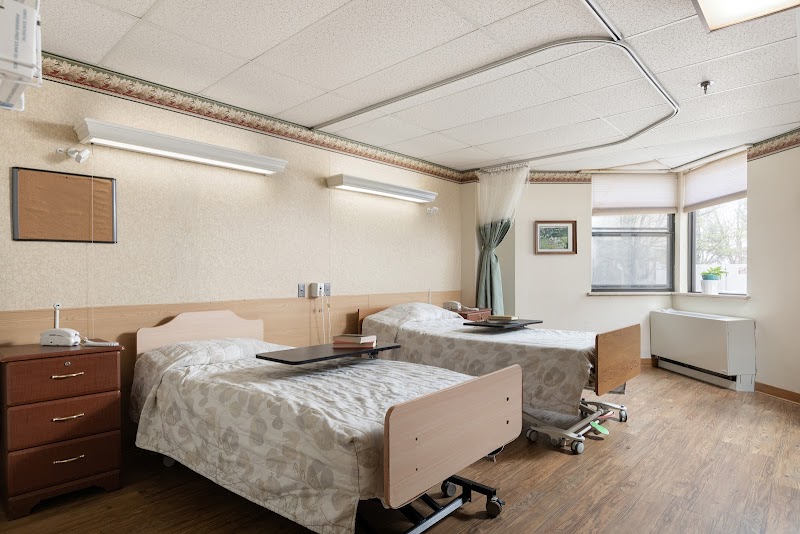
How is Complete Care At Brakeley Park, Llc Staffed?

CMS rates COMPLETE CARE AT BRAKELEY PARK, LLC's staffing level at 3 out of 5 stars, which is average compared to other nursing homes. Staff turnover is 31%, compared to the New Jersey average of 46%. This relatively stable workforce can support continuity of care.

What Have Inspectors Found at Complete Care At Brakeley Park, Llc?

State health inspectors documented 27 deficiencies at COMPLETE CARE AT BRAKELEY PARK, LLC during 2021 to 2025. These included: 1 Immediate Jeopardy (the most serious level, indicating potential for serious harm or death), 1 that caused actual resident harm, and 25 with potential for harm. Immediate Jeopardy findings are rare and represent the most serious regulatory concerns. They require immediate corrective action.
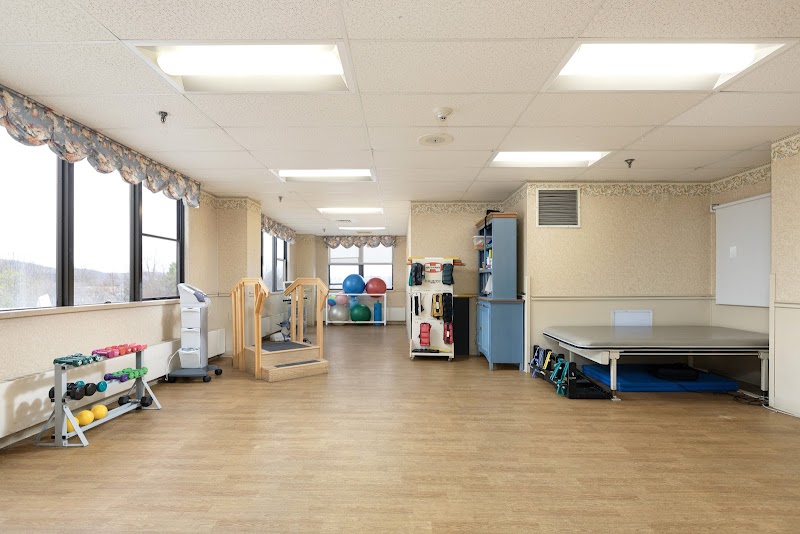
Who Owns and Operates Complete Care At Brakeley Park, Llc?

COMPLETE CARE AT BRAKELEY PARK, LLC is owned by a for-profit company. For-profit facilities operate as businesses with obligations to shareholders or private owners. The facility is operated by COMPLETE CARE, a chain that manages multiple nursing homes. With 120 certified beds and approximately 115 residents (about 96% occupancy), it is a mid-sized facility located in PHILLIPSBURG, New Jersey.
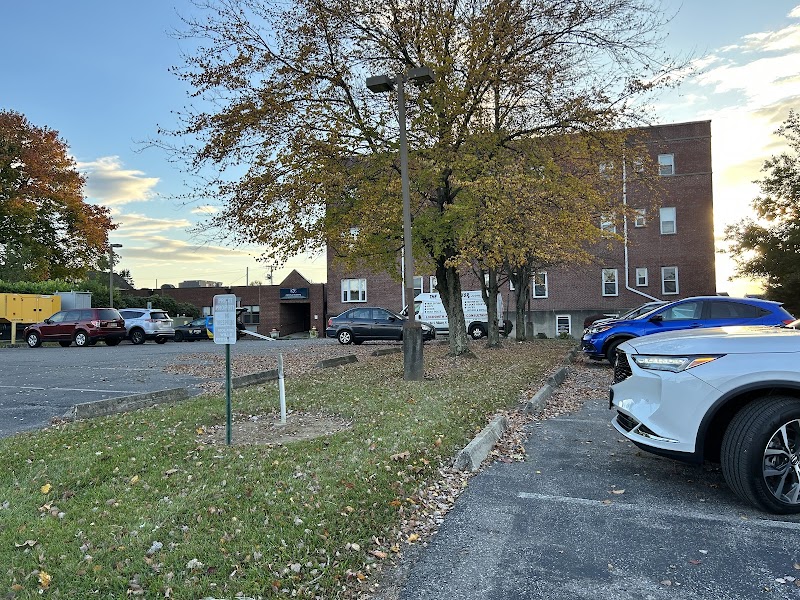
How Does Complete Care At Brakeley Park, Llc Compare to Other New Jersey Nursing Homes?

Compared to the 100 nursing homes in New Jersey, COMPLETE CARE AT BRAKELEY PARK, LLC's overall rating (2 stars) is below the state average of 3.2, staff turnover (31%) is significantly lower than the state average of 46%, and health inspection rating (2 stars) is below the national benchmark.

What Should Families Ask When Visiting Complete Care At Brakeley Park, Llc?

Based on this facility's data, families visiting should ask: "What changes have been made since the serious inspection findings, and how are you preventing similar issues?" "Can I visit during a mealtime to observe dining assistance and food quality?" "How do you handle medical emergencies, and what is your hospital transfer rate?" "Can I speak with family members of current residents about their experience?" These questions are particularly relevant given the facility's Immediate Jeopardy citations.

Is Complete Care At Brakeley Park, Llc Safe?

Based on CMS inspection data, COMPLETE CARE AT BRAKELEY PARK, LLC has documented safety concerns. Inspectors have issued 1 Immediate Jeopardy citation (the most serious violation level indicating risk of serious injury or death). The facility has a 2-star overall rating and ranks #100 of 100 nursing homes in New Jersey. Families considering this facility should ask detailed questions about what corrective actions have been taken since these incidents.

Do Nurses at Complete Care At Brakeley Park, Llc Stick Around?

COMPLETE CARE AT BRAKELEY PARK, LLC has a staff turnover rate of 31%, which is about average for New Jersey nursing homes (state average: 46%). Moderate turnover is common in nursing homes, but families should still ask about staff tenure and how the facility maintains care continuity when employees leave.

Was Complete Care At Brakeley Park, Llc Ever Fined?

COMPLETE CARE AT BRAKELEY PARK, LLC has been fined $55,647 across 2 penalty actions. This is above the New Jersey average of $33,635. Fines in this range indicate compliance issues significant enough for CMS to impose meaningful financial consequences. Common causes include delayed correction of deficiencies, repeat violations, or care failures affecting resident safety. Families should ask facility leadership what changes have been made since these penalties.

Is Complete Care At Brakeley Park, Llc on Any Federal Watch List?

COMPLETE CARE AT BRAKELEY PARK, LLC is not on any federal watch list. The most significant is the Special Focus Facility (SFF) program, which identifies the bottom 1% of nursing homes nationally based on persistent, serious quality problems. Not being on this list means the facility has avoided the pattern of deficiencies that triggers enhanced federal oversight. This is a positive indicator, though families should still review the facility's inspection history directly.