CONCERN
(D)
Potential for Harm - no one hurt, but risky conditions existed
Deficiency F0578
(Tag F0578)
Could have caused harm · This affected 1 resident
**NOTE- TERMS IN BRACKETS HAVE BEEN EDITED TO PROTECT CONFIDENTIALITY** Based on interview, record review, and review of facility documents, it was determined that the facility failed to ensure that a...
Read full inspector narrative →
**NOTE- TERMS IN BRACKETS HAVE BEEN EDITED TO PROTECT CONFIDENTIALITY** Based on interview, record review, and review of facility documents, it was determined that the facility failed to ensure that a resident's updated advance directive was implemented in a timely manner in accordance with the resident's wishes and the facility's policy.
This deficient practice was identified for 1 of 2 residents (Resident #280) reviewed for Advance Directives and was evidenced by the following:
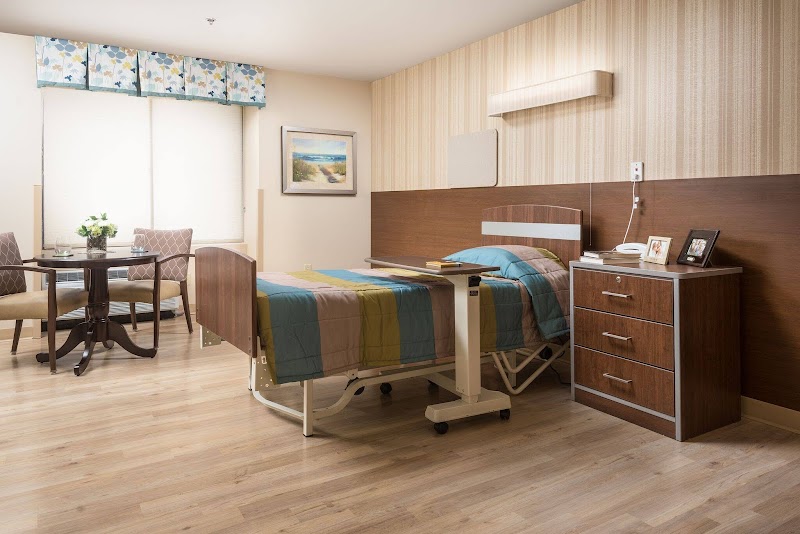
On [DATE] at 10:51 AM, during the initial tour of the facility, the surveyor observed Resident #280 seated in a chair in his/her room. The resident stated that he/she was recently admitted to the facility.
The surveyor reviewed the medical record for Resident #280.
A review of the the admission Record, an admission summary, revealed the resident had diagnoses which included, but were not limited to: altered mental status, major depressive disorder, and frontotemporal neurocognitive disorder (occurs when nerve cells in the frontal and temporal lobes of the brain degenerate, causing the lobes to shrink).
A review of the resident's Minimum Data Set (MDS), an assessment tool used to facilitate the management of care, was in progress and was not able to be viewed.
A review of the resident's Baseline Care Plan (BCP), identified the resident's Code Status as a Full Code [the healthcare provider will implement all available medical interventions, including CPR (cardiopulmonary resuscitation), to try and revive a patient if their heart stops beating or if they stop breathing].
A review of the Order Summary Report (OSR), included the following physician order (PO):
A PO, dated [DATE], for Full Code.
A review of the Progress Notes (PN) included a Social Services Note (Late Entry) with an effective date of [DATE], that the family completed a POLST (Practitioner Orders for Life-Sustaining Treatment) form and it was in the chart for doctor to sign.
On [DATE] at 12:00 PM, the surveyor reviewed the resident's paper chart and noted New Jersey POLST form, undated, which indicated the following:
Do Not Attempt Resuscitation (DNAR), Allow Natural Death, and Do Not Intubate (DNI - intubate: insert a tube into the trachea (windpipe) for ventilation); Use oxygen (O2), manual treatment to relieve airway obstruction, medications for comfort.
The POLST was signed by the resident, the resident's healthcare representative (surrogate), and the facility Nurse Practitioner.
On [DATE] at 12:06 PM, the surveyor interviewed Licensed Practical Nurse (LPN) #4 who stated that if a resident were a Full Code they would have a heart sticker on the spine of their paper chart. LPN #4 viewed Resident #280's paper chart and stated the resident did not have a heart sticker on their chart to indicate that he/she was a Full Code. LPN #4 then proceeded to review the resident's EHR (electronic health record) and stated that the resident's dashboard specified that the resident was a Full Code and the resident also had an order for a Full Code. LPN #4 then reviewed the resident's POLST form within the paper chart and stated that the POLST indicated that the resident was a Do Not Resuscitate/Do Not Intubate (DNR/DNI). LPN #4 stated that the POLST was usually completed upon admission and both the POLST and the code status order should have matched. LPN #4 stated that she would review the resident's paper chart in an emergency in order to determine the resident's code status.
On [DATE] at 12:11 PM, the surveyor interviewed Licensed Practical Nurse/Unit Manager (LPN/UM) #1 who stated that in an emergency, the nurses would review the POLST and honor the POLST. LPN/UM #1 stated that the POLST should have been dated because the resident's code status could change. LPN/UM #1 stated the POLST, physician's order, and care plan should all match.
On [DATE] at 11:47 AM, the surveyor interviewed the Director of Nursing (DON) who stated that for new admissions, the nurses looked at the transfer form to determine the code status, unless there was a POLST form that stated otherwise. The DON stated that the resident was a Full Code until the POLST was signed by the physician or until confirmed by the family. The DON stated that a resident's code status order of Full Code and POLST form for DNR/DNI was something that needed to be flagged and addressed with the doctor immediately once identified. The DON further stated the POLST, physician's order, and care plan should all coincide.
On [DATE] at 9:37 AM, in the presence of the Licensed Nursing Home Administrator (LNHA) and the survey team the DON stated that the resident would remain a Full Code until the doctor came in and signed both the orders and the POLST form.
A review of the facility's Code Status policy, dated [DATE], included:
In the absence of an Advance Directive, POLST, or further direction from the physician, the default direction will be Full Code.
A review of the facility's Practitioner Orders for Life-Sustaining Treatment (POLST) policy, updated [DATE], included:
If the individual does not have a POLST form at the time of admission, the facility will introduce POLST.
The Social Services, attending physician or advance practice nurse will complete the POLST with the individual or the legally recognized health care decision maker, after discussing options of care.
If the POLST conflicts with the patient's previously-expressed health care instructions or advance directive, then, to the extent of the conflict, the most recent expressions of the patient's wishes governs.
NJAC 8:39-4.1(a)4; 9.6(b)
CONCERN
(D)
Potential for Harm - no one hurt, but risky conditions existed
Deficiency F0658
(Tag F0658)
Could have caused harm · This affected 1 resident
Based on observation, interview, record review, and review of facility documentation, it was determined that the facility failed to obtain a physician's order for 1 of 1 resident (Resident #173) revie...
Read full inspector narrative →
Based on observation, interview, record review, and review of facility documentation, it was determined that the facility failed to obtain a physician's order for 1 of 1 resident (Resident #173) reviewed for positioning and mobility.
This deficient practice was evidenced by the following:
Reference: New Jersey Statutes, Annotated Title 45, Chapter 11. Nursing Board. The Nurse Practice Act for the state of New Jersey states: The practice of nursing as a registered professional nurse is defined as diagnosing and treating human responses to actual or potential physical and emotional health problems, through such services as case finding, health teaching, health counseling and provision of care supportive to or restorative of life and wellbeing, and executing medical regimes as prescribed by a licensed or otherwise legally authorized physician or dentist.
Reference: New Jersey Statutes, Annotated Title 45, Chapter 11. Nursing Board. The Nurse Practice Act for the state of New Jersey states: The practice of nursing as a licensed practical nurse is defined as performing tasks and responsibilities within the framework of case finding, reinforcing the patient and family teaching program through health teaching, health counseling and provision of supportive and restorative care, under the direction of a registered nurse or licensed or otherwise legally authorized physician or dentist.
On 5/27/2025 at 9:39 AM, the surveyor observed Resident #173 in a wheelchair in the hallway wearing a sling on his/her right arm.
On 5/28/2025 at 10:53 AM, the surveyor observed Resident #173 wearing a sling on his/her right arm. The resident stated, My arm doesn't work too well.
A review of the admission Record, an admission summary, revealed the resident had diagnoses which included, but were not limited to: flaccid (a muscle or tissue that is weak) hemiplegia (paralysis or severe weakness on one side of the body) and cerebral infarction (occurs when blood flow to the brain is blocked, causing brain tissue to die).
A review of the comprehensive Minimum Data Set (MDS), an assessment tool used to facilitate the management of care, dated 4/25/25, included that the resident had a Brief Interview for Mental Status (BIMS) score of 12 out of 15, which indicated the resident's cognition was moderately impaired. Further review of the MDS revealed the resident had an impairment to the upper and lower parts of one side of the body.
A review of the individual comprehensive care plan (ICCP) did not include the use of the sling to the resident's right arm.
A review of the physician's orders did not include the sling to the resident's right arm.
On 5/28/2025 at 10:55 AM, the surveyor interviewed Licensed Practical Nurse/ Unit Manager (LPN/UM) #4 who confirmed that there was no physician's order for the sling and stated that there should be one.
On 5/28/2025 at 12:00 PM, the surveyor interviewed the Director of Nursing (DON) who stated that a physician's order should have been obtained for the sling.
On 5/29/2025 at 11:38 AM, the surveyor interviewed the Nurse Practitioner (NP) who stated that the use of a sling required a physician's order. He further stated that a new order was entered today (5/29/25) after the surveyor's inquiry.
A review of the facility's Physician Orders, policy, updated April 2024, included, Medications, diets, therapy, or any other treatment may not be administered to the residents without the written approval from the attending physician.
NJAC 8:39-27.1(a)
CONCERN
(D)
📢 Someone Reported This
A family member, employee, or ombudsman was alarmed enough to file a formal complaint
Potential for Harm - no one hurt, but risky conditions existed
Pressure Ulcer Prevention
(Tag F0686)
Could have caused harm · This affected 1 resident
**NOTE- TERMS IN BRACKETS HAVE BEEN EDITED TO PROTECT CONFIDENTIALITY** Complaint NJ #: 185447
Based on observation, interview, record review, and review of facility documents, it was determined that ...
Read full inspector narrative →
**NOTE- TERMS IN BRACKETS HAVE BEEN EDITED TO PROTECT CONFIDENTIALITY** Complaint NJ #: 185447
Based on observation, interview, record review, and review of facility documents, it was determined that the facility failed to ensure that an air mattress was accurately set according to the resident's weight.
This deficient practice was identified for 2 of 5 residents (Residents #127 and #150) reviewed for pressure ulcers and was evidenced by the following:
1.) On 5/28/25 10:50 AM, the surveyor observed Resident #127 lying in bed on an air mattress and the resident stated that he/she was in pain. At that time, the Licensed Practical Nurse (LPN) #2 entered the room to answer the call light. The surveyor observed the air mattress pump was attached to the foot board and was set between 280 and 320 pounds (lbs).
On 5/28/25 at 10:52 AM, the surveyor interviewed LPN #2 who stated the air mattress should be set according to the resident's weight, but the setting could also be a combination of things. At that time, LPN #2 changed the setting to 280 lbs. When asked what the purpose of the air was mattress was, LPN #2 stated it was to prevent pressure ulcers and to ensure the residents were properly cushioned.
On 5/28/25 at 10:55 AM, the surveyor reviewed the medical record for Resident #127.
A review of the admission Record, an admission summary, revealed the resident had diagnoses which included, but were not limited to, a personal history of venous thrombosis and embolism (blood clot) and polyneuropathy (a condition where multiple peripheral nerves are damaged, affecting different parts of the body).
A review of the comprehensive Minimum Data Set (MDS), an assessment tool used to facilitate the management of care, dated 3/27/25, included the resident had a Brief Interview for Mental Status (BIMS) score of 9 out of 15, which indicated the resident's cognition was moderately impaired. Further review of the assessment revealed that the resident was at risk for developing pressure ulcers/injuries and that the resident had a pressure reducing device for the bed.
A review of the individual comprehensive care plan (ICCP) included a focus area, dated 4/11/23, for a potential for pressure/injury development. Interventions included: Resident has specialty air mattress. Check to be sure pump/mattress is functioning correctly with care.
A review of the Weights Summary revealed that the resident's weights were as follows:
On 5/9/25 the resident weighed 151.6 lbs.
On 4/8/25, the resident weighed 152.8 lbs.
On 3/10/25, the resident weighed 153.6 lbs.
2.) On 5/27/25 at 11:00 AM, the surveyor observed Resident #150 lying in bed receiving incontinence care.
On 5/27/25 at 11:15 AM, the surveyor reviewed the medical record for Resident #150.
A review of the admission Record, revealed the resident had diagnoses which included, but were not limited to, adult failure to thrive, cerebral infarction (stroke), and type two diabetes mellitus.
A review of the comprehensive MDS, dated [DATE], included the resident's cognition was severely impaired. Further review of the assessment revealed that the resident had a stage four pressure ulcer that was present on admission, two unstageable deep tissue injuries that were present on admission, and that the resident had a pressure reducing device for the bed.
A review of the ICCP included a focus area, dated 2/25/25, for a potential for pressure/injury development. Interventions included: Resident has specialty air mattress. Check to be sure pump/mattress is functioning correctly with care.
A review of the Order Summary Report (OSR), for May 2025, included a physician's order (PO), dated 4/18/25, for alternating air pressure to prevent further skin breakdown every shift for preventative and monitor for functioning.
A review of the May 2025 Treatment Administration Record (TAR) for the above-mentioned PO was signed out as completed on day, evening, and night shifts.
A review of the Weights Summary revealed that the resident's weights as follows:
On 5/9/25 the resident weighed 108.0 lbs.
On 4/25/25 the resident weighed 105.0 lbs.
On 4/10/25 the resident weighed 112.6 lbs.
On 3/10/25 the resident weighed 104.8 lbs.
On 5/28/25 at 10:32 AM, the surveyor interviewed LPN #3 who stated that Resident #150 had wounds on his/her sacrum (a large, triangular bone at the base of the spine), inner thighs, and bilateral heels.
On 5/28/25 at 10:53 AM, the surveyor and LPN #3 entered Resident #150's room and observed the resident lying in bed with their eyes closed. At that time, LPN #3 confirmed the air mattress setting was firm and was set between 320 and 350 lbs. LPN #3 stated the purpose of the air mattress was to keep the wound from being pressed on and to prevent pressure ulcers. The LPN stated when she checked the air mattress, she just checked to ensure it was inflated. LPN #3 further stated she was unsure it was supposed to be set to the resident's weight.
On 5/28/25 at 10:56 AM, LPN #3 stated that she found out that the air mattress should have been set based on the resident's weight.
On 5/28/25 at 11:01 AM, the surveyor interviewed Licensed Practical Nurse/Unit Manager (LPN/UM) #2 who stated that an air mattress was used to prevent pressure ulcers and to alternate pressure and relieve pressure. She stated that if a resident was 100 lbs and it was set to 300 lbs that would be too much. When asked if the air mattress should be set to the resident's weight, LPN/UM #2 stated she was unsure. She then stated that the wound care nurse typically checked the air mattress settings, but that the nurses should ensure the air mattress was working properly.
On 5/28/25 at 11:09 AM, the surveyor interviewed the Assistant Director of Nursing (ADON) who stated the purpose of the air mattress was to prevent skin breakdown. She stated that it was typically set based on the resident's weight. The ADON stated that if the settings were too high or too low it could be uncomfortable for the resident. The ADON then stated that the nurses were responsible for checking the air mattress and that it should be checked each shift.
On 5/28/25 at 11:40 AM, the Director of Nursing (DON), in the presence of the survey team, stated the purpose of the air mattress was to offload pressure for the resident. She stated that the setting was based on the resident's weight. She further stated that if it was not set to the resident's weight if could cause injuries, and if the resident already had a pressure ulcer it could worsen. The DON stated the nursing staff was responsible for checking the air mattress to ensure it was set appropriately.
On 5/30/25 at 9:38 AM, the DON, in the presence of the Licensed Nursing Home Administrator (LNHA) and the survey team, acknowledged the air mattresses were set incorrectly and that they should have been set based on the resident's weight.
A review of the [name redacted] manufacture's guidelines for the specialty air mattress included, Step 6 determine the patient's weight and set the control knob to that weight setting on the control unit.
A review of the [name redacted] manufacture's guidelines for the low air mattress (designed to distribute the patient's body weight over a broad surface area and help prevent skin breakdown) included, Pressure adjust knob adjustable by patient's weight. Turn the pressure adjust knob to set a comfortable level by using the weight scale as a guide.
A review of the facility's Pressure Ulcers/Skin Breakdown -Clinical Protocol policy, updated March 2025, included, Treatment/Management: the physician or consultant will order pertinent wound treatments, including pressure reduction surfaces.
A review of the facility's Low Air Loss Mattress Usage policy updated February 2025, included, Low air loss mattresses will be utilized in accordance with the manufacture guidelines.
NJAC 8:39-27.1 (a)
CONCERN
(D)
Potential for Harm - no one hurt, but risky conditions existed
Respiratory Care
(Tag F0695)
Could have caused harm · This affected 1 resident
Based on observation, interview, record review, and review of facility documents, it was determined that the facility failed to ensure that oxygen was administered in accordance with a physician's ord...
Read full inspector narrative →
Based on observation, interview, record review, and review of facility documents, it was determined that the facility failed to ensure that oxygen was administered in accordance with a physician's order.
This deficient practice was identified for 1 of 3 residents (Resident #139) reviewed for respiratory care and was evidenced by the following:
On 5/22/25 at 10:30 AM, during the initial tour of the facility, the surveyor observed Resident #139 lying in bed with a tracheostomy tube [a surgical opening in the neck directly into the trachea (windpipe)]. The resident did not respond to the surveyor when spoken to and the resident's oxygen concentrator (a medical device that extracts and concentrates oxygen from ambient air) was set at six liters.
On 5/23/25 at 9:06 AM, the surveyor reviewed the medical record for Resident #139.
A review of the admission Record, an admission summary, revealed the resident had diagnoses which included, but were not limited to, chronic respiratory failure with hypoxia (oxygen deficient), and chronic obstructive pulmonary disease (lung condition characterized by airflow obstruction).
A review of the comprehensive Minimum Data Set (MDS), an assessment tool used to facilitate the management of care, dated 5/5/25, included the resident had a Brief Interview for Mental Status (BIMS) score of 7 out of 15, which indicated that the resident cognition was severely impaired.
A review of the Individual Comprehensive Care Plan (ICCP) included a focus area, dated 5/24/24, to give humidified oxygen as prescribed at four liters/35% humidification.
A review of the Order Summary Report (OSR), included the following physician orders (PO):
A PO, dated 1/24/25, for oxygen inhalation, four liters per minute of oxygen blended in via trach collar (a device placed over a tracheostomy to deliver oxygen) at 35% every shift for hypoxia and shortness of breath.
A review of the Treatment Administration Record (TAR) revealed that the above PO for oxygen inhalation was signed out as administered on 5/22/25 for the day shift.
On 5/23/25 at 11:56 AM, the surveyor observed Resident #139 lying in bed with their eyes opened, but the resident was non-verbal. The oxygen concentrator was set to deliver six liters of oxygen (instead of four liters as ordered.)
On 5/27/25 at 12:17 PM, the surveyor interviewed Licensed Practical Nurse (LPN) #1 who stated that she had already performed trach care for the resident that day. LPN #1 stated that the resident's concentrator was supposed to be set at four liters with 35% humidification. The surveyor asked LPN #1 to view the concentrator to confirm the setting and LPN #1 confirmed that it was set at six liters, but it should have been set at four liters. LPN #1 then proceeded to turn the concentrator dial down from six liters to four liters. LPN #1 stated that she was going to check the oxygen concentrator setting after she completed the medication pass, but she had not noted the discrepancy yet. LPN #1 added that it was important to follow the physician's order to make sure the resident received the right amount of oxygen.
On 5/28/25 at 9:54 AM, the surveyor interviewed Licensed Practical Nurse/Unit Manager (LPN/UM) #1 who stated that there were physician orders for oxygen and the nurses were expected to check the concentrator each shift to ensure that the resident's concentrator was at the correct setting. LPN/UM #1 stated that the resident needed to receive the correct amount of oxygen to remain stable in accordance with the physician orders.
On 5/28/25 at 11:42 AM, the surveyor interviewed the Director of Nursing (DON) who stated that nursing should have assessed the oxygen concentrator and ensured that it was set to the correct setting as determined by the physician's order. The DON stated that it was important to make sure that the resident was oxygenating properly to avoid further injury. The DON stated that when the order for oxygen was signed out by the nurse on the TAR, it indicated that the nurse had looked at the concentrator and confirmed that the concentrator was set to the correct setting.
On 5/29/25 at 12:24 PM, the surveyor made the Licensed Nursing Home Administrator (LNHA) aware of the concerns that were identified with the resident's oxygen concentrator settings.
A review of the facility's undated Oxygen Administration policy, included:
Oxygen is administered to residents who need it, consistent with professional standards of practice, the comprehensive-centered care plans, and the resident's goals and preferences.
Oxygen is administered under orders of a physician.
NJAC 8:39-27.1(a)
CONCERN
(D)
Potential for Harm - no one hurt, but risky conditions existed
Deficiency F0804
(Tag F0804)
Could have caused harm · This affected 1 resident
Based on observation, interview, record review, and review of facility documents, it was determined that the facility failed to ensure palatable temperature of food for lunch meals served on 1 of 5 un...
Read full inspector narrative →
Based on observation, interview, record review, and review of facility documents, it was determined that the facility failed to ensure palatable temperature of food for lunch meals served on 1 of 5 units (E-Unit).
This deficient practice was evidenced by the following:
On 5/23/2025 at 10:21 AM, the surveyor conducted a resident council meeting. During that meeting, 4 out of 5 residents (Resident #58, #71, #118, and #129) stated that their food was not served hot.
On 5/27/2025 at 11:23 AM, the surveyor visited the kitchen to observe the food service distribution line:
At 11:45 AM, the FSD calibrated (process used to make sure the instrument is taking an accurate temperature reading) the thermometer to 31.7 F (degrees Fahrenheit) and then proceeded to obtain the food temperatures from the food items on the steam table.
At 11:55 AM, the surveyor observed the first food cart (Food Cart #1) leave the kitchen. The food cart was uncovered.
At 11:56 AM, Food Cart #1 arrived on the E-Wing and staff immediately started to distribute the lunch trays.
At 12:01 PM, the last meal tray was passed and the surveyor observed the FSD obtain the food temperatures with the previously calibrated thermometer.
The temperatures included, but were not limited to, the following:
Milk #1 - 44.0 F
Milk #2 - 42.1 F
Regular pork chop - 109.9 F
At that time, the surveyor interviewed the FSD, who stated that the milk should be kept at less than 41 F and the pork chop at 135 F or higher.
On 5/30/2025 at 9:23 AM, the surveyor interviewed the Licensed Nursing Home Administrator (LNHA), in the presence of the survey team, who stated that the cold beverages should be kept below 41 degrees Fahrenheit and he was unaware of the temperature that the pork chop should have been maintained at.
A review of the facility's Record of Food Temperatures undated policy, included:
2. Hot foods will be held at 135 degrees Fahrenheit or greater.
4. Potentially hazardous cold food temperatures will be kept at or below 41 degrees Fahrenheit.
NJAC 8:39-17.4(a)(2)
CONCERN
(D)
Potential for Harm - no one hurt, but risky conditions existed
Safe Environment
(Tag F0921)
Could have caused harm · This affected 1 resident
Based on observation, interview, and review of facility documents, it was determined that the facility failed to maintain a safe and sanitary environment.
This deficient practice was identified for 2 ...
Read full inspector narrative →
Based on observation, interview, and review of facility documents, it was determined that the facility failed to maintain a safe and sanitary environment.
This deficient practice was identified for 2 of 2 courtyards and on 2 of 5 units (A-Unit and B-Unit) and was evidenced by the following:
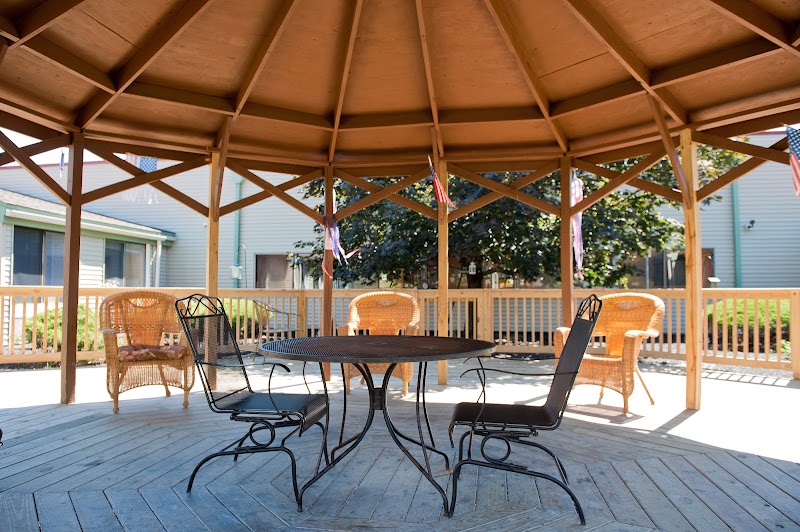
1.) On 5/22/25 at 10:00 AM, during the initial tour of the facility, the surveyor observed a courtyard with a large gazebo which had very tall weeds.
On 5/23/25 at 11:40 AM, the surveyor observed the courtyard with a large gazebo which had very tall weeds.
On 5/27/25 at 11:32 AM, the surveyor interviewed Resident #118 who stated that the courtyard with the large gazebo had both rusted furniture, weeds, and the lawn decor was broken and in disrepair. The resident complained about the lack of maintenance and his/her inability to bring visitors out to there due to the condition of the area.
On 5/28/25 at 9:58 AM, the surveyor observed the courtyard with the large gazebo which revealed the following:
One black metal table that had a reddish-orange substance on it's upper surface and two black metal chairs.
Two white wicker chairs that appeared faded and weathered. One of the wicker chairs had a very faded orange cushion on it.
A broken wind chime, a broken bird feeder, and a lawn ornament that laid on the ground face down beneath the tree that faced the window in the connecting hallway where residents were observed working with physical therapy throughout the day.
Both the grass and the weeds had appeared to have been cut.
2.) On 5/23/25 at 10:34 AM, the surveyor interviewed Resident #58 who stated that the aluminum roof over the smoking area leaked when it rained. The resident further stated that the facility Licensed Nursing Home Administrator (LNHA) kept saying that they were going to fix it.
On 5/28/25 at 10:05 AM, the surveyor observed the smoking area while it rained and the patio flooring was very wet despite the area being covered. Two unsampled residents were observed seated side-by-side in their wheelchairs in the center of the patio next to the ashtray in order to remain dry. The remainder of the flooring outside of the very center of the patio was saturated with rain water.
On 5/28/25 at 12:43 PM, the surveyor interviewed the Director of Maintenance (DM), who stated that he was responsible for caring for the courtyard where the wooden gazebo was. The DM stated that the landscaping company was behind schedule due to all of the rain, but that they did come in and had completed the weed whacking. The DM stated he had not seen the metal table and chairs with any rust or discoloration on them. The DM added that all of the stuff that was broken and on the ground would be removed during the next planned project.
The DM further stated that there was a family member who went out to the courtyard every once in a while, but it was rare.
At that time, the DM stated that the roof in the covered smoking area did leak, but that it was just a simple car port and the whole thing would have to be pulled apart to prevent leakage. The DM stated that residents had complained about the leaking roof in the smoking area and that it was more of an issue for administration. The DM stated that it was not a home like environment for the weeds to be tall and the weeds should have be maintained.
On 5/29/25 at 12:20 PM, the surveyor interviewed the LNHA who stated that the facility contracted a landscaping company, but he was unsure how often they came to the facility to cut the grass in the courtyard. The LNHA stated that it was up to DM to reach out to the contractor to ensure the grass was cut.
The LNHA further stated that Maintenance and Housekeeping were responsible for ensuring that the gazebo area was maintained.
At that time, the LNHA stated that the residents may have complained about the smoking area roof leaking during rain and that rain was coming in on the sides. The LNHA further stated that the residents had not voiced that only two residents could be out there at time to remain dry while smoking due to the leaking roof.
On 5/30/25 at 9:24 AM, in the presence of the survey team, the surveyor interviewed the Director of Nursing (DON) who stated that the courtyard area with the large gazebo was not being used often and that may have been because of the way that it had looked.
3.) On 5/28/25 at 9:09 AM, the surveyor, accompanied by Licensed Practical Nurse/Unit Manager (LPN/UM) #2, toured the nourishment room on the A-Unit. Upon entering the nourishment room, the surveyor smelled a musty odor. The surveyor requested that LPN/UM #2 open the locked cabinet under the sink.
At 9:16 AM, the Director of Maintenance (DM) arrived at the unit and removed the lock from the cabinet under the sink. When the cabinet was opened, the musty odor intensified and the surveyor observed the base of the cabinet with two big water marks, multiple brown and black stains, and black substances. The lower interior back wall of the cabinet was also noted to have water marks, stains, and a black substance.
At that time, the surveyor interviewed the DM, who stated, it looks like the drain leaked under there. We didn't realize that the drain leaked. He further stated that the maintenance department did rounds, but they do not look under the sink. The DM then confirmed that there was a musty odor. He also stated that the building should be maintained in good repair and that he would repair the drain to ensure it no longer leaked.
4.) On 5/28/2025 at 9:32 AM, the surveyor, accompanied by the LPN/UM #1, toured the B-Unit nourishment area and observed garbage bags, two wet floor signs, a small white basket, and a vase stored under the sink. When LPN/UM #1 moved the items, the surveyor observed multiple areas containing a black substance on the interior lower back wall of the cabinet, and the interior base of the cabinet also had multiple small pieces of debris.
A that time, the surveyor also observed the caulking was not intact where the countertop met the wall near the sink. LPN/UM #1 confirmed the findings and agreed that it was not maintained in good repair.
5.) At 9:43 AM, on the B-Unit, the surveyor observed a lightly running water fountain heavily stained around the faucet area leading down to the drain.
At that time, the surveyor interviewed the housekeeper (HK), in the presence of LPN/UM #1, who stated that the porter should clean the water fountains daily.
On 5/28/2025 at 12:48 PM, the surveyor interviewed the Director of Housekeeping, who stated that the water fountains at the facility did not work and have not been in service since he had been working there (3 years). He further stated that the porters should clean the water fountains daily.
A review of the facility's undated Maintenance Service policy, included:
It is the policy of this facility that maintenance service be provided to all areas of the building, grounds, and equipment.
Maintaining the building in compliance with current federal, state and local laws, regulations, and guidelines.
Maintaining the building in good repair and free from hazards.
Maintaining the grounds . in good order.
Providing routinely scheduled maintenance service.
NJAC 8:39-31.4(a)
CONCERN
(E)
Potential for Harm - no one hurt, but risky conditions existed
Comprehensive Care Plan
(Tag F0656)
Could have caused harm · This affected multiple residents
**NOTE- TERMS IN BRACKETS HAVE BEEN EDITED TO PROTECT CONFIDENTIALITY** 2.) On 5/22/25 at 10:52 AM, during the initial tour, Resident #175 was not in his/her room and the surveyor observed a surgical ...
Read full inspector narrative →
**NOTE- TERMS IN BRACKETS HAVE BEEN EDITED TO PROTECT CONFIDENTIALITY** 2.) On 5/22/25 at 10:52 AM, during the initial tour, Resident #175 was not in his/her room and the surveyor observed a surgical shoe on the countertop.
On 5/23/25 at 11:09 AM, the surveyor observed Resident #175 resting in bed while wearing a hinged brace and a surgical shoe on his/her right leg.
The surveyor reviewed the medical record for Resident #175.
A review of the admission Record revealed the resident had diagnoses which included, but were not limited to, fracture of shaft of right tibia (the inner and typically larger of the two bones between the knee and the ankle) and subsequent fracture of metatarsal (any of the bones of the foot).
A review of the resident's comprehensive MDS, dated [DATE], included the resident had a BIMS score of 10 out of 15, which indicated the resident's cognition was moderately impaired.
A review of the resident's ICCP included a focus area, dated 5/12/25, that the resident had a potential for pressure ulcer/injury development. Interventions included: Assist the resident with bed mobility and toileting as needed, assist/remind/cue the resident to turn and reposition, and follow facility policies/protocols for the prevention/treatment of skin breakdown.
Further review of the ICCP included a focus area, dated 5/12/25, that the resident had a self care performance deficit related to impaired balance. Interventions included: No weight bearing on right leg until 6/17/25, encourage the resident to discuss feelings about self-care deficit, and monitor/document/report to provider any changes as needed.
The ICCP did not include the hinged knee brace on his/her right knee or the surgical shoe.
A review of the Order Summary Report (OSR), dated as of 5/23/25, included the following physician orders (PO):
A PO, dated 5/20/25, for a hinged knee brace to right knee.
There was no PO for the surgical shoe.
On 5/23/25 at 11:29 AM, the surveyor interviewed Licensed Practical Nurse (LPN) #6 who stated the hinged knee brace and surgical shoe should be included on the resident's care plan.
On 5/23/25 at 11:45 AM, the surveyor interviewed Licensed Practical Nurse/Unit Manager (LPN/UM) #4 who stated the nurses or the MDS Coordinator updated the care plan. At that time, LPN/UM #4 pulled up Resident #175's electronic medical record and confirmed that the hinged right knee brace and the surgical shoe was not included on the resident's care plan. She further stated that the care plan should have been updated to include them.
3.) On 5/22/25 at 10:56 AM, during the initial tour, Resident #173 was not in his/her room and the surveyor observed heel booties on the resident's windowsill.
On 5/27/25 at 9:39 AM, the surveyor observed Resident #173 in a wheelchair in the hallway and wearing a sling on his/her right arm.
On 5/28/25 at 10:53 AM, the surveyor observed Resident #173 wearing a sling on his/her right arm and the resident stated, My arm doesn't work too well.
The surveyor reviewed the medical record for Resident #173.
A review of the admission Record revealed the resident had diagnoses which included, but were not limited to, flaccid (a muscle or tissue that is weak) hemiplegia (paralysis or severe weakness on one side of the body) and cerebral infarction (occurs when blood flow to the brain is blocked, causing brain tissue to die).
A review of the resident's comprehensive MDS, dated [DATE], included that the resident had a BIMS score of 12 out of 15, which indicated the resident's cognition was moderately impaired. Further review of the MDS revealed the resident had an impairment to the upper and lower parts of one side of the body.
A review of the ICCP included a focus area, dated 5/12/25, that the resident had a pressure ulcer injury and was at risk for a new injury. Interventions included: Administer treatments as ordered and monitor for effectiveness, assist the resident with bed mobility and toileting as needed, and assist/remind/cue the resident to turn and reposition.
Further review of the ICCP did not include the use of the sling on the right arm or heel booties.
A review of the Order Recap Report (ORR), dated 4/1/25 to 5/31/25, included a physician's order (PO), dated 4/22/25, for bilateral heel booties for protection while in bed every shift.
Further review of the ORR did not include the sling to the right arm.
On 5/28/25 at 10:55 AM, the surveyor interviewed LPN/UM #4 who confirmed that the heel booties and the sling were not on the care plan. The LPN/UM further stated that the devices should have been included on the care plan because they were part of the resident's care.
On 5/28/25 at 12:00 PM, the surveyor interviewed the Director of Nursing (DON) who stated that the care plans were updated quarterly and as needed. The DON further stated that Resident #173's heel booties and sling should have been included in the care plan.
Based on observation, interview, record review, and review of facility documents, it was determined that the facility failed to develop an individual comprehensive care plan to include a resident's a.) risk for wandering, b.) medical devices, and c.) history of seizures.
This deficient practice was identified for 1 of 5 residents (Resident #108) reviewed for accidents, 1 of 1 resident (Resident #175) reviewed for pressure ulcers, 1 of 1 resident (Resident #173) reviewed for positioning, and 1 of 3 residents (Resident #127) reviewed for hospitalizations and was evidenced by the following:
1.) On 5/29/25 at 10:05 AM, the surveyor observed Resident #108 sitting in a chair in the dayroom on the locked unit. The resident had a wander guard (a device that alarms if it is near a restricted area) on his/her right wrist. When asked about the wander guard, the resident stated, it is to keep track of me.
The surveyor reviewed the medical record for Resident #108.
A review of the admission Record, an admission summary, revealed the resident had diagnoses which included, but was not limited to, unspecified dementia, major depressive disorder, persistent mood disorder, obsessive compulsive disorder, and generalized anxiety disorder.
A review of the resident's quarterly Minimum Data Set (MDS), an assessment tool used to facilitate the management of care, dated 5/19/25, included the resident had a Brief Interview for Mental Status score of 10 out of 15, which indicated the resident's cognition was moderately impaired.
A review of the resident's Wandering/Elopement assessments revealed the following:
On 8/10/24, the resident scored a 9 which indicated he/she was at risk to wander.
On 11/10/24, the resident scored a 12 which indicated he/she was a high risk to wander.
On 2/10/25, the resident scored a 12 which indicated he/she was a high risk to wander.
On 5/12/25, the resident scored a 12 which indicated he/she was a high risk to wander.
A review of the progress notes included a General Nurses Note, dated 8/28/24, that revealed the resident was out of bed wandering the nursing unit.
Further review of the progress notes included a Behavioral Note, dated 1/11/25, that revealed the resident was wandering into other resident rooms.
A review of the individual comprehensive care plan (ICCP) did not include a focus area that the resident was at risk for wandering, nor did it include interventions related to wandering.
On 5/29/25 at 10:07 AM, the surveyor interviewed Certified Nursing Assistant (CNA) #6 who stated that most of the residents on the unit were at risk for wandering which was why the unit was locked. The CNA explained that if a resident had a wander guard, it would alarm at the facility's exit doors and that wander guards were important to prevent a resident from eloping.
On 5/29/25 at 10:13 AM, the surveyor interviewed Licensed Practical Nurse (LPN) #5 who stated residents at risk for wandering wore a wander guard that would alarm at the facility's exit doors. The LPN explained that each resident was assessed for their wander risk quarterly by the Unit Managers. The LPN added that the comprehensive care plans were initiated by the nurses and that the purpose of the care plan was for staff to know how to care for the residents.
On 5/29/25 at 10:18 AM, the surveyor interviewed Licensed Practical Nurse/Unit Manager (LPN/UM) #3 who stated all of the residents on the unit were at risk for wandering which was why the unit was locked. The LPN/UM explained that residents were assessed for their wander risk on admission and then quarterly. The LPN/UM also stated that the comprehensive care plan was initiated on admission and the purpose of the care plan was to communicate to staff the potential problems and interventions for the residents.
On 5/29/25 at 11:21 AM, the surveyor interviewed the Director of Nursing (DON) who stated most of the residents on the locked unit were at risk for wandering. The DON explained that residents were assessed for their risk for wandering quarterly and as needed. The DON also stated that if a resident was identified as a risk for wandering based on the assessment, the comprehensive care plan should be initiated right away. The DON added that the purpose of the care plan was to let staff know the residents' specific needs. At that time, the surveyor informed the DON that Resident #108 was identified as a risk for wandering according to the Wandering/Elopement assessment, dated 8/10/24, but did not have a care plan focus area related to wandering. The DON then confirmed that the resident should have had a care plan related to his/her risk for wandering.
4.) On 5/27/25 11:14 AM, the surveyor observed Resident #127 lying in bed with his/her eyes closed.
On 5/28/25 at 10:55 AM, the surveyor reviewed the medical record for Resident #127.
A review of the admission Record revealed the resident had diagnoses which included, but were not limited to, personal history of venous thrombosis and embolism (blood clot), polyneuropathy (a condition where multiple peripheral nerves are damaged, affecting different parts of the body), and seizures.
A review of the comprehensive MDS, dated [DATE], included the resident had a BIMS score of 9 out of 15, which indicated the resident's cognition was moderately impaired. Further review of the assessment revealed that the resident was taking an anticonvulsant (medication used to treat seizures).
A review of the Order Summary Report (OSR), for May 2025, included, the following physician's orders (PO):
A PO, with a start date of 12/30/24 and discontinuation date of 12/31/24, for Oxycarbazepine 300 milligrams (mg), give three tablets by mouth two times a day for seizures.
A PO, with a start date of 12/31/24, for Oxycarbazepine 300 mg, give three tablets by mouth two times a day for seizures.
A review of the Progress Notes (PN) for May 2024, October 2024 and December 2024 included the following:
On 5/21/24 at 11:59 PM, the resident was admitted to the hospital with a diagnosis of multiple seizures.
On 10/29/24 at 9:45 PM, the resident was admitted to the hospital with a diagnosis of lactic acidosis (a condition where the blood becomes too acidic) and break through seizures.
On 12/29/24 at 9:03 PM, the resident was admitted to the hospital with a diagnosis of seizures.
A review of the resident's ICCP did not include the resident's diagnosis of seizures or that the resident was taking anticonvulsant medications.
On 5/28/25 at 10:27 AM, the surveyor interviewed Licensed Practical Nurse (LPN) #2 who stated that the care plan should be developed within 24 to 48 hours of admission and updated as needed. He stated that the care plan included the needs and goals of the residents. LPN #2 stated that if a resident had a diagnosis of seizures and was on antiseizure medications it should be on the care plan.
On 5/28/25 at 10:35 AM, the surveyor interviewed LPN #3 who stated the nurses, the Unit Managers, and other departments were responsible for creating and updating the care plan. She stated the care plan included the resident's needs and interventions. LPN #3 stated if a resident had a history of seizure that would be on the care plan because they had to ensure they were able to monitor that resident.
On 5/28/25 at 10:38 AM, the surveyor interviewed Licensed Practical Nurse/Unit Manager (LPN/UM) #2 who stated the care plan was the road map for the medical professionals on how to care for the resident. She stated that the care plan should be initiated upon admission within 24 to 48 hours and include the medical history. When asked if Resident #127 had a history of seizures, LPN/UM #2 stated she was unsure. At that time, LPN/UM #2 reviewed the electronic medical record (EMR) and confirmed the resident had a diagnosis of seizures. She then reviewed the care plan and confirmed she did not see a care plan for seizures or anticonvulsant. LPN/UM #2 stated that she would expect the diagnosis of seizures and the medications to be on the care plan, so staff could follow seizures protocols.
On 5/28/25 at 11:05 AM, the surveyor interviewed the Assistant Director of Nursing (ADON) who stated a care plan included medical diagnosis and interventions. The ADON stated that if a resident had a history of seizures that should be reflected in the care plan. The ADON explained the seizure interventions and safety inventions should be included on the care plan.
On 5/28/25 at 11:33 AM, the Director of Nursing (DON) in the presence of the survey team stated the care plan was detailed according to the resident's needs. The DON stated that a resident's medical diagnosis and medications should be on the care plan. She stated that the care plan should be initiated on admission, and they capture as much as possible. The DON stated she would expect a seizure diagnosis, the medications, and/or both on the care plan. She stated that a care plan was important so staff could review and get a snapshot of the resident's needs and interventions. The DON stated from December 2024 to now (May 2025) she would have expected the seizure diagnosis to be on the care plan and acknowledged it should have been on the care plan.
On 5/30/25 at 9:37 AM, the DON, in the presence of the Licensed Nursing Home Administrator (LNHA) and the survey team, confirmed Resident #127 did not have a care plan for his/her seizure diagnosis or for the anticonvulsant medication.
A review of the undated facility's Seizure Precautions policy included:
1. The facility will review the resident's medical history, resident or resident representative reports of prior history of or diagnosis of a seizure disorder, or conditions that could precipitate seizure activity.
2. The facility will review the resident's medications history to ascertain if anticonvulsant medications is being administered for seizure control.
A review of the facility's Care Planning - Interdisciplinary Team policy updated 2024, included,
The interdisciplinary team is responsible for the development of resident care plans.
1. The resident care plans are developed according to the timeframes and criteria established by 483.21.
2. Comprehensive, person-centered care plans are based on resident assessments and developed by an interdisciplinary team (IDT).
NJAC 8:39-27.1(a)
CONCERN
(E)
Potential for Harm - no one hurt, but risky conditions existed
Deficiency F0730
(Tag F0730)
Could have caused harm · This affected multiple residents
Based on interview, record review, and review of facility documents, it was determined that the facility failed to evaluate the performance of all Certified Nursing Assistants (CNA) on an annual basis...
Read full inspector narrative →
Based on interview, record review, and review of facility documents, it was determined that the facility failed to evaluate the performance of all Certified Nursing Assistants (CNA) on an annual basis.
This deficient practice was identified for 5 of 5 CNAs whose personnel records were reviewed and was evidenced by the following:
On 5/27/25 at 12:49 PM, the surveyor reviewed the personnel files for five CNAs.
1.) CNA #1, with a date of hire of 3/29/22, had their most recent Employee Evaluation completed on 1/30/24.
2.) CNA #2, with a date of hire of 4/28/10, had their most recent Employee Evaluation completed on 2/7/24.
3.) CNA #3, with a date of hire of 4/3/20, had their most recent Employee Evaluation completed on 3/6/24.
4.) CNA #4, with a date of hire of 3/29/17, had their most recent Employee Evaluation completed on 2/9/24.
5.) CNA #5, with a date of hire of 3/20/23, had their most recent Employee Evaluation completed on 3/18/24.
On 5/28/25 at 8:59 AM, the surveyor interviewed the Director of Nursing (DON) who stated that the Assistant Director of Nursing (ADON) was responsible for completing the CNA annual performance evaluations, CNA education, and CNA competencies.
On 5/28/25 at 9:04 AM, the surveyor interviewed the ADON who stated the previous DON used to do the performance evaluations up until she was terminated one month prior. The ADON stated that she had assumed the responsibility when the prior DON left and she was still trying to catch up. The ADON confirmed that the annual CNA Employee Performance Evaluations were not completed on an annual basis as required.
On 5/28/25 at 11:53 AM, the surveyor interviewed the DON who stated that the importance of completing the Employee Performance Evaluations were to give credit where credit was due, to determine the need for improvement, and to provide education in real time if there were an issue.
On 5/29/25 at 12:24 PM, the surveyor informed the Licensed Nursing Home Administrator (LNHA) of the concern regarding the facility's failure to complete the annual CNA Employee Performance Evaluations.
A review of the facility's Performance Evaluations policy, updated January 2025, included:
Performance evaluations will be completed on all employees at least annually.
Performance evaluations will be completed by the employee's department director and supervisor and reviewed by the administrator and/or his/her designee.
The completed performance evaluations will be placed in the employee's personnel file.
NJAC 8:39-43.17 (b)
CONCERN
(E)
Potential for Harm - no one hurt, but risky conditions existed
Food Safety
(Tag F0812)
Could have caused harm · This affected multiple residents
Based on observation, interview, and review of other pertinent facility documents, it was determined that the facility failed to handle potentially hazardous foods and maintain sanitation in a safe an...
Read full inspector narrative →
Based on observation, interview, and review of other pertinent facility documents, it was determined that the facility failed to handle potentially hazardous foods and maintain sanitation in a safe and consistent manner to prevent food borne illness.
This deficient practice was identified in the facility's kitchen and 2 of 5 refrigerators designated for resident food, and was evidenced by the following:
1.) On 5/22/25 at 10:19 AM, during the initial tour of the kitchen, the surveyor, accompanied by the Food Service Director (FSD), observed a black bin containing four pitchers of juice for the residents. The bin had a whitish residue throughout its interior and exterior and the cart that the bin was resting on was stained.
At that time, the FSD confirmed the findings as she took a paper towel and wiped the base of the bin. The whitish residue transferred onto the paper towel when wiped. The FSD then stated that the bin and cart should be cleaned after each meal.
On 5/28/25 at 11:34 AM, the surveyor interviewed the Licensed Nursing Home Administrator (LNHA), who stated that the kitchen equipment should be maintained in a clean and sanitary manner.
2.) On 5/28/2025 at 9:48 AM, the surveyor, accompanied by Licensed Practical Nurse/ Unit Manager (LPN/UM) #4, observed the following in the Nourishment Room refrigerator on the Subacute Unit. The following items were not labeled and dated:
A bottle of Relish
A single container of yogurt
A bottle of steak sauce
Three bottles of dressing
Three bottles of opened beverages
One unopened bottle of water
At that time, LPN/UM #4 discarded the items and stated that she was unaware who the items belonged to. She further stated that when a resident brought in food items, it should be labeled with the resident's name and dated.
3.) On 5/28/2025 at 10:01 AM, the surveyor, accompanied by LPN/UM #3, observed the following in the Nourishment Room refrigerator on the C-Unit:
A clear plastic container containing fried chicken, labeled and dated.
A clear container with sliced pineapples, labeled and dated.
A clear container with unidentifiable food, labeled and dated.
A box of shrimp scampi, labeled and dated.
At that time, the surveyor interviewed LPN/UM #3, who stated that the above food items belonged to the staff.
The surveyor further observed the following in the same refrigerator, unlabeled and not dated:
A multi-pack of sliced cheese.
A bottle of syrup
A bottle of steak sauce
A bottle of taco sauce
A bottle of mayonnaise
A bottle of mustard
At that time, the surveyor interviewed the LPN/UM #3, who stated that the items were brought in by the staff and was available for all the residents on the unit.
On 5/28/205 at 11:34 AM, the surveyor interviewed the Licensed Nursing Home Administrator (LNHA) who stated that the staff food should be separated from the residents' food. He further stated that all food items should be labeled with the resident's name or room number and dated.
On 5/28/2025 at 12:14 PM, the surveyor interviewed the Director of Nursing (DON) who stated that staff's food should be stored in a separate refrigerator and not among the resident's food. She further stated that all food items should be labeled with the resident's name so that it is not given to the wrong person and dated to ensure that spoiled food is not given to the residents.
A review of the facility's Dietary Department Cleaning Policy, updated July 2024, revealed:
The Dietary Department is committed to maintaining a clean, safe, and sanitary environment for residents, staff, and visitors.
Clean and sanitize all food preparation surfaces and equipment after each use.
A review of the facility's Unit Refrigerators policy, undated, included,
This facility does provide a unit base refrigerator for resident use and nourishment.
The policy of this facility is also to ensure safe and sanitary use of any unit base refrigerator.
Leftovers shall be dated upon receipt and discarded within three days.
NJAC 18:39-17.2(g)
CONCERN
(E)
Potential for Harm - no one hurt, but risky conditions existed
Antibiotic Stewardship
(Tag F0881)
Could have caused harm · This affected multiple residents
Based on interview and review of pertinent facility documentation, it was determined that the facility failed to implement their Antibiotic Stewardship Program by not utilizing a standardized infectio...
Read full inspector narrative →
Based on interview and review of pertinent facility documentation, it was determined that the facility failed to implement their Antibiotic Stewardship Program by not utilizing a standardized infection surveillance criteria to determine if antibiotic use was appropriate.
This deficient practice was identified for 5 of 5 residents (Resident #34, #77, #107, #109, and #382) reviewed for antibiotic use and was evidenced by the following:
1.) Review of the Infection Control Log for January 2025 revealed Resident #34 had a urinary tract infection (UTI) with an onset date of 12/30/24. Attached to the log was an Antibiotic Start Tracking Form that indicated the resident was started on an antibiotic for UTI on 12/30/24. There was no evidence that a standardized infection surveillance criteria was used when the antibiotic was prescribed.
2.) Review of the Infection Control Log for February 2025 revealed Resident #382 had a UTI with an onset date of 2/21/25. Attached to the log was an Antibiotic Start Tracking Form that indicated the resident was started on an antibiotic for UTI on 2/21/25. There was no evidence that a standardized infection surveillance criteria was used when the antibiotic was prescribed.
3.) Review of the Infection Control Log for March 2025 revealed Resident #109 had a UTI with an onset date of 3/19/25. Attached to the log was an Antibiotic Start Tracking Form that indicated the resident was started on an antibiotic for UTI on 3/19/25. There was no evidence that a standardized infection surveillance criteria was used when the antibiotic was prescribed.
4.) Review of the Infection Control Log for April 2025 revealed Resident #77 had an infection in his/her chest. Attached to the log was an Antibiotic Start Tracking Form that indicated the resident was started on an antibiotic for pneumonia on 4/13/25. There was no evidence that a standardized infection surveillance criteria was used when the antibiotic was prescribed.
5.) Review of the Infection Control Log for May 2025 revealed Resident #107 had an infection in his/her urine. Attached to the log was an Antibiotic Start Tracking Form that indicated the resident was started on an antibiotic for UTI on 5/9/25. There was no evidence that a standardized surveillance infection criteria was used when the antibiotic was prescribed.
On 5/28/25 at 10:34 AM, the surveyor interviewed the Infection Preventionist (IP) who stated the facility was not utilizing any standardized infection surveillance criteria for antibiotic use. The IP explained that the facility only used the Antibiotic Start Tracking Form and documented the resident's symptoms in the electronic medical record. The IP then stated that the facility started using the McGeer Criteria for infection surveillance three days prior to the survey team entering the facility. The IP added that it was important to use a standardized infection surveillance criteria to prevent the overuse of antibiotics which could create antibiotic resistance.
On 5/28/25 at 11:28 AM, the surveyor interviewed the Director of Nursing (DON) who stated the IP was responsible for the Antibiotic Stewardship Program. The DON explained that the IP used an Antibiotic Start Tracking Form when antibiotics were started, but that it was not a standardized infection surveillance criteria form. The DON further stated that the IP should use a standardized infection surveillance criteria, such as the McGeer Criteria, to prevent antibiotic resistance.
Review of the facility's Antibiotic Stewardship Program policy, undated, included the following:
4. The program includes antibiotic use protocols and a system to monitor antibiotic use.
a. Antibiotic use protocols: .
iii. The facility uses the CDC's [Centers for Disease Control and Prevention] NHSN [National Healthcare Safety Network] Surveillance Definitions, updated McGeer criteria, to define infections.
NJAC 8:39-19.4(d)