Albuquerque Heights Healthcare and Rehabilitation
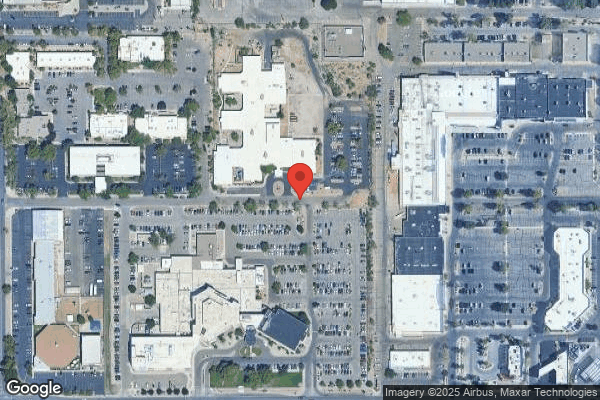
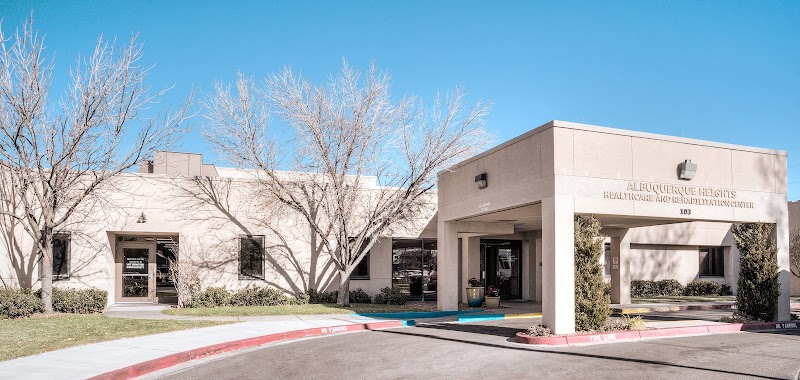
103 Hospital Loop NE, Albuquerque, NM 87109 (505) 348-8300
For profit - Corporation 134 Beds GENESIS HEALTHCARE Data: November 2025
Trust Grade
45/100
#24 of 67 in NM
Last Inspection: April 2025

Within standard 12-15 month inspection cycle. Federal law requires annual inspections.

Overview

Albuquerque Heights Healthcare and Rehabilitation has a Trust Grade of D, which means it is below average and raises some concerns about the quality of care provided. It ranks #24 out of 67 nursing homes in New Mexico, placing it in the top half, and #9 out of 18 in Bernalillo County, indicating there are only a few local options that are better. The facility is currently improving, having decreased from 27 issues in 2024 to 15 in 2025. Staffing is a strength, with a rating of 4 out of 5 stars and more RN coverage than 97% of state facilities, although the turnover rate is average at 56%. However, it has incurred $27,670 in fines, which is concerning and suggests some compliance issues. Specific incidents include a staff member being verbally and physically abusive to a resident with mental health challenges, as well as failures in food safety and preparation, which could potentially expose residents to foodborne illnesses. Overall, while there are strengths in staffing and improvement trends, the facility has notable weaknesses that families should consider.
Trust Score
D
45/100
In New Mexico
#24/67
Top 35%
Safety Record
Moderate
Needs review
Inspections
Getting Better
27 → 15 violations
Staff Stability
⚠ Watch
56% turnover. Above average. Higher turnover means staff may not know residents' routines.
Penalties
✓ Good
$27,670 in fines. Lower than most New Mexico facilities. Relatively clean record.
Skilled Nurses
✓ Good
Each resident gets 69 minutes of Registered Nurse (RN) attention daily — more than 97% of New Mexico nursing homes. RNs are the most trained staff who catch health problems before they become serious.
Violations
⚠ Watch
82 deficiencies on record. Higher than average. Multiple issues found across inspections.
★★★☆☆
3.0
Overall Rating
★★★★☆
4.0
Staff Levels
★★★★★
5.0
Care Quality
★★☆☆☆
2.0
Inspection Score
Stable
2024: 27 issues
2025: 15 issues

The Good

  • 4-Star Staffing Rating · Above-average nurse staffing levels
  • 5-Star Quality Measures · Strong clinical quality outcomes
  • Full Sprinkler Coverage · Fire safety systems throughout facility
  • No fines on record

Facility shows strength in staffing levels, quality measures, fire safety.

The Bad

3-Star Overall Rating

Near New Mexico average (2.9)

Meets federal standards, typical of most facilities

Staff Turnover: 56%

Near New Mexico avg (46%)

Frequent staff changes - ask about care continuity

Federal Fines: $27,670

Below median ($33,413)

Moderate penalties - review what triggered them

Chain: GENESIS HEALTHCARE

Part of a multi-facility chain

Ask about local staffing decisions and management

Staff turnover is elevated (56%)

8 points above New Mexico average of 48%

The Ugly 82 deficiencies on record

1 actual harm
Aug 2025 1 deficiency
CONCERN (D) 📢 Someone Reported This

A family member, employee, or ombudsman was alarmed enough to file a formal complaint

Potential for Harm - no one hurt, but risky conditions existed

Comprehensive Care Plan (Tag F0656)

Could have caused harm · This affected 1 resident

**NOTE- TERMS IN BRACKETS HAVE BEEN EDITED TO PROTECT CONFIDENTIALITY** Based on record review and interview, the facility failed to develop a comprehensive care plan that included interventions for t...

Read full inspector narrative →
**NOTE- TERMS IN BRACKETS HAVE BEEN EDITED TO PROTECT CONFIDENTIALITY** Based on record review and interview, the facility failed to develop a comprehensive care plan that included interventions for transfer assistance consistent with the resident's assessed needs and physician orders for 1 (R #4) of 1 (R #4) resident reviewed. If the facility fails to develop and implement a comprehensive care plan regarding a resident's transfer requirements, then staff may attempt unsafe transfer methods that increase the risk of falls, fractures, and other serious injuries. The findings are: A. Record review of the facility's Transfer and Lift policy, dated 03/01/24, stated residents requiring extensive or total assistance with transfers must be transferred using a mechanical lift with the assistance of two trained staff members. B. Record review of R #4's face sheet showed she was admitted to the facility on [DATE], diagnosis of muscle weakness. C. Record review of R #4's Minimum Data Set (MDS; a federally mandated assessment instrument completed by facility staff), dated 07/03/2025, revealed she was dependent for all activities of daily living (ADL; activities related to personal care such as bathing, showering, dressing, walking, toileting, and eating), including transfers, and required a mechanical lift with two staff members. D. Record review of R #4's physician orders, dated 07/03/2025, revealed an order for bed rest with every two hours with hourly turns every shift. The resident was permitted activity only as tolerated, with no independent transfers. E. Record review of R #4's care plan revealed the care plan did not contain documentation the resident required two staff members assistance or the use of a Hoyer/mechanical lift for transfers. F. On 08/14/2025 at 10:40 a.m., during an interview with the Administrator, she stated it was her expectation R #4's care plan should contain interventions addressing R #4's transfer needs, including two staff members assistance and mechanical lift use.
Jun 2025 2 deficiencies
CONCERN (E) 📢 Someone Reported This

A family member, employee, or ombudsman was alarmed enough to file a formal complaint

Potential for Harm - no one hurt, but risky conditions existed

Safe Environment (Tag F0584)

Could have caused harm · This affected multiple residents

Based on observation and interview, the facility failed to maintain a homelike environment when the facility did not have enough bath towels and face cloths for the residents. This deficient practice ...

Read full inspector narrative →
Based on observation and interview, the facility failed to maintain a homelike environment when the facility did not have enough bath towels and face cloths for the residents. This deficient practice could cause residents to miss a shower if there are not enough towels available. The findings are: A. On 06/09/25 at 10:55 am, during an interview, Certified Nursing Assistants (CNA) #15 stated the facility was always short on linens, such as sheets and towels. She stated there were times when they opened the linen storage closet, and there were not any linens at all. She stated she went to other units to get what they needed, but the other units did not have much either. B. On 06/09/25 at 11:22 am, during an interview, Family Member (FM) #1 stated she will try to clean up R #1, but there was often not any towels or facecloth for her to use. She stated the facility frequently did not have enough clean linens available. C. On 06/09/25 at 12:15 pm, during an interview, the Housekeeping Director (HD) stated they did not have enough linens. She stated the management staff ordered new towels and linens every month. The HD stated even though management ordered new items there still was not enough towels and linens for the residents. The HD stated the facility did not do their own laundry at the facility. She stated the laundry went to another facility for cleaning. The HD stated she wondered if they received back the same amount of linens that they sent out to have washed. D. On 06/09/25 at 12:25 pm, observation of the new linens available for resident use and in the supply area revealed several bags of new towels and one large bag of washcloths. E. On 06/09/25 at 1:30 pm, during an interview, the Administrator stated linen and towels were an ongoing issue. The Administrator stated she was aware they ran short on linens, and they received complaints about not having enough towels and linens. She stated they placed orders every month for new linens. The Administrator stated she was not sure why the deficit continued to occur, because she ordered new towels, sheets, and facecloths every month. F. On 06/10/25 at 7:45 am, during an interview, R #11 stated there were times when there were not any towels available for showers. R #11 stated the newer CNAs told residents they could not have a shower when there were not any towels available, but the other CNAs got a blanket to use as a towel. G. On 06/10/25 at 8:30 am, during an interview, CNA #8 stated the facility was usually short on towels when she came to work on Monday mornings. CNA #8 stated she went to other units to get towels if she needed. She stated the laundry came in around midday. H. On 06/10/25 at 8:45 am, during an interview, R #12 stated the facility was always short on linens and towels. She stated she missed a shower in the past, because towels were not available. I. On 06/10/25 at 9:30 am, during an interview, CNA #13 stated there were issues with towels and facecloths not available everyday. CNA #13 stated she postponed or did not give the shower to residents at all if there were not any towels available for the resident.
CONCERN (E) 📢 Someone Reported This

A family member, employee, or ombudsman was alarmed enough to file a formal complaint

Potential for Harm - no one hurt, but risky conditions existed

Medical Records (Tag F0842)

Could have caused harm · This affected multiple residents

Based on record review and interview, the facility failed to ensure resident records were complete when staff did not document the evening meal percentages for 9 (R #1, #2, #3, #4, #5, #6, #7, #8 and ...

Read full inspector narrative →
Based on record review and interview, the facility failed to ensure resident records were complete when staff did not document the evening meal percentages for 9 (R #1, #2, #3, #4, #5, #6, #7, #8 and #9) of 9 (R #1, #2, #3, #4, #5, #6, #7, #8 and #9) residents reviewed for meal intakes. This deficient practice could likely cause the Registered Dietician (RD) to not implement nutrition interventions if the meals were not documented for the RD's consideration during resident record reviews. The findings are: A. Record review of the meal intakes, dated 05/12/25 through 06/10/25 indicated staff did not document the evening meals for R #1, #2, #3, #4, #5, #6, #7, #8 and #9. B. On 06/10/25 at 7:21 am, during an interview, Registered Nurse #3 stated she was not sure which shift should document the dinner meal intakes. She stated the dinner meal trays were still coming out, and residents were still eating dinner during the staff shift change. She stated the dinner meal intake documentation should be done by the evening shift staff. C. On 06/10/25 at 7:28 am, during an interview, Registered Nurse #5 stated evening shift staff should document dinner meal intakes for the residents. D. On 06/10/25 at 7:36 am, during an interview, Certified Nursing Assistant (CNA) #1 stated her shift was from 6:00 am to 6:00 pm. CNA #1 stated staff usually served dinner trays between 5:15 pm to 6:00 pm. She stated residents were typically still eating when the night shift started working. CNA #1 stated night shift should document the evening meal percentages for the residents, since the residents were often still eating when shift change occurred. E. On 06/10/25 at 11:00 am, during an interview, the Registered Dietician (RD) stated she used information from all sources when she did the residents' quarterly nutrition assessment. She stated the residents' meal intakes percentages were a part of how she determined if residents should have an intervention in place. The RD stated she addressed staff not documenting the dinner meal intakes before, because the missing information could make it more challenging for her to do her resident nutritional assessments. F. On 06/10/25 at 11:20 am, during an interview, the Director of Nursing (DON) stated staff did not document the dinner meal percentages for the nine residents. The DON stated the dinner meal documentation was a compliance issue with the night CNAs. She stated the night shift should document the residents' dinner meal percentages.
Apr 2025 9 deficiencies
CONCERN (D)

Potential for Harm - no one hurt, but risky conditions existed

Deficiency F0742 (Tag F0742)

Could have caused harm · This affected 1 resident

**NOTE- TERMS IN BRACKETS HAVE BEEN EDITED TO PROTECT CONFIDENTIALITY** Based on record review and interview, the facility failed to provide mental health services for 1 (R #57) of 1 (R #57) resident ...

Read full inspector narrative →
**NOTE- TERMS IN BRACKETS HAVE BEEN EDITED TO PROTECT CONFIDENTIALITY** Based on record review and interview, the facility failed to provide mental health services for 1 (R #57) of 1 (R #57) resident after the resident witnessed his roommate unconscious and unresponsive as staff performed life saving procedures on the roommate. If residents are not provided with mental health services, then residents are likely to experience a decline in their psychosocial well-being. The findings are: A. Record review of R #33's face sheet revealed R #33 was admitted on [DATE] with a diagnosis of major depressive disorder. B. Record review of R #33's progress notes, dated [DATE], revealed R #33 was found unconscious in the bathroom of a suspected overdose of street drugs. R #33's son and R #57 (roommate) were in the room. Registered Nurse (RN) #1 and Physician Assistant (PA) performed cardiopulmonary resuscitation (CPR; full code, an emergency procedure that combines chest compression with artificial ventilation) on R #33. C. Record review of R #57's face sheet revealed R #57 was admitted on [DATE] with the following diagnoses: -Heart failure, -Unspecified hearing loss, bilateral (both ears.) D. Record review of R #57's progress notes, dated [DATE] through [DATE], revealed the record did not contain documentation a medical professional saw R #57 on the day of the incident, [DATE], or afterwards. Further review revealed staff did not document any information in R #57's record regarding the incident on [DATE]. E. On [DATE] at 10:00 AM during an interview, R #57 had difficulty hearing and did not respond. F. On [DATE] at 3:00 PM, during an interview with RN #1, she stated she received a call to assist in R #57's and R #33's room. She stated she found R #33 unconscious and unresponsive in the bathroom due to a suspected opioid overdose. She stated she and the PA entered the room and started CPR on R #33 RN #1 stated she saw R #57 sitting on his bed near the bathroom and watching the situation unfold. She stated staff escorted R #57 out of the room while RN #1, the PA, and Emergency Medical Services (EMS) conducted life-saving measures on R #33. RN #1 stated a nurse (unidentified) assessed R #57 and said he was fine. RN #1 stated she was unsure if a therapist saw R #57 after the incident. G. On [DATE] at 1:58 PM during an interview with the PA, she stated R #57 sat on the edge of his bed near the bathroom while she performed CPR on R #33, and R #57 was crying and scared. The PA stated a staff (unidentified) came and took R #57 out of the room. She stated she did not write a order for R #57 to see a psychiatric provider, but she should have written one. She stated R #57 was traumatized by what he saw, and a psychiatric provider should have evaluated him. H. On [DATE] at 2:15 PM during an interview with Social Services, he stated he was aware of the incident on [DATE] in R #57's room, but he failed to go and talk with R #57. He stated it was expected for a psychiatric professional to see R #57, because the experience was likely a traumatic experience for R #57. He stated it was probably necessary for R #57 to see someone to talk about what happened. He stated he did not do a referral for talk therapy for R #57. I. On [DATE] at 2:30 PM during an interview with the Administrator, she stated she was aware of the incident in R #33's and R #57's room on [DATE]. She stated R #57 could have benefited from support after the incident. She stated supportive services were provided to R #57. The Administrator stated Social Services should have seen R #57. She stated she also expected the resident to be seen by a psychiatric professional. The Administrator reviewed R #57's medical records for the month of February and stated she did not find any record of psychiatric services ordered for the resident.
CONCERN (D)

Potential for Harm - no one hurt, but risky conditions existed

Deficiency F0760 (Tag F0760)

Could have caused harm · This affected 1 resident

Based on record review and interview, the facility failed to discontinue a duplicate order of carvedilol (a blood pressure medication used to prevent high blood pressure and strokes in persons with he...

Read full inspector narrative →
Based on record review and interview, the facility failed to discontinue a duplicate order of carvedilol (a blood pressure medication used to prevent high blood pressure and strokes in persons with heart disease or hypertension) for 1 (R #61) of 1 (R #61) resident reviewed for unnecessary medications. This deficient practice is likely to result in a resident failing to obtain maximum wellness or suffering prolonged illness. The findings are: A. Record review of R #61's face sheet, undated, revealed an initial admission date of 01/03/24 and included the following diagnoses: - Cerebral infarction (stroke) due to embolism (obstruction in a blood vessel) of bilateral (both sides) middle cerebral (relating to the brain) arteries. - Paroxysmal (sudden occurrence or increase of symptoms) atrial fibrillation (Afib; a type of irregular heartbeat.) - Essential (primary) hypertension (high blood pressure.) B. Record review of R #61's Medication Administration Record (MAR), dated April 2025, revealed the following: - Start date 04/04/24, End date: None. Carvedilol tablet 3.125 milligrams (mg). Give 6.25 mg by mouth two times a day. - Start date 04/11/25, End date: None. Carvedilol oral tablet 6.25 mg. Give one tablet by mouth two times a day. - On 04/11/25, staff administered one dose of carvedilol 6.25 mg in the morning and two doses of carvedilol 6.25 mg in the evening. - On 04/12/25, staff administered one dose of carvedilol 6.25 mg in the morning and two doses of carvedilol 6.25 mg in the evening. - On 04/13/25, staff administered two doses of carvedilol 6.25 mg twice daily. - On 04/14/25, staff administered two doses of carvedilol 6.25 mg in the morning. C. Record review of the manufacturer's instructions for Coreg (name brand for carvedilol), undated, revealed the following: - Dosage hypertension: Start at 6.25 mg twice daily and increase if needed for blood pressure control to 12.5 mg, then 25 mg twice daily over intervals of 1 to 2 weeks. - Possible side effects include low blood pressure, which may cause dizziness or fainting when standing, tiredness, slow heartbeat, and changes in blood sugar. - Overdosage may cause severe hypotension, bradycardia, cardiac insufficiency, cardiogenic shock, and cardiac arrest. Respiratory problems, bronchospasms, vomiting, lapses of consciousness, and generalized seizures may also occur. D. On 04/15/25 at 1:58 p.m. 04/30/25 at 1:55 p.m., during an interview, the Practitioner Assistant (PA) stated R #61 had two orders for carvedilol, but there should only be one order. The PA stated the second order should have been discontinued when the new order was added. The PA stated administering too much carvedilol could lower blood pressure. E. On 04/15/25 at 2:18 p.m., during an interview, the Director of Nursing (DON) stated staff administered two doses of carvedilol on 04/11/25, 04/12/25, 04/13/25, 04/14/25, and 04/15/25. The DON stated an alert would pop up in the resident orders to alert the staff of duplicate orders. She stated orders are reviewed in the daily clinical meeting. She stated the nurse who entered the order was responsible for the medication. The DON stated the nurse who entered the order needed to call the provider to verify if the medication orders were correct. The DON said if there was a duplicate order, then the nurse who entered it would delete it after they verified it with the provider. F. On 04/30/25 at 2:01 p.m., during an interview, RN #1 stated she was responsible for the duplicate order. RN #1 stated she was multitasking at the time and did not remember seeing the error message for the duplicate order.
CONCERN (D) 📢 Someone Reported This

A family member, employee, or ombudsman was alarmed enough to file a formal complaint

Potential for Harm - no one hurt, but risky conditions existed

Deficiency F0761 (Tag F0761)

Could have caused harm · This affected 1 resident

Based on observation and interview, the facility failed to protect a treatment cart (a movable piece of equipment used in healthcare facilities to store, transport, and dispense treatment supplies and...

Read full inspector narrative →
Based on observation and interview, the facility failed to protect a treatment cart (a movable piece of equipment used in healthcare facilities to store, transport, and dispense treatment supplies and tools) from unauthorized access when staff failed to lock the treatment carts while staff were away from the cart. This failure had the potential to affect all 48 residents on the 300 Unit, as identified by the Resident Census provided by the Administrator on 04/07/25. If staff fail to lock an unsupervised treatment cart, then residents could obtain medial equipment which could result in injury or death. The findings are: A. On 04/07/25 at 11:50 AM, during an observation of the 300 Unit, the intravenous (IV; in the vein) treatment cart was unlocked and opened. Further observations revealed the cart had sterile needles and intravenous catheters (a thin, flexible tube inserted into a vein to deliver fluids). Staff were not present in the area near the cart. B. On 04/07/25 at 11:55 AM, during an interview, Registered Nurse (RN) #1 stated the IV treatment cart was unlocked and opened. She said the treatment cart should be locked when the cart was not in use. C. On 04/15/25 at 2:15 PM, during an interview, Director of Nursing (DON) stated staff should never leave the IV treatment carts unlocked while unattended.
CONCERN (D)

Potential for Harm - no one hurt, but risky conditions existed

Deficiency F0804 (Tag F0804)

Could have caused harm · This affected 1 resident

Based on observation and interview, the facility failed to serve a meal that had been at a palatable temperature for 1 (R #177) of 1 (R #177) resident when staff left the resident's lunch tray on the ...

Read full inspector narrative →
Based on observation and interview, the facility failed to serve a meal that had been at a palatable temperature for 1 (R #177) of 1 (R #177) resident when staff left the resident's lunch tray on the bedside table while the resident was at dialysis. This deficient practice could cause a resident to not eat her lunch and could cause weight loss. The findings are: Cross referenced to F658 A. Record review of R #177's face sheet revealed the resident was admitted to the facility 03/19/25 with the following diagnoses: - Non-st elevation (NSTEMI) myocardial infarction (a heart attack that happens when a part of the heart is not getting enough oxygen), - Congestive heart failure (the heart cannot supply enough blood to meet the body's needs), - Ischemic cardiomyopathy (a type of heart failure caused by low blood flow to the heart muscle), - Type II diabetes (means that your body does not use insulin properly), - End stage renal disease (kidneys reach advanced state of loss of function), - Dependence on renal dialysis (a blood purifying treatment given when kidney function is not optimum.) B. On 04/07/25 at 9:36 am, during an interview with R #177, she stated her lunch tray was on her bedside table when she got back to her room after dialysis, and she ate the lunch trays when she got back. She stated she typically got back to the facility between 2:00 pm and 3:00 pm. She stated she did not ask staff to heat up her meal. R #177 stated she was hungry when she got back to the facility. She stated she asked staff to heat up her lunch meal, but they did not warm it up. C. On 04/07/25 at 12:45 pm, during an observation, staff delivered a meal tray to R #177's room and left the tray on the bedside table. Further observation revealed R #177 was at dialysis. D. On 04/07/25 at 1:14 pm, 2:18 pm, and 3:34 pm, during an observation, R #177's lunch tray sat on the bedside table. The lunch tray consisted of a tamale and black beans. E. On 04/07/25 at 3:37 pm, during an observation, R #177 ate her lunch of tamale and black beans. An unidentified Certified Nursing Assistant (CNA) took the tray away from the resident and stated the food was more than two hours old. F. On 04/11/25 at 11:09 am, during an interview with Nurse #10, she stated staff left a lunch tray for R #177 on her bedside table so she could eat it when she returned from dialysis. Nurse #10 stated R #177 liked having the tray available to eat when she returned. She stated they offered to heat it up for her. She could not say how long the meal tray sat out before R #177 ate it. G. On 04/11/25 at 11:17 am, during an interview with the Dietary Manager (DM), he stated he would not expect staff to leave a meal tray on the resident's bedside table if the resident was at dialysis. He stated he expected staff to bring the meal tray back to the kitchen and save it for the resident. He stated staff could also have something else available for the resident to eat when they returned from dialysis.
CONCERN (E)

Potential for Harm - no one hurt, but risky conditions existed

Assessment Accuracy (Tag F0641)

Could have caused harm · This affected multiple residents

**NOTE- TERMS IN BRACKETS HAVE BEEN EDITED TO PROTECT CONFIDENTIALITY** Based on record review and interview, the facility failed to ensure the Minimum Data Set (MDS; a federally mandated comprehensiv...

Read full inspector narrative →
**NOTE- TERMS IN BRACKETS HAVE BEEN EDITED TO PROTECT CONFIDENTIALITY** Based on record review and interview, the facility failed to ensure the Minimum Data Set (MDS; a federally mandated comprehensive assessment of a resident's functional, medical, psychosocial and cognitive assessment completed by facility staff) was accurate for 1 (R #61) of 1 (R #61) resident reviewed for MDS assessments. This deficient practice could result in failure to provide adequate care and treatment of the resident's needs. The findings are: Cognition A. Record review of R #61's face sheet revealed an admission date of 01/03/24 and included the following diagnoses: - Dementia (a group of conditions characterized by impairment of at least two brain functions, such as memory loss and judgement.) - Other symptoms and signs involving cognitive function and awareness. This is not an all inclusive list. B. Record review of R #61's MDS, dated [DATE], revealed the following: - Brief Interview for Mental Status (BIMS; screening for cognitive impairment) was not completed due to resident was rarely or never understood. - Cognitive skills for daily decision making: Severely impaired decision making. - Evidence of an acute change in mental status from resident's baseline: No. - Hearing, speech, and vision: Usually understands and usually understood. C. Record review of R #61's MDS, dated [DATE], revealed the following: - BIMS was not completed due to resident was rarely or never understood. - Cognitive skills for daily decision making: Moderately impaired, decisions poor, cues/supervision required. - Evidence of an acute change in mental status from resident's baseline: No. - Hearing, speech, and vision: Rarely/never understands and rarely/never understood. D. Record review of R #61's MDS, dated [DATE], revealed the following: - BIMS score of 2, moderately impaired. - Cognitive skills for daily decision making: Staff did not complete. - Evidence of an acute change in mental status from resident's baseline: No. - Hearing, speech, and vision: Understands and understood. E. Record review of R #61's progress note, dated 01/31/25, and completed by the Physician Assistant, revealed the resident was unable to give any meaningful history or to answer appropriate questions during visit. General: Alert and awake. Oriented to self (knows who they are.) F. On 04/15/25 at 3:15 pm, during an interview, the MDS Coordinator stated R #61's MDS was coded incorrectly for making self-understood and understanding others. Behaviors G. Record review of R #61's annual MDS, dated [DATE], revealed the resident did not exhibit behaviors. H. Record Review R #61's Progress Notes revealed the following: -Dated 03/16/25, R #61 yelled and screamed at others. -Dated 03/19/25, R #61 yelled, cursed, and screamed. -Dated 04/02/25, R #61 yelled, cursed, and disrupted others. -Dated 04/03/25, R # 61 yelled and cursed. -Dated 04/03/25, R # 61 yelled and cursed. -Dated 04/03/25, R #61 yelled repetitively and cursed. -Dated 04/04/25, R #61 yelled loudly and said she wanted to go to bed. -Dated 04/08/25, R #61 yelled, cursed, and screamed. -Dated 04/08/25, R #61 yelled, cursed, and screamed. -Dated 04/08/25, R #61 yelled, cursed, and screamed. I. On 04/14/25 at 1:48 pm, during an interview with the Dementia Program Director, she stated R #61 had behaviors weekly. J. On 04/15/25 at 3:15 pm, during an interview with the MDS Coordinator, she stated R #61's MDS was coded incorrectly for behavioral symptoms. The MDS Coordinator stated R #61's MDS should indicate R #61 had behaviors. MDS Coordinator stated the resident's progress notes showed staff recorded R #61's behavior almost every other day. The MDS Coordinator stated she screened resident MDS's for accuracy. MDS Coordinator stated R #61's MDS appeared to contradict the information in the resident's record. MDS Coordinator stated the staff who completed the information in the MDS should follow-up on discrepancies for a more accurate representation of the resident. The MDS Coordinator reviewed R #61's record and stated she saw discrepancies.
CONCERN (E)

Potential for Harm - no one hurt, but risky conditions existed

Deficiency F0658 (Tag F0658)

Could have caused harm · This affected multiple residents

Based on observation, interview, and record review, the facility failed to provide a light meal or a snack for 1 (R #177) of 1 (R #177) before the resident left the facility to go to dialysis (a medic...

Read full inspector narrative →
Based on observation, interview, and record review, the facility failed to provide a light meal or a snack for 1 (R #177) of 1 (R #177) before the resident left the facility to go to dialysis (a medical treatment which filters waste and excess fluid from the blood.) This deficient practice could potentially cause prolonged recovery time for the resident after dialysis. The findings are: A. Record review of the facility's Dialysis Policy, last revised on 08/07/23, revealed nutritional/fluid management included the provision of meals before, during, and after hemodialysis (dialysis) and monitoring intake and output measurements as ordered. B. Record review of R #177's face sheet revealed the resident was admitted to the facility 03/19/25, with the following diagnoses: - Non-st elevation (NSTEMI) myocardial infarction (a heart attack that happens when a part of the heart is not getting enough oxygen), - Congestive heart failure (the heart cannot supply enough blood to meet the body's needs), - Ischemic cardiomyopathy (a type of heart failure caused by low blood flow to the heart muscle), - Type II diabetes (means that your body does not use insulin properly), - End stage renal disease (kidneys reach advanced state of loss of function), - Dependence on renal dialysis (a blood purifying treatment given when kidney function is not optimum.) C. On 04/07/25 at 9:36 am, during an interview with R #177, she stated she lived at the facility for awhile, and staff have not offered her anything to eat before dialysis. She stated she usually had to wait to eat until she came back sometime after lunch. She stated her lunch tray was always on her table when she came back from dialysis, and she ate that when she returned. D. On 04/07/25 at 9:45 am, during an interview with Certified Nursing Assistant (CNA) #8, she stated that she did not offer R #177 snacks or lunch, because R #177 left for dialysis right after breakfast. CNA #8 stated the resident would not need a snack or lunch. E. On 04/09/25 at 9:48 am, during an observation, staff propelled R #177 in her wheelchair to the transport van for dialysis. The resident did not have a snack or lunch with her. F. On 04/09/25 at 9:50 am, during an interview with R #177, she stated staff did not offer her a snack or a lunch before she left for dialysis. G. On 04/11/25 at 11:07 am, during an interview with CNA #9 she stated she did not offer a snack to the residents going to dialysis. H. On 04/11/25 at 11:09 am, during an interview with Nurse #10, she stated all staff were responsible to make sure dialysis residents received a snack or lunch before the resident left for dialysis. She stated if there was not something already prepared in the refrigerator for the dialysis residents, then someone should go down to the kitchen to get something. I. On 04/11/25 at 11:17 am, during an interview with the Dietary Manager (DM), he stated they had a list of residents who went to dialysis, and they made them sack lunches or snacks. He stated it depended on what time the resident went to dialysis whether they received breakfast and were back by lunch, or they left later in the morning and they needed a sack lunch. He stated they had five or six residents who were on dialysis. J. On 04/11/25 at 1:29 pm, during an interview with the Director of Nursing (DON), she stated it was expected for staff to offer all dialysis residents a snack or a lunch depending on their dialysis times. The DON stated she was unaware staff did not offer snacks or lunch to residents going to dialysis.
CONCERN (E)

Potential for Harm - no one hurt, but risky conditions existed

ADL Care (Tag F0677)

Could have caused harm · This affected multiple residents

**NOTE- TERMS IN BRACKETS HAVE BEEN EDITED TO PROTECT CONFIDENTIALITY** Based on record review and interview, the facility failed to provide activities of daily living (ADL; activities related to pers...

Read full inspector narrative →
**NOTE- TERMS IN BRACKETS HAVE BEEN EDITED TO PROTECT CONFIDENTIALITY** Based on record review and interview, the facility failed to provide activities of daily living (ADL; activities related to personal care such as bathing, showering, dressing, walking, toileting, and eating) assistance for baths and showers for 2 (R #6 and #38) of 2 (R #6 and #38) residents sampled for ADLs when staff failed to: 1) Change R #6's soiled brief prior to assisting him to bed. 2) Clean and change R #38's ileostomy (a surgically made opening that connects your small intestine to your abdominal wall) bag. These deficient practices could likely result in residents being at a higher risk for infection and to feel unimportant, embarrassed and undignified. The findings are: R#6 A. Record review of R #6's face sheet, dated 07/23/24, revealed an initial admission date of 03/25/24. B. Record review of R #6's Minimum Data Set (MDS; a federally mandated assessment instrument completed by facility staff), dated 03/22/25, indicated R #6 required substantial staff assistance for toileting hygiene. C. Record review of R #6's care plan, dated 04/01/25, revealed the following: - Focus: R #6 required assistance from staff for ADL care in bathing, grooming, personal hygiene, dressing, eating, bed mobility, transfer, locomotion, and toileting related to limited mobility and weakness. - Goal: Resident's ADL care needs will be anticipated and met throughout the next review period. D. On 04/08/25 at 12:10 pm during an observation, R #6 appeared unclean and disheveled (untidy and disordered.) He lay in bed dressed in a hospital gown, his hair was greasy, and his beard had food crumbs throughout it. E. On 04/08/25 at 12:12 pm during an interview, R #6 stated he frequently went to bed with dirty brief. He stated he was not sure how often he went to bed with a dirty brief, but it happened a lot. R #38 F. Record review of R #38's face sheet, dated 01/22/25, revealed an initial admission date of 12/14/24 with a diagnosis of colostomy (a surgically made opening that connects your small intestine to your abdominal wall.) G. Record review of R #38's MDS, dated [DATE], indicated R #38 required partial staff assistance for toileting hygiene or management of an ostomy (allows bodily waste to pass through an opening on the abdomen into a bag), to include wiping the opening. H. Record review of R #38's care plan, dated 04/01/25, revealed the following: - Focus: R #38 required assistance from staff for ADL care. - Goal: Resident's ADL care needs will be anticipated and met throughout the next review period. I. On 04/08/25 at 12:23 pm during an observation, R #38 was dressed in a soiled hospital gown with feces on it, and his ileostomy bag leaked at the base (where it connected at the abdomen). He stated his gown was soiled since last night. He stated staff come in to his room, tell him they will be right back to change him, and never return. R #38 stated his colostomy bag leaked at the base, and it took a long time for staff to answer the call light. He stated he waited to be changed since early in the morning. J. On 04/08/25 at 12:42 pm during an interview, an Anonymous Certified Nursing Aide (ACNA) stated often there were not enough Certified Nursing Aides (CNAs) working, and it sometimes took a while to get to residents who needed hygiene care. ACNA stated R #6 and R #38 required assistance with personal hygiene.
CONCERN (E) 📢 Someone Reported This

A family member, employee, or ombudsman was alarmed enough to file a formal complaint

Potential for Harm - no one hurt, but risky conditions existed

Deficiency F0777 (Tag F0777)

Could have caused harm · This affected multiple residents

Based on interview and record review, the facility failed to promptly notify the ordering provider of critical laboratory results for 1 (R #180) of 1 (R #180) resident reviewed for change in condition...

Read full inspector narrative →
Based on interview and record review, the facility failed to promptly notify the ordering provider of critical laboratory results for 1 (R #180) of 1 (R #180) resident reviewed for change in condition. This deficient practice could cause a delay in treatment, creating a potential for harm or death to the resident. The findings are: A, Record review of R #180's face sheet revealed an admission date of 02/27/25 with the following diagnoses: - Hepatitis C (inflammation of the liver), - Type II diabetes mellitus (DM2, a condition which results from insufficient production of insulin, causing high blood sugar), - Angina pectoris (a type of chest pain caused by reduced blood flow to the heart) with presence of aortocornonary bypass graft (heart bypass surgery; a procedure to restore blood flow to areas of your heart), - Right foot amputation (loss of foot), - Stage 4 severe chronic kidney disease (severe loss of kidney function), - Staphylococcus (bacteria that causes infection) - Psoas muscle (located in the pelvic area) abscess (collection of puss due to an infection.) B. Record review of R #180's lab results, ordered and collected on 03/07/25, revealed the following: - On 03/08/25, some of the lab work came back as critical (Critical lab work results indicate a life-threatening condition and require immediate notification to the responsible healthcare provider for prompt action). - On 03/08/25 at 3:58 am, the lab called the facility, but staff did not answer. - On 03/08/25 at 4:34 am, the lab called the facility, but staff did not answer. - On 03/08/25 at 5:07 am, the lab called the facility, but staff did not answer. - A note, dated 03/08/25, directed staff to call the lab, Please call the lab regarding critical lab values. Unable to reach facility upon numerous attempts made. C. Record review of R #180's lab results, ordered and collected on 03/14/25, revealed the following: - On 03/15/25, some of the lab work that was completed came back as critical. - On 03/15/25 at 3:27 am, the lab called the facility, but staff did not answer. - On 03/15/25 at 4:11 am, the lab called the facility, but staff did not answer. - On 03/15/25 at 4:49 am, the lab called the facility, but staff did not answer. - A note dated, 03/15/25, on the lab work directed staff to call the lab, Please call the lab regarding critical lab values. Unable to reach facility upon numerous attempts made. D. Record review of R #180's medical record revealed staff did not document they called the lab back on 03/08/25 or 03/15/25. E. On 04/08/25 at 9:30 am during an interview with the Nurse #10, she stated when she came on shift on 03/15/25 at 6:00 am, she did not know labs were drawn the day before. She stated no one passed the information down to her when she came on shift. She stated the nurse that entered the order and called the lab should have passed down the information. She stated she found out about the labs because R #180's wife told her about them. Nurse #10 stated she went to R #180's medical chart and saw the resident's lab was critical and out of range. She stated she was relieved R #180's wife said something to her, because the resident needed to be go the hospital immediately. Nurse #10 stated the process for getting information like lab work was not very good. She stated she did not have the information she needed, because she did not receive the information from the night shift nurse during the shift change report. She stated the information should be passed down in report at shift change. She stated if the shift did not have the information, then they could not pass it down to the oncoming shift. She stated the night shift nurse would not have any information regarding lab work to report to her since they missed the lab's phone calls. E. On 04/11/25 at 8:58 am, during an interview with the Director of Nursing (DON), she stated the facility received a lot of complaints about family or providers unable to reach staff when they called the facility. She stated the facility did not have a message system, and callers were not able to leave a message. The DON stated the lab would immediately call the facility if a resident had critical lab results. The DON stated it was expected for staff to get critical labs to the provider as soon as possible, preferably the same day.
CONCERN (E)

Potential for Harm - no one hurt, but risky conditions existed

Safe Environment (Tag F0921)

Could have caused harm · This affected multiple residents

**NOTE- TERMS IN BRACKETS HAVE BEEN EDITED TO PROTECT CONFIDENTIALITY** Based on observation and interview, the facility failed to ensure residents had a safe and functional environment for resident r...

Read full inspector narrative →
**NOTE- TERMS IN BRACKETS HAVE BEEN EDITED TO PROTECT CONFIDENTIALITY** Based on observation and interview, the facility failed to ensure residents had a safe and functional environment for resident rooms 205, 206, 207, 208, 211, and 213 when staff failed to: 1) Replace a broken plastic disposable glove holder in room [ROOM NUMBER] and 208. 2) Repair ripped flooring near a resident bed in room [ROOM NUMBER]. 3) Repair the hand rail end piece outside of room [ROOM NUMBER]. 4) Repair or replace a broken closet, a broken dresser, missing dresser drawer, broken blinds, and ripped flooring near the resident's bed in room [ROOM NUMBER]. 5) Maintain the shower in room [ROOM NUMBER] free of the storage of random items. 6) Replace broken blinds, cleaning a wall, and ensuring the room was free from a pungent (strong) urine odor in room [ROOM NUMBER]. This deficient practice could likely result in residents living in an unsafe environment, could increase their risk for injuries, and decrease their quality of life. The findings are: A. On 04/08/25 at 11:20 am, observation of resident room [ROOM NUMBER] revealed a broken glove holder on the wall, a broken thermostat, and a broken dresser drawer. B. On 04/08/25 at 11:26 am, observation of resident room [ROOM NUMBER] revealed an wardrobe with a broken door and a missing bottom drawer, broken blinds, and ripped flooring. Further observations revealed large foam pads and cushions stored in shower. C. On 04/08/25 at 11:28 am, observation of resident room [ROOM NUMBER] revealed the hand rail, directly outside the resident entry door, was missing the end piece. Further observation revealed sharp edges exposed. D. On 04/08/25 at 11:31 am, observation of resident room [ROOM NUMBER] revealed ripped flooring by bed A. E. On 04/08/25 at 11:34 am, observation of resident #213 revealed broken blinds; a green gum-like substance on the wall in several spots by bed B, and a strong urine odor. F. On 04/09/25 at 9:53 am, observation of the Memory Care Unit revealed the following: - Ceiling vents throughout entire unit were filthy dust build-up. - Light covering in the hallway by resident room [ROOM NUMBER] was broken and missing a piece of plastic. - Ceiling tiles near the nurses station had brown spots splattered on them. - A gap around the sprinkler head on the ceiling near the exit door. G. On 04/11/25 at 3:25 pm during an interview, the Maintenance Director stated it was the responsibility of the Certified Nurse Aides (CNAs) and the nurses to submit work order requests through their electronic system. He stated he was currently the only maintenance person. H. On 04/14/25 at 2:23 pm during an interview, the Director of the Memory Unit verified the environmental and safety concerns and stated these concerns should be repaired.
Jan 2025 3 deficiencies
CONCERN (D) 📢 Someone Reported This

A family member, employee, or ombudsman was alarmed enough to file a formal complaint

Potential for Harm - no one hurt, but risky conditions existed

Assessment Accuracy (Tag F0641)

Could have caused harm · This affected 1 resident

**NOTE- TERMS IN BRACKETS HAVE BEEN EDITED TO PROTECT CONFIDENTIALITY** Based on record review and interview, the facility failed to ensure the Minimum Data Set (MDS; a federally mandated assessment i...

Read full inspector narrative →
**NOTE- TERMS IN BRACKETS HAVE BEEN EDITED TO PROTECT CONFIDENTIALITY** Based on record review and interview, the facility failed to ensure the Minimum Data Set (MDS; a federally mandated assessment instrument completed by facility staff) was accurate for 1 (R #10) of 1 (R #10) resident when the MDS Nurse did not document the decline in R #10's weight to reflect R #10's status at the time of the assessment. This deficient practice is likely to result in R #10 not receiving the appropriate care and treatment she needs. The findings are: A. Record review of R #10's Comprehensive admission MDS, dated [DATE], revealed the MDS nurse documented R #10's weight as 180 pounds. B. Record review of R #10's discharge MDS, dated [DATE], revealed the MDS nurse documented the following: - R #10's weight as 163 pounds. - R #10 did not have a weight loss of 5 percent (%) or more in the last month. - R #10 did not have a weight loss of 10% or more in last 6 months. C. Record review of R #10's weight assessments revealed staff documented the following: - On 09/07/24, R #10 weighed 180.2 pounds. - On 10/01/24, R #10 weighed 162.6 pounds. - Additional weight assessments were not recorded (while in fact R #10 lost 10% of her weight in the last 30 days prior to the discharge MDS assessment). D. On 01/13/25 at 3:00 pm, during an interview with the MDS Nurse, she stated R #10 lost more than 5% of her weight in the last 30 days prior to the discharge MDS assessment, and she should have documented that on R #10's discharge MDS.
CONCERN (D) 📢 Someone Reported This

A family member, employee, or ombudsman was alarmed enough to file a formal complaint

Potential for Harm - no one hurt, but risky conditions existed

Deficiency F0692 (Tag F0692)

Could have caused harm · This affected 1 resident

Based on interviews and record review, the facility failed to identify a resident at nutritional risk or address the risk factors for impaired nutritional status for 1(R #10) of 1(R #10) resident. Whe...

Read full inspector narrative →
Based on interviews and record review, the facility failed to identify a resident at nutritional risk or address the risk factors for impaired nutritional status for 1(R #10) of 1(R #10) resident. When the facility's staff failed to weigh R #10 weekly or when ordered by the facility's provider. This deficient practice could likely lead to the resident to suffer from unplanned weight loss. The findings are: A. Record review of R #10's facesheet dated 09/07/24, revealed the following: -R #10's admission date to the facility was 09/07/24. -R #10's discharge date to an assisted living facility (ALF) was 10/03/24. B. Record review of R #10's care plan dated 09/07/24, revealed Nurse #1 recorded R #10 was at nutritional risk for weight loss. C. Record review of R #10's provider's progress notes dated 09/26/24, revealed the following: 1. R #10 had a poor appetite and there was some concerns for possible weight loss. 2. R #10 had the following diagnoses: - Wedge compression fracture of second lumbar vertebra (a fracture in the spine), - Poor appetite, - Confusion (a decline in cognitive ability, ability to think, learn and understand), - Legally blind (when a person's vision is so poor that they can't see well enough to drive or perform other daily tasks). D. Record review of R #10's provider order sheet, dated 09/16/24, revealed the following: - An order to reweigh R #10 one time, upon R #10's daughter's request. - Additional orders to weigh R #10 were not recorded. E. Record review of R #10's weight assessments revealed staff documented the following: - On 09/07/24, R #10 weighed 180.2 pounds. - Staff did not document a weight for the week of 09/16/24. - On 10/01/24, R #10 weighed 162.6 pounds. - Additional weight assessments were not recorded. F. On 01/13/25 at 3:00 pm, during an interview with the Minimum Data Set (MDS; a federally mandated assessment instrument completed by facility staff) Nurse, she stated R #10 lost more than 5% of her weight in the last 30 days prior to the discharge MDS assessment, and she should have documented that on R #10's discharge MDS. G. On 01/14/25 at 11:23 am, during an interview with R #10's daughter, she stated that no one would weigh her mom when she called requesting that. The facility's staff always said they were busy to weigh her. She stated that when she called they always gave her the old weight they took when R #10 was admitted . She stated taking her weight was never done. She stated R #10's weight at the ALF was in the 140's and she knew R #10 did lose weight, because her mother called her multiple times during her stay at the facility and complained of not eating well due to her multiple food allergies and her food preferences that staff did not honor. H. On 01/14/25 at 2:45 pm, during an interview, the 100 Hall Nurse Manager stated she expected staff to weigh R #10 per provider's order dated 09/16/24 and weekly on Sundays, as scheduled. I. On 01/14/25 at 3:45 pm, during an interview with the facility's dietician, stated R #10 reported not eating well due to her multiple food allergies and food preferences. She stated she added snacks on R #10's meal ticket, R #10 had a poor appetite and she agreed to have snacks to supplement her short list of food preferences. The dietician stated nurses did not made her aware of R #10 weight loss and she expected staff to make her aware of R #10's weight loss.
CONCERN (E) 📢 Someone Reported This

A family member, employee, or ombudsman was alarmed enough to file a formal complaint

Potential for Harm - no one hurt, but risky conditions existed

Deficiency F0698 (Tag F0698)

Could have caused harm · This affected multiple residents

Based on record review and interview, the facility failed to ensure ongoing communication and collaboration with the dialysis (clinical purification of blood as a substitute for the normal function of...

Read full inspector narrative →
Based on record review and interview, the facility failed to ensure ongoing communication and collaboration with the dialysis (clinical purification of blood as a substitute for the normal function of the kidney) facility regarding dialysis care and failed to monitor the resident before and after dialysis treatment for 2 (R #1 and R #2) of 2 (R #1 and R #2) residents reviewed for dialysis care. These deficient practices could likely result in the facility being unaware of the resident's condition, possible complications that arise during dialysis treatment, and residents may not receive the appropriate monitoring and care. The findings are: R #1: A. Record review of R #1's face sheet revealed an initial admission date of 07/24/24 with a diagnosis of end stage renal disease (ESRD; chronic irreversible kidney failure). B. Record review of R #1's physician orders revealed an order, revision date 10/30/24, for dialysis on Tuesdays, Thursdays, and Saturdays at 06:00 A.M. C. Record review of R #1'S Electronic Medical Record (EMR) revealed: 1. Dialysis Communication Record, dated 09/04/24, the facility completed pre-dialysis information, and the dialysis center completed the dialysis information. The form did not include any post dialysis information, monitoring, or assessments. 2. Dialysis Communication Record, dated 09/17/24, the facility completed pre-dialysis information, and the dialysis center completed the dialysis information. The form did not include any post dialysis information, monitoring, or assessments. 3. Dialysis Communication Record, dated 10/03/24, the facility completed pre-dialysis information, and the dialysis center completed the dialysis information. The form did not include any post dialysis information, monitoring, or assessments. 4. Dialysis Communication Record, dated 10/08/24, the facility completed pre-dialysis information, and the dialysis center completed the dialysis information. The form did not include any post dialysis information, monitoring, or assessments. 5. Dialysis Communication Record, dated 10/24/24, the facility completed pre-dialysis information, and the dialysis center completed the dialysis information. The form did not include any post dialysis information, monitoring, or assessments. 6. Dialysis Communication Record, dated 09/18/24, the facility completed pre-dialysis information, and the dialysis center completed the dialysis information. The form did not include any post dialysis information, monitoring, or assessments. D. Record review of R #1 progress note on 01/16/25 revealed, the note did not contain any documentation of post-dialysis information. R #2 E. Record review of R #2's face sheet revealed an initial admission date of 12/20/23 with a diagnosis of ESRD. F. Record review of R #2 's physician orders revealed an order, revision date 10/17/24, for dialysis on Tuesdays, Thursdays, and Saturdays at 07:00 A.M. G. Record review of R #2's EMR revealed: 1. Dialysis Communication Record, dated 10/12/24, the facility completed pre-dialysis information, and the dialysis center completed the dialysis information. The form did not include any post dialysis information, monitoring, or assessments. 2. Dialysis Communication Record, dated 10/15/24, the facility completed pre-dialysis information, and the dialysis center completed the dialysis information. The form did not include any post dialysis information, monitoring, or assessments. 3. Dialysis Communication Record, dated 10/31/24, the facility completed pre-dialysis information, and the dialysis center completed the dialysis information. The form did not include any post dialysis information, monitoring, or assessments. 4. Dialysis Communication Record, dated 11/05/24, the facility completed pre-dialysis information, and the dialysis center completed the dialysis information. The form did not include any post dialysis information, monitoring, or assessments. H. Record review of R #2 progress notes on 01/16/25 revealed the note did not contain any documentation of post-dialysis information. I. On 01/16/25 at 12:30 PM, during an interview, the Director of Nursing (DON) stated the nurse assigned to the resident was required to complete the dialysis communication sheets daily for proper documentation. The DON confirmed the dialysis communication sheets were not filled out on the specified dates, but it was expected for nurse to complete them.
Aug 2024 7 deficiencies 1 Harm
SERIOUS (G) 📢 Someone Reported This

A family member, employee, or ombudsman was alarmed enough to file a formal complaint

Actual Harm - a resident was hurt due to facility failures

Free from Abuse/Neglect (Tag F0600)

A resident was harmed · This affected 1 resident

Based on interview and record review, the facility failed to keep a resident free from abuse for 1 (R #2) of 3 (R #2) residents reviewed for abuse when Certified Nurse Aide (CNA) was verbally and phys...

Read full inspector narrative →
Based on interview and record review, the facility failed to keep a resident free from abuse for 1 (R #2) of 3 (R #2) residents reviewed for abuse when Certified Nurse Aide (CNA) was verbally and physically abusive to R #2 when providing care. This deficient practice likely resulted in emotional distress and trauma for R #2. The findings are: A. Record review of the face sheet for R #2 revealed the following: - Schizophrenia (mental health disorder that affects an individual's ability to think, feel, and behave clearly), - Alzheimer's disease (a group of symptoms that affects memory, thinking and interferes with daily life), - Disruptive mood dysregulation disorder (causes chronic, intense irritability and frequent angry outbursts), - Cognitive communication deficit (communication difficulty), - Anxiety, - Depression, - Metabolic encephalopathy (change in how your brain works due to an underlying condition). - This is not an all inclusive list. - R #2 was initially admitted to the facility in 01/09/18. B. On 08/23/24 at 1:23 pm, during an interview with R #2, she stated she remembered CNA #5 yelled at her and pulled her hair. She stated she felt scared, like she was in trouble. She stated she felt fine now because no one was pulling her hair. C. Record review of the care plan for R #2, last revised on 03/11/22, indicated she had the potential to demonstrate verbal behaviors related to cognitive loss/dementia, schizophrenia, anxiety, history of verbal outbursts directed toward others, pseudobulbar affect (a neurological condition that causes people to have sudden, uncontrollable, and inappropriate episodes of abusive language, challenging or confrontational verbal behavior, hitting, scratching, resisting care.) D. On 08/21/24 at 3:42 pm, during an interview with CNA #6, she stated she was asked to work a few hours on the evening/night shift on 06/01/24 and she did. She stated CNA #5 asked her to assist with putting residents to bed during the evening/night shift. CNA #6 stated when they started to take R #2 to bed, the resident became upset and started to yell things like fuck you, bitch and whore. CNA #6 stated CNA #5 yelled back at R #2, and that made R #2's behaviors worse. CNA #6 stated when they got to R #2's room, she (CNA #6) went around to the far side of the resident's bed so she could control the bed. CNA #6 stated she heard a smack at one point and saw CNA #5 pulling away from R #2's knee. She stated she did not see CNA #5 hit R #2, but she saw CNA #5's hand pulling away and heard the noise of a smack. CNA #6 stated R #2 and CNA #5 continued to yell at each other, and she heard CNA #5 yell I hate you, too and Fuck you, too. CNA #6 stated she saw R #2 swing at CNA #5. CNA #6 stated she came around the bed to help with the resident, and she saw CNA #5 pulling R #2's hair. She stated CNA #5 had a fist full of the resident's hair and was pulling it straight up towards the ceiling. She said R #2 was screaming. CNA #6 stated she could not believe it. CNA #6 said she did not say anything to CNA #5 at this time, she felt like it would escalate the situation and just wanted to go and report it. CNA #6 stated she tried to make sure R #2 was safe in bed before she left the room. CNA #6 said she was going to leave the room, but CNA #5 told her to raise up the resident's bed. CNA #6 stated she turned around to grab the bed remote, and CNA #5 cussed at R #2. CNA #6 stated she witnessed CNA #5 put both hands on R #2's arms and pushed her down on the bed. She stated CNA #5 yelled, I fucking hate you. CNA #6 stated she immediately left the room, went and reported it to the nurse. She stated the nurse reported it to the weekend Unit Manger. She stated CNA #5 left the facility shortly after the incident. CNA #6 stated she went back to R #2's room, checked on the resident, and gave her some comfort. She stated R #2 seemed ok. F. On 08/22/24 at 12:11 pm, during an interview with Unit Manager #2, she stated she received a call from CNA #6 on 06/01/24. She stated CNA #6 told her she was helping to change R #2 when she saw CNA #5 abuse R #2. UM #2 stated CNA #6 told her in detail what she saw. UM #2 stated she called the nurse supervisor as soon as she got off the phone with CNA #6 and told him to suspend CNA #5 immediately. UM #2 stated the nurse supervisor suspended CNA #5. G. On 08/22/24 at 9:40 am, during an interview with the Administrator, he stated the UM #2 notified him of the incident and what happened. He stated CNA #5 was fired. He stated there was not a question about the incident and what happened, he believed CNA #6 and it was witnessed. He stated that he never spoke with CNA #5. CNA #5 was red lined in their system (she cannot be hired again by the corporation). The Administrator stated he never interviewed CNA #5 about the incident, but she was surprised when she was fired. He said CNA #5 did not have any previous allegations of abuse before the incident. He stated there were some complaints that she was rude sometimes and her attitude was not great.
CONCERN (D) 📢 Someone Reported This

A family member, employee, or ombudsman was alarmed enough to file a formal complaint

Potential for Harm - no one hurt, but risky conditions existed

Notification of Changes (Tag F0580)

Could have caused harm · This affected 1 resident

**NOTE- TERMS IN BRACKETS HAVE BEEN EDITED TO PROTECT CONFIDENTIALITY** Based on record review and interview, the facility failed to notify the physician or on call physician when facility staff had p...

Read full inspector narrative →
**NOTE- TERMS IN BRACKETS HAVE BEEN EDITED TO PROTECT CONFIDENTIALITY** Based on record review and interview, the facility failed to notify the physician or on call physician when facility staff had problems with a wound vacuum (wound vac; a type of therapy to help wounds heal, the device decreases air pressure on the wound and helps it heal more quickly.) functioning properly for 1 (R #3) of 2 (R #3 and R #18) residents reviewed for wound vac care. This deficient practice of not notifying the physician and receiving further orders on how to continue with wound care could cause the wound to worsen or become infected. The findings are: A. Record review of the face sheet for R #3 revealed she was admitted on [DATE] with the following diagnoses: - Third degree burns (a serious injury that destroys all three layers of the skin: the epidermis, dermis, and hypodermis) of multiple sites on the right lower leg, foot, and ankle; - Seizures; - Cellulitis (serious bacterial infection of the skin) of right lower limb. B. Record review of the discharge hospital orders for R #3, dated 06/01/24, indicated R #3 was discharged from the hospital to the facility with an order for wound care. Order: First, second, and fourth toes covered with Santyl (medication used to treat severe burn or skin ulcers by removing dead skin tissue and aid in wound healing) and tegaderm (a transparent film-type wound dressing which shields the injury from water, dirt, and germs while allowing the wound to breathe.) Recommend changed daily by the facility floor staff. Plan for Registered nurse wound care (RNWC) to follow-up on 06/02/24 to 06/03/24 for another dressing change. Wound vacuum settings are negative pressure wound therapy (NPWT; a treatment that uses suction to help wounds heal) set to 125 millimeters of mercury (mmHg; a unit of pressure; a setting for the machine) on continuously. C. On 08/22/24 at 11:45 am, during an interview with R #3's daughter, she stated her mother was at the hospital with 3rd degree burns to her lower leg, ankle, and foot. She stated her mother had a skin graft done on her right lower leg. She said her mother was discharged from the hospital to the facility on [DATE], and when she arrived at the facility they took the dressing off so they could take pictures of the wounds. She stated the facility staff could not get the wound vac to work properly, and they tried for hours. She stated the facility left the same dressing on with the machine beeping and not working. The daughter stated if the wound vac is not working after a couple of hours then it has to be removed and a different dressing applied. D. Record review of a progress note for R #3, dated 06/02/24 at 10:20 am, revealed a right lower extremity (RLE) wound with wound dressing (wound vac) in place but not working. Send script for Dilaudid (an opioid pain medication for moderate to severe pain), 2 milligrams (mg) by mouth for dressing change. Change dressing 30 to 40 minutes after the Dilaudid was given. E. Record review of a progress note for R #3, dated 06/02/24 at 12:20 pm, indicated the resident's wound vac was malfunctioning. Nurse called to report the wound vac to right lower leg was not working and was leaking from the dressing. The nurse kept the wound vac turned off since the morning. The resident continued in extreme pain to the wound. The resident took an extra dose of oxycodone (pain medication) one time early this morning and has been on her as needed (PRN) oxycodone timely, without significant relief of the pain. The resident understood and agreed to change the dressing and requested a one time dose of Dilaudid. Reviewed the hospital record for pain management and noted the resident took a low dose of intravenous (IV; directly into a vein) Dilaudid at the hospital. F. Record review of the nursing progress notes for R #3, dated 06/02/24 at 1:47 pm, revealed When I came on this morning, per night shift nurse (name of nurse) that wound vac machine attached to right leg wound has been beeping and night nurse was not able to fix the issue. I went to check on patient [pt] after report and narcotic count. Pt was lying in bed, observed upset, and annoyed by the constant beeping sound of wound vac machine. Stated she did not sleep and the pain meds were late when previous nurses did her wound vac twice and the beeping continuous [sic]. I told pt that the machine need to be turned off, give her a extra dose of oxycodone 10 mg for pain, she said it will not work and I don't want the wound reopened again, they just did it twice last night and it is painful . G. Record review of the resident's medical record revealed the record did not contain documentation staff notified the resident's doctor that the wound vac malfunctioned. H. On 08/23/24 at 9:05 am, during an interview with Nurse #5, she stated R #3 came in on the end of her shift. She stated R #3 came in with the wound vac dressing and tubing in place, but there was no wound vac attached. She stated the tubing that the hospital attached to the dressing did not work with the wound vac they had at the facility. The nurse stated she took some pictures of the wounds and then went home. She stated the night shift took over when she left, and she was not sure what happened after that. I. On 08/22/24 at 1:27 am, during an interview with Nurse #4, she stated she was aware R #3's wound vac had to be changed because it was not working. She stated sometimes the tubing they have at the facility did not work well, and the wound vac could get clogged if the tubing was too thin. She stated it could be hard to get the wound vac to suction properly. She stated nursing staff can always do a regular dressing with orders from the physician, if there are problems with the wound vac. J. On 08/23/24 at 10:58 am, during an interview with Nurse #6, she stated the wound vac machine was on and beeping when she first went into R #3's room. Nurse #6 stated if the machine was beeping then it was not working properly. She stated the wound vac should not stay on longer than two hours before it needed to be taken off and a different dressing applied. She stated a wet to dry gauze (type of wound dressing that uses wet gauze or packing tape to remove drainage and dead tissue) would have been appropriate, and staff should have done that. Nurse #6 stated the nurse on duty should have notified the physician when she realized the wound vac was not functioning and she could not get it to suction properly. K. On 08/23/24 at 10:30 am, during an interview with Unit Manager, she stated she did not see documentation in R #3's medical record that the night nurse on 06/01/24 to 06/02/24 called the on call physician about the wound vac issues that were occurring.
CONCERN (D) 📢 Someone Reported This

A family member, employee, or ombudsman was alarmed enough to file a formal complaint

Potential for Harm - no one hurt, but risky conditions existed

Deficiency F0658 (Tag F0658)

Could have caused harm · This affected 1 resident

**NOTE- TERMS IN BRACKETS HAVE BEEN EDITED TO PROTECT CONFIDENTIALITY** Based on record review and interview, the facility failed to follow physician orders when facility staff were having problems wi...

Read full inspector narrative →
**NOTE- TERMS IN BRACKETS HAVE BEEN EDITED TO PROTECT CONFIDENTIALITY** Based on record review and interview, the facility failed to follow physician orders when facility staff were having problems with a wound vacuum (wound vac; a type of therapy to help wounds heal, the device decreases air pressure on the wound and helps it heal more quickly) functioning properly for 1 (R #3) of 2 (R #3 and R #18) residents reviewed for wound vacuum care. This deficient practice of not following physician orders could likely cause the wound to go untreated, worsen, or become infected. The findings are: A. Record review of the face sheet for R #3 revealed she was admitted on [DATE] with the following diagnoses: - Third degree burns (a serious injury that destroys all three layers of the skin: the epidermis, dermis, and hypodermis) of multiple sites on the right lower leg, foot, and ankle; - Seizures; - Cellulitis (serious bacterial infection of the skin) of right lower limb. B. Record review of the discharge hospital orders for R #3, dated 06/01/24, indicated R #3 was discharged from the hospital to the facility with an order for wound care. Order: First, second, and fourth toes covered with Santyl (removes dead tissue from wounds) and tegaderm (clear dressing to protect wounds). Recommend that be changed daily by the facility floor staff. Plan for Registered Nurse Wound Care (RNWC) to follow-up on 06/02/24 to 06/03/24 for another dressing change. Wound vacuum settings are negative pressure wound therapy (NPWT; a treatment that uses suction to help wounds heal) set to 125 millimeters of mercury (mmHg; a unit of pressure; a setting for the machine runs) on continuously. C. Record review of the physician orders for R #3, all dated 06/01/24, indicated the following orders: - As needed (PRN) order. If wound vac malfunctioned then stop wound vac, remove dressing, cleanse area with wound cleanser and apply dry dressing, notify physician. - PRN order. Anytime NPWT was off for over two hours, remove dressing, re-evaluate wound, contact provider, physician's assistant, nurse practitioner, or physician to obtain new orders. D. Record review of the Treatment Administration Record (TAR) for R #3, dated 06/01/24 through 06/07/2024, revealed staff did not document they administered the PRN wound vac orders or the PRN NPWT order. E. On 08/22/24 at 11:45 am, during an interview with R #3's daughter, she stated her mother was at the hospital with 3rd degree burns to her lower leg, ankle and foot. She stated her mother had a skin graft done on her right lower leg. She said her mother was discharged from the hospital to the facility on [DATE], and when she arrived at the facility they took the dressing off so they could take pictures of the wounds. She stated the facility staff could not get the wound vac to work properly, and they tried for hours. The daughter stated if the wound vac is not working after a couple of hours then it has to be removed and a different dressing applied. She stated the facility left the same dressing on with the machine beeping and not working. F. Record review of the nursing progress notes for R #3, dated 06/02/24 at 1:47 pm, revealed When I came on this morning, per night shift nurse (name of nurse) that wound vac machine attached to right leg wound has been beeping and night nurse was not able to fix the issue . G. On 08/23/24 at 10:58 am, during an interview with Nurse #6, she stated the wound vac machine was on and beeping when she first went into R #3's room. Nurse #6 stated if the machine was beeping then it was not working properly. She stated the wound vac should not stay on longer than two hours before it needed to be taken off and a different dressing applied. She stated a wet to dry gauze (type of wound dressing that uses wet gauze or packing tape to remove drainage and dead tissue) would have been appropriate, and staff should have done that. Nurse #6 stated the nurse on duty should have notified the physician when she realized the wound vac was not functioning and she could not get it to suction properly. H. On 08/23/24 at 10:30 am, during an interview with Unit Manager, she stated she did not see documentation in R #3's medical record that the night nurse on 06/01/24 to 06/02/24 called the on call physician about the wound vac issues that were occurring.
CONCERN (D) 📢 Someone Reported This

A family member, employee, or ombudsman was alarmed enough to file a formal complaint

Potential for Harm - no one hurt, but risky conditions existed

Accident Prevention (Tag F0689)

Could have caused harm · This affected 1 resident

Based on observation and interview, the facility failed to keep the residents free from accidents failing to safely secure the arm of his wheelchair for 1 (R #12) of 1 (R #12) residents observed for f...

Read full inspector narrative →
Based on observation and interview, the facility failed to keep the residents free from accidents failing to safely secure the arm of his wheelchair for 1 (R #12) of 1 (R #12) residents observed for falls. This deficient practice likely resulted in R #12 falling from R #12's wheelchair that could of resulted in injury. The finding are: A. On 08/20/24 during record review, shows that R #12, facesheet indicated that he suffered from Aphsia following a non-tramaumatic intracerebral hemorrhage (stroke) affecting his right side. B. On 08/20/24 during record review, shows that R #12 has new onset weakness per the residents care plan on 05/16/24. B. On 08/20/24 at 10:40 am, during an interview with Family Member (FM) #1, she expressed concern about R #12's wheelchair arm being broken and not clipping in to the wheelchair correctly when he was in it. She stated the wheelchair was not the proper wheelchair for him, and he did not received his custom wheelchair yet. C. On 08/20/24 at 3:17 pm, during an observation of the 300 unit, nine residents sat in the TV area and yelled out about an imminent fall. R #12 sat near the fireplace and couches and was falling out of the left side of his wheelchair. The left arm of the the resident's wheelchair was flipped backward and was not securely clipped in place. Staff members were not present in the common area or the 300 unit nursing station. Staff were called to the common area, and three staff member responded to assist R #12. D. On 08/21/24 at 1:30 pm, during an interview with Registered Nurse (RN) #1, she stated R #12's wheelchair was not properly clicked when he fell out of his chair on 08/20/24. She stated the Certified Nursing Assistant (CNA; unknown CNA) stated she checked R #12's wheelchair and the armrest was secured when she put the resident in his chair that morning. RN #1 stated R #12 did not have the strength or the range of motion to unclip the armrest. She said if the armrest was properly clipped, then it would have prevented R #12 from falling out of his chair. E. On 08/21/24 at 02:30 pm, during an interview with the Director of Occupational Therapist (OT), the OT stated she did not hear anything about the resident's wheelchair possibly being broken. She stated the wheelchair's armrests clicked into place to ensure the safety of R #12. The Director stated R #12 did not have range of motion movement to get out of his wheelchair. The Director stated the resident's wheelchair fit him well and was not too narrow. The Director stated it was important for staff to click the wheelchair arms correctly for resident safety.
CONCERN (E) 📢 Someone Reported This

A family member, employee, or ombudsman was alarmed enough to file a formal complaint

Potential for Harm - no one hurt, but risky conditions existed

Resident Rights (Tag F0550)

Could have caused harm · This affected multiple residents

**NOTE- TERMS IN BRACKETS HAVE BEEN EDITED TO PROTECT CONFIDENTIALITY** Based on record review and interview, the facility failed to honor residents' choices for 3 (R #8, R #16 and R #17) of 3 (R #8, ...

Read full inspector narrative →
**NOTE- TERMS IN BRACKETS HAVE BEEN EDITED TO PROTECT CONFIDENTIALITY** Based on record review and interview, the facility failed to honor residents' choices for 3 (R #8, R #16 and R #17) of 3 (R #8, R #16 and R #17) residents reviewed for choices when staff failed to: 1. Ensure showers in resident rooms were in working order (including missing faucet knobs and having random items stored in them), which caused R #8 to utilize the community shower only on scheduled days/times rather than choosing the days and times she preferred to shower. 2. Ensure a female staff was available to provide showers per R #16 preference for female staff only for showers. 3. Ensure there were clean towels available for resident showers. These deficient practices are likely to cause frustration and diminish quality of life. The findings are: Resident #8 A. On 08/22/24 at 11:45 am, a random observation of resident shower in room [ROOM NUMBER] revealed there were items stored in the shower, and there was not a faucet knob on the shower. B. On 08/22/24 at 11:48 am during an interview, R #8 stated she would prefer to use the shower in her room if it were in working condition. She stated she has had to utilize the community shower, because the shower in her room was not usable. She stated the community shower room was not always available because the residents who required assistance with showers were scheduled to receive showers on certain days and times in the community shower room. She stated residents who were independent in their ADLs and did not have working showers in their rooms had to work around the scheduled showers in order to utilize the community shower rooms. C. On 08/22/24 at 2:49 pm during an interview, the Director of Nursing (DON) stated it was not acceptable to have random items stored in resident showers or to have showers with missing faucet knobs. She stated this rendered the showers unusable to residents who are independent in showering. D. On 08/23/24 at 12:23 pm during an interview, the Administrator (ADM) stated he was not aware there were items stored in showers or that there were showers that were not in working order due to missing faucet knobs. He stated that was not acceptable. Resident #16 E. On 08/22/24 at 9:52 am during an interview, Family Member (FM) #2 stated R #16 preferred to have her showers done by female staff. FM #2 stated there was not always female staff available to assist with her showers so the resident would refuse to be showered by male staff. F. Record review of Daily Shower Tracking Sheet for R #16, dated 04/22/24, revealed the resident preferred female only, but the female Certified Nursing Aide (CNA) claimed she could not do it due to being on two halls. G. Record review of the Daily Shower Tracking Sheets for R #16 revealed the following: - On 04/18/24 - Resident refused, but staff did not document a reason. - On 04/19/24 - Resident refused, but staff did not document a reason. The sheet was signed by a male staff. - On 04/22/24 - Resident refused, female staff was not available. - On 04/23/24 - Resident refused, but staff did not document a reason. The sheet was signed by a male staff. - On 04/29/24 - Resident refused, but staff did not document a reason. The sheet was signed by a male staff. - On 05/13/24 - Resident refused, but staff did not document a reason. - On 05/21/24 - Resident refused, but staff did not document a reason. - On 06/18/24 - Resident refused, but staff did not document a reason. - On 06/21/24 - Resident refused, but staff did not document a reason. Resident #17 H. On 08/23/24 at 9:29 am during a interview, FM #3 stated R #17 preferred to have her showers done by female staff and would refuse showers if a male staff was going to do the showers. She stated there were also several times when clean towels were not available for resident showers, and sometimes staff would use disposable wipes to clean R #17 rather than offering a bed bath. She stated that on one occasion, she went home and brought towels with her to the facility, She stated she assisted R #17 with a shower, because R #17 looked unclean (hair was greasy). She stated R #17 told her that she (R #17) felt demeaned and embarrassed. I. On 08/23/24 at 10:22 am during an interview, R #17 stated she requested showers on several occasions, but staff told her there were not any towels. She stated one of her family members brought towels on one occasion and showered her since there were not any clean towels available at the facility for resident showers. J. Record review of Daily Shower Tracking Sheets for R #17 revealed the following: - On 06/13/24 - Resident refused, but staff did not document a reason. The sheet was signed by a male staff. - On 06/20/24 - Resident refused, but staff did not document a reason. The sheet was signed by a male staff.
CONCERN (E) 📢 Someone Reported This

A family member, employee, or ombudsman was alarmed enough to file a formal complaint

Potential for Harm - no one hurt, but risky conditions existed

Safe Environment (Tag F0584)

Could have caused harm · This affected multiple residents

**NOTE- TERMS IN BRACKETS HAVE BEEN EDITED TO PROTECT CONFIDENTIALITY** Based on observation and interview, the facility failed to provide a homelike environment for all residents on the 300 units (re...

Read full inspector narrative →
**NOTE- TERMS IN BRACKETS HAVE BEEN EDITED TO PROTECT CONFIDENTIALITY** Based on observation and interview, the facility failed to provide a homelike environment for all residents on the 300 units (residents were identified by the resident census provided by the Administrator on 08/19/24) when they failed to: 1. Repair damaged and broken blinds in rooms 302, 307, 308, 314, 322, and 325. 2. Repair a damaged thermostat that controlled the 300 unit. 3. Repair 11 broken floor tieles and broken toilets in the shower room. 4. Ensure handrails were secured to the wall. 5. Repair four outlet faceplates on the 300 unit which were loose and not secured. 6. Ensure bed frames were not stored in the 300 Hallway. 7. Ensure there were enough towels available for the residents during showers. 8. Repair areas in 12 resident rooms with unpainted patchwork. 9. Repair missing faucet knobs, running faucets, broken blinds, sticky floors, and ensure random items, including medical equipment, were not stored in resident showers. These deficient practices could likely result in residents feeling frustrated, embarrassed, and unimportant. The findings are: Broken Blinds A. On 08/19/24 at 10:05 am, during observation, Rooms #302, 306, 307, 308, 314, 321, 322, and 325 were occupied by residents and had broken blinds. B. On 08/23/24 at 01:15 pm, during an interview with the Mainteance Director (MD), he stated he knew about some of the broken blinds. He stated he only had time to check a few rooms for issues. He said staff need to put in a work order. He stated he did not randomly go into resident rooms and check them. Thermostat C. On 08/19/24 at 10:15 am, during observation of the main sitting room on the 300 unit, the thermostat was damaged, hung by the wires, and had old scotch tape falling off the wall around it. Upon further inspection, it was noted that the enclosure containing the thermostat lacked a locking mechanism and had exposed wiring. D. On 08/23/24 at 1:15 pm, during an interview with the MD, He stated he was aware of the thermometer which hung of the wall in the 300 unit sitting room. He explained the key to the unit was broken, and someone ripped the thermostate cover off the wall. The MD stated they taped it back on the wall with scotch tape. The MD stated it was unacceptable. Shower Rooms E. On 08/19/24 at 09:31 am, during observation, the shower room in the south wing had 11 missing tiles. F. On 08/19/24 at 09:32 am, during observation, the toilet in the shower room on the 300 unit had dried feces and no water. G. On 08/20/24 at 09:32 am, during an interview, Certified Nursing Assistant (CNA) #4 stated the toilet in the shower room had been malfunctioning for almost three months. She stated the staff usually just put a trash bag over it, so no one used it. She stated she thought there was a work order for it, but she was not sure. CNA #4 stated, It is just gross. H. On 08/23/24 at 1:15 pm, during an interview, the MD stated the toilet in the shower room was clogged, and maintenance fixed the problem. He stated he was not aware the toilet had dried feces and no water, because the nurses did not put in a work order. Handrails 300 Unit I. On 08/19/24 at 09:25 am, during the observation of the 300 hall, three handrails were insecurely attached to the wall. The handrails were loose and moved when touched. J. On 08/23/24 at 1:15 pm, during an interview with the MD, he stated he was aware of the loose handrails but did not fix them yet. Outlet Faceplates: K. On 08/19/24 at 09:30 am, during observation, four outlet faceplates in the common areas were not securely fastened. L. On 08/23/24 at 1:15 pm, during an interview with the MD, he stated he did not have any work orders for the faceplates, and the loose face plates posed a safety hazard. 300 Unit Halls: M. On 08/19/24 at 09:43 am, during observation, the south hall contained an unoccupied bed frame without a mattress. N. On 08/23/24 at 1:15 pm, during an interview with the MD, he stated he did not have any work orders to remove the bed frame. Linen: O. On 08/23/24 at 10:00 am, during observation, the linen closet in the 100 unit did not have an adequate supply of towels and sheets for the entire facility. The linen closet in the 200 unit contained towels and sheets, but the quantities were insufficient for the entire facility. The linen closet in the 300 unit did not have towels and sheets. This resulted in residents not having access to clean towels or sheets as needed. P. On 08/23/24 at 12:25 pm, during an interview with Assistant Administrator, she stated she was aware of the shortage of towels and sheets. Unpainted Walls Q. On 08/19/24 at 10:00 am, during observation of the 300 units, it was found that twelve rooms had areas with unpainted patchwork on the walls. R. On 08/23/24 at 1:15 pm, during an interview the MD stated he did not get to the unfinished and unpainted room walls, because he had been busy. Resident Rooms R. On 08/22/24 at 11:45 am, an observation of resident room [ROOM NUMBER] revealed the shower did not have a faucet knob. S. On 08/22/24 at 11:46 am, an observation of resident room [ROOM NUMBER] revealed the sink dripped constantly. T. On 08/22/24 at 11:47 am, an observation of resident room [ROOM NUMBER] revealed a hoyer lift sling hung from the faucet knob in the shower, and there was a hole in wall from the bathroom door handle. U. On 08/22/24 at 11:48 am, an observation of resident room [ROOM NUMBER] revealed the sink leaked nonstop, and there was an IV stand and two buckets stored in the shower. V. On 08/22/24 at 11:52 am during an interview, R #8 stated she and her roommate did not receive anything through an IV. She stated she did not know why there was stuff stored in the shower or who the stuff belonged to. She further stated the sink had been leaking nonstop for months. She stated it was reported many times, but it was not repaired. W. On 08/22/24 at 12:32 pm, an observation of resident room [ROOM NUMBER] revealed the water in the sink ran nonstop, there was not a knob for faucet in the shower, there was a wheelchair stored in the shower, the window blinds were broken, and the floor throughout the entire room was sticky. X. On 08/22/24 at 12:33 pm, an observation of resident room [ROOM NUMBER] revealed the water in the sink was dripping nonstop, and there was two folding chairs, a bedside commode, a couple of plastic storage containers, a pair of therapy boots, and a metal rack stored in the shower. Y. On 08/22/24 at 12:34 pm, an observation of resident room [ROOM NUMBER] revealed there was a plastic storage bin, a bedside commode, a bag of laundry as well as loose laundry hanging in shower. Z. On 08/22/24 at 12:35 pm, an observation of resident room [ROOM NUMBER] revealed there is a female resident housed in this room and there is a dirty bedside urinal dated 05/12 hanging on the rail in bathroom next to the toilet. [there were no male residents residing in this room during this observation] AA. On 08/22/24 12:38 pm during an observation of resident room [ROOM NUMBER] revealed a bedside urinal (hand held and typically used by males) hung on the rail next to the toilet in the bathroom, and only a female resident lived in the room. BB On 08/22/24 at 2:49 pm during observations and interview, the Director of Nursing (DON) stated the sinks leaked and random items were stored in the resident showers. The DON stated it was not acceptable to have items stored in resident showers. He stated he was unsure why the showers in the resident rooms were unusable. He stated the sinks should not leak and there should not be a used urinal stored in a female resident's bathroom. CC. On 08/22/24 at 2:52 pm during an interview, R #19 stated she and her roommate did not know whose clothes or bedside commode were stored in the shower. She stated they did not belong to either of them.
CONCERN (E) 📢 Someone Reported This

A family member, employee, or ombudsman was alarmed enough to file a formal complaint

Potential for Harm - no one hurt, but risky conditions existed

Deficiency F0919 (Tag F0919)

Could have caused harm · This affected multiple residents

Based on observation and interview the facility failed to ensure call lights in the residents' rooms were within reach of the resident while in bed or were accessible to them if they were in their whe...

Read full inspector narrative →
Based on observation and interview the facility failed to ensure call lights in the residents' rooms were within reach of the resident while in bed or were accessible to them if they were in their wheelchair in the room for 6 residents (R #4, #5, #6, #7, #9 and #10) out of 7 (R #4, #5, #6, #7, #9, #10 and #11) reviewed for call lights. If the call lights are not accessible to the residents then their needs could likely go unidentified. The findings are: A. On 08/20/24 at approximately 12:30 pm, observations of the 300 unit revealed the following: - R #4 was in his wheelchair, and the call light was on the floor by the wall out of reach. - R #5 was asleep in bed, and the call light was observed on the floor out of reach. - R #6 was in bed and ate her lunch. The call light was on the desk behind her where she could not reach it. - R #7 was in her wheelchair by the bed, and the call light was on the floor by the curtain out of reach. - R #9 was in bed and ate lunch. The call light was wrapped around the bed rail behind her where she could not reach it. - R #10 lay in bed and her call light was wrapped around the feeding tube stand not in reach. B. On 08/20/24 at 1:00 pm, during an interview with Certified Nursing Assistant (CNA) #4, she stated the call lights should be within reach for the residents. She stated the call lights should not be on the floor or wrapped around the bed rails or the feeding tube stand.
May 2024 1 deficiency
CONCERN (D) 📢 Someone Reported This

A family member, employee, or ombudsman was alarmed enough to file a formal complaint

Potential for Harm - no one hurt, but risky conditions existed

Deficiency F0657 (Tag F0657)

Could have caused harm · This affected 1 resident

**NOTE- TERMS IN BRACKETS HAVE BEEN EDITED TO PROTECT CONFIDENTIALITY** Based on record review and interview, the facility failed to update a resident's care plan for 1 (R #2) of 2 ( R #2 and R #3) re...

Read full inspector narrative →
**NOTE- TERMS IN BRACKETS HAVE BEEN EDITED TO PROTECT CONFIDENTIALITY** Based on record review and interview, the facility failed to update a resident's care plan for 1 (R #2) of 2 ( R #2 and R #3) residents reviewed for a change in condition. This deficient practice could likely result in residents not receiving the care or treatment needed to ensure their overall safety or ability to maintain their highest practicable well being. The findings are: A. Record review of R #2's face sheet revealed R #2 was admitted to the facility on [DATE] with the pertinent diagnoses of unspecified dementia and other behavioral disturbance. B. Record review of R #2's physician notes, dated 04/14/24, revealed R #2 began to display a new symptom of increased phlegm (a specific type of mucus that originates in your lungs and throat). C. Record review of R #2's physician orders, dated 04/15/24, revealed an order for a suction machine at bedside as needed. D. Record review of R #2's care plan, last reviewed on 03/25/24, revealed staff did not document the need for a suction machine at bedside. E. On 05/30/24 at 12:44 pm, during an interview with the facility's Director of Nursing, she stated R #2's care plan should include R #2's need for a suction machine at beside.
Jan 2024 19 deficiencies
CONCERN (D)

Potential for Harm - no one hurt, but risky conditions existed

Deficiency F0561 (Tag F0561)

Could have caused harm · This affected 1 resident

**NOTE- TERMS IN BRACKETS HAVE BEEN EDITED TO PROTECT CONFIDENTIALITY** Based on record review and interview, the facility failed to promote resident choices when staff did not assist residents with a...

Read full inspector narrative →
**NOTE- TERMS IN BRACKETS HAVE BEEN EDITED TO PROTECT CONFIDENTIALITY** Based on record review and interview, the facility failed to promote resident choices when staff did not assist residents with a new medication per their request and preference or communicate the status of the medication request for 1 (R #21) of 1 (R #21) residents reviewed for choices. This deficient practice is likely to result in the resident's personal choices, needs, and preferences not being honored. The findings are: A. Record review of R #21's face sheet revealed R #21 was admitted into the facility on [DATE] with the following diagnoses: 1. Parkinson's disease (a disorder of the central nervous system that affects movement) with dyskinesia (uncontrolled jerking, dance-like or wriggling movements). 2. Major depressive disorder. 3. Post-traumatic stress disorder (PTSD; a disorder in which a person has difficulty recovering after experiencing or witnessing a terrifying event.) B. Record review of R #21's psychiatric progress note, dated 10/30/23, revealed R #21 was found sitting in chair at bedside. The resident's tremor was more prominent today than at last assessment. The resident was in good spirits and easily engaged in the assessment. The resident reported some difficulty falling asleep and, as in every assessment, laments (expression of grief or sorrow) No current access to cannabis as the resident stated cannabis helps him relax and sleep. C. Record review of R #21's nursing progress notes, dated 12/15/23, revealed R #21 was outside smoking marijuana in the courtyard. Certified Nursing Assistant (CNAs) reported, and the nurse could smell the smoke. The resident denied having anything and became upset when staff questioned him about it. D. Record review of R #21's Electronic Health Record (EHR), dated 01/31/24, revealed the record did not contain any orders for R #21 to have medical cannabis or a similar acting medication. The record did not contain any documentation to indicate whether or not this was discussed with providers and with R #21. E. On 01/23/24 at 10:38 am, during an interview with R #21, he stated, My one concern is I have Parkinson's, and I have PTSD. I have medical marijuana, and I just want to be able to use it because it helps with my anxiety. It really makes me feel better. F. On 01/30/24 at 3:49 pm, during an interview with the DON, she stated R #21 did not request medical cannabis to her knowledge. The DON stated they have prescribed a similar acting medications before, but it was up to the provider's discretion if they wanted to prescribe the medication. The DON stated she did not see any notes in the resident's record, and staff did not bring it to her attention. The DON confirmed R #21's request should have been discussed with providers and with R #21. G. On 01/31/24 at 10:07 AM during an interview with Licensed Practical Nurse (LPN) #2, she stated R #21 mentioned he wanted medical cannabis a couple of times, and the resident's wife said his doctor prescribed medical cannabis for his anxiety. LPN #2 stated R #21 asked her once or twice about it, and she reached out to Physician Assistant (PA) #1. The LPN said the providers were supposed to follow-up with R #21 on that issue. LPN #2 was not sure of the date of the request. H. On 01/31/24 at 12:42 pm, during an interview with PA #1, she stated she did not see R #21 at the time, but staff mentioned he was caught smoking. PA #1 said she was not sure if it went much beyond R #21 getting caught with medical cannabis. PA #1 stated R #21's medical cannabis request should have been discussed with the resident if he still had concerns. She said the facility providers should have had a discussion about R #21's medication request and communicated the information with R #21.
CONCERN (D)

Potential for Harm - no one hurt, but risky conditions existed

Deficiency F0582 (Tag F0582)

Could have caused harm · This affected 1 resident

Based on record review and interview, the facility did not ensure 1 (R #83) of 3 (R #s 80, 83, and 328) residents reviewed for timely Beneficiary Protection Notification received the correct notificat...

Read full inspector narrative →
Based on record review and interview, the facility did not ensure 1 (R #83) of 3 (R #s 80, 83, and 328) residents reviewed for timely Beneficiary Protection Notification received the correct notifications. This deficient practice can result in confusion for the resident or their representative as to what services they have or do not have financial coverage for under Medicare A. The findings are: A. Record review of Skilled Nursing Facility (SNF) Beneficiary Protection Notification Review for R #83 revealed the record did not contain documentation to show staff issued CMS (Center for Medicare/Medicaid Service) form 10055: Skilled Nursing Facility Advanced Beneficiary Notice of Non-coverage (SNF ABN) to R #83 who intended to continue services. The facility provider initiated the discharge from Medicare Part A services when benefit days were not exhausted. B. On 01/30/24 at 12:13 pm during an interview with the Facility Administrator, he stated staff did not provide CMS 10055 to R #83 prior to discharge, but they should have.
CONCERN (D) 📢 Someone Reported This

A family member, employee, or ombudsman was alarmed enough to file a formal complaint

Potential for Harm - no one hurt, but risky conditions existed

Deficiency F0660 (Tag F0660)

Could have caused harm · This affected 1 resident

**NOTE- TERMS IN BRACKETS HAVE BEEN EDITED TO PROTECT CONFIDENTIALITY** Based on record review and interview, the facility failed to develop an effective discharge plan that included a facility provid...

Read full inspector narrative →
**NOTE- TERMS IN BRACKETS HAVE BEEN EDITED TO PROTECT CONFIDENTIALITY** Based on record review and interview, the facility failed to develop an effective discharge plan that included a facility provider (Nurse Practitioner (NP), Physician's Assistant (PA), and Physician) for 1 (R #149) of 1 (R #149) residents reviewed for discharge planning (the process of transitioning a resident from one level of care to the next). This deficient practice is likely to result in complicated or unsafe transitions from the facility to the residents' post-discharge settings. The findings are: A. Record review of R #149's face sheet revealed R #149 was admitted into the facility on [DATE] and discharged to a private residence with no home health services on 11/24/23. B. Record review of R #149's physician progress note, dated 11/08/23, revealed the resident had a history of alcohol dependence and was recently admitted to the hospital for confusion, subdural hematoma (a type of brain bleed that occurs within the skull but outside the actual brain tissue) and a mechanical fall (a fall caused by gravity or by something other than a medical reason.) C. Record review of R #149's PA progress note, dated 11/16/23, revealed R #25 was frustrated and wanted to leave, but the resident seemed confused. The PA documented the resident had tangential thoughts (a disturbance in the associative thought process in which one tends to digress readily from one topic under discussion to other topics that arise in the course of associations) and was unable to make safe decisions for himself. D. Record review of R #149's discharge form, dated 11/24/23 at 6:35 am, revealed the physician did not acknowledge or order the discharge. E. Record review of R #149's nursing progress notes, dated 11/24/23 at 8:19 am, revealed the resident was alert and oriented to person and place (A&Ox½ or A&Ox2; a way of measuring the extent of a person's awareness. There are four levels - person, place, time, and situation - with A&Ox4 meaning fully alert.) The note stated the resident continued to be impulsive and ask about his discharge plan. F. Record review of R #149's nursing progress note, dated 11/24/23 at 12:21 pm, revealed Medical Doctor (MD) #1 found R #149 capable of making medical decisions despite a low Montreal Cognitive Assessment (MOCA; a test used to detect mild cognitive decline) score. R #149 insisted on discharging from the facility on 11/24/23. The resident took a taxi to the intersection of (name of local streets) and said he knew the way from the intersection to the unspecified hotel he was staying at. Therapy and medical cleared the resident for discharge. Housekeeping staff provided the resident a coat, and facility staff provided the resident with multiple resources for shelters and housing. G. Record review of R #149's nursing progress note, dated 11/24/23 at 6:07 pm, revealed R #149 was alert and oriented to person (not completely alert and oriented) and ambulated with a walker. R #149 was discharged and left by taxi. Staff educated the resident on discharged paperwork, and the resident verbalized understanding and denied any questions. The resident was happy to go home. H. Record review of R #149's Electronic Health Record (EHR) revealed the record did not include documentation signed by R #149 on 11/24/23 to indicate he understood the discharge process. The record also did not include provider orders or communication for discharge. I. On 01/30/24 at 4:17 pm during an interview with the Social Services Director (SSD), he stated R #149 was sometimes more lucid (having or showing the ability to think clearly.) The SSD stated the staff were concerned, but they did not have any way to hold R #149 at the facility. The SSD stated he did not think R #149 was assigned to leave, and staff used the term against medical advice (AMA; when a resident leaves the facility despite medical advice to stay.) The SSD stated the provider would be the only one to provide the discharge. The SSD stated R #149 was not always alert and oriented, and the provider should have placed an order for R #149 to discharge. J. On 01/30/24 at 5:59 pm during an interview with the Director of Nursing (DON), she stated there should be an order for discharge for every patient, including R #149. The DON stated the staff did not document a discharge order for R #149, but the provider knew R #149 was discharging. The DON said there were concerns with R #149's cognitive status. The DON stated the staff should have completed a discharge summary with R #149's acknowledgment. K. On 01/31/24 at 12:54 pm during an interview with PA #1, she stated R #149 was a very difficult case, and the resident did not do very well on his MOCA score in English. PA #1 stated R #149 was difficult due to the language barrier, and R #149's discharge from the facility was not her more comfortable discharge. PA #1 said R #149 did not have a lot of family. PA #1 stated a discharge order for R #149 should have been completed and properly communicated to the resident.
CONCERN (D)

Potential for Harm - no one hurt, but risky conditions existed

Deficiency F0676 (Tag F0676)

Could have caused harm · This affected 1 resident

**NOTE- TERMS IN BRACKETS HAVE BEEN EDITED TO PROTECT CONFIDENTIALITY** Based on record review, and interview, the facility failed to ensure the resident's ability to perform activities of daily livin...

Read full inspector narrative →
**NOTE- TERMS IN BRACKETS HAVE BEEN EDITED TO PROTECT CONFIDENTIALITY** Based on record review, and interview, the facility failed to ensure the resident's ability to perform activities of daily living (ADLs) was maintained for 1 (R # 25) of 1 (R # 25) resident when staff failed to ensure R #25 received restorative therapy (therapy in which a patient trains on abilities they already have to perfect them and helps maintain physical abilities to perform ADLs.) If the facility does not ensure that residents receive restorative services, then the residents are likely to experience a decrease in their ability to walk, transfer, and do other activities of daily living. The findings are: A. Record review of R #25's face sheet revealed R #25 was admitted into the facility on [DATE]. B. Record review of R #25's Occupational Therapy (OT) Discharge summary, dated [DATE], revealed, the resident had good range of movement, to receive restorative range of motion program and therapy band- resistance band routine, per written handout and as needed. C. Record review of R #25's physician orders, dated 11/19/23, revealed an order for Restorative Nursing Program (RNP), three times weekly. Active for transfers, gait, and bilateral active range of motion (AROM). D. Record review of R #25's documentation survey report (ADL and restorative tracking documentation), located in the resident's Electronic Health Record (EHR), dated December 2023, revealed R #25 received RNP seven out of 13 opportunities for the month, not three times a week as ordered. E. Record review of R #25's documentation survey report, dated January 2024, revealed R #25 received RNP three out of 13 opportunities for the month, and not three times a week as ordered. F. On 01/22/24 at 3:17 pm during an interview with R #25, he stated the facility did not have a restorative nursing program. R #25 stated he did not receive restorative nursing services as often as he would like. G. On 01/29/24 at 2:51 pm during an interview with LPN #2, she stated the facility used to have a restorative nursing program, but they did not have one anymore. H. On 01/30/24 at 5:10 pm during an interview with the Director of Rehabilitation (DOR), he stated restorative nursing services were beneficial for R #25. He stated the facility did not have a restorative nursing program anymore. The DOR stated R #25 should receive restorative nursing services as ordered. I. On 01/30/24 at 5:47 pm during an interview with the DON, she stated staff did not follow the physician order for R #25 to have RNP three times a week. The DON stated R #25 should receive restorative nursing services as ordered.
CONCERN (D)

Potential for Harm - no one hurt, but risky conditions existed

ADL Care (Tag F0677)

Could have caused harm · This affected 1 resident

Based on observation, record review, and interview, the facility failed to provide activities of daily living (ADL) assistance for facial hair shaving for 1 (R #27) of 1 (R #27) residents reviewed for...

Read full inspector narrative →
Based on observation, record review, and interview, the facility failed to provide activities of daily living (ADL) assistance for facial hair shaving for 1 (R #27) of 1 (R #27) residents reviewed for ADL care when staff failed to: 1. Offer to shave R #27's facial hair. 2. Provide the correct facial hair shaving equipment for R #27. This deficient practice is likely to affect the dignity and health of the residents. The findings are: A. Record review of R #27's care plan, dated 05/11/23, revealed the following: - Focus: [Name of R #27] was at risk for decreased ability to perform ADLs. - Interventions: Provide cueing for safety and sequencing to maximize current level of function. Arrange resident/patient environment as much as possible to facilitate ADL performance. B. On 01/23/24 at 5:03 pm during an interview with R #27, he stated he did not like his beard, but he did not have anybody to shave him. The resident said he asked a Certified Nursing Assistant (CNA) before to shave him. R #27 had a beard and mustache which measured approximately 1 to 2 inches in length. R #27 stated he wanted to be clean shaven, but staff did not assist with that. C. On 01/31/24 at 10:07 am during an interview with Licensed Practical Nurse (LPN) #2, she stated R #27 was well spoken and made his needs known. The LPN stated she never heard the resident complain about his facial hair. The LPN stated the facility did not have a shaving kit, and all the razors were dull. LPN #2 stated staff should shave R #27 if the resident wanted to be shaven, but the facility did not have the proper shaving equipment available due to the length of R #27's facial hair. D. On 01/31/24 at 12:02 pm during an interview with CNA #9, she stated the facility had disposable razors but not electric razors. CNA #9 stated the facility did not have the proper shaving equipment to safely and effectively shave R #27's facial hair. E. On 01/31/24 at 1:09 pm during an interview with the Director of Nursing (DON), she stated, the staff needed to find a way to shave R #27's facial hair if that was the resident's preference.
CONCERN (D)

Potential for Harm - no one hurt, but risky conditions existed

Deficiency F0698 (Tag F0698)

Could have caused harm · This affected 1 resident

**NOTE- TERMS IN BRACKETS HAVE BEEN EDITED TO PROTECT CONFIDENTIALITY** Based on record review and interview, the facility failed to ensure ongoing communication and collaboration with the dialysis (m...

Read full inspector narrative →
**NOTE- TERMS IN BRACKETS HAVE BEEN EDITED TO PROTECT CONFIDENTIALITY** Based on record review and interview, the facility failed to ensure ongoing communication and collaboration with the dialysis (mechanical purification of blood in place of normal kidney function) facility regarding dialyses care and services for 1 (R #23) of 2 (R #23 and #45 ) residents reviewed for dialysis. If the facility is unaware of the status, condition, or complications that arise during dialysis treatment then residents are likely to not receive the appropriate monitoring and care they need. The findings are: A. Record review of R #23 face sheet, dated 01/31/24, revealed he was admitted to the facility on [DATE] with multiple diagnoses to include: - End stage renal disease (advanced disease and failure of the kidneys), - Heart failure, - Dependence on renal (kidney) dialysis, B. Record review of R #23 provider revealed an order, dated 01/17/24, for dialysis at (name of dialysis provider) every Monday, Wednesday, Friday at 6:00 am. C. Record review of a dialysis folder, held at the nurses station, revealed the folder contained one Hemodialysis Communication Records (HCR; a document used to communicate a resident's condition before, during, and after dialysis) for R #23, dated 12/18/23. D. Record review of R #23 Electronic Medical Record (EMR) revealed the record did not contain documentation of communication between the dialysis center and the facility. For visits between 12/20/23 and 01/31/24, the record did not contain any documentation of R #23's pre and post dialysis condition or the results of dialysis. E. On 01/31/24 at 11:14 am during interview with the 400 Unit Manager (400 UM), she confirmed R#23 attended dialysis every Monday, Wednesday, Friday, and he did not miss the appointments. She stated staff should complete a HCR each time R #23 went out to dialysis, and the completed HCR should be returned to the facility following dialysis. She stated these forms should be available in the EMR. The 400 UM confirmed R #23's record did not contain documentation of communication between the facility and the dialysis center.
CONCERN (D)

Potential for Harm - no one hurt, but risky conditions existed

Dental Services (Tag F0791)

Could have caused harm · This affected 1 resident

Based on record review and interview, the facility failed to schedule an appointment for dental services for 1 (R #19) of 1 (R #19) residents sampled for dental services. This deficient practice could...

Read full inspector narrative →
Based on record review and interview, the facility failed to schedule an appointment for dental services for 1 (R #19) of 1 (R #19) residents sampled for dental services. This deficient practice could likely result in continued dental pain or infection for the resident. The findings are: A. Record review of R #19's Hospital Transfer Orders dated 01/13/24 revealed the following: Other special instructions: Patient needs to see dentistry for evaluation. B. On 01/22/24 at 4:18 PM, during an interview with R #19, she stated she was waiting for staff to schedule a dental appointment for her after her recent hospital stay due to dental problems. C. On 01/26/24 at 1:00 PM, during an interview with the Scheduler, she stated that nursing reviewed the resident's transfer or admitting orders, and they let her know what appointments need to be scheduled for the residents. She further stated she did not receive a request to schedule a dental appointment for R #19. D. On 01/30/24 at 3:43 PM, during an interview with the Director of Nursing (DON), she stated the admitting nurse or unit manager should have reviewed the resident's orders and requested a dental appointment upon R #19's admission to the facility. The DON stated staff have not scheduled a dentist appointment for the resident, but they should have.
CONCERN (D) 📢 Someone Reported This

A family member, employee, or ombudsman was alarmed enough to file a formal complaint

Potential for Harm - no one hurt, but risky conditions existed

Medical Records (Tag F0842)

Could have caused harm · This affected 1 resident

**NOTE- TERMS IN BRACKETS HAVE BEEN EDITED TO PROTECT CONFIDENTIALITY** Based on record review and interview, the facility failed to ensure the medical record was accurate for 1 (R #228) of 1 (R #228)...

Read full inspector narrative →
**NOTE- TERMS IN BRACKETS HAVE BEEN EDITED TO PROTECT CONFIDENTIALITY** Based on record review and interview, the facility failed to ensure the medical record was accurate for 1 (R #228) of 1 (R #228) resident reviewed. This deficient practice is likely to result in staff confusion as to the services and treatment provided. The findings are: A. Record review of R #228's face sheet revealed he was admitted to the facility on [DATE] with multiple diagnoses to include: - Sepsis (a life-threatening complication of an infection. Occurs when chemicals released in the bloodstream to fight an infection trigger inflammation throughout the body), - Dementia (a progressive condition in which a person's mental abilities declines), - The resident was discharged from the facility on 12/08/23 at 6:37 pm., to an acute care hospital. B. Record review of New Mexico Department of Health complaint #71174 revealed emergency medical providers (EMT) responded to a call at the facility regarding R #228 on 12/08/23 at 7:30 pm. EMT's transported R #228 to hospital. C. Record review of R #228's physician orders revealed there was not an order to transfer resident (R #228) from the facility to the hospital or an order to discharge the resident from the facility. D. Record review of R #228's daily care notes, dated 12/07/23 to 12/08/23, revealed: - The record did not contain documentation to indicate when R #228 arrived at the facility or his condition upon arrival. -The record did not contain any documentation of EMT being called to the facility. - A medical provider note contained in the daily care notes, dated 12/07/23 at 10:00 pm, indicated the resident was to be sent to emergency room for altered mental status. - The daily care notes did not contain documentation of any incident or change in condition that would have caused R #228 to be transferred or discharged on 12/08/23. E. Record review of R #228's physician orders did not contain any order to transfer R #228 to the emergency room. F. On 01/30/24 at 2:51 pm during interview with 400 unit manager (UM 400), she reviewed R #228's medical record and stated there was inadequate documentation regarding his change of condition and the events that led up to his exit. G. On 01/31/24 at 12:43 pm during interview with Physician Assistant (PA), she reviewed R #228's medical record and stated the dates and times of services seemed confusing, and the record was hard to understand. She stated a medical provider note, dated 12/07/23 at 10:00 pm, contained a note that R #228 was to be transferred to hospital. She stated the medical record did not contain any notes or clarification explaining why R #228 was not transferred to hospital on [DATE]. PA further stated R #228's medical records were unclear as to what happened on 12/08/23 at 6:30 pm that caused him to be transferred to hospital.
CONCERN (E)

Potential for Harm - no one hurt, but risky conditions existed

Resident Rights (Tag F0550)

Could have caused harm · This affected multiple residents

Based on observation, record review, and interview, the facility failed to promote care with dignity and respect for 5 (R #'s 18, 23, 47, 53, and 65) of 5 (R #'s 18, 23, 47, 53, and 65) residents revi...

Read full inspector narrative →
Based on observation, record review, and interview, the facility failed to promote care with dignity and respect for 5 (R #'s 18, 23, 47, 53, and 65) of 5 (R #'s 18, 23, 47, 53, and 65) residents reviewed during random observation when staff failed to : 1. Serve all residents who were sitting at the same table in the 300 unit a meal at the same time. 2. Ensure Spanish speaking resident had proper intervention for their language barrier in place. These deficient practices are likely to result in residents feeling as if their feelings and preferences are unimportant to the facility staff. The findings are: Findings related to meals A. On 01/26/24 at 6:20 pm during a dinner observation in the 300 unit: 1. R #'s 18, 47, 53, and 65 sat at the same table. 2. At 6:25 pm, staff served R #47 her dinner tray, and R #'s 18, 53, and 65 watched her eat. 3. At 6:49 pm, staff served R #65 his dinner tray, and R #'s 18 and 53 watched R #47 and #65 eat. 4. At 6:51 pm, R #53 was served her dinner, and R #18 watched R #47, 53, and 65 eat. 5. At 6:53 pm staff served R #18 her dinner tray. B. On 01/26/23 at 6:51 during interview with R #53, she stated she was hungry, and she did not like being served so late and watching other residents eat. C. On 01/26/24, at 6:54 pm, during an interview with the Director of Nursing (DON), she confirmed R #'s 18, 47, 53, and 65 were all seated at the same table in the 300 unit. DON stated staff should have served the dinner trays to R #'s 18, 47, 53, and 65 at the same time. D. On 01/31/24, at 11:18 am, during an interview with the Registered Dietitian (RD), she stated it was her understanding that staff should serve residents at the same time. The RD stated the residents seated at the same table should be served at the same time and not served 28 minutes apart. Findings related to language:: E. On 01/22/24 at 12:50 PM during an interview with R #23, he stated, No hablo inglés. No entiendo (I don't speak English. I don't understand). F. Record review of R #23's nursing admission documentation, dated 12/13/23, Section B, System Review, revealed the resident had clear speech, needed an interpreter, and spoke only Spanish. G. Record review of R #23's Care Plan, dated 12/13/23, revealed the plan did not contain goals or interventions for the resident's language barrier. H. Record review of R #23's Social Determinants of Health Assessment, dated 12/23/23, revealed R #23 answered he needed or wanted an interpreter to communicate with a doctor or health care staff. I. On 01/30/24 at 10:56 AM during interview with Licensed Practical Nurse (LPN ) #1, she stated she found other staff who spoke Spanish to translate for her when she communicated with R #23. She stated she did not know if an interpreter service was available. J. On 01/30/24 at 3:37 PM during interview with the Director of Nursing (DON), she stated a translation service was available. She said the information was in the nurse resource binder, and all staff should be aware of this information. K. On 01/30/24 at 4:00 PM during an interview with Certified Nursing Assistant (CNA) #3, she stated she used other staff who spoke Spanish to interpret for her if there was a Spanish speaking resident. L. On 01/30/24 at 5:02 PM during interview with LPN #2, she said she asked other staff who spoke Spanish to interpret for her. She stated she was unaware of any interpreter service. She stated there was not an interpreter service information in nurse resource binder for the 300 unit. M. On 01/30/24 at 5:18 PM, during interview, Nurse Educator stated the 300 unit nurse resource binder did not contain information regarding interpreter services. N. On 01/30/24 at 5:47 PM during an interview with the DON, she stated the expectation was that all staff knew there was interpreter services available.
CONCERN (E) 📢 Someone Reported This

A family member, employee, or ombudsman was alarmed enough to file a formal complaint

Potential for Harm - no one hurt, but risky conditions existed

Deficiency F0558 (Tag F0558)

Could have caused harm · This affected multiple residents

**NOTE- TERMS IN BRACKETS HAVE BEEN EDITED TO PROTECT CONFIDENTIALITY** Based on observation, record review, and interview, the facility failed to provide reasonable accommodation of needs for 7 (R #'...

Read full inspector narrative →
**NOTE- TERMS IN BRACKETS HAVE BEEN EDITED TO PROTECT CONFIDENTIALITY** Based on observation, record review, and interview, the facility failed to provide reasonable accommodation of needs for 7 (R #'s 11, 20, 23, 39, 55, 68 and 89) of 7 (R #'s 11, 20, 23, 39, 55, 68, and 89) residents when staff failed to: 1. Ensure call light were within residents' reach for R #'s 11, 20, 39 and 68. 2. Ensure residents attended medical appointments for R #'s 23, 55, and 89. These deficient practices are likely to result in the residents not being able to call for help when needed, and residents not receiving the appropriate medical care as desired resulting in an exacerbation (to make worse) of current medical conditions. The findings are: Call lights A. Record review of the care plan for R #11, revised on 05/01/21, revealed staff to place the call light within resident's reach while in bed or close proximity to the bed. B. Record review of the care plan for R #20, revised on 10/21/16, revealed staff to place the call light within resident's reach while in bed or close proximity to the bed. C. On 1/23/24 at 9:38 am, during an observation, R #11's and R #20's call lights were rolled up on the night stand and not accessible to the residents. D. Record review of the care plan for R #39, dated 10/19/23, revealed staff to place the call light within resident's reach at all times. E. Record review of the care plan for R # 68, dated 12/21/22, revealed staff to place the call light within resident's reach at all times. F. On 1/26/24 at 9:58 am during an observation, R #39's and R #68's call lights were clipped to the privacy curtain and not accessible to the residents. G. On 1/23/24, at 9:47 am, during an interview with Certified Nurse Aide (CNA) #10, she stated some residents were not cognitive, and she believed call lights were not within reach for safety reason (trip hazard). H. On 1/26/24, at 10:02 am, during an interview with Licensed Vocational Nurse (LVN) #1 was asked if she would confirm that the call lights were not within reach for R # 11, R #20, R #39, and R #68. LVN #1 confirmed that call lights were not within reach for these residents I. On 1/30/24, at 3:46 am, during an interview with Director of Nursing (DON), she stated all call lights should be within the resident's reach. Findings for R #23: J. Record review of R #23's face sheet revealed R #23 was admitted into the facility on [DATE]. K. Record review of R #23's physician orders, dated 12/13/23, revealed an order for dialysis every Monday, Wednesday, and Friday at 6:00 am. Transportation by the insurance company, and the company to pick him up at 5:30 am. L. Record review of the facility's transportation calendar, dated January 2024, revealed the following: 1. On 01/08/24, transportation did not transport R #23 to his dialysis appointment. 2. On 01/15/24, transportation did not transport R #23 to his dialysis appointment. M. On 01/31/24 at 10:35 am, during an interview with Transportation Scheduling (TS), she stated R#23 missed a few dialysis appointments, because the transportation company did not show up. The TS stated the resident missed 01/08/24 and 01/15/24 appointments. N. On 01/31/24 at 12:23 pm, during an interview with R #55, he stated he missed two appointments and did not like it. The resident said he did not feel good when he misses any appointment. Findings for R #55: O. Record review of R #55's face sheet revealed R #55 was admitted into the facility on [DATE]. P. Record review of the facility's transportation calendar, dated January 2024, revealed transportation did not take R #55 to his eye appointment on 01/24/24. Q. On 01/31/24 at 10:37 am, during an interview with TS, she stated R #55 missed his eye appointment on 01/24/24, because transportation did not show up. R. On 01/31/24 at 12:23 pm, during an interview with R #55, he stated he missed two appointments and did not like it. The resident said he did not feel good when he misses any appointment. Findings for R #89: S. Record review of R #89's face sheet revealed R #89 was admitted into the facility on [DATE] and discharged on 01/15/24. T. Record review of R #89's physician order, dated 10/31/23, revealed an appointment at Oncology (a branch of medicine concerned with the prevention, diagnosis, treatment, and study of cancer) on 11/1/23 at 10:45 am. U. Record review of R #89's nursing progress note, dated 11/01/23 at 5:47 pm, revealed R #89's husband called, and he was angry. The husband stated he called all day to try to speak to the administrator or whoever scheduled appointments. The husband said R #89 missed two appoints due to transportation issues. V. On 01/30/24 at 6:04 pm, during an interview with the Director of Nursing (DON), she stated R #89 missed an appointment. The DON stated the facility had issues with residents missing appointments due to transportation problems. W. On 01/31/24 at 10:29 am, during an interview with TS, she stated the facility had to use the residents' insurance company to transport them, and the facility had a lot of trouble with missed appointments. The TS confirmed R #89 missed her oncology appointment on 11/01/23 due to transportation issues, and R #89 should not have missed that appointment. The TS further stated appointments and transport are set up in accordance with insurance transportation and available facility transportation.
CONCERN (E)

Potential for Harm - no one hurt, but risky conditions existed

Deficiency F0565 (Tag F0565)

Could have caused harm · This affected multiple residents

Based on record review and interview, the facility failed to notify residents of the findings of their grievances. This deficient practice could likely result in the facility not considering the needs...

Read full inspector narrative →
Based on record review and interview, the facility failed to notify residents of the findings of their grievances. This deficient practice could likely result in the facility not considering the needs of the residents and lead to a decrease in resident quality of life. The findings are: A. On 01/26/24 at 11:14 AM during an interview with Resident's Council members, residents stated the facility sometimes notified them of the results of their grievances in writing, sometimes verbally, and sometimes not at all. The residents said the facility was not consistent. B. Record review of the resident grievance forms for the last three months months revealed the forms were blank under the resolution of grievance section for all grevience forms filed. C. On 01/26/24 at 8:56 AM during an interview with Activities Director (AD), he stated he verbally took resident council grievances to the department heads. He said the department heads gave him a verbal response, and he discussed the responses at the following month's resident council meeting. The AD stated there was not a written follow-up for grievances. D. On 01/26/24 at 10:27 AM during interview with Social Services Director (SSD), he stated resident council grievances are written on a grevience form and given to each department to follow up on the grevience. The SSD stated he did not track thegrevience forms, and he did not know the resolutions to the greviences. The SSD ssaid there was some verbal communication regarding the grievances, but it was informal. E. On 01/30/24 at 3:41 PM during an interview with the Director of Nursing (DON), she stated grievances should always be written, not verbal. The facility should try to resolve and correct any issues the residents may have, and the staff should give a written response to the resident regarding their grievances.
CONCERN (E)

Potential for Harm - no one hurt, but risky conditions existed

Safe Environment (Tag F0584)

Could have caused harm · This affected multiple residents

**NOTE- TERMS IN BRACKETS HAVE BEEN EDITED TO PROTECT CONFIDENTIALITY** Based on observation, record review, and interview, the facility failed to maintain an environment that was clean, in good condi...

Read full inspector narrative →
**NOTE- TERMS IN BRACKETS HAVE BEEN EDITED TO PROTECT CONFIDENTIALITY** Based on observation, record review, and interview, the facility failed to maintain an environment that was clean, in good condition, and free from wall debris for 8 (R #'s 5, 22, 24, 45, 67, 80, 81, and 87) of 8 (R #'s 5, 22, 24, 45, 67, 80, 81, and 87) residents sampled for a homelike environment. Failure to maintain the building in a clean and comfortable manner, is likely to result in unsafe conditions and prevent residents from enjoying everyday activities. The findings are: A. On 01/23/24 at 11:17 am during an observation of resident occupied room [ROOM NUMBER], a scrape, which measured approximately 2 foot (ft) in length and 1 ft in height, had exposed drywall and was located by the baseboard on a wall near the bathroom. There were also eight unpainted drywall patches in various sizes on the wall. B. On 01/31/24 at 9:02 am during an observation of resident occupied room [ROOM NUMBER], a scrape, which measured approximately 2 ft in length and 7 inches in height, had exposed drywall and was located by the baseboard on a wall near the bathroom. There was also a large scrape, which measured approximately 1 ft in height by 1 ft in width, above the bed and two large scrapes on the wall across from the bed. The residents who resided in the room stated the scrapes and damage to the walls did not make them feel good. C. On 01/31/24 at 9:05 am during a 300 unit observation, three large drywall patches in various sizes were unpainted and located by the fire alarm pull station (a manually activated component of a fire alarm system) in the hallway near RM #311. D. On 01/31/24 at 9:08 am during an observation of resident occupied room [ROOM NUMBER], a small hole and a scrape, which measured approximately 2.5 ft in length and 8 inches in height, had exposed drywall and locate by the baseboard on a wall near the bathroom. There was also an exposed section of the wall by the bathroom sink, which measured approximately 4 inches in height and 2 inches in length, with small pieces of dry wall on the floor. Observations also revealed scrapes on the wall behind the bed, which measured approximately 3.5 ft in length and 1.5 ft in height. E. On 01/31/24 at 9:12 am during an observation of resident occupied room [ROOM NUMBER], a scrape, which measured approximately 1.5 ft in length and 1 ft in height, had exposed drywall and located by the baseboard on a wall near the bathroom. There was also a scrape, which measured approximately 6 inches in length and 7 inches in height, located on the wall under the soap dispenser by the sink. F. On 01/31/24 at 9:32 during an interview with the Maintenance Director (MD), he stated he understood why the residents were upset. He said they were in the process of patching and painting the walls, but it was a long process. The MD confirmed all findings and stated the walls in residents' rooms should not look like that.
CONCERN (E)

Potential for Harm - no one hurt, but risky conditions existed

Deficiency F0657 (Tag F0657)

Could have caused harm · This affected multiple residents

**NOTE- TERMS IN BRACKETS HAVE BEEN EDITED TO PROTECT CONFIDENTIALITY** Based on record review and interview, the facility failed to ensure the care plan was revised for 2 (R #22 and #27) out of 2 (R ...

Read full inspector narrative →
**NOTE- TERMS IN BRACKETS HAVE BEEN EDITED TO PROTECT CONFIDENTIALITY** Based on record review and interview, the facility failed to ensure the care plan was revised for 2 (R #22 and #27) out of 2 (R #22 and #27) residents reviewed when staff failed to: 1. Update a care plan to reflect CPAP (continuous positive airway pressure; a machine that keeps your airways open while you sleep so you can receive oxygen) use for R #22. 2. Conduct quarterly care plan meetings as required for R #27. These deficient practices are likely to result in staff not being aware of residents' care needs and preferences, and residents not receiving the needed care. The findings are: Findings for R #22: A. Record review of R #22's face sheet revealed R #22 was admitted into the facility on [DATE]. B. Record review of R #22's physician orders dated 05/04/21 revealed an order for CPAP back-up rate: pending evaluation. Oxygen liter flow at two liters (L). Apply at bedtime and remove in morning. Interface type: Nasal pillow/mask/full face mask. Humidification, if appropriate, heated or cool fill humidifier with sterile or distilled water. C. On 01/24/24 at 10:31 am during an observation of R #22's room, a CPAP machine with mask was present on R #22's nightstand. D. Record review of R #22's care plan, dated 10/30/23, revealed the record did not contain a care plan for R #22's CPAP use. E. On 01/30/24 at 3:52 pm during an interview with the Director of Nursing (DON), she stated R #22 had sleep apnea (sleep disorder where breathing is interrupted repeatedly during sleep), and it should be care planned. The DON confirmed staff did not care plan R #22's CPAP use, and they should have. Findings for R #27: F. Record review of R #27's face sheet revealed R #27 was admitted into the facility on [DATE]. G. On 01/23/24 at 5:40 pm during an interview with R #27, he stated he did not have a care plan meeting in a long time. H. Record review of R #27's medical record revealed his last care plan meeting was on 02/15/23. I. On 01/30/24 at 5:34 pm during an interview with the Social Services Director (SSD), he stated R #27's care plan meeting did not happen the facility did not schedule any other quarterly meetings. The SSD stated R #27 did not have a care plan meeting since 02/15/23, and R #27 should have had multiple care plan meetings since 02/15/23.
CONCERN (E)

Potential for Harm - no one hurt, but risky conditions existed

Deficiency F0658 (Tag F0658)

Could have caused harm · This affected multiple residents

**NOTE- TERMS IN BRACKETS HAVE BEEN EDITED TO PROTECT CONFIDENTIALITY** Based on observation, record review, and interview, the facility failed to meet professional standards of quality for 2 (R #4 an...

Read full inspector narrative →
**NOTE- TERMS IN BRACKETS HAVE BEEN EDITED TO PROTECT CONFIDENTIALITY** Based on observation, record review, and interview, the facility failed to meet professional standards of quality for 2 (R #4 and #62) of 2 (R #4 and #62) residents when staff failed to: 1. Change R # 4's empty oxygen (O2) humidifier. 2. Change O2 tubing per physician orders for R #62. If the facility is not changing and labeling oxygen tubing then residents are likely to not receive the therapeutic benefits and care needed. The findings are: Findings for R #4: A. Record review of R #4's face sheet revealed R #4 was admitted into the facility on [DATE]. B. Record review of R#4's physician orders, dated 01/31/2024, revealed an order for oxygen at one to six liters (L) per minute via nasal cannula (a small, flexible tube that delivers oxygen to the nose through soft prongs). C. On 1/30/24 at 10:53 am during an observation, R #4's O2 humidifier bottle was empty. D. On 01/30/24 at 10:56 am during an interview with the Director of Nursing (DON), she confirmed R #4's O2 humidifier bottle was empty and should not have been. Findings for R #62: E. Record review of R #62's face sheet revealed R #62 was admitted into the facility on [DATE]. F. Record review of R #62's physician orders, dated 05/04/22, revealed an order to change oxygen tubing weekly and label each component with date and initials every night shift, every Wednesday. G. On 01/24/24 at 10:49 am during an observation, R #62 wore O2 tubing dated 01/10/24, which indicated R #62's O2 tubing had not been changed in 14 days. H. On 01/24/24 at 10:52 am during an interview with Certified Nursing Assistant (CNA) #4, she stated R #62's O2 tubing was dated 01/10/24 and should have been changed. I. On 01/30/24 at 3:54 pm during an interview with the DON, she stated R #62's O2 tubing should be changed weekly per physician orders.
CONCERN (E)

Potential for Harm - no one hurt, but risky conditions existed

Deficiency F0679 (Tag F0679)

Could have caused harm · This affected multiple residents

**NOTE- TERMS IN BRACKETS HAVE BEEN EDITED TO PROTECT CONFIDENTIALITY** Based on observation, record review, and interview, the facility failed to provide an ongoing program of activities designed to ...

Read full inspector narrative →
**NOTE- TERMS IN BRACKETS HAVE BEEN EDITED TO PROTECT CONFIDENTIALITY** Based on observation, record review, and interview, the facility failed to provide an ongoing program of activities designed to meet the interests and well-being for 3 (R #78, #128 and #143) of 3 (R #78, #128, #143) residents reviewed for activities when staff failed to: 1. Provide meaningful individualized activities based upon residents' interests as identified on their individual care plans. 2. Encourage activities in a convenient community setting. If residents are not provided or encouraged to attend and participate in activities that meet their interests, are enjoyable, and enhance their social and emotional well-being, then they are likely to experience an increase in boredom, isolation, and depression. The findings are: A. On 01/22/24 during observation of the 100 skilled care unit, between the hours of 1:30 pm and 3:30 pm, activity staff were not present and did not offer activities. B. Record review of the daily activity calendar, dated January 2024, revealed the following activities scheduled for 01/22/24 in the afternoon: At 2:00 pm beauty shop, and at 3:00 pm resident choice. C. On 01/23/24 during observation of the 100 skilled care unit, between the hours of 8:30 am and 12:30 pm, activity staff were not present and did not offer activities. D. On 01/23/24 during observation of the 100 skilled care unit, between the hours of 2:00 pm and 3:00 pm, activity staff were not present and did not offer activities. E. Record review of daily activity calendar, dated January 2024, revealed the following activities scheduled for 01/23/24: At 8:00 am coffee, newspaper rounds, 8:30 am activity cart rounds, 9:00 am religious hour,10:00 am bingo, 2:00 pm yarn group, and 3:00 pm mail pass. F. On 01/24/23 during observation of the 100 skilled care unit, between the hours of 8:30 am and 12:00 pm, activity staff were not present and did not offer activities. G. On 01/24/24 at 2:15 pm during observation of the 300 unit common area, the Activities Director (AD) conducted a group activity with residents that involved singing and dancing with residents. Residents from other units did not participate in the activity. H. Record review of the daily activity calendar, dated January 2024, revealed the following activities scheduled for 01/24/24 in the afternoon: At 2:00 pm beauty shop. R #78 I. Record review of R #78 face sheet, dated 01/31/24, revealed she was admitted to the facility on [DATE] with multiple diagnoses to include acute respiratory failure (difficulty breathing) and morbid (severe) obesity (excessively over weight) J. Record review of R #78 5 day Minimum Data Set (MDS; an assessment of a long term care resident's abilities and needs), dated 01/11/24, Section C Brief Interview for Mental Status (BIMS; a series of quick tests that assesses a persons memory) revealed a score of 15 out of 15, cognitively intact. K. Record review of R #78 care plan, dated 01/17/24, revealed she preferred daily activities which included snacks between meals, use of her personal cell phone, reading materials, listening to music, pet visits, keeping up with news by discussions with other persons or group discussions, watching TV, clay crafts, and coloring. L. Record review of R #78 daily activity participation sheet, dated January 2024, revealed that each day from 01/08/24 to 01/22/24, she activity participated in art/crafts/creativity, brain/word/card/board games, exercise/sports/walking, resting/thinking/nature watching, tablet/computer/electronic, touring outside/inside, and watching tv/movies. M. On 01/22/24 at 4:28 PM R #78 stated she did not know about any activities, and did not participate in any activities. She stated she attended physical therapy (PT) daily, and she was able to move about with a walker or wheel chair. She stated she did not see any one about games or activities, and she spent most of her day in her room on her bed using her cell phone. R #128 N. Record review of R #128 face sheet, dated 01/31/24, revealed she was admitted to the facility on [DATE] with multiple diagnoses to include: sciatica (a pain that passed from the back down the leg) left and right side, reduced mobility, and need for assistance with personal care. O. Record review of R #128 five day MDS, Section C, dated 01/08/24, revealed a BIMS score of 14 out of 15, cognitively intact. P. Record review of R #128 care plan, dated 01/15/24, revealed she preferred daily activities which included snacks between meals, involving family and friends in discussions about her care, reading materials, listening to music, keeping up with news by discussions with other person or group discussion, and watching tv. Q. Record review of R #128 daily activity participation sheet, dated January 2024, revealed that each day from 01/03/24 to 01/22/24, she actively participated in brain/word/card board games, exercise/sports/walking, resting/thinking/nature watching, tablet/computer/electronic, touring outside/inside, and watching tv/movies. R. On 01/23/24 at 2:28 pm during interview with R #128, she stated she attended PT, but she did not recall participating in or being asked to attend any kind of activities. R #143 S. Record review of R #143 face sheet, dated 01/31/24, revealed she was admitted to facility on 01/09/24 with multiple diagnoses to include cutaneous abscess (an infected area found below the skin) of the buttock and local infection of the skin. T. Record review of R #143 MDS, Section C, dated 01/15/24, revealed a BIMS score of 14 out of 15, cognitively intact. U. Record review of R #143 care plan, dated 01/19/24, revealed she preferred daily activities which included snacks between meals, involving family and friends in discussions about her care, using her cellphone, reading materials, listening to music, keeping up with news by discussions with other person or group discussion, socializing with other residents and family in the common area, watching TV, going outside when the weather was good, talking and visiting, and voting. V. Record review of R #143 daily activity participation sheet, dated January 2024, revealed that each day from 01/09/24 to 01/22/24, she actively participated in exercise/sports/walking, reading/audiobooks/writing, resting/thinking/nature watching, tablet/computer/electronic, and watching tv/movies. W. On 01/23/24 10:20 AM during interview with R #143, she stated she did a lot of things on the unit. She stated she often walked down the hall to the common area on the 100 skilled care unit, sat with other residents, and talked to them. She stated she did not know of an Activities Director and could not recall meeting any activities person during her stay on the unit. X. On 01/24/24 at 2:11 PM during interview with Certified Nurse Aides (CNAs) #1 and #2, they stated they seldom see any one from activities on the 100 skilled care unit. They stated they occasionally see the Activities Director (AD) come to the unit in the morning to leave the morning paper. They said he might come through and hand out magazines or coloring books. The CNAs stated they never saw any activities provided to the residents of the unit. CNA #1 stated, I know a lot of residents have told us they would like to go (to activities), but they never do. They just sit in their rooms. Y. On 01/25/24 at 11:00 am during interview with the facility AD, he stated most of the residents on the 100 unit were independent (able to act alone without guidance or assistance). He said many residents have told him they wanted to do things like bingo or music, but they did not come to the activities. He stated most activities take place in the 300 unit and in the cafeteria. He stated the 300 unit and cafeteria was located apart from the 100 unit, and it was a long walk for some of the 100 unit residents. He stated staff did not provide activities on the 100 unit, except when he passed out newspapers and magazines. The AD stated he would visit with residents on the 100 unit, but he did not provide 1 to 1 activities, such as reading or conversing with them. He stated his interaction with most of the 100 unit residents was to provide them with reading materials and ask them if they wanted to attend activities. AD stated he provided a regular religious activity which occurred on the 300 unit but was provided to the residents on the 100 unit by video. The AD stated staff did not provide group activities on the 100 unit. AD stated R #78 did a lot of things in her room, to include clay work which she kept in her room. The AD stated R #128 was independent, and he could not recall much about her. The AD stated R #143 was independent and tended to stay in her room or in the 100 unit common area where she met with other residents. He stated she did most of her activities independently.
CONCERN (E)

Potential for Harm - no one hurt, but risky conditions existed

Deficiency F0730 (Tag F0730)

Could have caused harm · This affected multiple residents

Based on record review and interview, the facility failed to complete an annual performance review of Certified Nurses Aides (CNAs) for 5 (CNAs) #1, #3, #4, #5, and #6) of 5 (CNAs #1, #3, #4, #5, and ...

Read full inspector narrative →
Based on record review and interview, the facility failed to complete an annual performance review of Certified Nurses Aides (CNAs) for 5 (CNAs) #1, #3, #4, #5, and #6) of 5 (CNAs #1, #3, #4, #5, and #6) randomly reviewed. If the facility is not maintaining the annual performance reviews then residents are likely to not receive the appropriate care and services, and the CNA's may not meet the needs of all residents. The findings are: CNA #1 Findings: A. Record review of the facility staffing log revealed CNA #1 was hired on 08/03/21. B. Record review of CNA #1's annual clinical competency validation (annual performance review) could not be completed due to the facility did not provide CNA #1's annual performance review. C. Record review of the facility staffing schedule, dated January 2024, revealed CNA #1 worked 15 days throughout the month. CNA #3 Findings: D. Record review of the facility staffing log revealed CNA #3 was hired on 08/16/22. E. Record review of CNA #3's annual clinical competency validation, dated 02/04/23, revealed a proctor did not sign and validate the competencies evaluated to indicate the annual performance review was completed. F. Record review of the facility staffing schedule, dated January 2024, revealed CNA #3 worked 16 days throughout the month. CNA #4 Findings: G. Record review of the facility staffing log revealed CNA #4 was hired on 11/21/19. H. Record review of CNA #4's annual clinical competency validation, dated 02/07/23 and 02/15/23, revealed a proctor did not sign and validate the competencies evaluated to indicate the annual performance review was completed. I. Record review of the facility staffing schedule, dated January 2024, revealed CNA #4 worked 14 days throughout the month. CNA #5 Findings: J. Record review of the facility staffing log revealed CNA #5 was hired on 06/10/21. K. Record review of CNA #5's annual clinical competency validation, dated 02/04/23, revealed a proctor did not sign and validate the competencies evaluated to indicate the annual performance review was completed. L. Record review of the facility staffing schedule, dated January 2024, revealed CNA #5 worked 7 days throughout the month. CNA #6 Findings: M. Record review of the facility staffing log revealed CNA #6 was hired on 11/17/22. N. Record review of CNA #6's annual clinical competency validation, dated 02/07/23, revealed a proctor did not sign and validate the competencies evaluated to indicate the annual performance review was completed. O. Record review of the facility staffing schedule, dated January 2024, revealed CNA #6 worked 16 days throughout the month. P. On 01/30/24 at 3:03 pm during an interview with the Nurse Educator (NE), she stated the expectation was for the proctor to sign the competencies. The NE stated the annual performance review were not signed to indicate the CNAs completed the competencies for CNA's #3, #4, #5, and #6. The NE also stated the facility did not provide CNA #1's annual performance review competencies were not provided to the surveyors. Q. On 01/30/24 at 6:08 pm during an interview with the Director of Nursing (DON), she confirmed the annual performance review competencies were not signed to indicate completion for CNA's #3, #4, #5, #6, but they should have been.
CONCERN (E)

Potential for Harm - no one hurt, but risky conditions existed

Deficiency F0740 (Tag F0740)

Could have caused harm · This affected multiple residents

**NOTE- TERMS IN BRACKETS HAVE BEEN EDITED TO PROTECT CONFIDENTIALITY** Based on record review and interview, the facility failed to ensure 2 (R #'s 27 and 53) of 2 (R #'s 27 and 53) residents reviewe...

Read full inspector narrative →
**NOTE- TERMS IN BRACKETS HAVE BEEN EDITED TO PROTECT CONFIDENTIALITY** Based on record review and interview, the facility failed to ensure 2 (R #'s 27 and 53) of 2 (R #'s 27 and 53) residents reviewed for behavioral health concerns received necessary behavioral health care to meet their needs when staff failed to: 1. Ensure R #27 was seen soon by a psychiatric provider after experiencing suicidal ideations while in the facility. 2. Ensure effective communication between the facility and psychiatric (psych) providers and consistent psychiatric services regarding R #53's psych service needs. These deficient practices are likely to result in the residents not receiving the behavioral or mental health care and assistance needed to improve mood and reduce depression and anxiety. The findings are: Findings for R #27: A. Record review of R #27's face sheet revealed R #27 was admitted into the facility on [DATE] with the following diagnoses: 1. Suicidal Ideations (thinking about or planning suicide) 2. Major depressive disorder (a mental health disorder characterized by persistently depressed mood or loss of interest in activities) B. Record review of R #27's care plan, dated 01/28/22, revealed the following: - Focus: [Name of R #27] was at risk for suicidal impulses/ideations of self-harm related to history of suicide attempt, suicidal ideation history, major depressive disorder. - Interventions: [Name of psychiatric/behavioral health services provider] referral for medication management and talk therapy. Monitor and report to the Charge Nurse, Nursing Supervisor, and Physician/Midlevel provider if resident/patient verbalizes thoughts of hurting themselves. Implement suicide precautions immediately per facility policy and one-on-one, 24 hour supervision by either family member or nursing staff member. C. Record review of R #27's physician orders, dated 08/06/23, revealed an order for psychiatric/behavioral health services for talk therapy. D. Record review of R #27's psychiatric service note, dated 10/15/23 revealed the following: - Subjective: Patient was found sitting on the side of his bed with a concerned look on his face. Patient endorsed passive suicidal ideation, stated he no longer wished to live, but had no plans on harming himself. Patient endorsed anxiety which is congruent with affect (expression of emotion). - Assessment: Patient's anxiety and depression did not appear well controlled at this time. E. Record review of R #27's physician progress notes, dated 11/07/23, revealed the following: - Chief complaint/nature of presenting problem: Acute management of urinary tract infection (UTI) and chronic management of diabetes mellitus (DM; disorder in which the body has high sugar levels for prolonged periods of time], high blood pressure, and end stage renal disease (ESRD; permanent kidney failure.) - Psychiatric: Staff deny disruptive behaviors, signs of worsening depression, or anxiety. - The provider did not address R #27's suicidal ideations from 10/15/23 during this assessment. F. Record review of R #27's psychiatric service note, dated 12/07/23 revealed the following: - Assessment: Depression not seen today. The provider documented, I wonder if the last visit was not a one off i.e. (that is) he was having a bad day that day. - The provider addressed R #27's suicidal ideation's from 10/15/23 during this assessment, 53 days after R #27 experience suicidal ideations. G. Record review of R #27's miscellaneous page in his electronic health record (EHR), dated 01/31/24, revealed R #27 did not receive talk therapy since 07/18/23 through 01/31/24 and R #27 had had not been seen by a psychiatric/behavioral health services provider since 10/15/23 to 01/31/24 H. On 01/23/24 5:03 pm during an observation and interview with R #27 he was observed laying in his bed with limited interaction with facility staff or state surveyor. R #27 stated he did not recall when he last met with a psychiatric behavioral health provider. I. On 01/30/24 at 5:56 pm during an interview with the Director of Nursing (DON), she stated she was not aware R #27 experienced suicidal ideations, but he had in the past. The DON stated R #27 should have been seen sooner by psychiatric behavioral health provider when he experienced suicidal ideations on 10/15/23. J. On 01/31/24 at 12:42 pm during an interview with the Physician Assistant (PA) #1, she stated she did not see R #27 very often. PA #1 stated the psychiatric provider saw the resident on 11/7/23. The PA said R #27 should have been seen by a provider when he experienced suicidal ideations. Findings for R #53: K. Record review of R #53's face sheet revealed R #53 was admitted into the facility on [DATE] with the following diagnoses: 1. Anxiety disorder. 2. Major depressive disorder. L. Record review of R #53's physician orders, dated 11/08/22, revealed psychiatric behavioral health services for talk therapy due to depression. M. Record review of R #53's care plan, dated 02/10/23 revealed, - Focus: [name of resident #53] exhibits or has the potential to demonstrate verbal behaviors related to cognitive loss/dementia ineffective coping skills ie(for example) poor anger management history of false allegations . N. On 01/30/24 at 5:51 pm during an interview with the DON, she stated the psychiatric provider came every Tuesday, but the DON did not know who the provider saw or how she communicated with staff about which residents she saw weekly. The DON said she ran a report of all the residents who had talk therapy and gave it to Social Services to improve the system. The DON stated she expected consistency and communication between the psychiatric providers and the facility. The DON stated R #53 was not seen by a psychiatric provider on a consistent basis. O. On 01/31/24 at 10:07 am during an interview with Licensed Practical Nurse (LPN) #2, she stated R #53 had depression and received talk therapy. LPN #2 stated the resident will get quiet because the resident did not see her son or daughter. LPN #2 stated R #53 had altercations with other residents and her daughter due to her depression. P. On 01/31/24 at 12:45 pm during an interview with PA #1, she stated R #53 should have consistent talk therapy service visits if that was what the resident wanted.
CONCERN (E)

Potential for Harm - no one hurt, but risky conditions existed

Deficiency F0947 (Tag F0947)

Could have caused harm · This affected multiple residents

Based on record review and interview, the facility failed to ensure Certified Nurse Aides (CNAs) received the required in-service training of no less than 12 hours per year for 3 (CNA #4, #5, and #6) ...

Read full inspector narrative →
Based on record review and interview, the facility failed to ensure Certified Nurse Aides (CNAs) received the required in-service training of no less than 12 hours per year for 3 (CNA #4, #5, and #6) of 5 (CNA #1, #3, #4, #5, and #6) CNAs randomly reviewed for required in-service training. This deficient practice is likely to result in the nurses aides not receiving the necessary training to meet the care needs of the residents. The findings are: CNA #4 Findings: A. Record review of the facility staffing log revealed CNA #4 was hired on 11/21/19. B. Record review of CNA #4 yearly required in-service training, dated 11/21/22 through 11/22/23, revealed CNA #4 completed 6 hours and 28 minutes of training for the year, not the required 12 hours. C. Record review of the facility staffing schedule, dated January 2024, revealed CNA #4 worked 14 days throughout the month. CNA #5 Findings: D. Record review of the facility's staffing log revealed CNA #5 was hired on 06/10/21. E. Record review of CNA #5 yearly required in-service training, dated 06/10/22 through 06/10/23, revealed CNA #5 completed 5 hours and 33 minutes of training for the year, not the required 12 hours. F. Record review of the facility staffing schedule, dated January 2024, revealed CNA #5 worked 7 days throughout the month. CNA #6 Findings: G. Record review of the facility staffing log revealed CNA #6 was hired on 11/17/22. H. Record review of CNA #6 yearly required in-service training, dated 11/17/22 through 11/17/23, revealed CNA #6 completed 7 hours and 33 minutes of training for the year, not the required 12 hours. I. Record review of the facility staffing schedule, dated January 2024, revealed CNA #6 worked 16 days throughout the month. J. On 01/30/24 at 3:03 pm during an interview with the Nurse Educator (NE), she stated her expectation was for the CNAs to have well over 12 hours annual in-service training. The NE confirmed CNAs #4, #5, and #6 did not complete the 12 hours of required annual in-service training, but they should have. K. On 01/30/24 at 6:06 pm during an interview with the Director of Nursing (DON), she confirmed CNAs #4, #5, and #6 did not complete the 12 hours of required annual in-service training, but they should have.
CONCERN (F)

Potential for Harm - no one hurt, but risky conditions existed

Food Safety (Tag F0812)

Could have caused harm · This affected most or all residents

Based on observation and interview, the facility failed to ensure food was stored, prepared, distributed, and served to residents in accordance with professional standards of food service safety when ...

Read full inspector narrative →
Based on observation and interview, the facility failed to ensure food was stored, prepared, distributed, and served to residents in accordance with professional standards of food service safety when staff failed to: 1. Ensure all food items in the kitchen refrigerator and freezer were stored properly. 2. Ensure the kitchen pots, pans, and cooking utensils were cleaned properly. 3. Ensure the sanitizer sink water had the appropriate amount of sanitizer. 4. Ensure all food items are served at the appropriate temperature. These deficient practices are likely to affect all 127 residents identified on the resident census list provided by the Administrator on 1/22/24. These deficient practices are likely to expose residents to food borne illnesses. The findings are: Food Storage findings: A. Observation on 01/22/24 at 1:10 pm, during initial observation of the facility's food storage area, revealed the following: 1. One pack of 12 count (ct) flour tortillas opened to air and not dated. 2. One pack of French toast (6 ct.) opened to air and not dated. 3. One 30 pound (lb) box of vegetables in freezer opened and not dated. 4. One 30 lb box of vegetables on bare floor. B. On 01/22/24 at 1:17 pm during interview with facility Dietary Manager, he confirmed all the items listed above were not dated and should be. The Dietary Manager stated there should not be any boxes on the bare floor, because it was not in accordance with professional standards of food service safety. Cleaning and Sanitizing Dishes findings: C. On 1/22/24 at 1:40 p.m., during an observation of kitchen, there was not any hot water to wash soiled pots and pans. D. On 1/22/24 at 1:42 p.m. during observation, Dietary Aide (DA) #1 took the temperature of the low temperature dishwashing machine (a dishwasher which used chemicals to sanitize the wares), wash cycle temperature reached 59 degrees (°) Fahrenheit (F) and rinse cycle temperature reached 59 degrees. E. Record review of facility's State Operations Manual dated 2022 revealed: [Low Temperature Dishwasher (chemical sanitization): - Wash - 120° F; - Final Rinse - 50 parts per million (ppm) hypochlorite (chlorine) on dish surface in final rinse. - The chemical solution must be maintained at the correct concentration, based on periodic testing, at least once per shift, and for the effective contact time according to manufacturer's guidelines. Manual water temperature solution shall be maintained at no less than 110°F. After washing and rinsing, dishes are sanitized by immersion in either: - Hot water (at least 171°F) for 30 seconds; or - A chemical sanitizing solution. If explicit manufacturer instructions are not provided, the recommended sanitation concentrations are as follows: - Chlorine: 50 - 100 ppm minimum 10 second contact time - Iodine: 12.5 ppm minimum 30 second contact time - Quaternary (Quat): 150 - 200 ppm concentration and contact time per manufacturer's instructions (Ammonium Compound) Dishes, food preparation equipment, and utensils are air dried. (Drying food preparation equipment and utensils with a towel or cloth may increase risks for cross-contamination.)]. F. On 1/22/24 at 1:43 p.m. during interview with DA #1, she stated they ran meal trays through the dish machine and then go to the three compartment sink to sanitize the meal trays. G. On 1/22/24 at 1:45 p.m. during an observation of the three compartment sink used for sanitizing soiled pots and pans and meal trays, the 2.5 gallon of Quat sanitizer was empty. H. On 1/22/24 at 1:46 p.m. during an interview with DM (Dietary Manager), he confirmed that the 2.5 gallon of Quat Sanitizer was empty and there should always be sanitizer in the bucket and available for use. Findings for food temperatures: I. Record review of the U.S. Food and Drug Administration (FDA) Food Code, 2022 edition, revealed the following: - Section 3-501.16 Time/Temperature Control for Safety Food, Hot and Cold Holding, - (A) Except during preparation, cooking, or cooling, or when time is used as the public health control as specified under § 3-501.19, and except as specified under paragraph (B) and in paragraph (C) of this section, time/temperature control for safety food shall be maintained: (1) At 135° F or above .; (2) At 41° F or less. J. On 1/30/24 at 5:35 pm during random observation of food temperatures, the cold cauliflower salad measured 58 degrees (°) Fahrenheit (F). Further observation revealed staff served the cauliflower to residents in the dining room on the 200 Wing (Memory Care Unit). K. On 1/30/24 at 5:37 pm during an interview with the Dietary Manager (DM), he confirmed the temperature of the cauliflower salad was 58 ° F, and that was not an acceptable temperature for the cauliflower it should be at 40 degrees.
Nov 2023 2 deficiencies
CONCERN (D) 📢 Someone Reported This

A family member, employee, or ombudsman was alarmed enough to file a formal complaint

Potential for Harm - no one hurt, but risky conditions existed

Quality of Care (Tag F0684)

Could have caused harm · This affected 1 resident

Based on record review and interview, the facility failed to ensure residents received treatment and care in accordance with professional standards of practice for 1 (R #1) of 3 (R #1-3) residents rev...

Read full inspector narrative →
Based on record review and interview, the facility failed to ensure residents received treatment and care in accordance with professional standards of practice for 1 (R #1) of 3 (R #1-3) residents reviewed for hypoglycemia [a condition in which your blood sugar levels drop below the specified limits (less than 70)] by not ensuring meals are served timely. This deficient practice is likely to result in residents experiencing a change in condition. The findings are: A Record review of progress note for R #1, dated 10/29/2023 at 4:13 PM, revealed R #1 had a hypoglycemic episode at 2:41 PM as lunch was being served. Resident was noted to be awake but slowly leaning to one side and responses slow. The resident's capillary blood glucose (CBG; the amount of glucose/sugar in your blood. Normal is between 70 and 100) test result was 49 CBG. The resident was immediately administered yogurt, orange juice, small amount of ice cream, and glucose gel (medication used to treat very low blood sugar) per standing order. The resident's CBG rebounded to 106 CBG within about 15 minutes. Resident repeatedly responded appropriately and ate her lunch without difficulty. B. Record review of meal service times, as posted at facility, revealed: Please move to position B - Unit 400: Breakfast 6:45 to 6:55 AM, lunch 11:30 to11:40 AM, dinner 4:30 to 4:40 PM, - Unit 100: Breakfast 6:56 to 7:06 AM, lunch 11:41 to 11:51 AM, dinner 4:41 to 4:51 PM, - Dining room: Breakfast 7:07 to 7:17 AM, lunch 11:52 AM to 12:02 PM, dinner 4:52 to 5:02 PM, - Unit 200 Breakfast 7:18 am to 7:28 AM, lunch 12:03 PM to 12:13 PM, dinner 5:03 to 5:13 PM - Unit 300: Breakfast 7:29 to 7:39 AM, lunch 12:14 to 12:24 PM, dinner 5:14 to 5:30 PM. C. On 11/02/23 at 2:15 PM during an interview with R #2 who resided on the 300 unit, she stated staff served lunch at 1:45 PM. She further stated the time for meal service was getting better, but it was still late. D. On 11/02/23 at 3:00 PM during an interview with R #3 who resided on unit 300, she stated staff served lunch today between 1:45 and 2:00 PM. She further stated meals have been late for the last month. She said staff served supper last night (11/1/23) between 6:30 and 7:00 PM. E. On 11/02/23 at 6:43 PM during an interview with Registered Nurse (RN) #1, she stated she was the nurse on duty when R #1 had her hypoglycemic event. She stated she checked R #1's blood sugar at about 10:50 AM or 11:00 AM. It was not appropriate to give the resident any insulin at that time, because her CBG was 160 (blood glucose level) . RN #1 said, as staff passed out lunch meal trays, the certified nursing assistant (CNA) noticed R #1 slid over to one side, and the CNA alerted her. The RN went over and checked on the resident. The RN checked the resident's blood sugar, and it was 49 (blood glucose level). RN #1 said staff served meals late that day (10/29/23), and she believed that contributed to the hypoglycemic episode. F. On 11/02/23 at 7:09 PM during an interview with the Director of Nursing (DON), she stated R #1's hypoglycemic episode was reviewed at the Monday morning clinical meeting (morning meeting with staff to review all clinical issues). The DON said the lunch meal was late on 10/29/23, and the CNA on duty noticed R #1 leaned to the side. The CNA called for the nurse, and the nurse checked the resident's blood sugar. The DON said R #1's blood sugar was very low. She said the nurse followed the appriopiate steps, and R #1 was able to eat her lunch without any other issues. The DON said staff serving meals late could have attributed to this episode.
CONCERN (D) 📢 Someone Reported This

A family member, employee, or ombudsman was alarmed enough to file a formal complaint

Potential for Harm - no one hurt, but risky conditions existed

Deficiency F0809 (Tag F0809)

Could have caused harm · This affected 1 resident

Based on record review, observation and interview, the facility failed to deliver meals consistently and timely to all 127 residents that receive room trays or eat in the dining room. This deficient p...

Read full inspector narrative →
Based on record review, observation and interview, the facility failed to deliver meals consistently and timely to all 127 residents that receive room trays or eat in the dining room. This deficient practice is likely to cause frustration, hunger, and hypoglycemic episodes [a condition in which your blood sugar levels drop below the specified limits (less then 70)] for residents with diabetes [a chronic medical condition where your blood sugar (glucose) levels are consistently high]. The findings are: A. Record review of meal service times, as posted in the facility, revealed: - Unit 400: Breakfast 6:45 to 6:55 AM, lunch 11:30 to 11:40 AM, dinner 4:30 to 4:40 PM, - Unit 100: Breakfast 6:56 to 7:06 AM, lunch 11:41 to 11:51 AM, dinner 4:41 to 4:51 PM, - Dining room: Breakfast 7:07 to 7:17 AM, lunch 11:52 AM to 12:02 PM, dinner 4:52 to 5:02 PM, - Unit 200 Breakfast 7:18 am to 7:28 AM, lunch 12:03 PM to 12:13 PM, dinner 5:03 to 5:13 PM - Unit 300: Breakfast 7:29 to 7:39 AM, lunch 12:14 to 12:24 PM, dinner 5:14 to 5:30 PM. B. On 11/02/23 at 6:08 PM, during dining observation of the main dining room for the dinner meal, residents sat at tables and had just received their meal. C. On 11/02/23 at 6:17 PM, during dining observation of the 200 unit, residents sat at tables, and staff distributed dinner meals. D. On 11/02/23 at 2:15 PM during an interview with R #2 who resides on 300 wing, she stated meals are always late. She further stated staff served dinner on 11/01/23 at 6:45 PM, and staff served lunch today (11/02) at 1:45 PM. E. On 11/02/23 at 3:00 PM during interview with R #3 resides on the 300 unit, she stated meal service times are still late. She said staff served supper on 11/01/23 between 6:30 and 7:00 PM, they served breakfast today (11/01) at 8:30 AM and lunch between 1:30 and 2:00 PM F. On 11/2/23 at 7:09 PM during interview with Director of Nursing (DON), she stated she has tried to monitor and manage the kitchen. She said the facility has brought in extra staff to help train the food service line so meals get out sooner. The DON confirmed meals come out late.
Oct 2023 4 deficiencies
CONCERN (D) 📢 Someone Reported This

A family member, employee, or ombudsman was alarmed enough to file a formal complaint

Potential for Harm - no one hurt, but risky conditions existed

Deficiency F0658 (Tag F0658)

Could have caused harm · This affected 1 resident

**NOTE- TERMS IN BRACKETS HAVE BEEN EDITED TO PROTECT CONFIDENTIALITY** Based on observation, record review, and interview, the facility failed to meet professional standards of quality for 1 (R #1) o...

Read full inspector narrative →
**NOTE- TERMS IN BRACKETS HAVE BEEN EDITED TO PROTECT CONFIDENTIALITY** Based on observation, record review, and interview, the facility failed to meet professional standards of quality for 1 (R #1) of 1 (R #1) resident reviewed by not obtaining physicians orders to treat, monitor, and document an injury of unknown origin on R #1's right arm. If the facility is not documenting or monitoring an injury of unknown origin then the resident is likely to not receive the necessary treatment needed to heal the wound. The findings are: A. Record review of R #1's Face sheet identified the resident was admitted to the facility on [DATE] with the following diagnosis: Seizures, contusion, history of falls, anxiety disorder, dysphagia (impaired production of speech resulting from brain disease or damage), and benign prostatic hyperplasia age-related enlarged prostate gland). B. Record review of R #1's care plan, dated 05/06/23, identified resident was dependent for mobility, related to weakness, and required assistance/was dependent for ADL (activities of daily living) care with total assist of 2 staff. C. Record review of nursing progress notes in R #1's medical chart, dated 06/02/23, revealed: Situation: The change in condition/s (CIC) reported on the CIC Evaluation are/were: Fever, skin wound or ulcer at the time of evaluation . Nursing observations, evaluation, and recommendations are: Resident spouse in to visit this afternoon. Skin tear noted to right arm. Spouse requesting resident to be sent to the hospital for evaluation. Dressing applied, hospice nurse called. One hospice nurse evaluated the resident. She requested that we send the resident to the hospital per wife's request. D. Record review of R #1 medical record (besides progress note dated 06/02/23) did not document any reference to skin tear on arm; date it was identified, treatment, notification to Physician or family, or monitoring of the wound. E. On 10/26/23 at 12:50 during an interview with Director of Nursing (DON), she stated R #1's wife wanted the resident (R #1) sent out to the hospital [reason unknown by DON]. The resident was a hospice resident, and the staff called his hospice company. The hospice staff told the facility to send the resident to the hospital. The DON further stated R #1 was sent out to the hospital for evaluation and did not return to the facility. The DON said she was not aware as to how the resident got the skin tear on his right arm. She reviewed R #1's medical chart and was unable to locate any orders or treatments for the skin tear. The DON stated she would expect staff to report the resident's skin tear to her. F. On 10/26/23 at 1:00 pm during interview with Hospice RN, she confirmed that the last time she saw R #1 she did not observe the skin tear on R #1's right arm and did not provide any wound treatment for the skin tear. G. Record review of Hospice Visit notes revealed: 05/23/23 revealed Provided bed bath. The note did not reference any wounds or skin tears. 06/01/23 revealed the resident did not want to enagage with hospice staff during this visit. H. On 10/26/23 at 2:49 pm during an interview with R #1's wife, she stated she visited her husband on 06/02/23, and she observed a bandage that was dirty and smelly on R #1's right arm. R #1's wife asked a nurse (did not remember the nurses name) if she could tell her what had happened to her husband's arm and why she had not been notified. She further stated that it (injury/skin tear) appeared to be a burn. R #1's wife stated it [bandage] was not dated. Her husband did not look well, and he appeared to have a fever. She demanded that he be taken to the hospital because of the wound on his arm. They did transfer him to the hospital. He was admitted and had to have surgery [scrape the wound and clean it] on his arm. I. On 10/26/23 at 4:38 pm during an interview with Licensed Practical Nurse (LPN) #1, she stated. [Name of R #1] did have a skin tear on his right arm, and it was a big one. I don't know how he got it. What we do with skin tears is we apply steri strips and leave open to air unless the edges are not able to be pulled together. And it would be monitored. She further stated she was unable to find any orders to treat or monitor the wound in the resident's medical chart . She confirmed there should be some kind of documentation about treating and monitoring the skin tear in the medical chart. LPN #1 did not remember when R #1 had the skin tear. J. On 10/30/23 at 11:17 am during an interview with RN #1, she stated R #1 was discharged to the local hospital because of a change in condition. He had a fever and a skin wound on his right arm. It is unknown how the skin tear happened. RN #1 stated there should be documentation in the chart, and there should have been an incident report done. She also stated there was no documentation in the chart as to where the resident was transferred, and resident did not return to the facility.
CONCERN (F) 📢 Someone Reported This

A family member, employee, or ombudsman was alarmed enough to file a formal complaint

Potential for Harm - no one hurt, but risky conditions existed

Deficiency F0802 (Tag F0802)

Could have caused harm · This affected most or all residents

Based on record review, interview, and observation, the facility failed to provide sufficient support staff to carry out the functions of food and nutrition services at the facility. This deficient pr...

Read full inspector narrative →
Based on record review, interview, and observation, the facility failed to provide sufficient support staff to carry out the functions of food and nutrition services at the facility. This deficient practice is likely to result in the residents' dietary needs not being met and longer waits for meal service for all 127 residents residing at the facility. The findings are: A. On 10/30/23 the following was observed in the facility kitchen: 1. Food items were expired and stored in the facility refrigerators. 2. Food items were not properly labeled and dated. 3. Temperature logs were not utilized 4. Facility was not kept free of dirt/grime/debris. 5. Ice machine was not cleaned according to cleaning schedule. 6. Hand wash sink was not clean and available for use by dietary staff. 7. Correct menu was not posted for the day. 8. Snacks were not available for diabetic residents. 9. Meal services were not delivered on a timely manner B. Record review of dietary schedule, dated 10/22/23 to 10/02/2,3 revealed there were 3 full-time employees and a Dietary Manager scheduled in the kitchen to carry out the kitchen tasks (prepare meals, serve meals, clean facility kitchen, wash dishes.) C. On 10/30/23 at 11:43 am during interview with Dietary Manager (DM), he stated there has not been enough staff to get the meals out in a timely manner, to get the kitchen cleaned, and to label and date food items. He said there are only three staff, and they are doing the best they can.
CONCERN (F) 📢 Someone Reported This

A family member, employee, or ombudsman was alarmed enough to file a formal complaint

Potential for Harm - no one hurt, but risky conditions existed

Deficiency F0807 (Tag F0807)

Could have caused harm · This affected most or all residents

Based on observation and interviews, the facility failed to provide hydration between meals by not: 1. Ensuring there was process or a responsible department to pass out clean water pitchers/water dur...

Read full inspector narrative →
Based on observation and interviews, the facility failed to provide hydration between meals by not: 1. Ensuring there was process or a responsible department to pass out clean water pitchers/water during the day/night. 2. Ensuring there were water pitchers available for residents use. These deficient practices are likely to affect all 127 residents residing in the facility resulting in residents becoming at increased risk for dehydration. The findings are: A. On 10/26/23 at 11:00 am during initial tour of the facility, water pitchers were not available at residents' bedside tables in several of the residents rooms (rooms 205, 316, 320, 305, 411, 302, 301 and 105). B. On 10/26/23 at 11:20 am during an interview with the Dietary Manager (DM), he stated. We do send out hydration on the meal carts, but other then that, I am not sure how hydration is given. I do not know if every resident has a water pitcher. I have not gotten any water pitcher in the kitchen to be changed out. I need to get a head count so I can order water pitchers. The process would be that the nursing staff would collect the water pitcher, bring them to the kitchen to be washed and changed out, but that has not happened since I have been here. We also do not have enough staff to be doing the hydration as well. C. On 10/26/23 at 3:21 pm during an interview with R #1's daughter, she stated, I asked for a water pitcher for my father, and when I went in I would fill the water pitcher and label it. And the next time I would go in, it was the same water pitcher and the same water. I would label it to see if they would change it. My father did not get water except for the days that we would go visit. His lips were so dry and cracked, and he appeared to be dehydrated. That is why we did not want to bring him back to the facility. I do not believe they were taking care of him. D. On 10/26/23 at 1:09 pm during an interview with the Director of Nursing, she stated, Hydration should be passed out daily and every resident should have a water pitcher in their room unless they are on a fluid restriction. The only barrier I would think of is that we did not have enough water pitchers. Dietary provides the pitchers. Trade off for the water pitchers should be at dinner. Staff would bring the pitchers to dinner and trade off with clean pitchers.
CONCERN (F) 📢 Someone Reported This

A family member, employee, or ombudsman was alarmed enough to file a formal complaint

Potential for Harm - no one hurt, but risky conditions existed

Food Safety (Tag F0812)

Could have caused harm · This affected most or all residents

Based on observation and interview, the facility failed to store and serve food under sanitary conditions.This deficient practice is likely to affect all 127 residents listed on the resident census li...

Read full inspector narrative →
Based on observation and interview, the facility failed to store and serve food under sanitary conditions.This deficient practice is likely to affect all 127 residents listed on the resident census list provided by the Administrator on 10/26/23 and is likely to lead to foodborne illnesses, if food is not being stored properly and safe food handling practices are adhered to. The findings are: On 10/30/23 at during 11:40 am during initial tour of facility kitchen the following was observed: 1. Expired food items left in the facility refrigerators. 2. Food items stored in the facility refrigerator were not properly labeled and dated. 3. Food service employees did not wear hair restraints (Dietary Manager) and beard restraints at all times while in the facility kitchen (dietary aide). 4. Personal food items stored in the facility refrigerators not dated or labeled. 5. Frozen food items were not properly thawed out (not under running cool water). 6. Cold food items were not kept on ice during meal service. 7. Dirty trash cans uncovered and with trash stored next to food prep stations. 8. Sanitation strips not available to check sanitizer in sanitation buckets. 9. Food temperature logs not utilized to log food. 10. Facility kitchen was not kept free of dirt/grime/debris. 11. Ice machine, used to fill water pitchers and keep food cold, was dirty, had debris, and spill marks on the outside. 12. Hand washing sink was not available for staff to utilize. 13. Dish machine temperature log was not used to appropriately document current temperatures. B. On 10/30/23 at 11:45 am during interview with Dietary Manager (DM), he confirmed the above findings. DM further stated there had not been enough staff to get the kitchen cleaned and food items labeled and dated. He also stated hair and beard restraints should be worn at all times when in the kitchen. The DM stated the staff needed to be trained on all the kitchen processes, because most of them are new.
Aug 2023 2 deficiencies
CONCERN (E) 📢 Someone Reported This

A family member, employee, or ombudsman was alarmed enough to file a formal complaint

Potential for Harm - no one hurt, but risky conditions existed

Medical Records (Tag F0842)

Could have caused harm · This affected multiple residents

**NOTE- TERMS IN BRACKETS HAVE BEEN EDITED TO PROTECT CONFIDENTIALITY** Based on record review and interview, the facility failed to ensure documents in resident records were complete and accurate for...

Read full inspector narrative →
**NOTE- TERMS IN BRACKETS HAVE BEEN EDITED TO PROTECT CONFIDENTIALITY** Based on record review and interview, the facility failed to ensure documents in resident records were complete and accurate for 1 (R #1) of 2 (R #'s 1 and 2) residents, when they failed to accurately document resident's completed/offered baths/showers. This deficient practice could likely result in staff not having the information they need to provide competent, comprehensive care and services if vital information is missing from the resident's medical documents. The findings are: A. Record review of R #1's face sheet revealed R #1 was admitted to the facility on [DATE] and discharged [DATE]. B. Record review of R #1's care plan dated 03/12/23 revealed, Focus: [Name of R #1] is dependent for ADL care in bathing, grooming, personal hygiene, dressing, eating, bed mobility, transfer, locomotion, toileting) related to: debility 2/2 [2 of 2] BLE [bilateral left extremity] weakness and prolonged hospitalization w/ [with] chronic pain. Interventions: Provide resident/patient with total assist of 2 (specify #) for transfers using a total lift. C. Record review of facilities shower schedule revealed that R #1 was scheduled to be showered/bathed on Wednesdays and Fridays. D. Record review of R #1's Minimum Data Set (MDS) Section G: Functional Status- Bathing, dated 06/17/23 revealed, A. Self Performance: 3. Physical help in part of bathing activity. E. Record review of R #1's documentation survey report dated 05/01/23-05/31/23 revealed R #1's was offered 5 baths/showers out of 9 opportunities. F. Record review of R #1's documentation survey report dated 06/01/23-06/30/23 revealed R #1's was offered 4 baths/showers out of 9 opportunities. G. Record review of R #1's documentation survey report dated 07/01/23-07/31/23 revealed R #1's was offered 1 baths/showers out of 7 opportunities. H. On 08/02/23 at 8:50 am, during an interview with CNA #2, she stated if residents refuse showers/bath they would notify charge nurse, as well as, document the refusal in the electronic health record (EHR). CNA #2 confirmed resident baths/showers were only documented in the EHR. I. On 08/02/23 at 10:40 am, during an interview with the Unit Manager (UM), she residents are scheduled to be showered twice weekly. UM also stated R #1 had voiced concerns to staff that showering was too painful due to R# 1 skin condition, but R #1 should have been offered bed baths instead. UM confirmed R #1's bed baths were not documented and should have been. J. On 08/03/23 at 11:10 am, during an interview with the Director of Nursing (DON), she stated the facilities policy is residents would be showered according to their preference, offered baths/showers at least twice weekly, and CNA's are expected to document showers in the EHR. DON confirmed R #1's EHR documentation showed R #1 was not offered nor given baths/showers as expected, and R #1 should have received them. K. On 08/03/23 at 3:31 PM, during an interview with CNA #3, she stated she is familiar with R# 1. She stated that she would complete bed baths for R #1. She further stated that she did document in error for R #1 on documentation survey report.
CONCERN (E) 📢 Someone Reported This

A family member, employee, or ombudsman was alarmed enough to file a formal complaint

Potential for Harm - no one hurt, but risky conditions existed

Deficiency F0925 (Tag F0925)

Could have caused harm · This affected multiple residents

**NOTE- TERMS IN BRACKETS HAVE BEEN EDITED TO PROTECT CONFIDENTIALITY** Based on observations and interviews, the facility failed to maintain an effective pest control program by not ensuring the faci...

Read full inspector narrative →
**NOTE- TERMS IN BRACKETS HAVE BEEN EDITED TO PROTECT CONFIDENTIALITY** Based on observations and interviews, the facility failed to maintain an effective pest control program by not ensuring the facility was free from pests. This deficient practice is likely to expose all 88 residents residing in the facility to the spread of disease/infection by way of carrier (cockroaches, spiders). The findings are: A. Record review of pictures provided by R #2's sister dated 06/26/23, revealed R #2's restroom with cockroaches in his shower. B. On 08/01/23 at 11:34 am during an interview with R #2's sister, she confirmed she saw cockroaches in R #2's shower and took pictures of the insects. R #2's sister also confirmed she informed the Administrator (ADM) of the insect issue. C. On 08/02/23 at 8:09 am during an observation of room [ROOM NUMBER]-A, a spider was observed in room [ROOM NUMBER]-A's shower. D. On 08/03/23 at 10:34 am, during an interview with Maintenance Director (MD), he stated, This problem [with insects] has been on going. Recently, I reached out to our Pest Company to come to the facility to spray spiders and cockroaches. MD confirmed the last time the exterminators came to the facility was in 05/2023, but they have not comeback since.
Mar 2023 8 deficiencies
CONCERN (D) 📢 Someone Reported This

A family member, employee, or ombudsman was alarmed enough to file a formal complaint

Potential for Harm - no one hurt, but risky conditions existed

Report Alleged Abuse (Tag F0609)

Could have caused harm · This affected 1 resident

Based on record review and interview, the facility failed to report and provide follow up report within 5 working days from the date of the incidents to the State Survey Agency, for 1 (R #2) of 1 (R #...

Read full inspector narrative →
Based on record review and interview, the facility failed to report and provide follow up report within 5 working days from the date of the incidents to the State Survey Agency, for 1 (R #2) of 1 (R #2) residents reviewed for incidents. If the facility fails to provide a 5 day follow-up report to the State Agency, then the State Agency will be unable to assure residents are safe and have a hazard free environment. A. Refer to F0610 for pertinent findings related to this citation. B. On 03/24/23 at 1:28 pm during an interview with the Clinical Lead (CL), she confirmed a 5-day follow up was not completed for R #2's fall/hoyer lift incident and should have been.
CONCERN (D) 📢 Someone Reported This

A family member, employee, or ombudsman was alarmed enough to file a formal complaint

Potential for Harm - no one hurt, but risky conditions existed

Investigate Abuse (Tag F0610)

Could have caused harm · This affected 1 resident

**NOTE- TERMS IN BRACKETS HAVE BEEN EDITED TO PROTECT CONFIDENTIALITY** Based on record review and interview, the facility failed to complete a thorough investigation regarding allegations of a fall f...

Read full inspector narrative →
**NOTE- TERMS IN BRACKETS HAVE BEEN EDITED TO PROTECT CONFIDENTIALITY** Based on record review and interview, the facility failed to complete a thorough investigation regarding allegations of a fall from a Hoyer Lift with injury for 1 (R #2) of 1( R #2) residents reviewed for falls. If the facility is not completing an accurate and thorough investigation for allegations of falls with injury and submitting the summary of the facility's investigation to the State Agency, then the State Agency is unable to appropriately triage (review) the allegation for further investigation. The findings are: A. Record review of R #2's face sheet revealed R #2 was admitted into the facility on [DATE]. B. Record review of the facility incident reports dated [DATE]-[DATE] revealed no falls/Hoyer Lift incidents documented for R #2. C. On [DATE] at 5:23 pm during an interview with R #2, she stated, About 3 weeks ago, I almost fell out of my hoyer lift because they [nursing staff] tried to move me and didn't check the [hoyer lift] loops. I slid back and held myself with the loop for 2 minutes and sprained my shoulder. I saw the pain doctor. I reported it [hoyer lift incident] to [Name of Unit Manager (UM) #1 and the Director of Nursing (DON)]. It [hoyer lift incident] was due to rushing because they [nursing staff] were behind. This happened on [DATE] and they [staff] were short handed. [Name of Licensed Practical Nurse (LPN) #1] was the nurse because there wasn't enough CNA's [Certified Nursing Assistants]. I reported this [hoyer lift incident]. R #2 showed the surveyor an email she sent to the facility Administrator (ADM), DON, and UM #1 regarding this incident. D. On [DATE] at 5:52 pm during an interview with LPN #1, she stated, The CNA got me and said she [R #2] is ready [to be transferred]. There always has to be three [CNA's] for her [R #2]. She [R #2]was already in her wheelchair when the [hoyer lift] battery died. She [R #2] was safe and sitting in the wheelchair and the battery was dead. We finally found a battery. We repositioned the wheelchair. She [R #2] was in her chair and she was sitting sideways. I was there with the control. I reported the charging deck to [Name of maintenance reporting system]. LPN #1 confirmed she did not report incident to upper management. E. On [DATE] at 10:50 am during an interview with CNA #3, she stated, There were two people in there [R #2's room during the hoyer lift incident on [DATE]], but they [CNA's] didn't spread the [hoyer lift] legs and that's how it [hoyer lift] tipped over. F. On [DATE] at 12:30 pm during an interview with UM #1, she stated, I wasn't here [during R #2's hoyer lift incident] and she [R #2] said they [CNA's] were lifting her up and it [hoyer lift] tilted and they [CNA's] got her [R #2] on the bed. You should have it [hoyer lifts legs] spread so the weight can be evenly distributed and they [CNA's] had it [hoyer lift] skinny for the [R #2's] wheelchair and it caused her [R #2] to go backwards and the sling came up. They [CNA's] said it was during that time [R #2 slid out of the hoyer lift]. I didn't write it [R #2's hoyer lift incident] down anywhere. She [R #2] said the nurse came in helped pull her over to the bed. The CNA said it [R #2's hoyer lift] tipped, but not all of the way over because the legs weren't balanced. UM #1 confirmed she was aware of the incident but she did not report it. G. On [DATE] at 1:28 pm during an interview with the Clinical Lead (CL), she stated, They [staff] have should done an [Name of incident report]. They [staff] should have reported it [R #2's hoyer lift incident]. CL confirmed an incident report and investigation was not done for R #2's hoyer lift incident and one should have been. H. On [DATE] at 2:25 pm during an interview with the ADM, he stated that he heard of R #2's hoyer related incident during morning meeting, but it was not reported and investigated. ADM also stated he did not receive emails from R #2 regarding this incident.
CONCERN (D) 📢 Someone Reported This

A family member, employee, or ombudsman was alarmed enough to file a formal complaint

Potential for Harm - no one hurt, but risky conditions existed

Deficiency F0658 (Tag F0658)

Could have caused harm · This affected 1 resident

**NOTE- TERMS IN BRACKETS HAVE BEEN EDITED TO PROTECT CONFIDENTIALITY** Based on observation, record review, and interview, the facility failed to meet professional standards of quality for 1 (R #2) o...

Read full inspector narrative →
**NOTE- TERMS IN BRACKETS HAVE BEEN EDITED TO PROTECT CONFIDENTIALITY** Based on observation, record review, and interview, the facility failed to meet professional standards of quality for 1 (R #2) of 1 (R #2) residents reviewed by not getting the resident out of bed and ready for therapy by 10:30 am in accordance with the physician's orders. If the facility is not administering treatments as prescribed, the residents are likely to not get the therapeutic results needed. The findings are: A. Record review of R #2's face sheet revealed R #2 was admitted into the facility on [DATE]. B. Record review of R #2's physician orders dated 02/28/23 revealed, Nurse to be ensure resident is up in wheelchair for therapy every day by 10:30 am. C. On 03/23/23 at 3:23 pm during an interview with R #2, she stated, The problem I was having was I was being left in bed. The staff said they didn't have help [to get resident out of bed]. [Name of Unit Manager (UM) #1] asked me to keep a log of get up times that I started on 03/01/23. I'm supposed to be up at 10:30 am. D. On 03/24/23 at 10:38 am during an interview with Certified Nursing Assistant (CNA) #1, she stated, Today, we only had two CNA's on this unit [300 unit]. Me and [Name of CNA #2] are going to work on her [R #2] now. CNA #1 confirmed R #2 was still in bed and not up in her wheelchair as ordered. E. On 03/24/23 at 11:23 am during an observation, CNA's #1 and #2 are observed entering R #2's room for the first time to get R #2 out of bed. F. On 03/24/23 at 12:00 pm during an interview with CNA #2, she stated, She's [R #2] in her chair now. G. On 03/24/23 at 12:03 pm during an interview with R #2, she stated, They [staff] told me they were short handed and only had two people [CNA's on the 300 unit]. It's [not getting out of bed by 10:30 am] frustrating because I'm not going to recover and it frustrates therapy. They [therapy] now have to come late afternoon because I'm never up on time. R #2 confirmed she wanted to be up by 10:30 am today. H. On 03/24/23 at 12:29 pm during an interview with the Unit Manager (UM) #1, she stated, It is an expectation that she [R #2] gets up for therapy [at 10:30 am]. If I have only three CNA's [on the 300 unit] it [getting R #2 out of bed] can take 30 minutes. UM #1 confirmed the nurse for that day should ask R #2 if R #2 would like to be out of bed by 10:30 am, and if R #2 does want to be out of bed by 10:30 am, R #2 should be out of bed then. I. On 03/24/23 at 1:33 pm during an interview with the Clinical Lead (CL), she stated, The expectation would be that we [nursing staff] would follow the order unless the resident preference is different. J. On 03/24/23 at 2:17 pm during an interview with the Physical Therapist Assistant (PTA) #1, she stated, Generally, [R #2's therapy is] in the afternoons because it takes them [nursing staff] awhile to get her [R #2] out of bed, and it can be dependent on that. Yesterday [03/23/23], we [therapy] didn't see her [R #2] out of bed until the afternoon and that's why I stick to afternoons [for R #2 therapy program]. PTA #1 confirmed R #2's therapy is scheduled for the afternoons now due to R #2 not being out of bed by 10:30 am as ordered.
CONCERN (E) 📢 Someone Reported This

A family member, employee, or ombudsman was alarmed enough to file a formal complaint

Potential for Harm - no one hurt, but risky conditions existed

Grievances (Tag F0585)

Could have caused harm · This affected multiple residents

**NOTE- TERMS IN BRACKETS HAVE BEEN EDITED TO PROTECT CONFIDENTIALITY** Based on record review and interview, the facility failed to ensure that grievances by residents are responded to timely for 2 (...

Read full inspector narrative →
**NOTE- TERMS IN BRACKETS HAVE BEEN EDITED TO PROTECT CONFIDENTIALITY** Based on record review and interview, the facility failed to ensure that grievances by residents are responded to timely for 2 (R #'s 5 and 6) of 2 (R #'s 5 and 6) residents reviewed. If the facility is not ensuring that grievances are responded to timely, then residents are likely at risk of continued/repeat concerns and feeling as though their concerns are unimportant to the facility. The findings are: Findings For R #5: A. Record review of R #5's face sheet revealed R #5 was admitted into the facility on [DATE]. B. Record review of R #5's Grievance/Concern Form dated 03/07/23 revealed, Incident Description: Patient's daughter reports she brought in boots for [Name of R #5] to wear, which went missing when she moved. They have since not been replaced or located. Daughter also states, 'Also, when I visited her [ .] missing her eye glasses.'[ .] I have looked in her room and could not find them. Investigation section of Grievance/Concern Form was blank and not completed. Resolution of Grievance/Concern form was blank and not completed. Findings for R #6: C. Record review of R #6's face sheet revealed R #6 was admitted into the facility on [DATE]. D. Record review of R #6's Grievance/Concern Form that was undated revealed, Incident Description: Resident reports that he had a package delivered to [Name of Facility] on Feb [February] 16th [ .]. Investigation section of Grievance/Concern Form was blank and not completed. Resolution of Grievance/Concern form was blank and not completed. E. On 03/24/23 at 1:55 pm during an interview with the Social Services Director (SSD), she stated, Name of R #6's grievance] has not been resolved, we can't find it [R #6's missing package] and we are looking for it. I did talk to him [R #6] that we are looking for it, but I didn't document that [communication between SSD and R #6]. For [Name of R #5], missing glasses and boots, and the reason it [R #5's grievance] is not closed is because we have not found them [R #5's missing belongings] yet. I was told they [nursing staff] were going to look for the [R #5's] items, but it wasn't documented. When I get a grievance, I try to follow up with that same week. SSD confirmed R #5 and #6's grievances were not completed in a timely manner and they should have been.
CONCERN (E) 📢 Someone Reported This

A family member, employee, or ombudsman was alarmed enough to file a formal complaint

Potential for Harm - no one hurt, but risky conditions existed

Accident Prevention (Tag F0689)

Could have caused harm · This affected multiple residents

**NOTE- TERMS IN BRACKETS HAVE BEEN EDITED TO PROTECT CONFIDENTIALITY** Based on observation, interview, and record review, the facility failed to ensure residents were free from avoidable accidents f...

Read full inspector narrative →
**NOTE- TERMS IN BRACKETS HAVE BEEN EDITED TO PROTECT CONFIDENTIALITY** Based on observation, interview, and record review, the facility failed to ensure residents were free from avoidable accidents for 1 (R #1) of 2 (R #'s 1 and 2) resident by not using two staff members to assist a resident when using a Hoyer lift (a mechanical device that helps staff to lift and transfer residents) for transfers (the act of moving a person with limited function from one location to another). This deficient practice is likely to result in residents being placed at risk of harm by having only one staff member using the Hoyer Lift. The findings are: A. Record review of R #1's face sheet revealed R #1 was admitted into the facility on [DATE]. B. Record review of R #1's care plan dated 03/19/23 revealed, Focus: [Name of R #1] requires assistance/is dependent for ADL [Activities of Daily Living] care in bathing, grooming, personal hygiene, dressing, eating, bed mobility, transfer, locomotion, toileting related to: Limited mobility. Interventions: Provide resident/patient with total assist of 2 person assist for bed mobility and Provide resident/patient with total assist of 2 for transfers. C. Record review of R #1's Lift Transfer Reposition assessment dated [DATE] revealed, Number of staff needed for repositioning in bed: Two. D. On 03/23/23 at 4:00 pm during an observation, CNA #2 was observed taking a Hoyer lift into R #1's room alone. E. On 03/23/23 at 4:10 pm during an interview with CNA #2, she stated, We [facility] are short of staff right now. Sometimes people [other CNA's] are busy. All of the times it's two people [CNA's to assist residents with a Hoyer] and if they [residents] are heavier, it's three [CNA's]. Right now, I do it myself because we are short staffed. CNA #2 confirmed she used the Hoyer lift alone to transfer R #1. F. On 03/23/23 at 5:52 pm during an interview with Licensed Practical Nurse (LPN) #2, she stated, They [CNA's] are always supposed to be two person with the Hoyer. G. On 03/24/23 at 10:48 am during an interview with CNA #3, she stated, Some [CNA's] do [transfer residents with a Hoyer lift alone]. You don't transfer with a Hoyer alone, never, you don't do it. CNA #3 confirmed all residents who require a Hoyer lift for transfers should have at least two CNA's present during the transfer. H. On 03/24/23 at 11:13 am during an interview with R #1, he stated, I almost pooped and she [CNA #2] said she can't find another CNA. I said ok. I feel very unsafe [when moved in a Hoyer lift by one CNA]. I. On 03/24/23 at 12:35 pm during an interview with the Unit Manager (UM) #1, she stated, Every Hoyer lift has two CNA's. J. On 03/24/23 at 1:28 pm during an interview with the Clinical Lead (CL), she stated, Always two people [nursing staff for Hoyer lifts]. It [residents transferred with a Hoyer lift] should always be with two people [nursing staff].
CONCERN (E) 📢 Someone Reported This

A family member, employee, or ombudsman was alarmed enough to file a formal complaint

Potential for Harm - no one hurt, but risky conditions existed

Deficiency F0726 (Tag F0726)

Could have caused harm · This affected multiple residents

**NOTE- TERMS IN BRACKETS HAVE BEEN EDITED TO PROTECT CONFIDENTIALITY** Based on record review and interview, the facility failed to ensure that Certified Nursing Assistants (CNA's) and other nursing ...

Read full inspector narrative →
**NOTE- TERMS IN BRACKETS HAVE BEEN EDITED TO PROTECT CONFIDENTIALITY** Based on record review and interview, the facility failed to ensure that Certified Nursing Assistants (CNA's) and other nursing staff were properly trained to provide assistance with Hoyer lift (a mechanical device that helps staff to lift and transfer residents) for transfers (the act of moving a person with limited function from one location to another) for 1 (R #2) of 1 (R #2) residents reviewed for incidents. This deficient practice is likely to affect all residents in the facility that require Hoyer Lifts for transfer resulting in nursing staff providing inadequate care for residents that use supportive equipment. The findings are: A. Record review of R #2's face sheet revealed R #2 was admitted into the facility on [DATE]. B. Record review of R #2's Lift Transfer Reposition assessment dated [DATE] revealed, Number of staff needed for repositioning in bed: Three (or more). C. Record review of R #2's care plan dated 03/02/23 revealed, Focus: [Name of R #2] requires assistance/is dependent for ADL [Activities of Daily Living] care in bathing, grooming, personal hygiene, dressing, bed mobility, transfer, locomotion, toileting) related to morbid obesity, chronic respiratory failure with hypoxia, CHF [Congestive Heart Failure], muscle weakness, abnormalities of gait and mobility, need for assistance with personal care. Interventions: Provide resident/patient with extensive, total assist of 3-4 person assist for transfers using a hoyer. D. On 03/24/23 at 10:50 am during an interview with Certified Nursing Assistant (CNA) #3, she stated, She's [R #2] been doing so good and can hold the bars, we have only been doing two [CNA's for R #2 hoyer lift]. E. On 03/24/23 at 12:04 pm during an interview with CNA #2 she stated, Only two of us [CNA's] used the Hoyer Lift for her [R #2] now. F. On 03/24/23 at 12:33 pm during an interview with the Unit Manager (UM) #1, she stated R #2 was a two person assist for Hoyer Lift transfers. G. On 03/24/23 at 1:35 pm during an interview with the Clinical Lead (CL), she stated, The expectation and the policy is whatever they [nursing staff] should be doing [for Hoyer Lift transfers] is based on the [Lift Transfer Reposition] assessment. The expectation should be three [CNA's used to transfer R #2 with a Hoyer Lift] based on the [Lift Transfer Reposition] assessment.
CONCERN (F) 📢 Someone Reported This

A family member, employee, or ombudsman was alarmed enough to file a formal complaint

Potential for Harm - no one hurt, but risky conditions existed

Deficiency F0725 (Tag F0725)

Could have caused harm · This affected most or all residents

Based on observation, record review, and interview the facility failed to ensure that they had sufficient staff to guarantee the needs of all 123 residents residing in the facility by not: 1. Using t...

Read full inspector narrative →
Based on observation, record review, and interview the facility failed to ensure that they had sufficient staff to guarantee the needs of all 123 residents residing in the facility by not: 1. Using the appropriate amount of staff to transfer (the act of moving a person with limited function from one location to another).resident with a Hoyer Lift (a mechanical device that helps staff to lift and transfer residents). 2. Having enough facility staff to meet the needs of the residents 3. Answering call lights in a timely manner. These deficient practices are likely to negatively impact resident safety, comfort, and to impede processes such as timely incontinence care (assisting residents to the bathroom or changing adult briefs), regular turning schedules (moving or turning residents that need assistance and are unable to move on their own), timely showers and appropriate assistance with meals. Hoyer Lift Findings: A. Refer to F0689 for pertinent findings related to this citation. B. On 03/23/23 at 4:10 pm during an interview with Certified Nursing Assistant (CNA) #2, she stated, We short of staff right now. Sometimes people [CNA's] are busy [and can't assist with Hoyer Lifts]. C. On 03/24/23 at 10:52 am during an interview with CNA #3, she stated that some CNA's transfer residents alone with the Hoyer Lifts due to limited staffing on the unit. Meeting Need of the Residents Findings: D. Record review of the facility Daily Staffing sheet dated 03/24/23 revealed 2 CNA's were scheduled for the 300 unit. E. On 03/24/23 at 10:38 am during an interview with CNA #1, she stated, Today [03/24/23], we only had 2 CNA's on this unit [300 unit]. We have been short and they have nobody to fall back on. F. On 03/24/23 at 12:33 pm during an interview with the Unit Manager (UM) #1, she stated, It [staffing] varies day to day and we were supposed to have 4 CNA's on the 300 unit, but 2 called in. Last night [03/23/23] they [300 unit] had 2 CNA's on the floor and residents that were in bed that normally aren't [due to staffing]. We were short staffed this morning [03/24/23], 2 out of 4 [CNA's on the 300 unit] is not good, that's 25 patients [residents] a piece [per CNA]. G. On 03/24/23 at 1:38 pm during an interview with the Staffing Coordinator (SC), he stated, Last night [03/23/23], and today [03/24/23], we had a call ins. They cut our budget, and when we're over [staffed], I have to cut people and it's not fair to the patients. I'm a CNA and I will work the floor [to help with short staffing], especially on 300 [unit]. I was helping out on 400 [unit on 03/23/23] because we were over our budget and I had to cover from 10:00 am-2:30 pm. I help out with showers and the front. I had to finish helping the floor and then go back to doing my job and I did have time to schedule a call in. We had another CNA call in [on 03/23/23] because she had to take her son to the hospital. We had [on the 03/23/23 night shift] 2 CNA's on 300 [unit] , 2 CNA's on 200 [unit], 1 CNA on 100 [unit], and 1 CNA on 400 [unit], and I got someone to come in. This morning [03/24/23], I had three extra people scheduled, but all I hear is we can't do that and we can't over schedule, so I had to cancel. Now we are stuck in this mess and everyone is everywhere. That [agency staffing] made it a lot easier, but now we can't use them [agency staffing]. Call Light Findings: H. On 03/23/23 at 3:46 pm during an observation, Room (RM) #307's call light was activated. At 4:12 pm, staff was observed answering RM #307's call light for the first time. I. On 03/24/23 at 10:59 am during an observation, RM #319's call light was activated. At 11:29 am, staff was observed answering RM #319's call light for the first time. UM #1 stated, He [R #3] wanted lunch and I said it's not here yet. J. On 03/24/23 at 10:51 am during an interview with CNA #3, she stated, Call lights are answered, but if they [residents] want to get up, then they have to wait awhile because of staffing. K. On 03/24/23 at 12:30 pm during an interview with UM #1, she stated, Normal call lights [non-emergent], I wouldn't expect more than 10 minutes [to be answered by staff]. It [call lights being answered] shouldn't be more than that [10 minutes]. L. On 03/24/23 at 1:29 pm during an interview with Clinical Lead (CL), she stated, It depends what the policy is, but no more than 10-15 minutes [for staff to answer resident non-emergent call lights]. That's [RM's #307 and 319 call light wait times] probably too long.
MINOR (C) 📢 Someone Reported This

A family member, employee, or ombudsman was alarmed enough to file a formal complaint

Minor Issue - procedural, no safety impact

Staffing Information (Tag F0732)

Minor procedural issue · This affected most or all residents

A. On 03/20/23 at 2:00 Administrator was asked if he could provide survey team with the daily facility staff posting. B. On 03/20/23 at 2:51 pm during an interview with the Administrator (ADM) he sta...

Read full inspector narrative →
A. On 03/20/23 at 2:00 Administrator was asked if he could provide survey team with the daily facility staff posting. B. On 03/20/23 at 2:51 pm during an interview with the Administrator (ADM) he stated that he was unable to provided the daily staffing because they do not have the daily facility staffing information. They post the information every day and when the clipboard gets full they toss them in the trash. Based on record review and interview the facility failed to maintain the posted daily nurse staffing data for a minimum of 18 months. This deficient practice likely prevented the 123 residents identified on the facility census list provided by the Administrator on 03/20/23 to have access to accurate staffing information. The findings are:
Jan 2023 23 deficiencies
CONCERN (D)

Potential for Harm - no one hurt, but risky conditions existed

Deficiency F0561 (Tag F0561)

Could have caused harm · This affected 1 resident

**NOTE- TERMS IN BRACKETS HAVE BEEN EDITED TO PROTECT CONFIDENTIALITY** Based on record review and interview, the facility failed to promote resident choices for 1 (R #3) of 2 (R #'s 3 and 78) residen...

Read full inspector narrative →
**NOTE- TERMS IN BRACKETS HAVE BEEN EDITED TO PROTECT CONFIDENTIALITY** Based on record review and interview, the facility failed to promote resident choices for 1 (R #3) of 2 (R #'s 3 and 78) residents reviewed for choices by not assisting residents showers per their requested schedule and preference. This deficient practice is likely to result in the resident's personal choices, poor hygiene and needs and preference not being met. The findings are: A. Record review of R #3's face sheet revealed R #3 was admitted into the facility on [DATE] and resides in Room (RM) #310-B. B. Record review of R #3's care plan dated 08/02/22 revealed, Focus: While in the facility, [name of R #3] states that it is important that she has the opportunity to engage in daily routines that are meaningful relative to her preferences. Interventions: It is important for me to choose between a tub bath, shower, bed bath or sponge bath. C. Record review of the Unit 300 Shower Sheet dated 12/15/22 revealed R #3 should be offered a shower on Tuesday's and Friday's. D. Record review of R #3's Documentation Survey Report dated 12/01/22-12/31/22 revealed R #3 was offered 1 bath/shower out of 9 opportunities. E. Record review of R #3's Documentation Survey Report dated 01/01/23-01/18/23 revealed R #3 was offered 3 baths/showers out of 5 opportunities. F. On 01/10/23 at 10:38 am during an interview and observation with R #3, she stated, I'd like at least two [showers] a week. They [staff] never take me. I told them I don't like night showers and they said they wouldn't change it. It [not receiving a shower] makes me itchy and uncomfortable. R #3 was observed to have greasy/disheveled hair. G. On 01/11/23 at 3:06 pm during an interview with Licensed Practical Nurse (LPN) #1, she stated, On the days I'm off, they [residents] will say 'Hey, I haven't gotten a shower' and I will see what's going on. I tell my resident's that on night shift, that it's important to get their showers and to be persistent to get them. Some of them [resident missed showers] are because of staffing and sometimes the water is cold. Management makes the shower schedule and tells them [resident's] when their shower day is. H. On 01/11/23 at 4:54 pm during an interview with Certified Nursing Assistant (CNA) #2, she stated, I don't know, but I think her [R #3] showers are at night because of dialysis. When we [facility] are short [staffed], we can't do the showers. CNA #2 confirmed she is not aware of R #3 ever refusing shower. I. On 01/11/23 at 6:06 pm during an interview with CNA #4, she stated, They told me she [R #3] wasn't given a shower. She [R #3] is to be given a night shower. Name of Unit Manager (UM) #1] creates the [shower] schedule. They've [facility] been short staffed and at night they said it was tough to give showers. J. On 01/19/23 at 1:43 pm during an interview with the Director of Nursing (DON) stated, Whatever the shower schedule states is what residents should be getting. DON confirmed R #3 was not showered enough and should have been. DON further stated that shower schedules should be made by residents choices.
CONCERN (D)

Potential for Harm - no one hurt, but risky conditions existed

Deficiency F0645 (Tag F0645)

Could have caused harm · This affected 1 resident

Based on record review and interview, the facility failed to ensure Pre-admission Screening and Resident Review (PASRR) screening tool had been fully completed for 1 (R #38) of 1 residents (R #38) rev...

Read full inspector narrative →
Based on record review and interview, the facility failed to ensure Pre-admission Screening and Resident Review (PASRR) screening tool had been fully completed for 1 (R #38) of 1 residents (R #38) reviewed for PASRR clearance, prior to admission. This deficient practice is likely to result in residents with physical or intellectual disabilities not receiving needed services. The findings are: A. Record review of R #38 PASRR Level 1 screening tool, completed at an area hospital,(tool needed prior to admission to facility on 06/23/21), Section C, question 1 identified R #38 as having a diagnosis or suspected mental illness. Question 2 was incomplete. Which required an answer to be able to determine if R #38 would need a referral to PASRR prior to nursing facility admission. B. On 01/18/23 at 11:19 am, during an interview with the Social Services Director (SSD), she confirmed all sections should be completed to determine if further services were needed prior to admission, and they were not completed. C. On 01/19/23 at 1:53 PM, during an interview with the Director of Nursing,(DON), she stated that she was not familiar with PASAAR but, she confirmed it was not completed. She further stated that if it is incomplete R #38 could have missed services that were needed and he could have potentially missed 1 year of services. .
CONCERN (D)

Potential for Harm - no one hurt, but risky conditions existed

Comprehensive Care Plan (Tag F0656)

Could have caused harm · This affected 1 resident

Based on record review and interview, the facility failed to develop and implement a comprehensive person-centered care plan that reflects a dementia diagnosis for 1 (R #37) of 1 (R #37) residents. Fa...

Read full inspector narrative →
Based on record review and interview, the facility failed to develop and implement a comprehensive person-centered care plan that reflects a dementia diagnosis for 1 (R #37) of 1 (R #37) residents. Failure to develop and implement a resident centered care plan may result in staff's failure to understand and implement the needs and treatments of residents possibly resulting in decline in abilities and a failure to thrive. The findings are: A. Record review of R #37's face sheet revealed R #37 was admitted to facility on 09/09/22 with the diagnosis of UNSPECIFIED DEMENTIA, UNSPECIFIED SEVERITY, WITH OTHER BEHAVIORAL DISTURBANCE. B. Record review of R #37's care plan dated 10/23/22 revealed no care plan created that addressed R #37's dementia diagnosis. C. On 01/19/23 at 1:59 pm during an interview with the Director of Nursing (DON), she stated, I don't see dementia [in R #37's care plan]. DON confirmed dementia was not care planned for R #37 and should have been.
CONCERN (D)

Potential for Harm - no one hurt, but risky conditions existed

Deficiency F0685 (Tag F0685)

Could have caused harm · This affected 1 resident

Based on record review and interview, the facility failed to ensure that 1 (R #56) of 1 (R #56) resident reviewed for hearing assisted devices, received proper interventions and/or appointments to mai...

Read full inspector narrative →
Based on record review and interview, the facility failed to ensure that 1 (R #56) of 1 (R #56) resident reviewed for hearing assisted devices, received proper interventions and/or appointments to maintain their hearing. If the facility is not assisting residents in accessing treatment and devices to maintain their hearing, then residents are likely to lose their ability to hear compromising their quality of life. The findings are: A. Record review of R #56's care plan dated 03/04/22 revealed, Focus: [Name of R #56] has impaired communication as evidenced by impaired hearing. Interventions: Auditory amplifier to be used as needed for communication, Involve in activities which do not depend on hearing, Provide emotional support and encouragement. B. On 01/12/23 at 2:15 pm during an interview with R #56, she stated, If they [facility] would fix the hearing aides, I'd be able to wear them. I told [Name of Dementia Program Director (DPD)] about it [R #56's hearing aides not working] and the Psychiatrist they [R #56's hearing aides] don't work. These [R #56's hearing aides] don't work because they're not set right. R #56 confirmed she informed staff of her hearing aides not working and the facility has not addressed the issue. C. On 01/19/23 at 2:57 pm during an interview with the DPD, she stated, It's been awhile [since R #56 informed her of hearing aides issue] and I let the nurse know. DPD confirmed R #56 informed her that R #56's hearing aides were not working and she informed the nursing staff. D. On 01/20/23 at 1:31 pm during an interview with Registered Nurse (RN) #7, she stated, She [R #56] has told me [about hearing aides not working] for sure. E. On 01/20/23 at 1:45 pm during an interview with the Unit Manager (UM) #1, she stated, She [R #56] says the noise is too loud [in her hearing aides]. We do have an [audiology] appointment made for her now that it was brought to our attention it is on 01/27/23. I know she [R #56] has hearing aides, but didn't wear them. UM #1 confirmed she was informed of R #56's hearing aide issues, but could not remember when. F. On 01/20/23 at 3:53 pm during an interview with the Director of Nursing (DON), she stated, If they [residents] have a hearing impairment and they wanted it addressed, it should have been addressed.
CONCERN (D)

Potential for Harm - no one hurt, but risky conditions existed

Deficiency F0692 (Tag F0692)

Could have caused harm · This affected 1 resident

**NOTE- TERMS IN BRACKETS HAVE BEEN EDITED TO PROTECT CONFIDENTIALITY** Based on observation, record review, and interview, the facility failed to: 1. Provide dining assistance for R #91 who is trigg...

Read full inspector narrative →
**NOTE- TERMS IN BRACKETS HAVE BEEN EDITED TO PROTECT CONFIDENTIALITY** Based on observation, record review, and interview, the facility failed to: 1. Provide dining assistance for R #91 who is triggered for significant weight loss 2. Document/track meal intake percentages for every meal for R #91 for 1 (R #91) of 1 (R#91) resident reviewed for weight loss This deficient practice is likely to result in malnutrition, dehydration, weight loss and decline in resident's well-being. The findings are: A. Record review of R #91's face sheet revealed R #91 was admitted into the facility on [DATE]. B. Record review of R #91's care plan dated 12/12/22 revealed, Focus: [Name of R #91] is at nutritional risk r/t [related to]: dysphagia [difficulty swallowing], advanced diet texture, (food that is nearly regular texture) enteral feeds to meet needs when po [by mouth] intake is poor, wt [weight] loss, request for adaptive equipment at meal times. Interventions: Please administer a bolus feed of Jevity 1.5 [nutritional supplement] if meal completion is [less than] <50% [percent], and Supervise/cue/assist as needed with meals. C. Record review of R #91's weight summary dated 09/03/22- 01/16/23 revealed the following: 1. 01/16/2023-109.6 Lbs (pounds) 2. 01/09/2023-108.8 Lbs 3. 01/04/2023-110.6 Lbs 4. 12/06/2022-111.0 Lbs 5. 11/11/2022-113.5 Lbs 6. 11/04/2022-115.6 Lbs 7. 10/05/2022-120.8 Lbs 8. 09/24/2022-123.0 Lbs 9. 09/16/2022-127.2 Lbs 10. 09/09/2022-125.2 Lbs 11. 09/03/2022-127.2 Lbs E. Record review of R #91's Documentation Survey Report dated 01/01/23-01/11/23 revealed R #91's meal intake percentages were not documented as ordered by Physician on 12/12/22 for the following dates/meals: 1. 01/03/23- breakfast 2. 01/03/23- lunch 3. 01/05/23- lunch 4. 01/06/23- dinner 5. 01/10/23- dinner 6. 01/11/23- dinner F. On 01/10/23 at 9:34 am during an interview with R #91's son, he stated he was made aware of R #91's weight loss and also stated the facility was going to address the weight loss by monitoring R #91's meal intake and providing any adaptive equipment (three compartment plate) as necessary. Nutrition progress noted dated 12/12/22 revealed order Bolus feeds of Jevity 1.5 (nutritional supplement given by tube feed) at meals when completion is less then 50%. G. On 01/11/23 at 6:14 pm during an interview with Certified Nursing Assistant (CNA) #8, she stated, She [R #91] usually likes eating in her room. We [staff] will bring her [R #91] out there [to dining area], but she [R #91] will bring herself back [to her room]. She [R #91] needs cueing [during meals]. CNA #8 confirmed R #91 was eating alone in her room without staff assistance/cueing. I. On 01/17/23 at 3:46 pm during an interview with the Registered Dietitian (RD), she stated, She [R #91] has a PEG tube [feeding tube] placed and if she's [R #91] eating less than 50% of her meals, she [R #91] gets a bolus [of a nutritional supplement via PEG tube]. I like her [R #91] to eat in the dining room for supervision, so they [staff] can make sure she [R #91] eats more than half of her meals. My expectation is they [staff] should be documenting it [R #91's meal intake percentage] every meal so we know when she eats more than 50%. RD confirmed R #91 should eat her meals with staff present and staff should document meal intake percentages for every meal. J. On 01/19/23 at 2:03 pm during an interview with the Director of Nursing (DON), she stated, My expectation is complete documentation for [R #91's meal] intake and if it is less than 50% we would need to know so that a bolus feed could be administered. DON confirmed some of R #91's meal intakes were not tracked/documented and should have been.
CONCERN (D)

Potential for Harm - no one hurt, but risky conditions existed

Deficiency F0804 (Tag F0804)

Could have caused harm · This affected 1 resident

Based on interview, observation, and record review the facility failed to provide meals that taste good, looked appetizing, and were served at the correct temperature. This failed practice has the pot...

Read full inspector narrative →
Based on interview, observation, and record review the facility failed to provide meals that taste good, looked appetizing, and were served at the correct temperature. This failed practice has the potential to affect all 125 residents identified on the resident census list provided by the Administrator on 01/09/23. This deficient practice is likely to cause residents to not eat meals which could lead to weight loss. The findings are: A. On 01/09/23 at 1:29 pm during an interview with R #19, he stated, that he felt like he had lost weight because the food was not very good and it was always cold. He further stated that he had asked to get his food warmed up but, he was told that they would come back and warm it up and it was rare that they ever came back to re-warm his food. B. On 01/10/23 at 8:36 am during an interview with R #63 she stated, that the food was often cold when it was brought to her room. C. On 01/11/23 at 10:26 am during observation and an interview with R #78. R #78's breakfast tray was observed to be sitting on the bedside table. R #78 stated, that he had just returned from Dialysis and his food is left on the bedside table for when he returns. R #78 stated his food is often cold and he is Spanish speaking only and their are staff that he is unable to communicate with to get his food re-heated. R #78 further stated. I often get food from outside the facility, and it gets a little costly. D. On 01/19/23 at 12:50 pm during interview and observation the Dietary Manager (DM) was asked to take the temperature of the food items served for lunch the following was observed: 1. Italian Sub Sandwich 46.8 degrees Fahrenheit 2. Coleslaw 43.2 degrees Fahrenheit 3. Milk 41.6 degrees Fahrenheit 4. Mushroom soup 128.7 degrees Fahrenheit 5. Egg salad Sandwich 56.4 degrees Fahrenheit DM confirmed that cold food was not at the appropriate temperature (41 degrees Fahrenheit or lower) and the hot food was not at the appropriate temperature (135 degrees Fahrenheit or higher) and it should not be served to residents.
CONCERN (D)

Potential for Harm - no one hurt, but risky conditions existed

Infection Control (Tag F0880)

Could have caused harm · This affected 1 resident

Based on observation and interview the facility failed to maintain proper infection prevention practices by not ensuring that aseptic technique (using practices and procedures to prevent contamination...

Read full inspector narrative →
Based on observation and interview the facility failed to maintain proper infection prevention practices by not ensuring that aseptic technique (using practices and procedures to prevent contamination from a bacteria, virus, or other microorganism that can cause disease) were followed when administering wound care. This deficient practices are likely to result in contamination, infection and worsening of the wound. The findings are: A. On 01/12/23 at 8:29 am during observation of wound care RN #4 was observed doing a dressing change on R #101 wound, RN #4 was not observed changing her gloves after cleaning the wound and prior to applying a new bandage. B. On 01/20/23 at 3:59 pm during interview with DON when asked is it appropriate for a nurse not to change gloves after cleaning a wound and before placing a new bandage? DON replied No, new gloves should be used after cleaning a wound.
CONCERN (E)

Potential for Harm - no one hurt, but risky conditions existed

Resident Rights (Tag F0550)

Could have caused harm · This affected multiple residents

E. On 1/20/23 at 12:09 PM during a random lunch observation in the main dining room, meals were observed being served on the meal trays and staff did not offer to remove the trays or to remove the pla...

Read full inspector narrative →
E. On 1/20/23 at 12:09 PM during a random lunch observation in the main dining room, meals were observed being served on the meal trays and staff did not offer to remove the trays or to remove the plated food from the tray. F. On 1/20/23 at 12:20 pm during an interview with the RD, she confirmed that they do not remove the food from the serving tray and they should. Based on observation, record review, and interview, the facility failed to promote care with dignity and respect for 12 (R #'s 8, 10, 15, 30, 32 ,34, 37, 40, 45, 88, 91, and 175) of 12 (R#'s 8, 10, 15, 30, 32, 34, 37, 40, 45, 88, 91, and 175) residents reviewed during random observation by: 1. Referring to residents that require dining assistance as feeders. 2. Not removing meals from serving trays during meal times for any residents eating in the main facility dining room making it a non homelike environment. These deficient practices are likely to result in residents feeling as if their feelings and preferences are unimportant to the facility staff. The findings are: Dining Assistance/Feeders Findings: A. On 01/11/23 at 4:51 pm during a 300 unit observation, a dry erase board posted at the unit nursing station revealed, Feeders/Cueing: 302B (R #8), 306A (R #88), 307B (R #40), 311B (R #175), 313B (R #37), 315A (R #30), 318A (R #45), 322B (R #10), 323A (R #32), 323B (R #91), 324A (R #15), 325B (R #34). B. On 01/11/23 at 5:42 pm during an interview with Licensed Practical Nurse (LPN) #1, she stated, We have a couple of feeders that are losing weight. We encourage them to eat more. They [feeders] are total feed. LPN #1 confirmed residents who require dining assistance are referred to as feeders. C. On 01/17/23 at 3:45 pm during an interview with Registered Dietitian (RD), RD confirmed residents who require dining assistance should not be referred to as feeders. D. On 01/19/23 at 1:40 pm during an interview with the Director of Nursing (DON), when asked if residents needing assistance eating should be referred to as Feeders she stated, No, that's [referring to residents who require dining assistance as feeders] not the proper term. Usually we will say in the tasks that the patient requires an assistance with feeding, not a feeder. DON confirmed the 300 unit dry erase board should not label residents who require dining assistance as feeders. Not removing meals from serving trays during meal times:
CONCERN (E)

Potential for Harm - no one hurt, but risky conditions existed

Deficiency F0558 (Tag F0558)

Could have caused harm · This affected multiple residents

Based on observation, record review, and interview, the facility failed to provide reasonable accommodations of resident needs and preferences for 2 (R #'s 12 and 15) of 3 (R #'s 12, 15, and 41) resid...

Read full inspector narrative →
Based on observation, record review, and interview, the facility failed to provide reasonable accommodations of resident needs and preferences for 2 (R #'s 12 and 15) of 3 (R #'s 12, 15, and 41) residents reviewed by not: 1. Ensuring R #12 had access to his call light. 2. Ensuring R #15 was dressed in his own clothing and not in a hospital gown. These deficient practices are likely to result in residents feeling embarrassed and that their preferences are not important to the facility; and residents being unable to request assistance, such as needing help with transferring, after falling or other acute distress. The findings are: R #12 Call Light Findings: A. Record review of R #12's care plan dated 09/29/22 revealed, Focus: [Name of R #12] is at risk for falls d/t [due to] LLE [left lower extremity] tibia/fibula fracture, (front lower leg) impaired mobility, history of falls/lowering to floor. Interventions: Place call light within reach while in bed or close proximity to the bed. B. On 01/09/23 at 3:03 pm during an observation and interview with R #12, R #12's call light is observed to be rolled up and placed in a bin on R #12's nightstand, out of reach for R #12. R #12 stated, My call light was broken for two weeks, but I think they fixed it. R #12 confirmed he could not reach his call light. C. On 01/09/23 at 3:05 pm during an interview with Certified Nursing Assistant (CNA) #1, she stated, No, he [R #12] can't [reach his call light]. CNA #1 confirmed R #12's call light was not in reach and should have been. D. On 01/20/23 at 3:49 pm during an interview with the Director of Nursing (DON), she confirmed her expectation is R #12's call light should be within reach. R #15 Hospital Gown Findings: E. Record review of R #15's care plan dated 12/28/22 revealed, Focus: While in the facility, [Name of R #15] states that it is important that she has the opportunity to engage in daily routines that are meaningful relative to her preferences [ .]. Goal: [Name of R #15] will express satisfaction that her daily routines and preferences are accommodated by staff. Interventions: It is important for me to choose what clothing to wear. F. On 01/18/23 at 4:33 pm during an observation of the 300 unit, R #15 is observed sitting in her wheelchair in the unit activity/dining area and wearing a hospital gown over her shirt without pants. G. On 01/18/23 at 4:35 pm during an interview with CNA #2, she stated, She's [R #15] probably wearing the hospital gown because she might have wet her pants and doesn't have anymore clean clothes. CNA #2 confirmed R #15 was wearing a hospital gown without wearing pants and in the 300 unit activity/dining area. H. On 01/18/23 at 4:38 pm during an interview with the Unit Manager (UM) #1, she stated, I was going to check that [R #15 wearing a hospital gown without wearing pants] out. She [R #15] might have wet her pants and not have anymore [pants]. If she [R #15] does have pants, they [staff] should have put pants on her [R #15]. I. On 01/18/23 at 4:41 pm during an interview with R #15, she stated, I usually wear clothes. R #15 confirmed she prefers to wear clothes and not a hospital gown. Resident needs assistance dressing and they (facility staff) had not put her clothing on. J. On 01/18/23 at 4:43 pm during an interview with UM #1, she stated, She [R #15] only has two shirts and a jacket. Her [R #15] pants must be in the laundry. K. On 01/18/23 at 7:49 pm during an interview with Registered Nurse (RN) #2, he stated, Maybe they [staff] got her [R #15] to bed already and she came out [to the 300 unit activity/dining area] to socialize. RN #2 confirmed R #15 was still in a hospital gown and not wearing pants. L. On 01/19/23 at 1:43 pm during an interview with the Director of Nursing (DON), she stated, If they [residents] typically don't have enough clothing to be dressed, we contact the family to provide clothing, or we access the donated clothing to see if there's something that will fit. My expectation is they [staff] would make sure she [R #15] was covered appropriately. DON confirmed R #15 should not have been left in a hospital gown without pants.
CONCERN (E)

Potential for Harm - no one hurt, but risky conditions existed

Deficiency F0578 (Tag F0578)

Could have caused harm · This affected multiple residents

Based on record review and interview the facility failed to ensure that 4 (R #12, 98, 103, and 182) of 4 (R #12, 98, 103 and 182) resident's records reviewed for advanced directives (legal documents t...

Read full inspector narrative →
Based on record review and interview the facility failed to ensure that 4 (R #12, 98, 103, and 182) of 4 (R #12, 98, 103 and 182) resident's records reviewed for advanced directives (legal documents that allow you to spell out your decisions about end-of-life care ahead of time) were complete. This deficient practice could likely affect residents' fulfillment of their end of life medical care choices and could likely result in unnecessary suffering for the resident. The findings are: A. Record review of R #12's MOST form (Medical Orders for Scope of Treatment) revealed section C (Artificially Administered Hydration/Nutrition) and section D (who was it discussed with) were left blank. B. Record review of R #98's MOST form revealed section B (Medical interventions), section C (Artificially Administered Hydration/Nutrition) and section D (who was it discussed with) were left blank. C. Record review of R #103's MOST form revealed section B (Medical interventions), section C (Artificially Administered Hydration/Nutrition) and section D (who was it discussed with) were left blank. D. Record review of R #182's MOST form revealed section B (Medical interventions), section C (Artificially Administered Hydration/Nutrition) and section D (who was it discussed with) were left blank. E. On 01/19/23 at 12:31 PM during an interview with Medical Records Director (MR) and Staffing Director (SD) when asked if MOST forms should be filled out in their entirety the both confirmed that all sections in the MOST forms were to be completed. They both verified that R #12, R#98, R #103 and R #182's MOST forms were not completed and they should have been.
CONCERN (E)

Potential for Harm - no one hurt, but risky conditions existed

Safe Environment (Tag F0584)

Could have caused harm · This affected multiple residents

**NOTE- TERMS IN BRACKETS HAVE BEEN EDITED TO PROTECT CONFIDENTIALITY** Based on observation, record review, and interview, the facility failed to maintain an environment that is safe and at a comfort...

Read full inspector narrative →
**NOTE- TERMS IN BRACKETS HAVE BEEN EDITED TO PROTECT CONFIDENTIALITY** Based on observation, record review, and interview, the facility failed to maintain an environment that is safe and at a comfortable temperature by not ensuring a functioning thermostat for 1 (R #12) of 2 (R #12 and #28) residents reviewed for room temperatures. This deficient practice is likely to result in residents feeling unsafe or uncomfortable if the facility fails to maintain the building in a safe and homelike environment. The findings are: A. Record review of R #12's face sheet revealed R #12 was admitted into the facility on [DATE] and resided in Room (RM) #304-A. B. On 01/09/23 at 2:55 pm during an interview and observation with R #12, R #12's room (RM #304-A) was noted to be uncomfortably hot. R #12 stated, Its too hot. I don't like it. It's been like this for awhile and I've told them about it. R #12's room thermostat is observed to be at 88 degrees Fahrenheit. R #12 stated he had told various facility staff but was unable to recall staff names. C. On 01/09/23 at 3:07 pm during an interview with Certified Nursing Assistant (CNA) #1, she stated, We [nursing staff] try to leave the door open, but it's really hot in here [R #12's room]. CNA #1 confirmed R #12 has complained to staff before about his room temperature. CNA #1 also confirmed the thermostat in R #12's room was set at 60 degreed Fahrenheit, but the room thermostat showed it was 88 degrees Fahrenheit in the room. D. On 01/09/23 at 3:18 pm during an interview with the Regional Property Manager (RPM), he stated, It [R #12's room] feels warm. The second line isn't hooked up [in the thermostat], that's the problem. It feels warm [in R #12's room]. RPM confirmed R #12's room thermostat showed the room was 88 degrees Fahrenheit. E. On 01/09/23 at 3:30 pm, during an interview with RPM, RPM returned to R #12's room with an infrared thermometer. RPM stated, It's [air coming from R #12's room vent] coming out pretty hot. RPM confirmed the infrared thermometer revealed R #12's room was 86 to 88 degrees Fahrenheit and that temperature was too hot. F. On 01/20/23 at 4:27 pm during an interview with the Administrator (ADM), he stated, It [R #12's room temperature of 86 to 88 degrees Fahrenheit] is above the temperature range it should be at. The thermostat was the issue. ADM confirmed R #12's room temperature should not have been that hot.
CONCERN (E)

Potential for Harm - no one hurt, but risky conditions existed

Grievances (Tag F0585)

Could have caused harm · This affected multiple residents

**NOTE- TERMS IN BRACKETS HAVE BEEN EDITED TO PROTECT CONFIDENTIALITY** Based on record review and interview, the facility failed to ensure that grievances by residents are responded to timely for 2 (...

Read full inspector narrative →
**NOTE- TERMS IN BRACKETS HAVE BEEN EDITED TO PROTECT CONFIDENTIALITY** Based on record review and interview, the facility failed to ensure that grievances by residents are responded to timely for 2 (R #3 and #12) of 2 (R #3 and #12) residents reviewed. If the facility is not ensuring that grievances are responded to timely, then residents are likely at risk of continued/repeat concerns and feeling as though their concerns are unimportant to the facility. The findings are: Findings for R #3: A. Record review of R #3's face sheet revealed R #3 was admitted into the facility on [DATE]. B. Record review of R #3's progress notes dated 10/11/22 revealed, Resident c/o [complains of] to Dietary someone had taken money from her wallet, $80 missing since few weeks ago, Per sister [Name of R #3's sister] resident did want some cash on hand and also warned resident you don't need money, I bring you stuff you ask for, resident persistent and given $100 cash, resident went to appt [appointment] yesterday with sister and only had $20 cash in wallet. Call placed to sister and stated she probably lost it and I won't give her cash anymore, notified DON [Director of Nursing]. Per sister I can't worry about it lost I won't give her cash anymore. C. Record review of the facility grievance log dated 01/01/22-01/10/23 revealed no grievances present for R #3. D. On 01/10/23 at 10:34 am during an interview with R #3, she stated, This Christmas I had $300 and someone stole it. I reported it but haven't heard back. R #3 also confirmed she has had money in the past go missing, reported the missing money, but was never told anything by the facility. Resident could not recall who she had reported it to. E. On 01/11/23 at 5:37 pm during an interview with Licensed Practical Nurse (LPN) #1, she stated, I addressed it [R #3's missing money on 10/11/22] to the sister at the time. She [R #3's sister] said she took her sister [R #3] out to eat and she [R #3's sister] pulled out her [R #3] money and that's why she told her sister she doesn't have a great amount of money. It [R #3's missing money on 10/11/22] was reported to Social Services, my unit manger, and the Director of Nursing [DON]. LPN#1 was not aware of the money missing during Christmas F. On 01/18/23 at 11:05 am during an interview with the Social Services Director (SSD), she stated, I found a note and there wasn't a grievance filed for the missing $80 and there should have been [a grievance filed]. We [facility] just found out about the missing $300 yesterday. SSD confirmed grievances should have been filed for R #3's missing money and was not. G. On 01/23/23 at 11:23 am during an interview with the Unit Manager (UM) #1, she stated, There should be a grievance [for R #3's missing money]. UM #1 confirmed she aware of R #3's missing money and a grievance should have been filed for it. Findings for R #12: H. Record review of R #12's face sheet revealed R #12 was admitted into the facility on [DATE]. I. On 01/09/23 at 2:53 pm during an interview with R #12, he stated, I had some clothes [go missing] recently [few weeks] and they [staff] said they would look for them [missing clothes]. R #12 confirmed he reported the missing clothes to nursing staff. J. Record review of the facility grievance log dated 01/10/22-01/10/23 revealed no grievances present for R #12. K. On 01/18/23 at 11:05 am during an interview with the SSD, she stated, There was not a grievance filed for his [R #12's] missing items. We are working on his [R #12] missing items now. He [R #12] told the Unit Manager [UM #1] and there should have been a grievance filed. SSD confirmed a grievance should have been filed for R #12's missing clothing items and was not. L. On 01/23/23 at 11:24 am during an interview with UM #1, she stated, Yes, he [R #12] did [tell UM #1 about missing clothing]. I don't know if I filed a grievance. UM #1 confirmed a grievance should have been filed for R #12's missing clothing.
CONCERN (E)

Potential for Harm - no one hurt, but risky conditions existed

Deficiency F0657 (Tag F0657)

Could have caused harm · This affected multiple residents

Based on record review and interview, the facility failed to revise the care plan for 1 (R #9) of 1 (R #9) residents reviewed. If the facility is not updating the care plan to reflect the resident's c...

Read full inspector narrative →
Based on record review and interview, the facility failed to revise the care plan for 1 (R #9) of 1 (R #9) residents reviewed. If the facility is not updating the care plan to reflect the resident's current care areas and treatment, then the facility may not be providing the appropriate care and treatment to meet the residents' needs. The findings are: A. On 01/11/23 at 11:13 am during record review of R #9's medical record revealed: 1. Care Plan dated 04/25/22 identified that resident requires an indwelling Foley catheter (a hollow, flexible tube that is inserted into the bladder through the urinary opening) due to retention (when a person is unable to empty their bladder). 2. Physicians Orders dated 07/14/22 at 5:20 pm revealed that the order for Foley catheter care (orders to clean catheter, empty drainage bag, and to change the catheter if it becomes clogged) were discontinued (removed or stopped). B. On 01/11/23 at 2:29 pm during interview with Certified Nursing Assistant (CNA) #4, she stated. Resident does not have a catheter, she is able to toilet herself and wears briefs, CNA #4 further stated she will assist her (R #9) when she becomes confused. C. On 01/11/23 at 3:07 pm during interview with Licensed Practical Nurse (LPN) #1 it was confirmed that R #9 does not currently have a catheter. D. On 01/11/23 at 3:31 pm during interview with MDS (Minimum Data Set) Coordinator it was confirmed based on record review of care plan that R #9 did not have a Foley catheter. When asked if the Care Plan accurately reflected R #9's current medical status and if it was appropriate to have the catheter on the plan, the MDSC replied absolutely not, and I will remove it.
CONCERN (E)

Potential for Harm - no one hurt, but risky conditions existed

Deficiency F0658 (Tag F0658)

Could have caused harm · This affected multiple residents

**NOTE- TERMS IN BRACKETS HAVE BEEN EDITED TO PROTECT CONFIDENTIALITY** Based on observation, record review and interview, the facility failed to meet professional standards of quality for 2 (R #'s 8,...

Read full inspector narrative →
**NOTE- TERMS IN BRACKETS HAVE BEEN EDITED TO PROTECT CONFIDENTIALITY** Based on observation, record review and interview, the facility failed to meet professional standards of quality for 2 (R #'s 8, 59) of 2 (R #'s 8, 59) residents by: 1. Providing oxygen (O2) to R #8 without physician orders. 2. Not labeling, dating, and changing O2 tubing in accordance with physician orders for R #59 If the facility is providing O2 without physician orders, or not changing and labeling oxygen tubing per physician orders, then residents are likely to not receive the therapeutic benefits and care needed. The findings are: Findings for R #8: A. Record review of R #8's face sheet revealed R #8 was admitted into the facility on [DATE]. B. On 01/09/23 at 12:13 pm during a dining observation, R #8 is observed wearing portable O2. C. Record review of R #8's physician orders revealed no order present for O2 use. D. Record review of R #8's O2 Sats (Saturations) Summary dated 01/01/23-01/19/23 revealed R #8 wearing O2 on 18 out of 19 days. E. On 01/09/23 at 12:14 pm during an interview with Certified Nursing Assistant (CNA) # 6, when asked if R #8 wore O2, she stated. If they [residents] have a portable O2 tank, then yes, they [residents] do [wear O2]. CNA #6 confirmed R #8 was wearing O2. F. On 01/19/23 at 1:43 pm during an interview with the Director of Nursing (DON), she confirmed R #8 did not have physician orders for O2 use and any resident that is using O2 should have Physicians orders for O2 use. R #59 Findings: G. Record review of R #59's face sheet revealed R #59 was admitted into the facility on [DATE]. H. Record review of R #59's physician orders dated 02/24/20 revealed, Oxygen tubing change weekly, Label each component with date and initials every night shift every Wed [Wednesday] for SOB [Shortness of Breath]. Label each component with date and initials. I. On 01/09/23 at 12:22 pm during an interview and observation with R #59, R #59 was observed wearing O2. R #59's O2 tubing is not dated or initialed. R #59 confirmed she wears O2 daily. J. On 01/09/23 at 12:35 pm during an interview with CNA #6, she stated, Her's [R #59's O2 tubing] is not [dated or initialed]. K. On 01/19/23 at 1:44 pm during an interview with the DON, she stated, They [residents O2 tubing] should be changed weekly. DON confirmed R #8's O2 tubing should have dated and initialed per physician orders.
CONCERN (E)

Potential for Harm - no one hurt, but risky conditions existed

ADL Care (Tag F0677)

Could have caused harm · This affected multiple residents

**NOTE- TERMS IN BRACKETS HAVE BEEN EDITED TO PROTECT CONFIDENTIALITY** Based on record review and interview, the facility failed to provide ADL (Activities of Daily Living) assistance with showering ...

Read full inspector narrative →
**NOTE- TERMS IN BRACKETS HAVE BEEN EDITED TO PROTECT CONFIDENTIALITY** Based on record review and interview, the facility failed to provide ADL (Activities of Daily Living) assistance with showering for 1 (R #66) of 2 (R #'s 66 and 78) resident reviewed for showers. This deficient practice is likely to affect the dignity and health of the residents. The findings are A. Record review of R #66's face sheet revealed R #66 was admitted into the facility on [DATE] and resided in Room (RM) #311-B. B. Record review of R #66's care plan dated 10/03/22 revealed, Focus: [Name of R #66] requires assistance/is dependent for ADL care in bathing, grooming, personal hygiene, dressing, eating, bed mobility, transfer, locomotion, toileting related to: Limited mobility. Interventions: Provide resident/patient with total assist of 2 for transfers. C. Record review of the Unit 300 Shower Sheet dated 12/15/22 revealed R #66 should be offered a shower on Tuesday and Friday nights. D. Record review of R #66's Documentation Survey Report dated 12/01/22-12/31/22 revealed R #66 was offered 6 baths/showers out of 9 opportunities. E. Record review of R #66's Documentation Survey Report dated 01/01/23-01/12/23 revealed R #66 was offered 1 bath/shower out of 4 opportunities. F. On 01/12/23 at 5:30 pm during an interview with R #66, he stated, I feel so bad because it's not the first time I haven't gotten a shower [in awhile]. They [facility] don't have personnel. Record review of Documentation Survey report revealed R #66's last shower was on 12/30/22. G. On 01/18/23 at 7:30 pm during an interview with Certified Nursing Assistant (CNA) #5, she stated, The people that need the most assistance, they're the ones that won't get showers at night when we are short staffed. He [R #66] gets a shower a night and he needs a lot of assistance. H. On 01/19/23 at 1:45 pm during an interview with the Director of Nursing (DON), she confirmed R #66 was not offered enough baths/showers and should have been.
CONCERN (E)

Potential for Harm - no one hurt, but risky conditions existed

Quality of Care (Tag F0684)

Could have caused harm · This affected multiple residents

Based on record review, observation, and interview the facility failed to ensure that 2 (R #'s 9 and 51) of 2 (R #'s 9 and 51) residents reviewed received care and treatment that met the resident's ne...

Read full inspector narrative →
Based on record review, observation, and interview the facility failed to ensure that 2 (R #'s 9 and 51) of 2 (R #'s 9 and 51) residents reviewed received care and treatment that met the resident's needs by not updating hospice binders to include hospice notes/records and documenting hospice communication. If the facility fails to communicate with other entities that are providing care it is likely residents physical, mental, and psychosocial well being may decline. The findings are: Findings for R #9: A. Record review of R #9's physician order dated 07/15/22 revealed, Admit to Hospice [Name of Hospice Provider] DX [diagnosis]: Systolic heart failure with protein calorie malnutrition.(heart is not pumping enough blood throughout the body) B. On 01/12/23 at 12:43 pm during an observation, R #9's hospice communication binder was not present at the 300 unit nursing station. (Unit R #9 resides in) C. On 01/12/23 at 12:44 pm during an interview the Unit Manager (UM) #1, she stated, I don't have it [R #9's hospice documentation] up here [300 unit nursing station]. UM #1 confirmed R #9's hospice documentation was not up to date nor was it available on the 300 unit. D. On 01/18/23 at 11:59 am during an interview with the Director of Nursing (DON), when she was asked what the expectation was for communication between facility and hospice agency. She stated, Depends on the hospice company but they will leave a hospice form or email medical records and they [hospice company] should be documenting for each visit. DON confirmed hospice documentation should be up to date and available for nursing staff to review. Findings for R #51: E. Record review of R #51's physician orders dated 07/29/22 revealed, Patient admitted to [Name of hospice provider] hospice on 7/29/22 under the care of [Name of hospice physician] for cerebral atherosclerosis [build-up of fats, cholesterol, and other substances in and on the artery walls] with vascular dementia. F. Record review of R #51's hospice binder revealed the latest hospice Visit Note Report was dated 12/12/22. No recent hospice notes/visits were present in R #51's hospice binder. G. On 01/12/23 at 4:45 pm during an interview with the Unit Manager (UM) #1, she stated, At least their [R #51's hospice provider] visits should be in there [R #51's hospice binder]. They [R #51's hospice provider] should have had at least 8 more notes [visits in R #51's hospice binder]. H. On 01/18/23 at 12:06 pm during an interview with the DON, she stated,, They [R #51's hospice provider] should be showing documentation of their visits. DON confirmed hospice documentation should be updated for nursing staff.
CONCERN (E)

Potential for Harm - no one hurt, but risky conditions existed

Deficiency F0730 (Tag F0730)

Could have caused harm · This affected multiple residents

Based on record review and interview, the facility failed to complete an annual performance review of 2 Certified Nurses Aide (CNA #5 and #6) of 5 (Certified Nurses Aide #5, #6, #7, #8, #9) randomly r...

Read full inspector narrative →
Based on record review and interview, the facility failed to complete an annual performance review of 2 Certified Nurses Aide (CNA #5 and #6) of 5 (Certified Nurses Aide #5, #6, #7, #8, #9) randomly reviewed. If the facility is not maintaining the annual performance reviews then residents are likely to not receive the appropriate care, services and may not meet the needs of all residents. The findings are: A. During record review of CNA #5's employee personnel file it was revealed that the last annual performance review was completed on 06/11/21 B. During record review of CNA #6's employee personnel file it was revealed that the last annual performance review was completed on 08/10/18 C. On 01/20/23 at 4:50 pm during an interview with the Director of Nursing, she stated, it would be her expectation that all annual performance reviews be up to date. D. Record review of Nurse Aide Nursing and Certification Policy dated 10/24/22 revealed: 7. The service location must complete a performance review of every nurse aide at least once every 12 months.
CONCERN (E)

Potential for Harm - no one hurt, but risky conditions existed

Deficiency F0740 (Tag F0740)

Could have caused harm · This affected multiple residents

**NOTE- TERMS IN BRACKETS HAVE BEEN EDITED TO PROTECT CONFIDENTIALITY** Based on observation, record review, and interview, the facility failed to ensure that 1 (R #'s 41) of 2 (R #'s 37 and 41) resid...

Read full inspector narrative →
**NOTE- TERMS IN BRACKETS HAVE BEEN EDITED TO PROTECT CONFIDENTIALITY** Based on observation, record review, and interview, the facility failed to ensure that 1 (R #'s 41) of 2 (R #'s 37 and 41) residents reviewed for behavioral health concerns were receiving necessary behavioral health care to meet their needs by not: 1. Ensuring R #41 was seen by Psychiatry on a regular basis. 2. Ensuring medications recommended by Psychiatry were reviewed and documented as to why R #41 was not provided or administered the medication. This deficient practice is likely to result in the residents not receiving the behavioral or mental health care and assistance they require that has the potential to improve mood and reduce depression and anxiety. The findings are: Psychiatry Visits Findings: A. Record review of R #41's face sheet revealed R #41 was admitted into the facility on [DATE] with the following diagnoses: 1. ADULT FAILURE TO THRIVE 2. SUICIDAL IDEATIONS 3. UNSPECIFIED MOOD [AFFECTIVE] DISORDER 4. RESTLESSNESS AND AGITATION 5. MAJOR DEPRESSIVE DISORDER, RECURRENT, UNSPECIFIED B. Record review of R #41's physician orders dated 12/15/21 revealed, Refer to [Name of Psychiatry Provider] for psychiatry. C. Record review of R #41's Documents Page located in the Electronic Health Record (EHR) revealed R #41 was seen by Psychiatry on the following dates: 1. 01/08/22 2. 01/17/22 3. 01/25/22 4. 03/07/22 5. 03/15/22 6. 04/19/22 7. 05/17/22 8. 07/23/22 9. 09/05/22 10. 09/19/22 11. 11/07/22 12. 12/05/22 D. On 01/10/23 at 10:56 am during an interview and observation with R #41, R #41 was observed to be upset and unapproachable. Please R #41 stated, Leave me alone, nobody helps me here. E. On 01/18/23 at 11:25 am during an interview with the Social Services Director (SSD), she stated, I just talked to [Name of Unit Manager (UM) #1] and she said they [psychiatry services] come once a week [for R #41]. F. On 01/19/23 at 1:43 pm during an interview with the Director of Nursing (DON), she stated, One [psychiatry visit] is talk therapy and one is the actual evaluations for medication management and at their discretion for follow up. Talk Therapy is weekly. They [psychiatry service provider] have not communicated how often they will see each resident. Typically they communicate with the social services department. DON confirmed communication between the facility and the psychiatry provider was not consistent. DON further stated that there should be documentation if the provider and the Physician did not agree on the recommended medication. G. On 01/20/23 at 1:45 pm during an interview with the UM #1, she stated, They [psychiatry services]come once a week [for R #41] and they should be documenting their [psychiatry] visits. Psychiatry Medication Recommendation Findings: H. Record review of R #41's Psychiatric Progress Note dated 12/05/22 revealed, Treatment Plan: Recommendations: Increase Mirtazapine (used to treat depression) 15 mg [milligram] po [by mouth] qhs [every night at bedtime] for anxiety/depression/sleep. Continue routine psychiatric services with [Name of Psychiatric Service Provider]. I. Record review of R #41's Medication Administration Record (MAR) dated 01/01/23-01/18/23 revealed Mirtazapine 15 mg was not ordered or administered to R #41. J. On 01/19/23 at 1:44 pm during an interview with the DON, she stated, Typically they [Psychiatry Service Provider] send an email to the unit manager and [NAME] for any updates. DON confirmed Mirtazapine should have been communicated with and/or ordered for R #41 and was not.
CONCERN (E)

Potential for Harm - no one hurt, but risky conditions existed

Deficiency F0757 (Tag F0757)

Could have caused harm · This affected multiple residents

Based on record review and interview, the facility failed to ensure monitoring for efficacy (effectiveness) /proper dosing of medication for 1 (R #51) of 1 (R #51) resident reviewed for pain. This def...

Read full inspector narrative →
Based on record review and interview, the facility failed to ensure monitoring for efficacy (effectiveness) /proper dosing of medication for 1 (R #51) of 1 (R #51) resident reviewed for pain. This deficient practice is likely to result in residents receiving unwarranted medications, with an increased likelihood of negative side effects or drug interactions. The findings are: A. On 01/18/23 8:05 PM , during observation of R #51, she was observed ambulating (walking) throughout the unit via wheelchair, resident did not appear to be in any distress (pain or discomfort). B. On 01/18/23 at 8:08 PM during observation Registered Nurse (RN) #1 asked R #51 if she had pain. R #51 stated that she had a headache and was administered Tylenol extra strength tablet 1000 mg (milligrams) (medication used to treat pain) at 19:52 (7:52 pm). R #51 was not asked her pain level, at 19:56 (7:56 pm) it is documented that medication was effective. C. Record review of Physicians orders with a start date of 07/29/22 revealed Tylenol Extra strength tablet 500 mg (milligram) give 1000 mg by mouth as needed for pain (general pain ). Morphine Sulfate (concentrate) Solution 20 mg/ml (milliliter) give 0.25 ml every 4 hours as needed for pain (general pain) start date 10/11/22. D. Record review of Medication Administration Record date 01/01/23 to 01/20/23 revealed the following: Morphine Sulfate (concentrate) Solution 20 mg/ml give 0.25 ml by mouth every 4 hours as needed for pain Administered on: 1. 01/02/23 at 1327 (1:27 pm) pain level of 4 (scale used to determine amount of pain 1 being the lowest and 10 being the highest) was noted to be effective 2. 01/12/23 at 8:31 pain level of 4 was noted to be effective 3. 01/13/23 at 12:05 pain level of 7 was noted to be effective Tylenol Extra Strength table 500 mg (Acetaminophen) Give 1000 mg by mouth as needed for pain Administered on: 1. 01/02/23 at 8:02 am was not effective 2. 01/02/23 at 16:23 (4:23 pm) was effective 3. 01/03/23 at 19:58 (7:58 pm) was effective 4. 01/06/23 at 1315 (1:15 pm) was effective 5. 01/09/23 at 8:59 was effective 6. 01/11/23 at 1359 (1:59 pm) was effective 7. 01/12/23 at 9:10 am was effective 8. 01/16/23 at 7:42 am was effective 9. 01/18/23 at 1952 (7:52 pm) was effective 10. 01/19/23 at 1922 (7:22 pm) was effective 11. 01/20/23 at 9:34 am was effective E. Record review of Nursing notes dated 01/01/23 to 01/20/23 revealed: 1. 01/02/23 Tylenol 1000 mg at 8:02 am headache no pain level noted effective at 12:27 pm 2. 01/02/23 Morphine Sulfate Solution 0.25 at 1327 (1:27 pm) no pain assessment effective at 1552 (3:52 pm) 3. 01/02/23 Tylenol 1000 mg at 1623 (4:23 pm) headache no pain level noted effective 01/02/23, 1700 at 1700 (5:00 pm) 4. 01/03/23 Tylenol 1000 mg at 1958 (7:58 pm) headache no pain level noted effective on 01/04/23 at 1:24 am 5. 01/06/23 Tylenol 1000 mg at 1315 (1:15 pm) no pain assessment noted at 1418 (2:18 pm ) effective 6. 01/09/23 Tylenol 1000 mg right shoulder pain at 8:59 am effective at 1403 (2:03 pm) 7. 01/11/23 Tylenol 1000 mg 1359 (1:19 pm) 5/10 pain scale effective at 1557 (3:57 pm) 8. 01/12/23 Tylenol 1000 mg at 9:10 am no pain assessment completed effective at 10:21 am 9. 01/12/23 Morphine Sulfate Solution 0.25 ml at 8:31 am no pain assessment Completed 10. 01/13/23 Morphine Sulfate Solution 0.25 ml at 12:05 pm pain level 7/10 effective at 12:42 pm pain scale 2 11. 01/16/23 Tylenol 1000 mg at 11:40 am complained of pain, no pain level noted effective at 10:24 am 12. 01/18/23 Tylenol 1000 mg at 1952 (7:52) for headache no pain level noted effective at 2105 (9:05 pm) 13. 01/19/23 Tylenol 1000 mg at 1922 (7:22 pm) for headache no pain level noted effective at 10:04 pm 14. 01/20/23 Tylenol 1000 mg at 9:34 am for headache no pain level noted effective at 11:21 am F. On 01/18/23 at 8:12 PM during an interview with Registered Nurse (RN)#1 she was asked about protocol for PRN (as needed) pain medications, she stated, that all residents are asked if they are in pain or if they expressed pain they are offered a pain medication or offered to be repositioned. She further stated that residents are re-checked for effectiveness of medication and it is documented in the nursing notes. RN #1 stated R #51 had complained of a headache and had given her Tylenol as ordered and pain level was not asked of resident because she knows the resident. G. On 01/19/23 at 8:16 AM during an interview with Dementia Care Director she was asked if R #51 had complaints about pain often, DCD stated. She has always complained of a headache or any type of pain (back, leg, arm,stomach) and they will give her medication. I do not know if it is a behavior or if she is really in pain but we treat it as if it is pain. It (complaints of pain) has been a day one thing (since admission) She has always complained of pain. She is assessed by the nurse. H. On 01/19/23 at 1:21 PM during an interview with Director of Nursing (DON), DON stated. When they (nurses) administer a pain medication they would assess pain level and would ask where they are having pain. I would expect that to be done anytime they are going to administer a PRN pain medication, as for the administration of the Morphine, I would want to know why that medication was chosen. The nurses would also re-evaluate and assess within 30 minutes to an hour after administration of a pain medication, and it should be documented in the progress notes if it was effective or it was not effective.
CONCERN (E)

Potential for Harm - no one hurt, but risky conditions existed

Deficiency F0761 (Tag F0761)

Could have caused harm · This affected multiple residents

**NOTE- TERMS IN BRACKETS HAVE BEEN EDITED TO PROTECT CONFIDENTIALITY** Based on observation and interview, the facility failed to: 1. Ensure that medications and supplies are stored securely (locked)...

Read full inspector narrative →
**NOTE- TERMS IN BRACKETS HAVE BEEN EDITED TO PROTECT CONFIDENTIALITY** Based on observation and interview, the facility failed to: 1. Ensure that medications and supplies are stored securely (locked) and out of reach of residents and visitors on the 100, 300 and 400 units medication and treatment carts. 2. Ensure that expired medications were not being stored with unexpired medications on the 200 units medication cart. 3. Ensure that medications were stored properly and not found out of package and laying in bottom of drawer inside of medication cart on the 200 unit. 4. Ensure that expired medications were not being stored with unexpired medications in the 100 and 300 units medication storage rooms. 5. Failed to label and lock alcoholic beverages for residents found stored inside the medication storage room on the 300 unit. 6. Failed to secure discarded medications by not locking the discarded medications box inside of the 300 units storage room These deficient practices are likely to negatively impact the health of all the residents on the 100, 200,300 and 400 units. Unsupervised access to medications could place residents at risk of experiencing dangerous and potentially fatal medication side effects. Receiving expired medications could likely result in residents receiving medications that have lost their potency and effectiveness leaving them vulnerable to acquiring infections. The findings for 100, 300, and 400 units medication carts are: A. On 01/11/23 at 7:18 AM during observation of the 100 units medication carts. It was observed that medication Cart #1 was not locked and was left unattended. B. On 01/11/23 at 9:27 am during observation of the 300 units treatment carts it was observed that the cart was not locked and was left unattended. Top drawer of cart was opened and inside the following medications were observed: a. One box containing a vial of Novolin (insulin which is given to help control blood sugar levels) b. One box containing a vial of Humalog (a fast acting insulin) c. One box containing a vial of Levimir (long acting insulin) d. One box of laxitive suppositories (Rectal laxatives are used to produce bowel movements in a short time) with a patient label on them. e. One glass vial of Nitroglycerin( mediation that prevents and treats chest pain) tablets with resident labile on them f. Ten insulin pens labeled with resident information C. On 01/11/23 at 10:14 am during observation of the 400 units medication carts it was observed that Medication Cart #2 was unlocked and left unattended. Top drawer of cart was opened and inside the following medications were observed: a. Two glass vials of Nitroglycerin tablets with resident labels on them b. Two glass vials of Nitroglycerin tablets that were unlabeled D. On 01/11/23 at 7:28 am during Observation and interview with RN (Registered Nurse) #4 she walked up to the 400 unit medication cart and stated she had just stepped away for a minute. E. On 01/11/23 at 10:20 am during interview with RN #5 she confirmed that the vials of medication found unlabeled, should be labeled. Also stated Medication Aide is responsible for medication administration and locking carts. F. On 01/19/23 at 1:30 pm during interview with DON (Director of Nursing) she stated medication carts should be locked if the nurse walks away from the cart for any reason. The findings for the 200 unit medication cart are: G. On 01/11/23 at 8:34 am during observation of unit 200s medication cart the following was observed: a. One tab of Lisinopril (medication used to treat high blood pressure) was found laying on the bottom of the right drawer. b. One blister pack(medication card containing pre-packaged bubbles of medication) containing two tabs of Aripiprazole (antipsychotic drug used to treat schizophrenia) 10 mg (milligrams) was expired c. One blister pack containing one tab of Sertraline (used to treat depression) 25 mg was expired d. One blister pack containing one capsule of Nitrofurantoin (medication is used to treat or prevent certain urinary tract infections) 100 mg was expired H. On 01/11/23 at 8:40 am during interview with UM (Unit Manager) #1 she confirmed that medications should not be laying in bottom of medication carts loose and outside of their packaging and all medications that are in the medication carts that are expired should in the blister packs should be discarded. The findings for 100 unit medication storage room: I. On 01/11/23 at 7:55 am during observation of the 100 units' medication storage room the following was observed: One bag containing the following expired medications: a. One bottle of Timolol 0.5% eye drops (used to treat increased pressure in the eye) expired on 06/01/22 b. One bottle of Diclofenac 50 mg tabs (used to treat pain and swelling) expired on 04/22/22 c. One bottle of Levothyroxine 25 mcg (micrograms) (used to treat thyroid issues) expired on 08/01/22 d. One bottle of Tamsulosin 0.4 mg (used to treat symptoms of enlarged prostate) expired on 04/22/22 e. One bottle of complete multi vitamins expired on 06/01/22 f. One bottle of Men's 50+ multi vitamin expired on 03/01/22 J. On 01/11/23 at 8:10 am during interview with UM #2 it was verified that the medications were expired and should be discarded. Please add evidence of expired mediation for 300 unit The findings for 300 unit medication storage room are: K. On 01/11/23 at 9:20 am during observation of unit 300s medication storage room the following was observed: a. One bottle of Oak Leaf Vinyards Merlot (wine) unlabeled found in unlocked cabinet b. One bottle of Hornitos Tequila with one fourth of bottle remaining found in unlocked cabinet was not labeled. c. One bottle of [NAME] Merlot (wine) almost empty, unlabeled and found in unlocked cabinet d. One statlock PICC PLUS (Brand of disenfecting cap) expired 11/01/19 e. One statlock PICC PLUS expired 11/28/21 f. Several green 3M (brand name CUROS Disinfecting Cap (alcohol-containing cap that twists onto IV ports for disinfection and protection) expired 12/06/21 g. Box for discarded medications left unlocked (discontinued and discarded medications) K. On 01/11/23 at 9:25 am during interview with Licensed Practical Nurse (LPN) #1 confirmed that the bottles containing alcohol should be labeled with who they belong to and the date they were opened. She also confirmed that the discarded medication box should be locked but that it is always open because she didn't have a key. L. On 01/19/23 at 1:45 pm during interview with Director of Nursing (DON), she confirmed that alcohol should be stored away from staff and residents in a locked area and that is should be labeled and dated. Findings for 400 unit treatment cart M. On 01/18/23 at 8:39 PM, during an interview and random observation the treatment cart on the 400 unit was found unlocked and unattended. RN #6 verified the treatment cart was unlocked and stated it should be locked before the RN walks away.
CONCERN (E)

Potential for Harm - no one hurt, but risky conditions existed

Deficiency F0810 (Tag F0810)

Could have caused harm · This affected multiple residents

**NOTE- TERMS IN BRACKETS HAVE BEEN EDITED TO PROTECT CONFIDENTIALITY** Based on observation, record review, and interview, the facility failed to provide assist devices (3 compartment plate) for 2 (R...

Read full inspector narrative →
**NOTE- TERMS IN BRACKETS HAVE BEEN EDITED TO PROTECT CONFIDENTIALITY** Based on observation, record review, and interview, the facility failed to provide assist devices (3 compartment plate) for 2 (R #11 and 91) of 2 (R #11 and 91) residents reviewed. This deficient practice is likely to result in residents consuming less food resulting in weight loss. Findings for R#11: A. Record review of R #11's Nutritional assessment dated [DATE] and completed by the Registered Dietitian, revealed a recommendation for a 3-compartment plate. (a plate with 3 different eating divided areas) B. On 01/09/23 at 12:22 pm during random lunch meal observation and an interview with the Dietary Manager he confirmed that R #11 should have her meals served on a 3-compartment plate as noted on her meal ticket and she was not. Findings for R #91: C. Record review of R #91's care plan dated 12/12/22 revealed, Focus: [name of R #91] is at nutritional risk r/t [related to]: dysphagia [difficulty swallowing] advanced diet texture, enteral feeds to meet needs when po [by mouth] intake is poor, wt [weight] loss, request for adaptive equipment at meal times. Interventions: Provide diet as ordered served on a 3-compartment plate. D. Record review of R #91's meal ticket dated 01/09/23 revealed, 3-Compartment Plate. E. On 01/09/23 at 12:43 pm during a lunch observation, R #91 was observed eating lunch on a normal plate without a 3 compartment plate. F. On 01/09/23 at 12:44 pm during an interview with the Unit Manager (UM) #1, she stated, I don't see one [3 compartment plate for R #91], but she [R #91] should [have a 3 compartment plate]. G. On 01/17/23 at 3:45 pm during an interview with the Registered Dietitian (RD), she stated,It's an ongoing process to make sure they [residents] have those adaptive plates during meal time. If they [residents] don't have them [3 compartment plates] when I'm going around, I will ask to have the tray switched out. RD confirmed R #91 should be served all meals on a 3 compartment plate.
CONCERN (F)

Potential for Harm - no one hurt, but risky conditions existed

Deficiency F0809 (Tag F0809)

Could have caused harm · This affected most or all residents

Based on interview the facility failed to consistently offer snacks to all 125 residents residing in the facility. This deficient practice is likely to cause frustration and unnecessary hunger with th...

Read full inspector narrative →
Based on interview the facility failed to consistently offer snacks to all 125 residents residing in the facility. This deficient practice is likely to cause frustration and unnecessary hunger with the residents. The findings are: A. On 01/09/23 at 1:46 pm during an interview with R #37, he stated that snacks are not offered during the day or at night and he would like to have a snack. B. On 01/09/23 at 2:56 pm during an interview with R #12 he stated that he is not offered snacks and would like snacks. C. On 01/09/23 at 3:55 pm during interview with R #174 he stated that the facility does not offer snacks. D. On 01/17/23 at 3:50 pm during interview with Registered Dietitian she stated that she puts in orders for evening diabetic snacks. She further stated that residents can request snacks if they would like a snack. The kitchen closes at 7 pm and ordered diabetic snacks are passed out at 10 am, 2 pm and 5 pm. E. On 01/18/23 at 7:49 PM during an interview with Registered Nurse (RN) #2, he stated. All available snacks are for residents that have snacks ordered such as any resident experiencing weight loss or is a diabetic.
CONCERN (F)

Potential for Harm - no one hurt, but risky conditions existed

Food Safety (Tag F0812)

Could have caused harm · This affected most or all residents

**NOTE- TERMS IN BRACKETS HAVE BEEN EDITED TO PROTECT CONFIDENTIALITY** Based on observation and interview, the facility failed to store and serve food under sanitary conditions by not: 1. Ensuring fo...

Read full inspector narrative →
**NOTE- TERMS IN BRACKETS HAVE BEEN EDITED TO PROTECT CONFIDENTIALITY** Based on observation and interview, the facility failed to store and serve food under sanitary conditions by not: 1. Ensuring food and beverage items in the refrigerator, freezer, and kitchen were properly labeled and dated. 2. Ensuring food items in the refrigerator and freezer were properly stored. 3. Ensuring food and beverage items are labeled, dated, and stored appropriately in the 300 unit nourishment refrigerators and freezers. 4. Ensuring food items were not expired in the kitchen refrigerator. 5. Ensuring food items were not stored on the floor. 6. Ensuring the kitchen floor was clean and free from trash and debris. These deficient practices are likely to affect all 125 residents listed on the resident census list provided by the Administrator (ADM) on 01/09/23. If the facility fails to adhere to safe food handling practices residents are likely to be exposed to foodborne illnesses (illness caused by food contaminated with bacteria, viruses, parasites, or toxins). The findings are: A. On 01/09/23 at 9:30 am during the initial tour of facility kitchen, the following was observed: 1. 1-plastic bag of ground beef hamburger patties was not labeled or dated and stored in the kitchen refrigerator. 2. 1-thick slice of ham in plastic wrap was not labeled or dated and stored in the kitchen refrigerator. 3. 1-chunk of unidentified meat in plastic wrap was not labeled or dated and stored in the kitchen refrigerator. 4. 1- Ham sandwich dated 01/04/23 was stored in the kitchen refrigerator. 5. 1- sandwich wrapped in plastic wrap was not labeled or dated and stored in the kitchen refrigerator. 6. 1- Block and Barrel Fully Cooked Turkey Breast with Broth stored on third level rack, above other food items (tuna salad) in the kitchen refrigerator. 7. 1- metal container covered in plastic wrap of tuna salad 01/05/23 was left open to air and stored in the kitchen refrigerator. 8. 1-metal container labeled Bacon 01/01/23, contained bacon and sausage links, was stored in the kitchen refrigerator. 9. 1- 2 quart (qt) container of Turkey Salad 01/02/23 was stored in the kitchen refrigerator. 10. 1- metal container covered with plastic wrap of brown gravy 01/04/23 was left open to air and stored in the kitchen refrigerator. 11. 1- metal container covered with plastic wrap of sliced ham dated 01/08 was not labeled and stored in the kitchen refrigerator. 12. 1- plastic container covered with plastic wrap of lettuce, tomatoes, and carrots was not labeled or dated and stored in the kitchen refrigerator. 13. 1- plastic storage bag of shredded lettuce, carrots, and purple cabbage was not labeled or dated and stored in the kitchen refrigerator. 14. 1- plastic storage bag of an unknown meat product was not labeled or dated and stored in the kitchen freezer. 15. 1- large plastic storage bag of chicken breasts was not labeled or dated and stored in the kitchen freezer. 16. 1- large plastic storage bag of breaded chicken patties was not labeled or dated and stored in the kitchen freezer. 17. 1- plastic storage bag of breaded chicken strips was not labeled or dated and stored in the kitchen freezer. 18. 2- plastic storage bags of a [NAME] cake was not labeled or dated and stored in the kitchen freezer. 19. 1- large plastic storage bag of chicken was left open to air and stored in the kitchen freezer. 20. 1- large plastic storage bag of Pastian's Bakery Wheat Bread Slices was stored on the kitchen freezer floor. 21. Large ice chunks was scattered on the kitchen freezer floor. 22. 1- large cardboard box of potatoes was stored on the dry storage floor. 23. 1- large plastic container of rolls labeled 05/12/19 was stored on the kitchen prep table. 24. 1- 22 qt container of pink liquid was not labeled or dated and stored by the kitchen prep table. 25. 1- large container of tea-like liquid was not labeled or dated and stored by the kitchen prep table. 26. 1- large plastic bag of liquid eggs was not labeled or dated and stored in the kitchen reach-in refrigerator #2 by the stove. 27. 1- plastic storage bag of garden burger patties was not labeled or dated and stored in the kitchen reach-in refrigerator #2 by the stove. B. On 01/09/23 at 10:10 am during an interview with the Dietary Manager (DM), he confirmed all findings and stated all food should be labeled, dated, stored appropriately, and not expired. DM stated, Food should not be in here more than 3 days. C. On 01/18/23 at 8:48 pm during an observation of the 300 unit nourishment refrigerator/freezer, the following was observed: 1. 1- large plastic bag with 3 large KFC (Kentucky Fried Chicken) containers was not labeled or dated and stored in the refrigerator. 2. 1- Red Solo Cup with a foil lid and unknown substance inside was not labeled or dated and stored in the refrigerator. 3. 1- plastic storage container of pasta and sauce was not labeled or dated and stored in the refrigerator. 4. 1- pitcher of yellow liquid was not labeled or dated and stored in the refrigerator. 5. 1- McDonald's McFlurry cup was not labeled or dated and stored in the freezer. 6. 1- plastic cup containing 3 chocolate truffles was not labeled or dated and stored in the freezer. D. On 01/18/23 at 8:55 pm during an interview with Certified Nursing Assistant (CNA) #5, she confirmed all findings and stated all food and beverages should be labeled, dated, and stored appropriately in the nourishment refrigerator/freezer. E. On 01/20/23 at 10:52 am during a kitchen follow-up observation, the following was observed: 1. 1- large Romaine lettuce head stored uncovered and left open to air on the top of a [NAME] Boy Romaine Lettuce box in the kitchen refrigerator. 2. 1- half cucumber wrapped in plastic wrap was not labeled or dated and stored in the kitchen refrigerator. 3. 2- boxes of Tyson 1/2 inch diced white chicken was stored on the kitchen freezer floor. 4. 1-box of Sysco California Vegetables was stored on the floor in the kitchen freezer with approximately 20 boxes stored on top. 5. The kitchen floor was dirty with food debris and trash throughout the entire kitchen. F. On 01/20/23 at 11:18 am during an interview with the DM, he confirmed all above findings.
Nov 2022 1 deficiency
CONCERN (D) 📢 Someone Reported This

A family member, employee, or ombudsman was alarmed enough to file a formal complaint

Potential for Harm - no one hurt, but risky conditions existed

Infection Control (Tag F0880)

Could have caused harm · This affected 1 resident

**NOTE- TERMS IN BRACKETS HAVE BEEN EDITED TO PROTECT CONFIDENTIALITY** Based on observation, record review, and interview, the facility failed to follow proper infection control practices by not disp...

Read full inspector narrative →
**NOTE- TERMS IN BRACKETS HAVE BEEN EDITED TO PROTECT CONFIDENTIALITY** Based on observation, record review, and interview, the facility failed to follow proper infection control practices by not disposing of contaminated/used bandages safely for 1 (R #1) of 1 (R #1) residents observed for wound care. This deficient practice is likely to result in the spread of infections and illness to R #1 and to R #1's roommate, and any potential visitors/staff. The findings are as follows: A. On [DATE] at 9:55 am, during an observation of R #1's bandage change, used bandages that were soiled with potentially infectious body fluids were discarded into R #1's trash can. Along with the soiled bandage, Registered Nurse (RN) #1 was observed discarding contaminated PPE [Personal Protective Equipment] into the same trash can. No container/bin for disposing of used PPE was in the room. RN #1 then exited the room leaving the contaminated materials in R #1's room. B. On [DATE] at 12:11 pm during interview with the Director of Nursing (DON), she stated that it is only acceptable for soiled bandages and PPE to be left in the bedside trash can as long as they do not contain blood. DON confirmed bloodied bandages and PPE should not be left in residents personal trash cans. C. Record review of the facilities Infection Control and Prevention Policy revealed, IC 307 Standard Precautions which states: All blood and body fluids are considered potentially infectious and, therefore, standard precautions are always used when providing patient care. Section 7. Prevent transmission of microorganisms [a living thing that is too small to be seen with the naked eye, includes: bacteria, fungus, and viruses] from used equipment. Subsection 7.4 states: before exiting room, remove and bag PPE and perform hand hygiene. Subsection 7.4.1 states: Remove bagged PPE from room and discard.
Understanding Severity Codes (click to expand)
Life-Threatening (Immediate Jeopardy)
J - Isolated K - Pattern L - Widespread
Actual Harm
G - Isolated H - Pattern I - Widespread
Potential for Harm
D - Isolated E - Pattern F - Widespread
No Harm (Minor)
A - Isolated B - Pattern C - Widespread

Questions to Ask on Your Visit

  • "Why is there high staff turnover? How do you retain staff?"
  • "Can I speak with families of current residents?"
  • "What's your RN coverage like on weekends and overnight?"

Our Honest Assessment

Strengths
  • • Licensed and certified facility. Meets minimum state requirements.
Concerns
  • • 82 deficiencies on record, including 1 serious (caused harm) violation. Ask about corrective actions taken.
  • • $27,670 in fines. Higher than 94% of New Mexico facilities, suggesting repeated compliance issues.
  • • Grade D (45/100). Below average facility with significant concerns.
  • • 56% turnover. Above average. Higher turnover means staff may not know residents' routines.
Bottom line: Trust Score of 45/100 indicates significant concerns. Thoroughly evaluate alternatives.

About This Facility

What is Albuquerque Heights Healthcare And Rehabilitation's CMS Rating?

CMS assigns Albuquerque Heights Healthcare and Rehabilitation an overall rating of 3 out of 5 stars, which is considered average nationally. Within New Mexico, this rating places the facility higher than 99% of the state's 100 nursing homes. This mid-range rating indicates the facility meets federal standards but may have areas for improvement.
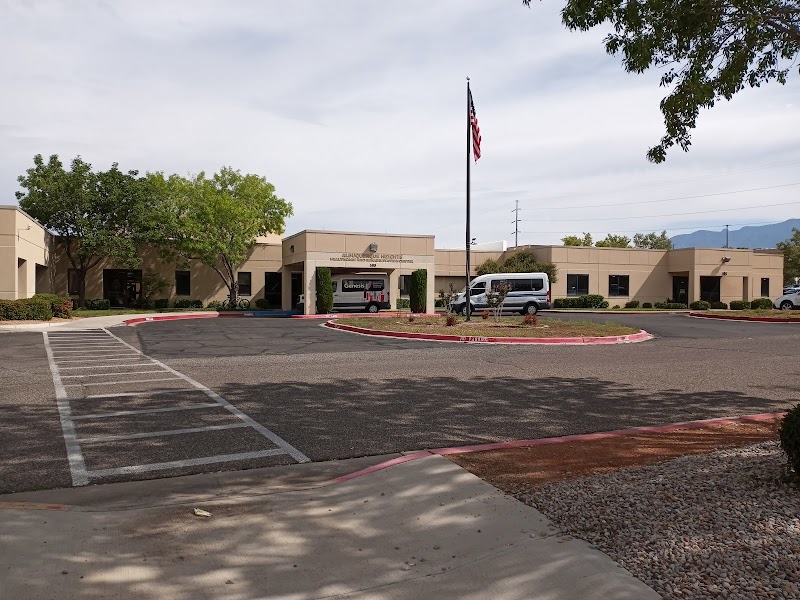
How is Albuquerque Heights Healthcare And Rehabilitation Staffed?

CMS rates Albuquerque Heights Healthcare and Rehabilitation's staffing level at 4 out of 5 stars, which is above average compared to other nursing homes. Staff turnover is 56%, which is 10 percentage points above the New Mexico average of 46%. High turnover can affect care consistency as new staff learn residents' individual needs.

What Have Inspectors Found at Albuquerque Heights Healthcare And Rehabilitation?

State health inspectors documented 82 deficiencies at Albuquerque Heights Healthcare and Rehabilitation during 2022 to 2025. These included: 1 that caused actual resident harm, 80 with potential for harm, and 1 minor or isolated issues. Deficiencies causing actual harm indicate documented cases where residents experienced negative health consequences.
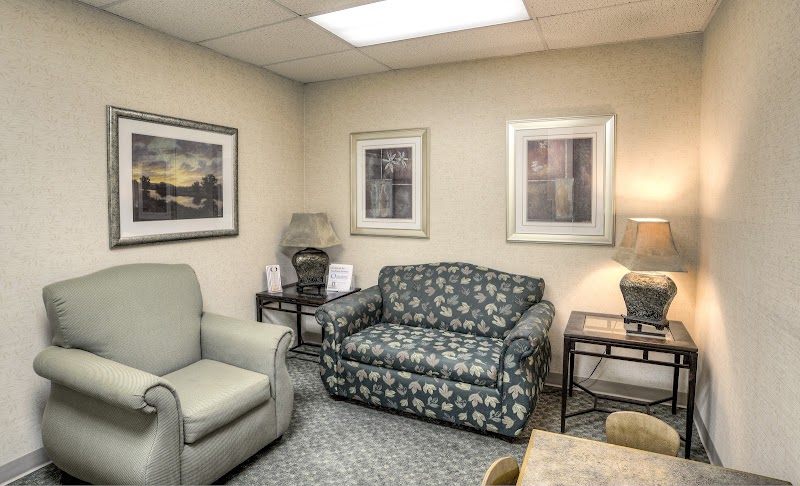
Who Owns and Operates Albuquerque Heights Healthcare And Rehabilitation?

Albuquerque Heights Healthcare and Rehabilitation is owned by a for-profit company. For-profit facilities operate as businesses with obligations to shareholders or private owners. The facility is operated by GENESIS HEALTHCARE, a chain that manages multiple nursing homes. With 134 certified beds and approximately 124 residents (about 93% occupancy), it is a mid-sized facility located in Albuquerque, New Mexico.

How Does Albuquerque Heights Healthcare And Rehabilitation Compare to Other New Mexico Nursing Homes?

Compared to the 100 nursing homes in New Mexico, Albuquerque Heights Healthcare and Rehabilitation's overall rating (3 stars) is above the state average of 2.9, staff turnover (56%) is near the state average of 46%, and health inspection rating (2 stars) is below the national benchmark.

What Should Families Ask When Visiting Albuquerque Heights Healthcare And Rehabilitation?

Based on this facility's data, families visiting should ask: "How do you ensure continuity of care given staff turnover, and what is your staff retention strategy?" "Can I visit during a mealtime to observe dining assistance and food quality?" "How do you handle medical emergencies, and what is your hospital transfer rate?" "Can I speak with family members of current residents about their experience?" These questions are particularly relevant given the facility's high staff turnover rate.

Is Albuquerque Heights Healthcare And Rehabilitation Safe?

Based on CMS inspection data, Albuquerque Heights Healthcare and Rehabilitation has a clean safety record: no substantiated abuse findings (meaning no confirmed cases of resident harm), no Immediate Jeopardy citations (the most serious violation level indicating risk of serious injury or death), and is not on the Special Focus Facility watch list (a federal program monitoring the lowest-performing 1% of nursing homes). The facility has a 3-star overall rating and ranks #1 of 100 nursing homes in New Mexico. While no facility is perfect, families should still ask about staff-to-resident ratios and recent inspection results during their visit.

Do Nurses at Albuquerque Heights Healthcare And Rehabilitation Stick Around?

Staff turnover at Albuquerque Heights Healthcare and Rehabilitation is high. At 56%, the facility is 10 percentage points above the New Mexico average of 46%. High turnover means new staff may not know residents' individual needs, medications, or preferences. It can also be disorienting for residents, especially those with dementia who rely on familiar faces. Families should ask: What is causing the turnover? What retention programs are in place? How do you ensure care continuity during staff transitions?

Was Albuquerque Heights Healthcare And Rehabilitation Ever Fined?

Albuquerque Heights Healthcare and Rehabilitation has been fined $27,670 across 3 penalty actions. This is below the New Mexico average of $33,356. While any fine indicates a compliance issue, fines under $50,000 are relatively common and typically reflect isolated problems that were subsequently corrected. Families should ask what specific issues led to these fines and confirm they've been resolved.

Is Albuquerque Heights Healthcare And Rehabilitation on Any Federal Watch List?

Albuquerque Heights Healthcare and Rehabilitation is not on any federal watch list. The most significant is the Special Focus Facility (SFF) program, which identifies the bottom 1% of nursing homes nationally based on persistent, serious quality problems. Not being on this list means the facility has avoided the pattern of deficiencies that triggers enhanced federal oversight. This is a positive indicator, though families should still review the facility's inspection history directly.