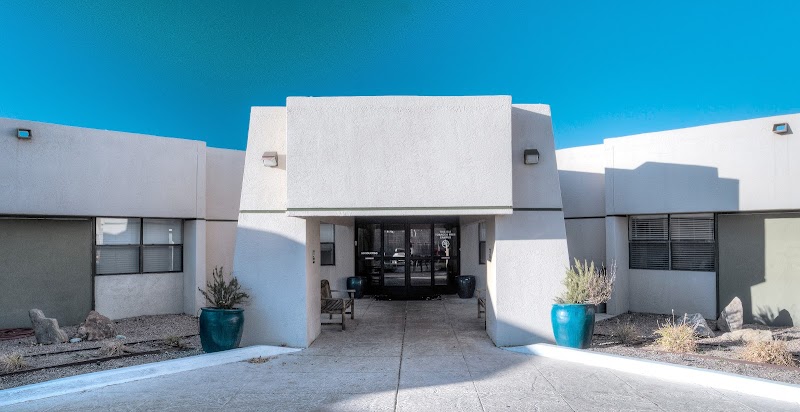
Bear Canyon Rehabilitation Center
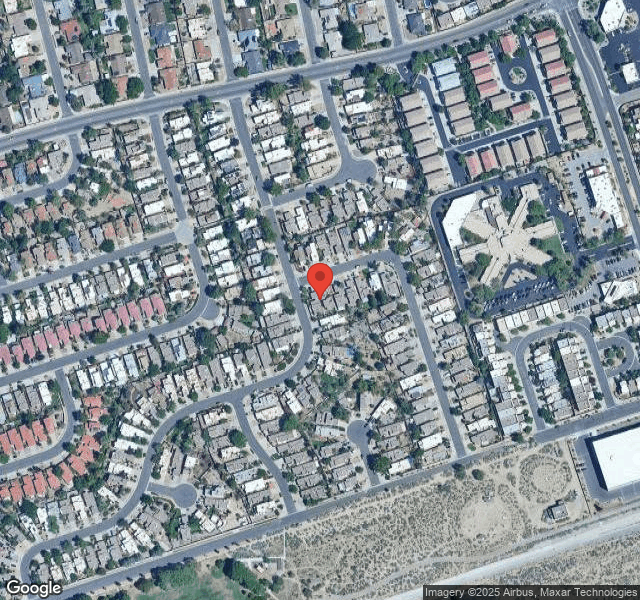

5123 Juan Tabo Boulevard NE, Albuquerque, NM 87111 (505) 292-3333
For profit - Corporation 178 Beds GENESIS HEALTHCARE Data: November 2025 4 Immediate Jeopardy citations
Trust Grade
0/100
#40 of 67 in NM
Last Inspection: February 2025

Within standard 12-15 month inspection cycle. Federal law requires annual inspections.

Overview

Bear Canyon Rehabilitation Center currently holds a Trust Grade of F, indicating significant concerns about the quality of care provided, placing it in the bottom tier of facilities. It ranks #40 out of 67 nursing homes in New Mexico and #13 of 18 in Bernalillo County, meaning there are many better options available nearby. The facility's situation is worsening, with the number of issues increasing from 5 in 2024 to 16 in 2025. Staffing is a concern, with a 68% turnover rate that exceeds the state average, and the overall staffing rating is only 2 out of 5 stars. Additionally, the facility has accumulated $167,434 in fines, which is higher than 82% of similar facilities in New Mexico, suggesting ongoing compliance problems. Specific incidents highlight serious care deficiencies, such as failing to monitor a resident for signs of stroke and not administering prescribed blood-thinning medication, which could lead to severe health risks. Another critical finding involved inadequate oversight of skin care, which could result in new pressure injuries for residents. While there is some RN coverage, it remains at an average level and may not sufficiently address the care deficiencies observed. Overall, families should weigh these significant weaknesses against any potential strengths when considering this facility for their loved ones.
Trust Score
F
0/100
In New Mexico
#40/67
Bottom 41%
Safety Record
High Risk
Review needed
Inspections
Getting Worse
5 → 16 violations
Staff Stability
⚠ Watch
68% turnover. Above average. Higher turnover means staff may not know residents' routines.
Penalties
⚠ Watch
$167,434 in fines. Higher than 82% of New Mexico facilities, suggesting repeated compliance issues.
Skilled Nurses
○ Average
Each resident gets 32 minutes of Registered Nurse (RN) attention daily — about average for New Mexico. RNs are the most trained staff who monitor for health changes.
Violations
⚠ Watch
68 deficiencies on record. Higher than average. Multiple issues found across inspections.
★★☆☆☆
2.0
Overall Rating
★★☆☆☆
2.0
Staff Levels
★★☆☆☆
2.0
Care Quality
★★☆☆☆
2.0
Inspection Score
Stable
2024: 5 issues
2025: 16 issues

The Good

  • Full Sprinkler Coverage · Fire safety systems throughout facility
  • No fines on record

Facility shows strength in fire safety.

The Bad

2-Star Overall Rating

Below New Mexico average (2.9)

Below average - review inspection findings carefully

Staff Turnover: 68%

22pts above New Mexico avg (46%)

Frequent staff changes - ask about care continuity

Federal Fines: $167,434

Well above median ($33,413)

Significant penalties indicating serious issues

Chain: GENESIS HEALTHCARE

Part of a multi-facility chain

Ask about local staffing decisions and management

Staff turnover is elevated (68%)

20 points above New Mexico average of 48%

The Ugly 68 deficiencies on record

4 life-threatening 2 actual harm
Jul 2025 1 deficiency
CONCERN (D) 📢 Someone Reported This

A family member, employee, or ombudsman was alarmed enough to file a formal complaint

Potential for Harm - no one hurt, but risky conditions existed

Respiratory Care (Tag F0695)

Could have caused harm · This affected 1 resident

Based on a record review and interviews, the facility failed to update physician's orders for 1 (R #1) of 1 (R #1) resident who received supplemental oxygen, when the resident required a greater oxyge...

Read full inspector narrative →
Based on a record review and interviews, the facility failed to update physician's orders for 1 (R #1) of 1 (R #1) resident who received supplemental oxygen, when the resident required a greater oxygen flow rate. If staff fail to update the physician's orders, then the resident may not receive the services for optimum health. The findings are: A. Record review of R #1's face sheet revealed an admission date of 06/06/25 with the following diagnoses:- Chronic obstructive pulmonary disease (COPD; lung disease)- Acute and chronic respiratory failures with hypercapnia (an excessive amount of carbon dioxide in the blood),- Hypoxia (a low level of oxygen in the blood).B. Record review of R #1's physician orders, dated 06/06/25, revealed an active order to titrate oxygen between 1 to 5 liters per minute (L/min) to maintain oxygen saturation between 88% and 92%.C. Record review of R #1's oxygen vitals log, dated 05/06/25 through 06/11/25, revealed the following:-On 05/17/25 at 12:55 p.m., the oxygen flow rate was 6 L/mi. -On 05/17/25 at 7:43 p.m., the oxygen flow rate was 6 L/min.-On 05/19/25 at 7:39 a.m., the oxygen flow rate was 6 L/min. -On 05/20/25 at 9:55 p.m., the oxygen flow rate was 6 L/min. D. Record review of R #1's progress note, dated 06/11/25, revealed the resident had an oxygen saturation of 79% on 6 L/min. The resident was transported to the hospital for acute respiratory failure.E. On 07/30/25 at 2:15 p.m., during an interview with the Director of Nursing (DON), she stated the resident's oxygen order required titration between 1 to 5 L/min. She confirmed the resident was on 6 L/min at times, and the order should have been updated when the flow exceeded the prescribed range. She stated the resident had fluctuating oxygen needs, but she could not provide documentation to show staff notified the resident's provider.F. On 07/30/25 at 2:49 p.m., during an interview with the Administrator, she stated a new order was necessary if the resident received an oxygen flow rate higher than the prescribed dose of 1 to 5 L/min.G. On 08/04/25 at 10:30 a.m., during an interview with the Medical Director, he stated the facility should follow orders as written.
Apr 2025 1 deficiency
CONCERN (E) 📢 Someone Reported This

A family member, employee, or ombudsman was alarmed enough to file a formal complaint

Potential for Harm - no one hurt, but risky conditions existed

ADL Care (Tag F0677)

Could have caused harm · This affected multiple residents

**NOTE- TERMS IN BRACKETS HAVE BEEN EDITED TO PROTECT CONFIDENTIALITY** Based on record review and interview, the facility failed to provide activities of daily living (ADL; activities related to pers...

Read full inspector narrative →
**NOTE- TERMS IN BRACKETS HAVE BEEN EDITED TO PROTECT CONFIDENTIALITY** Based on record review and interview, the facility failed to provide activities of daily living (ADL; activities related to personal care such as bathing, showering, dressing, walking, toileting, and eating) assistance for showering for 1 (R #1) of 1 (R #1) residents reviewed for ADL care. This deficient practice could likely to affect the dignity and health of the residents. The findings are: A. Record review of R #1's face sheet revealed R #1 was admitted to the facility on [DATE], with the following diagnosis: 1. Chronic Obstructive Pulmonary Disease (COPD; is an ongoing lung condition caused by damage to the lungs), 2. Syncope workup (a loss of consciousness and muscle strength characterized by a fast onset, short duration, and spontaneous recovery. It is caused by a decrease in blood flow to the brain, typically from low blood pressure), 3. Severe sepsis, (infection with systemic manifestations of sepsis along with sepsis-related tissue hypoperfusion or organ dysfunction), 4. Acute chronic hypoxic respiratory failure (a condition where there's not enough oxygen or too much carbon dioxide in your body), 5. 2/2 left-sided pneumonia (pneumonia that affects both lungs at the same time), 6. Colitis (an inflammation of the lining of the colon), 7. Diarrhea ( the condition of having at least three loose, liquid, or watery bowel movements in a day). B. Record review of R #1's care plan dated 02/17/25 revealed R #1 requires assistance/is dependent for ADL care in bathing, grooming, personal hygiene. C. Record review of facility's shower schedule (no date) revealed R #1 was scheduled to receive a shower every Monday and Thursday during the night shift. D. Record review of R #1's discharge Minimum Data Set (MDS; a federally mandated assessment instrument completed by facility staff) assessment dated [DATE], Section GG revealed R #1 requires supervision or touching assistance by a helper for showering and bathing. E. Record review of R #1's electronic health record (EHR) revealed R #1 received one shower on 02/20/25 and did not reveal any additional documentation of R #1 refusing showers. F. On 04/17/25 at 8:53 am, during an interview, son of R #1 stated that he had a concern with the quality of care for R#1, due to only receiving one shower the entire time since admitted to the facility. He said his mom had health issues that required more frequent showering and expected the facility to assist her, but they did not. G. On 04/17/25 at 9:40 am, during an interview, Director of Nursing (DON) stated R #1 was at the facility briefly in February of 2025. R #1 was experiencing breathing issues, so her son wanted her to be evaluated at the hospital and chose not to return. R #1 was discharged on 04/21/25. The DON confirmed that the facility had documented evidence of one shower during R #1's stay at the facility. She stated that she expects every shower or refusal to be documented.
Apr 2025 3 deficiencies
CONCERN (D) 📢 Someone Reported This

A family member, employee, or ombudsman was alarmed enough to file a formal complaint

Potential for Harm - no one hurt, but risky conditions existed

Safe Environment (Tag F0584)

Could have caused harm · This affected 1 resident

**NOTE- TERMS IN BRACKETS HAVE BEEN EDITED TO PROTECT CONFIDENTIALITY** Based on observation and interviews, the facility failed to maintain proper infection prevention practices, when staff did not a...

Read full inspector narrative →
**NOTE- TERMS IN BRACKETS HAVE BEEN EDITED TO PROTECT CONFIDENTIALITY** Based on observation and interviews, the facility failed to maintain proper infection prevention practices, when staff did not assure: -Cats in the Memory Care Unit were not defecating (discharging feces [bodily waste discharged through the anus] from the body) in the resident's room. -Cats not having trimmed or nail covers. These deficient practices could likely result in the spread of infectious agents (viruses and bacteria) to the residents. The findings are: A. On 04/01/25 at 9:00 AM, during observation of the Memory Care Unit revealed the following: - The facility has two domestic feline cats. One cat was walking out of a resident's room, while the second cat was seen sleeping on a chair in the hallway. - The cat crate was next to the TV in the family room. - A litter box was behind the recliner chair in the family room. B. On 04/01/25 at 9:05 AM, during observation of the Memory Care Unit rooms revealed the following: - room [ROOM NUMBER]B: Dried cat feces was on the floor beside the bed. - room [ROOM NUMBER]B: Dried cat feces was on the resident's bedding. - room [ROOM NUMBER]B: Dried cat feces was on the floor beside the bed. C. On 04/01/25 at 11:20 AM, during an interview with Certified Nurse Aide (CNA) #1, she stated she was unsure who cleaned the cat litter boxes as she had only worked in the memory care unit for a few shifts. She mentioned if cat feces were in the rooms, she would pick it up with the red hazard bag and dispose of it. Then, she would ensure that she cleaned and sanitized the floor. If the cat urinated on the beds, she would get a red hazard bag and dispose of the sheets or blanket because she believed no one could get the urine smell out of the sheets. D. On 04/01/25 at 3:30 PM, during an interview, the Director of the Memory Care Unit (MCU) The director mentioned that R #2 had been scratched by one of the cats, which resulted in a change in her condition. She stated the facility had ordered a scratching post for the cats; while it has arrived, maintenance has not yet assembled it. The cats currently do not have nail covers, and the director was unsure when their nails were last trimmed. She stated she was unaware of the cats defecating on the floor or beds in the residents' rooms, but she would have the bedding changed. The director further indicated that the Activities staff is responsible for cleaning the cat litter box. E. On 04/02/25 at 9:35 AM, during an interview, the Director of Nursing (DON) stated the cats have had nail covers in the past, but she is unsure if they are on now. She said they have a new staff member who is comfortable trimming the cat's nails and putting the nail covers on the cats.
CONCERN (D) 📢 Someone Reported This

A family member, employee, or ombudsman was alarmed enough to file a formal complaint

Potential for Harm - no one hurt, but risky conditions existed

Accident Prevention (Tag F0689)

Could have caused harm · This affected 1 resident

Based on observation and interview, the facility failed to ensure the facility was free of accident hazards for 19 (R #1-19) of 19 (R #1-19) when the facility failed to ensure no sprinkler above the g...

Read full inspector narrative →
Based on observation and interview, the facility failed to ensure the facility was free of accident hazards for 19 (R #1-19) of 19 (R #1-19) when the facility failed to ensure no sprinkler above the ground courtyard area could cause a trip hazard. This deficient practice could likely results in a resident falling, putting them at serious risk of adverse outcomes. The findings are: A. On 04/01/25 at 3:00 pm, during an observation of the memory care unit courtyard revealed an unnamed person was walking in the courtyard area of the memory care unit while walking toward the gate, walking away from the building to check to see if the gate was unlocked. The unnamed person tripped over a lawn sprinkler head that was sticking out of the ground approximately 6 inches. B. On 04/03/25 at 10:18 am, during an interview with the Administrator, she stated that if a lawn sprinkler in the courtyard is above ground measuring approximately 6 inches, it is not ideal, but she is unaware of any incidents that have occurred because of it. The Administrator stated that on the same outside courtyard where the gates are, the gates automatically open and release when the fire alarm goes off, so there is a way off the property, the lawn sprinkler head causing a potential hazard. C. On 04/03/25 at 10:58 am, during an interview with the Maintenance Director, he stated the memory care unit courtyard, the lawn sprinkler head had been frozen up and was supposed to recess back into the ground. It should not be above ground the way that it is now. He stated that he would put a cone on it and that the landscapers would be out today to fix it.
CONCERN (D) 📢 Someone Reported This

A family member, employee, or ombudsman was alarmed enough to file a formal complaint

Potential for Harm - no one hurt, but risky conditions existed

Infection Control (Tag F0880)

Could have caused harm · This affected 1 resident

**NOTE- TERMS IN BRACKETS HAVE BEEN EDITED TO PROTECT CONFIDENTIALITY** Based on observation, record review, and interview, the facility failed to maintain proper infection prevention measures by havi...

Read full inspector narrative →
**NOTE- TERMS IN BRACKETS HAVE BEEN EDITED TO PROTECT CONFIDENTIALITY** Based on observation, record review, and interview, the facility failed to maintain proper infection prevention measures by having: - The oxygen cannula (a medical device that provides supplemental oxygen) on the ground. -Unbagged oxygen cannula wrapped around back wheelchair handle. Failure to adhere to an infection control program could likely spread infections and illness to all residents of the memory care unit. The findings are: A. On 04/01/25 at 9:05 AM, during observation of the Memory Care Unit rooms revealed the following: -room [ROOM NUMBER]A: An unused nasal cannula connected to an oxygen concentrator (a device that concentrates the oxygen from a gas supply) lay on the floor underneath a pair of shoes. While in the room, the cat walked across the nasal cannula. -room [ROOM NUMBER]A: An unused nasal cannula was on the floor next to the bed, connected to an oxygen concentrator. B. On 04/01/25 at 10:00 AM, during an observation of the dining/activities room, R #3 sat in her wheelchair and wrapped an unbagged oxygen cannula around her wheelchair handle. C. On 04/01/25 at 11:20 AM, during an interview with Certified Nurse Aide (CNA) #1, she stated the oxygen cannulas in rooms 106A and 107A should not have been on the floor. If the cannula were on the floor, staff picked them up, sanitized them with sanitation wipes, wrapped them up, and put them on the oxygen condensers. If we noticed the cannula was dirty, we would have gotten a new one and replaced it. D. On 04/01/25 at 1:46 PM, during an interview with Registered Nurse (RN) #1, she stated the oxygen cannula wrapped up on the back of the R #3 wheelchair was there because the resident was on as-needed (PRN) oxygen. RN #1 stated she was unsure if the oxygen cannula should have been in a bag or if it could have remained on the back of her chair while not in use. E. On 04/01/25 at 3:30 PM, during an interview, the Director of the Memory Care Unit (MCU) stated that nasal oxygen cannulas should not be left on the floor. If any cannulas are found on the floor, they must be disposed of, and a new one will be provided to the residents. If cannulas are stored on the backs of residents' chairs, they should be kept in a plastic bag. F. On 04/02/25 at 9:35 AM, during an interview, the Director of Nursing (DON) stated that if residents' oxygen cannulas are on the floor, staff are expected to throw the cannula away and get a new one. She said that if an unused oxygen cannula is on the back of a resident's wheelchair, it should be in a bag so it does not get dirty.
Feb 2025 11 deficiencies 2 IJ (2 affecting multiple)
CRITICAL (K)

Immediate Jeopardy (IJ) - the most serious Medicare violation

Quality of Care (Tag F0684)

Someone could have died · This affected multiple residents

**NOTE- TERMS IN BRACKETS HAVE BEEN EDITED TO PROTECT CONFIDENTIALITY** Based on record review and interview, the facility failed to ensure residents received treatment and care in accordance with pro...

Read full inspector narrative →
**NOTE- TERMS IN BRACKETS HAVE BEEN EDITED TO PROTECT CONFIDENTIALITY** Based on record review and interview, the facility failed to ensure residents received treatment and care in accordance with professional standards of practice for 1 (R #42) of 3 (R #31, #42 and #58) residents when they failed to monitor R #42 for signs and symptoms of stroke and to treat R #42 with blood thinning medication as ordered. This deficient practice is likely to result in residents experiencing worsened conditions or death. The findings are: A. Record review of R #42's face sheet revealed an admission date of 10/23/24 and included the following diagnoses: - Cerebral palsy (group of conditions that affect movement and posture caused by brain damage before birth), - Muscle weakness, - Lack of coordination, - Difficulty in walking, - Sequelae of cerebral infarction (long term effects and complications that can occur after a stroke), - Reduced mobility, - Peripheral vascular disease (PVD; disorder that causes abnormal narrowing of arteries). B. Record review of R #42's hospital discharge records, dated 10/23/24, revealed the following : - An order for clopidogrel (blood thinning medication) tablet, 75 milligrams (mg) daily. Route: Oral (by mouth). Date first scheduled: 10/11/24. - History of pontine cerebrovascular disease (a life-threatening blockage of blood flow to part of the brainstem). Patient was hospitalized in February 2024 for transient ischemic attack (TIA; when blood flow to part of the brain stops for a brief period of time) in the setting of medication noncompliance (failure to take prescribed medications as directed by a healthcare provider). Continue home medication Lipitor (medication that lowers the amount of fats in the blood), 890 mg daily and Plavix (brand name for clopidogrel) 75 mg daily. - Discharge summary notes: On 09/19/24 [information included on discharge summary from a previous hospitalization] patient was cleared to resume Plavix by gastrointestinal (GI; diseases affecting the stomach and intestines) specialist on 09/18/24 after his recent episode of GI bleed. - During his hospitalization, there were not any reported signs of overt (obvious) GI bleed, and hemoglobin (protein in red blood cells) remained stable around baseline. C. Record review of R #42's history and physical (H&P), dated 10/24/24, revealed the following: - The resident had a history of pontine cerebrovascular accident (CVA; stroke) and TIA. - The record did not mention treatment to prevent another CVA. D. Record review of R #42's admission Minimum Data Set (MDS; a federally mandated assessment instrument completed by facility staff), dated 10/29/24, revealed the following: - Active diagnoses: CVA, TIA, or Stroke. - Medications: The resident did not receive an antiplatelets (medication that prevents blood clots) or anticoagulants (blood thinner). E. Record review of R #42's Medication Administration Records (MAR), dated October 2025 through February 6, 2025, revealed there was no order for or instructions for staff to administer clopidogrel, 75 mg to R #42. F. Record review of R #42's Treatment Administration Records (TAR), dated December 2024 through February 2025, revealed the following: - Diagnoses included unspecified sequelae of cerebral infarction and PVD. - The record did not instruct staff to monitor for signs and symptoms of stroke. G. Record review of R #42's quarterly MDS, dated [DATE], revealed the following: - Active Diagnoses: CVA, TIA or Stroke. - Medications: The resident did not receive an antiplatelet and/or anticoagulant. H. Record review of R #42's current physician orders, dated February 2025, revealed the record did not contain an order for clopidogrel, 75 mg or any other antiplatelet or blood thinner medication. I. On 02/04/25 at 9:28 am during an interview, R #42 stated he needed to be on a blood thinner. He stated he used to be on heparin (blood thinning medication), but when he came to the facility from the hospital, the facility staff did not give him the blood thinner. J. On 02/06/25 at 4:58 pm during an interview with the Medical Director (MD), he stated R #42's hospital discharge records contained an order for clopidogrel 75 mg, and R #42 should have received the medication while at the facility. He verified staff did not administer the clopidogrel to R #42 since his admission to the facility [10/23/24]. He reviewed R #42's medical record and stated someone at the facility dropped the ball. K. On 02/07/25 at 9:18 am during an interview with the Director of Nursing (DON), she confirmed that she was responsible for verifying the admission orders during the post admission resident review, but she missed the order for clopidogrel, therefore it was not ordered and was not being administered to R #42. L. On 02/07/25 at 10:47 am during an interview, the Nurse Practitioner (NP) stated the order for clopidogrel 75 mg was on R #42's admission orders from the hospital, but the orders were not clear about how long the resident should continue to take the medication. She stated staff should have administered the clopidogrel to R #42 based on the admission orders from the hospital. M. On 02/25/25 at 12:47 pm during an interview with the Administrator and the DON, they stated the R #42 had multiple diagnoses, and he had complex medical needs. They stated the resident's stroke occurred over a year ago, and it was not the primary reason for his admission to the facility. The Administrator and the DON stated the resident had an initial care plan meeting on 10/27/25, and he attended the meeting. They stated the resident had a Brief Interview of Mental Status (BIMS; a screening for cognitive impairment) score of 14, cognitively intact; but he did not mention that he should take a blood thinning medication. The Administrator and the DON confirmed R #42's medical record did not instruct staff to monitor the resident for signs and symptoms of stroke. They stated they monitor all residents for signs of a change of condition. The Administrator and the DON confirmed they did not treat the resident for his history of CVA. Based on record reviews and interviews, an Immediate Jeopardy (IJ) was identified. The facility Administrator was notified on 02/07/25 at 10:42 am. The facility took corrective action by providing an acceptable Plan of Removal (POR). The Plan of Removal was approved on 02/07/25 at 3:15 pm. Implementation of the POR was verified onsite on 02/10/25 by conducting record reviews and staff interviews. Scope and Severity was reduced to Level 2, E. Plan of Removal: All residents have the potential to be affected by this alleged deficient practice. The following corrections were completed by 02/07/25: - Audit all residents with a diagnosis of CVA to ensure antiplatelet therapy was in place as ordered. - Audit of recent admissions to ensure accurate medication reconciliation, review, and continuation of medications and treatments. - All licensed staff educated regarding medication transcription, medication reconciliation upon admission, and documentation in the resident's chart. - During morning clinical meetings, medication reconciliation audits occur for new admissions and medication order changes. - Nurse Practice Educator or Designee will begin education on 02/07/25 and continue until all licensed nursing staff have been educated prior to their next shift. Any licensed staff member on leave of absence (FMLA), vacation, or PRN (as needed) staff will be re-educated prior to returning to duty. New hires will be educated on this process upon hire. - The Director of Nursing (DON) or designee will audit five random residents three times a week to ensure all medications reconciliations have occurred. - The DON or designee will bring results of audits to Quality Assurance and Performance Improvement (QAPI) committee for further recommendations based on tracking and trending. It will be presented monthly for the next two months or until ongoing compliance is achieved. The QAPI committee is overseen by the Administrator.
CRITICAL (K)

Immediate Jeopardy (IJ) - the most serious Medicare violation

Deficiency F0760 (Tag F0760)

Someone could have died · This affected multiple residents

**NOTE- TERMS IN BRACKETS HAVE BEEN EDITED TO PROTECT CONFIDENTIALITY** Based on record review and interview, the facility failed to administer clopidogrel (blood thinning medication used to prevent h...

Read full inspector narrative →
**NOTE- TERMS IN BRACKETS HAVE BEEN EDITED TO PROTECT CONFIDENTIALITY** Based on record review and interview, the facility failed to administer clopidogrel (blood thinning medication used to prevent heart attacks and strokes in persons with heart disease, recent stroke, or blood circulation disease) as ordered by the physician for 1 (R #42) of 3 (R #31, #42 and #58) residents reviewed for medications. This deficient practice is likely to result in a resident failing to obtain maximum wellness or suffer prolonged illness. The findings are: Cross Reference findings from F684. A. Record review of R #42's face sheet revealed an initial admission date of 10/23/24 and included the following diagnoses: - Sequelae of cerebral infarction (long term effects and complications that can occur after a stroke), - Congestive systolic and diastolic heart failure, - Peripheral vascular disease (disorder that causes abnormal narrowing of arteries). B. Record review of R #42's hospital discharge records, dated 10/23/24, revealed the following : - An order for clopidogrel (blood thinning medication) tablet, 75 milligrams (mg) daily. Route: Oral (by mouth). Date first scheduled: 10/11/24. - Continue home medication Lipitor (medication that lowers the amount of fats in the blood), 890 mg daily and Plavix (brand name for clopidogrel) 75 mg daily. C. Record review of R #42's Medication Administration Records (MAR), dated October 2025 through February 6, 2025, revealed staff did not administer clopidogrel, 75 mg to R #42. D. On 02/06/25 at 4:58 pm during an interview with the Medical Director (MD), he stated R #42's hospital discharge records contained an order for clopidogrel 75 mg on admission to the facility. He verified staff missed the order and did not administer clopidogrel to R #42 since the resident's admission to the facility on [DATE]. E. On 02/07/25 at 9:18 am during an interview, the Director of Nursing (DON) stated she missed the resident's order for clopidogrel when she verified R #42's admission orders. F. On 02/07/25 at 10:47 am during an interview, the Nurse Practitioner (NP) stated R #42's hospital discharge orders included an order for clopidogrel. She stated R #42 should have received clopidogrel while at the facility. Based on record reviews and interviews, an Immediate Jeopardy (IJ) was identified. The facility Administrator was notified on 02/07/25 at 10:42 am. The facility took corrective action by providing an acceptable Plan of Removal (POR). The Plan of Removal was approved on 02/07/25 at 3:15 pm. Implementation of the POR was verified onsite on 02/10/25 by conducting record reviews and staff interviews. Scope and Severity was reduced to Level 2, E. Plan of Removal: All residents have the potential to be affected by this alleged deficient practice. The following corrections were completed by 02/07/25: - Audit all residents with a diagnosis of CVA to ensure antiplatelet therapy was in place as ordered. - Audit of recent admissions to ensure accurate medication reconciliation, review, and continuation of medications and treatments. - All licensed staff educated regarding medication transcription, medication reconciliation upon admission, and documentation in the resident's chart. - During morning clinical meetings, medication reconciliation audits occur for new admissions and medication order changes. - Nurse Practice Educator or Designee will begin education on 02/07/25 and continue until all licensed nursing staff have been educated prior to their next shift. Any licensed staff member on leave of absence (FMLA), vacation, or PRN (as needed) staff will be re-educated prior to returning to duty. New hires will be educated on this process upon hire. - The Director of Nursing (DON) or designee will audit five random residents three times a week to ensure all medications reconciliation have occurred. - The DON or designee will bring results of audits to Quality Assurance and Performance Improvement (QAPI) committee for further recommendations based on tracking and trending. It will be presented monthly for the next two months or until ongoing compliance is achieved. The QAPI committee is overseen by the Administrator.
CONCERN (D)

Potential for Harm - no one hurt, but risky conditions existed

Deficiency F0552 (Tag F0552)

Could have caused harm · This affected 1 resident

Based on record review and interview, the facility failed to ensure residents or their guardians were aware of what medications they received and understood the reasons, risks, and benefits of the med...

Read full inspector narrative →
Based on record review and interview, the facility failed to ensure residents or their guardians were aware of what medications they received and understood the reasons, risks, and benefits of the medications for 1 (R #70) of 3 (R #31, R #58 and R #70) residents reviewed for unnecessary medications. If the residents or their guardians are not informed of the risks and benefits of the medication, they are not able to make informed decisions. The findings are: A. Record review of R #70's physician's orders revealed the following: - An order for buspirone HCI oral tablet (antianxiety medication), 5 milligrams (mg.) Give one tablet by mouth two times a day for anxiety/depression. Start date: 07/13/24. - An order for citalopram hydrobromide oral tablet (antidepressant medication) 10 mg. Give two tablets by mouth one time a day for depression, crying, wandering into other resident rooms, inability to redirect, hitting staff, and screaming. Start date: 01/11/24. B. Record review of R #70's medical record revealed the record did not contain a consent form from the resident/responsible party for the buspirone 5 mg tablets and for the citalopram 10 mg tablets. C. On 02/06/25 at 12:52 pm during an interview, the Director of Nursing (DON) verified R #70's medical record did not contain consent forms for the buspirone 5 mg and the citalopram 10 mg. She stated there should be a signed consent form for R #70's antianxiety and antidepressant medications.
CONCERN (D)

Potential for Harm - no one hurt, but risky conditions existed

Deficiency F0578 (Tag F0578)

Could have caused harm · This affected 1 resident

**NOTE- TERMS IN BRACKETS HAVE BEEN EDITED TO PROTECT CONFIDENTIALITY** Based on record review and interview, the facility failed to ensure the resident's current advance directive (a document which p...

Read full inspector narrative →
**NOTE- TERMS IN BRACKETS HAVE BEEN EDITED TO PROTECT CONFIDENTIALITY** Based on record review and interview, the facility failed to ensure the resident's current advance directive (a document which provides an individual's wishes for emergency and lifesaving care) was properly documented for 1 (R #16) of 1 (R #16) resident reviewed for advance directives. This deficient practice is likely to cause confusion and delay potentially lifesaving procedures. The findings are: A. Record review of R #16's face sheet revealed R #16 was admitted into the facility on [DATE]. B. Record review of R #16's facesheet, dated [DATE], revealed R #16's advanced directive was Full Code (desired life saving procedures, such ascardiopulmonary resuscitation (CPR)). C. Record review of R #16's physician orders, dated [DATE], revealed R #16 chose Do Not Resuscitate [DNR; does not want to have CPR attempted on them if their heart or breathing stops] for her advanced directive code status. D. On [DATE] at 1:05 PM during an interview with the Director of Nursing (DON), she stated R #16's code status should be DNR and not Full Code.
CONCERN (D)

Potential for Harm - no one hurt, but risky conditions existed

Assessment Accuracy (Tag F0641)

Could have caused harm · This affected 1 resident

**NOTE- TERMS IN BRACKETS HAVE BEEN EDITED TO PROTECT CONFIDENTIALITY** Based on record review and interview, the facility failed to ensure accuracy of the Minimum Data Set (MDS; a federally mandated ...

Read full inspector narrative →
**NOTE- TERMS IN BRACKETS HAVE BEEN EDITED TO PROTECT CONFIDENTIALITY** Based on record review and interview, the facility failed to ensure accuracy of the Minimum Data Set (MDS; a federally mandated assessment instrument completed by facility staff) for 1(R #42) of 3 (R #31, R #42 and R #58) residents reviewed for accuracy of assessments. If the MDS assessment is inaccurate, then residents are likely to not receive the services they need. The findings are: A. Record review of R #42's face sheet, dated 10/23/24, revealed an initial admission with the following diagnoses: - Cerebral palsy (group of conditions that affect movement, and posture caused by brain damage before birth), - Muscle weakness, - Lack of coordination, - Difficulty in walking, - Sequelae of cerebral infarction (long term effects and complications that can occur after a stroke), - Iron insufficiency anemia (when there is not enough iron in the blood), - Reduced mobility, - Peripheral vascular disease (PVD; disorder that causes abnormal narrowing of arteries). B. Record review of R #42's hospital discharge orders, dated 10/23/24, revealed an order for clopidogrel (blood thinning medication) 75 milligrams (mg) daily. Route: Oral (by mouth). Date first scheduled: 10/11/24. C. Record review of R #42's admission MDS, dated [DATE], revealed the following: - Active diagnoses: Cerebrovascular accident (CVA; stroke), transient ischemic attack (TIA; when blood flow to part of the brain stops for a brief period of time), or stroke. - Medications: Antiplatelet and/or anticoagulant were not selected. D. On 02/07/25 at 9:18 am during an interview, the DON stated she expected the information in R #42's admission MDS and hospital discharge documentation to match, but they did not.
CONCERN (D)

Potential for Harm - no one hurt, but risky conditions existed

Deficiency F0655 (Tag F0655)

Could have caused harm · This affected 1 resident

Based on record review and interview, the facility failed to create an accurate Baseline Care Plan (minimum healthcare information necessary to properly care for a resident immediately upon their admi...

Read full inspector narrative →
Based on record review and interview, the facility failed to create an accurate Baseline Care Plan (minimum healthcare information necessary to properly care for a resident immediately upon their admission to the facility) for 1 (R #42) of 3 (R #31, R #42 and R #58) residents reviewed for Baseline Care Plans. This deficient practice could likely result in a decline in the residents' health due to staff not being aware of the residents' needs and residents not able to attain or maintain their highest practical level of well-being. The findings are: A. Record review of R #42's face sheet, dated 10/23/24, revealed an initial admission with the following diagnoses: - Cerebral palsy (group of conditions that affect movement, and posture caused by brain damage before birth), - Muscle weakness, - Lack of coordination, - Difficulty in walking, - Sequelae of cerebral infarction (long term effects and complications that can occur after a stroke), - Abnormalities of gait and mobility, - Reduced mobility - Iron deficiency anemia (low iron levels in the blood), - Peripheral vascular disease (PVD; disorder that causes abnormal narrowing of arteries). B. Record review of R #42's hospital discharge orders, dated 10/23/24, revealed an order for clopidogrel (blood thinning medication) 75 milligrams (mg) daily. Route: Oral (by mouth). Date first scheduled: 10/11/24. C. Record review of R #42's Baseline Care Plan, dated 10/24/24, revealed the baseline care plan did not include the use of antiplatelet medication (medication that is used to help prevent blood clots.) D. On 02/07/25 at 9:18 am during an interview, the Director of Nursing (DON) stated that when she verified R #42's admission orders, she missed the order for clopidogrel (antiplatelet medication) and that may be why there was no mention of the antiplatelet medication on his baseline care plan.
CONCERN (D)

Potential for Harm - no one hurt, but risky conditions existed

Deficiency F0730 (Tag F0730)

Could have caused harm · This affected 1 resident

Based on interview and record review, the facility failed to complete staff competencies for 2 (Certified Nursing Assistants (CNA) #6, and CNA #7) of 5 (CNA #4, CNA #5, CNA #6, CNA #7, and CNA #8) CNA...

Read full inspector narrative →
Based on interview and record review, the facility failed to complete staff competencies for 2 (Certified Nursing Assistants (CNA) #6, and CNA #7) of 5 (CNA #4, CNA #5, CNA #6, CNA #7, and CNA #8) CNAs sampled for annual training. This deficient practice could likely result in staff being undertrained and providing inadequate care. The findings are: A. Record review of the facility's employee competencies revealed CNA #6 and CNA #7 did not have a competency assessment (an evaluation of skills, knowledge, and core abilities required for fulfilling job duties) completed during the last twelve months. B. On 02/06/25 at 10:56 am, during an interview with the Director of Nursing (DON), she stated she did not have any documentation to show competency assessments were completed for CNA #6 and CNA #7 during the last twelve months. C. On 02/06/25 at 11:32 am, during an interview with the Educator, she stated staff competency assessments should be completed yearly in order to identify what trainings staff need. She could not state if all of the staff had a competency assessment completed in the last year.
CONCERN (D)

Potential for Harm - no one hurt, but risky conditions existed

Drug Regimen Review (Tag F0756)

Could have caused harm · This affected 1 resident

Based on record review and interview, the facility failed to ensure the resident's medication regimen was free from unnecessary medications for 1 (R #104) of 1 (R #104) residents, when the attending p...

Read full inspector narrative →
Based on record review and interview, the facility failed to ensure the resident's medication regimen was free from unnecessary medications for 1 (R #104) of 1 (R #104) residents, when the attending physician: - Did not provide clinical basis when he disagreed with the facility's pharmacist consultant's recommendation on R #104's Medication Regimen Review (MMR), - Did not document in R #104's medical record the action he took to address the recommended medication dose reduction. This deficient practice is likely to cause R #104's medication regimen to not be properly evaluated resulting in a possible over medication. The findings are: A. Record review of R #104's face sheet, dated 09/17/24, revealed R #104 was under psychiatric care (branch of medicine focused on the diagnosis, treatment, and prevention of mental, emotional, and behavioral disorders.) B. Record review of R #104's physician orders revealed the following: - On 09/13/24, R #104's psychiatrist entered an order for quetiapine (an antipsychotic medication) 12.5 milligrams (mg) twice daily for depression (a mood disorder that causes a persistent feeling of sadness and loss of interest). - On 09/17/24, R #104's psychiatrist entered an order for trazodone (antidepressant and sedative) 50 mg once nightly for insomnia (a sleep disorder that makes it hard to fall asleep or stay asleep). C. Record review of R #104's MMR, dated 11/11/24, revealed the following: - The facility's consultant pharmacist recommended to evaluate the current dose and to consider a dose reduction for two the antipsychotic medications, quetiapine and trazodone. - The facility's attending physician responded to continue the same orders, and R #104's psychiatrist was following the resident's care. D. On 02/07/25 at 3:20 pm, during an interview with the facility's Medical Director, he stated the attending physician who responded to R #104's MMR, dated 11/11/24, did not work at the facility any longer. The Medical Director stated he expected the previous attending physician to consult with R #104's psychiatric provider, in order to evaluate the recommended medications dose reduction, to examine R #104's response to the antipsychotic medications, and to make a decision on the recommended medications dose reduction. E. On 02/12/25 at 3:45 pm, during an interview, the facility's consultant pharmacist stated she expected the previous attending physician to consult with R #104's psychiatrist to decide on R #104's medication dose reduction.
CONCERN (D)

Potential for Harm - no one hurt, but risky conditions existed

Medication Errors (Tag F0758)

Could have caused harm · This affected 1 resident

Based on record review and interview, the facility failed to ensure the resident medication regimen was free from unnecessary medications for 1 (R #104) of 1 (R #104) resident, when R #104's hospice p...

Read full inspector narrative →
Based on record review and interview, the facility failed to ensure the resident medication regimen was free from unnecessary medications for 1 (R #104) of 1 (R #104) resident, when R #104's hospice physician ordered an as needed (PRN) antipsychotic (a class of drugs that treat psychotic symptoms and disorders) medication without a 14 day stop date. This deficient practice is likely to cause R #104's medication regimen to not be properly evaluated and result in a possible over medication. The findings are: A. Record review of R #104's face sheet, dated 09/26/24, revealed R #104 was under hospice care. B. Record review of R #104's Hospice Physician order, dated 01/14/25, revealed an order to give haloperidol (antipsychotic medication) 2 milligrams (mg) every six hours PRN for agitation (a feeling of irritability, mental distress or severe restlessness). The hospice physician entered the stop date as indefinite. C. Record Review of R #104's Medication Regimen Review (MMR), dated 01/16/25, revealed the following: - The facility's Pharmacist Consultant recommended an evaluation of R #104's antipsychotic medication order for haloperidol, since the order did not have a 14 day stop date. - The facility's Attending Physician responded that R #104's hospice physician entered the order. D. On 02/07/25 at 3:20 pm, during an interview with the facility's Medical Director, he stated the Hospice Physician entered R #104's haloperidol order. The Medical Director stated the Hospice Physician should evaluate R #104's response to the medication and decide to continue or discontinue the order. E. On 02/12/25 at 3:45 pm, during an interview with the facility's Pharmacist Consultant, she stated R #104 had an order for haloperidol 2 mg every six hours PRN for agitation. She stated an antipsychotic medication must have a 14 day stop date, but the Hospice Physician entered the stop date as indefinite. The Pharmacist Consultant stated the Attending Physician should evaluate R #104's response to the medication in order to decide to continue or discontinue the medication. The Pharmacist Consultant stated the Attending Physician should consult with R #104's Hospice Physician to come up with a decision on R #104's haloperidol order.
CONCERN (D)

Potential for Harm - no one hurt, but risky conditions existed

Deficiency F0761 (Tag F0761)

Could have caused harm · This affected 1 resident

Based on observations, interviews, and record review, the facility failed to ensure nurses and Certified Medication Aids (CMAs) dated opened insulin glargine (a medication prescribed to help the body ...

Read full inspector narrative →
Based on observations, interviews, and record review, the facility failed to ensure nurses and Certified Medication Aids (CMAs) dated opened insulin glargine (a medication prescribed to help the body turn food into energy and manage blood sugar levels) pens and discarded glargine pens within 28 days of opening for 1 (R #19) of 1 (R #19) resident and to ensure medication carts were locked when unattended. These deficient practices are likely to result in R #19 receiving medications that are less effective or expired and is likely to negatively impact the health of residents on the 200 unit if they were to ingest (swallow) medications not intended for them. The findings for medication storage are: A. Record review of R #19's physician orders, dated 02/04/25, revealed R #19 received insulin glargine. B. Record review of the manufacturer's instructions for insulin glargine pens, dated 08/2022, revealed staff must throw away all opened pens after 28 days of first use, even if there was insulin left in the pen. C. On 02/04/25 at 1:47 pm, during an observation of the 600-hall medication cart, three insulin glargine pens were opened and not dated. The pens belonged to R #19. D. On 02/04/25 at 1:50 pm, during an interview, Nurse #12 stated the insulin glargine pens belonged to R #19, and the resident actively received it. He stated he should have dated the insulin glargine pens and discarded them within 28 days of the opening date. Nurse #12 stated he just missed it. He also stated the assigned nurse on each hall should check the expiration date before administering the insulin to the resident. E. On 02/05/25 at 10:55 am, during an interview with the Director of Nursing, she stated staff must date the opened glargine insulin pens and discard them within 28 days from the opening date. F. On 02/06/25 at 9:00 am, during an interview, the facility's pharmacist consultant stated she expected nurses and CMAs to date the opened glargine insulin pens and discard them within 28 days from the opening date. Medication carts: G. On 02/07/25 at 7:47 am, during an observation of the 200-unit medication cart, the medication cart was unattended and unlocked. H. On 02/07/25 at 7:47 am, during an interview, Registered Nurse (RN) #1 confirmed the medication carts should be locked and secured at all times when left unattended.
CONCERN (E)

Potential for Harm - no one hurt, but risky conditions existed

Deficiency F0947 (Tag F0947)

Could have caused harm · This affected multiple residents

Based on record review and interview, the facility failed to ensure Certified Nurse Aides (CNAs) received the required in-service training of at least 12 hours per year for 4 (CNAs #4, #5, #6, and #7)...

Read full inspector narrative →
Based on record review and interview, the facility failed to ensure Certified Nurse Aides (CNAs) received the required in-service training of at least 12 hours per year for 4 (CNAs #4, #5, #6, and #7) of 5 (CNAs #3, #4, #5, #6, and #7) CNAs randomly reviewed for required in-service training. This deficient practice is likely to result in the nurses aides not receiving the necessary training to meet the care needs of the residents. The findings are: A. Record review of the facility's employee training transcripts, dated 01/01/24 through 12/31/24, revealed the following: - CNA #4 completed 6.33 hours of training. - CNA #5 completed 6.30 hours of training. - CNA #6 completed 1.22 hours of training. - CNA #7 completed 1.38 hours of training. B. On 02/06/25 at 10:56 am, during an interview with the Director of Nursing (DON), the DON stated CNA #4, CNA #5, CNA #6, and CNA #7 did not have any other trainings during the last 12 months. She stated she was aware the CNAs did not meet the annual 12 hour training requirement.
Dec 2024 1 deficiency
CONCERN (D) 📢 Someone Reported This

A family member, employee, or ombudsman was alarmed enough to file a formal complaint

Potential for Harm - no one hurt, but risky conditions existed

ADL Care (Tag F0677)

Could have caused harm · This affected 1 resident

**NOTE- TERMS IN BRACKETS HAVE BEEN EDITED TO PROTECT CONFIDENTIALITY** Based on record review and interview, the facility failed to provide activities of daily living (ADL; activities related to pers...

Read full inspector narrative →
**NOTE- TERMS IN BRACKETS HAVE BEEN EDITED TO PROTECT CONFIDENTIALITY** Based on record review and interview, the facility failed to provide activities of daily living (ADL; activities related to personal care such as bathing, showering, dressing, walking, toileting, and eating) assistance for baths and showers for 1 (R #1) of 1 (R #1) residents reviewed for ADL care. This deficient practice is likely to negatively affect the dignity and health of the residents. The findings are: A. Record review of R #1's face sheet revealed R #1 was admitted into the facility on [DATE] and discharged on 10/17/24. B. Record review of R #1's Minimum Data Set (MDS; a federally mandated assessment instrument completed by facility staff) indicated R #1 was dependent on staff assistance for showers. C. Record review of the facility's shower logs revealed the record did not contain shower sheets for R #1 for the months of September and October, 2024. D. On 11/14/24 at 9:35 am, during an interview, R #1's daughter stated R #1 had a series of falls at home and ended up in the trauma intensive care for a couple weeks. She stated her father transferred to the facility on [DATE], and he was full assist with eating, drinking, and bathing. The daughter stated her mother was at the facility most of the time. She stated her mother would push the call light for staff, but they would not come to the room. The daughter stated the facility staff did not assist her father with oral care, and the staff told them the family was responsible to do it. The daughter stated her father wore the same soiled hospital gown for a week, and he looked unclean. She stated they brought clean clothes to the facility for R #1 and laid them out for staff to dress him. The daughter stated she and her mother begged the staff to shower her father, but he did not receive a shower during the six weeks he was at the facility. The daughter stated a staff member promised them R #1 would receive a shower before he was discharged , but he did not receive one. The daughter stated her father discharged from the facility on 10/17/24 and transferred to her sister's house where he passed away a few days later. E. On 12/09/24 at 12:27 p.m., during an interview with the Director of Nursing (DON), she stated the facility did not have any records to indicate that staff offered R #1 a shower or that R #1 received or refused a shower.
Oct 2024 2 deficiencies 1 Harm
SERIOUS (G) 📢 Someone Reported This

A family member, employee, or ombudsman was alarmed enough to file a formal complaint

Actual Harm - a resident was hurt due to facility failures

Quality of Care (Tag F0684)

A resident was harmed · This affected 1 resident

**NOTE- TERMS IN BRACKETS HAVE BEEN EDITED TO PROTECT CONFIDENTIALITY** Based on record review and interview the facility failed to provide quality of care for 1 (R #5) of 3 (R #5, 6, and 7) residents...

Read full inspector narrative →
**NOTE- TERMS IN BRACKETS HAVE BEEN EDITED TO PROTECT CONFIDENTIALITY** Based on record review and interview the facility failed to provide quality of care for 1 (R #5) of 3 (R #5, 6, and 7) residents reviewed when they failed to: 1. Identify a change in condition for seven days, 2. Notify the Physician and Power of Attorney (POA; someone to make decisions for you when you are no longer to make them) of the decline, 3. Assess for the cause of the decline and provide treatment, 4. Send the resident to the hospital and waited 15 hours after the request by the POA. This deficient practice likely resulted in further decline for R #5 and a delay in providing life saving treatment. The findings are: A. Record review of R #5's face sheet indicated R #5 was originally admitted to the facility on [DATE] with the following diagnoses: - Multiple sclerosis [a potentially disabling disease of the brain and spinal cord (central nervous system)], - Trigeminal neuralgia (a chronic pain disorder that causes intense pain attacks in your face), - Neuromuscular dysfunction of the bladder (condition that affects bladder function due to nervous system injury or disease), - Suprapubic catheter (tube that is inserted into your abdomen to drain urine), - Antibiotic resistance, - Methicillin resistant staphyloccus aureus infection (MRSA; a staph bacteria that is resistant to many antibiotics), - Bacteremia (bacteria in the blood), - Metabolic encephalopathy (a change in brain function due to an underlying cause), - Severe sepsis with septic shock (life-threatening condition that arises when the body's response to infection causes injury to its own tissues and organs), - Acute kidney failure (an abrupt reduction in kidneys' ability to filter waste products occurs within a few hours or a few days), - Dysphagia (difficulty swallowing foods and liquids), - Protein calorie malnutrition (not enough calories). - This is not an all inclusive list. B. Record review of the hospice's consult form for R #5, dated 06/04/24, indicated R #5 accepted hospice on 06/04/24 with a diagnosis of multiple sclerosis. C. Record review of a sepsis assessment for R #5, dated 06/09/24, indicated the following: - For Question #3, Neurological, staff documented the following: - Is there slow mental status? Yes. - Are there any new or worsening confusion? Yes. - Is there any new/worsening confusion? Yes. - Is there any new/worsening agitation? Yes. - For Question #4, Plan, staff documented the following: - Were positive findings identified (any two positive vital signs or any one system finding present)? Yes . - Current diagnosis and/or history of sepsis? Yes. - Type of follow-up needed? Every six hours. Positive finding and/or practitioner recommendation. D. Record review of the nursing progress notes for R #5 revealed the following: - Dated 06/11/24 at 3:16 pm, R #5 refused medications and stated, I don't want it. The resident put her hands against her face/mouth and attempted to push away the medication when staff tried to administer it. Hospice made aware. The note did not indicate if staff notified the POA or hospice physician. - Dated 06/12/24 at 12:59 am, R #5 was crying, called out for help, and refused her medications. Hospice nurse to order Haloperidol (an anitpsychotic medication) intramuscularly (IM) and all other medications in liquid form. The note did not indicate if staff notified the POA or hospice. - Dated 06/14/24 at 5:38 pm, Hospice nurse and Certified Nursing Assistant saw R #5. R #5 was responding verbally. The resident was able to mention her name softly when staff asked. The resident refused all medications except Gabapentin (medication to treat seizures and pain) and drank two cups of water with staff assistance. - Dated 06/17/24 at 3:36 pm, R #5 was not eating or taking medication. The hospice nurse was in the facility when R #5's POA called the facility. The POA stated he no longer wanted his sister (R #5) to be on hospice when staff informed him of R #5's declining status. Facility staff stated they would send him a new advanced directive form (a legal document to provide instructions for medical care that goes into effect when an individual cannot communicate their wishes), and he needed to fill it out and send it back. The note revealed R #5 would remain on hospice services and would remain a Do Not Resuscitate (DNR; lifesaving measures are not desired) until the facility received the Medical Orders for Scope of Treatment (MOST; a legal document which outlines the care the resident wants when they become incapacitated and unable to speak for themselves) form back indicating the new interventions. The note did not indicate if staff notified the hospice physician. - Dated 06/17/24 at 4:09 pm, R #5's vital signs were 109/59 blood pressure (BP; normal is 120/80), 97.8 degrees (°) Fahrenheit (F) temperature (98.6°F is normal), 80 pulse (normal is 60 to 100), 92 percent (%) oxygen saturation (the amount of oxygen in the blood. Normal is in the 90%s) on 2 liters (L) of oxygen, 17 breaths per minute (bpm; normal is 12 to 20). - Dated 06/17/24 at 10:51 pm, the Director of Nursing (DON) contacted Nurse #1, who was working at the facility with R #5 that evening. The DON told the nurse if the family wanted R #5 sent to the hospital then the resident needed to be sent to the hospital. Nurse #1 contacted the ambulance company and requested a transport for R #5. The ambulance dispatch asked why R #5 needed to be transported to the hospital. Nurse #1 told the ambulance dispatch the family requested for the resident to go, and R #5 was on hospice. Nurse #1 explained multiple times to the ambulance dispatch the family requested the transport. Nurse #1 stated she would contact the DON to see if she could explain it to the ambulance dispatch so they would better understand why R #5 needed to go to the hospital. Nurse #1 also called a different ambulance service, but they requested insurance paperwork and information. Nurse #1 waited for a response from the DON on the transport. - Dated 06/18/24 at 6:53 am, the dayshift nurse, Nurse #2, called the ambulance again to have R #5 picked up and taken to the hospital. Nurse #2 completed an assessment on R #5 and the resident's vitals were: blood pressure 51/43, pulse 49, respirations 10, temperature 99.9°F, and oxygen saturation 79%. Staff turned up R #5's oxygen administration to 4 liters per minute, and the resident's oxygen saturation went up to 96 %. R #5' urine output was 50 cubic centimeter (cc) and was dark. E. Record review of the hospital's documentation for R #5 indicated the following: - R #5 arrived to the hospital on [DATE]. - R #5 was unresponsive at her facility that morning, 06/18/24. - Once in the emergency department, R #5 was noted to be hypotensive (low blood pressure), bradypneic (abnormally slow breathing rate), was subsequently intubated (a tube is inserted into trachea to help breathe), and started on vasopressors (help raise blood pressure when the blood pressure is so low that enough blood cannot get to the organs). - Computed tomography (CT; uses several X-ray images and computer processing to create cross sectional images) was consistent with bilateral lower lobe atelectasis (the collapse of the lower parts of both lungs). - CT scan of abdomen/pelvis with stercoral colitis (abdominal pain, abdominal distension, constipation, nausea and/or vomiting, and loss of appetite) with cystitis (infection or inflammation of the urinary bladder caused by bacteria). - Other significant findings included metabolic acidosis (acids build up in the body due to poor kidney function) and acute kidney injury (AKI; when the kidneys cannot filter waste products from the blood) with oliguria (low urine output). - R #5 was admitted to medical intensive care unit (MICU) for further work up and management. - Critical Care Attestation indicated ongoing acute issues continued to contribute to current critical state. At time of evaluation, patient was critically ill and had a high probablity of imminent lift or limb threatening deterioration due to acute central nervous system compromise and respiratory failure. To stabilize critical patient, support vital functions, and prevent further decline, bedside assessment was completed to include interpreting cardiac monitoring and resuscitating the patient with mechanical ventilator mangement. F. On 10/08/24 at 12:24 pm, during an interview with R #5's brother/POA, he stated they told his sister when they offered hospice services that they would be able to offer more care for her, and they told him the same thing. He stated he signed the paperwork. The POA stated he received a call from a friend a couple of weeks later. The friend had gone to the facility and saw R #5 on 06/16/24. The POA stated his friend told him that R #5 looked awful and did not seem like she was going to make it through the day. The POA stated that was when he called the facility and spoke with the nurse. The POA stated staff told him R #5 was on hospice care, and she was a DNR status. The POA stated the staff told him the interventions were limited unless he no longer wanted hospice. The POA stated staff told him he would need to change R #5's code status for interventions, The POA stated he wanted to change R #5's code status, and he wanted his sister to go to the hospital. He stated he also spoke with hospice and told them the same thing. He stated he wanted his sister's code status changed, he wanted his sister to go out to the hospital, and he no longer wanted hospice services. He stated there was a delay in getting his sister sent to the hospital, and she did not go out until the next day. G. On 10/09/24 at 9:00 am, during an interview with R #5, she stated she thought she would get more of her needs met when she went on hospice. She stated she agreed to go on hospice. R #5 stated she did not feel like anyone listened to her and like she got less care on hospice. R #5 stated that she was pretty out of it before she was sent to the hospital on [DATE] so she did not remember a lot of what happened. She stated that she almost died. She stated she was a full code status (life saving interventions desired) and not on hospice since she returned from the hospital. H. On 10/09/24 at 11:30 am, during an interview with the DON, she stated she spoke with one of the hospice providers on 06/17/24, and she thought it was the Hospice DON. The DON stated the hospice staff told her hospice was fine with sending R #5 out to the hospital. The DON called Nurse #1 on 06/17/24 and told her to send R #5 to the hospital, because that was what the family wanted. The DON could not recall the exact time she spoke to Nurse #1, but stated it was later in the day. The DON stated Nurse #1 called Emergency Services Dispatch on 06/17/24, and the dispatch staff asked why R #5 needed to go to the hospital. Nurse #1 told dispatch staff that the family requested the resident to be sent out. The DON said she received another call from Nurse #1, because she was concerned she did not have the resident's new/updated MOST form. The DON told Nurse #1 that R #5's brother verbally stated he wanted R #5 to be sent to the hospital and wanted her to be a full code; therefore, the facility needed to follow those wishes. The DON said Nurse #1 called Emergency Services Dispatch to tell them that R #5 was a full code, and the family wanted her to be sent out. The DON stated the Emergency Services Dispatch told Nurse #1 that they would come pick the resident up when they could, because it was not an emergency. The DON stated Nurse #2 completed an assessment on R #5 during the morning shift on 06/18/24 and found R #5 was declining. The DON stated the resident's vitals indicated she was very close to dying. Nurse #2 called Emergency Services Dispatch again to take R #1 to the hospital due to her condition was an emergency. The DON stated R #5's decline was expected. She stated did not keep R #5's brother/POA informed of the resident's decline, because he was not that involved in R #5's care.
CONCERN (D) 📢 Someone Reported This

A family member, employee, or ombudsman was alarmed enough to file a formal complaint

Potential for Harm - no one hurt, but risky conditions existed

Notification of Changes (Tag F0580)

Could have caused harm · This affected 1 resident

Based on record review and interview, the facility failed to notify the family member/Power of Attorney (POA; a power of attorney grants, in writing, a particular agent the power to make healthcare de...

Read full inspector narrative →
Based on record review and interview, the facility failed to notify the family member/Power of Attorney (POA; a power of attorney grants, in writing, a particular agent the power to make healthcare decisions on another's behalf) for 1 (R #5) of 3 (R #5, #6 and #7) residents when a resident began to decline, consistently refuse medications, and was not eating or drinking. If the facility is not notifying the resident's POA when the resident has a change of condition, then the POA is unable to make decisions related to treatment and advocate for the resident's care. The findings are: A. Record review of a nursing progress note for R #5, dated 06/11/24, indicated the resident refused all the medications, and she kept saying, I don't want it. The resident put her hands against her face/mouth and pushed away the medications when when staff attempted to administered them. B. Record review of a nursing progress note for R #5, dated 06/11/24, revealed the facility nurse (unidentified) spoke with the hospice nurse and informed the hopsice nurse that R #5 spat out medications and experienced excessive crying and agitation. Facility staff requested to have medication in liquid form. C. Record review of a nursing progress note for R #5, dated 06/12/24, indicated the resident cried out for help and refused medications. Hospice to call in order for haloperidol (medication used to treat a range of disruptive disorders, behavior problems, and motion problems), intermuscular (between muscle), and all other medications in liquid form. D. Record review of the nursing progress notes for R #5, dated 06/14/24, indicated R #5 refused most medications, except for gabapentin (medication for nerve pain), but she drank some water and juice with assistance. Hospice updated on refusals. E. Record review of the nursing progress notes for R #5, dated 06/05/24 through 06/17/24, the records did not contain any documentation staff notified the brother/POA when R #5 began to decline and refused to eat and to take medications. F. On 10/08/24 at 10:25 am, during an interview with the Director of Nursing (DON), she stated she did not see any documentation in R #5's medical chart to indicate staff notified the resident's brother/POA when R #5 started to refuse medications and did not want to eat and drink anything on 06/14/24 and 06/15/2. She stated staff should have notified the POA of these changes. G. On 10/08/24 at 12:24 pm, during an interview with R #5's brother/POA, he stated hospice services started for his sister, R #5, on 06/04/24. He stated he signed the paperwork for R #5 to receive hospice services on 06/03/24. He stated he did not hear from the hospice company or the facility after hospice services started. He stated that he found out about his sister's condition when a friend called him on 06/17/24. He stated his friend told him R #5 did not look good, and he was not sure she would make it through the night. The POA stated that was when he found out about his sister's decline, that she refused medications, and she was not eating and drinking. POA/brother asked for his sister (R #5) to be sent to the hospital during the conversation he had with the facility nurse on 06/17/24.
Jan 2024 1 deficiency 1 IJ
CRITICAL (J) 📢 Someone Reported This

A family member, employee, or ombudsman was alarmed enough to file a formal complaint

Immediate Jeopardy (IJ) - the most serious Medicare violation

Pressure Ulcer Prevention (Tag F0686)

Someone could have died · This affected 1 resident

**NOTE- TERMS IN BRACKETS HAVE BEEN EDITED TO PROTECT CONFIDENTIALITY** Based on record review and interview, the facility failed to: 1. Provide oversight of shower sheets to identify wounds, 2. Accur...

Read full inspector narrative →
**NOTE- TERMS IN BRACKETS HAVE BEEN EDITED TO PROTECT CONFIDENTIALITY** Based on record review and interview, the facility failed to: 1. Provide oversight of shower sheets to identify wounds, 2. Accurately document new skin impairments on Skin Checks, 3. Update and implement new preventative measures, treatment, and orders when new skin impairments were identified for 1 (R #1) of 3 (R #1, 2, and 3) residents reviewed for pressure wound injuries. This deficient practice could like result in new pressure injuries, pain, or significant decline in health status. The findings are: A. Record review of R #1's current electronic health record revealed R #1 was admitted to the facility on [DATE] with the following diagnoses: - Polyosteoarthritis [five or more joints have arthritis (a painful inflammation and stiffness of the joints) at the same time], - Age-related osteoporosis (a medical condition in which the bones become brittle and fragile from loss of tissue), - Peripheral autonomic neuropathy (damage to the autonomic nervous system, which controls involuntary body functions such as heart rate, perspiration, blood pressure, digestion, loss of bladder control), - Psoriasis (a skin disease that causes a rash with itchy, scaly patches). - These diagnoses are not all-inclusive and do not include all of R #1's diagnoses. B. Record review of R #1's Braden Scale for Predicting Pressure Score Risk (an assessment tool used to assess and document a resident's risk for developing pressure injuries), dated [DATE], showed a score of 11, which indicated a high risk to acquire pressure sores. C. Record review of R #1's care plan, review date [DATE], revealed the following: - R#1 required extensive assistance of one with bed mobility, changing, dressing, and personal hygiene. - R#1 was at risk risk for skin breakdown related to decreased mobility, and frail fragile skin. - Staff to implement the following interventions: - Observe skin for signs and symptoms of skin breakdown, such as redness,cracking, blistering, decrease sensation, and skin that does not blanche (change to white color when pressure is applied) easily. - Evaluate for any localized skin problems, such as dryness, redness,pustules, inflammation. - Assist resident in turning and reposition every two hours. - Pressure redistribution surface to bed, low air loss mattress (a mattresses designed to distribute the patient's body weight over a broad surface area and help prevent skin breakdown.) - The care plan did not contain interventions related to the resident's refusals of nail care and scratching at wounds. D. Record review of the facility policy, titled NSG236 Skin Integrity and Wound Mangement #6, revision date [DATE], stated, The licensed nurse will perform and document skin inspections .weekly .and with any significant change in condition. E. Record review of R #1's Skin Check forms, dated [DATE], revealed nursing staff documented the following: - On [DATE], the resident had new skin wounds. An open area to the resident's right hip, an abrasion which measured approximately 1 inch (in) by 0.75 in; a scab to the resident's anterior (palm) right hand, which measured 0.5 in by 0.5 in; and redness to the resident's right antecubital space (the space inside the crook of the elbow). - On [DATE], the resident had a previously identified skin wound initially thought to be from self-scratching will now be re-classified as unstageable pressure with new SWIFT (Swift technology - a digital program that visualizes and measures wounds accurately, and automatically tracks wound healing progression and management) photo, located at the right hip and right elbow. A skin tear/bruise was located at the right elbow. F. Record review of R #1's Skin and Wound Evaluations (an evaluation performed to document and determine the appropriate treatment for a wound), dated [DATE], revealed staff documented the following: - On [DATE], the resident had a front right hip abrasion which measured 2.52 cm (centimeters) long, 3.37 cm wide. - On [DATE], the resident had a front right hip wound which measured 1.9 cm length, 3.0 cm width. - On [DATE], the resident had a right hip wound reclassified as pressure injury, unstageable [a full-thickness injury in which the base of the wound is obscured by slough (dead tissue, usually cream or yellow in color) or eschar (dry, black, hard dead tissue)]. G. Record review of R #1's Skin Check forms (a medical form used to track and assess skin issues and conditions), dated [DATE], revealed nursing staff documented the following: - On [DATE], the resident had a Stage 3 pressure ulcer (a pressure sore that has full thickness tissue loss, subcutaneous fat may be visible, but bone, tendon, or muscle is not exposed) located on the right hip; A skin tear/bruise located at the right elbow. - On [DATE], the resident had a Stage 3 pressure ulcer on the right hip; and a skin tear/bruise located at the right elbow. - On [DATE], the resident had a Stage 3 pressure ulcer on the right hip; and a skin tear/bruise located at the right elbow. - On [DATE], the resident had a Stage 3 pressure ulcer on the right hip; and a skin tear/bruise located at the right elbow. H. Record review of R #1's Skin Assessment, dated [DATE], revealed staff documented the resident had a in-house acquired (wound developed after admission to a healthcare facility) right hip pressure wound, stage 3, full thickness skin loss, which measured 0 centimeter (cm) by 0 cm by 0 cm and classified as resolved. Staff noted a foam dressing was placed on the area for protection, and wound care orders were to be discontinued on [DATE]. I. Record review of R #1's physician's orders, dated [DATE], revealed the record did not contain orders for treatment for the hips, shoulder, or sacrum area after [DATE]. J. Record review of a physician progress note for R #1, dated [DATE], MD #1 indicated the Stage 3 pressure was healed and measured 0 cm by 0 cm, with no measurable depth and an area of 0 cm2. K. Record review of R #1's shower sheets, dated [DATE], staff documented the following: - On[DATE], the resident had reddened areas and an open area on R #1's hips, scratches on R #1's lower back, and the resident refused nail care. - On [DATE], the resident had reddened areas, an open area, and a darkened area on both of R #1's hips, scratches on R #1's lower back, and the resident refused nail care. - On [DATE], the resident had reddened areas and an open area on R #1's hips, a wound on the lower back, and the resident needed nail care but refused. The staff also documented that R #1 takes off dressings. L. Record review of R #1's Skin Check forms, dated [DATE], revealed the following: - On [DATE], a resolved Stage 3 pressure ulcer on the right hip was identified. Staff did not document any other skin impairments. - On [DATE], a resolved Stage 3 pressure ulcer on the right hip was identified. Staff did not document any other skin impairments. - On [DATE], a resolved Stage 3 pressure ulcer on the right hip was identified. Staff did not document any other skin impairments. M. Record review of R #1's Skin and Wound Evaluations revealed staff documented the following: - The record did not contain skin and wound evaluations between [DATE] to [DATE]. - On [DATE], the resident had a right shoulder, blister which measured 1.89 cm by 0.89 cm. - On [DATE], the resident had a right shoulder Stage 2 pressure ulcer (an ulcer that has a break in the top two layers of skin, usually open with swelling, discoloration, and pain), which measured 1.63 cm by 1.22 cm. - On [DATE], the resident had a sacrum wound, which was unstageable, with slough and/or eschar, and measured 5.7 cm by 3.3 cm, Staff noted the following interventions: foam dressing, mattress with pump, pillows, repositioning every one to two hours, practitioner notified. - On [DATE], the resident had a unstageable sacrum (the large, triangular bone at the base of the spine) wound, which measured 6.04 cm by 3.07 cm. - On [DATE], the resident had a front left hip, unstageable, deep tissue injury (DTI; persistent non-blanchable deep red, purple, or maroon areas of intact skin, non-intact skin, or blood-filled blisters caused by damage to the underlying soft tissues), unstageable, which measured 3.04 cm length by 3.21 cm. Applied betadine foam (a type of antiseptic). - On [DATE], the resident had a front left hip, unstageable pressure ulcer, slough and/or eschar, which measured 3.24 cm by 2.93 cm. - On [DATE], the resident had an unstageable front right hip pressure wound which measured 6.56 cm by 4.85 cm. - On [DATE], the resident had an unstageable front right hip wound, new, in-house acquired, which measured 8 cm length, 8.9 cm width, with full thickness skin and tissue loss, 100% of the wound is eschar filled, redness, inflammation, warmth, light exudate (a fluid released by a wound), serosanguineous (drainage containing blood), no odor after cleansing. N. Record review of R #1's physician's orders for R #1 revealed the following: - The record did not contain orders for treatment for the hips, shoulder, or sacrum area after [DATE] through [DATE]. - A wound care order, start date [DATE], for unstageable pressure ulcer of the sacrum. Cleanse the wound with Vashe (name brand of a type of a saline based wound cleanser), paint the area around the wound with Betadine (a type of a topical antiseptic that provides infection protection), apply a skin layer of Therahoney (wound healing ointment), cover with Calcium Alginate (wound dressing), and cover the wound with foam dressing. Every day shift and as needed. - A wound care order, start date of [DATE], for unstageable pressure ulcer of the right hip. Cleans the wound with wound cleanser or Vashe, skin prep (a liquid film-forming dressing that, upon application to intact skin, forms a protective film to help reduce friction during removal of tapes and films) to surrounding skin, and place a foam dressing saturated with Betadine over the wound. Every day shift and as needed if the dressing becomes wet, soiled or missing. - A wound care order, start date of [DATE], for unstageable pressure ulcer of the left hip. Cleanse the wound with wound cleanser or Vashe, skin prep to surrounding skin, and place a foam dressing saturated with Betadine over the wound. Every day shift and as needed if the dressing becomes wet, soiled, or missing. - A wound care order, start date of [DATE], for a blister located on the right shoulder. Clean with Vashe, paint the wound with Betadine, skin prep to surrounding area, and cover with foam dressing for protection. Every day shift. - A wound care order, start date of [DATE], to check dressings to right shoulder, bilateral hips, and sacrum to ensure they are intact. If not, provide wound care following as needed orders, every night shift. - An order for doxycycline hyclate oral tablet (an antibiotic used to treat infections), 100 milligrams (mg). Give one tablet by mouth two times a day for wound infection for ten days. O. Record review of R #1's Treatment Administration Record (TAR), dated [DATE], revealed the following: - Wound care unstageable pressure sacrum: Cleanse with wound cleanser or Vashe and pat dry. Paint intact peri-wound with Betadine. Apply thin layer of Therahoney to open area, then cover with Calcium Alginate. Skin prep to surrounding skin. Cover with foam dressing, every day shift for sacral pressure ulcer. Start Date -[DATE] 6:00 am; discharge date -[DATE] 8:37 am. Staff administered the treatment on [DATE], [DATE], [DATE] and [DATE]. - Wound care unstageable pressure ulcer right hip: Cleanse with wound cleanser or Vashe and pat dry. Skin prep to surrounding skin. Place foam dressing saturated with Betadine over wound. Every day shift for right hip pressure ulcer. Start Date -[DATE] 6:00; discharge date -[DATE] 8:37 am. Staff administered the treatment on [DATE], [DATE], [DATE] and [DATE]. - Wound care unstageable pressure ulcer left hip: Cleanse with wound cleanser or Vashe and pat dry. Skin prep to surrounding skin. Place foam dressing saturated with Betadine over wound. Every day shift for left hip pressure ulcer. Start Date -[DATE] 6:00 am; discharge date -[DATE] 8:37 am. Staff administered the treatment on [DATE], [DATE], [DATE] and [DATE]. - Wound care blister right posterior shoulder: Cleanse with wound cleanser or Vashe and pat dry. Generously paint with Betadine. Skin prep to surrounding skin. Cover with foam dressing for protection. As needed (PRN) for right shoulder blister. Start Date -[DATE] 6:15 pm; discharge date -[DATE] 8:37 am. Staff administered the treatment on [DATE], [DATE], [DATE] and [DATE]. - Staff to check dressings to right shoulder, bilateral hips, and sacrum to ensure they are intact. If not, provide wound care following night (pm) orders. Every night shift for right shoulder, bilateral hips, and sacrum . Start Date -[DATE] 6:00 pm; discharge date -[DATE] 8:37 am. Staff administered the treatment on [DATE], [DATE], [DATE] and [DATE]. - Doxycycline hyclate oral tablet, 100 mg. Give 1 tablet by mouth two times a day for wound infection for ten days. Start Date -[DATE] 8:00 pm; discharge date -[DATE] 8:37 am. Staff administered the medication on [DATE], [DATE], [DATE]. P. Record review of R #1's nursing progress notes revealed the following: - On [DATE], facility staff notified the on-call provider that R #1 had symptoms of infection in the right hip. A physician's order for Doxycycline (an antibiotic used to treat infections), 100 mg, twice a day was received. - On [DATE] 6:27 pm, staff documented the resident's vitals as: blood pressure 112/56 (normal less than or equal to 120/80) , pulse 94 (normal 60-100), respiratory rate 16 (normal 12 to 18), temperature 99.7 (normal 97 to 99), pulse oximetry [a test used to measure the oxygen level (oxygen saturation) of the blood] 90 percent (%) (normal 95% to 100%). - On [DATE], R #1 developed a wet cough, (a cough that produces mucus or phlegm). - On [DATE] 7:41 am, staff documented the resident's vitals as: blood pressure 146/68, pulse 87, respiratory rate 17.0, temperature 97.7, pulse oximetry 92.0%. - On [DATE], R #1 had a change in condition of vital signs, with a pulse oximetry reading of oxygen 87%, altered levels of consciousness, and labored breathing. R #1 was transported to the emergency room. Q. Record review of R #1's hospital records, admission date [DATE], stated the following: - The resident was admitted with diagnoses of: - Severe sepsis (a serious infection usually caused when bacteria make toxins that cause the immune system to attack the body's own organs and tissues). - Decubitus ulcer (a pressure sore of damage to the skin and tissue underneath in the over the bony region of the very end of the spine) of coccyx. - Decubitus ulcer of hip. - Decubitus ulcer of shoulder blade. - Infection caused by multi-drug resistant bacteria. - Decubitus ulcer with full thickness skin loss involving damage of subcutaneous (beneath, or under, all the layers of the skin) tissue of right hip. - The list is not all inclusive and does not include all of R #1's diagnoses. -R #1 was admitted to the Intensive Care Unit for a septic (infected, or denoting infection) cough, secondary (relating to a medical condition that arises as a result of another disorder, disease process, or injury) to infected decubitus wounds. R #1 underwent incision and drainage [involves cutting and draining purulent (thick, white, and pus-like) contents from an abscess (a pocket of pus)] surgery of her right buttock and sacrum on [DATE]. Right hip and sacral eschars were removed. A culture of the sacral wound was positive for methicillin-sensitive staphylococcus aureus (MSSA; a type of infection, commonly known as a staph infection.) A culture of the fluid removed from R #1's right hip abscess, on [DATE], revealed a heavy growth of staphylococcus aureus (group of spherical bacteria that causes infections). - R #1 did not return to the facility. On [DATE], R #1 was admitted to Hospice. She expired on [DATE] at 6:50 am. R. On [DATE] at 9:22 am, during an interview with the Wound Care Nurse (WCN), she stated she became aware of R #1's wounds on [DATE] after the floor nurse alerted her. She said she was not aware of the resident's wounds between [DATE] and [DATE], because there was not a physician's order to treat them. She said R #1 had the original, right, front hip wound, a resolved Stage 3 pressure, which became unstageable; an unstageable to the sacrum; an unstageable to the left, front hip; and a right posterior (back) shoulder, Stage 2 pressure injury. The WCN stated she reassessed R #1's wounds on [DATE] and saw redness around the right, front hip and the other wounds. She said all the wounds had eschar. S. On [DATE] at 12:47 pm, during an interview, Certified Nursing Assistant (CNA) #1 reviewed and confirmed she completed the shower sheets for R #1, dated [DATE], [DATE], [DATE], and [DATE]. She reported R #1 was getting red, and there were not treatment orders to address the areas of redness or the scratching. She stated R #1 would scratch at the sides of her hips and would remove the dressings that covered the wounds during the month of December. The CNA stated the wounds were scabbed and appeared to look like road rash, prior to healing. The scratched areas then would heal with a scab. The CNA reported R #1 would dig in her back with her long nails. She stated she spoke to the Assistant Director of Nursing (ADON) about her concerns for R #1, but she could not recall the date she reported it to the ADON. The CNA stated one of R #1's hip wounds healed, but then the wound came back. She reported the wound on R #1's right hip was red and healed. The CNA did not recall when the resident's left side got a wound but said it was red and started to become moist. She stated the wound on R #1's back (sacral area) was dark and black. CNA #1 reported she was not aware of any wounds to R #1's shoulder. She stated there was a mark on the resident's shoulder that looked like a pimple, but it would not have been something she would mark on a shower sheet. T. On [DATE] at 2:27 pm, during an interview with Registered Nurse (RN) #1, she stated when a CNA finds a new wound on a resident, the nurse will assess the wound and talk about it with the WCN. RN#1 stated staff should document new areas of redness on the resident. RN #1 stated the wound on R #1's right hip would bleed, and she would put a dressing on it. She said she did this maybe once or twice. She confirmed there were no orders for wound treatment for the resident's right hip wound. She stated the orders for treatments for R #1's right hip were discontinued on [DATE]. She stated R #1 needed orders for any treatments, and the WCN usually puts the orders into the resident's medical record. RN #1 stated she asked the WCN to check on R #1's right hip wound prior to going on leave on [DATE]. RN #1 did not remember seeing any scratches on R #1's left hip. She stated she saw the wound on the resident's back twice, and the wound was dark in the center with a scab and red outside the scab prior. The RN said she verberally reported this to the WCN prior to going on leave on [DATE]. U. On [DATE] at 9:15 am, during an interview, the ADON stated the process for identifying skin care issues for a resident included documenting on the shower sheet and communicating it to the nurse on the floor. He stated staff should document a change in condition (CIC; a sudden, clinically important deviation from a patient's baseline, in physical, cognitive, behavioral, or functional domains). The ADON stated scratches and redness on hips were considered a change in condition, and staff should have created a change in condition record for R #1's skin conditions that staff identified on the shower sheets on [DATE] and [DATE]. The ADON said changes in scabs and open areas are also considered a change in condition He said staff should document a CIC in the resident's medical record, and the doctor will write an order for it. The ADON said CIC documents are reviewed by the unit manager, and staff also document it in a progress note. The ADON said the nurse who completed a CIC assessment was responsible to notify the provider. He said it did not have to be the WCN who notified the provider regarding CICs completed for a change in skin condition. The ADON stated R #1's medical record did not contain skin assessments, documentation of a conversation, or progress notes regarding the skin concerns documented on R #1's shower sheet dated [DATE]. The ADON confirmed he signed off on the shower sheets for R #1, dated [DATE], [DATE], [DATE], and [DATE]; and that indicated the shower task was completed. The ADON stated the CNA was then given direction to follow-up with the nurse. V. On [DATE] at 9:41 am, during an interview, the WCN stated residents with scratches and scabs required skin assessments. She reviewed R #1's shower sheets dated, [DATE], [DATE], [DATE], and [DATE]. She said she was not aware of the changes identified on the resident's shower sheets, but staff should have made her aware, prior to [DATE]. The WCN stated staff can put foam dressing on the areas that are reddened and blanchable (when pressing an area of the body with a finger and releasing, the area should become pale and then return to its normal color). She said, if the area was opened, the granulation (the development of new tissue and blood vessels in a wound during the healing process) of the wound determined the type of protective dressing. She confirmed R #1's medical record did not contain orders for any type of dressings, prior to [DATE]. The WCN stated she expected to see the wounds documented on skin checks, because she reviewed skin checks and not CIC documentation. She stated there was a problem with staff informing her about the wounds. W. On [DATE] at 10:21 am, during an interview with the Director of Nursing (DON), she stated there was not a system to trigger change in condition for skin conditions documented on shower sheets that identified skin concerns. She stated new skin concerns were triggered by the skin check sheets. The DON stated if there was something new on the skin check then the WCN would do an assessment, but if the skin concern was not new then a skin assessment would not be triggered. The DON said the nurses address the skin check concerns the next day and create a CIC document for the skin concerns. The DON reviewed R #1's shower sheets for December, 2023 and stated the CNA should have alerted the WCN. The DON stated staff should have documented the new wound areas on the resident's skin checks. The DON stated R #1's skin checks stated right hip, which suggested there was a current injury to that area. She said the WCN would need to follow-up on that documentation. The DON stated there was a breakdown in communication. The facility took corrective action by providing an acceptable Plan of Removal (POR) on [DATE] at 1:54 pm. Implementation of the POR was onsite on [DATE] by conducting observations, record reviews, and staff interviews. Scope and severity was lowered to D. Plan of removal: On [DATE], the nursing team initiated a whole house resident skin sweep to identify all current wounds in the facility and assess for correct identification and treatment. Any identified concerns, including refusals of wound care/assessment and worsening wounds, will include change in condition documentation and notification to the provider and family. Any new orders will be followed. Beginning [DATE], the Center Nurses will be re-educated on the following areas by the Nurse Educator/Designee: Nurses will be educated on Genesis wound processes which include the DIMES, timely and accurate identification, and documentation for wounds/wound changes, change in condition process, and appropriate treatment/intervention implementation upon identification of new or worsening wounds. Center Nurses will be educated on responsibility regarding wound basics, wound evaluation, wound treatments, and documentation. CNA's will be educated on how to minimize pressure, friction and shearing, change in condition process for CNA's (including skin changes), and stop and watch. The Market Skin Team Health Lead will audit the skin integrity process weekly. The Skin Team Health Lead / DON will be responsible for the skin integrity process in the center and to make sure assessments, communications, and treatments are documented.
Jan 2024 1 deficiency
CONCERN (D) 📢 Someone Reported This

A family member, employee, or ombudsman was alarmed enough to file a formal complaint

Potential for Harm - no one hurt, but risky conditions existed

Accident Prevention (Tag F0689)

Could have caused harm · This affected 1 resident

**NOTE- TERMS IN BRACKETS HAVE BEEN EDITED TO PROTECT CONFIDENTIALITY** Based on observation, record review, and interview the facility failed to provide adequate supervision for 1 (R #1) of 3 (R #1-3...

Read full inspector narrative →
**NOTE- TERMS IN BRACKETS HAVE BEEN EDITED TO PROTECT CONFIDENTIALITY** Based on observation, record review, and interview the facility failed to provide adequate supervision for 1 (R #1) of 3 (R #1-3) residents reviewed for elopement (when a resident leaves the facility without the knowledge of the staff) risk when R #1 was not adequately assessed for risk for elopement. If the facility fails to properly assess and supervise residents then serious injury is likely to occur. The findings are: A. Record review of R #1's hospital Discharge summary, dated [DATE], revealed R #1 was admitted to hospital and treated for a broken leg. He was also treated for a urinary tract infection, and he had symptoms of alcohol withdrawal which was treated with benzodiazepines (anti-anxiety medication) and vitamins. At the time of hospital discharge (01/09/24), R #1 walked with assistance. B. Record review of R #1's face sheet identified R #1 was admitted to the facility on [DATE]. B. Record review of R #1's Elopement Risk Assessment, dated 01/10/24, revealed R #1 ambulated (walked) or self-propelled in a wheelchair independently, and R #1 had a diagnosis of dementia. The assessment did not indicate if R #1 was a high, medium, or low risk of elopement. C. Record review of R #1's History and Physical, dated 01/11/24, identified, Patient admits to SNF (Skilled Nursing Facility) for rehab services following hospitalization for UTI (Urinary tract infection), fall with left femoral (thigh bone) neck fracture. Diagnoses included dementia and alcohol use disorder. D. Record review of R #1's Brief Cognitive Assessment Tool (BCAT), dated 01/11/24, revealed the following: - Overall score of 12, which indicated significant cognitive impairment and/or moderate-severe stage dementia. - Total Contextual Memory Factor (CMF) score of 3, which indicated current verbal memory skills. Scores below 12 typically indicate significant memory concerns that can impact everyday living. - Total Executive Control Functions Factor (ECFF) Score of 0, which indicated current executive control functions ability. Scores below 5 generally indicate problems in executive control that could interfere with successful independent living. - Total Complex Attention Factor (CAF) Score of 6, which measured skills necessary for independent living. Scores below 7 indicate likely attentional deficits, the need for more supervision or assistance, and higher risk for safety concerns and errors when completing basic or complex functional tasks. - Cognitive Task Manager (CTM) Score of 9, which indicated performance of basic and complex activities of daily living and informs clinicians and families about impairments that can impact functional performance and highlight each individual ' s risk for falls and adverse events at home, rehospitalizations and the need for residential support. CTM scores below 20 indicate relatively high risk. For patients with scores in the moderate or high-risk ranges, clinicians are advised to assess for functional deficits, home safety, and behavioral problems, creating person centered treatment plans that address these key areas of concern. E. Record review of R #1's baseline care plan, dated 01/11/24, did not indicate R#1 was at risk for elopement or that he had a need for staff to supervise his movements. F. Record review of Complaint Information Reporting Form, dated 01/13/24, submitted to State Agency by the family of R #1 revealed the following: - Resident [R #1] had dementia. - Family went to visit the resident, and they could not locate him. - Staff was not aware he was missing. - Staff said they gave the resident his medications at 7:30 am and his breakfast, which they delivered at 9:00 am, was untouched. - Resident cannot get on a bus and cannot be out on his own. G. On 01/13/24 at 1:30 pm, during observation and interview, the facility had one primary entrance through a front door where a receptionist sat at the reception desk. Past the reception desk was a common area which contained three nurses stations. At the nurses station, the facility branched out into six hallways, and at the end of each hall was an emergency exit. Registered Nurse (RN) #1 stated maintenance staff tested each of the emergency exits earlier that morning [01/13/24], and each exit door sounded an alarm when opened. RN #1 stated staff reported to her that no one heard any of the alarms sound when the resident eloped. H. On 01/13/24 at 2:30 pm during an interview with RN #2, he stated he arrived to work that morning [01/13/24], made his rounds, and observed R #1 in his room. RN #2 stated at about 8:40 am, he observed R #1 standing in the hallway, he was dressed in street clothes and was not assisted by staff, walker, or wheelchair. RN #2 stated he had a brief conversation with R #1 who then returned to his room without assistance. RN #2 stated staff delivered breakfast at 9:00 am, and R #1 was not in his room. I. On 01/13/24 at 2:45 pm during interview with ADM, she reviewed R#1's elopement risk form. She stated his risk assessment indicated he had dementia and he was able to ambulate. She stated the elopement risk assessment would cause her to think R #1 could be an elopement risk. ADM stated the front entrance to the building was always locked at night time and a code was required to enter and exit through the main entrance. She also stated the door was set to unlock and open at 7:00 am every morning. ADM stated a receptionist came on duty every morning at 9:00 am and sat at the front entrance. ADM stated the main entrance would be open and unobserved between 7:00 am and 9:00 am every morning. J. On 01/18/24 at 3:45 pm during interview with R #1's sister, she stated R #1 eloped from the facility on Saturday, 01/13/24, during the morning hours. She stated the resident was found later that night, around 11:30 pm, and was taken to hospital. She stated she went to the hospital to be with R #1, and the resident had injuries to include a cut to his forehead, which required several stitches, an injured wrist, and a sore left side. R #1's sister stated these injuries occurred on 01/13/24. She stated the resident told her that he fell or was pushed down a ditch near a highway. She stated she was unable to determine where R #1 had been or what he had done during the day of 01/13/24.
Dec 2023 3 deficiencies
CONCERN (E) 📢 Someone Reported This

A family member, employee, or ombudsman was alarmed enough to file a formal complaint

Potential for Harm - no one hurt, but risky conditions existed

Comprehensive Care Plan (Tag F0656)

Could have caused harm · This affected multiple residents

**NOTE- TERMS IN BRACKETS HAVE BEEN EDITED TO PROTECT CONFIDENTIALITY** Based on interview, observation, and record review, the facility failed to develop a comprehensive care plan for 2 (R #3 and R #...

Read full inspector narrative →
**NOTE- TERMS IN BRACKETS HAVE BEEN EDITED TO PROTECT CONFIDENTIALITY** Based on interview, observation, and record review, the facility failed to develop a comprehensive care plan for 2 (R #3 and R #6) of 4 (R #3, #5, #6, and #7) residents sampled for Foley catheters (a flexible tube inserted into the bladder and anchored by a balloon to allow the free flow of urine into an attached bag). This deficient practice could likely result in residents not receiving the care they need for maintaining good catheter care. The findings are: A. Record review of the face sheet for R #3 indicated the following: R #3 was admitted on [DATE] with a diagnosis of urinary tract infection (UTI), acute and chronic respiratory failure with hypoxia (serious condition that affects the oxygen levels in the blood and can damage vital organs), sepsis (a serious condition in which the body responds improperly to an infection), pneumonia (inflammatory/infection of the lungs), feeding tube (medical device to provide nutrition to people who cannot obtain nutrition by mouth) and cellulitis (serious bacterial infection of the skin) on his buttock. R #3 was admitted with a Foley catheter. B. Record review of the physician orders for R #3 revealed the following orders: -Change indwelling catheter when occluded (blocked) or leaking as needed start on 10/24/23. -Empty catheter drainage bag at least once every eight hours to when it becomes 1/2 to 2/3 full every day and night shift, start on 10/24/23. -Perform indwelling catheter care (cleaning around the catheter site) every day and night shift. Use Provon (designed to use for Foley catheters) wipes, start date 10/24/23. -Indwelling catheter 16 (indicating inches) FR (french) with 10 cc balloon (amount of fluid the balloon should hold) to bedside straight drainage, start date 10/24/23. C. Record review of the care plan for R #3 indicated that the Foley catheter was not listed as a focus on the care plan as of the date of admission [DATE]) to the date of review 12/21/23. Resident #6 D. On 12/21/23 at 1:15 pm, an observation was made of R #6 asleep in her bed. R #6 had a Foley catheter. E. Record review of the face sheet for R #6 indicated she was admitted from the hospital on [DATE] with a Foley catheter. F. Record review of the physician orders dated 12/02/23 on admission for R #6 did not reveal an order for Foley catheter care. G. Record review of the care plan for R #6 did not reveal that a Foley catheter focus was listed on the care plan, from the date of admission [DATE]) to the date of the review on 12/21/23. H. On 12/21/23 at 8:43 am, during an interview with the Director of Nursing (DON), she stated Foley catheters should always be on the care plan. I. On 12/21/23 at 2:28 pm, during an interview with Unit Manger #1, he stated the nurse who works the skilled nursing side for that shift does the admissions, and they had been missing some things like Foley catheters.
CONCERN (E) 📢 Someone Reported This

A family member, employee, or ombudsman was alarmed enough to file a formal complaint

Potential for Harm - no one hurt, but risky conditions existed

Deficiency F0658 (Tag F0658)

Could have caused harm · This affected multiple residents

**NOTE- TERMS IN BRACKETS HAVE BEEN EDITED TO PROTECT CONFIDENTIALITY** Based on record review and interview, the facility failed to meet professional standards of quality by not maintaining accurate ...

Read full inspector narrative →
**NOTE- TERMS IN BRACKETS HAVE BEEN EDITED TO PROTECT CONFIDENTIALITY** Based on record review and interview, the facility failed to meet professional standards of quality by not maintaining accurate weights for 3 (R #3, #6 and #9) of 3 (R #3, #6 and #9) residents sampled for feeding tubes (medical device used to provide nutrition) and nutrition. This deficient practice could likely result in resident nutrition or urinary retention not to be accurately assessed, causing a potential in unidentified medical issues or weight gain or weight loss. The findings are: Resident #3 A. Record review of the face sheet in the medical record for R#3 indicated resident was admitted on [DATE] with a feeding tube. B. Record review of the physician orders dated 10/24/23 indicated the following: weigh every day shift every Wednesday for four (4) weeks and every day shift for one (1) month starting on the 1st for five (5) days. C. Record review of the weights log in the medical record, dated 10/24/23 revealed that R #3 was admitted to the facility weighing 207.0 pounds. Resident was weighed again on 11/07/23 and weighed 208.3. Resident #6 D. Record review of the face sheet in the medical record for R #6 indicated resident was admitted on [DATE] with a feeding tube. E. Record review of the physician orders dated 12/02/23 indicated the following: weigh every day shift every Monday for four (4) weeks and every day shift one (1) month starting on the 1st for 28 days. F. Record review of the weights log in the medical record, dated 12/02/23 revealed R #6 was admitted to the facility weighing 143 pounds. This is the only weight for R #6. Resident #9 G. Record review of the face sheet in the medical record for R #9 indicated she was admitted on [DATE]. H. Record review of the physician orders dated 12/05/23 indicated the following: weigh every day shift every Tuesday for four (4) weeks and every day shift for 28 days. I. Record review of the weights log in the medical record dated 12/05/23 for R #9 indicated she weighed 218 pounds. The record did not contain any weights noted for 12/12/23 and 12/19/23. J. On 12/22/23 at approximately 2:30 pm, during an interview with the Director of Nursing (DON), she stated she was aware that the weights are not being completed as ordered. She said that they will likely have their new restorative staff start doing the weights. She stated there have been some challenges with getting them (weights) done because they take a lot of time to do. She stated they have to weigh the wheelchair alone so that requires weighing the resident in the wheelchair and weighing the wheelchair alone and then reducing the wheelchair weight before entering it into the system. This takes time to get done. The DON agreed that not having accurate weights for residents who are newly admitted makes it hard to identify potential issues.
CONCERN (E) 📢 Someone Reported This

A family member, employee, or ombudsman was alarmed enough to file a formal complaint

Potential for Harm - no one hurt, but risky conditions existed

Quality of Care (Tag F0684)

Could have caused harm · This affected multiple residents

**NOTE- TERMS IN BRACKETS HAVE BEEN EDITED TO PROTECT CONFIDENTIALITY** Based on observation, record review, and interview the facility failed provide quality care for Foley Catheters (a flexible tube...

Read full inspector narrative →
**NOTE- TERMS IN BRACKETS HAVE BEEN EDITED TO PROTECT CONFIDENTIALITY** Based on observation, record review, and interview the facility failed provide quality care for Foley Catheters (a flexible tube inserted into the bladder and anchored by a balloon to allow the free flow of urine into an attached bag) for 3 (R #3, #6, and #7) of 4 (R #3, #5, #6, and #7) residents by not: 1. Monitoring for urinary outputs for R #3 to be able to identify urinary retention. 2. Emptying the catheter bag timely for R #6. 3. Not ensuring that a Foley catheter was hung in the right position so that urine could drain freely when R #7 was placed in his wheelchair. These deficient practices could likely result in a resident's catheter backing up and causing a (UTI) urinary tract infections (an infection in any part of the urinary system), and other disease; and by not monitoring urine output this could likely result in more serious medical issue such as urinary retention (difficulty urinating and emptying the bladder) to go unidentified. The findings are: Resident #3 A. Record review of the face sheet for R #3 indicated the following: R #3 was admitted on [DATE] with a diagnosis of urinary tract infection (UTI), acute and chronic respiratory failure with hypoxia (serious condition that affects the oxygen levels in the blood and can damage vital organs), sepsis (a serious condition in which the body responds improperly to an infection), pneumonia (inflammatory/infection of the lungs), feeding tube (medical device to provide nutrition to people who cannot obtain nutrition by mouth) and cellulitis (serious bacterial infection of the skin) on his buttock. R #3 was admitted with a Foley catheter. B. Record review of the physician orders dated 10/27/23 revealed the following: R #3 had a feeding tube and was receiving every day and night shift Jevity 1.2 CAL (is fiber-fortified therapeutic nutrition that provides complete, balanced nutrition for long- or short-term tube feeding). Administer continuous via Pump 95 ML(milliliters) per hour. 22 Hours per day or until total nutrient delivered. Providing 2090 ml total volume, 2508 Kcals (a unit of measurement of energy in nutrition and exercise), and 116 gm (grams) protein. Downtime:(feeding tube is off) from 10:00 am-12:00 am. Flush 250 ml H2O (water) via pump Q (every) 4 hours =1500 ml. Protein Liquid one time a day for wound healing give 30 ml liquid protein via tube feeding. C. Record review of the physician orders for R #3 revealed the following orders: 1. Change Indwelling Catheter when occluded (blocked) or leaking as needed start on 10/24/23. 2. Empty catheter drainage bag at least once every eight hours to when it becomes 1/2 to 2/3 full every day and night shift, start on 10/24/23. 3. Perform indwelling catheter care (cleaning around the site of the tubing) every day and night shift. Use Provon (designed to use for Foley catheters) wipes, start date 10/24/23. 4. Indwelling catheter 16 (indicating inches) FR (french) with 10 cc balloon (amount of fluid the balloon should hold) to bedside straight drainage, start date 10/24/23. 5. There was no order to document urine output. D. Record review of the nursing progress notes revealed the following: 1. Dated 11/27/23 at 3:06 am, At approximately 2230 (10:30 pm) (name of Certified Nursing Assistant) CNA reported that res (resident) was refusing to be changed [brief of urine and feces] and repositioned. SN (staff nurse) educated res on the importance of being changed and repositioned, but res continued to refuse. No s/s (sign/symptoms) of distress noted. 2. Dated 12/02/23 indicated the following: CNA reported that res HR (heart rate) was elevated and SPO2 (oxygen level) was low. SN assessed immediately. Res was noted with a cough, a low grade fever of 99.4, diaphoretic (sweaty), rapid breathing, and an SPO2 of 82% on 4 LPM (liters per minute). Upon further evaluation res had wheezing noted throughout and diminished lung sounds to the left side. Res was given APAP (breathing machine), Diltiazem (prevent chest pain) and breathing treatment. Res O2 was increased to 5 LPM. Res continued with low SPO2. Res Foley was also noted with minimal output. (not a lot of urine) Ambulance was called at 2345 (11:45 pm) Primary Care Provider Feedback: Primary Care Provider responded with the following feedback: Recommendations: Ok to transfer to hospital for further evaluation. 3. Progress notes dated 11/22//23 to 12/02/23 did not identify any concerns with urine color, signs of infection or documented measurement of urine output. E. Record review of the hospital records dated 12/03/23 indicated that R #3 arrived at the emergency room with shortness of breath (SOB) and 102.2 fever. Breathing/respirations were 60 times per minute and R #3 was speaking one word at a time. In the Medical Decision Making Section it indicated that the Foley catheter was replaced, and appeared to be malpositioned (wrong position) prior to replacement, and patient had approximately 700 cc (cubic cenitimeter) of immediate urine output which was cloudy and foul-smelling. F. Record review of the hospital records dated 12/03/23 indicated in Genitourinary (the organs of the reproductive system and the urinary system). Assessment on 12/03/23 at 00:56 MST (12:56 am)(mountain standard time) indicated the following: the color of the urine was yellow and dark orange it was cloudy and concentrated. There was bladder distention (bladder stretches to add more fluid) and there was a foul smelling odor. Genital discharge/drainage was noted to be blood-tinged, green, milky, mucous and thick. G. On 12/21/23 at 8:30 am, during an interview with Licensed Practical Nurse (LPN) #1 he stated he doesn't remember there ever being an issue with R #3's Foley catheter or that he had low outputs. He stated that if there is a physician order to document outputs they will do that, but they usually do not document outputs. LPN #1 stated that R #3 had a feeding tube so he had a set amount [of liquid] going in. He stated that they don't change the Foley catheter unless there is an issue. He did not change R #3's Foley catheter while he was in the facility. H. On 12/21/23 at 8:43 am, during an interview with the Director of Nursing (DON), she stated that they change the Foley catheter as needed if it is not draining or blocked and changing the Foley bag should be by physician order. DON stated that outputs for Foley catheters are not done unless for some reason the physician ordered it. She did recall any issues with R #3's foley catheter. I. On 12/21/23 at 8:50 am, during an interview with Certified Nursing Assistant (CNA) #3, he stated he remembers that R #3 had a lot of wounds and he had a feeding tube. He would ask for water and ice chips all the time but he [CNA #3] wasn't able to give him [R #3] that [water and ice ships] because he was not able to have any food or liquid by mouth. He stated that R #3 had a Foley catheter as well. CNA #3 stated that there were not any concerns about the Foley that he can remember. He will usually empty Foley bags twice on his shift and he does not document outputs. If there were ever an issue with outputs or color of the urine he would report that to the nurse. R #3 did not have any issues that he can recall. J. On 12/21/23 at 2:28 pm, during an interview with the Unit Manager #1 he stated CNA's should be emptying the Foley and cleaning the area. He stated it is on the nurses to oversee the CNA's to make sure that it is being done, it is their [nurses] responsibility. The UM #1 stated that if there was an order to document outputs the CNA's would do that. He stated that about average output for a person is around 30 cc however 30 to 80 could be within normal range. K. On 12/21/23 at 4:29 pm, during an interview with Registered Nurse (RN) #2, he stated that you monitor Foley catheters by making sure they are patent and that the urine isn't cloudy and CNA's do the pericare and they will notify the nurse if it is leaking or there are other issues. He stated ff there is a difference in the the output then a change in condition should be done. He would also go to the resident to see if there is any pain and some residents will let you know right away when there is an issue. L. On 12/21/23 at 4:37 pm, during an interview with the DON, she stated that there must have been some urinary retention if they got out 700 cc of urine at the hospital. She also stated that if they suspected urinary retention due to poor output they could always use the bladder scanner (noninvasive test that uses sound waves to create a picture of the inside of your bladder. It can help diagnose and treat bladder issues, such as overactive bladder, urinary retention, or bladder cancer)that they have available at the facility. M. On 12/22/23 at 9:04 am, during an interview with CNA #5, he stated he remembers R #3 very well. He works the weekend and his shift starts at 6 pm. He stated he starts getting vitals as soon as he can. The nurse expects us to have them done no later than 12:00 am. CNA #5 stated he probably got vitals the night [12/02/23] that R #3 went out to the hospital around 10 pm he thinks. He stated that R #3's vitals were off, they were checking his O2, and his blood pressure was off as well. R #3 was different that night, he was winded and fatigued. He took the information to the nurse who was working that night. He stated that the nurse was onpoint that night and took the vital information very seriously. CNA #5 stated that R #3 went out within an hour after he notified the nurse of the abnormal vitals. He stated that he remembers that R #3 had a lot of output in his Foley catheter most of the time but they never documented the exact outputs. He said the only thing that stood out to him about R #3's Foley catheter was that one time the Foley bag was so full and was backing up into the tubing. He stated that he reported it to the nurse and to the DON. He didn't recall exactly when this incident happened. He stated that this was the only incident that stands out about R #3's foley catheter. Resident #6 N. On 12/22/23 at 10:26 am, an observation was made of R #6's Foley catheter while she was asleep in bed. There was a Foley bag and a plastic Foley container. The container had 350 ml of urine in it and was full. It appeared to be draining into the attached plastic bag which had 200 ml of urine in it. There was no urine backing up into the tube. O. On 12/22/23 at 12:30 pm, an observation was made of R #6's Foley catheter. The plastic container holding 350 ml was still completely full and there was approximately 700 ml of urine in the bag. P. On 12/22/23 at 12:35 pm, during an interview with LPN #2, he stated they only have one CNA on the hall today. He stated the had been in R #6's room earlier that morning. He stated that the plastic container with bag attachment is the attachment that comes from the hospital. They use this so they can measure output of urine. He stated that they don't measure outputs in this facility. He stated that if the Foley catheter container is full and the bag had 700 cc in it, than it probably would be time to dump the urine. He stated that when he came on [shift] this morning a lot of the Foley catheter bags hadn't been dumped out yet, but none of them were backing up into the tubing. Foley cathethers should be dumped every shift and as needed. Resident #7 Q. On 12/22/23 at 10:50 am an observation was made of R #7 sitting in his wheelchair out in the hallway. R #7 had a Foley catheter. The Foley catheter tubing had urine backing up in the tubing and was almost completely full. The Foley catheter bag was observed to be almost empty. R. On 12/22/23 at 10:50 am LPN #1 was called over to observe the catheter tubing for R #7. LPN #1 observed that the catheter tubing was backing up and the catheter bag was almost empty. LPN #1 stated that It [catheter] may be blocked, I will take a look at it. LPN #1 stated that the Foley catheter wasn't backed up it wasn't hanging off the chair correctly. The bag was too high and needed to be lower to drain. The bag had been placed on the arm of the wheelchair.
Oct 2023 22 deficiencies 1 IJ
CRITICAL (J)

Immediate Jeopardy (IJ) - the most serious Medicare violation

Accident Prevention (Tag F0689)

Someone could have died · This affected 1 resident

**NOTE- TERMS IN BRACKETS HAVE BEEN EDITED TO PROTECT CONFIDENTIALITY** Based on observation, interview and record review, the facility failed to provide the required supervision for 1 (R #74) of 3 (R...

Read full inspector narrative →
**NOTE- TERMS IN BRACKETS HAVE BEEN EDITED TO PROTECT CONFIDENTIALITY** Based on observation, interview and record review, the facility failed to provide the required supervision for 1 (R #74) of 3 (R # 9, 74, and 78) residents reviewed when R #74 ate food from another resident's plate that was not within his ordered diet texture. This deficient practice could likely result in R #74 choking, needing to have the Heimlich maneuver (procedure for dislodging an obstruction from a person's windpipe) performed on him, be resuscitated (revived from unconsciousness), suctioned (removal of food) and could potentially cause death if this resident is not closely monitored by staff. The findings are: A. On 10/04/23 at 8:19 am during a random observation, breakfast was served on the 100 unit and two residents sat at a table. One resident (R #74) tried to take food off of resident (R #78) plate. She (R #78) slapped his (R #74) hand. He (R #74) attempted two more times, R #78 stopped him. Approximately five minutes later, R #78 left the table and exited the dining room. R #74 grabbed the bread off of R #78's plate and began to eat it. R #74 ate all of the remaining bread left on R #78's plate. Staff members that were in the dining room were not aware of R #74's behavior .Two Certified Nurse Assistance (CNA) assisted other residents with eating and the nurse was sitting at a chair working on the computer. B. Record review of the hospital documentation indicated R #74 was admitted to the hospital on [DATE] from a skilled nursing facility (previous facility) where he had choked on a ham sandwich and went into cardiac arrest (heart attack). Resident was on a dysphagia advanced diet (foods that are moist and bite sized) while at the skilled nursing facility (previous facility). It was unclear how R #74 got the ham sandwich. Resident was admitted to the MICU (medical intensive care unit) and was intubated (tube inserted into windpipe to aid in breathing). R #74 failed three swallow studies while in the hospital and a feeding tube (medical device to provide nutrition to people who cannot obtain nutrition by mouth) was placed. He was discharged to the current facility on 12/13/22. C. Record review of the face sheet for R #74 indicated the following: R #74 was admitted to the current facility on 12/13/22. He was admitted as a full code (all necessary interventions) and he had a diagnosis of Dysphagia (difficulty swallowing food or liquid), Feeding Tube, Dementia (decreased ability to think and remember, emotional problems, problems with language, decreased motivation) with behaviors. This is not an all inclusive list of diagnoses. D. Record review of the physician orders dated 06/17/23 indicated R #74 was ordered a regular diet, dysphagia puree texture, thick liquids-nectar consistency (thicker than water but able to be poured or sipped). Double portions and with direct staff supervision on unit . E. Record review of the physician orders dated 06/28/23 indicated that R #74 was to be monitored for behaviors every shift: yelling, profanity, refusal of care, throwing food, eating off of other resident plates, agitation. F. On 10/04/23 at 11:30 am, during an interview, the Speech, Language Pathologist (SLP) stated R #74 was on a puree diet with nectar thick liquids for his regular meals. She stated he is impulsive and they are aware of his behavior of taking food off of other residents' plates. The SLP stated R #74 had a history of choking. He had choked at a previous facility and was admitted to the hospital. After the hospital he came to this facility. She stated she does want R #74 supervised while eating in the dining room. The SLP stated supervised eating to her means as long as someone is in the dining area, not sitting right next to the resident. She stated she had evaluated R #74 a couple of times to take him off of puree food, but she never felt comfortable enough making him dysphagia advanced diet (moist and bite sized) for his meals due to the risk. G. On 10/04/23 at 4:15 pm, during an interview, Registered Nurse (RN) #8 stated R #74 had behaviors. He will cuss and yell out, he will wander around a little bit and he takes food off of other residents' plates. She stated R #74's behavior of taking food off of others plates was last seen a couple of months ago when he first came to that unit. She stated when she is monitoring the dining room she is unable to watch only him because she has to watch everyone in the dining room on the unit. H. On 10/04/23 at 4:19 pm, during an interview, Certified Nursing Assistant (CNA) #12 stated R #74 was on a puree diet only. CNA #12 stated R #74 takes food from others residents' plates almost daily. She stated staff try to manage him by not letting him linger in the dining room very long after he has finished his meal. CNA #12 stated she is not sure if he needs to be directly monitored (which meant having staff sit and watch him eat) but he needs to be watched. I. On 10/05/23 at 11:41 am, during an interview, Unit Director (UD) stated R #74 came into the facility on a feeding tube. Then he was taken off of the feeding tube and had been puree and nectar thick liquid. She was aware that he takes food off of other residents' plates. She stated everyone was keeping their eyes open for residents taking food. She stated they have a couple of residents who require feeding assistance, so they put those residents at one table. She stated if a staff member observed a resident trying to take food off of another resident's plate they should stop and re-direct them. J. On 10/06/23 at 10:21 am, during an interview, CNA #11 stated he was aware that R #74's diet was puree texture. CNA #11 stated R #74 frequently tries to take food off of other residents' plates. He stated that they have to constantly keep an eye on him because of this. This resulted in an Immediate Jeopardy (IJ) at a scope and severity of J which was announced on 10/05/23 at 5:25 pm to the Center Executive Director/Administrator in person. The facility took corrective action by providing an acceptable Plan of Removal (POR) on 10/06/23 at 1:05 pm. Implementation of the POR was verified onsite on 10/06/23 by conducting observations, record review and staff interviews. Plan of removal: All staff in the building on 10/05/23 were immediately educated by the Director of Nursing (DON) and Nurse Practice Educator (NPE) regarding the proper monitoring of residents on altered diets. The staff were educated on their responsibility to know the diet of each resident they are monitoring, properly monitor the residents as they eat to ensure that they are only eating their ordered diet, and redirect any residents who attempt to eat food that is not on their own plate. On 10/05/23 the DON and the Dietary Manager completed an audit of all residents in the center in order to identify all residents who are on altered diets and to compare the resident diet orders in our electronic health record (EHR) to the resident meal cards. On 10/06/23 the DON/Designee completed staff interviews to screen residents with altered diets for behaviors of grabbing food from other resident's plates. Resident care plans were updated for individualized behavior. Additional staff will be stationed in the dining rooms for all meals served in the dining rooms to monitor residents on altered diets until the center can ensure that sufficient monitoring is occurring.
CONCERN (D)

Potential for Harm - no one hurt, but risky conditions existed

Resident Rights (Tag F0550)

Could have caused harm · This affected 1 resident

Based on observation and interview the facility failed to ensure for 1 (R #104) of 1 (R #104) resident reviewed for dignity was not shaved as frequently as R #104 would like. This deficient practice c...

Read full inspector narrative →
Based on observation and interview the facility failed to ensure for 1 (R #104) of 1 (R #104) resident reviewed for dignity was not shaved as frequently as R #104 would like. This deficient practice could likely have caused the resident to not maintain her shaving preference. The findings are: A. On 10/04/23 at 7:45 am, observation was made of R #104 with very long chin hairs. B. On 10/05/23 at 7:58 am, observation of breakfast on the 100 unit revealed R #104 was in the same clothes as yesterday (10/04/23) and had very long chin hairs. C. On 10/05/23 at 8:42 am, during an interview, R #104 was asked if she would like to have her chin hair/whiskers shaved? R #104 indicated by touching her chin and stated that she would like for them to be gone. D. On 10/06/23 at 11:15 am, during an interview, Certified Nursing Assistant (CNA) #13 stated she gave R #104 a shower today but couldn't find a razor so R #104 didn't get shaved.
CONCERN (D)

Potential for Harm - no one hurt, but risky conditions existed

Notification of Changes (Tag F0580)

Could have caused harm · This affected 1 resident

Based on record review and interview the facility failed to notify facility management (Center Executive Director (CED) and Director of Nursing (DON)), the facility physician, and the representative/P...

Read full inspector narrative →
Based on record review and interview the facility failed to notify facility management (Center Executive Director (CED) and Director of Nursing (DON)), the facility physician, and the representative/Power of Attorney (POA) of a resident not returning to the facility after not returning from an offsite visit for 1 (R #141) of 1 (R #141) resident looked at for discharge. This deficient practice resulted in R #141 being discharged Aganist Medical Advice (AMA) with no information or follow up from the facility. The findings are: R #141 A. Record review of a nursing progress note dated 07/15/23 revealed that R #141 was oriented to person, place and time. B. Record review of the nursing progress notes, dated 07/31/23 at 17:21 (5:21 pm), revealed R #141 left out on pass and signed out at front desk. C. Record review of the resident's EHR indicated staff did not document the following when R #141 did not return to the facility: - Notification to the facility physician or on-call physician services. - Notification of the Center Executive Director (CED) or the Director of Nursing (DON). - Notification of the emergency contact. D. On 10/13/23 at 1:20 pm, during an interview, the CED stated if a resident left and did not come back to the facility, the facility would contact him to let him know. He would ask facility staff to look throughout the building for R #141 to make sure the resident was not there, call the emergency contact, and try to call the resident if they had a phone. He said staff should find out what the resident was going to do, and offer any assistance to the resident. E. On 10/13/23 at 1:45 pm, during an interview, the Licensed Practical Nurse (LPN) #4 stated she was the unit manager at the time and was not familiar with R #141. She stated the DON should be notified along with the family member or emergency contact, and staff should complete paperwork as well. She stated, even when someone leaves AMA, they will still try to set up services or whatever they might need if that is possible.
CONCERN (D)

Potential for Harm - no one hurt, but risky conditions existed

Safe Environment (Tag F0584)

Could have caused harm · This affected 1 resident

Based on observation and interview, the facility failed to provide a safe, functional, and comfortable environment for 1 (R #118) of 1 (R #118) resident, as identified by the facility census provided ...

Read full inspector narrative →
Based on observation and interview, the facility failed to provide a safe, functional, and comfortable environment for 1 (R #118) of 1 (R #118) resident, as identified by the facility census provided by the Administrator on 10/04/23, by failing to maintain and repair a curtain railing system (a metal rail that is attached to the ceiling and allows a curtain give a patient privacy). This deficient practice is likely to affect their safety and psychosocial well being. The findings are: A. On 10/04/23 at 12:00 pm, while observing R #118's room, the curtain railing system was hanging from the ceiling tiles and three screws were not attached. The unattached screws caused 18 inches of the railing system to hang from the ceiling. B. On 10/04/23 at 12:00 pm, during an interview, R #118, stated the curtain railing has been hanging from the ceiling for a few weeks.
CONCERN (D) 📢 Someone Reported This

A family member, employee, or ombudsman was alarmed enough to file a formal complaint

Potential for Harm - no one hurt, but risky conditions existed

Deficiency F0658 (Tag F0658)

Could have caused harm · This affected 1 resident

**NOTE- TERMS IN BRACKETS HAVE BEEN EDITED TO PROTECT CONFIDENTIALITY** Based on record review and interview, the facility failed to: 1. Administer medications as ordered by a physician and; 2. Notify...

Read full inspector narrative →
**NOTE- TERMS IN BRACKETS HAVE BEEN EDITED TO PROTECT CONFIDENTIALITY** Based on record review and interview, the facility failed to: 1. Administer medications as ordered by a physician and; 2. Notify the physician when a medication was not administered. This deficient practice was found to affect 1 (R #85) of 1 (R #85) resident reviewed for medication administration. This deficient practice could likely result in residents not feeling well due to the absence of a regularly administered medication. A. Record review of New Mexico complaint #69179, dated 09/07/23, revealed . they keep running out of her [R #85] meds [medications]. She goes two (2) or three (3) days without because they don't order. One is a blood thinner and the other is for cholesterol B. Record review of the Electronic Health Record (EHR) revealed that R #85 was admitted to the facility on [DATE] with the pertinent diagnoses of unspecified atrial fibrilation (an irregular and often very rapid heart rhythm) and hyperlipidemia (high amounts of fats in the blood). C. Record review of physician orders revealed the following medications: 1. Physician's order, dated 05/27/23, Xarelto (a medication used to prevent the blood from clotting), oral tablet, 15 mg (milligrams). Give 1 tablet by mouth in the afternoon for afib [atrial fibrilation] 2. Physician order, dated 06/14/22, Simvastatin (a medication used to treat treat high cholesterol) tablet, 10 mg. Give 1 tablet by mouth in the evening for HDL (high-density lipoprotein cholesterol)/aetherisclerotic disease D. Record review of the Medication Administration Record (MAR) revealed the following: -July, 2023: Xarelto: 07/11/23- staff did not administer, staff did not document explanation why it was not given 07/20/23- staff did not administer, staff did not document explanation why it was not given Simvastatin: 07/02/23- staff did not administer, on order - August, 2023 Xarelto: 08/08/23- staff did not administer, staff did not document explanation why it was not given 08/17/23- staff did not administer, staff did not document explanation why it was not given - September, 2023 Xarelto: 09/03/23- staff did not administer, on order 09/04/23- staff did not administer, on order 09/18/23- staff did not administer, on order E. Record review of nursing notes revealed that during the months of July, August, and September 2023, nursing staff did not document if the physician was notified when the medication was not administered as ordered. F. On 10/13/23 at 11:24 am, during an interview, the Director of Nursing (DON) confirmed if a medication was not given, then staff should notify the physician. She also explained that nursing staff should order the medication in a timely manner to ensure that the medication was available to administer as ordered.
CONCERN (D)

Potential for Harm - no one hurt, but risky conditions existed

Deficiency F0679 (Tag F0679)

Could have caused harm · This affected 1 resident

Based on observation, record review, and interview, the facility failed to provide an ongoing activity program to meet the resident's interests and support residents' psychosocial well-being for 1 (R ...

Read full inspector narrative →
Based on observation, record review, and interview, the facility failed to provide an ongoing activity program to meet the resident's interests and support residents' psychosocial well-being for 1 (R #68) of 1 (R #68) resident reviewed for activities and during random observation. If the facility is not providing engaging activities to residents, then residents are at risk of boredom, depression, and decrease in actitivies that are important. The findings are Findings for R #68 A. On 10/04/23 at 2:18 pm, during an interview, R #68 stated, I want to go out and be outside, and I haven't been out in about a year. I just stay in my room. I do nothing. No one brings me anything, and I can't get out of bed myself. B. On 10/06/23 at 10:30 am, during an observation of R #68, she laid in bed. The resident stated she did not get to go outside. C. Record review of R #68's care plan, dated 8/09/22, identified: 1. Invite and encourage participation to activity of interest such as: Bingo/Uno games, Nail Care, Exercise, Time Outdoors, Pet Program, and a Tea Party (likes [NAME] Tea). 2. Invite to Resident Council when scheduled. 3. R #68 would like to attend church services (non-denominational). 4. It is important for R #68 to engage in her favorite activities. 5. R #68 used to enjoy going to amusement parks. D. Record review of activity monthly activity sheets for the month of October 2023, revealed R #68 enjoyed and was active in reading, audiobooks, writing, resting, thinking, nature watching, and the daily chronicle delivery. E. On 10/13/23 at 12:28 pm, during an interview, the Center Executive Director (CED) stated, Here is what is going on in the department. We had the former director (name of) and then we had Memory care director doing both Memory care director and Activities for the whole building, and I believe it is going much better with her, but we still need help I think. Memory care director told me she wanted to just do memory care, so we opened it (the job opening for activity) up. We hired (name) she has been here before and will be coming on 10/25/23. She will help get activities where they need to be. I do feel there is room for improvement in the department, obviously.
CONCERN (D)

Potential for Harm - no one hurt, but risky conditions existed

Quality of Care (Tag F0684)

Could have caused harm · This affected 1 resident

Based on record review and interview, the facility failed to provide quality care for 1 (R #6) of 1 (R #6) resident due to the facility not fixing or replacing the resident's wheelchair. This deficien...

Read full inspector narrative →
Based on record review and interview, the facility failed to provide quality care for 1 (R #6) of 1 (R #6) resident due to the facility not fixing or replacing the resident's wheelchair. This deficient practice could likely result in the resident not getting out of bed per her preference. The findings are: A. Record review of the nursing progress notes, dated 05/17/23, indicated the nurse and maintenance director went to look at resident's (R #6) wheel chair to see what could be done for fall/tipping prevention. Maintenance director stated that they could lower the back of the wheelchair wheels so the resident would be sitting slightly further back in wc (wheelchair). Resident was ok with trying this intervention. Resident stated, Anything you can do to help. Resident was pleased with plan of care. B. On 10/04/23 at 9:56 am, during an interview, R #6 stated her wheelchair does not fit her. Her feet do not touch the ground or the leg rests, and she flipped out of the first wheelchair they gave her. C. On 10/13/23 at 11:17 am, during an interview, R #6 stated her wheelchair is still not fixed, and this has been an issue for months. She stated they are supposed to do something to the wheelchair so it fits her better. R #6 stated she has told several people about the wheelchair, but they have not done anything about it. D. On 10/13/23 at 1:25 pm, during an interview, Director of Rehabilitation (DOR) stated he was aware there were issues with R #6's wheelchair. He was not able to recall when he first heard about the issues with R #6's wheelchair. E. On 10/13/23 at 3:30 pm, during an interview, the Maintenance Director (MD) stated he became aware of the issue with R #6's wheelchair on 10/09/23. He stated the wheelchair needed to be lowered in the back. He stated he needed to hear from rehab before he did something to her wheelchair.
CONCERN (D)

Potential for Harm - no one hurt, but risky conditions existed

Deficiency F0697 (Tag F0697)

Could have caused harm · This affected 1 resident

**NOTE- TERMS IN BRACKETS HAVE BEEN EDITED TO PROTECT CONFIDENTIALITY** Based on record review and interview, the facility failed to effectively manage pain for 1 (R #87) of 1 (R #87) residents review...

Read full inspector narrative →
**NOTE- TERMS IN BRACKETS HAVE BEEN EDITED TO PROTECT CONFIDENTIALITY** Based on record review and interview, the facility failed to effectively manage pain for 1 (R #87) of 1 (R #87) residents reviewed for pain by not assessing for pain and providing pain treatment. This deficient practice could likely result in R #87 experiencing a significant (long) period of pain without sufficient relief for pain. The findings are: A. Record review of the R #87's admission record revealed she was admitted to the facility on [DATE] with the following diagnosis: Vertebrogenic Low back Pain (a type of chronic back pain caused by damage to the vertebral endplates), Heredity and Idiopathey Neuropathy (are two types of nerve disorders that affect the peripheral nervous system. Hereditary neuropathy is passed on genetically from parent to child, while idiopathic neuropathy has no apparent cause. Both types can affect the motor, sensory, and autonomic nerves, and cause similar symptoms), Unspecified, Osteoarthritis of knee (is a condition where the cartilage in the knee joint wears away causing pain, stiffness, and swelling), unspeficied, Other specified athritis(a condition with swelling and tenderness of one or more joints. The common symptom includes pian and stifness in joints) multiple sites, Other Chronic Pain (pain that lasts longer than three months), and other diagnosis not mentioned. B. Record review of the Electronic Medical Administration Record (EMAR) for 09/2023 revealed: 1. Start Date 09/11/23, tramadol HCI, oral tablet, 50 MG (milligram). Give 1 tablet by mouth every 6 hours as needed for pain. Staff documented the first dose was given on 09/13/23 at 8:26 am. 2. Start date 09/13/23, Tylenol, oral tablet, 325 MG. Give 2 tablets by mouth three times a day for pain. Staff documented the first dose was given on 09/13/23 at 6:00 am. C. Record review of progress note dated, 09/11/23 at 10:47 pm, revealed R #87 complained of pain in her lower back and bilateral (both) legs from her knees down. D. Record review of progress note dated, 09/12/23 at 1:46 pm, revealed R #87 was having an increased amount of pain in her left leg. E. On 10/05/23 at 9:08 am, during an interview, R #87 stated, It took 20 hours to get any pain relief when I first came in. They (nurses) told me they had to evaluate me. I explained to them what medications I used, and what worked for me. I told them at home I take two Tylenol arthritis with two tramadol. That's what works for me. They told me they refuse to give me tramadol and Tylenol together. F. On 10/11/23 at 12:53 pm, during an interview, the Director of Nursing (DON) stated, We have a process when the residents are admitted . We order the medications from the pharmacy. They (pharmacy) could come at any time there is not a set schedule. The pharmacy could come twice a day if we have new admits for that day. R #87 should have had her medications delivered in. If not, they could have called and gotten a code to put in the Omnicell and gotten it out that way. I can't tell you why it took so long to address her pain.
CONCERN (D)

Potential for Harm - no one hurt, but risky conditions existed

Medication Errors (Tag F0758)

Could have caused harm · This affected 1 resident

Based on record review and interview, the facility failed to ensure that residents have the right to make treatment decisions based on their individuals needs and understanding for 2 (R #35 and R # 87...

Read full inspector narrative →
Based on record review and interview, the facility failed to ensure that residents have the right to make treatment decisions based on their individuals needs and understanding for 2 (R #35 and R # 87) of 2 (R #35 and R #87) residents reviewed. This deficient practice could likely result in residents feeling anxious and unsupported and not receiving the treatment and services they need to attain or maintain their highest practicable physical, mental, and psychosocial (the minds ability to adjust and relate the body to its social environment) well-being. The findings are: Findings for R #35 N. Record review of R #35's EHR revealed the record did not contain a Psychotropic Administration Disclosure (a consent form that informs the residents of the risks and benefits of the antipsychotic medication) form. O. Record review of R #35's Physicians orders revealed: 1. Lorazepam (treatment for being anxious), oral tablet, 0.5 MG (milligram). Give 1 tablet by mouth every six (6) hours, as needed for anxiety for 14 days. Observe for restlessness, social withdrawal and isolation, irritability, agitation. The start date was 07/26/23 with a discontinuation date of 08/03/23. 2. Olanzapine (primarily used to treat severe agitation associated with certain mental/mood conditions) HCI, Oral Tablet, 5 MG. Give 1 tablet by mouth in the morning for depression. Observe sadness, crying, social withdrawal, refusal of care. Start date 08/03/23. 3. Venlafaxine (used to treat major depressive disorder) HCI ER, oral capsule extended release 24-hour, 150 MG. Give 1 capsule by mouth two times a day for depression. Observe for sadness, crying, social withdrawal, refusal of care. Start date 08/03/23. Findings for R #87 P. Record review of R #87's Psychotropic Medication Administration Disclosure form, it revealed R #87 did not have one (consent form). Consider: Record review of R #87's Q. Record review of R #87's Physicians orders revealed: 1. Fluoxetine HCI (is used to treat depression, panic attacks, obsessive compulsive disorder, a certain eating disorder (bulimia), and a severe form of premenstrual syndrome (premenstrual dysphoric disorder). oral tablet, 60 MG. Give 1 tablet by mouth one time a day for depression. Start date 09/12/23. R. On 10/05/23 at 3:30 pm, during an interview, the Director of Nursing (DON) stated, No, we didn't have the completed consent forms. We just obtained them. She confirmed the date of 10/05/23 as the date the consents were obtained.
CONCERN (E)

Potential for Harm - no one hurt, but risky conditions existed

Deficiency F0554 (Tag F0554)

Could have caused harm · This affected multiple residents

G. On 10/11/23 at 11:53 am, during an observation of R #15's room revealed one bottle of Nystatin powder on his bedside table. H. On 10/11/23 at 11:55 am, during an interview, R #15 revealed staff lef...

Read full inspector narrative →
G. On 10/11/23 at 11:53 am, during an observation of R #15's room revealed one bottle of Nystatin powder on his bedside table. H. On 10/11/23 at 11:55 am, during an interview, R #15 revealed staff left his medication at bedside for him to self administer. I. Record review of R #15's Physicians orders revealed Nystatin ointment, 100,000 unit/gram; amt (amount) one application twice daily; topical (on the skin). Special Instructions: Apply to affected area topically for fungal infection. Twice a Day Morning, Evening. J. Record review of R #15's Physicians orders revealed R #15 did not have an order to self-administer this medication. Based on observation, record review and interview, the facility failed to have the Interdisciplinary Team (IDT consists of a team professionals of various roles within the facility who review and determine resident needs and abilities) determine if residents could self-administer medication for 3 (R #15, R #43 and R #87) of 3 (R #15, R #43 and R #87) residents reviewed. If the facility is not assessing the residents to determine if a resident is capable of self-administering medications, then this deficient practice is likely to result in residents self-administering medications inappropriately and or incorrectly, likely causing harm. The findings are: Findings for R #43: A. On 10/04/23 at 11:20 am, during an observation in R #43's room revealed an inhaler Wixela (used to treat asthma) with 26 puffs left. R #43 refused to answer any questions regarding the inhaler on his bedside table. B. Record review of R #43's Physicians orders revealed R #43 did not have an order to self-administer Wixela medication. Findings for R #87 C. On 10/05/23 at 9: 08 am, during an observation in R #87's room revealed a bottle half full of vitamin C (assists with daily immune support) tablets 1000 mcg (micrograms) and two bottle of nystatin powder (used to treat fungal or yeast infections of the skin) on the bedside table. D. Record review of R #87's Physicians orders revealed R #87 did not have an order to self-administer vitamin C and nystatin powder. E. On 10/11/23 at 12:08 pm, during an interview, the Director of Nursing (DON) stated, They (residents) rarely have medications at their bedside, it's not allowed. Every once in a while, family or friends might bring some in, or they may have had it in their personal belongings when they came in. It doesn't matter if it's OTC (Over the Counter) or prescribed prescriptions. It should be dispensed by us, it is policy. F. Record review of the facility's Policy for Medications: Self Administration, revised 03/01/22, revealed, Policy: Patients who request to self-administer medications will be evaluated for safe and clinically appropriate capability based on the patient's functionality and health condition. If it is determined that the patient is able to self-administer: 1. A physicians/advanced practice provider order is required. 2. Self-administration and medication self-storage must be care planned. 3. When applicable, patients must be provided with a secure, locked area to maintain medications. 4. Patients must be instructed in self-administration. 5. Evaluation of capability must be performed initially, quarterly, and with any significant change in condition. Findings for R #15
CONCERN (E)

Potential for Harm - no one hurt, but risky conditions existed

Deficiency F0561 (Tag F0561)

Could have caused harm · This affected multiple residents

Based on observation, interview and record review, the facility failed to promote resident self determination through support of resident choice for 9 (R #s 2, 3, 20, 58, 85, 86, 94, 98, and 139) of 9...

Read full inspector narrative →
Based on observation, interview and record review, the facility failed to promote resident self determination through support of resident choice for 9 (R #s 2, 3, 20, 58, 85, 86, 94, 98, and 139) of 9 (R #s 2, 3, 20, 58, 85, 86, 94, 98, and 139) residents reviewed for preferences as indicated by: 1. Not having the dining room open for all three meals and 2. Not allowing a family member/Power of Attorney (POA) to make decisions about her husbands care. These deficient practices have the potential to affect residents who want to eat in the dining room and didn't allow the family member/POA to make decisions about her loved ones care. The findings are: Dining Services: A. On 10/04/23 at 8:06 am, during a breakfast observation, residents did not attend meal service in the dinning room. B. 10/04/23 at 8:26 am, during an interview, the Dietary Manager explained that lunch was the only meal where residents ate in the dining room. C. On 10/04/23 at 12:28 pm, during a lunch observation, a total of eight (8) unidentified residents attended meal service in the dining room. D. On 10/05/23 at 8:28 am, during an interview, R #85 explained We [residents] were not going to the dining room . Nursing and therapy staff were working on making the dining room more available. I would like to eat in the dining room for lunch and dinner . E. On 10/05/23 at 2:30 pm, during a Resident Council meeting several residents R #s 3, 20, 58, 85, 86 and 94 stated that the dining room is not open for breakfast or dinner, only for lunch. The residents (identified above) stated that they enjoy being social during meal times and that they would like to see the dining room open for dinner. F. On 10/06/23 at approximately 11:30 am, during an interview, Unit Director (UD) stated the residents could be encouraged more by the sta to eat in the dining room. She stated that the main dining area is not open for every meal and has not been for awhile now. G. On 10/11/ 23 at 7:00 pm, during an observation, residents did not attend meal service in the dinning room. H. On 10/12/23 at 2:20 pm, during an interview, CNA #2, when asked why a limited amount of people eat in the dining room, CNA #2 explained The few that do get up, half of them are independent. Some of them are up [at meal times] but still refuse to get to the dining room. Some of the residents say they want to eat in the dining room for dinner [and lunch]. I. On 10/12/23 at 3:14 pm, during an interview, R #2 stated I wouldn't mind eating in the dining room for supper . I don't think I would want to go to the dining room for breakfast . I enjoy eating lunch in the dining room . J. On 10/12/23 at 3:19 pm, during an interview, R #98 stated I've been eating in the dining room for lunch. I eat dinner in my room. I would like to eat more often in the dining room. You get your plate right away and the food is warmer K. On 10/13/23 at 12:12 pm, during an interview with the DON (Director of Nursing), when asked what type of measures are taken to increase attendance in the dining room for meal service, she explained We let people know that it is open. We tell them that it is good for them to get up and socialize. Telling staff to tell residents and making announcements about the open dining room. We opened for lunch. Now, we are open for breakfast, lunch, and dinner. Were open for breakfast and dinner but nobody is going. Its been open for all three (3)meals for a couple months. We are consistently reminding them that it is open. Hospice Care: L. Record review of the nursing progress notes for R #139 dated 09/03/23, indicated the following, R #139 was alert and oriented to self with some confusion. R #139 compliant with medications and is resting in bed, oxygen in place, denies pain or discomfort, call light within reach patient . POA decision for the patient to transfer to hospice. M. On 10/12/23 at 8:38 am, during an interview, POA/Wife of R #139 stated she had a conversation with her husband (R #139) about the advanced directive (legal document that explains how you want medical decisions about you to be made if you cannot make the decisions yourself). She stated that R #139 did not want to go back to the hospital and wanted to be a DNR. The POA stated the day R #139 passed she was aware that he was not doing well. His vitals were not good, and he (R #139) was unresponsive. The POA stated R #139 was very ill. She stated she had spoken to facility staff about Hospice care for R #139 but they did not get back to her about it. N. On 10/12/23 at 8:54 am, during an interview, the Director of Nursing (DON) stated she and the Nurse Practitioner (NP) had spoken about Hospice care for R #139 on 08/30/23. The DON stated that she felt like R #139 was imminently (very soon) passing and that there would not be enough time to get Hospice services in place. When R #139 did not pass that day (08/30/23) they did not consider Hospice again even though on 09/03/23 the POA voiced wanting Hospice for R #139. He had been placed on Morphine and they (the DON and NP) agreed that she (NP) would be able to keep R #139 comfortable and Hospice was not needed. The DON stated she did not have a conversation with the wife/POA about putting Hospice in place for R #139, and was not aware that the wife/POA had requested Hospice services.
CONCERN (E)

Potential for Harm - no one hurt, but risky conditions existed

Deficiency F0578 (Tag F0578)

Could have caused harm · This affected multiple residents

**NOTE- TERMS IN BRACKETS HAVE BEEN EDITED TO PROTECT CONFIDENTIALITY** Based on record review and interview, the facility failed to: 1. Update the EHR (Electronic Health Record) to match MOST forms ...

Read full inspector narrative →
**NOTE- TERMS IN BRACKETS HAVE BEEN EDITED TO PROTECT CONFIDENTIALITY** Based on record review and interview, the facility failed to: 1. Update the EHR (Electronic Health Record) to match MOST forms (Medical Orders for Scope of Treatment- a type of advanced directive that indicates what type of care an individual would like to receive in the event that their heart stops beating) and; 2. Obtain an advanced directive (a written document indicating end-of-life preferences that are to be referred to if the individual becomes incapacitated (unable to make decisions on their own) for 6 (R #'s 13, 15, 27, 32, 39, and 242) of 6 (R #'s 13, 15, 27, 32, 39, and 242) residents reviewed for advanced directives. These deficient practices could likely result in a resident's wishes not being honored. Findings for R #13 A. Record review of R #13's MOST form, dated [DATE], indicated that R #13 to receive CPR (Cardiopulmonary Resuscitation - an emergency lifesaving procedure performed when the heart stops beating). B. Record review of R #13's dash board (header of EHR that constantly displays important resident information) revealed an advanced directive status of DNR (Do Not Resuscitate- do not perform CPR if a patient's heart stops or is no longer breathing). Findings for R #27 C. Record review of R #27's MOST form, dated [DATE], revealed that R #27 would be a DNR. D. Record review of R #27's dashboard revealed an advanced directive status to receive CPR. Findings for R #32 E. Record review of R #32's MOST form, dated [DATE], indicated that R #32 to receive CPR. F. Record review of R #32's dash board revealed an advanced directive status of DNR. Findings for R #39 G. Record review of R #39's MOST form, dated [DATE], indicated that R #39 to receive CPR. H. Record review of R #39's dash board revealed an advanced directive status of DNR. Findings for R#242 I. Record review of R #249's EHR revealed that R #242 was admitted to the facility on [DATE]. Further review revealed that an advanced directive was not on file. Findings for R #15 J. Record review of R #15's EMR (electronic medical record) indicated the resident's advanced directive status was full code. K. Record review of R #15's MOST form, dated [DATE], revealed Do Not Resuscitate as his advanced directive status. L. On [DATE] at 12:51 pm, during an interview, the Director of Nursing (DON) explained that MOST forms should be signed within 24 hours of admission. M. On [DATE] at 2:22 pm, during an interview, the DON explained the process to update advanced directives to include the following; nursing staff will review the MOST form with the resident upon admission. If the resident is able to sign it, nursing staff will give it to the provider. If the resident is unable to consent, nursing staff will ask for a POA (Power of Attorney) or family member to review and sign the document. Nursing staff will then update the EHR and hand the form to medical records to scan it into their chart. She then confirmed that the EHR should match the MOST forms.
CONCERN (E)

Potential for Harm - no one hurt, but risky conditions existed

Comprehensive Care Plan (Tag F0656)

Could have caused harm · This affected multiple residents

**NOTE- TERMS IN BRACKETS HAVE BEEN EDITED TO PROTECT CONFIDENTIALITY** Based on record review and interview, the facility failed to develop an accurate and implement a comprehensive person-centered c...

Read full inspector narrative →
**NOTE- TERMS IN BRACKETS HAVE BEEN EDITED TO PROTECT CONFIDENTIALITY** Based on record review and interview, the facility failed to develop an accurate and implement a comprehensive person-centered care plan for 4 (R #15, R #74, R #114, R #242) of 4 (R #15, R #74, R #114, R #242) residents reviewed for Comprehensive Care Plans. Failure to develop a person-centered care plan could likely result in staff's failure to understand the needs, preferences, and treatments for residents to achieve their highest level of well-being. The findings are: R #15 A. Record review of R #15's Physician's Orders, dated 07/10/23, revealed oxygen at 2 liters per minute via nasal cannula (device to deliver air into the nose) continuously. B. Record review of R #15's care plan, dated 07/14/23, revealed staff did not careplan his oxygen. Findings for R #114 C. Record review of R #114's Electronic Health Record (EHR) revealed R #114 was admitted to the facility on [DATE]. D. Record review of R #114's physician orders revealed the following: 1. Physician order, dated 09/22/23, escitalopram Oxalate (a type of antidepressant medication), Oral Tablet, 5 mg (milligrams), for depression. 2. Physician order, dated 03/05/23, apixaban (an anticoagulant medication that prevents blood from clotting), oral tablet, 5 mg, for DVT (Deep vein thrombosis- when a blood clot forms in a deep vein) E. Record review of R #114's care plan, last revised 09/26/23, revealed staff did not document the use of an antidepressant or an anticoagulant. Findings for R #242 F. Record review of R #242's EHR revealed R #242 was admitted to the facility on [DATE] for the continuation of hospice care (a type of care that focuses on the comfort, and quality of life for a person with a serious illness who is approaching the end of life). G. Record review of physician orders revealed the following: 1. Physician order, dated 09/15/23, escitalopram oxalate (a type of antidepressant medication), oral tablet, 5 mg, for depression. 2. Physician order, dated 09/15/23, lorazepam (a type of antianxiety medication), oral tablet, 0.5 mg, for anxiety. 3. Physician order, dated 09/15/23, hydroxyzine HCl (a type of antihistamine that can be used to treat depression), oral tablet, 50 mg, for anxiety. 4. Physician order, dated 09/15/23, trazodone HCl (a type of antidepressant medication), oral tablet 100 mg, for insomnia. H. Record review of R #242's EHR revealed a physician note, dated 09/29/23, indicated R #242 was deemed medically incapacitated (the clinical state in which a patient is unable to participate in a meaningful way in medical decisions). I. Record review of R #242's care plan, last revised 10/03/23, revealed staff did not include the following in her care plan: 1. Hospice care, 2. The use of psychotropic medications (a type of medication used to exert an effect on the chemical makeup of the brain and nervous system), including; escitalopram oxalate, lorazepam, hydroxyzine HCl, and trazodone HCl. 3. Her state of being deemed medically incapacitated (the state of being unable to physically or mentally make informed rational judgments and effectively communicate) J. On 10/12/23 at 11:00 am, during an interview, MDS (Minimum Data Set- a collection of data that represents a resident's level of function and care) Nurse #1 and MDS Nurse #2 confirmed R #114's care plan should reflect the use of psychotropic medications. They also confirmed R # 242's care plan should reflect hospice care, psychotropic medications, and mental status. Findings for R #74 K. On 10/04/23 at 8:19 am, an observation revealed staff served breakfast being on the 100 unit. Observation also revealed two residents (R #74 and R #78) sat at a table. R #74 tried to take food off of R #78's plate. R #78 slapped R #74 hand. He (R#74) attempted to take food two more times, and R #78 stopped him. Approximately five minutes later, R #78 left the table and exited the dining room. R #74 grabbed the bread off of R #78's plate and began to eat it. He ate the remaining amount of bread left on R #78's plate. No staff member in the dining room was aware of R #74's behavior. L. Record review of the physician orders, dated 06/17/23, indicated R #74 was ordered a regular diet, dysphagia puree texture (blended), thick liquids-nectar consistency (thicker than water can be poured or sipped). Double portions and with direct staff supervision on unit . M. Record review of the physician orders, dated 06/28/23, indicated R #74 was to be monitored for behaviors every shift, to include yelling, profanity, refusal of care, throwing food, eating off of other resident plates, agitation. N. Record review of the R #74's care plan for behaviors, dated 09/12/23, revealed staff did not include interventions for eating food off of others plates in the care plan. O. On 10/13/23 at 1:54 pm, during an interview, the Unit Director stated R #74's behavior of taking food off of others plates should have been documented in the care plan.
CONCERN (E)

Potential for Harm - no one hurt, but risky conditions existed

Deficiency F0657 (Tag F0657)

Could have caused harm · This affected multiple residents

**NOTE- TERMS IN BRACKETS HAVE BEEN EDITED TO PROTECT CONFIDENTIALITY** Based on record review and interview, the facility failed to provide care plan meetings on a quarterly basis for 2 (R #39 and R ...

Read full inspector narrative →
**NOTE- TERMS IN BRACKETS HAVE BEEN EDITED TO PROTECT CONFIDENTIALITY** Based on record review and interview, the facility failed to provide care plan meetings on a quarterly basis for 2 (R #39 and R #85) of 2 (R #39 and R #85) residents reviewed for care plan meetings. This deficient practice could likely result in the lack of input from a resident regarding their care interventions and preferences. The findings are: Findings for R #39 A. On 10/04/23 at 3:16 pm, during an interview, R #39 confirmed he has not recently had a care plan meeting but would like to attend when invited. B. Record review of R #39's Electronic Health Record (EHR) revealed R #39 was admitted to the facility on [DATE]. C. Record review of R #39's MDS (Minimum Data Set- a collection of data that represents a resident's level of function and type of care provided), revealed quarterly assessments occurred on the following dates: 12/30/22, 03/30/23, 06/27/23, and 09/25/23. D. Record review of R #39's EHR revealed care plan meetings occurred on the following dates: 10/19/22 and 04/05/23. Findings for R #85 E. On 10/05/23 at 8:23 am, during an interview, R #85 explained her quarterly care plan meetings do not occur on a quarterly basis. F. Record review of R #85's EHR revealed R #85 was admitted to the facility on [DATE]. G. Record review of R #85's MDS revealed quarterly assessments occurred on the following dates: 01/26/23, 04/28/23, and 07/25/23. H. Record review of R #85's EHR revealed one care plan meeting occurred on 04/26/23 for the year of 2023. Staff Interview I. On 10/11/23 9:38 am, during an interview, the Assistant Social Services Specialist confirmed that R #39 and R #85 were missing care plan meetings, and residents should have care plan meetings that follow each quarterly MDS assessments.
CONCERN (E)

Potential for Harm - no one hurt, but risky conditions existed

Respiratory Care (Tag F0695)

Could have caused harm · This affected multiple residents

Based on observation, record review, and interview, the facility failed to meet professional standards of care for 2 (R #15 and R #118) of 3 (R #15 and R #118) residents reviewed for respiratory care ...

Read full inspector narrative →
Based on observation, record review, and interview, the facility failed to meet professional standards of care for 2 (R #15 and R #118) of 3 (R #15 and R #118) residents reviewed for respiratory care by: 1. Not properly dating the oxygen tubing and not dating the humidifier bottle (bottle of water that provides water to the oxygen to prevent the air from being too dry) for residents; These deficient practices could likely lead to respiratory infections by the oxygen tubing becoming clogged due to condensation (process where water vapor becomes liquid) or becoming dirty leading to the reduced flow of oxygen. The findings are: A. Record review of Genesis Healthcare Oxygen NC (nasal cannula - a small, flexible tubing that contains two open prongs that sit just inside the nostrils of the nose that delivers oxygen from the oxygen source) policy revised on 08/07/2023 states the following: Replace nasal cannula set up (NC and oxygen tubing) every seven days and note the date and time the oxygen was started. R #15: B. Record review of R #15's physician orders, dated 07/10/23, revealed R #15 was on constant oxygen at 2 liters per minute (L/min) delivered via NC. C. On 10/04/23 at 12:09 pm, during an observation, R# 15 was on constant oxygen delivered via NC (nasal cannula - a small, flexible tubing that contains two open prongs that sit just inside the nostrils of the nose that delivers oxygen from the oxygen source). The oxygen tubing was not dated nor was the humidifier. R #118 D. Record review of R #118's physician orders, dated 07/10/23, revealed R #118 was on oxygen at 1-6 L/min via nasal cannula as needed [use oxygen when oxygen saturation (amount of oxygen in the blood stream) falls at 89 or below.] E. On 10/04/23 at 9:12 am, during an observation R #118 was on oxygen delivered via NC. The oxygen tubing was not dated.
CONCERN (E)

Potential for Harm - no one hurt, but risky conditions existed

Menu Adequacy (Tag F0803)

Could have caused harm · This affected multiple residents

Based on observation, interview, and record review, the facility failed to inquire about daily meal preferences for 6 (R #'s 2, 18, 26, 32, 68, and 85) of 6 (R #'s 2, 18, 26, 32, 68, and 85) residents...

Read full inspector narrative →
Based on observation, interview, and record review, the facility failed to inquire about daily meal preferences for 6 (R #'s 2, 18, 26, 32, 68, and 85) of 6 (R #'s 2, 18, 26, 32, 68, and 85) residents reviewed for meal satisfaction. This deficient practice could likely result in residents feeling frustrated as they cannot make their own choice about their meal preference for the day. The findings are: A. On 10/04/23 at 11:29 am, during an interview, R #26 stated, The food is ok. I eat what they feed me. It doesn't matter. I don't get choices, they just feed me whatever they want. I don't have any choice. We used to get a menu with choices, but that stopped. B. On 10/04/23 at 11:38 am, during an interview, R #68 stated, Yes, the food is ok. They don't give me a choice. Sometimes if we don't like it, we get a peanut butter sandwich. We have to eat what they bring. C. On 10/04/23 12:11 pm, during an observation, R #32's tray arrived in her room with a turkey sandwich on wheat bread, ice cream, and a bag of chips. D. On 10/04/23 12:11 pm, during an interview, R #32 stated They never give us options for our meals. They just give me food. I don't want this turkey and cheese sandwich . My ticket [meal tray ticket] says 'corned beef on rye sandwich, with pickle garnish, fresh fruit, chocolate ice cream, and milk.' I got a turkey sandwich on wheat, ice cream, and a bag of chips. I don't like this bread or cheese. I would only eat the sliced turkey because I don't like the bread or the cheese but the cheese is stuck to the turkey. I'm just going to ask for a chef's salad. E. Record review of R #32's meal ticket, dated 10/04/23, revealed 1- Corned Beef on Rye, No green chile, 1 tbsp [tablespoon]- mustard, 3 SI (slice)- Pickle Garnish, 1/2 cup- Seasonal Fresh Fruit, 1/2 cup- Chocolate Ice Cream, 4 oz [ounces]- 2% milk, 6 oz (ounce)- assorted beverage F. On 10/05/23 at 8:28 am, during an interview, R #85 stated . We used to get menus to choose what we wanted. We don't get the menus any more . G. On 10/05/23 at 8:52 am, during an interview, R #18 stated I would like to make a choice about the food I get served. They just bring me the tray. No alternative options H. On 10/11/23 at 1:47 pm, during an interview, Certified Nurse Assistant (CNA) #1, confirmed she did not assist residents in choosing their meal for the day by reviewing the menu and alternatives on a daily basis with them. I. On 10/12/23 at 3:14 pm, during an interview, R #2 stated . I wish we had a way to ask for or request our meals to get the alternative. J. On 10/13/23 at 1:21 pm, during an interview, the Dietary Manager confirmed that CNA staff no longer collect meal preferences on a daily basis.
CONCERN (F) 📢 Someone Reported This

A family member, employee, or ombudsman was alarmed enough to file a formal complaint

Potential for Harm - no one hurt, but risky conditions existed

Deficiency F0725 (Tag F0725)

Could have caused harm · This affected most or all residents

. Based on observation, record review, and interview, the facility failed to provide sufficient nursing staff to: 1. Assist residents in getting dressed to go eat in the dining room; 2. Assist resid...

Read full inspector narrative →
. Based on observation, record review, and interview, the facility failed to provide sufficient nursing staff to: 1. Assist residents in getting dressed to go eat in the dining room; 2. Assist residents to shower and; 3. Provide formal/structured restorative nursing services. These deficient practices may affect all 140 residents listed on the census that was provided by the facility on 10/04/23 as it could likely result in 1. Residents feeling frustrated as they cannot honor their preference of eating in the dining room; 2. Residents feeling uncomfortable as they cannot bath on a regular basis; and 3. Residents experiencing poor quality of life due to not receiving restorative needs/services and having to wait for care while restorative services were being provided to others. The findings are: Dining findings: A. On 10/04/23 at 12:28 pm, during a lunch observation, a total of eight (8) residents attended lunch in the dining room. B. On 10/05/23 at 8:28 am, during an interview, R #85 explained We [residents] were not going to the dining room because they [staff] couldn't serve us. They [staff] are working on opening the dining room now. We don't go to the dining room on the weekends. Nursing and therapy staff were working on making the dining room more available. I would like to eat in the dining room for lunch and dinner. If they served dinner, no later than 5:00 or 6:00 pm, I would like to go to the dining room. C. On 10/05/23 at 2:30 pm, during a Resident Council meeting, several residents (R #s 3, 20, 58, 85, 86 and 94) stated the dining room was not open for breakfast or dinner, only for lunch. The residents (identified above) stated that they enjoyed being social during meal times, and they would like to see the dining room open for dinner. It was also stated staff do not always show up to assist with meals in the dining room even though the staff are scheduled for dining. D. On 10/11/23 at 9:28 am, during an interview, Speech Language Pathologist (SLP) stated one of the issues with dining was the communication piece. The SLP stated, If you write who is covering dining in a book but don't ever verbalize it to that person than you are going to have problems. The SLP also stated, If you only have one Certified Nursing Assistant (CNA) on a hall then no one is going to be available to assist with dining. She also explained staff noticed very little residents eating in the dining room. She said they have been working on having more residents eat in the dinning room for about a year. They did a survey and most residents said they would prefer to eat in the dining room for lunch; however, there is a struggle due to low staffing. E. On 10/11/23 at 10:34 am, during an interview, the NPE (Nurse Practice Educator) explained, There could be more residents in the dining room. Usually, its around 14 people. There are two (2) to three (3) late residents, they might change their mind in the middle of lunch and then they show up late. The NPE explained only a few residents ate in the dining room, because from what I hear, it is that there is usually the regular [same] people eating in the dining room but sometimes we may have residents who do not go because they say 'they take forever to get me up.' That happens when there is only one CNA for the hall. When we have full staff there is not a problem. It is when you have absentees or call-ins. He also explained the facility has a binder which has the staff assignments for the day. They typically make assignments for one (1) CNA and one (1) nurse to monitor the dining room for lunch; however, often times, the staff are too busy to monitor the dining area. F. On 10/12/23 at 3:14 pm, during an interview, R #2 stated, I wouldn't mind eating in the dining room for supper. I go for lunch, if I can get dressed on time. I don't think I would want to go to the dining room for breakfast. Getting dressed over here is a problem because when I ask for help, CNAs often tell me 'I'll be back in as second to help' and it's hard to get them to come back. I enjoy eating lunch in the dining room . G. On 10/12/23 at 3:19 pm, during an interview, R #98 stated, I've been eating in the dining room for lunch. I eat dinner in my room. I would like to eat more often in the dining room. You get your plate right away, and the food is warmer Bathing: H. On 10/04/23 at 2:18 pm, during an interview, R #68 stated, I don't get out of bed anymore except for showers, and that is it. I am supposed to get a shower Tuesday and Thursday. They told me they couldn't give me one because they have a staff problem. Usually at night, which was 6 pm - 6 am and the time I should be getting a shower, they have one person working. Last night they told me there was only one person. I was promised on Thursday 10/05/23, I would get a shower; I mean who wants to stink. I. On 10/05/23 at 9:09 am, during an interview, CNA #3 explained There is supposed to be two (2) CNAs per hall, but usually there is not. Last Thursday (09/28/23), Friday (09/29/23), and Monday (10/02/23), day shift, there was only one (1) CNA on 300 hall. When that happens, patient care suffers. We have a hard time bathing, turning, and using the Hoyer lift (medical device used to lift and transfer residents). When I use the Hoyer lift, I have to find somebody [another staff member] to help me, and I could not find anybody for about an hour. They need to get more staff. We are short across the board. I have to work on my days off. J. On 10/05/23 at 6:05 pm, during an interview, CNA #4 stated, There has not been enough help the last two (2) weeks. I told them (management) I am getting burned out. This hall has a lot of Hoyer lifts. I told them (management) I needed help, or they (management) can take me off this floor. K. On 10/10/23 at 2:00 pm, during an interview, sister of R # 297 stated, We need to do some training with showers. People blow things off. You can tell by his hair, and he tells me that they are not showering him. L. Record review of Shower/Bath Completion form, dated 09/23/23, revealed R #297 did not receive a shower due to understaffing. Documentation on the form stated, Not able to complete due to understaffing. M. Record review of Shower/Bath Completion form, dated 10/07/23, revealed that R #297 did not receive a shower due to being properly staffed. Documentation on the form stated, Not properly staffed to complete four (4) showers. N. On 10/11/23 at 12:08 pm, during an interview, DON stated, We should have two (2) CNA's on per hall. Sometimes, they will share on the skilled side. The skilled side has a higher level of care. It just depends on staffing. We do the best that we can with staffing. Sometimes they (residents) are getting showers. Sometimes they (residents) do refuse. We do try to give showers when they prefer. It may not be exactly when they want it (shower). As far as the CNA writing 'due to one CNA being on the floor,' (documented on the shower completion log) it is because they needed a second person with a Hoyer, but there was always a second person to come and help. They should not have written that on the log. Restorative: O. On 10/11/23 at 1:33 pm, during an interview, CNA #1 explained that restorative services, which included putting on clothes and other ADL (Activities of Daily Living) tasks, consumed an extended amount of time. When she performed restorative services, it took away time from the dependent residents who needed more help. O. On 10/12/23 at 1:09 pm, during an interview, the DON stated, Our RNA (Restorative Nursing Assistant) does get pulled [away from restorative services] and placed on the floor [to work as a CNA] due to staffing issues. Q. On 10/13/23 at 11:05 am, during an interview, the Director of Therapy (DOT) stated, We are not taking the stance of staffing. We do what we can with what we have. Staffing is an issue here as it is everywhere. I am a huge fan of restrorative nursing. We (therapy) write orders for the restorative aide to follow. She gets pulled to be a CNA.
CONCERN (F)

Potential for Harm - no one hurt, but risky conditions existed

Deficiency F0761 (Tag F0761)

Could have caused harm · This affected most or all residents

Based on observations and interviews the facility failed to: 1. Ensure that opened and accessed (has been opened and used) insulin flex pens were dated as to when they were initially opened by nursing...

Read full inspector narrative →
Based on observations and interviews the facility failed to: 1. Ensure that opened and accessed (has been opened and used) insulin flex pens were dated as to when they were initially opened by nursing staff. 2. Ensure that expired medications were not stored with unexpired medications. 3. Ensure that expired supplies were not stored with unexpired supplies in the storage room. 4. Document the daily medication refrigerator internal temperatures and daily medication storage room temperatures. These deficient practices are likely to result in 144 residents that were identified on the census list provided by the Centers Executive Director (CNE) on 10/04/23, to receive expired or improperly temperature-controlled medications that have either lost their potency, or effectiveness. The Findings are: Findings related to Insulin flex pen: A. On 10/04/23 at 8:09 am, an observation of the 300-hall medication cart revealed: 1. One Insulin Glargine (a long-acting type of insulin) flex pen (prefilled with insulin you do not have to load it) for R #10. This flex pen showed there were 180 units left out of 300 units. It was opened on 08/25/23 and should have been used within 28 days. 2. One Insulin Lispro (a fast-acting type of insulin) flex pen for R #125. This flex pen showed there were five units left out of 300. It was opened on 08/16/23 and should have been used within 28 days of opening. 3. One Insulin Glargine flex pen for R #125. There was no open date or used by date on the label of this flex pen. The pen had 135 units left out of 300 units. 4. One Insulin Lispro Flex pen for R #116. There was no open date or used by date on the label of this flex pen. The pen had 180 units left out of 300 units. 5. One Insulin Basagler (a long-acting insulin used to control sugar) pen did not have a name label on it and in the box belonging to R #116. There was no open date or expiration date on the insulin flex pen. It was used, and ¼ liquid remained in the flex pen. B. On 10/04/23 at 8:32 am, during an interview, License Piratical Nurse (LPN) #1 stated, Insulin pens should be dated with the opening date and the used by date. It should be visible. It should have a name written on it. Sometimes it comes from the pharmacy and the paper falls off. We will use a marker to put the name on it. LPN #1 stated, Things should be dated when opened. C. On 10/04/23 at 9:15 am, an observation of the Memory Care medication cart revealed one Insulin Glargine flex pen for R #41. This flex pen did not have an open date and did not have a use by date on the label. There were 100 units left out of 300 units. D. On 10/04/23 at 9:20 am, during an interview, Registered Nurse (RN) #3 stated, The Insulin pen should have been dated when it was opened on the label. Findings for expired medications: E. On 10/04/23 at 9:30 am, an observation of the medication room on Memory Care unit revealed one expired medication famotidine (used to treat heart burn), 20 mgs (milligrams) tablets. It was open with a quarter of the bottle missing. It had an expiration date of 04/23. This was used as house stock (used by the entire facility and not just one individual.) F. On 10/04/23 at 10:00 am, an observation of the medication room on 200-hall revealed: 1. Two intravenous (IV) bags with Zosyn (antibiotic used to treat a variety of bacterial infections), 3.375 GM (grams), for R #296 in the bottom drawer of the refrigerator. One of the bags expired on 09/06/23 and the other bag expired on 09/13/23. 2. Four IV bags of Vancomycin (antibiotic used to treat complicated infections), 1 GM, for R # 294. Three of the bags had an expiration date of 08/22/23, and one bag had an expiration date of 08/18/23. 3. One IV bag of Daptomycin (antibiotic used to treat systemic and life threatening infections), 875 MG (milligrams), for R #295. This bag had an expiration date of 08/08/23. 4. One suppository acetaminophen (fever reducing/pain relief), 650 mg, which expired on 12/01/22. This was used as house stock. 5. One Cathflo Activase (Alteplase; a thrombolytic drug that is used to treat blood clots in the central venous access devices), 2 MG, expired on 09/23 and used for house stock. G. On 10/04/23 at 10:20 am, during an interview, RN #1 stated, If a medication is expired it should be taken out of the refrigerator and put in the bin. She pointed to the gray bin sitting by the refrigerator. Then the pharmacy will pick it up and take it out of the building. If it is not in the bin the pharmacy does not go through refrigerator to make sure nothing is expired. H. On 10/11/23 at 12:08 pm, during an interview, the DON stated, The nurses or CMA's (Certified Medication Aides) will usually put the meds that are expired in a bin. The medications that have been discontinued will be scanned to see if they can be given back for a credit, or if we must waste them. The night nurses should be going through the med rooms to check for expired medications. Findings for expired supplies: I. On 10/04/23 at 9:30 am, an observation of the medication room on Memory Care unit revealed: 1. Four Optifoam heel cups (wound dressing designed for heel pressure ulcer treatment) expired on 01/22. 2. Twelve Xeroform gauze dressing (fine mesh dressing that prevents air from reaching the wound and helps maintain a moist healing environment) 4 X (by) 4 with an expiration date of 11/22. 3. Twenty-two Optifoam non-adhesive foam dressing (an all-in-one dressing for fluid handling that adjusts to fluid levels to increase breathability) 4 X 4 with an expiration date of 12/09/22. J. On 10/04/23 at 9:20 am, during an interview, RN #3 stated, We usually have the night shift nurse check these things. We have been using agency, and no one has been checking behind them. Findings for Medication Room refrigerator and room temperatures. K. On 10/04/23 at 9:30 am, an observation of the Memory Care Medication room revealed Temperature Log for the year 2023 did not have any temperatures documented. The last documentation occurred on 12/12/22 for the Medication Refrigerator log and medication room temperature. L. On 10/04/23 at 9:35 am, during an interview, RN #3 stated, I believe the nights shift nurses are the ones who should be checking the temperature logs. Like I told you we have a lot of agency nurses, and they do not do these things. M. On 10/04/2023 at 9:37 am, during an interview, the Director of Memory Care stated, I will have to start checking this. No, we have no temperatures for this since December 2022. N. On 10/04/23 at 9:55 am an observation of the 200-hall medication room revealed: The medication refrigerator log did not have any temperatures documented. The last documented temperature was 09/23/23. O. On 10/04/23 at 9:55 am, during an interview, RN #1 explained, there was no other place where the temperature logs are kept. She confirmed they have not been doing them consistently, and they do not have any temperature logs except for the ones hanging on the refrigerator.
CONCERN (F) 📢 Someone Reported This

A family member, employee, or ombudsman was alarmed enough to file a formal complaint

Potential for Harm - no one hurt, but risky conditions existed

Food Safety (Tag F0812)

Could have caused harm · This affected most or all residents

Based on observation and interview, the facility failed to: 1. Discard fresh produce that was older than seven (7) days; 2. Document a date on prepared food; 3. Place a splash guard on the bottom shel...

Read full inspector narrative →
Based on observation and interview, the facility failed to: 1. Discard fresh produce that was older than seven (7) days; 2. Document a date on prepared food; 3. Place a splash guard on the bottom shelf of a wire rack; 4. Measure the temperature of prepped food before serving. These deficient practices have the potential to affect all 144 residents listed on the census that was provided by the facility on 10/04/23. This deficient practice could likely lead to a forborne illness (illness caused by food contaminated with bacteria, viruses, parasites, or toxins) in residents if food and equipment are not being stored properly. The findings are: A. On 10/04/23 at 8:06 am, during an initial tour of the kitchen, revealed the following: -Walk-in fridge: 1. Mushrooms- receive date 09/18/23, observed to be dark and slimy 2. Jalapenos- receive date 09/13/23, observed to have black spots 3. Meat sauce- not dated 4. Pork roast- not dated -Food prep area: 1. Pots and pans stored on bottom rack of shelving unit without a splash guard on bottom rack B. On 10/04/23 at 8:26 am, during an interview, the Dietary Manager (DM) confirmed the mushrooms and jalapenos should no longer be stored for food preparation/service. She also confirmed that meat sauce and pork roast should be dated. The DM confirmed the bottom shelf used to store pots and pans should have a splash guard, and she explained that a splash guard was on order. C. On 10/12/23 at 12:24 pm, during an observation of the kitchen, staff placed food on plates and prepared trays to be delivered to residents. The temperature of the food on the steam table measured: 1. Chicken Cacciatore- 121 degrees Fahrenheit (a temperature scale on which water freezes at 32° and boils at 212° under standard conditions), 2. Ground chicken cacciatore- 101 degrees Fahrenheit. D. On 10/12/23 at 12:24 pm, during an interview, the Assistant Dietary Manager confirmed the temperature of chicken cacciatore, while on the steam table, should be 135 degrees Fahrenheit. E. On 10/13/23 at 1:21 pm, during an interview, the Dietary Manager stated staff did not measure the temperature of the chicken cacciatore before they plated it, but they should have.
CONCERN (F)

Potential for Harm - no one hurt, but risky conditions existed

Infection Control (Tag F0880)

Could have caused harm · This affected most or all residents

Based on observation, record review and interview, the facility failed to maintain proper infection prevention measures by: 1. Performing hand hygiene between residents. This deficient practice could...

Read full inspector narrative →
Based on observation, record review and interview, the facility failed to maintain proper infection prevention measures by: 1. Performing hand hygiene between residents. This deficient practice could likely result in the spread of infectious agents (viruses and bacteria) between the residents all 144 as produced on 10/04/23 by the Center Executive Director, and/or staff. The findings are: Findings for performing hand hygiene A. Record review of the facility's policy on infection control hand hygiene titled, Hand Hygiene, revised date 05/01/23, revealed, Adherence to hand hygiene practices is maintained by all Center personnel. Purpose: To improve hand hygiene and reduce transmission of pathogenic microorganisms (bacterium, virus, or other microorganisms). Process:1. Perform hand hygiene. 1.1 Before patient/resident (hereinafter patient) care; 1.4 After patient care; 1.5 After contact with the patient's environment. B. On 10/11/23 at 7:44 am, during an observation of Licensed Practical Nurse (LPN) #4, she failed to perform hand hygiene prior to putting on gloves to give an injection to R #110. C. On 10/11/23 at 7:50 am, during an observation of LPN #4, she failed to perform hand hygiene prior to going into R #33's room and donning (putting on gloves) to give an injection to R #33. D. On 10/11/23 at 8:26 am, during an observation, LPN #4 was in the 300 hall by the medication cart. LPN #4 reached over, touched the residents shoulder to comfort her in the hall, and failed to perform hand hygiene as she continued to pull R # 90's medication. LPN #4 then entered R #90's room and donned gloves without performing hand hygiene. E. On 10/11/23 at 8:54 am, an observation of (Certified Medical Assistant) CMA#1 revealed she failed to perform hand hygiene when she gave R #49 her eye drops in both eyes. F. On 10/11/23 at 12:27 pm, during an interview, the Director of Nursing (DON) stated, I expect all staff to hand gel in and hand gel out of resident's room. Before staff puts on a pair of gloves, they should be doing some type of hand hygiene. I expect them to do hand hygiene before and after contact with a resident.
CONCERN (F)

Potential for Harm - no one hurt, but risky conditions existed

Antibiotic Stewardship (Tag F0881)

Could have caused harm · This affected most or all residents

Based on interview, the facility failed to ensure staff implemented a comprehensive antibiotic stewardship program (The effort to measure and improve how antibiotics are prescribed by clinicians and u...

Read full inspector narrative →
Based on interview, the facility failed to ensure staff implemented a comprehensive antibiotic stewardship program (The effort to measure and improve how antibiotics are prescribed by clinicians and used by patients. Improving antibiotic prescribing and use is critical to effectively treat infections, protect patients from harms caused by unnecessary antibiotic use, and combat antibiotic resistance). This deficient practice has the potential to affect all of the 144 residents identified on the census provided by the Executive Director (ED) on 10/04/23, and who might be placed on antibiotics, which could result in the inappropriate use of antibiotics and can lead to resistance of a multi-drug resistant organism. These findings are: A. On 10/05/23 at 12:13 pm, during an interview, the Director of Nursing (DON) stated the previous Infection Preventionist (IP) left the position on 09/29/23, and she was taking over the responsibilities until their replacement started. The DON stated she could not provide the antibiotic stewardship program documentation and folders, because she did not know where they were.
CONCERN (F)

Potential for Harm - no one hurt, but risky conditions existed

Deficiency F0882 (Tag F0882)

Could have caused harm · This affected most or all residents

Based on interview the facility failed to have a qualified, trained, or Certified Infection Preventionist. This deficient practice could likely to affect all 144 residents identified on the census pro...

Read full inspector narrative →
Based on interview the facility failed to have a qualified, trained, or Certified Infection Preventionist. This deficient practice could likely to affect all 144 residents identified on the census provided by the Director of Nursing (DON) on 10/04/23. This deficient practice could likely result in residents being at greater risk of infectious disease. The findings are: A. On 10/05/23 at 12:13 pm, during an interview, Director of Nursing (DON) stated the last IP left the job on 09/29/23, and she was currently the IP. The DON said she did not have a current IP certification/license and neither did anyone else currently employed at the facility.
Apr 2023 4 deficiencies 1 Harm
SERIOUS (G) 📢 Someone Reported This

A family member, employee, or ombudsman was alarmed enough to file a formal complaint

Actual Harm - a resident was hurt due to facility failures

Free from Abuse/Neglect (Tag F0600)

A resident was harmed · This affected 1 resident

**NOTE- TERMS IN BRACKETS HAVE BEEN EDITED TO PROTECT CONFIDENTIALITY** Based on interview and record review, the facility failed to ensure that residents are free from neglect for 1 (R #10) of 3 (R #...

Read full inspector narrative →
**NOTE- TERMS IN BRACKETS HAVE BEEN EDITED TO PROTECT CONFIDENTIALITY** Based on interview and record review, the facility failed to ensure that residents are free from neglect for 1 (R #10) of 3 (R #10, 11 and 12) residents reviewed for death by: not providing any intervention for R #10 when she began to experience anxiety around feeling like she was short of breath. This deficient practice likely resulted in R #10 feeling extreme anxiety, distress and that she was being ignored within the 24 hours before her passing. The findings are: A. Record review of dashboard in the medical record for R #10 indicated that R #10 was admitted on [DATE] and passed on 05/12/22. B. Record review of the medical diagnoses for R #10 revealed the following: Pneumonitis (general inflammation of lung tissue) due to inhalation of food or vomit, Dysarthria (motor speech disorder) and Anarthria (a loss of control over the speech muscles and is a severe form of Dysarthria), Dyspagia (difficulty with swallowing), Gastro-Esophageal Reflux Disease (when stomach acid repeatedly flows back into the tube connecting your mouth and stomach), Depression (is a common and serious mental illness that affects your mood and interest in life), Anxiety Disorder (persistent and excessive distress that affects daily life), Chronic Respiratory Failure with Hypoxia (when your respiratory system is unable to remove enough carbon dioxide from your blood, causing it to build up in your body), Hernia (part of your insides bulges through an opening or weakness in the muscle or tissue that contains it), Osteoarthritis (inflammation of one or more joints. It is the most common form of arthritis that affects joints in the hand, spine, knees and hips). This is not an all inclusive list. R #10 did not have Dementia (symptoms affecting memory, thinking and social abilities severely enough to interfere with your daily life) listed as a diagnosis. C. Record review of the Minimum Data Set (MDS) on 05/07/22, indicated that R #10 was noted as having a BIMS of (Brief Interview for Mental Status) of 15 (0-7 severely Impaired cognition, 8-12 moderately impaired, 13 -15 intact cognition) 15 meaning no cognitive deficit. D. Record review of R #10's medical record indicated that R #10 was on Hospice for Chronic Respiratory Failure starting 05/05/22. E. Record review of the physician orders indicated that R #10 had an order for the following: -Continuous 4 liters of oxygen (O2) on admission [DATE]. -Ativan (Lorazepam 0.5 mg) give on tablet by mouth every 4 hours as needed for anxiety 05/05/22. -Morphine Give 0.25 mg by mouth every 1 hour as needed for pain and SOB (shortness of breath)05/06/22. F. Record review of the nursing progress notes dated 05/11/22 at 14:02 (2:02 pm) indicated the following, pt (patient) called 911 at least 8 times during shift and was alternating with calling the son. She was telling 911 she can't breathe on which fire department showed up but she was doing ok on their assessment. Diversional therapy (client centered practice [that] recognizes that leisure and recreational experiences are the right of all individuals) was provided to pt but to no avail. Pt able to use call light and make needs known although for the most times would rather yell instead. Hospice came to see pt and changed medications, d/c (discharge) pravastatin (to help lower bad cholesterol and fats) and start lasix for edema (reduce extra fluid in the body). Will continue to monitor pt . regular. Temperature 98.4 Route: Forehead (non-contact) Pulse 95 Regular, Respirations 20 regular, O2 93.0 % Oxygen via Nasal Cannula, Blood Pressure 104/58 G. Record review of the nursing progress notes dated 05/11/22 at 18:35 (6:35 pm) City Fire Lieutenant contacted writer (Former Unit Manager) and stated that pt from our facility continues to call 911. Writer personally checked on pt several times throughout the day d/t (due to) being notified early this morning that pt was doing this [calling 911]. Pt was never noted in distress of any kind. Writer was notified by Lieutenant that if pt continues to call 911 the police department would be contacted to come to facility and cite the person in charge of pt. Writer notified pt's POA (Power of Attorney), (name of person) via telephone. (name of POA) stated he will contact pt to ask her to stop calling 911. H. Record review of the medical record did not reveal that any other assessments were completed for R #10 on 05/11/22. I. On 04/24/23 at 11:17 am, during an interview with son/POA, he stated that R #10 had only been at the facility for a short time. On 05/11/22 she was complaining to him and calling 911 telling them that she couldn't breathe. She called him around 11 times that day. He stated that he also called 911 and informed them that his mother told him that she was having a hard time breathing. He stated that he was not sure if emergency medical services ever went out to the facility to check on her. He stated that he did talk to the facility several times that day and they assured him that she was medically fine and was just having anxiety. He stated that at 4:30 am [05/12/22] the facility called him and told him that she had died. He was shocked and upset because he believed the facility that she was just having anxiety. J. On 04/25/23 11:50 am, during an interview with the Hospice Case Manager, she stated that R #10 was admitted [DATE] with a diagnosis of chronic respiratory failure and hypoxia. She stated that on 05/11/23 the [hospice] nurse went to the facility to see her at 3:30 pm. She assessed her and noted that she was anxious and wanted to go home. There is a note about R #10 calling the son and 911 all day. She had Lorazepam on order for anxiety but the nurse did not indicate in her note that she requested that R #10 take the anxiety medication. Her oxygen saturation level was 90% on 4 liters. K. On 04/27/23 at 8:04 am, during an interview with POA and family member, he stated that on the day she passed she kept calling 911 and they called him so he could get her to stop calling 911. He said that the last phone call from the facility to him came in around 9:00 pm. The facility asked him to talk to R #10 and to re-assure her that she was fine. He called is mom and told her that the facility had checked her out and that she was fine. He stated that he should have gone down there and saw her in person but the facility kept telling him that she was fine. L. Record review of the 911 transcripts (no times were documented on the transcripts) of some of the calls made by R #10 revealed the following: R #10 told the 911 operator over 20 times during the multiple phone calls, that she could not breathe and needed help. The operator called the facility and spoke with male #1 who stated the following: Male #1: answered phone and stated name of the facility and asked how he could help the person. Operator stated that one of the residents from the facility was calling them and the operator wasn't clear what the resident needed. Male #1 stated that there wasn't anything urgent at the facility and they have nurses and full staff. Operator told Male #1 residents name and he stated that they have been having this problem, and that this patient had behavioral issues. Operator asked if Male #1 would go check on her because she keeps calling. Her son/POA called 911 and told the operator that his mother kept calling him and telling him she couldn't breathe and asked the operator to send an ambulance to check on her. Operator called the facility back after the phone call with her son/POA. Male #2 answered the call and the operator told him that the son of one of the residents at the facility just called them and said that his mom was requesting 911. Operator stated that he was reaching out to see what the situation was before sending anyone out and stated R #10's name. Male #2 said yeah, just a senile patient with mental issues and things of that nature. Male #2 told the operator that there were nurses and CNAs on the halls and there wasn't anything urgent. Operator stated okay and to call 911 if they needed anything and the call ended. The last transcribed call that was made to 911 Operator was from the facility [on 05/12/22] indicating that they had a resident (R #10) that had gone unresponsive. She still had a pulse and barely any chest rise. M. Record review of the nursing progress notes indicated that on 05/12/22 Pt cardiac arrested at 0340, (am) this nurse initiated CPR with the aid of 4 other nurses, Emergency Medical Services (ems) called, ems took over code at 0345 . time of death 0420 (am). N. Record review of the Office of the Medical Examiners autopsy report indicated that the autopsy was completed on 05/18/22 and the cause of death for R #10 was atherosclerotic and hypertensive cardiovascular disease (is a heart problem that is caused by hardening of arteries), Other significant findings were amyotrophic lateral sclerosis (ALS is a nervous system disease that affects nerve cells in the brain and spinal cord and causes loss of muscle control). Manner of death was found to be natural. O. On 04/27/23 at 8:04 am, during an interview with POA and family member, he stated that he went into his mother's (R #10) phone and pulled the times from the phone for the 911 calls. The following are the times of the phone calls to 911: 1. 10:20 am lasted 10 min 35 secs 2. 10:45 am lasted 2 min 59 secs 3. 11:57 am 26 secs 4. 12:03 pm 1 min 16 secs 5. 12:08 pm 45 secs 6. 12:09 pm 6 min 35 secs 7. 12:49 pm 2 min 38 secs 8. 2:41 pm 9 min 42 secs 9. 3:04 pm 2 min 24 secs 10. 4:17 pm 6 min 43 secs 11. 4:45 pm 2 min 47 secs 12. 5:23 pm 11 min 32 secs 911 calls stop. The POA stated that after the 911 phone calls stopped he received a total of 18 phone calls from his mother and they stopped sometime around 9 pm. The POA stated that during those 18 phone calls to him from his mother he continued to reassure her that she was fine. He stated that if he were to describe his mother on the phone calls to him he would say she sounded desperate, overwhelmed, and frantic, stating she couldn't breathe. He stated that to his knowledge when his mother (R #10) was at a different facility they never made him aware that she called 911 and that this was a behavior for her. Yes, she did have panic attacks and anxiety before and was taking medications for this. He stated that the facility kept telling him that she was just anxious but otherwise fine. P. Record review of R #10's o2 saturations for the two days prior to R #10 passing are as follows: 5/11/2022 19:34 96.0 % Oxygen via Nasal Cannula 5/11/2022 13:58 93.0 % Oxygen via Nasal Cannula 5/11/2022 04:03 94.0 % Room Air 5/10/2022 23:53 95.0 % Oxygen via Nasal Cannula 5/10/2022 19:54 95.0 % Oxygen via Nasal Cannula 5/10/2022 07:45 95.0 % Oxygen via Nasal Cannula Q. Record review of the Medication Administration Record (MAR) indicated the following: Ativan Tablet (Lorazepam) (used for anxiety) 0.5 mg give one tablet every 4 hours as needed for anxiety, start date was 05/06/22. This medication was given a total of three times once on 05/06, 05/08 and 05/10. There is no documentation of R #10 receiving this medication on 05/11/22. Morphine Sulfate (used for pain) solution 20 mg, give 0.25 ml by mouth every 1 hour as needed for pain and SOB (shortness of breath) start date 05/06/22. This medication was not given while resident was in the facility. U. On 04/25/23 at 11:29 am during interview, the Center Nursing Executive (CNE) stated that she (R #10) had called 911 days prior to 05/11/22. He stated that he is not familiar with this resident because he was not working at this facility at that time. He stated that looking at the information that the facility had at that time (vitals) she didn't appear in any distress. He did wonder why no medication was given when it was already ordered for her, because she was on hospice. He stated that because this was occurring all day for her it would have been appropriate to give her the ordered, as needed medication. He said that she had morphine on order as needed, and Ativan on order as needed. Since she was anxious and stating she was short of breath morphine would have been more appropriate since that medication can help relax smooth muscles and she wouldn't have felt so short of breath. The CNE did find that Ativan was signed off in the narcotic book at 8:00 pm on 05/11/22 for R #10 but wasn't put on the MAR as actually being given so it wasn't clear. He also stated that if EMS comes out and they assess a resident as being medically stable they will not take them to the hospital, even if they want to go. EMS comes out and they can make a determination of whether they are appropriate to go out or not. He said that he disagrees with this but he has encountered this in the past. R. On 04/26/23 at 5:05 pm during an interview with the former Unit Manager (UM), she stated that she remembers checking on R #10 and her oxygen saturation wasn't low and she did not appear to be in any distress. She stated that R #10 did not tell her she was short of breath or having a hard time breathing and she did not have a conversation with her about it. When asked what R #10 was doing when she went into the room to assess/check on her and UM stated that she was lying in bed, resting. She did not appear to be in any distress or short of breath. She did call the son to ask that he call his mother to request that she stop calling 911. She stated that EMS came out at least once maybe twice. She stated that she didn't remember if the physician was ever called, but probably not because the resident had stable vitals. She did not give any medication to the resident on 05/11/22 but was not sure if the nurse on duty had or not. .
CONCERN (D) 📢 Someone Reported This

A family member, employee, or ombudsman was alarmed enough to file a formal complaint

Potential for Harm - no one hurt, but risky conditions existed

Accident Prevention (Tag F0689)

Could have caused harm · This affected 1 resident

Based on record review and interview, the facility failed to ensure that residents received appropriate and safe transfer assistance for 1 (R #15) of 1 (R #15) resident reviewed for accidents. This de...

Read full inspector narrative →
Based on record review and interview, the facility failed to ensure that residents received appropriate and safe transfer assistance for 1 (R #15) of 1 (R #15) resident reviewed for accidents. This deficient practice resulted in an unsafe transfer (move from one place to another) resulting in the resident sustaining a skin tear that required stitches. The findings are: A. Record review of the care plan indicated that R #15 was an extensive assist of 2 persons for transfers using a mechanical lift. Initiated on 07/28/21 and revised on 03/03/23. B. Record review of the SBAR (Situation-Background-Assessment-Recommendation) dated 03/03/23 indicated the following: Nursing observations, evaluation, and recommendations are: Patient refused use of Hoyer lift and threatened CNA (Certified Nursing Assistant). CNA lifted patient from bed into chair with stand assist of another CNA. After transfer a large skin tear was observed by the CNA's to the left lateral leg. (There had not been a skin tear to her leg prior to the transfer). C. Record review of the nursing progress notes dated 3/3/23 indicated that R #15 was taken to ED (Emergency Department) for stitches in LLE (Left Lower Extremity) for skin tear. Returned to facility 1400 (2:00 pm). Patient given lunch upon return, appetite fair. Pt c/o (complain of) severe pain given 10 mg oxycodone, then c/o 7/10 pain at 1800 given ibuprofen 600 mg. Pt requires repositioning in chair to alleviate pressure and for comfort. D. Record review of the nursing progress notes dated 3/3/23 indicated that resident returned from (name of) Hospital visit to the ER for an avulsion (tears/avulsion are caused by something sharp or rough tearing the skin and other tissues off the body) to the right lower extremity. Six sutures were placed, and per the hospital, paperwork sutures to be removed in one week. E. On 04/24/23 at 2:51 pm, during an interview with Power of Attorney (POA) she stated that R #15 told the Certified Nursing Assistants that she didn't want to use the Hoyer (mechanical) lift to get up. So the CNA's tried to accommodate her. She was moved without the Hoyer lift and she sustained a skin tear that required a visit to the ER and stitches. F. On 04/25/23 at 4:07 pm, during an interview with the Center Nursing Executive (CNE), he stated that his understanding of the accident was that she refused to allow CNA's to use the Hoyer lift. He stated that the CNA's felt like they had to accommodate her instead of saying, no, for your own safety we have to transfer you this way. He stated that she has been a Hoyer lift for a long time so she wasn't new to having to use the Hoyer lift.
CONCERN (D) 📢 Someone Reported This

A family member, employee, or ombudsman was alarmed enough to file a formal complaint

Potential for Harm - no one hurt, but risky conditions existed

Medical Records (Tag F0842)

Could have caused harm · This affected 1 resident

Based on record review and interview, the facility failed to ensure that medical records/medication administration record (MAR) were complete and accurate for 1 (R #10) of 1 (R #10) resident reviewed ...

Read full inspector narrative →
Based on record review and interview, the facility failed to ensure that medical records/medication administration record (MAR) were complete and accurate for 1 (R #10) of 1 (R #10) resident reviewed for death. This deficient practice had the potential to negatively impact the continuum of care by nursing staff not knowing whether a medication was given to a resident due to missing documentation on the MAR. The findings are: A. Record review of the Medication Administration Record (MAR) indicated the following: Ativan Tablet (Lorazepam) (used for anxiety) 0.5 mg give one tablet every 4 hours as needed for anxiety, start date was 05/06/22. This medication was given a total of three times once on 05/06, 05/08 and 05/10. B. On 04/27/23 at 9:27 am, during an interview with Center Nursing Executive (CNE) he stated that he found in the narcotic sign off book that an Ativan was pulled from the medication pack for R #10 on 05/11/22 at 20:00 (8:00 pm). However, it was not documented on the MAR as being given. He stated that there is no indication that it was wasted (meaning not given) so it make sense that she got the pill. He stated that errors like this do happen because there are two steps to the process when giving a PRN medication and sometimes nursing staff get distracted.
CONCERN (E) 📢 Someone Reported This

A family member, employee, or ombudsman was alarmed enough to file a formal complaint

Potential for Harm - no one hurt, but risky conditions existed

Deficiency F0760 (Tag F0760)

Could have caused harm · This affected multiple residents

Based on record review and interview, the facility failed to obtain and administer medications to 2 (R #12 and 15) of 2 (R #12 and 15) residents reviewed for medication errors. This deficient practice...

Read full inspector narrative →
Based on record review and interview, the facility failed to obtain and administer medications to 2 (R #12 and 15) of 2 (R #12 and 15) residents reviewed for medication errors. This deficient practice could likely result in residents not receiving medication as ordered for treatment of pain, infection and disease. R #15 Oxycodone for Pain: A. Record review of the physician orders indicated the following orders oxycodone 20 mg, give 1 tablet by mouth every 12 hours for Pain. Start date 03/01/23. B. Record review of the nursing progress notes dated 3/2/23 at 8:15 am, indicated that the nurse spoke with Nurse Practitioner about R #15's 20 mg of Oxycodone and informed her about medication not being filled yet or delivered. Oxycodone 5 mg give two tablets every 6 hours for pain. This nurse was trying to explain to resident with med tech present the new medication regimen for pain management, resident wasn't interesting in hearing what I had to say she waved me off. C. Record review of the Medication Administration Record (MAR) for 03/23 indicated that R #15 did not receive her 20 mg tab of oxycodone every 12 hours on 03/01/23 at 2000 (8 pm) and at 8 am on 03/02/23. D. Record review dated 3/2/23 at 13:12 (1:12 pm) indicated that a call was made to the pharmacy regarding Oxycodone 20 mg and the oxycodone 5 mg. Was informed by pharmacy staff that medication is to be delivered on night run - anticipate delivery around 2130 (9:30 pm). Informed pharmacy staff that would not keep us in line with scheduled medication. Medication was due at 8 am and still has yet to be given. Pharmacy to make arrangements to have it delivered within two hours. F. On 04/24/23 at 2:51 pm, during an interview with the Power of Attorney for R #15, she stated that the lack of action with the medications was upsetting. She stated that after she had returned from the hospital the Omni Cell (has common medications available when a resident needs it) was broken and she thinks a lot of the management were at a conference and didn't get fixed. This occurred at the beginning of March. She stated that R #15 was very upset the night or 03/01/23. G. On 04/25/23 at 4:07 pm, during an interview with Center Nursing Executive (CNE) during an interview he stated that there was a problem with the Omni Cell. He said that the Omni Cell was broken and he was notified of this on Tuesday the 02/28/23. A technician was coming out on Tuesday and showed up on Wednesday morning. He discovered that he needed a part. By Friday 03/03/23 the part had come in and it was up and working. R #15 arrived after hours on 03/01/23 and because the Omni Cell was broken and the staff didn't know what process to follow R #15 did not receive her 20 mg of Oxycodone. He stated that the process for a resident coming in after hours is that the on call physicians have to be called it is after hours. The on call physician sends in a script to pharmacy. If the medications aren ' t going to come in then they have to get an authorization code for the Omni cell but the Omni cell was broken. R #15 Ear Medications H. Record review of the hospital discharge orders indicated that a new order for ciprofloxacin opthalmic 5 drops in right ear 2 times per day for 14 days to start on 03/01/23 and end on 03/15/23 per ENT (Ears, Nose and Throat) consult for concerns of mycoplasma bullous myringitis (is a condition where painful blisters form in the ear). I. Record review of the facility physician orders did not reveal an order for ciprofloxacin opthalmic 5 drops in right ear 2 times per day for 14 days J. Record review of the nursing progress notes dated 03/01/23 indicated that in a report from nurse at hospital resident c/o (complain of) right ear pain upon leaving the hospital, informed this nurse in report. Ear drops to right x14 days for pain and drainage. K. Record review of the MAR for 03/23 indicated that an order on 03/01/23 for Debrox Solution 6.5 % (Carbamide Peroxide is used to treat earwax buildup). Instill 5 drop in right ear two times a day for ear pain for 14 days was ordered. L. Record review of an after visit summary from (name of hospital) dated 03/03/23 indicated an order for ofloxacin 0.3% otic solution (for ear infection) place 10 drops in right ear for 10 days. M. Record review of the nursing progress notes dated 03/03/23 indicated that the provider was notified of the return visit and new order for the antibiotic ear drop and placed on the MAR. N. Record review of the facility physician orders: Ofloxacin Otic Solution 0.3 % (for ear infection treatment) Instill 10 drops in right ear in the morning for ear infection for 10 days. Start date 03/04/23. R #15 did not receive this medication because she went back out to the hospital. O. On 04/24/23 at 2:51 pm, during an interview with Power of Attorney (POA) she stated that R #15 had an ear infection and they did not give her the medication that was prescribed. She ended up with a severe ear infection when she went back tot he hospital. P. On 04/25/23 at 7:52 am, during an interview with the Ombudsman she stated that she is familiar with R #15 and that the POA was concerned that they were mistreating her. She stated that she was told that R #15 missed medications because the Omni Cell was broken and she wasn't getting ear drops that she needed for an infection in her ear. Q. On 04/25/23 at 4:07 pm, during an interview with Center Nursing Executive (CNE) during an interview he stated that when a resident goes out to the emergency room and they come back they usually aren't handed copies of medical records. About 50 % of the time they get hospital medical records. He stated that for R #15 her ear drops weren't in the original packet that came in and was verified by the physician. He stated that a second set of orders came in for the ear drops but they didn't see those orders and they didn't get verified. He said not sure when the physician was notified of the orders but orders for the ear drops did come in on 03/04/23. She did not ever get them because she went back out to the hospital. R #12 R. Record review of R #12's face sheet indicated that she arrived the evening of 02/27/23. S. Record review revealed that R #12 missed the following medications on 02/28/23: Allopurinol Oral Tablet (Allopurinol used to gout and kidney stones) Give 150 mg by mouth in the morning for gout-Start Date- 02/28/23 at 8:00 am. Bupropion HCl ER (extended release is used for depression) tablet 12 hour 150 mg. Give 1 tablet by mouth in the morning for depression. -Start Date- 02/28/23 at 8:00 am. Eliquis Oral Tablet 5 MG (Apixaban used to prevent serious blood clots from forming). Give 1 tablet by mouth two times a day for A-fib (Atrial fibrillation is an irregular and often very rapid heart rhythm (arrhythmia) that can lead to blood clots in the heart) -Start Date-02/28/23 at 8:00 am. Furosemide Oral Tablet 40 MG (Furosemide helps the body get rid of excess water) . Give 1 tablet by mouth in the morning for diuresis. -Start Date- 02/28/23 at 8:00 am. Nystatin External Powder 100000 UNIT/GM (Nystatin Topical used to treat skin rashes and infections) Apply to area topically two times a day for fungal rash. -Start Date- 02/28/23 at 8:00 am. Sensipar Oral Tablet 30 mg (Cinacalcet used to treat chronic kidney disease and used to treat high levels of calcium in the blood). Give 1 tablet by mouth in the morning for hypercalcemia (too much calcium in your blood). -Start Date-02/28/23 at 8:00 am. T. On 04/26/23 at 12:40 pm, during an interview with Center Nursing Executive (CNE), he stated the Omni Cell doesn't hold all meds, it holds a lot of common of meds and a lot of the medications the R #12 was on are fairly common. Looks like she didn't get some of her medications at least for the day shift. He stated that February 28th 2023 is the day that the Omni cell was broken so this would be the reason she didn't get her medications on the 28th. They hadn't come in from the pharmacy and the Omni cell wasn't working.
Aug 2022 18 deficiencies
CONCERN (D)

Potential for Harm - no one hurt, but risky conditions existed

Resident Rights (Tag F0550)

Could have caused harm · This affected 1 resident

Based on record review, observation, and interview the facility failed to ensure a resident was treated with respect and dignity for 1 (R #118) of 1 (R #118) resident reviewed for dignity by not dress...

Read full inspector narrative →
Based on record review, observation, and interview the facility failed to ensure a resident was treated with respect and dignity for 1 (R #118) of 1 (R #118) resident reviewed for dignity by not dressing a resident daily. This deficient practice could likely result in the resident becoming depressed, anxious, feeling of hopelessness and lacking self-worth. The findings are: Findings for R #118: A. Record review of R #118's face sheet revealed the following diagnoses for R #118: quadriplegia, C5-C7, incomplete (incomplete paralysis caused by illness or injury that results in the partial or total loss of use of all four limbs and torso, due to spinal cord injury between the fifth and seventh cervical vertebra of the spine) personal history of traumatic brain injury, and major depressive disorder recurrent, mild (a mood disorder that causes a persistent feeling of sadness and loss of interest and is classified by the types of symptoms experienced, their severity, and how often they occur). These diagnoses are not comprehensive and does not include all of R #118's diagnoses. B. On 07/27/22 at 11:08 AM during an observation, R #118 was observed in his bedroom, on his bed wearing only a disposable brief (a disposable garment worn instead of underwear to help alleviate leaks from urinary or fecal incontinence). He was visible from the hallway. The door to his room was fully open and the divider curtain was partially pulled, making him visible from his chest down to his feet. His sheet was observed on the floor at the foot of his bed in the space between the wall and bed. R #118 was awake at the time of the observation but was unable to speak and answer questions asked of him. C. On 07/28/22 at 9:52 AM during an observation, R #118 was observed in his bed wearing only a brief. He was not covered by a sheet. D. On 08/02/22 at 3:18 PM, during an interview, CNA (Certified Nurse Assistant) #6 stated R#118 .gets really hot . so R #118 was normally kept in only a brief. E. On 08/03/22 at 8:50 AM, during an interview, Certified Nursing Assistant (CNA) #2 stated R #118 was .always hot and normally wears shorts . but when she first started working at the facility he would be wearing only his briefs. She also informed residents are supposed to be up and dressed by 8 AM and that the graveyard CNAs are responsible for this task. F. On 08/04/2022 at 4:13 PM, during an interview, a family member for R #118 stated she had visited R #118 on 07/31/22 and that he was not dressed and was uncovered. She reported that are other times he was just in his briefs-it just depends on who was on duty. G. On 08/05/22 at 9:00 AM, during an observation, R #118 was observed lying in his bed, uncovered, wearing only a brief. H. A record review of the facility policy titled OPS206 Resident Rights Under Federal Law states Patients/Residents (hereinafter resident) have the fundamental right to considerate care that safeguards their personal dignity along with respecting cultural, social, and spiritual values. Centers will comply with resident rights under Federal law at 42 U.S.C. 483.10 (Resident Rights) . and the purpose of this policy is to .To treat each resident with respect and dignity and care for each resident in a manner and in an environment that promotes maintenance or enhancement of his/her self-esteem and self-worth.
CONCERN (D)

Potential for Harm - no one hurt, but risky conditions existed

Transfer Requirements (Tag F0622)

Could have caused harm · This affected 1 resident

**NOTE- TERMS IN BRACKETS HAVE BEEN EDITED TO PROTECT CONFIDENTIALITY** Based on interview and record review the facility failed to document in the resident record for 1 (R #120) of 1 (R #120) residen...

Read full inspector narrative →
**NOTE- TERMS IN BRACKETS HAVE BEEN EDITED TO PROTECT CONFIDENTIALITY** Based on interview and record review the facility failed to document in the resident record for 1 (R #120) of 1 (R #120) residents reviewed for available pertinent information about their discharge. This deficient practice could likely cause an unsafe discharge to the resident due to a lack of information or documentation on where the resident discharged to. The findings are: Resident #120 A. Record review of R #120's medical record indicated that R #120 was admitted on [DATE] and discharged on 05/20/22. There is no indication in the medical record if R #120 discharged to the hospital, was discharged AMA (against medical advice), was discharged home, or went to a different facility. B. On 08/01/22 at 1:25 pm, during an interview with the Social Services Director (SSD), she stated that she doesn't know much about R #120. The SSD looked up a note that had been made for R #120 and stated that she wasn't clear, but from a grievance that R #120's wife called about, he likely left AMA, or could have gone to the hospital. C. Record review of a grievance note made (there was no date provided with this grievance note). Pt. (patient) family called and stated that she is unhappy with the care (R #120) is receiving. Pt. is not getting [out of bed] or been given a shower since his admission and when she asks the nursing staff when he can get a shower he is not on the schedule yet so they are unsure. She also states that he has not been getting any therapy a lady came in to move his feet and then left. She then states that pt. doesn't like the food and doesn't get any water so she has to bring him some from the outside. His room is not getting cleaned, bed has not been working properly and that she has been telling the staff on the hall and nurse and [nothing is being] done. She would like to transfer him to another facility or take him home. The grievance immediate action was: shower schedule reviewed and staff alerted to days that resident is to receive his showers. They voiced understand [ing] I spoke to you [them] both the resident and his wife. He stated there was only one meal he didn't care for. I gave him a weekly menu and next weeks weekly menu tomorrow with breakfast. I asked if there were any other concerns answer was told no. D. On 08/03/22 at 9:36 am, during an interview with the Center Executive Director (CED) she stated that if someone is going to leave and it is not a planned discharge, the physician must be notified. She stated that the CNE (Center Nursing Executive) and myself (CED) would also be notified. The Physician would be the one to make the decision about if a discharge was against medical advice. The CED stated that even if a resident leaves AMA there should still be a discharge plan in the chart. She stated that at a minimum an appointment should be made with the residents' provider and the resident told about their medications.
CONCERN (D)

Potential for Harm - no one hurt, but risky conditions existed

Deficiency F0655 (Tag F0655)

Could have caused harm · This affected 1 resident

**NOTE- TERMS IN BRACKETS HAVE BEEN EDITED TO PROTECT CONFIDENTIALITY** Based on record review and interview, the facility failed to develop a baseline care plan within 48 hours that would provide inf...

Read full inspector narrative →
**NOTE- TERMS IN BRACKETS HAVE BEEN EDITED TO PROTECT CONFIDENTIALITY** Based on record review and interview, the facility failed to develop a baseline care plan within 48 hours that would provide information about the residents care and needs upon admission for 1 (R #121) of 2 (R #'s 112 and 121) residents reviewed for baseline care plans. This deficient practice could likely result in needed care not being delivered and any resident affected failing to achieve or maintain their highest level of well-being. The findings are: Resident #121 A. Record review of R #121's medical record indicated that R #121 was admitted on [DATE] and was discharged to the hospital on [DATE]. R #121 was admitted with diagnosis of Anoxic brain damage (brain damage caused by a lack of oxygen to the brain). Tracheotomy (a cut or opening is made in the windpipe (trachea) to assist with breathing). Gastrostomy (procedure in which a gastrostomy tube is placed into your stomach for nutritional support). Pressure ulcers to the sacrum stage 4 (the sore is deep, you may be able to see tendons, muscles, and bone). Pressure ulcers of back unstageable (full thickness skin or tissue loss with unknown depth). Pressure ulcer stage 3 (full thickness skin loss involving damage or necrosis of subcutaneous tissue) of the left and right ankle, Pressure ulcer stage 3 upper back, Osteomyelitis (infection in the bone caused by bacteria or fungi) of the vertebra, Contractures (is a permanent shortening of a muscle or joint) right and left upper arm. Cellulitis (is a bacterial infection involving the inner layers of the skin, it specifically affects the dermis and subcutaneous fat) of right toe and Protein Calorie Malnutrition (the condition that develops when the body does not get the right amount of the vitamins, minerals, and other nutrients it needs to maintain healthy tissues). B. Record review of the baseline care plan indicated the following was listed: Resident #121 had an Advanced Directive in place and established, resident could potentially be discharged and was short term stay and there was nutritional needs established for R #121 tube feeding care. Nothing was listed on the baseline care plan for any of the pressure ulcers that were present upon admission to the facility. C. On 08/02/22 at 2:34 pm, during an interview with the Center Nursing Executive (CNE), she stated that her expectations are that on admission everything gets done. She stated that she expects that assessments get done immediately in the same day, get the orders in, get the medications in as quickly as you can. If there are any issues or problems you call the physician or on call physician. The CNE stated that you need to know what you are dealing with so it is important that everything gets done. She stated that baseline care plans should identify anything that is going on with that resident. If the resident has pressure ulcers then it should identified and on that baseline care plan. D. On 08/03/22 at 1:48 pm, during an interview with Unit Manager #1 she stated that when you create a baseline care plan you add into the care plan items that would address the residents needs. An item like a tube feeding, pressure ulcers, and catheters to name a few. The UM #1 stated that the nurses are responsible to initiate the baseline care plan but in the IDT (Interdisciplinary Team) meeting they would review any new baseline care plans to make sure that everything was identified on them. She stated that a few months ago things weren't getting put into the baseline care plan, but it has gotten better now.
CONCERN (D)

Potential for Harm - no one hurt, but risky conditions existed

Incontinence Care (Tag F0690)

Could have caused harm · This affected 1 resident

Based on interview and record review, the facility failed to change the urine collection bag as required for 1 (R #37) of 1 (R #37) resident reviewed for incontinence care was noted to be incontinent ...

Read full inspector narrative →
Based on interview and record review, the facility failed to change the urine collection bag as required for 1 (R #37) of 1 (R #37) resident reviewed for incontinence care was noted to be incontinent of urine [the involuntary loss of urine] and required the use of a urine catheter (a thin, sterile tube inserted into the bladder to drain urine-the urine drains through the catheter tube into a bag, which is emptied when full). This deficient practice may likely result in a resident being at increased risk for Urinary Tract Infection (UTI), avoiding social situations, having feelings of embarrassment, shame, and frustration. The findings are: A. A record review of R #37's face sheet revealed the following diagnoses: urinary tract infection site, not specified; paraplegia, unspecified; and neuromuscular dysfunction of bladder, unspecified (when a person lacks bladder control due to brain, spinal cord or nerve problems). B. On 07/28/22 on 1:36 PM, during an observation and an interview, R #37 stated she has been having problems with her urine collection bag being emptied. She reported it had burst twice in 2 weeks, due to it getting real full. She also stated the weight of the urine collection has gotten so heavy with the urine it has also resulted in it dragging on the ground. She was observed to currently have a urine collection bag hanging from the bottom of her wheelchair. C. On 08/04/22 at 9:00 AM, during an interview, R #37 stated her urine collection bag had burst again last night (08/03/22) and that there had been urine all over the floor this morning. Certified Nursing Assistant (CNA) #2 had to clean it up. D. On 08/04/22 at 11:00 AM, CNA #2 confirmed that there was urine all over the floor of R #37's room that morning. CNA #2 stated when she got there in the morning, she changed the urine collection bag. If the bag is too full, it will tear. She stated the urine should not be splashing like that and you have to go back and check the bag every two hours throughout the night. It has been an ongoing problem with night shift. E. Record Review of R #37's Medication Administration Chart (MAR) for July 2022 revealed an order to: Empty catheter drainage bag at least once every eight hours to when it becomes ½ to 2/3 full as needed. There was no documentation noted for the night shift on 07/18/22. F. On 08/05/22 at 9:39 AM during an interview with the Nurse Practice Educator (NPE) and Unit Manager (UM) #1, NPE confirmed that there were orders for R #37's urine collection bag to be changed every 8 hours or when it ½ to 2/3 full. UM reviewed R #37's MAR for July 2022 and stated that there should be documentation 3 times a day or once per shift for emptying the urine collection bag. He confirmed there was no documentation for 07/18/22 night shift. He stated that CNAs can change the urine collection bag if it were to become compromised but they do not always notify the nurse on shift, which they are supposed to do. A urine collection bag can become compromised by dragging on the ground or getting disconnected or when it gets a hole in it.
CONCERN (D)

Potential for Harm - no one hurt, but risky conditions existed

Dental Services (Tag F0791)

Could have caused harm · This affected 1 resident

Based on interview and record review the facility failed to follow through with a needed dental appointment for 1 (R #13) of 1 ( R #13) resident reviewed for dental care. This deficient practice could...

Read full inspector narrative →
Based on interview and record review the facility failed to follow through with a needed dental appointment for 1 (R #13) of 1 ( R #13) resident reviewed for dental care. This deficient practice could cause residents to avoid eating causing weight loss and could also cause untreated dental issues to become infected causing further complications with the residents health. The findings are: A. On 07/27/22 at 2:35 pm, during an interview with R #13 she stated that her teeth were a mess and needed to see a dentist. She stated that everyone knows about her wanting to see a dentist it had been discussed. B. Record review of R #13's medical chart did not reveal any dental appointments. C. Record review of a summary of a care planning meeting that was held on 05/11/22 at 13:08 (1:08 pm) indicated that during that meeting it was established that R #13 wanted a dental referral to be made. D. On 08/01/22 at 1:30 pm, during an interview with Social Services Assistant (SSA), she stated that she would look to see if there was an appointment scheduled. She stated that the last time R #13 had an appointment was 07/08/21, and there was nothing scheduled for her as far as dental appointments. The SSA stated that she had a care planning conference coming up and would ask about a dental appointment at that time. When asked about the last care conference on 05/11/22 where the resident confirmed she wanted an appointment she stated that it wasn't done because she hadn't entered it on her spreadsheet.
CONCERN (E)

Potential for Harm - no one hurt, but risky conditions existed

Deficiency F0561 (Tag F0561)

Could have caused harm · This affected multiple residents

Based on observation, record review, and interview, the facility failed to ensure that a resident was getting in and out of bed according to his preferences for 1 (R #113) of 1 (R #113) resident revie...

Read full inspector narrative →
Based on observation, record review, and interview, the facility failed to ensure that a resident was getting in and out of bed according to his preferences for 1 (R #113) of 1 (R #113) resident reviewed for choices. This deficient practice has the potential to prevent residents from attending social and religious activities, maintaining personal hygiene and skin health per their personal preference and could likely result in residents to suffer a decline in their social interactions, enjoying activities, decline in self-esteem and an increase of feelings of helplessness and depression. The findings are: R #113 A. Record review of R #113's face sheet revealed R #113 is diagnosed with the following conditions: paraneoplastic neuromyopathy (when cancer-fighting agents of the immune system also attack parts of the brain, spinal cord, peripheral nerves or muscle) and neuropathy (disease or dysfunction of one or more peripheral nerves, typically causing numbness or weakness); malignant melanoma (when the pigment-producing cells that give color to the skin become cancerous, the most serious type of skin cancer) of the skin, unspecified; other seborrheic keratosis (common noncancerous skin growth); other problems related to care provider dependency; need for assistance with personal care; other reduced mobility; other lack of coordination; muscle weakness (generalized); bed confinement status; and low back pain, unspecified. These diagnoses are not comprehensive and do not include all of R #113's medical conditions. B. Record review of R #113's care plan revealed the following: The resident is to get up and into his chair daily between 7:00 AM -7:30 AM and back into bed between 9:00 AM - 9:30 AM. The resident requires assistance and is dependent for activities of daily living care and is to be provided with an extensive 2 person assist for bed mobility. C. On 07/27/22 at 10:18 AM, during an interview, R #12 stated she had concerns for fellow resident, R #113 not getting out of bed due to a lack of staffing. D. On 07/27/22 at 3:11 PM, during an observation and interview, R #113 was observed in bed. He was visibly unclean with large of skin quantity of flakes on his face, neck, and clothing. R #113 stated there was not enough staff to operate the Hoyer lift (an assistive device that allows patients in hospitals and nursing homes and people receiving home health care to be transferred between a bed and a chair or other similar resting places, by the use of electrical or hydraulic power) and that this is the only way he can get out of bed. He also informed that not getting out of bed prevents him from going to church and activities. In addition, he added that he was not able to wash his own face or brush his teeth in the bathroom when he does not get out of bed. R #113 stated he would like to get out of bed everyday. He stated when he asks to get out of bed he never knows how long it will be before he gets out of bed, .sometimes it's 15 minutes to half an hour. Sometimes it's half a shift [4 hours]. R #113 also expressed that there are times when he was in the wheelchair, the Hoyer sling was left underneath him and this causes him a great amount of discomfort. He stated the sling should not be left on the wheelchair, underneath him. E. On 08/02/22 at 4:27 PM during an interview, the Administrator confirmed if it is care planned that a resident is supposed to get up in the morning out of bed and into their chair the facility should be following the care plan. She added sometimes the residents have to be coaxed out of the bed, and encouraged to move. F. On 08/04/22 at 11:29 AM during an interview with a family member, the family member stated the staffing was inconsistent and this results in problems with the Hoyer lift. Some staff do not know how to use the lift. R #113 then does not get out of bed.He is supposed to get out of the bed everyday, .but nothing happens .It's such a hassle now [R #113] really does not want to get up as much because of the hassle involved to get him out of bed. I think the people are not trained. Now he only gets out if he has to go out . She stated she was not sure why they have to inform staff the day before R #113 needs to go out the next day in order to get him ready because he is supposed to be ready and up everyday. The family member informed this impacts R #113's ability to do activities and he has not been doing activities. G. On 08/05/22 9:39 AM, during an interview, the Unit Manager (UM ) #1 and Nurse Practice Educator stated Nursing Assistants can assist with a Hoyer lift. If a Certified Nursing Assistant or a Nursing Assistant do not feel comfortable or need more training or have not been signed off on doing Hoyer lifts, the expectation is that the staff member should get another staff member or members to assist or perform the lift. The resident's request/preference should be honored and accommodated in this manner. Not feeling comfortable or not being trained should not be cited as an excuse for the facility to not accommodate a resident's preference or care plan. Three or more hours to perform a Hoyer lift is considered an unreasonable amount of time for a resident to wait for a Hoyer lift.
CONCERN (E)

Potential for Harm - no one hurt, but risky conditions existed

Deficiency F0657 (Tag F0657)

Could have caused harm · This affected multiple residents

**NOTE- TERMS IN BRACKETS HAVE BEEN EDITED TO PROTECT CONFIDENTIALITY** Based on record review and interview, the facility failed to revise the care plans for 2 (R #33 and 39) of 4 (R #33, 39, 66, and...

Read full inspector narrative →
**NOTE- TERMS IN BRACKETS HAVE BEEN EDITED TO PROTECT CONFIDENTIALITY** Based on record review and interview, the facility failed to revise the care plans for 2 (R #33 and 39) of 4 (R #33, 39, 66, and 105 ) residents reviewed for complete care plans. This deficient practice could likely result in the care plan not reflecting the resident's current goals and care needs and the facility not providing the appropriate care and treatment to ensure the resident gains or maintains their highest practicable level of well-being. The findings are: Finding for R #33 A. Record review of face sheet for R #33 revealed R #33 had been admitted on [DATE] with diagnosis that included, Schizophrenia [chronic and severe mental disorder that affects how a person thinks, feels, and behaves] and left above knee amputation. B. Record review of Recreation/Activity Department care plan from her admission date (02/22/20) until 07/27/22, for R #33 revealed, care plan section was initiated on 02/24/20 for the following interventions: a. I prefer to dine in my bedroom b. I like to get up in the morning between 7 am and 9 am c. I like to take a nap in the afternoon d. The following things help me feel better when I'm upset: listening to music, praying. and on 02/27/20 2 focus areas were initiated, first, While in the facility resident/patient states that it is important that s/he has the opportunity to engage in daily routines that are meaningful relative to their preferences. and second, [First name of resident R #33] expresses interest in learning about the following leisure activities, church services, Bible study Interventions to address the focus areas included: a. Invite to leisure offerings Christian worship service, Bible study b. It is important to me to choose a tub bath shower, bed bath or sponge bath c. It is important for you to know which of my personal belongings I prefer to take care of myself d. It is important to me to have family or close friend involved in discussions about my care e. It is important for me to choose what clothing to wear f. I like to snack between meals and prefer . g. It is important for me to choose my bedtime and I prefer to go to bed whenever I'm tired h. It is important to me to go outside when the weather is good and enjoy gardening. i. It is important for me to be able to use my personal cell phone/center phone in private j. I would like a place to lock up things to keep them safe k. It is important for me to have reading materials such as my Bible l. I would like pet visits and prefer dogs. On 03/02/22 the next and the only update to interventions planned on 02/24/20 and 02/27/20 was documented, Encourage and Facilitate residents/patients activity preferences. No update to focus elements of care plan were documented. C. On 07/27/22 at 9:50 am during an interview with R #33 she revealed, she had not gotten out of bed except for a shower, which she is assisted with, once or twice a week for about a year. She further revealed, she did not get out of bed because, if she did, the staff would not put her back to bed after two hours and she would have to sit in her diaper that was soiled and she did not want to do that. If she did get up, she would enjoy arts and crafts. She revealed she places the bags of personal possessions in her bed so they will be where she can reach them. She revealed that she has children that visit her when they are able and make sure she has what she needs. D. On 07/29/22 at 8:28 am, during observation of R #33 in her room, she is lying in bed awake and not engaged in any activity that is apparent. There are two large bags of personal possessions next to her. There is no radio on. Her roommate has a TV on on her own side of the room with an old western movie playing. E. On 7/29/22 at 8:30 am, during an interview with R #33, she revealed she would enjoy going outside early or later in the day when it is cool outside. F. On 07/29/22 at 10:33 am, during an interview, Recreation/Activity Assistant #1 revealed, can try to get the CNA's [Certified Nursing Assistants] to get her up for some activities. She revealed they had not been getting her up for activities and she was not aware of what her R #33's likes/dislikes were. G. Record review of the, Participation Record, the documentation from Recreation/Activity Department for July 2022 revealed the resident had been actively involved only in sections related to in current events/News/Mail as well as being actively involved in Movies/TV. H. On 08/04/22 at 12:45 pm during an interview with the Recreation/Activity Director she revealed that, being actively involved in current events/news/mail means R #33 was provided with a newspaper each day. I. On 08/04/22 01:21 pm, R #33 revealed she went to activities yesterday It was okay she did not go outside because it was too hot, but she might try again if she can get help getting up earlier in the morning. Findings for R #39: J. Record review of active [current] orders for R #39 revealed, a. On 02/17/22, NPO [nothing by mouth] b. On 04/26/22, ST [Speech Therapist] [NAME] [clarification]: Patient is allowed to have thin liquid with family when 1) upright in chair 2) alert and 3) cooperative/accepting; abort [stop] any PO [per mouth] parameters [activity] upon any overt [obvious] s/s [sign/symptom] penetration [oral intake going into lungs] and/or aspiration [breathing in of mouth contents]. K. Record review of care plan interventions dated as revised that remain the same as previous interventions documented: a. On 03/29/22, Encourage [First name of R #39] to consume all fluids during meals b. On 04/26/22 Encourage [First name of R #39] to consume all fluids of choice between and during meals c. On 08/01/22, Offer/encourage fluids of choice L. On 07/31/22 at 7:30 pm, during an interview RN (Registered Nurse) #1, revealed, she was not aware of R #39 being allowed to have anything except her nutritional feeding through the G-tube and that it would be in the care plan.
CONCERN (E)

Potential for Harm - no one hurt, but risky conditions existed

ADL Care (Tag F0677)

Could have caused harm · This affected multiple residents

**NOTE- TERMS IN BRACKETS HAVE BEEN EDITED TO PROTECT CONFIDENTIALITY** Findings for #113 I. Record review of R #113's face sheet revealed R #113 is diagnosed with the following conditions: paraneopla...

Read full inspector narrative →
**NOTE- TERMS IN BRACKETS HAVE BEEN EDITED TO PROTECT CONFIDENTIALITY** Findings for #113 I. Record review of R #113's face sheet revealed R #113 is diagnosed with the following conditions: paraneoplastic neuromyopathy (when cancer-fighting agents of the immune system also attack parts of the brain, spinal cord, peripheral nerves or muscle) and neuropathy (disease or dysfunction of one or more peripheral nerves, typically causing numbness or weakness); malignant melanoma (when the pigment-producing cells that give color to the skin become cancerous, the most serious type of skin cancer) of the skin, unspecified; other seborrheic keratosis (a common noncancerous skin growth); other problems related to care provider dependency; need for assistance with personal care; other reduced mobility; other lack of coordination; muscle weakness (generalized); bed confinement status; and low back pain, unspecified. These diagnoses are not all-inclusive and do not include all of R #113's medical conditions. J. On 07/27/22 at 3:11 PM, during an observation and interview, R #113 was observed upright in bed. He was observed to have a large quantity of large, white skin flakes all over his face, neck, and his chest down the front of his shirt. He stated there was not enough people to get him up in the Hoyer lift (brand name of a patient lift-an assistive device that allows patients in hospitals and nursing homes and people receiving home health care to be transferred between a bed and a chair or other similar resting places, by the use of electrical or hydraulic power) and that he was getting crummy care because of that reason. R #113 stated before he would brush his own teeth, wash his own face, and apply urea lotion to his face when he gets up in his wheelchair. R #113 stated since he has not been getting out of bed, nobody has been helping with those things and they don't get done. K. On 07/28/22 at 9:58 AM, during an observation and interview, R #113 stated he had not washed his face or brushed his teeth today. He was observed to be wearing the same shirt from the previous day. L. On 08/04/22 at 10:57 AM, during an interview and observation, R #113 stated he uses juice or whatever liquid in a cup was on his meal table when he brushes his teeth and then swallows the rinsing fluid because no rinse water or rinse basin has been provided to him. R #113 was observed to have a toothbrush and toothpaste on his lunch table. No wash basins or wash bins were observed in his immediate area. M. On 08/04/22 at 11:00 AM, during an interview and observation, Certified Nursing Assistant (CNA) #2 stated R #113 had not brushed his teeth yet. When asked what he spits his rinse water into, she stated he has a [kidney] basin at his bedside. During a tour of R #113's room and bedside, it was observed that CNA #2 was unable to locate this basin in the room. CNA #2 confirmed R #113 did not have a rinse or wash basin within reach. Based on interview, observation, and record review the facility failed to provide for all the needed hygiene and grooming for 3 (R #'s 33, 86, and 113) of 3 ( R #'s 33, 86, and 113) residents noted to have unclean hair, skin, teeth or overly long finger/toe nails. This deficient practice may likely lead to residents affected feeling uncomfortable as well as put them at increased risk for failing to maintain their optimal levels of well being. The findings are: Findings for R #33: A. Record review of face sheet revealed R #33 was admitted on [DATE] with diagnosis of above the knee amputation on the left side as well as obesity. B. On 07/27/22 at 10:00 am, during observation, R #33's toenails on her right foot are 1 to 1.5 centimeters long. C. On 07/29/22 at 8:32 am, during an interview R #33 revealed that a Podiatrist [doctor who works on feet] needs to come and trim her nails but, that hasn't happened in, a long time. D. On 0729/22 at 8:35 am, during an interview with Certified Nursing Aide (CNA) #3 confirmed R #33 needs her toenails trimmed and says, I will let the nurse know. Findings for R #86: E. Record review of face sheet revealed the resident was initially admitted on [DATE] and most recently readmitted on [DATE]. Her diagnosis include, persistent vegetative state [a condition in which patient does not respond to sound or touch and is kept alive only by medical care]. F. On 07/28/22 at 10:30 am during an interview with a family member of R #86 it was revealed, I have talked to them, I wish they would do better hygiene, they don't wash her enough. You can tell her eyes have stuff in them and her face is greasy. G. On 07/28/22 at 11:45 am, during observation of R #86 Her finger nails are 1 to 2 cm in length. Her teeth and lips have a thick creamy white debris on them and her breath had a foul odor. H. On 07/28/22 at 3:05 pm, during an interview with CNA #5 she confirmed, she needs mouth care .her [finger] nails need to be cut .she smells of BO [body odor].
CONCERN (E)

Potential for Harm - no one hurt, but risky conditions existed

Quality of Care (Tag F0684)

Could have caused harm · This affected multiple residents

**NOTE- TERMS IN BRACKETS HAVE BEEN EDITED TO PROTECT CONFIDENTIALITY** Based on record review, observation, and interview the facility failed to ensure treatment or services that met that resident's ...

Read full inspector narrative →
**NOTE- TERMS IN BRACKETS HAVE BEEN EDITED TO PROTECT CONFIDENTIALITY** Based on record review, observation, and interview the facility failed to ensure treatment or services that met that resident's needs in accordance with accepted professional standards for 4 (R #'s 39, 97, 105 and 118) of 4 (R #'s 39, 97, 105 and 118) residents by: 1. The Hospice company lack of communication and documentation to the facility for R #97 2. Not administering timely and documenting accurately medications and nutritional feedings prescribed for R #118. 3. Providing oxygen therapy for residents with no order for the oxygen supplementation as well as failing to change the oxygen tubing and humidifier bottles timely for R #'s 39 and 105. These deficient practices may likely result in residents affected failing to achieve their highest practicable level of well-being. The findings are: Findings for R #118: A. Record review of face sheet revealed R #118 was originally admitted on [DATE] and most recently readmitted on [DATE] with primary diagnosis of quadriplegia [loss of muscle and sometimes sensation in both arm and both legs] and Traumatic Brain Injury (TBI) [head injury causing damage to the brain from some external force]. B. On 07/27/22 at 9:07 am during an interview with Licensed Practical Nurse (LPN) #3, he revealed this resident's tube feed (a tube that goes into the stomach through the abdomen to allow for feeding of people who cannot swallow) would be put on hold per provider orders from 10:00 am to 2:00 pm each day. C. On 07/27/22 at 10:55 am during observation, R #118 was in bed, his G-tube turned off but still connected to the feeding pump with tubing. D. Record review of the July 2022 Medication Administration Record for R #118 revealed the order is for the residents' gastrostomy tube to be on hold from noon until 2:00 pm each day and that is what is documented as having occurred each day. E. On 07/29/22 at 11:20 am, during observation of preparation of medication for administration into the resident G-tube by Licensed Practical Nurse (LPN) #1, for R #118 the following medications were prepared to be given: a. Metoclopramide [for heartburn and stomach reflux {backflow} of stomach contents] 10 milligrams (mg) b. Vitamin D3 [Supplement]1000 micrograms (mcg) c. Tylenol [for mild to moderate pain] 650 mg d. Baclofen [for muscle spasms] 5 mg e. Propranolol [in this case for high blood pressure]10 mg f. Liquid Protein [nutritional supplement] 30 milliliters (ml). F. On 07/29/22 at 11:28 am, during an observation of LPN #1 attempting to deliver medications via G-tube to R #118, found that the R #118's G-tube was not connected to the feeding pump and the G-tube itself was clogged and she was not able to immediately remove that blockage with the syringe available to administer the medication prepared. G. On 07/29/22 at 11:30 am, during an interview with LPN #1 she revealed that, sometimes it doesn't get done, the tube (G-tube] flushed when disconnected [from nutritional feeding] she shared she would need to wait until she could unclog the G-tube to administer the medications. She revealed Of course they are late [the medications for R #118]. She revealed that she did not prepare the medication, Glycolax [a laxative solution that increases the amount of water in the intestinal tract to stimulate bowel movements], to be given as the resident had large liquid stools reported for the past two days. H. Record review of Medication Administration Audit for 07/29/22 for the medications prepared for administration in finding E revealed: a. Metoclopramide 10 mg, was ordered once a day and scheduled to be given at 9:00 am. Documented as given at 11:10 am. b. Vitamin D3 1000 mcg, was ordered once a day and scheduled to be given at 9:00 am. Documented as given at 11:08 am. c. Baclofen 5 mg, was ordered three times a day and scheduled to be given at 9:00 am, 1:00 pm and 5:00 pm. Documented as given at 11:08 am, 2:36 am and 5:50 pm. d. Propranolol 10 mg, was ordered to be given 4 times a day and scheduled to be given at 9:00 am, 1:00 pm, 5:00 pm and 9:00 pm. Documented as given at 11:14 am, 2:36 pm, 5:50 pm and 11:28 pm. e. Liquid Protein 30 ml was ordered to be given once a day and scheduled to be given at 8:00 am. Documented as given 11:07 am. f. Glycolax 17 gm was ordered to be given twice a day for constipation and scheduled to be given at 9:00 am and 5 pm. documented as given at 11:09 am and 5:35 pm. Findings for R #39: I. On 07/26/22 at 1:25 pm during observation of R #39's room, her oxygen (O2) is on at 3 liters per minute [the flow rate of the oxygen] using a nasal cannula [tubing from an O2 source that has small prongs that go in the residents nostrils] but the tubing and the humidifier bottle are not dated as to when they were changed. J. On 07/29/22 at 9:50 am, during observation, R #39 is in her bed in her room. The oxygen O2 humidifier bottle is empty. K. Record review of Provider orders on 08/02/22 finds no order for the O2 therapy for this resident. L. On 08/04/22 at 2:53 pm the Center Nurse Executive (CNE) confirmed there was not an order for the oxygen therapy on R #39 , I had the NP [Nurse Practioner] look into it, there needs to be an order. Findings for R #105: M. On 07/27/22 at 8:58 am, during an observation of R #105 bedroom, resident had O2 on per nasal cannula at 2 liters per minute. The tubing is not labeled as to when it was last changed, there is an unattached humidifier bottle on the bedside table dated 07/03/22. N. On 07/27/22 at 9:10 am during an interview with Certified Nursing Assistant (CNA) #3 he confirmed the findings in M above and revealed he would obtain the needed supplies and take care of it. O. Record review of Provider orders for R #105 on 08/02/22 revealed no order for O2 therapy for the resident. P. On 08/04/22 at 2:55 during an interview with the CNE she confirms there is no order for R #105 to be on O2 therapy. Findings for R #97: Q. Record review of the medical record for R #97 indicated that there were two different hospice companies that provided services to R #97. The first hospice company had one note in the medical record and it was not dated. It indicated what pain medications R #97 was currently on and a set of vitals. The second hospice company had a hospice selection document in the residents which indicated that R #97 had chosen this company for services and it was dated on 06/22/22. There was no other documentation from the Hospice company's in the residents medical record. R. On 08/05/22 at 10:56 am, during an interview with Licensed Practical Nurse (LPN) #3 he stated that R #97 stopped dialysis and when he did, he went on (name of Hospice). He stated that there was an issue with his pain medication and the resident decided after a few days to go with a different Hospice company. When asked where that documentation was for about this, he stated that they don't have a Hospice book to document in. LPN #3 stated that the Hospice company have their own documentation system. He wasn't aware if they receive that documentation from the Hospice company or not. He stated that if he needed something he would just call the Hospice nurse. S. On 08/05/22 at 11:08 am, during an interview with the Center Nursing Executive (CNE), she stated that the communication between Hospice and the facility is also one of her concerns. She stated that there isn't any documentation that they give the facility. She had seen Hospice check in with the nursing staff but they don't give any information. She stated that she had seen medication orders change with no information asked or given as to why. The CNE stated that there is a Hospice binder somewhere but was unable to locate it. She stated yes, she has issues with the hospice documentation.
CONCERN (E)

Potential for Harm - no one hurt, but risky conditions existed

Deficiency F0685 (Tag F0685)

Could have caused harm · This affected multiple residents

**NOTE- TERMS IN BRACKETS HAVE BEEN EDITED TO PROTECT CONFIDENTIALITY** Findings for R #8: L. On 07/27/22 at 10:30 am, during an interview, R #8 stated I misplaced my glasses. I need glasses. M. Reco...

Read full inspector narrative →
**NOTE- TERMS IN BRACKETS HAVE BEEN EDITED TO PROTECT CONFIDENTIALITY** Findings for R #8: L. On 07/27/22 at 10:30 am, during an interview, R #8 stated I misplaced my glasses. I need glasses. M. Record review of EHR (Electronic Health Record) revealed that a vision appointment was scheduled on 08/04/21. N. On 08/04/22 at 11:54 am, during an interview with the Social Services Director, she confirmed April 2019 was the last time he was seen [for vision services]. I couldn't find any documentation regarding his appointment on 08/04/21. I called [his vision provider] and they said that he did not attend that appointment. I know that he has those days where he refuses to do things or go somewhere so that could be the issue. If he did refuse we would have to reschedule the appointment. I didn't see any notes related to him refusing. When asked how vision services are discussed with residents, she explained Usually, when it comes to the care conference, we go over dental, hearing, and vision. If they have any concerns, I look at the calendar to see if they need to get an appointment. Or if the patient comes up to me or if someone lets us know they have a concern we make them an appointment. He [R #8] does not attend the care plan meetings. He doesn't have any family. Nursing should let us know if he has any vision concerns. If the doctor put in an order, I will know if he needs an appointment. If he doesn't attend his care plan meetings then I would be relying on information from the other staff, like nurses to let me know if he needs any services. When asked if this method allows her to capture the needs of all the residents, she confirmed no. Based on observation, record review, and interview, the facility failed to maintain a process that would allow residents to receive outside appointments timely for 2 (R #'s 8 and 61) of 2 (R #'s 8 and 61) residents who revealed they needed vision services. This deficient practices may likely result in residents not receiving the specialized medical attention needed to address deficits in visual abilities and in failure to maintain or achieve their highest practicable level of well being. The findings are: Findings for R #61: A. Record review of face sheet revealed R #61 was originally admitted on [DATE] and readmitted on [DATE] with a primary diagnosis of, anemia [ lower-than-normal number of red blood cells or quantity of hemoglobin {a protein carried on red blood cells containing iron}] and a secondary diagnosis of, unspecified sequelae [a condition that is a result of a disease] of cerebral infarction [a stroke] . B. On 07/28/22 at 2:15 pm, during an interview with R #61 he revealed, A few weeks ago my right eye had a blow out. I can't see hardly at all out of it now, there is a cloud or a shadow in the way .[First name of Nurse Practitioner] said she would order an eye appointment for me. I don't know if she did or not. They just told me today that I owe [name of Ophthalmology {branch of medicine concerned with the diagnosis and treatment of disorders of the eye}] practice] money so they won't see me. I have insurance, I don't owe them money. I'm going to call and try to talk to my doctor. C. On 07/28/22 at 2:25 pm, during observation of R #61, he was unable to identify two fingers held up approximately one foot in front of his face as two fingers. D. 07/28/22 at 2:53 pm, during an interview with Social Services Assistant #1 she revealed, we've been working with him [R #61] to get him an eye appointment for about 3 weeks. He came and told me about wanting an appointment with [name of ophthalmology practice] but we just had to tell him that he has an outstanding bill so they are hesitating to set him up for an appointment. We just found that out today. E. Record review of closed provider orders revealed, on 07/18/22 at 3:27 pm Referral to [Name of provider] Eye Clinic for acute onset partial loss of vision and blurry vision to Right Eye started 7/17/2022. STAT [right away] for Vision change with DM 2 [diabetes mellitus, a chronic disorder leading to high blood sugars]. F. On 07/28/22 at 4:10 pm, during an interview with Nursing Unit Manager #1 regarding the order on 07/18/22 for a STAT eye exam appointment for R #61, for sudden loss of vision on 07/17/22, she revealed, My people say they are working on it but found out that [Name of ophthalmology practice] won't see him because he has an outstanding bill with them. Asked again regarding the STAT order on 07/18/22 she confirmed, there was no indication that an appointment had been made when the STAT order was written on 07/18/22. G. On 08/02/22 at 3:40 pm, during an interview with the Regional Nurse #1, she revealed, I looked into it [the missed STAT eye appointment] when [First name of staff member who normally scheduled appointments such as this one] was on vacation and when she came back she found the order. [Name of Unit Nursing Manager #1] signed off the appointment and put the paper referral in the box on the secretary's 'door but the secretary was off for a week and she never saw it until she returned. He has an appointment on 08/03/22. H. On 08/02/22 at 5:15 pm, during an Interview with Nurse Practitioner #1, she revealed, R #61 had spoken to her about his loss of vision saying on 07/18/22 and he told her it had started the evening before. It was described as an acute partial loss of vision at that time. Any acute vision loss should be seen by ophthalmologist right away that is why I ordered it STAT. I. On 08/04/22 at 7:45 am, during an interview with Scheduler #1 who schedules this type of appointment most often, she confirms the order for R #61 was delayed because she was off work and no one picked up the job of scheduling appointments for residents. She found the order in the box on her office door when she returned to work after her vacation. Her normal process when she schedules an appointment is to put a note in the electronic health record to notify nursing when the appointment is scheduled and supply the transportation person a copy as well as the nursing scheduler if the resident will need an escort. J. On 08/03/22 at 2:41 pm, during an interview with R #61, he revealed, he went to eye appointment and he has to make a follow up appointment to see a retinal surgeon. He revealed, I asked if it made a difference that I waited two weeks to be seen for my eye and the doctor didn't answer me. K. Record review of the office visit notes from the eye doctor appointment of R #61 on 08/03/22 revealed, Suspect retinal [innermost, light-sensitive layer of tissue of the eye] small retinal tear nasal [on the side of the eye by the nose] OD [right eye].
CONCERN (E)

Potential for Harm - no one hurt, but risky conditions existed

Pressure Ulcer Prevention (Tag F0686)

Could have caused harm · This affected multiple residents

**NOTE- TERMS IN BRACKETS HAVE BEEN EDITED TO PROTECT CONFIDENTIALITY** Based on record review and interview, the facility failed to monitor and treat pressure ulcers (areas of damaged skin caused by ...

Read full inspector narrative →
**NOTE- TERMS IN BRACKETS HAVE BEEN EDITED TO PROTECT CONFIDENTIALITY** Based on record review and interview, the facility failed to monitor and treat pressure ulcers (areas of damaged skin caused by pressure, shear or friction) for 1 (R #121) of 4 (R #s 61, 65, 66, and 121) residents reviewed for pressure ulcers. This deficient practice caused a delay in wound care treatment and could likely have contributed to resident being discharged to the hospital with a possible infection. The findings are: Resident #121 A. Record review of R #121's medical record indicated that R #121 was admitted on [DATE] and was discharged to the hospital on [DATE]. R #121 was admitted with a diagnosis of Anoxic brain damage (brain damage caused by a lack of oxygen to the brain),Tracheotomy (a cut or opening is made in the windpipe (trachea) to assist with breathing), Gastrostomy (procedure in which a gastrostomy tube is placed into your stomach for nutritional support), Pressure ulcers to the sacrum stage 4 (the sore is deep and big skin be black with signs of infection, you may be able to see tendons, muscles, and bone), Pressure ulcers of back unstageable (full thickness skin or tissue loss with unknown depth)Pressure ulcer stage 3 (full thickness skin loss involving damage or necrosis of subcutaneous tissue) of the left and right ankle, Pressure ulcer stage 3 upper back, Osteomyelitis (infection in the bone caused by bacteria or fungi) of the vertebra, Contractures (is a permanent shortening of a muscle or joint) right and left upper arm, Cellulitis (is a bacterial infection involving the inner layers of the skin, it specifically affects the dermis and subcutaneous fat) of right toe and Protein Calorie Malnutrition (the condition that develops when the body does not get the right amount of the vitamins, minerals, and other nutrients it needs to maintain healthy tissues). B. Record review of the discharge wound care orders from the acute care rehabilitation center dated 04/27/22 indicated the following: Wound Location: Coccyx/Mid Back- Cleanse wound with NS (normal saline), pat dry, skin prep outer wound edges, fill wound bed with mesalt (manage heavily discharging and discharging wounds in the inflammatory phase. You can also use it for deep cavity wounds such as pressure ulcers) and cover with border gauze. Change daily and PRN (as needed) if soiled or missing. R (right) Ankle- Cleanse wound with NS, pat dry, skin prep outer wound edges and cover with optifoam (is indicated for use on pressure ulcers, partial- and full-thickness wounds) Change q (every) 3 days and PRN if soiled or missing. Right Toes- Cleanse wound with NS, pat dry, skin prep outer wound edges, fill wound bed with Xeroform (is a sterile wound dressing that is non-adherent, which means it won't stick to the wound so dressing changes are less painful and trauma to the wound is minimized) and cover with 2 x 2 border gauze. Change daily and PRN if soiled or missing. Report signs and symptoms of acute infection (foul odor, redness, swelling, green drainage, fever, increased pain) to primary care physician immediately. C. Record review of the Treatment Administration Orders (TAR) for the month of May 2022 indicated the following: -Wound Care: Coccyx/Mid Back: Cleanse wound with NS, pat dry, skin prep outer, wound edges, fill wound bed with mesalt and cover with border gauze daily and PRN if soiled. One time a day for wound care. Start Date- 05/01/22 at 700 am. D/C (discontinue) Date- 05/08/22 at 1616 (4:16 pm). -Right Toes: Cleanse wound with NS, pat dry, skin prep outer edges of wound, cover with 2 x 2 gauze. Change daily and PRN if soiled. One time a day for wound care. Start Date- 05/02/22 at 700 am. D/C Date-05/08/22 at 1616 (4:16 pm). -Right Ankle Wound: Cleanse with NS, pat dry, skin prep outer edges and cover with optifoam. Change every 3 days and PRN if soiled. One time a day for wound care. Start Date-05/02/22 at 700 am. D/C Date- 05/08/22 at 1616 (4:16 pm). There was only one entry on the TAR for all three orders indicating that the wound care was done and that entry was on 05/04/22. R #121 was not in the facility on 05/04/22, the resident had been discharged on 05/03/22. D. Record review of the medical chart for R #121 indicated that resident went five days without wound care, a skin assessment or wound measurements. There was no documentation that the wounds were looked at on admission or within the five days that R #121 was present in the facility. E. On 08/02/22 at 2:34 pm, during an interview with the Center Nursing Executive (CNE), she stated that her expectation is that on admission everything gets done. She stated that she expects that assessments get done immediately in the same day, get the orders in, get the medications in as quickly as you can. If there are any issues or problems you call the physician or on call physician. The CNE stated that you need to know what you are dealing with so it is important that everything gets done. The wound care orders should be in immediately. The only time you don't mess with a wound is when there is an order from the physician stating do not mess with the wound until follow up appointment. The wound care should be done according to orders and the orders should be in same day as admission. The CNE confirmed that if the wound care nurse did not perform wound care that day, the nurses are responsible for getting that wound care done and they should know how to do it. It is not acceptable that wound care was not completed this resident. F. Record review of the progress notes change in condition dated 05/03/22 indicated the following: R #121 was having uncontrolled pain, her blood pressure was 96/54, residents pulse was 110, resident had a temperature of 101.9. R #121 was also noted has having decreased urine output, no bowel movement in three days, and had an abscess (a tender mass filled with pus caused due to infection) to the vaginal area. R #121 was discharged to the hospital.
CONCERN (E)

Potential for Harm - no one hurt, but risky conditions existed

Deficiency F0688 (Tag F0688)

Could have caused harm · This affected multiple residents

**NOTE- TERMS IN BRACKETS HAVE BEEN EDITED TO PROTECT CONFIDENTIALITY** Based on observation, record review, and interview, the facility failed to ensure that resident's received restorative [a nursin...

Read full inspector narrative →
**NOTE- TERMS IN BRACKETS HAVE BEEN EDITED TO PROTECT CONFIDENTIALITY** Based on observation, record review, and interview, the facility failed to ensure that resident's received restorative [a nursing service that often follows rehabilitation services in nursing homes with the goal to maximize function and prevent functional decline in residents dependent on others for certain actions] treatment and services to optimize their well-being for 3 (R #'s 33, 61 and 86) of 5 (R #'s 33, 39, 61, 86 and 118) residents reviewed for restorative services by failing to provide: 1. Assistance to ambulate [walk] for R #61 2. Range of motion for dependent residents for R #'s 33 and 86. This deficient practice may likely result in decreased mobility or a decrease in the function in joints that can cause a loss of independence and sometimes pain for any resident affected. The findings are: Findings for R #61: A. Record review of face sheet for R #61 revealed, R #61 was originally admitted on [DATE] and readmitted on [DATE] with a primary diagnosis of, anemia [lower-than-normal number of red blood cells or quantity of hemoglobin {a protein carried on red blood cells containing iron}] and a secondary diagnosis of, unspecified sequelae [a condition that is a result of a disease] of cerebral infarction [a stroke]. B. On 07/276/22 at 11:21 am, during an interview and observation of R #6, he was observed sitting in a wheelchair outside his room in the hall. As he is talking he demonstrates that he cannot straighten out his right knee completely. He revealed, They ( facility Rehabilitation Services) won't do anything for me anymore. About 2 months ago before they took me off PT [Physical Therapy] I was walking the 500 Hall, but since then no one can follow me with my wheelchair, we don't have the staff for that, so now my knees are starting to contract [not go straight] again from sitting all the time. C. Record review of Rehabilitation Services notes revealed: a. Date of service ending 03/23/22, Physical Therapist (PT) #1 documented for Functional Skills Assessment, Gait, level surfaces Supervision [May safely walk on level surface with supervision]. b. Date of service ending 04/08/22, PT #1 documented, Patient will safely ambulate on level surfaces 100 feet using a Rolling [NAME] with supervision .Discharge (4/8/22 [ambulates] 50 feet .with Supervision D. On 07/27/22 at 1:30 pm during an interview with the Rehabilitation Manager he revealed, we have had [R #61] multiple times. Of course everyone would benefit from Restorative Services but we don't recommend it because it is NA [not applicable] there isn't anyone doing it [providing restorative services]. Findings for R #33: E. Record review of face sheet for R #33 revealed, R #33 was admitted on [DATE] with diagnosis of above the knee amputation on the left side as well as obesity and schizophrenia [a mental illness that is characterized by disturbances in thought and behavior and by a loss of emotional responsiveness and extreme apathy, and by noticeable deterioration in the level of functioning in everyday life]. F. On 07/27/22 at 9:50 am during an interview with R #33 she revealed, she had not gotten out of bed except for a shower, which she is assisted with, once or twice a week for about a year. She also revealed, she has tight feelings in her fingers, that she can move her arms and her right foot but doesn't, really try to much. She revealed she might so more if she was assisted. Findings for R #86: G. Record review of face sheet for R #86 revealed, R #86 was initially admitted on [DATE] and most recently readmitted on [DATE]. Her diagnosis include, persistent vegetative state [a condition in which patient does not respond to sound or touch and is kept alive only by medical care]. H. On 07/26/22 - 07/28/22 from multiple observations the resident lies still in bed not moving limbs spontaneously. I. On 08/04/22 at 10:48 am during an interview with Certified Nursing Assistant (CNA) #3 he revealed, we can do some range of motion [movement of a joint] sometimes on some of them [residents]. We really don't do it regularly. J. On 08/04/22 at 11:10 am during an interview with CNA #2 she revealed, Have been here two months and we have never had any restorative [services] since I've been here.
CONCERN (E)

Potential for Harm - no one hurt, but risky conditions existed

Accident Prevention (Tag F0689)

Could have caused harm · This affected multiple residents

**NOTE- TERMS IN BRACKETS HAVE BEEN EDITED TO PROTECT CONFIDENTIALITY** Findings for R #89: J. A record review of R #89's face sheet revealed the following diagnoses: muscle weakness (generalized) and...

Read full inspector narrative →
**NOTE- TERMS IN BRACKETS HAVE BEEN EDITED TO PROTECT CONFIDENTIALITY** Findings for R #89: J. A record review of R #89's face sheet revealed the following diagnoses: muscle weakness (generalized) and bed confinement. K. On 07/28/22 at 10:33 AM during an observation, R #89 was observed sleeping upright in her bed. Her head was resting on her right shoulder and her body was slumped precariously to the right. Her right thigh and upper torso were flush to the right edge of the bed mattress. It appeared that she could fall out of the bed at any moment. The head of the bed was flush to the wall as was the left side of her bed. The bed was raised in a high position. L. On 07/29/22 at 10:37 am, during an interview, Licensed Practical Nurse (LPN) #1 when asked about observed position of R #89, LPN #1 stated the resident should be centered in her bed and her bed should be put in the lowest position. M. On 07/28/22 at 10:47 AM during an interview, R #89 stated that staff had raised her bed today to adjust her that morning. Based on observation, record review, and interview, the facility failed to maintain a hazard free environment for 3 (R #'s 26, 72, and 89) of 3 (R #'s 26, 72 and 89) residents reviewed for: 1. Placement of fall mat when R #'s 26 and 72 are out of bed, and 2. Resident positioning in bed and bed height for R #89. These deficient practices could likely result in an increased risk for an avoidable fall The findings are: Findings for R #26: A. On 07/28/22 at 2:08 pm, during an observation, R #26 was observed to be sitting in his wheel chair in his room next to his bed. The fall mat was observed to be on the floor next to his bed. B. Record review of the EHR (Electronic Health Record) revealed that R #26 was admitted to the facility on [DATE] with a pertinent diagnosis of dementia (a chronic or persistent disorder of the mental processes resulting in memory disorders, personality changes, and impaired reasoning) without behavioral disturbance. C. Record review of the Care Plan for R #26 revealed that R #26 requires assistance for ADL [Activities of Daily Living] care in bathing, grooming, personal hygiene, dressing, eating, bed mobility, transfer, locomotion, toileting related to: limited mobility. Date Initiated: 07/06/2021. [Name of R #26] is at risk for continued falls d/t [due to] lack of safety awareness, impaired mobility, refuses to ask for assistance with ADLS and transfers, and poor judgement d/t cognitive loss r/t [related to] dementia. Date Initiated: 08/12/2021. Fall mat at bedside ONLY when resident is in bed. Date Initiated: 08/12/2021. Revision on: 07/11/2022. D. Record review of physician orders, dated 11/04/21, revealed Fall Mats at bedside while resident is in bed. Findings for R #72: E. On 07/28/22 at 2:08 pm, during an observation, R #72 was not in her room; however, her fall mat was on the floor placed next to her bed. F. Record review of the EHR revealed that R #72 was admitted to the facility on [DATE] with the following pertinent diagnosis of: muscle weakness, unspecified lack of coordination, difficulty in walking, and Alzheimer's disease [a progressive disease that destroys memory and other important mental functions]. G. Record review of the Care Plan revealed [Name of R #72] is at risk for falls: Impaired mobility, poor safety awareness, poor judgement, cognitive impairment d/t [due to] dementia. Date Initiated: 10/23/2019. Revision on 11/11/2021. Low bed with fall attenuation [reduction of force] mat at bedside while in bed. Date Initiated: 01/09/2020. Revision on: 04/25/2022 H. Record review of physician orders, dated 11/4/21, revealed Fall Mats at bedside while resident is in bed. I. On 08/03/22 at 11:40 am, during an interview with the Department Director, when asked if the fall mat should remain on the floor [if the resident was not in bed] she replied It should be up and out of the way.
CONCERN (E)

Potential for Harm - no one hurt, but risky conditions existed

Tube Feeding (Tag F0693)

Could have caused harm · This affected multiple residents

**NOTE- TERMS IN BRACKETS HAVE BEEN EDITED TO PROTECT CONFIDENTIALITY** Based on observation and interview the facility failed to provide all care needed to prevent complications with use of Gastrosto...

Read full inspector narrative →
**NOTE- TERMS IN BRACKETS HAVE BEEN EDITED TO PROTECT CONFIDENTIALITY** Based on observation and interview the facility failed to provide all care needed to prevent complications with use of Gastrostomy tubes [G-tube, tube through the abdomen wall and into the stomach used for people who cannot swallow safely] for 2 (R #'s 86 and 118) of 3 (R #'s 39, 86 and 118) residents by: 1. Not flushing the G-tube with water to clear contents when nutritional supplement discontinued for multiple hours for 2 (R #'s 86 and 118) 2. Flushing the G-tube with more water than ordered for 1 (R #86) which may likely result in an overfilled stomach and regurgitation [stomach contents being brought back up to the mouth]. These failed practices may likely result in clogged/obstructed gastrostomy tube or resident inhalation [breathing in] of stomach contents into the lungs which can cause Pneumonia [an infection in the lung] . The findings are: A. Record review, in pertinent part of, https://static.abbottnutrition.com/cms-prod/abbottnutrition-2016.com/img/M4619.005%20Tube%20 Feeding%20 manual_tcm1411-57873.pdf [revised 2012] obtained via the Internet on 08/09/22 at 11:00 am, Best Practices for Managing Tube Feeding: A Nurse's Pocket Manual . Pertinent potential problems and select preventative measures: a. Problem: Pulmonary [lung] aspiration [breathing in] of gastric contents: and associated pneumonia, Fluid imbalances: overhydration. Gastrointestinal: Nausea , Vomiting, Abdominal distension. Select preventative measure .Provide appropriate amount of formula and water b. Tube clogging: Select preventative measures .routinely flush [with water] before and after intermittent feedings [and] after residual volume measurements [withdrawing from the stomach and measuring amount of fluid that remains in the stomach]. Findings for R #86: B. Record review of face sheet for R #86 revealed R #86 was initially admitted on [DATE] and most recently readmitted on [DATE]. Her diagnosis include, persistent vegetative state [a condition in which patient does not respond to sound or touch and is kept alive only by medical care]. C. On 07/28/22 at 10:45 am, during observation of R #86 in her room the G-tube feed pump is turned off but the tube connecting it to the G-tube is not disconnected and is filled with the nutritional supplement the resident was being fed with. D. On 07/28/22 at 2:34 pm, during observation of Licensed Practical Nurse (LPN) #3 attempting to re-start the G-tube feeding; however, there is a blockage observed in the G-tube with the nutritional supplement. LPN #3 unblocked the G-tube by pushing and pulling on it with a good deal of force using a syringe. After a series of pushing and pulling maneuvers the tube was patent (unclogged). E. On 07/28/22 at 2:40 pm during an interview with LPN #3, he revealed he was not aware that a G-tube should be flushed with water and the tubing disconnected each time the nutritional feed is to be off to prevent clogging of the G-tube. Findings for R #118: F. Record review of face sheet for R #118 revealed, he was originally admitted on [DATE] and most recently readmitted on [DATE] with primary diagnosis of quadriplegia [loss of muscle and sometimes sensation in both arm and both legs] and Traumatic Brain Injury (TBI) [head injury causing damage to the brain from some external force]. G. On 07/29/22 11:28 am, during an observation of medication pass with LPN #1 for R #118, the G-tube had been disconnected from the nutritional feed and it is clogged and LPN #1 is unable to clear the obstruction to give the medications to the R #118 at this time. H. On 07/29/22 at 11:30 am, during an interview, LPN #1 revealed, Sometimes it doesn't get done, the tube (G-tube] flushed when disconnected [from nutritional feeding]. I. 07/29/22 at 11:49 am, during an interview, the Center Nurse Executive confirmed that the G-tube should be flushed after the nutritional supplement is stopped.
CONCERN (E)

Potential for Harm - no one hurt, but risky conditions existed

Deficiency F0712 (Tag F0712)

Could have caused harm · This affected multiple residents

**NOTE- TERMS IN BRACKETS HAVE BEEN EDITED TO PROTECT CONFIDENTIALITY** Based on interview and record review, the facility failed to maintain a process that would allow each resident the opportunity t...

Read full inspector narrative →
**NOTE- TERMS IN BRACKETS HAVE BEEN EDITED TO PROTECT CONFIDENTIALITY** Based on interview and record review, the facility failed to maintain a process that would allow each resident the opportunity to have a physician visit for 3 (R #'s 2, 15, and 57) of 3 (R #'s 2, 15, and 57) residents reviewed for frequency of physician visits. This deficient practice could likely result in an undiagnosed illness or an unaddress concerns. The findings are: Findings for R #2: A. On 07/27/22 at 3:35 pm, during an interview, R #2 stated I need to see the doctor B. Record review of the EHR (Electronic Health Record) revealed that R #2 was admitted to the facility on [DATE]. C. Record review of physician notes revealed that R #2 was seen by a physician on the following date for the following reasons: 01/03/22- progress note for wound to upper arm, 05/25/22- progress note for redness in groin area and wound on sacrum. Findings for R #15 D. Record review of the EHR, revealed that R #15 was admitted to the facility on [DATE]. E. Record review of physician notes revealed that R #15 was seen on the following dates for the following reasons: 01/18/22- Hypertension, dementia, and hypothyroidism, 01/31/22- 30-day follow-up, 06/27/22- 30-day follow-up. Findings for R #57 F. On 08/01/22 at 11:22 am R #57 stated When I have requested to be seen by our [the facility's physician] doctor, but she doesn't come. So, I want to use my own primary. G. Record review of EHR revealed that R #57 was admitted to the facility on [DATE]. H. Record review of physician notes revealed that R #57 was seen on 04/25/22 for a 30-day follow-up; however, there were no previous, or later visits documented. I. On 08/03/22 at 10:10 am, during an interview with the Medical Group Assistant, when asked if additional physician visit notes were available for R #'s 2, 15, and 57, she confirmed no. When asked how physician visits were scheduled, she explained We weren't doing follow-ups for a while. Our top priority were initial admissions. Its been a while since we've had an Nurse Practitioner [an advanced practice Registered Nurse who is trained to identify resident needs, interpret diagnostic test results, and order treatments] so, the 30 day visits haven't been happening because she [the facility's physician] was the only one here and she was seeing a lot of acute residents. We have a Nurse Practitioner now and she started about 3 months ago.
CONCERN (E)

Potential for Harm - no one hurt, but risky conditions existed

Unnecessary Medications (Tag F0759)

Could have caused harm · This affected multiple residents

**NOTE- TERMS IN BRACKETS HAVE BEEN EDITED TO PROTECT CONFIDENTIALITY** Based on observation, record review, and interview, the facility failed to ensure the medication error rate did not exceed 5% by...

Read full inspector narrative →
**NOTE- TERMS IN BRACKETS HAVE BEEN EDITED TO PROTECT CONFIDENTIALITY** Based on observation, record review, and interview, the facility failed to ensure the medication error rate did not exceed 5% by failing to: 1. Give correct medication to R #118 2. Give a short acting muscle relaxant timely to R #118 for 1 (R #118) of 8 (R #'s 36, 39, 86, 103, 110, 118, 220, and 221] residents reviewed for medication administration. This resulted in two errors out of 27 opportunities for error and an error rate of 7.41%. If medications are not administered as ordered, residents are likely to experience an exacerbation [sudden worsening] of symptoms that the medication was ordered for to prevent, relieve, or decrease symptoms. The findings are: A. Record review of face sheet for R #118 revealed he was originally admitted on [DATE] and most recently readmitted on [DATE] with primary diagnosis of quadriplegia [loss of muscle and sometimes sensation in both arm and both legs] and Traumatic Brain Injury (TBI) [head injury causing damage to the brain from some external force]. B. Record review of Provider orders for R #118 revealed, Baclofen [muscle relaxant] Tablet 5 MG [milligrams] via PEG-tube [a tube into the stomach through the abdomen for residents unable to safely swallow] three times a day for muscle spasms. C. Record review of Medication Administration Record (MAR) revealed the Baclofen is scheduled to be given each day at, 9:00 am, 1:00 pm, and 5:00 pm. D. Record review of Internet article, Baclofen - StatPearls - NCBI Bookshelf obtained 08/03/22 at 11:10 am, at, https://www.ncbi.nlm.nih.gov > books > NBK526037 Due to the short half-life of 2 to 6 hours, baclofen should be administrated frequently to achieve optimal effect. [Seventy percent of baclofen is eliminated in an unchanged form by renal excretion and the remaining via feces]. Published: 2022/05/01 E. On 07/29/22 during observation of medication preparation for administration by Licensed Practical Nurse (LPN) #1, Baclofen 5 milligrams Scheduled at 9:00 am was not administered until after 11:30 am. F. On 07/31/22 at 8:15 pm, during observation of medication preparation and administration to R #118 by LPN #2, Sennosides-docusate [Docusate sodium, a stimulant laxative combined with Sennosides 8.6 mg [pulls water into the stool]] 2 tablets were administered. G. On 07/31/22 at 8:18 pm, during an interview, LPN #2 confirmed she was giving two tablets Senna plus [Sennosides-docusate]. H. Record review of Provider orders revealed, Sennosides 8.6 mg give two tablet via PEG-tube two times a day for constipation.
CONCERN (E)

Potential for Harm - no one hurt, but risky conditions existed

Safe Environment (Tag F0921)

Could have caused harm · This affected multiple residents

Based on observation, interview, and record review, the facility failed to adhere to a process that would allow residents the ability to communicate for 1 [R #8] of 3 [R #'s 2, 8, and 80] residents re...

Read full inspector narrative →
Based on observation, interview, and record review, the facility failed to adhere to a process that would allow residents the ability to communicate for 1 [R #8] of 3 [R #'s 2, 8, and 80] residents reviewed for call light accessibility. This deficient practice could likely result in residents not receiving the help they need or developing feelings of frustration. The findings are: A. On 07/27/22 at 10:25 am, during an interview with R #8, when asked if he is able to reach his call light, he explained No, it is against the wall. I get on the floor to get to the call light button. B. On 07/27/22 at 10:25 am, during an observation, the bed is placed about 12 inches away from the wall. On the wall, above the bed, is an overhead lamp. The overhead lamp has a string attached to it to turn the light on or off. The call light button is attached to the string for the overhead lamp. Both strings hang directly behind the headboard of the bed. C. On 07/28/22 at 10:13 am, during an interview, R #8 stated, Maintenance was in here yesterday working on the light. D. On 07/28/22 at 10:13 am, during an observation, the call light cord appears to be about 24 inches longer, however it does not have a clip which would allow it to attach to bed linen or clothing. E. Record review of the care plan revealed Soft-touch call light [a call light that is designed to have a pad, instead of a button, that clips onto bed linen or clothing and is easier to activate] to be attached to bed or chair. Date Initiated: 11/05/2021. F. On 08/02/22 at 10:52 am, during an interview with Certified Nursing Assistant #1, when asked to explain if R #8 uses the call light and how his needs are made known, he explained, Sometimes he will pull it off completely from the wall because he forgets that its attached to his clothes. I know he needs help because he screams and cusses. He sometimes pulls the bathroom call light. Which is weird because he can pull that one but not the bed call light. G. Record review of facility policy, titled Call Lights, last revised 06/01/21, revealed All . patients will have a call light or alternative communication device within reach at all times when unattended.
CONCERN (F)

Potential for Harm - no one hurt, but risky conditions existed

Food Safety (Tag F0812)

Could have caused harm · This affected most or all residents

Based on observation and interview, the facility failed to store and serve food under sanitary conditions by not ensuring: 1. Food items stored in facilities refrigerators were labeled and dated, 2. ...

Read full inspector narrative →
Based on observation and interview, the facility failed to store and serve food under sanitary conditions by not ensuring: 1. Food items stored in facilities refrigerators were labeled and dated, 2. Expired foods were disposed of, 3. Personal items and Personal Protective Equipment (PPE) were kept separate from food preparation, utensil and dining ware storage areas, and 4. Steeping tea was covered, labeled, and dated. These deficient practices are likely to affect all 118 residents, identified on Resident Census provided by the Center Executive Director on 07/27/22, residing at the home and could likely cause foodborne illnesses in residents if food is not being stored properly and safe food handling practices are not adhered to. The findings are: A. On 07/27/22 at 8:58 AM during an initial brief tour of the facility's kitchen, several personal staff items were observed in the food preparation area. On the overhead ledge of the food preparation tables were a pair of Personal Protection Equipment eye goggles, a phone charger, and personal keys. Observed on the food preparation surface directly was a personal insulated drinking cup next to pastries being actively prepared. B. On 07/27/22 at 9:09 AM, during the initial brief tour of the kitchen, used masks, personal protective goggles, a 16-ounce bottle of water that was partially full, single use disposable gloves laying loose on the bottom shelf in the overflow area were observed. During an interview, the Director of Food Services (DFS), confirmed that staffs' personal items should not be in the food preparation area and there was an area in the office for personal items. C. On 07/27/22 at 9:20 AM, during an observation, a large container of what appeared to be tea steeping was observed setting on the counter next to the reach-in refrigerator. It was uncovered and not labeled. D. On 07/27/22 at 9:22 AM, during a tour of the walk-in freezer, a key lime pie labeled 03/16/21 was observed. A box of expired meat free protein shreds with an expired/use by date 01/29/22 was observed. Two packages of raw tail-off shrimp were observed to have no date or label. E. On 07/27/22 at 9:33 AM, during an interview, the DFS confirmed there was tea steeping in the container on the counter and it should be covered and labeled. She also confirmed that the meatless protein shreds were expired and should be thrown out and the pie should also be thrown out. She stated the bags of shrimp were previously in a box that was labeled, but the loose unlabeled bags should now be labeled.
Understanding Severity Codes (click to expand)
Life-Threatening (Immediate Jeopardy)
J - Isolated K - Pattern L - Widespread
Actual Harm
G - Isolated H - Pattern I - Widespread
Potential for Harm
D - Isolated E - Pattern F - Widespread
No Harm (Minor)
A - Isolated B - Pattern C - Widespread

Questions to Ask on Your Visit

  • "What changes have you made since the serious inspection findings?"
  • "Why is there high staff turnover? How do you retain staff?"
  • "Can I speak with families of current residents?"
  • "What's your RN coverage like on weekends and overnight?"

Our Honest Assessment

Strengths
  • • Licensed and certified facility. Meets minimum state requirements.
Concerns
  • • Multiple safety concerns identified: 4 life-threatening violation(s), 2 harm violation(s), $167,434 in fines. Review inspection reports carefully.
  • • 68 deficiencies on record, including 4 critical (life-threatening) violations. These warrant careful review before choosing this facility.
  • • $167,434 in fines. Extremely high, among the most fined facilities in New Mexico. Major compliance failures.
  • • Grade F (0/100). Below average facility with significant concerns.
Bottom line: This facility has 4 Immediate Jeopardy findings. Serious concerns require careful evaluation.

About This Facility

What is Bear Canyon Rehabilitation Center's CMS Rating?

CMS assigns Bear Canyon Rehabilitation Center an overall rating of 2 out of 5 stars, which is considered below average nationally. Within New Mexico, this rating places the facility higher than 0% of the state's 100 nursing homes. A rating at this level reflects concerns identified through health inspections, staffing assessments, or quality measures that families should carefully consider.
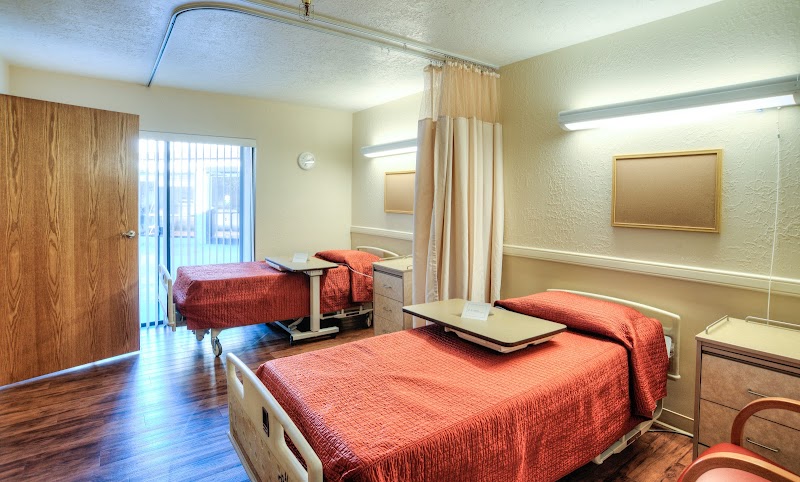
How is Bear Canyon Rehabilitation Center Staffed?

CMS rates Bear Canyon Rehabilitation Center's staffing level at 2 out of 5 stars, which is below average compared to other nursing homes. Staff turnover is 68%, which is 22 percentage points above the New Mexico average of 46%. High turnover can affect care consistency as new staff learn residents' individual needs. RN turnover specifically is 76%, which is notably high. RNs provide skilled clinical oversight, so turnover in this role can affect medical care quality.

What Have Inspectors Found at Bear Canyon Rehabilitation Center?

State health inspectors documented 68 deficiencies at Bear Canyon Rehabilitation Center during 2022 to 2025. These included: 4 Immediate Jeopardy (the most serious level, indicating potential for serious harm or death), 2 that caused actual resident harm, and 62 with potential for harm. Immediate Jeopardy findings are rare and represent the most serious regulatory concerns. They require immediate corrective action.

Who Owns and Operates Bear Canyon Rehabilitation Center?

Bear Canyon Rehabilitation Center is owned by a for-profit company. For-profit facilities operate as businesses with obligations to shareholders or private owners. The facility is operated by GENESIS HEALTHCARE, a chain that manages multiple nursing homes. With 178 certified beds and approximately 116 residents (about 65% occupancy), it is a mid-sized facility located in Albuquerque, New Mexico.

How Does Bear Canyon Rehabilitation Center Compare to Other New Mexico Nursing Homes?

Compared to the 100 nursing homes in New Mexico, Bear Canyon Rehabilitation Center's overall rating (2 stars) is below the state average of 2.9, staff turnover (68%) is significantly higher than the state average of 46%, and health inspection rating (2 stars) is below the national benchmark.

What Should Families Ask When Visiting Bear Canyon Rehabilitation Center?

Based on this facility's data, families visiting should ask: "What changes have been made since the serious inspection findings, and how are you preventing similar issues?" "How do you ensure continuity of care given staff turnover, and what is your staff retention strategy?" "Can you walk me through typical staffing levels on day, evening, and night shifts?" "Can I visit during a mealtime to observe dining assistance and food quality?" These questions are particularly relevant given the facility's Immediate Jeopardy citations, the facility's high staff turnover rate, and the below-average staffing rating.

Is Bear Canyon Rehabilitation Center Safe?

Based on CMS inspection data, Bear Canyon Rehabilitation Center has documented safety concerns. Inspectors have issued 4 Immediate Jeopardy citations (the most serious violation level indicating risk of serious injury or death). The facility has a 2-star overall rating and ranks #100 of 100 nursing homes in New Mexico. Families considering this facility should ask detailed questions about what corrective actions have been taken since these incidents.

Do Nurses at Bear Canyon Rehabilitation Center Stick Around?

Staff turnover at Bear Canyon Rehabilitation Center is high. At 68%, the facility is 22 percentage points above the New Mexico average of 46%. Registered Nurse turnover is particularly concerning at 76%. RNs handle complex medical decisions and coordinate care — frequent RN changes can directly impact care quality. High turnover means new staff may not know residents' individual needs, medications, or preferences. It can also be disorienting for residents, especially those with dementia who rely on familiar faces. Families should ask: What is causing the turnover? What retention programs are in place? How do you ensure care continuity during staff transitions?

Was Bear Canyon Rehabilitation Center Ever Fined?

Bear Canyon Rehabilitation Center has been fined $167,434 across 5 penalty actions. This is 4.8x the New Mexico average of $34,753. Fines at this level are uncommon and typically indicate a pattern of serious deficiencies, repeated violations, or failure to correct problems promptly. CMS reserves penalties of this magnitude for facilities that pose significant, documented risk to resident health or safety. Families should request specific documentation of what issues led to these fines and what systemic changes have been implemented.

Is Bear Canyon Rehabilitation Center on Any Federal Watch List?

Bear Canyon Rehabilitation Center is not on any federal watch list. The most significant is the Special Focus Facility (SFF) program, which identifies the bottom 1% of nursing homes nationally based on persistent, serious quality problems. Not being on this list means the facility has avoided the pattern of deficiencies that triggers enhanced federal oversight. This is a positive indicator, though families should still review the facility's inspection history directly.