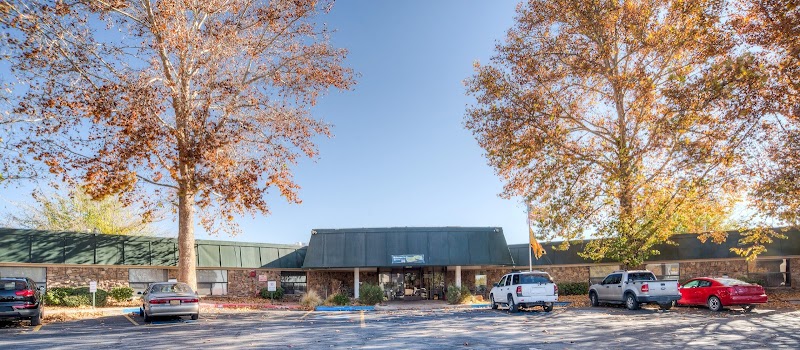
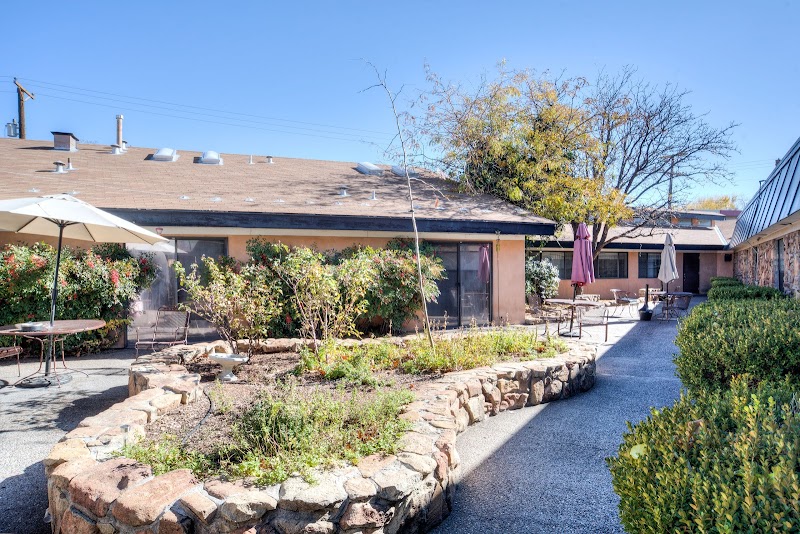
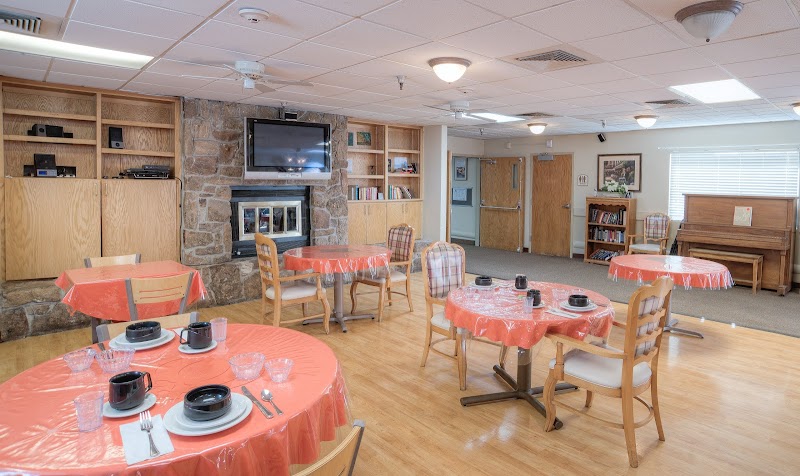
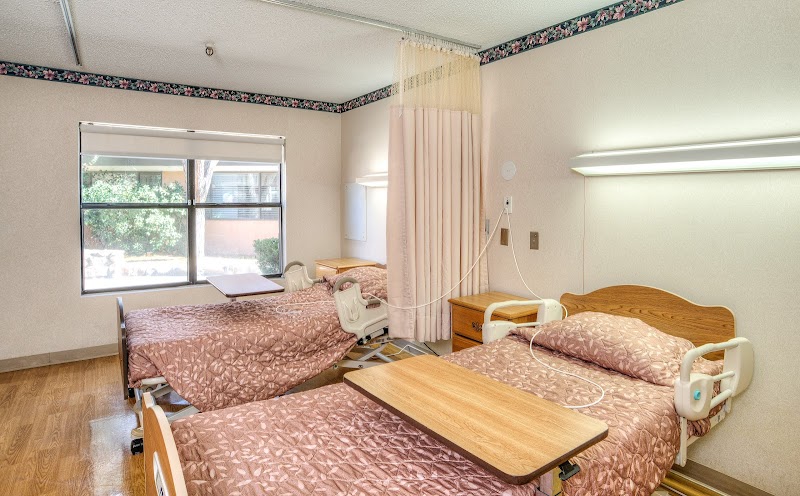
Sandia Ridge Center

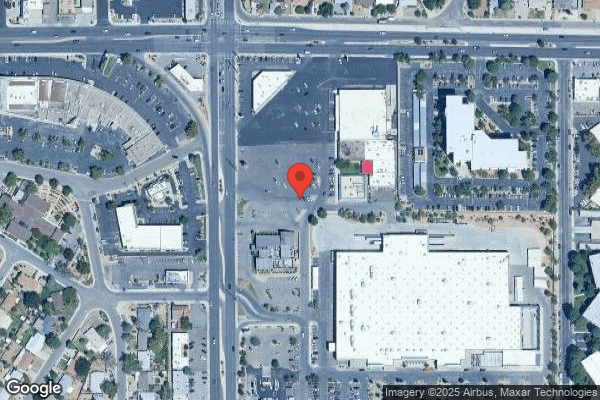
2216 Lester Drive NE, Albuquerque, NM 87112 (505) 296-4808
For profit - Corporation 140 Beds GENESIS HEALTHCARE Data: November 2025 3 Immediate Jeopardy citations
Trust Grade
0/100
#46 of 67 in NM
Last Inspection: April 2024

Within standard 12-15 month inspection cycle. Federal law requires annual inspections.

Overview

Sandia Ridge Center has received a Trust Grade of F, indicating significant concerns about the quality of care provided. They rank #46 out of 67 facilities in New Mexico, placing them in the bottom half, and #14 out of 18 in Bernalillo County, suggesting limited options for better care nearby. While the facility is improving, having reduced issues from 10 to 8 over the past year, they still have a high number of deficiencies, totaling 47, with three being critical, including failure to notify physicians of significant changes in residents' conditions, which may have contributed to a resident's death. Staffing is average with a 52% turnover rate, slightly below the state average, but the facility has concerning fines totaling $303,799, higher than 97% of facilities in the state. Furthermore, the RN coverage is average, which could mean potential oversight issues, as indicated by specific incidents of neglect and lack of adequate investigations into abuse complaints, raising serious concerns about resident safety.

Trust Score
F
0/100
In New Mexico
#46/67
Bottom 32%
Safety Record
High Risk
Review needed
Inspections
Getting Better
10 → 8 violations
Staff Stability
⚠ Watch
52% turnover. Above average. Higher turnover means staff may not know residents' routines.
Penalties
✓ Good
$303,799 in fines. Lower than most New Mexico facilities. Relatively clean record.
Skilled Nurses
○ Average
Each resident gets 37 minutes of Registered Nurse (RN) attention daily — about average for New Mexico. RNs are the most trained staff who monitor for health changes.
Violations
⚠ Watch
47 deficiencies on record. Higher than average. Multiple issues found across inspections.
★★☆☆☆
2.0
Overall Rating
★★★☆☆
3.0
Staff Levels
★★☆☆☆
2.0
Care Quality
★★☆☆☆
2.0
Inspection Score
Stable
2024: 10 issues
2025: 8 issues

The Good

  • Full Sprinkler Coverage · Fire safety systems throughout facility
  • No fines on record

Facility shows strength in fire safety.

The Bad

2-Star Overall Rating

Below New Mexico average (2.9)

Below average - review inspection findings carefully

Staff Turnover: 52%

Near New Mexico avg (46%)

Higher turnover may affect care consistency

Federal Fines: $303,799

Well above median ($33,413)

Significant penalties indicating serious issues

Chain: GENESIS HEALTHCARE

Part of a multi-facility chain

Ask about local staffing decisions and management

The Ugly 47 deficiencies on record

3 life-threatening 4 actual harm
Jul 2025 1 deficiency
CONCERN (E) 📢 Someone Reported This

A family member, employee, or ombudsman was alarmed enough to file a formal complaint

Potential for Harm - no one hurt, but risky conditions existed

ADL Care (Tag F0677)

Could have caused harm · This affected multiple residents

**NOTE- TERMS IN BRACKETS HAVE BEEN EDITED TO PROTECT CONFIDENTIALITY** Based on record review and interview, the facility failed to provide activities of daily living (ADL; activities related to pers...

Read full inspector narrative →
**NOTE- TERMS IN BRACKETS HAVE BEEN EDITED TO PROTECT CONFIDENTIALITY** Based on record review and interview, the facility failed to provide activities of daily living (ADL; activities related to personal care such as bathing, showering, dressing, walking, toileting, and eating) assistance for 4 (R #'s 1, 41, 85 and 114) of 4 (R #'s 1, 41, 85 and 114) residents reviewed for ADL care by not: Providing baths/showers per the schedule for R #'s 1, 41, and 85. Providing nail care for R #114. This deficient practice is likely to affect the dignity and health of the residents. The findings are: R #1: A. Record review of R #1's face sheet revealed R #1 was admitted into the facility on [DATE]. B. Record review of R #1's shower schedule revealed R #1's baths/showers were scheduled for Mondays, Wednesdays, and Fridays. C. Record review of R #1's care plan dated 05/16/25 revealed R #1 is at risk for decreased ability to perform ADL(s) in bathing, grooming, personal hygiene, dressing. eating, bed mobility, transfer, locomotion & toileting related to physical and cognitive impairments. R #1's interventions included staff monitoring for ADL decline and engagement in resident ADL activity and planning. D. Record review of R #1's Documentation Survey Report (ADL tracking form located in Electronic Health Record; EHR) dated 04/01/25 through 04/30/25 revealed, R #1 was offered/given 9 showers/baths out of 13 opportunities. Shower sheets were not provided by the facility for the timeframe. E. Record review of R #1's Documentation Survey Report dated 05/01/25 through 05/31/25 revealed, R #1 was offered/given 11 showers/baths out of 13 opportunities. Shower sheets were not provided by the facility for the timeframe. F. Record review of R #1's Documentation Survey Report dated 06/01/25 through 06/26/25 revealed, R #1 was offered/given 8 showers/baths out of 11 opportunities Shower sheets were not provided by the facility for the timeframe. G. On 06/24/25 at 3:46 pm during an interview, R #1 has difficulty communicating due to a Traumatic Brain Injury (TBI). R #1 did confirm that he was not receiving enough bed baths/showers per week. H. On 06/24/25 at 4:10 pm during an interview with R #1's Power of Attorney (POA; medical decision maker), she stated R #1's family will go into the facility to visit R #1, and they will tell her that R #1 was visibly dirty and had a foul odor present. R #1's POA confirmed her biggest concerns for R #1 involved the number of baths/showers that R #1 is given. I. On 06/27/25 at 4:09 pm during an interview with Certified Nursing Assistant (CNA) #4, he stated R #1 enjoys receiving baths/showers and R #1 will seldomly refuse one. CNA #4 confirmed all baths/showers and bath/showers refusal should be documented in shower sheets of the residents EHR. J. On 06/30/25 at 3:00 pm during an interview with Licensed Practical Nurse (LPN) #2, she confirmed R #1 enjoyed receiving baths/showers and R #1 liked to be clean. LPN #2 confirmed R #1 should be offered baths/showers per the schedule. K. On 07/01/25 at 12:06 pm during an interview with the Director of Nursing (DON), she confirmed R #1 was not offered or given enough baths/showers as scheduled and R #1 should have. R #41:L. Record review of R #41's face sheet revealed R # 41 was admitted into the facility on [DATE].M. On 06/23/25 at 12:31 during an interview, R #41 stated I do not receive hair care or nail care until my children come and pick me up. I would go outside of my room, but they don't offer. N. On 06/25/25 at 2:53 pm during interview with Licensed Practical Nurse (LPN) #5, she confirmed that residents are supposed to receive 2-3 offers for showers per week whether they are on hospice or not. O. Record review of R #41's Documentation Survey report (DSR) revealed a lack of documentation between hospice and facility regarding bathing for R #41 since October of 2024. There is one refusal documented for June 5th, out of 12 opportunities for the month.R #85:P. Record review of R #85's face sheet reveled R #85 was admitted to facility on 06/22/23.Q. On 06/25/25 at 12:56 pm during an interview with R #85's mother she stated, he wasn't getting his baths. He gets them Monday Wednesday and Fridays, and he said he doesn't get them on Friday.R. 06/23/25 03:14 PM during an interview with R #85, he stated They're supposed to change it [catheter] every 30 days but they don't. They don't change my urine bag often, and sometimes it overflows. I'm supposed to get a shower three times a week but they missed it. They were doing good for a while but now they're starting to slack. It frustrates me. S. Record review of R #125's EHR revealed only one shower-sheet (facility documentation of showers for residents) for the month of June. T. On 07/01/25 at 11:05 am during an interview with the DON, she stated resident's baths and showers should be documented on shower sheets and in the EHR. The DON confirmed three Documentation Survey Reports (DSR) showed staff did not offer and /or give R #85, R #41 enough baths and showers. R #114:U. On 06/23/25 at 11:35 an during an interview with R #114, she stated she has asked staff to trim her fingernails because they are getting a little too long. I would do it myself, but they will not allow me to have a nail clipper. V. On 06/30/25 at 3:02 am during an interview with CNA #1, he stated R #114 had not asked him to cut her nails. He further stated he would go into her room after this interview and trim her nails.W. On 07/01/25 at 10:17 am during an interview with R #114, she stated she is still waiting for her nails to be trimmed or for someone to give her a manicure. X. On 07/01/25 at 10:25 am during an interview with Activities Assistant (AA) #2, she stated no one has told her that R #114 wants a manicure. “We usually do manicures on Saturday or Sunday. We keep a list of residents that have asked for a manicure, and we will also make an announcement.”Y. On 07/01/25 at 11:25 am during an interview with the DON, she stated the expectation is to cut residents' nails when they ask you to. She further stated if the CNA, nurse, whoever the resident asked could not cut their nails right away I would expect them to give the resident a timeframe of when they are going to go back and cut them.
Mar 2025 4 deficiencies
CONCERN (D) 📢 Someone Reported This

A family member, employee, or ombudsman was alarmed enough to file a formal complaint

Potential for Harm - no one hurt, but risky conditions existed

Free from Abuse/Neglect (Tag F0600)

Could have caused harm · This affected 1 resident

**NOTE- TERMS IN BRACKETS HAVE BEEN EDITED TO PROTECT CONFIDENTIALITY** Based on record review and interview the facility failed to protect 1 (R #2) of 1 (R #2) resident reviewed from the use of a phy...

Read full inspector narrative →
**NOTE- TERMS IN BRACKETS HAVE BEEN EDITED TO PROTECT CONFIDENTIALITY** Based on record review and interview the facility failed to protect 1 (R #2) of 1 (R #2) resident reviewed from the use of a physical restraint that was not required to treat a resident's medical condition. This deficient practice could likely result in resident feeling trapped and hopeless. The findings are: A. Record review of R #2's face sheet dated 03/26/25 revealed R #2 was admitted to the facility on [DATE] with the following diagnoses: -Dementia (a chronic progressive decline of mental abilities and memory). -Need for assistance with personal care. -History of Traumatic Brain Injury (an injury of the brain that may cause a decline in memory, thought, personality or motor skill). -Homelessness The face sheet further revealed R #2 was discharged on 03/24/25. B. Record review of R #2's Elopement (to leave or exit without permission or knowledge of staff) Risk Evaluation dated 02/17/25 revealed he was not a risk of elopement. C. Record review of R #2's daily care note dated 02/27/25, stated R #2 was found in the parking lot and was brought back in by staff. A Wander Guard was being placed on his wheelchair. R #2 stated he is going to leave and doesn't want to be here D. Record review of the provider order dated 03/12/25 revealed an order for staff to place a Wander Guard elopement device due to poor safety awareness. E. Record review of R #2 care plan reviewed on 03/26/25 revealed the care plan did not contain any documentation for risk of elopement or the use of a Wander Guard. F. On 03/25/25 at 12:15 PM during interview with the Assistant Director of Nursing, he stated he could recall that R #2 had a Wander Guard placed on him starting in February. He reviewed and confirmed the daily care note dated 02/27/25 and agreed that a Wander Guard had been placed on R #2 at that time. ADON confirmed that he could remember R #2 had a Wander Guard on his person or on his wheelchair beginning in February 2025. He could not explain who placed the Wander Guard on R #2 and he confirmed that the order for placement of a Wander Guard was not entered until 03/12/25. ADON stated all the nurses have access to Wander Guards and a nurse would be able to place a Wander Guard any time with or without a provider order.
CONCERN (D) 📢 Someone Reported This

A family member, employee, or ombudsman was alarmed enough to file a formal complaint

Potential for Harm - no one hurt, but risky conditions existed

Deficiency F0657 (Tag F0657)

Could have caused harm · This affected 1 resident

**NOTE- TERMS IN BRACKETS HAVE BEEN EDITED TO PROTECT CONFIDENTIALITY** Based on record review and interview the facility failed to revise the care plan for 1 (R #2) of 1 (R #2) resident reviewed for ...

Read full inspector narrative →
**NOTE- TERMS IN BRACKETS HAVE BEEN EDITED TO PROTECT CONFIDENTIALITY** Based on record review and interview the facility failed to revise the care plan for 1 (R #2) of 1 (R #2) resident reviewed for care planning. This deficient practice has the potential for staff to fail to identify resident as an elopement risk. The findings are: A. Record review of R #2's face sheet dated 03/26/25 revealed R #2 was admitted to the facility on [DATE] with the following diagnoses: -Dementia (a chronic progressive decline of mental abilities and memory). -Need for assistance with personal care. -History of Traumatic Brain Injury (an injury of the brain that may cause a decline in memory, thought, personality or motor skill). -Homelessness The face sheet further revealed R #2 was discharged on 03/24/25. B. Record review of R #2's provider order dated 03/12/25 revealed an order for staff to place a Wander Guard elopement device due to poor safety awareness. C. Record review of R #2 care plan reviewed on 03/26/25 , revealed the care plan did not contain any documentation to include the risk of elopement and the order to place and use a Wander Guard on the resident. D. On 03/26/25 at 12:10 PM during interview with Assistant Director of Nursing, he confirmed R #2 had no care plan for being an elopement risk and no care plan for the placement of a Wander Guard.
CONCERN (D) 📢 Someone Reported This

A family member, employee, or ombudsman was alarmed enough to file a formal complaint

Potential for Harm - no one hurt, but risky conditions existed

Quality of Care (Tag F0684)

Could have caused harm · This affected 1 resident

**NOTE- TERMS IN BRACKETS HAVE BEEN EDITED TO PROTECT CONFIDENTIALITY** Based on record review and interview the facility failed to ensure staff provided care in accordance with professional standards...

Read full inspector narrative →
**NOTE- TERMS IN BRACKETS HAVE BEEN EDITED TO PROTECT CONFIDENTIALITY** Based on record review and interview the facility failed to ensure staff provided care in accordance with professional standards of practice for 1 (R #1) of 1 (R #1) resident. Nursing staff failed to maintain the scene of a suspcious death before calling the New Mexico Office of Medical Investigator. (OMI) (a New Mexico state agency that reviews and determines the need for investigation and autopsy when a person dies in a facility). This deficient practice could disturb the scene of a suspicious death so that it cannot be thoroughly assessed and reviewed by proper authorities. The findings are: A. Record review of OMI web page (hsc.unm.edu/omi/about/faq/reportable.html) reviewed on 03/27/25 at 11:30 am revealed the expectation to report any death suspected to be due to violence (suicidal, accidental or homicidal) and any death of a person in a nursing home should be reported to OMI. B. Record review of R #1 face sheet dated 03/28/25 revealed R #1 was admitted to the facility on [DATE] with the following diagnoses: -Fracture (break) of upper end of left Humorous (upper arm bone) -Anterior (front) Dislocation of Tibia (lower leg bone), Left Knee -Displaced Fracture of left Tibia -Dislocation of left Patella (knee bone) -Fracture of Left Clavicle (collar bone) -Aortic (large artery carrying blood from the heart) Aneurysm (weak spot in an artery) The face sheet further revealed R #1 had been discharged from the facility on 03/18/25 at 5:02 am for other reasons. C. Record review of R #1's daily care note dated 03/18/25 at 9:43 am revealed R #1 was found in his room at 4:50 am with a bag over his head and tied at the neck. The nurse observed no signs of life and asked for help. At 5:00 am the bag was removed from his head and R #1 was pronounced dead. The nurse notified the health provider, facility administrator, director of nursing, and supervisor of the incident. R #1's sister was contacted and message left. At 5:20 am the nurse notified the Office of Medical Investigator. At 5:45 am R #1's body was moved, cleaned and his Foley Catheter (a tube placed into the bladder to allow free flow of urine) was removed. D. Record review of the local police report number 250021249 dated 03/18/25 revealed police were called and arrived at the facility at 5:43 am. Upon arrival the officer found R #1 in his room where R #1 was covered with a line cloth sheet from head to toe. Staff reported they had removed the plastic bag and string from R #1 and thrown it away, they had washed, cleaned the body, and changed sheets prior to police or OMI arrival. The report further revealed that the arriving officer called and informed OMI of the death of R #1. E. On 03/27/25 at 12:10 PM, during interview with the facility Assistant Director of Nursing (ADON), he stated the expectation is that nurses would contact OMI before moving or disturbing the body. He confirmed that in this case, the nurses did not act according to expectations and the nurses should have waited for OMI or the police to release the body of R #1 before they moved and cleaned him. F. On 03/31/25 at 11:15 am ,during interview, the OMI investigator stated the facility did contact the OMI office to report the death of R #1. OMI investigator stated that the nurse was told to leave the scene untouched and contact the police immediately. OMI investigator stated he was called later by police at about 6:00 am. OMI investigator arrived at the facility about 6:30 am.
CONCERN (D) 📢 Someone Reported This

A family member, employee, or ombudsman was alarmed enough to file a formal complaint

Potential for Harm - no one hurt, but risky conditions existed

Accident Prevention (Tag F0689)

Could have caused harm · This affected 1 resident

**NOTE- TERMS IN BRACKETS HAVE BEEN EDITED TO PROTECT CONFIDENTIALITY** Based on observation record review and interview, the facility failed to provide adequate supervision for 1 (R #2) of 1 (R #2) r...

Read full inspector narrative →
**NOTE- TERMS IN BRACKETS HAVE BEEN EDITED TO PROTECT CONFIDENTIALITY** Based on observation record review and interview, the facility failed to provide adequate supervision for 1 (R #2) of 1 (R #2) resident reviewed who were identified as a risk for elopement (leave facility without authorization or supervision potentially endangering themselves or others.) This deficient practice likely resulted in the resident being able to eloped from the facility for over 24 hours likely putting himself at serious risk of adverse outcomes. The findings are: A. On 03/26/25 at 11:00 am, during observation of the facility entrance the front door was locked. To enter the building required a doorbell be pushed and staff within the facility would then activate and unlock the door. Once inside the building there was a lounge area with a nurses station directly across from the entrance. There were chairs and multiple residents sitting in the area. Multiple staff sat at the nurses station. Staff, visitors and residents were further observed to walk up to the front door where they pushed a green button that unlocked the front door allowing them to exit the building. B. Record review of R #2's face sheet dated 03/26/25 revealed R #2 was admitted to the facility on [DATE] with the following diagnoses: -Dementia (a chronic progressive decline of mental abilities and memory). -Need for assistance with personal care. -History of Traumatic Brain Injury (an injury of the brain that may cause a decline in memory, thought, personality or motor skill). -Homelessness C. Record review of Elopement Risk assessment for R #2 revealed the following: 1. 11/13/24 was not identify R #2 as an elopement risk. 2. 02/17/25 was not identify R #2 as an elopement risk. D. Record review of R #2 care plan revealed the following: -11/29/24 Impaired/decline in cognitive function or impaired thought. Observe and evaluate types of changes in cognitive status-confusion, orientation, forgetfulness, decision making, impulsivity. -The care plan did not include a plan regarding elopement risk (to leave or exit without permission or knowledge of staff) and the placement and use of a Wander Guard or requirement for increased supervision. E. Record review of R #2's provider order dated 03/12/25, revealed an order for staff to place a Wander Guard elopement device due to R #2's poor safety awareness. There was no previous provider order that had been entered for a Wander Guard to be placed on R #2 F. Record review of R #2's daily nursing notes revealed the following: -02/27/25 2:23 pm, R #2 was found in the parking lot and brought back in the facility by staff. A Wander Guard is being placed on his wheelchair. R #2 stated he is going to leave and doesn't want to be here. He stated he wants to go back to the streets to do his drugs. -02/27/25 2:34 pm, R #2 refused to have a Wander Guard on his person and on his wheelchair. -02/27/25 3:59 pm, R #2 seen by unit manager and the Director of Nursing seeking to leave the facility without permission and seeking for drugs. -03/24/25 11:00 pm, R #2 approached the nurses station where the provider sat and stated to the provider that he wanted to get out. Provider informed resident he should remain in the facility and continue care .Assistant Director of Nursing (ADON) was aware of R #2's desire to discharge and leave the facility. -03/24/25 11:26 pm, resident is missing in the room and dinning. Nurse announced all staff to assemble at nursing station. Staff divided and checked into each room and toilet in all units. Checked all backyards and around the building. Resident not found. Staff called 911 (emergency services). Police enter resident as a missing person. G. On 03/25/25 at 8:15 PM during phone interview with ADON, he described R #2 as a man who was wheelchair bound who was alert and oriented but due to his traumatic brain injury he was impulsive and made poor choices. ADON stated that on 03/24/25 at 5:15 PM, he was notified that R #2 was missing and could not be found. ADON stated R #2 probably left late afternoon (due to staff were unsure when he was last seen following lunch and was not around for the dinner meal) on 03/24/25, and he had been gone for 24 hours at this time and had not been located. H. On 03/26/25 at 12:00 PM, during interview with ADON, he stated R #2 had been located and had been taken to the hospital. ADON stated he had met with and interviewed R #2 since being found. ADON stated R #2 had informed him that he cut his Wander Guard off and left it somewhere unknown. R #2 had then exited the building at the front door by pressing the button that unlocked the door and exited. ADON stated the Wander Guards activate an alarm as they approach the front door. He stated the alarm was loud and would alert staff that a resident wearing a Wander Guard was near the front door. ADON stated this did not happen when R #2 left because he had cut his alarm off prior to approaching the door. ADON further stated that all residents with a Wander Guard are checked daily to assure that the Wander Guard was properly placed and functioning. He further stated that staff was aware that R #2 was an elopement risk, R #2 had cut her wander guard off before, and that he required close observation and monitoring. He also stated R #2 had a habit of sitting in the front area next to the nurses station throughout the day and evening hours and that he had told several staff that he wanted to leave the building and return to the streets.
Jan 2025 3 deficiencies
CONCERN (D) 📢 Someone Reported This

A family member, employee, or ombudsman was alarmed enough to file a formal complaint

Potential for Harm - no one hurt, but risky conditions existed

Report Alleged Abuse (Tag F0609)

Could have caused harm · This affected 1 resident

**NOTE- TERMS IN BRACKETS HAVE BEEN EDITED TO PROTECT CONFIDENTIALITY** Based on record review and interview, the facility failed to ensure that resident injuries of unknown sources were reported to t...

Read full inspector narrative →
**NOTE- TERMS IN BRACKETS HAVE BEEN EDITED TO PROTECT CONFIDENTIALITY** Based on record review and interview, the facility failed to ensure that resident injuries of unknown sources were reported to the State Agency within 24 hours to the state agency for 1 (R #4) of 2 (R #4 and R #5) residents reviewed. If the facility is not immediately investigating and reporting injuries of unknown sources residents are likely to be at risk of further injuries. The findings are: R #4 A. Record review of R #4's face sheet revealed R #4 was admitted to the facility on [DATE] with multiple diagnoses including: -Pain in Left Hip. -Dementia (a progressive disease that affects memory). -Lack of Coordination. Face sheet further revealed she was readmitted to the facility on [DATE] with new diagnoses including: -Fracture of Left Femur (large upper leg bone) with routine healing. -Fracture of left Patella (knee bone) B. Record review of R #4's X-ray report of the left leg dated 10/29/24 stated no acute fracture or dislocation. Prior fixation hardware (surgically placed metal supports and screws used to repair fractured bones) present. C. Record review of R #4's hospital H & P (history and physical) report revealed R #4 was admitted to hospital for leg pain on 11/03/24. R #4 reported she fell a few days ago landing on her left hip and today (11/03/24) she began having pain. Record continues to state History of Present Illness R #4 was brought to hospital for evaluation of left hip pain after mechanical fall. It further stated R #4 sustained a mechanical fall on the afternoon before (11/02/24) landed on her left hip. There was no head trauma or loss of consciousness. D. Record review of R #4's daily progress notes dated 11/03/24 at 10:31 am reported R #4 pain issue: Location Left Hip. Note dated 11/03/24 at 12:39 pm reported R #4 was transferred to [name of hospital] and listed reason for transfer edema (swelling) new or worsening. E. Record review of R #4's facility pre-admission note dated 11/06/24 stated patient's hospital diagnoses for hospital admission was for evaluation of left hip pain after mechanical fall. Note further stated R #4 had incisions (surgical cuts) from surgery. F. Record review of R #4's daily progress note dated 11/06/24 at 6:36 pm reported that R #4 had been returned to the facility with new skin issue described dot-like wound present on admission. Front left trochanter (upper end of leg bone-hip bone)-surgical site closed with staples. Left patella (Knee Bone) -surgical site closed with staples. G. On 01/29/25 at 2:59 pm during interview with Administrator (ADM), she stated that she was not aware that R #4 had fallen on 11/03/24 and was not aware of the extent of her injuries. She stated that had she known, she would have conducted an investigation and reported to the state agency as required. ADM acknowledged that neither she nor any other staff investigated these reported changes on 11/03/24 or upon R #4's return from the hospital on [DATE]. ADM stated there had been no initial report of the incident to the state agency and no five day follow up report submitted to the state agency.
CONCERN (D) 📢 Someone Reported This

A family member, employee, or ombudsman was alarmed enough to file a formal complaint

Potential for Harm - no one hurt, but risky conditions existed

Investigate Abuse (Tag F0610)

Could have caused harm · This affected 1 resident

**NOTE- TERMS IN BRACKETS HAVE BEEN EDITED TO PROTECT CONFIDENTIALITY** Based on record review and interview, the facility failed to investigate and report within five working days, injuries of unknow...

Read full inspector narrative →
**NOTE- TERMS IN BRACKETS HAVE BEEN EDITED TO PROTECT CONFIDENTIALITY** Based on record review and interview, the facility failed to investigate and report within five working days, injuries of unknown origin for 1 (R #4) of 2 (R #4 and R #5) residents reviewed for incidents. If the facility is not completing an accurate and thorough investigation and submitting the summary of the facility's investigation to the State Agency, then the State Agency is unable to appropriately triage (review) the allegation for further investigation. The findings are: R #4 A. Record review of R #4's face sheet revealed R #4 was admitted to the facility on [DATE] with multiple diagnoses including: -Pain in Left Hip. -Dementia (a progressive disease that affects memory). -Lack of Coordination. Face sheet further revealed she was readmitted to the facility on [DATE] with new diagnoses including: -Fracture of Left Femur (large upper leg bone) with routine healing. -Fracture of left Patella (knee bone) B. Record review of R #4's X-ray report of left leg dated 10/29/24 stated no acute fracture or dislocation. Prior fixation hardware (surgically placed metal supports and screws used to repair fractured bones) present C. Record review of R #4's daily progress note dated 11/03/24 at 12:39 pm reported that R #4 was transferred to (name of hospital) and listed reason for transfer edema (swelling) new or worsening. D. Record review of R #4's facility pre-admission note dated 11/06/24 stated patient's hospital diagnoses for hospital admission was for evaluation of left hip pain after mechanical fall. Note further stated R #4 has incisions (surgical cuts) from surgery. E. Record review of R #4's hospital H & P Notes (history and physical) revealed R #4 was admitted to hospital for leg pain. R #4 reported she fell a few days ago landing on her left hip and today (11/03/24) she began having pain. Record continues to state History of Present Illness that R #4 was brought to hospital for evaluation of left hip pain after mechanical fall. It further states R #4 sustained a mechanical fall on the afternoon before (11/02/24) landed on her left hip. There was no head trauma or loss of consciousness. F. Record review of R #4's daily progress note dated 11/06/24 at 6:36 pm reported that she had been returned to the facility with new skin issue described dot-like wound present on admission. Front left trochanter (upper end of leg bone-hip bone)-surgical site closed with staples. Left patella-surgical site closed with staples. G. On 01/29/25 at 10:15 am during interview with Assistant Director of Nursing (ADON) #2 he confirmed that R #4 was transferred to hospital on [DATE] and returned on 11/06/24. He stated the daily progress notes indicated that R #4 had returned from hospital with surgical sites and orders to provide wound care. He stated there was no indication of any fall within the facility prior to 11/03/24 and no fall was reported to staff. H. On 01/29/25 at 2:59 pm during interview with Administrator (ADM), she stated that she was not aware that R #4 had fallen on 11/03/24 and was not aware of the extent of her injuries. She stated that had she known, she would have conducted an investigation and reported to the state agency as required. ADM acknowledged that neither she nor any other staff investigated these reported changes on 11/03/24 or upon R #4's return from the hospital on [DATE]. ADM stated there had been no initial report of the incident to the state agency and no five day follow up report submitted to the state agency.
CONCERN (E) 📢 Someone Reported This

A family member, employee, or ombudsman was alarmed enough to file a formal complaint

Potential for Harm - no one hurt, but risky conditions existed

Deficiency F0760 (Tag F0760)

Could have caused harm · This affected multiple residents

**NOTE- TERMS IN BRACKETS HAVE BEEN EDITED TO PROTECT CONFIDENTIALITY** Based on record review and interview the facility failed to ensure that 1 (R #1) of 1 (R #1) resident received prescribed intrav...

Read full inspector narrative →
**NOTE- TERMS IN BRACKETS HAVE BEEN EDITED TO PROTECT CONFIDENTIALITY** Based on record review and interview the facility failed to ensure that 1 (R #1) of 1 (R #1) resident received prescribed intravenous (IV) (medications administered directly into the vein) medications on time in accordance with professional standards of practice. The facility failed to provide and administer antibiotic (antibacterial) medications as ordered by the prescriber. The findings are: A. Record review of R #1's face sheet revealed R #1 was admitted to the facility on [DATE] with multiple diagnoses including: -Acute (sudden onset) Infective Endocarditis (a serious, potentially life threatening bacterial infection of the heart) -Bacteremia (a serious bacterial infection of the blood stream) and was transferred to a local hospital on [DATE] and was discharged the same day. B. Record review of R #1's provider orders revealed the following: -10/19/24 Ampicillin (antibiotic medication used to treat bacterial infections) 2 GM (grams). Use 100 ml (milliliter) intravenously every four hours for Enterococcus faecalis (a specific bacteria) Bacteremia until 11/25/24. -10/19/24 Ceftriaxone Sodium (antibiotic medication used to treat bacterial infections) 2 GM use 100 ml intravenously every 12 hours for Enterococcus faecalis bacteremia. No end date. C. Record review of R #1's Daily Notes revealed the following: -10/20/24 at 8:18 am Ampicillin Intravenous solution. Awaiting med (medication) delivery. -10/20/24 at 8:18 am Ceftriaxone intravenous solution. Awaiting med delivery. -10/20/24 at 10:38 am Ampicillion Intravenous Solution. Awaiting med delivery. -10/20/24 at 3:15 pm Ampicillin intravenous solution. Awaiting med delivery. -10/20/24 at 5:27 pm Family concerned about IV antibiotic administration and having medication available. Reassured family that pharmacy had been called and IV antibiotics were to arrive STAT (immediately). -10/20/24 10:01 pm Ampicillin intravenous solution. Awaiting pharmacy delivery. -10/20/24 at 10:01 pm Ceftriaxone intravenous solution. Awaiting pharmacy delivery. -10/21/24 at 1:07 am Change in Condition-Transferred to hospital. -10/21/24 at 11:04 pm Ampicillin intravenous solution. Awaiting pharmacy delivery. -10/22/24 at 4:18 am Ampicillin intravenous solution. Awaiting pharmacy delivery. D. Record review of R #1's hospital emergency room care note dated 10/21/24 revealed R #1 was received at the emergency room due to not receiving prescribed antibiotic medications and R #1's son's concern that she had not been administered any antibiotic medications for three days. E. Record review of R #1's Medication Administration Record (MAR) for the month of October 2024 revealed the following: -Ampicillin Intravenous Solution was administered on 10/19/24 at 11:00 pm and on 10/20/24 at 3:00 am. -Ampicillin Intravenous Solution was due but not administered on 10/20/24 at 7:00 am, 10/20/24 at 11:00 am, 10/20/24 at 3:00 pm, 11/20/24 at 7:00 pm, 10/20/24 at 11:00 pm, and on 10/20/24 at 3:00 pm. -Ampicillin Intravenous Solution was due but not administered on 10/21/24 at 7:00 am and on 10/21/24 at 11:00 am due to R #1 being at hospital. -Ampicillin Intravenous Solution was administered on 10/21/24 at 3:00 pm and at 7:00 pm. -Ampicillin Intravenous Solution was due but not administered on 10/21/24 at 11:00 pm and on 10/21/24 at 3:00 pm. -Ceftriaxone intravenous solution was due but not administered on 10/20/24 at 8:00 am and 10/20/24 at 8:00 pm. F. On 01/29/25 at 10:50 am during interview with the Assistant Director of Nursing (ADON) 2, he confirmed R #1 was admitted to the facility with orders to administer antibiotics intravenously. He confirmed that R #1's IV antibiotics were ordered but not available for multiple doses because to the pharmacy did not deliver the medications. ADON #2 stated that the ordered IV antibiotics must be administered on time to maintain a therapeutic level (an expected blood level of the medication so that the medication is effective) of the antibiotic medication. ADON 2 stated that this administration schedule would be especially critical for R #1 due to her diagnosis of Endocarditis.
Jul 2024 2 deficiencies
CONCERN (D) 📢 Someone Reported This

A family member, employee, or ombudsman was alarmed enough to file a formal complaint

Potential for Harm - no one hurt, but risky conditions existed

Free from Abuse/Neglect (Tag F0600)

Could have caused harm · This affected 1 resident

**NOTE- TERMS IN BRACKETS HAVE BEEN EDITED TO PROTECT CONFIDENTIALITY** Based on record review and interview the facility failed to keep residents free from abuse for 1 (R #1) of 3 (R #1, R #2, and R ...

Read full inspector narrative →
**NOTE- TERMS IN BRACKETS HAVE BEEN EDITED TO PROTECT CONFIDENTIALITY** Based on record review and interview the facility failed to keep residents free from abuse for 1 (R #1) of 3 (R #1, R #2, and R #3) residents reviewed for abuse and neglect. This deficient practice likely resulted in staff to resident abuse in which R #1 had bruises to both hands. The findings are: A. Record review of R #1's face sheet, dated 07/23/24, revealed R #1 was admitted to the facility on [DATE] with multiple diagnoses including: -Type 2 diabetes mellitus (a chronic condition in which the body does nor properly process blood sugar) with foot ulcer (a wound of the foot). -Chronic respiratory failure (a chronic condition of the lungs) with hypoxia (low blood oxygen level). -Adjustment disorder (a mental health condition in which a person has difficulty adjusting to changes) with mixed anxiety (nervousness) and depressed mood (chronic sadness). -Chronic systolic heart failure (a chronic failure of the heart to adequately pump blood). B. Record review of R #1 daily nurses progress notes revealed a note, dated 06/25/24 and signed by Licensed Practical Nurse (LPN) #1, staff asked R #1 if they could see his cell phone, and he refused to let the nurse see his cell phone. The nurse thought it was hers, because the nurse and the resident had the same case and the same phone. The nurse took the cell phone from R #1's hand. R #1 had two bruises on his hand near his thumbs. C. On 07/23/24 at 10:49 am during interview with LPN #1, she stated she worked as the assigned nurse in the 500 unit on 06/25/24. She stated that on 6/25/24, the facility Wound Care Nurse (WCN) came to her at the nurses station and asked for help to find her cell phone. LPN #1 stated they began to look together, and when they entered the dining area the WCN noted R #1 sat at a dining table with his cell phone. LPN #1 stated the WCN walked up to R #1 and asked to see his phone. She stated the WCN grabbed at the phone when the resident refused to give her his phone. LPN #1 stated the WCN began to wrestle with R #1 to take the phone from his hand. She stated the WCN forced the phone from R #1's hands and began to walk away. LPN #1 stated the WCN recognized the phone was not hers, she returned the phone to R #1, and she apologized to the resident. LPN #1 stated she checked R #1's hands and noted he had a finger size bruise at the base of the thumb on both hands. D. On 07/23/24 at 11:18 am during interview with Assistant Director of Nursing (ADON), he stated he passed through the dining area of the facility on 06/25/24, and he saw the WCN and R #1 arguing over a phone. The ADON stated he saw the WCN grab R #1's cell phone and pull it from R #1's hands. He stated the WCN forcefully pulled the phone away from the resident and walked away. The ADON stated the interaction was loud and obvious to all present in the area. The ADON stated R #1 was very upset by the incident. The ADON stated he felt the interaction was very inappropriate on the part of the WCN E. On 07/23/24 at 11:45 am during interview with R #1, he stated he sat at a dining table in the dining area on 06/25/24 . He stated a nurse came up behind him, reached over his shoulder, and grabbed his cell phone. R #1 stated he did not know the nurse but saw her in the facility before. R #1 stated he refused to give the nurse his phone, and they struggled. R #1 stated she forcefully pulled the cell phone out of his hands and walked away. R #1 stated he was very upset by the incident, and he had bruises on both hands caused by the nurse during the incident.
MINOR (C) 📢 Someone Reported This

A family member, employee, or ombudsman was alarmed enough to file a formal complaint

Minor Issue - procedural, no safety impact

Food Safety (Tag F0812)

Minor procedural issue · This affected most or all residents

Based on observation, record review, and interview, the facility failed to document the daily temperature of a resident refrigerator used to store resident snacks that was located in the 100 unit of t...

Read full inspector narrative →
Based on observation, record review, and interview, the facility failed to document the daily temperature of a resident refrigerator used to store resident snacks that was located in the 100 unit of the facility. This deficient practice is likely to affect all 23 residents of the 100 unit as listed on the resident census list provided by the administrator on 07/23/24 and could likely lead to foods not being stored properly. The findings are: A. On 07/23/24 at 8:30 am during observation of the facility 100 unit, a refrigerator was in the dining area. The refrigerator contained food items and snacks for residents of the 100 unit. On the front of the refrigerator was a written log that contained daily temperatures of the refrigerator. B. Record review of this 100 unit refrigerator temperature log, dated July 2024, revealed staff did not document the refrigerator's temperature on 07/05/24 through 07/07/24 and 07/13/24 through 07/23/24. C. On 07/23/24 at 9:00 AM during an interview with Certified Nursing Assistant (CNA) #1, she verified that the refrigerator contained resident snacks and foods. She stated staff were expected to monitor the refrigerator temperature and recorded it on the temperature log. CNA #1 confirmed staff did not record the refrigerator temperature on 07/05/24 to 07/07/24 and from 07/13/24 to 07/23/24.
May 2024 1 deficiency
CONCERN (D) 📢 Someone Reported This

A family member, employee, or ombudsman was alarmed enough to file a formal complaint

Potential for Harm - no one hurt, but risky conditions existed

Grievances (Tag F0585)

Could have caused harm · This affected 1 resident

**NOTE- TERMS IN BRACKETS HAVE BEEN EDITED TO PROTECT CONFIDENTIALITY** Based on record review and interview, the facility failed to recognize, investigate, and respond to the grievance of 1 (R #1) of...

Read full inspector narrative →
**NOTE- TERMS IN BRACKETS HAVE BEEN EDITED TO PROTECT CONFIDENTIALITY** Based on record review and interview, the facility failed to recognize, investigate, and respond to the grievance of 1 (R #1) of 5 (R #1, #2, #3, #4, and #5) residents. This deficient practice is likely to result in residents feeling that their concerns do not matter, and their rights are not being honored. The findings are: A. Record review of a face sheet, dated 05/06/24, revealed R #1 was admitted to the facility on [DATE] with multiple diagnoses including: - Sepsis (a serious condition in which the body responds improperly to an infection) unspecified organism, - Altered mental status (a change in a person's ability to recall and reason), - Disorientation, - Difficulty walking. B. Record review of R #1's nursing daily notes, dated 04/15/24 at 6:20 pm, revealed staff documented the resident's wife and daughter spoke with the evening nurse on duty. They were upset and said the resident's brief was very soaked and smelly when they arrived. C. Record review of facility reported grievances for the month of April 2024 revealed the record did not contain a grievance report regarding R #1. D. On 05/06/24 at 11:20 am during an interview with R #1's daughter, she stated she arrived at the facility to visit her father on or about 04/15/24 and found him lying in a very wet brief with a foul odor. She stated she reported this to the nurse assigned to her father's care on that day. E. On 05/06/24 at 3:02 pm during an interview with Director of Nursing (DON), she reviewed the nursing daily notes, dated 04/15/24 at 6:20 pm and stated she was not aware of the reported incident. She stated the incident was not reported to her, and the nurse should have reported the incident to her. F. On 05/07/24 at 11:45 am during an interview with Administrator (ADM), she reviewed the nursing daily notes, dated 04/15/24 at 6:20 pm and stated she was not aware of the incident. She reviewed the facility records and stated staff did not report the family's grievance regarding R #1. She stated the incident should have been reported as a grievance and investigated.
Apr 2024 7 deficiencies
CONCERN (D) 📢 Someone Reported This

A family member, employee, or ombudsman was alarmed enough to file a formal complaint

Potential for Harm - no one hurt, but risky conditions existed

Deficiency F0561 (Tag F0561)

Could have caused harm · This affected 1 resident

Based on record review and interview, the facility failed to ensure residents were bathed according to their preference for 1 (R #83) of 3 (R #83) resident reviewed for showers. This deficient practic...

Read full inspector narrative →
Based on record review and interview, the facility failed to ensure residents were bathed according to their preference for 1 (R #83) of 3 (R #83) resident reviewed for showers. This deficient practice has the potential to prevent residents from maintaining personal hygiene per their personal preference. The findings are: Resident #83 A. On 04/08/24 at 8:43 am, during an interview with R #83, she stated she wanted to shower everyday. She stated she was independent and could shower on her own. The resident stated she did not understand why she could not shower when she wanted. She stated she took a shower three days per week now. R #83 also stated that showering should be to her preference, not the facility's schedule, or when they had a staff member available. R #83 stated she was aware the facility policy was to have staff present for all residents when showering. B. Record review of R # 83's quarterly Minimum Data Set (MDS; a federally mandated assessment instrument completed by facility staff), dated 01/03/24, indicated the following: - R #83 was independent with showering and bathing. - R #83 had a Brief Interview of Mental Status (BIMS, a screening for cognitive impairment) score of 15, intact cognition. C. Record review of R #83's care plan, last updated on 01/10/24, indicated R #83 required minimal assistance for activities of daily living (ADL) in bathing, transfer, and toileting. D. On 04/08/24 at 10:45 am, during an interview with Registered Nurse (RN) #3, she stated the residents usually got showers in the morning. RN #3 stated they will ask R #83 if she wanted a shower, and she refused. She stated the resident will come back later, like at 4:30 pm, and ask if she can have shower. RN #3 stated that was not the best time for the staff to give showers, and the staff often were not able to accommodate her. The RN stated R #83 did not want to take a shower in the morning. She said last week the resident asked to take a shower at 4:30 pm, and when the staff refused the resident reported it to Social Services. RN #3 stated the facility policy was that resident could not shower alone, and staff must be present. She stated R #83 might be able to shower independently, but the facility's policy did not allow it E. On 04/10/24 at 2:08 pm, during an interview with the Director of Nursing (DON), she stated R #83 wanted to take a shower when she wanted to shower, and it was usually not at the best time for staff. She stated R #83 was a little impulsive and would sometimes make decisions that were not in her best interest. The DON stated she felt the resident needed to have a least someone in the room while she showered. The DON stated she implemented a facility policy that no one showered completely independently. She stated that if R #83 worked with them a little bit then she probably could get a shower everyday. The DON stated the resident refused to do that.
CONCERN (D)

Potential for Harm - no one hurt, but risky conditions existed

Report Alleged Abuse (Tag F0609)

Could have caused harm · This affected 1 resident

Based on record review and interview the facility staff failed to report an incident to the state agency in which staff found a resident unresponsive for 1 (R #115) of 1 (R #115) resident sampled for ...

Read full inspector narrative →
Based on record review and interview the facility staff failed to report an incident to the state agency in which staff found a resident unresponsive for 1 (R #115) of 1 (R #115) resident sampled for accidents. If the facility fails to report injuries of unknown origins to the state agency, it could likely impact the safety of the residents. The findings are: A. Record review of the nursing progress notes for R #115, dated 03/20/24 at 7:47 am, indicated staff observed R #115 outside in a wheelchair, slumped forward and non-responsive, with burnt foil, two straws and a lighter at his feet on 04/19.24. The staff brought R #115 to his room, emergency medical services (EMS) were activated, staff gave the resident two Narcan intramuscular (used to stop the effects of opioids), physician in room, and the resident began to respond. EMS arrived. Resident refused transport to emergency room (ER). Resident kept at nurse's side, and the resident stated he wanted to go to the ER. When EMS arrived the resident refused again. Care plan updated to address possible substance abuse. Drug screen and supervised outings until results. B. Record review of the drug screen for R #115, completed on 03/19/24, indicated R #115 did not have any illegal drugs in his system. C. On 04/10/24 at 2:30 pm, during an interview with the Administrator, he stated he did not report this incident to the state agency, because it was not a drug overdose. He said the physician was present, they gave the resident two doses of Narcan, the resident responded to it, and his vitals normalized. The Administrator stated the resident passed a drug screen, stated he did not use drugs, and refused to go to the hospital with EMS. The Administrator stated there was not anything to report.
CONCERN (D)

Potential for Harm - no one hurt, but risky conditions existed

Comprehensive Care Plan (Tag F0656)

Could have caused harm · This affected 1 resident

**NOTE- TERMS IN BRACKETS HAVE BEEN EDITED TO PROTECT CONFIDENTIALITY** Based on record review and interview, the facility failed to develop a comprehensive, person-centered care plan which included i...

Read full inspector narrative →
**NOTE- TERMS IN BRACKETS HAVE BEEN EDITED TO PROTECT CONFIDENTIALITY** Based on record review and interview, the facility failed to develop a comprehensive, person-centered care plan which included information about current dialysis strategies used for 1 (R #39) of 1 (R #39) residents reviewed for care plans. This deficient practice could likely result in residents not receiving the care needed to reach their highest practicable level of well-being. The findings are: Findings for R #39 A. Record review of R #39's Face Sheet revealed she was admitted to the facility on [DATE] with the following diagnoses: End stage renal disease (a condition where the kidney reaches advanced state of loss of function. This causes changes in urination, fatigue, swelling of feet, high blood pressure, and loss of appetite), dependence on renal dialysis (kidney dialysis is the process of removing excess water, solutes, and toxins from the blood in people whose kidneys can no longer perform these functions naturally), and hypertension (high blood pressure) B. Record review of R #39's care plan, dated 02/12/24, revealed the care plan did not address the following: - The dialysis fistula (made by joining an artery and a vein in the arm), - Care bruit (a rumbling or swooshing sound that you can hear or feel at the site of your hemodialysis access), - Thrill [a vibration felt upon palpation (touch)], - Monitoring for signs and symptoms of infections (redness, pus coming out the dialysis site, sore to the touch), - Bleeding and anything abnormal regarding the site, - Goals, - Interventions. C. On 04/11/24 at 2:43 pm, during an interview with the Director of Nursing (DON) confirmed there was nothing in the care plan that centered around dialysis. The DON's expectations were that the care plan would include all things dialysis.
CONCERN (D)

Potential for Harm - no one hurt, but risky conditions existed

Medication Errors (Tag F0758)

Could have caused harm · This affected 1 resident

Based on record review and interview, the facility failed to ensure residents or their representatives were aware of and understood the risks and benefits of the psychotropic medication they received ...

Read full inspector narrative →
Based on record review and interview, the facility failed to ensure residents or their representatives were aware of and understood the risks and benefits of the psychotropic medication they received for 1 (R #44) of 3 (R #'s 44, 88 and 90) residents when staff did not inform residents or their representatives of why a medication was prescribed and administered, what diagnoses or condition it treated, what side effects could occur, and alternative medication or nonpharmacological approaches. This deficient practice could likely result in residents potentially receiving unnecessary treatment or medication. The findings are: A. Record review of the Face Sheet for R #44 revealed an initial admission date of 09/02/21 and included the following diagnoses: Dementia (a group of symptoms that affect memory, thinking and interfere with daily life) with behaviors, major depressive disorder (a persistent feeling of sadness and loss of interest), and anxiety disorder (intense, excessive and persistent worry and fear about everyday situations). B. Record review of the Physician's Orders for R #44 revealed the following: - Buspirone HCI (a psychotropic medication that affects chemicals in the brain and is used to treat anxiety) tablet, 5 mg. Give one tablet by mouth three times a day for anxiety/behaviors. Start date: 02/15/22. C. Record review of the Psychotherapeutic Medication (drugs that alter mood, perceptions, and behaviors and are used to treat mental disorders) Administration Disclosure form for R #44, dated 10/11/21, revealed the form did not identify buspirone as a medication for which the staff provided the resident or the resident's representative information or for which the resident or resident representative gave consent. D. Record review of the electronic medical record for R #44's revealed the record did not contain documentation staff informed R #44 or the responsible party on the risks and benefits of why buspirone HCI, order dated 02/15/22, was prescribed and administered, what diagnoses or condition it treated, what side effects could occur, and alternative medication or nonpharmacological approachesbuspirone that was prescribed on 02/15/22. E. On 04/12/24 at 1:25 pm during an interview with the DON, she stated there should be a signed consent form for the use of buspirone and verified there was not one on file for R #44. She stated the Psychotherapeutic Medication Administration Disclosure consent form in R #44's file was for the psychotropic medications that R #44 took since 2021. She stated when the buspirone was later prescribed there should have been a new consent signed to include all current psychotropic medications.
CONCERN (E)

Potential for Harm - no one hurt, but risky conditions existed

Resident Rights (Tag F0550)

Could have caused harm · This affected multiple residents

Based on observation and interview, the facility failed to treat residents with respect and dignity for 2 (R #22 and R #74) of 2 (R #22 and R #74) residents randomly identified when the facility faile...

Read full inspector narrative →
Based on observation and interview, the facility failed to treat residents with respect and dignity for 2 (R #22 and R #74) of 2 (R #22 and R #74) residents randomly identified when the facility failed to ensure staff knocked on the resident's bedroom door before they entered the resident's room. These deficient practices could likely result in residents feeling unimportant and they did not have privacy. The findings are: Findings for R # 22 A. On 04/08/24 at 10:57 am, during an observation, Certified Nursing Assistant (CNA) #1 walked into R #22's room to answer the call light without knocking on the resident's door before entering. B. On 04/08/24 at 11:00 am, during an observation, CNA #1 walked into R #22's room without knocking on the door before entering. C. On 04/08/24 at 11:01 am, during an interview with CNA #1, she confirmed she should have knocked on R #22's door prior to entry. Findings for R # 74 D. On 04/08/24 at 2:30 pm, during an observation, Registered Nurse (RN) #1 walked into R #74's room without knocking on the door before entering. E. On 04/08/24 at 2:30 pm, during an interview with R #74, she stated staff did not knock on her door before they entered. She stated the staff just walked into her room. R #74 stated she did not like that staff did not treat it like it was her room. the resident said, It bothers me. F. On 04/08/24 at 2:35 pm, during an interview, RN #1 confirmed staff should knock on the door and wait until the resident gave permission to come into the room. G. On 04//11/24 at 2:36 pm, during an interview with the Director of Nursing (DON), she stated staff entering a resident's room are expected to knock on the door, announce they want to come into the resident's room, and wait for permission. They should not just walk into the resident's room.
CONCERN (E)

Potential for Harm - no one hurt, but risky conditions existed

Deficiency F0657 (Tag F0657)

Could have caused harm · This affected multiple residents

R # 78 C. Record review of medical records for R #78 indicated staff did not document a care conference or an invitation to a care plan meeting in the last three months. D. On 04/09/24 at 9:21 am, du...

Read full inspector narrative →
R # 78 C. Record review of medical records for R #78 indicated staff did not document a care conference or an invitation to a care plan meeting in the last three months. D. On 04/09/24 at 9:21 am, during an interview with R #78, she stated she was not aware of the care plan meetings, because the staff did not invite her. She stated she did not know there was anything available like that. The resident stated she would like to attend them. E. On 04/11/24 at 11:50 am during an interview with the Administrator, he stated the care plan meetings and conferences did not get done like they were supposed to. He stated staff did not send out notifications, because there were not care plans scheduled. F. On 04/11/24 at 3:00 pm, during an interview with the Social Services Assistant (SSA), she stated staff notified the residents of the care plan meetings by laying a letter on their bed. She was unsure if the staff kept copies of the letters. The SSA stated staff verbally invited R #78 to the care plan meeting becuase it was easier just to tell the resident. G. On 04/11/24 at 11:46 am and 04/12/243 at 9:04 am, during an interview with the Social Services Director (SSD), she stated she has been behind on care plans, because she did not have help. She stated the care plan meeting notifications were not going out, because the care plans were not done. The SSD stated R #78's care plan meetings in the past have just been a verbal invite, and she did not keep a sign in sheet for the care plan meeting. Based on record review and interview, the facility failed to ensure residents or their representatives were invited to care plan meetings for 1 (R #48) of 1 (R #48) resident reviewed for participation in care planning. If residents are not able to participate in their care plan development, then residents could likely not receive the care and treatment that they need or want. The findings are: R #48 A. Record review of the progress notes for R #48, dated 01/01/24 to 04/09/24, revealed staff did not document a care conference or an invitation to a care plan meeting in the last three months. B. On 04/09/24 at 9:39 am, during an interview with R #48, he stated he used to go to his care plan conferences, but now he was not invited.
CONCERN (F)

Potential for Harm - no one hurt, but risky conditions existed

Deficiency F0761 (Tag F0761)

Could have caused harm · This affected most or all residents

Based on observation and interviews that facility failed to: 1. Ensure medications were kept in original packaging. 2. Ensure all expired supplies were not kept with unexpired supplies. 3. Ensure medi...

Read full inspector narrative →
Based on observation and interviews that facility failed to: 1. Ensure medications were kept in original packaging. 2. Ensure all expired supplies were not kept with unexpired supplies. 3. Ensure medication refrigerator temperatures were recorded. 4. Ensure refrigerator temperatures for vaccine refrigerator were recorded. 5. Ensure expired medications were not kept with unexpired medication. These deficient practices are likely to result in all 125 residents identified on the census list provided by the Executive Director (ED) on 04/08/24, medications that were not kept in the original package were continued to be accessed, to receive expired medications or supplies that have lost either their potency, or effectiveness, to receive medication or vaccines that should have been kept at correct temperature have lost either their potency or effectiveness. The findings are: Ensure medication were kept in original packaging. A. On 04/08/24 at 8:17 am, during an observation of 300 medication cart, a small medication cup was full of round pills. The round pills were not in the original packaging and did not have an identification label on the cup. B. On 04/08/24 at 8:17 am, during an interview, the Certified Medication Aide (CMA) #1 confirmed the small medication cup of pills. He stated the pills were Tylenol 325 milligram (MG). The CMA stated the pills were taken out of the original container and placed in the small cup for staff's convenience. C. On 04/12/24 at 1:48 pm, during an interview, the Director of Nursing (DON) confirmed staff should not take medication out of the original container and store in the top of the medication cart. Ensure all expired supplies were not kept with unexpired supplies. D. On 04/08/24 at 8:34 pm, observation of medication room revealed the following expired supplies: 1. Four boxes of lubricating jelly expired on 04/2023. 2. Eight bottles of Ultrasound gel expired on 08/27/23. 3. Thirteen BD safely glide (syringe that is designed to ensure proctection from neelesticks)1 milliliter (ML) syringe expired on 07/31/2023. 4. Nineteen BD safety glide 1 ML syringe expired on 04/30/2023. 5. Five intravenous (IV) start kits expired on 05/11/2022. 6. Six IV start kits expired on 11/30/2023. 7. Five Central line tray (a long, flexiable tube inserted into ta vein that leads directly to the heart) Choraprep (is apowerful, persistent anitmicrobial solution) expired on 05/2023. E. On 04/08/24 at 8:34 am, during an interview with the Director of Nursing (DON) confirmed the supplies were expired. The DON stated it was expected that one of her nursing managers to go through the supply rooms and ensure things were not expired. Ensure Medication temperatures were done for medication refrigerator. F. Record review of the medication room's refrigerator temperature logs revealed staff did not complete the temperatures as follows: 1. On 04/01/24, staff did not document the temperature twice in a day. 2. On 04/02/24, staff did not document the temperature twice in a day. 3. On 04/03/24, staff did not document the temperature twice in a day. 4. On 04/04/24, staff did not document the temperature twice in a day. 5. On 04/05/24, staff did not document the temperature. 6. On 04/06/24, staff did not document the temperature. 7. On 04/07/24, staff did not document the temperature. G. On 04/08/24 at 8:45, during an observation, the medication room's refrigerator contained insulin medications. H. On 04/08/24 at 8:36 am, during an interview, the Director of Nursing (DON) stated it was expected that staff filled out the temperature log for the medication refrigerator daily. She confirmed there were some dates missing temperatures. Ensure temperatures for vaccine refrigerator were done. I. Record review of the medication room's vaccine refrigerator temperature logs, revealed staff did not complete the temperatures as follows: 1. On 04/05/24, staff did not document the temperature twice in a day. 2. On 04/06/24, staff did not document the temperature. 3. On 04/07/24, staff did not document the temperature. J. On 04/08/24 at 8:36 am, during an interview with the Director of Nursing (DON), she stated it was expected staff recorded the correct temperatures on the vaccine refrigerator temperature logs daily. She confirmed there were some temperatures missing. Ensure expired medications were not kept with unexpired medications. K. On 04/08/24 at 9:10 am during an observation of the 500 medication cart, R # 78's gemfibrozil (used to help lower bad cholesterol and fats), 600 milligrams (MG) tablet was in the medication cart and expired on 02/29/2024. The medication was mixed together with non-expired medication. L. On 04/08/24 at 9/11 am, during an interview, Registered Nurse (RN) # 1 confirmed the medication was expired and should not be in the medication cart. M. On 04/09/24 at 1:29 pm, during the interview, the DON stated the nursing staff should go through their medication carts. The DON said each hall had a CMA that went through the medication carts at least once a month and looked for expired medications.
Nov 2023 2 deficiencies
CONCERN (D) 📢 Someone Reported This

A family member, employee, or ombudsman was alarmed enough to file a formal complaint

Potential for Harm - no one hurt, but risky conditions existed

Pressure Ulcer Prevention (Tag F0686)

Could have caused harm · This affected 1 resident

**NOTE- TERMS IN BRACKETS HAVE BEEN EDITED TO PROTECT CONFIDENTIALITY** This is a past noncompliance deficiency. Based on record review and interview, the facility failed to initiate treatment of a p...

Read full inspector narrative →
**NOTE- TERMS IN BRACKETS HAVE BEEN EDITED TO PROTECT CONFIDENTIALITY** This is a past noncompliance deficiency. Based on record review and interview, the facility failed to initiate treatment of a pressure wound for 1 ( R#1) of 6 (R #1, R #4, R #6, R #7, R #8, and R #9) residents reviewed for wound care. This deficient practice could likely result in residents not receiving wound care in a timely manner after a wound has been identified. The findings are: A. Record review of R #1's Electronic Health Record (EHR) revealed she was admitted to the facility on [DATE] with the pertinent diagnoses of: - Personal history of uterine cancer, - Adult failure to thrive (a syndrome of weight loss, decreased appetite and poor nutrition, and inactivity, often accompanied by dehydration, depressive symptoms, impaired immune function, and low cholesterol), - Kidney stones, - Unspecified dementia (the impaired ability to remember, think, or make decisions that interferes with doing everyday activities) with other behavioral disturbances, - Dysphagia (difficulty swallowing). B. Record review of R #1's census revealed the resident went to the hospital on [DATE] and returned to the facility on [DATE]. C. Record review of R #1's skin check, dated 08/25/23, revealed staff identified a DTI (Deep Tissue Injury - a type of pressure wound where there isn't an open wound, but the tissues beneath the surface have been damaged) on the resident's sacrum (area between lower back and buttock). D. Record review of R #1's physician order, dated 08/30/23, revealed a wound care order for the sacral (area between lower back and buttock) wound, clean three times a week with wound cleaner (a type of solution) and gauze. Pat dry, place a small piece of blue foam, and secure with bordered gauze. Complete every day shift on every Monday, Wednesday, and Friday. E. On 11/29/23 at 11:33 am, during an interview with the Wound Care Nurse (WCN), she stated she was off work the day R #1 returned from the hospital (08/23/23). The WCN said she returned to work on 08/28/23, and she did not assess, document, and place the order for R #1's wound care until 08/30/23. F. On 11/29/23 at 2:35 pm, during an interview with the Assistant Director of Nursing (ADON), she explained the facility identified the delay in wound care on 10/05/23. To correct this, the facility put the following steps into place: 1. On 10/06/23, staff conducted a skin sweep. 2. On 10/06/23, the facility initiated an audit and identified new admissions and readmissions to ensure that a skin check occurred 24 hours after admission/readmission. If the resident needed wound care then staff put orders in place within the 24 hours after admission. 3. Between 10/06/23 through 10/18/23, nursing staff received education on skin checks and obtaining orders from the physician within 24 hours of admission/readmission. 4. After 10/06/23, during daily clinical meetings, staff reviewed admissions, wounds, and wound care orders. 5. The wound care nurse continued to perform rounds every Monday with the consulting wound care physician. The consulting wound care physician service included: a. A face to face visit with the resident, b. Treatment plans, c. Clinical oversight for wounds, and d. A monthly data report of locations of wounds, wound progressions, and provider recommendations.
CONCERN (F) 📢 Someone Reported This

A family member, employee, or ombudsman was alarmed enough to file a formal complaint

Potential for Harm - no one hurt, but risky conditions existed

Food Safety (Tag F0812)

Could have caused harm · This affected most or all residents

Based on observation and interview, the facility failed to maintain proper food temperatures for all 126 residents listed on the census as provided by the facility Director of Nursing on 11/27/23. Thi...

Read full inspector narrative →
Based on observation and interview, the facility failed to maintain proper food temperatures for all 126 residents listed on the census as provided by the facility Director of Nursing on 11/27/23. This deficient practice could likely result in bacterial growth and foodborne illness. The findings are: A. On 11/27/23 at 12:19 pm, during an observation of the steam table, lunch for the day was hot grilled ham and cheese sandwiches and cold ham and cheese (ground ham and ground cheese, mixed together for texture purposes) sandwiches. All sandwiches were placed on the steam table. The cold sandwiches sat in a pan in the first well. The grilled sandwiches sat in a pan in the second and third well. B. On 11/27/23 at 12:19 pm, during an interview, [NAME] #1 took the temperature of the sandwiches. The grilled sandwiches measured 113 degrees (°) Fahrenheit (F), and the cold sandwiches measured 77.8 ° F. [NAME] #1 stated the hot sandwiches should be maintained above 135° F, and the cold sandwiches should be maintained below 41° F. [NAME] #1 said he only measured the temperature of the hot sandwiches before service, and they measured 130° F. C. On 11/27/23 at 1:26 pm, during an interview with the interim Dietary Manager, she stated the cold sandwiches should be stored in a pan, on ice, outside of the steam table to maintain proper food temperature of 40° F or below. She stated the hot sandwiches should be held above 135° F. She stated the food temperature of all foods should be measured before serving to confirm the food remains out of the danger zone (bacteria grow most rapidly in the range of temperatures between 41 and 135 degrees Fahrenheit).
May 2023 1 deficiency
CONCERN (D) 📢 Someone Reported This

A family member, employee, or ombudsman was alarmed enough to file a formal complaint

Potential for Harm - no one hurt, but risky conditions existed

Deficiency F0660 (Tag F0660)

Could have caused harm · This affected 1 resident

**NOTE- TERMS IN BRACKETS HAVE BEEN EDITED TO PROTECT CONFIDENTIALITY** Based on record review and interview, the facility failed to develop an effective discharge plan for 1 (R #10) of 2 (R #8 and R ...

Read full inspector narrative →
**NOTE- TERMS IN BRACKETS HAVE BEEN EDITED TO PROTECT CONFIDENTIALITY** Based on record review and interview, the facility failed to develop an effective discharge plan for 1 (R #10) of 2 (R #8 and R #10) residents reviewed for discharge planning (the process of transitioning a resident from one level of care to the next). This deficient practice could likely result in complicated and/or unsafe transitions from the facility to the residents' post-discharge settings. The findings are: A. Record review of R #10's face sheet revealed that he was admitted to the facility on [DATE] and discharged to the community on 02/28/23. B. On 05/19/23 at 12:23 pm, during an interview, the Social Services Director (SSD) reported that on 10/25/22 and 01/14/23 Interdisciplinary (IDT- the purpose of supporting the health and well-being of participants in a collaborative, structured, and person-centered way) meetings were held to discuss R #10's community reintegration (the process of becoming involved in the community, work and/or leisure activities, etc.) and the following individuals participated in the IDT meetings: R #10, the SSD or Social Services Assistant (SSA) #2, the Blue Cross Blue Shield Care Coordinator (BCBSCC) and the Ombudsman Care Transition Specialist (OCTS). The SSD reported that the reintegration process for R #10 was very confusing and R #10 thought the communication between the facility, the BCBSCC and the OCTS was terrible. C. Record review of R #10's Discharge Plan Documentation V2 dated 02/28/23 revealed 10b. Home Care/Personal Provider name, address & phone number: [name and address of home healthcare agency]. D. Record review of R #10's progress notes from 10/01/22-02/28/23 revealed no outreach made to [name of home healthcare agency] to coordinate home healthcare services upon discharge. E. On 05/19/23 at 12:27 pm, during an interview, the SSD reported that they make outreach to providers to coordinate the services residents will need when they discharge into the community such as the home healthcare services R #10 would need when he discharged . The SSD confirmed that the outreaches to [name of home health care agency] regarding R #10's discharge were not documented anywhere. F. On 05/22/23 at 2:33 pm, during an interview, the [name of home healthcare agency] Executive Director (ED) reported that they received a referral on 02/28/23 from [facility name] via fax from [first name of Social Services Assistant (SSA) #2] and the address listed was in [name of city-located in the southern part of the state] so the referral was sent to the their branch located in that city. The ED reported that once they were able to locate R #10 locally they were able to start home healthcare services (nursing and social worker) on 03/02/23. The ED reported that there was no other documentation in their system prior to 02/28/23 leading up to R #10's discharge. G. Record review of the facility policy titled Discharge Planning Process revised 11/15/22 revealed The PCC (Point Click Care-electronic medical record system) Discharge Plan Documentation UDA (user defined assessment) will begin as early as admission and no later than seven days prior to patient discharge. H. Record review of R #10's care plan date initiated 04/29/22 revealed Initiate Discharge Transition Plan UDA per facility policy. I. On 05/19/23 at 12:32 pm, during an interview, the SSD reported I would love to say that we do it (start planning the discharge) as soon as they (residents) admit (to the facility), but we are more reactive than proactive, because we are behind a lot due to other conflicting priorities (other resident needs). The SSD reported that they should be having discharge planning meetings with residents that are discharging and with the resident representatives and/or family members, members of the facility IDT team such as Social Services, Rehab (rehabilitation), Nursing, the Director of Nursing (DON) and Business Office and other relevant individuals outside of the facility such as the MCO (Managed Care Organization) Care Coordinator and the OCTS right up until the date the resident discharges. The SSD reported that the last discharge planning meeting for R #10 took place on 01/31/23 and the meeting participants included the SSD, the Administrator (ADM), the former DON and Ombudsman Care Transition Specialist Supervisor (OCTSS). J. On 05/19/23 at 1:11 pm, during an interview, the Licensed Vocational Nurse (LVN) reported that he conducted the discharge assessment for R #10 immediately prior to his discharge on [DATE]. The LVN reported I educated him (R #10) on his meds (prescribed medications) and when to follow up with his PCP (Primary Care Physician). The LVN reported that he did not take part in coordinating the discharge with anyone outside of the facility and he could not recall participating in any discharge planning meetings at the facility for R #10. K. On 05/22/23 at 9:00 am, during an interview, the Ombudsman Care Transition Specialist (OCTS) reported that she met with R #10 on 10/17/22 to discuss possibly reintegrating into the community. The OCTS reported that on 10/25/22, she attended a feasibility meeting (also known as a discharge planning meeting with the goal of ensuring a successful discharge), in which it was deemed that R #10 was appropriate for independent living with home healthcare services and that R #10 would be discharged on 03/01/23; the feasibility meeting participants included R #10, SSA #2 and the OCTS. The OCTS reported that on 01/14/23, she met with the SSD, SSA #1 and the BCBSCC and it was discovered that the eligibility status R #10 had changed to institutional (coverage for long term care in a facility), which made R #10 ineligible for services with the Ombudsman Care Transitions Program (a program that helps residents transition from long-term care facilities back into a community setting). The OCTS reported that she advised the SSD and SSA #1 to work on changing R #10's eligibility status to the home and community-based waiver before R #10 discharges. The OCTS reported that she made outreach to [name of home healthcare agency] on several occasions the weeks leading up to the agreed upon discharge date of 03/01/23 and the home healthcare agency reported each time that they did not have a referral for R #10. The OCTS reported that on 02/28/23, R #10 was discharged to his own apartment without home healthcare services in place and without notifying the OCTS. L. Record review of an email exchange between the SSD and the Acting Deputy State Ombudsman (ADSO) dated 03/01/23 1:11pm revealed ADSO: Did a discharge meeting occur with the transition team that would finalize a safe discharge for Mr. [last name of R #10]? SSD: A (discharge) meeting did not occur however, both [first name of SSA #1] and I understood the last meeting that we had on January 31st (2023) to be the discharge meeting and any updates that needed to be told to [first name of the BCBSCC] and [first name of the OCTS] would be communicated to which I have communicated with both [first name of BCBSCC] and [first name of OCTS] throughout the process. This was my mistake and I own responsibility for it. ADSO: Does [name of R#10] have Medicare, or was he discharged without insurance as his COE (code of eligibility) is still reflecting Institutional Care? SSD: R#10 does not have Medicare at this time. R#10 was discharged to his apartment on 02/28/23 without Medicare and without services in place. M. On 05/30/2023 at 9:04 am, during an interview, the BCBSCC reported she worked on the community reintegration for [name of R #10]. The BCBSCC reported that she received a referral on 10/22/23 from the facility for R #10 and after completing a readiness for community integration assessment on R #10, he was approved to be reintegrated into the community. The BCBSCC reported that she participated in a discharge planning meeting on 01/14/23 at the facility and it was discovered that R #10's COE needed to be changed from institutional to home and community-based and the facility staff (SSD and SSA #1) reported that we would work on getting the COE changed prior to the agreed upon discharge date of 03/01/23. The BCBSCC reported that R #10 was discharged on 02/28/23 and she was not notified by the facility staff and R #10 did not have any services in place due to the COE not being changed to home and community-based.
Apr 2023 3 deficiencies 2 Harm
SERIOUS (G) 📢 Someone Reported This

A family member, employee, or ombudsman was alarmed enough to file a formal complaint

Actual Harm - a resident was hurt due to facility failures

Free from Abuse/Neglect (Tag F0600)

A resident was harmed · This affected 1 resident

**NOTE- TERMS IN BRACKETS HAVE BEEN EDITED TO PROTECT CONFIDENTIALITY** Based on record review and interview the facility failed to prevent resident to resident abuse for [R #1] of 3 [R #1, R #2 and R...

Read full inspector narrative →
**NOTE- TERMS IN BRACKETS HAVE BEEN EDITED TO PROTECT CONFIDENTIALITY** Based on record review and interview the facility failed to prevent resident to resident abuse for [R #1] of 3 [R #1, R #2 and R #9] residents reviewed for sexual abuse by R #2 sexually assaulting R #1. This deficient practice likely resulted in psychosocial harm to residents. The findings are. A. Record review of the facesheet for R #1 indicated the following, R #1 was admitted on [DATE] for the following Diabetes Mellitus Type 2 (your body doesn't use insulin properly) right carotid artery occlusion (occurs when fatty deposits (plaques) clog the blood vessels that deliver blood to your brain and head), major depressive disorder (clinical depression, is a mental disorder characterized by at least two weeks of pervasive low mood, low self-esteem, and loss of interest or pleasure in normally enjoyable activities), insomnia (sleep disorder that makes it hard to fall asleep), Irritable bowel syndrome (IBS) (is a common disorder that affects the stomach and intestines, also called the gastrointestinal tract) and hypertension (high blood pressure). Unspecified dementia with behavioral disturbance (symptoms affecting memory, thinking and social abilities severely enough to interfere with your daily life). This is not an all inclusive list. B. Record review of the Minimum Data Set (MDS) dated [DATE] indicated that R #1 had a BIMS (Brief Interview for Mental Status) score of 4 (0-7 severely Impaired cognition, 8-12 moderately impaired, 13 -15 intact cognition) and resided on the locked unit for wandering behavior. C. Record review of the care plan revised on 12/06/22 indicated the following: R #1 has a tendency to exhibit sexually inappropriate behavior R/T (related to): Cognitive Loss/Dementia. (name of R #1) has consent from R #1's POA (Power of Attorney) to have an intimate relationship with R #2. R #2's POA provided consent. D. Record review of the facesheet for R #2, indicated that R #2 was admitted on [DATE] and had the following diagnosis of extradural and subdural abscess (infections in the brain), dementia (symptoms affecting memory, thinking and social abilities severely enough to interfere with your daily life), dysphagia (difficulty in swallowing food or liquid may interfere in a person's ability to eat and drink), chronic hepatitis C (viral infection that causes liver inflammation, sometimes leading to serious liver damage) and Wernike's encephalopathy (or wet brain is the presence of neurological symptoms caused by biochemical lesions of the central nervous system). This is not all inclusive list. E. Record review of the Minimum Data Set (MDS) dated [DATE] indicated that R #2 had a BIMS score of 5 (0-7 severely Impaired cognition, 8-12 moderately impaired, 13 -15 intact cognition) and resided on the locked unit for elopement (leaving) and wandering behavior. F. Record review of the care plan for R # 2 revised on 12/06/22 indicated the following: R #2 has a tendency to exhibit sexually inappropriate behavior R/T: Cognitive Loss/Dementia (name of R #2) has consent from R #2's POA to have an intimate relationship with R #1. R #1's POA provided consent. G. On 04/05/23 at 10:00 am during an interview with Licensed Practical Nurse (LPN) #1, she stated that R #2 could be touchy feely and at times aggressive. He was on the locked unit because would sought to exit all the time. LPN #1 stated that just last week he got out the backdoor of this unit and kicked the wooden gate and started running down the street. She stated that he had a plan and had a bag with him. She stated that as of last week his behaviors had been escalating. She stated that R #2 hit another resident after the elopement incident, and then the sexual assault incident with R #1. LPN #1 stated that she witnessed this incident. LPN #1 said that on Monday 04/03/23, that she heard R #1 scream stop you're hurting me. LPN #1 was around the corner at the mediation cart when she heard R #1 say this. When she walked around into the dayroom she saw R #2 with his hands under R #1's dress. LPN #1 stated that R #2 was being forceful and aggressive with R #1 and wouldn't stop. They tried to pull his arm away from R #1 but they couldn't. Finally he (R #2) got mad and stopped, and started threatening and calling them fucking bitches. LPN #1 stated that she took her (R #1) to her room to make sure she was physically alright and changed her dress to a pair of sweatpants. At that point LPN #1 stated that she notified everyone and the investigation started. She stated that after this incident she saw in the care plan where it indicated in both R #1's and R #2's Power of Attorneys had stated that these two residents were allowed to be in an intimate relationship. LPN #1 stated that when she spoke to POA (daughter) of R #1, she was very upset about this, indicating that she had no idea that the care plan stated she had given permission for them to have an intimate relationship. H. Record review of the nursing progress notes indicated the following: On 4/3/2023 20:09 (8:09 pm. Today, the Administrator met with the (name of) Police Department, SANE (Sexual Assault Nurse Examiners), and (name of) Detective regarding the sexual abuse incident that took place earlier in the day. (name of detective), along with SANE, strongly advised against (name of resident #2) returning to the facility due to the potential danger he poses to both the abused resident (R #1) and other residents. As such, they recommended a restraining order be put in place for the facility and family. The son of the abused resident (R #1) worked closely with Detectives and SANE to complete the restraining order, which was received at approximately 5 pm. SANE also conducted an evaluation of the abused resident (R #1), and results are currently pending. The facility promptly notified Adult Protective Services (report number 301988) and the state Ombudsman of the incident. I. Record review of the progress note dated 12/05/22 indicated the following: At the beginning of the night shift around 6:35, the nurse was summoned by the CNA (Certified Nurse Assistant) to go and witness the resident (R #2) and (name of R #1) in his room. Upon assessment the resident was lying in his bed naked half covered by his blanket and (name of R #1) was sitting leaning on the residents' waist her legs suspended on her wheel chair. (name of R #1) had her black slack, printed shirt and her brief on. When the nurse asked the resident why (name of R #1) was in his room, he replied she is my girl friend and we are watching TV. The residents were accompanied to the dining for close monitoring . J. Record review of the progress notes dated 09/05/22 indicated the following: resident continuously trying to take a female resident into a vacant room. When told he cant be alone with her in the room resident is becoming aggressive with staff calling CNA's and nurses bitches, throwing finger. Stating you guys are a bunch of snitches your always telling on me. K. Record review of the progress notes dated 06/09/22 for R #2 indicated that he is experiencing impulsive behavior and often holds hands of female Pt's (patient) and sits with female Pt's exhibits behavior: seeking companionship (e.g. looking for a loved one). Additional mental health/behavior comments: Pt will hold female Pt's hands while sitting in dining room. Will sometimes kiss a female Pt and has to be told to stop. Pt is currently resting in bed. Pt is a 1:1 watch for sexual behaviors exhibited on day shift. No behaviors noted so far this shift. L. On 04/05/23 at 1:15 pm, during an interview with the Ombudsman she stated that she had not been made aware that the facility was allowing these two residents to be intimate with each other. M. On 04/05/23 at 1:30 pm, during an interview with R #1, she stated that she had a friend, that was her friend, but weren't those kind of friends and he hadn't touched her. She also had a friend like that and he touched her in a way she didn't like at least one time. R #1 was unable to give any other details of the names, places, or events. N. On 04/05/23 at 2:26 pm, during an interview with R #1's daughter and Power of Attorney (POA) she stated that the facility called her on Monday 04/03/23 and told her about the incident between her mother R #1 and R #2. She stated that she was aware that her mother R #1 and R #2 would hold hands and had seen this while she was at the facility visiting her mother. She stated that when she had become aware of the care plan stating it was ok for them to be in an intimate relationship she stated that she never said that or would have ever allowed that. O. On 04/05/23 at 4:15 pm, during an interview with R #2's brother (not the power the attorney), he stated that to his awareness no one consented to an intimate relationship. It was only ok for them to hold hands. P. On 04/05/23 at 4:31 pm, during an interview with Center Executive Director (CED), he stated that when he first got here R #1 and R #2 would hold hands with each other but nothing more. He stated once the incident happened on 04/03/23, he contacted everyone, the police, SANE, he reported it to the state and contacted the families. The CED stated that R #2 has had a few incidents, one was last Friday (03/31/23) when he pushed a resident and the other on the 03/28/23, he left through the back door and exited the building kicking the outside wooden gate open. Staff followed him out the door and never lost sight of him. He had a meeting with R #1's family members and they were upset about what was noted in the care plan indicating that she had given consent for her mother to have an intimate relationship R #2. He stated that he had the assistant director of nursing remove the parts of the care plan that the family was unhappy with. The son of R #1 filed a restraining order on R #2. Q. On 04/05/23 at 4:51 pm, during an interview with the Social Services Director (SSD), he stated that he met with R #1's family after the incident on 04/03/23, and he stated that during the meeting the daughter of R #1 stated that she never gave permission for a relationship to occur and was upset that her mother was assaulted. He stated that when R #2 tried to elope recently and got out the back door and kicked open the gate, this was the red flag. He stated that something could have been done at that time and maybe this incident wouldn't have occurred. R. On 04/06/23 at 8:17 am, during an interview with Certified Nursing Assistant (CNA) #3, she stated that on Monday 04/03/23 she was passing refreshments in the dining room. She heard R #1 state Stop you are hurting me. She said that when she turned around she didn't see anything so she went back to passing snacks. Then she heard R #1 say again I told you stop you're hurting me. She said that the nurse came in and saw right away what was going on. She stated that her and the nurse both tried to get him to stop and he wouldn't. She stated that R #2 got really mad and then finally stopped and then started calling them names. She stated that there has been a lot of issues of concern with what is acceptable and what isn't acceptable for R #1 and R #2. She stated that to her understanding Dementia residents aren't able to consent to having a relationship with each other. She stated that she had been told that they are allowed to have a relationship and to not discipline him. She stated that she hadn't been made aware of this information and wouldn't have understood what that meant anyway (referring to the care plans that stated that both residents were allowed to have a relationship with each other). CNA #3 stated that she was educated and trained that if a resident is in their right mind then they can make those decisions. She said that she would point out that R #2 would inappropriately touch R #1 but was told that they are allowed to be in a relationship. CNA #3 stated that she would stop it (inappropriately touch) every time she saw it. S. On 04/06/23 at 10:10 am, during an interview with Social Services Assistant (SSA), she stated that to her awareness R #1 and R #2 were in a relationship with each other. They would hold hands and wanted to be by each other. She stated that it was care planned that they could be girlfriend and boyfriend. She stated that staff were always trying to keep them separated and she told them to stop, that it was care planned for them to be boyfriend and girlfriend and said that to her that included holding hands, and not going into each others rooms. The SSA stated that R #2 could be vulgar and he was escalating the past two weeks. She stated that with the elopement that happened for R #2 and he was exit seeking and cussing at the nurses this should have been taken more seriously then she thinks it was.
SERIOUS (G) 📢 Someone Reported This

A family member, employee, or ombudsman was alarmed enough to file a formal complaint

Actual Harm - a resident was hurt due to facility failures

Deficiency F0740 (Tag F0740)

A resident was harmed · This affected 1 resident

**NOTE- TERMS IN BRACKETS HAVE BEEN EDITED TO PROTECT CONFIDENTIALITY** Based on record review, observation, and interview, the facility failed to provide the necessary behavioral health services for ...

Read full inspector narrative →
**NOTE- TERMS IN BRACKETS HAVE BEEN EDITED TO PROTECT CONFIDENTIALITY** Based on record review, observation, and interview, the facility failed to provide the necessary behavioral health services for 1 (R #3) of 1 (R #3) resident reviewed. This deficient practice likely resulted in worsening anxiety and depression for R #3. The findings are: A. Record review of R #3's face sheet revealed that she was admitted to the facility on [DATE] with the following diagnoses: recurrent major depressive disorder with severe psychotic symptoms (a medical condition that causes you to experience psychotic symptoms plus the sadness and hopelessness associated with depression such as seeing, hearing, smelling, or believing things that aren't real), unspecified psychosis (a condition that affects the way your brain processes information; it causes you to lose touch with reality) and anxiety disorder (a medical condition that affects the mind and body's reaction to stressful, dangerous, or unfamiliar situations; it is a sense of uneasiness, distress, or dread you feel before a significant event). B. On 04/05/23 at 11:35 am, during an interview and observation, R #3 reported a man named [first and last name of R #4] has been making passes at me (to flirt or make advances to someone, especially of a sexual nature). First in January (2023) and then in February (2023), he would look at me and try to touch me and kiss me and he would follow me around (the facility) and would go down my hall and look in my room too. I told him (R #4) stop, don't touch me and leave me alone, but he does not listen to me. The police come over here (to the facility) when [First name of R #4] does that (stalking, touching and attempted kissing) to me. I was raped a few years ago, so I think about that time (getting raped) every time [first name of R #4] comes near me. I hate talking about it (the rape) and him (R #4), it just makes me so upset. I don't want to talk about it anymore. I have let all of the nurses and [first name of the Social Services Director (SSD)] know about it so a pretty pink whistle was given to me by the tall guy (the facility Administrator) that works here and he told me, 'if he (R #4) goes near you or tries to touch you, just blow the whistle and we (staff) all know about your whistle and we will all come to help you.' Having my whistle makes me feel safe. R #3 was observed crying throughout the interview and appeared visibility shaken when describing her past rape experience and the incidents (of January & February 2023) involving R #4. C. Record review of R #3's care plan revealed: 1. Initiated on 01/19/23 [first name of R #3] to get a whistle and will educate to use it when resident feels unsafe, insecure, or feels sexual advances are occurring. 2. Revised on 03/15/23 [First name of R #3] has a history of sexual abuse. D. On 04/05/23 at 12:14 pm, during an observation and interview, R #3 was crying and stated I wish I could see a counselor to talk to, like I used to do before I came here (to the facility), it helped me a lot and I've asked them (staff), but nobody here gets me one (a counselor). E. On 04/05/23 at 12:16 pm, during an observation, as soon as R #3 was able to see Licensed Practical Nurse (LPN) #2 down the hall, she started to cry harder. LPN #2 asked R #3 what's wrong are you ok? R #3 reported no, I'm upset about what happened to me in February (2023-when R #4 touched R #3's back, grabbed her right forearm and tried to kiss her) and I can't stop worrying about it. LPN #2 said lets help calm you down. R #3 reported I don't know why I have to be worrying about him (R #4), this is my home, I should feel comfortable here. F. On 04/05/23 at 12:19 pm, during an interview, LPN #2 reported that R #3 has had 2 or 3 episodes a week of heightened anxiety since January (2023) due to the unwanted advances of [first name of R #4]. She reported we (staff) just try to calm her (R #3) down as soon as we can and give her anxiety meds as directed by the orders. G. Record review of R #3's order summary dated 12/14/22 Buspirone HCI (hydrochloride-medication used to treat anxiety) tablet 5 mg (milligrams) Give 1 tablet by mouth two times per day for anxiety. H. On 04/05/23 at 1:10 pm, during an observation and interview, R #3 was observed crying outside of the Social Services Directors' (SSD) office. R #3 reported I am still worried about R #4 doing something bad to me so I need my phone so I can call for help, in case I need to. I. On 04/05/23 at 1:35 pm, during an interview, the SSD reported [First name of R #3] is upset, because we have ordered her a cell phone, but it has not come in yet; she has been anxious about this for that last week or so and has spent a lot of time in my office crying; I always let the nurses know (when R #3 is having behaviors) and there is often times a nurse in here (in office) with me trying to calm her down. J. On 04/06/23 at 11:09 am, during an interview, the SSD reported Back in January (2023) [first name of R #3] reported that R #4 was following her, stalking her and looking in her room and had told me and other staff that she was not feeling safe. [First name of R #3] has had a lot of trauma (a deeply disturbing experience) in her past and is hypervigilant (an increased alertness where the individual is constantly assessing potential threats around) in her space. [First name of R #3] got (provided by the Administrator) a whistle to protect her, if in danger at any time. I worked with her (R #3) when she got the whistle to help her understand what it should used for. She (R #3) has meltdowns (outburst of severe emotional distress also known as a nervous breakdown) sometimes several times a week, it just depends and it (having meltdowns) is typical (having distinctive qualities). No one else (other residents) has a whistle, just [First name of R #3]. She (R #3) has never blown it (the whistle), but she has threatened to blow it. R #4 was placed on a behavioral contract (a contract between two or more parties that sets boundaries and is designed to hold the person it is issued to accountable for their actions/behavior) due to this issue (stalking, making physical contact and unwanted advances towards R #3). I discussed the behavioral contract with R #4 and laid out the expectations and he (R #4) is very aware that he needs to stay off of unit 300 (where R #3 resides) and he (R #4) cannot have any interaction with [First name of R #3]. [First name of R #3] is pretty aware of what is going on around her and makes us (staff) aware when she is not comfortable or is upset about anything. SSD confirmed that there have been no recent incidents/contact between R #4 and R #3. K. On 04/12/23 at 1:55 pm, during an interview, the SSD reported that R #3 was in his office upset and crying again this morning when she learned that they still have not received her cell phone. The SSD reported I think she (R #3) would benefit from seeing a therapist on a weekly basis and I have suggested that to the nurses, but that is not happening. L. On 04/12/23 at 2:29 pm, during an interview, the Activities Director (AD) reported [First name of R #3] has psychological (behavioral health related such as those listed in Finding A) issues and the whistle makes her feel safe. She does have episodes of outbursts (anxiety attacks) and the last one I saw her have was on Sunday (04/02/23) when we were playing BINGO. [First name of R #4] said something, I can't remember what, to [First name of R #3] and she stood up and yelled at him, the words they said to each other went over me, but all we can do is keep them separated and calm her down. M. Record review of R #3's order summary dated 10/20/21 revealed Was resident free from behaviors? If no, document behavior, intervention and outcome in PN (progress notes) every day shift and every night shift. N. Record review of R #3's progress notes date range 12/01/22 thru 04/06/23 revealed no documented behaviors and no outreach to Behavioral Health Providers/Specialists. O. Record review of R #3's care plan revised on 03/15/23 revealed Monitor for changes in mental status and functional level and report to MD (Medical Director) as indicated. P. Record review of R #3's care plan revised 03/15/23 revealed [First name of R #3] exhibits distressed/fluctuating mood symptoms R/T (related to) sadness/depression anxieties/fears caused by past trauma & loss of her husband. Observe for signs/symptoms of worsening sadness/depression/anxiety/fear/anger/agitation. Refer to Behavioral Health Specialist as needed. Q. Record review of R #3's progress notes date range 12/01/22 thru 04/06/23 revealed no documented behaviors and no outreach to the Medical Director or any of the Behavioral Health Specialists. R. On 04/25/23 at 1:22 pm, during an interview, Behavioral Health Physician Assistant (BHPA) reported Prior to 04/13/23, we would only see patients (residents) at this facility when we would get a referral for an evaluation, we would then put them (residents) on our caseload and anyone (residents) on psychiatric meds stays on our caseload. R #3 has been on our caseload since she was admitted to the facility. She (R #3) has reported complaints in January and February 2023 of a male touching her, but we don't document names of alleged perpetrators in our notes. She has chronic PTSD (Post Traumatic Stress Disorder) [The First and last name of the Psychiatrist] last saw her (R #3) on 04/02/23, no one saw her from 04/05/23 - 04/12/23 as no one notified us from the facility that she (R #3) was having behaviors. We have a hot list, the facility calls our office and leaves us a message that a resident is in need of BH (Behavioral Health) support and they get added to the hot list and when a patient (resident) gets added to the hot list we go in (to the facility) to see them (residents) right away. I do not remember [First name of R #3] being on the hot list for the month of April (2023). The BHPA confirmed that since R #3 is on psych meds they should have been seeing her at least monthly prior to 04/13/23 and weekly after 04/13/23 and there were no BH visits conducted for R #3 between 02/14/23 and 04/02/23 and does not know the reason for that. S. Record review of R #3's Electronic Medical Record (EMR) revealed no Behavioral Health Progress Notes (also known as SOAP notes-subjective, objective, assessment plan) on file between 02/14/23 and 04/02/23. T. On 04/12/23 at 4:28 pm, during an interview, the Regional Nurse Manager confirmed no Behavioral Health Visits were conducted for R #3 between 02/14/23 and 04/02/23. U. On 04/12/23 at 4:35 pm, during an interview, the Director of Nursing (DON) reported that the Behavioral Health Specialists have not been coming to the facility as often as they should be (at least monthly) and they are difficult to reach and she does not know why there were no Behavioral Health Visits between 02/14/23 and 04/03/23 for R #3.
CONCERN (D) 📢 Someone Reported This

A family member, employee, or ombudsman was alarmed enough to file a formal complaint

Potential for Harm - no one hurt, but risky conditions existed

Deficiency F0940 (Tag F0940)

Could have caused harm · This affected 1 resident

**NOTE- TERMS IN BRACKETS HAVE BEEN EDITED TO PROTECT CONFIDENTIALITY** Based on observation, interview, and record review the facility failed to ensure that staff were properly trained on the impleme...

Read full inspector narrative →
**NOTE- TERMS IN BRACKETS HAVE BEEN EDITED TO PROTECT CONFIDENTIALITY** Based on observation, interview, and record review the facility failed to ensure that staff were properly trained on the implementation of a safety whistle for 1 (R #3) of 1 (R #3) resident reviewed for safety. This deficient practice could likely create confusion amongst staff and residents when the whistle is blown and could also prevent the resident from receiving the assistance needed in an urgent situation, if staff are not properly trained. A. Record review of R #3's face sheet revealed that she was admitted to the facility on [DATE] with the following diagnoses: recurrent major depressive disorder with severe psychotic symptoms (a medical condition that causes you to experience psychotic symptoms plus the sadness and hopelessness associated with depression such as seeing, hearing, smelling, or believing things that aren't real), unspecified psychosis (a condition that affects the way your brain processes information; it causes you to lose touch with reality) and anxiety disorder (a medical condition that affects the mind and body's reaction to stressful, dangerous, or unfamiliar situations; it is a sense of uneasiness, distress, or dread you feel before a significant event). B. On 04/05/23 at 11:35 am, during an interview and observation, R #3 reported a man named [first and last name of R #4] has been making passes at me (to flirt or make advances at someone, especially of a sexual nature). First in January (2023) and then in February (2023), he would look at me and try to touch me and kiss me and he would follow me around (the facility) and would go down my hall and look in my room too. I told him (R #4) to stop, don't touch me and to leave me alone, but he does not listen to me. The police came over here (to the facility) when he tried to kiss me in February (2023). I was raped a few years ago, so I think about that time (getting raped) every time [first name of R #4] comes near me. I hate talking about it (the rape) and him (R #4), it just makes me so upset. I don't want to talk about it anymore. I let all of the nurses and [first name of the Social Services Director (SSD)] know about it, so a pretty pink whistle was given to me by the tall guy (the facility Administrator) that works here and he told me, 'if he (R #4) goes near you or tries to touch you, just blow the whistle and we (staff) all know about your whistle and we will all come to help you.' Having my whistle makes me feel safe. R #3 was observed crying throughout the interview and appeared visibility shaken when describing her past rape experience and the recent incidents (of January & February 2023) involving R #4. C. Record review of R #3's care plan initiated on 01/19/23 revealed [first name of R #3] to get a whistle and will educate to use it when resident feels unsafe, insecure, or feels sexual advances are occurring. D. Record review of R #3's care plan revised on 03/15/23 revealed [First name of R #3] has a history of sexual abuse. E. On 04/06/23 at 7:03 am, during an interview, Registered Nurse (RN) #1 reported that she works on unit 300 where R #3 resides. RN #1 reported no one told me about a pink whistle that [first name of R #3] wears. I'm just here (at facility on this unit) to pass meds (administer medication to residents). F. On 04/06/23 at 7:10 am, during an interview, RN #2 reported that she knows who R #3 is, but was unaware that she wears a pink whistle around her neck for safety reasons. G. On 04/06/23 at 7:18 am, during an interview, Unit Manager/Licensed Practical Nurse (UM/LPN) #1 reported that she oversees unit 200 and R #4 resides on this unit. She reported that she is aware that R #3 wears a safety whistle and that R #3 is to use the whistle anytime she feels unsafe especially with R #4. The UM/LPN #1 reported that the safety whistle was implemented before she started working at the facility and that she was informed about it during a stand up (morning) meeting. She reported that she is unsure how the nursing staff was trained when the safety whistle was first implemented and she is unsure how new staff are trained on the safety whistle when they start working at the facility. H. On 04/06/23 at 7:21 am, during an interview, the Minimum Data Set Coordinator (MDSC) reported that she has not seen the pink whistle that R #3 wears nor has she been trained on what the purpose of the pink whistle is. I. On 04/06/23 at 7:34 am, during an interview, the Assistant Director of Nursing/Unit Manager (ADON/UM) reported that she is aware that R #3 wears a safety whistle and she learned about it during a stand down (morning) meeting. She reported that she did not know how many staff were trained on the safety whistle. The ADON/UM reported I am not even sure if staff were made aware of the safety whistle implementation for [first name of R #3] by being in-serviced (trained in a classroom setting) or if it was done during rounds (trained while on the floor). J. On 04/12/23 at 4:28 pm, during an interview, the Director of Nursing (DON) confirmed that not all staff at the facility were listed on the three sign-in sheets dated 01/23/23 titled Nursing Department Huddle, which included item #8 Safety Whistle for resident and therefore not all staff at the facility had been trained on the implementation of the safety whistle for R #3 or advised of the purpose of the safety whistle when the safety whistle was provided to R #3 on 01/19/23.
Jan 2023 8 deficiencies 3 IJ (3 facility-wide)
CRITICAL (L) 📢 Someone Reported This

A family member, employee, or ombudsman was alarmed enough to file a formal complaint

Immediate Jeopardy (IJ) - the most serious Medicare violation

Notification of Changes (Tag F0580)

Someone could have died · This affected most or all residents

⚠️ Facility-wide issue

**NOTE- TERMS IN BRACKETS HAVE BEEN EDITED TO PROTECT CONFIDENTIALITY** Based on interviews, record review, and review of facility policy, the facility failed to immediately notify/report to the physi...

Read full inspector narrative →
**NOTE- TERMS IN BRACKETS HAVE BEEN EDITED TO PROTECT CONFIDENTIALITY** Based on interviews, record review, and review of facility policy, the facility failed to immediately notify/report to the physician a change of condition for two residents (Resident (R)75 and R53) out of 28 sampled residents. The facility's failed practice likely resulted in R75's death at the facility on [DATE]. Findings include: Review of facility-provided policy titled Change of Condition, [DATE], revealed .A Center must immediately inform .the patient's physician a significant change in patient's physical mental, or psychosocial status (that is, a deterioration in health, mental or psychosocial status) in either life-threatening conditions or clinical complications .to provide appropriate and timely information relevant to the patient's condition . 1. Review of R75's undated admission RECORD, located in the Electronic Medical Record (EMR) revealed R75 was initially admitted to the facility on [DATE], readmitted on [DATE] and discharged (expired) on [DATE] with multiple diagnosis to include type 2 diabetes, acquired absence of left above the knee, dementia, and delusional (firmly held beliefs not set in reality) disorder. Review of R75's annual Minimum Data Set (MDS) with an Assessment Reference Date (ARD) of [DATE], located in her EMR under the MDS tab, revealed a Brief Interview for Mental Status (BIMS) was not conducted and indicated R75 was severely cognitively impaired. Review of R75's Progress Note under the Notes tab in the EMR, revealed the following: [DATE] at 8:33 PM .Note: This writer received report from . [Licensed Practical Nurse LPN 1] the night nurse, that this resident was heard moaning while asleep most of the time during the night. Sternum [sic] done by night nurse and resident was observed crying. This writer saw this resident between the hours of 0630 AM and 0700 AM. Resident was observed lying in bed in a supine position, had eyes closed and was heard making some moaning/snoring sound. Sternum rub (A sternal rub is the application of painful stimulus with the knuckles of a closed fist to the center chest of a patient who is not alert and does not respond to verbal stimuli) was done and resident (R75) partially opened her eyes. Between the hours of about 0800 AM and 0815 AM . the CNA (Certified Nursing Assistant 4) called this writer to resident's room that this resident was nonresponsive. Resident was in a supine position. Sternum rub done and was nonresponsive. No pulse felt. Body was warm to the touch. CPR (Cardiopulmonary Resuscitation) was started. 911 was called and came to assist. Resident was pronounced dead at 0853 AM. Resident's husband was notified and came to the facility with resident's two sons. Resident's body was picked up by [name of mortuary] at about 1314 (1:14) PM. Resident's husband and two sons picked up all resident's belongs During an interview on [DATE] at 1:19 PM, LPN3 confirmed R75 was difficult to arouse (awaken) on [DATE]. LPN3 confirmed LPN1 reported to her R75 required a sternum rub to be arouse. LPN3 confirmed she performed a sternum rub and R75's fluttered her eye lids. LPN3 confirmed she did not notify the physician of R75's change in condition. LPN3 confirmed R75 expired at the facility, over an hour later. During an interview on [DATE] at 4:55 PM, the Wound Care-Registered Nurse (WC) confirmed she would expect the nursing staff to assess R75 for her change of condition. WC confirmed difficult to arouse was considered a change in condition. WC confirmed she expected the nursing staff, who had to perform a sternum rub to arouse R75, to report R75's change in condition to her physician. WC confirmed R75 expired at the facility on [DATE]. During an interview on [DATE] at 6:38 PM, Registered Nurse (RN) 2 confirmed nurses were expected to call the resident's provider of a change of a condition. During an interview on [DATE] at 6:47 PM, the Unit Manager-Licensed Practical Nurse (UM) 1 confirmed she expected the nursing staff to call and report R75's change in condition to her (R75) physicians. UM1 confirmed R75 expired hours after the nursing staff had difficulty arousing on [DATE]. During an interview [DATE] at 9:14 AM, the facility Medical Director confirmed her expectation for the facility's clinical staff was to notify the resident's provider immediately of the change of condition of difficulty arousing R75 on [DATE]. The Medical Director confirmed her expectation for the facility's clinical staff was to assess R75 (upon the change of condition) on [DATE] not limited to but to include obtaining vital signs and checking her fingerstick blood sugar. The Medical Director stated physician's immediate notification of resident's change of condition was time sensitive and important because R75's change of condition could be life threatening and require life sustaining treatment, and omittance could cause death. The Medical Director confirmed she had reviewed R75's case with her Nurse Practitioner/Medical Doctor and had concerns R75 did not receive medical treatment because the physician's/providers were not notified of her change of condition. The Medical Director stated the facilities clinical staff had a history of not following policies and procedures. The Medical Director confirmed the facility's clinical staff not following policies and procedures was dangerous for residents. During an interview on [DATE] at 10:11 AM the Medical Doctor (MD) confirmed he was a provider for residents at the facility including R75. MD confirmed he expected the facility staff to inform the medical provider of a resident's change in condition within 15 minutes of the change including (difficult to arouse and sternum rubs). MD confirmed provider notification was important for the facility to receive orders from the physician for diagnostic testing and treatment for the change in condition. During an interview on [DATE] at 8:47 PM, LPN 1 confirmed she provided care for R75 on [DATE] night shift through the morning of [DATE] and reported off to LPN3. LPN1 confirmed she did not notify R75's physician of her difficulty to arouse. Findings for R53 2. Review of R53's admission Record, located in the EMR under the Profile tab, revealed an admission date of [DATE] with medical diagnoses that included but not limited to diabetes and Acute Systolic Congestive Heart Failure (CHF-buildup of fluid in the lungs). CHF often results in rapid weight gain due to the retention of fluid. Review of R53's admission Minimum Data Set (MDS) located in the EMR under the MDS tab with an Assessment Reference Date (ARD) of [DATE], revealed a Brief Interview for Mental Status (BIMS) score of 14 out of 15, indicating R53 was cognitively intact. Review of R53's Care Plan, located in the EMR under the Care Plan tab and dated [DATE], revealed . [R53] is at high nutrition risk d/t (due to) uncontrolled T2DM (Type 2 Diabetes Mellitus). BMI (Body Mass Index) Class III obesity range. Under Interventions indicated, weigh per protocol and alert dietitian and physician to any significant weight loss or gain. Review of a physician order of R53's diabetes medication, dated [DATE] and located in the EMR under Clinical Physician Orders, indicated NovoLog Flex Pen Subcutaneous Solution Pen-injector 100 UNIT/M (Insulin As part) revealed, Inject as per sliding scale: . 401 - 450 = 12 give 12 units and notify provider . Review of the physician order, dated [DATE] and located in the EMR under Clinical Physician Orders, indicated, change weights to 3 times a week. Call MD (Medical Director) if over 285 [pounds]. Review of R53's Blood Sugar Summary, located in the EMR under the Weights and Vitals tab dated from [DATE] until [DATE], indicated the following blood sugar readings above 401 mg/dl (milligrams/deciliter). [DATE]- 450, [DATE]-427, [DATE]-416, [DATE]-423, [DATE]-447, [DATE]-402, [DATE]-435, [DATE]-440, [DATE]-439, [DATE]-419, [DATE]-419 and [DATE]-435, [DATE]-420, [DATE]-441 and [DATE]-437, [DATE]-442, [DATE]-421 and [DATE]-444, [DATE]-423, [DATE]-405, [DATE]-401 and [DATE]-403, [DATE]-432 and [DATE]-431, [DATE]-437 and [DATE]-442, [DATE]-433, [DATE]-423, and [DATE]-439, [DATE]-445, [DATE]-428, and [DATE]-441, [DATE]-435, [DATE]-415, [DATE]-450, [DATE], and [DATE]-416, [DATE]-407, and [DATE]-468. From the order date of [DATE] through [DATE], R53's blood sugars were between the range of 401-450 mg/dl thirty-nine times. The physician was not notified per order of these elevated blood sugar levels. Review of R53's Weight Summary, located in the EMR under the Weights and Vitals tab and dated from [DATE] until [DATE] indicated the following weights above 285: [DATE]- 285.3, [DATE]-286.1, [DATE]-285.4, [DATE]-289. [DATE]-288.6, [DATE]-290.6, [DATE]- 290.7, [DATE]-291.3, [DATE]-287.1, [DATE]-287.6, [DATE]-287.1, [DATE]-288.1, [DATE]-285.3, [DATE]-287.1, [DATE]-288.9, [DATE]-289.7, [DATE]-288.9, and [DATE]-288.8. From the order date of [DATE] until [DATE] R53's weights were 285 or over on seventeen incidents. The physician was not notified of these weights that could indicate fluid buildup. During an interview on [DATE] at 11:20 AM, Registered Nurse (RN)3 stated, The order dated [DATE] states, to change weights to 3 times per week and call MD [medical doctor] if over 285 along with an order dated on [DATE] to contact the doctor if R53's blood sugars are over 401. RN3 further stated, there were many opportunities that the doctor should have been notified but the doctor was not notified. Surveyor asked RN3 to share some complications of high blood sugar levels. RN3 stated, if the insulin becomes too high there can be complications. The resident may have confusing, acetone breath, respiratory issues, and uncontrolled blood sugar levels could lead to death. During an interview with the Director of Nursing (DON) on [DATE] at 12:16 PM, this surveyor asked the DON what the order note written for R53 on [DATE] stated. DON stated, the order states, the doctor should be notified when R53's blood sugars are between 401-450, give 12 units and notify provider. Surveyor asked, how many opportunities were there from [DATE] until [DATE] to notify the doctor? DON stated, too many times. Surveyor asked, What is your expectation of your staff? The DON stated, it is expected that all staff always follow the doctor's order and complete a progress note. Surveyor asked DON what are complications of elevated blood sugars? The DON stated, there can be multiple areas of decline from diabetes, there is fatigue, jitteriness, sweating, skin tissue breaks down, confusion, agitation, increased behaviors, diabetic neuropathy, and vision damage. During this same interview, the DON confirmed R53's elevated blood sugars, elevated body weight, and/or changes with R53's medical condition were not reported to the doctor per orders dated [DATE] and [DATE]. During an interview with the Clinical Lead Corporate (CLC) on [DATE] at 5:25 PM revealed, the facility does not have a policy for what staff should do if a resident has a high blood sugar reading. The expectation is for the facility staff to follow doctor's orders. During an interview on [DATE] at 12:25 PM, the Administrator stated, when a change of condition is identified, it is the facility's expectation that staff notify the family, notify the physician and notify the DON and that all physicians orders are followed. On [DATE] at 6:28 PM, the Administrator, the Clinical Lead Corporate, and Director of Nursing (DON) were notified of an Immediate Jeopardy (IJ) at F580-L: Notify of Changes. The Immediate Jeopardy began on [DATE] when the nursing staff failed to notify the physician of their difficulty in arousing R75 with a sternal rub through the night and into the next day ([DATE]). In addition, the nursing staff failed to notify the physician of elevated blood sugar levels and increased weight for R53 who had diagnoses of diabetes and congestive heart failure (CHF-buildup of fluid in the lungs and extremities). The facility provided an acceptable removal plan on [DATE] at 4:29 PM. The removal plan included Licensed nurses would complete assessments on current residents residing in the center to determine presence of a medical change in condition. Identified issues were reported to the physician. Registered nurses would review resident's blood glucose and weights. Identified changes in conditions not reported to MD would be reported and medical orders would be followed, with monitoring. The Director of Nursing would educate current staff and auxiliary staff regarding the policy for resident change in condition. The survey team verified implementation of the Removal Plan. The Administrator, the Clinical Lead Corporate, and Director of Nursing (DON) were notified that the IJ at F580-L was removed on [DATE] at 7:35 PM.
CRITICAL (L) 📢 Someone Reported This

A family member, employee, or ombudsman was alarmed enough to file a formal complaint

Immediate Jeopardy (IJ) - the most serious Medicare violation

Investigate Abuse (Tag F0610)

Someone could have died · This affected most or all residents

⚠️ Facility-wide issue

Based on interviews, record review, and policy review, the facility failed to ensure residents were protected from further potential abuse, neglect, exploitation, or mistreatment while the investigati...

Read full inspector narrative →
Based on interviews, record review, and policy review, the facility failed to ensure residents were protected from further potential abuse, neglect, exploitation, or mistreatment while the investigation was in progress and failed to have evidence that all alleged violations were thoroughly investigated for one resident (Resident (R) 25) out of one resident reviewed for abuse in a total sample of 28 residents. Specifically, the two alleged perpetrators, Certified Nursing Assistant (CNA)1 and CNA2 were not removed from the facility but were reassigned and remained in the facility working with other residents the evening of the alleged abuse and the Administrator failed to thoroughly investigate conflicting verbal and written statements by the CNAs. This deficient practice could likely result in residents being at risk of abuse. Findings include: Review of the facility investigation report revealed the facility failed to follow facility policy titled Abuse Prohibition, dated 10/24/22. The policy reads, the employee alleged to have committed the act of abuse will be immediately removed from duty, pending investigation. Review of R25's admission Record, located in the Electronic Medical Record (EMR) under the Profile tab, revealed an admission date of 05/27/22 with medical diagnoses that included but not limited to unspecified Dementia, unspecified severity, with other behavioral disturbances. Review of R25's quarterly Minimum Data Set (MDS) located in the EMR under the MDS tab with an Assessment Reference Date (ARD) of 12/03/22, revealed R25's Brief Interview for Mental Status (BIMS) score of a 15 out of 15 indicating R25 was cognitively intact. During an interview on 01/09/23 at 3:16 PM, R25 stated that she was abused in the facility by two CNA's on 12/27/22 while receiving incontinent care. R25 shared a picture of a bruise on an unidentifiable location of the body. The photo was located on R25's phone. Further interview revealed on 12/27/22 during incontinent care two CNAs lowered R25's blankets to the foot of the bed to provide care. R25 stated you see these two blankets? I received them for Christmas and did not want them to be touched. I reached for them, and the CNA grabbed my arm. During an interview on 01/09/23 at 5:21 PM, the Abuse Coordinator/Administrator stated, I reported the allegation to the Department of Health, started an internal investigation to determine if substantiated or not, we removed staff members involved and started conducting our own interviews. The Administrator stated, on the following day [12/28/22] the unit manager received some information that CNA1 was involved. Their agency was immediately notified via phone and the agency replied by email. The email stated, 'Please keep us posted on her investigation. The Administrator further stated, later on, that day [12/28/22], I found out that CNA2 was also involved, and I notified the agency that CNA2 was also mentioned in this allegation. Administrator shared with the Surveyor an email correspondence from the CNA agency which stated, I have canceled all of her shifts. During an interview with CNA1 (the CNA alleged to have held down the hands of R25) on 01/09/23 at 6:25 PM CNA1 stated, On 12/27/22, I was working with another CNA (CNA2) for the first time. We started our rounds, vitals and passing trays. The resident (R25) was pressing the call button and said, 'I need to be changed.' when we pulled down her blankets, R25 started cursing and said, 'don't touch my blanket'. We apologized and started care again. CNA1 continued to state, The resident became more aggravated again and started hitting us and I never held down the resident's hands. I only tried to block her from hitting me and we removed ourselves from the room. During this same interview CNA1 further stated that at no point did CNA1 or CNA2 hold down the hands of R25. CNA1 further stated, on the night of the incident CNA1 attempted to explain to R25's daughter what occurred and that R25's daughter pushed and shoved the CNA out of the room. Surveyor was unable to interview CNA2 due to the CNA being hospitalized . Review of CNA1 and CNA2's time sheets, provided by the facility, indicated CNA1 clocked in on 12/27/22 at 6:03 PM and clocked out on 12/28/22 at 5:59 AM. Further review of the time sheets revealed CNA2 clocked in on 12/27/22 at 5:58 PM and clocked out on 12/28/22 at 5:59 AM. The facility timesheets indicated that the CNA's were not removed from the facility per facility policies. During an interview with the facility Abuse Coordinator/Administrator on 01/10/23 at 1:47 PM, this Surveyor asked, why weren't the CNA's removed at the time of the incident? The Administrator stated, the CNA's were not immediately suspended at the time of the allegation because we were unable to identify the CNA's involved. The daughter just said the mother (R25) was being abused and that was all the information I had. The Administrator continued to state, When staff attempted to talk with the resident (R25) the resident refused to speak to staff in reference to this incident. Surveyor asked the Administrator the policy regarding an allegation of abuse. The Administrator stated, alleged perpetrators should be removed from the facility for the safety of the resident. Interview with the facility Director of Nursing (DON) on 01/10/23 at 1:52 PM revealed, at the time of the incident the alleged CNA's were not known by me. I acted off of what information I had and the reason we did not suspend anyone on that day was because I did not know who the perpetrators were until the next day. The Registered Nurse (RN) on the floor did not tell me who the perpetrators were on the evening of the incident. I found out the next day by the scheduling staff and reading the witness statements left under my door. Once we realized who the alleged perpetrators were their agency was contacted and the CNA's were suspended. Surveyor asked the DON what is the facility policy once the alleged perpetrators are identified? The DON stated, to suspend the alleged perpetrators. During this same interview, this surveyor shared the written statement by RN1 dated 12/27/22 at 8:00 PM. RN1's written statement revealed, the CNA walked into the room to explain what had happened and R25's daughter pushed her out . The DON was informed of the incident and a new aide was assigned to take care of the resident for the night. The written statement by RN1 contradicted the DON recollection of the incident which occurred on 12/27/22. Surveyor asked the DON, Was the RN on duty the night of the incident aware of the facility Abuse Policy [to remove the alleged perpetrators]? The DON stated, They should know. During an interview on 01/11/23 at 7:32 PM, RN1 stated, on the night of 12/27/22 I was passing medication on the hall. A CNA approached me after leaving R25's room and reported that the resident was very agitated. RN1 further stated, It was time for the resident's night medications, so I prepared the medications. At this same time the daughter stormed into the hall and stated, 'I got a call from my mother saying she is being abused.' RN1 stated to the daughter, 'Oh, I didn't know that I only heard she was agitated' and they proceeded to R25's room. RN1 expressed once they got to R25's room the resident shared with the RN1 and daughter that two CNA's abused her by holding down her hands. RN1 stated that while R25 was telling the daughter what had occurred, CNA1 came back into R25's room to explain their side of the incident and R25's daughter pushed the CNA out of the room. Surveyor asked RN1 how were you able to identify the alleged perpetrators. RN1 stated, there were only two CNA's working the hall that evening. Surveyor asked RN1 was the facility Administrator notified of the incident and the alleged perpetrators. RN1 stated, yes. Interview on 01/09/23 5:21 PM, the Abuse Coordinator/Administrator stated, The staff were trying to get away from the resident because the resident was pulling their hair. This surveyor shared the witness statement written by CNA2 dated 12/27/22 which stated, So, my coworker just hold her (R25) hands she wouldn't atack[sic] us, she was trying to bite us . The Administrator stated, We read the witness statements the next morning, what stood out to me was the CNA said, they held her hands. I took it as they were trying to protect themselves because the resident was being combative. English is this CNA's second language and what she said is not what is written. When asked if he investigated further the disparity between the CNA's written statement and verbal statement before concluding the abuse was unsubstantiated, the Administrator verified that he took the verbal statement as the accurate statement and did not investigate further. On 01/10/2023 at 6:40 PM, the Administrator, Director of Nursing (DON), and the Clinical Lead Corporate (CLC) were notified of the Immediate Jeopardy (IJ) at F610-L: Investigate, protect, correct Alleged Violation. The Immediate Jeopardy began on 12/27/22 when R25 and her daughter told Registered Nurse (RN)1 that CNA1 and CNA2 abused her by holding down her hands while providing incontinence care. The facility provided an acceptable removal plan on 01/11/23 at 9:39 AM. The removal plan included education to facility staff on the Abuse policy along with special training to the facility Director of Nursing and Abuse Coordinator/Administrator. The Survey team interviewed facility staff and verified that 100% of staff in the facility had received the Abuse policy training. The survey team verified all elements of the facility's IJ Removal Plan and removed the IJ on 01/11/23 at 5:35 PM.
CRITICAL (L) 📢 Someone Reported This

A family member, employee, or ombudsman was alarmed enough to file a formal complaint

Immediate Jeopardy (IJ) - the most serious Medicare violation

Quality of Care (Tag F0684)

Someone could have died · This affected most or all residents

⚠️ Facility-wide issue

**NOTE- TERMS IN BRACKETS HAVE BEEN EDITED TO PROTECT CONFIDENTIALITY** Based on interviews, record review, and review of the facility's policy, the facility failed to complete a change of condition a...

Read full inspector narrative →
**NOTE- TERMS IN BRACKETS HAVE BEEN EDITED TO PROTECT CONFIDENTIALITY** Based on interviews, record review, and review of the facility's policy, the facility failed to complete a change of condition assessment when the nursing staff had difficulty arousing with a sternal rub (A sternal rub is the application of painful stimulus with the knuckles of a closed fist to the center chest of a patient who is not alert and does not respond to verbal stimulit) through the night and into the next day for one resident (Resident (R) 75) out of a total sample of 28 residents. The facility's failed practice likely resulted in R75's death at the facility on [DATE]. Findings include: Review of facility-provided policy titled, Change of Condition, dated [DATE], revealed .A Center must immediately inform .the patient's physician a significant change in patient's physical mental, or psychosocial status (that is, a deterioration in health, mental or psychosocial status in either life-threatening conditions or clinical complications .to provide appropriate and timely information relevant to the patient's condition . Review of facility-provided policy titled, Assessment: Nursing, 03/22, revealed .The assessment process must include direct observation and communication with the patient, as well as communication with licensed and non-licensed direct care staff members on all shifts .To determine patient's condition and clinical needs .Conduct a change in condition assessment as needed using the eInteract Change in Condition Evaluation .Notify physician/advanced practice provider .of assessment results as indicated .Document physician .notification and response if indicated . Review of R75's undated admission RECORD, located in the Electronic Medical Record (EMR) revealed she was initially admitted to the facility on [DATE], readmitted on [DATE], and discharged (expired) on [DATE] with multiple diagnosis to include type 2 diabetes, acquired absence of left above knee, dementia, and delusional disorder (firmly held beliefs not based on reality). Review of R75's annual Minimum Data Set (MDS) with an Assessment Reference Date (ARD) of [DATE], located in her EMR under the MDS tab, revealed a Brief Interview for Mental Status (BIMS) was not conducted and indicated R75 was severely cognitively impaired. Review of R75's Progress Note, under the Notes tab in the EMR revealed the following: [DATE] at 8:33 PM .Note: This writer [Licensed Practical Nurse 3] received report from the night nurse [LPN1], that this resident was heard moaning while asleep most of the time during the night. Sternum [sic] done by night nurse and resident was observed crying. This writer saw this resident between the hours of 0630 AM and 0700 AM. Resident was observed lying in bed in a supine position, had eyes closed and was heard making some moaning/snoring sound. Sternum rub was done and resident partially opened her eyes. Between the hours of about 0800 AM and 0815 AM . the CNA [Certified Nursing Assistant 4] called this writer to resident's room that this resident was non responsive. Resident was in a supine position. Sternum rub done and was nonresponsive. NO pulse felt. Body was warm to the touch. CPR (Cardiopulmonary Resuscitation) was started. 911 was called and came to assist. Resident was pronounced dead at 0853 AM. Resident's husband was notified and came to the facility with resident's two sons. Resident's body was picked up by [name of mortuary] at about 1314 (1:14) PM. Resident's husband and two sons picked up all resident's belongs . During an interview on [DATE] at 1:19 PM, LPN3 confirmed R75 was difficult to arouse (awaken) on [DATE]. LPN3 confirmed LPN1 reported to her R75 required a sternum rub to arouse. LPN3 confirmed she performed a sternum rub and R75 fluttered her eye lids. LPN3 confirmed when a resident was difficult to arouse that was something that should have been assessed further. LPN3 confirmed staff should assess everything from head to toe. LPN3 confirmed signs or symptoms for hypo (low blood sugar) or hyper glycemia (high blood sugar) could be difficult to arouse. LPN3 verified R75 had interventions on her care plan for medications that cause sedation. LPN3 confirmed R75 expired at the facility, over an hour later after LPN3 had applied a sternal rub and R75 fluttered her eye lids. During an interview on [DATE] at 4:55 PM, the Wound Care-Registered Nurse (WC) confirmed she would expect the nursing staff to assess R75 for her change of condition. WC confirmed difficult to arouse was considered a change in condition. RN confirmed R75 expired at the facility on [DATE]. During an interview on [DATE] at 6:38 PM, Registered Nurse (RN) 2 confirmed nurses were expected to assess residents with a change of condition. During an interview on [DATE] at 6:47 PM, the Unit Manager-Licensed Practical Nurse (UM) 1 confirmed she expected the facility staff to complete the steps on the change of condition assessment for a resident that was difficult to arouse and required a sternum rub to arouse. UM1 confirmed she expected her staff to follow through with change of condition assessment, including checking the blood sugar level, when R75 was initially found difficult to arouse by the night shift nurse (LPN1) and when the day shift nurse (LPN3) also had difficulty arousing R75. UM1 confirmed the facility failed to ensure R75 was provided quality of care. UM confirmed R75 expired on [DATE], hours after LPN1 and LPN3 had difficulty arousing her. During an interview [DATE] at 9:14 AM, the Medical Director confirmed her expectation for the facility's clinical staff was to assess R75 (upon the change of condition) on [DATE] not limited to but to include obtaining vital signs and checking her fingerstick blood sugar. The Medical Director stated R75's change of condition assessment was time sensitive, could be life threatening, required life sustaining treatment, and omittance could cause death. The Medical Director stated the facilities clinical staff had a history of not following policies and procedures. The Medical Director confirmed the facility's clinical staff not following policies and procedures was dangerous for residents. During an interview on [DATE] at 10:11 AM, the Medical Doctor (MD) confirmed he was a provider for residents at the facility including R75. MD confirmed he expected the facility staff to inform the medical provider of a resident's change in condition within 15 minutes of the change including (difficult to arouse and sternum rubs). MD confirmed provider notification was important for the facility to receive orders from the physician for diagnostic testing and treatment for the change in condition. During an interview on [DATE] at 08:47 PM LPN1 confirmed she provided care for R75 on the [DATE] night shift and reported to LPN3. LPN1 stated she did not check R75's blood sugar because it was not ordered by the physician. On [DATE] at 6:28 PM, the Administrator, the Clinical Lead Corporate, and Director of Nursing (DON) were notified of an Immediate Jeopardy (IJ) at F684-L: Quality of Care. The Immediate Jeopardy began on [DATE] when the nursing staff failed to complete an assessment for R75's change in condition. The facility provided an acceptable removal plan on [DATE] at 4:29 PM. The removal plan included Licensed nurses would complete assessments on current residents residing in the center to determine presence of a medical change in condition. Identified issues were reported to the physician. Identified changes in conditions that were not reported to MD (Medical Director) would be reported and medical orders would be followed, with monitoring. The Director of Nursing would educate current and auxiliary staff regarding the policy for resident change in condition. The survey team verified implementation of the Removal Plan and removed the IJ at F684 on [DATE] at 7:35 PM. The Administrator, the Clinical Lead Corporate, and DON were notified that the IJ was removed.
CONCERN (D) 📢 Someone Reported This

A family member, employee, or ombudsman was alarmed enough to file a formal complaint

Potential for Harm - no one hurt, but risky conditions existed

Deficiency F0679 (Tag F0679)

Could have caused harm · This affected 1 resident

**NOTE- TERMS IN BRACKETS HAVE BEEN EDITED TO PROTECT CONFIDENTIALITY** Based on observations, staff interviews, record review, and policy review, the facility failed to ensure an individualized progr...

Read full inspector narrative →
**NOTE- TERMS IN BRACKETS HAVE BEEN EDITED TO PROTECT CONFIDENTIALITY** Based on observations, staff interviews, record review, and policy review, the facility failed to ensure an individualized program of activities was implemented for one of one resident (Resident (R) 38) reviewed for activities out of a total sample of 28 residents. This failure had the potential to cause boredom and isolation for R38. Findings include: Review of the facility's policy titled, Recreation Services Policies and Procedures, revised 04/01/18, documented Purpose: To create opportunities for each person to have a meaningful life by supporting his/her domains of wellness: identity, growth, autonomy, security, connectedness, meaning, and joy. To provide an ongoing person-centered recreation program that incorporates the individual's interests, hobbies, and cultural preferences which are integral to maintaining and improving a resident's physical, mental, and psychological well-being and independence. Record review of R38's undated admission Record, located in the Profile tab of the Electronic Medical Record (EMR), revealed R38 was admitted to the facility on [DATE] with diagnoses to include paranoid schizophrenia (serious mental illness of delusions (firmly held beliefs not based in reality) and hallucinations (hearing, seeing, tasting, smelling things not there), Parkinson's disease, dementia, and depression. Record review of R38's quarterly Minimum Data Set (MDS) with an Assessment Reference Date (ARD) of 12/30/22, located in the MDS tab of the EMR, revealed staff assessed R38 as feeling down, depressed, or hopeless seven or more times out of 14 days. R38 was also assessed as needing extensive assistance for all activities of daily living. R38 was assessed as having a Brief Interview for Mental Status (BIMS) score of three out of 15 indicating she was severely cognitively impaired. Record review of R38's quarterly Care Plan, dated 10/11/22 and located in the Care Plan tab of the EMR, revealed the focus, While in the facility, [R38] states that it is important that she has the opportunity to engage in daily routines that are meaningful relative to her preferences. The interventions included: .I enjoy having reading materials, listening to music, using a computer, doing crosswords/puzzles/game, watching TV/movies. Observation on 01/10/23 at 10:20 AM revealed R38 seated in her wheelchair in the dining room alone with no stimulation. Observation on 01/10/23 at 2:02 PM revealed R38 seated in her wheelchair in the dining room alone with no stimulation. During an interview on 01/11/23 at 10:37 AM, the Activities Director (AD) stated R38's activities were mostly one-on-one. The AD stated R38 does not participate in group activities much because she doesn't seem interested. The AD stated R38 normally listens to music, visits with family, and has staff interaction once a day. The AD stated that his expectation of one-on-one activities would be an apron with tactile and sensation things on it, and I have one [an apron] in the dementia hall. The AD stated R38 is normally in her room and is only brought to the dining room right before lunch. The AD stated the activities assistants are the staff responsible for completing the one-on-one activities in R38's room and that it was his expectation these visits occurred twice a week. Upon conclusion of the interview, the AD stated, I guess we need to provide more one-on-one activities. Observation on 01/11/23 at 1:10 PM through 1:35 PM revealed R38 seated in her wheelchair in the dining room beside another resident. The two residents were not communicating. R38 had a sensory blanket on her lap that she was interested in briefly. There were no staff in the dining room at the time. Observation on 01/11/23 at 4:02 PM revealed R38 lying in bed in her room alone with the same sensory blanket on her lap. There was no radio or TV on in her room and the room was dark and quiet. Observation on 01/13/23 at 3:20 PM revealed R38 lying in bed in her room alone. There was no radio or TV on in her room. The sensory blanket was on the bedside table, but the table was out of R38's reach. Record review of R38's November 2022 Participation Record-Group, Individual, and Independent Engagement, provided by the AD on paper, revealed R38 participated in Current Events/News/Mail Independently 18 days that month. The document indicates R38 was Sleeping for that activity three times and Refused the activity eight times that month. The activity titled Exercise/Physical Activity/Walking indicated R38 was Actively Involved on 11/17/22. The activity titled Children/Intergenerational indicated R38 was marked as Minimal to No Response to Stimuli on 11/4/22. The activity titled Relaxing/Looking Out Window/Resting/Thinking indicated R38 participated Independently every day in November. The activity titled Socializing/Socials/Talking on Phone/Visits/Sending Cards indicated R38 had Limited Involvement 19 days, Minimal to No Response to Stimuli five days, Actively Involved one day, and One-to-One/Individual Visits and Response five days in November. No other activities were marked as being offered to R38 for November. Record review of R38's December 2022 Participation Record-Group, Individual, and Independent Engagement revealed R38 participated in Current Events/News/Mail with Minimal to No Response to Stimuli nine days, Independently eight days, Sleeping or Unavailable four days, and Refused three days. There were seven days in December blank under this title. The activity titled Socializing/Socials/Talking on Phone/Visits/Sending Cards indicated R38 had Limited Involvement 20 days, Minimal to No Response to Stimuli one day, and One-to-One/Individual Visits and Response three days in December. No other activities were marked as being offered to R38 for December.
CONCERN (D) 📢 Someone Reported This

A family member, employee, or ombudsman was alarmed enough to file a formal complaint

Potential for Harm - no one hurt, but risky conditions existed

Deficiency F0692 (Tag F0692)

Could have caused harm · This affected 1 resident

Based on interviews, record review, and policy review, the facility failed to provide a meal to cover the lunch hour dialysis treatment three days a week for one of one resident (Resident (R)86) revie...

Read full inspector narrative →
Based on interviews, record review, and policy review, the facility failed to provide a meal to cover the lunch hour dialysis treatment three days a week for one of one resident (Resident (R)86) reviewed for dialysis out of a total sample of 28 residents. This failure had the potential to create altered nutritional status and weight loss for R86. Findings include: Record review of the facility policy titled Dialysis: Hemodialysis (HD) Provided by a Certified Dialysis Facility, revised 06/01/21, under the Shared Communication Between the Center and the Certified Dialysis Facility section documented The communication process should include: Nutritional/Fluid management including documentation of weights, compliance with food/fluid restrictions, or the provision of meals before, during, and/or after HD, and monitoring intake and output measurements as ordered. Record review of R86's admission Record, found in the Profile Tab in the Electronic Medical Record (EMR), revealed an admission date of 05/05/21 with diagnoses including end stage renal disease, hemiplegia and hemiparesis (paralysis and weakness) following cerebral infarction (stroke), major depressive disorder, and vascular dementia. Record review of R86's quarterly Minimum Data Set (MDS) with an Assessment Reference Date (ARD) of 11/11/22 documented R86 received dialysis treatments and required a therapeutic diet. Record review of the physician's Orders, located under the Orders tab in the EMR and dated 05/05/21, revealed that R86 was to receive a renal diet (low sodium, phosphorus and sodium) regular texture. There were no Physician's Orders for a meal to be provided to R86 to take with him on his dialysis days. Record review of R86's Care Plan, revised on 08/31/22 and located in the EMR Care Plan tab, documented [R86] is at moderate nutrition risk d/t [due to] higher protein needs . hemodialysis dependence. BMI [Body Mass Index] overweight. The Care Plan did not contain any documentation regarding meals for R86 on dialysis treatment days. During an interview on 01/09/23 at 12:48 PM, R86 stated he never received a sack lunch to take with him to dialysis. R86 stated sometimes when he gets back to the facility, his lunch tray is sitting on his bedside table. R86 stated most of the time there is no meal waiting, which he prefers, because he does not want to eat a meal that has been sitting there all day. R86 stated that he normally must skip lunch and wait for dinner on dialysis days. During an interview on 01/11/23 at 2:30 PM, the Dietary Manager (DM) stated that dialysis residents receive a sack lunch based on his/her dietary restrictions. The DM stated he was aware there was a dialysis resident currently at the facility, but we [kitchen staff] haven't made one [a sack lunch] in some time now. We haven't received any requests for one. The DM stated Certified Nursing Assistant (CNA), or the van driver usually make the requests if a sack lunch is needed. The DM stated he was unsure if a dialysis resident had to request a sack lunch to receive one. During an interview on 01/11/23 at 2:40 PM the Corporate District Dietary Manager (CDDM), revealed his expectation is to give a sack lunch to dialysis residents. The CDDM stated CNAs are expected to notify dietary staff of the resident's dialysis days and kitchen staff should prepare the sack lunch in advance. The CDDM stated the sack lunches require a physician's order, and once the dietary staff receive the order, a sack lunch is expected to be sent and should not require the resident to request it. The CDDM stated if a resident does not want the sack lunch, the kitchen can make them something when they get back. The CDDM stated it is not his expectation for meals to be left on the resident's table because it would need to be refrigerated. During an interview on 01/11/23 at 3:31 PM, the Corporate Lead Dietician (CLD) revealed his expectation was for a renal sack lunch to be prepared and sent with a dialysis resident. The CLD stated a resident does not require a physician's order for the sack lunches, and it should automatically be sent once their [the resident's] plan [Care Plan] has been established. During an interview on 01/12/23 at 8:42 AM, CNA3 revealed she had never seen R86 take a sack lunch with him to dialysis. CNA3 stated nursing staff sometimes leaves R86's lunch for him on his bedside table. She stated if R86 arrives back at the facility closer to dinner, staff just serve him dinner.
CONCERN (D) 📢 Someone Reported This

A family member, employee, or ombudsman was alarmed enough to file a formal complaint

Potential for Harm - no one hurt, but risky conditions existed

Deficiency F0697 (Tag F0697)

Could have caused harm · This affected 1 resident

**NOTE- TERMS IN BRACKETS HAVE BEEN EDITED TO PROTECT CONFIDENTIALITY** Based on interviews, record review, and review of facility policy, the facility failed to administer oxycodone as ordered by the...

Read full inspector narrative →
**NOTE- TERMS IN BRACKETS HAVE BEEN EDITED TO PROTECT CONFIDENTIALITY** Based on interviews, record review, and review of facility policy, the facility failed to administer oxycodone as ordered by the physician and requested by the resident for one resident (Resident (R)236) of one resident reviewed for pain management in a total sample of 28 residents. This failure increased the potential for R236 to have unrelieved pain. Findings include: Record review of the facility provided policy for pain management revealed, .Staff will .implement strategies in accordance with professional standards of practice, the patient-centered plan of care, and the patient's choices related to pain management An individualized. interdisciplinary, person-centered care plan will be developed and included .pharmacological approaches .Using specific strategies for preventing or minimizing sources of pain or pain related symptoms . If a patient has a change in pain status, complete an e-lnteract Change in Condition assessment and Pain Evaluation . Record review of R236's undated admission RECORD, located in the Electronic Medical Record (EMR) revealed he was admitted to the facility on [DATE] with multiple diagnosis to include abscess of the lung with pneumonia. Record review of R236's admission Minimum Data Set (MDS) with an Assessment Reference Date (ARD) of 01/02/23, located in the EMR under the MDS tab, revealed a Brief Interview for Mental Status (BIMS) with a score of 15 out of 15 indicating R236 was cognitively intact. Record review of R236's Physician's Orders, under the Orders tab located in the EMR, revealed .oxyCODONE-Acetaminophen Oral Tablet (Oxycodone w/Acetaminophen) 10-325 MG (Milligram) Give 1 tablet by mouth every 6 hours as needed for PAIN -Start Date-12/26/2022 1830 (6:30 pm) -D/C Date-01/03/2023 1151(11:51 am) - . Oxycodone is in a class of medications called opiate (narcotic) analgesics. It works by changing the way the brain and nervous system respond to pain. Oxycodone is also available in combination with acetaminophen (Percocet). Record review of R236's comprehensive Care Plan, under Care Plan tab located in the EMR, revealed there was no focus area or interventions for pain management. Record Review of R236's Notes, under the Notes tab located in the EMR revealed . 01/01/23 .Resident complained of left supraclavicular [above the collar bone] pain 6/10 (scale with 10 being the highest pain) to med tech [medication technician] . Record review of R236's Medication Administration Record (MAR), dated 12/2022 and 01/2023 under Orders tab in the EMR, revealed the following: .oxyCODONE-Acetaminophen Oral Tablet 10-325 MG (Oxycodone w/Acetaminophen) Give 1 tablet by mouth every 6 hours as needed for PAIN -Start Date-12/26/2022 .-D/C Date-01/03/2023 . without staff initials for 12/26/23-01/03/23, indicating the medication was not administered by the facility staff. Record review of the MARs, dated 12/2022 and 01/2023 and located in the Orders tab in the EMR, revealed the order for Acetaminophen (Tylenol) 325 mg give two tablets by mouth every six hours as needed for pain with a start date of 12/26/22. Further review of these MARs revealed staff initialed that the Tylenol was administered on 12/26/22, 12/29/22, 12/30/22, and 01/01/23 and was documented as effective. Review of the MAR, dated 01/2023, revealed the order was changed to Acetaminophen 325 mg three times a day for back pain with a start date of 01/10/23. Staff initialed that this order was administered on 01/03/23 at 8:00 PM and then from 01/04/23 through 01/09/23 three times a day. During an interview on 01/10/23 at 11:14 AM, R236 stated he was not provided with his pain medication oxycodone because the facility did not have it in stock since his admission [DATE]) to the facility. R236 stated he requested it three times after his admission to the facility and instead the facility staff gave him Tylenol. R236 stated the staff informed him his narcotic oxycodone was not delivered to the facility by the pharmacy. R236 stated he waited for weeks for the medication to be delivered to the facility. R236 stated his narcotic pain medication was delivered to the facility about two days ago (01/08/23) and was the first time the facility administered a dose to him since his admission. During an interview on 01/13/23 at 10:36 AM, Licensed Practical Nurse (LPN) 4 confirmed R236 requested oxycodone for pain and the facility did not provide it to him. LPN confirmed R236 had an order for oxycodone pain medication. During an interview on 01/13/23 at 8:31 PM, LPN1 confirmed R 236 complained of pain on a Sunday 01/01/23 but was not administered his oxycodone pain medication. LPN1 confirmed a Certified Medical Technician administered Tylenol for R236's pain. During an interview on 01/13/23 at 6:29 PM, Clinical Lead Corporate (CLC)1 confirmed R236 was admitted to the facility with an order of Percocet (the generic name for Percocet is oxycodone acetaminophen). CLC1 confirmed the facility did not administer R236 oxycodone from 12/26/22 to 01/05/23. CLC1 confirmed R236 was administered Tylenol for pain. CLC1 stated she was unsure why R236 was not administered his narcotic pain medication, oxycodone. During an interview on 01/13/23 at 7:15 PM CLC1 confirmed her expectation for the facility's clinical staff was to administer R236's narcotic pain medication. CLC1 confirmed if R236's oxycodone was not in his medication supply, she expected the facility staff to remove his oxycodone medication dose from the Omnicell [Omnicell's automated medication dispensing system and supply automation products provide a comprehensive, end-to-end solution for managing the supply chain]. CLC1 confirmed there was no documentation in R236's EMR by facility staff indicating why his requested dose of pain medication oxycodone was not administered to him.
CONCERN (D) 📢 Someone Reported This

A family member, employee, or ombudsman was alarmed enough to file a formal complaint

Potential for Harm - no one hurt, but risky conditions existed

Deficiency F0726 (Tag F0726)

Could have caused harm · This affected 1 resident

**NOTE- TERMS IN BRACKETS HAVE BEEN EDITED TO PROTECT CONFIDENTIALITY** Based on interviews, observations, and review of records, the facility failed to ensure the staff were competent with skills and...

Read full inspector narrative →
**NOTE- TERMS IN BRACKETS HAVE BEEN EDITED TO PROTECT CONFIDENTIALITY** Based on interviews, observations, and review of records, the facility failed to ensure the staff were competent with skills and knowledge to provide care for one of one resident (Resident (R) 236) reviewed for care of a chest tube out of a total sample of 28 residents. The facility's deficient practice likely resulted in the chest tube being blocked and unable to be removed. Findings include: During an interview 01/12/23 at 5:22 PM, Clinical Lead Corporate (CLC)1 confirmed the facility did not have a staff competency policy. Record review of facility-provided binder titled In-Service 2022 for 01/2022 through 12/2022 revealed no in-service or competency training for the facility staff for chest tubes. Record review of R236's undated admission RECORD, located in the Electronic Medical Record (EMR), revealed he was admitted to the facility on [DATE] with multiple diagnosis to include abscess of the lung with pneumonia. Record review of R236's admission Minimum Data Set (MDS) with an Assessment Reference Date (ARD) of 01/02/23, located in the EMR under the MDS tab, revealed a Brief Interview for Mental Status (BIMS) with a score of 15 out of 15 indicating R236 was cognitively intact and had diagnosis pneumonia with a surgical wound. Record review of R236's HOSPITALIST PROGRESS NOTE, dated 12/17/22 under the Documents tab located in the EMR revealed .Pulmonary .right chest wall drainage catheter [chest drains, also referred to as chest tubes], . Record review of R236's comprehensive Care Plan, under Care Plan tab located in the EMR, revealed no focus, goal, or interventions for assessment of chest tube complications including tension pneumothorax, trauma to intrathoracic structures, intra-abdominal structures and intercostal muscles, re-expansion pulmonary edema, hemorrhage (bleeding from blood vessel) incorrect tube position, blocked tube, pleural drain dislodgement, or subcutaneous emphysema (air get into tissue under the skin) or management to include securing the tubing to avoid pulling chest tube out and positioning the drainage collection bag. During an interview and observation on 01/10/23 at 10:58 AM, R236 had an un-dated clean, dry, and intact dressing to his right upper back with his chest tube leading to his drainage collection bag with reddish/yellow liquid. R236 stated his dressing on his chest tube insertion site was applied on 01/09/23 during his doctor's appointment. R236 stated from the date of his admission to the facility on [DATE] until 01/08/23 the facility did not provide him with care for his chest tube including changing his chest tube insertion site dressing, emptying his chest tube drainage collection bag, or flushing his chest tube. R236 stated he requested the facility staff change the dressing around his chest tube insertion site multiple times because he had drainage oozing out around his insertion site and it leaked all over his shirt and his bed sheet. R236 stated he continued to report to the staff there was drainage all over his bed and his shirt, but the staff ignored his request. R236 stated his shirt looked like he had been in a paint ball fight [from the drainage]. R236 stated the drainage from his insertion site ran down his back. R236 stated Licensed Practical Nurse (LPN) 4 changed his chest tube insertion site dressing on 01/08/23 for the first time since his admission [DATE]). R236 stated he had a follow up appointment on Monday (01/09/23) to have his chest tube removed but the doctor was unable to remove it. R236 stated he was informed, by the doctor, the end of his chest tube was stopped up because the facility had not provided care for it. R236 stated the facility staff should have changed his chest tube insertion site dressing, emptied his drain, and flushed his tubing daily but had not. R236 stated he was unable to empty his own drainage because he was not educated on how to empty his chest tube collection drainage bag. Record review of R 236's Physician's Orders, under Orders tab located in the EMR, revealed, . Change dressing to upper back w (with)/sterile drain sponge QD (one time a day) -Start Date-01/05/2023 [11 days after admission to the facility] 1000 (10:00 am) -D/C (Discharge) Date-01/10/2023 1435 (2:35 pm) and .FLUSH IR DRAIN TO UPPER RIGHT BACK WITH 5CC NS QD in the evening for IR DRAIN PATENCY -Start Date- 01/09/2023 [15 days after admission to the facility] 2000 (8:00 pm) -D/C Date- 01/10/2023 1435 (2:35 pm) . Further review of the physician's orders revealed no orders for assessment for complications of chest tube or emptying chest tube drainage bag. During an interview on 01/11/23 at 5:54 PM, Certified Nursing Assistant (CNA)3 confirmed the facility did not provide her with training or ensure she was competent with the knowledge and skills to provide care for residents with chest tubes. During an interview on 01/11/23 at 6:12 PM Registered Nurse (RN)2 confirmed the facility did not provide him with training or ensure he was competent with knowledge and skills to provide care for residents with chest tubes. During an interview on 01/11/23 at 7:22 PM, Unit Manager- Licensed Practical Nurse (UM) 1 confirmed the facility did not provide her with training or ensure she was competent with the knowledge and skills to provide care for residents with chest tubes. UM1 confirmed the facility should provide all clinical staff education for care of residents with chest tubes. During an interview on 01/13/23 at 10:17 AM, LPN4 confirmed the facility did not provide her with training or ensure she was competent with the knowledge and skills to provide care for residents with chest tubes. LPN4 confirmed the facility should ensure the staff were competent and trained to provide chest tube care for residents. LPN 4 verified R236 did not have a physician order for care of his CT (chest tube). LPN stated R 236's dressing was saturated on Sunday 01/08/23. LPN4 stated R236 complained the drainage had run down his back. LPN4 stated she removed his saturated dressing and re-dressed the insertion site. LPN4 stated she was concerned about his CT falling out because his suture appeared broken and not secured. LPN4 stated he refused to be sent out saying he had a doctor's appointment the following day. LPN4 stated she redressed the site and taped the tubing to secure it. LPN4 stated R236 physician's office called the next day and stated the tube was blocked because the facility had failed to flush the drain. LPN4 stated the facility had no order to empty R236's drain, to flush it, and no physician's order to change his dressing around his insertion site until 01/05/23. LPN4 confirmed the facility staff had not been trained to flush R236's CT tube. LPN4 confirmed CT complications could be life threatening. LPN stated if R236's CT fell out she would send him out via 911 because she had not received training regarding chest tubes. During an interview on 01/13/23 at 11:59 AM Staff Educator-Registered Nurse (SE) confirmed the facility did not provide her with training or ensure she was competent with the knowledge and skills to provide care for residents with chest tubes. SE confirmed chest tube complications could be life threatening. During an interview on 01/13/23 at 7:50 PM, CLC 1 confirmed the facility did not have clinical capabilities to provide care for residents with chest tubes.
CONCERN (D) 📢 Someone Reported This

A family member, employee, or ombudsman was alarmed enough to file a formal complaint

Potential for Harm - no one hurt, but risky conditions existed

Deficiency F0760 (Tag F0760)

Could have caused harm · This affected 1 resident

**NOTE- TERMS IN BRACKETS HAVE BEEN EDITED TO PROTECT CONFIDENTIALITY** Based on record review and interviews, the facility failed to administer antibiotic medication as ordered for to two of two resi...

Read full inspector narrative →
**NOTE- TERMS IN BRACKETS HAVE BEEN EDITED TO PROTECT CONFIDENTIALITY** Based on record review and interviews, the facility failed to administer antibiotic medication as ordered for to two of two residents (Resident (R) 234 and R230) reviewed for antibiotic use in a total sample of 28 residents. This failure could likely increase the risk of ineffective treatment for infection resulting in worsening infection. Findings include: 1. Record review of R234's undated admission RECORD, located on her Electronic Medical Record (EMR) revealed she was admitted to the facility on [DATE] with multiple diagnosis to include bacterial meningitis (Meningitis is an infection of the membranes (meninges) that protect the spinal cord and brain) and osteomyelitis (inflammation of bone or bone marrow, usually due to infection) of the lumbar (lower back) spine. Record review of R234's comprehensive Care Plan, under the Care Plan tab in the EMR, revealed .has actual colonization/ infection with MSSA [Methicillin sensitive Staphylococcus aureus-bacteria] and is at risk for sepsis [injury to tissues and organs as a response to infection] R/T [related to] recent episode of septic shock [low blood pressure from sepsis]. Date Initiated: 01/10/2023 . Administer antibiotics per order. Date Initiated: 01/10/2023 . Record review of R234's Physician's Orders, under the Orders tab located in the EMR, revealed .Nafcillin Sodium Intravenous Solution Reconstituted (Nafcillin Sodium) [antibiotic] Use 12 gram intravenously in the morning for Infuse 12 gms over 24 hours continuous infusion -Start Date- 01/10/2023 . Record review of R234's Medication Administration Record (MAR), dated 01/2023 and under the Orders tab in the EMR, revealed, .Nafcillin Sodium Intravenous Solution Reconstituted (Nafcillin Sodium) Use 12 gram intravenously in the morning for Infuse 12 gms [grams] over 24 hours continuous infusion -Start Date- 01/10/2023 . NN (NN=No /See Nurse Notes) with staff initials entered on 01/12/23 at 8:00 AM, indicating the medication was not administered. Record review of R234's Progress Notes, under the Notes tab located in the EMR, revealed .01/12/23 at 8:00 PM .Nafcillin Sodium Intravenous Solution Reconstituted Use 12 gram intravenously in the morning for Infuse 12 gms over 24 hours continuous infusion Pending medication delivery; Patient made aware; NP (Nurse Practioner) made aware; medication to be started when it arrives from pharmacy; Pharmacy states medication to be delivered on pharmacy run . by Unit Manager (UM)1. During an interview on 01/13/23 at 6:29 PM with two of the facility's Clinical Leads Corporate, (CLC)1 and CLC2, CLC1 confirmed she expected the clinical staff to administer the medications as ordered. CLC2 confirmed R234 was not provided her dose of antibiotic on 01/12/23 by the facility, and she was unsure why. CLC2 confirmed R234 had a nurses note verifying R234's antibiotic was continuous infusion. During an interview on 01/13/23 at 6:48 PM, UM1 confirmed R234 had a physician's order for antibiotic administration by continuous infusion. UM1 confirmed the facility did not administer R234's antibiotic dose on 01/12/23. 2. Record review of R230's undated admission RECORD, located in the EMR, revealed he was admitted to the facility on [DATE] with multiple diagnosis to include Parkinson's disease and metabolic encephalopathy (neurological disorders caused by systemic illness). Record review of R230's comprehensive Care Plan, under the Care Plan tab in the EMR, revealed .has an actual infection and is at risk for sepsis R/T recent hospitalization for sepsis Date Initiated: 01/06/2023 . Administer IV abt [antibiotic] as ordered Date Initiated: 01/06/2023 . Record review of R230's Physician's Orders, under Orders tab located in the EMR revealed the following: a.Sodium Chloride Solution [saline] 0.9 % Use 10 ml intravenously (injected in the vein) .1/7/2023 . b.cefTRIAXone Sodium [antibiotic] Intravenous Solution Use 2 gram (GM) intravenously .1/5/2023 . c.Vancomycin HCl [antibiotic] Intravenous Solution 1000MG (miligram) /10ML (Vancomycin HCl) Use 1000 mg intravenous . 1/5/2023 . d.Ampicillin Sodium [antibiotic] Intravenous Solution Reconstituted 2 GM (Ampicillin Sodium) Use 2 gram intravenously .1/5/2023 . Record review of R230's MAR, dated 01/2023 under the Orders tab located in the EMR, revealed the following: a.Ampicillin Sodium Intravenous Solution Reconstituted 2 GM (Ampicillin Sodium) Use 2 gram intravenously every 4 hours for Leukocytosis [increased white blood cell count indicating infection] for 33 Administrations -Start Date- 01/05/2023 with NN (NN=No / See Nurse Notes) entered for 01/05/22 at 11:00 PM, 01/06/22 at 7AM, 11 AM, 3 PM and 7 PM and HD (HD=Hold/See Nurse Notes) for 3 AM indicating not administered. b.cefTRIAXone Sodium Intravenous Solution Reconstituted 2 GM (Ceftriaxone Sodium) Use 2 gram intravenously every 12 hours for Leukocytosis for 11 Administrations -Start Date- 01/05/2023 2200 (10:00 pm) . 01/05/22 at 10:00 PM and 01/06/22 at 10:00 AM revealed NN entered indicating the medication was not administered. c.Vancomycin HCl Intravenous Solution 1000 MG/10ML (Vancomycin HCl) Use 1000 mg intravenously every 24 hours for Leukocytosis for 5 Administrations -Start Date- 01/05/2023 1800 (6:00 pm) with NN entered for 01/05/23 and 01/06/23 indicating the medication was not administered. Record review of R230's Progress Notes, under the Notes tab located in the EMR, revealed no note on 01/05/23 or 01/06/23 explaining why the Ampicillin Sodium Intravenous, Ceftriaxone Sodium Intravenous Solution, and Vancomycin HCl Intravenous Solution medications were not administered. During an interview on 01/11/23 at 7:22 PM, UM1 verified the facility did not provide R230 his IV antibiotic medications for 01/05/22 and 01/06/22. UM1 confirmed the nursing staff did not include a note indicating they informed the resident's physician or the facility management that the medication was not available. UM1 confirmed her expectation for the nursing staff was to inform facility management and the physician that a resident's medication was not available and missed administration. During an interview on 01/13/23 at 10:28 AM, Licensed Practical Nurse (LPN)4 verified the missed doses of antibiotics on 01/05/23 and 01/06/23 documented on R230's MAR. LPN4 stated there was no reason R230 antibiotics should not have been at the facility. LPN4 stated it was super important that R230 received all his doses of antibiotics because he was septic at the hospital. LPN4 confirmed sepsis could be life threatening. LPN4 stated the pharmacy delivers the medication on time, but the problem was the nursing staff at night were not requesting the medication from the pharmacy. During an interview on 01/13/23 at 6:30 PM, CLC1 confirmed the facility did not administer R230's doses of antibiotics on 01/05/23 and 01/06/23.
Nov 2021 15 deficiencies 2 Harm
SERIOUS (G)

Actual Harm - a resident was hurt due to facility failures

Free from Abuse/Neglect (Tag F0600)

A resident was harmed · This affected 1 resident

Based on record review, and interview the facility failed to prevent resident to resident abuse for 2 [R #16 and 224] of 5 [R #s 16, 42, 60, 224 and 265] residents reviewed for abuse and neglect by no...

Read full inspector narrative →
Based on record review, and interview the facility failed to prevent resident to resident abuse for 2 [R #16 and 224] of 5 [R #s 16, 42, 60, 224 and 265] residents reviewed for abuse and neglect by not providing enough supervision for a resident with known sexually inappropriate behaviors and not implementing additional interventions to protect residents. This deficient practice likely resulted in psychosocial harm to residents. The findings are A. Record review of the hospital records for R #265 dated 03/19/21 indicated the following: per CM [Case Manager] note: in process to apply to Office of Guardianship .Recommended discharge to skilled nursing facility. He would not be a safe discharge to his home where he lives alone. He would not be able to identify and or resolve any unsafe situations, or hazards in the home. Like forget the stove was on, burn himself while cooking or take medications wrong. B. Record review of R #265's Care Plan dated 04/20/21 revealed Resident/patient has a tendency to exhibit sexually inappropriate behavior related to: Psychiatric Disorder (s): Schizophrenia (mental disorder characterized by delusions, hallucinations, disorganized thoughts, speech and behavior). Interventions included :Monitor conditions that may contribute to inappropriate sexual behaviors, including: psychiatric disorder(s), cognitive loss/dementia, CVA (Cerebralvascual Accident, ie. stroke), delirium, delusions, hallucinations, head injury, etc. and Monitor medications for potential contribution to sexually inappropriate behaviors There were no additional events or interventions added. C. Record review of the nursing progress notes for R #265 dated 04/06/21, indicated the following, Received report from CNA [Certified Nursing Assistant] this morning that resident was in his room with his pants down and his hands on his penis playing with himself. He was spraying his bodily fluids on the floor and on the wall. Resident [R #265] came to the entry way of the room and was trying to lure female residents in the room. He was immediately redirected by nursing staff to pull up his pants and clean himself up. This nurse went in to speak to resident regarding situation. It was discussed that his behavior was inappropriate in the hallway. Resident became angry started calling me [staff] a bitch and flipping me off . D. Record review of the nursing progress notes for R #265 dated 04/19/21, Resident refusing medications. Cussing at staff. Stated you girls are mad because your husbands are f'ing other women. E. Record review of the nursing progress notes dated 04/20/21, This morning R #265 was in his room with another female resident [R #224] laying on his bed and R #265 was holding her around her waist. When staff entered the room and assisted the female resident out of the room the male resident became irate began to curse at nursing staff. Stated Leave her in my room or I'm going to say that you guys are pushing her. And let's see who gets in trouble. F. Record review of the nursing progress notes dated 05/11/21, Last pm (evening) pt (patient) was seen with pants and underwear off lying in female bed, he was asked to leave but refused, male CNA came got pt dressed and escort him to his room. Pt settled and slept throughout the night. G. Record review of a nursing progress note dated 05/15/21 indicated the following Resident [#16] stated that male resident [R #265] touched her in front and back resident pointed to the area where she was touched .This nurse noticed her brief and pj (pajama) pants were half on and tisted (twisted) [sic] . H. On 10/18/21 at 2:52 pm, during an interview with Family Member [FM] #1, she stated that there was a resident [R #265] to resident [R #16] abuse on May 2021. She stated that resident [R #265] sexually assaulted her mother [R #16] back on May 15, 2021. She stated that R #265 was known to the facility to have sexually inappropriate behaviors by the staff. She stated that the staff told her that they keep an eye on him but at some point they got busy and lost track of him. FM #1 stated that a staff member was checking on the residents and that R #265 peeked out of a female's room and slammed the door when he saw the staff member. The staff member wasn't able to immediately gain entrance into the room because the facility investigation revealed that R #265 was blocking the door. The staff member did get into the room and the resident threw a chair at the staff member [not hitting the staff]. R #265 was asked to leave, and they did get him out of the room. They asked R #16 if he had hurt her, and she indicated that he had sexually touched her. She stated that R #16 was taken to the emergency room and checked out. The hospital staff stated that they did not see any indication of penetration and thought that doing a SANE [sexual abuse nursing exam] evaluation on her would just be traumatizing for her. FM #1 stated she decided not to have a SANE exam done and that she does not believe that her mother suffered any harm from the incident. I. Record review of the nursing progress notes dated 05/15/21, Was called to Dementia unit by the nurse on duty to assist with this resident with behaviors. Upon entering the unit the resident was in the hallway this resident was educated on the ladies can not consent to being touch in any way he ask why not attempted to explain to this resident that it's inappropriate to touch. J. On 10/20/21 at 12:35 pm, during an interview with Certified Nursing Assistant #5 [CNA], she stated that she does remember R #265 and he did have really bad behaviors. R #265 would grab people, both staff and residents. He would stand in the doorway naked, touching himself. She stated that his behavior started right away. When there are three CNA's back here on this unit it helps a lot, they don't have three CNA's back on this unit anymore. She stated that it makes it hard to keep an eye on everyone. CNA #5 stated that R #265 was tall and very strong, he intimidated the staff. She did not like working with him and felt like she needed to protect the other residents from him. She was not working the evening [05/15/21] that the incident with R #265 and R #16 occurred. K. On 10/20/21 at 1:30 pm, during an interview with Licensed Professional Nurse [LPN] #7, she stated, R #265 was young, he was in his 50's. He didn't have any family and had memory issues, that is why he was on the unit. He was very perverted, from the day he got here. He would make nasty comments to staff. At first it was directed to staff, then he directed it to residents. She stated that he would stand in his door way naked, he would pee in trash cans. LPN #7 stated that he had expressed a couple of times that he knew what he was doing and was going to do it anyway. LPN #7 stated that she on multiple occasions spoke to the Unit Manager about this and the Center Nursing Executive [CNE] about the behaviors and not being appropriate for that unit. The day of incident 05/15/21 with R #16 he was sent out and was not accepted back to the facility. L. On 10/20/21 at 2:15 pm, during an interview with Unit Manager #1 she stated that she was told about R #265's behaviors. She told the staff to document it. She stated that he was appropriate to be on this unit because he had exit seeking behaviors with some memory issues and that was really the only criteria that a resident would need to meet to be on this unit. She stated that CNA #1 and #5 did come to her with their concerns. She told them to document it. M. On 10/20/21 at 2:23 pm, during an interview with CNA #1, she stated that she does remember R #265. We [the staff] had lots of problems with him. He was aggressive and intimidating. N. On 10/21/21 at 3:02 pm, during an interview with Physician #1, he stated that he saw R #265 in April 2021. R #265 was in his fifties and he did have some dementia and inappropriate sexual behaviors. Physician #1 stated behaviors like this are hard to treat. Can't treat his disinhibition [disinhibition is a lack of restraint manifested in disregard of social conventions, impulsivity, and poor risk assessment. Hypersexuality, hyperphagia, and aggressive outbursts are indicative of disinhibited instinctual drives]. He stated that there are no good medications to treat those that display these types of behaviors. He stated that he searches for medications all the time that might be effective. He stated that this is the best situation you are going to get. There isn't a hospital that you can send him to. You can send him out to places like [mental health hospital] because they will send him right back. He stated that yes at that point you have to monitor and watch him at all times, that would be the only way to ensure other residents safety. O. On 11/23/21 at 8:34 am, during an interview with Admissions, she stated that if they aren't sure about bringing in a resident for the secure unit they will have a meeting about it. The nurse will have input and so will the Center Executive Director and Center Nursing Executive. She stated that the only criteria for for being admitted to the secure unit is that they have to have exit seeking behaviors and memory issues. P. On 11/23/21 at 11:46 am, during an interview with UM #1, it was stated that they [staff] moved him to the unlocked behavioral unit on 04/20/21 for a few days to see how he would do on that unit. He was exiting seeking so they tried a WanderGuard on him, that didn't work because he knew how to push the green button to get out of the facility. So, they put R #265 back on the secure unit. Having more staff on that unit monitoring would have helped and may have prevented the incident.
SERIOUS (G)

Actual Harm - a resident was hurt due to facility failures

Deficiency F0725 (Tag F0725)

A resident was harmed · This affected 1 resident

**NOTE- TERMS IN BRACKETS HAVE BEEN EDITED TO PROTECT CONFIDENTIALITY** Based on observation, record review, and interview, the facility failed to provide a sufficient amount of nursing staff to meet ...

Read full inspector narrative →
**NOTE- TERMS IN BRACKETS HAVE BEEN EDITED TO PROTECT CONFIDENTIALITY** Based on observation, record review, and interview, the facility failed to provide a sufficient amount of nursing staff to meet the needs of 5 (R #14, 16, 115, 224 and 271) of 5 (R #14, 16, 115, 224 and 271) resident reviewed for ADLs (Activities of Daily Living) and abuse by not having enough licensed nursing staff and Certified Nursing Assistants (CNA's) to: 1. Provide showers per resident preference and need. 2. Provide required supervision on the secured unit needed to prevent resident to resident sexual abuse. This deficient practice could likely resulted in residents not receiving their required care and likely resulted in psychosocial harm on the secured unit. The findings are: Findings related to bathing: Findings for R #14 A. Record review R #14's face sheet revealed, admission date 04/07/21, and diagnoses included: encephalopathy (injured or damaged brain), hydronephrosis with renal and ureteral calculous obstruction (swelling of the kidney, which is the organ responsible for filtering blood and removing waste from the body due to inability to drain urine), moderate protein-calorie malnutrition (not eating enough protein calories), dysphasia oropharyngeal phase (swallowing difficulties), exposure to covid-19 (highly infectious viral disease), pressure ulcer stage 4 (has reached through the skin to muscle, bone, or tendons), of sacral region (bottom of the spine), gastronomy status/gastrostomy-tube (tube inserted through the belly that brings nutrition directly to the stomach), colostomy status (surgical procedure in which a portion of the large intestine, or colon, is brought through the belly to carry waste out of the body), hyperlipidemia (high level of fats in the blood), major depressive disorder (loss of pleasure or interest in life), retention of urine (the bladder, which stores urine doesn't empty all the way when you urinate). B. Record review R #14's care plan dated 07/12/21 revealed, Focus: [name of resident] is at risk for decreased ability to perform ADLs in bathing, grooming, personal hygiene, dressing, eating, bed mobility, transfer, locomotion, and toileting related to: recent illness with hospitalization resulting in fatigue, activity intolerance and confusion. C. Record review of shower/bath report for R#14 dated from 10/07/21 to 10/20/21 revealed R #14 did not receive shower or bed bath on their scheduled days 10/07/21 and 10/18/21. D. On 10/18/21 at 9:48 am, during an interview and observation of R #14, she was wearing a bed gown with old food stains and hair was dirty, greasy, and uncombed. During an interview with R #14, she stated, I have not had my gown changed for a couple of days. I cannot remember when I last received a bed bath. I should have a bed bath twice a week. Findings for R #115 E. Record review R #115's face sheet revealed, admission date 06/24/21, and diagnosis included: Chronic diastolic congestive (heart failure), type 2 diabetes mellitus (high levels of sugar in the blood) with diabetic nephropathy (nerve pain), morbid severe obesity (high percentage of body fat), nonrheumatic mitral (heart valve does not close properly), encounter for screening for upper gastrointestinal (esophagus, stomach, and small intestines) disorder, paroxysmal atrial fibrillation (irregular heartbeat), muscle weakness, hypothyroidism (abnormally low activity of the thyroid gland), contact with and suspected exposure to covid-19, obstructive sleep apnea (repeatedly stopping and starting breathing while sleeping), chronic kidney disease stage 3 (moderate kidney damage and loss of kidney function), constipation (difficulty in emptying the bowels (intestine)), adult failure to thrive (progressive functional decline), major depressive disorder, peripheral vascular disease (narrowing of blood vessels). F. Record review R #115 care plan dated 10/04/21 revealed, Focus: [name of resident] is at risk for decreased ability to perform ADLs in: bathing, grooming, personal hygiene, dressing, eating, bed mobility, transfer, locomotion, and toileting. Resident recent illness with hospitalization resulting in fatigue, activity intolerance, and confusion. G. Record review of shower/bath report for R #115 dated from 10/07/21 to 10/20/21 revealed, R #115 did not receive scheduled showers or bed-baths on 10/09/21, 10/13/21, 10/16/21, and 10/20/21. H. On 10/18/21 at 10:14 am, during an interview and observation of R #115, she was wearing a bed gown, hair was greasy, and uncombed. R #115, she stated, They (staff) did not have time to bathe me on Saturday (10/16/21) telling me they (staff) are doing 25 showers a day. They do not have time to shower me. I am a Hoyer lift (an assistive device that allows patients to be transferred between a bed and a chair or other similar resting places, by the use of electrical or hydraulic power) resident and prefer to be in the shower. I do not like bed baths. I am not really sure when I last had a shower. Findings for R #271 I. Record review of R #271's face sheet, revealed admission date 10/14/21. admission diagnoses included: traumatic hemopneumothorax sequela (penetrating wound to the chest that interferes with lung function), fracture of lumbar vertebra (injury to the spinal cord), multiple fractures of ribs right side sequela, contact with and suspected exposure to covid-19. J. Record review of R #271 care plan dated 10/14/21 revealed, Focus: [name of resident] requires assistance is dependent for ADL care in bathing, grooming, personal hygiene, dressing, eating, bed mobility, transfer, locomotion, and toileting, related to: recent hospitalization impaired balance/dizziness. K. Record review of shower/bath report for R #271 dated from 10/14/21 to 10/20/21 revealed R #271 did not receive showers or bed baths on Thursday 10/14/21, and Monday 10/18/21. L. On 10/18/21 at 10:42 am, during an interview and observation of R #271, she was wearing a bed gown, hair had not been combed and her hair is matted together and greasy looking. During an interview with R #271, she stated, I have been wondering about when my shower would be. I have asked when it would be and the CNAs (Certified Nursing Assistance) are not sure when it will be, that is what they told me when I came into the facility. Then I found out my showers are on Wednesday and Saturday. Saturday night (10/16/21) the CNA was on her own and she said only one CNA on the floor, one called in (not coming to work) and she did not know where the other CNA was. M. On 10/20/21 at 01:45 pm, during an interview with CNA #2, she stated, It is chaotic on Monday and Tuesdays. We did give somebody a bed bath today. There is only 2 CNA's assigned on this skilled hall (400). I have been working here for about 3 weeks and have asked yesterday (10/19/21) for more help on this hall and we were given a shower aid today. We have 5 room changes (residents to be moved to another room) today and was able to do one so far. N. On 10/20/21 at 03:30 pm, during an interview with CNA #4, she stated, We have 5 to 6 showers to do a day on this hall. If we don't get them the showers/bed baths done we make a note. We try to do the best we can. Does not always happen that we can get the showers/bed baths completed. I have been working for 3 weeks that's about 10 days in the facility. We need 2 people to use the Hoyer lift which limits us to answer the call lights. We have 4 to 5 residents requiring the Hoyer lift. I did not have a lunch break yesterday and have only one 15 minute break today. Our nurse do not pay attention to us (CNA). The nurse is not in the hallway and does not help with the call lights. She mainly sits up at the nurse's station. The med techs are too busy is help us. We have residents that are wanderers (residents trying to leave) on our hall and we don't get any help getting them out of other resident's rooms. The resident on the end is a new admit and we have to keep the door closed because he is in quarantine and he does not know how to use the call button. We are supposed to check on him every 15 minutes but how are we supposed to do that? We do not have the time for him, he is a fall risk, and we can't hear him. We are scared for him. Right now, you see all the lights on and we have 2 people waiting to be put back to bed. They (residents) are both a 2-person transfer. O. On 10/21/21 at 03:37 pm, during an interview with Licensed Practical Nurse (LPN) #1, she confirmed that R #14, 115 and 271, have not been receiving showers/bed baths on their scheduled days. P. On 10/22/21 at 11:34 am, during an interview, CNA #6 stated There are usually two CNA's per hall. I don't think that's enough CNA's because we have some residents who are one-on-one [requiring 1 staff member to provide constant supervision/assistance per resident] or need a lot of attention. Everybody is busy and its hard to get to the residents on time. We have requested more CNA's and they claim to be training some. Q. On 10/22/21 at 12:07 pm, during an interview, LPN (Licensed Practical Nurse) #1 stated Staffing is sometimes short. Yesterday, there were three admissions, and I had a patient who needed a wound vac [a method of decreasing air pressure around a wound to assist the healing by placing a vacuum pump to create negative pressure around the wound] so I had to ask the manager to help me care for the other residents. R. On 10/25/21 at 1:05 pm, during an interview, LPN #2 stated There are times that you have to assist with other units, and there are times where there is only one CNA on the floor, like weekends or the night shift. This makes it hard . When there is 1 CNA, it makes it difficult to do showers and dining. This slows the process of getting drinks and feeding. It's been a consistent issue. A lot of times, the staff call in. S. On 10/26/21 at 4:09 pm, during an interview, CNA #7 stated I'm all over the building, I fill in a lot. On this hall, 400, there's one other CNA helping. It's a heavy hall. I wish there were more of us but I go where I can, I can't be in 2 places at once. It's tough to provide quality care. T. On 10/26/21 at 4:26 pm, during an interview with the Staffing Coordinator, when asked how the number of CNA's to schedule on each hall is determined, she replied, There are usually two CNA's per hall. They [administration] have started talking about putting three people instead of two on 100 and 400. In the last couple of days, they requested more help for the 100 hall and the 400 hall. The 400 needs more care to deliver. The need for the additional person on the 400 hall came to my attention about late last week. Honestly, its either [NAME] or famine [alternating, extremely high and low degrees of prosperity, success, volume of business, etc.]. When asked to explain the process for call-in's [when a staff member who is scheduled to work is unable to work as scheduled], she stated, If someone calls-in, I call the people who are off. I put the staffer link into our agency platform and then reach out to our people who are off. Then I usually will find out who [which staff members] I can move where [within the halls] to best accommodate our patients. The residents [and their needs] are always going to be different. When asked to describe how the acuity (level of intensity of care required by the resident's condition) of the hall effects the amount of staff on the schedule, she stated nursing will let me know, we have our two daily meetings, and we are informed of what needs to be done or if other halls need more help. Findings related to supervision on the secured unit: U. Record review of R #265's Care Plan dated 04/20/21 revealed Resident/patient has a tendency to exhibit sexually inappropriate behavior related to: Psychiatric Disorder (s): Schizophrenia (mental disorder characterized by delusions, hallucinations, disorganized thoughts, speech and behavior). Interventions included :Monitor conditions that may contribute to inappropriate sexual behaviors, including: psychiatric disorder(s), cognitive loss/dementia, CVA (Cerebralvascual Accident, ie. stroke), delirium, delusions, hallucinations, head injury, etc. and Monitor medications for potential contribution to sexually inappropriate behaviors There were no additional events or interventions added. V. Record review of the nursing progress notes for R #265 dated 04/06/21, indicated the following, Received report from CNA [Certified Nursing Assistant] this morning that resident was in his room with his pants down and his hands on his penis playing with himself. He was spraying his bodily fluids on the floor and on the wall. Resident [R #265] came to the entry way of the room and was trying to lure female residents in the room. He was immediately redirected by nursing staff to pull up his pants and clean himself up. This nurse went in to speak to resident regarding situation. It was discussed that his behavior was inappropriate in the hallway. Resident became angry started calling me [staff] a bitch and flipping me off . W. Record review of the nursing progress notes dated 04/20/21, This morning R #265 was in his room with another female resident [R #224] laying on his bed and R #265 was holding her around her waist. When staff entered the room and assisted the female resident out of the room the male resident became irate began to curse at nursing staff. Stated Leave her in my room or I'm going to say that you guys are pushing her. And let's see who gets in trouble. X. Record review of the nursing progress notes dated 05/11/21, Last pm (evening) pt (patient) was seen with pants and underwear off lying in female bed, he was asked to leave but refused, male CNA came got pt dressed and escort him to his room. Pt settled and slept throughout the night. Y. Record review of a nursing progress note dated 05/15/21 indicated the following Resident [#16] stated that male resident [R #265] touched her in front and back resident pointed to the area where she was touched .This nurse noticed her brief and pj (pajama) pants were half on and tisted (twisted) [sic] . Z. On 10/18/21 at 2:52 pm, during an interview with Family Member [FM] #1, she stated that there was a resident [R #265] to resident [R #16] abuse on May 2021. She stated that resident [R #265] sexually assaulted her mother [R #16] back on May 15, 2021. She stated that R #265 was known to the facility to have sexually inappropriate behaviors by the staff. She stated that the staff told her that they keep an eye on him but at some point they got busy and lost track of him. FM #1 stated that a staff member was checking on the residents and that R #265 peeked out of a female's room and slammed the door when he saw the staff member. The staff member wasn't able to immediately gain entrance into the room because the facility investigation revealed that R #265 was blocking the door. The staff member did get into the room and the resident threw a chair at the staff member [not hitting the staff]. R #265 was asked to leave, and they did get him out of the room. They asked R #16 if he had hurt her, and she indicated that he had sexually touched her. She stated that R #16 was taken to the emergency room and checked out. The hospital staff stated that they did not see any indication of penetration and thought that doing a SANE [sexual abuse nursing exam] evaluation on her would just be traumatizing for her. FM #1 stated she decided not to have a SANE exam done and that she does not believe that her mother suffered any harm from the incident. AA. On 10/20/21 at 12:35 pm, during an interview with Certified Nursing Assistant #5 [CNA], she stated that she does remember R #265 and he did have really bad behaviors. R #265 would grab people, both staff and residents. He would stand in the doorway naked, touching himself. She stated that his behavior started right away. When there are three CNA's back here on this unit it helps a lot, they don't have three CNA's back on this unit anymore. She stated that it makes it hard to keep an eye on everyone. CNA #5 stated that R #265 was tall and very strong, he intimidated the staff. She did not like working with him and felt like she needed to protect the other residents from him. She confirmed that she was not working the evening [05/15/21] that the incident with R #265 and R #16 occurred. BB. On 10/20/21 at 1:30 pm, during an interview with Licensed Professional Nurse [LPN] #7, she stated, R #265 was young, he was in his 50's. He didn't have any family and had memory issues, that is why he was on the unit. He was very perverted, from the day he got here. He would make nasty comments to staff. At first it was directed to staff, then he directed it to residents. She stated that he would stand in his door way naked, he would pee in trash cans. LPN #7 stated that he had expressed a couple of times that he knew what he was doing and was going to do it anyway. LPN #7 stated that she on multiple occasions spoke to the Unit Manager about this and the Center Nursing Executive [CNE] about the behaviors and not being appropriate for that unit. The day of incident 05/15/21 with R #16 he was sent out and was not accepted back to the facility. CC. On 10/20/21 at 2:23 pm, during an interview with CNA #1, she stated that she does remember R #265. We [the staff] had lots of problems with him. He was aggressive and intimidating. You had to watch him. DD. On 10/21/21 at 3:02 pm, during an interview with Physician #1, he stated that he saw R #265 in April 2021. R #265 was in his fifties and he did have some dementia and inappropriate sexual behaviors. Physician #1 stated behaviors like this are hard to treat. Can't treat his disinhibition [disinhibition is a lack of restraint manifested in disregard of social conventions, impulsivity, and poor risk assessment. Hypersexuality, hyperphagia, and aggressive outbursts are indicative of disinhibited instinctual drives]. He stated that there are no good medications to treat those that display these types of behaviors. He stated that he searches for medications all the time that might be effective. He stated that this is the best situation you are going to get. There isn't a hospital that you can send him to. You can send him out to places like [mental health hospital] because they will send him right back. He stated that yes at that point you have to monitor and watch him at all times, that would be the only way to ensure other residents safety. EE. On 11/22/21 at 11:46 am, during an interview with UM (Unit Manager) #1 regarding the secured unit, They need more staff back there. The staff on that unit are great but having one more CNA on that unit would cover all the areas on that unit. After a meal the residents will wander out of the dining room and start walking up and down the hall and this can be the time when altercations can occur. There needs to be someone monitoring the hallway when the other two CNA's are assisting with eating, but it isn't just at meal time, the CNA's working back there could use the help with showering, ADL's [activities of daily living] changing briefs and just keeping on eye on everyone. Most of them are mobile and wander around a lot. Having more staff on that unit monitoring would have helped and may have prevented the incident on 05/15/21 with R #16 and R #265. Findings related to observations on the secured unit: FF. On 10/21/21 at 9:30 am, an observation was made of one CNA #8 hall. CNA #8 was in the dining room with most of the residents. The nurse was at the front desk, RN #10. The other CNA was taking a break. The CNA was observed around 10 minutes later taking a resident down the shower room for their shower. At this time the other CNA assigned to the hall was not back from break and the nurse was still at the front desk. The residents were left unattended at this time. GG. On 10/22/21 at 12:50 pm, observation was made of the dining room. Lunch time was occuring and most of the residents were finished eating. Two residents were being assisted with eating in the dining room and many of the other residents were up and walking around. Residents were wandering up and down the halls. Several residents were observed to go into rooms that were not their room. The hall was very congested with people wandering in and out of the dining room and up and down the hall. HH. On 11/23/21 at 8:22 am, during an interview with CNA #5, she stated that the majority of the residents here [on the secured unit] are incontinent, so they need to change them. The dayshift has all three meals. They have three residents that need assistance with eating and several others that need prompting with meals. They have to get them up and get them dressed and there are 10 showers to get done today. She stated that what is lacking is keeping an eye on all the residents. She stated that when you are that busy, you can't watch and monitor all the residents. She stated that they used to have three CNA's back here on this unit and that is what they need now. These residents can't really express themselves in the normal way so they have to constantly address new behaviors and frustration that the residents have, like what they need, are they in pain, are they hungry, do they need to be changed or toileted.
CONCERN (D)

Potential for Harm - no one hurt, but risky conditions existed

Grievances (Tag F0585)

Could have caused harm · This affected 1 resident

Based on interview and record review, the facility failed to address and respond to the resident concerns and grievances (an official statement of a complaint over something believed to be wrong or un...

Read full inspector narrative →
Based on interview and record review, the facility failed to address and respond to the resident concerns and grievances (an official statement of a complaint over something believed to be wrong or unfair) for 1 (R #421) of 3 (R #24, 90 and 421) residents. This deficient practice could likely result in residents feeling that their issues or concerns are not taken seriously, leading to feelings of helplessness, and frustration. The findings are: A. Record review of R #421's progress note dated 01/09/21 revealed the following: 1/9/2021 15:32 pm General Note: Resident filed a grievance about nursing staff due to other resident. Resident gave a grievance to the primary nurse, so she can escalate it to the manager. Resident stated They always do this to him. And I will escalated more. I'm not gonna leave it. The primary nurse gave a grievance to the house supervisor. Will continue to monitor. B. On 10/26/21 at 11:03 am, during an interview, the Interim Director of Nursing (DON) stated she could not find the grievance on file for R #421 that the Registered Nurse (RN) #1 filed for him about nursing staff on 01/09/21 at 3:32 pm. DON stated she spoke to RN #1 who filed it earlier in the morning, who confirmed that she had filed the grievance, but she does not know what happened to his grievance. She stated it is her expectation grievances are filed and resolutions provided to residents in written format. C. On 10/26/21 at 12:14 pm, during an interview, RN #1 confirmed on 01/09/21 she turned in a grievance for R #421 about nursing staff issues the resident was having. D. On 10/26/21 at 12:41 pm, during an interview, Social Services Director (SSD) confirmed she remembered R #421 filing grievances. She stated grievances were being filed by the Social Services department and given to the Center Executive Director (CED) that had a book that they would be put into. E. On 10/26/21 at 1:03 pm, during an interview, the CED stated grievances are given to the Social Services department. She stated she is not sure what happened to R #421's grievance regarding nursing staff issues. Stated she just started working in the facility. Confirmed the grievance was received by RN #1 and no action taken to address the concern of the resident.
CONCERN (D)

Potential for Harm - no one hurt, but risky conditions existed

Comprehensive Assessments (Tag F0636)

Could have caused harm · This affected 1 resident

**NOTE- TERMS IN BRACKETS HAVE BEEN EDITED TO PROTECT CONFIDENTIALITY** Based on record review and interview, the facility failed to accurately assess dialysis (medical treatment that filters and puri...

Read full inspector narrative →
**NOTE- TERMS IN BRACKETS HAVE BEEN EDITED TO PROTECT CONFIDENTIALITY** Based on record review and interview, the facility failed to accurately assess dialysis (medical treatment that filters and purifies the blood using a machine when your kidneys do not function correctly) needs for 1 (R #78) of 2 (R #s 44 and 78) residents sampled for Dialysis needs. The deficient practice could likely to result in residents not receiving needed care and treatment. The findings are: A. Record review of Face Sheet dated 05/21/20 for R #78 revealed this is the initial admission date and included the following diagnoses: Type 2 Diabetes Mellitus (high blood sugar) with Diabetic Chronic Kidney Disease (loss of kidney function), Kidney Failure (when your kidneys stop functioning), Legal Blindness (inability to see things including light), Acute Systolic Congestive Heart Failure (disease that affects pumping action of the heart muscles, which causes fatigue and shortness of breath), Contact with (suspected) Exposure to other Viral Communicable Diseases (highly infectious disease that is easily spread from person-to-person), Major Depressive Disorder (mood disorder that causes feelings of sadness and loss of interest), Hyperlipidemia (high levels of fat in the blood), Primary Open-Angle Glaucoma (condition that causes cloudiness of the eye lens), Anemia (low blood iron), Suicidal Ideation's (thoughts or feelings about ending your own life), Constipation (difficulty having bowel movements). B. Record review of Physicians Orders dated 05/21/20 for R #78 revealed, Dialysis (blood purifying treatment given when kidneys are not functioning properly) Tues (Tuesday), Thursday Saturday 6:45 AM . C. Record review of the Minimum Data Set (MDS) assessment dated [DATE] for R #78, revealed that Dialysis was not marked under letter J in Section O, Special Treatment, Procedures and Programs. D. On 10/26/21 at 12:06 pm during an interview, the Interim Director of Nursing (IDON) stated R #78 came in (was admitted to the facility) already on dialysis and she would expect dialysis to be on his MDS assessment. She further stated that the ARD (Assessment Reference Date) would be within 5 days of admission and that she would expect the MDS to reflect R #78's dialysis needs. The IDON verified that the MDS assessment was completed and signed on 05/29/20 and stated, that the MDS was inaccurate and was completed more than 5 days after admission.
CONCERN (D)

Potential for Harm - no one hurt, but risky conditions existed

Comprehensive Care Plan (Tag F0656)

Could have caused harm · This affected 1 resident

**NOTE- TERMS IN BRACKETS HAVE BEEN EDITED TO PROTECT CONFIDENTIALITY** Based on record review and interview, the facility failed to develop and implement (put into place) a comprehensive person-cente...

Read full inspector narrative →
**NOTE- TERMS IN BRACKETS HAVE BEEN EDITED TO PROTECT CONFIDENTIALITY** Based on record review and interview, the facility failed to develop and implement (put into place) a comprehensive person-centered care plan for 1 (R #67) of 3 (R #s 44, 67 and 78) residents reviewed for care plans. Failure to develop and implement a resident centered care plan is likely to result in staff's failure to understand and implement the needs and treatments of residents. The findings are: A. Record review of face sheet dated 08/19/21 for R #67 revealed an initial admission date of 05/19/20 and included the following diagnoses: Encephalopathy (disease that affects brain structure or function), Hypoxemia (low oxygen levels in the blood), Schizoaffective Disorder (a combination of psychotic and mood symptoms and can affect a person's thinking, emotions, and behaviors), Anxiety Disorder (excessive and persistent worry and fear about everyday situations), Muscle Weakness, Central Pontine Myelinolysis (brain cell dysfunction), Paranoid Schizophrenia (a chronic mental illness in which a person loses touch with reality), Contact with and (suspected) exposure to COVID-19 (highly contagious viral infection that causes respiratory disease), Tobacco Use, Contact with and (suspected) exposure to other Viral Communicable Diseases (diseases caused by viruses that are easily spread from person to person), Auditory Hallucinations (condition that causes a person to hear noises or voices that are not actually there), Insomnia (trouble sleeping or staying asleep), Gastro-Esophageal Reflux Disease (heartburn), Major Depressive Disorder (mood disorder that causes a persistent feeling of sadness and loss of interest), Psoriasis (skin disease that causes red, itchy scaly patches on the skin), History of Falling, Altered Mental Status (abnormal state of alertness or awareness), Psychosis (conditions that affect the mind, where there has been some loss of contact with reality). B. Record review of the Elopement (the act of secretly intentionally or unintentionally leaving a safe place such as a home or facility) Risk assessment dated [DATE] revealed R #67 is at risk for elopement. C. Record review of Care Plans for R #67 revealed no Care Plans for either Elopement or Behaviors related to Elopement. D. On 10/26/21 at 3:37 pm during an interview, Certified Nursing Assistant (CNA) #4 stated that she has been working here for about a year and a half and that she has never had any concerns with R#67 trying to elope, but that she was made aware that in the past R #67 did try to elope. E. On 10/26/21 at 4:37 pm during an interview, the Interim Director of Nursing (IDON) stated, R #67 is not a true elopement risk, she doesn't hover (remain in one place) at exits or try to leave, she does at times hover by the smoking area door, but that's because she wants to go outside to smoke. IDON stated that she would expect there to be a care plan for behaviors, but not necessarily for elopement. She verified that there is no care plan for either elopement or for behaviors regarding elopement.
CONCERN (D)

Potential for Harm - no one hurt, but risky conditions existed

Deficiency F0657 (Tag F0657)

Could have caused harm · This affected 1 resident

Based on record review and interview, the facility failed to ensure that care plans had been revised, updated, and reflected up-to-date goals, and interventions for 1 [R #42] of 3 [R # 16, 42 and 97] ...

Read full inspector narrative →
Based on record review and interview, the facility failed to ensure that care plans had been revised, updated, and reflected up-to-date goals, and interventions for 1 [R #42] of 3 [R # 16, 42 and 97] residents reviewed for care plans. This deficient practice could likely result in residents not receiving the care and assistance they need to maintain their highest practicable well being. The findings are: A. Record review of the care plan dated 07/23/21 indicated that there were no goal or interventions initiated in the care plan for R #42's behaviors. B. Record review of the nursing progress notes dated 10/04/21 indicated that R #42 had returned from [name of hospital] a behavioral health facility. R #42 was sent to the behavioral health facility for medication review and behaviors. C. Record review of the nursing progress notes dated 10/08/21 indicated that R #42 had physical behaviors that occur up to five days per week, verbal behaviors that occur up to five days per week, and rejection of care that occurs up to five days per week. Pt. [patient] is experiencing agitation/restlessness (feeling of uneasiness or inability to relax). Pt. is experiencing anxiety (intense, excessive and persistent worry and fear about everyday situations) about surroundings. Pt. is experiencing impulsive (to act without thinking about the consequence) behavior. Exhibits behavior: hyperactivity (e.g. Restless Walking Patterns). Exhibits behavior: seeking companionship (e.g. Looking for a loved one). D. Record review of a progress note dated 10/13/21, indicated the following: Resident is being discussed today regarding his behaviors, he continues perseverating (continuation of activity to an extreme degree or beyond a desired point) on his cigarette breaks, he continues to have aggressive behavior with some of the males on his unit. He is doing better with the females in regards to sexual behaviors, holding hands and kissing. E. On 10/22/21 at 2:55 pm, during an interview with Minimum Data Set [MDS] Coordinator, she stated that she does update care plans as they are needed for all residents. She stated that this could be for quarterly review, an incident, change in status etc . She stated that this is done daily, they try to do it daily. She stated that if a resident has behaviors then it should be in their care plan with interventions. She stated that R #42 should have a care plan for his behaviors and he currently does not.
CONCERN (D)

Potential for Harm - no one hurt, but risky conditions existed

Tube Feeding (Tag F0693)

Could have caused harm · This affected 1 resident

Based on interview and record review the facility failed to ensure that 1 (R #278) of 1 (R #278) resident with a gastronomy tube (G-Tube- a tube inserted through the abdomen that delivers nutrition di...

Read full inspector narrative →
Based on interview and record review the facility failed to ensure that 1 (R #278) of 1 (R #278) resident with a gastronomy tube (G-Tube- a tube inserted through the abdomen that delivers nutrition directly to the stomach) received continuous (24-hour) nutrition feed as prescribed by a physician to commence (start) the day resident was admitted into the facility. This deficient practice could likely cause R #278 to be starved of food and become dehydrated (harmful reduction in the amount of water in the body) from lack of fluids/water due to the facility's delay in administering (giving)/initiating (beginning) nutritional feed delivery. The findings are: Findings for R #278: A. Record review of R #278's Face Sheet date of admittance 04/02/21. B. Record review of R #278's physicians orders dated 04/02/21. The physician order states one time a day, Pour 5 cans of twoCalHN (Jevity) (nutrition formula) into bag to hang. TwoCal HN: Administer Continuous 45 mL (milliliter)/hr (hour) x 24 hours. Total volume 1080 mL/24 hours, the order state to commence the day resident was admitted into the facility. C. Record review of Medication Administration Report (MAR) 04/02/21, revealed that Enternal Feed Order one time a day for Pour 5 cans of twoCalHN into bag to hang. TwoCal HN: Administer Continuous 45 mL/hr x 24 hours. Total volume 1080 mL/24 hours was not administered on 04/02/21. D. Record review of R #278's Census revealed that R #278 was admitted and discharged 3 hours and 40 minutes later. E. Record review of R #278's Progress report dated 04/02/21, no documentation that the continuous Enternal feed was administered/initiated. F. On 10/22/21 at 11:34 am, during an interview, the Intern Director of Nursing (IDON), she confirmed that R #278 was in the facility on 04/02/21 from 5:00 pm-8:40 pm, and his nutritional feed was not administered/initiated on 04/02/21. She also stated, His food would have come before he came in, we would have his supply for him. I was in the building that evening and the progress notes dated 04/02/21 does not state why the feed was not started and don't know why the feed was not started.
CONCERN (D)

Potential for Harm - no one hurt, but risky conditions existed

Medication Errors (Tag F0758)

Could have caused harm · This affected 1 resident

Based on record review and interview the facility failed to ensure that 1 [R #97] of 7 [R #'s 4, 45, 58, 66, 68, 87, and 97] residents reviewed for psychotropic medications (medications used to treat ...

Read full inspector narrative →
Based on record review and interview the facility failed to ensure that 1 [R #97] of 7 [R #'s 4, 45, 58, 66, 68, 87, and 97] residents reviewed for psychotropic medications (medications used to treat psychiatric conditions by altering perception, mood, consciousness, cognition or behavior) were not given medications longer than necessary. This deficient practice could likely result in residents continuing to receive medications that are inappropriate for use in the elderly population due to having a high mortality [state of being subjected to death] rate. The findings are: A. Record review of the face sheet for R #97 indicated the following: major depressive disorder [frequent feelings of sadness or loss of interest in doing activities]. Dementia with behavioral disturbance [Dementia refers to a group of symptoms that together affect the memory, normal thinking, communicating and the reasoning ability of a person, the behaviors associated with Dementia are mood disorders (e.g., depression, apathy, euphoria); sleep disorders] and anxiety disorder [intense, excessive, and persistent worry and fear about everyday situations]. B. Record review of the physician orders dated 09/06/21 revealed that R #97 was ordered Haloperidol [used to treat certain mental/mood disorders (e.g., schizophrenia, schizoaffective disorders). This medicine helps you to think more clearly, feel less nervous, and take part in everyday life] Tablet 2 MG [milligram]. Give 1 tablet by mouth in the morning for agitation [a state of anxiety or nervous excitement]; Dementia with behavioral disturbance. C. Record review of the physician progress note dated 10/12/21 indicated the following; no reports of agitation due to Dementia with behavioral disturbance. Dementia is not an indication [not a proper diagnosis] for Haloperidol [also known as Haldol] use. I am stopping patient's Haldol. Diagnosis for Haldol is bipolar disorder. D. Record review of the Medication Administration Record [MAR] for the month of October 2021 indicated that R #97 was still receiving the Haldol medication from 10/12/21 to 10/21/21. E. On 10/21/21 at 2:37 pm, during an interview with Registered Nurse [RN] # 7, he stated that he does see in the note that the physician wanted to stop the Haldol. He stated that he is not sure what happened there, why it wasn't discontinued. F. On 10/21/21 at 3:13 pm, during an interview with Physician #1, he stated that he did not write the order for Haldol and he did not write the note indicating the Haldol should be discontinued, but he does see the note written by Physician #2 indicating to discontinue the use of Haldol. He stated that he does agree with Physician #2, because Haldol does not have a good indication for use in the elderly and it raises their mortality rate by 2%.
CONCERN (E)

Potential for Harm - no one hurt, but risky conditions existed

Deficiency F0578 (Tag F0578)

Could have caused harm · This affected multiple residents

**NOTE- TERMS IN BRACKETS HAVE BEEN EDITED TO PROTECT CONFIDENTIALITY** Findings for R #471 F. Record review of R #471's census revealed that R #471 was admitted to the facility on [DATE]. She was the...

Read full inspector narrative →
**NOTE- TERMS IN BRACKETS HAVE BEEN EDITED TO PROTECT CONFIDENTIALITY** Findings for R #471 F. Record review of R #471's census revealed that R #471 was admitted to the facility on [DATE]. She was then sent to the hospital on [DATE] and returned to the facility on [DATE]. Further review revealed that she left the faciity on [DATE] to be treated at the hospital and did not return. G. Record review of the MOST (Medical Orders for Scope and Treatment) form for R #471 revealed that the form was signed and dated by both, the resident and physician on [DATE]. Findings for R #39: H. Record review of the Census revealed that R #39 was admitted to the facility on [DATE]. I. Record review of the MOST (Medical Orders for Scope and Treatment) form for R #39 revealed that the form was signed on [DATE]. J. On [DATE] at 1:46 pm, during an interview with the Interim DON, she explained that the MOST form is expected to be signed, by the residents within 48 hours after their admission. She then explained that if the resident is unable to sign the MOST form, then the facility should reach out to the family member to have it signed. When asked if the MOST form for R #471 should have had a signature shortly after her admission on [DATE], she confirmed that it should have been signed in a timely manner. When asked if R #39 should have a completed MOST form shortly after her admission on [DATE], she confirmed that it should have been signed in a timely manner. K. On [DATE] at 3:42 pm, during an interview with the Director of Social Services, when asked to explain the process to complete the MOST forms, he replied the nurses do it on admission. In the event that the resident is not able to sign the MOST form or if the family is not present, I reach out to the family and have them come in to complete it. I sometimes have to call the family and get a verbal consent. When asked if he helped R #471 and R #39, he replied that he was not a staff member in the facility when R #471 was a resident and that we did an internal audit, and she [R #39] was on the list of people for me to assist [in completing the MOST form]. L. Record review of the facility's policy titled OPS117 Health Care Decision Making, last revised on [DATE], the policy documents that Upon admission, determine whether the patient has an advanced directive and/or portable medical orders such as POLST [Physician Ordered for LIfe-Sustaining Treatment], MOLST [Medical Orders for Life-Sustaining Treatment], etc. Based on record review and interview the facility failed to ensure that an Advance Directive (a written statement of a person's wishes regarding medical treatment, often including a living will, made to ensure those wishes are carried out should the person be unable to communicate them to a doctor) for 3 [R #'s 39, 58, and 471] of 5 [R #'s 24, 39, 58, 90, 471] residents' electronic records: 1. Had accurate Advance Directive wishes information on file and in different areas in the resident electronic record that was conflicting and 2. Did not complete an Advanced Directive in a timely manner. This deficient practice could likely cause confusion with the residents advance directives and can likely result in the end of life wishes not being met. The findings are: Findings for R #58: A. Record review of R #58's electronic medical record revealed an Advance Directive/MOST (Medical Orders for Scope of Treatment) form dated [DATE] on file stating Do Not Resuscitate (DNR) (instructs health care providers not to do cardiopulmonary resuscitation (CPR - a lifesaving technique designed to temporarily support and maintain breathing and circulation for a person who has stopped breathing and/or whose heart has stopped beating until advanced medical care can be provided). B. Record review of R #58's resident profile section of the electronic medical record revealed that the code status (type of emergent treatment a person would or would not receive if their heart or breathing were to stop) for the resident was a Full Code (status indicating that if a person's heart stopped beating and/or they stopped breathing, CPR should be provided.) C. On [DATE] at 2:23 pm, during an interview, Certified Nursing Assistant (CNA) #1 confirmed that the Advance Directive/MOST form on file for R #58 revealed he was a DNR. She confirmed that the code status listed in the resident profile section of the electronic medical record revealed R #58 was full code. D. On [DATE] at 11:37 am, during an interview, the Center Executive Director (CED) stated Social Services is responsible for ensuring a Advance Directive/MOST form is completed for each resident and should also be updating the forms immediately when there is a change. She stated the facility goes off what is listed on the resident profile section of the electronic medical record for code status for the residents. She confirmed the Social Services department is responsible for updating code status for the residents in the electronic record. She stated it is her expectation that the resident profile section matches what is listed on the Advance Directive/MOST form on file. E. On [DATE] at 1:36 pm, during an interview, the Interim Director of Nursing (DON) confirmed that the code status listed in the resident profile section of the electronic medical record for R #58 was a full code. She stated that the advance directive/MOST file on file listed DNR.
CONCERN (E)

Potential for Harm - no one hurt, but risky conditions existed

Deficiency F0655 (Tag F0655)

Could have caused harm · This affected multiple residents

Based on record review and interview, the facility failed to create a baseline care plan for 1 (R #78) of 2 (R #s 44 and 78) residents sampled for baseline care plans completed within 48 hours of admi...

Read full inspector narrative →
Based on record review and interview, the facility failed to create a baseline care plan for 1 (R #78) of 2 (R #s 44 and 78) residents sampled for baseline care plans completed within 48 hours of admission. If the facility fails to include care, treatment, services, and goals the residents may not receive the appropriate care. This deficient practice could potentially result in residents not being able to achieve their highest practical abilities, could result in a decline, and staff not being aware of the residents needed care. The finding are: A. Record review of Face Sheet dated 05/21/20 for R #78 revealed this is the initial admission date and included the following diagnoses: Type 2 Diabetes Mellitus (high blood sugar) with Diabetic Chronic Kidney Disease (loss of kidney function), Kidney Failure (when your kidneys stop functioning), Legal Blindness (inability to see things including light), Acute Systolic Congestive Heart Failure (disease that affects pumping action of the heart muscles, which causes fatigue and shortness of breath), Contact with (suspected) Exposure to other Viral Communicable Diseases (highly infectious disease that is easily spread from person to person), Major Depressive Disorder (mood disorder that causes feelings of sadness and loss of interest), Hyperlipidemia (high levels of fat in the blood), Primary Open-Angle Glaucoma (condition that causes cloudiness of the eye lens), Anemia (low blood iron), Suicidal Ideations (thoughts or feelings about ending your own life), Constipation (difficulty having bowel movements). B. Record review of Care Plans for R #78 revealed no baseline care plan was created within 48 hours of admission to address dialysis (medical treatment that filters and purifies the blood using a machine when the kidneys do not function correctly) or any of the other diagnoses C. On 10/26/21 at 12:06 pm during an interview, Interim Director of Nursing (IDON) stated that R #78 was admit to this facility with dialysis and that there should have been a care plan created within 48 hours to address dialysis and other diagnoses/needs. She verified that the earliest date of a care plan being created for R #78 was 05/26/20, five days after admission.
CONCERN (E)

Potential for Harm - no one hurt, but risky conditions existed

Deficiency F0676 (Tag F0676)

Could have caused harm · This affected multiple residents

Based on observation, record review, and interview, the facility failed to ensure that bathing/showering assistance was provided for 3 (R #14, 115, and 271) of 3 (R #14, 115, and 271) residents review...

Read full inspector narrative →
Based on observation, record review, and interview, the facility failed to ensure that bathing/showering assistance was provided for 3 (R #14, 115, and 271) of 3 (R #14, 115, and 271) residents reviewed for ADLs (activities of daily living). This deficient practice could likely result in residents in need of this specialized care to experience a decline in their ability to perform hygiene tasks and/or maintain good personal hygiene. The findings are: Findings for R #14 A. Record review R #14's face sheet revealed, admission date 04/07/21, and diagnoses included: encephalopathy (injured or damaged brain), hydronephrosis with renal and ureteral calculous obstruction (swelling of the kidney, which is the organ responsible for filtering blood and removing waste from the body due to inability to drain urine), moderate protein-calorie malnutrition (not eating enough protein calories), dysphasia oropharyngeal phase (swallowing difficulties), exposure to covid-19 (highly infectious viral disease), pressure ulcer of sacral region (bottom of the spine) stage 4 (has reached through the skin to muscle, bone, or tendons), gastronomy status/gastrostomy-tube (tube inserted through the belly that brings nutrition directly to the stomach), colostomy status (surgical procedure in which a portion of the large intestine, or colon, is brought through the belly to carry waste out of the body), hyperlipidemia (high level of fats in the blood), major depressive disorder (loss of pleasure or interest in life), retention of urine (the bladder, which stores urine doesn't empty all the way when you urinate). B. Record review R #14's care plan dated 07/12/21 revealed, Focus: [name of resident] is at risk for decreased ability to perform ADLs in bathing, grooming, personal hygiene, dressing, eating, bed mobility, transfer, locomotion, toileting related to: recent illness with hospitalization resulting in fatigue, activity intolerance and confusion. C. Record review of shower/bath report for R#14 dated from 10/07/21 to 10/20/21 revealed R #14 did not receive shower or bed bath on 10/07/21 and 10/18/21. D. On 10/18/21 at 9:48 am, during an interview and observation of R #14, she was wearing a bed gown with old food stains. Hair was dirty, greasy, and uncombed. During an interview with R #14, R #14 stated, I have not had my gown changed for a couple of days. I cannot remember when I last received a bed bath. I should have a bed bath twice a week. Findings for R #115 E. Record review R #115's face sheet revealed, admission date 06/24/21, and diagnosis included: Chronic diastolic congestive (heart failure), type 2 diabetes mellitus (high levels of sugar in the blood) with diabetic nephropathy (nerve pain), morbid severe obesity (high percentage of body fat), nonrheumatic mitral (heart valve does not close properly), encounter for screening for upper gastrointestinal (esophagus, stomach, and small intestines) disorder, paroxysmal atrial fibrillation (irregular heartbeat), muscle weakness, hypothyroidism (abnormally low activity of the thyroid gland), contact with and suspected exposure to covid-19, obstructive sleep apnea (repeatedly stopping and starting breathing while sleeping), chronic kidney disease stage 3 (moderate kidney damage and loss of kidney function), constipation (difficulty in emptying the bowels), adult failure to thrive (progressive functional decline), major depressive disorder, peripheral vascular disease (narrowing of blood vessels). F. Record review R #115 care plan dated 10/04/21 revealed, Focus: [name of resident] is at risk for decreased ability to perform ADLs in: bathing, grooming, personal hygiene, dressing, eating, bed mobility, transfer, locomotion, toileting. Resident recent illness with hospitalization resulting in fatigue, activity intolerance and confusion. G. Record review of shower/bath report for R #115 dated from 10/07/21 to 10/20/21 revealed, R #115 did not receive showers or bed-baths on 10/09/21, 10/13/21, and 10/16/21, and 10/20/21. H. On 10/18/21 at 10:14 am, during an interview and observation of R #115, she was wearing a bed gown, hair was greasy, and uncombed. R #115, stated, They (staff) did not have time to bath me, on Saturday (10/16/21) telling me they (staff) are doing 25 showers a day. They do not have time to shower me. I am a hoyer lift (an assistive device that allows patients to be transferred between a bed and a chair or other similar resting places, by the use of electrical or hydraulic power) resident and prefer to be in the shower. I do not like bed baths. I am not really sure when I last had a shower. Findings for R #271 I. Record review of R #271's face sheet, revealed admission date 10/14/21. admission diagnoses included: traumatic hemopneumothorax sequela (penetrating wound to the chest that interferes with lung function), fracture of lumbar vertebra (injury to the spinal cord), multiple fractures of ribs right side sequela, contact with and suspected exposure to covid-19. J. Record review of R #271's care plan dated 10/14/21 revealed, Focus: [name of resident] requires assistance is dependent for ADL care in bathing, grooming, personal hygiene, dressing, eating, bed mobility, transfer, locomotion, toileting, related to: recent hospitalization impaired balance/dizziness. K. Record review of shower/bath report for R #271 dated from 10/14/21 to 10/20/21 revealed R #115 did not receive showers or bed-baths on 10/14/21, and 10/18/21. L. On 10/18/21 at 10:42 am, during an interview and observation of R #271, she was wearing a bed gown, hair had not been combed and her hair was matted together and greasy looking. During an interview with R #271, she stated, I have been wondering about when my shower would be. I have asked when it would be and the CNAs (certified nursing assistance) are not sure when it will be, that is what they told me when I came into the facility. Then I found out my showers are on Wednesday and Saturday. Saturday night (10/16/21) the CNA was on her own and she said only one CNA on the floor, one called in (not coming to work) and she did not know where the other CNA was. M. On 10/20/21 at 1:45 pm, during an interview with CNA #2, she stated, It is chaotic on Monday and Tuesdays. We did give somebody a bed bath today. There is only 2 CNA's assigned on this skilled hall (400). I have been working here for about 3 weeks and did asked yesterday (10/19/21) for more help on this hall and we were given a shower aid today. We have 5 room changes (residents to be moved to another room) today and was able to do one resident move to another room. N. On 10/20/21 at 3:30 pm, during an interview with CNA #4, she stated, We have 5 to 6 showers to do a day on this hall. If we don't get them the showers/bed baths done we make a note. We try to do the best we can. Does not always happen that we can get the showers/bed baths completed. I have been working for 3 weeks that's about 10 days in the facility. We need 2 people to use the Hoyer lift which limits us to answer the call lights. We have 4 to 5 residents requiring the Hoyer lift. I did not have a lunch break yesterday and have only one 15 minute break today. O. On 10/21/21 at 3:37 pm, during an interview with Licensed Practical Nurse (LPN) #1, she confirmed that R#14, 115 and 271, have not been receiving showers/bed baths on their scheduled days.
CONCERN (E)

Potential for Harm - no one hurt, but risky conditions existed

Deficiency F0679 (Tag F0679)

Could have caused harm · This affected multiple residents

Based on observation and interview, the facility failed to provide an ongoing activity program for all 24 residents on the secure unit [is defined as a special care unit in a designated, separate area...

Read full inspector narrative →
Based on observation and interview, the facility failed to provide an ongoing activity program for all 24 residents on the secure unit [is defined as a special care unit in a designated, separate area for individuals with Alzheimer's disease or dementia that is locked, or secured to prevent or limit access by a resident outside the designated or separated area] that were identified on the resident census that the facility Center Executive Director provided on 10/18/21. If the facility is not ensuring that all residents are receiving an ongoing activity program, documenting resident refusals and making in room activity accommodations, then residents are likely to experience increased feelings of isolation [social separation from others] and depression [feelings of sadness or loss of interest in doing activities]. The findings are: A. On 10/18/21 at 8:45 am, during an interview with Certified Nursing Assistant [CNA] #5 she stated that the activities department are hardly ever back here [on the secure unit] doing any activities [with the residents]. She stated that the staff do the best they can with keeping the residents busy. B. On 10/18/21 at 8:45 am, an observation was made that the majority of the residents from the secure unit were sitting in the dining area. Some residents would get up and walk the unit and come back and sit down. Observations at random times, through out the day from 8:45 am to 3:00 pm on the secure unit, revealed no activities were done. C. On 10/19/21 at 10:49 am, an observation was made of the secure unit. No activities were observed at that time. D. On 10/20/21 at 1:30 pm, an observation was made of the secure unit. No activities were observed at that time. E. On 10/21/21 at 9:41 am, an observation was made of the secure unit. No activities were observed at that time. G. On 10/22/21 at 12:13 pm, during an interview with the Activity Director [AD], she stated that they try to take the residents on that unit [secure unit] outside since they have that patio area. They bring in a lot of snacks for everyone. They don't really do an activity with the snacks they just bring snacks and pass them out. She stated that she hasn't really gotten engaged back there yet [meaning the secure unit]. She stated that the population back there [on the secure unit] is very mixed, some of them are more functional [are able to do more activities] than others. The AD went on to say that at the facility there were two activities assistants that would switch off; one would go back there [to the secure unit] in the morning and one in the afternoon. She stated yes they did have a full time activity assistant back there. She stated that this week they passed a snack in the morning and Tuesday they passed a snack in the afternoon. She stated that Tuesdays and Thursdays are always a snack pass as a scheduled activity. She stated that she does not have enough information yet for the Dementia [group of symptoms that affects memory, thinking and interferes with daily life] and Alzheimer [brain disorder that causes problems with memory, thinking and behavior] residents and how to engage them in activities. H. On 10/22/21 at 1:39 pm, during an interview with the Interim Center Nurse Executive [CNE], she stated that activities should be going back to the secure unit daily. She stated that they used to have a lot of memory stimulation tools [or also known as sensory stimulation for those who are struggling with dementia can provide soothing for those who are agitated. It can calm them. Engaging in an activity throughout the day has also been shown to help your senior sleep better] back there [on the secure unit] at one time, but they would be used in physical altercations between residents sometimes so they removed them. They [the staff] try to keep stuff around for memory stimulation, but they don't have a specific program.
CONCERN (E)

Potential for Harm - no one hurt, but risky conditions existed

Deficiency F0692 (Tag F0692)

Could have caused harm · This affected multiple residents

Based on observation, record review, and interview, the facility failed to ensure that a resident with a diagnosis of diabetes mellitus (a disease of impaired glucose metabolism) was offered foods to ...

Read full inspector narrative →
Based on observation, record review, and interview, the facility failed to ensure that a resident with a diagnosis of diabetes mellitus (a disease of impaired glucose metabolism) was offered foods to help maintain a healthy blood glucose level for 1 [R #17] of 6 [R #s 17, 44, 58, 67, 223, 272] residents reviewed for nutrition. This deficient practice has the potential to result in dangerously high blood glucose levels in a diabetic resident. The findings are: A. Record review of the face sheet for R #17; revealed she was admitted to the facility with Dementia with Behavioral Disturbance [behavioral disturbances can be grouped into four categories: mood disorders (e.g., depression, apathy, euphoria); sleep disorders (insomnia, hypersomnia, night-day reversal); psychotic symptoms (delusions and hallucinations); and agitation (e.g., pacing, wandering, sexual disinhibition, aggression)],Type II Diabetes Mellitus, Major Depression Disorder, other Hallucinations and Delusional Disorders [an experience involving the apparent perception of something not present]. This is not all of R #17's diagnoses. R #17 currently resides on the secure unit. B. Record Review of a fasting blood level chart indicated that a fasting blood sugar [sugar test is also called a fasting glucose test. It measures your sugar levels after not eating for at least 8 hours] normal/good blood sugar number is around 75 to 108 with no health risk. Medium health risk is 120 to 180 and indicated that this is borderline for having diabetes. High health risk is 215 to 280 and dangerously high health risk is 315 or more. With a blood glucose level in the high range, the long-term complications of untreated hyperglycemia [high blood sugar] can include: 1. Cardiovascular disease [heart disease] 2. Nerve damage [neuropathy] 3. Kidney damage [diabetic nephropathy] or kidney failure 4. Damage to the blood vessels of the retina [diabetic retinopathy] potentially leading to blindness 5. Clouding of the normally clear lens of your eye [cataract] 6. Feet problems caused by damaged nerves or poor blood flow that can lead to serious skin infections, ulcerations, and in some severe cases, amputation 7. Bone and joint problems 8. Teeth and gum infections C. Record review of R #17's blood glucose levels for five different days in October indicated the following: 10/21/2021 21:08 [9:08 pm] 367 mg/dL [milligrams per deciliter, which is a unit of measure that shows the concentration of a substance in a specific amount of fluid] 10/21/2021 15:41 [3:41 pm] 288 mg/dL 10/21/2021 13:39 [1:39 pm] 284 mg/dL 10/21/2021 07:24 [7:24 am] 214 mg/dL 10/20/2021 21:24 [9:24 pm] 385 mg/dL 10/20/2021 20:55 [8:55 pm] 385 mg/dL 10/20/2021 17:39 [5:39 pm] 496 mg/dL 10/20/2021 12:01 [12:01 pm] 193 mg/dL 10/20/2021 08:24 [8:24 am] 381 mg/dL 10/17/2021 23:32 [11:32 pm] 230 mg/dL 10/17/2021 20:12 [8:12 pm] 230 mg/dL 10/17/2021 12:30 [12:30 pm] 248 mg/dL 10/17/2021 09:36 [9:36 am] 366 mg/dL 10/10/2021 20:43 [8:43 pm] 354 mg/dL 10/10/2021 19:00 [7:00 pm] 422 mg/dL 10/10/2021 14:34 [2:34 pm] 349 mg/dL 10/10/2021 14:29 [2:29 pm] 209 mg/dL 10/03/2021 20:30 [8:30 pm] 240 mg/dL 10/03/2021 20:16 [8:16 pm] 247 mg/dL 10/03/2021 19:10 [7:10 pm] 147 mg/dL 10/03/2021 12:34 [12:34 pm] 480 mg/dL 10/03/2021 09:13 [9:13 am] 222 mg/dL D. Record review of the weights for R #17 for the past three months indicated the following: 07/16/21 172.4 10/01/21 181.3 E. On 10/19/21 at 10:50 am, during an interview with Registered Nurse [RN] #5, she stated that the husband comes in daily. He brings in goodies for R # 17. The goodies are always high in sugar. There have been several conversations with him about that R #17 has extremely high sugar. She stated that the physician is aware of the high blood sugars and adds more insulin. RN #5 stated that they can't limit what he brings in. She was unaware of any other interventions. F. On 10/20/21 at 1:00 pm, during an interview with the Registered Dietician [RD], he stated that since January 2021, R #17 has been on a regular diet. She had lost a lot of weight when she was admitted about one year ago so he had changed her diet. He stated that prior to that she was on the consistent carb diet [or controlled carbohydrate diet (CCHO diet) helps people with diabetes keep their carb consumption at a steady level, through every meal and snack. This prevents blood sugar spikes or falls]. He stated that he had been resistant to change her diet back because of the weight loss. The RD acknowledged that R #17 had not been losing weight since 07/01/21 when her weight started to go back up and has continued to rise since 07/01/21. He stated that she does not have any restrictions on her diet. She does not have lower sugar snacks designated for her. He is aware that R #17's family brings in snacks for her all the time and they are high in sugar. When asked if he had a meeting with the family around this; or R #17 had interventions in place around the snacks, he stated no, not to his knowledge. G. Record review dated 10/20/21 of a Nutrition Note [no time indicated on note, after 1:00 pm interview with RD] conversation with husband re: [name of resident] high blood sugars, high HgbA1C [also known as the hemoglobin A1C or HbA1c test-is a simple blood test that measures your average blood sugar levels over the past 3 months] and severe rebound weight gain that has occurred this month. Last HgbA1C 10.4% (H) on 7/11. Staff report her husband brings in lots of snacks for her. RD recommended higher protein/lower CHO [carbohydrate] snack choices. H. Record review of a progress note dated 10/20/21[no time indicated on note, after 1:00 pm interview with RD] indicated the following: dietary concerns regarding DM [diabetes Mellitus] and therapy eval in place. Resident has shown increased aggressive behaviors that include yelling at staff, refusing blood sugar check, and refusing medications at times. RD reports having a phone conversation with husband about the types of foods he is bringing in can be contributing to high blood glucose levels. Husband reports he will adjust the types of foods he brings in, but he only wants to make her happy. Provider notified of concerns and will review. I. On 10/21/21 at 9:41 am, during an interview with Family Member [FM] #2, he stated that the doctor called him about his wife's sugar levels yesterday (10/20/21). He stated that the doctor told him that R #17's blood sugars were really high. He stated that they told him that she could have foods she really enjoyed like watermelon, just not every day. He stated that they told him to bring in snacks like celery with peanut butter, yogurt or peanut butter crackers. J. On 10/21/21 at 9:41 am, an observation was made of R #17 eating celery with peanut butter, yogurt and peanut butter crackers. Resident ate all of the celery and started eating the yogurt. After she finished the yogurt she started eating the peanut butter crackers. There was approximately 10 or more crackers. R #17 had eaten breakfast approximately 1 1/2 hours prior to eating the snacks. R #17 appeared to be eating what was given to her without complaint.
CONCERN (E)

Potential for Harm - no one hurt, but risky conditions existed

Deficiency F0726 (Tag F0726)

Could have caused harm · This affected multiple residents

Based on interview and record review, the facility failed to ensure that staff members follow their established scope of practice (the services that a qualified health professional is deemed competent...

Read full inspector narrative →
Based on interview and record review, the facility failed to ensure that staff members follow their established scope of practice (the services that a qualified health professional is deemed competent to perform, and permitted to undertake in keeping with the terms of their professional license) for all the residents residing on the 200 hall on 10/24/21 by allowing an uncertified staff member to administer medications without the supervision of a licensed nurse. This deficient practice is likely to allow the opportunity for a medication error. The findings are: A. On 10/24/21 at 1:30 pm, during an observation of the number of licensed and certified nursing staff on the weekend, information was gained that Certified Nursing Assistant (CNA) # 6, who had completed the nursing board-approved medication administration program in July, was waiting to take the medication aide examination. CNA #6 had been assigned to administer the scheduled medications to the 19 residents that reside on the 200 hall, without the supervision of a Registered Nurse (RN) due to a licensed nurse calling in for her shift. The facility did not have another licensed nurse to fill and administer medications to the residents on the 200 hall for the day shift to work that hall. When asked who made the decision that CNA #6 could administer medications to the 19 residents, was informed by LPN #1 that the Center Executive Director approved the decision earlier at the beginning of the day shift. B. On 10/24/21 at 1:45 pm, during an interview, Licensed Practical Nurse (LPN) #1 (who was assigned the 400 hall, which had 28 residents) and RN #7 (who was assigned the 100 hall, which had 27 residents) were to sign off on the medications that CNA #6 prepared and administered. C. On 10/24/21 at 1:50 pm, during an interview, RN #7 confirmed that he was to co-sign the medications that were administered by CNA #6 for that day (10/24/21). D. On 10/24/21 at 2:15 pm, during an interview, the Interim Center Nurse Executive stated that she was unaware of the decision that CNA #6 was to administer medications to the residents on the 200 hall that day. She stated that she became aware of the situation when she came into the facility later that day (10/24/21). E. On 10/25/21 at 1:12 pm, during an interview with Unit Manger #1, when asked to explain the expectations of a staff member who is in training to become a Certified Medication Technician [a staff member who is certified to give oral and topical medications], Unit Manager #1 confirmed that all CNA's (Certified Nursing Assistant) who are in training to become Certified Medication Technicians have completed the training process and are awaiting exam dates. During this waiting period, they should not be administering medications under other nurses as they should only be shadowing the nurse who is the educator and, their opportunity to administer medications was completed during their training. F. On 10/29/21 at 3:11 pm, during an interview with RN (Registered Nurse) #7 when asked if CNA #6 was left unattended to administer medication on 10/24/21, RN #7 confirmed that he was not accompanying CNA #6 but that he gave her his code to log into the computer under his profile. G. On 10/29/21 at 3:19 pm, during an interview with LPN (Licensed Practical Nurse) #3, when asked if she accompanied CNA #6 to administer medications, LPN #3 confirmed that she did not accompany CNA #6. H. On 10/29/21 at 3:49 pm, during an interview with CNA #6, when asked if she administered medications on 10/24/21, she replied Yes, I passed meds while she [LPN #1] was gone. I had her log in to pass the meds. I. On 10/29/21 at 4:03 pm, during an interview with LPN #1, when asked if she accompanied CNA #6 to administer medications, she replied that the medication pass started between 7:30 and 8:00 am. She got started with CNA #6, however; since she was picking up this shift, she was approved to leave to at 9:00 am for an extended lunch. She then stated that she was under the impression (assumption) that RN #7 would accompany CNA #6 to administered medications while she [LPN #1] was out for lunch. J. Record review of the facility's policy titled Medication Administration: General, last revised 06/01/21, revealed that A licensed nurse, Med Tech, or medication aide, per state regulations, will administer medications to patients. Further review under Practice Standards revealed that staff should Maintain security of cart and keys at all times.
CONCERN (E)

Potential for Harm - no one hurt, but risky conditions existed

Deficiency F0745 (Tag F0745)

Could have caused harm · This affected multiple residents

**NOTE- TERMS IN BRACKETS HAVE BEEN EDITED TO PROTECT CONFIDENTIALITY** Based on interview and record review, the facility failed to ensure that medically-related social services were provided for 1 [...

Read full inspector narrative →
**NOTE- TERMS IN BRACKETS HAVE BEEN EDITED TO PROTECT CONFIDENTIALITY** Based on interview and record review, the facility failed to ensure that medically-related social services were provided for 1 [R #265] of 1 [R #265] mentally incompetent residents that were identified as needing assistance in obtaining health care agents [such as a Power of Attorney [POA] or a Guardian [a trusted person appointed legally to to make medical decisions on the residents behalf]. This deficient practice could lead to the residents receiving inconsistent services and not having their best interests served within the facility. The findings are: A. Record review of the hospital records for R #265 dated 03/19/21 indicated the following: per CM [Case Manager] note: in process to apply to Office of Guardianship .Recommended discharge to skilled nursing facility. He would not be a safe discharge to his home where he lives alone. He would not be able to identify and or resolve any unsafe situations or hazards in the home. Like forget the stove was on, burn himself while cooking or take medications wrong. B. Record review of the Discharge Notes/Final Report from the hospital on [DATE], there is no contact person and no family contact, no names or phone numbers. CM [Case Manager] is in process to apply for Guradianship. [name of facility] willing to admit R #265 to secure unit and once Guradianship is established, to work with that person on placement to another type of facility if not meeitng activtites of daily living requirement for long term care. C. Record review of R #265's face sheet indicated on 03/19/21 the resident was admitted to the facility and was discharged on 05/15/21 from the facility. D. Record review of the R #265's medical record did not reveal any documentation that Guardianship was being pursued by the facility. E. On 11/23/21 at 1:49 pm, during an interview with the Social Services Director [SSD], he did not see anything in R #265's chart or any paperwork that would indicate that guardianship had been started for him. The SSD stated that the previous SSD should have started the process for Guradianship.
Understanding Severity Codes (click to expand)
Life-Threatening (Immediate Jeopardy)
J - Isolated K - Pattern L - Widespread
Actual Harm
G - Isolated H - Pattern I - Widespread
Potential for Harm
D - Isolated E - Pattern F - Widespread
No Harm (Minor)
A - Isolated B - Pattern C - Widespread

Questions to Ask on Your Visit

  • "What changes have you made since the serious inspection findings?"
  • "What safeguards are in place to prevent abuse and neglect?"
  • "Can I speak with families of current residents?"
  • "What's your RN coverage like on weekends and overnight?"

Our Honest Assessment

Strengths
  • • Licensed and certified facility. Meets minimum state requirements.
Concerns
  • • Multiple safety concerns identified: Federal abuse finding, 3 life-threatening violation(s), 4 harm violation(s), $303,799 in fines, Payment denial on record. Review inspection reports carefully.
  • • 47 deficiencies on record, including 3 critical (life-threatening) violations. These warrant careful review before choosing this facility.
  • • $303,799 in fines. Extremely high, among the most fined facilities in New Mexico. Major compliance failures.
  • • Grade F (0/100). Below average facility with significant concerns.
Bottom line: This facility has a substantiated abuse finding. Extreme caution advised. Explore alternatives.

About This Facility

What is Sandia Ridge Center's CMS Rating?

CMS assigns Sandia Ridge Center an overall rating of 2 out of 5 stars, which is considered below average nationally. Within New Mexico, this rating places the facility higher than 0% of the state's 100 nursing homes. A rating at this level reflects concerns identified through health inspections, staffing assessments, or quality measures that families should carefully consider.

How is Sandia Ridge Center Staffed?

CMS rates Sandia Ridge Center's staffing level at 3 out of 5 stars, which is average compared to other nursing homes. Staff turnover is 52%, compared to the New Mexico average of 46%. RN turnover specifically is 68%, which is notably high. RNs provide skilled clinical oversight, so turnover in this role can affect medical care quality.

What Have Inspectors Found at Sandia Ridge Center?

State health inspectors documented 47 deficiencies at Sandia Ridge Center during 2021 to 2025. These included: 3 Immediate Jeopardy (the most serious level, indicating potential for serious harm or death), 4 that caused actual resident harm, 39 with potential for harm, and 1 minor or isolated issues. Immediate Jeopardy findings are rare and represent the most serious regulatory concerns. They require immediate corrective action.

Who Owns and Operates Sandia Ridge Center?

Sandia Ridge Center is owned by a for-profit company. For-profit facilities operate as businesses with obligations to shareholders or private owners. The facility is operated by GENESIS HEALTHCARE, a chain that manages multiple nursing homes. With 140 certified beds and approximately 126 residents (about 90% occupancy), it is a mid-sized facility located in Albuquerque, New Mexico.

How Does Sandia Ridge Center Compare to Other New Mexico Nursing Homes?

Compared to the 100 nursing homes in New Mexico, Sandia Ridge Center's overall rating (2 stars) is below the state average of 2.9, staff turnover (52%) is near the state average of 46%, and health inspection rating (2 stars) is below the national benchmark.

What Should Families Ask When Visiting Sandia Ridge Center?

Based on this facility's data, families visiting should ask: "What changes have been made since the serious inspection findings, and how are you preventing similar issues?" "What safeguards and monitoring systems are in place to protect residents from abuse or neglect?" "Can I visit during a mealtime to observe dining assistance and food quality?" "How do you handle medical emergencies, and what is your hospital transfer rate?" These questions are particularly relevant given the facility's Immediate Jeopardy citations and the substantiated abuse finding on record.

Is Sandia Ridge Center Safe?

Based on CMS inspection data, Sandia Ridge Center has documented safety concerns. The facility has 1 substantiated abuse finding (meaning confirmed case of resident harm by staff or other residents). Inspectors have issued 3 Immediate Jeopardy citations (the most serious violation level indicating risk of serious injury or death). The facility has a 2-star overall rating and ranks #100 of 100 nursing homes in New Mexico. Families considering this facility should ask detailed questions about what corrective actions have been taken since these incidents.

Do Nurses at Sandia Ridge Center Stick Around?

Sandia Ridge Center has a staff turnover rate of 52%, which is 6 percentage points above the New Mexico average of 46%. Moderate turnover is common in nursing homes, but families should still ask about staff tenure and how the facility maintains care continuity when employees leave.

Was Sandia Ridge Center Ever Fined?

Sandia Ridge Center has been fined $303,799 across 3 penalty actions. This is 8.4x the New Mexico average of $36,117. Fines at this level are uncommon and typically indicate a pattern of serious deficiencies, repeated violations, or failure to correct problems promptly. CMS reserves penalties of this magnitude for facilities that pose significant, documented risk to resident health or safety. Families should request specific documentation of what issues led to these fines and what systemic changes have been implemented.

Is Sandia Ridge Center on Any Federal Watch List?

Sandia Ridge Center is not on any federal watch list. The most significant is the Special Focus Facility (SFF) program, which identifies the bottom 1% of nursing homes nationally based on persistent, serious quality problems. Not being on this list means the facility has avoided the pattern of deficiencies that triggers enhanced federal oversight. This is a positive indicator, though families should still review the facility's inspection history directly.