Skies Healthcare & Rehabilitation Center
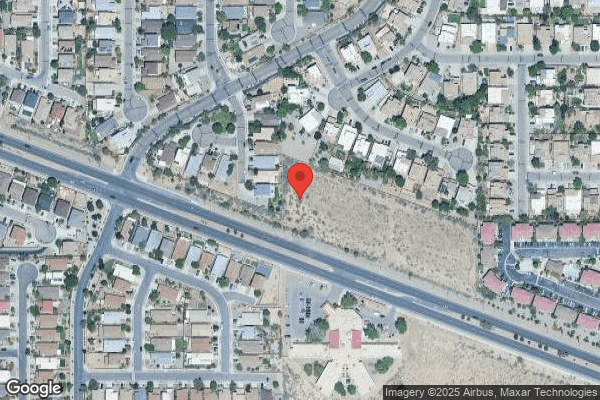
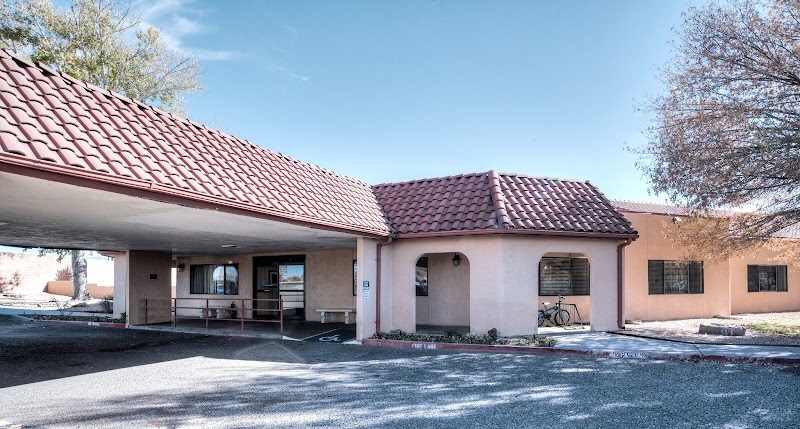
9150 Mcmahon Boulevard NW, Albuquerque, NM 87114 (505) 898-7986
For profit - Limited Liability company 120 Beds GENESIS HEALTHCARE Data: November 2025 3 Immediate Jeopardy citations
Trust Grade
0/100
#48 of 67 in NM
Last Inspection: September 2024

Within standard 12-15 month inspection cycle. Federal law requires annual inspections.

Overview

Skies Healthcare & Rehabilitation Center has received a Trust Grade of F, indicating significant concerns about the quality of care provided, which is considered poor. It ranks #48 out of 67 facilities in New Mexico, placing it in the bottom half, and #15 out of 18 in Bernalillo County, meaning there are very few local options that perform better. The facility is improving, with reported issues decreasing from 20 in 2024 to 8 in 2025, but it still has a long way to go. Staffing is average with a rating of 2 out of 5 stars and a turnover rate of 54%, which is consistent with state averages, suggesting staff stability is not a strong point. The facility has faced $42,047 in fines, which is concerning but on par with other facilities in New Mexico, and it has average RN coverage that does not stand out. Specific incidents of concern include a failure to monitor a resident for constipation, leading to severe abdominal pain, and significant medication errors that resulted in one resident receiving unprescribed medications, likely contributing to their death, while another resident did not receive critical antibiotics as prescribed, worsening an infection. While there are some strengths in quality measures, the numerous critical issues and poor overall ratings highlight serious weaknesses that families should consider.
Trust Score
F
0/100
In New Mexico
#48/67
Bottom 29%
Safety Record
High Risk
Review needed
Inspections
Getting Better
20 → 8 violations
Staff Stability
⚠ Watch
54% turnover. Above average. Higher turnover means staff may not know residents' routines.
Penalties
✓ Good
$42,047 in fines. Lower than most New Mexico facilities. Relatively clean record.
Skilled Nurses
⚠ Watch
Each resident gets only 24 minutes of Registered Nurse (RN) attention daily — below average for New Mexico. Fewer RN minutes means fewer trained eyes watching for problems.
Violations
⚠ Watch
90 deficiencies on record. Higher than average. Multiple issues found across inspections.
★★☆☆☆
2.0
Overall Rating
★★☆☆☆
2.0
Staff Levels
★★★★★
5.0
Care Quality
★☆☆☆☆
1.0
Inspection Score
Stable
2024: 20 issues
2025: 8 issues

The Good

  • 5-Star Quality Measures · Strong clinical quality outcomes
  • Full Sprinkler Coverage · Fire safety systems throughout facility
  • No fines on record

Facility shows strength in quality measures, fire safety.

The Bad

2-Star Overall Rating

Below New Mexico average (2.9)

Below average - review inspection findings carefully

Staff Turnover: 54%

Near New Mexico avg (46%)

Higher turnover may affect care consistency

Federal Fines: $42,047

Above median ($33,413)

Moderate penalties - review what triggered them

Chain: GENESIS HEALTHCARE

Part of a multi-facility chain

Ask about local staffing decisions and management

The Ugly 90 deficiencies on record

3 life-threatening 3 actual harm
Jun 2025 2 deficiencies
CONCERN (D) 📢 Someone Reported This

A family member, employee, or ombudsman was alarmed enough to file a formal complaint

Potential for Harm - no one hurt, but risky conditions existed

Accident Prevention (Tag F0689)

Could have caused harm · This affected 1 resident

**NOTE- TERMS IN BRACKETS HAVE BEEN EDITED TO PROTECT CONFIDENTIALITY** PAST NON-COMPLIANCE Based on record review and interview, the facility failed to ensure a resident was free of accident hazards ...

Read full inspector narrative →
**NOTE- TERMS IN BRACKETS HAVE BEEN EDITED TO PROTECT CONFIDENTIALITY** PAST NON-COMPLIANCE Based on record review and interview, the facility failed to ensure a resident was free of accident hazards when staff failed to assist a resident who required two persons assistance and a mechanical lift (a device such as Hoyer Lift that is used to lift and move a person from on location to another) when changing positions for 1 (R #1) of 1 (R #1) resident. This failure could likely result in resident to fall and inquire injuries. The findings are: A. Record review of R #1's face sheet dated 06/16/25 revealed she was admitted to the facility on [DATE] with the following diagnoses: -Demyelinating (break down and destruction of the outer lining of nerves) Disease of Central Nervous System (the core portion of the nervous system). -Quadriplegia (paralysis-partial or complete-of the arms and legs). Anoxic (lack of oxygen) Brain Damage. B. Record review of R #1's care plan created 09/12/23, revealed R #1 was to be transferred by a mechanical lift, assisted by two persons and supervised by a nurse during all transfers. C. Record review of R #1's daily care note dated 05/20/25 at 6:27 pm revealed a notation for R #1 that indicated a change of condition due to a fall on 05/20/25. D. Record review of Nurse Practitioner (NP) contact note dated 05/22/25, revealed R #1 was seen by NP for follow-up after reporting increased left shoulder pain following a transfer into bed. NP note stated an X-ray of R #1's shoulder revealed a fracture (break) of the left shoulder. R #1 is scheduled to see orthopedics (provider who specializes in care and management of bones) the next day, 05/23/25. NP note further stated that R #1's pain is being managed with provided pain medications (note does not indicate which medications were being provided). E. Record review of the facility's completed incident report dated 05/31/25 revealed R #1 had been transferred (date not specified) by an unnamed CNA (Certified Nurses Aide) from R #1's wheelchair to her bed by lifting R #1 under her arms and transferred R #1 from her wheelchair to her bed without another staff member and without the use of a mechanical lift device. Supervision of a nurse was not present. The CNA was immediately suspended pending investigation. F. Record review of the facility's provided training documents revealed the following: -05/21/25 An audit of all residents was completed and changes made to resident care plans of all residents who required two person, mechanical lift when transferring. -05/22/25 Facility leadership staff met with and educated all staff for accurate lift transfer compliance and safe patient handling. --05/22/25 Facility leadership staff reviewed all facility available mechanical lift equipment completing an inventory of all equipment and confirming proper operation of all mechanical lift equipment. -05/23/25 Facility leadership staff provided an all staff hands on competency training to demonstrate proper use of mechanical lift equipment and to require all staff to demonstrate proper use of all mechanical lift equipment. -0523/25 Director of Nursing reviewed all staff completion of on line training for the use of mechanical lift equipment. G. On 06/11/25 at 1:13 pm during interview with R #1, she stated that she had been transferred from her wheelchair to her bed by a single CNA. R #1 stated that during this transfer, she had heard a pop and felt pain in her shoulder. She stated that she was informed that she had broken her collar bone. She stated that she had attended an office visit with an orthopedic doctor who made no recommendation for further treatment except pain medication and a sling. She stated that her pain was managed by her pain medication at the time and that she now had no pain or discomfort. R #1 stated that since the incident, she has been transferred multiple times from bed to wheelchair and back. R #1 stated that since the date, she has always been transferred by two staff using a mechanical lift and a nurse present. H. On 06/12/25 at 10:15 am during interview with CNA #1, she stated that after the incident she had attended and participated in training for the transfer of residents who require a mechanical assist. She stated she had completed on-line training, and she had completed in-person training. CNA #1 could not recall the dates when she attended in person training or when she completed on-line training. She stated she had been trained to complete all mechanical lifts with two persons and a nurse present. She stated she was aware of all residents in her area that required a mechanical lift when transferring positions. I. On 06/12/25 at 10:25 am during interview with Licensed Practical Nurse (LPN) #1, she confirmed R #1 had been dropped by a CNA who failed to use a mechanical lift. She stated this happened in late May 2025. LPN #1 stated that the CNA had been trained in-person in late May 2025 for the use of mechanical lifts and the requirement for two persons to complete any transfers when using a mechanical lift. J. On 06/12/25 at 10:45 am during interview with CNA #2, she confirmed that she had attended trainings on 05/26/25 that addressed the use of mechanical lift equipment and that she had also completed on-line trainings. She stated that all residents who required a mechanical lift assist when transferring positions were to be done with two persons present and a licensed nurse to monitor the process. She stated that she had always conducted mechanical lift transfers with two persons and that the training reconfirmed her previous training. CNA #2 stated that she was aware of each resident's needs for transfer and she knew of the residents she was assigned to, which residents required mechanical lift transfers.
CONCERN (D) 📢 Someone Reported This

A family member, employee, or ombudsman was alarmed enough to file a formal complaint

Potential for Harm - no one hurt, but risky conditions existed

Pharmacy Services (Tag F0755)

Could have caused harm · This affected 1 resident

Based on record review and interview, the facility failed to ensure medications for 2 (R #2 and 3) of 3 (R #2, 3 and 9) residents were: - available in the facility to be administered to R #3, - admin...

Read full inspector narrative →
Based on record review and interview, the facility failed to ensure medications for 2 (R #2 and 3) of 3 (R #2, 3 and 9) residents were: - available in the facility to be administered to R #3, - administered at the right time 6:30 AM for R #2. These deficient practices could likely result in unresolved infections, worsening of infection or uncontrolled pain. The findings are: Medication availability A. On 06/11/25 at 1:10 PM, during an interview with R #3's daughter, she stated that her mother's hospital discharge orders indicated oral antibiotics (medicines that are taken by mouth to kill bacteria) were to be started on 05/05/25, when intravenous (IV) antibiotics (administered directly into a vein) were discontinued. However, they were not initiated until 05/07/25. She further stated that this delay was very concerning due to R #3's diagnoses of pneumonia (infection of the lungs) and sepsis (an extreme immune response to infection that can lead to tissue damage, organ failure, or death if not treated right away). B. Record review of R #3's hospital discharge orders dated 04/30/25, revealed continue IV Unasyn (medicine that is used to treat a variety of bacterial infections) 3 g (grams) q6h (every 6 hours) to complete 14 days with EOT (end of treatment) 5/4, then switch to clindamycin (medication used to treat bacterial infections) 400 mg tid (three times a day) to complete at least 3 week therapy SOT (start of treatment) 5/5 in AM (morning) C. On 06/11/25 at 2:30 PM during interview with the Director of Nursing, he confirmed R #3 was not administered the oral antibiotic as ordered because the medication had not arrived from the pharmacy. He further stated that they ordered the medication on 04/30/25 and they did not receive it in the facility until 05/07/25. Medication administration D. On 06/12/25 at 10:37 AM during an interview with R #2, she stated that pain medications were often administered late. She further explained, 'For example, this morning I should have received my pain medication at 6:30 AM, but it wasn't even offered until 8:30 AM or 9:00 AM. She added that this is something that needs to change, as she prefers to stay on schedule with her pain medication to prevent the pain from getting out of control. E. Record review of R #2's medication administration record (MAR) for June 2025 revealed R #2's first scheduled dose of pain medication was to be administered at 6:30 AM. It further revealed that R #2 received her pain medication at 3:00 AM, 9:00 AM, 3:00 PM and 9:00 PM from 05/24/25 through 06/07/25. On 06/07/25 the pain medication administration times changed to 6:30 AM, 11:30 AM, 4:30 PM and 9:00 PM. F. Record review of physicians orders revealed R #2's pain medication was as follows: Hydrocodone-Acetaminophen Oral Tablet (medicine used to relieve moderate to severe pain) 5-325 MG (milligram, used to measure the dosage of medications), give one tablet by mouth four times a day for chronic pain. G. On 06/12/25 at 11:45 AM during an interview with Licensed Practical Nurse (LPN) #2, he stated that he was not passing medication this morning 06/12/25, but R #2 stopped him in the hallway and asked when her pain medication was going to be given to her. He further stated that they have an hour before and an hour after the scheduled time to administer medications. G. On 06/12/25 at 12:00 PM during an interview with LPN #3, she stated she had a very busy morning today 06/12/25 with two patients being sent out to the emergency room and was not able to start medication administration on time. H. On 06/12/25 at 12:21 PM during an interview with the Director of Nursing, he confirmed that pain medication for R #2 was late on 06/12/25 and should not have been.
Apr 2025 6 deficiencies
CONCERN (D) 📢 Someone Reported This

A family member, employee, or ombudsman was alarmed enough to file a formal complaint

Potential for Harm - no one hurt, but risky conditions existed

Deficiency F0561 (Tag F0561)

Could have caused harm · This affected 1 resident

Based on record review and interview, the facility failed to promote resident choices for 1 (R #9) of 1 (R #9) resident reviewed for choices when staff failed to offer R #9 showers per her preference....

Read full inspector narrative →
Based on record review and interview, the facility failed to promote resident choices for 1 (R #9) of 1 (R #9) resident reviewed for choices when staff failed to offer R #9 showers per her preference. This deficient practice is likely to result in the residents' personal choices not being honored. The findings are: A. Record review of the facility's bath and shower schedule revealed R #9 was scheduled to bathe or shower on Tuesday, Thursday and Saturdays. B. Record review of R #9's care plan dated 03/16/25 revealed the following: -Focus: R #9 requires assistance for ADL (Activities of Daily Living) care in bathing, grooming, personal hygiene, dressing, eating, bed mobility, transfer, locomotion and tilting. C. On 04/15/25 at 8:55 am during an interview with R #9, she stated that she cannot shower as often as she would like due to the shortage of Certified Nursing Assistants (CNAs). R #9 stated she would like to shower every day, but she is told by nursing staff that she cannot shower because there are not enough staff available to take her. R #9 stated she feels anger, sadness, dread, and if I don't control my emotions I'd be depressed, when she cannot receive a shower everyday as she would like. D. On 04/15/25 at 11:17 am during an interview with CNA #7, she stated, residents can't be there (shower) alone in case they fall. Short staffing leads to delays in showers. E. On 04/15/25 at 3:19 pm during an interview with Unit Manager (UM) #1, he confirmed residents are allowed to shower more than the scheduled three times per week. UM #1 stated the residents aren't allowed to shower alone due to safety concerns. UM #1 confirmed short staffing affects showers. F. On 04/16/25 at 12:50 pm during an interview with Director of Nursing (DON), he confirmed showers depend on staffing because they're not allowed to be in the shower by themselves due to safety concerns. DON stated they are short staffed, and it does affect the shower schedule. DON confirmed extra showers are not allowed when they are short staffed.
CONCERN (D) 📢 Someone Reported This

A family member, employee, or ombudsman was alarmed enough to file a formal complaint

Potential for Harm - no one hurt, but risky conditions existed

Medical Records (Tag F0842)

Could have caused harm · This affected 1 resident

**NOTE- TERMS IN BRACKETS HAVE BEEN EDITED TO PROTECT CONFIDENTIALITY** Based on record review and interview, the facility failed to ensure medical records were updated with the post fall neurological...

Read full inspector narrative →
**NOTE- TERMS IN BRACKETS HAVE BEEN EDITED TO PROTECT CONFIDENTIALITY** Based on record review and interview, the facility failed to ensure medical records were updated with the post fall neurological evaluations/assessments (a thorough assessment of your nervous system, including your brain, spinal cord, and peripheral nerves) for 1 (R #4) of 1 (R #4) resident reviewed for falls. This deficient practice could likely result in staff not knowing residents' daily care events, changes, and their needs. The findings are. A. Record review of R #4's face sheet revealed R #4 was admitted into the facility on [DATE]. B. Record review of nursing progress notes dated 04/11/25 revealed R #4 experienced an unwitnessed fall and R #4 was found between the beds with the curtain over her head and her left leg over the bedside table leg. C. Record review of R #4's Electronic Health Record (EHR) revealed R #4's post fall neurological evaluations were not present in R #4's EHR. D. On 04/16/25 at 10:32 am during an interview with Registered Nurse (RN) #3, she stated nursing staff are to begin neurological checks (evaluations) immediately after being notified that a resident had an unwitnessed fall. RN #3 also stated the facility has a form that must be completed when each neurological evaluation has been conducted and documented. E. On 04/16/25 at 11:45 am during an interview with the Activities Aide (AA), she stated her position was in medical records prior to becoming the AA. AA further stated that she was unable to locate R #4's post fall neurological evaluations (fall on 04/10/25) in the current medical records office. F. On 04/16/25 at 1:01 pm during an interview, the Director of Nursing (DON) presented the neurological evaluations for R #4's fall on 04/10/25 and stated the documentation should have been present in R #4's EHR, and they were not.
CONCERN (E) 📢 Someone Reported This

A family member, employee, or ombudsman was alarmed enough to file a formal complaint

Potential for Harm - no one hurt, but risky conditions existed

ADL Care (Tag F0677)

Could have caused harm · This affected multiple residents

**NOTE- TERMS IN BRACKETS HAVE BEEN EDITED TO PROTECT CONFIDENTIALITY** Based on record review, observation and interview, the facility failed to provide activities of daily living (ADL; activities re...

Read full inspector narrative →
**NOTE- TERMS IN BRACKETS HAVE BEEN EDITED TO PROTECT CONFIDENTIALITY** Based on record review, observation and interview, the facility failed to provide activities of daily living (ADL; activities related to personal care such as bathing, showering, dressing, walking, toileting, and eating) assistance for baths and showers by the facility staff for 2 (R #'s 5, and 6) of 2 (R #'s 5, and 6) residents reviewed for ADL care. This deficient practice is likely to affect the dignity and health of the residents. The findings are: R #5: A. Record review of R #5's face sheet revealed R #5 was admitted to the facility on [DATE]. B. Record review of R #5's care plan 02/11/25 revealed R #5 is at risk for decreased ability to perform ADLs related to: Limited mobility, history of multiple fractures including hip fracture, chronic obstructive pulmonary disease, pain and obesity. C. Record review of the facility's bath and shower schedule revealed R #5 was scheduled to bathe or shower on Tuesday, Thursday, and Saturdays. D. Record review of R #5's documentation survey report (Activities of Daily Living - ADL tracking form), dated 03/31/25 through 03/31/25, revealed staff offered and gave R #5 six baths or showers out of thirteen opportunities. E. Record review of R #5's shower sheets, dated 03/1/25 through 03/31/25, revealed staff offered and gave R #5 six baths or showers out of thirteen opportunities F. Record review of R #5's documentation survey report (Activities of Daily Living - ADL tracking form), dated 04/01/25 through 04/15/25, revealed staff offered and gave R #5 three baths or showers out of seven opportunities. G. Record review of R #5's shower sheets, dated 04/01/25 through 04/14/25, revealed staff offered and gave R #5 three baths or showers out of seven opportunities. H. On 04/14/25 at 11:13 am during interview, R #5 stated she went seven days without a shower or bath two weeks ago (3/26/25 through 3/31/25) R #5 stated she gets so embarrassed without a bath and she doesn't even want people standing around her. I. On 04/14/25 at 4:04 pm during an interview with Certified Nursing Assistant (CNA) #4, she stated the facility being short staffed definitely affects the shower schedule. CNA #4 stated it's tough keeping up with showers and residents who are bedbound miss their baths more. J. On 04/15/25 at 10:30 am during an interview with CNA #4, she stated, I' ve done one shower today, eight residents are scheduled for showers. CNA #4 stated I don't believe, I will get to all of them today. CNA #4 stated because we're short staffed all the time, residents aren't getting showered as often as they should. K. On 04/15/25 at 10:48 am during an interview with CNA #6, she stated she is not able to get resident showers completed and her other duties as assigned. CNA #6 further stated the missed shower issues come from the facility being understaffed. L. On 04/15/25 at 11:17 am during an interview with CNA #7, she stated she was hired as a designated shower aid, but was moved to other CNA duties due to the staff shortage. CNA #7 stated how am I supposed to get eight showers done in a day? CNA #7 stated a full assist shower can take up to 1 hour and 30 minutes. M. On 04/15/25 at 2:37 pm during an interview, Registered Nurse (RN) #1 stated sometimes we don't have staffing and sometimes people call off. We try to get the showers done, there are some showers done at night. RN #1 stated, Yes, resident showers do get missed. N. On 04/15/25 at 3:19 pm during an interview, the Unit Manager (UM) #1 stated no, there is absolutely no reason a resident should go seven days without a shower. O. On 04/16/25 at 12:50 pm during an interview, the Director of Nursing (DON) stated yes, it is accurate that we are short on staff, and it is affecting the shower schedule. DON stated they have several positions open at this time. R #6: P. Record review of R #6's face sheet revealed R #6 was admitted to the facility on [DATE] Q. Record review of R #6 care plan dated 01/14/25 revealed, R #6 is at risk for decreased ability to perform ADLs related to: dementia (memory loss), schizophrenia (mental disorder), Chronic Obstructive Pulmonary Disease (progressive lung disease that makes it difficult to breath). R #6 is at risk for infections due to a behavior of frequent inappropriate touching of genitalia. Staff is to assist with hand hygiene. R. Record review of the facility's bath and shower schedule revealed R #6 was scheduled to bathe or shower on Tuesday, Thursday, and Saturdays. S. Record review of R #6's documentation survey report dated 01/01/25 through 02/28/25, revealed staff offered and gave R #6 seven baths or showers out of twenty-five opportunities. T. Record review of R #6's shower sheets, dated 01/01/25 through 02/28/25, revealed staff offered and gave R #6 two baths or showers out of twenty-five opportunities U. Record review of R #6's documentation survey report, dated 03/01/25 through 03/31/25, revealed staff offered and gave R #6 seven baths or showers out of thirteen opportunities. V. Record review of R #6 documentation survey report, dated 04/05/25 through 04/12/25 revealed staff did not offer or give R #6 a bath or shower. Zero out of four opportunities. W. Record review of R #6's shower sheets, dated 04/05/25 through 04/12/25, revealed staff did not offered R #6 zero baths or showers out of four opportunities. X. On 04/14/25 at 12:44 pm during an observation of R #6, she was in the hall, in a wheelchair. R #6 looked disheveled and unkept with pants and brief around knees scratching her groin area. CNA #1 came by ten minutes into the observation and helped to get R #6 dressed and covered up. Y. On 04/15/25 at 8:50 am during an observation of R #6 and interview, she was in a wheelchair after a shower and she was smiling and happy, with her clothes on properly. R #6 stated that she received a shower that morning and she always feels better after a shower.
CONCERN (E) 📢 Someone Reported This

A family member, employee, or ombudsman was alarmed enough to file a formal complaint

Potential for Harm - no one hurt, but risky conditions existed

Tube Feeding (Tag F0693)

Could have caused harm · This affected multiple residents

**NOTE- TERMS IN BRACKETS HAVE BEEN EDITED TO PROTECT CONFIDENTIALITY** Based on record review, observations, and interviews, the facility failed to ensure the PEG (Percutaneous (through the skin) End...

Read full inspector narrative →
**NOTE- TERMS IN BRACKETS HAVE BEEN EDITED TO PROTECT CONFIDENTIALITY** Based on record review, observations, and interviews, the facility failed to ensure the PEG (Percutaneous (through the skin) Endoscopic (a medical procedure that uses a scope to look into the digestive system) Gastrostomy (a surgical procedure that creates an opening through the abdominal wall) tube (a device utilized to provide liquid nutrition and medications, via a tube into the stomach or intestine) for 1 (R #1) of 1 (R #1) resident, was managed according to current acceptable standards of practice to ensure safety of the resident. This deficient practice could cause significant health problems such as infection or displacement of the tube The findings are: A. Record review of R #1's face sheet dated 04/18/25 revealed she was admitted to the facility on [DATE] with the following diagnoses: -Cerebral (brain) Infarction (damage of tissue due to blood loss) (stroke). -Gastrostomy (surgical opening through the abdominal wall and into the stomach). B. Record review of R #1's provider orders dated 04/14/25 revealed the following: -02/11/25 an order to provide a dysphagia (difficulty swallowing) advanced texture diet (a nearly regular diet that avoids hard, sticky or crunchy foods) standard thin liquids. -09/09/24 Enteral (within the intestine) Feed Order every 4 hours 300 ml (milliliter) free water flushes. No other current provider order was found regarding PEG tube care, PEG tube feed, PEG tube medication administration. C. Record review of R #1's Point of Care (POC) Tasks (a review of those activities of daily living (ADL's)) dated April 2025 revealed that R #1 was offered and accepted drinks and snacks on a daily basis and that she consumed 75% or more of each of her meals. D. On 04/14/25 at 10:30 am during observation of R #1 and interview, R #1 was in her room, in her bed. She was alert, responsive and interactive. She provided information about her past health care and her current concerns. R #1 stated she had a PEG tube and that was placed while she was in the hospital and before she was admitted to the facility on [DATE]. She stated that the PEG tube was used to provide nutrition and medications until about January 2025. She stated that she was then placed on a diet and provided daily meals which she consumed. She stated the PEG tube was not used by staff to provide nutrition. R #1 stated she had asked about the tube and was told by nursing staff that the tube was probably going to be removed some time soon. She could not recall the staff nurse who told her this. R #1 stated the staff still cleaned the PEG tube site and still flushed water into the PEG tube site but she had not received any nourishment through the tube since January 2025. E. On 04/15/25 at 9:25 am during interview with Nurse Practitioner (NP) #1 she stated she was aware of R #1's condition and medical history. She stated R #1 was admitted due to a stroke and she was unable to swallow. NP #1 stated that R #1 had a PEG tube placed while in the hospital and she was admitted to the facility with the PEG tube. She stated for some time following admission until January 2025, R #1 was provided nutrition through the PEG tube. NP #1 stated that the PEG tube was not being used at this time and was only being maintained. She stated that she would normally have reviewed her current status and considered her for removal of the PEG tube but she had simply forgotten about R #1 having a PEG tube. NP #1 stated that it is best that PEG tubes be considered for removal when they are no longer needed and not being used. She stated that R #1 had not used her PEG tube for nutritional needs for several months. NP #1 stated there are risks for a PEG tube including infection. F. On 04/16/25 at 12:54 pm during interview with Director of Nursing (DON), he stated that he felt R #1 was still at risk of having another significant stroke and that as a precaution the PEG tube was being left in place.
CONCERN (E) 📢 Someone Reported This

A family member, employee, or ombudsman was alarmed enough to file a formal complaint

Potential for Harm - no one hurt, but risky conditions existed

Deficiency F0711 (Tag F0711)

Could have caused harm · This affected multiple residents

**NOTE- TERMS IN BRACKETS HAVE BEEN EDITED TO PROTECT CONFIDENTIALITY** Based on record review and interview, the facility failed to ensure residents had a written, signed, and dated progress note fro...

Read full inspector narrative →
**NOTE- TERMS IN BRACKETS HAVE BEEN EDITED TO PROTECT CONFIDENTIALITY** Based on record review and interview, the facility failed to ensure residents had a written, signed, and dated progress note from their physician after each visit for 1 (R # 2) of 1 (R # 2) resident reviewed for current physician progress notes and documentation. This deficient practice is likely to result in resident's records being incomplete and resident care not being documented and reviewed. The findings are: A. Record review of R #2's face sheet dated 04/16/25 revealed that she was admitted to the facility on [DATE] with the following diagnoses: -Delusional (thoughts that are not real) Disorders -Major Depressive (a feeling of sadness) Disorder -Dementia (a chronic, progressive disorder that reduces memory and recall) The face sheet further revealed that her care provider (PCP) was not a physician that was associated with the facility, but had admitting privileges to the facility. The PCP was associated with a local clinic (LC) within the community. B. Record review of R #2's Electronic Medical Record (EMR) including all daily care notes, all miscellaneous documents and all provider notes revealed the record did not contain any physician notes of any visits. C. Record review on 04/17/25 the facility provided a copy of a provider note dated 01/09/25. No other notes were provided. D. On 04/16/25 during interview with Director of Nursing (DON) he confirmed that there were not provider notes that had been submitted by the PCP in R #2's medical record. He stated the assigned PCP does enter the building and does see R #2 occasionally but does not leave or provide notes of her visits.
CONCERN (F) 📢 Someone Reported This

A family member, employee, or ombudsman was alarmed enough to file a formal complaint

Potential for Harm - no one hurt, but risky conditions existed

Deficiency F0725 (Tag F0725)

Could have caused harm · This affected most or all residents

Based on interviews, the facility failed to ensure the facility had sufficient staff to meet the needs of all 114 residents who resided in the facility when staff failed to: 1. Offer baths or showers...

Read full inspector narrative →
Based on interviews, the facility failed to ensure the facility had sufficient staff to meet the needs of all 114 residents who resided in the facility when staff failed to: 1. Offer baths or showers to the residents as scheduled and per residents' preference. 2. To answer call lights within a reasonable timeframe (under 10 minutes) for residents that require activities of daily living (ADL; activities related to personal care such as bathing, showering, dressing, walking, toileting, and eating) assistance. These deficient practices are likely to negatively impact resident comfort. The findings are: Baths/Showers: A. Refer to F561 and F677 for related findings. B. On 04/14/25 at 2:10 pm during an interview with Certified Nursing Assistant (CNA) #2, she stated on most days she will be the only CNA on her unit and the residents do not receive showers per the shower schedule due to low staffing. C. On 04/14/25 at 4:04 pm during an interview with CNA #4, she stated this past weekend (04/12/25 through 04/13/25), she was the only CNA on her unit on Saturday and Sunday. CNA #4 confirmed residents do not receive showers per the shower schedule due to low staffing. D. On 04/14/25 at 2:10 pm during an interview with CNA #2, she stated on most days she will be the only CNA on her unit and residents do not receive showers per the shower schedule due to low staffing. E. On 04/15/25 at 10:48 am during an Interview with CNA #6, she stated I am working alone two to three days per week. She confirmed she cannot complete resident showers and other assigned duties within work shift hours. She confirmed she will work her assignment, and half of an additional CNA assignment due to low staffing F. On 04/15/25 at 2:37 pm during an Interview with Registered Nurse (RN) #1, she stated sometimes they do not have staffing, sometimes people call off and CNAs get pulled to another hall to share assignments. There should be two CNAs per hall. G. On 04/15/25 at 3:19 pm during an interview with the Unit Manager (UM) #1, he confirmed staffing issues affect residents Activities of Daily Living (ADL), which includes showers. H. On 04/16/25 at 12:50 pm during an interview with the Director of Nursing (DON), DON stated yes, we are short-staffed and have several job openings right now. Call Lights: I. On 04/14/25 at 11:13 am during an interview with R #5, she stated she has had to wait about three hours on average for her call light to be answered, while she is in a dirty brief. R #5 stated there is not enough staff to answer call lights or provide timely care. J. On 04/14/25 at 11:45 am during an interview with R #8, she stated that at night there is only one CNA for the whole floor her room is on and she has to wait a long time for the call lights to be answered. K. On 04/14/25 at 4:04 pm during an interview with CNA #4, she stated that due to the facility not having enough staff, residents can sometimes wait up to an hour or longer to have their call lights answered. L. On 04/15/25 at 11:17 am during an interview with CNA #7, she stated that it will take her a long time to answer call lights due to the amount of CNAs available.
Sept 2024 17 deficiencies
CONCERN (D)

Potential for Harm - no one hurt, but risky conditions existed

Resident Rights (Tag F0550)

Could have caused harm · This affected 1 resident

A. On 09/03/24 at 12:30 pm during observation of the dining area during the lunch hour, R #418 entered the dining area, took a seat at a dining table and received his lunch. While R #148 ate his meal,...

Read full inspector narrative →
A. On 09/03/24 at 12:30 pm during observation of the dining area during the lunch hour, R #418 entered the dining area, took a seat at a dining table and received his lunch. While R #148 ate his meal, an unidentified nurse entered the dining area and went to R #148 side and injected him in the left upper arm with an unknown substance. B. On 09/03/24 at 12:40 pm during interview with R #418, he stated that the nurse from his unit had came to him in the dining area and the nurse administered 6 units of insulin (a medication used to control and reduce blood sugars). C. On 09/04/24 at 10:00 am during interview with R #418 in his room, he confirmed that the unit nurse had came to him in the dining hall and administered insulin to him. He stated that normally he prefers his insulin to be injected in his abdomen. He stated he did not appreciate the nurse coming to him and administering his insulin in the dining hall. He stated he much preferred that his medications especially his injectable medications would be administered to him in his room. He stated he felt he had no alternative except to allow the nurse to inject him as she did. Based on observation, record review and interview, the facility failed to promote care with dignity and respect for 1 (R #418) of 1 (R #418) resident reviewed for residents rights by administering an insulin injection in the dining room while having lunch. This deficient practice is likely to result in residents feeling as if they were unimportant and not having privacy. The findings are:
CONCERN (D)

Potential for Harm - no one hurt, but risky conditions existed

Assessment Accuracy (Tag F0641)

Could have caused harm · This affected 1 resident

**NOTE- TERMS IN BRACKETS HAVE BEEN EDITED TO PROTECT CONFIDENTIALITY** Based on observation, record review and interview, the facility failed to ensure that a Comprehensive MDS (Minimum Data Set) Ass...

Read full inspector narrative →
**NOTE- TERMS IN BRACKETS HAVE BEEN EDITED TO PROTECT CONFIDENTIALITY** Based on observation, record review and interview, the facility failed to ensure that a Comprehensive MDS (Minimum Data Set) Assessment was accurate for 1 (R # 72) of 1 (R #72) residents reviewed for accurate MDS Assessments. If resident assessments are not accurate, the facility could misidentify clinical complications resulting in failure to provide adequate care to treat the resident's medical condition. The findings are: A. On 8/30/24 at 2:41 pm, during an observation and interview with R #72, R #72 was only able to hear if spoken to loudly and close to his ear. He also did not have vision out of his right eye. R #72 stated that he had problems seeing and was blind on his right eye and his hearing was bad. B. Record review of R #72's quarterly MDS assessment dated [DATE] indicated that he had adequate vision and hearing. C. On 09/09/24 12:39 PM, during an interview with the MDS Coordinator, she stated she did complete MDS incorrectly and should have coded hearing and vision as not adequate.
CONCERN (D)

Potential for Harm - no one hurt, but risky conditions existed

Comprehensive Care Plan (Tag F0656)

Could have caused harm · This affected 1 resident

Based on observation, record review and interview the facility failed to develop and implement a comprehensive person-centered care plan for 1 (R #56) of 3 (R #56, 58, and 104) residents. Failure to d...

Read full inspector narrative →
Based on observation, record review and interview the facility failed to develop and implement a comprehensive person-centered care plan for 1 (R #56) of 3 (R #56, 58, and 104) residents. Failure to develop and implement a resident centered care plan may result in staff's failure to understand and implement the needs and treatments of residents possibly resulting in decline in abilities and a failure to thrive. The findings are: A. On 08/29/24 at 10:00 am during an observation of the 200 unit, a staff member sat at a desk just inside the door to room and R #56 laid in bed and watched TV. B. On 09/05/24 at 12:02 am during an observation of the 200 unit, a staff member sat at a desk just inside of the door to R #56's room. The staff member exited the room and told Licensed Practical Nurse (LPN) #2, she was going on break. LPN #2 acknowledged this and then walked to the end of the hall into another resident room. A staff member was not was designated to provide 1:1 monitoring of R #56. C. On 09/06/24 at 11:56 am during an observation of the 200 unit, a staff member sat at a desk just inside the door to R #56's room. The staff member exited the room and told LPN #1 she (sitting staff) was going to lunch. A staff member was not was designated to provide 1:1. R #56 laid in his bed and watched TV. R #56's mother sat in the room with him. D. Record review of R #56's care plan dated 04/28/23 revealed R #56 tends to exhibit sexually inappropriate behavior. Interventions included 1:1 monitoring to protect all individuals. E. On 09/09/24 12:40 pm during interview with Minimum Data Set (MDS)/Care Planner, she stated she updated R #56's care plan in April 2023. She stated the care plan has not been altered. MDS stated the care plan was understood by staff and they knew the 1:1 sitter was to monitor and maintain a line of site view of R #56. She stated staff knew the care plan allowed for staff not to sit with R #56 when his mother was present or when he was asleep. She acknowledged the care plan did not include these specific exceptions and interpretations of the care plan.
CONCERN (D)

Potential for Harm - no one hurt, but risky conditions existed

Deficiency F0657 (Tag F0657)

Could have caused harm · This affected 1 resident

Based on record review and interview, the facility failed to revise the care plan for 2 (R #25 and #56) of 2 (R #25 and #56) residents reviewed. If the facility is not updating the care plan to reflec...

Read full inspector narrative →
Based on record review and interview, the facility failed to revise the care plan for 2 (R #25 and #56) of 2 (R #25 and #56) residents reviewed. If the facility is not updating the care plan to reflect the coordination of care with outside entities then the facility may not be providing the appropriate care and treatment to meet the residents' needs. The findings are: A. On 09/03/24 at 10:24 am during an interview with R #25's responsible party, he stated, he had been informed by the facility that an unidentified gentleman wearing hospital scrubs had been observed in the facility providing personal hygiene care to R #25, but was unsure of the date. B. On 09/04/24 12:14 PM during an interview with Weekend Nurse Supervisor (WNS), she stated. I am not sure of the date, I walked into [name of R #25's] room looking for the nurse on duty and I noticed a gentleman in scrubs standing over [name of R #25] who was laying in bed with a towel covering his abdomen, the gentleman stated he was ready to give personal care to [name of R #25]. I assumed it was a hospice worker, so I went to look for his nurse to ask if she knew the person in the room (R #25's). When I returned to [name of R #25's] room the gentleman was gone. I asked [name of R #25] if he knew the gentleman and if he was comfortable with him providing him personal care. R #25 responded he did know the gentleman and was ok with him providing care. WNS further stated she did not ask the name of the gentleman nor did she ask him what he was doing, but that she was curious as to who he was and what he was doing. WNS further stated the gentleman returned later that day and was going to change R #25's brief (adult diaper) and he was told that the facility staff would provide the brief change. She informed R #25's aunt who is also his decision maker about the incident and the Director of Nursing. C. On 09/04/24 at 12:59 pm during an interview with the facility Administrator, she stated, she was aware of the incident where there was a gentleman in the room with R #25 and then he was gone. [Name of R #25] was interviewed and he verified that he knew the gentleman and he was comfortable with him. She further stated that she did not believe R #25 would allow anyone to touch him if it was unwanted, and that maybe it should be written somewhere if someone is providing care for him other then facility staff. These issues should be brought up in the care plan meetings. D. On 09/09/24 at 12:55 pm during an interview with Minimum Data Set Coordinator, she stated that a care plan is developed so that staff know what to do, what care is to be provided to the residents and who should be providing the care. Facility staff are educated to follow the care plans for each resident. She further stated that all care should be entered into the care plans so staff are aware. E. Record review of care plan printed on 09/04/24 did not reveal any mention of a unknown gentleman being allowed/authorized to provide personal care to R #25. R #56 F. Record review of R #56's care plan dated 04/28/23 revealed R #56 tends to exhibit sexually inappropriate behavior. Interventions included 1:1 monitoring to protect all individuals. G. On 09/09/24 12:40 pm during interview with Minimum Data Set (MDS)/Care Planner, she stated she updated R #56's care plan in April 2023. She stated the care plan has not been altered since then.
CONCERN (D)

Potential for Harm - no one hurt, but risky conditions existed

Dental Services (Tag F0791)

Could have caused harm · This affected 1 resident

**NOTE- TERMS IN BRACKETS HAVE BEEN EDITED TO PROTECT CONFIDENTIALITY** Based on observation, record review, and interview, the facility failed to ensure residents obtained routine dental care for 1 (...

Read full inspector narrative →
**NOTE- TERMS IN BRACKETS HAVE BEEN EDITED TO PROTECT CONFIDENTIALITY** Based on observation, record review, and interview, the facility failed to ensure residents obtained routine dental care for 1 (R #68) of 1 (R #68) resident reviewed for dental services. This failure is likely to result in the resident experiencing pain, embarrassment over condition of teeth, and potential weight loss. The findings are: A. Record review of R #68's face sheet revealed R #68 was admitted into the facility on [DATE]. B. Record review of R #68's care plan dated 07/30/24 revealed R #68 exhibits or is at risk for oral health or dental care problems as evidenced by altered mucous membranes/gums (blistering in the mouth and gums). C. On 08/30/24 at 1:22 PM during an observation and interview with R #68, R #68 had visual evidence of tooth decay and discoloration of his teeth. R #68 stated, he had not been to the dentist while a resident of the facility and had not been offered an appointment. R #68 stated he had not been to the dentist in a long time and has occasional pain. D. On 09/04/24 at 2:03 PM during an interview with Social Services Director, she stated she does not schedule appointments, but will let the scheduler know when an appointment is needed or requested during care plan meetings. E. On 09/05/24 at 8:18 AM during an interview with the facility scheduler, she stated that Social Services Director had requested an appointment for R #68 on 09/04/24, but did not have any prior requests.
CONCERN (D)

Potential for Harm - no one hurt, but risky conditions existed

Menu Adequacy (Tag F0803)

Could have caused harm · This affected 1 resident

Based on observation, record review and interview, the facility failed to ensure the nutritional needs and preferences were met for 1 (R #51) of 1 (R #51) residents reviewed for food preferences. If t...

Read full inspector narrative →
Based on observation, record review and interview, the facility failed to ensure the nutritional needs and preferences were met for 1 (R #51) of 1 (R #51) residents reviewed for food preferences. If the facility is not incorporating resident preferences into resident diets the residents are likely to experience weight loss, frustration and depression. The findings are: A. On 08/29/24 at 12:39 PM during the lunch meal observation, R #51 sat at a table with his lunch meal, R #51was served carrots B. On 09/03/24 at 11:18 AM, during an interview with R #51, he stated he does not like some foods and has asked that they not be served to him. R #51 stated They still do. I won't eat, what I don't like and sometimes I just leave the dining room cause I get tired of telling them not to serve me the food I don't like. R #51 stated he does not like rice, carrots and fish, he is served those foods and has requested tahr they not be served to him. C. Record review of R #51's dislikes report, revealed R #51 does not like fish group, shellfish group, turkey group, carrots, green/red peppers, milk to drink, and peas. It further listed the menu items that contain these foods. D. On 09/09/24 at 1:07 PM during an interview with Certified Nurse Aide (CNA) #2, she stated R #51 often complains to her, because he is served items he does not like. She further stated that the facility meal tickets do have dislikes noted on them and does not understand why they keep serving him the items he does not like.
CONCERN (E)

Potential for Harm - no one hurt, but risky conditions existed

Deficiency F0583 (Tag F0583)

Could have caused harm · This affected multiple residents

Based on observation, record review, and interview, the facility failed to ensure 1 (R #56) of 1 (R #56) resident was provided privacy in his own room and with visitors. Facility staff invaded R #56's...

Read full inspector narrative →
Based on observation, record review, and interview, the facility failed to ensure 1 (R #56) of 1 (R #56) resident was provided privacy in his own room and with visitors. Facility staff invaded R #56's privacy by assigning a staff member to to provide 1:1 sitter (a staff member assigned to monitor and accompany a resident) care. The sitter consistently sat at a table in his room during all hours of the day and night. This deficient practice is likely to cause residents to feel invaded and overwhelmed by staff. The findings are: A. Record review of R #56's face sheet revealed, R #56 was admitted to facility on 08/05/22 with multiple diagnoses including: -Hepatic Failure (liver disease). -Unspecified Dementia (a progressive, chronic disease that reduces mental thought and memory) with behavioral disturbances. -Alcoholic Cirrhosis (damage of the liver caused by excessive, long-term alcohol use) of Liver with Ascites (internal buildup of fluids in and around the liver and stomach). B. Record review of R #56's care plan dated 09/05/24 revealed the following: -focus: Tendency to exhibit sexually inappropriate behaviors with female staff and female residents- initiated 09/27/22 and revised 04/28/23. -interventions:1:1 (the assignment of one staff member to monitor and manage resident) to protect all individuals involved-initiated 04/29/23. C. Record review of R #56's physician orders dated 09/05/24 did not include an order to provide 1:1 care for R #56. D. Record review of R #56's daily care notes between 02/08/24 and 09/08/24 did not identify any sexually inappropriate behaviors towards staff or residents. E. Record review of R #56's daily care notes between 02/08/24 and 09/08/24 revealed the following: On 08/20/24 resident hit a staff member and refused medications. On 06/18/24 resident yelled at and hit a Certified Nurse Assistant (CNA). F. Record review of R #56 's physician progress notes dated 03/22/24, 03/29/24, 04/02/24, 04/04/24, 04/12/24, 05/22/24, 06/05/24, 06/19/24, 06/26/24, 07/09/24, 07/23/24, 08/14/24 revealed the physician did not have any notation of having reviewed the presence and necessity of a 1:1 sitter. The notes did not have any notation of inappropriate sexual behaviors and did not have any notations of R #56 hitting of staff or residents. G. Record review of R #56's psychiatric provider notes dated 09/14/23 through 07/25/24, the notes did not identify any instance that R #56 had demonstrated inappropriate sexual behaviors, had hit staff or other residents or acknowledged the necessity of a 1:1 sitter. H. On 08/29/24 at 2:00 pm during observation of the 200 hallway, a staff member sat at a table inside the doorway of R #56's room. The table was just inside the doorway such that the doorway was partially blocked by the table and staff member. I. On 08/30/24 at 10:00 am during observation of the 200 hallway, a staff member sat a table inside the doorway of R #56's room. The table was just inside the doorway, the doorway partially blocked by the table and staff member. J. On 09/03/24 at 9:30 am during observation of the 200 hallway, a staff member sat at a table inside the doorway of R #56's room. The table was just inside the doorway, the doorway partially blocked by the table and staff member. K. On 09/04/24 at 11:00 pm during observation of the 200 hallway, a staff member sat at a table inside the doorway of R #56's room. The table was just inside the doorway, the doorway partially blocked by the table and staff member. L. On 08/29/24 at 2:00 pm during interview with Sitter #1, he stated that he was assigned to watch and monitor R #56. He stated that R #56 had a past history of inappropriate behavior towards other residents and he occasionally struck out at and yelled at staff. He stated he was to monitor R #56 at all times. He stated that R #56 generally stayed in his room and slept most of the day. If R #56 required assistance getting up from bed, going to the bathroom or required assistance with personal care then Sitter #1 would assist. Sitter #1 stated that R #56 used to try to leave his room and wander about the building, but this behavior had declined. He stated that in the past when R #56 wanted to exit his room staff would either try to redirect him back to his room or walk with him in the hallway. M. On 09/05/24 at 3:57 pm during interview with Director of Nursing (DON), she stated R #56 has a 1:1 sitter who has been assigned for more than a year. She stated this was due to past inappropriate touching of other female residents and staff. She stated the purpose of the sitter is to assure that R #56 doesn't go out of his room and enter a female resident's room. DON also stated if R #56 was to attempt to leave his room staff would be expected to follow and stay with him. N. On 09/09/24 at 11:00 am during interview with Nurse Practitioner (NP), she stated she was aware R #56 had an assigned sitter. She stated this was not a medical need and not something she had requested. She stated she could not recall R #56 having an incident of inappropriate behavior with another resident for at least a year. NP stated that her understanding of the sitter was to maintain a line of sight contact of R #56 and was to be maintained at all times to assure that R #56 did not have any inappropriate contacts with other residents. O. On 09/05/24 at 1:13 pm during interview with R #56's mother, she stated that she visits with her son almost daily and that she generally spends at least two hours with him with each visit. She stated occasionally staff will leave the room for a short time while she is visiting but most of the time, staff are with them. Mother stated she feels she has no privacy when visiting with her son. P. On 09/06/24 at 11:33 am during interview with R #56, he stated he would also like some privacy in his room and feels like he is in jail. He stated he would like to have his room to himself and would like to be able to talk to his mom in private, but he is always being watched and feels he can't do anything or participate in anything (activities- movies, socials). He often feels sad and lonely and feels like he is getting weaker from laying in his bed all the time.
CONCERN (E)

Potential for Harm - no one hurt, but risky conditions existed

ADL Care (Tag F0677)

Could have caused harm · This affected multiple residents

**NOTE- TERMS IN BRACKETS HAVE BEEN EDITED TO PROTECT CONFIDENTIALITY** Based on record review, and interview, the facility failed to provide activities of daily living (ADL; activities related to per...

Read full inspector narrative →
**NOTE- TERMS IN BRACKETS HAVE BEEN EDITED TO PROTECT CONFIDENTIALITY** Based on record review, and interview, the facility failed to provide activities of daily living (ADL; activities related to personal care such as bathing, showering, dressing, walking, toileting, and eating) assistance for baths and showers by the facility staff for 2 (R #'s 96 and 105) of 2 (R #'s 96 and 105) residents reviewed for ADL care. This deficient practice is likely to affect the dignity and health of the residents. The findings are: R #96: A. Record review of R #96's face sheet revealed R #96 was admitted into the facility on [DATE]. B. Record review of R #96's care plan dated 08/09/24, revealed R #96 required ADL care assistance with bathing, grooming, personal hygiene, dressing, eating, bed mobility, and transfer due to: memory changes, anxiety, depression, and pain. C. Record review of the facility's shower schedule revealed R #96 was scheduled to be showered/bathed on Mondays, Wednesdays, and Fridays. D. Record review of R #96's documentation survey report (ADL tracking form located in the electronic health record- EHR) dated 08/07/24 through 08/31/24 revealed R #96 was offered/received four (4) baths/showers out of 10 opportunities. E. Record review of R #96's shower sheets dated 08/07/24 through 08/31/24 revealed the shower sheets were not completed for R #96. F. Record review of R #96's documentation survey report dated 09/01/24 through 09/05/24 revealed R #96 was not offered/received any baths/showers out of two (2) opportunities. G. Record review of R #96's shower sheets dated 09/01/24 through 09/05/24 revealed the shower sheets were not completed for R #96. H. On 09/04/24 at 4:38 pm during an interview with R #96, she stated she does not receive enough baths/showers and she would like more. R #96 confirmed she feels gross when she is not bathed/showered often. R #96 further stated when she asks for a shower, staff will tell her they do not have enough staff available, and will not provide R #96 a shower. I. On 09/05/24 at 1:53 pm during an interview with Licensed Practical Nurse (LPN) #3, she stated all CNAs (Certified Nursing Assistants) are required to document each shower/bath given to a resident on the shower sheets and in the residents chart located in the EHR (electronic health record). J. On 09/05/24 at 2:00 pm during an interview with CNA #5, she stated R #96 likes to receive baths/showers and R #96 does not refuse baths/showers. CNA #5 also confirmed resident baths/showers are documented on shower sheets and in the EHR. K. On 09/05/24 at 2:59 pm during an interview with Registered Nurse (RN) #2, she stated R #96 refusing baths/showers has not been reported to her, indicating R #96 enjoys receiving baths/showers. L. On 09/05/24 at 3:45 pm during an interview with the Director of Nursing (DON), she confirmed R #96 has not been offered/provided enough baths/showers and R #96 should have been offered/provided more baths/showers. R #105: M. Record review of R #105's face sheet revealed R #105 was admitted to the facility on [DATE] and discharged on 08/23/24. N. Record review of R #105's care plan dated 08/08/24 revealed R #105 required ADL care assistance with bathing, grooming, personal hygiene, dressing, eating, bed mobility, and transfer due to: decreased mobility and pain. O. Record review of the facility shower schedule revealed R #105 was scheduled to be showered/bathed on Mondays, Wednesdays, and Fridays. P. Record review of R #105's documentation survey report dated 08/06/24 through 08/23/24 revealed R #105 was offered/received two (2) baths/showers out of 8 opportunities. Q. Record review of R #105's shower sheets dated 08/06/24 through 08/23/24 revealed R #105 was given on bath/shower out of 8 opportunities. R. On 09/05/24 at 12:01 pm during an interview with R #105's Son-In-Law, he stated R #105 was not given enough baths/showers while she was in the facility and he notified nursing staff of that. S. On 09/05/24 at 2:46 pm during an interview with LPN #4, she stated R #105 was always very weak and exhausted, but she would never refuse a bed bath when offered. T. On 09/05/24 at 3:46 pm during an interview with the DON, she confirmed R #105 was not offered/provided enough baths/showers and R #105 should have been offered/provided more baths/showers.
CONCERN (E)

Potential for Harm - no one hurt, but risky conditions existed

Deficiency F0679 (Tag F0679)

Could have caused harm · This affected multiple residents

Based on record review, interview and observation, the facility failed to provide an ongoing program of activities designed to meet the interests for 1 (R # 72) of 1 (R # 72) residents reviewed for ac...

Read full inspector narrative →
Based on record review, interview and observation, the facility failed to provide an ongoing program of activities designed to meet the interests for 1 (R # 72) of 1 (R # 72) residents reviewed for activities by not providing meaningful individualized activities based upon residents' interests as identified on his individual care plan. If resident is not provided or encouraged to attend/participate in activities that meets his interests, then he is likely to experience an increase in boredom, isolation, and depression. The findings are: A. Record review of R #72's care plan dated 01/24/24 revealed the following: -Focus: [Name of R #72] is at risk for limited and/or meaningful engagement related to LTC (Long Term Care). R #72 is a Hospice patient. --Approaches: Provide one to one room visits individualized to R #72 interests and activities. B. Record review of Activity Individual Resident Daily Participation Record dated 08/01/24 through 08/31/24 revealed R #72 participated in the following activities: 1. Watching or Listening to TV or Movies 15 times 2. The record did not contain any documentation that R #72 was invited to participate in activities or any refusals to participate in activities. C. On 09/06/24 09:37 am during an observation of R #72's room, the room did not contain a television or music listening device in his room. D. On 09/06/24 at 9:37 am during an interview with Certified Nurse Aide (CNA) #3 confirmed R #72 did not have a TV in his room. E. On 09/06/24 at 2:41 pm during an interview with the Activity Assistant she confirmed R #72 does not like to go out of his room and she is not sure how he is able to watch TV if there is not one present in his room. Activity Assistant was not able to provide an explanation as to how the resident was able to listen to music. AA confirmed that the documentation was inaccurate.
CONCERN (E)

Potential for Harm - no one hurt, but risky conditions existed

Deficiency F0698 (Tag F0698)

Could have caused harm · This affected multiple residents

**NOTE- TERMS IN BRACKETS HAVE BEEN EDITED TO PROTECT CONFIDENTIALITY** Based on interview and record review, the facility failed to ensure ongoing communication and collaboration with the dialysis (c...

Read full inspector narrative →
**NOTE- TERMS IN BRACKETS HAVE BEEN EDITED TO PROTECT CONFIDENTIALITY** Based on interview and record review, the facility failed to ensure ongoing communication and collaboration with the dialysis (clinical purification of blood as substitute for normal kidney functioning) facility regarding dialysis care and services for 2 (R #'s 29 and 115) of 2 (R #'s 29 and 115) residents reviewed for dialysis. If the facility is unaware of the status, condition or complications that arise during dialysis treatment, then residents are likely to not receive the appropriate monitoring and care they need. The findings are: R #29: A. Record review of R #29's physician orders revealed an order for Dialysis on Mondays, Wednesdays, and Fridays at 3:30 pm. Arrive 30 minutes early to complete paperwork. B. Record review of R #29's Hemodialysis Communication Records revealed, incomplete communication notes (post dialysis form) and the facility's follow-up report related to the dialysis visits on the following days: -08/02/24 -08/09/24 -08/12/24 -08/14/24 -08/19/24 - 09/04/24 C. On 09/04/24 at 11:52 am during an interview with Registered Nurse (RN) # 3, when asked to review R #29's Hemodialysis Communication forms, RN #3 looked them over the Hemodialysis Communication forms and confirmed that the Hemodialysis Communication forms were not completed. She further stated the nurses are supposed to take vital signs (VS) including temperature, blood pressure, pulse, and checking R #29's dialysis site and then complete the form (post-dialysis sections) when R #29 returns from dialysis treatment. D. On 09/04/24 at 2:34 pm during interview with the Director of Nursing (DON), she stated her expectation would be that nursing staff are filling out the dialysis communication forms completely. She confirmed that the Hemodialysis Communication forms were not being completed. She further stated the nurses should be checking the dialysis site, obtaining VS and signing the bottom of the forms. R #115: E. Record review of R #115's face sheet revealed R #115 was admitted into the facility on [DATE] and was discharged on 06/21/24. F. Record review of R #115's physician orders dated 06/10/24 revealed R #115 went to dialysis every Tuesday, Thursday, and Saturday. G. Record review of R #115's nursing progress notes dated 06/10/24 through 06/21/24 revealed R #115 refused to go to dialysis two times during that timeframe on 06/15/24 and 06/20/24. H. Record review of R #115's dialysis communication forms dated 06/10/24 through 06/21/24 revealed the dialysis communication forms were not in R #115 record. I. On 09/05/24 at 1:46 pm during an interview with Licensed Practical Nurse (LPN) #3, she stated the facility nursing staff is required to complete the pre-dialysis and post-dialysis sections of the dialysis communication forms each time a resident goes to dialysis. J. On 09/05/24 at 3:50 pm during an interview with the DON, she stated the facility nursing staff should complete the dialysis communication forms each time a resident goes to dialysis. DON confirmed R #115 did not have any dialysis communication forms completed and should have.
CONCERN (E)

Potential for Harm - no one hurt, but risky conditions existed

Unnecessary Medications (Tag F0759)

Could have caused harm · This affected multiple residents

Based on observation, record review and interview, the facility administered medications with an error rate greater that 5%. Medications were observed being administered to 2 (R #33 and 54) residents ...

Read full inspector narrative →
Based on observation, record review and interview, the facility administered medications with an error rate greater that 5%. Medications were observed being administered to 2 (R #33 and 54) residents past the ordered medication administration time. Of 25 opportunities, 12 medication were administered late, an error of administration. This likely resulted in a medication error rate of 48%. If medications are not administered at the scheduled ordered times, the treatment will be less effective and residents will receive less than optimal care. The findings are: Medication Administration R #33 A. On 09/05/24 at 10:44 am during observation of medication administration, Licensed Vocational Nurse (LVN) #1 poured the following medications: -Acetaminophen (a medication to relieve pain and swelling) 2 tablets -Aspirin (a medication to relieve and reduce risk of blood clots) 81 mg (milligrams) -GlycoLax Powder (a medication to promote bowel movement) 17 grams mixed with water -Senna (a medication to prevent and treat constipation) 2 tablets -Vitamin B Complex (a medication to supplement needed vitamins) 1 tablet -Cyclobenezaprine ( a medication to reduce muscle spasms) 10 mg -Hydrochlorothiazide (a medication to reduce water in the blood) 25 mg -Metformin (a medication to treat diabetes and manage blood sugar) 500 mg After pouring each medication LVN #1 administered all of the poured medication to R #33. R #33 took all poured medications. B. Record review of R #33's Medication Administration Record (MAR) dated September 2024 revealed: -Acetaminophen 2 tablets, -Aspirin 81 mg, -GlycoLax Powder 17 grams, - Cyclobenezaprine 10 mg, -Senna 2 tablets and -Vitamin B Complex 1 tablet were all to be administered daily at 7:00 am. -Hydrochlorothiazide 25 mg and Metformin 500 mg were both to be administered at daily at 8:00 am. C. On 09/05/24 at 10:44 am during an interview LVN #1 stated she was normally assigned to another hall and was not accustomed to the medication times and routines. D. On 09/05/24 at 11:00 am during interview with Director of Nursing (DON) she stated all medications are scheduled to be administered at certain times through the day. She stated all medications are to be administered within one hour before and one hour after the scheduled administration times. DON confirmed that the medications provided to R #33 were late. Medication Administration R #54 E. On 09/06/24 at 8:28 am during observation of medication administration, Licensed Practical Nurse (LPN) #1 poured the following medications: -Duloxetine (a medication to treat symptoms of depression) 30 mg -Meloxicam (a medication to treat pain and inflammation) 15 mg -Oxacarbazepine (a medication to manage pain) 150 mg -Oxybutynin (a medication to reduce bladder spasms) 5 mg F. Record review of R #54's MAR dated September 2024 revealed that Duloxetine 30 mg, Meloxicam 15 mg, Oxacarbazepine 150 mg and Oxybutynin 5 mg were scheduled to be administered daily at 7:00 am G. On 09/06/24 at 8:35 am during interview with LPN #1, she stated R #54's medications were administered late. She stated she was taken away from her morning medication pass so she could help pass the morning meal trays.
CONCERN (E)

Potential for Harm - no one hurt, but risky conditions existed

Deficiency F0761 (Tag F0761)

Could have caused harm · This affected multiple residents

**NOTE- TERMS IN BRACKETS HAVE BEEN EDITED TO PROTECT CONFIDENTIALITY** G. On [DATE] a 10:35 am during random observation of R #103's room revealed one Basaglar Insulin injectable pen (Insulin Glargin...

Read full inspector narrative →
**NOTE- TERMS IN BRACKETS HAVE BEEN EDITED TO PROTECT CONFIDENTIALITY** G. On [DATE] a 10:35 am during random observation of R #103's room revealed one Basaglar Insulin injectable pen (Insulin Glargine-yfgn Subcutaneous Solution Pen-injector 100 UNIT/ML) Lot# 643235A, which had an expiration date of [DATE] was on R #103's bedside table. H. Record review of R #103's physicians orders revealed the following order of Insulin Glargine-yfgn Subcutaneous Solution Pen-injector 100 UNIT/ML (Insulin Glargine-yfgn) Inject 20 unit subcutaneously two times a day for DM II (Diabetes Mellitus Type II a condition that happens because of a problem in the way the body regulates and uses sugar as a fuel). I. On [DATE] at 10:35 am during interview R #103 stated the nurse (RN #2) left that medicine (insulin pen) there, (on bedside table) this morning. J. On [DATE] at 10:36 am during interview, Certified Nurse Aide (CNA) #1 entered confirmed the insulin pen was left on R #103's bedside table. K. On [DATE] at 10:40 am during interview with RN #2, she confirmed the insulin pen was left in R #103's room and that it should not have been left there. Based on observation and interview the facility failed to: 1. Ensure all medications were stored properly and in the original, labeled packaging. 2. Ensure medical supplies in the medication storage room were not expired. These deficient practices are likely to negatively impact the health of all residents, if staff administered or used potentially compromised or contaminated medications and medical supplies due to inappropriate storage. The findings are: Medication Storage and Labels A. On [DATE] at 10:52 am during an observation of medication storage on the 400 unit, one gallon whiskey was not labeled in medication room refrigerator. B. On [DATE] at 10:52 am during an observation of medication storage on the the 400 unit, revealed one expired Intravenous (IV-within a vein) dressing change kit (a single use kit with sterile contents to start and maintain an IV site) with the expiration date of [DATE]. C. On [DATE] at 10:52 am during an observation of Medication Storage revealed four boxes of [name brand of enema] laxative enemas (injection of fluid to cleanse or stimulate the emptying of your bowel) with the expiration date of 12/23, and one with expiration date of 05/24. D. On [DATE] at 10:52 am during an observation of the 200 Unit Medication Cart, one loose round white pill on bottom of second drawer was found. E. On [DATE] at 11:34 am am during an interview with the Registered Nurse (RN) #1, she stated that the one gallon of whiskey belonged to [name of R#68] and gallon of whiskey should be labeled and dated. F. On [DATE] at 11:34 am during an interview with Certified Medication Assistant (CMA) #1, she confirmed the one loose round pill on bottom of second drawer, and that any loose pills or expired medication should be discarded.
CONCERN (F)

Potential for Harm - no one hurt, but risky conditions existed

Deficiency F0576 (Tag F0576)

Could have caused harm · This affected most or all residents

Based on observation and interview, the facility failed to ensure that residents are able to receive mail on Saturdays for all 114 residents residing at the facility. This deficient practice is likely...

Read full inspector narrative →
Based on observation and interview, the facility failed to ensure that residents are able to receive mail on Saturdays for all 114 residents residing at the facility. This deficient practice is likely to result in residents not receiving timely communication which could result in feelings of isolation. The findings are: A. On 9/04/24 at 3:20 pm during a resident council meeting with R # 30, # 37, # 51, # 69, #73 and #75, the residnets mentioned the mail is not delivered on Saturdays and they would like to receive their mail when it is delivered to the facility. B. On 09/09/24 2:46 pm during an interview with Activities Assistant (AA), she stated, We don't have anybody working the front desk on weekends; therefore, mail is not delivered on weekends.
CONCERN (F)

Potential for Harm - no one hurt, but risky conditions existed

Deficiency F0725 (Tag F0725)

Could have caused harm · This affected most or all residents

I. On 09/04/24 at 3:01 pm during an interview with R #30, R #37, R #51, R #69, R #73 and R #75 during resident council, the residnets stated they felt there were not enough nursing staff. The resident...

Read full inspector narrative →
I. On 09/04/24 at 3:01 pm during an interview with R #30, R #37, R #51, R #69, R #73 and R #75 during resident council, the residnets stated they felt there were not enough nursing staff. The residents further stated they have to wait a long time for their call light to be answered by nursing staff and they were told they were short staffed when they answered call lights. Based on interviews, the facility failed to ensure the facility had sufficient staff to meet the needs of all 114 residents who resided in the facility when staff failed to: 1. Offer baths or showers to residents as scheduled. 2. Provide meals and snacks to residents timely. 3. Meet the needs of the residents. These deficient practices are likely to negatively impact resident comfort. The findings are: Resident Baths/Showers: A. Refer to F0677 for findings related to baths/showers. B. On 09/05/24 at 1:29 pm during an interview with Certified Nursing Assistant (CNA) #3, she confirmed resident showers are missed due to low staffing. C. On 09/05/24 at 1:46 pm during an interview with Licensed Practical Nurse (LPN) #3, she stated that there is staffing issues and she is aware of residents missing baths/showers due to staffing issues. D. On 09/05/24 at 1:56 pm during an interview with CNA #5, she confirmed staffing issues and that residents missed baths/showers due to staffing. E. On 09/05/24 at 2:55 pm during an interview with Registered Nurse (RN) #2, she stated that resident baths/showers get missed due to low staffing and resident baths/showers are also not completed at night due to staffing. Frequency of Meals: F. Refer to F0809 for findings related to frequency of meals. Resident Needs: G. On 09/06/24 at 8:35 am during interview with LPN #1, she stated R #54's medications were administered late today (09/06/24). LPN #1 further stated she was taken away from her morning medication pass, so she could help pass the morning meal trays. H. On 09/05/24 at 12:40 pm during an interview with the Activities Director (AD), she stated staff will call in often and sometimes she will have to answer call lights to help the nursing staff.
CONCERN (F)

Potential for Harm - no one hurt, but risky conditions existed

Deficiency F0804 (Tag F0804)

Could have caused harm · This affected most or all residents

Based on observation and interview, the facility failed to ensure food holding temperatures were at 135° (degrees). Failure to ensure the food is at appropriate temperature is likely to cause resi...

Read full inspector narrative →
Based on observation and interview, the facility failed to ensure food holding temperatures were at 135° (degrees). Failure to ensure the food is at appropriate temperature is likely to cause residents not to eat meals which could lead to weight loss. The findings are: A. On 09/04/24 at 5:37 pm during an observation of the dinner meal, revealed the turkey's temperature was at 134 degrees, steamed broccoli was at 128 degrees and mashed potatoes were at 132 degrees. Hot food should be at 135° or higher and cold food should be at 41° or lower. B. On 09/04/24 at 5:39 pm during an interview with Dietary Manager (DM), she confirmed the turkey, steamed broccoli and mashed potatoes temperatures were not within safe serving range. Hot foods should be at 135 degrees or above and cold food should be 41 degrees.
CONCERN (F)

Potential for Harm - no one hurt, but risky conditions existed

Deficiency F0809 (Tag F0809)

Could have caused harm · This affected most or all residents

2. Deliver snacks consistently and timely. I. On 09/04/24 at 3:01 pm during an interview with Resident Council members revealed they were not offered any HS (bed time) snacks. J. On 09/04/24 at 3:01 p...

Read full inspector narrative →
2. Deliver snacks consistently and timely. I. On 09/04/24 at 3:01 pm during an interview with Resident Council members revealed they were not offered any HS (bed time) snacks. J. On 09/04/24 at 3:01 pm during an interview with R #30, R #37, R #51, R #69, R #73, R #75 at resident council meeting they stated that they were not offered any bed time snacks. K. On 09/06/24 at 10:00 am during an interview with DM , she stated snacks are available for residents in the nourishment room and are provided at 10:00 am, 2:00 PM, and 7:00 PM .Dietary staff are not responsible for distributing snacks nursing staff is responsible for delivering snacks, so she is not aware if they are being delivered or accessible to residents once they are delivered from the kitchen. L. On 09/05/24 at 10:10 am during an interview with DM, she stated the dietary staff do not hand out snacks to residents, she stated snacks are left in the nourishment room for those residents who ask for a snack. DM stated she did not know if nursing staff passes out snacks. Based on observation, record review, and interview, the facility failed to: 1. Deliver meals consistently and timely 2. Deliver snacks consistently and timely These deficient practices affected all 114 residents residing in the facility and are likely to cause anger and frustration with the residents. The findings are: 1. Deliver meals consistently and timely A. Record review of meal times revealed that the lunch meal was to be served at 12:00 pm daily. B. On 08/29/24 at 12:01 pm during the lunch meal observation, meal service in the dining area began at 12:33 pm and trays were sent in food carts to: -Hall 100 at 12:30 pm -Hall 200 at 1:10 pm -Hall 300 at 1:25 pm C. On 09/03/24 at 12:19 pm during the lunch meal observation, meal service in the dining area began at 12:19 p and trays were sent in food carts to: -Hall 100 at 12:17 pm -Hall 200 at 12:58 pm -Hall 400 at 12:28 pm D. On 09/06/24 at 12:10 pm during the lunch meal observation, meal service in the dining area began at 12:15 pm and trays were sent to food carts to: -Hall 100 at 12:20 pm -Hall 200 at 12:39 pm -Hall 300 at 12:55 pm -Hall 400 at 1:06 pm E. On 08/29/24 at 10:38 am during interview with the Dietary Manager (DM), she confirmed that the midday meal service was scheduled for 12:00 pm. She confirmed that meal service was consistently late. F. On 08/30/24 at 10:27 am during interview with R #88, in her room in the 300 hallway, she stated she was unhappy with her meals because they arrived late and were cold. G. On 09/03/24 at 12:41 am during interview with R #61, in her room in the 300 hallway, she stated she was unhappy with meal service because the meals were almost always late and often cold. H. On 09/04/24 at 3:01 pm during Resident Council (a group of residents who meet to discuss resident concerns and requests regarding facility services) meeting, multiple resident complained that meals are consistently served late.
CONCERN (F)

Potential for Harm - no one hurt, but risky conditions existed

Food Safety (Tag F0812)

Could have caused harm · This affected most or all residents

Based on observation, interview, and record review, the facility failed to maintain the kitchen in a sanitary manner when staff failed to : -Store open food in a manner that prevents cross contaminati...

Read full inspector narrative →
Based on observation, interview, and record review, the facility failed to maintain the kitchen in a sanitary manner when staff failed to : -Store open food in a manner that prevents cross contamination and label and date food. -Utilize hair restraints and beard guards in a manner which restrained all hair while in the kitchen. - Document the correct sanitizing solution as required. -Maintain the kitchen environment in a clean and sanitary manner. These failures have the potential to result in cross contamination, the growth of foodborne pathogens, and foodborne illnesses. This failure had the potential to affect all residents who ate food from the kitchen. The findings are: Unlabeled and Undated Food Items A. On 08/29/24 at 9:42 am during an observation of the walk-in refrigerator revealed the following: -One (12 ct.) of flour tortilla pack open to air and not dated. - One 6( inch) steel pan with salsa not labeled and not dated. - One 6 steel pan with green Chile not labeled and not dated. - One 6 steel pan with what appeared to be puree food not labeled and not dated. - Two 18 qt (quart). plastic containers of juice not labeled or dated. - One 5 lb.(pound) bag of sliced Swiss cheese open to air and not dated. - One 5 lb. bag of shredded cheese open to air and not dated. - One 5 lb. bag of shredded carrots not dated. - One 12 oz. (ounce) can of Mountain Dew open to air on the food prep area. - One personal cell phone on food prep area. B. On 08/29/24 at 9:42 am during an observation of the kitchen, Dietary Aide (DA) #1 was not wearing a hairnet to restrain his hair while in the kitchen. C. On 08/29/21 at 9:42 am during an observation of the kitchen Dietary [NAME] (DC) #1 wore a beard guard, but it did not cover all his facial hair. DC #1 was around food and food related items during food preparation. D. On 08/29/24 at 9:44 am, during and interview, Dietary Manager (DM) stated that all Dietary Staff should be wearing a hair restraint while in the kitchen and that beard guard should cover all facial hair. E. Record review of the dishmachine temperature and sanitizer log revealed the documentation of sanitizer was incomplete. The correct PPM (part per million) is 50 PPM. They were also missing temperatures for the following days 08/27/24, 08/28/24, and 08/29/24. F. On 8/29/24, at 10:33 am during interview with DM, she confirmed that the temperatures were not filled out on the temperature log for 08/27/24, 08/28/24, and it should have been documented. G. On 09/5/24 at 11:37 am during an interview with Director of Operations for Dietary Services (DO) and DM, they both confirmed documentation was incorrect, and should be documented according to manufacturers recommended PPM. The recommended PPM is 50 PPM. Kitchen Cleanliness H. On 08/29/24 at 9:43 am during an observation of the food warmer located next to the stove in dietary, revealed the following: - The door of the food warmer had spills and spatters inside and outside. Inside the food warmer was a 6 (inch) pan of egg and pan of biscuits to be served to the residnets. - Bottom of the food warmer was visibly soiled with crumbs, was rusted and and not clean. I. On 08/29/24 at 9:44 am during an interview, DM confirmed food warmer was visibly soiled and visibly spattered.
Apr 2024 1 deficiency 1 IJ
CRITICAL (J) 📢 Someone Reported This

A family member, employee, or ombudsman was alarmed enough to file a formal complaint

Immediate Jeopardy (IJ) - the most serious Medicare violation

Quality of Care (Tag F0684)

Someone could have died · This affected 1 resident

**NOTE- TERMS IN BRACKETS HAVE BEEN EDITED TO PROTECT CONFIDENTIALITY** Based on record review and interview, the facility failed to ensure for 1 (R #1) of 3 (R #1, 2 and 3) residents reviewed for bow...

Read full inspector narrative →
**NOTE- TERMS IN BRACKETS HAVE BEEN EDITED TO PROTECT CONFIDENTIALITY** Based on record review and interview, the facility failed to ensure for 1 (R #1) of 3 (R #1, 2 and 3) residents reviewed for bowel monitoring and interventions when the facility failed to monitor R #1 for constipation (problem with passing stool). This deficient practice likely resulted in R #1 having ongoing constipation, fecal impaction (hardened stool stuck in rectum or lower colon due to chronic constipation) and abdominal pain. The findings are: A. Record review of R #1's face sheet revealed she was admitted to the facility on [DATE] with multiple diagnoses including: - Wedge compression fracture (broken bone) of unspecified thoracic vertebra (upper back bone) with routine healing, - Severe protein-calorie malnutrition (low calorie/food intake), - Gastro-esophageal reflux disease (stomach acids repeatedly flow back into the esophagus-a tube which connects the mouth to the stomach), - Muscle weakness. B. Record review of R #1's quarterly Minimum Data Set (MDS; a comprehensive assessment of a resident's overall abilities, strengths and weakness), dated 01/04/24, revealed the following: - The resident required supervision and touching assistance from staff for toileting. - The resident was always continent (used the toilet without an incident of soiling herself) of bowel and bladder. C. Record review of R #1's care plan revealed the following: - Dated 10/23/23, R #1 was at risk for dehydration as evidenced by poor intake. - Dated 03/28/23, R #1 was at risk for gastrointestinal (stomach, small and large bowel systems) symptoms or complications related to constipation. - The plan directed staff to assess for and report signs and symptoms of nausea or vomiting, abdominal distension, decrease in bowel movements, decrease in bowel sounds, and abdominal pain. D. Record review of R #1's daily tasks [a list of activities performed by assigned Certified Nurses Aide (CNA)], dated February 2024 and 03/01/24 to 03/04/24, revealed the CNA monitored R #1's daily bowel regimen and documented the following: - The CNA did not document any bowel movements for the resident from 02/01/24 to 02/13/24. - The CNA did not document any bowel movements for the resident from 02/17/24 to 02/19/24. - The CNA did not document any bowel movements for the resident from 02/25/24 to 02/27/24. - The CNA did not document any bowel movements for the resident on 03/01/24 and 03/02/24. - Of the 7 days out of 32 days in which a bowel movement was recorded, it was recorded as size small. E. Record review of facility Physician's Reference Orders (a physician order to be started if a resident shows signs of constipation), updated December 2022, revealed a directive for constipation: If the resident did not have a bowel movement for two days then use polyethylene glycol (a laxative medication that induces bowel movement). One tablespoon in 4 ounces of fluid every four hours as needed. F. Record review of R #1's physician orders, dated February 2024 and March 2024, revealed the records did not contain an order for any medication to treat constipation. G. Record review of R #1's Medication Administration Record (MAR; a written documentation of staff's administration of all prescribed medications to the resident), dated February 2024 and March 1st to 4th, 2024, revealed the record did not contain documentation staff administered a laxative to the resident. H. Record review of R #1's medical records, dated February 2024 and March 1st to 4th, 2024, revealed the record did not contain the following: - Documentation the CNAs reported to the nurse that the resident did not have a bowel movement for two or more days, multiple times. - Documentation the staff contacted the doctor regarding the resident did not have a bowel movements for two or more days, multiple times, and did not have a prescription for a laxative. I. Record review of R #1's Daily Care Notes revealed staff documented the following: - On 03/04/24 at 12:31 am, at approximately 9:00 pm a CNA reported aggressive behavior from R #1's roommate. Director of Nursing was notified. Police called but a report was not made. Resident changed to a new room. - On 03/04/24 at 4:43 am, a telehealth visit with R #1. The provider indicated R #1 was seen due to stomach pain and vaginal bleeding. Nurse reported seeing some bright red blood when R #1 was in the bathroom. R #1 was ambulatory and not in acute distress, but she reported stomach pain. R #1 to follow up with her primary care team within the next few hours for a better exam. - On 03/04/24 at 5:48 am, the nurse stated R #1 had vaginal bleeding twice in the morning and complained of abdominal cramps. Staff notified the on-call medical doctor at 5:34 am. There were not any new orders. Follow-up with facility MD. - On 03/04/24 at 10:42 am, a note from nurse stating staff called the resident's family member to notify her of R #1's transfer to hospital. J. Record review of R #1's hospital medical records revealed the following: - On 03/04/24 at 10:43 am, the resident was admitted to the emergency room (ER). - Upon admission the ER doctor performed a rectal exam and found a maroon stool in the rectal vault (the area just beyond the rectal sphincter where stool is formed and stored until being passed.) - On 03/05/24 at 1:28 pm, the resident was examined by use of flexible sigmoidoscopy (an examination of the rectum and end of the large intestine conducted by using a long flexible tube with camera that is passed into a patient's rectum and beyond.) - The result of the examination revealed a large fecal burden (large amount of feces) with solid, semi-solid, dense liquid stool, and a large volume of maroon blood and clots. - The test provided evidence of chronic constipation and fecal impaction (a solid densely packed quantity of feces that is very difficult to move into and past the rectum.) - On 03/05/24 at 8:34 am, the resident was examined by use of a computed tomography (CT) scan (an x-ray that uses computer enhanced imaging to view and diagnose the body's internal functioning). - The result of the examination revealed a 1 to 1.5 centimeter area of suspected arterial (a blood vessel that supplies blood to an area of the body) bleeding at the distal rectum (the far end of the rectum). - R#1 received multiple blood transfusions during the course of her stay without successfully stabilizing her condition. - A death summary, dated 03/07/24 at 5:59 am, stated the resident's cause of death was acute myocardial infarction (heart attack) in the setting of gastrointestinal hemorrhaging (upper and lower abdominal bleeding) K. On 04/18/24 at 12:00 pm during interview with CNA #1, she stated she was a CNA with the facility, and she was a Navajo (a regional American Indian [NAME]) speaker. She stated R #1 was primarily a Navajo speaker, and she was often assigned to R #1 since she was able to communicate with R #1. CNA #1 stated R #1 complained of abdominal pain on 03/03/24 at about 8:30 pm. She stated the abdominal pain was significant, and R#1 cried while talking about the pain. CNA #1 stated she reported this to R #1's nurse. CNA #1 stated R #1 continued to complain and cry during the night. She stated R #1's roommate became upset with R#1. The CNA stated the roommate went to R #1's bed and kicked the end of the bed. CNA #1 stated she reported the incident to the nurse managing R #1's care and began making arrangements for R #1 to move to another room within the facility. CNA #1 stated she frequently checked on R #1 during this time as the resident complained of continued pain in her abdomen. L. On 04/18/24 at 3:30 pm during interview with Licensed Practical Nurse (LPN) #1, she stated she received R #1 from another unit in the facility early in the morning on 03/04/24. She stated she assisted R #1 to the bathroom twice, and both times she noted a small amount of bright red blood in toilet. LPN #1 stated she called the on-call provider and did a televisit (an internet phone call with televised viewing). The televisit provider did not see or talk with R #1, because the resident was in bed. The provider suggested to wait and have the facility provider see R #1 in person later in the morning. M. On 04/18/24 at 2:13 pm during interview with the Director of Nursing (DON), she stated that on the morning of 03/04/24, there was an incident in which R #1's roommate became upset, because R #1 would not stop crying. She stated staff discovered R #1 was having abdominal pain, R#1 was evaluated and then was sent to the hospital. The DON stated the CNAs should monitor residents daily. She stated best practice would be for CNAs to ask all residents daily if they had a bowel movement, report to the nurse, and record in the residents' daily tasks. The DON could not confirm that this had been done for R#1 prior to her transfer to hospital. The DON confirmed the facility had a set of Reference Orders ordered by the Medical Director which included an order for a resident who was constipated. The DON stated this order should begin when a resident is three days without a bowel movement. N. On 04/18/24 at 4:40 pm during interview with the activity aide (AA), she stated she knew R #1 and could communicate with the resident. She stated she spoke enough Navajo language to be able to communicate with R #1. She stated she was often asked to assist with communicating with R #1, and she met with R #1 almost daily. She stated she never asked R #1 if she was constipated, and R#1 did not say if she was constipated or had regular bowel movements. O. On 04/18/24 at 12:40 pm during interview with CNA #2, she stated it was hard to monitor residents who were independent in their toileting activities. She stated she did not always ask residents about their daily toileting activities. CNA #2 also stated she was unable to check with R #1 about her status, because she (CNA #2) could not speak Navajo to communicate with R#1. CNA #2 stated at times she would ask another Navajo speaking staff member to assist her but not always. P. On 04/19/24 at 10:20 am during interview with CNA #3, he stated he asked residents if they were comfortable. He stated the computer monitored the residents' daily bowel movements after the CNAs recorded them. He stated that if a resident went three or more days without a bowel movement then the computer triggered an alert for the nurse to review. Based upon observation, interview, and record review, Immediate Jeopardy was identified on 04/19/24 at 12:40 pm. The facility Administrator was notified in person and by e-mail at this time. The facility took corrective action by providing an acceptable Plan of Removal (POR) on 04/19/24 at 4:17 pm and implementation was verified onsite. The scope and severity was reduced from Level 4, J to Level 2, D The plan of removal included: 1. Identification/Correction: All residents have the potential to be affected by this alleged deficient practice. The following identification/corrections will be completed by 04/19/24: - Licensed nurses will complete assessments on current residents residing in center to determine if any residents were constipated or without bowel movement for greater than three days. - For those who could not answer and had no current documentation, an abdominal assessment will be completed. - Any resident that is independent with toileting will be identified and care plan/[NAME] will be updated to indicate needed monitoring. - CNAs will document their findings in POC which will be monitored daily by the nurse manager. - Identified issues will be reported to the provider for further direction; medical orders and change in condition process will be implemented. - If a resident is identified as needing immediate medical assistance, 911 will be called and the patient will be transferred to an ER for evaluation. 2. Systemic Measures: The Director of Nursing re-educated current licensed staff regarding policy for resident change in condition. The education includes: - Documentation of ADLs by end of shift, including bowel movements. - CNAs should be alerting nurses if a resident has not had a bowel movement within the past three days, and with consistency concerns like very hard, compacted bowel movement,and loose. - The nurse should use medications/interventions per reference orders provided by the Medical Director for bowel management. If this intervention does not work, the CIC process needs to be followed and provider/family needs to be notified. - Then a bowel management plan needs to be implemented. - The Director of Nursing/designee will begin education 04/19/24. - As of 04/19/24, 100% of currently scheduled staff have been educated on this information. - Any staff member that is not on the current schedule as of 04/19/24, is on leave of absence (FMLA), vacation, or PRN staff will be educated prior to returning to their next shift. New hires and agency staff will be educated during orientation. - Agency staff are currently and will continue to be educated by the facility human resources and mentor as part of the orientation process, prior to their first shift. Nurse management/designee will monitor CNA documentation on all shifts via dashboard to ensure documentation is being completed timely. Nurse management will review the dashboard daily in clinical meeting for bowel alerts and follow-up will occur with nurses and CNAs to ensure processes are followed. The Director of Nursing/designee will review resident progress notes, orders, and nursing dashboard during morning clinical meeting to determine if residents noted change in condition identified, and process followed, including monitoring and interpretive services are being used. 3. Quality Assurance and Monitoring: The Director of Nursing/designee will audit CNA documentation daily in clinical meetings five days per week for one month, then weekly times two months. Five random independent residents will be interviewed weekly to ensure that bowel movements are accurately documented for independent residents, times one month. Then three random residents for two months. Administrator and/or designee will bring results of audits to QAPI committee for further recommendations based on tracking and trending presented monthly for the next three months or until ongoing compliance is achieved. The QAPI committee is overseen by the Administrator.
Feb 2024 2 deficiencies
CONCERN (E) 📢 Someone Reported This

A family member, employee, or ombudsman was alarmed enough to file a formal complaint

Potential for Harm - no one hurt, but risky conditions existed

Deficiency F0725 (Tag F0725)

Could have caused harm · This affected multiple residents

**NOTE- TERMS IN BRACKETS HAVE BEEN EDITED TO PROTECT CONFIDENTIALITY** Based on record review and interview, the facility failed to maintain a process to ensure residents were bathing on a regular ba...

Read full inspector narrative →
**NOTE- TERMS IN BRACKETS HAVE BEEN EDITED TO PROTECT CONFIDENTIALITY** Based on record review and interview, the facility failed to maintain a process to ensure residents were bathing on a regular basis, for 3 ( R #10, R #9, and, R #8) of 6 ( R #10, R #9, R #12, R #13 , R #8, and R #11 ) residents reviewed for showers. This deficient practice could likely result in residents feeling frustrated and uncomfortable. Findings for R #10: A. Record review of R# 10's face sheet revealed that R #10 was admitted to the facility on [DATE]. B. Record review of R #10's shower sheets and bathing documentation for February 1st through February 21st 2024, revealed she had four showers. C. On 02/21/24 at 9:21 am, during an interview with R #10, she stated during her care plan conference, she preferred to shower three times a week. She said many times the nursing aides told her they were short handed on the hall; and since she was a two person lift, they could not shower her that day. Findings for R #9 D. Record review of R #9's face sheet revealed that R #9 was admitted into the facility on [DATE]. E. Record review of R #9's shower sheets and bathing documentation for February 1st through February 21st 2024, revealed she had four showers. F. On 02/21/24 at 11:15 am, during an interview with R #9, she stated she did not get to shower two to three days a week like she stated during her care conference. She said facility staff told her they were short handed and did not have time to give her a shower that day. Findings for R #8 G. Record review of R #8's face sheet revealed that R #8 was admitted into the facility on [DATE]. H. Record review of R #8's shower and bathing documentation for January of 2023, revealed she had two showers during the month of January. The record did not contain documentation the resident refused any showers. I. On 02/20/24 at 10:36 am, during an interview with R #8, she stated facility staff denied her showers, because she was a two person lift. She said many times the nursing aide was alone on her hall. R #8 stated the nursing aides told her if there was only one nursing aide on the hall then she would not get a shower that day. J. On 02/21/24 at 11:00 am, during an interview with Certified Nursing Aide (CNA) #1, she stated if there was only one CNA on a hall then the residents on that hall would not get their showers. CNA #1 stated halls should have two CNAs but many times they were short staffed with only one. CNA #1 stated today (02/21/24) there was only one CNA on the 200 and 300 halls so the residents on those halls would not get showers. K. On 02/21/24 at 12:00 pm, during an interview with the Director of Nursing (DON), she stated if there was only one CNA on a hall then they should ask another hall's CNA or nurse for help bathing the residents.
CONCERN (E) 📢 Someone Reported This

A family member, employee, or ombudsman was alarmed enough to file a formal complaint

Potential for Harm - no one hurt, but risky conditions existed

Menu Adequacy (Tag F0803)

Could have caused harm · This affected multiple residents

Based on interview, observation, and record review, the facility failed to serve food according to the presented menu and meal ticket for 1 (R #8) of 2 (R #8, R #1) reviewed for food. The findings ar...

Read full inspector narrative →
Based on interview, observation, and record review, the facility failed to serve food according to the presented menu and meal ticket for 1 (R #8) of 2 (R #8, R #1) reviewed for food. The findings are: Resident #8 A. Record review of R #8's breakfast meal ticket, dated 02/20/24, stated R #8 was to receive pancakes for breakfast. B. On 02/20/24 at 9:45 am, during observation of R #8's meal tray, staff did not serve the resident pancakes. C. Record review of R #8 breakfast meal ticket, dated 02/21/24, stated R #8 was to receive two bowls of cereal for breakfast. D. On 02/21/24 at 10:00 am, during observation of R #8's meal tray, she received one bowl of cereal for breakfast instead of two. E. On 02/21/24 at 10:15 am during an interview, R #8 stated many times her meal tray does not match what was on the meal. F. On 02/21/24 at 10:58 am, during an interview with the Dietary Manager (DM), he stated he was aware of the residents' complaints about meals not matching what was on their meal tickets. The DM stated it is expected residents receive exactly what is on their meal tickets.
Oct 2023 2 deficiencies
CONCERN (F) 📢 Someone Reported This

A family member, employee, or ombudsman was alarmed enough to file a formal complaint

Potential for Harm - no one hurt, but risky conditions existed

Food Safety (Tag F0812)

Could have caused harm · This affected most or all residents

Based on observation, interview, and record review, the facility failed to ensure food was stored in a manner that prevented foods in dry storage from becoming contaminated from rodent activity. This ...

Read full inspector narrative →
Based on observation, interview, and record review, the facility failed to ensure food was stored in a manner that prevented foods in dry storage from becoming contaminated from rodent activity. This deficient practice could lead to foodborne illnesses that could affect all 115 residents identified on the alphabetical census list provided by the Administrator on 10/23/23 who eat food prepared in the kitchen. The findings are: A. On 10/20/23 at 3:09 pm during an interview, the Complainant stated, he was concerned about mice at the facility. He stated that due to the mice problem, food had to be thrown away because the mice would eat the food in dry storage. The mice continued to be drawn to the dry storage room, so the bread rack was moved out of dry storage. The complainant expressed concerns that the residents could become sick if the food was served to the residents. B. On 10/23/23 at 5:23 am, during a tour of the facility's kitchen, an observation was made of the dry food storage room. Rodent activity and droppings were in the following areas: -A shallow, clear plastic pan (rectangular tray-like container or bin that is not enclosed or sealed), located on the bottom shelf of a baker's rack with eight, unopened packages of five pounds, five ounces of La Banderita brand corn tortillas dated 09/12/13. The tortillas were eaten through the packaging by rodents and rodent droppings were in the pan. -On the top rack of the same shelving unit, an opened package of cacao powder, dated 08/12/23 stored in a zipped/sealed plastic storage bag had rodent chew marks through the outer and inner packaging. -On the shelving rack next to the cacao powder, a dropping was observed in a cardboard box (part of the original bulk packaging) containing 11 cardboard canisters of Quaker brand Grits dated 09/23/23. -Rodent droppings were underneath the baker's rack, in front of and around the two mice traps set there. C. On 10/23/23 at 5:33 am, during an observation of the kitchen and interview, the Dietary Manager (DM) stated he had been at the facility about a month and a half. He was aware of mice traps in the kitchen but had not seen any mice. The Dietary Manager then observed the tortilla pan and confirmed that there were rodent droppings in the pan and that the tortilla packages had been chewed through. The Dietary Manager pulled the tortilla pan from the shelf. More rodent droppings were observed along the tops of the packages of tortillas and throughout the open tortilla pan/bin. The plastic shelf liner where the pan was contained droppings also. The Dietary Manager confirmed there were rodent droppings in the box of Grits and underneath the canned goods rack. He did not know how often the traps were checked by the exterminator. D. On 10/23/23 at 1:18 pm, during an interview with the Administrator (ADMIN) and the Director of Nursing (DON), they stated that they had a problem with mice back in July/August this year in and around the dietary area. Contaminated food or food that could have been affected was thrown out. To protect the food from future infestation, ADMIN stated they have things off the floor and liners on the shelves. She stated that We have different types of bins (to store food in), and seal off any penetrations (gaps or holes) in the building. E. Record review of exterminator invoices revealed the following: -12/12/22 Set mouse traps in admin (administration) office -01/18/22 Kitchen treated no problems found. Set mouse traps in admin office. -02/14/23 Kitchen treated for mice, 4 caught in mop room. Mop room needs to have the walls fixed; mice are in the holes in the wall. -03/13/23 Kitchen treated for mice non(e) caught this period. Mop room needs to have walls fixed; mice are in the holes in the wall. -07/13/23 Rebaited (to put more food on a hook or in a special device used to attract and catch a fish or animal, after the first food you put there has been eaten) 4 mice traps in kitchen. No mice found. -08/07/23 Rebaited 4 mouse traps in kitchen. No mice found. Placed 4 new traps in kitchen. -09/07/23 Rebaited 7 mouse traps in kitchen. One mouse caught a week ago. Placed 3 new traps in kitchen. -10/12/23 Rebaited 7 mouse traps in kitchen. F. Record review of facility's policy titled [Name of Facility Provider] Policy 029 Pest Control revised 09/2017 stated under procedures: 3. Where applicable, bulk foods will be removed from their original packaging and stored in containers with tight fighting lids. G. Record review of facility policy titled FNS 408 Pest Controlunder the heading Process stated the following: 7. Food is stored in closed and sealed containers.
CONCERN (F) 📢 Someone Reported This

A family member, employee, or ombudsman was alarmed enough to file a formal complaint

Potential for Harm - no one hurt, but risky conditions existed

Deficiency F0925 (Tag F0925)

Could have caused harm · This affected most or all residents

Based on observations, record review and interviews, the facility failed to maintain an effective pest control program by not ensuring the facility was free of rodents. This deficient practice is like...

Read full inspector narrative →
Based on observations, record review and interviews, the facility failed to maintain an effective pest control program by not ensuring the facility was free of rodents. This deficient practice is likely to affect all 115 residents listed on the resident census list provided by the Administrator on 10/23/23 and could likely lead to contamination of food prepared in the kitchen causing illness in the residents. The findings are: A. On 10/20/23 at 3:09 pm during an interview, the Complainant stated, he was aware of a mouse problem at the facility. He stated that he did not believe that the pest management system was effective and that large quantities of food had to be thrown out on a regular basis due to the mice eating the food in storage. The complainant also stated that the mice droppings had to be cleaned daily due to the presence of the mice. The complainant had concerns that there were many places the mice could be hiding in the facility around the kitchen, storage areas, dining area, and within the walls. The complainant stated that the kitchen also had many areas mice could be drawn to such as the toaster, the dishwashing area, and food left under the bottom shelves of the steel tables/counters. B. On 10/23/23 at 5:23 am, during a tour of the facility's kitchen, the following observations were made: -A tray rack with several resident, meal trays with leftover food from meals and dirty dishes stored outside of kitchen door in maintenance hallway. The tray was located on the opposite side of the wall for dry good storage. -In the dry goods storage room: Rodent droppings were observed in several locations within the room: -Several droppings were in a shallow, clear plastic pan (rectangular tray-like container or bin that is not enclosed or sealed), located on the bottom shelf of a baker's rack. In the pan were eight, unopened packages of five pounds, five ounces of La Banderita brand corn tortillas. The tortillas had been eaten through the plastic wrapping and several bits of chewed wrapping were visible in the clear plastic pan. The tortillas were dated 09/12/23. -On the top rack of the same shelving unit, an opened package of cacao powder, dated 08/12/23 stored in a zipped/sealed plastic storage bag was observed to have had rodents' gnaw and chew marks through both the original cacao packaging and the ziplock bag it was stored in. -On the shelving rack next to the cacao powder, a large dropping was in a cardboard box (part of the original bulk packaging) that contained 11 cardboard canisters of Quaker brand Grits, dated 9/23/23 . -Several droppings were found underneath the bottom shelf of the canned goods rack behind the storage room door. The droppings were in front of the two metal box traps, which were also located beneath the canned goods rack. -Two large droppings were in front of the canned goods rack, along the bottom track of the propped open, storage room door (door was held open with a bungee cord to the baker's rack). The droppings were visible once the door was moved to close the door. -In the dining room: Several items of litter on the floor in several areas that consisted of opened cocoa packages, paper wrappers and spilled cocoa powder. C. On 10/23/23 at 5:33 am, during an observation of the kitchen and interview, the Dietary Manager (DM) stated he had been at the facility about a month and a half and was in the position temporarily. He had not seen evidence of mice in the facility. He was aware of some mice traps in the kitchen but had not seen any mice. He had not seen the exterminator pick up the traps. The Dietary Manager then observed the tortilla pan and confirmed that there were rodent droppings in the pan and that the tortilla packages had been chewed through. The Dietary Manager stated he would throw the tortillas out now and pulled the tortilla pan from the shelf. Once the pan was pulled off the shelf, droppings were along all the tops of the eight packages of tortillas. There were a larger quantity of sized droppings that were around all the packages of tortillas in the pan. More droppings were on the plastic shelf liner where the pan previously set. He stated he did not understand how there were fresh droppings. The Dietary Manager confirmed that there were rodent droppings in the box of grits. The Dietary Manager confirmed there were droppings underneath the canned goods rack, in front of the mouse traps there. He stated the dry goods room was swept and mopped daily but that the door is not closed or moved to sweep and clean behind. D. On 10/23/23 at 5:50 am, during an observation of the kitchen and interview with DM, the mop closet in the kitchen area had debris (plastic wrappers, containers, cups) on the floor in the corners and along the walls. The Dietary Manager stated that the closet should not be like that. During a tour of the kitchen area, the kitchen floor near the sinks and ice machine and food prep line near the steam tables, in front of the stove had large quantity of food debris. The Dietary Manager stated the floor should be clean and swept. E. On 10/23/23 at 7:48 am, during an interview with the Housekeeping Manager (HKM) and observation of the janitor room, the Housekeeping Manager (HKM) opened the locked janitor room, located across from the maintenance office. He stated he was new to the position of Housekeeping Manager and had only been in it approximately a month and a half. He had not seen any evidence of vermin (a catch-all term used for any small animals or insects that are considered pests, ie roaches, mice, ants). He stated that the janitor room was to be cleaned out once a day and mopped. Once the mop buckets and loose, plastic wrapper trash had been removed, piles of rodent droppings were observed in the two furthest corners of the room, around the mop basin and along the walls. HKM confirmed that the piles did appear to be rodent droppings but stated he did not know how long those had been there. He stated that the janitor's room had not been cleaned or mopped. Clear plastic tubing was observed in the room, coming from the ceiling, which entered the side wall of the janitor's room. A quarter inch gap was observed around the tubing where it entered the wall. HKM confirmed that the piles did appear to be rodent droppings but stated he did not know how long those had been there. F. Record review of exterminator invoices revealed the following: -12/12/22 Set mouse traps in admin (administration) office -01/18/23 Kitchen treated no problems found. Set mouse traps in admin office. -02/14/23 Kitchen treated for mice, 4 caught in mop room. Mop room needs to have the walls fixed; mice are in the holes in the wall. -03/13/23 Kitchen treated for mice non(e) caught this period. Mop room needs to have walls fixed; mice are in the holes in the wall. -07/13/23 Rebaited (to put more food on a hook or in a special device used to attract and catch a fish or animal, after the first food you put there has been eaten) 4 mice traps in kitchen. No mice found. -08/07/23 Rebaited 4 mouse traps in kitchen. No mice found. Placed 4 new traps in kitchen. -09/07/23 Rebaited 7 mouse traps in kitchen. One mouse caught a week ago. Placed 3 new traps in kitchen. -10/12/23 Rebaited 7 mouse traps in kitchen. G. Record review of facility's policy titled [Name of Facility Provider] Policy 029 Pest Control revised 09/2017 stated under procedures 2. All food preparation, service, and storage areas will be monitored regularly for any signs of pest/vermin H. On 10/23/23 at 1:18 pm, during an interview with the Administrator (ADMIN) and the Director of Nursing (DON), they stated they did not have an active pest problem and have not seen any activity. They stated that they had a problem with mice back in July/August of the current year around the dietary area. ADMIN stated she was made aware of the problem by the interim district dietary manager, who saw small black debris that we believed to be droppings. They stated that mice traps were set out by the exterminator and penetrations (gaps or holes) in the building were sealed by maintenance. The exterminator emails the invoices with his findings to her or the receptionist if there are any concerns. Contaminated food or food that could have been affected was thrown out. To protect the food from future infestation, ADMIN stated they have things off the floor and liners on the shelves. She stated that we have different types of bins (to store food in), and seal off any penetrations. I. Record review of the facility's policy titled Record review of facility policy titled FNS 408 Pest Control with effective date of 05/01/23 under the heading Process stated the following: 2. Director of Dining Services/Director of Culinary Services or designee interacts on a regular basis with the exterminator to pinpoint problem areas and pest sightings. 3. Pest sighting are recorded in a log book. 4. Food service areas are to be maintained in a clean and sanitary condition at all times. Special attention is given to areas around food production equipment, warm or moist areas, trash storage containers, and areas with discarded cartons.
Aug 2023 23 deficiencies
CONCERN (D)

Potential for Harm - no one hurt, but risky conditions existed

Deficiency F0578 (Tag F0578)

Could have caused harm · This affected 1 resident

**NOTE- TERMS IN BRACKETS HAVE BEEN EDITED TO PROTECT CONFIDENTIALITY** Based on record review and interview, the facility failed to update a resident's end-of-life treatment for 1 (R #65) of 2 (R #65...

Read full inspector narrative →
**NOTE- TERMS IN BRACKETS HAVE BEEN EDITED TO PROTECT CONFIDENTIALITY** Based on record review and interview, the facility failed to update a resident's end-of-life treatment for 1 (R #65) of 2 (R #65 and R #53) residents reviewed for advanced directives (a written document stating how you want medical decisions to be made if you lose the ability to make them for yourself). This deficient practice could likely result in residents not having their preferences honored during an end of life event. The findings are: A. Record review of the facility's policy titled Health Care Decision Making, last revised 03/01/22, revealed the following: centers must: - Inform and provide written information to all patients concerning the right to accept or refuse medical or surgical treatment and, at the patient's option, formulate an advanced directive. - Inquire with the individual's patient representative if the patient is incapacitated at the time of admission as to whether an advanced directive has been completed/executed in accordance with state law . B. Record review of R #65's face sheet revealed that R #65 was admitted to the facility on [DATE]. C. Record review of R #65's NM MOST form (New Mexico Medical Orders for Scope of Treatment- an approach to end-of-life planning where patients are able to indicate if they would like to receive resuscitative treatment when they stop breathing or if their heart stops beating) revealed that it was not signed by his POA (Power of Attorney- a person who has legally been designated to make decisions on behalf of the resident). Further review revealed that the MOST form was signed by the physician on 07/01/22. D. Record review of the NM MOST website, https://www.nmmost.org/about, revealed the following; Once signed by an authorized healthcare provider and the patient (or the patient's legal healthcare decision maker, as appropriate), the NM MOST becomes a portable and actionable medical order that emergency personnel and other healthcare providers can follow when the patient is unable to express their wishes on their own. E. On 08/04/23 at 9:57 am, during an interview, the Assistant Director of Nursing #2 explained that if staff are not able to get a hold of the POA and the residents cannot consent themselves then they (the residents) are presumed full code ( if a person's heart stopped beating and/or they stopped breathing, all resuscitation procedures will be provided to keep him or her alive). When asked if R #65's MOST form should be singed since he has been in the facility since 09/06/21, she confirmed yes. F. On 08/07/23 at 8:26 am, during an interview with R #65's POA, when asked if the facility has discussed end-of -life treatment options for R #65, she confirmed no.
CONCERN (D)

Potential for Harm - no one hurt, but risky conditions existed

Deficiency F0604 (Tag F0604)

Could have caused harm · This affected 1 resident

Based on observation and interview, the facility failed to keep residents free from physical restraints for 1 (R #163) of 1 (R #163) resident observed during random observations. This deficient practi...

Read full inspector narrative →
Based on observation and interview, the facility failed to keep residents free from physical restraints for 1 (R #163) of 1 (R #163) resident observed during random observations. This deficient practice could likely result in physical restraints being used for discipline or staff convenience; unnecessarily preventing residents from freedom, movement, or activity. The findings are: A. On 07/31/23 at 10:41 am, during an observation of R #163, resident was in her room, she had a mattress on the floor, her bed on one side was against the wall, and there was long rectangle support cushion approximately 2 to 3 feet long under R #163's mattress. There were three pillows under the fitted sheet on the bed creating a barrier. The bed was observed to be angled/slopped towards the wall. R #163 was observed to be awake and had her arm extended and appeared frustrated. Resident was not able to get out of bed or move around on the mattress because the support cushion and pillows were keeping the resident from doing these things. Resident was trying to move herself with no success. B. On 08/01/23 at 8:15 am, R #163 was observed in bed sleeping. The support cushion was placed the edge of the bed and the pillows were placed on top mattress. C. On 08/01/23 at 9:47 am, during an interview with Certified Nursing Assistant (CNA) #11 she stated that R #163 is pretty loud and calls out a lot. When they check on her she usually wants water. She stated that she rolls out the bed all the time. She can't walk and needs assistance sitting up. They try to keep her in bed and that is why the pillows are there. D. On 08/02/23 at 2:58 pm, during an interview with Assistant Director of Nursing (ADON) #2, she stated that when R #163 arrived to the facility she had a few falls. She stated that Hospice wrote an order to keep the mattress on the floor and to have a fall mat for her. They tried just having a low bed first but when that didn't work they put the mattress on the floor. The ADON stated that this was put into place because she kept falling. When asked about the pillows and cushion being placed under the sheet and under the mattress pushing R #163 towards the wall, she stated that she was not aware the situation with the mattress and the pillows. She stated that it wasn't an approved intervention to keep her in bed and she had not never seen this being used.
CONCERN (D)

Potential for Harm - no one hurt, but risky conditions existed

Deficiency F0685 (Tag F0685)

Could have caused harm · This affected 1 resident

**NOTE- TERMS IN BRACKETS HAVE BEEN EDITED TO PROTECT CONFIDENTIALITY** Based on interview and record review, the facility failed to coordinate vision and hearing service for 3 (R#'s 10, 14, and 43) o...

Read full inspector narrative →
**NOTE- TERMS IN BRACKETS HAVE BEEN EDITED TO PROTECT CONFIDENTIALITY** Based on interview and record review, the facility failed to coordinate vision and hearing service for 3 (R#'s 10, 14, and 43) of 3 (R #'s 10, 14, and 43) residents reviewed for outside services. This deficient practice could likely result in residents not being able to see or hear to their fullest extent. The findings are: A. Record review of the facility's policy titled Consult Agreements and Responsibilities, last revised 03/01/22, revealed Agreements pertaining to services furnished by outside resources must specify in writing that the Center assumes responsibility for: - Obtaining services that meet professional standards and principles that apply to professionals providing services in the Center; and - The timeliness of the services. R #14: B. On 07/31/23 at 10:03 am, during an interview, R #14 explained that he needs to make an appointment to get glasses as he has readers but needs to get glasses to wear all the time. He also stated that he needs some help with his hearing aids. He is unsure if he only needs to replace the batteries or get them replaced. C. Record review of R #14's face sheet revealed that R #14 was admitted to the facility on [DATE] with the pertinent diagnosis of type 2 diabetes mellitus without complications. R #43 D. On 08/01/23 at 10:15 am, during an interview, R #43 explained that she needs new glasses. She then explained that she needs to see an eye doctor because she sees double with her current bifocals. E. Record review of R #43's face sheet revealed that R #43 was admitted to the facility on [DATE] with the pertinent diagnosis of type 2 diabetes mellitus with complications. R #10 F. On 08/01/23 at 1:27 pm, during an interview, R #10 explained that she needs new glasses. G. Record review of R #10's face sheet revealed that R #10 was admitted to the facility on [DATE] without any pertinent diagnosis. H. On 08/07/23 at 1:20 pm, during an interview with the Social Services Assistant, when asked if she inquires and coordinates for outside services, she explained that she does ask the residents if they need any services but R #'s 10, 14, and 43 did not mention the need for vision or hearing. I. On 08/07/23 2:23 pm, during an interview with the Center Nurse Executive (CNE), when asked if R #'s 14, 43, and 10 were schedule to or had received vision or hearing services, she confirmed no.
CONCERN (D)

Potential for Harm - no one hurt, but risky conditions existed

Deficiency F0687 (Tag F0687)

Could have caused harm · This affected 1 resident

**NOTE- TERMS IN BRACKETS HAVE BEEN EDITED TO PROTECT CONFIDENTIALITY** Based on interview, observation , and record review, the facility failed to provide podiatry services for 1 (R #14) of 2 ( R #14...

Read full inspector narrative →
**NOTE- TERMS IN BRACKETS HAVE BEEN EDITED TO PROTECT CONFIDENTIALITY** Based on interview, observation , and record review, the facility failed to provide podiatry services for 1 (R #14) of 2 ( R #14 and R #65) residents reviewed for toenail care. This deficient practice could likely result in toenail infections going untreated. The findings are: A. Record review of the facility's policy titled Foot Care, last reviewed 08/07/23, revealed Centers will provide foot care and treatment in accordance with professional standards of practice and state scope of practice, as applicable, including to prevent complications from the patient's medical condition(s) such as diabetes, peripheral vascular disease, or immobility Further review revealed Patients who have complicating disease processes requiring foot care including, but not limited to, infections/fungus, ingrown toenails, diabetes mellitus . must be referred to qualified professionals such as podiatrists or other qualified providers. B. On 07/31/23 at 10:03 am, during an interview, R #14 explained I need my toenails cut. I have fungus on them and I am diabetic and I am scared to do it myself. Someone came to talk to me and they had a list of things to do for me, but they never came to cut my toenails. C. On 07/31/23 at 10:03 am, during an observation of R #14's toenails, R #14's toenails were thick, greenish, and long. D. Record review of R #14's face sheet revealed that R #14 was admitted to the facility on [DATE] with the pertinent diagnosis of type 2 diabetes mellitus without complications. E. Record review of physician orders revealed an order, date 06/09/23, Diabetic Foot Care/Check Daily observation of feet, toes, ankles, soles noting any alteration in skin integrity, color, temperature, and cleanliness. Inspect shoes for proper fit and excessive wear, check Pedal Pulses [measurement of blood circulation in the peripheral arteries of the foot] every night shift . F. Record review of R #14's EHR (Electronic Health Record) revealed that no podiatry notes/visits were on file. G. On 08/07/23 at 11:58 am, during an interview with Certified Nurse Assistant (CNA) #3, when asked what she observes related to nail care, she explained I look for cuts or red marks all the time. I do nail care all the time. If they are diabetic, I don't do their toenails. I let the nurse know about diabetic toenails that need attention. The podiatrist is typically here every week. When asked if she is familiar with R #14, she explained Sometimes I will help R #14, he might need help to take his socks and shoes off. I haven't seen his toenails recently. He has been dependant. H. On 08/07/23 at 12:13 pm, during an interview with Licence Practical Nurse (LPN) #1, when asked if she has become familiar with R #14's toenails she confirmed no. She then explained that the facility has a podiatrist who looks at nails. She also explained that the night shift does foot checks. When asked how residents get referred to podiatry, she explained If we notice something or if the resident expressed the desire to be seen. He [R #14] should be on the list. I think all the diabetics are on the list I. On 08/07/23 at 12:39 pm, during an interview, the Center Nurse Executive (CNE) explained that toenail trimmings should occur If anyone notices that nails are looking long. They [nursing staff] would become familiar with toenails during skin assessments. The nurses should be making the referrals. She then confirmed that he (R #14) has not been seen by podiatry and will be referred out.
CONCERN (D)

Potential for Harm - no one hurt, but risky conditions existed

Respiratory Care (Tag F0695)

Could have caused harm · This affected 1 resident

This is a repeat deficiency Based on observation, record review, and interview, that facility failed to maintain oxygen according to professional standards for 1 (R #33) of 1 (R #33) residents review...

Read full inspector narrative →
This is a repeat deficiency Based on observation, record review, and interview, that facility failed to maintain oxygen according to professional standards for 1 (R #33) of 1 (R #33) residents reviewed for respiratory care by not ensuring the resident always had access to portable oxygen. This deficient practice could likely result in the resident not having oxygen when he needs it. The findings are: A. Record review of physician's orders for R #33 revealed the following orders related to oxygen use: Physician order, dated 03/14/23, Oxygen at 1-6 liters per minute via nasal cannula (a device used to deliver supplemental oxygen). Every day and night post evaluate pulse oximetry (oxygen percentage in your blood). B. On 08/01/23 at 9:43 am, during an interview with R #33, he said he was on oxygen, but that they (the facility) couldn't give him a portable (one that goes with him out of his room) oxygen tank. R #33 stated he feels out of breath when he moves down the hallway. A staff member was looked for to take an oxygen saturation (oxygen levels in the blood) but one could not be found to take this. C. On 08/02/23 at 3:19 pm, during an interview with the Assistant Director of Nursing (ADON) was asked what her expectations were for someone with an order for oxygen would the resident have portable oxygen on his wheelchair? She stated, If he has an order for oxygen then he should have a portable oxygen on his wheelchair. If the order states PRN (as needed) then he wouldn't need one. She was shown the order for R #33. The ADON stated, This is not a PRN order. He should always have oxygen on. D. On 08/08/23 at 9:35 am, during an interview with Certified Nursing Assistant (CNA) #1 she was asked if she has ever filled any portable oxygen for him (R#33), she responded with, I never fill his potable oxygen. He doesn't have an order for it.
CONCERN (D) 📢 Someone Reported This

A family member, employee, or ombudsman was alarmed enough to file a formal complaint

Potential for Harm - no one hurt, but risky conditions existed

Deficiency F0849 (Tag F0849)

Could have caused harm · This affected 1 resident

Based on record review and interviews, for 1 (R #81) of 3 (R #48, R #70, and R #81) residents reviewed that were receiving hospice services. This deficient practice of not ensuring that were was an ap...

Read full inspector narrative →
Based on record review and interviews, for 1 (R #81) of 3 (R #48, R #70, and R #81) residents reviewed that were receiving hospice services. This deficient practice of not ensuring that were was an appropriate collaboration between the facility and hospice services could result in the residents not receiving the services that they need. The Finding are: A. Record review of the facility's policy titled Hospice, last revised 03/01/18, revealed the following: The hospice and center must communicate, establish, and agree upon a coordinated plan of care which reflects the hospice philosophy, and is based on an assessment of the patient's needs. The plan of care must include: Directives for managing pain and other uncomfortable symptoms and be revised and updated as necessary to reflect the patient's current status; The most recent hospice plan of care; and the care and services that the Center will provide in order to be responsive to the unique needs of the patient and his/her expressed desire for hospice care. The Center and hospice are responsible for performing each of their respective functions that have been agreed upon and included in the plan of care . B. Record review of R #81's medical records revealed that R #81's start of care date was 03/18/22, to receive hospice services. Further review revealed there was no documentation from the hospice provider. C. On 08/02/23 at 3:14 pm, during an interview with the Assistant Director of Nursing (ADON) #2 stated, There's no care plan for the resident from hospice. The entire time she has been on hospice from 03/18/22 there was no history and physical, no progress notes, no communication form hospice at all. D. On 08/03/23 at 3:39 pm, during an interview with Business Office Manager (BOM) she stated, The provider hasn't seen the resident since she has been on hospice. We did have a meeting with (insurance company), the Facility, residents' Power of Attorney (POA) and the hospice provider recently, and we (facility) were told it was the facilities responsibility to send out all the information needed to the insurance company. The facility can't unless hospice sends the information. We send what we have which isn't much. E. On 08/03/23 at 3:33 pm, during an interview with the Center Executive Director (CED) she stated, We have been in contact with the hospice office. I have tried to get what we need, and they will not cooperate. I even sent them the federal guidelines with no return call. F. On 08/07/23 at 10:48 am, during an interview with the hospice with one of the liaisons stated, he wouldn't share any information with this writer regarding the resident. G. On 08/07/23 at 10:51 am, during an interview with a member of the hospice team he stated, I am unable to help you, you will have talk with one of our managers here. I will have her reach out to you. H. On 08/07/23 at 11:32 am, during an interview with the R #81's POA she stated, The resident has been in the facility since 02/22/22 and a doctor has not seen her since 2022. She has COPD (Chronic Obstructive pulmonary disease {is a type of progressive lung disease characterized by long respiratory symptoms and airflow}), Diabetes, high blood pressure and a doctor hasn't seen her the entire time. She went on hospice on 02/20/22. A hospice doctor hasn't come to see her, the hospice nurse comes in twice a week. The doctor didn't see her. I. On 08/07/23 at 12:55 pm, during an interview with the Center Nursing Executive (CNE) she stated, This all occurred before my time. So, I can't tell you anything about it. We were going through the files and came across this; that she was on hospice dating back to 03/18/22. It is why the Physician order for her to be on hospice is dated 07/11/23. We have been trying to get a hold of the hospice company and having a heck of a time getting them to respond to us. Facility Medical Director has been taking care of her because she is the medical director. Hospice has told us that since she is the Medical Director, she can just take care of R # 81, the facility had to explain to them that she is not on her service. J. On 08/09/23 at 8:29 am, during an interview with a representative from hospice she stated there have been issues with the facility not having their medical director doing the progress notes. She stated she would email this writer with the items requested by 10:00 am on 08/09/23. Nothing was received.
CONCERN (E)

Potential for Harm - no one hurt, but risky conditions existed

Resident Rights (Tag F0550)

Could have caused harm · This affected multiple residents

**NOTE- TERMS IN BRACKETS HAVE BEEN EDITED TO PROTECT CONFIDENTIALITY** D. On 07/31/23 at 11:07 am, during an observation of Certified Nurse Assistant (CNA) #1 was seen leaving the shower room and wal...

Read full inspector narrative →
**NOTE- TERMS IN BRACKETS HAVE BEEN EDITED TO PROTECT CONFIDENTIALITY** D. On 07/31/23 at 11:07 am, during an observation of Certified Nurse Assistant (CNA) #1 was seen leaving the shower room and walking into a room on the 300 hall. She didn't knock, she went in grabbed a wheelchair and went back into the shower room. There was a resident in the room at this time. R #36 E. On 08/01/23 at 9:51 am, during an observation Restorative recreation (a staff member who does activity and restorative nursing) went into R #36's room without knocking on the door. She was seen pushing a resident out of the room in a wheelchair. F. On 08/07/23 at 9:12 am, during an interview with the Center Nursing Executive (CNE) stated. Yes, we do educations on this and tech them that this is their (residents) home, it's for all staff. Based on observation, record review and interview, the facility failed to promote care with dignity and respect for 2 (R #36 and #162) of 2 ( R #36 and #162) residents interviewed and during random observation by entering R #36 and R #162 rooms without first knocking on the door. This deficient practice likely resulted in residents feeling embarrassed, ashamed, and as if their feelings and preferences are unimportant to the facility staff. The findings are: R #162 A. Record review of R #162's medical record indicated that resident went to dialysis on Tuesday, Thursdays and Saturdays. She had been admitted to the facility initially on 07/09/23 and was readmitted on [DATE]. B. On 08/02/23 at 7:42 am, during an interview with R #162, she stated that she goes to dialysis every Tuesday, Thursday and Saturday. She stated that her chair time (appointment time) is at 11:00 am. She is always ready to go for her appointments. She stated that one time (couldn't recall when) it was really early like 9 am. She stated that a male transport driver walked into her room without asking, without knocking and walked in on her putting on her bra. She was so embarrassed by that. She stated that he was really early and it wasn't within the normal timeframe of when she is picked up to go to dialysis. C. On 08/08/23 at 11:04 am, during an interview with Center Nursing Executive (CNE) she stated that yes when they (the facility) used to just have one transport driver he would get training on things like resident rights. However, now that they have made transportation universal it can be a different driver everyday. They (they facility) also have non (name of company) drivers coming into the building and transporting residents. She stated that she wasn't sure how transport drivers were receiving training on things like not entering into a residents room without knocking or asking if they can come in.
CONCERN (E)

Potential for Harm - no one hurt, but risky conditions existed

Deficiency F0583 (Tag F0583)

Could have caused harm · This affected multiple residents

C. On 07/31/23 at 11:35 am, during an observation on the 300-hall medication cart it was observed that the computer was left open, residents names and pictures were on display for visitors, staff, and...

Read full inspector narrative →
C. On 07/31/23 at 11:35 am, during an observation on the 300-hall medication cart it was observed that the computer was left open, residents names and pictures were on display for visitors, staff, and other residents who walked by. License Practical Nurse (LPN) #1 was down another hall. When she walked up on the cart, she shook her head and locked the screen. D. On 08/07/23 at 10:56 am, during an interview with the Center Nurse Executive (CNE), she was asked if the computer screens with the resident's information should be locked or shut when unattended. She stated, Yes they should be locked. Based on observation and interview the facility failed to safeguard clinical record information by leaving Private Health Information (PHI) unattended. This has the potential to affect all 28 residents on hallway 100 and all 30 residents on hallway 300 (residents were identified by the Resident census list provided by the Administrator on 07/31/23). If resident's clinical information is not sufficiently safe guarded, resident's PHI is likely to be viewed by unauthorized residents, visitors, and staff. The finding are: A. On 08/01/23 at 1:27 pm, an observation was made of the computer on the 100 hall medication cart being open to a resident's page indicating what medications she was receiving and the Certified Medication Assistant (CMA) #1 was not observed at the cart or on the hall. Three family members of a resident on that hall were also observed to walk past the open computer screen showing the unknown residents information. Open to a presidents a page while the med tech was delivering the medications. B. On 08/01/23 at 1:29 pm, an interview and observation was conducted with Certified Medication Assistant #1. CMA #1 was observed coming out of a residents room on 100 hall. When asked if the computer was supposed to be left unattended, open and unlocked she indicated no by shaking her head that it wasn't supposed to be left unlocked and unattended.
CONCERN (E)

Potential for Harm - no one hurt, but risky conditions existed

Safe Environment (Tag F0584)

Could have caused harm · This affected multiple residents

Based on interview, the facility has failed to maintain a process of returning laundered clothing articles. This has the possibility to affect all residents listed on the census that was provided by t...

Read full inspector narrative →
Based on interview, the facility has failed to maintain a process of returning laundered clothing articles. This has the possibility to affect all residents listed on the census that was provided by the ADON (Assistant Director of Nursing) on 07/31/23. This deficient practice could likely result in residents feeling frustrated due to their belongings not being returned. The findings are: R #39 A. On 07/31/23 at 10:50 am, during an interview with R #39, she stated They [the facility] needs a better laundry system. I have had some missing laundry. She also stated Sometimes when I am getting bathed, they run out of washcloths. R #22 B. On 07/31/23 at 3:21 pm, during an interview with R #22, she stated I'm missing black pants, a pink top, a pink print top, and 3-4 night gowns. I reported it to the CNAs (Certified Nursing Assistants), they are supposed to pass on the word. No one seems to want to help. R #43 C. On 08/01/23 at 10:09 am, during an interview with R #43, she stated I've had clothes go missing. I reported my missing cloths and they said they would look for them. My sister had to buy me a bunch of new clothes. D. On 08/07/23 at 10:45 am, during an interview with the District Manager of Housekeeping and the Housekeeping Manager in Training, when asked to explain how laundry is handled, she explained that they wash clothes on a daily basis. They review the census (a document that lists the resident and their room numbers), and use it to deliver the clothes to the residents. If the clothing does not have a name, the laundry staff set it aside and we wait for the CNAs or the resident to claim the missing clothing. She also explained In every building, we have a poor system; I believe that when a resident comes in, their clothes should be labeled and documented in an inventory log. She asks the managers to let the laundry staff know who are the newly admitted resident so that we could label their laundry. The activities department has a labeling machine for the clothes. She then explained that the clothes that don't have a name, [the amount of no name clothes] is currently more than usual because they haven't had a chance to go through them. If they are not claimed, after a month they donate them. She then explained that they receive missing laundry complaints during morning meetings. The administrator will also let them know what is missing. If they can't find the missing laundry, they let SS (Social Services) know and SS does an additional investigation on the missing laundry. If the item is still lost then they reimburse the resident for their lost item. When asked if she has received complaints of clothing being placed in the wrong closet, she explained, the prior housekeeping manager used to deliver the clothes himself to alleviate that occurrence but that is still an issue. She then explained another situation that may result in missing clothes; upon admission, if a resident's family member decides to launder resident clothes at home, the clothes do not require a name label, but sometimes when the resident takes a shower, the CNA throws the clothes in the linen barrel and it gets laundered by the facility without a name and this results in with the potential to become lost. When asked if the inventory of washcloths has been an issue, she explained that the washcloth inventory is always a problem because they get used as wipes so then they get thrown away. When asked if she has received any notification of missing clothing for R #'s 22, 39, and 43, she confirmed no and explained that the laundry staff also attend the resident council meetings to find out if residents are missing anything.
CONCERN (E)

Potential for Harm - no one hurt, but risky conditions existed

Deficiency F0657 (Tag F0657)

Could have caused harm · This affected multiple residents

**NOTE- TERMS IN BRACKETS HAVE BEEN EDITED TO PROTECT CONFIDENTIALITY** R #29: G. Record review of R #29's face sheet revealed that R #29 was admitted to the facility on [DATE]. H. Record review of R...

Read full inspector narrative →
**NOTE- TERMS IN BRACKETS HAVE BEEN EDITED TO PROTECT CONFIDENTIALITY** R #29: G. Record review of R #29's face sheet revealed that R #29 was admitted to the facility on [DATE]. H. Record review of R #29's progress notes revealed that R #29 did not have any care plan meeting notes on file. I. On 08/07/23 at 1:20 pm, during an interview with the Social Services Assistant, she explained that R #29's insurance provided the facility with a care plan on 02/22/23 but an actual care plan meeting was not held for her. When asked if a care plan meeting should have occurred, she confirmed yes. This is a repeat deficiency Based on record review and interview, the facility failed to ensure that residents or their representatives were invited and able to participate in care plan meetings for 2 (R #'s 29 and 35) of 5 (R #'s 10, 14, 29, 35 and 65) residents reviewed for participation in care planning. If residents are not able to participate in their care plan development, then residents are likely not get the care and treatment that they need or want. The findings are: A. Record review of the facility's policy titled Person-Centered Care Plan, last revised 10/24/22, revealed the following: 7. Care plans will be: 7.2 Reviewed and revised by the interdisciplinary team after each assessment, including both the comprehensive and quarterly review assessments, and as needed to reflect the response to care and changing needs and goals . 9. The Center has the responsibility to assist patients to participate by: 9.1 Extending invitations to patient . in advance; . 9.3 Facilitating the inclusion of the patient/resident representative(s) to attend; . R #35 B. Record review of the face sheet for R #35 revealed that resident was admitted to the facility on [DATE]. C. Record review of the R #35's care plans indicated that the first care plan started on 02/13/23 and the was updated on 05/26/23. D. On 07/31/23 at 10:03 am, during an interview with R #35, he stated that he is unaware of there being care plan meetings that he could attend. E. On 08/02/23 at 1:06 pm, during an interview the Social Services Assistant (SSA), she stated that they have a spread sheet that has everyone on it with dates for their care plans. She stated that she doesn't see anything documented for R #35. F. On 08/02/23 at 1:06 pm, during an interview with the Social Services Director (SSD), she stated that since she has been the SSD for this facility she is not aware of him having a care plan meeting and she doesn't see any documentation for care plan meetings in his chart.
CONCERN (E)

Potential for Harm - no one hurt, but risky conditions existed

Deficiency F0692 (Tag F0692)

Could have caused harm · This affected multiple residents

Based on observation, record review and interview, the facility failed to ensure that dialysis residents received a meal, snack or sack lunch prior to leaving to their appointment for 2 (R #60 and #16...

Read full inspector narrative →
Based on observation, record review and interview, the facility failed to ensure that dialysis residents received a meal, snack or sack lunch prior to leaving to their appointment for 2 (R #60 and #162) of 2 (R #60 and #162) residents reviewed for nutrition. This deficient practice is likely to result in weight loss and deterioration of overall health and wellbeing for dialysis residents. The findings are: R #162 A. On 07/31/23 at 10:39 am, during an interview with R #162, she stated that when she goes out to Dialysis on Tuesday, Thursday and Saturday her appointment time is at 11:00 am. She stated that breakfast will come in the morning before she leaves but she is never provided a meal before leaving for her appointment or a sack lunch or snacks. She stated that no one has asked or offered her anything before she leaves, or after she returns from her appointment. B. Record review of R #162's medical record indicated the following: Dialysis on Tuesday, Thursday, and Saturday at 11:00 am at (name of location). R #60 C. On 08/02/23 at 1:36 pm, during an observation of R #60's room. A lunch tray was observed sitting on the bedside table untouched. D. Record review of R #60's medical chart indicated that he goes out to dialysis on Monday, Wednesday and Friday and his appointment time is 12:45 pm. E. On 08/03/23 at 9:19 am, during an interview with R #60, he stated that he does not receive a sack lunch or his regular meal tray before he goes to dialysis appointments. His chair time is 12:45 pm. He stated that sometimes he comes back and there is a lunch tray still sitting on his bedside table. He typically doesn't eat it. He stated that he will usually return to the facility after 3:00 pm sometime. He stated that he isn't aware if he is supposed to ask for food before he leaves or if it is supposed to come before he leaves. F. On 08/07/23 at 8:56 am, during an interview with Dietary Manager, when asked about food being available for the residents who go out to Dialysis he stated the following: there are sack lunches and or snacks/foods available for those residents who go to dialysis. A day prior to appointments they are made and are placed in the walk in cooler. The evening shift will then put them in the nourishment room so they are available to the residents. The DM stated that the the dietary aide is responsible for getting the snacks and food to the nourishment room and the CNAs are responsible for giving it to the resident. The DM also stated that the residents are aware that snacks and sack lunches are available to them. He stated that if a dialysis resident has an appointment time around lunch time they will get a a a lunch tray before they leave for that appointment. He agreed that trays should not be left at the bedside if the resident is at an appointment. G. On 08/03/23 at 11:02 am, during an interview with Assistant Director of Nursing (ADON), she stated that for dialysis residents they can have four different kinds of cereal and can have some fruit. This is for the residents who go really early in the morning. If their appointment time is later, closer to lunch, then the resident will be offered a meal tray before they go and if they are already gone to dialysis when the meal comes out they will hold the meal in the kitchen for them. When the resident comes back they can have the meal heated up or they are offered a sandwich.
CONCERN (E) 📢 Someone Reported This

A family member, employee, or ombudsman was alarmed enough to file a formal complaint

Potential for Harm - no one hurt, but risky conditions existed

Deficiency F0740 (Tag F0740)

Could have caused harm · This affected multiple residents

**NOTE- TERMS IN BRACKETS HAVE BEEN EDITED TO PROTECT CONFIDENTIALITY** This is a repeat deficiency Based on record review, observation and interview, the facility failed to ensure that 2 (R #35 and ...

Read full inspector narrative →
**NOTE- TERMS IN BRACKETS HAVE BEEN EDITED TO PROTECT CONFIDENTIALITY** This is a repeat deficiency Based on record review, observation and interview, the facility failed to ensure that 2 (R #35 and #160) of 2 (R #35 and 160) residents reviewed for behavioral health concerns were receiving necessary behavioral health care to meet the resident's need. This deficient practice could likely cause the residents to not receive the mental health care and assistance that they need exacerbating (increasing in severity) anger, depression and other negative feelings . The findings are: R #35 A. Record review of R #35's face sheet indicated that he was admitted to the facility on [DATE] and had the following diagnoses': Anxiety (persistent and excessive distress that affects daily life), Major Depression (is a common and serious mental illness that affects your mood and interest in life), Parkinson's Disease (is a progressive disorder that affects the nervous system and the parts of the body controlled by the nerves), Traumatic Brain Injury (TBI head injury causing damage to the brain by external force or mechanism. It causes long term complications or death), Heart Disease (describes a range of conditions that affect the heart), Repeated Falls. This is not all inclusive list. B. On 07/31/23 at 10:01 am, during an interview and observation with R #35, he stated that he does feel depressed and would like to speak with someone. Resident had his head down and was sitting in a chair in his room. He appeared sad and stated that he does like to do things because he has Parkinson's Disease and it makes him shake and he doesn't always know when his shaking is going to get worse. He stated that he has bouts were his shaking is worse than other times. C. Record review of the physician orders indicated that an order for Sertraline HCl (an antidepressant used to treat depression) Oral Tablet 100 milligrams (MG). Give 1 tablet by mouth in the morning for Depression starting on 02/11/23. D. Record review of the physician orders indicated that an order for Mirtazapine (for depression) Oral Tablet 15 MG. Give 1 tablet by mouth at bedtime for Depression starting on 06/28/23. E. Record review of the physician orders indicated that a referral to (name of company) for depression was made on 07/07/23. F. On 08/02/23 at 1:13 pm, during an interview with the Social Services Director (SSD), she stated that a referral was made to (name of company) on July 7th and they received it on the 7th. Because he is veteran and receives veterans benefits they have to find out if they are going to cover the cost or the facility is going to cover the cost. So they emailed back indicating that the facility will cover the cost. The (name of company) will always want an email from the Center Executive Director (CED) indicating that they are covering the cost and to go ahead and schedule to see the resident. The SSD stated that she is not sure what happened because she knows that the CED approved for R #35 to be seen. She stated that there is not currently an appointment pending and he had not been seen yet. R #160 G. On 08/04/23 at 10:50 pm during an interview with Family Member (FM) #160, she stated that her mother became depressed and didn't want to do anything. She had constant bowel and bladder issues. She felt like they weren't really looking at and paying attention to her mother and didn't see what was going on with her. She really needed mental health services. The facility was working on it before she went out to the hospital on [DATE] but it was too late at that point. She stated that her mother did refuse some appointments because she was depressed. H. Record review of physician orders dated 03/30/23 indicated the following: Referral for evaluations and to be treated by (name of provider). Ordered on 03/30/23 and discontinued on 04/19/23. I. Record review of physician orders dated 04/19/23 indicated the following: Referral for evaluations and to be treated by (name of company). Resident daughter (name of daughter). J. Record review of the nursing progress notes dated 04/19/23 at 12:23 pm, indicated the following: Resident seen by this nurse this morning, tried to convince resident to make her appointment, patient teaching given on importance of this appointment for her IBS (Irritable Bowel Syndrome), but still refused. Resident daughter contacted and given report and situation, and her refusal, resident daughter (name of) repeated understanding, and stated not wanting to force her to go, but is more worried about her mental health. She wanted to get her seen by (name of company) either (name of doctor) or (name of doctor) as soon as possible. Resident was then notified of the cancellation, and she stated she just wants to sleep and be left alone. Will continue to monitor. Resident no complaints at this time. K. Record review of the physician orders indicated the following: On 4/30/23 an order for Lexapro (used to treat depression) Oral Tablet 5 MG, Give 1 tablet by mouth one time a day for anxiety. Res (resident) is continually yelling, screaming and pounding items on her bedside tray, when asked what help can be provided for her Res replies 'I just want attention', reported to hall nurse. L. On 08/04/23 at 2:04 pm during an interview with Social Services Assistant (SSA), she stated that R #160 didn't like to get up. She had really bad IBS and she didn't want to get out of bed. She stated that I can't get up because I will go all over myself. The SSA stated that this is one of reasons that R #160 didn't want to get out of bed. She stated that they did make a referral to (name of company) and she is sure that it is in place for her. M. On 08/07/23 at 11:15 am, during an interview with Licensed Practical Nurse (LPN) #2 she stated that R #160 was absolutely depressed. R #160 didn't want to move, or go to appointments, never wanted to get up. Refused showers, bed baths, refused to turn. She stated that she had loose stools all the time, that was her normal state. She wasn't sure if the loose stools and stomach GI issues was contributing to her depression. N. Record review of R #160 medical chart revealed that there was no documentation supporting that R #160 was seen by (name of company) or any other mental health provider.
CONCERN (E)

Potential for Harm - no one hurt, but risky conditions existed

Deficiency F0760 (Tag F0760)

Could have caused harm · This affected multiple residents

**NOTE- TERMS IN BRACKETS HAVE BEEN EDITED TO PROTECT CONFIDENTIALITY** R #108 Q. Record review of R #108's Medication Administration Record (MAR) dated 06/10/2023 revealed that R #108 was administer...

Read full inspector narrative →
**NOTE- TERMS IN BRACKETS HAVE BEEN EDITED TO PROTECT CONFIDENTIALITY** R #108 Q. Record review of R #108's Medication Administration Record (MAR) dated 06/10/2023 revealed that R #108 was administered Oxycodone (pain reliever) 5 mg (milligrams) tablets twice, once at 5:25 am and again at 7:38 am per R #108 individual narcotic record. R. Record review of R #108's physician order dated 05/31/23 reads Oxycodone 5 mg tablets to be given PRN (as needed) for pain 8 out of 10 (pain scale: 0 = no pain and 10 the worst pain ever felt) or higher no more than once every 6 hours. S. On 08/08/2023 at 9:55 am, during an interview with Certified Nurse Practitioner (CNP) she stated on 06/10/2023 at 10:00 am she was notified that R #108 was found in her bed, unresponsive and unable to be woken up. The CNP stated R #108 only made the slightest noise when a sternal rub (painful rubbing on the chest plate) was applied to her chest. The CNP stated she was notified by an unknown nurse that R #108 was administered Oxycodone 5 mg twice within almost 2 hours. The CNP stated she immediately ordered a single dose Narcan (reverses the effects of oxycodone and prevents overdose and death) IM (intramuscular injection) due to the overdose and after the single dose of Narcan was given, the CNP reassessed (checked her heart rate, blood pressure and breathing) R #108's condition at about 10:15 am, but she (R #108) was still having a hard time waking up. the CNP stated that she ordered a second dose of Narcan, which woke her ( R #108) up immediately and she returned to her baseline (normal for her). This is a repeat deficiency. Based on interview and record review, the facility failed to ensure for 4 (R #s 9, 108, 161 and 162 ) of 4 (R #s 9, 108, 161 and 162) residents reviewed for medication administration; had their medications administered correctly by: 1. Giving the resident the wrong antibiotic R #162; 2. Giving two doses of oxycodone causing an overdose R #108; 3. Two residents not receiving their medications consistently and as the physician ordered for R #9 and R #161. These deficient practices caused an overdose for one resident, and could likely have caused any of the following: allergic reaction, infections to worsen, and a potential for the resident to develop a blood clot causing significant and unnecessary harm. The findings are: R #9 A. Record review of the Medication Administration Record (MAR) for June 2023, indicated the following: Amoxicillin-Pot Clavulanate Tablet 875 (an antibiotic used to treat a wide variety of bacterial infections)125 mg (milligram) give one tablet by mouth every 12 hours for Sialadenitis (refers to a swollen salivary gland) start date 06/10/23. R #9 missed two doses at 8:00 am on June 11th and 13th, out of 12 doses of this medication because R #9 was noted to be sleeping. B. Record review of the MAR for June 2023, indicated the following: Bactrim DS Tablet (used to treat bacterial infections or certain types of pneumonia (lung infection)) 150 mg. Give one tablet by mouth every 12 hours for left sided neck abscess (tender mass filled with pus due to infection) for 7 days. Start date 06/16/23. R #9 missed three doses out of 14 doses. Two of the missed doses indicated to see the nursing notes on June 19th and 20th at 8:00 pm and other missed dose was due to being asleep on June 20th at 8:00 am. C. Record review of the nursing progress notes for June 19th and June 20th the dates of the missed doses of the Bactrim medication, did not reveal a note indicating why the two doses were missed. D. On 08/07/23 at 3:41 pm, during an interview with the Center Nursing Executive (CED), she stated that not giving a resident an antibiotic medication because they were asleep isn't a thing (meaning that should not be done and is not a reason to not give an antibiotic). She also stated that the facility had identified that if they use the code NN (nursing note) on the MAR, then there should be a note in the nursing notes to indicate why a medication wasn't given. R #161 E. Record review of the MAR for July 2023 indicated the following: Xarelto (used to prevent blood clots from forming in high-risk patients with limited mobility during their hospital stay and after discharge) oral tablet 15 mg give one table by mouth in the evening for Deep Vein Thrombosis (DVT is when blood clots form in veins located deep inside the body, usually in the thigh or lower legs). Prevention start date 07/23/23. According to the MAR for July 2023 R #161 did not receive 6 out of 9 doses of this medication on June 23rd, 25th, 28th, 29th, 30th and 31st at 6:00 pm. It indicated to see nursing notes. F. Record review of the following nursing progress notes indicated the notes for the missed doses of Xarelto medication. On 07/31/23 at 17:16 (5:16 pm) Note Text: Xarelto Oral Tablet 15 MG, Give 1 tablet by mouth in the evening for DVT prevention. Not in stock on order. On 07/30/23 at 17:04 (5:04 pm) Note Text: Xarelto Oral Tablet 15 MG, Give 1 tablet by mouth in the evening for DVT prevention. Reorder. On 07/29/23 at 17:00 (5:00 pm) Note Text: Xarelto Oral Tablet 15 MG, Give 1 tablet by mouth in the evening for DVT prevention. On order. On 07/28/23 at 17:03 (5:03 pm) Note Text: Xarelto Oral Tablet 15 MG, Give 1 tablet by mouth in the evening for DVT prevention. On order. On 07/25/23 at 17:21 (5:21 pm) Note Text: Xarelto Oral Tablet 15 MG, Give 1 tablet by mouth in the evening for DVT prevention. On order. On 07/24/23 at 00:25 (12:25 am) Note Text: Xarelto Oral Tablet 15 MG, Give 1 tablet by mouth in the evening for DVT prevention. New admission, no medication in med cart. G. On 08/03/23 at 10:11 am, during an interview with the Assistant Director of Nursing (ADON) #1, she stated that Xarelto is a medication that would be in the Omni Cell (automatic medication dispensing system). She stated that she had not heard of any issues with medications not being in stock in the Omni Cell. She said that everyone who gives medications has access including our travel nurses. She stated if staff are having a problem getting a medication and they have tried all avenues they should be alerting management of the issues and it would become a STAT (instantly/immediately) issue at that point. She stated that she was not aware of R #161 not receiving her Xarelto. H. On 08/03/23 at 11:01 am, during an interview with Registered Nurse (RN) #8 she stated that she was only aware of the Xarelto medication not being given once because there were concerns about blood in her stool and that was yesterday 08/01/23. She stated that she was unaware of the 6 out of 9 times that it wasn't given and that no one had said anything to her about it. I. On 08/07/23 at approximately 10:30 am, during an interview with Certified Medication Assistant #2. She stated that if a medication isn't on the cart then you go to the overflow section (where they hold medications that have recently come in but don't need them just yet). If it's not in the overflow then she goes to the Omni Cell and will let the nurse know. If it's on in the Omni Cell then you also tell the nurse and it will get reordered. R #162 J. On 07/31/23 at 10:39 am, during an interview with R #162, she stated that she was given the wrong antibiotic the other night. She stated that when she first arrived here on 07/09/23, she was on two IV antibiotics (administered directly into a vein so that they can enter the bloodstream immediately). One was Rocephin (also known as Ceftriaxone is an antibiotic used for the treatment of a number of bacterial infections) and the other was Ampicillin (an antibiotic used to treat bacterial infections). She stated that within a day or two she ended back up at the hospital on [DATE]. She stated that the hospital discontinued the Rocephin IV antibiotic because the hospital thought she was having a reaction to it. When she came back to the facility on [DATE] she was only on one IV antibiotic, the Ampicillin. She stated that a few days ago she was given the wrong antibiotic, she was given the Rocephin. she wasn't able to recall the exact day she was given the wrong antibiotic. She stated that when the nurse brought it in to her she asked him if the medication had changed because this medication didn't have a vial (a small glass or plastic vessel). He didn't really answer her but hung the bag and started the IV medication. She stated that the next day she told the nurse about getting the wrong antibiotic. K. Record review of the nursing progress notes SBAR (Situation, Background, Assessment, Recommendation) Summary dated 07/30/23 at 8:50 am. Nursing observations, evaluation, and recommendations are: Res (Resident) was given the wrong ABT (antibiotic) and stated I asked the night nurse why there wasn't a vial. L. Record review of the nursing progress notes Overnight Telehealth Visit dated 07/30/23 indicated the following: Chief Complaint: Informational call to report medication error. This was an encounter for a 53 yo (years old) resident who reported to day shift RN (Registered Nurse) that she was given the wrong (Rocephin) during the prior shift. Pt (patient) is stable, in NAD (No Apparent Distress) and reports no adverse or allergic reaction. Pt was previously taking 2 Abx concomitantly (at the same time) for cardiac infection but Rocephin was DC'd (discontinued) due to suspected allergy. Pt remained on Ampicillin but states she was given Rocephin last night. Rocephin not listed in allergy profile. Telemedicine evaluation performed with secure 2 way interactive video connection. M. Record review of the nursing progress notes dated 08/01/23 at 10:30 am, General Note: IDT (Interdisciplinary Team) reviewed medication error on 07.30.23. Around 0850 (8:50 am) SN (nurse)went to place ABT and res was wondering if it was a different medication. SN asked res to clarify and res stated last night the nurse gave me an ABT without the vial. SN educated res that this is the correct ABT and asked what the package looked like and res stated it was a silver package. When res was admitted first admitted to facility res was placed on 2 ABT's (Ampicillin and Ceftriaxone/Rocephin), but res was sent to hospital and when res came back she was no longer on Ceftriaxone/Rocephin. Res verbalized they had D/C'd the Ceftriaxone/Rocephin d/t (due to) her having adverse reactions. Physician was notified and an assessment was done on the patient for any adverse reactions. Blood pressure was 152/87 96.8°F/88 pulse//96 o2 (Oxygen) . Respiration rate. Allergy list was updated to include this medication on 07.30.23. Physician did a physical examination on 08.01.23. N. On 08/02/23 at 3:14 pm, during an interview with Assistant Director of Nursing (ADON) #2, she stated that yes she is aware of the IV medication error that occurred. She stated that she was made aware that Rocephin hung instead of the Ampicillin. She stated that when the R #162 brought it to the attention of the nurse that there was no vial, the nurse should have stopped hanging it and gone and checked. The Rocephin does not have a vial and that is why R #162 asked about it. She stated that the Ampicillin has a bag and vial attached to it and you break it open and it mixes together. The Rocephin is just a bag of medication like an IV bag so it is just hung. She thinks that the medication was discontinued but wasn't taken out of the medication storage room and discarded. O. On 08/03/23 at 10:20 am, during an interview with ADON #1, she stated that the nurse came to her and told her about what R #162 had told her. That she had received the wrong IV antibiotic medication. The nurse told her that R #162 was able to describe that the medication she was getting had a little vial attached to it and the other one, the one that was stopped did not have a vial and was in a metallic bag. ADON #1 stated that R #162 is cognitively intact and very aware of her surroundings and what medications she is receiving so it was believable. She stated that they called the physician and began monitoring her even though it had been around 12 hours since the medication was given. R #162 did not have a bad reaction and was stable. She stated that she asked Licensed Practical Nurse (LPN) #10 if the Rocephin was still in the med room and if it was it needed to be discarded immediately. P. On 08/08/23 at 9:42 am, during an interview with the Nurse Practitioner (NP) she stated anytime medications aren't being given as ordered for any reason she should be notified. She stated that medications like antibiotics and anticoagulants (chemical substances that prevent or reduce coagulation of blood, prolonging the clotting time) need to be given consistently and as written. If they are not being given she needs to know because missing these medications could cause harm to the resident. She stated that for R #161 not getting her Xarelto medication she thinks there was a problem with the pharmacy having some questions. The pharmacy stated that they called the facility and left a message but they weren't called back. She stated that they just needed to clarify the order. She stated that for R #162 that the antibiotic had been discontinued but was still in the med room available and because of that was given the wrong IV antibiotic instead.
CONCERN (E)

Potential for Harm - no one hurt, but risky conditions existed

Deficiency F0761 (Tag F0761)

Could have caused harm · This affected multiple residents

**NOTE- TERMS IN BRACKETS HAVE BEEN EDITED TO PROTECT CONFIDENTIALITY** This is a repeat deficiency Based on observation and interviews the facility failed to: 1. Properly store medications in a medi...

Read full inspector narrative →
**NOTE- TERMS IN BRACKETS HAVE BEEN EDITED TO PROTECT CONFIDENTIALITY** This is a repeat deficiency Based on observation and interviews the facility failed to: 1. Properly store medications in a medication cart. 2. Properly label alcoholic beverages in the medication refrigerator. 3. Document the daily medication refrigerator internal temperatures and daily medication storage room temperatures. 4. Provide a separately locked, permanently affixed compartments for storage of controlled drugs in the medication refrigerator. 5. Properly label two open multidose vials (vials used for multiple patient) with the open date. 6. Personal items should not be stored in the medication cart. These deficient practices have the likelihood to result in 116 residents that were identified on the census list provided by the Centers Executive Director (CNE) on 07/31/23, to receive expired or improperly temperature-controlled medications that have either lost their potency, or effectiveness; medications that were undated continued to be accessed and stored with active medications; allow a controlled medication to be accessed by anyone that enters the medication storage room. The findings are: Medication Cart: A. On 07/31/2023 at 8:42 am, during observation of the skilled medication cart on 300 hall, one loose white circular tablet was found under the medication cards in the cart. The medication was identified as Furosemide (medication used to reduce the amount of water in the body to treat diseases such as heart failure and high blood pressure.) 80 mg (milligrams) Licensed Practical Nurse (LPN) #1 confirmed the medication was loose under the medication cards and should have been discarded. Medication Storage Room: B. On 07/31/2023 at 9:17 am, during observation of the medication storage room for the entire facility revealed the following: 1. An open and unlabeled 1.75 ml (milliliters) bottle of [NAME] Brandy, which was about half full in the medication refrigerator. 2. Unopened and unlabeled bottle of Sutter Home chardonnay 187 ml in the medication refrigerator. 3. Unopened and unlabeled 12 oz (ounce) can of Sadie's [NAME] in the medication refrigerator. 4. The medication refrigerator's daily temperature log was missing the internal temperatures for the following dates in July 2023: a. 1st pm b. 2nd thru 4th am and pm c. 6th thru 9th am and pm d. 11th pm e. 13th am f. 14th pm g. 15th pm h. 24th thru 28th am and pm i. 31st am 5. The medication storage room temperature log was missing the temperatures for the following dates in July of 2023: a. 16th thru 17th b. 21st thru 23rd c. 25th thru 31st 6. In the medication refrigerator there was an unopened bottle of Lorazepam 2 mg (milligrams)/1ml (used to treat several disorders, including but not limited to feelings of panic or excitement) in its original packaging, that was in the locked area of the refrigerator, but the lock was unlocked. All schedule II thru V drugs are required to be locked behind two locks. Lorazepam is a schedule IV drug, per the US food and drug administration. The Lorazepam belonged to R #310, who was discharged from the facility on 01/26/2023. 7. Located in the medication refrigerator were two open tuberculin protein (Tuberculin is used in the diagnosis of tuberculosis (serious lung infection.) This use is referred to as the tuberculin skin test) multi-dose vials that were undated when opened. C. On 08/02/23 at 2:52 pm, during an interview with Assistant Director of Nursing (ADON) #2, she stated that patient prescribed alcohol must be behind one locked door, and must also be labeled with the patient identifiers. This surveyor asked if opened multidose vials should be labeled with an open date and she stated yes. This surveyor also asked if Lorazepam should be behind two locks in the medication refrigerator and she stated yes. When asked if loose medications in medication carts needs to be destroyed, she stated yes. This surveyor further asked ADON #2 who oversaw recording the medication room and refrigerator temperatures on the log in the medication room. ADON #2 stated that the day and night nurse from the 100 hall were tasked with that responsibility. ADON #2 further stated that the medication refrigerator temperature should be checked twice a day and the internal room temperature should be checked once a day. D. On 07/31/23 at 8:44 am, during an observation of the skilled medication cart on the 300 hall a small bag/purse and a water bottle were found in the bottom drawer of the medication cart. F. On 07/31/23 at 8:44 am, during an interview with Certified Medical Assistant (CMA) #1 confirmed that the small bag/purse was hers, and that the water bottle had been left from the night shift. E. On 07/31/23 at 8:44 am, during an observation on the skilled medication cart on the 300 hall a home medication box with seven compartments, one for each day of the week was found in the second drawer in a zip lock bag, it was unlabeled, and all medications were not stored in its original package. It contained five pills in one compartment, two yellow, one oblong white pill, one yellow pill, one white round pill. The remaining six compartments had six pills in them, two yellow capsules, one oblong white pill, one yellow pill round, one white round, and one small white round. F. On 07/31/23 at 8:44 am, during an interview with the CMA #1, she confirmed that the medication box shouldn't be in the cart, and that it is usually placed in the medication room or sent home with a resident's family. G. On 08/07/23 at 10:56 am, during an interview with the Center Nursing Executive (CNE), she stated, I would expect them (staff) to put them (unlabeled medication in the medication box) in the medication room, and to call the residents family to pick it up or give it back to them and time of discharge.
CONCERN (E)

Potential for Harm - no one hurt, but risky conditions existed

Dental Services (Tag F0791)

Could have caused harm · This affected multiple residents

Based on interview, the facility failed to coordinate dental services for 2 (R #10 and R #43) of 3 (R #'s 10, 14, and 43) residents reviewed for dental care. This deficient practice could likely resul...

Read full inspector narrative →
Based on interview, the facility failed to coordinate dental services for 2 (R #10 and R #43) of 3 (R #'s 10, 14, and 43) residents reviewed for dental care. This deficient practice could likely result in residents experiencing oral pain or discomfort. The findings are: A. Record review of the facility's policy titled Consult Agreements and Responsibilities, last revised 03/01/22, revealed Agreements pertaining to services furnished by outside resources must specify in writing that the Center assumes responsibility for: - Obtaining services that meet professional standards and principles that apply to professionals providing services in the Center; and - The timeliness of the services. Findings for R #10: B. On 08/01/23 at 1:30 pm, during an interview, R #10 stated that she currently needs to have her teeth cleaned. Findings for R #43: C. On 08/01/23 at 10:02 am, during an interview, R #43 explained that she needs work done on her bottom teeth. She currently has two (2) cracked teeth on her bottom left side. She then explained that it can cause pain because she sometimes bites her tongue with the cracked teeth. D. On 08/07/23 at 2:23 pm, during an interview, the CNE (Center Nurse Executive) confirmed that R #'s 10 and 43 did not have any previously scheduled dental appointments.
CONCERN (E)

Potential for Harm - no one hurt, but risky conditions existed

Deficiency F0804 (Tag F0804)

Could have caused harm · This affected multiple residents

Resident #33 O. On 08/01/23 at 9:37 am, during an interview with R #33 stated he never relies on the menu it never matches what it states we are having we just wait and see what we get. We get it whe...

Read full inspector narrative →
Resident #33 O. On 08/01/23 at 9:37 am, during an interview with R #33 stated he never relies on the menu it never matches what it states we are having we just wait and see what we get. We get it whenever they decide to bring it to us, the hot food is cold a lot of the time. Resident #70 P. On 07/31/23 at 2:10 pm, during an observation and interview with R #70 it was observed that his lunch tray was being delivered at 2:20 pm. R #70 stated, Lunch is very late. The kitchen is the problem is it short of staff. It is cold and I am not hungry. Q. On 08/07/23 at 9:12 am, during an interview with Director of Nutritional services he stated that he has heard the food is cold. Once on the plate we (dining staff) cover the dome and put on the carts. I don't feel they are efficient as opposed to the metal boxes. Them (unit 400) being served last is an issue. I haven't had a chance to audit to see how long they sit there. I think some of the problems are the food sitting in the steam well. One of the steam wells does have an issue. A drain issue is that we have some old equipment in the kitchen. Staffing is an issue. I don't have enough help. I have worked shifts to keep things up. I have positions posted. He went on to state the times that meals services are expected: 1. Breakfast is served at 7:00 am and finishes between 8:00 am-8:30 am 2. Lunch is served at 12:00 pm and finishes between 1:00 pm and 1:30 pm. 3. Dinner is served at 5:00 pm and finishes between 6:00 pm and 6:30 pm. Based on interview, record review, and observation, the facility failed to ensure that meals were served at an appetizing temperature and were attractive and palatable (pleasant to taste) for 9 (R #'s 4, 7, 28, 33, 34, 41, 49, 52 and 70) of 10 (R's #'s 4, 7, 28, 33, 34, 41, 49, 50, 52 and 70) residents reviewed for meal quality. This deficient practice reduces residents' ability to eat and enjoy meals, may decrease their quality of life, and could likely lose weight. The findings are: A. Record review of the dining service's policy titled Food: Quality and Palatability, last revised 09/2017, revealed Food will be prepared by methods that conserve nutritive value, flavor and appearance. Food will be palatable, attractive and served at a safe and appetizing temperature. Resident #4 B. On 08/01/23 at 3:09 pm, during an interview, R #4 stated, The food is not good, they serve too much food that is greasy and I get a stomach ache if it's too greasy. Resident #7 C. On 08/08/23 at 10:00 am during an interview, R #7 stated, The food is not good. I have complained about it and my daughter has complained about it as well. I have snacks that I keep with me incase I don't like what is on the menu. They don't always serve what is on the menu either. Food is always served late and it's cold, it doesn't look appetizing most of the time. Resident #28 D. On 08/01/23 at approximately 2:02 pm during an interview, R #28 stated, They serve too much carbs (carbohydrates - foods consisting of a lot of sugars, starch, and cellulose [insoluble fiber - the body can't digest it]) in the meals. I am diabetic (medical condition that causes the high blood sugar) and on a diabetic diet, but I have to eat what they serve or I stay hungry. She further stated that she is not aware of how to order an alternative to the meal being served. Resident #34 E. On 07/31/23 at 3:42 pm during an interview, R #34 stated, The food is not good. I keep plenty of snacks and sodas. I know they are not good for me and I'm trying to cut back on the sodas, but I have to eat too. Resident #41 F. On 08/01/23 at approximately 2:05 pm during an interview, R #41 stated, The kitchen runs out of things that are on the alternate menu. Sometimes by the time you get your meal served and want the alternative, the kitchen is closed/locked up so we can't get anything else. Resident #49 G. On 07/31/23 at 9:26 am during a random observation revealed, R #49's breakfast was delivered and consisted of two half slices of french toast, a thin slice of orange, a small bowl of oatmeal, a small glass of fruit juice, a small glass of milk, and a cup of coffee. R #49's meal ticket stated that he is to receive large portions. H. On 07/31/23 at 9:28 am during an interview, R #49 stated, The food is old and cold, I have complained about the food service, but nothing ever gets done. He stated that meals are always late and they are not appetizing. I. On 08/03/23 at 6:10 pm during a random observation of the 200 hall revealed, R #49's dinner meal room tray was delivered at this time. R #49's meal appeared to be of regular sized portions, his meal tray included a small cup of milk, a small cup of lemonade, the main entree, and a pre-packaged oatmeal creme pie. There was no coffee included with his meal, however his meal ticket did indicate he had ordered coffee with his dinner meal. J. Record review of dinner meal ticket for R #49 dated 08/03/23 revealed, Beef tips w/mushrooms (with mushrooms), sliced carrots, egg noodles, herbed cloverleaf roll w/margarine (with margarine), kale garnish, and peanut butter bar. Coffee, milk, and juice. Large Portions. K. On 08/03/23 at 6:11 pm during an interview, R #49 stated, They never have coffee when they bring meals, I always have to request some after my meals are delivered, sometimes I get some and sometimes I don't, and they never bring condiments (.i.e , salt, pepper, sugar, sweetener, creamer) so when they do, I save what I don't use so I can use it later. R #49 pointed to his tray and then to his ticket and stated, I was not served coffee with this meal and it's on my ticket but I asked [name of] CNA (Certified Nursing Aid) #2 to get me some. Resident #52 L. On 08/01/23 at approximately 1:58 pm during an interview, R #52 stated, I am concerned because I am on three strict diets - heart, diabetic, and renal (a diet that helps keep your kidneys healthy by limiting certain foods and fluids (ex: restricted salt, protein, potassium [mineral found in the body], phosphorus [mineral found in bones], or fluid intake) to help prevent or delay kidney failure and reduce symptoms like swelling, fatigue [being tired], or nausea) and they are not following my renal diet. Today we had processed turkey and cheese sandwiches for lunch and none of that is good for any of my diets. M. On 08/01/23 at approximately 2:18 pm during the Resident Council Meeting, multiple residents stated that the meals are always late and that sometimes they are not receiving dinner until after 7:00 pm and the plates are very sparse and don't look appetizing. N. On 08/07/23 at 9:11 am during an interview, the Dietary Manager stated that he is not aware of residents complaining about too many carbs (carbohydrates), only that they have requested more fresh fruits and vegetables. He stated that sack lunches are prepared the day before for residents who have dialysis appointments and that it is usually sandwiches and snacks and that he has not received any complaints about dialysis residents not receiving their meals. He also stated that if residents have a scheduled appointment during a meal time, that they get an early meal served that day and that there are always snacks available and that snacks are usually peanut butter crackers, graham crackers, yogurts, cottage cheese, peanut butter sandwiches, cookies, fruit, and drinks. He stated that they have not run out of ingredients for meals, alternate meals, or snacks and that the only time condiments are not served is when they run out of them. He stated that snacks are prepared and put in the nourishment room and it is up to the Certified Nursing Assistant (CNA's) to get them to the residents. The Dietary Manager further stated that he has had a couple of complaints, mostly from the 400 hall, that the food is cold when it is delivered to their rooms and that the meals are not cold when they leave the kitchen and that he doesn't know how long they sit on the hall before being delivered to the residents. He stated that residents have complained about not being served what is on the menu, and that he recalls twice when the menu didn't match what was being served because of product availability. The Dietary Manager stated that he has not heard any complaints that sandwiches are being served too often, or about portion sizes. The Dietary Manager further stated that the meal times are: Breakfast is 7:00 am and normally finishes about 8:00-8:30 am, lunch is 12:00 pm and usually runs an hour to an hour and a half, dinner is 5:00 pm and usually takes an hour to an hour and a half as well. He stated that he feels that being short handed staff wise has something to do with meals being served late and that staff communication could be better.
CONCERN (E)

Potential for Harm - no one hurt, but risky conditions existed

Infection Control (Tag F0880)

Could have caused harm · This affected multiple residents

This is a repeat deficiency Based on interview, observation, and record review, the facility failed to provide proper infection control practices by not performing hand hygiene between resident care ...

Read full inspector narrative →
This is a repeat deficiency Based on interview, observation, and record review, the facility failed to provide proper infection control practices by not performing hand hygiene between resident care and getting ice from the ice cooler for 2 (R #36 and resident unknown) 2 (R#36 and resident unknown) residents. This deficient practice could likely result in the spread of infectious agents (Viruses and bacteria) between the residents and/or staff. The Findings are: A. Record review of the facility's policy control titled, Hand hygiene, revealed Adherence to hand hygiene practices is maintained by all Center personnel. Purpose: To improve hand hygiene practices and reduce the transmission of pathogenic microorganisms (of bacterium, virus, or other microorganisms). Process: 1. Perform hand Hygiene: 1.1 Before patient/resident care; 1.4 After patient care; 1.5 After contact with the patient's environment. B. On 08/01/23 at 09:31 am, during an observation in the 300 halls. Restorative recreation (staff member who is activity and restorative) was seen walking into R #36's room to push her out of her room. As she pushed R #36 another resident female unknown, asked for a cup of ice. Restorative recreation stopped pushing R #36's wheelchair, walked over to the ice chest and without doing hand hygiene she reached in the ice cooler, scooping the ice out with the scoop placing ice into the unknown resident's cup. After she completed this she went back and pushed R #39 to the activity room. No hand hygiene was performed. C. On 08/02/23 at 1:56 pm, during an interview with Infection Preventionist (IP) she was asked what her expectations were regarding hand hygiene and the ice cooler. She stated, I would expect them to do hand hygiene, before and after they do things with residents. I have locked the coolers with baby locks (small locks that make things hard to get into) to keep the residents out so they wouldn't be able to contaminate (is the act or state of making something unusable by coming in contact with something else) the ice. Staff are taught not to get in there before hand hygiene is performed.
CONCERN (F)

Potential for Harm - no one hurt, but risky conditions existed

Deficiency F0802 (Tag F0802)

Could have caused harm · This affected most or all residents

Based on record review, observation and interview, the facility failed to provide training and maintain a sufficient amount of dietary staff to meet the needs of all residents listed on the census tha...

Read full inspector narrative →
Based on record review, observation and interview, the facility failed to provide training and maintain a sufficient amount of dietary staff to meet the needs of all residents listed on the census that was provided on by the Center Executive Director on 07/31/23. This deficient practice could likely result in residents not receiving food on time or food that was stored and prepared safely to the industry standard. A. Record review of the dining services policy titled Department Staffing. last revised 09/2017, revealed: The Dining Services department will employ sufficient staff, with appropriate competencies and skill sets to carry out the functions of food and nutrition services in a manner that is safe and effective. Further review revealed the following: 3. Adequate staffing will be provided to prepare and serve palatable (pleasant to taste), attractive, nutritionally adequate meals, at proper temperatures, at appropriate times, and to support proper sanitary techniques being utilized. B. Record review of the dining services policy titled Education and Training, last revised 09/15/17, revealed the following: All employees will be provided education and training upon hire and ongoing to ensure that they have the appropriate competencies and skill sets to carry out the functions of the food and nutrition services, taking into consideration the needs of the resident population. Further review revealed the following: 1. All employees will be provide with education, training, and tools to perform their roles. Training shall include, but not be limited to, the following: - [name of dinning services company] policies and procedures - Facility policies and procedures - Job responsibilities and duties 2. All employees will receive education and training on federally mandated topics and [name of dinning services company] required Human Resource topics upon hire and annually. C. On 07/31/23 at 8:22 am, during the initial tour of the kitchen, an observation of the following food items in the walk-in refrigerator were noted: carrots- not dated by facility however; a sticker from the distributor was on the packaging as 07/01/23 celery, mushrooms, cucumbers, and grapes - not dated by facility however; a sticker from the distributor was on the packaging as 07/29/23 green onions- not dated by facility however; a sticker from the distributor was on the packaging as 07/01/23 cilantro- not dated by facility however; a sticker from the distributor was on the packaging as 07/05/23 shredded green cabbage- dated 6/1 D. On 07/31/23 at 8:22 am during an interview, the Regional Manager of Nutritional Services confirmed that the food items in the walk -in refrigerator should be dated and should have been discarded. E. On 08/07/23 at 9:25 am, during an interview with the Director of Nutritional Services, when asked if there is a sufficient amount of kitchen staff, he explained I do not have enough staff. I just hired two (2) people. One (1) of the new hires is working today and the other one starts tomorrow. I currently have two (2) part time positions that are open . I have one (1) cook who is here temporarily He then explained that he has been struggling to maintain organization, get the dishes done on time, and keep up with the cleaning due to staffing levels. He also explained that the kitchen staff are in need of additional training on; shelf life (the length of time for which an item remains usable, fit for consumption, or saleable), dietary services in a healthcare setting (diet and texture orders), and a food handlers training. When asked how bedtime snacks are prepared for residents he explained that the current system for snacks is not ideal. He is currently working to improve it. He would like to talk to residents to identify their snack preferences. He explained that he would like to identify the residents preference and designate their snack with their appropriate diet texture (when food is mashed or pureed to make it safe to eat). This would help to ensure the residents receives their diet and texture order and also to eliminate waste. This is an issue that has not been resolved due to the lack of staffing. F. On 08/07/23 at 3:37 pm, during an observation, the dishwasher was observed to be washing the dishes at 115 degrees Fahrenheit. It was observed that the rinse cycle had a chemical sanitation concentration between 150-200. G. On 08/07/23 at 3:37 pm, during an interview, the Director of Nutritional Services explained that he was aware of the dish machine washing at a lower than required temperature and has requested a replacement since the current machine is a rental. He also confirmed that the sanitation concentration (during the rinse cycle) is too high and needs to be calibrated by the distributor. He then explained that his staff should bring this information to his attention when logging the temperatures on a daily basis however; they may need training on this topic.
CONCERN (F)

Potential for Harm - no one hurt, but risky conditions existed

Menu Adequacy (Tag F0803)

Could have caused harm · This affected most or all residents

Based on interview, observation, and record review, the facility failed to: 1. Serve food according to the presented menu 2. Communicate menu changes with residents; and 3. Maintain a process that wo...

Read full inspector narrative →
Based on interview, observation, and record review, the facility failed to: 1. Serve food according to the presented menu 2. Communicate menu changes with residents; and 3. Maintain a process that would allow residents to communicate their preferences regarding menu options one (1), two (2) or the always available menu options. 4. Offered enough fresh fruits and vegetables to all residents and enough healthy choices for dialysis and diabetic residents. This deficient practice has the potential to affect all residents listed on the census presented by the Center Executive Director on 07/31/23. These deficient practices could likely result in resident frustration and/or unsatisfaction with meal options. The findings are: A. On 07/31/23 at 11:14 am, during an interview, R #39 stated The food is weird. I am not on any special diet but the food is sometimes mushy and chopped up. Its confusing, what you can have; option one (1) or option two (2). Often, when you get your tray, the food on the tray is not what's on the paper [meal ticket/menu]. They never serve milk [contradicting what's on the menu]. B. On 07/31/23 at 3:23 pm, during an interview, R #22 stated The last three-to-four (3-4) weeks, they have not been following the menu. One (1) night I got refried beans and creamed corn, that's it. It seems like they don't know that we are a people. C. Record review of the weekly menu revealed that on 08/02/23, the meal that was scheduled to be served for lunch was [option 1] [NAME] chile deluxe macaroni & cheese, baked tomato halves, dinner roll, and chocolate ice cream or [option 2] Corned beef on rye with potato salad. D. On 08/02/23 at 12:30 pm, observation of the lunch meal revealed that enchiladas were served as a replacement for the resident's choice meal that was voted in by residents during a resident council meeting that occurred on 08/01/23 at 1:55 pm. E. On 08/02/23 at 1:36 pm, during an interview, R #39 stated I was not expecting the enchiladas. I ate the cake. I thought it was going to be macaroni and cheese. I like macaroni and cheese, I was excited for that. When asked if she requested the alternative meal, she replied I do not go request the alternative options because it's too hard to maneuver this wheelchair. It's hard to get around and go to the [kitchen] window to tell them I want the alternative. If I did, I have to do it two (2) hours before the meal time, that can be hard sometimes. I guess I could ask the CNA (Certified Nursing Assistant) to tell them [kitchen staff] but I don't like bothering them [the CNAs]. I hear there is a phone number that you can call but I don't know the phone number. F. On 08/07/23 at 9:25 am, during an interview with the Director of Nutritional Services, when asked how food is prepared according to the menu, he explained that the kitchen staff utilize a production sheet to count the meals. The CNAs and residents communicate and let the kitchen staff know if the resident would not prefer the first option on the menu. If he does not receive word of any change in preference, the resident will receive the main dish on the menu. When asked if there was a time frame for residents to request an alternative, he explained that residents should be able to request an alternative at any time. When asked if there is a phone number that residents could use to change their preference, he confirmed yes. When asked how residents are oriented to the phone number, he explained that he is not sure how residents would become familiar with the phone number. He then explained that the CNAs should be asking the residents what they prefer before every meal but he has not seen them asking the residents for their preference. He then explained that this has been identified and his upper management is aware of the lack of communication between residents and CNAs regarding meal preferences. When asked if he has heard residents complaining about not getting what's on the menu, he confirmed yes and explained that staff may need education due to certain diet restrictions, like renal diets (a diet aimed at keeping levels of fluids, electrolytes, and minerals balanced in the body in individuals with chronic kidney disease or who are on dialysis) . He also explained that there are some days where he does not receive the ingredients that are needed for the meal so he may have to swap out days on the menu. When asked how he communicates the change in menu with residents, he explained that he tells the administrator and she asks the CNAs to communicate with the residents. He then explained that the cooks and CNA should receive more education regarding different diets; renal diets. When asked if residents were made aware that the resident's choice meal was going to be served on 08/02/23, he confirmed no. He then explained that it was to his knowledge that the administration and CNAs communicated the menu change with the residents. J. On 07/31/23 at 9:26 am during an interview, R #49 stated stated that he has complained about the food service, but nothing ever gets done. He stated that the meals don't match what is on the menu, often what they order is not what they get served and that they never serve condiments with the meals. K. On 08/01/23 at approximately 1:58 pm during an interview, R #52 stated, My concern is that I am on three strict diets, heart, diabetic (specialized diet for residents who have high blood sugar), and renal (specialized diet for residents who have issues with their kidney function), and they are not following my renal diet - today they had processed turkey and cheese sandwiches which are not good for the renal diet. I have spoken to them and they do have me down as a renal diet, they just don't follow it. They don't send lunch with me on the days I go for dialysis (medical procedure that helps your body remove extra fluid and waste products from your blood when the kidneys are not able to). L. On 08/01/23 at approximately 2:02 pm during an interview, R #28 stated, They serve too much carbs (carbohydrates - foods that contain sugars, starches, and cellulose [insoluable substance] in the meals, I am diabetic and I have to eat what they service or I stay hungry. M. On 08/01/23 at approximately 2:04 pm during an interview, R #41 stated, The kitchen runs out of things that are on the alternate menu and sometimes by the time you get a meal served and it's not what you wanted the kitchen is closed or locked up so you can't get an alternate. N. On 08/07/23 at 9:11 am during an interview, the Dietary Manager stated he recalls two times that the menus didn't match what was being served and both times was because of product availability. He stated that he lets the Administrator know when meals have to be swapped or changed and that it is up to the Certified Nurse Aides to let residents know when there has been a change or substitution. He stated that the only time condiments (salt, sugar, ketchup, mustard, sweeteners, etc.) are not served with meals is when they run out of them and that he has not had any complaints that residents who go out to dialysis are not receiving their meals or that they are not getting their sack lunch to take with them on dialysis days. He stated that the sack lunch usually consists of a sandwich, like peanut butter, fruit, and other snacks and that for residents who do have appointments scheduled during meal times, that they prepare the sack lunches the day before the appointment so that the residents can take them with them to their appointments and that they also serve residents with appointments their meals at earlier times if the kitchen is made aware that a resident will be out at an appointment during a meal time. G. On 07/31/23 at 10:39 am, during an interview with R #162, she stated that she has a hard time with the menus. She is a diabetic and a dialysis resident and the menu that is offered is limited. She stated that the chef salad is always a safe bet for her but she doesn't always get it. She stated that she did not get a chef salad for three days for dinner. She stated that they serve a lot of items that are just not the best for her. They serve a lot of canned foods and not enough fresh fruits and vegetables. H. On 08/03/23 at 1:52 pm, during an interview with Registered Dietician (RD), she stated that she does hear complaints from residents about the food that is being served. She stated that the most common was more fresh fruits and veggies. And that at times there are too many carbohydrates for breakfast. I. On 08/07/23 at 8:56 am, during an interview with Dietary Manager (DM), when asked about R #162, he stated that he wasn't familiar with her. When asked if there was ever any issues with having ingredients for a chef salad, he stated no, they always have chef salad items in stock. He also stated that he is not sure that all of his staff in the kitchen know exactly what items need to be on the trays for renal diet residents, they may not have something on the tray that needs to be there or they might add something that doesn't need to be on the tray.
CONCERN (F)

Potential for Harm - no one hurt, but risky conditions existed

Deficiency F0809 (Tag F0809)

Could have caused harm · This affected most or all residents

**NOTE- TERMS IN BRACKETS HAVE BEEN EDITED TO PROTECT CONFIDENTIALITY** Based on record review, observation, and interview, the facility failed to maintain a snack program that would include all resid...

Read full inspector narrative →
**NOTE- TERMS IN BRACKETS HAVE BEEN EDITED TO PROTECT CONFIDENTIALITY** Based on record review, observation, and interview, the facility failed to maintain a snack program that would include all residents for snack preferences and diet textures; and failed to maintain consistent meal service times. This deficient practice has the potential to affect all residents listed on the census presented by the Center Executive Director on 07/31/23. This deficient practice could likely result in residents not receiving a snack and/or receiving a snack that does not meet their diet and/or diet texture; and residents may not receive meals if they have scheduled appointments and meals are not served at posted meal times. The findings are: A. Record review of the dining service's policy titled Snacks,, last revised 09/2017, revealed Snacks and beverages will be provided as identified in the individual plans of care. Bedtime snacks will be provided for all residents . 1. The dinning Services department will collaborate with the residents/patients, nursing and management team to identify necessary beverages and snack items to be provided to each resident. 2. The Dining Services department assembles on a daily basis snack items for delivery to each resident . 3. Snacks will be assembled, labeled, and dated in accordance with the individual plan of care for each resident and those items will be delivered to the patient care areas in a timely manner . 6. Nursing services is responsible for delivering the individual snacks to the identified residents and for offering evening snacks to all other residents. B. On 07/31/23 at 11:14 am, during an interview, R #39, she explained that staff do not provide evening snacks. C. On 08/03/23 07:45 pm, during an interview with Registered Nurse (RN) #1, when asked how are snacks distributed, RN #1 explained that snacks are delivered upon request. D. On 08/07/23 at 9:25 am, during an interview with the Director of Nutritional Services, when asked how bedtime snacks are prepared for residents he explained that the current system for snacks is not ideal. He is currently working to improve it. He would like to talk to residents to identify their snack preferences. Currently, a variety of snacks are placed in the nourishment room, including; peanut butter and crackers, graham crackers, fruit, peanut butter and jelly sandwiches, cottage cheese and yogurt. He explained that he would like to identify the residents preference and designate their snack with their appropriate diet texture. This would help to ensure the residents receives their diet and texture order and also to eliminate waste. This is an issue that has not been resolved due to the lack of staffing. E. On 07/31/23 at 12:50 pm during a random observation, revealed that lunch meal trays had not yet been delivered to residents in their rooms. F. On 08/03/23 at 6:01 pm during a random observation, revealed that R #49's dinner meal was delivered at this time. G. Record review of Posted Meal Times (posted at the entrance of the dining room and throughout the facility) revealed: Breakfast - 7:30 am, Lunch - 12:00 pm, and Dinner - 5:00 pm. H. On 08/03/23 at 5:18 pm during a random observation of dinner in the main dining room revealed that there are residents seated at tables, they have beverages served to them at this time. The kitchen does not appear to be ready to serve meals as the serving window is still closed. The first meal tray was served at 5:31 pm. I. On 08/03/23 at 6:11 pm during a random observation on the 200 Hall, revealed that the meal tray for room [ROOM NUMBER] was delivered at this time. J. On 08/07/23 at 9:11 am during an interview, the Dietary Manager stated that residents, mostly from the 400 hall, have complained that they are getting their meals served late. He stated that kitchen staffing has been an issue and that he has hired two new employees for the kitchen, but that the serving carts are delivered to the halls and then it is up to the Certified Nurse Aides to serve the trays to the residents and he doesn't know why there is a delay in getting the meals served timely but that he thinks it could be due to low staffing.
CONCERN (F)

Potential for Harm - no one hurt, but risky conditions existed

Food Safety (Tag F0812)

Could have caused harm · This affected most or all residents

Based on observation, record review, and interview, the facility failed to store and serve food under sanitary conditions by not ensuring: 1. Proper handling techniques were used when handling cups an...

Read full inspector narrative →
Based on observation, record review, and interview, the facility failed to store and serve food under sanitary conditions by not ensuring: 1. Proper handling techniques were used when handling cups and glasses when soup and drinks were distributed to residents served in the dining room. 2. Food was not stored properly, not discarded at their expiration date. These deficient practices are likely to affect all 116 residents listed on the resident census list provided by Center Executive Director (CED) on 07/31/23; and could likely lead to foodborne illness in residents if safe food handling practices are not adhered to. The findings are: A. On 07/31/23 at 12:20 pm, during observation #1, Licensed Practice Nurse (LPN) #1 was observed to be handling the cups and bowls by the rim of the dish, with her bare hand covering the opening of the dish as she was serving meals to residents. B. On 07/31/23 at 12:25 pm, during an observation #2, LPN #1 was observed to be handling the cups and bowls by the rim of the dish, with her bare hand covering the opening of the dish as she was serving meals to residents. C. On 07/31/23 at 12:41 pm, during an observation #3, LPN #1 was observed to be handling the cups and bowls by the rim of the dish, with her bare hand covering the opening of the dish as she was serving meals to residents. D. On 08/02/23 at 1:56 pm, during an interview with Infection Preventionist (IP) stated, I expect them to hold them from the bottom. I don't expect them to hold by the lip, or have a thumb in the food. E. Record review of the Dining Services policy titled Receiving, last revised 09/2017, revealed: 5. All food items will be appropriately labeled and dated either through manufacturer packaging or staff notation. 6. All food items will be stored in a manner that ensures appropriate and timely utilization based on principles of 'first in- first out' (FIFO) inventory management. F. On 07/31/23 at 8:22 am, during the initial tour of the kitchen, an observation of the following food items in the walk-in refrigerator were noted: 1. Carrots- not dated by facility however; a sticker from the distributor was on the packaging as 07/01/23 2. Celery, mushrooms, cucumbers, and grapes - not dated by facility however; a sticker from the distributor was on the packaging as 07/29/23 3. [NAME] onions- not dated by facility however; a sticker from the distributor was on the packaging as 07/01/23 4. Cilantro- not dated by facility however; a sticker from the distributor was on the packaging as 07/05/23 5. Shredded green cabbage- dated 6/1. G. On 07/31/23 at 8:22 am during an interview, the Regional Manager of Nutritional Services confirmed that the food items in the walk -in refrigerator should be dated and should have been discarded. H. On 08/07/23 at 9:25 am, during an interview with the Director of Nutritional Services, when asked how long fresh vegetables should be kept on the shelf (the length of time for which an item remains usable), he explained The majority of the food we go through, we usually order big batches of vegetables and they might sit in there [the walk-in refrigerator] longer. Most things get used. There are a few things that slowly get used like celery, carrots and mushrooms. When asked what is the shelf life of fresh vegetables, he explained A month is too long. For fresh veggies, a couple of weeks, depending on what they are. When asked how the items in the refrigerator are maintained, he explained We typically just go in and throw things out. Its the education. I need to working with staff so they can better understand shelf life.
CONCERN (F)

Potential for Harm - no one hurt, but risky conditions existed

Room Equipment (Tag F0908)

Could have caused harm · This affected most or all residents

Based on observation, record review, and interview, the facility failed to ensure: 1. Foods being held for meals maintain a temperature of at least 135 degrees Fahrenheit; and 2. Equipment is service...

Read full inspector narrative →
Based on observation, record review, and interview, the facility failed to ensure: 1. Foods being held for meals maintain a temperature of at least 135 degrees Fahrenheit; and 2. Equipment is serviced to maintain it's regular functional capacity These deficient practices have the potential to affect all residents listed on the censes provided by the Center Executive Director on 07/31/23. This deficient practice could likely result in residents feeling frustrated if they receive cold food and safe food handling measures not being met due to malfunctioning equipment. The findings are: A. Record review of the dining service's policy titled Food: Preparation, last revised 09/2017, revealed: All foods are prepared in accordance with the FDA (The Food and Drug Administration- a government entity that is responsible for protecting the public health by assuring the safety, efficacy, and security of human and veterinary drugs, biological products, medical devices, food supply, cosmetics, and products that emit radiation) Food Code. Further review revealed: 13. All foods will be held at appropriate temperatures, greater than 135 degrees Fahrenheit (or as state regulation requires) for hot holding, and less that 41 degrees Fahrenheit for cold food holding. B. On 08/07/23 at 9:25 am, during an interview with the Director of Nutritional Services, when asked if he has received any complaints regarding cold food being served, he confirmed yes and explained that the kitchen staff check the temperature of the food twice: before and at the end of serving. He has noticed that at the end of serving, the temperature of the food drops about 10 degrees due to an issue with the steam table. He then explained that the steam table has wells that hold the pans containing the food but one (1) of the wells has broken plumbing (the pipe that connects from the well to the drain has erroded and is no longer connected) so it does not hold the hot water as it should. To alleviate this issue, he manually places hot water in an empty pan below the food pan. He then explained that he has submitted a work order to maintenance but is currently waiting for them to fix the plumbing issue. He explained that he is fairly new to this building and has been working in the facility for about one (1) month. Shortly after he began working in the building is when he submitted a work order for the plumbing issue. C. Record review of the logged food temperatures, dated 08/01/23, revealed that the main pureed entree and the alternative pureed entree both tempted at 130 degrees Fahrenheit. D. On 08/07/23 at 1:02 pm, during an observation of the food temperatures while being held for serving, the molasses BBQ chicken was tempted at 114.2 degrees Fahrenheit. E. On 08/07/23 at 1:02 pm, during an interview, the Director of Nutritional Services confirmed that the chicken should be held at 145 degrees Fahrenheit. He then explained that the staff did not pour water into the water well of the holding cabinet where the chicken was held. F. On 08/07/23 at 1:02 pm, during an observation of the steam table, the pipe that drains the water out of the well was observed to be corroded and disconnected from the drain. G. On 08/07/23 at 1:02 pm, during an interview, the Director of Nutritional Services explained that the pipe needs to be replaced for the steam table to function correctly. H. On 08/07/23 at approximately 1:12 pm, during an interview with the Center Executive Director, she explained that a work order was submitted for the steam table and it was found that minimal options are available to repair the plumbing issue on the steam table and it may have to remain in that condition or be replaced entirely. I. Record review of the work order revealed that the work order to repair the steam table was submitted on 08/28/22 [no detailed notes were documented]. J. Record review of the dining service's policy titled Ware washing, last revised 09/2017, revealed: 2. All dish machine water temperature will be maintained in accordance with manufacturer recommendations for high temperature or low temperature machines. K. On 08/07/23 at 3:37 pm, during an observation, the dishwasher was observed to be washing the dishes at 115 degrees Fahrenheit. It was observed that the rinse cycle had a chemical sanitation concentration between 150-200. L. On 08/07/23 at 3:37 pm, during an interview, the Director of Nutritional Services explained that he was aware of the dishwasher functioning at a lower than required temperature. It should be washing at 120 degrees Fahrenheit. He has requested a new one since the current machine is a rental. He also confirmed that the rinse cycle sanitation concentration is too high and needs to be calibrated by the distributor. He then explained that his staff should bring this information to his attention when logging the temperatures on a daily basis however; they may need training on this topic.
CONCERN (F)

Potential for Harm - no one hurt, but risky conditions existed

Safe Environment (Tag F0921)

Could have caused harm · This affected most or all residents

Based on observation and interview, the facility failed to maintain the cleanliness of the ceiling vents and the condition of the ceiling in the kitchen area. This deficient practice has the potential...

Read full inspector narrative →
Based on observation and interview, the facility failed to maintain the cleanliness of the ceiling vents and the condition of the ceiling in the kitchen area. This deficient practice has the potential to affect all residents listed on the census provided by the Center Executive Director on 07/31/23. This deficient practice could likely result in the contamination of resident food. The findings are: A. Record review of the dining service's policy titled Environment, last revised 09/2017, revealed: 1. The Dining Services Director will ensure that the kitchen is maintained in a clean and sanitary manner, including floors, walls, ceilings, lighting, and ventilation. B. On 08/07/23 at 3:50 pm, during an observation, the vent above the prep table near the walk-in refrigerator was observed to be dusty with debris hanging from the vent edges. Further observation of the vents in the kitchen revealed that 3 out of 5 vents were dusty. C. On 08/07/23 at 3:55 pm, during an observation of the ceiling, swelling of the ceiling panel was noted and paint was chipping off and hanging. D. On 08/07/23 at 3:50 pm, during an interview, the Director of Nutritional Services confirmed that the vents and the ceiling should not be in that condition.
Jun 2023 4 deficiencies 1 Harm
SERIOUS (G) 📢 Someone Reported This

A family member, employee, or ombudsman was alarmed enough to file a formal complaint

Actual Harm - a resident was hurt due to facility failures

Deficiency F0697 (Tag F0697)

A resident was harmed · This affected 1 resident

**NOTE- TERMS IN BRACKETS HAVE BEEN EDITED TO PROTECT CONFIDENTIALITY** Based on record review and interview, the facility failed to provide the necessary assessment and adequate pain medication to ef...

Read full inspector narrative →
**NOTE- TERMS IN BRACKETS HAVE BEEN EDITED TO PROTECT CONFIDENTIALITY** Based on record review and interview, the facility failed to provide the necessary assessment and adequate pain medication to effectively manage pain for 1 (R #1) of 1 (R #1) resident reviewed for pain management. This deficient practice likely resulted in this resident experiencing severe pain. The findings are: A. Record review of the face sheet indicated that R #1 was admitted on [DATE]. R #1 was admitted with the following diagnoses Zoster (or shingles a viral infection caused by varicella-zoster characterized by painful rash with blisters), Hypertension (high blood pressure), Diabetes II (means that your body doesn't use insulin properly), Hyperlipidemia (abnormally high levels of fats (lipids) in the blood, which include cholesterol and triglycerides), End Stage Renal Disease (kidneys reach advanced state of loss of function) on Dialysis (a blood purifying treatment given when kidney function is not optimum), Depression (is a mood disorder that causes a persistent feeling of sadness and loss of interest), Lack of Mobility (not being able to get around as well) and Muscle Weakness. B. Record review of the progress notes dated 03/08/23 at 15:46 (3:46 pm), nursing observations, evaluation, and recommendations for resident fall: resident was found sitting on the floor, he was assisted to get up to the bed. He complained of left hip pain, no injury was observed after the fall. Referred to the provider on call and ordered a routine x-ray. Neurochecks (assess an individual's neurological functions, motor and sensory response, and level of consciousness) initiated will continue to monitor. There was no documentation that pain medication was provided at this time. C. Record review of the assessments in the medical record did not reveal that a pain assessment was completed after R #1 fell on [DATE]. D. Record review of the x-ray taken on 03/08/23 did not reveal any fractures to the pelvis (lower part of the trunk between the abdomen and the thighs). E. Record review of the progress notes dated 03/09/23 at 9:42 am, Interdisciplinary Team (IDT) Note: review of fall 3/8/2023. Resident found sitting on floor next to bed. Resident assessed; complaints on left hip pain, no injuries observed. Neurochecks initiated. Family and provider aware . There was no documentation that pain medication was provided following the fall. F. Record review of the Medication Administration Record (MAR) for March 2023 indicated for pain monitoring Ask resident if they are having pain. Document pain level and new onset Y/N in supplementary documentation and document location of pain in emar PN (progress note) every day and night shift if new onset complete EInteract Change in Condition and Pain Evaluation, if not new initiate non-pharmalogical interventions and document interventions and effectiveness. From March 1st through March 9th [2023] pain level is noted to be 0 indicating R #1 had no pain. H. Record review of the Communication Form (eInteract) indicated that on 03/08/23 after R #1's fall in the pain evaluation section indicated yes resident has pain. That the pain is new and is located at left trochanter (hip) and for question 'does resident show non-verbal signs of pain?' it is marked as yes sad/frightened/frown. No pain scale was indicated and no evidence that pain medication was provided. F. Record review of the MAR for March 2023 indicated that the only medication that resident had ordered by the physician for pain, scheduled or as needed, was Duloxetine two times per day for nerve pain. (Duloxetine is used to treat depression and anxiety. In addition, Duloxetine is used to help relieve nerve pain (peripheral neuropathy) in people with diabetes). No additional pain medication was documented as being administered on the MAR. G. Record review of the Nursing Progress Notes dated 03/09/23 at 11:00 am, indicated that resident had an appointment with Dialysis at 11 am on 03/09/23. He was given his medications before he left including Tylenol because he complained of pain due to his fall the day before. Dialysis nurse called this writer and stated that (name of resident) told them that he had a fall and she was calling to confirm if it's true, what happened because his pain is 10/10 and what was the intervention done. Dialysis called back and informed the facility that they sent him out to (name of hospital) due to his severe pain. Informed Director of Nursing or Center Nurse Executive (DON/CNE) about what happened. H. On 06/06/23 at 3:32 pm, during an interview with dialysis nurse, she remembers the patient resided at SNF/NF (Skilled Nursing Facility/Nursing Facility) and arrived to his dialysis chair time in severe pain and a complaint that he fell. The patient stated he had fallen and was in severe pain. They were not able to transfer him because of the pain. The Nephrology (doctor that specializes in diseases and conditions that affect the kidneys) physician told the nurse to send him out. The patient was sent out and admitted to hospital. R #1 was x-rayed after the fall and it revealed he had multiple fractures of pubic bone. I. On 06/07/23 at 1:46 pm, during an interview with Unit Clerk (UC), she stated that she translates a lot for residents who speak Spanish. She would translate for him and she also checked in on him regularly to make sure he was doing ok. She stated that he (R #1) was having a lot of pain the morning of 03/09/23 (his fall occurred on 03/08/23). She stated that he told her that his pain was a 10 out of 10. She stated that she told the nurse (RN #5) and she thinks the nurse gave him something for his pain. She also remembered a phone call from the Dialysis Clinic asking about the fall and the pain that he was having, and what interventions were in place for him. J. On 06/07/23 at 2:20 pm, during an interview with the CNE, she stated that she did not see an order for any pain medication. She stated that there are standing or reference orders (physician orders that are available for nursing staff to use if needed) that they can use. She stated that she was told that the nurse gave a Tylenol out of the reference orders but it wasn't documented that it was given on the MAR and it should have been. H. On 06/07/23 at 3:15 pm Registered Nurse (RN) #5 stated that she went to R #1 the morning of 03/09/23 before diaylsis, and he was grimacing and told her that his pain level was 10 out 10. She stated that she gave him the Tylenol out of the reference orders that are there for them to use. She stated that there wasn't time to consider giving something else for pain because he was headed out to Dialysis. I. On 06/07/23 at 3:45 pm, during an interview with the CNE, she stated that an automatic pain assessment/evaluation should have been completed when a resident expresses any pain. If they do one and then there is an increase in pain they can always do another one [assessment]. J. Record review of the Hospital admission: On 03/09/23 at 1303 (1:03 pm). General complaint indicated that resident was seen at Hemodialysis (HD) and examined and stated he was unable to move his RLE (right lower extremity) and is having pain. X-ray completed at 1354 (1:54 pm). Findings of the x-ray indicated that bony structures are osteopenic (low bone mass or low bone density). There are fractures of the left superior and interior pubic rami (a group of bones in their lower pelvis). Oxycodone was given for pain. K. Record review of the Hospital Physical Therapy (PT) progress note on 03/10/23 indicated the following: . (pelvic fx, WBAT (weight bearing as tolerated) lower left extremity (LLE)) pt return from Hemodialysis (HD) and Physical Therapy (PT) eval attempted, pt c/o (complain of) severe L hip pain and states he cannot move at all, pt (patient) was given immediate release pain pill and after some encouragement pt agreed to try and sit on EOB (edge of bed) however upon initiating mobility pt could not tolerate movement of LLE, pt visibly distressed with movement and stated I cant stand it, and mobility attempts discontinued. Therapy will attempt to see pt tomorrow.
CONCERN (D) 📢 Someone Reported This

A family member, employee, or ombudsman was alarmed enough to file a formal complaint

Potential for Harm - no one hurt, but risky conditions existed

Deficiency F0698 (Tag F0698)

Could have caused harm · This affected 1 resident

Based on interview and record review, the facility failed to ensure ongoing communication and collaboration with the dialysis (clinical purification of blood as substitute for normal kidney functionin...

Read full inspector narrative →
Based on interview and record review, the facility failed to ensure ongoing communication and collaboration with the dialysis (clinical purification of blood as substitute for normal kidney functioning) facility regarding dialysis care and services for 1 (R #1) of 1 (R #1) resident reviewed for dialysis. If the facility is unaware of residents status, current condition or any barriers or complications, then residents are likely to not receive the appropriate monitoring and care they need. The findings are: A. Record review of the Nursing Progress Notes dated 03/09/23 at 11:00 am, indicated that resident had an appointment with Dialysis at 11 am on 03/09/23. He was given his medications before he left including Tylenol because he complained of pain due to his fall the day before. Dialysis nurse called this writer and stated that (name of resident) told them that he had a fall and she was calling to confirm if it's true, what happened because his pain is 10/10 and what was the intervention done. Dialysis called back and informed the facility that they sent him out to (name of hospital) due to his severe pain. Informed Director of Nursing or Center Nurse Executive (DON/CNE) about what happened. B. On 06/06/23 3:32 pm, during an interview with complainant, she stated that she remembers the patient resides at SNF/NF. On 03/09/23 he arrived in severe pain and told complainant that he had fallen. The patient stated he was in severe pain and was unable to transfer because of the pain. They called the doctor and were told to send him to the emergency room. R #1 was admitted to the hospital. She called the facility and asked what happened and to verify whether or not he had a fall. The complainant stated that she did finally get a hold of someone at the facility and confirmed that he had a fall. She stated that he was in a lot of pain 10 out 10. She was told by facility that they had done an x-ray and nothing was broken. She also stated that the facility should have notified them of the fall but they didn't and he was in a lot of pain that day on 03/09/23. Complainant stated that the facility sent him over with no information and he wasn't able to move out of his wheelchair. C. On 06/07/23 at 3:15 pm Registered Nurse (RN) #5 stated that she went to R #1 and he was grimacing and he told her that his pain level was 10 out 10. He had fallen the day before and had stated that his leg was hurting. She didn't think about calling Dialysis to let them know that he was having a hard time and in a lot of pain that morning. She stated that on the communication form that they send with the resident to Dialysis, it only documents vitals. She didn't think about notifying them of the fall.
CONCERN (D) 📢 Someone Reported This

A family member, employee, or ombudsman was alarmed enough to file a formal complaint

Potential for Harm - no one hurt, but risky conditions existed

Medical Records (Tag F0842)

Could have caused harm · This affected 1 resident

Based on record review and interview, the facility failed to document medication that was given in Medication Administration Record (MAR) for one resident (R #1) of 3 (R #1, 2 and 3) reviewed for pain...

Read full inspector narrative →
Based on record review and interview, the facility failed to document medication that was given in Medication Administration Record (MAR) for one resident (R #1) of 3 (R #1, 2 and 3) reviewed for pain. This deficient practice could likely result in residents not having accurate medical records available and/or accurate records that could be used for care and treatment. The findings are: A. Record review of the physician orders for R #1 (as of 03/09/23) did not reveal any current order for pain medication. B. Record review of the Medication Administration Record (MAR) for the month of March 2023 did not reveal any medication given for pain. C. Record review of the Nursing Progress Notes dated 03/09/23 at 11:00 am, indicated that resident had an appointment with Dialysis at 11 am on 03/09/23. He was given his medications before he left including Tylenol because he complained of pain due to his fall the day before. Dialysis nurse called this writer and stated that (name of resident) told them that he had a fall and she was calling to confirm if it's true, what happened because his pain is 10/10 and what was the intervention done. Dialysis called back and informed the facility that they sent him out to (name of hospital) due to his severe pain. Informed Director of Nursing/Center Nurse Executive (DON/CNE) about what happened. D. On 06/07/23 at 2:20 pm, during an interview with CNE she stated that there are standing or reference orders that the physician has written that they can use when needed. She stated that this should have been on the MAR if they used one of the standing orders and she did not see it on the MAR either.
CONCERN (E) 📢 Someone Reported This

A family member, employee, or ombudsman was alarmed enough to file a formal complaint

Potential for Harm - no one hurt, but risky conditions existed

Deficiency F0740 (Tag F0740)

Could have caused harm · This affected multiple residents

Based on record review and interview, the facility failed to ensure that 1 (R #1) of 1 (R #1) resident reviewed for behavioral health concerns was receiving necessary behavioral health care to meet th...

Read full inspector narrative →
Based on record review and interview, the facility failed to ensure that 1 (R #1) of 1 (R #1) resident reviewed for behavioral health concerns was receiving necessary behavioral health care to meet the resident's need. This deficient practice could cause the resident to not receive the mental health care and assistance that he needs. The findings are: A. Record review of the physician orders indicated that R #1 was on Cymbalta (Duloxetine is used to treat depression and anxiety) but that it's indication for use was noted to be for neuropathy (damage to the nerves located outside of the brain and spinal cord (peripheral nerves), often causes weakness, numbness and pain, usually in the hands and feet) and wasn't indicated for depression. B. Record review of the nursing progress notes dated 02/03/23 at 5:51 am, the note indicated that The resident had a fall early this morning, while performing a self-transfer to the wheelchair. He did not lock up the wheelchair, which rolled out resulting to a fall. There was no injury after a head-to-toe check. He denied that he did not [sic] hit his head on the floor, which was the basis for not sending him out to acute hospital for further examination. The interpreter had notified me and the two other nursing assistants that resident told her I wanted to kill myself, by pulling the chest port for dialysis. The Certified Nursing Assistant (CNA) interpreter also said that this is the second time he has mentioned this to her. She therefore told the staff to watch him. C. Record review of the nursing progress notes dated 02/03/23 at 6:26 am, a change in condition note was reported. R #1 had a fall. Nursing observations, evaluation and recommendations are The resident may not be happy with himself. He had told the staff interpreter that he wanted to pull the dialysis chest port and die. And the interpreter said that this is the second time the resident has made this statement. D. Record review of the physician orders indicated the following: On 02/06/23 a referral was made to psychological services. E. On 06/07/23 at 12:25 pm, during an interview with Social Services Director (SSD) she stated that she does see a psych referral was ordered for R #1 dated 02/06/23. She called the company (the company the facility works with) on 06/07/23 and they told her that they never received the referral for him. She also confirmed that on the Minimum Data Set (MDS) Section D for Mood dated 12/29/22 revealed that he had been depressed for the last 12-14 days. F. On 06/07/23 at 4:15 pm, during an interview with Center Nursing Executive (CNE) she stated that she wasn't aware that resident was depressed or suicidal. No one had reported that information to her.
Nov 2022 8 deficiencies 2 Harm
SERIOUS (G) 📢 Someone Reported This

A family member, employee, or ombudsman was alarmed enough to file a formal complaint

Actual Harm - a resident was hurt due to facility failures

Notification of Changes (Tag F0580)

A resident was harmed · This affected 1 resident

**NOTE- TERMS IN BRACKETS HAVE BEEN EDITED TO PROTECT CONFIDENTIALITY** Based on record review and interview, the facility failed to notify the physician and family for 1 (R #17) of 1 (R #17) resident...

Read full inspector narrative →
**NOTE- TERMS IN BRACKETS HAVE BEEN EDITED TO PROTECT CONFIDENTIALITY** Based on record review and interview, the facility failed to notify the physician and family for 1 (R #17) of 1 (R #17) resident reviewed for falls. This deficient practice likely resulted in a delay in identification of a hip fracture and unnecessary pain. The findings are: A. Record review of the face sheet revealed R #17 was admitted to the facility from a local hospital on [DATE] with a primary diagnosis of left femur [long bone in upper leg extending from the hip to the knee] fracture and a secondary diagnosis of dementia [a group of symptoms that affects memory, thinking and interferes with daily life] without behavioral disturbance [a pattern of disruptive behaviors]. B. On 11/01/22 at 2:40 pm, during an interview with R #17's husband and Power of Attorney for Health Care [legal document that empowers a specific individual to make decisions on your behalf concerning your medical condition, treatment, and care] (HCPA) decisions, he revealed, on Tuesday [09/27/22] [first name of hospice nurse for R #17] called and said his wife had a fractured ]broken] left hip the upper part of the upper bone of the thigh that extends from hip to knee] and pelvis [a break of the bony structure of the pelvis (to include sacrum, hip bones and tailbone]. I go to the nurses station and said, 'Did my wife fall?' It was one of the traveling nurses [he addressed] and after she looked in the computer [looking for information about R #17 falling], she said, no. The nurse next to her [at the nursing desk], [first name of Registered Nurse (RN) #10], then told him his wife had fallen out of bed on Friday [09/23/22] and she [RN #10] didn't write it up [did not write an incident report - a document that describes an incident that occurred in which a resident might be harmed and where you document calling the provider and the family to notify of the incident]. C. On 11/01/22 at 4:30 pm, during an interview with R #17's hospice nurse, she revealed, she saw R #17 on 09/26/22, that she [R #17] had a dramatic change in status, tremendous pain and could not bear weight on her left leg. She asked for X-rays [to be obtained] and when the results were given to her [on 09/27/22] she called the nurse at the facility [RN #10] and was told [by RN #10] that R #17 had been found on the floor by her bed around dinner time [4:30 pm] on Friday evening [09/23/22] they [facility staff] found her on the floor by her bed, they thought she had just tried to get into her wheelchair (w/c) by herself to go to dinner, she assessed her and thought she was fine [was not injured] so they put her in to her w/c and gave her dinner. D. On 11/03/22 at 11:20 am, during an interview with Registered Nurse (RN) #10 [nurse who was caring for R #17 when she fell on [DATE]] she revealed, I just got too busy and let it slip my mind [to report the incident]. No, I didn't call the husband or the doctor that day. [She confirmed the husband and medical provider were not informed of R #17's fall on 09/23/22 until 09/27/22]. E. On 11/03/22 at 1:35 pm, during an interview with the Nurse Practioner caring for R #17 at the facility she revealed that the residents fall on 09/23/22 had resulted in an acute [new] hip and a pelvic fracture. She had been informed about the hip fracture after the resident had X-rays done on 09/27/22 and she had read the report from the radiologist for the first time today [11/03/22] and it was then she realized the resident also had a pelvic fracture.
SERIOUS (G) 📢 Someone Reported This

A family member, employee, or ombudsman was alarmed enough to file a formal complaint

Actual Harm - a resident was hurt due to facility failures

Quality of Care (Tag F0684)

A resident was harmed · This affected 1 resident

**NOTE- TERMS IN BRACKETS HAVE BEEN EDITED TO PROTECT CONFIDENTIALITY** Based on record review and interview the facility failed to provide quality care for 1 (R #17) of 1 (R #17) resident reviewed by...

Read full inspector narrative →
**NOTE- TERMS IN BRACKETS HAVE BEEN EDITED TO PROTECT CONFIDENTIALITY** Based on record review and interview the facility failed to provide quality care for 1 (R #17) of 1 (R #17) resident reviewed by delaying in identifying a hip fracture [the upper part of the upper bone of the thigh that extends from hip to knee] and pelvis [a break of the bony structure of the pelvis {to include sacrum, hip bones and tailbone}] for 3 days following an unwitnessed fall and then not communicating with staff about the new fracture for consideration when transferring/repositioning the resident which likely resulted in unnecessary pain and further limiting R #17s range of motion. The findings are: Findings R #17 A. Record review of the face sheet revealed R #17 was admitted to the facility from a local hospital on [DATE] with a primary diagnosis of left femur [long bone in upper leg that extends from the hip to the knee] fracture and a secondary diagnosis of dementia [a group of symptoms that affects memory, thinking and interferes with daily life] without behavioral disturbance [a pattern of disruptive behaviors]. B. Record review of census revealed R #17 was admitted to hospice [end of life care] services on 04/20/22 C. On 11/01/22 at 2:40 pm, during an interview with R #17's husband and Power of Attorney for Health Care [legal document that empowers a specific individual to make decisions on your behalf concerning your medical condition, treatment, and care] (HCPA) decisions, he revealed, on Saturday [09/24/22] he came to visit R #17 as he does each day. A hospice guy [Home Health Aide [HHA]] comes by and gives her a shower Saturday and touched her side [left] and it hurt. Then [on] Monday here comes the hospice guy [HHA] again to give her a shower and he [the hospice HHA] text me and says she is in a lot of pain and he called [first name of the hospice nurse who cares for R #17] and she [the hospice nurse] ordered an X-ray [test that produces images of the structures inside your body, particularly your bones] [On] Tuesday [09/27/22] [first name of hospice nurse for R #17] called and said she [R #17] had a fractured left hip and pelvis. He [R #17's husband] revealed he used to get her up in her wheelchair [prior to the fall on 09/23/22] when he came to see her, almost daily, she enjoyed being taken around the facility and talking to other residents, now she mostly just yells whenever you disturb [turn her in bed, bathe] her. He stated, She will never get out of bed again. D. On 11/01/22 at 3:30 pm during an interview with the Certified Nursing Aide (CNA) #11 caring for R #17 she revealed, she cares for R #17 often and turns her in bed every two hours when she it there. She stated, she is turned just side to side like everyone. CNA #11 revealed, there have been no new instruction for how to turn R #17 since the new hip and pelvic fractures were diagnosed on [DATE]. E. On 11/01/22 at 4:30 pm, during an interview with R #17's hospice nurse, she revealed, she saw R #17 on 09/26/22, that she [R #17] had a dramatic change in status, tremendous pain and could not bear weight on her left leg as she had previously been able to do. She [the hospice RN] asked for X-rays [to be obtained] and when the results were given to her [on 09/27/22] they revealed R #17 had a left hip fracture and a pelvic fracture. She called the nurse at the facility [RN #10] and was told [by RN #10] that R #17 had been found on the floor by her bed around dinner time [4:30 pm] on Friday evening [09/23/22] they [facility staff] found her on the floor by her bed, they thought she had just tried to get into her wheelchair (w/c) by herself to go to dinner, she assessed her and thought she was fine [was not injured] so they put her in to her w/c and gave her dinner. The hosice RN revealed for R #17's comfort they would keep her in bed as moving her contributed to her pain. She confirmed she had not updated a plan of care to help alleviate R #17's pain related to fractures [with interventions such as specific ways to turn resident, ice or heat packs] but had spoken with R #17's husband to educate him about the need for more pain control with medication. F. On 11/03/22 at 10:30 am, during an interview with the Medical Director, she revealed that because R #17 is a hospice patient, the focus is on her comfort only. She reported that she would think that she [R #17] might not be comfortable lying on the left side. G. On 11/03/22 at 1:20 pm, during an interview with the Hospice Home Health Aide (HHA) he revealed that he was never given any instructions on how to move R #17 after her fall, but from his past work experience with trauma patients he knew how to handle turns so that the resident remains comfortable and the fracture does not become displaced [change the alignment of the fractured bone]. H. On 11/03/22 at 1:35 pm, during an interview with the Nurse Practitioner (NP) caring for R #17 she revealed On Saturday [09/24/22] they [staff at the facility] had told me she [R #17] was agitated (feeling or appearing troubled or nervous) the night before and they [the facility staff caring for R #17] were wondering if she needed more of, I think Ativan [medication for anxiety] and I think morphine [medication for pain] [the NP was not aware of the fractures at that time]. She confirmed that, after becoming aware of the hip fracture on she believes Tuesday [09/27/22] when called about R #17's X-ray report and notified of the hip fracture she had not written any new orders in terms of how to position the resident or other interventions [examples, ice or heat] to promote comfort. She revealed she had just learned of the pelvic fracture when she reviewed the X-ray report on this day [11/03/22]. I. On 11/03/22 at 2:12 pm, during an interview with CNA #15 she revealed, I was there [working on 09/23/22] but I was in the dining room [when R #17 fell]. They had her [R #17] on the wheelchair when I went back [to the unit] after [the meal] she [R #17] was complaining about pain and she was saying she hurt. CNA #15 confirmed that R #17 was not able to identify the location of the pain. J. On 11/03/22 at 11:20 am, during an interview with Registered Nurse (RN) #10 [nurse who was caring for R #17 when she fell on [DATE]] she revealed, I was working by myself [no other nurse or Certified Medication Aide (CMA) to assist her with medication passes] on the floor that day and I never had to work that floor alone before. I want to say that first, because that had a lot to do with it [not following up with an incident report and calling the physician and the POA after R #17's fall]. I was just passing medications, and it took forever because they [the residents] had all these needs whenever I went into the room. I don't remember if it was 4:00 or 4:30 [pm] when they [the Certified Nursing Assistants (CNA's)] called me to [first name of R #17] room and she was on the floor, the aides [CNA's] said they found her there. She was on the bare floor. She had those soft socks on, no not with the little pads [tread stop/anti slip pads to help prevent falls]. The wheelchair was there [by her bed where she fell] she might have been trying to move into it or from it. When I did my assessment, any place you touched her she was yelling and moving you couldn't touch anything, but she didn't say she hurt. I moved her arms and legs and there was no difference in her yelling. We got her up in the chair [w/c] and she settled [became more calm] I asked the CNA's [who had workedd with R #17 more often than the nurse had] and they said it was kind of normal behavior for her [R #17] she yelled and did not answer questions [as part of her usual behaviors]. I just got too busy and let it slip my mind [to report the incident]. No, I didn't call the husband or the doctor that day. I did the CIC [Change in Condition/Incident report] when I came back the following Tuesday [09/27/22] and that is when I notified the Nurse Practitioner and the husband. K. On 11/04/22 at 9:51 am, during an interview with RN (Registered Nurse) #12, the nurse who cared for R #17 on the weekend after fall [09/24/22 and 09/25/22] she reported I didn't really know her [R #17] [and didn't know she had new fractures] well, she was combative [ready or eager to fight] with the CNA's that Saturday morning and we couldn't get her changed for quite a while. At the time her husband came in around 8:00 [am], she was just confused and she was kicking and thrashing (moving in a violent way) about. She had difficulty moving out of the bed and yelled more when we did try to get her up.
CONCERN (D) 📢 Someone Reported This

A family member, employee, or ombudsman was alarmed enough to file a formal complaint

Potential for Harm - no one hurt, but risky conditions existed

Investigate Abuse (Tag F0610)

Could have caused harm · This affected 1 resident

**NOTE- TERMS IN BRACKETS HAVE BEEN EDITED TO PROTECT CONFIDENTIALITY** Based on record review and interview, the facility failed to ensure that a thorough investigation was completed and provided to ...

Read full inspector narrative →
**NOTE- TERMS IN BRACKETS HAVE BEEN EDITED TO PROTECT CONFIDENTIALITY** Based on record review and interview, the facility failed to ensure that a thorough investigation was completed and provided to the state survey agency for an incident involving 1 (R #24) of 6 (R #21, 22, 23, 24, 25, and 26) residents reviewed when the facility failed to interview all staff that had been working with the resident prior to the change in condition. If the facility is not conducting through investigations of incidents with adverse outcomes to residents, then the facility may fail to identify abuse and neglect and not implement corrective measures to prevent future occurrences. The findings are: A. Record review of the face sheet for R #24 indicated the following diagnosis: end stage renal disease (advanced state of kidney loss of function that causes changes in urination, fatigue, swelling of feet, high blood pressure, and loss of appetite), type 2 diabetes (the body doesn't use insulin properly causing health concerns), morbid obesity (overweight), acute respiratory failure (meaning that the arterial oxygen, carbon dioxide, or both cannot be kept at normal levels), obstructive sleep apnea (most common sleep-related breathing disorder causing a person to repeatedly stop and start breathing while you sleep), and personal history of sudden cardiac arrest (a sudden, sometimes temporary, cessation of function of the heart). B. Record review of a 5 day follow up/state reportable dated [DATE] indicated that R #24 was having some breathing difficulties (evening of [DATE]) when Registered Nurse #5 came into the room for rounds. The incident report stated that R #24 passed away on [DATE] after he lost consciousness and RN #5 and the paramedics were unable to revive him. C. Record review of the progress notes dated [DATE] indicated the following: upon getting to Resident's (R #24) room to administer his night medication, I noticed that Resident was sitting helpless on a recliner couch. I noticed that he was having difficulty breathing . His oxygen was on 5 LPM (liters per minute) but he is saturating (amount of oxygen that is in your blood stream) at 81%, and I raised it above 5 LPM, but the concentrator could not reach between 6 liters to 10 liters . I and my CNA, (Certified Nursing Assistant) (name of CNA) immediately went to supply room to get a concentrator that can administer above 6 liters. It was on the process that the CNA called me. The moment I went into the room, I saw (resident) in a coded form (not breathing, no pulse). I jumped action for CPR (Cardio Pulmonary Resuscitation) by initially doing chest compression. I yelled to the CNAs to call other nurses and was yelling to call 911 . Paramedics were called, and they arrived within 8-10 minutes . The two CNAs (name of) and (name of) (that were working with RN #5 the evening of [DATE]) later told me (RN #5) that they both noticed (name of R #24) difficulty breathing on Sunday ([DATE]) and told the nurse, who promised to chart. And I directed the two CNAs to write what they said and it has submitted to the DON's (Director of Nursing/Certified Nursing Executive) office. D. Record review of the vitals for R #24 indicated the following: -On [DATE] at 13:04 (1:04 pm) oxygen saturation was at 92.0 % (normal range) on room air. (without oxygen) -On [DATE] at 02:03 am (time it was likely documented) oxygen saturation was 93.0 % on room air. -On [DATE] at 23:24 (11:24 pm the time it was likley documented in the residents record) indicated that his oxygen saturation was 81.0 % via nasal cannula. E. Record review of the written statement by CNA #5 indicated the following: I (name of CNA #5) to herby attest to the following as best as I recall on the date of [DATE]. (name of R #24) I noticed during my shift that night had small trouble breathing when in his chair as well as I believe one time during the night I mentioned this to the night nurse. Signed and dated on [DATE] by CNA #5. F. Record review of the written statement by CNA #6 indicated the following: Sunday (October)16 night shift I only heard (name of R #24) chocking, and gasping for air to breath that's all of what I heard and I (name of CNA #6) let the nurse know about (name of R #24) and that he's breathing funny. Signed by CNA #6. G. Record review of a 5 day follow up/state reportable dated [DATE] did not investigate the concern voiced by the two CNA's about the breathing difficulty that R #24 was having on [DATE]. H. On [DATE] at 3:01 pm, during an interview with the Certified Nursing Executive (CNE) indicated the following: CNE stated that she did receive the statements from the two CNA's. When asked about the investigation that was done based on the statements that R #24 was having difficulty breathing the day prior ([DATE]), CNE stated that she spoke with CNA #5 but not CNA #6 and not the nurse that the CNA's reported the breathing difficulty to. CNE stated that she saw R #24 on the day he passed ([DATE]) and he seemed fine to her and he wasn't having any issues and his vitals had been fine that day ([DATE]).She stated that during the day on [DATE] the unit manager and several others did not notice any differences in R #24 that day, and RN #5 did not indicate that he was having issues earlier in the day. The CNE stated again that no one voiced any concerns about R #24 and because no one voiced any concerns that this concluded her investigation. She confirmed that she only spoke to one CNA and did not speak with the other CNA, or the nurse that the CNA's had said that they reported the breathing issues to. She also stated that she did not have any statements or written documenation of the interviews that she conducted around the two CNA statements. I. On [DATE] at approximately 11:35 am, during an interview with the Certified Executive Director (CED) she stated that she did not know anything about the two statements that had been made by the CNA's. She stated that she would have liked to have seen more of an investigation into what the CNA's had reported. J. On [DATE] at 9:45 am during an interview with RN #5, he stated that after R #24 had passed, both of the CNA's (CNA #5 and #6) had come to him and told him that R #24 was having difficulty breathing the day before on [DATE] and they had reported that to the nurse. He stated that once he heard of the outcome to R #24, he had both CNA's write a statement and give it to the CNE. This occurred on [DATE]. RN #5 stated that when he came back to work he was going to speak with the CNE but that never happened. He stated that he had not been asked what happened regarding R #24. RN #5 also said that when he came on shift that day [DATE] he did not recieve report that R #24 was having any issues. K. On [DATE] at 10:23 am during an interview with CNA #5 he stated that he reported that R #24 was having difficulty breathing to the nurse who was an agency nurse. She told him that she would make a note of it. CNA #5 stated that R #24 was wheezing a little bit and it was concerning. He stated that he didn't know R #24 very well because he had just moved onto that hall. He stated that he did write the statement and turned it into the CNE. He stated that he had not spoken to the CNE about it and doesn't know if the other CNA had either.
CONCERN (D) 📢 Someone Reported This

A family member, employee, or ombudsman was alarmed enough to file a formal complaint

Potential for Harm - no one hurt, but risky conditions existed

Deficiency F0657 (Tag F0657)

Could have caused harm · This affected 1 resident

**NOTE- TERMS IN BRACKETS HAVE BEEN EDITED TO PROTECT CONFIDENTIALITY** Based on record review and interview, the facility failed to ensure that the care plan had been implemented and revised for 1(R ...

Read full inspector narrative →
**NOTE- TERMS IN BRACKETS HAVE BEEN EDITED TO PROTECT CONFIDENTIALITY** Based on record review and interview, the facility failed to ensure that the care plan had been implemented and revised for 1(R #17) resident of 1(R #17) residents reviewed for up to date care plans by, 1. Not updating the care plan for falls after R #17 fell and suffered fractures. 2. Not updating a care plan to reflect new hip and pelvic fractures and interventions to address resident comfort related to those fractures. These deficient practices are likely to result in staff not being aware of residents care needs, preferences, and residents not receiving the needed care. The findings are: A. Record review of the face sheet revealed R #17 was admitted to the facility from a local hospital on [DATE] with a primary diagnosis of left femur [long bone in the upper leg that extends from the hip to the knee] fracture and a secondary diagnosis of dementia [a group of symptoms that affects memory, thinking and interferes with daily life] without behavioral disturbance [a pattern of disruptive behaviors]. B. Record review of census revealed R #17 was admitted to hospice [end of life care] services on 04/20/22. C. On 11/03/22 at 11:20 am, during an interview with Registered Nurse (RN) #10 she revealed that R #17 fell on [DATE] and on 09/27/22 was found to have new fractures of the left hip and also of the pelvis [includes sacrum, hip bones and tailbone]. She revealed she thinks the resident was trying to get from her bed to her wheelchair at the time of the fall. D. Record review of current care plan [labeled, Last Care Plan Review Completed 08/08/2022] for R #17 under, Focus revealed [first name of R #17] is at risk for falls: Impaired mobility initiated on 03/07/22. R #17's care plan also revealed will have no falls with injury by next review .Interventions, Provide resident with opportunities for choice. Bed in low position. Keep wheelchair out of site while in bed. Assist resident/caregiver to organize belongings for a clutter-free environment the resident room and consistent furniture arrangement. Encourage resident to attend activities that maximize their full potential while meeting their need to socialize. Implement the following safety precautions Frequent Monitoring, Call button and personal belongings with in reach. There were no updates to the care plan following the fall that occurred on 09/23/22. E. On 11/03/22 at 2:12 pm, during an interview with CNA (Certified Nurse Assistant) #15 she revealed, I was there [working on 09/23/22] but I was in the dining room [when R #17 fell]. They had her [R #17] on the wheelchair when I went back [to the unit] after [the meal] she [R #17] was complaining about pain and she was saying she hurt. CNA #15 confirmed that R #17 was not able to identify the location of the pain. F. Record review of nursing progress note dated 09/26/22 at 4:15 pm, revealed, the hospice nurse had visited and Concerns about hip pain especially left hip, combativeness with turning that started on Saturday [09/24/22] morning. G. Record review of R #17's care plan for comfort revealed the Focus was initiated on 03/07/22, [first name of R #17] exhibits or is at risk for alterations in comfort related to chronic pain, Osteoporosis, spinal stenosis [narrowing] and was not updated after her fall on 09/23/22 and the recognition of resultant bone fractures on 09/27/22. The only update for this focus was in the Goal which was revised on 08/08/22 with [first name of R #17] will not experience pain by the next review. There were no updated Interventions for this care plan Focus since 03/07/22. There were no interventions regarding ways to reposition resident to prevent pain and discomfort. There were no interventions regarding alternative pain relief measures related to fractures.
CONCERN (D) 📢 Someone Reported This

A family member, employee, or ombudsman was alarmed enough to file a formal complaint

Potential for Harm - no one hurt, but risky conditions existed

Deficiency F0658 (Tag F0658)

Could have caused harm · This affected 1 resident

**NOTE- TERMS IN BRACKETS HAVE BEEN EDITED TO PROTECT CONFIDENTIALITY** Based on observation, record review and interview, the facility failed to ensure standards of practice were followed regarding u...

Read full inspector narrative →
**NOTE- TERMS IN BRACKETS HAVE BEEN EDITED TO PROTECT CONFIDENTIALITY** Based on observation, record review and interview, the facility failed to ensure standards of practice were followed regarding use of side rails on the bed for 1 (R #17) of 1 (R #17) resident reviewed for having side rails utilized on her bed. This deficient practice could likely result in harm to any affected resident if they become entrapped [stuck between the bed rail and the mattress]. The findings are: A. Record review of the face sheet revealed R #17 was admitted to the facility from a local hospital on [DATE] with a primary diagnosis of, fracture of left femur [long bone in upper leg extending from the hip to the knee] and a secondary diagnosis of dementia [a group of symptoms that affects memory, thinking and interferes with daily life] without behavioral disturbance [a pattern of disruptive behaviors]. B. Record review of facility policy titled, NSG260 Bed Rails last revision 09/01/22 revealed in pertinent part, The Bed Rail Evaluation will be completed upon .change in bed or mattress . C. Record review of Electronic Health Record (EHR) for R #17 revealed, the most current Bed Rail Evaluation was completed on 08/20/22 and it directed, No bed rail(s) to be used. D. On 11/01/22 at 2:55 pm, during an interview with Certified Nursing Assistant (CNA) #11 she revealed R #17 sometimes has her side rails up but not all the time. E. On 11/01/22 at 3:20 pm, during an observation of R #17, she was lying in bed on her back with the head of the bed (HOB) elevated approximately 25 degrees. She was on an air mattress and there were half-sized side rails raised at the upper aspect of the bed.
CONCERN (D) 📢 Someone Reported This

A family member, employee, or ombudsman was alarmed enough to file a formal complaint

Potential for Harm - no one hurt, but risky conditions existed

Deficiency F0660 (Tag F0660)

Could have caused harm · This affected 1 resident

**NOTE- TERMS IN BRACKETS HAVE BEEN EDITED TO PROTECT CONFIDENTIALITY** Based on record review and interview the facility failed to implement a timely discharge for 1 (R #9) of 3 (R #1, 9, and 21) res...

Read full inspector narrative →
**NOTE- TERMS IN BRACKETS HAVE BEEN EDITED TO PROTECT CONFIDENTIALITY** Based on record review and interview the facility failed to implement a timely discharge for 1 (R #9) of 3 (R #1, 9, and 21) residents reviewed for discharge planning by not discharging R #9, a short term, skilled (skilled services include physical therapy, occupational therapy and speech therapy) resident once she had finished her rehabilitation; and the facility kept the resident for long term care. This deficient practice could likely cause the resident to have a decline in her Activities of Daily Living (ADL's) ue to the resident no longer participating in therapy and could become depressed when she wasn't discharged back to her group home. The findings are: A. Record review of the face sheet for R #9 indicated that she was admitted on [DATE]. R #9 had been at the hospital recovering from Pneumonia (an infection of the air sacs in one or both the lungs. Characterized by severe cough with phlegm, fever, chills and difficulty in breathing). R #9 was sent to the facility for rehabilitation and improvement in her ADL's before returning to her group home. B. Record review of the care plan dated 04/21/22 indicated the following: In the FOCUS section of the care plan it indicated that R #9 has potential for discharge, or is expected to be discharged , related to: admission for skilled short-term stay. C. Record review of the Post admission Patient /Family Conference dated 04/23/22 indicated in the patient stay expectation was thatt R #9 was a short term stay resident and was home bound. D. Record review of the Physical Therapy Discharge Notes dated 05/13/22 indicated that the reason for discharge from PT (Physical Therapy) was that R #9 was discharging home. E. On 11/01/22 at 9:55 am during an interview with the group home Registered Nurse (RN) #10, he stated that R #9 was admitted to the facility after being hospitalized with Pneumonia. She (R #9) went there (SNF) to do some rehab before she could come back to her home. RN #10 stated that R #9 was supposed to do her rehab and then discharge home but that did not happen. He stated that the rehab ended and they just kept her. There was no communication and they would call and would never get a call back. He stated that multiple people from the group home called and they never got a hold of anyone who knew what was going on. When they did finally get a meeting there was just a bunch of finger pointing. Come to find out the Social Services person left and that was part of why they never got a call back. They (the group home) finally just said to discharge her, so they could get her home. R #9 discharged on 06/21/22. F. On 11/01/22 at 3:08 pm during an interview with the past Director of Rehabilitation (DOR), she stated that somehow the wires were crossed with R #9. She stated that it was known that once she came off therapy she was supposed to go home, she wasn't sure what happened, but she knows that the group home was not notified that she (R #9) was discharged from therapy on 05/16/22. She remembers that the group home contacted the facility and asked them what was going on and the facility told them that she had been discharged from therapy. She stated that there wasn't any communication. She stated that it was known that after R #9 finished therapy she would be going home, so it isn't clear where the breakdown occurred. She stated that after therapy discharges a resident, Social Services handles discharges. G. On 11/02/22 at 12:21 pm, during an interview with the Group Home Case Manager #1, she stated that no one made her aware that R #9 was supposed to have been discharged . She stated that she didn't know that R #9 had been discharged from physical therapy. She stated that no one from the facility was calling her back to find out what was going on. She stated that the Social Workers at the facility kept changing, she felt like this was part of the breakdown that occurred. They requested a meeting and at that time requested R #9 to be discharged back to them. Resident was discharged on 06/21/22.
CONCERN (E) 📢 Someone Reported This

A family member, employee, or ombudsman was alarmed enough to file a formal complaint

Potential for Harm - no one hurt, but risky conditions existed

Report Alleged Abuse (Tag F0609)

Could have caused harm · This affected multiple residents

Based on record review and interview, the facility failed to submit and verify that the state survey agency received the five day follow-ups for 6 (R #s 21, 22, 23, 24, 25 and 26) of 6 (R #s 21, 22, 2...

Read full inspector narrative →
Based on record review and interview, the facility failed to submit and verify that the state survey agency received the five day follow-ups for 6 (R #s 21, 22, 23, 24, 25 and 26) of 6 (R #s 21, 22, 23, 24, 25 and 26) residents reviewed for reporting. This deficient practice could likely result in the state agency not having all of the information needed, leading to complaints and allegations not being investigated by the State Survey Agency. The findings are: A. Review of a complaint that was assigned on 11/01/22 indicated that there were six facility reported incidents that the state survey agency did not receive a five day follow up. B. On 11/02/22 at 2:20 pm, during an interview with Certified Executive Director (CED), she stated that she does not have emails or fax cover sheets for the six 5-day follow ups that were requested. C. On 11/03/22 review of an email that was sent from the State Agency Complaints Department indicated that 23 follow up reports/5-day follow ups were submitted to them on 10/26/22 by the facility. There were 6 of those follow up reports/5 day follow ups that were not sent, were for the wrong incident, or duplicates of other FURs (follow up reports) the state survey agency had already received. The email confirmed that the state survey agency did not receive the follow ups for 6 FRI's that involved the following: R #21 incident took place on 08/04/22 and had to do with missing money and a bag of chips. R #22 incident took place on 10/19/22 when R #22 had a fall out of bed. R #23 incident took place on 10/14/22 a complaint that CNA's are being rough. R #24 incident took place on 10/17/22 unexpected death. R #25 incident took place on 10/13/22 when R #25 had a laceration on right calf. R #26 incident took place on 08/11/22 when R #26 had an unexplained bruise on her arm.
CONCERN (E) 📢 Someone Reported This

A family member, employee, or ombudsman was alarmed enough to file a formal complaint

Potential for Harm - no one hurt, but risky conditions existed

Transfer Notice (Tag F0623)

Could have caused harm · This affected multiple residents

**NOTE- TERMS IN BRACKETS HAVE BEEN EDITED TO PROTECT CONFIDENTIALITY** Based on record review and interview, the facility failed to provide written discharge notification with required information to...

Read full inspector narrative →
**NOTE- TERMS IN BRACKETS HAVE BEEN EDITED TO PROTECT CONFIDENTIALITY** Based on record review and interview, the facility failed to provide written discharge notification with required information to a resident's representatives or send a copy to the Ombudsman (long term care advocate for residents) of a discharge for 1 (R #1) of 3 (R #1, R #9, R #3) residents sampled for discharge. This deficient practice has the potential to cause the resident representatives and the Ombudsman the inability to make informed decisions about resident's care and not have access to an advocate who can inform them of their options and rights. The findings are: A. A record review of R #1's medical record face sheet revealed the following: 1. R #1 was admitted to the facility on [DATE] for rehabilitative occupational therapy (OT) and physical therapy (PT) after having a subdural hematoma craniotomy (an operation in which a small hole is made in the skull or a piece of bone from the skull is removed to show part of the brain to remove a blood clot from the exterior of the brain) after a fall at his home. 2. R#1 has the following diagnoses: encounter for surgical aftercare following surgery on the nervous system; traumatic subdural hemorrhage (a traumatic head injury, such as a blow to the head or a fall resulting in significant bleeding inside the skull, and rapidly building pressure against the brain) with loss of consciousness of unspecified duration subsequent encounter; unspecified intellectual disabilities (a condition characterized by significant limitations in both cognitive functioning and adaptive behavior that originates before the age of 22); age-related cognitive decline; Lennox-Gastaut Syndrome, not intractable with status Epilepticus (a severe and rare type of epilepsy with multiple different types of seizures and status epilepticus-when a seizure lasts too long or occur close together and the person doesn't recover between seizures, intractable-not easily managed or controlled with medication). This list is not all inclusive does not contain all of R #1's diagnoses. 3. R #1 has a healthcare representative (a person who has been named as the health care decision-maker for another person). 4. R #1 was discharged from the facility on 09/26/22 to (name of group home). B. On 11/02/22 at 11:40 am, during an interview with R #1's family member, she stated that she was R # 1's healthcare representative because R #1 has a developmental disability (a severe, chronic disability of an individual 5 years of age or older due to a mental or physical impairment or combination of mental and physical impairments, and results in substantial functional limitations in three or more of the following areas of major life activity; Self-care; Receptive and expressive language; Learning; Mobility; Self-direction; Capacity for independent living; and Economic self-sufficiency). She stated that R #1 functioned at the intellect of an 11- or [AGE] year-old and could not make rational decisions about his healthcare. She stated prior to R #1's discharge, she had not received any written notification or a Notice of Medicare Non-Coverage (NOMNC-a notice that indicates when care is set to end from a skilled nursing facility that includes information for how to appeal {a challenge to a previous determination or decision} the provider's decision to end services). C. On 11/02/22 at 11:39 am, during an interview, program manager of (name of group home agency) stated that prior to the R #1's discharge to his group home (a substitute home, usually located in a residential neighborhood, providing care for disabled persons, or others with special needs) from the facility on 09/26/22, the group home did not have written notification of R #1's discharge. The program manager stated she asked the facility if R #1's discharge from the facility could be delayed a day to review R #1's care requirements and to prepare for his return home. The program manager reported that R #1 had a developmental disability that made it necessary to coordinate his discharge from the facility back to his group home living. The group home was informed at the time of the group home's request that additional days would have to be paid out of pocket. R #1 was already being transported home by the facility. The group home had not received a copy of the NOMNC for R #1. D. On 11/02/22 at 10:10 am, during an interview, the business manager stated she had provided a written NOMNC to R #1 on 09/23/22 which he signed. She stated that she did not provide a written copy to his healthcare representative because when she asked R #1 if he wanted a copy sent to anyone else, he said no. She stated that she was not aware that he had a healthcare representative and that was not there before [the information for R #1's healthcare representative]. She also stated that she was not aware that R #1 had a diagnosis of an intellectual disability. The business manager stated that had she known that R #1 was intellectually disabled and had a healthcare representative she would have provided the healthcare representative with a written copy of the NOMNC. E. Record review of the NOMNC signed by R #1 revealed the information in the NOMNC was not provided to any other providers or representatives of R #1 by the facility. No name, address (mailing and email) and telephone number of the Office of the State Long-Term Care Ombudsman was provided with the NOMNC. No information of the mailing and email address and telephone number of the agency responsible for the protection and advocacy of individuals with developmental disabilities was provided with the notification. F. On 11/14/22 at 2:03 pm, during an interview, with the Ombudsman, the Ombudsman stated she had not received a copy of the discharge notice for R #1. She stated that facilities are required to notify the Ombudsman's Office when residents are discharged .
Apr 2022 25 deficiencies 2 IJ
CRITICAL (J)

Immediate Jeopardy (IJ) - the most serious Medicare violation

Notification of Changes (Tag F0580)

Someone could have died · This affected 1 resident

**NOTE- TERMS IN BRACKETS HAVE BEEN EDITED TO PROTECT CONFIDENTIALITY** Based on interview and record review the facility failed to notify the on-call provider of multiple medication errors and keep t...

Read full inspector narrative →
**NOTE- TERMS IN BRACKETS HAVE BEEN EDITED TO PROTECT CONFIDENTIALITY** Based on interview and record review the facility failed to notify the on-call provider of multiple medication errors and keep the on-call provider notified of changes that were occurring with the resident and didn't allow the on-call provider to make informed decisions about the residents care and treatment for 1 (R #210) of 1 (R #210) resident reviewed. This deficient practice likely contributed to the residents death. The findings are: Resident #210 A. Record review of the facility five day follow up report dated 01/10/22 indicated that that R #210 was an [AGE] year-old female with a history of Congestive Heart Failure (CHF) with Ejection Fraction of 25% (ejection fraction is the amount of blood -- given as a percentage -- pumped out of a ventricle during each heartbeat, this evaluates how well the heart is pumping), diagnosed in December of 2021, history of chest pain, chronic pain, pleural effusion (an excessive collection of fluid in the pleural cavity, the fluid-filled space that surrounds the lungs), atrial fibrillation (A-fib is an irregular and often very rapid heart rhythm (arrhythmia) that can lead to blood clots in the heart.), severe pulmonary disease (any condition that affects the blood vessels along the route between the heart and lungs), Hyper tension (HTN is high pressure in the arteries (vessels that carry blood from the heart to the rest of the body), GERD (gastroesophageal reflux disease is a digestive disorder that affects the lower esophageal sphincter (LES), the ring of muscle between the esophagus and stomach), among other comorbidities. Resident had an open reduction and internal fixation of a hip fracture in October 2021. The patient recently had significant fluid removed via a thoracocentesis ( procedure to remove fluid or air from around the lungs) on 12/15/21. B. Record review of a five day follow-up dated 01/10/22 from a faciltiy reported incident (FRI) indicated that the evening of 12/27/21 a medication error occured where R #210 was administered the wrong medication. The medication administered to R #210 was as follows: Oxycodone (for pain), 10 mg (milligrams), Tramadol (for pain), 50 mg, Hydroxyzine (anxiety), 25 mg, Famotidine (antacid) 20 mg, Senna (for constipation) 8.6 mg, and Guaifenesin (mucinex), 600 mg. C. Record review of a progress notes dated 12/27/21 at 20:45 (8:45 pm), Wrong medication administered to PT (patient), DON (Director of Nursing aka Center Nurse Executive), Family notified. Will continue to monitor. There was no evidence that the Physician was notified of the medication error. D. Record review of the nursing progress notes dated 12/27/21 at 21:07 (9:07 pm) pt agitated and yelling out at this time. o2 (oxygen) sats (saturation) 57% on 5LPM (liters per minute) with a HR (heart rate) of 135, BP (blood pressure) 90/46. 911 EMERGENCY CALLED. E. Record review of the nursing progress notes dated 12/27/21 at 21:24 (9:24 pm) EMTs arrived on scene. EMTs stated that pt (patient) was stable and that 02 was empty and that the O2 tank was not hooked up properly EMTs took over pt care at this time along with other night nurse. EMTs stated to family that pt was stable and that maybe the nurses should collect a UA (urinalysis) because pt had a fever at this time as well and that we should check for a UTI (Urinary Tract Infection). Writer notified EMTs of current critical potassium lab of 2.9 (low patassium can result in fatigue, muscle cramps and abnormal heart rhythms); pt had reported episodes of CP (chest pain) previous shift. EMTs continued to speak with family and stated that family should keep pt here at facility because we could treat a UTI and low potassium here at the facility and that she would just be waiting in the waiting room all night anyway. Family chose to keep pt in facility against writers' (LPN #9) suggestion to be transferred to hospital. F. Multiple outreach efforst were made to R #210's family throughout the survey however never recevied a call back. G. Record review of the nursing progress notes dated 12/28/21 at 00:58 (12:58 am) pt found not breathing at this time. pt is a DNR (Do Not Resuscitate) as stated by husband. DON (CNE Center Nursing Executive) contacted. OMI (Office of the Medical Investigator) also contacted. H. Record review of medical chart vital signs for R #210 indicated that no vitals were documented in the resident chart after 8:31 am on 12/27/21. I. On 03/25/22 at 10:27 am, during an interview with the Center Executive Director (CED), he stated that during his investigation it was revealed that there were two contract nurses. LPN #9 asked that LPN #10 assist her with passing medication to a resident who was agitated. He went on to say that LPN #10 at some point became confused and passed the medications to resident (R #210) instead of R #183 . Both residents had family in their rooms and both residents were agitated. After LPN #10 came out of R #210's room she realizes that she gave the medication to the wrong resident. LPN #10 reported to LPN #9 right away and the physician on-call was called. The physician ordered Narcan. At that time after the phone call to the on-call, R #210's vitals were checked. Vitals were noted as low, and they provided oxygen to R #210 and called 911. The on-call was called again and dc/d (discontinued) the Narcan and ordered R #210 be sent out to the hospital. The EMT's arrived at the facility and facility staff informed them of the situation. The EMT's noted at that time that R #210's vitals were stable and recommended that R #210 stay at the facility since she was stable and would only be uncomfortable while she waited to be seen. Family was present in the room at the time with the EMT's and decided that if she was stable to not have her transported to the hospital. The CNE stated that staff were monitoring her and doing frequent vital checks even though the vitals were not written down and in R #210's medical record. Around two hours later she (R #210) was found unresponsive. Since she was DNR they facility staff did not try to resuscitate her. Family was called and notified. When asked if the physician should have been notified about the decision not send her out to the hospital, he stated that he didn't think that would have been necessary. It was the family's decision to not send her out. He confirmed that the monitoring of R #210's vitals should have been documented and they were not. J. Record review of R #210's medical record did not reveal that Narcan had ever been ordered or administerd to R #210 on 12/27/21. K. On 03/29/22 at 7:39 am, during an interview with RN (Registered Nurse) #1, she stated that she was called the night of the medication incident. She wasn't the CNE at that time. When she was called that night, she was told that there was a med error. She told the nurse that she needed to call the CNE. When asked who had signed out the medications that were given that night, she stated that LPN #9 signed them out. When asked if she had any information on whether the medications had been poured ahead of time, she stated it is not common to pop the medications and not give them right away, this is not how you pass meds. RN #1 also stated that Yes they should have called the physician back to let them know of the situation and get orders of what to do next. They never gave the Narcan, and she stated that from her understanding the family and the nurses wanted to send R #210 to the hospital but the EMT's changed the family's mind. Physician should have been called. L. On 03/30/22 at 9:46 am, during an interview with LPN #10 she stated that the night of 12/27/21 she was working the night shift. LPN #9 asked her to help passing medications on her hall. She agreed to help LPN #9. She stated that she got the medication out of the medication cart and went to R #210's room. She stated that at some point she had gotten confused about which resident she was passing the medications to because as soon as she had given the medications to R #210, she realized that it was the wrong resident. She told LPN #9 right away and the on-call provider was called. Shortly after that R #210's vitals were low, and the paramedics were called out. When they (EMT's) arrived, they were informed of the medication errors. The EMT's kept stating that the oxygen was hooked up wrong and that the reading they had before they were called probably wasn't right. They kept stating that she stable and didn't need to go the hospital. The family was present in the room at this time and the family told facility staff that if she was stable, they didn't want her to be uncomfortable in the ER waiting and the decision was made to keep her at the facility. She stated that she was not aware of the on-call provider being called again to ask for further direction and to inform of the decision that had been made to not send R #210 to the hospital. M. Multiple outreach attmept were made to talk with LPN #9 who no longer worked at the faiclity, however never received a call back. N. On 03/30/22 at 11:40 am, during an interview with Medical Director (MD), she stated that she looked through the logs that are kept of every call that comes through. She stated that on the evening of 12/27/21 someone from the facility called the on-call provider Nurse Practionier (NP #2) at 9:18 pm and the call was about abnormal vitals. The MD stated that she called NP #2 on 03/30/22 and asked about the call, and she was told by NP #2 that she didn't remember any conversation about multiple medication errors and ordering Narcan. She stated that in their record of phone calls this was the only call from the facility they received on 12/27/21. She stated that there was not a call made about R #210 on 12/26/22 or 12/28/22. She stated that everything is documented, and she believes these records are accurate. The MD also stated that Hydrazine, Oxycodone, and Tramadol should not be administered all at the same time and that this was also an issue. When asked what she would have done in this situation if she had been called, she stated that she would have ordered Narcan to be given and send out to the hospital. Even with Narcan it's not always a guarantee that it will work the way it should, and the resident would have need to be closely monitored. O. On 03/30/22 at during an interview with NP #2, she stated that she was the on-call provider the night of 12/27/21. The NP could not recall any details about what happened on the evening of 12/28/22. She did not have any notes about a medication error, just that R #210 had abnormal vitals. When informed of what happened, she stated that she would have expected Narcan to have been given and that if there was an order to send the resident out to the hospital that she would have expected it to be followed. P. On 03/30/22 at 6:39 pm, during an interview with Certified Nursing Assistant (CNA) #8 she stated that she was working the night of 12/27/21. She stated that R #210 was agitated the night and that family (granddaughter) was with her in her room. The nurse that night on the hall was LPN #9. CNA #8 stated that she took her vitals and proceeded to go out on the floor to do check and changes. She stated that LPN #9 was doing a bed change with a resident and had asked R #10 to come down and help her with medications. She remembers LPN #10 asking her to keep an eye on her (R #210) this was after the medication error. R #210's vitals were really low after the medication was given. One of the nurses set her up with O2 (oxygen) and her levels went back up. EMT's arrived and they weren't very professional. She was in an out of the room because she had a lot of residents on the hall and was caring for them too. She remembers that the granddaughter wanted to send her out to the ER, but the paramedics stated she was stable. She was writing the vitals on a piece of paper, but she doesn't know where it went. CNA #8 stated that she went back in to check on R #210 and she wasn't breathing and had passed. She called LPN #9 to the room and the EMT's were called back. She stated that R #210 was pulling out her oxygen and she would have to put it back in. She stated that she checked on her often. She stated that she remembers R #210 being lethargic and agitated at the same time. When asked if she was given any specific instruction on how to monitor R #210 after the medication error, the CNA #8 stated no. This failure resulted in an Immediate Jeopardy (IJ) being called on 03/31/22 at 4:30 pm with a scope and severity at level J. Identification/Correction of the IJ All residents have the potential to be affected by inconsistently completing assessments, monitoring, and notifying the physician when change of condition occurs. Licensed nurses assessed current residents residing in center on 03/31/22 to determine presence of a medical change in condition. Identified issues were reported to MD (Medical Director) for further direction and medical orders. Registered nurse reviewed current residents progress notes on 03/31/22 to determine presence of a medical change in condition with steps taken to provide care related to identified medical need. Identified changes of medical condition not reported to MD will be reported and medical orders followed. The Center Nurse Executive re-educated current licensed staff regarding policy for resident change in condition. The Education includes: -Documentation must occur for all change in condition. -The eInteract change in condition assessment needs to be completed filled out with all the details of what happened. -The provider, nurse manager and family must be notified immediately. If the family is present, we still must notify the provider of all changes, including if family is present, we still have to notify the provider of all changes, including if the POA (Power of Attorney) would like nothing to be done about the situation. The provider will decide what needs to happen. -Any and all vital signs need to be reviewed and documented immediately. -Orders need to be put into the system, even if it was after you have taken care of the resident because it was an emergency. -CNA's need to document the vitals that they take and nurses need to ensure they have completed it. -Monitoring needs to continue to happen and documented if the resident is still in the building until we know they have stabilized. -If the condition changes again, or the plan for the resident changes in anyway, the provider and family need to be notified again. Documentation needs to reflect the change, and those notifications occurred again. The removal of the IJ occurred on 04/01/22 at 2:30 pm which was verified on site.
CRITICAL (J)

Immediate Jeopardy (IJ) - the most serious Medicare violation

Deficiency F0760 (Tag F0760)

Someone could have died · This affected 1 resident

**NOTE- TERMS IN BRACKETS HAVE BEEN EDITED TO PROTECT CONFIDENTIALITY** Based on record review, interview, and observation the facility failed to ensure that residents were free from significant medic...

Read full inspector narrative →
**NOTE- TERMS IN BRACKETS HAVE BEEN EDITED TO PROTECT CONFIDENTIALITY** Based on record review, interview, and observation the facility failed to ensure that residents were free from significant medication errors for 2 (R #45 and #210) of 13 (R #6, #9, #14, #16, #22, #36, #45, #95, #164, #166, #173, #205, and #210) residents reviewed for medications. This deficient practice likely resulted in R #210 recieveing medications that were not prescribed to her likely contributing to her death and R #45 not receiving the IV (intravenous) antibiotic as prescribed likely worsening an infection. The findings are: Findings for R #45: A. Record review of R #45's Face Sheet indicated that he was admitted on [DATE] with a below the knee amputation. B. Record review of the trasnfering hospital records revealed that R #45 was admitted to the hospital on [DATE] and In the General admission Inpatient note written by (name of physician) indicated the following: .(R #45) was recently discharged to a rehab facility on 1/27 after being treated for an necrotizing soft tissue (a serious bacterial infection that results in the death of the body's soft tissue can cause blisters, skin discoloration, fever and infection) of the right foot status post right below the knee amputation (BKA) on 12/31. Patient (R #45) was initially treated with vancomycin and then switched to cefazolin 2 g (grams) every 8 hours with plan for end of therapy on 2/16 . Patient was sent to the emergency department (ED) after being seen in the (infectious disease) ID clinic. CT (cat scan) lower extremity obtained reported concerns of abscess as well as osteomyelitis (infection in the bone) at the stump site. R #45 was discharged with orders for an Antibiotic Regimen: Cefazolin 2g (grams) q8h (every 8 hours) Start Date of Antibiotics: 01/20/22 and Projected End Date of Antibiotics: 02/16/22. C. Record review of the R #45's MAR (Medication Administration Record) for February 2022, indicated that following: Cefazolin Sodium Chloride Solution Use 100 ml IV (intravenously) one time a day for IV ATB (antibiotic) therapy until 02/16/22. Infuse 30 minutes. This order was discontinued on 02/04/22. D. Record review of the facility physician orders indicated that a new order was placed on 02/04/22 for Cefazolin in Sodium Chloride Solution 2-0.9 GM/100 ML-% Use 100 ml intravenously every 8 hours for IV ATB therapy until 03/04/22. Infuse 30 minutes. This new order reflected the order from the hospital. E. Record review of the medical chart indicated that R #45 had an appointment at the Outpatient Parenteral Antibiotic Therapy ([NAME]) clinic on 02/17/22. R #45 did go to this appointment. He was admitted to the hospital from that appointment with concerns of purulent discharge (a thick, milky white discharge indicating an unhealthy wound or infection) from his stump. Patient was sent to the ED (Emergency Department)and a CT lower extremity obtained reported concerns of abscess (a swollen area within body tissue, containing an accumulation of puss) as well as osteomyelitis at the stump site. F. Record review of the hospital medical records dated 02/23/22: R #45 was admitted with concerns of BKA stump abscess concerning for Osteomyelitis. He was sent to a SNF(Skilled Nursing Facility) to receive IV cefazolin to complete infection treatment, but was readmitted since cefazolin was underdosed at the skilled nursing facility and pt had breakthrough infection. G. On 03/23/22 at 12:43 pm, during an interview, R #45 stated that he had a below the knee amputation (BKA) of his right leg and that while he was here in the facility it became infected and he had to be readmitted to the hospital. H. On 04/05/22 approximately 3:30 pm, during an interview, the Unit Manager confirmed that R #45's IV medication that he was receiving when he arrived was not the right dose and the facility was only giving it once per day. Findings for R #210: I. Record review of the facility five day follow up report dated 01/10/22 indicated that R #210 was an [AGE] year-old female with a history of Congestive Heart Failure (CHF) with Ejection Fraction of 25% (ejection fraction is the amount of blood -- given as a percentage -- pumped out of a ventricle during each heartbeat, this evaluates how well the heart is pumping), diagnosed in December of 2021, history of chest pain, chronic pain, pleural effusion (an excessive collection of fluid in the pleural cavity, the fluid-filled space that surrounds the lungs), atrial fibrillation (A-fib is an irregular and often very rapid heart rhythm (arrhythmia) that can lead to blood clots in the heart.), severe pulmonary disease (any condition that affects the blood vessels along the route between the heart and lungs), Hyper tension (HTN is high pressure in the arteries (vessels that carry blood from the heart to the rest of the body), GERD (gastroesophageal reflux disease is a digestive disorder that affects the lower esophageal sphincter (LES), the ring of muscle between the esophagus and stomach), among other comorbidities. Resident had an open reduction and internal fixation of a hip fracture in October 2021. The patient recently had significant fluid removed via a thoracocentesis ( procedure to remove fluid or air from around the lungs) on 12/15/21. J. Record review of a progress notes dated 12/27/21 at 20:45 (8:45 PM), Wrong medication administered to PT (patient), DON (Director of Nursing aka Center Nurse Executive CNE), Family notified. Will continue to monitor. There was no evidence that the Physician was contacted regarding the medication error. K. Record review of the medications that were administered to R #210 included: Oxycodone (used to treat moderate to severe pain) 10 mg (milligram), Tramadol (used to treat moderate to severe pain) 50 mg and Hydroxyzine (used to treat anxiety, nausea and vomiting, skin rash, allergies, and itching of the skin) 25 mg Famotidine (used to treat stomach ulcers, conditions with too much stomach acid) 20 mg, Senna (a stool softener) 8.6 mg, and Guaifenesin (cough and cold medication) 600 mg. L. Record review of the nursing progress notes dated 12/27/21 at 21:07 (9:07 PM), pt agitated and yelling out at this time. O2 (oxygen) sats (saturation) 57% on 5LPM (liters per minute) with a HR (heart rate) of 135, BP (blood pressure) 90/46. 911 EMERGENCY CALLED. M. Record review of the nursing progress notes dated 12/27/21 at 21:24 (9:24 pm), EMTs (Emergency Medical Transport) arrived on scene. EMTs stated that pt was stable and that O2 was empty and that the O2 tank was not hooked up properly. EMTs stated that writer (LPN #9) was incompetent in regard to equipment and that since the pt had nail polish on her fingernails, that this was not an accurate reading. EMTs took over pt care at this time along with other night nurse. EMTs stated to family that pt was stable and that maybe the nurses should collect a UA (urinalysis) because pt had a fever at this time as well and that we should check for a UTI (Urinary Tract Infection). Writer notified EMTs of current critical potassium lab of 2.9 (low patassium can result in fatigue, muscle cramps and abnormal heart rhythms); pt had reported episodes of CP (chest pain) previous shift. EMTs continued to speak with family and stated that family should keep pt here at facility because we could treat a UTI and low potassium (is an essential mineral and electrolyte that plays a critical role in many functions of the body) here at the facility and that she would just be waiting in the waiting room all night anyway. Family chose to keep pt in facility against writers' suggestion to be transferred to hospital. There was no mention that the Physician was called following the visit by EMTs. N. Multiple attempts were made to contact R #210's family throughout the survey however never received a return call. O. Record review of the nursing progress notes dated 12/28/21 at 00:58 (12:58 am), pt found not breathing at this time. Pt is a DNR (Do Not Resuscitate) as stated by husband. DON contacted. OMI (Office of the Medical Investigator) also contacted. P. On 03/29/22 at 7:39 am during an interview, RN (Registered Nurse) #1 stated that she was called the night of the medication incident. She wasn't the CNE at that time. When she was called that night, she was told that there was a med error. She told the nurse that she needed to call the CNE. When asked who had signed out the medications that were given that night, she stated that LPN #9 signed them out. When asked if she had any information on whether the medications had been poured ahead of time, she stated it is not common to pop the medications and not give them right away, this is not how you pass meds. Q. On 03/29/22 at 1:11 pm, during an interview, Center Executive Director (CED), when asked if the medications that were given the evening on 12/27/21 had been pre-poured before there given he stated he didn't know. When he interviewed LPN #9, he did not ask that question. He stated that the 6 R's of medication administration: (Right drug, Right amount given, Right route, Right patient, Right time and Right record) were not followed. The CED stated that he was more focused on what happened after the medication error occurred. R. On 03/30/22 at 9:46 am, during an interview, LPN #10 stated that the night of 12/27/21, she was working the night shift. LPN #9 asked her to help pass medications on her hall. She agreed to help LPN #9. She stated that she got the medication out of the medication cart and went to R #210's room. She stated that at some point she had gotten confused about which resident she was passing the medications to because as soon as she had given the medications to R #210, she realized that it was the wrong resident. She told LPN #9 right away and the on-call provider was called. Shortly after that R #210's vitals were low, and the paramedics were called out. When they (EMT's) arrived, they were informed of the medication errors. The EMT's kept stating that the oxygen was hooked up wrong and that the reading they had before they were called probably wasn't right. They kept stating that she stable and didn't need to go the hospital. The family was present in the room at this time and the family told facility staff that if she was stable, they didn't want her to be uncomfortable in the ER waiting and the decision was made to keep her at the facility. She stated that she was not aware of the on-call provider being called again to ask for further direction and to inform of the decision that had been made to not send R #210 to the hospital. S. Multiple calls were made to LPN #9 who no longer worked at the facility, however never received a return call. T. On 03/30/22 at 11:40 am during an interview with Medical Director (MD), she stated that Hydrazine, Oxycodone, and Tramadol should not be administered all at the same time and that this was an issue. When asked what she would have done in this situation if she had been called, she stated that she would have ordered Narcan to be given and sent out to the hospital. Even with Narcan it's not always a guarantee that it will work the way it should, and the resident would have needed to be closely monitored. U. On 03/30/22 at 6:39 pm, during an interview with Certified Nursing Assistant (CNA) #8, she stated that she was working the night of 12/27/21. She stated that R #210 was agitated the night and that family (granddaughter) was with her in her room. The nurse that night on the hall was LPN #9. CNA #8 stated that she took her vitals and proceeded to go out on the floor to do check and changes. She stated that LPN #9 was doing a bed change with a resident and had asked LPN #10 to come down and help her with medications. She remembers LPN #10 asking her to keep an eye on her (R#210) this was after the medication error. R #210's vitals were really low after the medication was given. One of the nurses set her up with O2 and her levels went back up and the EMT's arrived. They weren't very professional. She was in an out of the room because she had a lot of residents on the hall and was caring for them too. She remembers that the granddaughter wanted to send her out to the ER, but the paramedics stated she was stable. She was writing the vitals on a piece of paper, but she doesn't know where it went to. CNA #8 stated that she went back in to check on R #210 and she wasn't breathing and had passed. She called LPN #9 to the room and the EMT's were called back. She stated that R #210 was pulling out her oxygen and she would have to put it back in. She stated that she checked on her often. She stated that she remembers R #210 being lethargic and agitated at the same time. When asked if she was given any specific instruction on how to monitor R #210 after the medication error, CNA #8 stated no. V. On 03/31/22 at 2:28 pm, during an interview, RN #9, stated that the process of administering medications is that you look up the resident, pull their medications and pop into a cup and go and given them right away. She stated that yes interruptions do happen when passing medications and you stop what you are doing, lock them in the drawer until you can get back to them. She stated that she has pre-poured medications before, but not for more than two residents at a time. She stated that nurses do it to save time because of being short staffed. She stated that you have to work with another person who you trust. One person pops the medications and the other takes the medications to the resident. X. On 03/31/22 at 3:09 pm, during an interview, LPN #13, stated that he was not working the day of the 12/27/21, but he spoke with LPN #10 on the 27th because she [LPN #10] had called him. She told him that LPN #9 was behind with medications, so she helped pass medications on that hall. They decided that LPN #9 was going to pop the medication and LPN #10 as going to pass the medications. LPN #10 told him that she had messed up and gave the wrong resident (R #210) medications that were prescribed to another resident. LPN #13 stated that the practice of pre-pouring meds is 100% frowned upon. Y. On 04/04/22 at 4:29 pm, during an interview, RN #14, it was stated that the nurses at the facility have been pre-pouring medications.She stated that there had been times when she had pre poured up to 6 residents medications at a time. It was stated that management knew that the staff were pre-pouring medications. This failure resulted in an Immediate Jeopardy (IJ) being called on 03/31/22 at 4:30 pm, with a scope and severity at level J. IJ Plan of Removal: All residents have the potential to be affected by medication errors. All medication carts were observed for loose and pre-poured pills on 03/31/22. The facility medication passes will be observed twice daily and monitored for following medication administration process twice daily and monitored for following medication administration process beginning on 04/01/22. This will include monitoring for nurses/CMA's [Certified Medication Aides] giving medications to other staff to administer to resident and pre-pouring of medications. The Center Nurse Executive re-educated current licensed staff starting on 03/31/22 including the following: -Medication pass should never include pre-pouring medications, or handing it to another person to take to the resident. This is dangerous and can cause serious medication errors. -Medication process is exactly as the competency states. You pass your own medications, one person at a time while following the 6 rights of medication pass (right person, right time, right medication, right route, right dose and right to refuse). -If the resident refuses their meds, you document it as such and discard the medications, do not leave in the cart. -No pills should be loose in your cart, including in medication cups. The removal of the IJ occurred on 04/01/22 at 2:30 pm. Verification of the POR and it's implementation was confirmed onsite.
CONCERN (D)

Potential for Harm - no one hurt, but risky conditions existed

Deficiency F0558 (Tag F0558)

Could have caused harm · This affected 1 resident

**NOTE- TERMS IN BRACKETS HAVE BEEN EDITED TO PROTECT CONFIDENTIALITY** Findings for R #60 D. Record Review of R #60's medical record revealed R #60 was admitted to the facility on [DATE] with the fol...

Read full inspector narrative →
**NOTE- TERMS IN BRACKETS HAVE BEEN EDITED TO PROTECT CONFIDENTIALITY** Findings for R #60 D. Record Review of R #60's medical record revealed R #60 was admitted to the facility on [DATE] with the following diagnoses: metabolic encephalopathy(damage to the brain due to serious impairment of body's metabolic [the chemical processes within the body required for life] activity); quadriplegia (paralysis of all four limbs), unspecified; weakness; muscle weakness (generalized); and other lack of coordination. These diagnoses are not comprehensive and do not include all of R #60's active diagnoses. E. On 03/22/22 at 3:11 PM, at approximately 5:30 PM, during an observation and interview, R #60 informed that his call light was out of his reach. He asked that it be adjusted to within his reach, which is in front of his mouth. To activate the call light, he must blow through it. The Breathcall (Brand name for call light for disabled residents which is used by blowing or puffing air through it) call light was observed to consist of a flexible metal neck and a disposable filter assembly (clear plastic disposable mouth piece resident blows into, to activate call light). The filter assembly was observed twisted to and pointing to the rear wall behind R #60's headboard out of R #60's reach. R #60 stated the call light was moved out of the way when CNAs had attended to him earlier. RN #1 confirmed the call light was out of his reach and re-positioned the call light so that it was in within his reach in front of his mouth. R #60 stated when his call light is not within his reach, he cannot ask his roommate for assistance because R #60 only speaks English and his roommate only speaks Spanish. An observation was made confirming R #60's roommate only spoke Spanish. F. On 3/24/22 at 1:00 PM, during an observation, the call light for R #60 was observed to be out of reach for R #60. It was twisted so that it faced the rear wall. R #60's roommate's family was visiting his roommate at the time and activated their father's call light to call for assistance for R #60. CNA #12 was observed feeding R #60 earlier. CNA #12 answered the roommate's call light, returned R #60's call light within reach, and left the room. Findings for R #97 G. On 03/28/22 at 5:08 PM, during an observation, R #97 was observed in his bed resting. His call light was observed on the floor, under his bed, out of his reach. H. On 3/28/22 at 5:12 pm, during an interview, CNA # 13, confirmed the light should be on the bed within R #97's reach and placed the call light on the bed within his reach. I. On 3/30/22 at 3:35 PM, R #97 was observed in his wheelchair, in the middle of his room, eating M&Ms and attempting to reach for M&Ms that had fallen to the ground. His call light was not observed to be within his reach. J. On 3/30/22 at 4:01 PM, during an interview, CNA #13 confirmed call lights should be within a resident's reach and placed R #97's call light with him in his wheelchair. Based on observation and interview, the facility failed to provide a call light for 3 (R #60, R #97, and R #254) of 3 (R #60, R #97, and R #254) resident reviewed for accommodation of needs. This deficient practice could likely result in the resident not receiving attention or assistance when needed. Findings for R #254: A. Record review of the facility's policy titled Call Lights last revised 06/01/21, revealed that all residents will have a call light or alternative communication device within their reach at all times when unattended. Staff will respond to call lights and communication devices promptly. B. On 03/23/22 at 8:44 am, during an observation of R #254, the call light was observed to be rolled into a ball and pinned to the wall. C. On 04/07/22 at 10:59 am, during an interview with Licensed Practical Nurse #13, when asked if R #254 uses her call light, he explained She would always be yelling into the hall or pressing the call light. Usually because she had a lot of pain due to her hernia. Now she is here due to a UTI. The most recent time. When she was in the 100 hall, the call light was on the floor. After a while, we stated clipping it to her gown or sheets, or shirt. When asked if it is normally clipped to the wall, he explained, I have seen it like that. I don't know why it would be like that. I would ask the CNAs [Certified Nurse Assistant] and they would say 'I don't know' but there is no one else who could do that [clip it to the wall]. For example, I saw that there was one resident who would accidentally press the call light and she was bed bound so, somebody did it [clipped it to the wall] and I think its because they [CNAs] don't want to see the lights on.
CONCERN (D)

Potential for Harm - no one hurt, but risky conditions existed

Pressure Ulcer Prevention (Tag F0686)

Could have caused harm · This affected 1 resident

**NOTE- TERMS IN BRACKETS HAVE BEEN EDITED TO PROTECT CONFIDENTIALITY** Based on interview and record review, the facility failed to maintain a process of accurately completing skin assessments and pr...

Read full inspector narrative →
**NOTE- TERMS IN BRACKETS HAVE BEEN EDITED TO PROTECT CONFIDENTIALITY** Based on interview and record review, the facility failed to maintain a process of accurately completing skin assessments and providing notification of a wound to the wound care nurse and primary physician for 1 (R #96) of 3 (R #'s 31, 96, and 257) residents reviewed for pressure wounds. This deficient practice could likely result in a delay in treatment and lack of skin integrity. The findings are: A. Record review of the facility's policy titled Skin Integrity Management, revised 06/01/21, revealed the Implementation of an individual patient's skin integrity management occurs within the care delivery process. Staff continually observes and monitors patients for changes and implements revisions to the plan of care as needed. Further review revealed that practice standards should include 2. Complete comprehensive evaluation of the patient upon admission/re-admission to the center. 2.1 Complete risk evaluation on admission/re-admission, weekly for the first month, quarterly, and with significant change in condition. 3. Identify patient's skin integrity status and need for prevention intervention or treatment modalities through review of all appropriate assessment information . 3.2 Perform skin inspection on admission/re-admission and weekly. Document on the Treatment Administration Record (TAR) or in Point Click Care (PCC). 7. Notify physician/APP (Advanced Practice Provider) to obtain orders. 8. Notify patient, resident representative of plan of care. B. On 03/23/22 at 12:23 pm, during an interview with the family member of R #96, she explained My husband is the Power of Attorney for her but he is hard to get a hold of due to his job so, I have been placed as the first emergency contact for her. I work for PACE [An all inclusive health care management program which includes the resident's primary physician] and I see that they have a hard time communicating with PACE so, I often help in the communication. They are constantly short staffed, especially on the weekends. I go to visit her every weekend. I have gone in there and she is wet [soiled brief]. She has a wound on her left heel. PACE ordered heel protectors for her but they don't put them on her. I have to call the CNAs (Certified Nurse Assistant) to ask them to change her [brief]. C. Record review of the PACE care plan, last reviewed 11/17/21, revealed Moderate risk for pressure ulcer based on Braden score of 13 [a Braden assessment is an evaluation of the patient to determine the risk for developing a pressure ulcer. A score of 13 indicates that the resident is at moderate risk to develop a pressure ulcer]. Left heel pressure sore- wound healed 11/2021 D. Record review of the Electronic Health Record (EHR) revealed that R #96 was admitted to the facility on [DATE] with the following pertinent diagnoses: type II diabetes mellitus (A chronic condition that affects the way the body processes blood sugar) with chronic kidney disease (damaged kidneys that are unable to filter blood they way they should), chronic kidney disease stage III (there are 5 stages of kidney disease, each stage signifies the functional abilities of the kidneys, stage one would be the highest functioning and stage five is the lowest functioning stage), cognitive communication deficit (difficulty in maintaining a thought process to use language to communicate), unspecified abnormalities of gait and mobility, weakness, hemiplegia (muscle weakness on one side of the body) and hemiparesis (partial muscle weakness) following cerebral infarction (a result of disrupted blood flow to the brain) affecting unspecified side, and unsteadiness on feet. Further review revealed that she was transferred to the hospital on [DATE] for complications of a recent diagnosis of Clostridioides difficile (a bacteria that causes severe diarrhea and inflammation of the colon) and then returned on 03/10/22. E. Record review of physician orders revealed the following skin care related orders: 01/11/22, monitor & elevate bilateral heels as tolerated. Apply lotion/A&D ointment as needed every 12 hours as needed for Discoloration on bilateral heels 03/22/22, apply skin prep to bilateral heels and ensure that heels are offloaded. Monitor skin for any changes to skin integrity. Every day shift for skin care 03/24/22, Wound care order to sacrum: Cleanse area with wound cleanser or NSS [Normal Sterile Saline], pat dry, apply medihoney [an ointment that is used to reduce bacteria and promote healing in a wound] and calcium alginate [an ointment that removes moisture form wounds to promote healing], spray skin prep on periwound then cover with protective dressing as needed 03/25/22, Wound care order to sacrum: Cleanse area with wound cleanser or NSS [Normal Sterile Saline], pat dry, apply medihoney and calcium alginate [an ointment that removes moisture form wounds to promote healing], spray skin prep on periwound then cover with protective dressing. Every day shift. F. Record review of the EHR revealed documented skin assessments as followed: Skin assessment, dated 10/21/21, revealed no identification of wounds or use of external devices (braces, casts, prosthetic equipment) Skin assessment, dated 10/28/21, revealed no identification of wounds or use of external devices Skin assessment, dated 11/04/21 revealed no identification of wounds or use of external devices Skin assessment, dated 11/11/21 revealed no identification of wounds or use of external devices Skin assessment, dated 02/06/22, revealed no identification of wounds or use of external devices Skin assessment, dated 02/13/22, revealed no identification of wounds or use of external devices Skin assessment, dated 02/20/22, revealed no identification of wounds or use of external devices Skin assessment, dated 02/27/22, revealed no identification of wounds or use of external devices Skin assessment, dated 03/13/22, revealed no identification of wounds or use of external devices Skin assessments dated 03/20/22 revealed a new wound was identified and noted to be on the left heel. Skin assessment dated [DATE] revealed a wound was identified, a pressure wound on the coccyx. G. Record review of Shower sheet, dated 03/22/22, revealed that peeling was identified on her sacral region. H. Record review of nursing progress notes, dated 03/23/22, revealed that a skin assessment was performed and a stage 3 pressure ulcer (stage three, out of four, is a wound that is a result of unrelieved pressure where all layers of the skin are lost and the first layer of fat is visible with the naked eye) was identified on the left buttock which measured 3x3.5x.2 cm (centimeters) and an additional stage 3 pressure ulcer on left buttock measuring 1.5x2.5x.2 centimeters. I. On 03/31/22 at 9:45 am, during an interview with LPN (Licensed Practical Nurse) #13, when asked to describe the sacral wound on R #96, he explained, It started off as a moisture associated wound. We thought she had C. Diff [Clostridioides difficile, a serious bacterial infection that causes a disruption of the normal bacteria in the colon]. She had a lot of diarrhea. In December, the Certified Nursing Assistants (CNAs) were neglectful and that's how she developed this moisture associated wound. A lot of the residents would tell me [about the neglectful CNAs]. She was left with a lot of moisture. She started off with a lot of tenderness. You could feel the tailbone and she had a lot of yeast substance around her peri area, which lead to a rash around her brief. When her bed was soiled, her back was irritated. We figured out that the day shift would report the night shift and we figured out which CNA was responsible. [Name of previous Center Nurse Executive (CNE)] let both CNAs go. [Name of R #96] her wound is healing, it has gotten smaller. She has no pain. [Name of R #96] has had that wound for about 3-4 months. The C. Diff is a newly discovered issue for her. She went to the hospital about 2-3 weeks ago and she was dehydrated with a UTI [Urinary Tract Infection]. When asked when the sacral wound was discovered, he explained It was discovered some months ago. When asked if the family member of R #96 was informed of the sacral wound, he stated It was not mentioned to [name of R #96's family member]. During that time [Name of LPN #8] was going into the wound care position. Our old Nurse Practitioner (NP) was leaving and we were onboarding our new NP. There were a lot of changes. [Name of current NP] was aware of her wound but our physicians let the PACE doctors do the work. PACE did not know about the wound. We put it in as a standing order for her wound care, which is basic, for example, lets say somebody accidentally scratched there skin, we would put an order in for it. Because it wasn't from PACE we just had an order to put a dressing on it. I'm pretty sure that nobody let PACE know [about the sacral wound]. I don't know why nobody told PACE. When asked to explain the process to inform PACE, he described You call the receptionist and tell them about the patient and they will redirect you to the nurse who cares for her. The PACE nurses are supposed to come in but I have never seen anybody from PACE. She has a lot of video calls and they have a whole team who gather for an hour. Before the pandemic, PACE would go to them and do therapy and everything but now they just video calls. When asked to discuss the progression of the wounds, he explained The nurse and CNAs would know about it. When I changed her wounds, I depend on the CNAs. I would try to catch her on her shower days to do her wound treatment. When they get her up, I would do it then. They would help me as they are working with her. Its up to the nurse and CNAs to keep an eye on it. When we have med techs its hard for us to go to each residents. With med techs, its hard to put an eye on residents. We depend a lot on residents to tell us if residents have new wounds or new skin issues. When asked if the skin assessments would help with identifying wounds, he stated, If the nurse is not doing it, its hard to know. Because of how short staffed we are, I have been working on 100 hall and when I get back to the 200 hall, the wounds will not be looked at as scheduled. Due to staffing, the nurses will split a hall, so they will chart that they didn't get to the wounds. And then the wounds will go about 4 days without a wound change. If they [residents] are alert, they will let us know. For the others, its hard to follow-up to know if its getting worse. J. 03/31/22 01:52 pm, during an interview with LPN #8, when asked to describe R #96's sacral wound, LPN #8 explained, When I checked her on the 23rd [03/23/22]. She had a stage 3 [pressure ulcer] . I don't know if upon readmission, she had it or not. The first time I saw her was the 23rd . It was identified on the 20th [03/20/22] but I was not notified. When asked how a notification should occur, she explained whoever discovers any wounds should do a basic wound care order and notify the CNE [Center Nurse Executive] and then let me know. When asked if the physician should be notified, she stated I don't know if they should notify the physician. When asked if treatment orders should come form the physician, she stated, Yes, they should come from the physician. When asked how orders derived for R #96, she explained, I put new orders in and they came from the NP. When asked if she receives notification of newly discovered wounds, she stated, I don't get notified of new wounds. If I don't get notified, then nothing else happens [further wound care]. I feel like the breakdown is . most of our new admissions have wounds and the first eye is supposed to put orders in for the wounds. When asked how the weekly skin assessments should be done, she stated, The skin checks should be completed and not just look at someone else's previous skin assessment. Not copy and paste it into the new skin assessment or if they do it at all. K. On 04/04/22 at 2:39 pm, during an interview with CNA #7, when asked to describe the wound on R #96's sacral area, she explained, She was starting to get a new wound, another CNA and I caught that wound. That CNA told a nurse that she had a open wound and the nurse said we are aware and instructed us to put barrier cream on it. This happened about three weeks ago. The nurse said it was not a big wound and she made it sound like the rest of the nurses knew about it. When we told a different nurse about it she said 'oh, no this needs to be covered'. This happened about one week after we told the first nurse. Last time I saw her R #96 was when they were going to send her out to the hospital. On her butt, it looked like rug burn. Every time we cleaned her, skin would peel off. L. On 04/04/22 at 3:58 pm, during an interview with RN# 14, when ask to describe R #96's sacral wound, RN #14 stated, She had a darkish wound on the back side and it was kind of discolored. Sometimes it was better than other days. It was red in the center and had eschar [dead skin that eventually sloughs off healthy skin after a skin injury]. Sometimes we put triad past [zinc oxide] and sometimes med honey to get rid of that eschar. Last time it had eschar on. It had about a quarter size of eschar and it was red around it. I know she [R #96] is incontinent and she has a lot of urine. She's always been red in that area. I have never seen it [the sacral wound] open. I noticed it was black in the center spot, about a couple weeks before she went to the 100 hall. If its black it means its starting to get necrotic. M. On 04/05/22 at 11:12 am, during an interview with Unit Manager, when asked to explain how the skin assessments get completed, the Unit Manager explained They [nursing staff] are suppose to go in and complete it according to how it should be completed. When asked if they are getting done, she explained Not as they should be. I am trying to find out what the issue is. When asked if she is aware of R #96's wound she explained that R #96 was readmitted with it [on 03/10/22]. N. On 04/06/22 at 11:29 am, during an interview, when asked if skin checks are audited, RN #1 explained The skin checks have not been getting done or closed [completed] for about a month and a half.
CONCERN (E)

Potential for Harm - no one hurt, but risky conditions existed

Deficiency F0557 (Tag F0557)

Could have caused harm · This affected multiple residents

Findings for R #7 Q. On 03/24/22 at 1:19 PM, during an interview and observation with family members for R #7, they stated the facility has been losing R #7's clothes. There have been times when they ...

Read full inspector narrative →
Findings for R #7 Q. On 03/24/22 at 1:19 PM, during an interview and observation with family members for R #7, they stated the facility has been losing R #7's clothes. There have been times when they come to visit him and he was only wearing a brief. R #7's cell phone has also gone missing. They stated it has improved in the last two weeks and they no longer care about the missing clothes or the previously lost phone. They just do not want any more of his new clothes to go missing. They have replaced all his clothes, and he has pants. The family had brought more pants for R #7 today, and were observed marking the clothes using a marker to label with R #7's name. They also have replaced his phone and do not want his new phone to go missing. The family stated they had not filed a grievance because they only speak Spanish. The family stated they did not know they could update R #7's inventory to account for the new clothes and new phone. Findings for R #257: M. On 03/22/22 at 11:45 am, during an interview with the family member of R #257, she stated that R #257 was missing hearing aides, an electric toothbrush, phone charger, and clothes. N. Record review of nursing notes for R #257, dated 10/18/21, revealed Spoke with [name of family member], informed her that electric toothbrush and phone charge will be replaced. Missing hearing aid escalated to CED [Center Executive Director] for further investigation as it has not been located. [Name of family member] verbalized her understanding. O. On 04/07/22 at 10:02 am, during an interview with the Social Services Director, when asked if he was familiar with the missing items for R #257, he explained that he was working in a different department during her stay and was not aware of any issues she may have had. When asked if a receipt would be available for any reimbursement of a resident's missing item, he confirmed yes, the receipts are stapled to the grievances and there is a log that goes along with the petty cash which is kept by the Business Office Manager (BOM) and Receptionist. P. On 04/07/22 at 10:15 am, during an interview with the BOM and Receptionist, when asked to confirm if a reimbursement was provided to R #257, they confirmed no. Based on record review and interview, the facility failed to ensure that staff maintain the right for residents to preserve personal items for 6 (R# 6, 7, 19, 46, 50, and 257) of 6 (R#'s 6, 7,19, 46, 50, 60 and 257) residents reviewed for personal items. This deficient practice is likely to cause the resident to feel that their personal possessions are not treated with respect. The findings are: Record review of the facility's policy titled Personal Property: Patient's, last revised 07/24/18, revealed 2. All possessions or clothing must be marked with patient's name upon admission. 2.1 The Center will provide a laundry marker to the patient and/or responsible party for this purpose. Further review revealed 6. The patient and/or resident representative will be notified of the loss or breakage of personal items, and advised if the loss or breakage will or will not be replaced or repaired at the Center's expense. Findings for R #6 A. On 03/23/22 at 2:33 pm, during an interview with Family Member #1 (FM), she stated that her grandmother is R #6. She stated that she is currently not super happy with the facility. She stated that there are times she has come to visit, and her grandmother has not had pants on just a brief. There are times she has looked in the closet and she has nothing in there even though she buys clothes for her. Her grandmothers clothes are always missing. She stated that she always puts labels with her grandmothers name on them on but she still doesn't get her clothes back. B. Record review of a grievance filed on 03/02/22 indicated that when granddaughter arrived to the facility, she found her grandmother in her underwear in bed. She stated that she had bought her 5 new pair of warm-up pants. When she started to show her grandmother what she bought her, R #6 stated oh good I have no pants on. She stated that she was going to call someone to help her put pants on the granddaughter looked in the drawer where she usually keeps her pants and it was empty and no pants were in the closet. She stated that she also had no socks. The grievance also revealed that she labels all items of her grandmothers clothes with name and number. The grievance also noted that 2 big comforters were missing. One was floral and the other striped white and zig zag. The resolution indicated that: we will return clothes that we have in laundry back to R #6. The pants will be returned when cleaned in laundry. No other documentation was provided for this grievance. Findings for R #19 C. On 03/22/22 at 3:30 pm, during interview R #19, she stated that she had missing clothes and a blanket. She told Social Services and the head of laundry, she has been missing clothing since January 2022. She is missing sweat pants, night gown, black velvet pants, sweat shirt. They are all marked with my name on them. She stated that they haven't found them because they are likely in someone else's room. D. Record review of grievance filed on 03/21/22 indicated that R #19 had missing clothes. It is noted clothing that is missing: black velvet pants, night gown, black sweat pants, gray pants and heart sweat shirt. This grievance did not have a resolution for it. Findings for R #50 E. On 03/22/22 at 3:53 pm, during an interview with R #50. she stated that she never gets her laundry back. She didn't even have any pants in her closet even though she has pants, she doesn't know where they are. She wouldn't even have pants on if a staff member didn't go and find some for her. She never gets her laundry back, they put clothes in the wrong closet. Findings for R #46 F. On 03/23/22 at 9:07 am, during an interview with R #46, she stated that she has had 20 to 30 pieces of clothing go missing since she has been here. She has written grievance after grievance and for the most part nothing gets done. It is a total disregard for their rights. She had to move (change rooms) and the staff packed her items and a lot of her items were lost. She stated that she can't recall exactly what went missing now but it was several things. Getting clothing items back has been the worst. Her clothes even have embroidered labels in them with her name. The laundry bleached her new black outfit twice. She just wanted to have a nice outfit to wear to church. She wrote a grievance on that and was told that they have one washer for towels and sheets and those items get bleached and they go into a dedicated washer. Clothing is supposed to go in the other washing machine that does not ever get bleached. She had a green sweater that she loved and waited for months for it to be found. The facility bought her a new sweater but all she wanted was the green one. Clothing is also given away to others who may not have any clothing but then you see your clothing on other residents. Blankets are another item that goes missing and will never be returned. She had lost two. G. Record review of a grievance that was submitted on 02/07/22 indicated that on January 14th, 2022 R #46 did not get her sage green sweater back from the laundry. The grievance indicated that she had put three items into the laundry and received two of them back but not her green sweater. The response at that time was that the laundry aide spoke with R #46 and informed her that she had not seen the sweater and they would continue to look for the sweater and it will be returned if it is found. H. Record review of a grievance that was submitted on 02/15/22 revealed that the sweater is still missing. R #46 indicated that she would send a picture of it to them for identification and stated in the grievance that her name was embroidered on the sweater collar. The grievance also revealed that the sweater was likely in some other residents closet since the laundry aide had not seen it. The response at that time was they continue to search for the sweater if they don't find it they will reimburse her for the sweater. On 03/21/22 R #46 was reimbursed for the sweater. I. On 03/29/22 at 8:45 am during an interview with Housekeeping Manager (HM), she stated that when laundry (sheets) come into the laundry with feces on them, they have a sink in the laundry, and they try there best to clean it off. If they aren't able to get it off, it may get tossed. Personal clothing comes in that way as well and she will try to figure out who's clothing it is and she will write down the name on a piece of paper. No, this isn't always successful with identifying residents clothing. She had received complaints about other residents wearing their clothes. The residents will come up to her and tell her that someone else is in their clothes. The HM stated that it isn't always the laundry that is the problem, sometimes the Certified Nursing Assistants will take clothing from residents and give it to someone else. Yes, she has had complaints from R #19, she is missing black velvet pants, black shirts and is missing a gown. She has been missing them since December 2021. She was also aware that R # 46 was missing a green sweater. Yes, she confirmed that they used to have an issue with personal clothing getting bleached. She stated that she was putting the wrong setting in when she was washing clothes. So the bleach would come out automatically on that setting. She stated that the Center Executive Director has been aware of the issues with the personal clothing issues they have had. J. On 03/29/22 at 9:45 am, during an interview with the Laundry Aide (LA), she stated that missing clothing had been a problem. The LA stated that the family hasn't been labeling the clothes and that she will blame Admissions. If Admissions is not telling family to label clothing than how do they know. K. On 03/29/22 at 10:35 am, during an interview with the Social Services Director (SSD), he stated that he handles the grievances when they come in. He will get the grievance and assign it out to the appropriate department. He had received lots of complaints/grievances about laundry. The problem that he had with the laundry was that he was not sure that they actually ever look for the missing clothing. SSD stated that he will go there (laundry) himself and look. Sometimes the laundry staff will get mad at him or anyone who goes to laundry to look for missing clothes. He stated that laundry tells everyone that there are no names on the clothing, but that isn't true, most of them are clearly marked. Each resident clothes have their name in big letters on it. He stated that 90% of the grievances are about missing clothing. He has told the Center Executive Director but nothing ever gets done or changes. L. On 04/01/22 at 11:44 am, during an interview with CNA #6, she stated that she is aware of the issues with residents wearing other residents clothes. Residents have asked her to get clothes out of their roommates closet.
CONCERN (E)

Potential for Harm - no one hurt, but risky conditions existed

Deficiency F0561 (Tag F0561)

Could have caused harm · This affected multiple residents

Findings for R #70 U. Record Review of R #70's medical record revealed R #70 was admitted to the facility 11/16/21 with the following diagnoses: multiple sclerosis (disease that affects central nervou...

Read full inspector narrative →
Findings for R #70 U. Record Review of R #70's medical record revealed R #70 was admitted to the facility 11/16/21 with the following diagnoses: multiple sclerosis (disease that affects central nervous system by inflaming the protective covering of the nerve fibers making it difficult for the brain to send signals to rest of the body), contracture (abnormal shortening of muscle tissue, making the muscle highly resistant to stretching) of muscle, right lower leg; contracture of muscle, right lower leg; contracture of muscle, and right upper arm. These diagnoses are not comprehensive and do not include all of R #70's active diagnoses. V. On 03/21/2022 at 6:00 pm, during an observation and interview, R #70 was seen in bed on the 200 unit. She reported that she had been in bed since Wednesday and stated was supposed to get out of bed every day. If only one CNA shows up for their shift it messes up her showers, too because she needs two CNAs to assist her out of bed. She stated she understands why she is not being taken out bed due to staff shortages that it's just nice to get out of bed. R #70 would like to be out of bed at least 4 hours every day. Her shower days are Mondays, Wednesdays, and Fridays. She was supposed to get a shower today but did not get one. In addition, she would like to continue restorative therapy but has not been able to do so because the CNA who was initially doing it gets pulled to do the regular duties instead. W. On 04/04/22 at 3:25 PM, during an interview, CNA #7 stated there are times CNAs have not been able to get R #70 out of bed because she requires a Hoyer lift (name brand of an assistive device that allows patients to be transferred between a bed and a chair or other similar resting places, by the use of electrical or hydraulic power) because there are only 2 of us. She stated there are times when R #70 would not get out of bed for a week. There are CNAs who have not gotten R #70 out bed because she has a bad mouth (potty mouth-to be apt to use obscenities, vulgarities, or profanities in one's speech, especially at inappropriate times) or because she is a Hoyer lift. Those CNAs who had refused to transfer R #70, no longer work here or are usually agency staff who hardly work here. X. Record review of R #70's care plan dated 12/01/21 revealed the following: While in the facility, R #70 states that it is important that s/he has the opportunity to engage in daily routines that are meaningful relative to their preferences. Date Initiated: 05/18/21 Created on: 05/18/21, and R #70 will express satisfaction that her/his daily routines and preferences are accommodated by staff. Date initiated: 05/18/21. Created on: 05/18/21. Findings for R #60 Y. Record review of R #60's medical record revealed R #60 was diagnosed with the following diagnoses: quadriplegia (paralysis of both arms and legs), unspecified; weakness; and muscle weakness (generalized). These diagnoses are not comprehensive and do not include all of R #60's active diagnoses. Z. On 3/22/22 at 3:11 pm, during an interview, R #60 stated he was unclear about the last time he had been out of bed in his wheelchair. He reported to that he would like to get out of bed every day, but does not like to be in the chair very long because he starts to hurt. He used to ask every day to get in his chair but the CNAs will always tell him that they cannot put him in his chair because they don't have enough workers and have other excuses so he has stopped asking. When he was in his chair they would leave him in it too long and not return him to his bed when he is ready. He doesn't remember the last time he has asked to get in his wheelchair. AA. On 03/31/22 at 12:39 PM, during an interview, the Director of Recreations stated R #60 did not come to activities. He had told her he does not come to activities because the facility is short staffed and cannot lift him. He has also told her he would like restorative or range of motion services. BB. On 04/01/22 at 11:32 AM, during an interview, CNA #5 stated it was difficult to get to all the ADLs for the residents with only 2 CNAs on the floor. She stated it does not seem logical to get residents dressed for 2 hours and then change back into the bed for 2 hours. These preferences are difficult to accommodate as requested because there have been times when CNAs are working halls by themselves and have no help. Hoyer lifts cannot be done with only 1 CNA because it is unsafe for the resident and the CNA. CC. On 06/2022 at 1:15 pm, during an interview, RN #1 stated there are times when R #60 doesn't want to get out of bed. When he does get out of bed, 5 minutes later he will asking be put back in the bed, when he is out of the bed. Findings for R #7 DD. On 3/24/22 at 1:19 PM, during an interview with family members for R #7, they stated the facility has been losing R #7's clothes. There are times when they come to visit him and he is only wearing a brief but no shirt and no pants. The facility has lost all his clothes in the past. They have replaced all his clothes and he has pants. The family had brought more pants for R #7 today. The family members stated R #7 wants to be dressed in his pants, at least, daily, and not just his brief. R #7 also stated he wanted to be dressed in his pants at least, daily. Both he and his family stated that it is okay if he goes shirtless but his preference is pants everyday. R #7 was coherent during this interview with his family present and his affect was bright compared to a previous observation when he was alone and incoherent. He had not been able to state during a previous interview why his pants were not on, and why he was wearing only a brief and a sweatshirt at that time. Based on observation, record review, and interview, the facility failed to ensure that residents were: 1. Bathed according to the facility schedule and their preferences; 2. Staff were getting residents in and out of bed when they wanted. 3. Dressing residents according to their preference for 7 (R # 6, 7,19, 33, 50, 60 and 70) of 7 (R # 6, 7,19, 33, 50, 60 and 70) residents reviewed for choices. These deficient practices has the potential to prevent residents from maintaining personal hygiene per their personal preference and could likely cause residents to suffer a decline in their social interactions, enjoying activities, decline in social esteem or just being able to get out of bed. The findings are: Findings for R #6 A. Record review of the task list for showers indicated that R #6 shower days are Monday, Wednesday, and Fridays. B. Record review of the last thirty days in the task list indicated that R #6 was showered on 03/11/22, 03/16/22, refused on 03/18/22 and showered on 03/23/22. C. Record review of the weekly bath and skin report indicated that R #6 received a shower on 03/21/22 and 03/28/22. D. Per the above documentation R #6 received 6 out of 13 showers that she should have received for the month of March 2022. Findings for R #50 E. Record review of the resident task list for showers indicated that R #50 was to be showered on Tuesday, Thursday, and Saturday. F. On 03/22/22 at 3:53 pm, during an interview with R #50 stated forget showering, there isn't enough help with getting showers. G. On 04/01/22 at 10:17 am, during an interview with Certified Nursing Assistant (CNA) #6 she stated that sometimes they will have up to 15 showers per day. Of course, if you are working the floor alone you aren't ever going to get that amount of showers done, but if they have two CNA's they can almost get them done. She hasn't worked the floor alone very much. She stated that with R #50 she is mostly independent. She doesn't want to shower in the morning but if you approach her in the afternoon for a shower she will refuse because she doesn't want to miss bingo. Her shower days are on bingo days. When asked why not change her shower days, CNA #6 stated that she had not thought of changing her shower days and that was a good idea. H. Record review of the task list for the last thirty days from 04/06/22 revealed the following documentation: The only documented shower for R #50 was on 03/11/22. I. Record review of the weekly bath and skin report revealed that there was no documentation for the month of March 2022 for R #50. Findings for R #19 J. On 03/22/22 at 3:28 pm, during an interview with R #19 she stated that she goes weeks without showers. She was told by a CNA (unidentified) one time that she wasn't getting showered and other residents were because she didn't have family coming to see her and they did. She wasn't sure what her schedule was, she just knows that she isn't getting enough showers. She thinks she is supposed to get them three times per week. K. Record review of the Task List documentation for showers for the last thirty days indicated the following: On 03/11/22 at 14:59 (2:59 pm) it was marked with a yes for being showered. On 3/16/22 at 14:59 (2:59 pm) it was marked with a yes for being showered. On 3/18/22 at 11:46 am it was marked with refused shower. On 3/23/22 at 12:21 pm it was marked with a yes for being showered. Findings for R #33 L. On 03/23/22 at 8:32 am, during an interview with R #33 she stated that she does not get showered when she wants. She goes two weeks without a shower. She thinks that she doesn't get showers because it requires two staff to get her up and they don't have enough staff. M. On 03/23/22 at 8:32 am, during an observation, R #33 asked two CNA's to get her up and out of bed. She stated that she didn't get up yesterday because no one would get her up. The CNA's told her they had some other things to do and they would be back to get her up. N. On 03/23/22 at 9:32 am, during an observation, the same two CNA's came into the room again and stated that they still can't get her up yet. They told R #33 that they needed to go and change everyone and then they would get her up. O. On 03/23/22 at 11:41 am, during an observation of R #33, she was observed to still be in bed. P. On 03/23/22 at 3:12 pm, during an interview with R #33 she stated that she got up around lunchtime. Q. On 04/01/22 at 10:17 am, during an interview with Certified Nursing Assistant (CNA) #6 she stated that R #33 is a little harder to shower because she is a sit to stand. When they were short staffed she wasn't getting her showers regularly but she is getting them more now. R. On 03/29/22 at 11:32 am, during an interview with Social Services Director (SSD) he stated that he does receive a lot of complaints about showers. He stated that what he hears from staff about showering the residents, is that they are short staffed. He stated that sometimes a resident will want a shower at specific time like right before lunch. He will go to the resident's hall and ask the CNA's working that day if that resident can be showered before lunch and the CNA will say I will do my best I will try to get to it after I am done with so and so. S. On 04/01/22 at 11:44 am, during an interview with CNA #5 she stated that showering residents can range from 6 to 15 a day on the floor. She had 8 residents to shower today. She still has three to go. She stated that there are times they don't get showers done. CNA #5 stated that sometimes if there are a lot of call lights that will be the priority instead of showers. T. On 04/06/22 at 1:15 pm, during an interview with CNA #7, she stated that she has about 7 showers today. Most of them are done. She stated that sit to stands and Hoyer lifts are super challenging because it takes two people to shower them. CNA #7 stated that not all CNA's give showers, sometimes they just mark off that they gave them.
CONCERN (E)

Potential for Harm - no one hurt, but risky conditions existed

Report Alleged Abuse (Tag F0609)

Could have caused harm · This affected multiple residents

Based on record review and interview, the facility failed to submit follow-up reports within 5 working days from the date of the incidents to the State Survey Agency for 5 (R #s 97, 212, 213, 214, and...

Read full inspector narrative →
Based on record review and interview, the facility failed to submit follow-up reports within 5 working days from the date of the incidents to the State Survey Agency for 5 (R #s 97, 212, 213, 214, and 215) of 5 (R #s 97, 212, 213, 214, and 215) residents reviewed for reporting. This deficient practice could likely result in the state agency not having all of the information needed, leading to complaints and allegations not being investigated by the State Survey Agency. The findings are: A. Record review of R #97 Complaint Narrative Investigation Report (5 day) revealed the incident happened on 12/06/21. There was no 5 day follow-up report completed or submitted to the State Survey Agency, and no request for an extension. B. Record review of R #212 Complaint Narrative Investigation Report (5 day) revealed the incident happened on 02/01/22. There was no 5 day follow-up report completed or submitted to the State Survey Agency, until it was brought to the Acting Center Executive Directors #1 and #2 attention. The five day follow-up occurred on 04/19/22. C. Record review of R #213 Complaint Narrative Investigation Report (5 day) revealed the incident happened on 11/29/21. There was a request for an extension which was granted and would be due on 12/07/21. There was no 5 day follow-up report completed or submitted to the State Survey Agency. D. Record review of R #214 Complaint Narrative Investigation Report (5 day) revealed the incident happened on 11/29/21. There was a request for an extension which was granted and would be due on 12/07/21. There was no 5 day follow-up report completed or submitted to the State Survey Agency. E. Record review of R #215 Complaint Narrative Investigation Report (5 day) revealed the incident happened on 11/29/21. There was a request for an extension which was granted and would be due on 12/07/21. There was no 5 day follow-up report completed or submitted to the State Survey Agency. F. On 04/07/22 at 2:20 pm, during an interview with Center Executive Director #1 and #2, they both agreed that for the five requested five day follow ups, they can't find when they were completed and sent to the state reporting agency.
CONCERN (E)

Potential for Harm - no one hurt, but risky conditions existed

Deficiency F0657 (Tag F0657)

Could have caused harm · This affected multiple residents

Based on record review and interview, the facility failed to maintain a process that would include all residents when scheduling care plan meetings for 6 (R #'s 29, 31, 35, 44, 85, and 96) of 6 (R #'s...

Read full inspector narrative →
Based on record review and interview, the facility failed to maintain a process that would include all residents when scheduling care plan meetings for 6 (R #'s 29, 31, 35, 44, 85, and 96) of 6 (R #'s 29, 31, 35, 44, 85, and 96) residents reviewed for the occurance of care plan meetings. This deficient practice could likely result in residents not given the opportunity to participate in a person-centered care plan development. The findings are: A. Record review of the facility's policy titled Person-Centered Care Plan, last revised 07/01/19, revealed A comprehensive, individualized care plan will be developed within 7 days after completion of the comprehensive assessment [a Minimum Data Set assessment of a resident's overall health which is required to be evaluated every three months] for each patient that includes measurable objectives and timestables to meet a patient's medical, nursing, nutrition, and metal and psychosocial needs that are identifed in the comprehensive assessments 7. Care plans will be: 7.1 Communicated to appropriate staff, patient, resident representative(s), family; 7.2 Reviewed and revised by the interdisciplinary team after each assessment, including both the comprehensive and quarterly review assessments, and as needed to reflect the response to care and changing needs and goals; and 7.3 Documented on the care plan evaluation note. 9. The Center has the responsibility to assist patients to participate by: 9.1 Extending invitations to patient and resident representative(s) sent in advance; 9.2 Holding care planning meetings at the time of day when the patient is functioning best; 9.3 Facilitating the inclusion of the patient/resident repetitive(s) to attend; and 9.4 Incorporating the patient's personal and cultural preferences in developing goals of care. Further review reveals, 10. Care plan meetings will be documented by use of the Care Plan Meeting note. Findings for R #96 B. On 03/23/22 at 12:19 pm, during a interview with the family member of R #96, when asked if she was invited to and attends care plan meetings, she replied, I cant remember when was the last time I had a phone call about the care plan meetings. C. Record review of the most recent MDS (Minimum Data Set, a comprehensive assessment of the resident and their functional capabilities) revealed that assessments occurred on the following dates: 10/29/21 and 03/02/22. D. Record review of Care Plan Meeting note revealed that the last documented care plan meeting was 09/16/21. Findings for R #31 E. On 03/24/22 at 9:34 am, during an interview with the family member of R #31, when asked if she was invited to and attends care plan meetings, she replied We haven't had one this year. The last time was before Christmas. F. Record review of the most recent MDS revealed that assessments occurred on the following dates: 07/22/21, 10/19/21, and 01/17/22. G. Record review of Care Plan Meeting note revealed that the last documented care plan meeting was 08/19/21. Findings for R #85: H. On 03/22/22 at pm, during an interview with R #85, when asked if she was invited to and attends care plan meetings, she replied, I've never heard of that. I. Record review of the most recent MDS revealed that assessments occurred on the following dates: 11/26/21 and 02/25/22. J. Record review of Care Plan Meeting note revealed that the last documented care plan meeting was 09/30/21 and 04/22/21. Findings for R #29 K. On 03/23/22 at 9:44 am, during an interview with R #29, when asked if she was invited to and attends care plan meetings, she replied I don't receive invitations or go to them. L. Record review of the most recent MDS revealed that a quarterly assessment occurred on 01/12/22. M. Record review of Care Plan Meeting note revealed that no care plan meetings were documented for R #29. Findings for R #44: N. On 03/22/22 at 3:27 pm, during an interview with R #44, when asked if he was invited to and attends care plan meetings, he replied, I don't get invitations or attend. O. Record review of the most recent MDS revealed that assessments occurred on the following dates: 07/26/21, 10/26/21, and 01/25/22. P. Record review of Care Plan Meeting note revealed that the last documented care plan meeting was 08/19/21. Findings for R #35: Q. On 03/23/22 at 10:00 am, during an interview with R #35, when asked if she was invited to and attends care plan meetings, she replied I went once and I left because I felt like they didn't listen to me. R. Record review of the most recent MDS revealed that assessments occurred on the following dates: 07/15/21, 10/20/21, and 01/20/22. S. Record review of Care Plan Meeting note revealed that the last documented care plan meetings were: 05/13/21, 08/05/21, 10/28/21. T. On 03/29/22 at 10:54 am, during an interview with the Social Services Director (SSD), when asked how the care plan meetings are scheduled, he stated We schedule care plan meetings every week. [For long-term care residents] the case manager from their [residents'] insurance will send us a calendar of when they need to do them. We rely on the case manager of the insurance to send us a calendar for the month. For the skilled residents, we call the family and talk about meetings for the resident. We set them up depending on their availability. We have the skilled care plan meeting every week, depending on their availability. When asked how invitations are given to the residents, he replied, My assistant will write a letter and she will give it to the resident. If its Thursday, they [the residents] will usually refuse because they want to play BINGO. Most long-term care residents prefer to have meetings after 12. In the mornings, they usually have dialysis or activities. We have talked to the Activities Director about changing the BINGO days. U. On 03/29/22 at 11:47 am, during an interview with the Social Services Assistant (SSA), when asked to explain her process for setting up care plan meetings, she explained that when she first started she would receive a calendar from the MDS nurse and the calendar would have all the residents who needed a care plan meeting for that month. She would then schedule the care plan meetings for every Thursday, and invite the care coordinator, the Activities Director, head of nursing, therapy, and the families, two weeks in advance. When asked if invitations were extended to the resident or families, she explained I type up a letter for the families and resident. I mail the copies to the families and I keep a copy for myself. When asked if the calendars are still in use, she replied Lately, I haven't been getting those calendars from the MDS because we don't have an MDS nurse. I have since been reaching out to the care coordinator to determine who needs a care plan meeting. I should keep a list of who needs a meeting and when. It's not flowing as it should. When asked how long there has been a MDS nurse vacancy, she replied two months. When asked if residents participate in care plan meetings, she replied, Some residents do attend. With my experience, they are in bed and they need help getting out of bed and getting ready. I will talk to them, the day before to remind them. I will go about fifteen minutes before to remind them and sometimes they will refuse or sometimes they are playing BINGO. V. On 04/01/22 at 9:35 am, during an interview with the SSD, when asked if the care plan meetings for R #96 was over due, he confirmed, Her last one was in September [of 2021] and her next one should have been in December [of 2021]. when asked if the care plan meetings for R#'s 31, 85, 29, 44, and 53 were over due, he confirmed, yes. When asked what type of training he received for setting up care plan meetings, he replied, We got two days of training. Our old Social Services Director trained us on how to do notes, enter care conference, UDAs [assessments], and MDS entries. She showed us the contacts for the case mangers and how to set up the care conferences. We rely on the case managers calendars. We used to get calendars form MDS but she left in about February [of 2022] and nobody said how to follow the MDS schedule. The didn't say that we should follow the MDS calendar.
CONCERN (E)

Potential for Harm - no one hurt, but risky conditions existed

Deficiency F0658 (Tag F0658)

Could have caused harm · This affected multiple residents

Findings for R #23 K. On 4/07/22 at 1:26 PM, during an observation and interview, a small pink pill was observed on R #23's bedroom floor, near his trashcan. LPN #3 observed the pill and stated it loo...

Read full inspector narrative →
Findings for R #23 K. On 4/07/22 at 1:26 PM, during an observation and interview, a small pink pill was observed on R #23's bedroom floor, near his trashcan. LPN #3 observed the pill and stated it looked like a baby aspirin. She reported she gave R #23 his medicine that morning and he took them. When asked what the normal protocol for pills missed she stated she would document it .like a doctor . but she does not normally find medications on the floor and was unsure. She looked at R #23's MAR and R #23 does take baby aspirin. L. On 04/07/22 at 1:34 PM, during an interview, RN (Registered Nurse) #1 stated, the protocol for missed or unknown medicines was to identify the pill, replace it and then dispose of it. In addition, the incident should be documented (the resident, the location, identify what pill it was) and inform the provider. RN #1 stated continuing education was needed for the nursing staff. Findings for R #54 M. On 03/23/22 at 3:42 PM, during an observation, R #54 was observed to be on a closed, ready to hang enteral feeding system (a type of feeding where nutritional formula flows out from a feeding bag and into a feeding tube by the force of gravity pulling the formula in a downward direction directly into the digestive tract). The bag containing the enteral formula was observed to be missing a date and time. N. On 03/23/22 at approximately 4:45 PM, RN #2 came into the room to change out the bag of formula. When asked if the bag should be labeled, he dated the new bag with the resident's name, date, time and his initials. O. Record review of the facility's policy for Enteral Feeding: Administration by Pump dated 06/01/96 revision date: 06/01/21 states the following: 18. Set up feeding system 18.1.2 Fill in the information on the container's label (patient's name, room number, date, start time, and flow rate). 18.1.3 Label the administration set with start date and time. 28. Change formula container and administration set. 28.1.1 Each container of formula may hang no longer than 48 hours. 28.1.2 Change administration set with each new container of formula. P. According to a special report by the Journal of Parenteral and Enteral Nutrition titled Enteral Nutrition Practice Recommendations Volume 33 Number 2, March/April 2009 122-167, © 2009 American Society for Parenteral and Enteral Nutrition on page 129, To avoid misinterpretation, a label should be affixed to all EN (enteral) formula administration containers (bags, bottles, syringes used in syringe pumps). The label should reflect the four elements of the order form and therefore contain the following: patient demographics, formula type, enteral access delivery site/access, administration method, individuals responsible for preparing and hanging the formula, and time and date formula is prepared and hung. Page 141 states, 18. Closed-system EN formulas can hang 24-48 hours per manufacturer's guidelines. Q. On 3/24/22 at 8:58 AM, during an observation, no label was observed on R #54's formula bag. It appeared to have been peeled off. Based on observation, interview, and record review, the facility failed to: 1. maintain a safe medication administration process for 4 (R #23, 35, 54 and 86) of 4 (R #23, 35, and 86) residents reviewed for medication ingestion, 2. label enterally (involving or passing through the intestine, either naturally via the mouth and esophagus, or through an artificial opening) administered nutrition for 1 (R #54) of 1 (R #54) resident assessed for labeled enteral formula (a closed, ready-to-hang enteral container pre-filled with sterile, liquid nutritional formula by the manufacturer and considered ready-to-administer). This deficient practice could likely result in serious injury as: 1. Residents or staff members have the opportunity to freely open the medication cart or 2. Residents may or may not ingest medication that was or was not prescribed to them. 3. Residents may not get adequate amount of nutrition or nutrition may not be safe to administer due to being left out too long. The findings are: A. Record review of the facility's policy titled Medication Administration: General, last revised 06/01/21, revealed that staff should 1. Maintain security of cart and keys at all times. Further review revealed 8. Administer medication. 8.1 Assist patient as needed. 8.2 Remain with patient until administration is complete. Do not leave medications at the patient's bedside. B. On 03/22/22 at 9:40 am, during an observation of the medication cart, it was noted that the medication cart was left unlocked and unattended. C. On 03/22/22 at 9:42 am, during an interview with LPN (Licensed Practical Nurse) #2, when asked if the medication cart was left unattended and unlocked, LPN #2 stated, I forgot to lock it (the med cart). I came back here to lock it. I was being careless. Findings for R #35 D. On 03/22/22 at 10:04 am, during an observation of R #35, it was noted that R #35 was sitting in her bed shifting items on her night stand, including a small cup of medications. E. On 03/22/22 at 10:04 am, during an interview with R #35, when asked if the cup contained medications, R #35 stated, I have my medication here on my night stand. They left it here at 4 am. It's my thyroid medication. They couldn't wake me up so they just leave it here. I'm a heavy sleeper. I have to take it at 4 am because it has to be 4 hours before a meal or 4 hours after. F. Record review of physician orders, dated 01/27/22, revealed that R #35 receives Levothyroxine Sodium Tablet. Give 50 mcg [micrograms] by mouth one time a day for low thyroid hormone. Further review of physician orders revealed that R #35 does not have an order allowing her to administer her own medications. Findings fro R #86 G. On 03/24/22 at 10:40 am, during an observation of the resident's room, multiple pills were found on the floor around R #86's bed and also in the vent of the heating and cooling unit installed in the wall. H. On 03/24/22 at 10:45 am, during an interview with LPN #13, when asked to compare the pills to the Medication Administration Report (MAR) for R #86, LPN #13 was able to confirm that 3 of the found pills were atorvastatin (a medication used to treat cholesterol) and Vitamin D. He then explained the MAR says she accepted it [at every opportunity] except for on 03/21/22 at 7:00 pm by the med tech. I. On 03/25/22 at 11:50 am, during an observation of the resident room, one additional red pill was found on the floor. J. On 03/25/22 at 11:55 am, during an interview with LPN #13, when asked to identify the pill, LPN #13 stated, it seems like it may be a iron pill. When asked if residents are allowed to ingest medications without supervision, he confirmed, no. When asked if it was ok for medications to be left unattended in the resident's room, he confirmed, no. When asked if nursing staff should watch the resident to ensure that the medications were ingested, he confirmed, yes.
CONCERN (E)

Potential for Harm - no one hurt, but risky conditions existed

ADL Care (Tag F0677)

Could have caused harm · This affected multiple residents

**NOTE- TERMS IN BRACKETS HAVE BEEN EDITED TO PROTECT CONFIDENTIALITY** Based on record review and interview, the facility failed to provide ADL (Activities of Daily Living) assistance with oral care ...

Read full inspector narrative →
**NOTE- TERMS IN BRACKETS HAVE BEEN EDITED TO PROTECT CONFIDENTIALITY** Based on record review and interview, the facility failed to provide ADL (Activities of Daily Living) assistance with oral care for 6 (R #15, 54, 59, 60, 70 and #157) of 6 (R #15, 54, 59, 60, 70 and #157) residents reviewed for ADL's. This deficient practices could likely affect the dignity and cause a decline in the overall physical health of the residents. The findings are: Findings for R #60: A. Record Review of R #60's medical record revealed R #60 was admitted to the facility on [DATE] with the following diagnoses: metabolic encephalopathy (damage to the brain due to serious impairment of body's metabolic [the chemical processes within the body required for life] activity); quadriplegia (paralysis of all four limbs) unspecified; chronic gingivitis (a bacterial infection which causes inflammation of gums around the base of teeth), plaque (a sticky deposit on teeth) induced; weakness; muscle weakness (generalized); and other lack of coordination. These diagnoses are not comprehensive and do not include all of R #60's active diagnoses. B. On 3/22/22 at 2:46 PM, during an observation and interview, R #60 was observed to have his natural teeth, but they were observed to be in poor condition. When asked if the staff assist him with daily brushing of his teeth, he said they did not brush his teeth daily. He stated he wanted his teeth brushed every day, but he must ask the Certified Nursing Assistants (CNAs) each day/shift in order to receive his oral care. If he does not ask, his teeth will go unbrushed. No CNAs have prompted or initiated brushing his teeth. No oral care products (toothbrushes, toothpaste, dental floss) were observed in R #60's belongings in his bedside drawer. C. Record Review of Activities of Daily Living (ADL) Task list for R #60 revealed for the month of March 2022, 12 instances of oral care being documented and being provided by staff on 12 different days for R #60. Those dates were: 03/01/22, 03/06/22, 03/07/22, 03/08/22, 03/13/22, 03/14/22, 03/16/22, 03/17/22, 03/18/22, 03/20/22, 03/22/22 and 03/23/22. There are 31 calendar days in the month of March. D. Record review of summary of dental services provided onsite at the facility to R #60 by TruCare Mobile (a mobile dental care service provider) on 05/17/21 revealed Patient's Oral hygiene was: Non-Existent. R #60 was admitted to the facility on [DATE] and has remained under the facility's constant care. The summary also revealed Dental calculus (a form of hardened dental plaque) level (amount) was generalized: Heavy .Next recommended dental cleaning appointment: 3-4 months because of: Inadequate oral hygiene home care. PPDs (pocket probing depths- the depth of the periodontal pocket which is the space between the teeth and the surrounding gums and bone when using a probe) exceeding health limits (greater than 3 mm [millimeters]) The summary stated that R #60 is a high caries (decay and crumbling of a tooth or bone) risk due to dentin (middle layer of the tooth between the enamel and the pulp) exposures, current carious lesions (tooth decay on the tooth crown or root), xerostomia (abnormal dryness of the mouth due to insufficient secretions, dry mouth). The dental provider's recommendations for daily oral health care: Soft tooth 2 x (times) daily, Interproximal (the space between adjacent teeth) flossing daily, Regular fluoride toothpaste. E. Record Review of R #60's most recent Care Plan dated 08/21/21, indicated R #60 .requires assistance/is dependent for ADL care in bathing, grooming, personal hygiene, dressing, eating, bed mobility, transfer, locomotion, toileting . and the intervention by the facility was to .Provide (resident) with total assist of 1 for personal hygiene (grooming). Findings for R #15 F. Record Review of R #15's medical record revealed R #15 was admitted to the facility on [DATE] with the following diagnoses: hemiplegia, unspecified affecting unspecified side (a condition caused by brain damage or spinal cord injury that leads to paralysis on one side of the body), unspecified lack of coordination, and muscle weakness (generalized). R #15 a resident who is enterally fed {method of providing nutrients directly into the gastrointestinal (GI) tract (digestive tract) when a person cannot receive food orally}. R #15 is also a resident who does not get anything by mouth. These diagnoses are not comprehensive and do not include all of R #15's active diagnoses. G. Record review of R #15's [NAME] as {a brand name for the record of all ADL care provided for each shift in LTC (long term care) facility} and care plan as of 03/29/22, revealed oral hygiene/mouth care should be performed each shift and as needed. H. On 03/23/22 at 3:26 PM during an interview and observation, POA (Power of Attorney) #1 vehemently (in a forceful, passionate, or intense manner) stated that the facility was not brushing R #15's teeth. POA #1 opened R #15's mouth to show that there was significant plaque and tarter buildup. Approximately 3 millimeters of buildup was visible along R #15's gumline and teeth. POA #1 stated if he were not here and did not brush or wipe R #15's teeth, it would never get done. R #15 is non-verbal and when R #15 was asked if his teeth were getting brushed, he shook his head no. R #15 was unable to recall the last time his teeth were brushed. R #15 informed his teeth had not been brushed today. I. Record review of Record Review of Activities of Daily Living (ADL) Task list for R #15 revealed for the month of March 2022 12 documented instances of oral care being provided by staff on 12 different days. One day of oral care being provided by the resident on 03/16/22 was documented. The dates of oral care provided by staff in March 2022 were 03/06/22, 03/07/22, 03/08/22, 03/10/22, 03/13/22, 03/14/22, 03/17/22, 03/18/22, 03/20/22, 03/22/22, 03/23/22, and 04/03/22. Findings for R #70 J. Record Review of R #70's medical record revealed R #70 was admitted to the facility 11/16/21 with the following diagnoses: multiple sclerosis (disease that affects central nervous system by inflaming the protective covering of the nerve fibers making it difficult for the brain to send signals to rest of the body), contracture (abnormal shortening of muscle tissue, making the muscle highly resistant to stretching) of muscle, right lower leg; contracture of muscle, right lower leg; contracture of muscle, and right upper arm. These diagnoses are not comprehensive and do not include all of R #70's active diagnoses. K. Record review of R #70's care plan, revealed the following: Resident is at risk for decreased ability to perform ADL(s) in bathing, grooming, personal hygiene, dressing, eating, bed mobility, transfer, locomotion, toileting) related to: Limited mobility RT (related to) MS (Multiple Schlerosis) Goals: [Resident] will improve current level of function in: bathing, grooming/personal hygiene, dressing, eating, bed mobility, transfer, locomotion, toileting) by next review as evidenced by improved ADL scores. Interventions: [Resident] needs a mechanical lift for transfers. and encourage resident/patient to pace him/herself during ADL activity. L. On 04/26/22 at 3:38 pm during an interview, R #70 reported she has dentures and can do her own oral care. However, if the CNAs do not get her out of bed, she is unable to clean her dentures or her mouth. There are many days when there are not enough CNAs to get her out of bed, so she has been unable to clean her dentures. She just leaves the dentures in. R #70 stated she required 2 people to assist her out of bed. She must ask the CNAs to get her dentures or ask them to bring her denture cleaning supplies to her. R #70 stated CNAs will not bring her or assist with oral care without her requesting it. M. Record review of Record Review of Activities of Daily Living (ADL) Task list for R #70 revealed for the past 30 days there were 7 documented instances of R #70 providing her own oral care. The dates were 03/29/22, 04/8/22, 04/10/22, 04/11/22, 04/13/22, 04/17/22, and 04/18/22. Findings for R #157 N. Record Review of R #157's medical record revealed R #157 was admitted to the facility 03/18/22 with the following diagnoses: multiple sclerosis; and unspecified symptoms and signs involving cognitive functions and awareness. These diagnoses are not comprehensive and do not include all of R #157's active diagnoses. O. On 4/07/22 at 4:20 PM, during an interview, R #157 reported the only time his teeth were brushed was when he got a shower, no other times. R #157 stated he did not know he could get his teeth brushed every day and stated he was unsure as to what he was entitled to. He reported he would brush his teeth every day and is able to if the staff were to bring him his oral hygiene supplies, such as a basin, bottle of water/rinse cup, his toothbrush and toothpaste. The staff do not provide him with opportunities to care for his teeth each day. He demonstrated that he still had full upper body strength and coordination, but stated he could not get out of bed on his own to use the bathroom or the bathroom sink. R #157 stated he did not know if staff would or could bring him his oral care supplies. He was unsure if this was allowed. P. Record review of R #157's care plan and [NAME] (part of the electronic medical record that CNA's look at to assist in providing care) revealed the following: resident was to be encouraged to brush his teeth and gums twice daily, provide oral hygiene mouth care twice a day and as needed, and use a mouth rinse as appropriate. R #157 requires assistance for ADL care in grooming, bathing personal hygiene, etc. Q. Record review of Record Review of Activities of Daily Living (ADL) Task list for R #157 revealed for the past 30 days there were 10 documented instances on 10 separate days of R #157 providing his own oral care. The dates were 04/03/22, 04/06/22, 04/07/22, 04/10/22, 04/12/22, 04/13/22, 04/14/22, 04/18/22, 04/19/22, and 04/21/22. Findings for R #54 R. Record Review of R # 54's medical record revealed R # 54 was admitted to the facility 04/13/20 with the following diagnoses: mixed receptive-expressive language disorder, unspecified focal traumatic brain injury with loss of consciousness of unspecified duration, sequela (an aftereffect of a disease, condition, or injury); personal history of traumatic brain injury; muscle weakness (generalized); other lack of coordination; cognitive communication deficit; weakness; and traumatic hemorrhage of cerebrum (the largest and uppermost portion of the brain). R #54 a resident is enterally fed {method of providing nutrients directly into the gastrointestinal (GI) tract (digestive tract) when a person cannot receive food orally}. R #54 is also a resident who does not get anything by mouth. These diagnoses are not comprehensive and do not include all of R #54's active diagnoses. S. On 03/23/22 at 3:42 PM, during an observation and interview, R #54 was observed in his bed in his room, wearing only a brief and attached to a gravity feeding set (a type of feeding where nutritional formula flows out from a feeding bag and into a feeding tube by the force of gravity pulling the formula in a downward direction directly into the digestive tract). R #54 was unable to answer any questions regarding his care and did not respond to questions or greetings. T. Record Review of Activities of Daily Living (ADL) Task list for R #54 revealed for the past 30 days there were 9 documented instances on separate days of staff providing oral care for R #54. The dates were 03/08/22, 03/10/22, 03/14/22, 03/16/22, 03/18/22, 03/20/22, 03/22/22, 3/23/22, and 4/03/22. Resident was documented as providing his own oral care on 03/17/22. U. Record Review of R #54's care plan revealed that he is a total assist of 1 for personal hygiene (grooming). Findings for R #59 V. Record Review of R #59's medical record revealed R #59 was admitted to the facility 05/09/21 with the following diagnoses: hemiplegia (paralysis of one side of the body), unspecified affecting left non-dominant side; dysarthria (a motor speech disorder that occurs when cannot coordinate or control the muscles used for speaking) and anarthria (a severe form of dysarthria); muscle weakness, generalized; Parkinson's disease {a chronic (a condition that lasts 1 year or more and requires ongoing medical attention or limits activities of daily living or both) and progressive movement disorder that initially causes tremor in one hand, stiffness or slowing of movement}; and mild cognitive impairment. R #59 a resident who is enterally fed. R #59 is also a resident who does not get anything by mouth. W. On 03/24/22 at 9:16 AM, during an observation and interview, R #59 was unable to respond to questions about his healthcare. He was observed in bed with a gravity feeding (a type of feeding where nutritional formula flows out from a feeding bag and into a feeding tube by the force of gravity pulling the formula in a downward direction directly into the digestive tract) set next to him. X. Record Review of R #59's care plan revealed that he is a total assist of 1 for personal hygiene (grooming). Record review of R #59's [NAME] revealed that he is to be provided with and to be encouraged to have oral care performed twice a day. Y. Record Review of Activities of Daily Living (ADL) Task list for R #59 revealed for the past 30 days there were 12 documented instances on separate days of staff providing oral care for R #59. The dates were 03/06/22, 03/07/22, 03/08/22, 03/10/22, 03/13/22, 03/14/22, 03/16/22, 03/17/22, 03/18/22, 03/20/22, 03/22/22, and 03/23/22. Z. On 3/31/22 at 2:28 PM, during an interview, LPN #8 stated CNAs are responsible for completing oral care. Nurses document oral care in the residents' chart. She stated she does not observe directly but will just sign it off in the oral care section of the Treatment Administration Record (TAR) for gum treatment/care because CNAs do not always inform the nurses if a resident has received oral care. If oral care is not listed on the resident's chart it will not be documented by a nurse. AA. On 04/01/22 at 11:32 AM, during an interview, CNA #5, stated it was not possible to get to brushing all the residents' ADLs (brushing teeth, nail care, shower, shaving, etc.) in a shift with only 2 CNAs a shift. If there is time, they will try to get them all done but there are many times when only 1 CNA is working the floor. Teeth and grooming are supposed to be done every day but are usually only done when the resident gets a shower. She was only aware of one resident who refuses ADLs. BB. On 04/04/22 at 4:20 pm, during an interview, CNA #11 reported he had only done 3 residents' teeth this shift, R #59, R #54, and R #15. The residents' teeth are done during showers. The shift ends at 6:00 pm. He and NA (Nursing Assistant) #1 have 26 residents they are caring for this shift. NA #1 reported she had only been working 3 days at the facility, but she had not done any oral care for the residents. She reported as a NA student, NA's are taught that oral care is done twice a day for residents.
CONCERN (E)

Potential for Harm - no one hurt, but risky conditions existed

Quality of Care (Tag F0684)

Could have caused harm · This affected multiple residents

**NOTE- TERMS IN BRACKETS HAVE BEEN EDITED TO PROTECT CONFIDENTIALITY** Based on record review and interview, the facility failed to admnister antibiotic medication as ordered, ensure resident attende...

Read full inspector narrative →
**NOTE- TERMS IN BRACKETS HAVE BEEN EDITED TO PROTECT CONFIDENTIALITY** Based on record review and interview, the facility failed to admnister antibiotic medication as ordered, ensure resident attended follow up Outpatient Parenteral Antibiotic Therapy ([NAME]) appointment and monitor for signs and symptoms of infections for 1 (R #45) of 3 (R #s 45, 79, 96) residents reviewed for wound care/pressure ulcers. This deficient practice likely resulted in R #45's below the knee amputation to become infected, leading to R #45 being re-admitted to the hospital. The findings are: Resident #45 A. Record review of R #45's Face Sheet indicated that he was admitted on [DATE] with a below the knee amputation. B. Record review of the transfering hospital record revealed R #45 was admitted to the hospital on [DATE] and In the General admission Inpatient note written by (name of physician) indicated the following: .(R #45) was recently discharged to a rehab facility on 1/27 after being treated for an necrotizing soft tissue (a serious bacterial infection that results in the death of the body's soft tissue can cause blisters, skin discoloration, fever and infection) of the right foot status post right below the knee amputation (BKA) on 12/31. Patient (R #45) was initially treated with vancomycin and then switched to cefazolin 2 g (grams) every 8 hours with plan for end of therapy on 2/16 . Patient was sent to the emergency department (ED) after being seen in the (infectious disease) ID clinic. CT (cat scan) lower extremity obtained reported concerns of abscess as well as osteomyelitis (infection in the bone) at the stump site. R #45 was discharged [DATE] with orders for Antibiotic Regimen: Cefazolin 2g (grams) q8h (every 8 hours) Start Date of Antibiotics: 01/20/22 and Projected End Date of Antibiotics: 02/16/22. C. Record review of the facility physician orders from 01/26/22 admission indicated that R #45 MAR (Medication Administration Record) February 2022 indicated that following: Cefazolin Sodium Chloride Solution 2-0.9. Use 100 ml (Milliliter) intravenously one time a day for IV (intravenous) ATB (antibiotic) therapy until 02/16/22. Infuse 30 minutes. This order was discontinued on 02/04/22. D. Record review of the facility physician orders dated 02/04/22 indicated that a new order was placed for Cefazolin in Sodium Chloride Solution 2-0.9 GM/100ML-% Use 100 ml intravenously every 8 hours for IV ATB therapy until 03/04/22. Infuse 30 minutes. E. On 04/05/22 approximately 3:30 pm, during an interview with the Unit Manager, she confirmed that R #45's IV medication that he was receiving, when he arrived at the facility was not the right dose and the facility was only giving it once per day until the order was changed on 02/04/22. F. Record review of the medical chart indicated that R #45 had an appointment with Infectious Disease clinic appointment on 02/11/22 at 9 am. R #45 did not make it to this appointment. There was no indication or reason given in the record why appointment was missed. G. Record review of the medical chart indicated that R #45 had an appointment at the [NAME] clinic on 02/17/22. R #45 did go to this appointment, instead he was admitted to the hospital from that appointment with concerns of purulent discharge (liquid or discharge that oozes from a wound) from his stump. Patient was sent to the ED (Emergency Department)and a CT lower extremity obtained reported concerns of abscess as well as osteomyelitis 9 bone infection at the stump site. H. Record review of the hospital medical records dated 02/23/22 Addendum Status:Completed (name of resident/R #45) was seen, examined and discussed with (name of physician) today. Pt (patient/R #45) is admitted for BKA stump abscess with concern for osteomyelitis after he had BKA 12/31/21 due to necrotizing fasciitis. He was sent to a SNF to receive IV cefazolin to complete infection treatment, but was readmitted since cefazolin was underdosed at the skilled nursing facility and pt had breakthrough infection. I. On 03/23/22 at 12:43 pm, during an interview with R #45, he stated that he had a below the knee amputation (BKA) of his right leg and while he was in the facility it became infected and he was readmitted to the hospital on [DATE]. J. On 04/05/22 approximately 3:30 pm, during an interview with the Unit Manager, she confirmed that R #45 missed one of his appointments.The Unit Manger also stated that R #45 was not very complaint with his wound when he got here. He wouldn't keep the bandage in place. He would take off the bandage but refuse to let anyone see it. The facility was only supposed to be monitoring for signs and symptoms but were unable to do that. She stated that someone had made an attempt to call the surgeon but wasn't sure who. There was no documentation around a staff member reaching out to surgeon to inform him of what some of the barriers were with R #45 or the Physician. K. On 04/06/22 at 10:36 am, during an interview with RN (Registered Nurse) #1, she stated that R #45 refused to let the facility see his BKA (stump). They weren't supposed to do anything with it but to make sure it looked ok and was healing. It was being treated in the outpatient clinic. He would not allow them to even unwrap it to see how it was healing. However, he would take the bandage off and would leave it uncovered. They wouldn't know he would do it because he would pull his pants over it. She knew he did it and when she would ask to see it, he wouldn't let her. RN #1 was not aware of any staff member reaching out to the physician or to the surgeon to discuss what was going on with R #45 or any issues they may be having with monitoring the wound. L. On 04/01/22 at 9:19 am, during an interview with NP (Nurse Practitioner) #1, she stated that she wasn't aware that R #45 would not allow anyone at the facility to see his wound. She stated that she knows the BKA was being treated at the clinic but was unaware that he wouldn't allow nursing staff to look at his wound to monitor for infection.
CONCERN (E)

Potential for Harm - no one hurt, but risky conditions existed

Deficiency F0688 (Tag F0688)

Could have caused harm · This affected multiple residents

**NOTE- TERMS IN BRACKETS HAVE BEEN EDITED TO PROTECT CONFIDENTIALITY** F. Record review of the restorative binder for the restorative program revealed the following: A restorative referral dated 01/...

Read full inspector narrative →
**NOTE- TERMS IN BRACKETS HAVE BEEN EDITED TO PROTECT CONFIDENTIALITY** F. Record review of the restorative binder for the restorative program revealed the following: A restorative referral dated 01/25/22 for R #3 with one documented refusal on 01/07/22 due to diarrhea and one documented restorative session on 01/28/22. A restorative referral dated 01/31/22 for R #64 with no documented restorative sessions. A restorative referral dated 01/25/22 for R #20 with three documented restorative sessions, 01/27/22, 01/28/22, and 01/29/22. A restorative referral dated 02/01/22 for R # 61 with no documented restorative sessions. A restorative referral dated 02/01/22 for R #33 with no documented restorative sessions. A restorative referral dated 02/02/22 for R #254 with no documented restorative sessions. Findings R #60 G. On 03/30/22 at 2:05 PM, during an interview, R #60 reported he had been going to therapy but then it had stopped. He would like to have restorative therapy. H. On 03/31/22 at 3:25 pm, during an interview, the Director of Rehabilitation (RHP) stated his department provided a referral for R #60 to the restorative program for range of motion on 02/07/22. He stated he did not know why R #60 had not been getting restorative therapy. He does not keep any copies of restorative referrals for those residents who have completed physical or occupational therapy who are recommended/referred to restorative therapy. He was unable to produce a copy of R #60's restorative program. A copy of R # 60's restorative referral was not found in the restorative binder. RHP stated he was not aware that residents at the facility had not been receiving restorative therapy. According to RHP, restorative referrals from his department were continuing to be made for residents. He was not aware of any barriers or obstacles for residents receiving restorative therapy. He has been giving referrals to RN #1 and CNA #1. They accepted the referrals. He does not know who is supervising the restorative services program. I. Record review of R #60's Physical Therapy Discharge Summary for dates of service 01/02/22-02/07/22 indicated the following: Discharge Recommendations: Recommended services upon discharge include: Restorative Nursing/Maintenance Program. J. Record review of R #60's Occupational Therapy Discharge Summary for dates of service 00/22 indicated the following: Discharge Recommendations: Home Exercise Program, Physical Therapy Plan and Compensatory Strategies. Current Status: Discharge Diagnosis: Muscle weakness; Discharge Setting: = Long term care setting; Prognosis to Maintain CLOF (Current Level of Function)=Good with consistent staff follow-through. K. On 04/01/22 at 11:32 AM, during an interview CNA # 5 stated she was not sure who was overseeing her department, the restorative department since, (name of nurse) has left. She reported that RN #1 just tells her which residents to weigh. CNA #5 also stated that RN #1, RHB and OT were aware that she had not been providing restorative to residents and ask her what she is doing daily. She has not done any restorative services since 01/29/22. L. On 04/01/22 at 12:46 PM, during an interview, RN#1 stated in the past she has input items for restorative on the ADL (Activities of Daily Living) task list so they show up in the [NAME]. She no longer does that. Approximately in September of last year was the was the last time she put items in the task list. She has not been putting in restorative programs into the [NAME]. She does not know who is currently supervising the Restorative program. Findings R #64 M. On 04/07/22 at 12:34 PM, during an interview, R #64 stated she wanted to continue therapy and needed to practice walking. She wants to know how to start restorative. She reported she was in therapy before and would like to continue. She has bad knees. Findings R #3 N. On 04/07/22 at 12:58 PM, during an interview, R #3 reported she wants to continue restorative therapy. She stated they used to come and get her. There used to be a girl who would do exercises in bed, but they stopped doing that. Findings R #61 O. On 04/07/22 at 1:48 PM, during an interview, R #61 stated he was getting therapy and then it stopped. He would like to continue with therapy and is interested in restorative therapy. Findings R #20 P. On 4/07/22 at 2:05 PM, R #20 stated she has not received restorative therapy. She had therapy before but then it stopped. She was supposed to be getting restorative therapy, but the CNA who had been providing it is on the floor now because there are not enough workers. Q. On 04/07/22 at 2:30 pm, during an interview with Certified Nursing Assistant (CNA) #5, when asked what types of restorative services she offers, she explained, I am considered a Restorative CNA . I first started working Restorative in mid January. I started working at this facility in October [2021] as a CNA. What I actually do is, I weigh people weekly and monthly. I have only done restorative services three times. Therapy went ahead and referred a few residents to me and they tell me what kind of exercises to do, what transfers, and what the goal is for them. When asked who she has worked with, she explained, I worked with [Name of R #254] three times. The last time I worked with her was January 29th [2022]. The last time I did anything at all [related to restorative services] was January 29th [2022]. When asked if notes of her restorative sessions were available she replied, I wasn't able to chart in the computer, but that is how I would chart [if she could]. When asked if she worked with R #85, she explained, She is on the list to receive restorative. One day I was supposed to train with another CNA. I only got to do restorative exercises for 3 days. I started [restorative] on the 27th [of January 2022]. My restorative services ended on the 29th [of January 2022]. They only had me do assistive feeding in the dinning room. They [the facility] are so short staffed that CNA work has taken over restorative. Residents ask me [for restorative services] almost on a daily basis and I feel awful because I don't have an answer for them. [Name of R #254], she tells me that she is forgetting how to walk. I had a talk with her and she started doing better. Before she went to the hospital she told me she felt like she was forgetting how to walk. When [name of other resident] was alive, his hands were very weak but I saw an improvement with him. Even though it was a short amount of time, it really helps. R. On 04/07/22 at 3:26 pm, during an interview with RN (Register Nurse) when asked what the restorative aids are currently doing, she explained that they are responsible for weighing the residents and due to staffing, they also work as regular floor CNAs. When asked how the restorative program is currently functioning, she explained that the restorative CNA's are being used to work as regular CNA's due to staffing shortages and so their primary goal under restorative services is now to weigh the residents. When asked how the restorative program should look, RN #1 stated, Initially, they [therapy] would give me papers [with restorative suggestions] and I would put them into the tasks list and then the restorative CNA would see it and they would have a 30 day goal. If they [the residents] were still doing it for 30 days, then I would review it and then they could always be added back on or reevaluated. I just got a 30 second training on it. I did that for about 3-4 months. For a while, we didn't have a restorative aid so, it was a consistent not working out situation. When asked if R #85 and R #254 would benefit from restorative services, she confirmed, yes. Based on record review and interview, the facility failed to ensure restorative services were available for 8 (R #3, R #20, R #60, R #61, R #64, R #85, R #33 and R #254) of 8 (R #3, R #20, R #60, R #61, R #64, R #85, R #33 and R #254) residents reviewed for mobility capabilities. This deficient practice could likely result in resident joints feeling contracted (when muscles, tendons, joints, or other tissues tighten or shorten causing a deformity) or weakened. The findings are: Findings R #85 A. On 03/22/22 at 2:10 pm, during an interview with R #85, she stated They used to come massage my hands and rotate my feet. I asked them to come do it again. The last time they did it was about two and a half weeks ago I asked for it but I don't know why I can't have it. B. Record review of physician notes, dated 02/25/22, revealed that R #85 was requesting restorative therapy services as she is no longer in therapy but would like to continue to perform movements. C. Record review of the Electronic Health Record (EHR) revealed that R #85 was prompted to receive restorative therapy. Findings for R #254: D. Record review of the face sheet revealed that R #254 was admitted to the facility on [DATE] with the following pertinent diagnosis: restless legs syndrome, and chronic pain syndrome. E. Record review of the care plan, dated 12/16/21, revealed that R #254 is at risk for decreased ability to perform ADL(s) [Activities of Daily Living such as hygenic measures, walking, and toileting] in bathing, grooming, personal hygiene, dressing, eating, bed, mobility, transfer, locomotion, toileting) related to: Limited mobility, NWB [Non Weight Bearing] RLE [Right Lower Extremities].
CONCERN (E)

Potential for Harm - no one hurt, but risky conditions existed

Respiratory Care (Tag F0695)

Could have caused harm · This affected multiple residents

**NOTE- TERMS IN BRACKETS HAVE BEEN EDITED TO PROTECT CONFIDENTIALITY** Findings R #59 V. On 03/29/22, at 3:02 PM during an observation, R #59 was observed in his bed on oxygen and being fed enterally...

Read full inspector narrative →
**NOTE- TERMS IN BRACKETS HAVE BEEN EDITED TO PROTECT CONFIDENTIALITY** Findings R #59 V. On 03/29/22, at 3:02 PM during an observation, R #59 was observed in his bed on oxygen and being fed enterally (Enteral feeding is a method of supplying nutrients directly into a person's gastrointestinal tract ). No labeling or date was observed on the nasal cannula tubing or on the water cannister on the oxygen concentrator (a type of medical device used for delivering oxygen to individuals with breathing-related disorders, by taking air from the room, compressing it and filtering the purified oxygen from it before delivering to the patient). W. Record review of the Medication Administration Record (MAR) Treatment Administration Record (TAR) for March 2022 revealed the following orders R #59: Oxygen at 1-6 L/min via Nasal Cannula to keep O2 sats (amount of oxygen traveling through your body with your red blood cells) greater than 89% every day shift -Start Date- 04/28/2021 0600 (6:00 am) Oxygen at 1-6 L/min via Nasal Cannula to keep O2 sats greater than 89% every night shift -Start Date- 04/27/2021 1800 (6:00 pm) Oxygen tubing change weekly. Label each component with date and initials. every day shift every Sunday related to ACUTE RESPIRATORY FAILURE WITH HYPOXIA (deficiency in the amount of oxygen reaching the tissues) (J96.01) Label each component with date and initials -Start Date- 04/25/2021 0600 (6:00 am) Clean filter on oxygen concentrator weekly every day shift every Sunday Findings R #63 X. On 03/23/22 at 9:31 AM, during an observation , R #63 was observed to be receiving oxygen while lying in bed in his room. No date or label was observed on his nasal cannula tubing on the water cannister of the oxygen condenser. Findings R #99 Y. On 03/23/22 at 3:47 PM, during an observation, R #99 was observed on portable oxygen. No date or label was observed on the nasal cannula tubing. Findings R #77 Z. On 03/23/22 at 5:16 PM, during an observation, R #77 was observed to be on oxygen in bed in her room. No date or label was observed on the nasal cannula tubing or on the water cannister of the oxygen condenser. AA. On 03/25/22 at 10:57 am, during an interview with the Unit Manager, when asked how often the oxygen tubing should be changed out, she stated Tubing should be changed every Sunday When asked how someone would be aware if the tubing was changed, she replied, There should be a date on the tube and the humidifier bottle When asked how often the humidifier gets changed out, she replied When it gets about a quarter way down we change out the humidifier When asked to review the the oxygen tubing for R #29, she confirmed that the oxygen tubing should have a date, the humidifier should be changed, and that the tubing shouldn't be on the floor BB. On 04/04/22 at 3:45 pm, during an interview with Certified Nursing Assistant (CNA) #7, when asked who changes out the oxygen tubing and humidifier, she replied We usually do, the CNAs change them on Sundays. Sometimes, the nurse will replace the water bottles or cannula CC. On 04/05/22 at 10:33 am, during an interview with Med Tech #1, when asked if the oxygen tubing and humidifier get changed every Sunday, she explained It doesn't happen every Sunday. Our shift [day shift] comes in and we change them. A lot of the tasks that we give the night shift, they don't get it done. There is a break in communication about what doesn't get done and they don't tell us, like the oxygen tubing. They always have excuses about being short staffed. The nurses are here at night and they need to make sure they are doing their rounds. If the nurse doesn't say 'hey did you do it', they won't care. If the night nurses would check, then the day shift wouldn't have to do double work. DD. On 04/06/22 at 11:13 am, during an interview with Registered Nurse (RN) #1, when asked to explain the process to ensure that the oxygen tubing and humidifiers are being changed, she stated The CNAs will round and the nurses should ensure that it is being changed. When asked to explain how residents who do not have orders for oxygen receive oxygen, she explained, They should get an order. If the resident has hypoxia then they need to call the doctor. When asked why R #'s 72, 88, and 42 receive oxygen without orders she replied It's a standing order, the nurses should put the order in and notify the provider and the family. Based on observation, record review, and interview, the facility failed to change out the oxygen tubing and humidifier for 11 (R #'s 3, 29, 31, 42, 59, 63, 72, 77, 88, 89, and 99) of 11 (R #'s 3, 29, 31, 42, 59, 63, 72, 77, 88, 89, and 99) residents reviewed for oxygen use. This deficient practice could likely result in: 1. Residents developing a bacterial or viral infection, if the oxygen tubing was not changed and/or documented as changed on a weekly basis or as otherwise ordered and; 2. Not providing humidified oxygen to a resident may result in discomfort in the nasal passage or throat due to a lack of moisture that naturally occurs when breathing through the nose and mouth. 3. Residents receiving supplemental oxygen without physician orders. The findings are: A. Record review of the facility's policy titled Oxygen: Nasal Cannula, last revised 06/01/21, revealed that staff should: 1. Verify order. [physicians order] 2. Determine appropriate oxygen source and need for humidification . 3. Gather supplies: . 3.2 Nasal cannula labeled with date of initial set-up . 10. If humidifier is used: 10.1 Label with date; 10.2 Attach humidifier directly to the oxygen outlet source; 10.3 Test pop-off valve located on top of humidifier . 16. Replace disposable set-up every seven days . Findings for R #72: B. On 03/22/22 at 3:55 pm, during an observation of the oxygen tubing for R #72, it was observed that the oxygen tubing was not dated. C. Record review of the Electronic Health Record (EHR) revealed that R #72 was admitted on [DATE] with the pertinent diagnosis of chronic obstructive pulmonary disease, unspecified (a lung diseases that block airflow and make it difficult to breath). D. Record review of physician orders revealed that R #72 did not have an order for supplemental oxygen. Findings for R #88: E. On 03/22/22 at 4:08 pm, during an observation of R #88's oxygen tubing, it was observed that the oxygen tubing was not dated F. Record review of the EHR revealed that R #88 was admitted on [DATE] with the following pertinent diagnosis of obstructive sleep apnea (a breathing disorder that causes you to repeatedly stop and start breathing while you sleep). G. Record review of physician orders revealed that R #88 did not have an order for supplemental oxygen. Findings for R #29: H. On 03/23/22 at 9:45 am, during an observation of the oxygen tubing for R #29, it was observed that the oxygen tubing was not dated and the humidifier was empty and not dated. I. Record review of the EHR revealed that R #29 was admitted on [DATE] with the pertinent diagnosis of acute respiratory failure with hypoxia (An absence of enough oxygen in the tissues to sustain bodily functions) and chronic obstructive pulmonary disease, unspecified. J. Record review of physician orders, dated 10/10/21, instruct staff for an Oxygen tubing change weekly Label each component with date and initials. Every night shift every Sun [Sunday] Label each component with date and initials. Physician orders dated, 10/06/21, instruct staff to Clean external filter on oxygen concentrator every night shift every 7 day(s) and as needed for O2 [oxygen] therapy Physician orders, dated 10/11/21, instruct staff to provide there resident with Oxygen at 1-6 L/min [liters of oxygen flowing per minute] via Nasal Cannula to keep O2 sats [saturation] greater than 89% as needed Findings for R #42: K. On 03/23/22 at 9:52 am, during an observation of the oxygen tubing for R #42 it was observed that the tubing was not dated. L. Record review of the (EHR) revealed that R #42 was admitted on [DATE] with the following pertinent diagnosis: unspecified acute lower respiratory infection and chronic obstructive pulmonary disease, unspecified. M. Record review of physician orders revealed that R #42 did not have an order for supplemental oxygen. Findings for R #31: N. On 03/23/22 at 10:08 am, during an observation of the oxygen tubing for R #31, it was observed that the tubing was not dated. Further observation of the resident's humidifier revealed that it was dated 02/08/22. O. Record review of the Electronic Health Record (EHR) revealed that R #31 was admitted on [DATE] with the following pertinent diagnosis dependence on supplemental oxygen. P. Record review of physician orders revealed the following: Physician orders, dated 01/24/21, instruct staff to Clean filter on oxygen concentrator weekly every day shift every Sun [Sunday] Physician orders, dated 01/24/21, instruct staff to Oxygen tubing change weekly Label each component with date and initials. Every day shift every Sun [Sunday] Label each component with date and initials Physician orders, dated 03/03/21, instruct staff to Oxygen at 1-5 L/min via Nasal Cannula continuously to maintain sats above 90%. As needed, for as needed for oxygen under 88% Findings for R #3: Q. On 03/23/22 at 10:54 am, during an observation of the oxygen tubing for R #3, it was observed that the tubing was not dated. Further observation revealed that the humidifier was dated 03/19. R. Record review of physician orders, dated 12/01/21, revealed an order for Oxygen at 1-6L/min via Nasal Cannula continuously to keep O2 [oxygen] sats [saturation] greater than 89%. Every day shift and every night shift. Further record review revealed an order, dated 12/05/21, for Oxygen tubing change weekly Label each component with date and initials. Every day shift every Sun [Sunday] Label each component with date and initials. Findings for R #89: S. On 03/23/22 at 2:29 pm, during an observation of R# 89's humidifier, it was observed to be empty and dated 3/5. Further observation of R #89's oxygen tubing revealed that the tubing was not dated. T. Record review of EHR revealed that R #89 was admitted on [DATE] with the following pertinent diagnosis: acute and chronic respiratory failure, unspecified whether with hypoxia or hypercapnia (the increase in partial pressure of carbon dioxide), obstructive sleep apnea (adult) (pediatric) pulmonary hypertension (a type of high blood pressure that affects the arteries in the lungs and the right side of the heart) due to lung diseases and hypoxia. U. Record review of physician orders, dated 03/07/21, instructed staff to provide Oxygen at 1-6 L/min via Nasal Cannula continuously to keep O2 [oxygen] sats [saturation] greater than 89%, every day shift and every night shift. Further review revealed a physician order, dated 03/07/21, instructed staff to provide Oxygen tubing change weekly. Label each component with date and initials. Every day shift every Sun [Sunday] Label each component with date and initials
CONCERN (E)

Potential for Harm - no one hurt, but risky conditions existed

Deficiency F0712 (Tag F0712)

Could have caused harm · This affected multiple residents

Based on interview and record review, the facility failed to ensure physician visits were occurring every 60 days for 3 (R #'s 54, 59, and 65) of 3 (R #'s 54, 59, and 65) residents reviewed for physic...

Read full inspector narrative →
Based on interview and record review, the facility failed to ensure physician visits were occurring every 60 days for 3 (R #'s 54, 59, and 65) of 3 (R #'s 54, 59, and 65) residents reviewed for physician visits. This deficient practice could likely result in residents not receiving medical attention as required. The findings are: A. Record review of the facility's policy titled Physician Services, last revised 08/31/20, revealed: 1. The Center Executive Director (CED) will establish a process for tracking licensed practitioner visits according to the Standards and Procedures for all Licensed Independent Practitioners as well as state and federal regulations. 2. The CED will identify designee(s) to track and manage practitioner visits utilizing the PointClickCare (PCC) [software utilized for Electronic Health Record] Managing Physician Visits Reference Guide. 2.1 Designee(s) will enter practitioner visits into PCC at a minimum of weekly. 3. The CED will review the Physician Visits Report form PCC weekly to identify any passed due visits. B. Record review of physician notes revealed that the last physician's visit for R #54 occurred on 09/15/21. C. Record review of physician notes revealed that the last physician's visit for R #59 occurred on 09/17/21. D. Record review of physician notes revealed that the last physician's visit for R #65 occurred on 10/20/21. E. On 04/07/22 at 8:29 am, during an interview with Physician #1, she explained that there was a change in her office personnel and she has recently noticed that some long-term care residents were missing exam notes. When asked if R #54 was seen after 09/15/21, she explained [Name of practitioner] was supposed to see him in October [2021] but that appointment got canceled and I am not sure why. There was another appointment canceled on December 22 [2021]. That is one that should have been seen but was not. When asked if R # 59 was seen after 09/17/21, she explained, He was a resident that was canceled also. When asked if R #65 was seen after 10/20/21, she explained that she was seen on 02/23/22. When asked if there is a process to ensure that the residents are seen every 60 days, she explained that there were multiple employees who transitioned out of her office at the same time. She then explained On the first of the month of every month, my office manager puts all the long-term care patients on a list then the mid level physician will schedule them. I had an emergency meeting on the 31 [of March] and I saw that there were some residents who had not been seen.
CONCERN (E)

Potential for Harm - no one hurt, but risky conditions existed

Pharmacy Services (Tag F0755)

Could have caused harm · This affected multiple residents

Based on observation, interview and record review, the facility's contracted pharmacy failed to ensure: 1. That R #6, received her Lyrica (used to treat pain caused by nerve damage, and prevention of...

Read full inspector narrative →
Based on observation, interview and record review, the facility's contracted pharmacy failed to ensure: 1. That R #6, received her Lyrica (used to treat pain caused by nerve damage, and prevention of seizures [having involuntary movement]), and not have to wait for nine (9) days, due to the unavailability of the medication in the facility; 2. That R #16's, medication administration labels on the blister-packs for Eliquis (a blood thinner), Gabapentin (used to treat pain caused by nerve damage) and Acetaminophen (used to treat minor aches and pain) were clear and understandable as to the administration of the medications, and 3. That R #22's, medication administration label on the blister-pack for Warfarin (Coumadin, a blood thinner that is monitored) contained two different dosages of the same medication, which was confusing to the nursing staff. Two different dosages of the same medication, should be in two separate blister-packs. These deficient practices could likely result in the resident's either not receiving their medications as prescribed, or receiving the wrong dosages of the medication. These deficient practices could likely result in affecting all 111 resident's listed on the facility's Resident Census obtained from the Center Executive Director on 03/21/22. Findings for R #6: A. On 03/24/22 at 6:53 pm, during an observation of the evening medication administration, LPN (Licensed Practical Nurse) #2 was noted to prepare the evening medications for R #6. LPN #2 stated that she would not be administering R #6's Lyrica medication to her as scheduled, as the medication was not available. B. Record review of R #6's physician orders dated 09/09/19, indicated an order for Lyrica 50 mg (milligram). Give 1 capsule by mouth two times a day for neuropathy (weakness, numbness, and pain from nerve damage, usually in the hands and feet). C. Record review of R #6's March 2022, Medication Administration Record (MAR) indicated that R #6 did not receive her Lyrica medication on the following dates: 03/18/22, 03/19/22, 03/20/22, 03/21/22, 03/22/22, 03/23/22, 03/24/22, 03/25/22 and 03/26/22, which was a total of nine (9) days or eighteen (18) doses of the medication that were not received, dispensed, or administered to R #6, due to unavailability of the medication in the facility. D. Record review of web site, www.WebMD.com/Lyrica, revealed the following: .Use this medication regularly to get the most benefit from it .This drug works best when the amount of medicine in your body is kept at a constant level .Do not stop taking this medication suddenly . Findings for R #16: E. On 03/24/22 at 7:30 pm, during an observation of the medication administration, LPN #2 administered Eliquis 5 mg, Gabapentin 100 mg and Acetaminophen to R #16. F. Record review of the R #16's medication reconciliation review, noted the physician orders indicated for following: 1. Eliquis 5 mg give 2 tablets by mouth BID (twice a day) for 7 days and give 1 tablet by mouth BID, twice a day. The order is unclear as to when the 7 days the medication was to be administered. 2. Physician order dated 11/23/21, Gabapentin 100 mg 1 capsule by mouth in the morning, 2 capsules by mouth 1 time a day and 1 capsule by mouth 1 time a day. The order is unclear, needing clarification from physician. 3. Physician order dated 03/11/22, Acetaminophen 325 mg, 2 tablets every 6 hours (scheduled doses) and an order for Acetaminophen 325 mg, 2 tablets every 4 hours as necessary. The order for Acetaminophen was a duplication of the medication. Findings for R #22: G. On 03/24/22 (Thursday) at 7:05 pm, during an observation of the medication administration, LPN #2 administered Warfarin 5 mg to R #22. H. On 03/24/22 at 7:05 pm, during an interview, R #22 told LPN #2, that she administered the wrong dose of Warfarin to him. R #22 stated that he should have received the 5 mg of the Warfarin dose, instead she administered a 2.5 mg dose of the medication to him. I. On 03/24/22 at 7:20 pm, during an interview, LPN #2 reviewed the Warfarin blister-pack for R #22, and found out that the blister-pack contained Warfarin 2.5 mg and 5 mg doses in the same blister-pack. LPN #2 discovered that the 2.5 mg dose of Warfarin for Wednesday, had not been administered the day before as prescribed. LPN #2 confirmed that the Warfarin medication should have been dispensed into two separate blister-packs for the two different dosages instead of one blister-pack. J. Record review of the physician order dated 03/08/22, indicated Warfarin 5 mg one time per day every Tuesday, Thursday, Friday, Saturday and Sunday. Give 1/2 a tablet (2.5 mg) on every Monday and Wednesday for atrial fibrillation (an irregular heart beat).
CONCERN (E)

Potential for Harm - no one hurt, but risky conditions existed

Unnecessary Medications (Tag F0759)

Could have caused harm · This affected multiple residents

Based on observation, record review, and interviews, the facility failed to ensure the medication error rate did not exceed 5% by performing 3 medication errors out of 27 opportunities for 2 (R #6 and...

Read full inspector narrative →
Based on observation, record review, and interviews, the facility failed to ensure the medication error rate did not exceed 5% by performing 3 medication errors out of 27 opportunities for 2 (R #6 and 22) of 9 (R #6, R #9, R #14, R #16, R #22, R #36, R #95, R #164 and R #173) resident's reviewed during the medication administration. This resulted in a medication error rate of 11%. The findings are: Findings for R #22: A. On 03/24/22 at 7:05 pm, during an observation of the medication administration, LPN (Licensed Practical Nurse) #2 was noted to administer R #22's medications, which included Liquid Protein 30 ml (milliliter) by mouth twice a day, Gabapentin (a medication that can treat seizures [involuntary movements] and nerve pain) 100 mg (milligram) 1 capsule by mouth one time a day, Warfarin 5 mg by mouth 1 time a day every Tuesday, Thursday, Friday, Saturday and Sunday, and Furosemide 40 mg 1 tablet by mouth twice a day. B. On 03/24/22 at 7:05 pm, during an interview, R #22 told LPN #2, that she administered the wrong dose of Warfarin to him. R #22 stated that he should have received the 5 mg of the Warfarin dose, instead she had administered a 2.5 mg dose of the medication to him. C. On 03/24/22 at 7:20 pm, during an interview, LPN #2 reviewed the Warfarin blister-pack for R #22, and found out that the blister-pack contained Warfarin 2.5 mg and 5 mg doses in the same blister-pack. LPN #2 discovered that the 2.5 mg dose of Warfarin for Wednesday, had not been administered. LPN #2 confirmed that the Warfarin medication with two different doses for different days should have been dispensed into one blister-pack. The Warfarin medication should have been dispensed into two blister-packs for R #22. D. Record review of the physician order dated 03/08/22, indicated Warfarin 5 mg one time per day, every Tuesday, Thursday, Friday, Saturday and Sunday. Give 1/2 a tablet (2.5 mg) every Monday and Wednesday for atrial fibrillation (an irregular heart beat). E. On 03/24/22 at 7:30 pm, during an interview, after the administration, with LPN #2, when asked if she thought administering the Furosemide to R #22 at 7 o'clock in the evening was rather a late dose for him, instead of the administering the second dose of Furosemide at an earlier time, she stated that she did not realize that the medication could result in making the resident urinate all night. She stated that she was not familiar with the resident's that she was administering their medications to, that it was one her first times doing so. F. Record review of medicalnewstoday.com revealed the following: Furosemide is a strong diuretic (water pill) that helps the body get rid of excess water. It does this by increasing the amount of urine your body makes .Furosemide causes you to urinate more, so you should avoid taking it at bedtime . Findings for R #6: G. On 03/24/22 at 6:53 pm, during an observation of the evening medication administration, LPN #2 was noted to prepare the evening medications for R #6. LPN #2 stated that she would not be administering R #6's Lyrica (for pain) medication to her as scheduled, as the medication was not available. H. Record review of R #6's physician orders dated 09/09/19, indicated an order for Lyrica 50 mg, Give 1 capsule by mouth two times a day for neuropathy (weakness, numbness, and pain from nerve damage usually in the hands and feet). I. Record review of R #6's March 2022, Medication Administration Record (MAR) indicated that R #6 did not receive her Lyrica medication starting on 03/18/22, 03/19/22, 03/20/22, 03/21/22, 03/22/22, 03/23/22, 03/24/22, 03/25/22 and 03/26/22 , which was a total of nine (9) days or 18 doses of the medication that were not received, dispensed, or administered to R #6 due to unavailability of the medication in the facility. J. Record review of www.WebMD.com/Lyrica, revealed the following: .Use this medication regularly to get the most benefit from it .This drug works best when the amount of medicine in your body is kept at a constant level .Do not stop taking this medication suddenly .
CONCERN (E)

Potential for Harm - no one hurt, but risky conditions existed

Deficiency F0773 (Tag F0773)

Could have caused harm · This affected multiple residents

**NOTE- TERMS IN BRACKETS HAVE BEEN EDITED TO PROTECT CONFIDENTIALITY** Based on record review and interview, the facility failed to ensure that critical lab work (a process of collecting blood sample...

Read full inspector narrative →
**NOTE- TERMS IN BRACKETS HAVE BEEN EDITED TO PROTECT CONFIDENTIALITY** Based on record review and interview, the facility failed to ensure that critical lab work (a process of collecting blood samples to determine therapeutic levels of medication in the body) was being reported to the ordering physician or on-call physician for 2 (R #210 and 211) of 2 (R #210 and 211) looked at for labwork. This deficient practice of not notifying the physician when critical labs have been called into the facility could likely result in health concerns worsening and could cause death if the concerns are not being addressed timely. The findings are: Findings for R #210 A. Record review of lab work collected on 12/26/21 at 19:21 (7:21 pm). The lab indicated that there was critically low lab result. R #210 had a potassium (is an essential mineral and electrolyte that plays a critical role in many functions of the body) level of 2.9. Normal levels are 3.5 -5.0. This lab was reported to the facility on [DATE] at 14:35 (2:35 pm). B. Record review of the Lab Results Report indicated that Medical Director (MD) viewed the lab work on 12/28/21 at 15:40 (3:40 pm). C. On 03/29/22 at 7:39 am, during an interview with RN #1, she agreed that the lab work that was completed for R #210 and indicated her Potassium was high. She stated that it could be a cardiac issue and when a critical lab comes in they (nursing staff) are supposed to call the physician or the on-call physician to receive further orders. D. On 03/30/22 at 10:38 am during an interview with the Medical Director (MD) she stated that as far as her providers are concerned they should be keeping up with the labs they order. She has started to move away from depending on the facility staff to notify the providers of abnormal and critical lab work. She stated that a 2.9 potassium is low. R #210 was on lasix (reduces fluid in the body) and it causes potassium to be low. The result came in to the facility on the 27th (December) at 2:35 pm. From what she can tell it doesn't look like they (facility staff) were notified the provider. She stated that the 27th was a Monday. The Physician was not notified and yes, the on-call provider should have been notified. Findings for R #211 E. Record review of lab work collected on 04/03/22 at 17:40 (5:40 pm). The lab indicated that there was critically high lab result. R #211 had a Bilirubin (an orange-yellow pigment formed in the liver by the breakdown of hemoglobin and excreted in bile and passes through the liver and is eventually excreted out of the body) of 9.2, Normal levels are 0.3-1.0. This lab was reported to the facility on [DATE] at 12:32 am. F. Record review of the nursing progress notes and physician orders did not indicate that the lab work was reported to the on-call provider. G. Record review of the Lab Results Report indicated that no provider had viewed the lab work on 04/06/22 at 15:03 (5:03 pm). H. On 04/06/22 at 5:09 pm, during an interview with the Nurse Practitioner #1 she stated that she was aware of the lab for R #211. She stated that she was just made aware of the lab because of the Registered Dietician, she notified her of it not the nursing staff. She stated that the Unit Managers are pretty good at notifying her of lab work but she is not sure what is happening on the night shift. I. On 04/06/22 at 5:14 pm, during an interview with Unit Manager (UM) and Corporate Quality Nurse (CQN), the UM stated they are putting a process in place to sit down with the NP (Nurse Practitoner) and go over the labs together. The UM stated that they asked the NP to look at the labs she orders herself (she has access to the results just like they do). The NP hasn't really agreed to that. The CQN stated that the nurses need to call the physicians. If it is after hours then they need to call the on-call providers to notify them. If it is a critical lab whoever is on-call should be notified right away. J. On 04/06/22 at 5:33 pm, during an interview with Licensed Professional Nurse (LPN) #14, she stated that the lab will call them and notify them of any critical labs. They will call the on-call provider and notify the on-call of the labs and to get orders. The nurses don't always know when the labs come in and the NP is good at looking for them. She stated that no one has told her that it is her responsibility to look at and report the labs.
CONCERN (E)

Potential for Harm - no one hurt, but risky conditions existed

Medical Records (Tag F0842)

Could have caused harm · This affected multiple residents

**NOTE- TERMS IN BRACKETS HAVE BEEN EDITED TO PROTECT CONFIDENTIALITY** Findings for R #15 H. Record review of R #15's medical record revealed in a care plan meeting note dated 08/03/18 that he is a N...

Read full inspector narrative →
**NOTE- TERMS IN BRACKETS HAVE BEEN EDITED TO PROTECT CONFIDENTIALITY** Findings for R #15 H. Record review of R #15's medical record revealed in a care plan meeting note dated 08/03/18 that he is a NPO (Latin for nothing by mouth) resident. I. Record review of R #15's [NAME] (a system of communication and organization used in nursing that helps long term care facilities document patient and resident care summaries) under Eating stated Encourage resident to consume all fluids during meals. Offer/encourage fluids of choice. Free H20 [water] as ordered. J. On 3/29/2022 at approximately 1:45 PM, during an interview, Kitchen Manager, KM, confirmed the [NAME] for R #15 was not correct. R #15 is an NPO resident and should not be encouraged to consume liquids. K. On 3/30/22 at 4:08 PM, during an interview with the Registered Dietician (RD), she confirmed that R #15 is an enteral feed (a method of supplying nutrients directly into the digestive tract) resident. He should not be taking in hydration orally and he is NPO. Free H2O means the amount of water needed to flush the tubing for his enteral feeding and that counts towards his hydration. The [NAME] is not accurate. Findings for R #61: L. Record review of R #61's medical record revealed he was admitted to the facility on [DATE] with the following diagnoses: abnormal weight loss; dysphagia (a condition with difficulty in swallowing food or liquid) following cerebral infarction (a stroke of the brain); muscle weakness (generalized); major depressive disorder, recurrent, moderate (repeating episodes of depression, after periods of time without symptoms that is the next level up from mild depression which can cause problems at home and work); unspecified lack of coordination, and cognitive communication deficit. This list is not comprehensive and does not include all of R #61's active diagnoses. M. On 03/28/22 a Record Review of R #61's Care Plan entry created 03/09/2022 revealed the following: During my 'Preferences for Customary Routine' Interview, there were daily routine preferences noted as important. The most important things for the center staff to know about my preferred daily routine are: Please sit up/get me into chair for all meals, as well as set up my meals with lids open, and utensils readily within reach. Date Initiated: 03/02/2022 Created on: 03/09/2022 N. Record review of R #61's [NAME] revealed that the above listed preferences had not been updated and listed in the [NAME]. O. On 03/24/22 at 12:09 PM, during an interview and observation, R #61 and a family member stated that he has difficulty reaching for his utensils if they are out of his reach. The lids also need to be opened on his food and his beverage cartons opened. It was observed that his juice cartons had not been opened, and the lids had not been removed from his yogurt. R #61 also informed he could not eat anything in the disposable plastic bowls or the re-usable plastic serving cups because he would spill the food on himself. He was unable to lift them, and they slide across the table, when attempting to scoop food out of them. He was unable to get he food out of the plastic containers. R #61 was observed eating one-handed and struggled to push the food onto his spoon. The food would move on his plate. It was observed R #61 was not able to use his other hand to assist with eating. R #61 stated his other arm was crippled (severly damaged or malfunctioning) and he was unable to use it. It was observed that R #61 struggled to reach items on the opposite side of his tray. P. On 3/30/2022 2:15 PM, during an interview, CNA #10 stated there are many times when the CNAs are unable to see the ADLs on the computer-they are unable to log in. She did not know what a [NAME] is. Q. On 03/30/22 at 4:08 PM during an interview, RD stated R #61 had not informed her of his inability to eat out of plastic containers. She had recently met with him made some adjustments to his care plan. RD stated she does not know who is supposed to update a resident's [NAME]. R. On 04/01/22 at 10:14 AM, during an interview, CNA # 5 reported she is unable to see the ADLs on the [NAME] due to being a restorative CNA. She is unable to train new CNAs on logging into the [NAME] to log the ADLs due to not having access. She was working as a CNA on the 400 unit at the time of the interview. S. On 04/01/22 at 2:07 PM, during an interview, CNA #15 reported not being able to access the [NAME] system to log the completed resident Activities of Daily Living (ADLs) resident assisted tasks. He had been working at the facility for 4 days. T. On 04/06/22 at 11:10 AM, during an interview, RN #1 reported she has not been entering programming or tasks (ADLs) into the [NAME]. During an earlier interview on 04/01/22 at 12:46 PM, she stated September 2021 was the last time she had entered ADLs into the task list. U. On 04/07/22 at 9:22 AM, during an interview, Minimum Data Set (MDS) Coordinator stated she was responsible for completing the MDS and filling out her area of care plans but she was not responsible for the [NAME]. She does not know who is supposed to update the [NAME] and thinks it may be nursing. / Based on record review and interview, the facility failed to ensure for 7 (R #6, 15, 33, 46, 47, 50 and 61) of 7 (R #6, 15, 33, 46, 47, 50 and 61) residents reviewed for showers/skin integrity and activities of daily living (ADL's), that the residents medical records were complete, accurate and consistent These deficient practices have the potential to negatively impact the continuum of care by: 1. Not completing shower/skin integrity reports which could cause skin issues to not be addressed. 2. Nursing staff not identifying resident needs which could likely cause asphyxiation [a deficient supply of oxygen to the body, due to abnormal breathing]. 3. A resident not receiving the assistance needed due to missing records and the records not being accurate. The findings are: Findings for R #6: A. Record review of the weekly bath and skin report indicated the following: December 2021 there were two documented. January 2022 there were none provided. February 2022 there were none provided. March 2022 there were three documented. Of 17 possible weekly bath and shower reports only 5 were provided. Findings for R #33 B. Record review of the weekly bath and skin report indicated the following: December 2021 there were three documented. January 2022 there were two documented. February 2022 there were none provided. March 2022 there were none provided. Of 17 possible weekly bath and shower reports only 5 were provided. Findings for R #50 C. Record review of the weekly bath and skin report indicated the following: December 2021 there were three documented. January 2022 there were two documented. February 2022 there were none provided. March 2022 there were none provided. Of 17 possible weekly bath and shower reports only 5 were provided. Findings for R #46 D. Record review of the weekly bath and skin report indicated the following: December 2021 there are three documented. January 2022 there are three documented. February 2022 there were none provided. March 2022 there was one documented. Of 17 possible weekly bath and shower reports only 7 were provided. Findings for R #47 E. Record review of the weekly bath and skin report indicated the following: December 2021 there was one documented. January 2022 there was one documented. February 2022 there were none provided. March 2022 there were three documented. Of 17 possible weekly bath and shower reports only 5 were provided. F. On 04/01/22 at 10:17 am, during an interview with Certified Nursing Assistant (CNA) #9 regarding charting and shower sheets, she stated there isn't enough time to document, so if something were to not get done it would be charting/documenting. She stated that she is currently having a problem with her tablet and not being able to log in and so she had to go take care of that issue. G. On 04/06/22 at 11:54 am, during an interview with Registered Nurse #1, she stated that documentation had been discussed a lot. RN #1 stated that they have tried everything with staff about the importance of documenting. Nothing seems to work. There are issues for the Certified Nurse Aides (CNA) with their tablets not working. She stated that the CNA's have told her that the tablets not working is the #1 issue why they didn't document. She stated that micro-managing them hasn't worked either. She agreed that the documentation was sparse.
CONCERN (E)

Potential for Harm - no one hurt, but risky conditions existed

Deficiency F0919 (Tag F0919)

Could have caused harm · This affected multiple residents

**NOTE- TERMS IN BRACKETS HAVE BEEN EDITED TO PROTECT CONFIDENTIALITY** Based on observation and interview, the facility failed to ensure that a functioning call light system was available for 2 (R #3...

Read full inspector narrative →
**NOTE- TERMS IN BRACKETS HAVE BEEN EDITED TO PROTECT CONFIDENTIALITY** Based on observation and interview, the facility failed to ensure that a functioning call light system was available for 2 (R #3 and R #77) of all residents who were residing on the 200 hall according to the census provided by the administrator on 03/21/22. This deficient practice could likely result in residents not being able to request assistance when needed. The findings are: A. On 03/23/22 at 10:54 am, during an interview, R #3 was reaching for the call light cord which was located on the floor. She then explained that she yells when it is not in reach and sometimes it pops out of the wall because it is too short. B. On 04/07/22 at 10:59 am, during an interview with Licensed Practical Nurse (LPN) #13, when asked if R #3 calls into the hall, he explained I have heard her calling into the hall. Usually it's because someone is not answering the call light fast enough. When asked if he has observed the call light out of the wall, he explained, There was an occasion where it was unplugged but usually she just says that the CNA's [Certified Nursing Assistants] aren't answering the lights. When asked if the call light for R #3 had been reported to maintenance, he replied, We did tell maintenance about the loose fitting call light fixture, but I don't know if they have completed it. C. On 04/07/22 at 11:39 am, during an interview with Maintenance, when asked if a work order for the call light fixture for R #3, who resides in room [ROOM NUMBER], was reported, he replied, no. D. On 04/07/22 at 11:47 am, during an interview with Maintenance, the call light for R #3 was examined and Maintenance confirmed that it falls out of the wall easily for both call light fixtures in room [ROOM NUMBER]. Further examination of all call lights in each room of the 200 hall revealed that the cord for R #77 was also loose and easily falls out of the fixture.
CONCERN (F)

Potential for Harm - no one hurt, but risky conditions existed

Deficiency F0725 (Tag F0725)

Could have caused harm · This affected most or all residents

Based on interview, the facility failed to ensure that enough staff were available to provide wound care, ADL (Activities of Daily Living) care, and restorative services for all 111 residents listed o...

Read full inspector narrative →
Based on interview, the facility failed to ensure that enough staff were available to provide wound care, ADL (Activities of Daily Living) care, and restorative services for all 111 residents listed on the facility census provided by the administrator on 03/21/22. This deficient practice could likely result in resident wounds not being assessed on a weekly basis, resident's oral hygiene not regularly maintained, resident showers not being completed, and residents not being able to get the assistance needed to get out of bed. The findings are: Findings related to wound care: A. On 03/31/22 at 9:45 am, during an interview related to pressure wounds, Licensed Practical Nurse (LPN) #13 explained I usually work the 200 hall but because of how short staffed we are, I have been working on the 100 hall and when I get back to the 200 hall, the wounds will not have been looked at as scheduled. Due to staffing, the nurses will split a hall, so they will chart that they didn't get to the wounds. And then the wounds will go about 4 days without a wound change. If they [residents] are alert, they will let us know. For the others [residents who are not alert and oriented], its hard to follow-up to know if its getting worse. We all work 5-12 hour shifts. We brought this up with administration. Its hard to provide necessary care He went on to explain that staff feel like the care they deliver is done so in a desultory manner. He then stated In the 200 hall, we are very close and when I'm unable to provide the care, its upsetting. I have to handle 60 or more residents. Last Friday, there was only 3 nurses and a unit manager had to help on the floor. We had 2 Certified Nurses Assistants (CNAs) for each hall, except on the 400 hall, there was only 1 for a few hours. We try to do priorities first; shower, feeders [residents who are unable to feed themselves], the feeders remain in their rooms and they get fed 1 at a time. Whoever is last feeder gets cold food. Quality of care is affected by staffing shortages. Showers, those who can wait will shower later in the day. People who need pants [to be clothed on the lower half of their body], they probably wont get help to get up [out of bed] until about 10 [am] or 11[am]. People who need to be hoyered [assisted with a mechanical device that moves patients from one surface to another] into their power chair don't get put in the chair until later. There has been times when there is one CNA and the nurses have to work the floor. So med pass gets pushed back about an hour or two. If a nurse is handling a hall and a half, for example, the 100 hall and the 200 hall, if they have medications that need to be timely, some people will get medications on time and then I will have to go back around to give medications to the other residents later and it will throw you off. When staffing puts a lot of pressure on you, you don't want to leave CNAs alone. For ADL's [Activities of Daily Living], the CNAs should be doing all care and some nurses trust in them a lot. For others, you may have to verify, for example, if they are performing oral care. We have to prioritize things when we are short staffed. Most of the time we have two CNAs but we need three or more because four of them [residents] need hoyers, two [residents] are immoble, one [resident] is hospice, and half of the hall are blood sugars and obesity so they need help a lot of the time on the 200 hall. The 300 hall is more easy as they are more independent. The 400 hall, its pretty heavy, mostly gentlemen, there are four feeders, and one G-tube [a gastronomy tube is a surgical device that allows medical staff to administer liquid protein and calories directly into the stomach]. On the 100 hall there's five IV's [Intravenous, a method of inserting medication directly into a person's veins] at night. Each hall needs at least two CNAs and three to know that care is given properly. You have to take into account, breaks and lunches. We have two med techs [certified medication technicians]. We have a total of six CNAs who will be testing and transitioning to med techs. Right now, one works at the end of the week and the other at the beginning. We're supposed to have two nurses on the 100 hall to properly give care, five total nurses. Today we only have four nurses. The med tech is prioritized to the 100 hall. If we have three nurses, we split the halls and put the med tech on the split hall. B. On 04/05/22 at 11:12 am, during an interview with Unit Manager, when asked to explain how the skin assessments get completed, the Unit Manager explained They [nursing staff] are suppose to go in and complete it according to how it should be completed. When asked if they are getting done, she explained Not as they should be. I am trying to find out what the issue is. C. On 04/06/22 at 11:29 am, during an interview with RN (Registered Nurse) #1, when asked if skin checks are audited, RN #1 explained The skin checks have not been getting done or closed [completed] for about a month and a half. Findings related to restorative services: D. On 04/07/22 at 2:30 pm, during an interview with CNA #5, when asked what types of restorative services she offers, she explained, I am considered a Restorative CNA . I first started working Restorative in mid January. I started working at this facility in October [2021]. What I actually do is, I weigh people weekly and monthly. I have only done restorative services three times. Therapy went ahead and referred a few residents to me and they tell me what kind of exercises to do, what transfers, and what the goal is for them. When asked who she has worked with, she explained, I worked with [Name of R #254] three times. The last time I worked with her was January 29th [2022]. The last time I did anything at all [related to restorative services] was January 29th [2022]. When asked if notes of her restorative sessions were available she replied, I wasn't able to chart in the computer, but that is how I would chart [if she did]. When asked if she worked with R #85, she explained, She is on the list to receive restorative. One day I was supposed to train with another CNA. I only got to do restorative exercises for 3 days. I started [restorative] on the 27th [of January 2022]. My restorative services ended on the 29th [of January 2022]. They only had me do assistive feeding in the dining room. They [the facility] are so short staffed that CNA work has taken over restorative. Residents ask me [for restorative services] almost on a daily basis and I feel awful because I don't have an answer for them. [Name of R #254], she tells me that she is forgetting how to walk. I had a talk with her and she started doing better. Before she went to the hospital she told me she felt like she was forgetting how to walk. When [name of other resident] was alive, his hands were very weak but I saw an improvement with him. Even though it was a short amount of time, it really helps. E. On 04/07/22 at 3:26 pm, during an interview with RN #1, when asked what the restorative aids are currently doing, she explained that they are responsible for weighing the residents but due to staffing, they also work as regular floor CNAs. When asked how the restorative program should look, RN #1 stated, They [therapy] would give me papers [with restorative suggestions] and I would put them into the tasks list and then the restorative CNA would see it and they would have a 30 day goal. If they [the residents] were still doing it for 30 days, then I would review it and then they could always be added back on or reevaluated. I just got a 30 second training on it. I did that for about 3-4 months. For a while, we didn't have a restorative aid so, it was a consistent not working out situation. Findings related to oral hygiene: F. On 3/31/22 at 2:28 PM, during an interview, Licensed Practical Nurse (LPN) #8 stated CNAs are responsible completing oral care. Nurses document oral care in the residents' chart. She stated she does not observe directly but will just sign it off in the oral care section of the Treatment Administration Record (TAR) for gum treatment/care because CNAs do not always inform the nurses if a resident has received oral care. If oral care is not listed on the resident's chart it will not be documented by a nurse. G. On 04/01/22 at 11:32 AM, during an interview, CNA #5, stated it was not possible to get to brushing all the residents' ADL's (brushing teeth, nail care, shower, shaving, etc.) in a shift with only 2 CNAs a shift. If there is time, they will try to get the all done but there are many times when only 1 CNA is working the floor. Teeth and grooming are supposed to be done every day but are usually only done when the resident gets a shower. She was only aware of one resident who refuses ADL's. Findings related to showers and getting out of bed: H. On 03/23/22 at 8:32 am, during an interview with R #33 she stated that she does not get showered when she wants. She goes two weeks without a shower. She thinks that she doesn't get showers because it requires two staff to get her up and they don't have enough staff. I. On 03/23/22 at 8:32 am, during an observation, R #33 asked two CNA's to get her up and out of bed. She stated that she didn't get up yesterday because no one would get her up. The CNA's told her they had some other things to do and they would be back to get her up. J. On 03/23/22 at 9:32 am, during an observation, the same two CNA's came into the room again and stated that they still can't get her up yet. They told R #33 that they needed to go and change everyone and then they would get her up. K. On 03/23/22 at 11:41 am, during an observation of R #33, she was observed to still be in bed. L. On 03/23/22 at 3:12 pm, during an interview with R #33 she stated that she got up around lunchtime. M. On 04/01/22 at 10:17 am, during an interview with Certified Nursing Assistant (CNA) #6 she stated that R #33 is a little harder to shower because she is a sit to stand. When they were short staffed she wasn't getting her showers regularly but she is getting them more now. N. On 03/29/22 at 11:32 am, during an interview with Social Services Director (SSD) he stated that he does receive a lot of complaints about showers. He stated that what he hears from staff about showering the residents, is that they are short staffed. He stated that sometimes a resident will want a shower at specific time like right before lunch. He will go to the resident's hall and ask the CNA's working that day if that resident can be showered before lunch and the CNA will say I will do my best I will try to get to it after I am done with so and so. O. On 04/01/22 at 11:44 am, during an interview with CNA #5 she stated that showering residents can range from 6 to 15 a day on the floor. She had 8 residents to shower today. She still has three to go. She stated that there are times they don't get showers done. CNA #5 stated that sometimes if there are a lot of call lights that will be the priority instead of showers. P. On 04/06/22 at 1:15 pm, during an interview with CNA #7, she stated that she has about 7 showers today. Most of them are done. She stated that sit to stands and Hoyer lifts are super challenging because it takes two people to shower them. CNA #7 stated that not all CNA's give showers, sometimes they just mark off that they gave them. Q. On 04/04/22 at 5:03 pm, during an interview with CNA #9, when asked to explain how the staffing level effects her position, CNA #9 explained We don't have the opportunity to chart as we should. We don't have time to spend with patients. Some [residents] are very needy and need extra care, for example; sitting with them and talking with them. I am in and out. I don't have time to spend with those kind of patients. It takes me longer to go from one patient to another. Sometimes there are special needs like transfers . I try to get them showered but sometimes I don't get to them until after lunch. I try to do as much as I can. Some days that doesn't happen because I am literally going from one call light to another call light. People soil their beds due to diarrhea or bed wetting. I work very hard to get things done. The staffing moral suffers. R. On 04/05/22 at 10:59 am, during an interview with LPN #3 and Med Tech #1 to explain how the staffing level effects their positions, LPN #3 and Med Tech #1 explained, There's hardly any scheduled night shift nurses. They are not on the schedule. Someone from day shift will stay late or someone form management will work night. We don't have enough hired night shift nurses. We cant find agency. S. On 04/05/22 at 3:37 pm, during an interview with the Staffing Coordinator, he explained that a lot of the night shift nurses left at the beginning of the year and a number of staff left the facility when leadership changed. He then explained that Our goal is for us to have one RN [Registered Nurse] or LPN, two CNAs per hall, and a Med Tech on three halls. We staff four nurses in the day but the goal is to have five in the day, four nurses at night, and two CNAs per hall all the time. When asked to explain how the amount of staff scheduled for the day is determined, he explained that he calculates the PPD (numerical method of determining the amount of staff needed for each resident) and the goal is to have enough staff to reach a PPD of 3.0 everyday. T. Record review of the PPD revealed the following: For the month of December 2021, there were 11 days with a PPD below 3.0 and 1 day where the PPD was below 2.5. For the month of January 2022, there were 3 days with a PPD below 3.0. For the month of February 2022, there were 5 days with a PPD below 3.0. For the month of March 2022, there were 15 days with a PPD below 3.0 and 3 days where the PPD was below 2.5.
CONCERN (F)

Potential for Harm - no one hurt, but risky conditions existed

Deficiency F0761 (Tag F0761)

Could have caused harm · This affected most or all residents

Based on observations, interviews, and record review, the facility failed to: 1) Ensure that treatment/medication carts were kept locked when not in use; 2) Ensure that opened/accessed multi-dose vi...

Read full inspector narrative →
Based on observations, interviews, and record review, the facility failed to: 1) Ensure that treatment/medication carts were kept locked when not in use; 2) Ensure that opened/accessed multi-dose vials (a vial of liquid medication that contains more than one dose of the medication) of medications that had expired, were being accessed beyond the 28-day manufacturer's recommendation; and 3) Ensure that expired medications and medical supplies were not stored with unexpired medications or medical supplies, that were readily available for resident use. These deficient practices could likely result in affecting the 111 identified residents listed on the facility's Resident Alphabetical Census list provided by the Center Executive Director (CED) on 03/14/22, by allowing residents and unauthorized staff access to unlocked treatment/medication carts and residents to receive medications that have lost their potency, or effectiveness. The findings are: Findings related to treatment/medication carts being unlocked: A. On 3/21/22 at 4:23 pm, during an observation and interview, a medication cart on the 100 hall was observed to be unlocked. Pills poured in a medication cup, a needle, and a box of haloperidol (a medication used to treat certain mental/mood disorders) were observed in the top right hand drawer of the unlocked medication cart. LPN #14 demonstrated how the cart appeared locked but was unlocked. The top right drawer came out (opened) when it was pulled on-the rest of the drawers were locked. She reported that ithas not been happening and began checking all the drawers. All other drawers, except for the drawer with the prepped medications, remained locked when pulled on. LPN #14 stated sometimes the drawers get stuck and don't close all the way right. When asked if she had let someone know, she stated she should let someone know. She also stated medications are not supposed to be unlocked and then went to check on another resident, leaving the medications cart unsecured again. B. On 03/22/22 at 5:38 pm, during an observation, the treatment/medication cart for the 100 hall, was found to be opened. C. On 03/22/22 at 5:40 pm, during an interview, LPN (Licensed Practical Nurse) #2 stated, I had just stepped away from the cart. When asked if the treatment/medication cart should be locked at all times when not in use, she said, Yes, it should. D. On 03/23/22 at 1:34 pm, during an observation, the treatment/medication cart was unlocked, while 2 family members of a resident were in that hall standing by the cart. No facility staff were present. E. On 03/23/22 at 1:40 pm, during an interview, the Unit Manager confirmed that the treatment/medication cart should be locked at all times, when not in use. F. On 03/23/22 at 4:10 pm, during an observation, on top of the medication cart for 100 hall, was a bottle of Acidophilus (a bacteria that naturally exists in the body, helps to maintain an acidic environment in the body, can prevent the growth of harmful bacteria in the gut), sitting in a container with ice. G. On 03/24/22 at 2:30 pm, during an interview, RN (Registered Nurse) #1, when asked if the bottle of Acidophilus should be sitting on top of the medication cart in the hall, she stated, No. Findings related to expired medications and supplies being stored with active medications and supplies that are readily available for use; and expired medications that were dated when accessed were used after the manufacturer's recommendation: H. On 03/24/22 at 9:07 am, during an observation of the facility's medication storage room, the following was noted: The medication refrigerator contained the following: a. Three (3) opened multi-dose vials of Influenza Vaccine Quadrivalent (used to prevent and control Influenza (the flu): 1) One (1) multi-dose vial was dated as being opened on 10/29/21, the 28-day expiration date would have been on 11/26/21. This vial was being accessed and being administered to the residents, which would be 118 days, beyond the manufacturer's recommendation of 28 days, from the day that the multi-dose vial was first accessed; 2) One (1) multi-dose vial was dated as being opened on 11/03/21, the 28-day expiration date would have been on 12/01/21. This vial was been accessed and administered to the residents 113 days, beyond the manufacturer's recommendation of 28 days, from the day that the multi-dose vial was first accessed; and 3) One (1) multi-dose vial was dated as being opened on 12/12/21, the 28-day expiration date would have been on 01/10/22. This vial was being accessed and administered to the residents 73 days, beyond the manufacturer's recommendation of 28 days, from the day that the multi-dose vial was first accessed. In the medication storage room, the following was noted: b. Twelve (12) gold top vacutainer tubes (a sterile glass or plastic test tube with a colored rubber stopper creating a vacuum seal inside the tube, facilitating the drawing of a predetermined volume of liquid) that had expired on 10/31/21; c. One hundred fifty six (156) blue top vacutainer tubes expired on 10-31-20; and d. One hundred thirty eight (138) red top vacutainer tubes that had expired on 10-31-21. I. On 03/24/22 at 9:30 am, during an interview, the Corporate Nurse Representative confirmed that the three multi-vials of Influenza vaccine were expired and should have been discarded and that the vacutainer tubes were expired and also should have been discarded as well. J. Record review of the CDC (Centers for Disease Control and Prevention) website www.cdc.gov, revealed the following: If a multi-dose has been opened or accessed the vial should be dated and discarded within 28 days unless the manufacturer specifies a different date for that opened vial. K. Record review of the facility's policy and procedure titled Storage and Expiration Dating of Medications, Biologicals (are made from a variety of natural sources -- humans, animals or microorganisms (a microscopic organism which can be bacteria or fungus). Biological's are used to treat, prevent, or diagnose diseases and medical conditions), Syringes and Needles, last revision date of 12/13/17, revealed the following: .Facility should ensure that all medications and biological's, including treatment items are securely stored in a locked cabinet/cart or locked medication room that is inaccessible by residents and visitors .Facility should ensure that medications and biological's that (1) have an expired date on the label, (2) have been retained longer than recommended by manufacturer or supplier guidelines; or (3) have been contaminated or deteriorated, are stored separate from other medications until destroyed or returned to the pharmacy or supplier. Once any medication or biological package is opened, Facility should follow manufacturer/supplier guidelines with respect to expiration dates for opened medications. Facility staff should record the date opened on the medication container when the medication has a shortened expiration date once opened .Medication with a manufacturer's expiration date expressed in month and year (e.g. May 2019) will expire on the last day of the month .Facility personnel should inspect nursing station storage areas for proper storage compliance on a regularly scheduled basis .
CONCERN (F)

Potential for Harm - no one hurt, but risky conditions existed

Administration (Tag F0835)

Could have caused harm · This affected most or all residents

**NOTE- TERMS IN BRACKETS HAVE BEEN EDITED TO PROTECT CONFIDENTIALITY** Based on record review and interviews, the facility's Administration knew or should have known of the following deficient practi...

Read full inspector narrative →
**NOTE- TERMS IN BRACKETS HAVE BEEN EDITED TO PROTECT CONFIDENTIALITY** Based on record review and interviews, the facility's Administration knew or should have known of the following deficient practices occurring in the facility: 1. That a significant medication error occurred and the investigation didn't reveal the source of the problem. 2. Unable to participate in the recertification survey due to Center Executive Directors license expiring. 3. Not making significant corrections with the laundry department after being aware of the issues with residents personal belongings. 4. Not having Quality Assurance Performance Improvement (QAPI) documentation indicating what QAPI was working on. 5. Not having a licensed Social Worker. These deficient practices have led to a failure in Administration and Management could likely affect the residents physical, mental, and psychosocial well being by not addressing their needs for all 111 residents. The findings are: Medication Error A. On [DATE] at 1:11 pm, during an interview with Center Executive Director (CED), when asked if the medication error that occurred on the evening of [DATE] for R #210 resulted from medications being pre-poured before they were given, he stated he didn't know. When he interviewed LPN #9 he did not ask that question. He also confirmed that he only spoke to LPN #9 on the phone and did not get a written statement from her. He stated that he was aware that the, 6 R's Right Resident, Right Medication, Right Route, Right Dose, Right Time and Right Indication of Use for medication administration were not followed. The CED stated that he was more focused on what happened after the medication error occurred, because he felt like that was more important than the actual error and why it happened. CED License: B. On [DATE] at 10:18 am, during an interview with the Acting Center Executive Director (CED) she stated that the current CED is not here, [in the facility] because his license expired. C. On [DATE] at 10:22 am during an interview with Acting Center Executive Director #2, he stated that the current CED of the facility isn't in the facility because of his license. He stated that he didn't have enough CEU's [continuing education unit] to re-apply for his license or was denied license renewal due to a lack of CEU's. He is currently working on getting his license re-instated. Laundry issues: D. On [DATE] at 8:45 am, during an interview with Center Executive Director (CED), he stated that he is aware of the issues in the laundry. He stated that apparently there are some personnel problems between laundry and other staff. He stated that they are talking about getting mesh bags per each resident to put their clothes in and they get washed in the mesh bags. That hasn't happened yet. E. On [DATE] at 10:35 am, during an interview with the Social Services Director (SSD), he stated that he handles the grievances when they come in. He will get the grievance and assign it out to the appropriate department. He has received lots of complaints/grievances about laundry. the problem that he has with the laundry is that he is not sure that they actually ever look for the missing clothing. SSD stated that he will go there (laundry) himself and look. Sometimes the laundry staff will get mad at him or anyone who goes to laundry to look for missing clothes. He stated that laundry tells everyone that there are no names on the clothing but that isn't true, most of them are clearly marked. Each resident's clothes have their name in big letters on it. He stated that 90% of the grievances are about missing clothing. He has told the Center Executive Director but nothing ever gets done or changes. Quality Assurance Performance Improvement (QAPI): F. On [DATE] at 2:23 pm, during an interview with Center Executive Director #2, he stated that they were unable to locate any QAPI information. He is not aware of any sign in sheets, who has attended, how frequently the meetings are taking place and what has been worked on in the QAPI process. He stated that since [DATE] he was unable to locate any information. G. On [DATE] at 2:28 pm, during an interview with Registered Nurse #1, she stated that she only attended the QAPI meetings while she was the acting Center Nurse Executive. She stated that the types of issues that being worked on in her department was call lights being answered timely and some infection control issues. H. On [DATE] at 2:34 pm, during an interview with Unit Manager #1, she stated that she has been here starting in [DATE] to the present. She didn't really re-call what was being discussed in QAPI. I. On [DATE] at 2:38 pm, during an interview with Activities Director, she stated the CED will ask them what they think needs improvement and they will get into their groups and work on things in their area that need improvement. She couldn't state who attends because sometimes people are on zoom when they attend and wasn't sure if anything was being written down. Certification of the Social Services Director: J. Record review of the extended survey binder provided by the Center Executive Director #2 (CED) indicated that the license on file for the Social Services Director was the previous SSD license and not the current SSD. K. On [DATE] at 10:18 am, during an interview with the Acting Center Executive Director (CED), he/she is currently licensed for 124 beds and because the facility is licensed for over 120 beds she confirmed that their current Social Services Director (SSD) was not licensed or certified and they would need to work on getting the SSD licensed.
CONCERN (F)

Potential for Harm - no one hurt, but risky conditions existed

Social Worker (Tag F0850)

Could have caused harm · This affected most or all residents

Based on record review and interview the facility failed to have a qualified Social Worker who had a minimum of a Bachelor's degree in Social Work or a Bachelor's degree in a Human Services field and ...

Read full inspector narrative →
Based on record review and interview the facility failed to have a qualified Social Worker who had a minimum of a Bachelor's degree in Social Work or a Bachelor's degree in a Human Services field and one year supervised experience. This deficient practice could likely affect all 111 residents identified on the resident census list provided by the Administrator on 03/21/22 by not providing A. Record review of the extended survey binder provided by the Center Executive Director #2 (CED) indicated that the license on file was for the previous Social Worker (SW) /Social Services Director (SSD)and not the current SW/SSD. B. On 04/07/22 at 10:18 am, during an interview with the Interim Center Executive Director (CED) she stated that the facility is currently licensed for 124 beds and the Social Services Director (SSD) does not meet the minimum qualifications and is not being supervised by a licensed/certified SSD.
CONCERN (F)

Potential for Harm - no one hurt, but risky conditions existed

QAPI Program (Tag F0867)

Could have caused harm · This affected most or all residents

Based on record review and interview the facility's Quality Assurance Performance Improvement (QAPI) Committee failed to identify, develop and implement a plan of action to correct identified serious ...

Read full inspector narrative →
Based on record review and interview the facility's Quality Assurance Performance Improvement (QAPI) Committee failed to identify, develop and implement a plan of action to correct identified serious issues with medications, residents personal clothing not being delivered back to them, and resident labwork not being reported promptly to the physician for all 111 residents identified on the facility census given by the Center Executive Director on 03/21/22. This lack of action could likely create continued harm to residents due to a lack of tracking and analysis. The findings are: A. On 04/07/22 at 2:23 pm, during an interview with Center Executive Director #2, he stated that they are unable to locate any QAPI information. He is not aware of any sign in sheets, who has attended, how frequently the meetings are taking place and what has been worked on in the QAPI process. He stated that since 10/01/21 he was unable to locate any information. B. On 04/07/22 at 2:28 pm, during an interview with Registered Nurse #1, she stated that she only attended the QAPI meetings while she was the acting Center Nurse Executive. She stated that the types of issues that were being worked on in her department, Quality Assurance Performance Improvement (QAPI): were call lights being answered timely and some infection control issues. C. On 04/07/22 at 2:34 pm, during an interview with Unit Manager #1, she stated that she has been here [employed] starting on 10/01/21 to the present. She didn't really re-call what was being discussed in QAPI. D. On 04/07/22 at 2:38 pm, during an interview with Activities Director, she stated the CED will ask them what they think needs improvement and they will get into their groups and work on things in their areas that need improvement. She couldn't state who attends because sometimes people are on zoom when they attend and wasn't sure if anything was being written down. E. No records were provided while on survey, of QAPI notes, process, or sign in sheets.
CONCERN (F)

Potential for Harm - no one hurt, but risky conditions existed

Infection Control (Tag F0880)

Could have caused harm · This affected most or all residents

Findings related to ice scooper: C. On 03/28/22 at 3:03 pm, during an observation, a large ice scooper was left inside the 200 hall ice chest. D. On 03/29/22 at 3:12 pm, during an interview with the ...

Read full inspector narrative →
Findings related to ice scooper: C. On 03/28/22 at 3:03 pm, during an observation, a large ice scooper was left inside the 200 hall ice chest. D. On 03/29/22 at 3:12 pm, during an interview with the Infection Control Nurse, when asked if the ice scooper should be left inside the ice chest, she confirmed, no. When asked how resident water pitchers are cleaned, she explained, The pitchers should be rotated out every night. They should be taken to the kitchen every night for cleaning. We have yellow and gray water pitchers. There is a color coded system where they should be rotating the pitchers on a nightly basis. Findings related to the ice scooper should be together. E. On 03/21/2022 at 6:00 PM, during an observation and interview on the 200 unit, a very large ice scooper was observed inside the ice chest, directly on the ice. CNA (Certified Nursing Assistant) # 14 stated that it is not supposed to be in the ice chest. She stated the ice scooper was too big for the covered container that the ice scooper is supposed to be kept in. CNA #14 stated the scooper falls out on the floor and she washes it. She also informed if the ice scooper is left on the table, the residents touch it. The ice scooper should be kept in the ice scoop holder, which has a lid to keep it covered. F. On 04/04/22 at approximately 10:20 am, during an observation on the 400 unit, a resident was seen reaching into the ice chest on the cart. The resident was attempting to get ice to fill her own cup. The resident was intercepted by CNA #10 who got ice for the resident. G. On 04/04/22 at 4:17 PM, during an observation, the ice scooper was observed setting directly on the cart in front of the ice chest and not in the designated holder. H. On 04/07/22 at 1:54 PM, during an observation and interview on the 400 unit, the ice scooper for the ice chest was observed directly on the cart and not in the designated ice scooper holder. Residents were observed walking and moving about on the unit in the 400 hallway; however, no facility staff were visible or present in the hallway. During an interview with the Infection Control Nurse, she confirmed that the ice scooper should be in the covered ice scooper holder and not on the cart directly. When asked if it were a problem for residents to get ice for themselves, she stated yes, residents should not be getting ice themselves. She stated the ice chest may need to be moved closer to the main nursing station so that it could be observed by those staff at the desk when no staff are present in the 400 unit hallway. Findings for R #60: I. Record review of R #60's medical record revealed R #60 was diagnosed with the following diagnoses: quadriplegia (paralysis of all four limb), unspecified; weakness; muscle weakness (generalized); and chronic gingivitis (a form of gum disease), plaque (a sticky deposit on teeth) induced. These diagnoses are not comprehensive and do not include all of R #60's active diagnoses. J. On 03/22/22 at 3:11 PM, at approximately 5:30 PM, during an observation and interview, R #60 informed that his call light was out of his reach. He asked if it could be adjusted to within his reach, which is in front of his mouth. To activate the call light, he must blow through it. The Breathcall (Brand name for a call light for disabled residents. The call light is activated by blowing or puffing air through it) call light was observed to consist of a flexible metal neck and a disposable filter assembly (clear plastic disposable mouth piece resident blows into, to activate call light). The filter assembly was observed twisted back and pointing to the rear wall behind R #60's headboard. The filter assembly nearly touched the wall, and was located high above R #60's head and left shoulder. It was out of his reach. R #60 stated he could not ask his roommate to push his call light on the roommate's side of the room, for assistance, because R #60 only spoke English and his roommate only spoke Spanish. There was a significant amount of build-up of a black, brown, and white residue within the filter assembly. The residue covered the entire length of the clear part of the assembly and all the inner walls of the cylinder-shaped assembly. The clear portion of the filter assembly was approximately 3 inches long, with an approximate ½ inch diameter tube. K. On 03/22/22 at 5:35 PM during an interview and observation, RN (Registered Nurse) # 1, verified that R #60's call light was out of his reach. She adjusted it was within his reach, in front of his mouth. RN #1 then removed R #60's filter assembly. Replacement filter assemblies were not readily accessible on the unit to the floor staff and required some effort and time for RN #1 to locate. Reading from the filter packaging, she informed that the manufacturer's instructions recommended the disposable filter assembly be replaced regularly or when it becomes unclean. RN #1 confirmed the filter assembly she had removed was visibly soiled and was unclean. She replaced it with a new filter assembly. RN #1 did not state when the last time R #1's filter assembly had been replaced. L. On 03/30/22 at 3:00 PM, during an interview, CNA #10 stated that she had noticed R #60's filter assembly was dirty. When she had noticed that it was dirty, she stated she had tried cleaning it by inserting an object into the assembly to scrape it clean. M. On 03/30/22 at 3:10 PM during an interview, Licensed Practical Nurse (LPN) #13 stated that CNAs are allowed to replace the filter assembly. They should not attempt to clean the filter assembly. LPN #13 stated the CNAs would need to be educated on replacing the Breathcall filter assembly and not attempting to clean a dirty, disposable filter assembly. He also stated the filter assemblies for R #60 were usually kept in the medication cart on the floor, however, he was unable to locate them when he attempted to show where they were kept in the medication cart. N. Record review of the manufacturer's instructions for the Breathcall Filter Assemblies, found at dwyerprecisionproducts.com (undated), stated Installed with slight pressure and twisting motion into top of assembly .The filter assembly is mainly to stop saliva (mucus membrane) and/or foreign matter from going down the airway and clogging the call unit itself .It is recommended that the filter assembly be replaced regularly (every 3 to 5 days, or when it becomes unclean). Based on observation, interview, and record review, the facility failed to maintain Infection control practices by not; 1. Providing a clean Breathcall (brand name of a resident call light system that is activated by a resident blowing into, to signal for assistance), a disposable filter assembly (clear plastic disposable mouth piece resident blows into, to activate call light) for 1 (R #60) of 1 (R #60) assessed for clean disposable filter assemblies, 2. Designating a holding area for an ice scooper outside of an ice chest; and ensuring ice scoopers are maintained in the designated holding area, and 3. Washing and sanitizing resident water pitchers for all 111 residents on the census provided by the administrator on 03/21/22. These deficient practices could likely result in a bacterial infection due to; the contamination of ice, poor sanitary practices related to cleaning water pitchers, and lack of changing out soiled disposable filter assemblies. The findings are: A. On 03/29/22 at 3:20 PM, during an interview with Kitchen Aid #1, when asked if the water pitchers are presented in large numbers for washing every night, she replied They come whenever. Currently, I have this bin of 14 pitchers and this has been here since the day before yesterday. When asked if there were more pitchers in addition to the bin she confirmed no. B. On 03/29/22 at 3:23 PM, during an interview with the Infection Control Nurse, she confirmed that education should be done to ensure that the aids are bringing fresh water pitchers to the residents on a nightly basis.
Understanding Severity Codes (click to expand)
Life-Threatening (Immediate Jeopardy)
J - Isolated K - Pattern L - Widespread
Actual Harm
G - Isolated H - Pattern I - Widespread
Potential for Harm
D - Isolated E - Pattern F - Widespread
No Harm (Minor)
A - Isolated B - Pattern C - Widespread

Questions to Ask on Your Visit

  • "What changes have you made since the serious inspection findings?"
  • "Can I speak with families of current residents?"
  • "What's your RN coverage like on weekends and overnight?"

Our Honest Assessment

Strengths
  • • Licensed and certified facility. Meets minimum state requirements.
Concerns
  • • Multiple safety concerns identified: 3 life-threatening violation(s), 3 harm violation(s), $42,047 in fines. Review inspection reports carefully.
  • • 90 deficiencies on record, including 3 critical (life-threatening) violations. These warrant careful review before choosing this facility.
  • • $42,047 in fines. Higher than 94% of New Mexico facilities, suggesting repeated compliance issues.
  • • Grade F (0/100). Below average facility with significant concerns.
Bottom line: This facility has 3 Immediate Jeopardy findings. Serious concerns require careful evaluation.

About This Facility

What is Skies Healthcare & Rehabilitation Center's CMS Rating?

CMS assigns Skies Healthcare & Rehabilitation Center an overall rating of 2 out of 5 stars, which is considered below average nationally. Within New Mexico, this rating places the facility higher than 0% of the state's 100 nursing homes. A rating at this level reflects concerns identified through health inspections, staffing assessments, or quality measures that families should carefully consider.
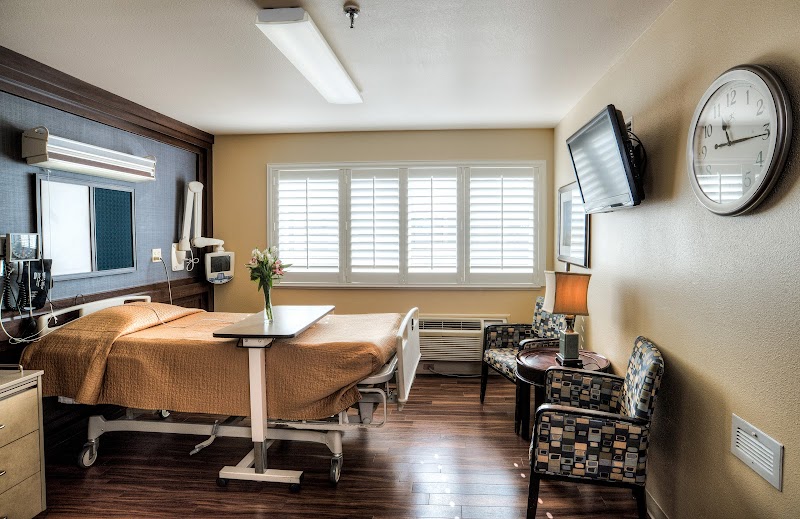
How is Skies Healthcare & Rehabilitation Center Staffed?
CMS rates Skies Healthcare & Rehabilitation Center's staffing level at 2 out of 5 stars, which is below average compared to other nursing homes. Staff turnover is 54%, compared to the New Mexico average of 46%.

What Have Inspectors Found at Skies Healthcare & Rehabilitation Center?

State health inspectors documented 90 deficiencies at Skies Healthcare & Rehabilitation Center during 2022 to 2025. These included: 3 Immediate Jeopardy (the most serious level, indicating potential for serious harm or death), 3 that caused actual resident harm, and 84 with potential for harm. Immediate Jeopardy findings are rare and represent the most serious regulatory concerns. They require immediate corrective action.

Who Owns and Operates Skies Healthcare & Rehabilitation Center?

Skies Healthcare & Rehabilitation Center is owned by a for-profit company. For-profit facilities operate as businesses with obligations to shareholders or private owners. The facility is operated by GENESIS HEALTHCARE, a chain that manages multiple nursing homes. With 120 certified beds and approximately 112 residents (about 93% occupancy), it is a mid-sized facility located in Albuquerque, New Mexico.

How Does Skies Healthcare & Rehabilitation Center Compare to Other New Mexico Nursing Homes?

Compared to the 100 nursing homes in New Mexico, Skies Healthcare & Rehabilitation Center's overall rating (2 stars) is below the state average of 2.9, staff turnover (54%) is near the state average of 46%, and health inspection rating (1 stars) is much below the national benchmark.

What Should Families Ask When Visiting Skies Healthcare & Rehabilitation Center?

Based on this facility's data, families visiting should ask: "What changes have been made since the serious inspection findings, and how are you preventing similar issues?" "Can you walk me through typical staffing levels on day, evening, and night shifts?" "Can I visit during a mealtime to observe dining assistance and food quality?" "How do you handle medical emergencies, and what is your hospital transfer rate?" These questions are particularly relevant given the facility's Immediate Jeopardy citations and the below-average staffing rating.

Is Skies Healthcare & Rehabilitation Center Safe?

Based on CMS inspection data, Skies Healthcare & Rehabilitation Center has documented safety concerns. Inspectors have issued 3 Immediate Jeopardy citations (the most serious violation level indicating risk of serious injury or death). The facility has a 2-star overall rating and ranks #100 of 100 nursing homes in New Mexico. Families considering this facility should ask detailed questions about what corrective actions have been taken since these incidents.

Do Nurses at Skies Healthcare & Rehabilitation Center Stick Around?

Skies Healthcare & Rehabilitation Center has a staff turnover rate of 54%, which is 8 percentage points above the New Mexico average of 46%. Moderate turnover is common in nursing homes, but families should still ask about staff tenure and how the facility maintains care continuity when employees leave.

Was Skies Healthcare & Rehabilitation Center Ever Fined?

Skies Healthcare & Rehabilitation Center has been fined $42,047 across 2 penalty actions. The New Mexico average is $33,499. While any fine indicates a compliance issue, fines under $50,000 are relatively common and typically reflect isolated problems that were subsequently corrected. Families should ask what specific issues led to these fines and confirm they've been resolved.

Is Skies Healthcare & Rehabilitation Center on Any Federal Watch List?

Skies Healthcare & Rehabilitation Center is not on any federal watch list. The most significant is the Special Focus Facility (SFF) program, which identifies the bottom 1% of nursing homes nationally based on persistent, serious quality problems. Not being on this list means the facility has avoided the pattern of deficiencies that triggers enhanced federal oversight. This is a positive indicator, though families should still review the facility's inspection history directly.