Spanish Trails Rehabilitation Suites


1610 N Renaissance Blvd NE, Albuquerque, NM 87107 (505) 600-4800
For profit - Limited Liability company 134 Beds FUNDAMENTAL HEALTHCARE Data: November 2025
Trust Grade
45/100
#21 of 67 in NM
Last Inspection: April 2025

Within standard 12-15 month inspection cycle. Federal law requires annual inspections.

Overview

Spanish Trails Rehabilitation Suites has received a Trust Grade of D, indicating below-average performance with some concerns about care quality. It ranks #21 out of 67 facilities in New Mexico, placing it in the top half, but still shows room for improvement. The facility is on an improving trend, reducing issues from 20 in 2024 to 12 in 2025. Staffing is relatively strong, with a 4 out of 5 star rating and a turnover rate of 46%, which is better than the state average. However, the facility has significant fines totaling $111,222, which suggests ongoing compliance issues. Specific incidents of concern include a failure to properly care for residents with pressure wounds, leading to worsening conditions, and not assessing a resident after falls, which delayed necessary treatment. Additionally, the kitchen was found to be unsanitary, with multiple violations that could lead to foodborne illnesses. While there are some strengths in staffing and overall ratings, these serious issues highlight the need for families to consider both the positive and negative aspects of care at this facility.

Trust Score
D
45/100
In New Mexico
#21/67
Top 31%
Safety Record
High Risk
Review needed
Inspections
Getting Better
20 → 12 violations
Staff Stability
⚠ Watch
46% turnover. Above average. Higher turnover means staff may not know residents' routines.
Penalties
⚠ Watch
$111,222 in fines. Higher than 91% of New Mexico facilities. Major compliance failures.
Skilled Nurses
○ Average
Each resident gets 41 minutes of Registered Nurse (RN) attention daily — about average for New Mexico. RNs are the most trained staff who monitor for health changes.
Violations
⚠ Watch
39 deficiencies on record. Higher than average. Multiple issues found across inspections.
★★★★☆
4.0
Overall Rating
★★★★☆
4.0
Staff Levels
★★★★☆
4.0
Care Quality
★★★★☆
4.0
Inspection Score
Stable
2024: 20 issues
2025: 12 issues

The Good

  • 4-Star Staffing Rating · Above-average nurse staffing levels
  • 4-Star Quality Measures · Strong clinical quality outcomes
  • Full Sprinkler Coverage · Fire safety systems throughout facility
  • No fines on record

Facility shows strength in staffing levels, quality measures, fire safety.

The Bad

Staff Turnover: 46%

Near New Mexico avg (46%)

Higher turnover may affect care consistency

Federal Fines: $111,222

Well above median ($33,413)

Significant penalties indicating serious issues

Chain: FUNDAMENTAL HEALTHCARE

Part of a multi-facility chain

Ask about local staffing decisions and management

The Ugly 39 deficiencies on record

2 actual harm
Jul 2025 2 deficiencies
CONCERN (D) 📢 Someone Reported This

A family member, employee, or ombudsman was alarmed enough to file a formal complaint

Potential for Harm - no one hurt, but risky conditions existed

Quality of Care (Tag F0684)

Could have caused harm · This affected 1 resident

**NOTE- TERMS IN BRACKETS HAVE BEEN EDITED TO PROTECT CONFIDENTIALITY** Based on observation, record review and interview, the facility failed to follow physician orders for 1 (R #1) of 1 (R #1) resid...

Read full inspector narrative →
**NOTE- TERMS IN BRACKETS HAVE BEEN EDITED TO PROTECT CONFIDENTIALITY** Based on observation, record review and interview, the facility failed to follow physician orders for 1 (R #1) of 1 (R #1) resident. This deficient practice is likely to result in residents receiving care that is not medically appropriate. The findings areA. Record review of R #1's face sheet dated 07/10/25 revealed he was admitted to the facility on [DATE] with the following diagnoses:-Gastro Esophageal Reflux Disease (GERD) (a digestive disease in which acid is often regurgitated during/after eating).-Cognitive (mental) Communication Deficit.-Type 2 Diabetes Mellitus (chronic disease affecting blood sugar levels).-Generalized Anxiety (nervousness) Disorder.B. Record review of R #1's physician orders revealed an order dated 01/29/25 to give all medications that are appropriate with food or snack. Ordered by (Name of Medical Doctor).C. On 07/10/25 at 9:20 am during observation and interview with R #1, he was seen in his room, in his bed. He stated he had already received and eaten his meal. He stated he was still waiting for his morning medications to be administered. He stated he preferred to receive his morning medications with his meal as he felt this was less irritating to his stomach. D. On 07/10/25 at 1:20 pm during interview with Licensed Practical Nurse (LPN) #1, she stated this was a nursing order and not a doctor's order and that it should have been discontinued after R #1's return from the hospital. LPN #1 stated that R #1 had stated in the past that he wanted his medications with meals. She stated R #1 had been sent to the hospital a week before (on 07/02/25). LPN #1 stated she discussed medications with R #1 when he returned from the hospital. She stated that after this discussion, she should have discontinued this order as he no longer needed his medications with meals. E. On 07/10/25 at 1:40 pm during interview with R #1 in his room with a Hospice Clergy present, R #1 stated he still preferred to receive his medications, especially his morning medication, to be administered with his meal.
CONCERN (D) 📢 Someone Reported This

A family member, employee, or ombudsman was alarmed enough to file a formal complaint

Potential for Harm - no one hurt, but risky conditions existed

Medical Records (Tag F0842)

Could have caused harm · This affected 1 resident

**NOTE- TERMS IN BRACKETS HAVE BEEN EDITED TO PROTECT CONFIDENTIALITY** Based on record review and interview, the facility failed to accurately document the changing conditions of 1 (R #3) of 3 (R #2,...

Read full inspector narrative →
**NOTE- TERMS IN BRACKETS HAVE BEEN EDITED TO PROTECT CONFIDENTIALITY** Based on record review and interview, the facility failed to accurately document the changing conditions of 1 (R #3) of 3 (R #2, 3, 4) residents. The facility documented conflicting resident daily assessments for R #3's conditions. This deficient practice is likely to result in resident care and care plans being confusing and inadequate. The findings are: A. Record review of R #3's face sheet dated 07/10/25 revealed she was admitted to the facility on [DATE] and discharged from the facility on 05/09/25 to return home with home health services. B. Record review of R #3's Admitting History and Physical dated 03/29/25 revealed she was admitted to the facility with the following diagnosis:-Left Intertrochanteric Femur Fracture (Broken Hip)C. Record review of R #3 Minimum Data Set (a set of assessments that describes a person's needs and abilities: MDS) dated [DATE] revealed the following:-MDS Section C (section that assesses cognitive patterns) Brief Interview for Mental Status (BIMS) (a simple test that assesses a person's mental ability) revealed a score of 10 out of 15 indicating moderate impairment of R #3's memory and cognition.-MDS section G (a set of assessments that describe a person's functional abilities) revealed that upon admission R #3 required stand by assistance with meals and oral hygiene. R #3 required full assistance with toileting and bathing. -MDS Section H (a set of assessments that describe a person's ability to control bowel and bladder) revealed that R #3 was occasionally incontinent of bladder and frequently incontinent of bowel.D. Record review of R #3's care plan dated 03/28/25 stated a problem category of cognitive loss/dementia (a chronic progressive disease that causes decline in memory and mental abilities). E. Record review of R #3's daily nursing notes dated 03/28/25 through 05/09/25, revealed the following: 1. Record review of R#3's daily nursing notes dated 03/28/25 at 11:06 pm revealed R #3 refused all medications. The notes state she reported taking only 3 medications at home. She refused to take the prescribed antibiotic. R #3 was educated as to the need for these medications, why these medications are used and risks of non-compliance. 2. Record review of R#3's daily nursing notes dated 03/29/25 at 5:49 pm revealed R #3 refused continence care (care of the body following an incidence of bowel or bladder release). R #3 was educated on the need for regular continence care to prevent skin breakdown. R #3 stated she didn't need a lecture. R #3 requested a change of room due to bed placement. 3. Record review of R#3's daily nursing notes dated 03/29/25 at 2:05 pm revealed R #3 refused medication.4. Record review of R#3's daily nursing notes dated 03/29/25 at 6:56 pm revealed R #3 refused Tuberculosis (a chronic infectious disease of the lungs) testing stating I don't need it. I don't want it. 5. Record review of R#3's daily nursing notes dated 03/29/25 at 11:55 pm revealed R #3 insisted that she doesn't want to be bothered during the night and that she doesn't want to be checked for incontinence (inability to control bowel and/or bladder) needs. R #3 stated she was tired of being bothered. 6. Record review of R#3's daily nursing notes dated 03/31/25 at 3:11 pm revealed R #3 refused all meds. R #3 refused continence care (a check by staff to determine if resident has had an episode of incontinence). R #3 was educated on the need for regular incontinence care, R #3 responded that she already knew this.7. Record review of R#3's daily nursing notes dated 04/01/25 at 12:19 pm revealed R #3 met with Assistant Director of Nursing (ADON) to discuss her ongoing refusal of medication and care needs. R #3 stated she will not follow current recommendations as she knows better than those of us here who are not educated enough to manage her care. Nurse Practitioner (NP) #1 was notified and informed of R #3's refusals. A referral was ordered to counseling services.8. Record review of R#3's daily nursing notes dated 04/04/25 at 6:39 pm revealed R #3 refused to have her surgical dressing changed told staff it looked good to her. The nurse again explained the importance of daily care needs and concern for R #3's continued refusal of antibiotics. R #3 told the nurse to leave now and close the door.9. Record review of R#3's daily nursing notes dated 04/04/25 at 9:30 pm revealed R #3 refused care and insisted she be left alone until the morning. The nurse explained the need for regular incontinence checks and regular incontinence care. R #3 informed the nurse she would think about it.10. Record review of R#3's daily nursing notes dated 04/08/25 at 12:59 pm revealed R #3 refused to be weighed.11. Record review of R#3's daily nursing notes dated 04/09/25 at 12:46 pm revealed R #3 refused medications. R #3 was educated about their medications and the need to take prescribed dosages. NP #1 was notified of the refusal.12. Record review of R#3's daily nursing notes dated 04/19/25 at 6:55 pm revealed R #3 refused three times-wound care and shower/bed bath stating she did not want to be disturbed.13. Record review of R#3's daily nursing notes dated 04/22/25 at 11:03 am revealed R #3 was provided information for home health care in planning for a safe discharge. R #3 stated she wanted to be discharged .14. Record review of R#3's daily nursing notes dated 04/26/25 at 3:04 pm revealed R #3 requested to be left alone, refused bath, wound care and skin check. 15. Record review of R#3's daily nursing notes dated 05/01/25 at 12:22 pm revealed Administrator (ADM) and Social Services Director (SSD) met with R #3 and discussed discharge plans. ADM and SSD informed R #3 that they felt her discharge home alone would be unsafe due to her need for cognitive (mentation/thinking) is impaired and she would require 24 hour/7 day a week support. ADM and SSD explained to R #3 that if she could not provide constant in-home support then she might need to consider long term care. R #3 is said to be completely against this idea of admitting to long term care. ADM and SSD explained they had contacted family for R #3 and they also suggested a guardian (a person who is appointed to be responsible for decision making for another person) be appointed for R #3. ADM and SSD explained the option of leaving against medical advice. R #3 ordered ADM and SSD to leave the room. 16. Record review of R#3's daily nursing notes dated 05/03/25 at 2:03 pm revealed R #3 twice refused to have surgical dressing changed, to allow a skin check to be done or to take a bath/shower. 17. Record review of R#3's daily nursing notes dated 05/06/25 at 3:22 pm revealed SSD met with R #3 to discuss discharge home. R #3 stated she had neighbors who would transport her home when discharged . R #3 stated she could provide all other needed care herself through outside services and with home health care assistance.18. Record review of R#3's daily nursing notes dated 05/06/25 at 3:26 pm revealed R #3 left a message for SSD that her neighbors would not be able to come pick her up from the facility when discharged .19. Record review of R#3's daily nursing notes dated 05/01/25 at 12:22 pm revealed Administrator (ADM) and Social Services Director (SSD) met with R #3 and discussed discharge plans. ADM and SSD informed R #3 that they felt her discharge home alone would be unsafe due to her need for cognitive (mentation/thinking) is impaired and she would require 24 hour/7 day a week support. ADM and SSD explained to R #3 that if she could not provide constant in-home support then she might need to consider long term care. R #3 is said to be completely against this idea of admitting to long term care. ADM and SSD explained they had contacted family for R #3, and they also suggested a guardian (a person who is appointed to be responsible for decision making for another person) be appointed for R #3. ADM and SSD explained the option of leaving against medical advice. R #3 ordered ADM and SSD to leave the room. 20. Record review of R#3's daily nursing notes dated 05/03/25 at 2:03 pm revealed R #3 twice refused to have surgical dressing changed, to allow a skin check to be done or to take a bath/shower. 21. Record review of R#3's daily nursing notes dated 05/06/25 at 3:22 pm revealed SSD met with R #3 to discuss discharge home. R #3 stated she had neighbors who would transport her home when discharged . R #3 stated she could provide all other needed care herself through outside services and with home health care assistance.22. Record review of R#3's daily nursing notes dated 05/06/25 at 3:26 pm revealed R #3 left a message for SSD that her neighbors would not be able to come pick her up from the facility when discharged .23. Record review of R#3's daily nursing notes dated 05/09/25 at 9:00 am revealed R #3 was noted to be ready for discharge, medications and discharge instructions were provided. R #3 was observed as she stood, transferred to a wheelchair, and put her shoes on independently. R #3 was advised that she was leaving against medical advice. R #3 refused to sign a facility provided document of her choosing to leave against medical advice. R #3 was wheeled to the front door of the facility where she was to meet her arranged transport at 10:00 am.24. Record review of R#3's daily nursing notes dated 05/09/25 at 11:52 am revealed R #3 failed to exit the building and met with transport service at the designated time. R #3 made alternate arrangements for transport and left the building at 12:13 pm.F. Record review of R#3's Provider Progress Notes dated 03/31/25, 04/03/25, 04/07/25, 04/10/25, 04/14/25, 04/17/25, 04/21/25, 04/24/25, 04/28/25, 04/30/25, 05/05/25 and 05/07/25 revealed R #3 had voiced multiple complaints about multiple issues. Review of Provider Progress Notes revealed multiple notes that R #3 had refused medications. Review of Provider Progress Notes also revealed notes that R #3 was continuing to plan for a safe discharge with the assistance of Social Services. Review of all Provider Progress Notes failed to find any notation that R #3 was planning to discharge against medical advice as indicated by nursing notes. Review of all Provider Progress Notes do not indicate that the provider had met with or discussed with R #3 any of her plans to discharge against medical advice. G. On 07/10/25 at 3:45 pm during an interview with the facility Director of Nursing (DON), Assistant Director of Nursing (ADON) and SSD they stated R #3 had voiced multiple concerns regarding her medications. They stated R #3 had frequently refused routine care and ADL (Activities of Daily Living) (daily care needs that all persons require to maintain health and wellbeing) assistance. They stated on 05/01/25 there were discussions about R #3 going home. They stated R #3 was advised that she was not competent to be living at home alone. They stated R #3 rejected this advice. They stated that this was discussed with R #3's medical team including her nurse practitioner and her medical doctor (MD). ADON stated she and MD had met with R #3 and discussed their concerns for discharge home alone and R #3 continued to refuse to accept advice for any other care except to be discharged home. SSD stated she had assisted R #3 to be referred to home health care before her discharge. SSD stated this had been discussed with nurse practitioner and the nurse practitioner had signed an order for home health care. DON reviewed R #3's medical record and confirmed that the medical provider's progress notes contained no documentation of R #3's demand to be discharged or notation of her decision to be discharged against medical advice. DON confirmed that this should have been included in the medical provider's documentation.
Apr 2025 7 deficiencies
CONCERN (D)

Potential for Harm - no one hurt, but risky conditions existed

Resident Rights (Tag F0550)

Could have caused harm · This affected 1 resident

**NOTE- TERMS IN BRACKETS HAVE BEEN EDITED TO PROTECT CONFIDENTIALITY** Based on interview and record review, the facility failed to promote care with dignity and respect for 1 (R #1) of 1 (R #1) resi...

Read full inspector narrative →
**NOTE- TERMS IN BRACKETS HAVE BEEN EDITED TO PROTECT CONFIDENTIALITY** Based on interview and record review, the facility failed to promote care with dignity and respect for 1 (R #1) of 1 (R #1) resident reviewed for residents' rights by walking into the room to speak to a staff member who's performing personal care on a resident. This deficient practice is likely to result in residents feeling as if they were unimportant and not having privacy. The findings are: A. On 04/22/25 at 12:30 PM during an interview with R #1, she stated that she felt a nurse did not treat her with respect when she went into the bathroom without announcing herself when she was showering. The nurse needed to talk to the Certified Nurse Aide (CNA) who was assisting me with my shower. R #1 further stated, Just because she's a nurse doesn't mean it's okay to just go into someone's bathroom to talk to another staff. I felt like she didn't respect my privacy. B. Record review of R #1's face sheet revealed she was admitted to the facility on [DATE]. C. Record review of R #1's Minimum Data Set (MDS; a standardized, comprehensive assessment of an adult's functional, medical, psychosocial, and cognitive status), dated 03/07/25, revealed the following: - Brief Interview for Mental Status (BIMS; a screening for cognitive impairment) score of 15. - Functional Abilities-Shower/bathe self: 02. Substantial/maximal assistance. D. On 04/25/25, at 9:39 AM, during an interview with the Assistant Director of Nursing (ADON #2), she stated that R #1 has never mentioned anything about a nurse making her feel uncomfortable or disrespected. She added that if R #1 did feel uncomfortable or disrespected in any way, it would be a concern that she would look into. The expectation for staff entering a room where a resident is receiving personal care is that they knock and announce themselves before entering. E. On 04/25/25, at 10:22 AM, during an interview with CNA #1, she stated that R #1 only allows certain staff members to assist her with showers/care. She will openly say, 'It's not that I don't like you, but I don't like the way you do things, and I'll wait for my care to be done by staff I prefer.' CNA #1 further stated, R #1 likes things done in a specific way, and if you follow her preferences without taking offense, you'll get along with her and gain her trust. R #1 is very vocal and straightforward about expressing her opinions. F. On 04/25/25, at 2:22 PM, during an interview with the Director of Nursing (DON), she stated that the expectation for entering a resident's room, bathroom, or shower room is that staff should knock, wait to be allowed in, acknowledge the residents, and inform them they need to speak briefly with the other staff members. She added that R #1 has not brought up this incident to her. She also mentioned that she would be conducting training to remind staff about the protocol for entering rooms when personal care is being provided. G. On 04/25/25, at 2:45 PM, during an interview with R #1's roommate, she confirmed that the incident with the nurse walking in unannounced while R #1 was showering did occur. She further stated that R #1 was upset and felt like her privacy was violated.
CONCERN (D)

Potential for Harm - no one hurt, but risky conditions existed

Deficiency F0637 (Tag F0637)

Could have caused harm · This affected 1 resident

**NOTE- TERMS IN BRACKETS HAVE BEEN EDITED TO PROTECT CONFIDENTIALITY** Based on record review and interview, the facility failed to complete a timely assessment for 1 (R #15) of 2 (R #15 and #30) res...

Read full inspector narrative →
**NOTE- TERMS IN BRACKETS HAVE BEEN EDITED TO PROTECT CONFIDENTIALITY** Based on record review and interview, the facility failed to complete a timely assessment for 1 (R #15) of 2 (R #15 and #30) residents reviewed for hospitalizations and had a sufficient change (a major decline or improvement in the resident's status that will not normally resolve itself without further intervention by staff or by implementing standard disease-related clinical interventions) within 14 days of the significant event. This deficient practice could likely result in residents not receiving the care and assistance needed. The findings are: A. Record review of R #15 face sheet dated 04/29/25 revealed he was admitted to the facility on [DATE] with the following diagnoses: -Paranoid (unreasonable suspicious thoughts) Schizophrenia (a psychiatric condition characterized by a disconnect from reality). -Psychotic (a psychiatric condition characterized by disorganized speech and behavior) Disorder with Delusions (unreal thoughts). -Chronic Kidney Disease -Diabetes (a condition that the body is unable to control blood sugars). -Dysphagia (difficulty swallowing). B. Record review of R #15's daily care notes revealed the following: -03/21/25 at 7:15 pm, R #15 needs help holding his head up, reduced strength of arms and legs and slurred speech. Facility nurse practitioner (NP) contacted, and order given to transfer R #15 to the hospital for evaluation. 04/14/25 at 10:12 pm, R #15 has returned from the hospital to the facility. C. Record review of R #15's Minimum Data Set (MDS: a group of assessments that indicates a person's overall needs and abilities) revealed that on 03/21/24, a MDS documentation of Discharge Return Anticipated was completed and submitted. On 04/14/25 an MDS documentation of Entry was completed and submitted. D. On 04/25/25 at 5:23 pm during interview with the Director of Nursing (DON) and MDS coordinator, they stated that they were unsure if an MDS change of condition should be completed when R #15 was transferred to the hospital. They stated they had completed the MDS for his Discharge with Return Anticipated and then completed the MDS for his return.
CONCERN (D) 📢 Someone Reported This

A family member, employee, or ombudsman was alarmed enough to file a formal complaint

Potential for Harm - no one hurt, but risky conditions existed

Quality of Care (Tag F0684)

Could have caused harm · This affected 1 resident

Based on record review, observation, and interview, the facility failed to ensure that 1 (R #47) of 1 (R # 47) resident reviewed for skin issues received care and treatment that met the resident's nee...

Read full inspector narrative →
Based on record review, observation, and interview, the facility failed to ensure that 1 (R #47) of 1 (R # 47) resident reviewed for skin issues received care and treatment that met the resident's needs by not documenting, assessing or treating residents skin issue. If the facility fails to provide the highest level of care to it's residents, then residents are likely to experience a decline in their wellbeing. The findings are: A. On 04/22/25 at 10:30 am during an interview with R #47 and observation of R #47's right eye, R #47 had redness and a sore on the right side of his face next to his right eye. R #47 stated he had a wound next to his right eye and he did not know what was wrong with it. R #47 further stated that it bothered him (pain) and he had asked someone to look at it. R #47 was unsure as to who he had let know about the wound . R #47 feels that he scratched himself because at times he does not have control of his hands. R #47 stated nursing had not examined it as of this day. R #47 was unsure of when he had scratched himself or when he had notified staff. B. On 04/24/25 at 5:35 pm during an interview with the Director of Nursing (DON), she stated she was not aware of any skin issue with R #47. DON further stated that it should be reported to a nurse and documented on the shower sheets. C. On 04/25/25 at 4:59 pm during an interview with the Assistant Director of Nursing (ADON) #2, she stated that R #47 had asked for an eye exam on 04/24/25, and there was a scratch on the side of R #47's eye. ADON further stated that if a Certified Nurse Aide observed it, it should be documented on the shower sheets and a nurse should be notified. D. Record review of shower sheets dated 04/10/25, 04/15/25, 04/17/25 and 04/22/25, revealed the shower sheet did not contain any documentation of a skin issue for R #47.
CONCERN (E)

Potential for Harm - no one hurt, but risky conditions existed

Notification of Changes (Tag F0580)

Could have caused harm · This affected multiple residents

**NOTE- TERMS IN BRACKETS HAVE BEEN EDITED TO PROTECT CONFIDENTIALITY** Repeat Deficiency from 03/10/25 Based on record review and interview, the facility failed to notify the resident's provider or E...

Read full inspector narrative →
**NOTE- TERMS IN BRACKETS HAVE BEEN EDITED TO PROTECT CONFIDENTIALITY** Repeat Deficiency from 03/10/25 Based on record review and interview, the facility failed to notify the resident's provider or Emergency Contact (EC) of the resident's change in condition for 1 (R #30) of 2 (R #15 and #30) residents reviewed for changes of condition (new or worsening symptoms). If the facility is not notifying the provider and EC when the resident experiences a change of condition, then both would be unable to make decisions related to treatment and advocate for the resident's care. The findings are: A. Record review of R #30's face sheet revealed he was admitted to the facility on [DATE] with the following diagnoses: -Acute Respiratory (breathing) Failure with Hypoxia (low blood oxygen). -Heart Failure. -Unspecified Kidney Disease. -Malignant (cancer) Neoplasm (tumor) of upper third of Esophagus (throat). The face sheet further revealed the name and phone number of an EC for R #30. B. Record review of R #30's daily care notes revealed the following: -02/06/25 R #30 was sent to the hospital by R #30's dialysis (process of mechanically exchanging toxic elements from the blood) provider due to being short of breath. The note did not contain any indication that the provider or EC was contacted and told of the transfer. -02/25/25 R #30 was sent to the hospital by R #30's dialysis provider due to a lab hemoglobin (red blood cell that transport oxygen through out the body) value that was low. The note did not contain any indication that the provider or EC was contacted of the transfer. -03/01/25 R #30 was sent to the hospital by R #30's dialysis provider due to a lab hemoglobin value that was low. The note did not contain any indication that the provider or EC was contacted of the transfer. -04/13/25 R #30's left arm was moderately swollen. The provider was notified and ordered R #30 be transferred to hospital for evaluation. Transport was arranged. The note did not contain any indication that the EC was contacted and told of the transfer. C. On 04/22/25 at 3:30 pm during interview with Registered Nurse #1, he stated that R #30 was being transferred to the hospital to have a blood transfusion. RN #1 stated that he had called the provider with lab results earlier and was directed to transfer R #30 to the hospital. RN #1 stated he should be calling the EC to inform him of the transfer and that contacting the EC was required with each transfer to the hospital. There is no indication that EC had been contacted on 02/06/25, 02/25/25, 03/01/25 and on 04/13/25. RN #1 confirmed EC had not been contacted according to daily care notes.
CONCERN (E) 📢 Someone Reported This

A family member, employee, or ombudsman was alarmed enough to file a formal complaint

Potential for Harm - no one hurt, but risky conditions existed

Deficiency F0602 (Tag F0602)

Could have caused harm · This affected multiple residents

**NOTE- TERMS IN BRACKETS HAVE BEEN EDITED TO PROTECT CONFIDENTIALITY** Past non-compliance Based on interview and record review, the facility failed to prevent misappropriation of resident money whe...

Read full inspector narrative →
**NOTE- TERMS IN BRACKETS HAVE BEEN EDITED TO PROTECT CONFIDENTIALITY** Past non-compliance Based on interview and record review, the facility failed to prevent misappropriation of resident money when debit card was used by unauthorized parties for 1 (R #47) of 2 (R #47, and 156) residents reviewed for exploitation (the fact of making use of a situation to gain unfair advantage for oneself). This deficient practice is likely to cause residents to feel unsafe, experience anger and frustration along with dealing with debit card theft, and fraud. The findings are: A. Record review of the facility's investigative narrative report dated 09/12/23 revealed that R #156 had been admitted to the hospital on [DATE] and $1300.00 was withdrawn from her account on 08/02/23. R #156 expired in the hospital on [DATE]. The facility was unable to substantiate abuse or neglect or misappropriation. The facility is unable to determine who, make purchases or withdrew money from her account. All pertinent information has been turned over to law enforcement for further investigation. Staff have been in-serviced on abuse and neglect and misappropriation, along with Professional Boundaries. These in-services will continue to be on-going. Both [name of staff #1 and #2) have been terminated from facility for failure to report the lost or stolen card and other conflicts of interest. B. Record review of the facility's grievance summaries reported by R #47 on 02/21/25 revealed I want to talk to her about the mother and daughter, the family who used to work here. The daughter and mother were Certified Nurse Aides (CNA)'s and the mother has my debit card. C. Record review of the facility's Initial Incident Report dated 02/25/25 at 5:31 pm revealed, Resident reported that a CNA who used to work here in 2023 took his debit card without his permission. D. On 04/22/25 at 10:30 am during an interview with R #47, he stated, that his debit card had been stolen and he knew who it was and he had been asking to speak to one of the employees certified Medication Aide (CMA) #1 that still worked at the facility because she was related to the CNA that had stolen his debit card. R #47 stated he had never been asked if he had ever had any missing personal items before by any of the facility staff. R #47 further stated that he had been asking other staff if they knew how to get hold of CMA #1, CNA #1 and CNA #2 and they were not able to get him any information. He became aware of the missing money when he was told by the facility that his application for assistance had been denied some time in November of 2024 due to having a bank account. R #47 at that time(02/25/25) investigation was started and R #47 was taken to the bank and discovered that he was missing approximately $23,000.00. E. On 04/23/25 at 2:33 pm during an interview with facility Administrator (ADM), she stated that she had terminated [name of CMA #1] related to the case of the missing debit card with R #47. Administrator stated that during an interview with CMA #1, she stated that R #47 had asked her to ask her mom (staff #1) to return his debit card. The facility felt that CMA #1 should have reported the missing debit card when R #47 had asked her to ask her mom (staff #1) for the debit card back in November of 2024. ADM stated that the facility was reimbursing R #47 and had interviewed other residents in the facility to ensure that this incident was not occurring to any others in the building. Facility informed law enforcement on 02/25/25, in-services were conducted on 03/27/25 with all staff. F. On 04/24/25 at 12:32 pm during an interview with former Administrator (FA), she stated that concerns had been brought to her by R #156's son after his mother R #156 had passed away. Facility was informed that that several hundred dollars had gone missing from R #156's account. A police report was filed and in-services were done with the staff on 09/12/23. FA did not recall interviewing any residents to ensure that they had not had any issues with missing money or issues with any of the staff asking for money or had access to personal bank accounts. FA further stated that she was unable to substantiate the allegation of abuse, neglect or misappropriation. The facility was unable to determine who made purchases and withdrew the money from R #156's account and all information had been given to law enforcement on 09/12/23. Both staff #1 and #2 had been terminated for false reporting and conflict of interest on 09/12/23. G. On 04/24/25 at 4:54 pm during an interview with Social Services Director (SSD), she stated that a facility staff came to her and told her R #47 wanted to speak to her immediately on 02/21/25. R #47 presented her with a bank letter and she in turn brought it to the business office. R #47 further informed her that his bank card had been stolen by a family that used to care for him at the facility (staff #1, #2 and CMA #1), he then stated that he had asked CMA #1 to ask her mother (staff #1) to return his bank card. SSD stated at that point they started an investigation and took R #47 to the bank, law enforcement was called and other residents were interviewed to confirm that this had not occurred to any other residents. CMA #1 was terminated 02/26/25 for not reporting that R #47 had been asking her to have her mother return his bank card. H. On 04/25/25 at 1:47 pm during a follow-up interview with R #47, he stated that he thought Staff #1, Staff #2 and CMA #1 were his friends and he did not believe that they would take anything from him. R #47 stated he gave them is food card so that they could purchase food items for him at the grocery store and he gave them his food card PIN number (personal identification number) which was also the PIN for his debit card. R #47 did not give them his debit card as far as he can remember it was in his wallet, they took it without his permission. There was a large amount of money missing from his account. R #47 was taken to the bank to get his bank statements and he confirmed there were large amounts of withdrawals that he had not consented to on his bank statements. The facility transported him to the bank to retrieve the bank statements. R #47 felt that he had been betrayed and has lost trust of other people and he is afraid to allow other facility staff to have access/knowledge of his financial business. I. On 04/25/25 at 3:33 pm during an interview with the Assistant Business Office Manager (ABOM), she stated that she had submitted a re-certification application for R #47 in October 2024 was submitted without bank statements, and she received a denial letter approximately thirty days later. ABOM went to talk with R #47 about his denial letter and was informed by R #47 that he was not receiving his bank statements and was not able to provide bank statements to have his application re-submitted. ABOM stated that facility did not follow up at the time because they did not have a Business office Manager (BOM) at the time of the denial to assist R #47 in getting bank statements or re-submitting his application for approval. Bank statements would have confirmed that R #47 had large withdrawals from his account at the time of submission of his application.
CONCERN (E)

Potential for Harm - no one hurt, but risky conditions existed

Deficiency F0657 (Tag F0657)

Could have caused harm · This affected multiple residents

**NOTE- TERMS IN BRACKETS HAVE BEEN EDITED TO PROTECT CONFIDENTIALITY** Based on record review and interview, the facility failed to ensure staff revised the care plan for 6 (R #'s 1, 54, 55, 70, 73, ...

Read full inspector narrative →
**NOTE- TERMS IN BRACKETS HAVE BEEN EDITED TO PROTECT CONFIDENTIALITY** Based on record review and interview, the facility failed to ensure staff revised the care plan for 6 (R #'s 1, 54, 55, 70, 73, and 79) of 6 (R #'s 1, 54, 55, 70, 73, and 79) residents reviewed when staff failed to: 1. Conduct a quarterly care plan meeting as required for R #'s 1, 54, 55, 70, and 73 in accordance with their admission date and Minimum Data Set (MDS) assessments. 2. Update R #79's plan of care to include resident and resident's family assistance with colostomy (surgery to create an opening for the colon (large intestine) through the abdomen). These deficient practices are likely to result in residents' care and needs not being addressed if care plans are not updated. The findings are: Care Plan Meetings: R #1: A. Record review of R #1's face sheet revealed R #1 was admitted into the facility on [DATE]. B. Record review of R #1's MDS resident assessment page located in R #1's Electronic Health Record (EHR) revealed R #1's last two quarterly MDS assessments occurred on 09/09/24 (quarterly review) and 12/05/24 (quarterly review). C. Record review of R #1's care conference report reviewed on 04/24/25 revealed R #1 had a care plan meeting on 09/19/24 and then one was not conducted until 01/28/25. R #54: D. Record review of R #54's face sheet revealed R #54 was admitted into the facility on [DATE]. E. Record review of R #54's MDS resident assessment page located in R #54's EHR revealed R #54's last two quarterly MDS assessments occurred on 10/27/24 (quarterly review) and 01/27/25 (annual review). F. Record review of R #54's care conference report reviewed on 04/24/25 revealed R #54 had a care plan meeting on 11/12/24 and then one was not conducted until 04/17/25. R #55: G. Record review of R #55's face sheet revealed R #55 was admitted into the facility on [DATE]. H. Record review of R #55's MDS resident assessment page located in R #55's EHR revealed R #55's last two quarterly MDS assessments occurred on 12/05/24 (quarterly review) and 03/07/25 (annual review). I. Record review of R #54's care conference report reviewed on 04/24/25 revealed R #54 had a care plan meeting on 12/17/24 and then one was not conducted until 04/24/25. R #70: J. Record review of R #70's face sheet revealed R #70 was admitted into the facility on [DATE]. K. Record review of R #70's MDS resident assessment page located in R #70's EHR revealed R #70's last two quarterly MDS assessments occurred on 11/21/24 (quarterly review) and 02/18/25 (annual review). L. Record review of R #70's care conference report reviewed on 04/24/25 revealed R #70 had a care plan meeting on 11/14/24 and then one was not conducted until 03/11/25. R #73: M. Record review of R #73's face sheet revealed R #73 was admitted into the facility on [DATE]. N. Record review of R #73's MDS resident assessment page located in R #73's EHR revealed R #73's last two quarterly MDS assessments occurred on 11/15/24 (quarterly review) and 02/15/25 (annual review). O. Record review of R #73's care conference report reviewed on 04/24/25 revealed R #73 had a care plan meeting on 08/15/24 and then one was not conducted until 01/28/25. P. On 04/24/25 at 5:28 pm during an interview with the Director of Nursing (DON), she stated all care plan meetings should be conducted every 90 days (quarterly). The DON confirmed R #'s 1, 54, 55, 70, and 73 care plan meetings were not completed quarterly, and should have been. Updated Care Plan: R #79: Q. Record review of R #79's face sheet revealed R #79 was admitted into the facility on [DATE]. R. Record review of R #79's physician orders dated 04/03/25 revealed the facility nursing staff were to change R #79's colostomy wafer and pouch weekly and as needed. S. Record review of R #79's care plan dated 04/11/25 revealed R #79 has a colostomy, but R #79 and/or R #79's family providing colostomy care was not care planned. T. On 04/22/25 at 4:28 pm during an interview with R #79's father, he stated that his wife (R #79's mother) or him will change R #79's colostomy bag most of the time. R #79's father also stated that the facility nurses will help, but the nurses are aware of them providing colostomy care for R #79. U. On 04/25/25 at 4:21 pm during an interview with the Assistant Director of Nursing (ADON) #1, she stated that sometimes R #79 and R #79's parents will provide colostomy for him. The ADON #1 also stated the facility nurses will complete colostomy care for R #79 when his parents are not around. The ADON #1 confirmed R #79 and R #79's parents providing colostomy care for R #79 should be care planned, and it was not.
CONCERN (E)

Potential for Harm - no one hurt, but risky conditions existed

Food Safety (Tag F0812)

Could have caused harm · This affected multiple residents

Based on observation and interview, the facility failed to store and serve food under sanitary conditions when staff failed to ensure: 1. Food items were labeled and dated in the kitchen refrigerator ...

Read full inspector narrative →
Based on observation and interview, the facility failed to store and serve food under sanitary conditions when staff failed to ensure: 1. Food items were labeled and dated in the kitchen refrigerator and freezer. 2. Food was stored appropriately and not left open to air in the kitchen freezer. 3. Food items were not expired in the kitchen and dry storage. These deficient practices are likely to affect all 117 residents listed on the resident census list provided by the Administrator on 04/21/25 and are likely lead to foodborne illnesses in residents if food is not being stored properly and safe food handling practices are not adhered to. The findings are: A. On 04/21/25 at 11:43 am, observation of the kitchen revealed the following: 1. Three large cheese pizzas were not labeled or dated and stored in the kitchen freezer. 2. One large cardboard box of green beans were left open to air and stored in the kitchen freezer. 3. Thirteen 24 count plastic containers of chocolate chip cookies was not labeled or dated and stored in the kitchen dry storage. 4. One 5 pound (lb) and 5 ounce (oz) package of La Banderita yellow corn tortillas had an expiration date of 10/28/24, and an opened dated of 02/18/25, was stored in the kitchen dry storage. 5. Two 12 count packages of Natures Own hamburger buns had an expiration date of 03/10/25, and was stored in the kitchen dry storage. 6. One 12 count package of Natures Own hotdog buns had an expiration date of 03/10/25, and was stored in the kitchen dry storage. B. On 04/21/25 at 12:10 pm during an interview with the Dietary Manager (DM), she confirmed all findings listed above and stated that all food items should be labeled, dated, stored appropriately, and not expired.
Mar 2025 3 deficiencies
CONCERN (D) 📢 Someone Reported This

A family member, employee, or ombudsman was alarmed enough to file a formal complaint

Potential for Harm - no one hurt, but risky conditions existed

Notification of Changes (Tag F0580)

Could have caused harm · This affected 1 resident

**NOTE- TERMS IN BRACKETS HAVE BEEN EDITED TO PROTECT CONFIDENTIALITY** Based on record review and interview, the facility failed to notify the facility providers (Nurse Practitioner, Physician) and t...

Read full inspector narrative →
**NOTE- TERMS IN BRACKETS HAVE BEEN EDITED TO PROTECT CONFIDENTIALITY** Based on record review and interview, the facility failed to notify the facility providers (Nurse Practitioner, Physician) and the resident's Emergency Contact (EC), when a resident experienced an unwitnessed fall while also prescribed a blood thinner for 1 (R #2) of 1 (R #2) resident reviewed for a change of condition. This deficient practice is likely to result in a delay in treatment or inadequate treatment. The findings are: A. Record review of R #2's face sheet revealed R #2 was admitted on [DATE] and was discharged to the hospital on [DATE]. B. Record review of R #2's physician orders dated 01/03/25, revealed R #2 was prescribed and taking Warfarin (blood thinner) 2 milligrams (mg), once a day. C. Record review of R #2's SBAR (Situation, Background, Assessment, and Recommendation- form used to help healthcare professionals communicate quickly) Communication form dated 01/09/25, revealed the Medical Doctor (MD) #1 was contacted at 4:40 am, and R #2's daughter was contacted at 5:40 am after R #2's fall. Note was written by Registered Nurse (RN) #4. D. Multiple attempts to contact RN #4 and never received response. E. Record review of R #2's treatment administration record (TAR) dated 01/08/25 through 01/13/25, revealed the following: 1. Post Fall Observation (beginning on 01/09/25): Completed each day without any changes in cognition or pain noted for R #2. 2. Observe more frequently and place in supervised area when not in bed (beginning on 01/09/25): Completed twice a day for each day for R #2. F. Record review of R #2's neurological evaluation flow sheet (after R #2's fall) dated 01/09/25 through 01/12/25 revealed no cognitive decline noted after fall that occurred on 01/09/25. R #2's first neurological evaluation occurred on 01/09/25 at 4:30 am. G. Record review of R #2's nursing progress notes dated 01/08/25 through 01/13/25, revealed the following: 1. On 01/09/25 at 5:24 pm: Fall Follow-up; facility nursing staff spoke to R #2 who stated that he moves around a lot in his sleep. R #2's daughter confirmed that R #2 moves a lot in his sleep and prefers to lay on one side. Bed enablers (a type of bed rail that is used to facilitate movement and provide comfort and security) were added and more frequent visual rounding (observations and medical evaluations) will be conducted for R #2. R #2 and his daughter agreed to the interventions. - This was the only progress note recorded for R #2's fall which occurred on 01/09/25 between the times on 3:00 am to 4:30 am. 2. On 01/12/25 at 1:32 pm: R #2's daughter informed the facility nursing staff that R #2 had a bruise to the right side of his temple (temporal bone- fragile part of the skull located on the side of the face). R #2's bruise was purple and yellow in color, and it measured 2.5 centimeters (cm) by 2 cm. R #2 did not know how bruise occurred, but R #2's daughter stated that R #2 had a fall that occurred on 01/09/25. 3. On 01/13/25 at 6:28 pm: R #2's family wanted R #2 sent to the hospital for an evaluation due to potential bleeding concerns (related to fall that occurred on 01/09/25). R #2's family called emergency transport (911) for R #2. R #2's family was informed that the facility provider and nurses had evaluated R #2 (after the fall on 01/09/25) and R #2 was being monitored for any signs of distress. H. On 03/06/25 at 11:11 am during an interview with R #2's daughter/EC, she stated that R #2 had a lower pelvis fracture from a fall that occurred on 12/02/24, outside of the facility, but new fractures (single right rib and left rib) occurred after the fall on 01/09/25. R #2's EC also stated R #2 fell on the morning of 01/09/25, but nobody called her from the facility. EC further stated she only found out about the fall after her husband visited R #2 in the facility in the afternoon on 01/09/25, and the facility nursing staff informed him of R #2's fall. R #2's EC stated R #2 began to decline by becoming more lethargic (feeling tired, lacking energy, and sluggish) on 01/010/25 and she noticed R #2's bruise to his face on 01/11/25. R #2's EC confirmed R #2 was complaining of rib pain on 01/13/25, and because he was also on a blood thinner, she called 911 because the facility refused to send R #2 to the ER. I. Record review of R #2's emergency room (ER) note dated 01/13/25, revealed R #2 was brought to the ER after experiencing a fall on 01/09/25, and worsening rib pain. R #2 was diagnosed with a closed fracture of a single right rib and left rib. R #2's ER notes also revealed that R #2 had comprehensive imaging performed in the ER and no acute threatening traumatic injury was found. J. On 03/07/25 at 1:23 pm, during an interview with Licensed Practical Nurse (LPN) #1, she stated that a facility provider should always be notified after a resident experiences a fall, especially if that resident takes a blood thinner medication. K. On 03/10/25 at 12:05 pm, during an interview with Registered Nurse (RN) #1, she stated the providers, the Assistant Director of Nursing (ADON), and Director of Nursing (DON) should be notified when a resident experiences a fall, especially if that resident takes a blood thinner medication. L. On 03/10/25 at 2:07 pm, during an interview with the Nurse Practitioner (NP) #1, she stated she was not contacted for R #2's fall on 01/09/25. The NP #1 stated that since R #2's fall occurred in the early morning hours on 01/09/25, she would have expected the facility nursing staff to contact the on-call provider. M. On 03/10/25 at 2:44 pm during an interview with the Assistant Director of Nursing (ADON) #1, she stated when a resident experiences an unwitnessed fall, the nursing staff are to assess the resident and notify a provider immediately. The ADON #1 confirmed after looking at R #2's electronic health record (EHR) that a provider was not notified of R #2's fall on 01/09/25, and one should have been notified. N. On 03/10/25 at 3:23 pm during an interview with the Medical Doctor (MD) #1, he stated the nursing staff does not call him after hours, because he is not available for night calls. The MD #1 also stated that he was not contacted on 01/09/25 at 4:40 am as documented on R #2's SBAR, and he did not know why the nurse documented that. The MD #1 confirmed a provider should have been notified of R #2's fall on 01/09/25 especially since R #2 was taking a blood thinner and he experienced an unwitnessed fall. O. On 03/10/25 at 4:06 pm during an interview with the Director of Nursing (DON), she stated a provider should be notified immediately if a resident experiences an unwitnessed fall while also prescribed blood thinners. The DON confirmed if MD #1 stated that he (MD #1) was not contacted when R #2 experienced a fall on 01/09/25, then a provider was not notified of R #2's fall on 01/09/25 and a provider should have been notified. The DON did not recall being notified of R #2's fall on 01/09/25, and also confirmed R #2's EC should have been contacted immediately as well.
CONCERN (D) 📢 Someone Reported This

A family member, employee, or ombudsman was alarmed enough to file a formal complaint

Potential for Harm - no one hurt, but risky conditions existed

Deficiency F0658 (Tag F0658)

Could have caused harm · This affected 1 resident

**NOTE- TERMS IN BRACKETS HAVE BEEN EDITED TO PROTECT CONFIDENTIALITY** Based on record review and interview, the facility failed to provide a quality care that meets professional standards for 1 (R #...

Read full inspector narrative →
**NOTE- TERMS IN BRACKETS HAVE BEEN EDITED TO PROTECT CONFIDENTIALITY** Based on record review and interview, the facility failed to provide a quality care that meets professional standards for 1 (R # 2) of 1 (R #2) resident when the facility failed to obtain physician orders prior to providing oxygen (O2). If the facility is providing O2 without physician orders, then residents are likely to not receive the therapeutic benefits and care needed. The findings are: A. Record review of R #2's face sheet revealed R #2 was admitted on [DATE] and was discharged to the hospital on [DATE]. B. Record review of R #2's O2 saturations (a measure of how much oxygen is in your blood) page located in R #2's electronic health record (EHR) dated 01/03/25 through 01/13/25 revealed R #2 was provided O2 on the following dates: 1. 01/13/25 at 8:42 am: R #2 was administered 3 liters per minute (LPM) of O2. 2. 01/11/25 at 8:02 am: R #2 was administered 2 LPM of O2. 3. 01/10/25 at 7:07 pm: R #2 was administered 3 LPM of O2. 4. 01/10/25 at 4:54 pm: R #2 was administered 3 LPM of O2. 5. 01/08/25 at 6:55 am: R #2 was administered 3 LPM of O2. 6. 01/07/25 at 7:45 pm: R #2 was administered 2 LPM of O2. 7. 01/07/25 at 8:35 am: R #2 was administered 3 LPM of O2. 8. 01/06/25 at 9:28 pm: R #2 was administered 3 LPM of O2. 9. 01/05/25 at 7:07 pm: R #2 was administered 3 LPM of O2. 10. 01/05/25 at 7:09 am: R #2 was administered 3 LPM of O2. 11. 01/04/25 at 7:34 am: R #2 was administered 3 LPM of O2. 12. 01/03/25 at 6:57 pm: R #2 was administered 3 LPM of O2. C. Record review of R #2's physician orders revealed there was not a physician order for O2 use. D. On 03/06/25 at 11:17 am during an interview with R #2's daughter/Emergency Contact (EC), she stated R #2 began wearing O2 at the facility. E. On 03/10/25 at 12:14 pm during an interview with Certified Nursing Assistant (CNA) #2, she stated she remembered R #2 wore O2 when he was in the facility. F. On 03/10/25 at 4:09 pm during an interview with the Director of Nursing (DON), she confirmed R #2 did not have orders for O2 use and he should have. After reviewing R #2's EHR, the DON also confirmed R #2's EHR indicated R #2 used O2 frequently.
CONCERN (D) 📢 Someone Reported This

A family member, employee, or ombudsman was alarmed enough to file a formal complaint

Potential for Harm - no one hurt, but risky conditions existed

Deficiency F0806 (Tag F0806)

Could have caused harm · This affected 1 resident

Based on observation, record review, and interview, the facility failed to ensure food preference was followed for 1(R #1) of 1 (R #1) resident observed for dining. This deficient practice could resul...

Read full inspector narrative →
Based on observation, record review, and interview, the facility failed to ensure food preference was followed for 1(R #1) of 1 (R #1) resident observed for dining. This deficient practice could result in R #1 not eating his meals and losing weight. A. On 03/06/25 at 10:46 am, during interview with R #1, she stated I can't eat any vegetables, gravy, chocolate, mashed potatoes, corn dog, chicken salad, and mushrooms and they keep giving me vegetables, gravy, chocolate, mashed potatoes, corn dog, chicken salad, and mushrooms. B. On 03/06/25 at 12:45 pm, during an observation of R #1's lunch plate, mashed potatoes were on R #1's plate which she had not eaten. C. Record review of R#1's meal ticket revealed red bold writing, can't eat all vegetables, gravy, chocolate, mashed potatoes, corn dog, chicken salad, and mushrooms. D. On 03/06/25 at 12:52 pm during an interview with Certified Nursing Assistant #1 (CNA), she confirmed R #1 had mashed potatoes on her plate. E. On 03/10/25 at 3:48 pm, during interview with Dietary Manager (DM), he stated R #1 has dietary restrictions and preferences and I am trying to make adjustments to honor her preferences.
Dec 2024 9 deficiencies
CONCERN (D)

Potential for Harm - no one hurt, but risky conditions existed

Deficiency F0561 (Tag F0561)

Could have caused harm · This affected 1 resident

**NOTE- TERMS IN BRACKETS HAVE BEEN EDITED TO PROTECT CONFIDENTIALITY** Based on observation, record review, and interview, the facility failed to consider and provide the preferences of (R #81) of 1 ...

Read full inspector narrative →
**NOTE- TERMS IN BRACKETS HAVE BEEN EDITED TO PROTECT CONFIDENTIALITY** Based on observation, record review, and interview, the facility failed to consider and provide the preferences of (R #81) of 1 (R #81) residents reviewed when the facility failed to assist R #81 with purchases that reflected R #81's interests after R #81 asked the facility staff for assistance. These deficient practices are likely to result in the resident's personal choices not being honored. The findings are: R #81: A. Record review of R #81's face sheet revealed R #81 was admitted into the facility on [DATE]. B. Record review of R #81's care plan, dated 01/23/24, revealed R #81 liked to watch TV, paint, read, and use his computer. Staff to ensure R #81 had materials for individual activities as desired and materials for painting. C. On 12/17/24 at 9:34 am during an interview with R #81, he stated he was unable to purchase his painting materials and additional winter clothes. R #81 also stated the previous Social Services Director (SSD) would assist him with purchasing those items, but nobody offered to help him after the previous SSD left the facility. R #81 confirmed he asked the facility staff for assistance multiple times, but they did not help him purchase the items. R #81 stated he did not have family around to help him. D. On 12/23/24 at 10:32 am during an interview with the Administrator (ADM), she stated the previous SSD would assist R #81 with his online purchases, but nobody in the facility helped R #81 after the previous SSD left the facility. The ADM stated R #81 liked to purchase his painting materials online, and he wanted someone to help him make online purchases. The ADM confirmed R #81 should have been assisted with his online purchases, but he was not.
CONCERN (D)

Potential for Harm - no one hurt, but risky conditions existed

Deficiency F0806 (Tag F0806)

Could have caused harm · This affected 1 resident

**NOTE- TERMS IN BRACKETS HAVE BEEN EDITED TO PROTECT CONFIDENTIALITY** Based on observation, record review, and interview, the facility failed to provide food to accommodate resident preferences for ...

Read full inspector narrative →
**NOTE- TERMS IN BRACKETS HAVE BEEN EDITED TO PROTECT CONFIDENTIALITY** Based on observation, record review, and interview, the facility failed to provide food to accommodate resident preferences for 1 (R #225) of 1 (R #225) residents observed for food preferences. This deficient practice is likely to result in resident frustration and weight loss due to the resident not receiving and eating their preferred diet. The findings are: R #225: A. Record review of R #225's face sheet, dated 12/23/24, revealed she was admitted to the facility on [DATE]. B. Record review of R #225's physician dietary order, dated 12/13/24, revealed she was to receive the house (regular) diet. C. Record review of R #225's Diet Order and Communication, dated 12/13/24, revealed R #225 was to receive a regular diet with no pudding or sweet desserts. The admitting nurse signed the order. D. On 12/16/24 at 2:30 pm during observation of R #225's room, she had multiple food items stacked on her room shelf. The foods were all labeled as vegan compliant. E. On 12/19/24 at 1:30 pm during observation of R #225's meal tray, she had country fried steak with gravy, mashed potatoes, and a cup of sherbet. The meal tray had a slip that listed the resident's name and her menu as house (regular) diet. The resident ate the vegetables that came with the meal, but she did not eat the country fried steak, mashed potatoes, gravy, or sherbert. F. On 12/16/24 at 2:30 pm during an interview with R #225, she stated she ate a vegan diet for many years. She stated she notified the admitting nurse after she was admitted that she was vegan and preferred to remain on her vegan diet. R #225 stated she told several of the Certified Nurse Aides (CNAs) that she was vegan, but they continued to deliver the same regular menu. She stated since her admission, she did not receive any vegan meals. She stated her morning meal was eggs, bacon, milk, and coffee. She stated she contacted her family and friends and asked them to bring vegan foods to her. She stated she has not met with anyone from the kitchen and discussed her meal preferences. G. On 12/19/24 at 1:06 pm during interview with Registered Nurse (RN) #2 he stated he was the admitting nurse for R #225. He stated he did not recall R #225 telling him that she was vegan so he entered her diet as regular. H. On 12/23/24 at 11:44 am during interview with the RD, she stated the Kitchen Manager generally met with and interviewed all residents of their dietary preferences. She stated this was usually done within the first days after the resident's admission. She stated the Kitchen Manager was on leave for the past week and was not due back for another week. The RD stated staff did not conduct an interview of R #225's preferences, and R #225 did not receive her preferred vegan diet. I. On 12/23/24 at 1:30 pm during interview with CNA #1, she stated she delivered meals to R #225. She stated she was told R #225 preferred a vegetarian diet, but she did not know R #225 was vegan. She stated she continued to deliver meals as they were provided by the kitchen.
CONCERN (D)

Potential for Harm - no one hurt, but risky conditions existed

Deficiency F0808 (Tag F0808)

Could have caused harm · This affected 1 resident

Based on observation, record review, and interview, the facility failed to provide a therapeutic diet as ordered by a Physician for 1 (R #64) of 1 (R #64) residents reviewed during random dining obser...

Read full inspector narrative →
Based on observation, record review, and interview, the facility failed to provide a therapeutic diet as ordered by a Physician for 1 (R #64) of 1 (R #64) residents reviewed during random dining observations. If the facility fails to provide a diet as ordered, then residents are likely to experience weight loss due to not receiving their prescribed nutritional caloric intake. The findings are: A. Record review of Dietary Census List, dated 12/23/24, revealed R #64 was on a regular pureed diet (a texture modified diet that requires no chewing.) B. Record review of R#64's care plan, dated 12/19/2024, revealed R #64 was on a regular pureed diet, start date 04/05/24. C. Record review of R#64's Dietary Meal ticket, dated 12/23/24, revealed staff to provide a therapeutic diet (a meal plan prescribed by a doctor or dietician that controls the intake of foods or nutrients as part of a treatment.) D. On 12/16/24 at 12:40 pm during a lunch observation, staff served R #64 pureed mashed potatoes, pureed carrots, and mechanical soft (a texture modified diet that requires some chewing but less than a regular diet) meatloaf. E. On 12/16/24 at 12:43 pm during an interview with Dietary [NAME] (DC) #1, he stated R #64's meal ticket indicated R #64 was to receive a pureed diet, but R #64 was served a mechanical soft meatloaf instead. DC #1 stated staff should not have served R #64 mechanical soft meatloaf, but they should have served R #64 pureed meatloaf.
CONCERN (E)

Potential for Harm - no one hurt, but risky conditions existed

Grievances (Tag F0585)

Could have caused harm · This affected multiple residents

Based on record review and interview, the facility failed to conduct an in-depth investigation and correct the grievance allegation for 1 (R #34) of 1 (R #34) residents reviewed for the outcomes and r...

Read full inspector narrative →
Based on record review and interview, the facility failed to conduct an in-depth investigation and correct the grievance allegation for 1 (R #34) of 1 (R #34) residents reviewed for the outcomes and resolutions of their grievances. This deficient practice could likely result in the facility not considering the needs of the residents or adequately resolving their grievances and lead to a decrease in resident quality of life. The findings are: A. Record review of R #34's grievance report, dated 12/12/24, revealed the following: - Grievance Details: R #34 stated he deserved a hot meal, and he was tired of eating cold food that was also stiff. R #34 had to pull hair out of his food multiple times and stated the amount of hair in his food sometimes feels like spaghetti. R #34 also stated that he was legally blind, and the CNAs were not available to assist him with a brief change for one to two hours. - Investigation: Social Services Director (SSD) checked on R #34's food for breakfast. The food was warm but not to R #34's liking. No other investigation notes present. - Summary of Investigation: R #34 was located at the end of the unit, and his food reached his room later than other residents. R #34 was offered to eat his meals in the main dining room, but he refused. No other investigation notes present. - Summary of Findings: Food was warm, but food temperature could not be checked. No other investigation notes or findings present. Summary of Actions Taken: Dietary staff and delivery staff were notified. No other notes present. - Grievance resolved by SSD on 12/17/24. B. On 12/23/24 at 1:57 pm during an interview with R #34, he stated the SSD addressed his grievance report, dated 12/12/24. R #34 stated he was only aware of the cold food concern being investigated and not the rest of the grievance. R #34 confirmed the meals were a little warmer since he filed a grievance, but they were mostly cold still. He stated he did not think his grievance was resolved. C. On 12/23/24 at 2:11 pm during an interview with the SSD, he stated he did not take the temperature or have someone else take the temperature of R #34's food prior to resolving the grievance. The SSD stated R #34's cream of wheat looked warm due to steam condensation present on the lid of the bowl. The SSD stated the dietary staff went to talk to R #34, and he believed R #34 was satisfied with the grievance investigation. The SSD stated he only investigated the food portion of the grievance, because R #34's grievance was addressed by the team. The SSD stated he was not responsible for any other parts of R #34's grievance, and he closed the grievance. D. On 12/23/24 at 2:15 pm during an interview with the Administrator (ADM), she stated staff did not investigate R #34's grievance, dated 12/12/24, appropriately for each allegation, but they should have The ADM stated staff should not have documented that R #34's grievance was resolved until R #34 was satisfied with the investigation and findings.
CONCERN (E)

Potential for Harm - no one hurt, but risky conditions existed

Deficiency F0657 (Tag F0657)

Could have caused harm · This affected multiple residents

**NOTE- TERMS IN BRACKETS HAVE BEEN EDITED TO PROTECT CONFIDENTIALITY** Based on record review and interview, the facility failed to ensure staff revised the care plan for 2 (R #35 and #90) of 2 (R #3...

Read full inspector narrative →
**NOTE- TERMS IN BRACKETS HAVE BEEN EDITED TO PROTECT CONFIDENTIALITY** Based on record review and interview, the facility failed to ensure staff revised the care plan for 2 (R #35 and #90) of 2 (R #35 and #90) residents reviewed when staff failed to conduct a quarterly care plan meeting as required. This deficient practice is likely to result in residents' care and needs not being addressed if care plans are not updated. The findings are: R #35: A. Record review of R #35's face sheet revealed R #35 was admitted into the facility on [DATE]. B. Record review of R #35's care conference (care plan meeting) report revealed R #35's last care plan meeting occurred on 07/24/24. Staff did not document any other care plan meetings as completed after 07/24/24. C. On 12/18/24 at 2:43 pm during an interview with R #35, he stated he did not remember having a care plan meeting for a while. D. On 12/18/24 at 3:50 pm during an interview with the Social Services Director (SSD), he stated R #35 should have had a care plan meeting since 07/24/24. The SSD stated R #35 did not have a quarterly care plan meeting as required, but he should have had one. R #90: E. Record review of R #90's face sheet revealed R #90 was admitted into the facility on [DATE]. F. Record review of R #90's care conference report revealed R #90's last care plan meeting occurred on 07/16/24. Staff did not document any other care plan meetings as completed after 07/16/24. G. On 12/17/24 at 10:19 am during an interview with R #90, she stated she has not had a care plan meeting in some time, but she would like to have one. H. On 12/18/24 at 3:47 pm during an interview with the SSD, he stated R #90 needed a care plan meeting, because she did not have one since 07/16/24. The SSD stated R #90 did not have a quarterly care plan meeting as required, but she should have had one.
CONCERN (E)

Potential for Harm - no one hurt, but risky conditions existed

Deficiency F0658 (Tag F0658)

Could have caused harm · This affected multiple residents

**NOTE- TERMS IN BRACKETS HAVE BEEN EDITED TO PROTECT CONFIDENTIALITY** Based on observation, record review and interview, the facility failed to meet professional standards for 2 (R #7 and #122) of 2...

Read full inspector narrative →
**NOTE- TERMS IN BRACKETS HAVE BEEN EDITED TO PROTECT CONFIDENTIALITY** Based on observation, record review and interview, the facility failed to meet professional standards for 2 (R #7 and #122) of 2 (R #7 and #122) residents reviewed when staff failed to: 1. Ensure labs were reviewed and critical results conveyed to the medical provider in a timely manner. 2. Ensure medications were available for administration. If the facility fails to administer medications as prescribed by the physician, then residents are not likely to receive the therapeutic value of medications prescribed. If the facility fails to relay lab results, then the physician is unable to properly monitor and assess the physical condition of the resident. The findings are: R #7 A. Record review of R #7's face sheet, dated 12/23/24, revealed she was admitted to the facility on [DATE] with multiple diagnoses including the following: Add punctuation to the end of each entry in the list below. - Diabetes (failure of the body to properly process and balance blood sugar), - Chronic kidney disease (a chronic failure of the functioning of the kidneys), - Depression (feeling of sadness and hopelessness), - Cognitive communication deficit (difficulty communicating with others due to mental decline.) B. Record review of R #7's daily notes revealed staff documented the following: : - On 11/06/24 at 1:55 pm, R #7 vomited a dark brown vomit after breakfast. Provider notified and ordered labs. - On 11/06/24 at 2:30 pm, order received from provider for immediate) complete blood count (CBC; a lab test to measure blood components) due to dark emesis (vomit) and abdominal pain. - On 11/07/24 1:02 pm, R #7 was sent to local hospital by provider. - On 11/11/24 4:15 pm, R #7 returned to the facility from the local hospital. C. Record review of R #7's laboratory result of CBC, dated 11/06/24 at 6:44 pm, revealed the results of the test and a hemoglobin (red blood cells) count of 6.7 (12-16 is normal count range.) The results indicated this was a critical value. D. On 12/18/24 9:16 AM during an interview with Registered Nurse (RN) #1, she stated an unnamed Certified Nurses Aide (CNA) notified her the morning of 11/06/24 that R #7 vomited dark brown emesis. RN #1 reported she called the provider and was given an order to immediately draw blood for an immediate CBC. RN #1 said she drew the resident's blood and contacted the lab to come pick it up. E. 12/23/24 12:46 PM during interview with Director of Nursing (DON), she confirmed R #7 reported vomiting on the morning of 11/06/24. She stated the nurse drew the resident's blood for a lab, and the lab results indicated a critical value reported on 11/06/24 at 6:47 pm. She stated staff should have reported the results to the provider immediately. She stated all lab values are called to the facility and sent by fax. She stated she could not explain why staff did not report the lab result to the provider immediately. F. On 12/23/24 1:01 PM during interview with the Physician Assistant (PA), she stated she was notified of R #7's condition on 11/06/24 at 2:30 PM. She stated she suspected a gastrointestinal (GI) bleed (a condition in which the lining of an unspecified area of the gastrointestinal tract was irritated and bleeding.) She stated she wanted the CBC done and results returned immediately. She confirmed she did not receive the results of the CBC until 11/07/24 at 1:00 PM, which delayed the decision to send R #7 to the hospital for evaluation. The PA stated the CBC results indicated R #1 needed a blood transfusion. She stated R #1's condition was urgent but not life threatening. G. On 12/24/24 9:44 AM during phone interview with a laboratory representative, she stated she reviewed R #7's laboratory results. She stated the lab results for R #7 were reported as critical values. She stated a person from the laboratory called the facility on 11/06/24 at 6:47 pm and 11/06/24 at 7:18 pm, but staff did not answer the phone. She stated the same laboratory representative called the facility again on 11/06/24 at 7:57 pm and reported the lab results to the DON. The laboratory representative stated the lab results were sent to the facility via fax on 11/06/24 at 6:47 pm and again after phone contact with DON. R #122 H. On 12/19/24 at 8:20 am during observation of medication administration to R #122, RN #2 administered medications to R #122. He did not draw and administer Eliquis (a medication used to prevent and treat blood clots), 5 milligrams (mg) to R #122. I. Record review of R #122 provider orders, dated 12/17/24, revealed an order for Eliquis, 5 mg, once a day at 7:00 am. J. Record review of R #122 Medication Administration Record (MAR) revealed Eliquis, 5 mg, was to be administered on 12/19/24 at 7:00 am. Further review revealed RN #2 documented the medication was not given due to the medication was unavailable. K. On 12/19/24 at 3:21 pm during interview with RN #2, he stated he did not administer Eliquis 5 mg to R #122 during the observed medication pass. He stated the medication was not available, and he did not attempt to get the medication from the facility's Pyxis (a storage device that contains most of the commonly prescribed medications. Is used as an additional source of medications.) L. On 12/23/24 at 12:46 pm during interview with Director of Nursing (DON), she stated medications should be administered as ordered by the provider, and staff should check the Pyxis for a medication that was not available in the medication cart. The DON stated if the medication was not available in the Pyxis, then staff should contact the provider. The DON stated Eliquis would be available in the Pyxis, and the nurse should have gotten Eliquis from the Pyxis or notified the provider that the medication was not available for administration.
CONCERN (E)

Potential for Harm - no one hurt, but risky conditions existed

Unnecessary Medications (Tag F0759)

Could have caused harm · This affected multiple residents

Based on observation, interview and record review, the facility failed to ensure the medication error rate did not exceed 5 percent (%) when staff performed six medication errors out of 26 opportuniti...

Read full inspector narrative →
Based on observation, interview and record review, the facility failed to ensure the medication error rate did not exceed 5 percent (%) when staff performed six medication errors out of 26 opportunities for 2 (R #118 and 122) of 6 (R #66, 89, 90, 118, 122) residents reviewed during medication administration. This resulted in a medication error rate of 23.08%. If residents are not informed of the medications they are receiving, then residents do not have the ability to accept or reject the medications being administered. The findings are: A. On 12/19/24 at 8:14 am during observation of Registered Nurse (RN) #2 administering medications, he poured and administered the following medications to R #118: - Amlodipine (medication to manage blood pressure) 10 milligrams (mg), - Aspirin (medication prescribed to reduce blood clotting factors) 81 mg, - Atorvastatin (medication prescribed to reduce blood fats and cholesterols) 20 mg. B. Record review of R #118's physician orders revealed the following: - Dated 12/12/24, amlodipine 10 mg once a day at 7:00 am, - Dated 12/12/24, aspirin 81 mg once a day at 7:00 am, - Dated 12/12/24, atorvastatin 20 mg once a day at 7:00 am. C. On 12/19/24 at 8:20 am during observation of RN #2 administering medications, he poured and administered the following medications to R #122: - Vitamin D3 (nutritional supplement) one tablet, - Senna (medication prescribed to prevent constipation) one tablet. D. Record review of R #118's physician orders revealed the following: - Dated 12/17/24, vitamin D3, one tablet once daily at 7:00 am, - Dated 12/18/24, senna, one tablet once daily at 7:00 am, - Dated 12/17/24, Eliquis (medication prescribed to treat and prevent blood clots) 5 mg once daily at 7:00 am. E. On 12/19/24 at 3:21 pm during interview with RN #2, he stated he administered morning medications as ordered. He stated the Eliquis was not available to be administered. F. On 12/20/24 at 9:35 am during interview with Assistant Director of Nursing (ADON) #1, she stated staff are to administer within one hour before or after the scheduled time. She stated if medications are not administered during this time, then medications would be considered late.
CONCERN (E)

Potential for Harm - no one hurt, but risky conditions existed

Food Safety (Tag F0812)

Could have caused harm · This affected multiple residents

Based on record review, observation, and interview, the facility failed to ensure meals were served at a safe and appetizing temperature for 4 (R #34, #43, #72, and #84) of 4 (R #34, #43, #72, and #84...

Read full inspector narrative →
Based on record review, observation, and interview, the facility failed to ensure meals were served at a safe and appetizing temperature for 4 (R #34, #43, #72, and #84) of 4 (R #34, #43, #72, and #84) residents reviewed for meal quality. This deficient practice is likely to lead to foodborne illnesses if staff do not maintain food temperatures outside of the danger zone [between the temperatures of 45 degrees (°) Fahrenheit (F) and 135° F; the temperature range in which food-borne bacteria can grow.) The findings are: A. On 12/17/24 at 9:55 am during an interview with R #84, she stated her food was usually cold when she received it in her room. R #84 stated she would like her food to be warmer. She stated she has the nursing staff the food was served cold, but staff continued to serve her food cold. B. On 12/17/24 at 1:28 pm during an interview with R #43, he stated his food was often cold, and he did not like that. R #43 stated his food was cold when he ate in his room and in the dining room. R #43 stated he told staff about his food being cold, but it did not change anything. C. On 12/23/24 at 12:13 pm during an observation, staff served food from the steam table to the residents. The staff served R #72 chicken nuggets and French fries from the steam table. Further observation revealed the food on the steam table measured the following: - Meatless baked ziti: 55.4° F. - Pureed baked ziti: 89.3° F. - Ground beef: 84.1° F. - French fries: 36.4° F. D. On 12/23/24 at 12:14 pm during an interview, [NAME] (CK) #1 confirmed the findings and stated the steam table was broken and did not keep food in the safe temperature range (hot foods should be held at 135°F or higher on the steam table.) CK #1 stated the food was not at the appropriate temperature to be served to residents. E. On 12/23/24 at 1:08 pm during an interview with R #72, she stated she could not eat her fries, because they were too cold. R #72 stated her food was often served too cold, and she would like it warmer. F. On 12/23/24 at 1:31 pm during an interview with the Registered Dietitian (RD), she stated the steam table food temperatures were not at safe temperatures to be served to the residents. G. Record review of R #34's grievance report, dated 12/12/24, revealed R #34 stated he was tired of eating cold food, and he deserved a hot meal. H. On 12/23/24 at 1:55 pm during an interview with R #34, he stated over the weekend (12/21/24 and 12/22/24) the food was very cold, and he could not eat it. R #34 stated the food was served too cold a lot of the times, and that was why he filed the grievance on 12/12/24. I. On 12/23/24 at 2:42 pm during an interview with the Administrator (ADM), she stated she told the dietary staff not to serve the cold food from the steam table, and they needed to reheat it to a safe temperature. The ADM stated the cold food from the steam table should not have been served to the residents.
CONCERN (E)

Potential for Harm - no one hurt, but risky conditions existed

Infection Control (Tag F0880)

Could have caused harm · This affected multiple residents

Based on observation and interview, the facility failed to assure staff followed infection control practices for 2 (R #118 and #122) of 2 (R #118 and #122) residents when Registered Nurse (RN) #2 did ...

Read full inspector narrative →
Based on observation and interview, the facility failed to assure staff followed infection control practices for 2 (R #118 and #122) of 2 (R #118 and #122) residents when Registered Nurse (RN) #2 did not wash his hands before and after he administered medications to residents. This deficient practice has the potential to spread infectious diseases between residents. The findings are: A. On 12/19/24 at 8:14 am during observation of medication administration, RN #2 drew and poured medications for R #118 into a medication cup. He took the medications to the resident, administered the medications, and returned to the medication cart. RN #2 then began to draw and pour medications for R #122 into a medication cup. RN #2 took the medications to the resident, administered the medications and returned to the cart. RN #2 did not wash his hands before, during, or after pouring and passing medications to the residents. B. On 12/19/24 at 8:20 am during an interview with RN #2, he stated he usually used the hand wash stations in the resident rooms. He stated he did not wash his hands during the medication administration, but he should have. C. On 12/23/24 at 12:46 pm during interview with Director of Nursing (DON), she stated staff should always wash hands before and after administering medications to a resident.
Sept 2024 1 deficiency
CONCERN (D) 📢 Someone Reported This

A family member, employee, or ombudsman was alarmed enough to file a formal complaint

Potential for Harm - no one hurt, but risky conditions existed

ADL Care (Tag F0677)

Could have caused harm · This affected 1 resident

PAST NON-COMPLIANCE Based on record review and interview, the facility failed to provide activities of daily living (ADL; activities related to personal care such as bathing, showering, dressing, walk...

Read full inspector narrative →
PAST NON-COMPLIANCE Based on record review and interview, the facility failed to provide activities of daily living (ADL; activities related to personal care such as bathing, showering, dressing, walking, toileting, and eating) assistance with toileting and brief changes for 1 (R #1) of 1 (R #1) resident reviewed. These deficient practices have the potential to affect the dignity and health of the residents. The findings are A. Record review of Facility Reported Incident (FRI), dated 06/06/24, revealed R #1's daughter contacted the Assistant Director of Nursing (ADON) to inform ADON that she reviewed an in-room video camera recording of R #1's care during the day of 05/28/24. The daughter stated the recording showed staff did not enter R #1's room to provide care, to assist with toileting, or to check the resident's brief on 05/28/24. The FRI further documented the ADON interviewed the Certified Nurses Aide (CNA) assigned to provide care to R #1 on 05/28/24. The CNA stated R #1 did not use her call light during the day, and the CNA did not check on R #1 during her 12 hour shift. B. On 09/17/24 at 1:30 pm during an interview with R #1's daughter, she stated she was R #1's Power of Attorney (a legally appointed person to make decisions on behalf of another person). She stated she requested and was permitted to install a camera in R #1's room so she could monitor R #1's daily care. The daughter stated that on 05/29/24, she reviewed the camera video for the prior day (05/28/24) and noticed no one entered her mother's room anytime during the day. The daughter stated her mother would not be able to lay in bed for the entire day without someone checking and changing her brief. C. On 09/18/24 at 10:00 am during interview with the facility Administrator (ADM), stated R #1's daughter told her of the family's concern regarding R #1's care on 05/28/24. The ADM stated she immediately began to investigate the allegation. The ADM stated she spoke with the CNA who worked on R #1's hallway on 05/28/24. The ADM stated the CNA stated she went into R #1's room one time to check on the resident. The ADM stated the CNA said she did not provide care to R #1 on 05/28/24. The ADM stated the CNA was immediately relieved of her duties and asked to leave the building. The ADM stated the CNA was not allowed to return. D. On 09/18/24 at 9:30 am during interview with ADON and Director of Nursing (DON), they stated they were aware the CNA who worked on R #1's hallway on 05/28/24 did not provide care to R #1 on 05/28/24. They stated they immediately checked other residents and confirmed all the others received prompt care and attention from staff. They stated they immediately began to educate other nursing staff of the need to physically check on all residents throughout the entire day and to check all residents who might be incontinent to ensure they are assisted with toileting and brief changes throughout the day. E. Record review of the facility Nursing Meeting agenda, dated 06/04/24 and provided by the DON, revealed staff were educated to continue to monitor, check, and change all incontinent residents, as needed.
Jul 2024 8 deficiencies 1 Harm
SERIOUS (G) 📢 Someone Reported This

A family member, employee, or ombudsman was alarmed enough to file a formal complaint

Actual Harm - a resident was hurt due to facility failures

Pressure Ulcer Prevention (Tag F0686)

A resident was harmed · This affected 1 resident

**NOTE- TERMS IN BRACKETS HAVE BEEN EDITED TO PROTECT CONFIDENTIALITY** Based on record review and interview, the facility failed to ensure residents received the necessary treatment and services to p...

Read full inspector narrative →
**NOTE- TERMS IN BRACKETS HAVE BEEN EDITED TO PROTECT CONFIDENTIALITY** Based on record review and interview, the facility failed to ensure residents received the necessary treatment and services to prevent the development and worsening of pressure wounds (also called a pressure injury; skin damage which results from unrelieved pressure on the body) for 1 (R #128) of 1 (R #128) residents reviewed when staff failed to: 1. Timely identify the community acquired wound, monitor for changes in the wound, and notify the physician the wound was worsening for R #128. 2. Updating wound care treatment orders in relation to R #128's pressure ulcer becoming worse. This deficient practice likely resulted in R #128's pressure ulcer worsening and developing poor health outcomes. This deficient practice is also likely to lead to residents developing pressure ulcers and wounds worsening. The findings are: A. Record review of R #128's face sheet revealed R #128 was admitted into the facility on [DATE]. B. Record review of R #128's admission observation, dated [DATE], revealed staff did not identify pressure ulcers present upon admission. C. Record review of R #128's weekly skin check revealed staff documented the following: - Dated [DATE], open areas to bilateral heels and buttock. Wound care as directed. Staff did not stage or measure R #128's wounds on the weekly skin check. - Dated [DATE], open areas to bilateral heels and buttock. Wound care as directed. Staff did not stage or measure R #128's wounds on the weekly skin check. - Dated [DATE], R #128 had a pressure ulcer on her sacrum and both heels with daily wound care. Staff did not stage or measure R #128's wounds on the weekly skin check. - Dated [DATE], R #128 had a pressure ulcer on her sacrum and both heels with daily wound care. Staff did not stage or measure R #128's wounds on the weekly skin check. - Dated [DATE], R #128 had a pressure ulcer on her coccyx with a healing wound on her left foot. Staff did not stage or measure R #128's wounds on the weekly skin check. - Dated [DATE], R #128 had alterations in skin, but staff did not document anything else. - Dated [DATE], R #128 had a pressure ulcer located on her sacrum that measured 0.5 centimeters (cm) length by 0.5 cm width and 3.6 cm depth. - Dated [DATE], R #128 had a pressure ulcer on her sacrum and left heel. Staff did not stage or measure R #128's wounds on the weekly skin check. D. Record review of R #128's history and physical (provider assessment), dated [DATE], revealed R #128 had a community acquired pressure ulcer in the sacrum, gluteus, and heels. Staff did not document treatments and measurements. E. Record review of R #128's weekly skin evaluation, dated [DATE], (first weekly skin assessment with pressure ulcer measurements completed by nursing staff) revealed R #128's pressure ulcer was located on her sacrum (a triangular bone in the lower back) and measured 1.5 centimeters (cm) length, 1 cm width, and 0.5 cm depth. Wound was identified as Stage 2 (partial thickness skin loss). F. Record review of R #128's Medication Administration Record (MAR) revealed the following wound care treatments being completed for R #128: - On [DATE] through [DATE]: Wound care to sacrum - Clean with wound cleanser, pat dry. Paint with SkinKote (protective prep pad that helps safeguard the skin against irritation) and cover with dry dressing daily. - On [DATE] through [DATE]: Weekly Wound Treatment: Sacrum - Clean with skin integrity, pat dry, apply Therahoney (substance used to treat wounds) to wound bed. Change Monday, Thursday, and as needed if wet/soiled/dislodged. - On [DATE] through [DATE]: Weekly Wound Treatment: Sacrum- Clean with skin integrity, pat dry, apply Therahoney to wound bed, skin prep to peri wound, loosely pack with Maxorb Ag (antimicrobial wound dressing) ribbon, cover with silicone dressing. May change as needed if soiled or dislodged. - On [DATE] through [DATE]: 15 grams (g) liquid protein for pressure ulcer of sacral region. G. Record review of R #128's care plan dated [DATE] revealed the following: - Problem: Resident is at risk for further avoidable/unavoidable skin injuries related to age and aging, dementia, depression, actual pressure injuries present on admission - Approach: Report any signs of skin breakdown (sore, tender, red, or broken areas). H. Record review of R #128's wound management detail report revealed the following: - On [DATE]: wound location- Sacrum, length was 0.5 cm, width is 0.5 cm, depth was 3 cm, and stage 4 (the most serious deep wound that may impact muscle, tendons, ligaments, and bone). - On [DATE]: wound location- Sacrum, length is 0.5 cm, width is 0.5 cm, depth cannot be measured, and stage 4. - On [DATE]: wound location- Sacrum, length was 2.5 cm, width was 2.5 cm, depth was 1 cm, and stage 4. - On [DATE]: wound location- Sacrum, length was 3 cm, width was 3 cm, depth was 2 cm, stage 4, and declining (becoming worse than before). Did not identify signs or symptoms of infection. Comments included the wound was worsening and present upon admission with the provider notified on [DATE] that the wound became a stage 4. I. Record review of R #128's nursing progress notes revealed the following: - Dated [DATE] through [DATE], the record did not contain any indication of R #128's pressure ulcer worsening. - Dated [DATE], the ADON #1 and the PA discussed R #128's sacrum pressure ulcer due to R #128's skin appeared to be swollen around the pressure ulcer. J. Record review of R #128's MAR, dated [DATE], revealed staff completed the following wound care treatments: - Dated [DATE] through [DATE]: Weekly Wound Treatment: Sacrum- Clean with skin integrity, pat dry, apply Thera honey to wound bed, skin prep to peri wound, loosely pack with Maxorb Ag (antimicrobial wound dressing) ribbon, cover with silicone dressing. May change as needed if soiled or dislodged. - Dated [DATE] through [DATE]: 15 G liquid protein for pressure ulcer of sacral region. - No additional orders/wound care treatments were ordered or completed. K. Record review of R #128's PA progress note revealed the following: - Dated [DATE], the record did not contain any indication of R #128's pressure ulcer worsening. - Dated [DATE], the record did not contain any indication of R #128's pressure ulcer worsening. - Dated [DATE], the PA was at R #128's bedside to observe R #128's pressure ulcer, and the PA gave orders to send R #128 to the emergency room (ER) for an x-ray due to sacrum pressure ulcer concerns and to rule out osteomyelitis (infection of the bone). L. Record review of R #128's medical record revealed staff provided wound care daily. M. Record review of R #128's Nurse Practitioner (NP) progress note, dated [DATE], revealed the record did not contain any indication of R #128's pressure ulcer worsening. N. Record review of R #128's hospital documents, dated [DATE], revealed R #128 was diagnosed with sacrococcygeal decubitus ulcer (pressure ulcer located on sacrum) and osteomyelitis. The emergency room (ER) physicians also determined R #128's pressure ulcer was incurable, and R #128 was placed on hospice care. O. On [DATE] at 5:39 pm during an interview with R #128's daughter, she stated R #128's became worse while in the facility which required R #128 to be sent to the hospital in May (2024). R #128's daughter also stated the hospital physician's informed her that R #128's infection was too severe and insisted R #128 be placed on hospice until she died. P. On [DATE] at 1:03 pm during an interview with Licensed Practical Nurse (LPN) #1, she stated nurses were to notify the Assistant Director of Nursing (ADON) #1 or the Physician Assistant (PA) #1 immediately if resident wounds become worse. LPN #1 also stated the facility completed wound care for R #128, but it quickly became infected. LPN #1 did not know exact date when R #128's wound became infected. LPN #1 stated R #128 preferred to stay in bed and did not want to be repositioned or move from the bed to wheelchair. Q. On [DATE] at 2:31 pm during an interview with PA #1, she stated R #128's wound began to have discharge, so she ordered an x-ray. She stated the x-ray was unable to rule out osteomyelitis. PA #1 also stated R #128's wound worsened, but staff did not make her aware that R #128's worsened until the day she saw R #128 on [DATE]. PA #1 stated she did not see R #128's pressure ulcer until [DATE]. PA #1 stated she should have been notified as soon as R #128's wound was determined to be declining, because she only saw residents once a month or with any new issues. R. On [DATE] at 5:43 pm during an interview with the Director of Nursing (DON), she stated PA #1 should have been notified when R #128's pressure ulcer started to worsen (get bigger in size). S. On [DATE] at 4:28 pm during an interview with ADON #1, she stated she wanted to change R #128's wound care treatment, because the wound began to decline. She stated to do that, they needed to send R #128 to the ER to rule out osteomyelitis. ADON #1 stated R #128 was seen by a provider multiple times, but ADON #1 could not recall informing PA #1 of R #128's pressure ulcer declining. ADON #1 stated she could not provide documentation to show staff informed PA #1 of R #128's pressure ulcer decline prior to [DATE]. T. On [DATE] at 3:47 pm during an interview with PA #1, she stated she was aware R #128 did not move her body often. She stated R #128 would not help her move, because R #128 was very weak when she visited the resident. PA #1 stated she was aware of R #128's wound, but she would not have observed the wound unless the nursing staff informed her of a change. PA #1 confirmed R #128's wound was unstageable and then became a stage 4. She stated R #128's documentation that listed R #128's pressure ulcer as a Stage 2 pressure ulcer was incorrect. PA #1 also stated staff eventually told her that R #128's pressure ulcer was worsening. The PA stated she did not know when staff told her, and she did not document that information in R #128's electronic health record.
CONCERN (D)

Potential for Harm - no one hurt, but risky conditions existed

Deficiency F0810 (Tag F0810)

Could have caused harm · This affected 1 resident

Based on observation, record review, and interview, the facility failed to provide assistance devices for 1 (R #13) of 1 (R #13) residents reviewed during random observation. This deficient practice a...

Read full inspector narrative →
Based on observation, record review, and interview, the facility failed to provide assistance devices for 1 (R #13) of 1 (R #13) residents reviewed during random observation. This deficient practice are likely to result in residents being unable to perform activities of daily living which could likely result in consuming less food. The findings are: A. Record review of R #13's Annual Nutritional Assessment, dated 04/23/2024 and completed by the Registered Dietitian, revealed a recommendation for sippy cup (a plastic cup with two handles). B. Record review of R #13's physician orders, dated 04/01/24, revealed an order for a sippy cup with all meals. C. Record review of R #13's meal ticket, dated 07/18/24, revealed a note for a sippy cup. D. On 07/18/24 at 12:00 PM am during lunch observation, staff served R #13 his lunch meal plate without a sippy cup. Further observation revealed R #13 ate lunch and did not have a sippy cup. E. On 07/18/24 at 12:03 PM during an interview, Licensed Practical Nurse (LPN) #1 stated she never saw a sippy cup. She confirmed there was not a sippy cup with R #13's meal.
CONCERN (E) 📢 Someone Reported This

A family member, employee, or ombudsman was alarmed enough to file a formal complaint

Potential for Harm - no one hurt, but risky conditions existed

Deficiency F0657 (Tag F0657)

Could have caused harm · This affected multiple residents

**NOTE- TERMS IN BRACKETS HAVE BEEN EDITED TO PROTECT CONFIDENTIALITY** R #320: J. Record review of R #320's face sheet revealed R #320 was admitted to facility on 12/27/22 with the following diagnose...

Read full inspector narrative →
**NOTE- TERMS IN BRACKETS HAVE BEEN EDITED TO PROTECT CONFIDENTIALITY** R #320: J. Record review of R #320's face sheet revealed R #320 was admitted to facility on 12/27/22 with the following diagnoses: - Type 2 diabetes mellitus (a condition that results from the body's inability to process sugar as fuel resulting in high sugar levels). - Muscle wasting and atrophy (the wasting or thinning of muscle mass). - Chronic Kidney Disease (a gradual loss of kidney function that can cause fluid, electrolyte and waste buildup in your body). - A mental health diagnosis was not noted upon admission. K. Record review of R #320's care plan, dated 09/28/23, revealed the category Behavioral Symptoms was added to the initial care plan on 04/03/24 and included R #320 was having mood and behavior needs, as evidenced by periods of difficulty adjusting to long term care (LTC). The resident refused care at times, such as being changed or use of Purewick [name of] external catheter. L. On 07/18/24 at 4:38 pm during interview with POA, she stated it was discussed, during R #320's care plan conference on 05/24/24, why staff failed to notify the family of any changes in R #320's care plan, to include any new or escalated behaviors. POA stated the facility staff informed her they did not know why the family was not informed. M. On 07/18/24 at 4:54 pm during interview with DON, she stated that according to the initial care plan (09/28/23), staff should have notified R #320's POA of changes made to the care plan, to include any new behavioral symptoms and interventions. The DON stated staff did not notify the family when they made changes to R #320's care plan. Based on record review and interview, the facility failed to ensure staff revised the care plan for 3 (R #45, #60 and #320) of 2 (R #45, #60 and #320) residents reviewed when staff failed to: 1. Update the care plan to include Activities of Daily Living (ADL; activities related to personal care such as bathing, showering, dressing, walking, toileting, and eating) care for R #45 and #60. 2. Update the care plan to include activity preferences for R #60. 3. Inform the Power of Attorney (POA) of changes in care plan to include new behaviors for R #320 These deficient practices are likely to result in residents' care and needs not being addressed if care plans are not updated. The findings are: R #45: A. Record review of R #45's face sheet revealed R #45 was admitted into the facility on [DATE]. B. Record review of R #45's Minimum Data Set (MDS; a federally mandated assessment instrument completed by facility staff), dated 05/17/24, revealed R #45 required partial to moderate assistance, in which the helper did less than half the effort. Helper lifted, held, or supported trunk or limbs but provided less than half the effort for most ADL tasks. C. Record review of R #45's care plan, dated 07/10/24, revealed R #45's ADL care requirements were not documented in the care plan. D. On 07/18/24 at 5:44 pm during an interview with the Director of Nursing (DON), she stated staff should have care planned R #45's ADL care requirements, but they did not. R #60: E. Record review of R #60's face sheet revealed R #60 was admitted into the facility on [DATE]. F. Record review of R #60's MDS, dated [DATE], revealed R #60 required substantial and maximal assistance, in which the helper did more than half the effort. Helper lifted or held trunk or limbs and provided more than half the effort. R #60 was dependent, in which the helper did all the effort. Resident did none of the effort to complete the activity. R #60 required the assistance of two or more helpers for the resident to complete the activity for most ADL tasks. G. Record review of R #60's care plan, dated 07/10/24, revealed R #60's ADL requirements and activity preferences were not care planned. H. On 07/18/24 at 5:19 pm during an interview with the Activities Director (AD), she confirmed R #60's activity preferences were not care planned and should have been. I. On 07/18/24 at 5:45 pm during an interview with the DON, she stated R #60's ADL care requirements should have been care planned and were not.
CONCERN (E)

Potential for Harm - no one hurt, but risky conditions existed

ADL Care (Tag F0677)

Could have caused harm · This affected multiple residents

**NOTE- TERMS IN BRACKETS HAVE BEEN EDITED TO PROTECT CONFIDENTIALITY** Based on observation, record review, and interview, the facility failed to provide activities of daily living (ADL; activities r...

Read full inspector narrative →
**NOTE- TERMS IN BRACKETS HAVE BEEN EDITED TO PROTECT CONFIDENTIALITY** Based on observation, record review, and interview, the facility failed to provide activities of daily living (ADL; activities related to personal care such as bathing, showering, dressing, walking, toileting, and eating) assistance for baths and showers for 2 (R #'s 45 and 60) of 2 (R #'s 45 and 60) residents reviewed for ADL care. This deficient practice is likely to affect the dignity and health of the residents. The findings are: R #45: A. Record review of R #45's face sheet revealed R #45 was admitted into the facility on [DATE]. B. Record review of R #45's Minimum Data Set (MDS; a federally mandated assessment instrument completed by facility staff), dated 05/17/24, revealed R #45 required partial/ moderate assistance, in which the helper did less than half the effort. Helper lifted, held, or supported the resident's trunk or limbs, but provided less than half the effort for most ADL tasks. C. Record review of R #45's physician orders, dated 05/13/24, revealed R #45 was to be offered/receive a bath or shower on Wednesdays and Sundays. D. Record review of R #45's Point of Care (POC) Response (ADL tracker located in Electronic Health Record- EHR), dated 06/01/24 through 06/30/24, revealed staff offered/gave R #45 two baths/showers out of nine opportunities. E. Record review of R #45's shower sheets, dated 06/01/24 through 06/30/24, revealed staff offered/gave R #45 five baths/showers out of nine opportunities. F. Record review of R #45's POC Response, dated 07/01/24 through 07/18/24, revealed staff offered/gave R #45 three baths/showers out of five opportunities. G. Record review of R #45's shower sheets, dated 07/01/24 through 07/18/24, revealed staff offered/gave R #45 three baths/showers out of five opportunities. H. On 07/16/24 at 11:10 am during an observation and interview, R #45 had disheveled hair. R #45 stated she was mostly offered one shower a week, because nursing staff told her they were short staffed. R #45 also stated she felt yucky when she was not offered/given at least two baths or showers a week. I. On 07/18/24 at 11:00 am during an interview with Certified Nursing Assistant (CNA) #1, she stated R #45 liked her baths/showers and did not refuse often. CNA #1 confirmed staff did not always offer R #45 at least two baths/showers a week, but they should. J. On 07/18/24 at 1:09 pm during an interview with Licensed Practical Nurse (LPN) #1, she stated staff should offer/give R #45 at least two baths/showers a week. K. On 7/18/24 at 5:48 pm during an interview with the Director of Nursing (DON), she stated staff should offer/give residents baths/showers per the resident's bath/shower schedule. The DON stated staff did not offer/give R #45 enough baths or showers, and they should have. R #60: L. Record review of R #60's face sheet revealed R #60 was admitted into the facility on [DATE]. M. Record review of R #60's MDS, dated [DATE], revealed R #60 required substantial/maximal assistance, in which the helper did more than half the effort. The helper lifted or held the resident's trunk or limbs and provided more than half the effort, and the resident was dependent fo the helper to do all the effort. Resident did none of the effort to complete the activity and required the assistance of two or more helpers for the resident to complete the activity for most ADL tasks. N. Record review of R #60's physician orders, dated 05/21/24, revealed R #60 was to be offered/receive a bath/shower on Mondays and Fridays. Order was discontinued on 06/19/24. O. Record review of R #60's physician orders, dated 06/21/24, revealed R #60 was to be offered/receive a bath/shower on Wednesdays and Sundays. P. Record review of R #60's POC Response, dated 06/01/24 through 06/30/24, revealed staff offered/gave R #60 two baths/showers out of eight opportunities. Q. Record review of R #60's shower sheets, dated 06/01/24 through 06/30/24, revealed staff offered/gave R #60 six baths/showers out of eight opportunities. R. Record review of R #60's POC Response, dated 07/01/24 through 07/18/24, revealed staff offered/gave R #60 three baths/showers out of five opportunities. S. Record review of R #60's shower sheets, dated 07/01/24 through 07/18/24, revealed staff offered/gave R #60 three baths/showers out of five opportunities. T. On 07/15/24 at 3:54 pm during an interview with R #60, she stated she should be offered/given two baths/showers a week. She stated that did not always happen, because the CNAs tell her they were too busy. R #60 also stated not having at least two baths/showers a week made her feel dirty. U. On 07/18/24 at 11:04 am during an interview with CNA #1, she stated staff should offer/give R #60 at least two baths/showers a week. CNA #1 stated R #60 liked getting showers and did not refuse them often. V. On 07/18/24 at 1:06 pm during an interview with LPN #1, she stated R #60 did not refuse showers often. She stated if R #60 refused showers then R #60 will take a bed bath. W. On 7/18/24 at 5:50 pm during an interview, the DON stated staff did not offer/give R #60 enough baths/showers, and they should have.
CONCERN (E)

Potential for Harm - no one hurt, but risky conditions existed

Accident Prevention (Tag F0689)

Could have caused harm · This affected multiple residents

Based on observation, record review, and interview, the facility failed to ensure staff did not leave medications on the resident's bedside table. These deficient practices had the potential to impact...

Read full inspector narrative →
Based on observation, record review, and interview, the facility failed to ensure staff did not leave medications on the resident's bedside table. These deficient practices had the potential to impact the health of all residents on the 400 hall, and could likely result in residents taking a medication that is not intended for them or taking more than the dose prescribed. The findings are: A. On 07/18/24 at 12:03 PM, during an observation of R #28's room, there were a total of 12 pills. Six pills were oblong shaped pills engraved with LS703 (Ranolazine; used to treat chest pain), four yellow oval pills engraved with AN038 (Mucus Relief DM dextromethorphan 30 mg / guaifenesin 600 mg)], two beige oval pills engraved with MP9 [Pantoprazole Sodium Delayed Release 40 mg (used to treat acid reflux)] on R #28's bedside table. H. On 07/18/24 at 12:03 PM during an interview with R #28, he stated he did not know what the pills were or how long they were on bedside table. B. Record review of R #28's Physician order, dated 07/01/24, revealed the following: - An order for ranolazine ER, 500 milligrams (mg) tablet, every 12 hours. Pharmacy Directions: Take one tablet by mouth twice a day. Hold for dizziness. - An order for Mucinex DM bi-layer, 600 mg - 30 mg, every 12 hours. Pharmacy Directions: Take one tablet by mouth twice a day. Break in half and give with applesauce. - An order for pantoprazole SOD 40 MG. One tablet by mouth twice a day. C. Record review of R #28's Medication Administration Review (MAR), dated 07/01/24, revealed the following: - Staff administered Ranolazine (LS703) every day from 07/01/24 through 07/17/24. - Staff administered Mucinex DM (dextromethorphan-guaifenesin; MP9) every day from 07/01/24 through 07/17/24. - Staff administered pantoprazole SOD, 40 mg tablet every day from 07/01/24 through 07/17/24. I. On 07/18/24 at 12:06 PM during an interview with Registered Nurse (RN) #3, she confirmed all the medication pills were on R #28's bedside table. She stated the Certified Medication Aide (CMA) left the medication there. The RN stated there should not be any medications left on the bedside table, and CMA #2 should know better than to do that. J. On 07/18/24 at 3:20 PM during an interview with Director of Nursing (DON), she stated staff should never leave any medications on resident's bedside tables. She stated the nurses and CMAs should always watch residents take all medications during medication administration and before the CMAs leave the room. K. On 7/22/24 at 4:11 PM during an interview with CMA #1, she stated staff should not leave any medications at a resident's bedside table. She stated staff were supposed to watch the residents take all their medications.
CONCERN (E)

Potential for Harm - no one hurt, but risky conditions existed

Menu Adequacy (Tag F0803)

Could have caused harm · This affected multiple residents

Based on observation, interviews, and record review, the facility failed to ensure staff followed nutritionally calculated recipes for pureed diets. Failure to follow recipes that have been approved b...

Read full inspector narrative →
Based on observation, interviews, and record review, the facility failed to ensure staff followed nutritionally calculated recipes for pureed diets. Failure to follow recipes that have been approved by the Registered Dietician (RD) has the potential for food not to meet the nutritional requirements of the residents. This failure had the potential to affect all six residents who ate pureed meals. The findings are: A. Observation on 07/15/24 at 10:52 am revealed the [NAME] placed one premeasured bag of vegetables into the food processor bowl. She added an unmeasured amount of a chicken flavored powder. The [NAME] pureed the mixture until smooth and placed it in the warmer for lunch service. B. On 7/15/24 at 10:54 am, during an interview, the [NAME] stated she prepared pureed meals for six residents. She stated she did not know the measurement of the vegetables, because they came in a pre-measured bag. She stated she added one bag of vegetables. The [NAME] stated she did not have a recipe for the pureed vegetables, and she did not know how much chicken flavored powder she added to the mixture. C. Record review of the recipe for seasoned broccoli and cauliflower, undated, revealed the following: - Measure half cup (c) of cooked broccoli and 1 tablespoons (tb) broth or melted butter for each serving needed into the food processor. - Process until smooth. - Add food thickener if needed to bring to mashed potato consistency. D. Observation on 07/15/24 at 11:10 am revealed the [NAME] placed six chicken breasts into the food processor bowl. She added two ladles of gravy. The [NAME] pureed the mixture until smooth and placed it in the warmer for lunch service. E. On 07/15/24 at 11:12 am, during an interview, the [NAME] stated she did not know how much gravy she added to the chicken. She stated she guessed it was about two cups of gravy. F. Record Review of the recipe for crispy oven baked chicken, undated, revealed the following: - Measure one cooked breast and two tb broth or water for each portion needed. - Using food processor, blend until smooth. G. Observation on 07/15/24 at 12:00 pm, the Dietary Manager (DM) placed six pieces of Texas toast into the food processor bowl. He added two and a half ladles of gravy. The DM pureed the mixture until smooth. The DM added an unmeasured amount of water to the mixture and continued to puree to the desired consistency. The DM placed the mixture on the steam table. H. On 07/18/24 at 10:20 am, during an interview with the Administrator (ADM), the DM, the Director of Nursing (DON), and the Regional Nurse Consultant (RNC), they stated the DM was responsible for the oversights of the kitchen and nourishment kitchens, to include the preparation of pureed foods. The DM stated the facility has a Registered Dietician (RD) who reviews the menus and recipes for nutritional values. The RD reviewed the menu for the current week and signed off on them. The DM stated it was expected staff would follow the recipes. He stated staff should inform him if there are change to the recipes so he can contact the RD for approval. The DM stated staff did not tell him they made any change to the recipes for the current week. The DM stated he did not follow the recipe for the Texas toast, because he did not know there was a recipe for it. He also stated he was in a time crunch and wanted to get the bread served to the residents in a timely manner. I. On 07/25/24 at 2:52 pm, during an interview with the RD, she stated the new menus and recipes come out every six months, and she reviews them. She stated RD stated she reviews resident charts and weights, and she can also make food substitutions for the menus, as needed. The RD stated it was expected the dietary staff would follow the recipes, because they are provided for each food item.
CONCERN (E)

Potential for Harm - no one hurt, but risky conditions existed

Infection Control (Tag F0880)

Could have caused harm · This affected multiple residents

**NOTE- TERMS IN BRACKETS HAVE BEEN EDITED TO PROTECT CONFIDENTIALITY** Based on observation, interview, and record review, the facility failed to follow proper infection control practices for 4 (R #'...

Read full inspector narrative →
**NOTE- TERMS IN BRACKETS HAVE BEEN EDITED TO PROTECT CONFIDENTIALITY** Based on observation, interview, and record review, the facility failed to follow proper infection control practices for 4 (R #'28, #45, #60, and #79) of 4 (R #28, #45, #60, and #79) residents identified during random observation when the facility failed to: 1. Ensure nasal cannulas [a device that delivers extra oxygen (O2) through a tube and into your nose] were labeled with the date when they were changed for R #28 and #79. 2. Ensure Continuous Positive Airway Pressure (CPAP; used to treat sleep apnea) equipment was stored appropriately for R#45 and #60. 3. Ensure R #60's nebulizer (device for producing a fine spray of liquid, used for example for inhaling a medicinal drug) was stored appropriately. This deficient practice could likely result in the spread of contagious and resistant illnesses to other residents. The findings are: Nasal Cannula Findings: R #28 A. Record review of R #28's physicians order, dated 06/02/23, revealed keep O2 cannula/mask/tubing and/or nebulizer mask/tubing bagged when not in use. B. On 07/16/24 at 12:49 PM, an observation of R #28's room revealed the following: 1. R #28 lay on the bed, and his O2 tubing laid on the floor of his room. 2. Staff did not label the nasal cannula with a date that indicated a date the nasal cannula was changed. C. On 07/16/24 at 12:51 PM, during an interview, Registered Nurse (RN) #3 confirmed the tubing was not dated. RN #1 stated there should be a date, and staff should change out nasal cannulas every shift. D. On 07/16/24 at 12:53 PM during an interview, Certified Nurse Assistant (CNA) #7 stated staff should label oxygen tubing with the date it was changed, and staff should change out the nasal cannulas every shift. R #79 E. On 07/16/24 at 11:33 AM, an observation of R # 79's room revealed the following: 1. R #79 had an oxygen concentrator (uses the air in the atmosphere, filters it, and produces air that is 90%-95% oxygen) in her room. 2. The nasal cannula was attached to the oxygen concentrator in R #79's room, and the nasal cannula did not have a date on the tubing. 3. R #79 lay bed and wore the nasal cannula. 4. Staff did not label the nasal cannula with a date to indicate when staff changed the nasal cannula. F. On 07/16/24 at 11:44 AM, during an interview with CNA #7, she confirmed the following: 1. Nasal cannulas should be changed out every shift. 2. Staff should label the nasal cannula with a date to indicate when the nasal cannula was changed. 3. She was unable to determine when was the last time staff changed R #79's nasal cannula. G. On 07/16/24 at 11:50 AM, during an interview with RN #3, she stated it was expected for staff to change out nasal cannulas as ordered and label the nasal cannulas with the date they were changed. CPAP and Nebulizer Findings: R #45 H. Record review of R #45's face sheet revealed R #45 was admitted into the facility on [DATE]. I. On 07/16/24 at 11:12 am during an observation and interview, R #45's CPAP mask was not sealed and lay on her nightstand with other belongings. R #45 stated she wore her CPAP often. J. On 07/15/24 at 11:13 am during an interview with CNA #5, he stated R #45's CPAP mask should be stored in a sealed bag, but it was not. K. Record review of R #45's care plan, dated 07/17/24, revealed the following: 1. Problem: R #45 required the use of a CPAP while sleeping due to sleep apnea. 2. Approach: Replace all tubing weekly and as needed (PRN). CPAP mask may be washed with soapy water, rinsed, and allowed to dry. Do not dispose. Bag all equipment when not in use. L. On 07/18/24 at 1:03 pm during an interview with Licensed Practical Nurse (LPN) #1, she stated R #45's CPAP mask should be stored in a bag when not in use. M. On 07/18/24 at 5:50 pm during an interview with the Director of Nursing (DON), she stated R #45's CPAP mask should have been stored appropriately, and it was not. R #60 N. Record review of R #60's face sheet revealed R #60 was admitted into the facility on [DATE]. O. On 07/15/24 at 3:58 pm during an observation and interview, R #60's CPAP mask and nebulizer lay on the nightstand, not sealed in a bag, and with other items. P. On 07/15/24 at 4:00 pm during an interview with CNA #6, she confirmed R #60's CPAP mask and nebulizer were not stored properly. Q. On 07/18/24 at 1:04 pm during an interview with LPN #1, she stated R #60's CPAP mask and nebulizer should be stored in a clean bag when not in use. R. On 07/18/24 at 5:51 pm during an interview with the DON, she stated R #60's CPAP mask and nebulizer should have been stored appropriately, and they were not.
CONCERN (F)

Potential for Harm - no one hurt, but risky conditions existed

Food Safety (Tag F0812)

Could have caused harm · This affected most or all residents

**NOTE- TERMS IN BRACKETS HAVE BEEN EDITED TO PROTECT CONFIDENTIALITY** Based on observation, interviews, and record review, the facility failed to maintain the kitchen in a sanitary manner when staff...

Read full inspector narrative →
**NOTE- TERMS IN BRACKETS HAVE BEEN EDITED TO PROTECT CONFIDENTIALITY** Based on observation, interviews, and record review, the facility failed to maintain the kitchen in a sanitary manner when staff failed to: - Maintain the ice machine in a manner to prevent contamination and foodborne illness, - Perform hand hygiene and to change gloves as often as necessary to avoid cross contamination, - Protect clean dishes and plastic ware to prevent contamination, - [NAME] and serve pureed food at the appropriate temperatures to prevent the growth of foodborne pathogens and illnesses, - Allow dishes to air dry completely before use or storage, - Keep staff food separated from resident food, - Utilize hair restraints and beard guards in a manner which restrained all hair while in the kitchen, - Properly store open food with labels and dates to prevent cross contamination and outdated usage, - Store scoops for bulk bins in a manner to prevent cross contamination, - Use the sanitizing solution according to manufacturer's instructions, - Wash, rinse, and sanitize the food preparation sink between uses to prevent cross-contamination and the growth of food-borne pathogens, - Maintain the kitchen environment in a clean and sanitary manner, - Report the presence of ants in the nourishment kitchen to the appropriate staff. These failures had the potential to result in cross contamination, the growth of foodborne pathogens, and foodborne illnesses. This failure had the potential to affect all residents who ate food from the kitchens. The findings are: Maintenance of Ice Machines A. Observation on 07/15/24 at 12:33 pm revealed an ice machine located in the beverage area of the main kitchen. Further observation revealed the ice machine drainpipes contained a black substance and clear slime built up on the bottom ¼ inch () of two drain pipes. Observation also revealed staff used the ice machine for resident lunch service. B. On 07/16/24 at 10:14 am during an interview with the Maintenance Director (MD), the Dietary Manager (DM), and the Assistant Dietary Manager (ADM), they stated the dietary staff and the maintenance staff are responsible for maintaining the ice machines throughout the facility. The DM stated the dietary staff cleans the ice machine weekly to include wiping it down; and the MD services the ice machine every three months. The DM stated they were issue with the drain on 05/06/24, and the machine was not draining properly. The DM stated the MD had more knowledge regarding the drainage issue. The MD stated he took the ice machine apart on 05/06/24, but it did not have any drainage issues. He stated he was not aware of the black substance on the drainpipe. The MD stated the black substance should not be on the drainpipe, because it could backup into the machine and contaminate the ice. C. Observation on 07/16/24 at 2:15 pm, revealed an ice machine located in the Nourishment Room located near the 300 hallway. Further observation revealed a water bottle blocked the air gap between the ice machine's drainpipes and the floor drain. Observation also revealed a black substance, a white substance, and a black slime covered the bottom 1 of both drainpipes. D. Observation on 07/16/24 at 3:43 pm revealed an ice machine located in the Nourishment located on the 200 hallway. Further observation revealed a black substance and a white substance covered the bottom 1 of both drainpipes. E. On 07/18/24 at 10:20 am, during an interview with the DM, the Administrator (ADMIN), the Director of Nursing (DON), and the Regional Nurse Consultant (RNC), they stated they stated the DM was responsible for the oversights of the kitchen and nourishment kitchens. The DM stated the Nourishment kitchens are satellite kitchens used for snacks and ice for the residents. The DM stated he checked the rooms daily, and other staff went into the rooms often. The DM stated it was expected the staff would alert him to any concerns in the Nourishment kitchens. He stated the dietary staff clean the ice machines weekly, and the MD was responsible to service the ice machine every three months. The ADMIN, DON, and RNC were not aware the ice machines contained a growth of black and white substances with slime. The ADMIN stated the substances should not be on the ice machine drainpipes, because it is an infection control issue. Handwashing and Glove Use F. Observation on 07/15/24 at 10:12 am revealed Dietary Aide (DA) #3 wore gloves and chopped cooked eggs for residents' salads. The DA took the chopping board into the dishwashing area, touched the plastic wrap dispenser, and wrapped the bowls of salads. The DA did not remove her gloves and wash her hands after chopping cooked eggs and before touching other items. The DA did not wash her hands after touching the chopping board and before touching the plastic wrap and salad bowls. At 10:15 DA #3 continued to wrap bowls of salad and wore the same gloves from when she chopped the cooked eggs. The DA got a metal container from shelf, touched a visibly dirty food cart, and touched the ice scoop. The DA removed her gloves, but the DA did not perform handwashing. DA #3 wrote dates on the salads and touched the door handle of the walk-in refrigerator as she put the salad bowls in the refrigerator. At 10:20 am DA #3 put on gloves to make sandwiches. The DA touched bread slices, touched the lunch meat, and then touched more bread slices. At 10:31 am, the DA went to the storage shelf and touched multiple pans, looking for a container for the sandwiches. The DA returned the unused pans to the storage shelf. The DA did not remove gloves or hand wash after making sandwiches and before touching the pans. At 10:37 am, DA #3 touched cheese slices with same gloved hands. She placed the extra cheese into bags and touched the door handle of the walk-in refrigerator as she put the cheese away. The DA exited the walk-in refrigerator, removed her gloves, but she did not perform handwashing. The DA took the plastic wrap dispenser and covered the container of sandwiches. Further observation revealed the salads and sandwiches were used for residents' meal. G. On 07/15/24 at 10:43 am during an interview, the DM stated the policy for handwashing and glove use was for staff to hand wash before putting on gloves and after removing gloves. The DM stated staff should wear gloves when handling eggs. The DM stated staff should also perform handwashing whenever they go from a dirty task (touching dirty dishes, cleaning the kitchen, taking out trash, and similar) to a clean task (touching clean dishes, preparing food, and similar). He stated the dietary staff have been trained on handwashing and glove use in the kitchen. H. Observation on 07/15/24 at 10:30 am revealed DA #4 arrived in the kitchen and put on gloves. The DA touched various papers, pens, food preparation tables, and door handles. At 10:43 am, DA #4 touched two apples with the same gloved hands. The DA did not remove her gloves and perform hand washing after touching papers and pens and before touching the food preparation tables and the apples. Further observation revealed the apples were used for residents' meals and staff continued to prepare food on the food preparation table. I. Observation on 07/15/24 at 10:35 am revealed DA #2 put on gloves but did not wash her hands first. The DA touched clean silverware on the mouthpiece. She put the silverware into divided containers for resident use. The DA removed her gloves and went into the pantry where she touched food items. DA #2 did not perform hand washing after removing her gloves. J. On 07/18/24 at 10:20 am, during an interview with the DM, the Administrator (ADMIN), the Director of Nursing (DON), and the Regional Nurse Consultant (RNC), they stated they stated the DM was responsible for the oversight of the kitchen. The DM stated he observed the dietary staff weekly and provided on-the-spot training as needed. He stated he provided more in-depth training at monthly in-service meetings for persistent issues. He stated it was expected staff follow the Food Code and CMS guidance for food safety. He stated he reviewed these expectations during his observations and in-services. The DM stated staff missed several opportunities for handwashing on 07/15/24. He stated staff should not treat their gloved hands as they do their bare hands. The DM stated he instructed his staff that gloves are there to prevent cross contamination, but they only prevented cross contamination if they are used once. He said staff should use their glove for a single activity, remove them, and hand wash before going to the next activity. Protection of Stored Plastic Ware and Dishes K. Observation on 07/15/24 at 9:31 am of the main kitchen revealed the following: - A container of plastic wear sat on bottom shelf of service table opened and not protected. Further observation revealed multiple staff walked past the container, pushed service carts, and pulled trash cans past the uncovered container. - A container of plastic lids on bottom shelf of a service table opened and not protected. Further observation revealed multiple staff walked past the container, pushed service carts, and pulled trash cans past the uncovered container. L. On 07/15/24 at 9:33 am during an interview, the DM stated it was expected staff would take what plastic ware they need from the container and put the lid back in place. He stated the cup lids are usually in a plastic sleeve, and he was not sure why they were out. He stated the plastic ware should be protected from cross contamination. M. On 07/15/24 at 9:50 am, observation of the dishwashing area revealed a box of resident cups with straws sat on the floor of the dishwashing area uncovered. Further observation revealed multiple staff in the dishwashing area washed and sprayed dishes which created an overspray, pulled trash cans, and pulled carts of dirty dishes past the uncovered box. N. Observation on 07/15/24 at 9:35 am, revealed a stack of metal pans stored inverted on bottom shelf of shelving. Further observation revealed the shelf was open metal type, and there was not a barrier between the floor and the inverted pans, which exposed the pans to contaminations from the floor to include mop water. Observation also revealed various bowls and containers stored upright on the shelves with the food surface exposed. O. On 07/15/24 at 9:37 am during an interview, the DM stated staff swept and mopped the kitchen floors everyday, to include under the shelving. He stated the pans should be protected from potential contaminates from the floor, to include dust from sweeping and splashes from mopping. P. Observation 07/15/24 at 9:38 am, of the dish washing area revealed a cart with clean divided plates (a plate with multiple sections). Further observation revealed the divided plates were stored upright with the food surface exposed and unprotected, as multiple staff in the dishwashing area washed and sprayed dishes which created an overspray, pulled trash cans, and pulled carts of dirty dishes past the uncovered plates. Q. On 07/15/24 at 9:40 am during an interview, the DM stated the cart should be located in the cooking area where staff will use them for meal service. He stated the clean dishes should not be stored unprotected in the dish washing area. R. On 07/18/24 at 10:20 am, during an interview with the DM, the Administrator (ADMIN), the Director of Nursing (DON), and the Regional Nurse Consultant (RNC), they stated the DM was responsible for the oversights of the kitchen and nourishment kitchens. They stated staff should store clean dishes in a safe manner. The DM stated staff should store clean dishes inverted with the food surface down so particles or drips did not end up on the food surface. He stated staff know have been trained on how to store clean dishes and plastic ware to prevent contamination. Pureed Food Temperatures S. Observation on 7/15/24 at 12:00 pm, the DM prepared pureed Texas toast for the residents' lunch service. The DM finished preparation and placed a container of pureed Texas toast on the steam table. The DM did not measure the temperature of the pureed toast before he placed it on the steam table. The [NAME] prepared a plate of food for one resident and placed a serving of the pureed toast on the resident's plate. The DA placed the plate on the food service cart. The DM measured the temperature of the pureed bread using the facility's calibrated thermometer. The bread measured 100 degrees (°) Fahrenheit (F). The [NAME] told the DM to place the container of pureed bread in the steamer to bring it up to temperature. The DM asked the [NAME] if she used the pureed bread, and the [NAME] replied yes. The DM told the [NAME] to remove the resident's plate from the cart since the pureed bread was not the correct temperature. The [NAME] and the DAs did not remove the resident's plate from the cart, and the DA took the cart to the 300 hallway for lunch service to the resident. T. On 07/18/24 at 10:20 am, during an interview with the DM, the Administrator (ADMIN), the Director of Nursing (DON), and the Regional Nurse Consultant (RNC), they stated the DM was responsible for the oversights of the kitchen and nourishment kitchens. The DM stated the cooks were responsible monitor the temperatures of foods, and he reviewed the the temperature log books to ensure the cooks are taking the food temperatures after they cook them and before they serve them to the residents. The DM stated hot foods should be held at 140° F or higher on the steam table. He stated if the food is not that temperature then it is expected staff would reheat the food until it was the appropriate temperature. The DM stated the pureed Texas toast was not the correct temperature, and that was why he told the [NAME] to pull the plate off the cart. The DM stated he was not aware staff did not pull the plate. Air Dry Dishes U. Observation on 07/15/24 at 9:38 am of the dish washing area revealed clean bowls on the shelves in dishwashing area were wet stacked (visibly wet and stacked on top each other. Also called wet nested.) Observation also revealed staff used the wet stacked bowls for resident meal service. V. Observation on 07/15/24 at 10:12 am revealed DA #1 stacked clean plates into the plate warmer near the steam table. Further observation revealed the plates were visibly wet. Observation also revealed staff used the wet stacked plates for resident lunch service. W. Observation on 07/15/24 at 10:41 am revealed DA #2 removed silverware from a drying rack and rolled the silverware in a blue towel. At 10:46 am, DA #3 laid out napkins and rolled the silverware in the napkin. Further observation revealed staff used the silverware for resident lunch service. X. On 07/15/24 at 10:43 am during an interview, DA #2 stated she rolled the silverware in the towel, because the silverware was still wet. She stated she did not want other staff to roll the silverware in the napkins while they were still wet. Y. Observation on 7/15/24 at 11:45 am revealed the DM took the food processor bowl from the food preparation sink. The faucet was turned on at the food preparation sink, and the sink was partially filled with water. The DM took the food processor bowl to the three-compartment sink (a sink with three sections to wash, rinse, and sanitize), rinsed the bowl in the cleaning solution, rinsed the bowl under running water, dipped the bowl in the sanitation solution, shook the bowl, and placed it inverted on a cutting board. The DM washed his hands and put on gloves. The DM took the food processor bowl from the cutting board and took it to the food processor base. The bowl was visibly wet and dripping. The DM placed six slices of bread and some gravy in the bowl. The DM picked up the food processor lid from the food preparation sink, rinsed it with cleaner, rinsed it with water, dipped it in the sanitation solution, and placed it inverted on the cutting board. The DM removed his gloves, washed his hands, picked up the lid, shook it, and placed it on the food processor bowl. The lid was visibly wet and dripping. The DM used the wet bowl and lid to prepare food for the residents' lunch meal. Z. Observation on 07/16/24 at 9:40 am of the dish washing area revealed clean, clear bowls on the shelves were wet stacked. AA. On 07/16/24 at 9:43 am, during an interview, the DM stated the staff should wait for the dishes to air dry completely and should not wet nest them. BB. On 07/18/24 at 10:20 am, during an interview with the DM, the Administrator (ADMIN), the Director of Nursing (DON), and the Regional Nurse Consultant (RNC), they stated the DM was responsible for the oversights of the kitchen and nourishment kitchens. They stated dishes should be air dried completely. The DM stated the dietary staff have been trained to let the dishes air dry, and a reminder is posted on the wall. The DM stated it was expected staff would pull out the wet silverware and allow them to dry. He stated they should not use a towel to dry the silverware or any dishes. The DM stated he should have let the food processor bowl and lid dry completely, but he was in a time crunch. Separate Staff Food from Resident Food CC. Observation on 07/15/24 at 9:40 am, of the Servery located off the main kitchen revealed the refrigerator contained resident drink items and one 19.2 fluid ounce can of Liquid Death, [NAME] Berry flavor (canned water), unlabeled. Staff drink removed at 10:10 am and placed in the DM office on the shelf. DD. On 07/15/24 at 9:43 am during an interview, the DM stated the staff drinks did not belong in the Servery refrigerator, because the refrigerator was for resident items only. He stated there was a shelf in his office where staff should put their drinks. EE. Observation on 07/15/2024 at 10:10 am revealed the can of Liquid Death, [NAME] Berry flavor was not in the Servery refrigerator. The can was opened and located on the shelf in the DM's office. FF. On 07/18/24 at 10:20 am, during an interview with the DM, the Administrator (ADMIN), the Director of Nursing (DON), and the Regional Nurse Consultant (RNC), they stated the DM was responsible for the oversights of the kitchen and nourishment kitchens. They stated staff should not put their personal food or drinks in the resident food refrigerators. They stated there was a refrigerator in the employee lounge that the staff could use instead. Hairnets and [NAME] Guards EE. Observation on 07/15/24 at 8:55 am revealed the following: - The DM wore a facemask, but the facemask did not cover all his facial hair. The DM had a goatee, and the DM's goatee hair stuck out the beard guard approximately 1 ½. Further observation revealed the DM was around food and food related items during meal preparation. - DA #2 wore a hairnet, but the hairnet did not secure all the hair on her head. The DA had loose hair which measured approximately 1 to 2 in length and framed her face on the top and both sides. Further observation revealed the DA was around food and food related items during food preparation. FF. On 07/18/24 at 10:20 am, during an interview with the DM, the Administrator (ADMIN), the Director of Nursing (DON), and the Regional Nurse Consultant (RNC), they stated the DM was responsible for the oversights of the kitchen and nourishment kitchens. They stated hairnets and beard guards should cover all the hair. Unlabeled and Undated Food Items GG. Observation on 07/15/24 at 9:00 am, of the dry pantry revealed a bulk bin half full and not labeled. HH. During an interview on 07/15/24 at 9:02 am, the DM stated the bulk bin contained oatmeal, and the container should have a label to identify the contents of the bin. II. Observation on 07/15/24 at 9:13 am, of the walk-in refrigerator revealed the following: - Two packages of sliced meat not labeled and not in the original box. - Dill pickled relish, 1 gallon, opened and not dated. JJ. On 07/15/24 at 9:15 am during an interview, the DM stated it was expected staff would return the package of sliced meat to the original labeled box or staff would label the product. He stated it was expected staff would date the pickled relish container when it was opened. He stated they used stickers to identify food with the name of the food, the date it was opened, and use by date. KK. Observation on 07/15/24 at 9:21 am of the walk-in freezer revealed one bag of Texas toast not labeled, undated, and not in the original box. LL. On 07/15/24 at 9:23 am during an interview, the DM stated it was expected staff would label and date food items when they put it away. MM. Observation on 07/15/24 at 9:40 am of the refrigerator located in the Servery off the main kitchen revealed a one gallon bag with cubed watermelon not labeled and undated NN. On 07/15/24 at 9:43 am during an interview, the DM stated he did not know what the watermelon was for, but it should be labeled and dated. OO. On 07/18/24 at 10:20 am, during an interview with the DM, the Administrator (ADMIN), the Director of Nursing (DON), and the Regional Nurse Consultant (RNC), they stated the DM was responsible for the oversights of the kitchen and nourishment kitchens. The DM stated all staff have received training on food storage, labeling and dating food items. He stated it was expected the staff would follow the training. The DM stated he checks the pantry, refrigerator, and freezers for unlabeled and undated food. Bulk Bin Scoop Storage PP. Observation on 07/15/24 at 9:00 am of the dry pantry revealed the following: - The scoop to the oatmeal bulk bin sat on top of the bin unprotected. Further observation revealed the top of the oatmeal bin covered with crumbs and debris. - The scoop to the sugar bulk bin sat on top of the bin unprotected. QQ. On 07/15/24 at 9:05 am during an interview, the DM stated he monitored the dry pantry everyday. He stated it was expected staff would place a barrier between the scoop and the container. He stated there should be a plastic baggie for the staff to put the scoop into instead of setting it on the container. The DM stated it was expected staff would place the scoop in the plastic baggie immediately after they used it. He stated the staff have been trained on scoop storage. Dishes Not Sanitized According to Manufacturer's Instructions RR. Record review of the facility's Manual Pot and Pan Wash Procedure sign, located above the three compartment sink, revealed the following: - Submerge in sanitizer sink for one minute or as specified by product label and local guidelines. - Turn upside down to air dry. Do not wipe dry. SS. Record review of the manufacturer's instructions for the sanitizing solution the dietary staff used in the three compartment sink, Oasis 146 Multi-Quat Sanitizer, revealed the following: - Use sanitizer to sanitize pre-cleaned hard, non-porous surfaces of food processing equipment, dairy equipment, food utensils, dishes, silverware, glasses, sink tops, countertops, and other hard, non-porous surfaces. - Thoroughly wash or flush objects with a good detergent or compatible cleaner followed by a potable water rinse before application of the sanitizing solution. - Expose all surfaces to the sanitizing solution for a period of not less than one minute. - Allow equipment to drain thoroughly and air dry. TT. Observation on 07/15/24 at 10:39 am revealed, DA #1 washed dishes in the three-compartment sink. Two pans sat in the sanitizer sink, and one pan was half submerged in the sanitizing solution. The DA took the pans out of the water and sat them on the drain board. The DA dipped two cutting boards into the sanitizing solution and put them on the drain board. The DA did not submerge the pans or cutting boards in the sanitizing solution for one minute per the manufacturer's instructions. UU. Observation on 07/15/24 at 11:45 am revealed the DM removed a food processor bowl from the food preparation sink. The DM took the food processor bowl to the three compartment sink, rinsed the bowl with the cleaning solution, rinsed it under running water, and put it in the sanitizer solution for 30 seconds. The DM removed the food processor bowl from the sanitizer solution, shook the bowl, and laid it inverted (upside down) on the cutting board to dry. The DM performed handwashing and put on gloves. He picked up the food processor bowl, visibly wet and dripping, and set it on the food processor. The DM put six slices of bread into the food processor bowl. The DM removed the food processor lid from food preparation sink, rinsed it with the cleaning solution, rinsed it under running water, placed it in sanitizer solution for four to five seconds, and placed the lid inverted on cutting board. The DM removed his gloves, performed handwashing, shook the lid, and placed it on the food processing bowl. The DM did not submerge the food processor bowl or the lid in the sanitizing solution for one minute and allow the items to air dry completely per the manufacturer's instructions VV. On 07/18/24 at 10:20 am, during an interview with the DM, the Administrator (ADMIN), the Director of Nursing (DON), and the Regional Nurse Consultant (RNC), they stated the DM was responsible for the oversights of the kitchen and nourishment kitchens. They stated it was expected for staff submerge the dishes completely in the sanitizing solution for one minute per the manufacturer's instructions, or the dishes would not be sanitized correctly. Food Preparation Sink Not Sanitized After Rinsing Chicken WW. Record review of the manufacturer's instructions for the sanitizing solution the dietary staff used in the three compartment sink, Oasis 146 Multi-Quat Sanitizer, revealed the following: - Use sanitizer to sanitize pre-cleaned hard, non-porous surfaces of food processing equipment, dairy equipment, food utensils, dishes, silverware, glasses, sink tops, countertops, and other hard, non-porous surfaces. - Thoroughly wash or flush objects with a good detergent or compatible cleaner followed by a potable water rinse before application of the sanitizing solution. - Expose all surfaces to the sanitizing solution for a period of not less than one minute. - Allow equipment to drain thoroughly and air dry. XX. Observation on 07/15/24 at 10:08 am, of lunch preparation revealed the [NAME] prepared chicken breasts for the resident's lunch. The cook rinsed the chicken breasts in the food preparation sink next to the food preparation worktable. The [NAME] finished preparing the chicken and place it in the oven. She placed dirty dishes in the food preparation sink and turned on the water. The sink partially filled with water and debris from the dirty dishes. The [NAME] did not sanitize the food preparation sink after rinsing the chicken and before placing dirty dishes into the sink. YY. Observation on 07/15/24 at 11:45 am, revealed the food preparation sink contained dirty dishes, some water, and food debris. The DM removed a food processor bowl from the food preparation sink. The DM took the food processor bowl to the three compartment sink, rinsed the bowl with the cleaning solution, rinsed it under running water, and put it in the sanitizer solution for 30 seconds. The DM removed the food processor bowl from the sanitizer solution, shook the bowl, and laid it inverted on the cutting board to dry. The DM performed handwashing and put on gloves. He picked up the food processor bowl, visibly wet and dripping, and set it on the food processor. The DM put six slices of bread into the food processor bowl. The DM removed the food processor lid from food preparation sink, rinsed it with the cleaning solution, rinsed it under running water, placed it in sanitizer solution for four to five seconds, and placed the lid inverted on cutting board. The DM removed his gloves, performed handwashing, shook the lid, and placed it on the food processing bowl. The DM processed the bread and served it for residents' lunch. The DM used a food processor bowl and lid from the unsanitized food preparation sink in which the [NAME] rinsed raw chicken, and he did not submerge the food processor bowl or the lid in the sanitizing solution for one minute per the manufacturer's instructions to properly sanitize the bowl before use. ZZ. On 07/18/24 at 10:20 am, during an interview with the DM, the Administrator (ADMIN), the Director of Nursing (DON), and the Regional Nurse Consultant (RNC), they stated the DM was responsible for the oversights of the kitchen and nourishment kitchens. The DM stated the sink at the food preparation station was for defrosting food items. He stated it was expected staff would immediately sanitize the food preparation sink after they rinsed chicken in it. The DM stated he was not aware the [NAME] rinsed chicken in the sink and the sink was not sanitized afterwards. Kitchen Cleanliness AAA. Observation on 07/15/24 at 9:40 am, of the Servery located off the main kitchen, revealed the following: - The single door refrigerator was visibly dirty with spills and spatters inside. Resident drinks were kept in the refrigerator. - A cabinet drawer contained six empty, singles serving containers of apple juice (trash.) - Steam table with visible crumbs all over. - Trash can full of trash and could not self-close. BBB. On 07/15/24 at 9:43 am during an interview, the DM stated they do not use the Servery for food service, and they have not used it since he became the DM three months ago. CCC. Observation on 07/15/24 at 9:58 am of the kitchen revealed the following: - The covering on the corner of the wall between dishwashing area and the food preparation area was not attached to the wall and measured approximately six inches wide by the height of the entire wall. The corner wall, near the ceiling, had an accumulation of dust. - Wall behind the food preparation table was visibly dirty with yellow, red, and brown spots and splatters on wall and outlets. The wall over the food preparation table, near the ceiling, had an accumulation of dust. - Microwave was visibly dirty on inside top with splatters and not in use. - Deep fryer was visibly dirty with crumbs and not in use. - Stove was visibly dirty with crumbs around the burners, splatters on oven doors and knobs, and not in use. - Backsplash at stove was visibly dirty with splatters and spots. DDD. On 07/15/24 at 10:00 am during an interview, the DM stated it was difficult to dust the top of the walls due to their height. He stated the wall should be clean and without dust, so the dust did not fall on the clean dishes, food, and food preparation equipment. The DM stated the dietary staff are responsible to clean the kitchen, the Servery, and the kitchenettes. He stated he kept cleaning schedules for each dietary position in a binder, and he monitored the binders to ensure the staff completed the daily cleaning tasks. The DM stated it was expected staff would clean spills, splatters, and crumbs as they occurred. EEE. Observation on 07/15/24 at 12:33 pm of the beverage preparation area revealed the following: - Containers located under the coffee and tea dispensers were visibly dirty on lids with brown spills. - Outlets and switches at the drink preparation table were visibly dirty with brown buildup. FFF. Observation on 07/16/24 at 9:48 am of the beverage preparation area revealed the following: - Containers located under the coffee and tea dispensers were visibly dirty on lids with brown spills. - Outlets and switches at the drink preparation table were visibly dirty with brown buildup. GGG. On 07/16/24 at 9:51 during an interview, the DM stated the dietary aides were responsible to clean the beverage preparation area. He stated it was expected they would also clean the outlets, switches, and container lids. He stated the instructions on the cleaning schedules direct staff to clean coffee area, but he could see it should be more specific. HHH. Observation on 07/16/24 at 9:55 am, revealed the microwave oven was visibly dirty on inside top with splatters and not in use.<[TRUNCATED]
May 2024 2 deficiencies
CONCERN (D) 📢 Someone Reported This

A family member, employee, or ombudsman was alarmed enough to file a formal complaint

Potential for Harm - no one hurt, but risky conditions existed

Resident Rights (Tag F0550)

Could have caused harm · This affected 1 resident

**NOTE- TERMS IN BRACKETS HAVE BEEN EDITED TO PROTECT CONFIDENTIALITY** Based on observation, record review, and interview, the facility failed to ensure the rights of 1 (R #1) of 2 (R #1 and #2) resi...

Read full inspector narrative →
**NOTE- TERMS IN BRACKETS HAVE BEEN EDITED TO PROTECT CONFIDENTIALITY** Based on observation, record review, and interview, the facility failed to ensure the rights of 1 (R #1) of 2 (R #1 and #2) residents when the facility administered medication to reduce the resident's sexual feelings and desires. This deficient practice could cause residents to feel repressed and unable to interact in intimate relations. The findings are: A. On 04/29/24 at 11:00 am through 3:00 pm, during observation, R #1 left his room, walked the hallway, interacted with other residents and staff, and participated in activities. B. Record review of R #1's face sheet, dated 04/29/24, revealed he was admitted to the facility on [DATE] with multiple diagnoses including: - Vascular (related to blood vessels and blood flow) dementia (a chronic progressive decline in mental abilities), - Psychotic disturbance (a psychiatric condition that affects thought and behavior), - Mood disturbance (alteration of feelings), - Cognitive communication deficit (a breakdown in the link between thought and speech). - R#1's face sheet also revealed the resident was his own responsible party. C. Record review of R #1's quarterly Minimum Data Set (MDS; a federally mandated assessment instrument completed by facility staff), dated 01/20/24, revealed the following: - Brief Interview for Mental Status (BIMS; a screening for cognitive impairment) revealed a score of 11, moderately impaired. - Mood assessment revealed a score of 1, minimal mood disturbance. - The resident did not have any physical behaviors such as hitting, kicking, pushing during the look back period (the time period over which staff observe a resident to capture the resident's condition or status for the MDS assessment. Unless otherwise stated, the look back period is seven days, and only those occurrences during the look back period will be captured on the MDS.) - The resident had one incident of verbal behavior directed towards others, such as threatening, screaming, or cursing at others during the look back period. - The resident did not have any other behaviors directed towards others, such as public sexual acts, disrobing in public, pacing, hitting, or scratching during the look back period. D. Record review of R #1's daily care notes revealed staff documented the following: - On 03/17/24, staff found R #1 engaged in sexual activity with another male resident in the open doorway of resident's room. When the residents observed staff walking by, they disengaged. A certified nurses aide (CNA) assisted R #1 with his clothing, because he was unable to pull up his pants. R #1 walked away from the room and towards the nurses desk. Safety monitoring on-going and in effect, as advised. - On 03/18/24, R#1 appeared at baseline affect (common mood) and behavior. The resident was bright and engaging. The provider saw R #1. Safety monitoring: on-going and in effect, as indicated. E. Record review of R #1's therapy progress note, dated 03/19/24, revealed the psychologist documented R #1 had the capacity to consent to sexual activity. She noted, Residents of LTC (long term care) have a right of sexual expression. The psychologist did not recommend libido dampening medication for R#1. F. Record review of R #1's psychiatric progress note, dated 03/20/24, revealed the Nurse Practitioner (NP) evaluated R #1 and documented an urgent psychiatric medication management and assessment for R #1, with recent behaviors of engaging in oral sex with a male resident, related to concerns R #1 may not possess the decisional capacity with respect to engaging in sexual activities. Further review revealed the NP recommended to increase escitalopram to 10 milligrams (mg), because it may have beneficial effect of dampening the resident's libido. G. Record review of R#1's physician's orders revealed the following: - An order, start date 06/08/23, for escitalopram oxalate (an antidepressant medication), 5 mg. One tablet orally once a day 9:00 am. Diagnosis major depressive disorder, recurrent, severe, without psychotic features. End date 03/21/24. - An order, start date 03/21/24, for escitalopram oxalate, 5 mg. Two tablets (10 mg) orally once a day 9:00 am. Diagnosis major depressive disorder, recurrent, severe, without psychotic features. H. Record review of R #1's Medication Administration Record (MAR), dated March 2024, revealed the following: - Staff administered escitalopram 5 mg to R #1 daily from 03/01/24 through 03/21/24. - Staff administered escitalopram 10 mg daily from 03/22/24 through 03/30/24. J. Record review of R #1's MAR, dated April 2024, revealed staff administered escitalopram 10 mg daily 04/01/24 through 04/29/24. K. On 04/26/24 at 9:20 am during phone interview, CNA #1 stated she was assigned to the 400 unit on 03/17/24. She stated as she walked the hallway she saw R#1 standing in the doorway of R #2's room, and R #2 sat in his wheelchair. CNA #1 stated she observed R #2 performing oral sex on R #1. CNA #1 stated she approached the two men and asked politely that they go into the room and close the door, rather than engage in a sex act in the open doorway. CNA #1 stated R#1 turned away, and she assisted him to pull up his pants. CNA #1 stated R#2 returned to his room. She stated the engagement was consensual on both residents part, in her opinion. CNA #1 stated she and R #1 walked down the hallway together towards the nurses station. She stated, as they walked, R #1 made positive comments about his sexual contact with R #2. CNA #1 further stated she informed the unit nurse of her observations and interventions. CNA #1 also stated both residents carried on for the rest of the day as if nothing happened. L. On 04/29/24 at 10:30 am during phone interview with the NP, she described R #1 as childlike and immature. She stated R #1 would not be able to consent to a sexual encounter, in her opinion. She stated an increase in his anti-depressant medications would be beneficial in limiting his present and future sexual desires, thus limiting the possibility of a future sexual interaction. M. On 04/29/24 at 10:50 am during phone interview with the psychologist, she stated R #1 had dementia. She stated this condition did not limit him from granting consent and engaging in sexual activities. She stated she felt it was his right to be able to engage in sexual activities, provided the other party was also able to consent. N. On 04/30/24 at 9:30 am during interview with the facility's Medical Director (MD), he stated he met with R#1 a few days following the March sexual encounter. The MD stated R#1 was unable to recall the incident. The MD stated he felt R #1 could not be responsible for his actions and could not give consent to engage in a sexual act with another resident, because R #1 was unable to recall the encounter. The MD stated he reviewed R#1's medication regimen, he reviewed the recommendations of NP, and he considered current medical literature. He stated anti-depressants can have a side effect of reducing sexual drive. He stated he determined he would accept and implement NP's recommendation to increase in R#1's escitalopram to 10 mg to help manage the resident's sexual drive. O. On 04/29/24 at 11:30 am during interview with Assistant Director of Nursing (ADON), she stated she spoke with R #1 and R #2 on 03/17/24. She stated both residents indicated they understood their behaviors and felt safe. P. On 04/30/24 at 11:10 am during interview with Director of Nursing (DON), she stated there have been no other interactions between R #1 and R #2 since the incident on 03/17/24.
CONCERN (D) 📢 Someone Reported This

A family member, employee, or ombudsman was alarmed enough to file a formal complaint

Potential for Harm - no one hurt, but risky conditions existed

Deficiency F0757 (Tag F0757)

Could have caused harm · This affected 1 resident

**NOTE- TERMS IN BRACKETS HAVE BEEN EDITED TO PROTECT CONFIDENTIALITY** Based on record review and interview, the facility provided an anti-depressant (a medication that treats the symptoms of depress...

Read full inspector narrative →
**NOTE- TERMS IN BRACKETS HAVE BEEN EDITED TO PROTECT CONFIDENTIALITY** Based on record review and interview, the facility provided an anti-depressant (a medication that treats the symptoms of depression and sadness) medication for 1 (R #1) of 2 (R #1 and #2) at an excessive dose and without adequate indications for its use. This deficient practice is likely to result in resident being overmedicated leading to greater risk of developing side effects such as drowsiness, weight gain, nausea, fatigue. The findings are: A. Record review of R #1's face sheet, dated 04/29/24, revealed he was admitted to the facility on [DATE] with multiple diagnoses including: - Vascular (related to blood vessels and blood flow) dementia (a chronic progressive decline in mental abilities), - Psychotic disturbance (a psychiatric condition that affects thought and behavior), - Mood disturbance (alteration of feelings), - Cognitive communication deficit (a breakdown in the link between thought and speech). B. Record review of R #1's quarterly Minimum Data Set (MDS; a federally mandated assessment instrument completed by facility staff), dated 01/20/24, revealed the following: - Brief Interview for Mental Status (BIMS; a screening for cognitive impairment) revealed a score of 11, moderately impaired. - Mood assessment revealed a score of 1, minimal mood disturbance. - The resident did not have any physical behaviors such as hitting, kicking, pushing during the look back period (the time period over which staff observe a resident to capture the resident's condition or status for the MDS assessment. Unless otherwise stated, the look back period is seven days, and only those occurrences during the look back period will be captured on the MDS.) - The resident had one incident of verbal behavior directed towards others, such as threatening, screaming, or cursing at others during the look back period. - The resident did not have any other behaviors directed towards others, such as public sexual acts, disrobing in public, pacing, hitting, or scratching during the look back period C. Record review of R #1's daily care notes revealed staff documented the following: - On 03/17/24, staff found R #1 engaged in sexual activity with another male resident in the open doorway of the resident's room. When the residents observed staff walking by, they disengaged. A certified nurses aide (CNA) assisted R#1 with his clothing, because he was unable to pull up his pants. R #1 walked away from the room and towards the nurses desk. Safety monitoring on-going and in effect, as advised. - On 03/18/24, R #1 appeared at baseline affect (common mood) and behavior. The resident was bright and engaging. The provider saw R #1. Safety monitoring on-going and in effect, as indicated. D. Record review of R #1's psychiatric progress note, dated 03/20/24, revealed the Nurse Practitioner (NP) evaluated R #1 and documented an urgent psychiatric medication management and assessment for R #1, with recent behaviors of engaging in oral sex with a male resident, related to concerns R#1 may not possess the decisional capacity with respect to engaging in sexual activities. Further review revealed the NP recommended to increase escitalopram to 10 milligrams (mg), because it may have beneficial effect of dampening the resident's libido. The progress note did not indicate any increase in R#1's level of depression. E. Record review of R #1's physician's orders revealed the following: - An order, start date 06/08/23, for escitalopram oxalate (an antidepressant medication), 5 milligrams (mg). One tablet orally once a day 9:00 am. End date 03/21/24. Diagnosis major depressive disorder, recurrent, severe, without psychotic features. - An order, start date 03/21/24, for escitalopram oxalate, 5 mg. Two tablets orally once a day 9:00 am. Diagnosis major depressive disorder, recurrent, severe, without psychotic features. F. Record review of R #1's Medication Administration Record (MAR), dated March 2024, revealed the following: - Staff administered escitalopram 5 mg to R #1 daily from 03/01/24 through 03/21/24. - Staff administered escitalopram 10 mg daily from 03/22/24 through 03/30/24. G. Record review of R #1's MAR, dated April 2024, revealed staff administered escitalopram 10 mg daily 04/01/24 through 04/29/24. H. On 04/29/24 at 10:30 am during phone interview with NP, she stated R #1 was childlike and immature, and in her opinion, R #1 would not be able to make an informed decision regarding any adult needs, including medical decisions. She stated she evaluated and assessed R #1, and she did not think he could consent to a sexual encounter. NP stated she did not feel R #1's BIMS was an accurate reflection of his ability to make decisions. She stated an increase in R #1's anti-depressant medications would be beneficial in limiting his present and future sexual desires, thus limiting the possibility of a future sexual interaction. I. On 04/30/24 at 9:30 am during interview with the facility's Medical Director (MD), he stated he reviewed R #1's medication regimen, he reviewed the recommendations of NP, and he considered current medical literature. He stated anti-depressants can have a side effect of reducing sexual drive. He stated he determined he would accept and implement NP#1's recommendation to increase R #1's escitalopram to 10 mg to help manage R #1's sexual drive. MD stated R #1's prescribed antidepressant was for depression and not for management of sexual behavior. He acknowledged R #1 did not have past history of sexual acting out. MD stated that based on his evaluation, R #1 was unable to form a decision to consent to a sexual interaction. MD also stated R #1 was unable to make an informed decision about any other care needs, including medical needs. MD stated R #1 was his own decision maker and he did not have a guardian (a person appointed to make important decisions on behalf of another) appointed to him. J. On 05/01/24 at 11:10 am, during an interview with Director of Nursing (DON), she stated R #1 was pleasant and interactive. She could not describe any change in the resident's recent behavior that indicated a change in his mental status. She did not believe he was any more depressed than he was on 03/17/24. The DON reviewed R #1's medical record and stated R#1 was his own decision maker.
Sept 2023 1 deficiency
CONCERN (E) 📢 Someone Reported This

A family member, employee, or ombudsman was alarmed enough to file a formal complaint

Potential for Harm - no one hurt, but risky conditions existed

Medical Records (Tag F0842)

Could have caused harm · This affected multiple residents

**NOTE- TERMS IN BRACKETS HAVE BEEN EDITED TO PROTECT CONFIDENTIALITY** R #247 Findings: D. Record review of R #247's face sheet revealed R #247 was admitted into the facility on [DATE] at 8:07 am. E...

Read full inspector narrative →
**NOTE- TERMS IN BRACKETS HAVE BEEN EDITED TO PROTECT CONFIDENTIALITY** R #247 Findings: D. Record review of R #247's face sheet revealed R #247 was admitted into the facility on [DATE] at 8:07 am. E. Record review of R #247's Medication Administration Record (MAR), dated April 2023, revealed staff administered to R #247 tramadol [pain medication]- Schedule IV [4] tablet; 50 mg [milligrams]; Amount to Administer: 1 tablet; oral on 04/22/23 at 12:43 pm. F. Record review of R #247's nursing progress notes, dated April 2023, revealed R #247's first progress note was documented on 04/23/23 at 9:13 am. Staff did not document pain medication administration notes on 04/22/23 at 12:43 pm or any other pertinent admission progress notes in R #247's Electronic Health Record (EHR). G. On 09/20/23 at 4:06 pm during an interview with R #247's son, he stated, He [R #247] was admitted on the 22nd [04/22/23], and they [facility staff] didn't know he was there until the 23rd [04/23/23] in the afternoon. I went to speak to the staff [on 04/23/23 at the nurses station], and the lady [nurse] said they didn't even know he [R #247] was there. R #247's son confirmed a transport service brought the resident to the facility and staff did not meet R #247's son when R #247 arrived. H. On 09/26/23 at 2:37 pm during an interview with the Admissions Director (AD), she stated, He [R #247] admitted here [at the facility] on the 04/22/23. The [R #247's] son transported him here [on 04/22/23]. I meet them [R #247 and R #247's son] at the front and walked them back to the room and let the nurses know [R #247 was in the facility]. I do not document when [new admissions] they get here. I. On 09/26/23 at 4:42 pm during an interview with the Director of Nursing (DON), she stated, Within 24 hours, we want the admission assessment and there should be notes when he [R #247] got here [to the facility] and how he [R #247] got here. I'm guessing a third party brought him [R #247] in because he was a sick. Hospice or not, we are to write a [progress] note [when a resident arrives into the facility. DON confirmed progress notes should have been written when R #247 was admitted into the facility. DON also confirmed notes should have been written when R #247 was administered pain medication on 04/22/23 at 12:43 pm. Based on observation, record review, and interview, the facility failed to ensure staff completed accurate medical records for 9 (R #s 19, 31, 73, 91, 92, 200, 202, 203, and 247) of 9 (R #s 19, 31, 73, 91, 92, 200, 202, 203, and 247) residents reviewed for the following: 1. Activity participation logs were not completed for R #'s 19, 31, 73, 91, 92, 200, 202, and 203. 2. Medication administration notes and pertinent admission notes were not documented for R #247. This deficient practice is likely to result in staff not knowing of resident daily activities and preferences, or why a resident requires medications and pertinent admission information. The findings are: Activity Log Findings: A. On 09/21/23 at 2:41 pm during observation of resident rooms, each room contained a calendar labeled September 2023 Spanish Trails Rehabilitation and Suites. The calendar listed a variety of activities that were available to residents on a daily basis. The calendar was posted on the wall of each occupied room. B. Record review of R #s 19, 31, 73, 91, 92, 200, 202, 203 individual resident daily participation record, each dated September 2023, revealed each resident participated in some activities daily. R#s 73, 91, 92, 200, 203 consistently had no or few activities outside of their rooms that they participated in. The documentation for the participation was incomplete and did not reflect the activities residents had participate in and failure to document does not give a clear picture of the daily participation for these residents. C. On 09/21/23 at 3:36 pm during interview with the Activity Director (AD), she reviewed the September daily calendar and stated she offered all the activities as listed on the calendar to all the residents in the facility. She stated she went through out the building every day, visited all residents, offered snacks to resident, reminded residents of the planned activities for the day, and assisted residents to get to the activity room for planned activities. AD stated that she did not have an assistant, and she did all these things daily, 7 days a week, with all residents. When the AD reviewed the participation records of R #s 19, 31, 73, 91, 92, 200, 202, 203, she stated that much of her documentation was incomplete. She stated she should be documenting which residents attended which activities and which residents refused to attend. AD noted the calendar indicated room visit each day. She stated she did not document it on any resident records. She stated she offered bingo as an activity on most days, and she stated that bingo was the most popular of the activities she offered. She confirmed she did not consistently document resident participation in this activity She reviewed and confirmed other activities she offered but did not document.
Jun 2023 4 deficiencies
CONCERN (D) 📢 Someone Reported This

A family member, employee, or ombudsman was alarmed enough to file a formal complaint

Potential for Harm - no one hurt, but risky conditions existed

Deficiency F0552 (Tag F0552)

Could have caused harm · This affected 1 resident

Based on record review and interview, the facility failed to ensure that resident's Power of Attorney (POA) was informed of a change in treatment for 1 (R #1) of 1 (R #1) resident's by not informing t...

Read full inspector narrative →
Based on record review and interview, the facility failed to ensure that resident's Power of Attorney (POA) was informed of a change in treatment for 1 (R #1) of 1 (R #1) resident's by not informing the POA of a treatment being discontinued. This deficient practice is likely to result in resident's POA's choices not being followed. The findings are: A. On 06/08/23 at 10:47 am during a telephone interview with R #1's POA, she stated that she was not informed that her aunt [R#1] was going to to be taken off IV hydration (liquids injected into a person's veins to prevent dehydration) and she would have liked to have been notified because that may have changed the decision she would have made about her aunts treatment B. Record record review of a nurse's progress note dated 04/20/23 for R #1 revealed, hospice was in to see resident, orders to discontinue (DC) intravenous (IV) and all medications except for comfort noted. No documentation of Power of Attorney (POA) notification. C. On 06/08/23 at 4:07 pm during an interview with the Director of Nursing (DON), stated that IV hydration was discontinued by hospice. She further stated that the facility should have notified the POA of this change in treatment and they did not. D. Record review of an internal investigation note written by the Director of Nursing (DON) dated 05/02/23 for R #1 revealed that the facility recognized that they were lacking in their communication with families/Power of Attorney (POA's).
CONCERN (D) 📢 Someone Reported This

A family member, employee, or ombudsman was alarmed enough to file a formal complaint

Potential for Harm - no one hurt, but risky conditions existed

Notification of Changes (Tag F0580)

Could have caused harm · This affected 1 resident

Based on record review and interview, the facility failed to notify the Power of Attorney (POA) for 1 (R #1) of 1(R #1) residents reviewed for change in condition. If the facility is not notifying the...

Read full inspector narrative →
Based on record review and interview, the facility failed to notify the Power of Attorney (POA) for 1 (R #1) of 1(R #1) residents reviewed for change in condition. If the facility is not notifying the POA when the resident has a change in condition, then the POA is unable to make decisions related to treatment and advocate for the resident's care. The findings are: A. On 06/08/23 at 10:47 am during a phone interview with R #1's POA, she stated that she was not informed of her aunt's change of condition (a physical change in abilities) and if that had been communicated to her by the facility staff she would have been able to possibly be here during her aunts final days. POA further stated I am very upset that the facility did not inform me at anytime that her condition was so bad, I made a promise to my aunt that she would not die alone. B. Record review of R #1's New Mexico Medical Orders For Scope of Treatment (a written statement of a person's wishes regarding medical treatment) dated 08/13/21 revealed that R #1 designated her niece as her medical Power of Attorney (POA). C Record review of R #1's Progress Notes revealed no documentation of staff contacting R #1's POA about resident's significant decline. D On 06/08/23 at 4:07 PM during an interview with the Director of Nursing, she stated that the expectation of the facility is that anytime there is a change in condition for any resident residing in the facility it should be communicated to the resident's POA or family member listed on the emergency contact list. DON verified that there was no communication noted anywhere for R #1's decline and there should have been.
CONCERN (D) 📢 Someone Reported This

A family member, employee, or ombudsman was alarmed enough to file a formal complaint

Potential for Harm - no one hurt, but risky conditions existed

Grievances (Tag F0585)

Could have caused harm · This affected 1 resident

Based on interview and record review, the facility staff did not respond to a grievance/concern that was brought to the facility's attention for 1 (R #2) of 1 (R #2) resident reviewed for grievances. ...

Read full inspector narrative →
Based on interview and record review, the facility staff did not respond to a grievance/concern that was brought to the facility's attention for 1 (R #2) of 1 (R #2) resident reviewed for grievances. This deficient practice is likely to result in the issue continuing and resident's not getting their needs met. The findings are: A. On 06/08/23 at 1:00 pm, during interview with R #2's husband, he stated that he filled out a grievance report on or about 02/14/23 about his wife not being able to communicate with some of the staff because they were unable to communicate with her at times in English. He further stated that he had given the grievance form to the Administrator and was told that it would be investigated and he would give him a call and any feedback, R #2's husband also stated that he had asked them on the grievance form to keep the foot rests on the wheelchair at all times so R #2 would not be dragging her feet. R #2's husband stated that he has yet to receive a call or a letter from the facility about what happened to his grievance and how it was handled. B. Record review of grievances reviewed for the period of 01/26/23 through 02/28/23 revealed there was no grievance form available for review for R #2. C. On 06/08/23 at 2:19 pm, during an interview with the current Administrator, she stated that she was unable to locate any grievance form for R #2.
CONCERN (D) 📢 Someone Reported This

A family member, employee, or ombudsman was alarmed enough to file a formal complaint

Potential for Harm - no one hurt, but risky conditions existed

Deficiency F0602 (Tag F0602)

Could have caused harm · This affected 1 resident

Based on record review and interview the facility failed to prevent misappropriation of residents money for 1 (R #3) of 1 (R #3) residents reviewed for exploitation/misappropriation of funds after a C...

Read full inspector narrative →
Based on record review and interview the facility failed to prevent misappropriation of residents money for 1 (R #3) of 1 (R #3) residents reviewed for exploitation/misappropriation of funds after a Certified Nurse Aide (CNA) stole a residents money from his room. This deficient practice likely resulted in the resident feeling frustration and his personal belongings not being safe in his room. The findings are: A. Record review of facesheet revealed R #3 was admitted to facility on 06/22/22. B. Record review of incident report dated 02/17/23 revealed: On 02/16/23 at 9:30 am, R #3 was counting his personal money in his room. R #3 left his room to get his pain medication. When R #3 returned to his room his money ($300.00) was missing. R #3 asked a housekeeper if anyone had gone into his room and it was discovered that it was [Name of agency Certified Nurse Aide ] (CNA) #1. CNA #1 was confronted and her staffing agency was contacted and informed of the theft and was told she would not be allowed to return to facility. CNA #1 admitted to taking the money and the money was returned to R #3. C. Record review of Complaint Narrative dated 02/24/23 revealed allegation of abuse/neglect/exploitation was substantiated by facility. R #3 was in his room counting his money, he left his room to ask for his pain medication, when he returned to his room he noticed his $300.00 were missing. R #3 asked housekeeper if anyone went into his room. It was discovered that CNA #1 was observed in his room. CNA #1 was confronted and admitted to having the $300.00. CNA #1 returned the money and was immediately removed from the facility. Her staffing agency was contacted and informed of the theft and that she would not be allowed to return to the facility. CNA #1 provided a statement in which she said that what she did was stupid and that she didn't know why she took the money. She stated that she apologized to R #3. D. On 06/09/23 at 9:39 am during an interview with Registered Nurse #1, when asked if she was aware of the incident that occurred on 02/16/23 with [name of with R #3] missing money, she stated, [Name of R #3] told me I caught my CNA taking my money. I asked how he knew that CNA took the money, he said I had my call light on but also needed pain meds (medication) so I left my room and left my money in the room and when I got back my money was gone. He also said he asked a housekeeper if anyone had gone into his room and she said no. He then wheeled down hallway and found CNA assigned to his hall and told CNA #1 to give me my money. He said he told her if you do give me my money back I won't tell anybody. She took the money out from her pocket and gave it to him. I provided resident with a grievance form and helped him fill it out and then turned into Administration. E. On 06/09/23 at 8:58 am during an interview with Social Service Director (SSD), she stated, when residents personal belongings go missing it is put on a grievance form and it is brought up in the teams meeting and given to the appropriate department to investigate. If it is money that is missing it is reported to the Administrator. She was aware of the incident with R #3 and knew that the money had been returned to the resident and the agency CNA had been terminated immediately from the facility. F. On 06/09/23 at 10:30 am during an interview with Regional Nurse Consultant, she stated, the facility was aware of the allegation and it had been reported to the State Agency and the allegation of an agency staff taking money from a resident [R #3] was substantiated and the money returned to the resident (R#3) and the CNA was let go from the facility immediately and staff had been in-serviced on misappropriation of funds. She further stated that residents will be encouraged to keep money in the Resident Trust Fund Account.
May 2023 2 deficiencies 1 Harm
SERIOUS (G) 📢 Someone Reported This

A family member, employee, or ombudsman was alarmed enough to file a formal complaint

Actual Harm - a resident was hurt due to facility failures

Quality of Care (Tag F0684)

A resident was harmed · This affected 1 resident

**NOTE- TERMS IN BRACKETS HAVE BEEN EDITED TO PROTECT CONFIDENTIALITY** Based on record review and interview, the facility failed to provide treatment and care in accordance with professional standard...

Read full inspector narrative →
**NOTE- TERMS IN BRACKETS HAVE BEEN EDITED TO PROTECT CONFIDENTIALITY** Based on record review and interview, the facility failed to provide treatment and care in accordance with professional standards for 1 (R #1) of 1 (R #1) resident reviewed by 1. Not assessing and monitoring R #1 for injury after (2) falls likely resulting in a delay in treatment for (4) days. 2. Not notifying the Physician of change in condition (increase in pain) or providing effective pain management following (2) falls resulting in an open fracture (fractured bone is external environment) of R #1's lower right leg. These deficient practices likely resulted in R #1 experiencing significant pain and delayed treatment. The findings are: A. Record review of R #1's Face Sheet revealed R #1 was admitted into the facility on [DATE] with diagnosis of Paraplegia unspecified (paralysis of legs and lower body). List of diagnosis is not all inclusive. B. Record review of R #1's Nursing Progress Notes date 04/13/23 at 4:14 pm revealed, At 3:57 pm, EMS [Emergency Medical Services] via stretcher take resident back to [Name of Local Hospital] for altered mental status, EMS did state, that pt [patient] does not make sense while communicating with res [resident (R #1)] for extended period of time 25 minutes. Res. [R #1] first found on floor beside bed, transportation stated, res. [R #1] flopped himself out of W/C [wheelchair] onto floor and now bleeding, upon assessment, writer sees resident moving in center of bed and blood is seen on floor, writer is asking resident [R #1] where is he bleeding from, resident more concerned about his trash can being close to bed. Writer asks resident to turn over, writer sees two open areas that are bleeding under bilateral buttocks, behind thighs, areas, cleansed and dressings applied. Res. [R #1] states did not hit his head. Vitals Taken, within normal limits. Resident not making sense to writer nor staff, incident noted. 30 minutes from this fall, writer is then called to res. [R #1] room due to pt. [patient] on the floor under roommates bed, moving around throughout floor in room, writer ask, what are you doing, res. [R #1] states, trying to get help, writer informed, you always call us on the call light and we use the hoyer [lift], why are you falling onto the floor, resident did not answer, he asking for help to get onto the bed. Any questions that staff ask, resident [R #1] ignores and wants his personal items next to him. Vitals taken, blood pressure elevated, all other WNL [Within Normal Limits]. Writer called on call [Name of Provider], received order to send res. [R #1] out to ER [Emergency Room] for further evaluation. Progress note did not identify that R #1 was assessed for injury to R #1's lower extremities. C. Record review of the Physician Progress Note dated 04/13/23 revealed Nursing staff called to report the patient [R #1] has returned from the hospital today and he continues to be confused and at this time nursing staff is requesting that the be patient be transferred to the emergency department for further evaluation and management. Progress Note did not identify concern or request for evaluation related to R #1's recent falls. D. Record review of R #1's Census Page revealed R #1 returned from the hospital to the facility on [DATE] at 2:20 pm. E. Record review of Physician progress note dated 04/14/23 revealed Patient returned from the hospital on 4/13 [23] but was found on the floor twice yelling for help. He was helped back to bed and nursing staff overnight reported seemed altered so oncall was notified and recommended he go back to the ER. He stated he was trying to walk yesterday night. He thought he could walk. Paperwork from his return to ER was reviewed and labs show no abnormalities, CXR (chest X-ray), CT (computed tomography; scan X-ray inside body) was all negative but UA (urinary analysis) was positive. F. Record review of R #1's medical record did not identify any progress notes or assessment of R #1 on 04/15/23. G. Record review of R #1's Weekly Skin Check dated 04/16/23 at 3:26 am revealed no documentation of injury or concerns related to R #1's right foot/lower leg. H. Record review of R #1's Nursing Progress Notes dated 04/16/23 at 11:15 am revealed, WOUND ON RIGHT FOOT is whipping [weeping]. Wound care done. Skin assessment done. [Name of Assistant Director of Nursing (ADON) #1] notified. see dr (doctor) communication. I. Record review of R #1's physician orders dated 04/13/23 revealed 1. acetaminophen (pain medication) [OTC] [Over the Counter] tablet; 325 mg [milligram]; Amount to Administer: 2 tabs; oral. 2. oxycodone - Schedule II tablet; 15 mg; Amount to Administer: 1 tab; oral. J. Record review of R #1's Medication Administration Record (MAR) dated 04/13/23-04/17/23 revealed the following: 1. R #1 was administered Acetaminophen 5 times on 04/16/23 with 3 out of the 5 administrations resulting in Somewhat Effective pain reduction. R #1 received Acetaminophen dose on 04/17/23. 2. R #1 received Oxycodone (medication used to treat pain) 2 times on 04/14/23, 1 time on 04/15/23, 3 times on 04/16/23 with 1 dose being Somewhat Effective, and 1 time on 04/17/23 that was Somewhat Effective. Pain scale was marked as 0 for both days. K. Record review of R #1's Change in Condition Skin Check dated 04/17/23 at 5:25 am revealed, Bruise and swelling right lower leg and foot. L. Record review of R #1's Physician Progress Note dated 04/17/23 at an unknown time revealed, Chief Complaint/Nature of Presenting Problem: He [R #1] is seen today in his room by the request of nursing who is concerned because his right foot has been inverted (facing in) swollen and bluish in color since a fall approximately 48 hours ago. He [R #1] reports he is having severe pain in the affected foot and I will increase his pain medication to Q 2 [every 2] instead of Q 6 [every 6] hours prn [as needed]. No x-rays have yet been ordered and I will order a right foot and right knee 2 views each. M. Record review of R #1's Nursing Progress Notes dated 04/17/23 at 9:05 am revealed, X-ray 2 view right foot and knee. Pain medication increased to Q4 [every 4] hours X [times] 48 hours for right foot and ankle pain. Right foot is swollen and black/purple in color. Foot is pointed outward. Received order [from provider] for PXR [x-ray]. Ordered STAT (immediately). N. Record review of R #1's Nursing Progress Notes dated 04/17/23 at 1:21 pm revealed, Sending to [Name of local Hospital] for fractured right ankle, non-emergent per [Name of Provider]. O. Record review of R #1's Hospital Documentation dated 04/17/23 revealed, Hospital Course By Problem: Open Fracture of the right distal tibia (lower leg) and fibula (bone in leg). Due to mechanical fall, reportedly 4 days PTA [Prior To Arrival]. P. Record review of R #1's Hospital Surgery Documentation dated 04/18/23 at 12:26 am revealed, PROCEDURE: 1. Application of external fixator (device use to stabilize bones), right lower extremity. 2. Closed reduction of distal tibia and fibula fracture, right side 3. Wound debridement (the removal of damaged tissue) down to the level of bone, right distal fibula. 4. Application of wound VAC (device used to heal wounds), right lower extremity. Q. On 05/08/23 at 4:42 pm during an interview with R #1, he stated, I broke my foot in 3 places. I tried to stand up [on 04/13/23 and fell]. I broke my leg and ankle. They [doctors at the hospital] said I lost 3 inches of bone. I was in pain for 4 days and I told my nurse [on 04/15/23, 04/16/23, and 04/17/23]. She [nurse on 04/15/23 and 04/16/23] didn't do a good job [managing R #1's pain] and I was in pain. My regular nurse [Registered Nurse (RN) #1] came back and sent me [to the ER] right away. The surgeon said he thought he might have to amputate [cut off (a limb) by surgical operation] it [R #1's right leg]. My pain was worse than 10 [0 meaning no pain, 10 meaning most pain, during 04/15/23-04/17/23]. As soon as she [RN #1] saw me [on 04/17/23], she [RN #1] called 911 right away. R. On 05/09/23 at 1:52 pm during an interview with RN #1, she stated, I was off on Sunday [04/16/23]. I'm off Thursday-Sunday. His [R #1's] foot was purple, swollen, and facing in. I read some other people's [nursing staff] notes where they [nurses] saw a change [in R #1's foot on 04/15/23 and 04/16/23]. I was told that it [R #1 fell and injured his foot] was on Thursday [04/13/23], and it [bruising and swelling of R #1's foot] would have happened a couple of days ago. We got the x-rays, and I told the ADON [Assistant Director of Nursing], I notified the family, and the x-rays came back. He [R #1] complained of pain [on 04/17/23]. RN #1 confirmed an x-ray should have been ordered sooner than it was for R #1. S. On 05/09/23 at 3:56 pm during an interview with RN #2, she stated, I'm not aware if he [R #1] fell [to injure his foot]. I believe I sent a picture [of R #1's deformed foot on 04/16/23 to [Name of ADON #1]. Usually, I will send pictures if it's bad. Sunday (04/16/22), we don't have any doctor's and I'm not sure why [R #1 wasn't sent to the hospital until 04/17/23]. RN #2 confirmed she did not request an x-ray order for R #1 but she did send a picture of R #1's photo to ADON #1 on 04/16/23. T. On 05/09/23 at 4:12 pm during an interview with RN #3, she stated, Yeah, it [contacting the provider for R #1's increase in pain due to a fall on 04/13/23] should have been done by the previous nurse [RN #2] because it [R #1's increase in pain and change of right foot's appearance] happened during her [RN #2's] shift [on 04/15/23 and 04/16/23]. I don't know why she [previous nurse] didn't do it. RN #3 confirmed that she remembers R #1 being in significant pain when she worked with him on 04/15/23 and 04/16/23. U. On 05/09/23 at 5:13 pm during an interview with ADON #1, she stated, He [R #1] fell on the 13th [04/13/23] and he [R #1] went back to the ER [on 04/13/23] when he was admitted [to the facility on [DATE]] because his mentation was not clear [R #1 was not alert and was confused]. We did an x-ray in house [on 04/17/23] and sent him [R #1] to the ER. We would want the provider to be called if we can't manage it [pain] and be effective. We called the provider on [04/17/23] to get a physician order [for an x-ray order and to be sent to the ER]. ADON #1 confirmed she was not sent a photo of R #1's foot by RN #2. ADON confirmed that she wasn't aware that R #1 wasn't assessed for injury as a result of the falls at the ER on [DATE]. V. On 05/10/23 at 11:32 am during an interview with Medical Doctor (MD) #1, she stated, I don't see any note [by a provider that was contacted by the facility] until my note [on 04/17/23]. No one eyeballed [looked at resident's injury] him [R #1] by our staff since the 5th [04/05/23]. There's no note [by a clinical provider] that he [R #1] fell [on 04/13/23]. It [facility contacting a provider for x-ray and transfer to the ER] should not wait[ed] until Monday [04/17/23]. MD #1 confirmed that she was not notified that R #1 was also experiencing an increase in pain. W. On 05/10/23 at 12:04 pm during an interview with the Director of Nursing (DON), she stated, A provider should have been notified [of R #1's foot change and increase in pain], if he's [R #1] saying he's in pain. DON confirmed a clinical provider should have been contacted sooner for R #1's foot injury and was not. X. On 05/10/23 at 12:20 pm during an interview with Emergency Medical Technician (EMT) #1, He [R #1] was telling me [04/17/23] that he was in pain and that staff was told for several days that he was in pain and staff was putting it off. The nurse that day [RN #1] upped his pain medications that day and that only started on the 17th [04/17/23]. He [R #1] was sleeping and his leg was obviously deformed. The bruising had spread all the way to back of his calf. She [RN #1] wasn't sure when the injury happened and I guess he [R #1] had reported a fall 4 days prior [on 04/13/23] and he [R #1] was complaining of pain 4 days prior. Y. On 05/10/23 at 12:59 pm during an interview with the Director of Nursing (DON), she stated, The nurse gave him [R #1] Oxycodone, Trazodone [anti-depressant medication], and Baclofen [medication for muscle spasms on 04/15/23 and 04/16/23]. She [RN #3] thinks it's [R #1's pain medication being marked as somewhat effective, while not giving R #1 additional pain medication]. She gave him Tylenol (Acetaminophen) at 4:09 am that morning [04/16/23]. DON confirmed R #1 was requesting additional pain medication on 04/15/23 and 04/16/23.
CONCERN (D) 📢 Someone Reported This

A family member, employee, or ombudsman was alarmed enough to file a formal complaint

Potential for Harm - no one hurt, but risky conditions existed

ADL Care (Tag F0677)

Could have caused harm · This affected 1 resident

Based on record review and interview, the facility failed to provide ADL (Activities of Daily Living) assistance for baths/showers for 1 (R #1) of 2 (R #'s 1 and 3) residents reviewed for ADL care. Th...

Read full inspector narrative →
Based on record review and interview, the facility failed to provide ADL (Activities of Daily Living) assistance for baths/showers for 1 (R #1) of 2 (R #'s 1 and 3) residents reviewed for ADL care. This deficient practice is likely to affect the dignity and health of the residents. The findings are: A. Record review of R #1's physician orders dated 10/18/22 revealed, BATHING Monday/Friday AM Shift. B. Record review of R #1's census page dated 04/01/23-04/30/23 revealed R #1 was out of the facility on 04/06/23-04/07/23, 04/10/23-04/14/23, and 04/17/23-04/26/23. R #1 was in the facility for all other days. C. Record review of R #1's Point Of Care (POC- ADL Tracking Form located in the Electronic Health Record) response dated 04/01/23-04/30/23 revealed R #1 was only offered 1 bed bath/shower on 04/14/23 out of 3 opportunities. D. Record review of R #1's shower review forms dated 04/01/23-04/30/23 revealed R #1 was only offered 1 bed bath/shower on 04/14/23 out of 3 opportunities. E. Record review of R #1's Point Of Care Response dated 05/01/23-05/10/23 revealed R #1 was offered 0 bed bath/showers out of 3 opportunities. F. Record review of R #1's shower review forms dated 05/01/23-05/10/23 revealed R #1 was only offered 2 bed bath/showers on 05/05/23 and 05/08/23 out of 3 opportunities. G. On 05/08/23 at 4:45 pm during an interview with R #1, he stated, I barely got a bed bath today [05/08/23]. I didn't get one for two weeks. R #1 confirmed he prefers two bed baths/showers a week. H. On 05/09/23 at 2:21 pm during an interview with Certified Nursing Assistant (CNA) #1, she stated resident bed baths/showers are documented in the POC response and shower review forms. CNA #1 also stated that R #1 does not usually refuse bed baths/showers. I. On 05/09/23 at 5:15 pm during an interview with the Assistant Director of Nursing (ADON) #1, she confirmed R #1 was not offered as many bed baths/ showers as he should have been.
Understanding Severity Codes (click to expand)
Life-Threatening (Immediate Jeopardy)
J - Isolated K - Pattern L - Widespread
Actual Harm
G - Isolated H - Pattern I - Widespread
Potential for Harm
D - Isolated E - Pattern F - Widespread
No Harm (Minor)
A - Isolated B - Pattern C - Widespread

Questions to Ask on Your Visit

  • "Can I speak with families of current residents?"
  • "What's your RN coverage like on weekends and overnight?"

Our Honest Assessment

Strengths
  • • Licensed and certified facility. Meets minimum state requirements.
Concerns
  • • Multiple safety concerns identified: 2 harm violation(s), $111,222 in fines. Review inspection reports carefully.
  • • 39 deficiencies on record, including 2 serious (caused harm) violations. Ask about corrective actions taken.
  • • $111,222 in fines. Extremely high, among the most fined facilities in New Mexico. Major compliance failures.
  • • Grade D (45/100). Below average facility with significant concerns.
Bottom line: Trust Score of 45/100 indicates significant concerns. Thoroughly evaluate alternatives.

About This Facility

What is Spanish Trails Rehabilitation Suites's CMS Rating?

CMS assigns Spanish Trails Rehabilitation Suites an overall rating of 4 out of 5 stars, which is considered above average nationally. Within New Mexico, this rating places the facility higher than 99% of the state's 100 nursing homes. This rating reflects solid performance across the metrics CMS uses to evaluate nursing home quality.
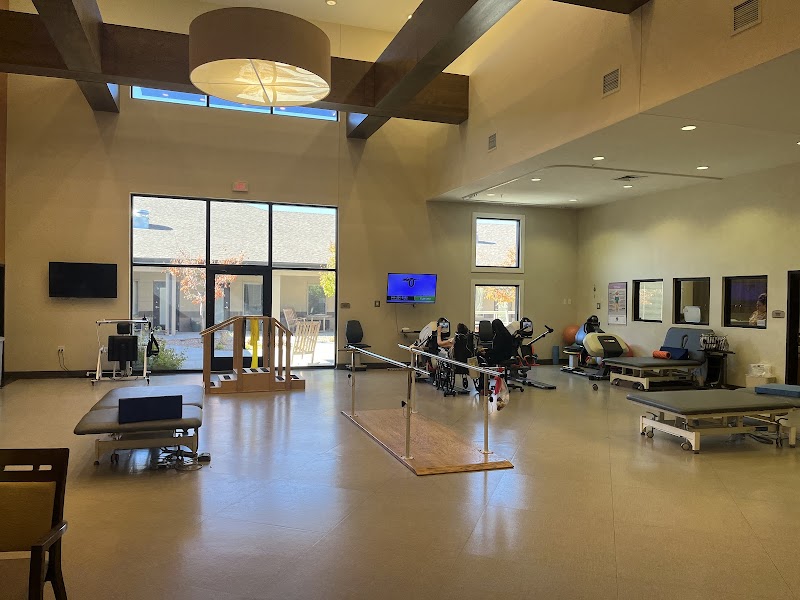
How is Spanish Trails Rehabilitation Suites Staffed?

CMS rates Spanish Trails Rehabilitation Suites's staffing level at 4 out of 5 stars, which is above average compared to other nursing homes. Staff turnover is 46%, compared to the New Mexico average of 46%.

What Have Inspectors Found at Spanish Trails Rehabilitation Suites?

State health inspectors documented 39 deficiencies at Spanish Trails Rehabilitation Suites during 2023 to 2025. These included: 2 that caused actual resident harm and 37 with potential for harm. Deficiencies causing actual harm indicate documented cases where residents experienced negative health consequences.

Who Owns and Operates Spanish Trails Rehabilitation Suites?

Spanish Trails Rehabilitation Suites is owned by a for-profit company. For-profit facilities operate as businesses with obligations to shareholders or private owners. The facility is operated by FUNDAMENTAL HEALTHCARE, a chain that manages multiple nursing homes. With 134 certified beds and approximately 111 residents (about 83% occupancy), it is a mid-sized facility located in Albuquerque, New Mexico.

How Does Spanish Trails Rehabilitation Suites Compare to Other New Mexico Nursing Homes?

Compared to the 100 nursing homes in New Mexico, Spanish Trails Rehabilitation Suites's overall rating (4 stars) is above the state average of 2.9, staff turnover (46%) is near the state average of 46%, and health inspection rating (4 stars) is above the national benchmark.

What Should Families Ask When Visiting Spanish Trails Rehabilitation Suites?

Based on this facility's data, families visiting should ask: "Can I visit during a mealtime to observe dining assistance and food quality?" "How do you handle medical emergencies, and what is your hospital transfer rate?" "Can I speak with family members of current residents about their experience?"

Is Spanish Trails Rehabilitation Suites Safe?

Based on CMS inspection data, Spanish Trails Rehabilitation Suites has a clean safety record: no substantiated abuse findings (meaning no confirmed cases of resident harm), no Immediate Jeopardy citations (the most serious violation level indicating risk of serious injury or death), and is not on the Special Focus Facility watch list (a federal program monitoring the lowest-performing 1% of nursing homes). The facility has a 4-star overall rating and ranks #1 of 100 nursing homes in New Mexico. While no facility is perfect, families should still ask about staff-to-resident ratios and recent inspection results during their visit.

Do Nurses at Spanish Trails Rehabilitation Suites Stick Around?

Spanish Trails Rehabilitation Suites has a staff turnover rate of 46%, which is about average for New Mexico nursing homes (state average: 46%). Moderate turnover is common in nursing homes, but families should still ask about staff tenure and how the facility maintains care continuity when employees leave.

Was Spanish Trails Rehabilitation Suites Ever Fined?

Spanish Trails Rehabilitation Suites has been fined $111,222 across 3 penalty actions. This is 3.3x the New Mexico average of $34,191. Fines at this level are uncommon and typically indicate a pattern of serious deficiencies, repeated violations, or failure to correct problems promptly. CMS reserves penalties of this magnitude for facilities that pose significant, documented risk to resident health or safety. Families should request specific documentation of what issues led to these fines and what systemic changes have been implemented.

Is Spanish Trails Rehabilitation Suites on Any Federal Watch List?

Spanish Trails Rehabilitation Suites is not on any federal watch list. The most significant is the Special Focus Facility (SFF) program, which identifies the bottom 1% of nursing homes nationally based on persistent, serious quality problems. Not being on this list means the facility has avoided the pattern of deficiencies that triggers enhanced federal oversight. This is a positive indicator, though families should still review the facility's inspection history directly.