St. Anthony Healthcare and Rehabilitation Center
1400 West 21st Street, Clovis, NM 88101 (575) 762-4705
For profit - Corporation 70 Beds GENESIS HEALTHCARE Data: November 2025 2 Immediate Jeopardy citations
Trust Grade
1/100
#66 of 67 in NM
Last Inspection: July 2024

Within standard 12-15 month inspection cycle. Federal law requires annual inspections.

Overview

St. Anthony Healthcare and Rehabilitation Center has received a Trust Grade of F, indicating significant concerns about the quality of care provided. Ranking #66 out of 67 facilities in New Mexico places them in the bottom half, and #3 out of 3 in Curry County means there are no better local options available. The situation appears to be worsening, as the number of issues increased from 11 in 2024 to 12 in 2025. Staffing is below average with a 2/5 star rating and a turnover rate of 44%, which is better than the state average but still concerning. The facility has imposed fines totaling $94,594, which is higher than 92% of New Mexico facilities, suggesting ongoing compliance problems. Specific incidents highlight critical safety issues, such as water temperatures exceeding safe levels, which could cause burns to residents, and a failure to provide the correct therapeutic diet, resulting in a choking incident for one resident. Additionally, another resident suffered significant pain for eight hours without relief, ultimately leading to an emergency call for help. While there are some strengths, such as a lower turnover rate, the overall picture indicates serious weaknesses in care and safety that families should carefully consider.
Trust Score
F
1/100
In New Mexico
#66/67
Bottom 2%
Safety Record
High Risk
Review needed
Inspections
Getting Worse
11 → 12 violations
Staff Stability
○ Average
44% turnover. Near New Mexico's 48% average. Typical for the industry.
Penalties
✓ Good
$94,594 in fines. Lower than most New Mexico facilities. Relatively clean record.
Skilled Nurses
⚠ Watch
Each resident gets only 16 minutes of Registered Nurse (RN) attention daily — below average for New Mexico. Fewer RN minutes means fewer trained eyes watching for problems.
Violations
⚠ Watch
42 deficiencies on record. Higher than average. Multiple issues found across inspections.
★☆☆☆☆
1.0
Overall Rating
★★☆☆☆
2.0
Staff Levels
★★☆☆☆
2.0
Care Quality
★☆☆☆☆
1.0
Inspection Score
Stable
2024: 11 issues
2025: 12 issues

The Good

  • Full Sprinkler Coverage · Fire safety systems throughout facility
  • No fines on record
  • Staff turnover below average (44%)

    4 points below New Mexico average of 48%

Facility shows strength in fire safety.

The Bad

1-Star Overall Rating

Below New Mexico average (2.9)

Significant quality concerns identified by CMS

Staff Turnover: 44%

Near New Mexico avg (46%)

Typical for the industry

Federal Fines: $94,594

Well above median ($33,413)

Moderate penalties - review what triggered them

Chain: GENESIS HEALTHCARE

Part of a multi-facility chain

Ask about local staffing decisions and management

The Ugly 42 deficiencies on record

2 life-threatening 1 actual harm
May 2025 10 deficiencies
CONCERN (D) 📢 Someone Reported This

A family member, employee, or ombudsman was alarmed enough to file a formal complaint

Potential for Harm - no one hurt, but risky conditions existed

Deficiency F0578 (Tag F0578)

Could have caused harm · This affected 1 resident

**NOTE- TERMS IN BRACKETS HAVE BEEN EDITED TO PROTECT CONFIDENTIALITY** Based on record review and interview, the facility failed to update the resident's medical chart and to ensure the resident's cu...

Read full inspector narrative →
**NOTE- TERMS IN BRACKETS HAVE BEEN EDITED TO PROTECT CONFIDENTIALITY** Based on record review and interview, the facility failed to update the resident's medical chart and to ensure the resident's current advance directive and New Mexico Orders for Scope of Treatment (MOST) form (a document which provides an individual's wishes for emergency and lifesaving care) matched the order in the electronic health record (EHR) for 1 (R #7) of 2 (R #1 and R #7) residents reviewed for advance directives when staff failed to update the resident's code status. This deficient practice is likely to result in confusion, delay, and residents not having their wishes honored if a life-threatening event occurred. The findings are: A. Record review of R #7's face sheet revealed R #7 was admitted into the facility on [DATE]. B. Record review of R #7's physician orders dated [DATE], revealed R #7 chose a do not resuscitate (DNR; does not want to have CPR attempted on them if their heart or breathing stops) for her advanced directive code status. C. Record review of R #7's current advance directive and the MOST form signed on [DATE] revealed R #7 is a Full Code (attempt CPR or cardiopulmonary resuscitation) for her advanced directive code status. D. On [DATE] at 12:20 pm during an interview with the Director of Nursing (DON), she stated R # 7's code status should be Full Code and not DNR, confirming the inaccuracy.
CONCERN (E) 📢 Someone Reported This

A family member, employee, or ombudsman was alarmed enough to file a formal complaint

Potential for Harm - no one hurt, but risky conditions existed

Safe Environment (Tag F0584)

Could have caused harm · This affected multiple residents

Based on observation and interviews, the facility failed to provide a comfortable and homelike environment by: 1. Not repairing the peeling and chipped paint, 2. Not repainting areas of repair to matc...

Read full inspector narrative →
Based on observation and interviews, the facility failed to provide a comfortable and homelike environment by: 1. Not repairing the peeling and chipped paint, 2. Not repainting areas of repair to match the rest of the wall, 3. Handrails in the 200-hall appeared worn and needed repair/refinishing, 4. Using an overhead paging system to announce phone calls for staff members and to call staff members to the office. These deficient practices could affect everyone that lives in the 200-hall as identified by the Daily Census provided by the Administrator (ADM) on 05/28/25 and will likely cause residents to feel like they are not living in a comfortable home-like environment and make them feel they are not valued. The findings are: A. On 05/29/25 at 9:36 am a random observation of the facility revealed the following: 1. Peeling and chipped paint on the walls throughout the 200-hall. 2. A section of the wall, close to the therapy entrance, approximately two feet wide and one foot tall, where it appears an object once hung on the wall is not repainted to match the rest of the wall. 3. Handrails in the 200-hall appeared worn out and needed repair/refinishing. B. On 05/28/25, random observations of the facility revealed the following announcements using the overhead paging system: 1. 2:53 pm: a staff member had a call on line one. 2. 3:00 pm: a staff member was called to the office. C. On 05/29/25, random observations of the facility revealed the following announcements using the overhead paging system: 1. 9:55 am: maintenance was called to the office 2. 10:00 am: a staff member had a call on line one. 3. 10:17 am: a staff member had a call on line one. 4. 11:21 am: maintenance was called to the office. 5. 11:27 am: a staff member had a call on line one. D. On 05/29/25 at 1:15 pm, during an interview with the Administrator (ADM), she confirmed the facility is not providing an environment that is as comfortable and homelike as she would like.
CONCERN (E) 📢 Someone Reported This

A family member, employee, or ombudsman was alarmed enough to file a formal complaint

Potential for Harm - no one hurt, but risky conditions existed

Investigate Abuse (Tag F0610)

Could have caused harm · This affected multiple residents

Based on interview, the facility failed to have evidence that all allegations of abuse, neglect, exploitation or mistreatment were thoroughly investigated to prevent further incidents from occurring. ...

Read full inspector narrative →
Based on interview, the facility failed to have evidence that all allegations of abuse, neglect, exploitation or mistreatment were thoroughly investigated to prevent further incidents from occurring. This deficient practice could likely affect all 62 residents residing in the facility according to the census provided by the Administrator (ADM) on 05/28/25. If the facility is not thoroughly investigating and maintaining evidence of the investigations then residents are at a higher risk of being abused, neglected, exploited, or mistreated. The findings are: A. On 05/28/25 at 2:43 pm during an interview with the Administrator, she stated that she does not have evidence of any investigations conducted since 01/01/25 due to the previous Social Services Director taking the Reportable Binder (a binder the facility uses to keep all documentation and evidence of investigations) when she left. The ADM confirmed that she had to start a new binder as of 05/01/25.
CONCERN (E) 📢 Someone Reported This

A family member, employee, or ombudsman was alarmed enough to file a formal complaint

Potential for Harm - no one hurt, but risky conditions existed

Deficiency F0657 (Tag F0657)

Could have caused harm · This affected multiple residents

**NOTE- TERMS IN BRACKETS HAVE BEEN EDITED TO PROTECT CONFIDENTIALITY** Based on interviews and record reviews, the facility failed to ensure the comprehensive care plan was accurate for 2 (R #1 and R...

Read full inspector narrative →
**NOTE- TERMS IN BRACKETS HAVE BEEN EDITED TO PROTECT CONFIDENTIALITY** Based on interviews and record reviews, the facility failed to ensure the comprehensive care plan was accurate for 2 (R #1 and R #7) of 2 (R #1 and R #7) residents reviewed for care plan accuracy. This deficient practice could likely result in staff not understanding and implementing the most appropriate interventions and treatments for the residents. The findings are: R #1 A. Record review of R #1's admission record revealed he was admitted to the facility on [DATE] with the following diagnoses: 1. Spinal Stenosis, cervical region (narrowing of one or more spaces within the spinal canal), 2. Type 2 diabetes mellitus with hyperglycemia (blood sugar levels rise significantly), 3. Depression, unspecified, 4. Chronic diastolic (congestive) heart failure. B. Record review of R #1's quarterly Minimum Data Set (MDS; a federally mandated assessment instrument completed by facility staff) dated 10/18/24, revealed a Brief Interview for Mental Status (BIMS; a screening for cognitive impairment) score of 15, cognitively intact. C. Record review of R #1's care plan dated 12/05/24 revealed that R #1 has an advance directive of (do not resuscitate) DNR; lifesaving measures are not desired) code status in place. D. Record review of R #1's New Mexico Orders for Scope and Treatment (MOST) form dated 07/30/24 revealed that R #1 has an advance directive of attempt resuscitation code status in place. E. On 05/29/25 at 12:20 pm during an interview with the Director of Nursing (DON), she confirmed that the facility failed to revise the care plan for R #1 after returning from the hospital. R #7 F. Record review of R #7's admission record revealed R #7 was originally admitted to the facility on [DATE] with the following diagnoses: 1. Acute respiratory failure with Hypoxia (not enough oxygen or too much carbon dioxide in the body), 2. Essential hypertension (HTN; high blood pressure), 3. Diverticulosis of Intestine, Part Unspecified, without perforation (inflammation/infection of somewhere in the intestine, without a hole in the intestine), or without Abscess without Bleeding, 4. Type 2 Diabetes Mellitus without Complications (too much sugar in the blood) 5. Muscle Weakness. G. Record review of R #7's care plan, dated 12/04/24, revealed the following: 1. Intervention for R #7 to have the choice between bed baths or showers twice per week. 2. Bathing Preference Sheet was updated to bathing once a week. 3. The facility failed to revise the care plan to reflect the change in bathing and showering. H. Record review of R #7's MOST form dated 02/28/25 revealed R #7 has an attempt resuscitation code status in place. I. Record review of R #7's care plan dated 02/28/25 revealed R #7 has a do not resuscitate code status in place. J. On 05/29/25 at 12:20 pm during an interview with the DON, she confirmed R #7 should have had a care plan for refusals of care and she does not. The DON confirmed that R #7's care plan should have been revised to match the most current MOST form, and it was not.
CONCERN (E) 📢 Someone Reported This

A family member, employee, or ombudsman was alarmed enough to file a formal complaint

Potential for Harm - no one hurt, but risky conditions existed

ADL Care (Tag F0677)

Could have caused harm · This affected multiple residents

Based on record review and interview, the facility failed to provide activities of daily living ADL; (activities related to personal care such as bathing, showering, dressing, walking, toileting, and ...

Read full inspector narrative →
Based on record review and interview, the facility failed to provide activities of daily living ADL; (activities related to personal care such as bathing, showering, dressing, walking, toileting, and eating) assistance for baths and showers for 1 (R #7) of 1 (R #7) dependent resident sampled for ADLs. If the facility is not assisting the residents to bathe or shower, then residents are likely to feel unimportant, dirty and could develop further or worsening health issues. The findings are: A. Record review of R #7's Document Survey Report (documentation showing ADL support/care completed), dated 11/28/24 through 04/28/25 revealed the following: 1. On 12/30/24 R #7 received a bed bath. 2. On 01/11/25 R #7 received a bed bath. 3. On 01/19/25 R #7 received a bed bath. 4. On 01/26/25 R #7 received a bed bath. 5. On 02/02/25 R #7 received a bed bath. 6. On 02/08/25 R #7 received a bed bath. 7. On 02/15/25 R #7 received a bed bath. 8. On 03/03/25 R #7 received a bed bath. 9. On 03/10/25 R #7 received a bed bath. B. On 05/29/25 at 12:20 pm during an interview with the Director of Nursing(DON), it was confirmed the facility failed to provide bathing services.
CONCERN (E) 📢 Someone Reported This

A family member, employee, or ombudsman was alarmed enough to file a formal complaint

Potential for Harm - no one hurt, but risky conditions existed

Accident Prevention (Tag F0689)

Could have caused harm · This affected multiple residents

**NOTE- TERMS IN BRACKETS HAVE BEEN EDITED TO PROTECT CONFIDENTIALITY** Based on observation, record review, and interview, the facility failed to keep residents free from accidents for 2 (R #5 and R ...

Read full inspector narrative →
**NOTE- TERMS IN BRACKETS HAVE BEEN EDITED TO PROTECT CONFIDENTIALITY** Based on observation, record review, and interview, the facility failed to keep residents free from accidents for 2 (R #5 and R #7) of 2 (R #5 and R #7) residents reviewed for accidents when staff failed to: 1. Put interventions in place to reduce the risk of falls for R #5. 2. Implement appropriate post-fall interventions (ensure the health and safety of residents after a fall by completing actions such as neurochecks) for R #5 and R #7. These deficient practices could likely result in residents getting injured during falls or injuries going unnoticed after a fall. The findings are: R #5 A. Record review of R #5's admission record revealed she was admitted to the facility on [DATE] with the following diagnoses: 1. Dementia (a group of conditions characterized by impairment of at least two brain functions, such as memory loss and judgement), 2. Major depressive disorder (depression; a mood disorder that causes a persistent feeling of sadness and loss of interest), severe with psychotic symptoms, 3. Reduced mobility and muscle weakness, 4. Delusional disorders. B. Record review of R #5's quarterly Minimum Data Set (MDS; a federally mandated assessment instrument completed by facility staff) dated 04/12/25, revealed the following: 1. A Brief Interview for Mental Status (BIMS; a screening for cognitive impairment) score of 07, severe impairment. 2. R #5 requires substantial or maximal assistance to complete transfer activities. 3. R #5 has had falls since being admitted to the facility. C. On 05/28/25 at 10:25 am, an observation of R #5's room, R #5 laid on her left side, covered with a sheet and blanket. R #5's bed was in a high position; the top of the mattress was approximately three feet from the floor. There was no fall mat in place. D. On 05/29/25 at 11:13 am, during an interview with R #5's guardian (a person that has legal authority to make decisions on behalf of another person), she confirmed that she was notified of a fall R #5 had on 04/13/25. R #5's guardian stated that she has asked the facility to keep her bed in a lower position and to put a fall mat in place but neither of these has happened. E. Record review of R #5's care plan initiated on 01/24/24 revealed R #5 is at risk for falls. The need for R #5's bed to be in a low position and a fall mat in place is not included in the plan. F. Record review of R #5's electronic health record (EHR) revealed no evidence that staff completed a neurocheck (a brief neurological assessment performed by staff repeatedly to monitor a resident's neurological status) with R #5 after the unwitnessed fall she had on 04/13/25. G. On 05/29/25 at 11:20 am, during an interview with the Director of Nursing (DON), she stated that all residents who are at risk for falls should have a fall mat in place and their bed should be kept in the lowest position. The DON confirmed neither of these interventions are in place for R #5 and stated they should be. The DON stated that neurochecks should have been done with R #5 but were not. R #7 H. Record review of R #7's admission record revealed that she was admitted to the facility on [DATE] with the following diagnoses: 1. Dementia (a group of conditions characterized by impairment of at least two brain functions, such as memory loss and judgement), 2. Cerebral Infarction (an area of dead tissue in the brain resulting from a blockage or narrowing in the arteries supplying blood and oxygen to the brain), 3. Delirium due to known physiological condition, 4. Major depressive disorder (depression; a mood disorder that causes a persistent feeling of sadness and loss of interest). I. Record review of R #7's quarterly Minimum Data Set assessment dated [DATE], revealed a Brief Interview for Mental Status score of 05, severe impairment and has had falls since admission. J. Record review of R #7's progress notes revealed the following: 1. R #7 had a fall on 02/22/25, no other documentation to show the cause of the fall or what occurred during the fall was located. 2. R #7 had a fall on 04/07/25, no other documentation to show the cause of the fall or what occurred during the fall was located. K. Record review of R #7's care plan dated 05/06/25, revealed R #7 is at risk for falls and facility staff are to observe for any changes in medical status, pain status, mental status and medication side effects that may contribute to cognitive loss or confusion and can lead to increase fall risk. L. On 05/29/25 at 11:20 am, during an interview with the DON, she confirmed that the cause of the falls or what occurred during the fall was not documented adequately so she could not say what the cause of the fall was or if the falls could have been prevented. The DON confirmed that neurochecks should have been completed following each fall and was not done completely.
CONCERN (E) 📢 Someone Reported This

A family member, employee, or ombudsman was alarmed enough to file a formal complaint

Potential for Harm - no one hurt, but risky conditions existed

Respiratory Care (Tag F0695)

Could have caused harm · This affected multiple residents

**NOTE- TERMS IN BRACKETS HAVE BEEN EDITED TO PROTECT CONFIDENTIALITY** Based on observation, record review, and interview, the facility failed to provide respiratory care in accordance with professio...

Read full inspector narrative →
**NOTE- TERMS IN BRACKETS HAVE BEEN EDITED TO PROTECT CONFIDENTIALITY** Based on observation, record review, and interview, the facility failed to provide respiratory care in accordance with professional standards for 3 (R #2, R #3, and R #4) of 3 (R #2, R #3, and R #4) residents reviewed for respiratory care when staff failed to change the oxygen concentrator (a medical device that provides extra oxygen) tubing. If the facility fails to provide new, clean tubing for oxygen concentrators then residents are at risk of becoming ill. The findings are: R #2 A. Record review of R #2's admission record revealed R #2 was originally admitted to the facility on [DATE] with the following diagnoses: 1. Chronic obstructive pulmonary disease (CODP; lung disease), 2. Quadriplegia (paralysis of all four limbs), 3. Type 2 diabetes mellitus (DM2; a condition results from insufficient production of insulin causing high blood sugar), 4. Morbid obesity (severely overweight). B. Record review of R #2's current medical orders revealed the following: 1. An order, dated 08/15/24, for oxygen at three liters using a nasal canula. 2. No order or recommendation was found for the care of medical equipment. C. On 05/28/25 at 11:15 am, an observation of R #2's room revealed an oxygen concentrator sat on the floor next to R #2's bed. R #2 was wearing a nasal canula and utilizing this concentrator to supply his additional oxygen. A bag with another resident's name on it was attached to the concentrator. There was no date indicating the date the oxygen concentrator tubing. D. On 05/28/25 at 11:43 am, during an interview with the Director of Nursing (DON), she confirmed the oxygen concentrator that R #2 is using had another resident's name on it and there was no date indicating when the oxygen concentrator tubing was changed. The DON stated that R #2 is supposed to be using this oxygen concentrator, she was not sure why another resident's name is on it. The DON stated that her expectation is for all residents that need oxygen to have an oxygen concentrator dedicated to their use and the oxygen concentrator tubing to be changed as ordered. R #3 E. Record review of R #3's admission record revealed R #3 was originally admitted to the facility on [DATE] with the following diagnoses: 1. Acute and chronic respiratory failure (not enough oxygen or too much carbon dioxide in the body), 2. Essential hypertension (HTN; high blood pressure), 3. Chronic obstructive pulmonary disease (CODP; lung disease), 4. Morbid obesity (severely overweight), 5. Obstructive Sleep Apnea (sleep disorder that occurs when a person's breathing is interrupted during sleep). F. Record review of R #3's current medical orders revealed an order dated 06/09/24 for staff to change the oxygen concentrator tubing and place a label indicating the date it was changed weekly. G. On 05/28/25 at 11:20 am, during an observation of R #3's room, an oxygen concentrator was located next to R #3's bed. R #3 was wearing a nasal canula and using the oxygen concentrator to supply the additional oxygen she needs. There was no label indicating the date the concentrator tubing was changed. H. On 05/28/25 at 11:43 am, during an interview with the DON, she confirmed there was no label to indicate the date the oxygen tube on R #3's concentrator was changed. The DON stated her expectation is for all residents that utilize oxygen to have their tubing changed as ordered as labeled with the date it was completed. R #4 I. Record review of R #4's admission record revealed he was originally admitted to the facility on [DATE] with the following diagnoses: 1. Chronic congestive heart failure, 2. Chronic obstructive pulmonary disease (CODP; lung disease). J. Record review of R #4's current medical orders revealed an order dated 11/12/20 for staff to change the oxygen concentrator tubing weekly. K. On 05/28/25 at 11:25 am, a random observation of R #4's room revealed an oxygen concentrator next to his bed. R #4 was wearing a nasal canula and using this oxygen concentrator to supply the additional oxygen he needs. There was no label indicating the date the concentrator tubing was changed. L. On 05/28/25 at 11:43 am, during an interview with the DON, she confirmed there was no label to indicate the date the oxygen tube on R #4's concentrator was changed. The DON stated her expectation is for all residents that utilize oxygen to have their tubing changed as ordered as labeled with the date it was completed.
CONCERN (F) 📢 Someone Reported This

A family member, employee, or ombudsman was alarmed enough to file a formal complaint

Potential for Harm - no one hurt, but risky conditions existed

Grievances (Tag F0585)

Could have caused harm · This affected most or all residents

Based on record review and interview, the facility failed to conduct an in-dept investigation, correct the grievance allegations, and notify residents of the outcome of their grievances. These deficie...

Read full inspector narrative →
Based on record review and interview, the facility failed to conduct an in-dept investigation, correct the grievance allegations, and notify residents of the outcome of their grievances. These deficient practices have the potential to affect all 62 residents (residents were identified using the census provided by the Administrator on 05/28/25) residing in the facility. If the facility is not investigating, correcting, and notifying residents of their grievance allegations then residents are likely to feel unheard and unimportant. The findings are: A. On 05/28/25 at 10:45 am during an interview with R #1, he stated that he has filed several grievances with the facility regarding the food and has never received an outcome. B. On 05/28/25 at 11:15 am during an interview with R #2, he stated that he has filed several grievances with the facility regarding several issues and has never received an outcome. C. On 05/28/25 at 1:40 pm during an interview with R #6, she stated that she has filed a couple grievances with the facility regarding food and showers and has never received an outcome. D. Record review of the facility's Grievance/Concern policy dated 06/01/22 revealed facility staff are to document all grievances and provide a response to the resident. E. On 05/28/25 at 2:43 pm during an interview with the Administrator (ADM), she stated that she is not able to provide evidence of grievances, the investigations, correction of the allegation or communicating outcomes to residents because the previous Social Services Director took the Grievance binder. The ADM stated that as of 05/01/25 a new binder was started.
CONCERN (F) 📢 Someone Reported This

A family member, employee, or ombudsman was alarmed enough to file a formal complaint

Potential for Harm - no one hurt, but risky conditions existed

Deficiency F0761 (Tag F0761)

Could have caused harm · This affected most or all residents

**NOTE- TERMS IN BRACKETS HAVE BEEN EDITED TO PROTECT CONFIDENTIALITY** Based on observation and interview, the facility failed to secure medications in a medication cart and a treatment cart for all ...

Read full inspector narrative →
**NOTE- TERMS IN BRACKETS HAVE BEEN EDITED TO PROTECT CONFIDENTIALITY** Based on observation and interview, the facility failed to secure medications in a medication cart and a treatment cart for all 62 residents living in the facility (residents were identified by the census list provided by the Administrator on 05/28/25). This deficient practice could result in residents obtaining medication not prescribed to them resulting in adverse side effects. The findings are: A. On 05/28/25 at 1:45 pm, an observation of the facility revealed the medication cart was located by room [ROOM NUMBER] and was unlocked. B. On 05/28/25 at 1:46 pm, during an interview Licensed Practical Nurse (LPN) #1, she confirmed that the medication cart was unlocked. C. On 05/29/25 at 10:11 am, an observation of the facility revealed the treatment cart was in the 200 hall near the nurse's station and was unlocked. D. On 05/29/25 at 10:13 am, during an interview LPN #2, she confirmed that the medication cart was unlocked. E. On 05/29/25 at 11:20 am, during an interview with the Director of Nursing (DON), she stated that all medication carts should be locked when unattended.
CONCERN (F) 📢 Someone Reported This

A family member, employee, or ombudsman was alarmed enough to file a formal complaint

Potential for Harm - no one hurt, but risky conditions existed

Deficiency F0804 (Tag F0804)

Could have caused harm · This affected most or all residents

**NOTE- TERMS IN BRACKETS HAVE BEEN EDITED TO PROTECT CONFIDENTIALITY** Based on record review, interview, and observation, the facility failed to serve food that is palatable, attractive, and at a sa...

Read full inspector narrative →
**NOTE- TERMS IN BRACKETS HAVE BEEN EDITED TO PROTECT CONFIDENTIALITY** Based on record review, interview, and observation, the facility failed to serve food that is palatable, attractive, and at a safe and appetizing temperature. This deficient practice has the potential to affect all 62 residents' ability to eat and enjoy their meals, may decrease their quality of life, and could likely lose weight. The findings are: A. Record review of R #1's admission record revealed he was admitted to the facility on [DATE] with the following diagnoses: 1. Spinal Stenosis, cervical region, 2. Type 2 diabetes mellitus with hyperglycemia 3. Depression, unspecified, 4. Chronic diastolic (congestive) heart failure. B. Record review of R #1's quarterly Minimum Data Set (MDS; a federally mandated assessment instrument completed by facility staff) dated 10/18/24, revealed a Brief Interview for Mental Status (BIMS; a screening for cognitive impairment) score of 15, cognitively intact. C. On 05/28/25 at 10:45 am, during an interview with R #1, he stated that the food does not taste good, food that is supposed to be hot is served cold, and the facility does not follow the menu. D. Record review of photos that R #1 has taken of meals that he was served and the meal ticket (a facility document that shows information related to a resident's diet recommendations, allergy status, and individual specific menu for that resident's meal) for the meals revealed the following: 1. A meal ticket dated 02/27/25 indicated the breakfast meal to be French toast, but the photo of the meal showed some type of Danish (a type of pastry). 2. A meal ticket dated 02/28/25 indicated oven browned potatoes were to be served with a beef chili and rice casserole but the photo showed potatoes were not served. 3. A meal ticket dated 03/01/25 indicated Toasted O's (dry cereal), scrambled eggs with ham, and wheat toast was to be served for breakfast but the photo showed oatmeal, scrambled eggs without ham, and a biscuit was served. 4. A meal ticket dated 03/01/25 indicated a dinner roll, pan fried potatoes, and herbed green beans were to be served with crunchy buttermilk chicken, but the photo of this meal showed a piece of bread, mixed vegetables, and mashed potatoes were served. 5. A meal ticket dated 03/03/25 indicated Toasted O's, a banana, and French toast was to be served for breakfast, but photo of this meal showed oatmeal, a pancake and eggs were served. 6. A meal ticket dated 03/05/25 indicated Toasted O's and hash browns were to be served with scrambled eggs but the photo of the meal showed oatmeal, scrambled eggs and biscuit with gravy was served. 7. A meal ticket dated 03/05/25 indicated cranberry glazed chicken with a dinner roll, cinnamon apples, Brussel sprouts and stuffing was to be served but the photo of this meal shows what appears to be a casserole, with mixed vegetables, and mashed potatoes was served. 8. Meal ticket dated 03/08/25 indicated a chicken casserole and sliced carrots with a chocolate chip cookie was to be served but the photo of this meal shows what appears to be a casserole, a slice of bread and pinto beans was served. 9. A meal ticket dated 03/09/25 that indicated maple sage turkey was to be served with a dinner roll, homemade pumpkin pie, seasoned peas and cornbread dressing but the photo shows turkey was served with rice, mixed vegetables, a piece of bread, and an oatmeal pie cookie was served for lunch. 10. A meal ticket dated 03/09/25 that indicated beef barley soup, tossed salad, herb crusted chicken, a dinner roll and sliced pears was to be served but the photo of the meal shows spaghetti, a slice of bread, coleslaw and a cup of fruit was served. E. On 05/28/25 at 11:15 am, during an interview with R #2 he stated that the hot food is served cold and the food does not taste good. He stated that he has to buy his own food and keep it in his room, so he has something to eat when the food from the facility is inedible. F. On 05/28/25 at 12:15 pm, an observation of the lunch meal revealed the following: 1. Chicken on a room tray that was served to R #2 had an internal temperature of 109.3 degrees. 2. Pizza (alternative food offered) had an internal temperature of 112.6 degrees. G. On 05/28/25 at 12:15 pm, during an interview with Certified Nursing Assistant (CNA), #1, she confirmed the temperature of the chicken was 109.3 degrees and the temperature of the pizza was 112.6 degrees. H. On 05/28/25 at 12:33 pm during an interview with Dietary Aide (DA), she confirmed that the temperatures taken for the pizza and chicken were not appropriate temperatures for food to be served at.
Jan 2025 2 deficiencies 1 Harm
SERIOUS (G) 📢 Someone Reported This

A family member, employee, or ombudsman was alarmed enough to file a formal complaint

Actual Harm - a resident was hurt due to facility failures

Deficiency F0697 (Tag F0697)

A resident was harmed · This affected 1 resident

**NOTE- TERMS IN BRACKETS HAVE BEEN EDITED TO PROTECT CONFIDENTIALITY** Based on record review and interview, the facility failed to provide pain relief for 8 hours since admission to the facility for...

Read full inspector narrative →
**NOTE- TERMS IN BRACKETS HAVE BEEN EDITED TO PROTECT CONFIDENTIALITY** Based on record review and interview, the facility failed to provide pain relief for 8 hours since admission to the facility for 1 (R #1) of 3 (R #1, R #5, and R #8) residents reviewed for pain. This deficient practice likely resulted in R #1 experiencing significant pain which led to her calling 911 for relief and discharging from the facility against medical advice. The findings are: A. Record review of R #1's admission Record revealed the resident was admitted on [DATE] following hip surgery on 10/22/24. B. Record review of R #1's physician's order, dated 10/25/2024 at 4:15 pm, revealed the following orders: - Gabapentin (nerve pain medication and anticonvulsant), 400 milligram (mg), oral tablet three times a day for neuropathic pain, as needed (PRN), - Norco (hydrocodone-acetaminophen; opioid pain medication), 7.5-325 mg, every six hours for pain, - Ibuprofen (anti-inflammatory and pain medication), 800 mg, every eight hours PRN. - The record did not contain an order for Tylenol (acetaminophen; pain medication) 500 mg. C. Record review of R #1's progress note, dated 10/26/24 at 7:45 am (progress note indicated the time of occurrence was at 9:00 pm on 10/25/24, but note was written the next morning as per timestamp) and written by LPN #1, revealed the nurse walked into R #1's room on 10/25/24 at 9:00 pm to conduct a new resident assessment and to ask if R #1 needed anything. Resident told the nurse she needed gabapentin and hydrocodone (Norco). The nurse told R #1 that she could administer two Tylenol 500 mg to the resident while they waited for the pharmacy delivery, which was normally by 10:00 pm to 10:30 pm. D. Record review of R #1's nursing progress note, dated 10/25/24 at 6:35 pm, revealed the resident complained of pain at a level eight (pain scale 0-10, 10 was the worst pain.) The non-medication interventions did not provide relief and PRN pain medication was provided. E. Record review of R #1's Medication Administration Record (MAR), dated 10/25/24, revealed staff did not administer any medications to R #1 during her stay. Further review of the MAR revealed it did not contain an order for Tylenol, 500 mg. F. On 01/02/25 at 5:42 PM, during an interview with R #1's Power of Attorney (POA; legal authorization for a designated person to make decisions about another person's property, finances, or medical care), she stated her sister arrived at the facility on 10/25/25 around 1:00 pm. She stated her sister called her around 8:30 pm or 9:00 pm, and her sister was screaming that she had not gotten anything for pain . since she got there. The POA stated she called 911 so they could take her back to the emergency room (ER) to be assessed and to given pain medications. The POA stated R #1 discharged at approximately 9:30 pm. G. Record review of R #1's Discharge Against Medical Advice (AMA) form (used when a resident wants to leave the facility against medical advice), dated 10/25/24 at 9:30 pm and signed by LPN #1, revealed R #1 refused to sign the form and left the facility AMA. The form indicated resident called EMS (Emergency Medical Services) to pick her up, because facility could not provide her with pain medication. Resident extremely upset and she could not stay. Res [resident] using profanity while on the phone with her sister. H. On 01/02/2025 at 5:15 PM, during an interview with the Director of Nursing (DON), she stated narcotic pain medications should be available through the facility's Nexus (a medication dispensing machine containing a variety of medications for residents) and an E-Kit (emergency medication lock box that contains various controlled medications) found in the medication room. She stated residents should not have to wait for pain medication to arrive from the pharmacy if the resident experienced pain. I. On 01/02/2025 at 5:11 PM, during an interview, the Assistant Director of Nursing (ADON) stated pain medications were available for new residents before their medications arrived from the pharmacy by accessing the Nexus.
MINOR (B) 📢 Someone Reported This

A family member, employee, or ombudsman was alarmed enough to file a formal complaint

Minor Issue - procedural, no safety impact

Deficiency F0804 (Tag F0804)

Minor procedural issue · This affected multiple residents

Based on interview, observation and record review the facility failed to ensure staff served meals that were attractive and palatable (pleasant to taste) for 4 (R #2, #5, #6, and #7) of 6 (R #2, #4, #...

Read full inspector narrative →
Based on interview, observation and record review the facility failed to ensure staff served meals that were attractive and palatable (pleasant to taste) for 4 (R #2, #5, #6, and #7) of 6 (R #2, #4, #5, #6, #7 and #8) residents reviewed for meal quality. This deficient practice could likely reduce residents' ability to eat and enjoy meals, decrease their quality of life, and they could lose weight. The findings are: A. On 01/02/25 at 11:50 am, during an interview with R #6, she stated she did not like the food. She stated it did not have any flavor and was lukewarm. B. On 01/02/25 at 11:54 am, during an interview with R #7, she stated she did not eat a lot of the time, because the food was unrecognizable and cold. C. On 01/02/25 at 12:09 pm, during an observation of the kitchen, [NAME] #1 obtained food temperatures for the food on the steam table. Chicken tenders measured 174.8 degrees (°) Fahrenheit (F). and the mixed vegetables measured 158° F. [NAME] #1 had difficulty penetrating the chicken to assess the temperature, and the chicken appeared overcooked and dry. The vegetables were very soft when the probe was inserted into the broccoli, and it fell apart after insertion. D. On 01/02/25 at 6:30 pm, during an interview with R #2, she stated she skipped a lot of meals due to the way the food looked She stated the food tasted bad. It is not like the food you make at home. She stated she told staff she did not like the food, and she asked them for a peanut butter and jelly sandwich from the alternate menu. E. On 01/02/25 at 6:45 pm, during an interview with R #5, she stated she did not eat the facility's food. She stated the food was sometimes unrecognizable. She stated the food tasted horrible and doesn't smell well. F. Record review of Grievance/concern form, dated 10/18/24, revealed the following: - A resident complained regarding tuna fish sandwich. The resident said it was soggy, and the dinner was overcooked pasta with tomatoes. - Resolution - Staff to monitor pasta and sandwiches as needed. Staff educated and resident informed of alternate options. G. Record review of Grievance/concern form, dated 11/10/24, revealed the following: - A resident complained regarding finding hair in her food. - Resolution - All staff, including nursing and administration, to wear hair nets while in kitchen. H. Record review of Grievance/concern form, dated 11/05/24, revealed the following: - A resident complained regarding the blueberry cobbler was not cooked all the way, and the crust was raw on 12/04/24. Resident stated it caused them to be sick to my stomach. - Resolution - Not indicated on this grievance form. I. On 01/02/25 at 6:23 pm during an interview with R #2's family member, she stated the facility's food was horrible. She stated a couple of days ago R #2 received a bowl of cold oatmeal for breakfast. She stated R #2 always complained to her about the facility's food. J. On 01/02/25 at 7:30 pm during an interview with Anonymous Staff, she stated the facility's food has always been pretty bad, and there were on-going food complaints by the residents.
Oct 2024 2 deficiencies
CONCERN (D) 📢 Someone Reported This

A family member, employee, or ombudsman was alarmed enough to file a formal complaint

Potential for Harm - no one hurt, but risky conditions existed

Comprehensive Care Plan (Tag F0656)

Could have caused harm · This affected 1 resident

**NOTE- TERMS IN BRACKETS HAVE BEEN EDITED TO PROTECT CONFIDENTIALITY** Based on record review and interview, the facility failed to develop an accurate, person-centered comprehensive care plan for 1 ...

Read full inspector narrative →
**NOTE- TERMS IN BRACKETS HAVE BEEN EDITED TO PROTECT CONFIDENTIALITY** Based on record review and interview, the facility failed to develop an accurate, person-centered comprehensive care plan for 1 (R #1) of 3 (R #1, R #2, and R #3) residents reviewed. If the facility is not updating the care plan to reflect the treatment needs for wound care, then the residents could likely experience a worsening of existing wounds or the development of new wounds. The findings are: A. Record review of R #1's admission Record revealed R #1 was admitted to the facility on [DATE] with the following multiple diagnosis: 1. Unspecified fracture of shaft humerus (break in the long bone of the upper arm), unspecified arm, subsequent encounter for fracture with routine healing. 2. Type 2 diabetes mellitus without complications. 3. Long term (current) use of insulin (a hormone that regulates blood sugar levels by moving glucose from the blood into cells). 4. Long term (current) use of anticoagulants (a substance that is used to prevent and treat blood clots). 5. Pressure ulcer (an injury to skin and underlying tissue resulting from prolonged pressure on the skin) of sacral region (the portion of the spine between the lower back and the tailbone), Stage 3 (full thickness skin loss that extends into deeper tissue and fat but not into muscle, tenon, or bone). B. Record review of R #1's entry Minimum Data Set (MDS; a federally mandated assessment instrument completed by facility staff), dated 09/28/24, revealed R #1 was admitted to the facility with one Stage 3 pressure ulcer. The location of the Stage 3 pressure ulcer on R #1's body was not listed. C. Record review of R #1's care plan, revealed the following interventions were added to the plan on 10/19/24: - R #1 had actual skin breakdown. - Type: Stage 3 pressure ulcer to coccyx, and surgical incision to back of neck upon admission. - In-house acquired (developed at the facility): Stage 3 to left heel, deep tissue injury (DTI) to right heel. D. On 10/31/24 at 10:10 am, during an interview with the Director of Nursing (DON), she confirmed interventions for wound care were not included in R #1's care plan until 10/19/24, see finding C. She stated including needed interventions into a care plan twenty-five days after admission did not meet her expectations. The DON stated staff should have completed the resident's comprehensive care plan within seven days of the comprehensive assessment (MDS). She stated R #1's care plan was not comprehensive, because it did not include needed interventions for pressure ulcers.
CONCERN (D) 📢 Someone Reported This

A family member, employee, or ombudsman was alarmed enough to file a formal complaint

Potential for Harm - no one hurt, but risky conditions existed

Deficiency F0661 (Tag F0661)

Could have caused harm · This affected 1 resident

**NOTE- TERMS IN BRACKETS HAVE BEEN EDITED TO PROTECT CONFIDENTIALITY** Based on record review and interview, the facility failed to provide a discharge summary that included a recapitulation (a summa...

Read full inspector narrative →
**NOTE- TERMS IN BRACKETS HAVE BEEN EDITED TO PROTECT CONFIDENTIALITY** Based on record review and interview, the facility failed to provide a discharge summary that included a recapitulation (a summary describing the resident's course of treatment while residing in the facility) and a reconciliation of all medications at the time of discharge for 1 (R #1) of 1 (R #1) resident reviewed for discharge. This deficient practice could likely lead to the receiving facility, community agency, or family member not knowing what the current care needs and/or current medications are for the resident. The findings are: A. Record review of R #1's admission Record revealed R #1 was admitted to the facility on [DATE] with the following diagnoses: - Unspecified fracture of shaft humerus (break in the long bone of the upper arm), unspecified arm, subsequent encounter for fracture with routine healing. - Type 2 diabetes mellitus without complications. - Long term (current) use of insulin (a hormone that regulates blood sugar levels by moving glucose from the blood into cells). - Long term (current) use of anticoagulants (a substance used to prevent and treat blood clots). - Pressure ulcer (an injury to skin and underlying tissue resulting from prolonged pressure on the skin) of sacral region (the portion of the spine between the lower back and the tailbone), Stage 3 (full thickness skin loss that extends into deeper tissue and fat but not into muscle, tenon, or bone). B. Record review of R #1's History and Physical (H &P) assessment, dated 10/16/24, revealed orders to discontinue atorvastatin calcium (medication used to lower high cholesterol and triglycerides), heparin sodium (blood thinner), docusil (stool softener), senna (laxative), and tamsulosin HCI (medication to treat an enlarged prostate). C. Record review of R #1's Physician Progress Note, dated 10/17/24, revealed R #1's cast was removed and can start using his arm for activities. D. Record review of R # 1's Electronic Health Record revealed R #1 was discharged from the facility on 10/24/24. E. Record review of R #1's Discharge Transition Plan, not dated, revealed a Medication Administration Record (MAR), dated October 2024, attached as R #1's current medication list. The record included the following: - The MAR was printed on 10/11/24 at 1:36 pm: thirteen days before R #1 discharged from this facility. - The MARs included the following discontinued medications (per the resident's H&P dated 10/16/24): 1. An order for atorvastatin calcium tablet, 40 milligrams once daily for cholesterol. 2. An order for heparin sodium solution, Inject 1 milliliter subcutaneously (under the skin) two times a day for prevention of blood clots. 3. An order for docusil oral capsule, 100 milligrams by mouth twice daily for stool softener. 4. An order for senna oral tablet 8.6 milligrams twice daily for constipation. 5. An order for tamsulosin HCI oral capsule 0.4 milligrams once daily for blood pressure. F. Record review of R #1's Discharge Plan, not dated, revealed the following: - A diagnosis of unspecified fracture of shaft humerus. - Skin conditions: 1. Stage 3 pressure ulcer to coccyx (tail bone located at the end of the spine). 2. Stage 3 pressure ulcer to left heel. 3. Deep tissue injury (DTI) to right heel. - The plan did not list any medication, any current orders, or any recommendations for care for the skin conditions listed. - The plan did not include information from the Physician Progress Note, dated 10/17/24, allowing R #1 to use his arm for activities. G. Record review of R #1's admission skin assessment at the receiving facility, completed on 10/24/24 at 5:31 pm, revealed staff documented the following: 1. A pressure ulcer on his sacrum (a large flat bone in the lower part of the spine, forming the rear section of the pelvis) which measured 11 x 10 centimeters (cm) was unstageable due to black eschar. 2. A pressure ulcer on his left heel measuring 2.7 x 2.3 cm and was unstageable with brown eschar (dark, crusty tissue that forms on top of a wound). 3. A pressure ulcer on his right heel measuring 4.6 c 4.5 cm. 4. R #1 had a pressure ulcer on the right elbow, with dry scab over the olecranon process (the upper end of the ulna bone that forms the elbow), which measured 1.0 centimeters (cm) by (x) 0.8 cm and surrounded by purple-red discoloration in 3 x 3 cm circumference around the scab. Appeared pressure related. 5. A pressure ulcer on the tip of the resident's left great toe, measuring 0.6 cm x 0.8 cm. H. On 10/29/24 at 2:22 pm during an interview with the Director of Nursing (DON) at the receiving facility, she stated R #1 was scheduled for further tests on his right arm, because there was not any information regarding the fracture of shaft humerus in the resident's Discharge Plan from the previous facility. This DON stated she and other staff from the receiving facility are still working with R #1's physicians attempting to straighten out his medical orders because they aren't sure what medications he is supposed to be taking. The DON confirmed that she has made several attempts to contact the other facility and has been unsuccessful. I. On 10/30/24 at 10:10 am, during an interview with the Director of Nursing at the discharging facility, she confirmed that there was no verbal communication between the two facilities regarding R #1's discharge because staff at this facility failed to return the calls from the staff at the receiving facility. The DON stated that a nurse from this facility should have called the nurses at the receiving facility back to communicate. The DON stated that she expects a comprehensive discharge plan be created with current information and recommendations anytime a resident discharges and confirmed this did not occur for R #1's transfer to the new facility.
Jul 2024 9 deficiencies 1 IJ
CRITICAL (J)

Immediate Jeopardy (IJ) - the most serious Medicare violation

Accident Prevention (Tag F0689)

Someone could have died · This affected 1 resident

**NOTE- TERMS IN BRACKETS HAVE BEEN EDITED TO PROTECT CONFIDENTIALITY** Based on observation, interview, record review, and facility policy review, the facility failed to: 1. Ensure the environment wa...

Read full inspector narrative →
**NOTE- TERMS IN BRACKETS HAVE BEEN EDITED TO PROTECT CONFIDENTIALITY** Based on observation, interview, record review, and facility policy review, the facility failed to: 1. Ensure the environment was free of accident hazards when water temperatures were not maintained at a safe temperature level for six of 20 residents (Resident (R) 31, R23, R43, R22, R18, and R41) residing on the dementia care unit. 0n 07/19/24, water temperatures at the hand washing sinks on the dementia care unit were recorded to be 123.4 degrees Fahrenheit (F). Water temperatures were adjusted but no monitoring occurred. On 07/24/24, water temperatures in two resident bathrooms were noted to be 122 degrees F and 125 degrees F. The water temperatures were not adjusted after water was measured to be in excess of 120-degree F. The failure to maintain water temperatures at a safe level had the potential to cause serious burns or injuries for the residents, and 2. Provide supervision to prevent accidents related to falls for one of three residents (R42) reviewed for falls out of total sample of 23. The facility failed to assess R42 after falls and failed to attempt to identify and implement interventions to prevent future falls and/or injury. This had the potential to cause R42 to sustain additional falls and injury. The facility's failure to ensure the environment was free of accident hazards by not maintaining safe water temperatures placed residents at continued risk of serious injury, harm, or impairment. Immediate Jeopardy at §483.25(d) - Accidents, at a Scope and Severity of a J, was identified on 07/24/24 and was determined to exist on 07/19/24 when hot water temperatures in excess of 120-degree F were first noted on the dementia care unit, and resident rooms were not monitored for safe water temperatures. The Administrator and Director of Nursing (DON) were informed on 07/25/24 at 4:28 PM. The facility provided an acceptable removal plan on 07/25/24 at 8:15 PM. The survey team validated implementation of the removal plan through observations of water temperatures, review of education documentation, and by interview with staff and the professional plumber. Immediate Jeopardy was removed on 07/26/24 at 3:17 PM. After removal of the Immediate Jeopardy, the deficiency remained at an E scope and severity for a pattern of potential harm. Findings include: 1. Water Temperatures a. Review of R31's annual Minimum Data Set (MDS), with an Assessment Reference Date (ARD) of 05/21/24 and located under the MDS tab of the electronic medical record (EMR) revealed R31 was admitted to the facility on [DATE] and had severely impaired cognition. It was recorded R31was able to walk independently. Review of R31's Diagnosis tab of the EMR revealed R31 had diagnoses that included diabetes mellitus, dementia, and depression. R31 resided on the dementia care unit. Review of R28's quarterly MDS, with an ARD of 03/21/24 and located under the MDS tab of the EMR, revealed R28 was admitted to the facility on [DATE] and had a Brief Interview for Mental Status (BIMS) score of 11 out of 15, which indicated he was moderately cognitively impaired. It was recorded R28 utilized a wheelchair for mobility. Review of R31's Diagnosis tab of the EMR revealed R28 had diagnoses that included hemiplegia and depression. R28 resided on the dementia care unit. During an observation on 07/24/24 at 1:15 PM, the water temperature at the bathroom sink utilized by R31 and R28 was checked with the Maintenance (MD) using his thermometer. The water temperature was 122 degrees F. On 07/24/24 at 3:10 PM, Certified Nurse Aide (CNA) 1 stated R31 could turn the water on independently and R28 needed assistance with turning the water on. b. Review of R43's quarterly MDS, with an ARD of 05/27/24 and located under the MDS tab of the EMR, revealed R43 was admitted to the facility on [DATE] and was severely impaired in cognitive skills for daily decision making and was independent with walking. Review of R43's Diagnosis tab of the EMR revealed R43 had diagnoses that included schizophrenia, dementia with other behavioral disturbances, and cognitive communication deficit. Review of R22's significant change MDS, with an ARD of 06/14/24 and located under the MDS tab of the EMR, revealed R22 was readmitted to the facility on [DATE] and had a BIMS score of six out of 15, which indicated R22 was severely cognitively impaired. It was recorded R22required supervision with walking. Review of R22's Diagnosis tab of the EMR revealed R22 had diagnoses that included post-traumatic stress disorder, major depressive disorder, psychosis, anxiety disorder, and dementia. R22 was observed ambulating independently on 07/23/24 and 07/24/24. Review of R18's annual MDS, with an ARD of 04/06/24 and located under the MDS tab of the EMR, revealed R18 was admitted to the facility on [DATE] and was severely impaired in cognitive skills for daily decision making. It was recorded R18 walked independently. Review of R18's Diagnosis tab of the EMR revealed R18 had diagnoses that included Alzheimer's disease and depression. Review of R41's quarterly MDS, with an ARD of 05/16/24 and located under the MDS tab of the EMR, revealed R41 was admitted to the facility on [DATE] and was severely impaired in cognitive skills for daily decision making. It was recorded R41 was unable to walk. Review of R41's Diagnosis tab of the EMR revealed R41 had diagnoses that included Alzheimer's disease and dementia. During an observation on 07/24/24 at 1:23 PM, the water temperature at the bathroom sink used by R43, R22, R18 and R41 was checked with the MD using the facility thermometer, and it was noted to be 125 degrees F. On 07/24/24 at 3:10 PM CNA1 stated R43 could turn the water on independently, and she felt the resident could ensure the water was not too hot. CNA1 stated R22 could only turn the water on with help. She stated R18 and R41 did not turn the water on independently but potentially could. c. Review of temperature monitoring logs, provided by the facility, revealed water temperatures were taken on 10 days during the previous three months. There was no documentation that water temperatures were taken in any resident room. It was recorded that on 07/19/24, the hot water temperatures in the North Hall Sink and South Hall Sink were 123.4 F. There was no documentation that water temperatures were tested in any resident rooms after the water was noted to be 123.4 F on 07/19/24 or that any monitoring occurred. During an interview on 07/25/24 at 8:25 AM, the MD stated he could not find a policy related to hot water temperatures, but he had been informed the water temperatures should be maintained between 110 F and 120 F. The MD stated on 07/19/24, he did adjust the hot water temperature and checked the temperature at the sinks in residents' bathrooms close to the North and South Hall sinks, but he did not document those results. The MD confirmed he did not check the hot water temperature in resident rooms unless the hot water temperatures at the hand sinks on the North and/or South halls exceeded 120 F. The MD stated that he had not monitored the resident room water temperatures after 07/19/24 until checking with the surveyor on 07/24/24. On 07/25/24 at 10:51 AM, the MD was asked to recheck the water temperatures at the bathroom sinks for R32, R28, R43, R22, R18, and R41. The MD obtained the water tempertures and reported they were 119 degrees F. He stated he did not adjust the hot water temperatures on 07/24/24 after the temperatures obtained were more than 120 F. The MD stated he adjusted the hot water on this date, 07/25/24, right after he learned of the surveyor's request to recheck them. During an interview on 07/26/24 at 3:17 PM, the plumber who came to service the water heaters stated the hot water heater servicing the dementia care unit needed a new mixing valve. He stated the hot water temperatures were steady at 110 degrees F for now. Review of the facility's policy titled, Preventive Maintenance Policies and Procedures PM202 Hot Water Temperatures: Inspection, with a revision date of 01/08/24, revealed the policy was to test water temperatures daily. The policy recorded, . Conduct test in at least three locations . These locations should be the closest, median, and farthest points from the source . If the temperature does not meet State or Local regulations, the facility will investigate and adjust the mixing valve . 2.Falls Review of R42's significant change MDS, with an ARD of 06/30/24 and located in the MDS tab of the EMR, revealed R42 was admitted to the facility on [DATE] and had a BIMS score of five out of 15, which indicated he had severe cognitive impairment. It was recorded R42 had inattention and disorganized thinking; had functional limitation in range of motion to both lower extremities; required substantial/maximal assistance with dressing, personal hygiene, lying down, and transfers; did not walk; and was always incontinent. It was recorded R42 had falls with injuries since the prior assessment. Review of R42's Diagnosis tab of the EMR revealed R42 had diagnoses that included alcoholic cirrhosis of the liver, encephalopathy, vascular dementia with agitation, major depressive disorder, hepatic encephalopathy, post-traumatic stress disorder, chronic migraine, paranoid schizophrenia, cognitive communication deficit, muscle weakness, abnormalities of gait and mobility, and a history of falling. Review of R42's Care Plan, dated 05/05/23 and located under the Care Plan tab of the EMR, revealed a problem related to being at risk for falls due to cognitive loss, lack of safety awareness, history of falling, bilateral primary osteoarthritis of knee, and sleep apnea. Interventions included a bed in low position and fall mats with a created date of 07/02/24; to provide safe place for the resident to lie on the floor with a created date of 07/02/24; to assist to organize belongings for a clutter-free environment in resident's room; and to encourage to attend activities. Review of R42's Progress Notes tab of the EMR and/or Incident Reports, provided by the facility revealed the following: A progress note, dated 06/05/24 and timed 3:08 PM, recorded the writer heard a loud noise then R42 called out, I fell down. Upon entering the room, R42 was sitting on the floor at the side of his bed. According to the note, the resident was not injured. A paper Fall incident report, dated 06/08/24 and timed 11:36 PM, recorded two nurse aides found the resident on the floor. The note recorded the fall had not been witnessed. R42 stated he needed to use the toilet, was walking across the room, and when he was in the doorway, he lost his balance and fell beside his toilet. According to the report, R42 had no visual injuries but stated he hit his head. A progress note, dated 06/09/24 and timed 2:17 AM, recorded two nurse aides found the resident on the floor. The note recorded the incident was not witnessed, and the resident claimed he hit his head and denied pain. A social service progress note, dated 06/20/24 and timed 11:24 PM, recorded the Social Service Director (SSD) was visiting another resident in the dementia care unit when the SSD heard R42 calling from his room. The SSD observed R42 lying on the floor outside of his bathroom. According to the note, the resident stated it was because he had a migraine. The SSD wrote she informed the south nurse and the nurse aide regarding the resident being on the floor. Review of the EMR revealed there was no nursing documentation related to this fall. A nursing note, dated 06/29/24 and timed 10:33 AM, recorded while the nurse was assisting with care, she noted a very large bruise to the left buttocks. The nurse wrote, . the bruise covers left buttocks and smaller bruise noted to left hip .Also, small spot noted to top of head with a small amount of blood noted . A nursing note, dated 06/29/24 and timed 5:46 PM, recorded clarification to the previous note and stated the area on the top of R42's head was soft, but the resident would not allow the nurse to touch it. The medical record was reviewed in its entirety and was silent for an investigation into how the injuries occurred or any additional interventions to prevent further injuries. A nursing progress note, dated 6/29/24 and timed 9:15 PM, recorded the resident fell on the floor in his room and hit his head. His pants and briefs were around his ankles. R42 stated he needed to use the bathroom. The note recorded he had a recent change in condition and was no longer aware of safety risks and the decline in physical abilities to do things. R42's EMR was reviewed in its entirety and was silent for further assessment of this fall or of additional interventions put in place to prevent further falls or injuries. A progress note, dated 07/13/24 and timed 8:14 PM, recorded the nurse aides reported that R42 had a small bruise and hematoma to the left side of his head. It was recorded that the writer had noted a large bruise on R42's forehead and the top of his head when she arrived on shift. She wrote there was no documentation of the bruise on the right side of the forehead and the top of his head. She wrote, . not sure how this resident ended up with these bruises. He was on the floor crawling around most of the night but stated he thinks he must have hit his head on the floor when he climbed out of bed but is not totally sure. The EMR was reviewed in its entirety and was silent for an assessment of how R42 could have obtained the hematoma and bruises. A nursing progress note, dated 07/20/24 and timed 6:31 AM, recorded upon receiving report from the night nurse, the night shift CNAs voiced to this nurse that R42 had a lot of bruising to right side of face. The nurse wrote upon entering the room, bruising was noted to the right side of his face, nose, eye, forehead, cheek, and the top of his head. It was recorded, . The bruising is red and purple in color. Resident is unable to tell me what happened at this time. Bruising also noted to bilateral knees and bilateral arms . The fall incident report, dated 07/20/24 and timed 6:31 AM, stated upon arriving to the evening shift it was noted the resident had swelling around the right eye and forehead. The note recorded the day nurse said he had been on the floor throughout the day but did not know what happened. The note recorded the swelling and bruising became extremely worse. The EMR was reviewed in its entirety and was silent for an assessment of how he potentially obtained the hematoma and bruises. A nursing note, dated 07/21/24 and timed 5:00 PM, recorded the resident was found lying on floor mat with his feet facing towards this bed and his head towards the roommates' bed near the wall. It was recorded R42 already had bruising to the right side of his face, and he stated he was trying to pull the call light out of the wall so it could call 911 because he had a migraine headache. During an observation on 07/23/24 at 10:32 AM, R42 was seen sitting on the floor in his room, holding onto the wall close to the bathroom and across the room from his bed. Staff were immediately notified and Licensed Practical Nurse (LPN) 2 and Certified Nurse Aide (CNA) 2 came down to the room with the gait belt. They lifted him up into the wheelchair with the gait belt and asked him if he wanted to go to the common area or to bed or in room and he stated no to all the questions. CNA2 stated he had been in bed prior to finding him on the floor. The bed was low, and the fall mat was beside the bed; however, the call light was not in reach as it was clipped to the wall and not within reach of his bed. LPN2 verified the call light was not in reach. LPN2 and CNA2 stated R42 typically did not use the call light by his bed and would attempt to go into the bathroom to pull the bathroom call light. They left the room leaving the resident in his room in a wheelchair by the window. CNA2 and LPN2 both stated R42 frequently got out of bed and attempted to walk or crawl around on the floor. R42 was noted to have fading bruise to his right eye, right side of his face, and the top of his forehead. During an interview on 07/25/24 at 2:30 PM, the DON was interviewed about R42's incidents. When ask if R42 had any interventions added to his care plan after the falls, the DON stated he was moved from the 200 unit to the last room on the dementia care unit, furthest way from the nursing station; had floor mats and low bed put in place on 06/04/24; and had some blood draws/laboratory completed on 06/12/24. Continuing with the interview on 07/25/24 at 2:30 PM, the nursing progress notes dated 06/20/24 and timed 11:24 PM; 06/29/24 and timed 9:15 PM; 06/29/14 and timed 10:33 AM; 07/13/24 and timed 8:14 PM; 07/20/24 and timed 6:31 AM; 07/21/24 and timed 5:00 PM were reviewed with the DON. The DON was unable to provide any additional documentation to show assessments were completed to determine the cause of R42's bruising or that any additional interventions were put in place to prevent further falls and/or injuries. The DON stated that she and her staff discussed moving him to a private room closer to the nursing station earlier that week; however, they had not moved him. During an interview on 07/26/24 at 10:58 AM, the Social Worker from R42's hospice company stated she had been providing services for the resident since he was admitted to hospice on 06/24/24. She stated she was very concerned about the bruising the resident had. She stated the staff tell her he crawls around on the floor. She stated that on 07/02/24 at 3:00 PM she had a meeting with the facility social worker and a Registered Nurse, and during the meeting they discussed the falls and injuries. The hospice social worker stated she was told they would move R42 to a room closer to the nursing station.
CONCERN (D)

Potential for Harm - no one hurt, but risky conditions existed

Deficiency F0553 (Tag F0553)

Could have caused harm · This affected 1 resident

**NOTE- TERMS IN BRACKETS HAVE BEEN EDITED TO PROTECT CONFIDENTIALITY** Based on an interview, record review, and facility policy review, the facility failed to ensure the resident's right to particip...

Read full inspector narrative →
**NOTE- TERMS IN BRACKETS HAVE BEEN EDITED TO PROTECT CONFIDENTIALITY** Based on an interview, record review, and facility policy review, the facility failed to ensure the resident's right to participate in the care planning process for two of two residents (Resident (R) 32 and R48) reviewed for care plans out of a total sample of 23. This failure placed the residents at risk for unmet care needs due to a lack of resident involvement in their care. Findings Include: 1. Review of R32's admission Record, located under the Profile tab of the electronic medical record (EMR), revealed R32 was admitted to the facility on [DATE] with diagnoses that included bipolar disease. It was recorded R32 was her own representative. Review of R32's admission Minimum Data Set (MDS), with an Assessment Reference Date (ARD) of 04/16/24 and located under the MDS tab of the EMR, revealed R32 scored 15 out of 15 on the Brief Interview for Mental Status (BIMS), which indicated the resident was cognitively intact. Review of R32's Progress Note, dated 07/18/24 at 2:35 PM and located under the Progress Notes tab of the EMR, revealed a care plan meeting note. It was recorded neither R32 nor her family were in attendance. During an interview on 07/23/24 at 10:20 AM, R32 stated she had not participated in her care plan meeting but would like to attend. During an interview on 07/25/25 at 3:52 PM, the Social Service Director (SSD) stated care plan meetings were scheduled based on MDS assessments. The SSD stated families were notified by email or regular mail, and residents were provided a letter. The SSD stated there were no sign-in sheets for the care plan meetings, but care plan notes were used to document attendance. The SSD was asked to provide documentation that R32 had been invited and/or attended her care plan meeting. The SSD reviewed the documentation and stated she was unable to find any documentation of a letter inviting R32 to the care plan meeting or any information related to attendance in the care plan notes. During an interview on 07/26/24 at 10:00 AM, the SSD was asked to provide any documented evidence R32 had been invited to her care plan meetings. No information was provided before the end of the survey. 2. Review of R48's admission Record, located under the Profile tab of the EMR, revealed R48 was admitted to the facility on [DATE] with diagnoses that included diabetes mellitus. It was recorded that R48 was her own representative. Review of R48's MDS tab of the EMR revealed MDS assessments were completed for R48 with ARDs of 11/07/23, 02/07/24, 05/09/24, and 06/03/24. Review of R48's significant change MDS, with an ARD of 06/03/24 and located under the MDS tab of the EMR, revealed R48 had a BIMS score of 15 out of 15, which indicated the resident was cognitively intact. Review of R48's Progress Note, dated 05/16/24 at 11:17 AM and located under the Progress Notes tab of the EMR, revealed a care plan meeting note that recorded R48 had been invited to her care plan meeting. It was recorded the SSD, Unit Manager, and Activities personnel had attended. During an interview on 07/23/24 at 10:20 AM, R48 stated, I know I am supposed to have a care plan meeting. R48 stated she had not had a care plan meeting since admitting to the facility. During an interview on 07/25/25 at 3:52 PM, the SSD stated care plan meetings were scheduled based on when MDS assessments were completed. The SSD was asked to provide documentation R48 had been invited to and/or attended her care plan meetings. The SSD provided a letter dated 02/02/24 for a care plan conference to be held on 02/08/24. During an interview on 07/26/24 at 10:00 AM, the SSD was asked to provide any documented evidence R48 was invited to her care plan meetings. No information was provided before the end of the survey. Review of the facility's policy titled, Person-Centered Care Planning, revised 10/24/22, revealed, . Person-centered care means to focus on the patient as the locus of control and support the patient in making their own choices and having control over their daily life. The patient has the right to: Participate in development and implementation of the person-centered care plan; request meetings and revisions to the person-centered care plan; be informed in advance of changes to the plan of care; and see the care plan, including the right to sign after significant changes to the plan of care .
CONCERN (D)

Potential for Harm - no one hurt, but risky conditions existed

Infection Control (Tag F0880)

Could have caused harm · This affected 1 resident

Based on observation, interview, record review, and review of facility policy, the facility failed to administer medications in a manner to prevent cross contamination for five of eight residents (Res...

Read full inspector narrative →
Based on observation, interview, record review, and review of facility policy, the facility failed to administer medications in a manner to prevent cross contamination for five of eight residents (Resident (R) 18, R43, R9, R42, and R5) residents observed receiving medications out of a total census of 59 and failed to complete wound care in a manner to prevent cross contamination for one of one resident (R11) reviewed for pressure ulcers out of a total sample of 23. The failure had the potential to cause residents to be exposed to pathogens and increased the risk of infection. Findings include: 1. During an observation of the medication administration pass on 07/25/24 at 7:06 AM, Licensed Practical Nurse (LPN) 1 completed a blood pressure check for R18, gave the resident her medication, and returned to the medication cart. LPN1 did not sanitize or wash her hands after resident contact. Continuing with the medication administration observation on 07/25/24 at 7:17 AM, LPN1 prepared the medications for R43, completed a blood pressure check, gave the resident her medication, and went back to the medication cart. Without sanitizing or washing her hands. LPN1 applied gloves, cleaned the blood pressure cuff, doffed her gloves, and washed her hands. Continuing with the medication administration observation on 07/25/24 at 7:30 AM, LPN1 administered medication to R9. LPN1 did not sanitize or wash her hands after resident contact. Continuing with the medication administration observation on 07/25/24 at 7:32 AM, LPN1 prepared medication for R42, completed a blood pressure check, administered his medications, and returned to the medication cart. LPN1 did not sanitize or wash her hand after resident contact. Continuing with the medication administration observation on 07/25/24 at 7:33 AM, LPN1 prepared medication for R5, including an inhaler which had to opened and set up for the resident. LPN1 administered R5's medications and returned to the medication cart. LPN1 did not sanitize or wash her hands. During an interview on 07/25/24 at 7:40 AM, LPN1 confirmed she did not perform hand hygiene between residents while completing the medication pass. She stated hand hygiene should be performed every couple of residents and if the hands are soiled. During an interview on 07/25/24 8:45 AM, the Director of Nursing (DON) stated hand sanitizer should be used after contact with each resident and then after three resident contacts, staff should wash their hands. The DON stated if liquids or injections were used, staff should wash their hands before and after contact. The DON stated good hand hygiene should be done to provide infection control and not cross contaminate or carry germs to another resident. Review of the facility's policy titled, Genesis Health Care Hand Hygiene Policy, revised 11/10/20, revealed the policy was for all personnel to adhere to hand hygiene practices. to in order to reduce the transmission of pathogenic microorganisms. The policy recorded, . perform hand hygiene before resident care, after resident care, and after contact with the resident's environment . 2. During an observation on 07/26/24 at 9:55 AM, LPN3 was observed preparing to do a wound treatment for R11. LPN3 donned her gloves, cleaned the left heel with wound cleanser, doffed her gloves, and without performing hand hygiene, donned new gloves. LPN3 mixed Silvesorb and collagen together and applied it to the open wound with her gloved finger. Without changing her gloves or performing hand hygiene, LPN3 applied a clean dressing to the wound. LPN 3 then removed her gloves and washed her hands. Continuing with the observation on 07/26/24 at 10:10 AM, LPN3 donned gloves and removed the dressing on R11's right ankle. A small amount of light yellow and red fluid was noted on the dressing. LPN3 cleaned the wound with wound cleanser on a gauze, patted it dry, and doffed her gloves. Without performing hand hygiene, LPN3 donned new gloves, applied Silvasorb and collagen (wound treatments) to the right ankle wound, and without changing her gloves or performing hand hygiene, applied a foam dressing. LPN3 then doffed her gloves and washed her hands. During an interview on 07/26/24 at 10:30 AM, LPN3 confirmed she did not change her gloves or perform hand hygiene as per infection control standards. LPN3 confirmed this increased the risk of more infection for R11. Review of the facility's policy titled, Genesis Procedure: Wound Dressing: Aseptic, revised 12/01/21, revealed when performing wound dressings, clean gloves should be applied, and the old dressing removed and discarded. It was recorded that new gloves should be applied when the wound was cleansed and patted dry, and when a medication was to be applied to the wound, a sterile swab or applicator should be used, and a clean dressing should be applied. It was recorded that if the gloves become contaminated, they should be removed, and new gloves should be applied.
CONCERN (E)

Potential for Harm - no one hurt, but risky conditions existed

Deficiency F0658 (Tag F0658)

Could have caused harm · This affected multiple residents

**NOTE- TERMS IN BRACKETS HAVE BEEN EDITED TO PROTECT CONFIDENTIALITY** Based on observation, interview, record review, and facility policy review, the facility failed to ensure restorative services w...

Read full inspector narrative →
**NOTE- TERMS IN BRACKETS HAVE BEEN EDITED TO PROTECT CONFIDENTIALITY** Based on observation, interview, record review, and facility policy review, the facility failed to ensure restorative services were provided as ordered by the physician for five of eight residents (Residents (R) 47, R54, R46, R11, and R34) reviewed for restorative services out of a total sample of 23. This had the potential to cause avoidable decline in the residents' functional abilities. Findings include: 1. Review of R37's Face Sheet, located in the Profile tab of the electronic medical record (EMR,) revealed R37 was admitted to the facility on [DATE] with diagnoses including quadriplegia, contracture of the right and left hand, and obesity. Review of R37's Restorative Nursing Referral, dated 03/27/24 and located in the restorative nursing binder in therapy, revealed R37 was to receive exercises of passive range of motion (ROM) five times a week to the upper extremities by the Restorative Nursing Assistant, who was Certified Nursing Aide (CNA)1. Review of R37's Restorative Nursing Care Plan, dated 03/27/24 and located in the restorative nursing binder in therapy, revealed R37 was at risk for decline of range of motion, and the goal was to maintain or increase range of motion and prevent further contractures. It was recorded that R37 was to receive exercises five times a week and passive range of motion to all upper extremities. Review of R37's Physician Orders, dated 04/22/24 and located in the Orders tab of the EMR, revealed an order for Restorative Nursing Program (RNP) for passive range of motion to bilateral upper extremities five times a week. Review of R37's quarterly Minimum Data Set (MDS), located in the MDS tab of the EMR and with an admission Reference Date (ARD) of 06/12/24, revealed R37 had a Brief Interview of Mental Status (BIMS) score of 14 out of 15, which indicated his cognition was intact. It was recorded R37 needed total assistance with Activities of Daily Living (ADL). It was recorded R37 had received 15 minutes of restorative services on one day out of the preceding seven day. Review of R37's Point of Care Response record, dated 07/01/24 through 07/25/24 and located in the restorative nursing binder in therapy, revealed R37 only received passive range of motion 11 out of 20 possible times. During an observation and interview on 07/23/24 at 11:53 AM in R37's room, R37 revealed he could not move his left arm or leg. Observation further revealed the fingers on his right hand were bent, and he could not open them. He stated he was supposed to get restorative services to prevent worsening, but he had not had any restorative done. During an interview on 07/25/24 at 4:14 PM, LPN3 confirmed that restorative services were only provided by CNA1 and not by the CNAs working on the floor. 2. Review of R54's Face Sheet, located in the Profile tab of the EMR tab, revealed R54 was admitted to the facility on [DATE] with diagnoses of schizophrenia, dementia, wandering, anxiety, and Alzheimer's disease. Review of the Restorative Nursing Referral, dated 06/25/24, revealed R54 was to have active range of motion to the upper body extremities, upper body 10-inch red digiflex 40 times, flexion to upper body 40 times, two-pound dumb bell curls times, hip circles, marches, and ankle pumps seven times a week. Review of R54's Physician Orders, located in the Orders tab in the EMR and dated07/01/24, revealed an order for restorative nursing to do active range of motion to the upper body extremities, upper body 10-inch red digiflex 40 times, flexion to upper body 40 times, two-pound dumb bell curls 40 times, hip circles, marches, and ankle pumps seven times a week. Review of R54's admission MDS, located in the MDS tab in the EMR and with an ARD of 07/01/24, revealed R54 had a BIMS score of 12, out of 15 which indicated the resident was cognitively intact. Review of the MDS further revealed she needed minimal assistance with ADLs. Review of R54's Restorative Care Plan, dated 07/01/24 and located in the restorative binder in therapy, revealed a problem of being at risk for decreased muscle strength and the goal was for her to maintain or increase muscle strength. The interventions included resistance exercises using the referral information seven times a week. Review of the Point of Care Response history log, dated 07/01/2014 through 07/25/24 and located in the restorative book in therapy, revealed R54 received only restorative nursing services on 12 days out of a possible 25 days. During an interview on 07/23/24 at 10:48 AM, R54 revealed she was supposed to receive restorative services at least five times a week. R54 stated she had not received the therapy like it was ordered because the staff person that did the therapy had another job with the facility and had to drive a van and could not do her restorative services when she was out of the building. R54 further revealed there was no one else to do restorative when the staff person was gone. 3. Review of R46's Face Sheet, located in the Profile tab of the EMR, revealed R46 was admitted to the facility on [DATE] with diagnoses including spinal stenosis, hypertension, cervical disc disease, diabetes, heart failure, atrial fibrillation, pressure ulcer, and atherosclerotic disease. Review of R46's quarterly MDS, with an ARD of 04/29/24 and located in the MDS tab in the EMR, revealed R46 had a BIMS score of 14 out of 15, which indicated his cognition was intact. Review further revealed R46 needed moderate supervision assistance with ADLs. Review of R46's Physician's Orders, dated 05/19/24 and located in the Orders tab of the EMR, revealed an order for restorative nursing program for bilateral left extremity active range of motion and transfer training/standing five times a week. Review of R46's Restorative Nursing Referral, dated 05/20/24 and located in the restorative nursing binder in the therapy room, revealed R46 was to receive exercises with active range of motion to right and left lower extremities five times a week. Review of R46's Restorative Nursing Assistant Care Plan, dated 05/21/24 and located in the restorative binder in therapy, revealed R46 was at risk for decline in range of motion, muscle strength, contracture formation. Review further revealed the goals were to maintain or increase range of motion, muscle strength, improve function of extremities, and prevent contractures. Review of the interventions for physical and occupational restorative were to have bilateral lower extremities exercises five times a week. Review of the Point of Care Response history log, dated 07/01/24 through 07/25/24, R46 had received occupational restorative seven times for the month of July and physical restorative eight times. It was documented the resident had refused twice. 4. Review of R11's Face Sheet, located in the Profile tab of the EMR, revealed he was admitted to the facility on [DATE] with diagnoses of kidney failure, obesity, anemia, osteoarthritis, muscle weakness, difficulty walking, atrial fibrillation, and abnormal gait. It was recorded R11 was out of the facility from 07/15/24 through 07/18/24. Review of R11's quarterly MDS, located in the MDS tab of the EMR and with an ARD of 06/27/24, revealed R11 had a BIMS score of 15 out of 15, which indicated the resident was cognitively intact. Review of the MDS further revealed R11 needed supervision with some ADLs. Review of R11's Physician Orders, dated 07/19/24 and located in the Orders tab of the EMR, revealed he was to resume restorative nursing with exercises three times a week for right and left lower extremity active range of motion. Review of R11's Restorative Nursing Referral, dated 07/12/24 and located in the restorative binder in the therapy room, revealed he was to have exercise three times a week for right and left lower extremity active range of motion. Review of R11's Restorative Nursing Assistant Care Plan, dated 07/12/24, revealed R11 was at risk for decline in muscle strength and range of motion. The care plan further revealed R11 was to have exercises three times a week for right and left lower extremities to maintain or increase range of motion and strength. Review of R11's Point of Care Response history log dated 07/01/24 through 07/25/24, revealed no documented evidence R11 received any restorative services. 5. Review of R34's Face Sheet, located in the Profile tab of the EMR, revealed R34 was admitted to the facility on [DATE] with diagnoses of schizophrenia, muscle weakness, contracture of the right and left hand, and segmental and somatic dysfunction. Review of R34's Restorative Nursing Referral, dated 01/03/24, revealed restorative was to apply hand carrots to both hands seven days a week for six hours a day. Review of R34's Physician's Order tab revealed no order for restorative services. Review of R34's quarterly MDS, with an ARD of 05/21/24 and located in the MDS tab of the EMR, revealed R34 a BIMS score of 12 out of 15, which indicated she was moderately impaired cognitively. Review of the MDS further revealed R34 was dependent on staff for her care needs. Review of the MDS revealed R34 had impairment on both upper and lower extremities and splinting was done on one day out of the seven day look back. Review of R34's Point of Care Response history, dated 06/28/24 through 07/26/24, revealed passive range of motion had only been provided once. There was no documented evidence hand carrots had been applied as per the referral. During an observation on 07/23/24 at 4:30 PM, R34 was sitting up in her wheelchair. Her right and left hands were noted to be contracted, and she did not have carrots in her hands. During an interview on 07/23/24 at 4:30 PM, R34 stated she was supposed to have carrots placed in her hands, but the staff did not apply them, R34 stated she had to place the carrots herself if she could get someone to get them out of the drawer for her. R34 revealed the carrots would slip out of her hands, and she could not get them back on. During an observation and interview on 07/24/24 at 3:47 PM, R34 was noted to not have hand carrots in place. R34 stated she had worn the carrots briefly on this day, but they had come off, and she did not put them back on. During observations on 07/25/24 at 7:42 AM and 10:42 AM, R34 did not have the carrots in place During an interview on 07/25/24 at 4:40 PM, the Occupational Therapy Assistant OTA stated R34 restorative services were supposed to apply R34's carrots to her hands. During an interview on 07/26/24 at 2:35 PM, the MDS Coordinator (MDSC) stated she did not play much of a part with restorative until recently when she started inputting the physician orders from the therapy to restorative referrals. The MDSC stated she would look at the documentation of what restorative had been done but did not physically monitor that restorative was being done. The MDSC stated she was aware that restorative was not being consistently done as ordered, and she had brought it to the attention of the team's management and told them the facility was going to get into trouble because restorative was not being offered. The MDSC revealed she became aware of the gaps in care when she was doing the MDS for the restorative portion. Continuing with the interview on 07/26/24 at 2:35 PM, the MDSC stated when she asked CNA1 about the gaps in documentation for restorative, CNA1 told her that she was busy and did not have time to do all the restorative due to having to drive the van all the time. The MDSC stated R34 did not even get on CNA1's case load. The MDSC revealed the reason R34 did not receive restorative like the referral had outlined was because the referral was entered incorrectly, and therefore, did not pull over in the system to alert the CNA1. During an interview on 07/25/24 at 4:30 PM, CNA1stated she could not complete all the restorative that needed to be done for the residents. CNA1 stated she had to be the transport driver for the residents to and from appointments and had to pick up new admissions. CNA1 stated when she had to drive the van, restorative services did not get done. CNA1 stated the facility's transport driver had left in September 2023, and they had not been replaced. Continuing with the interview on 07/25/24 at 4:30 PM, CNA1 stated the lack of restorative for the residents could cause possible declines in their daily living, walking and ADLs. CNA1 stated the lack of restorative had the potential for the residents to be less independent. CNA1 confirmed that all restorative that was done was documented on the Point of Care Response history log, and if there was no documentation listed, then the restorative was not done. During an interview on 07/25/24 at 7:29 PM, the Administrator stated her expectations were if therapy recommended restorative, then restorative should have been done to maintain the resident's functional ability. The Administrator stated she thought there may have been one or two other CNAs that would do restorative when CNA1 was gone, but she was not sure. Review of the facility's policy titled, Restorative Nursing, revised 08/0723, revealed, . centers may provide restorative nursing programs for patients who: are admitted with restorative needs but are not candidates for formalized rehabilitation therapy; have restorative needs arise during the course of a longer stay; will benefit from restorative programs in conjunction with formalized rehabilitation therapy . to promote the patient's ability to adapt and adjust to living as independently and safely as possible. To help the patient attain and maintain optimal physical, mental, and psychosocial functioning. Restorative programs are coordinated by nursing or in collaboration with rehabilitation and are patient specific based on individual patient needs. A licensed nurse must supervise the activities in a restorative nursing program .
CONCERN (E)

Potential for Harm - no one hurt, but risky conditions existed

Deficiency F0679 (Tag F0679)

Could have caused harm · This affected multiple residents

**NOTE- TERMS IN BRACKETS HAVE BEEN EDITED TO PROTECT CONFIDENTIALITY** Based on observation, interview, record review, and facility policy review, the facility failed to provide an ongoing program of...

Read full inspector narrative →
**NOTE- TERMS IN BRACKETS HAVE BEEN EDITED TO PROTECT CONFIDENTIALITY** Based on observation, interview, record review, and facility policy review, the facility failed to provide an ongoing program of activities to meet the needs and interests of five of six residents (Resident (R) 43, R38, R47, R22, and R42) reviewed for activities out of a total sample of 23. This failure had the potential to cause diminished quality of life for all residents who resided on the dementia care unit. Findings include: Review of R43's quarterly Minimum Data Set (MDS), located under the MDS tab of the electronic medical record (EMR) and with an Assessment Reference Date (ARD) of 05/27/24, revealed R43 was admitted to the facility on [DATE]; had diagnoses of schizophrenia, dementia with other behavioral disturbances, and cognitive communication deficit; and was coded as being severely impaired for cognitive skills for daily decision making. Review of R43's Care Plan, revised 06/06/24 and located under the Care Plan tab of the EMR, recorded it was important for R43 to have the opportunity to engage in daily routines that were meaningful relative to her preferences and with assistance such as bingo, ball toss, art/crafts, painting, relaxing outside, pet visits, music activities, nail painting and activities involving food and drinks. Interventions included encouraging and assisting with the activities, to verbally invite to activities, and providing a monthly activity calendar. Review of R38's quarterly MDS, located under the MDS tab of the EMR and with an ARD of 05/09/24, revealed R38 was admitted to the facility on [DATE]; had diagnoses of dementia with other behavioral disturbances, schizophrenia, Alzheimer's disease, and violent behaviors; and had a Brief Interview for Mental Status (BIMS) score of seven out of 15, which indicated R38 was severely cognitively impaired. Review of R38's Recreational Quarterly Evaluation, located under the Progress note tab of the EMR and dated 05/09/24, revealed R38 participated in activities with snacks and food and pet visits and was active in both group/independent activities. Review of R47's quarterly MDS, located under the MDS tab of the EMR and with an ARD of 04/24/24, revealed R47 was admitted to the facility on [DATE], had diagnoses of dementia and anxiety, and had a BIMS score of five out of 15, which indicated R38 was severely cognitively impaired. Review of R47's Care Plan, revised 04/25/24 and located under the Care Plan tab of the EMR, recorded R47 was at risk for limited and/or meaningful engagement related to cognitive impairment and exit seeking behaviors. Interventions included encouraging and assisting her to participate/attend activities such as arts/crafts, painting, relaxing outside, and active activities. Review of R22's significant change MDS, located under the MDS tab of the EMR and with an ARD of 06/14/24, revealed R22 was admitted to the facility on [DATE]; had diagnoses of post-traumatic stress disorder, major depressive disorder, psychosis, anxiety disorder, and dementia; and had a BIMS score of six out of 15, which indicated R22 was severely cognitively impaired. Review of R22's Care Plan, revised 06/2024 and located under the Care Plan tab of the EMR, recorded R22 was at risk for limited and/or meaningful engagement related to cognitive impairment/emotional behaviors. Interventions included encouraging and assisting her to participate/attend activities of interest and to encourage and facilitate the resident's activity preferences such as bingo, arts/crafts, games, pet visits, church services, and socials. The care plan recorded R22 . participates/observes in most activities . Review of R42's significant change MDS, located under the MDS tab of the EMR and with an ARD of 06/30/24, revealed R42 was re-admitted to the facility on [DATE] with diagnoses that included paranoid schizophrenia, hepatic encephalopathy, mild neurocognitive disorder, major depressive disorder, post-traumatic stress disorder, history of falling, and dementia with agitation; and had a BIMS score of five out of 15, which indicated R42was severely cognitively impaired. Review of R42' Care Plan, revised 06/25/24 and located under the Care Plan tab of the EMR, recorded it was important that R42 have the opportunity to engage in daily routines that were meaningful relative to his preferences such as relaxing, taking naps, listening to music (Jazz; Country), talking on the phone, watching TV (Baywatch, Game Shows), praying, and reading. It was recorded that R42 enjoyed being outdoors, playing Bingo, and having pet visits. Interventions included to encourage and assist him to participate/attend activities. During intermittent observations on 07/23/24 from 10:30 AM through 2:21 PM, R43, R38, R47, and R22 were observed repeatedly walking up and down the halls of the dementia care unit and into and out of the dining room/common area and resident rooms. R42 was observed either sitting in his room or in the common area or lying in bed. R43, R22 and R38 attempted to open the locked door on the unit several times. No activities were observed occurring on the dementia care unit. During an observation on 07/23/24 at 2:22 PM, R47 kept repeatedly removing her shoes and socks. Certified Nurse Aide (CNA) 2 stated it was the fourth time she had to put R47's shoes back on her. During an interview on 07/23/24 at 3:49 PM, CNA2 was asked about the residents walking around and the lack of activities. CNA2 stated there were no activities conducted or offered to the residents on 07/23/24 because the facility did not have an Activity Aide for the unit. During observations on 07/23/24 at 4:00 PM and 4:13 PM, R38 approached CNA2 and asked her what time breakfast was. Each time, CNA2 told R38 that they would be serving dinner soon. R38 replied she was hungry, and each time, CNA2 told her to go to her room to lay down and relax, and she would get her when the food cart arrived. On 07/24/24, intermittent observations were conducted on the dementia care unit from 9:15 AM to 4:30 PM. During the observations, the residents were observed walking around the unit and occasionally attempting to push the doors open. No activities were observed occurring on the dementia care unit. During an observation on 07/24/24 at 10:58 AM, R38 repeatedly pushed on the locked door asking, Where should I go? She then walked into the dining room and stated she guessed she would go out the window. During an observation on 07/24/24 at 2:30 PM, R43 and R22 were assisted off the unit to a birthday party in the main dining room on the 200 unit and returned to the dementia care unit at 3:00 PM. This was the only activity offered to R22 and R43 that day. During an interview on 07/24/24 at 3:10 PM, CNA2 stated there had been an employee who provided activities on the dementia care unit a couple of days a week for about three weeks in June, and the residents really enjoyed it and participated in the activities. She stated the employee stopped doing the activities and went to be a night shift CNA, and they had not had any activities on the unit since she left. CNA2 stated all the residents participated in most of the activities, and the residents were more occupied and exhibited less behaviors when they had activities on the unit. She stated occasionally they would take R43 and R22 off the unit for birthday parties and for Bingo on Fridays. CNA2 stated they did not take R47 and R38 off the unit to participate in any activities because they would refuse to return to the unit. During an interview on 07/24/24 at 4:19 PM, Licensed Practical Nurse (LPN) 2 stated the residents were more occupied and they had fewer behaviors when they were involved in activities throughout the day. On 07/25/24, intermittent observations were conducted on the dementia care unit from 8:39 AM through 11:05 AM. R42 was observed in bed during each observation. R38, R47, R43 and R22 were again observed walking around the unit. No activities were observed occurring on the dementia care unit. On 07/25/24 at 6:14 PM, the Activity Director (AD) confirmed that there were not any activities provided on the dementia care unit during the days of the survey. She stated there had been an Activity Aide who worked on the dementia care unit up until October 2023. The AD stated they had not conducted activities on the dementia care unit since January 2024, except for a couple of weeks in June 2024, when there had been an Activity Aide. The AD stated the Activity Aide had also been responsible for transportation and central supply duties as well and was frequently pulled to work as a CNA. She stated the Activity Aide now worked as a CNA on the night shift. During an interview on 07/25/24 at 8:03 PM, the Administrator stated they did not have any staff to provide activities on the dementia care unit. She stated there was someone lined up for the position; however, she did not know how long it would take to get the employee through the hiring process. Review of the facility's policy titled, Recreation Services Policies and Procedures reviewed 08/07/23, recorded it was the policy of the facility to . provide an ongoing person-centered recreation program that incorporates the individual's interests, hobbies, and cultural preferences which are integrated to maintaining and improving a resident's/patient's physical, mental, and psychological well-being and independence .
CONCERN (E)

Potential for Harm - no one hurt, but risky conditions existed

Deficiency F0925 (Tag F0925)

Could have caused harm · This affected multiple residents

**NOTE- TERMS IN BRACKETS HAVE BEEN EDITED TO PROTECT CONFIDENTIALITY** Based on observation, interview, record review, and facility policy review, it was determined the facility failed to maintain an...

Read full inspector narrative →
**NOTE- TERMS IN BRACKETS HAVE BEEN EDITED TO PROTECT CONFIDENTIALITY** Based on observation, interview, record review, and facility policy review, it was determined the facility failed to maintain an environment free of flies. Flies were observed in resident rooms, dining rooms, hallways, and in the therapy room, landing on residents and their food. This had the potential to affect 59 of 59 residents who resided at the facility, and the potential to result in food borne illness and the spread of infection and diseases. Findings include: 1. Review of Resident (R) 29's Face Sheet, located under the Profile tab of the electronic medical record (EMR), revealed R29 was admitted to the facility on [DATE] with diagnoses including dementia. Review of R29's admission Minimum Data Set (MDS), located under the MDS tab of the EMR and with an Assessment Reference Date (ARD) of 06/14/24, revealed R29 had a Brief Interview for Mental Status (BIMS) score of 15 out of 15, which indicated the resident was cognitively intact. During a dining observation on 07/23/24 at 12:30 PM, where R29 was present, numerous flies were noted flying around the dining room while the residents were eating. During an observation and interview on 07/23/24 at 2:57 PM, R29 was wheeling himself back from the dining room. R29 asked the surveyor if the flies in the dining room had bothered her. R29 stated the flies were terrible, and it had been that way since he came here. R29 stated the flies were aggravating as hell. 2. Review of R46's Face Sheet, located under the Profile tab of the EMR, revealed R46 was admitted to the facility on [DATE] with diagnoses which included spinal stenosis and atrial fibrillation. Review of R46's quarterly MDS, located under the MDS tab of the EMR and with an ARD of 04/29/24, revealed R46 had a BIMS score of 14 out of 15, which indicated R46 was cognitively intact. During an observation and interview on 07/24/24 at 2:58 PM, flies were noted in R46's room. Flies landed on his foot and leg which had a sore on it. R46 stated he felt the facility should be cited because the flies were unhealthy and kept flying around his leg. During an observation on 07/26/24 at 3:48 PM, a fly was noted to land on R46's nose. He shook his head to remove the fly, and when R46 was asked about the fly being on his nose, he rolled his eyes. 3. Review of R37's Face Sheet, located under the Profile tab of the EMR, revealed R37 was admitted to the facility on [DATE] with diagnoses of quadriplegia, contracture of the right and left hands, and traumatic brain injury (TBI). Review of R37's quarterly MDS, located under the MDS tab of the EMR and with an ARD of 06/10/24, revealed, R37 had a BIMS score of 14 out of 15, which indicated R37 was cognitively intact. During an interview on 07/25/24 at 3:42 PM, R37 stated there were lots of flies in the building but especially in his room. R37 stated he had more flies in his room because the smoking area door was open all the time. R37 stated the flies were annoying, especially when they landed on him. R37 stated he was not able move his arms enough to swat them away, and he had to shake his head to get the flies off of his face. R37 stated he had talked to the Maintenance Director (MD) about the flies, and he was supposed to put something up to blow them back out of the building, but the parts were not available yet. R37 stated it bugged him about the flies, and the flies were bad in the whole building. During an observation on 07/25/24 at 3:42 PM, flies were noted in R37's room, and some had landed on him. 4. During an interview and observation on 07/24/24 at 2:59 PM in the therapy room, while interviewing the Occupational Therapist Assistant (OTA), flies were noted flying around the OTA's head, and she had to swat them away. The OTA stated the flies were not too bad. During an interview on 07/25/24 at 2:11 PM, the MD stated the facility had a problem with flies. The MD stated it was hard to control the flies because they could not use pest spray in the building. He stated this was an agricultural community and they had flies year-round. The MD stated the facility had a contract with a pest control company, and they would come out every two weeks to spray outside. The MD stated R37 had complained to him a month ago about the flies, and he acted upon that complaint. The MD stated he had discovered that a fly curtain had been installed by the door where the residents that smoke go out; however, it was broken, and it had been broken for at least 10 months because that was how long he had been employed at the facility. The MD stated the former maintenance director had not repaired it. The MD stated he thought the fly problem was partly due to the fly curtain not being operable, and the flies would not be so bad if the fly curtain had been repaired. The MD stated the fly curtain would go over the door, and when the door was opened, a blower would begin and blow the flies downward and outward. The MD stated he had the part needed on order, and it should be there in a day or two. The MD stated he had bug lights ordered, and they would be at the facility Thursday. 5. During an observation of the noon meal on 07/23/24 from 12/20 PM through 12:47 PM, three flies were observed flying around the dining/activity room on the dementia care unit. Fifteen residents were observed eating in the dining room, and Certified Nurse Aide (CNA) 2 had to keep shooing the flies off the residents and their food. CNA2 stated flies were a problem on the unit, especially at mealtimes. During an observation on 07/25/24 at 12:35 PM, flies were observed flying around the dining/activity room on the dementia care unit. The flies were landing on residents and their food. There were 14 residents in the dining room eating at the time of the observation. During an interview on 07/25/24 at 2:30 PM, the MD stated he would not like the flies landing on him. He stated it would be a nuisance, and he would not like it. The MD stated he could shoo the flies away, but some of the residents could not physically shoo them away. During an interview on 07/26/24 at 8:39 AM, the Director of Nursing (DON) stated they always had flies at the facility. The DON stated the facility tried to keep the doors closed, and the exterminator visited routinely. The DON stated the staff kept the residents clean, and the trash containers closed to deter the flies. The DON stated she knew the residents did not like the flies, and the residents had to constantly swish them away. The DON stated if a resident could not swish the flies away, a staff member would do it for them. Review of the facility's policy titled, Prevention Maintenance Policy and Procedures, Infection Control Practice, revised 01/08/24 revealed, . the Maintenance Department will support the facilities overall Infection Control . The purpose of the policy was recorded as, . to prevent infection spread from items or the environment to residents or staff . The policy further recorded, . facility will provide a pest free environment by contracting with a pest control vendor for appropriate services on a periodic basis whether weekly, monthly or as needed .
CONCERN (F)

Potential for Harm - no one hurt, but risky conditions existed

Food Safety (Tag F0812)

Could have caused harm · This affected most or all residents

Based on observations, interviews, and documentation review, the facility failed to ensure food was stored and served in a sanitary manner. This had the potential to result in the spread of infections...

Read full inspector narrative →
Based on observations, interviews, and documentation review, the facility failed to ensure food was stored and served in a sanitary manner. This had the potential to result in the spread of infections and food born illnesses for 59 of 59 residents residing in the facility. Findings include: 1. During an observation on 07/23/24 at 9:30 AM, the temperature of the walk-in refrigerator was 49 degrees Fahrenheit (F) on both the outside and inside thermometers. The refrigerator contained two large roasts; two large bags of lettuce; an open, partially used gallon container of mayonnaise; an open container of alfredo sauce; two large bags of cut up potatoes; two cases of margarine; and two boxes of angel food cake. The bags of lettuce did not have a use-by date on them because they had been removed from their original box. The lettuce in one of the bags was turning brown. On 07/23/24 at 10:13 AM, the refrigerator temperature remained at 49 degrees F. The Dietary Manager (DM) verified the temperature was 49 degrees F and stated they had been having problems with the refrigerator maintaining its' temperature for the past four months. The DM stated they had submitted a work order to have it fixed some time ago. She verified food was being stored in the refrigerator and stated she would expect the refrigerator temperature to be maintained between 35- and 40-degrees F. She stated there was only one other reach in the refrigerator, and it was not large enough to hold all the food. The temperature of food in the refrigerator was obtained using the facility thermometer. The potatoes were 44.4 degrees F, and the lettuce was 46.9 degrees F. The DM stated the food should have been held at 41 degrees F. Review of the facility's policy titled, Food Storage: Cold Foods, revised February 2023, recorded, . all perishable foods will be maintained at a temperature of 41 degrees F or below, except during necessary periods of preparation and service . 2. During an observation on 07/23/24 at 9:40 AM and 9:47 AM, Cook1 was observed washing dishes in the low temperature dishwasher in the dish room. She was observed placing the soiled dishes on racks at the soiled end of the dishwasher, pushing the racks into the dishwasher, sticking her hands in a container with quaternary sanitizer, drying her hands with a paper towel, and then removing the clean dishes from the racks and placing them on a cart. At 9:47 AM, Cook1 was asked how she cleaned or sanitized her hands between touching the dirty dishes and touching the clean dishes. She stated she always sticks them in the container of sanitizing solution and then dries them off. During an interview on 07/25/24 at 10:18 AM, the District Manager of Health Care Service Group, the company contracted to provide the dietary services, was informed of how Cook1 sanitized her hands between the clean and dirty end of the dish washer. Cook1 was present and again verified this was the way she cleaned her hands. On 07/25/24 at 12:11 PM, the District Manager of Health Care Service Group stated it was not an approved way for Cook1 to clean her hands and stated she should be washing her hands between the soiled and clean end of the dishwasher. During an interview on 07/25/24 at 8:05 PM, the Administrator stated she would expect Cook1 to wash her hands between handling soiled and clean dishes. Review of the facility's policy titled, Food and Nutrition Services Policies and Procedures Hand Washing, revised 06/15/18, revealed hand washing was to be performed after contacting any soiled equipment or utensils. Review of the manufacturer's instructions on the Oasis 146 Multi-Quat Sanitizer, used by the facility as a sanitizer in the kitchen, revealed it was a surface disinfectant, and the instructions did not address or recommend using the product to sanitize hands. Review of the Safety Data Sheet for Oasis 146 Multi-Quat Sanitizer revealed, . only use for the purposes on the product sheet . Under handling it was recorded, . wash hands thoroughly after handling . 3. During observations on 07/23/24 at 9:48 AM and on 07/25/24 at 10:25 AM, the tops of the containers containing sugar packets, sugar substitute packets, and tea were noted to be soiled with food crumbs and dried brown food spills. The wood cabinet doors on the three cabinets over the food preparation counters were soiled and had a sticky feel where staff touched to open the doors. The cabinets contained cups and bowls. On 07/25/24 at 10:25 AM the District Manager of Health Care Service Group verified these observations and stated they would turn in a work order to get the wood cabinet doors resurfaced. 4. During an observation on 07/23/24 at 10:15 AM, two unopened five-pound containers of cottage cheese with a use-by date of 07/12/24 were noted in the reach in refrigerator. The top of one of the containers was bulging up. The DM was present during the observation and verified the use-by date had passed. 5. During an observation on 07/23/24 at 10:15 AM, two-16 ounce opened and partially used containers of Knorr Vegetable Base, with the date of 01/03/24 marked on them, were noted in the reach in refrigerator. The DM stated it was the date the containers had been opened. She stated the product should have been used or discarded within six months of it being opened and verified it had been over six months since they were opened. 6. During an observation on 07/23/24 at 1:20 PM, the refrigerator/freezer on the dementia care unit was inspected with the assistance of Licensed Practical Nurse (LPN) 2. LPN2 stated the refrigerator was only used to store food brought in for the residents. The freezer contained a breakfast hot pocket with an expiration date of June 2024, 14 individual Mom frozen dinners with manufacturer use-by date of 06/27/24 marked on them, a Factor frozen dinner with a manufacturer use-by date of 07/05/23 marked on it, and an unopened three-pound package containing 12 hamburger patties with a manufacturer use-by date of 11/20/23. LPN 2 verified the food items were past their use-by dates. Review of the facility's policy titled, Food: Safe Handling of Foods from Visitors, revised February 2023, revealed that the refrigerator/freezer storage area should be monitored daily, and any foods stored greater than 7 days or that are past the use by dates were to be discarded.
CONCERN (F)

Potential for Harm - no one hurt, but risky conditions existed

Room Equipment (Tag F0908)

Could have caused harm · This affected most or all residents

Based on observation, interview, and review of facility documents and policies, the facility failed to maintain the walk-in refrigerator to ensure it functioned properly and maintained a safe operatin...

Read full inspector narrative →
Based on observation, interview, and review of facility documents and policies, the facility failed to maintain the walk-in refrigerator to ensure it functioned properly and maintained a safe operating temperature. This had the potential to result in food-borne illness as the result of not holding food at a safe temperature level. This had the potential to affect 59 of 59 residents in the facility. Findings include: During an observation on 07/23/24 at 9:30 AM, the temperature of the walk-in refrigerator was 49 degrees Fahrenheit (F) on both the outside and inside thermometer. The refrigerator contained two large roasts; two large bags of lettuce; an open, partially used gallon container of mayonnaise; an open container of alfredo sauce; two large bags of cut up potatoes; two cases of margarine; and two boxes of angel food cake. On 07/23/24 at 10:13 AM, the refrigerator temperature remained at 49 degrees F. The Dietary Manager (DM) verified the temperature of 49 degrees F and stated they had been having problems with the refrigerator maintaining its' temperature for the past four months, and they had submitted a work order to have it fixed some time ago. She verified food was being stored in the refrigerator and stated she would expect the refrigerator temperature to be maintained between 35- and 40-degrees F. She stated they should not have had food in the refrigerator because it was not functioning properly to hold the food at safe temperature levels. She stated there was only one other reach in refrigerator, and it was not large enough to hold all the food. The temperature of food in the refrigerator was obtained using the facility thermometer. The potatoes were 44.4 degrees F, and the lettuce was 46.9 degrees F. She stated the food should have been held at 41 degrees F. A document titled, Direct Supply TELS Work Orders, dated 07/04/24, recorded, Walk in refrigerator not cold enough. According to the work order, it was submitted to the Maintenance Director by the DM and was marked as a high priority. Review of the facility's policy titled, Healthcare Services Group Inc Safety, revised September 2017, revealed it was policy for the kitchen and associated equipment to be properly maintained and for all kitchen equipment issues to be reported promptly the facility staff. Review of the facility's policy titled, Food Storage: Cold Foods, revised February 2023, recorded, . all perishable foods will be maintained at a temperature of 41 degrees F or below, except during necessary periods of preparation and service . During an interview on 07/24/124 at 1:15 PM, the Maintenance Director acknowledged he received a work order for the refrigerator not being cold enough. He stated he was having problems getting vendors to come to the facility.
MINOR (C)

Minor Issue - procedural, no safety impact

Staffing Information (Tag F0732)

Minor procedural issue · This affected most or all residents

Based on interview and facility policy review, the facility failed to post the actual hours worked for the licensed and unlicensed nursing staff, including Registered Nurses, Licensed Nurses, and Nurs...

Read full inspector narrative →
Based on interview and facility policy review, the facility failed to post the actual hours worked for the licensed and unlicensed nursing staff, including Registered Nurses, Licensed Nurses, and Nursing Assistants. This had the potential to affect 59 of 59 residents who resided at the facility and any visitors to the facility. This had the potential to cause residents and staff to be uninformed of the facility's staffing data. Findings include: During observations on 07/23/24 at 9:00 AM, 07/23/24 at 12:31 PM, 07/24/24 at 1:55 PM, and 07/25/24 at 7:59 AM, no nurse staffing information was noted to be prominently displayed and accessible for patients, visitors, and staff to review. During an interview on 07/25/25 at 8:50 PM, the Administrator was asked where the nurse staffing information was posted. The Administrator pointed to a bulletin board and stated, This is where we usually hang them, but the Velcro won't stick to the wall. The Administrator pointed to a box beside the business office door and confirmed the staffing sheets were in the box but were not posted so they could be seen. During an interview on 07/25/24 at 10:32 AM, the Director of Nursing (DON) stated the night shift was responsible for completing the staffing sheets. She stated there was an area where they were to be posted, but they would not stay attached to the glass case. The DON stated the staffing sheets were kept in a drawer in her office. Review of the facility's policy titled, Posting Staffing, dated 08/07/2,3 revealed, . In accordance with federal and state regulations, Centers will post the census, shift hours, number of staff, and total actual hours worked by licensed and unlicensed nursing staff who are directly responsible for patient care for each shift and on a daily basis .
Jun 2023 12 deficiencies
CONCERN (D)

Potential for Harm - no one hurt, but risky conditions existed

Deficiency F0657 (Tag F0657)

Could have caused harm · This affected 1 resident

Based on record review and interview, the facility failed to ensure that a care plan had been revised for 1 (R #21) of 1 (R #21) resident reviewed for care plans. The facility failed to update the car...

Read full inspector narrative →
Based on record review and interview, the facility failed to ensure that a care plan had been revised for 1 (R #21) of 1 (R #21) resident reviewed for care plans. The facility failed to update the care plan to include removal of a catheter (device used to drain the bladder). This deficient practice is likely to result in residents care and needs not being addressed if care plans are not updated. The findings are: A. Record review of facility face sheet, dated 03/10/23, for R #21 revealed admitting diagnoses which included: Heart Failure, Sepsis (blood poisoning), Urinary Tract Infection (UTI), Atrial Fibrillation (abnormal heart rhythm), Respiratory Failure, Hypoxia (low oxygen in blood), Hyperlipidemia (high cholesterol), Hypothyroidism (underactive thyroid), Asthma (trouble breathing), Chronic Kidney Disease, Claustrophobia (fear of confined spaces), Type 2 Diabetes (high blood sugar), Congenital Malformation Of Intestine (bowel obstruction), Multiple Sclerosis (disease that affects the nervous system), Osteoporosis (weak bones), Rheumatoid Arthritis (joint disease), Neuromuscular Dysfunction of Bladder (lack of bladder control). B. Record review of Electronic Health Record (EHR) for R #21 revealed that she was placed on hospice and had a care plan related to hospice on 03/10/23. C. Record review of catheter care plan dated 03/13/23, for R #21, revealed the following: Focus: [name of resident] requires indwelling foley catheter due to: neurogenic bladder Date Initiated: 03/13/2023 Goal(s): [name of resident] will have no signs and symptoms of urinary tract infection x (times) 90 days. Date Initiated: 03/13/2023 Interventions: Monitor for signs and symptoms of infection and report to physician. Date Initiated: 03/13/2023 Monitor output for odor, color, consistency, and amount. Date Initiated: 03/13/2023 Provide privacy and comfort. Date Initiated: 03/13/2023 Keep catheter off floor. Date Initiated: 03/13/2023 Leg bag when appropriate Date Initiated: 03/13/2023 Provide privacy bag. Date Initiated: 03/13/2023 Encourage resident to consume fluids on meal trays, between meals and nourishments provided. Date Initiated: 03/13/2023 Provide skin care after each incontinent episode and apply a moisture barrier. Date Initiated: 03/13/2023 PT/OT screen as needed. Date Initiated: 03/13/2023 D. Record review of progress notes for R #21 revealed the following: 5/13/2023 19:50 (7:50 pm) General Note: RESIDENT REFUSED ROCEPHIN INJECTION TO TREAT UTI (antibiotic used to treat infection) STATES, SHE IS NOT SICK AND DOES NOT TAKE MEDS WILL DRINK MORE WATER. 5/18/2023 11:30 (am) General Note: Foley (device to drain bladder) removed per hospice orders, Resident tolerated without difficulty. When removed large amount of bm (bowel movement) came out of resident vagina. Resident cleaned and brief replaced. Resident denies pain. This RN educated [the resident] on need for antibiotics (medicine used to treat infection) due to infection (UTI). Resident refused any and all treatment. RN [ from hospice] notified due to resident being on hospice. Will continue to monitor output. E. On 06/13/23 at 9:16 am, during an interview with the Assistant Director of Nursing (ADON), she stated the care plan for R #21 was not revised to reflect the removal of catheter until 06/13/23.
CONCERN (D)

Potential for Harm - no one hurt, but risky conditions existed

Accident Prevention (Tag F0689)

Could have caused harm · This affected 1 resident

Based on record review, observation, and interview, the facility failed to provide a Wanderguard (a device worn by a resident used to notify the facility of resident trying to leave the facility) to p...

Read full inspector narrative →
Based on record review, observation, and interview, the facility failed to provide a Wanderguard (a device worn by a resident used to notify the facility of resident trying to leave the facility) to prevent accidents for 1 (R #45) of 1 (R #45) resident reviewed for accidents. If the facility does not implement safety devices, accidents could occur, resulting in injury to residents. The findings are: A. Review of R #45's care plan, dated 04/20/2023, revealed R #45 had diagnoses including: Metabolic Encephalopathy (abnormal chemical balance affecting the brain, that adversely affects brain function), Dementia (a group of symptoms changing memory, thinking and social abilities of daily life), Psychotic Disturbance (confusion), Mood Disturbance (feelings of distress, sadness, depression, and anxiety), Transient Ischemic Attack (a stroke that lasts a short time), Cerebral Infarction (a stroke where cells of the brain die), Hypertensive Heart Disease (an effect of high blood pressure causing heart damage), Altered Mental Status (confusion, forgetfulness), Cognitive Communication Deficit (neurological changes affecting speech and thinking after a brain injury, like a stroke), Muscle Weakness (inability to tolerate activity), and Reduced Mobility (difficulty moving place to place related to aging, heart disease, and/or lack of exercise). B. Record review of R #45's care plan dated 05/22/23 revealed, 1. R #45 was a fall risk. (fall on 02/14/23 and 03/03/23) 2. R #45 was to be provided a Wanderguard Bracelet device to prevent elopement (leaving facility without notification). 3. R #45 was an Elopement risk (initiated 4/20/23) 3. R #45 is to be provided with a wheelchair pad for impaired mobility, related to her falling out of the wheelchair. C. On 06/12/2023 at 2:02 pm, during an observation of R #45, resident was in bed and did not have a Wanderguard bracelet on. It was also observed that the resident's wheelchair did not have a wheelchair pad. D. On 06/14/23 at 10:02 am, during an interview with Registered Nurse (RN) #3, she stated that she asked Medical Records/Receptionist to go to R #45's room to observe and check for the placement of the Wanderguard Bracelet on the resident. The Wanderguard bracelet was not in place, and so RN #3 immediately replaced it. E. On 06/14/23 at 10:03 am, during an interview the Medical Records/Receptionist, when asked what happened to the Wanderguard bracelet for R #45? The receptionist stated, Staff said the resident cut it off of herself.
CONCERN (D)

Potential for Harm - no one hurt, but risky conditions existed

Garbage Disposal (Tag F0814)

Could have caused harm · This affected 1 resident

Based on observation, record review, and interview, the facility failed to ensure garbage can lids on garbage cans were closed completely or had a lid within the kitchen area. A. On 06/17/23 at 11:00 ...

Read full inspector narrative →
Based on observation, record review, and interview, the facility failed to ensure garbage can lids on garbage cans were closed completely or had a lid within the kitchen area. A. On 06/17/23 at 11:00 am, during observation of the kitchen, a trash can on wheels was sitting uncovered in the kitchen area, by the back door. B. On 06/17/23 at 11:01 am, during an interview with Dietary Services Director (DSD), when asked if the garbage cans in the kitchen needed to be covered, she replied yes. She then picked up the lid from next to the trash can and placed it on the trash can. C. Record review of Trash Removal policy dated 07/15/22 revealed the following: Policy Title: Trash Removal . Process: . 2.Covered trash containers are used for collection. 5. Trash containers and lids are cleaned when visibly soiled and disinfected at least monthly. 6. The loaded trash container is covered and taken directly to the disposal area .
CONCERN (E)

Potential for Harm - no one hurt, but risky conditions existed

Deficiency F0565 (Tag F0565)

Could have caused harm · This affected multiple residents

Based on record review and interview, the facility failed to notify residents of the findings of their grievances. This deficient practice could likely affect all 49 residents who reside at the facili...

Read full inspector narrative →
Based on record review and interview, the facility failed to notify residents of the findings of their grievances. This deficient practice could likely affect all 49 residents who reside at the facility grievances. If the facility does not provide responses to grievances, then residents may not feel that their concerns are being resolved or important to the facility administration. The findings are: A. On 06/12/23 at 9:30 am during an interview with Resident's Council members, residents stated they were not being notified of the results of their grievances. The members said they were all aware of how to file a grievance and many stated they had filed written grievances to the facility. Three of the members, (R #1, R #5 and R #32) stated they had filed grievances in the past but could not recall the dates and never received a response to their grievances, notifying them of the outcome. B. Record review of the resident grievance logs did not indicate that residents were being notified of the results of their grievances. C. On 06/14/23 during an interview with the Social Services Director (SSD), she stated that the results of the grievances were recorded in the grievance logs under the progress notes section. She further clarified that there were no indications or documentation of the residents being notified of those results. D. Record review of the Grievance/Concern policy dated 06/01/22, revealed the following: Policy: .issuing written grievance decisions to the patient . Purpose: .To assure prompt receipt and resolution of patient or representative grievance/concern. Process: 6. The department manager will: .6.5 Notify the person filing the grievance of resolution within 72 hours.
CONCERN (E)

Potential for Harm - no one hurt, but risky conditions existed

Comprehensive Care Plan (Tag F0656)

Could have caused harm · This affected multiple residents

Based on record review, observation, and interview, the facility failed to develop a comprehensive care plan and implement a comprehensive care plan for 3 (R #7, 22, and 47) of 4 (R #7, 22, 47, and 49...

Read full inspector narrative →
Based on record review, observation, and interview, the facility failed to develop a comprehensive care plan and implement a comprehensive care plan for 3 (R #7, 22, and 47) of 4 (R #7, 22, 47, and 49) residents reviewed for comprehensive care plans: Develop a comprehensive care plan for R #7 and R #47 residents; Implement a comprehensive care plan for R #22. This failure is likely to delay residents in receiving benefits from, or improving, related to plans of care that are effective for their optimal well-being. The findings are: Resident #7: A. Record review of facility face sheet for R #7, dated 04/26/23, revealed admitting diagnoses which included: Atherosclerotic Heart Disease (hardening of the arteries), Heart failure, Hypertension (high blood pressure), Type 2 Diabetes (high blood sugar), Hypothyroidism (low hormones), and Diverticulitus of intestine (swelling of intestine). B. Record review of progress notes, dated 05/15/23, for R #7 revealed that she was to have 2 LPM (liters per minute) of oxygen (O2) via nasal cannula (device to supply oxygen to the nostrils of a person) as needed during sleep to keep her O2 levels above 90%. C. Record review of care plan, dated 04/26/23, for R #7 revealed that there was no care plan developed for the oxygen use/therapy. D. On 06/11/23 at 3:57 pm, during an observation of R #7's room revealed an oxygen concentrator running with the tubing and nasal cannula attached and lying on the floor, indicating prior use. E. On 06/14/23 at 12:50 pm, during an observation of R #7's room revealed the oxygen concentrator running with the tubing and nasal cannula attached and lying on the floor, indicating prior use. F. On 06/14/23 at 12:53 pm, during an interview with Assistant Director of Nursing (ADON), she stated that the oxygen tubing and nasal cannula for R #7 should not be lying on the floor. She further acknowledged that there was presently not a care plan in place for the use of oxygen for R #7. Resident #47: G. Record review of facility face sheet for R # 47, dated 04/03/23, revealed admitting diagnoses which included: Schizophrenia (mental disorder that affects how a person perceives reality), Dementia (memory loss), Hypertension (high blood pressure), Anemia (low red blood cells) Reduced mobility, and Muscle weakness. H. Record review of progress notes for R #47 revealed the following: 04/03/2023 at 23:00 (11:00 pm) encounter .Per her son, patient smokes 1 to 2 packs (cigarettes) a day but recently is tolerating nicotine patches. 05/03/2023 at 23:00 (11:00 pm) encounter .smoker 1-2 packs (cigarettes) a day 05/17/2023 at 23:00 (11:00 pm) encounter .smoker 1-2 packs (cigarettes) a day I. Record review of care plan, dated 04/03/23, for R #47 revealed the facility did not develop a care plan for smoking or cessation. J. On 06/15/23 at 9:00 am, during an interview with R #47, she stated that she was a smoker. K. On 06/15/23 at 9:01 am, during an interview with LPN #1 and CNA #3 they confirmed that R #47 was an occasional smoker. L. On 06/15/23 at 9:30 am, during an interview with Assistant Director of Nursing (ADON), she stated that R #47 did not have a care plan related to her smoking or cessation. Resident #22: M. Record review of Activities of Daily Living [(ADL) basic fundamentals of bathing, getting dressed, eating, etc.] care plan, dated 06/06/23, for R #22 revealed the resident had diagnoses of Dysphagia, (difficulty in swallowing food and/or liquids), Parkinson's Disease (neurological disease affecting motor skills), Disease of Digestive System, Muscle Weakness, Need For Assistance With Personal Care, Dementia. The care plan listed interventions required to prevent choking and promote safety while eating. Staff were instructed to: 1. Provide R #22 supervision and setup assistance of one person for eating. (setting up plate and items for eating and supervising to ensure resident does not have negative outcome) 2. Provide R #22 with cues (suggestions or reminders) for safety and sequencing (instruction for how to swallow) when needed. 4. Provide puree (blended food) dysphagia (difficulty swallowing) diet. 5. Keep resident at 90 degree angle, upright position/out of bed when swallowing food or drink. 6. Watch for choking, including coughing, watery eyes, and moist sounding voice. 7. Don't give any food during signs of choking. 8. Provide call light within reach. 9. Dietary consult. (registered dietician monitors resident needs) 10. Assess and monitor signs and symptoms of nausea, vomiting, abdominal distention, decrease in bowel movements, decreased bowel sounds and abdominal pain. N. On 06/14/23 at 8:30 am, during an observation of the breakfast meal for R #22, it revealed his breakfast tray was in front of him. R #22 was actively putting food in his mouth with no one present to supervise or provide cues. O. Record review of a Dietary note, dated 05/18/23, stated that resident will be supervised during meals. P. On 06/14/23 at 11:37 am, during an interviews with CNA's # 4 and # 9, they both stated, He can feed himself. Sometimes he wants seconds and is on a puree diet. Q. On 06/14/23 at 12:05 pm, during an interview with RN #3, she acknowledged that R #22 should be monitored while eating. RN #3 indicated that the CNA's were both aware that R #22 is in need of supervision while eating, but they were bouncing around helping others who needed assistance also.
CONCERN (E)

Potential for Harm - no one hurt, but risky conditions existed

Deficiency F0658 (Tag F0658)

Could have caused harm · This affected multiple residents

Based on observation, record review, and interview, the facility failed to have physician orders for 1 (R #7) of 1 (R #7) resident by administering oxygen without a physician's order. If the facility ...

Read full inspector narrative →
Based on observation, record review, and interview, the facility failed to have physician orders for 1 (R #7) of 1 (R #7) resident by administering oxygen without a physician's order. If the facility fails to obtain orders for the administering of oxygen, it could likely cause the resident to not receive the therapeutic benefits, resulting in possible harm to the resident. The findings are: A. Record review of facility face sheet, dated 04/26/23, for R #7 revealed admitting diagnoses which included: Arteriosclerotic Heart Disease (hardening of the arteries), Heart failure, Hypertension (high blood pressure), Type 2 Diabetes (high blood sugar), Hypothyroidism (low hormones), and Diverticulitus of intestine (swelling of intestine). B. Record review of progress notes, dated 05/15/23, for R #7 revealed that she was to have 2 LPM (liters per minute) of oxygen (O2) via nasal cannula (device to supply oxygen to the nostrils of a person) as needed during sleep to keep her O2 levels above 90%. C. On 06/11/23 at 3:57 pm, during an observation of R #7's room revealed an oxygen concentrator running with tubing and nasal cannula attached and lying on the floor. D. On 06/14/23 at 12:50 pm, during an observation of R #7's room revealed the oxygen concentrator running with the tubing and nasal cannula attached and lying on the floor. E. On 06/14/23 at 12:53 pm, during an interview with Assistant Director of Nursing (ADON), she stated that the oxygen tubing and nasal cannula should not be on floor. She further acknowledged that there was not a physician's order presently in place for the oxygen for R #7. F. Record review of facility policy Oxygen Therapy Via Nasal Cannula, dated, 12/01/06, revealed the following: Policy: Oxygen therapy via nasal cannula will be administered as ordered by a physician . Procedure: 1. Verify Physician order.
CONCERN (E)

Potential for Harm - no one hurt, but risky conditions existed

Room Equipment (Tag F0908)

Could have caused harm · This affected multiple residents

Based on observation and interview, the facility failed to ensure kitchen equipment is in safe operating condition. This failure is likely to cause residents to not receive meals as scheduled, or be s...

Read full inspector narrative →
Based on observation and interview, the facility failed to ensure kitchen equipment is in safe operating condition. This failure is likely to cause residents to not receive meals as scheduled, or be served at appetizing temperatures, or be stored in accordance with industry standards. The findings are: A. On 06/11/23 at 10:24 am, during an observation of the facility kitchen, the following was noted: 1. Ice machine was out of order. 2. Coffee machine was broken. 3. Electrical outlets on east wall of the kitchen and half of north wall were not functioning 4. Gas ovens were not functioning at full capacity, as one oven and the broiler were not working. 5. Sink used for dishwashing was leaking from drain pipe onto the floor. 6. Dishwasher took three (3) cycles to reach 120 degrees Fahrenheit. B. On 06/11/23 at 10:45 am, during an interview with the Dietary Services Director, she confirmed the problems with the electricity, the oven, as well as the ice machine and the coffee machine.
CONCERN (F)

Potential for Harm - no one hurt, but risky conditions existed

Deficiency F0572 (Tag F0572)

Could have caused harm · This affected most or all residents

**NOTE- TERMS IN BRACKETS HAVE BEEN EDITED TO PROTECT CONFIDENTIALITY** Based on record review and interview, the facility failed to ensure that staff reviewed Resident's Rights during the resident's ...

Read full inspector narrative →
**NOTE- TERMS IN BRACKETS HAVE BEEN EDITED TO PROTECT CONFIDENTIALITY** Based on record review and interview, the facility failed to ensure that staff reviewed Resident's Rights during the resident's stay or Resident Council Meetings for 11 (R #1, R #5, R #6, R #13, R #14, R #18, R #19, R #32, R #35, R #41, and R #42) of 11 (R #1, R #5, R #6, R #13, R #14, R #18, R #19, R #32, R #35, R #41, and R #42) residents sampled during a Resident's Council meeting. This deficient practice could likely result in residents feeling uninformed, not respected, vulnerable and susceptible to abuse or neglect. The findings are: A. On 06/12/23 at 9:30 am, during interview with R #6, R #5, R #13, R #41, R #18, R #1, R #35, R #32, R #19, R #14, and R #42 during a Resident Council meeting, it was revealed that resident rights are not being reviewed with residents. B. Record review of the prior six (6) months of Resident Council Minutes ([DATE] to June 2023) did not show documentation that resident rights had been discussed during the meetings. C. On 06/13/23 at 3:45 pm, during an interview with the Activities Director (AD), when asked if resident rights were being discussed during Resident Council meetings, she stated, no, they did not go over resident rights during the meetings. D. Record review of facility policy (company name) Resident Rights Under Federal Law, dated November 28, 2016, revealed the following: 1. Resident Rights . 1.1. The facility must treat each resident with respect and dignity and care for each resident in a manner and in an environment that promotes maintenance or enhancement of his/her quality of life, recognizing each resident's individuality. The facility must protect and promote the rights of the resident. 7. Information and Communication. 7.1 The resident has the right to be informed of his/her rights and all rules and regulations governing resident conduct and responsibilities during his or her stay in the facility. 7.2.16. The facility must provide a notice of rights and services to the resident prior to or upon admission and during the resident's stay. 7.2.16.1. The facility must inform the resident both orally and in writing in a language that the resident understands of his/her rights and all rules and regulations governing resident conduct and responsibilities during the stay in the facility.
CONCERN (F)

Potential for Harm - no one hurt, but risky conditions existed

Deficiency F0577 (Tag F0577)

Could have caused harm · This affected most or all residents

Based on observation and interview, the facility failed to ensure that the most recent survey results completed by Federal and State Surveyors and any plans of correction in effect is readily and easi...

Read full inspector narrative →
Based on observation and interview, the facility failed to ensure that the most recent survey results completed by Federal and State Surveyors and any plans of correction in effect is readily and easily accessible for residents, visitors, and their legal representatives. This deficient practice has the potential of affecting all 49 residents identified on the facility census list provided by the Administrator on 06/11/23. The findings are: A. On 06/11/23 at 10:00 am, during a facility observation, a sign in the entrance stated the survey book (book that contains the most recent Federal and State surveys and plans of correction) was only available if you checked with the Administrator. B. On 06/12/23 at 9:30 am, interview with R #5, R #6, R #13, R #14, R #18, R #19, R #32, R #35, R #41, and R #42 during a Resident's Council meeting, it was revealed that the survey book was not readily available to the residents, their visitors, staff, or the general public. Residents stated they had to get the book from the Administrator. C. On 06/14/23 at 2:25 pm, during an interview with the Administrator, she acknowledged that the survey book was not readily available to residents, staff, or visitors. Stating that the reason it was not in the designated location (a plastic binder holder mounted to the wall at the front entrance) was that she feared it would disappear or be taken since it was not tethered to the wall.
CONCERN (F)

Potential for Harm - no one hurt, but risky conditions existed

Deficiency F0726 (Tag F0726)

Could have caused harm · This affected most or all residents

Based on record review and interview, the facility failed to ensure that five (5) Certified Nursing Aides (CNA's) (CNA's #2, #3, #5, #7 and #8) of 5 (CNA's #2, #3, #5, #7 and #8) CNA's had documented ...

Read full inspector narrative →
Based on record review and interview, the facility failed to ensure that five (5) Certified Nursing Aides (CNA's) (CNA's #2, #3, #5, #7 and #8) of 5 (CNA's #2, #3, #5, #7 and #8) CNA's had documented and demonstrated competencies (ability of an individual to do a job properly), before they worked with the residents. All 49 residents, as identified by the facility census provided by the Administrator on 06/11/23, residents could likely be affected by this deficient practice, which could lead to the residents not receiving the care and services as described on their care plan and making them susceptible to improper care. The findings are: A. Record review of staff personnel and training files revealed the following: 1. CNA #2- No competencies (testing/observations conducted to ensure proper job skills) were in employee file. 2. CNA #3- No competencies were in employee file. 3. CNA #5- No competencies were in employee file. 4. CNA #7- No competencies were in employee file. 5. CNA #8- No competencies were in employee file. B. Record review of facility Nursing Services policy, dated 10/24/22, revealed the following: Policy: . Centers will have sufficient nursing staff, including nurse aides in accordance with state and federal regulations, with the appropriate competencies and skill sets to provide nursing and related services to assure patient safety and attain or maintain the highest practicable physical, mental, and psychosocial well-being of each patient . Purpose: To ensure sufficient number of skilled licensed nurses, nurse aides, and other nursing personnel to provide care and respond to patient needs as required by the person-centered plan of care. Practice Standards: . 4. Provide nursing care within the scope of practice and in accordance with nursing standards of care and approved policies and procedures. 4.1 Comply with license and certification parameters for care process and procedures. C. Record review of Certified Nursing Assistant job description, dated 11/23/20, revealed the following: Position Summary: .He/she will function within the standards of practice as accorded by his/her Certification. Compliance: . 2. Participates in required orientation and training programs. Specific Educational/Vocational Requirements: 7. Complies with applicable legal requirements, standards, policies and procedures including but not limited to those within the Compliance and Ethics program, Standard/Code of Conduct, Federal False Claim Act and HIPAA. (protected health information) 8. Participates in required orientation and training programs. D. On 06/13/23 at 8:50 pm, during interview with RN #3, who is responsible for CNA competencies training and testing, she acknowledged the reviewed CNA's did not have current year competencies. She stated that the CNA's would need to be removed from the active schedule until their competencies had been completed.
CONCERN (F)

Potential for Harm - no one hurt, but risky conditions existed

Food Safety (Tag F0812)

Could have caused harm · This affected most or all residents

Based on observation, record review, and interview, the facility failed to store and maintain foods under sanitary conditions by not ensuring food items in the dry storage, refrigerator, and freezer w...

Read full inspector narrative →
Based on observation, record review, and interview, the facility failed to store and maintain foods under sanitary conditions by not ensuring food items in the dry storage, refrigerator, and freezer were properly labeled and/or dated. These deficient practices are likely to affect all 49 residents listed on the resident census list provided by the Director of Nursing (DON) on 06/11/23, and could lead to foodborne illnesses in residents if food is not being stored properly and safe food handling practices are not adhered to. The findings are: A. On 06/11/23 at 10:24 am, during an observation of the facility kitchen, the following was noted in the kitchen freezers, kitchen refrigerators, and kitchen dry storage: 1. Diced potatoes in a box (undated) 2. Watermelon in a box (undated) 3. Fruit in a box (undated) 4. Ground meat in a box in the refrigerator (undated) 5. Multiple pitchers of red fluid in the refrigerator (undated) 6. Clear cups of fruit, pudding in the refrigerator (undated) 7. Open gallon of milk in the refrigerator (undated) 8. Multiple spices to include cumin, basil, and cinnamon that were opened in dry storage (undated). B. On 06/11/23 at 11:00 am, during an interview with the Director of Dietary Services (DDS), she confirmed the above findings and acknowledged that all food items described above needed to be labeled and dated correctly. C. Record review of Food Handling policy dated 05/01/23 revealed the following: Policy: Foods are stored, prepared, and served in a safe and sanitary manner. Purpose: To prevent bacterial contamination and possible spread of infection. Process: .Use by Dating Guidelines 25. Foods that are marked with the manufacturer's use by date that are properly stored can be used until that date . 26. Foods in dry storage are in closed, labeled, and dated containers; no open boxes or bags. For products that have been opened but not fully used, a use by date is included on the label.
CONCERN (F)

Potential for Harm - no one hurt, but risky conditions existed

Safe Environment (Tag F0921)

Could have caused harm · This affected most or all residents

Based on observation, record review, and interview, the facility failed to provide a safe, functional, and comfortable environment for all 49 residents, as identified by the facility census provided b...

Read full inspector narrative →
Based on observation, record review, and interview, the facility failed to provide a safe, functional, and comfortable environment for all 49 residents, as identified by the facility census provided by the Administrator on 06/11/23, by failing to maintain, repair and resurface building/walls and the hand rail system. This deficient practice is likely to affect their safety and psychosocial well being. The findings are: A. On 06/12/23 at 4:14 pm, during an observation of the facility environment revealed: 1. All Hand rails had a very worn finish and were in need of repair/refinishing 2. A fly light (blue light that attracts flies to a stick paper) at end of 200 hallway was unplugged and cord was hanging down/loose (possible resident choking/entanglement hazard) 3. The main dining area was monochrome in color and was lacking homelike quality/bright cheerful decoration. 4. The receptionist entry (little area off of the dining room that residents have access to) had items stacked and was cluttered and unsightly. B. Record review of facility resident rights policy, dated 11/28/16, page 15 of 16, revealed the following: . 9. Safe Environment. The resident has the right to a safe, clean, comfortable and homelike environment, including but not limited to receiving treatment and supports for daily living safety. The facility must provide: . 9.2. Housekeeping and maintenance services necessary to maintain a sanitary orderly and comfortable interior. C. On 06/14/23 at 12:00 pm, during an interview with the Administrator, she acknowledged that the loose cord hanging from the blue light pest control box, mounted to the wall at the end of the 200 hallway, should be plugged into the outlet for power and not out in a loop that could cause an entanglement/choking hazard. She acknowledged that the dining room was in need of brightening up and cleaned up (of excess items). D. On 06/15/23 at 11:15 am during an interview with the Maintenance Director, he stated that the blue light pest control box hanging on the wall in the 200 hallway should be plugged into an outlet for power. He acknowledged that several of the walls were in need in painting /touch-ups and the handrail system needed to be refinished.
Jan 2023 3 deficiencies 1 IJ
CRITICAL (J) 📢 Someone Reported This

A family member, employee, or ombudsman was alarmed enough to file a formal complaint

Immediate Jeopardy (IJ) - the most serious Medicare violation

Accident Prevention (Tag F0689)

Someone could have died · This affected 1 resident

**NOTE- TERMS IN BRACKETS HAVE BEEN EDITED TO PROTECT CONFIDENTIALITY** Based on record review, observations, and interviews, the facility failed to prevent accidents by not ensuring 1 (R #1) of 14 (R...

Read full inspector narrative →
**NOTE- TERMS IN BRACKETS HAVE BEEN EDITED TO PROTECT CONFIDENTIALITY** Based on record review, observations, and interviews, the facility failed to prevent accidents by not ensuring 1 (R #1) of 14 (R #'s 1-14) residents reviewed for therapeutic diets, were receiving the proper therapeutic diet (diet consistency to meet resident ability to consume it) and failed to implement corrective measures to ensure residents receive their order therapeutic diets following the choking incident. This failure likely resulted in R #1 to have a choking episode and loss of consciousness (ability to be aware) requiring medical intervention. The findings are: A. On 12/20/22 at 12:54 pm, during an interview the Complainant stated that during a visit on 12/14/22 to the facility she was told of an incident (12/13/22) where a resident (R #1) had suffered a choking incident, and that he was receiving the wrong texture diet from the kitchen. The Complainant stated that she spoke to R #1 who had stated that he was ok, but that it was scary. B. Record review of facility face sheet for R #1 revealed he was admitted on [DATE] with diagnosis which included: Cellulitis Of Left Lower Limb (skin infection in left leg), Seizures (uncontrolled muscle spasms), Traumatic Brain Injury (brain damage), Major Depressive Disorder (feeling of sadness), Bipolar Disorder (mood swings), Dysphagia (difficulty swallowing), Hypertension (high blood pressure), Hemiplegia And Hemiparesis Following Cerebral Infarction Affecting Left Non-Dominant Side (partial paralysis after a stroke), Gastro-Esophageal Reflux Disease (acid reflux), Cognitive Communication Deficit (difficulty communicating), Long Term Use Of Opiate Analgesic (long use of high risk medication), Acute Respiratory Failure With Hypoxia (stopped breathing with loss of oxygen to the brain), Need For Assistance With Personal Care (help with care), Vascular Dementia with Behavioral Disturbance (memory loss with behaviors). C. Record review of current swallowing care plan, dated 12/15/22, for R #1, revealed the following: Focus: R #1 is at risk for impaired swallowing related to dysphagia; Resident choked on dinner and was sent to hospital and admitted on [DATE]. R #1 choked on ham during breakfast, Heimlich was performed and resident sent to ER (Emergency Room) for further evaluation on 12/13/22. D. Record review of dietary orders dated 09/19/22 for R #1 revealed a therapeutic diet of dysphasia - advanced (chopped meat/mechanical soft pieces no bigger than 1/2 inch). E. Record review of Complaint NM-00063366 revealed that R #1 had received an incorrect meal consistency (whole meats) during the breakfast meal on 12/13/22, in which he tried to consume full size portion of breakfast meat causing a choking episode with loss of consciousness. F. Record review of Complaint NM-00063365 (related facility self report) revealed that the Heimlich Maneuver was initiated on R #1 by the charge nurse and RA (Restorative Aide) #1 during the choking episode. G. Record review of nursing progress notes for R #1 Revealed the following: 12/13/2022 at 12:00 pm, General Note: Staff alerted this nurse that resident was given wrong diet consistency for breakfast and had noticed he had some food in his mouth. This nurse brought plate into kitchen to get a new plate with correct consistency. Staff alerted this nurse that resident started to choke on food, and yelled for help. This nurse and Restorative Aide attempted to get resident to cough up food. Back thrusts were administered, no success. CNA (Certified Nurse Assistant), Restorative Aide and this Nurse lowered resident to floor and continued back thrusts with knee and chest thrusts simultaneously. Additional staff brought crash cart down for oxygen and suction as needed. Resident turned blue in face during these attempts. Additional nurse assisted was able to get resident to vomit and food was released. Color returned to resident's face and was able to get some words out and gestured to his throat that there was another piece. High flow O2 (Oxygen) applied to via face mask when EMS (Emergency Medical Services) arrived and took over. Attempted to call (name), POA (Power of Attorney). Unable to reach and left a voicemail. PCP (Primary Care Physician) was also notified. H. On 12/20/22 at 1:35 pm, during an interview the Administrator/Center Executive Director (ADM/CED) stated that he did remember the incident of resident (R #1) choking. He stated that he had been the ADM/CED since August 2022 for the building. He stated that the Dietary Manager (DM #1) was the one on during that time, and DM #1 had been hired on 12/01/22. He stated that a triple check of the meal was being conducted to help with ensuring that meals were served correctly, since the incident occurred with R #1. When asked what was different from the original plan, he admitted that it was still a triple check and nothing was changed in that sense. He stated that R #1 had received a regular texture tray (12/13/22 instead of prescribed dysphasia-advanced). Restorative Aide (RA) #1 had noticed that it was the wrong texture diet (whole meats) and returned it to the kitchen. He stated that the kitchen staff, Dietary Manager in Training (DMIT), had brought the same type of meal (whole meats) back out to the resident (R #1). So, R #1 was served the wrong type of meal texture (whole meats) twice. He stated that the resident (R #1) started choking on the food and that the Heimlich maneuver had to be performed to clear his airway by the charge nurse and RA #1. He stated that R #1 was transported to the hospital for observation and treatment if necessary following that incident. He stated that meal texture for residents are prescribed by the physician and evaluated by the Speech Therapist upon a residents arrival. The ADM stated that R #1 was supposed to be receiving a Dysphasia - Advanced diet (chopped meat/mechanical soft pieces no bigger than 1/2 ) at the time of the incident and was downgraded to a Dysphasia - Puree diet (blended) after the incident. I. On 12/20/22 at 3:30 pm, during an interview R #1 stated that he was supposed to be getting a ground (meat) diet, but received a regular diet. He stated that it (the breakfast meat/ham) tasted good and so he was shoveling it in. He stated that he remembered that he did not chew up the meat (ham) and a piece got stuck in his throat. He stated that he started to choke and did not remember much after that. He said that he remembered being very tired after the incident. He stated that he was scared to eat much after that for a few days and that I'm still scared to eat things like bread and such. He stated that he has not been served a different meal texture other than puree since that day. J. Record review of the follow-up plan in the facility's report of incident submitted (12/21/22) in response to the choking episode endured by R #1 on 12/13/22, revealed that a supervisor would be placed in the kitchen during meal service to oversee that the correct meal texture was being placed on plate for residents and a schedule would be in place to show who was assigned. Those supervisors would also be conducting audits of the service to determine that errors were minimized/eliminated and results of audits would be brought to QAPI (Quality Assurance Performance Improvement) committee meetings. K. On 12/20/22 at 4:40 pm, an observation of the dinner meal service revealed the following: 1. The posted schedule for Supervisors to audit the service line had not been updated to reflect a change in the scheduled supervisor for that meal, making it unclear who watched for compliance. 2. During entry to kitchen to watch service line, there was no supervisor in place. 3. Food had been plated from the line and sitting on the transportation cart ready for delivery as room trays (north hall), and no supervisor was present to validate meal consistency. L. On 12/20/22 at 5:00 pm, during an interview DM #1 stated that she was not quite sure what happened during the process of the resident (R #1) receiving his tray on the day of the incident (12/13/2022). She stated that RA #1 brought a plate back for R #1 and that it was the wrong diet texture (whole meats). She had went to chop the meat (into 1/2 pieces) and that during that time DMIT had taken another tray out to R #1. When asked what new process was being done in the kitchen to eliminate residents receiving wrong texture diets, she was unsure. When she was asked where the schedule was for who was supposed to be monitoring the service line, she stated that she did not know what schedule the surveyor was talking about, and had not received one. M. Record review of supervisor audit forms to show compliance with follow-up plan, dated 12/13/22 to 12/20/22, against the scheduled/assigned staff revealed several uncorrected changes in the supervisor who was supposed to be monitoring the meal. The audit forms showed that meals were still coming out of the kitchen that were not meeting the proper texture. This resulted in an Immediate Jeopardy (IJ) at a scope and severity of J (an isolated of jeopardy to resident health and safety) being identified on 12/21/22 at 11:55 am with the facility Administrator (ADM), Director of Nursing (DON), Senior Administrator, and Regional Nurse On 12/21/22 at 11:55 am, the Administrator, Director of Nursing (DON), Senior Administrator, and Regional Nurse were notified of an Immediate Jeopardy (IJ) in the following area: Free of Accident Hazards. The survey team identified that measures put in place to correct/prevent improper food consistency being served to the residents were not being followed as outlined by the facility's self report follow up investigation and corrective actions (triple check) dated 12/13/22. A Plan of Removal was received and accepted on 12/22/22 at 3:00 PM. The removal plan included: 1. In-service trainings to explain diet texture and requirements for ordered diet, 2. That meal service will not begin to be plated until a supervisor is present to ensure correct ordered diet was plated per printed meal ticket, 3. A schedule for supervisors assigned to oversee plating with notation if changed, 4. Meal audits by supervisors, and 5. Results of amassed information taken to QAPI (Quality Assurance and Performance Improvement) committee. The survey team interviewed facility staff, observed meal practices, and reviewed staff training for practices. The survey team verified all elements of the facility's IJ Removal Plan.
CONCERN (E) 📢 Someone Reported This

A family member, employee, or ombudsman was alarmed enough to file a formal complaint

Potential for Harm - no one hurt, but risky conditions existed

Deficiency F0712 (Tag F0712)

Could have caused harm · This affected multiple residents

Based on record review and interview the facility failed to ensure that physician visits were conducted by the physician as required for 6 (R #2, R #3, R #4, R #8, R #11 and R #14) of 14 (R #'s 1 - 14...

Read full inspector narrative →
Based on record review and interview the facility failed to ensure that physician visits were conducted by the physician as required for 6 (R #2, R #3, R #4, R #8, R #11 and R #14) of 14 (R #'s 1 - 14) residents reviewed for physician visits: 1) 30 and 60 day visits for R #11 and 2) At least every 60 days thereafter, for R #2, R #3, R #4, R #8, and R #14. This deficient practice has the potential for a resident's change of condition not to be recognized, acted on timely, and provide necessary care to prevent decline. The findings are: A. Review of policy and procedures dated 08/31/20 for physician visits indicated all residents should be assessed by a MD (Medical Director)/physician within 30 days of admission to the facility. Resident #11 B. Record review of facility face sheet for R #11 indicated date of admission was on 09/12/22. C. Record review of physicians progress/assessment notes indicated no physician admission/assessment notes were completed between the dates of 09/12/22 to 12/03/22, resulting in 83 days without an assessment. D. Record review of R #11 census (indicating the resident was in/out of the building) from 09/12/22-12/20/22, indicated R #11 was not away from the facility and should have been seen. E. On 01/04/23 at 8:15 am, during an interview with DON (Director of Nursing) she stated that no physician admission assessment was done on R #11 within 30 days after his admission date (of 09/12/22). The DON further stated that R #11 was transferred from another facility (on 09/12/22) to this one which is owned by the same company, and that she thought a new admission assessment for R#11 was not necessary. Resident #2 F. Record review of facility face sheet for R #2 revealed an admission date of 09/17/21. G. Record review of facility Electronic Health Record (EHR) for R #2 revealed a History and Physical (H&P/physician visit) conducted by the physician in May of 2022 H. Record review of EHR for R #2 revealed no other physician notes indicating a physician's visit were documented from January 2022 to November 2022. Resident #3 I. Record review of facility face sheet for R #3 revealed an admission date of 08/13/21. J. Record review of facility EHR for R #3 revealed physician notes conducted in January, February, May, and August of 2022. K. Record review of EHR for R #3 revealed no other physician notes indicating a physician's visit were documented from January 2022 to November 2022. Resident #4 L. Record review of facility face sheet for R #4 revealed an admission date of 11/08/21. M. Record review of facility EHR for R #4 revealed physician notes conducted in January, March, May, August, and September of 2022. N. Record review of EHR for R #4 revealed no other physician notes indicating a physician's visit were documented from January 2022 to November 2022. Resident #8 O. Record review of facility face sheet for R #8 revealed an admission date of 02/21/22. P. Record review of facility EHR for R #8 revealed a History and Physical (H&P) conducted by the physician in February 2022 and physician notes conducted in April, May, and August of 2022 Q. Record review of EHR for R #8 Revealed no other physician notes indicating a physician's visit were documented from January 2022 to November 2022. Resident #14 R. Record review of facility face sheet for R #14 revealed an admission date of 09/16/22. S. Record review of facility EHR for R #14 revealed physician notes conducted in November and December of 2022. T. Record review of EHR for R #14 revealed no other physician note indicating a physician's visit were documented from September 2022 to December 2022. U. On 01/04/23 at 8:00 am, during an interview both the Senior Administrator (SADM) and Corporate Nurse Consultant (CNC) acknowledged that the physician notes indicating a physician's visit were noted by the surveyor were the only ones documented within the EHR.
CONCERN (E) 📢 Someone Reported This

A family member, employee, or ombudsman was alarmed enough to file a formal complaint

Potential for Harm - no one hurt, but risky conditions existed

Deficiency F0868 (Tag F0868)

Could have caused harm · This affected multiple residents

Based on record review and interview, the facility failed to have the necessary minimum committee members (Medical Director, Administrator, Director of Nursing, Infection Preventionist, and two other ...

Read full inspector narrative →
Based on record review and interview, the facility failed to have the necessary minimum committee members (Medical Director, Administrator, Director of Nursing, Infection Preventionist, and two other staff) for 1 of the 4 required Quality Assurance Performance Improvement (QAPI) meetings. This failure could likely affect all 49 residents identified on the census presented by the Administrator on 12/20/22. By not having the required committee members and quarterly QAPI meetings, issues discovered may be delayed in care and improvements for the residents. The findings are: A. Record review of QAPI sign-in sheets for past 12 months (January 2022 to December 2022) revealed that the facility did not have the required quarterly meeting with required committee members for the 2nd quarter (April to June) 2022 [No CNE/DON (Center Nurse Executive/Director of Nursing) in attendance]. B. Record review of QAPI Plan (undated) submitted on 01/04/23 revealed the following: . Framework: .F868 Requirement: committee must be comprised of DON (Director of Nursing), IP (Infection Preventionist) Medical Director or designee and 3 (three) additional team members one of which is the Administrator. A consultant pharmacist is recommended to serve on the committee. This is the minimum requirement. The QAA committee will meet ten (10) times a year. C. On 01/04/23 at 10:20 am, during an interview the Center Executive Director (CED) stated that he did not have a sign-in sheet for the 2nd quarter (April to June) 2022 to show attendance of a QAPI meeting with all the required committee members.
Jun 2022 4 deficiencies
CONCERN (D)

Potential for Harm - no one hurt, but risky conditions existed

Drug Regimen Review (Tag F0756)

Could have caused harm · This affected 1 resident

Based on record review and interview, the facility failed to ensure that pharmacist recommendations approved by the attending physician were acted upon for 1 (R #43) of 1 (R #43) reviewed. This defici...

Read full inspector narrative →
Based on record review and interview, the facility failed to ensure that pharmacist recommendations approved by the attending physician were acted upon for 1 (R #43) of 1 (R #43) reviewed. This deficient practice could likely result in residents receiving medications that may have adverse consequences, receiving medications longer than needed or at a higher or incorrect dose. The findings are: A. Record review of the pharmacy recommendations for R #43 dated 04/01/22 revealed a recommendation that a valproic acid serum level (blood trough level), be done and documented in the PCC (Point Click Care), system. This recommendation was agreed to by the attending physician via his signature sign off on the pharmacy recommendation. B. Record review of the Medication Record and Point Click Care revealed that the pharmacy recommendations for a valproic acid trough level laboratory request was not documented to be completed nor was it completed. C. On 06/17/22 at 8:30 am, during an interview the DON (Director of Nursing) after checking the PCC, stated that the pharmacy recommendation for valproic acid trough level was not completed.
CONCERN (D)

Potential for Harm - no one hurt, but risky conditions existed

Deficiency F0868 (Tag F0868)

Could have caused harm · This affected 1 resident

Based on record review and interview, the facility failed to meet at least quarterly and have the necessary minimum committee members (Medical Director, Administrator, Director of Nursing, and two oth...

Read full inspector narrative →
Based on record review and interview, the facility failed to meet at least quarterly and have the necessary minimum committee members (Medical Director, Administrator, Director of Nursing, and two other staff) for 3 of the 4 required Quality Assurance Performance Improvement (QAPI) meetings. This failure could likely affect all 47 residents identified on the census presented by the Administrator on 06/21/21. By not having the required QAPI meetings at least quarterly, issues identified may delay care and improvements for the residents. The findings are: A. Record review of QAPI sign-in sheets for past 12 months (July 2021 to June 2022) revealed that the facility did not have documentation of the required quarterly meeting and needed committee members for the 3rd quarter (July to September) 2021. B. Record review of QAPI Plan (updated 01/26/22) revealed the following: . 3.2.1 All members must sign the QAPIC Sign-in Sheet. 4. Documentation of Quality Assurance Performance Improvement activities is filed by month for a period of one year in the QAPI Binder. 4.1.1 At the end of each calendar year, the manual is emptied, its contents archived, and a new year of documentation is started. C. On 06/17/22 at 10:20 am, during an interview the Center Executive Director (CED) stated that he did not have a sign-in sheet for the 3rd quarter (July to September) 2021 or documents to show attendance of a QAPI meeting of the required committee members.
CONCERN (E)

Potential for Harm - no one hurt, but risky conditions existed

Deficiency F0576 (Tag F0576)

Could have caused harm · This affected multiple residents

Based on interview, the facility failed to ensure that residents received mail on Saturdays. This has the potential to affect all 47 residents in the facility, per the matrix provided on 06/13/22 by t...

Read full inspector narrative →
Based on interview, the facility failed to ensure that residents received mail on Saturdays. This has the potential to affect all 47 residents in the facility, per the matrix provided on 06/13/22 by the Center Executive Director (CED). This deficient practice could likely result in residents not receiving timely communication, which could result in feelings of isolation. The findings are: A. On 06/14/22 at 10:15 am, a resident council meeting was conducted in the dining area of the facility. There were 6 resident in attendance. During the meeting the residents stated that they did not receive mail on Saturdays. They stated that if packages come from Fed-Ex (federal exchange / mail carrier) or UPS (united postal service / mail carrier), that they are delivered to the facility, however USPS (United States Postal Service) mail is not picked up from the mailbox. B. On 06/14/22 at 4:10 pm, during an interview with the Center Executive Director (CED) he stated that the supervisor/manager in charge of picking up the mail on the weekends was the Activities Director, who was no longer employed at the facility. He stated that the interim activities director was now in charge of that, but that she was only at the facility every other weekend, due to personal medical reasons. C. On 06/14/22 at 4:15 pm, during an interview the Interim Activities Director (IAD) stated that usually during the week (Monday - Friday) the receptionist would get the mail and separate it and then she (IAD) would distribute it to the residents. She stated that she is at the facility on a rotational basis every other weekend, due to medical appointments, and that when she is there she collects the mail and distributes it.
CONCERN (F)

Potential for Harm - no one hurt, but risky conditions existed

Staffing Information (Tag F0732)

Could have caused harm · This affected most or all residents

Based on observation and interview, the facility failed to update the Posted Staffing List within 2 hours of the beginning of each shift. This deficient practice could likely prevent the 47 residents,...

Read full inspector narrative →
Based on observation and interview, the facility failed to update the Posted Staffing List within 2 hours of the beginning of each shift. This deficient practice could likely prevent the 47 residents, identified on the facility census list by the Administrator on 06/13/22, and any allowed visitors to have access to accurate staffing information. The findings are: A. On 06/13/22 at 12:45 pm during an observation of the daily Staffing sheet dated 06/13/22 revealed staffing was filled out for the entire 24 hour period at 6:00 am. B. On 06/15/22 at 10:25 am during an observation of the daily staffing sheet dated 06/15/22 revealed staffing was filled out for the entire 24 hour period at 6:00 am. C. On 06/17/22 at 10:00 am during an interview, the Administrator acknowledged that the staff posting should be reflective of the current shift's staffing needs, and not filled out prior to the shift.
Understanding Severity Codes (click to expand)
Life-Threatening (Immediate Jeopardy)
J - Isolated K - Pattern L - Widespread
Actual Harm
G - Isolated H - Pattern I - Widespread
Potential for Harm
D - Isolated E - Pattern F - Widespread
No Harm (Minor)
A - Isolated B - Pattern C - Widespread

Questions to Ask on Your Visit

  • "What changes have you made since the serious inspection findings?"
  • "Can I speak with families of current residents?"
  • "What's your RN coverage like on weekends and overnight?"

Our Honest Assessment

Strengths
  • • 44% turnover. Below New Mexico's 48% average. Good staff retention means consistent care.
Concerns
  • • Multiple safety concerns identified: 2 life-threatening violation(s), 1 harm violation(s), $94,594 in fines. Review inspection reports carefully.
  • • 42 deficiencies on record, including 2 critical (life-threatening) violations. These warrant careful review before choosing this facility.
  • • $94,594 in fines. Extremely high, among the most fined facilities in New Mexico. Major compliance failures.
  • • Grade F (1/100). Below average facility with significant concerns.
Bottom line: Trust Score of 1/100 indicates significant concerns. Thoroughly evaluate alternatives.

About This Facility

What is St. Anthony Healthcare And Rehabilitation Center's CMS Rating?

CMS assigns St. Anthony Healthcare and Rehabilitation Center an overall rating of 1 out of 5 stars, which is considered much below average nationally. Within New Mexico, this rating places the facility higher than 0% of the state's 100 nursing homes. A rating at this level reflects concerns identified through health inspections, staffing assessments, or quality measures that families should carefully consider.
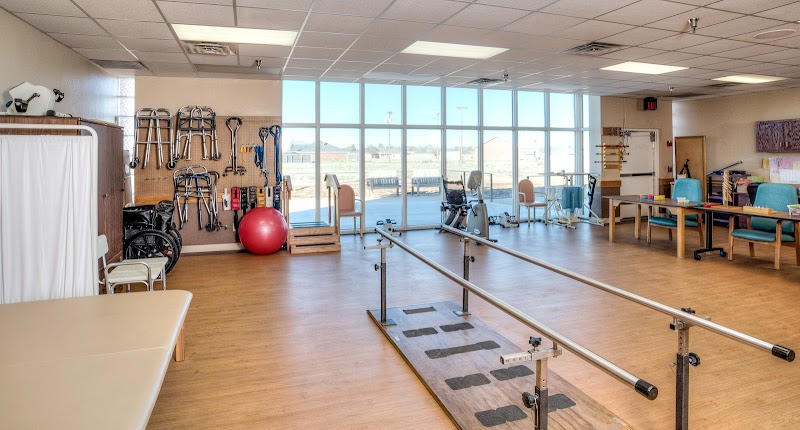
How is St. Anthony Healthcare And Rehabilitation Center Staffed?

CMS rates St. Anthony Healthcare and Rehabilitation Center's staffing level at 2 out of 5 stars, which is below average compared to other nursing homes. Staff turnover is 44%, compared to the New Mexico average of 46%. This relatively stable workforce can support continuity of care.

What Have Inspectors Found at St. Anthony Healthcare And Rehabilitation Center?

State health inspectors documented 42 deficiencies at St. Anthony Healthcare and Rehabilitation Center during 2022 to 2025. These included: 2 Immediate Jeopardy (the most serious level, indicating potential for serious harm or death), 1 that caused actual resident harm, 37 with potential for harm, and 2 minor or isolated issues. Immediate Jeopardy findings are rare and represent the most serious regulatory concerns. They require immediate corrective action.

Who Owns and Operates St. Anthony Healthcare And Rehabilitation Center?

St. Anthony Healthcare and Rehabilitation Center is owned by a for-profit company. For-profit facilities operate as businesses with obligations to shareholders or private owners. The facility is operated by GENESIS HEALTHCARE, a chain that manages multiple nursing homes. With 70 certified beds and approximately 60 residents (about 86% occupancy), it is a smaller facility located in Clovis, New Mexico.

How Does St. Anthony Healthcare And Rehabilitation Center Compare to Other New Mexico Nursing Homes?

Compared to the 100 nursing homes in New Mexico, St. Anthony Healthcare and Rehabilitation Center's overall rating (1 stars) is below the state average of 2.9, staff turnover (44%) is near the state average of 46%, and health inspection rating (1 stars) is much below the national benchmark.

What Should Families Ask When Visiting St. Anthony Healthcare And Rehabilitation Center?

Based on this facility's data, families visiting should ask: "What changes have been made since the serious inspection findings, and how are you preventing similar issues?" "Can you walk me through typical staffing levels on day, evening, and night shifts?" "Can I visit during a mealtime to observe dining assistance and food quality?" "How do you handle medical emergencies, and what is your hospital transfer rate?" These questions are particularly relevant given the facility's Immediate Jeopardy citations and the below-average staffing rating.

Is St. Anthony Healthcare And Rehabilitation Center Safe?

Based on CMS inspection data, St. Anthony Healthcare and Rehabilitation Center has documented safety concerns. Inspectors have issued 2 Immediate Jeopardy citations (the most serious violation level indicating risk of serious injury or death). The facility has a 1-star overall rating and ranks #100 of 100 nursing homes in New Mexico. Families considering this facility should ask detailed questions about what corrective actions have been taken since these incidents.

Do Nurses at St. Anthony Healthcare And Rehabilitation Center Stick Around?

St. Anthony Healthcare and Rehabilitation Center has a staff turnover rate of 44%, which is about average for New Mexico nursing homes (state average: 46%). Moderate turnover is common in nursing homes, but families should still ask about staff tenure and how the facility maintains care continuity when employees leave.

Was St. Anthony Healthcare And Rehabilitation Center Ever Fined?

St. Anthony Healthcare and Rehabilitation Center has been fined $94,594 across 3 penalty actions. This is above the New Mexico average of $34,025. Fines in this range indicate compliance issues significant enough for CMS to impose meaningful financial consequences. Common causes include delayed correction of deficiencies, repeat violations, or care failures affecting resident safety. Families should ask facility leadership what changes have been made since these penalties.

Is St. Anthony Healthcare And Rehabilitation Center on Any Federal Watch List?

St. Anthony Healthcare and Rehabilitation Center is not on any federal watch list. The most significant is the Special Focus Facility (SFF) program, which identifies the bottom 1% of nursing homes nationally based on persistent, serious quality problems. Not being on this list means the facility has avoided the pattern of deficiencies that triggers enhanced federal oversight. This is a positive indicator, though families should still review the facility's inspection history directly.