
Cedar Ridge Inn

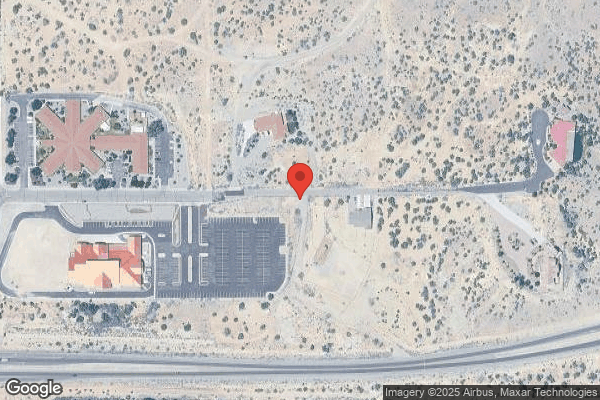
800 Saguaro Trail, Farmington, NM 87401 (505) 250-5448
For profit - Limited Liability company 101 Beds Independent Data: November 2025
Trust Grade
68/100
#2 of 67 in NM
Last Inspection: February 2025

Within standard 12-15 month inspection cycle. Federal law requires annual inspections.

Overview

Cedar Ridge Inn in Farmington, New Mexico has a Trust Grade of C+, indicating it is slightly above average but not exceptional. It ranks #2 out of 67 facilities in the state, placing it in the top half, and #1 of 6 in San Juan County, making it the best option locally. The facility is improving, with issues decreasing from 13 in 2023 to 7 in 2025, although it still has a concerning number of 27 total issues. While staffing is considered average with a 3/5 rating and a turnover rate of 48%, there is a lack of RN coverage compared to 95% of state facilities, which may lead to missed issues. Specific incidents include serious lapses in the care of pressure ulcers for residents, where staff failed to notify a physician about worsening conditions and delayed treatment, alongside concerns about kitchen sanitation that could risk foodborne illnesses. Overall, Cedar Ridge Inn has strengths in its ranking and recent trend, but serious care issues and sanitation problems are significant weaknesses to consider.

Trust Score
C+
68/100
In New Mexico
#2/67
Top 2%
Safety Record
Moderate
Needs review
Inspections
Getting Better
13 → 7 violations
Staff Stability
⚠ Watch
48% turnover. Above average. Higher turnover means staff may not know residents' routines.
Penalties
○ Average
$8,366 in fines. Higher than 71% of New Mexico facilities. Some compliance issues.
Skilled Nurses
⚠ Watch
Each resident gets only 18 minutes of Registered Nurse (RN) attention daily — below average for New Mexico. Fewer RN minutes means fewer trained eyes watching for problems.
Violations
⚠ Watch
27 deficiencies on record. Higher than average. Multiple issues found across inspections.
★★★★★
5.0
Overall Rating
★★★☆☆
3.0
Staff Levels
★★★★★
5.0
Care Quality
★★★★☆
4.0
Inspection Score
Stable
2023: 13 issues
2025: 7 issues

The Good

  • 5-Star Quality Measures · Strong clinical quality outcomes
  • Full Sprinkler Coverage · Fire safety systems throughout facility
  • No fines on record

Facility shows strength in quality measures, fire safety.

The Bad

Staff Turnover: 48%

Near New Mexico avg (46%)

Higher turnover may affect care consistency

Federal Fines: $8,366

Below median ($33,413)

Minor penalties assessed

The Ugly 27 deficiencies on record

2 actual harm
Aug 2025 2 deficiencies 1 Harm
SERIOUS (G) 📢 Someone Reported This

A family member, employee, or ombudsman was alarmed enough to file a formal complaint

Actual Harm - a resident was hurt due to facility failures

Pressure Ulcer Prevention (Tag F0686)

A resident was harmed · This affected 1 resident

**NOTE- TERMS IN BRACKETS HAVE BEEN EDITED TO PROTECT CONFIDENTIALITY** Based on interview and record review, the facility failed to prevent the worsening of a pressure ulcer (PU; an injury to skin an...

Read full inspector narrative →
**NOTE- TERMS IN BRACKETS HAVE BEEN EDITED TO PROTECT CONFIDENTIALITY** Based on interview and record review, the facility failed to prevent the worsening of a pressure ulcer (PU; an injury to skin and underlying tissue resulting from prolonged pressure on the skin)for 1 (R #10) of 3 (R #10, #12 and #13) residents when staff failed to notify the physician when the resident's right gluteal fold (buttocks) wound worsened. If the facility does not recognize and notify the physician when a wound deteriorates, then the wound may worsen, become infected, and result in hospitalization. The findings are: A. Record review of R #10's face sheet revealed an initial admission date of 12/02/21 with a diagnosis of multiple sclerosis(MS; a chronic progressive disease involving damage to the nerve cells in the brain and spinal cord, which may cause numbness, impairment of speech and muscular coordination, blurred vision and severe fatigue). B. Record review of R #10's care plan, dated 09/09/24, revealed R #10 was dependent on staff assistance for all activities of daily living (ADL; activities related to personal care such as bathing, showering, dressing, walking, toileting, and eating). C. Record review of R #10's wound assessment revealed the following: -On 07/17/25, an abrasion (partial thickness wound caused by damage to the skin) on R #10's right gluteal fold. Length (l) 0.82 centimeters (cm), width 0.6 cm. -On 07/31/25, an abrasion on R #10's right gluteal fold. Length 2.24 cm, width 1.19 cm, depth 1 cm. -On 08/06/25, an abrasion on R #10's right gluteal fold. Length 5.6 cm, width 3.12 cm. The wound was 70 percent (%) slough(yellow stringy tissue adhered to wound bed). - On 08/11/25, an abrasion on R #10's right gluteal fold. Length 3.7 cm, width 2.49 cm, depth 2.5 cm. The wound had a suspected infection and was 70% slough with increased drainage. - On 08/19/25, a stage III pressure sore (full thickness skin loss that extends into deeper tissue and fat but not into muscle, tendon, or bone)on R #10's right gluteal fold. Length 3.9 cm, width 3.17 cm, depth was 3.5 cm. The wound was debrided (medical removal of dead, damaged, or infected tissue) at the hospital, and a negative pressure wound therapy (NPWT; a treatment that uses suction to help wounds heal)was put into place. - On 08/25/25, a stage III pressure soreon R #10's right gluteal fold. Length 4.59 cm, width 3.31 cm, depth was 3.5 cm. The wound was 30 percent slough (yellow stringy tissue adhered to wound bed). D. Record review of R #10's physician orders revealed the following: - Monitor open area to right buttock for signs and symptoms of infection. Notify medical doctor (MD) for any changes every shift. Start 07/17/25 and end on 08/05/25. -Right buttock open area: Cleanse site with wound cleanser and apply foam dressing, daily every day shift for wound. Start date 07/18/25 and end on 07/31/25. -Right buttock open area: Cleanse site wound cleanser and apply skin prep to periwound. Apply collagen to wound bed and cover with mepilex (foam dressing for acute and chronic wounds). Change dressing as needed. May discontinue when resolved. Completeevery day shift for wound care. Start date 08/01/25 and end on 08/04/25. -Right buttock open area: Cleanse site wound cleanser, apply skin prep to peri wound, apply medihoney(wound and burn gel)to wound bed cover with mepilex. Start on 08/04/25 and end on 08/05/25. -Right gluteal (buttock) fold: Unstageable [a wound that has full thickness tissue loss but is covered with slough (dead tissue) or eschar (dark scab or falling away of dead skin) so that the true depth of the wound cannot be determined] pressure ulcer. Clean wound and dry with gauze. Apply a thin layer of Santyl (medication used to treat severe burn or skin ulcers by removing dead skin tissue and aid in wound healing)to wound bed. Cover with a foam bordereddressing. Start date 08/05/25 and end on 08/06/25. - Wound Care to right Gluteal fold unstageable PU: Clean wound and dry with gauze, apply skin prep to peri wound, apply a thin layer of Santyl to wound bed, cover with a foam bordered dressing. May change as needed if dressing is soiled. Every shift for wound care. Start date 08/08/25 0846 and end date 08/13/25. E. Record review of R #10's Medication Administration Record (MAR) dated 07/18/25 to 07/31/25, revealed the following: - Staff did not provide wound care to R #10 on 07/28/25. The record did not state why the wound care was not provided. - Staff did not provide wound care to R #10 on 07/29/25. The record did not state why the wound care was not provided. F. Record review of R #10's MAR, dated 08/01/25 to 08/06/25, revealed the following: - Staff did not provide wound care to R #10 on 08/01/25. The record did not state why the wound care was not provided. G. Record review of R #10's electronic health record revealed the following: -The record did not contain any progress notes indicating staff notified the physician of the resident's deteriorating wound from 07/17/25 to 08/05/25. -The record did not contain an order to send the resident out to the hospital. H. Record review of R #10's admission hospital record, dated 08/11/25, revealed R #10 had altered mental status (a change in mental function related to brain issues) at the facility and was picked up by an ambulance. The resident had evidence of urinary tract infection (UTI; an infection in any part of the urinary system, which includes the kidneys, ureters, bladder, and urethra) and a pressure ulcer that was inflamed and hot. The R #10 had bacteremia (bacteria andinfectious organismsin your blood) with enterococcus faecalis (a bacteria found in the intestines that causes a serious infection) related to the right ischial pressure wound (right gluteal fold). I. Record review of R #10's hospital discharge record, dated 08/14/25, revealed the following: - Post debridement (medical procedure that involves the removal of dead, damaged, or infected tissue from a wound to promote healing): -Right ischium with full thickness wound (severe injury that extends through all layers of the skin). -Wound was malodorous (bad odor or smell). -Wound bed after debridement with liquifying necrotic tissue (process where dead tissue transforms into a liquid mass, often due to bacterial or fungal infections, or as a result of lack of blood supply). -Wound edges well defined. -Measurement: length 5 cm by width 4.6 cm by depth 1.8 cm. Undermining (erosion under the wound edges) from 3:00-9:00 (significant erosion occurs underneath the outwardly visible wound margins resulting in more extensive damage beneath the skin surface) with a depth of 1.5 cm. J. On 08/26/25 at 1:24 pm, during an interview, the Wound Care Nurse (WCN) stated the wound on R #10 was found on Friday, 07/18/25. She stated she put in an order for daily cleaning and to keep the wound covered on 07/18/25. She stated she planned to go to the facility on Monday, 07/21/25, to reassess the resident's wound, but she was out sick for at least one week. She stated she added collagen to the resident's wound care order on 08/01/25, and then she changed to medihoney for a day. She stated the Director of Nursing became involved on 08/06/25, and she called the physician and the wound care contract company to come take a look at the resident's wound. She stated new orders were put in for Santyl around 08/06/25. K. On 08/26/25 at 2:20 pm and 08/27/25 at 8:38 am, during an interview, Nurse #3 stated she provided wound care for R #10 and documented the care in the MAR. She stated the beginning of R #10's wound was just very tiny, but then she saw a larger dark area emerge. She stated she observed the resident's wound start to change, and she was alarmed by it. She stated she did not reach out to the physician, the WCN, or the DON. She stated she should have contacted them. L. On 08/26/25 at 3:45 pm, during an interview, the Director of Nursing (DON) stated she became aware of the resident's wound on 07/18/25. The DON stated she was not at the facility from 07/28/25 through 08/01/25. She stated she returned to the facility on [DATE]. The DON stated R #10's wife showed her pictures of the wound on 08/05/25, and she immediately called the physician. The DON stated the Wound Care Nurse Practitioner (WCNP) to come to the facility for a consult and to put in orders for Santyl on 08/05/25. The DON stated she was not aware of the deterioration of the wound prior to 08/05/25. The DON stated the Assistant Director of Nursing (ADON) was also not at the facility during the same time period. The DON stated the WCN should have called the physician to report the wound was getting worse. She stated the WCN should have notified her as well, even though she was out. The DON stated the resident's wound was red and hot when she saw it on 08/05/25, and she suspected the wound was infected. M. On 08/27/25 at 10:30 am, during an interview, the Medical Director (MD) stated he did not remember when he was notified of the wound for R #10, and he was usually in the building every week. The MD stated he was aware of the wound before R #10 went out to the hospital on [DATE]. He stated it was expected staff would notify him of any change in condition, to include worsening wounds. N. On 08/27/25 at 11:20 am, during an interview, Family Member #10 stated she was aware of the wound on 07/18/25. She stated she watched it get worse and talked to the facility nursing staff about it. She stated she went to the DON on 08/05/25 and showed her a picture of the wound. She stated the DON got a consult for R #10 on 08/05/25 and the orders were changed. Family member #10 stated R #10 was put on antibiotics (08/06/25), but he ended up in the hospital with an infection 08/11/25. O. On 08/27/25 at 11:36 am, during an interview, the WCNP stated the first time she saw the wound was on 08/07/25. She stated the wound was an unstageable pressure wound with 100% dry eschar. She stated the facility already ordered Santyl, and that was the treatment she would have put into place. The WCNP stated a wound culture could not be done due to the dry eschar. She stated she did not see R #10 again, because the resident went out to the hospital.
CONCERN (D) 📢 Someone Reported This

A family member, employee, or ombudsman was alarmed enough to file a formal complaint

Potential for Harm - no one hurt, but risky conditions existed

Accident Prevention (Tag F0689)

Could have caused harm · This affected 1 resident

Based on observation, interview and record review the facility failed to secure an oxygen cylinder to prevent tipping and falling over for 1 (R #13) of 2 (R #13 and R #14) residents. If the oxygen con...

Read full inspector narrative →
Based on observation, interview and record review the facility failed to secure an oxygen cylinder to prevent tipping and falling over for 1 (R #13) of 2 (R #13 and R #14) residents. If the oxygen container fell over, then the valve could break on the canister and cause the residual oxygen to leak or cause the oxygen cylinder to self-propel across the facility. The findings are: A. Record review of the facility's oxygen safety policy, last revised 2025, indicated oxygen cylinders will be properly chained or supported in racks or other fastenings (sturdy portable carts, approved stands) to secure all cylinders from falling, whether connected, unconnected, full or empty. B. On 08/26/25 at 10:35 am, an observation revealed R #13's oxygen tank sat unsecured next to her recliner. R #13 was not using the oxygen. C. On 08/26/25 at 10:35 am, during an interview, the Director of Nursing (DON) stated the portable oxygen container should not be in R #13's room. She stated oxygen cylinders should not be stored unsecured, because it could cause an accident.
Feb 2025 5 deficiencies
CONCERN (D)

Potential for Harm - no one hurt, but risky conditions existed

Pharmacy Services (Tag F0755)

Could have caused harm · This affected 1 resident

Based on record review, observation, and interview, the facility failed to ensure pharmaceutical services (the direct, responsible provision of medication-related care) were met when staff failed to: ...

Read full inspector narrative →
Based on record review, observation, and interview, the facility failed to ensure pharmaceutical services (the direct, responsible provision of medication-related care) were met when staff failed to: -Promptly identify a loss of a controlled medication (drugs or chemicals that the government regulates because they can be easily abused and lead to addiction.) for 1 (R #26) of 1 (R #26) resident. -The Director of Nursing (DON) did not notify the facility's pharmacist consultant of the lost controlled medication timely. These deficient practices are likely to lead to a delay in the incident investigation process and lead to potential drug misuse or diversion (medical and legal concept involving the transfer of any legally prescribed controlled substance from the individual for whom it was prescribed to another person for any illicit use). The findings are: A. Record review of the facility's Controlled Medications-Administration Policy, dated 2024, revealed a physical inventory of all controlled medications should be conducted by two Licensed Nurses or one Nurse and a Certified Medication Aid (CMA), Qualified Medication Administration Personnel (QMAP), Medication Technician (Med Tech) or equivalent at each shift change and document the results on an audit record. Alternatively, the shift change audit may be recorded on the Accountability Record if there is a designated column for the audit. Any discrepancy (a lack of compatibility or similarity between two or more facts) in controlled substance medication counts should be reported to the Director of Nursing immediately. B. Record review of R #26's physician orders, dated 02/19/25, revealed R #26 received lorazepam oral tablet (antianxiety medication), 1 milligram (mg). Give one tablet by mouth three times a day at 8:00 am, 2:00 pm, and 8:00 pm for anxiety disorder. Medication was started on 08/14/24. C. Record review of R #26's Medication Administration Record (MAR), dated 02/11/25 at 7:16 am through 02/19/25 at 7:12 am, revealed staff administered a total of 25 doses of lorazepam, 1 mg to R #26, and the resident did not refuse any doses. D. Record review of R #26's Controlled Medication Accountability Record, dated 02/19/25, revealed the following: - On 02/11/25 at 5:00 am, the facility received 60 tablets of lorazepam, 1 mg. - Nursing staff administered the last dose of lorazepam to R #26 on 02/19/25 at 7:15 am. - From 02/11/25 at 7:16 am through 02/19/25 at 7:15 am, R #26 received a total of 25 scheduled doses of lorazepam oral tablet 1 mg. - A remaining balance of 35 tablets of lorazepam 1 mg. - The record was signed and dated by CMA #1 and Nurse #1. - The record did not show the resident refused any medication. E. On 02/19/25 at 9:04 am, observation of A-hall medication cart controlled medications revealed R #26's lorazepam, 1 mg medication blister pack (transparent, molded piece of plastic, often sealed to a sheet of cardboard, used to package small items such as tablets) had a remaining balance of 34 lorazepam oral tablets. F. On 02/19/25 at 9:07 am, during an interview, CMA #1 stated she counted and compared R #26's lorazepam blister pack to R #26's Controlled Medication Accountability Record in the presence of Nurse #1, and the count matched. She stated she received the medication cart keys from the night shift nurse (Nurse #1) after they counted R #26's lorazepam together. CMA #1 stated the count matched. CMA #1 stated she kept the medication cart keys with her the whole time. G. On 03/13/25 at 11:49 am, during an interview, Nurse #1 stated she counted and compared R #26's lorazepam blister pack to R #26's Controlled Medication Accountability Record in the presence of CMA #1 at shift change, and the count matched. H. On 02/19/25 at 9:10 am and 02/21/25 at 11:00 am during an interview, the DON stated the process for reconciling (the process of comparing a patient's medication orders to all of the medications that the patient has been taking.) medications at the end of each shift was for staff to count the medications together and sign the Controlled Medication Accountability Record. The DON stated the Pharmacist conducted monthly audits and random audits. The DON stated she was not aware R #26's lorazepam blister pack was missing one tablet. She stated it was expected for CMA #1 to maintain an accurate count of R #26's lorazepam 1 mg tablets. The DON stated she should have notified the facility's consultant pharmacist within 24 hours of becoming aware of the missing medication, but she did not. I. On 02/21/25 at 10:52 am during an interview, the facility's Consultant Pharmacist (CP) stated she audited the facility's medication carts monthly and randomly. The CP stated she expected CMA #1 to count R #26's lorazepam, compare the administered and the remaining tablets, and maintain a correct count of them. She stated she expected the DON to notify her of the controlled drug incident within 24 hours of becoming aware of the missing medication, but the DON did not notify her until 02/19/25 at 1:18 pm. The Pharmacist stated she was responsible to report the missing medication to the New Mexico Board of Pharmacy within 24 hours of the incident.
CONCERN (D)

Potential for Harm - no one hurt, but risky conditions existed

Deficiency F0800 (Tag F0800)

Could have caused harm · This affected 1 resident

**NOTE- TERMS IN BRACKETS HAVE BEEN EDITED TO PROTECT CONFIDENTIALITY** Based on record review and interviews, the facility failed to provide a diet that met a resident's special dietary needs for 1 (...

Read full inspector narrative →
**NOTE- TERMS IN BRACKETS HAVE BEEN EDITED TO PROTECT CONFIDENTIALITY** Based on record review and interviews, the facility failed to provide a diet that met a resident's special dietary needs for 1 (R #249) of 1 (R #249) resident when staff failed to provide R #249 a salt free diet. This deficient practice is likely to lead to a buildup of fluid in R #249's body, causing him to have symptoms such as swelling in the legs, hands, and face, high blood pressure, shortness of breath, and potential complications like heart failure. The findings are: A. Record review of the facility's Liberalized Diets Policy, dated 2024, revealed staff were to serve residents a regular diet, unless a medical condition warranted a restricted diet. Staff were to monitor residents in relation to their conditions, their goals regarding nutritional status, and their physical, mental, and psychosocial well-being. B. Record review of R #249's electronic health record, undated, revealed R #249 was admitted to the facility on [DATE] with the following diagnoses: - Acute renal failure (sudden loss of kidney function.) - Presence of cardiac pacemaker (a device surgically implanted in the body to deliver electrical pulses to the heart to help the heartbeat in a regular rhythm.) - Ventricular tachycardia (a life-threatening, fast and abnormal heart rhythm.) - Acute respiratory failure with hypoxia (a medical condition where the lungs are unable to adequately exchange oxygen, leading to a dangerously low level of oxygen in the blood.) - Morbid obesity (severely overweight) due to excess calories. - Cardiogenic shock (a life-threatening condition that occurs when the heart is unable to pump enough blood to meet the body's needs.) C. Record review of R #249's hospital discharge paperwork, dated 02/13/25, revealed the hospital discharging physician ordered a cardiac diet (a dietary plan designed to improve heart health and reduce the risk of cardiovascular diseases). D. Record review of R #249's facility's physician orders, dated 02/13/25, revealed an admission order of regular diet. E. Record review of R #249's Care Plan, dated 02/14/25, revealed the following: - Focus: Nutritional status. The resident has a potential for alteration in nutrition related diabetes. - Interventions: Staff to offer the resident diet as ordered. Resident's diet was liberalized per the resident's request. F. Record review of R #249's meal ticket, dated 02/19/25, revealed the following: - Diet: Regular. - A 1500 cubic centimeter (cc) fluid restriction. - Food likes: The record did not contain any information in this area. - Food dislikes: The record did not contain any information in this area. - R #249's meal ticket did not include any food restrictions or a therapeutic diet. G. On 02/18/25 at 10:04 am, during an interview with R #249, he stated the facility staff served him a meal with bread that contained salt, and he had to return it. The resident stated he should be on a salt-free diet due to his kidney and heart issues. He stated he communicated his dietary needs to the facility's Dietary Manager when he was admitted . R #249 stated he watched the food menu every day to see if the next day's food menu contained food that was high in salt. He stated if the menu did have high sodium food then he would need to request an alternative food menu. The resident stated the Dietary Manager told him to let the kitchen staff know an hour before lunch or supper if he had specific dietary needs, and they would get him something different from the scheduled food menu. H. On 02/19/25 at 8:23 am, during an interview with the facility's Dietary Manager (DM), he stated he interviewed newly admitted residents and talked to them about the liberalized diets. The DM stated R #249 told him (DM) about his (the resident's) diet restrictions during the initial interview. The DM stated R #249 needed to be on a salt-free diet, and he should have that information to R #249's meal ticket under the Food Dislikes section. I. On 02/20/25 at 9:21 am, during an interview with the facility's Registered Dietician (RD), she stated the facility offered a liberalized diet to all residents to provide a homelike environment and to allow residents to eat what they liked. The RD stated she expected the Dietary Manager to add bread to R #249's meal ticket under the Food Dislikes section, so kitchen staff would not add it to his meal. J. On 02/21/25 at 9:30 am, during an interview with the facility's Medical Director (MD), he stated the facility's management tried different specialized diets in the past, and they noticed residents still brought food and snacks from outside. The MD stated residents considered the facility their home, and they should be able to eat what they liked. He stated the facility provided a healthy and balanced diet to all residents, and the liberalized diet was appropriate for a large number of residents. The MD stated it was expected the facility take residents' and their representatives' input in regards to food and any changes they wanted in their diet. He stated he expected the facility's RD to review R #249's diet needs and made sure the resident's diet did not contain salt.
CONCERN (E)

Potential for Harm - no one hurt, but risky conditions existed

Safe Environment (Tag F0584)

Could have caused harm · This affected multiple residents

Based on observation and interview, the facility failed to maintain a homelike environment for all residents who utilized the outdoor patio located outside the main dining room when staff failed to re...

Read full inspector narrative →
Based on observation and interview, the facility failed to maintain a homelike environment for all residents who utilized the outdoor patio located outside the main dining room when staff failed to repair water damage to the building. Failure to make repairs to maintain a homelike environment could likely cause residents to feel like they do not matter. The findings are: A. On 02/19/25 at 12:41 pm, observation of the resident's outdoor patio, located off the main dining room, revealed the fascia (the exterior framing of the roof rafters) and soffit (the finish material visible beneath the roof's overhang on a building) located to the right (facing the door from the outside) was damage, with peeling paint and exposed wood with black substance. Further observation revealed the residents utilized the area for smoking, and the damage to the building was visible to the residents. B. On 02/19/25 at 12:25 pm, during an interview, the Maintenance Director stated he was responsible to inspect and maintain the building. The Maintenance Director stated he was aware of the condition of the fascia and soffit. He stated the damage was caused by water runoff. He said he made calls to an outside company about a year ago for repairs, but he did not follow up on it. C. On 02/20/25 at 2:48 pm, during an interview, the Administrator stated he was not aware of the water damage to the fascia and soffit in the residents' outside smoking area. The Administrator stated the Maintenance Director was responsible for inspecting and maintaining the building. He stated peeling paint and exposed wood would not be considered homelike, and the resident's should not have to see the building in that condition.
CONCERN (E)

Potential for Harm - no one hurt, but risky conditions existed

Accident Prevention (Tag F0689)

Could have caused harm · This affected multiple residents

**NOTE- TERMS IN BRACKETS HAVE BEEN EDITED TO PROTECT CONFIDENTIALITY** Based on observations, record reviews, and interviews, the facility failed to maintain an environment that was free of potential...

Read full inspector narrative →
**NOTE- TERMS IN BRACKETS HAVE BEEN EDITED TO PROTECT CONFIDENTIALITY** Based on observations, record reviews, and interviews, the facility failed to maintain an environment that was free of potential for accidents when staff failed to: - Use footpedals when they propelled residents in their wheelchairs without the foot pedals attached for 2 (R #26 and R #3) of 2 (R #26 and R #3) residents reviewed - Maintain a resident courtyard free of sharp edges. This failure had the potential to affect all resident who utilized the enclosed courtyard. These deficient practices could likely create an unsafe situation and lead to serious injuries. The findings are: Wheelchair Foot Pedals R #26 A. Record review of R #26's current Face Sheet revealed R #26 was admitted to the facility on [DATE] with a diagnosis of muscle weakness. B. Record review of R #26's Minimum Data Set (MDS; a federally mandated assessment instrument completed by facility staff), dated 02/05/25, revealed the following: - A Brief Interview for Mental Status (BIMS; a screening for cognitive impairment) score of 11, moderately impaired. - Unable to walk 10 feet due to medical condition or safety concerns. - Dependent on staff for assistance with sitting to lying down, lying to sit on bed, chair to bed to chair transfer. - Dependent on staff with a manual wheelchair. - Had three falls since admission, two without injury and one with injury. - Took an antipsychotic, antianxiety, and antidepressant medication. - Had pain or hurting in the last five days, pain and hurt over the last five days affected his sleep. - Rated his level at a level six. (Pain rated at a scale of 00-10, with 10 the worst). C. On 02/20/25 at 9:00 am during an observation, Certified Nursing Assistant (CNA) # 1 propelled R #26 in his wheelchair from the dining room to the common area. R#26 did not have any foot pedals on his wheelchair, and he held his feet up off the floor. R #26's feet fell to the ground, and the wheelchair stopped abruptly. R #26 yelled out, Damn it! CNA #1 leaned down to R #26's ear and said, Pick your feet up. CNA #1 continued to propel R #26 while the resident held his feet up off the ground. D. Record review of R #26's Occupational Therapy Evaluation and Plan of Treatment, dated 01/07/25, revealed the following: - Morbid obesity (severely overweight.) - Muscle weakness (reduction in the power exerted by muscles.) - Patient exhibits new onset of decreases in strength. - Decrease in functional mobility. (Limitation in independent purposeful physical movement.) - Reduced ability to safely ambulate (to move from place to place.) - Cognitive deficit (Intellectual disability.) - Pain and paralysis/paresis (the loss of the ability to move), placing the patient at risk for decreased ability to return to the prior living environment. - Limited functional movement. - Muscle atrophy (reduced muscle mass.) - The record did not include an evaluation of whether the resident could safely hold their legs up while staff propelled them in wheelchairs without foot pedals. - The record did not contain information to show staff discussed with the resident the use of foot pedals and the potential hazards of not using foot pedals when propelled by staff. - The record did not contain information to show the resident or their representatives chose not to use foot pedals when staff propelled them in wheelchairs. E. Record review of R #26's electronic health record, undated, revealed the following: - The record did not include an evaluation of whether the resident could safely hold their legs up while staff propelled them in wheelchairs without foot pedals. - The record did not contain information to show staff discussed with the resident the use of foot pedals and the potential hazards of not using foot pedals when propelled by staff. - The record did not contain information to show the resident or their representatives chose not to use foot pedals when staff propelled them in wheelchairs. F. On 02/20/25 at 10:30 am during an interview, CNA #1 stated staff asked the residents to lift their legs when they propelled the residents, because that's just how we do it. R #3 G. Record review of R #3's MDS, dated [DATE], revealed the following: - A BIMS score of 5, severe cognitive impairment. - Unable to walk 10 feet due to medical condition or safety concerns. - Had three falls since admission, two without injury and one with injury. - Had pain or hurting in the last five days, pain and hurt over the last five days affected her sleep. - Rated his level at a level four. H. On 02/20/25 at 9:22 am during an observation, CNA #1 propelled R #3 back to her room from the dining room. Further observation revealed R #3's leg dropped to the floor multiple times, and CNA #1 told R #3 to pick her legs up so they could go to the resident's room. I. Record review of R #3's Occupational Therapy Evaluation and Plan of Treatment, dated 06/15/24, revealed the following: -Dementia (a group of conditions characterized by impairment of at least two brain functions, such as memory loss and judgment.) -Muscle weakness. -Decline in function. -Fall risk. - The record did not include an evaluation of whether the resident could safely hold their legs up while staff propelled them in wheelchairs without foot pedals. - The record did not contain information to show staff discussed with the resident the use of foot pedals and the potential hazards of not using foot pedals when propelled by staff. - The record did not contain information to show the resident or their representatives chose not to use foot pedals when staff propelled them in wheelchairs. J. Record review of R #26's electronic health record, undated, revealed the following: - The record did not include an evaluation of whether the resident could safely hold their legs up while staff propelled them in wheelchairs without foot pedals. - The record did not contain information to show staff discussed with the resident the use of foot pedals and the potential hazards of not using foot pedals when propelled by staff. - The record did not contain information to show the resident or their representatives chose not to use foot pedals when staff propelled them in wheelchairs. K. On 02/21/25 at 8:28 am and on 03/10/25 at 2:22 pm during an interview, Certified Occupational Therapy Assistant (COTA) #1 stated the Occupational Therapy (OT) staff determined if the resident was a fall risk by doing a Fall Risk Assessment. She stated the facility did not have a written policy regarding the staff propelling the residents in wheelchairs. She stated most residents did not use wheelchair pedals, because therapy staff wanted the residents to increase their mobility and independence. COTA #1 stated there was always the potential for harm when staff propelled residents in wheelchairs without foot pedals. COTA #1 stated the therapy treatment program consisted of nine approaches, and one of the approaches was wheelchair management training. She stated staff covered wheelchair management training during the resident's OT sessions. She stated proper wheelchair positioning was important. She stated the resident's hips and pelvis should be positioned at the back of the wheelchair, while their trunk and chest should be against the backrest. She stated the wheelchair armrests must be adjusted to the appropriate height for the resident, and the resident's feet should rest flat on the floor or the footrest. COTA #1 stated staff should ask the resident if they can hold their legs up when the staff member propelled the resident in the wheelchair. She stated if the resident's legs drop, then there was a risk of the resident's feet scraping the ground. She stated that could lead to injuries for the resident. L. On 02/20/25 at 2:48 pm, during an interview, the Administrator stated residents should put their feet on the foot rest and their hands in their lap when staff propel them in their wheelchairs. The Administrator stated some residents choose not to use the foot pedals on their wheelchairs, and that is their right. The Administrator stated the therapy staff evaluate the residents for the use of foot pedals on their wheel chair. The Administrator stated their is the potential for injury when staff propel residents in wheelchairs without their foot pedals. Resident Courtyard M. On 02/19/25 at 3:15 pm, observation of the residents' enclosed courtyard revealed two wooden fence pickets were not attached to two [NAME] rails, and the fence pickets had sharp points of the nails exposed. Further observation revealed a metal landscape edging touched the patio concrete, and the sharp corner of the metal [NAME] was exposed. N. On 02/19/25 at 3:17 pm during an interview, the Maintenance Director stated the residents utilized the courtyard. He stated he maintained the courtyard, but he was not aware of the sharp metal edging. He stated the sharp corner should not be exposed. The Maintenance Director stated he knew some panels on the fence were loose due to weathering, but he did not know some were not attached to two [NAME] rails. The Maintenance Director stated it was not safe to have nails exposed. O. On 02/20/25 at 2:48 pm, during an interview, the Administrator stated the Maintenance Director was responsible to inspect and maintain the residents' enclosed courtyard. The Administrator stated he was not aware of the loose fence pickets, the exposed nails, and the sharp metal edging. He stated that was not a safe environment for the residents.
CONCERN (F)

Potential for Harm - no one hurt, but risky conditions existed

Food Safety (Tag F0812)

Could have caused harm · This affected most or all residents

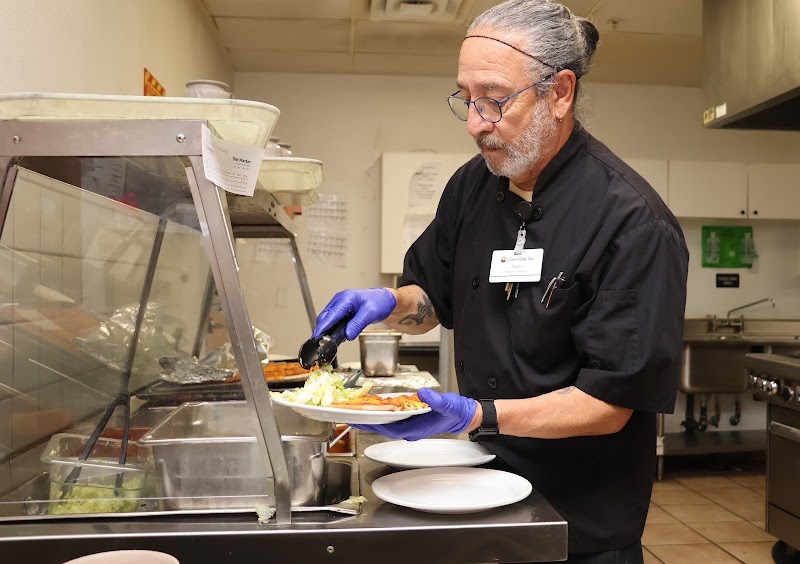
Based on observation and interview, the facility failed to maintain the kitchen in a sanitary manner for all residents who received food or drinks in the facility when staff failed to: - Keep the kitc...

Read full inspector narrative →
Based on observation and interview, the facility failed to maintain the kitchen in a sanitary manner for all residents who received food or drinks in the facility when staff failed to: - Keep the kitchen dust and grime free. - Ensure the ice machine drained through an air gap. These failures had the potential to result in cross-contamination and foodborne illness which could affect all residents who ate food from the kitchen. The findings are: Dust A. On 02/17/25 at 12:25 pm, observation of the kitchen revealed the following: - The wall and ceiling above the food preparation area were visibly dusty. - The deep fry area had visible dust and grime on it. - Vents near the food preparation area had dust and grime. - The kitchen staff prepared the residents' lunches below the visibly dusty ceiling. B. On 02/21/25 at 10:08 am, during an interview, the Dietary Supervisor (DS) stated staff should wash down the walls and ceiling to make sure that there was not any contamination. The DS stated it was over a year since staff washed down the walls and ceiling. The DS stated the deep fry area should be cleaned daily, but it did not look like it was done. The DS stated maintenance staff was supposed to clean the ceiling vents, but the DS was unsure when they were done. C. On 02/21/25 at 10:10 am, during an interview, the Director of Maintenance (DOM) stated the last time he cleaned the vents in the kitchen was last year. The DOM stated he did not document when he cleaned the vents. Ice Machine D. On 02/19/25 at 3:52 pm, observation of the therapy kitchen revealed the ice machine did not drain through an air gap. The ice machine drained into a pump, and the pump drained directly into the waste water pipe. Further observation revealed the ice machine contained ice, and staff used the ice for the residents. E. On 02/19/25 at 3:55 pm during an interview, the Director of Maintenance stated the ice machines should drain through an air gap so the waste water did not backup into the ice machine drain pipes. He stated this could cause bacteria to grow into the pipe and contaminate the ice. The DOM stated he was aware the ice machine in the therapy kitchen did not drain through an air gap. He stated he thought this was okay since the ice machine drained into a pump. The DOM did not know if the pump had a backflow preventer, and he did not know if the pump prevented bacteria from entering the ice machine drain pipe. F. On 02/20/25 at 2:48 pm during an interview with the Administrator and the DOM, the Administrator stated the DOM was responsible to inspect and maintain the ice machines in the facility. The Administrator stated the DOM inspects the ice machines every three months to ensure there was not a buildup of scale and lime and to ensure the drain was clear. The Administrator and the DOM stated the ice machine should drain through an air gap to prevent the growth of bacteria.
Dec 2023 13 deficiencies 1 Harm
SERIOUS (G) 📢 Someone Reported This

A family member, employee, or ombudsman was alarmed enough to file a formal complaint

Actual Harm - a resident was hurt due to facility failures

Pressure Ulcer Prevention (Tag F0686)

A resident was harmed · This affected 1 resident

**NOTE- TERMS IN BRACKETS HAVE BEEN EDITED TO PROTECT CONFIDENTIALITY** Based on interview and record review, the facility failed to properly care for a pressure ulcer (an injury that breaks the skin ...

Read full inspector narrative →
**NOTE- TERMS IN BRACKETS HAVE BEEN EDITED TO PROTECT CONFIDENTIALITY** Based on interview and record review, the facility failed to properly care for a pressure ulcer (an injury that breaks the skin and underlying tissues) for 1 (R #195) of 6 (R #9, R #16, R #35, R #40, R #194, and R #195) residents randomly sampled for pressure ulcer, when they failed to do the following: 1. Monitor redness before it became a pressure wound. 2. Implement preventative interventions including pressure relieving devices 3. Delay in initiating wound care treatment for 11 days upon the discovery of (2) wounds. 4. Not consistently treating the wound with ointment as ordered. These deficient practices likely resulted in the development of unstageable wound with infection requiring hospitalization. The findings are: A. Record review of R #195's face sheet identified that he was admitted on [DATE] and had the following diagnosis: Flaccid Hemiplegia (paralysis affecting one half of the body), Muscle Weakness and need for assistance with personal care. These are not all inclusive. B. Record review of admission assessment dated [DATE], revealed R #195 had noted redness that was blanchable on the coccyx (tailbone) at the time of admission. C. Record review of care plan dated 09/29/23 for R #195 identified [Name of R #195] is at risk of skin impairment related to decreased mobility, incontinence and refusal of care. Interventions did not include any pressure relieving devices. D. Record review of weekly skin checks revealed: 1. On 10/06/23 identified red coccyx blanchable. No size identified. 2. On 10/13/23 identified a large pressure ulcer to the coccyx area, unstagable (are full-thickness skin and tissue loss in which the extent of tissue damage within the ulcer cannot be confirmed because it is obscured by slough or eschar) and a smaller opening to the top of his right buttock, stage two (pressure injury that is partial-thickness skin loss, with loss of epidermis and subcutaneous tissue not exposed). E. Record review of R #195's physicians order, dated 10/24/23, revealed order for collagenase ointment (is an enzyme that breaks down collagen in damaged tissue and helps healthy tissue to grow. It may help wounds heal faster) 250 grams. Apply to the coccyx topically every shift for pressure ulcer. Clean wound with WW/NS (wound wash with normal saline to clean out the wound bed and around the wound), pat dry, apply ointments and place protective dressing over the wound twice a day. There were no other orders for wound treatment. F. Record review of R #195's Electronic Medication Administration Record (EMAR) revealed R #195 was ordered to receive wound care twice a day. The collagenase ointment was documented as not being available on the following dates and shifts. 1. 10/25/23 during the night shift. 2. 10/28/23 during the day shift. 3. 10/28/23 during the night shift. 4. 10/29/23 during the day shift. 5. 10/30/23 during the day shift. 6. 10/31/23 during the night shift. 7. 11/02/23 during the night shift. 8. 11/03/23 during the day shift. 9. 11/05/23 during the night shift. 10. 11/06/23 during the day shift. 11. 11/06/23 during the night shift. 12. 11/07/23 during the day shift. 13. 11/08/23 during the day shift. 14. 11/09/23 during the day shift. 15. 11/10/23 during the day shift. 16. 11/10/23 during the night shift. G. Record review of labs revealed a wound culture was obtained on 10/27/23 and Escherichia Coli (E. coli is a type of bacteria that normally lives in your intestines, but some strains can cause diarrhea, kidney failure, or urinary tract infections) was found to be growing in the coccyx wound. H. Record review of a nursing progress note dated 11/13/23, revealed the resident was sent out to the emergency room for evaluation and treatment of wound on his coccyx due to the wound declining. I. On 11/27/23 at 11:20 am, during an interview with new facility Administrator, she stated when R #195 came to the facility [on 11/15/23 from the hospital] I was told it [wound] was a pressure injury stage 2. When [Name of R #195] arrived, we had the nurse look at it and it was unstageable pressure injury. The wound was the size of a frisbee, and the smell was horrible. I have never seen a wound this big before. J. On 11/28/23 at 3:47 pm and 11/28/23 at 5:05 pm, during an interview with the Director of Nursing (DON), she stated the Wound Care Nurse (no longer employed at the facility) reported that R #195 would often refuse wound treatment. The DON was unable to identify the reason why wound treatment orders were started on 10/24/23 and not on 10/13/23 when the wound was identified. The DON confirmed that staff were changing the dressing but not applying collangenase ointment until it was delivered to the facility on [DATE]. K. On 11/29/23 at 9:09 am, during an interview with R #195, he identified that he was a retired Registered Nurse. Regarding the wound on his coccyx, he stated that nurses were changing the dressing but not applying any ointment. If I had a bowel movement (BM), I would go three days without a dressing [being put on].
CONCERN (D)

Potential for Harm - no one hurt, but risky conditions existed

Notification of Changes (Tag F0580)

Could have caused harm · This affected 1 resident

**NOTE- TERMS IN BRACKETS HAVE BEEN EDITED TO PROTECT CONFIDENTIALITY** Based on record review and interview, the facility failed to notify the physician that Vancomycin (antibiotic medication used to...

Read full inspector narrative →
**NOTE- TERMS IN BRACKETS HAVE BEEN EDITED TO PROTECT CONFIDENTIALITY** Based on record review and interview, the facility failed to notify the physician that Vancomycin (antibiotic medication used to treat serious, life-threatening infections by gram-positive bacteria that are resistant to less-toxic agents) trough level (measure of concentration of medication in the blood prior to the next dose to monitor for toxicity) was not checked prior to administering the next dose of the antibiotic for 1 (R #194) of 1 (R #194) resident. This deficient practice could likely cause toxic levels of Vancomycin to build up in the body of the resident leading to harm or death. The findings are: A. Record review of R #194's face sheet revealed he was readmitted on [DATE] with the following diagnoses: 1. Encounter for orthopedic (branch of medicine dealing with the correction of deformities of bones or muscles) aftercare following surgical amputation (removal of a limb) 2. Osteomyelitis, unspecified (infection of the bone) 3. Unilateral primary osteoarthritis (a type of degenerative joint disease that affects only one side of the body) 4. Methicillin suspectable Staphylococcus Aureus (MRSA infection caused by specific bacteria that are resistant to commonly used antibiotics) B. Record review of R #194's physicians orders revealed: 1. Vanco (Vancomycin) trough level, CMP (comprehensive metabolic panel, or chemical screen, is a panel of 14 blood tests that serves as an initial broad medical screening tool), and CRP (blood test measures the level of C-reactive protein in your blood. This is a protein that is made in your liver and released into your bloodstream) on Monday and Thursday before AM dose. Results faxed to [name of health service provider] and follow any med (medication) changes. Draw one time a day on Monday and Thursday 30 minutes before dose. The duration for six weeks. Start date 11/20/23 Discontinue date 11/29/23. Resident #194 discharged to the hospital on [DATE]. 2. Vancomycin HCI intravenous (in the vein) solution uses one gram intravenously two times a day for Osteomyelitis for six weeks. Order date is 11/13/23 and discontinue date is 11/29/23. C. Record review of R #194's progress note dated 12/01/23, written by Licensed Practical Nurse (LPN) #2 revealed, LPN #2 attempted to collect the Vanco (Vancomycin) trough with no success. She was able to draw up a small amount of blood, but not enough for the trough level. In red letters it stated late entry, entry for 11/27/23 at 8:21 am. D. On 12/01/23 at 11:12 am, during an interview with the Director of Nursing (DON), she stated Yes, I see the late entry for the blood not being drawn and being not enough to send out. The DON stated she did ask LPN #2 why she hadn't been notified, or why the Assistant Director of Nursing (ADON) hadn't been contacted so that one of them could have attempted to draw the blood needed to run the Vanco (Vancomycin) trough level. The DON also confirmed there was no documentation that the provider was notified of this. E. On 12/01/23 at 12:18 pm, during an interview with the Medical Director, he stated he should have been notified if the Vanco (Vancomycin) trough level was not completed. This is a very toxic drug (Vancomycin). I expect them (nursing) to notify me immediately. He confirmed he was not notified of labs not being drawn.
CONCERN (D)

Potential for Harm - no one hurt, but risky conditions existed

Deficiency F0773 (Tag F0773)

Could have caused harm · This affected 1 resident

Based on interview and record review, the facility failed to ensure lab work (a process of collecting blood samples to determine therapeutic levels of medication is the body) was completed as ordered ...

Read full inspector narrative →
Based on interview and record review, the facility failed to ensure lab work (a process of collecting blood samples to determine therapeutic levels of medication is the body) was completed as ordered by the physician for 1 (R #194) of 1 (R # 194) residents randomly sampled. This deficient practice of not obtaining lab work could result in health concerns not being addressed timely and can cause health problems such as a Vancomycin Trough level (Peak and trough levels are usually monitored, Toxicity is best monitored by looking at lab values) toxicity to go unidentified. The findings are: A. Record review of Physician's orders dated 11/20/23 indicated the following order. Vanc trough, CMP (comprehensive metabolic panel, or chemical screen, a panel of 14 blood tests that serves as an initial broad medical screening tool), and CRP (blood test measures the level of C-reactive protein in your blood. A protein that is made in your liver and released into your bloodstream) draw one time a day on Monday and Thursday, thirty minutes prior to dose for six weeks. B. Record review of Electronic Medication Administration Record (EMAR) was signed off as being done on 11/27/23. C. Record review of the nursing progress note for R #194 revealed a late entry was made on 12/01/23 for 11/27/23 that stated the labs were not drawn. D. On 12/01/23 at 11:12 am, during an interview with the Director of Nursing (DON), she stated Yes, I see the late entry for the blood not being drawn and being not enough to send out. E. On 12/01/23 at 12:18 pm, during an interview with the Medical Director, he stated he should have been notified if the lab work was not completed. This is a very toxic drug (vancomycin.) I expect them (nursing) to notify me immediately.
CONCERN (E)

Potential for Harm - no one hurt, but risky conditions existed

Resident Rights (Tag F0550)

Could have caused harm · This affected multiple residents

Findings for R #14: D. On 11/28/23 at 1:49 pm, R #14 was participating in an interview with Surveyor when CNA #2 and CNA #3 entered the resident's room without knocking or announcing themselves while...

Read full inspector narrative →
Findings for R #14: D. On 11/28/23 at 1:49 pm, R #14 was participating in an interview with Surveyor when CNA #2 and CNA #3 entered the resident's room without knocking or announcing themselves while pushing a Hoyer lift. The two CNA's attached the Hoyer lift to the sling positioned under the resident without acknowledging the resident or explaining what care was to be provided. E. On 12/02/23 at 5:46 pm, during an interview the Director of Nursing (DON) stated her expectation is that staff knock on residents doors before entering even if the door is open and introduce themselves. She added that staff should not be walking into a room without explaining to a resident what care they are going to be getting, and what is going on. Based on observation and interview the facility failed to treat residents with respect and dignity for 3 (R #9, R #14, and R #86) of 3 (R #9, R #14, and R #86) residents randomly identified when they failed to: 1. Ensure staff knock on the resident's bedroom door upon entering and 2. Ensure staff acknowledge residents upon entering their room and explain what service/care will be provided. These deficient practices could likely result in residents feeling unimportant and lack of having the privacy. The findings are: Findings for R #9: A. On 11/28/23 at 1:34 pm, during an observation, Certified Nursing Assistant (CNA) #7 entered R #9's room without knocking on the door or letting the resident know she would be entering the room with a Hoyer lift (a device used to safely transfer residents from one place to another). CNA #7 pulled the resident backwards in his wheelchair and did not explain why she was in his room and transferring to Hoyer lift. Findings for R # 86 B. On 11/28/23 at 8:30 am, during an interview, R #86 stated staff don't knock, they just barge into his room. C. On 11/28/23 at 1:55 pm, during an observation, CNA #7 entered R #86's room without knocking on the door.
CONCERN (E)

Potential for Harm - no one hurt, but risky conditions existed

Deficiency F0558 (Tag F0558)

Could have caused harm · This affected multiple residents

Findings for R #14 D. On 11/28/23 at 1:49 PM, during an observation, R #14 sat in his wheelchair at the foot of his bed while the call light was placed near his pillow, out of reach. E. On 11/28/23 a...

Read full inspector narrative →
Findings for R #14 D. On 11/28/23 at 1:49 PM, during an observation, R #14 sat in his wheelchair at the foot of his bed while the call light was placed near his pillow, out of reach. E. On 11/28/23 at 2:00 PM, during an interview, CNA #2 and CNA #3 confirmed R #14 was not within reach of the call light when sitting up in his wheelchair. F. On 12/02/23 at 5:46 pm, during an interview, the Director of Nursing (DON) stated her expectation is for staff to ensure the call lights are always within reach of the resident. G. Record review of facility policy titled Call Lights: Accessibility and Timely Response stated Staff will ensure the call light in within reach of the resident and secured, as needed. Based on record review, observation, and interview, the facility failed to provide accommodation of residents needs for 2 (R #5, and R #14) of 3 (R #5, R #14 and R #20) residents reviewed for call lights/ pressure pads within reach. This deficient practice is likely to result in residents being unable to request assistance, such as needing help with transferring, after falling, or other acute distress. The findings are: Findings for R #5 A. Record review of R #5's face sheet revealed a recent diagnoses of displaced comminuted fracture (a bone that is broken in at least two places) of shaft of right femur (thighbone) and unspecified fracture of upper end of right humerus (bone of the upper arm, forming joints at the shoulder and the elbow) with onset date of 11/21/23. B. On 11/28/23 at 1:25 pm, during an observation and interview, R #5 was in bed resting, she stated her leg hurt. R #5 attempted to use her call light but was unable to locate it. The call light pressure pad was partially covered by her comforter, at the foot of her bed, and out of her reach. C. On 11/28/23 at 1:31 pm, during an interview, Physical Therapy Assistant (PTA) #1, stated she was there to work with R #5. PTA #1 confirmed that R #5 was not able to reach the call light.
CONCERN (E)

Potential for Harm - no one hurt, but risky conditions existed

Grievances (Tag F0585)

Could have caused harm · This affected multiple residents

Based on interview and record review, the facility failed to ensure grievance (complaints over something believed to be wrong or unfair) documentation included a summary of the investigation and findi...

Read full inspector narrative →
Based on interview and record review, the facility failed to ensure grievance (complaints over something believed to be wrong or unfair) documentation included a summary of the investigation and findings or conclusions regarding the resident's concerns for 19 (R #4, R #5, R #8, R #11, R #13, R #18, R #21, R #24, R #26, R #34, R #35, R #40, R #46, R #50, R #56, R #63, R #65, R #66, and R #69) of 21 (R #3, R #4, R #5, R #8, R #11, R #13, R #18, R #21, R #24, R #26, R #34, R #35, R #37, R #40, R #46, R #50, R #56, R #63, R #65, R #66, and R #69) residents reviewed for grievances. This deficient practice could likely result in residents feeling unimportant and/or unsatisfied with the results of the grievance process. The findings are: A. Record review of a grievance book, a grievance filed by R #31 dated 11/07/2023, revealed the record did not contain a summary of the investigation and findings results. A grievance filed by R #69 dated 11/07/2023, did not include a summary of the investigation and findings. A grievance filed jointly by R #4, R #11, R #56, R #63, and R #65 dated 11/07/2023, did not include a summary of the investigation and findings, and a grievance filed jointly by R #4, R #5, R #8, R #13, R #18, R #21, R #24, R #26, R #34, R #35, R #40, R #46, R #65, R #66, and R #69 dated 11/15/2023, did not include a summary of the investigation and findings. B. Record review of the facility policy titled Resident and Family Grievances (not dated) revealed a written grievance decision shall include among other requirements the steps taken to investigate the grievance and a summary of the pertinent findings or conclusions regarding the resident's concern(s) C. On 12/01/23 at 8:49 am, during an interview the Social Services Director (SSD) who serves as the facility's Grievance Officer confirmed the written grievance decision should include a summary statement of investigation and findings as indicated in the facility's policy, and that the summary statement was missing from the grievances listed for R #4, R #5, R #8, R #11, R #13, R #18, R #21, R #24, R #26, R #34, R #35, R #40, R #46, R #50, R #56, R #63, R #65, R #66, and R #69.
CONCERN (E) 📢 Someone Reported This

A family member, employee, or ombudsman was alarmed enough to file a formal complaint

Potential for Harm - no one hurt, but risky conditions existed

Deficiency F0659 (Tag F0659)

Could have caused harm · This affected multiple residents

Based upon observation, record review and interview, the facility failed to provide blood glucose monitoring (the use of a glucose meter for testing the concentration of glucose in the blood) for 2 (R...

Read full inspector narrative →
Based upon observation, record review and interview, the facility failed to provide blood glucose monitoring (the use of a glucose meter for testing the concentration of glucose in the blood) for 2 (R #61 and R #200) of 2 (R #61 and R #200) residents and flushing a peripherally inserted central catheter line (PICC-a long, thin, flexible tube which is put into the arm to give chemotherapy and other treatments) for #61 by a qualified and trained nursing staff. This deficient practice could likely result in inaccurate glucose measurements, inaccurate treatments, and could lead to unnecessary accidents or injury. The findings are: Findings for R #61 A. Record review of R #61's face sheet revealed the following diagnoses: -diabetes mellitus (diabetes - a chronic medical condition where blood sugar levels are consistently high) due to underlying condition without complications, - acquired absence of right knee, presence of right artificial knee joint, and presence of other orthopedic joint implants. B. Email dated 11/01/23 from the New Mexico Board of Nursing stated that glucose monitoring is not under the scope of function of a Certified Medication Assistant (CMA). C. Record review of R #61's Medication Administration Record (MAR) for November 2023 revealed the following: -FSBS (fingerstick blood sugar): Less than 30 mg (milligrams)/dl (deciliter) or more than 400 mg/dl. Notify MD (medical doctor) every shift. -Ceftriaxone Sodium Solution Reconstituted (a broad-spectrum antibiotic in the form of an injection solution used for the treatment of bacterial infections) 1 gram. Use 1 gram intravenously (situated, performed, or occurring within or entering by way of a vein) every 24 hours for prophylaxis (action taken to prevent disease); until 12/01/23 11:59 pm. Flush with normal saline after each dose. D. On 11/30/2023 at 3:16 pm, during an observation, Certified Medication Assistant (CMA) #2 took a glucose reading using a glucometer (a portable medical device that tests for blood sugar levels through a fingerstick sample) for R #61. Findings for R #200 E. Record review of R #200's face sheet revealed the following diagnoses: -hyperglycemia (high blood sugar levels) and long term (current use) of insulin (a naturally occurring hormone made by the pancreas that helps the body use sugar for energy). F. Record review of R #200's MAR revealed the following: -Fingerstick blood sugar: Less than 60 mg/dl or more than 400 mg/dl. Notify Medical Doctor every shift. G. On 11/30/2023 at 3:23 pm, during an observation, CMA # 2 took a glucose reading for R # 143. H. On 12/01/23 at 11:55 am, during an interview with the Director of Nursing (DON), she confirmed CMAs were performing glucose readings and she was not aware that CMAs should not be performing glucose readings. She stated the CMAs will stop performing glucose readings until she gets more clarification. The DON stated she submitted an incident report during the current survey, after a facility Registered Nurse reported to her that a Certified Nursing Assistant was flushing a peripherally inserted central catheter (PICC) line for R #61. She stated that this was outside the qualifications of the CNA and the incident was currently being investigated by the facility. The DON stated the incident happened on Thanksgiving and she had only learned of it this week. The nurse and the CNA involved are suspended until the investigation is completed. I. Review of state complaint submitted by the facility revealed a facility reported incident indicating an investigation was being conducted by the facility for a Certified Nursing Assistant performing a PICC line flush, which was outside the scope and function of a CNA. I. On 12/01/23 at 12:15 pm, during an interview with R #61, she stated the nurse at her end of the hall was always busy. R #61 stated stated the same nurse gave R #61 the medicine in her PICC line, but then had a CNA flush the PICC line. The CNA forgot the cap to cover the PICC, so R #61 went to a different nurse at another station to have the cap replaced. That was when R #61 learned that the CNA was not supposed to do PICC line flushes.
CONCERN (E)

Potential for Harm - no one hurt, but risky conditions existed

Pharmacy Services (Tag F0755)

Could have caused harm · This affected multiple residents

Based on interview and record review the facility failed to maintain records of controlled substances (drugs that are subject to strict government control because they may cause addiction) on A, B and...

Read full inspector narrative →
Based on interview and record review the facility failed to maintain records of controlled substances (drugs that are subject to strict government control because they may cause addiction) on A, B and D medication cart. They failed to properly keep track of controlled substances kept in the medication carts. This deficient practice could cause the likelihood of a controlled substance being diverted (a medical/legal concept including the transfer of any illegal substance from the individual for whom it was prescribed a controlled substance from the individual for whom it was prescribed to another person for illicit use). The findings are: Narcotic (controlled substance) logbook A. On 11/27/23 at 1:28 pm, during an record review of A, B and D med (medication) carts narcotic book (is used to manually track inventory of prescription medications. Tracks resident prescription intake. It will record when the facility receives the medication for each schedule 2 controlled substances received by the pharmacy, and shift count at the beginning and end of each shift, the medication blister pill cards single dose pack that has the medication name, pill information, expiration dates and a number next to each blister that is remaining was viewed.) Nurses/Certified Medication Aide (CMAs) failed to sign the narcotic book ensuring the number of controlled substances kept in the medication cart, matched the narcotic sheet for the following days. 1. On med cart A there was a missing signature for 10/23/23 day shift. 2. On med cart A there was a missing signature for 10/28/23 day shift. 3. On med cart A there was a missing signature for 11/01/23 night shift. 4. On med cart A there was a missing signature for 11/05/23 night shift. 5. On med cart A there was a missing signature for 11/17/23 night shift. 6. On med cart A there was a missing signature for 11/21/23 night shift. 7. On med cart B there was a missing signature for 9/10/23 day shift. 8. On med cart B there was a missing signature for 10/28/23 night shift. 9. On med cart B there was a missing signature for 11/05/23 night shift. 10. On med cart B there was a missing signature for 11/10/23 night shift. 11. On med cart B there was a missing signature for 11/21/23 night shift. 12. On med cart D there was a missing signature for 10/10/23 night shift. 13. On med cart D there was a missing signature for 10/30/23 night shift. 14. On med cart D there was a missing signature for 10/31/23 night shift 15. On med cart D there was a missing signature for 11/04/23 night shift. 16. On med cart D there was a missing signature for 11/08/23 night shift. 17. On med cart D there was a missing signature for 11/12/23 night shift. B. On 11/27/23 at 1:35 pm, during an interview with Licensed Practical Nurse (LPN) #1, she confirmed the signatures were missing from the book, and that Nurse/CMA's should be signing in and out on the narcotic log before taking keys to ensure the narcotic count is correct. C. On 11/27/23 at 1:37 pm, during an interview with CMA #2 confirmed there was missing signatures on the narcotic book.
CONCERN (E)

Potential for Harm - no one hurt, but risky conditions existed

Medical Records (Tag F0842)

Could have caused harm · This affected multiple residents

Findings for R #52 F. Record review of R #52 physician's order revealed: 1. Carbidopa/Levodopa 25/100 (is a combination medicine used to treat symptoms of Parkinson's disease, such as stiffness or ...

Read full inspector narrative →
Findings for R #52 F. Record review of R #52 physician's order revealed: 1. Carbidopa/Levodopa 25/100 (is a combination medicine used to treat symptoms of Parkinson's disease, such as stiffness or tremors.) milligram (MG). Give two tablets by mouth three times a day for Parkinsons. Order date 10/23/23 discontinue date 10/26/23. 2. Carbidopa/Levodopa 25/100 milligram. Give two tablets by mouth three times a day for Parkinsons disease without dyskinesia (controlled, involuntary movements of the face, arms or legs) without mention of fluctuations. Order date 10/26/23. Discontinue 11/02/23. 3. Carbidopa/Levodopa 25/100 milligram. Give one tablet by mouth three times a day for Parkinsons disease without dyskinesia without mention of fluctuations. Order date 10/24/23. G. On 11/30/23 at 11:17 am, during an observation of the medication pass, Certified Medication Aide (CMA) #2 prepared R #52 her medication. A medication reconciliation (process designed to prevent medication errors) to the medication card revealed it did not match the order in the Electronic Medical Records (EMR) The order read Carbidopa/Levodopa 25/100 MG give 1 tablet by mouth three times a day. The card read Carbidopa/Levodopa 25/100 milligram (MG). Give two tablets by mouth three times a day. H. On 11/30/23 at 11:17 am, during an interview with the CMA, she confirmed the medication card and the order in the MAR did not match. CMA stated I usually put a little sticker on the card, so others are aware that they don't match. The sticker reads, Is the a direct quote please add quotation marks. Directions changed refer to the chart. Findings for R #83 I. Record review of R #83's physician order revealed: 1. Ativan order (lorazepam) 0.5 MG give one tablet by mouth PRN (as needed) for restlessness, agitation twice a day. Order date 07/30/23. Discontinue date 08/08/23. 2. Lorazepam 0.5 mg give one tablet by mouth three times a day for restlessness and agitation related to Bipolar disease unspecified, and anxiety. Order date 11/11/23. J. On 11/30/23 at 11:27 am, during an observation of the medication pass, CMA #1 administered R #83's medication. CMA # 1 conducted a medication reconciliation, the medication card did not match the order in the EMR. The physician order read Lorazepam 0.5 MG give one tablet by mouth three times a day for restlessness and agitation related to Bipolar disease unspecified, and anxiety. When it was compared to the medication card it was noted that they did not match and the card stated, Ativan order (lorazepam) 0.5 MG give one tablet by mouth PRN (as needed) for restlessness, agitation twice a day. K. On 11/30/23 at 11:27 am, during an interview with CMA #1, she stated I haven't seen this before, the orders and the card doesn't match. She stated they would usually have a small sticker on the front of the card that reads, directions changed refer to orders. L. On 11/30/23 at 5:46 pm, during an interview with the Director of Nursing (DON), she confirmed the order in the chart should match the the medication card kept in the medication cart. If not a small sticker is placed so that the person passing the medications are alerted that there is a change of order. Based on record review and interview, the facility failed to ensure that medical records were complete and accurate for 3 (R #52, R #54 and R #83) of 4 (R #5. R #52, R #54 and R #83) residents reviewed for accuracy of documentation and written orders, and medication card matching the physcians orders. These deficient practices has the potential to negatively impact the continuum of care (continuum of care-a concept involving an integrated system of care that guides and tracks patient over time through a comprehensive array of health services spanning all levels of intensity of care), by staff misidentifying resident needs due to missing and inaccurate records. The findings are: A. Record review of the face sheet for R #54 revealed the following relevant diagnoses neurogenic bowel (loss of normal bowel [intestine] function), and chronic idiopathic constipation (a common functional bowel disorder characterized by difficult, infrequent, and/or incomplete defecation). B. On 11/28/23 at 11:11 am, during an interview, R #54 stated he had recently been hospitalized for a bowel obstruction (a blockage that keeps food or liquid from passing through the small intestine or large intestine (colon)and he was currently on antibiotics for his bowel and stomach. C. Record review of R #54's Medical Administration Record (MAR) for November 2023 revealed the following: Erythromycin (a type of antibiotic that stimulates motilin receptors in the gastrointestinal digestive tract resulting in the movement of undigested food). Base Oral Tablet 250 MG (milligrams) (Erythromycin Base), with order date of 11/06/23 - Give 1 tablet by mouth six times a day- 5:00 am, 8:00 am, 11:00 am, 2:00 pm, 5:00 pm, and 9:00 pm, 14 days on and 14 days off for Prophylaxis (action taken to prevent disease), Order Date of 11/06/23. The record did not contain any doses administered for the 5 am dose on 11/16/17 and 11/17/23. The record did not contain any additional documentation related to the administration of Erythromycin on 11/16/23 and 11/17/23 in R #54's progress notes. D. On 12/01/23 at 11:14 am, during an interview, Director of Nursing, (DON) confirmed there were two missing documentation for the 5 am administration of Erythromycin, on 11/15/23 and 11/16/23. She stated no reasons were provided in the chart. She stated a reason should have been documented why the doses were not administered. E. On 12/01/23 at 12:59 pm, during an interview, Medical Director stated R #54 was on erythromycin to increase gastrointestinal motility and not for prophylaxis. He stated that the orders would be rewritten with the correction of indication for treatment of gastrointestinal motility.
CONCERN (E)

Potential for Harm - no one hurt, but risky conditions existed

Infection Control (Tag F0880)

Could have caused harm · This affected multiple residents

Based on observation, record review, and interview the facility failed to maintain proper infection prevention measures by: 1. Ensuring staff members wear appropriate PPE (personal protective equipmen...

Read full inspector narrative →
Based on observation, record review, and interview the facility failed to maintain proper infection prevention measures by: 1. Ensuring staff members wear appropriate PPE (personal protective equipment) while sorting contaminated laundry in the laundry room. 2. Disinfecting the glucometer correctly for 2 (R #61 and R # 200) of 9 (R #3, R #23, R #36, R # 42, R #61, R # 80, R #193, R #198 and R #200). 3. Not storing staff belongings in the medication cart. 4. Ensure safe transport of soiled laundry from resident rooms to the laundry room. Failure to adhere to an infection control program could likely cause the spread of infections and illness to all 89 residents listed on the census provided by the Nursing Home Administrator (NHA) on 11/27/23. The findings are: Laundry Room: A. On 11/30/23 at 3:58 PM, during an observation and interview House Keeper (HK) #1 demonstrated the process she typically uses to sort the facility's soiled laundry including what PPE is used. HK #1 used a surgical face mask and standard exam gloves. When interviewed about this process, HK #1 stated that she uses gloves and a facemask for loading soiled laundry into washer. HK #1 also confirmed that she does not use any kind of face shield/eye protection, rubber gloves, or gown/apron, nor are these items available in the laundry room. B. Record review of facility provided policy titled Laundry includes the following: The facility launders linens and clothing in accordance with current CDC [Centers for Disease Control and Prevention] guidelines to prevent the transmission of pathogens as well as The facility's laundry area will provide hand washing facilities and products as well as PPE. C. Record review of the CDC's website regarding the prevention of healthcare acquired infection (https://www.cdc.gov/hai/prevent/resource-limited/laundry.html) states Best practices for personal protective equipment (PPE) for laundry staff: -Practice hand hygiene before application and after removal of PPE. -Wear tear-resistant reusable rubber gloves when handling and laundering soiled linens. -If there is risk of splashing, for example, if laundry is washed by hand, laundry staff should always wear gowns or aprons and face protection (e.g., face shield, goggles) when laundering soiled linens. Findings for glucometer not being disinfected. Findings for R #61 D. On 11/30/23 at 3:16 pm, during an observation of the Certified Medication Aide (CMA) #1 she was checking a CBG (capillary blood glucose) for R #61. CMA #1 grabbed the glucometer (a medical device to measure sugar levels in the blood) and placed the device in a small caddy. The caddy held lancets (small needles used to poke the tips of finger to obtain blood), alcohol pads, and the test strips. CMA #1 walked into R #61's room with the glucometer and the caddy and sat the entire caddy by the sink in the resident's room. CMA #1 took out one lancet, one alcohol pad, and one test strip. She washed her hands, and donned (put on) gloves, cleaned R #61's finger with an alcohol pad and poked her finger with the lancet. CMA #1 placed the glucometer back into the caddy without disinfecting it. CMA #1 did hand hygiene and took the glucometer out of the caddy in R #61's room and wiped it with three alcohol pads. She then placed the glucometer back into the caddy and left R #61's room. E. On 11/30/23 at 3:19 pm, during an interview with the CMA #1, she stated she usually uses one alcohol pad to wipe the glucometer, and that the dry time is fast. Findings for R #200 F. On 11/30/23 at 3:20 pm, during an observation of CMA #1 found R #200 in the hall, she explained what she was going to do and took the resident to a more private environment for the CBG. CMA #1 grabbed one lancet, one alcohol pad, and one test strip from the caddy. She also grabbed the glucometer and did a CBG on R #200. When the CMA had completed her task, she placed the dirty glucometer on top of the D med cart. CMA #1 placed R #200 back where she had been sitting, before going back and cleaning the glucometer with one alcohol pad. No dry time was allowed before CMA #1 placed the glucometer back in the caddy. G. On 11/30/23 at 5:46 pm, during an interview, the Director of Nursing (DON) she confirmed that staff should not use alcohol to disinfect the glucometer. Staff should be disinfecting the glucometers with a red top blood borne disinfectant, or a bleach wipe. Findings for personal property in the medication cart H. On 11/27/23 at 1:28 pm, during an observation of medication cart B in the bottom drawer of the medication cart a personal water bottle was found 3/4 full of fluid, this drawer contained some medical supplies, and a blood pressure cuff used on residents. I. On 11/27/23 at 1:28 pm, during an interview, Licensed Practical Nurse (LPN) #1 confirmed it was a staff's personal water bottle, and it should not be kept in the medication cart. J. On 11/27/23 at 1:29 pm, during an interview, CMA #2 confirmed the water bottle was hers and she had placed in the medication cart. She stated she was unaware that she could not do that. Findings for safe transport of soiled laundry from resident rooms to the laundry room K. On 11/30/23 at 3:27 pm, during a random observation on the C unit, Certified Nursing Assistant (CNA) #6 transported soiled bedding and a patient lift sling (a cloth hammock used for lifting people, designed for use with a patient lift) in her arms, pressed against her uniform, and partially dragging along the floor. L. On 11/30/23 at 3:32 pm, during an interview, CNA #6 stated the bedding and shower patient lift sling were soiled. She stated she normally transported soiled linen in a plastic bag and it should be in a plastic bag. She stated she did not transport the linen in a bag because the bedding was too large to fit. M. On 12/02/23 at 10:30 am, during an a random observation CNA #8 transported soiled bedding and a resident lift sling in her arms, pressed against her uniform, and partially dragging along the floor. N. On 12/02/23 at 10:32 am, during an interview with CNA #8 stated that the bedding and shower resident lift sling were soiled. She stated she always carried soiled linen in this manner. She stated she was unaware that soiled items had to be placed in a bag. The CNA #8 stated she did not understand why she had to bag soiled linen as it did not touch her srubs, and that the linen only dragged across the floor. O. On 12/01/23 at 11:00 am, during an interview with the Director of Nursing (DON) she stated, CNA's know to use a bag to carry soiled laundry from the rooms. P. Record review of the facility policy titled Handling Soiled Linen with date of June 2023, under the section heading Policy Explanation and Compliance Guidelines revealed the following: 3. Linen should not be allowed to touch the uniform or floor . 4. Used or soiled linen shall be collected at the bedside (or point of use, such as dining room) and placed in a linen bag or designated lined receptacle. When the task is complete, the bag shall be closed securely and placed in the soiled utility room .
CONCERN (F)

Potential for Harm - no one hurt, but risky conditions existed

Deficiency F0761 (Tag F0761)

Could have caused harm · This affected most or all residents

**NOTE- TERMS IN BRACKETS HAVE BEEN EDITED TO PROTECT CONFIDENTIALITY** Based on observations, interviews, and record reviews the facility failed to: 1. Ensure that opened insulin flex pen (pre-filed ...

Read full inspector narrative →
**NOTE- TERMS IN BRACKETS HAVE BEEN EDITED TO PROTECT CONFIDENTIALITY** Based on observations, interviews, and record reviews the facility failed to: 1. Ensure that opened insulin flex pen (pre-filed with insulin) were dated as to when they were opened by nursing staff. 2. Ensure expired supplies were not stored with unexpired supplies. 3. Document daily medication temperatures for refrigerator in medication room and medication carts, and medication room internal temperatures daily. These deficient practices could likely to result in all 89 residents that were identified on the census list provided by the Executive Director (ED) on [DATE] to receive expired or improperly temperature-controlled medications that have either lost their potency or effectiveness. The findings are: Findings for Opened insulin flex pen A. On [DATE] at 11:31 pm, during an observation of the Insulin Cart for the front of the facility, revealed R #3 had an insulin flex pen, Glargine insulin (is a long-acting insulin used to treat type 1 and type 2 diabetes in certain patients to improve and maintain blood glucose levels.) R #3's Glargine pen held 300 units with 140 units left after opening. The open date had been marked out by a black marker and was unable to be read. B. On [DATE] at 11:32 pm, during an interview, the Licensed Practical Nurse (LPN) #1 confirmed the open date was blacked out on the Insulin flex pen. Findings for expired supplies stored with unexpired supplies C. On [DATE] at 1:42 pm, during an observation of the insulin medication cart there were expired supplies: 1. StatLock (brand name of device used to stabilize for patient comfort) PICC line dressing (peripherally inserted central catheter is a long, thin tube inserted through veins in the arm and passed through to larger veins to near your heart) expired on [DATE]. 2. StatLock PICC line dressing expired on [DATE]. 3. StatLock Foley Catheter stabilization kit and halogaurd (designed to secure foley catheters in place without a leg strap) expired on [DATE]. D. On [DATE] at 1:45 pm, during an interview with LPN #1, she confirmed the PICC line dressings and the Foley Catheter stabilization kit were expired. Findings for daily documentation of refrigerator, freezer, medication room, and medication cart temperatures. E. Record review of the temperature logs for the B medication cart revealed: 1. Temperature was missing on [DATE]. 2. Temperature was missing on [DATE]. F. Record review of the temperature logs for the A medication cart revealed: 1. Missing a temperature on [DATE]. 2. Missing a temperature on [DATE]. 3. Missing a temperature on [DATE]. 4. Missing a temperature on [DATE]. G. On [DATE] at 1:48 pm, during an interview, the Certified Medication Aide (CMA) #2 confirmed the temperatures were missing for [DATE], [DATE], [DATE], [DATE], and [DATE]. H. On [DATE] at 1:50 pm, observation of the log posted on the refrigerator/freezer located in the medication room, revealed there was not a temperature documented for [DATE]. I. On [DATE] at 1:50 pm. during an interview with LPN #1 confirmed the refrigerator/freezer temperature were not taken on [DATE].
CONCERN (F)

Potential for Harm - no one hurt, but risky conditions existed

Food Safety (Tag F0812)

Could have caused harm · This affected most or all residents

**NOTE- TERMS IN BRACKETS HAVE BEEN EDITED TO PROTECT CONFIDENTIALITY** Based on observation and interview, the facility failed to serve food under sanitary conditions by: 1. Not dating food packages...

Read full inspector narrative →
**NOTE- TERMS IN BRACKETS HAVE BEEN EDITED TO PROTECT CONFIDENTIALITY** Based on observation and interview, the facility failed to serve food under sanitary conditions by: 1. Not dating food packages in kitchen refrigerators, freezers, and bulk dry goods bin; and 2. Not using proper handling techniques of drinks and bowls while distributing meals to residents in the dining room. These deficient practices are likely to affect all 89 residents listed on the resident census list provided by the Administrator on 11/27/23; and could likely lead to foodborne illnesses in residents if safe food handling practices are not adhered to. The findings are: A. On 11/27/23 at 1:12 pm, during an observation of the kitchen, the deep chest freezer did not have any open dates or use by dates on the following frozen vegetables: -Five (5) bags of 2 lb. (pound) bag of fajita blend vegetable, -Four (4) bags of 2 lb. bags of brussel sprouts, -Six (6) bags of 2 lb. bags of corn and black bean blend, -Two (2) bags of 3 lb. crinkle cut zucchini squash, -Six (6) bags of 4 lb. yellow cut corn. B. On 11/27/23 at 1:37 pm, during an observation of the kitchen refrigerators did not have any open and use by date for two 6 lb. [NAME] brand carrot cake sheets. C. On 11/27/23 at 1:44 pm, during an observation of the upright freezers, kitchen refrigerators and bulk food storage bins, did not have any dates and labels for the following items: - Polish sausage -Chicken cordon blue, -Package of corn tortillas, -Package of hot dogs, -Five (5) sheet pizzas, -Frozen stick butter, - One-gallon container of mayonnaise that was ¾ empty, -Bin of flour that was 1/3 full had no label. D. On 11/27/23 at 1:44 pm, during an interview, the Dietary Manager confirmed the food items in the kitchen refrigerators and freezers did not have dates and labels. Findings for proper handling techniques E. On 11/27/23 at 4:53 pm, during an observation of the dinner meal served in the dining room, Certified Medication Assistant (CMA) #3 handled a cup of water over the rim while distributing the meal to the resident. E. On 11/27/23 at 5:08 pm, during an observation of the dinner meal served in the dining room, an unknown staff member handled the dessert cups over the rim while distributing meals to two residents. F. On 11/27/23 at 5:14 pm, during an observation of the dinner meal served in the dining room, Assistant Director of Nursing (ADON) handled a desert bowl by the rim when distributing to the resident. G. On 11/28/23 at 8:26 am, during an observation of the breakfast meal served in the dining room, Certified Nursing Assistant (CNA) #5 handled the dessert cups by the rim when distributing meals to two residents. H. On 12/01/23 at 2:33 pm, during an interview with Dietary Manger, he demonstrated how to serve meals the proper way to the residents. He stated staff should never touch the rim, or stick a finger or thumb over the rim. He demonstrated that they should always be picked up by the base.
CONCERN (F)

Potential for Harm - no one hurt, but risky conditions existed

Antibiotic Stewardship (Tag F0881)

Could have caused harm · This affected most or all residents

Based on record review and interview, the facility failed to ensure staff implemented a comprehensive antibiotic stewardship program (a set of commitments and actions designed to optimize the treatmen...

Read full inspector narrative →
Based on record review and interview, the facility failed to ensure staff implemented a comprehensive antibiotic stewardship program (a set of commitments and actions designed to optimize the treatment of infections while reducing the adverse events associated with antibiotic use). This deficient practice has the potential to affect any of the 89 residents identified on the census provided by the Nursing Home Administrator (NHA) on 11/27/23, and who might be placed on antibiotics, which could result in the inappropriate use of antibiotics and that can lead to resistance of multi-drug resistant organisms. The findings are: A. Record Review of the facility's infection control book revealed staff did not complete any documentation for: January, February, April, and May 2023. For March, June, July, August, September, and October only a list of residents on antibiotics was provided. Information in the antibiotic stewardship/infection control book should have included documentation related to which antibiotics were being used, what antibiotics were susceptible (having little resistance to a specific infectious disease) to the infection and if the antibiotic needed to be changed or kept. The book should also include a map used to show where an infection was taking place and if there was a trend to it. B. On 11/30/23 at 2:14 pm, during an interview, the IP (Infection Preventionist) stated that due to a recent change in facility ownership the Antibiotic Stewardship records missing from the book for January and February of 2023 was in off-site storage and she would provide them later in the day. IP also confirmed the printed lists of residents on antibiotics is all of the information provided in the book and that it does not include trends, tracking, or other means of infection surveillance. The IP added that antibiotic use and infection control are discussed at monthly QAPI (Quality Assurance and Performance Improvement) meetings, but that process and data is not represented in the infection control book. C. On 11/30/23 at 3:33 pm, during an interview, the IP provided the requested antibiotic stewardship documentation from January and February of 2023 which included the required infection surveillance and antibiotic tracking/trending data. IP acknowledged that the current antibiotic stewardship program is not as robust and complete as the previous system, and that she is working on improving it to include a system to track infections and better monitor antibiotic use.
Sept 2022 7 deficiencies
CONCERN (D)

Potential for Harm - no one hurt, but risky conditions existed

Deficiency F0761 (Tag F0761)

Could have caused harm · This affected 1 resident

Based on observation, interview, and record review the facility failed to ensure all insulin [medication that regulates the body's use of food] was properly labeled for individual resident use. This d...

Read full inspector narrative →
Based on observation, interview, and record review the facility failed to ensure all insulin [medication that regulates the body's use of food] was properly labeled for individual resident use. This deficient practice puts any resident receiving insulin from those vials at risk for being injected with a contaminated/possibly toxic dose of insulin. The findings are: A. Record review of the Centers for Disease Control website (https://www.cdc.gov/injectionsafety/blood-glucose-monitoring.html) accessed on 09/14/22 at 10:00 am revealed, Multiple-dose vials of insulin should be dedicated to a single person whenever possible. If the vial must be used for more than one person, it should be stored and prepared in a dedicated medication preparation area outside of the patient care environment and away from potentially contaminated equipment. B. On 09/07/22 at 11:42 am, during observation of a medication cart (referred to as the insulin cart, which was positioned next to the facility's central nursing desk) there were two multidose vials [bottles] of insulin that were open needle punctured and not identified with a residents name or other resident specific identification stored in the top drawer of the insulin cart, the two vials were: 1. Insulin Aspart [human insulin that begins working in approximately 15 minutes and lasts approximately 4 hours], 100 units per milliliter (ml), 10 ml multidose vial with approximately three-quarters of the insulin gone. 2. Insulin Lispro [human insulin that begins working in approximately 15 minutes and lasts approximately 4 hours], 100 units per ml, 10 ml multidose vial with approximately one fourth of the insulin gone. C. On 09/07/22 at 11:45 am, during an interview with Registered Nurse (RN) #1 she confirmed that the insulin vials were not properly labeled and that they should have a specific residents identifying information on them. She confirmed that the approximate amounts of insulin remaining in each vial as noted in finding B. She stated, I found all the insulin I needed for the residents this morning .I do not know why those [the two unlabeled opened insulin vials] are in there (in the insulin cart); I never used them.
CONCERN (D)

Potential for Harm - no one hurt, but risky conditions existed

Deficiency F0810 (Tag F0810)

Could have caused harm · This affected 1 resident

Based on observation, record review, and interview, the facility failed to provide assistive devices for 1 (R #45) of 1 (R #45) residents reviewed during dining observation for adapted eating utensils...

Read full inspector narrative →
Based on observation, record review, and interview, the facility failed to provide assistive devices for 1 (R #45) of 1 (R #45) residents reviewed during dining observation for adapted eating utensils. This deficient practice could likely result in residents being unable to consume their meals resulting in weight loss. The findings are: A. Record review of R #45 Physicians orders dated 08/23/22 revealed, Built-up utensils (are built up with a material to increase the surface area of the handle, which in turn provides greater grip over the adaptive dining aid), Diagnosis: frequency (scheduled): Continuous (starting 08/23/22). B. On 09/07/22 at 12:45 pm, during a random dining observation, R #45 was observed eating his meal without built-up silverware. Using a regular fork, and having difficulty using and holding the fork while eating. C. On 09/07/22 at 12:50 pm during an interview with R #45, he stated, I have trouble holding and using the regular fork they (staff) gave me. I'm supposed to have a built-up fork weighted around the handle. It's been a while since I have had a built-up fork to eat with. D. On 09/07/22 at 1:15 pm, during an interview with Dietary Manager (DM) she confirmed that R #45 has not been given a built-up fork with his meal. DM also stated that there is a physicians order R #45 to have built-up fork for meals.
CONCERN (E)

Potential for Harm - no one hurt, but risky conditions existed

Deficiency F0578 (Tag F0578)

Could have caused harm · This affected multiple residents

**NOTE- TERMS IN BRACKETS HAVE BEEN EDITED TO PROTECT CONFIDENTIALITY** Based on record review and interview, the facility failed to maintain a process of establishing an updated and valid advanced di...

Read full inspector narrative →
**NOTE- TERMS IN BRACKETS HAVE BEEN EDITED TO PROTECT CONFIDENTIALITY** Based on record review and interview, the facility failed to maintain a process of establishing an updated and valid advanced directive (a written statement of a person's wishes regarding their desire to receive medical treatment for prolongment of life or not) for 5 (R #'s 40, 69, 70, 76, & 234) of 5 (R #'s 40, 69, 70, 76, & 234) residents reviewed for advanced directives. This deficient practice could likely result in a resident not having their preferences honored during a life or death situation by not having the physician sign the form. The findings are: A. Record review of the New Mexico Medical Orders for Scope and Treatment website, last updated 07/27/20, found at https://www.nmmost.org/about revealed The NM MOST form is a bright green document that is completed by a healthcare provider after a conversation with a patient about their healthcare wishes. Once signed by an authorized healthcare provider and the patient (or the patient's legal healthcare decision maker, as appropriate), the NM MOST becomes a portable and actionable medical order that emergency personnel and other healthcare providers can follow when the patient is unable to express their wishes on their own. B. On 09/07/22 at 3:03 pm, during an interview with Director of Nursing (DON), when asked to explain the process for completing the MOST form, the DON explained, Residents come with an order [for advanced directives] from the hospital. The MOST form should be completed within 72 hours of admission (to the facility). We (staff) then update the order and they get scanned into their (the residents) chart (EHR). Social Services and Admissions meet with the residents at the 72 hour after admitting meeting and go over it with the resident. When asked to explain how the physician reviews and signs the MOST form, she explained, The physicians have a folder and when they come in to see residents, they sign it (the MOST form). They (physicians) come in weekly, for the most part. Findings for R #40: C. Record review of R #40's face sheet revealed R #40 was admitted into the facility on [DATE]. D. Record review of R #40's MOST form revealed that the form was not signed by the physician. Findings for R #69: E. Record review of the face sheet revealed that R #69 was admitted on [DATE]. F. Record review of R #69's MOST form revealed that the form was not signed by the physician until 09/07/22. Findings for R #70: G. Record review of the face sheet revealed that R #70 was admitted on [DATE]. H. Record review of R #70's MOST form revealed that the form was not signed by the physician. Findings for R #76: I. Record review of the face sheet revealed that R #76 was admitted on [DATE]. J. Record review of R #76's MOST form revealed that the form was not signed by the physician. Further review revealed that the resident's family member verbally signed the form via phone call on 09/07/22. Findings for R #234: K. Record review of the EHR revealed that R #234 was admitted on [DATE]. L. Record review of R #234's MOST form revealed that the form was not signed by the physician. M. On 09/07/22 at 4:04 pm, during an interview with the DON, when asked to explain when the physician should review and sign the MOST form, she explained Currently, we have no guidance of when they (the MOST form) should be signed so I'm going to put a PIP [Performance Improvement Plan] together.
CONCERN (E)

Potential for Harm - no one hurt, but risky conditions existed

Deficiency F0679 (Tag F0679)

Could have caused harm · This affected multiple residents

Based on interview and record review, the facility failed to provide an ongoing program of activities designed to meet the interests of residents and promotes well being for 2 (R #2 and 36) of 2 (R #2...

Read full inspector narrative →
Based on interview and record review, the facility failed to provide an ongoing program of activities designed to meet the interests of residents and promotes well being for 2 (R #2 and 36) of 2 (R #2 and 36) residents reviewed for activities by, not identifying residents interests and providing meaningful individualized activities for the residents affected. This deficient practice could likely cause residents to experience boredom, feelings of isolation (the condition of being alone, especially when this makes you feel unhappy) and/or depression (a mood disorder that causes a persistent feeling of sadness and loss of interest) by not enhancing their social and emotional well-being. The findings are: A. On 09/06/22 at 12:43 pm, during an interview with R #36 she revealed, we (residents) used to have a lot of fun here (at the facility), we would have a big picnic they (staff) would make it a big party and invite our families and their families and have all kinds of games. Now we have bingo and a game where they hit a balloon with a paddle. They have book games and coloring books and that is it. B. On 09/06/22 at 1:50 pm, during an interview with R #2 she revealed, activities? we just have [first name of Activity Director (AD)]. I'd like to go outside. They (staff) have had us cooped up (to keep a person inside a building or in a small space especially for a long period of time) for long time, because of the virus (COVID-19, a highly infectious viral disease) so they don't let us go outside in the front anymore. I can go outside in the back, but the door is heavy and I'm afraid, if I go outside, I'll get stuck out there. They (staff) used to push us around [outside around the facility] this place, but they don't do that anymore. I like to go outside. C. On 09/07/22 at 9:08 am, during an interview with the Activities Director (AD) she revealed, her background in the Activities Department was as an Aide to the AD, who has now left for a position in a different department. She revealed she was an Aide for 2 or 3 years, then recently (on 08/01/22) became the AD. She revealed she is the only person currently employed in the Activities Department at the facility. I do miss some activities [that are on the residents activities schedule] doing care plan meetings and I miss a group activity . Just recently I didn't get to all the manicures (that residents had desired to be done). On the weekends, I ask the CNA's (Certified Nursing Assistants) or the MOD (Manager on Duty) to help do some weekend activities with the residents (as the AD does not work on the weekends) sometimes they (staff) do and sometimes they (staff) don't Sometimes I do direct them (the residents) to the back unit (to go outside away from the front vestibule) I have been told to do that .I can offer to take them around the building (outside) when I get a good amount of time, I took [name of a resident] last week .I need help to do that. If I get more help I can take more people. I can ask the CNA's and they might help .I have asked for more help and I hope I do get someone, so I can do more. Outings are twice a month and they can go to the casino or shopping. I can take about 5 or 6 people (on the outings). D. Record review of the Electronic Health Records for R #'s 2 and 36 revealed that the most recent evaluations for their activity interests were completed in January of 2021. E. On 09/08/22 at 5:45 pm, during an interview with the facility Administrator, he confirmed the activities evaluation dated January 2021 were the most recent activity evaluations he could locate for R #'s 2 and 36 and that these (activity evaluations) should have been updated every 3 months.
CONCERN (E)

Potential for Harm - no one hurt, but risky conditions existed

Respiratory Care (Tag F0695)

Could have caused harm · This affected multiple residents

**NOTE- TERMS IN BRACKETS HAVE BEEN EDITED TO PROTECT CONFIDENTIALITY** Based on observation, interview, and record review,the facility failed to: 1. Maintain a process that would ensure that oxygen t...

Read full inspector narrative →
**NOTE- TERMS IN BRACKETS HAVE BEEN EDITED TO PROTECT CONFIDENTIALITY** Based on observation, interview, and record review,the facility failed to: 1. Maintain a process that would ensure that oxygen tubing was dated when changed for 5 (R#'s 59, 60, 70, 132 and 183) of 5 (R#'s 59, 60, 70, 132, and 183) residents reviewed for oxygen care and 2. Ensure humidifier bottles was labeled for 1 (R #60) of 1 (R #60) reviewed for oxygen care. These deficient practices could likely lead to confusion amongst the staff as to when the oxygen tubing and humidifier bottles are due to be changed to prevent infection as a result of unsanitary (dirty or unhealthy and therefore likely to cause disease) conditions. The findings are: Finding for R #59: A. On 09/07/22 at 11:32 am, during an observation of R #59's oxygen tubing; the oxygen tubing was not labeled with the date the tubing was last changed. Findings for R #60: B. On 09/06/22 at 3:56 pm, during an observation of R #60's oxygen tubing and oxygen concentrator (a type of medical device used for delivering oxygen to individuals with breathing-related disorders, by taking air from the room, compressing it and filtering the purified oxygen from it before delivering to the patient), the oxygen tubing and humidifier (a device used to add moisture to the air) bottle were observed to have no date or initials on the label of the humidifier bottle and the oxygen tubing. C. On 09/06/22 at 4:00 pm, during an interview, Certified Nursing Assistant (CNA) #3 observed R #60's oxygen tubing and humidifier bottle and confirmed there was no date or initials on them. She stated that there should be a date on those two items. Findings for R #70: D. Record review of R #70 face sheet revealed R #70 was admitted on [DATE] with diagnosis that included, acute [urgent] [respiratory failure [any impairment in oxygenation [how much oxygen (O2) is getting into the body from the lungs] or ventilation [movement of air in and out of the body] with hypoxia [low oxygen (O2) levels in the blood]. E. On 09/07/22 at 9:06 am, during an observation of R # 70's oxygen tubing was was not labeled with the date the tubing was last changed. Findings for R #132: F. On 09/07/22 at 11:08 am, during an observation of R #132's oxygen tubing was not labeled with the date the tubing was last changed. Findings for R #183: G. On 09/07/22 at 11:08 am, during an observation of R #183's oxygen tubing was not labeled with the date the tubing was last changed. H. On 09/07/22 at 3:03 pm, during an interview with the Director of Nursing (DON), she confirmed that the oxygen tubings were not dated for R #59, R #70, R #132 and R #183 and she assumed that they were changed on Sunday (09/04/22) since the facility's procedure is to change and date oxygen tubing every Sunday night.
CONCERN (E)

Potential for Harm - no one hurt, but risky conditions existed

Unnecessary Medications (Tag F0759)

Could have caused harm · This affected multiple residents

**NOTE- TERMS IN BRACKETS HAVE BEEN EDITED TO PROTECT CONFIDENTIALITY** Based on observation, record review, and interview, the facility failed to ensure the medication error rate did not exceed 5 per...

Read full inspector narrative →
**NOTE- TERMS IN BRACKETS HAVE BEEN EDITED TO PROTECT CONFIDENTIALITY** Based on observation, record review, and interview, the facility failed to ensure the medication error rate did not exceed 5 percent by performing 2 medication errors out of 30 opportunities for error, resulting in an error rate of 6.67 percent. Medication errors were observed for 2 (R # 182 and 233) of 7 (R #'s 10, 16, 29, 55, 64, 182 and 233) residents by: 1. Failure to aspirate [pull back on] a peripherally inserted central catheter (PICC-a long IV that goes into a large vein by the heart) line to ensure it is in a vein, prior to flushing [pushing into with an ordered intravenous (IV) fluid] for R #182 and 2. Administration of the medication Tamsulosin [is used by men to treat the symptoms of an enlarged prostate {part of the male reproductive system that is located just below the bladder}] to R #233, which had been discontinued on 09/02/22. If medications are not administered correctly and as ordered, residents affected may likely experience worsening of their level of well being or lack of relief from symptoms that the medication was ordered to treat. The findings are: Findings for R #182: A. Record review of R #182's September 2022 Medications document revealed she was admitted to the facility on [DATE] with a diagnosis of acquired absence of right hip joint. [right hip has been removed]. B. On 09/08/22 at 9:05 am, during observation of medication administration by Licensed Practical Nurse (LPN) #1, she prepared to give R #182 an intravenous (IV) medication through the residents PICC line. LPN #1 failed to aspirate the PICC line for blood return prior to flushing the PICC line and administering the prescribed medication C. On 09/08/22 at 9:18 am, during an interview with LPN #1, she revealed she was not aware that aspiration for blood return to confirm placement in a vein was a step required prior to the administration of medication through a PICC line. D. On 09/09/22 at 9:25 am, during an interview with the Assistant Director of Nursing (ADON), she stated you [nurses] are supposed to aspirate for blood before giving medication [to a resident] into a PICC [(line]. Findings for R #233: E. Record review of the Minimum Data Set [a core set of screening and assessment elements required for all residents of nursing homes certified by Medicare or Medicaid] (MDS) dated [DATE] revealed that R #233 had the following diagnoses kidney failure, heart disease and bladder cancer. F. On 09/08/22 at 8:50 am, during observation of medication administration by LPN #1, she administered the medication Tamsulosin 0.4 milligrams (mg) capsule to R #233. G. On 09/08/22 at 9:00 am, during interview with LPN #1, she confirmed she administered one Tamsulosin 0.4 mg capsule to R #233. H. Record review of Provider orders for R #233 revealed on 09/02/22 the order for Tamsulosin 0.4 mg had been discontinued.
CONCERN (F)

Potential for Harm - no one hurt, but risky conditions existed

Safe Environment (Tag F0921)

Could have caused harm · This affected most or all residents

Based on observation, record review, and interview the facility failed to ensure a sanitary (clean) environment by allowing air pressure in the clean linen holding area of the laundry rooms to be nega...

Read full inspector narrative →
Based on observation, record review, and interview the facility failed to ensure a sanitary (clean) environment by allowing air pressure in the clean linen holding area of the laundry rooms to be negative [pressure inside an environment is less than the pressure of its surroundings resulting in a vacuum effect causing the air to flow in from the outside] to the adjacent [next to] hall. This deficient practice may likely result in decreased air quality in the clean laundry folding and holding area and contamination of the clean linen in the laundry area by any dust or dirt with contaminant particles [polluting/impure] in the hall. The findings are: A. Record review of the Centers for Disease Control website, (https://www.cdc.gov/hai/prevent/resource-limited/laundry.html) accessed on 09/14/22 at 3:30 pm, revealed Best practices for management of clean linen: Sort, package, transport, and store clean linens in a manner that prevents risk of contamination by dust, debris, soiled linens or other soiled items .Clean, uncovered/unwrapped textiles (type of cloth or woven fabrics) stored in a clean location for short periods of time (e.g., uncovered and used within a few hours). B. On 09/08/22 at 2:08 pm, during observation of the facility's clean laundry area the following was observed: 1. Air from the hall was flowing into the clean laundry folding area and storage room 2. Clean laundry [to include pillows and blankets] were stored uncovered in the clean storage area. C. On 09/08/22 at 2:08 pm, during an interview with the Housekeeping Manager (HM), she confirmed that the air flow was coming into the clean laundry area from the hall.
Understanding Severity Codes (click to expand)
Life-Threatening (Immediate Jeopardy)
J - Isolated K - Pattern L - Widespread
Actual Harm
G - Isolated H - Pattern I - Widespread
Potential for Harm
D - Isolated E - Pattern F - Widespread
No Harm (Minor)
A - Isolated B - Pattern C - Widespread

Questions to Ask on Your Visit

  • "Can I speak with families of current residents?"
  • "What's your RN coverage like on weekends and overnight?"

Our Honest Assessment

Strengths
  • • Licensed and certified facility. Meets minimum state requirements.
Concerns
  • • 27 deficiencies on record, including 2 serious (caused harm) violations. Ask about corrective actions taken.
Bottom line: Mixed indicators with Trust Score of 68/100. Visit in person and ask pointed questions.

About This Facility

What is Cedar Ridge Inn's CMS Rating?

CMS assigns Cedar Ridge Inn an overall rating of 5 out of 5 stars, which is considered much above average nationally. Within New Mexico, this rating places the facility higher than 99% of the state's 100 nursing homes. This rating reflects solid performance across the metrics CMS uses to evaluate nursing home quality.

How is Cedar Ridge Inn Staffed?

CMS rates Cedar Ridge Inn's staffing level at 3 out of 5 stars, which is average compared to other nursing homes. Staff turnover is 48%, compared to the New Mexico average of 46%.

What Have Inspectors Found at Cedar Ridge Inn?

State health inspectors documented 27 deficiencies at Cedar Ridge Inn during 2022 to 2025. These included: 2 that caused actual resident harm and 25 with potential for harm. Deficiencies causing actual harm indicate documented cases where residents experienced negative health consequences.

Who Owns and Operates Cedar Ridge Inn?

Cedar Ridge Inn is owned by a for-profit company. For-profit facilities operate as businesses with obligations to shareholders or private owners. The facility operates independently rather than as part of a larger chain. With 101 certified beds and approximately 91 residents (about 90% occupancy), it is a mid-sized facility located in Farmington, New Mexico.

How Does Cedar Ridge Inn Compare to Other New Mexico Nursing Homes?

Compared to the 100 nursing homes in New Mexico, Cedar Ridge Inn's overall rating (5 stars) is above the state average of 2.9, staff turnover (48%) is near the state average of 46%, and health inspection rating (4 stars) is above the national benchmark.

What Should Families Ask When Visiting Cedar Ridge Inn?

Based on this facility's data, families visiting should ask: "Can I visit during a mealtime to observe dining assistance and food quality?" "How do you handle medical emergencies, and what is your hospital transfer rate?" "Can I speak with family members of current residents about their experience?"

Is Cedar Ridge Inn Safe?

Based on CMS inspection data, Cedar Ridge Inn has a clean safety record: no substantiated abuse findings (meaning no confirmed cases of resident harm), no Immediate Jeopardy citations (the most serious violation level indicating risk of serious injury or death), and is not on the Special Focus Facility watch list (a federal program monitoring the lowest-performing 1% of nursing homes). The facility has a 5-star overall rating and ranks #1 of 100 nursing homes in New Mexico. While no facility is perfect, families should still ask about staff-to-resident ratios and recent inspection results during their visit.

Do Nurses at Cedar Ridge Inn Stick Around?

Cedar Ridge Inn has a staff turnover rate of 48%, which is about average for New Mexico nursing homes (state average: 46%). Moderate turnover is common in nursing homes, but families should still ask about staff tenure and how the facility maintains care continuity when employees leave.

Was Cedar Ridge Inn Ever Fined?

Cedar Ridge Inn has been fined $8,366 across 1 penalty action. This is below the New Mexico average of $33,163. While any fine indicates a compliance issue, fines under $50,000 are relatively common and typically reflect isolated problems that were subsequently corrected. Families should ask what specific issues led to these fines and confirm they've been resolved.

Is Cedar Ridge Inn on Any Federal Watch List?

Cedar Ridge Inn is not on any federal watch list. The most significant is the Special Focus Facility (SFF) program, which identifies the bottom 1% of nursing homes nationally based on persistent, serious quality problems. Not being on this list means the facility has avoided the pattern of deficiencies that triggers enhanced federal oversight. This is a positive indicator, though families should still review the facility's inspection history directly.