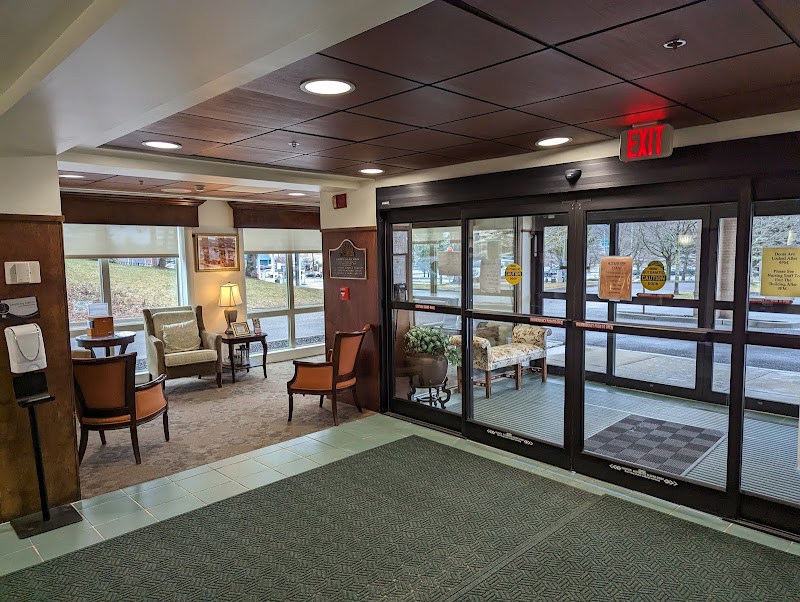
ELIZABETH CHURCH MANOR NURSING HOME

863 FRONT STREET, BINGHAMTON, NY 13905 (607) 722-3463
Non profit - Corporation 120 Beds UNITED METHODIST HOMES Data: November 2025
Trust Grade
35/100
#397 of 594 in NY
Last Inspection: August 2025

Inspected within the last 6 months. Data reflects current conditions.

Overview

Elizabeth Church Manor Nursing Home in Binghamton, New York, has received a Trust Grade of F, indicating significant concerns regarding its operations. Ranked #397 out of 594 facilities in New York, this places it in the bottom half, with only 3 local facilities performing better. Although the facility's trend is improving, with issues decreasing from 12 in 2024 to 8 in 2025, the high fines of $151,625 signal ongoing compliance problems, higher than 97% of New York facilities. Staffing is average with a rating of 3/5 stars and a turnover rate of 49%, which is concerning but on par with state averages. Specific incidents noted include late meal deliveries that compromised residents' dining experiences and inadequate kitchen cleanliness, which raises concerns about food safety and overall care quality. While there are some strengths, such as the facility's quality measures rating of 4/5, the weaknesses highlighted should give families pause when considering this home for their loved ones.

Trust Score
F
35/100
In New York
#397/594
Bottom 34%
Safety Record
High Risk
Review needed
Inspections
Getting Better
12 → 8 violations
Staff Stability
⚠ Watch
49% turnover. Above average. Higher turnover means staff may not know residents' routines.
Penalties
✓ Good
$151,625 in fines. Lower than most New York facilities. Relatively clean record.
Skilled Nurses
⚠ Watch
Each resident gets only 28 minutes of Registered Nurse (RN) attention daily — below average for New York. Fewer RN minutes means fewer trained eyes watching for problems.
Violations
⚠ Watch
22 deficiencies on record. Higher than average. Multiple issues found across inspections.
★★☆☆☆
2.0
Overall Rating
★★★☆☆
3.0
Staff Levels
★★★★☆
4.0
Care Quality
★★☆☆☆
2.0
Inspection Score
Stable
2024: 12 issues
2025: 8 issues

The Good

  • 4-Star Quality Measures · Strong clinical quality outcomes
  • Full Sprinkler Coverage · Fire safety systems throughout facility
  • No fines on record

Facility shows strength in quality measures, fire safety.

The Bad

2-Star Overall Rating

Below New York average (3.1)

Below average - review inspection findings carefully

Staff Turnover: 49%

Near New York avg (46%)

Higher turnover may affect care consistency

Federal Fines: $151,625

Well above median ($33,413)

Significant penalties indicating serious issues

Chain: UNITED METHODIST HOMES

Part of a multi-facility chain

Ask about local staffing decisions and management

The Ugly 22 deficiencies on record

Aug 2025 8 deficiencies
CONCERN (D)

Potential for Harm - no one hurt, but risky conditions existed

Deficiency F0605 (Tag F0605)

Could have caused harm · This affected 1 resident

Based on record review and interviews during the recertification survey conducted 7/28/2025-8/1/2025, the facility did not ensure as needed orders for psychotropic drugs were limited to 14 days for on...

Read full inspector narrative →
Based on record review and interviews during the recertification survey conducted 7/28/2025-8/1/2025, the facility did not ensure as needed orders for psychotropic drugs were limited to 14 days for one (1) of five (5) residents (Resident #14) reviewed. Specifically, Resident #14 had a physician order for as needed Ativan (anti-anxiety medication) that was not reevaluated for appropriateness or discontinuation after 14 days. Findings include: The undated facility policy PRN [as needed] Medication Administration Policy, documented special precautions were taken with psychotropic [as needed] medications, which required time-limited orders and clinical justification. Psychotropic medications were any drug that affected brain activities related to mental processes and behavior. All [as needed] orders must include the duration of the order (especially for psychotropics). [As needed] orders for psychotropic medications must be limited to 14 days, unless the attending physician documented and justified the need for continuation. The medications could not be renewed automatically and must be reassessed and re-ordered with the included rationale.Resident #14 had diagnoses including vascular dementia, paranoid personality and bipolar disorders. The 7/23/2025 Minimum Data Set assessment documented the resident had severe cognitive impairment and received antipsychotics, antianxiety, and antidepressant medications.The Comprehensive Care Plan initiated 6/10/2025 documented the resident had impaired cognitive function/dementia or impaired thought processes related to dementia. Interventions included the administration of medications and monitor for side effects and effectiveness.The physician order, created by Director of Nursing #2, and signed by Nurse Practitioner #9 documented Ativan 0.5 milligram with a start date of 6/20/2025 with the follow instructions:- give 0.5 tablet daily for agitation and anxiety disorder - give 0.5 tablet every 12 hours as needed for agitation and anxiety disorder - give 1 tablet daily for agitation and anxietyThe order did not include an end date. There were no documented revisions or renewals.The 6/17/2025 Licensed Pharmacist #11 Note to Attending Physician/Prescriber documented as needed psychotropics had a 14-day limitation on all as needed orders. Order may be extended beyond 14 days if the attending physician or prescribing practitioner believed it was appropriate to extend, documented clinical rationale, and provided specific duration of use. Please address Ativan use. Handwritten notes on the review form highlighted Physician #10 and under the area, Physician/Prescriber Response documented, stop after 14 days for PRN order, with a signature.The 6/2025 Medication Administration Record documented Ativan 0.5 milligrams every 12 hours as needed for agitation and anxiety disorder with a start date of 6/20/2025 and no end date. The resident did not receive an as needed dose of Ativan from 6/20/2025-6/30/2025. There were no medical provider progress notes documenting the resident was evaluated for use of as needed Ativan. The 7/15/2025 Licensed Pharmacist #11 Note to Attending Physician/Prescriber documented as needed psychotropics had a 14-day limitation on all as needed orders. Order may be extended beyond 14 days if the attending physician or prescribing practitioner believed it was appropriate to extend, documented clinical rationale, and provided specific duration of use. Please address Ativan use. There was no documented response from the physician or prescriber.The 7/2025 Medication Administration Record documented Ativan 0.5 milligrams every 12 hours as needed for agitation and anxiety disorder with a start date of 6/20/2025 and no end date. The resident did not receive an as needed dose of Ativan during 7/2025. During an interview on 8/1/2025 at 8:55 AM, Licensed Practical Nurse #12 stated Director of Nursing #2 was the former Unit Manager. The antipsychotic medications were reviewed every few months. Resident #14 had an order for routine and as needed Ativan. If the provider re-ordered the medication the start date would be the date of the re-order. The Ativan order was active since 6/20/2025. They were not sure if the as needed Ativan needed an end date, or who was responsible for adding that information to the order.During a telephone interview on 8/1/2025, Licensed Pharmacist #11 stated they completed the pharmacy medication reviews monthly. The pharmacy reviews were sent to the Director of Nursing. As needed medications were part of the monthly review, and as needed psychotropics should be limited to 14 days at most. If the resident had an as needed order for Ativan without an end date, that would be included on the recommendation given to the Director of Nursing. Once the recommendation was sent, it was the responsibility of the facility to follow through with the providers. During a follow up telephone interview at 11:54 AM, Licensed Pharmacist #11 stated the monthly reviews were sent to Licensed Practical Nurse Assistant Director of Nursing #3 who was the acting Director of Nursing for the facility.During an interview on 8/1/2025 at 12:08 PM, Director of Nursing #2 stated they were the Director of Nursing on record, but Licensed Practical Nurse Assistant Director of Nursing #3 was the acting Director of Nursing. Monthly medication reviews were done by the licensed pharmacy consultant every 3 months. The pharmacy recommendation papers went from the consultant pharmacist to the provider who signed off as agree or disagree with a note. The Unit Manager made any needed changes. Resident #14 had an as needed order for Ativan dated 6/20/2025, it was still an active order and was past the 14 day and should be reviewed. There was a note from the provider for the resident but was not a date to stop the Ativan after 14 days. The pharmacy review was scanned into the resident's record on 6/25/2025. The order was still active and was not stopped and should have been reassessed by the provider. During an interview on 8/1/2025 at 1:09 PM, Licensed Practical Nurse Assistant Director of Nursing #3 stated they helped the Unit Managers and worked with Director of Nursing #2 to train to be a Director of Nursing. The pharmacy consultant sent the reviews to the Director of Nursing. The provider made notes, the Unit Managers made the changes, and the unit clerk scanned the documents into the resident's record. Ativan had a 14-day reassessment requirement. There would be no potential for negative outcome from the resident as the nurses should be following the order and using appropriate nursing judgment.During a telephone interview on 8/1/2025 at 1:59 PM, Nurse Practitioner #9 stated the medication review papers came from the pharmacy and the Unit Managers distributed them to the providers. They often discussed these with the Unit Managers and checked agree or disagree on the form. The medications were reviewed quarterly. As needed Ativan re-order need depended on the indication for use. If the pharmacist made a recommendation and the provider agreed, they expected the change to be made.During a telephone interview on 8/1/2025 at 3:08 PM, Physician #10 stated the pharmacy consultant made recommendations and the Unit Managers gave the recommendations to the nurse practitioners to review. If they had questions, they contacted them to review. As needed Ativan should be reviewed and reordered every 14 days. If the pharmacist recommended a change and they documented they agreed to it, they expected the documented change to be completed. If the medication was reviewed for reorder, there should be a note with the reviewed information. It was important to review as needed orders as they may need to make changes if the medication was being used regularly, or to discontinue the medication if it was not being used. 10 NYCRR 415.4(a) (2-7)
CONCERN (D)

Potential for Harm - no one hurt, but risky conditions existed

Deficiency F0838 (Tag F0838)

Could have caused harm · This affected 1 resident

Based on record review and interviews during the recertification survey conducted 7/28/2025-8/1/2025, the facility did not conduct and document a facility-wide assessment to determine what resources w...

Read full inspector narrative →
Based on record review and interviews during the recertification survey conducted 7/28/2025-8/1/2025, the facility did not conduct and document a facility-wide assessment to determine what resources were necessary to care for its residents competently both during day-to-day operations and emergencies. The facility did not review and update the facility assessment as necessary. Specifically, the facility assessment did not accurately reflect the clinical nutrition staff and department heads.Findings include:The 2024-2025 Facility Assessment documented the incorrect name of the Director of Nursing. The assessment documented the facility resources needed to provide competent support and care for the resident population every day and during emergencies. The assessment listed one Director of Nurses with a New York State license; 1 Director of Food and Nutrition which included Food service Director/ Diet technician/Registered Dietitian, Certified Dietary Manager, 3 cooks, and 6 food service aides. The registered dietitian listed was not full time or a department head, and the facility did not have a Dietary Director. During an interview on 7/31/2025 at 1:50 PM, Food Service Manager #13 stated they were full-time and not the department head. They also worked as a cook. They stated a regional staff person performed the Food Service Director job duties. During an interview on 7/31/2025 at 2:57 PM, Registered Dietitian #4 stated they work part-time at the facility and was hired for clinical duties only. They were not aware of any other responsibilities within the department. During an interview on 8/1/2025 at 12:08 PM, Director of Nursing #2 stated they were in the Infection Control (preventionist) position for about 3 weeks and was acting as the Director of Nursing while Assistant Director of Nursing #3 was training for the Director of Nursing role.During an interview on 8/1/2025 at 1:09 PM, Assistant Director of Nursing #3 stated their official title was Assistant Director of Nurse Trainee. Their badge documented GN/DON (Graduate nurse/Director of Nursing) trainee. They stated the official Director of Nursing on record was Director of Nursing #2. During an interview on 8/1/2025 at 1:29 PM, the Regional Director of Food Service stated they worked 2 days a week at the facility and was not aware they were listed as the Food Service Director. They stated they were under the impression they were assisting with directing the kitchen.During an interview on 8/1/2025 at 2:03 PM, the Administrator stated the Director of Nursing was also the Infection Preventionist and training the Assistant Director of Nursing. The previous Assistant Director of Nursing/Infection Preventionist left employment at the facility the week prior to survey. They were working with staffing agencies to hire qualified cooks. 10NYCRR 415.26
CONCERN (D)

Potential for Harm - no one hurt, but risky conditions existed

Infection Control (Tag F0880)

Could have caused harm · This affected 1 resident

Based on observations, record review, and interviews during the recertification survey conducted 7/28/2025-8/1/2025, the facility did not establish and maintain an infection prevention and control pro...

Read full inspector narrative →
Based on observations, record review, and interviews during the recertification survey conducted 7/28/2025-8/1/2025, the facility did not establish and maintain an infection prevention and control program designed to provide a safe, sanitary, and comfortable environment and to help prevent the development and transmission of communicable diseases and infections for one (1) of six (6) residents (Resident #4) reviewed. Specifically, during Resident #4's wound dressing treatment Licensed Practical Nurse #8 did not perform hand hygiene when changing from contaminated to clean gloves. Findings include:The undated facility Wound Care Dressing Change, documented hand hygiene was required before starting the dressing change, after removing soiled dressings, and at the end of the procedure. Resident #4 had diagnoses including Stage 4 (full thickness tissue loss with exposed bone, tendon, or muscle) left heel pressure ulcer. The 6/16/2025 Minimum Data Set assessment documented the resident had severe cognitive impairment, an unhealed pressure ulcer, infection of the foot, received pressure injury care and application of dressings to the feet. Wound culture results obtained on 7/22/25 documented mixed flora and pseudomonas (bacteria) species.A 7/23/2025 at 12:41 PM Licensed Practical Nurse #20 progress note documented the wound culture was reviewed by Nurse Practitioner #9. A new order was provided to begin Cipro (antibiotic) 500 milligrams for 7 days. A 7/30/2025 at 7:55 AM Licensed Practical Nurse #21 progress note documented the resident continued on antibiotics for foot infection. The 7/2025 Treatment Administration Record documented Stage 4 left heel wound cleanse with wound wash, pat dry, apply zinc to peri-wound edges, apply Opticel AG (antimicrobial dressing with silver), cover with dry 4 x 4 gauze, secure with tape, apply heel cup every day shift. During a wound treatment observation on 7/30/2025 at 10:45 AM, Licensed Practical Nurse #8 performed a dressing change on Resident #4's left heel. Licensed Practical Nurse #8 removed the soiled dressing, removed their soiled gloves, did not perform hand hygiene, put clean gloves on, and applied the clean dressing.During an interview on 07/31/2025 at 10:38 AM, Licensed Practical Nurse #8 stated they should perform hand hygiene before and after the dressing change. They stated they changed gloves after the soiled dressing was removed. Hand hygiene was not necessary at that time because their hands had been in gloves and were clean. They stated that they should have hand sanitizer in the room to use between glove changes.During an interview on 08/01/2025 at 12:08 PM, Registered Nurse/Infection Preventionist #2 stated that per the facility procedure, hand hygiene was required after removing old dressings and removing the soiled gloves and before putting clean gloves on. They stated hand hygiene was critical before starting the dressing change, after removing the soiled gloves, and at the end of the dressing change as hands could be contaminated with organisms from the wound and could cross contaminated the clean dressing.10 NYCRR 415.19(a)(b)
CONCERN (D)

Potential for Harm - no one hurt, but risky conditions existed

Deficiency F0882 (Tag F0882)

Could have caused harm · This affected 1 resident

Based on observations and interviews during the recertification survey conducted 7/28/2025 - 8/1/2025, the facility did not ensure one qualified individual, who was not the Director of Nursing, was re...

Read full inspector narrative →
Based on observations and interviews during the recertification survey conducted 7/28/2025 - 8/1/2025, the facility did not ensure one qualified individual, who was not the Director of Nursing, was responsible for the facility's Infection Prevention Control Program. Specifically, the Assistant Director of Nursing was not qualified based on education, training, experience or certification to assume the role of Infection Preventionist and the Director of Nursing assumed those duties.Findings include: The undated facility policy Infection Surveillance, documented the Infection Preventionist served as the leader of surveillance activities, maintained documentation of incidents, findings, and any corrective actions regarding infection control. They were responsible to report findings to the Quality Assurance Committee and public health authorities.The undated facility Emergency Phone Numbers form documented Director of Nursing #2 was also the Infection Preventionist. Assistant Director of Nursing #3 was the Director of Nursing in Training and the Assistant Director of Nursing.The 2024-2025 Facility Assessment documented the Infection Preventionist should be a New York State Licensed Registered Nurse.The 7/3/2025 Infection Preventionist certificate documented Director of Nursing #2 successfully completed the Centers for Disease Control and Prevention training course.During an interview on 8/1/2025 at 12:08 PM, Director of Nursing #2 stated they were in the Infection Preventionist position for about three weeks. Assistant Director of Nursing #3 was being trained for the role. If anyone requested to speak with the Director of Nursing, Assistant Director of Nursing #3 would talk with them and bring Director of Nursing #2 in as needed. The previous Director of Nursing terminated their employment on 7/3/2025. The previous Infection Preventionist terminated their employment about three weeks ago.During an interview on 8/1/2025 at 1:09 PM, Assistant Director of Nursing #3 stated they were training for the Director of Nursing role. They assisted Director of Nursing #2 with tasks but within their scope of practice. Director of Nursing #2 was the current Infection Preventionist, as they were not certified to maintain that position. They stated they had not yet passed their New York State Registered Nurse test, and the position required the holder to be a registered nurse in New York State.During an interview on 8/01/2025 at 2:03 PM, the Administrator stated Director of Nursing #2 was also acting as the facility's Infection Preventionist while training Assistant Director of Nursing #3, who was uncertified for the role. The regional office and management consulting team were responsible for verifying the credentials for staff holding those roles. The Administrator stated they were aware the Director of Nursing should not have any other responsibilities, and this was the reason they were training the Assistant Director of Nursing in the Infection Preventionist role. The previous Assistant Director of Nursing, who was the Infection Preventionist, terminated their employment with the facility on 7/29/2025. 10NYCRR 415.14(d)(1)(2)
CONCERN (E)

Potential for Harm - no one hurt, but risky conditions existed

Resident Rights (Tag F0550)

Could have caused harm · This affected multiple residents

Based on observations, record review, and interviews during the recertification and abbreviated (NY00385403) surveys conducted 7/28/2025-8/1/2025, the facility did not ensure residents had the right t...

Read full inspector narrative →
Based on observations, record review, and interviews during the recertification and abbreviated (NY00385403) surveys conducted 7/28/2025-8/1/2025, the facility did not ensure residents had the right to a dignified existence for 2 of 3 units (First and Third Floors) reviewed. Specifically, the First floor meals were served more than 30 minutes late; the Third floor meals were served more than 30 minutes late, and dining table residents were not served together. Additionally, deficiencies were identified in sufficient dietary support personnel to safely and effectively carry out the functions of the food and nutrition service (F802) that led to an undignified dining experience.Findings include:The undated facility policy, Dining Experience Policy, documented meals would be served at consistent, scheduled times, with flexibility for alternate meal schedules. Communal dining was encouraged for socialization. The undated facility policy, Dignity, documented meals would be served in a manner that maintained dignity and avoid treating residents as a task and resident would be encouraged and supported to make choices about their daily schedule, meals, activities, and care. The undated facility document, Cart Delivery Times, posted on the window of the third-floor kitchenette documented breakfast carts came at 8:00 AM and 8:10 AM, lunch carts came at 12:20 PM and 12:30 PM, and dinner carts came at 6:00 PM and 6:10 PM. The first-floor breakfast carts came at 7:40 AM and 7:50 AM, lunch carts came at 12:00 PM and 12:10 PM, and dinner carts came at 5:40 PM and 5:50 PM. During an interview on 07/28/2025 at 11:17 AM, Resident #97's family stated the meals were coming later. During an interview on 7/28/2025 at 12:05 PM, Resident #13's family stated food service was very delayed. On 7/27/2025, the family was present with Resident #13 and dinner was not served until 8:00 PM. There were times lunch was not served until 3:00 PM when shift change was occurring. The family stated they come to have lunch with the resident but may have to do this less frequently due to the timeliness of meals. They sat around for hours waiting for the meal to be served. During a resident group meeting on 7/28/2025 at 2:38 PM, seven anonymous residents stated the meals were served late. They were served dinner at 7:20 PM and 6:30 PM. The kitchen did not have enough staff for the 120 meals they had to prepare. The facility asked certified nurse aides to assist in the kitchen and that took staff away from the residents that needed assistance on the units. During a lunch meal observation on 07/28/2025, the lunch meal was served on first floor at 1:10 PM. The following observations were made during a Third floor lunch meal observation on 7/28/2025:- at 11:42 AM, staff started bringing residents to the dining room for lunch.- at 12:39 PM, Resident #97 was talking to their family and asking if lunch was coming and hoping it would be there soon. The resident was sitting outside the dining room with an empty tray table in front of them.- at 12:44 PM, there were no meal carts on the third floor. - at 12:51 PM, no beverages or snacks were served.- at 1:00 PM, the first meal cart was delivered to the unit.- at 1:02 PM, the first meal tray came off the cart and staff obtained beverages for the tray which was taken out of the dining room.- at 1:05 PM, the first meal tray was served in the dining room to table 5. Staff at the tray cart were looking for another tray to serve the same table. The staff was overheard stating the cart was not stocked per table. - at 1:06 PM, all members of table 5 were served. The meal cart was closed. Certified Nurse Aide #7 stated the cart did not have trays for complete tables, and they would have to wait for the second cart to serve the tables together. - at 1:11 PM, there were 7 staff members standing in the front of the dining room, no trays were served. 3 residents were eating, and 33 were not yet served.- at 1:13 PM, the second meal cart was delivered to the unit. - at 1:14 PM, Resident #87 was served their meal, staff removed the entree and told the resident they needed to get a replacement entree for them.- at 1:17 PM, Resident #87's meal ticket was returned to their tray.- at 1:23 PM, Director of Nursing #2 observed the staff pass trays, and verbally noted the last tray on the cart being served.- at 1:29 PM, Resident #87 was served their entree. During a dinner meal observation on 7/28/2025, the dinner meal was served on the First floor at 6:20 PM. The following observation were made during the Third floor dinner meal on 7/28/2025:- at 5:24 PM, Licensed Practical Nurse Assistant Director of Nursing #3 was on the third floor and asked staff to go to the dining room. No staff were present in the dining room with 25 residents waiting for their dinner.- at 6:09 PM, the first meal cart was delivered to the unit. Director of Nursing #2 and Licensed Practical Nurse Assistant Director of Nursing #3 were on the unit to help with passing trays.- at 6:12 PM, Director of Nursing #2 stated the carts were not organized as they should be. They stated they knew residents should be served together, but the carts were not set up to do that. They were going to serve the meal trays as they were loaded into the meal cart. They stated they knew this would mean that some residents at one table would not be served at the same time as their tablemates. The remaining residents at the table would have to wait for their meal cart to arrive before they were served.- at 6:17 PM, the first cart was served. Resident #44 was waving for staff and repeating their name while pointing to the meal cart. The other three residents at the table were served their meal, but not Resident #44. Staff told Resident #44 more food was coming.- at 6:19 PM, Licensed Practical Nurse Assistance Director of Nursing #3 removed the seating chart from the wall and stated tables 7, 8, 9, and 10 could come on the second cart as they needed more assistance. - at 6:23 PM, the second meal cart was delivered to the unit. - at 6:24 PM, Resident #44 was served their meal.- at 6:30 PM, all meal trays were served. During an observation on 7/30/2025, the first breakfast tray was delivered to the Third floor at 8:38 AM. During a lunch meal observation on 7/30/2025, the lunch meal service started at 12:28 PM, and all trays were served by 1:00 PM. The following observations were made during the Third floor lunch meal on 7/30/2025:- at 12:51 PM, Resident #87 was served their meal and began eating while Residents #72 and #62 at the table were not yet served. Resident #72 tapped on the table and said, right here, can you get mine right here. - at 12:52 PM, One resident at table 6 was served their meal, the two other residents at the table were not yet served. - at 12:52 PM, Resident #72 was served their meal. Resident #87 had completed about 75% of their meal.- at 12:54 PM, Resident #62 was served their meal. Resident #106, from the neighboring table completed their meal and was saying good-bye as they exited the dining room.- at 12:57 PM, Resident #106 ate 100% of their meal before exiting the dining room. During an interview on 7/31/2025 at 10:42 AM, Certified Nurse Aide #19 stated the tray service was difficult. They had to pour beverages in paper cups because they were coming in prepackaged containers, like milk cartons and small plastic containers with tin foil lids. Beverage used to come in hard plastic dining cups. They stated the kitchen did not have enough staff to do the dishes, so they used the paper cups. The meal carts did not match the seating chart. Trays on the carts could be for the residents who ate in the hallway or the dining room. It was not dignified to serve some of the residents and not the whole table at once. They tried to gauge whether to serve the cart as it came or wait for the second cart and serve the whole table together. They sometimes had to move the residents around from table to table so they could serve the residents together if only one cart was on the unit. They had to think about the benefit of the resident, serve cold food or serve what was available regardless of the seating chart. There was a day lunch did not come until the second shift was coming in, about 3:00 PM. During an observation and interview on 8/1/2025 at 8:39 PM, Certified Nurse Aide #7 stated since the former dietary manager left the facility a few months ago there were meal service issues. They spoke with members in Administration and Corporate team, but no changes or education was done. The meals were always late, at least 30 minutes daily, and weekend meals were more than an hour late. The two meal carts came to the unit about 15 minutes apart. Breakfast was supposed to be served at 8:00 AM. At 8:44 AM, a meal cart was observed entering the dining room. Certified Nurse Aide #7 stated that cart was the second meal cart for the unit and should have been on the unit at 8:10 AM. They helped by bringing the tray carts back to the kitchen after meal service as the dietary department did not have anyone to come get them. During an interview on 8/1/2025 at 8:55 AM, Licensed Practical Nurse #12 stated the meals were always late. Breakfast usually came to the unit about 9:00 AM. The carts usually came about 10-15 minutes apart, and sometime longer than 15 minutes. The dietary department was short staffed. The tables should be served together, but sometimes they served the residents when each cart came regardless of the tray order, or they would wait for both carts because they did not always know when the second cart would come to the unit. The resident could have behaviors in the dining room with the delays. On the weekends, there were a couple times when the meal was about 2 hours late. During an interview on 8/1/2025 at 12:08 PM, Director of Nursing #2 stated they expected meals to be served on time. There were complaints from residents, family, and staff about food service. The biggest complaint was meals were not delivered to the floors timely. Nursing staff was helping the dietary staff in the kitchen. During an interview on 7/31/2025 at 1:16 PM, Dietary Aide #15 stated meals were usually 30 minutes late on weekends due to staffing problems. During an interview on 7/31/2025 at 1:34 PM, Lead Dietary Aide #16 stated there were times meals were an hour late due to short staffing. During an interview on 7/31/2025 at 1:50 PM, Food Service Manager #13 stated the meals were occasionally late when served to the residents. They did not want to serve undercooked food to the residents and low staffing was the cause for meals being late. They determined the loading of the meal trays based on how the tickets printed out by seat. They loaded the tables and then the room trays. The dietitian and nursing set up the table seating charts. They received the seating chart just before survey started this week. They were not sure why residents at the same table were not served together. It was not a dignified meal experience when tablemates were not served at the same time. 10 NYCRR 415.5(b)(1-3)
CONCERN (E)

Potential for Harm - no one hurt, but risky conditions existed

Food Safety (Tag F0812)

Could have caused harm · This affected multiple residents

Based on observations, record review, and interviews during the recertification survey conducted 7/28/2025-8/1/2025, the facility did not ensure food was stored, prepared, distributed, and served in a...

Read full inspector narrative →
Based on observations, record review, and interviews during the recertification survey conducted 7/28/2025-8/1/2025, the facility did not ensure food was stored, prepared, distributed, and served in accordance with professional standards in one (1) out of one (1) main kitchen. Specifically, the main kitchen was unclean, had damaged freezer storage equipment, improperly stored utensils, and improper storage of food products.Findings include: The undated facility policy Kitchen Cleaning and Sanitation, documented all surfaces in the kitchen and food preparation areas were to be cleaned and sanitized regularly to maintain a safe environment for food storage and preparation, and to ensure the prevention of foodborne illness and cross-contamination. The undated facility policy Refrigerator and Freezer Cleaning and Temperature Monitoring, documented the facility performed routine cleaning of all cold storage equipment and made sure it functioned properly. The food should be stored six inches off the floor.The undated facility policy Food Storage, documented the facility stored all food and food-related items in a sanitary and organized manner to protect food from contamination and spoilage per regulations. All items in the refrigerator should be covered, labeled, and dated.The following observations were made in the main kitchen on 7/28/2025 at 10:31 AM;-there was water on the floor under the steamer. -a heavy, black, greasy substance was on the floor under the cookline equipment. -there were multiple food products and residue on the floor and under the shelving in the walk-in cooler.-the walk-in freezer door was not closed properly, and several cases of food were stored on the floor. - an ice scoop was lying on top of the ice in the ice machine.The following observations were made in the main kitchen on 7/29/2025 at 11:45 AM:-the floor by the cookline was soiled with a black greasy substance under and around equipment.-the middle reach-in refrigerator was soiled with dried on food debris and liquid.-the floor and under shelving in the walk-in cooler were littered with packaging, food spills, and food debris. Some food products were uncovered, including a large, eight-inch hotel pan of mixed diced fruit with a serving utensil in the product.-the floor in the walk-in freezer had built up black greasy substance and food debris. The door was not able to close properly due to icing in the frame. - The floor in the dry storage areas had black grimy substance on it. Some food packaging and dropped food product were noted on the floor under shelving.During the tray line lunch observation, the first cart was not clean and had a white liquid inside the cart on the bottom. Staff were loading lunch trays into the cart. Food Service Manger #13 wiped up the white substance with a dry cloth, set the cloth down on the counter surface and used the same cloth to wipe out the second cart.During an interview on 7/29/2025 at 12:00 PM, Food Service Manager #13 stated that the cloth used to clean the white liquid from cart one was not put in any sanitizer or cleaning agent prior to wiping out cart two and should have been.During an interview on 7/30/2025 at 12:23 PM, Food Service Manager #13 stated the kitchen was usually cleaned at the end of the night, including the floors under the cookline. The walk-in cooler and walk-in freezer were swept and mopped weekly. They stated the ice scoop should not have been stored in the ice. They stated there should not have been spilled food or food debris under shelving or equipment, in equipment, or inside carts. They stated food product could not be stored on the floor. A food service equipment vendor came in and fixed the freezer door seal, but the door still iced at the bottom and was not closing properly. They knew this affected the freezer's ability to maintain temperatures.During a follow-up interview on 8/1/2025 at 9:50 AM, Food Service Manager #13 stated potentially hazardous foods should be dated, labeled, and stored in the walk-in cooler. They were supposed to use test strips to make sure the sanitizer levels were in range in the three-bay sink.During an observation on 8/1/2025 at 10:04 AM, Dietary Aide #18 was using the three-bay sink. They stated they were not taught how to test the sanitizer levels in the three-bay sink.During an interview on 8/1/2025 at 1:29 PM, Regional Director of Food Service #14 stated they assisted Food Service Manager #13 with kitchen oversight. Cleaning should be done routinely, including the floors under the cookline, the walk-in cooler and freezer, and under shelves. They stated education was provided this past week after the walk-in freezer door was left open. If the door was not closed properly the freezer temperatures and food product inside the freezer would be affected. They stated ice scoops should not be stored in the ice and food products should not be stored on the floor. They stated staff should be testing sanitizer for the three-bay sink, to ensure the sanitizer was effective, but they did not have enough staff for the extras right now.10NYCRR 415.14(h)
CONCERN (E)

Potential for Harm - no one hurt, but risky conditions existed

Garbage Disposal (Tag F0814)

Could have caused harm · This affected multiple residents

Based on observations, record review, and interviews during the recertification survey conducted 7/28/2025-8/1/2025, the facility did not ensure garbage and refuse was disposed of properly in one (1) ...

Read full inspector narrative →
Based on observations, record review, and interviews during the recertification survey conducted 7/28/2025-8/1/2025, the facility did not ensure garbage and refuse was disposed of properly in one (1) of one (1) main kitchen. Specifically, the main kitchen garbage and refuse areas were not maintained to prevent attraction and harborage of pests.Findings include: The undated facility policy Garbage Disposal and Waste Management, documented all garbage, refuse, and waste was collected, stored, and disposed of in a manner that minimized health risk and prevented pest infestation. Kitchen waste was to be emptied multiple times a day. The exterior waste storage should be covered and secured to prevent pest access and kept free of overflowing waste. During an observation on 7/28/2025 at 10:40 AM, there were piles of trash and debris scattered on the ground around the dumpsters outside the main kitchen.During an interview on 7/30/2025 at 12:23 PM, Food Service Manager #13 stated the kitchen garbage was taken down the hall and put out the side door and into the dumpsters at the end of the night. They stated garbage should not be all over the ground near the dumpsters. If garbage was not disposed of properly and spilled on the ground, it could attract pests. During an interview on 8/1/2025 at 1:29 PM, Regional Director of Food Service #14 stated that kitchen dumpsters should be closed with no debris on the ground around them. They stated garbage should be emptied more often than it was, generally after each meal.10 NYCRR 415.14(h)
CONCERN (F)

Potential for Harm - no one hurt, but risky conditions existed

Deficiency F0802 (Tag F0802)

Could have caused harm · This affected most or all residents

Based on observations, record review, and interviews during the recertification survey conducted 7/28/2025-8/1/2025 the facility did not ensure sufficient support personnel to safely and effectively c...

Read full inspector narrative →
Based on observations, record review, and interviews during the recertification survey conducted 7/28/2025-8/1/2025 the facility did not ensure sufficient support personnel to safely and effectively carry out the functions of the food and nutrition service for 2 of 3 resident units (Units 1 and 3). Specifically, Unit 1's and 3's meal trays were consistently delivered after the posted scheduled mealtimes and concerns were identified with the effectiveness of meal preparation and other food and nutrition services. Deficiencies related to food and nutrition services were identified in F 809 Frequency of Meals/Snacks at Bedtime; F 812 Food Procurement, Store/Prepare/Serve; and F 814 Dispose of Garbage and Refuse Properly.Findings include:The Resident Listing Report, dated 7/28/2025, documented the facility's resident census was 117. The undated facility policy Dietary Staffing, documented the facility should maintain adequate and qualified dietary personnel, including management and support staff, to ensure that all meals and snacks were safely prepared, handled and serviced in a timely and person-centered manner. Staffing levels were determined based on the census, resident acuity, meal service model, and operational hours. The projected schedule for the week of 7/27/2025-8/9/2025 documented the following:- On 7/28/2025 there was one cook, one supervisor and five kitchen staff for the morning shift; one supervisor and three kitchen staff working the dinner shift; and one kitchen staff working 11:00 AM- 7:30 PM. - On 7/29/2025, there was one cook, one supervisor, and 3 kitchen staff for the morning shift. One kitchen staff called off for the morning shift and one kitchen staff did not report to work for the shift. The evening shift had one supervisor and three kitchen staff. - On 7/30/025 there was one cook, one supervisor, and two kitchen staff. Two kitchen staff called off for the morning shift. There were three kitchen staff working the dinner shift; and one kitchen staff working 11:00 AM- 7:30 PM on trays.- On 7/31/2025 there was one cook/supervisor and four kitchen staff working the morning shift; four kitchen staff working the dinner shift; and one kitchen staff working 11:00 AM- 7:30 PM. - On 8/1/2025 there was one cook, one supervisor, and four kitchen staff working the morning shift; four kitchen staff working the dinner shift; and one kitchen staff working 11:00 AM-7:30 PM.During an interview on 7/31/2025 at 11:02 AM, the Director of Social Work stated the current census was 113. They were the grievance officer for the facility, and they received a lot of concerns about mealtimes and dietary issues. There was a lack of staff in the dietary department, they were actively hiring for diet aides and a Food Service Manager. They had all hands helping to put trays together at mealtimes and certified nurse aides were consistently helping with the tray line. They stated during resident council they should have someone from dietary come to talk to the residents and address their concerns but recently there was no one available. During an interview on 7/31/2025 at 1:16 PM, Dietary Aide #15 stated they started their shift at 6:00 AM and start serving breakfast at 7:00 AM. There was one cook on duty for breakfast and lunch and only one cook on at a time. They start serving lunch at 11:00 AM. They were not sure when supper was served because they were finished with their shift usually between 3:00 PM and 4:00 PM. This was based cleaning needs because the kitchen was to be cleaned before they left. There were four dietary aides to serve each meal and included around 115-120 people to serve. The kitchen served two others on-site facilities, Assisted Living and Independent Living. Sometimes when they were short staffed, certified nurse aides came to the kitchen to help serve the food. They stated they needed more dietary staff. The weekend meals were usually one-half hour late due to low weekend staffing. During an interview on 7/31/2025 at 1:34 PM, Lead Dietary Aide #16 stated they used to be a supervisor, but they just signed a new job title and worked 11:00 AM- 7:30 PM. They had on the job training on different aspects of the job. They stated lunch started serving at 11:15 AM and supper at 4:40 PM. The kitchen also cooked and prepared meals for the Assisted Living and Independent Living facilities. They had one cook for all three buildings. They stated it usually took 1.5 hours to serve the facility, and they were usually done by 5:45 PM-6:00 PM. They only had two servers for all three facilities. There was only one person who served the skilled facility and four people to do the tray line. They were short staffed and could not always get the job done adequately.During an interview on 7/31/2025 at 1:50 PM, the Food Service Manager stated they were acting as the Food Service Director. They stated they were the first cook and came in at about 5:00 AM. The morning cook recently left the position. The meal tray line started at 7:00 AM for breakfast and continued until 8:00 AM; lunch was from 11:15 AM-12:30 PM; and supper was 5:40 PM-6:00 PM. They stated they also worked on weekends as a cook. The meals were occasionally late. The latest the meals were served was one hour late and was due to short staffing. The maximum staffing was 6-7 kitchen staff on days, and 5-6 kitchen staff for evenings and did not include the cooks. There was one cook and one supervisor for every meal, every day. There was enough staff scheduled to get the job done if they all come in to work. They stated they serve two buildings (skilled and the assisted/independent living buildings) which was about 200 people between all the buildings. If there were 1-2 staff call outs, which happened daily, it made a significant impact on the dietary service. Certified nurse aides helped on the tray line, and they received on the job training by dietary staff. The training usually took half a shift. They had a regional Registered Dietitian, and they were waiting for a Food Service Director. The kitchen closed about 7:30 PM but staff stayed late if the meals were late. During an interview on 7/31/2025 at 2:33 PM, Food Service Manager/Certified Dietary Manager stated they were in this role for 3 years and was based out of Pennsylvania. They stated they assisted with training staff. This week one cook resigned and now only had one cook, so the supervisor was cooking. They stated it should take an hour to get the first to last carts delivered to the residents. The meal carts were sometimes late due to staffing issues. The ideal staff should be one cook and 7 diet aides. Recently, they had certified nurse aides helping in the kitchen, working the tray line and dish room.During an interview on 8/1/2025 at 1:09 PM, the Assistant Director of Nursing/Graduate Nurse #3 stated they help in the kitchen with meals. They have staffing issues in the kitchen. When staff call in for the kitchen, they had to all come together to ensure the resident needs were met, and if they had to help on tray line, they would. During a telephone interview on 8/01/2025 at 1:29 PM, Regional Corporate Food Service Director stated their role at the facility was Director of Culinary Services and they were at the facility once or twice a week. They were not aware they were listed as the Acting Director of Dining Services but assisted with directing the kitchen. The current Assistant Manager/Supervisor was recently promoted to supervisor. The dietary staffing was an issue, and their focus was hiring. They stated there was not enough staff for extras, but the facility met the minimal standards. The nursing staff were trained to assist with tray line. They stated there were times when the meals were late but was not aware of the irregular mealtimes and was told they had not been over 15 minutes late.10NYCRR 415.14(b)(1)(2)
Aug 2024 10 deficiencies
CONCERN (D)

Potential for Harm - no one hurt, but risky conditions existed

Deficiency F0554 (Tag F0554)

Could have caused harm · This affected 1 resident

Based on observation, record review, and interview during the recertification survey conducted 8/19/2024-8/22/2024, the facility did not ensure a resident's ability to safely self-administer medicatio...

Read full inspector narrative →
Based on observation, record review, and interview during the recertification survey conducted 8/19/2024-8/22/2024, the facility did not ensure a resident's ability to safely self-administer medications was clinically appropriate for 1 of 1 resident (Resident #74) reviewed. Specifically, Resident #74 was observed with medications stored in an unlocked drawer of their dresser, and there was no documented evidence the interdisciplinary team had assessed the resident's ability to safely self-administer medication. Findings include: The facility policy, Medication Self-Administration, dated 5/2005 documented a resident who wished to self-administer medications, was to be determined to be capable of safely doing so by the interdisciplinary team, arrange for storage of medications in locked drawer or box in the resident's room, and observe self-administration until compliance was assured. Resident #74 had diagnoses of acute pancreatitis (inflammation of the pancreas), myasthenia gravis (a disease causing weakness in voluntary muscles), and diabetes. The 8/2/2024 Minimum Data Set assessment (a health assessment tool) documented the resident had intact cognition, required minimal assistance with activities of daily living, and received insulin 7 of 7 days. Physician's orders documented: -On 4/27/2024 Creon (enzymes to aid in digestion) delayed release particles 36000-114000 unit 1 capsule by mouth before meals for digestive support, unsupervised self-administration. The resident was to keep medication in blister pack in locked drawer and was able to self-administer medication. -On 4/27/2024 pyridostigmine bromide (used to treat myasthenia gravis) oral tablet 60 milligrams, give 1 tablet by mouth before meals for myasthenia gravis, unsupervised self-administration. The resident was to keep medication in blister pack in locked drawer and was able to self-administer medication. The August 2024 Medication Administration Record documented Creon delayed release particles 36000-114000 unit 1 capsule by mouth before meals for digestive support, unsupervised self-administration. Resident keeps medication in blister pack in locked drawer and was able to self-administer medication. Pyridostigmine bromide oral tablet 60 milligrams give 1 tablet by mouth before meals for myasthenia gravis, unsupervised self-administration. Resident keeps medication in blister pack in locked drawer and was able to self-administer medication. Both medications were documented as self-administered unsupervised daily at 7:00 AM, 11:30 AM and 4:30 PM from 8/1/2024-8/19/2024. The Comprehensive Care Plan did not include self-administration of medications and interventions. There was no documented evidence of a resident assessment for medication self-administration. During an observation on 8/19/2024 at 12:25 PM, Resident #74 had a small medicine cup containing a white pill, and a capsule with a blue end. They stated they would self-administer these medications. During a medication administration observation and interview on 8/20/2024 at 12:06 PM, Licensed Practical Nurse #1 provided the glucose meter and resident's insulin pen to the resident. They stated the resident was being provided oversight and teaching for self-administration of insulin. They stated the resident also self-administered their Creon and pyridostigmine. They signed in the medication administration record that those medications were taken but did not have to count the pills or directly observe the resident taking them. They were not sure where the resident kept the pills, but they should be kept in a locked space. During a lunch observation and interview on 8/20/2024 at 12:26 PM, the resident had pills in a medication cup at the dining room table. They stated the medications were Creon and pyridostigmine bromide. They kept them in their top dresser drawer which did not lock. They stated they did not have a key for any drawers. The nurse did not check on the medication, but they let the nurse know when they needed more ordered. They received permission to self-administer medications. They stated other residents did not wander into their room. During an interview on 8/20/2024 at 1:12 PM, Registered Nurse Unit Manager #2 stated residents were assessed for safe self-administration of medications. Resident #74 did self-administer Creon and pyridostigmine, and they were not sure if an assessment had been completed. The medications were supposed to be kept in a locked drawer, so they were not accessible to other residents. They observed the resident's unlocked top dresser drawer which contained 2 full blister packs and one partial blister pack of the pyridostigmine (81 total pills), and 1 full blister pack and 1 partial blister pack of the Creon (57 total pills). Registered Nurse Unit Manager #2 stated the medications were not counted by nursing, and the resident should have been provided one blister pack at a time. When pharmacy delivered the medication, all the blister packs must have been given to the resident. During an interview on 8/22/2024 at 10:49 AM, the Assistant Director of Nursing stated that residents should have an assessment for safe self-medication administration, and a care plan that documented a resident specific plan. Medications should be kept locked so they could only be accessed by the resident and should be checked by nursing to ensure compliance. 10NYCRR 415.3(e)(1)(vi)
CONCERN (D)

Potential for Harm - no one hurt, but risky conditions existed

Deficiency F0558 (Tag F0558)

Could have caused harm · This affected 1 resident

Based on observation, interview, and record review during the recertification survey conducted 8/19/2024-8/22/2024, the facility did not ensure the right to reside and receive services with reasonable...

Read full inspector narrative →
Based on observation, interview, and record review during the recertification survey conducted 8/19/2024-8/22/2024, the facility did not ensure the right to reside and receive services with reasonable accommodation of resident needs and preferences for 1 of 1 resident (Resident #71) reviewed. Specifically, Resident #71's call bell was not in reach as care planned. Findings included: The facility policy, Call System, dated 1/7/2016 documented residents in their rooms, toilet, and bathing areas should have a means of directly contacting caregivers and should be responded to in a timely manner. Upon admission, attempt to orient the resident to the purpose for and use of the call system. Ensure that the resident could use the call system device, making adaptations for limited hand dexterity or other physical limitations to the extent reasonable. Ensure the call system device was in reach of the resident if the resident was capable of using it. Resident # 71 had diagnoses including Alzheimer's disease and dysphagia (difficulty swallowing). The 7/14/2024 Minimum Data Set assessment (a health status assessment tool) documented the resident was usually able to make themself understood and understood others, had severely impaired cognition, was independent with bed mobility, transfers, and ambulation, and required moderate to maximal assistance with personal hygiene and dressing. The Comprehensive Care Plan initiated 8/1/2023 documented the resident was at high risk for falls related to gait/balance problems. Interventions included anticipate and meet resident's needs, and to be sure the resident's call light was within reach and encourage the resident to use it for assistance as needed. The resident needed prompt response to all requests for assistance. The following observations were made: - on 8/19/2024 at 9:54 AM, the resident was in bed, their call bell was hooked to itself at the wall out of the resident's reach. - on 8/20/2024 at 9:09 AM, the resident was in bed, their call bell was under a chair out of the resident's reach. - on 8/20/2024 at 1:10 PM, the resident was in bed, their call bell was on the floor under a chair out of the resident's reach. During an interview on 8/20/2024 at 1:55 PM, Certified Nurse Aide #18 stated residents should have their call bells in reach. They stated the call bell was currently under the chair at the resident's bedside and was not in the resident's reach. Certified Nurse Aide #18 thought the resident could use the call bell and it was important to keep the call bell in reach so the resident could communicate if they needed something. During an interview on 8/20/2024 at 2:34 PM, Registered Nurse Unit Manager #2 stated call bells should always be in resident's reach. It was important so a resident could call for assistance or if they needed something. They stated it should be care planned if a resident needed an alternative call device or was unable to use a call bell. They thought Resident #71 could use the call bell but was not sure if they would. During an interview on 8/22/2024 at 10:18 AM, Licensed Practical Nurse #1 stated resident call bells should be in reach, so residents were able to communicate needs. Keeping them in reach could help prevent falls or accidents. If a resident was unable to use a call bell, an alternative should be provided, and their care plan should be updated. Resident # 71 may not cognitively be able to use the call bell. If they could not use a call bell, it should have been in the care plan. During an interview on 8/22/2024 at 10:49 AM, the Assistant Director of Nursing stated resident call bells were used to communicate a resident need or an emergency. If a care plan stated to keep the call bell in reach, it should be kept in reach. If a resident was unable to use a call bell, other alternatives should have been put in place. They were not sure if Resident #71 was able to use their call bell. 10NYCRR 415.5(e)(1)
CONCERN (D) 📢 Someone Reported This

A family member, employee, or ombudsman was alarmed enough to file a formal complaint

Potential for Harm - no one hurt, but risky conditions existed

ADL Care (Tag F0677)

Could have caused harm · This affected 1 resident

**NOTE- TERMS IN BRACKETS HAVE BEEN EDITED TO PROTECT CONFIDENTIALITY** Based on observation, record review, and interview during the recertification and abbreviated (NY00322036) surveys conducted 8/1...

Read full inspector narrative →
**NOTE- TERMS IN BRACKETS HAVE BEEN EDITED TO PROTECT CONFIDENTIALITY** Based on observation, record review, and interview during the recertification and abbreviated (NY00322036) surveys conducted 8/19/2024-8/22/2024, the facility did not ensure residents who were unable to carry out activities of daily living received the necessary services to maintain grooming and personal hygiene for 2 of 3 residents (Residents #6 and #71) reviewed. Specifically, Residents #6 and #71 were not assisted with toileting as planned. Findings include: The facility policy, Activities of Daily Living- Functional Impairment, dated 5/2019 documented residents would maintain dignity and self-esteem related to activities of daily living self-performance. Nursing provided the resident activity of daily living support at the level required, as specified in the electronic health record plan of care. 1) Resident #6 had diagnoses including dementia and history of urinary tract infections. The 6/12/2024 Minimum Data Set assessment (a health assessment tool) documented the resident had severe cognitive impairment, did not reject care, was dependent on staff for transfers, bed mobility and toileting, and was always incontinent of bladder and bowel. The comprehensive care plan initiated 8/15/2023 documented the resident had bladder and bowel incontinence related to dementia. Interventions included to check and change the resident every 2 hours, monitor for signs of a urinary tract infection, monitor skin for redness, breakdown, or irritation, and offer the bedpan every 4 hours (per urology recommendations). The resident had an activity of daily living self-care performance deficit related to limited mobility. Interventions included to check and change every 2 hours, and the resident required total staff assistance for bed mobility and toileting care. The resident care information ([NAME]) documented to check the resident every 2 hours and assist with toileting care as needed and to provide total assistance with toileting care. The resident care task form for August 2024 documented on 8/20/2024 the resident was checked and changed at 4:18 AM, 9:41 AM, and 4:00 PM. During a continuous observation on 8/20/2024 at 9:33 AM Resident #6 was assisted in their wheelchair to the common area. The resident remained in the common area until 12:15 PM when they were assisted to the dining room for lunch. At 1:55 PM the resident was assisted to their room for care. Certified Nurse Aides # 18 and 19 entered the resident's room to provide care. The resident was transferred to their bed using a mechanical lift. The resident's brief was wet. The resident stated they were unsure how long their brief had been wet. The resident was not checked or provided incontinence care from 9:33 AM to 1:55 PM (approximately 4 1/2 hours). During an interview on 8/20/2024 at 2:10 PM, Certified Nurse Aide #19 stated Resident #6 was not on their assignment today. They were asked to assist with care after lunch, and that was the first care they had given the resident that shift. Residents should be checked and changed every 2-4 hours depending on the resident. Being in a wet brief was uncomfortable for the resident, and not good for their skin. During an interview on 8/20/2024 at 2:15 PM, Certified Nurse Side #18 stated they provided morning care for Resident #6 and brought them to the family room about 9:30 AM. They had not provided any care to the resident since the morning care. The resident was supposed to be checked and changed (if needed) every 2 hours. It was important to check and change frequently due to risk for urinary tract infections or skin breakdown. They were not sure why they had not checked the resident prior to lunch. 2) Resident # 71 had diagnoses of Alzheimer's disease and Crohn's disease (chronic inflammation of the bowel that can cause diarrhea). The 7/14/2024 Minimum Data Set assessment documented the resident was usually able to make self understood and to understand others, had severely impaired cognition, rejected care 1 to 3 days, was dependent on staff for toileting hygiene, required moderate to maximal assistance with personal hygiene and dressing, was at risk for developing pressure ulcers, and was always incontinent of bladder and bowel. The comprehensive care plan initiated 8/1/2023 documented the resident had an activity of daily living self-care performance deficit. Interventions included total assistance of one for toileting care and encourage the resident to use the call bell for assistance. The comprehensive care plan initiated 8/6/2023 documented the resident had urinary and bowel incontinence. Interventions included check and change the resident every 2 hours. During a continuous observation on 8/20/2024 at 9:09 AM the resident was in a low bed with a hospital gown on and their call bell was under a chair at their bedside. At 1:10 PM they remained in bed in a hospital gown with lunch on the overbed table with the drinks covered, and their call bell on floor under chair at bedside. At 1:38 PM they remained in bed, with no call bell in reach. They were awake with no staff interaction observed during the meal and a urine odor was noticeable in the room. The resident was not toileted from 9:09 AM-1:38 PM. The resident care task form for August 2024 documented on 8/20/2024 the resident was checked and changed at 4:12 AM, 9:38 AM, and 2:39 PM. During an interview on 8/20/2024 at 2:15 PM, Certified Nurse Aide #18 stated Resident #71 was supposed to be checked and changed every 2 hours. The resident was resistive, very combative, refused to get out of bed, and refused care. They stated they did not report the refusal of care to anyone and was not sure if they were supposed to report refusals to the nurse. They did not ask anybody else to approach the resident to try to provide care or get up assistance. The resident had received no care on the day shift. The lack of care could increase the risk for skin breakdown and urinary tract infection. During an interview on 8/20/2024 at 2:27 PM, Certified Nurse Aide #20 stated Residents # 6 and #71 were not on their assignment today and they had not provided care to either resident. If a resident was combative, they should be reapproached or ask another aide to approach. They had not been asked to assist with any resistive residents today. Residents not receiving timely care were at risk for skin breakdown and further discomfort. Care refusals should be reported to the nurse. During an interview on 8/20/2024 at 2:34 PM, Registered Nurse Unit Manager #2 stated residents should be checked for incontinence every 2 hours and changed if needed. If they were left without care they were at risk for increased urinary tract infections and skin breakdown. Poor hygiene could negatively affect the resident's dignity. Residents' refusal of care should be reported to the nurse. Staff should reapproach and sometimes another aide could try. They had not been notified of Resident #71's refusal of care. During an interview on 8/22/2024 at 10:18 AM, Licensed Practical Nurse #1 stated every refusal of attempted care should be communicated to the nurse so the nurse could attempt and document. All residents should be checked or offered toileting every 2 hours. If care was refused, it must be attempted again, and a different staff member should try. Checking and changing the resident should be done at least every 2 hours, to prevent skin breakdown and promote comfort. They had not been notified of Resident #71's refusal of care on 8/20/2024. During an interview on 8/22/24 at 10:49 AM, the Assistant Director of Nursing stated residents should be checked and changed every 2 hours to help maintain skin integrity, decrease risk for urinary tract infections, and promote comfort. If a resident refused care, staff should notify the nurse. They should reapproach the resident or another staff member should try. 10NYCRR 415.12 (a)(3)
CONCERN (D)

Potential for Harm - no one hurt, but risky conditions existed

Quality of Care (Tag F0684)

Could have caused harm · This affected 1 resident

Based on observations, record review, and interview during the recertification survey conducted 8/19/2024-8/22/2024, the facility did not ensure residents received treatment and care in accordance wit...

Read full inspector narrative →
Based on observations, record review, and interview during the recertification survey conducted 8/19/2024-8/22/2024, the facility did not ensure residents received treatment and care in accordance with professional standards of practice, the comprehensive person-centered care plan, and the residents' choice for 1 of 1 resident (Resident #3) reviewed. Specifically, Resident #3 did not have their elastic compression bandage (ACE wrap) applied as ordered. Findings include: The facility policy, Assistance with Compression Stockings, Wraps, and Other Compression Devices, dated 3/29/2016 documented aid with donning and doffing (applying and removing) compression stockings, wraps, and other compression devices would be provided to those residents who were unable to complete the activity independently. Compression wraps were specialized wraps used to improve blood flow in the legs by applying gentle pressure. Resident #3 had diagnoses including lymphedema (tissue swelling due to ineffective drainage by the lymphatic system), and localized edema (extra fluid in the tissues). The 7/13/2024 Minimum Data Set assessment documented the resident had intact cognition, did not reject care, and was dependent for lower body dressing. The 8/10/2023 physician order documented apply ACE wraps every day, on in the morning, off at bedtime every day and evening shift, with a start date of 9/1/2023. The comprehensive care plan initiated 9/1/2023 documented the resident had a self-care performance deficit and required extensive assistance of staff for dressing. The care plan did not include the use of ACE wraps. The 8/19/2024 Physician #7 progress note documented the resident's bilateral lower extremity edema was chronic and had not worsened. The left was greater than the right with some lymphedema and the plan was to continue Bumex (diuretic, water pill) and ACE elastic compression wraps. The resident was observed at the following times: - on 8/19/2024 at 11:05 AM their ankles were swollen, and they were not wearing ACE wraps. The ACE wraps were on the dresser and the resident stated staff did not always apply them. - on 8/20/2024 at 9:23 AM sitting up in their wheelchair. They had bilateral lower extremity edema bilaterally and they were not wearing ACE wraps. The ACE wraps were on the dresser. - on 8/20/2024 at 1:07 PM they were not wearing ACE wraps on their lower legs. The resident stated they were not put on by staff. The 8/2024 Treatment Administration Record documented apply ACE wraps (elastic compression wraps) daily, on in the morning, off at hour of sleep daily. with a start date of 9/1/2023. The ACE wraps were documented as applied and removed as ordered 8/1/2024-8/20/2024. Licensed Practical Nurse #1 signed the Treatment Administration Record the ACE wraps were applied during the day shift on 8/19/2024 and 8/20/2024. During an interview on 8/22/2024 at 9:45 AM, Registered Nurse Unit Manager #2 stated resident care information was in the care plan and the computer. ACE wraps were applied by nursing. If ACE wraps were signed for, they should have been on. Resident #3 should wear ACE wraps every day for lower extremity edema as it helped to promote venous return. Excess edema could increase their risk for skin issues and improper clotting. During an interview on 8/22/2024 at 10:18 AM, Licensed Practical Nurse #1 stated ACE wraps were applied by the nurses, and if it was signed for in the Treatment Administration Record, they were applied. Resident refusals should be documented in the Treatment Administration Record or progress notes. Resident #3 had an order for ACE wraps due to edema and needed to be worn to help reduce the edema. They were not sure if they had applied the ACE wraps on 8/19/2024 or 8/20/2024. They stated if they signed for them, they should have made sure the wraps were on. 10NYCRR 415.12
CONCERN (D)

Potential for Harm - no one hurt, but risky conditions existed

Pressure Ulcer Prevention (Tag F0686)

Could have caused harm · This affected 1 resident

Based on observation, record review, and interview during the recertification survey conducted 8/19/2024-8/22/2024, the facility did not ensure residents with pressure ulcers received necessary treatm...

Read full inspector narrative →
Based on observation, record review, and interview during the recertification survey conducted 8/19/2024-8/22/2024, the facility did not ensure residents with pressure ulcers received necessary treatment and services, consistent with professional standards of practice, to promote wound healing, prevent infection, and prevent new ulcers from developing for 2 of 2 residents (Resident #31 and #58) reviewed. Specifically, Resident #31 did not have a pillow between their left arm and body for pressure relief as care planned, and Resident #58 did not have pressure relief for their heels as planned. Findings include: The undated facility policy, Pressure Ulcer Prevention, documented the interdisciplinary team was to plan appropriate interventions to remove or modify risk factors that were modifiable and to monitor the impact of interventions and modify as appropriate. Staff was to use appropriate devices to offload pressure from heels that are at high risk. If a resident refused recommended care and treatment, the interdisciplinary team was to evaluate the reason for the refusal, identify potential alternatives, and implement alternatives as the resident allows. The undated facility policy, Resident-centered Standards of Care and Exceptional Care Planning, documented the facility would develop exceptional resident-centered care plans that were consistent with the resident's specific conditions, risks, needs, history, behaviors, preferences, and with current standards of practice to meet the resident's medical, nursing, mental, and psychosocial needs. It was the responsibility of the interdisciplinary team to implement and communicate the resident's plan of care. 1) Resident #31 had diagnoses including a Stage 4 (full thickness tissue loss with exposed bone, tendon, or muscle) pressure ulcer of the left elbow and Alzheimer's disease. The 6/21/2024 Minimum Data Set (an assessment tool) documented the resident had severely impaired decision making ability, was dependent for all activities of daily living, had one Stage 4 pressure ulcer not present upon admission, had a pressure reducing device for their chair and bed, received pressure ulcer care, nutrition or hydration interventions, and applications of ointments/medications. The 7/19/2024 revised care plan documented the resident had a Stage 4 pressure ulcer to the left elbow. Interventions included a towel or pillow must be between the resident's left elbow and their body at all times. Evaluate the ulcer characteristics, presence of drainage, obtain cultures, measure the ulcer at regular intervals, monitor for signs of infection, provide wound care per the treatment order, and notify the provider if there were no signs of improvement with the treatment regimen. The resident care card (care instructions) documented a towel or pillow must be between the resident's left elbow and their body at all times. The 8/14/2024 Wound Evaluation completed by Registered Nurse Unit Manager #6 documented the resident had a Stage 4 pressure ulcer on the left elbow, was in-house acquired, and was stable. Treatments included dressings, cushion, foam mattress, incontinence management, moisture barrier, nutritional supplementation, and repositioning devices. The following observations were made of Resident #31: - On 8/19/2024 at 10:30 AM, the resident's left arm was slightly behind the resident's body in their padded wheelchair. The arm was slightly obscured by a blanket, the left shoulder was rotated slightly forward and there was no pillow or towel. between the left elbow and the body. - On 8/21/2024 at 9:26 AM there was a dressing on the left elbow. There was no pillow or towel between the resident's body and elbow. The resident's left elbow positioned against the side of the chair. - On 8/22/24 at 8:44 AM brought out of their room by Certified Nurse Aide #13 without a pillow or towel under their left elbow. The elbow was tucked against their body and against the curve of the wheelchair where the back meets the seat. During an interview on 8/22/2024 at 9:51 AM, Certified Nurse Aide #12 stated they knew what care a resident needed by looking at the care plan for each resident on their assignment prior to providing care each shift. Positioning and pressure relieving devices were on the plan of care. They stated Resident #31 had something on their elbow and the certified nurse aides had to position the resident a certain way, so the pressure was kept off their elbow. They assisted the assigned certified nurse aide to get the resident up with the mechanical lift that morning but was unaware if the resident had the care planned pillow between their body and their elbow. During an interview on 8/22/2024 at 10:04 AM, Certified Nurse Aide #13 stated they knew how to care for a resident by their care plan. They got their assignment and looked at the care plan for each resident. Pressure relieving devices were on the resident care card. They stated Resident #31 had heel cups for their heels and a pillow to hold up their arm in bed for pressure relieving devices. They put the resident's personalized picture pillow in the chair with the resident this morning and placed it between their back and their side in the chair to hold the resident up. They were not aware if the resident's care plan documented to put the pillow between their left arm and body, but they liked to put the pillow in the chair to assist in positioning the resident. It was important to apply pressure relieving devices as ordered so the resident's wound did not get worse. During an interview 8/22/2024 at 10:21 AM, Licensed Practical Nurse #17 stated that pressure relieving devices were applied by the certified nurse aides under the direction of the nurses and were on the resident's care plan. The certified nurse aides should put the pillow under Resident #31's left arm due to the wound on the left elbow. The pillow should be applied as care planned or the wound could worsen. During an interview on 8/22/2024 at 10:25 AM, Registered Nurse Unit Manager #6 stated pressure relieving devices were documented on the care plan and should be implemented by staff. If Resident #31's pillow between their left arm and their body was not applied, the Stage 4 wound on their elbow could worsen. 2) Resident #58 had diagnoses including a Stage 2 (partial thickness skin loss) pressure ulcer of the right heel and pressure-induced deep tissue damage (purple or blue discoloration to intact skin due to underlying tissue damage) of the left heel. The 6/13/2024 Minimum Data Set assessment documented the resident was cognitively intact, did not reject care, required partial/moderate assistance with bed mobility, was at risk for pressure ulcers, had 1 Stage 2 pressure ulcer, had 1 unstageable deep tissue injury, and had a pressure reducing device for their chair and bed. The 1/19/2024 physician order documented apply pressure relieving boots while in bed. The comprehensive care plan initiated 1/19/2024 and revised 1/31/2024 documented the resident had a deep tissue injury pressure ulcer to the left heel related to immobility. Interventions included a heel elevator cushion while in bed, administer treatments as ordered, monitor for effectiveness, and to only wear shoes for transfers and ambulation. The unsigned 8/14/2024 Skin and Wound Evaluation documented the resident had an in-house acquired left heel deep tissue injury measuring 0.7 centimeters by 1 centimeter with no drainage and the area was improving. The current treatment was to apply skin protectant and a heel cup (a foam adhesive heel protector) and use a heel suspension/protection device. The 8/2024 Treatment Administration Record did not include pressure relieving measures for the resident's heels. The following observations were made of Resident #58: - On 8/19/2024 at 12:06 PM, lying in their recliner chair with their legs elevated. Their heels were resting directly on the footrest. There was no heel elevator cushion or pressure relieving boot. - On 8/20/2024 at 9:12 AM, lying in their recliner chair with their legs elevated. Their heels were resting directly on the footrest. There was no heel elevator cushion or pressure relieving boot. - On 8/21/2024 at 9:25 AM, lying in their recliner chair with their legs elevated. Their heels were resting directly on the footrest. There was no heel elevator cushion or pressure relieving boot. Resident #58 stated they did not have a heel elevator cushion or pressure relieving boots and they did not elevate their heels while in bed or while lying in the recliner. During an interview on 8/21/2024 at 2:21 PM, Certified Nurse Aid #10 stated they provided care to Resident #58 during the day shift on 8/21/2024. The resident had wounds on their heels. Resident #58 did not have a heel elevator cushion or pressure relieving boots and when they provided morning care and got the resident out of bed, they did not elevate their heels. The heel elevator cushion was listed on the resident's care plan, and they were supposed to elevate their heels when the resident was lying down. It was important to follow the care plan and use the heel elevator cushion to prevent Resident #58 from developing new pressure ulcers and to avoid current pressure ulcers from getting worse. During an interview on 8/21/2024 at 2:31 PM, Licensed Practical Nurse #15 stated when a resident had pressure relieving devices ordered it would usually be on the Treatment Administration Record and would also be included in the resident's care plan. They were unaware if Resident #58 had pressure relieving boots or a heel elevator cushion and they had not seen them being used or in the resident's room. They stated Resident #58 had pressures ulcers on their heels and they provided daily dressing changes. They stated it was important to use pressure relieving devices as ordered to prevent pressure ulcers from getting worse and if they were not used new areas could develop. During an interview on 8/22/2024 at 9:33 AM, Registered Nurse Manager #2 stated Resident #58 had pressure ulcers on their heels, and they were healing well. The licensed practical nurses provided daily dressing changes, and they were unaware if the resident had any pressure relieving devices. They stated if the resident was care planned for pressure relieving devices or had an order, they should have been implemented. They thought Resident #58 had a heel elevator cushion somewhere and they were unsure if they had pressure relieving boots. They stated it was important for Resident #58 to use pressure relieving devices as planned to reduce the friction on their heels and prevent new areas from developing. Their expectation was to be notified by staff if Resident #58 did not have pressure relieving devices so they could provide them. During an interview on 8/22/2024 at 11:05 AM, the Director of Nursing stated the registered nurse or provider would assess the resident and determine what pressure relieving devices were appropriate. They would write an order or update the residents care plan with specifics. They stated Resident #58 had pressure ulcers on their heels. If there was an order for pressure relieving boots and they were care planned for a heel elevator cushion they expected them to be used as planned. They stated it was important for Resident #58 to use the pressure relieving devices as planned to reduce the pressure on their heels and prevent new areas from developing. 10NYCRR 415.12(c)(1)
CONCERN (D)

Potential for Harm - no one hurt, but risky conditions existed

Infection Control (Tag F0880)

Could have caused harm · This affected 1 resident

Based on observation, interview, and record review during the recertification survey conducted 8/19/2024-8/22/2024, the facility did not establish and maintain an infection prevention and control prog...

Read full inspector narrative →
Based on observation, interview, and record review during the recertification survey conducted 8/19/2024-8/22/2024, the facility did not establish and maintain an infection prevention and control program designed to provide a safe, sanitary, and comfortable environment and to help prevent the development and transmission of infection for 1 of 2 residents (Resident #31) reviewed. Specifically, Resident #31's wound care was completed without appropriate hand hygiene, clean supplies, and precautions to prevent contamination of the wound. Additionally, three infection control policies were not reviewed annually as required. Findings included: The facility policy, Skin and Wound Infection Prevention, dated 3/1/2004, documented the facility would reduce the incident of skin and wound infections by utilizing accepted professional standards of care. The clean technique were strategies that were used to reduce the overall number of microorganisms or to prevent the risk of transmission of microorganisms from one place to another. The clean technique involved meticulous handwashing, maintaining a clean environment by preparing a clean field, using gloves, sterile instruments, and prevention of direct contamination of materials and supplies. Chronic wound management for a routine dressing change without debridement included handwashing, clean gloves, sterile supplies (including solution and dressing supplies) to maintain as clean once opened, and to use sterile instruments. Wound Care: Resident #31 had diagnoses including a Stage 4 (full thickness tissue loss with exposed bone, tendon, or muscle) pressure ulcer of left elbow. The 6/21/2024 Minimum Data Set assessment (a health assessment tool) documented the resident had severely impaired decision making ability, was dependent for all activities of daily living, had one Stage 4 pressure ulcer that was not present upon admission, had a pressure reducing device for their chair and bed, pressure ulcer care, nutrition or hydration intervention, and applications of ointments/medications. The 7/19/2024 revised Comprehensive Care Plan documented the resident had a Stage 4 pressure ulcer to the left elbow. Interventions included a towel or pillow must be between the resident's left elbow and their body at all times, evaluate the ulcer characteristics, drainage present, obtain cultures, measure the ulcer at regular intervals, monitor for signs of infection, provide wound care per the treatment order, and notify the provider if there were no signs of improvement with the treatment regimen. The 8/16/2024 physician's order documented cleanse the resident's left elbow wound with wound wash, pat dry. Pack wound with 1/4-inch iodoform strips (dressing used to prevent infection and absorb drainage) using a sterile cotton tipped applicator and push the dressing into the depth of the wound. Apply skin prep (a protectant) to the peri-wound (skin around the wound), cover with an absorbent pad and hold in place with retention netting every day shift for wound care. During a wound care observation on 8/21/2024 at 10:18 AM, Licensed Practical Nurse #17 obtained treatment supplies including a paper barrier, unpackaged gauze squares, a packaged absorbent pad, a bottle of wound wash, and iodoform packing strips. At 10:19 AM, Licensed Practical Nurse #17 placed scissors from the treatment cart on the unclean nightstand next to the folded barrier sheet. Licensed Practical Nurse #17 stated they had cleaned the scissors prior to the treatment. They placed the unpackaged gauze squares on top of the folded barrier. They washed their hands along with Registered Nurse Unit Manager #6 and put on disposable gowns. At 10:21 AM, Licensed Practical Nurse #17 placed the unpackaged gauze squares on the uncleaned nightstand then moved them and the scissors to the barrier sheet. Licensed Practical Nurse #17 put gloves on and removed the soiled dressing from the wound and discarded it in the trashcan. They removed their gloves and put on new gloves without performing hand hygiene. Registered Nurse Unit Manager #6 prodded around the wound with their gloved hand, sprayed the wound with wound wash spray and cleansed the wound with gauze squares without changing their gloves. They changed gloves, washed their hands, and put on new gloves. They cut the iodoform strip to size with the scissors from the barrier sheet, packed the iodoform in the wound with the cotton tip applicator, cut the end of the iodoform strip with the same scissors, and placed the absorbent pad and the retention netting over the wound. During an interview on 8/21/2024 at 2:19 PM, Licensed Practical Nurse #17 stated the first thing they did when preparing for a wound treatment was to gather supplies. All wound supplies were in the treatment cart which was kept at the nursing station. When they got to the resident's room with the supplies, they set the barrier sheet down on the over the bed table or the bedside dresser and laid all the supplies on top of the barrier. They did not think they put the unpackaged gauze onto the bare bedside dresser. If scissors were used in the treatment, they were cleaned at the nursing station and then again in the resident's room before they were. The scissors used for the iodoform packing strips were not cleaned again prior to use during Resident #31's wound care. If the scissors touched the iodoform strips that go into the resident's wound were not cleaned, the resident could get an infection. They stated they performed hand hygiene before they obtained the wound care supplies and then after they got into the resident's room before applying gloves. Licensed Practical Nurse #17 stated they were supposed to perform hand hygiene between glove changes after they removed the soiled dressing and then again after they completed the wound care treatment. They stated they had not done hand hygiene when they had removed their gloves after disposing of the soiled dressing and putting new gloves on. It was important to practice proper hand hygiene because if they did not, they could potentially cause an infection to the resident or themselves. During an interview on 8/21/2024 at 2:39 PM, Registered Nurse Unit Manager #6 stated the wound care supplies were supposed to be placed on a barrier sheet in the resident's room. The unpackaged gauze and scissors should not be placed on the unclean bedside dresser. The scissors were cleaned right before they were used and right after use. They stated they cleaned the scissors at the nursing station prior to bringing them to the resident's room and they should have cleaned them prior to using them in the resident's room. If the scissors and the unpackaged gauze were set on the unclean, bare bedside dresser it could cause an infection. The order for the wound care treatment was the nurse would wash their hands, put gloves on, put the disposable gown on, take the old dressing off, clean the wound, wash their hands, put new gloves on, place the new dressing, take their gloves and gown off, then wash their hands again. The nurses were supposed to perform hand hygiene and change their gloves after the old dressing was removed and before they cleaned the resident's wound. Hand hygiene should be performed during every glove change. If hand hygiene was not performed, the resident could get an infection. During an interview on 8/22/2024 at 10:49 AM, the Assistant Director of Nursing/Infection Control Nurse stated the Registered Nurse Educator recently did handwashing educations with the staff by using glow germs and a black light for competency. They stated on the spot reeducations were completed if necessary. Hand hygiene during wound care should be done before starting, before and after glove use, and between clean and dirty dressings. If hand hygiene was not done, it could spread infection. To prevent infection a clean barrier should be used for all supplies, including scissors, and scissors should be cleaned before cutting iodoform packing. Facility Policies not reviewed annually: The facility policy, Antibiotic Stewardship, documented it was approved 11/2017. There was no reviewed or revised date documented since 11/2027. The facility policy, Infection Prevention and Control Program, documented it was last reviewed and/or revised 1/11/2023. There was no documented annual review. The facility policy, Skin and Wound Infection Prevention, documented it was approved 3/1/2004. There was no reviewed or revised date documented since 2004. During an interview on 8/22/2024 at 10:49 AM, the Assistant Director of Nursing/Infection Control Nurse stated their policies were developed by clinical services and the policies were supposed to be reviewed annually and whenever changes needed to occur. It was important to review the policies to make sure they were applicable and up to date. They stated the antibiotic stewardship and infection control surveillance policies were reviewed but the review date was not documented. 10NYCRR 415.19(b)(1) & 415.19(b)(4)
CONCERN (E)

Potential for Harm - no one hurt, but risky conditions existed

Grievances (Tag F0585)

Could have caused harm · This affected multiple residents

**NOTE- TERMS IN BRACKETS HAVE BEEN EDITED TO PROTECT CONFIDENTIALITY** Based on record review and interviews during the recertification survey conducted 8/19/2024-8/22/2024, the facility did not make...

Read full inspector narrative →
**NOTE- TERMS IN BRACKETS HAVE BEEN EDITED TO PROTECT CONFIDENTIALITY** Based on record review and interviews during the recertification survey conducted 8/19/2024-8/22/2024, the facility did not make prompt efforts to resolve resident grievances for 3 of 8 anonymous residents and for 5 additional grievances (Residents #38 [2 grievances], #47, #79, and #94) reviewed. Specifically, 3 residents from the Resident Council meeting stated their grievances were not always acted upon or resolved and they were not provided with a reason why. Additionally, there were five grievances that did not have documented resolution. Findings include: The facility policy Grievances, reviewed 8/2017, documented the facility would ensure prompt resolution of all grievances regarding the resident's rights. The Grievance Official was responsible for overseeing the grievance process through to its' conclusion and issuing written grievance decisions to the resident. Prompt efforts to resolve included the facility acknowledgement of the grievance and active work toward the resolution of the grievance. A written grievance decision was a document that included the intake, investigation and resolution process for each grievance received. When a group presented grievances or recommendations concerning policy or operational decisions affecting resident care and life in the facility, the facility must consider the views of the resident and/or group and be able to demonstrate facility response, rational for such response, and communicate the response to the resident and/or group. The facility policy. Resident Rights, reviewed 2/1/2024, documented residents had the right to voice grievances and have the facility respond to those grievances. During a Resident Council meeting on 08/20/2024 at 10:59 AM, three anonymous residents stated the facility does not always act upon grievances or recommendations. They were not always told why the facility did not follow through on a grievance or concern. One anonymous resident stated they had asked for gluten-free pasta, and they had not received a response. Three anonymous residents stated they brought up the garden in the courtyard was overgrown with weeds that blocked the view from some of the resident windows and made sitting out in the courtyard unenjoyable. The facility had not taken care of it, and the courtyard was still overgrown. The Resident Council meeting notes dated 8/12/2024, documented a resident had asked that the garbage cans be removed from under the American flag in the dining room. The facility response on the resident council minutes documented the garbage cans would be removed and signs would be put up not to place things in that area. During an observation on 8/21/2024 at 10:36 AM, the American flag in the first floor dining room had a trash can directly to the right of the flag with the bottom of the flag just about touching the top of the trash can. There were signs that documented Do not place items under the flag to the left of the flag and behind it. During an observation on 8/21/2024 at 10:38 AM, the courtyard garden along the right-side windows of the building on the first floor was overgrown with weeds, plants, and grass. The overgrowth blocked the views of 4 windows in resident rooms [ROOM NUMBERS]. Grievances from 8/2023 to 8/2024 documented the following: - An undated grievance form for Resident #94 documented the resident was missing a wheelchair that was personally bought and brought in by the resident's family. The form documented the facility had searched for the wheelchair and had not found it. There was a note on the grievance documenting if the family wished for the wheelchair to be replaced, a receipt needed to be brought in for replacement. There was no documented resolution or notification provided to the resident or family. - A grievance form dated 10/6/2023 for Resident #38 documented the resident was missing a left hearing aide. A search was completed by the facility, the hearing aid was not located, and a voicemail was left for the resident's responsible party. There was no documented resolution to the grievance or a date the grievance had been resolved. - A printed email from Resident #47's family member dated 12/4/2023 documented Resident #47 was missing dentures and a personal television remote control. There was no grievance form completed. The email had handwritten documentation Complete review and investigation completed. Unable to locate the dentures or emote. Email notification sent on 12/12. There was no documented resolution to the grievance. - A grievance form dated 12/10/2023 for Resident #79 documented the resident had received a curdled glass of milk with dinner. The action documented the Food Services Director was to call the resident's family regarding the issue. There was no documentation the Food Service called the family or of a resolution. - A grievance form dated 1/22/2024 for Resident #38 documented the resident's left hearing aid was stepped on and broken by a nurse. A call was placed to the resident's family and the facility would replace the hearing aid when the hearing aid company was located. There was no follow up or resolution documented on the grievance form or a date the grievance was resolved. During an interview on 8/22/2024 at 8:48 AM, the Social Services Director stated the process for grievances was the residents came to them with a grievance, and they documented it. They notified the appropriate staff and the resident or family member of the follow up or resolution if there was one. They do not know what the exact time frame to resolve a grievance was, but they tried to resolve grievances as soon as possible. If a resident had a missing item that was unable to be located, the facility usually replaced it. The facility had only started using paper forms as of 8/2023 when they switched to their new electronic medical record system. Previously, the grievances had been logged and completed in their old electronic medical record. Each grievance should have documented follow up and resolution. The Social Services Director reviewed the five grievances from binder without resolutions and stated they would not know by looking at the forms the grievances were resolved. Each one should have documented follow up and the date it was resolved. They were aware that residents had an issue with the courtyard garden being overgrown. They were unaware if anyone had followed up with the residents regarding a resolution to the overgrowth in the courtyard. They stated residents informed them they did not feel the concerns they brought up were being addressed. During an interview on 8/22/2024 at 10:44 AM, the Administrator stated the Social Services Director was the Grievance Officer. The facility asked the resident's to put grievances in writing and the Grievance Officer would follow up with the appropriate people for resolution. If the grievance was unable to be resolved, it came back to them to try to settle on a resolution. The resolution to the grievance should be documented on the grievance form because staff change and if anyone inquired about the status of the grievance, it would be documented if it was resolved or not resolved. They were aware of all five grievances that did not have a resolution documented and they should have as they were unable to tell if they were resolved. They were aware the residents were unhappy with the overgrown garden in the courtyard. They used to have a volunteer that weeded the garden but no longer did. It was also maintained by the activities department in the past, but it had been a crazy summer and had not been maintained. They were unaware residents felt their concerns and grievances were not being resolved. 10NYCRR 415.3(C)(1)(ii)
CONCERN (E)

Potential for Harm - no one hurt, but risky conditions existed

Comprehensive Care Plan (Tag F0656)

Could have caused harm · This affected multiple residents

**NOTE- TERMS IN BRACKETS HAVE BEEN EDITED TO PROTECT CONFIDENTIALITY** Based on observation, record review, and interview during the recertification survey conducted 8/19/2024-8/22/2024, the facility...

Read full inspector narrative →
**NOTE- TERMS IN BRACKETS HAVE BEEN EDITED TO PROTECT CONFIDENTIALITY** Based on observation, record review, and interview during the recertification survey conducted 8/19/2024-8/22/2024, the facility did not develop and implement a comprehensive person-centered care plan to meet the resident's medical and nursing needs for 4 of 8 residents (Resident #3, #58, #74, and #93) reviewed. Specifically, Resident #93's comprehensive care plan did not include pain management and hospice services; Resident #47's comprehensive care plan did not include the use of antipsychotic medications; Resident #74's comprehensive care plan did not include self-medication administration or diabetes; and Resident #3's comprehensive care plan did not include ordered interventions for edema (swelling). Findings include: The undated facility policy, Resident-Centered Standards of Care and Exceptional Care Planning, documented the facility utilized standards of care and developed exceptional resident-centered care plans that were culturally competent and consistent with the resident's specific conditions, risks, needs, history, behaviors, preferences, and with current standards of practice to meet the resident's medical, nursing, mental, and psychosocial needs. The interdisciplinary team would periodically reassess the resident and review/update the resident's plan of care: when there was a change in condition, when the desired outcome was not met, when the resident was readmitted after a hospital stay, when the care plan was no longer consistent with the resident's wishes and treatment goals, when revisions were requested by the resident, and at a minimum after each comprehensive and quarterly review assessment. 1) Resident #93 had diagnoses including palliative care, bladder mass, and pain in the right and left hip. The 6/27/2024 Minimum Data Set assessment (resident assessment tool) documented the resident had severely impaired cognition, required partial/moderate assistance with most activities of daily living, was frequently in pain, received routine and as needed pain medication, and received hospice care (program that focuses on quality of life and comfort near the end of life). The 3/22/2024 physician order documented morphine sulfate (an opioid pain medication that treats moderate to severe pain) oral solution 0.25 milliliters every 2 hours as needed for severe pain and refer the resident to hospice services. The resident was admitted to hospice services on 3/25/2024 through a local hospital contract. The hospice plan of care included pain interventions and symptom management. Interventions included notify physician if reported pain was above the resident's tolerable level of 4 out of 10 (pain scale 1-10) and unrelieved by current treatment. The 4/24/2024 hospice progress note documented the hospice Social Worker and Registered Nurse Case Manager had a joint visit to see the resident due to two falls and increased frequency of morphine use. The resident complained of vaginal pain. Nursing progress notes dated 5/1/2024-8/17/2024 did not document collaboration or communication with hospice regarding the resident's condition. The 8/15/2024 Family Nurse Practitioner #22 progress note documented the resident was seen for increased pain, was given an extra dose of morphine for breakthrough pain, and they would increase the morphine to 10 milligrams four times a day and 10 milligrams every hour as needed. There was no documented evidence the Comprehensive Care Plan included a coordinated plan of care with the hospice provider to ensure the needs of the resident were addressed, including pain management. During an interview on 8/21/2024 at 2:26 PM, Certified Nurse Aide #10 stated they looked at the resident's care plan or care instructions ([NAME]) to know how to properly care for them. They stated Resident #93's care instructions did not include their hospice plan or pain management. If staff was not familiar with Resident #93, they would not know what to monitor for. During an interview on 8/21/2024 at 2:38 PM, Licensed Practical Nurse #15 stated they were unsure of the care planning process, they did not initiate or update care plans, and the registered nurses were responsible for resident's care plans. They stated care plans were started upon admission and they were unsure how often they were reviewed. Care plans were resident specific, and it was important to keep them updated so staff would know how to properly care for the resident. If they were not accurate there was a risk the resident would not receive the care they needed. They stated Resident #93 was on hospice, in lots of pain, and was receiving pain medications frequently. Resident #93's care plan should have included their pain, pain medications, and hospice services so the staff would know what was going on with the resident and how to care for them. 2) Resident #47 had diagnoses including severe dementia with agitation, anxiety, and insomnia. The 6/21/2024 Minimum Data Set (a health assessment tool) documented the resident was rarely or never understood, had severely impaired cognitive skills for daily decision making, had no behavioral symptoms, was dependent for care, received an antipsychotic daily, and a gradual dose reduction was clinically contraindicated. The 9/19/2023 comprehensive Minimum Data Set assessment documented psychotropic drug use was triggered and care planned. A 1/9/2024 physician order documented risperidone (antipsychotic) 0.5 milligrams 1 tablet two times daily for dementing illnesses with associated behaviors. The 9/1/2023 Comprehensive Care Plan documented the resident had impaired cognitive function related to dementia without behavioral disturbance. The interventions included ask yes/no questions to determine the resident's needs, refer to the activities care plan, use task segmentation to support short-term memory, and reminisce with the resident using photos of family and friends. There was no documented evidence the resident had a care plan for use of an antipsychotic medication. During an interview on 8/22/2024 at 9:40 AM, the Registered Nurse Unit Manager #6 stated the care plans were an interdisciplinary team approach, but they did the care plans for the nursing problems and most medications. Antipsychotics should be included in the care plan. Both social work and nursing were responsible for the antipsychotic medication care plans. As the Unit Manager they would try to make sure it was in the care plan. Registered Nurse Unit Manager #5 stated the resident did not have a care plan for their antipsychotic medication and they should. It was important to have the medication care planned for so the resident could be monitored for any adverse reactions, like tardive dyskinesia (involuntary movements, a possible side effect of antipsychotics), how the resident tolerated the medication, and for gradual dose reduction. 3) Resident #74 had diagnoses of acute pancreatitis (inflammation of the pancreas), myasthenia gravis (a disease causing weakness in voluntary muscles), and diabetes. The 8/2/2024 Minimum Data Set assessment (a health assessment tool) documented the resident had intact cognition, required minimal assistance with activities of daily living, and received insulin every day. Physician's orders documented: - on 4/27/2024 Creon delayed release particles 36000-114000 unit (enzymes to aid in digestion) 1 capsule by mouth before meals for digestive support, unsupervised self-administration. Resident kept medication in blister pack in locked drawer and was able to self-administer medication. Pyridostigmine bromide oral tablet 60 milligrams (a medication used to treat myasthenia gravis) give 1 tablet by mouth before meals for myasthenia gravis, unsupervised self-administration. Resident keeps medication in blister pack in locked drawer and was able to self-administer medication. -6/21/2024 Novolog (insulin aspart) inject per sliding scale before meals and at bedtime for diabetes mellitus. There was no documented evidence the Comprehensive Care Plan included the diagnosis of diabetes or the resident's ability to self-administer medication with associated goals and interventions. During an interview on 8/22/2024 at 9:45 AM, Registered Nurse Unit Manager #2 stated staff looked at resident care plans and care instructions ([NAME]) to know how to properly provide care. Care plans were resident specific and communicated the resident's safety needs, preferences, diagnoses, risks, and medications that needed monitoring. The care plan information generated onto the care instructions, so staff were aware of the resident needs or changes in their care. Registered Nurse Unit Managers and other disciplines were responsible for developing and updating care plans. Resident #93 should have had a pain care plan in place and a hospice care plan should have been initiated when Resident #93 was started on Hospice services. Resident #74 should have a care plan in place for diabetes mellitus, and self-administration of medications. During an interview on 8/22/2024 at 10:49 AM, the Assistant Director of Nursing stated care plans were used to provide proper care based on each resident's preferences, safety needs, diagnoses, and medications. Diabetes, pain, anticoagulants, antipsychotics, should all have a care plan to identify risks and monitor effects of interventions. Resident #93 should have a pain care plan so staff was aware, and it would have included non-pharmacologic (methods that did not include medications) interventions that could have been effective. Resident #93 should also have a hospice care plan initiated when they started services that included interventions to maintain their comfort and quality of life. Resident #74 should have a care plan for diabetes to monitor for signs of hyper/hypoglycemia (high and low blood sugar level). There should also be a self-medication administration care plan for Resident #74 addressing safe storage of medications, and monitoring of compliance by nursing. 10NYCRR 415.11(c)(1)
CONCERN (E) 📢 Someone Reported This

A family member, employee, or ombudsman was alarmed enough to file a formal complaint

Potential for Harm - no one hurt, but risky conditions existed

Deficiency F0804 (Tag F0804)

Could have caused harm · This affected multiple residents

Based on observation and interview during the recertification and abbreviated (NY0032236) surveys conducted 8/19/2024-8/22/2024, the facility did not ensure each resident received food and drink that ...

Read full inspector narrative →
Based on observation and interview during the recertification and abbreviated (NY0032236) surveys conducted 8/19/2024-8/22/2024, the facility did not ensure each resident received food and drink that was palatable, flavorful, and at an appetizing temperature for 2 or 2 meal test tray (the 8/20/2024 and 8/21/2024 lunch meals) reviewed; for 8 of 8 anonymous residents present at the Resident Council meeting, and for 6 additional residents (Residents #3, #35, #36, #44, #63, and #74) interviewed during initial screening. Specifically, the 8/20/2024 and 8/21/2024 lunch meals were not served at palatable and appetizing temperatures and were not flavorful. Additionally, 8 anonymous residents at the Resident Council meeting and Residents #3, #35, #36, #44, #63, and #74 stated the food was cold and unappetizing. Findings include: The undated facility policy, Campus Policy & Procedure: Temperatures, documented the service temperatures for a hot entrée was 135-170 degrees Fahrenheit, cold beverages were 40-50 degrees Fahrenheit, and vegetables were 135-170 degrees Fahrenheit. During initial screening interviews on 8/19/2024, the following residents expressed concerns about the food served at the facility: - at 10:18 AM, Resident #74 stated hot food was not always hot enough. - at 10:44 AM, Resident #44 stated the hot food was not hot enough. The plates were heated, and the facility sometimes served sandwiches on them. - at 10:59 AM, Resident #3 stated the hot food was not hot. - at 11:05 AM, Resident #35 stated they did not like the food, it looked unappetizing and tasted poorly. - at 11:14 AM, Resident #36 stated hot food was not hot enough, and the scrambled eggs were cold. - at 11:36 AM, Resident #63 stated the food did not always taste good and was cold. During a Resident Council group interview on 8/20/2024 at 10:59 AM, 8 anonymous residents stated the food was cold and unappetizing. During an observation on 8/20/2024 at 12:09 PM, Resident #35 received their lunch meal tray that included meatloaf, mashed potatoes, and a cookie bar for dessert. The meatloaf was minced meat formed into a perfect half-sphere, the 2 scoops of potatoes were also half-spheres pushed together, and all items on the plate were covered with a thickened, gelatinous gravy. Resident #35 attempted to cut their cookie bar with their utensils and was unable to break the cookie into smaller pieces. The resident stated it was so hard they could not eat it. When they picked it up with their fingers, they stated it was too hard to chew. During a lunch meal observation on 8/20/2024 at 12:48 PM, Resident #103 was served their lunch meal tray. Their lunch tray was tested, and a replacement tray was provided. In the presence of Certified Nurse Aide #10 the spinach temperature was measured at 130 degrees Fahrenheit, the apple juice was 57.7 degrees Fahrenheit, the lactose free milk was 57.7 degrees Fahrenheit, and the water was 57.2 degrees Fahrenheit. The mashed potatoes and chopped spinach lacked flavor. During an interview on 8/20/2024 at 12:55 PM, Certified Nurse Aide #10 stated hot food should be served around 160 degrees Fahrenheit and cold food should be colder than 57 degrees Fahrenheit. It was important to serve food at the proper temperatures so that residents did not get sick. Residents liked hot food to taste hot, and cold food and drinks to be cold. During a lunch meal observation on 8/21/2024 at 11:57 PM, Resident #35 was served their lunch meal tray. The tray was tested, and a replacement tray was ordered for the resident. Certified Nurse Aide #11 was present for the temperature readings of the lunch tray. The hot chicken sandwich temperature was measured at 127 degrees Fahrenheit, and the gelatin was 57.2 degrees Fahrenheit. The bun for the chicken sandwich had hard edges on the bottom, and the meat was minced. Certified Nurse Aide #11 stated when they heated and served food to the residents it had to be hotter than 140 degrees Fahrenheit. During an interview on 8/22/2024 at 9:02 AM, the Director of Social Work stated Resident Council members had voiced concerns about the food. The Food Service Director came to the resident council meetings. The Director of Social Work stated they thought there were dietary concerns that were not addressed. During an interview on 8/22/2024 at 10:00 AM, the Dining Service Director stated they did test trays once a month. The test tray was completed to check for timeliness, temperature, accuracy, and palatability. They took the last tray from the cart; temperatures were taken, and the presentation of the tray was noted. They had received complaints about food and food service. They stated that food palatability was subjective. Food should be appealing to the eye, and enjoyable to eat. Food was expected to be serviced at appropriate temperatures. Service temperatures for hot food was greater than 135 degrees Fahrenheit and cold food was between 40 and 50 degrees Fahrenheit. Temperatures between 57 and 58 degrees Fahrenheit for cold beverages and 57.2 degrees Fahrenheit for gelatin were too high for service. The hot spinach temperature measured 130 degrees Fahrenheit and was borderline low. The chicken sandwich measured 127 degrees Fahrenheit and was low, but the holding temperature for the chicken was good when it left the kitchen, and it was placed on a bun. 10NYCRR 415.14(d)(1)(2)
CONCERN (E)

Potential for Harm - no one hurt, but risky conditions existed

Food Safety (Tag F0812)

Could have caused harm · This affected multiple residents

Based on observation, record review, and interview during the recertification survey conducted 8/19/2024-8/22/2024, the facility did not ensure food was stored and prepared in accordance with professi...

Read full inspector narrative →
Based on observation, record review, and interview during the recertification survey conducted 8/19/2024-8/22/2024, the facility did not ensure food was stored and prepared in accordance with professional standards for food service safety in the main kitchen. Specifically, in the main kitchen potentially hazardous foods were not cooled properly, there were several unclean areas, and the food storage areas contained unprotected food products. Findings include: The 3/1/2004 facility policy, Food Preparation and Storage, documented potentially hazardous foods requiring refrigeration must be cooled by an adequate method, so that every part of the product was reduced from 120 degrees Fahrenheit to 70 degrees Fahrenheit within 2 hours, and 45 degrees Fahrenheit or below within 4 additional hours. Foods particularly important to meet the requirements included gravies. Gravies should be stirred while the container was in an ice water bath at a depth of equal to or greater than the food depth. The 6/10/2024 facility policy, Food Service Sanitation, documented the facility would maintain the food service area in a clean and sanitary manner. All kitchen and kitchen areas were to be kept clean and free of litter. Kitchen surfaces not in contact with food would be cleaned on a regular schedule and frequently enough to prevent accumulation of grime. The Food Service Manager was responsible for scheduling the staff for regular cleaning of the kitchen. Food service staff were trained to maintain cleanliness throughout their work areas during all tasks, and clean after each task before proceeding to their next task. The facility document, HACCP (Hazardous Analysis Critical Control Point) Cooling Log, did not document any food products cooled on 8/20/2024. The logs provided did not document any stock, sauces, rice, or gravy, only turkey, beef, pork, and chicken. The log provided columns for tracking the cooling time from the start time and temperatures noted initially, after 2 hours, and the final cooled temperature after 6 hours. These time frames did not allow for any corrective actions if an item did not meet the cooling requirements that were listed at the top of the tracking log sheet as: cool from 135 degrees Fahrenheit to 70 degrees Fahrenheit in 2 hours, and cool from 70 degrees Fahrenheit to 41 degrees Fahrenheit in the next 4 hours. 1. Improper Cooling of Potentially Hazardous Foods During an observation on 8/20/2024 at 11:24 AM, the three-door cooler beside the cookline contained a 6-inch quarter hotel pan covered with foil labeled, brown gravy 8/20, that was measured at 126 degrees Fahrenheit. During an observation on 8/20/2024 at 12:08 PM, the brown gravy temperature was measured between 124 and 128 degrees Fahrenheit by [NAME] #21 and confirmed by the surveyor. During an interview on 8/20/2024 at 12:11 PM, the Dining Service Director stated the gravy would have been cooked by the morning cook who would have placed that in the cooler before lunch service. The proper cooling procedure was to get the food temperature down to 70 degrees Fahrenheit within 2 hours, and then another 2 hours to get the food temperature down to 40 degrees Fahrenheit. The kitchen staff should have been trained on that procedure. If the temperature had not changed in the cooler over the past 40 minutes, it would not meet the cooling requirements. They stated it should have been documented on the cooling log that was last completed on 8/13 by [NAME] #21 for a pork loin. The initial temperature was 171 degrees Fahrenheit, after 2 hours was 88 degrees Fahrenheit, and the final after 6 hours was 40 degrees Fahrenheit. The Dining Service Director stated they could not be certain the pork was cooled properly because their log did not provide enough information due to the lack of monitored temperatures. During an observation and interview on 8/20/2024 at 12:50 PM, the brown gravy in the walk-in freezer measured 100 degrees Fahrenheit. The Dining Service Director stated the gravy still did not meet the cooling requirements and would be voluntarily discarded. 2. Unclean Food Preparation and Storage Areas and Unprotected Foods The following observations were made in the kitchen and food storage areas on 8/19/2024: - at 9:29 AM, there was food debris, grease, and grime under and behind the cookline equipment. - at 9:31 AM, a hood filter was out of place. - at 9:35 AM, the walk-in cooler had debris on the floor under the food storage racks, and mold under the shelving and along the walls. The floor was very wet, and the ceiling was dripping condensation throughout the cooler. A rack of desserts (cake with whipped topping) was left uncovered in the middle of the cooler. - at 9:40 AM, the walk-in freezer had debris on the floor under the food storage racks. - at 9:41 AM, the dry food storage room had debris on the floor under the storage racks with cobwebs in the corner of the room. - at 1:46 PM, the old/unused kitchen walk-in cooler had two cases of shell eggs and some individual canned beverages. The shelving had a white moldy substance on it, and the floors were unclean. The following kitchen and food storage areas were observed on 8/20/2024: - at 11:12 AM, the old/unused kitchen walk-in cooler had unclean floors, and shelving with mold and food debris. At that time the cooler contained two cases of shell eggs, one case of beef top rounds, and two cases of raw chicken. The walk-in freezer had excessive ice building up in the doorway, on some cases of food product, the compressor fan, and the floors. - at 11:22 AM, the main kitchen floor was soiled under the cookline and preparation tables with dried on food debris, grease, and grime. - at 11:28 AM, 2 flies landed on multiple uncovered cake desserts, located next to the tray line. - at 11:29 AM, the ice cream cooler (double door upright cooler) contained dried on food spills and debris. During an interview on 8/20/2024 at 12:16 PM, the Dining Service Director stated that the old kitchen walk-in cooler and freezer were used as a back-up. They rotated stock and checked the temperatures daily but did not clean those as often, probably about once a month. The main kitchen coolers were cleaned at least once a week. They stated that some of the cleaning was documented. The facility's most recent Cleaning List was dated 6/2 to 6/15 and documented the walk-in cooler was to have the shelving removed, racks, walls, and floors cleaned, and was not documented as completed. The ECM kitchen (old unused kitchen) was documented as having the walk-in cooler and freezer organized, swept, and mopped on 6/2/2024. The wall behind the cook area was cleaned on 6/10/2024, but sweep under all cooks equipment was not documented as completed. During an observation and interview on 8/21/2024 at 12:19 PM, the Dining Service Director observed and verified the old kitchen coolers were not clean. They stated that all kitchen preparation and storage areas should be kept clean for the health and safety of the residents. 10NYCRR 415.14(h)

Apr 2024 2 deficiencies
CONCERN (D) 📢 Someone Reported This

A family member, employee, or ombudsman was alarmed enough to file a formal complaint

Potential for Harm - no one hurt, but risky conditions existed

Investigate Abuse (Tag F0610)

Could have caused harm · This affected 1 resident

Based on interview and record review during the abbreviated survey (NY00329178), the facility did not ensure all alleged violations involving mistreatment, neglect, or abuse were thoroughly investigat...

Read full inspector narrative →
Based on interview and record review during the abbreviated survey (NY00329178), the facility did not ensure all alleged violations involving mistreatment, neglect, or abuse were thoroughly investigated or reported to the New York State Department of Health timely when required for 3 of 10 residents (Resident #6, 9 and 10) reviewed. Specifically, Residents #5 and 6 had physical altercations that were not thoroughly investigated and altercations involving Residents #5, 6, and 9 were not reported to the New York State Department of Health as required. Findings include: The facility's Abuse policy dated 6/14/2023 documented all residents would be free from abuse and all reports of resident abuse or neglect were to be promptly and thoroughly investigated. The facility's Incident/Accident Investigation and Evaluation Policy documented it was the policy of the facility to accurately investigate and evaluate incidents and accidents, and to document the occurrence, findings, actions taken, and outcomes in the medical record and on the Incident/Accident Quality Assurance form. Documentation was to ensure causative factors were identified, corrective actions were taken, and preventative care plan interventions were planned, monitored, and modified as necessary. Resident #5 had diagnosis including frontal temporal neurocognitive disorder (the result of damage to parts of the brain), pseudobulbar disorder (disorder that causes sudden and uncontrollable laughing or crying), and dementia. The 10/10/2023 Minimum Data Set assessment documented the resident had severe cognitive impairment. Behaviors included trouble focusing, disorganized thinking, and wandering 4 to 6 days out of 7 days. The resident required assistance with most activities of daily living and was independent with ambulation. Resident #5's comprehensive care plan, initiated on 10/3/2023, documented the resident was at risk for wandering. Interventions included to engage the resident in meaningful activities and provide clear simple instructions. The resident had the potential to be physically aggressive and a history of harming to others. Staff were to monitor behaviors of being physically active or playing tag or jogging in the hall. When the resident became agitated, staff were to guide them away. Resident #6 had diagnosis including dementia and depression. The 10/24/2023 Minimum Data Set assessment documented the resident had moderate cognitive impairment, verbal behaviors, rejected care, did not wander, and required assistance with most activities of daily living. Resident #6's comprehensive care plan, initiated on 9/1/2023, documented the resident had impaired cognition. On 10/23/2023, the care plan was revised and documented the resident did not like other residents to enter their room and a stop sign was added to the resident's door to be on at all times. Resident #9 had diagnosis including dementia with depression. The 12/12/2023 Minimum Data Set assessment documented the resident had severe cognitive impairment, did not have behaviors, had impairments in both legs, used a wheelchair for locomotion and was dependent on staff for most activities of daily living. Resident #9's comprehensive care plan, initiated on 9/1/2023, documented the resident had impaired cognition and required extensive assistance with transfers. Incident #1 - Did not rule out abuse/neglect or care plan violation The 12/1/2023 progress note written by registered nurse #7 at 5:51 PM, documented Resident #5 went into Resident #6's room and hit them on the right hand. Resident #5 was redirected and placed on 15 minutes checks. The family, medical provider and Director of Nursing were updated, and staff continued to monitor. The 12/1/2023 Incident/Accident Report, written by Registered Nurse #7 at 5:23 PM, documented Resident #5 entered Resident #6's room and hit Resident #6 on the right hand. No injuries were observed for Resident #5 and Resident #6 was assessed without injuries. Resident #5 had wandering behaviors, would tap/hit other residents with an open hand when startled. Resident #5 was placed on 15-minute checks. Resident #6 was assessed without injury and a stop sign was placed on their door. Statements included in the facility's 12/1/2023 investigation documented: - on 12/1/2023 at 4:30 PM, certified nurse aide #8 documented while standing in the family room they heard yelling from Resident #6's room. They responded and Resident #6 reported Resident #5 came in their room, knocked things off their table and hit them on their arm. They notified registered nurse Supervisor #7. There were no further statements included in the facility investigation. There was no documented evidence the facility identified if Resident #6's stop sign was in place prior to the incident per the care plan update noted on 10/23/2023 to deter other residents from wandering into their room. Incident #2 - Did not rule out abuse/neglect and did not report to the New York State Department of Health Resident #5's progress note dated 12/25/2023 at 3:06 PM written by licensed practical nurse #12, documented Resident #5 became aggressive with staff and residents, striking out at them. The resident went into Resident #6's room, hit the resident, and threw their lunch tray across the room. Resident #5 left the room and continued to be aggressive with whoever was in the hall near them. There was no documented evidence the facility investigated the incident to rule out abuse/neglect, no evidence the residents were assessed, and no documentation the incident was reported to New York State Department of Health as required. Incident #3 - Did not report incident to the New York State Department of Health The 2/7/2024 progress note written by licensed partial nurse #14 at 11:38 PM, documented Resident #5 was shopping in other residents' rooms, took a phone away from another resident and touched another resident's arm resulting in a resident-to-resident altercation. There was no further documentation regarding the incident at 11:38 PM. The 2/7/2024 Incident/Accident report written by registered nurse #5 at 8:20 AM, documented a certified nurse aide reported Resident #5 was agitated that morning and tried to take items from other residents. Initially, Resident #5 tapped Resident #7 on the head as they were very vocal in the dining room. A certified nurse aide intervened, and Resident #5 proceeded to slap Resident #10 on the back and exited the dining room. Moments later, another certified nurse aide reported Resident #5 tried to take a baby doll from Resident #9 and when the resident would not give it up, Resident #5 slapped Resident #9 across the face. Statements included in the facility's 2/7/2024 investigation documented. - certified nurse aide #18 reported Resident #5 was ambulating in the dining room, approached Resident #9 and slapped them in the face. - Certified nurse aide # 19 reported while Resident #5 ambulated around the dining room they tapped Resident #10 on the shoulder, tried to take the baby doll from Resident #9 who would not let go. Resident #5 slapped Resident #9 in the face. The 2/8/2024 social worker #15's progress note at 10:55 AM, documented they were notified of recent behaviors exhibited by Resident #5 over the past several days. An altercation occurred on 2/7/2024 with Resident #9 in which Resident #5 was the aggressor slapping a resident across the face. Resident #5 had been noted to have a few other resident interactions, however none to be altercations. The resident had a history of taking items from other residents, wandering the unit, in/out of other resident rooms and tapping others including staff. Resident continued to be monitored for negative behaviors and the plan of care continued at that time. There was no documentation the incident was reported to New York State Department of Health as required. During a telephone interview on 4/3/2024 at 9:32 AM, licensed practical nurse #14 stated Resident #5 had many frequent aggressive behaviors. They followed facility protocol and if they wrote a note the resident was aggressive or abusive then that was what happened. If an incident occurred, they would notify the Supervisor, who completed the facility investigation. During an interview via telephone on 4/3/2024 at 9:57 AM, licensed practical nurse #12 stated on 12/25/2023 they were working on the opposite side of the unit from Resident #6's room was located and one of the certified nurse aides (they did not recall who) approached them and reported that Resident #5 entered Resident #6's room and pushed the tray table on to the floor. Review of the progress documented Resident #5 hit Resident #6 and the nurse stated (they) probably did and Resident #5 went in to Resident #6's room all the time and would hit the resident in the arms and legs. Licensed practical nurse #12 went into the resident's room and checked Resident #6's arms and legs and did not see anything. They thought they called the Supervisor and did not recall who that was. They told the other nurse on the unit what the aides reported and returned to their side of the unit. They thought they wrote a statement and did not know if the incident was investigated or if the resident was assessed. During an interview on 4/3/2024 at 11:59 AM, registered nurse #5 Unit Manager stated registered nurses were responsible to complete Incident/Accident investigations and included in the investigation was a note of what occurred, what they did, what factors were involved and notification of the medical provider and family. Registered nurse #5 Unit Manager reviewed the Incident/Accident Report looking for those areas and reviewed the care plan. Once the report was completed, the Director of Nursing received the report to determine if abuse occurred. In 10/2023, Resident #6 was care planned to have stop sign outside their door to keep residents out of their room as they did not like anyone in their room. On 12/1/2023, Residents #5 and 6 had an altercation. Resident #5 went into Resident #6's room and hit them. The investigation was completed and as part of the investigation, the staff were expected to identify whether Residents #6's stop sign was in place prior to the incident. If the door sign was not in place that would be a care plan violation and that was to be identified and documented in the investigation. They thought they knew about the incident on 12/25/2023 and did not recall if they saw an incident report or investigation. After review, they were unable to locate an investigation of the incident. During an interview on 4/3/2021 at 2:00 PM, Director of Nursing #3 stated a reportable incident was when a resident had contact with aggression or allegations of fear were voiced. Slapping another resident would be reportable incident. The incident on 12/1/2023 was investigated, they reviewed the Incident/Accident report and did not recall if staff were interviewed to determine if the stop sign on Resident #6's door was in place prior to the incident. If the stop sign was not in place, that would be a care plan violation and they expected that to be identified in the facility investigation. They stated they did not feel the investigation was complete. On 2/7/2024, they did not report the incident to the New York State Department of health as required and thought they had. They were unaware of an incident occurring on 12/25/2023 and there was no documented investigation for that incident. 10NYCRR 415.4(b)
CONCERN (E) 📢 Someone Reported This

A family member, employee, or ombudsman was alarmed enough to file a formal complaint

Potential for Harm - no one hurt, but risky conditions existed

Accident Prevention (Tag F0689)

Could have caused harm · This affected multiple residents

**NOTE- TERMS IN BRACKETS HAVE BEEN EDITED TO PROTECT CONFIDENTIALITY** Based on observation, record review, and interview during the abbreviated survey (NY00329178), the facility did not ensure adequ...

Read full inspector narrative →
**NOTE- TERMS IN BRACKETS HAVE BEEN EDITED TO PROTECT CONFIDENTIALITY** Based on observation, record review, and interview during the abbreviated survey (NY00329178), the facility did not ensure adequate supervision was provided to prevent accidents for 1 of 7 residents reviewed (Resident #5). Specifically, Resident #5 experienced increased anxiety and aggressive behaviors towards Residents #4, 6, 7, 8, 9, and 10 and the facility did not ensure adequate supervision was provided to prevent behaviors directed towards others. Findings include: The 5/2019 Behavioral Symptom Management Policy documented all residents who display symptoms including wandering, physical abuse, pacing, restlessness, socially inappropriate, or disruptive behaviors will not sustain harm to themself or others. Interventions included to ensure the resident's physical and comforts needs were met, move to a less stimulated area when overstimulated, and provide diversional activities. The 11/2003 Incident/Accident Investigation and Evaluation policy documented adequate supervision refers to an intervention and means of mitigating the risk of an accident. Facilities are obligated to provide adequate supervision to prevent accidents. Adequate supervision is defined by the type and frequency of supervision, based on the individual resident's assessed needs, and identified hazards in the resident environment. Adequate supervision may vary from resident to resident and from time to time for the same resident. Resident #5 had diagnoses including frontal temporal neurocognitive disorder (the result of damage to parts of the brain), pseudobulbar disorder (disorder that causes sudden and uncontrollable laughing or crying), and dementia. The 10/10/2023 Minimum Data Set assessment documented the resident had severe cognitive impairment. Behaviors included trouble focusing, disorganized thinking, and wandering 4 to 6 days out of 7 days. The resident required assistance with most activities of daily living and was independent with ambulation. Resident #5's comprehensive care plan, initiated on 10/3/2023, documented the resident was at risk for wandering and had the potential to be physically aggressive with a history to harm others. Interventions included engage the resident in meaningful activities including humor, carrying a baby doll, coloring, walking, and pet visits. Provide clear, simple instructions, and monitor behaviors when physically active, or playing tag or jogging in the hall. When the resident became agitated, staff were to guide them away. The 12/1/2023 facility Incident/Accident Report documented Resident #5 entered Resident #6's room and hit them on the right hand. The residents were assessed without injury. Resident #5 was placed on 15-minute checks. The duration of the 15-minute checks was not specified and was not added to the resident's comprehensive care plan. Resident #5's nursing progress notes documented the resident exhibited behaviors of trying to hit another resident (unidentified) on 12/2/2023; spraying Lysol into the guide that was on the medication cart and hitting the nurse on 12/4/2023; following Resident #7 and hitting them with a pair of pants on 12/5/2023 and hitting the nurse with a baby doll on 12/9/2023. The 12/11/2023 nursing progress notes documented Resident #5 wandered into the room where Resident #7 was, and Resident #7 hit them in the shoe with their cane. Resident #5 continued to wander the unit and approached a singing resident, tagged them over their eye, continuing to wander in and out of residents' rooms. Nursing progress notes documented further behaviors on 12/13/2023 when the resident pushed other residents in their wheelchairs, ran down the hall, and smacked a staff member in the face and on 12/18/2023, when the resident had increased agitation, took other residents' belongings, and attempted to leave, slamming various doors. Seroquel (anti-psychotic medication) as needed was administered. Resident #5's progress note dated 12/25/2023 written by licensed practical nurse #12 at 4:06 PM, documented Resident #5 became aggressive with staff and residents, striking out at them. The resident went into Resident #6's room, hit Resident #6, and threw their lunch tray across the room. Resident #5 left the room and continued to be aggressive with whoever was in the hall near them. There were no documented revisions to the resident's comprehensive care plan to address behaviors including adequate supervision, additional non-pharmacological interventions, or increased meaningful activities. Resident #5's 12/29/2023 progress note written by registered nurse #16 documented at 8:55 PM, Resident #5 entered Resident #7's room. Resident #7 held onto Resident #5's shirt, raised their cane, and hit Resident #5 on top of the head. The residents were separated, and 15-minute checks were started. On 12/29/2023 at 5:45 PM, the facility Accident/Incident investigation documented Resident #5 entered Resident #7's room. Resident #7 reported (the resident) always comes in my room and steals things, (the resident) bit me. Resident #7 then hit Resident #5 on the top of the head with their cane before staff were able to intervene. The residents were separated and remained on 15-minute checks. The facility would monitor both residents' activity to determine if their care plans needed further changing. Resident #5's comprehensive care plan did not document any changed to interventions to address behaviors. The 15-minute check documentation documented 15-minute checks were stopped on 1/2/2024. Resident #5's nursing progress notes documented: -on 12/29/2023 through 1/7/2024, the resident wandered. - On 1/8/2024, the resident was exit seeking, banging on doors and railings, and weeping on and off that shift. - On 1/15/2024, the resident slapped another resident (unidentified) in the face. 15-minute checks were initiated for 72 hours. No documentation of the 15-minute checks from 1/15/2024 through 1/18/2024 were received when requested by the surveyor. Resident #5's nursing progress notes documented: - On 1/22/2024, the resident wandered in other residents' rooms and taking their belongings. - On 1/23/2024, the resident's care plan was reviewed with no changes. - On 1/25/2024, the resident struck Resident #4. Resident #5's comprehensive care plan was revised on 1/29/2024 and documented the resident was at risk for harm to themself or others. Interventions included, administer medications as prescribed, if the resident posed a threat to self or others notify the medical provider, allow the resident personal space, if wandering or pacing initiate visual supervision during the acute episode, offer alternatives and utilize diversional techniques. Resident #5's nursing progress notes documented: - on 1/30/2024, the resident slapped a staff member and on 2/4/2024, the resident hit and bit a staff member. - On 2/6/2024, the resident had behaviors towards staff and while in another residents' room, they tapped the other resident on the head and messed up their hair. On 2/6/2024, the resident's comprehensive care plan was updated and documented a new intervention to offer the resident to go to the gym. Resident #5's nursing progress notes documented: - on 2/7/2024, the resident was shopping in other residents' rooms, took a phone away from another resident and touching another residents' arm. - On 2/7/2024, Resident #5 had an altercation and slapped another resident across the face in the dining room while attempting to take the residents' baby doll (Resident #8). The 2/8/2024 Social worker #15's progress note documented at 10:55 AM, they were notified of Resident #5's recent behaviors exhibited over the past several days. An altercation occurred on 2/7/2024 with Residents #8 and 5 who was the aggressor and slapped Resident #8 across the face. Resident #5 had been noted to have a few other resident interactions, however none to be altercations. The resident had a history of taking items from other residents, wandering the unit, in/out of other resident rooms and tapping others including staff. Resident continued to be monitored for negative behavior and the plan of care continued at that time. The 2/8/2024 nurse practitioner #17's progress note at 1:41 PM, documented Resident #5 was seen for behaviors over the course of the last 4 to 5 days and staff described aggressive, unpredictable behaviors. The resident had been wandering in and out of other residents' rooms, tapping other residents and staff. Staff encouraged to continue with non-pharmacologic interventions and redirection as necessary. Resident #5's nursing progress notes documented: - on 2/26/2024, the resident was running in the halls, banging on resident doors. - On 2/27/2024, the resident was going into another residents' room, proceeded to throw water around the room, pull tissues out of the boxes, threw clothing around, and attempted to pull the resident out of their bed. Resident #5 was up all night, running in the hallways, attempting to go in other residents' rooms. Staff intervened and removed Resident #5 from the rooms. The resident continued to run the hallways. The resident continued to go into other residents' rooms going through their belongings. On 2/27/2024, the comprehensive care plan was revised and documented a new intervention to notify the medical provider when the resident became aggressive. The 2/28/2024 nurse practitioner # 17's progress note documented they did not see any point or indication to make any medications adjustments and staff were to continue with the medications and non-pharmacologic interventions. Resident #5's nursing progress notes documented: - on 3/1/2024, the resident was ambulating in the hallway and running at times running. Redirection was attempted. The resident's family took the resident for a walk and the resident enjoyed that. - On 3/2/2024, the resident was running through the halls and on 3/3/2024, the resident was wandering in and out of other residents. rooms. - On 3/5/2024 and 3/7/2024, the resident was pushing residents in wheelchairs and running in the hall. Redirection was successful. The 3/13/2024 facility investigation at 1:45 PM, documented Residents #5 and 8 fought over a pillow that Resident #5 took from Resident #8's room. Resident #5 grabbed Resident #6's right wrist. There was no documentation the care plan was reviewed or revised after the incident on 3/13/2024 with adequate supervision after the 15-minute checks were completed no documented evidence non-pharmacological interventions were attempted or meaningful activities were initiated. During an observation on 3/13/2024 at 1:18 PM, Residents #4, 5 and 6 were in the dining room eating lunch. The residents were seated at different tables with multiple staff present. After lunch was completed, Resident #5 was observed ambulating in the hallway. The resident had on jeans and a tee shirt and appeared to be a visitor. They wandered in the hallway and in and out of the dining room alone without staff present. Resident #6 was in their room. The door was closed and there was a fastened stop sign across their door. The resident was in bed watching television and stated in an interview at that [NAME] sometimes unknown residents came into their room and sometimes staff tried to stop them and it continued to happen. During an interview on 4/3/2024 at 11:28 AM, certified nurse aide #17 stated Resident #5 was frequently on their assignment, was alert and not oriented and at times had nasty behaviors. The resident wandered in and out of other residents' rooms and they let the resident walk all the time. When the resident was aggressive, they just had to walk away and they did not know how to calm the resident down. The resident hit, kicked, and slapped other residents and staff. The resident had many incidents and at one time, Resident #5 tried to pull Resident #6 out of their bed. They stated they did not receive specific direction on interventions for the resident and was not sure how to handle the resident's behaviors. When the resident was on 15-minute checks, they were done for a couple of days. They stated at times they could calm the resident down, however if they were extremely agitated, nothing worked. When Residents #8 and 5 were involved in an altercation, the certified nurse aide walked around the corner and saw the residents yelling. Resident #5 slapped Resident #8 in the arm. The residents were separated and placed on 15-minute checks. The 15 minute checks were documented and when they ended, they were told to monitor (keep an eye out) for the resident. During an interview on 4/3/2021 at 12:40 PM, nurse practitioner #3 stated Resident #5 had frontal temporal dementia and did well when they were first admitted . After admission, their behaviors ramped up. They titrated the resident's medications that they were admitted on and that was initially effective. The resident's spouse was reluctant to give more medications to the resident. The resident was ambulatory and reactive, and they felt a lot of the resident's behaviors were due to the staff members' approach. They expected the staff to use non- pharmacological interventions including redirection, encouragement, meaningful activities, changing the environment, and removing triggers. Staff were to provide meaning full activities which included walks. Coloring was not a good activity for the resident as the resident did not have the attention span to color. Fifteen-minute checks were not effective as the resident was able to make it to the other end of the hall within 15 minutes especially when they were upset. If the resident was upset, they required close supervision and monitoring. If the resident had more positive stimulation throughout the day, they felt the resident would be able to be sidetracked from potential triggers. During an interview on 4/3/2021 at 11:59 AM, registered nurse #5 stated the responding registered nurses were responsible to complete all Incident/Accident reports and update the comprehensive care plans with new interventions after incidents. Registered nurse #5 was responsible to check the investigation for completeness and ensure the care plan was reviewed and interventions for abuse prevention were in place. They stated they tried to add new interventions for prevention with all incidents. Resident #5 had frontal temporal dementia, was independent with ambulation, was able to run, and liked to shop in other residents' rooms. Some days the resident was easily redirected. Resident #5 had many resident-to-resident altercations. They expected the care plan to have some form of monitoring in place for Resident #5 and if 15-minute checks were initiated, then some form of monitoring was expected after the checks were discontinued. They stated from 10/2023 through 1/29/2024 there was no documented evidence Resident #5's care plan was reviewed or revised with additional supervision or meaningful activities until 1/29/2024. During an interview on 4/3/2021 at 2:00 PM, Director of Nursing #3 stated the Director of Nursing, or Unit Manager were responsible to update residents' comprehensive care plans. After an incident, they expected the care plan to be reviewed and revised if interventions were needed. Documentation of the care plan review would be in the incident/accident report and best practice the nursing note. The care plan should have been updated after 15-minute checks were completed with preventative monitoring. Review of the comprehensive care plans was conducted, and the Director of Nursing and they identified there was no documentation of monitoring after 15 min checks were completed for the incident from 12/1/2023-1/29/2024. Resident #5 was now on continual behavior monitoring and it was documented in the nursing progress notes every shift. During a telephone interview on 4/10/2024 at 8:24 AM, the Activities Director stated the facility used a meaningful living approach with residents on the dementia unit. There were a lot of interactive sites on the unit for the residents to use including a laundry room and a baby room. There were also items on the walls to help with interaction activities. Resident #5 liked to walk around, was easily redirected, and had a short attention span. The resident had pet visits once a week, took walks with their spouse, they liked to dance, and went to karaoke and a music program that was offered weekly. Baby dolls were also available to carry around and they did not know how often that occurred and a more active approach worked best for the resident. The resident attended the gym as needed and had gone 4-5 times. When admitted to the facility, the resident colored and that worked briefly. If the resident wandered in and out of other residents' room, they were easily redirected. If you approached the resident and they smiled redirection worked if not smiling that approach would not work. Meaningful activities for wandering would be considered when they determined what the need was. 10 NYCRR 483.25(d)
Sept 2022 2 deficiencies
CONCERN (D)

Potential for Harm - no one hurt, but risky conditions existed

Deficiency F0692 (Tag F0692)

Could have caused harm · This affected 1 resident

Based on interview and record review during the recertification survey conducted 8/29/22-9/1/22, the facility failed to ensure residents maintained acceptable parameters of nutritional status for 2 of...

Read full inspector narrative →
Based on interview and record review during the recertification survey conducted 8/29/22-9/1/22, the facility failed to ensure residents maintained acceptable parameters of nutritional status for 2 of 3 residents (Residents #54 and 76) reviewed. Specifically, Resident #54 received an altered consistency diet, had a significant weight loss, did not receive assistance at meals as care planned, and was not reassessed by clinical nutrition staff to address weight loss. Resident #76 had a significant weight loss, was not reassessed by clinical nutrition staff, and had further significant weight loss. Findings include: The facility policy Clinical Nutrition Assessment revised 1/2012 documented a nutritional assessment would be completed based on the individual resident's needs and care plan approaches would be specific to the resident's needs and preferences. The facility policy Weight Measurement and Reweight Measurement revised 11/2013 documented: - All residents would be weighed monthly unless medically ordered; - Residents with a weight loss or gain of 5 pounds (lbs.) or more would be reweighed the following day for accuracy; and - The physician would be notified of any weight differences of 5 lbs. on the day the weight was obtained by the Unit Manager or designee Monday-Friday and Nursing Supervisor Saturday, Sunday, or holidays. 1) Resident #54 was admitted with diagnoses including Alzheimer's disease. The 7/13/22 Minimum Data Set (MDS) assessment documented the resident had severely impaired cognition, required supervision, set-up at meals, weighed 87 pounds (lbs.), required a mechanically altered diet, and did not have known weight loss. The 7/7/21 physician orders documented the resident was to be weighed once monthly. The resident's weight record documented the following weights: - 2/5/22 98 lbs.; - 2/21/22 94.4 lbs.; - No March 2022 weight was recorded. The 4/14/22 Quarterly Nutrition Assessment documented the resident received fortified cereal at breakfast, Magic Cups (nutritional supplement), and fortified mashed potatoes 3 times a week. The resident had not had a significant weight change, weighed 93 lbs., and their estimated nutritional needs were 1835 calories (kcals), 54 grams of protein, and 1500 milliliters (mls) of fluids. The resident had no significant weight changes at 180 days. The resident's weight continued to be lower than their ideal body weight (IBW). The goal was weight stabilization and prevention of significant weight loss. The plan was to provide fortified juice 1 time daily and to add fortified potatoes 2 times a week at lunch. The resident's Mini Nutrition Assessment (MNA) score documented they were malnourished. On 4/19/22 the resident's weight record documented the resident weighed 92.6 lbs. (5.5 % loss since 2/5/22). On 5/5/22 the resident's weight record documented the resident weighed 92.6 lbs. (same weight as 4/19/22 indicating a 5.5 % decrease in 3 months). The 5/27/22 Quarterly Nutrition Assessment documented the resident received fortified cereal at breakfast, Magic Cups (nutritional supplement), fortified juice at dinner, fortified mashed potatoes were substituted for mashed potatoes at lunch, and fortified mashed potatoes 3 times a week. The resident had not had a significant weight change, and weighed 91 lbs. The resident had no significant weight changes at 30 days or 180 days. Their estimated nutritional needs were 1835 calories (kcals), 54 grams of protein, and 1500 milliliters (mls) of fluids. The resident's weight was continued to be lower than their IBW and their BMI. Their goal was weight stabilization and significant weight loss prevention. The plan was to increase fortified juice to 3 times daily, speech therapy and occupational therapy evaluations were requested. The resident's Mini Nutrition Assessment (MNA) score documented they were malnourished. The 6/3/22 Rehab Therapy Intervention Request documented the resident areas of concern regarding eating, appetite/ weight, and swallowing. The resident had weight fluctuations. They were consuming 46% of their meals, received a regular diet and fortified foods. The resident had a diagnosis of malnutrition, and a referral was requested to identify needed interventions to promote optimal nutrition and hydration. Occupational Therapy (OT) documented the resident was screened and a decline was noted or did not require skilled therapy at this time. Speech Therapist (SLP) #12 documented an evaluation was completed and orders were submitted. The 6/3/22 physician orders documented a mechanical soft diet with thin liquids. The 6/28/22 comprehensive care plan (CCP) documented the resident was at risk for malnutrition and their goal weight was 90 lbs. +/- 3 lbs. Interventions included fortified cereal once daily, fortified potatoes 2 times a week at lunch and 3 times a week at dinner, 1 Magic Cup supplement daily, and fortified juice 3 times daily. The resident was referred to OT for a self-feeding screen. There was no documented June 2022 weight. On 7/12/22 physician #11 progress note documented the resident weighed 86.4 lbs. (11.8 % decrease in 5 months, 7 % decrease in 2 months). On 7/5/22 certified nursing assistant (CNA) #10 documented the resident weighed 86.4 lbs. and on 7/13/22 CNA #14 documented the resident weighed 87.4 lbs. The 7/13/22 registered dietitian (RD) #1 nutrition assessment documented the resident received a mechanical soft diet, set up and intermittent supervision at meals, fortified foods and juice at meals, and a Magic Cup supplement at dinner. The resident's estimated daily nutritional needs were 1815 calories (kcals), 53 grams of protein, and 1500 milliliters (mls) of fluids. The resident had no significant weight change at 30 days or 180 days but continued with unfavorable weight loss regardless of implemented interventions. The resident weighed 87.4 lbs., and weight stabilization was the goal. The plan was to add 1 Mighty Shake (oral nutritional supplement) daily to aid with weight stabilization. The resident's Mini Nutrition Assessment (MNA) score documented they were malnourished. The undated care instructions documented the resident required extensive assistance with meals and received a mechanical soft diet. On 8/5/22, CNA #13 documented the resident weighed 85 lbs. (a 13 lb. weight loss or a significant 13.2% weight loss over six months). On 8/5/22 RD #1 documented the resident did not like their Mighty Shake supplement and it had been replaced with 120 mls of Boost Breeze (oral nutritional supplement) twice daily. There was no documentation the resident's nutritional needs were reassessed after their significant weight loss at six months. There was no documentation the resident required increased assistance at meals. The resident was observed at a table in the main dining room on the unit and did not receive assistance with eating their meal on: - 8/29/22 at 12:27 PM, eating pasta with red sauce, peach cobbler, fortified juice, water, and a hot tea; Staff provided set up for the resident and the resident attempted to eat independently. Staff was present in the dining room, but there was no staff at the resident's table. - 8/31/22 at 12:00 PM, the resident stated they did not want baked ham and was offered a sandwich. They ate 25% of their sandwich, 50% of the lemon meringue pie, 100% of their hot tea, and 50% of their fortified juice. They did not eat any of their puree buttered corn, scalloped potatoes or drink their water and did not receive assistance with eating. - 9/1/22 at 8:16 AM, eating toast and drinking a hot beverage independently. During an interview with certified nursing assistant (CNA) #10 on 9/1/22 at 10:37 AM, they stated the resident was on their assignment and each resident had care instructions in the computer system (kiosk) that listed the level of assistance they required to complete activities of daily living (ADLs). They stated Resident #54 ate independently and if they had noticed a change in the resident's eating abilities, they would tell a nurse. If a resident did not like their meal, they would offer the resident a substitution. They stated there was a weight book on the unit which let the CNAs know who needed to be weighed each day. The computer also provided an alert for the CNA to obtain the resident's weight. If a resident needed to be reweighed the nurse let them know and it was also communicated on the assignment sheets. They were unaware if Resident #54 had any weight changes. During a follow up interview with CNA #10 on 9/1/22 at 10:50 AM, they viewed Resident #54's care instructions in the Kiosk. They stated it documented the resident required extensive assistance at meals, but the CNA was unaware the resident required extensive assistance as they ate independently. Extensive assistance meant the resident required someone to help them with their meals and they should not eat independently. They were unsure who entered the information into the Kiosk. During an interview with registered nurse (RN) Unit Manager #2 on 9/1/22 at 10:57 AM, they stated residents were weighed per the physician order. CNAs knew which residents to obtain weights on by their assignment sheet and the Kiosk system. The RD let them know if a resident needed to be reweighed through the electronic medical record (EMR) system. Significant weight changes were discussed with the interdisciplinary team in morning report. They were unaware Resident #54 had a significant weight change but stated the resident had always been very thin. If the resident did have a significant weight change, they should notify the medical provider. When they viewed Resident #54's care instructions in the Kiosk they stated the resident did not require extensive assistance at meals and fed themselves independently after set-up. They were unaware who had changed the level of assistance in the Kiosk. They stated the resident's level of assistance at meals was determined by OT and nursing could not upgrade the resident's assistance level but could downgrade if needed. If they were made aware that a resident's level of assistance had changed, they would put in a therapy request to have them seen by OT. During an interview on 9/1/22 at 11:30 AM, the Director of Rehabilitation Services stated the OT determined the resident's level of assistance at meals. If nursing staff observed a change in the resident's eating status, they should notify therapy. Either the nursing staff or therapy could change the level of assistance on the resident's care instructions. They stated extensive assistance meant the resident needed some type of physical assistance during meals. During an interview with RD #1 on 9/1/22 at 11:38 AM, they stated residents were weighed at least monthly unless there was a medical order to specify otherwise. If a resident had a 5 lbs., +/- weight change then they would be reweighed. If a resident needed a reweight the RD would send an electronic communication to the Unit Manager via EMR. Significant weight changes were defined as a weight change of 5% at 1 month, 7.5% at 3 months and 10% at 6 months. They tried to document if a resident had a significant weight loss and either nursing or the RD could let the medical provider know of a significant weight change. They stated Resident #54 weighed 98 lbs., on 2/5/22 and a reweight was obtained on 2/21/22 and they weighed 94.4 lbs., which was not considered a significant weight loss (3.7% in 2 weeks) and the resident's estimated nutritional needs had not been reassessed. In June 2022, they had requested a therapy intervention referral and OT determined the resident did not require any change in assistance at meals. The SLP downgraded the resident's diet order consistency to mechanical soft. They were unaware the resident's care instructions documented they were to receive extensive assistance at meals because they were eating independently after meal set up. The resident's weights were trending down when they completed their last nutritional assessment in July 2022. In August 2022 they were notified the resident did not like the Mighty Shake supplement and they changed it to another supplement. If they thought the resident had a significant weight loss, they would have updated their meal preferences and reassessed their needs. They had not notified the medical provider but thought the provider would be aware of any weight loss. During an interview with OT #8 on 9/1/22 at 12:26 PM, They stated Resident #54 was not on skilled therapy and when they had completed the resident's therapy screen the resident was able to feed themselves independently after set-up. They were unsure why the resident was listed as needing extensive assistance. Extensive assistance required staff to provide hands on assistance. If the resident did not receive the assistance as care planned, it could possibly lead to weight loss. During a telephone interview with nurse practitioner (NP) #7 on 9/1/22 at 1:05 PM, they stated as a medical provider they reviewed the resident's weights every 60 days but expected either nursing or the RD to notify them of significant weight changes. They were not aware resident #54 had a significant weight loss and should be notified as soon as the significant weight loss was identified to ensure the resident was assessed and timely interventions were in place. 2) Resident #76 was admitted with diagnoses including unspecified dementia. The 8/12/22 Minimum Data Set (MDS) assessment documented the resident had intact cognition, required supervision with physical assistance of 1 at meals, weighed 134 pounds (lbs.), and had a significant weight loss that was not physician prescribed. The resident's weight record documented the resident weighed 155.8 lbs. on 5/4/22. - 5/4/22 155.8 lbs. The 5/14/22 quarterly nutrition assessment by registered dietitian (RD) #1 documented the resident was on a regular diet with thin liquids and received yogurt 3 times a week. The resident weighed 156 lbs. and had non-significant weight gain over the past 6 months. The resident's estimated nutritional needs were 1768 calories (Kcals), 78 gram protein, and 1775 milliliters (ml) of fluids. Nutritional recommendations and plan included improve oral intakes, supervision at meals with increased cueing, provide fortified cereal 1 time a week, and fortified milk 2 times a week. The Mini Nutrition Assessment (MNA) documented the resident was at risk for malnutrition. On 6/28/22, licensed practical nurse (LPN) #15 documented the resident weighed 144.4 lbs. (7.3% decrease in 2 months). On 7/4/22 LPN #15 documented the resident weighed 140.8 lbs. (9.6 % decrease in 2 months). On 8/10/22 nurse practitioner (NP) #6 documented the resident weighed 140 lbs., which was a 15 lb. weight loss since April 2022. There were no documented nutritional assessments between 5/14/22 and 8/12/22. On 8/12/22 registered nurse (RN) #2 Manager documented the resident weighed 134.4 lbs., which was a 6.4 lbs. or 7.4% weight loss at 1 month, and a 20 lb. or 13.2% weight loss at 3 months. The 8/12/22 RD #1 nutrition assessment documented the resident was on a regular diet with thin liquids, received yogurt 3 times a week, fortified milk at breakfast 2 times a week, and fortified cereal 1 time a week. Their current weight was 134.4 lbs. The resident had a non-prescribed weight loss of 21.4 lbs., or 13.7% weight loss from 5/4/2022-8/12/2022 and 19.4 lbs., or 12.6% weight loss from 2/11/2022-8/12/2022. Their estimated nutritional needs were 1963 calories (kcals), 67 gram protein, and 1675 milliliters (mls) of fluid. The resident's goal was weight stabilization. On 8/15/22 RD #1 documented a Rehab Therapy Intervention Request as the resident had a significant weight loss of 19.4 lbs., or 12.6% weight loss at 180 days, was on a regular consistency diet with thin liquids, and had fortified foods in place. On 8/16/22 RD #1 documented the resident had a significant weight loss at 90 days and 180 days and continued with weight loss over the last 30 days. Their current weight was 134.4 lbs., they exceeded their ideal body weight, and their body mass index indicated they were overweight. They had a non-favorable decline noted with solid food intake and consuming 25% of solid foods from May 2022. Additional fortified foods were added to the resident's meal pattern. The 8/16/22 updated comprehensive care plan (CCP) documented the resident was at risk for malnutrition with a goal to maintain their weight of 135 lbs., +/- 5 lbs. Interventions included providing a mechanical soft diet and fortified foods at meals, which included yogurt 3 times a week, fortified cereal, fortified milk 1 time a day, fortified juice 1 time a day, and fortified mashed potatoes 5 times a week. The 8/16/22 physician orders documented the resident's diet order was changed to mechanical soft consistency with thin liquids. The undated certified nursing assistant (CNA) care instructions documented the resident required set-up with supervision at meals and received a mechanical soft diet. The resident was observed: - On 8/29/22 at 12:29 PM, in the hallway. The resident reported to an unknown staff member they did not feel well and did not want to eat lunch. The unknown staff member provided the resident with 2 packages of saltine crackers and one 8 ounce can of ginger ale. - On 8/31/22 at 12:23 PM, sitting at a table in the main dining room feeding themselves without staff present. At 12:55 PM they had consumed 100% of their lemon meringue pie, 100% scalloped potatoes, 50% baked ham, and 100% of water. - On 9/1/22 at 8:17 AM, sitting at a table in the main dining feeding themselves oatmeal and drinking a hot beverage without staff present. When interviewed on 9/1/22 at 11:38 AM, RD #1 stated residents were weighed at least monthly unless there was a medical order to weight more or less than monthly. If a resident had a 5 lb. +/- weight change, then they would be reweighed by unit staff. Staff knew which residents to weight via their assignment sheets and the Kiosk. If a resident needed a reweigh, the RD would send an electronic communication via the EMR to the Unit Manager. Significant weight changes were defined as a weight change of 5% at 1 month, 7.5% at 3 months and 10% at 6 months. They tried to document if a resident had a significant weight loss and either nursing or the RD could let the medical provider know of a significant weight change. They stated Resident #76 had a significant weight loss from May 2022 to June 2022. They did not document the resident's significant weight loss or reassess their nutritional needs and the resident triggered for a further significant weight loss in August 2022. When interviewed on 9/1/22 at 1:14 PM via telephone, NP #6 stated they were made aware of significant weight changes by either the nursing staff or the RD. They were aware the resident had a significant weight loss. The NP thought it was related to the resident's disease process. The NP was not aware of the weight loss until 8/2022 and addressed it at that time. 10NYCRR 415.12(i)(1)
MINOR (C)

Minor Issue - procedural, no safety impact

Staffing Information (Tag F0732)

Minor procedural issue · This affected most or all residents

Based on observation and interview during the recertification survey conducted 8/29/22-9/1/22, the facility failed to post on a daily basis, at the beginning of each shift, in a prominent place readil...

Read full inspector narrative →
Based on observation and interview during the recertification survey conducted 8/29/22-9/1/22, the facility failed to post on a daily basis, at the beginning of each shift, in a prominent place readily accessible to residents and visitors, nurse staffing information including the current resident census and the total number and the actual hours worked by licensed and unlicensed nursing staff directly responsible for resident care. Specifically, the facility did not post nurse staffing information in an accessible place for residents and visitors as required. Findings include: The facility policy Nurse Staffing Information dated 10/2015 documented the facility would post, update, retain, and make available to the public nurse staffing information in accordance with regulatory guidelines. Nurse staffing information that must be posted included facility name, current date, resident census, and total number and actual work hours of all direct care nursing staff per shift. The information must be clear and readable. The information must be posted on a daily basis in a prominent place readily accessible to residents and visitors. During an observation on 8/31/22 at 10:40 AM, the daily resident census and nurse staffing information was posted by the staff screening Kiosk near the staff entrance. This area was not accessible to visitors or to residents. During an interview on 8/31/22 at 10:30 AM, receptionist #3 located in the front lobby stated they had a staff directory behind their desk, and there were administration and director names on the wall, but they were not aware of any other staffing information posted in the lobby. During an observation on 9/1/22 at 11:32 AM, the daily resident census and nurse staffing information was posted by the front desk screening area in the lobby. The information was in a clear hard plastic cover and only the top page was visible. The staffing information was located on the end of the front desk with three other plastic covered displayed documents. During an interview on 8/31/22 at 12:42 PM, licensed practical nurse (LPN) #4 stated that the daily staffing information was posted by the employee screening on the ground floor near the therapy room and that area was only accessible by staff. During an interview on 9/1/22 at 11:10 AM, staffing coordinator #5 stated that they were responsible for the daily staffing. They stated the information was posted by the staff entrance screening kiosk, the screening kiosk in the lobby, and was not posted on resident floors. They stated that all staff had access to that information, but that it was not available to residents or visitors. 10NYCRR 415.13
Understanding Severity Codes (click to expand)
Life-Threatening (Immediate Jeopardy)
J - Isolated K - Pattern L - Widespread
Actual Harm
G - Isolated H - Pattern I - Widespread
Potential for Harm
D - Isolated E - Pattern F - Widespread
No Harm (Minor)
A - Isolated B - Pattern C - Widespread

Questions to Ask on Your Visit

  • "Can I speak with families of current residents?"
  • "What's your RN coverage like on weekends and overnight?"

Our Honest Assessment

Strengths
  • • Licensed and certified facility. Meets minimum state requirements.
Concerns
  • • Multiple safety concerns identified: $151,625 in fines. Review inspection reports carefully.
  • • 22 deficiencies on record. Higher than average. Multiple issues found across inspections.
  • • $151,625 in fines. Extremely high, among the most fined facilities in New York. Major compliance failures.
  • • Grade F (35/100). Below average facility with significant concerns.
Bottom line: Trust Score of 35/100 indicates significant concerns. Thoroughly evaluate alternatives.

About This Facility

What is Elizabeth Church Manor's CMS Rating?

CMS assigns ELIZABETH CHURCH MANOR NURSING HOME an overall rating of 2 out of 5 stars, which is considered below average nationally. Within New York, this rating places the facility higher than 0% of the state's 100 nursing homes. A rating at this level reflects concerns identified through health inspections, staffing assessments, or quality measures that families should carefully consider.

How is Elizabeth Church Manor Staffed?

CMS rates ELIZABETH CHURCH MANOR NURSING HOME's staffing level at 3 out of 5 stars, which is average compared to other nursing homes. Staff turnover is 49%, compared to the New York average of 46%.

What Have Inspectors Found at Elizabeth Church Manor?

State health inspectors documented 22 deficiencies at ELIZABETH CHURCH MANOR NURSING HOME during 2022 to 2025. These included: 21 with potential for harm and 1 minor or isolated issues.

Who Owns and Operates Elizabeth Church Manor?

ELIZABETH CHURCH MANOR NURSING HOME is owned by a non-profit organization. Non-profit facilities reinvest revenue into operations rather than distributing to shareholders. The facility is operated by UNITED METHODIST HOMES, a chain that manages multiple nursing homes. With 120 certified beds and approximately 113 residents (about 94% occupancy), it is a mid-sized facility located in BINGHAMTON, New York.

How Does Elizabeth Church Manor Compare to Other New York Nursing Homes?

Compared to the 100 nursing homes in New York, ELIZABETH CHURCH MANOR NURSING HOME's overall rating (2 stars) is below the state average of 3.1, staff turnover (49%) is near the state average of 46%, and health inspection rating (2 stars) is below the national benchmark.

What Should Families Ask When Visiting Elizabeth Church Manor?

Based on this facility's data, families visiting should ask: "Can I visit during a mealtime to observe dining assistance and food quality?" "How do you handle medical emergencies, and what is your hospital transfer rate?" "Can I speak with family members of current residents about their experience?"

Is Elizabeth Church Manor Safe?

Based on CMS inspection data, ELIZABETH CHURCH MANOR NURSING HOME has a clean safety record: no substantiated abuse findings (meaning no confirmed cases of resident harm), no Immediate Jeopardy citations (the most serious violation level indicating risk of serious injury or death), and is not on the Special Focus Facility watch list (a federal program monitoring the lowest-performing 1% of nursing homes). The facility has a 2-star overall rating and ranks #100 of 100 nursing homes in New York. While no facility is perfect, families should still ask about staff-to-resident ratios and recent inspection results during their visit.

Do Nurses at Elizabeth Church Manor Stick Around?

ELIZABETH CHURCH MANOR NURSING HOME has a staff turnover rate of 49%, which is about average for New York nursing homes (state average: 46%). Moderate turnover is common in nursing homes, but families should still ask about staff tenure and how the facility maintains care continuity when employees leave.

Was Elizabeth Church Manor Ever Fined?

ELIZABETH CHURCH MANOR NURSING HOME has been fined $151,625 across 1 penalty action. This is 4.4x the New York average of $34,595. Fines at this level are uncommon and typically indicate a pattern of serious deficiencies, repeated violations, or failure to correct problems promptly. CMS reserves penalties of this magnitude for facilities that pose significant, documented risk to resident health or safety. Families should request specific documentation of what issues led to these fines and what systemic changes have been implemented.

Is Elizabeth Church Manor on Any Federal Watch List?

ELIZABETH CHURCH MANOR NURSING HOME is not on any federal watch list. The most significant is the Special Focus Facility (SFF) program, which identifies the bottom 1% of nursing homes nationally based on persistent, serious quality problems. Not being on this list means the facility has avoided the pattern of deficiencies that triggers enhanced federal oversight. This is a positive indicator, though families should still review the facility's inspection history directly.