SOUTH SHORE REHABILITATION AND NURSING CENTER

275 W MERRICK ROAD, FREEPORT, NY 11520 (516) 623-4000
For profit - Partnership 100 Beds SAPPHIRE CARE GROUP Data: November 2025
Trust Grade
53/100
#450 of 594 in NY
Last Inspection: April 2024

Within standard 12-15 month inspection cycle. Federal law requires annual inspections.

Overview

South Shore Rehabilitation and Nursing Center has a Trust Grade of C, which means it is average and sits in the middle of the pack compared to other facilities. It ranks #450 out of 594 in New York, placing it in the bottom half, and #31 out of 36 in Nassau County, indicating that only a few local options are better. The facility is showing improvement, reducing its issues from 11 in 2024 to just 1 in 2025. Staffing is a positive aspect, with a 3 out of 5 rating and only 28% turnover, which is below the state average, suggesting that staff members are familiar with the residents. However, there are concerning incidents, such as residents not receiving proper grooming and hygiene care, and food safety issues, like thawing frozen food at room temperature, which could pose health risks. Overall, while there are strengths in staffing and a lack of fines, the facility still has areas that need significant improvement.

Trust Score
C
53/100
In New York
#450/594
Bottom 25%
Safety Record
Low Risk
No red flags
Inspections
Getting Better
11 → 1 violations
Staff Stability
✓ Good
28% annual turnover. Excellent stability, 20 points below New York's 48% average. Staff who stay learn residents' needs.
Penalties
✓ Good
No fines on record. Clean compliance history, better than most New York facilities.
Skilled Nurses
✓ Good
Each resident gets 54 minutes of Registered Nurse (RN) attention daily — more than average for New York. RNs are trained to catch health problems early.
Violations
⚠ Watch
22 deficiencies on record. Higher than average. Multiple issues found across inspections.
★★☆☆☆
2.0
Overall Rating
★★★☆☆
3.0
Staff Levels
★★★★☆
4.0
Care Quality
★★☆☆☆
2.0
Inspection Score
Stable
2024: 11 issues
2025: 1 issues

The Good

  • 4-Star Quality Measures · Strong clinical quality outcomes
  • Low Staff Turnover (28%) · Staff stability means consistent care
  • Full Sprinkler Coverage · Fire safety systems throughout facility
  • No fines on record
  • Staff turnover is low (28%)

    20 points below New York average of 48%

Facility shows strength in quality measures, staff retention, fire safety.

The Bad

2-Star Overall Rating

Below New York average (3.1)

Below average - review inspection findings carefully

Chain: SAPPHIRE CARE GROUP

Part of a multi-facility chain

Ask about local staffing decisions and management

The Ugly 22 deficiencies on record

Aug 2025 1 deficiency
CONCERN (D) 📢 Someone Reported This

A family member, employee, or ombudsman was alarmed enough to file a formal complaint

Potential for Harm - no one hurt, but risky conditions existed

ADL Care (Tag F0677)

Could have caused harm · This affected 1 resident

Based on observations, record review, and interviews during the Recertification Survey and Abbreviated Survey (2572082) initiated on 08/11/2025 and completed on 08/15/2025, the facility did not ensure...

Read full inspector narrative →
Based on observations, record review, and interviews during the Recertification Survey and Abbreviated Survey (2572082) initiated on 08/11/2025 and completed on 08/15/2025, the facility did not ensure that each resident who is unable to carry out activities of daily living received the necessary services to maintain good nutrition, grooming, and personal and oral hygiene. This was identified for one (Resident #24) of two residents reviewed for Activities of Daily Living. Specifically, upon several observations, Resident #24 was not clean-shaven, and their hair was mussed. Resident #24's plan of care indicated the resident was to receive scheduled showers at least two times per week. Review of the resident's record indicated Resident #24 received only one shower from 07/23/2025 to 08/12/2025.The finding is: The facility's undated policy titled Certified Nursing Assistant Plan of Care and Kardex documented that each resident will be provided with proper and safe basic nursing care by the Certified Nursing Assistant. The primary care nurse should update the Kardex (care instructions provided to the Certified Nursing Assistants) as needed for changes in activities of daily living. The Certified Nursing Assistant will bring to the attention of the primary care nurse or supervisor any area of the plan of care that is not completed or does not match the resident's current status.Resident #24 was admitted with diagnoses including Traumatic Brain Dysfunction, Aphasia (a disorder that causes difficulty speaking and understanding), and Anxiety Disorder. The 04/24/2025 admission Minimum Data Set assessment documented no Brief Interview for Mental Status score as the resident had severely impaired cognitive skills for daily decision making. The Minimum Data Set documented that it was very important to choose between a tub bath, shower, bed bath, or sponge bath and that the resident was dependent on staff for personal hygiene and bathing. The 07/19/2025 Quarterly Minimum Data Set assessment documented a Brief Interview for Mental Status score of three (3), indicating the resident had severe cognitive impairment, unclear speech, and sometimes understands and sometimes understood.During an observation on 08/11/2025 at 10:10 AM, Registered Nurse Supervisor #7 was assisting Resident #24 into a temporary bed in another room while the bed in their room was being repaired. The resident's speech was unclear. The resident was unshaven, and their hair was mussed.During an observation on 08/12/2025 at 8:05 AM, Resident #24 was in bed. Certified Nursing Assistant #2 was in the room preparing to provide morning care to the resident. The resident was unshaven.During an observation on 08/12/2025 at 9:15 AM, Resident #24 was in the hallway. The resident was unshaven. The surveyor asked the resident if they would like to be shaved, and the resident appeared to state yes by shaking their head up and down. During an interview on 08/12/2025 at 8:10 AM, Certified Nursing Assistant #2 stated they did not shave the resident because the resident was combative during care this morning.Review of the Kardex as of 08/12/2025 documented that the resident's bathing schedule was on Tuesday and Friday on the 7:00 AM-3:00 PM shift. The resident required the extensive assistance of two staff members. There were no behavioral concerns documented in the Kardex.Review of the Certified Nursing Assistant accountability record from 07/23/2025 to 08/12/2025 revealed the resident received a shower on 7/26/2025 (Saturday); all other documentation reveals the resident received bed baths during that period.During an interview on 08/12/2025 at 1:43 PM, Certified Nursing Assistant #2 stated today was the first time they were working with Resident #24. Certified Nursing Assistant #2 stated the Kardex documented that the resident was due for a shower today (Tuesday), but they gave a bed bath because the resident was physically aggressive. Certified Nursing Assistant #2 stated that the bathing schedule on the Kardex meant showers. Certified Nursing Assistant #2 stated they notified the nurse (Registered Nurse Supervisor #5) and documented on the accountability record that they provided a bed bath to the resident.During an interview on 08/12/2025 at 2:40 PM, Registered Nurse Supervisor #5 stated the Certified Nursing Assistant told them that the resident (#24) did not get a shower today because the resident was agitated. Registered Nurse Supervisor #5 stated the resident should be getting showers twice a week and had no explanation as to why the resident was not getting showers. A nursing progress note, written by Registered Nurse Supervisor #5, dated 08/12/2025 at 3:18 PM, documented resident (#24) was alert and confused. The resident was combative this morning and, as a result, was not shaved or showered; however, the resident was given a bed bath. As needed Xanax (anti-anxiety medication) 0.5 milligram was administered with much relief.Review of progress notes from 07/26/2025 to 08/12/2025 revealed no documentation that the resident did not receive a shower due to behavioral issues.Review of the electronic medical record revealed that there was no comprehensive care plan for the Activities of Daily Living initiated until 08/13/2025.During an interview on 08/13/2025 at 2:25 PM, the Assistant Director of Nursing/Nurse Educator stated they reviewed Resident #24's electronic medical record and determined there was no documentation that the resident received showers as per their plan of care. The Assistant Director of Nursing/Nurse Educator stated that the resident has unpredictable, erratic behaviors, including grabbing and reaching for things, and that is probably why they did not get showers.A Comprehensive Care Plan, effective 06/10/2025, titled Behaviors, had an addition on 08/13/2025 by the Director of Nursing Services, documenting the resident has a behavior problem related to agitation and attempting to stand, combative and impulsive behavior during care, causing potential for a safety issue during shower.A Comprehensive Care Plan initiated 8/13/2025 initiated by the Director of Nursing Services titled Resident assessed for Activities of Daily Living status upon admission documented Certified Nursing Assistants will document support provided and self-performance for all Activities of Daily Living, Encourage resident to participate in Activities of Daily Living as per ability and personal preferences; Provide shower/bed bath, based upon resident's preference/ability, twice per week and as needed.During an interview on 08/14/2025 at 9:34 AM, Physical Therapist Rehabilitation Department Director #1 stated that due to behaviors, Resident #24 was dependent on two staff members for showers and requires two staff members to transfer to and from the shower chair.On 08/14/2025 at 10:48 AM, Resident #24 was observed being brought back to their bedside in a shower chair by Certified Nursing Assistant #2 and Concierge #1 after receiving a shower.On 08/14/2025 at 11:30 AM, Resident #24 was observed in the day room. The resident was groomed, showered, and shaved.During an interview on 08/15/2025 at 8:15 AM, the Director of Nursing Services stated the resident should have received showers twice a week. If the resident was combative during care, then it should have been documented, and the staff should have reviewed the current interventions and put new interventions in place to provide needed care to the resident.10 NYCRR 415.12(a)(3)
Apr 2024 11 deficiencies
CONCERN (D) 📢 Someone Reported This

A family member, employee, or ombudsman was alarmed enough to file a formal complaint

Potential for Harm - no one hurt, but risky conditions existed

Report Alleged Abuse (Tag F0609)

Could have caused harm · This affected 1 resident

Based on record review and interviews during the Recertification Survey and Extended Survey (NY 00321584), the facility did not ensure that it reported each injury of unknown origin to the New York St...

Read full inspector narrative →
Based on record review and interviews during the Recertification Survey and Extended Survey (NY 00321584), the facility did not ensure that it reported each injury of unknown origin to the New York State Department of Health within 24 hours as required. This was identified for one (Resident #35) of four residents reviewed for Discharge. Specifically, on 8/5/2023 Resident #35 was identified by facility staff with discoloration and swelling to the right arm; an x-ray on 8/6/2023 confirmed an acute oblique fracture of the distal radius (a fracture that is on an angle of one of the bones in the forearm that connects to the wrist). The incident was not reported to the New York State Department of Health until 8/7/2023. The finding is: The facility's policy titled, Resident Accident/Incident Report last revised 4/2018, documented it is the responsibility of the Director of Nursing Services/Administrator to notify the New York State Department of Health within five working days of the occurrence when an accident/incident involves alleged abuse. Resident #35 was admitted with diagnoses including Seizure Disorder, Respiratory Failure, and Anoxic Brain Damage (brain damage due to cessation of blood supply to brain tissue). The 6/29/2023 Quarterly Minimum Data Set assessment documented no Brief Interview for Mental Status score because the resident was documented as comatose (deep unconsciousness). A nursing progress note, written by the former Assistant Director of Nursing/Risk Manager, dated 8/5/2023 at 2:21 PM documented resident was noted with mild swelling and discoloration to the right hand and wrist. A Physician was notified and an order was given to obtain a right wrist hand x-ray and Doppler. An x-ray report dated 8/6/2023 documented an acute oblique fracture of the distal radius. A nursing progress note dated 8/6/2023 documented that the resident was sent to the hospital for further evaluation as per the physician's order. A nursing progress note dated 8/7/2023 documented the resident returned from the hospital with the right wrist soft cast. A review of the Accident and Incident report dated 8/7/2023 documented, on 8/5/2023 at approximately 2:00 PM the resident was observed with mild swelling and an area of discoloration to the right hand/wrist measuring 10 centimeters by 6 centimeters. An investigation was immediately initiated and statements from staff were collected. As per staff reports there was no discoloration observed prior to 8/5/2023. The report concluded that although the cause of this investigation is undetermined at this time, the resident's care plan was followed by staff, it is reasonable to conclude that there is no cause to believe any alleged abuse, neglect, or mistreatment regarding this resident occurred. The incident was reported to the New York State Department of Health on 8/7/2023 at 9:55 AM by the Director of Nursing Services. The current Assistant Director of Nursing/Risk Manager was interviewed on 4/10/2024 at 11:15 AM and stated the former Risk Manager, who had completed the investigation related to the injury of an unknown origin for Resident #35, is no longer employed at the facility. The current Assistant Director of Nursing/Risk Manager stated the Director of Nursing Services was responsible for reporting all reportable incidents to the New York State Department of Health. The Director of Nursing Services was interviewed on 4/10/2024 at 12:12 PM and stated they knew that an injury of unknown origin should be reported within 24 hours. The incident related to Resident #35 was identified on the weekend (8/5/2023) and they (Director of Nursing Services) did not find out about the incident until Monday (8/7/2023) during the morning report. The Director of Nursing Services stated they then reported the incident of injury of unknown origin to the New York State Department of Health, which should have been completed within 24 hours. 10NYCRR 415.4 (b)(2)
CONCERN (D)

Potential for Harm - no one hurt, but risky conditions existed

Comprehensive Care Plan (Tag F0656)

Could have caused harm · This affected 1 resident

**NOTE- TERMS IN BRACKETS HAVE BEEN EDITED TO PROTECT CONFIDENTIALITY** Based on observations, record review, and interviews during the Recertification Survey initiated on 4/7/2024 and completed on 4/...

Read full inspector narrative →
**NOTE- TERMS IN BRACKETS HAVE BEEN EDITED TO PROTECT CONFIDENTIALITY** Based on observations, record review, and interviews during the Recertification Survey initiated on 4/7/2024 and completed on 4/11/2024, the facility did not ensure that a comprehensive person-centered care plan was developed or implemented for each resident to meet a resident's medical and nursing needs. This was identified for one (Resident #47) of one resident reviewed for Limited Range of Motion. Specifically, Resident #47 had a physician's order for a hand roll to be worn on the right hand at all times due to limited mobility. Resident #47 was observed multiple times without the hand roll as per the physician's order. The finding is: The facility's policy and procedure titled, Comprehensive Care Plan last revised on 3/2016, documented that all residents will have an individualized interdisciplinary care plan developed by the interdisciplinary care plan team on admission, annually, and upon identification of significant change in condition. Resident #47 was admitted with diagnoses of Acute Respiratory Failure, Chronic Inflammatory Demyelinating Polyneuritis (a neurological disorder that involves progressive weakness and reduced senses in the arms and legs), and Type II Diabetes. The Minimum Data Set (MDS) assessment dated [DATE] documented a Brief Interview for Mental Status (BIMS) score of 12 which indicated Resident #47 had moderate cognitive impairment. A Comprehensive Care Plan (CCP) for skin integrity dated 2/9/2024 documented interventions including to check the area under braces and positioning devices during care and to implement Range of Motion as per the physician's order. A physician's order dated 2/14/2024 documented a hand roll to be worn on the right hand at all times and removed for skin checks and hygiene. The Certified Nursing Assistant Accountability Record (Resident care instructions provided to the Certified Nursing Assistants) dated 4/8/2024 documented that a hand roll must be worn on the right hand at all times and to be removed for skin check and hygiene. Resident #47 was observed on 4/7/2024 at 9:00 AM lying in their bed. The resident was not wearing a hand roll on their right hand as per the physician's order. Resident #47 was observed on 4/8/2024 at 6:46 AM. Resident #47 was in bed and was not wearing a hand roll on the right hand. Certified Nursing Assistant #2 was interviewed on 4/8/2024 at 10:46 AM and stated that they are not the regularly assigned aide for Resident #47 and were assigned to care for the resident on 4/8/2024. Certified Nursing Assistant #2 stated they did not know that Resident #47 needed a hand roll because they were not familiar with the resident's care needs. Certified Nursing Assistant #2 stated they did not check the Certified Nursing Assistant Accountability Record before caring for Resident #47. Resident #47 was observed on 4/9/2024 at 10:36 AM. Resident #47 lying in their bed and was not wearing a hand roll on their right hand. A hand roll was observed on top of the nightstand. Certified Nursing Assistant #3 was interviewed on 4/9/2024 at 10:50 AM and stated they normally applied the hand roll after the resident received the morning care and was ready for their physical therapy. At times Resident #47 refused to use the hand rolls. Certified Nursing Assistant #3 stated they reported the refusal to the nurse in charge; however, could not recall when. The Assistant Occupational Therapist was interviewed on 4/9/2024 at 1:25 PM and stated Resident #47 participated in rehabilitation therapy and was normally wearing a hand roll on the right hand. There were times when Resident #47 requested to take the hand roll off. The Assistant Occupational Therapist stated that Resident #47 could take off the hand roll with their left hand. Registered Nurse #4, the Unit Supervisor, was interviewed on 4/9/2024 at 2:08 PM and stated the Certified Nursing Assistants are responsible for applying the hand roll for Resident #47 and the nurses on the unit are responsible for making sure that the hand roll is applied as per the physician's order. Registered Nurse #4 stated they were not aware that Resident #47 was refusing the hand roll use. The Director of Rehabilitation Services was interviewed on 4/10/2024 at 9:39 AM and stated that they were not aware of Resident #47's refusal of the hand roll. The Director of Rehabilitation Services stated that the nurses on the unit should have reported the refusals to the Unit Supervisor who would then report to the Rehabilitation Therapy Department. The Occupational therapist would then evaluate the need for the device or an alternative device for Resident # 47. The Director of Nursing Services was interviewed on 4/10/2024 at 2:58 PM and stated Resident #47 should be wearing the hand roll to prevent further contractures. The Director of Nursing Services stated if the resident was refusing to use the hand rolls then the Certified Nursing Assistants should have reported the resident's refusal to the nurses for further assessment and evaluation. 10 NYCRR 415.11(c)(1)
CONCERN (D)

Potential for Harm - no one hurt, but risky conditions existed

Pressure Ulcer Prevention (Tag F0686)

Could have caused harm · This affected 1 resident

Based on observation, record review, and interviews during the Recertification Survey initiated on 4/7/2024 and completed on 4/11/2024 the facility did not ensure that each resident with pressure ulce...

Read full inspector narrative →
Based on observation, record review, and interviews during the Recertification Survey initiated on 4/7/2024 and completed on 4/11/2024 the facility did not ensure that each resident with pressure ulcers received necessary treatment and services, consistent with professional standards of practice, to promote healing, prevent infection, and prevent new ulcers from developing. This was identified for one (Resident #55) of one resident reviewed for Pressure Ulcers. Specifically, Resident #55 had multiple Stage 4 pressure ulcers to the sacrum, right upper back, and left upper back. The resident was utilizing an air mattress as per the physician's order. The weight setting on the resident's air mattress was set at 240 pounds, while the resident's most recent weight was recorded as 123 pounds. The facility staff were unable to adjust the air mattress weight setting according to the resident's weight to provide appropriate pressure relief to the affected areas. The facility nursing staff reported the malfunction to the maintenance department; however, the mattress was not repaired. The finding is: The facility policy titled Impaired Skin Integrity, dated 5/2018, documented the skin integrity program will use a multidisciplinary approach for the prevention and treatment of wounds; the policy purpose is to reduce the incidence of pressure sores through effective assessment, prevention, and treatment; the wound team members are the facilitators of the skin integrity program, collaborating to develop and initiate prevention and healing continuums that provide a comprehensive plan of care. For Stage 4 pressure ulcers, a specialty mattress is an intervention to relieve pressure. Resident #55 was admitted with diagnoses including Respiratory Failure, Seizure Disorder, and an infection with a Multidrug-Resistant Organism. The 1/6/2024 Quarterly Minimum Data Set assessment documented no Brief Interview for Mental Status score as the resident had severely impaired cognitive skills for daily decision making. The Minimum Data Set assessment documented that the resident had one Stage 2 pressure ulcer, one Stage 3 pressure ulcer, and three Stage 4 pressure ulcers. Resident #55 is a ventilator-dependent resident. A physician's order dated 7/3/2023 and last renewed on 4/11/2024 documented to use an air mattress related to wound care. A Comprehensive Care Plan titled, The Resident has Actual Impairment to Skin Integrity Related to Wound Care (Sacrum), initiated 7/1/2023 and last updated 3/2/2024, documented use of the Low Air Flow Mattress and for staff to identify potential causative factors related to impaired skin integrity and eliminate/resolve where possible. Resident #55's most recent weight documented in the electronic medical record dated 3/27/2024 was 123.8 pounds. The wound care consult dated 4/4/2024 documented the resident has a Stage 4 pressure ulcer to the sacrum, Stage 4 pressure ulcer to the right upper back, Stage 4 pressure ulcer to the left upper back, and an unstageable pressure ulcer to the left elbow. The wound care consult documented to utilize the pressure redistribution mattress as per facility protocol. A physician's order dated 10/17/2023 and last renewed on 4/11/2024 documented to cleanse the sacral wound with normal saline, pat dry, then loosely pack with calcium alginate (a highly absorbent wound dressing) rope to undermining (significant erosion occurs underneath the outwardly visible wound margins), then honey fiber to the wound bed, cover with foam dressing daily and when needed every day-shift. Resident #55 was observed in bed on 4/11/2024 at 8:38 AM. The air mattress weight setting dial was set to 240 pounds. Licensed Practical Nurse #1 (medication nurse) was interviewed on 4/11/2024 at 8:55 AM and stated they do not touch the weight setting on the air mattress; Licensed Practical Nurse #1 stated that is the wound care nurse's job. Wound Care Nurse #1 (Licensed Practical Nurse) was interviewed on 4/11/2024 at 9:00 AM. Wound Care Nurse #1 stated Resident #55's air mattress has had a problem, the weight has to be set at a higher setting than the resident's actual weight or the mattress deflates. Wound Care Nurse #1 stated the Maintenance Director was aware that the mattress had to be replaced. Wound Care Nurse #1 stated maintenance issues have to be reported via a computerized maintenance request reporting system and sometimes the issues are reported verbally to the Maintenance Director. Maintenance Director #1 was interviewed on 4/11/2024 at 9:10 AM and stated they knew nothing about Resident #55's air mattress problem. Maintenance Director #1 then went into Resident #55's room and was observed pressing on the resident's air mattress. The resident was in bed at this time. Maintenance Director #1 came out of the resident's room and acknowledged the weight setting on the air mattress was set at 240 pounds and there was an indicator light on the pump indicating low pressure. Maintenance Director #1 stated the nursing staff would have to get the resident out of bed because they (Maintenance Director #1) have to examine the mattress more closely. On 4/11/2024 at 10:11 AM the sacral Stage 4 pressure ulcer treatment was observed, which was performed by Registered Nurse #5 (treatment nurse). Certified Nursing Assistant #6 assisted Registered Nurse #5 during the treatment. The air mattress weight setting was set at 240 pounds. The sacral wound was approximately 4 centimeters long, 6 centimeters wide, and 1 centimeter deep with undermining (tissue loss underneath the visible wound boundaries) present. The wound dressing that was removed was completely saturated with serosanguinous (blood-tinged) drainage. Wound Care Nurse #1 was re-interviewed on 4/11/2024 at 10:41 AM. Wound Care Nurse #1 stated they searched the electronic maintenance reporting system and could not find any maintenance requests related to Resident #55's air mattress. Assistant Housekeeping Director #1 was interviewed on 4/11/2024 at 11:02 AM and stated they were not aware of any concerns related to Resident #55's air mattress until this morning. Assistant Housekeeping Director #1 further stated there were no requests regarding Resident #55's air mattress malfunction. Registered Nurse #4, Second Floor Supervisor, was interviewed on 4/11/2024 at 11:19 AM. Registered Nurse #4 stated they (Registered Nurse #4 and Wound Care Nurse #1) have told the Maintenance Director numerous times about Resident #55's air mattress malfunction. The mattress loses the pressure and deflates. Requests in the electronic system were placed; however, they (Registered Nurse #4) could not recall when and who had placed the request in the electronic system. Registered Nurse #4 stated they did not know since when the air mattress was not working properly. The Assistant Director of Nursing Services was interviewed on 4/11/2024 at 11:21 AM and stated the nursing staff enters the maintenance request in the system and if the Maintenance Director closes out the request in the system indicating the request has been acted upon, the request disappears from the system and is no longer available. The Director of Nursing Services was interviewed on 4/11/2024 at 11:31 AM and stated the air mattress weight setting should be consistent with the resident's weight to provide for optimal healing. The Director of Nursing Services stated the mattress should have been replaced when the problem was first identified, and staff should have followed up to ensure that the mattress was working properly. The wound care Nurse Practitioner #1 was interviewed on 4/11/2024 at 12:14 PM and stated the weight setting on the air mattress should correspond with the resident's weight. An inappropriate weight setting could adversely affect wound healing. 10 NYCRR 415.12(c)(2)
CONCERN (D)

Potential for Harm - no one hurt, but risky conditions existed

Tube Feeding (Tag F0693)

Could have caused harm · This affected 1 resident

**NOTE- TERMS IN BRACKETS HAVE BEEN EDITED TO PROTECT CONFIDENTIALITY** Based on observations, record review, and interviews during the Recertification Survey initiated on 4/7/2024 and completed on 4/...

Read full inspector narrative →
**NOTE- TERMS IN BRACKETS HAVE BEEN EDITED TO PROTECT CONFIDENTIALITY** Based on observations, record review, and interviews during the Recertification Survey initiated on 4/7/2024 and completed on 4/11/2024, the facility did not ensure that the staff implemented and provided care and services according to resident's needs and professional standard of practice for each resident with a feeding tube. This was identified for one (Resident # 302) of three residents reviewed for Tube Feeding. Specifically, on 4/7/2024 at 9:28 AM and 4/8/2024 at 6:11 AM, Resident #302 was observed receiving enteral tube feeding; the enteral tube feeding and the water bags were observed hanging on a feeding tube stand without a label including the resident's name, and the time the tube feeding was started. The finding is: The facility's Policy and Procedure titled, Enteral Feeding last revised in 12/2018 documented that the enteral tube feeding will be administered as per the order of a License Independent Practitioner to provide liquid nourishment and/or medication into the stomach through a gastrostomy/ jejunostomy tube when a resident cannot or will not take it by mouth. The feeding bottle must be labeled with the resident's information, including the resident's name, room number, date, start time, and rate. Resident #302 was admitted with diagnoses that included Respiratory Failure, Gastrostomy status, and Type II Diabetes. The Minimum Data Set assessment was not completed for Resident #302 as the resident was recently admitted to the facility. A Nursing admission assessment dated [DATE] documented that Resident #302 was unable to make their needs known and could not communicate. Resident #302 required one-person assistance with all Activities of Daily Living (ADL). The Physician's order dated 4/5/2024 documented to administer [NAME] Farms 1.5 peptide (tuber feeding formula)1000 cubic centimeters per day with a flow rate of 50 cubic centimeters per hour via gastrostomy tube. The order was discontinued on 4/8/2024. The Comprehensive Care Plan (CCP) for Tube Feeding dated 4/6/2024 documented interventions to assess placement and patency of the tube. Monitor for signs and symptoms of aspiration, and intolerance. Ensure the head of the bed is elevated at 30 degrees or more during feeding and one hour after the feeding. A Nutritional/admission assessment dated [DATE] documented that Resident #302 was to receive Nothing by Mouth (NPO) including liquids except through Tube Feeding. The Physician's order dated 4/8/2024 documented to administer Glucerna 1.5 (tube feeding formula), 1000 cubic centimeters, per day with a flow rate of 50 cubic centimeters per hour. Water Flushes via the feeding pump (an enteral pump that delivers thick formula) 50 cubic centimeters per hour for 20 hours at the start of feeding one time a day. During an observation on 4/7/2024 at 9:28 AM, Resident #302 was observed receiving enteral tube feeding via a feeding pump. The enteral feeding bag and a water bag were observed hanging from the feeding tube stand. The enteral tube feeding bag and the water bag did not have a label to identify the resident's name, the time feeding was started, and the feeding directions as prescribed by the Physician. In a subsequent observation on 4/8/2024 at 6:11 AM, Resident #302 was observed receiving enteral tube feeding via a feeding pump. The enteral feeding bag and a water bag were observed hanging from the feeding tube stand. The enteral tube feeding bag and the water bag did not have a label to identify the resident's name, the time feeding was started, and the feeding directions as prescribed by the Physician. Licensed Practical Nurse #1 was interviewed on 4/8/2024 at 6:11 AM and stated they did not start the enteral feeding and did not know there was no label on Resident #302's enteral bag. Licensed Practical Nurse #1 stated the enteral feeding was already running when they came in for the 11:00 PM-7:00 AM shift. Licensed Practical Nurse #1 Stated they should have checked the enteral tube feeding bag before pouring the [NAME] Farms 1.5 peptide (tube feeding formula) during their shift to ensure that a label was in place. Licensed Practical Nurse #3 was interviewed on 4/10/2024 at 11:07 AM and stated that they did not notice the enteral tube feeding bag was not labeled on 4/7/2024 during their 7:00 AM-3:00 PM shift. Licensed Practical Nurse #3 stated that they should have checked the enteral tube feeding bag when they administered the enteral feeding for Resident #302 during the 7:00 AM-3:00 PM shift to ensure a label was in place. The Director of Nursing Services was interviewed on 4/10/2024 at 2:09 PM and stated that it was not the responsibility of one shift to ensure a label was in place. All nurses should have checked and ensured that the enteral tube feeding bag had a label that included the name of the resident, room number, date, and start time. 10 NYCRR 415.12(g)(2)
CONCERN (D)

Potential for Harm - no one hurt, but risky conditions existed

Deficiency F0698 (Tag F0698)

Could have caused harm · This affected 1 resident

**NOTE- TERMS IN BRACKETS HAVE BEEN EDITED TO PROTECT CONFIDENTIALITY** Based on observation, record review, and interviews during the Recertification Survey initiated on 4/7/2024 and completed on 4/1...

Read full inspector narrative →
**NOTE- TERMS IN BRACKETS HAVE BEEN EDITED TO PROTECT CONFIDENTIALITY** Based on observation, record review, and interviews during the Recertification Survey initiated on 4/7/2024 and completed on 4/11/2024 the facility did not ensure a resident requiring dialysis services received such services consistent with professional standard of practice. This was identified for one (Resident #31) of two residents reviewed for Dialysis. Specifically, Resident #31, who receives Dialysis treatment three times a week, was observed on 4/7/2024 with swelling to their left upper arm. Resident #31 returned from their dialysis treatment on 4/6/2024 with recommendations to apply warm compresses to the left upper arm. The recommendations were communicated from the dialysis center staff to the facility staff via a Dialysis Communication Notebook. The facility staff did not address and apply the warm compresses to the resident's right upper arm as indicated by the Dialysis center. The finding is: The facility policy and procedure titled, Patient Care for Dialysis last reviewed on 9/2018 documented to ensure a maximum state of wellness and control of renal disease in dialysis patients, consistent method of communication among dialysis units, personnel, attending physicians, and nursing unit staff are essential. A Dialysis Communication Book will be prepared for the admission of all dialysis patients. This individual book will accompany each patient at every dialysis session and will contain timely, pertinent patient information, direction, and questions relevant to the care of the patient. The Licensed Nurse's responsibility, at the time of pickup, is to make sure the patient has his/her Dialysis Communication Notebook and at the time of return from the dialysis center, complete a post-dialysis assessment; read the Dialysis Communication Book and any recommendations in the dialysis notes should be addressed. Resident #31 was admitted with diagnoses of End-Stage Renal Disease, Right Ankle and Foot Acute Osteomyelitis (bone infection), and Type II Diabetes. A Quarterly Minimum Data Set (MDS) assessment dated [DATE] documented a Brief Interview for Mental Status (BIMS) score of 15 which indicated that Resident #31 had intact cognition. Resident #31 was dependent on staff for all Activities of Daily Living (ADL). The Minimum Data Set documented the resident received Dialysis treatment. A Physician's Order dated 9/22/2023 documented, dialysis treatment every Tuesday, Thursday, and Saturday. A Comprehensive Care Plan (CCP) for Dialysis dated 9/7/2023 documented interventions including to check access dressing, to communicate patient information with the dialysis center via a Communication Notebook, and to monitor for peripheral edema (swelling). A Progress Note dated 4/6/2024 at 3:05 PM, written by Licensed Practical Nurse #3, documented that Resident #31 returned from dialysis treatment at 2:45 PM. No distress was noted. Safety precautions were maintained. Resident #31 was observed on 4/7/2024 at 9:35 AM. Resident #31 was lying in bed and was wearing a short-sleeved hospital gown. The resident's left arm was observed to have swelling above the Arteriovenous Fistula (AVF-a connection that's made between an artery and a vein for dialysis access). Resident #31 was interviewed on 4/7/2024 at 9:35 AM and stated the nurses do not check the Communication Notebook after they return from the Dialysis treatment. Resident #31 stated the swelling on their left arm started while they were at Dialysis on 4/6/2024. Resident #31 stated when they returned from the dialysis center they told Licensed Practical Nurse #3 about the swelling. A review of the Dialysis Communication Notebook revealed that on 4/6/2024 the dialysis center documented recommendations for the facility staff to apply warm compresses to Resident #31's left arm (Dialysis access site) to reduce swelling. The 7:00 AM-3:00 PM Registered Nurse Supervisor #3 was interviewed on 4/7/2024 at 12:10 PM and stated that they did not notice any swelling on Resident #31's left arm on 4/6/2024 and 4/7/2024. Registered Nurse Supervisor #3 Stated the resident normally returned from their dialysis treatment at 2:45 PM. Licensed Practical Nurse #3 received the resident on 4/6/2024 when the resident came back from the dialysis and should have written a progress note and called the physician for orders related to the recommendations made by the dialysis center. Registered Nurse Supervisor #3 stated they would call to notify the Physician now about the swelling on Resident #31 left arm. The Registered Nurse from the dialysis center was interviewed on 4/10/2024 at 8:03 AM and stated that the Dialysis Center utilized the Communication Notebook for Resident #31. The Registered Nurse from the dialysis center stated they expected the facility staff to ensure the Communication Notebook is reviewed before and after dialysis for any communication and new recommendations provided by the dialysis center. Licensed Practical Nurse #3 was interviewed on 4/10/2024 at 10:42 AM and stated they received Resident #31 on 4/6/2024 at 2:45 PM when the resident returned from the dialysis center. Licensed Practical Nurse #3 stated they checked Resident #31's vital signs and gave the resident their medications. Licensed Practical Nurse #3 stated they forgot to check the Dialysis Communication Notebook. The Director of Nursing Services was interviewed on 4/10/2024 at 2:19 PM and stated the nurse should have assessed Resident #31 after the resident returned from their dialysis treatment. The assessment should have included vital signs, skin checks for the thrill (vibration sound by blood flowing through the fistula, and can be felt by placing fingers just above the incision line) and bruit (a whooshing sound near the fistula incision site), and monitoring of the dressing on the fistula site for any bleeding. The Director of Nursing Services stated that the Dialysis Communication Notebook should be checked after a resident comes back from the dialysis treatment to make sure any recommendations from the dialysis center are followed promptly. 10 NYCRR 415.12
CONCERN (D) 📢 Someone Reported This

A family member, employee, or ombudsman was alarmed enough to file a formal complaint

Potential for Harm - no one hurt, but risky conditions existed

Administration (Tag F0835)

Could have caused harm · This affected 1 resident

**NOTE- TERMS IN BRACKETS HAVE BEEN EDITED TO PROTECT CONFIDENTIALITY** Based on record review and interviews during the Recertification Survey and Abbreviated Survey (Complaint #NY 00326378) initiate...

Read full inspector narrative →
**NOTE- TERMS IN BRACKETS HAVE BEEN EDITED TO PROTECT CONFIDENTIALITY** Based on record review and interviews during the Recertification Survey and Abbreviated Survey (Complaint #NY 00326378) initiated on [DATE] and completed on [DATE], the facility was not administered in a manner that enabled it to use its resources effectively and efficiently to attain or maintain the highest practicable physical, mental, and psychosocial well-being of each resident. Specifically, facility administration allowed an unlicensed, graduate nurse to work in the capacity of a Registered Nurse until [DATE], almost four months beyond the Public Health Emergency (PHE) waiver expiration date of [DATE]. The finding is: Executive Order Number 4.22 dated [DATE] documented the Executive Order number 4 was extended until [DATE] which included a temporary Suspension and Modification of Subdivision 5 of Section 6907 of the Education Law and Regulations to the extent necessary to permit graduates of registered professional nurse and licensed practical nurse licensure qualifying education programs registered by the State Education Department to be employed to practice nursing under the supervision of a registered professional nurse and with the endorsement of the employing hospital or nursing home for 180 days immediately following graduation. The facility's undated policy titled Employment of Limited Permit Nursing Staff documented that in accordance with the New York State Education Law, the State Education Department issues limited permits that authorize the practice of nursing under the immediate and personal supervision of a registered professional nurse. An applicant for a limited permit must have completed all requirements for licensure except the licensing examination. The Nursing Home Facility Incident Report dated [DATE] documented that in the course of doing employee audits, it was discovered that Unlicensed Graduate Nurse #1 was hired by the facility in February of 2023 by the previous Administration, and their Nursing Diploma from college was dated May of 2021. Unlicensed Graduate Nurse #1 had never obtained their license. Unlicensed Graduate Nurse #1 was immediately terminated and reported to the Office of Professions. The facility's current Director of Nursing Services was interviewed on [DATE] at 10:10 AM and stated that they started working at the facility in April of 2023. The Director of Nursing Services stated that in October of 2023, they conducted an audit to make sure that all Nursing staff had their current licenses and Cardiopulmonary Resuscitation (CPR) credentials were up to date and discovered that Unlicensed Graduate Nurse #1 was still working in the facility as an 11:00 PM-7:00 AM Registered Nurse without a license. The Director of Nursing Services stated that unlicensed Registered Nurses were no longer allowed to practice as Registered Nurses because the limited COVID-19 Public Health Emergency waiver had expired sometime at the end of [DATE]. The Director of Nursing Services further stated that Unlicensed Graduate Nurse #1 was terminated by the facility on [DATE]. The Administrative Assistant was interviewed on [DATE] at 11:30 AM and stated they had made the prior Director of Nursing Services aware that Unlicensed Graduate Nurse #1 had not fulfilled the criteria of providing a test date to obtain their license. The Administrative Assistant stated they had always been in charge of keeping track of the license expiration dates of the Nurses; however, the prior Director of Nursing Services had told them (Administrative Assistant) that they (Director of Nursing Services) were in charge of the licenses of the Nurses. The Administrative Assistant stated they thought the prior Director of Nursing Services would follow up with Unlicensed Graduate Nurse #1. The Administrative Assistant stated that no one in the facility had told her them that the COVID-19 Public Health Emergency waiver related to the use of Unlicensed Nurses had expired in June of 2023. The facility's Administrator was interviewed on [DATE] at 10:15 AM and stated that Unlicensed Graduate Nurse #1 should never have been allowed to work as a Registered Nurse in the facility after the COVID-19 waiver expired in June of 2023. 10 NYCRR 415.26
CONCERN (D)

Potential for Harm - no one hurt, but risky conditions existed

Medical Records (Tag F0842)

Could have caused harm · This affected 1 resident

Based on observation, record review, and interviews during the Recertification Survey initiated on 4/7/2024 and completed on 4/11/2024 the facility did not ensure that it maintained medical records fo...

Read full inspector narrative →
Based on observation, record review, and interviews during the Recertification Survey initiated on 4/7/2024 and completed on 4/11/2024 the facility did not ensure that it maintained medical records for each resident in accordance with accepted professional standards and practices. This was identified for one (Resident #39) of five residents reviewed for Unnecessary Medications. Specifically, Resident #39 had a physician's order to self-administer their insulin and obtain their blood glucose via finger stick. The results of the blood glucose readings and self-administered insulin dosage were not accurately recorded in the resident's medication administration record on 4/9/2024 at 11:30 AM. The finding is: The facility's policy titled, Self Medication, dated 2/2003, documented it is the responsibility of the primary team nurse to check with the resident all the dispensed medication was given, sign documentation in the medication administration record, including date and time; and monitor resident on a self-medication program on a daily basis Resident #39 was admitted with diagnoses including Diabetes Mellitus, Morbid Obesity, and Depression. The 3/7/2024 Quarterly Minimum Data Set assessment documented a Brief Interview for Mental Status score of 15, indicating the resident was cognitively intact. A physician's order dated 1/31/2023 and effective as of 4/9/2024 documented the resident may keep insulin at the bedside, perform their own blood sugar checks, and self-administer medication. A physician's order dated 1/31/2023 and effective as of 4/9/2024 documented Novolin insulin, FlexPen injector 100 units/milliliter (Insulin Regular Human), Inject as per sliding scale subcutaneously before meals and at bedtime for diagnosis of Type 2 Diabetes Mellitus. If the fingerstick is: 150 milligrams per deciliter- 199 milligrams per deciliter then administer 4 units of insulin, 200 milligrams per deciliter - 249 milligrams per deciliter then administer 6 units of insulin, 250 milligrams per deciliter - 299 milligrams per deciliter then administer 8 units of insulin, 300 milligrams per deciliter - 349 milligrams per deciliter then administer 10 units of insulin, 350 milligrams per deciliter - 400 milligrams per deciliter then administer 12 units of insulin and Call a physician for blood sugar of less than 70 or greater than 400. On 4/9/2024 at 11:30 AM the surveyor observed Resident #39 check their blood glucose and administer insulin before the lunch meal. The insulin and fingerstick supplies were kept on the resident's overbed table inside a bag with the resident's name and medication label documenting the physician's order. There was also a sliding scale chart on the resident's overbed table, consistent with the physician's order. The resident's blood sugar reading was 255 milligrams per deciliter. The resident administered eight (8) units of insulin to their abdomen, as per the sliding scale. There were no concerns identified with the resident's ability to check blood sugar via the finger stick and to administer their insulin. A review of the medication administration record for 4/9/2024, 11:30 AM, revealed Licensed Practical Nurse #2 documented the blood sugar reading was 210 milligrams per deciliter and six (6) units of insulin was administered. Licensed Practical Nurse #2, who was the covering medication nurse on 4/9/2024 for Resident #39, was interviewed on 4/10/2024 at 8:24 AM and stated We have to just go by what the resident tells us; unfortunately, we ask the resident to call us when it is time to check the blood glucose and administer insulin, but they (the resident) do not call us. Licensed Practical Nurse #3, who was the regularly assigned medication nurse for Resident #39, was interviewed on 4/10/2024 at 8:31 AM. Licensed Practical Nurse #3 stated they always go into the resident's room to watch the resident check the blood glucose and administer insulin so that they (Licensed Practical Nurse #3) know exactly what to document in the medical record. Registered Nurse #4, the second-floor supervisor, was interviewed on 4/10/2024 at 8:52 AM. Registered Nurse #4 stated the nurses watch the resident when the resident checks the blood glucose. The nurses also ensure the resident is administering the right insulin dosage. The nurse is not supposed to just rely on the resident to provide the information. The nurses should verify the blood sugar reading on the glucometer and ensure the resident administers the right insulin dose as per the sliding scale. The Director of Nursing Services was interviewed on 4/10/2024 at 10:24 AM and stated even though the resident has the order to self-administer their medications and perform their blood sugar checks, as per the facility policy, the nurses should watch the resident check the blood glucose and give insulin just to ensure it is being done correctly and the documentation is accurate. 10 NYCRR 415.22(a)(1-4)
CONCERN (D)

Potential for Harm - no one hurt, but risky conditions existed

Infection Control (Tag F0880)

Could have caused harm · This affected 1 resident

Based on observation, record review, and interviews during the Recertification Survey initiated on 4/7/2024 and completed on 4/11/2024, the facility did not ensure it maintained an infection preventio...

Read full inspector narrative →
Based on observation, record review, and interviews during the Recertification Survey initiated on 4/7/2024 and completed on 4/11/2024, the facility did not ensure it maintained an infection prevention and control program to help prevent the development and transmission of communicable diseases and infections. This was identified for one (Resident #55) of one resident reviewed for Pressure Ulcers. Specifically, on 4/11/2024 Resident #55 was on contact precautions for Candida Auris (a fungal infection). There was a contact precautions sign at the doorway directing staff and visitors to wear appropriate personal protective equipment. The Director of Maintenance was observed in the resident's room examining the resident's air mattress and coming in substantial contact with the resident's environment (bed sheets, privacy curtain, air pump). The Director of Maintenance was not wearing any personal protective equipment. The finding is: The facility's policy titled Contact Precautions, last revised 11/2023, documented it is the policy of the facility to prevent the transmission of organisms among residents, staff, and visitors. The decision to isolate a resident and the type of isolation required is determined by the source of infection, the mode of transmission, and the susceptibility of the host. The purpose is to enhance interdisciplinary communication in regard to individual isolation and the accompanying precautions needed. Resident #55 was admitted with diagnoses including Respiratory Failure, Seizure Disorder, and an infection with a Multidrug-Resistant Organism. The 1/6/2024 Quarterly Minimum Data Set assessment documented no Brief Interview for Mental Status score as the resident had severely impaired cognitive skills for daily decision-making. A physician's order dated 11/17/2023 and active as of 4/11/2024 documented Contact Isolation: Candida Auris infection. The physician's order did not include the site of the infection. A Comprehensive Care Plan titled, Resident is on Contact Isolation secondary to Candida Auris effective 10/13/2023 and last revised 11/17/2023, documented staff will maintain contact precautions at all times, always perform proper hand hygiene, and apply and remove personal protective equipment as per Centers for Disease Control guidelines. A nursing progress note dated 11/17/2023 documented a prevalence survey (A data collection tool used to identify the number of people with a disease or condition at a specific point in time) mandated by the New York State Department of Health (NYSDOH) on 11/14/2023 for Candida Auris was conducted. The laboratory results were received on 11/17/2023 and this resident (#55) tested positive for Candida Auris infection and was placed on contact isolation. During an observation of Resident #55's unit, a precaution sign was observed posted outside Resident #55's door on 4/11/2024 at 8:55 AM. The sign documented Contact Precautions, Everyone Must: clean their hands, including before entering and when leaving the room; put on gloves before room entry, discard gloves before room exit; put on gown before room entry, discard gown before room exit. Wound Care Nurse #1 was interviewed on 4/11/2024 at 9:00 AM and stated Resident #55's air mattress has had a problem, the weight has to be set at a higher amount or the mattress deflates. Wound Care Nurse #1 stated the Maintenance Director was aware that the air mattress had to be replaced. Maintenance Director #1 was interviewed outside Resident #55's room on 4/11/2024 at 9:10 AM. Maintenance Director #1 stated they knew nothing about Resident #55's mattress problem and then entered Resident #55's room without putting on a gown or gloves and did not wash their hands. Maintenance Director #1 handled the air mattress pump and then walked to the side of the resident's bed, touched the bed sheets, felt the mattress, and came in contact with the privacy curtain. The resident was in bed at this time. When Maintenance Director #1 came out of the room, the surveyor directed the Maintenance Director to the contact precautions sign and the need for personal protective equipment. Maintenance Director #1 stated they went into the room without personal protective equipment because they thought addressing the air mattress malfunction was an emergency. Maintenance Director #1 stated they were going to the basement to remove and wash their clothing. The Director of Nursing Services, who was also the Infection Preventionist, was interviewed on 4/11/2024 at 11:31 AM and stated Maintenance Director #1 should have worn full personal protective equipment as the sign indicated, especially because the resident was on contact precautions for Candida Auris infection, which is a Multidrug-Resistant Organism. The Director of Nursing Services stated checking the resident's mattress was not an emergency, and the personal protective equipment should have been put on prior to entering the resident's room to prevent the spread of the infection. 10 NYCRR 415.19(a)(1-3)
CONCERN (D)

Potential for Harm - no one hurt, but risky conditions existed

Deficiency F0925 (Tag F0925)

Could have caused harm · This affected 1 resident

Based on observation, record review, and interviews during the Recertification Survey initiated on 4/7/2024 and completed on 4/11/2024 the facility did not ensure that it took measures to eradicate or...

Read full inspector narrative →
Based on observation, record review, and interviews during the Recertification Survey initiated on 4/7/2024 and completed on 4/11/2024 the facility did not ensure that it took measures to eradicate or contain a pest control concern in the kitchen. Specifically, the exit door from the kitchen, which is used to remove refuse and leads to the parking lot and the garbage disposal bins, had an approximate half-inch gap at the bottom of the door. Kitchen staff reported sightings of mice in the kitchen. The finding is: The undated facility policy titled, Pest Control, documented to maintain an effective pest control system. The facility maintains an ongoing pest control program to ensure that the building is kept free of insects and rodents. On 4/7/2024 at 9:00 AM during the initial kitchen tour with First [NAME] #1 the exit door from the kitchen, which is used to remove refuse and leads to the parking lot and the garbage disposal bins, had an approximate half-inch gap at the bottom of the door. Maintenance Director #1 was interviewed on 4/8/2024 at 1:30 PM and stated the facility uses a pest control company that comes regularly to apply pest/rodent treatments and as needed. Maintenance Director #1 stated they also call the pest control company if pests are sighted by the facility staff, or if there is a complaint. The Pest Control Company representative was interviewed on 4/8/2024 at 1:35 PM and stated the pest control representative comes to the facility twice a month and provides pest control services. A review of a recent pest control service ticket dated 4/1/2024 documented target pests of water bugs, roaches, and mice and that kitchen storage was treated. Food Service Director #1 and the Maintenance Director were interviewed concurrently on 4/9/2024 at 8:32 AM. The Maintenance Director observed the kitchen exit door and acknowledged the proximity of the exit door to the garbage refuse and that the gap at the bottom of the door was large enough to allow vermin to enter. The Maintenance Director stated water comes through the gap when there is heavy rain that causes puddles in the kitchen as well. Food Service Director #1 stated they recently found dead mice, about five, in glue traps in the kitchen. Both the Maintenance Director and Food Service Director #1 stated that the gap at the bottom of the door should be corrected to deter vermin from entering the kitchen. 10 NYCRR 415.29(j)(5)
CONCERN (E)

Potential for Harm - no one hurt, but risky conditions existed

Safe Environment (Tag F0584)

Could have caused harm · This affected multiple residents

**NOTE- TERMS IN BRACKETS HAVE BEEN EDITED TO PROTECT CONFIDENTIALITY** Based on observations, record review, and interviews during the Recertification Survey initiated on 4/7/2024 and completed on 4/...

Read full inspector narrative →
**NOTE- TERMS IN BRACKETS HAVE BEEN EDITED TO PROTECT CONFIDENTIALITY** Based on observations, record review, and interviews during the Recertification Survey initiated on 4/7/2024 and completed on 4/11/2024, the facility did not provide a homelike environment and maintenance services to maintain a comfortable interior for three (Unit 1 North, Unit 1 South, and Unit 2 South) of four units observed during the environmental task. Specifically, Rooms 217 (Unit 2 South) 117 (Unit 1 South), 115, and 111 (Unit 1 North) had unrepaired water damage in the walls. Resident #60's room (Unit 1 North) was observed with holes in the wall due to the removal of the soap dispenser from the wall and the area was left unrepaired. The finding is: The facility's Quality of Life: Homelike Environment policy dated 4/2024 documented to provide residents with a comfortable and homelike environment. The facility staff and management shall maximize the characteristics of the facility that reflect a homelike setting including an inviting décor. The Resident Council Meeting minutes dated 2/21/2024 documented that a resident expressed that water is coming out from the walls in their rooms. The minutes documented that the Administrator stated that the plumber was scheduled to come to the facility on 2/21/2024 and that the plumber had come in the past to fix the problem. A plumbing estimate dated 2/22/2024 documented leaking sanitary piping repairs were provided including opening of the sheetrock wall under the basin in room [ROOM NUMBER]; removal and replacement of leaking galvanized sanitary piping in the wall; installation of pipe, fittings, gaskets couplings hangers, and hardware, testing of repairs and removal of debris was completed. The estimate also documented that the contractor excluded all carpentry, sheetrock, spackling, painting tile, and flooring repairs. An initial facility tour on 4/7/2024 from 9:25 AM to 11:00 AM revealed the following: 1a) On Unit 2 South room [ROOM NUMBER] was observed on 4/7/2024 at 9:29 AM. On the wall outside of room [ROOM NUMBER], the wallpaper was peeling with some brown spots and exposed spackle. Inside room [ROOM NUMBER], the sink was observed on the left-hand side of the room entry. Above the sink, the wall was covered with a bubbled spackled area that crumbled upon touch. Under the sink, there were holes in the wall surrounding the pipes. The footboard on the right-hand side of the bathroom door was detached from the wall. 1b) During an observation on Unit 1 South on 4/7/2024 at 10:18 AM, room [ROOM NUMBER] was observed with peeling paint on the left wall by the room entrance. The sheetrock above the sink was crumbling. The wall below the room sink and the wall adjacent to the sink that leads to the bathroom were observed with ripped-up sheetrock and several water-damaged spots. 1c) On Unit 1 North following rooms were observed on 4/7/2024: -At 10:22 AM, room [ROOM NUMBER] was observed with a large, water damage that extended from the power outlet to behind the wardrobe set against the wall. There were also areas of exposed and crumbling sheetrock along that wall and under the room sink. -At 10:28 AM, room [ROOM NUMBER] was observed with ripped sheetrock and several large areas of water damage on the wall on the right side of the alcove leading to the bathroom entry. 1d) Resident #60 was admitted to the facility with the diagnoses of Parkinson's Disease, Coronary Artery Disease, and Hyperlipidemia. The Quarterly Minimum Data set assessment dated [DATE] documented Resident #60 had a brief interview for mental status assessment score of 14, indicating intact cognition. During an observation on 4/7/2024 at 10:30 AM Resident #60 was observed seated in a wheelchair in their room on Unit 1 North. Resident #60 stated they have heard complaints about leaking problems from other residents in the facility. Resident #60 stated there was significant water damage in room [ROOM NUMBER] that looked bad and they felt sorry for the residents who live in that room in that condition. Resident #60 stated that the maintenance staff did not finish projects and pointed to the two holes in the wall at the entrance wall above the sink. Resident #60 stated approximately 3 months ago the maintenance worker moved the soap dispenser to the right on the wall but left the unrepaired holes. Resident #60 stated they have requested for the holes to get patched up several times and the maintenance worker told Resident #60 that they would return to repair but never did. A review of facility work orders from 1/1/2024 to 4/10/2024 revealed no work orders for rooms 111, 115, 117, and Resident #60's room to address damaged walls. The facility work order report generated on 4/11/2024 documented work order number 1625 for the damaged walls in room [ROOM NUMBER] was opened by the Administrator on 2/21/2024 at 4:37 PM. On 4/11/2024 at 10:48 AM the Director of Maintenance toured rooms 111, 115, 117, 217, and Resident #60's room with the surveyor. The Director of Maintenance stated that the bubbling in the wall in room [ROOM NUMBER] could be related to water seeping from the outdoor facing wall. The Director of Maintenance stated that the walls are made of concrete and the water can get into the walls without a waterproof barrier. The Director of Maintenance stated that the torn sheetrock could be the result of banging a wheelchair or seat against the wall. The Director of Maintenance stated that they were not made aware of the damaged walls in room [ROOM NUMBER] and did not know if there were any work orders placed for repairs. The Director of Maintenance stated that in room [ROOM NUMBER], the wall from the room entry is shared with the communal shower room. There could have been some water damage from the shower room. The Director of Maintenance stated that they were not aware of the condition of the walls in room [ROOM NUMBER] and did not know if there were any work orders placed for repairs. The Director of Maintenance stated that room [ROOM NUMBER] was affected by the broken main drainpipe in room [ROOM NUMBER] since 2/21/2024. The walls were damaged due to water leaking into rooms [ROOM NUMBER] from room [ROOM NUMBER]. The Director of Maintenance stated a plumber repaired the affected pipes but could not recall the exact date. The Director of Maintenance and the Assistant Director of Housekeeping repaired the damaged walls in rooms [ROOM NUMBERS] in early March 2024. The Director of Maintenance stated that they used the waterproof sheetrock in room [ROOM NUMBER] but did not extend the sheetrock to the entire wall because they needed more materials. The Director of Maintenance stated the wallpaper outside of room [ROOM NUMBER] was not repaired because they had to get the wall sampled for mold before they closed it up. The Director of Maintenance stated that they do not recall when they sent a sample to the vendor for mold testing. The Director of Maintenance stated that the soap dispenser anchors came loose in Resident #60's room and the soap dispenser was reattached in a different location. The Director of Maintenance stated that the Assistant Director of Housekeeping did the repairs and that the holes should have been patched up after the soap dispenser was re-attached to the wall. The facility did not provide documented evidence of mold testing for the wall outside of room [ROOM NUMBER]. Licensed Practical Nurse #2 was interviewed on 4/11/2024 at 11:38 AM and stated that they have been the supervisor for the first floor for the last six months and were not aware of the damages on the walls in Resident #60's room and in room [ROOM NUMBER], or 115. Licensed Practical Nurse #2 stated If they were made aware of the damages they would have placed a work order for the maintenance to repair the damage in the rooms. Certified Nurse Aide #7 was interviewed on 4/11/2024 at 11:34 AM and stated they have worked with Resident #60 for the last three months and the holes from the soap dispenser were always there. Certified Nurse Aide #7 stated they did not put in a request or report the issue to anyone. The Director of Nursing Services was interviewed on 4/11/2024 at 12:30 PM and stated nursing staff are expected to report any maintenance issues to the Nursing Supervisor who in turn should place a work order. The housekeepers and Maintenance staff are also expected to make note of any disrepair in the residents' rooms. The Administrator was interviewed on 4/11/2024 at 12:39 PM and stated they were aware that the facility needed improvement with the aesthetic of the building. The Administrator stated that they intended to hire additional staff to do maintenance work. The Administrator stated that they started working at the facility on 5/8/2023 and after they caught up with adjusting to the facility, they felt that the resident rooms needed work. The Administrator stated the Director of Maintenance needs to have the work orders organized and track when repairs are needed. The Administrator stated that they also intended to implement routine environmental checks so that the maintenance staff could identify environmental concerns and repair them as needed. 10 NYCRR 415.5(h)(2)
CONCERN (E)

Potential for Harm - no one hurt, but risky conditions existed

Food Safety (Tag F0812)

Could have caused harm · This affected multiple residents

Based on observation and interviews during the Recertification Survey initiated on 4/7/2024 and completed on 4/11/2024, the facility did not ensure that food was stored, prepared, distributed, and ser...

Read full inspector narrative →
Based on observation and interviews during the Recertification Survey initiated on 4/7/2024 and completed on 4/11/2024, the facility did not ensure that food was stored, prepared, distributed, and served in accordance with professional standards for food service safety. Specifically, during the initial kitchen tour on 4/7/2024, a carton of frozen egg product, that was intended to be used on 4/8/2024 for the breakfast meal, was observed on a table thawing at room temperature. The finding is: The facility's undated policy titled, Thawing Frozen Raw Food documented to ensure the proper temperature is maintained during food storage, plan ahead to allow enough time for proper thawing; remove raw food from the carton and place it on a sheet pan; place the sheet pan on the bottom shelf of the refrigerator, never above the ready to eat food; do not let food stay out of the refrigerator for a long period of time. During the initial kitchen tour with First [NAME] #1 on 4/7/2024 at 9:00 AM, a carton of frozen egg product was observed on a table in the kitchen thawing at room temperature. The carton label documented: Frozen Egg Product, keep frozen at zero degrees Fahrenheit or below. First [NAME] #1 was interviewed on 4/7/2024 immediately after the observation and stated they (First [NAME] #1) removed the carton from the freezer at approximately 6:45 AM this morning (4/7/2024) and intended to use the egg product for tomorrow's breakfast. First [NAME] #1 stated they are going to put the product in the refrigerator and if it is not thawed by tomorrow morning, they will let the egg product carton sit in a water bath. Food Service Director #1 was interviewed on 4/8/2024 at 9:23 AM and stated after the frozen egg product was removed from the freezer, we let the product sit at room temperature for a couple of hours before putting it back in the refrigerator. Food Service Director #1 stated this is done to get the initial frost thawed out. Food Service Director #1 stated if the product is still frozen tomorrow when we need it for breakfast, we will run it under cold water. First [NAME] #1 was re-interviewed on 4/9/2024 at 08:30 AM and stated they placed the frozen egg product outside to thaw instead of placing it in the refrigerator because they were in a rush. 10NYCRR 415.14(h)
Jul 2022 3 deficiencies
CONCERN (D)

Potential for Harm - no one hurt, but risky conditions existed

Comprehensive Care Plan (Tag F0656)

Could have caused harm · This affected 1 resident

**NOTE- TERMS IN BRACKETS HAVE BEEN EDITED TO PROTECT CONFIDENTIALITY** Based on record review and interviews during the Recertification Survey initiated on 7/12/2022 and completed on 7/19/2022, the f...

Read full inspector narrative →
**NOTE- TERMS IN BRACKETS HAVE BEEN EDITED TO PROTECT CONFIDENTIALITY** Based on record review and interviews during the Recertification Survey initiated on 7/12/2022 and completed on 7/19/2022, the facility did not ensure that the comprehensive person-centered care plan (CCP) that includes measurable objectives and timeframes to meet each resident's medical and nursing needs were implemented. This was identified for one (Resident #43) of one resident reviewed for pressure ulcer. Specifically, Resident #43 was identified with a Stage II pressure ulcer to the Sacral area on 7/5/2022. There was no documented evidence that a CCP with measurable goals and interventions was completed to address the resident's Stage II pressure ulcer. The finding is: The facility Policy titled Care Plans-Comprehensive dated 2/1/2017 and last revised on 2/1/2018 documented: an individualized comprehensive care plan that includes measurable objective and time frames to meet the residents medical, nursing, mental, and psychological needs is developed for each resident; each resident's comprehensive care plan is designed to reflect treatment goals, timeframes and objective in measurable outcomes; Care plan interventions are designed after careful consideration of the relationship between the resident's problem areas and their causes; when possible, interventions address the underlying source(s) of the problem area(s) rather than addressing only symptoms or triggers; assessment of the residents are ongoing and care plans are revised as information about the resident and the resident's condition change. Resident #43 was admitted with diagnoses that include Coronary Artery Disease, Peripheral Vascular Disease and Diabetes Mellitus. The annual Minimum Data Set (MDS) assessment dated [DATE] documented the Brief Interview for Mental Status (BIMS) score as 13, which indicated the resident was cognitively intact. The resident required extensive assist of one staff member for all area of activities of daily living (ADL) and was always incontinent of bladder. The MDS documented the resident had no current pressure ulcers, however, was at risk for developing pressure ulcers. A Physician's initial wound evaluation dated 7/5/2022 documented the resident was noted to have a skin change to the coccyx on the weekly skin assessment and was referred for wound care evaluation and treatment for the skin change to the coccyx. The wound type was a Stage II Coccyx wound measuring 1.5 centimeters (cm) x 0.2 cm. The Wound base had partial thickness skin loss and the peri wound skin was dry and flaky. The treatment recommendation was to apply Silvadene once daily and as needed then apply a padded secondary dressing. A Physician's order dated 7/5/2022 documented to cleanse the sacral wound with Normal Saline (NS) and apply Silvadene; then cover with a dry dressing daily and as needed (prn) every day shift for wound care. A CCP for skin integrity dated 7/8/2022 documented in the description section that the resident had actual impairment to skin integrity. The care plan lacked documented evidence of goals and interventions to address the resident's Stage II pressure ulcer. The Registered Nurse (RN) #1 was interviewed on 7/18/2022 at 2:26 PM and stated that they (RN #1) had initiated the CCP, however, did not complete the CCP. RN #1 stated that the RN Supervisor or the wound care RN was responsible for completing the CCP when a resident is identified with a pressure ulcer. RN #1 stated that the CCP was not completed because they (RN #1) were fairly new and was still trying to navigate through the facility's Electronic Medical Record (EMR) system. RN #1 stated that the CCP should have been completed for Resident #43 with appropriate goals and interventions. The Director of Nursing Services (DNS) was interviewed on 7/19/22 at 10:14 AM and stated that the RNs were responsible for initiating CCPs. The DNS stated once a wound was identified the RN should assess the wound and document their assessment which includes measurement and a description of the wound in the EMR. The DNS stated a CCP should be initiated when the wound was first identified. The DNS further stated that there should have been a CCP completed with goals and interventions for the resident's Stage II wound. 415.11(c)(1)
CONCERN (D)

Potential for Harm - no one hurt, but risky conditions existed

Unnecessary Medications (Tag F0759)

Could have caused harm · This affected 1 resident

Based on observation, record review, and staff interviews during the Recertification Survey initiated on 7/12/2022 and completed on 7/19/2022 the facility did not ensure that its medication error rate...

Read full inspector narrative →
Based on observation, record review, and staff interviews during the Recertification Survey initiated on 7/12/2022 and completed on 7/19/2022 the facility did not ensure that its medication error rate was not five percent or greater based on observation of the administration of 25 medications. Specifically, a Registered Nurse (RN #2) did not follow the Physician's orders to administer two eyedrops at the prescribed time for Resident #26. Additionally, RN #2 administered four different eye drop medications to Resident #26 that were not in accordance with the Physician's orders. This resulted in a medication error rate of greater than five percent. The finding is: The facility's policy titled, Medication Administration-General, dated 3/5/2017, documented that medications are administered in accordance with the written orders of the Prescriber. Medications are administered within one hour before or after the scheduled time. The facility's policy titled, Installation of Eye Drops dated 2/17/2019, documented that when administering two or more different eye drops, allow three to five minutes between each application. Resident #26 was admitted with diagnoses including Diabetes Mellitus, Ocular Hypertension, and Renal Insufficiency. The 4/27/2022 Quarterly Minimum Data Set (MDS) assessment documented a Brief Interview for Mental Status (BIMS) score of 15, indicating the resident was cognitively intact. The MDS documented that the resident's vision was highly impaired, and the resident did not use corrective lenses. A Comprehensive Care Plan (CCP) titled, Visual Function: The resident has actual impaired visual function related to disease process Diabetes, Glaucoma, Retinal Detachment, initiated on 11/10/2021 and updated on 5/3/2022, documented an intervention to administer eye medications as per the Physician's orders. Resident #26' current Physician's orders for eye medications were as follows: -Ofloxacin Solution (antibiotic) 0.3 %, instill one drop in right eye four times a day related to Ocular Hypertension, ordered time 9 AM, 1 PM, 5 PM, and 9 PM; -Pred Forte (non-steroidal anti-inflammatory medication) Suspension 1 %, instill one drop in both eyes four times a day for increased intraocular pressure (pressure inside the eye) related to Ocular Hypertension, ordered time 9 AM, 1 PM, 5 PM, and 9 PM; -Betimol Solution 0.5 % (Timolol Hemihydrate), instill one drop in both eyes two times a day for increased intraocular pressure related to Ocular Hypertension, ordered time 10 AM and 6 PM; -Cyclogyl Solution 1 % (Cyclopentolate HCl), instill one drop in both eyes two times a day for intra- ocular pressure related to Ocular Hypertension, ordered time 10 AM and 6 PM. RN #2 was observed administering the eye medications to Resident #26 on 7/13/2022 at 8:31 AM as follows: -The first medication administered was Ofloxacin Solution to the right eye at 8:38 AM. -The second medication administered was Cyclogyl Solution 1 % (Cyclopentolate HCl) to the left eye at 8:38 AM and the right eye at 8:40 AM. -The third medication administered was Pred Forte Suspension 1 % to both eyes at 8:42 AM. -The fourth medication administered was Betimol Solution 0.5 % (Timolol Hemihydrate) to both eyes at 8:43 AM. RN #2 was interviewed on 7/13/2022 at 10:50 AM and stated they (RN #2) were aware of the ordered times for the administration of the eye medications but administered them one after the other because this was the resident's preference. RN #2 stated the resident wants all the medications at the same time because the resident wants to leave their (Resident #26) room. Resident #26 was interviewed on 7/13/2022 at 2:50 PM. The resident stated it is not their (Resident #26) preference to get all the eye medications at the same time. The resident stated they (Resident #26) want the eye medications given according to how the doctor prescribed them. RN #2 was re-interviewed on 7/14/2022 at 1:12 PM and stated that during the administration of eye medications to Resident #26 on 7/13/2022, the eye medications that were ordered to be given at 10 AM (Betimol Solution and Cyclogyl Solution 1 %) were given with the 9 AM eye medications because it was almost 9 AM. RN #2 stated they (RN #2) were aware of the policy of giving medications one hour before and one hour after the scheduled time, but they (RN #2) gave the eye medications altogether since it was almost 9 AM. On 7/15/2022 at 10:00 AM the Director of Nursing Services (DNS) was interviewed. The DNS stated medications can be given one hour before or one hour after the scheduled time. The DNS further stated RN #2 will have to be re-educated because when multiple eye drops are being administered time is needed in between each administration to allow for absorption. 415.12(m)(1)
CONCERN (D)

Potential for Harm - no one hurt, but risky conditions existed

Deficiency F0760 (Tag F0760)

Could have caused harm · This affected 1 resident

Based on observation, record review, and staff interviews during the Recertification Survey initiated on 7/12/2022 and completed on 7/19/2022 the facility did not ensure that each resident was free fr...

Read full inspector narrative →
Based on observation, record review, and staff interviews during the Recertification Survey initiated on 7/12/2022 and completed on 7/19/2022 the facility did not ensure that each resident was free from significant medication errors. This was identified for one (Resident #26) of four residents reviewed for Medication Administration. Specifically, during the medication administration observation task on 7/13/2022, the Registered Nurse (RN) #2 medication nurse administered four different eye drop medications to Resident #26 that were not in accordance with the Physician's orders. RN #2 was observed administering one eye drop medication immediately after the other eye drop medication. The finding is: The facility's policy titled, Installation of Eye Drops dated 2/17/2019, documented that when administering two or more different eye drops, allow three to five minutes between each application. The facility's policy titled, Medication Administration-General dated 3/5/2017, documented that medications are administered in accordance with the written orders of the Prescriber. Resident #26 was admitted with diagnoses including Diabetes Mellitus, Ocular Hypertension, and Renal Insufficiency. The 4/27/2022 Quarterly Minimum Data Set (MDS) assessment documented a Brief Interview for Mental Status (BIMS) score of 15, indicating the resident was cognitively intact. The MDS documented that the resident's vision was highly impaired and the resident did not use corrective lenses. A Comprehensive Care Plan (CCP) titled, Visual Function: The resident has actual impaired visual function related to disease process Diabetes, Glaucoma, Retinal Detachment, initiated on 11/10/2021 and updated on 5/3/2022, documented an intervention to administer eye medications as per the Physician's orders. Resident #26's current physician's orders for eye medications were as follows: -Ofloxacin Solution (antibiotic) 0.3 %, instill one drop in right eye four times a day related to Ocular Hypertension, ordered time 9 AM, 1 PM, 5 PM, and 9 PM; -Pred Forte (non-steroidal anti-inflammatory medication) Suspension 1 %, instill one drop in both eyes four times a day for increased intraocular pressure (pressure inside the eye) related to Ocular Hypertension, ordered time 9 AM, 1 PM, 5 PM, and 9 PM; -Betimol Solution 0.5 % (Timolol Hemihydrate), instill one drop in both eyes two times a day for increased intraocular pressure related to Ocular Hypertension, ordered time 10 AM and 6 PM; -Cyclogyl Solution 1 % (Cyclopentolate HCl), instill one drop in both eyes two times a day for intraocular pressure related to Ocular Hypertension, ordered time 10 AM and 6 PM. RN #2 was observed administering the eye medications to Resident #26 on 7/13/2022 at 8:31 AM as follows: -The first medication administered was Ofloxacin Solution to the right eye at 8:38 AM; -The second medication administered was Cyclogyl Solution 1 % (Cyclopentolate HCl) to the left eye at 8:38 AM and the right eye at 8:40 AM; -The third medication administered was Pred Forte Suspension 1 % to both eyes at 8:42 AM; -The fourth medication administered was Betimol Solution 0.5 % (Timolol Hemihydrate) to both eyes at 8:43 AM. RN #2 was interviewed on 7/13/2022 at 10:50 AM and stated they (RN #2) were aware of the ordered times for the administration of the eye medications but administered them one after the other because this was the resident's preference. RN #2 stated the resident wants all the medications at the same time because the resident wants to leave their (Resident #26) room. Resident #26 was interviewed on 7/13/2022 at 2:50 PM. The resident stated it is not their (Resident #26) preference to get all the eye medications at the same time. The resident stated they (Resident #26) want the eye medications given according to how the doctor prescribed them. Resident #26's Physician, who was also the Medical Director, was interviewed on 7/13/2022 at 3:38 PM. The Physician stated the resident is on multiple eye medications and the scheduled timing of the administration of the medications was based on consultation and direction from the Ophthalmologist. The Physician stated the spacing of the administration of the eye medications is specifically to help with absorption and there should be time allowed after each different medication. The Director of Nursing Services (DNS) was interviewed on 7/14/2022 at 11:43 AM and stated RN #2 was probably thinking that it was acceptable to administer the eye medications that were due at 10 AM with those due at 9 AM because medications can be administered one hour before and one hour after their due times. The DNS further stated RN #2 will have to be re-educated because when multiple eye drops are being administered time is needed in between each administration to allow for absorption. A call was placed to the Ophthalmologist on 7/15/2022 at 12:10 PM. The Ophthalmologist was not available. A representative from the Ophthalmologist's office was interviewed. This individual stated, as per the Ophthalmologist, ideally eye drop medications should be administered at least five minutes apart to allow for absorption. If the medications are given too close together they will wash each other out and will not be absorbed appropriately; thereby affecting the medication's effectiveness. 415.12(m)(2)
Dec 2019 7 deficiencies
CONCERN (D)

Potential for Harm - no one hurt, but risky conditions existed

Resident Rights (Tag F0550)

Could have caused harm · This affected 1 resident

**NOTE- TERMS IN BRACKETS HAVE BEEN EDITED TO PROTECT CONFIDENTIALITY** Based on observations, record review, and staff interviews during the Recertification Survey the facility did not ensure that ea...

Read full inspector narrative →
**NOTE- TERMS IN BRACKETS HAVE BEEN EDITED TO PROTECT CONFIDENTIALITY** Based on observations, record review, and staff interviews during the Recertification Survey the facility did not ensure that each resident is treated with respect and dignity and care in a manner that promotes maintenance or enhancement of his or her quality of life. This was identified for one (Resident #75) of four residents reviewed for nutrition. Specifically, 1) Resident #75 was observed being pulled backward in a Geri Lounge chair down the hall onto the elevator by a facility transporter, and 2) During a meal observation, a Respiratory Therapist (RT) was observed standing and feeding Resident #75 who was seated in a Geri Lounge chair. The findings are: 1) Resident #75 was admitted to the facility with diagnoses that includes Epilepsy and Acute and Chronic Respiratory Failure. The Minimum Data Set (MDS) assessment dated [DATE] documented a Brief Interview for Mental Status (BIMS) Score of 11 indicating the resident had moderate cognitive impairment. The resident required extensive assistance of one person for eating and locomotion on and off the unit. A Comprehensive Care Plan (CCP) dated 10/22/19 documented the resident required the use of a recliner (Geri Lounge chair) as the primary means for mobility related to decreased ambulation, poor balance, and weakness. Interventions included, out of bed to the recliner with bilateral lateral supports with two-person total assistance and mechanical lifter. Resident #75 was observed on 12/17/19 at 10:35 AM being pulled backward by a transporter in a Geri Lounge chair down the hallway from the nurse's station to the elevator. The Transporter was interviewed on 12/17/19 at 10:38 AM and stated that he received all in-services including how to transport residents appropriately. The Transporter stated he pulled the resident's Geri Lounge chair backward for better steering and accuracy. The Transporter further stated that he should not have pulled the resident backward in his Geri-Lounge chair. The Staffing Coordinator (SC) was interviewed on 12/17/19 at 10:54 AM and stated that she conducts in-services for all staff. The SC stated the transporter was in-serviced on proper transportation of residents in the wheelchairs and the Geri Lounge chairs to maintain their dignity. The SC further stated that the resident should not have been pulled backward in a Geri Lounge chair. The Director of Nursing Services (DNS) was interviewed on 12/17/19 at 11:46 AM and stated that she did not know if there was a policy for transporting residents, however, it is not acceptable for staff to pull residents backward in their chairs during transport. The DNS further stated that Resident #75 should not have been pulled backward in the Geri Lounge chair. 2) During a lunch meal observation on 12/16/19 at 12:30 PM the Respiratory Director was observed standing by Resident #75 in the unit hallway and feeding the resident while the resident was seated in a Geri Lounge chair The Respiratory Director was interviewed on 12/16/19 at 12:50 PM and stated that she does not regularly feed the resident, however, if she sees someone needs to be fed, she helps. The Respiratory Director stated that she did not receive in-service training regarding feeding the residents. The Respiratory Director stated she never knew that feeding a resident while standing up is a dignity concern. 415.3(c)(1)(i)
CONCERN (D)

Potential for Harm - no one hurt, but risky conditions existed

Comprehensive Care Plan (Tag F0656)

Could have caused harm · This affected 1 resident

**NOTE- TERMS IN BRACKETS HAVE BEEN EDITED TO PROTECT CONFIDENTIALITY** Based on observation, record review and staff interviews during the Recertification Survey, the facility did not ensure that eac...

Read full inspector narrative →
**NOTE- TERMS IN BRACKETS HAVE BEEN EDITED TO PROTECT CONFIDENTIALITY** Based on observation, record review and staff interviews during the Recertification Survey, the facility did not ensure that each resident had a person-centered care plan developed and implemented to meet the medical needs. This was identified for one (Resident #30) of three residents reviewed for infection. Specifically, Resident #30 had a Peripherally Inserted Central Catheter (PICC) utilized to administer intravenous (IV) antibiotic therapy (ABT); there was no documented evidence that a Comprehensive Care Plan (CCP) was developed for the PICC and the ABT use. The finding is: Resident #30 was readmitted to the facility on [DATE] with diagnoses that included Acute and Chronic Respiratory Failure, Ventilator Dependent and Bacteremia (bacteria in the blood). The admission Minimum Data Set (MDS) assessment dated [DATE] documented the resident's Brief Interview for Mental Status (BIMS) Score was 3 that indicated severe cognitive impairment. A Physician's order dated 12/3/19 documented PICC/Midline: Dressing change every Tuesday for PICC line care. A Physician's order dated 12/5/19 documented Vancomycin HCL (Antibiotic) Solution 1 Gram (gm) IV every 12 hours related to Bacteremia for nine days. A Physician's order dated 12/8/19 Tobramycin Sulfate Solution (Antibiotic) 300 milligrams (mg) IV at bedtime related to Bacteremia for 10 days. A Physician's order dated 12/7/19 documented Piperacillin/Tazobactam (Antibiotic) 4.5 gm/100 milliliter (ml) every eight hours related to Bacteremia for 10 Days. The medical record lacked documented evidence of a CCP for PICC line and ABT use. The 7:00 AM-3:00 PM Registered Nurse (RN) Supervisor was interviewed on 12/16/19 at 3:22 PM and stated the resident was readmitted to the facility from the hospital on [DATE] with a PICC line and ABT orders. The RN stated that the resident was readmitted on the 3:00 PM-11:00 PM shift; if time permits the RN supervisor who admits the resident would initiate the appropriate CCP. The RN stated that most times the 11:00 PM-7:00 AM shift RN Supervisor initiated the CCP. The RN stated a CCP should be in place for all residents who have the PICC line and are receiving ABT. The Director of Nursing Services (DNS) was interviewed on 12/16/19 at 4:19 PM and stated, when a resident is admitted with a PICC line, the admitting nurse is responsible for ensuring the medical orders are in place; if the admitting RN is not able to initiate the CCP, the expectation is that the RN on the next shift would initiate the CCP. The DNS further stated that a CCP should have been initiated for the resident's PICC line and ABT use. 415.11(c)(1)
CONCERN (D)

Potential for Harm - no one hurt, but risky conditions existed

Deficiency F0658 (Tag F0658)

Could have caused harm · This affected 1 resident

**NOTE- TERMS IN BRACKETS HAVE BEEN EDITED TO PROTECT CONFIDENTIALITY** Based on observations, record review and staff interviews during a Recertification Survey, the Facility did not ensure that the ...

Read full inspector narrative →
**NOTE- TERMS IN BRACKETS HAVE BEEN EDITED TO PROTECT CONFIDENTIALITY** Based on observations, record review and staff interviews during a Recertification Survey, the Facility did not ensure that the Oxygen (O2) therapy was administered by trained and qualified staff consistent with the physician orders for one (Resident #16) of three residents reviewed for Respiratory Care. Specifically, Resident #16 had a physician's order to administer three liters of humidified oxygen every shift. A Certified Nursing Assistant (CNA) connected the oxygen (not humidified) and adjusted the O2 flow rate for Resident #16 that was not consistent with the physician orders. The finding is: A Facility Policy titled Respiratory Care dated February 2018 documented that patients requiring O2 via Nasal Cannula (N/C) will be administered O2 by staff including Respiratory Therapist/ Registered Nurse (RN)/Licensed Practical Nurse (LPN)/ Certified Nursing Assistant (CNA)/ Rehabilitation Personal/Recreation Personal. The Responsibilities of these staff included turning on the O2 concentrator or wall oxygen flowmeter to the prescribed liter flow, attach N/C to the O2 concentrator or the wall oxygen flowmeter, and if humidification was needed, place the humidifier, fill with water and refill with water as necessary. Resident #16 has diagnoses including Chronic Obstructive Pulmonary Disease (COPD) and Congestive Heart Failure (CHF). A Quarterly Minimum Data Set (MDS) assessment dated [DATE] documented that the resident had a Brief Interview of Mental Status (BIMS) score of 99 indicating severely impaired cognition. The MDS also documented use of O2 Therapy. A Comprehensive Care Plan (CCP) for O2 therapy was initiated on 8/14/17 and updated on 6/22/19 with interventions including administration of O2 as per the Physician's order. A Physician's order dated 12/16/19 documented humidified O2 at 3 Liters(L)/minute (min), every shift for COPD/CHF. The order was active since 8/26/17. The CNA Task Sheet initiated on July 31, 2017, documented Oxygen-N/C-Continuous by a nurse. The Treatment Administration Record (TAR) for December 2019 documented Nurses' signatures for humidified O2 administration at 3 L/min every shift from December 1 to December 15, 2019. Resident # 16 was observed on 12/11/19 at 11:00 AM in the unit dining room attending the recreational activity. The resident was seated in a wheelchair receiving O2 with no humidification through a nasal cannula with the tubings connected to a wall oxygen flowmeter. Resident #16 was observed on 12/16/19 at 9:53 AM in the unit dining room receiving O2 with no humidification through a nasal cannula with the tubing connected to the wall oxygen flowmeter. The O2 flow was set at 2 L/min. The 7:00 AM-3:00 PM medication nurse, LPN, was interviewed on 12/16/19 at 10:00 AM and stated she had last seen the resident in the room this morning hooked to the O2 concentrator. The LPN stated she did not know who brought the resident to the dining room and connected the resident's O2 tubing to the wall oxygen flowmeter. The LPN reviewed the order and stated that the resident should receive humidified O2 at 3 L/min. The 7:00 AM-3:00 PM CNA who was assigned to the resident on 12/16/19 was interviewed on 12/16/19 at 10:30 AM. The CNA stated that after the morning care he wheeled the resident to the dining room, hooked the O2 tubing to the wall flowmeter at 2 L/min. He stated that usually the nurse connected the O2 but this morning he did not see the nurse when he brought the resident to the dining room so he connected the O2. The CNA added that he was never told that the O2 had to be administered by the nurses only. In a subsequent interview with the CNA on 12/17/19 10:43 AM, he stated that he has been working as a CNA at the facility since 12/16/16 and learned everything including hooking up the O2 from another CNA who was his preceptor. He stated that the CNA Task Sheet documented the instruction Oxygen-NC-Continuous by a nurse for when the resident is in the room using the concentrator. He stated that the instruction was not for when the CNAs move the resident from point A to point B. The CNA stated, I never knew we could move the concentrator around. I thought that the concentrator is only for when the resident is in bed. He stated that he did not know how much O2 the resident was supposed to receive, he just puts the flow on 2 L/min. The Director of Nursing (DNS) was interviewed on 12/17/19 at 10:13 AM. The DNS stated that the facility acknowledges the error in the Policy for Respiratory Care regarding the scope of practice for the CNAs in relation to administering the O2. The DNS stated that the O2 Therapy is a Physician's order and should be handled by the Nurse. 415.11(c)(3)(i)
CONCERN (D)

Potential for Harm - no one hurt, but risky conditions existed

Respiratory Care (Tag F0695)

Could have caused harm · This affected 1 resident

**NOTE- TERMS IN BRACKETS HAVE BEEN EDITED TO PROTECT CONFIDENTIALITY** Based on observations, record review and staff interviews during a Recertification Survey, the Facility did not ensure that a re...

Read full inspector narrative →
**NOTE- TERMS IN BRACKETS HAVE BEEN EDITED TO PROTECT CONFIDENTIALITY** Based on observations, record review and staff interviews during a Recertification Survey, the Facility did not ensure that a resident who needs respiratory care, is provided such care, consistent with professional standards of practice, and comprehensive person-centered care plan. This was evident for one (Resident #16) of three residents reviewed for respiratory care. Specifically, Resident #16 with a diagnosis of Chronic Obstructive Pulmonary Disease (COPD) had a physician's order to receive Humidified oxygen (O2). The resident was observed receiving O2 therapy without the humidified O2 at a wrong flow rate that was not consistent with the Physician's order. The finding is: A Facility Policy titled Respiratory Care dated February 2018 documented that patients requiring O2 via Nasal Cannula (N/C) will be administered O2 by staff including Respiratory Therapist/ Registered Nurse (RN)/Licensed Practical Nurse (LPN)/ Certified Nursing Assistant (CNA)/ Rehabilitation Personal/Recreation Personal. The Responsibilities of these staff included turning on the O2 concentrator or wall oxygen flowmeter to prescribed liter flow and if humidification was needed place the humidifier and fill with water. Resident #16 has diagnoses including Chronic Obstructive Pulmonary Disease (COPD) and Congestive Heart Failure (CHF). A quarterly Minimum Data Set (MDS) assessment dated [DATE] documented that the resident had a Brief Interview of Mental Status (BIMS) score of 99 indicating a severely impaired cognition. The MDS documented O2 Therapy as special treatment. A Comprehensive Care Plan (CCP) for O2 therapy was initiated on 8/14/17 and updated on 6/22/19 with interventions including to administer O2 as ordered. A Physician order dated 12/16/19 documented humidified O2 at 3 Liters(L)/minute (min) every shift for COPD/CHF. The order was active since 8/26/17. Resident # 16 was observed on 12/11/19 at 11:00 AM in the unit dining room attending the recreational activity. The resident was seated in a wheelchair receiving O2 with no humidification through a nasal cannula with the tubing connected to a wall oxygen flowmeter. Resident #16 was observed on 12/16/19 at 9:53 AM in the unit dining room receiving O2 with no humidification through a nasal cannula with tubing connected to the wall oxygen flowmeter. The O2 flow was set at 2 L/min. The medication nurse, LPN, was interviewed on 12/16/19 at 10:00 AM and stated she had last seen the resident in her room this morning. The resident was connected to the O2 concentrator. The LPN stated she did not know who brought the resident to the dining room and connected the oxygen tubing to the wall O2 flowmeter. The LPN reviewed Resident #16's orders and stated the resident should receive 3L/min of humidified O2. The 7:00 AM-3:00 PM CNA was interviewed on 12/16/19 at 10:30 AM. The CNA stated that after the morning care he brought the resident to the dining room and connected the oxygen tubing to the wall O2 flowmeter. The CNA stated that usually, the nurse connected the resident's O2. The CNA stated that he hooked the resident to the O2 because he did not see a nurse. The CNA added that he was never told that he was not supposed to connect and adjust the O2 for a resident and that it should be only done by nurses. The CNA also stated he set the O2 at 2L/min because he considered it to be a safe level. In a subsequent interview with the 7:00 AM-3:00 PM CNA on 12/17/19 10:43 AM and stated he has been working as CNA at the facility since 12/16/16 and he was shown how to hook up the O2 by a CNA during his orientation. The CNA believed that the CNA Task Sheet instruction for Oxygen-NC -Continuous by a nurse is only for when the resident is connected to the concentrator and not for when the CNAs move the resident from point A to point B. He stated that he did not know how much O2 the resident was supposed to receive, he just puts the flow rate to 2 L/min. The Physician was interviewed on 12/16/19 at 11:00 AM and stated that the staff should follow the orders for the O2 therapy accurately. Resident #16 should have received the humidified oxygen at a rate of 3 liters per minute. The facility Staff Education Director was interviewed on 12/17/19 at 11:31 AM. She stated that she does a one-day classroom training for the newly hired staff that covers only the facility policies. The classroom training does not include specific skills or training on the use of O2 administration. She further stated that new CNAs are trained by other CNA Preceptors for one week on the units and the use of O2 is covered during this time. The Director of Nursing (DNS) was interviewed on 12/17/19 at 10:13 AM. The DNS stated that the facility acknowledges the error in the Policy for Respiratory Care regarding the scope of practice for the CNAs, Rehabilitation and Recreation staff for administering oxygen therapy. She stated that O2 therapy is a Physician's order and should be administered by the nurse. 415.12(k)(6)
CONCERN (D)

Potential for Harm - no one hurt, but risky conditions existed

Administration (Tag F0835)

Could have caused harm · This affected 1 resident

Based on interviews and record review during the Recertification Survey, the Facility Administration did not use its resources effectively and efficiently to attain or maintain the highest practicable...

Read full inspector narrative →
Based on interviews and record review during the Recertification Survey, the Facility Administration did not use its resources effectively and efficiently to attain or maintain the highest practicable physical, mental, and psychosocial well-being of each resident. Specifically, the Facility Administration did not ensure policies for respiratory procedures met standards of practice and were reviewed and revised for residents receiving Oxygen Therapy. The Finding is: The facility Policy and Procedure for Respiratory Care- Nasal cannula oxygen (O2) administration dated 2/2018 documented patients requiring oxygen in the range of 1 - 6 Liters per minute of O2 will be administered O2 via the nasal cannula. Responsible staff included Respiratory Therapist, Registered Nurse (RN), Licensed Practical Nurse (LPN)/ Certified Nurse Assistant (CNA), Rehab Personnel and Recreation Personnel. The Director of Nursing Services (DNS) was interviewed on 12/17/19 at 11:00 AM and stated the Respiratory Care Policy is inaccurate. Only the Respiratory and Licensed Nursing staff can administer Oxygen (RN/LPN). The DNS stated that the Medical Director agreed with her. The DNS further stated she did not review the Policy on Oxygen Therapy as there were no issues that were identified related to the Oxygen Therapy. The Administrator was interviewed on 12/17/19 at 2:05 PM and stated the Policy for Oxygen Therapy has been in place for more than 10 years. It was a clerical revision in February 2018. The content of the Policy was never revised. The Administrator stated that each policy should be revised at least annually. 415.26
CONCERN (D)

Potential for Harm - no one hurt, but risky conditions existed

Infection Control (Tag F0880)

Could have caused harm · This affected 1 resident

**NOTE- TERMS IN BRACKETS HAVE BEEN EDITED TO PROTECT CONFIDENTIALITY** Based on medication administration observations, record review and staff interviews during the Recertification Survey, the facil...

Read full inspector narrative →
**NOTE- TERMS IN BRACKETS HAVE BEEN EDITED TO PROTECT CONFIDENTIALITY** Based on medication administration observations, record review and staff interviews during the Recertification Survey, the facility did not ensure that an infection prevention and control program (IPCP) designed to help prevent the development and transmission of infection was maintained. This was identified for four (Resident #6, #87, #68, and #339) of eleven residents observed for medication observation. Specifically, during a medication pass, the Registered Nurse (RN) was observed using one foam tray to carry medications for multiple residents. The RN was also observed not removing her gloves and washing her hands after completing a finger stick before starting the medication administration. The Findings are: Resident #6 was admitted to the facility with diagnoses that included Type II Diabetes Mellitus and Hypertension. A Physician's order dated 11/9/19 documented Novolin R Solution (Insulin Regular Human) inject as per sliding scale. Resident #87 was admitted to the facility on [DATE] with diagnoses that included Constipation and Benign Prostatic Hyperplasia. A Physician's order dated 12/16/19 documented Sorbitol (stool softener) 70%, give 30 cc by mouth (PO) every 4 hours for Constipation. During a medication pass observation on 12/17/19 at 3:50 PM, the RN was observed to place a Glucometer and other supplies for fingerstick on a foam tray. -After entering Resident #6's room the RN placed the tray on the resident's overbed table without using a barrier and completed the fingerstick. -The RN then placed the Glucometer on the tray removed her gloves and placed the foam tray with the Glucometer on the medication cart and withdrew 4 units of Novolin Regular Insulin. She placed the insulin syringe on the same foam tray and administered the insulin to Resident #6. -The RN returned to the medication cart and placed the same tray on the cart and sanitized her hands. The RN then prepared the medications for Resident #87 and placed the medications on the same foam tray, entered the resident's room and administered the medication to Resident #87 and discarded the tray. Resident #68 was admitted to the facility with diagnoses that included Type II Diabetes Mellitus, Hypertension, and Anemia. A Physician's order dated 11/2/19 documented Allopurinol (uric acid reducing drug) tablet 100 milligrams (mg) 1 tablet PO two times a day, Lutein (vitamin) tablet 20 mg 1 tablet PO one time daily, Acidophilus (probiotic supplement) 2 tablets PO two times daily. A Physician's order dated 11/13/19 documented Ferrous Sulfate (iron supplement) 325 mg, give 1 tablet by mouth two times daily for Anemia. A Physician's order dated 12/17/19 documented Sorbitol 70%, give 30 cc PO every four hours until bowel movement (BM) then discontinue for constipation. Resident #339 was admitted to the facility with diagnoses that included Hypertension and Retention of Urine. A Physician's order dated 12/9/19 documented Atenolol 50 mg 1 tablet PO one time a day for Hypertension, and Tamsulosin HCI 0.4 mg 1 capsule PO one time a day for Retention of Urine. The RN was observed on 12/17/19 at 4:25 PM to prepare medications for Resident #68 into 30 cc medication cups. She placed the cups and the Glucometer on a clean foam tray. -The RN entered Resident #68's room and placed the tray on the sink counter without a barrier. After completing the fingerstick Resident #68 placed the Glucometer on the tray next to the medication cups. -The RN administered the medications to the resident without removing her gloves and washing her hands. -She discarded the empty cups, removed her gloves and placed the tray on the medication cart. The RN then sanitized her hands. -The RN re-entered the same room, took the blood pressure for Resident #339 and returned to the medication cart. -The RN then poured the medications for Resident #339 placed the medications on the same tray and administered the medications to Resident #339. The RN was interviewed immediately after the medication pass on 12/17/19 at 4:45 PM. The RN stated that she did not know the policy regarding the use of the foam trays. The RN stated she knew the trays should not be placed on the sink and should be placed on the resident's bedside table. The RN further stated that she was in-serviced to remove her gloves and wash her hands after completing a fingerstick. An interview was conducted on 12/17/19 at 4:52 PM with the Director of Nursing Services (DNS) and the Infection Control RN. The DNS and the RN stated that the foam trays are for single resident use only and should not be placed on the sink. They stated while using the tray it should be placed on a paper towel on the resident's bedside table. The DNS and the RN further stated that the staff was in-serviced to remove gloves and wash hands after completing a fingerstick. 415.19(b)(4)
MINOR (B)

Minor Issue - procedural, no safety impact

Assessment Accuracy (Tag F0641)

Minor procedural issue · This affected multiple residents

**NOTE- TERMS IN BRACKETS HAVE BEEN EDITED TO PROTECT CONFIDENTIALITY** Based on record review and staff interview during the Recertification Survey, the Minimum Data Set (MDS) Assessment did not accu...

Read full inspector narrative →
**NOTE- TERMS IN BRACKETS HAVE BEEN EDITED TO PROTECT CONFIDENTIALITY** Based on record review and staff interview during the Recertification Survey, the Minimum Data Set (MDS) Assessment did not accurately reflect the resident's medical status at the time of the assessment. This was evident for one of 19 MDS Assessments reviewed. Specifically, the Quarterly MDS Assessment for Resident # 25 inaccurately documented that the resident was receiving Dialysis, Hospice, Transfusion, IV Medications and Isolation as procedures received in the facility during the past fourteen days of the assessment period. The finding is: Resident # 25 has diagnosis which include Tracheostomy and Gastrostomy. The MDS assessment dated [DATE] documented that the resident had a Brief Interview for Mental Status (BIMS) Score of 12 indicating intact cognitive function. The MDS also documented that the resident was receiving Hospice Services and Dialysis for the past fourteen days while a resident in the facility along with being transfused and receiving IV medications as well as being placed on Isolation. A review of the medical record from 9/9/19 through 9/22/19 was completed. There was no documented evidence in the medical record that the resident had received these services. In addition there were no Care Plans developed for any of the services. The MDS Coordinator/Registered Nurse (RN) was interviewed on 12/12/19 at 3:15 PM and stated that after reviewing the chart for Resident # 25 this information was documented incorrectly. A second interview was held with the MDS Coordinator at 3:46 PM and she stated that she had contacted the RN who had completed the MDS and it was determined that it was an entry error. She further stated that the resident is not on Dialysis or Hospice and it was an entry error. 415.11 (b)
Understanding Severity Codes (click to expand)
Life-Threatening (Immediate Jeopardy)
J - Isolated K - Pattern L - Widespread
Actual Harm
G - Isolated H - Pattern I - Widespread
Potential for Harm
D - Isolated E - Pattern F - Widespread
No Harm (Minor)
A - Isolated B - Pattern C - Widespread

Questions to Ask on Your Visit

  • "Can I speak with families of current residents?"
  • "What's your RN coverage like on weekends and overnight?"

Our Honest Assessment

Strengths
  • • No major safety red flags. No abuse findings, life-threatening violations, or SFF status.
  • • No fines on record. Clean compliance history, better than most New York facilities.
  • • 28% annual turnover. Excellent stability, 20 points below New York's 48% average. Staff who stay learn residents' needs.
Concerns
  • • 22 deficiencies on record. Higher than average. Multiple issues found across inspections.
  • • Grade C (53/100). Below average facility with significant concerns.
Bottom line: Mixed indicators with Trust Score of 53/100. Visit in person and ask pointed questions.

About This Facility

What is South Shore Rehabilitation And Nursing Center's CMS Rating?

CMS assigns SOUTH SHORE REHABILITATION AND NURSING CENTER an overall rating of 2 out of 5 stars, which is considered below average nationally. Within New York, this rating places the facility higher than 0% of the state's 100 nursing homes. A rating at this level reflects concerns identified through health inspections, staffing assessments, or quality measures that families should carefully consider.
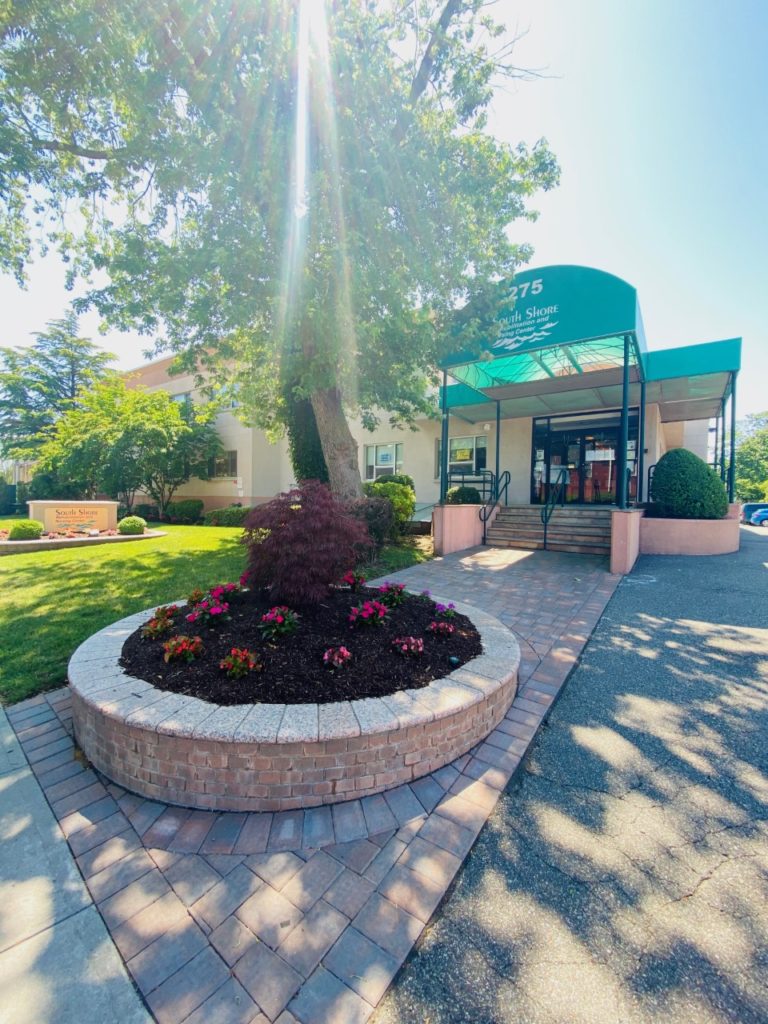
How is South Shore Rehabilitation And Nursing Center Staffed?

CMS rates SOUTH SHORE REHABILITATION AND NURSING CENTER's staffing level at 3 out of 5 stars, which is average compared to other nursing homes. Staff turnover is 28%, compared to the New York average of 46%. This relatively stable workforce can support continuity of care.

What Have Inspectors Found at South Shore Rehabilitation And Nursing Center?

State health inspectors documented 22 deficiencies at SOUTH SHORE REHABILITATION AND NURSING CENTER during 2019 to 2025. These included: 21 with potential for harm and 1 minor or isolated issues.

Who Owns and Operates South Shore Rehabilitation And Nursing Center?

SOUTH SHORE REHABILITATION AND NURSING CENTER is owned by a for-profit company. For-profit facilities operate as businesses with obligations to shareholders or private owners. The facility is operated by SAPPHIRE CARE GROUP, a chain that manages multiple nursing homes. With 100 certified beds and approximately 91 residents (about 91% occupancy), it is a mid-sized facility located in FREEPORT, New York.

How Does South Shore Rehabilitation And Nursing Center Compare to Other New York Nursing Homes?

Compared to the 100 nursing homes in New York, SOUTH SHORE REHABILITATION AND NURSING CENTER's overall rating (2 stars) is below the state average of 3.1, staff turnover (28%) is significantly lower than the state average of 46%, and health inspection rating (2 stars) is below the national benchmark.

What Should Families Ask When Visiting South Shore Rehabilitation And Nursing Center?

Based on this facility's data, families visiting should ask: "Can I visit during a mealtime to observe dining assistance and food quality?" "How do you handle medical emergencies, and what is your hospital transfer rate?" "Can I speak with family members of current residents about their experience?"

Is South Shore Rehabilitation And Nursing Center Safe?

Based on CMS inspection data, SOUTH SHORE REHABILITATION AND NURSING CENTER has a clean safety record: no substantiated abuse findings (meaning no confirmed cases of resident harm), no Immediate Jeopardy citations (the most serious violation level indicating risk of serious injury or death), and is not on the Special Focus Facility watch list (a federal program monitoring the lowest-performing 1% of nursing homes). The facility has a 2-star overall rating and ranks #100 of 100 nursing homes in New York. While no facility is perfect, families should still ask about staff-to-resident ratios and recent inspection results during their visit.

Do Nurses at South Shore Rehabilitation And Nursing Center Stick Around?

Staff at SOUTH SHORE REHABILITATION AND NURSING CENTER tend to stick around. With a turnover rate of 28%, the facility is 17 percentage points below the New York average of 46%. Low turnover is a positive sign. It means caregivers have time to learn each resident's needs, medications, and personal preferences. Consistent staff also notice subtle changes in a resident's condition more quickly. Registered Nurse turnover is also low at 27%, meaning experienced RNs are available to handle complex medical needs.

Was South Shore Rehabilitation And Nursing Center Ever Fined?

SOUTH SHORE REHABILITATION AND NURSING CENTER has no federal fines on record. CMS issues fines when nursing homes fail to meet care standards or don't correct problems found during inspections. The absence of fines suggests the facility has either maintained compliance or corrected any issues before penalties were assessed. This is a positive indicator, though families should still review recent inspection reports for the full picture.

Is South Shore Rehabilitation And Nursing Center on Any Federal Watch List?

SOUTH SHORE REHABILITATION AND NURSING CENTER is not on any federal watch list. The most significant is the Special Focus Facility (SFF) program, which identifies the bottom 1% of nursing homes nationally based on persistent, serious quality problems. Not being on this list means the facility has avoided the pattern of deficiencies that triggers enhanced federal oversight. This is a positive indicator, though families should still review the facility's inspection history directly.