Bethany Nursing Home & Health Related Facility Inc
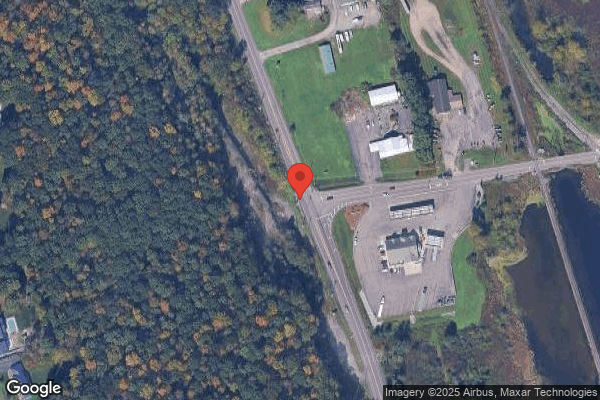
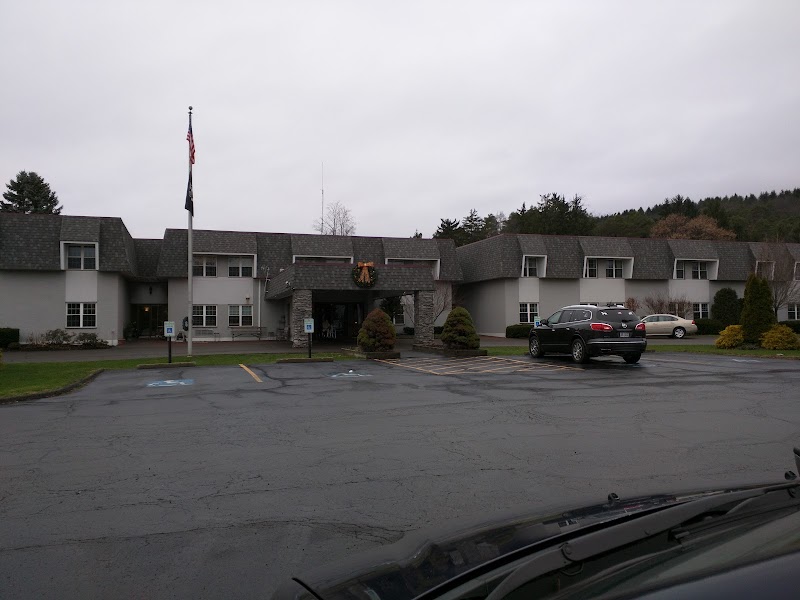
3005 Watkins Road, Horseheads, NY 14845 (607) 378-6547
Non profit - Corporation 122 Beds Independent Data: November 2025
Trust Grade
90/100
#16 of 594 in NY
Last Inspection: March 2025

Within standard 12-15 month inspection cycle. Federal law requires annual inspections.

Overview

Bethany Nursing Home & Health Related Facility in Horseheads, New York, has received a Trust Grade of A, indicating it is excellent and highly recommended. It ranks #16 out of 594 facilities in New York, placing it in the top half, and is the best option among the four nursing homes in Chemung County. The facility's performance has been stable, with three issues reported in both 2023 and 2025. Staffing is average, with a 3 out of 5-star rating and a turnover rate of 49%, which is in line with the state average. While there have been no fines, which is a positive sign, there are some concerns, including a lack of carbon monoxide detectors in the laundry area and insufficient documentation on addressing resident grievances, which reflects areas needing improvement. Additionally, the facility must ensure that all residents' advance directives are consistently honored, as was not fully adhered to in one case.

Trust Score
A
90/100
In New York
#16/594
Top 2%
Safety Record
Low Risk
No red flags
Inspections
Holding Steady
3 → 3 violations
Staff Stability
⚠ Watch
49% turnover. Above average. Higher turnover means staff may not know residents' routines.
Penalties
✓ Good
No fines on record. Clean compliance history, better than most New York facilities.
Skilled Nurses
○ Average
Each resident gets 33 minutes of Registered Nurse (RN) attention daily — about average for New York. RNs are the most trained staff who monitor for health changes.
Violations
○ Average
7 deficiencies on record. Average for a facility this size. Mostly minor or procedural issues.
★★★★★
5.0
Overall Rating
★★★☆☆
3.0
Staff Levels
★★☆☆☆
2.0
Care Quality
★★★★★
5.0
Inspection Score
Stable
2023: 3 issues
2025: 3 issues

The Good

  • Full Sprinkler Coverage · Fire safety systems throughout facility
  • No fines on record

Facility shows strength in fire safety.

The Bad

Staff Turnover: 49%

Near New York avg (46%)

Higher turnover may affect care consistency

The Ugly 7 deficiencies on record

Mar 2025 3 deficiencies
CONCERN (D)

Potential for Harm - no one hurt, but risky conditions existed

Deficiency F0578 (Tag F0578)

Could have caused harm · This affected 1 resident

Based on observations, interviews, and record review conducted during the Recertification Survey from 03/17/2025 to 03/21/2025, the facility did not ensure that all residents had the right to request,...

Read full inspector narrative →
Based on observations, interviews, and record review conducted during the Recertification Survey from 03/17/2025 to 03/21/2025, the facility did not ensure that all residents had the right to request, refuse, and/or discontinue treatment, and to formulate an advance directive (a resident's preferences for medical interventions in the event of a life-threatening episode) that would be honored for one (1) (Residents #89) of 32 residents reviewed for advanced directives. Specifically, the facility did not ensure that Resident #89's advanced directives preferences were consistently identified. This is evidenced by the following: The facility policy Advanced Directives, last reviewed May 2025, included it is the policy of the facility to honor the advance directives of all residents and if no advance directives are available and the resident or family have not stated their wishes to execute an advance directive, the resident will be designated as full code status (attempt cardiopulmonary resuscitation in the event of cardiac or respiratory arrest). 1. Resident #89 had diagnoses that included Parkinson's disease, diabetes, and high blood pressure. The Minimum Data Set (a resident assessment tool), dated 03/11/2025, included the resident was cognitively intact. During an interview on 03/17/2025 at 11:41 AM, Licensed Practical Nurse #1 stated the resident's name tag (outside the residents' rooms) is colored blue which indicated the resident was a full code and a white colored name tag means the resident is a DNR (do not resuscitate meaning cardiopulmonary resuscitation would not be started if the heart or breathing ceases). Licensed Practical Nurse #1 stated they use the name tag indicator in an emergency to know if a resident was a full code or a DNR. During an observation on 03/17/2025 at 3:01 PM, Resident #89's name was printed on a blue name tag (indicating their wishes for full code) on the wall next to the resident's door to their room. Review of Resident #89's electronic health record revealed a Medical Order for Life Sustaining Treatment (also known as a MOLST) signed by Nurse Practitioner #1 on 12/05/2025 that included wishes for DNR or to not be resuscitated in the event of an acute medical episode. Current physician's orders, dated 12/05/2025, included the resident had an advanced directives that included wishes were for DNR and do not intubate (insert a tube into the windpipe to assist with breathing). During an interview on 03/18/2025 at 2:38 PM, Licensed Practical Nurse #2 stated they would use the door tag indicator for code status in an emergency to see if a resident was a full code or not and check the Medical Order for Life Sustaining Treatment. They stated if they found a discrepancy they would treat the resident as a full code and start cardiopulmonary resuscitation. Licensed Practical Nurse #2 stated they had identified discrepancies between name tags, physician's orders, and Medical Order for Life Sustaining treatment forms in the past. During an interview on 03/18/2025 at 3:07 PM with Unit Clerk #1 and Registered Nurse Manager #1, Unit Clerk #1 stated they were responsible for placing and updating the name tags if code status changes. They stated they placed a blue name tag for Resident #89 when they were admitted because they did not have a Medical Order for Life Sustaining Treatment but did not update it when Resident #89 became a DNR. Registered Nurse Manager #1 stated Resident #89 had a blue name tag on their door, but it should have been white. They stated that if the code status indicators (name tag, physician's order, and Medical Order for Life Sustaining Treatment) did not match it would cause confusion and a resident's wishes for life staining treatment may not be followed. During an interview on 3/18/2025 at 3:28 PM, the Director of Nursing stated all code status indicators should match, and nursing staff should confirm residents' code status in the electronic health record and not use the door indicator alone. If there is a discrepancy, nursing staff should go by the Medical Order for Life Sustaining Treatment. 10 NYCRR 415.3(f)(1)(ii)
MINOR (B)

Minor Issue - procedural, no safety impact

Assessment Accuracy (Tag F0641)

Minor procedural issue · This affected multiple residents

**NOTE- TERMS IN BRACKETS HAVE BEEN EDITED TO PROTECT CONFIDENTIALITY** Based on record review and interviews conducted during the Recertification Survey from 03/17/2025 to 03/21/2025 for seven (Resid...

Read full inspector narrative →
**NOTE- TERMS IN BRACKETS HAVE BEEN EDITED TO PROTECT CONFIDENTIALITY** Based on record review and interviews conducted during the Recertification Survey from 03/17/2025 to 03/21/2025 for seven (Resident #2, #8, #50, #54, #66, #86, and #96) of 32 residents reviewed, the facility did not ensure the Minimum Data Set Resident Assessment (an assessment tool) accurately reflected the residents' status. Specifically, the issues involved inaccurate coding for Section A - Identification Information (Resident #96) and Section N - Medications (Resident #2, #8, #50, #54, #66, and #86). This is evidenced by, but not limited to, the following: The facility policy Resident Assessment Instrument Minimum Data Set, last reviewed September 2016, included the facility must complete an accurate, standardized, reproducible assessment of each resident's care problems on admission and periodically thereafter. 1. Resident #96 had diagnoses that included heart failure, kidney disease, and high blood pressure. The Minimum Data Set Discharge Assessment (a resident assessment tool) dated 02/13/2025, documented Resident #96 was cognitively intact and was discharged from the facility to the hospital. In a progress note, dated 02/13/2025, Registered Nurse #1 documented Resident #96 was discharged home with family and community services. During an interview on 03/20/2025 at 2:31 PM, the Minimum Data Set Coordinator stated Resident #96 was discharged to the community, not the hospital, and the Minimum Data Set was not coded correctly. 2. Resident #2 had diagnoses that included heart failure, diabetes, and chronic obstructive pulmonary disease (a group of lung diseases that cause ongoing breathing problems). The Minimum Data Set, dated [DATE], documented Resident #2 had moderate impairment of cognitive function and was receiving an anticoagulant (blood thinner to prevent blood clots) medication. Review of physician's orders, effective 01/29/2025 (at the time of the resident assessment), revealed aspirin 81 milligrams once daily initially ordered 04/19/2022. There were no orders for any anticoagulant medications for the time period identified. 3. Resident #50 had diagnoses that included high blood pressure and coronary artery disease (decreased blood flow to the heart caused by blocked or narrowed arteries). The Minimum Data Set, dated [DATE], documented Resident #50 had severe cognitive impairment and was receiving an anticoagulant medication. Review of the physician's orders at the time of the resident assessment revealed an order for aspirin 81 milligrams once daily, dated 05/18/2021, and no orders for an anticoagulant medication in the time period. During an interview on 03/19/2025 at 1:08 PM, the Minimum Data Set Coordinator stated they were responsible for completing sections A and I and ensuring accuracy of the information documented in the Minimum Data Set Resident Assessments. They stated they had been documenting aspirin as an anticoagulant in the resident assessments and did not know that aspirin should not be documented as an anticoagulant. During an interview on 03/20/2025 at 2:39 PM, the Director of Nursing stated the Minimum Data Set Assessments should be accurate, medications should be documented per the Resident Assessment Instrument manual, and aspirin should not be documented as an anticoagulant. They stated resident assessments should be accurate to ensure residents are receiving the care and services they need. During an interview on 03/21/2025 at 11:00 AM with the Administrator and Director of Nursing, the Administrator stated they had been aware of some discrepancies in the Minimum Data Set Assessments, but had not identified discrepancies specific to medications and discharge information. 10 NYCRR 415.11(b)
MINOR (B)

Minor Issue - procedural, no safety impact

Staffing Information (Tag F0732)

Minor procedural issue · This affected multiple residents

Based on observations, interviews, and record reviews conducted during a Recertification Survey from 03/17/2025 to 03/21/2025, the facility did not ensure the daily nurse staffing information was upda...

Read full inspector narrative →
Based on observations, interviews, and record reviews conducted during a Recertification Survey from 03/17/2025 to 03/21/2025, the facility did not ensure the daily nurse staffing information was updated on a daily basis. Specifically, the nurse staffing information was not posted daily at the beginning of each shift during the survey, and the information on the form was not updated to reveal current dates and staffing changes. This is evidenced by the following: The undated Daily Nurse Staffing Data Protocol documented: The Scheduling Coordinator is responsible Monday to Friday for ensuring the nurse staffing data is posted in the lobby daily. In the nurse scheduler's absence, Medical Records staff or Skill 2 Unit Manager will post the staffing data. This will be completed as close to 7:00 AM as possible. On weekends and holidays, the Registered Nurse Supervisor will post the nurse staffing data close to 7:00 AM. This responsibility will be reviewed during any new Registered Nurse Supervisor orientation. During observations on 03/17/2025 at 10:03 AM, the nurse staffing information was posted at the main entrance and was dated 03/14/2025. At 4:15 PM on that same day, the nurse staffing information was dated 03/15/2025. During an observation on 03/18/2025 at 8:05 AM, the nurse staffing information remained dated 03/15/2025. During an interview on 03/20/2025 at 11:40 AM, Unit Clerk #1 stated they completed the nurse staffing information in the morning Monday through Friday. On weekends, the supervisor was responsible for updating and posting the nurse staffing information. Unit Clerk #1 stated they usually updated the nurse staffing information between 8:00 AM and 8:30 AM each morning, but they were sometimes behind and did not get it posted until 9:30 AM or 10:00 AM. They stated it had not been brought to their attention that the nurse staffing information was not being updated regularly on the weekends. During an interview on 03/20/2025 at 3:33 PM, the Director of Nursing stated it was Unit Clerk #1 and the weekend supervisor's responsibility to update the nurse staffing information and that the information should be posted daily on the day shift after receiving morning report. Additionally, the Director of Nursing stated there were some newly hired supervisors who had not been trained and that it had not been brought to their attention that the nurse staffing information was not being updated daily. The Director of Nursing stated there was a breakdown in their process, and they needed to train new staff and retrain their current staff. 10 NYCRR 415.13
Mar 2023 3 deficiencies
CONCERN (D) 📢 Someone Reported This

A family member, employee, or ombudsman was alarmed enough to file a formal complaint

Potential for Harm - no one hurt, but risky conditions existed

Deficiency F0657 (Tag F0657)

Could have caused harm · This affected 1 resident

**NOTE- TERMS IN BRACKETS HAVE BEEN EDITED TO PROTECT CONFIDENTIALITY** Based on observations, interviews and record review conducted during a Recertification Survey completed on 3/24/23, it was deter...

Read full inspector narrative →
**NOTE- TERMS IN BRACKETS HAVE BEEN EDITED TO PROTECT CONFIDENTIALITY** Based on observations, interviews and record review conducted during a Recertification Survey completed on 3/24/23, it was determined that for one (Resident #46) of three residents reviewed for skin conditions, the facility did not revise the resident's care plan to reflect the resident's current needs. Specifically, Resident #46's Comprehensive Care Plan (CCP) and Certified Nursing Assistant (CNA) [NAME] (care plan used by CNA for daily care) was not revised to include the presence of recurring skin issues with related goals, and interventions to prevent such. This is evidenced by the following: Review of facility policy Care Planning Process, dated revised April 2022, revealed that the CCP includes a health assessment beginning on the day a resident is admitted and at least every 90 days after the resident's initial review, and more often if their medical condition changes. CCP changes are communicated to the appropriate staff at the time that the changes are made. The CCP also includes ongoing, regular assessment of a resident's condition to see if their health status had changes, with adjustments to the care plan as needed. Review of facility policy Skin Care, dated reviewed September 2021, revealed that during a resident's admission, skin checks are done weekly for four weeks and then at least quarterly by the Licensed Practical Nurse (LPN) staff, and any changes or new areas of concern are reported. Interventions are placed on the resident's care card ([NAME]) and are updated as needed. The resident's care plan would address preventive measures, and if an actual skin issue existed (skin tear, wound, ulcer), it would address appropriate care and services, and would be updated as needed. Communication of any changes to the skin/wound or necessary treatment should be discussed with the Unit Manager and provider. Resident #46 had diagnoses of Parkinson's disease, Alzheimer's disease and frequent falls. The Minimum Data Set assessment dated [DATE], documented that Resident #46 was cognitively intact, had skin tears, and had a skin condition requiring the application of ointments and nonsurgical dressings. Current Physician orders included the following: a. Opti foam (protective wound treatment) to bilateral knee abrasions daily as needed (PRN) for abrasions dated as ordered 4/20/22. b. Alginate (wound treatment often used for draining wounds) with Opti foam to two skin tears on left knee every three days dated as ordered 2/20/23. c. Alginate and Opti foam to the left knee every day for a skin tear dated as ordered 3/20/23. Review of the current CCP and CNA [NAME] revealed that Resident #46 was at risk for pressure ulcers, with related interventions including pressure reducing devices, protective and preventive skin care, and weekly skin audits. The CCP also included to make sure the resident had shoes or non-slip socks on at all times when out of bed due to self-transferring and falls and required contact guard (one or two hands on the resident but not weight bearing) with a 4-wheeled walker and a gait belt. The CCP and the CNA [NAME] did not include that the resident had any current or recurring skin wounds with related goals or interventions. During an observation on 3/22/23 at 1:34 p.m., the CNA [NAME] hanging in Resident #46's room was dated September 2022 and included that the resident required supervision (nearby but not hands on) and a 4-wheeled walker for transfers and for ambulation the resident required supervision with a gait belt and 4-wheeled walker. The room [NAME] also included protective and preventive skin care daily and as needed but no interventions for current skin issues related to frequent falls. In a nursing progress note dated 3/18/23 LPN #5 documented that staff had found Resident #46 on the toilet with their left leg bleeding resulting in a skin tear to the left knee measuring approximately four centimeters (cm) by five cm. The resident stated they had gotten up to go to the bathroom without putting their call light on and lost their balance and fell. During an interview on 3/22/23 at 1:27 p.m., LPN #1 stated that the [NAME] in a resident's room tells the nursing staff what level of assistance and care each resident's needs. LPN #1 stated that Resident #46 required a contact guard assist with transfers, meaning that a staff member should be near the resident. During an interview on 3/23/23 at 12:51 p.m., CNA #1 stated that the [NAME] is based on the therapy recommendations and that things are added to the [NAME] along the way as staff learn more about a resident. During an interview on 3/23/23 at 3:09 p.m., the Registered Nurse Manager (RNM) stated that the CCP is reviewed quarterly or more frequently if needed, and that all facility disciplines are involved in revising a resident's CCP. The RNM stated that skin breakdown, preventative interventions and skin treatments should be included on the CCP, and this information is transferred to the [NAME], which is then printed and placed in the resident's room. The RNM stated that Resident #46 has had abrasions on and off for the several weeks, and had bumped their knees, which reopened the scabbed-over areas. The RNM stated that Resident #46's care plan did not include their skin issues (skin tears, lacerations, or abrasions) and related interventions which could have been an oversight. During an interview on 3/24/23 at 10:43 a.m., the Director of Nursing (DON) stated that they would expect the CCP and the [NAME] to include all the information that would drive a resident's care, as well as identified concerns or issues and goals and interventions. The DON stated skin issues and treatments should be included on the CCP. 10 NYCRR 415.11(c)(2)(iii)
CONCERN (D) 📢 Someone Reported This

A family member, employee, or ombudsman was alarmed enough to file a formal complaint

Potential for Harm - no one hurt, but risky conditions existed

Quality of Care (Tag F0684)

Could have caused harm · This affected 1 resident

**NOTE- TERMS IN BRACKETS HAVE BEEN EDITED TO PROTECT CONFIDENTIALITY** Based on observation, interview, and record review conducted during the Recertification Survey completed on 3/24/23, the facilit...

Read full inspector narrative →
**NOTE- TERMS IN BRACKETS HAVE BEEN EDITED TO PROTECT CONFIDENTIALITY** Based on observation, interview, and record review conducted during the Recertification Survey completed on 3/24/23, the facility did not ensure that each resident received treatment and care in accordance with professional standards of practice and the comprehensive person-centered care plan for 1 of 20 residents reviewed for quality of care. Specifically, Resident #64 was not provided positioning devices for their [NAME] chair (specialized wheelchair), per therapy recommendations and the residents Comprehensive Care Plan (CCP). The finding is: The facility policy Rehabilitative and Functional Maintenance Services, revision dated March 2012, documented the facility will provide rehabilitative and maintenance services such as but not limited to walking, transfer training, bed mobility, Range of Motion (ROM), splint and brace, needs for adaptive equipment, eating and/or swallowing, amputation/prostheses care and communication, when necessary as indicated by the individualized assessment and input of the interdisciplinary team. Resident #64 had diagnoses including dementia, depression, and hypertension. The Minimum Data Set (MDS, a resident assessment tool) dated 2/9/23 documented the resident had severe cognitive impairment, required total assist by two+ staff members for transfers, and extensive assist for one staff member for wheelchair locomotion. The Occupational Therapy Discharge summary, dated [DATE], documented discharge recommendations of bilateral arm troughs (positioning device), and calf/foot support (positioning device) to the residents [NAME] chair. Resident #64's CCP, dated 7/19/21 and the Certified Nursing Assistants (CNA) [NAME] (care plan used by CNAs for daily care) included the use of a [NAME] chair with bilateral arm troughs for positioning secondary to poor upright sitting posture and bilateral leg rests and calf support/board. Multiple observations included the following: a. On 3/20/23 at 1:25 PM, Resident #64 was in the [NAME] chair leaning to the left with both feet dangling, making no attempt to self-propel. The bilateral arm troughs and bilateral leg rests with calf support/board were not on the [NAME] chair. b. On 3/21/23 at 11:34 AM, Resident #64 was seated at table, in the [NAME] chair leaning approximately 45 degrees to the left with both feet dangling, making no attempt to self-propel. The bilateral arm troughs and bilateral leg rests with calf support/board were not on the [NAME] chair. c. On 3/22/23 at 8:45 AM, Resident #64 was in a common area in the [NAME] chair leaning to the left with both feet dangling, making no attempt to self-propel. The bilateral arm troughs and bilateral leg rests with calf support/board were not on the [NAME] chair. During an interview on 3/22/23 at 10:01 AM the Director of Rehabilitation stated Resident #64 utilized bilateral arm troughs to assist with proper positioning and comfort secondary to poor trunk strength and the bilateral leg rests with calf support/board to prevent legs from dangling. During an interview on 3/22/23 at 10:10 AM the Registered Nurse (RN) #2/Resident Care Coordinator (RCC) stated they expected the care planned interventions to be implemented. RN #2/RCC stated that Resident #64 should have the bilateral arm troughs and bilateral leg rests with calf support/board in place when in the [NAME] chair. During an interview on 3/24/23 at 8:29 AM the Director of Nursing stated they expected adaptive equipment, including bilateral arm troughs and bilateral leg rest with calf support/board, to be implemented per the plan of care. 10 NYCRR 415.12
CONCERN (E) 📢 Someone Reported This

A family member, employee, or ombudsman was alarmed enough to file a formal complaint

Potential for Harm - no one hurt, but risky conditions existed

Deficiency F0836 (Tag F0836)

Could have caused harm · This affected multiple residents

Based on observations and interview conducted during the Recertification Survey completed on 3/24/23, it was determined that the facility did not ensure compliance with all applicable State codes. Spe...

Read full inspector narrative →
Based on observations and interview conducted during the Recertification Survey completed on 3/24/23, it was determined that the facility did not ensure compliance with all applicable State codes. Specifically, the facility was not in compliance with section 915 of the 2015 edition of the International Fire Code as adopted by New York State, which requires the use of carbon monoxide detection in a building that has fuel-burning appliances. The findings are: Observations on 3/24/23 at 11:52 a.m. included two natural gas-powered dryers located in the skilled 3 ground-floor laundry room, and there were no carbon monoxide detectors within or in the vicinity of the laundry area. In an interview at this time the Maintenance Staff Member stated there were carbon monoxide detectors in the generator room, the boiler room, and the kitchen. The Maintenance Staff Member also stated that they test the carbon monoxide detectors and change the batteries but do not keep any logs. No documentation was provided to show that any of the carbon monoxide detectors in the facility were being tested. The 2015 edition of the International Fire Code (IFC), requires 1) carbon monoxide detection to be provided in an approved location between the fuel burning appliance and the dwelling unit, sleeping unit, or classroom; or on the ceiling of the room containing the fuel-burning appliance 2) carbon monoxide alarms shall be maintained in accordance with NFPA 720. The 2012 Edition of NFPA 720, Standard for the Installation of Carbon Monoxide Detection and Warning Equipment, requires that single-station carbon monoxide alarms shall be inspected and tested in accordance with the manufacturer's published instructions at least monthly. 10NYCRR: 415.29(a)(2), 711.2(a)(1); 42 CFR: 483.70(b), 2015 IFC: Section 915, 915.1, 915.1.4, 915.6, Section 1103.9 2012 NFPA 720: 8.7.1
Jul 2021 1 deficiency
CONCERN (E)

Potential for Harm - no one hurt, but risky conditions existed

Grievances (Tag F0585)

Could have caused harm · This affected multiple residents

Based on interviews and record reviews conducted during a Recertification Survey, completed on 7/23/21, it was determined that the facility did not ensure that prompt efforts were made to resolve resi...

Read full inspector narrative →
Based on interviews and record reviews conducted during a Recertification Survey, completed on 7/23/21, it was determined that the facility did not ensure that prompt efforts were made to resolve resident grievances for six of six (Residents #6, #26, #39, #55, #80 and #81) residents reviewed. Specifically, there was no documented evidence that concerns and issues, identified by residents on a Resident Council Precautionary Isolation Questionnaire provided to residents (in place of resident council meetings during COVID-19), completed April 2021 through June 2021, were addressed. This was evidenced by the following: Review of the facility policy Grievance Procedure, dated May 2006, included that a grievance is brought to the attention of the Social Worker (SW) by the resident, family, or staff member verbally or in writing. The SW will meet with the resident or family and document the grievance in the Grievance Log. Upon resolution of the grievance, the complainant will be notified of the findings within 21 days of receipt. During a resident council meeting on 7/20/21 at 1:30 p.m., with the surveyor, Residents' #6, #26, #39, #55, #80 and #81 shared that they had not been able to meet due to the pandemic, but had been asked if they had any specific concerns or issues. The resident's stated they did not know how to file a grievance, but they filled out questionnaires instead. Resident #6 stated, at this time, that they had missing clothes they reported on previously, and had not received any resolution. Residents #80 and #81 voiced several food issues that had not been resolved. Review of Resident Council Precautionary Isolation Questionnaires for the months of April 2021 through June 2021, revealed 14 questionnaires were completed for April 2021, 14 for May 2021, and 7 for June 2021 with concerns or issues that included, but were not limited to, food quality, short staffing concerns and the attitudes of several staff members. Review of the Complaint/Grievance Logs for May 2021 through July 2021 revealed that none of the concerns or issues raised by the residents on the Resident Council Precautionary Isolation Questionnaires were documented on the Complaint/Grievance Log. There was no documented evidence that any of these concerns or issues were resolved or reviewed with the residents. During an interview 7/21/21 at 10:24 a.m., the Activities Director stated activities staff went around to all residents and asked if they had any concerns or issues. She said the Administrator was the Grievance Officer, but that she forwarded the grievances to the SW. When interviewed on 7/21/21 at 10:24 a.m., the SW stated that they were the Grievance Officer and that the Activities Director provided them with the completed surveys. The SW stated they emailed specific concerns or issues to the appropriate department heads for review and resolution. The SW stated the concerns or issues received were not always grievances, but more about food issues which were reviewed at morning report. On 7/21/21 at 3:28 p.m., the Administrator stated he and the SW were the Grievance Officers. The Administrator stated he received calls from residents with concerns, but did not always formally document them. The Administrator stated the SW conducted surveys during COVID-19 when Resident Council was not meeting and expected the SW to report to him any resident concerns or issues identified and to follow up to resolve the specific concerns. The Administrator stated they did not have any evidence that the concerns or issues identified in the questionnaires had been addressed. 10 NYCRR 415.3 (c)(1)(i)
Understanding Severity Codes (click to expand)
Life-Threatening (Immediate Jeopardy)
J - Isolated K - Pattern L - Widespread
Actual Harm
G - Isolated H - Pattern I - Widespread
Potential for Harm
D - Isolated E - Pattern F - Widespread
No Harm (Minor)
A - Isolated B - Pattern C - Widespread

Questions to Ask on Your Visit

  • "Can I speak with families of current residents?"
  • "What's your RN coverage like on weekends and overnight?"

Our Honest Assessment

Strengths
  • • Grade A (90/100). Above average facility, better than most options in New York.
  • • No major safety red flags. No abuse findings, life-threatening violations, or SFF status.
  • • No fines on record. Clean compliance history, better than most New York facilities.
Concerns
  • • No significant concerns identified. This facility shows no red flags across CMS ratings, staff turnover, or federal penalties.
Bottom line: Generally positive indicators. Standard due diligence and a personal visit recommended.

About This Facility

What is Bethany Nursing Home & Health Related Facility Inc's CMS Rating?

CMS assigns Bethany Nursing Home & Health Related Facility Inc an overall rating of 5 out of 5 stars, which is considered much above average nationally. Within New York, this rating places the facility higher than 99% of the state's 100 nursing homes. This rating reflects solid performance across the metrics CMS uses to evaluate nursing home quality.

How is Bethany Nursing Home & Health Related Facility Inc Staffed?

CMS rates Bethany Nursing Home & Health Related Facility Inc's staffing level at 3 out of 5 stars, which is average compared to other nursing homes. Staff turnover is 49%, compared to the New York average of 46%.

What Have Inspectors Found at Bethany Nursing Home & Health Related Facility Inc?

State health inspectors documented 7 deficiencies at Bethany Nursing Home & Health Related Facility Inc during 2021 to 2025. These included: 5 with potential for harm and 2 minor or isolated issues.

Who Owns and Operates Bethany Nursing Home & Health Related Facility Inc?

Bethany Nursing Home & Health Related Facility Inc is owned by a non-profit organization. Non-profit facilities reinvest revenue into operations rather than distributing to shareholders. The facility operates independently rather than as part of a larger chain. With 122 certified beds and approximately 98 residents (about 80% occupancy), it is a mid-sized facility located in Horseheads, New York.

How Does Bethany Nursing Home & Health Related Facility Inc Compare to Other New York Nursing Homes?

Compared to the 100 nursing homes in New York, Bethany Nursing Home & Health Related Facility Inc's overall rating (5 stars) is above the state average of 3.1, staff turnover (49%) is near the state average of 46%, and health inspection rating (5 stars) is much above the national benchmark.

What Should Families Ask When Visiting Bethany Nursing Home & Health Related Facility Inc?

Based on this facility's data, families visiting should ask: "Can I visit during a mealtime to observe dining assistance and food quality?" "How do you handle medical emergencies, and what is your hospital transfer rate?" "Can I speak with family members of current residents about their experience?"

Is Bethany Nursing Home & Health Related Facility Inc Safe?

Based on CMS inspection data, Bethany Nursing Home & Health Related Facility Inc has a clean safety record: no substantiated abuse findings (meaning no confirmed cases of resident harm), no Immediate Jeopardy citations (the most serious violation level indicating risk of serious injury or death), and is not on the Special Focus Facility watch list (a federal program monitoring the lowest-performing 1% of nursing homes). The facility has a 5-star overall rating and ranks #1 of 100 nursing homes in New York. While no facility is perfect, families should still ask about staff-to-resident ratios and recent inspection results during their visit.

Do Nurses at Bethany Nursing Home & Health Related Facility Inc Stick Around?

Bethany Nursing Home & Health Related Facility Inc has a staff turnover rate of 49%, which is about average for New York nursing homes (state average: 46%). Moderate turnover is common in nursing homes, but families should still ask about staff tenure and how the facility maintains care continuity when employees leave.

Was Bethany Nursing Home & Health Related Facility Inc Ever Fined?

Bethany Nursing Home & Health Related Facility Inc has no federal fines on record. CMS issues fines when nursing homes fail to meet care standards or don't correct problems found during inspections. The absence of fines suggests the facility has either maintained compliance or corrected any issues before penalties were assessed. This is a positive indicator, though families should still review recent inspection reports for the full picture.

Is Bethany Nursing Home & Health Related Facility Inc on Any Federal Watch List?

Bethany Nursing Home & Health Related Facility Inc is not on any federal watch list. The most significant is the Special Focus Facility (SFF) program, which identifies the bottom 1% of nursing homes nationally based on persistent, serious quality problems. Not being on this list means the facility has avoided the pattern of deficiencies that triggers enhanced federal oversight. This is a positive indicator, though families should still review the facility's inspection history directly.