THE GRAND REHABILITATION AND NURSING AT SOUTH POIN
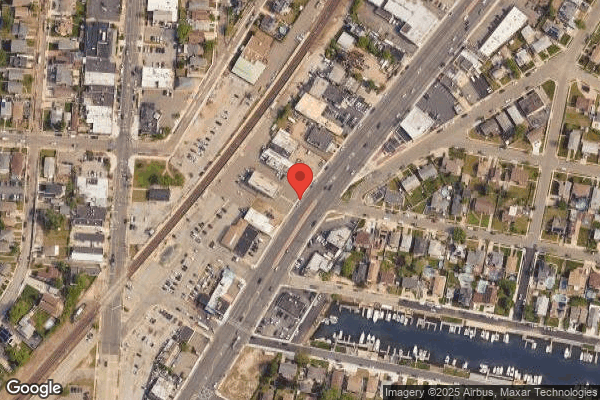
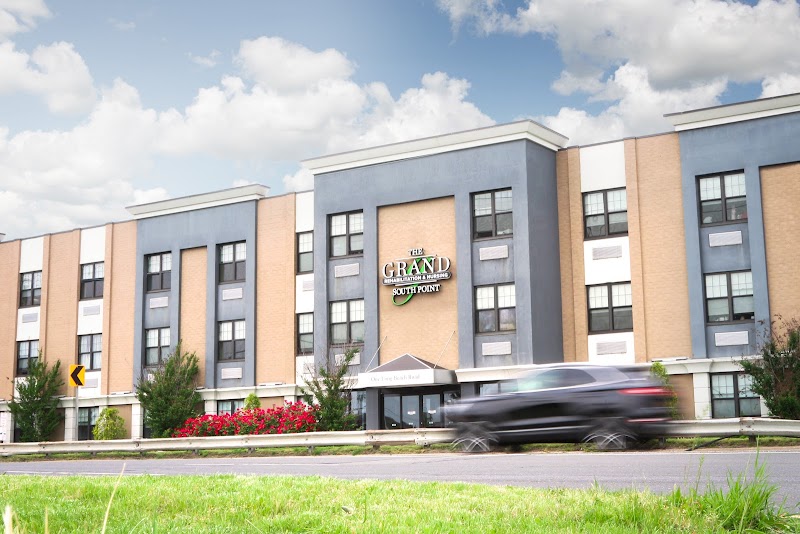
ONE LONG BEACH ROAD, ISLAND PARK, NY 11558 (516) 432-0300
For profit - Partnership 185 Beds THE GRAND HEALTHCARE Data: November 2025
Trust Grade
55/100
#462 of 594 in NY
Last Inspection: June 2025

Inspected within the last 6 months. Data reflects current conditions.

Overview

The Grand Rehabilitation and Nursing at South Point has a Trust Grade of C, which means it is average compared to other facilities. It ranks #462 out of 594 in New York, placing it in the bottom half of nursing homes in the state, and #34 out of 36 in Nassau County, indicating that only two local options are better. The facility's performance is worsening, with issues increasing from 8 in 2023 to 12 in 2025. Staffing is a relative strength, with a 3/5-star rating and a turnover rate of 21%, well below the state average, suggesting that staff stay longer and are familiar with the residents. On the downside, the facility has had concerning incidents, such as not maintaining a clean environment with dirty walls and floors, and failing to report an alleged abuse incident to the state in a timely manner. Furthermore, there were instances where residents were not treated with the dignity they deserve, such as being moved in a way that compromised their comfort and privacy.

Trust Score
C
55/100
In New York
#462/594
Bottom 23%
Safety Record
Low Risk
No red flags
Inspections
Getting Worse
8 → 12 violations
Staff Stability
✓ Good
21% annual turnover. Excellent stability, 27 points below New York's 48% average. Staff who stay learn residents' needs.
Penalties
✓ Good
No fines on record. Clean compliance history, better than most New York facilities.
Skilled Nurses
○ Average
Each resident gets 35 minutes of Registered Nurse (RN) attention daily — about average for New York. RNs are the most trained staff who monitor for health changes.
Violations
⚠ Watch
21 deficiencies on record. Higher than average. Multiple issues found across inspections.
★★☆☆☆
2.0
Overall Rating
★★★☆☆
3.0
Staff Levels
★★★☆☆
3.0
Care Quality
★★☆☆☆
2.0
Inspection Score
Stable
2023: 8 issues
2025: 12 issues

The Good

  • Low Staff Turnover (21%) · Staff stability means consistent care
  • Full Sprinkler Coverage · Fire safety systems throughout facility
  • No fines on record
  • Staff turnover is low (21%)

    27 points below New York average of 48%

Facility shows strength in staff retention, fire safety.

The Bad

2-Star Overall Rating

Below New York average (3.1)

Below average - review inspection findings carefully

Chain: THE GRAND HEALTHCARE

Part of a multi-facility chain

Ask about local staffing decisions and management

The Ugly 21 deficiencies on record

Sept 2025 1 deficiency
CONCERN (D) 📢 Someone Reported This

A family member, employee, or ombudsman was alarmed enough to file a formal complaint

Potential for Harm - no one hurt, but risky conditions existed

Report Alleged Abuse (Tag F0609)

Could have caused harm · This affected 1 resident

**NOTE- TERMS IN BRACKETS HAVE BEEN EDITED TO PROTECT CONFIDENTIALITY** Based on observations, record review and interviews conducted during an abbreviated survey (2604348) the facility did not ensure...

Read full inspector narrative →
**NOTE- TERMS IN BRACKETS HAVE BEEN EDITED TO PROTECT CONFIDENTIALITY** Based on observations, record review and interviews conducted during an abbreviated survey (2604348) the facility did not ensure that investigation and investigation results of all alleged violations involving abuse were reported within a timely manner to the New York State Department of Health. This was evident in 01(one) out of 05 (five) residents sampled (Residents #1). Specifically, the facility received a report on 08/05/2025 that Resident #1 alleged Licensed Practical Nurse #1 twisted their arm while redirecting Resident #1 to leave the room of another Resident. The facility did not report the allegations to the State Agency.The findings include:The Review of the facility policy, entitled Abuse dated 01/2025 documented all reports of resident abuse, shall be promptly reported to state agencies and investigated by the facility. Findings of abuse will also be reported.Resident #1 was admitted to the facility on [DATE] with diagnoses that included bipolar disorder, asthma and diabetes mellitus. The review of the Quarterly Minimum Data Set assessment dated [DATE] documented a Brief Interview for Mental Status (BIMS) score of 15 indicating intact cognition skills for decision making.The review of the Comprehensive Care Plan (CCP) titled behaviors, documented Resident #1 exhibits behavior symptoms such as, creates different scenarios and reasons; refuses care; threatening comments towards staff; verbally aggressive towards staff; throws items at staff; calls staff names; false allegations against staff; makes accusatory statements about staff; falsifies stories.The Investigative Summary dated 08/24/2025 documented on 08/23/2025 Resident #1 reported they went to another unit to see a friend and was told by Licensed Practical Nurse #1 they cannot enter the room, and alleged Licensed Practical Nurse twisted their arm and yelled at them. The Investigation concluded no evidence of abuse due to resident's history of making false allegation and witness incident by another staff member. The report further documented the incident was deemed not reportable to the state agency.The review of the Social Worker Progress Note dated 8/25/2025 at 03:00 PM documented in a late note Resident #1 was seen in another resident's room, requested to leave room and the Resident refused. At 03:41PM documented resident seen in another resident's room. Requested by staff to leave the room and the Resident refused. Assistance called to redirect Resident from room. Resident resistant to all redirections.Resident #1 was observed and interviewed on 09/03/2025 at 01:15PM and stated they are not happy because they cannot visit their friend. Stated they entered the room with 02 (two) staff present and Licensed Practical Nurse#1 grabbed and twisted arm, did not have any scratches but had red mark that disappeared.Resident #2 (friend) was not available for interview.Resident #3 observed and interviewed on 09/03/2025 at 01:45PM The review of the Minimum Data set for Resident #3 dated 7/19/2025 documented a Brief Interview for Mental Status-9 indicating moderately impaired for decision making for the Resident. Resident #3 was not able to respond to interview. During the interview conducted on 09/03/2025 at 1:11 PM with the unit Registered Nurse Supervisor (Nurse) who was on duty on 08/23/2025 and stated Resident #1 stated they went to see Resident #2 and the Licensed Practical Nurse#1 told Resident #1 not to enter the room of Resident #2 and not allowed on that unit. The resident stated they asked the nurse to put the television on a particular channel and Resident #1 entered the room and picked up remote, the staff was present and were verbally telling Resident #1 not to enter the room. The Licensed Practical Nurse #1 asked Resident #1 put down the remote. Resident #1 stated the nurse grabbed their arm and they asked the resident to write a statement. The statement documented the staff twisted the arm (side not recalled) of Resident #1. They obtained statements from Licensed Practical Nurse#1 and Licensed Practical Nurse #3, assessed both arms for Resident #1 and there were no marks, redness, scratches on either arm of the resident. The Licensed Practical Nurse#1 denied they ever touched the resident on any part of body and did not twist Resident#1's arm. The Director of Nursing was notified. Licensed Practical Nurse #3 witnessed this and did not see Licensed Practical Nurse #1 touch the resident. They stated the Director of Nursing; made the decision no abuse and the state agency would not be notified.During an interview conducted on 09/03/2025 at 04:30PM with Director of Nursing, they stated Resident #1 reported to the Registered Nurse Supervisor that License Practical Nurse #1 twisted their arm. The Director of Nursing further stated Licensed Practical Nurse #3, did not see Licensed Practical Nurse #1 twist either arm or touch Resident #1. Resident #1 was assessed by the Registered Nurse and there were no injuries, no marks or open areas on either of the Resident's arms and an Accident report was not done. The resident is care planned for making inaccurate statements. The Registered Nurse Supervisor along with the Director of Nursing made the decision to not contact the state agency. They stated the incident related to Resident #1's statement was discussed with the Administrator.During an interview conducted on 09/03/2025 at 04:45PM the Administrator stated Resident #1 stated Licensed Practical Nurse #1 was trying to intervene from Resident #1 going into the room of Resident #2 . They stated another Licensed Practical Nurse stated no one touched Resident #1 and Resident #1 has a history of making accusatory and inaccurate statements and is care planned for this. The Administrator further stated the decision was made to not contact the state agency.483.12b[5][i](A)(B)(c)[1][4]
Jun 2025 11 deficiencies
CONCERN (D)

Potential for Harm - no one hurt, but risky conditions existed

Resident Rights (Tag F0550)

Could have caused harm · This affected 1 resident

**NOTE- TERMS IN BRACKETS HAVE BEEN EDITED TO PROTECT CONFIDENTIALITY** Based on observation, record review, and interviews during the Recertification Survey initiated on 6/1/2025 and completed on 6/5...

Read full inspector narrative →
**NOTE- TERMS IN BRACKETS HAVE BEEN EDITED TO PROTECT CONFIDENTIALITY** Based on observation, record review, and interviews during the Recertification Survey initiated on 6/1/2025 and completed on 6/5/2025, the facility did not ensure each resident was treated with respect and dignity and cared for in a manner and in an environment that promoted maintenance or enhancement of their quality of life for two (Resident #16 and #158) two residents reviewed for Dignity. Specifically, 1) Registered Nurse #1 was observed pulling Resident #16 in the Geri chair backward through the hallway to the dining room; and 2) Resident #158 was observed in their room sitting in a wheelchair and performing colostomy care in the presence of Certified Nursing Assistant #3. The privacy curtains were not drawn and the resident's exposed abdomen was visible from the hallway. The findings are: The facility's policy titled Dignity, dated 1/2024, documented that each resident shall be cared for in a manner that promotes and enhances their sense of well-being, level of satisfaction with life, and feelings of self-worth and self-esteem. Residents are treated with dignity and respect at all times. Demeaning practices and standards of care that compromise dignity are prohibited. Staff are expected to treat cognitively impaired residents with dignity and sensitivity. Staff promote, maintain, and protect resident privacy, including bodily privacy during assistance with personal care and treatment procedures. 1) Resident #16 was admitted with diagnoses including Cerebral Palsy, Quadriplegia, and Muscle Spasms. The 3/24/2025 Quarterly Minimum Data Set assessment documented no Brief Interview for Mental Status score as the resident had severely impaired cognitive skills for daily decision-making. During an observation on 6/3/2025 at 9:50 AM on the Doric Unit, Resident #16 was sitting in their Geri chair in the hallway. Registered Nurse #1 transferred the resident by pulling the resident's Geri chair backward approximately 50 feet through the hallway into the dayroom. Registered Nurse #1 then situated the resident in the dayroom. During an interview on 6/3/2025 at 9:55 AM, Registered Nurse #1 stated they should have pushed the resident's Geri chair so the resident was facing forward, rather than pulling the chair backward. Registered Nurse #1 stated pulling the Geri chair backward was faster. During an interview on 6/4/2025 at 1:50 PM, the Director of Nursing Services stated the staff should only pull a resident backward in a Geri chair or wheelchair to get onto an elevator. The Director of Nursing Services stated the nurse should have pushed Resident #16's Geri chair so that the resident was facing forward. During an interview on 6/5/2025 at 9:31 AM, Registered Nurse Educator #1 stated Registered Nurse #1 should not have pulled the resident's Geri chair backward. The resident should be able to see where they are going even if they are cognitively impaired. Registered Nurse Educator #1 stated they instruct staff regarding dignified care including not wheeling the resident backward during the resident rights class at orientation, annually, and as needed. 2) Resident #158 was admitted with diagnoses including Type 2 Diabetes, Malignant Neoplasm (Cancer) of the Colon, and Hypertension. The Quarterly Minimum Data Set (MDS) assessment dated [DATE] documented a Brief Interview for Mental Status (BIMS) score of 10, which indicated Resident # 158 had moderately impaired cognition. Resident #158 had a Colostomy (a surgical procedure where a portion of the large intestine (Colon) is brought out through an opening (stoma) in the abdominal wall). Resident #158 was not on a bowel toileting program. The Minimum Data Set documented that physical, verbal, and other behavioral symptoms (disrobing in public, screaming, hitting, disruptive sounds) were not exhibited. A Physician's Order dated 5/9/2024 documented Colostomy care every shift and as needed. A Comprehensive Care Plan (CCP) dated 5/29/2024 titled, Behaviors, documented that Resident #158 had a habit of opening their colostomy bag. Interventions include identifying a pattern to target interventions and documenting all behaviors. A Certified Nursing Assistant Accountability Sheet for April, May, and June of 2025 documented that Certified Nursing Assistants were providing the assigned Colostomy care task for Resident #158. During an observation on 6/01/2025 at 9:44 AM, Resident #158 was sitting in a wheelchair in their room facing the door and was performing Colostomy care. Certified Nursing Assistant #3 was present in the room. The privacy curtain was not drawn, and the resident's exposed abdomen was visible from the hallway. During an interview on 6/1/2025 at 2:14 PM, Certified Nursing Assistant #3 stated they just come into the room; Resident #158 had already started the colostomy care and did not draw the privacy curtain or close the door. Certified Nursing Assistant #3 stated they started to assist Resident #158 immediately after they entered the room and forgot to draw the curtain or close the door. During an interview on 6/3/2025 at 1:50 PM, Registered Nurse #1 stated that Resident #158 needed assistance with colostomy care. Registered Nurse #1 stated that Certified Nursing Assistant #3 should have drawn the curtain or closed the room door for privacy as soon as they (Certified Nursing Assistant #3) came into Resident #158's room. During an interview on 6/4/2025 at 2:03 PM, the Director of Nursing Services stated all residents should be provided privacy during care and should be treated with dignity and respect. The Director of Nursing Services stated Certified Nursing Assistant #3 should have asked the resident for their preference to draw the curtain or closed the room door for privacy. 10 NYCRR 415.3(d)(1)(i)
CONCERN (D) 📢 Someone Reported This

A family member, employee, or ombudsman was alarmed enough to file a formal complaint

Potential for Harm - no one hurt, but risky conditions existed

Deficiency F0559 (Tag F0559)

Could have caused harm · This affected 1 resident

**NOTE- TERMS IN BRACKETS HAVE BEEN EDITED TO PROTECT CONFIDENTIALITY** Based on observations, record review, and interviews during the Recertification Survey and Abbreviated Survey (NY 00372615) init...

Read full inspector narrative →
**NOTE- TERMS IN BRACKETS HAVE BEEN EDITED TO PROTECT CONFIDENTIALITY** Based on observations, record review, and interviews during the Recertification Survey and Abbreviated Survey (NY 00372615) initiated on 6/1/2025 and completed on 6/5/2025, the facility did not ensure each resident's right to receive written notices, including the reason for the changes, before the resident's room in the facility was changed. This was identified for one (Resident #61) of one resident reviewed for Notification of Change. Specifically, on 1/29/2025 Resident #61 was relocated to a new room on the same floor. The resident's representative was not informed and was not provided an explanation in writing of why the room change was required. The finding is: The facility's policy titled Room Change, last reviewed 1/2025 documented the Social Worker shall give the resident and their designated representative a minimum of 30 days (when possible) of written notice of the pending room change. All residents affected by a room change will receive a written and verbal notification of the change. Resident #61 was admitted with diagnoses including Dementia, Cognitive Communication Deficit, and Hyperlipidemia. The Quarterly Minimum Data Set assessment dated [DATE] documented a Brief Interview for Mental Status score of 11, which indicated Resident #61 had moderately impaired cognition. Resident #61 usually understood others and was understood by others. A review of the Electronic Medical Record revealed that Resident #61's family member (Family Member #2) was listed as the primary contact. A review of Resident #61's Electronic Medical Record documented Resident #61 had a room change on 1/29/2025. A nursing progress note dated 1/29/2025, written by Registered Nurse # 2, documented Resident #61 had a room change for psychosocial reasons. A review of the Electronic Medical Record revealed no documented evidence that the resident representative, Family Member #2, was notified of the resident's room change that took place on 1/29/2025. Multiple attempts were made to speak to Resident #61; however, the resident was unable to respond to the questions related to the room change and notification of the room change. During an interview on 6/2/2025 at 11:39 AM, Resident #61's representative, Family Member #2, stated the facility did not notify them when Resident #61 was moved to a new room on 1/29/2025. Family Member #2 stated they found out about the room change when they visited the resident in the facility several weeks later and noticed Resident #61 was not in their usual room. During an interview on 6/3/2025 at 2:47 PM, Registered Nurse # 2 stated Resident #61 had a room change on 1/29/2025. Registered Nurse # 2 stated they did not notify the resident's representative because the social worker was responsible for notifying the resident and resident representative of the room change. Social Worker #1 was not available to be interviewed during the duration of the survey. During an interview on 6/4/2025 at 11:04 AM, the Director of Social Work stated the social worker was responsible for notifying Resident #61's family member of the room change. The Director of Social Work stated notification should be made before the room change unless there was an emergency. On 6/5/2025 the facility produced a Room/Unit Change Note form that was manually completed indicating Resident #61 had a room change on 1/29/2025. The Room/Unit Change Note form documented under Notification: Resident/Resident Representative was informed of the new room/unit change/a new roommate being admitted to the room -Yes. The form had an unidentified signature and was dated 1/29/2025. The form did not indicate if a written notice of the room change was provided to Resident #61 and their representative. 10 NYCRR 415.5(e)(2)
CONCERN (D)

Potential for Harm - no one hurt, but risky conditions existed

Pressure Ulcer Prevention (Tag F0686)

Could have caused harm · This affected 1 resident

Based on observation, record review, and interviews during the Recertification Survey initiated on 6/1/2025 and completed on 6/5/2025, the facility did not ensure that a resident with pressure ulcers ...

Read full inspector narrative →
Based on observation, record review, and interviews during the Recertification Survey initiated on 6/1/2025 and completed on 6/5/2025, the facility did not ensure that a resident with pressure ulcers received necessary treatment and services, consistent with professional standards of practice, to promote healing, prevent infection and prevent new ulcers from developing. This was identified for one (Resident #65) of three residents reviewed for Pressure Ulcers. Specifically, Resident #65 was assessed to have a Stage 3 pressure ulcer (which involves full-thickness skin loss, exposing the subcutaneous tissue but not bone, tendon, or muscle) to the sacrum (the triangular bone at the lower back). The resident's last recorded weight was 78.9 pounds; however, the air mattress provided to assist with wound healing and to prevent new ulcers from developing was set at 450 pounds. The finding is: The facility's policy titled Use of Low Air Loss Mattress, dated 1/2025 documented the purpose of a low air loss mattress is to prevent and treat pressure wounds. The mattress is composed of multiple inflatable air tubes that alternately inflate and deflate, mimicking the movement of a patient shifting in bed or being rotated by a caregiver. Air mattresses will be provided to residents to prevent skin breakdown, promote circulation, and provide pressure relief or reduction. The resident's baseline weight will be taken into account as well as any contractures or positioning/mobility concerns that may affect the effectiveness of a low air loss mattress. Staff will check at least daily that the air mattress is on, is set appropriately (if applicable), and functioning. The Alternating Pressure System with Low Air Loss mattress manual documented to adjust the mattress' internal pressure according to the patient weight by using the weight button on the control panel of the power unit. Resident #65 was admitted with diagnoses including Cerebrovascular Accident, Dementia, and Hemiplegia. The 3/14/2025 Significant Change Minimum Data Set assessment documented a Brief Interview of Mental Status score of 6, indicating the resident had severe cognitive impairment. The Minimum Data Set assessment documented the resident was at risk for pressure ulcer development but did not currently have any pressure ulcers. A physician's order dated 1/22/2025 documented Comfort Measures-provide medical care and treatment with the primary goal of relieving pain and other symptoms. A Braden Scale assessment (a scale for determining pressure ulcer risk) dated 2/28/2025 documented a score of 15, indicating a mild risk of developing pressure ulcers. A physician's order dated 5/20/2025 documented Wound Care-Sacrum-cleanse with normal saline, apply Santyl (collagenase- an enzymatic debriding agent) to the wound bed, zinc-oxide (topical cream) to peri-wound (the area surrounding the wound), cover with calcium alginate dressing (absorbent wound dressing), secure with silicone super absorbent dressing twice a day and as needed. A wound consult dated 5/27/2025 documented resident was seen for a follow-up wound assessment. Sacral Stage 3 pressure injury improved and to continue the treatment. On 6/1/2025 at 10:44 AM Resident #65 was observed in bed. The air mattress was set at 450 pounds. The resident's most recent weight dated January 2025 was 78.9 pounds. There were no more recent weights as the resident was on comfort measures. During an interview on 6/2/2025 at 8:14 AM, Registered Nurse #1 (medication/treatment nurse) observed Resident #65 in bed and the air mattress weight setting was set at 450 pounds. Registered Nurse #1 stated the resident did not weigh 450 pounds and the weight setting on the air mattress pump was wrong. Registered Nurse #1 did not adjust the weight setting and stated they were not sure who should adjust the weight setting when the weight setting was not accurate. Registered Nurse #1 stated they just ensured that the air mattress was functioning. A physician's order dated 6/2/2025 documented Air Mattress/Alternating Pressure Mattress-check functionality, proper inflation, and positioning every shift. Notify the supervisor of any issues. On 6/3/2025 at 9:57 AM Resident #65's wound care was performed by Registered Nurse #1 (medication/treatment nurse) who worked alone without other staff assistance. The air mattress setting was set at 100 pounds. The sacral wound appeared as a Stage 3 pressure ulcer measuring about 2 centimeters long, 2 centimeters wide, and 0.1 centimeters deep. During an interview on 6/3/2025 at 10:53 AM, the Registered Nurse Wound Care Nurse #1 stated the air mattress should be set at a little more than the weight of the resident. Air mattresses assist with wound healing by providing pressure relief based on resident weight. Resident #65 was unable to move on their own and that is why they needed the air mattress for pressure relief. Any nurse can adjust the weight setting according to the resident weight. Wound Care Nurse #1 stated they calibrate the initial weight setting when the mattress is first set up for a resident. The treatment nurse or the medication nurse can adjust the weight setting. The mattress should be checked every shift for function, positioning, and weight. During a re-interview on 6/3/2025 at 2:06 PM, Registered Nurse Wound Care Nurse #1 stated the air mattress for Resident #65 was placed by housekeeping on 3/7/2025. Registered Nurse Wound Care Nurse #1 stated there was a physician's order for the use of an air mattress for Resident #65 was in place previously; however, they (Wound Care Nurse #1 ) were unable to locate the order which is why a new order was obtained on 6/2/2025. During an interview on 6/3/2025 at 02:11 PM, Wound Care Nurse Practitioner #1 stated the air mattress was utilized to decrease pressure and assist with wound healing. The appropriate weight setting consistent with the resident's weight enhances the wound-healing process. During an interview on 6/4/2025 at 1:50 PM, the Director of Nursing Services stated the weight setting on an air mattress should be consistent with resident weight. The nurses on the unit are expected to make sure the air mattress weight setting is set according to the resident's weight. 10 NYC RR 415.12(c)(2)
CONCERN (D)

Potential for Harm - no one hurt, but risky conditions existed

Accident Prevention (Tag F0689)

Could have caused harm · This affected 1 resident

Based on observation, record review, and interviews during the Recertification Survey initiated on 6/1/2025 and completed on 6/5/2025 the facility did not ensure the resident environment remained as f...

Read full inspector narrative →
Based on observation, record review, and interviews during the Recertification Survey initiated on 6/1/2025 and completed on 6/5/2025 the facility did not ensure the resident environment remained as free of accident hazards as is possible on one (Doric Unit) of five resident units. Specifically, on 6/1/2025 the Doric Unit (dementia unit) nursing station's two entries were observed with nylon belts secured below the knee height on each side of the nursing station desk (attached from the desk to the wall) to deter the wandering residents from entering the nursing station. There were multiple residents observed wandering in the hallway. The finding is: The facility's policy titled Hazardous Areas, Devices and Equipment, dated 1/2025 documented all hazardous areas, devices, and equipment in the facility will be identified and addressed appropriately to ensure resident safety and mitigate accident hazards to the extent possible. A hazard is defined as anything in the environment that has the potential to cause injury or illness, including equipment and devices that are left unattended or are malfunctioning; irregular floor surfaces (cords, buckled carpeting, etc.); and objects in the hallways that obstruct a clear path. Any element of the resident environment that has the potential to cause injury and that is accessible to a vulnerable resident is considered hazardous. Resident vulnerability is based on risk factors including the individual resident's functional status, medical condition, cognitive abilities, mood, and health treatments. During an observation on 6/1/2025 between 10:00 AM and 12:00 PM, 2025 the Doric Unit (a dementia unit) nursing station's two entries were observed with nylon belts secured below the knee height on each side of the nursing station desk (attached from the desk to the wall) to deter the wandering residents from entering the nursing station. Staff members were observed stepping over the belts to enter the nursing station. Multiple residents were observed wandering in the hallways and adjacent to the nursing station. The Wanderguard list for the third floor Doric Unit documented 12 residents with wandering behavior. During an interview on 6/1/2025 at 1:29 PM, Licensed Practical Nurse #1 (the medication nurse) observed the nylon belts that were at knee height on one side of the nursing station desk and ankle height on the other side of the nursing station desk. Licensed Practical Nurse #1 stated the nylon belts were used to prevent residents from coming into the nursing station area. During an observation on 6/2/2025 at 11:10 AM, one of the nylon belts at the nursing station desk was observed at knee height. Staff were observed stepping over the belt. During an interview on 6/4/2025 at 9:01 AM, Registered Nurse Risk Manager #1 stated the nylon belts at the nursing station desk at ankle and knee height would be a trip hazard. During an observation on 6/4/2025 at 10:33 AM, the nylon belts were removed from the Doric Unit nursing station desk. During an interview on 6/4/2025 at 10:37 AM, Registered Nurse Supervisor #2 stated they told the unit staff to always adjust the nylon belts at waist height to prevent falls because there are a lot of residents with wandering behavior on the unit. Keeping the belts at the knee or ankle height could be an accidental hazard for staff and residents. During an interview on 6/4/2025 at 1:50 PM, the Director of Nursing Services stated when secured at the ankle and knee height, the belts were a tripping hazard. If the nurses noticed the belts were not staying at waist height, they should have called the maintenance department to have the belts replaced. 10 NYC RR 415.12(h)(1)
CONCERN (D)

Potential for Harm - no one hurt, but risky conditions existed

Tube Feeding (Tag F0693)

Could have caused harm · This affected 1 resident

**NOTE- TERMS IN BRACKETS HAVE BEEN EDITED TO PROTECT CONFIDENTIALITY** Based on observations, record review, and interviews during the Recertification Survey initiated on 6/1/2025 and completed on 6/...

Read full inspector narrative →
**NOTE- TERMS IN BRACKETS HAVE BEEN EDITED TO PROTECT CONFIDENTIALITY** Based on observations, record review, and interviews during the Recertification Survey initiated on 6/1/2025 and completed on 6/5/2025, the facility did not ensure that a resident who is fed by enteral means receives the appropriate treatment, care, and services to prevent complications of enteral feeding. This was identified for one (Resident #108) of one resident reviewed for Tube Feeding. Specifically, Resident #108 with a diagnosis of Dysphagia (difficulty swallowing) and had a physician's order for aspiration precautions, was observed in bed receiving enteral (tube) feeding while lying flat on their back. The finding is: The facility policy titled, Enteral Nutrition last reviewed in January 2025 documented that the nurse must confirm enteral nutrition orders are completed. The [medical] provider may consider the need for supplemental orders including head of bed elevation. Staff caring for residents with feeding tubes are trained on how to recognize and report complications associated with the use of a feeding tube such as aspiration. The risk of aspiration may be affected by the improper position of the resident during feeding. Resident #108 was admitted with diagnoses of Dysphagia (difficulty swallowing), Gastrostomy Status (presence of a surgically created opening (a gastrostomy) in the stomach, typically for long-term feeding access via a gastrostomy tube), and Adult Failure to Thrive. The Quarterly Minimum Data Set assessment dated [DATE] documented a Brief Interview for Mental Status score of 3, which indicated the resident had severely impaired cognition. Resident #108 had a feeding tube and received more than 51 percent of their total calories and 501 cubic centimeters or more fluid through tube feeding per day. The current physician's order documented the resident was on aspiration precaution. The current physician's order documented to administer Jevity 1.5 (tube feeding formula) at 55 milliliters per hour via the feeding tube with a water flush of 200 milliliters before the meal and 250 milliliters after the meal. Keep the head of the bed elevated at 45 degrees during feeding. The Tube Feeding Comprehensive Care Plan dated 11/15/2024 last revised on 4/3/2025 documented Resident #108 required tube feeding due to Dysphagia and Adult Failure to Thrive. Interventions included aspiration precautions, administering tube feeding and water flushes as per the physician's order, and monitoring and reporting [signs and symptoms of complications] to the Physician as needed. During an observation on 6/1/2025 at 11:34 AM, Resident #108 was observed in bed. The tube feeding and hydration bottles were observed hanging on a tube feeding pole and the tube feeding was being administered to the resident via a feeding pump. Resident #108 was positioned diagonally on the bed and was lying flat. Resident #108 was interviewed and was unable to state why they were lying diagonally on the bed. Registered Nurse #7 was immediately alerted and Resident #108 was re-positioned to lay upright in bed. During an interview on 6/1/2025 at 11:38 AM, Registered Nurse # 7 stated that Resident #108's head should be elevated while receiving tube feeding to prevent aspiration. Registered Nurse # 7 stated they did not know how the resident was positioned diagonally in bed. During an interview on 6/4/2025 at 9:35 AM, Certified Nursing Assistant #8 stated they were not regularly assigned to Resident #108 and could not recall if Resident #108 received tube feeding on 6/1/2025. During a re-interview on 6/4/2025 at 10:01 AM, Registered Nurse #7 stated when they administered medication to Resident #108 at approximately 8:00 AM on 6/1/2025, Resident #108's tube feeding was infusing and they (Registered Nurse # 7) ensured Resident #108 was positioned upright and the head was elevated while the tube feeding was resumed after the medication administration. During an interview on 6/4/2025 at 2:03 PM, the Director of Nursing Services stated the resident's head should have been elevated during tube feeding to prevent aspiration. The Director of Nursing Services stated that nursing staff should periodically check the resident to ensure correct positioning during tube feeding to prevent complications. 10 NYCRR 415.12(g)(2)
CONCERN (D)

Potential for Harm - no one hurt, but risky conditions existed

Staffing Information (Tag F0732)

Could have caused harm · This affected 1 resident

Based on observations and interviews during the Recertification Survey initiated on 6/1/2025 and completed on 6/5/2025, the facility did not ensure the nursing staffing data, including resident census...

Read full inspector narrative →
Based on observations and interviews during the Recertification Survey initiated on 6/1/2025 and completed on 6/5/2025, the facility did not ensure the nursing staffing data, including resident census, was posted daily at the beginning of each shift in a prominent place readily accessible to residents and visitors. This was identified during the Sufficient and Competent Nurse Staffing Task. Specifically, the Daily Nursing Staffing data was observed posted outside a conference room, which was not readily accessible to visitors or residents. Additionally, the Daily Nursing Staffing data sheet posted on 6/1/2025 had an inaccurate resident census for the 7:00 AM to 3:00 PM shift. The finding is: The facility's policy titled, Posting Direct Care Daily Staffing Numbers, last reviewed on 1/2025, documented that the facility will post, daily for each shift, the number of nursing personnel responsible for providing direct care to residents. The policy documented that within two hours of the beginning of each shift, the number of licensed Nurses (Registered Nurses and Licensed Practical Nurses) and the number of unlicensed nursing personnel (Certified Nursing Assistants) directly responsible for resident care will be posted in a prominent location (accessible to residents and visitors) and a clear and readable format. During an observation on 6/1/2025 at 9:19 AM, the Daily Nursing Staffing Posting was observed outside the conference room, which was down a hallway off the main lobby and not readily accessible to visitors or residents. The Daily Nursing Staffing Posting documented a resident census of 184 residents during the 7:00 PM to 3:00 PM shift. A review of the facility's census report for 6/1/2025 revealed that the resident census was 177 during the 7:00 AM to 3:00 PM shift. During an observation on 6/2/2025 at 8:15 AM, the Daily Nursing Staffing Posting was observed outside the conference room, which was down a hallway off the main lobby and not readily accessible to visitors or residents. The Daily Nursing Staffing Posting documented a census of 179 residents for the 7:00 PM to 3:00 PM shift. During an interview on 6/2/2025 at 10:33 AM, the Staffing Coordinator stated that they were responsible for updating and posting the daily nursing staffing for the evening shift (3:00 PM to 11:00 PM) during the week. The Staffing Coordinator stated that the Nursing supervisors were responsible for updating and posting the daily staffing for the 7:00 AM to 3:00 PM shift, 11:00 PM to 7:00 AM shift, and on the weekends. The Staffing Coordinator stated that the current location for the Nursing Staffing Posting was not readily accessible to the residents and visitors; however, residents and visitors could request the daily staffing information. During an interview on 6/3/2025 at 8:30 AM, the Assistant Director of Nursing Services stated that they had worked on 6/1/2025 during the 11:00 PM-7:00 AM shift and the 7:00 AM-3:00 PM shift. The Assistant Director of Nursing Services stated they had completed the Daily Staffing on 6/1/2025 and mistakenly documented a resident census of 184 instead of 177 and posted the daily staffing outside the conference room. During an interview on 6/3/2025 at 9:18 AM, the Administrator stated that the location of the daily staff posting had always been outside the conference room. The Administrator stated that the current location of the daily staffing posting is not prominent and readily available to the residents and visitors. During an interview on 6/4/2025 at 1:48 PM, the Director of Nursing Services stated that some residents and visitors can see the daily staff posting outside the conference room if they use the public bathrooms which were located directly outside the conference room. The Director of Nursing Services stated that the placement of the daily staffing could have been more prominent in the facility's lobby. 10 NYCRR 415.1
CONCERN (D)

Potential for Harm - no one hurt, but risky conditions existed

Deficiency F0740 (Tag F0740)

Could have caused harm · This affected 1 resident

**NOTE- TERMS IN BRACKETS HAVE BEEN EDITED TO PROTECT CONFIDENTIALITY** Based on observation, record review, and interviews during the Recertification survey initiated on 6/1/2025 and completed on 6/5...

Read full inspector narrative →
**NOTE- TERMS IN BRACKETS HAVE BEEN EDITED TO PROTECT CONFIDENTIALITY** Based on observation, record review, and interviews during the Recertification survey initiated on 6/1/2025 and completed on 6/5/2025, the facility did not provide each resident behavioral health care and services to attain or maintain the highest practicable physical, mental, and psychosocial well-being in accordance with the comprehensive assessment and plan of care. This was identified for one (Resident #100) of four residents reviewed for Choices. Specifically, Resident #100 was sent to the hospital on 3/24/2025 secondary to suicidal ideation, and returned to the facility on 3/25/2025. The resident's Comprehensive Care Plan was not updated to include individualized interventions to address and monitor the resident's behavior related to suicidal ideation. The finding is: The policy titled Suicide Threats last revised on 1/2025 documented that staff shall report any resident threats of suicide immediately to the Nurse Supervisor or Charge Nurse. A staff member shall remain with the resident until the Nurse Supervisor or Charge Nurse arrives to evaluate the resident. All nursing personnel and other staff involved in caring for the resident shall be informed of the suicide threat and instructed to report changes in the resident's behavior immediately. As indicated, a psychiatric consultation or transfer for emergency psychiatric evaluation may be initiated. If the resident remains in the facility, staff will monitor the resident's mood and behavior and update care plans accordingly, until a Physician has determined that a risk of suicide does not appear to be present. Staff shall document details of the situation objectively in the resident's medical record. The policy titled Behavioral Health Services dated 1/2025 documented behavioral health services are provided to residents as needed as part of the interdisciplinary, person-centered approach to care. Residents who exhibit signs of emotional/psychosocial distress receive services and support that address their individual needs and goals for care. Staff training regarding behavioral health services included: implementing care plan interventions that are relevant to the resident's diagnosis and appropriate to his or her needs; monitoring care plan interventions and reporting changes in condition. Resident #100 was admitted with diagnoses including Major Depressive Disorder, Anxiety Disorder, and Panic Disorder. The Quarterly Minimum Data Set assessment dated [DATE] documented a Brief Interview for Mental Status score of 15, which indicated the resident was cognitively intact. The Minimum Data Set Assessment documented that the resident had mood symptoms for several days during the assessment lookback period, including little interest or pleasure in doing things; feeling down, depressed, or hopeless; and thoughts of being better off dead or hurting oneself in some way. The Minimum Data Set assessment documented the resident received antianxiety and antidepressant medications during the assessment lookback period. A Comprehensive Care Plan titled Resident Exhibits Behavioral Symptoms last revised on 2/28/2025, documented the resident had attention-seeking behaviors. The interventions included to notify the Physician of inappropriate or negative behaviors or activities and to document all behaviors. The care plan was not updated to include interventions addressing the resident's history of suicidal ideation. A Comprehensive Care Plan titled Resident is at Risk for Mood State Impairment last revised on 2/28/2025, documented interventions including monitoring for any mood changes, providing support and reassurance, and providing an opportunity for the resident to express themselves. The care plan was not updated to include interventions addressing the resident's history of suicidal ideation. The current Physician's Order initiated on 12/30/2024 documented Psychology services three to five times a month. A nursing progress note dated 3/24/2025 documented Resident #100 reported to the Social Worker that they were going to hang themselves (Resident #100) with a cord and would do it at night when there were fewer people around. The resident was immediately placed on one-to-one observation. The Physician Assistant was notified and ordered to transfer the resident to the hospital for psychiatric evaluation. A nursing progress note dated 3/24/2025 documented Resident #100 would be released from the hospital on the morning of 3/25/2025 back to the facility and the resident was cleared by psychiatric consultation. A hospital discharge report dated 3/25/2025 documented the resident was thoroughly evaluated by a Psychiatric Consultant who determined the resident was cleared for discharge from the hospital. There were no imminent signs of suicidal or homicidal ideation, intent, or plan. The resident had no auditory or visual hallucinations (sensory experiences that seem real but are not), delusions (false belief), paranoia (irrational distrust or suspicion of others), or manic symptoms (extreme enthusiasm) that necessitated emergent inpatient psychiatric admission. A Social Service progress dated 3/25/2025 documented the Social Worker conducted a psychosocial check-in of the resident. The resident appeared to be at baseline and was visibly in good spirits. A medical progress note dated 3/26/2025 documented the resident was seen for a dietary follow-up. Resident with a history of major Depressive Disorder. Psychiatry: negative, alert, oriented appropriate, and calm. The Medical progress note did not address the resident's history of suicidal ideation and hospitalization on 3/24/2025. A psychology progress note, written by Psychologist #1, dated 3/30/2025 documented the resident had episodes of sadness, crying spells, loneliness, elevated anxiety and worry, anhedonia (inability to feel pleasure or enjoyment from activities typically found to be pleasurable), panic, fear, feeling of impending doom, and low motivation. The staff reported resident had social and emotional withdrawal, attention-seeking behavior and statements, acute agitation, and Parkinson's Disease adjustment difficulties. The resident stated, My thoughts are everywhere, I made crazy statements but, in the end, it is important for me to settle myself. The progress note dated 3/30/2025 did not address Resident #100's suicidal ideation or document the resident's suicidal risk assessment. A review of the resident's Electronic Medical Record revealed no person-centered individualized care plan interventions were developed and implemented except for the tap bell. A Psychiatric consult note dated 5/20/2025 documented that Resident #100 was seen for Psychiatric follow-up. The resident was in the emergency department for evaluation following the resident's report of suicidal ideation. The resident stated they did not mean to hurt themselves but felt very lonely and sad at that time. The resident was not socializing much and was chronically preoccupied and sad and had intermittent anxiety and worry. The resident denied suicidal or homicidal ideations. During an observation and interview on 6/1/2025 at 10:25 AM, Resident #100 was noted with a tap bell at their bedside. The resident stated they were provided a tap bell instead of a call bell cord because a while ago they verbalized thoughts of strangling themselves with a cord. Resident #100 stated they no longer had thoughts of harming themselves. The resident's roommate was noted with a cord that was attached to the call bell system. During an interview on 6/4/2025 at 10:14 AM, Certified Nursing Assistant #4 stated they were not regularly assigned to care for Resident #100; however, they (Certified Nursing Assistant #4) had cared for the resident before and were familiar with the resident. The resident was utilizing a tap bell instead of the call bell cord to call staff for assistance. Certified Nursing Assistant #4 stated they did not know the reason why the resident used a tap bell instead of a call bell cord. Certified Nursing Assistant #4 stated the resident is capable of calling the staff for assistance. The staff also goes to the resident's room to check on them periodically. There is no set supervision schedule to monitor Resident #100. During an interview on 6/4/2025 at 3:37 PM, the Assistant Director of Nursing Services stated they were the covering Nurse Manager for the unit where Resident #100 resided. The Assistant Director of Nursing Services stated the resident's call bell cord was removed because the resident had verbalized using the cord to hang themselves. The Assistant Director of Nursing Services stated the resident was immediately sent out to the hospital. The Assistant Director of Nursing Services stated the call bell cord was removed and replaced with a tap bell upon the resident's return from the hospital. The Assistant Director of Nursing Services stated the resident's comprehensive care plan should have been updated to include initialized interventions related to the suicidal ideation. The Social Worker was responsible for updating the care plan. During an interview on 6/5/2025 at 9:41 AM, the Director of Social Work stated the resident was sent to the hospital for suicidal ideation on 3/24/2025. The Director of Social Work stated the assigned Social Worker should have updated the resident's psychosocial care plan to address suicidal ideation and to include specific individualized interventions such as the use of a tap bell, psychological services, and recreation services. During an interview on 6/5/2025 at 11:09 AM, Psychologist #1 stated they had been treating Resident #100 for about three years, and the resident had no history of suicidal ideation prior to 3/24/2025. Psychologist #1 stated they were made aware of the resident's suicidal ideation and hospital visit by one of the Social Workers at the facility, and they were already aware of this prior to seeing the resident on 3/30/2025. Psychologist #1 stated that the resident exhibited attention-seeking behavior, not suicidal ideation. Psychologist #1 stated their caseload had increased and Resident #100 felt neglected that they (Psychologist #1 ) did not spend as much time with the resident as the resident would like. Psychologist #1 stated they completed a suicide risk assessment; however, they did not document the assessment. The resident was in a humorous mood on 3/30/2025 and there were no concerns. Psychologist #1 stated they made sure that the resident did not have a call bell cord available and was provided with a tap bell instead. Psychologist #1 further stated they should have documented the suicidal risk assessment and any recommendations including monitoring the resident's behavior and use of a tap bell. During an interview on 6/5/2025 at 12:54 PM, Psychiatrist #1 stated they saw Resident #100 for a follow-up visit recently on 5/20/2025. Psychiatrist #1 stated the resident had an extensive history of being depressed, anxious, and dependent and had no history of suicidal behavior. The incident in March was an attention-seeking behavior. Psychiatrist #1 stated Resident #100 told Psychiatrist #1 that they did not mean to hurt themselves. The resident was lonely. During an interview on 6/5/2025 at 1:34 PM, the Director of Nursing Services stated that staff should have monitored Resident #100 closely following the incident of suicidal ideation on 3/24/2025 and that the resident's psychosocial care plan should have been updated to reflect the resident's history of suicidal ideation with specific interventions to meet the resident's psychosocial needs. The Director of Nursing Services further stated the psychologist and the assigned Social Worker should have documented the resident's suicidal risk upon re-admission, and specific care plan intervention recommendations. A review of the Electronic Medical Record for Resident #100 indicated no documented evidence of enhanced supervision after the resident's return from the hospital on 3/25/2025 related to suicidal ideation. 10 NYCRR415.12(f)(1)
CONCERN (D)

Potential for Harm - no one hurt, but risky conditions existed

Deficiency F0761 (Tag F0761)

Could have caused harm · This affected 1 resident

**NOTE- TERMS IN BRACKETS HAVE BEEN EDITED TO PROTECT CONFIDENTIALITY** Based on observation, record review, and staff interviews during the Recertification Survey initiated on 6/1/2025 and completed ...

Read full inspector narrative →
**NOTE- TERMS IN BRACKETS HAVE BEEN EDITED TO PROTECT CONFIDENTIALITY** Based on observation, record review, and staff interviews during the Recertification Survey initiated on 6/1/2025 and completed on 6/5/2025, the facility did not ensure that drugs and biologicals were stored in a locked compartment. This was identified for one (Resident #134) of three residents reviewed for Accident Hazards. Specifically, Resident #134's room was observed with a bottle of Lidocaine Aspercreme Pain Relief Cream (numbing pain relief cream for minor pain) on the overbed table, and there was no nursing staff in the vicinity. , Resident #134 did not have a Physician's order for the Lidocaine Aspercreme Pain Relief and was not assessed to self-administer their medication. The finding is: The facility's policy titled Storage of Medications, last reviewed on 1/2025, documented that the facility stores all drugs and biologicals safely, securely, and orderly. The nursing staff is responsible for maintaining medication storage and preparation areas in a clean, safe, and sanitary manner. Compartments (including, but not limited to, drawers, cabinets, rooms, refrigerators, carts, and boxes) containing drugs and biologicals are locked when not in use. Unlocked medication carts are not left unattended. Resident #134 was admitted with diagnoses including Type 2 diabetes, Legally Blind, Pain in Left Elbow, and Left Wrist. The Quarterly Minimum Data Set assessment dated [DATE] documented a Brief Interview for Mental Status score of 13, which indicated that Resident #134 had mild cognitive impairment. The Minimum Data Set assessment documented that Resident #134 received as-needed (PRN) pain medication. A review of Resident # 134's Electronic Medical Record revealed that Resident #134 did not have a Physician's Order for the Lidocaine Aspercreme Pain Relief Cream until 6/2/2025. A Physician's Order dated 1/7/2025 documented Acetaminophen (medication used to relieve mild to moderate pain and reduce fever), Oral tablet 325 milligrams, take two tablets by mouth every six hours as needed for pain or fever. A Pain Evaluation dated 5/13/2025 documented that Resident #134 had no complaints of current or historical pain and did not have any signs and symptoms of pain. A review of Resident #134's Electronic Medication Administration Record (EMAR) documented that Resident #134 received two tablets of Acetaminophen 325 milligrams as needed on 5/28/2025 with pain relief. A Comprehensive Care Plan (CCP) for Pain dated 4/15/2025 documented interventions including the administration of pain medications as per the Physician's Order. During an observation on 6/1/2025 at 10:57 AM, Resident #134 was sitting on their bed. An unlabeled bottle of Lidocaine Aspercreme Pain Relief Cream was on Resident #134's overbed table. There was no Nurse in the room or within the vicinity of Resident #134's room. Resident #134 was confused and did not know where the medication came from and what it was used for. Resident #134 was Legally Blind. During an interview on 6/1/2025 at 11:18 AM, the Assistant Director of Nursing Services stated they were the Medication Nurse in the unit today and did not see the Lidocaine pain relief cream on the resident's overbed table. The Assistant Director of Nursing Services stated that Resident #134 could not self-medicate their medications because Resident #134 was Legally Blind. The Assistant Director of Nursing Services stated that some residents on the unit had wandering behaviors and unattended medications should not be left in resident rooms. During an interview on 6/3/2025 at 2:00 PM, Registered Nurse #2, the Unit Manager, stated the unit had residents wandering behaviors and medications that are left unattended could potentially pose an accident hazard for these residents. During an interview on 6/4/2025 at 2:06 PM, the Director of Nursing Services stated that Resident #134 was on the behavior unit and leaving the medications in a resident's room was a hazard for other residents who had wandering behaviors. The Director of Nursing Services stated staff should have checked the resident's environment to ensure medications were stored according to the facility policy. During an interview on 6/5/2025 at 10:53 AM, the Licensed Pharmacist stated that Lidocaine Aspercreme, when ingested in large amounts, can cause Bradycardia (low heart rate), Hypotension (low blood pressure), and some Gastrointestinal symptoms, including nausea and vomiting. The Licensed Pharmacist stated that Lidocaine Aspercreme is a topical medication (medication applied directly to the skin) and when used more than the recommended dosage, can cause burning sensations and localized redness of the skin. 10NYCRR 415.18(e)(1-4)
CONCERN (D)

Potential for Harm - no one hurt, but risky conditions existed

Infection Control (Tag F0880)

Could have caused harm · This affected 1 resident

Based on observation, record review, and interviews during the Recertification Survey initiated on 6/1/2025 and completed on 6/5/2025, the facility did not ensure it established and maintained an infe...

Read full inspector narrative →
Based on observation, record review, and interviews during the Recertification Survey initiated on 6/1/2025 and completed on 6/5/2025, the facility did not ensure it established and maintained an infection prevention and control program designed to help prevent the development and transmission of communicable diseases and infections. This was identified for one (Resident #65) of three residents reviewed for Pressure Ulcers. Specifically, during the wound treatment observation for Resident #65's Stage 3 pressure ulcer (involves full-thickness skin loss, exposing the subcutaneous tissue but not bone, tendon, or muscle) to the sacrum (the triangular bone at the lower back), Registered Nurse #1 set up the clean wound care supplies on the resident's over bed table on a barrier without cleaning or sanitizing the table. The resident rolled on their back and the wound came in direct contact with the bed after the wound was cleansed. Registered Nurse #1 did not perform appropriate hand hygiene and changed their gloves while administering wound care treatment. The finding is: The facility's policy titled Dressings, Dry/Clean dated 1/2025 documented the following procedures: clean the bedside stand, establish a clean field, place the clean equipment on the clean field, arrange the supplies so they can be easily reached, position the resident and adjust clothing to provide access to the affected area, wash and dry your hands thoroughly, put on clean gloves, loosen the tape and remove the soiled dressing, pull the glove over the dressing and discard into plastic or biohazard bag; wash and dry your hands thoroughly; open dry clean dressings, wash and dry your hands thoroughly, put on clean gloves, cleanse the wound with ordered cleanser, apply the ordered dressing and secure with tape or bordered dressing per order. Remove disposable gloves and discard them into the designated container. Wash and dry your hands thoroughly. The policy did not indicate performing hand hygiene after cleansing the wound. Resident #65 was admitted with diagnoses including Cerebrovascular Accident, Dementia, and Hemiplegia. The 3/14/2025 Significant Change Minimum Data Set assessment documented a Brief Interview of Mental Status score of 6, indicating the resident had severe cognitive impairment. The Minimum Data Set assessment documented the resident was at risk for pressure ulcer development but did not currently have any pressure ulcers and that the resident was completely dependent on staff for bed mobility. A physician's order dated 5/20/2025 documented: to cleanse the sacral wound with normal saline, apply Santyl (Collagenase-an enzymatic debriding agent) to the wound bed, zinc-oxide (protective topical skin cream) to peri-wound, cover with Calcium Alginate (an absorbent wound dressing) dressing, and secure with silicone super absorbent dressing twice a day and as needed. During an observation on 6/3/2025 at 9:57 AM Resident #65's wound care was performed by Registered Nurse #1 (medication/treatment nurse). Registered Nurse #1 worked alone without the assistance of any other staff. Registered Nurse #1 gathered the supplies and placed the wound care supply on the resident's bedside table on top of a protective barrier. Registered Nurse #1 did not clean the bedside table before placing the protective barrier on the table. The bedside table appeared soiled with food and drink stains. Registered Nurse #1 put on clean gloves without sanitizing hands and positioned the resident on their side. There was no dressing on the wound as the dressing had already been previously removed by the Certified Nursing Assistant following morning care. Registered Nurse #1 cleansed the wound with normal saline. The resident then rolled back from their side to their back allowing the recently cleansed wound to come in contact with the bed sheets. At this point, the nurse stated they had forgotten the Calcium Alginate in the treatment cart in the hallway. Registered Nurse #1 removed their gloves and left the resident's bedside to get the wound dressing from the cart. The nurse returned with the Calcium Alginate dressing and put on new gloves without sanitizing their hands. The surveyor pointed out that the wound had come in contact with the sheets after being previously cleaned, so the nurse cleansed the wound again; using the same gloves Registered Nurse #1 applied the Santyl (Collagenase) to the wound bed followed by the Calcium Alginate dressing, zinc oxide to the peri-wound (the area surrounding the wound), and the cover dressing. During an interview on 6/3/2025 at 10:10 AM, Registered Nurse #1 stated they should have cleaned and sanitized the bedside table, changed their gloves, and sanitized their hands after each step of the wound care process. During an interview on 6/3/2025 at 10:53 AM, Registered Nurse Wound Care #1, who is also the Infection Preventionist, stated proper hand hygiene and glove changes are required in between all steps of the wound care process, such as after setting up the supplies, returning to the room after getting supplies from the treatment cart, and after cleaning the wound. Registered Nurse Wound Care #1 stated Registered Nurse #1 should have asked for assistance to position the resident during wound care to prevent the clean wound from directly touching the bed. During an interview on 6/4/2025 at 8:52 AM, Registered Nurse Educator #1 stated every time gloves are taken off during wound care, the nurse must perform hand hygiene. The nurse should have another staff member to help position the resident, especially if the nurse knows the resident cannot assist or maintain the position. During an interview on 6/4/2025 at 1:50 PM, the Director of Nursing Services stated the nurse should have performed hand hygiene as per the infection control and wound treatment protocols. 10 NYCRR (b)(4)
CONCERN (E) 📢 Someone Reported This

A family member, employee, or ombudsman was alarmed enough to file a formal complaint

Potential for Harm - no one hurt, but risky conditions existed

Safe Environment (Tag F0584)

Could have caused harm · This affected multiple residents

**NOTE- TERMS IN BRACKETS HAVE BEEN EDITED TO PROTECT CONFIDENTIALITY** Based on observations, record review, and interviews during the Recertification Survey initiated on 6/1/2025 and completed on 6/...

Read full inspector narrative →
**NOTE- TERMS IN BRACKETS HAVE BEEN EDITED TO PROTECT CONFIDENTIALITY** Based on observations, record review, and interviews during the Recertification Survey initiated on 6/1/2025 and completed on 6/5/2025 the facility did not ensure that it provided a safe, clean, comfortable, and homelike environment. This was identified for two (Doric and Emerald Units) of five nursing units. Specifically, on the third floor, the Doric and Emerald Units were observed with damaged and dirty walls and doors, sticky floors, and urine odor. Additionally, room [ROOM NUMBER] and room [ROOM NUMBER] were observed with missing closet doors. The findings are: The facility policy titled Maintenance Services, last reviewed on 1/2025, documented that Maintenance services shall be provided to all areas of the building, grounds, and equipment. Functions of maintenance personnel include but are not limited to, maintaining the building in good repair and free from hazards, establishing priorities in providing repair services, and providing routinely scheduled maintenance services to all areas. 1) During an observation on 6/1/2025 at 10:00 AM on the third floor Doric Unit, the following was observed: The walls in the hallway were dirty and stained. The air conditioning unit at the end of the hallway, near room [ROOM NUMBER], had a broken grille with sharp edges. room [ROOM NUMBER] was observed with a hole in the bathroom door. room [ROOM NUMBER]'s bathroom door was damaged and was in disrepair with wood veneer (decorative covering) peeled off. The wall behind the bed in room [ROOM NUMBER] was observed with a large area of unpainted and unfinished plastering. room [ROOM NUMBER] was observed with a hole in the bathroom door. room [ROOM NUMBER] had a urine odor and the bathroom door was observed with a hole. The base molding behind the A bed in room [ROOM NUMBER] was ripped/torn. During an interview on 6/4/2025 at 12:28 PM, Housekeeper #1 stated room [ROOM NUMBER] (private room) smelled like urine because the resident urinates everywhere, on the floor, in the garbage, and sometimes in other rooms. Housekeeper #1 stated they were responsible for just cleaning the bathroom floors; the porter was responsible for cleaning the floor in the room. During an interview on 6/4/2025 at 2:20 PM, [NAME] #1 stated they had to mop the floor in room [ROOM NUMBER] three times a day because the resident urinates on the floor. 2) During an observation on 6/1/2025 at 10:00 AM on the third floor Emerald Unit, the following were observed: room [ROOM NUMBER] had a hole in the bathroom door. room [ROOM NUMBER] had sticky floors and missing closet doors. The resident's clothing inside the closet was visible. The entrance door to room [ROOM NUMBER] was chipped with jagged edges and a rough and uneven surface. room [ROOM NUMBER] had missing closet doors, and the resident's clothing inside was visible. During an interview on 6/3/2025 at 12:20 PM, the Director of Laundry and Housekeeping Services stated there is one housekeeper and one [NAME] for the Emerald Unit during the 7:00 AM-3:00 PM shift. The Director of Laundry and Housekeeping Services stated that in the Emerald Unit, certain rooms must be cleaned at least twice per shift due to the residents' behavior of spilling and throwing food on the wall and the floor, urine spills from the urinal, and garbage is thrown on the floor. During an interview on 6/4/2025 at 9:15 AM, Housekeeper #2 stated that they worked full time in the Emerald Unit for a 7:00 AM-3:00 PM shift. Housekeeper #2 stated that their responsibilities included cleaning the tables in the resident's room, cleaning the bathroom, sink, and windows, and dusting the nightstand and bedside table. Housekeeper #2 stated they only mop the bathroom floors, and the rest of the floors are done by the Porter. Housekeeper #2 stated they clean room [ROOM NUMBER] twice a day because the resident is legally blind and spills food and fluid. The resident also uses a urinal and sometimes spills urine on the floor. During an interview on 6/4/2025 at 11:20 PM, the Director of Maintenance stated the building is old and needs a lot of work. The Director of Maintenance stated that the third floor is a behavioral unit, and it is hard to maintain the upkeep of the unit because of the resident population. The Director of Maintenance stated that some residents would spill food and drinks on the floor, throw garbage, urinate on the floor, and draw on the walls. The Director of Maintenance stated that residents sometimes kick the doors, cabinets, chairs, and other furniture resulting in damage to the items. The Director of Maintenance stated the walls have wallpaper on them and it is not easy to paint on the wallpaper and they would have to shut the whole unit to paint the wallpaper. The Director of Maintenance stated that the facility administration is aware of disrepair and environmental issues on the third floor, but they are prioritizing certain other projects at the facility. During an interview on 6/5/2025 at 10:22 AM, the Administrator stated there are plans for reconstruction and fixing the building, including the third floor. The Administrator stated they did not know specific details of the reconstruction project including when construction will start. The Administrator stated in the meantime the Maintenance Department should fix and repair the broken and damaged doors, furniture, etc as much as they can until the reconstruction takes place. 10 NYCRR 415.5(h)(2)
MINOR (C)

Minor Issue - procedural, no safety impact

Deficiency F0838 (Tag F0838)

Minor procedural issue · This affected most or all residents

**NOTE- TERMS IN BRACKETS HAVE BEEN EDITED TO PROTECT CONFIDENTIALITY** Based on record review and staff interviews during the Recertification Survey initiated on 6/1/2025 and completed on 6/5/2025, t...

Read full inspector narrative →
**NOTE- TERMS IN BRACKETS HAVE BEEN EDITED TO PROTECT CONFIDENTIALITY** Based on record review and staff interviews during the Recertification Survey initiated on 6/1/2025 and completed on 6/5/2025, the facility did not ensure its Facility Assessment considered specific staffing needs for each resident unit. This was identified for five (Amber, Crystal, [NAME], Doric, and Emerald) of five units reviewed during the Sufficient Staffing Task. Specifically, the Facility Assessment, last updated on 1/3/2025, did not include a breakdown of the staffing needs for each resident unit. The finding is: The facility's policy, titled Facility Assessment, last reviewed on 1/2025, documented that a facility assessment is conducted at least annually to determine and update the facility's capacity to meet the needs of and competently care for residents during both day-to-day operations and emergencies. The facility assessment includes a detailed review of the resident population. The facility assessment also includes a detailed review of the resources available to meet the needs of the resident population. The facility assessment is intended to help the facility plan for and respond to changes in the needs of the resident population and help determine budgetary, staffing, training, equipment, and supplies needed. A review of the Facility Assessment, last updated on 1/3/2025, revealed that the assessment did not include a breakdown of staffing needs for each of the facility's five units. The Facility Assessment documented that the facility required 18 Certified Nursing Assistants facility-wide for the day shift, 13 facility-wide for the evening shift, and 8 facility-wide for the night shift. The Facility Assessment documented that the facility required 8 Licensed Nurses (Registered Nurses and Licensed Professional Nurses) facility-wide for the day shift, 5 Licensed Nurses facility-wide for the evening shift, and 5 Licensed Nurses facility-wide for the night shift. During an interview on 6/3/2025 at 9:25 AM, the Administrator acknowledged the Facility Assessment but did not include the staffing needs of each resident unit. The Administrator stated that the Facility Assessment would be updated to show the breakdown of staffing needs for each unit. During an interview on 6/4/2025 at 1:48 PM, the Director of Nursing Services stated they work together with the Administrator to update the Facility Assessment related to nursing staffing needs. The Director of Nursing Services stated they did not know that the Facility Assessment should include staffing needs per unit unit. 10 NYCRR 415.26
Oct 2023 8 deficiencies
CONCERN (D)

Potential for Harm - no one hurt, but risky conditions existed

Resident Rights (Tag F0550)

Could have caused harm · This affected 1 resident

**NOTE- TERMS IN BRACKETS HAVE BEEN EDITED TO PROTECT CONFIDENTIALITY** Based on observation, record review, and interviews during the Recertification Survey initiated on 9/28/2023 and completed on 10...

Read full inspector narrative →
**NOTE- TERMS IN BRACKETS HAVE BEEN EDITED TO PROTECT CONFIDENTIALITY** Based on observation, record review, and interviews during the Recertification Survey initiated on 9/28/2023 and completed on 10/5/202,3 the facility did not ensure that each resident was treated with respect and dignity and cared for in a manner and in an environment that promoted maintenance or enhancement of his or her quality of life. This was identified for one (Resident #138) of one resident reviewed for dignity. Specifically, on 10/2/2023 Resident #138 was observed in bed wearing two incontinent briefs that were both wet with urine. In addition, there was a strong odor of urine in the resident's room. The finding is: The facility's policy titled Quality of Life-Dignity, last reviewed 1/2023, documented each resident shall be cared for in a manner that promotes and enhances quality of life, dignity, respect, and individuality. Treated with dignity means the resident will be assisted in maintaining and enhancing his or her self-esteem and self-worth. Demeaning practices and standards of care that compromise dignity are prohibited. Resident #138 was admitted with diagnoses including Heart Failure, Cerebrovascular Accident, and Non-Alzheimer's Dementia. The quarterly Minimum Data Set (MDS) assessment dated [DATE] documented a Brief Interview for Mental Status (BIMS) score of 11, indicating the resident had moderate cognitive impairment. The MDS documented the resident was always incontinent of bowel and bladder; required extensive assistance of one person for transfers and personal hygiene; and extensive assistance of two persons for toilet use. Review of Resident #138's [NAME] [directions provided to the Certified Nursing Assistant (CNA) to care for the resident-CNA task] as of 10/3/2023 revealed that the resident was dependent for toileting hygiene. There was no toileting schedule documented. A Comprehensive Care Plan (CCP) for Activities of Daily Living (ADLs) effective 4/6/2022 and last updated 6/30/2023 documented an intervention for personal hygiene, extensive assist of one. However, there was no schedule of frequency of incontinence care or brief change listed as part of the CCP interventions. On 9/28/2023 at 10:28 AM, Resident #138 was observed in bed in their room. There was a strong urine odor in the resident's room. On 10/2/2023 at 8:38 AM, Resident #138 was observed in bed in their room. There was a strong urine odor in the resident's room. On 10/2/2023 at 8:46 AM, Registered Nurse (RN) #2, the Nursing Supervisor, entered the room with the Surveyor and stated they (RN #2) believed the urine odor was coming from Resident #138. RN #2 stated Resident #138 had not been changed yet. Resident #138 was observed covered with a bed sheet and had a large protrusion in their abdominal area. RN #2 stated the resident had a hernia (bulging of an organ or tissue through an abnormal opening). RN #2 pulled the resident's bed sheet down and Resident #138 was observed wearing two incontinent briefs. RN #2 stated that both of the resident's incontinent briefs were wet with urine. RN #2 did not attempt to change the resident's briefs. Resident #138 was interviewed on 10/2/2023 at 8:54 AM and stated the last time they were changed was yesterday. CNA #2, who was the assigned 11:00 PM-7:00 AM shift CNA and cared for the resident overnight from 10/1/2023 to 10/2/2023, was interviewed on 10/2/2023 at 11:17 AM. CNA #2 stated they changed the resident's brief at approximately 11:00 PM when they started their shift because the resident had a bowel movement. CNA #2 stated they (CNA #2) also changed the resident at 6 AM. CNA #2 stated the resident urinates a lot. CNA #2 stated they (CNA #2) put two incontinent briefs on the resident because it seemed like the resident had diarrhea (loose stools) last night and they (CNA #2) had to also care for 18 other residents who take a lot of their (CNA #2) time. CNA #2 stated when they (CNA #2) pass by the resident's room or check on the resident and smell urine, they (CNA #2) know that the resident has to be changed. CNA #2 did not know if Resident #138 had a specific toileting schedule or incontinence brief change schedule in place. The acting RN Nurse Educator was interviewed on 10/4/2023 at 1:26 PM and stated that Resident #138's brief change and incontinence care was not provided for seven hours as per CNA #2's statement and it was a long time for someone to not get incontinence care. The RN Nurse Educator stated the facility's policy was to provide incontinent care every 2-3 hours and the CNAs should be documenting every time they provide incontinence care to the resident. The RN Nurse Educator stated if CNA #2 was concerned about the resident having loose stool and soiling themselves, the CNA should have checked the resident's brief more frequently. The RN Nurse Educator stated it was not the facility's policy to put two incontinent briefs on a resident at the same time because that was undignified and that practice causes the resident to remain in a soiled brief for an extended period of time. The DNS was interviewed on 10/4/2023 at 2:00 PM and stated putting two incontinent briefs on a resident should never have happened and CNA #2 was disciplined. The DNS stated that for residents who are always incontinent, the CNAs are expected to check and change the resident's incontinent brief every two hours and then document the provision of that care. The DNS further stated waiting seven hours to change a resident's incontinent brief was not acceptable. 10 NYCRR 415.3(d)(1)(i)
CONCERN (D) 📢 Someone Reported This

A family member, employee, or ombudsman was alarmed enough to file a formal complaint

Potential for Harm - no one hurt, but risky conditions existed

Notification of Changes (Tag F0580)

Could have caused harm · This affected 1 resident

**NOTE- TERMS IN BRACKETS HAVE BEEN EDITED TO PROTECT CONFIDENTIALITY** Based on record review and staff interviews during the Recertification Survey and Abbreviated Survey (Complaint #NY00298964) ini...

Read full inspector narrative →
**NOTE- TERMS IN BRACKETS HAVE BEEN EDITED TO PROTECT CONFIDENTIALITY** Based on record review and staff interviews during the Recertification Survey and Abbreviated Survey (Complaint #NY00298964) initiated on 9/28/2023 and completed on 10/5/2023, the facility did not notify the resident's Designated Representative when there was a significant change in the resident's physical status. This was identified for one (Resident #113) of two residents reviewed for Notification of Change. Specifically, there was no documented evidence in the Electronic Medical Record (EMR) that Resident #113's Designated Representative was informed when Resident #113 was found with two red spots on the right lateral side of their foot, two dark spots on the toes of their left foot, and a re-opening of the resident's sacrum area that measured approximately 1 centimeter (cm) x 1 cm on 6/20/2022. The finding is: The facility's policy titled Change in a Resident's Condition or Status dated 8/1/2017 documented that it was the policy of the facility to promptly notify the resident, his or her Attending Physician, and representative (sponsor) of changes in the resident's medical/mental condition and/or status (example, changes in level or care, billing/payments, resident rights, etc.). Except in medical emergencies, notifications will be made within twenty-four (24) hours of a change occurring in the resident's medical/mental condition or status. Resident #113 has diagnoses which include Seizures and Heart Failure. The quarterly Minimum Data Set (MDS) assessment dated [DATE] documented that the resident had a Brief Interview for Mental Status (BIMS) score of 10 which indicated that the resident had moderately impaired cognitive skills for daily decision-making. The resident was totally dependent on the assistance of two persons for bed transfers and required extensive assistance of two persons for bed mobility, toilet use, and bathing. The resident was always incontinent of bowel and bladder. The resident was at risk for developing pressure ulcers and had no unhealed pressure ulcers/injuries. The resident utilized pressure-reducing devices while in a chair and bed and was on a turning/repositioning program. The Braden Scale for Predicting Pressure Sore Risk dated 5/3/2022 documented a score of 16 which indicated the resident was at mild risk. The Nursing Progress Note dated 6/20/2022 at 1:04 PM, written by Licensed Practical Nurse (LPN) #2, documented that during care the resident was observed to have 2 red spots on their lateral right foot, dark red spots to the toes on their left foot, and a re-shearing (when tissue layers move over the top of each other, causing blood vessels to stretch and break) measuring approximately 1 cm x 1 cm, to their sacrum. The Nurse Practitioner (NP) and the Registered Nurse (RN) Supervisor were made aware. The NP ordered a Venous Duplex with Doppler for bilateral lower extremities (BLE). The Nursing Progress Note dated 6/20/2022 at 5:20 PM written by the former RN Supervisor (RN #1) documented that the writer was made aware that the resident was observed with two red spots on the right lateral side of their foot and two dark spots on the toes of their left foot. The NP was made aware and ordered a Doppler of BLE. During morning care, nursing staff noted a re-opening of a skin impairment to the resident's sacrum measuring approximately 1 cm x 1 cm. A review of the resident's EMR lacked documented evidence that the resident's Designated Representative was made aware of the changes in the resident's skin condition on 6/20/2023. LPN #2 was interviewed on 10/4/2023 at 10:15 AM and stated that they (LPN #2) could not recall who brought the change in the resident's skin condition to their (LPN #2) attention. LPN #2 stated that normally the RN Supervisor or the NP would call the resident's family if there was a change in a resident's condition and sometimes they (LPN #2) call the family as well. LPN #2 stated that they (LPN #2) were not sure of the facility's policy of who should notify the family. LPN #2 stated that the RN Supervisor normally assists the LPNs if they (LPNs) are working alone on a floor, but could not recall what the circumstances were that day. LPN #2 stated that if they (LPN #2) had spoken to a family member, they (LPN #2) would have documented it. LPN #2 stated that they (LPN #2) would normally follow up with the RN Supervisor or NP to see if they called the family, but they (LPN #2) did not remember what happened in this situation. RN #1 was interviewed on 10/4/2023 at 10:40 AM and stated that if a change in a resident's skin is identified, they (RN #1) would inform the resident's family. RN #1 stated they (RN #1) would usually document if they (RN #1) called a family and who they (RN #1) spoke to. RN #1 stated they could not say for sure if they (RN #1) had called the resident's family because it was such a long time ago, but they (RN #1) should have documented it if they (RN #1) had. The Director of Nursing Services (DNS) was interviewed on 10/4/2023 at 11:40 AM and stated that if a change in a resident's skin condition was found by an LPN, the LPN would notify the RN Nursing Supervisor. The DNS stated that the RN Supervisor would conduct an assessment and notify the resident's Physician and the Wound Care Nurse. The RN Supervisor would notify the family of what was found and what the plan of care would be. The DNS stated that if the family was notified, it should have been documented. 10 NYCRR 415.3(e)(2)(ii)(c)
CONCERN (D) 📢 Someone Reported This

A family member, employee, or ombudsman was alarmed enough to file a formal complaint

Potential for Harm - no one hurt, but risky conditions existed

Deficiency F0604 (Tag F0604)

Could have caused harm · This affected 1 resident

**NOTE- TERMS IN BRACKETS HAVE BEEN EDITED TO PROTECT CONFIDENTIALITY** Based on observation, interviews, and record review during the Recertification and Abbreviated Survey (Complaint #NY00318501) in...

Read full inspector narrative →
**NOTE- TERMS IN BRACKETS HAVE BEEN EDITED TO PROTECT CONFIDENTIALITY** Based on observation, interviews, and record review during the Recertification and Abbreviated Survey (Complaint #NY00318501) initiated on 9/28/2023 and completed on 10/5/2023, the facility did not ensure that all residents were free from physical restraints. This was identified for one (Resident #153) of one resident reviewed for Physical Restraints. Specifically, Resident #153 had behaviors of constantly disrobing themselves and wandering back and forth on the unit unassisted. On 6/19/2023, Certified Nursing Assistant (CNA) #1 wrapped a white gauze bandage (Kling wrap) around Resident #153's waist and then tied the back of the resident's shirt and pants together in a knot using the same Kling wrap to prevent Resident #153 from disrobing. The finding is: The facility's policy titled, Use of Restraints dated 1/2022 documented that restraints shall only be used for the safety and well-being of the resident and only after other alternatives have been tried unsuccessfully. Physical restraints are defined as any manual method or physical material attached to the resident's body that the individual cannot remove easily which restricts freedom of movement or restricts access to one's body. Prior to placing a resident in restraints, there shall be a pre-restraining assessment and review to determine the need for restraints. The assessment shall be used to determine possible underlying causes of the problematic medical symptoms and to determine if there are less restrictive interventions that may improve the symptoms. Restraints shall only be used upon the written order of a Physician and after obtaining consent from the resident and/or representative. Resident #153 was admitted to the facility with diagnoses including Lewy Body Dementia, Parkinson's Disease, and Anxiety Disorder. The quarterly Minimum Data Set (MDS) assessment dated [DATE] documented that Resident #153 had severely impaired cognition and was unable to complete the Brief Interview for Mental Status (BIMS) assessment. Resident #153 required extensive assistance of two persons for transfers and bed mobility. Resident #153 had no impairment in their upper and lower extremities. Resident #153 used a wheelchair for mobility. The MDS did not document that Resident #153 exhibited wandering or any other behaviors in the lookback period. The MDS further documented that Resident #153 did not have any restraints. The Comprehensive Care Plan (CCP) for Behavior dated 6/29/2023 documented that Resident #153 would constantly undress/disrobe themselves, walk back and forth on the unit without assistive devices, wander into other rooms, difficult to redirect at times, constantly stand up from their wheelchair, sit on the floor looking for the phone while the resident does not have a phone, remove their mattress from the bed frame, and lay on the floor. Interventions included to contract with the resident as needed and to notify the Physician of inappropriate behavior and any negative behavior or activity. The Incident Report dated 6/21/2023 documented that on 6/19/2023 at approximately 3:15 PM, the Administrator observed Resident #153 in the dining room and noticed that the bottom of Resident #153's shirt and top of their pants were tied together in a knot with a Kling wrap. The Kling wrap was removed by the Administrator and Director of Nursing Services (DNS) and an investigation was immediately initiated. All staff on the unit at the time stated that they had just started the shift and did not notice that Resident #153's clothes were tied together at the back. Assigned CNA #1 on the 7:00 AM-3:00 PM shift was interviewed and stated during the 7:00 AM-3:00 PM shift, the resident removed their clothes several times and attempted to walk around the unit naked. CNA #1 stated that they (CNA #1) tied Resident #153's pants and shirt together with a Kling wrap in an attempt to preserve Resident #153's dignity to prevent Resident #153 from exposing themselves. The report concluded that staff tied Resident #153's clothing together to preserve Resident #153's dignity due to Resident #153's behavior of constantly removing their clothing and walking around naked. Although the resident was unable to remove their clothing while it was tied, Resident #153 had access to all areas of their body and was able to move all of their extremities freely. The conclusion documented that there was no evidence of abuse, neglect, or mistreatment. The facility immediately took CNA #1 off duty for the investigation, Resident #153 was assessed and, their next of kin was made aware. CNA #1's written statement dated 6/20/2023 documented that on 6/19/2023, CNA #1 took care of Resident #153, and on that day, CNA #1 put a piece of Kling wrap on Resident #153 to help hold their clothing up. CNA #1 did not mean any harm to Resident #153 and put the Kling wrap on Resident #153 to help keep their pants up and to protect their dignity so that Resident #153 would not expose themselves. CNA #5's written statement dated 6/20/2023 documented that on 6/19/2023 during the 7:00 AM-3:00 PM shift, CNA #1 called CNA #5 to help with Resident #153. Resident #153 kept taking off their clothes and walking naked on the unit. CNA #5 helped CNA #1 put on Resident #153's pants and used a Kling wrap as a belt to hold up Resident #153's pants so that Resident #153 would not keep removing their pants. CNA #1 and CNA #5 were trying to preserve Resident #153's dignity. The Physician's Order dated 7/17/23 documented: Romper - use as needed to prevent disrobing in public to maintain dignity. The order instructions documented to remove the romper for care, skin checks every 2-3 hours, and as needed. The CCP for Potential Restraint dated 7/17/2023 documented that Resident #153 was provided a romper to prevent disrobing. The interventions included to remove the romper every 2-3 hours and as needed. Resident #153 was observed eating lunch in the dining room on 9/28/23 at 12:23 PM. Resident #153 was receiving feeding assistance from a CNA while seated in their wheelchair. Resident #153 was dressed wearing a romper and was barefoot CNA #1 was interviewed on 10/4/2023 at 9:00 AM and stated that they have been regularly assigned to care for Resident #153 since 4/3/2023 during the 7:00 AM-3:00 PM shift. CNA #1 stated that Resident #153 takes their (Resident #153) clothes off, wanders into the rooms of other residents, and touches their (Resident #153) private parts. CNA #1 stated that it was hard to take care of Resident #153 and they (CNA #1) were concerned about Resident #153's dignity because the resident was constantly taking their clothes off. CNA #1 stated that on 6/19/2023, they redressed Resident #153 about four times throughout the shift and asked CNA #5 to assist with Resident #153's care. After washing Resident #153, CNA #1 and CNA #5 dressed Resident #153. CNA #1 then wrapped Kling wrap around the top of Resident #153's pants and then tied the back of the resident's pants and shirt together in a knot so the resident could not take their clothes off again. CNA #1 stated that they (CNA #1) did not want to hurt Resident #153 and did not want Resident #153 to walk around naked. CNA #1 stated that this was not the first time they (CNA #1) used the Kling wrap on Resident #153. CNA #1 stated that everyone, including Registered Nurse (RN) #3 and Licensed Practical Nurse (LPN) #1, used Kling wrap around Resident #153's waist and tied the resident's pants and shirt together so the resident could not take their (Resident #153) clothes off. CNA #1 stated everyone started using the white Kling wrap after a couple of weeks since Resident #153 moved to the unit in April 2023. CNA #1 stated that tying Resident #153's pants and shirt in the back with a Kling wrap was not an instruction on the resident's CNA Accountability Record. CNA #1 stated that Resident #153 was sometimes able to take off the Kling wrap. CNA #1 stated that on 6/19/2023 after their (CNA #1) 7:00 AM-3:00 PM shift, the Director of Nursing Services (DNS) called CNA #1 and asked them (CNA #1) about the Kling wrap found on Resident #153 that day. The DNS told CNA #1 that it was inappropriate to use the Kling wrap on Resident #153 to hold their clothes together. CNA #1 stated that they did not know tying the resident's pants and shirt in the back was a form of restraint until the DNS told them. LPN #6, who was assigned to Resident #153 on 6/19/2023 during the 7:00 AM-3:00 PM shift, was interviewed on 10/4/2023 at 9:56 AM and stated that they (LPN #6) were not usually assigned to Resident #153. LPN #6 stated that on 6/19/2023, during the day shift, they (LPN #6) had seen Resident #153 with a Kling wrap around their waist. LPN #6 stated that the Kling wrap was not restricting Resident #153's movement so they (LPN #6) were not sure if the Kling wrap was technically a restraint. LPN #6 stated they (LPN #6) were aware that Resident #153 kept disrobing and had hypersexual behaviors. LPN #6 stated they (LPN #6) were not aware that the staff was utilizing the Kling wrap as an intervention to stop Resident #153 from disrobing. LPN #6 stated they did not observe the use of the Kling wrap to tie the resident's pants and shirt together to prevent the resident from disrobing prior to 6/19/2023 and thought it was a one-time thing that CNA #1 had done on their own. LPN #6 stated that they (LPN #6) attempted to contact the family to get consent for a jumpsuit instead of the Kling wrap on 6/19/2023 after seeing the Kling wrap on the resident. LPN #6 stated that they (LPN #6) were still not sure if the use of the Kling wrap to keep the resident's clothes on was a restraint. LPN #1, who was regularly assigned to Resident #153 during the 3:00 PM-11:00 PM, was interviewed on 10/04/2023 at 10:29 AM and stated that they (LPN #1) saw Resident #153 in the dining room on 6/19/2023, but did not closely examine Resident #153 to notice that Kling wrap had been used to keep Resident 153's clothing on. LPN #1 stated that they (LPN #1) had never seen Kling wrap used to tie Resident #153's clothing together before and that was a restraint. LPN #1 stated that if they (LPN #1) had seen that on Resident #153, they (LPN #1) would have immediately removed the Kling wrap and reported the incident to their supervisor or the DNS. LPN #1 stated that the Administrator and DNS brought the incident to their (LPN #1) attention on 6/19/2023. CNA #5 was interviewed on 10/4/2023 at 10:57 AM and stated that they (CNA #5) were aware of Resident #153's disrobing behaviors and had assisted with monitoring Resident #153 while on the unit. CNA #5 stated that on 6/19/2023 during the 7:00 AM-3:00 PM shift, Resident #153 did not have any pants with a drawstring, so CNA #1 asked CNA #5 to help hold up Resident #153's pants while CNA #1 applied the Kling wrap around the resident's waist once to use as a belt and then tied the Kling wrap like a bow in the back. CNA #5 stated that they (CNA #5) had never seen this done before. CNA #5 stated that at that moment, they (CNA #5) were not thinking of the use of the Kling wrap as a restraint, but thought of it as a temporary belt. CNA #5 stated that they (CNA #1 and CNA #5) were trying to protect Resident #153's dignity. CNA #5 stated that looking back on the situation, they (CNA #5) would have looked for another pair of pants instead or asked a Nurse for an alternate. RN #3 was interviewed on 10/04/2023 at 11:38 AM and stated that they (RN #3) worked with Resident #153 as a medication nurse on the 7:00 AM-3:00 PM shift since Resident #153 moved to the unit on 4/3/2023. RN #3 stated that Resident #153 would typically disrobe and wander throughout the unit. RN #3 stated that the nursing staff would monitor Resident #153 in the dining room and redirect Resident #153 when they were seen taking their clothes off. RN #3 stated that they (RN #3) would have to continuously assist Resident #153 with putting their clothes back on. RN #3 stated that Resident #153 would keep their clothes on for brief periods and if they (RN #3) moved to do a task, they (RN #3) would come back to find Resident #153 disrobed again. RN #3 stated they never observed Resident #153 with the Kling wrap around their waist. RN #3 stated they (RN #3) only heard about that when the Administrator identified the incident on 6/19/2023. RN #3 stated that they were not sure if that would be considered a restraint as they (RN #3) did not observe Resident #153 on 6/19/2023. The Administrator was interviewed on 10/4/2023 at 2:10 PM and stated that on 6/19/2023 at around 3:15 PM, they (Administrator) were conducting rounds and saw Resident #153's back. The Administrator stated that the bottom of Resident #153's shirt and the top of the pants were knotted together with Kling wrap wrapped around the knot. The Administrator stated that they approached Resident #153 to check if Resident #153 was okay and then called the DNS to the third floor. The Administrator stated that Resident #153 did not appear to be in any distress and was wandering around in the hallway. The Administrator stated that Resident #153 was unable to remove the Kling wrap and was attempting to tug it off on the side. The Administrator stated that when the DNS lifted the front of Resident #153's shirt, they (Administrator and DNS) observed that the Kling wrap was wrapped around Resident #153's waist once and also wrapped around to the resident's back, knotting Resident #153's shirt and pants together. The Administrator stated that they (the Administrator and the DNS) removed the Kling wrap and then immediately began interviewing staff to find out how the resident's clothing had been tied together using a Kling wrap. The Administrator stated that none of the staff on the 3:00 PM-11:00 PM shift was aware that the Kling wrap was used to tie the resident's shirt and pants together. The DNS then called the dayshift CNA (CNA #1) and CNA #1 informed the DNS that Resident #153 was constantly undressing during the shift and they (CNA #1) were trying to stop Resident #153 from taking off their clothes. The Administrator stated that CNA #1 reported that CNA #5 assisted with applying the Kling wrap around Resident #1's waist and tying the resident's clothes together. The Administrator stated that CNA #5 was also called and reported that CNA #1 asked CNA #5 to help with stopping Resident #153 from disrobing and CNA #5 assisted. The Administrator stated that the Kling wrap used on Resident #153 was considered a restraint because it was meant to stop Resident #153 from disrobing and Resident #153 could not remove the wrap. The Administrator stated that a more standard approach to addressing disrobing was to use a jumpsuit. The Administrator stated that the Interdisciplinary Team was aware of Resident #153's disrobing behaviors and the Interdisciplinary Team members were actively attempting other least restrictive interventions before resorting to the use of the romper or a jumpsuit. The DNS was interviewed on 10/04/2023 at 2:53 PM and stated that on 6/19/2023 at around 3:15 PM, the Administrator called them (DNS) up to the third floor to assess Resident #153. The DNS stated they (DNS) observed that top of the Resident #153's pants and the bottom of the resident's shirt were tied together at the back with a Kling wrap and the Kling wrap was also wrapped around Resident #153's waist once. The DNS stated that Resident #153 was attempting to remove the Kling wrap; however, was unable to remove it. The DNS stated that this intervention was not in the resident's CCP and could be considered a restraint because Resident #153 was unable to remove their clothing. 10 NYCRR 415.3(d)(1)(vii)
CONCERN (D)

Potential for Harm - no one hurt, but risky conditions existed

Incontinence Care (Tag F0690)

Could have caused harm · This affected 1 resident

**NOTE- TERMS IN BRACKETS HAVE BEEN EDITED TO PROTECT CONFIDENTIALITY** Based on observation, record review, and interviews during the Recertification Survey initiated on 9/28/2023 and completed on 10...

Read full inspector narrative →
**NOTE- TERMS IN BRACKETS HAVE BEEN EDITED TO PROTECT CONFIDENTIALITY** Based on observation, record review, and interviews during the Recertification Survey initiated on 9/28/2023 and completed on 10/5/2023, the facility did not ensure a resident who was incontinent of bladder received appropriate treatment and services to restore continence to the fullest extent possible. This was identified for one (Resident #138) of one resident reviewed for bowel and bladder incontinence. Specifically, on multiple occasions, while Resident #138 was observed in their room in bed, there was a strong smell of urine. The direct care nursing staff interviews revealed that Resident #138 was incontinent of urine and utilized incontinent briefs; however, there was no documented toileting or brief change schedule for this resident who was assessed to be always incontinent of urine. In addition, there was no urinary incontinence Comprehensive Care Plan (CCP) developed that included individual goals and interventions to address Resident #138's urinary incontinence status. The finding is: The facility's policy titled Urinary Incontinence-Clinical Protocol, last reviewed 1/2023, documented that based on assessment of the category, and causes of incontinence, the staff will provide scheduled toileting, prompted voiding, or other interventions to try to improve the resident's continent status. Resident #138 was admitted with diagnoses including Heart Failure, Cerebrovascular Accident, and Non-Alzheimer's Dementia. The quarterly Minimum Data Set (MDS) assessment dated [DATE] documented a Brief Interview for Mental Status (BIMS) score of 11, indicating the resident had moderate cognitive impairment. The MDS documented a diagnosis of need for assistance with personal care; the resident was assessed to be always incontinent of bowel and bladder; required extensive assistance of one person for transfers and personal hygiene; and required extensive assistance of two persons for toilet use. A review of Resident #138's [NAME] [directions provided to the Certified Nursing Assistant (CNA) to care for the resident-CNA task] as of 10/3/2023 revealed that the resident was dependent on staff members for toileting hygiene. There was no toileting schedule documented. A CCP for Activities of Daily Living (ADLs) effective 4/6/2022 and last updated 6/30/2023 documented an intervention for personal hygiene, extensive assist of one. However, there was no schedule of frequency of incontinence care or brief change listed as part of the CCP interventions. On 9/28/2023 at 10:28 AM, Resident #138 was observed in bed in their room. There was a strong urine odor in the room. On 10/2/2023 at 8:38 AM, Resident #138 was observed in bed in their room. There was a strong urine odor in the room. On 10/2/2023 at 8:46 AM, Registered Nurse (RN) #2, the Nursing Supervisor, entered the room with the Surveyor and stated they (RN #2) believed the urine odor was coming from Resident #138. RN #2 stated Resident #138 had not been changed yet. Resident #138 was observed covered with a bed sheet and had a large protrusion in their abdominal area. RN #2 stated the resident had a hernia (bulging of an organ or tissue through an abnormal opening). RN #2 pulled the resident's bed sheet down and Resident #138 was observed wearing two incontinent briefs. RN #2 stated that both of the resident's incontinent briefs were wet with urine. RN #2 did not attempt to change the resident's briefs. Resident #138 was interviewed on 10/2/2023 at 8:54 AM and stated the last time they (Resident #138) were changed was yesterday. CNA #2, who was the assigned 11:00 PM-7:00 AM shift CNA and cared for the resident overnight from 10/1/2023 to 10/2/2023, was interviewed on 10/2/2023 at 11:17 AM. CNA #2 stated they changed the resident's brief at approximately 11:00 PM when they started their shift because the resident had a bowel movement. CNA #2 stated they (CNA #2) also changed the resident at 6 AM. CNA #2 stated the resident urinates a lot. CNA #2 stated they (CNA #2) put two incontinent briefs on the resident because it seemed like the resident had diarrhea (loose stools) last night and they (CNA #2) had to also care for 18 other residents who take a lot of their (CNA #2) time. CNA #2 stated when they (CNA #2) pass by the resident's room or check on the resident and smell urine, they (CNA #2) know that the resident has to be changed. CNA #2 did not know if Resident #138 had a specific toileting schedule or incontinence brief change schedule in place. Review of the CNA Accountability Record (a document used to provide resident care instructions to the CNAs) for 10/1/2023-10/2/2023 documented the resident received incontinence care on 10/1/2023 at 10:59 PM, 10/2/2023 at 2:39 AM, and 10/2/2023 at 2:59 PM. On 10/3/2023 at 8:06 AM, Resident #138 was observed in their room, seated in their wheelchair, fully dressed. CNA #3 was also present in the resident's room. The resident's bed sheets were stripped from their bed and plastic bags that contained soiled items/linens were observed placed on the floor. CNA #3 stated today was the first time they (CNA #3) were assigned to Resident #138. CNA #3 stated when they came into the resident's room this morning, the resident's bed sheets and the resident's garments, were soaking wet with urine. CNA #3 stated there had been a urine odor when they (CNA #3) entered the room earlier to change the resident. Nurse Practitioner (NP) #1 was interviewed on 10/3/2023 at 11:19 AM and stated Resident #138 had a very large inguinal hernia and there was currently no planned surgical intervention for the hernia. NP #1 stated that the hernia could possibly be the cause or possibly add to the resident's urinary incontinence status. The RN MDS Coordinator was interviewed on 10/3/2023 at 12:11 PM. The RN MDS Coordinator reviewed Resident #138's CCPs and stated there was no CCP developed for Urinary Incontinence and the ADL care plan also did not include every 2-3 hour incontinence checks as an intervention. The RN MDS Coordinator stated that if the CCP for Incontinence Care was developed with an intervention of a 2-3 hour incontinence check or if the ADL CCP had included the intervention of a 2-3 hour incontinence check that would have automatically populated in the CNA [NAME] to instruct the CNAs to check and change the resident's incontinence brief at a regular interval. The RN MDS Coordinator was re-interviewed on 10/4/2023 at 12:32 PM and stated an every 2-3 hour incontinence check was just added to the CNA [NAME] and the ADL CCP for Resident #138 today by the Director of Nursing Services (DNS). The acting RN Nurse Educator was interviewed on 10/4/2023 at 1:26 PM and stated that Resident #138's brief change and incontinence care was not provided for seven hours as per CNA #2's statement and it was a long time for someone to not get incontinence care. The RN Nurse Educator stated the facility's policy was to provide incontinent care every 2-3 hours and the CNAs should be documenting every time they provide incontinence care to the resident. The RN Nurse Educator stated if CNA #2 was concerned about the resident having loose stool and soiling themselves, the CNA should have checked the resident's brief more frequently. The RN Nurse Educator stated it was not the facility's policy to put two incontinent briefs on a resident at the same time because that was undignified and that practice causes the resident to remain in a soiled brief for an extended period of time. The DNS was interviewed on 10/4/2023 at 2:00 PM and stated putting two incontinent briefs on a resident should never have happened and CNA #2 was disciplined. The DNS stated that for residents who are always incontinent, the CNAs are expected to check and change the resident's incontinent brief every two hours and then document the provision of that care. The DNS further stated waiting seven hours to change a resident's incontinent brief was not acceptable. 10 NYCRR 415.12(d)(2)
CONCERN (D) 📢 Someone Reported This

A family member, employee, or ombudsman was alarmed enough to file a formal complaint

Potential for Harm - no one hurt, but risky conditions existed

Drug Regimen Review (Tag F0756)

Could have caused harm · This affected 1 resident

Based on observation, record review, and interviews during the Recertification Survey and Extended Survey (NY 00304555 and NY 00321032), initiated on 9/28/2023 and completed on 10/5/2023, the facility...

Read full inspector narrative →
Based on observation, record review, and interviews during the Recertification Survey and Extended Survey (NY 00304555 and NY 00321032), initiated on 9/28/2023 and completed on 10/5/2023, the facility did not ensure each pharmacy consultant Medication Regimen Review (MRR) recommendation was acted upon by the resident's attending physician. This was identified for one (Resident #130) of six residents reviewed for Abuse. Specifically, Resident #130 was prescribed Lorazepam (Ativan), a psychotropic medication, on 8/6/2023 on a PRN basis. On 9/20/2023, the Pharmacy Consultant completed a Medication Regimen Review (MRR) and recommended to evaluate and to consider discontinuing Lorazepam for Resident #130. There was no documented evidence that the MRR recommendation was addressed by the resident's attending physician. The finding is: The facility's policy titled Medication Regimen Reviews (MRR), revised 1/2023, documented within 24 hours of the MRR, the consultant pharmacist provides a written report to the attending physician for each resident having a non-life-threatening medication irregularity. If the physician does not provide a timely or adequate response, or the consultant pharmacist identifies no action has been taken, the consultant pharmacist contacts the medical director or the administrator. The attending physician documents in the medical record that the irregularity has been reviewed and what, if any, action was taken to address it. Resident #130 was admitted with diagnoses including Traumatic Brain Injury, Unspecified Mood Disorder, and Restlessness and Agitation. The 8/7/2023 Quarterly Minimum Data Set (MDS) assessment documented no Brief Interview for Mental Status (BIMS) score as the resident sometimes makes themselves understood/sometimes understands. The MDS documented that the resident had moderately impaired cognitive skills for daily decision-making. A physician's order dated 8/6/2023 documented to administer Lorazepam oral tablet 0.5 milligrams (mg), a Controlled Drug, give 1 tablet by mouth every 8 hours as needed for Anxiety/agitation. The physician's order did not include a stop date or a 14-day limit. A Psychiatric Consultation dated 9/20/2023 documented the resident was intermittently resistant to care, anxious, and disorganized. The resident continued to refuse medications and care. As per nursing staff, the resident's behavioral pattern did not change much in the past 2 months. The recommendation was to continue Lorazepam 0.5 mg every 8 hours PRN for Anxiety. A Consultant Pharmacy MRR recommendation dated 9/20/2023 documented Resident #130 has an active order for Lorazepam PRN without a specified stop date. Centers for Medicare and Medicaid Services (CMS) does not allow open-ended orders for PRN psychotropics. The medication is not being used. Please evaluate and consider discontinuing. A progress note written by the Consultant Pharmacist dated 9/20/2023 documented medication regimen reviewed: no recommendations made; However, this note was crossed out on 10/4/2023 at 12:10 PM documenting incorrect documentation. There was no documented evidence that the pharmacy MRR was signed or reviewed by the medical practitioner. In addition, there were no progress notes from the medical provider in the resident's EMR addressing the MRR review. A progress note written by Nurse Practitioner (NP) #1 on 9/21/2023 documented that NP #1 agreed with the psychiatric assessment and plan and will continue Lorazepam 0.5 mg every 8 hours PRN. A review of the Medication Administration Record (MAR) for August, September, and October 2023 revealed that the resident never received Lorazepam. The Medical Director who is also Resident #130's primary physician was interviewed on 10/4/2023 at 11:23 AM. The Medical Director stated if a medication is not being used then that medication should be discontinued. The Medical Director stated that the facility also has a consultant pharmacist who reviews the medication regimen monthly to identify irregularities and noncompliance related to medication orders and usage. Consultant Pharmacist #1 was interviewed on 10/4/2023 at 11:38 AM and stated that the PRN psychotropic medications are required to be re-ordered every 14 days and if they (Consultant Pharmacist #1) saw a PRN psychotropic being used, they (Consultant Pharmacist #1) would make a recommendation to add a stop date of 7-14 days and then for the facility to respond to the recommendation. NP #1 was re-interviewed on 10/4/2023 at 1:14 PM and stated they (NP #1) were not sure if they saw the 9/20/2023 pharmacy review. NP #1 stated if the nurses did not re-order the medications or did not bring to their (NP #1) attention that the medication was not being used, they (NP #1) would not know to re-evaluate the use of the medication every 14 days. On 10/4/2023 at 2:00 PM the Director of Nursing Services (DNS) was interviewed. The DNS stated the facility procedure is to address pharmacy reviews in a medical progress note as opposed to documenting on the MRR form. The DNS stated it is up to the pharmacy to alert the facility of the MRR recommendations and the NP to re-evaluate the PRN medications use every 14 days; however, if the nurses notice that medication is not being used, they should alert the NP. 10 NYCRR 415.18(c)(2)
CONCERN (D) 📢 Someone Reported This

A family member, employee, or ombudsman was alarmed enough to file a formal complaint

Potential for Harm - no one hurt, but risky conditions existed

Medication Errors (Tag F0758)

Could have caused harm · This affected 1 resident

Based on observation, record review, and interviews during the Recertification Survey and Extended Survey (NY00304555 and NY00321032), initiated on 9/28/2023 and completed on 10/5/2023, the facility d...

Read full inspector narrative →
Based on observation, record review, and interviews during the Recertification Survey and Extended Survey (NY00304555 and NY00321032), initiated on 9/28/2023 and completed on 10/5/2023, the facility did not ensure that as needed (PRN) orders for psychotropic drugs are limited to 14 days and if the attending physician or prescribing practitioner believes that it is appropriate for the PRN order to be extended beyond 14 days, the rationale should be documented in the resident's medical record and indicate the duration for the PRN order. This was identified for one (Resident #130) of six residents reviewed for Abuse. Specifically, Resident #130 was prescribed Lorazepam (Ativan), a psychotropic medication, on 8/6/2023 on a PRN basis. The Physician's order did not have a stop date specified for the use of the PRN psychotropic medication. Additionally, the resident's Electronic Medical Record (EMR) did not have a documented rationale for the continued Physician's order for the PRN psychotropic medication beyond 14 days. The finding is: The facility's policy titled, Antipsychotic Medication Use revised 1/2023, documented that residents will not receive PRN doses of psychotropic medications unless that medication is necessary to treat a specific condition that is documented in the clinical record. The need to continue PRN orders for psychotropic medications beyond 14 days requires that the practitioner document the rationale for the extended order. The duration of the PRN order will be indicated in the order. Resident #130 was admitted with diagnoses including Traumatic Brain Injury, Unspecified Mood Disorder, and Restlessness and Agitation. The 8/7/2023 Quarterly Minimum Data Set (MDS) assessment documented no Brief Interview for Mental Status (BIMS) score as the resident sometimes makes themselves understood/sometimes understands. The MDS documented that the resident had moderately impaired cognitive skills for daily decision-making. A Comprehensive Care Plan (CCP) for Resident #130 dated 7/28/2023 documented the resident exhibits behavior symptoms such as refusal of care and other ADLs/personal hygiene, medications, laboratory workup, and therapy; the resident refuses to allow staff to trim fingernails; easily agitated; physical aggression towards others; makes intense gestures; verbally aggressive; throws food at staff; refuses COVID-19 swab testing; and becomes emotional when misunderstood. A physician's order dated 8/6/2023 documented to administer Lorazepam oral tablet 0.5 milligrams (mg), a Controlled Drug, give 1 tablet by mouth every 8 hours as needed for Anxiety/agitation. The physician's order did not include a stop date or a 14-day limit. A Psychiatric Consultation dated 9/20/2023 documented the resident was intermittently resistant to care, anxious, and disorganized. The resident continued to refuse medications and care. As per nursing staff, the resident's behavioral pattern did not change much in the past 2 months. The recommendation was to continue Lorazepam 0.5 mg every 8 hours PRN for Anxiety. A Consultant Pharmacy recommendation dated 9/20/2023 documented Resident #130 has an active order for Lorazepam PRN without a specified stop date. Centers for Medicare and Medicaid Services (CMS) does not allow open-ended orders for PRN psychotropics. The medication is not being used. Please evaluate and consider discontinuing. There was no documented evidence that the pharmacy review was signed or reviewed by the medical practitioner. In addition, there were no progress notes in the resident's EMR addressing the pharmacy review. A progress note written by Nurse Practitioner (NP) #1 on 9/21/2023 documented that NP #1 agreed with the psychiatric assessment and plan and will continue Lorazepam 0.5 mg every 8 hours PRN. A review of the Medication Administration Record (MAR) for August, September, and October 2023 revealed that the resident never received Lorazepam. NP #1, who ordered the Lorazepam for Resident #130, was interviewed on 10/4/2023 at 11:15 AM. NP #1 stated they were aware that PRN psychotropic medications can only be ordered for 14 days and then the resident must be re-evaluated for the need to continue the use of the psychotropic medication. The Medical Director, who was also Resident #130's primary Physician, was interviewed on 10/4/2023 at 11:23 AM. The Medical Director stated there is a problem with the facility's Electronic Medical Record (EMR). The Medical Director stated they knew that PRN orders for psychotropic medications should be re-ordered every 14 days, but the Physicians and Physician extenders are not receiving alerts through the EMR system, so PRN psychotropic use re-assessments every 14 days have been missed. The Medical Director stated if a medication is not being used then that medication should be discontinued. The Medical Director stated that the facility also has a consultant pharmacist who reviews the medication regimen monthly to identify irregularities and noncompliance related to medication orders and usage. Consultant Pharmacist #1 was interviewed on 10/4/2023 at 11:38 AM and stated that the PRN psychotropic medications are required to be re-ordered every 14 days and if they (Consultant Pharmacist #1) saw a PRN psychotropic being used, they (Consultant Pharmacist #1) would make a recommendation to add a stop date of 7-14 days. Resident #130's Lorazepam blister pack was reviewed with Licensed Practical Nurse (LPN) #5 on 10/4/2023 at 11:26 AM. LPN #5 stated the resident does not take the PRN Lorazepam medication. The resident has 45 tablets of Lorazepam that were delivered on 8/6/2023 and the resident has not used any of the tablets. LPN #5 stated they (LPN #5) did not notify anyone that the resident was not taking the PRN Lorazepam medication. NP #1 was re-interviewed on 10/4/2023 at 1:14 PM and stated they (NP #1) were not sure if they saw the 9/20/2023 pharmacy review. NP #1 stated if the nurses did not re-order the medications or did not bring to their (NP #1) attention that the medication was not being used, they (NP #1) would not know to re-evaluate the use of the medication every 14 days. The Director of Nursing Services (DNS) was interviewed on 10/4/2023 at 2:00 PM and stated it is really up to the pharmacy to alert the facility and the NP to re-evaluate the PRN medications use every 14 days; however, if the nurses notice that medication is not being used they should alert the NP. 10 NYCRR 415.12(l)(2)(i)
CONCERN (D)

Potential for Harm - no one hurt, but risky conditions existed

Deficiency F0761 (Tag F0761)

Could have caused harm · This affected 1 resident

**NOTE- TERMS IN BRACKETS HAVE BEEN EDITED TO PROTECT CONFIDENTIALITY** Based on observation, record review, and interviews during the Recertification Survey, initiated on 9/28/2023 and completed on 1...

Read full inspector narrative →
**NOTE- TERMS IN BRACKETS HAVE BEEN EDITED TO PROTECT CONFIDENTIALITY** Based on observation, record review, and interviews during the Recertification Survey, initiated on 9/28/2023 and completed on 10/5/2023, the facility did not label each resident's medication blister pack according to acceptable professional standards. This was identified for one (Resident #82) of five residents reviewed for medication administration. Specifically, during the medication pass observation for Resident #82, the blister pack for Lorazepam (Ativan), a controlled substance, did not have a medication label that included the resident's name, medication dosage, frequency, and the route the medication was to be administered. The medication label was on the plastic bag that contained the blister pack. The finding is: The facility's undated policy titled Labeling of Medication Containers documented that all medications maintained in the facility are properly labeled in accordance with current state and federal guidelines and regulations. All medications packaging or containers that are inadequately or improperly labeled are returned to the issuing pharmacy. Resident #82 was admitted with diagnoses including Cerebrovascular Accident, Anxiety Disorder, and Depression. The quarterly Minimum Data Set (MDS) assessment dated [DATE] documented a Brief Interview for Mental Status (BIMS) score of 15 which indicated that the resident was cognitively intact. A Physician's Order dated 9/22/2023 documented to administer Lorazepam 1 milligram (mg), give 1 tablet by mouth every 8 hours as needed for Anxiety. On 9/29/2023 at 8:22 AM the medication administration was observed for Resident #82 performed by Licensed Practical Nurse (LPN) #3. A Lorazepam tablet was being administered at this time as per the resident's request. The medication label (resident name, drug name, dosage, quantity, pharmacy information, dispense date, etc.) was on the plastic bag containing the blister pack but not on the medication blister pack itself. Each perforated tab in the blister pack did indicate Lorazepam 1 mg tablet, however, the blister pack did not have the resident's name or dosage to be administered on it. LPN #3 was interviewed immediately after the observation on 9/29/2023 at 8:30 AM and stated they (LPN #3) did not know why the blister pack did not have a label and asked the Surveyor if that was a problem. Pharmacist #1 was interviewed on 9/29/2023 at 10:43 AM and stated that each medication blister pack should have a label on it. Pharmacist #1 stated that they (Pharmacist #1) could not explain why the [NAME] blister pack for Resident #82 did not have a label on it. The Director of Nursing Services (DNS) was interviewed on 9/29/2023 at 11:08 AM and stated that the Lorazepam blister pack for Resident #82 must have come from the pharmacy without a label. The DNS stated that each medication blister pack should always have a label and they (DNS) would call the pharmacy to ascertain why the [NAME] blister pack for Resident #82 was delivered to the facility without a label. The DNS was re-interviewed on 9/29/2023 at 2:14 PM and stated that they (DNS) called the pharmacy and the pharmacy staff confirmed that they sent the Lorazepam blister pack for Resident #82 without a label to the facility. The DNS stated the pharmacy was doing an investigation and the blister pack was not supposed to be sent that way and the pharmacy did not know why it came that way. 10 NYCRR 415.18(d)
CONCERN (D)

Potential for Harm - no one hurt, but risky conditions existed

Infection Control (Tag F0880)

Could have caused harm · This affected 1 resident

Based on observation, record review, and interviews during the Recertification Survey initiated on 9/28/2023 and completed on 10/5/2023, the facility did not maintain an infection prevention and contr...

Read full inspector narrative →
Based on observation, record review, and interviews during the Recertification Survey initiated on 9/28/2023 and completed on 10/5/2023, the facility did not maintain an infection prevention and control program designed to help prevent the development and transmission of communicable diseases and infections. This was identified for one (Resident #103) of five residents reviewed for medication administration. Specifically, during the medication administration observation for Resident #103, the Licensed Practical Nurse (LPN) #4 handled medication tablets with their (LPN #4) hands and administered the tablets to the resident. The finding is: The facility's policy titled Administering Medications, last reviewed 1/2023, documented that staff shall follow established facility infection control procedures (for example, hand washing, antiseptic technique, gloves, isolation precautions, etc.) for the administration of medications, as applicable. A Medication Pass Competency, dated 9/8/2023, for LPN #4 documented under Technique Assessment: General-Do Not Touch Medication With Hands. LPN #4 received a YES assessment. Resident #103 was admitted with diagnoses including Diabetes Mellitus, Cerebrovascular Accident, and Seizure Disorder. The 7/21/2023 Quarterly Minimum Data Set (MDS) assessment documented a Brief Interview for Mental Status (BIMS) score of 7, indicating the resident had severely impaired cognition. A physician's order dated 6/12/2023 and as of 9/29/2023 documented to administer Cyanocobalamin (Vitamin B12) oral tablet 100 micrograms (mcg), give four tablets by mouth in the morning for Anemia-Supplement. On 9/29/2023 at 8:46 AM the medication administration for Resident #103 was observed. The medication observation was performed by LPN #4. LPN #4 opened the medication cart drawer and handled the bottle of Vitamin B12 with their bare hands and then poured the four Vitamin B12 tablets into their (LPN #4) hands. LPN #4 then put the tablets into a souffle cup. LPN #4 was asked if it was normal procedure to touch the Vitamin B12 tablets. LPN #4 stated, I am constantly sanitizing my hands and I handled the tablets with my hands because it was easier than trying to pour four tablets into the medication cup. LPN #4 then proceeded to administer the Vitamin B12 tablets to Resident #103. The Director of Nursing Services (DNS) was interviewed on 10/2/2023 at 9:04 AM and stated LPN #4 should have poured the Vitamin B12 tablets directly into the medication cup. The DNS stated touching the tablets is not the proper process. The DNS stated there was no reason for the LPN to handle the tablets with their hands. The Registered Nurse (RN) Infection Preventionist (IP) was interviewed on 10/3/2023 at 11:59 AM. The IP stated you do not want to touch the medications with their hands because there are germs on your hands and then the medication goes into the resident's mouth. 10 NYCRR 415.19(a)(1-3)
Aug 2021 1 deficiency
CONCERN (D)

Potential for Harm - no one hurt, but risky conditions existed

Respiratory Care (Tag F0695)

Could have caused harm · This affected 1 resident

**NOTE- TERMS IN BRACKETS HAVE BEEN EDITED TO PROTECT CONFIDENTIALITY** Based on observations, record review, and interviews during the Recertification Survey completed on 8/11/2021, the facility did ...

Read full inspector narrative →
**NOTE- TERMS IN BRACKETS HAVE BEEN EDITED TO PROTECT CONFIDENTIALITY** Based on observations, record review, and interviews during the Recertification Survey completed on 8/11/2021, the facility did not ensure that a resident who needed respiratory care was provided such care consistent with professional standards of practice for one (Resident #51) of two residents reviewed for Respiratory Care. Specifically, Resident #51 had a Physician's order to receive 4 liters of oxygen per minute continuously. The resident was observed receiving 3 liters of oxygen per minute on two consecutive days. The finding is: The facility's oxygen policy revised January 2021 documented that staff should verify and review a physician's order for oxygen administration. The procedure of oxygen administration documented; unless otherwise ordered, was to start the flow of oxygen at the rate of 2 to 3 liters per minute. Resident #51 was admitted with diagnoses including Chronic Obstructive Pulmonary Disease (COPD), Respiratory Failure and Cerebral Infarction. The Minimum Data Set (MDS) assessment dated [DATE] documented a Brief Interview for Mental Status (BIMS) score of 12 which indicated the resident had moderately impaired cognition. The MDS further documented the resident was receiving oxygen therapy. The physician's order dated 12/6/2020 documented to administer oxygen at 4 liters per minute via a nasal cannula (tubing used to provide external oxygen through the nose) continuously every shift for Shortness of Breath. The Comprehensive Care Plan (CCP) for COPD dated 9/3/2020 documented to provide oxygen as per the Physician's order. Resident # 51 was observed on 8/5/2021 at 9:45 AM while in bed in their room. Resident #51 was using a nasal cannula that was attached to an oxygen concentrator by the resident's bedside. The display window on the oxygen concentrator indicated Resident # 51 was receiving 4 liters of oxygen per minute. Resident # 51 was observed on 8/5/2021 at 11:51 AM sitting in the wheelchair with an oxygen cylinder attached to the back of the wheelchair. Resident #51 was using a nasal cannula that was attached to the oxygen cylinder. The setting on the oxygen cylinder gauge indicated Resident # 51 was receiving 3 liters of oxygen per minute. Resident #51 stated that they felt fine, but they could breathe much better with the concentrator. Resident #51 was observed on 8/6/2021 at 12:58 PM with the Licensed Practical Nurse (LPN) #2 present. Resident #51 was sitting in a in wheelchair with an oxygen cylinder attached to the back of the wheelchair receiving 3 liters of oxygen per minute. LPN #2 was interviewed immediately after the observation and confirmed that the oxygen cylinder was providing 3 liters of oxygen per minute at the time of the observation. LPN #2 stated that Resident #51 was receiving oxygen at 3 liters per minute as per the Physician's order. After LPN #2 checked the Physician's order LPN #2 confirmed that the Physician's order documented to provide 4 liters of oxygen per minute. The Registered Nurse (RN) #4, who was the RN Supervisor, was interviewed on 8/6/2021 at 1:15 PM and stated that Resident #51 received oxygen therapy for COPD. RN #4 stated that RN #4 turned on the oxygen for Resident #51 in the morning of 8/6/2021 initially at 4 liters per minute but RN #4 changed the oxygen flow rate to 3 liters as per Resident #51's request. RN #4 was not aware that Resident #51's oxygen cylinder was also set at 3 liters per minute on 8/5/2021. RN #4 was aware that the Physician's order indicated 4 liters of oxygen and would ask the Physician if the oxygen order could be changed to 3-4 liters per minute. The LPN #1 was interviewed on 8/6/2021 at 2:04 PM and stated that LPN #1 turned on the oxygen cylinder for Resident #51 on 8/5/2021. LPN #1 stated Resident #51's physician's order for oxygen was 4 liters per minute but Resident #51 requested oxygen to be set at 3 liters. LPN #1 stated LPN #1 did change the setting to 3 liters to make the resident more comfortable. LPN #1 further stated the Registered Nurse Supervisor was informed about Resident #51's request to receive oxygen at 3 liters. The Medication Administration Record dated 8/5/2021 and 8/6/2021 on the 7 AM - 3 PM shift indicated Resident #51 was administered oxygen at 4 liters per minute continuously evidenced by staff signature. Resident #51 was interviewed on 8/9/2021 at 1:15 PM and stated Resident #51 did not know how much oxygen they were receiving and never changed the oxygen flow rate or asked to have the oxygen flow rate changed. The Director of Nursing Services (DNS) was interviewed on 8/6/2021 at 1:58 PM and stated the resident should be given 4 liters of oxygen via a nasal cannula as per the Physician's order. The DNS stated that the nursing staff should not have adjusted the oxygen flow rate unless the Physician changed the order. The DNS was reinterviewed on 8/6/2021 at 3:49 PM related to an updated physician's order written on 8/6/2021 that documented to administer oxygen at 3-4 liters per minute via a nasal cannula continuously every shift for Shortness of Breath. The DNS stated that the Physician's order did not indicate parameter to instruct nursing staff when to adjust oxygen flow rate between 3 to 4 liters. The DNS provided an updated physician's order on 8/6/2021 at 4:07 PM. The physician's order documented to give oxygen via nasal cannula at 3 liters/ minute continuously every shift for SOB and notify the physician if oxygen level is less than 92%. 415.12 (k)(6)
Understanding Severity Codes (click to expand)
Life-Threatening (Immediate Jeopardy)
J - Isolated K - Pattern L - Widespread
Actual Harm
G - Isolated H - Pattern I - Widespread
Potential for Harm
D - Isolated E - Pattern F - Widespread
No Harm (Minor)
A - Isolated B - Pattern C - Widespread

Questions to Ask on Your Visit

  • "Can I speak with families of current residents?"
  • "What's your RN coverage like on weekends and overnight?"

Our Honest Assessment

Strengths
  • • No major safety red flags. No abuse findings, life-threatening violations, or SFF status.
  • • No fines on record. Clean compliance history, better than most New York facilities.
  • • 21% annual turnover. Excellent stability, 27 points below New York's 48% average. Staff who stay learn residents' needs.
Concerns
  • • 21 deficiencies on record. Higher than average. Multiple issues found across inspections.
  • • Grade C (55/100). Below average facility with significant concerns.
Bottom line: Mixed indicators with Trust Score of 55/100. Visit in person and ask pointed questions.

About This Facility

What is The Grand Rehabilitation And Nursing At South Poin's CMS Rating?

CMS assigns THE GRAND REHABILITATION AND NURSING AT SOUTH POIN an overall rating of 2 out of 5 stars, which is considered below average nationally. Within New York, this rating places the facility higher than 0% of the state's 100 nursing homes. A rating at this level reflects concerns identified through health inspections, staffing assessments, or quality measures that families should carefully consider.
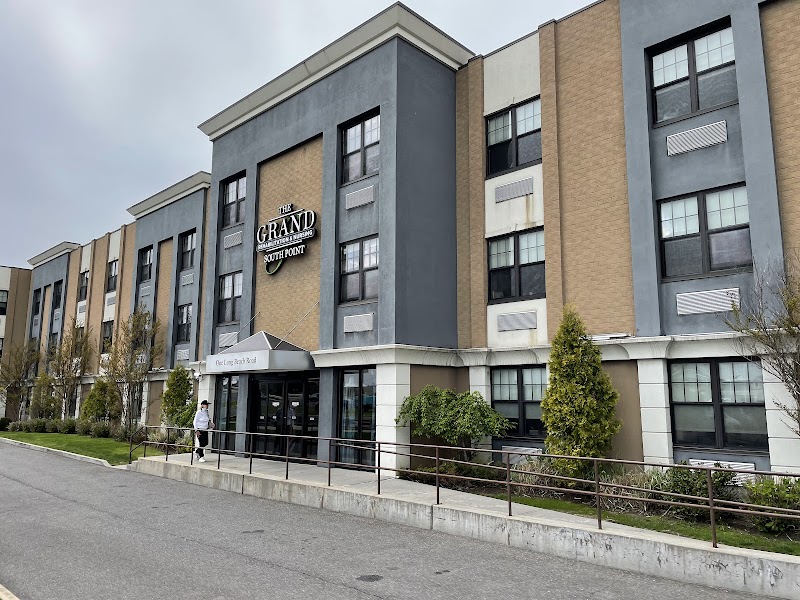
How is The Grand Rehabilitation And Nursing At South Poin Staffed?

CMS rates THE GRAND REHABILITATION AND NURSING AT SOUTH POIN's staffing level at 3 out of 5 stars, which is average compared to other nursing homes. Staff turnover is 21%, compared to the New York average of 46%. This relatively stable workforce can support continuity of care.

What Have Inspectors Found at The Grand Rehabilitation And Nursing At South Poin?

State health inspectors documented 21 deficiencies at THE GRAND REHABILITATION AND NURSING AT SOUTH POIN during 2021 to 2025. These included: 20 with potential for harm and 1 minor or isolated issues.
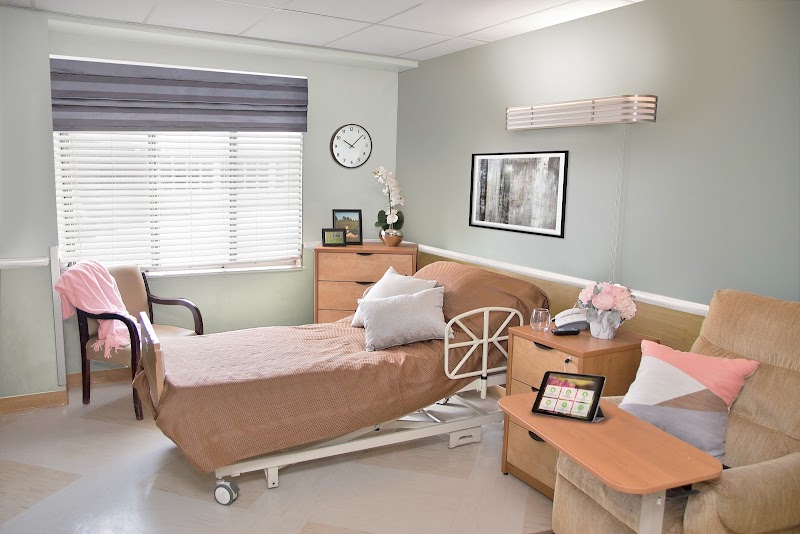
Who Owns and Operates The Grand Rehabilitation And Nursing At South Poin?

THE GRAND REHABILITATION AND NURSING AT SOUTH POIN is owned by a for-profit company. For-profit facilities operate as businesses with obligations to shareholders or private owners. The facility is operated by THE GRAND HEALTHCARE, a chain that manages multiple nursing homes. With 185 certified beds and approximately 182 residents (about 98% occupancy), it is a mid-sized facility located in ISLAND PARK, New York.
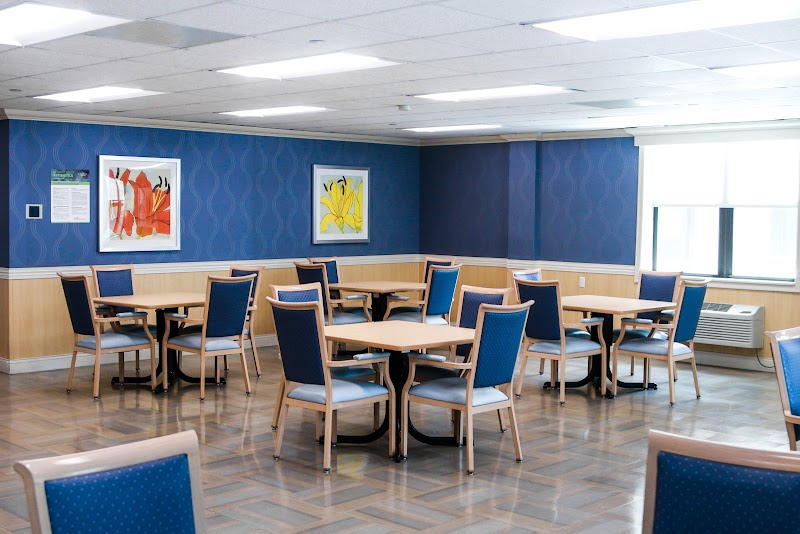
How Does The Grand Rehabilitation And Nursing At South Poin Compare to Other New York Nursing Homes?

Compared to the 100 nursing homes in New York, THE GRAND REHABILITATION AND NURSING AT SOUTH POIN's overall rating (2 stars) is below the state average of 3.1, staff turnover (21%) is significantly lower than the state average of 46%, and health inspection rating (2 stars) is below the national benchmark.

What Should Families Ask When Visiting The Grand Rehabilitation And Nursing At South Poin?

Based on this facility's data, families visiting should ask: "Can I visit during a mealtime to observe dining assistance and food quality?" "How do you handle medical emergencies, and what is your hospital transfer rate?" "Can I speak with family members of current residents about their experience?"

Is The Grand Rehabilitation And Nursing At South Poin Safe?

Based on CMS inspection data, THE GRAND REHABILITATION AND NURSING AT SOUTH POIN has a clean safety record: no substantiated abuse findings (meaning no confirmed cases of resident harm), no Immediate Jeopardy citations (the most serious violation level indicating risk of serious injury or death), and is not on the Special Focus Facility watch list (a federal program monitoring the lowest-performing 1% of nursing homes). The facility has a 2-star overall rating and ranks #100 of 100 nursing homes in New York. While no facility is perfect, families should still ask about staff-to-resident ratios and recent inspection results during their visit.

Do Nurses at The Grand Rehabilitation And Nursing At South Poin Stick Around?

Staff at THE GRAND REHABILITATION AND NURSING AT SOUTH POIN tend to stick around. With a turnover rate of 21%, the facility is 25 percentage points below the New York average of 46%. Low turnover is a positive sign. It means caregivers have time to learn each resident's needs, medications, and personal preferences. Consistent staff also notice subtle changes in a resident's condition more quickly. Registered Nurse turnover is also low at 26%, meaning experienced RNs are available to handle complex medical needs.

Was The Grand Rehabilitation And Nursing At South Poin Ever Fined?

THE GRAND REHABILITATION AND NURSING AT SOUTH POIN has no federal fines on record. CMS issues fines when nursing homes fail to meet care standards or don't correct problems found during inspections. The absence of fines suggests the facility has either maintained compliance or corrected any issues before penalties were assessed. This is a positive indicator, though families should still review recent inspection reports for the full picture.

Is The Grand Rehabilitation And Nursing At South Poin on Any Federal Watch List?

THE GRAND REHABILITATION AND NURSING AT SOUTH POIN is not on any federal watch list. The most significant is the Special Focus Facility (SFF) program, which identifies the bottom 1% of nursing homes nationally based on persistent, serious quality problems. Not being on this list means the facility has avoided the pattern of deficiencies that triggers enhanced federal oversight. This is a positive indicator, though families should still review the facility's inspection history directly.