Livingston County Center for Nursing and Rehabilit
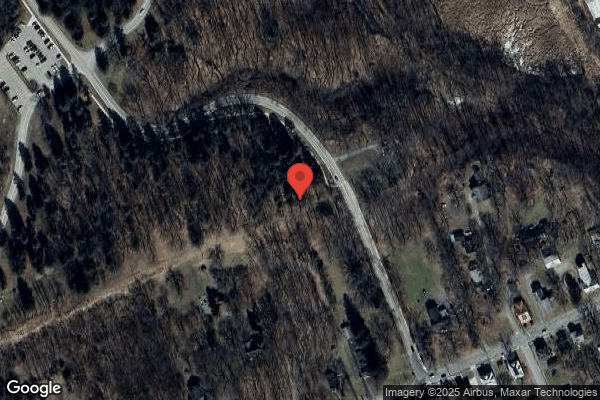
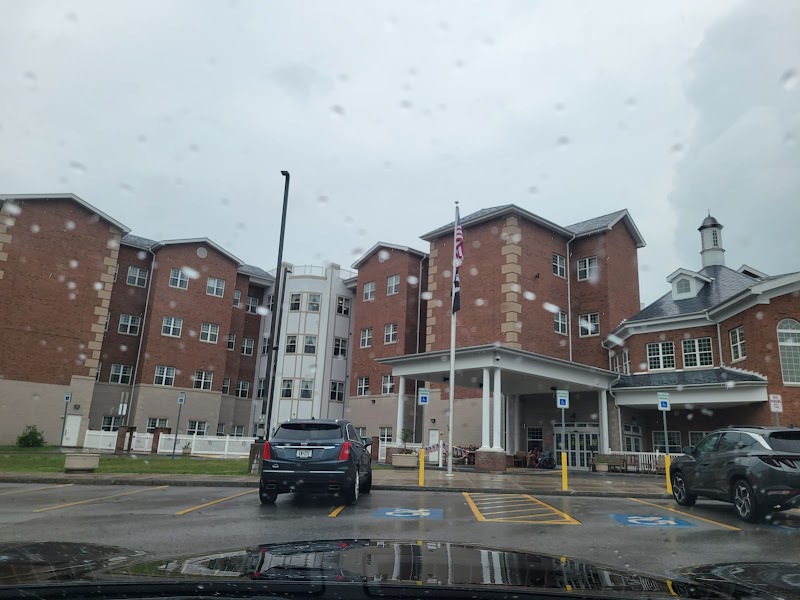
11 Murray Hill Drive, Mount Morris, NY 14510 (585) 243-7200
Government - County 266 Beds Independent Data: November 2025
Trust Grade
80/100
#196 of 594 in NY
Last Inspection: November 2023

Within standard 12-15 month inspection cycle. Federal law requires annual inspections.

Overview

Livingston County Center for Nursing and Rehabilitation has received a Trust Grade of B+, which means it is above average and recommended for families considering this nursing home. It ranks #196 out of 594 facilities in New York, placing it in the top half, but it is the third out of three facilities in Livingston County, indicating limited local options. The facility's trend is worsening, with issues increasing from 1 in 2022 to 7 in 2023, highlighting a growing concern for care quality. Staffing is rated as good at 4 out of 5 stars, but with a turnover rate of 42%, it is average compared to the state average of 40%. While there have been no fines recorded, the RN coverage is concerning, as it is lower than 83% of other facilities, which could impact the quality of care. Specific incidents noted by inspectors included failures in infection control practices during wound care and a lack of personalized care plans for several residents, which could affect their health outcomes. Overall, while there are strengths in staffing and good ratings in several areas, the increasing number of issues and specific care deficiencies are important factors for families to consider.

Trust Score
B+
80/100
In New York
#196/594
Top 32%
Safety Record
Low Risk
No red flags
Inspections
Getting Worse
1 → 7 violations
Staff Stability
○ Average
42% turnover. Near New York's 48% average. Typical for the industry.
Penalties
✓ Good
No fines on record. Clean compliance history, better than most New York facilities.
Skilled Nurses
⚠ Watch
Each resident gets only 29 minutes of Registered Nurse (RN) attention daily — below average for New York. Fewer RN minutes means fewer trained eyes watching for problems.
Violations
⚠ Watch
12 deficiencies on record. Higher than average. Multiple issues found across inspections.
★★★★☆
4.0
Overall Rating
★★★★☆
4.0
Staff Levels
★★★★☆
4.0
Care Quality
★★★★☆
4.0
Inspection Score
Stable
2022: 1 issues
2023: 7 issues

The Good

  • 4-Star Staffing Rating · Above-average nurse staffing levels
  • 4-Star Quality Measures · Strong clinical quality outcomes
  • Full Sprinkler Coverage · Fire safety systems throughout facility
  • No fines on record
  • Staff turnover below average (42%)

    6 points below New York average of 48%

Facility shows strength in staffing levels, quality measures, fire safety.

The Bad

Staff Turnover: 42%

Near New York avg (46%)

Typical for the industry

The Ugly 12 deficiencies on record

Nov 2023 7 deficiencies
CONCERN (D) 📢 Someone Reported This

A family member, employee, or ombudsman was alarmed enough to file a formal complaint

Potential for Harm - no one hurt, but risky conditions existed

Comprehensive Care Plan (Tag F0656)

Could have caused harm · This affected 1 resident

**NOTE- TERMS IN BRACKETS HAVE BEEN EDITED TO PROTECT CONFIDENTIALITY** Based on observations, interviews and record reviews conducted during the Recertification Survey 11/2/23 to 11/8/23, it was dete...

Read full inspector narrative →
**NOTE- TERMS IN BRACKETS HAVE BEEN EDITED TO PROTECT CONFIDENTIALITY** Based on observations, interviews and record reviews conducted during the Recertification Survey 11/2/23 to 11/8/23, it was determined that for 6 (Residents #'s 23, 54, 98, 128, 140, and 674) of 37 residents reviewed for care planning, the facility did not develop a person-centered Comprehensive Care Plan (CCP) that included measurable objectives and timeframes to meet the residents medical, nursing, mental and psychosocial needs and included goals, desired outcomes and preferences. Specifically, there was no CCP to address refusals of care (Resident #54), an indwelling urinary catheter (Resident #98), pressure ulcers and non-pressure skin conditions (Residents #'s 23, 140 and 674) and the use of psychotropic medications (medications to treat mental illness that can have severe side effects) and anti-coagulant medications (medications to prevent blood clots that require close monitoring) (Resident #128). This is evidenced by but not limited to the following: The facility policy, Care Plan- Baseline & Comprehensive, dated 2/8/17 documented that the facility will develop and implement a comprehensive person- centered care plan for each resident that includes measurable objectives and timeframes to meet the resident's preferences, choices, and goals, and address medical, nursing, and mental and psychosocial needs that are identified in the comprehensive assessment. 1.Resident # 98 had diagnoses which included urinary retention, chronic kidney disease, and urinary tract infections. The Minimum Data Set (MDS) assessment dated [DATE], documented that the resident was moderately impaired cognitively and had an indwelling urinary catheter (catheter inserted directly into the bladder via the urethra to drain urine into a drainage bag). During an observation on 11/3/23 at 10:36 AM Resident #98 was in bed. The urinary catheter and bag were hanging free, not attached to the bed, and contained dark orange tinted urine and was not covered for privacy. Review of the current CCP, dated 9/21/23 did not include that Resident #98 had a urinary catheter with goals or interventions for appropriate care of. Review of the Certified Nursing Assistant (CNA) [NAME] (care plan used by the CNAs to provide daily care), documented that Resident #98 had a urinary catheter but did not include any information on the care expectations for the catheter. During an interview on 11/6/23 at 12:00 PM, Licensed Practical Nurse (LPN) #3 stated that a resident should have a urinary catheter care plan so that staff would be aware that the resident had a catheter in place and how to provide care for it. During an interview on 11/7/23 at 10:00 AM, Registered Nurse Manager (RNM) #2 and LPN #4/Charge Nurse both stated that a urinary catheter should be in the CCP and on the [NAME] and should include person-centered interventions. 2.Resident #674 had diagnoses which included diabetes, sacral stage III (full thickness tissue loss involving damage to or death of subcutaneous tissue) pressure injury, and right lower extremity injury requiring negative pressure wound therapy (NPWT). The MDS Assessment, dated 10/10/23 documented that the resident had moderate impairment of cognitive function and was admitted with one stage two (partial thickness skin injury) pressure ulcer. The Care Area Assessment (tool used to assist facilities in baseline areas requiring a comprehensive person-centered care plan with goals and interventions) included that pressure ulcers had been triggered (indicating that a new care plan or revision was necessary to address the issue) but the care plan decision box was blank and there was no documentation as to why there was no care plan initiated. Review of a medical progress note date 11/2/23 revealed that Resident #674 was admitted to the facility for assist with wound care requiring a wound vac (intensive treatment involving a vacuum-assisted closure of a wound using a pump to assist in healing) for a poor healing leg wound following an injury that would require plastic surgery follow-up and eventual surgical intervention. Review of the current CCP revealed no person-centered care plan, including goals and interventions related to any current pressure ulcers or large leg wound requiring a wound vac. During an interview on 11/8/23 at 9:35 AM, RNM #1 stated that when a resident is admitted to the facility, they are required to add five mandatory care plans which included the resident was at risk for falls, pain, and pressure ulcers, activities of daily living, resident preferences, and dental. RNM #1 said the LPNs do not have time to go into each care plan to see interventions because the care plan is not specific for each wound, but the treatments are more specific. 3.Resident #128 had diagnosis including non-Alzheimer dementia, a pulmonary embolism (blood clot to the lungs) and mental disorder. The MDS Assessment documented that the resident had severe impairment of cognitive function, was on anti-psychotic medications, anti-depressant medication and anti-coagulant (blood thinner) medication (all medications requiring increased monitoring due to at high risk for side effects). The question requesting a date for Gradual Dose Reduction (GDR) of the anti-psychotic medication (per regulations) or reason why not was blank. The Care Area Assessment included that psychotropic medications had been triggered but the care plan decision box was blank and no documentation as to why there was no care plan. Review of a pharmacy medication review dated 10/2/23 revealed Pharmacist comments that included, but not limited to, that Resident #128 was on 4 different psychotropic (a group of medications to treat various forms of mental illness), and for staff to monitor for sedation, confusion, falls, to monitor for risk versus benefit and required GDRs. Review of Resident #128's CCP included no information related to anti-psychotic medications, anti-depressant medications or anti-coagulant medications. During an interview on 11/7/23 at 12:55 PM the MDS Assessment staff member stated that if the GDR is not checked on the MDS Assessment it may not get care planned for and it should. During an interview on 11/7/23 at 1:32 PM the Assistant Director of Nursing stated the Nurse Managers are responsible for completing the care plans. During an interview on 11/7/23 at 1:40 PM RNM #2 stated that they start with standard care plans and then build on it from there (for person-centered issues). RNM #2 stated Resident #128 did not have a CCP for the anti-psychotic medications, the anti-depressant medication or the anti-coagulant medication and should have. 10 NYCRR 415.11 (c)(1)
CONCERN (D) 📢 Someone Reported This

A family member, employee, or ombudsman was alarmed enough to file a formal complaint

Potential for Harm - no one hurt, but risky conditions existed

ADL Care (Tag F0677)

Could have caused harm · This affected 1 resident

**NOTE- TERMS IN BRACKETS HAVE BEEN EDITED TO PROTECT CONFIDENTIALITY** Based on observations, interviews and record reviews conducted during the Recertification Survey from 11/2/23 to 11/8/23, it was...

Read full inspector narrative →
**NOTE- TERMS IN BRACKETS HAVE BEEN EDITED TO PROTECT CONFIDENTIALITY** Based on observations, interviews and record reviews conducted during the Recertification Survey from 11/2/23 to 11/8/23, it was determined that for one (Resident #61) of three residents reviewed for activities of daily living (ADLs), the facility did not ensure the resident received the necessary services to maintain good grooming and personal hygiene. Specifically, Resident #61 was observed on multiple occasions with sharp, jagged fingernails. This is evidenced by the following: The facility policy Nails, Care of (Finger and Toe), dated 3/13/15, included that the facility would provide residents with fingernail and toenail care in order to promote health and good hygiene. Certified Nursing Assistants (CNAs) could perform the procedure if the resident was not at risk for complications, and a licensed nurse would perform if the resident was high-risk. Additionally, a Podiatrist could perform the procedure on residents if nails were thick or if unable to be managed by nursing staff. Resident #61 was admitted to the facility with diagnoses that included a stroke and adult failure to thrive. The Minimum Data Set assessment dated [DATE], included that Resident #61 was severely impaired cognitively and required the extensive assistance of staff with personal hygiene. Review of the Comprehensive Care Plan included that Resident #61 required the assistance of one staff member with grooming. Review of Resident #61's [NAME] (a paper copy of a care plan used by the CNAs on the resident unit) documented the resident's shower day was Wednesdays. During an observation on 11/3/23 (two days after the scheduled shower) at 10:09 AM, Resident #61 had several sharp fingernails on both hands. During an observation on 11/8/23 at 10:17 AM, Resident #61 continued to have sharp and jagged fingernails to several fingers on both hands. Review of Resident #61's Interdisciplinary Progress Notes in the electronic health record (EHR) from 10/1/23 to 11/7/23, revealed no documentation related to nail care or refusals of nail care. Review of a Registered Nurse Progress Note dated 10/16/23 at 11:32 AM included that Resident #61 was noted to have sharp and jagged nails, possibly causing a small abrasion on the left hand in addition to combativeness and agitation with care. Review of a Charge Nurse Progress Note dated 10/17/23 at 11:16 AM, included that Resident #61 had a contracture and sharp nails that could cause an abrasion when combative. Review of the ADL sheet in the resident's unit binder included that Resident #61 received a bed bath (versus a shower) on 11/1/23. It did not include any mention of nail care. During an interview on 11/8/23 at 10:22 AM, CNA #1 said that nail care should be done on the resident's scheduled shower day and on shifts with extra staff. CNA #1 stated if nail care was done, they would write it on a piece of paper and either tell the resident's nurse or the unit nurse manager. CNA #1 said that Resident #61 had a bed bath and had their washed first thing this morning and that the resident had a fungus on both thumbnails that they were being treated for. During an interview on 11/8/23 at 10:40 AM, Licensed Practical Nurse (LPN) #1 said that usually the CNAs do nail care on residents' shower days and document it or document if the resident refused or has behaviors (impacting ability to provide nail care). LPN #1 said there were no antifungal treatments ordered for Resident #61. During an interview on 11/8/23 at 10:53 AM, LPN #2/Charge Nurse said nail care should be done on residents' shower days and nails cut and filed as best as possible. LPN #2/Charge Nurse stated there is no place for staff to document nail care, and since it is expected to be done during shower/bath, it is part of the shower documentation, and that staff should document any refusals. LPN #2/Charge Nurse said Resident #61 had received anti-fungal nail polish for almost a year which was discontinued about two months ago. LPN #2/Charge Nurse (with the Registered Nurse Manager) observed Resident #61's fingernails at this time and stated that the left thumbnail was jagged and sharp. 10 NYCRR 415.12(a)(3)
CONCERN (D) 📢 Someone Reported This

A family member, employee, or ombudsman was alarmed enough to file a formal complaint

Potential for Harm - no one hurt, but risky conditions existed

Deficiency F0697 (Tag F0697)

Could have caused harm · This affected 1 resident

**NOTE- TERMS IN BRACKETS HAVE BEEN EDITED TO PROTECT CONFIDENTIALITY** Based on observations, interviews, and record review conducted during the Recertification Survey 11/2/23 to 11/8/23 it was deter...

Read full inspector narrative →
**NOTE- TERMS IN BRACKETS HAVE BEEN EDITED TO PROTECT CONFIDENTIALITY** Based on observations, interviews, and record review conducted during the Recertification Survey 11/2/23 to 11/8/23 it was determined that for one (Resident #194) of two residents reviewed for pain management the facility did not manage the resident's pain to the extent possible in accordance with the comprehensive assessment and plan of care, current professional standards of practice, and the resident's goals and preferences. Specifically, there was a lack of consistent pain assessments, monitoring of the effectiveness of the pain management plan of care, and the lack of medical provider notification after continued verbalization of pain and refusals of pain medications. This is evidenced by the following: The facility policy Pain Management, dated 1/24/19, directed the staff to look for nonverbal signs of pain including facial expression, agitation, crying, combative, anxious, moaning, screaming, and calling out. The policy included pain not meeting the resident comfort goal by using pharmacologic or non-pharmacologic interventions will be reported to the physician for further treatment consideration. Resident #194 had diagnoses that included dementia, diabetes, and right shoulder pain. The Minimum Data Set (MDS) assessment dated [DATE] revealed the resident had severe cognitive impairment, was on scheduled pain medication, did not receive PRN (as needed) pain medication, and did not receive non-medication interventions for pain. The MDS Assessment also included that when asked, Resident #194 denied having any pain at the time of assessment. The Comprehensive Care Plan, dated 7/13/23, revealed the resident was at risk for pain with a goal that the resident's pain level will lessen within one hour of intervention. Interventions included administer pain relief as physician indicates, assess characteristics of pain and pain location, observe for nonverbal signs of pain, medications as ordered, therapy referral as needed for comfort/pain control, and to provide non-medication interventions for pain as indicated. A Care Plan Change Form included the resident went on comfort care on 10/4/23. In a medical progress note dated 10/27/23, the Nurse Practitioner (NP) #1 documented that Resident #194 was refusing care and medications, the resident was screaming and calling out during care and activities of daily living. Hydromorphone (a pain medication) was ordered PRN for pain every eight hours and lorazepam was ordered daily at 8:00 AM and PRN one time daily and to continue with every shift pain assessment. During an observation on 11/2/23 at 11:11 AM Resident #194 was moaning, crying out, and in tears. The resident's family was at the bedside and stated they changed medications last week. During an observation on 11/6/23 at 3:23 PM a family member present at the time stated the resident was in pain and had been yelling out. During an observation on 11/7/23 at 9:57 AM Resident #194 was up in their chair in their room crying out. At 10:30 AM the resident was still crying out repeatedly. During an observation on 11/7/23 at 4:01 PM resident #194 was in bed crying out Help me lord. Two staff members were attempting to provide care and the resident screamed out. The resident stated they were in pain but were unable to say where. Review of November 2023 Medication Administration Record (MAR) 11/1/23 through 11/7/23 revealed that ongoing pain assessments were checked off as completed for each shift. The MARs also included that the daily ordered lorazepam (per the NP note) was checked off as not administered on 11/4/23 through 11/6/23, no PRN lorazepam was documented as administered and no hydromorphone was documented as administered. Review of the nursing progress notes, 11/2/23 through 11/7/23, revealed five nursing progress notes documenting that Resident #194 was crying/screaming out, refusing medications, and was combative with care. None of the five notes included that the provider had been notified of the ongoing pain or the refusals of the oral pain medication or non-medication interventions. During an interview on 11/7/23 at 9:59 AM Licensed Practical Nurse (LPN) #10 stated Resident #194 was medicated with lorazepam, hydromorphone, and a lidocaine pain patch on her right shoulder at 8:00 AM but had to be moved out of the dining room due to moaning and did not eat much. During an interview on 11/7/23 at 2:22 PM Certified Nursing Assistant (CNA) #2 stated that when Resident #194 cries out they try to comfort the resident and see what might be wrong. CNA #2 stated that Resident #194 sometimes cries out with care. During an interview on 11/8/23 at 1:28 PM Nurse Manager #4, stated that an interdisciplinary team meeting was held on 11/7/23 (after surveyor intervention) for Resident #194 and a hospice referral was completed and pain medications were reviewed, and routes changed (due to refusals of oral medications). 10 NYCRR 415.12
CONCERN (D) 📢 Someone Reported This

A family member, employee, or ombudsman was alarmed enough to file a formal complaint

Potential for Harm - no one hurt, but risky conditions existed

Deficiency F0744 (Tag F0744)

Could have caused harm · This affected 1 resident

**NOTE- TERMS IN BRACKETS HAVE BEEN EDITED TO PROTECT CONFIDENTIALITY** Based on observations, interviews and record review conducted during the Recertification Survey from 11/2/23-11/8/23 the facilit...

Read full inspector narrative →
**NOTE- TERMS IN BRACKETS HAVE BEEN EDITED TO PROTECT CONFIDENTIALITY** Based on observations, interviews and record review conducted during the Recertification Survey from 11/2/23-11/8/23 the facility did not ensure a resident who displayed or was diagnosed with dementia received the appropriate treatment and services to maintain their highest practicable physical, mental, and psychosocial well-being for one (Resident #128) of four residents reviewed for dementia care. Specifically, the facility did not ensure the development and implementation of a person-centered care plan that included interventions specific to Resident #128 dementia, did not address the resident's behaviors, goals, or interventions required and did not address the use of multiple psychotropic medications or the monitoring of. The is evidenced by the following: Resident #128 had diagnosis including non-Alzheimer's dementia, depression, mental disorder, and repeated falls. The Minimum Data Set (MDS) Assessment, dated 10/10/23, documented that Resident #128 had severe impairment of cognitive function, had difficulty focusing attention, trouble concentrating, verbalized feeling down, depressed or hopeless, and was tired or having little energy on multiple days in the seven-day look back period. The MDS Assessment also included that Resident #128 was on multiple psychotropic medications (medications used to treat mental illness that require close monitoring due to possible severe side effects). The question regarding if a gradual dose reduction of the psychotropic medications was attempted was blank. Review of Resident #128's Comprehensive Care Plan did not include any mention of the resident's behaviors with goals or interventions for staff to utilize and did not include use of multiple psychotropic medications and monitoring for side effects, goals or attempting a gradual dose reduction if indicated for the care of a resident with dementia. The resident's [NAME] (care plan used by the Certified Nursing Assistants (CNAs) for daily care) under behaviors/triggers/behavior plan was blank. During multiple observations on 11/7/23 and 11/8/23 morning and afternoon, Resident #128 was in bed asleep. During an interview on 11/7/23 at 1:00 PM Licensed Practical Nurse (LPN) #7 (working on Resident #128's unit) stated that they did not normally work on that unit and did not know Resident #128 very well but that the resident does refuse their medications at times. During an interview on 11/7/23 at 1:18 PM CNA #3 (Resident #128's CNA) stated that the resident does have behaviors and will not let the staff provide care unless a family member is present. CNA #3 said the resident did not have a sunflower on their [NAME] (indicative of a behavior plan that staff should refer to for interventions) or a behavior plan which would offer different ways to approach the resident when they refuse care and that they are not sure what to do for the resident when this occurs. CNA #3 said that the preference sheet for Resident #128 in the CNA binder was no longer applicable to Resident #128. CNA #3 stated the resident's behaviors were not daily but were often enough and added that the resident also sleeps a lot. During an interview on 11/7/23 at 1:40 PM Registered Nurse Manager #2 stated that the resident's CCP start as standard and are then become more specific to the resident. RNM #2 stated that Resident #128 should have a care plan for dementia care to guide the staff and for the psychotropic medications they are on to monitor for side effects. 10 NYCRR 415.12
CONCERN (D) 📢 Someone Reported This

A family member, employee, or ombudsman was alarmed enough to file a formal complaint

Potential for Harm - no one hurt, but risky conditions existed

Unnecessary Medications (Tag F0759)

Could have caused harm · This affected 1 resident

Based on observations, interviews, and record review conducted during the Recertification Survey 11/2/23 - 11/8/23 it was determined that for two (Resident # 144 and Resident #727) of five residents o...

Read full inspector narrative →
Based on observations, interviews, and record review conducted during the Recertification Survey 11/2/23 - 11/8/23 it was determined that for two (Resident # 144 and Resident #727) of five residents observed during medication administration, the facility did not ensure it was free of a medication rate of 5 percent (%) or greater. There were 2 medications errors for 26 opportunities resulting in a 7.7% medication error rate. The issues included the administration of one medication at the wrong time and the crushing a delayed-release medication that was labeled on the box Do not crush. This is evidenced by the following: 1.Resident #727 had diagnoses that include hypothyroidism (a condition of the thyroid gland that can cause multiple health issues including heart issues), dementia, and congestive heart failure. Current Physician orders included, but not limited to: Synthroid 50 micrograms (mcg) daily at 6:00 AM for hypothyroidism with instructions to be given on an empty stomach before breakfast. During an observation on 11/7/23 at 8:30 AM Licensed Practical Nurse (LPN) #7 administered the Synthroid 50 mcg with four other morning medications. Resident #727 stated at the time that they had already eaten breakfast. During an interview on 11/7/23 at 1:42 PM, Resident #727 stated the medication is supposed to be given before breakfast, but the staff here bring it late all the time. During an interview on 11/7/23 at 3:57 PM, Registered Nurse Manager (RNM) #2 stated this medication should have been given at 6:00 AM before breakfast as scheduled. 2. Resident #144 had diagnoses that included gastroesophageal reflux disease (GERD), chronic kidney disease, and congestive heart failure. Current Physician orders included, but not limited to omeprazole 20 milligrams (mg) delayed release tablet daily for GERD and was scheduled for 9:00 AM. During an observation on 11/7/23 at 9:02 AM, LPN #11 crushed and added the omeprazole 20 mg medication to applesauce and administered it to Resident #144. Review of instructions on the omeprazole packaging with LPN #11 after the administration revealed instructions: Do Not Chew or Crush. During an interview on 11/7/23 at approximately 9:15 AM following the administration, LPN #11 stated that after review of the directions on the omeprazole packaging they should not have crushed the delayed release omeprazole. During an interview on 11/8/23 at 10:19 AM, LPN/Charge Nurse #8 stated normally staff mark the delayed release medications as Do not crush in the electronic medical record (EMR) when inputting the order. LPN #8 stated Resident #144 did not have Do not crush in their EMR under the omeprazole and should have. 415.12(m)(1)
CONCERN (D) 📢 Someone Reported This

A family member, employee, or ombudsman was alarmed enough to file a formal complaint

Potential for Harm - no one hurt, but risky conditions existed

Deficiency F0883 (Tag F0883)

Could have caused harm · This affected 1 resident

**NOTE- TERMS IN BRACKETS HAVE BEEN EDITED TO PROTECT CONFIDENTIALITY** Based on interviews and record reviews conducted during the Recertification Survey from 11/2/23 to 11/8/23, it was determined th...

Read full inspector narrative →
**NOTE- TERMS IN BRACKETS HAVE BEEN EDITED TO PROTECT CONFIDENTIALITY** Based on interviews and record reviews conducted during the Recertification Survey from 11/2/23 to 11/8/23, it was determined that for one (Resident #132) of five residents reviewed for immunizations, the facility was unable to provide documentation that Resident #132 (who was eligible) had been offered, declined, and/or educated on the Pneumococcal immunization or had received it prior to admission. This is evidenced by the following: The facility policy Infection Control, Pneumococcal Vaccine (Pneumovax 23, Prevnar 13), dated 10/25/22 documented, it shall be the policy of the [NAME] County Center for Nursing and Rehabilitation that all residents will be offered the pneumococcal vaccine (Pneumovax 23, Prevnar 13) to aid in preventing infections and pneumonia. Prior to or upon admission, residents will be assessed for eligibility to receive the Pneumococcal vaccine, and when indicated, provided the vaccination within 30 days of admission to the facility unless medically contraindicated or the resident refuses the vaccine for personal or religious reasons. Resident #132 had diagnoses including heart failure, dementia, and chronic kidney disease. The Minimum Data Set assessment dated [DATE], documented the resident was over [AGE] years of age, was cognitively intact, that their Pneumococcal vaccine was not up to date and that they had not been offered the Pneumococcal vaccine. Review of the hospital Discharge summary dated [DATE] revealed Resident #132 was recently discharged from the hospital with multiple admitting diagnoses that included but not limited to chronic respiratory failure with hypoxia (low oxygen levels). During an interview on 11/03/23 at 1:06 PM, LPN #5 said Resident #132 required oxygen, but that they continuously took their oxygen off, resulting in a decrease in their oxygenation. During an Infection Control record review and interview on 11/08/23 at 9:23 AM, the Infection Control Nurse (ICN) stated they could not find proof that Resident #132 had received the Pneumococcal vaccine or had been offered it. The ICN said there was a note in the electronic medical record (EMR) that documented the resident was offered the influenza vaccine, but that they declined, so the ICN said they assumed the resident had declined the Pneumococcal vaccine as well. The ICN said that the resident's representative had stated the resident had not received the Pneumococcal vaccine. During an interview on 11/08/23 at 1:53 PM, the Director of Nursing (DON) said they were aware that staff could not find evidence that Resident #132 had received the Pneumococcal vaccine upon admission. The DON said the admitting nurse should check with the provider to see if the resident had received the Pneumococcal vaccine and if not, they should confirm with the provider if the resident is eligible and should receive it. The DON said they could not find evidence that the provider was called or if the resident had received the vaccine. Additionally, the DON said Resident #132 had recently been sent to the hospital for respiratory related issues, but they were unaware if the hospital had a record of the resident's immunizations. Review of Resident #132's EMR revealed no evidence the resident had received the Pneumococcal vaccine, educated on it or had declined the vaccine. Review of the primary care physician's note on 11/8/23, documented per their records, Resident #132 had never received the Pneumococcal vaccine. Verbal consent was given, and the resident accepted the vaccine. 10 NYCRR 415.19(a)(3)
MINOR (B) 📢 Someone Reported This

A family member, employee, or ombudsman was alarmed enough to file a formal complaint

Minor Issue - procedural, no safety impact

MDS Data Transmission (Tag F0640)

Minor procedural issue · This affected multiple residents

**NOTE- TERMS IN BRACKETS HAVE BEEN EDITED TO PROTECT CONFIDENTIALITY** Based on interviews and record review conducted during the Recertification Survey 11/2/23 - 11/8/23 the facility did not ensure ...

Read full inspector narrative →
**NOTE- TERMS IN BRACKETS HAVE BEEN EDITED TO PROTECT CONFIDENTIALITY** Based on interviews and record review conducted during the Recertification Survey 11/2/23 - 11/8/23 the facility did not ensure that within 14 days after completion of a resident's assessment (a comprehensive assessment of a resident's functional capabilities, problems and the care required) they electronically transmitted encoded, accurate, and complete Minimum Data Set (MDS) Assessment data to the Centers for Medicare and Medicaid Services (CMS) System for 22 of 22 residents (Residents #243, 180, 238, 86, 162, 247, 244, 237, 99, 235, 103, 239, 29, 200, 245, 72, 65, 150, 69, 212, 116, and 167) reviewed. Specifically discharge MDS Assessments were not completed and were not submitted to CMS within 14 of completion per the regulations. This is evidenced by, but is not limited to the following: The Long-Term Care Facility Resident Assessment Instrument 3.0 version 1.18.11 dated October 2023 documented that: Resident Assessment Transmittal requirements: Within 14 days after a facility completes a resident's assessment, a facility must electronically transmit encoded, accurate, and complete MDS data to the CMS System, including the following: (i)admission assessment. (ii) Annual assessment. (iii) Significant change in status assessment. (iv) Significant correction of prior full assessment. (v) Significant correction of prior quarterly assessment. (vi) Quarterly review. (vii) A subset of items upon a resident's transfer, reentry, discharge, and death. (viii) Background (face-sheet) information, for an initial transmission of MDS data on resident that does not have an admission assessment. 1. Resident #235 was discharged from the facility in May 2023. The Discharge MDS Assessment with an Assessment Reference Date (ARD- day of discharge), dated 5/31/23 was not submitted to CMS until after surveyor intervention on 11/6/233. 2. Resident #180 was discharged from the facility 7/5/23. The Discharge MDS Assessment had not been completed as of 11/8/23. 3. Resident #243 was discharged from the facility on 6/15/23. The Discharge MDS assessment dated [DATE] was not submitted until after surveyor intervention on 11/6/23. During an interview on 11/08/23 at 9:17 AM the MDS Nurse #1 and the Quality Assurance and Performance Improvement Coordinator (QAPI) #1 both stated that they along with the MDS Coordinator (not present for interview) do all the MDS Assessments including the Discharge Assessments and knew there was an issue getting them completed on time and were working on fixing the problem. During an interview on 11/8/23 at 1:53 PM the QAPI Coordinator added that the MDS' not being completed was identified by QAPI in August at a time when the facility census was increasing, and staff were doing several jobs. An additional MDS staff member was added, and a weekly audit was started but that the results had not been sent back to QAPI. 10 NYCRR 415.11
Jan 2022 1 deficiency
CONCERN (D)

Potential for Harm - no one hurt, but risky conditions existed

Pharmacy Services (Tag F0755)

Could have caused harm · This affected 1 resident

Based on observations, interviews and record review conducted during the Recertification Survey, completed on 1/28/22, it was determined that for one (first floor- Lilac) of two units reviewed for med...

Read full inspector narrative →
Based on observations, interviews and record review conducted during the Recertification Survey, completed on 1/28/22, it was determined that for one (first floor- Lilac) of two units reviewed for medication storage, the facility did not ensure that an accurate reconciliation of all controlled substances was maintained. Specifically, the Controlled Substance Record sheets which included reconciliation of narcotic medications and the signatures of staff members for each shift-to-shift count were not completed to validate the correct controlled substance count. This is evidenced by the following: The undated facility policy titled Narcotic Count documented that the facility will ensure that narcotic count is complete, and the keys are reconciled. Each medication administered must be logged on a controlled substance administration sheet and the balance must be reconciled between nurses. The procedure for surrendering controlled substances will be in accordance with Public Health Law. During medication storage review on 1/27/22 at 9:00 a.m., the Lilac unit shift-shift narcotic count sheets revealed multiple missing signatures to verify that the counts were properly completed by two nurses. From 1/1/22 to 1/26/22, there were nineteen missing signatures, from 12/1/21 to 12/31/21, there were five missing signatures and from 11/1/21 to 11/30/21 there were eight missing signatures to verify that the controlled substances count had been completed and were accurate. During an interview on 1/27/22 at 9:05 a.m., the Licensed Practical Nurse (LPN) said staff are expected to sign off the narcotic count at each shift to ensure the narcotic count is correct, and that they are taking the keys and the medication cart. The LPN said there should be no missing signatures on the narcotic shift to shift count sheet but is unaware of who is responsible for ensuring they are completed. During an interview on 1/27/22 at 1:49 p.m., the Director of Nursing (DON) stated that the narcotic count should always be done by two nurses each time the keys are surrendered and that they should always sign the narcotic count sheet each time they perform the narcotic count. The DON stated that use of agency nurses may be the reason for the missing signatures and that the Nurse Manager should make sure the sheets are signed. The DON stated that they were doing audits of the sheets at one time but does not remember when this was stopped. NYCRR 415.18(b)(1)(2)(3)
Jul 2019 4 deficiencies
CONCERN (D)

Potential for Harm - no one hurt, but risky conditions existed

Deficiency F0655 (Tag F0655)

Could have caused harm · This affected 1 resident

**NOTE- TERMS IN BRACKETS HAVE BEEN EDITED TO PROTECT CONFIDENTIALITY** Based on interviews and record review conducted during the Recertification Survey, it was determined that for 8 (Resident #3, #2...

Read full inspector narrative →
**NOTE- TERMS IN BRACKETS HAVE BEEN EDITED TO PROTECT CONFIDENTIALITY** Based on interviews and record review conducted during the Recertification Survey, it was determined that for 8 (Resident #3, #21, #78, #94, #162, #179, #202, and #224) of 15 residents reviewed for Baseline Care Plans, the facility did not consistantly develop and implement a thorough Baseline Care Plan within 48 hours of admission that included instructions needed to provide effective person centered care and/or provide the resident or representative with a written summary of the Baseline Care Plan. This is evidenced by, but not limited to, the following: Review of the facility policy Baseline and Comprehensive Care Plan, dated 2/8/17, revealed the facility will develop and implement a Baseline Care Plan within 48 hours of admission and include minimum healthcare information including, but not limited to, physician orders, dietary orders and therapy services. The facility will provide the resident and their representative with a summary of the Baseline Care Plan. 1. Resident #3 was admitted to the facility on [DATE] with diagnoses including a fractured tibia and fibula, arthritis, and anxiety. The Minimum Data Set (MDS) Assessment, dated 6/17/19, revealed the resident was cognitively intact. The Baseline Care Plan, dated 6/13/19, did not include goals, services and treatments being provided or dietary and physician orders which was documented as attached. There was no documentation that the written summary had been reviewed and a copy provided to the resident and or representative. When interviewed on 7/12/19 at 11:07 a.m., Registered Nurse (RN) #1 stated upon admission each resident receives a packet that includes their diet, medication orders, and treatments. She said there should be documentation that the packet was provided and reviewed. 2. Resident #78 was admitted to the facility on [DATE] and had diagnoses that included Alzheimer's, depression and osteoarthritis. The MDS Assessment, dated 4/11/19, revealed the resident had severely impaired cognition. The Baseline Care Plan, dated 3/26/18, did not include the diet and or physician orders which was documented as attached. There was no documentation that the written summary had been reviewed and a copy given to the resident's representative. When interviewed on 7/12/19 at 10:00 a.m., the Director of Nursing (DON) stated that the Baseline Care Plan should include the reason the resident was admitted , physician orders, medications, and elopement risk. The DON said that she expects the RN to review the Baseline Care Plan with the resident and or representative and provide them with a copy. She said a copy of the information provided should be kept in the medical record. 3. Resident #21 was admitted to the facility on [DATE] and had diagnoses that included dementia with behaviors, anxiety and a pressure ulcer of the sacrum. The MDS Assessment, dated 4/9/19, revealed the resident had severely impaired cognition. Review of the resident's medical record revealed there was no documented evidence that a Basline Care Plan was completed within 48 hours of admission or a written summary was provided to the resident's representative. When interviewed on 7/12/19 at 12:04 p.m., RN #2 stated a Baseline Care Plan could not be found for the resident. She stated there was no documentation that a Baseline Care Plan was developed or a copy was provided to the resident's representative.
CONCERN (D)

Potential for Harm - no one hurt, but risky conditions existed

Tube Feeding (Tag F0693)

Could have caused harm · This affected 1 resident

**NOTE- TERMS IN BRACKETS HAVE BEEN EDITED TO PROTECT CONFIDENTIALITY** Based on observations, interviews and record reviews conducted during the Recertification Survey, it was determined that for one...

Read full inspector narrative →
**NOTE- TERMS IN BRACKETS HAVE BEEN EDITED TO PROTECT CONFIDENTIALITY** Based on observations, interviews and record reviews conducted during the Recertification Survey, it was determined that for one (Resident #33) of one resident reviewed for enteral nutrition, the facility did not have a mechanism in place to ensure that the administration of enteral nutrition and additional water ordered for flushes was consistent with and followed physician orders, and staff were not consistently using the feeding pump as directed. This is evidenced by the following: Resident #33 was admitted to the facility on [DATE] and had diagnoses including subarachnoid, intracerebral and subdural hemorrhages, chronic respiratory failure with hypoxia, and tracheostomy. The Minimum Data Set Assessment, dated 4/1/19, revealed the resident had severely impaired cognition, weighed 177 pounds with no history of recent weight loss or gain, and the daily use of a tube feeding. A facility policy, General Guidelines for Use of Enteral Feeding Pump, dated 10/29/09, directs that the the feeding solution, tubing and formula container is changed every 24 hours. The feeding container and tubing are to be labeled with date, time, and initialed when initially hung. The physician's order shall address the need for the tube feeding and specify the type, amount, frequency, route, method of administering (pump, bolus, gravity, ready to hang), total number of kilocalories, protein, and the amount and frequency of water. The current physician orders direct tube feeding via gastrostomy (stomach) tube of full strength Jevity 1.2 Cal (a high-protein, fiber-fortified liquid that provides 1.2 calories per milliliter (ml)), 1200 cubic centimeters (cc) per day and a free water flush of 205 cc every four hours. Review of the July 2019 Intake and Output Record from 7/1/19 to 7/10/19, revealed the daily intake of tube feeding and free water was 3762 cc. The record did not include the amount of tube feeding given per day. In an observation on 7/9/19 at 8:57 a.m., a 1,000 ml bottle of Jevity 1.2 Cal had been hung. There was no information documented on the label. The pump was a Covidien Kangaroo epump and the display read: rate 60 ml per hour 1,678 ml delivered. Observations and interviews conducted on 7/11/19 included the following: a. At 12:28 p.m., Licensed Practical Nurse (LPN) #1 said she had turned the tube feeding off as ordered at noon, even though the pump display read that 90 ml more of tube feeding needed to infuse. She said the resident needed his time off the tube feeding. LPN #1 said that the pump had not been cleared as the amount infused read 2,258 ml and she was unable to determine how much had actually been delivered in the last 24 hours. b. At 12:39 p.m., the Registered Nurse Manager (RNM) asked LPN #1 if the pump had beeped (for completion of tube feeding delivery) before she turned it off. LPN #1 said it did not beep but she turned it off anyways because the pump display read that 2,258 ml, had been given from 5:00 a.m. that morning. c. At 1:19 p.m., the Registered Dietitian (RD) said the current nutrition care plan (reviewed with surveyor) was for weight maintenance based on the current tube feeding order. She said the current order provides 1,200 ml of tube feeding and 1,230 ml free water flush to provide a total volume of 2,430 ml per day. The RD said the facility policy was to provide 90 ml water with each med pass. She said the resident has eight med passes per day, so receives an additional 720 ml water per day. The RD reviewed the July 2019 Intake and Output Record and said the tube feeding and water amounts were not separated for individual tally. The RD said as she interpreted the Intake and Output information the daily amount recorded for the tube feeding was consistently 1140 ml per day or 60 ml below the ordered amount. The RD said the total volume per day was consistently recorded as 3,762 ml which meant the total volume of free water given was 1,332 ml (greater than the ordered amount). Interviews conducted on 7/12/19 included the following: a. At 10:34 a.m., the RNM said she reviewed the Intake and Output Record and found a consistent daily total of 1,140 ml. She said the Intake and Output Record had been set up wrong from the start. She said the resident receives 60 ml water per med pass, and has seven med passes per day, so gets a total of 420 ml per day, not 720 ml. b. At 11:08 a.m., the RD said the resident was showing a weight gain trend which she would not expect since the tube feeding was being given below order. She said that Liquacel (a modular protein) had been increased recently, from twice to three times a day, providing an additional 100 calories per day which may have offset the loss of calories from the tube feeding. c. At 11:51 a.m., LPN #2 said the night shift tallies the 24 hour Intake and Output Record and the tube feeding volume has never been separated out. d. At 11:52 a.m., the RNM said the evening shift tallies the 24 hour intake and the amount of tube feeding and water flushes have never been separated. [10 NYCRR 415.12(g)(2)]
CONCERN (D)

Potential for Harm - no one hurt, but risky conditions existed

Medication Errors (Tag F0758)

Could have caused harm · This affected 1 resident

**NOTE- TERMS IN BRACKETS HAVE BEEN EDITED TO PROTECT CONFIDENTIALITY** Based on interviews, and record reviews conducted during the Recertification Survey, it was determined that for one (Resident #1...

Read full inspector narrative →
**NOTE- TERMS IN BRACKETS HAVE BEEN EDITED TO PROTECT CONFIDENTIALITY** Based on interviews, and record reviews conducted during the Recertification Survey, it was determined that for one (Resident #163) of six residents reviewed for unnecessary medications, the facility did not ensure that each resident's drug regimen remained free from unnecessary medications. The issue involved the lack of documentation of what precipitated the resident's behavior, non-pharmacological interventions attempted prior to the administration of a one time dose of an antipsychotic medication and the effectiveness. This is evidenced by the following: Resident #163 was admitted to the facility on [DATE] and had diagnoses including cerebral vascular accident (stroke), depression and anxiety. The Minimum Data Set Assessment, dated 5/15/19, revealed the resident was cognitively intact and exhibited no behaviors. The Comprehensive Care Plan for verbal abuse, dated 10/25/18, revealed the resident can be verbally abusive to others. Interventions included to encourage her to calm down, remind her that becoming so upset and yelling was not going to help her but only going to make her feel worse (can raise blood pressure, etc), encourage her to try and listen to her music, use serenity prayer, deep breathing, sitting outside or trying her aromatherapy. If she brings a problem to staff, let her know it will be referred to the appropriate person and remind her to have patience. A nursing progress note, dated, 6/19/19, revealed the resident was very upset, screaming and crying that no one cares about her, calling the staff names and being verbally abusive. The resident keeps asking for something now. The physician was called and an order for a Haldol (an antipsychotic medication used to treat certain mental disorders) injection was obtained. There was no other documentation regarding the resident's behavior that day (6/19/19) or the day before or after the incident. Interviews conducted on 7/11/19 includes the following: a. At 11:12 a.m., the Licensed Practical Nurse (LPN) said certain staff add to the resident's anxiety, she likes familiarity and routine. She said if the resident was screaming and yelling she talks calmly to her, gives reassurance and works through it with the resident. The LPN said she documents that information. She said the resident has asked her to document that she was having anxiety. After reviewing the 6/19/19 note, the LPN said she did not work that day; however, the progress note should have included what happened prior to the resident's behavior, interventions that were attempted, and the outcome. The LPN said it should be documented when the haldol was given, and how the resident tolerated the injection. b. At 11:46 a.m., the Registered Nurse (RN) who wrote the 6/19/19 note said that the LPN reported to the Registered Nurse Manager (RNM) that the resident was having behaviors and needed something for anxiety, and wanted it NOW. The RN said she called the doctor and told him the resident was anxious. She said the staff tried talking to the resident, but she was insisting, and the doctor ordered the Haldol. She said that both the LPN and RNM that were working that day should have documented what interventions were attempted and the effectiveness. c. At 11:58 a.m., the RNM said that she expects staff to try and find out what is bothering the resident, try to calm her down or remove her from a situation, and attempt aromatherapy. She said staff could find someone that the resident was comfortable talking to before administering any antipsychotic medication. She said staff are expected to document interventions that were attempted. The facility policy for as needed Medication Orders, dated 11/6/14, includes as needed orders are acted upon based on the occurrence of a specific indication or symptom. Psychotropic medications require documentation of non-pharmacological interventions attempted unsuccessfully prior to as needed use. [10 NYCRR 415.12(l)(1)(2)]
CONCERN (E)

Potential for Harm - no one hurt, but risky conditions existed

Infection Control (Tag F0880)

Could have caused harm · This affected multiple residents

**NOTE- TERMS IN BRACKETS HAVE BEEN EDITED TO PROTECT CONFIDENTIALITY** Based on observations, interviews, and record review conducted during the Recertification Survey, it was determined that for one...

Read full inspector narrative →
**NOTE- TERMS IN BRACKETS HAVE BEEN EDITED TO PROTECT CONFIDENTIALITY** Based on observations, interviews, and record review conducted during the Recertification Survey, it was determined that for one (Resident #71) of four residents reviewed for pressure ulcer care and for five (Melody, Country, Park Ave, Lilac, and the Memory Unit) of six residential living units, the facility did not establish and maintain an infection prevention and control program designed to provide a safe, sanitary, and comfortable environment and to help prevent the development and transmission of communicable disease and infection. Specifically, a staff member did not maintain proper infection control practices during wound care, and ice coolers used to transport ice and water for resident water pitchers were not consistently washed, rinsed, sanitized, or air dried between use. This is evidenced by the following: 1. Resident #71 was admitted to the facility on [DATE] and had diagnoses that included bipolar disorder, depression and fibrodysplasia ossification progressive (rare connective tissue disease). The Minimum Data Set Assessment, dated 4/2/19, revealed the resident was cognitively intact and had two Stage II (partial loss of thickness of skin) and two Stage IV (full thickness tissue loss) pressure ulcers. Review of the facility policy, Clean Dressings, dated 10/24/09, revealed clean dressings are applied to wounds to protect and prevent infection. The procedure included, but was not limited to, creating a field with paper towel and or drape, washing hands, donning gloves, removing soiled dressings and discarding in a plastic bag, disposing of gloves, washing hands, donning gloves, cleansing the wound, applying prescribed medication as ordered, applying dressings, removing gloves and discarding in a plastic bag and washing hands. During an observation of wound care on 7/11/19 at 10:21 a.m., a Licensed Practical Nurse (LPN) and Registered Nurse Manager (RNM) applied gowns and gloves prior to entering the resident's room. A sign on the resident's door frame instructed contact precautions. The LPN set a basin of dressing supplies on the resident's bed, removed the soiled dressings from the resident's left foot, washed the wound, obtained supplies from the basin, and applied an Aquacel dressing and gauze pad and wrapped it with Kling. The LPN did not change gloves and/or perform hand hygiene in between removal of the soiled dressings and/or application of the new dressing. After completing the treatment to the left foot, the LPN removed her gloves and performed hand hygiene. The RNM removed the dressing from the left ischium and placed the soiled dressing on the resident's bed sheets. The LPN cleansed the wound and with a gloved hand applied Calmoseptine (moisture barrier) to the wound bed and covered the wound with a dressing. The LPN did not change gloves and/or perform hand hygiene between cleansing of the wound, application of the ointment, or application of the new dressing. The LPN then moved the basin with dressing supplies from the resident's bed to the overbed table and then to the top of a dresser. After settling the resident in bed, the LPN removed her gloves and gown and washed her hands before leaving the resident's room. During an interview on 7/11/19 at 10:42 a.m., the LPN stated she changes her gloves when they become soiled and when moving from one wound to another wound. The LPN stated gloves should be changed after removing the old dressing and before applying a clean dressing. The LPN stated she should have had a barrier between the basin of supplies and the resident's bed. The LPN said the soiled dressing should not have been placed on the sheets. She said she was going to change the bed later. When interviewed on 7/12/19 at 10:19 a.m., the Director of Nursing said that gloves should be changed after removing the old dressing. She said that hand hygiene should be performed either by washing or using hand sanitizer and new gloves donned before applying a clean dressing. 2. Review of a facility policy, Ice Machines and Ice Storage Chests, dated 5/18/12, directs that ice chests will be maintained in a safe and sanitary condition to assure a safe and sanitary supply of ice. Keep the ice scoop on a clean hard surface when not in use. Clean and sanitize the cooler, pitcher and ice scoop daily. The cooler will be put through the dishwasher on the neighborhood daily, generally in the evening. Dining Services staff will run the cooler, ice scoop and water pitcher through the dish machine to disinfect it as the last cycle of the evening. Once run through the dish machine, the items will be left in the rack on the dish washer to dry. After ice is passed, the cooler is to be emptied, dried out with paper towels, tilted forward, and left slightly open to dry on the wheeled cart. Observations and interviews conducted on 7/11/19 included the following: a. At 9:06 a.m., on the second floor, there was an ice cooler on a cart in the hallway outside room D235/Melody. There was a pink water pitcher stored inside the cooler in the ice. b. At 10:58 a.m., on the first floor, there was an ice cooler on a cart in the D-unit dining room/Country. There was a pink water pitcher floating in melted ice water inside the cooler. c. At 2:02 p.m., a Registered Nurse (RN) said the ice machine was down for Country. She said the staff used an ice cooler filled with water and ice for resident's water pitchers. She said that was not the usual practice for passing ice water. d. At 2:16 p.m., on the first floor, there was an ice cooler on a cart in the B-unit dining room/Park Ave that was half full of water. At that time, the Director of Food Service said the ice had melted and the cooler should have been emptied, then washed, rinsed and sanitized. e. At 2:25 p.m., on the second floor, there was an ice cooler on a cart in the B-unit dining room/Lilac that was about one half full of ice with a pink pitcher inside (the handle was in the ice). At that time, Certified Nursing Assistant (CNA) #1 said Personal Care Assistants (PCAs) use the coolers to pass ice for water pitchers. CNA #1 said she does not know if the coolers are ever cleaned. Observations and interviews conducted on 7/12/19 included the following: a. At 9:30 a.m., on the third floor/Memory Unit, PCA #1 said that the ice and pink scoop should not to be left in the cooler. She said after passing ice, the cooler should be emptied and wiped with a Cavi (sanitizing) wipe. PCA #1 said the cooler was not run through the dish machine on the day shift. She said that she does not know if the cooler was ever sanitized in the dish machine. b. At 9:34 a.m., Kitchen Worker #1/Memory Unit said she has nothing to do with the ice coolers and never puts them through the dish machine. Kitchen Worker #1 said the ice cooler was too big to fit inside the unit dish machine and would need to be taken to the Main Kitchen for cleaning. c. At 9:38 a.m., Licensed Practical Nurse (LPN) #1/Memory Unit said a PCA or CNA fills the cooler with ice and uses it to fill the resident's water pitchers every shift. LPN #1 said the cooler was supposed to be cleaned between shifts and put through the dish machine by a Kitchen Worker. d. At 9:46 a.m., on the second floor/Lilac Unit, PCA #2 said she fills the cooler with water and ice and then goes room to room to fill water pitchers. She said there was one cooler for use on the Lilac Unit. At that time, the ice cooler in the Rose/Blue dining room was closed tight and PCA #2 said she had not used it that day. When the lid was opened, there were visible water droplets inside the cooler. e. At 9:52 a.m., on the second floor/Lilac Unit, PCA #3 said she had not used the ice cooler that day. f. At 9:56 a.m., on the second floor/Lilac Unit, Kitchen Worker #2 said the PCA or CNA usually brings him the ice cooler to be cleaned but it does not always fit inside the dish machine. He said the coolers are to be air dried overnight. Kitchen Worker #2 looked inside the cooler and said he could see water which meant it had not been air dried. When interviewed on 7/12/19 at 10:19 a.m., the Director of Nursing said the PCAs and CNAs are responsible to pass ice water. She said the ice cooler should be emptied between uses and tipped to dry out. She said the scoop should not be left inside the cooler. [10 NYCRR 415.19, 14-1.87]
Understanding Severity Codes (click to expand)
Life-Threatening (Immediate Jeopardy)
J - Isolated K - Pattern L - Widespread
Actual Harm
G - Isolated H - Pattern I - Widespread
Potential for Harm
D - Isolated E - Pattern F - Widespread
No Harm (Minor)
A - Isolated B - Pattern C - Widespread

Questions to Ask on Your Visit

  • "Can I speak with families of current residents?"
  • "What's your RN coverage like on weekends and overnight?"

Our Honest Assessment

Strengths
  • • Grade B+ (80/100). Above average facility, better than most options in New York.
  • • No major safety red flags. No abuse findings, life-threatening violations, or SFF status.
  • • No fines on record. Clean compliance history, better than most New York facilities.
  • • 42% turnover. Below New York's 48% average. Good staff retention means consistent care.
Concerns
  • • 12 deficiencies on record. Higher than average. Multiple issues found across inspections.
Bottom line: Generally positive indicators. Standard due diligence and a personal visit recommended.

About This Facility

What is Livingston County Center For Nursing And Rehabilit's CMS Rating?

CMS assigns Livingston County Center for Nursing and Rehabilit an overall rating of 4 out of 5 stars, which is considered above average nationally. Within New York, this rating places the facility higher than 99% of the state's 100 nursing homes. This rating reflects solid performance across the metrics CMS uses to evaluate nursing home quality.

How is Livingston County Center For Nursing And Rehabilit Staffed?

CMS rates Livingston County Center for Nursing and Rehabilit's staffing level at 4 out of 5 stars, which is above average compared to other nursing homes. Staff turnover is 42%, compared to the New York average of 46%. This relatively stable workforce can support continuity of care.

What Have Inspectors Found at Livingston County Center For Nursing And Rehabilit?

State health inspectors documented 12 deficiencies at Livingston County Center for Nursing and Rehabilit during 2019 to 2023. These included: 11 with potential for harm and 1 minor or isolated issues.

Who Owns and Operates Livingston County Center For Nursing And Rehabilit?

Livingston County Center for Nursing and Rehabilit is owned by a government entity. Government-operated facilities are typically run by state, county, or municipal agencies. The facility operates independently rather than as part of a larger chain. With 266 certified beds and approximately 252 residents (about 95% occupancy), it is a large facility located in Mount Morris, New York.

How Does Livingston County Center For Nursing And Rehabilit Compare to Other New York Nursing Homes?

Compared to the 100 nursing homes in New York, Livingston County Center for Nursing and Rehabilit's overall rating (4 stars) is above the state average of 3.1, staff turnover (42%) is near the state average of 46%, and health inspection rating (4 stars) is above the national benchmark.

What Should Families Ask When Visiting Livingston County Center For Nursing And Rehabilit?

Based on this facility's data, families visiting should ask: "Can I visit during a mealtime to observe dining assistance and food quality?" "How do you handle medical emergencies, and what is your hospital transfer rate?" "Can I speak with family members of current residents about their experience?"

Is Livingston County Center For Nursing And Rehabilit Safe?

Based on CMS inspection data, Livingston County Center for Nursing and Rehabilit has a clean safety record: no substantiated abuse findings (meaning no confirmed cases of resident harm), no Immediate Jeopardy citations (the most serious violation level indicating risk of serious injury or death), and is not on the Special Focus Facility watch list (a federal program monitoring the lowest-performing 1% of nursing homes). The facility has a 4-star overall rating and ranks #1 of 100 nursing homes in New York. While no facility is perfect, families should still ask about staff-to-resident ratios and recent inspection results during their visit.

Do Nurses at Livingston County Center For Nursing And Rehabilit Stick Around?

Livingston County Center for Nursing and Rehabilit has a staff turnover rate of 42%, which is about average for New York nursing homes (state average: 46%). Moderate turnover is common in nursing homes, but families should still ask about staff tenure and how the facility maintains care continuity when employees leave.

Was Livingston County Center For Nursing And Rehabilit Ever Fined?

Livingston County Center for Nursing and Rehabilit has no federal fines on record. CMS issues fines when nursing homes fail to meet care standards or don't correct problems found during inspections. The absence of fines suggests the facility has either maintained compliance or corrected any issues before penalties were assessed. This is a positive indicator, though families should still review recent inspection reports for the full picture.

Is Livingston County Center For Nursing And Rehabilit on Any Federal Watch List?

Livingston County Center for Nursing and Rehabilit is not on any federal watch list. The most significant is the Special Focus Facility (SFF) program, which identifies the bottom 1% of nursing homes nationally based on persistent, serious quality problems. Not being on this list means the facility has avoided the pattern of deficiencies that triggers enhanced federal oversight. This is a positive indicator, though families should still review the facility's inspection history directly.