SANDS POINT CENTER FOR HEALTH AND REHABILITATION
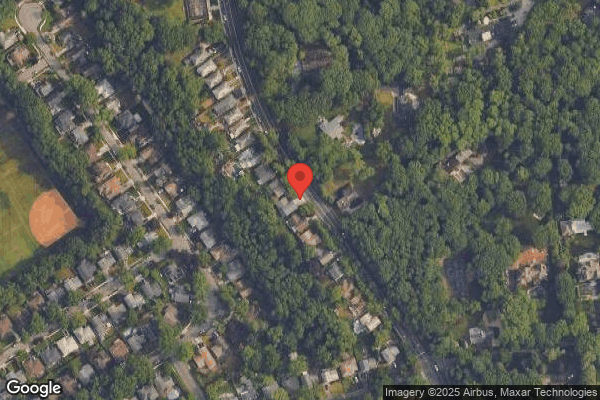
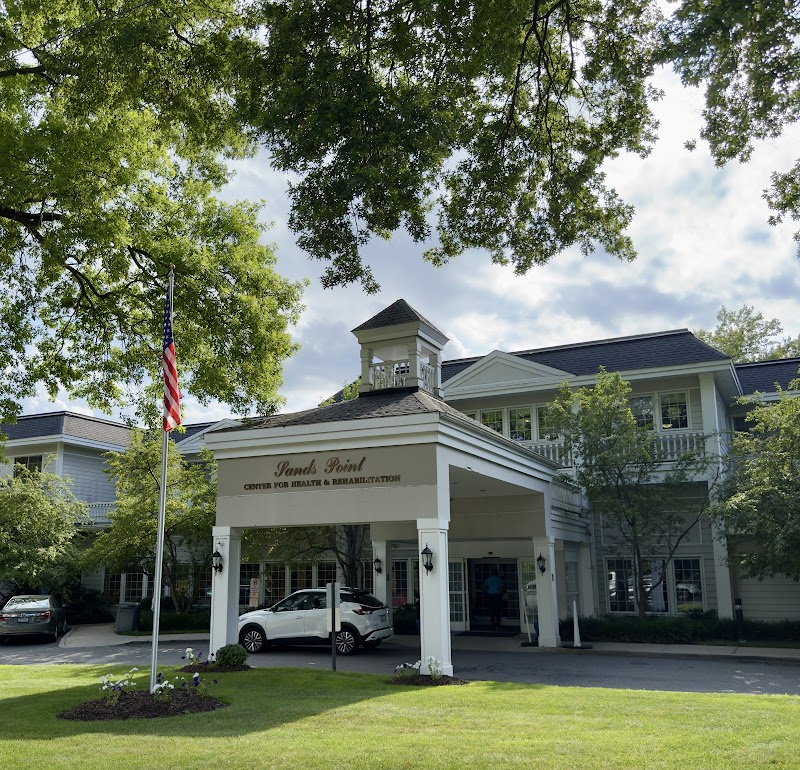
1440 PORT WASHINGTON BLVD, PORT WASHINGTON, NY 11050 (516) 719-9400
For profit - Corporation 180 Beds NATIONAL HEALTH CARE ASSOCIATES Data: November 2025
Trust Grade
78/100
#222 of 594 in NY
Last Inspection: May 2024

Within standard 12-15 month inspection cycle. Federal law requires annual inspections.

Overview

Sands Point Center for Health and Rehabilitation has a Trust Grade of B, indicating it is a good but not exceptional choice for care. It ranks #222 out of 594 facilities in New York, placing it in the top half of all state facilities, and #16 out of 36 in Nassau County, meaning there are only 15 local options that perform better. However, the facility is currently experiencing a worsening trend, with reported issues increasing from 2 in 2023 to 7 in 2024. Staffing is a notable concern, as it has a low 2-star rating and numerous residents have complained about short staffing, which could impact their safety and well-being. On the positive side, there have been no fines reported, and the facility has more RN coverage than 89% of similar facilities, which helps ensure that potential health problems are caught early. Despite these strengths, recent inspections revealed serious issues, such as staff not providing adequate care plans for residents and failing to document accidents properly, which raises concerns about the facility's overall care quality.

Trust Score
B
78/100
In New York
#222/594
Top 37%
Safety Record
Low Risk
No red flags
Inspections
Getting Worse
2 → 7 violations
Staff Stability
✓ Good
29% annual turnover. Excellent stability, 19 points below New York's 48% average. Staff who stay learn residents' needs.
Penalties
✓ Good
No fines on record. Clean compliance history, better than most New York facilities.
Skilled Nurses
✓ Good
Each resident gets 62 minutes of Registered Nurse (RN) attention daily — more than 97% of New York nursing homes. RNs are the most trained staff who catch health problems before they become serious.
Violations
⚠ Watch
19 deficiencies on record. Higher than average. Multiple issues found across inspections.
★★★★☆
4.0
Overall Rating
★★☆☆☆
2.0
Staff Levels
★★★★★
5.0
Care Quality
★★★☆☆
3.0
Inspection Score
Stable
2023: 2 issues
2024: 7 issues

The Good

  • 5-Star Quality Measures · Strong clinical quality outcomes
  • Low Staff Turnover (29%) · Staff stability means consistent care
  • Full Sprinkler Coverage · Fire safety systems throughout facility
  • No fines on record
  • Staff turnover is low (29%)

    19 points below New York average of 48%

Facility shows strength in quality measures, staff retention, fire safety.

The Bad

Chain: NATIONAL HEALTH CARE ASSOCIATES

Part of a multi-facility chain

Ask about local staffing decisions and management

The Ugly 19 deficiencies on record

May 2024 7 deficiencies
CONCERN (D)

Potential for Harm - no one hurt, but risky conditions existed

Comprehensive Care Plan (Tag F0656)

Could have caused harm · This affected 1 resident

Based on observation, record review, and interviews during the Recertification Survey initiated on 5/22/2024 and completed on 5/30/2024 the facility did not ensure that a comprehensive person-centered...

Read full inspector narrative →
Based on observation, record review, and interviews during the Recertification Survey initiated on 5/22/2024 and completed on 5/30/2024 the facility did not ensure that a comprehensive person-centered care plan was implemented for each resident that included measurable objectives and timeframes to meet a resident's medical, nursing, and mental and psychosocial needs that are identified in the comprehensive assessment. This was identified for one (Resident #86) of three residents reviewed for Pressure Ulcers. Specifically, Resident #86, who was assessed to be at risk for developing pressure ulcers, was observed in bed on multiple occasions not wearing the physician-ordered protective heel boots. The finding is: The facility's undated policy titled Pressure Ulcer documented to always maintain the highest degree of skin and tissue integrity. It is the responsibility of facility staff via the interdisciplinary team to recognize any resident who is at risk for pressure ulcer development and initiate appropriate preventive measures. It is the goal of this facility to identify residents at risk, devise individualized care plans, promote involvement of the resident in the development of the plan of care, initiate preventative measures, and promote healing. Resident #86 was admitted with diagnoses including Diabetes Mellitus, Cerebrovascular Accident, and Hemiplegia (paralysis or weakness to one side of the body) following a Cerebrovascular Accident affecting the left non-dominant side. The 3/25/2024 Quarterly Minimum Data Set assessment documented a Brief Interview for Mental Status score of 13, indicating the resident was cognitively intact. The Minimum Data Set documented the resident had functional limitation in range of motion in both upper and lower extremities, was at risk for developing pressure ulcers, and had two venous/arterial ulcers. A Physician's order effective 9/18/2023 and renewed on 5/23/2024 documented to apply heel boots when in bed, remove for skin checks and hygiene, every day at 7:00 AM-3:00 PM; 3:00 PM-11:00 PM; 11:00 PM-7:00 AM. A physician's order dated 5/2/2024 documented to cleanse the right great toe with normal saline, pat dry, apply Betadine (antiseptic solution), and cover with a dry protective dressing daily. The Certified Nursing Assistant Resident Nursing Instructions for 5/1/2024-5/31/2024 did not include an intervention for offloading the heels with the use of heel boots or pillows as part of the resident's daily care. Resident #86 was observed in bed on 5/22/2024 at 10:59 AM. The resident not wearing the physician-ordered heel boots and the resident's heels were directly resting on the mattress. The resident stated they were not aware of having heel boots. On 5/23/2024 at 12:07 PM Resident #86 was observed in bed wearing a pair of diabetic shoes (specialized shoes to be worn out of bed, designed to protect feet from forces that can break down skin and develop sores and ulcers). The resident stated the shoes were just put on by the nursing staff because the resident would be getting out of bed soon. The resident stated prior to having the shoes put on, they were just wearing socks on their feet while in bed. Certified Nursing Assistant #4 was interviewed on 5/23/2024 at 12:09 PM and stated they did not know anything about the resident needing to wear heel boots in bed. Certified Nursing Assistant #4 then searched the resident's room and found the heel boots in the resident's closet. The resident was present in the room and stated they refused to wear the heel boots because the heel boots are cumbersome. The resident stated the last time they wore the heel boots was months ago. The resident stated, I have a dressing on my toe and socks, that is all I wore. On 5/24/2024 at 7:50 AM Resident #86 was observed in bed wearing socks. The heels were not offloaded from the mattress. Registered Nurse #5, the unit manager, was interviewed on 5/24/2024 at 7:55 AM and stated Certified Nursing Assistant #4 did not notify them that the resident was refusing to wear their heel boots. Registered Nurse #5 reviewed the resident's medical record and stated there was no documentation of the resident refusing to wear the heel boots. Registered Nurse #5 stated they would speak with the resident, update the care plan, and explore an alternative for offloading the heels that can be used. The Director of Nursing Services was interviewed on 5/24/2024 at 9:37 AM and stated if the resident was uncomfortable with using the heel boots and was refusing to wear them, the staff should have reached out to the Doctor and the Rehabilitation Department for an alternate means to offload the heels. A progress note written by the Director of Nursing Services on 5/25/2024 at 12:05 AM documented the resident continues to refuse heel boots despite encouragement. The Physician was notified with orders to discontinue the heel boots at this time. The Resident is to be offered pillows to offload the heels as needed. 10 NYCRR 415.11 (c)(1)
CONCERN (D)

Potential for Harm - no one hurt, but risky conditions existed

Pressure Ulcer Prevention (Tag F0686)

Could have caused harm · This affected 1 resident

**NOTE- TERMS IN BRACKETS HAVE BEEN EDITED TO PROTECT CONFIDENTIALITY** Based on observations, record review, and interviews during the Recertification Survey initiated on 5/22/2024 and completed on 5...

Read full inspector narrative →
**NOTE- TERMS IN BRACKETS HAVE BEEN EDITED TO PROTECT CONFIDENTIALITY** Based on observations, record review, and interviews during the Recertification Survey initiated on 5/22/2024 and completed on 5/30/2024, the facility did not ensure that each resident with pressure ulcers received necessary treatment and services consistent with professional standards of practice to promote healing, prevent infection, and prevent new ulcers from developing. This was identified for two (Resident # 126 and Resident #124) of three residents reviewed for Pressure Ulcers. Specifically, 1) Resident #126 had a Physician's order for an alternating pressure relief air mattress secondary to a pressure ulcer of the sacral region. During multiple observations, the adjustable weight setting on the air mattress was not set accurately according to the resident's weight. 2) Resident #124, who had an unstageable right hip pressure ulcer, was utilizing an alternating pressure relief air mattress as per the physician's order. During observations, the air mattress weight setting was not accurately set to coincide with the resident's weight. The finding is: The facility's policy and procedure titled Pressure Ulcer Prevention-Support Surface Protocol last revised on 4/2024 documented that all residents will be assessed for the risk of skin breakdown. Choose an appropriate support surface according to the assessment findings. Usage of the air mattress will be based on an individual basis and approved by the wound care nurse or designee. Upon approval, the mattress will be ordered and placed on the bed by the Housekeeping/Maintenance department. The correct setting will be set by the nurse, per manufacturer instructions. Monitoring of the air mattress inflation will be done by the nurse every shift and documented on the treatment administration record. The Alternating Pressure with Low Air Loss System operation manual instructed to use the weight button on the control panel to adjust the weight from 100 pounds to 325 pounds according to the patient's weight. Resident #126 was admitted to the facility with diagnoses including Anorexic Brain Damage (damage caused by lack of oxygen to the brain), Type II Diabetes, and Respiratory failure. The Quarterly Minimum Data Set (MDS) assessment dated [DATE] documented no Brief Interview for Mental Status (BIMS) score due to Resident #126's severe cognitive impairment. The Minimum Data Set assessment documented that Resident #126 had one Stage 4 (defined as full-thickness tissue loss with exposed bone, tendon, or muscle) pressure ulcer on the sacrum. A Physician's order dated 5/3/2024 renewed on 5/24/2024 documented Medihoney (a wound healing medication) 100 percent topical paste. Cleanse the sacrum with a quarter-strength Dakin's solution (a strong topical antiseptic) and pat dry. Apply Nystatin (an anti-fungal medication) cream to the peri-wound skin (the area around the wound). Apply Medihoney to the wound bed then pack with Calcium Alginate (an absorbent dressing) and cover with dry protective dressing daily and as needed. A Physician's order dated 5/3/2024 documented to utilize the Alternating Air Mattress. Monitor for placement and function every shift. A Comprehensive Care Plan (CCP) titled Skin Integrity: Pressure Ulcer renewed on 5/21/2024 documented interventions that included using the alternating air mattress and to monitor for placement and function. A Wound Care Physician Note dated 5/24/2024 documented that Resident #126 had a Stage 4 pressure ulcer to the sacrum. The wound measured 4 centimeters in length by 2 centimeters in width and 2.5 centimeters in depth. The wound bed has 60 % granulation (the appearance of red tissue in the wound bed as the wound heals), 20 % slough (dead cells in the wound bed), and 20 % epithelization (a process when layers of skin cover the surface of the wound for healing). No eschar (dead tissue) was present. A review of the electronic medical record indicated that Resident #126's most recent weight, dated 5/21/2024, was 157 pounds. On 5/22/2024 at 2:15 PM, Resident #126 was observed in bed. The alternating air mattress pump was set at 305 pounds. On 5/23/2024 at 7:50 AM, Resident #126 was observed in bed. The air mattress pump was set at 305 pounds. Licensed Practical Nurse #2 was interviewed on 5/23/2024 at 2:33 PM and stated they worked the 3:00 PM-11:00 shift on 5/22/2024 and the 7:00 AM-3:00 PM shift on 5/23/2024 as the medication nurse. Licensed Practical Nurse #2 stated they did not check the air mattress pump control panel and just signed the electronic medical record for both shifts. Licensed Practical Nurse #2 further stated the medication nurse on each shift is responsible for checking the functioning of the air mattress pump. Registered Nurse #2 (Unit Manager) was interviewed on 5/23/2024 at 2:49 PM. Registered Nurse #2 observed and acknowledged Resident #126's alternating air mattress pump was set at 305 pounds weight setting. Registered Nurse #2 stated that the medication nurses should have checked the alternating air mattress. Registered Nurse #2 stated that the correct weight of Resident #126 must be calibrated on the air mattress to ensure wound healing and offload pressure on the back. Licensed Practical Nurse #3 was interviewed on 5/23/2024 at 3:09 PM and stated they worked the 7:00 AM-3:00 PM shift as a medication nurse on 5/21/2024 and 5/22/2024. Licensed Practical Nurse #3 stated they did not check if the alternating air mattress was set according to Resident #126's weight. Licensed Practical Nurse #3 stated they only check if the mattress is moving and will sign off on the electronic medical record. Licensed Practical Nurse #3 stated they did not know that they had to ensure the resident's weight was accurately reflected on the air mattress control panel. The Director of Nursing Services was interviewed on 5/23/2024 at 3:26 PM and stated that the unit nurses are responsible for checking the alternating air mattress every shift as per the Physician's Order and ensuring that accurate resident's weight is reflected on the air mattress. Nurse Practitioner #1 was interviewed on 5/30/2024 at 12:02 PM and stated when the wound care nurse comes into the facility, they do not check the air mattress during their visit because it is the responsibility of the facility to assign who will monitor the air mattress. As a provider, they monitor the wound status, improvement, or deterioration and will make recommendations. The Nurse Practitioner stated they had spoken to the manufacturer of the air mattress. The Nurse Practitioner stated that the manufacturer is recommending that the weight-setting of the bed should be as close to the actual weight of the resident as possible. 10 NYCRR 415.12(c)(1) 2) Resident #124 was admitted to the facility on [DATE] with diagnoses including Metabolic Encephalopathy and Respiratory Failure. The admission Minimum Data Set (MDS) assessment dated [DATE] documented a Brief Interview for Mental Status (BIMS) score of 7 which indicated that the resident had moderately impaired cognitive skills for daily decision-making. The Minimum Data Set assessment documented that the resident had two Stage 2 pressure ulcers (defined as partial thickness loss of dermis presenting as a shallow open ulcer with a red or pink wound bed, without slough or bruising) and one unstageable pressure ulcer (defined as known, but not stageable due to coverage of wound bed by slough and/or eschar). A Physician's Order dated 4/19/2024 documented to cleanse the right hip with normal saline, pat dry, and apply MediHoney (a wound healing medication) to the wound bed and cover with a dry protective dressing daily and as needed for diagnosis of an unstageable pressure ulcer of the right hip. This order was discontinued on 5/2/2024. A Physician's Order dated 5/1/2024 and last renewed on 5/10/2024 documented Alternating Air Mattress: monitor for placement and function every shift. A Physician's Order dated 5/2/2024 last renewed on 5/10/2024 documented to cleanse the right hip with normal saline, pat dry, and apply Silvadene (a wound healing medication) to the wound bed and cover with a dry protective dressing daily and as needed for diagnosis of an unstageable pressure ulcer of the right hip. This order was discontinued on 5/16/2024. A Physician's Order dated 5/16/2024 documented to cleanse the right hip with normal saline, pat dry, and apply MediHoney to the wound bed and cover with a dry protective dressing daily and as needed for diagnosis of an unstageable pressure ulcer of the right hip. The Wound Care Physician Progress Note dated 5/16/2024 documented: The right hip is an unstageable/unclassified pressure ulcer measurements are 1.7 centimeters in length x 1.5 centimeters in width x 0.4 centimeters in depth with an area of 2.55 square centimeters and a volume of 1.02 cubic centimeters. There is a moderate amount of sero-sanguineous drainage noted which has no odor. The wound bed has 20% granulation, 70% slough, and 10% epithelialization; no eschar is present. There is no change in the wound progression. On 5/22/2024 at 12:20 PM Resident #124 was observed in bed. The air mattress pump weight setting was set at 325 pounds. A review of the electronic medical record indicated Resident #124's most recent weight, dated 5/23/2024, was 166 pounds. On 5/23/2024 at 7:50 AM Resident #124 was observed in bed. The air mattress pump weight setting was set at 325 pounds. A review of the May 2024 Treatment Administration Record revealed that Nurses had been documenting every shift that the resident's air mattress was functioning properly as per the Physician's Order. Registered Nurse #2, the Registered Nurse Unit Manager who had signed for the functioning of the resident's air mattress on 5/23/2024 on the 7:00 AM-3:00 PM shift, was interviewed on 5/23/2024 at 2:35 PM. Registered Nurse #2 stated that they signed for the functioning of the resident's mattress on 5/23/2024 but did not check the resident's weight to ensure the air mattress pump was set at the appropriate weight setting, and they should have. Licensed Practical Nurse #3, who had signed for the functioning of the resident's air mattress on 5/22/2024 on the 7:00 AM-3:00 PM shift, was interviewed on 5/23/2024 at 3:05 PM. Licensed Practical Nurse #3 stated when they checked for the functioning of the air mattress, they were only making sure there was air moving in the mattress. Licensed Practical Nurse #3 stated that they had never touched the settings on the machine (pump) on the air mattress at the foot of the resident's bed. The Director of Nursing Services was interviewed on 5/23/24 at 3:25 PM and stated that if the weight setting is set higher than what it needs to be, the mattress could be too firm and the resident may not be getting the full effect of what the mattress is supposed to do and that is to relieve pressure. The Director of Nursing Services further stated they would have to re-educate staff regarding the functioning of the air mattress. 10 NYCRR 415.12(c)(2)
CONCERN (D)

Potential for Harm - no one hurt, but risky conditions existed

Accident Prevention (Tag F0689)

Could have caused harm · This affected 1 resident

**NOTE- TERMS IN BRACKETS HAVE BEEN EDITED TO PROTECT CONFIDENTIALITY** 2) An undated facility's policy and procedure titled Safety Management: Chemicals documented that all chemicals are evaluated an...

Read full inspector narrative →
**NOTE- TERMS IN BRACKETS HAVE BEEN EDITED TO PROTECT CONFIDENTIALITY** 2) An undated facility's policy and procedure titled Safety Management: Chemicals documented that all chemicals are evaluated and labeled. Safety data sheets are provided [to employees] and employees are trained. The facility will designate a person to oversee the hazard communication program and have Safety Data Sheets (SDS) for all hazardous chemicals in the facility. The Policy indicated that no staff or family members/residents can bring in or have any outside chemicals or cleaning agents brought in for any use. Resident #58 was admitted with diagnoses of Multiple Sclerosis, Major Depressive Disorder, and Arthropathy (joint disease). A Quarterly Minimum Data Set (MDS) assessment dated [DATE] documented a Brief Interview for Mental Status (BIMS) score of 14 indicating Resident #58 was cognitively intact. The resident had no impairment to their upper extremities. During an observation on 5/22/2024 at 10:45 AM, Resident #58 was in bed. An air freshener spray bottle and a half-filled transparent bottle of Multi-Surface Disinfectant cleaner spray were on the bedside table. Registered Nurse #1, Unit Manager, was interviewed on 5/22/2024 at 11:00 AM and stated that Resident #58's family member brought the cleaning supplies. Resident #58 prefers to keep the cleaning supplies in their room. Registered Nurse #1 stated they had spoken to the resident and the family member numerous times about not bringing the cleaning supplies from home. Registered Nurse #1 stated the staff should have reported to Registered Nurse #1 and removed the cleaning supplies from Resident #58's room. During an observation on 5/23/2024 at 7:50 AM, Resident #58 was in bed. A bottle of Multi-Surface Disinfectant cleaner spray was observed on the bedside table next to Resident #58. Housekeeper #1 was interviewed on 5/29/2024 at 10:07 AM and stated they regularly clean Resident #58's room and knew that the resident has cleaning products. Housekeeper #1 stated they had tried helping Resident #58 put the products away but Resident #58 got upset. Licensed Practical Nurse #1 was interviewed on 5/29/2024 at 10:23 AM and stated they told Resident #58 that cleaning supplies were not allowed in the room. Licensed Practical Nurse #1 stated that they (Licensed Practical Nurse #1) had not seen the cleaning supplies in the resident's room for a while; they must have overlooked that Resident #58 still had the cleaning supplies. Licensed Practical Nurse #1 stated that the staff should have been aware and observant of Resident #58's non-compliance with keeping cleaning products. The Material Safety Data Sheet (MSDS) was reviewed with the Director of Maintenance on 5/29/2024 at 12:11 PM. There was no Safety Data Sheet (SDS) documented for the Multi-Surface Disinfectant cleaner spray that was found in the resident's room. The Director of Maintenance was interviewed on 5/29/2024 at 12:11 PM and stated that residents are encouraged not to bring any cleaning products from home. The facility can supply the cleaning products to the residents. There was no Safety Data Sheet (SDS) for the products found in Resident #58's room because the products were brought in by the resident's family member. Certified Nursing Assistant #1 was interviewed on 5/29/2024 at 2:08 PM and stated Resident #58's family member keeps on bringing the cleaning supplies and the resident wanted to keep the supplies in their room. Certified Nursing Assistant #1 stated Resident #58 would use the air freshener if they had a bowel movement. Certified Nursing Assistant #1 stated they had never seen the multi-surface cleaner spray in the resident's room. Certified Nursing Assistant #1 stated they reported that the resident had an air freshener spray in their room (could not recall when) and the nurse spoke to the resident and their family to not bring in the cleaning products. A subsequent interview with Registered Nurse #1 was completed on 5/29/20204 at 2:08 PM. Registered Nurse #1 stated they took out most of the cleaning supplies from Resident # 58's room on 5/22/2024 after the surveyor made the observation. Registered Nurse #1 did not know how Resident #58 acquired another Multi-Surface Disinfectant cleaner spray the following morning, on 5/23/2024. The Director of Nursing Services was interviewed on 5/30/2024 at 10:41 AM and stated that Resident #58 should not have any cleaning supplies in the room. The Director of Nursing Services stated the staff should have told them (Director of Nursing Services) about the family's noncompliance with the facility policy regarding bringing the cleaning supplies. The Director of Nursing Services stated they would have met with the family member and discussed the facility's Policy with them. The staff are expected to report any chemical products that they see in the resident's room. 3) The facility policy and procedure titled Oxygen Tank Storage last revised on 2/27/2022 documented that oxygen shall be stored in the facility following all federal, state, and local guidelines. Oxygen rooms and closets are appropriately signed and meet all the applicable fire codes. Tanks have rolling safety stands to secure the tank when transporting in the facility and when placed in residents' rooms. Under no circumstances shall tanks be left free-standing, regardless of if they are full or empty. Nursing staff will obtain full tanks from the oxygen rooms or closets and return tanks to the same using the appropriate rolling safety stand. Resident #91 was admitted with Diagnoses of Chronic Obstructive Pulmonary Disease, Dementia, and Osteoarthritis. The Quarterly Minimum Data Set (MDS) assessment dated [DATE] documented a Brief Interview for Mental Status (BIMS) score of 3 which indicated Resident #91 had severe cognitive impairment. The Minimum Data Set (MDS) documented Resident #91 had shortness of breath or trouble breathing when lying flat. Resident #91's Physician's Order dated 4/7/2024 documented DuoNeb (medication used to treat shortness of breath) 2.5 milligrams-0.5 milligrams per 3 milliliters for nebulization. Inhale 3 milliliters by nebulization route every 6 hours as needed for Chronic Obstructive Pulmonary Disease. The order was discontinued on 4/15/2024. There were no documented Physician's orders for the oxygen use for Resident #91. Resident #91's Alteration in Respiratory Status Comprehensive Care Plan (CCP) dated 1/5/2024 documented interventions that included administering medications as ordered, to monitor effectiveness and for side effects, to elevate the head of the bed while in bed, and to assess respirations for rate and quality. During an observation on 5/22/2024 at 10:00 AM and 3:25 PM, a free-standing, unsecured oxygen E-Cylinder tank was observed next to Resident #91's bed. An oxygen sign was posted outside Resident #91 room. Registered Nurse #1, Unit Manager, was interviewed on 5/22/2024 at 3:35 PM and stated that the resident no longer received oxygen treatment. Registered Nurse #1 stated that the medication nurses are responsible for providing oxygen therapy and storing the oxygen tanks on the Unit. The oxygen tanks should be secured in a rolling safety stand. Registered Nurse #1 did not know why there was an unsecured empty tank in Resident #91's room. Certified Nursing Assistant #2 was interviewed on 5/23/2024 at 2:06 PM and stated they take care of Resident #91 during the dayshift. Certified Nursing Assistant #2 stated they must have overlooked and did not see the unsecured oxygen E-Cylinder tank next to Resident #91's bed. Housekeeper #1 was interviewed on 5/29/2024 at 10:02 AM and stated they had seen the oxygen E-Cylinder tank in Resident #91's room and had spoken to the Certified Nursing Assistants about the tank. Housekeeper #1 did not recall who they had spoken to. Housekeeper #1 stated they continued to clean Resident #91's room as per schedule and thought that it was acceptable to have the oxygen E-Cylinder tank next to Resident #91's bed as it had been there for a while even after they had reported it. Licensed Practical Nurse #1 was interviewed on 5/29/2024 at 12:15 PM and stated that Resident #91 did not have any order for oxygen use. Licensed Practical Nurse #1 stated that instead of using a regular nebulizer machine, the Nurses used the oxygen E-Cylinder tank for nebulization. The order for nebulizer treatment was discontinued as of 4/15/2024. Licensed Practical Nurse #1 stated they should have taken the tank out of the resident's room and ensured that a secured rolling safety stand was provided when in use. Licensed Practical Nurse #1 stated they had overlooked and did not see that the unsecured oxygen E-Cylinder tank was still in Resident #91's room. Respiratory Therapist #1 was interviewed on 5/29/2024 at 1:00 PM and stated the oxygen E-Cylinder tank must be secured in either a metal rack or rolling safety stand due to the risk of falling and the tank exploding if it's full. If it was not full, there would be a risk of the metal tank falling on someone and causing an injury. The Director of Nursing Services was interviewed on 5/30/2024 at 10:27 AM and stated they did not know the nursing staff was using an oxygen E-Cylinder tank for nebulization purposes. The Director of Nursing Services stated they have plenty of nebulizer machines in the facility to use. The Director of Nursing Services further stated that the oxygen tank must always be secured by using a rolling safety stand. 10 NYCRR 415.12(h)(1) Based on observations, record review, and interviews during the Recertification Survey initiated on 5/22/2024 and completed on 5/30/2024, the facility did not ensure that the resident environment remained as free of accident hazards as is possible. This was identified for three (Resident #58, #91, and #140) of five residents reviewed for Accidents. Specifically, 1) Resident #140 was observed with a Symbicort inhaler medication at the bedside; however, the resident was not assessed to self-administer their medications 2) Resident #58 was observed on two occasions with air freshener spray and a bottle of multi-surface disinfectant cleaner spray at the bedside table; and 3) Resident #91 had an oxygen E-Cylinder oxygen tank freely standing next to the bed with no metal rack or movable caddy to secure the tank. The findings are: 1) The undated facility Safety and Supervision of Residents policy documented the facility strives to make the environment as free from accident hazards as possible. Resident safety, supervision, and assistance to prevent accidents are facility-wide priorities. The undated facility Self Medication policy documented upon admission and periodically, each resident is assessed by the interdisciplinary team for capacity to participate in the self-medication program. If the resident is deemed a candidate for self-medication, a Physician order for self-medication will be maintained and include the drug name, dose, frequency, route, and self-medication approval. Resident #140 was admitted to the facility with the diagnoses of Chronic Obstructive Pulmonary Disease, Pneumonia, and Dysphagia. The admission Minimum Data Set assessment dated [DATE] documented Resident #140 had a brief interview for mental status assessment score of 12, indicating the resident had moderately impaired cognition. The Minimum Data Set assessment also documented that Resident #140 experienced shortness of breath while lying flat and received oxygen therapy while at the facility. Resident #140's Alteration in Respiratory Status Care Plan dated 3/14/2024 documented Resident #140 had Chronic Obstructive Pulmonary Disease and shortness of breath. The interventions documented to administer medication as ordered, assess respirations for rate and quality, and monitor for respiratory distress. Resident #140's Physician's Orders dated 5/16/2024 documented Symbicort 160 micrograms to 4.5 micrograms per actuation Hydrofluoroalkane aerosol inhaler to be administered every 12 hours: 2 puffs by inhalation route. The order directed to keep Resident #140's medication supply locked up in the medication cart, and a nurse was to administer the inhaler. A review of Resident #140's medical record revealed that Resident #140 was not assessed, or care planned to self-administer medications. On 5/22/2024 at 10:50 AM, Resident #140 was observed approaching the nurse's station asking Licensed Practical Nurse #6 for a rescue inhaler (used to relieve the symptoms of an asthma attack quickly) to use it in the rehabilitation gym if they felt out of breath. Licensed Practical Nurse #6 told Resident #140 that only the staff could provide the inhaler treatment to the resident. On 5/22/2024 at 11:55 AM, Resident #140 was observed lying in bed while receiving oxygen via a nasal cannula. A Symbicort 160 micrograms to 4.5 micrograms per actuation Hydrofluoroalkane aerosol inhaler was observed at the resident's bedside. Resident #140 stated they self-administer the inhaler and inform the Licensed Practical Nurse when they (Resident #140) self-administer. Resident #140 stated they typically self-administer the Symbicort inhaler at 8:30 AM and 8:30 PM. An observation of Resident #140's room was made with Licensed Practical Nurse #7 on 5/22/2024 at 3:00 PM. Licensed Practical Nurse #7 observed the Symbicort inhaler at Resident #140's overbed table at the bedside. Licensed Practical Nurse #7 stated that they were the medication nurse for Resident #140 during the day shift today, 5/22/2024. Licensed Practical Nurse #7 stated they supervise Resident #140 while the resident self-administers the Symbicort. Licensed Practical Nurse #7 stated they last observed Resident #140 self-administering the inhaler medication this morning. Licensed Practical Nurse #7 stated that the Symbicort inhaler should have been stored in the medication cart and should not be left at the resident's bedside table. Licensed Practical Nurse #6, who was the Charge Nurse for Resident #140's unit, was interviewed on 5/22/2024 at 3:03 PM. Licensed Practical Nurse #6 reviewed Resident #140's medical record and stated there was no care plan or assessment about Resident #140 self-administering the Symbicort inhaler. Licensed Practical Nurse #6 stated Resident #140's physician's order documented that the nursing staff should administer the Symbicort inhaler to Resident #140 and that the inhaler medication should be stored in the medication cart. Licensed Practical Nurse #6 stated that the Symbicort inhaler should not have been left at the resident's bedside. Resident #140 requires monitored use of the inhaler because there is a risk that Resident #140 could over-administer the medication when they feel out of breath. The Director of Nursing Services was interviewed on 5/23/2024 at 3:36 PM and stated Resident #140 should not have the Symbicort inhaler at their bedside and it should have been stored in the medication cart. The Director of Nursing Services stated that there is a potential that the resident may self-administer the inhaler while unsupervised when the inhaler is left at the bedside.
CONCERN (D)

Potential for Harm - no one hurt, but risky conditions existed

Deficiency F0761 (Tag F0761)

Could have caused harm · This affected 1 resident

**NOTE- TERMS IN BRACKETS HAVE BEEN EDITED TO PROTECT CONFIDENTIALITY** Based on observation, record review, and interviews during the Recertification Survey initiated on 5/22/2024 and completed on 5/...

Read full inspector narrative →
**NOTE- TERMS IN BRACKETS HAVE BEEN EDITED TO PROTECT CONFIDENTIALITY** Based on observation, record review, and interviews during the Recertification Survey initiated on 5/22/2024 and completed on 5/30/2024, the facility did not ensure that all drugs and biologicals were stored in locked compartments. This was identified for one (Resident #140) of five residents reviewed for Accidents. Specifically, on 5/22/2024 at 11:55 AM and 3:00 PM, Resident #140 was observed with a Symbicort 160 micrograms to 4.5 micrograms per actuation Hydrofluoroalkane aerosol inhaler stored at the bedside and there was no staff in the vicinity. Additionally, Resident #140 was not assessed to self-administer their medications. The finding is: The undated facility's Medication Storage policy documented that medications must be stored and secured in locked storage areas in compliance with State and Federal requirements and professional standards of practice. Access to medications is limited to authorized personnel only. Resident #140 was admitted to the facility with the diagnoses of Chronic Obstructive Pulmonary Disease, Pneumonia, and Dysphagia. The admission Minimum Data Set assessment dated [DATE] documented Resident #140 had a brief interview for mental status assessment score of 12, indicating the resident had moderately impaired cognition. The Minimum Data Set assessment also documented that Resident #140 experienced shortness of breath while lying flat and received oxygen therapy while at the facility. Resident #140's Alteration in Respiratory Status Care Plan dated 3/14/2024 documented Resident #140 had Chronic Obstructive Pulmonary Disease and shortness of breath. The interventions documented to administer medication as ordered, assess respirations for rate and quality, and monitor for respiratory distress. Resident #140's Physician's Orders dated 5/16/2024 documented Symbicort 160 micrograms to 4.5 micrograms per actuation Hydrofluoroalkane aerosol inhaler to be administered every 12 hours: 2 puffs by inhalation route. The order directed to keep Resident #140's medication supply locked up in the medication cart, and a nurse was to administer the inhaler. Resident #140 was observed lying in bed and was receiving oxygen via a nasal cannula on 5/22/2024 at 11:55 AM. A Symbicort inhaler was observed at the overbed table at the resident's bedside. Resident #140 stated they self-administer the Symbicort inhaler and inform the Licensed Practical Nurse when they (Resident #140) self-administer. Resident #140 stated they typically self-administer the Symbicort inhaler at 8:30 AM and 8:30 PM. An observation of Resident #140's room was made with Licensed Practical Nurse #7 on 5/22/2024 at 3:00 PM. Licensed Practical Nurse #7 observed the Symbicort inhaler at Resident #140's overbed table at the bedside. Licensed Practical Nurse #7 stated they were the medication nurse for Resident #140 during the day shift today, 5/22/2024. Licensed Practical Nurse #7 stated they last observed Resident #140 self-administering the inhaler medication this morning. Licensed Practical Nurse #7 stated they had signed that the inhaler medication was administered. Licensed Practical Nurse #7 stated the Symbicort inhaler should have been stored in the medication cart and should not be left at the resident's bedside table. Licensed Practical Nurse #6, who was the Charge Nurse for Resident #140's unit, was interviewed on 5/22/2024 at 3:03 PM. Licensed Practical Nurse #6 stated Resident #140's physician's order documented that the nursing staff should administer the Symbicort inhaler for Resident #140 and the inhaler medication should be stored in the medication cart. Licensed Practical Nurse #6 stated that the Symbicort inhaler should not have been left at the resident's bedside. The Director of Nursing Services was interviewed on 5/23/2024 at 3:36 PM and stated Resident #140 should not have the Symbicort inhaler at their bedside because there is a potential that the resident may self-administer the inhaler while unsupervised when the inhaler is left at the bedside. The Director of Nursing Services further stated the Symbicort inhaler should have been stored in the medication cart. 10 NYCRR 415.18(e)(1-4)
CONCERN (D)

Potential for Harm - no one hurt, but risky conditions existed

Infection Control (Tag F0880)

Could have caused harm · This affected 1 resident

Based on observation, record review, and staff interviews during the Recertification Survey initiated on 5/22/2024 and completed on 5/30/2024 the facility did not ensure that it maintained an infectio...

Read full inspector narrative →
Based on observation, record review, and staff interviews during the Recertification Survey initiated on 5/22/2024 and completed on 5/30/2024 the facility did not ensure that it maintained an infection prevention and control program designed to help prevent the development and transmission of communicable diseases and infections for one (Resident #81) of one resident reviewed for skin conditions. Specifically, during the wound care observation of Resident #81's left heel ulcer, performed by Registered Nurse #5, the nurse did not perform hand hygiene after cleaning the wound and allowed the cleansed heel wound to come in direct contact with a dirty surface (the bed sheet). The finding is: The facility policy titled Clean Dressing, revised 12/2023, documented to ensure that procedures are followed to prevent the wound from becoming worse and to promote healing. Procedures include to position resident appropriately (get assistance if needed), remove gloves and perform hand hygiene after removing the dirty dressing, don (put on) gloves and clean wound starting from center to outwards, remove gloves and perform hand hygiene, put on clean pair of gloves and perform treatment as ordered. The facility's undated clean dressing technique competency documented to ensure the resident is positioned appropriately; the nurse should remove gloves, cleanse hands, and reapply clean gloves after cleaning the wound. This competency was signed by Registered Nurse #5 on 1/30/2024. Resident #81 was admitted with diagnoses including Diabetes Mellitus, Peripheral Vascular Disease, and Non-Pressure Chronic Ulcer of the Heel. The 5/10/2024 Annual Minimum Data Set assessment documented a Brief Interview for Mental Status score of 12, indicating the resident had moderate cognitive impairment. A physician's order dated 5/9/2024 and renewed on 5/27/2024 documented MediHoney (a wound medication) 100% topical paste, to the left heel, cleanse with normal saline, pat dry, apply MediHoney to the wound bed and cover with dry protective dressing daily for non-pressure chronic ulcer of the heel. A wound care consultant note dated 5/16/2024 documented left heel wound is a Diabetic ulcer measuring 3 centimeters in length by 2 centimeters in width by 0.2 centimeters in depth. There is a moderate amount of serosanguinous (blood-tinged) drainage. The resident reports pain of 0 out of a scale of 10. The wound is deteriorating. On 5/28/2024 at 10:36 AM Resident #81 was observed in bed and received wound care performed by Registered Nurse #5. The wound care supplies were set up on an overbed table and were brought into the resident's room. The left heel had eschar (dead tissue) with some redness around the wound and there was minimal drainage observed on the soiled dressing. The resident winced and grimaced when the nurse cleansed the wound. Registered Nurse #5 was holding the resident's leg off the mattress with one hand while cleansing the wound. There was no protective barrier placed on the mattress. When Registered Nurse #5 completed cleaning the wound, they allowed the cleansed wound to come to rest directly on the dirty mattress sheet. This was brought to Registered Nurse #5's attention by the surveyor. The nurse asked the resident to provide a pillow that the resident was using to rest their head on. Registered Nurse #5 placed the pillow under the resident's lower left leg, thereby elevating the left heel off the mattress. Registered Nurse #5 did not re-cleanse the heel wound or wash or sanitize their hands. Registered Nurse #5 reached for the Medihoney treatment, which was already applied to a tongue depressor. This was brought to Registered Nurse #5's attention. The nurse then washed their hands. Registered Nurse #5 was interviewed on 5/28/2024 at 12:48 PM and stated they were nervous during the wound care treatment and should have sanitized their hands after cleansing the wound. Registered Nurse #5 also stated they did not have anyone to help them with the wound care and they should not have let the heel ulcer come in direct contact with the bed or the mattress after the wound was cleansed. The Registered Nurse Infection Preventionist was interviewed on 5/28/2024 at 3:39 PM and stated the nurse should have asked for staff assistance to hold the resident's leg up or find some way to support the resident's leg before starting the wound care. The Infection Preventionist stated after cleaning the wound, the nurse should have sanitized their hands before attempting to apply the clean treatment. The Director of Nursing Services was interviewed on 5/29/2024 at 8:59 AM and stated the nurse should have sanitized their hands after cleaning the wound and should not have allowed the cleaned wound to come in direct contact with the bed or the mattress. If the resident could not hold their leg up, the nurse should have asked for help with the wound care. 10 NYCRR 415.19 (a)(1-3)
CONCERN (E) 📢 Someone Reported This

A family member, employee, or ombudsman was alarmed enough to file a formal complaint

Potential for Harm - no one hurt, but risky conditions existed

Deficiency F0725 (Tag F0725)

Could have caused harm · This affected multiple residents

**NOTE- TERMS IN BRACKETS HAVE BEEN EDITED TO PROTECT CONFIDENTIALITY** Based on observations, record review, and interviews during the Recertification Survey and Abbreviated Survey (NY 00329525) init...

Read full inspector narrative →
**NOTE- TERMS IN BRACKETS HAVE BEEN EDITED TO PROTECT CONFIDENTIALITY** Based on observations, record review, and interviews during the Recertification Survey and Abbreviated Survey (NY 00329525) initiated on 5/22/2024 and completed on 5/30/2024, the facility did not ensure that there was sufficient nursing staff to provide nursing and related services to assure resident safety and attain or maintain the highest practicable physical, mental, and psychosocial well-being of each resident. Specifically, the Payroll-Based Journal Staffing Data Report indicated that the facility had a 1-star staffing rating; Ten (Resident #8, #20, #55, #59, #66, #72, #99, #113, #117, and #119) out of Ten residents in the Resident Council Task reported complaints about short staffing; and a random sampling of facility nursing staffing assignments did not reflect the staffing ratio as indicated in the facility assessment for the Certified Nurse Aides. The findings are but not limited to: The facility assessment dated [DATE] documented that the facility had a 180-bed capacity with an average daily census of 161.77 based on the last 10 months' facility census. The nursing staff assignments are assessed by the Director of Nursing/designee at least monthly to determine that the heaviness of assignments is distributed equally (i.e., # of Hoyer list residents). The facility assessment documented the following staffing plan: -During the Day shift (7:00 AM-3:00 PM) a ratio of one Certified Nurse Aide for eight residents -During the Evening shift (3:00 PM-11:00 PM) a ratio of one Certified Nurse Aide for eight residents -During the Night shift (11:00 PM-7:00 AM) a ratio of one Certified Nurse Aide for 13 residents The staffing plan did not specify the number of Licensed Practical Nurses and Registered Nurses needed on the units during the day shift, evening shift, and night shift. The Payroll-Based Journal Staffing Data Report for Fiscal Year Quarter One 2024 (October 1st-December 31st) documented the facility triggered for the Metric of One Star Staffing Rating and Excessively low weekend staffing based on facility submitted staffing data. A review of the Facility Unit Census log from 12/31/2024 to 4/28/2024 revealed that in Unit 1 Center the resident census was between 30 and 34. A review of the 11:00 PM-7:00 AM shift schedule dated 3/30/2024 and 3/31/2024 on Unit 1 Center indicated there was one Certified Nurse Aide assigned to 25 residents on 3/30/2024 and one Certified Nurse Aide was assigned to 28 residents on 3/31/2024. The facility did not maintain a ratio of one Certified Nurse Aide to 13 residents as indicated in the facility assessment. A review of the 7:00 AM-3:00 PM shift schedule on Unit 1 Center from 12/31/2023 to 4/28/2024 indicated the following: -On 1/20/2024 there were two Certified Nurse Aides on the schedule indicating the ratio of one Certified Nurse Aide to 16 residents. - On 1/7/2024 there were two Certified Nurse Aides on the schedule indicating the ratio of one Certified Nurse Aide to 17 residents. - On 1/10/2024, 1/14/2024, 1/15/2024, 1/21/2024, 2/10/2024, 2/11/2024, 2/14/2024, 2/26/2024, 3/9/2024, 3/16/2024, 4/14/2024, 4/21/2024, and 4/28/2024 there were three Certified Nurse Aides on the schedule indicating the ratio of one Certified Nurse Aide to ten residents. -On 12/31/23, 1/1/2024, 1/6/2024, 2/12/2024, 2/13/2024, 2/18/2024, 2/19/2024, 3/1/2024, 3/2/2024, 3/3/2024, and 4/27/2024 there were three Certified Nurse Aides on the schedule indicating a ratio of one Certified Nurse Aide to eleven residents. The facility did not maintain a ratio of one Certified Nurse Aide to eight residents as indicated in the facility assessment. A review of the 3:00 PM-11:00 PM shift schedule on Unit 1 Center from 12/31/2023 to 4/28/2024 indicated the following: -On 12/31/2023 there were three Certified Nurse Aides on the schedule indicating one Certified Nurse Aide to 11 residents - On 1/1/2024 there were two Certified Nurse Aides on the schedule indicating one Certified Nurse Aide for 16.5 residents. -On 1/15/2024 there were two Certified Nurse Aides on the schedule indicating a ratio of one Certified Nurse Aide to 15 residents. The facility did not maintain a ratio of one Certified Nurse Aide to eight residents as indicated in the facility assessment. A review of the Facility Unit Census log revealed Unit 1 North maintained a census between 26 to 35 on dates identified with short staffing from 12/31/23 to 4/7/24. A review of the 3:00 PM-11:00 PM shift schedule on Unit 1 North from 12/31/2023 to 4/28/2024 indicated the following: -On 12/31/2023 there were two Certified Nurse Aides on the schedule indicating one Certified Nurse Aide to 13 residents. The facility did not maintain a ratio of one Certified Nurse Aide to eight residents as indicated in the facility assessment. A review of the 7:00 AM-3:00 PM shift schedule on Unit 1 North from 12/31/2023 to 4/28/2024 indicated the following: - On 2/26/2024 and 3/2/2024 there were three Certified Nurse Aides on the schedule indicating a ratio of one Certified Nurse Aide to 12 residents. -On 3/24/2024 and 4/7/2024 there were three Certified Nurse Aides on the schedule indicating a ratio of one Certified Nurse Aide to 11 residents -On 1/10/2024, 1/20/2024, 1/21/2024, 2/11/2024, 2/14/2024, 3/16/2024, and 3/17/2024 there were three Certified Nurse Aides on the schedule indicating a ratio of one Certified Nurse Aide to 10 residents. The facility did not maintain a ratio of one Certified Nurse Aide to eight residents as indicated in the facility assessment. A review of the Facility Unit Census log revealed Unit 1 [NAME] maintained a census between 30 to 35 residents from 12/31/2023 to 4/28/2024. A review of the 11:00 PM-7:00 AM shift schedule on Unit 1 [NAME] from 12/31/2023 to 4/28/2024 indicated the following: -On 1/1/2024 there was only one Certified Nurse Aide on the schedule indicating a staffing ratio of one Certified Nurse Aide to 32 residents. -On 1/6/2024 there was only one Certified Nurse Aide on the schedule indicating a staffing ratio of one Certified Nurse Aide to 31 residents. The facility did not maintain a ratio of one Certified Nurse Aide to 13 residents as indicated in the facility assessment. A review of the 7:00 AM-3:00 PM shift schedule on Unit 1 [NAME] from 12/31/2023 to 4/28/2024 indicated the following: -On 1/7/2024 there were two Certified Nurse Aides on the schedule indicating a ratio of one Certified Nurse Aide to 15 residents. -On 2/14/2024, 2/18/2024, 4/6/2024, 4/7/2024, 4/13/2024, 4/20/2024, 4/21/2024, 4/27/2024, and 4/28/2024 there were three Certified Nurse Aides on the schedule indicating a ratio of one Certified Nurse Aide to 11 residents. -On 12/31/2023, 1/1/2024, 1/20/2024, 1/21/2024, 2/13/2024, 2/26/2024, 3/1/2024, 3/2/2024, 3/3/2024, 3/16/2024, 3/24/2024, and 3/31/2024 there were three Certified Nurse Aides on the schedule indicating a ratio of one Certified Nurse Aide to 10 residents. The facility did not maintain a ratio of one Certified Nurse Aide to eight residents as indicated in the facility assessment. A review of the 3:00 PM-11:00 PM shift schedule on Unit 1 [NAME] from 12/31/2023 to 4/28/2024 indicated the following: -On 12/31/2023 and 3/1/2024 there were three Certified Nurse Aides on the schedule indicating a staffing ratio of one Certified Nurse Aide to 10 residents. The facility did not maintain a ratio of one Certified Nurse Aide to eight residents as indicated in the facility assessment. A review of the Facility Unit Census log revealed Unit 2 Center maintained a census between 32 and 36 on dates identified with short staffing from 12/31/2023 to 4/28/2024. A review of the 11:00 PM- 7:00 AM shift schedule on Unit 2 Center from 12/31/2023 to 4/28/2024 indicated the following: -On 1/6/2024 there was only one Certified Nurse Aide assigned on the schedule indicating a staffing ratio of one Certified Nurse Aide to 33 residents. -On 3/9/2024 there was only one Certified Nurse Aide assigned to the schedule indicating a staffing ratio of one Certified Nurse Aide to 36 residents. -On 3/31/2024 and 4/28/2024 there was only one Certified Nurse Aide assigned on the schedule indicating a staffing ratio of one Certified Nurse Aide to 32 residents. The facility did not maintain a ratio of one Certified Nurse Aide to thirteen residents as indicated in the facility assessment. A review of the 7:00 AM-3:00 PM shift schedule on Unit 2 Center from 12/31/2023 to 4/28/2024 indicated the following: -On 3/16/2024 and 3/17/2024 there were three Certified Nurse Aides on the schedule indicating a staffing ratio of one Certified Nurse Aide to 12 residents. -On 12/31/2023, 1/1/2024, 1/6/2024, 1/7/2024, 1/10/2024, 1/14/2024, 1/15/2024, 2/11/2024, 2/12/2024, 2/13/2024, 2/14/2024, 2/19/2024, 2/26/2024, 3/1/2024, 3/2/2024, 3/24/2024, 4/6/2024, 4/7/2024, and 4/21/2024 there were three Certified Nurse Aides on the schedule indicating a staffing ratio of one Certified Nurse Aide to 11 residents. -On 3/31/2024, 4/13/2024, 4/20/2024, 4/27/2024, and 4/28/2024 there were three Certified Nurse Aides on the schedule indicating a staffing ratio of one Certified Nurse Aide to 10 residents. The facility did not maintain a ratio of one Certified Nurse Aide to eight residents as indicated in the facility assessment. A review of the 3:00 PM-11:00 PM shift schedule on Unit 2 Center from 12/31/2023 to 4/28/2024 indicated the following: -On 12/31/2023 there were two Certified Nurse Aides on the schedule indicating a staffing ratio of one Certified Nurse Aide to 17.5 residents. -On 3/1/2024 and 3/10/2024 there were three Certified Nurse Aides on the schedule indicating a staffing ratio of one Certified Nurse Aide to 12 residents. The facility did not maintain a ratio of one Certified Nurse Aide to eight residents as indicated in the facility assessment. A review of the Facility Unit Census log revealed Unit 2 [NAME] maintained a census between 30 and 33 on dates identified with short staffing from 12/31/2023 to 4/28/2024. A review of the 11:00 PM-7:00 AM shift schedule on Unit 2 [NAME] from 12/31/2023 to 4/28/2024 indicated the following: -On 1/1/2024 there was only one Certified Nurse Aide on the schedule indicating a ratio of one Certified Nurse Aide to 33 residents. -On 2/26/2024 there was only one Certified Nurse Aide on the schedule indicating a ratio of one Certified Nurse Aide to 26 residents. -On 3/1/2024 and 3/2/2024 there was only one Certified Nurse Aide on the schedule indicating a ratio of one Certified Nurse Aide to 28 residents. The facility did not maintain a ratio of one Certified Nurse Aide to thirteen residents as indicated in the facility assessment. A review of the 7:00 AM-3:00 PM shift schedule on Unit 2 [NAME] from 12/31/2023 to 4/28/2024 indicated the following: On 12/31/2023 there were three Certified Nurse Aides on the schedule indicating a staffing ratio of one Certified Nurse Aide to 11 residents. -On 1/1/2024 there were two Certified Nurse Aides on the schedule indicating a staffing ratio of one Certified Nurse Aide to 16.5 residents. -On 1/6/2024 there were two Certified Nurse Aides on the schedule indicating a staffing ratio of one Certified Nurse Aide to 15 residents. -On 1/7/2024, 1/14/2024, 1/10/2024, 1/20/2024, 2/10/2024, 2/11/2024, 3/24/2024, 4/13/2024, 4/14/2024, 4/20/2024, 4/27/2024, and 4/28/2024 there were three Certified Nurse Aides on the schedule indicating a staffing ratio of one Certified Nurse Aide to 10 residents. - On 3/16/2024 and 3/17/2024 there were two Certified Nurse Aides on the schedule indicating a staffing ratio of one Certified Nurse Aide to 14.5 residents. The facility did not maintain a ratio of one Certified Nurse Aide to eight residents as indicated in the facility assessment. A review of the 3:00 PM-11:00 PM shift schedule on Unit 2 [NAME] from 12/31/2023 to 4/28/2024 indicated the following: -On 12/31/2023 and 1/1/2024 there were two Certified Nurse Aides on the schedule indicating a staffing ratio of one Certified Nurse Aide to 16.5 residents. The facility did not maintain a ratio of one Certified Nurse Aide to eight residents as indicated in the facility assessment. The Resident Council task was completed on 5/23/2024 at 10:15 AM. During the meeting, 10 out of 10 residents stated the facility is very short-staffed. Resident #66 stated they missed two showers in the same week and received bed baths due to short staffing. Resident #20 stated that weekends have fewer nursing staff than during the weekdays. Resident # 72 stated they had been told by Certified Nurse Aides I am here alone, and you can't get your shower today. Certified Nurse Aide #11 was interviewed on 5/22/2024 at 2:19 PM and stated that they are not assigned to a specific unit and provide Certified Nurse Aide coverage on the day shift. Certified Nurse Aide #11 stated that the facility is chronically understaffed due to callouts and the facility's inability to get staff to cover the callouts. The Certified Nurse Aides are overworked as there have been several occasions when there were only two aides providing care for an entire unit. One Certified Nurse Aide is assigned to care for 13 to 16 residents on the day shift. Certified Nurse Aide #11 stated when there are too many residents to care for, they have to give a bed bath instead of a shower. Certified Nurse Aide #11 stated sometimes they have many residents on their assignments who require assistance with meals and have to wait to be fed due to short staffing. Certified Nurse Aide #12 was interviewed on 5/23/2024 at 12:01 PM and stated they usually work on different units throughout the facility to provide Certified Nurse Aide coverage on the day shift. Certified Nurse Aide #12 stated there are usually two Certified Nurse Aides for 35-36 residents on Unit 1 West. Certified Nurse Aide #12 stated when they are assigned to care for 13 residents, they have to provide bed baths instead of showers. Certified Nurse Aide #12 stated residents complain about food being cold because there are not enough staff to serve their meals on time. Certified Nurse Aide #12 stated that after finishing morning care for their assigned residents, they were told to go to other units to start care for residents who had been waiting because the units were understaffed. Certified Nurse Aide #10 was interviewed on 5/28/2024 at 9:24 AM and stated the dayshift frequently has 2-3 aides per unit. Previously there used to be five aides per unit. When there are only 2-3 aides on the day shift, the residents receive bed baths instead of showers because there is not enough time to provide showers. The Staffing Coordinator was interviewed on 5/30/2024 at 12:22 PM and stated they have worked as a Staffing Coordinator for six years at the facility. In the past, they used to schedule five Certified Nurse Aides per unit on the dayshift but now they schedule four Certified Nurse Aides instead. The Staffing Coordinator stated that based on the par levels there should be no more than eight residents assigned to each Certified Nurse Aide on the rehabilitation units and nine residents per Certified Nurse Aide on the long-term care units during the day shift and evening shift. There should be two Certified Nurse Aides on each unit for the night shift. The Administrator and the Director of Nursing directed them to continue using the same par level when the new ownership took over. The Staffing Coordinator reviewed the staffing sheets from December 2023 to April 2024 and stated that the facility is understaffed, has trouble recruiting new staff, and there is a lot of staff turnover. The Director of Nursing Services was interviewed on 5/30/2024 at 12:47 PM and stated that all units should have four Certified Nurse Aides on the day shift, 3-4 Certified Nurse Aides on the evening, and two Certified Nurse Aides on the night shift. The Director of Nursing Services stated that the facility is short-staffed due to a lot of callouts. The Director of Nursing Services stated that at times they had to come into the facility to assist the direct care staff because there were not enough Certified Nurse Aides to tend to the residents. The Director of Nursing Services further stated that the facility has trouble retaining new nursing staff. The Administrator was interviewed on 5/30/2024 at 2:18 PM and stated the facility is struggling with nursing staff calling out. The Administrator acknowledged that the facility is short-staffed, especially with Certified Nurse Aides. 10 NYCRR 415.13(a)(1)(i-iii)
MINOR (C)

Minor Issue - procedural, no safety impact

Deficiency F0838 (Tag F0838)

Minor procedural issue · This affected most or all residents

**NOTE- TERMS IN BRACKETS HAVE BEEN EDITED TO PROTECT CONFIDENTIALITY** Based on record review and interview during the Recertification Survey initiated on 5/22/2024 and completed on 5/30/2024, the fa...

Read full inspector narrative →
**NOTE- TERMS IN BRACKETS HAVE BEEN EDITED TO PROTECT CONFIDENTIALITY** Based on record review and interview during the Recertification Survey initiated on 5/22/2024 and completed on 5/30/2024, the facility did not ensure that the facility assessment included what resources were necessary to care for its residents competently during day-to-day operations. Specifically, the facility assessment did not include the overall number of qualified nursing staff to meet each resident's needs. The finding is: The facility assessment dated [DATE] documented the following staffing plan: -One Director of Nursing Services full-time days -Assistant Director of Nursing Services full-time days -Registered Nurse Minimum Data Set full-time days -Registered Nurse Supervisor full-time days -Registered Nurse Charge -Registered Nurse Charge Supervisor -Registered Nurse Supervisor full-time evenings -Registered Nurse Supervisor full-time nights -Licensed Practical Nurse 7 full-time -15 Day shift Certified Nurse Aides, for a ratio of one Certified Nurse Aide to eight Residents -15 Evening shift Certified Nurse Aides, for a ratio of one Certified Nurse Aide to eight Residents -Seven Night shift Certified Nurse Aides, for a ratio of one Certified Nurse Aide to 13 Residents The staffing plan did not specify the number of Licensed Practical Nurses and Registered Nurses on the units on the day shift, evening shift, and night shift. The Administrator was interviewed on 5/30/2024 at 2:06 PM and stated they reviewed the facility assessment on 3/6/2024 but did not notice that the number of licensed nurses per shift was missing. The Administrator stated that the facility assessment staffing plan for Certified Nurse Aides was incorrect. The Administrator stated that the overall number of Certified Nursing Aides should be higher to maintain the ratio of 1:8 residents. The Administrator stated the facility has 180 certified beds, and the number of Certified Nurse Aides listed on the staffing plan may be based on the 120 beds instead of the 180 beds. 10 NYCRR 415.13(a)(1)(i-iii)
May 2023 2 deficiencies
CONCERN (D) 📢 Someone Reported This

A family member, employee, or ombudsman was alarmed enough to file a formal complaint

Potential for Harm - no one hurt, but risky conditions existed

Deficiency F0604 (Tag F0604)

Could have caused harm · This affected 1 resident

**NOTE- TERMS IN BRACKETS HAVE BEEN EDITED TO PROTECT CONFIDENTIALITY** Based on record review and staff interview during the Abbreviated Survey (Complaint # NY00310849) initiated on 4/17/2023 and com...

Read full inspector narrative →
**NOTE- TERMS IN BRACKETS HAVE BEEN EDITED TO PROTECT CONFIDENTIALITY** Based on record review and staff interview during the Abbreviated Survey (Complaint # NY00310849) initiated on 4/17/2023 and completed on 5/22/2023, the facility did not ensure that residents were free from physical or chemical restraints imposed for purposes of discipline or convenience and that were not required to treat the resident's medical symptoms. This was evident for one (Resident #3) of three residents reviewed for Restraints. Specifically, Resident #3 was observed restrained in their bed with the left side of their bed against a wall and a floor mat and mattress on their side and a lounge chair pushed up against the right side of their bed. The finding is: Resident #3 was admitted to the facility on [DATE] with diagnoses including Parkinson's Disease, Benign Prostatic Hyperplasia, and Insomnia. The annual Minimum Data Set (MDS) dated [DATE] documented that the resident had severely impaired cognitive skills for daily decision making with long and short term memory problems. The resident was totally dependent on two persons for bathing and totally dependent on one person for locomotion on/off the unit. The resident required extensive assistance of two persons for bed mobility, transfers, and toilet use and extensive assistance of one person for dressing, eating, and personal hygiene. The resident used a wheelchair as a mobility device. On 4/17/2023 at 12:45 PM, Resident #3 was observed lying in bed. The left side of the resident's bed was pushed up against the wall and a black, thick floor mat on its side, a blue mattress on its side, and a recliner were pushed up against the right side of the resident's bed. The resident was totally encased in his bed by these items and was lying flat in their bed with the head of the bed slightly lower than foot of the bed. The sheets were coming off the bed, exposing the mattress, and the resident was twisted in their sheets. The remote that controlled the positions of the bed was hung on the foot board of the resident's bed. The facility's policy titled Restraint Management System Guidelines and last revised 9/2017 documented that physical restraints are any manual method, mechanical or physical devices, material or equipment attached or adjacent to the resident's body that the individual cannot remove easily, which restricts freedom of movement or normal access to one's body. Restraints include, but are not limited to hand mitts, lap cushions, and lap trays the resident cannot remove easily. Also included as restraints are facility practices that meet the definition of a restraint, such as placing a chair or bed so close to a wall that the wall prevents the resident from rising out of the chair or voluntarily getting out of bed. The Comprehensive Care Plan (CCP) titled The resident is at risk for falls related to confusion, gait/balance problems, unaware of safety needs and initiated on 5/4/2021 documented under Interventions: Safety devices - low bed with a floor mat on each side of the bed when the resident is in bed, initiated on 5/6/2021. The CCP titled The resident has had a history of fall with injury related to limited mobility, unsteady gait, poor safety awareness, cognitive impairment and initiated on 5/4/2021 documented under Interventions: Floor mats to each side of the bed when in bed, initiated on 5/2/2022; Will remain bedfast daily, initiated on 8/31/2022; and Bed boundaries have been extended to the floor mats, initiated on 9/30/2022. The Certified Nursing Assistant (CNA) Visual/Bedside [NAME] Report dated 4/17/2023 documented under Safety: Bed boundaries have been extended to the floor mats; Floor mats to each side of the bed when the resident is in bed; Safety devices - low bed with a floor mat on each side of the bed when the resident is in bed. The [NAME] Report also documented under Transferring: Transfers - Resident is on bedrest. CNA #1 was interviewed on 4/17/2023 at 1:00 PM and stated that sometimes the resident moves off their bed and the floor mat and mattress were against the bed to prevent the resident from getting out of bed. CNA #1 stated that they (CNA #1) had not put the floor mat and mattress against the resident's bed and were not assigned to the resident that day, but had just come into the resident's room to feed the resident their lunch. Licensed Practical Nurse (LPN) #1 was interviewed on 4/17/2023 at 1:05 PM and stated that the resident's bed should not have been against the wall because that was considered a restraint and that there was usually a small space between the wall and the resident's bed. LPN #1 stated that having the resident's bed against the wall with the floor mat, mattress and recliner next to the right side of the resident's bed was confining to the resident and they (LPN #1) did not know why the resident's bed was that way today. LPN #1 stated that the lounge chair in the room did not belong to the resident, it was another resident's recliner and should have been taken off the unit. LPN #1 stated that the floor mat and mattress were usually flat on the floor on top of each other on the right side of the resident's bed. LPN #1 stated that the resident usually rolls out on the right side of the bed and having the floor mat and mattress on top of each other, level with the mattress, extended the resident's bed boundaries. LPN #1 stated that the resident's head should not have been lower than his feet, but that sometimes the resident plays with the remote that controls the positions of the bed. LPN #1 stated that the resident was bed bound due to having fractures in his back. CNA #2 was interviewed on 4/17/2023 at 1:10 PM and stated that they (CNA #2) were assigned to the resident that day but did not know how the resident's bed had gotten pushed up against the wall with the floor mat, mattress, and lounge chair against the right side of the resident's bed. CNA #2 stated that they had left the resident in their bed about an hour before with sheets on the bed and the floor mat and mattress flat on the floor on top of each other on the right side of the resident's bed. CNA #2 stated that they saw the recliner in the resident's room and thought that someone from the Rehabilitation Department had put it in there to maybe try sitting the resident in the lounge chair. The acting Director of Nursing Services (DNS) #1 was interviewed on 4/17/2023 at 3:55 PM and stated that staff had told them (DNS #1) that the resident's bed was against the wall and a floor mat and mattress on their side were up next to the right side of the resident's bed with a recliner next to that. DNS #1 stated that it was immediately fixed because the resident's bed was not supposed to be like that. DNS #1 stated that the resident was care planned to have a low bed with floor mats on either side of the bed when they were in the bed. DNS #1 stated that when a resident's bed was against a wall it was considered a restraint. DNS #1 stated that staff had not brought it to their (DNS #1) attention and that they (DNS #1) would have to interview the staff to figure out how the resident's bed got pushed against the wall. DNS #1 stated that when the bed was rented for the resident, it had come with two floor mats. DNS #1 stated that they (DNS #1) did not know why one was now missing and why there was a mattress in the resident's room instead. DNS #1 stated that the recliner found in the resident's room had belonged to another resident on the unit and should have been brought downstairs to be cleaned and given to the next resident who needed it. DNS #1 stated that all staff are inserviced yearly on restraints and that staff know that having a resident's bed against the wall was a restraint. The acting DNS #1 was interviewed on 4/17/2023 at 5:50 PM and stated that they (DNS #1) had spoken to the resident's spouse who admitted to asking staff to push the resident's bed against the wall over the weekend. The DNS #1 stated that the resident's spouse would not identify which staff had helped them (spouse) because they did not want anyone getting into trouble. The acting DNS #2 was interviewed on 5/22/2023 at 1:25 PM and stated that the staff should not have pushed the resident's bed against the wall and placed the floor mat, mattress, and recliner on the right side or the resident's bed. DNS #2 stated that the staff should have brought the resident's spouse's concerns to the attention of a supervisor so the Interdisciplinary Team could meet and discuss the resident's spouse's concerns and come up with interventions to address the resident's safety. 483.12(a)(2)
CONCERN (D) 📢 Someone Reported This

A family member, employee, or ombudsman was alarmed enough to file a formal complaint

Potential for Harm - no one hurt, but risky conditions existed

Deficiency F0676 (Tag F0676)

Could have caused harm · This affected 1 resident

**NOTE- TERMS IN BRACKETS HAVE BEEN EDITED TO PROTECT CONFIDENTIALITY** Based on record review and staff interview during the Abbreviated Survey (Complaint # NY00310849) initiated on 4/17/2023 and com...

Read full inspector narrative →
**NOTE- TERMS IN BRACKETS HAVE BEEN EDITED TO PROTECT CONFIDENTIALITY** Based on record review and staff interview during the Abbreviated Survey (Complaint # NY00310849) initiated on 4/17/2023 and completed on 5/22/2023, the facility did not ensure that residents were given the appropriate treatment and services to maintain or improve their ability to carry out activities of daily living (ADLs). This was evident for two (Resident #1 and Resident #2) of two residents reviewed for Floor Ambulation Program (FAP). Specifically, Resident #1 and Resident #2 were not ambulated according to their FAP as ordered by the Physician. The finding is: The facility's policy titled Floor Ambulation Program dated 9/16/2018 documented that the Certified Nursing Assistant (CNA) ambulates the resident as per the Physician's Order and documents the same on the Nursing Rehabilitation Walking instruction/assignment in the facility's EMR (electronic medical record), including the number of feet walked. The CNA also alerts the licensed nursing staff to any change (Improvement or deterioration) in the resident's ability to ambulate or pattern of refusals. 1) Resident #1 was admitted to the facility on [DATE] with diagnoses including Cerebral Infarction, Type 2 Diabetes Mellitus, and Tremors. The quarterly Minimum Data Set (MDS) dated [DATE] documented that the resident had a Brief Interview for Mental Status (BIMS) score of 15 which indicated intact cognition. The resident required extensive assistance of one person for bed mobility, transfers, walking in the corridor, locomotion on/off unit, dressing, eating, toilet use, personal hygiene, and bathing. The resident used a wheelchair and walker as mobility devices. The Physician's Order dated 1/4/2023 documented FAP: Ambulate resident 100 feet with RW (rolling walker) with minimal/extensive with w/c (wheelchair) assistance from second person twice a day once on 7AM-3PM shift and once on 3PM-11PM shift. The Comprehensive Care Plan (CCP) entitled The resident has an ADL (Activities of Daily Living) self-care performance R/T (related to) decreased cognition and de-conditioning and dated 1/13/2021 documented as an intervention dated 1/15/2021 for FAP: Ambulate resident 100 feet with RW (rolling walker) with minimal/extensive (assistance) with w/c (wheelchair) assistance from a second person twice a day once on the 7am-3pm shift and once on the 3pm-11pm shift. The Certified Nursing Assistant (CNA) [NAME] Task List Report dated 1/13/2021 documented for FAP: Ambulate resident 100 feet with RW with minimal/extensive (assistance) with w/c assistance from a second person twice a day once on the 7am-3pm shift and once on the 3pm-11pm shift. The Documentation Survey Report dated February 2023 documented FAP: Ambulate resident 100 feet with RW with minimal/extensive (assistance) with w/c assistance from a second person twice a day once on the 7am-3pm shift and once on the 3pm-11pm shift. Under this task, there were 7 occasions on the 3pm-11pm shift that CNA #6 documented NA (Not Applicable) for the resident. The Documentation Survey Report dated March 2023 documented FAP: Ambulate resident 100 feet with RW with minimal/extensive (assistance) with w/c assistance from a second person twice a day once on the 7am-3pm shift and once on the 3pm-11pm shift. Under this task, there were 5 occasions on the 3pm-11pm shift that CNA #6 documented NA for the resident. The Documentation Survey Report dated April 2023 documented FAP: Ambulate resident 100 feet with RW with minimal/extensive (assistance) with w/c assistance from a second person twice a day once on the 7am-3pm shift and once on the 3pm-11pm shift. Under this task, there was one occasion that CNA #4 documented NA for the resident and 3 occasions on the 3pm-11pm shift that CNA #6 documented NA for the resident. Resident #1 was interviewed on 4/17/2023 at 1:21 PM in their room and stated that they (Resident #1) were walking with staff twice a day, once in the morning and once in the evening. Resident #1 stated that sometimes they (Resident #1) do not get their second walk in the evening because the CNAs have told them (Resident #1) that they do not have the time. Resident #1 stated that if they (Resident #1) are walked in the evening it is around 4:00pm-5:00pm. CNA #4 was interviewed on 4/17/2023 at 4:36 PM and stated that when they (CNA #4) had documented NA on one occasion on the 3pm-11pm shift in April 2023, they (CNA #4) were unable to do the resident's FAP because the unit was short staffed and they (CNA #4) were given a few extra residents to take care of on top of their regular assignment and had no time to walk the resident because they (CNA #4) were too busy. LPN #1 was interviewed on 4/18/2023 at 11:35 AM and stated that the resident's daughter had called them (LPN #1) and stated that their mother (Resident #1) told them that they (Resident #1) were not being walked in the evening. LPN #1 stated that they (LPN #1) clarified with the evening shift to make sure that all residents on FAP had to be walked. LPN #1 stated that they (LPN #1) work the 7am-3pm shift, so they (LPN #1) do not see the residents being walked on the 3pm-11pm shift. CNA #6 was interviewed on 4/18/2023 at 12:33 PM and stated that when they (CNA #6) documented NA on 15 occasions on the Documentation Survey Reports dated February 2023, March 2023, and April 2023 when they cared for Resident #1 that meant they (CNA #6) were unable to walk the resident because the unit was short a CNA. CNA #6 stated that there are supposed to be four CNAs on the 3:00pm-11:00pm shift, but when there are only three CNAs there was no time to walk the residents who are on FAP. The acting Director of Nursing Services (DNS) #2 was interviewed on 5/22/2023 at 1:10 PM and stated that the CNAs should have informed the Charge Nurse on the unit when they were unable to do a resident's FAP. DNS #2 stated that on the 3:00pm-11:00pm shift, the Charge Nurse, or the Registered Nurse (RN) Supervisor can also do FAP with a resident if the CNA is too busy. DNS #2 stated that the Charge Nurse or RN Supervisor could also take over for the CNA monitoring the residents in the dining room to give the CNA time to do FAP with their resident. 2) Resident #2 was admitted to the facility on [DATE] with diagnoses including Dementia, Atrial Fibrillation, and Hypothyroidism. The quarterly Minimum Data Set (MDS) dated [DATE] documented that the resident had a Brief Interview for Mental Status (BIMS) score of 3 which indicated that the resident had severely impaired cognitive skills for daily decision making. The resident required extensive assistance of one person for transfers, walking in the corridor, locomotion off unit, dressing, toilet use, personal hygiene, and bathing and limited assistance of one person for walking in their room and locomotion on the unit. The resident used a wheelchair and walker as mobility devices. The Physician's Order dated 2/14/2023 documented FAP: Ambulate resident 50 feet with rollator device with contact guard/limited (assistance) on the 7AM-3PM and 3PM-11PM shifts. The Comprehensive Care Plan (CCP) entitled The resident has limited physical mobility and dated 12/9/2022. The CCP dated 2/14/2023 documented FAP: Ambulate resident 50 feet with rollator device with contact guard/limited (assistance) on the 7AM-3PM and 3PM-11PM shifts. The Certified Nursing Assistant (CNA) [NAME] Task List Report dated 2/14/2023 documented for FAP: Ambulate resident 50 feet with rollator device with contact guard/limited (assistance) on the 7AM-3PM and 3PM-11PM shifts. The Documentation Survey Report dated February 2023 documented FAP: Ambulate resident 50 feet with rollator device with contact guard/limited (assistance) on the 7AM-3PM and 3PM-11PM shifts. Under this task, there were 6 occasions on the 3pm-11pm shift that CNA #6 documented N/A (Not Applicable) for the resident and 4 occasions on the 3pm-11pm shift that CNA #8 documented NA for the resident. The Documentation Survey Report dated March 2023 documented FAP: Ambulate resident 50 feet with rollator device with contact guard/limited (assistance) on the 7AM-3PM and 3PM-11PM shifts. Under this task, there were 4 occasions on the 3pm-11pm shift that CNA #6 documented NA for the resident. The Documentation Survey Report dated April 2023 documented FAP: Ambulate resident 50 feet with rollator device with contact guard/limited (assistance) on the 7AM-3PM and 3PM-11PM shifts. Under this task, there were 7 occasions on the 3pm-11pm shift that CNA #6 documented NA for the resident. CNA #6 was interviewed on 4/18/2023 at 12:33 PM and stated that when they (CNA #6) documented NA on 15 occasions on the Documentation Survey Reports dated February 2023, March 2023, and April 2023 when they cared for Resident #1 that meant they (CNA #6) were unable to walk the resident because the unit was short a CNA. CNA #6 stated that there are supposed to be four CNAs on the 3:00pm-11:00pm shift, but when there are only three CNAs there was no time to walk the residents who are on FAP. CNA #8 was interviewed on 4/18/2023 at 3:35 PM and stated that when they (CNA #8) documented NA on 4 occasions on the Documentation Survey Report dated February 2023, when they cared for Resident #2, that meant that they (CNA #8) did not walk the resident. CNA #8 stated that they (CNA #8) never walk Resident #2 and never see anyone else walk the resident either. CNA #8 stated that every time they (CNA #8) would ask Resident #2 to walk, Resident #2 would say they could not walk. CNA #8 stated that they (CNA #8) would not take a chance to walk the resident because they (CNA #8) were afraid the resident would fall since the resident told them they could not walk. CNA #8 stated that they (CNA #8) never told anyone that the resident refused to walk and did not know why they (CNA #8) never documented the refusal as RR (Resident Refused) on the Documentation Survey Report dated February 2023. The acting Director of Nursing Services (DNS) #2 was interviewed on 5/22/2023 at 1:10 PM and stated that the CNAs should have informed the Charge Nurse on the unit when they were unable to do a resident's FAP. DNS #2 stated that on the 3:00pm-11:00pm shift, the Charge Nurse, or the Registered Nurse (RN) Supervisor can also do FAP with a resident if the CNA is too busy. DNS #2 stated that the Charge Nurse or RN Supervisor could also take over for the CNA monitoring the residents in the dining room to give the CNA time to do FAP with their resident. DNS #2 stated that any time a resident refused any kind of care, the CNA must report it the Charge Nurse. DNS #2 stated that if a resident refused to do their FAP, the CNA must report it to the Charge Nurse who would refer the resident to the Rehabilitation Department so the resident could be screened to see why they (the resident) said they could not walk. 415.12(a)(2)
Aug 2022 2 deficiencies
CONCERN (D)

Potential for Harm - no one hurt, but risky conditions existed

Infection Control (Tag F0880)

Could have caused harm · This affected 1 resident

Based on observation, record review, and staff interviews during the Recertification Survey initiated on 8/24/2022 and completed 8/31/2022 the facility failed to establish and maintain an infection pr...

Read full inspector narrative →
Based on observation, record review, and staff interviews during the Recertification Survey initiated on 8/24/2022 and completed 8/31/2022 the facility failed to establish and maintain an infection prevention and control program designed to provide a safe, sanitary, and comfortable environment and to help prevent the development and transmission of communicable diseases and infections for 1 (Resident #101) of 3 residents reviewed for Pressure Ulcers. Specifically, during the wound care observation for Resident #101, the Registered Nurse (RN) #2 did not sanitize the overbed table prior to placing the clean wound care supplies on the table; did not wash their hands and change their gloves after cleansing the left heel wound prior to applying the ordered treatment; and placed the cleansed left heel wound directly back onto the heel bootie without a barrier. The finding is: The facility's Clean Dressing Technique Competency, dated 5/2017, documented steps in the wound care treatment dressing change. These steps included: doctor's orders checked and compared to treatment record; and after cleansing the wound, remove gloves, sanitize hands, and re-apply clean gloves. Resident #101 was admitted with diagnoses including Non-Alzheimer's Dementia, Seizure Disorder, and Depression. The 7/25/2022 Quarterly Minimum Data Set (MDS) assessment documented no Brief Interview for Mental Status (BIMS) score as the resident had severely impaired cognitive skills for daily decision making. The MDS documented that the resident had a Stage 4 pressure ulcer to the left heel. A Comprehensive Care Plan (CCP) effective 8/3/2018 and last updated 8/10/2022 documented the resident had actual skin breakdown (left heel) related to decreased mobility, compromised nutritional status, decreased ability to perform Activities of Daily Living (ADLs), decreased mobility, Dementia, history of pressure ulcers, risk of bruising, skin fragility, skin desensitized to pain or pressure, and poor PO (by mouth) intake. Intervention included but were not limited to skin treatments as per the physician's order. A physician's order dated 8/5/2022 documented to cleanse the left heel with normal saline, apply bacitracin ointment, cover with a combine (dressing), and wrap with kling. A physician's wound note dated 8/25/2022 documented the left heel wound as Stage 4, size 1.0 centimeter (cm) by 0.5 cm by 0.1 cm. Resident #101's left heel wound care was observed on 8/29/2022 at 8:03 AM being performed by RN #2. RN #2 placed the wound care supplies, including the tape, roll of kling, foil package of bacitracin, a bottle of sterile water, and combine dressing package directly on the resident's overbed table. RN #2 did not sanitize the table prior to placing the wound care supplies on the overbed table. Resident #101 was wearing bilateral heel boots. RN #2, while wearing gloves unstrapped the left heel boot and kept the boot in place; removed the dressing from the left heel, and then rested the left heel back into the heel boot. RN #2 was going to begin cleansing the wound with sterile water but stopped after the surveyor pointed out that the order required normal saline. RN #2 then left the room and returned with a bottle of normal saline to commence the treatment again. The surveyor questioned the RN about the cleanliness of the overbed table. The RN stated they (RN #2) did not sanitize the overbed table, and then RN #2 stated they (RN #2) would start the treatment over and retrieved sanitizing wipes to clean the table. After the table was sanitized, the RN changed gloves and cleansed the left heel wound with normal saline. The wound was dry with no signs and symptoms of infection. After the wound was cleansed with normal saline, the RN rested the heel back in the boot where it was previously lying. The RN did not change gloves or sanitize their hands after cleaning the wound but completed the treatment process by applying the bacitracin ointment and dressing the wound with the combine pad and the kling. RN #2 stated that they (RN #2) should have changed the gloves and washed their hands after cleaning the wound. The RN stated they (RN #2) were not mentally prepared to do the wound care. The wound care nurse (RN #1) was interviewed on 8/29/2022 at 9:55 AM and stated they (RN #1) will have to re-educate RN #2 on wound care. The Director of Nursing Services (DNS) was interviewed on 8/30/2022 at 8:25 AM and stated RN #2 was very nervous. The DNS stated the nurse should have taken their (RN #2) time and thought about what needed to be done instead of rushing. The RN Infection Preventionist (RN #5) was interviewed on 8/31/2022 at 8:10 AM. RN #5 stated the wound care treatment actions by RN #2 presented an infection control breach and the nurse will have to be re-educated. 415.19(a)(1-3) 415.19(b)(4)
CONCERN (E)

Potential for Harm - no one hurt, but risky conditions existed

Investigate Abuse (Tag F0610)

Could have caused harm · This affected multiple residents

Based on record review and staff interviews during the Recertification Survey and Abbreviated survey (Complaint #NY 00299247) initiated on 8/24/2022 and completed on 8/31/2022 the facility did not ens...

Read full inspector narrative →
Based on record review and staff interviews during the Recertification Survey and Abbreviated survey (Complaint #NY 00299247) initiated on 8/24/2022 and completed on 8/31/2022 the facility did not ensure that accidents were thoroughly investigated to rule out abuse, neglect, or mistreatment. This was identified for two (Resident #270 and Resident #106) of 6 residents reviewed for Accidents. Specifically, 1) Resident #270 had a fall on 7/8/2022 in their (Resident #270) room; however, the accident and incident (A/I) report did not include an accurate written statement from Licensed Practical Nurse (LPN) #1, the nurse who responded to the resident's fall; and 2) Resident #106 had unwitnessed falls on 6/20/2022, 6/28/2022, and 8/12/2022; however, the A/I reports did not have complete statements from the staff members who discovered the resident on the floor. The findings are: The facility's policy titled Accident/Incident Policy and Procedure, dated 12/2018, documented investigations to ensure that all occurrences are reported and thoroughly investigated as per state and federal regulations; the investigation will include written statements from staff members caring for the resident and having knowledge of the event; a written statement will be obtained from any staff member who witnesses the occurrence; the Director of Nursing Services (DNS) reviews all A/I reports to ensure accurate and complete documentation of the incident. 1) Resident #270 was admitted with diagnoses including Parkinson's Disease, Non-Alzheimer's Dementia, and Depression. The 7/2/2022 Quarterly Minimum Data Set (MDS) assessment documented a Brief Interview for Mental Status (BIMS) score of 5, indicating the resident had severe cognitive impairment. The MDS documented that the resident required extensive assistance of one staff member for transfers, limited assistance of one staff member for ambulation, and was only able to stabilize with staff assistance when moving from a seated to a standing position. There were no falls documented in the MDS since the prior assessment. The nursing progress note dated 7/8/2022 at 12:53 PM, written by LPN #1, documented the resident walked back to their room by nurse with assistance and placed in a chair, and reminded not to get up without assistance. Two minutes later the resident attempted to ambulate in the room and fell on the floor hitting their nose and bleeding. The resident was seen by the Nurse Practitioner (NP) and was transferred to the hospital for a Computerized Tomography (CT) scan of the head secondary to a laceration above the nose. An investigative summary report dated 7/8/2022 at 12:45 PM documented the following: On 7/8/2022 the charge nurse reported that the resident was noted to be very agitated all morning. The resident was placed at the nurses' station for close observation. At 12:45 PM the resident attempted to ambulate without assistance or a walker in the hallway. The resident was assisted back to their (Resident #270) room by the charge nurse and placed in their (Resident #270) wheelchair and reminded not to get up without assistance. The call bell was placed within reach and was functional. Approximately two minutes later the resident attempted to ambulate unassisted in the room going toward the entry door. The charge nurse immediately approached the resident, but the resident turned around quickly; [the charge nurse] was unable to hold the resident and fell on the floor hitting their (Resident #270) nose on the dresser, sustaining a hematoma (bruise) and a laceration above the nasal bridge. In conclusion, the fall was unassisted and unwitnessed. The A/I did not include a written statement from LPN #1. A written statement interview of LPN #1 dated 7/8/2022, written and signed by the DNS, documented the resident was assisted back to their (Resident #270) room by the charge nurse and placed in their (Resident #270) wheelchair and reminded not to get up without assistance. The call bell was placed within reach and functional. Approximately two minutes later the resident attempted to ambulate unassisted in the room going toward the entry door. The charge nurse immediately approached the resident to redirect the resident back to the wheelchair, but the resident turned around quickly; was unable to hold the resident and fell on the floor hitting their (Resident #270) nose on the dresser, sustaining a hematoma and laceration above the nasal bridge. LPN #1 was interviewed on 8/25/2022 at 2:42 PM and stated that on 7/8/2022 they (LPN #1) were the charge nurse on Resident #270's unit and responded to the resident's fall. LPN #1 stated they (LPN #1) were seated at the nursing station, and the resident's room was adjacent to the nursing station. LPN #1 stated that they (LPN #1) heard the resident fall (a thud) and slid their (LPN #1) chair over to observe the resident's room and saw the resident on the floor. LPN #1 stated they (LPN #1) were not with the resident when the resident fell and no one else was in the room. LPN #1 stated the statement in the A/I report is incorrect. Certified Nursing Assistant (CNA) #1 was interviewed on 8/26/2022 at 8:45 AM and stated that on 7/8/2022 they (CNA #1) assisted the charge nurse (LPN #1) to put Resident #270 back in the resident's room after the resident was found wandering in the hallway. CNA #1 stated the resident was left alone in their (Resident #270) room and the CNA was not with the resident when the resident fell. The Director of Nursing Services (DNS) was interviewed on 8/26/2022 at 2:44 PM and stated the facility does not have a risk manager, and they (DNS) review the A/I reports. The DNS stated that when they (DNS) interviewed LPN #1 regarding Resident #270's fall on 7/8/2022, LPN #1 stated that they (LPN #1) were with the resident when the resident fell and that the A/I report conclusion was incorrect to indicate that the fall was unwitnessed. The DNS was re-interviewed on 8/29/2022 at 8:51 AM and stated that LPN #1 did not have a written statement in the A/I report because the electronic progress note is LPN #1's statement. The DNS stated they (DNS) interviewed LPN #1 because the electronic progress note written by LPN #1 was vague, and the DNS wanted a clear understanding of what had happened. 2) Resident #106 was admitted with diagnoses including Cerebral Palsy, Cerebral Vascular Accident, and Seizure Disorder. The 7/27/2022 Minimum Data Set (MDS) assessment documented a Brief Interview for Mental Status (BIMS) score of 15, indicating the resident was cognitively intact. The MDS documented that the resident required extensive assistance of two staff members for transfers, ambulation did not occur, and the resident was only able to stabilize with staff assistance when moving from a seated to a standing position. The MDS also documented that the resident had a fall that resulted in a fracture within the last 6 months. A review of the A/I report indicated Resident #106 had unwitnessed falls on 6/20/2022, 6/28/2022, and 8/12/2022. The A/I reports did not include complete written statements from the staff members who discovered the resident as stated below: a). The 6/20/2022 A/I report- This was an unassisted/unwitnessed fall. On 6/20/2022 at approximately 9:00 AM, the resident was observed lying on their right side on the bathroom floor next to the toilet. An RN assessed the resident and observed bleeding on the left back side of the head. The resident was transferred to the emergency room as per the physician's order for further evaluation/Computerized Tomography (CT) scan of the head. The A/I report did not include who found Resident #106 on the bathroom floor. A written statement in the 6/20/2022 A/I report from the assigned Certified Nursing Assistant (CNA) #2 documented that they (CNA #2) last saw the resident at 8 AM when the CNA asked the resident if they (Resident #106) needed help. The CNA's statement documented that the resident refused care and the CNA left the room. A statement in the 6/20/2022 A/I report from LPN #1 documented that they (LPN #1) were administering medications when the CNA alerted the LPN that the resident was on the floor. The LPN alerted the nursing supervisor (RN #3). LPN #1 was interviewed on 8/30/2022 at 10:36 AM and stated they (LPN #1) did not recall who the CNA was who alerted them (LPN #1) to Resident #106's fall on 6/20/2022. The Director of Nursing Services (DNS) was interviewed on 8/30/2022 at 11:11 AM and stated they (DNS) reviewed the 6/20/2022 report and could not identify the CNA who found Resident #106 on the floor. CNA #2 was interviewed on 8/31/2022 at 8:16 AM and stated they (CNA #2) were the assigned aide for Resident #106 on the 7 AM-3 PM nursing shift on 6/20/2022. The CNA stated they (CNA #2) set the resident up in the wheelchair earlier in the morning with the overbed table in front of the resident. CNA #2 stated the resident refused to use the bathroom and refused breakfast. CNA #2 stated they (CNA #2) reported this to the charge nurse (LPN #1). CNA #2 stated at about 9:00 AM the CNA went by the resident's room and noticed the resident was not there and the overbed table was moved. CNA #2 stated they (CNA #2) went into the room and saw Resident #106 in the bathroom on the floor and reported this to the charge nurse. b). The 6/28/2022 A/I Report-This was an unassisted/unwitnessed fall. On 6/28/2022 at approximately 7:50 PM Resident #106 was observed lying on the floor at the foot of their bed. The nursing supervisor was called to assess the resident. The resident was noted with a laceration and blood coming from the back of their head. Resident #106 was transferred to the emergency room for evaluation and a CT scan of the head. The 6/28/2022 A/I report did not indicate who discovered the resident on the floor. The DNS was interviewed on 8/30/2022 at 10:44 AM and stated the Registered Nurse (RN) Supervisor (RN #4) discovered the resident because RN #4 documented in the A/I report the resident was discovered observed lying on the floor at the foot of the bed. RN #4 was interviewed on 8/31/2022 at 8:35 AM and stated they (RN #4) did not make the initial observation of the resident on the floor. RN #4 stated a CNA alerted them (RN #4); however, RN #4 could not recall who the CNA was. CNA #3 was interviewed on 8/31/2022 at 8:44 AM and stated they (CNA #3) discovered the resident on the floor at the foot of the bed and reported the resident's fall to the RN supervisor (RN #4). A statement from the assigned CNA #3 in the 6/28/2022 A/I report documented that the last time the CNA saw the resident was at 7:45 PM in the dining room. c). The 8/12/2022 A/I report-This was an unassisted/unwitnessed fall. On 8/12/2022 at approximately 8:45 AM, the RN was called to see the resident who was lying on the floor on their right side in their room. Resident #106 was unable to state what happened. Upon assessment, Resident #106 was noted with a small cut on the upper eyelid. The resident was transferred to the emergency room for a CT scan of the head. The 8/12/2022 A/I report did not include a statement from the staff member who discovered the resident on the floor. A written statement from LPN #2 documented that a maintenance worker called the LPN down the hall because the resident was on the floor. LPN #2 called the nursing supervisor. The maintenance worker was interviewed on 8/30/2022 at 11:20 AM and stated they (maintenance worker) were checking room temperatures on 8/12/2022 and noticed the resident on the floor. The maintenance worker stated they (maintenance worker) informed LPN #2. The maintenance worker stated no one interviewed them (maintenance worker) regarding the discovery of the resident on the floor. LPN #2 was interviewed on 8/30/2022 at 11:32 AM and stated that the maintenance worker did let them (LPN #2) know that the resident was on the floor. LPN #2 stated they (LPN #2) immediately notified the nursing supervisor (RN #1). RN #1 was interviewed on 8/30/2022 at 11:40 AM and stated they (RN #1) did not realize that the maintenance worker had found the resident on the floor on 8/12/2022. RN #1 further stated that If they (RN #1) knew they (RN #1) would have obtained a statement from the maintenance worker. The DNS was interviewed on 8/31/2022 at 9:29 AM and stated they (DNS) are responsible to review all statements in the A/I reports and acknowledged the A/I reports for Residents #270 and #106 were not complete and needed accurate statements as to who discovered the residents on the floor. The DNS further stated the reports only identified who last saw the residents. 415.4(b)(3)
Nov 2019 8 deficiencies
CONCERN (D)

Potential for Harm - no one hurt, but risky conditions existed

Deficiency F0558 (Tag F0558)

Could have caused harm · This affected 1 resident

**NOTE- TERMS IN BRACKETS HAVE BEEN EDITED TO PROTECT CONFIDENTIALITY** Based on observation, record review, and interviews during the Recertification Survey the facility did not ensure that each resi...

Read full inspector narrative →
**NOTE- TERMS IN BRACKETS HAVE BEEN EDITED TO PROTECT CONFIDENTIALITY** Based on observation, record review, and interviews during the Recertification Survey the facility did not ensure that each resident received services with reasonable accommodation of resident needs. This was identified for two residents (Residents #99 and #59) on the 2 Center unit during the initial tour. Specifically,Resident #99 and Resident #59 have care plan interventions to ensure that the call bells are within reach. During the initial tour on 11/18/19 between 8 AM-9:30 AM, both residents were observed in bed and their call bells were not within reach. The findings are: The facility's policy dated 7/10/19 and titled Call Lights documented that call lights will be operable and accessible to all residents. Residents who are unable to utilize standard call system will have the system modified to meet their needs. 1) Resident #99 has diagnoses including Cancer, Non-Alzheimer's Dementia, and Depression. The 10/15/19 Quarterly Minimum Data Set (MDS) assessment documented the resident had a Brief Interview for Mental Status (BIMS) score of 9, indicating the resident had moderate cognitive impairment. A Comprehensive Care Plan (CCP) titled, The Resident has a ADL Self-Care Performance Deficit, initiated 2/8/18 and last updated 9/16/19, documented an intervention to encourage the resident to use the call bell for assistance. A CCP titled, The Resident is at Risk for Falls Related to Confusion, initiated 2/8/18 and updated 9/4/19, documented an intervention to remind the resident to press the call bell for assistance and not to ambulate unassisted. Review of Resident #99's current [NAME] (which provides instructions for the Certified Nursing Assistant) documented a safety intervention to remind the resident to press the call bell for assistance and not to ambulate unassisted. On 11/18/19 at 8:16 AM Resident #99 was observed in bed sleeping. The bed was positioned in the corner so that one side of the bed was against the wall. There was a floor mat on the other side of the bed. The call bell was observed hanging over the bedside table at least 3 feet away from the resident. A CNA observed the call bell on 11/18/19 at 8:20 AM. She stated the call bell should be within reach of the resident and she moved the call bell to the bed. Resident #99's assigned CNA was interviewed on 11/21/19 at 10:07 AM. She stated the resident is able to use the call bell but sometimes the resident forgets. The Registered Nurse (RN) unit manager was interviewed on 11/21/19 at 10:26 AM. She stated Resident #99 is able to use the call bell. The Assistant Director of Nursing Services (ADNS) was interviewed on 11/21/19 at 2:12 PM. She stated Resident #99's call bell should have been within reach of the resident. 2) Resident #59 has diagnoses including Non-Alzheimer's Dementia and Peripheral Vascular Disease. The 9/17/19 Annual minimum Data Set (MDS) assessment documented a Brief Interview for Mental Status (BIMS) score of 99, indicating the resident was unable to complete the interview. The MDS documented that the resident had severely impaired cognitive skills for daily decision making. A CCP titled, The Resident is at Risk for Falls Secondary to Impaired Functional Abilities, effective 5/12/16 and last updated 11/21/19, documented an intervention that the resident needs a safe environment and the call light should be within reach. A CCP titled, ADL Function, initiated on 5/13/16 and last updated 9/26/19, documented an intervention to encourage the resident to use the call bell to call for assistance. On 11/18/19 at 9:17 AM Resident #59 was observed in bed. The call bell was wrapped around the call bell wall receptacle and was not within reach of the resident. The Registered Nurse (RN) MDS Director, who was on the unit at the time, observed the call bell on 11/18/19 at 9:20 AM. She stated the resident could not use the call bell, but placed the call bell within reach on the resident. Resident #59's assigned CNA was interviewed on 11/21/19 at 10:07 AM. She stated the resident was unable to use the call bell. The RN unit manager was interviewed on 11/21/19 at 10:26 AM. She stated Resident #59 cannot use the call bell, but it is a standard of care that if the resident cannot use the call bell, it should still be accessible. She stated an intervention for the resident is to make rounds more frequently. Review of Resident #59's current [NAME] (which provides instructions for Certified Nursing Assistant) did not document any interventions for frequent rounding or for call bell use. The RN unit manager was re-interviewed on 11/21/19 at 12:45 PM. She stated that Resident #59's care plans and [NAME] will have to be revised to indicate that the resident does not use the call bell and to do frequent monitoring. 415.5(e)(1)
CONCERN (D)

Potential for Harm - no one hurt, but risky conditions existed

Deficiency F0655 (Tag F0655)

Could have caused harm · This affected 1 resident

**NOTE- TERMS IN BRACKETS HAVE BEEN EDITED TO PROTECT CONFIDENTIALITY** Based on observation, record review, and staff interview during the Recertification Survey, the facility did not ensure that a b...

Read full inspector narrative →
**NOTE- TERMS IN BRACKETS HAVE BEEN EDITED TO PROTECT CONFIDENTIALITY** Based on observation, record review, and staff interview during the Recertification Survey, the facility did not ensure that a baseline care plan for each resident that includes the instructions needed to provide effective and person-centered care of the resident that meet professional standards of quality care was developed within 48 hours of resident's admission. This was identified for one (Resident #261) of two residents reviewed for Infections. Specifically, Resident #261 was admitted with a Physician's Order for Contact Isolation. The facility did not initiate a Baseline Contact Isolation Care Plan within 48 hours of when the resident was admitted to the facility. The finding is: The facility's policy and procedure dated October 2017 titled Baseline/Comprehensive Person Centered Care Plan documented . A baseline care plan must be developed within 48 hours of admission . Resident #261 has diagnoses including Extended Spectrum Beta-Lactamase (ESBL) Escherichia (E.) coli, Sepsis Due to Group A Streptococcus, and Type 2 Diabetes Mellitus. The resident was admitted to the the facility on 11/4/19. The admission Minimum Data Set (MDS) assessment dated [DATE] documented the resident had short and long term memory problems and had severely impaired cognition. The resident's active diagnosis included Multidrug Resistant Organism (MDRO), Septicemia, and Sepsis due to Group A Streptococcus. The Physician's Order dated 11/4/19 documented the resident was on Contact Isolation for ESBL E. coli. The Nursing Progress Note dated 11/5/19 documented the resident was maintained on Contact Precautions. The Physician's Progress Note dated 11/7/19 documented the resident was admitted to the facility with Sepsis secondary to Urinary Tract Infection (UTI)/Bacteremia with ESBL E. coli status post (s/p) evaluation and treatment at the hospital. The Laboratory Report dated 11/8/19 documented the resident was negative for Clostidium difficile. (Clostridium difficile is a bacterium that can cause symptoms ranging from diarrhea to life threatening inflammation of the colon). The report documented special instructions: Contact isolation for ESBL E. coli and blood. On 11/18/19 at 11:25 AM, a Personal Protective Equipment (PPE) set up was observed by the entrance of the resident's room and a notification was posted to first see the nursing station for instruction. Review of the medical record revealed that there was no documented evidence that the baseline care plan for Contact Isolation for ESBL E. coli was developed. The Registered Nurse (RN) Unit Manager was interviewed on 11/21/19 at 11:00 AM. The RN stated that the Comprehensive Care Plan (CCP) for Contact Isolation should have been developed within 48 hours upon the resident's admission. The RN stated that the Admitting RN initially develops the baseline care plan upon admission. The baseline care plan or CCP would undergo additional changes if needed the following days or weeks. An interview was conducted with the Attending Physician on 11/21/19 at 10:50 AM. The Physician stated that the resident was admitted with multiple pressure ulcers (P/Us) from the hospital and the resident was on Contact Isolation for ESBL E/coli of the urine. An interview was conducted with the Assistant Director of Nursing Services (ADNS) on 11/21/19 at 11:00 AM. The ADNS stated that the CCP for Contact Isolation should have been developed within 48 hours of admission. An interview was conducted with the Admitting RN Supervisor on 11/22/19 at 11:00 AM. The RN stated that she admitted the resident on 11/4/19. The RN stated that she did not initiate the Contact Isolation CCP since she would only perform the resident's admission assessment and the CCP would have to be completed by the another RN within 48 hours. 415.11
CONCERN (D)

Potential for Harm - no one hurt, but risky conditions existed

Comprehensive Care Plan (Tag F0656)

Could have caused harm · This affected 1 resident

**NOTE- TERMS IN BRACKETS HAVE BEEN EDITED TO PROTECT CONFIDENTIALITY** Based on observation, record review, and staff interviews during the Recertification Survey, the facility did not ensure that a ...

Read full inspector narrative →
**NOTE- TERMS IN BRACKETS HAVE BEEN EDITED TO PROTECT CONFIDENTIALITY** Based on observation, record review, and staff interviews during the Recertification Survey, the facility did not ensure that a comprehensive person-centered care plan for each resident was implemented. This was identified for 1 (Resident #263) of 1 resident reviewed for vision and hearing and 1 (Resident # 121) of 3 residents reviewed for Accidents. Specifically, 1) Resident #263 was observed on two separate days with no hearing aids in place and; 2) Resident #121 had a Behavioral care plan that identified the intervention of 30-minute monitoring when in bed to address Resident #121's behavior of self transferring without assistance. There was no consistent documented evidence that the 30-minute monitoring was implemented. The findings are: 1) The facility's policy and procedure dated October 2014 titled Hearing Aids and Dentures documented, The facility will take measures that residents who use dentures and/or hearing aids will have these items available for use when necessary . b) The licensed nurse will assist resident with the application at the time specified and sign for these items on the Treatment Administration Record (TAR) . Resident #263 has diagnoses including Parkinson's Disease, Cognitive Communication Deficit, and Atherosclerotic Heart Disease. The admission Minimum Data Set (MDS) assessment dated [DATE] documented the resident had the ability to hear adequately with hearing aids if normally used. The resident had hearing aids used during the MDS assessment. The resident had short and long term memory problems and was severely impaired in cognitive skills for daily decision making. The Physician's Order dated 9/25/19 documented to apply bilateral hearing aids to the resident in the AM and remove at bedside and to keep by the medication cart for safe keeping twice daily. The Comprehensive Care Plan (CCP) developed for the resident at risk for communication problem related to hearing deficit dated 9/24/19 did not document the use of bilateral hearing aids. On 11/18/19 at 10:45 AM, the resident was observed seated in a recliner chair in her room, sleeping and waiting to be fed the breakfast meal. There were no hearing aids applied to the resident. On 11/19/19 at 9:15 AM, the resident was observed alert and seated in a wheelchair in front of the nursing station. The resident was not wearing her bilateral hearing aids. Review of the Treatment Administration Record (TAR) for November 2019 documented that on 11/18/19 and 11/19/19 licensed staff signed for the application of bilateral hearing aids at 9:00 AM. The assigned 7:00 AM- 3:00 PM shift Certified Nursing Assistant (CNA) was interviewed on 11/18/19 at 9:20 AM. The CNA stated that the nurses were responsible to apply the bilateral hearing aids. The resident's hearing aids were kept in the medication cart for safekeeping. An interview was conducted with the Registered Nurse (RN) Unit Supervisor on 11/19/19 at 9:22 AM. The RN stated that the nurse is responsible for applying the hearing aids and documenting the application on the Treatment Administration Record (TAR). The RN stated that the hearing aids should have been applied once the resident was out of bed in a wheelchair or recliner chair. The assigned 7:00 AM- 3:00 PM shift Licensed Practical Nurse (LPN) was interviewed on 11/19/19 at 9:25 AM. The LPN stated the resident's hearing aids should be applied when the resident is out of bed in a wheelchair as ordered. 2) The facility policy on Fall Prevention dated 9/2017 documented to prevent recurrence, the facility will review the resident's medical record and evaluate interventions. Fall trends are identified and corrective actions/preventative measures are implemented as appropriate. Resident #121 was admitted to the facility on [DATE] with the diagnosis of Non-Alzheimer's Dementia, Atrial Fibrillation, and Thyroid Disorder. The admission Minimum Data Set (MDS) dated [DATE] documented that Resident #121 had a Brief Interview for Mental Status (BIMS) score of 5 indicating severely impaired cognition. The MDS documented that Resident #121 was not steady and only able to stabilize with staff assistance when walking and transferring from surface to surface. Resident #121 required extensive assistance of one person for transfers. The MDS documented Resident #121 had a fall within a month prior to admission. The Fall Evaluation dated 10/14/19 documented Resident #121 was at risk for falls due to unsteadiness on feet, confusion, incontinence, and unaware of safety needs. The Behavior Problem Care plan dated 10/14/19 documented that Resident #121 had agitation, impulsiveness, restlessness, and getting up unassisted related to Dementia. An intervention included 30-minute monitoring when in bed. The Certified Nursing Assistant (CNA) Accountability Record dated November 2019 documented that Safety Check monitoring Intentional Rounds was marked X for every hour on 11/5/19. The Fall Investigation report dated 11/5/19 at 7:15 PM documented Resident #121 was observed sitting on the floor in front of the bed. Resident #121 stated that the resident slipped and fell. Resident #121's roommate stated that Resident #121 grabbed onto the bedside table and fell when trying to get up. The investigation documented Resident #121 had a history of falls and behavioral problems including getting up unassisted, restlessness and impulsiveness. The investigation documented that preventative measures were in the plan of care and indicated on the CNA Assignments at the time of the occurrence. The cause of the occurrence identified that Resident #121 was moving unassisted. The immediate corrective action was frequent monitoring and replacement of the beside table. The CNA Assigned to Resident Investigation Statement dated 11/5/19 documented that CNA #1 last saw Resident #121 sleeping at 6:30 PM in the room. The statement documented that she provided toileting care at 5:30 PM. CNA #1 documented the resident got up by herself and fell at 7:15 PM. The Unit Manager reviewed the medical record on 11/21/19 at 1:18 PM and stated there were no paper logs documenting 30-minute checks for Resident # 121 dated 11/5/19. Resident # 121 was observed waiting for lunch in the dining room on 11/18/19 at 12:20 PM. Resident #121 was observed getting out of her wheelchair and walking across the dining room to the exit. Before Resident #121 reached the exit, a CNA ran to redirect Resident # 121. Resident # 121 asked for her mother as the CNA walked her back to her seat. Resident # 121 was observed getting up again at 12:23 PM and at 12:25 PM. After the third time Resident #121 got up unassisted, the LPN sat and conversed with Resident #121 until a visitor came to sit with her for the remainder of the meal time. CNA #1 was interviewed on 11/21/19 at 12:18 PM. CNA #1 is not Resident #121's regularly assigned 3 PM- 11 PM CNA. CNA #1 was providing coverage for the regular aide on 11/5/19. CNA #1 was aware of Resident #121's behavior of unassisted self transferring. CNA #1 stated that all the CNAs were responsible for checking on Resident #121 and all the CNAs were expected to keep an eye on her. CNA #1 stated that Resident #121 was sleeping, and refused to go to the dining room for dinner and preferred to continue sleeping at 6:30 PM. CNA #1 was assigned to provide care in the dining room at that time and decided to let Resident #121 get some rest in the room. CNA #1 was still on dining duty at 7:30 PM when she heard about the fall. CNA #2 was next door and responded to the call bell when Resident #121 fell. CNA #1 was not sure if there was a specific CNA instruction for 30-minute checks when in the bed. CNA #2 was interviewed on 11/21/19 at 12:54 PM. CNA #2 was busy with another resident and heard the call bell in Resident #121's room. CNA #2 observed Resident #121 on the floor and heard the roommate calling for help. The roommate stated to CNA #2 that Resident #121 does not stay in bed and likes to walk around. CNA #2 stated that the CNAs rotate the dining duty and Resident #121's CNA was in the dining room providing coverage. CNA #2 stated that she did not receive any instruction to supervise Resident #121 while in bed. The Evening (3 PM - 11 PM) shift RN Supervisor #1 was interviewed on 11/21/19 at 3:24 PM. Supervisor #1 developed the Behavior Problem Care plan dated 10/14/19 for Resident #121. The Supervisor stated she identified that Resident #121 was getting up unassisted and implemented the intervention of 30-minute monitoring when in bed. The purpose of the intervention was to ensure that Resident #121 does not get out of bed unassisted. The RN Supervisor stated the assigned CNA has the responsibility of doing the 30-minute monitoring. She stated that the intervention was still in effect on 11/5/19. The Evening (3 PM - 11 PM) shift Supervisor #2 was interviewed on 11/21/19 at 3:31 PM. Supervisor #2 stated that she completed the Accident Investigation on 11/5/19. S supervisor #2 stated that Resident #121 was impulsive and had gotten out of bed unassisted on 11/5/19 at 7:15 PM. CNA #1 informed Supervisor #2 that care for Resident #121 was provided at 5:30 PM. CNA # 1 left Resident #121 to sleep in the bed. CNA #1 did not say if Resident #121 was checked prior to 7:15 PM. Supervisor #2 stated that she was not aware of the 30-minute checks while in bed on 11/5/19. Supervisor #2 did not review the medical record to verify if there were any safety checks in place already when completing the investigation. The DNS and Administrator were interviewed concurrently on 11/22/19 at 1:22 PM. The DNS confirmed the assigned CNA's statement documented that Resident # 121 was last observed at 6:30 PM and the fall occurred at 7:15 PM. The administrator stated that if the CNA had followed the 30-minute checks when in bed intervention, that the CNA should have checked her at 7:00 PM. 415.11(c)(1)
CONCERN (D)

Potential for Harm - no one hurt, but risky conditions existed

Deficiency F0658 (Tag F0658)

Could have caused harm · This affected 1 resident

**NOTE- TERMS IN BRACKETS HAVE BEEN EDITED TO PROTECT CONFIDENTIALITY** Based on record review and staff interviews during the Recertification Survey, the facility did not ensure that the services pro...

Read full inspector narrative →
**NOTE- TERMS IN BRACKETS HAVE BEEN EDITED TO PROTECT CONFIDENTIALITY** Based on record review and staff interviews during the Recertification Survey, the facility did not ensure that the services provided or arranged by the facility, as outlined by the comprehensive care plan, meet professional standards of quality. This was identified for one (Resident #262) of two residents reviewed for Constipation/Diarrhea. Specifically, Resident #262 had a Physician's Order for Loperamide for Diarrhea and Sennocides and Glyocolax to hold for Loose Stools. On 11/11/19 and 11/12/19, Loperamide, Sennosides (Senna) and Glycolax were administered on the same day when the resident had medium and large stools and no diarrhea was present on both days. The finding is: Resdient #262 has diagnoses including Diarrhea, Chronic Kidney Disease Stage 3, and Lumbosacral Region Spinal stenosis. The resident was admitted to the facility on [DATE]. The Physician's Order dated 11/9/19 documented Sennosides 8.6 mg tablet to administer 2 tablets by mouth at bedtime for Constipation and to hold for Loose Stool. The Physician's Order dated 11/10/19 documented Glycolax Powder to administer 17 gram by mouth one time a day for Constipation (in Liquid) and to hold for Loose Stool. The Physician's Order dated 11/11/19 documented Loperamide 2 milligram (mg) tablet to administer 2 tablets by mouth one time a day for Diarrhea for 2 days. Review of the Medication Administration Record (MAR) for November 2019 revealed that: - Glycolax Powder was administered on 11/11/19 at 9:00 AM. Loperamide 2 tablets were administered on 11/11/19 at 5:00 PM. The Sennosides 2 tablets were administered on 11/11/19 at 9:00 PM. - Glycolax Powder was administered to the resident on 11/12/19 at 9:00 AM. Loperamide 2 tablets were administered on 11/12/19 at 5:00 PM. The Sennosides 2 tablets were administered to the resident on 11/12/19 at 9:00 PM. Review of the Certified Nursing Assistant (CNA) Accountability Record for November 2019 revealed the following: -on 11/11/19, the resident had no diarrhea. -on 11/12/19, the resident had no diarrhea. The Nurse's Progress Note dated 11/11/19 documented the resident was alert, oriented and forgetful at times. There was no documented evidence of diarrheal episodes. The Nurse's Progress Note dated 11/12/19 documented the resident had no diarrhea but the resident had a small semi-solid bowel movement. The Licensed Practical Nurse (LPN) Medication Nurse was interviewed on 11/22/19 at 9:45 AM. The LPN stated that she administered the Loperamide medication because the resident stated that she had diarrhea. The LPN stated that she had checked the resident's diaper and observed the diaper was soaked with urine and had no bowel movement. The Sennosides were administered since there was an order to administer them. The Registered Nurse (RN) Supervisor was interviewed on 11/22/19 at 9:48 AM. The RN stated that the resident is confused and she would ask for medications that were already administered. The RN stated that both the antidiarrheal and stool softener medications should not be administered on the same day. The RN stated that Loperamide is for diarrhea while Sennosides and Glycolax were to soften stools. The Attending Physician was interviewed on 11/22/19 at 10:00 AM. The Physician stated that he prescribed the Loperamide for Diarrhea because the resident told him that she had Diarrhea. The Physician stated Loperamide should not be administered on the same day with Sennosides and Glycolax since they counteract each others purpose. 415.11(c)(3)(i)
CONCERN (D)

Potential for Harm - no one hurt, but risky conditions existed

Deficiency F0711 (Tag F0711)

Could have caused harm · This affected 1 resident

**NOTE- TERMS IN BRACKETS HAVE BEEN EDITED TO PROTECT CONFIDENTIALITY** Based on record review and staff interview during the Recertification Survey, the facility did not ensure that each resident's t...

Read full inspector narrative →
**NOTE- TERMS IN BRACKETS HAVE BEEN EDITED TO PROTECT CONFIDENTIALITY** Based on record review and staff interview during the Recertification Survey, the facility did not ensure that each resident's total program of care, including medications and treatments, was reviewed at each visit. This was identified for one (Resident #71) of six residents reviewed for Nutrition. Specifically, Resident #71 had a significant weight loss of over 5% from June 2019 to July 2019 and again from July 2019 to August 2019 which was not addressed by the Primary Physician. There was no Physician's evaluation when a change in the resident's nutritional status was identified to address the medical and nutritional issues related to the significant weight loss. The finding is: The Weight Policy and Procedure dated 6/2008 and last revised 3/2018 documented that if a weight loss or gain is noted of 3 pounds (lbs) in one week or 5% or more in a month, a re-weigh will be taken within 48 hours to validate the weight loss and or gain. If the weight is accurate, the Charge Nurse will notify the Nursing Supervisor, Physician, Dietitian, and Responsible Party. Resident #71 has diagnoses which include Parkinson's Disease and Seizure Disorder. The Quarterly Minimum Data Set (MDS) assessment dated [DATE] documented the resident was understood and could understand and the resident had a Brief Interview for Mental Status (BIMS) score of 15 which indicated the resident was cognitively intact. The MDS documented that the resident needed extensive assistance of one person for eating. The Physician's Order dated 10/24/19 documented the resident was receiving a General Diet (Regular) diet, Mechanical Soft (Dysphagia level 3) texture, Nectar consistency. No straw. Ensure Pudding 4 ounces once daily by mouth as a nutritional supplement. Review of the resident's weight history revealed: 5/6/19 weight of 198.5 lbs; 6/5/19 weight of 199 lbs; 7/6/19 weight of 188.5 lbs (reflecting a significant weight loss of 5.28% from last month's weight of 199 lbs on 6/5/19); 7/8/19 weight of 188.8 lbs; 7/11/19 weight of 186 lbs; 7/18/19 weight of 180 lbs; 7/22/19 weight of 178.5 lbs; 7/29/19 weight of 179 lbs; 8/5/19 weight of 177 lbs (reflecting a significant weight loss of 6.1% from last month's weight of 188.5 lbs on 7/6/19; 8/12/19 weight of 172 lbs, 8/14/19 weight of 172 lb; 8/19/18 weight of 175 lbs; 8/26/19 weight of 174 lbs; 9/2/19 weight of 174 lbs The Physician's Monthly Medical Visit effective date 7/19/19 (signed 9/24/19) documented the resident's most recent weight of 7/18/19 as 180 lbs, but did not address the resident's significant weight loss. Review of the Physician Progress Notes revealed that the resident was seen by the Primary Physician on 7/21/19, 8/5/19, 8/25/19, 8/28/19, 8/29/19 and 9/1/19. None of these notes addressed the resident's weight or significant weight loss. The Physician's Monthly Medical Visit effective date 8/14/19 (signed 9/24/19) documented the resident's most recent weight of 8/26/19 as 174 lbs, but did not address the resident's significant weight loss. The resident's Primary Physician was unavailable for interview. The facility's Medical Director was interviewed on 11/21/19 at 10:10 AM and stated that the Physician usually looks into the Electronic Medical Record (EMR) to monitor the residents' weights. The Medical Director stated if a resident has a significant weight loss, the Registered Dietitian (RD) or Nursing staff would bring it to the Physician's attention. The Medical Director stated when completing a Monthly Medical Visit, the Physician should compare the current weight to the previous month's weight and if there is a weight loss, document if the weight loss was desirable or significant. The Chief Clinical RD was interviewed on 11/21/19 at 11:15 AM and stated during the Comprehensive Care Plan (CCP) and the Standards of Care Meeting for each unit every week, she reviews the weight losses that have occurred in the facility within the past week with the team comprised of herself, the Registered Nurse Unit Manager, Recreation, and Social Work. In addition, the RD stated that she places written notification (Standards of Care Meeting Minutes) in each doctor's mailbox with their residents highlighted. The RD stated that the Primary Physician should write a note addressing any significant weight loss. The RD stated that she did go back to check if the Primary Physician wrote a note addressing the resident's significant weight loss and when she saw that he had not, she brought it to the Primary Physician's attention again when she saw him. The RD also stated that she told the Registered Nurse (RN) Unit Manager that the Primary Physician had not addressed the resident's significant weight loss. The RN Unit Manager, whom the RD was referring to, was no longer employed by the facility. 415.15(b)(2)(iii)
MINOR (B)

Minor Issue - procedural, no safety impact

Assessment Accuracy (Tag F0641)

Minor procedural issue · This affected multiple residents

**NOTE- TERMS IN BRACKETS HAVE BEEN EDITED TO PROTECT CONFIDENTIALITY** Based on observation, record reviews, and interviews during the Recertification Survey the facility did not ensure that each res...

Read full inspector narrative →
**NOTE- TERMS IN BRACKETS HAVE BEEN EDITED TO PROTECT CONFIDENTIALITY** Based on observation, record reviews, and interviews during the Recertification Survey the facility did not ensure that each resident assessment was accurate. This was identified for one (Resident #46) of four residents reviewed for pressure ulcers and for one (Resident #162) of three residents reviewed for closed records. Specifically, 1) Resident #46 has a left leg prosthesis, but the prosthesis was not captured in the 9/2/19 Quarterly Minimum Data Set (MDS) assessment; and 2) Resident # 162 was discharged to her home but was incorrectly identified as being discharged to an acute care setting on the 10/7/19 discharge MDS. The findings are: 1) Resident #46 has diagnoses including Diabetes Mellitus, Peripheral Vascular Disease, and Left Above Knee Amputation. The 9/2/19 Quarterly MDS documented a Brief Interview for Mental Status (BIMS) score of 15, indicating the resident was cognitively intact. Under mobility devices, section G0600, Limb prosthesis was not selected. A Comprehensive Care Plan (CCP) titled, The Resident has Activity of Daily Living (ADL) Self-Care Performance Deficit, effective 4/4/16 and last updated on 9/4/19, documented that the resident was status-post left Above Knee Amputation (AKA) on 8/1/18. An intervention was added on 3/15/19 for the resident to wear a left lower extremity prosthesis only during ambulation for skin preservation. Resident #46 was interviewed on 11/21/19 at 8:54 AM. The resident was in bed. The resident stated that he had the left AKA surgery in August 2018 and received the left leg prosthesis about 6 weeks later. At the time of the interview the left leg prosthesis was observed adjacent to the resident's bed. The Registered Nurse (RN) MDS Director was interviewed on 11/21/19 at 9:30 AM. She stated Resident #46 has had the left leg prosthesis for about a year. She stated there was a coding error on the 9/2/19 Quarterly MDS and the error will be corrected. The RN MDS Coordinator who completed Section G of the 9/2/19 Quarterly MDS was interviewed on 11/21/19 at 11:39 AM. She stated she should have indicated on the MDS that Resident #46 had a limb prosthesis. 2) Resident #162 was admitted to the facility on [DATE] with diagnoses including Cervical Fracture, Parkinson's Disease and Hypertension. The admission Minimum Data Set (MDS) assessment dated [DATE] documented the resident had a Brief Interview for Mental Status (BIMS) score of 14, which indicated intact cognition. Section Q of the MDS, Participation in Assessment and Goal Setting, indicated the resident had an active discharge plan to return to the the community. A Discharge care plan dated 9/13/19 documented plans for the resident to return to home in the community after completion of skilled treatment. The most recent MDS, A Discharge Assessment, dated 10/7/19 documented the resident's BIMS score remained 14, indicating that the resident was cognitively intact. The MDS also documented the resident's discharge status as being discharged to an acute care facility. A physician note, dated 10/7/19 documented that the resident was scheduled for discharge home to the community on 10/7/19. A social work progress note dated 10/7/19 and a nursing progress note dated 10/7/19 documented that the resident was discharged to home on [DATE]. The Registered Nurse (RN) MDS Coordinator was interviewed on 11/21/19 at 11:35 AM. She stated that the discharge disposition was completed by another MDS Coordinator. Attempts to speak to the MDS Coordinator responsible for the Discharge MDS disposition entry was made on 11/21/19 but were unsuccessful because the MDS Coordinator was not available. On 11/22/19 at 1:13 PM the Registered Nurse MDS Director was interviewed. She stated that her expectation would have been that the MDS coordinators look at the resident and review the medical records prior to completing their respective sections of the MDS. She acknowledged the error and stated that a correction would be submitted. 415.11(b)
MINOR (B)

Minor Issue - procedural, no safety impact

Medical Records (Tag F0842)

Minor procedural issue · This affected multiple residents

Based on record review and staff interviews during the recertification survey, the facility did not ensure that medical records were maintained in accordance with the acceptable professional standards...

Read full inspector narrative →
Based on record review and staff interviews during the recertification survey, the facility did not ensure that medical records were maintained in accordance with the acceptable professional standards and practices and were accurately documented. This was identified for one (Resident #95) of three residents reviewed for catheter use. Specifically, Resident #95 had current physician orders and a Treatment Administration Record (TAR) which documented a catheter size that did not correspond to the size used by the resident. The finding is: Resident #95 has diagnoses which include Obstructive and Reflux Uropathy and Atrial Fibrillation. The 10/27/19 Minimum Data Set (MDS) assessment documented short term memory problem and severely impaired decision-making ability. The MDS documented use of an Indwelling Catheter. The Physician's orders initiated on 9/19/19 and renewed for October 2019 and November 2019, through 11/21/19 documented a Foley Catheter for Obstructive Uropathy, 26 French with 10 cubic centimeter (cc) balloon, change every 4 weeks. The care plan for indwelling catheter, initiated on 7/19/18, identified that the resident utilized an 18 French indwelling catheter. On 11/13/19, the plan was revised to identify the use of a size 20 French indwelling catheter with a 30 cc balloon. The TARs for the Months of September 2019, October 2019 and November 2019 were reviewed. The TARs documented the use of a French 16 size catheter from 8/5/19 to 9/19/19 and a French 26 size catheter from 9/20/19 to 11/21/19. A Urology consultation, dated 9/9/19, documented that the resident had a 20 French catheter exchanged for a 16 French catheter with a 10 cc balloon on 9/9/19. A nursing progress note dated 9/9/19 documented that the resident had a change from a French 20 to a French 16, in contrast to the Urology consultation. A nursing note dated 10/12/19 documented that the resident returned from the emergency room with a new 20 French catheter with a 10 cc balloon. The attending physician was unavailable for interview. The Medical Director was interviewed on 11/2/19 at 1:30 PM. He stated the medical orders for new admissions and readmissions are derived from the hospital transfer Patient Review Instruments (PRI) and hospital discharge orders. He stated that the orders should always be accurate and reflect the resident's current status. He stated that the attending physician review the consultations and should document the correct catheter size from the consultation. The unit charge nurse, a Licensed Practical Nurse (LPN), was interviewed on 11/2/19 at 1:55 PM. She stated that nursing is responsible for initiating the medical orders in the electronic medical record, and initiating information on the TAR at the time of the order initiation, admission, or readmission from the hospital. She stated that the 26 French catheter size may have been a mistake in the electronic medical record entry and should have been reviewed and changed. A visiting physician, covering for the attending physician was interviewed on 11/2/19 at 2:00 PM. He stated that he just changed the resident's catheter today and confirmed that a 20 French Catheter was in place prior to the change and that he replaced the catheter with the same size catheter. 415.22(a)(1-4)
MINOR (C)

Minor Issue - procedural, no safety impact

Drug Regimen Review (Tag F0756)

Minor procedural issue · This affected most or all residents

Based on record review and staff interview during the Recertification Survey, the facility did not ensure that their policy regarding the Pharmacy Medication Regimen Review (MRR) specifically stated t...

Read full inspector narrative →
Based on record review and staff interview during the Recertification Survey, the facility did not ensure that their policy regarding the Pharmacy Medication Regimen Review (MRR) specifically stated the time frames for the different steps in the process to be completed. The finding is: The facility's Pharmacy MRR Policy dated 1/2018 was reviewed on 11/22/19 at 9:20 AM. The policy stated: The consultant pharmacist will submit their monthly recommendations reports to the director of nurses and follow up on the recommendations to verify that appropriate action has been taken and or responded to within a reasonable time frame. The policy did not specifically state the time frame for the process to be completed. The Administrator was interviewed on 11/22/19 at 9:35 AM and stated he was not aware that the MRR policy had to specifically state the time frames for the different steps in the process to be completed. 415.18(c)(2)
Understanding Severity Codes (click to expand)
Life-Threatening (Immediate Jeopardy)
J - Isolated K - Pattern L - Widespread
Actual Harm
G - Isolated H - Pattern I - Widespread
Potential for Harm
D - Isolated E - Pattern F - Widespread
No Harm (Minor)
A - Isolated B - Pattern C - Widespread

Questions to Ask on Your Visit

  • "Can I speak with families of current residents?"
  • "What's your RN coverage like on weekends and overnight?"

Our Honest Assessment

Strengths
  • • No major safety red flags. No abuse findings, life-threatening violations, or SFF status.
  • • No fines on record. Clean compliance history, better than most New York facilities.
  • • 29% annual turnover. Excellent stability, 19 points below New York's 48% average. Staff who stay learn residents' needs.
Concerns
  • • 19 deficiencies on record. Higher than average. Multiple issues found across inspections.
Bottom line: Generally positive indicators. Standard due diligence and a personal visit recommended.

About This Facility

What is Sands Point Center For's CMS Rating?

CMS assigns SANDS POINT CENTER FOR HEALTH AND REHABILITATION an overall rating of 4 out of 5 stars, which is considered above average nationally. Within New York, this rating places the facility higher than 99% of the state's 100 nursing homes. This rating reflects solid performance across the metrics CMS uses to evaluate nursing home quality.

How is Sands Point Center For Staffed?

CMS rates SANDS POINT CENTER FOR HEALTH AND REHABILITATION's staffing level at 2 out of 5 stars, which is below average compared to other nursing homes. Staff turnover is 29%, compared to the New York average of 46%. This relatively stable workforce can support continuity of care.

What Have Inspectors Found at Sands Point Center For?

State health inspectors documented 19 deficiencies at SANDS POINT CENTER FOR HEALTH AND REHABILITATION during 2019 to 2024. These included: 15 with potential for harm and 4 minor or isolated issues.

Who Owns and Operates Sands Point Center For?

SANDS POINT CENTER FOR HEALTH AND REHABILITATION is owned by a for-profit company. For-profit facilities operate as businesses with obligations to shareholders or private owners. The facility is operated by NATIONAL HEALTH CARE ASSOCIATES, a chain that manages multiple nursing homes. With 180 certified beds and approximately 143 residents (about 79% occupancy), it is a mid-sized facility located in PORT WASHINGTON, New York.

How Does Sands Point Center For Compare to Other New York Nursing Homes?

Compared to the 100 nursing homes in New York, SANDS POINT CENTER FOR HEALTH AND REHABILITATION's overall rating (4 stars) is above the state average of 3.1, staff turnover (29%) is significantly lower than the state average of 46%, and health inspection rating (3 stars) is at the national benchmark.

What Should Families Ask When Visiting Sands Point Center For?

Based on this facility's data, families visiting should ask: "Can you walk me through typical staffing levels on day, evening, and night shifts?" "Can I visit during a mealtime to observe dining assistance and food quality?" "How do you handle medical emergencies, and what is your hospital transfer rate?" "Can I speak with family members of current residents about their experience?" These questions are particularly relevant given the below-average staffing rating.

Is Sands Point Center For Safe?

Based on CMS inspection data, SANDS POINT CENTER FOR HEALTH AND REHABILITATION has a clean safety record: no substantiated abuse findings (meaning no confirmed cases of resident harm), no Immediate Jeopardy citations (the most serious violation level indicating risk of serious injury or death), and is not on the Special Focus Facility watch list (a federal program monitoring the lowest-performing 1% of nursing homes). The facility has a 4-star overall rating and ranks #1 of 100 nursing homes in New York. While no facility is perfect, families should still ask about staff-to-resident ratios and recent inspection results during their visit.

Do Nurses at Sands Point Center For Stick Around?

Staff at SANDS POINT CENTER FOR HEALTH AND REHABILITATION tend to stick around. With a turnover rate of 29%, the facility is 17 percentage points below the New York average of 46%. Low turnover is a positive sign. It means caregivers have time to learn each resident's needs, medications, and personal preferences. Consistent staff also notice subtle changes in a resident's condition more quickly.

Was Sands Point Center For Ever Fined?

SANDS POINT CENTER FOR HEALTH AND REHABILITATION has no federal fines on record. CMS issues fines when nursing homes fail to meet care standards or don't correct problems found during inspections. The absence of fines suggests the facility has either maintained compliance or corrected any issues before penalties were assessed. This is a positive indicator, though families should still review recent inspection reports for the full picture.

Is Sands Point Center For on Any Federal Watch List?

SANDS POINT CENTER FOR HEALTH AND REHABILITATION is not on any federal watch list. The most significant is the Special Focus Facility (SFF) program, which identifies the bottom 1% of nursing homes nationally based on persistent, serious quality problems. Not being on this list means the facility has avoided the pattern of deficiencies that triggers enhanced federal oversight. This is a positive indicator, though families should still review the facility's inspection history directly.