CONCERN
(D)
📢 Someone Reported This
A family member, employee, or ombudsman was alarmed enough to file a formal complaint
Potential for Harm - no one hurt, but risky conditions existed
Investigate Abuse
(Tag F0610)
Could have caused harm · This affected 1 resident
**NOTE- TERMS IN BRACKETS HAVE BEEN EDITED TO PROTECT CONFIDENTIALITY** 2) The facility Accidents Incidents Investigating policy dated 5/2023 documented that the following data shall be included on th...
Read full inspector narrative →
**NOTE- TERMS IN BRACKETS HAVE BEEN EDITED TO PROTECT CONFIDENTIALITY** 2) The facility Accidents Incidents Investigating policy dated 5/2023 documented that the following data shall be included on the Report of Incident/Accident form: the names of witnesses and their accounts of the accident or incident and other pertinent data as necessary or required.
Resident #76 was admitted to the facility with the diagnoses of non-traumatic chronic
Subdural Hemorrhage, Anxiety Disorder and Major Depressive Disorder. The 5-day admission Minimum Data Set (MDS) assessment dated [DATE] documented that Resident #76 had a Brief Interview for Mental Status (BIMS) score of 9 indicating moderately impaired cognition. Resident #76 required limited assistance of one for bed mobility and transfers. Resident #76 required extensive assistance of two persons for walking in room, corridor, and locomotion on the unit. Resident #76 was not steady but able to stabilize without staff assistance. Resident #76 did not have any wandering behaviors during the assessment period.
The physician's orders dated 6/1/2023 documented to check wander guard placement every shift on the right ankle.
The care plan dated 6/1/23 entitled At risk for elopement related to Ability to Ambulate/Self-Propel Wheelchair Unassisted, Exit Seeking Behavior documented that Resident #76 had a wander guard on the right ankle. The interventions included to redirect Resident #76 from exit doors when necessary dated 6/1/2023, check wander guard placement every shift and check wander guard function at night by nurse dated 6/9/2023 and 1:1 for close observation dated 6/21/2023.
The Elopement report dated 6/21/2023 documented that at approximately 5:50 AM, it was reported by the unit nurse that Resident #76 left the unit. A search was conducted in all areas of the building. While in the lobby, in the process of calling a code green Resident #76 was with a non-staff person at approximately 5:54 AM. The person stated they saw Resident #76 outside and brought Resident #76 back into the facility.
The Summary of the Investigation dated 6/21/23 documented that all involved staff were interviewed by the DNS/Administrator and statements were collected. At approximately 5:15 AM, LPN #3 placed Resident #76 in bed and closed Resident #76's room door. LPN #3 last saw Resident #76 approximately 5:45 AM and proceeded to pass morning medications. At approximately 5:50 AM/5:52 AM LPN #3 noticed that the door to Resident #76 room was open. The stairwell exit door alarm was going off LPN #3 went to check the stairs and entered the code incorrectly. LPN #3 notified the supervisor immediately. After calling the supervisor, LPN #3 continued to look for Resident #76 and went down the stairwell. By the time LPN #3 got to the lobby Resident #76 was with the supervisor. RN Supervisor immediately initiated a search throughout different areas of the building, while in the lobby just about to call code Green for elopement, RN Supervisor saw Resident #76 brought back into the building.
Review of the employee statements revealed that CNA #5, CNA #6, LPN #3 who all worked on the unit 3 North and RN #12, the house supervisor, was interviewed for Resident #76's 6/21/2023 elopement investigation.
RN #12 was interviewed on 6/27/2023 at 1:07 PM. RN #12 stated that they were the regularly assigned overnight (11P-7A) RN Supervisor for the facility. RN #12 stated that at approximately 5:50 AM, RN #12 received a call in the nursing office on the first floor from LPN #3 on Unit 3 North. LPN #3 was asking about how to shut off the alarm of the stairway exit door on the Unit 3 North and to confirm the code. RN #12 told LPN #3 the code and was still on the phone while LPN #3 stepped away to shut off the alarm. LPN #3 told RN #12 that they were not able to turn off the alarm and Resident #76 was missing. RN #12 stated that they (RN #12) immediately left the nursing office to go up to the 3rd floor and took the stairway in front of the elevator near the first-floor lobby. RN #12 did not see Resident #76 in that stairwell on the way upstairs. RN #12 went up to Unit 3 North to assist with looking for Resident #76. RN #12 stated that they heard the 3 North stairwell exit emergency door alarm sounding that was at the end of the Unit 3 North which led to the rear stairwell. RN #12 then went down that stairwell which led to the perimeter fire exit door. The perimeter fire exit door alarm was also sounding. RN #12 stated that they took a glance outside through the glass panel and did not see Resident #76. RN #12 stated they did not open the door and step outside the door to look for Resident #76. RN #12 then went back into the stairwell and went through the entrance to the Rehabilitation gym which led to the lobby area. When RN #12 arrived in the lobby area they saw Resident #76 at the entrance who was brought in by a community neighbor. Resident #76 was wearing a wander guard. RN #12 stated they collected statements from CNA #5, CNA #6, and LPN #3. RN #12 stated they did not collect statements from the I [NAME] Unit staff or the Maintenance Worker (MW) #1 since they were not involved with the incident.
MW #1 was interviewed on 6/28/2023 at 7:20 AM. MW #1 stated that they (MW #1) arrived to the facility at 6:00 AM on 6/21/2023 and saw RN#12 sitting in the hallway with Resident #76. RN #12 told MW #1 that Resident #76 took the 3 North Stairwell and went outside. RN #12 told MW #1 that the exit door alarm sounded. MW #1 stated the alarm was shut off when they arrived.
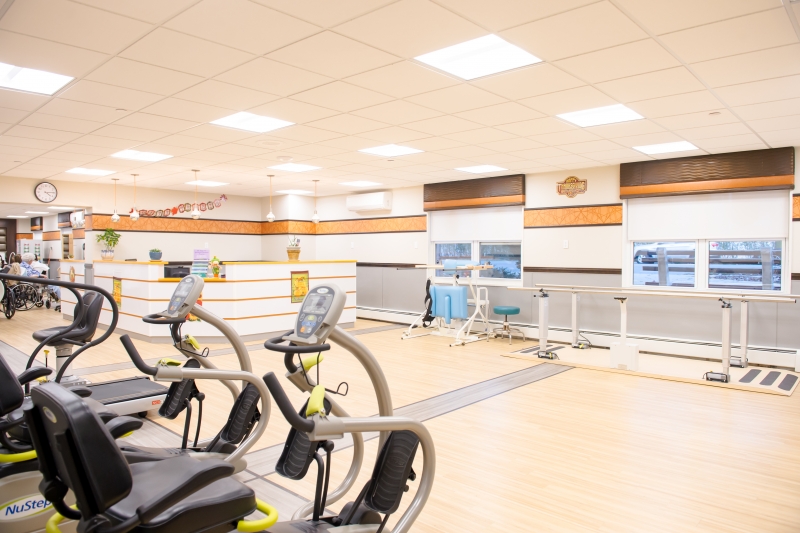
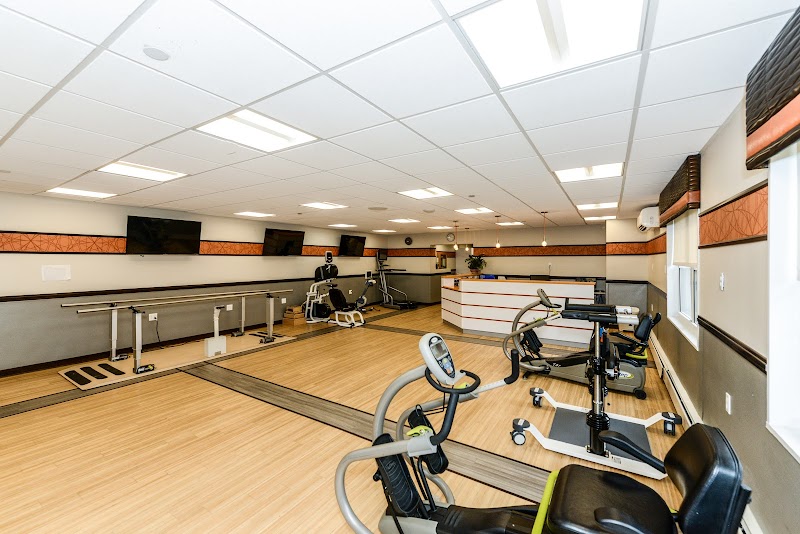
On 6/28/2023 at 7:25 AM, Maintenance Worker (MW) #1 demonstrated the fire exit alarm where Resident #76 left the facility. When MW #1 opened the fire exit door, a loud piercing alarm sounded. MW #1 then stated that although the alarm is loud in the stairwell, it cannot be heard past the rehabilitation gym. MW #1 stated that the exit that Resident #76 used to leave the facility was not connected to the mag lock system, which sends an alert to the security desk which is loud enough for someone to hear on the first floor.
The Director of Nursing Services (DNS) was interviewed on 6/28/2023 at 9:44 AM. The DNS stated that they did not speak to the first-floor staff to investigate if they heard the alarm from the emergency exit leading to the street because the alarm is not audible past the rehabilitation room. The DNS stated that the Administrator is working on the alarm to be audible past the rehabilitation room.
The Director of Nursing Services (DNS) was interviewed on 6/28/23 at 9:44 AM. The DNS stated that statements were obtained from RN #12, CNA #5, CNA #6, and LPN #3. The DNS stated that the emergency exit leading to the street alarm is not audible past the rehabilitation room. The DNS stated that during the investigation, the DNS did not speak to the 1 [NAME] Unit staff to investigate if they heard the alarm or responded to emergency exit alarm leading to the street. The DNS stated they did not interview the MW #1 to determine if they were present or heard the alarm.
10 NYCRR 415.4(b)(3)
Based on observation, record review and interviews during the Recertification Survey and Abbreviated survey (NY00318753 and NY00313454), initiated on 6/21/2023 and completed on 6/28/2023, the facility did not ensure that all alleged violations were thoroughly investigated. This was identified for two (Resident #292 and Resident #76) of 6 residents reviewed for Accidents. Specifically, 1) for Resident #292, who was found on the floor, the facility investigation did not include statements from all involved parties to accurately identify the root cause for Resident #292's fall on 10/26/22; and 2) The facility did not obtain statements from the 1st floor 11P-7AM staff and the Maintenance Worker when Resident #76 eloped from the facility on 6/21/2023.
The findings are:
The facility's policy titled Accidents/Incidents/Investigating, revised 5/2023, documented the following data shall be included on the Report of Incident/Accident form: The name(s) of witnesses and their accounts of the accident or incident; other pertinent data as necessary or required.
1) Resident #292 was admitted to the facility with diagnoses including Cerebrovascular Accident, Non-Alzheimer's Dementia, and Difficulty in Walking. The 11/4/2022 admission Minimum Data Set (MDS) assessment documented a Brief Interview for Mental Status (BIMS) score of 0, indicating the resident had severe cognitive impairment.
Review of the Accident/Incident (A/I) report dated 10/26/2022, prepared by Registered Nurse (RN) #4, the former supervisor, documented the following:
On 10/26/2022 at 12:15 PM the Resident #292 was found laying on the floor on their right side next to the bed. Resident #292 was noted with a laceration to the right temple. The resident was unable to give a statement due to cognitive issues. 911 was called and the resident was sent to the emergency department. The report documented the fall was witnessed by two staff members; however, the names of the staff witnesses were not included in the column under name.
Statements in the report were obtained from Certified Nursing Assistants (CNA) #1, CNA #2 and RN #5 (a former supervisor).
CNA #1's statement, dated 10/26/2022, documented CNAs were giving out lunch trays when Resident #292's call bell went off; one of the CNAs (name not documented) answered the call bell and told CNA #1 that the resident was on the floor.
CNA #2's statement, dated 10/26/2022, documented at the time of the incident CNA #2 was passing out lunch trays when they saw the resident's call light was on; upon answering the light, CNA #2 saw the resident lying on the floor and CNA #2 informed the nurse in charge.
RN #5's statement (undated) documented alerted by nurse manager that the resident was on the floor and to go to room while nurse manager called 911. Resident was observed on the floor on side of bed next to the closet; noted to be bleeding from the head.
The Assistant Director of Nursing Services (ADNS) was interviewed on 6/26/2023 at 8:21 AM. The ADNS stated they also work as the risk manager and had reviewed the 10/26/2022 A/I report related to Resident #292's fall. The ADNS stated the A/I report did not clearly identify who had activated the call bell on 10/26/2022 when Resident #292 fell. The ADNS stated maybe the roommate rang the call bell; however, no statements were obtained from the roommate to determine the root cause of the incident. The ADNS stated they (ADNS) identified that the A/I reports were not being thoroughly investigated with all the details and are in the process of re-educating staff who are responsible to complete the A/I reports.
RN #4 (former RN supervisor who prepared A/I report) was interviewed on 6/26/2023 at 8:54 AM. RN #4 stated they honestly cannot remember who rang the call bell and or who found the resident. RN #4 stated all the details regarding the incident should be included in the A/I report. RN #4 stated they can guarantee the resident did not call for assistance; the resident was in a puddle of blood. RN #4 stated they should have identified if someone else rang the call bell and obtained their statement to identify the accurate circumstances of the resident's fall.
CNA #2 was interviewed on 6/26/2023 at 9:32 AM and stated the roommate said that they (the roommate) pushed the call bell.
Review of the A/I report did not include statement from Resident #292's roommate, who had activated the call bell for assistance.
RN #5 (former supervisor) was interviewed on 6/26/2023 at 10:28 AM and stated they do not know who rang the call bell.
The Director of Nursing Services (DNS) was interviewed on 6/26/2023 at 11:00 AM and stated in the emergent situation the focus is dealing with the emergency, so identifying who was first on the scene and who rang the call bell may have been missed and should be included in the A/I report. The DNS stated that statements from all involved staff and residents should have been obtained to accurately identify the root cause of the incident and rule out abuse, neglect, and mistreatment.
The ADNS was re-interviewed on 06/26/2023 at 2:25 PM. The ADNS stated they are in the process of educating the nurses that they have to write more, and they have to include all the details. If they found out that the roommate rang the call bell, then they have to include that information in the A/I report.
CONCERN
(D)
📢 Someone Reported This
A family member, employee, or ombudsman was alarmed enough to file a formal complaint
Potential for Harm - no one hurt, but risky conditions existed
Deficiency F0657
(Tag F0657)
Could have caused harm · This affected 1 resident
**NOTE- TERMS IN BRACKETS HAVE BEEN EDITED TO PROTECT CONFIDENTIALITY** Based on observation, record review and interviews during the Recertification Survey and Abbreviated Survey (NY00313454) initiat...
Read full inspector narrative →
**NOTE- TERMS IN BRACKETS HAVE BEEN EDITED TO PROTECT CONFIDENTIALITY** Based on observation, record review and interviews during the Recertification Survey and Abbreviated Survey (NY00313454) initiated on 6/21/2023 and completed on 6/28/2023 the facility did not ensure that each resident's comprehensive person-centered Care Plan (CCP) was reviewed and revised by the Interdisciplinary Team after each assessment. This was identified for one (Resident #292) of five residents reviewed for Accidents, 2) for one (Resident #82) of two residents reviewed for Pressure Ulcers and 3) one (Resident #35) of five residents reviewed for Unnecessary Medications. Specifically, 1) Resident #292 had five falls between 10/25/2022 and 11/29/2022. The resident's Falls care plan was not updated after each fall to reflect new interventions to prevent further falls; 2) Resident #82 with a history of having Pressure Ulcers, developed a new Pressure Ulcer to the sacral area on 9/15/2022. The resident's CCP was not updated to reflect the newly identified PU until 10/14/2022; and 3) Resident #35 had multiple care plans which were not updated to reflect discontinuation of various medications.
The findings are:
The facility's Policy and Procedure for Comprehensive Care Plan dated 11/30/2022 documented assessments of residents are ongoing and care plans are revised as information about the residents and the residents' conditions change.
1)Resident #292 was admitted to the facility with diagnoses including Cerebrovascular Accident, Non-Alzheimer's Dementia, and Difficulty in Walking. The 11/4/2022 admission Minimum Data Set (MDS) assessment documented a Brief Interview for Mental Status (BIMS) score of 0, indicating the resident had severe cognitive impairment.
Review of Accident and Incident (A/I) reports for Resident #292 revealed that the resident had falls on 10/26/2022, 11/7/2022, 11/9/2022, 11/10/2022, and 11/19/2022.
The fall on 10/26/2022 resulted in a head laceration and a cervical fracture and the fall on 11/10/2022 resulted in a left shoulder fracture.
A Comprehensive Care Plan (CCP) titled At Risk for Falls/History of Falls, was initiated on 10/26/2022 The CCP was updated with additional interventions following the fall on 11/10/2022; however, there the CCP was not updated to reflect falls that occurred on 11/7/2022, 11/9/2022, and 11/19/2022.
The Assistant Director of Nursing Services, who was also the Risk Manager, was interviewed on 6/23/2023 at 11:58 AM. The ADNS stated, to be honest with you, I found that when I took over the risk manager position the Registered Nurses that prepared the A/I reports were not putting in interventions to prevent a further occurrence. The ADNS stated the care plan should be updated after each fall.
The Director of Nursing Services (DNS) was interviewed on 6/26/2023 at 2:13 PM. The DNS stated that the Fall Risk care plan should be updated with new interventions after each fall. The DNS stated the RN supervisor is responsible to update the care plan.
2) The facility policy titled, Care Plans, Comprehensive Person-Centered dated 11/30/2022 documented a comprehensive, person-centered care plan that includes measurable objectives and timetables to meet the resident's physical, psychosocial, and functional needs is developed and implemented for each resident.
Resident #82 was admitted with diagnoses that include Dementia, Severe Protein Calorie Malnutrition, and Hypertension (HTN). The Minimum Data Set (MDS) assessment dated [DATE] documented the resident had short and long term memory problems and a Brief Interview for Mental Status (BIMS) could not be completed. The resident required extensive assistance of two persons for bed mobility, transfers, and toilet use. The resident was always incontinent of bowel and bladder. The resident was at risk for developing pressure ulcers and had one unstageable pressure ulcer upon admission to the facility. The resident utilized pressure-reducing devices while in a chair and bed and was on a turning and positioning schedule. A Quarterly MDS assessment dated [DATE] documented the resident had short and long term memory problems and required extensive assistance of two persons for bed mobility, transfers, and toilet use. The resident remained frequently incontinent of bowel and bladder. The MDS documented the resident had one Stage II pressure ulcer that was present on admission. The resident continued to utilize pressure-reducing devices while in a chair and bed and was on a turning and positioning schedule.
A Comprehensive Care Plan (CCP) for alteration in skin integrity-actual pressure injury to the left Trochanter (hip) present upon admission dated 7/21/2022 documented interventions that included but were limited to: administer treatments/medications as ordered and monitor for effectiveness; educate the resident/family/caregivers as to causes of skin breakdown; and to notify the physician of significant findings. The CCP was updated on 7/25/2022, 7/29/2022, 8/4/2022, and 8/11/2022 to include changes made to the left Trochanter wound treatments and modalities as well as turning and positioning every two hours.
A Physician's order dated 9/15/2022 documented to apply Medihoney External Gel (Wound Dressing) to the Sacrum topically two times a day for Stage II pressure ulcer. Cleanse the area with normal saline, pat dry, apply Medihoney, and cover with a Foam dressing.
The Treatment Administration Record (TAR) for September 2022, documented to apply Medihoney External Gel (Wound Dressing) to the Sacrum topically two times a day for Stage II Pressure Ulcer (PU). Cleanse the area with normal saline, pat dry, apply Medihoney, and cover with a Foam dressing. The treatment was initiated on 9/15/2022 and was discontinued on 10/14/2022. The TAR indicated that the treatment was being administered twice daily at 9:00 AM and 9:00 PM as evidenced by the staff signature except on 9/26/2022.
A review of the medical record dated 9/15/2022 through 9/28/2022 revealed no documented evidence of an assessment, measurement, or description of the Stage II sacral wound that was identified on 9/15/2022.
The Healthcare Provider Wound Care Evaluation and Treatment Progress Note dated 9/29/2022 at 9:43 AM, written by the Wound Care Physician (MD) #1, documented Late Entry, the resident was assessed for the left Trochanter and Sacral unstageable wounds. Wounds were assessed, measured, discussed, and documented with the facility wound care nurse.
A Skin and wound care note dated 9/29/2023, written by Registered Nurse (RN) #2 who was the wound care nurse, documented the resident was seen and examined by the wound MD and noted with impairment to the sacral region.
The wound care evaluation note dated 9/29/2022 documented resident was evaluated for a new Stage III full-thickness PU measuring 4.2-centimeter (cm) length x 2.7 cm width x 0.4 cm depth. The wound bed was noted with 80% slough (dead tissue), a moderate serosanguinous exudate (drainage), and a faint odor. The wound was debrided using sharp debridement (removing the dead tissues with a scalpel or scissors).
A Physician's note dated 10/9/2022 documented Left trochanter, Stage 3, Sacrum, unstageable wound, warm and dry, apply local wound care.
The Wound Physician's Progress Note dated 10/13/2022 documented Sacral wound was re-evaluated, and a sharp wound debridement was performed. The devitalized tissue was removed using sharp debridement with scissors, a scalpel, and a curette. The Sacrum wound was re-characterized after debridement as a Stage IV Pressure Ulcer.
The CCP for alteration in skin integrity-actual pressure injury to the left Trochanter was not updated or a new CCP was not initiated to reflect the development of the sacral pressure ulcer when the sacral Stage II Pressure Ulcer was first identified on 9/15/2022. A CCP was not developed for this wound until 10/14/2022.
A CCP dated 10/14/2022 documented that the resident has a Pressure Ulcer to the left Trochanter and Sacrum. Interventions included but were not limited to educate the resident/family/caregivers as to causes of skin breakdown; including transfer/positioning requirements, good nutrition, and frequent repositioning; and monitor nutritional status.
RN #2, the interim wound care nurse, was interviewed on 6/27/2023 at 2:48 PM and stated that they were notified by a staff member (could not recall the name) on 9/29/2022 regarding Resident #82's sacral Pressure Ulcer. RN #2 stated that a CCP was already in place for Resident #82 for the preventative measures, the resident was utilizing an air mattress and was on turning and positioning every two to four hours.
RN #2 was re-interviewed on 6/27/2023 at 4:29 PM and stated that they should have initiated a CCP for the Sacrum Pressure Ulcer at the time that the PU was identified.
The Director of Nursing Services (DNS) was interviewed on 6/28/2023 at 2:40 PM and stated that the staff should have assessed the newly identified sacral Stage II Pressure Ulcer when it was first identified on 9/15/2022 and should then be followed weekly by the wound care team. The DNS stated that the staff should have also updated the CCP to reflect the newly developed sacral PU presence and any changes or updates to the interventions.
3) Resident #35 was admitted with diagnoses that include Urinary Tract Infection, Anxiety, and Congestive Heart Failure. A Quarterly Minimum Data Set (MDS) assessment dated [DATE] documented the resident had impaired short term and long-term memory problems and had significantly impaired decision-making capacity.
A Physician's order dated 3/17/2023 documented to discontinue Digoxin (heart medication) Tablet 125 micrograms (MCG).
A Comprehensive Care Plan (CCP) for Congestive Heart Failure dated 2/21/2022 and last reviewed 5/12/2023 documented the resident has Congestive Heart Failure as evidenced by Digoxin therapy. The CCP was not updated when Digoxin was discontinued on 3/17/2023.
A Physician's order dated 8/15/2022 documented to discontinue Ciprofloxacin (Antibiotic) Oral Tablet 500 milligrams (MG).
A CCP for Urinary Tract Infection (UTI) dated 2/21/2022 and last reviewed 5/12/2023 documented the resident had Urinary Tract Infection as evidenced by use of CIPRO therapy for a UTI. The CCP was not updated when Ciprofloxacin was discontinued on 8/15/2022.
A Physician's order dated 11/22/2022 documented to discontinue Xanax (antianxiety medication) Oral Tablet 0.25 MG.
A CCP for Anxiety Disorder and the use of Anti-anxiety medications dated 2/21/2022 and last reviewed 5/12/2023 documented the resident uses anti-anxiety medications as evidenced by Xanax. The CCP was not updated when Xanax was discontinued on 11/22/2022.
Registered Nurse (RN #8), the MDS (Minimum Data Set) coordinator, was interviewed on 6/27/2023 at12:22 PM and stated that it is the job of the floor nursing supervisor to update and revise the care plans.
Registered Nurse (RN #7), the current registered nurse supervisor for units 2 North and 2 West, was interviewed on 6/27/2023 at 12:57 PM. RN #7 stated that it is the job of the manager to update, review and revise the care plans for accuracy. RN #7 stated that the manager is expected to write a note to show that an update was conducted and to discontinue the care plan when appropriate. RN#7 stated that the manager who covered unit 2 [NAME] (Res #35's unit) at the time of the 5/12/23 care plan review no longer worked at the facility.
The Director of Nursing Service (DNS) was interviewed on 6/28/2023 at 2:25 PM and stated that their expectation was that the discipline who initiated the care plan would be the discipline responsible for its discontinuation when appropriate. Since these three care plans involved medications, nursing was responsible for the discontinuation of the care plans.
10 NYCRR 415.11(c)(2)(i-iii)
CONCERN
(D)
Potential for Harm - no one hurt, but risky conditions existed
Deficiency F0676
(Tag F0676)
Could have caused harm · This affected 1 resident
**NOTE- TERMS IN BRACKETS HAVE BEEN EDITED TO PROTECT CONFIDENTIALITY** Based on record review and staff interview during the Recertification Survey initiated on 6/21/2023 and completed on 6/28/2023, ...
Read full inspector narrative →
**NOTE- TERMS IN BRACKETS HAVE BEEN EDITED TO PROTECT CONFIDENTIALITY** Based on record review and staff interview during the Recertification Survey initiated on 6/21/2023 and completed on 6/28/2023, the facility did not ensure that residents were given the appropriate treatment and services to maintain or improve their ability to carry out Activities of Daily Living (ADLs). This was identified for one (Resident #33) of two residents reviewed for the Rehabilitation and Restorative care area. Specifically, Resident #33 was not ambulated according to their Floor Ambulation Program (FAP) as ordered by the Physician.
The finding is:
The facility's policy titled, Floor Ambulation Program and last reviewed in March 2023 documented that once a resident is deemed suitable for floor ambulation and staff is adequately trained, the ambulation program will be included in the (Physician) Orders, ADL Care Plan, and the Task [Certified Nursing Assistant (CNA) Instructions]. Staff will document each resident's ambulation sessions, including distance, and level of assistance required. Staff will report to Nurse/Supervisor change in distance, level of assistance, and intolerance. Nurse/Supervisor will document in a Progress Note and notify Rehabilitation and Physician of findings.
Resident #33 has diagnoses which include Hypertension and Hypothyroidism. The admission Minimum Data Set (MDS) assessment dated [DATE] documented that the resident had a Brief Interview for Mental Status (BIMS) score of 6 which indicated that the resident had severely impaired cognitive skills for daily decision making. The resident required extensive assistance of one person for bed mobility, transfers, walking in room/corridor, locomotion on/off unit, dressing, toilet use, and personal hygiene. The resident used a cane/crutch and walker as mobility devices.
The Task History dated 5/17/2023 and entered into the resident's Electronic Medical Record (EMR) by Physical Therapist (PT) #3 documented: Description - FAP with rolling walker (RW) up to 100 feet with limited assistance of one (person) and wheelchair (WC) follow twice daily.
The Physician's Order dated 5/22/2023 documented Floor Ambulation Program: Patient is to ambulate with RW up to 100 feet with limited assist of one (person) and WC follow twice daily.
The Documentation Survey Report dated May 2023 documented: FAP with RW up to 100 feet with limited assist of one (person) and WC follow twice daily. Under this task, there were 7 occasions on the 3:00 PM-11:00 PM shift that CNA #9 documented Not Applicable (NA) for the resident.
The Documentation Survey Report dated June 2023 documented: FAP with RW up to 100 feet with limited assist of one (person) + WC follow twice daily. Under this task, there were 3 occasions on the 7:00 AM-3:00 PM shift that CNA #8 documented NA for the resident and 10 occasions on the 3:00 PM-11:00 PM shift that CNA #9 documented NA for the resident.
CNA #8 was interviewed on 6/23/2023 at 2:20 PM and stated that they (CNA #8) were not a regular CNA on the resident's unit and they (CNA #8) were not aware that the resident was on FAP and had never done FAP with the resident. CNA #8 stated that usually the regular CNAs on the unit would tell them (CNA #8) if a resident was on a FAP, the resident themselves would tell them (CNA #8), or it would be on the resident's Accountability (Task) to do FAP with the resident. CNA #8 stated that they (CNA #8) never noticed that they (CNA #8) were documenting NA for the resident's FAP on the Documentation Survey Report.
CNA #9 was interviewed on 6/23/2023 at 3:30 PM and stated that when they (CNA #9) documented NA for the resident's FAP on the Documentation Survey Report they meant that they (CNA #9) did not perform FAP with the resident. CNA #9 stated that if they (CNA #9) saw Rehab already walking with the resident, then they (CNA #9) would not have to do FAP with the resident. CNA #9 also stated that sometimes the resident would also refuse to be walked, but they (CNA #9) did not know why they (CNA #9) had documented the resident's refusal as NA when they could have chosen the option of Resident Refused (RR) in the computer system.
The Director of Rehab was interviewed on 6/23/2023 at 3:45 PM and stated that when a Rehab Therapist walks a resident on the unit to work on functional mobility, that does not take the place of a resident's FAP.
Resident #33 was interviewed on 6/23/2023 at 3:55 PM and stated that when their CNA does not walk them (Resident #33), it is because the CNAs are too busy taking care of other residents. Resident #33 stated that they (Resident #33) never refuse to walk because they (Resident #33) enjoy walking, enjoy life, and love moving.
The Director of Nursing Services (DNS) was interviewed on 6/23/2023 at 4:15 PM and stated that if a resident refuses anything, including FAP, the CNA should make the Nurse aware as soon as possible. The DNS stated that all refusals must be documented and brought forward to a Nursing Supervisor.
10 NYCRR 415.12(a)(2)
CONCERN
(D)
Potential for Harm - no one hurt, but risky conditions existed
Pressure Ulcer Prevention
(Tag F0686)
Could have caused harm · This affected 1 resident
**NOTE- TERMS IN BRACKETS HAVE BEEN EDITED TO PROTECT CONFIDENTIALITY** Based on record review, and interviews, during a Recertification Survey initiated on 6/21/2023 and completed on 6/28/2023 the fa...
Read full inspector narrative →
**NOTE- TERMS IN BRACKETS HAVE BEEN EDITED TO PROTECT CONFIDENTIALITY** Based on record review, and interviews, during a Recertification Survey initiated on 6/21/2023 and completed on 6/28/2023 the facility did not ensure a resident with pressure ulcers received necessary treatment and services, consistent with professional standards of practice, to promote healing, prevent infection, and prevent new ulcers from developing. This was identified for one (Resident #82) of two residents reviewed for Pressure Ulcers (PU). Specifically, Resident #82 was identified as having a Stage II Pressure Ulcer to the Sacral region on 9/15/2022 as per a Physician's orders dated 9/15/2022. There was no documented evidence in the medical record that the Sacral PU was evaluated or assessed by a qualified clinician until 9/29/2022. The Wound Care Physician (MD #1) assessed the Sacral wound as an unstageable PU and conducted a sharp debridement (removing the dead tissues with a scalpel or scissors) and then reclassified the Sacral PU as a Stage III PU. Additionally, the wound care recommendations provided by MD #1 were not implemented by the facility staff.
The finding is:
The facility's untitled policy, dated January 2022 and last reviewed January 2023, documented to assess and treat the skin of each resident to prevent and care for pressure ulcers. The nurse/designee will assess and inspect the condition of the resident's skin upon admission, readmission, quarterly and episodically as needed, initiate a risk for pressure ulcer care plan, and update as needed. New interventions will be added as needed to prevent pressure ulcers and to manage treatment. Wound rounds will be conducted weekly on each unit to assess and plan the care of all residents with pressure ulcers. The Registered Nurse (RN) Supervisor/designee shall measure and track wounds weekly.
Resident #82 was admitted with diagnoses that included Dementia, Severe Protein Calorie Malnutrition, and Hypertension (HTN). The Minimum Data Set (MDS) assessment dated [DATE] documented the resident had short and long term memory problems and a Brief Interview for Mental Status (BIMS) could not be completed. The resident required extensive assistance of two persons for bed mobility, transfers, and toilet use. The resident was always incontinent of bowel and bladder. The resident was at risk for developing pressure ulcers and had one unstageable PU upon admission to the facility. The resident utilized pressure-reducing devices while in a chair and bed and was on a turning and positioning schedule. A Quarterly MDS assessment dated [DATE] documented the resident had short and long term memory problems and required extensive assistance of two persons for bed mobility, transfers, and toilet use. The resident remained frequently incontinent of bowel and bladder. The MDS documented the resident had one Stage II PU that was present on admission. The resident continued to utilize pressure-reducing devices while in a chair and bed and was on a turning and positioning schedule.
A Comprehensive Care Plan (CCP) for alteration in skin integrity-actual pressure injury to the left Trochanter (hip) present upon admission dated 7/21/2022 documented interventions that included but were limited to: administer treatments/medications as ordered and monitor for effectiveness; educate the resident/family/caregivers as to causes of skin breakdown; and to notify the physician of significant findings. The CCP was updated on 7/25/2022, 7/29/2022, 8/4/2022, and 8/11/2022 to include changes made to the left Trochanter wound treatments and modalities as well as turning and positioning every two hours.
The Braden Scale for Predicting Pressure Sore Risk dated 7/27/2022 documented the resident was at high risk for developing PU. The risk score was updated on 8/17/2022 to indicate the resident now was at moderate risk for developing PU.
A Physician's order dated 9/15/2022 documented to apply Medihoney External Gel (Wound Dressing) to the Sacrum topically two times a day for Stage II pressure ulcer. Cleanse the area with normal saline, pat dry, apply Medihoney, and cover with a Foam dressing.
A Wound Physician's Progress note dated 9/22/2022, written by MD #1, documented the presence of the left Trochanter PU. The progress note did not include the presence of the Sacral PU.
A Review of the Physician's Wound Evaluation dated 9/22/22 lacked documented evidence of the presence of a Sacral PU.
The CCP for alteration in skin integrity-actual pressure injury to the left Trochanter was not updated or a new CCP was not initiated to reflect the development of the sacral pressure ulcer when the sacral Stage II Pressure Ulcer was first identified on 9/15/2022. A CCP was not developed for the Sacral Wound until 10/14/2022.
A CCP dated 10/14/2022 documented that the resident with a Pressure Ulcer to the left Trochanter and Sacrum. Interventions included but were not limited to: educate the resident/family/caregivers as to causes of skin breakdown; including transfer/positioning requirements, good nutrition, and frequent repositioning; and monitor nutritional status.
The wound care evaluation and treatment progress note dated 9/29/2022, written by MD #1, documented the Sacral Wound site treatment recommendation: sharp wound debridement. The procedure note section documented: the sacrum wound was sharply debrided with good patient tolerance and the daily treatment recommendations were to apply Silver Alginate and use the dry protective dressing for the unstageable Sacral PU.
The skin and wound evaluation dated 9/29/2022 documented resident was evaluated for a new Stage III full-thickness PU measuring 4.2-centimeter (cm) length x 2.7 cm width x 0.4 cm depth. The wound bed was noted with 80% slough (dead tissue), a moderate serosanguinous exudate (drainage), and a faint odor. The wound was debrided using sharp debridement.
The wound care evaluation and treatment progress note, written by MD #1, dated 10/6/2023 documented Sacral Wound site treatment recommendation: sharp debridement. Assessment: Sacrum Stage IV, recharacterized after debridement.
The Treatment Administration Record (TAR) dated 9/25/2022 through 10/14/2022 documented to apply Medihoney External Gel (Wound Dressing) to the Sacrum topically two times a day for Stage II Pressure Ulcer (PU). Cleanse the area with normal saline, pat dry, apply Medihoney, and cover with a Foam dressing.
The wound care evaluation and treatment progress note dated 10/7/2022, written by MD #1, documented the Sacral Wound site Stage IV, the sacral wound was sharply debrided with good patient tolerance. MD #1 documented to continue the use of Silver Alginate, followed by a dry protective foam dressing.
A Physician's order dated 10/14/2022 documented, Silvadene External Cream 1 % (Silver Sulfadiazine), Apply to Sacrum topically one time a day for Apply to Sacrum topically two times a day for STAGE II.
The Medication Administration Record (MAR) dated 10/15/2022 through 10/21/2022 documented to apply Silvadene External Cream 1% to Sacrum topically one time a day. Under the same section, the MAR also documented directions to apply Silvadene External cream 1% to the sacrum twice daily for Stage II Pressure Ulcer; however, the staff signature indicated that the treatment was only administered once a day.
The TAR dated 10/22/2022 through 10/27/2022 documented to cleanse the sacral wound with normal saline and apply Silver Alginate (wound dressing) and cover with a foam dressing one time a day for the wound.
Registered Nurse (RN) #6, was interviewed on 6/27/2023 at 3:25 PM and stated that in September 2022, they were working as the nurse manager on Resident #82's unit. RN #6 stated that the staff did not inform them of the resident's Sacral PU when the wound was first discovered on 9/15/2022.
Licensed Practical Nurse (LPN) #1 was interviewed on 6/28/2023 at 12:30 PM and stated they were the medication nurse on the 2 [NAME] unit where the resident resided on 9/15/2022. Resident #82 was later transferred to the 3 [NAME] unit on 9/21/2022 or 9/22/2022. LPN #1 stated that Resident #82 had a PU on the Sacrum and was getting treatment to the area twice a day. The treatment order was initiated on 9/15/2022. LPN #1 stated that the LPNs do not assess the PU, it is the responsibility of the RNs and the Wound Care Physician.
LPN #2 was interviewed on 6/28/2023 at 1:00 PM and stated they are the medication nurse on the 3rd floor where the resident currently resides. LPN #2 stated when the resident moved from the second floor to the third floor in September 2022, they (Resident #82) had two PUs, one on the left hip and the other one on the sacrum. LPN #2 stated that Medihoney was initially used for the wound treatment which was later changed to Silver Alginate. LPN #2 stated that initially, the Sacral PU was approximately nickel size with some depth. The surrounding skin was red, and the wound bed was pink in color, and then the wound care doctor changed the treatment to Alginate. LPN #2 stated they did not know why the resident's Sacral PU was not evaluated by MD #1. LPN #2 stated the resident is on turning and positioning every two hours, utilizes an air mattress, and receives nutritional supplements.
Registered Nurse (RN) #2, the interim wound care nurse, was interviewed on 6/28/2023 at 1:30 PM and stated that they were a part-time Nurse Manager in September 2022 on the 3rd floor. RN #2 stated that Resident #82 was admitted with a hip Pressure Ulcer. RN #2 stated on 9/29/2022 a Certified Nursing Assistant (CNA) (name not recalled) notified them about Resident #82's Sacral Pressure Ulcer. MD #1 was in the building and was making wound rounds. Resident #82 was seen by MD #1 on wound rounds and the Sacral Wound was assessed as a Stage III Pressure Ulcer. RN #2 stated that based on the documentation in the chart there was no evaluation or progress notes in the medical record related to the Sacral PU prior to 9/29/2022. RN #2 stated that once the wound was first identified they expected the unit staff to notify the wound care nurse, and the Primary Care Physician. The PU should have been assessed weekly by the wound care Physician to monitor progress. RN #2 stated that on 9/29/2022 MD #1 recommended Calcium Alginate and Antimicrobial instead of the Medihoney; however, the treatment order was not changed as per the recommendations. RN #2 stated that on 10/7/2022 recommendations were again made to change the treatment to Calcium Alginate; however, the treatments were not changed as per the recommendations and the wound was treated with Silvadine cream instead. RN #2 stated that MD #1's recommendations should have been followed as the wound had moderate drainage and the recommended treatment was appropriate based on the wound presentation.
MD #1, the Wound Care Physician, was interviewed on 6/28/2023 at 2:00 PM and stated that they assessed Resident #82's Sacral Wound on 9/29/2022 when they were first made aware of the presence of the Sacral PU. MD #1 stated that they were following the resident's hip wound weekly and on 9/22/2022 they evaluated the resident's hip wound but not the Sacral PU. MD #1 stated when making rounds they normally would not turn the resident to see other areas unless they were made aware of any newly developed wounds. MD #1 stated the recommendations for changes in treatment are based on the changes in wound characteristics and the wound's response to the previous treatments. MD #1 stated they expect that the recommendation be followed by the facility staff for optimal wound healing. MD #1 stated Silvadene Cream is normally utilized on the wound periphery to prevent maceration or erythema. MD #1 stated application of Silvadene on the wound bed would not harm the wound but the recommended treatment should be followed for effectively treating the wound.
The Director of Nursing Services (DNS) was interviewed on 6/28/2023 at 2:40 PM and stated that the staff should have assessed the newly identified Sacral Stage II PU when the Ulcer was first identified on 9/15/2022. The DNS stated the wound then should be followed weekly by the wound care team. The DNS stated that the staff must follow the wound care MD recommendations for effective wound healing. The staff should have also updated the CCP to reflect the newly developed wound presence. The DNS further stated that they expected staff to report the changes in the resident's wound condition as soon as it is first identified.
10 NYCRR 415.12(c)(2)
CONCERN
(D)
📢 Someone Reported This
A family member, employee, or ombudsman was alarmed enough to file a formal complaint
Potential for Harm - no one hurt, but risky conditions existed
Accident Prevention
(Tag F0689)
Could have caused harm · This affected 1 resident
**NOTE- TERMS IN BRACKETS HAVE BEEN EDITED TO PROTECT CONFIDENTIALITY** Based on observation, record review and interviews during the Recertification Survey and Abbreviated Survey (NY00318753), the fa...
Read full inspector narrative →
**NOTE- TERMS IN BRACKETS HAVE BEEN EDITED TO PROTECT CONFIDENTIALITY** Based on observation, record review and interviews during the Recertification Survey and Abbreviated Survey (NY00318753), the facility did not ensure that all residents received adequate supervision to prevent accidents. This was identified for one (Resident #76) of three residents reviewed for Accident Hazards. Specifically, Resident #76 exhibited exit seeking behaviors. On 6/21/2023, Resident #76 left the facility through two alarmed doors undetected by the facility staff and was located outside the facility by a community member. Additionally, during observation the fire exit door alarm that Resident #76 had previously breached was not audible to staff on the 1st floor, including the reception area.
The finding is:
The facility's Wandering Elopement policy dated 6/8/2023 documented that if an employee observes a resident leaving the premises, they should attempt to prevent the resident from leaving in a courteous manner; get help from other staff members in the immediate vicinity, if necessary; and instruct another staff members to inform the charge nurse or Director of Nursing Services (DNS) that a resident is attempting to leave or has left the premises.
The facility emergency procedure for missing resident dated 6/8/2023 documented that staff should initiate a thorough search to locate the resident. If the resident is not located, proceed with the following: instruct staff members to search the entire facility, grounds, and neighboring streets.
Resident #76 was admitted with the diagnoses of non-traumatic chronic
Subdural Hemorrhage, Anxiety Disorder and Major Depressive Disorder. The admission Minimum Data Set (MDS) assessment dated [DATE] documented that Resident #76 had a Brief Interview for Mental Status (BIMS) score of 9 indicating moderately impaired cognition. Resident #76 required limited assistance of one person for bed mobility and transfers. Resident #76 required extensive assistance of two persons for walking in room, corridor, and locomotion on the unit. Resident #76 was not steady but was able to stabilize without staff assistance. Resident #76 did not have any wandering behaviors during the assessment period.
Review of nursing progress notes revealed that from 5/22/2023 to 5/31/2023, Resident #76 was identified as requiring one to one supervision due to unsteadiness and constantly getting out of bed and climbing into the roommate's bed while the roommate was in bed, disrobing and throwing clothes/brief on the floor, resistive with care, and wanting to go home to parents. Staff provided constant redirection with little improvements.
The nursing progress note dated 6/1/2023 documented that Resident #76 I want to kill myself, I don't want to stay here, my son put me in this prison. Resident #76 was observed attempting to take the elevators and to use the stairs. Resident #76 was redirected and 1:1 observation with nursing staff was put in place, the physician was made aware, an order was obtained for a psychiatric consult. An elopement assessment was generated and a wander guard was placed on the right ankle.
Review of the elopement risk assessment dated [DATE] documented Resident #76 was not an elopement risk, and that resident verbalized a strong desire to leave the facility.
The physician's orders dated 6/1/2023 documented to check wander guard placement every shift on the right ankle.
A Comprehensive Care Plan (CCP) care plan dated 6/1/2023 entitled, At risk for elopement related to Ability to Ambulate/Self-Propel Wheelchair Unassisted, Exit Seeking Behavior documented that Resident #76 had a wander guard on the right ankle. The interventions included to redirect Resident #76 from the exits when necessary. The CCP was updated on 6/9/2023 to check wander guard placement every shift and check wander guard function at night by nurse. The CCP was updated on 6/21/2023 to provide 1:1 for close observation.
The elopement risk assessment dated [DATE] documented Resident #76 was identified with a potential elopement risk due to wandering through facility.
The Elopement report dated 6/21/2023 documented that at approximately 5:50 AM, it was reported by the unit nurse that Resident #76 left the unit. A search was conducted in all areas of the building. While in the lobby, in the process of calling a code green, the resident was with a non-staff person at approximately 5:54 AM. The person stated they saw Resident #76 outside and brought Resident #76 back to the facility. Resident #76 stated they were looking for their family member. Resident #76 was assessed, and the wander guard was in place to the right ankle and was functioning. Resident #76 was placed on a 1:1 supervision.
The Summary of the Investigation report dated 6/21/2023 documented that all involved staff were interviewed by the Director of Nursing Services (DNS)/Administrator and statements were collected. At approximately 5 AM Resident #76 made attempts to open the exit door, the alarm was sounding, and Resident #76 was redirected each time. At approximately 5:15 AM, Licensed Practical Nurse (LPN) #3 placed Resident #76 in bed, medicated Resident #76 as per orders and closed Resident #76's room door. LPN #3 then closed the double doors to dissuade Resident #76 from going toward the exit door. LPN #3 last saw Resident #76 at approximately 5:45 AM. At approximately 5:50 AM-5:52 AM, LPN #3 noticed that the door to Resident #76's room was open and exit door alarm was going off. All staff on the unit checked for Resident #76. LPN #3 notified the supervisor immediately. After calling the supervisor, LPN #3 continued to look for Resident #76 and took the stairs. By the time LPN #3 got to the lobby Resident #76 was with the nursing supervisor.
The facility did not provide documented evidence of the hourly monitoring for Resident #76.
Resident #76 was observed lying in bed on 6/22/2023 at 10:00 AM. Resident #76 stated that they did not remember what happened on 6/21/2023.
RN #6 was interviewed on 6/27/23 at 11:51 AM. RN #6 stated that they were the regularly assigned RN Supervisor on Unit 3 North on the 7A-3P shift. RN #6 stated that they reassessed Resident #76's elopement risk on 6/1/2023 after Resident #76 had verbalized they (Resident #76) did not want to stay at the facility while attempting to leave the unit on the elevator. RN #6 implemented the wander guard and 1:1 supervision. RN #6 stated that the 1:1 supervision was a temporary measure for 3 days to address the suicidal ideation and elopement attempt on 6/1/2023. Resident #76 was subsequently monitored on standard hourly observations.
RN #12 was interviewed on 6/27/2023 at 1:07 PM. RN #12 stated that they were the regularly assigned overnight (11P-7A) RN Supervisor for the facility. RN #12 stated that at approximately 5:50 AM, RN #12 received a from LPN #3 on Unit 3 North. LPN #3 was asking about how to shut off the alarm of the stairway exit door on the Unit 3 North and to confirm the code. RN #12 told LPN #3 the code and was still on the phone while LPN #3 stepped away to shut off the alarm. LPN #3 told RN #12 that they were not able to turn off the alarm and Resident #76 was missing. RN #12 stated that they (RN #12) immediately left the nursing office on the first floor to go up to the 3rd floor and took the stairway in front of the elevator near the first-floor lobby. RN #12 did not see Resident #76 in that stairwell on the way upstairs. RN #12 went up to Unit 3 North to assist with looking for Resident #76. RN #12 stated that they heard the 3 North stairwell exit emergency door alarm sounding that was at the end of Unit 3 North which led to the rear stairwell. RN #12 then went down that stairwell which led to the perimeter fire exit door. The perimeter fire exit door alarm was also sounding. RN #12 stated that they took a glance outside through the glass panel and did not see Resident #76. RN #12 stated they did not open the door and step outside the door to look for Resident #76. RN #12 then went back into the stairwell and went through the entrance to the Rehabilitation gym which led to the lobby area. When RN #12 arrived in the lobby area they saw Resident #76 at the entrance, who was brought in by a community neighbor. Resident #76 was wearing a wander guard.
CNA #6 was interviewed on 6/27/2023 at 1:51 PM. CNA #6 stated that they were assigned to Resident #76 on 6/20/2023 overnight shift into 6/21/2023. CNA #6 would often have to redirect Resident #76 back to their room. CNA #6 stated that they never saw Resident #76 attempt to leave the facility prior to 6/21/2023. CNA #6 stated that Resident #76 was constantly getting out of the bed throughout the shift, and they (CNA #6) frequently went out in the hallway to redirect Resident #76 back to their room. At around 5 AM, LPN #3 was in the hallway doing medication rounds while CNA #5 and CNA #6 were doing incontinence care to residents on the unit. Resident #76 was walking towards the 3 [NAME] Unit and CNA #6 escorted Resident #76 back to their room. CNA #6 then went to another room to provide care to another resident and heard the alarm to the exit door at the far end of 3 North Unit. CNA #6 went to the hallway and saw LPN #3 with Resident #76. LPN #3 told CNA #6 that Resident #76 was pushing on the exit door. LPN #3 walked with Resident #76 to the nurse's station and LPN #3 closed the fire doors behind them. CNA #6 assumed that LPN #3 was directly supervising Resident #76, so CNA #6 moved on to provide care for another resident at the far end of the unit. CNA #6 heard the alarm still sounding and LPN #3 asked CNA #6 if CNA #6 saw Resident #76. CNA #6 then went to Resident #76's room and checked Resident #76's bathroom. CNA #6 then took the elevator down to the second floor and informed the 2 [NAME] Unit LPN that Resident #76 was missing. By the time CNA #6 made it downstairs on the first floor, CNA #6 saw RN #12 with a stranger and Resident #76.
LPN #3 was interviewed on 6/28/2023 at 6:25 AM. LPN #3 stated that they were the regularly assigned LPN for Unit 3 North on the 11P-7A shift. LPN #3 stated that at around 5 AM, Resident #76 kept leaving the room saying help me, help me which was typical behavior for Resident #76. At 5:15AM, LPN #3 administered Resident #76's medications. As LPN #3 was passing medications Resident #76 tripped the alarm at the end of the 3 North hallway at around 5:45 AM. LPN #3 tried to shut off the alarm but could not. LPN #3 then escorted Resident #76 back to their room, placed Resident #76 in bed and closed the room door. LPN #3 then closed the double doors at the middle of the 3 North hallway. LPN #3 called RN #12 to confirm the code to shut off the alarm. LPN #3 could not get the alarm to stop sounding. LPN #3 then went to the nurse's station to check the code at the desk. LPN #3 stated that they did not take Resident #76 with them to the nurse's station because they saw CNA #6 in the hallway and believed that Resident #76 was in their room. When LPN #3 walked towards the double doors at the middle of the 3 North hallways to attempt to shut of the alarm, LPN #3 noticed that Resident #76's door was open and Resident #76 was missing at 5:52 AM. LPN #3 notified RN #12 that Resident #76 was missing. LPN #3 then went down the 3 North stairwells to look for Resident #76.
On 6/28/2023 at 7:25 AM, Maintenance Worker (MW) #1 demonstrated the fire exit alarm where Resident #76 left the facility. When MW #1 opened the fire exit, a loud piercing alarm sounded. MW #1 then stated that although the alarm is loud in the stairwell, it cannot be heard past the rehabilitation gym. MW #1 stated that the alarm can only be disengaged with a key and proceeded to use the key to disengage the alarm. MW #1 stated that the exit that Resident #76 used to leave the facility was not connected to the mag lock system, which sends an alert to the security desk which is loud enough for someone to hear on the first floor. MW #1 stated that only the door to the rehabilitation gym which leads to the exit that Resident #76 took is connected to the mag lock system. MW #1 demonstrated the alarm sound to the rehabilitation gym exit which was loud and piercing at the exit door. MW #1 proceeded to exit the rehabilitation gym and the security desk alarm was sounding throughout the hallway leading to the lobby. The Director of Support Services (DSS) was at the lobby area during the observation. The DSS stated that the stairwell where Resident #76 exited does not have any surveillance camera. The DSS stated that after the incident, they spoke with the Administrator about installing a surveillance camera in that area. The DSS stated that they also suggested connecting that exit door to the mag lock system or enhancing the alarm sound so that staff are aware that the exit leading outside was opened.
The Director of Nursing Services (DNS) was interviewed on 6/28/2023 at 9:44 AM. The DNS stated that they did not speak to the first-floor staff to investigate if they heard the alarm from the emergency exit leading to the street because the alarm is not audible past the rehabilitation room. The DNS stated that the Administrator is working on the alarm to be audible past the rehabilitation room. The DNS stated that 11P-7A staff should have been aware that Resident #76 had a previous elopement attempt.
The Administrator was interviewed on 6/28/2023 at 12:03 PM. The Administrator stated that after 6/21/2023 the exit door that was breached was determined to be functioning. The Administrator was told by the facility vendor that the alarm at the exit door was set to the loudest setting. The Administrator stated that today (6/28/2023) the facility arranged for an electrician to rewire the exit door alarm to be enunciated to the front desk and 1 [NAME] unit. The Administrator stated that they were unable to get this modification done sooner because the electrician was on another job on 6/21/2023 and was not available until 6/28/2023.
10 NYCRR 415.12(h)(2)
CONCERN
(D)
Potential for Harm - no one hurt, but risky conditions existed
Deficiency F0745
(Tag F0745)
Could have caused harm · This affected 1 resident
**NOTE- TERMS IN BRACKETS HAVE BEEN EDITED TO PROTECT CONFIDENTIALITY** Based on record review and interviews during the Recertification Survey initiated on 6/21/2023 and completed on 6/28/2023, the f...
Read full inspector narrative →
**NOTE- TERMS IN BRACKETS HAVE BEEN EDITED TO PROTECT CONFIDENTIALITY** Based on record review and interviews during the Recertification Survey initiated on 6/21/2023 and completed on 6/28/2023, the facility did not assure that each resident was provided medically-related social services to attain or maintain the highest practicable physical, mental, and psychosocial well-being. This was identified for one (Resident #42) of one resident reviewed for Advance Directives. Specifically, Resident #42 was admitted to the facility on [DATE]. Social Services conducted initial Social Services Evaluation upon admission on [DATE]; however, there was no documented evidence that the Advance Directives were reviewed with Resident #42 or their designated representative after 3/12/2022 as per the facility's policy.
The finding is:
The facility's Advance Directives policy dated 3/2023, documented that prior to or upon admission of a resident, the social services director or designee must inquire of the resident and/or resident's designated representative about the existence of any written advance directives. Changes are documented in the care plan and medical record. Information about whether the resident has executed an advance directive is displayed prominently in the medical record in a section retrievable by any staff. Advance Directives will be reviewed annually with the resident to ensure that such directives are still the wishes of the resident.
Resident #42 was admitted with diagnoses including Huntington's Disease, Anorexia, and Hypertension. The Minimum Data Set (MDS) assessment dated [DATE] documented a Brief Interview for Mental Status (BIMS) score of 12 which indicated the resident had moderately impaired cognition. The MDS documented the resident had no advance directives.
The initial Social Services Evaluation dated 3/12/2022 documented the resident's representative declined to initiate directives at the time of admission and demonstrated good understanding that Resident #42 would be a Full Code. Education was provided to the family on advance directives.
The Physician's order dated 6/27/2023 documented that the resident was a Full Code as their advance directives.
The care plan entitled Resident has Advance Directives: Full Code was developed and implemented on 6/27/2023 by Social Services.
Social Worker (SW) #1 was interviewed on 6/27/2023 at 10:00 AM and stated that they were responsible for evaluating Resident #42 upon admission. Care plans including Advance Directives are reviewed on a quarterly/annual basis. SW #1 stated that they have reached out to the resident's designated representative about receiving a healthcare proxy (HCP) form but have not received one. SW #1 stated there was no further documentation from SW #1 for the resident on their advance directives.
The Social Service note dated 6/28/2023 documented the resident's designated representative sent a copy of Resident #42's living will and Healthcare Proxy (HCP). The representative stated that they want Resident #42 to remain as a Full Code.
The Director of Social Services (DSS) #1 was interviewed on 6/27/2023 at 11:50 AM and stated that Social Services is primarily responsible for implementing an Advance Directives CCP and the Advance Directives are reviewed on a quarterly, annual, and as needed basis and should be documented in the Electronic Medical Record (EMR).
The Administrator #1 was interviewed on 6/28/2023 at 1:10 PM and stated that Social Services is primarily responsible for reviewing Advance Directives.
10 NYCRR 415.5 (g)(1)(i-xv)
CONCERN
(E)
Potential for Harm - no one hurt, but risky conditions existed
Comprehensive Care Plan
(Tag F0656)
Could have caused harm · This affected multiple residents
**NOTE- TERMS IN BRACKETS HAVE BEEN EDITED TO PROTECT CONFIDENTIALITY** Based on record review and interviews during the Recertification Survey initiated on 6/21/2023 and completed on 6/28/2023, the f...
Read full inspector narrative →
**NOTE- TERMS IN BRACKETS HAVE BEEN EDITED TO PROTECT CONFIDENTIALITY** Based on record review and interviews during the Recertification Survey initiated on 6/21/2023 and completed on 6/28/2023, the facility must develop and implement a Comprehensive Person- Centered Care Plan (CCP) for each resident that includes measurable objectives and time frames to meet a residents medical, nursing, and mental and psychosocial needs that are identified in the comprehensive assessment. This was identified for one (Resident #42) of one resident reviewed for Advance Directives; for one (Resident #79) of two residents reviewed for Communication-Sensory care area; and one (Resident #22) of four residents reviewed for Positioning/Mobility care area. Specifically, 1) Resident #42 had no CCP developed for their Advance Directives. 2) Resident #79 whose primary language is Spanish; however, no CCP was developed to address the resident's communication needs. 3) Resident #22 was admitted on [DATE] with a soft cast on their right leg and a left Ankle Foot Orthosis (AFO); there were no CCP developed to address the use of the soft cast care and use of the AFO.
The findings are:
The facility Policy and Procedure for Comprehensive Care Plan dated 11/2022 documented that comprehensive, person-centered care plans (CCP) are developed within seven days of the completion of the required Minimum Data Set (MDS) assessment, and no more than 21 days after admission. Residents and their representatives have the right to participate in the planning process, request revisions, and participate in all care plan meetings.
1) The facility's Advance Directives policy dated 3/2023, documented that prior to or upon admission of a resident, the social services director or designee must inquire of the resident and/or resident's designated representative about the existence of any written advance directives. Changes are documented in the care plan and medical record. Information about whether the resident has executed an advance directive is displayed prominently in the medical record in a section retrievable by any staff. Advance Directives will be reviewed annually with the resident to ensure that such directives are still the wishes of the resident.
Resident #42 was admitted with diagnoses including Huntington's Disease, Anorexia, and Hypertension. The Minimum Data Set (MDS) assessment dated [DATE] documented a Brief Interview for Mental Status (BIMS) score of 12 which indicated the resident had moderately impaired cognition. The MDS documented the resident had no advance directives.
The Physician's order dated 6/27/2023 documented that the resident was a Full Code as their advance directives.
The care plan entitled, Resident has Advance Directives: Full Code was developed and implemented on 6/27/2023 by Social Services.
In the initial Social Services Evaluation dated 3/12/2022 documented the resident's representative declined to initiate directives at the time of admission and demonstrated good understanding that Resident #42 would be a Full Code. Education was provided to the family on advance directives.
The Director of Social Services (DSS) #1 was interviewed on 6/27/2023 at 9:50 AM and stated that the resident did not have a care plan for advance directives prior to 6/27/2023. A care plan should have been created and implemented upon admission to the facility on 3/12/2022. Social Services is responsible to create care plans for advance directives and the social worker who initially evaluated the resident upon admission was responsible for initiating the advance directive care plan.
In a Social Service note dated 6/28/2023, the resident's designated representative sent a copy of Resident #42's living will and Healthcare Proxy (HCP). The representative stated that they want Resident #42 to remain as a Full Code.
Social Worker (SW) #1 was interviewed on 6/27/2023 at 10:00 AM and stated that they were responsible for evaluating Resident #42 upon admission. A Comprehensive Care Plan (CCP) and a physician's order should have been put in place for the resident's advance directives. SW #1 stated that they did not create a CCP.
Registered Nursing (RN) #6 was interviewed on 6/27/2023 at 10:20 AM and stated that they were unaware Resident #42 did not have a CCP or medical order for advance directives. RN #6 stated that the resident should have had an order and care plan implemented within 24 hours upon admission. RN #6 stated that a CCP was created, and the medical order initiated on 6/27/2023.
The Director of Social Services (DSS) #1 was interviewed on 6/27/2023 at 11:50 AM and stated that Social Services is primarily responsible for implementing an advance directives CCP.
The Administrator was interviewed on 6/28/2023 at 1:10 PM and stated that Social Services is primarily responsible for developing advance directives CCPs.
2) The facility Communication with Persons with Limited English Proficiency Policy dated 1/2023 documented that the resident's primary language will be noted in the resident's medical record. Communication boards with basic terms, pictures, and needs noted in the resident's native language with English translation will be provided to the resident if needed.
Resident #79 was admitted with diagnoses including Heart Failure, Malnutrition, and Hypertension. The Minimum Data Set (MDS) assessment dated [DATE] documented a Brief Interview for Mental Status (BIMS) score of 9 which indicated the resident had moderately impaired cognition.
The Physician Note dated 4/24/2023 stated that Resident #79 is Spanish speaking and translation is provided.
The Comprehensive Care Plan (CCP) entitled, Spanish is the resident's primary language and potential language barrier may limit the resident's participating during programs was developed and implemented on 6/23/2023.
Certified Nursing Assistant (CNA) #3 was interviewed on 6/23/2023 at 11:10 AM and stated that Resident #79 can understand basic English but uses CNA #3, recreation staff, and housekeeping staff who are fluent in Spanish to translate for the resident. CNA #3 stated that Resident #79 once had a communication board but that the board is no longer in the resident's room.
Registered Nurse (RN) #6 was interviewed on 6/23/2023 at 11:15 AM and stated that the resident did not have a CCP for Communication and was unsure if the resident required one.
An observation was made on 6/23/2023 at 11:25 AM of Resident #79's room and no communication board was present.
The Director of Nursing Services (DNS) #1 was interviewed on 6/23/2023 at 11:55 AM and stated that care plans are implemented by specific departments. The Recreation and Social Services Departments are responsible to create and implement CCPs for Communication. Communication CCPs should be put into place, especially when translators are utilized for a resident.
Social Worker (SW) #2 was interviewed on 6/23/2023 at 1:15 PM and stated Resident #79 can speak broken English and that Spanish is their primary language. Resident #79 does need a translator but can get some needs across. Social Services and Recreation are responsible for developing and implementing CCPs for Communication.
The Director of Recreation #1 was interviewed on 6/23/2023 at 1:35 PM and stated that Recreation implements CCPs for Communication upon admission if the resident does not primarily speak English. A Communication Board is also provided. Resident #79 primarily speaks Spanish, and a care plan should have been developed and revised as needed.
3) The policy titled: Adaptive Assistive Devices, last reviewed in March 2023, documented that: an orthotic is a device that is externally applied to an area of the patient's body to support, position, or immobilize a joint; correct deformities; modify tone; assist weak muscles, and restore function. An orthotic may be prefabricated, custom fabricated or custom modified [e.g., resting hand splint, arm sling, universal cuffs, Ankle Foot Orthoses (AFO)]. Prior to splint/orthotic application, check to ensure that there is a Physician's Order approving use of the splint. The wearing schedule may be established by the Physician or the Therapist. Document training with nursing staff and education regarding ability to don/doff properly and, after wear schedule is determined, document a Physician's Order for the finalized wear schedule, and document a care plan for the wear schedule.
Resident #22 has diagnoses which include Oblique Fracture of the Shaft of the Right Tibia and Hypertension. The admission Minimum Data Set (MDS) assessment dated [DATE] revealed that the resident had a Brief Interview for Mental Status (BIMS) score of 7 which indicated that the resident had moderately impaired cognitive skills for daily decision making and was totally dependent on one person for locomotion/on off unit. The resident used a wheelchair and orthotics/prosthetics.
On 6/21/2023 at 12:10 PM, Resident #22 was observed seated in a wheelchair in their room. The resident had a soft cast wrapped with an ace bandage on their right foot/ankle and an AFO on their left foot/ankle. The resident was unable to express why these devices were on their feet/ankles.
The resident's Physician Orders were reviewed on 6/23/2023 at 2:10 PM. There was no documented evidence of a Physician's order for the soft cast to the resident's right foot or for the AFO on the resident's left foot.
The resident's entire Comprehensive Care Plan (CCP) was reviewed on 6/23/2023 at 2:15 PM. There was no documented evidence that the resident wore a soft cast to their right foot or that they wore an AFO on their left foot.
The Admission/readmission Evaluation dated 5/21/2023 and the Nursing admission Progress Note dated 5/21/2023, completed by Registered Nurse (RN) #2, documented that the resident's Right Lower Extremity (RLE) was ace bandaged Status Post (s/p) closed reduction on the right ankle fracture on 5/17/2023.
The Occupational Therapy (OT) Evaluation and Plan of Treatment dated 5/22/2023, completed by Occupational Therapist, Registered (OTR) #1, documented that precautions for the resident included non-weight bearing (NWB) to the RLE, had bilateral (B/L) foot drop, and a left foot AFO. There was no documented evidence in this evaluation that the resident wore a soft cast to their right foot.
The Physical Therapy (PT) Evaluation and Plan of Treatment dated 5/22/2023, completed by Physical Therapist (PT) #2, documented that the resident had B/L foot drop due to stenosis with B/L foot AFOs with left AFO present in the resident's room. The Evaluation documented that precautions for the resident included that they (Resident #22) were NWB to the RLE, had B/L foot drop, and a left AFO in their room. The evaluation documented that the resident was NWB to the RLE due to an impaired Ankle Range of Motion (ROM) limited by a cast on the resident's RLE.
The RN Unit Manager (RN #7) was interviewed on 6/23/2023 at 3:00 PM and stated Physician Orders for an AFO or a cast would usually come from the Rehabilitation Department. RN #7 stated that there were no Physician Orders for either the resident's left AFO or soft cast and there should have been. RN #7 stated that both the resident's left AFO and soft cast were not documented on a care plan, and they should have been.
The Director of Nursing Services (DNS) was interviewed on 6/23/2023 at 4:20 PM and stated that the resident's left AFO should have been documented on a CCP by Rehabilitation staff and the Nurse completing the initial admission Nursing Assessment should have obtained the Physician's Order for the resident's right soft cast.
OTR #1 who completed the OT Evaluation and Plan of Treatment dated 5/22/2023 was interviewed on 6/26/2023 at 10:45 AM and stated that after completing the resident's OT Evaluation on 5/22/2023, either they (OTR #1) or PT #2 could have documented on the resident's ADL (Activities of Daily Living) CCP that the resident had a left AFO since they (OTR #1 and PT #2) both assessed the resident together on 5/22/2023.
The Director of Rehab was interviewed on 6/26/2023 at 11:05 AM and stated that the resident's left AFO should have been on the ADL CCP by either OTR #1 or PT #2.
PT #2 was interviewed on 6/26/2023 at 11:15 AM and stated that they (PT #2) should have documented the resident's left AFO on either the resident's ADL CCP or the Mobility CCP.
RN #2 who completed the resident's Admission/readmission Evaluation dated 5/21/2023 and the Nursing admission Progress Note dated 5/21/2023 was interviewed on 6/27/2023 at 3:10 PM. RN #2 stated that they (RN #2) should have documented that the resident had a soft cast on a Skin CCP when they admitted the resident to the facility on 5/21/2023.
10 NYCRR 415.11(c)(1)
CONCERN
(E)
📢 Someone Reported This
A family member, employee, or ombudsman was alarmed enough to file a formal complaint
Potential for Harm - no one hurt, but risky conditions existed
Quality of Care
(Tag F0684)
Could have caused harm · This affected multiple residents
**NOTE- TERMS IN BRACKETS HAVE BEEN EDITED TO PROTECT CONFIDENTIALITY** Based on observation, record review, and interviews during the Recertification Survey and Abbreviated Survey ( Complaint #NY0029...
Read full inspector narrative →
**NOTE- TERMS IN BRACKETS HAVE BEEN EDITED TO PROTECT CONFIDENTIALITY** Based on observation, record review, and interviews during the Recertification Survey and Abbreviated Survey ( Complaint #NY00297167 and NY00313454) initiated on 6/21/2023 and completed on 6/28/2023, the facility did not ensure that each resident received treatment and care in accordance with professional standards of practice, the comprehensive person-centered care plan, and the residents' choices for one (Resident #107) of two residents reviewed for Pressure Ulcers; one (Resident #292) of five residents reviewed for Accidents; and one (Resident #22) of four residents reviewed for Positioning/Mobility. Specifically, 1) Resident #107 was admitted on [DATE] with a Stage II pressure ulcer to the sacrum as per the nursing admission assessment; however, a treatment for the sacrum wound was not started until 2/15/2022; 2) Resident #292 was identified with staples present in the back of their head on 10/27/2022 on the hospital discharge paperwork. The facility staff did not identify presence of the staples until 11/7/2022 when the resident was being assessed after a fall; however, there was no assessment of the wound with the staples, no monitoring of the staples, and no instructions for the care of the staples site when the resident was discharged home on [DATE]; and 3) Resident #22 was admitted to the facility with a soft cast wrapped in an ace bandage on their right leg on 5/21/2023, and no Physician's order was put in place acknowledging this soft cast until 6/23/2023 when it was brought to the facility's attention by the surveyor. The resident was also noted to have a left Ankle Foot Orthosis (AFO) during their Physical Therapy (PT) and Occupational Therapy (OT) evaluation on 5/22/2023, and no Physician's order was put in place to acknowledge this AFO until 6/23/2023 when it was brought to the facility's attention by the surveyor.
The findings are:
1) The untiled facility policy dated January 2022, documented it is the policy of the facility to assess and treat the skin of each resident to prevent and care for Pressure Ulcers (PU). The procedure included but was not limited to the nurse and designee will assess and inspect the condition of the resident skin upon admission, readmission, quarterly and episodically as needed. New interventions will be added as needed to prevent pressure ulcers and to manage treatment.
The facility's policy titled Pressure Ulcers/Skin Breakdown-Clinical Protocol, dated 11/30/2022, documented the staff and practitioner will examine the skin of newly admitted residents for evidence of existing pressure ulcers or other skin conditions; the physician will order pertinent wound treatments (dressings and application of topical agents); during resident visits, the physician will evaluate and document the progress of wound healing; the physician will guide the care plan as appropriate.
Resident #107 was admitted with diagnoses including Non-Alzheimer's Dementia, Cerebrovascular Accident, and Hypertension. The 2/14/2022 admission Minimum Data Set (MDS) assessment documented a Brief Interview for Mental Status (BIMS) score of 3, indicating severe cognitive impairment. The MDS documented the resident had one Stage 2 pressure ulcer identified on admission, was frequently incontinent of bowel and bladder, and required extensive assistance of two staff members for bed mobility.
The Patient Review Instrument (PRI) from the hospital discharge date d 2/7/2022 documented the resident had moisture associated dermatitis /incontinence associated dermatitis to the Coccyx (tail bone) and that a moisture barrier should be used.
The nursing admission assessment dated [DATE] documented that the resident had a Stage 2 pressure ulcer to the sacrum, size 2 centimeter (cm) by 2 cm.
A Comprehensive Care Plan (CCP) effective 2/8/2022 created by Registered Nurse (RN) #2 titled Actual Skin Integrity-Actual Skin Breakdown related to decrease in mobility had an intervention to administer treatments/medications as ordered and monitor for effectiveness.
The Physician History and Physical (H & P) initiated on 2/9/2022 documented a Stage 1 pressure ulcer to the sacrum. In the medication management section of the H&P, the physician documented Silvadene Cream topically two times a day. The physician signed the H&P on 2/15/2022.
Review of the February 2022 Treatment Administration Record (TAR) revealed an order dated 2/15/2022 for Silvadene Cream, apply to sacrum topically two times a day for skin impairment. There was no documentation in the TAR of a treatment being administered to the sacrum from 2/8/2022 until 2/15/2022.
Review of the medical record from 2/24/2022 to 5/18/2022 (when the treatment was discontinued) revealed no further nursing progress notes or nursing wound care evaluations and no physician reports documenting the progress of the sacrum skin condition.
RN #1, who completed the admission on [DATE], was interviewed on 6/22/2023 at 8:30 AM. RN #1 stated there should have been a treatment in place from the outset if it was a Stage 2 pressure ulcer. RN #1 stated there are three shifts that follow up on admissions to ensure all care aspects are in place and therefore the treatment orders for the Stage 2 PU should have been obtained. RN #1 could not explain why an order was not placed initially upon the admission assessment.
RN #2, who assisted with the resident's admission assessment on 2/8/2022 and created the initial skin impairment care plan, was interviewed on 6/23/2023 at 9:05 AM. RN #2 stated if a Stage 1 or Stage 2 pressure ulcer is identified or any other skin impairment, treatment orders should be instituted upon admission. RN #2 stated the resident should be seen within the next day by the wound care team or the Doctor. RN #2 stated the nurse that performs the admission assessment should reach out to the Doctor and obtain treatment orders. RN #2 could not explain why an order was not placed for Resident #107 initially, after the admission assessment was completed.
The Assistant Director of Nursing Services (ADNS) was interviewed on 6/22/2023 at 10:40 AM. The ADNS stated a treatment should have been in place upon admission if a wound was identified. The ADNS stated there should have been documentation of the wound evaluation and if the treatment was effective.
The Director of Nursing Services (DNS) was interviewed on 6/22/2023 at 11:45 AM. The DNS stated they expected the staff to put a treatment in place as soon as the wound was identified. The DNS stated there should be ongoing assessments of the wound to determine if the treatment is effective.
The Primary Care Physician who was assigned to Resident #107 upon their admission on [DATE] is no longer employed by the facility.
The Medical Director was interviewed on 6/22/2023 at 1:10 PM and stated there should have been a treatment initiated immediately upon admission for residents who are identified with skin impairments, and there should be ongoing assessments and documentation of the wound status.
2) Resident #292 was admitted to the facility with diagnoses including Cerebrovascular Accident, Non-Alzheimer's Dementia, and Difficulty in Walking. The 11/4/2022 admission Minimum Data Set (MDS) assessment documented a Brief Interview for Mental Status (BIMS) score of 0, indicating severe cognitive impairment. The MDS documented the resident had a surgical wound.
The initial nursing admission assessment dated [DATE] at 3:15 PM documented a right head laceration from a fall on 10/18/2022. There was no documentation of sutures or staples present and no assessment of the head wound.
The Registered Nurse (RN) who did this assessment is no longer employed at the facility. Multiple calls were made to this RN to no avail.
The Patient Review Instrument (PRI) from the hospital dated 10/24/2022 documented Resident #292 had right posterior head laceration with intermittent percutaneous sutures (IPCS).
A wound care nursing progress note dated 10/26/2022 at 1:09 PM, written by the former wound care nurse, documented upon initial assessment the resident has some redness on the right and left buttocks. There is also blanchable redness on the right and left heels. There was no documentation in this progress note about a head laceration or about the presence of staples.
A Comprehensive Care Plan (CCP) initiated 10/26/2022 by the former wound care nurse, titled Scalp Laceration, did not include documentation related to sutures or staples.
A Physician progress note dated 10/26/2022 at 12:15 PM documented Resident #292 was noted lying on the floor on their right side next to the bed. The note documented that the resident had a large laceration to the right temple. The resident was then sent to the emergency room via 911 call.
The hospital Patient Review Instrument (PRI) dated 10/27/2022 documented the resident had a laceration/head temporal region open to air. The hospital discharge instructions dated 10/28/2022 documented call the trauma office to schedule a follow up for suture/staple removal.
The resident was readmitted to the facility on [DATE] at 4:15 PM. The 10/28/2022 nursing admission assessment documented multiple facial lacerations open to air (OTA). There was no documentation of sutures or staples.
The Registered Nurse who did this assessment is no longer employed at the facility. Multiple calls were made to this RN to no avail.
The initial physician history and physical (H&P) dated 10/29/2022 documented status-post right head laceration. There was no documentation about sutures or staples.
A wound care progress note written by the former wound care nurse dated 11/2/2022 documented upon initial wound assessment it is noted that the resident returned from the hospital with a left wrist skin tear and a right temporal area laceration with glue to approximate the edges. Treatment and care plan has been updated. Review of the medical record revealed this was the first wound care assessment following the readmission on [DATE]; there was no mention of sutures or staples.
A CCP initiated 11/2/2022 by the former wound care nurse titled Right Temporal Area Skin Alteration provided no documentation related to the presence of sutures or staples.
The wound care physician evaluation note dated 11/3/2022 documented the right face surgical wound was closed with tissue adhesive. The evaluation did not address any other wounds with sutures or staples.
A nursing progress note written by an RN supervisor dated 11/7/2022 at 1:36 AM documented the resident had an unwitnessed fall in the hallway. In the note the RN documented that the resident was observed to have staples to the back of the head from a previous fall.
A nurse practitioner note dated 11/11/2022 documented the resident was transferred to the hospital due to a fractured shoulder from a prior fall.
The resident was readmitted to the facility on [DATE].
The nursing readmission assessment dated [DATE] documented right head laceration-healing. There was no documentation related to sutures or staples.
A nursing progress note written by an RN supervisor dated 11/19/2022 at 4:58 PM documented the resident had an unwitnessed fall in their room. In the note the RN documented that the resident was observed to have staples to the back of the head from a previous fall.
Multiple calls were made to this RN who wrote both 11/7/2022 and 11/19/2022 notes with no call back received.
The Accident and Incident reports for the 11/7/2022 and 11/19/2022 falls also documented that the resident was observed to have staples to the back of the head from a previous fall.
A Social Work progress note dated 11/29/2022 documented the resident was discharged to the community on 11/29/2022. Review of the discharge instructions dated 11/29/2022 revealed no information regarding follow-up for staple removal.
RN #3, the former wound care nurse, was interviewed on 6/23/2023 at 1:41 PM. RN #3 stated they (RN #3) thought the resident had both glue and staples for the head wounds; however, RN #3 could not remember. RN #3 stated they (RN #3) gave the family verbal instructions over the phone when the resident was discharged home regarding who to follow up with for the staple removal. RN #3 was not able to explain why there was no documentation or assessment of the staples.
The Assistant Director of Nursing Services (ADNS) was interviewed on 6/26/2023 at 8:21 AM. The ADNS stated they would have expected the admission nurse to include a full assessment of the staple wound, including how many staples, and it should have been followed up by the wound care nurse with documentation of when the staples should be removed.
RN #4, who discharged Resident #292 on 11/29/2022, was interviewed on 6/26/23 8:54 AM. RN #4 stated they did a full head to toe assessment of the resident upon discharge; RN #4 stated, to be honest with you, I did not go through every strand of the resident's hair. RN #4 stated after the resident was discharged , the family notified the facility that there were staples in the back of the resident's head.
The Director of Nursing Services (DNS) was interviewed on 06/26/2023 at 11:00 AM and stated if a resident has sutures or staples the staff should document the number of staples present. The DNS stated this should be part of the assessment and the staple site should be monitored for signs and symptoms of infection. Additionally, the resident's Physician should be notified and treatment orders should be obtained.
The wound care physician was interviewed on 06/26/2023 at 12:05 PM. The wound care physician stated their first visit to see the resident was on 11/3/2022 regarding the right facial wound. The wound care physician stated they evaluate wounds when they receive a referral for a wound. The wound care physician stated there were no sutures to the right facial wound and they did not see the wound behind the resident's head that had staples.
The primary physician for the resident is no longer employed at the facility.
The Medical Director was interviewed on 6/26/2023 at 12:12 PM and stated if the resident had a wound with staples, the doctor should have documented that and what follow up was required.
3) The policy titled: Adaptive Assistive Devices, last reviewed in March 2023, documented that: an orthotic is a device that is externally applied to an area of the patient's body to support, position, or immobilize a joint; correct deformities; modify tone; assist weak muscles, and restore function. An orthotic may be prefabricated, custom fabricated or custom modified [e.g., resting hand splint, arm sling, universal cuffs, Ankle Foot Orthoses (AFO)]. Prior to splint/orthotic application, check to ensure that there is a Physician's Order approving use of the splint. The wearing schedule may be established by the Physician or the Therapist. Document training with nursing staff and education regarding ability to don/doff properly and, after wear schedule is determined, document a Physician's Order for the finalized wear schedule, and document a care plan for the wear schedule.
Resident #22 has diagnoses which include Oblique Fracture of the Shaft of the Right Tibia and Hypertension. The admission Minimum Data Set (MDS) assessment dated [DATE] revealed that the resident had a Brief Interview for Mental Status (BIMS) score of 7 which indicated that the resident had moderately impaired cognitive skills for daily decision making and was totally dependent on one person for locomotion/on off unit. The resident used a wheelchair and orthotics/prosthetics.
On 6/21/2023 at 12:10 PM, Resident #22 was observed seated in a wheelchair in their room. The resident had a soft cast wrapped with an ace bandage on their right foot/ankle and an AFO on their left foot/ankle. The resident was unable to express why these devices were on their feet/ankles.
The resident's Physician Orders were reviewed on 6/23/2023 at 2:10 PM. There was no documented evidence of a Physician's order for the soft cast to the resident's right foot or for the AFO on the resident's left foot.
The resident's entire Comprehensive Care Plan (CCP) was reviewed on 6/23/2023 at 2:15 PM. There was no documented evidence that the resident wore a soft cast to their right foot or that they wore an AFO on their left foot.
The resident's Certified Nursing Assistant (CNA) Accountability forms for May 2023 and June 2023 were reviewed on 6/23/2023 at 2:20 PM. There was no documented evidence that the resident wore a soft cast to their right foot or that they wore an AFO on their left foot.
The Admission/readmission Evaluation dated 5/21/2023 and the Nursing admission Progress Note dated 5/21/2023, completed by Registered Nurse (RN) #2, documented that the resident's Right Lower Extremity (RLE) was ace bandaged Status Post (s/p) closed reduction on the right ankle fracture on 5/17/2023.
The Occupational Therapy (OT) Evaluation and Plan of Treatment dated 5/22/2023, completed by Occupational Therapist, Registered (OTR) #1, documented that precautions for the resident included non weight bearing (NWB) to the RLE, had bilateral (B/L) foot drop, and a left foot AFO. There was no documented evidence in this evaluation that the resident wore a soft cast to their right foot.
The Physical Therapy (PT) Evaluation and Plan of Treatment dated 5/22/2023, completed by Physical Therapist (PT) #2, documented that the resident had B/L foot drop due to stenosis with B/L foot AFOs with left AFO present in the resident's room. The Evaluation documented that precautions for the resident included that they (Resident #22) were NWB to the RLE, had B/L foot drop, and a left AFO in their room. The evaluation documented that the resident was NWB to the RLE due to an impaired Ankle Range of Motion (ROM) limited by a cast on the resident's RLE.
The resident's primary 7:00 AM-3:00 PM Certified Nursing Assistant (CNA) #7 who had cared for the resident for the month of June 2023, was interviewed on 6/23/2023 at 2:50 PM. CNA #7 stated that the resident does not have the left AFO on when they (CNA #7) come in at 7:00 AM. CNA #7 stated that either they (CNA #7) or someone from therapy puts the resident's left AFO on in the morning after the resident is taken out of bed. CNA #7 acknowledged that the resident's left AFO was not documented on the resident's CNA Accountability record, but they (CNA #7) put the resident's left AFO on when caring for the resident because the left AFO was in the resident's room.
The RN Unit Manager (RN #7) was interviewed on 6/23/2023 at 3:00 PM and stated Physician Orders for an AFO or a cast would usually come from the Rehabilitation (Rehab) Department. RN #7 stated that there were no Physician Orders for either the resident's left AFO or the RLE soft cast and there should have been.
The Director of Rehabilitation was interviewed on 6/23/2023 at 3:20 PM and stated that if a resident has a brace of any sort such as an AFO, there should be a Physician's Order for the schedule of when the brace should be worn. The Director of Rehabilitation stated that a Physician's Order for the resident's soft cast should have been obtained by the Nurse who admitted the resident to the facility.
The Director of Rehabilitation was re-interviewed on 6/23/23 at 3:45 PM and stated that the resident used the left AFO for ambulation for a foot drop and came into the facility with it. The Director of Rehabilitation stated that the PT and the OTR who evaluated the resident and acknowledged the left AFO in their assessment should have gotten a Physician's Order for the resident's left AFO.
The Director of Nursing Services (DNS) was interviewed on 6/23/2023 at 4:20 PM and stated that the Physician's Order for the resident's left AFO should have been obtained by the Rehabilitation staff and that the Nurse completing the initial admission Nursing Assessment should have obtained the Physician's Order for the resident's right soft cast.
PT #2 who completed the PT Evaluation and Plan of Treatment dated 5/22/2023 was interviewed on 6/26/2023 at 10:30 AM. PT #2 stated that on the day they (PT #2) completed the resident's PT Evaluation, OTR #1 was also with them (PT #2). PT #2 stated that they (PT #2) forgot to get a Physician's Order for the resident's left AFO because they (PT #2 and OTR #1) were not able to stand the resident and were not able to put the resident's left AFO on. PT #2 stated that the resident also had a right AFO but was not able to wear it because of the soft cast currently on their right leg. PT #2 stated that they would not get a Physician's Order for the resident's soft cast as that is more of a Nursing issue after Nursing does their assessment looking at blood flow and for any swelling.
OTR #1 who completed the OT Evaluation and Plan of Treatment dated 5/22/2023 was interviewed on 6/26/2023 at 10:45 AM. OTR #1 stated that it just slipped their minds to get a Physician Order for the resident's left AFO. OTR #1 stated that the Physician's Order should have been obtained to indicate when the resident should wear their left AFO. OTR #1 stated that in their (OTR #1) Evaluation dated 5/22/2023, they (OTR #1) documented that the resident was non weight bearing but did not identify that the resident had a soft cast on their RLE and they (OTR #1) could have done so.
PT #2 was re-interviewed on 6/26/2023 at 11:15 AM and stated that they (PT #2) never inserviced any CNAs on how to correctly put on the resident's left AFO.
The Director of Rehabilitation was interviewed on 6/26/2023 at 1:15 PM and stated that the resident's immediate caregivers should have been inserviced, meaning the 7:00 AM-3:00 PM CNA who puts the AFO on when the resident is taken out of bed and the 3:00 -11:00 PM CNA should have been inserviced because they take the AFO off before the resident goes to bed.
RN #2 who completed the resident's Admission/readmission Evaluation dated 5/21/2023 and the Nursing admission Progress Note dated 5/21/2023 was interviewed on 6/27/2023 at 3:10 PM. RN #2 stated that they (RN #2) should have gotten a Physician's Order for the resident's soft cast when they (RN #2) admitted the resident to the facility on 5/21/2023. RN #2 stated that the Physician's Order should have been obtained to at least check the resident's circulation where the soft cast was.
10 NYCRR 415.12