TROY CENTER FOR REHABILITATION AND NURSING
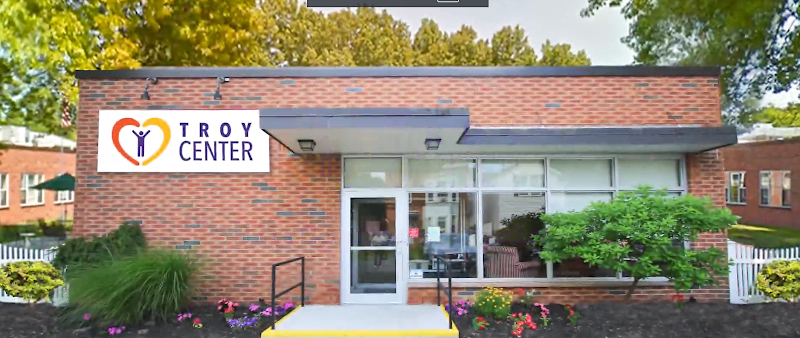
49 MARVIN AVENUE, TROY, NY 12180 (518) 273-6646
For profit - Corporation 78 Beds CENTERS HEALTH CARE Data: November 2025
Trust Grade
40/100
#580 of 594 in NY
Last Inspection: February 2024

Within standard 12-15 month inspection cycle. Federal law requires annual inspections.

Overview

Troy Center for Rehabilitation and Nursing has a Trust Grade of D, indicating it's below average with some significant concerns. It ranks #580 out of 594 facilities in New York, placing it in the bottom half of nursing homes in the state, and #7 out of 9 in Rensselaer County, meaning only two local options are worse. The facility's performance is worsening, with issues increasing from 6 in 2022 to 9 in 2024. Staffing is a notable weakness, rated 1 out of 5 stars, with a high turnover rate of 54%, which is concerning compared to the state average of 40%. While there have been no fines, which is a positive sign, specific incidents include residents not being treated with respect-like wearing hospital gowns instead of their clothes-and long wait times for assistance, indicating insufficient staff to meet residents' needs.

Trust Score
D
40/100
In New York
#580/594
Bottom 3%
Safety Record
Low Risk
No red flags
Inspections
Getting Worse
6 → 9 violations
Staff Stability
⚠ Watch
54% turnover. Above average. Higher turnover means staff may not know residents' routines.
Penalties
✓ Good
No fines on record. Clean compliance history, better than most New York facilities.
Skilled Nurses
⚠ Watch
Each resident gets only 29 minutes of Registered Nurse (RN) attention daily — below average for New York. Fewer RN minutes means fewer trained eyes watching for problems.
Violations
⚠ Watch
35 deficiencies on record. Higher than average. Multiple issues found across inspections.
★☆☆☆☆
1.0
Overall Rating
★☆☆☆☆
1.0
Staff Levels
★★★★☆
4.0
Care Quality
★★☆☆☆
2.0
Inspection Score
Stable
2022: 6 issues
2024: 9 issues

The Good

  • 4-Star Quality Measures · Strong clinical quality outcomes
  • Full Sprinkler Coverage · Fire safety systems throughout facility
  • No fines on record

Facility shows strength in quality measures, fire safety.

The Bad

1-Star Overall Rating

Below New York average (3.0)

Significant quality concerns identified by CMS

Staff Turnover: 54%

Near New York avg (46%)

Higher turnover may affect care consistency

Chain: CENTERS HEALTH CARE

Part of a multi-facility chain

Ask about local staffing decisions and management

The Ugly 35 deficiencies on record

Feb 2024 9 deficiencies
CONCERN (D) 📢 Someone Reported This

A family member, employee, or ombudsman was alarmed enough to file a formal complaint

Potential for Harm - no one hurt, but risky conditions existed

Report Alleged Abuse (Tag F0609)

Could have caused harm · This affected 1 resident

**NOTE- TERMS IN BRACKETS HAVE BEEN EDITED TO PROTECT CONFIDENTIALITY** Based on record review and interviews during recertification and abbreviated survey (Case #NY00322407) from 2/05/2024 to 2/12/20...

Read full inspector narrative →
**NOTE- TERMS IN BRACKETS HAVE BEEN EDITED TO PROTECT CONFIDENTIALITY** Based on record review and interviews during recertification and abbreviated survey (Case #NY00322407) from 2/05/2024 to 2/12/2024, the facility did not ensure that all alleged violations of abuse, neglect, or mistreatment, including injuries of unknown source, were immediately reported to the State Agency for 1 (Resident #51) of 3 residents reviewed for abuse. Specifically, the facility did not report the allegations of abuse involving Resident #51 to the New York State Department of Health after becoming aware of the allegations on 8/09/2023 at 7:20 AM. This is evidenced by: Resident #51 was admitted to the facility on [DATE] with diagnoses of Atherosclerosis with unspecified peripheral vascular disease, type II Diabetes, and vascular Dementia with other behavioral disturbances. The Minimum Data Set (an assessment tool) dated 12/10/2021 documented that the resident usually could be understood and understood others, and that the resident had severely impaired cognition for daily living decisions. The facility's Policy and Procedure titled Abuse, last revised 2/2019, documented the facility prohibited the mistreatment, neglect, and abuse of residents/patients and misappropriation of resident/patient property by anyone, including staff, family, friends, or other residents. The Administrator and Director of Nursing would be responsible for investigating and reporting to the appropriate State Agency(s) immediately (no later than 2 hours after allegation/identification of allegation) after identifying the alleged/suspected incident. The policy further defines abuse as the willful infliction of injury or intimidation resulting in physical harm, pain, or mental anguish. The policy describes verbal abuse as oral, written, or gestured language that willfully includes disparaging and derogatory terms to the resident. The New York State Department of Health Intake Information form dated 8/21/2023 documented that on 8/09/2023 at 7:20 AM, Resident #51 was potentially verbally abused by a staff member while going through the hallway. This allegation was reported by one of the witnesses to the incident, who immediately reported it to the Administrator and Director of Nursing. No report of the 8/09/2023 incident was made to the New York State Department of Health before 8/21/2023. The investigation and incident report dated 8/10/2023 documented that the staff housekeeper made derogatory comments to the resident, which the maintenance person also heard. The investigation stated that since the resident did not hear the derogatory comments, the Administrator ruled out verbal abuse. However, two individuals did hear the verbal comment made by the staff. The employee who conducted the verbal abuse on the resident was immediately suspended pending investigation and ultimately brought back and re-educated extensively on Abuse, Neglect, and Misappropriations. An investigation and incident report dated 12/05/2023 documented a resident-to-resident verbal altercation. The investigation documented that Resident #14 took off the leg rest of their wheelchair and tried to hit Resident #51. The incident was witnessed by a Licensed Practical Nurse who observed Resident #14 with the wheelchair leg rest in their hand, threatening to strike Resident #51. The statement made by Resident #14 documents that they tried to hit him with my leg rest. The investigation stated that since Resident #14 did not make contact with Resident #51, the Administrator documented that this ruled out any evidence of abuse. No report of the 12/05/2023 incident was made to the New York State Department of Health before 2/08/2024. During an interview on 2/08/2024 at 9:58 AM, Administrator #1 stated that incidents of verbal threats, physical harm, and residents were incidents of abuse. They further stated that any incident resulting in abuse should be reported to the New York State Department of Health. They stated that depending on the incident and how the potentially abused resident felt would determine whether the incident would be reported to the New York State Department of Health. The facility abuse policy was reviewed with Administrator #1, as Administrator #1 stated that they could not recall it. They stated that verbal abuse was the oral, written, or gestured language that willfully includes disparaging and derogatory terms to the resident. They stated regarding the incident on 12/05/2023, they did not believe it rose to an abuse situation since Resident #14 did not strike Resident #51; the resident did not feel uncomfortable, so Administrator #1 did not report it. Administrator #1 stated the gesture done by Resident #14 constituted potential verbal abuse according to their policy, and should have reported the incident to the New York State Department of Health. During an interview on 2/08/2024 at 11:38 AM, Resident #51 stated that they did not remember either incident. During an interview on 2/12/2024 at 9:43 AM, Director of Nursing #1 stated that they would consider abuse as any physical or verbal altercation, intimidation, or misappropriation of resident belongings done by staff or resident to resident. They stated that all cases of potential abuse should have been reported to the New York State Department of Health within the specific time of reporting. The incidents were reviewed with Director of Nursing #1, and they stated that the facility should have reported the incidents to the State Agency. 10 NYCRR 415.4(b)(2)
CONCERN (D)

Potential for Harm - no one hurt, but risky conditions existed

Assessment Accuracy (Tag F0641)

Could have caused harm · This affected 1 resident

Based on record review and interviews conducted during the recertification survey from 2/05/2024 to 2/12/2024, the facility did not ensure the Minimum Data Set (an assessment tool) was an accurate ass...

Read full inspector narrative →
Based on record review and interviews conducted during the recertification survey from 2/05/2024 to 2/12/2024, the facility did not ensure the Minimum Data Set (an assessment tool) was an accurate assessment reflective of each resident status at the time of assessment. Specifically, the discharge tracking Minimum Data Set was not accurately completed for 5 of 74 residents reviewed for accuracy related to proper discharge placement. This is evidenced by: During a review of records on 2/07/2024 for Resident #73 discharge for hospitalization, the resident was discharged to home and not to the hospital. The Medication Administration Record Section A documented that Resident #73 was discharged to a short-term general hospital. The nursing progress notes dated 11/10/2023 documented that Resident #73 was discharged to their family member's home with all belongings. In a review of records for discharge from 11/1/2023 to 2/7/2024, five additional resident discharges were inaccurately documented and did not correctly reflect the resident's discharge status at the time of assessment. During an interview on 2/12/2024 at 10:16 AM, Registered Nurse #3 stated they were responsible for overseeing the Minimum Data Set for each resident; they coordinated with all other departments and team members to ensure the accuracy of the Minimum Data Set. They stated they received the information based on the nursing progress notes on where the resident was discharged . They then would enter the Minimum Data Set and select the appropriate discharge status in section A. In reviewing three of the five residents with inaccurate discharge status, they stated that they needed to be corrected based on the documentation found in the nursing progress notes. Registered Nurse #3 stated they were unsure how that happened and were upset that it did happen, as it was their position to ensure it was correct. They stated that they would have to develop a system to double-check the accuracy of the information within the Minimum Data Set. 10NYCRR415.11(b)
CONCERN (D) 📢 Someone Reported This

A family member, employee, or ombudsman was alarmed enough to file a formal complaint

Potential for Harm - no one hurt, but risky conditions existed

Comprehensive Care Plan (Tag F0656)

Could have caused harm · This affected 1 resident

**NOTE- TERMS IN BRACKETS HAVE BEEN EDITED TO PROTECT CONFIDENTIALITY** Resident # 14 Resident #14 was admitted to the facility with the diagnoses of Diabetes type 1 and partial limb amputation. The M...

Read full inspector narrative →
**NOTE- TERMS IN BRACKETS HAVE BEEN EDITED TO PROTECT CONFIDENTIALITY** Resident # 14 Resident #14 was admitted to the facility with the diagnoses of Diabetes type 1 and partial limb amputation. The Minimum Data Set, dated [DATE] documented the resident could understand and be understood by others and was cognitively intact. During an interview on 2/06/2024 at 9:42 AM, Resident #14 was noted to have multiple missing and broken teeth. Resident #14 stated they wanted to see a dentist, but a dentist appointment had not been made. During record review on 2/06/2024 at 11:00 AM, the comprehensive care plans dated 10/19/2023 and 1/25/2024 did not include dental care. During an interview on 2/08/2024 at 11:30 AM, Director of Nursing #1 stated care plans were updated by the Unit Manager. During an interview on 2/08/2024 at 12:00 PM, Registered Nurse #1 stated the care plan would be updated. 10 New York Codes, Rules, and Regulations 415.11(c)(1) Based on observations, record reviews and interviews conducted during the recertification survey from 2/05/2024 to 2/12/2024, the facility did not ensure the development of comprehensive person-centered care plans - that included measurable objectives and time frames to meet the resident's medical, nursing, and mental and psychosocial needs - as identified in the comprehensive assessment for 2 (Resident #s 14 and 327) of 27 residents reviewed for comprehensive care plans. Specifically, (1) for Resident #327, the facility did not ensure a comprehensive care plan was developed to address the use of indwelling urinary catheter; and (2) for Resident #14, the facility did not ensure a comprehensive care plan was developed to address the resident's dental care. This is evidenced by: The Policy and Procedure titled Care Plans - Comprehensive, dated 10/2019, documented the facility would develop a comprehensive, resident centered care plan for each resident based on the individual needs/problems of each resident. Resident #327 The resident was admitted to the facility with the diagnoses of metabolic encephalopathy (a series of neurological disorders not caused by primary structural abnormalities), severe sepsis with septic shock (a serious condition in which the body responds improperly to an infection including possible organ failure), and cirrhosis of the liver (a condition where scar tissue gradually replaces liver tissue). The Minimum Data Set (an assessment tool) dated 2/27/2023 documented the resident could understand and be understood by others and was cognitively intact. A document titled Consultation documented Resident #327 had been seen by an outside provider on 3/01/2023. The outside provider documented that an indwelling urinary catheter had been placed before Resident #327 returned to the facility. A Physician Order dated 3/15/2023 documented urinary catheter care was ordered. The Treatment Administration Record dated 3/2023 documented urinary catheter care was to be provided every shift. The Comprehensive Care Plan did not address the presence or maintenance of an indwelling urinary catheter. During an interview on 2/12/2024 at 11:17 AM, Registered Nurse #1 stated that all the resident's needs would require a comprehensive care plan to address them. Registered Nurse #1 stated they would expect a care plan to address medications and medical devices like an indwelling urinary catheter. During an interview on 2/12/2024 at 11:23 AM, Licensed Practical Nurse #5 stated a care plan should have been initiated as soon as there was a change. They stated they would go to the Director of Nursing or supervisor to initiate a care plan. During an interview on 2/12/2024 at 11:40 AM, Director of Nursing #1 stated that a resident's comprehensive care plan should include and address all parts of a resident's care. They stated this would include an indwelling urinary catheter along with resident needs such as dental care, hearing aids, nutritional interventions. Director of Nursing #1 stated that registered nurses on the unit were responsible for initiating a care plan but if the unit manager was not a registered nurse, they would expect the unit manager to alert a registered nurse on the need for a care plan.
CONCERN (D) 📢 Someone Reported This

A family member, employee, or ombudsman was alarmed enough to file a formal complaint

Potential for Harm - no one hurt, but risky conditions existed

ADL Care (Tag F0677)

Could have caused harm · This affected 1 resident

**NOTE- TERMS IN BRACKETS HAVE BEEN EDITED TO PROTECT CONFIDENTIALITY** Based on observation, record review and interviews during a recertification survey from 2/05/2024 to 2/12/2024, the facility did...

Read full inspector narrative →
**NOTE- TERMS IN BRACKETS HAVE BEEN EDITED TO PROTECT CONFIDENTIALITY** Based on observation, record review and interviews during a recertification survey from 2/05/2024 to 2/12/2024, the facility did not ensure residents who were unable to carry out activities of daily living received the necessary services to maintain personal hygiene for 3 (Resident #s 2, 32 and 327) of 27 residents reviewed for Activities of Daily Living. Specifically, (A) Resident #'s 2 and 32 were not provided assistance with personal hygiene during morning care; (B) Resident #32 did not have a clean change of clothing and Resident # 2 was not provided sufficient extra-large incontinence briefs; (C) Resident #327 was not provided their weekly shower. This is evidenced by: The facility policy Activities of Daily Living Support effective 08/2016 and revised on 10/2019 documented residents who were unable to carry out activities of daily living independently would receive the services necessary to maintain good nutrition, grooming and personal and oral hygiene. Resident #2 The resident was admitted to the facility with the diagnoses of urinary tract infection, diabetes mellitus type 2, and hypertension. The Minimum Data Set (an assessment tool) dated 11/28/2023 documented the resident could understand and be understood by others; resident was cognitively intact. The Comprehensive Care Plan initiated 9/22/2023 documented the resident required assistance with Activities of Daily Living related to limited mobility, diabetes mellitus, obesity, and inability to complete Activities of Daily Living tasks. Interventions included a total mechanical lift with assistance of 2 or more staff for transfers. The following observations of Resident #2 were made: - On 02/05/2024 at 10:40 AM, resident was in bed wearing a hospital gown. - On 02/06/2024 at 11:00 AM, resident was in bed wearing a hospital gown. Both resident and roommate stated they were waiting for Certified Nurse Aide to assist them with morning care. Resident #2 was noted to have left over breakfast on overbed table, face with crumbs and hair was disheveled. - On 02/06/2024 at 11:10 AM, resident turned on call light, staff responded in 13 minutes and told the resident they would be back. - On 02/07/2024 at 10:13 AM, resident was in bed wearing hospital gown and stated they were waiting for assistance to get washed up. During an interview on 2/06/2024 at 11:15 AM, Resident #2 stated staff only provided care to them once a day if that. Resident #2 stated they waited for a very long time for care. Resident #2 stated Certified Nurse Aides came into their room and took 3 Extra-large incontinence briefs out of their dresser drawer and were later told that there were no briefs for them and could not be changed. Resident #2 further stated they had a foley catheter secondary to urinary incontinence, however, required assistance after soiling incontinence briefs. Resident stated their son brought in a personal supply of incontinence briefs so that they could get changed. During an interview on 2/07/2024 at 10:30 AM, Certified Nurse Aide #1 stated Resident #2 did not like to get up out of bed. They stated they would move to the next resident when resident refused and documented the resident's refusal. During an interview on 2/07/2024 at 11:00 AM, Registered Nurse #1 stated they had no knowledge of Resident #2 not receiving care or shortage of 3 extra-large incontinence briefs. During an interview on 2/07/2024 at 11:30 AM, Director of Nursing #1 stated they had no knowledge of Resident #2 not receiving care or shortage of 3 extra-large incontinence briefs. Director of Nursing #1 stated the Medical Records/Supply Officer ordered and tracked supplies and would be a contact for more information. During an interview on 2/08/2024 at 9:34 AM, the Medical Records/Supply Officer #1 stated Certified Nurse Aides were to come to them and request 3 extra-large incontinence briefs; 3 extra-large briefs were only provided to residents based on their weight. The Supply Officer stated that 3 extra-large briefs were rationed out. Supply Office #1 further stated that otherwise, Certified Nurse Aides would use them on residents who did not require large incontinence briefs; all other sizes were stocked on the units; the 3 extra-large incontinence briefs were locked in a secure location after hours. Resident # 32 The resident was admitted to the facility with the diagnoses of osteoarthritis, difficulty walking, chronic obstructive pulmonary disease, weakness, and depression. The Minimum Data Set, dated [DATE] documented the resident could understand and be understood by others, and was cognitively intact. The Comprehensive Care Plan initiated 3/17/2017, revised 11/02/2024, documented the resident required assistance with ADLs related to limited mobility, osteoarthritis, chronic left shoulder pain, and inability to complete Activities of Daily Living tasks. Resident required is a partial assist with 1 staff helper. Resident encouraged to use call light for assistance. During an observation on 2/05/2024 at 12:59 PM, South Unit room [ROOM NUMBER] call light remained on for 20 minutes. There were 6 staff in the vicinity of room [ROOM NUMBER] that did not answer light, instead went about other duties. During an observation on 2/07/2024 at 11:11 AM, a resident was sitting at the nurse's station on south unit yelling out repeatedly, please take me to the bathroom, my stomach hurts, I have to poop really bad. Certified Nurse Aide #4 stated to Certified Nurse Aid #5, you know how [they do]. Both Certified Nurse Aids walked away without assisting the resident. Record review of staffing sheets dated 2/02/2024 - 2/05/2024 documented 4 Certified Nurse Aides and 2-3 Licensed Practical Nurses on 7 AM - 3 PM shift: 3 Certified Nurse Aides and 2-3 Licensed Practical Nurses on 3p-11p shift, and 2 Certified Nurse Aides and 1 Licensed Practical Nurse on 11p-7a shift. Record review of Certified Nurse Aide Accountability shower sheet for the week of 1/26/2024 to 2/06/2024 documented the resident refused shower on 1/26/2024 and 1/30/2024. Resident received shower 2/2/2024 and 2/6/2024. Record review of Grievance dated 7/21/2023 documented resident filed a grievance with facility for help during the night, stating they wait hour and half for assistance. During an interview on 2/05/2024 at 11:45 AM, the resident was observed in their room sitting in a chair wearing a hospital gown, and stated they were wearing a hospital gown as this was all the clean clothing available to them. Their laundry was taken and not returned. Resident #32 stated they waited hours on the toilet for assistance, at times they did not receive shower or care overnight. Resident observed to be extremely hard of hearing. The resident did not have hearing aids applied, and hearing aides were seen in the resident's closet. Resident stated they asked for assistance in applying hearing aids, but staff would not assist. During an interview on 2/05/2024 at 11:50 AM, Licensed Practical Nurse #6 stated the resident refused their hearing aids. Licensed Practical Nurse #6 then walked to resident's room, located the hearing aids in resident's closet, and placed them on Resident #32. At the time of the observation, Resident #32 was very receptive and thankful to have hearing aids placed. Record review revealed Resident #32 did not have a comprehensive care plan to self-administer hearing aids. During an interview on 2/07/2024 at 10:48 AM, Registered Nurse #1 stated there were typically 4-5 certified Nurse Aides on day shift, 3-4 on evening shift, and 1-2 overnights. There were missed showers at times and sometimes residents refused, which was documented in their electronic record system. They stated only a few residents would get up on overnight shift; most residents preferred to get up between 7:00 AM and 8:00 AM which was not always doable. They stated since it was a rehabilitation unit, physical therapy would send a list of who needed to get up first. Registered Nurse #1 stated those needing physical therapy would be prioritized to get up first. Registered Nurse #1 stated they had no knowledge of Resident #32 not having clean clothing, that there were always clean clothes, and if not, residents could wear sweat pants and T-shirt provided by the facility. During an interview on 2/07/2024, Registered Nurse #6 acknowledged difficulty with new laundry service and stated that many residents complained once laundry was put in mesh bag to go out for cleaning, they never saw see their items again. Registered Nurse #6 stated there was a new service in place since 11/28/2023, that the Administrator was aware and as of two weeks ago, had hired a full-time, in-house laundry person to sort clothing for residents upon return for outside laundry service. During an interview on 2/07/2024 at 2:15 PM, Administrator #1 stated they were gradually reducing agency staff; had a recent Town Hall meeting and addressed staff answering call lights timely. Administrator #1 further stated that management had been working on individual units to address concerns, specifically answering call lights. Administrator #1 stated residents could file a grievance for any missed items, and that the facility was aware of Resident #32 grievances and in process of addressing their concerns. Administrator #1 stated grievances were addressed immediately, however, resolution could take 1-2 weeks depending on the depth of investigation. Resident #327 The resident was admitted to the facility with the diagnoses of metabolic encephalopathy (a series of neurological disorders not caused by primary structural abnormalities), severe sepsis with septic shock (a serious condition in which the body responds improperly to an infection including possible organ failure), and cirrhosis of the liver (a condition where scar tissue gradually replaces liver tissue). The Minimum Data Set, dated [DATE] documented the resident could understand and be understood by others and was cognitively intact. The [NAME] Report (list of Certified Nurse aide tasks) dated 2/28/2023 documented the resident was to receive a shower or bath every Tuesday and Thursday on the day shift. The [NAME] Report documented the resident required the physical assistance of one staff member with bathing activity. The document titled Bathing for the dates 2/13/2023-2/28/2023, documented that no bath or shower were given to resident. On 2/21/2023 and 2/28/2023 the bathing activity was documented as NA or not applicable. During an interview on 2/12/2024 at 11:20 AM, Certified Nurse Aide #3 stated the resident should receive showers according to their [NAME]. They stated they checked the [NAME] for changes at the start of each shift. They stated if a resident refused a shower, they would inform the nurse and re-approach. During an interview on 2/12/2024 at 11:23 AM, Licensed Practical Nurse #5 stated that at the end of the shift, the nurse should check to make sure Certified Nurse Aide tasks were completed; this would include showers and bathing. Licensed Practical Nurse #5 stated they would expect the Certified Nurse Aide to inform the nurse if a resident refused a shower. During an interview on 2/12/2024 at 11:40 AM, Director of Nursing #1 stated audits should be performed at the end of the shift to ensure the Certified Nurse Aide accountability was completed and resident care had been completed. They stated they expected the Certified Nurse Aide and floor nurse (Licensed Practical Nurse or Registered Nurse) to communicate about any issues with resident care including if a resident refused care. 10NYCRR 415.12(a)(3)
CONCERN (D)

Potential for Harm - no one hurt, but risky conditions existed

Deficiency F0685 (Tag F0685)

Could have caused harm · This affected 1 resident

Based on interview and record review conducted during a Recertification survey from 2/05/2024 to 2/12/2024, the facility did not ensure that residents receive proper treatment and assistive device to ...

Read full inspector narrative →
Based on interview and record review conducted during a Recertification survey from 2/05/2024 to 2/12/2024, the facility did not ensure that residents receive proper treatment and assistive device to maintain hearing abilities. Specifically, Resident #32 did not receive assistance with applying and removing bilateral hearing aids, and did not receive follow up Otolaryngology (a medical specialty which is focused on the ears, nose, and throat) visits for maintenance of hearing aids as recommended. This was evident for 1 of 27 residents reviewed for Communication/Sensory. This is evidenced by: Resident #32 Resident #32 had diagnoses including osteoarthritis (degeneration of joint cartilage and the underlying bone. It causes pain and stiffness, especially in the hip, knee, and thumb joints), difficulty walking, peripheral vascular disease (a circulatory condition in which narrowed blood vessels reduce blood flow to the limbs), chronic obstructive pulmonary disease (a group of lung diseases that block airflow and make it difficult to breathe), diabetes mellitus, major depression and hard of hearing. Review of the Minimum Data Set (a resident assessment tool) dated 11/23/2023 documented Resident #32 was understood, understood others and was cognitively intact. The comprehensive care plan initiated 9/22/2023 documented the resident required assistance with Activities of Daily Living related to limited mobility, Diabetes Mellitus, obesity, and inability to complete tasks; Interventions included a total mechanical lift with assistance of 2 or more staff for transfers. Resident #32 did not have care plan for alteration in hearing and or need for hearing device. Resident #32 did not have care plan to self-administer hearing aids. The Treatment Administration Records dated 01/01/2024 - 02/05/2024 for Resident # 32 documented staff were to apply bilateral hearing aids in the morning and remove at night, make sure hearing aids were charged at night, every evening shift remove hearing aids and place in medication cart. The day shift treatment administration records dated 02/06/2024, 2/11/2024, 2/19/2024 documented hearing aid placement nor removals were signed by a nurse. During an interview on 2/05/2024 at 11:45 AM, the resident was observed in their room sitting in a chair. Resident observed to be extremely hard of hearing. The resident did not have hearing aids applied, and hearing aides were seen in the resident's closet. Resident stated they asked for assistance in applying hearing aids, but staff would not assist. During an interview on 2/05/2024 at 11:50 AM , Licensed Practical Nurse #6 stated the resident refused their hearing aids. Licensed Practical Nurse #6 then walked to resident's room, located the hearing aids in resident's closet, and placed them on Resident #32. At the time of the observation, Resident #32 was very receptive and thankful to have hearing aids placed. The sheet titled Appointment and Transportation Requests, dated 9/09/2023, documented that Resident #32 was scheduled for an Otolaryngologist appointment at 8:00 AM on 11/09/2023. It further documented the resident refused to go to the appointment. There were no re-scheduled appointments for follow up otolaryngology hearing aid check. During an observation and interview on 2/08/2024 at 09:56 AM, the Resident's hearing aids were applied to both ears. Resident #32 stated right hearing aid was non-functioning. During an interview on 2/08/2024 at 09:59 AM, the Unit Manager #1 stated they were not aware of resident's right hearing aid was not functioning and would request an audiology consult. During an interview on 2/09/2024 at 10:05 AM, Resident #32 stated their right hearing aid was working. In an observation at this time, the switch was not turned to the 'on' position. During an interview on 2/09/2024 at 11:21 AM, Director of Nursing #1 stated Resident #32 was scheduled to be seen by otolaryngology but had refused several visits. Director of Nursing #1 stated nursing staff received training during general orientation on activities of daily living. 10NYCRR: 415.12(3)(b)
CONCERN (D)

Potential for Harm - no one hurt, but risky conditions existed

Deficiency F0760 (Tag F0760)

Could have caused harm · This affected 1 resident

Based on record review and interviews during a recertification and abbreviated survey (Case # NY00312707) from 2/05/2024 to 2/12/2024, the facility did not ensure the residents were free from signific...

Read full inspector narrative →
Based on record review and interviews during a recertification and abbreviated survey (Case # NY00312707) from 2/05/2024 to 2/12/2024, the facility did not ensure the residents were free from significant medication errors for 1 (Resident #327) of 1 resident reviewed for medication reduction. Specifically, for Resident #327, medication reduction was not properly transcribed and administered as ordered in a timely manner. This is evidenced by: Resident #327 Resident #327 was admitted to the facility with the diagnoses of metabolic encephalopathy (a series of neurological disorders not caused by primary structural abnormalities), severe sepsis with septic shock (a condition in which the body responds improperly to an infection including possible organ failure), and cirrhosis of the liver (a condition where scar tissue gradually replaces liver tissue); and was discharged from the facility prior to this survey. The Minimum Data Set (an assessment tool) dated 2/27/2023 documented the resident could understand and be understood by others and was cognitively intact. A document titled Consultation contained the recommendation to decrease lactulose (a medication prescribed to decrease the amount of ammonia in the blood) frequency from four times a day to three times a day on 3/13/2023. The Licensed Practical Nurse #5 documented the recommendations were noted on 3/15/2023. The Medication Administration Record, dated 3/2023, documented Lactulose oral solution 10 milligrams per 15 milliliters give 30 milliliters by mouth four times a day for hepatic encephalopathy continued to be administered to Resident #327 until 3/16/2023. A document titled Medication Error Report, dated 3/15/2023, documented the medication order dated 3/13/2023 was not updated until 3/15/2023. The type of medication error was documented as the wrong dose due to transcription error. A document titled In-Service Attendance Record, dated 3/15/2023, documented education was provided to one nurse (Licensed Practical Nurse #5) for consult transcription. During an interview on 2/12/2024, Registered Nurse #1 stated when a resident returned from an outside provider, the outside provider recommendations should be reviewed with the physician within one day. During an interview on 2/12/2024 at 11:23 AM, Licensed Practical Nurse #5 stated medication changes should have been made when the order was received to help prevent medication errors. During an interview on 2/12/2024 at 11:40 AM, Director of Nursing #1 stated medication changes should have been made as soon as the order was received. They stated that failure to transcribe a new medication order when it was made would be a medication error. 10 New York Codes, Rules, and Regulations 415.12(m)(2)
CONCERN (E)

Potential for Harm - no one hurt, but risky conditions existed

Resident Rights (Tag F0550)

Could have caused harm · This affected multiple residents

**NOTE- TERMS IN BRACKETS HAVE BEEN EDITED TO PROTECT CONFIDENTIALITY** Based on observations, interviews, and record review during the recertification survey from 2/05/2024 to 2/12/2024, the facility...

Read full inspector narrative →
**NOTE- TERMS IN BRACKETS HAVE BEEN EDITED TO PROTECT CONFIDENTIALITY** Based on observations, interviews, and record review during the recertification survey from 2/05/2024 to 2/12/2024, the facility did not ensure treatment with respect, dignity, and care for each resident in a manner and in an environment that promoted maintenance or enhancement of their quality of life, recognizing each resident's individuality. Specifically, residents were observed to wear hospital gowns instead of personalized clothing; and staff entered resident rooms without knocking or conducting themselves in a way of dignified care and respect to the residents on 2 of 2 units. This is evidenced by: A facility policy titled Resident Rights dated 2/2020, documented residents had a right to a dignified existence; to be treated with respect, kindness and dignity; to have self-determination, and be free from abuse, neglect, misappropriation of property and exploitation. A facility policy titled Personal Property, last revised 8/2019 documented that the residents were permitted to retain and use personal possessions and appropriate clothing as space and safety regulations permit. A facility policy titled Resident Rights, last revised 2/2020, documented that the residents were permitted to retain and use personal possession to the maximum extent that space and safety permit. During observations on the North and South units on 2/07/2024 from 9:30 AM to 1:30 PM, roughly a third of residents were noted to be wearing hospital gowns instead of personalized clothing. Residents wearing hospital gowns were seen in their rooms - both in bed and not - the unit hallways, as well as the dining areas and lounges on both units. During an observation in the main entryway of the facility on 2/07/2024 at 3:00 PM, Resident #6 was walking near the entrance while dressed in a hospital gown that opened in the back untied, causing the resident's naked back and back side to be visible to anyone in the hallway. Additionally, the resident was not wearing socks or shoes and had a wander guard ankle monitor on their leg. In an interview at this time, Registered Nurse #2 saw that the survey team was observing Resident #6 and stated that the resident was care planned not to have to wear socks. Registered Nurse #2 then tried to redirect the resident to return to their unit and get clothing. The resident stated they refused to wear the ugly clothing the facility supplied. Registered Nurse #2 was observed to have tied the back of the hospital gown during the engagement with the resident. During observations on 2/08/2024 at 11:01 AM, 11:06 AM, and 11:45 AM, Certified Nursing Aides walked into resident rooms without knocking and announcing themselves to occupants within the room. During an observation in the North unit hallway on 2/09/2024 at 10:41 AM, Laundry Deliverer #1 walked into a resident's room without knocking and announced, as they walked in, that they were from laundry and had articles of clothing for the resident in the room. Resident #2 Resident #2 was admitted to the facility on [DATE] with diagnoses including hypothyroidism (underactive thyroid), diabetes mellitus type 2, obesity, and chronic urinary tract infection. The resident was cognitively intact and required 2-person physical assistance for personal hygiene. The resident required a two-person mechanical lift to transfer from/to the bed. During an interview on 2/06/2024 at 10:54 AM, Resident #2 stated Certified Nurse Aides provided care only once a day, if that. They stated that they would wait several hours before receiving any care. The resident stated they wore 3 extra-large incontinence briefs that the facility would supply, and that nursing staff took 3 extra-large incontinence briefs from their drawer for other residents. Resident #2 stated that when it was time for their care, they were told by staff that there were no 3 extra-large incontinence briefs available. They further stated that the resident's family member had brought in a personal supply of briefs. During an observation in Resident #2's room on 2/07/2024 at 10:13 AM, the resident was noted to still be in bed, not yet having had any personal care for the day. During an interview on 2/08/2024 at 9:34 AM, the Medical Records/Supply Officer #1 stated Certified Nurse Aides were to come to them and request 3 extra-large incontinence briefs. They stated 3 extra-large incontinence briefs were only provided to residents based on who needed them and that 3 extra-large incontinence briefs were kept locked in a secure location and rationed out on as needed. They further stated that otherwise, Certified Nurse Aides would use them for residents who did not require large incontinence briefs, and all other sizes were stocked on the units. Resident #11 Resident #11 was admitted to the facility on [DATE] with diagnoses including cerebral infarction, type 2 diabetes, and chronic obstructive pulmonary disease (a group of diseases that cause airflow blockage and breathing-related problems). The Minimum Data Set (an assessment tool) dated 11/14/2023 assessed that the resident had a Brief Interview for Mental Status score of 15/15, indicating that the resident was fully cognitively intact and required assistance to complete activities of daily living. During an observation on 2/06/2024 at 9:39 AM, while conducting a resident interview, a staff member entered the resident's room without knocking and interrupted the resident interview process. During an interview on 2/06/2024 at 9:39 AM, Resident #11 stated that staff rarely knock and announced themselves. They indicated that staff just walked into resident rooms without ever knocking. Resident #11 had placed a sign on their door stating, Please knock before entering. They stated that staff would just come into the room without knocking, sometimes interrupting physician exams or meetings they were having with other staff. Resident #11 further stated that the facility constantly ran out of supplies, specifically the 3 extra-large incontinent briefs the resident wore. They stated that they had been left in soiled briefs for an extensive amount of time due to the constant decrease in supply for 3 extra-large incontinence briefs. Interview: During an interview on 2/08/2024 at 4:13 PM, Licensed Practical Nurse #2 stated that staff were supposed to knock on the door and announce themselves before entering residents' rooms. They stated that they had not had any residents complain to them that staff were not knocking or witnessed staff not knocking. They also stated that they would not be surprised if staff did not knock on resident doors. They stated they intended to be more diligent in noticing this practice and educate staff on the proper procedures. Licensed Practical Nurse confirmed there was a problem with residents' 3 extra-large incontinence briefs. They stated that there were 7-8 residents on their unit who wore 3 extra-large incontinence briefs and they were always in short supply of the briefs. They stated that they had not witnessed staff borrowing a 3 extra-large incontinence brief from one resident for another resident's care; but stated that it probably had happened at times due to the short supply. 10 New York Codes, Rule and Regulations 415.3 (c)(1)(i)
CONCERN (E) 📢 Someone Reported This

A family member, employee, or ombudsman was alarmed enough to file a formal complaint

Potential for Harm - no one hurt, but risky conditions existed

Deficiency F0725 (Tag F0725)

Could have caused harm · This affected multiple residents

**NOTE- TERMS IN BRACKETS HAVE BEEN EDITED TO PROTECT CONFIDENTIALITY** Based on observation, record review, and interviews during a recertification and abbreviated survey (Case # NY00327311 and NY003...

Read full inspector narrative →
**NOTE- TERMS IN BRACKETS HAVE BEEN EDITED TO PROTECT CONFIDENTIALITY** Based on observation, record review, and interviews during a recertification and abbreviated survey (Case # NY00327311 and NY00315143) from 2/05/2024 to 2/12/2024, the facility did not ensure sufficient nursing staff to provide nursing services to attain or maintain the highest practicable physical, mental, and psychosocial well-being for all residents in the facility. Specifically, there was not sufficient staff to meet resident needs in activities of daily living; multiple residents stated there were long waits for call lights showers were not given, not gotten out of bed and dressed until late morning, long waits to return to bed, and not enough staff to provide care. This is evidenced by: The facility's staffing policy revised on 11/2023, documented staffing numbers and skills requirements of direct care staff were determined by the needs of the resident's care plan. The number of nursing staff on duty would be sufficient to ensure nursing care needs of each resident were met. The facility's Call Light System - Resident Response policy dated 12/2017, documented the purpose was to provide timely response to residents in need of assistance to ensure high quality resident outcomes; be sure call light was within easy reach of the resident; answer call light as soon as possible and check on resident frequently who may not be able to use call their call light. Resident #2 The resident was admitted to the facility with the diagnoses of urinary tract infection, diabetes mellitus type 2, hypertension, hypothyroidism (underactive thyroid), and obesity. The Minimum Data Set (an assessment tool) dated 11/28/2023 documented the resident could understand and be understood by others and was cognitively intact. The comprehensive care plan initiated 9/22/2023 documented the resident required assistance with Activities of Daily Living related to limited mobility, Diabetes Mellitus, obesity, and inability to complete Activity of Daily Living tasks; Interventions included a total mechanical lift with assistance of 2 or more staff for transfers. The following observations of Resident #2 were made: • On 2/05/2024 at 10:40 AM, resident was in bed wearing hospital gown. • On 2/06/2024 at 11:00 AM, resident was in bed wearing hospital gown. Both resident and roommate stated they were waiting for Certified Nurse Aide to assist with morning care. Resident was noted to have left over breakfast on overbed table, face with crumbs and hair was disheveled. • On 2/6/2024 at 11:10 AM, resident turned on call light, staff responded in 13 minutes and told resident they would be back. • On 2/07/2024 at 10:13 AM, resident was in bed wearing hospital gown and stated they are waiting for assistance to get washed up. During an interview on 2/6/2024 at 11:15 AM, the resident stated staff only provided care to them once a day if that. Resident stated they waited a very long time for care. Resident stated they had a foley catheter secondary to urinary incontinence and required assistance after soiling briefs. Resident # 32 The resident was admitted to the facility with the diagnoses of osteoarthritis, difficulty walking, chronic obstructive pulmonary disease (a group of lung diseases that block airflow and make it difficult to breathe), weakness, and depression. The Minimum Data Set, dated [DATE] documented the resident could understand and be understood by others and was cognitively intact. The comprehensive care plan initiated 3/17/2017 and revised 11/2/2024 documented the resident required assistance with Activity of Daily Living tasks related to limited mobility, osteoarthritis, chronic left shoulder pain, and inability to complete Activity of Daily Living tasks. Resident was a partial assist with 1 staff helper, and the resident was to be encouraged to use a call light for assistance. Resident did not have a comprehensive care plan to self-administer hearing aids. Record review of grievances revealed the resident filed a grievance with the facility on 7/21/2023 for help during the night, and that they wait an hour and half for assistance. During an observation on 2/05/2024 at 12:59 PM, the resident's call light remained on for 20 minutes. It was noted that there were 6 staff in the vicinity of the resident's room that did not answer light, and that the staff instead went about other duties. During an interview on 2/05/2024 at 11:45 AM, the resident was observed in their room sitting in a chair. Resident observed to be extremely hard of hearing. The resident did not have hearing aids applied, and hearing aides were seen in the resident's closet. Resident stated they asked for assistance in applying hearing aids, but staff would not assist. Resident was wearing a hospital gown, and stated they were wearing a hospital gown as it was all the clean clothing available to them. Their laundry was taken and not returned. Resident stated they would wait for hours on the toilet for assistance, and at times they would not receive a shower or overnight care. During an interview on 2/05/2024 at 11:50 AM, Licensed Practical Nurse #6 stated the resident refused their hearing aids. Licensed Practical Nurse #6 then walked to resident's room, located the hearing aids in resident's closet, and placed them on Resident #32. At the time of the observation, Resident #32 was very receptive and thankful to have hearing aids placed. During an interview on 2/07/2024 at 10:48 AM, Registered Nurse #1 stated there were typically 4-5 Certified Nurse Aides on day shift, 3-4 on evening shift and, 1-2 overnights. Registered Nurse #1 further stated that there were missed showers at times, and sometimes residents refused. They stated that it would be documented in their electronic charting system; that only a few residents consented to getting up on the 11 PM - 7 AM shift. They stated that most residents preferred to get up between 7:00 AM - 8:00 AM which was not always doable. Registered Nurse #1 further stated that on the rehabilitation unit, physical therapy would send a list of who needed to get up first, and residents needing physical therapy would be prioritized to get up first. During an interview on 2/07/2024 at 02:15 PM, Administrator #1 stated they were gradually reducing agency staff; had a recent Town Hall meeting and addressed staff answering call lights timely. They further stated that management had been working on individual units to address concerns, specifically answering call lights. Administrator #1 stated that, at times, staff on orientation were counted as regular staff, depending on their progress during orientation. Resident #327 The resident was admitted to the facility with the diagnoses of metabolic encephalopathy (a series of neurological disorders not caused by primary structural abnormalities), severe sepsis with septic shock (a condition in which the body responds improperly to an infection including possible organ failure), and cirrhosis of the liver (a condition where scar tissue gradually replaces liver tissue). The Minimum Data Set, dated [DATE] documented the resident could understand and be understood by others and was cognitively intact. The [NAME] Report (list of certified nurse aide tasks) dated 2/28/2023 documented the resident was to receive a shower or bath every Tuesday and Thursday on the day shift. The [NAME] Report documented the resident required the physical assistance of one staff member with bathing activity. The document titled Bathing for the dates 2/13/2023-2/28/2023 documented that no bath or shower was given to resident. On 2/21/2023 and 2/28/2023, the bathing activity was documented as NA or not applicable. During an interview on 2/12/2024 at 11:20 AM, Certified Nurse Aide #3 stated residents should receive showers according to their [NAME]. They stated they check the [NAME] for changes at the start of each shift. They stated if a resident refused a shower, they would inform the nurse and re-approach. During an interview on 2/12/2024 at 11:23 AM, Licensed Practical Nurse #5 stated that at the end of the shift, the nurse should check to make sure Certified Nurse Aide tasks were completed; this would include showers and bathing. Licensed Practical Nurse #5 stated they would expect the Certified Nurse Aide to inform the nurse if a resident refused a shower. During an interview on 2/12/2024 at 11:40 AM, Director of Nursing #1 stated audits should be performed at the end of the shift to ensure the Certified Nurse Aide accountability was complete and resident care had been completed. They stated they expected the Certified Nurse Aide and floor nurse (Licensed Practical Nurse or Registered Nurse) to communicate about any issues with resident care including if a resident refused care. During an interview in Resident Council meeting on 2/05/2024 at 1:40 PM, - Resident #s 61, 44 and 36 stated average wait time for call light was between 15 to 20 minutes during the day, with overnights taking more time and staff did not help each other out, it is like nobody there. If a certified nurse aide is assigned to you, the other certified nurse aides would not touch you. - Resident # 61 stated they had sat on toilet until legs went numb. - Resident # 36 stated they had sat in wet pads for hours. During an interview on 2/06/2024 at 11:38 AM, Resident #67 stated at about 4:00 AM on 2/05/2024, they activated their call light and called out for help because of extreme pain and needed a pain pill. They stated that as they were crying out in pain, they heard staff outside in hallway talking and laughing, and no one came to answer the active call bell light until the day shift arrived. In an observation at this time, Resident #67's status was noted to include post amputation of left lower extremity. During an interview on 2/09/2024 at 10:56 AM, Resident # 11 stated their call light was on for 35 minutes, Certified Nurse Aide #4 came in and shut light off. Resident #11 stated Certified Nurse Aide #4 told the resident that there were only three aides on the floor and were assisting other residents, so Resident #11 would have to wait. During an interview on 2/09/2024 at 12:43 PM, Certified Nurse Aide # 2 stated there were only 3 certified nurse aides on the floor at the time Resident #11 turned their light on to facilitate their return to bed. Certified Nurse Aide #1 further stated that 1 Certified Nurse Aide was giving a shower, and the other was providing patient care. Certified Nurse Aide #1 stated the resident was told they would have to wait as no certified nurse aide was available immediately to put them back in bed. During an interview on 2/09/2024 at 1:54 PM, Administrator #1 stated all staff assist each other on the floor, including supervisors and managers. They further stated that the supervisor went to the floor to assist staff and Resident #11, and an investigation was initiated. The facility's daily staffing schedule dated 2/02/2024 - 2/05/2024 documented the following: • 02/02/2024 North Unit, Day shift (7:00 AM - 3:00 PM) - 1 Licensed Practical Nurse and 4 Certified Nurse Aides for 39 residents. South Unit 2 Licensed Practical Nurses, 1 Registered Nurse on orientation, and 4 Certified Nurse Aide for 39 residents. • 02/02/2024 North Unit, Evening shift (3:00 PM - 11:00 PM) - 1 Licensed Practical Nurse and 4 Certified Nurse Aides, 1 Certified Nurse Aide on orientation for 39 residents. South Unit 2 Licensed Practical Nurses, and 5 Certified Nurse Aide for 39 residents. • 02/02/2024 North Unit, Night shift (11:00 PM - 07:00 AM) - 1 Licensed Practical Nurse on orientation and 3 Certified Nurse Aides, for 39 residents. South Unit 1 Licensed Practical Nurse, and 2 Certified Nurse Aide for 39 residents. • 02/03/2024 North Unit, Day shift (7:00 AM - 3:00 PM) - 2 Licensed Practical Nurses, 4 Certified Nurse Aides and 1 Certified Nurse Aide on orientation, for 39 residents. South Unit 3 Licensed Practical Nurses, and 3 Certified Nurse Aides for 39 residents. • 02/03/2024 North Unit, Evening shift (3:00 PM - 11:00 PM) - 2 Licensed Practical Nurses and 4 Certified Nurse Aides, for 39 residents. South Unit 2 Licensed Practical Nurses, 1 Licensed Practical Nurse on orientation and 4 Certified Nurse Aide for 39 residents. • 02/03/2024 North Unit, Night shift (11:00 PM - 07:00 AM) - 1 Licensed Practical Nurse on orientation and 2 Certified Nurse Aides, for 39 residents. South Unit 1 Licensed Practical Nurse, 2 Certified Nurse Aide and 1 Certified Nurse Aide on orientation for 39 residents. • 02/04/2024 North Unit, Day shift (7:00 AM - 3:00 PM) - 2 Licensed Practical Nurses, 4 Certified Nurse Aides and 1 Certified Nurse Aide on orientation, for 39 residents. South Unit 2 Licensed Practical Nurses, and 3 Certified Nurse Aides for 39 residents. • 02/04/2024 North Unit, Evening shift (3:00 PM - 11:00 PM) - 2 Licensed Practical Nurses and 3 Certified Nurse Aides, for 39 residents. South Unit 2 Licensed Practical Nurses, 1 Licensed Practical Nurse on orientation and 4 Certified Nurse Aide for 39 residents. • 02/04/2024 North Unit, Night shift (11:00 PM - 07:00 AM) - 1 Licensed Practical Nurse on orientation and 2 Certified Nurse Aides, for 39 residents. South Unit 1 Licensed Practical Nurse, 2 Certified Nurse Aide and 1 Certified Nurse Aide on orientation for 39 residents. • 02/05/2024 North Unit, Day shift (7:00 AM - 3:00 PM) - 2 Licensed Practical Nurses, 4 Certified Nurse Aides and 2 Certified Nurse Aides on orientation, for 39 residents. South Unit 1 Licensed Practical Nurses, 1 Registered Nurse on orientation, and 5 Certified Nurse Aides for 39 residents. • 02/05/2024 North Unit, Evening shift (3:00 PM - 11:00 PM) - 2 Licensed Practical Nurses and 3 Certified Nurse Aides, for 39 residents. South Unit 1 Licensed Practical Nurse, 1 Licensed Practical Nurse on orientation and 4 Certified Nurse Aide for 39 residents. • 02/05/2024 North Unit, Night shift (11:00 PM - 07:00 AM) - 1 Licensed Practical Nurse on orientation and 2 Certified Nurse Aides, for 39 residents. South Unit 1 Licensed Practical Nurse, 1 Certified Nurse Aide for 39 residents. 10NYCRR 415. (a)(1) (i-iii)
CONCERN (E) 📢 Someone Reported This

A family member, employee, or ombudsman was alarmed enough to file a formal complaint

Potential for Harm - no one hurt, but risky conditions existed

Deficiency F0919 (Tag F0919)

Could have caused harm · This affected multiple residents

**NOTE- TERMS IN BRACKETS HAVE BEEN EDITED TO PROTECT CONFIDENTIALITY** Based on observation, record review, and interviews during the recertification survey from 2/05/2024 to 2/12/2024, the facility ...

Read full inspector narrative →
**NOTE- TERMS IN BRACKETS HAVE BEEN EDITED TO PROTECT CONFIDENTIALITY** Based on observation, record review, and interviews during the recertification survey from 2/05/2024 to 2/12/2024, the facility did not adequately provide for residents to call for staff assistance through a communication system which relays the call directly to a staff member or to a centralized staff work area on one (1) of 2 units. Specifically, the facility nurse call system did not function in resident room #s 5, 7, and 11 on the North Unit. This is evidenced by: During observations on 2/08/2024 at 9:33 AM, the call bell did not activate when tested in resident room # 5 for beds A and B. Additionally, room [ROOM NUMBER] was utilizing tap bells and did not have nurse cords to activate the nurse call system. room [ROOM NUMBER] was utilizing a tap bell and did not have a nurse call cord to activate the nurse call system. During an interview on 2/08/2024 at 9:37 AM, Resident #8 stated that they would press the nurse call cord if one were provided. Record review of [NAME] Center Repair Requisitions, dated 12/26/2023, documented that the nurse call system in room [ROOM NUMBER] and room [ROOM NUMBER] were in disrepair. Record review of [NAME] Center Repair Requisition, dated 12/30/2023, documented that the nurse call system in room [ROOM NUMBER] was in disrepair. The document titled [vendor] Quote documented that the facility obtained a quote to affect repairs to the call bell system on 1/09/2024. During an interview on 2/08/2024 at 9:44 AM, Maintenance Life Safety Consultant #1 stated that the facility had contracted with a vendor to repair the nurse call systems in 3 resident rooms and was presently awaiting to schedule a starting date once the vendor had all the replacement parts. During an interview on 2/12/2024 at 10:33 AM, Administrator #1 stated that the repairs to the call bell system were completed. 10 New York Codes, Rules and Regulations 713-1.3(b)
Nov 2022 6 deficiencies
CONCERN (D) 📢 Someone Reported This

A family member, employee, or ombudsman was alarmed enough to file a formal complaint

Potential for Harm - no one hurt, but risky conditions existed

Notification of Changes (Tag F0580)

Could have caused harm · This affected 1 resident

Based on record review and interview during an abbreviated survey (Case #s NY00302027), the facility did not ensure to immediately consult with the resident's physician when there was a need to alter ...

Read full inspector narrative →
Based on record review and interview during an abbreviated survey (Case #s NY00302027), the facility did not ensure to immediately consult with the resident's physician when there was a need to alter treatment for 1 (Resident #2) of 2 residents reviewed for medication administration. Specifically, the facility did not ensure the physician was notified when Resident #2 returned from dialysis, later than usual, on 10/5/2022 and did not receive their evening medications. This was evidenced by: Resident #2: Resident #2 was admitted to the facility with diagnoses of end stage renal disease, diabetes mellitus, and gastro-esophageal reflux disease. The Minimum Data Set (MDS- an assessment tool) dated 9/9/2022 documented the resident was cognitively intact and able to make needs known. The Policy and Procedure (P&P) titled Medication Administration, dated 12/2019, documented medications shall be administered in a safe and timely manner, and as prescribed. The P&P documented if a drug was withheld, refused, or given at a time other than the scheduled time, the individual administering the medication shall document as such in designated format space provided for that drug and dose. The P&P did not include a procedure for notifying the physician if a drug was withheld, refused, or given at a time other than the scheduled time. The Medication Administration Record (MAR) for 10/5/2022 did not include documentation that the following medications were administered on the evening of 10/5/2022 as ordered by the physician: -Carvedilol Oral Tablet 6.25 milligram (mg), 1 tablet by mouth at bedtime for hypertension; scheduled 7:00 PM-9:00 PM. -Basaglar Kwik Pen Subcutaneous Solution Pen-Injector 100 UNIT/milliliter, inject 8 units subcutaneously at bedtime for diabetes; scheduled 7:00 PM-10:00 PM. -Senna Plus Oral (Sennosides-Docusate Sodium) Tablet 8.6-50 mg, 2 tablets by mouth at bedtime for constipation; scheduled 7:00 PM-10:00 PM. -Ferrous Sulfate Tablet 325 (65 Fe), 1 tablet by mouth at bedtime for anemia; scheduled 7:00 PM- 9:00 PM. -Protonix (Pantoprazole Sodium) Tablet Delayed Release 40 mg, 1 tablet by mouth at bedtime for reflux; scheduled 7:00 PM- 9:00 PM. -Carafate Tablet 1 Gram, 1 tablet by mouth at bedtime for gastric indigestion; scheduled at 9:00 PM. -Glucose Monitoring at bedtime for diabetes, call MD (physician) if below 70 or over 400; scheduled at 9:00 PM. A review of the medical record did not include documentation the physician was notified when Resident #2 returned from dialysis, later than usual, on 10/5/2022 and did not receive their evening medications. During an interview on 10/14/2022 at 12:30 PM, Resident #2 stated when they returned to the facility from dialysis later than usual on 10/5/2022, they were not sure of the exact time but thought it was between 9:00 PM and 10:00 PM, they did not receive their evening medications. Resident #2 stated when they asked the nurse for the medications, they were told that it was too late to administer them because it was later than one hour after the scheduled time. During an interview on 10/17/2022 at 1:00 PM, the Director of Nursing (DON) stated there was not a medication error report on file, and they were not aware that Resident #2 did not receive their evening medications on 10/5/2022. The DON stated the nurse should have documented the reason why the medications were not administered and notified the physician for further instructions. During an interview on 10/17/2022 at 3:00 PM, the Licensed Practical Nurse (LPN) #2 stated Resident #2 had not returned from dialysis by the end of their shift at 9:00 PM on 10/5/2022. LPN #2 stated they reported to the facility supervisor, LPN #4 that Resident #2 would need to receive their evening medications when they returned. LPN #2 stated the next morning, Resident #2 reported to them they did not get their evening medications and the nurse had told the resident it was past the time they were scheduled, and it was too late to administer them. LPN #2 stated the nurse should have notified the physician and clarified the orders, and then documented the communication in the progress notes and on the MAR. LPN #2 also stated they did not complete a medication error report at the time of the incident. The LPN stated as the Unit Manager, there were responsible and should have completed a medication error report to ensure the incident was investigated. 10 NYCRR 415.3(e)(2)(ii)(b)
CONCERN (D) 📢 Someone Reported This

A family member, employee, or ombudsman was alarmed enough to file a formal complaint

Potential for Harm - no one hurt, but risky conditions existed

ADL Care (Tag F0677)

Could have caused harm · This affected 1 resident

**NOTE- TERMS IN BRACKETS HAVE BEEN EDITED TO PROTECT CONFIDENTIALITY** Based on observations, record review and interviews during an abbreviated survey (Case #NY00302027) the facility failed to ensur...

Read full inspector narrative →
**NOTE- TERMS IN BRACKETS HAVE BEEN EDITED TO PROTECT CONFIDENTIALITY** Based on observations, record review and interviews during an abbreviated survey (Case #NY00302027) the facility failed to ensure residents who are unable to carry out activities of daily living (ADLs) receive the necessary services to maintain good nutrition, grooming, and personal and oral hygiene for two (2) (Resident #5 and #7) out of three (3) residents reviewed for ADL care. Specifically, the facility did not ensure Resident #7 was provided assistance to take a shower and wash their hair and did not ensure Resident #5 was provided assistance after they were incontinent and visibly soiled. The finding include: Cross referenced to F725: Insufficient nursing staff The Policy and Procedure (P&P) titled ADL-Personal Hygiene, reviewed October 2021, documented The purpose of this procedure is to the direct the nursing staff and meet the residents' individual needs per the plan of care and [NAME] on a daily basis. Resident bath or shower will be scheduled per resident preference but at least weekly per the unit shower schedule and a bed bath will be provided on non-shower days. Toileting/incontinence care for a resident will be provided as needed for each individual resident per care plan and [NAME]. Resident #5: Resident #5 was admitted to the facility with diagnosis which included metabolic encephalopathy, chronic kidney disease and depression. The Minimum Data Set (MDS-an assessment tool) dated 7/30/2022 documented the resident had cognitive impairment for making decisions of daily living, could be understood, and could understand others. During an observation and interview on 10/13/2022 at 2:50 PM, Resident #5 was observed seated in their wheelchair near the nurse's station on the North Care Unit. The resident's pants were saturated in the groin area and there was a strong smell of urine. The resident stated, I've been asking them to change me since this morning, I told them my whole body is wet. The resident pointed towards their room and said, go look at my bed, the whole bed is wet too. The resident's bed was observed to be saturated through an incontinence pad that was on the bed and the bedding and area around the pad was visibility wet. Four nursing staff were at the nurse's station and Resident #5 asked the staff if they could be changed. One of the nursing staff replied, you're going to have to give us a few minutes. The resident stated back to them I have been asking you all day and no one will help. Resident #5's Care Plan dated 8/3/2022 included documentation that the resident required assistance to complete ADLs. According to the Care Plan, the resident had bladder incontinence related to congestive heart failure and disease process. The goal of the care plan included that the resident would remain free from skin breakdown due to incontinence and brief use through the review date. Intervention included that the resident should be encouraged to use their call bell to get assistance when needed. During a follow up interview on 10/17/2022 at 4:12 PM, the DSW said that they were aware of numerous residents that reported not receiving showers in the past few weeks. They said, we only have one aide at times, it's not realistic for one aide to complete care. During an interview on 10/21/2022 at 12:04 PM, the Director of Nursing (DON) said that the facility had a lot of staff call-outs where staff would call out for the shift with short or no notice. They said the lack of staffing could contribute to care not being completed for residents. The DON stated Unfortunately, at times staff just do not show up or call which can result in delays in care. They stated residents would also refuse care at particular times which would push care to different a time/shift and could also contribute to care not being completed. They stated a resident should be changed as soon as they ask to be changed or are visibly soiled. They stated residents are scheduled for two showers per week and should receive at least one shower per week. Resident #7: Resident #7 was admitted to the facility with diagnoses of hemiplegia affecting the left dominant side, history of falling and muscle weakness. The Minimum Data Set (MDS- an assessment tool) dated 9/15/2022, documented the resident was assessed to have intact cognition for making decisions of daily living, could be understood, and could understand others. The resident was assessed as requiring extensive assistance from staff to perform bathing. During an observation and interview on 10/12/2022 at 12:40 PM, Resident #7 stated they had not received a shower in three (3) weeks. The resident had a family member on their phone who said that they had been contacting the facility and asking for the resident to receive a shower. The resident stated that they felt dirty, nasty and itchy. Resident #7 stated the facility did not have enough staff to provide care to the residents. They said during the previous weekend, they had put their call for assistance with changing after being incontinent and their call light was not answered for an hour and half. They stated staff would come to the room and turn off the call light, say they would return and then never come back to complete the care. They stated, if I could walk, I would do it myself, but I have to depend on the staff. Resident #7's hair was observed to have debris, oil saturation and scalp flakes. The resident became tearful while describing their lack of care. Review of Resident #7's Care Plan, dated 9/29/2021, documented that the resident required assistance with ADLs related to immobility, weakness, multiple sclerosis (MS), morbid obesity and cerebrovascular accident (stroke) with left sided weakness. The care plan included that the resident required physical assistance from two (2) staff members to perform bathing. Review of the facility record revealed that Resident #7 was scheduled to receive a shower on the evening shift each Wednesday. Review of the resident's bathing record from 10/1/2022 to 10/12/2022 revealed the resident had received bed baths but not a full shower. During an interview on 10/12/2022 at 12:50 PM, the Director of Social Work (DSW) stated Resident #7 had reported they had not received a shower in three weeks. The DSW stated they had followed up with nursing staff and was told Resident #7 received a shower. The DSW said Resident #7 clearly has not received a shower , after they had observed the resident. They said they planned to follow up again. During an interview on 10/12/2022 at 1:52 PM, Licensed Practical Nurse (LPN) #1 said that they felt there was not enough staff to provide care adequately and effectively to the residents on the unit. When asked how they ensure residents receive care, LPN #1 stated that If ADLs are not completed by the end of the shift, they do not get done. In a follow up interview on 10/12/2022 at 1:55 PM, Resident #7 stated that they were told that they might not be able to receive a shower that day because there was not enough to staff to provide one. They stated they were on their way to participate in an activity but felt frustrated that they had to attend while feeling dirty. They stated, I'm sure the staff would not want their loved one to be treated this way, I'm sure they would want them to be showered. During an interview on 10/13/2022 at 1:40 PM, Certified Nurse Aide (CNA) #4 stated that when they arrived for their afternoon shift the previous weekend, more than half of the residents were wet or soiled. They said residents had not been assisted to get dressed or out of bed and beds were wet, requiring a full change of the bedding. They stated ADL care was not completed due to insufficient staffing. During an interview on 10/13/2022 at 2:35 PM, the Licensed Practical Nurse Unit Manager (UM) stated that the expectation is for all staff to assist with resident care when needed. Before the end of their shift, CNAs should notify the nurse on the carts and other CNAs of resident care that still needs to be provided. When asked about residents that were left soiled, the UM stated that there is no reason for the residents to go without care for extensive periods of time. During an interview on 10/21/2022 at 12:04 PM, the Director of Nursing (DON) stated that the facility had a lot of staff call-outs where staff would call out for the shift with short or no notice. The DON stated the lack of staffing could contribute to care not being completed for residents. The DON stated Unfortunately, at times staff just do not show up or call which can result in delays in care. The DON stated residents would also refuse care at particular times which would push care to different a time/shift and could also contribute to care not being completed. They said a resident should be changed as soon as they ask to be changed or are visibly soiled. They said residents are scheduled for two showers per week and should receive at least one shower per week. 10 NYCRR 425.12 (a)(3)
CONCERN (D) 📢 Someone Reported This

A family member, employee, or ombudsman was alarmed enough to file a formal complaint

Potential for Harm - no one hurt, but risky conditions existed

Accident Prevention (Tag F0689)

Could have caused harm · This affected 1 resident

Based on observation, record review, and interview during an abbreviated survey the facility did not ensure each resident receives adequate supervision and assistance devices to prevent accidents for ...

Read full inspector narrative →
Based on observation, record review, and interview during an abbreviated survey the facility did not ensure each resident receives adequate supervision and assistance devices to prevent accidents for one (Resident #1) of one resident reviewed for smoking. Specifically, for Resident #1, the facility did not ensure to thoroughly investigate and implement effective interventions after staff became aware Resident #1 was regularly smoking in their room and was in possession of smoking materials on numerous occasions. The findings include: Resident #1, a known smoker, was readmitted to this non-smoking facility on 7/12/2022 with diagnoses of nicotine dependence on cigarettes, end stage renal disease and major depressive disorder. The Minimum Data Set (MDS- an assessment tool) dated 9/23/2022, documented the resident was assessed to have intact cognition for making decisions of daily living, could be understood, and could understand others. Review of the facility Policy and Procedures (P&P) revealed an admission document titled, (Facility) is a Smoke Free Facility documented, All residents residing at any (associated facilities) building must give all smoking and lighting materials to the Unit Manager/ Supervisor upon admission. (The) Unit Manager/ Supervisor or Designee will label and place smoking material in a secure area, as you are not able to smoke at this facility. Upon discharge you will receive your smoking and lighting material back. Review of the facility record revealed that on 7/12/2022, Resident #1 signed an acknowledgement of the P&P that the facility is smoke-free, and all smoking materials were to be held by the staff, resident's family or designee. A Nursing Progress Note dated 8/10/2022 at 7:49 PM, documented that there was a strong cigarette smoke odor in the resident's room and smoke was still present in the room. The progress note documented that the resident's roommate reported to staff that the resident was smoking in the room. An Incident Note dated 8/29/2022 at 4:00 AM, documented Resident #1 was found smoking in their bed with a half-lit cigarette laying directly on the bed next to the resident. According to facility records, the resident was found to be actively smoking or evidence that the resident was smoking in their room on 25 occasions between 8/10/2022 and 10/12/2022 (8/10/2022, 8/15/2022, 8/23/2022, 8/24/2022, 8/27/2022, 8/29/2022, 8/31/2022, 9/3/2022, 9/5/2022, 9/7/2022, 9/8/2022, 9/14/2022, 9/15/2022, 9/18/2022, 9/19/2022, 9/20/2022, 9/21/2022, 9/23/22, 9/26/22, 9/27/2022, 9/28/2022, 10/6/2022, 10/10/2022, 10/11/2022, and 10/12/2022). The resident's Behavioral Care Plan was updated on 8/31/2022 to include that the resident had been found to be smoking in their room on numerous occasions and threatened to light cigarettes in room. A facility document titled 30-day Discharge Notice dated 9/1/2022, was issued to the resident to vacate the facility due to the health or safety of the individuals in the facility would otherwise be in danger. On 9/21/2022, Resident #1 appealed the 30-day notice to vacate and there were on-going court proceedings pending in order to uphold the notice to vacate. Therefore, the resident remained at the facility and continued to smoke in their room. Resident #1 was assessed for smoking as of 10/7/2022. The assessment did not indicate whether the resident was assessed to be a safe smoker. A smoking care plan was created on 10/8/2022 which included the intervention of staff assisting and supervising resident upon request to the edge of the facility property to smoke approximately three (3) to four (4) times per day. Per the care plan, all smoking material should be individually labeled and kept in a secure location and the resident should don a smoking apron for safety. During an interview on 10/12/22 at 1:52 PM, Licensed Practical Nurse (LPN) #1 stated that the unit would smell like smoke because there was a resident on the unit that would smoke in their room. LPN #1 stated Resident #1 smoked in their room. During an interview and observations of Resident #1 on 10/12/2022 at 2:15 PM, Resident #1 stated that they smoke in their room and had just finished smoking a cigarette. Resident #1 said they had been told that they would be taken outside to smoke, however, staff never took them out and therefore they resorted to smoking in their room. Resident #1 stated that they did not have an ashtray to put their cigarettes out in so they would wet the cigarette in the sink and then throw it in the trash. The room smelled strongly of cigarette smoke and cigarette butts were observed in a trash bin with paper towels, food wrappers and other garbage. During an interview with the Director of Nursing (DON) and the Nurse Consultant (NC) on 10/12/2022 at 3:38 PM, the DON acknowledged that facility were aware the resident smoked in their room. They said staff were to frequently check on the resident throughout the day and evening shifts from 7:00 AM to 7:00 PM. They said there was no specific interval time that the staff should be checking on the resident, however, would keep an eye on (them) during regularly rounding. The DON said that the facility would have a staff supervise the resident one (1) to one (1) from 7:00 PM to 7:00 AM. The DON said that the resident had been offered smoking cessation materials such as the patch and nicotine gum, however, refused to use them. The DON said that when staff would attempt to deter the resident from smoking or remind them of the facility policy, the resident would become verbally aggressive and agitated. The DON said the resident is putting everyone at risk and needs to go in regard to the facility's attempts to rehouse the resident at a facility that allows smoking. Review of the facility record did not include documentation that the resident was supervised by staff during the overnight shift until 10/12/22 (during the onsite survey). During an interview on 10/13/2022 at 11:20 AM, Licensed Practical Nurse Unit Manager (UM) stated that the resident's smoking has been a problem the past few months. They said they were not aware of any changes or interventions developed to deter the resident smoking in their room. They stated whenever the resident was found smoking in their room, nursing staff were to report to them as the Unit Manager. They would then relay to the DON. During an interview on 10/13/2022 at 1:25 PM, the Assistant Director of Nursing (ADON) stated a smoking care plan was put in place for the resident on 10/8/2022 because the resident's roommate, who was ok with the resident smoking in the room, was discharged which would leave Resident #1 alone in their room over a weekend. The ADON stated Resident #1 was smoking daily, and staff was afraid they could be danger to themself everyone else. They said the resident was not physically able to get themself off the property to smoke and therefore would need assistance from staff. During an interview on 10/13/2022 at 5:15 PM, the Interim Nursing Home Administrator (INHA) stated staff had taken the resident outside to smoke, however, they continued to smoke in their room so the plan to take them outdoors to smoke was discontinued. The INHA stated that going forward, the facility intended to have Resident #1 supervised with one (1) to one (1) staffing 24 hours per day. 10NYCRR 416.12(h)(l)
CONCERN (D) 📢 Someone Reported This

A family member, employee, or ombudsman was alarmed enough to file a formal complaint

Potential for Harm - no one hurt, but risky conditions existed

Deficiency F0838 (Tag F0838)

Could have caused harm · This affected 1 resident

Based on facility record review and staff interview, during an abbreviated survey (Case #'s NY00288482, NY00302885, and #NY00302027), the facility did not ensure the facility-wide assessment determine...

Read full inspector narrative →
Based on facility record review and staff interview, during an abbreviated survey (Case #'s NY00288482, NY00302885, and #NY00302027), the facility did not ensure the facility-wide assessment determined what resources are necessary to care for its residents competently during both day-to-day operations and emergencies. Specifically, the facility did not ensure the facility-wide assessment determined the amount of direct care staff required to care for its residents. The Findings include: The Resident Census and Conditions of Residents (CMS-672), dated 10/11/2022, documented 77 total residents that required assistance, based on acuity, from the facility. A review of the Facility Assessment Portfolio, dated 7/28/2022, documented We start with our allocated staffing ratios and review the needs of the individual residents on any given day utilizing our twenty-four-hour report and the review of the EHR dashboard. The Facility Assessment, dated 7/28/2022, does not specify the amount of staffing required to meet each resident's needs each day and during emergencies. During an interview on 10/14/2022 at 3:42 PM, the Director of Nursing (DON) stated that they did not review the facility assessment and did not know what information it contained. The DON said that the facility assessment should be used to determine the staffing requirement. The South Unit should be staffed higher because it is the Rehab Unit. 10NYCRR 415.26
CONCERN (E) 📢 Someone Reported This

A family member, employee, or ombudsman was alarmed enough to file a formal complaint

Potential for Harm - no one hurt, but risky conditions existed

Deficiency F0725 (Tag F0725)

Could have caused harm · This affected multiple residents

**NOTE- TERMS IN BRACKETS HAVE BEEN EDITED TO PROTECT CONFIDENTIALITY** Based on observations, record review, and interviews during an abbreviated survey (Case #'s NY00288482, NY00302885, and #NY00302...

Read full inspector narrative →
**NOTE- TERMS IN BRACKETS HAVE BEEN EDITED TO PROTECT CONFIDENTIALITY** Based on observations, record review, and interviews during an abbreviated survey (Case #'s NY00288482, NY00302885, and #NY00302027), the facility did not ensure services by sufficient numbers of each type of personnel on a 24-hours basis to provide nursing care to all residents in accordance with resident care plans. Specifically, the facility did not ensure that there were a number of nurse aides to provide care and respond to each resident's basic needs and individual needs as required by the resident's diagnoses, medical conditions, or plan of care. Findings include: The Facility Assessment, dated 7/28/2022, does not specify the amount of staffing required to meet each resident's needs each day and during emergencies. During observations on; -10/12/22 at 12:40 PM, Resident #7 hair that was dirty, saturated, and appeared oily. The resident was tearful. -10/12/2022 at 2:11 PM, the call light activated for room [ROOM NUMBER]-A. During interview with Resident #6, the resident said that they had a bowel movement and needed care. When asked how long their call light had been on, the resident stated it has been about 30 minutes. During an observation and interview on 10/13/2022 at 2:50 PM, Resident #5 was observed seated in their wheelchair near the nurse's station on the North Care Unit. The resident's pants were saturated in the groin area and there was a strong smell of urine. The resident said, I've been asking them to change me since this morning, I told them my whole body is wet. The resident pointed towards their room and said, go look at my bed, the whole bed is wet too. The resident's bed was observed to be saturated through an incontinence pad that was on the bed. Four nursing staff were at the nurse's the station and the resident asked the staff if they could be changed. One of the nursing staff replied, you're going to have to give us a few minutes. The resident stated I have been asking you all day and no one will help. The North Unit Staff assignment sheet, dated 10/4/2022, documented one CNA during the 11:00 PM to 7:00 AM shift. The North Unit staff assignment sheet, dated 10/9/2022, documented there was no CNA from 3:00 PM until after 6:00 PM. A review of the facility's Punch Exception and Lunch Authorization Form dated 10/9/2022 for CNA #8 documented that there was only one (1) CNA in the whole facility at the time of the shift. During an interview of 10/11/2022 at 3:02 PM, Resident #3 stated that they were left soiled for several hours the previous weekend. They stated, nobody showed up for work, there was only one aide and one nurse. The resident said they tried to hold their urine as long as they could, however, after more than an hour they had an accident which then left them wet for extended period of time (they estimated another hour). During an interview on 10/11/2021 at 4:00 PM, CNA #2 said staffing expletive named. There is not enough staff to efficiently provide adequate care. When asked for an example, the CNA stated that a resident was left in their urine all day. They were not changed until they used the bathroom on the floor, yesterday (10/10/2021). The CNA stated they were notified that the resident needed incontinent care at the beginning of their shift (4:00 PM). The nurse told them they didn't know who the resident belonged to, but they urinated on the floor. During an interview on 10/12/2022 at 12:40 PM, Resident #7 stated they had not received a shower in three (3) weeks. The resident had a family member on speaker phone who said that they had been contacting the facility and asking for the resident to receive a shower. The resident stated that they felt dirty, nasty and itchy. They said the facility did not have enough staff to provide care to the residents. They said during the previous weekend, they had turned on their call light for assistance with incontinence care and their call light was not answered for an hour and a half. They said, if I could walk, I would do it myself, but I have to depend on the staff. During an interview on 10/12/2022 at 1:50 PM, the Director of Social Work (DSW) stated Resident #7 had reported they had not received a shower in three weeks. The DSW had followed up with nursing staff and was told Resident #7 received a shower. The DSW stated that after they observed Resident #7's hair, they clearly have not received a shower. They stated they planned to follow up again. In a follow up interview on 10/12/2022 at 1:55 PM, Resident #7 said that they were told that they might not be able to receive a shower that day. They said they were on their way to participate in an activity but felt frustrated that they had to attend while feeling dirty. They said, I'm sure the staff would not want their loved to be treated this way, I'm sure they would want them to be showered. During an interview on 10/12/2022 at 1:50 PM, LPN #2 said that Resident #7 was not likely to receive a shower that day because they did not think there was enough staff to provide a shower. They said, we only have one aide, so they (Resident #7) are not going to be showered. They said according to the shower schedule, the resident was scheduled to receive a shower the day before. They said sometimes they would walk in the building and there are zero aides. During an interview on 10/12/2022 at 1:52 PM, LPN #1 stated that they felt there is not enough staff to provide care adequately and effectively to the residents on the unit. LPN #1 stated that there is currently one (1) aide and two (2) nurses on the unit for the 1st shift with a current census of 39 residents and it is usually like that. Sometimes there are no aides on the unit. When asked how they ensure residents receive care, LPN #1 stated that If ADLs are not completed by the end of the shift, they do not get done. During an interview on 10/12/2022 at 2:00 PM, CNA #6 stated they feel like there is not enough staff to efficiently perform their tasks. During an interview on 10/12/2022 at 2:21 PM, the South Unit Nurse Manager stated there is not enough staff to effectively provide care to the residents. Each unit is supposed to have three (3) or (4) CNAs and a CNA to float because they also go with the residents to appointments. The South Unit is normally staffed more than the North Unit. The goal is to try to keep two (2) CNAs on each unit but that doesn't always happen. Today (10/12/2022) is a really bad day. It's been like this for the past month. During an interview on 10/14/2022 at 3:42 PM, the Director of Nursing (DON) stated that they did not review the facility assessment and did not know what information it contained. The DON stated that the facility assessment should be used to determine the staffing requirement. The required staffing is dependent on the resident's needs. The South Unit should be staffed higher because it is the Rehab Unit with greater acuity. When asked about routine changes to the staffing assignments, the DON said that staffing is an issue everywhere and staffing agencies are not always helpful. During an interview on 10/17/2022 at 4:12 PM, the Director of Social Work (DSW) was asked about the number of residents reporting that they had not received a shower, they said that they were aware of numerous residents that reported not receiving showers in the past few weeks. They said, we only have one aide at times, it's not realistic for one aide to complete care. 10NYCRR 415.13 (a)(1)(i-iii)
CONCERN (E) 📢 Someone Reported This

A family member, employee, or ombudsman was alarmed enough to file a formal complaint

Potential for Harm - no one hurt, but risky conditions existed

Infection Control (Tag F0880)

Could have caused harm · This affected multiple residents

Based on observations and interviews during an abbreviated survey (Case #NY00288482) the facility failed to maintain an infection control program designed to provide a safe, sanitary, and comfortable ...

Read full inspector narrative →
Based on observations and interviews during an abbreviated survey (Case #NY00288482) the facility failed to maintain an infection control program designed to provide a safe, sanitary, and comfortable environment to help prevent the possible development and transmission of COVID-19. Specifically, the facility did not ensure staff appropriately wore personal protective equipment (PPE) when providing assistance to residents. The findings include: The policy and procedure (P&P) titled Personal Protective Equipment (PPE), last revised 12/2019, documented Be sure that face mask covers the nose and mouth while performing treatment or services for the patient. During an observation on 10/12/2022 at 11:54 AM, Licensed Practical Nurse (LPN) #1 was observed standing at the medication cart on the South Care Unit with their mask pulled down below their nose. During an observation on 10/12/2022 at 12:09 PM, LPN #2 walked in through a door next to the South Care Unit nurse's station with their mask pulled down below their nose. They then stood at the nurse's station with their mask still pulled down. During an observation on 10/12/2022 at 12:30 PM, LPN #1 was observed standing over a resident who was seated at their wheelchair near the nurse's station. LPN #1's mask was observed pulled down below their nose. During an interview on 10/12/22 at 12:07, the Nurse Consultant (NS) stated all facility staff had received education on the use of personal protective equipment (PPE) and were constantly receiving education on infection control practices. They stated masks should be worn properly, with nose and mouth covered from the time staff enter the building. During an observation on 10/13/22 at 3:15 PM, LPN #1 was observed standing at a medication cart in the hallway of the North care unit. Their mask was pulled down below their nose. 10NYCRR 415.19(b)(4) 10NYCRR 415.19(a)(1-3)
Oct 2021 10 deficiencies
CONCERN (D)

Potential for Harm - no one hurt, but risky conditions existed

Respiratory Care (Tag F0695)

Could have caused harm · This affected 1 resident

Based on observation, record review and interview conducted during a recertification survey, the facility did not ensure that residents in need of respiratory care, received such care consistent with ...

Read full inspector narrative →
Based on observation, record review and interview conducted during a recertification survey, the facility did not ensure that residents in need of respiratory care, received such care consistent with professional standards for 1 (Resident #67) of 1 resident reviewed. Specifically, for Resident #67, the facility did not ensure a physician's order for the prescribed flow rate for oxygen administration was followed. This is evidenced by: Resident #67: The resident was admitted to the facility with the diagnoses of congestive heart failure (CHF), atrial fibrillation and chronic kidney disease. The Minimum Data Set (MDS - an assessment tool) dated 9/14/2021, documented the resident was cognitively intact, could understand others and could make self understood. A physician's (MD) order dated 10/21/2021, documented the resident was to receive oxygen as needed via nasal cannula to be administered at two liters per minute to keep oxygen saturations at or above ninety percent. During observations Resident #67 received Oxygen via nasal cannula: 10/22/2021 at 8:31 AM at three liters per minute; 10/22/2021 at 1:57 PM at three liters per minute; 10/25/2021 at 9:52 AM at three liters per minute and; 10/25/2021 at 1:02 PM at two liters per minute. During an interview on 10/27/2021 at 12:35 PM, LPNUM #2 stated Resident #67 displayed shortness of breath with talking on 10/21/2021, which prompted the administration of oxygen at two liters per minute via nasal cannula. LPNUM #2 stated they contacted the MD to obtain an order for oxygen. During an interview on 10/28/2021 at 10:48 AM, the DON stated the facility policy was, when a resident required supplemental oxygen, the MD should be contacted to obtain an order. The resident would receive oxygen at the prescribed flow rate. 10NYCRR415.12(k)(6)
CONCERN (D)

Potential for Harm - no one hurt, but risky conditions existed

Laboratory Services (Tag F0770)

Could have caused harm · This affected 1 resident

Based on record review and interviews during the recertification survey, the facility did not ensure laboratory services were obtained or provided timely to meet resident needs for 1 (Resident #17) of...

Read full inspector narrative →
Based on record review and interviews during the recertification survey, the facility did not ensure laboratory services were obtained or provided timely to meet resident needs for 1 (Resident #17) of 3 residents reviewed for laboratory services. Specifically, for Resident #17, the facility did not ensure a physician ordered urinalysis (UA- a test of the urine used to detect and manage a wide range of disorders, such as urinary tract infections) and Culture and Sensitivity (CS- a laboratory test to detect and identify bacteria and yeast in the urine, which may be causing a urinary tract infection) dated 9/19/2021 was obtained. This was evidenced by: Resident #17: Resident #17 was admitted to the facility with the diagnoses of seizures, stroke, and hydrocephalus. The Minimum Data Set (MDS - an assessment tool) dated 7/30/2021 documented the resident had moderately impaired cognition, could understand others and could make themself understood. The facility's Policy and Procedure for Physician Orders was requested on 10/25/2021 and was not provided to the New York State Department of Health surveyors. The resident's Comprehensive Care Plan did not include a care plan to address bladder incontinence. A Physician Order dated 9/19/2021, documented Catheter - Urinary: Straight cath for urine specimen. Send for UA/CS every shift, discontinue (d/c) when obtained. The order was discontinued on 9/28/2021. The documented reason for discontinuing was refusal. During a medical record review, progress notes documented: -9/19/2021 at 1:22 PM, the resident was on neurological checks after a seizure. The resident needed a urine obtained to rule out a UTI (urinary tract infection)and; -9/20/2021 at 6:56 AM, a Registered Nurse (RN) was unable to get urine via straight cath and there was a thick cream like residue in tube. Progress notes dated from 9/19/2021 - 9/28/2021 did not include documentation that the physician ordered UA/CS was obtained and sent to the lab or that the resident refused. The medical record did not include laboratory results for the UA/CS ordered on 9/19/2021. During an interview on 10/26/2021 at 10:56 AM, Licensed Practical Nurse Unit Manager (LPNUM) #1 stated the UA/CS should have been obtained per the physician order and if not, the physician should have been notified that a urine was unable to be obtained. LPNUM #1 stated it was the facility process to enter an order for a UA/CS to be obtained every shift so that if it was missed on one shift, it could be obtained on the next shift. LPNUM #1 stated once the UA/CS order was completed, the order would then be discontinued. The LPNUM stated the urine should have been obtained within 24 hours, and if not the physician should have been notified to tell the nurse what to do from there. The LPNUM #1 stated that the time frame of 9/19/2021 thru 9/28/2021 was not an acceptable timeframe for obtaining a UA/CS and it was too long for a UA/CS order to stay in place. LPNUM #1 stated the documentation was not clear if the resident refused or why the order was discontinued. LPNUM #1 also stated there was nothing documented to indicate the physician was notified. LPNUM #1 stated LPNUM #1 had not been aware of the physician order for the UA/CS for this resident and stated the order was probably discontinued because, after that length of time, it was felt the resident no longer had a UTI. During an interview on 10/26/2021 at 1:50 PM, the Director of Nursing (DON) stated when an order was given to send a UA/CS, it should be completed as soon as possible. The DON stated the DON would have to look at the policy for the timeframe in which the urine specimen should be obtained and sent to the lab, but stated a nurse should get the urine as soon as possible. The DON stated the DON did not recall if the DON was aware of the UA/CS order for this resident. The DON stated if a resident continued to refuse or the nursing staff could not get it, the doctor should be called. The DON stated the doctor should have been called for further direction if the urine was unable to be obtained. 10 NYCRR 415.20
CONCERN (E)

Potential for Harm - no one hurt, but risky conditions existed

Resident Rights (Tag F0550)

Could have caused harm · This affected multiple residents

**NOTE- TERMS IN BRACKETS HAVE BEEN EDITED TO PROTECT CONFIDENTIALITY** Based on observation, interview, and record review during a recertification survey, the facility did not ensure each resident wa...

Read full inspector narrative →
**NOTE- TERMS IN BRACKETS HAVE BEEN EDITED TO PROTECT CONFIDENTIALITY** Based on observation, interview, and record review during a recertification survey, the facility did not ensure each resident was treated with respect and dignity and each resident was cared for in a manner and in an environment that promoted maintenance or enhancement of their quality of life for 2 (North Unit and South Unit) of 2 units and 2 (Resident #s 50 and 32) of 4 residents reviewed for dignity. Specifically, in a Resident Council Meeting held on 10/22/2021, residents stated incontinence care was not provided timely, call bells were not answered timely, and staff were rude and lacked compassion. For Resident #50, staff used inappropriate language in their presence, and staff turned off their call bell without addressing their needs. For Resident #32, staff did not answer the call bell timely, and staff used inappropriate language in a demeaning manner after the resident had diarrhea and needed to be cleaned. This is evidenced by: A Resident Council Meeting was held on 10/22/2021 at 10:40 AM. There were 6 residents in attendance representing each of the units in the facility. The Resident Council voiced concerns that both resident care was not provided, and call bells were not answered in a timely manner. Council members stated it was not uncommon to lie in urine, feces, or both for hours before staff would come to help. The Council members stated they should be checked and changed every 2 - 3 hours but that did not happen, especially on the night shift. Four of the 6 residents reported they did not receive assistance on the 11:00 PM to 7:00 AM shift. The Council members also stated most staff did not treat them with dignity and respect and those staff members had bad attitudes, were rude, and lacked compassion. The Council Members when they ask for something, like to take meal tray to be brought out of their room from the previous meal, or ask for something on their meal tray that was supposed to be there, the staff would give them an attitude and did not what was asked. A Council member stated they were not being treated like a human being. A COVID-19 Resident Council Satisfaction Survey, dated 9/22/2021, documented of the 9 resident responses, 5 residents answered no, that they did not receive the help and care they needed without waiting a long time and staff did not respond to their call bell within a timely manner. Additionally, of the 9 resident responses, 3 residents answered Nursing when asked if there were other concerns that they would like to bring to the facility's attention. The Survey audit tool did not include documentation the concerns were addressed. During an interview on 10/26/2021 at 10:18 AM, the Director of Activities stated recent concerns voiced during Resident Council included calls bells not being answered timely, resident care not being provided timely, and residents not being changed frequently. The Director of Activities stated those issues were forwarded to the nursing department to come up with a resolution. The Director of Activities stated they had not heard of staff being rude or having bad attitudes recently but had heard about it in the past. During an interview on 10/26/2021 at 2:22 PM, the Director of Nursing (DON) stated the facility was trying to improve on the concerns brought forward in Resident Council, so the issues could be resolved before they became larger issues. The DON stated they had heard staff were rude at times, and appropriate action was taken when they were made aware of it. The DON stated the facility could improve with call bell timeliness and that call bell audits had been completed as part of their Quality Assurance and Performance Improvement (QAPI) process. The DON stated they had not heard about the issue with staff shutting off call bells and leaving the room. The DON stated as far as they knew, the residents were receiving incontinence care per their care card/care plan. Resident #50: Resident #50 was admitted to the facility with diagnoses of bone infection of the left ankle and foot, chronic lung disease and obesity. The Minimum Data Set (MDS - a resident assessment tool) dated 9/15/2021 documented the resident was able to make themself understood, understand others, and was cognitively intact. During an observation and interview on 10/26/2021 at 9:36 AM, Licensed Practical Nurse (LPN) #5 was standing at a medication cart in the unit hallway and Resident #50 was sitting to the left of the medication cart. LPN #5 said Who the F@#$ is that? to a dialysis transportation technician who was knocking on the doors to the unit. LPN #5 stated that they were aware that they had used the F-bomb in the presence of residents in the hallway. During an interview on 10/21/2021 at 12:21 PM, Resident #50 stated they had often heard staff cursing in the hallway, stating things like F@#$ this. It was also common for call bells to ring for a long time before staff answered them. Resident #50 stated they had seen staff come into their room, turn the call bell off, and walk out without asking them, or their roommate, what they needed. They had also seen staff congregating at the nursing station, ignoring call lights. During an interview on 10/27/2021 at 10:53 AM, LPN #2 stated they had overheard residents in their rooms and in the hallway talking about staff being mean to the residents. When they hear residents saying that staff are mean to them, they let the resident know that they would report it to the DON. During an interview on 10/28/2021 at 10:45 AM, the DON they had heard reports from Nursing Supervisory staff about staff using foul language toward supervisory staff in the Supervisor's office and the treatment room, but was not aware of resident complaints about staff using foul language. Resident #32: Resident #32 was admitted to the facility with diagnoses of chronic lung disease, dementia, and depression. The MDS dated [DATE], documented the resident was able to make themself understood, understand others, and was cognitively intact. During an interview on 10/22/2021 at 8:42 AM, Resident #32 stated the staff would answer the call light, then turn it off and say they would let the Certified Nurse Aide (CNA) know the resident needed them, but they would not see staff for another hour. In the past, Resident #32 stated they have soiled themselves while waiting for assistance. The resident stated there was a CNA who did great care but said things that could be quite nasty and hurtful. The resident stated they had diarrhea one day and the CNA was rude and told the resident that it was not their responsibility to clean up this S@#$. 10NYCRR 415.3(c)(1)(i)
CONCERN (E)

Potential for Harm - no one hurt, but risky conditions existed

Deficiency F0565 (Tag F0565)

Could have caused harm · This affected multiple residents

Based on interviews and record reviews conducted during the Recertification Survey, the facility did not ensure the views of a resident group were promptly acted upon and the recommendations of such g...

Read full inspector narrative →
Based on interviews and record reviews conducted during the Recertification Survey, the facility did not ensure the views of a resident group were promptly acted upon and the recommendations of such groups that concerned issues of resident care and life in the facility. Specifically, the facility did not ensure concerns voiced during Resident Council Meetings were promptly acted upon and did not ensure the Resident Council was provided with facility responses, actions, and rationale regarding their concerns. This is evidenced by: A review of Resident Council Minutes documented: -7/19/2021- documented a concern related to wandering residents and a question asking when podiatry would be coming. The minutes documented a resolution was returned by the department responsible for addressing the concerns, however the column on the Resident Council Minutes to document if the resident had been notified of the response was blank. -8/16/2021- documented concerns related to medication being left at bedside, a housekeeper not properly cleaning and a question asking if less residents can be in the hallways. The minutes documented a resolution was returned by the department responsible for addressing the concerns, however the column on the Resident Council Minutes to document if the resident had been notified of the response was blank. -9/22/2021- A COVID-19 Resident Council Satisfaction Survey was provided to the residents in place of a Resident Council Meeting for the month of September. An audit tool was used to document the responses of the 9 residents who participated in the survey. On the survey, Question #4 asked, do you receive the help and care you need without waiting a long time? Do staff respond to your call bell within a timely manner? Of the 9 resident responses, 5 residents answered No. Question #6 asked, do you think the Housekeeping Department are conducting proper cleaning and disinfecting of the building? Of the 9 resident responses, 3 residents answered No. Question #9 asked, are there any other concerns that you would like to bring to our attention at this time? Of the 9 resident responses, 3 residents answered Nursing. The audit tool did not include documentation the concerns were addressed or that the residents were provided with a facility response to their concerns following the survey. A Resident Council Meeting was held on 10/22/2021 at 10:40 AM. There were 6 residents in attendance and represented 2 of 2 units in the facility: North Unit and South Unit. The Resident Council voiced concerns that resident care was not provided timely, call bells were not answered timely, and medications were not passed timely. The Council stated they did not consistently receive their weekly showers or incontinence care every 2 to 4 hours and rarely received care on the night shift. The Council stated the facility did not have enough staff to provide the care to the residents. The Council also stated most staff did not treat them with dignity and respect and those staff members had bad attitudes, were rude, and were often on their cellphones. The Council stated the facility was short on supplies, specifically incontinence pads and briefs, combs and brushes, toothpaste, linen, and they often had trouble getting toilet paper. The 6 residents in the Council stated all of the issues voiced during today's Resident Council Meeting had been brought up in Resident Council before and it was always stated the issues would be taken of, but nothing ever was done. The Council stated they were told grievances would be filed for them, but the residents did not receive responses to the grievances and stated nothing happened to resolve their grievances. The Council stated if there were responses to the concerns expressed in the Resident Council, the responses were not addressed with them. A review of Grievance forms from 7/2021 to 10/2021, revealed there were no grievances initiated from concerns voiced in Resident Council. During an interview on 10/26/2021 at 10:18 AM, the Director of Activities stated concerns voiced during Resident Council were forwarded to the appropriate department for a resolution and when that department came up with a solution, the form would be returned to the Director of Activities and then the Director of Activities would notify the resident. The Director of Activities stated if they did not receive resolution from the department it was forwarded to, they were unable to give the resident a response to their concern. The Director of Activities stated it was an ongoing issue that responses to resident concerns were not returned. The Director of Activities stated recent concerns voiced during Resident Council were calls bells not being answered timely, the facility not having enough staff, resident care not being provided timely, linen left on the floor after care was provided, and residents not being changed frequently. The Director of Activities stated those issues were forwarded to the nursing department to come up with a resolution, but the Director of Activities had not received a response to bring back to the residents. The Director of Activities stated if a concern was not addressed and was ongoing the Director of Activities would have to file a grievance for the residents. The Director of Activities stated if the resident concerns were written up as grievances, they would not be documented on the Resident Council Minutes. The Director of Activities stated they did not remember getting grievance forms back recently, but also did not remember if they had filled out a grievance recently. During an interview on 10/26/2021 at 12:40 PM, the Administrator reviewed, with the Surveyor, response forms completed by Department Heads related to the concerns documented in the Resident Council Minutes for July 2021 and August 2021. The Department Head response forms did not include evidence the Council was provided with facility responses, actions, and rationale regarding their concerns. The Administrator stated if the Administrator had written up the responses, the Administrator would have also reviewed it with the residents. There was no evidence the responses had been reviewed with or provided to the residents. The Administrator acknowledged the column on the Resident Council Minutes to document if the resident had been notified of the response was blank. During an interview on 10/26/2021 at 2:22 PM, the Director of Nursing (DON) stated they followed up the resident concerns but did not always get back to the residents with a response. The DON stated they were not always provided with the Resident Council Minutes with the documented resident concerns to follow up on. The DON stated if they did not receive the concerns, then they could not address it. The DON stated the facility was trying to improve on the concerns brought forward in Resident Council, so the issues could be resolved before they became larger issues. The DON stated there was room for improvement. 10 NYCRR 415.5(c)(6)
CONCERN (E)

Potential for Harm - no one hurt, but risky conditions existed

Safe Environment (Tag F0584)

Could have caused harm · This affected multiple residents

Based on observation and staff interview during the recertification survey, the facility did not provide effective housekeeping and maintenance services. Specifically, door frames and baseboards were ...

Read full inspector narrative →
Based on observation and staff interview during the recertification survey, the facility did not provide effective housekeeping and maintenance services. Specifically, door frames and baseboards were not clean and in good repair on 2 of 2 resident units. This is evidenced as follows. A selection of rooms were inspected on 10/26/2021 at 9:15 AM revealing that the paint on the door frames of resident rooms 1, 3, 6, 11, 12, 13, 17, 23, 24, 26, 31, 34, 37, 39, and 41 were heavily chipped, and the baseboards in resident rooms 6, 18, 36, and 37 were covered in a brownish debris. During an interview on 10/25/2021 at 1:00 PM, the Director of Maintenance and the Environmental Services Manager stated the facility would repaint the door frames and clean the baseboards in the resident rooms. During an interview on 10/27/2021 at 9:30 AM, the Administrator stated the facility would be audited, and all the chipped door frames would be repainted, and the baseboards repaired and cleaned. 10 NYCRR 483.10(i)(2)
CONCERN (E)

Potential for Harm - no one hurt, but risky conditions existed

Deficiency F0655 (Tag F0655)

Could have caused harm · This affected multiple residents

**NOTE- TERMS IN BRACKETS HAVE BEEN EDITED TO PROTECT CONFIDENTIALITY** Based on observation, record review and interview during a recertification survey and abbreviated survey (Case #NY00279792) the ...

Read full inspector narrative →
**NOTE- TERMS IN BRACKETS HAVE BEEN EDITED TO PROTECT CONFIDENTIALITY** Based on observation, record review and interview during a recertification survey and abbreviated survey (Case #NY00279792) the facility did not ensure baseline care plans were developed within 48 hours of a resident's admission and provided to the resident and their representative with a summary of the baseline care plan for 4 (Resident #s 22, 25, 67 and 175) of 17 residents reviewed. Specifically, for Resident #32, the facility did not ensure a baseline care plan was completed, for Resident #175, the facility did not ensure that the baseline care plan was fully completed and did not ensure the resident or representative were provided with the baseline care plan. For Resident #25 and #67, the facility did not ensure the baseline care plan was reviewed with, and a copy provided to, the resident and/or their representative. This is evidenced by: The Policy & Procedure titled Care Plans-Baseline and dated 1/2020 documented, a baseline plan of care to meet the residents immediate needs shall be developed for each resident within 48 hours of admission. The Interdisciplinary Team was to review the healthcare practitioner's orders (e.g., dietary needs, medications, routine treatments, etc.) and implement a baseline care plan to meet the resident's immediate care needs, including but not limited to: a. Initial goals based on admission orders; b. Physician orders; c. Dietary orders; d. Therapy services; e. Social services. The resident and their representative was to be provided a summary of the baseline care plan. The facility was to document and record receipt of information by family, whether in the form of a copy of signed acknowledgement or note within resident's clinical record. Resident #22: Resident #22 was admitted to the facility with diagnoses of chronic obstructive pulmonary disease, lymphedema, and diabetes. The Minimum Data Set (MDS-an assessment tool) dated 6/8/2021 documented the resident's cognition was intact, and they were able to make self understood and able to understand others. The resident record did not include a Baseline Care Plan developed following the resident's admission. During an interview on 10/28/21 at 09:26 AM Licensed Practical Nurse Manager (LPNM) #1 stated baseline care plans were done on admission by the Registered Nurse (RN) admission Nurse. The admission Nurse was to print them, give it to the resident, call the family, then document in the progress notes that it was done. Resident #25: Resident #25 was admitted to the facility with diagnoses of metabolic encephalopathy and breast cancer. The MDS dated [DATE] documented the resident had moderately impaired cognition, the residetn could understand others and were understood by others. The Baseline Care Plan dated 8/6/21 was not signed by the resident and/or resident representative. The care plan did not include documentation the care plan was reviewed with the resident or resident representative. During an interview on 10/27/21 at 12:00 PM, LPNM #2 stated the baseline careplan was developed by an RN. LPNUM #2 stated they did not review the baseline careplan with the resident or resident representative, or provide a copy in writing. Resident #175: Resident #175 was admitted to the facility on [DATE] with diagnoses of pulmonary fibrosis, high blood pressure and chronic kidney disease. The MDS dated [DATE], documented the resident's cognition was intact and they were able to make self understood and able to understand others. The Baseline Care Plan dated 7/16/2021 was not completed for sections 1. E., 4. B., and 4. C. The Care Plan was not signed by the resident for family member indicating it was received. A review of the progress notes did not contain documentation that the Baseline Care Plan was provided to the resident or family member. During an interview on 10/27/2021 at 10:16 AM the Director of Nursing (DON) stated the baseline care plans were to be printed out and given to the family or resident and it should have been documented in the progress notes once it was done. The baseline care plans were not being done appropriately and it has been discussed in Quality Assurance meetings. 10NYCRR 483.21(a)(1)-(3)
CONCERN (E)

Potential for Harm - no one hurt, but risky conditions existed

Comprehensive Care Plan (Tag F0656)

Could have caused harm · This affected multiple residents

**NOTE- TERMS IN BRACKETS HAVE BEEN EDITED TO PROTECT CONFIDENTIALITY** Based on observation, record review and interview during the recertification and abbreviated survey (Case #s NY00283415 and NY00...

Read full inspector narrative →
**NOTE- TERMS IN BRACKETS HAVE BEEN EDITED TO PROTECT CONFIDENTIALITY** Based on observation, record review and interview during the recertification and abbreviated survey (Case #s NY00283415 and NY00285016) the facility did not ensure comprehensive care plans (CCP) were developed and implemented for each resident consistent with the resident rights and that included measurable objectives and timeframe's to meet a resident's medical, nursing and mental and psychosocial needs for 8 (Resident #'s 14, 17, 27, 30, 32, 67, 74, and 225) of 33 residents reviewed for Comprehensive Care Plans (CCPs). Specifically, for Resident #14, the facility did not ensure the CCP for Activities of Daily Living (ADLs) addressed the resident's ambulation status; for Resident #17, did not ensure a care plan was developed to address the resident's bowel and bladder incontinence; for Resident #27 did not ensure a CCP was developed to address the diagnosis of anxiety; for Resident #30, did not ensure care plans were developed to address the resident's anxiety and depression, the use of anticoagulant medication and the use of thyroid medication; for Resident #32, did not ensure that a CCP was developed to address the diagnoses of hypertension, chronic obstructive pulmonary disease, depression, restless leg syndrome and gastroesophageal reflux disease; for Resident #67 the facility did not ensure a CCP for an open wound to the resident's right knee was developed, or the CCP for behaviors with an intervention of two caregivers at all times was implemented, or the CCP for bladder incontinence with an intervention to monitor and document urinary output was implemented; for Resident #74, did ensure the CCP addressed the use of an AFO (ankle foot orthosis- a brace to support the ankle) to the resident's left lower extremity; and for Resident #225, did not ensure the CCP for a Urinary Catheter was implemented when it was not reported to the physician that the resident had what appeared to be red blood in the urinary catheter bag. This is evidenced by: The Policy and Procedure (P&P) titled Care Plans- Comprehensive dated 10/2019, documented a comprehensive, person-centered care plan that included measurable objectives and timetables to meet the resident's physical, psychosocial, and functional needs was developed and implemented for each resident. The P&P documented identifying problem areas and their causes, and developing interventions that were targeted and meaningful to the resident, were the endpoint of an interdisciplinary process. Resident #32: The resident was admitted to the facility with the diagnoses of end stage renal disease (ESRD), hypertension (HTN) and chronic obstructive pulmonary disease (COPD). Additional diagnoses included psychosis, depression, gastrointestinal reflux disease (GERD) and restless leg syndrome (RLS). The Minimum Data Set (MDS-an assessment tool) dated 10/14/2021, documented the resident's cognition was intact, was able to make self understood and able to understand others. The Physician Orders documented the following medications: 6/24/2021 Venlafaxine (antidepressant) 25 mg (milligrams) twice per day (bid); 11/23/2021 Olanzapine (antipsychotic) 2.5 mg once per day (qd) for behavior; 6/24/2021 Amiodarone (antiarrhythmic) 100 mg qd for HTN; 6/24/2021 Diltiazem (Antihypertensive) 120 mg every evening (QHS); 6/24/2021 Metoprolol (antihypertensive) 25 mg qd; 3/22/2021 Dulera Aerosol inhaler 200 mcg (micrograms)/5 mcg-2 puffs bid for COPD; 7/26/2021 Pepcid (antacid) 20 mg QHS for GERD; 6/24/2021 Premipexole (treats RLS) 0.25 mg bid. Review of the resident's CCP did not include documentation of care plans to address depression, psychosis, HTN, COPD, GERD and RLS. During an interview on 10/28/2021 at 9:26 AM, the LPNNM (Licensed Practical Nurse Manager) #1 stated LPNNM #1 did not initiate care plans, but did help to review the care plans to make sure everything is covered. The CCP should include all of those diagnoses that are being treated with medications. During an interview on 10/28/2021 at 9:49 AM, the Director of Nursing (DON) stated the admission Nurse used to be responsible for the initial CCP but they resigned. The Corporate MDS Nurse and two other Corporate Nurses help with the Care Plans. During Care Conference if the Interdisciplinary Team sees care plans are needed then the DON would do them. There should be a care plan for all resident diagnosis that require treatment. Resident #67: The resident was admitted to the facility with diagnosis of diabetes, chronic kidney disease, depression, and psychotic disorder with hallucinations. The MDS dated [DATE] documented the resident was without cognitive impairment, required extensive to total assistance with toileting and personal hygiene, did not reject care or have delusions or hallucinations, was frequently incontinent of bowel and bladder, and did not use oxygen. Physician's orders dated 9/9/2021 documented to apply Silvasorb gel to the resident's right knee skin tear topically every evening. Additionally, it documented to monitor the resident's voiding every shift and notify the physician if any sufficient issues were noted. The Medication Administration Record (MAR) dated October 2021, documented the resident had Silvasorb Gel applied to the right knee skin tear daily from 10/1/21 through 10/25/21 and documented as not administered on 10/13/21 and 10/21/21. Review of the resident's CCP did not include documentation of care plans to address an open wound on the resident's right knee. The resident's CCP for bladder incontinence documented interventions to monitor and document intake and output and report to physician as needed for any changes in incontinence. A facility document titled, Follow-up question report, dated 10/26/2021 documented since 10/12/2021 the resident was continent of urine on 17 shifts and incontinent of urine on 19 shifts and did not include documentation on 6 shifts. The document did not reflect the amount voided or the number of times the resident was incontinent per shift. The resident's CCP for resident exhibits behavior symptoms documented an intervention for 2 staff in the resident's room for care and interactions. The resident's CCP for Activities of Daily Living documented resident required limited assist of 1 staff member for bed mobility, transfer, toileting, bathing, dressing, and personal hygiene. CCP did not include documentation for 2 staff in resident's room for care. During an observation at 10/26/2021 at 11:25 AM, a Certified Nurse Assistant was observed in Resident #67's room providing care and assistance to get the resident out of bed without another caregiver present. During an interview on 10/27/2021 at 11:08 AM CNA #2 stated the resident did not require two caregiver assists. CNA #2 stated they were assigned to resident #67 today and provided the resident AM care without the presence or assistance of another staff member. During an interview on 10/27/2021 at 12:40 PM, Licensed Practical Nurse Unit Manager (LPNUM) #2 stated a Registered Nurse was responsible for developing all CCP's in the facility and they were unsure who was responsible for ensuring care plans were implemented. Additionally, LPNUM #2 stated the resident required 2 caregivers to be present for all care provided to the resident secondary to a known history of accusatory behaviors. During an interview on 10/28/21 at 11:04 AM, the Director of Nursing stated all staff were expected to ensure CCP's are implemented. The DON stated a RN must develop the initial care plan and the resident should have a care plan for a wound. Additionally, the DON stated they would expect a resident that was care planned for two caregiver assists at all times would have this implemented consistently. Resident #74: Resident #74 was admitted to the facility with the diagnoses of cerebral infarction affecting left non-dominant side, aphasia, and essential tremor. The Minimum Data Set (MDS - an assessment tool) dated 9/16/2021 documented the resident was cognitively intact, could sometimes understand others and could sometimes make self-understood. During an observation on 10/21/2021 at 9:10 AM, 10/22/2021 at 8:50 AM, and 10/25/2021 at 9:07 AM, Resident #74 was wearing an AFO on the left lower extremity. Review of the resident's CCP did not include documentation of care plans to address the use of an AFO to resident's left lower extremity. A Physician Order dated 10/22/2021, documented the AFO to left leg, on in the morning (AM) and off in evening (PM). Prior to 10/22/2021, there was not a physician order for the AFO. During an interview on 10/26/2021 at 10:47 AM, Licensed Practical Nurse Unit Manager (LPNUM) #1 stated the resident had an AFO on the left leg and stated staff were educated to put on the AFO and remove the AFO each day. LPNUM #1 stated the AFO should have been care planned. LPNUM #1 stated the care plans were reviewed during care conferences and it was during those conferences that the interdisciplinary team (IDT) should have noticed the AFO was not care planned. During an interview on 10/26/2021 at 2:12 PM, the Director of Nursing (DON) stated the AFO should be in the resident's the care plan. The DON stated Resident #74's AFO was missed in the physician orders and in the comprehensive care plan. The DON stated it should have been identified the AFO was not on the care plan when the resident's care plans were reviewed by the IDT. The DON stated care plans were reviewed when completing the MDS and during care conferences. The DON stated adaptive devices should be care planned for all residents. 10NYCRR 483.21(b)(1)
CONCERN (E)

Potential for Harm - no one hurt, but risky conditions existed

Drug Regimen Review (Tag F0756)

Could have caused harm · This affected multiple residents

Based on record review and interview during the recertification survey, the facility did not ensure a policy was developed for the Monthly Medication Regimen Review (MRR) that included timeframe's for...

Read full inspector narrative →
Based on record review and interview during the recertification survey, the facility did not ensure a policy was developed for the Monthly Medication Regimen Review (MRR) that included timeframe's for the different steps in the process. Specifically, the facility did not ensure there were timeframe's established and documented in the policy for steps in the MRR process concerning actions the physician needed to take when an irregularity was identified. This is evidenced by: The Policy and Procedure (P&P) titled Medication Regimen Review (MRR) dated 3/2020, documented the goal of the MRR is to promote positive outcomes while minimizing adverse consequences and potential risks associated with medication. If the identified irregularity represents a risk to a person ' s life, health, or safety, the Consultant Pharmacist contacts the physician immediately (within two hours) to report the information to the physician verbally, and documents the notification. If the Physician does not provide a timely or adequate response, or the Consultant Pharmacist identifies that no action has been taken, he/she contacts the Medical Director or (if the Medical Director is the physician of record) the Administrator. During an interview on 10/28/21 at 09:49 AM the Director of Nursing (DON) stated the Medication Regimen Review P&P should have included a timeframe for the Physician response in the process. 10NYCRR415.18(c)(2)
CONCERN (E)

Potential for Harm - no one hurt, but risky conditions existed

Unnecessary Medications (Tag F0759)

Could have caused harm · This affected multiple residents

Based on observation, record review and interviews during the recertification survey, the facility did not ensure that it's medication error rate did not exceed 5% of greater for 3 (Resident #s 13, 29...

Read full inspector narrative →
Based on observation, record review and interviews during the recertification survey, the facility did not ensure that it's medication error rate did not exceed 5% of greater for 3 (Resident #s 13, 29 and 62) of 4 residents reviewed for medication errors. Specifically, during an observed medication pass the facility did not adhere to provider orders during 8 of 26 total opportunities, resulting in a final medication error rate of 30.77%. This was evidenced by: The facility policy titled Medication Administration last revised 12/2019 documented medications must be administered in accordance with the orders, including any required timeframe. Vital signs, if necessary, must be checked/verified for each resident prior to administering medications. Medications must be administered within one hour of their prescribed time, unless otherwise specified. The individual administering the medication was to record in the resident's medical record the date and time the medication the medication was administered, and the dosage of the medication administered. Resident #13: During an observation 10/25/2021 at 8:23 AM, Licensed Practical Nurse (LPN) #1 administered metformin (an anti-diabetic medication) and metoprolol (a medication used to treat high blood pressure) to Resident #13. It was documented on the Electronic Medication Administration Record (eMAR) that the metoprolol was to be administered with meals, and the metformin was to be administered with food. At the time of administration, there was no food present, or offered, to the resident. During an interview on 10/27/2021 at 1:53 PM, LPN #2 stated that if an order documented to administer a medication with a meal, the medication should be given with a meal. If the order documented to administer a mediation with food, a snack would be sufficient to administer the medication. During an interview on 10/27/2021 at 2:59 PM, Licensed Practical Nurse Nurse Manager (LPNNM) #2 stated medications ordered to be administered with food would be administered with at least a snack, and medications ordered to be administered with meals would be administered with breakfast, lunch, or dinner. During an interview on 10/28/2021 at 10:45 AM, Director of Nursing (DON) stated medications ordered to be administered with food would be administered with a small snack, and medications ordered to be given with meals would be administered during breakfast, lunch, or dinnertime. Resident #62: During an observation and interview on 10/25/21 at 10:23 AM, LPN #2 administered escitalopram (a medication used to treat anxiety and depression), potassium (a supplement), and chlorthalidone (a medication used to treat high blood pressure and fluid retention) to Resident #62. Each of these medications was scheduled to be administered at 9:00 AM. LPN #2 stated the medications were colored red in the eMAR because the medications were being administered late. Progress notes for 10/25/2021 did not include documentation that the provider was notified of the late administration of Resident #62's 9:00 AM medications. During an interview on 10/27/2021 at 1:53 PM, LPN #2 stated all medications except narcotics have a one-hour window prior to, and after the scheduled administration time/timeframe that they can be administered. Once the administration time went beyond the one-hour window for a medication, the provider was supposed to be notified before the medication was administered. During an interview on 10/27/2021 at 2:59 PM, LPNNM #2 stated all medications have a one-hour window prior to and after their scheduled time/timeframe for administration, and that once the administration time exceeded the one-hour window, the provider was supposed to be notified for advisement prior to administration of a medication, and a progress note was supposed to be written. Resident #29: During an observation and interview on 10/25/2021 at 10:56 AM, LPN #3 administered amlodipine (a medication used to treat high blood pressure), aspirin (a blood thinner), and lisinopril (a medication used to treat high blood pressure) to Resident #29. These medications were scheduled to be administered at 9:00 AM, the lisinopril had orders to hold the medication for a systolic blood pressure (SBP) less than 110 or a heart rate (HR) less than 60, and all of these medications were colored red on the eMAR. All of the medications were administered to Resident #29 without any vital signs being collected. Following administration, LPN #3 documented administration of the amlodipine and the aspirin but did not document the administration of the lisinopril. LPN #3 stated that they did not document their administration of the lisinopril because they forgot to take the resident's blood pressure before administering the medication. Progress notes for 10/25/2021 did not include documentation that the provider was notified of the late administration of Resident #29's 9:00 AM medications. During an interview on 10/27/2021 at 1:53 PM, LPN #2 stated that if Blood Pressure (BP) and HR parameters were ordered, they were supposed to be collected prior to administering the medication. During an interview on 10/27/2021 at 2:59 PM, LPNNM #2 stated medications with parameters, such as BP or HR, must have this information collected prior to the administration of these medications. During an interview on 10/28/2021 at 10:45 AM, the DON stated nurses have a one-hour window before and after the scheduled time/timeframe to administer their medications. Prior to administering any medications beyond this one-hour timeframe, the nurse would have to follow up with their supervisor so the provider could be informed, and a determination made to administer the medications or not. For medications with BP and HR ordered, the BP and HR were supposed to be collected prior to administering the medication. 10 NYCRR 415.12(m)(1)
CONCERN (E)

Potential for Harm - no one hurt, but risky conditions existed

Medical Records (Tag F0842)

Could have caused harm · This affected multiple residents

**NOTE- TERMS IN BRACKETS HAVE BEEN EDITED TO PROTECT CONFIDENTIALITY** Based on observation, record review and interviews during the recertification survey and abbreviated survey (Case #s NY00279792 ...

Read full inspector narrative →
**NOTE- TERMS IN BRACKETS HAVE BEEN EDITED TO PROTECT CONFIDENTIALITY** Based on observation, record review and interviews during the recertification survey and abbreviated survey (Case #s NY00279792 and NY00280289), the facility did not maintain medical records in accordance with accepted professional standards and practices that were accurately documented and complete for 4 (Resident #'s 17, 67, 175 and #177) of 19 residents reviewed. Specifically, for Resident #17, the facility did not ensure Certified Nurse Aide (CNA) documentation for Bladder/Bowel incontinence was complete, for Resident #67, the facility did not ensure documentation in the resident record accurately reflected the provision of wound care or when oxygen was administered, for Resident #67, the facility did not ensure daily CNA documentation of Activities of Daily Living (ADL) care was complete and accurate. Additionally, for Resident #'s 175 and 177, the facility did not ensure that the resident's records documented when oxygen was administered. Resident #17: Resident #17 was admitted to the facility with the diagnoses of seizures, stroke, and hydrocephalus. The Minimum Data Set (MDS - an assessment tool) dated 7/30/2021 documented the resident had moderately impaired cognition, could understand others and could make self understood. The Comprehensive Care Plan (CCP) did not include a care plan to address bowel and bladder incontinence. The [NAME] (care instructions for staff), with a print date 10/25/2021, documented Bladder/Bowel incontinence: check and change every 2-3 hours and PRN (as needed). The CNA task for Bladder/Bowel incontinence: check and change every 2-3 hours and PRN (as needed) was documented once every night shift from 10/12/2021 to 10/19/2021. There was no documentation the resident was checked and changed every 2-3 hours and PRN. During an interview 10/26/2021 at 10:37 AM, CNA #3 stated Resident #17 was supposed to be changed every two hours and it should be documented by the CNAs in the computer. The resident was incontinent all of the time, and CNAs documented anytime they changed a resident. During an interview 10/26/2021 at 10:56 AM, Licensed Practical Nurse Unit (LPNUM) #1 stated Resident #17 was always incontinent and was checked and changed every 2 hours. LPNUM #1 stated the CNAs were supposed to document when they checked and changed a resident. LPNUM #1 stated documentation was an issue and that Activities of Daily Living (ADLs) were not being documented as they should be. During an interview 10/26/2021 at 1:50 PM, the Director of Nursing (DON) stated CNA documentation was an issue even though the documentation was improving. Staff were being educated and administration was emphasizing that documentation needed to match the care provided. Resident #67: Resident #67 was admitted to the facility with the diagnoses of congestive heart failure (CHF), atrial fibrillation and chronic kidney disease. The Minimum Data Set (MDS-an assessment tool) dated 9/14/2021, documented the resident was cognitively intact, could understand others and could make themself understood. Finding #1 The facility did not ensure documentation accurately reflected when oxygen was administered. During the following observations Resident #67 received oxygen via nasal cannula: On 10/22/21 at 8:31 AM at three liters per minute. On 10/22/21 at 1:57 PM at three liters per minute. On 10/25/21 at 9:52 AM at three liters per minute. On 10/25/21 at 1:02 PM at two liters per minute. A Medication Administration Record (MAR) dated October 21, 2021, documented Resident #67 had an oxygen level of 90% and was on oxygen via nasal cannula at two liters a minute. The MAR did not include additional documentation of oxygen administration. Finding #2 The facility did not ensure documentation accurately reflected the provision of wound care. During an observation on 10/22/2021 at 8:39 AM, Resident #67 had a dressing on their right knee with 10/19 (initials) 3-11 written on it. A MAR dated October 2021 documented Resident #67 had Silvasorb gel to the right knee on the evening shift daily on 10/19/21 and 10/20/21. During an interview on 10/22/21 at 1:04 PM, Resident #67 stated the dressing to their right knee was not changed for at least two days. During an interview on 10/28/21 at 11:04 AM, the Director of Nursing stated documentation was supposed to be accurately completed and include the care and services the resident did and did not receive. Resident #175: Resident #175 was admitted to the facility with diagnoses of chronic lung disease, high blood pressure and chronic kidney disease. The Minimum Data Set (MDS-an assessment tool) dated 7/22/2021, documented the resident was able to make themself understood, able to understand others and their cognition was intact. The CNA Accountability for ADL Care dated July 16 thru 31, 2021, did not include documentation of the care provided on the; -11:00 PM to 7:00 AM shift; on 7 days 7/16/2021, 17, 20, 22, 24, 25, and 7/26/2021, -3:00 PM to 11:00 PM shift on 4 days 7/16, 19, 24, and 25. On the 7:00 AM to 3:00 PM shift on 8 days 7/17, 18, 19, 20, 21, 22, 26, and 7/28/2021. During an interview on 10/28/2021 at 09:49 AM the Director of Nursing (DON) stated CNA documentation was a big issue, and they were running reports. Staff had been educated on documentation, and were told they could not leave until documentation was done. Monitoring of staff documentation was not consistent in 7/2021 and 8/2021. 10 NYCRR 415.22(a)(1-4)
Feb 2020 10 deficiencies
CONCERN (D)

Potential for Harm - no one hurt, but risky conditions existed

ADL Care (Tag F0677)

Could have caused harm · This affected 1 resident

Based on observation, record review and staff interviews during a recertification survey, the facility did not ensure residents who were unable to carry out activities of daily living received the nec...

Read full inspector narrative →
Based on observation, record review and staff interviews during a recertification survey, the facility did not ensure residents who were unable to carry out activities of daily living received the necessary services to maintain personal hygiene for 1 (Resident #66) of 1 resident reviewed for Activities of Daily Living (ADLs). Specifically, for Resident #66, the facility did not ensure the directions documented on the care card ensured the resident, who could not carry out activities of daily living independently, had her hair washed weekly to maintain good personal hygiene. This is evidenced by: Resident #66: The resident was admitted to the facility with the diagnoses of necrotizing fasciitis, diabetes and heart failure. The Minimum Data Set (MDS - an assessment tool) dated 1/10/20, documented the resident was cognitively intact, could understand others and could make self understood. The Policy and Procedure (P&P) titled, Bed Bath last revised, 7/2019, documented the facility promoted cleanliness, provided comfort and observed the condition of the resident's skin, through the process of bathing the residents. The P&P documented to review the care plan to determine any special needs of the resident. The procedure included: Rinse resident well; do not leave any soap or shampoo residue and to dress and dry hair well and to comb and style the resident's hair. During observations on 2/6/20 at 1:21 PM, 2/7/20 at 9:20 AM, 2/10/20 at 8:44 AM, and 2/11/20 at approximately 10:45 AM, the resident's hair was greasy and hung in strings. The Comprehensive Care Plan (CCP) for Activity of Daily Living (ADL) Function, last revised 11/21/19, documented the resident required an extensive assist of 1 person for lower and upper extremity bathing and did not document the resident's preferred method of bathing. The Certified Nursing Assistant (CNA) Assignments Summary (caregiving instructions), print date 2/7/20, documented: Bathing: Shower; Bathing Schedule 3:00 PM - 11:00 PM Thursday; and documented the resident required extensive assist of 1 for upper and lower extremity bathing including personal hygiene. During a record review, the medical record did not include documentation the resident received or declined bathing every Thursday evening from 1/2/20 - 2/6/20. The CNA assignment sheet dated 2/4/20, documented the resident was scheduled for a shower on Tuesday on the day shift and was assigned to CNA #4. The CNA assignment sheet dated 2/11/20, documented the resident was scheduled for a shower on Tuesday on the day shift and was assigned to CNA #2. CNA documentation dated Tuesday, 2/4/20, did not include documentation the resident was bathed or showered. CNA documentation dated Tuesday, 2/11/20 at 2:22 PM, documented the resident received a bed bath on the day shift. During an interview on 2/07/20 at 9:20 AM, the resident stated his/her shower day was scheduled for every Thursday evening, but his/her hair had not been washed since November because his/her bathing preference was to have only bed baths. He/She stated his/her hair should also be washed on Thursdays, but his/her hair was not washed as scheduled last evening (Thursday). During an interview on 2/7/20 at 1:30 PM, CNA #4 stated the resident was on her assignment on Tuesday 2/4/20. She stated the resident was a Tuesday, day shift shower as it was documented on the assignment sheet. She stated the resident did not receive a shower on Tuesday due to the resident's preference to receive a bed bath. She stated she gave the resident a bed bath and changed her sheets on 2/4/20, but did not document the bed bath. CNA #4 stated sometimes the staff used a dry shampoo cap to wash the resident's hair. During an interview on 2/7/20 at 1:33 PM, Licensed Practical Nurse (LPN) #4 stated the resident was documented in the medical record to receive a shower every Thursday evening shift (3:00 PM - 11:00 PM), but the CNA assignment sheets documented the resident was to receive a shower every Tuesday on the day shift. The LPN stated there was not documentation that the resident had received a shower and if the resident refused, there should be documentation. She stated the resident's hair was always greasy and the resident sweat a lot. During a subsequent interview on 2/10/20 at 8:44 AM, the resident stated he/she still had not had his/her hair washed and he/she would like it washed. He/She stated the staff had never used a dry shampoo cap on him/her. He/She stated I would know if the staff used a dry shampoo cap and stated he/she knew the staff had not. During an interview on 02/11/20 11:04 AM, Registered Nurse Manager (RNM) #3 stated the resident's hair should be washed during the bed bath, whether it was with shampoo and water or a dry shampoo cap. She stated she did not know if the resident had her hair washed recently and stated it was clear from looking at the documentation, she would not be able to tell if the resident had her hair washed or not. RNM #3 stated the resident's shower day should match on CNA assignment sheet and in the medical record. She stated whoever managed the computer information was not the same person who updated the assignment sheets for the CNAs. She stated the resident's CNA caregiving instructions documented the resident was a Thursday evening shower, but the CNA assignments sheets documented the resident was a shower on Tuesday day shift. RNM #3 stated the CNA care card was not accurate because the resident did not take showers and was no longer scheduled for Thursday evenings. The resident was scheduled for full bed baths on Tuesday days. She stated there should be documentation every day regarding bathing and what assistance was provided and what type bathing it was. During an interview on 2/11/20 at 2:39 PM, CNA #2 stated she did not have any showers to give on her assignment and that the resident who needed showers would be indicated on the assignment sheet. She stated she had completed her documentation for the day. The CNA reviewed her assignment sheet and noticed she had 2 residents who were scheduled to receive a shower on day shift, including Resident #66. She had not given the showers. She stated Resident #66 was on her assignment to receive a shower, but the resident only received bed baths. The CNA stated the resident received a full bed bath that morning because she/he had to go out to an appointment. She stated she did not wash the resident's hair with the bed bath because she did not want the resident to go out with wet hair. CNA #2 stated she did not wash the resident's hair when she returned from the appointment. During an interview on 2/12/20 at 1:39 PM, Assistant Director of Nursing (ADON) stated the resident should be getting daily bed baths and her hair should be washed as part of the bed bath. She stated if the resident refused, the CNA should report it to the charge nurse, otherwise the resident's hair should be washed at least once weekly on her shower day. She stated she would expect documentation at least weekly on the resident's shower day. The ADON did not know why the resident's hair was not being washed regularly. 10 NYCRR 415.12(a)(3)
CONCERN (D)

Potential for Harm - no one hurt, but risky conditions existed

Deficiency F0727 (Tag F0727)

Could have caused harm · This affected 1 resident

Based on observation, record review and interviews during the recertification survey the facility did not ensure the director of nursing served as a charge nurse only when the facility has an average ...

Read full inspector narrative →
Based on observation, record review and interviews during the recertification survey the facility did not ensure the director of nursing served as a charge nurse only when the facility has an average daily occupancy of 60 or fewer residents. Specifically, the Director of Nursing served as a charge nurse when there were 77 residents residing on 2 units (North Unit and South Unit). This was evidenced by: Upon entrance to the facility on 2/6/20 at 8:30 AM, there were 77 residents residing on 2 units (North Unit and South Unit). During the Survey Entrance Conference on 02/06/20 at 08:41 AM, the facility Assistant Administrator stated that Registered Nurse #2 was the Director of Nursing (DON) for the facility and the Registered Nurse Manager (RNM) for the North Unit. During an interview on 02/10/20 at 12:24 PM, Registered Nurse #2 stated that she was both the RNM and the DON since November 2019. During an interview on 02/10/20 at 12:45 PM, the Administrator stated Registered Nurse #2 was both the DON and RNM. The Administrator was not aware that the regulation stated that a DON could not be a charge nurse (RNM), unless the facility occupancy was 60 residents or less. The Administrator stated that the Assistant Administrator assists the DON/RNM in the duties. 10NYCRR415.13(B)(1)
CONCERN (D)

Potential for Harm - no one hurt, but risky conditions existed

Deficiency F0761 (Tag F0761)

Could have caused harm · This affected 1 resident

Based on observations, interviews and record reviews during a recertification survey, the facility did not ensure drugs and biologicals used in the facility were labeled in accordance with currently a...

Read full inspector narrative →
Based on observations, interviews and record reviews during a recertification survey, the facility did not ensure drugs and biologicals used in the facility were labeled in accordance with currently accepted professional principals for 1 (Resident #1) of 6 residents reviewed for medication administration. Specifically, for Resident #1, the facility did not ensure that the resident's narcotic record for pregabalin (Lyrica) (a controlled substance used for pain) documented the current physicians order. This is evidenced by: A policy titled Medication-Narcotic Management with a last revised date of 4/2019 documented that the information required on the bound narcotic book included resident name, the name of the medication, and the directions for administration. A policy titled Medication Administration with a last revised date of 12/2019 documented: Medications shall be administered as prescribed and the individual administering the medication must check the label three times to verify the right medication, right dosage, right time and right method (route) of administration before giving the medication. Resident #1: The resident was admitted to the facility with diagnosis of cirrhosis of the liver, chronic pancreatitis, depression and anxiety. The Minimum Data Set (MDS- and assessment tool) date 1/27/20 documented the resident was cognitively intact and able to make needs known. A physician's order dated 02/03/20, documented Lyrica 50 milligrams (mg) capsule; give 1 capsule (50 mg) 3 times per day for 14 days. The electronic Medical Administration Record (eMAR) dated 02/4/20, documented Lyrica 50 mg; give one capsule 3 times per day. The Lyrica blister pack label (package of individual pills from pharmacy) dated 01/22/20, documented Lyrica 25 mg; give 1 capsule (25 MG) 3 times per day. The resident's page for Lyrica in the bound narcotic book dated 01/23/20, documented at the top of the sheet, Lyrica 25 MG; give 1 capsule (25 MG) 3 times per day. Of the 16 opportunities from 2/4/20 at 4:00 PM - 2/10/20 at 08:00 AM, that the resident received Lyrica, 2 capsules were administered on all those occasions. During an interview on 02/10/20 at 09:35 AM, LPN #3 stated the resident was getting the correct dose because the nurses had signed out 2 capsules to equal the 50 mg as ordered. The nurse who noticed the order and the labels did not match should have clarified it at that time. During an interview on 02/12/20 at 10:53 AM, the RNUM #3 stated the nurse who transcribed the new order should have discontinued the previous order in the narcotic count book, then started a new page for the new order and placed a change of order sticker on the blister pack label to signify a change in the ordered dose. During an interview on 02/12/20 at 02:54 PM, the Director of Nursing (DON) stated there should be a 3 person check when a new order is placed, the nurse receiving the order, the physician and one other nurse should check all new orders. 10 NYCRR 415.18(d)
CONCERN (E)

Potential for Harm - no one hurt, but risky conditions existed

Comprehensive Care Plan (Tag F0656)

Could have caused harm · This affected multiple residents

**NOTE- TERMS IN BRACKETS HAVE BEEN EDITED TO PROTECT CONFIDENTIALITY** Based on observation, record review and interviews during the recertification survey the facility did not develop and implement ...

Read full inspector narrative →
**NOTE- TERMS IN BRACKETS HAVE BEEN EDITED TO PROTECT CONFIDENTIALITY** Based on observation, record review and interviews during the recertification survey the facility did not develop and implement a comprehensive person-centered care plan for each resident, consistent with the resident rights, that included measurable objectives and timeframes to meet a resident's medical, nursing, and mental and psychosocial needs that are identified in the comprehensive assessment for 9 (Resident #'s 12, 23, 52, 54, 58, 59, 63, 66, and #67) of 18 residents reviewed for comprehensive care plans (CCPs). Specifically, for Resident #12, the facility did not ensure that the CCP for Psychotropic Medications and Behaviors included person centered interventions; for Resident #23, the CCP for Cognitive Loss and Mood did not include resident centered interventions; for Resident #52, the facility did not ensure the CCP for Psychotropic Medication Use addressed the use of an antidepressant medication (Trazodone), the CCP for Alteration in Psychosocial Well-Being included goals or interventions and did not ensure a discharge care plan was developed; for Resident #54, did not ensure the CCP for Nutrition included the resident's personal preferences and resident-specific interventions related to Gastric Antral Vascular Ectasia (GAVE disorder- chronic gastrointestinal bleeding or iron deficiency anemia); for Resident #58, the facility did not ensure a CCP for Diabetes was developed for the resident with a diagnosis of diabetes mellitus; for Resident #59 the CCP for Mood State and Cognitive Loss did not include resident centered interventions; for Resident #63, the CCP for Psychotropic Drug Use addressed the use of antipsychotic medication; for Resident #66, the CCP for Activity of Daily Living (ADL) Function documented a resident specific problem, a measurable goal, and the resident's bathing preference and the CCP for wound care related to necrotizing fasciitis included person centered, pressure relieving interventions for wound healing; and for Resident #67, the CCP for Cognitive Loss and Psychosocial did not include resident centered interventions. This is evidenced by: The Policy and Procedure titled Care Plan- Comprehensive, last revised 10/2019, documented a comprehensive, person-centered care plan that included measureable objectives and timetables to meet the resident's physicial, psychosocial and functional needs was developed and implemented for each resident. Resident #12: The resident was admitted to the facility with diagnosis of major depressive disorder, diabetes mellitus, and chronic obstructive pulmonary disease. The Minimum Data Set (MDS- an assessment tool) dated MDS dated [DATE], documented the resident was cognitively intact and able to make needs known. During an observation on 02/06/20 at 11:08 AM, the resident was observed lying face down on top of an unmade air mattress, clothes and hair were disheveled and there was a strong urine odor noted in the room. Comprehensive Care Plans (CCP) documemented the following: -Psychotropic Medication Use, last revised 1/31/20, documented the resident was on antianxiety and antidepressant medications. The CCP did not include non pharmacological interventions for the resident and there were no new interventions added since admission. -Behavioral Symptoms, last revised 1/8/20, documented the resident rejects care, has a history of refusing to bathe, smudges feces all over bed, room, and bathroom and will refuse to allow housekeeping in room to clean. The CCP did not include interventions when the resident refused care or smeared feces or refused to allow room to be cleaned; and there were no new interventions added since 7/17/18. During an interview on 2/12/20 at 11:30 AM, the Registered Nurse Unit Manager (RNUM) #3 stated the care plans should be reviewed and revised with the Interdisciplinary Team (IDT) at care conferences quarterly, but this does not always happen. Care plans should be individualized and include resident specific interventions. The resident has a history of refusing care and refusing to allow housekeeping to clean the room and there should have been interventions to address this. During an interview on 02/12/20 at 11:41 AM, the RN MDS Coordinator stated all care plans should be reviewed and revised quarterly and as needed by the IDT. The psychotropic medication care plan should include multiple non- pharmacological interventions and behavior monitoring, these interventions should be attempted prior to starting or changing the dose of a psychotropic medication. The care plans and interventions should be person centered and include residents' preferences and specific interventions for the resident. Resident #23: The resident was admitted to the facility with the diagnoses of Alzheimer's disease, depression and anxiety. The Minimum Data Set (MDS-an assessment tool) dated 11/22/19, documented the resident had severe cognitive impairment, was able to make him/herself understood and usually able to understand others. During an observation on 2/7/20 at 10:02 AM, Resident #23 was sitting in a wheelchair across from the nursing station, calling out continually. During observations on 02/10/20 at 10:02 AM, the resident was sitting in a wheelchair outside of his room in his night clothes, calling out continually; At 11:00 AM, the resident was sitting in front of his room yelling I can't stop repeatedly. Facility staff took the resident into his room for care and the yelling ceased. At 1:30 PM, the resident was sitting outside of his room and continued yelling. The CCP titled Cognitive Loss dated 1/11/18, documented Impaired Decision Making, and Long Standing Behaviors of Disordered Thinking/awareness. Interventions included on-going monitoring of the level understanding, reinforce routines, calm approach, simple directions, reality-oriented environment, use validation therapy, give time to respond, monitor need for non-pharm interventions, and encourage participation in decisions. There were no documented non-pharm or resident centered interventions. The CCP titled Mood State dated 11/7/18, documented the resident had an Alteration in Mood State with little interest in doing things, trouble with sleep, trouble concentrating, and was fidgety/restless. Interventions included evaluate ability to comprehend, encourage participation, involve family in care planning, encourage to make choices, monitor underlying factors impacting mood, provide opportunities to express fears/ anxiety, emotional support, encourage family visits. There were no resident centered interventions. During an interview on 02/12/20 at 12:51 PM, LPN #5 stated when Resident #23 had his behaviors of yelling out staff will his change position, give him a drink, wheel him around, or sit and talk with him. Staff acknowledge him when they walk by, it reinforces he is gonna be ok. We can call the Social Worker if needed and she will visit him. Lately we have not taken him to an Activity because the other residents will yell at him. During an interview on 2/12/20 at 1:45 PM, the Registered Nurse Manager/Director of Nursing (RNM/DON) stated Resident #23's care plan is not resident centered and should be. She stated the team talked in Care Conference about him and his family, and those things should be added to the care plan. During an interview on 02/12/20 at 02:05 PM, the Social Work Director stated Resident #23 had a sister who is ill and no longer visits. She would personally sit with him quite a bit. When Activity took him to a program he would be disruptive and they have to move him. We had recognized a problem and are planning behavior intervention meetings and will be working on care plans. The care plan for Resident #23 should have more Resident specific interventions Resident #52: The resident was admitted to the facility with the diagnoses of schizophrenia, anxiety disorder, and major depressive disorder. The Minimum Data Set (MDS - an assessment tool) dated 12/20/19. documented the resident was cognitively intact, could understand others and could make self understood. The Comprehensive Care Plan (CCP) for Psychotropic Medication Use, last revised 1/31/20, documented the resident's psychotropic therapy included antipsychotic medication use. The CCP did not address antidepressant (Trazodone) medication use. The CCP for alteration in psychosocial well-being, last revised 9/20/19, documented the resident was a new admission to the facility and would adjust to placement. The CCP did not include goals or interventions. The CCP did not include the development of a discharge care plan. A Physician Order dated 1/3/20, documented Trazodone 100 milligrams (mg) by mouth once daily at bed time for insomnia. A Physician Order dated 1/31/20, documented Risperdal (antipsychotic) 0.5 mg by mouth 2 times per day for schizophrenia. During an interview on 2/6/20 at 10:53 AM, Resident #52 stated he/she wanted to be discharged the community. He/She stated he/she was aware he/she had been declined by a few options that he/she had considered for discharge, but that he/she still hoped to find a place in the community to be discharged to as he/she felt a lower level of care was more appropriate. During an interview on 2/11/20 at 9:52 AM, the Director of Social Work (DSW) stated she was responsible for the psychosocial care plans, mood state, and discharge care plans. She stated the facility was currently working on discharge for the resident and the resident was planning to go to an apartment with his/her children. She stated the resident had a discharge care plan in place at one time but did not currently have an active discharge care plan and he/she should. She stated she did not know why the resident did not have an active discharge care plan. DSW reviewed the psychosocial care plan and stated the care plan should include goals and interventions. She stated she did not know why the care plan did not have goals or interventions. She stated Trazodone should be addressed in the psychotropic drug use care plan and that care plan was initiated by nursing. She stated specific psychotropic drugs were not included on the mood state care plan. During an interview on 2/11/20 at 9:55 AM, the Social Work Consultant stated there should always be a discharge care plan for all resident where the plan was long term care or short-term placement. She stated Resident #52 should have a discharge care plan. She stated all care plans should include goals and interventions. During an interview on 2/11/20 at 10:58 AM, the Registered Nurse Manager (RNM) #3 stated Trazodone should probably be included on the psychotropic drug use care plan. She stated the RNs were responsible for developing and updating the psychotropic drug use care plan and that Trazodone might not have been included on the care plan because the resident was taking it for insomnia and not depression. During an interview on 2/12/20 at 8:28 AM, the Director of Nursing stated (DON) stated antidepressants were considered psychoactive medications and were not considered psychotropic medications. She stated the use of antidepressant medication should be care planned, but not on the psychotropic medication use care plan. She stated the use of antidepressant medications, such as Trazodone, should be on the mood state care plan which social work was responsible for developing and updating. 10 NYCRR 415.11(c)(1)
CONCERN (E)

Potential for Harm - no one hurt, but risky conditions existed

Deficiency F0725 (Tag F0725)

Could have caused harm · This affected multiple residents

Based on observations, interviews and record review during the recertification survey, the facility did not ensure provision of sufficient nursing staff with the appropriate competencies and skills se...

Read full inspector narrative →
Based on observations, interviews and record review during the recertification survey, the facility did not ensure provision of sufficient nursing staff with the appropriate competencies and skills sets to provide nursing and related services to assure resident safety and attain or maintain the highest practicable physical, mental, and psychosocial well-being of each resident throughout the facility. Specifically, the facility did not ensure that the minimum staffing levels for Certified Nursing Assistants (CNA) was met on 14 out of 14 calendar days from 1/25/20 to 2/7/20; that each resident received care for their incontinence during the night shift and specifically, for Resident #4, that the resident received incontinence care from 7:00 PM on 2/5/20 to 10:30 AM on 2/6/20; Additionally, the facility did not ensure meals were served timely in 4 out of 4 designated dining areas on 2/6/20 and 2/10/20; and that care and services provided by the Certified Nurse Aides (CNAs) was documented daily. This was evidenced by: Finding #1: The facility did not ensure that the minimum staffing levels for Certified Nursing Assistants (CNA) was met on 14 out of 14 calendar days from 1/25/20 to 2/7/20. Upon entrance to the facility on 2/6/20 at 8:30 AM, there were 77 residents residing on 2 units (North Unit and South Unit). The Facility Assessment Portfolio, last reviewed 2/5/20, documented the facility's plan for staffing per unit per shift (2 39-bed units) 7 days a week: - Day Shift: 4 full time Certified Nursing Assistants (CNAs) (8 total in the facility) - Evening Shift: 3 full time CNAs (6 total in the facility) - Night Shift: 2 full time CNAs (4 total in the facility) The Daily Staffing Sheets reviewed from 1/25/20 through 2/7/20, documented the minimum number of CNA staff according to the Facility Assessment was not met on 6 of 14 day shifts, 12 of 14 evening shifts, and 10 of 14 night shifts. The Daily Staffing Sheets documented: 1/25/20 - 5.5 CNAs on the evening shift, 3 CNAs on the night shift 1/26/20 - 7 CNAs on the day shift, 5 CNAs on the evening shift, 3 CNAs on the night shift 1/27/20 - 7.5 CNAs on the day shift, 5 CNAs on the evening shift, 3 CNAs on the night shift 1/28/20 - 6 CNAs on the evening shift (4 CNAs after 10 PM) 1/29/20 - 5.5 CNAs on the day shift, 6 CNAs on the evening shift 1/30/20- 7 CNAs on the day shift, 5.5 CNAs on the evening shift, 3 CNAs on the night shift 1/31/20- 4.5 CNAs on the evening shift; 2 CNAs on the night shift 2/1/20 - 7 CNAs on the day shift (5 for the full shift), 6 CNAs on the evening shift (4 for the full shift), 2 CNAs on the night shift 2/2/20 - 7 CNAs on the day shift, 2 CNAs on the night shift 2/3/20 - 6 CNAs on the evening shift (4 for the full shift) 2/4/20 - 6 CNAs on the evening shift (3 for the full shift) 2/5/20 - 5.5 CNAs on the evening shift 3 CNAs on the night shift (and 1 orient) 2/6/20 - 7 CNAs on the evening shift (3 for the full shift) 2 CNAs on the night shift 2/7/20 - 3 CNAs on the night shift During a Resident Council Interview on 2/7/20 at 10:15 AM, 5 (Resident #'s 4, 21, 49, 50, and #55) of 5 residents' in attendance stated the facility did not have enough staff, especially on the night shift. The residents stated the night shift was supposed to have 4 CNAs; 2 on each unit, but there were nights when there was 1 CNA on the South Unit and 1 CNA on the North Unit. The residents stated, specifically Resident #4 stated, that residents have laid wet in their beds throughout the night until the morning because there was not enough staff to change them. The residents stated there was not enough staff to get residents dressed timely in the mornings and residents did not get changed throughout the night. During an interview on 2/10/20 at 10:07 AM, Registered Nurse Manager #3 stated the day shift should be staffed with 4 CNAs on each unit, and this morning there were only 2 CNAs on each unit. She stated it happened often and staffing was a consistent issue that effected all shifts and resident care. She stated the other problem with staffing was that the staffing schedule usually indicated there would be enough staff coming in for the shift but she had noticed that some of the staff on the schedule were individuals who had been no call no shows on multiple occasions and often did not show up for their shift. She stated those staff were still scheduled to work even though it was likely they would not show up to work. During an interview on 02/10/20 at 12:26 PM, the Director of Nursing/Registered Nurse Manager (DON/RNM) stated the facility does have a shortage of CNAs and they used their own agency for CNAs, they do not use outside agency's for CNAs. The DON/RNM stated that there has been one CNA on each unit on the night shift, although they try to schedule two CNAs per unit. The nurses and the Registered Nurse Supervisor (RNS) are supposed to help with care when short of CNAs. When residents complain they had not received care we do not investigate, we tell the night RNS that residents are not getting done and need to make sure they all get done. There had been a recent meeting to request that Administration consider the use of outside agencies for CNAs. During an interview on 02/10/20 at 12:45 PM, the Administrator stated staffing was an issue, the facility started a CNA agency program for CNA staff, he stated the facility did not use outside agency for CNAs . He was working with personnel in regards to the call-ins of staff. The Licensed Practical Nurses (LPNs) were to work as CNAs when short staffed. If a resident did not receive care, an investigation should be done. During an interview on 02/12/20 at 01:03 PM, LPN #5 stated when short staffed the facility will use ancillary people to help with resident activities. We have been told to help out CNAs when short on nights and the other shifts. We have to set up the CNA assignments according to the number of CNAs we have on a shift, she did not know residents were not getting done. Finding #2: The facility did not ensure each resident was provided care for incontinence during the night shift and specifically, for Resident #4, the facility did not ensure the resident received incontinence care from 7:00 PM on 2/5/20 to 10:30 AM on 2/6/20. Resident #4: The resident was admitted to the facility with the diagnoses of Diabetes Mellitus, Osteoarthritis, and Anxiety disorder. The Minimum Data Set (MDS-an assessment) dated 10/23/19 documented the resident was cognitively intact and was able to make him/herself understood and understand others and he/she was frequently incontinent of urine. The CNA Assignment Summary dated 1/22/20, documented the resident required limited assist of one person for bed mobility; Bladder incontinence documented use of toilet, bedpan and incontinence briefs (green brief) and prompt/encourage toileting every 2 to 3 hours and as needed. During an observation on 02/06/20 at 11:16 AM, Resident #4's room had strong odor of urine, the resident was sitting in a wheelchair in her room. During an observation on 02/06/20 at 01:26 PM, Resident #4 was sitting in his/her wheelchair in her room eating lunch. The strong odor of urine in the room was noticeable outside the room before entering as well as inside the room. The bed was stripped and not made. During an interview on 02/06/20 at 11:16 AM, Resident #4 stated he/she sometimes does not get changed on the night shift. Resident #4 stated he/she would ring the call bell at night, ask to be changed and would be told by staff that they are short staffed and leave. Last night he/she went to bed at 7:00 PM, nobody came in all night. Resident #4 stated that at 3:00 AM he/she was wet. He/she stated that at 7:20 AM, the nurse came in with medications. He/she stated he/she told the nurse that he/she was cold and soaking wet. He/she asked the nurse to send someone in. The resident stated that breakfast came at 9:15 AM. The resident ate it while cold and wet. The resident stated he/she told the girl that brought the tray in that he/she was wet, and the girl turned the call light off and said she would tell someone. The Registered Nurse Manager came in while eating breakfast and told the resident that she would come in herself after breakfast to clean her up, if no one else came in. At 10:30 AM, someone came in and cleaned her. During an interview on 02/06/20 at 01:38 PM, Certified Nurse Aide (CNA) #11 stated that this morning Resident #4 was wet from head to toe, the entire bed was soaking wet. The resident told him/her that no one came in the room since 7:00 PM the previous evening. During an interview on 02/10/20 at 12:26 PM, the DON/RNM stated that we did look into Resident #4 not being changed at night and had another resident complain of not being changed at night also. The unit nurse and Registered Nurse Supervisor (RNS) are supposed to help when there was a shortage of CNAs. Additional Interviews: During a Resident Council Interview on 2/7/20 at 10:15 AM, 5 (Resident #'s 4, 21, 49, 50, and #55) of 5 residents in attendance stated the facility did not have enough staff, especially on the night shift. The residents stated the night shift was supposed to have 4 CNAs; 2 on each unit, but there were nights when there was 1 CNA on the South Unit and 1 CNA on the North Unit. The residents stated, specifically Resident #4 stated that residents have laid wet in their beds throughout the night until the morning because there was not enough staff to change them. The residents stated there was not enough staff to get residents dressed timely in the mornings and residents did not get changed throughout the night. During an interview on 02/07/20 at 01:12 PM, CNA #6 stated that most mornings when he/she comes in many of the residents are soaking wet. Most nights there was only one CNA on the unit, they cannot get to every resident when there is only one CNA. Sometimes the one CNA working nights would report to the morning CNA's that they could not get to all the residents. During an interview on 02/07/20 at 01:19 PM, CNA #7 stated he/she works day shift, often times he/she comes in and many residents are soaking wet. Often, there was only one CNA on nights, and they cannot get to all the residents. Yesterday Resident #4 was soaked from head to toe and ate her breakfast like that. Resident #4 told CNA #7 that the CNA who worked the previous night shift, came in after 4:00 AM and left without changing her. During an interview on 02/10/20 at 06:40 AM, CNA #9 stated that often there is only one CNA at night. He/she stated they do the best they can do. We know that everyone does not get done, we get to see the residents that need help at least once a night if we can. During an interview on 02/10/20 at 09:02 AM, CNA #10 stated there was only 2 CNAs and one CNA to orient that day on the day shift. They would do the best that they could, they were frequently short staffed on day shift. During an interview on 02/10/20 at 2:00 PM, LPN #2 stated we have been told to help CNAs when short staffed on nights and other shifts. If only two or three CNAs on the shift, we have to set up the assignments for that number. He/She gave medications to Resident #4 on 02/06/20 in the morning and he/she was wet, I did not know she was not cared for that night. During an interview on 02/10/20 at 12:26 PM, the DON/RNM stated it does happen that we have one CNA on each unit on nights, we try to schedule 2 CNAs per unit. We also have nights with 3 CNAs, and we make the schedule for 1.5 CNA per unit. Finding #3: The facility did not ensure meals were served timely in 4 out of 4 designated dining areas on 2/6/20 and 2/10/20. A review of Meal Service Times and Location dated 1/2020 documented the times listed were approximate to when the trays/meals would arrive in the designated dining areas: Breakfast: Cart 1: 8:00 AM Liberty Cafe Cart 2: 8:10 AM Activities Room Cart 3: 8:15 AM South Unit Cart 4: 8:20 AM North Unit Lunch: Cart 1: 12:00 PM Liberty Cafe Cart 2: 12:10 PM Activities Room Cart 3: 12:15 PM South Unit Cart 4: 12:20 PM North Unit During an observation on 2/6/20; -09:05 AM, the first breakfast tray was being served in the Liberty Cafe. -12:53 PM, the first lunch tray was being served in the Liberty Cafe. During an observation on 2/10/20: -08:36 AM, the breakfast trays arrived in the Activity Room (designated dining area for resident who required assistance with meals). Trays continued to be passed at 8:42 AM. -09:01 AM, the breakfast trays arrived on the North Unit to be passed out by nursing staff. -12:46 PM, the first lunch tray was being served in the Liberty Cafe. -01:08 PM, the lunch trays arrived on the South Unit to be passed out by nursing staff. During a Resident Council interview on 2/7/20 at 10:00 AM, 5 of 5 residents (Resident #'s 4, 21, 49, 50, and #55) in attendance stated meals throughout the facility were late. Resident #'s 50 and 55, stated meals in the main dining room (Liberty Cafe) were supposed to be served at 8:00 AM, 12:00 PM, and 5:00 PM and were rarely served on time. The residents stated it was frustrating that their meals were more often late than on time and sometimes up to an hour and a half late. During an interview on 2/10/20 at 8:21 AM, the Speech Language Pathologist stated one of the most frustrating things in the entire building was meals being late. She stated she knew the meals were late because she often helped in the Liberty Cafe. She stated meals were late related to a lack of staffing. She stated lately it seemed that all 3 meals that were consistently late. She stated if there was not enough staff in the facility, meals could not be served timely and the residents were frustrated by this. During an interview on 2/11/20 at 10:30 AM, the Food Service Manager stated when meals were served late it was due to staffing issues on the nursing units. He stated staff coming in late and staff calling out played into whether residents were up for breakfast. He stated food was not served until nursing was in the dining room. He stated dietary was ready to start serving at 8 am, 12 noon, 5pm in the Liberty Cafe, but dietary staff were waiting for residents to get transported into the dining room by staff. He stated it was a work in progress trying to get residents transported down to the dining room for meals and then plating the food so it remained hot and so the residents were served at the same time. During an interview on 2/11/20 at 10:57 AM, Registered Nurse Manager #3 stated today the South Unit was down a CNA on days and yesterday 2/10/20 the unit was down 2 CNAs on days. She stated due to insufficient staffing, the staff was unable to get the residents up timely and because of that, the breakfast meal was served late to the residents. She stated it happened a lot in the mornings when they were short on staff. She stated insufficient staffing impacted everything related to resident care; residents were late getting up, meals were late, medications were late, calls bells weren't answered timely, and care was not provided timely. During an interview on 2/11/20 at 1:27 PM, the Registered Dietitian (RD) stated she had been noticing that meals were being served late. She stated it was a group effort get meals served on time. She stated staffing on the units played a role when meals were later since it was generally nursing staff who transported the residents to the dining room and who needed to be in the dining room when the meals were served. The RD stated if there was not enough staff on the units, then meals were served late. She stated the facility needed to figure something out to it make better for the residents. Finding #4: The facility did not ensure care and services provided by Certified Nurse Aides (CNAs) was documented daily. Refer to F Tag 842 During an interview on 02/10/20 at 12:26 PM, the Director of Nursing (DON)/Registered Nurse Manager (RNM) stated the nurse and the Registered Nurse Manager (RNM) were supposed to help with resident care when they were short on CNAs, and she was not sure why the CNA documentation was not done. The CNAs were supposed to document the care provided each shift every day. During an interview on 2/11/20 at 2:32 PM, CNA #5 stated she had not documented on any of her residents that day and had not documented on any of her residents for the last 4 or 5 shifts she had worked. She stated there was a lack of equipment to use to document, contract staff did not know how to use the system to document, and none of the staff had been taught how to use the new kiosks. CNA #5 also stated also had not documented because there was not enough time to document due to a lack of staff. She stated how were the CNA's supposed to have time to care for the residents and document the care when there was not enough staff to care for the residents. During an interview on 2/12/20 at 11:15 AM, the Assistant Director of Nursing (ADON) stated CNAs should be documenting each shift after the care or service was provided. She stated a reason for the lack of oversight and the incomplete documentation could be related to their struggle with staffing and the lack of available computers/kiosks available to the CNAs to document. During a subsequent interview on 02/12/20 at 01:22 PM, the DON/RNM stated the CNAs did as much as they could on their shifts, and if there were not enough CNAs working, they did not get to their documentation each shift. 10NYCRR415.13(A)(1)(i-iii)
CONCERN (E)

Potential for Harm - no one hurt, but risky conditions existed

Deficiency F0806 (Tag F0806)

Could have caused harm · This affected multiple residents

Based on observations, record review, and interviews during a recertification survey, the facility did not ensure that each resident received, and the facility provided food that accommodated resident...

Read full inspector narrative →
Based on observations, record review, and interviews during a recertification survey, the facility did not ensure that each resident received, and the facility provided food that accommodated resident allergies, intolerances, and preferences, and appealing options of similar nutritive value to residents who choose not to eat food that was initially served or who requested a different meal choice for 2 (Resident #54 and #227) of 3 resident's reviewed for nutrition. Specifically, for Resident #54, the facility did not ensure the resident's food preferences were printed on the resident's meal ticket and did not ensure the resident was offered an option of similar nutritive value when he/she declined the main meal provided; for Resident # 227, the resident's food preferences provided at meals were not consistent with the resident's printed meal tickets. This is evidenced by: The Policy and Procedure titled Honoring Preferences, Making Substitutions, last revised 1/2019, documented food preferences were obtained as part of the admission process by the Director of Food and Nutrition or designee. It was the resident's right to refuse menu items served but it was dietary's responsibility to recommend a substitute of equal nutritive value (e.g. residents who refused roast beef should be offered another protein-based food). Resident #54: The resident was admitted to the facility with the diagnoses of functional intestinal disorders, partial intestinal obstruction and angiodysplasia (small vascular malformation of the gut) of stomach and duodenum without bleeding. The Minimum Data Set (MDS - an assessment tool) dated 1/21/20, documented the resident was cognitively intact, could understand others and could make self understood. The Comprehensive Care Plan (CCP) for Nutrition, last revised 1/23/20, documented an alteration in nutrition status related to gastric antral vascular ectasia (GAVE disorder- chronic gastrointestinal bleeding or iron deficiency anemia). The goal was for the resident to consume greater than 50% of diet daily over the next 90 days. Interventions included: Evaluate needs, eating habits, and food preferences as needed and to provide food and fluids per resident preference. A dietary progress note dated 12/18/19, documented the resident's food preferences were noted and the resident did not want broccoli or cabbage. A dietary progress note dated 1/23/20, documented the resident was on a regular diet and the resident's preferences were reviewed. A sandwich was in place for lunch and dinner. A Social Services Progress Note dated 2/5/20, documented a care conference was held and the resident stated concerns about the food he/she was receiving. The resident stated he/she was not getting soup daily and did not want peanut butter sandwiches because they upset his/her stomach and preferred bologna or liverwurst sandwiches. A review of the resident's meal tickets from 1/22/20- 2/12/20, did not document the resident's food preferences and the meal tickets did not document a sandwich was to be served at lunch and dinner. During an observation on 2/6/20 at 9:21 AM, the resident did not eat the 2 eggs and bacon served to him/her at breakfast. He/she ate fruit and a cinnamon bun. She was not offered an alternative by nursing or dietary staff when he/she did not eat the main meal. During an interview on 2/6/20 at 10:11 AM, the resident stated he/she was supposed to get soup at every meal, including breakfast but soup was not always provided even at lunch and dinner. The resident stated he/she had a twisted bowel making it difficult for him/her to eat a lot of food items and he/she had made the facility he/she wanted soup with every meal. The resident stated the facility was also aware he/she did not want broccoli, but he/she was served meals that contained broccoli (chicken alfredo and quiche). The resident stated he/she was not offered an alternative when he/she declined the main meal. The resident stated he/she did not receive his/her personal food preferences, such a soft food, sandwiches at lunch and dinner, and soups every meal. During an observation on 2/6/20 at 12:54 PM, the resident received the lunch meal printed on her meal ticket: beef stew, a slice of white bread, soup of the day, and fruit cup. The resident declined the main meal (beef stew and slice of bread) when served to her. The staff did not offer the resident an alternative to the main meal and the resident was not provided a sandwich. The resident ate 2 bowls of tomato soup and apple sauce for her lunch meal. During an interview on 2/11/20 at 10:30 AM, the Food Service Manager (FSM) stated meals were plated according to the resident's meal ticket. He stated if a food item was not on the ticket then it would not be plated in the kitchen to be served to the resident. He stated the cook and food service workers would not know a resident's individual preferences if the preferences were not listed on the meal ticket. He stated soup was available at lunch and dinner and a resident could always ask for soup. He stated the quiche on the weekends contained broccoli, but if the preference of no broccoli was not on the meal ticket, the kitchen staff would not know the resident did not want food containing broccoli. He stated resident food preferences should be on the meal tickets. The FSM stated the facility did not have an alternate menu and that was something the facility was working on, but there were food items always available if the residents asked including; grilled cheese, hamburgers, hot dogs, and cold sandwiches. During an interview on 2/11/20 at 1:27 PM, the Registered Dietitian stated there was not an alternate menu of food items available if the resident declined the main meal. She stated there was not system in place for alternatives at this time. She stated all the resident were getting the same meal. The meals were not individualized. She stated staff would not know what the resident's food preferences were unless the preferences were documented on the meal tickets. She stated preferences, both likes and dislikes, should be on the meal ticket. She stated resident food preferences may not necessarily be on care plan, but supplements and allergies would be documented on the care plan. During an interview on 2/12/20 at 10:19 AM, Certified Nursing Assistant #3 stated the residents did not always receive everything on their plates that was listed on their ticket, like bananas, soup, margarine. She stated if something was missing from the plate or tray the kitchen should be notified to get it corrected. She stated if the resident did not like something or wanted something different, the kitchen should be notified. She stated she checks the plate with the meal ticket and would not know the resident's food preferences unless it was on the resident's meal ticket. Resident #227: The resident was admitted to the facility with diagnosis of dysphagia, esophageal obstruction, and end stage renal disease. An initial Comprehensive Minimum Data Set (MDS - an assessment tool) had not been completed. A nursing progress note dated 1/29/20 at 4:35 AM, documented the resident was alert and oriented to person, place, time and events and was able to make needs known. During an observation on 2/07/20 at 09:16 AM, the resident's breakfast tray was delivered to the resident in his/her room. The tray included 2 slices of French toast cut in half, 2 bowls of oatmeal, 1 container of cottage cheese, 1 container of applesauce, 1 bowl of oranges and a small carton of milk. The resident's breakfast meal ticket dated 2/7/20, documented the resident was to receive 1 slice French Toast- Chopped with Extra Syrup. The resident's meal ticket also documented the resident was to receive extra sauces and gravies at all meals. The Comprehensive Care Plan for Nutrition, last revised 1/29/20, documented the resident was having a very difficult time with regular textured foods, and vomited undigested foods immediately following breakfast. The resident stated he/she needed moist, soft foods and did best with liquids. Interventions included; oatmeal and cottage cheese with breakfast, soup with lunch, and extra gravies at lunch and dinner; to evaluate needs, eating habits and food preferences as needed, and a consistent carbohydrate, renal mechanical soft diet. A physician order dated 1/29/20, documented consistent carbohydrate (CCHO), renal, mechanical soft diet with thin (regular) liquids. A Speech Therapy Evaluation and Treatment Plan stated 1/29/20, documented a mechanical soft/ground texture diet with extra gravies and sauces on all food for food to transition safely through the esophagus. The evaluation documented the resident was aware of foods that were difficult for him/her to swallow and digest due to an esophageal stricture that made it very difficult to swallow. Speech therapy met with the Registered Dietitian to formulate an appropriate menu. During an interview on 02/07/20 at 8:59 AM, the resident stated she prefers her meals to be soft and soup-like with extra gravy and at breakfast with extra syrup. She stated she had difficulty swallowing and did not receive the correct food items as printed on his/her meal tickets. The resident stated what was printed on her meal tickets reflected her preferences for soft, chopped, foods with extra sauces and gravies. She stated she was not always provided with what was on her meal ticket making it difficult for her to eat certain food items. During an interview on 02/07/20 at 9:23 AM, the Speech Therapist (ST) #8 stated the resident's breakfast meal did not match what was printed on the resident's meal ticket. The ST stated the French toast was not chopped, and extra syrup was not provided. The ST stated Resident #227 and other residents did not consistently receive meals as documented on their meal tickets. She stated that this was an on-going issue and she had discussed this with the dietary staff multiple times. During an interview on 2/12/20 at 10:09 AM, Dietary Aide #7 stated the cook plated the food according to the resident's meal ticket. She stated if the ticket documented a food item needed to be chopped, the cook would chop the food prior to giving the plate to the Dietary Aide. She stated when the cook handed her the plate to cover and place on the tray, she was also responsible double checking that the plate matched what was written on the meal ticket. During an interview on 2/12/20 at 10:12 AM, [NAME] #6 stated she was responsible for plating the meals for all the resident. She stated if the meal tickets indicated a food item needed to be chopped or extra gravy was needed, she was supposed to chop and/or provide the extra gravy. She stated she would then give the plate to the Dietary Aid who was responsible for double checking the plate matched the meal tickets. She stated if for someone reason an incorrect plate got past her and the dietary aid, the next check would be nursing staff who pass the trays or sometimes the speech therapist. The [NAME] stated that the ST came to her the day that Resident #227 received her breakfast meal that was not consistent with the meal ticket. The [NAME] stated making sure the plates and meal tickets matched ultimately started with her as the cook. During an interview on 02/12/20 at 10:19 AM, CNA #3 stated she was aware that she was supposed to check the meal ticket with the resident's plate when serving a meal to a resident. She stated if that had been her, she would have chopped the resident's French toast and called the kitchen for extra syrup. She stated the resident did not always receive everything on their plates as it should be according the meal tickets, but whoever passed the tray to the resident should be checking to see if the ticket matches what was on the plate and that included if a food item needed to be chopped or if an item was missing from the plate. She stated if the plate is not correct then the kitchen should be notified so that it could be corrected. During an interview on 02/12/20 at 11:26 AM, the Assistant Director of Nursing stated nursing staff passed the trays on the unit and were responsible to verify the ticket matched with the tray. She stated staff would notify the kitchen if something was incorrect. She stated the kitchen chopped the food if that was what the ticket said. She stated it must have been human error that the resident received the tray that was not consistent with the meal ticket. During an interview on 02/12/20 at 11:40 AM, the Food Service Manager stated French toast cut in half was not considered chopped. He stated chopped French toast would be cutting it into at least eighths or bite sized pieces. He stated the cook plated and cut the food prior to the plate being passed to the dietary aid. He stated the dietary aid was 1st check point after the cook and then nursing should also check to verify the meal ticket and the plate being served matched. He stated if the two did not match, the plate should be returned to the kitchen. He stated Resident #227 may have received her breakfast meal inconsistent with the meal ticket because someone was not paying attention and the ticket was overlooked. He stated the dietary staff had not been educated on meals tickets since he started as the Food Service Director just before the end of December 2019. 10NYCRR 415.14(d)(4)
CONCERN (E)

Potential for Harm - no one hurt, but risky conditions existed

Deficiency F0809 (Tag F0809)

Could have caused harm · This affected multiple residents

Based on observations, record review, and interviews during a recertification survey, the facility did not ensure that there were no more than 14 hours between a substantial evening meal and breakfast...

Read full inspector narrative →
Based on observations, record review, and interviews during a recertification survey, the facility did not ensure that there were no more than 14 hours between a substantial evening meal and breakfast the following day, except, when a nourishing snack was served at bedtime, up to 16 hours may elapse between a substantial evening meal and breakfast the following day if a resident group agrees to this meal span. Specifically, the facility did not ensure a nourishing bedtime snack was provided when there was a greater than 14-hour time span between the evening meal and breakfast. This was evidenced by: The Policy and Procedure titled Nourishments- Supplements- Snacks, last revised 3/2019, documented residents may request a snack at any time, however nursing personnel would offer at least a bedtime snack to residents. A review of the document titled, Meal Service Times and Location dated 1/2020, documented the meal times were approximate to when the trays/meals would arrive in the designated dining areas: Breakfast: Cart 1: 8:00 AM Liberty Cafe Cart 2: 8:10 AM Activities Room Cart 3: 8:15 AM South Unit Cart 4: 8:20 AM North Unit Dinner: Cart 1: 5:00 PM Liberty Cafe Cart 2: 5:10 PM Activities Room Cart 3: 5:15 PM South Unit Cart 4: 5:20 PM North Unit The meal times for each of the designated dining areas included a lapse of 15-hours between the evening and breakfast meals. During a Resident Council interview on 2/7/20 at 10:00 AM, the residents (5 of 5 residents in attendance) stated meals in the main dining room (Liberty Cafe) were scheduled to be served at 8:00 AM, 12:00 PM, and 5:00 PM and the other meals were supposed to be served at the times posted outside of the dining room (documented above on the Meal Service Times and Location). The residents (5 of 5 residents) stated snacks were not provided at bedtime and stated even when residents asked for a snack in the evening, the snack was not always available or provided. During an interview on 2/11/20 at 10:30 AM, the Food Service Manager (FSM) stated snacks were always available and were kept in kitchenettes on the units. He stated the nursing supervisors had access to the kitchen if a resident requested a snack that was not available in the unit kitchenette. He stated he was not aware of an evening snack cart and stated his staff was responsible for stocking the unit kitchenettes with snacks and did not know if all residents were offered or provided a nourishing snack at bedtime. During an interview on 2/11/20 at 11:13 AM, Registered Nurse Manager #3 stated to her knowledge there was not a snack cart and snacks were not provided at bedtime. She stated when she shadowed on the evening shift during her orientation in December 2019, a nourishing snack was not provided to the residents and she had not heard that bedtime snacks were currently being provided. She stated if a resident asked for a snack, the resident would be able to receive a snack, but that snacks were not offered to all the residents. She stated the FSM and his staff would be responsible for the ensure the evening snacks were available to be provided to residents at bedtime considering the lapse in time the evening meal and breakfast. During an interview on 2/11/20 at 1:27 PM, Registered Dietitian (RD) #5 stated she was recently assigned to help at the facility as the RD and did not know if there was an evening snack provided. She stated the facility needed to provide a nourishing evening snack because the time span between the evening meal and breakfast exceeded 14 hours. She stated she was not aware if the facility had a system was in place to provide residents with an evening snack. She stated the FSM would know about an evening snack cart, because it would be his department who prepared the carts for the significant evening snacks. During an interview on 2/11/20 at 2:39 PM, Certified Nursing Assistant (CNA) #2 stated she worked the day and evening shifts. She stated she would provide the residents on her assignment with evening snacks such as cookies or crackers, but was not aware if all residents received a snack in the evening. She stated snacks were in the kichenette on the unit if a resident asked for snack. 10 NYCRR 415.14(h)
CONCERN (E)

Potential for Harm - no one hurt, but risky conditions existed

Food Safety (Tag F0812)

Could have caused harm · This affected multiple residents

Based on observation and staff interview during the recertification survey the facility did not store, prepare, distribute and serve food in accordance with professional standards for food service saf...

Read full inspector narrative →
Based on observation and staff interview during the recertification survey the facility did not store, prepare, distribute and serve food in accordance with professional standards for food service safety. Food packages shall be in good condition and shall protect the integrity of the contents so food is not exposed to adulteration or potential contaminants, paper towels must be supplied at handwashing stations, and non-food surfaces are to be kept clean. Specifically, cans of food were dented, paper towels were missing from the handwashing station, and the shelves and walls in the walk-in cooler were not clean. This is evidenced as follows. The main kitchen was inspected on 02/06/2020 at 8:45 AM. One can of sweet potatoes and one can of cranberry sauce found in the common stock had dents on the hermetic seals. The kitchen handwashing station was missing paper towels, and the storage racks and walls in the walk-in cooler were covered with a moldlike substance not clean. The Food Service Director in an interview on 02/06/2020 at 9:15 AM, stated that he will remove the dented cans in the common stock, provide paper towels at the handwashing station, and clean the walk-in cooler. 10 NYCRR 415.14(h); State Sanitary Code Subpart 14-1.32, 14-1.85, 14-1.170, 14-1.171
CONCERN (E)

Potential for Harm - no one hurt, but risky conditions existed

Medical Records (Tag F0842)

Could have caused harm · This affected multiple residents

**NOTE- TERMS IN BRACKETS HAVE BEEN EDITED TO PROTECT CONFIDENTIALITY** Based on observation, record review and interviews during a recertification survey the facility did not ensure Medical Records w...

Read full inspector narrative →
**NOTE- TERMS IN BRACKETS HAVE BEEN EDITED TO PROTECT CONFIDENTIALITY** Based on observation, record review and interviews during a recertification survey the facility did not ensure Medical Records were maintained in accordance with accepted professional standards and practices that were complete, accurately documented, readily accessible and systematically organized for 6 (Resident #'s 4, 7, 23, 54, 66, and #227) of 18 residents reviewed. Specifically, for Resident #'s 4 & 23 the facility did not ensure daily Certified Nurse Aide (CNA) documentation of Activities of Daily Living (ADLs) care; for Resident #7, who received dialysis, the facility did not ensure the resident's fistula (a connection located under the skin and used during dialysis to access the bloodstream) site was monitored daily per the physician's order for signs and symptoms of infection/inflammation/bleeding and for the presence of bruits/thrills; for Resident #54, the facility did not ensure the resident's percentage of food consumed was documented daily; for Resident #66, the resident's ADLs including bathing, bed mobility, dressing, and personal hygiene were documented daily; for Resident #227 who had a physician order for fluid restriction the facility did not ensure food and fluid intake was accurately documented. This was evidenced by: The Policy and Procedure (P&P) titled Charting and Documentation last revised 1/2020 documented all services provided to the resident, or any changes in the resident's medical or mental condition, shall be documented in the resident's medical record. The P&P documented Entries may only be recorded in the resident's clinical record by licensed personnel in accordance with state law and facility policy and CNAs (Certified Nursing Assistants) may only make entries in the resident's medical chart as permitted by facility policy. The facility was unable to provide a P&P related to the entries CNAs were permitted to document in the medical record. Resident #4: The resident was admitted to the facility with the diagnoses of anxiety, diabetes mellitus, and osteoarthritis. The Minimum Data Set (MDS-an assessment tool) dated 1/17/20, documented the resident had minimal impaired cognition, was able to make him/herself understood and understand others. The CNA Documentation Record dated January 2019, required documentation to be completed every shift for providing care assistance with; urinary continence, bowel continence, turn & position, bed mobility, hygiene, toileting, and the CNA care provided. Documentation for providing assistance with care was not completed for 39 of 93 shifts. The CNA Documentation Record dated February 2020 required documentation to be completed every shift for providing care assistance with; urinary continence, bowel continence, turn & position, bed mobility, hygiene, toileting, and CNA care provided. Documentation for providing assistance with care was not completed for 10 of 27 shifts. During an interview on 02/10/20 at 12:26 PM, the Director of Nursing (DON)/Registered Nurse Manager (RNM) stated Resident #4 had complained that he/she had not received care during the night shift. The nurse and the Registered Nurse Manager (RNM) were supposed to help with resident care when they were short on CNAs, and she was not sure why the CNA documentation was not done. The CNAs were supposed to document the care provided each shift every day. Resident #23: The resident was admitted to the facility with the diagnoses of Alzheimer's disease, depression and anxiety. The MDS dated [DATE], documented the resident had severe cognitive impairment, was able to make him/herself understood and usually able to understand others. The CNA Documentation Record dated January 2019 required documentation to be completed every shift for providing care assistance with; urinary continence, bowel continence, turn & position, bed mobility, hygiene, toileting, and CNA care provided. Documentation for providing assistance with care was not completed for 32 of 93 shifts. The Certified Nurse Aide (CNA) Documentation Record dated February 2020 required documentation to be completed every shift for providing care assistance with; urinary continence, bowel continence, turn & position, bed mobility, hygiene, toileting, and CNA care provided. Documentation for providing assistance with care was not completed for 10 of 27 shifts. During an interview on 02/10/20 at 12:26 PM, the DON/RNM stated the CNAs were supposed to document the care provided to a resident in the computer and there were issues with the documentation not being done. The nurses were supposed to be checking the computer for completion of the CNA documentation for some time now. The RNM stated she does not know why it was not being done. During an interview on 02/12/20 at 01:22 PM, the DON/RNM stated the CNAs did as much as they could on their shifts, and if there were not enough CNAs working, they did not get to their documentation each shift. Resident #54: The resident was admitted to the facility with the diagnoses of functional intestinal disorders, partial intestinal obstruction and angiodysplasia of stomach and duodenum without bleeding. The MDS dated [DATE], documented the resident was cognitively intact, could understand others and could make self understood. The Comprehensive Care Plan (CCP) for Nutrition, last revised 1/23/20, documented and alteration in nutrition status related to Gastric antral vascular ectasia (GAVE disorder- chronic gastrointestinal bleeding or iron deficiency anemia). The goal was for the resident to consume greater than 50% of diet daily over the next 90 days. Interventions included: Evaluate needs, eating habits, and food preferences as needed and to provide food and fluids per resident preference. The CNA Documentation Record for Eating (% Eaten) for January 2020 did not include documentation of the percentage of the meal the resident ate for 21 of 31 days for 7:00 AM - 11:00 AM; 23 of 31 days for 11:30 AM - 2:30 PM and 15 out of 31 days for 4:00 PM - 8:00PM. The CNA Documentation Record for Nutrition (% Consumed each shift) for January 2020 did not include documentation of the percentage of the meal the resident ate for 20 of 31 days for 7:00 AM - 3:00 PM; 15 of 31 days for 3:00 PM - 11:00 PM and 20 of 31 days for 11:00 PM - 7:00 AM. During an interview on 2/11/20 at 11:00 AM, RNM #3 stated the lack of daily CNA documentation was a known issue in the facility. She stated the facility was aware that the CNA's were not documenting daily. She stated CNA's were signed off as having completed orientation prior to having a computer logon which was needed to document ADLs and eating in the medical record. During an interview on 2/11/20 at 2:32 PM, CNA #5 stated Resident #54 was on her assignment and she had not documented on any of her residents that day and had not documented on any of her residents for the last 4 or 5 shifts she had worked. She stated there was a lack of equipment to use to document, contract staff did not know how to use the system to document, and none of the staff had been taught how to use the new kiosks. She stated she would normally use a desktop computer to document, but 2 out of 3 of the desktop computers were broken on the unit. She stated she also had not documented because there was not enough time due to a lack of staff. She stated how were the CNA's supposed to have time to care for the residents and document the care when there was not enough staff to care for the residents. During an interview on 2/12/20 at 7:54 AM, the Registered Dietitian (RD) stated the CNAs were responsible for the documentation under the task of Eating and Nutrition. She stated she was recently assigned to help at the facility as the RD and stated the lack of documentation was a problem because she needed that information to do her job and to accurately assess the resident. She stated she could not properly assess the resident's food consumption without complete and accurate documentation. During an interview on 2/12/20 at 8:28 AM, the Director of Nursing (DON) stated she was aware there was a problem with daily CNA documentation. She stated the medication nurses on the unit were responsible to oversee that the CNAs were documenting by end of their shift. The DON stated assessments, including Nutrition Assessments, were only as accurate as the supporting documentation in the medical record. She stated with the lack of CNA documentation in the electronic medical record, it would be tough to complete an accurate assessment. She stated the facility policy was for the CNAs to document all ADLs daily in the medical record. During an interview on 2/12/20 at 11:15 AM, the Assistant Director of Nursing (ADON) stated CNAs should be documenting each shift after the care or service was provided. She stated the CNA documentation should be overseen by the charge nurse on the unit to ensure all documentation was completed by the end of the shift. She stated a reason for the lack of oversight and the incomplete documentation could be related to their struggle with staffing and the lack of available computers/kiosks available to the CNAs to document. 10NYCRR415.22(c)
CONCERN (E)

Potential for Harm - no one hurt, but risky conditions existed

Infection Control (Tag F0880)

Could have caused harm · This affected multiple residents

**NOTE- TERMS IN BRACKETS HAVE BEEN EDITED TO PROTECT CONFIDENTIALITY** Based on observation, record review and interview during the recertification survey, the facility did not maintain an infection ...

Read full inspector narrative →
**NOTE- TERMS IN BRACKETS HAVE BEEN EDITED TO PROTECT CONFIDENTIALITY** Based on observation, record review and interview during the recertification survey, the facility did not maintain an infection prevention and control program designed to prevent the development and transmission of communicable diseases and infections. Specifically, for one (Resident #63) of one resident reviewed for a dressing change, the facility did not ensure gloves were changed when contaminated, handwashing was performed between glove changes and supplies were not removed from the resident's room during a dressing change to an unstageable pressure ulcer of the right heel; the facility did not ensure face masks were properly worn by two employees while in resident areas. Additionally, for one (Resident #1) of six residents reviewed for medication administration, the facility did not ensure the resident was not provided with medications staff had handled with bare hands and for one (Resident #57) of three residents reviewed for urinary catheter care, the facility did not ensure the indwelling catheter drainage bag was secured below the level of the resident's bladder and off of the floor. This is evidenced by: Finding 1: The facility did not ensure gloves were changed when contaminated, handwashing was performed between glove changes and supplies brought into the room were not removed from the resident's room during a dressing change to an unstageable pressure ulcer of the right heel. Resident #63: The resident was admitted to the facility with the diagnoses of adrenocortical insufficiency, sarcoidosis, and osteoporosis. The Minimum Data Set (MDS - an assessment tool) dated 1/7/20, documented the resident was cognitively intact, could understand others and could make self understood. The Policy and Procedure titled Pressure Injury and Non-Pressure Injury Treatment, last revised 4/2017, documented steps in the procedure included: To wash hands before treatment, apply gloves, remove soiled dressing and place in opened plastic bag, remove soiled gloves and place in plastic bag, wash hands, apply gloves, clean area with normal saline and pat dry, open package and remove dressing, apply dressing/treatment according to physician orders, remove and discard gloves and wash and dry hands thoroughly. The Comprehensive Care Plan (CCP) for Actual Pressure Ulcer, last revised 1/3/20, documented the resident had a breakdown in skin to the left gluteus and right heel. Interventions included; update physician as needed, obtain order for treatments to pressure ulcer sites, and monitor for effectiveness. A physician treatment order, dated 1/17/20, documented Dakin's 0.125% to right (R) heel daily; cleanse the site with NS and gently pat dry; apply skin prep to the peri-wound and allow to dry; apply Santyl ointment to wound base daily and as needed (PRN); and cover with bordered foam dressing. During an observation on 2/11/20 on 2:50 PM, Licensed Practical Nurse (LPN) #3 used hand sanitizer and donned a pair of gloves. She removed the old dressing that was contaminated with drainage from the wound. The LPN did not change her gloves, and with the same gloves opened a new bottle of normal saline and cleansed the resident's wound with NS and dried the area with a gauze pad. The LPN changed her gloves after cleaning the wound but did not wash her hands or use hand sanitizer prior to donning a new pair of gloves. Upon completion of the treatment, LPN #3 took the leftover wound care supplies (the opened bottle of NS, 2 additional bottles of NS, and 1 bordered foam dressing) out of the resident's room to the medication cart. During an interview on 2/11/20 at 3:00 PM, LPN #3 stated she should have changed her gloves after removing the old dressing and before cleaning the wound. She stated she should have used hand sanitizer between gloves changes. LPN #3 stated she knew she should not have brought extra supplies out of the resident's room, but she brought too many supplies into the room, so she removed them from the room when she finished the dressing. During an interview on 2/12/20 at 8:28 AM, the Director of Nursing (DON) stated the LPN should have changed her gloves after removing the old dressing. She stated the LPN should have washed her hands with soap and water to begin and end the dressing change and hand sanitizer could be used for gloves change in between. She stated if too many supplies were brought into the room, the LPN should not have brought the supplies back out of the room. She stated infection control practices were not followed during the observed treatment. During an interview on 2/12/20 at 11:10 AM, the Infection Control Preventionist (ICP) stated she had reviewed infection control practices with the LPN prior to the surveyor observing the dressing change. She stated the LPN should have washed her hands with soaps and water to disinfect before and after the dressing change and should have used hand sanitizer in between gloves changes. She stated the LPN should have changed her gloves after removing the resident's dirty dressing and extra wound care supplies should not have brought out of the resident's room. She stated the LPN should have disposed of any extra supplies if she was unable to securely store them in the resident's room. She stated she agreed there were breaks in infection control during the dressing change. Finding 2: The facility did not ensure face masks were properly worn by two employees while in resident areas. The Policy and Procedure (P&P) titled Prevention and Control of Seasonal Influenza, last revised April 2019, documented the Infection Preventionist would keep data regarding the vaccination status of all employees and others associated with the facility and documented employees, consultants, and health care providers associated with the facility who decline the flu vaccine might be required to don (to put on) a surgical or procedure mask during influenza season while working in areas where residents may be present. The P&P documented this might become mandatory based on local and state government. During an observation on 2/07/20 at 8:24 AM, Certified Nursing Assistant (CNA) #1 was wheeling a resident into the activity room for breakfast. CNA #1's face mask was below her nose, covering only her mouth. During an observation on 2/11/20 at 1:04 PM, CNA #10 was feeding a resident at lunch in the activity room and was wearing a face mask that only covered her mouth. At 1:10 PM, the CNA was observed with the face mask below her nose and mouth, blowing on the resident's food to cool it off. During an interview on 2/7/20 at 8:24 AM, CNA #1 stated she was wearing a face mask because she did not receive a flu shot this year. She stated she knew how to wear the face mask properly and that it was supposed to be over her nose and mouth. She stated she had not realized it was not covering her nose. During an interview on 2/11/20 at 1:25 PM, CNA #10 stated she chose to wear a face mask for her own protection. She stated she received a flu shot but wore a mask because the residents were often coughing or sneezing, and she did not want to catch anything. During an interview on 2/12/20 at 11:06 AM, the Infection Control Preventionist (ICP) stated employees who had not received the flu shot were to wear face masks in all resident care areas. She stated the staff were educated on wearing masks when signing the flu shot declination. She stated the proper way to wear a face mask was for the face mask to be covering the mouth and nose. She state she maintained the documentation regarding staff vaccinations. During a subsequent interview on 2/12/20 at 11:35 AM, the ICP stated she did not have documentation that CNA #10 had declined or received the flu shot. She could not confirm CNA #10 received the vaccination and stated if the facility did not have documentation the employee received the flu shot, in the facility or outside of the facility, the employee should be properly wearing a face mask. She stated CNA #10 should be wearing a face mask over her mouth and nose until the facility had documentation that she had received the flu vaccine. Finding 3: The facility did not ensure the resident was not provided with medications staff had handled with bare hands. Resident #1: The resident was admitted to the facility with diagnosis of cirrhosis of the liver, depression and anxiety. The MDS dated [DATE], documented the resident was cognitively intact and able to make needs known. A policy titled Medication Administration, last revised 12/2019, documented staff shall follow established facility infection control procedures (e.g. handwashing, antiseptic technique, gloves, isolation precautions, ect.) when these apply to administration of medications. During medication administration on 02/10/20 at 09:41 AM, LPN #3 removed medications from blister packs into his/her bare hand and then poured them into a medication cup to administer to the resident. When asked, LPN #3 stated he/she should not have touched the medications and that this is a break in infection control. During an interview on 02/12/20 10:53 AM, the Registered Nurse Unit Manager (RNUM) #3 stated the nurse should not have touched the pills during the medication administration, and the medications should have been discarded. During an interview on 02/12/20 at 02:00 PM, the Infection Control Preventionist (ICP) stated the nurse should not have touched the resident's medications with non-gloved hands and the LPN involved had already been re-educated about maintaining infection control prevention. Finding 4: The facility did not ensure infection control prevention measures were maintained for a resident with an indwelling urinary catheter. On two occasions the drainage bag was observed on the floor and on one occasion the drainage bag was observed hanging from the arm rest of the wheelchair and above bladder level. Resident #57: The resident was admitted to the facility with diagnosis of schizoaffective disorder, benign prostatic Hyperplasia, and obstructive uropathy. The MDS dated [DATE] documented the resident was cognitively intact and able to make needs known. A Policy titled Catheter Care with a last date revised of 5/2019 documented the purpose of this procedure is to prevent catheter associated urinary tract infections, and to provide required care of residents' who have an indwelling catheter. A CCP for Indwelling Catheter, last revised 1/6/20, documented the resident with indwelling urinary catheter related to diagnosis of obstructive uropathy. Interventions included keep tubing patent, free of kinks, maintain closed drainage system below bladder level. On 02/06/20 at 11:57 AM, the resident was observed in the dining room with the urinary catheter tubing placed on a towel covering his/her lap and the drainage bag was hanging from the arm rest of the wheelchair. The drainage bag was not covered with a privacy bag. On 02/06/20 at 01:33 PM, the urinary catheter drainage bag was observed on the floor next to the resident's bed. The resident stated that he/she put the bag on the floor because he/she did not like the privacy bag, and he/she did not like the bag being secured to the bed frame. On 02/11/20 at 10:08 AM, the urinary catheter drainage bag was observed on the floor next to the resident's bed. The privacy bag was hanging from the bottom of the wheelchair next to the bed. During an interview on 02/12/20 at 02:00 PM, the Infection Control Preventionist (ICP) stated that the indwelling catheter tubing and drainage bags should not be on the floor and that all staff are responsible to monitor and to maintain infection control and prevention measures. The certified nursing assistants are responsible to empty and secure indwelling catheter tubing and drainage bags. 10NYCRR415.19(a)(1-3)
Understanding Severity Codes (click to expand)
Life-Threatening (Immediate Jeopardy)
J - Isolated K - Pattern L - Widespread
Actual Harm
G - Isolated H - Pattern I - Widespread
Potential for Harm
D - Isolated E - Pattern F - Widespread
No Harm (Minor)
A - Isolated B - Pattern C - Widespread

Questions to Ask on Your Visit

  • "Can I speak with families of current residents?"
  • "What's your RN coverage like on weekends and overnight?"

Our Honest Assessment

Strengths
  • • No major safety red flags. No abuse findings, life-threatening violations, or SFF status.
  • • No fines on record. Clean compliance history, better than most New York facilities.
Concerns
  • • 35 deficiencies on record. Higher than average. Multiple issues found across inspections.
  • • Grade D (40/100). Below average facility with significant concerns.
Bottom line: Trust Score of 40/100 indicates significant concerns. Thoroughly evaluate alternatives.

About This Facility

What is Troy Center For Rehabilitation And Nursing's CMS Rating?

CMS assigns TROY CENTER FOR REHABILITATION AND NURSING an overall rating of 1 out of 5 stars, which is considered much below average nationally. Within New York, this rating places the facility higher than 0% of the state's 100 nursing homes. A rating at this level reflects concerns identified through health inspections, staffing assessments, or quality measures that families should carefully consider.
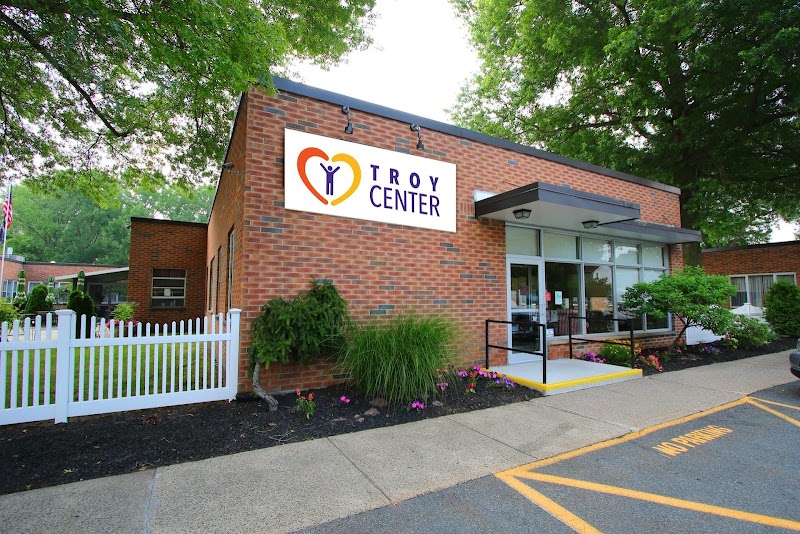
How is Troy Center For Rehabilitation And Nursing Staffed?

CMS rates TROY CENTER FOR REHABILITATION AND NURSING's staffing level at 1 out of 5 stars, which is much below average compared to other nursing homes. Staff turnover is 54%, compared to the New York average of 46%. RN turnover specifically is 64%, which is notably high. RNs provide skilled clinical oversight, so turnover in this role can affect medical care quality.

What Have Inspectors Found at Troy Center For Rehabilitation And Nursing?

State health inspectors documented 35 deficiencies at TROY CENTER FOR REHABILITATION AND NURSING during 2020 to 2024. These included: 35 with potential for harm.
Who Owns and Operates Troy Center For Rehabilitation And Nursing?

TROY CENTER FOR REHABILITATION AND NURSING is owned by a for-profit company. For-profit facilities operate as businesses with obligations to shareholders or private owners. The facility is operated by CENTERS HEALTH CARE, a chain that manages multiple nursing homes. With 78 certified beds and approximately 74 residents (about 95% occupancy), it is a smaller facility located in TROY, New York.
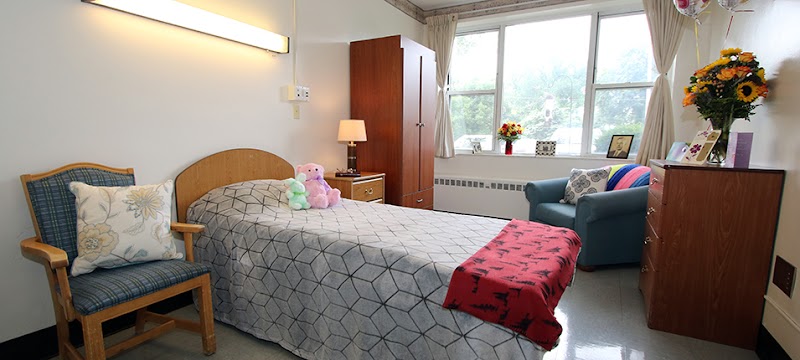
How Does Troy Center For Rehabilitation And Nursing Compare to Other New York Nursing Homes?

Compared to the 100 nursing homes in New York, TROY CENTER FOR REHABILITATION AND NURSING's overall rating (1 stars) is below the state average of 3.0, staff turnover (54%) is near the state average of 46%, and health inspection rating (2 stars) is below the national benchmark.

What Should Families Ask When Visiting Troy Center For Rehabilitation And Nursing?

Based on this facility's data, families visiting should ask: "Can you walk me through typical staffing levels on day, evening, and night shifts?" "Can I visit during a mealtime to observe dining assistance and food quality?" "How do you handle medical emergencies, and what is your hospital transfer rate?" "Can I speak with family members of current residents about their experience?" These questions are particularly relevant given the below-average staffing rating.

Is Troy Center For Rehabilitation And Nursing Safe?

Based on CMS inspection data, TROY CENTER FOR REHABILITATION AND NURSING has a clean safety record: no substantiated abuse findings (meaning no confirmed cases of resident harm), no Immediate Jeopardy citations (the most serious violation level indicating risk of serious injury or death), and is not on the Special Focus Facility watch list (a federal program monitoring the lowest-performing 1% of nursing homes). The facility has a 1-star overall rating and ranks #100 of 100 nursing homes in New York. While no facility is perfect, families should still ask about staff-to-resident ratios and recent inspection results during their visit.

Do Nurses at Troy Center For Rehabilitation And Nursing Stick Around?

TROY CENTER FOR REHABILITATION AND NURSING has a staff turnover rate of 54%, which is 8 percentage points above the New York average of 46%. Moderate turnover is common in nursing homes, but families should still ask about staff tenure and how the facility maintains care continuity when employees leave.

Was Troy Center For Rehabilitation And Nursing Ever Fined?

TROY CENTER FOR REHABILITATION AND NURSING has no federal fines on record. CMS issues fines when nursing homes fail to meet care standards or don't correct problems found during inspections. The absence of fines suggests the facility has either maintained compliance or corrected any issues before penalties were assessed. This is a positive indicator, though families should still review recent inspection reports for the full picture.

Is Troy Center For Rehabilitation And Nursing on Any Federal Watch List?

TROY CENTER FOR REHABILITATION AND NURSING is not on any federal watch list. The most significant is the Special Focus Facility (SFF) program, which identifies the bottom 1% of nursing homes nationally based on persistent, serious quality problems. Not being on this list means the facility has avoided the pattern of deficiencies that triggers enhanced federal oversight. This is a positive indicator, though families should still review the facility's inspection history directly.