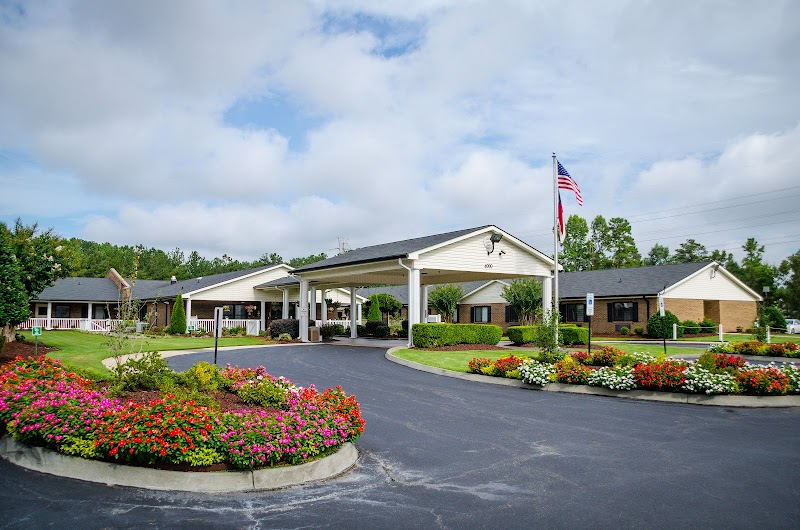
Southpoint Rehabilitation and Healthcare Center

6000 Fayetteville Road, Durham, NC 27713 (919) 544-9021
For profit - Corporation 140 Beds SIMCHA HYMAN & NAFTALI ZANZIPER Data: November 2025 5 Immediate Jeopardy citations
Trust Grade
0/100
#390 of 417 in NC
Last Inspection: April 2025

Within standard 12-15 month inspection cycle. Federal law requires annual inspections.

Overview

Southpoint Rehabilitation and Healthcare Center has received a Trust Grade of F, indicating significant concerns about the quality of care provided. With a state rank of #390 out of 417 facilities in North Carolina, they are in the bottom half of nursing homes, and #12 of 13 in Durham County shows only one local option is better. While the facility is reportedly improving, with issues decreasing from 19 to 8 in the past year, it still faces serious challenges, including a concerning staffing turnover rate of 74%, which is higher than the state average. Additionally, the facility has incurred $219,994 in fines, reflecting compliance problems that are higher than 92% of other North Carolina facilities. Alarmingly, there have been critical incidents, including a failure to respond appropriately to a medical emergency, resulting in a resident's death, highlighting major gaps in emergency procedures and nursing staff training. Overall, while there are some signs of improvement, the facility’s serious deficiencies raise significant concerns for families considering this home for their loved ones.

Trust Score
F
0/100
In North Carolina
#390/417
Bottom 7%
Safety Record
High Risk
Review needed
Inspections
Getting Better
19 → 8 violations
Staff Stability
⚠ Watch
74% turnover. Very high, 26 points above average. Constant new faces learning your loved one's needs.
Penalties
○ Average
$219,994 in fines. Higher than 67% of North Carolina facilities. Some compliance issues.
Skilled Nurses
⚠ Watch
Each resident gets only 29 minutes of Registered Nurse (RN) attention daily — below average for North Carolina. Fewer RN minutes means fewer trained eyes watching for problems.
Violations
⚠ Watch
39 deficiencies on record. Higher than average. Multiple issues found across inspections.
★☆☆☆☆
1.0
Overall Rating
★☆☆☆☆
1.0
Staff Levels
★★★☆☆
3.0
Care Quality
★★☆☆☆
2.0
Inspection Score
Stable
2024: 19 issues
2025: 8 issues

The Good

  • Full Sprinkler Coverage · Fire safety systems throughout facility
  • No fines on record

Facility shows strength in fire safety.

The Bad

1-Star Overall Rating

Below North Carolina average (2.8)

Significant quality concerns identified by CMS

Staff Turnover: 74%

28pts above North Carolina avg (46%)

Frequent staff changes - ask about care continuity

Federal Fines: $219,994

Well above median ($33,413)

Significant penalties indicating serious issues

Chain: SIMCHA HYMAN & NAFTALI ZANZIPER

Part of a multi-facility chain

Ask about local staffing decisions and management

Staff turnover is very high (74%)

26 points above North Carolina average of 48%

The Ugly 39 deficiencies on record

5 life-threatening 1 actual harm
Apr 2025 8 deficiencies
CONCERN (D) 📢 Someone Reported This

A family member, employee, or ombudsman was alarmed enough to file a formal complaint

Potential for Harm - no one hurt, but risky conditions existed

Deficiency F0602 (Tag F0602)

Could have caused harm · This affected 1 resident

**NOTE- TERMS IN BRACKETS HAVE BEEN EDITED TO PROTECT CONFIDENTIALITY** Based on observations, record reviews, and staff and Pharmacy Consultant interviews, the facility failed to protect the resident...

Read full inspector narrative →
**NOTE- TERMS IN BRACKETS HAVE BEEN EDITED TO PROTECT CONFIDENTIALITY** Based on observations, record reviews, and staff and Pharmacy Consultant interviews, the facility failed to protect the resident's right to be free from misappropriation of resident property for 1 of 3 residents reviewed for misappropriation (Resident #300). The findings included: Resident #300 was admitted to the facility on [DATE]. She was discharged on 10/27/24. Review of the facility reported incident investigation dated 10/3/24 revealed the narcotic count for 100 hall was not correct the morning of 10/2/24. During the narcotic reconciliation completed by the off going Nurse #4 and the oncoming Nurse #5, the 100-hall cart was missing one card of oxycodone HCL (hydrochloride) 5 mg tablets (17 tablets) for Resident #300. All medication carts were audited, and the missing narcotic card was not found. The local police department was notified on 10/2/24. Review of the facility's 5-day Summary investigation report dated 10/7/24 revealed that all 11:00 PM to 7:00 AM staff who worked on 10/1/24 through 10/2/24 were interviewed. All facility narcotics were reconciled, and the pharmacy was notified. Staff education training was conducted, and the Drug Enforcement Administration (DEA) was contacted. Resident #300's individual controlled drug record was reviewed. The record revealed oxycodone HCL 5mg was prescribed for Resident #300 to take one tablet by mouth every 6 hours as needed for up to 5 days. The prescription was filled on 9/27/24 18 of 18 tablets were signed as received on 9/27/24. On 9/28/24 at 1:00am Resident #300's individual controlled drug record indicated 1 tablet was signed as administered, and the card contained 17 tablets. On the morning of 10/2/24 the entire narcotic card was noted as missing during the narcotic count conducted by both the off going Nurse #4 and oncoming Nurse #5. A telephone interview was conducted on 4/9/25 at 6:06 PM with Nurse#4 who stated she shared a medication cart with another nurse during her shift on 10/1/24 to 10/2/24. She could not recall the nurse's name or a description. She stated during her shift she took two breaks, and she left the narcotic keys on top of the narcotic/medication cart while she was gone. During the narcotic count with the oncoming Nurse #5, it was discovered that one narcotic card for Resident #300 was missing from the cart. A follow up telephone interview was conducted on 4/10/25 at 11:11 AM with Nurse #4. She stated again she shared a medication cart with another nurse that shift, and they had only one set of keys to that medication cart. She stated she left the narcotic keys on the medication chart because she was sharing that cart with another nurse. She further stated that it was her practice to leave the narcotic keys on the medication cart because the narcotic keys cannot be kept while on break or when leaving the facility. An attempt was made to interview Nurse #6 who worked with Nurse #4 from 11:00 PM on 10/1/24 through 7:00 AM on 10/2/24 but was unsuccessful. Review of Nurse #5's witness statement dated 10/2/24 indicated he arrived at the facility at approximately 7:00 AM and conducted the narcotic count with Nurse #4. A discrepancy was noted for a missing narcotic card. This was reported to the Director of Nursing (DON). An attempt was made to interview Nurse #5, however, was unsuccessful. On 4/10/25 at 7:57 AM an interview was conducted with Nurse #8 regarding the narcotic reconciliation process at the change of shift. Nurse #8 stated the oncoming nurse gets the narcotic key and opens the narcotic box. The off going nurse reads the count from the narcotics binder including the name of the medication, the dose, and the resident's name. The oncoming nurse verifies this information with the actual narcotic cards/bottles and reads back the same information. This procedure is completed for both the medication cart and the medication refrigerator in the medication room. Once completed, both the off going and oncoming nurses sign the narcotics book verifying the count was correct. An interview was conducted on 4/10/25 at 3:35 PM with Nurse #7 who worked the evening shift (3PM-11PM) on 10/1/24 on Station 1/Hall 100. She stated she did not recall the staff members she worked with that day or whether she had her own medication cart or split/shared it with another nurse. An interview was conducted on 4/10/25 at 4:01 PM with Nurse #2. She stated on days and evening shifts each nurse has their own medication cart, however on the night shift (11PM-7AM) 2 nurses may share a medication cart. She further stated there was only one set of keys per medication cart and the keys must always be with a nurse. When going on a break or leaving the facility, the narcotic keys are given to another nurse and never left on a medication cart. An attempt to contact the investigating officer on 4/10/25 at 10:45 AM was unsuccessful. On 4/10/25 at 11:05 AM an interview was conducted with the Pharmacy Consultant. She stated she was notified of the missing narcotic card by the DON, and she helped the facility report the diversion to the DEA. She stated she reconciled all the medication carts on 10/2/24 after the incident. She further stated she regularly performed monthly random narcotic audits of the medication carts and medication rooms. She stated she had no issues or concerns both before and after this incident. On 4/9/25 at 12:17 PM an interview with the Director of Nursing (DON) was conducted. She stated the discrepancy with the narcotic count for the 100-hall cart was reported to her on the morning of 10/2/24 by Nurse #4 and Nurse #5 upon discovery and an investigation was immediately started. The Administrator and Nurse #4's staffing agency was also notified. All medication carts were audited, and no additional missing narcotics were found. Nursing staff conducted pain assessments, and no residents reported issues with pain that shift. The DON further stated that the narcotic keys should never be placed/kept on a medication cart and are to be kept with a nurse on their person. Two nurses are responsible for completion of the narcotic count at the change of shifts: one outgoing and one oncoming nurse. She further stated any discrepancy found must be reported immediately and an investigation would be started. On 4/10/25 at 4:38 PM a review of the county courts website revealed Nurse #4 had been charged with felony larceny by an employee and a court date scheduled for 4/15/25. In an interview with the Administrator on 4/10/25 at 8:19 AM she stated that the facility did not report Nurse #4 to the North Carolina State Board of Nursing because she was not the facility's employee and was employed by a staffing agency. A follow up interview was conducted with the Administrator on 4/10/25 at 5:06 PM. She stated her expectation was for the nursing staff to keep the narcotic drawer and medication cart locked at all times when not in use, medication cart keys on nurses at all times, for nursing staff to count narcotics on the cart each shift, and both ongoing and oncoming staff sign off the narcotic count was completed and was correct. The facility presented a draft plan of correction for past noncompliance. Past noncompliance could not be substantiated due to the facility's failure to report Nurse #4 to the North Carolina State Board of Nursing.
CONCERN (D)

Potential for Harm - no one hurt, but risky conditions existed

Assessment Accuracy (Tag F0641)

Could have caused harm · This affected 1 resident

**NOTE- TERMS IN BRACKETS HAVE BEEN EDITED TO PROTECT CONFIDENTIALITY** Based on record review and staff interviews, the facility failed to accurately code the Minimum Data Set (MDS) assessment in the...

Read full inspector narrative →
**NOTE- TERMS IN BRACKETS HAVE BEEN EDITED TO PROTECT CONFIDENTIALITY** Based on record review and staff interviews, the facility failed to accurately code the Minimum Data Set (MDS) assessment in the area of medications for 1 of 31 residents whose MDS assessment were reviewed (Resident #75). Findings included: Resident #75 was admitted to the facility on [DATE] and diagnoses included hypertension and heart failure. Resident #75's care plan dated 10/11/2024 included a focus for diuretic therapy related to heart failure. Interventions included administering diuretics, medications used to reduce enema (extra fluid in the body), as ordered by the physician. Physician orders dated 1/23/2025 included an order for Bumetanide, a diuretic medication, 2 milligrams (mg) every day for edema. Resident #75's March 2025 Medication Administration Record (MAR) recorded Bumetanide 2 mg was administered daily from 3/1/2025 through 3/31/2025. The quarterly MDS assessment dated [DATE] was not coded for Resident #75 receiving diuretics. In a phone interview with MDS Coordinator on 4/10/2025, she stated Resident #75 had received Bumetanide during the seven day look-back period from 3/21/2025 to 3/27/2025 and the quarterly MDS assessment dated [DATE] should have been coded that Resident #75 was receiving diuretics. In a follow-up phone interview on 4/10/2025 at 3:20 pm, MDS Nurse #1 stated it was an oversite as the reason Resident #75's MDS assessment was not coded for diuretics. In an interview with the Administrator on 4/10/2025 at 4:10 pm, she stated the MDS assessment for Resident #75 should be coded accurately for the use of diuretics.
CONCERN (D)

Potential for Harm - no one hurt, but risky conditions existed

Deficiency F0657 (Tag F0657)

Could have caused harm · This affected 1 resident

**NOTE- TERMS IN BRACKETS HAVE BEEN EDITED TO PROTECT CONFIDENTIALITY** Based on record reviews, resident interview, resident's emergency contact interview, and staff interviews, the facility failed t...

Read full inspector narrative →
**NOTE- TERMS IN BRACKETS HAVE BEEN EDITED TO PROTECT CONFIDENTIALITY** Based on record reviews, resident interview, resident's emergency contact interview, and staff interviews, the facility failed to conduct and document care plan meetings after completion of quarterly and significant change Minimum Data Set (MDS) assessments for 1 of 31 residents reviewed for care planning (Resident #62). The findings included: Resident #62 was admitted to the facility on [DATE]. The last care plan meeting documented in Resident #62's medical record was dated 3/4/2024. MDS assessments were completed for Resident #62 on the following dates: 6/8/2024 (quarterly), 7/8/2024 (significant change), 9/30/2024 (quarterly), 12/31/2024 (significant change) and 4/2/2025 (quarterly). The quarterly MDS dated [DATE] indicated Resident #62 was cognitively intact. Resident #62 was listed as the responsible party on Resident #62's medical record. In an interview with Resident #62 on 4/7/2025 at 11:10 am, Resident #62 was not able to recall receiving invitations or having meetings with interdisciplinary members of the staff to discuss Resident #62's plan of care. In a phone interview with Resident #62's emergency contact #1 on 4/10/2025 at 9:54 am, she stated the last care plan meeting for Resident #62 was held in January 2024 and she had not received any written invitations or calls from the facility to attend a care plan meeting since January 2024. In a phone interview with MDS Coordinator on 4/10/2025 at 2:42 pm, she stated care plan meetings were to be scheduled after the completion of MDS assessments quarterly by the Social Worker. She explained upon the completion of the MDS assessment, the Social Worker was to call or send out invitations for a care plan meeting with the interdisciplinary team. The MDS Coordinator stated she did not know why quarterly care plan meetings had not been held with Resident #62. There was no Social Worker available for an interview. In an interview with the Administrator on 4/8/2025 at 9:45 am, she explained after the Social Worker left the faciity on e and a half weeks ago, she was responsible for conducting care plan meetings. She stated she had conducted some care plan meetings over the phone until the new Social Worker started in a week. In a follow up interview with the Administrator on 4/10/2025 at 4:39 pm, she stated there was no documentation of a care plan meeting for Resident #62 since 3/4/2024 and she had not conducted a care plan meeting with Resident #62. She stated care plan meetings were to be held after admission and after quarterly, annual, and significant change MDS assessments. She explained there had been seven different Social Workers, who were responsible for conducting care plan meetings in the last year, as the reason Resident #62 had not been invited to a care plan meeting and a care plan meeting had not been conducted since 3/4/2024.
CONCERN (D) 📢 Someone Reported This

A family member, employee, or ombudsman was alarmed enough to file a formal complaint

Potential for Harm - no one hurt, but risky conditions existed

Deficiency F0658 (Tag F0658)

Could have caused harm · This affected 1 resident

**NOTE- TERMS IN BRACKETS HAVE BEEN EDITED TO PROTECT CONFIDENTIALITY** Based on record review, observation, and staff and resident interviews, the facility failed to provide care according to accepte...

Read full inspector narrative →
**NOTE- TERMS IN BRACKETS HAVE BEEN EDITED TO PROTECT CONFIDENTIALITY** Based on record review, observation, and staff and resident interviews, the facility failed to provide care according to accepted professional standards when a nurse administered medication but did not observe the resident take her medications and left them at the bedside for 1 of 1 resident with medications observed at bedside (Resident #93). Findings included: Resident #93 was admitted to the facility on [DATE]. Her active diagnoses included bilateral primary osteoarthritis of the hip, muscle weakness, lymphedema, major depressive disorder, abdominal hernia, hypertension, anxiety disorder, iron deficiency anemia, gastro-esophageal reflux disease, insomnia, other pulmonary embolism, overactive bladder, vitamin D deficiency, pain in right shoulder, syncope and collapse, and prediabetes. Review of Resident #93's Minimum Data Set assessment dated [DATE] revealed she was assessed as cognitively intact. Review of Resident #93's electronic health record on 4/8/25 at 10:43 AM revealed there was no physician's order for self-administration of medications and no self-administration of medication assessment. During observation on 4/8/25 at 8:59 AM Nurse #11 was observed to enter Resident #93's room with a medication cup containing medications, a cup of water, and eyedrops. The nurse was heard telling the resident she would be back to check on Resident #93 in a while and left the items including the medications at bedside. During an interview on 4/8/25 at 8:59 AM Resident #93 stated new nurses would never leave medications at her bedside because they were supposed to watch her take it, Resident #93 did not take the medications during the observation but instead left them on her bedside table. During an interview on 4/8/25 at 9:02 AM Nurse #11 stated the resident was not allowed to take medications on her own and she should have taken the medications out of the room since the resident was not ready to take the medications yet instead of leaving the medications at bedside. She stated the medications she left at bedside were refresh tears, fluticasone propionate nasal spray 50 micrograms, Wellbutrin XL oral tablet extended release 24 hour 150 milligram tablet, Diphenhydramine HCl capsule 25 milligrams, ferrous sulfate oral tablet delayed release 325 milligrams, Rivaroxaban oral tablet 20 milligrams, pro-stat sugar free mixed in water 30 milliliters, Lyrica capsule 200 milligrams, acetaminophen oral tablet 975 milligrams, bumetanide tablet 2 milligrams, cetirizine tablet 10 milligrams, duloxetine capsule delayed release 60 milligrams, Gemtesa oral tablet 75 milligrams, Glycolax powder 17 grams in water, Singulair oral tablet 10 milligrams, and a Multivitamin tablet. During an interview on 4/8/25 at 3:06 PM the Director of Nursing stated Resident #93 was not ordered to self-administer medications and the nurse should have removed the medications when she left the room since the resident had not taken the medications.
CONCERN (D) 📢 Someone Reported This

A family member, employee, or ombudsman was alarmed enough to file a formal complaint

Potential for Harm - no one hurt, but risky conditions existed

Quality of Care (Tag F0684)

Could have caused harm · This affected 1 resident

**NOTE- TERMS IN BRACKETS HAVE BEEN EDITED TO PROTECT CONFIDENTIALITY** Based on record review, observations and staff interviews, the facility failed to provide daily cholecystostomy (a surgical open...

Read full inspector narrative →
**NOTE- TERMS IN BRACKETS HAVE BEEN EDITED TO PROTECT CONFIDENTIALITY** Based on record review, observations and staff interviews, the facility failed to provide daily cholecystostomy (a surgical opening in the gallbladder to place a catheter for draining excess bile) dressings as ordered by the physician for a resident who had a biliary (a network of organs and vessels that make, store and transfer bile, a fluid the liver makes that helps digest food) tube inserted into the right upper abdominal wall for drainage of biliary fluid for 1 of 3 residents reviewed for professional standards of care (Resident #5). Findings included: Resident #5 was admitted to the facility on [DATE] with diagnoses including chronic cholecystitis (persistent inflammation of the gallbladder) and an artificial opening of gastrointestinal tract. Resident #5's care plan dated 9/25/2024 included a focus in the alteration in gastrointestinal status due to history of acute cholecystitis that was managed with a percutaneous cholecystostomy tube due to operative risks. The quarterly Minimum Data Set assessment dated [DATE] indicated Resident #5 was severely cognitively impaired. Physician's orders dated 4/4/2025 for Resident #5 included an order to change the cholecystostomy dressing every twelve hours for skin integrity. Resident #5's April 2025 Medication Administration Record (MAR) recorded the cholecystostomy dressing had been changed by Nurse #13 on 4/6/2025 at 8:00 am and by Nurse #14 on 4/6/2025 at 8:00 pm. On 4/7/2025 at 1:02 pm, Resident #5's right upper abdominal dressing was observed dated 4/5/2025 as last changed. In a phone interview with Nurse #13 on 4/10/2025 at 2:46 pm, she stated she was assigned to Resident #5 on 4/6/2025 from 7:00 am to 3:00 pm. Nurse #13 stated she did not change the cholecystostomy dressing on 4/6/2025 as ordered and did not know why she did not change the dressing. In a phone interview with Nurse #14 on 4/10/2025 at 2:59 pm, she stated she was assigned to Resident #5 on 4/6/2025 from 3:00 pm to 11:00 pm. Nurse #14 stated she did not change the cholecystostomy dressing on 4/6/2025 and recorded on Resident #5's MAR for 4/6/2025 the cholecystostomy dressing was changed because there was a wound nurse in the facility on 4/6/2025 that would have changed the cholecystostomy dressing and she was unable to recall the name of the wound nurse on 4/6/2025. In an interview with the Wound Nurse on 4/10/2025 at 11:01 am she stated she did not work on 4/6/2025 and there was a designated nurse to complete resident's wound care treatments and dressings on weekends when the Wound Nurse was not present in the facility. The Wound Nurse did not know what nurse was designated as the nurse to complete wound care treatments and change dressings on 4/6/2025. In an interview with the Director of Nursing on 4/10/2025 at 4:14 pm, she was unable to identify the nurse assigned to change dressings and provide wound treatments on 4/6/2025. Physician orders dated 4/7/2025 for Resident #5 included an order to change the dressing to the right biliary drain daily and as needed. The right biliary drain site was to be cleansed with normal saline with the application of a splint gauze that was secured with paper tape on the day shift and as needed. Resident #5's April 2025 Treatment Administration Record (TAR) recorded the cholecystostomy dressing had been changed by the Wound Nurse on 4/7/2025, 4/8/2025 and 4/9/2025. On 4/10/2025 at 10:53 am, the Wound Nurse was observed changing Resident #5's cholecystostomy dressing located in the right upper abdominal area. Resident #5's dressing was observed dated 4/8/2025 with initials of the Wound Nurse. Resident #5's cholecystostomy site was observed with no redness or drainage and the biliary tubing was sutured to the abdominal wall. The Wound Nurse was observed providing care to Resident #5's cholecystostomy site as physician ordered and applying a new dressing dated 4/10/2025 with the Wound Nurse initials. In an interview with the Wound Nurse on 4/10/2025 at 11:01 am, she verified the date on Resident #5's cholecystostomy dressing that was removed during observation of cholecystostomy care was dated 4/8/2025. She explained that on 4/9/2025 when she went into Resident #5's room to change the dressing, she was informed by an unknown nurse aide that Nurse #11 had changed Resident #5's cholecystostomy dressing. The Wound Nurse explained she did not check Resident #5's cholecystostomy dressing to ensure the dressing had been changed or verify with Nurse #11 that she had changed Resident #5's cholecystostomy dressing and recorded on Resident #5's TAR the cholecystostomy care and dressing had been completed. In an interview with Nurse #11 on 4/10/2025 at 2:10 pm, she explained on 4/9/2025 she looked at the sutures at Resident #5's cholecystostomy site and did not change Resident #5's cholecystostomy dressing. She stated there was miscommunication from the nurse aide to the Wound Nurse that Nurse #11 had changed the Resident #5's cholecystostomy dressing. In an interview with Nurse Aide #1 on 4/10/2025 at 12:26 pm, she stated she informed the Wound Nurse on 4/9/2025 that Nurse #11 had changed Resident #5's cholecystostomy dressing. She explained she heard Nurse #11 say, she was going to take care of this while looking at the sutures and assumed Nurse #11 had changed Resident #5's cholecystostomy dressing. In an interview with the Director of Nursing on 4/10/2025 at 4:14 pm, she stated Resident #5's cholecystostomy dressing should have been changed daily per the physician's orders by the Wound Nurse or Resident #5's assigned nurse.
CONCERN (D)

Potential for Harm - no one hurt, but risky conditions existed

Pharmacy Services (Tag F0755)

Could have caused harm · This affected 1 resident

**NOTE- TERMS IN BRACKETS HAVE BEEN EDITED TO PROTECT CONFIDENTIALITY** Based on record review and staff interviews, the facility failed to maintain a secure medication cart and accurate controlled me...

Read full inspector narrative →
**NOTE- TERMS IN BRACKETS HAVE BEEN EDITED TO PROTECT CONFIDENTIALITY** Based on record review and staff interviews, the facility failed to maintain a secure medication cart and accurate controlled medication records for 1 of 2 residents (Resident #301) reviewed for use of controlled medications. The findings included: Resident #301 was admitted to the facility on [DATE] and was discharged on 10/24/2024. Review of the facility reported incident investigation dated 10/3/24 revealed the narcotic count for 100 hall was not correct the morning of 10/2/24 during narcotic reconciliation completed by the off going Nurse #4 and oncoming Nurse #5. The 100-hall cart was found to be missing 1 narcotic count sheet for oxycodone HCL (hydrochloride) for Resident #301. An investigation was initiated, all medication carts were audited, and the missing narcotic count sheet for Resident #301 was not found. On 4/9/25 at 12:17 PM an interview with the Director of Nursing (DON) was conducted. She stated the discrepancy with the narcotic count for the 100-hall cart was reported to her and an investigation was immediately started. The Administrator and Nurse #4's staffing agency were also notified. All medication carts were audited, and no additional missing narcotic count sheets were found. The DON stated that narcotic/medication cart keys were to be always kept with a nurse on their person. Two nurses are responsible for completion of the narcotic count at change of shifts: one outgoing and one oncoming nurse. She further stated any discrepancy found must be reported immediately and an investigation would be started. A telephone interview was conducted on 4/9/25 at 6:06 PM with Nurse #4 who stated she shared a medication cart with another nurse during her shift on 10/1/24-10/2/24. She could not recall the nurse's name or a description. She stated during her shift she took 2 breaks, and she left the narcotic keys on top of the narcotic/medication cart while she was gone. During the narcotic count with the oncoming Nurse #5, it was discovered that 1 narcotic count sheet for Resident #301 was missing from the cart. Nurse #4 could not explain why the sheet was missing. Review of Nurse #5's witness statement dated 10/2/24 indicated he arrived at the facility at approximately 7:00 AM and conducted the narcotic count with Nurse #4. A discrepancy was noted for a missing narcotic count sheet. This was reported to the Director of Nursing (DON). An attempt was made to interview Nurse #5, however, was unsuccessful. An attempt was made to interview Nurse #6 who worked with Nurse #4 from 11:00 PM on 10/1/24 through 7:00 AM on 10/2/24 but was unsuccessful. On 4/10/25 at 11:05 AM an interview was conducted with the Pharmacy Consultant. She stated she was notified of the missing narcotic count sheet for Resident #301. She stated she reconciled all the medication carts after the incident. She further stated she regularly performed monthly random narcotic audits of medication carts and medication rooms. She stated she had no issues or concerns both before and after his incident. An interview was conducted on 4/10/25 at 5:26 PM with Nurse #10 regarding receiving of narcotic stock. She stated narcotic medications are received from the pharmacy, counted and verified/confirmed the number of tablets were correct. The receiving nurse signed that the narcotics were received, locked them in the narcotic box in the medication cart, and placed the narcotic count sheet record in the narcotics book on the medication cart. An interview was conducted with the Administrator on 4/10/25 at 5:06 PM. She stated her expectation was for the nursing staff to keep the narcotic drawer and medication cart locked at all times when not in use, medication cart keys on nurses at all times, for nursing staff to count narcotics on the cart each shift, and both ongoing and oncoming staff sign off the narcotic count was completed and was correct. The facility presented a draft plan of correction for past noncompliance. Past noncompliance could not be substantiated due to the facility's failure to define the auditing and monitoring as related to ensuring narcotic count sheets present and accounted for and medication cart keys will be secured.
CONCERN (D)

Potential for Harm - no one hurt, but risky conditions existed

Medical Records (Tag F0842)

Could have caused harm · This affected 1 resident

Based on record reviews and staff interviews, the facility failed to maintain a complete and accurate medical record when documenting cholecystostomy care for 1 of 31 residents who medical records wer...

Read full inspector narrative →
Based on record reviews and staff interviews, the facility failed to maintain a complete and accurate medical record when documenting cholecystostomy care for 1 of 31 residents who medical records were reviewed (Resident #5). Findings included: Resident #5's April 2025 Medication Administration Record (MAR) recorded the cholecystostomy dressing had been changed by Nurse #13 on 4/6/2025 at 8:00 am and by Nurse #14 at 8:00 pm. On 4/7/2025 at 1:02 pm, Resident #5's right upper abdominal dressing was observed dated 4/5/2025 as last changed. In a phone interview with Nurse #13 on 4/10/2025 at 2:46 pm, she stated she was assigned to Resident #5 on 4/6/2025 from 7:00 am to 3:00 pm and the documentation on Resident#5's MAR on 4/6/2025 that recorded she provided the scheduled 8:00 am cholecystostomy dressing change was inaccurate documentation. Nurse #13 stated she did not change Resident #5's cholecystostomy dressing on 4/6/2025 and should not have recorded the cholecystostomy dressing was changed when the care was not provided. In a phone interview with Nurse #14 on 4/10/2025 at 2:59 pm, she stated she was assigned to Resident #5 on 4/6/2025 from 3:00 pm to 11:00 pm. Nurse #14 stated she did not change the cholecystostomy dressing on 4/6/2025 scheduled at 8:00 pm and was only recording on Resident #5's MAR for 4/6/2025 at 8:00pm that the cholecystostomy dressing was changed by the Wound Nurse. Nurse #14 was unable to recall the name of the Wound Nurse on 4/6/2025 and stated she did not know how to document on the MAR when resident care was provided by another nurse. Resident #5's April 2025 Treatment Administration Record (TAR) recorded the cholecystostomy dressing had been changed by the Wound Nurse on 4/7/2025, 4/8/2025 and 4/9/2025. In an interview with the Wound Nurse on 4/10/2025 at 11:01 am, she verified the date on Resident #5's cholecystostomy dressing that was removed during observation of cholecystostomy care on 4/10/2025 was dated 4/8/2025. She explained that on 4/9/2025 when she went into Resident #5's room to change the dressing, she was informed by an unknown nurse aide that Nurse #11 had changed Resident #5's cholecystostomy dressing. The Wound Nurse explained she did not check Resident #5's cholecystostomy dressing to ensure the dressing had been changed or verify with Nurse #11 that she had changed Resident #5's cholecystostomy dressing and recorded on Resident #5's MAR the cholecystostomy care and dressing had been completed. In an interview with Nurse #11 on 4/10/2025 at 2:10 pm, she explained on 4/9/2025 she looked at the sutures at Resident #5's cholecystostomy site and did not change Resident #5's cholecystostomy dressing. She stated there was miscommunication from the nurse aide to the Wound Nurse that Nurse #11 had changed the Resident #5's cholecystostomy dressing. In an interview with Nurse Aide #1 on 4/10/2025 at 12:26 pm, she stated she informed the Wound Nurse on 4/9/2025 that Nurse #11 had changed Resident #5's cholecystostomy dressing. She explained she heard Nurse #11 say she was going to take care of this while looking at the sutures and assumed Nurse #11 had changed Resident #5's cholecystostomy dressing. In an interview with the Director of Nursing on 4/10/2025 at 4:14 pm, she stated Resident #5's cholecystostomy dressing change should be accurately documented on Resident #5's MAR and TAR when cholecystostomy care was provided. She stated the Wound Nurse, Nurse #13 and Nurse #14 were not to document on the MAR and TAR cholecystostomy care was provided if they did not provide the cholecystostomy care.
CONCERN (E)

Potential for Harm - no one hurt, but risky conditions existed

Respiratory Care (Tag F0695)

Could have caused harm · This affected multiple residents

**NOTE- TERMS IN BRACKETS HAVE BEEN EDITED TO PROTECT CONFIDENTIALITY** Based on record review, observations, and resident and staff interviews, the facility failed to administer supplemental oxygen a...

Read full inspector narrative →
**NOTE- TERMS IN BRACKETS HAVE BEEN EDITED TO PROTECT CONFIDENTIALITY** Based on record review, observations, and resident and staff interviews, the facility failed to administer supplemental oxygen as prescribed by the physician (Resident # 83), obtain a physician order on a resident's medical record for the use of a Bilevel positive airway pressure machine, a device that helps a person breathe by delivering pressurized air into the airways, (Resident # 296) and apply signage indicating no smoking, the use of oxygen outside the resident's room for 4 of 4 residents reviewed for oxygen use (Resident #83, #296, #101 and #49). Findings included: 1. Resident #83 was admitted to the facility on [DATE] with diagnoses including chronic obstructive pulmonary disease (COPD), congestive heart failure (CHF) and chronic respiratory failure with hypoxia (low levels of oxygen in the body tissues). Resident #83's care plan dated 1/31/2025 included a focus for altered respiratory status and difficulty breathing related to exacerbation of CHF. Interventions included oxygen via nasal cannula at 1 to 6 liters per minute as needed for hypoxia and to wean (to gradually stop or using something) as tolerated to keep oxygen saturations greater than 88 percent (%). The quarterly Minimum Data Set (MDS) assessment dated [DATE] indicated Resident #83 was cognitively intact and was receiving oxygen therapy. Physician orders dated 2/20/2025 included an order for oxygen at three liters per minute by nasal cannula to maintain oxygen saturation (measurement of how much oxygen present in the blood) greater than 88% every shift and to wean as tolerated. There were no further physician orders for oxygen in Resident #83's medical record after 2/20/2025. A review of Resident #83's April 2025 Medication Administration Record (MAR) recorded Resident #83 received 3 liters of oxygen via nasal cannula each shift from 4/01/2025 through 4/09/2025 and recorded oxygen saturations ranged from 96% to 100%. On 4/7/2025 at 11:35 am, Resident #83 was observed sitting on the side of the bed receiving oxygen by nasal cannula at four liters per minute. Resident #83 was observed with no signs or symptoms of respiratory distress. There was no signage observed outside Resident #83's door indicating no smoking/oxygen was in use in the room. In a phone interview on 4/10/20205 at 4:01 pm with Nurse #12, who was assigned to Resident #83 on 4/7/2025 from 7:00 am to 3:00 pm, she stated when she checked Resident #83's oxygen concentrator it was set at 3 liters per minute and Resident #83 adjusted the oxygen concentrator at times because Resident #83 had a pulse oximeter (a device that measures the oxygen saturation level of the blood) to checked her oxygen saturation. On 4/9/2025 at 8:38 am, Resident #83 was observed sitting on the side of the bed receiving oxygen at four liters per minute by nasal cannula. Resident #83 was observed with no signs or symptoms of respiratory distress. There was no signage observed outside Resident #83's door indicating no smoking, oxygen was in use in the room. In an interview with Nurse #11 on 4/9/2025 at 12:04 pm, she stated she had checked Resident #83's oxygen saturation on 4/9/2025 and it was 97% for the 7:00 am to 3:00 pm shift and she had not checked the oxygen concentrator setting for the 7:00 am to 3:00 pm shift. Nurse #11 stated based on the physician orders, Resident #83 oxygen concentrator should be set at three liters per minute and signage indicating no smoking/oxygen was in use should be posted outside Resident #83's door. She stated she had not recognized there was no signage for no smoking/oxygen in use outside Resident #83's door and stated any nursing staff could post the signage when oxygen was in use. On 4/9/2025 at 12:08 pm, Nurse #11 was observed adjusting the oxygen concentrator that was observed set at four liters per minute to three liters per minute. In an interview with Resident #83 on 4/9/2025 at 12:09 pm, Resident #83 stated the nursing staff adjusted the oxygen concentrator that controlled the amount of oxygen she received, and she did not adjust the oxygen concentrator herself. She explained she had her own personal pulse oximeter that she used to monitor her blood oxygen saturation. In an interview with the Nurse #9 (Unit Manager) on 4/9/2025 at 5:10 pm, she stated she did not know why Resident #83 did not have a no smoking, oxygen in use signage on the door. She explained nursing staff should apply the oxygen in use/no smoking signage on admission or when any of the nursing staff recognized there was not a no smoking/oxygen in use signage outside Resident #83's door. She stated the nursing staff were responsible for monitoring the oxygen concentrator to ensure Resident #83 was receiving oxygen as ordered by the physician; to record the amount of oxygen Resident #83 received on the MAR each shift and she was not aware of Resident #83 adjusting the oxygen concentrator herself. In an interview with the Director of Nursing (DON) on 4/10/2025 at 4:41 pm, she stated Resident #83 oxygen concentrator should be set at three liters per minute as ordered by the physician and signage for no smoking/oxygen in use should have been placed outside Resident #83's door. 2. Resident #296 was admitted to the facility on [DATE]. Resident #296's diagnoses included acute and chronic respiratory failure with hypoxia (when the lungs struggle to transfer enough oxygen into the blood, leading to low oxygen levels in the body), pleural effusion (a condition where an excessive amount of fluid accumulates in the space between the lungs and the chest wall), chronic obstructive pulmonary disease (a condition caused by damage to the airways or other parts of the lung), and pneumonia (an infection of the lungs). Resident #296's Minimum Data Set (MDS) information was unavailable at the time of the investigation. Review of Resident #296's hospital discharge paperwork revealed a prescription for a Bilevel positive airway pressure machine (a device that helps a person breathe by delivering pressurized air into the airways) dated 4/3/25. Review of Resident #296's physician's orders revealed there was no order for a Bilevel positive airway pressure machine. Observations on 4/7/25 at 12:16 PM and 4/8/25 at 8:29 AM revealed Resident #296 was in his room and was sitting on the side of his bed. An oxygen concentrator and bilevel positive airway pressure machine were observed next to his bed and both were turned off. There was no signage outside Resident #296's room indicating oxygen was in use in this resident's room. An interview was conducted with Resident #296 on 4/8/25 at 3:38 PM. Resident #296 stated the oxygen concentrator was for his bilevel positive airway pressure machine that he used during night. An interview was conducted on 4/8/25 at 3:52 PM with Nurse #2 who indicated oxygen in use signage should be present on Resident #296's door. Nurse #2 confirmed that Resident #296's bilevel positive airway pressure machine order was not put in his electronic medical record (EMR) and should have been entered when he was admitted . Nurse #2 stated Resident #296 used his bilevel positive airway pressure machine at night. An interview was conducted on 4/10/25 at 11:32 AM with the Director of Nursing (DON). She stated oxygen in use sign should have been placed on Resident #296's door at the time of admission. The DON further stated it was her expectation that oxygen orders and orders for bilevel positive airway pressure machines were entered into a resident's EMR by nursing staff. 3. Resident #101 was admitted to the facility on [DATE]. Resident #101's diagnoses included chronic obstructive pulmonary disease (a condition caused by damage to the airways or other parts of the lung), malignant neoplasm of bronchus and lung (lung cancer), and dependence on supplemental oxygen. Review of Resident #101's physician's orders revealed he had an oxygen order dated 11/25/24 for oxygen supplementation at 2L (liters) via nasal cannula (a device that delivers extra oxygen through a tube and into the nose) continuously. Resident #101's quarterly Minimum Data Set (MDS) dated [DATE] revealed he was cognitively intact, and he was coded for oxygen therapy. Observations on 4/7/25 at 12:57 PM and 4/8/25 at 8:29 AM revealed Resident #101 was in his room, sitting on his bed, wearing a nasal cannula for supplemental oxygen set at 2L per minute. There was no signage outside Resident #101's room indicating supplemental oxygen was in use. An interview was conducted on 4/10/25 at 3:56 PM with Nurse #3 who stated residents who received oxygen should have an oxygen sign on their door. An interview was conducted on 4/10/25 at 11:32 AM with the Director of Nursing (DON). She stated oxygen in use sign should have been placed on Resident #101's door at the time of admission. 4. Resident #49 was admitted to the facility on [DATE] with diagnoses which included acute respiratory failure with hypoxia (a medical condition where the lungs are unable to adequately provide oxygen to the body, resulting in a dangerously low level of oxygen in the blood) and congestive heart failure. Review of Resident #49's physicians' orders revealed she had an oxygen order dated 11/7/24 for oxygen at 2L (liters) via nasal cannula (a device that delivers extra oxygen through a tube and into the nose) at bedtime and as needed. Review of Resident #49's quarterly Minimum Data Set (MDS) dated [DATE] revealed she was cognitively intact and coded for oxygen therapy. Observations on 4/7/25 at 1:01 pm, 4/10/25 at 8:38 am, and 4/10/25 at 9:14 am revealed Resident #49 sitting in her wheelchair in the hall outside of her room wearing a nasal cannula for oxygen. There was no signage outside Resident #49's room indicating oxygen was in use. An interview was conducted on 4/10/25 at 9: 11 am with Nurse # 1 who stated residents who received oxygen should have an oxygen sign on their door. She further stated the oxygen sign was put on the door upon a resident's admission. During an interview on 4/10/25 at 9:15 am with the Director of Nursing (DON), she stated a sign was placed on a resident's door for any resident on oxygen upon admission. She further indicated that an oxygen sign should have been placed on Resident #49's door.
Nov 2024 1 deficiency
CONCERN (D) 📢 Someone Reported This

A family member, employee, or ombudsman was alarmed enough to file a formal complaint

Potential for Harm - no one hurt, but risky conditions existed

Infection Control (Tag F0880)

Could have caused harm · This affected 1 resident

Based on observation, record review, and staff interviews, the facility failed to implement their infection control policy when Nurse #1 did not perform hand hygiene between the removal of soiled glov...

Read full inspector narrative →
Based on observation, record review, and staff interviews, the facility failed to implement their infection control policy when Nurse #1 did not perform hand hygiene between the removal of soiled gloves and the application of clean gloves during wound care for 1 of 5 staff observed for infection control practices (Nurse #1). Findings included: A review of the facility policy titled Handwashing/Hand hygiene revised 2023 provided by the facility revealed in part: This facility considers hand hygiene the primary means to prevent the spread of infection. 7. Use an alcohol-based hand rub containing at least 62% alcohol; or, alternately, soap (antimicrobial or non-antimicrobial) and water for the following situations: m. After removing gloves. During observation on 11/19/24 at 10:11 AM Treatment Nurse #1 and Treatment Nurse #2 were observed providing wound care to Resident #2. Treatment Nurse #1 was observed to perform hand hygiene and apply clean gloves. She then removed the soiled dressing from Resident #71's sacral wound using her gloved hands and discarded the soiled dressing. Treatment Nurse #1 removed her soiled gloves, discarded them, and applied clean gloves without performing hand hygiene and continued wound treatment. During an interview on 11/19/24 at 10:21 AM Treatment Nurse #1 stated for infection control reasons, she should have performed hand hygiene when changing her gloves during care but forgot. During an interview on 11/19/24 at 11:06 AM the Director of Nursing stated hand hygiene should always be performed after the removal of soiled gloves prior to the application of clean gloves to reduce the chance of spreading infections. During an interview on 11/19/24 at 1:20 PM the Wound Care Physician stated it was protocol for hand hygiene to be performed between glove changes for infection control purposes, though he felt it was overkill.
May 2024 1 deficiency
CONCERN (E) 📢 Someone Reported This

A family member, employee, or ombudsman was alarmed enough to file a formal complaint

Potential for Harm - no one hurt, but risky conditions existed

Pharmacy Services (Tag F0755)

Could have caused harm · This affected multiple residents

**NOTE- TERMS IN BRACKETS HAVE BEEN EDITED TO PROTECT CONFIDENTIALITY** Based on record review and interviews with residents, staff, physician assistant, and pharmacists, the facility failed to ensure...

Read full inspector narrative →
**NOTE- TERMS IN BRACKETS HAVE BEEN EDITED TO PROTECT CONFIDENTIALITY** Based on record review and interviews with residents, staff, physician assistant, and pharmacists, the facility failed to ensure antibiotics were available for the nurses who were responsible for administering the antibiotics. This resulted in a delay of over 24 hours in initiating antibiotic therapy for two residents (Residents # 5 and # 6) out of five sampled residents whose medications were reviewed. The finding included: 1. Resident # 6 was admitted to the facility on [DATE]. According to Resident # 6's 5/17/24 hospital discharge summary, Resident # 6 had been hospitalized from [DATE] until 5/17/24 secondary to an infection of her left prosthetic knee joint. While hospitalized the resident underwent knee surgery and was followed by an infectious disease physician. Upon discharge from the hospital on 5/17/24, the resident was ordered to receive the antibiotic cefazolin intravenously every eight hours through the date of 6/21/24. Review of the discharging hospital's Medication Administration Record for the date of 5/17/24 revealed Resident # 6 last received the cefazolin at 8:35 AM on 5/17/24 at the hospital before being discharged . Review of facility admission orders revealed the order for cefazolin intravenously every eight hours was initiated in the electronic medical record on 5/17/24 at 3:04 PM. Review of Resident # 6's May 2024 Medication Administration Record (MAR) revealed the cefazolin was scheduled to be administered at 6:00 AM, 2:00 PM, and 10:00 PM. Further review of the MAR and electronic administration notes revealed the following information. There were no doses administered on 5/17/24. An x mark appeared by the 10:00 PM dose on 5/17/24. On 5/18/24 at 6:00 AM Nurse # 1 entered a 9 on the MAR by the cefazolin administration time. At 8:02 AM Nurse # 1 entered a note explaining the 9, which noted the medication was on order. On 5/18/24 at 2:00 PM Nurse # 2 entered a 9 on the MAR. At 2:06 PM Nurse # 2 entered a medication administration note explaining the 9, which noted the facility was awaiting the delivery of the cefazolin from the pharmacy. On 5/18/24 at 10:00 PM Nurse # 2 documented the first administration of the cefazolin. Resident # 6 was interviewed on 5/23/24 at 12:33 PM and reported the following information. She was admitted on [DATE] (Friday) and did not feel the facility was ready for her. She was supposed to get IV antibiotics and the antibiotics were not started until very late the following day. She was concerned about the length of time it took for the facility to get her antibiotics. Nurse # 2 was interviewed on 5/23/24 at 5:20 PM and reported the following information. She had worked on 5/18/24 (Saturday). The cefazolin had not been sent by the pharmacy on Friday when the resident was admitted . The nursing supervisor had called the pharmacy on 5/18/24 (Saturday). The pharmacy had told the supervisor they had sent the antibiotic on 5/17/24 (Friday). In turn, the supervisor told the pharmacy that it was not at the facility, and the facility still needed the antibiotic. The pharmacy said they would send it. Nurse # 2 further reported she was almost finished with her 3:00 to 11:00 PM shift on 5/18/24 when she saw the pharmacy courier deliver medications. The cephazolin doses, which should have been sent on 5/17/24 (Friday) were in the box when it was opened. Resident # 6 received her first cefazolin antibiotic near 11:00 PM on 5/18/24 (Saturday). The weekend nursing supervisor was interviewed on 5/24/24 at 10:15 AM and reported the following information. On 5/18/24 they looked everywhere in the facility for the cefazolin and found it had not been delivered to the facility on 5/17/24. She had called the pharmacy on 5/18/24 (Saturday). She talked to the pharmacy and the pharmacy said they had already sent the cefazolin. When told that it was not at the facility, the pharmacy agreed they would deliver it again. It did not come in during the daytime. She called the on-call provider who said the cefazolin could be placed on hold until the facility could obtain the antibiotic. The DON (Director of Nursing) and facility corporate employee were interviewed on 5/24/24 at 2:45 PM and reported the following information. When a resident is anticipated to arrive, the orders are obtained before their arrival and placed in the computer. The orders are waitlisted until the resident arrives at the facility. They had researched Resident # 6's arrival time, and reported it was around 5:00 PM on 5/17/24. The antibiotic had not arrived from the pharmacy on 5/17/24. They had checked with Resident # 6's infectious disease physician who felt the missed doses were not significant and did not want to extend the number of doses the resident would receive due to the delay in starting it at the facility. The Director of the facility's pharmacy and another facility pharmacist were interviewed via phone simultaneously on 5/24/24 at 5:55 PM. The pharmacists reported the following information. They deliver twice to the facility on Monday through Friday. They deliver once on Saturday and Sunday. They have an on-call pharmacist who triages whether special deliveries need to be sent to facilities outside of scheduled deliveries. The pharmacists refer to the deliveries as launches. Weekday orders received by 11:00 AM are launched by them to the facility at 2 PM. Weekday orders received by the pharmacy by 7:30 PM are launched at 9:30 PM to the facility. On Saturday and Sunday their launch time is 7:30 PM daily. During a launch the medications are picked up by a third -party contracting courier who is responsible for delivering them to facilities. The pharmacy's computer system showed that the pharmacy received Resident # 6's cefazolin antibiotic order at 3:39 PM on 5/17/24. The order was filled and the cefazolin was placed in the pharmacy tote for delivery to the facility at 5:26 PM on 5/17/24 (Friday) and should have been delivered that night or in the early morning hours of 5/18/24 to the facility. Their paperwork showed that the cefazolin antibiotic had not been dropped off by the courier to the facility although it was in the tote on 5/17/24 (Friday). The first time the pharmacy records showed a phone call from the facility about the missing cefazolin was on 5/18/24 (Saturday) at 2:17 PM. The cefazolin was sent Saturday night again by the pharmacy to the facility. As of the time of the 5/24/24 interview, the pharmacists did not know what the problem had been which contributed to the cefazolin not being delivered on 5/17/24. An attempt was made to talk to Resident # 6's infectious disease physician without a return call received. 2. Resident # 5 resided at the facility from 2/16/24 until her discharge home on 4/29/24. Resident # 5's admission Minimum Data Set assessment, dated 4/19/24 coded the resident as cognitively intact. Review of Physician Assistant notes revealed a note on 4/26/24 (Friday) noting the resident was complaining of pus draining from her right ear since the previous day. On 4/26/24 at 3:59 PM an order was entered into the electronic record for Resident # 5 to receive ofloxacin otic solution 10 drops in the right ear one time a day for otitis media. Review of Resident # 5's April 2024 Medication Administration Record (MAR) revealed the ofloxacin ear antibiotic was scheduled to be administered at 8:00 PM on a daily basis. On 4/26/24 an x was by the 8:00 PM ofloxacin administration. On 4/27/24 Nurse # 3 documented a 9 by the 8 PM ofloxacin administration. On 4/27/24 at 7:52 PM, Nurse # 3 entered a medication administration note explaining the 9, which noted she was still awaiting the medication from the pharmacy. Nurse # 3 could not be reached for interview during the survey. On 4/28/24 (Sunday) at the 8 PM dosage time, Resident # 5 was documented to receive her first dose of the ofloxacin solution. On 4/29/24 Resident # 5 was seen by the physician's assistant who noted the following information. The resident was continuing to complain of ongoing pus draining from her right ear. She had been prescribed the antibiotic ear drops but they had not come in from the pharmacy until 4/28/24. Resident # 5 was interviewed via phone on 5/23/24 at 2:58 PM and reported the following information. Her ear had started draining on 4/25/24 (Thursday). She had spoken to the physician's assistant the following day (Friday). She was supposed to get antibiotic ear drops but only received them one time before her discharge date of 4/29/24. The one time she received them was on 4/28/24 (Sunday). She had been concerned about the length of time it took to get the ear drops. Resident # 5's physician's assistant was interviewed on 5/24/24 at 9:40 AM and reported the following information. He had used an otoscope to view Resident # 5's ear while she resided at the facility with the ear problem. She was having drainage, but her ear drum was okay. Her hearing was intact, and she had not shown signs of systemic infection. Her cognition was intact, and therefore he felt she would accurately recall details of when the ear drops were initiated. According to a packing slip of medications delivered to the facility from the pharmacy on 4/26/24 at 9:00 PM, the ofloxacin had been delivered to the facility on 4/26/24. During an interview with a facility corporate employee and Administrator on 5/24/24 at 6:50 PM, the facility's system is that the packing slip is checked by a nurse when the medications are delivered. The nurse is to ensure the medications are actually in the delivery and signs that they are so. According to their records, the medication had been delivered by the pharmacy on 4/26/24.
Apr 2024 17 deficiencies 3 IJ
CRITICAL (J) 📢 Someone Reported This

A family member, employee, or ombudsman was alarmed enough to file a formal complaint

Immediate Jeopardy (IJ) - the most serious Medicare violation

Free from Abuse/Neglect (Tag F0600)

Someone could have died · This affected 1 resident

**NOTE- TERMS IN BRACKETS HAVE BEEN EDITED TO PROTECT CONFIDENTIALITY** Based on record review, staff interviews, and a recorded 911 call, the facility failed to protect a resident's right to be free ...

Read full inspector narrative →
**NOTE- TERMS IN BRACKETS HAVE BEEN EDITED TO PROTECT CONFIDENTIALITY** Based on record review, staff interviews, and a recorded 911 call, the facility failed to protect a resident's right to be free from neglect when they did not effectively respond to a medical emergency. This occurred for 1 of 1 resident reviewed for neglect. Resident #232 was found to have a critical low blood sugar of 28 and was unresponsive. Nurse #7 failed to complete a nursing clinical assessment, failed to initiate emergency procedures within the nursing home and with 911. Nurse #7 also delayed in activating 911, demonstrated no urgency with the 911 call, and did not relay accurate information of the situation to the rest of the nursing staff. Emergency medical services (EMS) were not called until 6:56 am. Resident #232 expired on [DATE]. Immediate jeopardy began on [DATE] when nursing staff failed to immediately and effectively respond to a medical emergency and was removed on [DATE] when the facility implemented an credible allegation of immediate jeopardy removal. The facility will remain out of compliance at a scope and severity D (not actual harm with potential for more than minimal harm that is not immediate jeopardy) to ensure monitoring and all staff have been in-serviced. The findings included: This tag is cross referred to: F 684- Based on record review, staff interviews, and a recorded 911 call, the facility failed to implement emergency procedures including immediately calling 911, when a resident who was a known brittle diabetic was discovered to have a blood sugar of 28 and was unresponsive. Resident #232 was found to have a critical low blood sugar of 28. Nurse #7 failed to complete a nursing clinical assessment, failed to initiate emergency procedures within the nursing home and with 911. Nurse #7 also delayed in activating 911, demonstrated no urgency with the 911 call, and did not relay accurate information of the situation. Resident #232 expired on [DATE]. This occurred for 1 of 1 resident reviewed for neglect. F 726- Based on record review, staff interviews, and a recorded 911 call, the facility failed to ensure nursing staff were trained and competent with responding to medical emergencies, activating emergency procedures within the nursing home and with emergency medical services for 1 of 1 resident (Resident #232) reviewed for neglect. Nursing staff failed to complete nursing clinical assessments (including vital signs), failed to immediately initiate emergency procedures within the nursing home and with 911 when a nurse asked for a glucagon injection. Nursing staff also delayed in activating 911, demonstrated no urgency with the 911 call, and did not relay accurate information of the situation to the 911 operator. Resident #232 expired on [DATE]. The Administrator was notified of immediate jeopardy on [DATE] at 6:27pm. The facility provided a credible allegation of immediate jeopardy removal dated [DATE]. Identify those recipients who have suffered, or are likely to suffer, a serious adverse outcome as a result of the noncompliance. Resident #232 suffered related to this deficient practice. Nurse #7 and Nurse #10 failed to effectively respond to a medical emergency when resident #232 blood sugar was 28 and was unresponsive. EMS was not activated timely or effectively. All facility insulin dependent diabetic residents that require insulin administration have the potential to be affected by this deficient practice. An immediate audit was completed by the Clinical Regional Director/Designee to verify all resident's that are insulin dependent are following physician orders. Lastly, this audit will monitor if a nurse was potentially neglectful for not following physician orders for insulin dependent residents and for not following emergency medical management policies and procedures. Lastly, the audit reviewed if nurses were not following emergent hypoglycemic policies and procedures. This audit was completed on [DATE] by the Clinical Regional Director/Designee. No adverse outcomes were identified in this audit. Root cause analysis which was completed on [DATE] by the Regional Clinical Director/designee reveals that the nurse #7 did not recognize the hypoglycemic event as a medical emergency in a timely manner. She neglected to assess and intervene in a timely manner. Conclusion via the root cause analysis is that she was not competent in her skill set for managing emergency medical situations or competent in assessing and managing hypoglycemia. Therefore, the nurse was negligent in assessing and intervening when the resident was having a medical emergency. Specify the action the entity will take to alter the process or system failure to prevent a serious adverse outcome from occurring or recurring, and when the action will be complete. Nurse #7 has not worked in the facility since the date of this incident. Her agency was notified of the occurrence by the Administrator, and she was interviewed by the Administrator for her statement regarding her response to the medical emergency on [DATE]. All licensed nurses, certified nursing assistants, agency/contract staff, all ancillary staff, and all newly hired employees will be educated on Abuse and Neglect Policy. The policy describes Neglect as the failure of the facility, its employees or service provider to provide goods and services to a resident that are necessary to avoid physical harm, pain, mental anguish, or emotional distress. All education will be completed DON/ADON designee by [DATE]. This education will include 1:1, and group training sessions. The administrator/designee will be the person who will ensure all licensed nurses, certified nursing assistants, agency/contract staff, all ancillary staff, and all newly hired employees will be educated. Immediate jeopardy will be removed by [DATE]. The credible allegation was validated onsite on [DATE] when staff interviews revealed that they had received recent education on Abuse and Neglect Policy. Facility documentation revealed staff were educated on Neglect as the failure of the facility, its employees or service providers to provide goods and services to a resident that were necessary to avoid physical harm, pain, mental anguish, or emotional distress. In-service reports and sign-in sheets were used to verify this information. Audit tool dated [DATE] was reviewed. The tool identified residents who were insulin dependent, were receiving insulin per physician orders, if signs and symptoms of hypoglycemia were monitored by the nurses and emergency medical management policies and procedures were followed, any signs and symptoms of emergent hypoglycemia and if the nurse was negligent by not following physician orders or assess the resident to recognize a medical emergency. The review revealed no concerns. Immediate jeopardy removal date of [DATE] was validated.
CRITICAL (J) 📢 Someone Reported This

A family member, employee, or ombudsman was alarmed enough to file a formal complaint

Immediate Jeopardy (IJ) - the most serious Medicare violation

Quality of Care (Tag F0684)

Someone could have died · This affected 1 resident

**NOTE- TERMS IN BRACKETS HAVE BEEN EDITED TO PROTECT CONFIDENTIALITY** Based on record review, staff interviews, and a recorded 911 call, the facility failed to implement emergency procedures, when a...

Read full inspector narrative →
**NOTE- TERMS IN BRACKETS HAVE BEEN EDITED TO PROTECT CONFIDENTIALITY** Based on record review, staff interviews, and a recorded 911 call, the facility failed to implement emergency procedures, when a resident who was a known brittle diabetic was discovered to have a blood sugar of 28 and was unresponsive. Nurse #7 failed to complete a nursing clinical assessment, failed to initiate emergency procedures within the nursing home and with 911. Nurse #7 also delayed in activating 911, demonstrated no urgency with the 911 call, and did not relay accurate information of the situation. Resident #232 expired on [DATE]. This occurred for 1 of 1 resident reviewed for neglect (Resident #232). Immediate jeopardy began on [DATE] when the facility failed to immediately and effectively respond to a medical emergency. The immediate jeopardy was removed on [DATE] when the facility implemented an acceptable credible allegation of compliance. The facility will remain out of compliance at a scope and severity D (not actual harm with potential for more than minimal harm that is not immediate jeopardy) to ensure monitoring and all staff have been in-serviced. The findings included: Resident #232 was admitted to the facility on [DATE] with diagnoses including diabetes mellitus, long term use of insulin, cerebral infarction (stroke), and kidney transplant recipient. Review of his 5-day Minimum Data Set (MDS) assessment, dated [DATE], revealed he was cognitively intact and required limited assistance with activities of daily living. Resident #232 received insulin injections and tube feedings. A physician order dated [DATE] was nothing by mouth (NPO) diet, allow ice chips after oral care. Review of Resident #232's initial plan of care, dated [DATE], indicated he was a full code. A physician order dated [DATE] was continuous enteral feed Nutren 1.5 per PEG (percutaneous endoscopic gastrostomy) via Pump. Rate 70 ml (milliliters)/hour with water flush 60ml every hour for 20 hours per day from 2 PM to 10 AM (disconnect 10 AM - 2 PM). A physician order dated [DATE] was insulin regular human injection solution pen-injector 100 units/milliliter (ml)- Inject 28 units subcutaneously every 6 hours-Hold for blood glucose less than 120. There were no standing or physician orders for hypoglycemia. A review of Resident #232's Medication Administration Record revealed that he received 28 units of regular insulin at the following times: [DATE] at 6:00 pm with blood sugar of 202 and on [DATE] at 12:00 am with a blood sugar of 136. An initial nurse's note dated [DATE] at 8:02 am revealed Nurse #7 had written during the med pass at 9:58 pm Resident #232's blood sugar was 68 and she spoke with the resident, and they agreed to hold insulin. At 12:48 am she checked Resident #232's blood sugar and it was 136. Nurse #7 administered the insulin as ordered as it stated hold for blood glucose less than 120. She stayed on the hall for over an hour to monitor patient. Nurse #7 rechecked his blood sugar around 2:00 am and it was 156. She wrote that she finished rounds and sat down to chart and her last round was completed around 4:00 am. Nurse #7 wrote that she took a lunch break from 5:09 am to 5:40 am. She began her last round at 5:43 am and when she approached Resident #232's room, she noticed that he was not responding so she checked his blood sugar level, and it was 28. Nurse #7 asked a nurse aide to bring her a glucagon shot (an emergency medicine used to treat severe low blood sugar). The nurse aide brought her glucagon gel, which she administered under Resident #232's tongue. When she rechecked his blood sugar, it was 45. Nurse #7 documented she was unable to locate a glucagon shot on the medication cart, so she ran to nursing station #2 and asked the charge nurse (Nurse #10) for a glucagon shot. Nurse #7 wrote that the charge nurse told her that she could not send a resident out for low blood glucose. She wrote that she was calling 911 as she was getting the glucagon shot and administering it to Resident #232. She was instructed by the 911 Operator to move the resident from the bed to the floor, a nonrebreather mask was placed on resident and chest compressions began. Nurse #7 also wrote that she asked the charge nurse to assist her, and the charge nurse stated he couldn't help her because it would break my back, so she proceeded to get the resident on the floor alone. She concluded her note by writing that more nurses came to assist, EMS (emergency medical services) arrived and took over care for an additional 5 minutes before EMS stopped compressions. This note was struck through in the medical record. An amended nurse's note dated [DATE] at 9:24 am revealed Nurse #7 had written during the med pass at 9:58 pm Resident #232's blood sugar was 68 and she spoke with the resident, and they agreed to hold insulin. At 12:48 am she checked Resident #232's blood sugar and it was 136. Nurse #7 administered the insulin as ordered as it stated hold for blood glucose less than 120. She stayed on the hall for over an hour to monitor patient. Nurse #7 rechecked his blood sugar around 2:00 am and it was 156. She wrote that she finished rounds and sat down to chart and her last round was completed around 4:00 am. Nurse #7 wrote that she took a lunch break from 5:09 am to 5:40 am. She began her last round at 5:43 am and when she approached Resident #232's room, she noticed that he was not responding so she checked his blood sugar level, and it was 28. Nurse #7 asked a nurse aide to bring her a glucagon shot (an emergency medicine used to treat severe low blood sugar). The nurse aide brought her glucagon gel, which she administered under Resident #232's tongue. When she rechecked his blood sugar, it was 45. Nurse #7 documented she was unable to locate a glucagon shot on the medication cart, so she ran to nursing station #2 and asked the charge nurse (Nurse #10) for a glucagon shot. She wrote that she was calling 911 as she was getting the glucagon shot and administering it to Resident #232. She was instructed by the 911 Operator to move the resident from the bed to the floor, a nonrebreather mask was placed on resident and chest compressions began. She concluded her note by writing that more nurses came to assist, EMS (emergency medical services) arrived and took over care for an additional 5 minutes before EMS stopped compressions. During a recorded 911 phone call that began on [DATE] at 6:56 am the following conversation occurred between the 911 Operator and Nurse #7: The time stamps entered below document the time elapsed in minutes and seconds from the time the call was initiated at 6:56 am. The phone call lasted 9 minutes and 15 seconds. 0-1:00-Nurse #7 was heard telling the 911 Operator the facility's address and that she had a resident with a blood sugar level that was 'trending down' and she was having trouble keeping it up. She did not state she had an emergency or ask the 911 Operator to send emergency services. She stated that resident was a full code. 1:10-1:16 -Nurse #7 was heard telling the 911 operator that she had just given a resident a glucagon shot. 1:17-1:30- Operator was heard asking Nurse #7 several times if the resident was breathing and if he was conscious. There was a 5 to 6 second pause before Nurse #7 stated that the resident was breathing but that he wasn't coming to. 1:31-1:40- The Operator asked if the resident had seen a health care professional within the last 2 hours and Nurse #7 stated no. She also stated, I'm not getting any blood. 1:43- Nurse #10 could be heard entering the room-unable to determine what he asked. 1:47- Nurse #7 was heard telling Nurse #10 that she was sending the resident out now. 1:50-1:57-The Operator asked Nurse #7 again if the resident was breathing. Nurse #7 paused for 2 to 3 seconds and stated mm, yes he's breathing. The Operator then asked if the resident was breathing normally. 1:58-2:10- Nurse #7 can be heard asking Nurse #10 to bring her something. The Operator was heard asking Nurse #7 again if the resident was breathing normally. Nurse #7 is heard again saying mmm .no, he's completely out. 2:11-2:27- Nurse #10 is heard in the background saying hello, hello. The Operator said hello and then Nurse #7 was heard telling the Operator that it was the charge nurse. 2:28-3:01- The Operator told Nurse #7 that when she said go, she wanted Nurse #7 to count the number of times she saw rise and fall of the resident's chest. Nurse #7 then stated, hold on. There was a 15 second pause (2:36-2:51) and the Operator said hello again. Nurse #7 then stated she was there and was trying to watch his chest and see. She stated it was really faint. 3:02-3:17- The Operator stated again, when she said go, she wanted Nurse #7 to count the number of times the resident's chest rose. She asked Nurse #7 twice if she was ready before Nurse #7 stated yes. 3:18-3:33- Nurse #7 told the Operator that she saw his chest go up, but it wasn't a real rise and fall. 3:34-3:49- The Operator told Nurse #7 that paramedics were on their way. She also asked if Nurse #7 was right by him, and she stated yes. 3:50-4:02- The Operator told Nurse #7 to lay him flat on his back with nothing under his head. Nurse #7 responded that she needed to unhook his feeding tube because she couldn't lay him flat with it connected. 4:03-4:24- only background noises heard until Nurse #7 stated at the 4:24 mark that the resident was flat on his back. 4:25-4:30- Nurse #7 is heard saying, I told this man to bring me some oxygen. 4:31-5:11- The Operator was heard telling Nurse #7 to listen carefully and she was going to tell her how to do chest compressions. Nurse #7 is heard saying so, we are about to run a code. The Operator asked if the resident was on the floor and Nurse #7 stated, no. The Operator then stated that the resident needed to be on the floor. Nurse #7 stated that there was no way to do that, and the resident was lying on the bed. 5:15- Nurse #7 told someone in the room that she was about to have to start a code. 5:26- Nurse #7 was heard telling someone in the room to get her *inaudible* 5:27-5:33- background noises only 5:34- Nurse #7 was heard telling someone in the room that the 911 Operator wanted resident to be on the floor. 5:35-5:42- Nurse #7 was heard telling someone in the room yes, but it is very faint. 5:43-6:06- background noises only 6:07- Nurse #7 was heard telling the operator that they are about to get a board. 6:10-6:48- The Operator was heard telling Nurse #7 to stand close to the resident, making sure there is nothing under their head, and to use the sheet to pull him toward her and off the bed. Nurse #7 is heard telling someone again the resident was a full code. 6:49-7:27- Nurse #7 is heard asking Nurse #10 to help her get the resident onto the floor. Nurse #10's response was inaudible. Nurse #7 is heard telling the operator that she, asked that man to help me. Nurse #7 is heard grunting and stated at the 7:27 mark that the resident was on the floor. 7:28-8:02- The Operator was heard explaining to Nurse #7 where she needed to put her hands to do chest compressions. She told her that she wanted her press down at least 2 inches into his chest and that they needed to be hard and fast. She then told her to count out loud so they could do them together. 8:03-8:21- The Operator was heard counting chest compressions. Nurse #7 was not heard saying anything. The Operator again stated that Nurse #7 needed to count out loud with her. 8:22- Someone in the background is heard yelling full code. 8:22-8:41- Inaudible voices are heard in the background. Nurse #7 was heard yelling at 8:31, I'm actively calling them. The 911 Operator is heard trying to get Nurse #7's attention and again told her that she needed to count out loud as she was doing the chest compressions. 8:42-8:57- background noises; the Operator said, Hello, hello? I need for you to count out loud. Nurse #7 is not heard responding to the Operator. 8:58- Nurse #7 stated to the Operator that EMS had arrived; The Operator asked if they were with the resident and the Nurse #7 stated that they were there. 9:04-9:09- The Operator asked again if EMS was with the resident and Nurse #7 stated yes, yes. 9:15 - The call ended abruptly 9 minutes and 15 seconds from the start. A review of the EMS report dated [DATE] stated that they arrived on scene at 7:03 am and found Resident #232 on the floor with nursing home staff performing CPR. The report further stated that during initial airway management, resident was found to have rigor in jaw and confirmed in bilateral upper extremities. All further resuscitation efforts were discontinued. Staff on scene were unable to determine when patient was last seen conscious and alert. Staff in room states that patient was administered buccal oral glucose approximately one hour prior to EMS arrival but staff could not confirm that patient was breathing or alive at that point. The report further stated that resident was pronounced expired at 7:07 am. Several attempts to speak with EMS personnel on [DATE] and [DATE] who responded to the facility were unsuccessful. During an interview with Nurse #7 (agency nurse) on [DATE] at 1:41 pm, she stated that she was assigned to the 100 hall (nursing station #1) and part of the 300 hall on [DATE]. Nurse #7 said she worked both 2nd (3:00 pm-11:00 pm) and 3rd (11:00 pm-7:00 pm) shifts that day. She stated that she began her last medication pass at 5:43 am and as she approached Resident #232's room around 6:30 am, she noticed that he was not responding to her when she tried to wake him up. Nurse #7 stated she checked his blood glucose level, and it was 28. She stated that stepped out of the room and asked a nurse whose name she could not remember, to bring her a glucagon injection. Nurse #7 stated that a nurse returned to the room with glucose gel, and she told the nurse, no, that she needed the glucagon injection; not the glucose gel which the nurse then retrieved from the nurse's station and brought it to her. Nurse #7 explained she administered the glucagon gel to Resident #232 and the resident had lockjaw and she had a hard time opening his mouth enough to rub the gel on the inside of his cheek. The other nurse returned to the room with the injection and Nurse #7 stated that she administered the injection to Resident #232. She stated that she and other staff members got Resident #232 onto the floor as directed by 911 and began performing chest compressions. She stated she continued cardiopulmonary resuscitation efforts until EMS arrived. Nurse #7 stated that she stayed with Resident #232 the entire time. A second interview was conducted with Nurse #7 on [DATE] at 10:23 am during which she stated a nurse aide brought her the glucose gel, not a nurse, as she had previously stated. She also stated that she did leave the resident alone to go to nursing station #2 and retrieve a glucagon injection since she did not know where to find it at her assigned station. Nurse #10 (charge nurse) was at nursing station #2 and gave her the glucagon injection. Nurse #7 did not recall if she asked Nurse #10 to call a code or not because she was dialing 911 from her cell phone while she was running back to the resident's room to give the injection. She said she was pretty sure she told the charge nurse who the shot was for and why. Nurse #7 stated that she did not remember checking to see if Resident #232's had a pulse at first because he was still breathing when she returned to the room and did not take time to do any vital signs because she was more concerned about getting his sugar up. The interview further revealed after Nurse #7 got Resident #232 on the floor, she felt for his pulse and could not feel one and she couldn't see him breathing at that point and she began chest compressions. During an interview with Nurse Aide #3 on [DATE] at 8:24 am, he stated that he last saw Resident #232 several hours earlier in the shift when he asked Nurse Aide #3 to bring him some ice chips. He stated he does not remember what time that was and did not enter the resident's room again until he heard the overhead code being called near shift change. He stated that Nurse #7 asked him to go to the nurse's cart and bring her glucose gel. When asked to clarify, he stated he was certain Nurse #7 asked for the gel and not an injection. He stated that he retrieved the glucose gel, brought it back to Nurse #7 and then left to attend to another resident. He stated again that he was unsure of the time, but he remembered it being closer to 6:00 am. A fourth attempt to speak to Nurse #7 on [DATE] following Nurse Aide #3's interview was unsuccessful. During an interview with Nurse #8 on [DATE] at 5:05 pm, he stated that he heard the overhead code being called and responded to room. He stated he entered the room and Resident #232 was already on the floor and Nurse #7 was performing chest compressions. He stated that he relieved Nurse #7 doing chest compressions and EMS entered the room and took over. He stated he was unsure of the time, but it was during shift change. During an interview with Nurse #24 on [DATE] at 7:31 am, she stated that she was speaking with another employee nearby when Nurse #7 came to the nurse's station asking for the glucagon shot. She stated she was on her cell phone but did not know what she was speaking to. She stated Nurse #7 did not state who she needed the shot for, what the current blood sugar was, or ask anyone to call a code. During an interview with Nurse #10 (charge nurse) on [DATE] at 8:35 am, he stated that he saw Nurse #7 around 6:00 am at nursing station #1 when she began her last round. He stated she was on her cell phone when she came up to nursing station #2 asking for the glucagon injection which he gave her. He stated he was unsure of the time, but he remembered some first shift (7:00 AM to 3:00 PM) workers had arrived. Nurse #10 stated Nurse #7 didn't ask him to call a code or tell him who the shot was for or that Resident #232's blood sugar level was 28. Nurse #10 explained he came down the hall after a minute or two (he was unsure of how much time passed) and entered the room Nurse #7 was in to see what was going on. He stated he saw Nurse #7 on her cell phone telling someone that the resident was breathing but that he wasn't responding. Nurse #10 indicated he did not assess Resident #232 himself other than to do a sternal rub to see if he would wake up and the resident did not. That was when Nurse #7 told him she was on the phone with 911. He stated she said the resident was breathing and that she wanted to get him on the floor. Nurse #10 stated he told her Resident #232 was a large man and they would need another staff member to help get him on the floor. Nurse #10 explained he told Nurse #7 to put Resident #232 on some oxygen because he had found that oxygen helped a lot when he had a resident with low blood sugar. He stated he didn't recall her ever telling him what Resident #232's blood sugar level was. Nurse #10 stated he left the room to get a nonrebreather mask (non-rebreather masks are used for individuals who are still able to breathe on their own but require additional oxygen) with oxygen, to call a code over the loudspeaker and to grab someone else to help put the resident on the floor. Nurse #10 stated that they have a back board, but 911 always tells them to put the resident on the floor. When he returned to the room, Nurse #7 had the resident on the floor and was still on the phone with 911. Nurse #10 indicated he was told by Nurse #7 resident was still breathing when he left the room, so he applied the nonrebreather mask with oxygen, and added that it felt like the resident had lockjaw because it was hard to open his mouth very far. Nurse #10 did not recall if Resident #232 felt limp or stiff anywhere else and he did not assess the resident himself to see if he was still breathing before he applied the nonrebreather mask with oxygen. He stated Nurse #7 began doing chest compressions and he did not see Nurse #7 assess resident's pulse prior to beginning compressions. Then Nurse #8 came in to assist with chest compressions and EMS arrived almost immediately after that. Review of the death certificate dated for [DATE] stated that Resident #232's cause of death was cerebral infarction (stroke). During an interview with the facility Medical Doctor on [DATE] at 12:47 pm, he stated that he felt like staff responded appropriately to the emergency. He stated he had no concerns regarding the care the staff provided or the time frame in which 911 was called. During an interview with the interim Director of Nursing on [DATE] at 12:10 pm she stated that a resident found with a blood sugar of 28 was considered a critical level and was an emergency situation. She stated she would have expected the nurse to yell or scream for assistance-anything to get the attention of other staff to let them know she had an emergency and would have expected Nurse #7 to have done the same. She stated that Nurse #7 should have advised the charge nurse (Nurse #10) the gravity of the situation so he could have called a code immediately. She also stated she would have expected Nurse #7 to check vital signs immediately, even if she felt like the resident was still breathing. The DON indicated a blood sugar that low required a glucagon injection immediately. The DON indicated a blood sugar that low required a glucagon injection immediately. During an interview with the Administrator and Nurse Consultant on [DATE] at 5:25 pm the Administrator stated that Nurse #7 had worked there several times but has not worked in the building since [DATE]. The Administrator stated that she was in the building when the event occurred, and she had no concerns about how the code was conducted at that time and she did not feel like the facility neglected Resident #232. The interview further revealed EMS was already in the building as they had just transported another resident back from the hospital. The Administrator was notified of immediate jeopardy on [DATE] at 6:27 PM. The facility provided the following credible allegation of immediate jeopardy removal. Identify those recipients who have suffered, or are likely to suffer, a serious adverse outcome as a result of the noncompliance. Resident #232 suffered related to this deficient practice. Nurse #7 and Nurse #10 failed to complete an assessment of the resident, failed to implement emergency procedures including immediately calling 911. Resident #232, who was a known brittle diabetic was discovered to have a blood sugar of 28 and was unresponsive. All facility insulin dependent diabetic residents have the potential to be affected by this deficient practice. An audit will be completed by the Clinical Regional Director/Designee to verify all residents that are insulin dependent are receiving insulin per the MD orders and are being monitored for any signs of symptoms of acute emergent hypoglycemia. This audit will be completed on [DATE]. If any adverse events are noted in this audit, it will be corrected immediately by DON/designee. Root cause analysis which was conducted [DATE] by Regional Clinical Director/Designee reveals Nurse #7 did not recognize the hypoglycemic event as a medical emergency in a timely manner and failed to relay to EMS there was a Medical Emergency. Conclusion via the root cause analysis is that she was not competent in her skill set for managing emergency medical situations or competent in assessing and managing hypoglycemia. Specify the action the entity will take to alter the process or system failure to prevent a serious adverse outcome from occurring or recurring, and when the action will be complete. All licensed nurses, certified nursing assistants, agency/contract staff, and all newly hired licensed nurses will be educated on the policies and procedures of responding to a medical emergency, and on how to manage Emergent Hypoglycemic events. This will also include how to manage the initiation of a medical code for initiation of CPR, calling 911 to report a medical emergency, and that EMS assistance is needed emergently. This information for education is defined in the Hypoglycemic policy and the Medical Emergency policy. Medical Emergency education will include if calling a code blue is necessary that all available staff report to resident in distress. Education will also include specifics for managing emergent Hypoglycemic events and will provide criteria for managing emergent Hypoglycemia secondary to insulin therapy. The education will have emphasis of blood glucose ranges that would indicate a severe hypoglycemic event and that may or may not present with symptoms and how to assess and intervene quickly. Furthermore, for further clarification, the policy will also describe the need to follow Physicians orders, to determine when Hypoglycemia would result in a medical emergency for each resident that is insulin dependent per the physician's specific baseline blood glucose orders. The policy for Emergency medical management indicates what pertinent information needs to be given to 911 upon making an emergency call. The education will be in person. All education will be initiated by DON/ADON designee on [DATE] and continue daily prior to start of shift. All new hires will receive this education in orientation prior to the start of their first shift going forward from [DATE]. The administrator/designee will be the person who will ensure all licensed nurses, certified nursing assistants, agency/contract staff, all ancillary staff, and all newly hired employees will be educated. Immediate jeopardy will be removed by [DATE]. The credible allegation for removal of immediate jeopardy was validated onsite on [DATE]. Audit tool dated [DATE] was reviewed. The tool identified residents who were insulin dependent, were receiving insulin per physician orders, if signs and symptoms of hypoglycemia were monitored by the nurses and emergency medical management policies and procedures were followed, any signs and symptoms of emergent hypoglycemia and if the nurse was negligent by not following physician orders or assess the resident to recognize a medical emergency. The review revealed no concerns. Nurse #7 was no longer working for the facility as indicated. In-service education records which included sign-in sheets and interviews with staff confirmed education was provided on: Medical emergency management, Standard nursing practices, diabetic management, Management of hypoglycemia, Emergency Procedure - CPR (cardiopulmonary resuscitation), Adult CPR and AED, Acute condition changes - clinical protocol, pertinent information to be provided to 911 upon making an emergency call. The education related to policies and procedures of responding to a medical emergency and on how to manage Emergent Hypoglycemic events was added to orientation for new hires. The DON/ADON were responsible to ensure all nurses and certified nurse aides received this education prior to working on the floor.
CRITICAL (J) 📢 Someone Reported This

A family member, employee, or ombudsman was alarmed enough to file a formal complaint

Immediate Jeopardy (IJ) - the most serious Medicare violation

Deficiency F0726 (Tag F0726)

Someone could have died · This affected 1 resident

**NOTE- TERMS IN BRACKETS HAVE BEEN EDITED TO PROTECT CONFIDENTIALITY** Based on record review, staff interviews, and a recorded 911 call, the facility failed to ensure nursing staff were trained and ...

Read full inspector narrative →
**NOTE- TERMS IN BRACKETS HAVE BEEN EDITED TO PROTECT CONFIDENTIALITY** Based on record review, staff interviews, and a recorded 911 call, the facility failed to ensure nursing staff were trained and competent with responding to medical emergencies, activating emergency procedures within the nursing home and with emergency medical services for 1 of 1 resident (Resident #232) reviewed for neglect. Nursing staff failed to complete nursing clinical assessments (including vital signs), failed to immediately initiate emergency procedures within the nursing home and with 911 when a nurse asked for a glucagon injection. Nursing staff also delayed in activating 911, demonstrated no urgency with the 911 call, and did not relay accurate information of the situation to the 911 operator. Resident #232 expired on [DATE]. Immediate jeopardy began on [DATE] when nursing staff failed to immediately and effectively respond to a medical emergency. The immediate jeopardy was removed on [DATE] when the facility implemented an acceptable credible allegation of compliance. The facility remains out of compliance at a lower scope and severity of D (no actual harm with potential for more than minimal harm that is not immediate jeopardy) to complete education and ensure monitoring systems put into place for ensuring all staff are trained and competent before caring for residents in the facility. The findings included: An initial nurse's note dated [DATE] at 8:02 am revealed Nurse #7 had written during the med pass at 9:58 pm Resident #232's blood sugar was 68 and she spoke with the resident, and they agreed to hold insulin. At 12:48 am she checked Resident #232's blood sugar and it was 136. Nurse #7 administered the insulin as ordered as it stated hold for blood glucose less than 120. She stayed on the hall for over an hour to monitor patient. Nurse #7 rechecked his blood sugar around 2:00 am and it was 156. She wrote that she finished rounds and sat down to chart and her last round was completed around 4:00 am. Nurse #7 wrote that she took a lunch break from 5:09 am to 5:40 am. She began her last round at 5:43 am and when she approached Resident #232's room, she noticed that he was not responding so she checked his blood sugar level, and it was 28. Nurse #7 asked a nurse aide to bring her a glucagon shot (an emergency medicine used to treat severe low blood sugar). The nurse aide brought her glucagon gel, which she administered under Resident #232's tongue. When she rechecked his blood sugar, it was 45. Nurse #7 documented she was unable to locate a glucagon shot on the medication cart, so she ran to nursing station #2 and asked the charge nurse (Nurse #10) for a glucagon shot. Nurse #7 wrote that the charge nurse told her that she could not send a resident out for low blood glucose. She wrote that she was calling 911 as she was getting the glucagon shot and administering it to Resident #232. She was instructed by the 911 Operator to move the resident from the bed to the floor, a nonrebreather mask was placed on resident and chest compressions began. Nurse #7 also wrote that she asked Nurse #10 to assist her, and the charge nurse stated he couldn't help her because it would break my back, so she proceeded to get the resident on the floor alone. She concluded her note by writing that more nurses came to assist, EMS (emergency medical services) arrived and took over care for an additional 5 minutes before EMS stopped compressions. This note was struck through in the medical record. An amended nurse's note dated [DATE] at 9:24 am revealed Nurse #7 had written during the med pass at 9:58 pm Resident #232's blood sugar was 68 and she spoke with the resident, and they agreed to hold insulin. At 12:48 am she checked Resident #232's blood sugar and it was 136. Nurse #7 administered the insulin as ordered as it stated hold for blood glucose less than 120. She stayed on the hall for over an hour to monitor patient. Nurse #7 rechecked his blood sugar around 2:00 am and it was 156. She wrote that she finished rounds and sat down to chart and her last round was completed around 4:00 am. Nurse #7 wrote that she took a lunch break from 5:09 am to 5:40 am. She began her last round at 5:43 am and when she approached Resident #232's room, she noticed that he was not responding so she checked his blood sugar level, and it was 28. Nurse #7 asked a nurse aide to bring her a glucagon shot (an emergency medicine used to treat severe low blood sugar). The nurse aide brought her glucagon gel, which she administered under Resident #232's tongue. When she rechecked his blood sugar, it was 45. Nurse #7 documented she was unable to locate a glucagon shot on the medication cart, so she ran to nursing station #2 and asked the charge nurse (Nurse #10) for a glucagon shot. She wrote that she was calling 911 as she was getting the glucagon shot and administering it to Resident #232. She was instructed by the 911 Operator to move the resident from the bed to the floor, a nonrebreather mask was placed on resident and chest compressions began. She concluded her note by writing that more nurses came to assist, EMS (emergency medical services) arrived and took over care for an additional 5 minutes before EMS stopped compressions. During a recorded 911 phone call that began on [DATE] at 6:56 am the following conversation occurred between the 911 Operator and Nurse #7: The time stamps entered below document the time elapsed in minutes and seconds from the time the call was initiated at 6:56 am. The phone call lasted 9 minutes and 15 seconds. 0-1:00-Nurse #7 was heard telling the 911 Operator the facility's address and that she had a resident with a blood sugar level that was 'trending down' and she was having trouble keeping it up. She did not state she had an emergency or ask the 911 Operator to send emergency services. She stated that resident was a full code. 1:10-1:16 -Nurse #7 was heard telling the 911 operator that she had just given a resident a glucagon shot. 1:17-1:30- Operator was heard asking Nurse #7 several times if the resident was breathing and if he was conscious. There was a 5 to 6 second pause before Nurse #7 stated that the resident was breathing but that he wasn't coming to. 1:31-1:40- The Operator asked if the resident had seen a health care professional within the last 2 hours and Nurse #7 stated no. She also stated, I'm not getting any blood. 1:43- Nurse #10 could be heard entering the room-unable to determine what he asked. 1:47- Nurse #7 was heard telling Nurse #10 that she was sending the resident out now. 1:50-1:57-The Operator asked Nurse #7 again if the resident was breathing. Nurse #7 paused for 2 to 3 seconds and stated mm, yes he's breathing. The Operator then asked if the resident was breathing normally. 1:58-2:10- Nurse #7 can be heard asking Nurse #10 to bring her something. The Operator was heard asking Nurse #7 again if the resident was breathing normally. Nurse #7 is heard again saying, mmm .no, he's completely out. 2:11-2:27- Nurse #10 is heard in the background saying hello, hello. The Operator said hello and then Nurse #7 was heard telling the Operator that it was the charge nurse. 2:28-3:01- The Operator told Nurse #7 that when she said go, she wanted Nurse #7 to count the number of times she saw rise and fall of the resident's chest. Nurse #7 then stated, hold on. There was a 15 second pause (2:36-2:51) and the Operator said hello again. Nurse #7 then stated she was there and was trying to watch his chest and see. She stated it was really faint. 3:02-3:17- The Operator stated again, when she said go, she wanted Nurse #7 to count the number of times the resident's chest rose. She asked Nurse #7 twice if she was ready before Nurse #7 stated yes. 3:18-3:33- Nurse #7 told the Operator that she saw his chest go up, but it wasn't a real rise and fall. 3:34-3:49- The Operator told Nurse #7 that paramedics were on their way. She also asked if Nurse #7 was right by him, and she stated yes. 3:50-4:02- The Operator told Nurse #7 to lay him flat on his back with nothing under his head. Nurse #7 responded that she needed to unhook his feeding tube because she couldn't lay him flat with it connected. 4:03-4:24- only background noises heard until Nurse #7 stated at the 4:24 mark that the resident was flat on his back. 4:25-4:30- Nurse #7 is heard saying, I told this man to bring me some oxygen. 4:31-5:11- The Operator was heard telling Nurse #7 to listen carefully and she was going to tell her how to do chest compressions. Nurse #7 is heard saying so, we are about to run a code. The Operator asked if the resident was on the floor and Nurse #7 stated, no. The Operator then stated that the resident needed to be on the floor. Nurse #7 stated that there was no way to do that, and the resident was lying on the bed. 5:15- Nurse #7 told someone in the room that she was about to have to start a code. 5:26- Nurse #7 was heard telling someone in the room to get her *inaudible* 5:27-5:33- background noises only 5:34- Nurse #7 was heard telling someone in the room that the 911 Operator wanted resident to be on the floor. 5:35-5:42- Nurse #7 was heard telling someone in the room yes, but it is very faint. 5:43-6:06- background noises only 6:07- Nurse #7 was heard telling the operator that they are about to get a board. 6:10-6:48- The Operator was heard telling Nurse #7 to stand close to the resident, making sure there is nothing under their head, and to use the sheet to pull him toward her and off the bed. Nurse #7 is heard telling someone again the resident was a full code. 6:49-7:27- Nurse #7 is heard asking Nurse #10 to help her get the resident onto the floor. Nurse #10's response was inaudible. Nurse #7 is heard telling the operator that she, asked that man to help me. Nurse #7 is heard grunting and stated at the 7:27 mark that the resident was on the floor. 7:28-8:02- The Operator was heard explaining to Nurse #7 where she needed to put her hands to do chest compressions. She told her that she wanted her press down at least 2 inches into his chest and that they needed to be hard and fast. She then told her to count out loud so they could do them together. 8:03-8:21- The Operator was heard counting chest compressions. Nurse #7 was not heard saying anything. The Operator again stated that Nurse #7 needed to count out loud with her. 8:22- Someone in the background is heard yelling full code. 8:22-8:41- Inaudible voices are heard in the background. Nurse #7 was heard yelling at the 8:31 mark, I'm actively calling them. The 911 Operator is heard trying to get Nurse #7's attention and again told her that she needed to count out loud as she was doing the chest compressions. 8:42-8:57- background noises; the Operator stated, Hello, hello? I need for you to count out loud. Nurse #7 is not heard responding to the Operator. 8:58- Nurse #7 stated to the Operator that EMS had arrived; The Operator asked if they were with the resident and the Nurse #7 stated that they were there. 9:04-9:09- The Operator asked again if EMS was with the resident and Nurse #7 stated yes, yes. 9:15 - The call ended abruptly 9 minutes and 15 seconds from the start. A review of the EMS report dated [DATE] stated that they arrived on scene at 7:03 am and found Resident #232 on the floor with nursing home staff performing CPR. The report further stated that during initial airway management, resident was found to have rigor in jaw and confirmed in bilateral upper extremities. All further resuscitation efforts were discontinued. Staff on scene were unable to determine when patient was last seen conscious and alert. Staff in room states that patient was administered buccal oral glucose approximately one hour prior to EMS arrival but staff could not confirm that patient was breathing or alive at that point. The report further stated that resident was pronounced expired at 7:07 am. During an interview with Nurse #7 (agency nurse) on [DATE] at 1:41 pm, she stated that she was assigned to the 100 hall (nursing station #1) and part of the 300 hall on [DATE]. Nurse #7 said she worked both 2nd (3:00 pm-11:00 pm) and 3rd (11:00 pm-7:00 pm) shifts that day. She stated that she began her last medication pass at 5:43 am and as she approached Resident #232's room around 6:30 am, she noticed that he was not responding to her when she tried to wake him up. Nurse #7 stated she checked his blood glucose level, and it was 28. She stated that stepped out of the room and asked a nurse, whose name she could not remember, to bring her a glucagon injection. Nurse #7 stated that a nurse returned to the room with glucose gel, and she told the nurse, no, that she needed the glucagon injection; not the glucose gel Nurse #7 explained she administered the glucagon gel to Resident #232 and the resident had lockjaw and she had a hard time opening his mouth enough to rub the gel on the inside of his cheek. The other nurse returned to the room with the glucagon injection and Nurse #7 stated that she administered the injection to Resident #232. She stated that she and other staff members got Resident #232 onto the floor as directed by 911 and began performing chest compressions. She stated she continued cardiopulmonary resuscitation efforts until EMS arrived. Nurse #7 stated that she stayed with Resident #232 the entire time. A second interview was conducted with Nurse #7 on [DATE] at 10:23 am during which she stated a nurse aide brought her the glucose gel, not a nurse, as she had previously stated. She also stated that she did leave the resident alone to go to nursing station #2 and retrieve a glucagon injection since she did not know where to find it at her assigned station. Nurse #10 (charge nurse) was at nursing station #2 and gave her the glucagon injection. Nurse #7 did not recall if she asked Nurse #10 to call a code or not because she was dialing 911 from her cell phone while she was running back to the resident's room to give the injection. She said she was pretty sure she told the charge nurse who the shot was for and why. Nurse #7 stated that she did not remember checking to see if Resident #232's had a pulse at first because he was still breathing when she returned to the room and did not take time to do any vital signs because she was more concerned about getting his sugar up. The interview further revealed after Nurse #7 got Resident #232 on the floor, she felt for his pulse and could not feel one and she couldn't see him breathing at that point and she began chest compressions. A third interview was conducted with Nurse #7 on [DATE] at 10:23 am, during which she stated she doesn't know why the 911 operator had to talk her through how to check for breathing, how to check for a pulse, and how to do chest compressions other than to say it was all happening so fast. She stated that she was CPR trained and had been in several codes before, but she had only assisted, and all those patients survived. She stated she was unaware where glucagon injections were kept which is why she had to ask Nurse #10 to get it for her. Nurse #7 stated that she had been a nurse for 4 years and that she had to complete onboarding competencies with her agency, but she doesn't remember what all those were. She stated when she first arrived at the facility, she was oriented to the building only including the storage rooms, building layout, nursing stations, and did not receive any further orientation or individual competency training at the facility. She stated she did not receive training on where to locate emergency drugs, so she was unsure where to locate the glucagon injection. During an interview with Nurse #10 (charge nurse) on [DATE] at 8:35 am, he stated that he saw Nurse #7 around 6:00 am at nursing station #1 when she began her last round. He stated she was on her cell phone when she came up to nursing station #2 asking for the glucagon injection which he gave her. He stated he was unsure of the time, but he remembered some first shift (7:00 AM to 3:00 PM) workers had arrived. Nurse #10 stated Nurse #7 didn't ask him to call a code or tell him who the shot was for or that Resident #232's blood sugar level was 28. Nurse #10 explained he came down the hall after a minute or two (he was unsure of how much time passed) and entered the room Nurse #7 was in to see what was going on. He stated he saw Nurse #7 on her cell phone telling someone that the resident was breathing but that he wasn't responding. Nurse #10 indicated he did not assess Resident #232 himself other than to do a sternal rub to see if he would wake up and the resident did not. That was when Nurse #7 told him she was on the phone with 911. He stated she said the resident was breathing and that she wanted to get him on the floor. Nurse #10 stated he told her Resident #232 was a large man and they would need another staff member to help get him on the floor. Nurse #10 explained he told Nurse #7 to put Resident #232 on some oxygen because he had found that oxygen helped a lot when he had a resident with low blood sugar. He stated he didn't recall her ever telling him what Resident #232's blood sugar level was. Nurse #10 stated he left the room to get a nonrebreather mask (non-rebreather masks are used for individuals who are still able to breathe on their own but require additional oxygen) with oxygen, to call a code over the loudspeaker and to grab someone else to help put the resident on the floor. Nurse #10 stated that they have a back board, but 911 always tells them to put the resident on the floor. When he returned to the room, Nurse #7 had the resident on the floor and was still on the phone with 911. Nurse #10 indicated he was told by Nurse #7 resident was still breathing when he left the room, so he applied the nonrebreather mask with oxygen, and added that it felt like the resident had lockjaw because it was hard to open his mouth very far. Nurse #10 did not recall if Resident #232 felt limp or stiff anywhere else and he did not assess the resident himself to see if he was still breathing before he applied the nonrebreather mask with oxygen. He stated Nurse #7 began doing chest compressions and he did not see Nurse #7 assess resident's pulse prior to beginning compressions. Then Nurse #8 came in to assist with chest compressions and EMS arrived almost immediately after that. During an interview with the interim Director of Nursing on [DATE] at 12:10 pm she stated that a resident found with a blood sugar of 28 was considered a critical level and was an emergency situation. She stated she would have expected the nurse to yell or scream for assistance-anything to get the attention of other staff to let them know she had an emergency and would have expected Nurse #7 to have done the same. She stated that Nurse #7 should have advised the charge nurse (Nurse #10) the gravity of the situation so he could have called a code immediately. She also stated she would have expected Nurse #7 to check vital signs immediately, even if she felt like the resident was still breathing. The DON indicated a blood sugar that low required a glucagon injection immediately. She stated that the facility provided orientation to the building for all agency staff, but they do not do an individual competency check list like they do for their direct hire employees. She stated they rely on agencies to provide them with competent staff whom they have already done initial competency testing on such as initial assessments, emergency preparedness, abuse/neglect training. During an interview with the Administrator and Nurse Consultant on [DATE] at 5:25 pm, they stated that the facility does not keep employee files or do individual competencies for agency staff. The Administrator stated that the facility confirms that the nurse has an active nursing license and a current CPR card only. The Administrator provided the surveyor a copy of Nurse #7's current CPR card during the interview. She stated they rely on agencies to complete individual competencies on their employees prior to assigning them to their buildings. The Administrator stated that Nurse #7 had worked there several times but has not worked in the building since [DATE]. The Administrator was notified of immediate jeopardy on [DATE] at 6:27 PM. The facility provided the following credible allegation of immediate jeopardy removal. Identify those recipients who have suffered, or are likely to suffer, a serious adverse outcome as a result of the noncompliance. Resident #232 suffered due to this deficient practice. The Nursing facility failed to confirm that Nurse #7 and Nurse #10 were competent in their nursing assessment skills, to properly respond efficiently to a medical emergent event. This was evidenced by Nurse #7 and Nurse #10; both failed to immediately assess and implement an effective emergency rapid response for a resident's acute change in condition. When resident #232 became unresponsive and had a blood glucose level of 28, Nurse #7 failed to effectively initiate a Code Blue within the facility and failed to report critical medical information regarding Resident #232 to the 911 operator. All facility insulin dependent diabetic residents have the potential to be affected by this deficient practice if the nurse has not demonstrated or completed nursing competencies related to medical emergency management and signs and symptoms of emergent hypoglycemia upon hire, annually, and as needed. 100% audit completed by DON/ Designee on [DATE] to ensure all licensed nurses employed at the facility have current Nursing competencies in place for managing medical emergencies, to include management of emergent hypoglycemia in a medical emergency. This audit was completed on [DATE] by the Regional Clinical Director/Designee. No adverse outcomes were identified in this audit. All new licensed nurses and agency/contract nursing after [DATE], will have confirmation of competencies completed prior to working their scheduled shift at the facility. Nurse managers/ designee will be responsible for ensuring competencies are completed prior to working a scheduled shift, or if, competencies were not completed yet. This will be ongoing starting [DATE]. Nurse managers were notified by the Regional Clinical Director on [DATE] with this directive to achieve substantial compliance for licensed nursing competencies. Root cause analysis which was completed on [DATE] by the Regional Clinical Director/Designee reveals that the nurse #7 did not recognize the hypoglycemic event as a medical emergency in a timely manner. On [DATE], the Administrator called to interview the nursing agency that Nurse #7 was employed with. This was to inquire if the Agency was able to verify that Nurse #7 had nursing competencies completed upon her hire. The Agency stated to the Administrator on [DATE], that Nurse #7 had no nursing competencies completed in her file. The Nursing Home did not verify that the competency was completed prior to Nurse #7 working her scheduled shift. Conclusion is that Nurse #7 did not have documented competencies completed by her hiring Nursing Agency employment, and the Nursing home failed to ensure competency prior to Nurse #7 working her shift. Specify the action the entity will take to alter the process or system failure to prevent a serious adverse outcome from occurring or recurring, and when the action will be complete. All licensed nurses, nursing assistants, agency/contract staff, and all newly hired licensed nurses will be educated on the process of responding to a medical emergency on how to manage Hypoglycemic events that are considered a medical emergency by nurse managers/ designee starting [DATE] and daily before start of initial shift. Going forward all new licensed nurses will have competencies completed upon hire and before the start of their shift. HR and DON/Designee were notified on [DATE] of this requirement that their competencies need to be completed prior to them taking a medication cart by the Administrator. Education on managing emergent Hypoglycemic events, as well as activating EMS immediately, will be completed by nurse managers/designee starting [DATE]. This will be done daily prior to first shift for all licensed nurses, nursing assistants, agency/ contract staff and all newly hired licensed nurses. This education will include the policy and procedures for emergency medical management. This policy and procedure guides licensed nursing staff to gather accurate medical information/assessments, in order for it to be reported to 911 accurately during the emergency call. 100% verification of Agency/contract staff Competency will be completed by DON/Designee prior to start of their initial shift. DON/Designee will be notified by the scheduler/ HR/ designee daily prior to any new agency/ contract staff working starting [DATE]. The education will be in person, 1:1 or in group setting. 100% education will be completed DON/ADON designee by [DATE]. The administrator/designee will be the person who will ensure all licensed nurses, certified nursing assistants, agency/contract staff, all ancillary staff, and all newly hired employees will be educated. Immediate jeopardy will be removed by [DATE]. The credible allegation for removal of immediate jeopardy was validated onsite on [DATE]. Audit tool dated [DATE] was reviewed. The tool identified residents who were insulin dependent, were receiving insulin per physician orders, if signs and symptoms of hypoglycemia were monitored by the nurses and emergency medical management policies and procedures were followed, any signs and symptoms of emergent hypoglycemia and if the nurse was negligent by not following physician orders or assess the resident to recognize a medical emergency. The review revealed no concerns. The review revealed no concerns. In-service education records which included sign-in sheets and interviews with nurses and certified nurse assistants confirmed education was provided on: Medical emergency management, Standard nursing practices, diabetic management, Management of hypoglycemia, Emergency Procedure - CPR (cardiopulmonary resuscitation), Adult CPR and AED, Acute condition changes - clinical protocol, pertinent information to be provided to 911 upon making an emergency call. The following nurse competency checklists completed by nurses were reviewed: 1) Diabetes skills checklist - glucose monitoring; 2) Change of conditions competency checklist, 3) Adult CPR and AED skill Testing checklist. Review revealed no concerns. The immediate jeopardy removal date of [DATE] was validated.
CONCERN (D)

Potential for Harm - no one hurt, but risky conditions existed

Deficiency F0554 (Tag F0554)

Could have caused harm · This affected 1 resident

**NOTE- TERMS IN BRACKETS HAVE BEEN EDITED TO PROTECT CONFIDENTIALITY** Based on record review, observations, resident, and staff interviews, the facility failed to assess the ability of a resident to...

Read full inspector narrative →
**NOTE- TERMS IN BRACKETS HAVE BEEN EDITED TO PROTECT CONFIDENTIALITY** Based on record review, observations, resident, and staff interviews, the facility failed to assess the ability of a resident to self-administer medications for 1 of 1 sampled resident observed with medication at the bedside (Resident #97). Findings included: Resident #97 was admitted to the facility on [DATE] with diagnoses that included bilateral primary osteoarthritis of hip, muscle weakness, lymphedema, and overactive bladder. The quarterly Minimum Data Set (MDS) dated [DATE] revealed the Resident #97 had intact cognition. Review of Resident #97's medical record revealed no documentation that Resident #97 was assessed for self-administration of medications. Further review of Resident #97's medical record revealed no care plan for self-administration of medications. Review of physician's orders for Resident #97 revealed no order for self-administration of medications. Review of Resident #97's Medication Administration Record (MAR) for January 2024 revealed an order for: Nystatin Powder 100000 UNIT/GM, apply to groin topically every shift for fungal infection for 14 days. Cleanse with normal saline solution (NSS) pat dry, apply nystatin powder, and leave open to air dry. The order started on 1/12/24 and was completed on 1/26/24. During an interview and observation on 2/6/24 at 9:59 AM, Resident #97 was sitting up on the side of the bed, with nystatin topical medication on the bedside table. Resident #97 explained to surveyor that she had an itchy rash near her groin, and she was prescribed nystatin topical on 1/12/24 and had been using the nystatin. An observation of Resident #97's room was conducted on 2/6/24 at 4:29 PM. Nystatin was on the bedside table. An observation of Resident #97's room was conducted on 2/7/24 at 8:24 AM. Nystatin was on the bedside table. On 2/7/24 at 1:45 PM an interview was conducted with Nurse #12 who occasionally medicated Resident #97. Nurse #12 explained that for a resident to have medication in their room they would have to have an order to be able to self-medicate and as far as she knew she did not have a resident that was allowed to self-medicate. Accompanied Nurse #12 to Resident #97's room to find the nystatin on the bedside table. Resident #97 informed Nurse #12 that she was allowed to have the medication at bedside. An interview conducted on 2/7/24 at 1:57 PM with Nurse #12 revealed that Resident #97 did not have an order to self-medicate. Nurse #12 removed the nystatin from Resident #97's room. An interview conducted on 2/7/24 at 2:18 PM with Director of Nursing (DON) revealed that for a resident to self-administer medication they had to be assessed and care planned for it, and must have a lock box to keep medication in. Interview further revealed that Resident #97 is cognitively intact and would be able to self-administer. The DON found the order for Resident #97 for nystatin, but Resident #97 did not have an order to self-administer. An interview conducted with the Administrator and Corporate Nurse Consultant on 2/8/24 at 11:58 AM revealed that Resident #97 should have been assessed for capability and cognitive intactness to self-administer medication. They indicated that medication should not be at bedside if there is no order and no lock box.
CONCERN (D)

Potential for Harm - no one hurt, but risky conditions existed

Deficiency F0578 (Tag F0578)

Could have caused harm · This affected 1 resident

**NOTE- TERMS IN BRACKETS HAVE BEEN EDITED TO PROTECT CONFIDENTIALITY** 2. Resident #73 was admitted to the facility on [DATE]. Resident #73's electronic medical record (EMR) revealed a physician's or...

Read full inspector narrative →
**NOTE- TERMS IN BRACKETS HAVE BEEN EDITED TO PROTECT CONFIDENTIALITY** 2. Resident #73 was admitted to the facility on [DATE]. Resident #73's electronic medical record (EMR) revealed a physician's order dated [DATE] that read full code. Review of Resident #73's paper medical record located at the nurse's station revealed Resident #73 had two advanced directives forms, a signed Do Not Resuscitate (DNR) form dated [DATE] and a signed Full Code form dated [DATE]. Resident #73's Care Plan dated [DATE] revealed Resident #73 elected to be a Full Code and would receive Cardiopulmonary Resuscitation (CPR) if code occurred. Resident #73's admission Minimum Data Set (MDS) dated [DATE] revealed Resident #73 was moderately cognitively impaired. Resident #73's EMR showed a communication banner on the top of Resident #73's opened EMR and his code status read full code. An interview was conducted with Nurse #4 on [DATE] at 9:20 AM. During the interview, Nurse #4 indicated he would check the hard chart (paper medical record) and computer (EMR) for code status, but he usually checked the hard chart (paper medical record) first, as it was faster. Nurse #4 checked Resident #73's advanced directives section of the paper medical record. Nurse #4 located the DNR form and behind the DNR form was a written Full Code form. Nurse #4 took the DNR form out of the binder and tore/ripped the paper and threw it in the waste basket and said, thank you for noticing, and he would check with his supervisor. An interview was conducted with the Unit Coordinator and Assistant Director of Nursing (ADON) on [DATE] at 9:32 AM. During the interview, the Unit Coordinator was asked where nursing staff could locate a resident's advance directive. The Unit Coordinator reported this information should be both in the computer (the EMR) and in his/her paper medical record. When asked who was responsible for keeping the advance directives up to date and accurate (in both the EMR and paper chart), the ADON stated, It's all of our responsibility. ADON and Unit Coordinator were made aware of discrepancy related to the advance directive between Resident #73's paper medical record and EMR. An interview was conducted on [DATE] at 9:41 AM with the Administrator. During the interview, the Administrator stated she had been informed there was a discrepancy related to the advance directive between Resident #73's paper medical record and EMR. When asked, the Administrator agreed both sources of this information needed to be consistent and accurate. Based on staff interviews and record review, the facility failed to maintain accurate advance directive information (code status) throughout both the electronic medical record and paper chart for 2 of 32 residents reviewed for advance directives (Resident #100 and Resident #73). The findings included: 1. Resident #100 was admitted to the facility on [DATE]. Resident #100's Care Plan included an area of focus which read: The resident/surrogate has exercised the right to self-determination. The resident/surrogate has decided after informed decision making to be 'Do Not Resuscitate' (Date Initiated: [DATE]). The resident's most recent Minimum Data Set (MDS) was a quarterly assessment dated [DATE]. A review of the MDS assessment revealed Resident #100 had moderately impaired cognition. The resident was receiving Hospice services. A review of Resident #100's electronic medical record (EMR) was conducted on [DATE]. The banner at the top of Resident #100's EMR page indicated the resident had an advance directive which read, DNR (Do Not Resuscitate). However, a review of the resident's paper medical record revealed a signed form dated [DATE] indicated the resident was a Full Code. No other advance directive form was placed in the resident's paper chart. An interview was conducted on [DATE] at 9:11 AM with Nurse #13. Nurse #13 identified herself as an Agency Nurse (temporary staff member) who was working as a hall nurse. Upon inquiry, Nurse #13 was asked where she would locate a resident's advance directive to identify his/her code status in the event this was needed. The nurse reported she could access this information from either the resident's EMR or paper chart. When asked, the nurse stated both the EMR and the paper chart should contain the same information related to a resident's advance directive. An interview was conducted on [DATE] at 9:15 AM with Nurse #14. Nurse #14 identified herself as an Agency Nurse who was assigned to work on Resident #100's hall. When asked where information on a resident's advance directive could be located, Nurse #14 reported she could either check the resident's Medication Administration Record (MAR) in his/her EMR or look in the resident's paper chart, whichever would be the quickest to access. Upon request, the nurse reviewed Resident #100's EMR and confirmed it indicated the resident was DNR. Nurse #14 then reviewed the resident's paper chart and reported the only advance directive information she saw in the chart was for a Full Code status signed and dated [DATE]. Nurse #14 stated she would need to look into this discrepancy further. An interview was conducted with the Unit Coordinator and Assistant Director of Nursing (ADON) on [DATE] at 9:32 AM. During the interview, the Unit Coordinator was asked where nursing staff could locate a resident's advance directive. The Unit Coordinator reported this information should be available both in the computer (the EMR) and in his/her paper chart. When asked who was responsible for keeping the advance directives up to date and accurate (in both the EMR and paper chart), the ADON stated, It's all of our responsibility. An interview was conducted on [DATE] at 9:41 AM with the facility's Administrator. During the interview, the Administrator stated she had been informed there was a discrepancy related to the advance directive between Resident #100's EMR and paper chart. When asked, the Administrator agreed both sources of this information needed to be consistent and accurate.
CONCERN (D) 📢 Someone Reported This

A family member, employee, or ombudsman was alarmed enough to file a formal complaint

Potential for Harm - no one hurt, but risky conditions existed

Notification of Changes (Tag F0580)

Could have caused harm · This affected 1 resident

**NOTE- TERMS IN BRACKETS HAVE BEEN EDITED TO PROTECT CONFIDENTIALITY** 3. Resident #5 was re-admitted on [DATE]. The significant change Minimum Data Set assessment, dated 3/5/24, revealed Resident #5...

Read full inspector narrative →
**NOTE- TERMS IN BRACKETS HAVE BEEN EDITED TO PROTECT CONFIDENTIALITY** 3. Resident #5 was re-admitted on [DATE]. The significant change Minimum Data Set assessment, dated 3/5/24, revealed Resident #5 was severely cognitively impaired. The resident's diagnoses included pressure ulcers, diabetes mellitus, tube feeding and malnutrition. Resident 5's plan of care, dated 3/5/24, reflected the risk for skin break down and actual pressure ulcers, with appropriate goals and interventions. Record review revealed the 24 hours report, dated 3/20/24, indicated that the daytime nurse documented for Resident #5 the swollen right arm with blisters. Record review of the Communication to Physician report, dated 3/20/24, indicated swollen left arm with blisters for Resident #5. The report was reviewed and signed by the Physician Assistant (PA #1) on 3/20/24. Review of the wound evaluation and management summary for Resident #5, dated 3/20/24, revealed the new non - pressure wound of the right hand, 8.5 x 2.0 x 0.1 cm (centimeters) with 70 % (percent) granulation. The form documented that the wound condition and plan of care was discussed with the family member. Review of the physician's order and Treatment Administration Record (TAR) for Resident #5 for March 2024 revealed that beginning 3/20/24, the resident received Xeroform Gauze (wound treatment medication) to apply on the right hand wound and cover with dressing three times per week. On 3/21/24 at 9:08 AM, during the phone interview, the family member indicated that on 3/20/24, she visited Resident #5 and was informed by the Wound Treatment Physician about the resident's new right hand wound. The family member was aware of the resident's two existing pressure ulcers and confirmed that the facility did not inform her when the new wound developed. On 3/21/24 at 10:20 AM, during an interview, the PA #1 indicated that on 3/20/24 at 8:30 AM, she was notified via the Communication to Physician book about new right-hand blister for Resident #5. Upon assessment, the resident had her right hand swollen, with the skin opening. The PA #1 referred it to the wound treatment team. On 3/20/24, the PA #1 had a conversation with Resident 5's family member, who stated she did not know about the new right hand wound. On 3/21/24 at 11:50 AM, during the phone interview, the Wound Treatment Physician, indicated that on 3/20/24, upon assessment of Resident #5, in addition to current pressure ulcers on the sacrum and the left hip, the resident presented the right-hand edema with non-pressure wound. The family member at bedside mentioned that the facility did not inform her about the new resident's wound. On 3/21/24 at 1:50 PM, during an interview, the Director of Nursing (DON) indicated that Nurse #5, who was assigned to Resident #5 on 3/19/24 and completed the Communication to Physician report about the new right hand wound, did not notify the family. The DON expected the staff to notify the responsible person of the development of the new wound. The DON mentioned that Nurse #5 was not available for interview. Based on staff interviews, family interview, physician interview and record review, the facility failed to notify the responsible person (RP) and physician of facility acquired pressure wounds (Resident # 181), facility acquired non-pressure wound (Resident #5) and a resident pulling out the urinary catheter reviewed for 3 of 6 residents reviewed for change of condition notification. The findings included: 1. Resident #181 was admitted on [DATE], readmitted on [DATE] and discharged home on 5/1/23. The diagnoses included diabetes, dementia, hypertension, dysphagia, chronic kidney failure, osteoarthritis, and Alzheimer's disease. The readmission Minimum Data Set (MDS) dated [DATE], revealed Resident #181 was severely cognitively impaired and was coded as not having wounds or pressure ulcers. Review of the head-to-toe skin assessment dated [DATE] done by Nurse #20, identified and documented a new deep tissue injury to right heel and 3 open areas to the buttocks. The wound nurse was notified. There was no documentation on the head-to-toe skin assessment that the physician or RP were notified. Review of the April 2023 Treatment Administration Record (TAR) dated 4/24/23 revealed an order for wound care to right heel. Review of the weekly pressure ulcer record completed by Nurse #1(Wound Nurse) dated 5/1/23 documented, the onset of right heal wound acquired in the facility. The measurements included 5.0 centimeters x 6.5 centimeters x 0.0 centimeter, suspected deep tissue injury, wound edges dark red purple. The form documented the resident was notified and not the responsible person. An interview was conducted 2/5/24 at 3:25 PM, the Nurse #1 stated the process was for the aides and nursing to inform him of any observations of wound or skin changes. The nurse stated he was only informed about the breakdown on the resident's right heel on 4/24/23, there was no mention of the open areas on the resident's buttocks. The nurse stated he did not communicate with the physician or family regarding the wound observation or the treatment. Nurse #1 stated he was responsible for notifying responsible person and physician. A telephone interview was conducted on 2/5/24 at 2:15 PM, the family member stated her mother had no pressure ulcers when she was admitted . The family member stated she was unaware of the pressure ulcers on her mother's buttocks, mid cheek area and right heel until the resident arrived home on 5/1/23. She stated she saw a dressing on the resident's buttocks and when she removed it there were large wounds on both cheeks that were draining. The right heel had an open area as well. The facility did not inform her when the pressure ulcer developed. An interview was conducted on 2/8/24 at 8:26 AM, the Director of Nursing, reviewed the weekly pressure ulcer record dated 5/1/23, the form documented the person notified was the resident and not the responsible person. The Director of Nursing stated the wound nurse should have notified the responsible person and the physician of the development of the new wound. A telephone interview was conducted on 2/8/24 at 12:34 PM, the Physician Assistant #3 stated she did not recall any discussion with nursing about Resident #181 having any open areas on the buttocks. The Physician Assistant #3 stated the process was the wound care nurse would notify the physician about the changes in skin condition and a discussion would have been held regarding the treatment plan. 2. Resident #2 was admitted on [DATE]. The diagnoses included diabetes, dementia, chronic kidney failure, urinary retention, benign prostate hyperplasia (increase in size of the prostate gland. Symptoms may include frequent urination, trouble starting to urinate, weak stream, inability to urinate, or loss of bladder control), and Alzheimer's disease. The admission Minimum Data Set (MDS) dated [DATE], revealed Resident #2 was severely cognitively impaired and was coded as having a urinary catheter. Review of the nursing note dated 3/9/24 written by Nurse #8 documented Resident #2 returned from the hospital at 2:30 pm. There were no new orders or changes with medications. At 7:00 PM Resident #2 was found standing at the sink in his room with his urinary catheter pulled out on the floor. The nurses were unable to reinsert the urinary catheter. The on-call physician was called and stated if the resident did not void within the next 8 hours, then to call physician back to obtain further instructions. Review of the nursing note dated 3/9/24, facility 24-hour report dated 3/9/24, and Nurse #8's telephone log dated 3/9/24, did not have any information about contacting the responsible person(s) and the resident pulling out the catheter. A telephone interview was conducted on 3/21/24 at 11:25 AM. Nurse #8 stated Resident #2 returned from the hospital on 3/9/24 with a catheter. She was called to the room by an aide, whom she could not recall the name of the aide. She was told by the aide the resident was walking to the sink and pulled the catheter out. When she arrived at the room there was urine on the floor, and she was unsuccessful in re-inserting the catheter. She further stated she called the on-call physician who stated to monitor the resident, if resident does not void within the next 8 hours, then to call physician back to obtain further instructions. Nurse #8 stated she did not speak directly to any family member and could not recall which family member she called. She stated she had forgotten to document who she called. A care plan meeting held on 3/10/24, revealed Resident #2 had an activities of daily living self-care performance deficit related to deconditioning secondary to acute cystitis with hematuria with urinary retention status post catheter placement with recurrent urinary tract infections caused by chronic moderate dementia. The resident had a history of urinary tract infection and benign prostate hyperplasia with urinary retention. The Resident pulled the indwelling catheter out after admission and staff were unable to reinsert it. The goal indicated the resident's urinary tract infection will resolve without complications. The approaches included Resident #2 needs extensive/total assistance with incontinence care due to being legally blind. Check at least every 2 hours for incontinence. Resident #2's current level of function with activities of daily living would improve. Follow up with urology as ordered. A telephone interview was conducted on 3/20/24 at 9:02AM. Family Member #3 stated during her visit 3/10/24, she observed Resident #2 without the catheter in place. She stated she asked Nurse #8 why the catheter was not in place, the nurse stated Resident #2 had pulled out the catheter and staff tried to put the catheter back in place but could not and the doctor told her to wait 8 hours and call back if there was a problem. Family Member #3 asked why had the family not been notified and if there was a protocol for nursing to notify the family when there was a change of condition. Family Member #3 stated she informed the responsible parties via a chat of the situation and neither responsible person was aware of what happened. A telephone interview was conducted on 3/20/24 at 2:41 PM with the Responsible Person #1 who stated Resident #2 had a history of urinary retention and atrophy. He had an infection eight times and when he got infections, he would retain more fluid resulting in the insertion of a catheter. He explained Resident #2 has dementia and doesn't realize he has a sensation to void all the time, so he pulls on the catheter if he's not closely monitored. He stated the resident wore mitts when he was in the hospital or was closely monitored to prevent him from pulling on the catheter. Responsible Person #1 stated he was not contacted by the facility about Resident #2 pulling out the catheter on 3/9/24, he was informed through family chat on 3/10/24, following a visit from another family member. A telephone interview was conducted on 3/21/24 at 10:45 AM, Responsible Person #2 stated she was at the hospital on 3/9/24 when Resident #2 was discharged with a catheter. She reported a care plan meeting was held on 3/10/24. When Family Member #3 visited on 3/10/24 in the evening, Resident #2 did not have the catheter in place. Family Member #3 spoke with nursing staff about why Resident #2 did not have the catheter and asked why had the responsible person(s) had not been contacted about Resident #2 pulling the catheter out. She stated after the family member #3 contacted her and sent a family text about her observation and concern, she contacted the facility to speak with the nurse and facility administrator to find out what happened. The Responsible Person #2 stated she was upset the facility had not informed anyone in the family of the situation, which could have resulted in Resident #2 developing an infection with the catheter being out for an extended period. An interview was conducted on 3/21/24 at 8:00 AM, with the Director of Nursing revealed Nurse #8 had not documented that the responsible person(s) was notified of Resident #2 pulling out the catheter on 3/9/24 or the condition of the resident for the remaining of the evening. An interview on 3/21/24 at 12:00 PM, with the Administrator and Regional Nurse Consultant, revealed Nurse #8 had not documented any communication in the medical record or the facility communication forms that Resident #2's responsible person(s) had been informed of the resident pulling out the catheter. Both stated the nursing staff were in-serviced on the expectation of notification and documentation process of resident change of condition to the responsible person(s) in the month of February for a past citation in this area.
CONCERN (D)

Potential for Harm - no one hurt, but risky conditions existed

Grievances (Tag F0585)

Could have caused harm · This affected 1 resident

**NOTE- TERMS IN BRACKETS HAVE BEEN EDITED TO PROTECT CONFIDENTIALITY** Based on record review and staff interviews, the facility failed to complete and provide a written grievance summary for 1 of 1 ...

Read full inspector narrative →
**NOTE- TERMS IN BRACKETS HAVE BEEN EDITED TO PROTECT CONFIDENTIALITY** Based on record review and staff interviews, the facility failed to complete and provide a written grievance summary for 1 of 1 sampled resident (Residents #280) reviewed for grievances. Findings included: Review of the Grievance /Complaint Filing policy (revised March 2023) revealed the Administrator was the chief grievance officer. The policy indicated upon receipt of a grievance and /or complaint, the grievance officer would review and investigate the allegation. A written report related to the findings would be submitted to the Administrator within five (5) working days of receiving the grievance and /or complaint. It also indicated that the resident and /or family member would receive written and oral information about the resolution. Resident #280 was admitted on [DATE] with diagnoses that included congestive heart failure, chronic obstructive pulmonary disease, and diabetes mellitus type 2. Review of the resident's admission Minimum Data Set (MDS) assessment dated [DATE] revealed Resident #280 was assessed as cognitively intact. Review of the concern form dated 6/5/23 revealed the resident's family member had some concerns and a grievance report was filled out related to their concerns. There were no details on how these concerns were investigated. It just indicated investigation was completed and addressed by the Director of Nursing (DON). There were no details as to how the concerns were investigated and what the resolutions were. The grievance was incomplete and did not indicate if a resolution was reached, what the resolution was, if the individual who raised concerns was satisfied with the resolution and date of any follow up if needed. There was no signature or date of the staff completing the investigation. The form was signed by the Administrator on 6/5/23. Review of Resident #280's discharge-return not anticipated MDS assessment dated [DATE] revealed the resident was discharged to community. During an interview on 2/9/24 at 10:12 AM, the guest service staff stated when any resident was newly admitted to the facility, she would introduce herself to the resident and resident family and ask them if they had any concerns or questions. The guest service staff indicated that she does not recollect many details but based on what she had documented the resident's family member had expressed some concerns. These concerns were documented in the grievance form dated 6/5/23. The guest staff stated she had reported these concerns to the Director of Nursing (DON). The guest service staff indicated a grievance form was filed when any resident or family expressed any concern, and this form was given to the respective department. She confirmed she had given the form to DON for further investigation. During an interview on 2/9/24 at 9:07 AM, DON stated a copy of the grievance form would be given to the appropriate department for investigation and resolution and another copy would be given to the Administrator. When the investigation was completed and resolution reached, it would be documented in the form and would be given to the Administrator. The DON stated the Administrator was the chief grievance officer. The Administrator would replace the incomplete form with the detailed form which included the investigation and the resolution reached. The Administrator would then complete the grievance process by contacting the resident and or family regarding the resolution. The DON stated she was informed about the family concern related to poor customer service provided by the Nurse aide staff. The grievance was investigated, and the staff was terminated. The DON indicated she was not aware a grievance form was filed by any staff member. During an interview on 2/9/24 at 3:10 PM, the Administrator and Corporate Nurse consultant. The Administrator stated she was hired on 2/5/24 and was not the chief grievance officer at that time. The Corporate Nurse consultant stated that she was the interim Administrator for the past 2 months. She indicated she noticed that the previous Administrator was not following the grievance policy to ensure all grievances were promptly resolved. The Corporate Nurse consultant further indicated a performance improvement project (PIP) was put in place on 12/27/23. All staff were in-serviced on the Grievance process. When asked what the completion date was, she indicated it was an ongoing process and did not have any completion date. When the request was made for the audit/monitoring tools, she indicated there were no audit tools, just that all grievances were discussed during the morning meeting. Review of the PIP document revealed that the SMART goal / desired result was 100% written response to be given to residents/ families. When asked if the families were receiving a written response, the Corporate Nurse consultant stated she was not providing any written response to residents or their family members who had concerns or filed a grievance.
CONCERN (D)

Potential for Harm - no one hurt, but risky conditions existed

Report Alleged Abuse (Tag F0609)

Could have caused harm · This affected 1 resident

Based on record review and staff interviews, the facility failed to submit an Initial Allegation Report to the State Agency, Adult Protective Services (APS), and the police within the required timefra...

Read full inspector narrative →
Based on record review and staff interviews, the facility failed to submit an Initial Allegation Report to the State Agency, Adult Protective Services (APS), and the police within the required timeframe for 1 of 1 resident (Resident #232) reviewed for neglect. The facility was officially notified of neglect on 4/2/24 at 6:27 pm when an immediate jeopardy template was issued. The facility did not submit an initial report to the State Agency within the required timeframe following notification. Findings included: Review of the facility provided investigation, dated 2/8/24, regarding Resident #232, revealed no information regarding an initial report to the State Agency, no documentation of APS being notified, and no record of police notification. During a complaint investigation, the facility was officially notified of neglect on 4/2/24 at 6:27 pm and an immediate jeopardy template was issued to the administrator. The immediate jeopardy template was signed by the administrator and the administrator was verbally informed of the information regarding the situation involving neglect. Review of the state agency records revealed the facility did not submit an initial report to the State Agency within the required timeframe following the notification of neglect. During an interview with the facility administrator on 4/3/24 at 4:37 pm she stated that she did not submit nor complete an initial allegation report to the State Agency regarding the neglect information provided on the template which she had received on 4/2/24. She stated the facility did interviews with the staff involved and did not find any reason to label it as neglect, so an initial report was not done on 2/8/24 or 4/2/24. She also stated she wasn't aware she needed to submit an initial report to the State Agency at that point since the neglect template had already been issued. The administrator further indicated she had not notified APS nor the police regarding the situation involving neglect.
CONCERN (D) 📢 Someone Reported This

A family member, employee, or ombudsman was alarmed enough to file a formal complaint

Potential for Harm - no one hurt, but risky conditions existed

Deficiency F0660 (Tag F0660)

Could have caused harm · This affected 1 resident

**NOTE- TERMS IN BRACKETS HAVE BEEN EDITED TO PROTECT CONFIDENTIALITY** Based on record review, family, home health agency, physician, staff interviews, the facility failed to implement an effective d...

Read full inspector narrative →
**NOTE- TERMS IN BRACKETS HAVE BEEN EDITED TO PROTECT CONFIDENTIALITY** Based on record review, family, home health agency, physician, staff interviews, the facility failed to implement an effective discharge planning process that included ensuring the resident's caregiver and the home health agency were informed of the resident's medication orders, wounds, and the treatment that was required for the wounds. This was for 1 of 3 residents reviewed for discharge (Resident #181). The findings included: Resident #181 was admitted on [DATE], readmitted on [DATE] and discharged home on 5/1/23 via stretcher transport. The diagnoses included diabetes, dementia, hypertension, dysphagia, chronic kidney failure, osteoarthritis, and Alzheimer's disease. Review of the admission Minimum Data Set (MDS) dated [DATE] revealed Resident #181 was severely cognitively impaired . She required extensive assistance from staff with toileting, hygiene, bathing, dressing and transfers. The MDS further revealed Resident #181 was planning to discharge back to the community. Review of Resident #181's care plan dated 3/23/23 indicated Resident #181's goal was to discharge home with family. Review of the April 2023 Treatment Administration Record (TAR) for Resident #181 revealed the resident received right heel wound care treatment to the right heel which was to wipe the right heel with skin prep 3 times a day, every shift for wound care for the whole month. The TAR had no documented treatment for the sacral wound. Review of physician discharge summary note dated 4/28/23, revealed a physical exam was completed on Resident #181. The note documented the skin was warm, dry, and not diaphoretic. Resident #181 had right foot pain, very tender with light palpation. The discharge summary note did not include a discussion, any orders or treatment of the facility acquired deep tissue injury to the right heel or the sacral wound. Review of the interdisciplinary Discharge summary dated [DATE] revealed Resident #181 was planning to discharge home with family on 5/1/23 and a referral was made to a home health and hospice agency for physical/occupational therapy and nursing to provide a medication review. The discharge summary did not include Resident #181's list of medications or wound care instructions for her right heel or pressure wounds. Additionally, review of the interdisciplinary discharge summary section description of services provided, home health and hospice agency referral revealed the home health referral did not include an order for nursing to evaluate and treat Resident # 181's right heel and sacral wounds. A telephone interview was conducted on 2/5/24 at 2:15 PM, the family member of Resident #181 stated her mother had no pressure ulcers when she was readmitted . The family member further stated she was unaware of the pressure ulcers on her mother's buttocks, mid cheek area and right heel until the resident arrived home on 5/1/23. She stated she saw a dressing on the resident's buttocks and when she removed it there were large wounds on both cheeks that were draining. The right heel had an open area as well. A telephone interview was conducted on 2/7/24 at 1:39 PM, the Social Work Assistant stated she initiated the discharge plan and summary on 4/28/23 for Resident #181. The interdisciplinary team was responsible for the completion of their designated section prior to the Resident's discharge date of 5/1/23. She further stated once all interdisciplinary team members complete the form a packet would be prepared and given to the nurse. The nurse would review the packet with the resident and/or responsible person, they would sign the document and be given a copy at the time of discharge with all medications, prescriptions, appointments, and service providers. The Social Work Assistant stated the summary was prepared on 4/28/23 and she did not know if a copy had been given to the resident or responsible person. The Social Work Assistant did not state who followed up with the completion of the packet since she left the facility after completing this form. An interview was conducted on 2/8/24 at 8:26 AM, in conjunction with a record review with the Director of Nursing, revealed all interdisciplinary team members had not completed the Resident #181's discharge summary. The discharge process would be initiated by the Social Worker who would prepare the packet to include medication list/prescriptions, wound care instructions and other support services and give the packet to the discharging nurse to be reviewed with the resident and/or responsible person at the time of discharge. The discharge nurse would obtain a signature from the resident and or responsible person and a copy would be given to them, and the second copy kept on file. The Director of Nursing stated the facility did not have a complete packet for Resident #181 or documentation that the packet had been reviewed or given to the resident or responsible person at the time of discharge. The Director of Nursing stated the current discharge plan was not followed. An interview was conducted on 2/8/24 at 11:12 AM in conjunction with a record review with Nurse #6, the nurse reviewed her nursing note dated 5/1/23, which documented Resident #181 was discharged . Nurse #6 indicated she did not include the condition of the resident at the time of discharge. Nurse #6 stated the discharge process was the receipt of the discharge paperwork from the Social Worker, which included the discharge summary, list or medication and wound care instructions. She would document in the record the medication list and wound care instructions were reviewed with the resident and/or responsible person. A signed copy of the discharge paperwork would be sent home with the resident and/or responsible person. Nurse # 6 stated she did not recall reviewing the paperwork with the resident or responsible person and sending the paperwork home with the resident. A telephone interview was conducted on 2/8/24 at 12:34 PM, the Physician Assistant #3 stated she did not recall any discussion with nursing about Resident #181 having any open areas on the buttocks. The Physician Assistant #3 stated the process was the wound care nurse would notify the physician about the changes in skin condition and a discussion would have been held regarding the treatment plan. This would have been included in the discharge summary note. A telephone interview was conducted on 2/9/24 at 1:19PM with the home health and hospice agency nurse, confirmed a referral for Resident #181 was received on 4/28/23 for physical/occupational therapy, and nursing services, however, there was no information communicated about pressure wounds. Home health services began on 5/2/23 and there were no medication orders/list, treatment instructions for the wound summary paperwork sent with the resident or to the responsible person. The hospice nurse observed stage II bilateral wounds on the sacral area and an unstageable wound to the right heel on 5/2/23. The hospice nurse communicated with the facility nurse the following day to obtain the facility discharge summary information.
CONCERN (D) 📢 Someone Reported This

A family member, employee, or ombudsman was alarmed enough to file a formal complaint

Potential for Harm - no one hurt, but risky conditions existed

Deficiency F0661 (Tag F0661)

Could have caused harm · This affected 1 resident

**NOTE- TERMS IN BRACKETS HAVE BEEN EDITED TO PROTECT CONFIDENTIALITY** Based on record review, and staff interview, the facility failed to complete a recapitulation of stay for 1 of 4 closed records ...

Read full inspector narrative →
**NOTE- TERMS IN BRACKETS HAVE BEEN EDITED TO PROTECT CONFIDENTIALITY** Based on record review, and staff interview, the facility failed to complete a recapitulation of stay for 1 of 4 closed records reviewed for planned discharge to the community(Resident #181). The findings included: Resident #181 was readmitted to the facility on [DATE]. The admission Minimum Data Set(MDS) dated [DATE]. Resident #181 was coded severely impaired with cognition. Resident #181 was discharged to the community on 5/1/23 and review of the closed record revealed the facility failed to complete a recapitulation of the resident's stay. A telephone interview was conducted on 2/7/24 at 1:39 PM, the Social Worker Assistant stated the discharge plans were discussed with the resident and responsible person on admission for Resident #181 to return to the community. She initiated the discharge plan and summary form on 4/28/23, a few days prior to discharge on [DATE]. The Social Worker assistant stated she did not know if the other interdisciplinary team members completed the recapitulation of stay. An interview was conducted on 2/8/24 at 9:15 AM, in conjunction with record review of the discharge summary with the Social Work Director. The Social Work Director stated she was off at the time of the resident's discharge; however, the assistant social worker prepared the discharge plan summary form in her absence. She confirmed the only information in the facility system was the form completed on 4/28/23, and all the interdisciplinary sections were not completed to recapitulate Resident #181's stay which would have included the resident's medication list/prescriptions wound care instructions. Each of the interdisciplinary team members were responsible for completing their sections two days prior to the scheduled discharge. An interview was conducted on 2/8/24 at 8:26 AM, in conjunction with a record review with the Director of Nursing (DON). Review of the discharge summary revealed the physician saw the resident on 4/28/23 and completed a discharge summary note recapitulation the resident's stay but did not include any information about the identified wounds on the heel or sacral wounds or previous treatment or instructions provided to the wound. The Director of Nursing reviewed the medical record and revealed the discharge process was not completed by the interdisciplinary team because they did complete the recapitulation of Resident #181's stay at the time of discharge. The DON indicated the team should have met two days before the scheduled discharge to ensure all interdisciplinary documentation was completed before the paperwork was sent to the social worker.
CONCERN (D)

Potential for Harm - no one hurt, but risky conditions existed

Deficiency F0679 (Tag F0679)

Could have caused harm · This affected 1 resident

**NOTE- TERMS IN BRACKETS HAVE BEEN EDITED TO PROTECT CONFIDENTIALITY** Based on observations, staff interview and record review, the facility failed to provide an on-going activity program that met t...

Read full inspector narrative →
**NOTE- TERMS IN BRACKETS HAVE BEEN EDITED TO PROTECT CONFIDENTIALITY** Based on observations, staff interview and record review, the facility failed to provide an on-going activity program that met the individual interest and needs for 1 of 2 cognitively impaired residents reviewed for activities (Residents #74). The findings included: Resident #74 was admitted to the facility on [DATE]. The diagnoses included cognitive impairment and dementia. Resident #74 was coded on the annual Minimum Data Set(MDS) dated [DATE] as having moderately impaired cognition and he needed assistance with activities. The MDS also coded Resident #74's activity interest as very important to participate in favorite activities to include music and news and current events. The resident was coded for total assistance with transfers and locomotion. The annual activity assessment dated [DATE] revealed Resident #74's preference with interest in listening to music, news, and current events. A focus area on the care plan dated 6/22/23 revealed Resident #74 had little, or no activity involvement related to physical limitations. The goal included Resident #74 would choose his own leisure activities. The intervention included staff would offer music and change the television channel if necessary. Record review revealed there were no activity notes available after the 6/22/23 assessment for Resident #74. There were no documented notes or participation records for Resident #74. Review of the last documented activity note dated 6/22/2023, revealed Resident #74 was alert and could choose his own leisure time activity. Resident #74 enjoyed old school music, television, and game shows. The activity calendar for 2/5/24 was reviewed for independent activities. A continuous observation was done on 2/5/24 from 10:00 AM to 2:30 PM of staff interaction and activities throughout the day per the activity calendar. Resident #74 remained in bed during these time frames. There were no alternate activities or one-to-one activities available during the day. Review of the activity calendar on 2/5/24 offered the following activities at 10:00 AM room visits, name that song at 11:00 AM, and 2:30 PM movies and manicures. Staff were observed passing by the Resident #74's room and did not stop to offer the resident assistance to participate in the scheduled activity. Observation of the activity on 2/5/24 at 10:00 AM revealed the scheduled activity was room visits.Resident #74 was overheard and observed in the room yelling out for staff to come and assist with remote. The resident had difficulty operating the remote. During this time the Activity Director was observed in the activity room with a small group of residents. There were no room visits done. The nurse aides were in other rooms providing care. Observation on 2/5/24 at 11:00 AM, revealed nine residents participated in the Name that Song activity. Resident #74 was in his room in silence. There was no television or radio on. An interview and observation were conducted on 2/5/24 at 2:30 PM. Resident #74 was in bed calling out for someone to come talk to him. The television was playing, and the remote control was across the room on a counter. Resident #74 stated he had not seen the activities person and staff did not get him out of bed to go to anything. Review of the activity calendar on 2/6/24 offered the following activities at 10:00 AM room visits, painting that song at 11:00 AM, and 2:00 PM resident council meeting with black history facts. Staff were observed passing by the resident's room and did not stop to offer the resident assistance to participate in the scheduled activity. An interview and observation were conducted on 2/06/24 at 10:57 AM. Resident #74 stated he enjoyed religious services, sports, gospel music and food events. Resident #74 further stated he had limited physical mobility and was unable to go to activities himself. Resident #74 reported he was not provided with in-room activities, offered, or assisted to an activity. The resident stated he would go to activities if staff would take him.The remote control was across the room on a counter out of reach of the resident. An interview was conducted on 2/7/23 at 10:00 AM. Nurse Aide #4 stated the nurse aides should offer the resident the opportunity to get up and go to the activities of the day. The nurse aide stated if the nurse aides were providing care, they were unable to take residents to activities at the start of the activities and maybe only able to take the residents toward the end of the activity. The Nurse Aide #4 stated she had not seen the activity person working with the resident. An observation and interview were conducted on 2/8/24 at 2:16 PM. Resident #74 was observed in bed with television on low volume and the remote control was across the room on the counter. There were no other stimulatory items in the room or within reach of the resident. Nurse Aide #5 stated staff would have to assist the resident with the use of the remote control. Nurse Aide #5 further stated she had not seen Resident #74 involved in group activities or provided with one-to-one activities by the activity staff. Nurse Aide #5 further stated Resident #74 would yell out if he needed something or assistance. Nurse Aide #5 indicated the aides try to assist with getting residents to activities, but if they were providing care to other residents, they were unable take residents to activities. An interview was conducted on 2/7/24 at 3:00 PM, Nurse#12 stated Resident #74 stayed in bed most of the time and she had not seen any direct activities provided to the resident. Nurse #12 stated she could not recall if the activity person provided 1:1 for the resident. The nursing staff had been very busy and had difficulty getting residents to activities when the workload was heavy. An interview was conducted on 2/8/24 at 12:00 PM, in conjunction with the record with the Activity Director (AD). She stated she was aware Resident #74 enjoyed music, news and games per her assessment done June 2023. She indicated per assessment and care plan at the time, the resident had not participated in any group activities, and she did not have any documentation of one-to-one activities activity provided to Resident #74. The Activity Director reviewed the record and acknowledged there had been no documented activity for Resident #74 since 6/22/23. The Activity Director stated she was the only person providing activities throughout the facility and the expectation was for the aides to assist and bring residents to the activities. The Activity Director stated she had spoken up about her limited ability to transport residents, provide one to one room visits and perform the daily activities to the Director of Nursing and former Administrator and have been told several times they were working on hiring additional staff and getting the facility staff to assist with transport. An interview was conducted on 2/7/24 at 2:45 PM. The Director of Nursing stated the staff should be encouraging/offering and assisting residents to preferred activities of interest daily. The facility staff should assist residents to activities as much as possible. An interview was conducted on 2/9/24 at 7:30 AM. The Administrator stated the resident's care plan and notes should reflect resident's individual preference and response to the activity. The residents who are not involved in group activities should be provided with one-to-one activities activity. The facility was challenged with staffing for the activities program.
CONCERN (D) 📢 Someone Reported This

A family member, employee, or ombudsman was alarmed enough to file a formal complaint

Potential for Harm - no one hurt, but risky conditions existed

Pressure Ulcer Prevention (Tag F0686)

Could have caused harm · This affected 1 resident

**NOTE- TERMS IN BRACKETS HAVE BEEN EDITED TO PROTECT CONFIDENTIALITY** Based on record review and staff, family, and physician interviews, the facility failed to assess, document the pressure wound(s...

Read full inspector narrative →
**NOTE- TERMS IN BRACKETS HAVE BEEN EDITED TO PROTECT CONFIDENTIALITY** Based on record review and staff, family, and physician interviews, the facility failed to assess, document the pressure wound(s) identified and document the treatment provided for the identified wound(s) on the buttock for 1 of 3 residents reviewed for pressure ulcers (Resident #181). The findings: Resident #181 was readmitted to the facility on [DATE]. The diagnoses included diabetes, dementia, hypertension, dysphagia, chronic kidney failure, osteoarthritis, and Alzheimer's disease. The admission Minimum Data Set (MDS) assessment, dated 3/23/23, revealed Resident #181 was severely cognitively impaired. She required extensive two-person physical assistance with bed mobility, transfers, and activities of daily living. She was always incontinent of bowel and bladder and was not coded with wounds or pressure ulcers. Resident #181 was discharged to home on 5/1/23. Review of the nutritional care plan for Resident #181 dated 3/29/23 identified a focus area as Resident #181 was at nutritional risk related to diagnoses of diabetes, dementia, and dysphagia. Resident #181 noted in 4/2023 an area of skin impairment on the right heel. One of the interventions included the registered dietician was to evaluate nutritional needs and make diet change recommendations as needed. Review of the head-to-toe skin assessment for Resident #181 dated 4/24/23 done by Nurse #20, identified and documented a new deep tissue injury to the right heel and 3 open areas to the buttocks. Resident #181 wore protective boots to bilateral heels while in bed and the wound nurse was notified. A telephone interview was conducted on 2/8/24 at 11:44 AM, Nurse #20 stated she completed the weekly skin assessment for Resident #181 on 4/24/23. She explained she noticed that the resident had a deep tissue on the right heel and 3 open areas on her buttocks. She said she did not recall documenting a description of her observation, but she was certain she informed the wound nurse of her observation of all of the wounds. Review of the April 2023 Treatment Administration Record (TAR) for Resident #181 revealed the resident received treatment to the right heel which was to wipe the heel with skin prep 3 times a day, every shift for wound care 4/24/23-4/30/23. The TAR had no documented treatment for the sacral wounds. Review of the weekly pressure ulcer record the Wound Nurse updated this record for Resident #181 dated 5/1/23 documented the onset date as 4/24/23 for the right heel wound acquired in the facility. The measurements included 5.0-centimeter x 6.5-centimeter x 0.0 centimeter, suspected deep tissue injury, wound edges dark red purple. The form was signed off as of 2/6/24. There was no documentation of an assessment of the 3 open areas identified on the buttocks on 4/24/23 by Nurse #20. A telephone interview was conducted on 2/5/24 at 2:15 PM, the family member of Resident #181 stated her mother had no pressure ulcers when she was readmitted . The family member stated she was aware that her mother had multiple health issues and was at the facility for rehab services. The family member did not state how many wounds she had but described what she observed when the resident arrived home. The family member further stated she was unaware of the pressure ulcers on her mother's buttocks, mid cheek area and right heel until the resident arrived home on 5/1/23. She stated she saw a dressing on the resident's buttocks and when she removed it there were large wounds on both cheeks that were draining. The right heel had an open area as well. The facility did not inform her when the pressure ulcers developed. An interview was conducted on 2/5/24 at 3:25 PM, the Nurse #1 (Wound Nurse) stated the process was for the Nursing Assistants and nurses to inform him of any observations of wound or skin changes. The nurse stated he was only informed about the breakdown on the Resident #181's right heel on 4/24/23, there was no mention of the open areas on the resident's buttocks. He explained the skin assessment done by Nurse #20 on 4/24/23, prior to his assessment, documented 3 open areas on the buttocks. Nurse #1 stated he had not seen Nurse #20's assessment and probably received his information regarding the heel wound in passing from an aide. Nurse #1 stated he observed the right heel which presented more as a deep tissue injury 4/24/23. He further stated he measured the area on the heel at 5.0-centimeter x 6.5 centimeter x 0.0 centimeter with no drainage and treatment was for skin prep 3 times a day. The nurse stated he did not communicate with the physician or family regarding the wound observation or the treatment for the heel. The Wound Nurse stated he did not provide any treatment to the resident's buttocks. An interview was conducted on 2/8/24 at 8:26 AM in conjunction with a record review with the Director of Nursing (DON) reviewed the skin assessment for Resident #181 dated 4/24/23 completed by Nurse #20. The DON stated Nurse #20 documented an observation of a deep tissue injury to right heel and 3 open areas on the buttocks and the Wound Nurse was notified. Review of the weekly pressure ulcer form dated 5/1/23, documented measurements for the right heel 5.0-centimeter x 6.5-centimeter x 0 centimeter and there was no evidence of documentation of the identified area on the buttocks by Wound Nurse. The Director of Nursing stated the nursing staff was responsible for completing the weekly skin assessment and documenting change of skin condition, development of new pressure ulcers/deep tissue injury and report change of skin condition to the physician, family, and obtain treatment orders. The Director of Nursing acknowledged there was no documentation of the identified areas on the buttocks. The DON did not discuss the weekly wound treatment/meeting process. She acknowledged there was no documentation about all of Resident #181's wounds on the pressure ulcer form dated 5/1/23. An interview was conducted on 2/8/24 at 11:53 AM, the Registered Dietician (RD) stated she became aware of the right heel wound and 3 open areas on the buttocks for Resident #181 through her chart review. She stated the skin assessment dated [DATE] documented the resident had 3 open areas on her buttocks and a right heel wound. She made a recommendation to increase protein for wound healing. A telephone interview was conducted on 2/8/24 at 12:34 PM, Physician Assistant #3 stated she did not recall any discussion with nursing about Resident #181 having any open areas on the buttocks. The Physician Assistant #3 stated the process was the wound care nurse would notify the physician about the changes in skin condition and a discussion would have been held regarding the treatment plan.
CONCERN (E)

Potential for Harm - no one hurt, but risky conditions existed

Deficiency F0657 (Tag F0657)

Could have caused harm · This affected multiple residents

**NOTE- TERMS IN BRACKETS HAVE BEEN EDITED TO PROTECT CONFIDENTIALITY** 5. Resident #97 was admitted to the facility on [DATE] with diagnoses that included bilateral primary osteoarthritis of hip. The...

Read full inspector narrative →
**NOTE- TERMS IN BRACKETS HAVE BEEN EDITED TO PROTECT CONFIDENTIALITY** 5. Resident #97 was admitted to the facility on [DATE] with diagnoses that included bilateral primary osteoarthritis of hip. The quarterly Minimum Data Set (MDS) dated [DATE] revealed the Resident #97 had intact cognition. Review of Resident #93's care plan revealed it was reviewed 12/8/23. There was no indication that Resident #97 participated in the care plan meeting or development of the care plan. An interview on 2/6/24 at 9:46 AM with Resident #97 revealed she had not attended or been invited to a care plan meeting. During an interview on 2/8/24 at 11:29 AM, the MDS Coordinator revealed the SW was responsible for scheduling care plan meetings. The SW could run a report to see which assessments and care plans were completed to schedule the meeting. The MDS Coordinator indicated the last care plan quarterly review for Resident #97 were 9/7/23 and 12/8/23. Interview further revealed MDS Coordinator didn't see any care plan notes for Resident #97. An interview on 2/7/24 at 11:46 AM, with the Social Worker (SW) revealed for residents in short-term rehab, she would schedule a care plan meeting with the families. She indicated she called the families, invited residents and a care plan meeting was conducted. A note was later documented in the resident's record indicating when the care plan meeting was conducted, who attended the meeting and what was discussed. The SW indicated for residents who were in long-term care, the meetings were conducted as needed and it was less formal. The SW indicated that each department reviewed their own care plan goals related to the resident after they completed the MDS and made changes accordingly. Unless there was a very significant change and the staff wanted to talk to the resident or resident family about the change in the condition and goals there were no team care plan meetings conducted. Interview further revealed Resident #97 was a long-term care resident and the SW could not find the date of her last care plan meeting. The SW indicated she had not invited residents, mailed out notifications or invitations to attend care-plan meetings. Based on record reviews, residents and staff interviews, the facility failed to review, revise, and include the participation of residents/resident representatives after the completion of Minimum Data Set (MDS) assessments for 5 of 5 residents reviewed for care plan participation (Residents # 93, Resident #37, Resident # 53, Resident #104, and Resident #97). Findings included: 1. Resident #93 was readmitted to the facility on [DATE] with diagnoses that included urinary tract infection, neuromuscular dysfunction of bladder and panic disorder. A record review of the most recent quarterly Minimum Data Set (MDS) dated [DATE] revealed the resident was admitted on [DATE] and was assessed as cognitively intact. Assessment indicated the resident was dependent on staff for most of the Activities of Daily Living (ADL) care. Review of the modification annual assessment dated [DATE] revealed the resident was assessed as cognitively intact. Review of Resident #93's care plan revealed it was reviewed and revised on 11/21/23. There was no indication that resident participated in the care plan meeting or in the development of the care plan. During an interview on 2/5/24 at 1:29 PM, Resident #93 indicated he was not invited to any care plan meeting. The resident further indicated he had not participated in developing his care plan goals. Resident #93 stated that only therapy staff would notify him about his progress and if he had reached his therapy goal. During an interview on 2/7/24 at 11:46 AM, the Social Worker stated residents on short term rehab, were schedule a care plan meeting with the resident and /or resident's representatives and the meeting was conducted. The Social Worker indicated a note was later documented in the resident's record indicating when the care plan meeting was conducted, who attended the meeting and what was discussed. The Social Worker stated for residents who were on long-term care, the care plan meetings were conducted as needed and it was informal. The Social Worker stated that each department reviewed their own care plan goals related to the resident after they completed the MDS assessment and made changes accordingly. Unless there was a significant change and/or if a care plan meeting was indicated by staff, then a care plan meeting was scheduled. If not care plan meetings were not scheduled. The Social Worker stated Resident #93 was a long-term care resident and his last care plan meeting was conducted on 3/7/23. There were no care plan meetings after 3/7/23. During an interview on 2/8/24 at 8:34 AM, the Director of Nursing (DON) stated the Social Services were responsible for scheduling the care plan meeting. DON indicated the team discusses in the morning meeting if any resident needs a care plan meeting due to some change in condition, or if it was a quarterly or annual assessment coming up or if the resident or resident's representative had any concerns. Social Services would then schedule a care plan meeting with the resident and/or their representative. Care plan meetings were conducted 2 to 3 times a week and the residents were invited to attend their care plan meeting. DON indicated the care plan meeting were conducted within 48 hours of admission, after completion of admission care plan and then quarterly, or when there was a significant changes, or if any resident or representative, or staff, requests for a care plan meeting. She further stated she was not sure when the care plan for Resident #93 was reviewed/revised. During an interview on 2/8/24 at 9:08 AM, the MDS Nurse stated when any resident was due for a MDS assessment, the assessment was opened. The IDT team reviewed and completed their respective sections. The care plans were also reviewed. The care plans were closed within 14 days of completion of MDS assessment. The MDS Nurse indicated Social Worker was responsible for scheduling a care plan meeting with the residents and their representatives. She further indicated the Social Worker could run a report to see which assessments and care plans were completed and could schedule the meetings accordingly. The MDS Nurse stated Resident #93's care plan review start date was 6/28/23 and completion date was 1/19/24. The MDS Nurse indicated the resident's care plan should have been reviewed by the IDT team and closed within 14 days from the start date i.e. 6/28/23. The MDS Nurse stated the resident had a quarterly assessment on 10/28/23 and there should have been a care plan review or revision after 10/28/23. 2. Resident #37 was readmitted to the facility on [DATE] with diagnoses that included congestive heart failure, diabetes mellitus type 2 and pain in right shoulder. Review of the quarterly MDS assessment dated [DATE] revealed the resident was admitted to the facility on [DATE] and was assessed as cognitively intact. Assessment indicated the resident needed substantial / maximal assistance for most of her ADL care. Review of Resident #37's care plan revealed it was reviewed and revised on 9/12/23. There was no indication that resident participated in the care plan meeting or development of the care plan. Review of the Social Worker note dated 1/26/23 read in part Care Plan meeting held with resident, SW (Social Worker) and nursing. Note indicated Resident #37 was to remain in long term care. During an interview on 2/5/24 at 11:43 AM, Resident #37 indicated she was not invited to care plan meetings. Resident stated she does not recollect attending any care plan meeting. During an interview on 2/7/24 at 11:46 AM, the Social Worker stated residents on short term rehab, were schedule a care plan meeting with the resident and /or resident's representatives and the meeting was conducted. The Social Worker indicated a note was later documented in the resident's record indicating when the care plan meeting was conducted, who attended the meeting and what was discussed. The Social Worker stated for residents who were on long-term care, the care plan meetings were conducted as needed and it was informal. The Social Worker stated that each department reviewed their own care plan goals related to the resident after they completed the MDS assessment and made changes accordingly. Unless there was a significant change and/or if a care plan meeting was indicated by staff, then a care plan meeting was scheduled. If not care plan meetings were not scheduled. The Social Worker stated Resident #37 was a long-term care resident and her last care plan meeting was conducted on 1/26/23. There were no care plan meetings conducted by the IDT team after 1/26/23. During an interview on 2/8/24 at 8:34 AM, the Director of Nursing (DON) stated the Social Services were responsible for scheduling the care plan meeting. DON indicated the team discusses in the morning meeting if any resident needs a care plan meeting due to some change in condition, or if it was a quarterly or annual assessment coming up or if the resident or resident's representative had any concerns. Social Services would then schedule a care plan meeting with the resident and/or their representative. Care plan meetings were conducted 2 to 3 times a week and the residents were invited to attend their care plan meeting. DON indicated the care plan meeting were conducted within 48 hours of admission, after completion of admission care plan and then quarterly, or when there was a significant changes, or if any resident or representative, or staff, requests for a care plan meeting. She further stated she was not sure when the care plan was reviewed/revised. During an interview on 2/8/24 at 9:08 AM, the MDS Nurse stated when any resident was due for a MDS assessment, the assessment was opened. The IDT team reviewed and completed their respective sections. The care plans were also reviewed by the IDT. The care plans were closed within 14 days of completion of MDS assessment. The MDS Nurse indicated Social Worker was responsible for scheduling a care plan meeting with the residents and their representatives. She further indicated the Social Worker could run a report to see which assessments and care plans were completed and could schedule the meetings accordingly. The MDS Nurse stated Resident # 37's care plan review start date was 7/7/23 and target completion date was 10/18/23. The care plan review was completed on 1/19/24. The MDS nurse indicated the resident's care plan should have been reviewed by the IDT team and closed within 14 days from the start date i.e. 7/7/23. The MDS nurse further indicated that the resident had an annual assessment on 9/13/23 and quarterly assessment on 11/18/23. MDS nurse stated the resident's care plan should have been reviewed and/or revised by the IDT team after completion of these assessments. 3. Resident #53 was readmitted on [DATE] with diagnoses that included diabetes mellitus type 2, end stage renal disease and dependent on renal dialysis. Review of the most recent quarterly MDS assessment dated [DATE] revealed the resident was admitted on [DATE]. Assessment indicated the resident was moderately cognitively impaired and dependent on staff with ADL care. Review of Resident #53's care plan revealed it was reviewed and revised on 9/12/23. There was no indication that the resident or resident's representatives participated in the care plan meeting or in development of the care plan. During an interview on 2/5/24 10:46 AM, Resident #53 indicated he did not recollect being invited to a care plan meeting. He stated nobody had asked him involved him with his care plan goal development. During an interview on 2/7/24 at 11:46 AM, the Social Worker stated residents on short term rehab, were schedule a care plan meeting with the resident and /or resident's representatives and the meeting was conducted. The Social Worker indicated a note was later documented in the resident's record indicating when the care plan meeting was conducted, who attended the meeting and what was discussed. The Social Worker stated for residents who were on long-term care, the care plan meetings were conducted as needed and it was informal. The Social Worker stated that each department reviewed their own care plan goals related to the resident after they completed the MDS assessment and made changes accordingly. Unless there was a significant change and/or if a care plan meeting was indicated by staff, then a care plan meeting was scheduled. If not care plan meetings were not scheduled. The Social Worker stated Resident #53 was a long-term care resident and based on the documentation the resident did not have any care plan meeting since he transitioned from short term rehab to long term care resident. During an interview on 2/8/24 at 8:34 AM, the Director of Nursing (DON) stated the Social Services were responsible for scheduling the care plan meeting. DON indicated the team discusses in the morning meeting if any resident needs a care plan meeting due to some change in condition, or if it was a quarterly or annual assessment coming up or if the resident or resident's representative had any concerns. Social Services would then schedule a care plan meeting with the resident and/or their representative. Care plan meetings were conducted 2 to 3 times a week and the residents were invited to attend their care plan meeting. DON indicated the care plan meeting were conducted within 48 hours of admission, after completion of admission care plan and then quarterly, or when there was a significant changes, or if any resident or representative, or staff, requests for a care plan meeting. She further stated she was not sure when the care plan was reviewed. During an interview on 2/8/24 at 9:08 AM, the MDS Nurse stated when any resident was due for a MDS assessment, the assessment was opened. The IDT team reviewed and completed their respective sections. The care plans were also reviewed. The care plans were closed within 14 days of completion of MDS assessment. The MDS Nurse indicated Social Worker was responsible for scheduling a care plan meeting with the residents and their representatives. She further indicated the Social Worker could run a report to see which assessments and care plans were completed and could schedule the meetings accordingly. The MDS Nurse stated Resident # 53's care plan review start date was 1/2/23 and target completion date was 1/16/24. The MDS Nurse indicated the resident's care plan should have been reviewed by the IDT team and closed within 14 days from the start date i.e. 1/2/23. The MDS Nurse further indicated that the resident had a significant change assessment on 8/14/23 and quarterly assessment on 10/2/23. MDS Nurse stated the last care plan review was on 6/19/23. The care plan needed to be reviewed and /or revised by IDT after the significant change assessment and quarterly assessment. 4. Resident #104 was readmitted on [DATE] with diagnoses that included acute respiratory failure with hypercapnia, cellulites of lower limb, and contrition of the lungs. Review of the quarterly MDS assessment dated [DATE] indicated the resident was admitted on [DATE]. The resident was assessed as cognitively intact and needed substantial / maximal assistance with most of his ADL care. Review of Resident #104's care plan revealed it was reviewed/revised on 11/22/23. There was no indication Resident #104 participated in the care plan meeting or development of the care plan. During an interview on 02/05/24 10:46 AM, Resident #104 indicated he was not invited to any care plan meeting and had never participated in the care plan meeting. During an interview on 2/7/24 at 11:46 AM, the Social Worker stated residents on short term rehab, were schedule a care plan meeting with the resident and /or resident's representatives and the meeting was conducted. The Social Worker indicated a note was later documented in the resident's record indicating when the care plan meeting was conducted, who attended the meeting and what was discussed. The Social Worker stated for residents who were on long-term care, the care plan meetings were conducted as needed and it was informal. The Social Worker stated that each department reviewed their own care plan goals related to the resident after they completed the MDS assessment and made changes accordingly. Unless there was a significant change and/or if a care plan meeting was indicated by staff, then a care plan meeting was scheduled. If not care plan meetings were not scheduled. The Social Worker stated Resident #104 was a long-term care resident and based on the documentation the resident did not have any care plan meeting. During an interview on 2/8/24 at 8:34 AM, the Director of Nursing (DON) stated the Social Services were responsible for scheduling the care plan meeting. DON indicated the team discusses in the morning meeting if any resident needs a care plan meeting due to some change in condition, or if it was a quarterly or annual assessment coming up or if the resident or resident's representative had any concerns. Social Services would then schedule a care plan meeting with the resident and/or their representative. Care plan meetings were conducted 2 to 3 times a week and the residents were invited to attend their care plan meeting. DON indicated the care plan meeting were conducted within 48 hours of admission, after completion of admission care plan and then quarterly, or when there was a significant changes, or if any resident or representative, or staff, requests for a care plan meeting. She further stated she was not sure when the care plan was reviewed. During an interview on 2/8/24 at 9:08 AM, the MDS Nurse stated when any resident was due for a MDS assessment, the assessment was opened. The IDT team reviewed and completed their respective sections. The care plans were also reviewed. The care plans were closed within 14 days of completion of MDS assessment. The MDS Nurse indicated Social Worker was responsible for scheduling a care plan meeting with the residents and their representatives. She further indicated the Social Worker could run a report to see which assessments and care plans were completed and could schedule the meetings accordingly. The MDS Nurse stated the resident's care plan was revised on 8/28/23. During an interview on 2/8/24 at 12:03 PM, the Administrator stated the care plan meeting should be done by interdisciplinary team, with resident and/or resident's representatives at admission, quarterly, as needed based on their change in condition and annually. The Administrator further stated that the resident's care plan should be reviewed and closed within 14 days from the completion of the MDS assessment. The Administrator indicated the Social services were responsible for scheduling the care plan meetings. The residents and/or resident's representatives should be invited to the care plan meeting. A letter should be sent out and care plan meeting should be scheduled based on the convenience of the resident and/or resident's representative.
CONCERN (E)

Potential for Harm - no one hurt, but risky conditions existed

Deficiency F0761 (Tag F0761)

Could have caused harm · This affected multiple residents

**NOTE- TERMS IN BRACKETS HAVE BEEN EDITED TO PROTECT CONFIDENTIALITY** Based on observations and staff interviews, the facility failed to remove expired multi-dose pen injectors of insulin and expire...

Read full inspector narrative →
**NOTE- TERMS IN BRACKETS HAVE BEEN EDITED TO PROTECT CONFIDENTIALITY** Based on observations and staff interviews, the facility failed to remove expired multi-dose pen injectors of insulin and expired tablets from the medication cart drawer for 2 of 7 medication administration carts (100 and 300 halls), failed to remove the expired medications, enteral feeding formula supplements and supply kit from the medication storage rooms (medication storge rooms #1 and #2). Findings included: 1.a. On 2/5/24 at 1:10 PM, an observation of the medication administration 300 hall cart with Nurse #17 revealed one opened insulin Lispro Kwik pen dated as opened on 1/4/24 and one Novolin Flex Pen (insulin) dated as opened on 1/4/24. The manufacturer's instructions were discard after 28 days, which would be on 2/1/24. On 2/5/24 at 1:15 PM, during an interview, Nurse #17 indicated that the nurses who worked on the medication carts, were responsible for discarding expired medications. She mentioned that per training, every nurse should check the date of opening on multi-dose medications. The nurse stated that she had not checked the date of opening on insulin pen injectors in her medication administration cart at the beginning of her shift. The nurse stated she had not administered expired medication this shift. 1.b. On 2/5/24 at 1:25 PM, an observation of the medication administration cart on the 100-300 (split) hall with Nurse #18 revealed one opened insulin Lispro Kwik pen dated as opened on 12/27/23. The manufacturer's instructions were discard after 28 days, which would be on 1/24/24 and one opened box of Famotidine, 10 milligram (mg), containing 66 tablets that expired in January 2024. On 2/5/24 at 1:30 PM, during an interview, Nurse #18 indicated that the nurses who worked on the medication carts were responsible for discarding expired medications. She mentioned that per training, every nurse should check the expiration date on medications. The nurse stated that she had not checked the expiration date on medications in her medication administration cart at the beginning of her shift. The nurse stated she had not administered expired medication this shift. 2.a. On 2/5/24 at 2:40 PM, observation of the medication storage room [ROOM NUMBER] on 100/300 halls with Nurse #6 revealed there were two sealed multi-dose containers of Omeprazole Oral Suspension, 2 mg (milligram) in mL (milliliter), 100 ml, expired on 1/24/24 in the refrigerator. Additionally, there were two plastic bags of 0.9% (percent) Sodium Chloride, 1000 ml, expired on 1/14/24 and six sealed plastic containers of Perative 1.3 Cal (enteral feeding formula supplement), 1000 ml, expired on 2/1/24 in the cabinet. 2.b. On 2/5/24 at 2:55 PM, observation of the medication storage room [ROOM NUMBER] on 200/400/500 halls with Nurse #19 revealed there was one sealed multi-dose container of Omeprazole Oral Suspension, 2 mg in mL, 100 ml, expired on 11/30/23 in the refrigerator. There was one plastic bag of 0.9% Sodium Chloride, 1000 ml, expired on 1/19/24, one plastic bag of 0.45% Sodium Chloride, 1000 ml, expired in November 2023, one plastic bag of 0.9% Sodium Chloride, 250 ml, expired in August 2023 and one plastic pack of a Urine Sampling Kit, expired on 9/30/23 in the cabinet. On 2/5/24 at 3:25 PM, during an interview, the Director of Nursing (DON) indicated that all the nurses were responsible to check all the medications in medication administration carts and medication storage rooms for expiration date and remove expired medications and supplies every shift. She expected that no expired items be left in the medication carts or medication storage rooms. On 2/6/24 at 10:30 AM, during an interview, the Administrator indicated she started to work in the facility on 2/5/24. Her expectation was that no expired items be left in the medication carts or medication storage rooms.
CONCERN (E) 📢 Someone Reported This

A family member, employee, or ombudsman was alarmed enough to file a formal complaint

Potential for Harm - no one hurt, but risky conditions existed

Deficiency F0809 (Tag F0809)

Could have caused harm · This affected multiple residents

Based on observations, staff, Regional Director of Dietary Operations, and Registered Dietitian (RD) interviews, and record review, the facility failed to have no greater than a 14-hour lapse between ...

Read full inspector narrative →
Based on observations, staff, Regional Director of Dietary Operations, and Registered Dietitian (RD) interviews, and record review, the facility failed to have no greater than a 14-hour lapse between the provision of a substantial evening meal and breakfast the following day for residents served their meals on 4 of 8 meal carts (400 Hall Cart-1; 400 Hall Cart-2; 400 Hall Cart-3 and 500 Hall Cart) utilized for meal service. The findings included: A schedule of the Meal Delivery Times (Revised 8/12/21) was provided by the facility on 2/5/24. A review of this schedule indicated the meal cart delivery times allowed as much as 15 hours and 30 minutes to lapse between the last meal of the day and first meal of the following day. An interview was conducted on 2/7/24 at 3:32 PM with the facility's Registered Dietitian (RD). During the interview, the RD was shown the facility's meal delivery schedule provided and asked what her thoughts were with regards to the time lapse between the evening meal and breakfast the following day. The RD stated, That's not okay. The RD acknowledged that in addition to Resident Council approval, the facility would also need to offer a nourishing snack to everyone if greater than 14-hours elapsed between Dinner and Breakfast the next day. She reported that to her knowledge, the facility did not meet these requirements. The RD questioned whether the meal delivery schedule provided for review was the facility's current schedule. She telephoned the Regional Director of Dietary Operations and requested a current meal delivery schedule be provided. On 2/7/24 at 3:50 PM, the Regional Director of Dietary Operations provided a copy of the facility's current meal schedule and joined the interview conducted with the RD. The facility's current meal delivery schedule was different from the original schedule provided. A review of the facility's current Meal Schedule (not dated) indicated the meal cart delivery times were scheduled as follows: --The 400 Hall Cart-1 was scheduled to be delivered at 5:30 PM for Dinner and at 8:15 AM for Breakfast (indicative of a 14-hour and 45 minute time span between the two meals). --The 400 Hall Cart-2 was scheduled to be delivered at 5:40 PM for Dinner and at 8:25 AM for Breakfast (indicative of a 14-hour and 45 minute time span between the two meals). --The 400 Hall Cart-3 was scheduled to be delivered at 5:50 PM for Dinner and at 8:35 AM for Breakfast (indicative of a 14-hour and 45 minute time span between the two meals). --The meal cart for the 500 Hall was scheduled to be delivered at 6:00 PM for Dinner and at 8:05 AM for Breakfast (indicative of a 14-hour and 5 minute time span between the two meals). --The 200 Hall Cart-1 was scheduled to be delivered at 6:10 PM for Dinner and at 7:50 AM for Breakfast (indicative of a 13-hour and 40 minute time span between the two meals). --The 200 Hall Cart-2 was scheduled to be delivered at 6:15 PM for Dinner and at 7:55 AM for Breakfast (indicative of a 13-hour and 40 minute time span between the two meals). --The meal cart for the 100 Hall was scheduled to be delivered at 6:25 PM for Dinner and at 7:30 AM for Breakfast (indicative of a 13-hour and 5 minute time span between the two meals). --The meal cart for the 300 Hall was scheduled to be delivered at 6:30 PM for Dinner and at 7:40 AM for Breakfast (indicative of a 13-hour and 10 minute time span between the two meals). A follow-up interview was conducted on 2/8/24 at 4:25 PM with the Regional Director of Dietary Operations. At that time, a review of the facility's current meal delivery schedule was discussed. Concerns regarding the time lapse of greater than 14-hours between Dinner and Breakfast the next day for 4 of the 8 meal carts was shared with the Director. Upon review, the Director stated he was not sure why the 400 Hall carts were served first for the Dinner meal when the same 400 Hall carts were served last for Breakfast the following day. The Regional Director of Dietary Operations reported the order of the meal carts being sent to the halls would need to be changed to ensure no more than 14 hours elapsed between the two meals.
CONCERN (E)

Potential for Harm - no one hurt, but risky conditions existed

Food Safety (Tag F0812)

Could have caused harm · This affected multiple residents

Based on observations, staff and the Regional Director of Dietary Operations interviews, and record reviews, the facility failed to: 1) Label, date, and discard expired food items stored in the refrig...

Read full inspector narrative →
Based on observations, staff and the Regional Director of Dietary Operations interviews, and record reviews, the facility failed to: 1) Label, date, and discard expired food items stored in the refrigerator in 1 of 2 Nourishment Rooms (300 Hall Nourishment Room) observed; and 2) Maintain thermal pellets in good condition and without chipped edges for 6 of 60 pellets observed to be available for use as the meal service tray line was conducted. The findings included: 1. Accompanied by the facility's Dietary Manager, an observation was made of the 300 Hall Nourishment Room on 2/5/24 at 9:32 AM. Observations made of the 300 Hall Nourishment Room identified the following items were stored in the refrigerator: --Two separate plastic containers, each containing one meat sandwich, were observed to be labeled with a resident's name and room number. Both containers were dated 1/19/24 (17 days prior to the observation). --One plastic take-out container labeled with a resident's name and room number was observed to contain 4 pieces of chicken. The container was labeled with a date of 1/29/24 (7 days prior to the observation). --One unlabeled brown paper bag was stored in the refrigerator. A food item was observed to be inside the brown paper bag and wrapped in white paper (also not labeled). Upon unwrapping the food item, the Dietary Manager identified this food item as a bacon, lettuce, and tomato (BLT) panini sandwich (a sandwich typically made with Italian bread). Upon inquiry, the Dietary Manager confirmed the sandwich was very hard to the touch and needed to be discarded. At the time of the 300 Hall Nourishment Room observation, the Dietary Manager was observed as she removed the expired items from the refrigerator. The Dietary Manager reported she needed to find out what she should do with the expired and unlabeled food items. When asked who was responsible for making sure all items in the refrigerator were within date and/or discarded if they were expired, the Dietary Manager stated she was not sure. An interview was conducted on 2/6/24 at 11:25 AM with the facility's Regional Director of Dietary Operations. During the interview, the Director was asked who was responsible to be sure the food brought in from the outside for a resident and stored in the nourishment refrigerator was labeled, kept within date, and discarded when it expired. He stated it was our (the Dietary Department's) responsibility. When asked how long perishable food brought from the outside could be kept before becoming expired, the Director reported that if a receipt was provided to show when the item was purchased, the facility could hold it in the refrigerator for 7 days. If the food item included a use by date, the facility would use that date to determine whether the food was expired. He reported the Dietary staff monitored the Nourishment Room refrigerator temperatures daily to ensure they maintained an acceptable temperature of less than or equal to 40o Fahrenheit (F) and were responsible to ensure no unlabeled or expired food was kept. Upon request, the Director provided a copy of the facility' entitled, Food From Approved Source (Original date 5/2014, Revised 9/2017, 10/2022). The Policy Statement read, All food will be procured from sources approved or considered satisfactory by federal, state and local authorities. The Procedures read, in part: 4 [of 4]: Food may be brought into the facility by family, visitors, or other outside sources. The facility staff will assist with proper food storage and handling, as appropriate. 2. An observation was conducted of the facility's tray line on 2/7/24 at 11:42 AM as the lunch meal service began. This observation revealed the facility utilized a thermal pellet system to help maintain the temperatures of hot food. A thermal pellet (made of a high density plastic material) was placed on top of an insulated base. Each individual plate of hot food was set on top of the thermal pellet before being covered and placed on an individual's meal tray and a cart for delivery to the resident's hall. During the observation, 6 thermal pellets (each with a large chip measuring approximately 2-3 inches long and 3/4 inches deep on the pellet's edge) were observed to have been placed among the pellets stacked near the tray line and ready for use. The chipped edges of the thermal pellets were observed to be jagged and sharp to the touch; the edge of the thermal pellet was partially exposed and could be touched when the pellet was placed between the insulated base and dinner plate, posing a potential risk of harm to a resident. All six (6) of the chipped thermal pellets observed were rejected and pulled off the tray line when either the facility's cook noticed the chip and/or when the cook was alerted to having used the chipped pellet after the food was plated. On 2/7/24 at 11:53 AM, the cook was asked if there were a lot of chipped pellets. She nodded to indicate 'yes.' An interview was conducted on 2/7/24 at 12:12 PM with the Regional Director of Dietary Operations. At that time, the Director was asked to observe two remaining chipped pellets visible within the stack of thermal pellets ready for use on the tray line. When concern was expressed related to the outside edge of the pellet being exposed to touch and posing a potential hazard for residents, the Director stated these pellets would be pulled from use. During a follow-up interview conducted on 2/7/24 at 3:32 PM with the Regional Director of Dietary Operations, it was estimated there were 6 chipped pellets identified out of approximately 60 pellets used during the lunch tray line observation. He reported all chipped thermal pellets had been discarded.
CONCERN (E)

Potential for Harm - no one hurt, but risky conditions existed

QAPI Program (Tag F0867)

Could have caused harm · This affected multiple residents

Based on observations, record review, resident, and staff interviews, the facility's quality assurance (QA) process failed to implement, monitor, and revise as needed the action plan developed for the...

Read full inspector narrative →
Based on observations, record review, resident, and staff interviews, the facility's quality assurance (QA) process failed to implement, monitor, and revise as needed the action plan developed for the recertification and complaint surveys dated 1/10/23, and 8/26/21 and for complaint investigation dated 8/18/23, 12/22/21, and 8/2/21 to achieve and sustain compliance. These were for recited deficiencies on the recent recertification and complaint investigation survey dated 2/9/24. The deficiencies were in the following areas: reporting of alleged violations, discharge planning process, treatment/services to prevent /heal pressure ulcers, label/ store drugs and biologicals, food procurement, store/prepare/serve - sanitary and resident records - identifiable information. The continued failure during federal surveys of record showed a pattern of the facility's inability to sustain an effective quality assurance program. The findings included: This tag is cross-referenced to: 1. F609-Based on record review and staff interviews, the facility failed to submit an Initial Allegation Report to the State Agency, Adult Protective Services (APS), and the police within the required timeframe for 1 of 1 resident (Resident #232) reviewed for neglect. The facility was officially notified of neglect on 4/2/24 at 6:27 pm when an immediate jeopardy template was issued. The facility did not submit an initial report to the State Agency within the required timeframe following notification. During a complaint investigation dated 12/22/21, the facility failed to report diversion of facility drugs to the State agency for the initial 24-hour report and the 5-day investigation report and failed to report to the local police department for a diversion of facility drugs by an employee. 2. F660 - Based on record review, family, home health agency, physician, staff interviews, the facility failed to implement an effective discharge planning process that included ensuring the resident's caregiver and the home health agency were informed of the resident's medication orders, wounds, and the treatment that was required for the wounds. This was for 1 of 3 residents reviewed for discharge (Resident #181). During a complaint investigation survey dated 8/18/23, the facility failed to implement an effective discharge plan that included ensuring a resident who required home health services was referred and accepted for services and that DME was ordered with arrangements coordinated for receipt of DME for 1 of 1 resident reviewed for discharge planning. 3. F 686 - Based on staff interviews, family interview, physician interview and record review, the facility failed to assess and document the pressure wound(s) identified on the buttock for 1 of 3 (Resident #181) residents reviewed for pressure ulcers. During a complaint investigation survey dated 8/2/21, for one of three sampled residents with pressure sores, the facility failed to thoroughly assess and initiate clear treatment orders when a resident was identified to have a pressure sore so that all nurses could follow through with an approved plan of care for the pressure sore. 4. F 761 - Based on observations and staff interviews, the facility failed to remove an expired multi-dose pen injectors of insulin and expired tablets from the medication cart drawer for 2 of 7 medication administration carts (100 and 300 halls), failed to remove the expired medications, enteral feeding formula supplements and supply kit from the medication storage rooms (medication storge rooms #1 and #2). During a previous recertification and complaint investigation survey dated 1/10/23, the facility failed to: 1) Discard expired medications, loose capsules from an opened stock bottle of medication and one unidentified tablet lying on the bottom of a medication (med) cart drawer; and 2) Store medications in accordance with the manufacturer's storage instructions. This was occurred observed for 2 of 3 medication carts observed (Station 2 A/B Med Cart and Station 1 Med Cart). During the recertification and complaint investigation survey dated 8/26/21, the facility failed to date opened medications in 2 of 6 medication administration carts (400 and 500 halls.) and failed to remove expired medications stored in 1 of 6 medication administration carts (500 hall.) 5. F812 - Based on observations, staff and the Regional Director of Dietary Operations interviews, and record reviews, the facility failed to: 1) Label, date, and discard expired food items stored in the refrigerator in 1 of 2 Nourishment Rooms (300 Hall Nourishment Room) observed; and 2) Maintain thermal pellets in good condition and without chipped edges for 6 of 60 pellets observed to be available for use as the meal service tray line was conducted. During a previous recertification and complaint investigation survey dated 1/10/23, the facility failed to keep food preparation areas, food storage areas and food service equipment clean, free from debris, grease buildup, and/or dried spills from the dry ingredient bins during two kitchen observations. The facility failed to clean the floor and ceiling vents located over the food prep and food service area. This practice had the potential to affect food served to all residents. 6. F842 - Based on record review, staff and physician interviews, the facility failed to maintain an accurate Medication Administration Record (MAR) for pain medication administration for 1 of 1 resident (Resident #280) reviewed for pain management. During a complaint investigation survey dated 8/2/21, the facility failed to assure the medical records were complete related to dressing changes for two of three sampled residents with dressing changes. During an interview on 2/9/24 at 2:28 PM, the Administrator stated the Quality Assurance (QA) committee 1) identifies areas of concern, 2) does a root cause analysis, 3) develops a plan, audits, and monitors that plan and 4) discusses the outcome. The Administrator stated if applicable the team would use the fish bone analysis (5 whys) to identify cause and performance improvement plan would be developed. Audit tools and monitoring system would be used. System changes and additional tasks would be put in place as needed to resolve the issue. Regarding the repeated deficiencies the Administrator stated she was recently hired on 2/5/24. The Administrator indicated that the old plan of correction would be revisited and analyzed to see where the failures and breakdowns happened. This would help analyze the cause of repeat deficiency. The Administrator indicated once the plan was put in place, audits and the monitoring phase would be completed. The repeated concerns would also be discussed in QA meeting and the QA committee would see how the approach can be changed if needed.
Nov 2023 2 deficiencies
CONCERN (D) 📢 Someone Reported This

A family member, employee, or ombudsman was alarmed enough to file a formal complaint

Potential for Harm - no one hurt, but risky conditions existed

Deficiency F0745 (Tag F0745)

Could have caused harm · This affected 1 resident

**NOTE- TERMS IN BRACKETS HAVE BEEN EDITED TO PROTECT CONFIDENTIALITY** Based on record review, resident interview, staff interview, and physician assistant interview the facility failed to assist wit...

Read full inspector narrative →
**NOTE- TERMS IN BRACKETS HAVE BEEN EDITED TO PROTECT CONFIDENTIALITY** Based on record review, resident interview, staff interview, and physician assistant interview the facility failed to assist with transportation for a resident to receive lymphedema treatment as ordered. This was for one (Resident # 4) of four residents reviewed for social service assistance. The findings included: Resident # 4 was admitted to the facility on [DATE] with diagnoses which in part included osteoarthritis and lymphedema. On 4/26/23 the Physician's Assistant (PA) noted Resident # 4 was seen for several questions which the resident had. Resident # 4 reported to the PA that the orthopedic physician was recommending weight loss, and lymphedema treatment (pumps, massage, etc.). The PA further noted the facility had an OT (occupation therapist) trained in lymphedema management and she (the facility OT) would be consulted while the resident was in therapy at the facility. On 4/26/23 an order was written to refer for lymphedema therapy management. Also, on 4/26/23 there was an order for three pairs of compression stockings for lymphedema management for Resident # 4. On 5/9/23 Resident # 4 was seen by a facility PA, who noted the following. Resident # 4 was requesting to discuss her lymphedema treatment. The resident had been under the impression she would be seen by a specialist while at the facility and had been informed she would need to be seen as an outpatient. The PA noted at that time her treatment would be managed conservatively. On 7/3/23 Resident # 4 was seen by a facility PA, who noted Resident # 4 was currently utilizing TED (thromboembolic deterrent) hose for lymphedema, and she was wanting to go to the lymphedema clinic. Review of physician orders revealed an order, dated 7/3/23, for a referral to a lymphedema clinic. The specific clinic was referenced in the order. It was part of one of the local hospitals. There was no documentation that the resident went to the clinic after the referral was made. On 8/10/23 an order was written for Resident # 4 to have her lower legs wrapped with gauze and adherent wrap twice per week. On 8/18/23 Resident # 4 was seen by the facility PA, who noted the following. Resident # 4 had been seen for pain management by an orthopedic physician that day. She did not qualify for hip surgery at that time due to comorbidities. To qualify for hip surgery, the resident would need to lose weight, show improvement of her lymphedema, get cardiac clearance, and be more active. Resident # 4's quarterly MDS (Minimum Data Set) assessment, dated 9/7/23, coded Resident # 4 as cognitively intact. On 10/2/23 Resident # 4 was seen by the facility PA who noted the following. Resident # 4 had started using her TED (thromboembolic deterrent hose) hose instead of UNNA boots (a compression wrap), but the swelling returned in her legs. She was concerned about the potential reason for this and whether the problem would become chronic. The PA noted she placed another referral for the lymphedema clinic. On 10/2/23 there was a second physician order for a referral to a lymphedema clinic. Review of consults revealed Resident # 4 went once to the lymphedema clinic. This was on 10/18/23. According to the consult, the lymphedema clinic was part of a hospital Department of Physical Therapy and Occupational Therapy. The therapist noted in the consult the orthopedic physician recommended she follow up with a lymphedema specialist to get the lower extremity edema under control prior to surgical consideration. The lymphedema clinic's recommended follow up was for Resident # 4 to be seen twice per week for three months for treatment at their clinic. One of the planned interventions was for aquatic therapy. Following 10/18/23, there was no record Resident # 4 returned to the lymphedema clinic. Resident # 4's care plan, updated on 11/9/23, revealed the resident's goal was to one day return home. This had been added to the care plan on 4/12/23 and remained part of the active care plan. One of the interventions was to Identify, discuss, and address limitations, risks, benefits and needs for her maximum independence. On 11/15/23 Resident # 4 was seen by a facility PA, who noted Resident # 4 was reporting the facility would not cover the cost of her transport to the lymphedema clinic. The order initiated on 8/10/23 for lower legs to be wrapped with gauze and self-adherent wrap twice per week continued to be the active treatment for Resident # 4's lymphedema as of a review of the chart on 11/18/23. Resident # 4 was interviewed on 11/16/23 at 10:30 AM and again on 11/19/23 at 5:00 PM. The resident reported the following during the interviews. She was in need of hip surgery due to degenerative arthritis of the hip, but in order to qualify as a candidate for hip surgery the orthopedic physician had informed her she needed to lose weight and also her lymphedema needed to be better managed. Her goal was to get better and eventually discharge from the facility. She wanted to do everything she could to manage her lymphedema as part of her goal. She had talked to two different PAs (physician assistants) about the issue. There had been orders written around July 2023 that she was to go to a special lymphedema clinic. Around that time there was also a facility therapist, who was accredited to treat lymphedema. The facility therapist was supposed to treat her lymphedema, but the therapist left employment at the facility. After the therapist left, she (the resident) was never referred to the lymphedema clinic. The facility dropped the ball. She mentioned the problem again to a second PA, who was involved in her care. The second PA also wrote an order for her to go to a lymphedema clinic. Since the second order was written, she had gone once. The lymphedema clinic staff wanted her to return two times per week for five weeks for treatment. The lymphedema clinic staff informed her she would qualify for a lymphedema pump to help with the fluid in her legs if she came as recommended by them. The facility had one of their transportation vans wrecked recently and that had put a cramp in their transportation. No one was taking her to the appointments. One of the lymphedema clinic staff members had brought the lymphedema pump to the facility to show her how it worked, but they could not leave it with her until she completed a course of treatment at their clinic. The facility wound nurse was wrapping her legs, but she felt the specialty care at the clinic would do more in managing the fluid in her legs. She very much wanted to complete the treatment at the clinic, and it was an order that she go. She had requested to talk to the social worker about the issue of trying to get to the appointments, but the social worker had not yet talked to her about the transportation problem. The facility Assistant Rehab Director was interviewed on 11/22/23 at 1:08 PM and reported the following. A therapist had to be accredited in lymphedema management in order to treat lymphedema. Currently, the facility had no accredited therapist. There had been one earlier in the year, but she had left employment. This therapist, who had left, had seen Resident # 4 once for lymphedema management. This was in May 2023. The facility Social Worker was interviewed on 11/20/23 at 3:00 PM and reported the following. She had spoken briefly to Resident # 4 about a month ago. They did not discuss any issues with transportation. She (the social worker) was to follow up with Resident # 4, and it was on her radar to do so but she had not yet had the time. As the facility Social Worker, she generally ensured appointments were made for the residents being discharged home, and the nursing staff worked on transportation arrangements for the other residents. She was not aware Resident # 4 had been having problems with going to the lymphedema clinic referrals as ordered. Resident # 4's Unit Manager Nurse was interviewed on 11/20/23 at 4:40 PM and reported the following. She was aware the lymphedema clinic was going to bring a pump for Resident # 4 and that was all she knew. She was not aware of the missed appointments or trouble with transportation. The DON (Director of Nursing) was interviewed on 11/18/23 at 9:45 AM and again on 11/20/23 at 2:00 PM and reported the following. She did not know why Resident # 4 had never gone to the lymphedema clinic when the first referral was made on 7/3/23. She was aware that about two weeks ago someone had brought Resident # 4 to her office. Resident # 4 had talked about the lymphedema clinic bringing a pump for her, and she told Resident # 4 to let her know how the pump was doing. She had not realized Resident # 4 never got the pump or was having problems with transportation for the lymphedema clinic. She did know that the facility usually had two vans and two van drivers for appointments. About four weeks ago, something happened to one of their vans and it needed repair. They were having trouble getting the van repaired, and they also had only one van driver. They were also using an outside company to help with transportation, but there were many residents in the facility who needed transportation assistance. They were going to hire a second van driver and get the second transportation van fixed, but that had not been accomplished yet. Resident # 4's PA, who was routinely seeing Resident # 4, was interviewed on 11/20/23 at 1:10 PM and reported the following. The first referral to the lymphedema clinic was made by one of her fellow Physician Assistants who helps manage residents at the facility. She was not aware of why the resident had not gone to the lymphedema clinic in July 2023. She placed a second order for the lymphedema clinic in October 2023. Resident # 4 had finally gone for the initial consultation and the delay now seemed to be transportation assistance. Resident # 4's lymphedema treatment was not the only reason she could not have hip surgery at the current time. Other reasons included weight and diabetic control. The resident was working on those as well. The PA was interviewed regarding what the lymphedema pump would do, and responded that it was typically placed on for an hour at a time and helped circulate the arterial and venous flow to the legs to help with the lymphedema.
CONCERN (E) 📢 Someone Reported This

A family member, employee, or ombudsman was alarmed enough to file a formal complaint

Potential for Harm - no one hurt, but risky conditions existed

Deficiency F0760 (Tag F0760)

Could have caused harm · This affected multiple residents

**NOTE- TERMS IN BRACKETS HAVE BEEN EDITED TO PROTECT CONFIDENTIALITY** Based on record review, resident interview, staff interview, and physician interview the facility failed to assure it administer...

Read full inspector narrative →
**NOTE- TERMS IN BRACKETS HAVE BEEN EDITED TO PROTECT CONFIDENTIALITY** Based on record review, resident interview, staff interview, and physician interview the facility failed to assure it administered significant medications on days when a resident had outside physician appointments. This was for one (Resident # 1) of two sampled residents reviewed for medications. The findings included: Resident # 1 resided at the facility from 10/16/23 to 10/21/23. According to hospital records, prior to Resident # 1's facility residency he had been hospitalized from [DATE] to 10/16/23 for a heart attack. According to Resident # 1's hospital Discharge summary, dated [DATE], Resident # 1 had been identified to have 100 % occlusion of his right coronary artery. Resident # 1 underwent a percutaneous coronary intervention (a procedure where a stent is placed in the artery to open up the occluded blood vessel) to his right coronary artery and then a staged (at a later time) percutaneous coronary intervention to his obtuse marginal artery and his mid left anterior descending artery. Resident # 1 had additional diagnoses which in part included diastolic heart failure, chronic kidney disease, and diabetes. Resident # 1's admission Minimum Data Set assessment, dated 10/21/23, coded Resident # 1 as cognitively intact. Upon facility admission on [DATE], Resident # 1 was ordered to take the following medications, and which were scheduled on the Medication Administration Record (MAR) at the following times: Aspirin 81 mg (milligrams) every day for coronary artery disease; scheduled at 9:00 AM Ticagrelor 90 mg every twelve hours for prevention of heart attack and stroke; scheduled at 9 AM and 9 PM Valsartan 80 mg every twelve hours for hypertension; scheduled at 9 AM and 9 PM Insulin Lispro 6 units three times per day; scheduled at 8:00 AM, 12:00 PM, and 5:00 PM Metoprolol succinate 25 mg XL (extended release) every day for hypertension; scheduled at 9 AM. Review of Resident # 1's October Medication Administration Record revealed the following notations. On 10/17/23 the following 8:00 and 9:00 AM medications were not documented as given. The medications were: Aspirin, Ticagrelor, Metoprolol, Valsartan, and Insulin. Nurse # 1 documented by the scheduled administration times that Resident # 1 was out of the facility. According to Resident # 1's medical record, he had been scheduled for an appointment on 10/17/23 at 10:00 AM. The facility's transportation van driver was interviewed on 11/17/23 at 12:36 PM and reviewed the transport logs for 10/17/23. The transportation van driver stated he picked Resident # 1 up between 8:40 AM and 9:00 AM on 10/17/23 for his appointment. According to an interview with the Director of Nursing on 11/16/23 at 3:10 PM, Resident # 1 had not returned until the 3:00 PM to 11:00 PM shift on 10/17/23. Nurse # 1 was interviewed on 11/16/23 at 4:22 PM and reported the following. She validated that if she had documented the resident was out of the facility on the MAR on 10/17/23, then she had not gotten to him in time to administer his morning medications prior to him leaving. She did not recall if the night shift nurse had told her in nursing report that Resident # 1 had an appointment on the morning of 10/17/23. She knew there were several residents going out that morning, but she felt she could have administered Resident # 1's morning medications by 8:45 AM if she had known he was leaving. Nurse # 3 had cared for Resident # 1 on 10/17/23 on the 3:00 PM to 11:00 PM shift. Nurse # 3 was interviewed on 11/18/23 at 12:25 PM and reported the following. She did not recall what had been said in nursing report about Resident # 1 on 10/17/23. She did know she administered Resident # 1's evening medications that were due but did not know anything about his missed morning medications. On 10/20/23 the following 8:00 and 9:00 AM medications were not documented as given. The medications were: Aspirin, Ticagrelor, Metoprolol, Valsartan, and Insulin. Nurse # 2 documented by the administration times that Resident # 1 was out of the facility. On 10/20/23 the MAR indicated Resident # 1 was back to the facility at a time to receive his 12:00 PM medication. There was no record that it was discussed with the physician/PA (physicians assistant) what action was to be taken about his missed morning medications. According to Resident # 1's medical record, he had been scheduled for an appointment on 10/20/23 at 9:40 AM. The facility's transportation van driver was interviewed on 11/17/23 at 12:36 PM and reviewed the transport logs for 10/20/23. The transportation van driver stated he picked Resident # 1 up at 8:45 AM on 10/20/23. Nurse # 2 was interviewed on 11/18/23 at 11:50 AM and reported the following. She did not recall the specifics of what had occurred on 10/20/23 which led her not to administer Resident # 1's AM medications on that date. She did know there were dialysis residents who needed to go out also, and in general there were a lot of rehabilitation residents on her routine assignment who had appointments. She always arrived for work early or on time so she could get report from the off going nurse. If a regular nurse was there, then they were usually through with report by 7:30 AM. There was a list of residents who had appointments, so she would have known that Resident # 1 had an appointment. She also always tried to make sure the residents were ready to go to their appointments. At times unplanned things occurred and she would have to take care of those things as well as get her medications to the residents and make sure residents who were leaving were prepared. If she had administered any of Resident # 1's medications or discussed with the PA (physician's assistant) what to do when Resident #1 returned, she would have noted it in the record. According to the record, Resident # 1 was transferred back to the hospital on [DATE] when he experienced chest pain. Review of Resident # 1's hospital discharge summary revealed he was admitted and hospitalized from [DATE] to 10/30/23. His admission diagnosis was a heart attack. Upon initial admission to the hospital, Resident # 1 was taken to the cardiac catheter lab and found to have a blockage of a stent that had been placed during his earlier October 2023 hospitalization. Resident # 1 was interviewed via phone on 11/16/23 at 12:25 PM. Resident # 1 reported the staff had not administered his morning medications when he had appointments while residing at the facility. The facility's medical director was interviewed on 11/17/23 at 4:36 PM and reported the following. When interventions (such as medications) were in place for a resident who had already suffered one heart attack, there was still a risk for another heart attack to occur. There should have been attempts to give Resident # 1 his morning medication before he left on his appointment dates. There were a lot of residents leaving for appointments from the rehabilitation section. If the morning medications had been missed, then it should have been reported to the PA that the medications were missed, and the PA should have been asked what to do regarding the missed medications. The PA was in the facility everyday and was accessible to the staff. He did not think the missed doses definitively caused the resident to have a second heart attack. The physician pointed out that he had received his medications as ordered on all other days on which he had not had appointments. The DON was interviewed on 11/20/23 regarding what the nurses were to do if they had unplanned events arise while trying to make sure all their residents were prepared for appointments and had their medications. The DON reported that she, the Wound Nurse, and the Unit Manager were always available to help the floor nurses, and the floor nurses should come to them for assistance if needed.
Aug 2023 1 deficiency
CONCERN (D) 📢 Someone Reported This

A family member, employee, or ombudsman was alarmed enough to file a formal complaint

Potential for Harm - no one hurt, but risky conditions existed

Deficiency F0660 (Tag F0660)

Could have caused harm · This affected 1 resident

**NOTE- TERMS IN BRACKETS HAVE BEEN EDITED TO PROTECT CONFIDENTIALITY** Based on record review, resident, staff, and durable medical equipment (DME) agency interviews, the facility failed to implement...

Read full inspector narrative →
**NOTE- TERMS IN BRACKETS HAVE BEEN EDITED TO PROTECT CONFIDENTIALITY** Based on record review, resident, staff, and durable medical equipment (DME) agency interviews, the facility failed to implement an effective discharge plan that included ensuring a resident who required home health services was referred and accepted for services and that DME was ordered with arrangements coordinated for receipt of DME for 1 of 1 resident reviewed for discharge planning (Resident #1). Findings included: Resident #1 was admitted to the facility 7/12/23 and discharged [DATE]. Her diagnoses included aftercare following joint replacement surgery, presence of right artificial hip joint, right hip unilateral primary osteoarthritis and generalized muscle weakness. Review of Resident #1's Baseline Care Plan dated 7/13/23 included Initial Admission/Discharge Goals as return to the community. A 7/17/23 hand-written physician telephone order for discharge revealed Resident #1 was to be discharged home on the 19th with physical therapy/occupational therapy. DME raised toilet seat and shower chair. Review of the 7/18/23 PT Discharge Summary by Physical Therapist (PT) #1 revealed Resident #1 met her goals and was to be discharged home. PT recommendations included home health services and assistive device for safe functional mobility. Review of the 7/18/23 OT Discharge Summary by Occupational Therapist (OT) #1 revealed the discharge recommendation of a rolling walker, a 3-in-1 commode, and home health OT services. The 7/18/23 16:02 pm Social Worker (SW) #1's note revealed Resident #1 would be discharged on 7/19/23. Review of the Discharge Plan and Summary Recapitulation of Stay had an e-signature by SW #1 dated 7/18/23. There was an undated signature of Resident #1 who discharged [DATE], and an undated signature of Nurse #2. Nurse #1 wrote the discharge note in the EMR on 7/19/23. Under the section Caregiver Responsibility, Home Health therapy was check-marked. A list of medications and prescriptions were sent with Resident #1. Special Therapies section was left blank with no check marks for PT or OT. The Final Summary of Resident Status revealed None at this time. The Other instructions section revealed Patient does not have a primary care physician on file. It is recommended that patient see a new provider. The Ombudsman and other provider and services sections were blank with no referrals or appointments. Equipment and supplies were blank. The sections of Functional Status, Rehabilitation Services, rehabilitation potential and resident use of assistive devices were blank. Equipment and supplies were blank. The discharge notes on 7/19/23 at 14:13 pm by Nurse #1 revealed that Resident #1 was discharged home and was accompanied by her daughter. The discharge packet was noted to be provided and reviewed with Resident #1 and there were no voiced questions or concerns. An undated Durable Medical Equipment (DME) Provider Order Summary page 1 revealed that a wheeled walker, 3-in-1 Commode, and Shower Chair with Back were to be delivered to Resident #1's home address after the discharge date of 7/19/23. An undated printout of the DME status update between the DME Provider and SW #1 revealed that the DME order was ready on 7/20/23 and available for pick up at a DME office local to Resident #1's home in the community. The DME Provider cancelled the DME order on 8/12/23 because Resident #1 did not come to pick up the DME. An interview with SW #1 on 8/16/23 at 5:17 pm revealed she understood that Resident #1 had an order for home health, PT and DME to be set up for discharge and recommended to Resident #1 that she could go through outpatient PT therapy due to her commercial insurance policy. She further revealed that she contacted three home health providers, but two would not accept Resident #1's insurance, and the third did not have any PT for home health available in Resident #1's town where she lived. SW #1 did not try to contact any other home health providers and recommended to Resident #1 that she seek outpatient PT for therapy. DME was ordered and the DME provider informed SW #1 it would be available at the DME office near Resident #1's home on 7/20/23. SW #1 was informed by the DME provider that Resident #1's daughter was going to pick up the DME. A telephone interview with a DME Associate on 8/17/23 at 11:23 am revealed there was a note in their computer system dated 7/20/23 that Resident #1 was having her daughter pick up the DME at a DME office local to Resident #1's home. The DME Provider had free delivery for the DME but did not inform Resident #1 of this option. During a telephone call on 8/18/23 at 12:42 pm with Resident #1, she indicated she was not asked to sign anything when she was discharged from the facility and did not receive a discharge summary but did receive two documents that included a hand-written discharge order from the doctor with PT and OT ordered, DME including a shower chair and commode ordered, and a list of medications. Resident #1 confirmed she did not receive home health after discharge, nor in-home PT nor OT. She further revealed her daughter, who lived with her, attempted to pick up the DME at the DME provider location before and after her work hours, but the DME office was closed both times. The daughter purchased a cane for Resident #1 at a local store, which Resident #1 used inside her home. Resident #1 further revealed that her doctor wanted her to have PT and was concerned about her not receiving PT. Resident #1 reported she went out of her apartment on one occasion and took a rideshare to an outpatient PT office, but her right hip experienced a popping sensation, and she called her doctor and told him that she was afraid of returning to that outpatient PT. She revealed she attempted to do PT on her own in her home. During a 1:58 pm interview on 8/18/23 with the DON, she revealed that Social Services should keep trying until they were able to secure DME, home health, PT and/or OT services for a discharging resident with orders for the services upon discharge. There should be a long enough list of providers to provide required services. The resident could also be asked if they had home health before and who they had used. The DON continued that the Discharge Plan Recapitulation of Stay and/or discharge progress notes should have been filled out by the social worker, along with two copies of the discharge papers. One copy would be for the resident, and one copy would stay in the chart.
Mar 2023 1 deficiency 1 IJ
CRITICAL (J) 📢 Someone Reported This

A family member, employee, or ombudsman was alarmed enough to file a formal complaint

Immediate Jeopardy (IJ) - the most serious Medicare violation

Accident Prevention (Tag F0689)

Someone could have died · This affected 1 resident

**NOTE- TERMS IN BRACKETS HAVE BEEN EDITED TO PROTECT CONFIDENTIALITY** Based on record review, observations, staff interview, family interview, resident and physician interview the facility failed to...

Read full inspector narrative →
**NOTE- TERMS IN BRACKETS HAVE BEEN EDITED TO PROTECT CONFIDENTIALITY** Based on record review, observations, staff interview, family interview, resident and physician interview the facility failed to safely transfer a resident while using a mechanical lift for 1 of 3 sampled residents (Resident #6) reviewed for accidents. The result of the unsafe transfer was the resident fell from the lift and as a result of the fall Resident #6 experienced a hematoma to the left side of her forehead and pain to the left side of her body which the resident rated her pain as a 10 on a 0-10 scale to the nurse. Resident #6, who was on an anticoagulant, was transported and evaluated in the Emergency Department (ED) because there was a high likelihood of bleeding in the brain due to the injury. The findings included: Resident #6 was admitted to the facility on [DATE] with diagnoses that included hemiplegia and hemiparesis affecting her left non-dominant side, muscle weakness, epilepsy, and Resident #6 was discharged from the facility on 1/24/2023. Review of Resident #6's physician ordered dated 12/23/2022 included Eliquis (anticoagulant) 5 milligrams (mg) by mouth every 12 hours. Care Area Assessment (CAA) for Resident #6 dated 1/4/2023 revealed Resident #6 required and received extensive to total assistance of 1-2 staff for mobility and activities of daily living. Resident #6 was unable to ambulate or maneuver a wheelchair and required a mechanical lift for transfers into the wheelchair. The CAA further revealed Resident #6 was cognitively intact and able to make her needs known. The 5-day Minimum Data Set (MDS) assessment dated [DATE] revealed Resident #6 was cognitively intact, was extensive assistance of 2+ staff with bed mobility, dressing. Required extensive assistance of one with toilet use and hygiene, total dependent on one staff for bathing, and totally dependent on 2+ staff for transfers. Surface to surface transfers she was not steady, only able to transfer with staff assistance and was impaired in range of motion on one side of both her upper and lower limbs. A telephone interview with NA #1 on 3/15/2023 at 3:59 PM revealed on 1/17/2023 she recalled the incident in which she independently used a mechanical lift while transferring Resident #6 from her wheelchair to her bed. NA #1 stated she recalled Resident #6 being in her wheelchair on a red trimmed sling and identified the red trim sling as being a size small. Resident #6 required total assistance with the mechanical lift and a blue trimmed sling (large). NA #1 stated the reason she used the red trimmed sling (small) was because Resident #6 was adamant about getting back into bed and was actively sliding from her wheelchair. There was no one to assist who was visible on the hall and she proceeded to hook the sling up to the mechanical lift. While the resident was elevated, NA #1 indicated when turning the mechanical lift towards the bed Resident #6 fell to the floor by sliding out headfirst from the side of the sling. She stated she assumed the reason Resident #6 had fallen was because one of the loops on the sling had become detached from the mechanical lift. After Resident #6 had fallen, staff were present, and a nurse assessed Resident #6 for injury. NA #1 stated she knew the sling was the wrong size and she was to have another staff member present when operating a mechanical lift. The facility had provided her mechanical lift training prior to the incident and two staff were to be used when transferring a resident with a mechanical lift, which she had been told was policy. An incident report written by Nurse #1 was reviewed dated 1/17/2023 at 2:31 PM revealed Resident #6 experienced a fall during a mechanical lift transfer using a sling from the wheelchair to her bed. The incident report further revealed Resident #6 was oriented to person and situation. Resident #6's description of the incident was that she slid and fell. The action taken by the facility was that Resident #6 was evaluated by the Nurse Practitioner (NP) and orders were obtained to send the resident to the Emergency Department (ED) for further evaluation. The injuries observed at the time of the incident were described as pain/discomfort to her face and scalp. Resident #6's pain was rated at a 10 on a scale of 1 to 10. The incident report revealed the precipitating factors were use of mechanical lift and mechanical lift malfunction. The witness identified in the report was Nursing Assistant (NA) #1. Review of nursing note dated 1/17/2023, Nurse #1 indicated Resident #6 experienced a fall during a mechanical lift transfer from the wheelchair to her bed. The Nurse Practitioner was on site to evaluate Resident #6, and orders were received to send resident to the ED for further evaluation, Resident #6 was noted to have a head injury (hematoma-collection of blood/fluid under the skin) and complaints of pain to the left side of her body. The nurse's note further indicated upon entering Resident #6's room she was noted laying on the left side of her body at the foot of her bed. Resident #6 had a closed hematoma noted to the left side of her head with no loss of consciousness. On 3/15/2023 at 3:02 PM an interview was conducted with Nurse #1. She stated Resident #6 was residing on the hall she was assigned on 1/17/2023 and she was working at the time Resident #6 fell from the mechanical lift. Nurse #1 stated she did not witness the fall but recalled being notified by NA #1 that Resident #6 was on the floor. When Nurse #1 entered Resident #6's room Resident #6 was laying on her left side and an egg size hematoma was noted to the left side of her head. Nurse #1 revealed it appeared as though Resident #6 had fallen from the mechanical lift and there was only one staff present. Nurse #1 stated when she inquired as to why NA #1 did not get assistance for a two- person lift, NA #1 provided no response. The Director of Nursing (DON), Assistant Director of Nurse and Physician were notified of the fall and the improper transfer performed by NA #1. Review of the Interdisciplinary Post Fall Review dated 1/17/2023 indicated there was a witnessed fall. The description of the fall stated Resident #6 fell during a mechanical lift transfer as stated by NA#1. The mechanical lift sling was too small, and Resident #6 slid out of the sling. As a result of the fall Resident #6 was sent to the ED for evaluation and neurological checks were initiated when Resident #6 returned to the facility. The intervention recommendations stated to utilize 2 persons for mechanical lift transfers. Physician progress by the facilities Physician Assistant note dated 1/17/2023 revealed Resident #6 was seen due to a fall from a mechanical lift. Resident #6 landed on her left side on the floor and had a baseball size hematoma to her left forehead. Resident #6 reported having a lot of pain to the left side of her head. The progress note further revealed Resident #6 was sent to the ED for Computed tomography (CT) of the head (a noninvasive medical exam or procedure that uses specialized X-ray equipment to produce cross-sectional images). Review of the Emergency Provider notes dated 1/17/2023 revealed that Resident #6 presented to the hospital following a fall. The summary stated Resident #6 had been transferred from a mechanical lift to her bed when she fell to the ground from approximately bed height. Resident #6 complained of right sided facial pain, denied loss of consciousness and any other neurological defects. Resident #6 was on an anticoagulant with apixaban (Eliquis) 5 mg. Further review of the report revealed Resident #6 received a (CT) scan of the brain and cervical spine both without contrast were negative for bleeding and fractures. Resident #6 was administered Tylenol at 8:57pm and Lyrica at 8:56pm on 1/17/2023 and was discharged back to the facility on 1/18/2023 at 2:18 AM. On 3/16/2023 at 2:40 PM an interview was conducted with the physician. He stated he was made aware of the incident in which Resident #6 fell from the mechanical lift on 1/17/2023. Resident #6 was sent to the ED for a CT scan due to hitting her head and receiving an anticoagulant. A patient could suffer bleeding in the brain related to the injury and being on the anticoagulant medication which is why a CT scan was performed. An interview with DON on 3/15/2023 at 5:05 PM revealed when using a mechanical lift there were to be two staff present per policy. On 1/17/2023 it was reported that Resident #6 had a fall from a mechanical lift that was being operated by one staff per person. During the investigation it was identified that NA #1 used the wrong size sling and operated the mechanical lift without getting assistance. It was further identified during the investigation that NA #1 did not obtain the correct size sling and should have located a blue sling (large) prior to transfer. As a result of Resident #6 fall from the mechanical lift she sustained a bump to the left side of her head and was sent to the ED. Resident #6 was also sent to the ED due to receiving to anticoagulant therapy, medication to help prevent blood clots, to rule out a subarachnoid hemorrhage, bleeding in the space between the brain and tissue covering the brain. The Administrator was notified of the Immediate Jeopardy on 3/16/2023 at 1:00 PM. The facility provided a plan of correction on 3/17/2023 at 8:35 AM which alleged a date of compliance of 1/30/2023. The corrective action plan indicated. The procedures for implementing the acceptable credible allegation for the specific alleged deficiency. 1.Address how corrective action will be accomplished for those residents found to have been affected by the deficient practice On 1/17/23at approximately 11am, Resident #6 was being transferred to a mechanical lift with 1 nurse aide (NA). Resident was getting prepared to go back to bed and she had a mechanical lift sling underneath her. NA was transferring residents from the wheelchair to the bed with the mechanical lift. She did not have another aide with her. Resident slipped from the lift pad and slipped to the floor and hit her head. Witnessed event. A visible head injury noted at the time and resident did complain of some head pain. The assigned nurse did enter the room right at the time of the incident and witnessed her fall as well. Nursing did an immediate assessment, Nurse Practitioner was notified immediately, and orders were given to transfer resident #6 for medical assessment and evaluation. Responsible party notified of incident. She was transported to the ER for evaluation of head pain and returned to the facility 1/18/23 at 8:30am - with no change in orders upon return. All diagnostic testing was completed, including advanced imaging with no acute fractures, bleeds or severe injuries noted. Employees involved with this incident was immediately removed from the building and removed off the schedule, pending this investigation and credible allegation investigation. Resident #6 was previously assessed for transfers, and it has been determined her safest way to transfer out of bed was via a mechanical lift with a blue sling. Resident is not currently on Therapy caseload. Transfer evaluation completed with the most recent one with assessment date of 12/23/22, indicates total dependency in her transfer status with use of a blue sling. Resident #6 transfer status did not change after the 1/17/23 incident. An incident report and SBAR (in-house assessment tool used to notify the physician) was completed on 1/17/23. Resident #6 will be monitored closely for any changes in skin integrity, bruising, any increased pain, or swelling/redness to the head. Pain assessments will be completed per protocol to ensure proper pain monitoring and treatment. Any pain (if any related to this incident) will be evaluated daily by nursing and proper interventions put in place if indicated. Her transfer status did not change. Root cause reveals that the 1 NA did not follow facility policy for transfers, and she did not ensure the mechanical sling was the rights size and properly placed under the resident while in her wheelchair. She did not operate the mechanical lift per the manufacturer's guidelines when lifting her with the remote device. 2.Address how the facility will identify other residents having the potential to be affected by the same deficient practice The Director of Nursing and Assistant Director of Nursing immediately audited 100% of all resident's current transfer assessments to ensure all residents were being transferred according to their most recent transfer assessments with correct sling size. Any discrepancies were corrected immediately to include new transfer assessment and correct sling size to be used. DON/ADON conducted a facility sweep to ensure all equipment needed for transfers were functioning properly. This was completed on 1/17/23. 3. Address what measures will be put into place or systemic changes made to ensure that the deficient practice will not recur DON/ADON initiated education (verbal and written instruction) on 1/17/23 and completed on 1/19/23, with current licensed nurses and NAs to include contract agency staff. Education included Facility Policy on use of the mechanical lift emphasizing two (2) staff members required for all transfers with mechanical life, right pad/sling size and color of the sling to use, location of list of residents requiring Mechanical Lift Transfer, and competency validation. No staff shall work after 1/17/23 before receiving this education and competency (This includes contract agency staff). This education and competency have been included in the Facility Orientation program for new hires and contract agency staff. 4. Indicate how the facility plans to monitor its performance to make sure that solutions are sustained; and Include dates when corrective action will be completed DON/ADON/Designee will randomly audit 3 residents daily using the Mechanical Lift/Sling Competency Audit Tool for 12 weeks to ensure residents are being transferred appropriately with 2 staff members and correct pad size/color. The interdisciplinary team (IDT) which included the NHA, DON, Medical Director, District Director of Clinical services, VPO, Unit Coordinator, and Rehab Manager met on 1/18/23 for an ad hoc Quality Assurance Performance Improvement Committee Meeting to conduct a root cause analysis of the events surrounding Resident's #6 incident regarding the transfer incident on 1/17/23. The IDT determined that resident # 6 has a prior history that requires Mechanical Lift transfers for all modes of out of bed status. The results of these audits will be tracked and trended then forwarded to the Quality Assurance Performance Improvement Committee monthly x 3 months by the Director of Nursing for any concerns and recommendations. Administrator and Director of Nursing is responsible for the completion of this POC. Date of Compliance: 1/30/23 The facility provided a plan of correction for the incident that happened on 1/17/23. The facility corrected the deficient practice on 1/30/23. The corrected action was as follows: As part of the validation process on 3/16/23 thru 3/17/23 the plan of correction reviewed including re-education of staff and observation of interventions put into place to ensure correct use of the slings and correct lift status. Resident #6 was not in the facility at the time of the investigation. Observations were made of other residents who required mechanical lifts and transfers were all conducted according to the Manufacturer's instructions. Interviews with staff revealed they were retrained to select the correct sling size. A review of the monitoring tools revealed that the facility completed the audits of residents who required mechanical lift transfers. The facility's alleged date of compliance for accidents was validated to be effective 1/30/2023.
Jan 2023 8 deficiencies 1 IJ
CRITICAL (J)

Immediate Jeopardy (IJ) - the most serious Medicare violation

Infection Control (Tag F0880)

Someone could have died · This affected 1 resident

**NOTE- TERMS IN BRACKETS HAVE BEEN EDITED TO PROTECT CONFIDENTIALITY** 2. Resident #35 had the diagnosis of chronic hepatitis C (viral infection of the blood dormant stage) and diabetes according to ...

Read full inspector narrative →
**NOTE- TERMS IN BRACKETS HAVE BEEN EDITED TO PROTECT CONFIDENTIALITY** 2. Resident #35 had the diagnosis of chronic hepatitis C (viral infection of the blood dormant stage) and diabetes according to the admission diagnoses list. Resident #35's quarterly Minimum Data Set, dated [DATE] documented the resident was oriented and had the diagnoses of viral hepatitis and diabetes. On 12/20/22 at 11:55 am Nurse #7 was observed checking Resident #35's blood sugar with a glucometer. Nurse #7 disinfected the center surface of the medication cart top with an EPA-approved disinfectant wipe. There was a towel and other objects on top of the cart top. She used hand sanitizer and retrieved Resident #35's individual blood glucometer from inside a fabric storage container. The fabric storage container was stored in a drawer with other residents' glucometers in their fabric storage containers. Nurse #7 laid the glucometer case on top of the medication cart in the disinfected area, opened the case, and checked its contents. Nurse #7 took the open case with glucometer, test strip, and alcohol pad and entered Resident #35's room, placed paper towels on the bedside table and then placed the open fabric storage container on the paper towels. Nurse #7 put on gloves and retrieved a sample of blood for the glucometer reading. Nurse #7 removed her gloves, washed her hands with soap and water, put on another pair of gloves, picked up the glucometer case and glucometer with used test strip in place, and walked back to the medication cart. Nurse #7 discarded the used test strip and sharps by gloved hand into a sharps container. Nurse #7 placed the glucometer and case on top of the towel and items on the cart, not the disinfected area. Nurse #7 wiped the glucometer with an alcohol pad for less than one minute and placed the glucometer back into the container and zipped it closed. Nurse #7 removed her gloves, used hand sanitizer, and placed Resident #35's glucometer container back in the drawer together with the other residents' glucometer containers (four containers). An interview was conducted at 12:05 pm with Nurse #7. Nurse #7 stated that she cleaned the individual resident's glucometers with alcohol and was not aware that the glucometer was required to be cleaned with an EPA-approved disinfectant wipe. She was asked to pull the container of disinfectant wipes from the medication cart and to review the disinfection instructions to see what the manufacturer recommended for wet contact time. The nurse reported it was 3 minutes. The instructions on the label of the disinfectant wipes read in part: To clean, disinfect and deodorize hard, non-porous surfaces: Wipe the surface to be disinfected. Use enough wipes to treat surface to remain visibly wet to the contact time listed. Let Dry. Special instructions for cleaning and decontamination against Hepatitis indicated, Allow surfaces to remain wet for one minute, let air dry. On 12/20/22 at 12:15 pm an interview was conducted with the Director of Nursing (DON). The DON stated she was not aware that an individual resident's blood glucometer that was stored together in the medication cart required more than an alcohol wipe for disinfection if not shared with other residents. The DON stated she would address the infection control/ disinfection for the residents' blood glucometers. A telephone interview was conducted with the facility's Medical Director on 12/21/22 at 1:55 PM. During the interview, the Medical Director reported he had been informed of the concern regarding failure to disinfect a shared glucometer between residents. He stated it was his understanding the facility was working on the re-education of staff and implementing measures to ensure compliance with the disinfection of glucometers. The Medical Director stated that he was aware Resident #35 had chronic Hepatitis C. The resident was treated before admission to the facility. The Medical Director stated testing of the other 3 residents with glucometers on the same medication cart would not be necessary. The facility's Administrator and DON were informed of the immediate jeopardy on 12/20/22 at 10:20 AM. The facility provided the following credible allegation of immediate jeopardy removal. Identify those recipients who have suffered, or are likely to suffer, a serious adverse outcome as a result of the noncompliance. According to the surveyor, the facility did not allow for the required dwell time for the disinfectant wife to be effective after use of the glucometer on Resident #50 and before the nurse was going to use the same glucometer and test blood sugar for Resident #202. The facility also failed to use the appropriate disinfectant wipe to decontaminate the glucometer for Resident #35. In addition, glucometers are now to be stored in a plastic case in the resident's bedside nightstand. Therefore, the fabric storage containers have been discarded. The Director of Nursing has completed an audit of all current residents to identify those with physician orders for fingerstick blood glucose monitoring. Each resident that has an order for blood glucose monitoring has been given a new individually assigned glucometer that has been placed in their bedside nightstand as of 12/20/22. Specify the action the entity will take to alter the process or system failure to prevent a serious adverse outcome from occurring or recurring, and when the action will be complete. Individually assigned glucometers that are placed in the residents' bedside nightstand will be cleaned according to the manufacturer's recommendations. Extra glucometers are available for licensed nursing staff who do the fingerstick blood sugar (FSBS) to ensure new admissions or residents with new orders for FSBS's have their own glucometer. Licensed nurses will be educated by the Director of Nursing or Assistant Director of Nursing regarding where extra glucometers are stored. Current licensed nurses, including agency and PRN nurses, will receive training on the importance of cleaning and disinfecting the glucometer per manufacturer' s recommendations as needed. Education ensures that staff understand, even though the residents have their own glucometers, they still have to clean and disinfect them according to the manufacturer's recommendations. Education was initiated on 12/20/22 by the Assistant Director of Nursing/Director of Nursing on each shift until all licensed nursing staff have completed the training. Licensed nursing staff will not be permitted to provide direct care until such education is completed. The education consists of a review of the center's policy on Glucometer Decontamination. Nurses are also educated on how glucometers are to be stored in resident rooms as well as where to find additional glucometers if needed. Nurses are also educated on what to do if they are unable to locate additional glucometers. This education will be completed verbally as well as providing written materials. On 12/20/22, the Director of Nursing communicated with the local public health authority to alert them of the alleged deficient practice and obtain guidance on how to assess and test residents for possible exposure to bloodborne pathogens. Assessment and testing of Resident #35, Resident #50 and Resident #202 will be conducted based on the public health authority's instruction. Observations of glucometer cleaning will be conducted by the Director of Nursing, Assistant Director of Nursing or licensed nurse designee at least once per day for 30 days, including all three shifts at least weekly. After 30 days, the Director of Nursing, the Assistant Director of Nursing or a licensed nurse designee will conduct observations at least once weekly for 30 days. Findings of these observations will be discussed monthly at the center's Quality Assurance Performance Improvement Committee meeting. The observations began 12/20/22. Date of Removal: 12/21/22 The facility's credible allegation of immediate jeopardy removal was validated on 12/21/22. The validation was evidenced by nurse observations and interviews conducted with regards to the required infection control practices for the use of glucometers. All nurses who were interviewed reported they had received the required in-service training and were made aware of the facility's policy to use individually assigned glucometers for each resident requiring blood glucose monitoring. The education included review of the facility's infection control policy, manufacturer instructions related to glucometer disinfection, and a return demonstration. The nurses reported they were informed each resident's individual glucometer was now stored in his or her room. Multiple observations also confirmed the glucometers were stored inside a non-porous container kept in the residents' rooms. The credible allegation was validated, and the immediate jeopardy was removed on 12/21/22. Based on observations, staff and Medical Director interviews, and record reviews, the facility staff failed to: 1) disinfect a shared blood glucose meter (glucometer) between residents in accordance with the instructions provided by the manufacturer of the disinfectant wipes used for 2 of 3 residents whose blood glucose levels were checked (Residents #50 and #202). This occurred while there was a resident with a known bloodborne pathogen in the facility. Shared glucometers can be contaminated with blood and must be cleaned and disinfected after each use with an approved product and procedure. 2) disinfect an individually assigned glucometer for a resident diagnosed with a bloodborne pathogen. This occurred for 1 of 3 residents whose blood glucose levels were observed to be checked (Resident #35). This glucometer was stored in a cloth container inside a drawer with other residents' glucometers and placed on surfaces that were not disinfected after contact. Resident glucometers can be contaminated with blood and must be cleaned and disinfected after each use with an approved product and procedure. Failure to use an Environmental Protection Agency (EPA)-approved disinfectant in accordance with the manufacturer of the glucometer potentially exposes residents to the spread of blood borne infections. Immediate Jeopardy began on 12/19/22 when Nurse #1 was observed attempting to perform blood glucose testing for two residents on her assigned hall using a shared glucometer. Nurse #1 used an EPA-approved disinfectant wipe between the two residents but did not follow the manufacturer's instructions to allow for the wet contact time as specified for the disinfectant to be effective. Immediate Jeopardy was removed on 12/21/22 when the facility provided and implemented an acceptable credible allegation of Immediate Jeopardy removal. The facility will remain out of compliance at a lower scope and severity level of D (no actual harm with a potential for minimal harm that is not Immediate Jeopardy) to ensure monitoring of systems are put in place and to complete employee in-service training. The findings included: A review of the facility's policy entitled Glucometer Decontamination (Revised in December 2021) read: The center will follow manufacturer's recommendations for decontaminating glucometers used for point-of-care blood glucose monitoring to ensure a safe and effective process. The guidelines included, in part: 1. Each resident requiring blood glucose checks will have a dedicated glucometer to prevent the potential spread of bloodborne pathogens. 2. In the event that glucometers must be shared within a center, the glucometer shall be decontaminated with the center approved wipes following use on each resident. Gloves will be worn, and the manufacturer's recommendations will be followed. 3. Glucometers may be contaminated with blood and body fluids as well as other pathogens, such as would be encountered in contact precautions. The center will use a disinfectant wipe that is EPA-registered as tuberculocidal; therefore, is effective against HIV, HBV, and a broad spectrum of bacteria. Should there be an occasion that the disinfectant wipe is not available; a 1:10 bleach solution may be substituted. 4. If the disinfectant wipe is not bleach-based nor has an EPA claim as effective against C. difficile spores and the glucometer has been used in a C. difficile room, a 1:10 bleach solution shall be used. The procedure outlined the following process, in part: 1. The nurse will obtain the glucometer along with the wipes and place the glucometer on a clean surface such as on a paper towel on the medication cart preparation area. 2. Cleaning and disinfecting the glucometer: a. Perform hand hygiene. b. Put on gloves. c. Remove disinfectant wipe that is EPA-registered from container. d, If wipe is noticeably saturated, squeeze excess liquid out over waste basket. e. Wipe the monitor and ensure it is visibly wet. f. Follow the wipe manufacturer's instructions for the length of time the monitor must remain wet. (May wrap glucometer with wipe in order to ensure wet for entire time instructed). g. Allow the monitor to air dry. h. Monitor is ready for use or placed in the appropriate clean storage location until needed. i. Remove gloves. j. Wash hands . The manufacturer instructions for the glucometer used at the facility indicated the cleaning and disinfection procedure should be performed as recommended to minimize the risk of transmitting blood-borne pathogens. These instructions read in part, The (Brand Name) meter should be cleaned and disinfected between each patient. The disinfectant wipes used at the facility for glucometer disinfection were approved for cleaning and disinfecting their (Brand Name) glucometer. The instructions on the label of the disinfectant wipes read in part: To clean and disinfect and deodorize hard, non-porous surfaces: Wipe surface to be disinfected. Use enough wipes to treated surface to remain visibly wet to the contact time listed. Let Dry. Special instructions for cleaning and decontamination against HIV, HBV and HCV indicated, Allow surfaces to remain wet for one minute, let air dry. For all other organisms, see directions for contact time. Mycobacterium bovis (an organism that can cause tuberculosis) was killed in 2 minutes. The instructions also indicated enough wipes should be used for the treated surface to remain visibly wet for 3 minutes to kill Clostridium difficile (C-diff) spores. 1. A medication administration observation was initiated on 12/19/22 at 4:20 PM with Nurse #1. As the medication cart was approached, a glucometer was observed to be sitting on top of the med cart. Nurse #1 was observed as she donned gloves, collected supplies (a test strip, lancet and an alcohol wipe), picked up the glucometer stored on top of the medication cart, and entered Resident #50's room to conduct a blood glucose check. The nurse exited the room. She placed the glucometer on the med cart, removed her gloves and pulled a container of disinfectant wipes out of the med cart. Nurse #1 then donned a clean pair of gloves and was observed as she wiped the glucometer with the disinfectant wipe for 3-4 seconds. After wiping, the glucometer did not appear to remain visibly wet. The nurse placed the glucometer on the top of the medication cart and discarded the disinfectant wipe. She then removed her gloves, performed hand hygiene with a hand sanitizer, and proceeded to prepare one oral medication for administration to Resident #50. A continuous observation was conducted as Nurse #1 administered the medication to Resident #50. On 12/19/22 at 4:30 PM, Nurse #1 reported she needed to conduct one more blood glucose check for Resident #202 on her hall. At that time, the nurse performed hand hygiene with a hand sanitizer and collected a test strip, alcohol wipe, and lancet from the cart. She then donned gloves and inserted the blood glucose test strip into the glucometer. After she gathered up the glucometer and supplies to take into Resident #202's room, the nurse was asked to stop. At that time, Nurse #1 was asked to pull the container of disinfectant wipes from the medication cart and review the disinfection instructions to see what the manufacturer recommendations were for wet contact time. Upon review, Nurse #1 reported the recommended wet contact time was 3 minutes. The nurse explained she had wiped the glucometer with a disinfectant wipe after using it for Resident #50 and had let it dry for 3 minutes. It was recommended the nurse consult with the facility's Director of Nursing (DON) prior to proceeding on with the next blood glucose check. The nurse was observed as she returned to the med cart carrying a second glucometer. Nurse #1 reported this second glucometer was new and she was instructed to use it for Resident #202. The nurse reported she was also instructed to label the used glucometer for Resident #50 after she disinfected it. Nurse #1 was then observed as she disinfected the used glucometer by wiping it again with a disinfectant wipe, discarding that wipe, and wrapping a second wipe around the glucometer to extend the wet contact time. When she did so, the nurse commented, I hope the meter will still work. At that time, the nurse was asked if the glucometer used for Resident #50 had also been used for another resident prior to the observations made. She reported she had used the same glucometer to check Resident #91's blood glucose prior to using it for Resident #50. Documentation on Resident #91's Medication Administration Record confirmed this resident's blood glucose was also checked by Nurse #1 as scheduled on 12/19/22 at 4:30 PM. An interview was conducted on 12/19/22 at 4:45 PM with the facility's DON immediately after the blood glucose checks were observed. During the interview, the concern identified with failure to disinfect a shared glucometer in accordance with the disinfectant wipe's instructions was discussed. The DON reported all residents requiring blood glucose checks should have had an individual, dedicated glucometer stored on the med cart. She stated a shared glucometer should not have been used but if it was, it should have been disinfected with the disinfectant wipe providing 3 minutes of wet contact time. The DON reported Nurse #1 was a long-time employee of the facility and she did not understand why a shared glucometer had been used for the blood glucose checks. An interview was conducted with the facility's Administrator and DON on 12/20/22 at 10:20 AM. During the meeting, the DON confirmed there was only one working glucometer on the medication cart used by Nurse #1 the afternoon of 12/19/22. When the Administrator asked the DON why individual glucometers were not on the med cart or why the nurse did not go to retrieve more meters, she stated she did not know. The DON reported each resident should have had his own dedicated glucometer on the medication cart. When the topic of glucometer disinfection was discussed, the DON reported once a glucometer was only wiped with a disinfection wipe, the solution would dry on the glucometer within seconds. A telephone interview was conducted with the facility's Medical Director on 12/21/22 at 1:45 PM. During the interview, the Medical Director reported he had been informed of the concern regarding failure to disinfect a shared glucometer between residents. He stated it was his understanding the facility was working on the re-education of staff and implementing measures to ensure compliance with the disinfection of glucometers. When asked, the Medical Director stated he had no questions at the time of the interview.
SERIOUS (H)

Actual Harm - a resident was hurt due to facility failures

Deficiency F0697 (Tag F0697)

A resident was harmed · This affected multiple residents

**NOTE- TERMS IN BRACKETS HAVE BEEN EDITED TO PROTECT CONFIDENTIALITY** Based on resident, staff, and Nurse Practitioner (NP) interviews, observations and record review, the facility failed to obtain ...

Read full inspector narrative →
**NOTE- TERMS IN BRACKETS HAVE BEEN EDITED TO PROTECT CONFIDENTIALITY** Based on resident, staff, and Nurse Practitioner (NP) interviews, observations and record review, the facility failed to obtain and administer a controlled substance medication ordered to treat pain for a resident admitted with a recent fracture and surgical repair of her right lower leg. Failure to receive the pain medication over a 2-day period of time resulted in the resident experiencing pain rated up to 10 on a scale of 0 to 10 (with 10 representing the worst pain imaginable) resulting in nausea and a significant interference with her sleep. This occurred for 1 of 1 resident (Resident #206) reviewed for pain. The findings included Resident #206 was admitted to the facility on [DATE] from a hospital. Her cumulative diagnoses included chronic kidney disease and a recent motor vehicle accident resulting in a right leg bimalleolar fracture with surgical intervention. A bimalleolar fracture is an ankle fracture that involves both the tibia and fibula (the lower leg bones that end on either side of the ankle). The resident's 12/7/22 admission orders included the following, in part: --5% lidocaine patch (a topical pain medication) to be applied to the most painful area topically one time a day with removal of the patch as scheduled; --500 milligrams (mg) methocarbamol (a muscle relaxant) to be given as two tablets by mouth every 8 hours as needed for muscle spasms for 10 days; --325 mg acetaminophen to be given as two tablets by mouth three times a day for pain for 14 days (scheduled for 6:00 AM, 2:00 PM and 10:00 PM); --2 mg hydromorphone (an opioid pain reliever) to be given as one tablet by mouth every 3 hours as needed (PRN) for moderate pain (rated 4-6). The resident's level of pain was rated on a scale of 0 to 10 with 0 indicative of no pain and 10 representing the worst pain imaginable). Hydromorphone is a controlled substance medication. --2 mg hydromorphone to be given as two tablets by mouth every 3 hours PRN for severe pain (rated 7-10); Documentation on Resident #206's December 2022 Medication Administration Record (MAR) indicated the resident received PRN hydromorphone as follows: --On 12/7/22, two doses of hydromorphone were documented as administered (one dose of one tablet and the second dose with two tablets); --On 12/8/22, one dose (two tablets) were documented as administered; --On 12/9/22, two doses (with two tablets each) of hydromorphone were documented as administered; --On 12/10/22, three doses (with two tablets each) of hydromorphone were documented as administered; --On 12/11/22, five doses (with two tablets each) of hydromorphone were documented as administered; --On 12/12/22, two doses (with two tablets each) of hydromorphone were documented as administered; --On 12/13/22, four doses (one dose with one tablet and three doses with two tablets each) of hydromorphone were documented as administered; --On 12/14/22, three doses (with two tablets each) of hydromorphone were documented as administered. Resident #206's admission Minimum Data Set (MDS) dated [DATE] revealed she had intact cognitive skills for daily decision making. The resident required extensive assistance for all of her Activities of Daily Living (ADLs) with the exception of being independent with eating. The MDS assessment revealed she received scheduled and as needed (PRN) medications for almost constant pain making it hard to sleep at night and limiting her day-to-day activities. The resident rated the intensity of her pain as a 10. Resident #206 received an opioid pain medication on 7 out of 7 days during the look back period. The resident's care plan included the following area of focus, in part: --The resident has an alteration in musculoskeletal status related to fracture of the right ankle and status post-surgical intervention. (Date Initiated: 12/15/22). The planned interventions included provision of analgesics (pain medications) as ordered by the physician. Observe and document for side effects and effectiveness (Date Initiated: 12/15/22). Documentation on Resident #206's December 2022 MAR indicated the resident received PRN hydromorphone as follows: --On 12/15/22, two doses (with two tablets each) of hydromorphone were documented as administered to the resident; --On 12/16/22, two doses (one with one tablet and the other with two tablets) of hydromorphone was documented as administered. The resident's electronic medical record (EMR) and December 2022 Medication Administration Record (MAR) documented the following, in part: --On 12/17/22 at 5:38 AM, Resident #206's level of pain was documented as a 6. The resident's MAR indicated she received 2 mg hydromorphone (2 tablets) at that time. Upon follow-up, the medication was reported to have been ineffective. --On 12/17/22 at 11:23 AM, Resident #206's level of pain was documented as a 7. The resident's MAR indicated she received 2 mg hydromorphone (2 tablets) at that time. Upon follow-up, the medication was reported to have been ineffective. --On 12/17/22 at 1:35 PM, her level of pain was documented as a 7. --On 12/17/22 at 2:05 PM, her level of pain was documented as a 0. --On 12/17/22 at 8:38 PM, Resident #206's level of pain was documented as a 8. The resident's MAR indicated she received 2 mg hydromorphone (2 tablets) at that time. Upon follow-up, the medication was reported to have been effective. Resident #206's Controlled Medication Utilization Record (a declining inventory sheet) indicated the last dose of 2 mg hydromorphone dispensed for the resident was administered to her on 12/17/22 at 8:38 PM by Nurse #2. An observation and interview was conducted on 12/18/22 at 11:50 AM with Resident #206 in the presence of a visitor. During the interview, the resident reported she received her last pain pill yesterday (12/17/22) and was hoping more of the medication would come in from the pharmacy today. However, she was told there may be no more until 12/19/22 or 12/20/22 due to the facility being unable to get a doctor's prescription for it. She reported having constant pain all over due to a serious car accident. When asked, the resident rated her pain level as a 7 on a scale of 0-10. She reported the pain was so intense she felt nauseated (but has not vomited). Resident #206 reported she was receiving acetaminophen and a pain patch. She stated these medications helped a little bit. Observations made throughout the interview revealed Resident #206 did not exhibit any obvious signs of pain. An interview was conducted on 12/19/22 at 1:20 PM with Nurse Aide (NA) #1. NA #1 was assigned to care for Resident #206 on first shift of 12/19/22. During the interview, the NA was asked if the resident had made her aware she was having pain. The NA stated Resident #206 had not complained of pain to her so far today, but noted the resident was a very positive and upbeat person. The NA recalled she had worked from 7:00 AM to 11:00 PM on 12/17/22 this past weekend. She recalled the resident did complain of pain on 12/17/22, particularly after the evening meal. When asked, the NA stated she always reported residents' complaints of pain to the hall nurse. An interview was conducted on 12/19/22 at 1:30 PM with Nurse #2. Nurse #2 was assigned to care for the resident on first shift of 12/19/22. This nurse was also identified as being assigned to care for Resident #206 when she worked first shift on 12/17/22 and 12/18/22. When asked why hydromorphone was not available for administration to the resident on an as needed basis, the nurse reported she did not work at the facility on Friday. If she had worked, Nurse #2 stated she would have let the medical doctor (MD) or nurse practitioner (NP) know the resident was running low on her hydromorphone and obtained a written prescription to ensure this medication could be re-dispensed from the pharmacy and made available for the resident. Nurse #2 confirmed the resident was out of the hydromorphone yesterday (12/18/22). The nurse reported she tried to call the on-call MD but this MD wasn't comfortable writing a controlled substance script for someone he/she had not assessed. Nurse #2 stated she encouraged the resident to utilize alternative means of pain management (such as reading). Unsuccessful attempts were made to contact NA #5. NA #5 was the nurse aide assigned to care for Resident #206 on second shift of 12/18/22. A telephone interview was conducted on 12/20/22 at 8:33 PM with Nurse #5. Nurse #5 was identified as the hall nurse who was assigned to care for Resident #206 on second shift of 12/18/22. During the interview, the nurse recalled when she came in for her shift she was told the resident's hydromorphone had been ordered but had not come in yet. The nurse reported the resident did complain of pain and stated, She was in a lot of pain. Nurse #5 stated at first the resident was not happy about the PRN pain medication not being available. She was given her scheduled pain medication (acetaminophen) and offered ice for her fractured ankle. The nurse stated she apologized to the resident and tried to talk her through the pain. When her shift was over at 11:00 PM, the resident appeared to have fallen asleep. A telephone interview was conducted with NA #2 on 12/21/22 at 7:58 AM. NA #2 was identified as having cared for Resident #206 on third shift of 12/18/22. During the interview, inquiry was made as to whether the resident told the NA she was in pain. The NA reported when he came in at 11:00 AM and made his initial rounds, the resident was working on her laptop. He recalled the resident requested an extra box of tissues from him, telling him she had been crying due to her pain. Resident #206 also told him the facility ran out of her pain medication and she didn't understand why. The NA reported he told the hall nurse about the resident's pain, the nurse gave the resident a scheduled medication, and about 3 hours later the resident reported she felt some better. A telephone interview was conducted on 12/20/22 at 9:46 PM with Nurse #6. Nurse #6 was identified as the hall nurse who was assigned to care for Resident #206 on third shift of 12/18/22. When asked about whether the resident reported having pain during her shift, the nurse reported, She did have pain pain med wasn't there. She stated the resident told her that she had been hurting all day and her pain medication wasn't there. The nurse stated Resident #206 received the acetaminophen scheduled for pain management but reiterated her hydromorphone was not available. Nurse #6 added that the acetaminophen seemed to help and the resident did eventually go to sleep. When asked what she would typically do if a resident was out of a controlled substance medication, Nurse #6 reported it was usually difficult to get any controlled substances sent out to the facility because it was unlikely a prescription could be obtained from a provider during the third shift. The resident's EMR and December 2022 MAR documented the following, in part: --On 12/18/22 at 6:00 AM, her level of pain was documented as a 0; --On 12/18/22 at 1:27 PM, her level of pain was documented as a 0; --On 12/18/22 at 10:12 PM, her level of pain was documented as a 6; --On 12/18/22 at 10:35 PM, her level of pain was documented as a 0. Resident #206's December MAR indicated no doses of hydromorphone were administered to the resident on 12/18/22. An observation and interview was conducted on 12/19/22 at 8:10 AM with Resident #206. During the interview, the resident was asked if her hydromorphone had come in to the facility yesterday as she had hoped. She stated it did not. The resident reported she had excruciating pain (rated as a 10 at times) which came and went throughout the night. Resident #206 stated she had a hard time getting to sleep but finally did fall asleep for a little while. The resident stated at one point she almost called 911 but wasn't sure what she could say because she was already in a rehab facility. The resident was hoping her pain medication would come in today. The resident was not observed to exhibit any obvious signs of discomfort or pain during the interview. A follow-up interview was conducted with the resident on 12/19/22 at 1:05 PM. During the interview, the resident reported she had not received any hydromorphone but was told it would probably come in today. When asked about her level of pain and whether she told nursing staff she was still in pain, the resident reported she didn't think anyone had asked her to put a number on her level of pain either in the night or thus far today. She stated, Everybody knows I'm in pain. An interview was conducted on 12/19/22 at 1:30 PM with Nurse #2. Nurse #2 was assigned to care for Resident #206 on first shift of 12/19/22. The nurse reported this morning (12/19/22) she did obtain a prescription for the resident's hydromorphone, called the pharmacy, and requested the medication be sent out stat (as soon as possible). She expected the hydromorphone to be delivered to the facility this afternoon around 3:30 PM. During the interview, the nurse added that she had just given the resident her scheduled pain medication. When asked, Nurse #2 confirmed the scheduled pain medication was acetaminophen. An interview was conducted on 12/19/22 at 1:40 PM with the facility's Director of Nursing (DON). During the interview, the DON reported newly admitted residents who had a controlled substance ordered would typically come in to the facility with a prescription (script) for the medication or the facility's MD/NP could write one. Once a script was obtained, the facility would send it to the pharmacy and the pharmacy would dispense the medication. She reported staff tried to make requests for medications to the pharmacy by 5:00 PM each day so the med could be delivered on the pharmacy's next run to the facility at 11:30 PM. Since controlled substance medications were not kept in the facility's Omnicell (an automated medication dispensing system), other alternate means of acquiring the medication needed to be used. She reported either the facility's back-up pharmacy could be utilized or they could call their contracted pharmacy to stat out the medication. If a med was requested after 5:30 PM, it could be delivered from the pharmacy on the following run at 3:30 - 4:00 AM. She reported a third pharmacy delivery run was made each afternoon at around 3:30 - 4:00 PM. During the interview, the DON was informed of the situation encountered by Resident #206 on the weekend when she ran out of her PRN hydromorphone. The DON stated she had not been made aware of the situation. She reported the facility's Associate Medical Director was typically available (on-call any hours and weekends) and could have potentially sent a script electronically to the pharmacy to meet a resident's need for a controlled substance medication. The DON reported she would have expected the MD/NP to have been notified of the need to write a new script for a controlled substance pain medication 1-2 days before the resident ran out of the med so there would have been time to get the script and send it on to the pharmacy to be filled. A follow-up interview was conducted with the DON on 12/19/22 at 2:35 PM. At that time, the DON stated if Resident #206 had asked for her PRN pain medication when it was not available, she would have wanted to have been notified of the situation. The resident's EMR and December 2022 MAR documented the following, in part: --On 12/19/22 at 5:38 AM, her level of pain was documented as a 6; --On 12/19/22 at 11:23 AM, her level of pain was documented as a 7; --On 12/19/22 at 1:35 PM, her level of pain was documented as a 7; A follow-up interview was conducted on 12/19/22 at 2:45 PM with Nurse #2. Nurse #2 reported the resident's hydromorphone was delivered earlier that afternoon. Resident #206's Controlled Medication Utilization Record indicated the first dose of 2 mg hydromorphone dispensed from the pharmacy on 12/19/22 was administered to the resident on 12/19/22 at 2:04 PM by Nurse #2 (representing a period of more than 41 hours since the last dose of hydromorphone had been administered). A Provider Note authored by the facility's NP was dated 12/19/22 at 3:42 PM. The NP noted at the time of her visit, Resident #206 was on her way to therapy and she was glad to have therapy today. Reports visitors over the weekend. At that time, the resident was reported to have acute post-operative pain. A notation was made by the NP to indicate the resident agreed to begin weaning herself off of the pain medications, as tolerated. The plan included increasing her scheduled acetaminophen to 3 - 325 mg tablets (975 mg three times daily) with 2 mg to 4 mg hydromorphone given every 4 hours PRN moderate to severe pain. A notation was also made to indicate non-steroidal anti-inflammatory drugs (NSAIDS) needed to be avoided for pain management due to the resident's history of chronic kidney disease. A physician's order was received for the following medications on 12/19/22: --325 mg acetaminophen to be given as 3 tablets by mouth three times a day for pain (scheduled for 6:00 AM, 2:00 PM and 10:00 PM). --2 mg hydromorphone to be given as one tablet by mouth every 4 hours as needed for moderate pain (rated 4-6); --2 mg hydromorphone to be given as two tablets by mouth every 4 hours as needed for severe pain (rated 7-10). An interview was conducted on 12/20/22 at 1:15 PM with the resident. During the interview, the resident confirmed she received her first dose of hydromorphone yesterday (12/19/22) around 2:00 PM prior to leaving for an appointment at the orthopedic clinic. Resident #206 stated she was very pleased the medication came in to the facility in time for her trip to the MD. A Provider Note authored by the facility's NP was dated 12/20/22 at 2:22 PM. At that time, the resident reported Resident #206's pain was controlled and she was trying to only take the hydromorphone when she really needed it. An interview was conducted on 12/21/22 at 10:15 AM with the facility's NP regarding Resident #206's pain management. The NP reported she had seen the resident on the morning of 12/19/22. At the time of her visit, the NP stated an electronic prescription for the hydromorphone had already been sent to the pharmacy with a request to stat it out to the facility for her. The NP reported Resident #206 became tearful as she told the NP that she had experienced a lot of pain over the last couple of days without the hydromorphone. The NP also reported when she followed up with the resident yesterday (on 12/20/22), she was doing fine with the pain management currently in place.
CONCERN (D)

Potential for Harm - no one hurt, but risky conditions existed

Pharmacy Services (Tag F0755)

Could have caused harm · This affected 1 resident

**NOTE- TERMS IN BRACKETS HAVE BEEN EDITED TO PROTECT CONFIDENTIALITY** Based on staff and Nurse Practitioner (NP) interviews and record reviews, the facility failed to consistently follow established...

Read full inspector narrative →
**NOTE- TERMS IN BRACKETS HAVE BEEN EDITED TO PROTECT CONFIDENTIALITY** Based on staff and Nurse Practitioner (NP) interviews and record reviews, the facility failed to consistently follow established procedures for the accurate accounting of controlled substance medications administered to 2 of 2 residents reviewed (Resident #206 and Resident #198) who received a controlled substance pain medication on an as needed (PRN) basis. The findings included: 1. Resident #206 was admitted to the facility on [DATE]. A review of the resident's admission orders dated 12/7/22 included 2 milligrams (mg) hydromorphone to be given as one tablet by mouth every 3 hours as needed (PRN) for moderate pain (rated 4-6); and 2 mg hydromorphone to be given as two tablets by mouth every 3 hours PRN for severe pain (rated 7-10) Hydromorphone is an opioid pain medication (a controlled substance). A review was conducted of Resident #206's December 2022 Medication Administration Record (MAR) and Controlled Medication Utilization Record (a declining inventory sheet) for the 2 mg hydromorphone tablets dispensed from the pharmacy for this resident. A comparison of the two documents identified the following discrepancies: --On 12/7/22 at 4:03 PM, one tablet of hydromorphone was documented on the MAR as having been administered to the resident by Nurse #4. However, this dose of hydromorphone was not documented as having been removed from the inventory on the Controlled Medication Utilization Record. --On 12/13/22 at 11:48 AM, one tablet of hydromorphone was documented on the MAR as having been administered to the resident by Nurse #2. However, the Controlled Medication Utilization Record indicated two tablets were pulled from the inventory for administration to Resident #206 on 12/13/22 at 11:48 AM. --On 12/14/22 at 1:31 PM, two tablets of hydromorphone were documented on the Controlled Medication Utilization Record as having been removed from the inventory by Nurse #2. However, this dose of hydromorphone was not documented as administered to the resident on the MAR. --On 12/15/22 at 8:00 AM, two tablets of hydromorphone were documented on the Controlled Medication Utilization Record as having been removed from the inventory by Nurse #2. However, this dose of hydromorphone was not documented as administered to the resident on the MAR. --On 12/16/22 at 1:15 PM, one tablet of hydromorphone was documented on the MAR as having been administered to the resident by Nurse #9. However, the Controlled Medication Utilization Record indicated two tablets were pulled from the inventory for administration to Resident #206 on 12/16/22 at 1:19 PM. A telephone interview was conducted on 12/20/22 at 8:16 PM with Nurse #4. When asked about the discrepancy between the documentation on the MAR and the Controlled Medication Utilization Record for this resident, the nurse stated she was sometimes pulled away from the med cart before she could complete her documentation. Nurse #4 reported at the end of her shift, she always checked her controlled substance medications to make sure the inventory count was correct. A telephone interview was conducted on 12/21/22 at 9:12 AM with Nurse #2. Upon inquiry, the nurse described the process she typically followed to administer a PRN controlled substance pain medication to a resident. The nurse reported she would evaluate the resident and his/her level of pain, go to the resident's electronic medical record to see if a pain medication was ordered for the resident and to check if it was within the time parameters as to when it could be given. If the med was not yet due, she would go to the resident and explain the situation. She would also offer possible non-pharmacological alternatives to treat the pain, if available. When asked about when she would document that a medication was given, the nurse reported she would sign both the MAR and the Controlled Medication Utilization Record after the medication was administered to the resident. When asked about discrepancies noted between the residents' MARs and Controlled Medication Utilization Records, the nurse stated she possibly had interruptions while passing medications. She noted interruptions were especially a concern on the Rehabilitation unit she was frequently assigned to work on. An interview was conducted with the Director of Nursing (DON) on 12/21/22 at 12:58 PM. During the interview, the discrepancies between residents' MARs and the Controlled Medication Utilization Records for controlled substance medications were discussed. Upon inquiry, the DON reported she would expect nursing staff to sign a controlled substance medication out on the Controlled Medication Utilization Record as soon as the med was pulled from the med cart. She reported as soon as the medication was administered to the resident, this med administration should be documented on the MAR. An interview was conducted on 12/21/22 at 10:15 AM with the facility's Nurse Practitioner (NP) regarding pain management. During the interview, the NP reported she would review a resident's MAR to see how often a resident was administered a PRN controlled substance pain medication, for example. When asked, the NP reiterated she depended on the resident's MAR to provide this information and never reviewed the Controlled Medication Utilization Records. The NP reported that from her understanding, these two records should be consistent with one another and contain the same information. 2. Resident #198 was admitted to the facility on [DATE]. A review of the resident's admission orders dated 12/16/22 included 5 milligrams (mg) oxycodone to be given as one tablet by mouth every 4 hours as needed for moderate pain (4-6) for 5 days; and 5 mg oxycodone to be given as two tablets by mouth every 4 hours as needed for severe pain (7-10) for 5 days. Oxycodone is an opioid pain medication (a controlled substance). A review was conducted of Resident #198's December 2022 Medication Administration Record (MAR) and Controlled Medication Utilization Record (a declining inventory sheet) for the 5 mg oxycodone tablets dispensed from the pharmacy for this resident. A comparison of the two documents identified the following discrepancy: --On 12/18/22 at 2:45 PM, two tablets of oxycodone were documented on the Controlled Medication Utilization Record as having been removed from the inventory by Nurse #2. However, this dose of oxycodone was not documented as administered to the resident on the MAR. A telephone interview was conducted on 12/21/22 at 9:12 AM with Nurse #2. Upon inquiry, the nurse described the process she typically followed to administer a PRN controlled substance pain medication to a resident. The nurse reported she would evaluate the resident and his/her level of pain, go to the resident's electronic medical record to see if a pain medication was ordered for the resident and to check if it was within the time parameters as to when it could be given. If the med was not yet due, she would go to the resident and explain the situation. She would also offer possible non-pharmacological alternatives to treat the pain, if available. When asked about when she would document that a medication was given, the nurse reported she would sign both the MAR and the Controlled Medication Utilization Record after the medication was administered to the resident. When asked about discrepancies noted between the residents' MARs and Controlled Medication Utilization Records, the nurse stated she possibly had interruptions while passing medications. She noted interruptions were especially a concern on the Rehabilitation unit she was frequently assigned to work on. An interview was conducted with the Director of Nursing (DON) on 12/21/22 at 12:58 PM. During the interview, the discrepancies between residents' MARs and the Controlled Medication Utilization Records for controlled substance medications were discussed. Upon inquiry, the DON reported she would expect nursing staff to sign a controlled substance medication out on the Controlled Medication Utilization Record as soon as the med was pulled from the med cart. She reported as soon as the medication was administered to the resident, this med administration should be documented on the MAR. An interview was conducted on 12/21/22 at 10:15 AM with the facility's Nurse Practitioner (NP) regarding pain management. During the interview, the NP reported she would review a resident's MAR to see how often a resident was administered a PRN controlled substance pain medication, for example. When asked, the NP reiterated she depended on the resident's MAR to provide this information and never reviewed the Controlled Medication Utilization Records. The NP reported that from her understanding, these two records should be consistent with one another and contain the same information.
CONCERN (D)

Potential for Harm - no one hurt, but risky conditions existed

Deficiency F0761 (Tag F0761)

Could have caused harm · This affected 1 resident

Based on observations, staff interviews and record reviews, the facility failed to: 1) Discard expired medications, loose capsules from an opened stock bottle of medication and one unidentified tablet...

Read full inspector narrative →
Based on observations, staff interviews and record reviews, the facility failed to: 1) Discard expired medications, loose capsules from an opened stock bottle of medication and one unidentified tablet lying on the bottom of a medication (med) cart drawer; and 2) Store medications in accordance with the manufacturer's storage instructions. This was occurred for 2 of 3 medication carts observed (Station 2 A/B Med Cart and Station 1 Med Cart). The findings included: 1-a. A medication storage observation was completed of the Station 2 A/B Med Cart on 12/19/22 at 11:20 AM with Nurse #3. The observation revealed 20 single dose vials of 5 milligrams (mg) / 1 milliliter (ml) haloperidol (an injectable formulation of an antipsychotic medication) dispensed by the pharmacy for Resident #6 were stored on the med cart. Each vial was labeled with a manufacturer expiration date of 11/22 (November 2022). Upon review of the manufacturer's labeling, Nurse #3 confirmed the vials of haloperidol were expired. The nurse was observed as she removed the expired vials from the med cart. An interview was conducted with the facility's Director of Nursing (DON) on 12/21/22 at 12:58 PM. During the interview, the DON reported she would have expected nursing staff to have checked the expiration date on the vials of haloperidol and removed them from the med cart when they were expired. 1-b. A medication storage observation was completed of the Station 2 A/B Med Cart on 12/19/22 at 11:20 AM with Nurse #3. The observation revealed an opened and uncapped stock bottle of 500 milligrams (mg) acetaminophen gel capsules was observed to be stored on its side in the top drawer of the med cart. Eight (8) acetaminophen gel capsules and one round pink tablet (not identified) were lying in the bottom of the med cart drawer. Upon review, Nurse #3 reported the loose gel capsules, tablet, and opened / uncapped stock bottle of acetaminophen needed to be discarded. An interview was conducted with the facility's Director of Nursing (DON) on 12/21/22 at 12:58 PM. During the interview, the DON reported Nurse #3 did the correct thing by discarding the stock bottle, the loose capsules and unidentified tablet. 2. Accompanied by Nurse #2, an observation was made on 12/19/22 at 11:00 AM of the Station 1 Med Cart 1. The observation revealed an opened bottle of 1% prednisolone ophthalmic suspension (a steroid eye drop medication) dispensed for Resident #58 was stored lying down on its side in the top drawer of the medication cart. A yellow auxiliary sticker placed on the bottle by the pharmacy read in part, .Store Upright. Review of the manufacturer's storage instructions for 1% prednisolone ophthalmic suspension included the following notation in part, Store Upright. A review of Resident #58's physician orders and December 2022 Medication Administration Record (MAR) revealed the resident had a current order for 1% prednisolone ophthalmic suspension to be administered as one drop instilled into both eyes every 12 hours. An interview was conducted on 12/19/22 at 11:37 AM with Nurse #2. During the interview, the nurse was shown the labeling on the eye drop bottle containing the prednisolone ophthalmic suspension. Upon inquiry, the nurse reported she was previously unaware of these storage instructions. An interview was conducted with the facility's Director of Nursing (DON) on 12/21/22 at 12:58 PM. During the interview, the DON reported the nursing staff needed to look closer at the medication labeling for storage instructions.
CONCERN (D)

Potential for Harm - no one hurt, but risky conditions existed

QAPI Program (Tag F0867)

Could have caused harm · This affected 1 resident

Based on observations, resident and staff interviews, and record review, the facility's quality assurance (QA) program failed to implement, monitor, and revise as needed the action plan developed for ...

Read full inspector narrative →
Based on observations, resident and staff interviews, and record review, the facility's quality assurance (QA) program failed to implement, monitor, and revise as needed the action plan developed for the recertification survey on 8/26/21 in order to achieve and sustain compliance. This was for a recited deficiency on a recertification survey on 1/10/23. The deficiency was in the area of medication storage. The continued failure during two federal surveys of record showed a pattern of the facility's inability to sustain an effective quality assurance program. The findings included: This tag is cross-referenced to: F761: Based on observations, staff interviews and record reviews, the facility failed to: 1) Discard expired medications, loose capsules from an opened stock bottle of medication and one unidentified tablet lying on the bottom of a medication (med) cart drawer; and 2) Store medications in accordance with the manufacturer's storage instructions. This was occurred for 2 of 3 medication carts observed (Station 2 A/B Med Cart and Station 1 Med Cart). During the previous recertification surveys on 8/26/21, the facility failed to date opened medications in 2 of 6 medication administration carts and failed to remove expired medications stored in 1 of 6 medication administration carts. During an interview on 12/21/22 at 3:40 PM, the Administrator indicated that all the citations would be reviewed, and a plan of correction would be put in place. The Administrator continued that the Quality Assistance and Assurance (QAA) committee met regularly, identified areas of concern, conducted the root cause analysis, created the plan of correction, and discussed the outcome. The Interdisciplinary Team will continue monitoring until the deficient area concerns will be resolved.
CONCERN (E)

Potential for Harm - no one hurt, but risky conditions existed

ADL Care (Tag F0677)

Could have caused harm · This affected multiple residents

**NOTE- TERMS IN BRACKETS HAVE BEEN EDITED TO PROTECT CONFIDENTIALITY** Based on observation, record review and interviews of staff and residents, the facility failed to provide dependent residents in...

Read full inspector narrative →
**NOTE- TERMS IN BRACKETS HAVE BEEN EDITED TO PROTECT CONFIDENTIALITY** Based on observation, record review and interviews of staff and residents, the facility failed to provide dependent residents incontinence care for 3 of 6 residents reviewed for activities of daily living (Residents #75, #79, and #81). Findings included: 1. Resident #75 was admitted to the facility on [DATE] with the diagnosis of other fracture. Resident #75 had a physician order for Myrbetriq 25 milligrams every day for an overactive bladder. Resident #75's annual Minimum Data Set, dated [DATE] documented the resident had an intact cognition and had a diagnosis of other fracture. The resident required extensive assistance of one staff member for personal care. The resident was always incontinent of urine and bowel. Resident #75's care plan updated for the annual review on 10/21/22 documented an activity of living self-care deficit and required assistance for personal care. On 2/19/22 at 9:00 am an observation was done of Resident #75. She was in bed and there was urine odor. Concurrent interview: Resident #75 stated she was wet and this happens every morning where she was wet on day shift until breakfast trays were retrieved after 9 am. She stated she was changed on night shift at 6:00 am. She stated the day shift Nursing Assistants (NA) do not provide incontinence care from the start of breakfast tray pass until all residents are fed and trays are retrieved. One morning I waited until 11:20 am to get changed (incontinence care). Resident #75 stated, if I placed my call light on for incontinence care during meal tray pass staff would respond and ask me to wait until after the meal. I wait more than 3 hours for care provided after breakfast (is wet when served meal while waiting). The waiting makes me angry. On 12/19/22 at 9:40 am NA #4 was observed to enter Resident #75's room to provide incontinence and morning care. The resident's undergarment was full of yellow urine. The resident declined permission for surveyor observation of incontinence care and commented that her skin was intact. NA #4 initiated care according to her availability. On 12/19/22 at 9:40 am an interview was conducted with NA #4. NA #4 stated she was the assigned NA on 12/19/22 for Resident #75. NA #4 stated she made safety rounds at the beginning of day shift around 7:15 am and had not provided Resident #75 any incontinence or personal care until now. She stated she does not provide incontinence care during safety rounds. She stated the residents were to receive incontinence care every 2 hours. She stated NAs were required to wait until meal trays were passed, residents were fed, and trays were retrieved before NAs could provide incontinence care. This was a facility requirement. The time for tray pass to tray retrieval could cause the time for incontinence care for some residents to be longer than 2 hours. NA #4 further stated, If the Residents' placed their call light on, staff responded and asked the resident to wait until after meal trays were retrieved. Residents know that staff cannot assist with incontinence care during mealtime and wait until after the meal when we can get to them. She further stated that she was responsible to provide care for all her assigned residents. On 12/19/22 at 9:30 am an interview was conducted with NA #3. She stated that the NAs do not provide personal/incontinence care to the residents once the meal trays arrived until after the trays were retrieved. This requirement was a facility policy. She stated the nurses arrived at 7:00 am and rounds were started to check the residents and receive report. Care was started at shift change but cannot be completed by the time breakfast trays arrived at 8:00 am. On 12/19/22 at 10:05 am an interview was conducted with Nurse #7 assigned to Hall #200. She stated that NA staff were required to refrain from incontinence care during meal tray pass through to meal tray retrieval. This included time feeding residents. The NA staff could ask nursing to assist during the meal if a resident had a bowel movement. She stated morning medication pass was busy and there was little time to assist with incontinence care and she had not received any resident complaints about incontinence care. She stated the NAs entered at 7:00 am, received report, and made safety rounds. After rounds, the NAs started incontinence care. The breakfast meal trays arrived at around 8:00 am so not all residents in an assignment could have received incontinence care before meal trays arrived. The residents who had not received care before breakfast would have to wait until the meal was over and trays were retrieved. On 12/20/22 at 2:40 pm an interview was conducted with the Director of Nursing (DON). The DON stated that nursing assistant staff were not permitted to provide incontinence care during meal tray pass to meal tray retrieval, that was facility policy. Licensed nursing staff could assist if requested but agreed morning medication pass on Hall 200 was heavy and would leave little time for the assigned nurse to provide incontinence care. The other medication pass times that coincide with the lunch and dinner meal tray pass were not as busy. The DON indicated that waiting for incontinence care was acceptable. The NAs were not permitted to provide incontinence care during mealtimes and there were no available Patient Care Assistants. 2. Resident #79 was admitted to the facility on [DATE] with the diagnosis of urinary tract infection and sepsis (infection of the blood). Resident #79's admission Minimum Data Set, dated [DATE] documented the resident had an intact cognition. Toilet use and personal care required extensive assistance of one person. The resident was frequently incontinent of urine and bowel. Resident #79's care plan dated 11/2/22 documented the resident had an activity of daily living self-care performance deficit with an intervention to provide personal care. The resident was at risk for pressure ulcer development and had urine incontinence. The intervention was to check routinely for incontinence and provide assistance to the bathroom as needed. Resident #79 had a physician order dated 10/27/22 for Lasix 20 mg each day (diuretic scheduled for 8:00 am). On 12/18/22 at 9:55 am an observation and interview were done with Resident #79. The resident was waiting for her first morning day shift urine incontinence change after breakfast meal tray pass and retrieval. Urine odor was present. The resident's brief was wet and full of yellow urine. During concurrent interview the resident indicated she had been wet shortly after being changed by night shift staff (approximately 6:00 am) and was not changed yet this morning (about 4 hours). The incontinence delay had been going on during mealtime (all meals). The resident commented that she does not request incontinence care during mealtime because the staff informed her, she had to wait until after the meal to receive care. The resident indicated she ate her meal while she was wet on 12/19/22. On 12/19/22 at 9:40 am an interview was conducted with NA #4. NA #4 stated she was assigned to Resident #79 on 12/19/22. NA #4 stated she made safety rounds at the beginning of day shift around 7:15 am and had not provided Resident #79 any incontinence or personal care until now when I could get to her. She stated the residents were to receive incontinence care every 2 hours. She stated NAs were required to wait until meal trays were passed, residents were fed, and trays were retrieved before NAs could provide incontinence care. This was a facility requirement. The time for tray pass to tray retrieval could cause the time for incontinence care for some residents to be longer than 2 hours. NA #4 further stated, If the Residents' placed their call light on, staff responded and asked the resident to wait until after meal trays were retrieved. Residents know that staff cannot assist with incontinence care during mealtime and wait until after the meal when we can get to them. She further stated that she was responsible to provide care for all her assigned residents. On 12/18/22 at 10:20 am an observation was done of NA #4. NA #4 provided incontinence care for Resident #79. The resident's brief was full of yellow urine and strong odor was noted. Resident #79's skin was intact and there was no redness or irritation observed. On 12/19/22 at 9:30 am an interview was conducted with NA #3. She stated that the NAs do not provide personal/incontinence care to the residents once the meal trays arrived until after the trays were retrieved. This requirement was a facility policy. She stated the nurses arrived at 7:00 am and rounds were started to check the residents and receive report. Care was started at shift change but cannot be completed by the time breakfast trays arrived at 8 am. On 12/19/22 at 10:05 am an interview was conducted with Nurse #7 assigned to Hall #200. She stated that NA staff were required to refrain from incontinence care during meal tray pass through to meal tray retrieval. This included time feeding residents. The NA staff could ask nursing to assist during the meal if a resident had a bowel movement. She stated morning medication pass was busy and there was little time to assist with incontinence care and she had not received any resident complaints about incontinence care. She stated the NAs entered at 7:00 am, received report, and made safety rounds. After rounds, the NAs started incontinence care. The breakfast meal trays arrived at around 8:00 am so not all residents in an assignment could have received incontinence care before meal trays arrived. The residents who had not received care before breakfast would have to wait until the meal was over and trays were retrieved. On 12/20/22 at 2:40 pm an interview was conducted with the Director of Nursing (DON). The DON stated that nursing assistant staff were not permitted to provide incontinence care during meal tray pass to meal tray retrieval, that was facility policy. Licensed nursing staff could assist if requested but agreed morning medication pass on Hall 200 was heavy and would leave little time for the assigned nurse to provide incontinence care. The other medication pass times that coincide with the lunch and dinner meal tray pass were not as busy. The DON indicated that waiting for incontinence care was acceptable. The NAs were not permitted to provide incontinence care during mealtimes and there were no available Patient Care Assistants. 3. Resident #81 was admitted to the facility on [DATE] with the diagnoses of muscle weakness, progressive neurological condition, and hemiplegia. The quarterly Minimum Data Set, dated [DATE] documented intact cognition. The resident required one-person physical assistance for personal hygiene and toileting. The diagnosis was progressive neurological condition. The resident was occasionally incontinent of urine. Resident #81's care plan updated on 11/3/22 during Minimum Data Set (MDS) review documented an activity of daily living deficit related to neurological condition. The intervention was for staff to assist the resident as needed with personal hygiene. The resident was at risk for pressure ulcer and the goal was to have intact skin. The intervention was to provide incontinence care at each incontinence episode. Resident #81 participated in an interview on 10/18/22 at 11:30 am. The resident stated she was not receiving assistance to the bathroom once the meal trays were passed until all trays were retrieved. An observation revealed that there was a urine odor and yellow urine in her brief. Resident #81 stated she did not want to be incontinent and sit in wet. This seemed to be a problem during the breakfast mealtime. Staff were required to pass meal trays and wait until retrieval was completed before resuming toileting, personal care, and incontinence care. The last toileting was just after 6:00 am by night staff. I require limited assistance. Sometimes the staff does not come because they know I had been able to get there on my own, even when I use the call light. I should be able to get assistance when I need it. The Resident stated I typically wait for 3 or more hours until after the breakfast to receive assistance. When I asked staff for assistance during the meal, I am informed to wait until after meal trays are retrieved, so I just wait. The resident indicated that when she waits for care assistance during breakfast, she gets incontinent with urine and eats her breakfast wet. On 12/19/22 at 9:40 am an interview was conducted with NA #4. NA #4 stated she was assigned to Resident #81 on 12/19/22. She completed safety rounds for the residents on her assignment and does not provide incontinence care during this time. She stated the residents were to receive incontinence care every 2 hours. She stated NAs were required to wait until meal trays were passed, residents were fed, and trays were retrieved before NAs could provide incontinence care. This was a facility requirement. The time for tray pass to tray retrieval could cause the time for incontinence care for some residents to be longer than 2 hours. NA #4 further stated, Residents know that staff cannot assist with incontinence care during mealtime and wait until after the meal when we can get to them. She further stated that she was responsible to provide care for all her assigned residents. On 12/19/22 at 9:30 am an interview was conducted with NA #3. She stated that the NAs do not provide personal/incontinence care to the residents once the meal trays arrived until after the trays were retrieved. This requirement was a facility policy. She stated the nurses arrived at 7:00 am and rounds were started to check the residents and receive report. Care was started at shift change but cannot be completed by the time breakfast trays arrived at 8 am. On 12/19/22 at 10:05 am an interview was conducted with Nurse #7 assigned to Hall #200. She stated that NA staff were required to refrain from incontinence care during meal tray pass through to meal tray retrieval. This included time feeding residents. The NA staff could ask nursing to assist during the meal if a resident had a bowel movement. She stated morning medication pass was busy and there was little time to assist with incontinence care and she had not received any resident complaints about incontinence care. She stated the NAs entered at 7:00 am, received report, and made safety rounds. After rounds, the NAs started incontinence care. The breakfast meal trays arrived at around 8:00 am so not all residents in an assignment could have received incontinence care before meal trays arrived. The residents who had not received care before breakfast would have to wait until the meal was over and trays were retrieved. On 12/20/22 at 2:40 pm an interview was conducted with the Director of Nursing (DON). The DON stated that nursing assistant staff were not permitted to provide incontinence care during meal tray pass to meal tray retrieval, that was facility policy. Licensed nursing staff could assist if requested but agreed morning medication pass on Hall 200 was heavy and would leave little time for the assigned nurse to provide incontinence care. The other medication pass times that coincide with the lunch and dinner meal tray pass were not as busy. The DON indicated that waiting for incontinence care was acceptable. The NAs were not permitted to provide incontinence care during mealtimes and there were no available Patient Care Assistants.
CONCERN (F)

Potential for Harm - no one hurt, but risky conditions existed

Food Safety (Tag F0812)

Could have caused harm · This affected most or all residents

Based on observations and staff interviews, the facility failed to keep food preparation areas, food storage areas and food service equipment clean, free from debris, grease buildup, and/or dried spil...

Read full inspector narrative →
Based on observations and staff interviews, the facility failed to keep food preparation areas, food storage areas and food service equipment clean, free from debris, grease buildup, and/or dried spills from the dry ingredient bins during two kitchen observations. The facility failed to clean the floor and ceiling vents located over the food prep and food service area. This practice had the potential to affect food served to all residents. The findings included: During a kitchen tour on 12/18/22 at 10:00 AM, the following observations were made with the kitchen Cook: a. The 9- stove burners had a heavy grease build up on the stove burners, walls behind the stove, and front of the stove. There were large amounts of burnt foods, dried, encrusted, liquid and splatters throughout the stove area. The inside and outside of the combination stove and oven doors had grease buildup, dried foods, and liquid spills. b. The 4-compartment ovens had a heavy grease buildup, dried food, and liquids on the inside and outside. The grease buildup was encrusted on doors/shelves where foods were being cooked. There was a dried grease buildup was observed on the fronts of the ovens and on the walls on the inner walls of the oven or on the walls behind the oven. c. The fryer had dried brown/yellow liquid matter encrusted on edges inside and outside. In addition, the fryer had heavy grease and food build up inside and outside, food products behind the fryer. e. The 6 compartment steam tables had large volumes of dried food and liquid matter encrusted on the edges inside/outside. In addition, the steam table also had left over food in standing water, the pans were heavy encrusted with brown matter and burnt food items. f. The 2 plate warmers had 2 rows of clean plates stored in the warmer. The inside of warmer had dried liquid spills and food particles inside and dried liquid spills on the outside. The inside also had old food crumbs all around. g. The floor underneath the stove, fryer, steamer, and ovens had large amount of dried food, grease puddles and trash. h. The 6 ceiling vents and air conditions unit had large volumes of black dust/debris blowing over food service and prep surfaces. i. The 4 dry ingredient containers of sugar, flour, powder sugar and brown sugar, had dried food liquid build up inside/outside of the container. j. The 3-compartment insulated plate base warmer had 3 rows of clean base stored in the warmer. The inside had dried liquid spills and food particles inside and outside. The inside also had old food crumbs all around. K. The steamer had dried brown/yellow liquid matter encrusted on the edges inside and outside. In addition, the steamer had heavy grease and food buildup inside and outside, food products on the walls behind the steamer. An observation was conducted on 12/18/22 at 10:04 AM, the Dietary Aide (DA) placed 2 rows of clean plates in the plate warmer and 3 rows of clean plate base into the base warmer. When asked when the last time was the plate and base warmer had been cleaned the response was I don't know, and I am not sure if there was a cleaning checklist. An interview was conducted on 12/18/22 at 10:15 AM, the [NAME] stated there was a cleaning checklist, but the DM kept that information in the office. She further stated she was unaware of when the kitchen equipment was last cleaned. Follow-up observation on 12/21/22 at 11:30 AM, the following observations were made of the identified kitchen equipment, ceiling vents and air condition remained the same as the initial tour on 12/18/22, some areas have been worked on but not yet complete. An interview was conducted on 12/21/22 at 11:45 AM, the Dietary Manager (DM), Dietary Manager Assistant (DMA) and Regional Dietician stated the kitchen staff were required to wipe down kitchen equipment after each meal and deep cleaned weekly in accordance with the kitchen cleaning checklist. The DM and DMA further stated they were responsible for ensuring the kitchen staff kept the equipment clean and orderly. The DM, DMA and Regional DM acknowledged the identified kitchen equipment, ceiling fan and air condition units had not been cleaned in several months. The DM stated all cleaning checklist and responsibilities were posted and available for all kitchen staff. An interview was conducted on 12/21/22 at 12:24 PM, the Administrator stated the Dietary Manager and Kitchen Supervisor was responsible for ensuring the kitchen was cleaned and maintained. The expectation would be for the Dietary Manager to ensure all kitchen cleaning protocols were in place and followed in accordance with kitchen sanitation guidelines.
MINOR (B)

Minor Issue - procedural, no safety impact

Staffing Information (Tag F0732)

Minor procedural issue · This affected multiple residents

Based on observation and record review and interview of staff, the facility failed to have the current, required nurse staffing information posted for 4 of 4 days reviewed. Findings included: On 12/1...

Read full inspector narrative →
Based on observation and record review and interview of staff, the facility failed to have the current, required nurse staffing information posted for 4 of 4 days reviewed. Findings included: On 12/18/22 9:30 am during initial tour it was observed that both Nursing Units 1 and 2 had the information posted dated 11/29/22 on 12/18/22. During an observation on 12/19/22 at 11:12 am nurse staffing information posted at Nursing Station #1 was dated 12/18/22. On 12/20/22 at 9:40 am observation revealed the nurse staffing information posted at Nursing Station #1 was dated 12/19/22. During an observation on 12/21/22 at 11:27 am nurse staffing information posted at Nursing Station #1 was dated 12/20/22. On 12/21/22 at 11:50 am an interview was conducted with the Director of Nursing (DON). The DON stated she was not aware that the nurse staffing information was not posted for the current date and would follow up with the scheduler. The DON follow-up interview at 2:40 pm revealed the scheduler had not regularly posted the current nurse staff hours.
Understanding Severity Codes (click to expand)
Life-Threatening (Immediate Jeopardy)
J - Isolated K - Pattern L - Widespread
Actual Harm
G - Isolated H - Pattern I - Widespread
Potential for Harm
D - Isolated E - Pattern F - Widespread
No Harm (Minor)
A - Isolated B - Pattern C - Widespread

Questions to Ask on Your Visit

  • "What changes have you made since the serious inspection findings?"
  • "What safeguards are in place to prevent abuse and neglect?"
  • "Why is there high staff turnover? How do you retain staff?"
  • "Can I speak with families of current residents?"
  • "What's your RN coverage like on weekends and overnight?"

Our Honest Assessment

Strengths
  • • Licensed and certified facility. Meets minimum state requirements.
Concerns
  • • Multiple safety concerns identified: Federal abuse finding, 5 life-threatening violation(s), 1 harm violation(s), $219,994 in fines, Payment denial on record. Review inspection reports carefully.
  • • 39 deficiencies on record, including 5 critical (life-threatening) violations. These warrant careful review before choosing this facility.
  • • $219,994 in fines. Extremely high, among the most fined facilities in North Carolina. Major compliance failures.
  • • Grade F (0/100). Below average facility with significant concerns.
Bottom line: This facility has a substantiated abuse finding. Extreme caution advised. Explore alternatives.

About This Facility

What is Southpoint Rehabilitation And Healthcare Center's CMS Rating?

CMS assigns Southpoint Rehabilitation and Healthcare Center an overall rating of 1 out of 5 stars, which is considered much below average nationally. Within North Carolina, this rating places the facility higher than 0% of the state's 100 nursing homes. A rating at this level reflects concerns identified through health inspections, staffing assessments, or quality measures that families should carefully consider.

How is Southpoint Rehabilitation And Healthcare Center Staffed?

CMS rates Southpoint Rehabilitation and Healthcare Center's staffing level at 1 out of 5 stars, which is much below average compared to other nursing homes. Staff turnover is 74%, which is 28 percentage points above the North Carolina average of 46%. High turnover can affect care consistency as new staff learn residents' individual needs. RN turnover specifically is 59%, which is notably high. RNs provide skilled clinical oversight, so turnover in this role can affect medical care quality.

What Have Inspectors Found at Southpoint Rehabilitation And Healthcare Center?

State health inspectors documented 39 deficiencies at Southpoint Rehabilitation and Healthcare Center during 2023 to 2025. These included: 5 Immediate Jeopardy (the most serious level, indicating potential for serious harm or death), 1 that caused actual resident harm, 32 with potential for harm, and 1 minor or isolated issues. Immediate Jeopardy findings are rare and represent the most serious regulatory concerns. They require immediate corrective action.

Who Owns and Operates Southpoint Rehabilitation And Healthcare Center?

Southpoint Rehabilitation and Healthcare Center is owned by a for-profit company. For-profit facilities operate as businesses with obligations to shareholders or private owners. The facility is operated by SIMCHA HYMAN & NAFTALI ZANZIPER, a chain that manages multiple nursing homes. With 140 certified beds and approximately 122 residents (about 87% occupancy), it is a mid-sized facility located in Durham, North Carolina.

How Does Southpoint Rehabilitation And Healthcare Center Compare to Other North Carolina Nursing Homes?

Compared to the 100 nursing homes in North Carolina, Southpoint Rehabilitation and Healthcare Center's overall rating (1 stars) is below the state average of 2.8, staff turnover (74%) is significantly higher than the state average of 46%, and health inspection rating (2 stars) is below the national benchmark.

What Should Families Ask When Visiting Southpoint Rehabilitation And Healthcare Center?

Based on this facility's data, families visiting should ask: "What changes have been made since the serious inspection findings, and how are you preventing similar issues?" "What safeguards and monitoring systems are in place to protect residents from abuse or neglect?" "How do you ensure continuity of care given staff turnover, and what is your staff retention strategy?" "Can you walk me through typical staffing levels on day, evening, and night shifts?" These questions are particularly relevant given the facility's Immediate Jeopardy citations, the substantiated abuse finding on record, the facility's high staff turnover rate, and the below-average staffing rating.

Is Southpoint Rehabilitation And Healthcare Center Safe?

Based on CMS inspection data, Southpoint Rehabilitation and Healthcare Center has documented safety concerns. The facility has 1 substantiated abuse finding (meaning confirmed case of resident harm by staff or other residents). Inspectors have issued 5 Immediate Jeopardy citations (the most serious violation level indicating risk of serious injury or death). The facility has a 1-star overall rating and ranks #100 of 100 nursing homes in North Carolina. Families considering this facility should ask detailed questions about what corrective actions have been taken since these incidents.

Do Nurses at Southpoint Rehabilitation And Healthcare Center Stick Around?

Staff turnover at Southpoint Rehabilitation and Healthcare Center is high. At 74%, the facility is 28 percentage points above the North Carolina average of 46%. Registered Nurse turnover is particularly concerning at 59%. RNs handle complex medical decisions and coordinate care — frequent RN changes can directly impact care quality. High turnover means new staff may not know residents' individual needs, medications, or preferences. It can also be disorienting for residents, especially those with dementia who rely on familiar faces. Families should ask: What is causing the turnover? What retention programs are in place? How do you ensure care continuity during staff transitions?

Was Southpoint Rehabilitation And Healthcare Center Ever Fined?

Southpoint Rehabilitation and Healthcare Center has been fined $219,994 across 2 penalty actions. This is 6.2x the North Carolina average of $35,279. Fines at this level are uncommon and typically indicate a pattern of serious deficiencies, repeated violations, or failure to correct problems promptly. CMS reserves penalties of this magnitude for facilities that pose significant, documented risk to resident health or safety. Families should request specific documentation of what issues led to these fines and what systemic changes have been implemented.

Is Southpoint Rehabilitation And Healthcare Center on Any Federal Watch List?

Southpoint Rehabilitation and Healthcare Center is not on any federal watch list. The most significant is the Special Focus Facility (SFF) program, which identifies the bottom 1% of nursing homes nationally based on persistent, serious quality problems. Not being on this list means the facility has avoided the pattern of deficiencies that triggers enhanced federal oversight. This is a positive indicator, though families should still review the facility's inspection history directly.