Goldsboro Rehabilitation and Healthcare Center

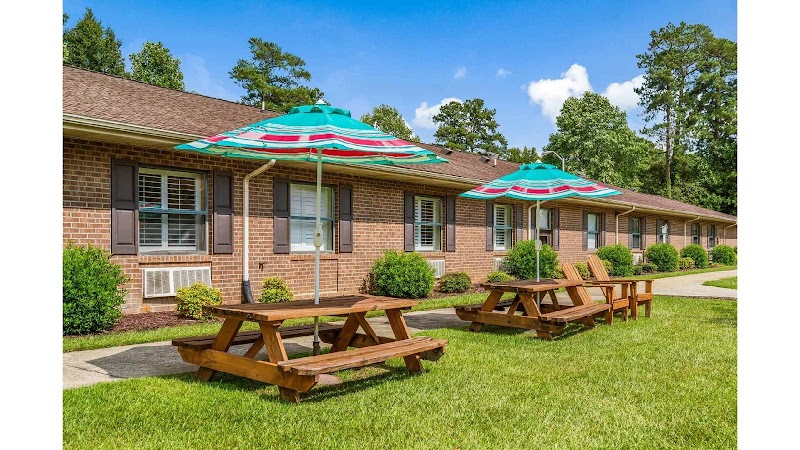
1700 Wayne Memorial Drive, Goldsboro, NC 27534 (919) 731-2805
For profit - Limited Liability company 130 Beds SIMCHA HYMAN & NAFTALI ZANZIPER Data: November 2025
Trust Grade
80/100
#98 of 417 in NC
Last Inspection: September 2024

Within standard 12-15 month inspection cycle. Federal law requires annual inspections.

Overview

Goldsboro Rehabilitation and Healthcare Center has a Trust Grade of B+, indicating it is above average and generally recommended for families seeking care for their loved ones. It ranks #98 out of 417 facilities in North Carolina, placing it in the top half, and is the best option among four local facilities in Wayne County. The facility is improving, with the number of issues decreasing from four in 2023 to two in 2024, and it has no fines on record, which is a positive sign. Staffing is average with a turnover rate of 40%, which is lower than the state average, but the facility does have 4 out of 5 stars for overall quality and health inspections, suggesting a solid level of care. However, there were concerns noted, such as failing to accurately document withheld cardiac medications for three residents and not obtaining a narcotic refill for pain management for one resident, indicating areas that need attention.

Trust Score
B+
80/100
In North Carolina
#98/417
Top 23%
Safety Record
Low Risk
No red flags
Inspections
Getting Better
4 → 2 violations
Staff Stability
○ Average
40% turnover. Near North Carolina's 48% average. Typical for the industry.
Penalties
✓ Good
No fines on record. Clean compliance history, better than most North Carolina facilities.
Skilled Nurses
○ Average
Each resident gets 32 minutes of Registered Nurse (RN) attention daily — about average for North Carolina. RNs are the most trained staff who monitor for health changes.
Violations
○ Average
7 deficiencies on record. Average for a facility this size. Mostly minor or procedural issues.
★★★★☆
4.0
Overall Rating
★★★☆☆
3.0
Staff Levels
★★★☆☆
3.0
Care Quality
★★★★☆
4.0
Inspection Score
Stable
2023: 4 issues
2024: 2 issues

The Good

  • Full Sprinkler Coverage · Fire safety systems throughout facility
  • No fines on record
  • Staff turnover below average (40%)

    8 points below North Carolina average of 48%

Facility shows strength in fire safety.

The Bad

Staff Turnover: 40%

Near North Carolina avg (46%)

Typical for the industry

Chain: SIMCHA HYMAN & NAFTALI ZANZIPER

Part of a multi-facility chain

Ask about local staffing decisions and management

The Ugly 7 deficiencies on record

Sept 2024 1 deficiency
CONCERN (D)

Potential for Harm - no one hurt, but risky conditions existed

Pharmacy Services (Tag F0755)

Could have caused harm · This affected 1 resident

**NOTE- TERMS IN BRACKETS HAVE BEEN EDITED TO PROTECT CONFIDENTIALITY** Based on observation, record review, resident, facility staff, pharmacist, and Nurse Practitioner (NP) interviews the facility f...

Read full inspector narrative →
**NOTE- TERMS IN BRACKETS HAVE BEEN EDITED TO PROTECT CONFIDENTIALITY** Based on observation, record review, resident, facility staff, pharmacist, and Nurse Practitioner (NP) interviews the facility failed to obtain a narcotic refill prescription to provide pain medication for 1 of 3 residents reviewed for pain management (Resident #57). The findings included: Resident #57 was admitted to the facility on [DATE] with diagnosis that included osteoarthritis of the right knee, and spinal stenosis. Record review of the Physician order dated 3/5/24, oxycodone-acetaminophen oral tablet 5-325 milligram (mg). Give 1 tablet by mouth every 8 hours as needed for pain (PRN). Review of the controlled drug record sheet for Resident #57 which was received on 7/19/24 revealed the last dose of medication in the card was administered on 8/30/24. Review of the Medication Administration Record (MAR) for Resident #57 dated August 2024 revealed she last received an as needed dose of pain medication on 8/30/24 (Friday) at 9:17 PM. There were no doses recorded as being administered on 8/31/24 (Saturday). Review of an electronic dispensing system report revealed there were no doses of oxycodone-acetaminophen 5-325mg dispensed for Resident #57 from 8/30/24 through 9/5/24. Review of Physician order provided by the pharmacy disclosed a prescription renewal order for Resident #57's oxycodone-acetaminophen 5-325mg was reordered on 9/2/24 at 11:09 AM. The renewal order was required for each time the controlled medication ran out or was close to running out. Review of the controlled drug record of oxycodone-acetaminophen 5-325mg revealed Resident #57's medication card was received on 9/3/24 and the first dose from the new card was administered on 9/3/24. Review of the MAR for Resident #57 dated for the month of September 2024 revealed administration of oxycodone-acetaminophen 5-325mg was administered on 9/3/24. There were no doses recorded as being administered on 9/1/24 (Sunday) or 9/2/24 (Labor Day). On 9/4/24 at 5:08 PM, an interview was conducted with Resident #57, she stated she requested oxycodone-acetaminophen 5-325mg on Saturday (8/31/24), Sunday (9/1/24) and Monday (9/2/24). Nurse #1 told her it was not available. An observation was conducted in conjunction with an interview with Nurse #1 on 9/5/24 at 11:28 AM. During the interview she stated she had provided the last dose from the card to Resident #57 on 8/30/24 and she was unable to obtain the prescription requested from the NP or the on-call service for the narcotic. An observation of Nurse #1 was conducted as she used the medication dispensing system. During the observation the nurse was unable to demonstrate how to obtain narcotics from the electronic medication dispensing system. She scrolled through Resident #57 list and stated there were no narcotics available. She stated she did call the physician several times to follow up on the order on the day of the request. She did not recall if she texted or called the Physician and could not provide evidence that she had made the request for the prescription. When the Nurse Practitioner (NP) was in the facility she gave the request directly to the NP. An interview with Nurse #2 on 9/5/24 at 1:31 PM, revealed to obtain a new narcotic hard script on the weekend or holiday she called the NP, the NP then sent the prescription electronically to the pharmacy. The procedure was to reorder medication when there were 8 pills remaining in the card. An interview with NP on 9/5/24 at 1:46 PM, revealed there was an on-call service for holidays, nights, and weekends. She expected the facility to notify her or the on-call service when the medication count gets low to prevent a delay of obtaining the medications. She explained there was also an electronic medication dispensing system and that was the first back up if a resident was out of medication. When she received a request from the facility for a prescription it was electronically sent to the pharmacy. An interview with the Pharmacist on 9/5/24 at 10:29 AM, via telephone revealed the order for Resident #57's oxycodone-acetaminophen was ordered by the facility on 9/2/24 and delivered to the facility on 9/3/24. The Pharmacist reviewed the transactions on the electronic medication dispensing system and indicated it showed nothing was dispensed for Resident #57 from 8/31/24 through 9/2/24. The Pharmacist stated the facility was to order medications when there were 5 doses remaining for the resident. They had not received a request for Resident #57 for oxycodone- acetaminophen until 9/2/24. The Director of Nursing (DON) was interviewed on 9/6/24 at 2:11 pm. She stated the nurses assigned to the medication carts were responsible for ordering medications. The nurse notified the provider for a new narcotic prescription electronically. On the weekends or holidays the nurse called the Provider and had them fax the prescription or send it directly to the pharmacy. The DON stated residents should not go without medications at any time including narcotic medication and all nurses knew how to access the backup medication dispensing machine. When a resident complained of pain, the nurse should check in the electronic backup system first then follow the re-ordering procedure. She also stated there was a recent pharmacy change and it was possible Nurse #1 missed the training of how to obtain narcotics from the medication dispensing system.
Feb 2024 1 deficiency
CONCERN (E) 📢 Someone Reported This

A family member, employee, or ombudsman was alarmed enough to file a formal complaint

Potential for Harm - no one hurt, but risky conditions existed

Medical Records (Tag F0842)

Could have caused harm · This affected multiple residents

**NOTE- TERMS IN BRACKETS HAVE BEEN EDITED TO PROTECT CONFIDENTIALITY** Based on record review and staff interviews, the facility failed to accurately document on the electronic Medication Administrat...

Read full inspector narrative →
**NOTE- TERMS IN BRACKETS HAVE BEEN EDITED TO PROTECT CONFIDENTIALITY** Based on record review and staff interviews, the facility failed to accurately document on the electronic Medication Administration Record (eMAR) when cardiac medications were withheld according to parameters defined by the physician's orders for 3 of 3 residents reviewed for medication administration (Resident's #1, #2, and #3). 1. Resident #1 was admitted to the facility on [DATE] and discharged on 01/10/24 with diagnosis that included atrial fibrillation, nonrheumatic mitral valve insufficiency, atherosclerotic heart disease of the coronary artery, the presence of an automatic implantable cardiac defibrillator, and stroke. Review of the physician orders for Resident #1 revealed the following order : Metoprolol Tartrate Oral tablet 25 MG (Milligram), give 0.25 tablet via peg tube two times a day for hypertension-hold for systolic blood pressure < 93 mmHg (units of Millimeters of mercury) or a heart rate < 60 beats per minute, order date 12/09/23. On 12/10/23 at 8:02 PM the resident had a recorded systolic blood pressure of 90 mmHg, on 12/12/23 at 11:08 AM the resident had a recorded systolic blood pressure of 88 mmHg, and on 12/14/23 at 9:27 AM the resident had a recorded systolic blood pressure of 91 mmHg. On all three occasions the medication was documented as administered. In an interview with Nurse #1 on 02/13/24 at 4:11 PM she stated she had documented in error that the Metoprolol on 12/10/23 at 8:02 PM was administered. She reported that she always took blood pressures before administering any blood pressure medications. She was sure she had not given the medication because she always checked the parameters before administering. She thought she may have been busy and accidentally documented that the medication had been administered when it had not been given. She noted the hall the resident resided on was the rehab hall, it was very busy everyday with admissions, bells ringing and other distractions. In an interview with Certified Medication Aide (CMA) #1 on 02/13/24 at 4:25 PM she stated the Metoprolol on 12/12/23 at 11:08 AM and on 12/14/23 at 9:27 AM for Resident #1 was given as documented but the recorded blood pressures were not the blood pressures she had obtained prior to giving the medications. She stated she had been in a hurry on both days and instead of typing in the blood pressures she had taken, she clicked on the option to document the last recorded vital sign in the system and had not noticed they were out of range. She knew she had taken the blood pressures and the systolic blood pressures had been above the required 93 mmHg because the family was always present and insisted the blood pressure was taken before medications were administered. She noted she should have typed in the blood pressures she had taken instead of using the last recorded values. 2. Resident #2 was admitted to the facility on [DATE] and discharged on 02/15/24. He had diagnoses that included essential hypertension, atherosclerotic heart disease of the native coronary artery, and atrial fibrillation. Review of the physician orders for Resident #2 revealed the following order: Metoprolol Tartrate Tablet, give 12.5 MG by mouth two times a day, hold for a systolic blood pressure < 96 mmHg or a heart rate < 60 beats per minute related to unspecified atrial fibrillation, order date 02/07/24. Nurse #4 documented Resident #2 was administered Metoprolol 12.5 MG on 02/10/24 at 9:00 PM with a recorded systolic blood pressure of 94 mmHg. In an interview with Nurse #4 on 02/13/24 at 3:15 PM she stated on 02/10/24 she had taken Resident #2 ' s blood pressure and wrote the result of a systolic blood pressure of 105 mmHg on the 24 hour nurse report but did not enter the result in the computer. Instead, she stated she had clicked on the choice to record the last value recorded in the system and did not realize that value was below the parameter. She noted she was a new nurse and still in orientation. She stated she was not completely familiar with the computer system yet. 3. Resident #3 was admitted to the facility on [DATE] with diagnoses that included: atherosclerotic heart disease of the native coronary artery, essential hypertension, and heart failure. Review of the physician orders for Resident #3 revealed the following order: Losartan Potassium Oral Tablet 50 MG, give 1 tablet by mouth one time a day related to essential (primary) hypertension, hold for a systolic blood pressure < 120 mmHg or a heart rate <60 beats per minute, order date 08/22/23. Nurse #3 documented Resident #3 was administered Losartan 50 MG on 09/10/23 at 9:43 AM with a recorded heart rate of 53. In an interview with Nurse #3 on 02/14/24 at 3:10 PM she stated she did not remember administering the medication back in September but was sure it was not given if the resident had a heart rate of 53. She stated it was a documentation error. She knew not to give the medication if the heart rate was low because she was familiar with the resident and the parameters. She stated she had been busy and accidentally clicked in the computer that the medication had been given when it had been held. CMA #2 documented Resident #3 was administered Losartan 50 MG by CMA #2 on 09/14/23 at 10:45 AM with a recorded heart rate of 54 and on 09/24/23 at 12:51 PM with a recorded heart rate of 57. In an interview with CMA #2 on 02/14/24 at 3:30 PM she stated she knew she would not have given Resident #3 Losartan 50 MG if her heart rate was below 60 beats per minute. She noted she always checked Resident #3 ' s vital signs before she poured her medications because she was familiar with the resident and knew she had parameters on her Losartan medication. She stated she could not remember that far back, but knew she always held this resident ' s cardiac medications according to the vital signs she took herself. She concluded that she had probably been busy and clicked that the medication had been given when it had actually been held. She stated she was 100% sure she had held the medication both times on 09/14/23 and 09/24/23. Nurse #2 documented she had administered Losartan 50 MG to Resident #3 on the following dates with the corresponding heart rate values: -10/04/23 at 11:00 AM with a recorded heart rate of 57 beats per minute -11/10/23 at 11:40 AM with a recorded heart rate of 59 beats per minute -11/13/23 at 8:45 AM with a recorded heart rate of 57 beats per minute -11/23/23 at 10:40 AM with a recorded heart rate of 55 beats per minute -12/27/23 at 14:40 PM with a recorded heart rate of 56 beats per minute -01/02/24 at 11:36 PM with a recorded heart rate of 58 beats per minute In an interview with Nurse #2 on 02/14/24 at 3:45 PM she stated she was familiar with the resident and knew which medications not to give Resident # 3 if her blood pressure or heart rate were below a certain range. She said she held any medications that were outside of the parameters set. She noted she had a habit of passing out all the medications than going back at the end of the medication pass and clicking that all the medications had been administered for each resident. She stated the reason she documented incorrectly was because she did not record each medication as she either held it or gave it. She did not specifically recall any of the dates she documented she gave the medication that she had actually held but was sure she had not given the resident a medication that was to be held if her heart rate was low because she always took the time to take her vital signs before she gave the medications. She concluded she had a teachable moment with the Director of Nursing and now she documents in the computer at the time she either gives or holds a medication. In an interview with the Administrator and the [NAME] President of Clinical Services North Carolina Region on 02/15/24 at 1:15 PM, the Administrator stated she expected the nurses to obtain vital signs at the time a medication was due and accurately document when a medication was held. She noted the eMARs had been changed the previous evening for every physician order that had parameters so that a medication could not be documented as either given or withheld without first typing the vital signs into the medical record.
Nov 2023 1 deficiency
CONCERN (D) 📢 Someone Reported This

A family member, employee, or ombudsman was alarmed enough to file a formal complaint

Potential for Harm - no one hurt, but risky conditions existed

Quality of Care (Tag F0684)

Could have caused harm · This affected 1 resident

**NOTE- TERMS IN BRACKETS HAVE BEEN EDITED TO PROTECT CONFIDENTIALITY** Based on record review and staff interviews the facility failed to follow physician orders regarding placement of Lidocaine exte...

Read full inspector narrative →
**NOTE- TERMS IN BRACKETS HAVE BEEN EDITED TO PROTECT CONFIDENTIALITY** Based on record review and staff interviews the facility failed to follow physician orders regarding placement of Lidocaine external patch, a local anesthetic, for 1 of 5 residents (Resident #1) reviewed for physician order implementation. Findings include: Resident #1 was admitted into the facility on [DATE] with diagnoses including generalized muscle weakness and other abnormalities of gait and ability and discharged on 10/30/23. Resident #1's admission Minimum Data Set, dated [DATE] revealed that she was cognitively intact, denied any pain in the last 5 days, and was frequently incontinent of bowel and bladder. She required supervision or touching assistance with toileting hygiene, personal hygiene, partial/moderate assistance with shower/bathing, lower body dressing, putting on/taking off footwear, rolling left and right, sit to laying, lying to sitting on the side of the bed, and tub/shower transfers. Substantial to maximal assist with sit to stand, and chair/bed-to-chair transfer. A review of Resident #1's physician orders dated 10/9/2023 included Lidocaine external patch 4% apply to lower back topically one time a day for pain and remove at bedtime. This order was scheduled for 9 AM on the Medication Administration Record (MAR) with the time changed to 6:00 AM on 10/21/23. A review of Resident #1's Physical Therapy evaluation dated 10/8/2023 noted that Resident #1 had pain that interfered/limited her functional activity. Resident #1's MAR revealed on 10/24/23 the Lidocaine patch was not applied to Resident #1's lower back as ordered by the marking of the number 9 in the box indicating other/see progress note. Resident #1's progress note dated 10/24/23 did not contain any information related to why the Lidocaine patch was not marked as applied. A phone interview conducted on 11/14/23 with Nurse #1 at 1:30 PM revealed that she could not remember why the patch had not been applied. An interview with the Administrator on 11/14/23 at 1:45 PM revealed that medications should be administered as ordered or a progress note put in as to why a medication was not given.
Apr 2023 3 deficiencies
CONCERN (D)

Potential for Harm - no one hurt, but risky conditions existed

Deficiency F0761 (Tag F0761)

Could have caused harm · This affected 1 resident

Based on observation, record review and staff interview the facility failed to monitor temperatures for 1 of 1 medication refrigerators (300 Hall medication room refrigerator) and failed to discard ex...

Read full inspector narrative →
Based on observation, record review and staff interview the facility failed to monitor temperatures for 1 of 1 medication refrigerators (300 Hall medication room refrigerator) and failed to discard expired medication for 2 of 3 medications carts (400 Hall medication cart, 500 Hall medication cart). The findings included: 1. An observation was conducted of the 300 Hall medication storage room on 4/25/23 at 9:02 AM with Nurse Supervisor #2. The refrigerator temperature registered at 28 degrees Fahrenheit and there was a large block of ice formed around the freezer section of the refrigerator. The 300 Hall refrigerator contained the following medications 1 Humalog Insulin KwikPen Prefilled syringe, 2 Novolog Insulin FlexPen Prefilled syringes, 3 Mini Bag Intravenous Ertapenem (an antibiotic) and 2 boxes of Tuberculin Purified Protein Derivative. A review of the refrigerator temperature log for the month of April 2023 revealed the refrigerator temp log needed to be at 36 to 46 degrees Fahrenheit (40 degrees Fahrenheit is the ideal temperature for the medication refrigerator was indicated on the refrigerator and freezer temperature log). A review of the temperature log revealed the refrigerator temperatures were out of range on the following dates: 4/5/23 @ 0800- 34 degrees Fahrenheit (Adjusted)The temperature was adjusted but there was no rechecked temperature to see if the temperature was maintained. 4/8/23 @ 1800 32 degrees Fahrenheit (Adjusted) 4/9/23 @ 0810 34 degrees Fahrenheit (Adjusted) 4/9/23 @ 2200 32 degrees Fahrenheit (Adjusted) 4/13/23 @ 1530 30 degrees Fahrenheit (Adjusted) 4/18/23 @ 1600 30 degrees Fahrenheit (Adjusted) 4/19/23 @ 0800 30 degrees Fahrenheit (Adjusted) 4/19/23 @ 1600 20 degrees Fahrenheit (Adjusted) 4/20/23 @ 1500 28 degrees Fahrenheit (Adjusted) An interview was conducted with Nurse Supervisor #2 at 9:38 AM. NS #2 stated the medication refrigerator was checked twice daily and the temperature was adjusted either up or down to maintain the refrigerator within the desired range. NS #2 stated she would remove the medications and place them in another refrigerator. NS#2 stated she would have maintenance look at the refrigerator. An interview was conducted with the Maintenance Director on 4/25/23 at 12:52 PM. The Maintenance Director stated he was made aware of the issue with the refrigerator this morning. He stated that most of the time when the medication refrigerator stopped maintaining its temperature it was due to their being a large block of ice in it. The Maintenance Director stated the medication refrigerator should maintain its ideal temperature with the door closed. He further stated that nursing notified maintenance when the medication refrigerators needed defrosting. An interview was conducted with the Administrator and Regional [NAME] President of Clinical Services on 4/26/23 at 3:09 AM. The Administrator stated the refrigerator temperatures were checked twice daily. She stated if the refrigerator was consistently out of range, then the medications should have been removed, and maintenance should look at the refrigerator. The Administrator stated a work order was placed in the TELS electronic system (a computer system that allows staff to put in work orders for the facility) to notify maintenance personnel. 2 a. During the observation on 4/25/23 at 9:02 AM with Nurse Supervisor #2 the 300 Hall refrigerator contained the following medications 1 Humalog Insulin KwikPen Prefilled syringe, 2 Novolog Insulin FlexPen Prefilled syringes, 3 Mini Bag Intravenous Ertapenem (an antibiotic) and 2 boxes of Tuberculin Purified Protein Derivative. b. An observation of the 400 Hall medication cart on 4/25/23 at 9:45 AM revealed an opened Timolol Maleate Ophthalmic Solution 0.5% dated 3/24/23. An interview was conducted with Nurse #10 on 4/25/23 at 9:58 AM. Nurse #9 stated she did not realize the expired medication was on the cart. Nurse #10 stated the nurse assigned to the cart was responsible for checking for expired medications each shift. c. An observation of the 500 Hall medication cart on 4/25/23 at 10:01 AM revealed an opened bottle of Dorzolamide Opthalmic Solution 0.2% dated 3/24/23. An interview was conducted with Nurse #9 on 4/25/23 at 10:05 AM. Nurse #9 stated she did not realize the expired medication was on the cart. Nurse #9 stated the nurse assigned to the cart was responsible for checking for expired medications. An interview was conducted with the Administrator and Regional [NAME] President of Clinical Services on 4/26/23 at 3:09 AM. The Administrator stated expired medications should be removed prior to their expiration date.
CONCERN (D)

Potential for Harm - no one hurt, but risky conditions existed

QAPI Program (Tag F0867)

Could have caused harm · This affected 1 resident

**NOTE- TERMS IN BRACKETS HAVE BEEN EDITED TO PROTECT CONFIDENTIALITY** Based on record review, observation, and staff interview, the facility ' s Quality Assurance and Assessment (QAA) Committee fail...

Read full inspector narrative →
**NOTE- TERMS IN BRACKETS HAVE BEEN EDITED TO PROTECT CONFIDENTIALITY** Based on record review, observation, and staff interview, the facility ' s Quality Assurance and Assessment (QAA) Committee failed to maintain implemented procedures and monitor interventions put in place following the recertification and complaint investigation survey of [DATE]. This was for a deficiency in the area of Label/Store Drugs and Biologicals (F761) originally cited on [DATE], recited on a recertification follow up survey on [DATE], and subsequently recited on the current recertification survey of [DATE]. The continued failure of the facility during three federal surveys of record shows a pattern of the facility ' s inability to sustain an effective Quality Assurance program. The findings included: This tag is cross referenced to: F761: Based on observation, record review and staff interview the facility failed to monitor temperatures for 1 of 1 medication refrigerators (300 Hall medication room refrigerator) and failed to discard expired medication for 2 of 3 medications carts (400 Hall medication cart, 500 Hall medication cart). During the previous recertification survey of [DATE], the facility failed to discard a vial of expired influenza vaccine and to date an opened vial of Tuberculin purified protein for 1 of 2 medication rooms reviewed for medication storage. During the recertification follow up survey of [DATE] the facility failed to dispose of 3 insulin pens that were labeled with an opened date of over 28 days and to label three insulin pens with an opened date on one of one medication carts reviewed (the 100 Hall Medication Cart). During an interview with the Administrator and Regional [NAME] President of Clinical Services on [DATE] at 3:09 PM the Administrator stated the Quality Assurance Performance Improvement meeting was held monthly to discuss various concerns in the facility. The Administrator stated the staff were constantly being educated through in-services and all staff meetings about the performance improvement plans. The Administrator stated the facility had faced a lot of administrative turnovers and she felt this change had directly affected the facility ' s ongoing performance improvement plan.
MINOR (B)

Minor Issue - procedural, no safety impact

Staffing Information (Tag F0732)

Minor procedural issue · This affected multiple residents

Based on observations record review and staff interviews, the facility failed to post the accurate census on the daily nurse staffing sheets for 2 of 4 days (4/23/23 and 4/24/23) of the recertificatio...

Read full inspector narrative →
Based on observations record review and staff interviews, the facility failed to post the accurate census on the daily nurse staffing sheets for 2 of 4 days (4/23/23 and 4/24/23) of the recertification survey. The findings included: During the initial tour of the facility on 4/23/23 at 10:00 AM the daily nurse staffing sheet was observed posted on a wall by the nurse's station with a date of 4/23/23 and a census of 117. The Administrator confirmed the correct census was 120. On 4/24/23 at 11:15 AM the staff posting was observed with a date of 4/24/23 and a census of 117. The Administrator confirmed the correct census was 120. An interview was completed on 4/25/23 at 11:56 AM with the Staffing Manager. She indicated weekend daily nurse staffing sheets were posted prior to the end of her shift on Friday. The Staffing Manager stated the weekend unit manager was responsible for updating the census on Saturday and Sunday. Multiple attempts to contact the weekend unit manager were unsuccessful. An interview was completed on 4/26/23 at 2:05 PM with the Administrator. She stated the current census was discussed during the facility's daily morning meeting and was updated on the staffing sheets when needed. The Administrator indicated the facility failed to have the morning meeting on 4/24/23, therefore the Staffing Manager was not aware the correct census for 4/23/23 and 4/24/23 was 120. She stated she expected that the staff posting would be up to date and reflect the current census of the building.
Dec 2021 1 deficiency
CONCERN (D)

Potential for Harm - no one hurt, but risky conditions existed

Deficiency F0761 (Tag F0761)

Could have caused harm · This affected 1 resident

Based on observations, record review and staff interviews the facility failed to discard a vial of Influenza vaccine, which was expired, and date an open vial of Tuberculin purified protein for 1 of 2...

Read full inspector narrative →
Based on observations, record review and staff interviews the facility failed to discard a vial of Influenza vaccine, which was expired, and date an open vial of Tuberculin purified protein for 1 of 2 medication rooms reviewed for medication storage. (100 Hall medication room) The findings included: The medication storage room on hall 100 was observed on 12/16/21 at 10:46 AM in the presence of the Director of Nursing (DON). The observation revealed an Influenza Vaccine was opened on 11/15/21. The manufacturer's storage instruction for the Influenza Vaccine was to be discarded 30 days after first use. Additional observation revealed a Tuberculin purified protein/5tu was open and used but not dated. The manufacturers instruction for the tuberculin was to be discarded 30 days after first use. An interview with the DON on 12/16/21 at 10:51 AM, she stated that she has supervisors who spot check for expired medications and the cleanliness of the medication storage room and carts. An interview with a 100 hall Nurse supervisor on 12/16/21 at 11:20AM stated that the medication room was cleaned daily, and the storage bins and refrigerator are cleaned once weekly on the 11 PM- 7AM shift. An interview with the facility Administrator on 12/16/21 at 11:32 AM stated that nursing staff were supposed to take out any expired medications.
Understanding Severity Codes (click to expand)
Life-Threatening (Immediate Jeopardy)
J - Isolated K - Pattern L - Widespread
Actual Harm
G - Isolated H - Pattern I - Widespread
Potential for Harm
D - Isolated E - Pattern F - Widespread
No Harm (Minor)
A - Isolated B - Pattern C - Widespread

Questions to Ask on Your Visit

  • "Can I speak with families of current residents?"
  • "What's your RN coverage like on weekends and overnight?"

Our Honest Assessment

Strengths
  • • Grade B+ (80/100). Above average facility, better than most options in North Carolina.
  • • No major safety red flags. No abuse findings, life-threatening violations, or SFF status.
  • • No fines on record. Clean compliance history, better than most North Carolina facilities.
  • • 40% turnover. Below North Carolina's 48% average. Good staff retention means consistent care.
Concerns
  • • No significant concerns identified. This facility shows no red flags across CMS ratings, staff turnover, or federal penalties.
Bottom line: Generally positive indicators. Standard due diligence and a personal visit recommended.

About This Facility

What is Goldsboro Rehabilitation And Healthcare Center's CMS Rating?

CMS assigns Goldsboro Rehabilitation and Healthcare Center an overall rating of 4 out of 5 stars, which is considered above average nationally. Within North Carolina, this rating places the facility higher than 99% of the state's 100 nursing homes. This rating reflects solid performance across the metrics CMS uses to evaluate nursing home quality.
How is Goldsboro Rehabilitation And Healthcare Center Staffed?

CMS rates Goldsboro Rehabilitation and Healthcare Center's staffing level at 3 out of 5 stars, which is average compared to other nursing homes. Staff turnover is 40%, compared to the North Carolina average of 46%. This relatively stable workforce can support continuity of care.

What Have Inspectors Found at Goldsboro Rehabilitation And Healthcare Center?

State health inspectors documented 7 deficiencies at Goldsboro Rehabilitation and Healthcare Center during 2021 to 2024. These included: 6 with potential for harm and 1 minor or isolated issues.
Who Owns and Operates Goldsboro Rehabilitation And Healthcare Center?

Goldsboro Rehabilitation and Healthcare Center is owned by a for-profit company. For-profit facilities operate as businesses with obligations to shareholders or private owners. The facility is operated by SIMCHA HYMAN & NAFTALI ZANZIPER, a chain that manages multiple nursing homes. With 130 certified beds and approximately 127 residents (about 98% occupancy), it is a mid-sized facility located in Goldsboro, North Carolina.

How Does Goldsboro Rehabilitation And Healthcare Center Compare to Other North Carolina Nursing Homes?

Compared to the 100 nursing homes in North Carolina, Goldsboro Rehabilitation and Healthcare Center's overall rating (4 stars) is above the state average of 2.8, staff turnover (40%) is near the state average of 46%, and health inspection rating (4 stars) is above the national benchmark.

What Should Families Ask When Visiting Goldsboro Rehabilitation And Healthcare Center?

Based on this facility's data, families visiting should ask: "Can I visit during a mealtime to observe dining assistance and food quality?" "How do you handle medical emergencies, and what is your hospital transfer rate?" "Can I speak with family members of current residents about their experience?"

Is Goldsboro Rehabilitation And Healthcare Center Safe?

Based on CMS inspection data, Goldsboro Rehabilitation and Healthcare Center has a clean safety record: no substantiated abuse findings (meaning no confirmed cases of resident harm), no Immediate Jeopardy citations (the most serious violation level indicating risk of serious injury or death), and is not on the Special Focus Facility watch list (a federal program monitoring the lowest-performing 1% of nursing homes). The facility has a 4-star overall rating and ranks #1 of 100 nursing homes in North Carolina. While no facility is perfect, families should still ask about staff-to-resident ratios and recent inspection results during their visit.

Do Nurses at Goldsboro Rehabilitation And Healthcare Center Stick Around?

Goldsboro Rehabilitation and Healthcare Center has a staff turnover rate of 40%, which is about average for North Carolina nursing homes (state average: 46%). Moderate turnover is common in nursing homes, but families should still ask about staff tenure and how the facility maintains care continuity when employees leave.

Was Goldsboro Rehabilitation And Healthcare Center Ever Fined?

Goldsboro Rehabilitation and Healthcare Center has no federal fines on record. CMS issues fines when nursing homes fail to meet care standards or don't correct problems found during inspections. The absence of fines suggests the facility has either maintained compliance or corrected any issues before penalties were assessed. This is a positive indicator, though families should still review recent inspection reports for the full picture.

Is Goldsboro Rehabilitation And Healthcare Center on Any Federal Watch List?

Goldsboro Rehabilitation and Healthcare Center is not on any federal watch list. The most significant is the Special Focus Facility (SFF) program, which identifies the bottom 1% of nursing homes nationally based on persistent, serious quality problems. Not being on this list means the facility has avoided the pattern of deficiencies that triggers enhanced federal oversight. This is a positive indicator, though families should still review the facility's inspection history directly.