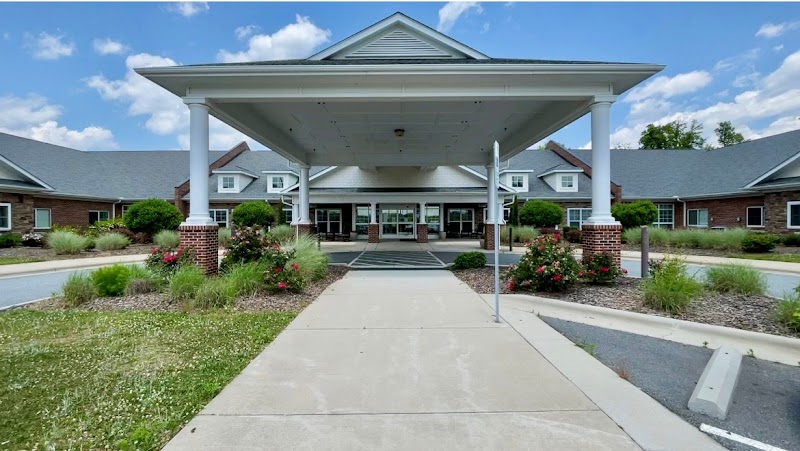
Summerstone Health and Rehabilitation Center

485 Veterans Way, Kernersville, NC 27284 (336) 515-3000
For profit - Limited Liability company 138 Beds LIBERTY SENIOR LIVING Data: November 2025 7 Immediate Jeopardy citations
Trust Grade
0/100
#290 of 417 in NC
Last Inspection: January 2025

Within standard 12-15 month inspection cycle. Federal law requires annual inspections.

Overview

Summerstone Health and Rehabilitation Center has received a Trust Grade of F, indicating significant concerns about the quality of care provided. Ranking #290 out of 417 facilities in North Carolina places them in the bottom half, and #8 out of 13 in Forsyth County means only a few local options are worse. The facility's trend is worsening, increasing from 9 to 10 issues from 2023 to 2025, highlighting ongoing problems. Staffing is a serious concern, with a low rating of 1 out of 5 stars and a high turnover rate of 69%, which is well above the state average. The facility has also incurred fines totaling $148,463, which is higher than 85% of North Carolina facilities, indicating repeated compliance issues. While there is excellent quality in some measures, such as a 5 out of 5 rating in quality measures, critical incidents raise red flags. For example, a cognitively impaired resident was allowed to exit the facility unsupervised, wandering off into a potentially dangerous situation. Additionally, a resident fell off the bed during care, and another fell from a lift due to improper use, resulting in serious injuries. These incidents reflect a troubling pattern of neglect and unsafe practices, making it essential for families to carefully consider their options.

Trust Score
F
0/100
In North Carolina
#290/417
Bottom 31%
Safety Record
High Risk
Review needed
Inspections
Getting Worse
9 → 10 violations
Staff Stability
⚠ Watch
69% turnover. Above average. Higher turnover means staff may not know residents' routines.
Penalties
✓ Good
$148,463 in fines. Lower than most North Carolina facilities. Relatively clean record.
Skilled Nurses
⚠ Watch
Each resident gets only 17 minutes of Registered Nurse (RN) attention daily — below average for North Carolina. Fewer RN minutes means fewer trained eyes watching for problems.
Violations
⚠ Watch
41 deficiencies on record. Higher than average. Multiple issues found across inspections.
★★☆☆☆
2.0
Overall Rating
★☆☆☆☆
1.0
Staff Levels
★★★★★
5.0
Care Quality
★☆☆☆☆
1.0
Inspection Score
Stable
2023: 9 issues
2025: 10 issues

The Good

  • 5-Star Quality Measures · Strong clinical quality outcomes
  • Full Sprinkler Coverage · Fire safety systems throughout facility
  • No fines on record

Facility shows strength in quality measures, fire safety.

The Bad

2-Star Overall Rating

Below North Carolina average (2.8)

Below average - review inspection findings carefully

Staff Turnover: 69%

22pts above North Carolina avg (46%)

Frequent staff changes - ask about care continuity

Federal Fines: $148,463

Well above median ($33,413)

Significant penalties indicating serious issues

Chain: LIBERTY SENIOR LIVING

Part of a multi-facility chain

Ask about local staffing decisions and management

Staff turnover is elevated (69%)

21 points above North Carolina average of 48%

The Ugly 41 deficiencies on record

7 life-threatening 1 actual harm
Mar 2025 1 deficiency 1 IJ
CRITICAL (J) 📢 Someone Reported This

A family member, employee, or ombudsman was alarmed enough to file a formal complaint

Immediate Jeopardy (IJ) - the most serious Medicare violation

Accident Prevention (Tag F0689)

Someone could have died · This affected 1 resident

**NOTE- TERMS IN BRACKETS HAVE BEEN EDITED TO PROTECT CONFIDENTIALITY** Based on record review and staff, Nurse Practitioner (NP), and Responsible Party (RP) interviews, the facility failed to protect...

Read full inspector narrative →
**NOTE- TERMS IN BRACKETS HAVE BEEN EDITED TO PROTECT CONFIDENTIALITY** Based on record review and staff, Nurse Practitioner (NP), and Responsible Party (RP) interviews, the facility failed to protect a cognitively impaired resident, Resident #6, when he was allowed to exit the facility through the locked main entrance door. Nurse Aide (NA) #1 unlocked and opened the door for Resident #6 and allowed him to leave the facility, in the dark, on the evening of 1/26/25. Resident #6 was found in the parking lot of a restaurant near a gas station 1.4 miles from the facility. There were multiple roads between the facility and where the resident was found including a divided 4 lane road, a 4-lane highway, sidewalks, posted speed limits of up to 45 miles per hour, in 38-degree Fahrenheit weather while wearing shoes, pajamas, a coat, and a hat. Upon being unable to locate Resident #6 Nurse #1 failed to immediately implement and activate the elopement process, which included notifying the police, when she became aware Resident #6 had left the building. After the facility initiated the elopement process, the resident was discovered by police who returned the resident to the facility. Due to the facility's noncompliance through allowing the resident to exit the facility followed by the failure to immediately contact the police, the resident's cognitive impairment, exposure to cold weather, time of day when the resident exited the facility, distance traveled by the resident, and having to traverse on sidewalks, possibly the road, and cross multiple roads there was the high likelihood of serious harm. The deficient practice was found for 1 of 2 residents reviewed for supervision to prevent accidents (Resident #6). Findings included: Resident #6 was admitted to the facility on [DATE] with diagnoses including dementia and congestive heart failure. The resident was discharged on 2/10/25. The admission wandering assessment dated [DATE] showed Resident #6 scored a two on the wandering risk assessment, which is low risk for elopement. The care plan dated 1/22/25 revealed Resident #6 was a wanderer and at risk for elopement due to wandering behavior and being disoriented due to new placement at the facility with a goal to minimize risks for elopement through current interventions over the next 90 days. Interventions included redirection away from exits as needed, provide diversional activities, and notifying the Director of Nursing (DON) of any exit seeking behaviors. During an interview with Nurse #2, Nursing Supervisor, on 2/25/25 at 3:07 pm, she indicated she completed Resident #6's care plan and that all residents who have at risk for elopement added to their care plans scored something other than zero on their assessment. She reported that Resident #6 had been admitted less than a week and had exhibited no exit-seeking behaviors. Nurse #2 stated, Resident #6 would be seen walking up and down the halls at times or sitting in the common area watching television. The admission Minimum Data Set (MDS) assessment dated [DATE] revealed Resident #6 had moderate cognitive impairment and wandering behaviors were indicated for 1 to 3 days. The MDS also indicated Resident #6 ambulated independently. A handwritten, undated, statement by NA #1 documented, around 11:00 pm, Resident #6 walked up and asked NA #1 to let him out of the building which NA #1 did because NA #1 thought Resident #6 was visiting. NA #1 wrote Resident #6 told NA #1 he had fallen asleep and that he needed to get home to [NAME]-Salem. NA #1 also wrote that they both walked together to the main entrance and the NA opened the door. Resident #6 then walked out of the building. During a phone interview with NA #1 on 2/25/25 at 2:25 pm, NA #1 reported not letting any residents out of the building. NA #1 reported seeing Resident #6 leaving the building around 11:00 pm but did not let Resident #6 out and was unaware who may have unlocked the door. NA #1 explained not recognizing Resident #6 as living at the facility because the NA had never worked with him, so the NA did not stop Resident #6 from leaving. NA #1 also indicated it wasn't unusual to see visitors coming and going at all times during the night, so the NA didn't question seeing someone leaving at that time. NA #1 indicated noticing Resident #6 was wearing dark shoes, a coat, and a hat the night of 1/26/25. NA #1 added not noticing Resident #6 was wearing flannel pajamas the night of 1/26/25. NA #1 explained the contradiction between the written statement provided regarding Resident #6 leaving the building compared to information shared during the interview was because the facility had NA #1 write what was in the written statement. A handwritten statement, undated, by Nurse #1 read, she saw Resident #6 walking down the hall toward the lobby. Nurse #1 indicated she redirected Resident #6 by having him follow her back toward his room. Nurse #1 wrote she went into the room next door to assist that resident and when she came out of that room several minutes later, she didn't see Resident #6 in the hallway anymore. Nurse #1 reported after looking for him around other units, she was advised by NA #1 that the NA saw the resident and that the NA let Resident #6 out of the building assuming he was a visitor. Nurse #1 documented all of the staff began searching for the resident and the Nursing Supervisor (Nurse #2) called the police and the DON (Director of Nursing). During an interview with Nurse #1 on 2/25/25 at 3:10 pm, she stated she was assigned to Resident #6 for the 7pm-7am shift on 1/26/25. Nurse #1 indicated Resident #6 liked to walk a lot but she had not seen him show any exit-seeking behaviors such as attempting to open outside doors. Nurse #1 reported she saw Resident #6 walking toward the lobby area from the 300 hall around 11:00 pm wearing his flannel pajamas and shoes. She indicated he wasn't wearing a hat or coat when she saw him walking in the hallway. Nurse #1 stated she had Resident #6 follow her back down the 300 hall toward his room where Nurse #1 left him as she went into Resident #6's neighbor's room to assist. Nurse #1 indicated that Resident #6 didn't seem distraught or express to her anything was wrong. Nurse #1 reported several minutes later, she came out of the room and noticed Resident #6 was not in the hallway anymore, so she looked in Resident #6's room, assuming he may have gone to bed, and then proceeded to look in all the rooms on the 300 hall without finding Resident #6. Nurse #1 then stated she expanded her search to other units before meeting NA #1 on the 100 hall who told her the NA let someone who matched the description of Resident #6 out of the building earlier. Nurse #1 explained the NA was unable to provide her with the exact time of when the resident had left the facility. Nurse #1 then reported she went out the front door and proceeded to look for Resident #6 throughout the facility parking lot, both the whole front and then the back lot where employees park, and to the street in front of the building before returning to the facility. Upon returning inside the facility Nurse #1 explained she went to find Nurse #2, Nursing Supervisor, to let her know Resident #6 was missing. Nurse #1 stated she searched for Resident #6 outside for only 5-10 minutes before coming back in. She stated she didn't think about finding the Nursing Supervisor first to let her know before searching outside herself because she was anxious to find Resident #6. Nurse #1 stated she hoped the resident would be right outside on the sidewalk, which led to looking in the parking lot, and then she went to the street. An incident note, which was documented in the nurses' notes, dated 1/27/25 at 6:44 am made by Nurse #2 stated on the evening of 1/26/25 around 11:30 pm, Resident #6 was let outside of the building by a Nurse Aide (NA) #1. Nurse #1 had stated she went outside looking for the resident for about 30 minutes prior to telling the supervisor that a resident was out the facility. She stated she then came back into the building, went to the nurses' station on 100 hall and informed the Nursing Supervisor that a resident had left the building, and she could not find him. Nurse #2 wrote she called the (Director of Nursing) DON, and 911 who was informed of the resident missing from the facility with a detailed description of him and what he was wearing when he was last seen. The staff was alerted that a resident was missing from the facility. The DON called Nurse #2 while she was in her car and said the police had found the resident and he was safely brought back to the facility. During an interview with Nurse #2 on 2/25/25 at 3:07 pm, she stated she was the Nursing Supervisor, and she was made aware of Resident #6 exiting the building by Nurse #1 right before midnight on 1/26/25. Nurse #2 stated Nurse #1 told her she had been searching for Resident #6 for 30 minutes outside and had not been able to locate him. Nurse #2 reported, following the elopement policy, she immediately notified all staff to begin looking for Resident #6 and also notified the DON who advised her to call 911 immediately, which she did. Nurse #2 stated she got in her own car and began driving around the area near the facility looking for Resident #6. Nurse # 2 explained looking for a resident in her own car was not part of the policy, but she was hoping it would result in finding the resident quicker. Nurse #2 reported the DON called her on her cell phone while she was driving, advised her the police had located the resident, and had just returned him to the facility. Nurse #2 stated she returned to the facility and completed an assessment of Resident #6. A police report dated 1/27/25 read police were dispatched at 12:04 am after a staff member called stating an aide let a resident out of the building. Staff made the dispatcher aware Resident #6 had cognitive impairments. Resident #6 was located on NC Hwy 66 near the gas station and was transported back to the facility. The report further stated, NA #1 told the police the NA did not know Resident #6 was a resident at the facility and thought he was letting out a family member after visiting. NA #1 informed the police the doors to the facility were locked and only staff members open the doors. The report also documented the facility searched for Resident #6 for approximately 30 minutes after being made aware the resident had left the building. The resident was unharmed and required no medical attention. The time Resident #6 was returned to the building was not documented. During an interview with the responding Police Officer on 3/3/25 at 4:35 pm, he indicated he was dispatched at approximately midnight on 1/26/25 and advised there was a resident missing from the facility. He stated Resident #6 was found around a fast food restaurant and gas station approximately 1 ½ miles away from the facility and was wearing a hat, shoes, long pajamas and a dark overcoat. He stated Resident #6 appeared unharmed and told him he needed to get home to [NAME]-Salem. The officer reported he spoke with NA #1 after returning Resident #6 to the facility who told the officer he let Resident #6 out by accident thinking he was a family member there visiting. The officer added that he was told by an unnamed staff member that the facility had been searching for Resident #6 for about 30 minutes before dialing 911. Observation of the facility layout from Resident #6's room to the door where the resident was allowed egress revealed the following: a right turn has to be made when coming out of Resident #6's room, followed by a short walk in the 300 hall until a mid-point in the hall, and then a right turn must be made to the middle hall. From the middle hallway the front common areas can be accessed, to the left of the common areas, there was a double door entrance which had locks controlled by a magnetic lock system, and there was a visible keypad which allowed the magnetic lock to be disengaged by entering a code which would allow the two automatic doors to be opened. Observation of Google map on 2/25/25 at 4:25 pm revealed the following information about the roads located between the facility and where the resident was discovered by the police. Upon exiting the facility and going through the parking lot there was a two-lane road with a sidewalk on each side of the road, a left turn on the two-lane road would take an individual to an intersection of a 4-lane divided road, where there was also a sidewalk on each side of the road. A right turn would be needed at the 4-lane intersection to travel in the direction of where the resident was found. The 4-lane road had a posted speed limit of 40 miles per hour, had streetlights, and traveled through a mostly wooded area with one commercial building. There was an intersection with a 4-lane highway where a left turn would need to be made to get onto the 4-lane highway with a posted speed limit of 45 miles per hour. There were sidewalks on each side of the 4-lane highway. According to the police report and police interview, Resident #6 was discovered at a closed fast food restaurant parking lot near a gas station on the other side of the 4-lane highway. According to the map, the distance between the facility and the restaurant and gas station where Resident #6 was found was 1.4 miles. A review of the data from the National Weather Service (NWS) web site the hourly temperatures beginning at 10:54 pm on 1/26/25 were as follows: 10:54 pm-38 degrees, 11:54 pm-40 degrees, 12:54 am-40 degrees, and 1:54 am-38 degrees. There was no precipitation documented. A progress note by the facility's Nurse Practitioner dated 1/27/25 read that Resident #6 had a normal exam and he had no signs of any injury related to the elopement. During an interview with the Nurse Practitioner (NP) on 2/25/25 at 4:20 pm, he stated he saw and examined Resident #6 on the morning of 1/27/25. He reported an exam with no injuries as a result of the elopement. When asked if he thought there was a higher likelihood of harm to Resident #6 based on his current physical condition and cognition he stated, although Resident #6 could ambulate independently, he had only seen the resident once before and didn't feel like he had enough information yet to make that determination. During an interview with both the Director of Nursing (DON) with the Regional Nurse Consultant (RNC) present on 2/25/25 at 4:45 pm the DON stated she reported to the facility as soon as Nurse #2 alerted her Resident #6 had exited the building. The DON stated NA #1 should have never unlocked the door to let anyone out who was unfamiliar without verifying the person was not a resident. The DON also stated Nurse #1 should have immediately implemented the elopement process which stated the secondary search procedure is to be initiated by the Nursing Supervisor in charge which would have been Nurse #2. The Nursing Supervisor, in turn, would notify all staff of a missing resident, contact the DON, and then the police. Nurse #1 did not follow procedure when she failed to alert her supervisor immediately after she was unable to locate Resident #6 on her unit and learned he had left the building. The RNC also stated the facility immediately began a plan of correction for all staff members regarding the elopement process. The facility's Administrator was notified of immediate jeopardy on 2/25/25 at 6:04 pm. The facility implemented the following corrective action plan: Address how corrective action will be accomplished for those residents found to have been affected by the deficient practice. Resident #6 is an [AGE] year-old male who was admitted on [DATE] with falls, balance issues, and vascular dementia. Resident #6's Brief Interview for Mental Status (BIMS) was 8 which suggests moderate cognitive impairment. On admission Resident #6 scored a two on the wandering risk assessment, which is low risk for wandering. A low risk indicates the resident has not exhibited wandering behaviors and has no history of wandering. Resident #6's care plan indicated he was at risk for falls, risk for elopement, and was displaying inappropriate behaviors. During Resident #6's stay at the facility, he showed no signs of wandering or exit seeking behaviors according to nurse notes and staff interviews, he was ambulatory in his room only. He did have behaviors such as urinating in the trash can, on his bed, and on his floor, in his room. On 1/26/25 around 11:30pm, Resident #6 walked up to Nurse Aide (NA) #1 and asked to let him out of the building. NA #1 thought Resident #6 was a family member visiting a resident. Resident #6 stated to NA #1 he fell asleep at facility, he lived in [NAME]-Salem and needed to go home. Nurse Aid #1 walked Resident #6 to the main entrance, manually unlocked the front door by turning the knob, opened the door, and Resident #6 walked out of the facility. According to Nurse Aid #1 Resident #6 was wearing a white short- sleeve tee shirt, a plaid button-down long sleeve shirt, a black coat, long pajama pants, and hard bottom black shoes. During the time Resident #6 was let out of the facility by NA #1 he was not identified as a wandering risk during this time as an elopement risk, therefore he was not in the elopement book. According to Nurse #1 Resident #6 was wearing long pants, a coat, a shirt, and shoes during her shift that evening which began at 7:00pm. Interview with Nurse #1, I do not know what time it was when I realized Resident #6 was missing but it was some time after 10:30pm. Nurse #1 immediately went to Resident #6's room and he was not there. Nurse #1 then walked down the hallway to the living room near the main entrance and did not see Resident #6. She then walked to 200 hall and he was not there. Nurse #1 then saw NA #1 and asked if Resident #6 had been seen in the facility. NA #1 then told Nurse #1 Resident #6 was mistaken for a visitor and let out the main entrance per the resident's, who thought was a visitor, request. Nurse # 1 immediately unlocked the front door and exited the main entrance to find Resident #6. Nurse #1 left the property on foot and searched to the main road but did not visualize Resident #6. Nurse #1 came back to the facility and reported to the Night Shift Supervisor immediately the missing resident. The Night Shift Supervisor then activated code pink (the facility's code for a missing resident), this was around 11:55pm. The Night Shift Supervisor called the Director of Nursing and local police department. Nurse # 1 contacted the Responsible Party and made her aware. Resident #6 was returned to the facility at 12:30am on 1/27/25 by the local police department. According to local police, Resident #6 was found 1.4 miles away from the facility at a gas station trying to make a phone call. The resident was placed on 1:1, an intervention where 1 staff member is assigned to 1 Resident. Resident #6 was not able to verbalize where he had been or what he had done when he returned to the facility. A head-to-toe assessment was completed by Nurse #1 on duty at 12:40am. Resident #6's skin was intact and all vital signs were stable. The resident's Provider was notified. New orders received to place resident on 1:1 and place an elopement transmitter to the left lower extremity, the careplan, and [NAME] were updated to reflect the elopement risk and the elopement transmitter. Resident #6's Responsible party was made aware. The three elopement books were also updated to reflect Resident #6 was an elopement risk. Resident #6 discharged on 2/10/25 to home with his family. Address how the facility will identify other residents having the potential to be affected by the same deficient practice. On 1/27/25 the Director of Nursing (DON) identified current residents who were potentially impacted by this practice by completing a 100% audit on all current residents to ensure they were all present and accounted for. The audit was completed on 1/27/25. The results concluded: 107 of 107 residents were present and accounted for in the facility. On 1/27/25 the DON identified current residents who were potentially impacted by the deficient practice by completing a 100% audit on all current residents to ensure wandering assessments were accurate and residents identified as at risk or high risk to wander had appropriate interventions including: elopement transmitters, updated information in the elopement books, and or 1:1. This was completed on 1/27/25. The results concluded: 107 of 107 residents had correct wandering assessments completed. There were elopement books located at each nurse's station and front desk with pictures of residents and physical description. On 1/27/25 3 of 3 elopement books were checked by the Activities Director to ensure they were up to date for all current residents that had been identified as potential to elope and they were accurate and up to date. 107 of 107 current residents had elopement risk audits completed on 1/27/25 by the Director of Nursing to ensure they were completed accurately. The results revealed no negative findings. All risk assessments had been completed accurately. All new admission risk assessments will be reviewed daily Monday through Friday in the clinical meeting to ensure risk assessments are completed accurately. Address what measures will be put into place or systemic changes made to ensure that the deficient practice will not recur. On 1/27/25, the Staff Development Clinician (SDC) initiated an in-service for all staff (including agency) on the Elopement Prevention policy. This training will include all current staff including agency. This training included: -When a resident is assessed as being high risk for elopement a transmitter bracelet is placed on the resident. Staff should check the placement of the transmitter bracelet and battery. The task of batteries being checked by using the transmitter checking device is assigned to the floor nurses on the unit then documented in the Medication Administration Record (MAR) every shift. -New admissions with high risk or at risk to wander will be monitored or placed with a sitter until they can be re-evaluated by the Interdisciplinary Team and an appropriate intervention is implemented which can include: continued sitter, application of elopement transmitter device, careplan and [NAME] will be updated to reflect and information added to elopement books. -Risk assessments will be completed on admission, quarterly and/or as needed on all residents. -Any resident identified to be at High Risk for elopement or wandering will be discussed with the interdisciplinary team, documentation of interventions noted, and the careplan updated to reflect interventions, and the elopement books will be updated to reflect resident is and elopement risk. -Location of the three elopement books and when and how to reference them. -Never let a person out of the facility unless you reference the elopement book and ask nurse if the person can exit the facility. Initial Search Procedure -As soon as a resident is noted to be missing ALL staff will search their assigned areas and report to the nursing station. All other areas will then be checked including but not limited to linen rooms, storage rooms, general baths, bathrooms and closets. -If the resident is not located during the initial search then initiate a secondary search. -Secondary Search Procedure: -The charge nurse will assign staff members to search the outdoor facility grounds and report back to charge person. -If the resident has not been found on the secondary search in the facility and facility Grounds, the person in charge will notify the local police or sheriff department. Inform them a search is in progress and request search assistance. This will be done immediately after confirming the secondary search is unsuccessful. - This search should be completed timely and involve all members of the team so that more ground can be covered in a shorter time period. The search for a resident should not be for more than 30 minutes without activating police involvement -The Charge Nurse will assemble all staff at the Nurses' station by announcing over the paging system Missing Resident. This should be completed timely. The Director of Nursing will ensure that any of the above identified staff who do not complete the in-service training by 1/28/25 will not be allowed to work until the training is completed. Indicate how the facility plans to monitor its performance to make sure that solutions are sustained. The Director of Nursing and Unit Manager will audit all admission and readmission risk assessments beginning 1/29/25 weekly for 2 weeks and then monthly for 3 months using the Quality Assurance Elopement Tool. This tool will consist of accurate completion of risk assessment on admission, identification of high or at risk to wander residents, and as changes occur, elopement transmitter is in place, care plan and [NAME] revised, and if the elopement book has been updated to reflect elopement risk. Staff knowledge checks will also be completed beginning 1/29/25 using the Mock Elopement Drill Knowledge Checks Audit Tool weekly x2 weeks and monthly x3 months. 5 Random employees from all different departments will be asked when and how to implement code pink for missing residents. These knowledge checks will include: Have you been educated on code pink initial search to start immediately with all staff searching assigned areas and reporting to charge nurse; Have you been educated on code pink secondary search which is when a resident is not found inside the facility timely; When should you call code pink; Who should be involved in code pink; Should you let a person out the door if you don't know if he or she is a resident or visitor, What do you do? Reports of the results will be presented to the weekly QA committee by the Administrator or Director of Nursing to ensure corrective action is implemented and effective. Compliance will be monitored through an ongoing auditing program reviewed at the weekly QA Meeting. The weekly QA Meeting is attended by the Administrator, DON, Minimum Data Set (MDS) Coordinator, Therapy, Health Information Manager, and the Dietary Manager. The alleged IJ removal date is 1/29/25. The alleged date of compliance will be 2/4/25. On 2/25/25, the facility's corrective action plan was validated on-site by record review, observations, and interviews. Individual interviews of current staff members working all reported to have completed the elopement process training dated 1/27/25. Record review of the in-service documents dated 1/27/25 and 1/28/25 noted the DON and the Staff Development Coordinator completed the in-person training. Signed staff rosters were reviewed with no issues or concerns. Interviews conducted with multiple staff members revealed they had received training about the elopement process and were able to identify what processes to put into place in the event a resident cannot be located. All new staff members will also complete the training before their first shift at the facility. Observation of the three elopement books showed they were current and now also included photographs of residents. Review of audits showed the facility completed new wandering assessments on all residents. The facility's immediate jeopardy removal date of 1/29/25 was validated. The date of compliance was validated as 2/4/25.
Jan 2025 9 deficiencies 1 IJ
CRITICAL (J) 📢 Someone Reported This

A family member, employee, or ombudsman was alarmed enough to file a formal complaint

Immediate Jeopardy (IJ) - the most serious Medicare violation

Accident Prevention (Tag F0689)

Someone could have died · This affected 1 resident

**NOTE- TERMS IN BRACKETS HAVE BEEN EDITED TO PROTECT CONFIDENTIALITY** Based on record review and interviews with staff, Nurse Practitioner, and the resident, the facility failed to provide care in a...

Read full inspector narrative →
**NOTE- TERMS IN BRACKETS HAVE BEEN EDITED TO PROTECT CONFIDENTIALITY** Based on record review and interviews with staff, Nurse Practitioner, and the resident, the facility failed to provide care in a safe manner when a dependent resident rolled off her bed onto the floor during incontinence care. The resident was not injured. The deficient practice affected 1 of 7 residents reviewed for accidents (Resident #18). Findings included: Resident #18 was admitted to the facility on [DATE] with the diagnosis of osteoarthritis. Resident #18 had a significant change Minimum Data Set, dated [DATE] for mobility decline, pressure ulcer, and a fall. The resident required extensive assistance with bed mobility and was always incontinent of bowel and bladder. The care plan for Resident #18 dated 11/26/24 documented the resident had an increased risk for falls and required assistance with her activities of daily living for bed mobility, transfers, bathing, and personal hygiene. Resident #18's nurses' note dated 11/29/2024 at 7:36 am documented by Nurse #4 documented the resident fell from her bed to the floor. Nursing Assistant (NA) #3 informed Nurse #4 she was attempting to provide care to the resident, turned her, and the resident fell off the bed onto the floor. The resident was assessed and she complained of pain in her head and her right hip. The on-call physician was notified, an order was given to send the resident to the Emergency Department (ED) for assessment. Resident #18's change in status note dated 11/29/2024 at 6:05 am written by Nurse #4 documented the resident had fallen. At the time of evaluation, the resident's vital signs were: Blood Pressure (BP): 109/67, Pulse (P): 60, Respiratory Rate: 18, Temperature: T 98.1, oxygen saturation- 98.0 % on room air and Mental Status Evaluation: No changes observed A fall incident report for Resident #18 dated 11/29/24 was documented by Nurse #4. Resident #18 fell out of bed during care provided by NA #3. The staff was educated on resident bed mobility during care. The resident was sent to the ED. On 1/8/25 at 11:46 am Nurse #4 was interviewed. Nurse #4 stated she remembered Resident #18 and the fall incident on 11/29/24. Nurse #4 stated NA #3 was assigned and reported to her that when care was provided to Resident #18 the NA turned the resident and the resident rolled out of bed. Nurse #4 was not aware whether there were any side rails. The resident required maximal assistance in bed for turning and the NA should have 2 staff to prevent rolling out of bed when turning a dependent resident. Resident #18 was assessed and had no apparent injury and had no complaints. The resident was sent to the hospital for evaluation. Nurse #4 stated she asked NA #3 what happened, and the NA stated she provided care by herself and when she turned the resident for care she rolled out of bed onto the floor. Nurse #4 stated she provided the NA education to use 2 staff for a dependent resident. The Director of Nursing (DON) was informed. The physician was notified, and the resident was sent to the Emergency Department (ED) for an evaluation. The resident returned from the ED the same day and had no injury. Attempts were made to interview NA #3 by phone on 1/09/25 and 1/10/25. A voice mail was left but NA #3 did not return the calls. On 1/9/25 at 2:42 pm an interview was conducted with Resident #18. Resident #18 stated she remembered when she fell out of bed. Resident #18 stated when the NA was providing care she placed her on the side of the bed (the resident pointed to the right side of her bed) and I fell off. She further stated I was not hurt. The resident did not remember if the bed was raised for care. Resident #18's ED after visit summary dated 11/29/24 documented the resident was evaluated after a fall. A CAT (radiograph of the brain) scan of head showed no injury. The resident had pain in both knees and an x-ray was completed. The results were negative for injury. The resident had a history of osteoarthritis to both knees. The resident was sent back to the facility. A nurses' note dated 11/29/24 documented Resident #18 complained of right hip pain and had an x-ray completed at the facility after return from the ED. The x-ray result showed no fracture. There was moderate osteoarthritis of the hip joint. On 1/9/25 at 1:04 pm an interview was conducted with the DON. The DON was aware that Resident #18 had rolled out of bed during care by NA #3. The DON stated NA #3 was provided education. On 1/9/25 at 12:10 pm an interview was conducted with the Nurse Practitioner (NP). The NP stated he was not aware Resident #18 had rolled out of the bed. The NP stated the resident complained of left hip pain and an x-ray was done 11/30/24. The x-ray result was osteoarthritis, no injury. He further stated that the resident long standing pain from osteoarthritis in both hips and knees.
CONCERN (D) 📢 Someone Reported This

A family member, employee, or ombudsman was alarmed enough to file a formal complaint

Potential for Harm - no one hurt, but risky conditions existed

Transfer Requirements (Tag F0622)

Could have caused harm · This affected 1 resident

**NOTE- TERMS IN BRACKETS HAVE BEEN EDITED TO PROTECT CONFIDENTIALITY** Based on record review and interviews with staff, Nurse Practitioner (NP), and the resident's representative, the facility faile...

Read full inspector narrative →
**NOTE- TERMS IN BRACKETS HAVE BEEN EDITED TO PROTECT CONFIDENTIALITY** Based on record review and interviews with staff, Nurse Practitioner (NP), and the resident's representative, the facility failed to allow a resident with behaviors to remain in the facility and to provide written documentation which stated the reason the facility could not meet the resident's needs for 1 of 1 resident (Resident #205) reviewed for facility initiated discharge. Findings included: Resident #205 was admitted to the facility on [DATE] with the diagnosis of dementia and repeated falls. The admission Minimum Data Set (MDS) dated [DATE] for Resident #205 documented the resident had an intact cognition. The active diagnosis was dementia. Social Worker #1's note dated 9/24/24 at 3:59 pm documented she sent a referral for Resident #205's admission to a sister facility's memory care unit in another town for possible admission. The note indicated the Social Worker would continue to follow-up. Social Worker #1's note dated 9/24/24 at 5:09 pm documented an email was received from the sister facility for Resident #205's admission and they had no bed in the memory care unit at that time. The note indicated the Social Worker would continue to look for placement. Resident #205 had a significant change MDS dated [DATE] for cognitive decline and falls. Resident #205 had severe cognitive impairment. Resident #205 was coded with no behaviors, rejection of care, or wandering. The resident had 2 or more falls without injury since the previous MDS assessment. The NP documented in Resident #208's progress note dated 12/3/24 that he saw the resident for her monthly chronic conditions visit. The Resident's Representative had not conveyed any concerns. Nursing staff reported the resident had intermittent severe behavioral disturbance including exit seeking and was a fall risk. The resident was assessed and noted to have notable cognitive gaps (deficits). The plan for psychiatric conditions included major depressive disorder with psychotic episodes and the resident was restarted on Seroquel at bedtime. The NP will continue to collaborate with in-house psychiatry. The resident was clinically stable at the time of this encounter. Resident #205's discharge form documented she was transferred on 12/19/24 to a local nursing facility with a memory care unit. The form was signed by Nurse #4. The form was not signed by the resident's representative. There was no physician documentation in the medical record that indicated the specific resident needs the facility could not meet, the facility's efforts to meet those needs, or the services the receiving facility would provide to meet the needs of the resident which could be met at the current facility. On 1/9/25 at 8:46 am Nurse #4 was interviewed. Nurse #4 stated Resident #205's representative was not available (at the facility) at the time of discharge on [DATE] to sign the discahrge form. She was informed by Social Worker #1 that all paperwork had been completed. On 1/9/25 at 9:46 am a follow up interview was conducted with Nurse #4. Nurse #4 stated Resident #205 was discharged on 12/19/24 to a local nursing facility with a memory care unit. Social Worker #1 completed the paperwork. Nurse #4 stated she did not know why the Resident's Representative was not present at the time of discharge. The Resident's Representative normally signed the discharge paperwork. Nurse #4 stated Social Worker #1 informed her that the discharge paperwork was completed. Nurse #4 stated, I understood that the Resident's Representative knew about the discharge to a memory care unit. Nurse #4 indicated Social Worker #1 reported to her that the Resident's Representative had not wanted the resident discharged to the facility after the discharge had taken place. Nurse #4 stated the resident had declined quickly from dementia. She was combative, confused, and was frequently wandering and falling. The resident required increased supervision, including one on one, and was not safe without supervision. The NP was aware. On 1/9/25 at 12:05 pm an interview was conducted with Resident #205's Resident's Representative. The representative stated that she was notified by Social Worker #1 back in August 2024 that the resident would require a higher level of care with a memory care unit. The Resident's Representative was provided with 3 facilities that had a memory care unit. The Resident's Representative stated the 3 facilities had a 1-star rating (nursing home rating from 1 to 5 with 1 being the lowest), she observed the facilities, and declined the choices. The Resident's Representative stated that the facility discussed on multiple occasions that the resident needed a higher level of care, and that care could not be safely provided at this facility. Resident #205's Representative stated she provided one facility name in [NAME] to Social Worker #1 that she would agree to discharge the resident. The Resident's Representative stated in November 2024 she was approached about the discharge to a higher level of care/memory care unit again by Social Worker #1 and she (the Resident's Representative) asked for the resident to remain at the facility. In December 2024 she received a call from Social Worker #1 that the resident had been discharged to one of the three facilities the Resident's Representative was provided back in August 2024. The Resident's Representative stated she was not advised prior to the day of discharge that Resident #205 was being discharged to another facility with a memory care unit. She was notified on the day of discharge. When the Resident's Representative informed Social Worker #1 that she had refused this facility, the Social Worker denied being told that. Resident #205's Representative stated the resident remained at the new facility for a week and was discharged to and currently at hospice. On 01/08/25 at 12:36 pm the Nurse Practitioner (NP) was interviewed. The NP stated due to Resident #205's decline from dementia and frequent falls, the facility could not meet the needs of the resident. The resident required and was provided one on one supervision for wandering and behaviors. The Resident's Representative agreed that the resident required a higher level of care. The resident was discharged to a facility with a memory care unit for increased supervision. The Director of Nursing (DON) was interviewed on 1/9/25 at 10:10 am. The DON stated she remembered Resident #205's discharge was agreed upon with the Resident's Representative and Social Worker #1 and was not facility initiated for a higher level of care. She was discharged to another facility with a memory care unit. The DON stated all discharge paperwork would be in Resident #205's record. The DON had no other documentation, and Social Worker #1 was no longer employed at the facility and her phone number was disconnected. The DON believed there was a verbal consent by the Resident's Representative for discharge to a facility with a memory care unit. On 1/19/25 an interview was attempted with Social Worker #1 who was no longer with the facility. The phone number was disconnected. On 1/19/25 at 2:41 pm an interview was conducted with the Business Office Manager. The Business Office Manager stated Resident #205 was discharged to another facility in agreement with the Resident's Representative. Social Worker #1 would have completed the paperwork. She further stated that this discharge not a facility-initiated discharge. On 1/9/25 at 3:51 pm an interview was conducted with the Discharge Planner. The Discharge Planner stated she was aware that Resident #205's Resident's Representative spoke with Social Worker #1 about the planned discharge to another facility with a memory care unit to meet the resident's needs. The Discharge Planner stated the Resident's Representative agreed with the discharge to another facility with a memory care unit if it was in close proximity to her so she was able to visit the resident. The Discharge Planner stated she thought the Resident's Representative changed her mind on which facility after the discharge reported by the Social Worker. She was aware the Resident's Representative reported her disapproval.
CONCERN (D) 📢 Someone Reported This

A family member, employee, or ombudsman was alarmed enough to file a formal complaint

Potential for Harm - no one hurt, but risky conditions existed

Deficiency F0624 (Tag F0624)

Could have caused harm · This affected 1 resident

**NOTE- TERMS IN BRACKETS HAVE BEEN EDITED TO PROTECT CONFIDENTIALITY** Based on record review, and staff and family interviews, the facility failed to ensure a safe and orderly discharge when a resid...

Read full inspector narrative →
**NOTE- TERMS IN BRACKETS HAVE BEEN EDITED TO PROTECT CONFIDENTIALITY** Based on record review, and staff and family interviews, the facility failed to ensure a safe and orderly discharge when a resident was discharged home without a referral for home health services for 1 of 2 residents reviewed for discharge (Resident #356). The findings included: Resident #356 was admitted to the facility on [DATE] with diagnoses including stroke. A review of the physical therapy Discharge summary dated [DATE] indicated Resident #356 was ambulatory and able to walk 150 feet with supervision, able to climb 12 steps with supervision, and independent in mobility. The discharge recommendation was for home health services to continue physical therapy at home. A review of occupational therapy Discharge summary dated [DATE] indicated Resident #356 was independent in toileting hygiene, toileting transfer, and required supervision with bathing and dressing. The discharge recommendation for home health services to continue occupational therapy at home. A review of physician order dated 10/11/24 revealed a discharge order for Resident #356 to discharge home with family with home physical therapy and occupational therapy services. Review of the Discharge summary dated [DATE] indicated that Resident #356 was discharged from the facility on 10/11/24. The discharge summary was signed by Social Worker #2. The discharge summary indicated no home services were requested. An interview was conducted with Resident #356's family member on 1/17/25 3:26 pm. She indicated Resident #356 was discharged home on [DATE] with no home health orders from the facility and she felt the discharge was not a safe discharge. An interview was conducted with the Director of Rehabilitation services on 1/9/25 at 9:45 am. She indicated she met with Resident #356 to discuss his discharge planning needs prior to discharge. Resident #356 was cognitively intact and voiced that he wanted to be discharged . The Director of Rehabilitation further indicated she and Resident #356 agreed to move forward with the discharge plan to return home with family and to continue therapy at home. The Director of Rehabilitation revealed she made the Discharge Planner and additional interdisciplinary team members aware of the recommendation for home physical and occupational therapy. An interview was conducted with Social Worker #2 on 1/9/25 at 9:10 am. She indicated she was aware of the physician's discharge order on 10/11/24 which ordered home physical and occupational therapy. She further revealed that she did not follow through with the order as she thought the discharge order was standard for all residents and that the family had indicated they were planning to move and unsure of the new address. An interview was conducted with the Nurse Practitioner on 1/9/25 at 2:19 pm. He indicated he wrote the order to discharge Resident #356 home with home health physical and occupational therapy services and the Social Worker should have made the referral as ordered. An interview was conducted with the Administrator on 1/10/25 at 2:08 pm. She indicated the Social Worker should have followed the physician's discharge order to refer Resident #356 for home health services.
CONCERN (D)

Potential for Harm - no one hurt, but risky conditions existed

Incontinence Care (Tag F0690)

Could have caused harm · This affected 1 resident

**NOTE- TERMS IN BRACKETS HAVE BEEN EDITED TO PROTECT CONFIDENTIALITY** Based on observations, staff interviews, and facility record reviews, the facility failed to keep a urinary catheter bag and/or ...

Read full inspector narrative →
**NOTE- TERMS IN BRACKETS HAVE BEEN EDITED TO PROTECT CONFIDENTIALITY** Based on observations, staff interviews, and facility record reviews, the facility failed to keep a urinary catheter bag and/or its tubing from touching the floor to reduce the risk of infection for 1 of 2 residents (Resident #9) reviewed for urinary catheters. The findings included: Resident #9 was admitted to the facility on [DATE] from a hospital. Her cumulative diagnoses included neuromuscular dysfunction of the bladder and a history of a urinary tract infection. An admission Minimum Data Set (MDS) assessment dated [DATE] revealed Resident #9 had intact cognition. No behaviors nor rejection of care were reported. The assessment indicated Resident #9 required set-up or clean-up assistance for eating and personal hygiene, substantial to maximum assistance for bathing and bed mobility, and was totally dependent on staff for toileting and chair to bed to chair transfers. The MDS reported Resident #9 had an indwelling urinary catheter. Resident #9's care plan included an area of focus related to the resident having an indwelling urinary catheter due to her neuromuscular dysfunction of the bladder (Initiated on 12/9/24; Revision on 12/10/24). An initial observation and interview was conducted on 1/6/25 at 3:10 PM as Resident #9 was sitting in her wheelchair with a urinary catheter collection bag hanging from the back of her wheelchair. At the time of this observation, 2 to 3 inches of the bottom of Resident #9's urinary catheter bag and approximately 10 inches of the catheter tubing were lying on the floor. When asked about the use of the indwelling urinary catheter, the resident reported she had the catheter prior to admission to the facility. Resident #9 added that she was prone to developing urinary tract infections. On 1/7/25 at 9:25 AM, the resident was again observed to be sitting in her wheelchair. The urinary catheter bag was hanging from the back of the wheelchair and positioned so that the catheter bag was 1 inch from the floor. However, 3-4 inches of the urinary catheter tubing was again observed to be lying on the floor. An additional observation was conducted on 1/9/25 at 8:18 AM as approximately 5 inches of the bottom of Resident #9's urinary catheter bag was lying directly on the floor in front of the resident's wheelchair. The catheter bag was not attached to the wheelchair at the time of this observation. An interview was conducted with Nurse Aide (NA) #1 on 1/9/25 at 8:20 AM. NA #1 reported she was assigned to care for Resident #9. During the interview, the NA was asked about the positioning of resident's catheter bag lying on the floor without being attached to the wheelchair's frame. The NA stated she knew this was the case and had told the nurse about it. She reported the resident would be going out for an appointment later this morning and needed to have the catheter bag covered and the bag/tubing secured. When asked if the catheter bag and/or tubing should be on the floor, the NA stated Resident #9's wheelchair was low, so the catheter bag sometimes ended up on the floor when she was sitting in the wheelchair. On 1/9/25 at 8:23 AM, the facility's Staff Development Coordinator (SDC) joined the conversation as she approached Resident #9's room. The SDC confirmed she was also the facility's Infection Preventionist. Upon inquiry, the SDC stated she was heading into Resident #9's room to take care of her urinary catheter and tubing. Upon informing the SDC of the previous observations made on 1/6/25 and 1/7/25, the SDC was asked if the resident's urinary catheter bag and/or tubing should be on the floor. The SDC stated, No. An interview was conducted with the facility's Director of Nursing (DON) on 1/9/25 at 11:40 AM. During the interview, the observations of Resident #9's catheter bag and/or tubing lying on the floor were discussed. In response, the DON stated she would have preferred for the NA to take care of this issue when it was first identified. Upon further inquiry as to whether a urinary catheter bag and/or its tubing should be on the floor, the DON stated, No, never.
CONCERN (D)

Potential for Harm - no one hurt, but risky conditions existed

Unnecessary Medications (Tag F0759)

Could have caused harm · This affected 1 resident

Based on observations, staff interviews, and record reviews, the facility failed to have a medication error rate of less than 5% as evidenced by 3 medication errors out of 29 opportunities, resulting ...

Read full inspector narrative →
Based on observations, staff interviews, and record reviews, the facility failed to have a medication error rate of less than 5% as evidenced by 3 medication errors out of 29 opportunities, resulting in a medication error rate of 10.3% for 2 of 4 residents (Residents #32 and #86) observed during the medication administration observation. The findings included: 1-a. On 1/7/25 at 7:35 AM, Nurse #1 was observed as she prepared and administered 9 medications to Resident #32. The medications administered included one 81 milligram (mg) aspirin chewable tablet. A review of Resident #32's medication orders revealed the resident had a current order for one-81 mg aspirin EC [Enteric Coated] Tablet Delayed Release to be given as one tablet by mouth one time a day (ordered on 12/31/24). An interview was conducted on 1/7/25 at 3:55 PM with Nurse #1. During the interview, the discrepancy in the formulation of the 81 mg aspirin tablet administered to Resident #32 was discussed. Upon review of Resident #32's medication order, Nurse #1 confirmed she gave one-81 mg chewable aspirin tablet to Resident #32 instead of the enteric coated/delayed release formulation ordered for this resident. 1-b. On 1/7/25 at 7:47 AM, Nurse #1 was observed as she completed the administration of Resident #32's scheduled medications. At that time, Resident #32 reported he had pain and requested a pain medication. Nurse #1 returned to the medication cart and reviewed the resident's medication profile. Upon review, the nurse reported Resident #32 had an order for 650 milligrams (mg) acetaminophen to be given to the resident as needed (PRN) for pain. Nurse #1 was observed as she prepared and administered the PRN acetaminophen to Resident #32. A review of Resident #32's medication orders revealed the resident had a current order for 325 mg acetaminophen to be given as 2 tablets (total dose of 650 mg) every 8 hours as needed for pain. Further review of Resident #32's Medication Administration Record (MAR) revealed there was documentation which indicated 650 mg acetaminophen had previously been administered to Resident #32 on 1/7/25 at 6:04 AM. The resident also received the PRN dose of 650 mg acetaminophen observed and documented as given by Nurse #1 on 1/7/25 at 7:52 AM. The second dose of 650 mg acetaminophen was administered to the resident only 1 hour and 48 minutes after the first dose he received earlier that morning (instead of 8 hours later). An interview was conducted on 1/7/25 at 3:55 PM with Nurse #1. During the interview, Nurse #1 reviewed Resident #32's Medication Administration Record (MAR). The nurse stated that if she had known that a dose of acetaminophen was already given to the resident at 6:04 AM that morning, she would not have given him a second dose. The nurse reported she would have told the resident he had already received the medication and if his pain was not adequately managed, she may have consulted with his provider. 1-c. On 1/7/25 at 7:55 AM, Nurse #2 was observed as he prepared to administer 8 medications to Resident #86. The medications administered included one tablet of 81 milligram (mg) delayed release (DR) aspirin. A review of Resident #86's medication orders included a current order for one-81 mg aspirin EC [Enteric Coated] Tablet Delayed Release to be given as one tablet by mouth one time a day (ordered on 11/1/24). As Nurse #2 pulled Resident #86's medications from the medication (med) cart, he placed the tablet(s) and capsule(s) into a small medication (med) cup. In the process of pulling the medications scheduled for administration, Nurse #2 identified two stock medications that were not stored on the med cart. On two separate occasions, the nurse locked the med cart and went to obtain the medications needed from the medication storeroom and/or other med carts. Nurse #2 took the small med cup (containing the tablets and capsules pulled thus far) with him each time he left the med cart. Upon his last return to the medication cart, the med cup was observed to be missing the one-81 mg EC Delayed Release tablet of aspirin previously pulled for administration to Resident #86. Nurse #2 was not aware of the missing tablet. On 1/7/25 at 8:30 AM, Nurse #2 reported he was ready to administer the medications prepared for Resident #86. The nurse locked his medication cart and computer screen, picked up the med cup containing the tablets and capsules (but without the aspirin tablet), then left the med cart and headed to the resident's room. At that time, a request was made for the nurse to return to the med cart. Upon his return to the med cart, the nurse was asked if the aspirin tablet that he had pulled was in the med cup. The nurse reviewed the medications in the med cup and confirmed the aspirin tablet was no longer in the cup. Nurse #2 stated he did not know what happened to the aspirin tablet. He reported he would need to pull another 81 mg aspirin EC tablet from the cart for administration to the resident. Nurse #2 was observed as he obtained an 81 mg EC aspirin tablet from a stock bottle on the med cart, added it to the med cup, and administered the medications to Resident #86. An interview was conducted on 1/8/25 at 9:22 AM with the facility's Director of Nursing (DON). During the interview, the medication administration observations were discussed. The DON reported she would expect the nursing staff to be following the 5 rights of medication administration, including the right dosage and dosage form. She also confirmed that if there was an order for a medication to be given, she would expect it to be given. With regards to the PRN acetaminophen being given too soon for Resident #32, the DON stated, that shouldn't have happened. She reported if the computer software failed to automatically indicate when the last dose of a PRN medication was given, the nurse was expected to check the documentation to determine if enough time had elapsed to administer another dose.
CONCERN (D) 📢 Someone Reported This

A family member, employee, or ombudsman was alarmed enough to file a formal complaint

Potential for Harm - no one hurt, but risky conditions existed

Deficiency F0760 (Tag F0760)

Could have caused harm · This affected 1 resident

**NOTE- TERMS IN BRACKETS HAVE BEEN EDITED TO PROTECT CONFIDENTIALITY** Based on observations, interviews with the staff, Nurse Practitioner (NP), and dispensing pharmacist, and hospital and facility ...

Read full inspector narrative →
**NOTE- TERMS IN BRACKETS HAVE BEEN EDITED TO PROTECT CONFIDENTIALITY** Based on observations, interviews with the staff, Nurse Practitioner (NP), and dispensing pharmacist, and hospital and facility record reviews, the facility failed to correctly transcribe an order to administer the full course of an antibiotic treatment to a resident upon her return from a hospital stay for a urinary tract infection (UTI). This occurred for 1 of 3 residents (Resident #27) reviewed for antibiotic use. The findings included: Resident #27 was admitted to a hospital from [DATE] to 12/10/24. A review of the resident's hospital Discharge summary dated [DATE] reported Resident #27 had been admitted to the hospital with symptomatic acute cystitis with hematuria (a bladder infection with visible blood present in the urine) and associated weakness. The Discharge Summary indicated, Due to her prior history of ESBL [Extended-spectrum beta-lactamases] she was placed on ertapenem [an intravenous antibiotic generally reserved for pathogens that are resistant to other antibiotics]. Urine culture did confirm ESBL E. coli [a strain of bacteria that produces enzymes which make an infection more difficult to treat]. The resident's hospital Discharge Summary noted she would be discharged from the hospital on fosfomycin [an oral antibiotic] to start on 12/11/24 and repeat dose 3 days later. Resident #27's hospital Discharge Medication List dated 12/10/24 included in part: fosfomycin (3 gram pack) with instructions to take 3 grams by mouth every 3 days for 2 doses. Start date: 12/11/24; End date: 12/15/24. Resident #27 was discharged from the hospital to the facility on [DATE]. A review of the resident's admission orders included an order transcribed into the resident's electronic medical record (EMR) on 12/10/24 by Nurse #3 for the following: fosfomycin oral packet 3 grams to be given as 3 grams by mouth one time a day for ESBL for one (1) administration (Start Date 12/14/24). The order did not include initiating a dose of fosfomycin on 12/11/24. An interview was conducted on 1/8/25 at 3:28 PM with Nurse #3. Nurse #3 was identified as the staff member who transcribed the order for fosfomycin into the facility's computer software on 12/10/24 upon Resident #27's admission to the facility. When asked, the nurse pulled up the resident's hospital discharge medication (med) list for review. He confirmed her Discharge Medication (med) List indicated two doses of fosfomycin were to be administered every 3 days upon discharge from the hospital with a start date of 12/11/24 and end date of 12/15/24. Nurse #3 also confirmed the order he transcribed into the computer system on 12/10/24 had a start date of 12/14/24 (not 12/11/24). The nurse was unable to explain why he incorrectly transcribed the order for fosfomycin to include only one dose instead of two. A review of the resident's December 2024 Medication Administration Record (MAR) revealed only one dose of fosfomycin was administered to Resident #27 after her admission to the facility. This one dose of fosfomycin was documented as administered on 12/14/24. Resident #27's admission Minimum Data Set (MDS) dated [DATE] indicated the resident had moderately impaired cognition. The resident's care plan included an area of focus which read, I am at increased risk for UTI [urinary tract infection] due to history of recurrent urinary tract infections. Hx [History] of ESBL (Date Initiated 12/10/24). On 1/6/25, the resident's Nurse Practitioner (NP) ordered a urinalysis with a culture and sensitivity test. A culture and sensitivity test is a lab test that identifies the specific type of bacteria causing an infection and then identifies which antibiotics are most effective against the bacteria present. The urinalysis report dated 1/7/25 noted the urine sample was positive for several factors suggestive of a UTI (including urine white blood cells and urine bacteria). An interview was conducted on 1/8/25 at 10:57 AM with the NP assigned to care for Resident #27. At the time of the interview, the NP had access to Resident #27's EMR. During the interview, the NP was asked how many doses of fosfomycin were intended to be given to the resident upon her admission to the facility. He confirmed he had understood the hospital recommended two doses of fosfomycin should have been given to the resident (one dose on 12/11/24 and one on 12/14/24). Upon further inquiry, the NP stated he absolutely would have wanted 2 doses of fosfomycin to be administered to the resident after her admission to the facility. During the interview, the NP stated he saw Resident #27 on 1/3/25 and noted the family reported she had increased confusion. For this reason, he was concerned the resident may have a UTI and ordered a urinalysis and urine culture be sent out. The NP reported he was primarily waiting for the culture results to come back from the lab before he considered initiating an antibiotic. A telephone interview was conducted on 1/8/25 at 3:58 PM with a pharmacist at the facility's contracted dispensing pharmacy. When asked about Resident #27's fosfomycin, the pharmacist reported one (1) dose of 3 grams oral fosfomycin was dispensed and delivered from the pharmacy for Resident #27 on 12/10/24. When asked, the pharmacist reported a second dose of fosfomycin was not requested by the facility (or dispensed) for Resident #27. An interview was conducted with the facility's Director of Nursing (DON) on 1/9/25 at 11:40 AM. During the interview, the DON was informed of the concern related to the facility's failure to administer the full course of fosfomycin treatment ordered for Resident #27's UTI. During a follow-up interview conducted on 1/9/25 at 1:05 PM, the DON confirmed the resident was supposed to receive two doses of fosfomycin upon admission to the facility. She reported the provider was called and the NP decided he wanted to order another dose of fosfomycin for the resident at this time. A telephone follow-up interview was conducted on 1/9/25 at 2:34 PM with the NP. During the interview, the NP reported Resident #27's lab report from her urine culture came back inconclusive, so he decided to order the second dose of fosfomycin initially missed upon her admission to the facility. When asked, the NP reported he did not think missing this second dose of fosfomycin after her admission to the facility resulted in harm to the resident.
CONCERN (D)

Potential for Harm - no one hurt, but risky conditions existed

Deficiency F0761 (Tag F0761)

Could have caused harm · This affected 1 resident

Based on observations, interviews with staff, and record reviews, the facility failed to: 1) Store a medication in accordance with the manufacturer's storage instructions on 1 of 3 medication (med) ca...

Read full inspector narrative →
Based on observations, interviews with staff, and record reviews, the facility failed to: 1) Store a medication in accordance with the manufacturer's storage instructions on 1 of 3 medication (med) carts observed (200 Hall Med Cart); and 2) Remove and dispose of expired medications observed to be stored in the drawer of 1 of 3 med carts observed (300 Hall Med Cart). The findings included: 1. According to the manufacturer, intact (unopened) bottles of latanoprost eye drops should be stored under refrigeration at 36 degrees Fahrenheit (o F) to 46 o F. An observation of the 200 Hall Med Cart was conducted on 1/9/25 at 2:10 PM in the presence of Nurse #4. The observation revealed an unopened 2.5 milliliter (ml) bottle of latanoprost eye drops was stored on the med cart. The pharmacy label on the latanoprost eye drops indicated the medication was dispensed from the pharmacy on 1/7/25 for Resident #76. A pharmacy auxiliary sticker placed on the container of the medication read, Refrigerate until opened. Upon inquiry, the nurse confirmed the eye drop bottle was unopened and should have been stored in the refrigerator. 2. An observation of the 300 Hall Med Cart was conducted on 1/9/25 at 2:25 PM in the presence of Nurse #5. The observation revealed one-300 milliliter (ml) bottle, and one-240 ml bottle of Magic Mouthwash (a compounded medication) were labeled by the pharmacy as having been dispensed for Resident #418 on 12/21/24. The expiration date on the pharmacy label of both bottles indicated the medication had an expiration date of 1/4/25. An auxiliary sticker placed on the 240 ml bottle of Magic Mouthwash read, Keep in refrigerator Do not Freeze. Upon inquiry, Nurse #5 confirmed both bottles of the Magic Mouthwash should have been stored in the refrigerator. He also acknowledged the pharmacy labeling on both bottles indicated the medication was expired. An interview was conducted on 1/9/25 at 3:10 PM with the facility's Director of Nursing (DON). During the interview, the medication storage observations were discussed. When asked, the DON reported she would expect the nursing staff to pay attention to any special instructions for the storage of medications when they were delivered from the pharmacy, including whether the medication should be refrigerated. Additionally, expired medications needed to be removed from the med cart.
CONCERN (D)

Potential for Harm - no one hurt, but risky conditions existed

Infection Control (Tag F0880)

Could have caused harm · This affected 1 resident

Based on observations, record review, and staff interviews, the facility failed to implement their infection control policy and procedure for hand hygiene when a nurse failed to perform hand hygiene a...

Read full inspector narrative →
Based on observations, record review, and staff interviews, the facility failed to implement their infection control policy and procedure for hand hygiene when a nurse failed to perform hand hygiene after removing gloves while providing wound care for Resident #408. This occurred for 1 of 2 nurses observed for infection control practices (Nurse #3). The findings included: The facility's policy entitled Hand Hygiene last revised on 10/2022 indicated that hand hygiene included after contact with body fluids or excretions, non-intact skin, wound dressings, and after removing gloves. If gloves are worn for a procedure, hand hygiene is to be completed before putting gloves on and after removal and deposit of gloves in appropriate container. The use of gloves does not replace hand hygiene. An observation was completed on 1/08/25 at 10:37 AM of Nurse #3 performing wound care on Resident #408. Nurse #3 positioned the treatment cart outside of Resident #408's room. After he donned a gown and gloves to perform wound care, due to Resident #408 being on enhanced barrier precautions, Nurse #3 entered the resident's room and positioned him on his left side. Nurse #3 then began removing the soiled dressing from the resident's lower right back. The nurse discarded the dressing in the trash, removed his gloves and exited the room. He did not cleanse his hands after removing his gloves. At the treatment cart, Nurse #3 used his unclean hands and removed a small stack of 4x4 gauze, a bottle of wound cleanser, and 4 skin prep swabs from the drawer on the wound care cart. He then donned a clean pair of gloves. When Nurse #3 returned to the bedside he laid the stack of 4x4 gauze and the 4 wound prep swabs on Resident #408's bed. Nurse #3 cleaned the resident's wound and used one skin prep swab to wipe along the edges of the resident's wound. After cleaning the wound Nurse #3 picked up the unused gauze from the bed and threw it in the trash. He then picked up the unused skin prep swabs in his gloved hands and placed them back in the drawer of the treatment cart. He then removed his gloves and placed them in the trash. Without washing his hands, he then donned another pair of clean gloves as Nurse #5 entered Resident #408's room to complete the wound care procedure. Nurse #5 cleaned the bedside table with a disinfecting wipe and laid down a barrier once it dried. He then gathered the supplies needed, green foam sponge with clear occlusive dressing packet and scissors, to reapply the negative pressure dressing for the resident. Nurse #5 cut the green sponge to fit the size of the wound opening and placed it in the wound bed. He then cut the occlusive drape and placed it over the foam. Nurse #5 then cut a small hole in the drape and placed the suction tubing over the opening. He connected it to the vacuum canister and turned it on. Nurse #3 assisted in handing supplies to Nurse #5 throughout the application of the new dressing change. Nurses #3 and #5 then gathered up all used supplies and threw them in the trash. They removed their soiled gloves and washed their hands. Then Nurse #5 cleaned his scissors and laid them on a paper towel on the wound care cart to dry. On 1/08/25 at 11:10 AM Nurse #3 was interviewed. He stated it was his usual practice to place a barrier down to lay supplies on before beginning wound care. He stated he was not sure why he did not place a barrier down when removing Resident #408's dressing during the procedure. He further stated that he thought he could return unused wound care supplies to the wound care cart if they were unopened. He was not aware he had not cleaned his hands after removing gloves and putting on a clean pair of gloves. The Director of Nursing (DON) and Administrator were interviewed on 1/08/25 at 11:18 AM. The DON stated staff were to follow the policy for providing wound care to residents. She further stated that she expected staff to wash their hands prior to wound care, in between glove changes, and after wound care is completed. She stated that she expected staff to throw away wound care supplies that came in contact with the resident's environment. The Administrator agreed that those were her expectations as well.
CONCERN (E)

Potential for Harm - no one hurt, but risky conditions existed

Food Safety (Tag F0812)

Could have caused harm · This affected multiple residents

Based on observations and staff interviews, the facility failed to label, date, safely store food including an open box of unsealed corn on the cob, and discard expired food items that included a plas...

Read full inspector narrative →
Based on observations and staff interviews, the facility failed to label, date, safely store food including an open box of unsealed corn on the cob, and discard expired food items that included a plastic container of partially used ice cream stored in the freezer of 1 of 1 walk-in freezers. The findings included: Accompanied by the facility's Dietary Manager, an observation was made of the walk-in freezer on 1/06/25 at 11:31 AM. The following items were stored in the freezer: - One undated box of corn on the cob that was open to air in its original unsealed plastic bag - One opened and undated box of turkey sausage - One opened and undated box of hot dogs - One opened and undated box of hamburger patties - One plastic container of vanilla ice cream partially used and dated 8/29/24 The Dietary Manager was interviewed on 1/06/25 at 11:35 AM. She stated she had been in the role of manager for a couple weeks, but she had educated staff on the expectation that all food should be labeled, dated, and stored correctly. She stated containers of food that had been partially used should be dated and discarded after 3 days. On 1/10/25 at 3:03 PM the Director of Nursing was interviewed. She stated that all foods in storage should be dated. If they have been opened, then they should have been wrapped and placed in another container and used in the timeframe specified for that product. The Administrator was unreachable by phone for interview after multiple attempts.
Oct 2023 5 deficiencies
CONCERN (D)

Potential for Harm - no one hurt, but risky conditions existed

Grievances (Tag F0585)

Could have caused harm · This affected 1 resident

**NOTE- TERMS IN BRACKETS HAVE BEEN EDITED TO PROTECT CONFIDENTIALITY** Based on record review, resident, and staff interviews the facility failed to ensure the Resident's right to file a grievance an...

Read full inspector narrative →
**NOTE- TERMS IN BRACKETS HAVE BEEN EDITED TO PROTECT CONFIDENTIALITY** Based on record review, resident, and staff interviews the facility failed to ensure the Resident's right to file a grievance and receive a written decision regarding the grievance investigation. This occurred for 1 of 1 resident reviewed for the grievance process (Resident #61). The findings included: Resident #61 was admitted to the facility on [DATE]. A review of the quarterly Minimum Data Set (MDS) dated [DATE] revealed Resident #61 was cognitively intact. An interview was conducted with Resident #61 on 10/24/2023 at 9:27 a.m. and he revealed he had shared a grievance about the quality of food at the facility and the inconsistent times meal trays were delivered. He added he filed a grievance with the head dietary staff member on several occasions. He was unsure of her name. He stated he had not been informed of the outcomes of the grievance. A review of the facility grievance log was conducted for the period of July 2023 through October 25, 2023. There was not a grievance for Resident #61 for food quality or time variations in meal tray delivery. An interview was conducted with Dietary Aid #1 on 10/26/2023 at 1:54 p.m. and she revealed she had worked with Resident #61 several times regarding his meals, his likes, and his dislikes. She stated he had told her he had a grievance regarding fruit, the quantity of the food, the quality of the food, and other areas. She added, in response to the Resident's grievance she began to check his tray at each meal to ensure he received preferences. She stated she was not sure of what happened when she was not at work. She revealed she had not shared the Resident's grievance with the Dietary Manager, Social Worker, or Administrator. She revealed she had received education on the facility grievance process. She added she documented the Resident's food preferences on his meal ticket but had not reported the other areas he had shared with her. An interview was conducted with the Dietary Manager on 10/26/2023 at 2:02 p.m. and she revealed she was familiar with Resident #61 but had not been informed the Resident had voiced a grievance about several concerns. She stated it was her expectation that a grievance form be completed when a grievance was shared with a member of her staff. An interview was conducted with the Administrator on 10/26/2023 at 2:16 p.m. and she stated she had not been made aware Resident #61 had been placing oral grievances with Dietary Aid #1. She added it was her expectation that a grievance be completed in written form and filed on behalf of a resident if they place an oral grievance with the staff member.
CONCERN (D)

Potential for Harm - no one hurt, but risky conditions existed

Free from Abuse/Neglect (Tag F0600)

Could have caused harm · This affected 1 resident

**NOTE- TERMS IN BRACKETS HAVE BEEN EDITED TO PROTECT CONFIDENTIALITY** Based on resident interview, staff interview, and record review the facility failed to protect resident's right to be free from ...

Read full inspector narrative →
**NOTE- TERMS IN BRACKETS HAVE BEEN EDITED TO PROTECT CONFIDENTIALITY** Based on resident interview, staff interview, and record review the facility failed to protect resident's right to be free from abuse for 1 of 2 residents reviewed for physical abuse from Resident #48 (Resident #25). On 10/16/23 Resident #48 struck Resident #25 on the nose after a verbal altercation. The findings included: Resident #48 was admitted to facility on 2/1/23 with diagnoses that included schizophrenia, unspecified dementia of unspecified severity with agitation, psychotic disturbance, and mood disturbance. The significant change Minimum Data Set (MDS) assessment dated [DATE] indicated Resident #48 had moderate cognitive impairment. He had no behavior during the MDS review period. Resident #48 required the supervision to limited assistance of one person for walking in room, walking in corridor, and locomotion on/off the unit. Resident #48's Care Plan updated on 6/6/23 included the focus area, I have potential to demonstrate physical/ verbal behaviors related to history of confrontation with fellow residents. At times, I am argumentative toward the roommate. The interventions for Resident #48 included, in part, I will not harm self or others x 90 days, analyze key times, places, circumstances, triggers, and what de-escalates behavior and document, cognitive assessment, monitor/document/report to MD of danger to self and others, psychiatric/psychogeriatric consult as indicated, staff to check on resident frequently to promote safety. The plan of care for Resident #48 also included the focus area, When I become agitated: Intervene before agitation escalates; Guide away from source of distress; Engage calmly in conversation; If response is aggressive, staff to walk calmly away, and approach later. Resident #25 was admitted on [DATE] from an acute hospital with diagnoses which included: multiple fractures of pelvis, bipolar disorder, current episode mixed, severe, without psychotic features Alzheimer's disease, unspecified dementia with other behavioral disturbance, delusional disorders, atrial fibrillation, and moderate protein-calorie malnutrition. Reside #25 did not reside in the facility at the time of the survey. Review of the Quarterly Minimum Data Set (MDS) dated [DATE] revealed Resident #25 was admitted on [DATE] with severely impaired cognition. She was total dependent with one-person physical assist with activities of daily living. Review of Resident #25's care plan dated 7/20/23 included the focus area of potential to demonstrate verbally abusive behaviors related to dementia. At times she yelled out and cursed at the staff. The interventions for Resident #50 included, in part, she would try to control verbally abusive behavior for 90 days. Staff were to analyze key times, places, circumstances, triggers, and what de-escalated behavior and document. Assess and anticipate the Resident's needs: food, thirst. toileting needs, comfort level, body positioning, and pain. Staff were to provide positive feedback for good behavior. Emphasize the positive aspects of compliance and intervene before agitation escalates. Guide away from source of distress and engage calmly in conversation; If response was aggressive, staff were to walk calmly away, and approach later. The facility investigation file for an allegation of resident abuse related to the incident between Resident #25 and Resident #48 on 10/16/23 was reviewed. The report revealed Resident #25 and Resident #48 were in the commons after lunch. The residents were observed talking loudly to themselves. Per the investigation report a written statement by a nurse aide who witnessed the interaction between Resident #48 and Resident #25 revealed Resident #48 told Resident #25 to shut up and they argued. The investigation report revealed a nurse aide went over to intervene and before she could get there Resident #48 struck Resident #25 in the face. The nurse aide separated the residents. Resident #48 had a small amount of blood coming from her nose. She was removed from the common area and assessed. Resident #48 was removed from the area and placed on 1:1 monitoring. The investigation report documented the results of a facial x-ray for Resident #25 was negative for fracture. Review of a 24-hour report dated 10/16/23 revealed an allegation Resident #48 had hit Resident #25 in the face in the commons area on 10/16/23. Resident #48 was placed on 1:1 for an undefined duration. Resident was scheduled for a tele visit at 4:45 PM and a psychiatric consult for that day. The 24-hour report was signed by the Administrator on 10/16/23. The allegation type was classified as resident abuse. A review was completed of the 5-working day investigation report dated 10/20/23. The review revealed the allegation of resident abuse when Resident #48 hit Resident #25 in the face on 10/16/23 was investigated and unsubstantiated. The summary of the investigation documented Resident #25 was sitting in the dayroom talking to herself when Resident #48 heard her say shut up and he went over and hit her. The residents were separated, and Resident #48 was placed on 1:1. Resident #25 was evaluated, and an x-ray was ordered. In-house psych services and the nurse practitioner were contacted for Resident #48 for a change in condition. Resident #48 was evaluated by psych services on 10/16/23 and received an order to increase his Risperdal due to increased impulsivity. The Administrator documented negative facial bone x-ray results were reviewed by the nurse practitioner. She further documented no signs of mental anguish, no facial bruising or swelling. The investigation report included Resident #48 would remain on 1:1 until his mood stabilized. The Administrator concluded she was unable to substantiate the allegation of physical abuse based on Resident #48's diagnosis of schizophrenia and dementia with agitation and psychotic disturbance as well as his cognition, his triggers and impulsivity. She added due to Resident #48 talking to himself it was unclear what voices he heard or what the voices may have instructed him to do.
CONCERN (D)

Potential for Harm - no one hurt, but risky conditions existed

Assessment Accuracy (Tag F0641)

Could have caused harm · This affected 1 resident

**NOTE- TERMS IN BRACKETS HAVE BEEN EDITED TO PROTECT CONFIDENTIALITY** Based on record review, observations, staff, and resident interviews the facility failed to accurately code Minimum Data Set ass...

Read full inspector narrative →
**NOTE- TERMS IN BRACKETS HAVE BEEN EDITED TO PROTECT CONFIDENTIALITY** Based on record review, observations, staff, and resident interviews the facility failed to accurately code Minimum Data Set assessments in the areas of Accidents and Nutrition for 2 of 6 residents reviewed (Resident #41 and #61). The findings included: 1. Resident #41 was admitted to the facility on [DATE]. A review of the fall incident reports revealed Resident #41 had a fall on 7/5/2023. A review of the quarterly Minimum Data Set (MDS) dated [DATE] revealed Resident #41 had severe cognitive impairment and required assistance of one staff member for activities of daily living (ADL) care needs. She was only able to stabilize with staff assistance during transfers and while walking. She was coded to have no falls since the prior assessment. An interview was conducted with MDS Coordinator #2 on 10/26/2023 at 4:25 p.m. She reviewed the MDS dated [DATE] and stated She had completed the MDS assessment. She then revealed the Resident was coded to have not had a fall since the prior assessment dated [DATE]. She reviewed the fall incident report dated 7/5/2023 and stated the assessment was inaccurate and should have reflected the fall. 2. Resident #61 was admitted to the facility on [DATE] with diagnoses that included a fracture to the spine and atrial fibrillation. A review of Resident #61's weight history revealed an admission weight of 128 pounds (lbs.) on 6/6/2023. On 7/1/2023 Resident #61 was discharged to an acute care hospital. On 7/13/2023 Resident #61 was readmitted to the skilled nursing facility. On 7/26/2023, Resident #61 had a documented weight of 116.9 lbs. in the electronic medical record. This was a weight loss of 8.67%. since admission. There were no other weights for the month of July, prior to the 7/26/2023 weight. A review of a dietary assessment dated [DATE], written by a corporate dietary consultant, documented Resident #61 had 5% or more weight loss in the last month and was not on a prescribed weight loss regimen. A progress note on the assessment read: Resident #61 had a weight loss of 9.3% x 30 days. A review of quarterly Minimum Data Set (MDS) dated [DATE], under the section titled nutrition, documented Resident #61 did not have weight loss of 5% over one month or 10% over 6 months. This assessment was completed by MDS coordinator #2. An interview was conducted with MDS Coordinator #2 on 10/26/2023 at 4:30 p.m. She reviewed the MDS dated [DATE], under the section titled Nutrition, and stated it was documented the Resident did not have weight loss over 5% in one month or 10% in 6 months. She reviewed the weight loss documented in the electronic medical system and stated the Resident had weight loss of 8.67% prior to the assessment dated [DATE] and the assessment should have reflected the weight loss.
CONCERN (D)

Potential for Harm - no one hurt, but risky conditions existed

Deficiency F0760 (Tag F0760)

Could have caused harm · This affected 1 resident

**NOTE- TERMS IN BRACKETS HAVE BEEN EDITED TO PROTECT CONFIDENTIALITY** Based on record reviews and staff interviews, the facility failed to prevent a significant medication error when an additional d...

Read full inspector narrative →
**NOTE- TERMS IN BRACKETS HAVE BEEN EDITED TO PROTECT CONFIDENTIALITY** Based on record reviews and staff interviews, the facility failed to prevent a significant medication error when an additional dose of an intravenous (IV) antibiotic was administered to 1 of 1 sampled resident (Resident #27) reviewed. Findings included: Resident #27 was admitted to the facility on [DATE] with diagnoses which included: intraspinal abscess and granuloma, bacteremia, and methicillin-resistant staphylococcus aureus (MRSA). The physician's order dated 9/25/23 indicated the pharmacy would adjust the intravenous (IV) vancomycin (antibiotic) dosage for Resident #27 based on the lab results of the vancomycin troughs (lowest level of the antibiotic while in the therapeutic range). A Trough level was to be drawn 30 minutes before the next dose was due and helped determine if the next dose needed to be adjusted, depending on the results. In some cases, the next dose could be skipped, or the dose would be decreased for patient safety. The care plan dated 9/26/23 revealed Resident #27 received antibiotic therapy related to diagnoses of MRSA, bacteremia, and spinal abscess. Interventions included: administering medication as ordered; monitoring every shift for adverse reactions; and reporting pertinent laboratory results to the physician. The admission Minimum Data Set, dated [DATE] indicated Resident #27 was cognitively intact and received intravenous antibiotic medication. Resident #27's October 2023 medication administration record (MAR) was reviewed. The physician's order for Resident #27 to receive 750mg (milligram) vancomycin, intravenously every 12 hours (9:00 a.m. and 9:00 p.m.) was changed to 1500mg/15ml vancomycin intravenously, daily (9:00 a.m.) on 10/21/23. The medication was documented on the MAR as administered by Staff Nurse #1 at 9:00 a.m. on 10/21/23. Review of the nurse's note dated 10/22/23 indicated Pharmacy was notified that Resident #27 mistakenly received an additional dose of vancomycin on 10/21/2023, during the evening shift. The pharmacist ordered a hold on the 10/22/23 dose and to check the Trough level on 10/23/2023. The on-call nurse practitioner was notified and instructed the staff to follow the pharmacist's orders. During interviews on 10/24/23 at 10:40 a.m. and 10/26/23 at 1:31 p.m., Resident #27 revealed she received an additional dose of her IV medication on Saturday (10/21/23).When asked if she knew which medication and how often it was given that day, the resident stated she received the medication twice on Saturday and the medicine was that up there pointing to the empty bag hanging from the IV pole next to the resident's bed. Written documentation on the empty bag read: Vancomycin 1.5g (grams) per 300ml (milliliters) was written on the empty IV bag. Resident #27 stated that two female staff (unsure of names) were in her room looking at the IV pump when she overheard one of them state she's already had one dose. The resident insisted no one ever informed her that she received an additional dose of her medication. An interview was conducted with the Nurse Practitioner (NP) on 10/26/23 at 2:19p.m. The NP stated that he was notified on 10/23/23 the Resident #27 may have received an additional dose of vancomycin on 10/21/23. He revealed on 10/21/23 the on-call provider was notified the resident received 1500 ml (milliliters) of vancomycin twice that day (10/21/23) and was ordered to hold the next day's dosage. He concluded he was not aware of any harm to the resident as result of the additional dose; the resident's creatinine clearance was normal based on her weekly laboratory results. During an interview on 10/26/23 at 3:37 p.m., Staff Nurse #1 stated Resident #27 had an order for IV vancomycin and was to receive a vancomycin Trough on Mondays and Thursdays (30 minutes before her morning dose); and depending on the Trough results, pharmacy would either increase or decrease the dosage and/or frequency. On 10/21/23, the order was for the resident to receive 1500 ml via IV, once per day which was administered at 9:00 a.m. However, when she (Staff Nurse #1) was to administer the vancomycin to the resident on 10/22/23 at 9:00 a.m., she noticed the empty vancomycin bag hanging from the IV pole in the resident's room. She contacted the second shift nurse who informed her that she (Staff Nurse #2) administered the vancomycin to the resident the night of 10/21/23 at 9:00 p.m. Staff Nurse #1 stated she reminded Staff Nurse #2 the resident was only to receive the vancomycin once a day, at 9:00 a.m. Staff Nurse #1 revealed she stopped the IV and notified the pharmacy who gave the order to hold the vancomycin (10/22/23) until the Trough was completed on 10/23/23. The on-call NP was notified and gave the order to follow the pharmacy order follow-up with the Trough on 10/23/23. The manager on duty was notified and instructed Staff Nurse #1 to follow the orders. Staff Nurse #1 also indicated that because of this incident all of the facility's licensed nursing staff and medication aides received an in-service on medication errors. During an interview on 10/27/23 at 8:50 a.m., Staff Nurse #2 acknowledged she administered 1500 ml vancomycin, intravenously to Resident #27 at 9:00 p.m. on 10/21/23. She confirmed she was notified via phone by Staff Nurse #1 that she (Staff Nurse #2) shouldn't have administered the vancomycin at 9:00 p.m. on 10/21/23 because the order had changed. Staff Nurse #2 indicated she was reprimanded and was in-serviced on medication errors. On 10/26/23 at 5:11 p.m., the Director of Nursing stated she was made aware Resident #27 had received an additional dose of the vancomycin medication. She indicated the resident was monitored and her vital signs were checked every day. The facility submitted the following corrective action plan with a completion date of 10/23/23. 1.Corrective action for resident(s) affected by the alleged deficient practice: On 10/22/2023 Resident #27 was identified to have received an additional dose dose of Intravenous (IV) Vancomycin. Resident was assessed on 10/22/2023. Nurse Practitioner (NP) on call was notified. Pharmacy called and new orders received to hold the Vancomycin 10/22/2023 dose. Resident made aware. Responsible Party updated. Resident #27 was monitored per policy for any negative outcomes. There was no negative outcome for resident #27. On 10/23/2023 at the 3pm IDT meeting, the interdisciplinary team reviewed components of the plan of correction for resident #27 and any other potentially affected residents. 2. Corrective action for residents with the potential to be affected by the alleged deficient practice: On 10/23/2023 the Director of Nursing identified residents that were potentially impacted by this practice by completing a 100% audit on all current residents with Intravenous (IV) Medications for accuracy of medication administration. This was completed on 10/23/2023. The results included: 3 of 3 residents with IV medications received medication as ordered. On 10/23/2023 the DON implemented corrective action for those residents which included: no corrective action needed, no deficient practice. On 10/23/2023 All nurses and med aids were interviewed to ensure they administered all medications and treatments per order on 10/21/2023. The results included all reviewed medications or treatments were administered per orders. No corrective action needed, no deficient practice. 3. Measures/Systemic changes to prevent reoccurrence of alleged deficient practice: Education: On 10/23/2023, the Staff Development Clinician began in-servicing all Registered Nurses (RNs) and Licensed Practical Nurses (LPNs) , and medication aids, (including agency) on Medication Error policy. This training included all current staff including agency. This training included: Following the 6 rights The right person The right medication The right dose The right time The right route The right documentation The Director of Nursing ensured that any of the above identified staff who did not complete the in-service training by 10/23/2023 would not be allowed to work until the training is completed. 4. Monitoring Procedure to ensure that the plan of correction is effective and that specific deficiency cited remains corrected and/or in compliance with regulatory requirements. The Interdisciplinary team met on 10/23/2023 to review the components of the plan of correction at daily stand-down. This meeting consisted of the facility QAPI team members. The DON or designee will monitor medication/ treatment order administration weekly for 2 weeks and monthly for 3 months for using the Quality Assurance (QA) monitoring tool. Reports will be presented to the weekly QA committee by the Administrator or Director of Nursing to ensure corrective action initiated as appropriate. Compliance will be monitored and ongoing auditing program reviewed at the weekly QA Meeting. The weekly QA Meeting is attended by the Administrator, DON, Minimum Data Set Coordinator, Therapy, Health Information Management, and the Dietary Manager. Date of Compliance: 10/23/2023 The facility's corrective action plan was validated on 10/27/23 by the following: Record review of in-services given to staff and audits completed by staff management. Validation was also evidenced by interviews of nursing staff. The facility's education was reviewed and included documentation of completion. The facility's audits were also reviewed. There was documentation that audits had been completed. Staff members from various were interviewed and reported that they had attended in-service training on medication errors. The staff attendance was verified on the attendance logs. Training included How to Avoid Medication Errors during administration. The 6 rights: the right patient, right route, right drug, right dose, right time, and the right documentation. The completion date of 10/23/23 for the corrective action plan was validated.
CONCERN (D)

Potential for Harm - no one hurt, but risky conditions existed

QAPI Program (Tag F0867)

Could have caused harm · This affected 1 resident

Based on observation, staff and resident interviews and record review, the facility Quality Assessment and Assurance (QAA) Committee failed to maintain implemented procedures and interventions put int...

Read full inspector narrative →
Based on observation, staff and resident interviews and record review, the facility Quality Assessment and Assurance (QAA) Committee failed to maintain implemented procedures and interventions put into place after recertification surveys completed on 5/27/21 and 7/21/22. The deficiencies were in the areas of abuse, accuracy of assessments, residents are free from significant med errors, and accurately coding Minimum Data Set assessments and were recited on the the recertification survey of 10/27/23. The continued failure of the facility during three consecutive federal surveys of record shows a pattern of the facility's inability to sustain an effective QAA program. Findings included: This citation is cross referenced to: 1. F600 Based on resident interview, staff interview, and record review the facility failed to protect resident's right to be free from abuse for one of one resident reviewed for physical abuse (Resident #25) from Resident #48. On 10/16/23 Resident #48 struck Resident #25 on the nose after a verbal altercation. The facility was cited during the 5/27/21 recertification survey for failure to provide incontinent care for 1 of 1 sampled resident who required extensive assistance and who had requested incontinent care on 2 occasions because she had soiled herself. 2. F641 - Based on record review, observations, staff, and resident interviews the facility failed to accurately code Minimum Data Set assessments in the areas of Accidents and Nutrition for 2 of 6 residents reviewed (Resident #41 and #61). The facility was cited during the 7/21/22 recertification survey for failure to accurately code the Minimum Data Set (MDS) assessment in the areas of weight loss and medications for 2 of 33 residents reviewed. During the current survey, the facility failed to obtain a physician's order for an indwelling catheter. The facility was cited during the 5/27/21 recertification sand complaint investigation survey for failure to accurately code the Minimum Data Set (MDS) assessment for 2 of 5 residents reviewed for unnecessary medications. 3. F760 - Based on record reviews and staff interviews, the facility failed to prevent a significant medication error when additional doses of an intravenous (IV) antibiotic was administered to 1 of 1 sampled resident (Resident #27) reviewed. The facility was cited during the 7/21/22 recertification survey the facility failed to hold the administration of antihypertensive medications when a resident ' s blood pressure / heart rate were outside of the parameters indicated by his physician orders. During the current survey, the facility failed to ensure residents were free of significant med errors. During an interview with the Administrator on 10/27/23 at 4:00 PM, the Administrator stated the QAA Committee met monthly and identified, developed, and implemented plans of action to correct identified quality deficiencies. The Administrator also stated that after the previous recertification survey, corrective actions were put in place and until this survey, she felt the facility was in substantial compliance regarding a former citation.
Feb 2023 4 deficiencies 2 IJ
CRITICAL (J) 📢 Someone Reported This

A family member, employee, or ombudsman was alarmed enough to file a formal complaint

Immediate Jeopardy (IJ) - the most serious Medicare violation

Accident Prevention (Tag F0689)

Someone could have died · This affected 1 resident

**NOTE- TERMS IN BRACKETS HAVE BEEN EDITED TO PROTECT CONFIDENTIALITY** Based on resident and staff interviews, Nurse Practitioner (NP) and hospital radiologist interviews, and record reviews, the fac...

Read full inspector narrative →
**NOTE- TERMS IN BRACKETS HAVE BEEN EDITED TO PROTECT CONFIDENTIALITY** Based on resident and staff interviews, Nurse Practitioner (NP) and hospital radiologist interviews, and record reviews, the facility failed to transfer a resident safely from her recliner to the bathroom toilet with the assist of one while using a sit-to-stand lift for 1 of 2 residents reviewed for accidents (Resident #4). Resident #4 experienced a fall when the nurse aide did not fasten the sling's chest support strap securely in accordance with the manufacturer's instructions and did not use the leg straps attached to the lift resulting in the resident falling from the lift to the floor. Resident #4 was sent out to the hospital for evaluation / treatment and was found to have a right acetabular roof/iliac bone fracture (the main weight-bearing area of the hip joint) and 3 lumbar vertebral fractures (two fractures on the 3rd lumbar vertebra or L3; and one fracture on the 4th lumbar vertebra or L4). The lumbar vertebrae are 5 bones located at the bottom section of the spine (lower back) and are identified as L1 to L5. Resident #4 reported her pain level after the fall as an 8 to more than 10 (with 0 indicative of no pain and 10 representative of the worst pain possible). Immediate Jeopardy began on 1/2/23 when Resident #4 was transferred by a nurse aide with a sit-to-stand lift without either the chest support strap or leg straps being securely fastened, resulting in her falling to the floor and sustaining multiple fractures. Immediate Jeopardy was removed as of 1/19/23 when the facility implemented an acceptable allegation of Immediate Jeopardy removal. The facility remains out of compliance at a scope and severity level D (no actual harm with potential for more than minimal harm that is not immediate jeopardy) for the facility to continue staff education and ensure monitoring systems put into place are effective. The findings included: A review of the manufacturer's Instructions for Use for the facility's sit-to-stand lift (dated October 2019) included directions for the safe use of the lift. The instructions read in part, To fasten the [chest] support strap securely, press the buckles (if available) or hook and loop strap (if available) together. The strap shall be tight, but comfortable for the resident Remember to tighten the strap once the resident becomes raised from the chair .The sling support strap will help to support the resident in the sling during the raising procedure. The strap also retains the sling in the correct position around the resident. Additionally, the manufacturer's instructions included a boxed warning in bold print which read, Warning: The sling chest support strap must always be applied and fastened when using the sling. The role of the lower leg straps attached to the lift were also described in the instructions as follows: [The lower leg straps are an] Accessory used to ensure that the lower parts of the resident's legs stay close to the knee support. They pass around the knee supports, then around the resident's lower calves. To fasten, click the strap into it's socket as with a seatbelt. Ensure that the straps are firm but comfortable for the resident. Resident #4 was admitted to the facility on [DATE]. Her cumulative diagnoses included a history of acute respiratory failure with hypoxia (low oxygen level in the blood). A review of Resident #4's Care Plan included the following area of focus, in part: -- I have an Activities of Daily Living (ADL) self-care performance deficit related to impaired balance (Date Initiated: 2/2/18; Revision on: 10/26/22). The 10/26/22 revision indicated a sit-to-stand lift with a large sling was required for transfers. Resident #4's Occupational Therapy Treatment Encounter Notes included a notation authored by the facility's Occupational Therapist (OT) on 11/2/22 at 1:50 PM. The note read in part: .Pt [Patient] educated regarding need to use knee strap during use of stand up (sit-to-stand) lift for toileting tasks, as pt has refused to allow staff to use same in past due to c/o [complaints of] pain. OT educated pt regarding allowing OT to pad strap to increase comfort and allow proper support. Pt agreeable to same. Pt educated regarding staff inability to use stand up machine (sit-to-stand lift) without proper strapping due to heightened fall risk. Resident #4's level of pain was documented in her electronic medical record (EMR) 0 to 4 times a day during the two week period prior to her fall using the numeric pain scale rating ranging from 0 to 10. From 12/18/22 to 1/1/23, there were the 34 documented reports of the resident's pain level which included: --On 12/19/22 at 9:23 PM, the resident's level of pain was documented as 3; --On 12/26/22 at 8:23 PM, the resident's level of pain was documented as 2; --On 12/27/22 at 10:27 PM, the resident's level of pain was documented as 3; --On 12/28/22 at 8:10 PM, the resident's level of pain was documented as 3. Thirty (30) of the 34 reports of the resident's level of pain were documented as 0 from 12/18/22 and 1/1/23. The resident's most recent Minimum Data Set (MDS) was a quarterly assessment dated [DATE]. The MDS reported Resident #4 had intact cognition. She was totally dependent on staff for transfers and required two plus (2+) persons physical assist. Resident #4's EMR included a Change in Condition report dated 1/1/23 at 8:16 PM which indicated the resident was sent out to the hospital Emergency Department (ED) for evaluation and treatment due to chest pain and shortness of breath. A Nursing Note dated 1/2/23 at 3:32 AM reported the resident returned to the facility on 1/2/23 at 3:00 AM with a diagnosis of a urinary tract infection (UTI) and fungal infection. The note reported an antibiotic and antifungal medication were prescribed. The resident was reported as still complaining of difficulty breathing. Her oxygen saturation level (O2 sat) was 93% on 3 liters / minute of supplemental oxygen. A Fall Report dated 1/2/23 at 5:37 PM and authored by the facility's Director of Nursing included a description of an incident involving Resident #4 which read, The resident was being transferred to the bathroom by two CNAs [Certified Nurse Aides] on the stand up [sit-to-stand] lift. The resident was holding on to the lift properly but suddenly she was observed falling, so the CNAs lowered her to the floor. The resident had a syncope episode [temporary loss of consciousness]. Resident stated that she had fainted. The Fall Report indicated the Immediate Action Taken as: The nurse was noted by CNAs that the resident had been lowered to the floor after fainting. The nurse assessed the resident and she was lifted off the floor by [brand name of a total mechanical lift]. No injury noted but received orders to send to hospital for evaluation. The Fall Report indicated no injuries were observed at time of incident. The resident's level of pain was reported to be 0. An interview was conducted with Resident #4 on 1/17/23 at 12:00 PM as she recalled the incident of 1/2/23 when she had a fall in the bathroom. The resident reported the Nurse Aide (NA) who assisted her to the bathroom was new and this was her first day working at the facility. When asked to detail what occurred on the day she fell, the resident again reported she had a new NA working with her on that day. She did not recall the NA's name. The resident stated she was being transferred from the recliner to the toilet in her bathroom. The resident then stated, The girl didn't fasten the center strap (referring to the chest support straps on the sling). She reported I told her she didn't hook the cross-straps on me. Resident #4 reported only the two long straps that connected each side of the sling to the lift were used for the transfer. However, the cross straps which secured the sling to her (the resident's) chest were not used. Resident #4 stated during the transfer, she slipped a little and felt weak, then fell to the ground. Resident #4 reported her back hurt and stated, They had to call the fire truck to get me off of the floor. Upon further inquiry, the resident reported the sit-to-stand lift (not a total mechanical lift) was always used to transfer her but she reiterated the NA who transferred her did not use the straps like they were typically used. When specifically asked, the resident reported she did not actually faint or lose consciousness during the transfer on 1/2/23. Resident #4 reiterated she just felt weak when she fell in the bathroom. A telephone interview was conducted on 1/17/23 at 4:02 PM with NA #1. NA #1 was identified as the agency (temporary staff) nurse aide who was assigned to care for Resident #4 on first shift of 1/2/23 from 7:00 AM to 7:00 PM. During the interview, the NA reported 1/2/23 was the first and only shift she worked at the facility. NA #1 reported, No one gave me rounds I did not know anything about the resident. The NA stated she did not have access to the residents' electronic Kardex (an electronic record which provided details of the type of care a resident required) or any other information typically available via the electronic Kiosk (a computer terminal) until the end of her shift. NA #1 reported she had to ask residents and other staff for information about resident care. NA #1 stated right before dinner, Resident #4 needed to use the bathroom. The NA reported she understood the resident usually kept a sit-to-stand lift inside her bathroom but it was not there so she had to go to another hall to get a lift for the transfer. NA #1 recalled the leg straps on the lift were attached to the lift but they were in knots and tied up to the machine. The NA stated she was able to use the strap of the sling under the arms only but did not provide additional details about whether or not the chest support strap was secured. The NA then reported she began to transfer Resident #4 from her recliner to the bathroom. NA #1 stated, She was hanging on fine. Then the NA noticed the resident appeared to be getting weak so she grabbed her from behind and slid her down to the floor. She stated the resident did not faint or lose consciousness. NA #1 reported another NA (NA #2) had been in and out of the resident's room during the transfer and reported that NA was in the room just as the resident fell to the floor. NA #1 then stated, When this lady fell, I caught her and put her on the floor. The NA recalled Resident #4 complained of pain so she put a pillow behind her legs and back and had the resident lean on her leg for support. When EMS arrived, the Emergency Medical Technicians (EMTs) transferred the resident off of the floor and onto the stretcher. A telephone interview was conducted on 1/18/23 at 9:27 AM with NA #2. NA #2 was identified as an agency (temporary staff) nurse aide who worked on the first shift of 1/2/23 from 7:00 AM to 7:00 PM. During the interview, the NA reported 1/2/23 was the first and only time she worked at the facility. NA #2 reported her assignment was to provide showers for the residents. When asked about the incident involving Resident #4, the NA reported a nurse had told her the resident needed to use the bathroom and asked her to go in and check on her. NA #2 stated she went into the room and the resident confirmed she wanted to use the bathroom so the NA went and told NA #1 the resident needed assistance. NA #2 also went into the room to help with the transfer but recalled before lifting the resident up, she noticed the resident was on supplemental oxygen. However, the oxygen tubing was not long enough to reach the bathroom. She told NA #1 to wait while she found a longer oxygen tube. When NA #2 returned to the resident's room, she observed that NA #1 had already hooked the resident up to the sit-to-stand lift and began the transfer to the bathroom. NA #2 reported she observed NA #1 trying to lower Resident #4 to the toilet but she was not close enough (the legs on the base of the sit-to-stand lift were not open) and she was not able to transfer her successfully. NA #2 also observed the resident did not have the harness (sling) fastened and her legs had not been secured with the leg straps on the lift. NA #2 stated she tried to help slide the resident down while attempting to hold on to the harness. The NA explained the resident was losing the harness (sling) because it had not been fastened. The resident was still holding on to the lift's metal bars as she fell. She did not observe Resident #4 to lose consciousness. After the resident reached the floor, the harness (sling) was disconnected from the lift. NA #2 stated while NA #1 tried to stabilize the resident with her leg, she saw the NA's knee was into the resident's back. After the fall, NA #1 went out of the room to get help while NA #2 hooked up the resident's supplemental oxygen. NA #2 reported Resident #4 complained of pain in her back, legs, and feet. The resident rated her pain as more than 10. When EMS arrived, NA #2 resumed her other duties. An interview was conducted on 1/17/23 at 3:30 PM with Nurse #1. Nurse #1 was identified as having worked on 1st shift (7:00 AM to 7:00 PM) on 1/2/23 at the time of Resident #4's fall. When asked to recall the details of his involvement with Resident #4 on 1/2/23 (the date of her fall from the lift), Nurse #1 reported he was not in the room at the time of the fall and was actually in the process of sending another resident out to hospital. After Resident #4's fall, he reported both he and the Unit Manager went into Resident #4's room. He observed the resident sitting on the bathroom floor with an NA still holding on to her and the resident was still holding onto the sit-to-stand bars. He could not recall noticing which lift or sling straps were fastened at that time because his focus was on the resident. Nurse #1 recalled the resident was complaining of back pain and he reported the Unit Manager told him to go ahead and get her ready to be sent out to the hospital. He called EMS and accompanied them down to Resident #4's room when they arrived. The EMS team transferred the resident off of the floor and onto the stretcher for transport to the hospital. An Interdisciplinary Team (IDT) progress note authored by Nurse Practitioner (NP) #1 and dated 1/2/23 at 8:33 PM reported the resident was sent to the hospital ED for pulsating sensation in abdomen as reported by nursing. The note reported this feeling was not new however prior workup had been unremarkable. The NP also wrote, Of note, staff report that patient had a witnessed fall during transfer with lift, no notable injuries, no acute reports of pain . however reports that it felt like 'she swallowed her heart.' Sent to ER [Emergency Room] at request of patient. This writer spoke with MD [Doctor] at [name of hospital] who states that patient is still being worked up. Resident #4's hospital records included the following: - An ED Provider Note dated 1/2/23 at 7:23 PM. The note indicated Resident #4 presented to the ED for evaluation of injuries sustained in a fall. The note reported, She had a witnessed ground-level fall in the restroom at her skilled nursing facility earlier today. The patient states that she felt generally weak and then fell to the ground. There was not a loss of consciousness. She states that she hit her head and back against the ground and is complaining of diffuse pain, but mostly headache and back pain. EMS [Emergency Medical Services] was called, patient was subsequently transported to our emergency department for further evaluation. - On 1/2/23 at 8:30 PM, computerized tomography (CT) of the resident's thoracic (12 vertebrae located in the upper and middle part of the back) and lumbar spine was performed with a comparison to a CT of the resident's abdomen and pelvis conducted on 11/22/21. The findings were reported by Radiologist #1. The radiology report noted the presence of a fracture cleft (a possible indication of a compression fracture) through the superior (upper) aspect of the 3rd lumbar (L3) vertebral body, a left L3 transverse process (a wing-shaped protrusion on the vertebra) fracture, and a minor superior endplate (a transitional area where the vertebral body and disc between the vertebrae come together) compression fracture deformity of the L4. A chronic healed L2 compression fracture deformity was also included in the findings. On 1/2/23 at 8:27 PM, a CT of Resident #4's chest, abdomen and pelvis was completed. The radiology findings reported the resident had an acute nondisplaced fracture through the right acetabular roof / iliac bone. Additional radiology tests conducted of the resident's lower extremities noted the resident had osteopenia. - Resident #4's hospital Discharge summary dated [DATE] at 12:11 PM reported the resident was admitted to the Trauma Service for further management and monitoring. The hospital records reported Orthopedic Trauma was consulted for her right acetabular roof and iliac bone fracture with the fracture managed non-operatively. Neurosurgery was consulted for the lumbar spine fractures, which were also managed without surgical intervention. Resident #4 was fitted in a Thoracic-Lumbar-Sacral Orthosis (TLSO) brace used to limit motion of the thoracic, lumbar and sacral regions of the spine and upright imaging was obtained. The resident's spine was cleared for mobility while wearing the TLSO brace. The resident's hospital Discharge Summary also reported the resident was discharged back to the facility on 1/4/23 after receiving treatment for her injuries present on admission. These injuries were noted on the Discharge Summary to include an acute nondisplaced fracture of the right acetabular roof / iliac bone fracture and fractures of the L3 vertebral body, left L3 transverse process and L4 superior endplate. The resident's discharge medications included 325 milligrams (mg) acetaminophen to be given as two tablets by mouth every 8 hours as needed (PRN) for pain, headache, or fever; and 50 mg tramadol (an opioid pain medication) to be given as one tablet by mouth twice daily as needed. Resident #4 was readmitted to the facility on [DATE]. A review of the resident's medications orders dated 1/4/23 included 325 mg acetaminophen to be given as two tablets by mouth every 8 hours as needed for pain, headache, or fever; and 50 mg tramadol to be given as one tablet by mouth twice daily as needed. A review of Resident #4's January 2023 Medication Administration Record (MAR) revealed the resident received one dose of acetaminophen on 1/5/22 at 4:34 AM for a documented level of pain rated as 6 on a scale of 0 to 10 (with 0 indicative of no pain and 10 representative of the worst pain possible). Resident #4 also received PRN tramadol in accordance with the physician's orders on 1/5/23 at 10:03 AM for a pain level of 7. The medication was reported to have been effective. The resident's EMR included a Comprehensive Encounter notation dated 1/5/23 and authored by NP #2. The NP reported Resident #4 was seen on this date for a post hospitalization visit due to a witnessed fall. The notation read, in part: .Patient seen today for post hospitalization for a witnessed fall resulting in closed nondisplaced dome fracture of right acetabulum and iliac bone fracture with recommendations of non-surgical conservative treatment, WBAT [weight bearing as tolerated] to BLE [bilateral lower extremities], and lumbar spine fractures. Patient fitted for a TLSO for L3 vertebral body fx [fracture], L3 transverse process fracture, and L4 superior end plate fx . Further review of Resident #4's January 2023 MAR revealed the resident received PRN medication on each of the following dates / times: --1/8/23 at 9:20 AM for a pain level of 8. The medication was reported to have been effective. --1/9/23 at 9:24 AM for a pain level of 4 and at 9:12 PM for a pain level of 10. The medication was reported to have been effective on both occasions. --1/10/23 at 10:21 AM for a pain level of 9. The medication was reported to have been effective. --1/11/23 at 5:28 PM for a pain level of 9. The medication was reported to have been effective. A notation made in Resident #4's EMR indicated the resident was seen by NP #1 on 1/12/23 at 11:49 AM. The note read, in part: Patient returned from [hospital] stay on 1/4/23 following a fall and found to have lower back compression fx and fx to sacral [the portion of the spine between the lower back and tailbone]. Has prn order for tramadol q12h [every 12 hours as needed], using occasionally. Pain to lower back controlled, patient is not routinely using recommended back brace bc [because] she is spending majority of time in bed .patient states that she is doing fair without acute concerns . A follow-up interview was conducted with Resident #4 on 1/18/23 at 10:57 AM. When asked how she was doing, the resident responded by stating she was not doing good. The resident reported she was receiving therapy and with their help, she sat of on the side of the bed. Upon further inquiry, the resident stated she was glad to sit up for a short time but reported it was painful. During the interview, the resident was asked to rate her level of pain. She reported having pain all the time and rated the level of pain as an 8 to more than 10. The resident reported the pain medications prescribed for her were helpful in reducing the pain. When asked, the resident confirmed during the 1/2/23 transfer (when she fell from the lift) her sling was loose, the cross straps were not secured, and no leg straps were fastened on her legs. Resident #4 added, I told the lady it usually takes two [staff] but she didn't say nothing. An interview was conducted on 1/18/23 at 2:50 PM with the facility's Maintenance Director. During the interview, the Maintenance Director reported safety checks were done on all lifts once weekly on Fridays. He stated he inspected all mechanical lifts on 1/3/23 (after Resident #4's fall). When asked, the Director reported on 1/3/23 he noticed the leg straps on one of the sit-to-stand lifts were tied up in knots so he replaced those straps. An interview was conducted on 1/18/23 at 10:10 AM with NP #1. During the interview, the NP recalled she had given the order to send Resident #4 to the hospital on 1/2/23. She reported that initially when she gave the okay to send her out, she understood it was due to breathing issues. NP #1 stated the resident did have chronic pain. The NP also acknowledged she conducted a visit with the resident on 1/12/23. The hospital radiology reports were discussed during the interview and included the finding of osteopenia. When asked, the NP reported both osteopenia (reduced bone mass, but less severe than osteoporosis) and osteoporosis place a resident at an increased risk of sustaining any type of fracture as compared to someone else with normal bone density. A telephone interview was conducted on 1/18/23 at 12:49 PM with NP #2. During the interview, the NP reported she saw Resident #4 on 1/5/23 after the resident returned to the facility. The NP stated during her visit, the resident did not have a lot of pain while lying in bed. The NP thought unless the resident was moving, her pain should be controlled. Upon inquiry, NP #2 reported Resident #4's fractures could possibly take 8-10 weeks to mend. In the meantime, unless therapy was working with the resident it was best for her to lay in bed. When asked, the NP reported even a hard sit could potentially cause fractures for someone with osteopenia or osteoporosis. An interview was conducted on 1/19/23 at 7:45 AM with the facility's Director of Nursing (DON). When asked, the DON reported as long as she had been working at the facility, the facility's policy was for two staff members to be present for all transfers using a sit-to-stand or total mechanical lift. On 1/19/23 at 9:45 AM, the Administrator requested an observation be conducted as she and two facility staff members attempted to re-enact Resident #4's 1/2/23 fall from the sit-to-stand lift. The Administrator stated the re-enactment was based on information provided by Resident #4. She reported Resident #4 stated the cross-straps (chest support straps) of the sling itself were not fastened during the transfer, the leg straps were not used, and only the two straps (one on each side) of the sling were fastened to the lift . Based on the re-enactment conducted and observed on 1/19/23 at 9:45 AM, the Administrator questioned whether the resident would have been able to fall from the sit-to-stand lift. However, when asked, the Administrator confirmed neither of the NAs who worked with the resident on 1/2/23 (the time of the fall) had participated in a re-enactment of the transfer. She reported one NA said she would come in and do the re-enactment but she did not. The other NA declined to participate. When the Administrator was asked if there was question about the resident having experienced a fall from the lift and sustaining fractures, the Administrator responded by saying she was not certain the resident actually sustained her fractures from the 1/2/23 incident. An interview was conducted on 1/19/23 at 11:07 AM with the facility's Occupational Therapist (OT). This OT was identified as having worked with Resident #4 in November and December 2022 to determine the safety of lifts used to transfer the resident. During the interview, the OT was asked about her work with Resident #4. The OT reported the resident basically got agitated when staff used the knee (leg) strap for her when using the sit-to-stand lift. The OT reported she educated the resident that the leg straps were used for her safety. She stated Therapy provided the resident with sheepskin to use on the back of the lift's leg straps so they would be more comfortable. During the interview with the OT, inquiry was made as to why it was important for the sit-to-stand leg straps to be utilized during a transfer. The OT responded by saying that if the resident was not able to maintain her grasp for any reason (such as a weak spell), she could slide down and out of the machine without the leg straps. She stated the leg straps would be an extra measure for her safety. When asked what the OT's thoughts were with regards to a resident being transferred with a sit-to-stand lift without using leg straps and with the chest support strap either loose or not being used at all, the OT responded, Oh no, it's not safe. The hospital radiologist was interviewed by telephone on 1/20/23 at 2:59 PM. During the interview, the radiologist confirmed he reviewed Resident #4's thoracic / lumbar films. The radiologist reported the resident's L3 and L4 lumbar vertebral fractures were unhealed and likely acute fractures. He stated, a fracture of this nature was likely something recent. At that time, Resident #4's fall on 1/2/23 was described to the radiologist. When asked if the resident's lumbar fractures could be the result of her fall on 1/2/23, the radiologist stated, they certainly could be. Upon request, the facility provided documentation of a Review to Ensure Quality (initiated on 1/4/23) for review on 1/17/23 at 2:00 PM. This review indicated the facility began an investigation of Resident #4's fall on 1/4/23. The initial report indicated an investigation was needed because Resident complained of feeling weak and her legs gave way during transfer in sit to stand lift. Immediate education that was being initiated included Mechanical lift education; Agency orientation checklist; and Nursing admin (administrative) staff on agency orientation checklist being completed before agency staff can work in facility. The Root Cause Analysis statement read: The resident was being transferred when she had an emergent situation where she went unconscious causing her to have decreased alertness and compromising her mobility. The plan for correcting the specific area of concern identified and process that led to the concern included a 4-point plan that addressed: 1) Corrective action for resident involved; 2) Corrective action for potentially impacted residents; 3) Systemic changes; and 4) Quality Assurance. The date of completion for the systemic changes involving the in-service training of nursing staff was 1/18/23. The Administrator was notified of immediate jeopardy on 1/18/23 at 1:40 PM. The facility provided an acceptable credible allegation on 1/18/23. Identify those recipients who have suffered, or are likely to suffer, a serious adverse outcome as a result of the noncompliance. On 01/02/2023 Resident #4 received injury during a lift transfer resulting in injury. On 01/04/2023, the Administrator, Director of Nurses, Staff Development, Rehab Manager, MDS, Unit Manager and the Clinical Nurse Consultant began identification of residents that were potentially impacted by this practice. This audit was completed by reviewing current residents who were identified as requiring transfer utilizing of the sit to stand and hoyer lift on 100/200 halls and if the transfer device was appropriate. This audit was completed on 01/05/2023. The Director of Nurses and the Clinical Nurse Consultant began updating the care plan to ensure it included the required number of individuals to complete a safe transfer and the proper device that needed to be used. This care plan update was completed on 01/05/2023. Since 1/05/2023, the Director of Nurses, Rehab team and the nurse management team have reviewed residents at the time of admission, quarterly and with significant changes to ensure that lift status and number of staff needed for transfer was documented on the care plan for the resident. Specify the actions the entity will take to alter the process or system failure to prevent a serious adverse outcome from occurring or reoccurring and when the action will be completed. On 01/04/2023, the Director of Nurses and Staff development coordinator began in-servicing all licensed nurses and certified nursing assistants (full time, part time, prn and agency employees) on Mechanical Lift Safety Education which included education on how to use the lift, how many caregivers are required to use the lift, and what to do if there is a problem with the lift. This was completed on 01/18/2023. After 01/18/2023, this in-servicing was incorporated into all new hire orientation for nurses, certified nursing assistants and agency staff that are allowed to use the lift. The training included both sit to stand and mechanical lift manufactured. Additionally, on 01/04/2022, the Director of Nurses began validation of competency of certified nursing assistants and nurses (agency and non-agency) on use of the lift. This was completed on 01/18/2023. Competency was continued during the orientation process for new hires and as a part of the agency training. Agency staff are not allowed to use lifts until they have received training. They received education on this restriction at the beginning of their first shift in the facility. Once they are properly trained on lift use they are allowed to use lifts according to facility policy. Supervisory staff are notified when an agency staff member has been trained. On 01/16/2023, the Director of Nurses or a designee began weekly monitoring (which included facility staff and agency staff) to identify if training had been completed, on how to use the lift and if the correct number of caregivers were used to complete the transfer. These audits included actual observation of staff (including agency) carrying out transfers. There were no concerns identified from any of the audits that were completed. The Director of Nurses has ensured that all licensed nurses and certified nursing a[TRUNCATED]
CRITICAL (J) 📢 Someone Reported This

A family member, employee, or ombudsman was alarmed enough to file a formal complaint

Immediate Jeopardy (IJ) - the most serious Medicare violation

Deficiency F0726 (Tag F0726)

Someone could have died · This affected 1 resident

**NOTE- TERMS IN BRACKETS HAVE BEEN EDITED TO PROTECT CONFIDENTIALITY** Based on resident and staff interviews and record review, the facility failed to provide agency Nurse Aides (NA #1 and NA #2) wi...

Read full inspector narrative →
**NOTE- TERMS IN BRACKETS HAVE BEEN EDITED TO PROTECT CONFIDENTIALITY** Based on resident and staff interviews and record review, the facility failed to provide agency Nurse Aides (NA #1 and NA #2) with orientation and training to meet individual residents' care needs, including education and verification of the NA's competency on the safe use of the facility's mechanical sit-to-stand lift. One (1) of 2 residents reviewed for accidents (Resident #4) experienced a fall when the nurse aide did not fasten the sling's chest support strap in accordance with the manufacturer's instructions and did not use the leg straps attached to the lift. The resident fell from the lift to the floor. The resident was sent out to the hospital for evaluation / treatment and was found to have a right acetabular roof/iliac bone fracture (the main weight-bearing area of the hip joint) and 3 lumbar vertebral fractures (vertebrae located in the lower back). Immediate Jeopardy began on 1/2/23 when two new agency NAs (NA #1 and NA #2) began working at the facility without receiving orientation, training, and verification of their competency to transfer a resident safely with a sit-to-stand lift, resulting in her falling to the floor and sustaining multiple fractures. Immediate Jeopardy was removed as of 1/19/23 when the facility implemented an acceptable allegation of Immediate Jeopardy removal. The facility remains out of compliance at a scope and severity level D (no actual harm with potential for more than minimal harm that is not immediate jeopardy) for the facility to continue staff education and ensure monitoring systems put into place are effective. The findings included: A review of the manufacturer's Instructions for Use for the facility's sit-to-stand lift included directions for the safe use of the lift. The instructions read in part, To fasten the [chest] support strap securely, press the buckles (if available) or hook and loop strap (if available) together. The strap shall be tight, but comfortable for the resident Remember to tighten the strap once the resident becomes raised from the chair .The sling support strap will help to support the resident in the sling during the raising procedure. The strap also retains the sling in the correct position around the resident. Additionally, the manufacturer's instructions included a boxed warning in bold print which read, Warning: The sling chest support strap must always be applied and fastened when using the sling. The role of the lower leg straps attached to the lift were also described in the instructions as follows: [The lower leg straps are an] Accessory used to ensure that the lower parts of the resident's legs stay close to the knee support. They pass around the knee supports, then around the resident's lower calves. To fasten, click the strap into it's socket as with a seatbelt. Ensure that the straps are firm but comfortable for the resident. Resident #4 was admitted to the facility on [DATE]. Her cumulative diagnoses included a history of acute respiratory failure with hypoxia (low oxygen level in the blood). A review of the resident's Care Plan included the following area of focus, in part: -- I have an Activities of Daily Living (ADL) self-care performance deficit related to impaired balance (Date Initiated: 2/2/18; Revision on: 10/26/22). The 10/26/22 revision indicated a sit-to-stand lift with a large sling was required for transfers. The resident's most recent Minimum Data Set (MDS) was a quarterly assessment dated [DATE]. The MDS reported Resident #4 had intact cognition. She was totally dependent on staff for transfers and required two plus (2+) persons physical assist. A Fall Report dated 1/2/23 at 5:37 PM and authored by the facility's Director of Nursing included a description of an incident involving Resident #4 which read, The resident was being transferred to the bathroom by two CNAs [Certified Nurse Aides] on the stand up [sit-to-stand] lift. The resident was holding on to the lift properly but suddenly she was observed falling, so the CNAs lowered her to the floor. The resident had a syncope episode [temporary loss of consciousness]. Resident stated that she had fainted. The Fall Report indicated the Immediate Action Taken as: The nurse was noted by CNAs that the resident had been lowered to the floor after fainting. The nurse assessed the resident and she was lifted off the floor by [brand name of a total mechanical lift]. No injury noted but received orders to send to hospital for evaluation. The Fall Report indicated no injuries were observed at time of incident. The resident's level of pain was reported to be 0. Resident #4's hospital Discharge summary dated [DATE] at 12:11 PM reported the resident was discharged back to the facility on 1/4/23 after receiving treatment for her injuries present on admission. These injuries were noted on the Discharge Summary to include an acute nondisplaced fracture of the right acetabular roof / iliac bone fracture and fractures of the L3 vertebral body, left L3 transverse process and L4 superior endplate. Resident #4 was readmitted to the facility on [DATE]. An interview was conducted with Resident #4 on 1/17/23 at 12:00 PM as she recalled the incident of 1/2/23 when she had a fall in the bathroom. When asked to detail what occurred on the day she fell, the resident reported she had a new NA working with her on that day. She did not recall the NA's name. The resident stated she was being transferred from the recliner to the toilet in her bathroom. The resident then stated, The girl didn't fasten the center strap (referring to the chest support straps on the sling). She reported I told her she didn't hook the cross-straps on me. Resident #4 reported only the two long straps that connected each side of the sling to the lift were used for the transfer. However, the cross straps which secured the sling to the resident's chest were not used. Resident #4 stated during the transfer, she slipped a little and felt weak, then fell to the ground. When specifically asked, the resident reported she did not actually faint or lose consciousness during the transfer on 1/2/23. Resident #4 reiterated she just felt weak when she fell in the bathroom. A follow-up interview was conducted with Resident #4 on 1/18/23 at 10:57 AM. When asked, the resident confirmed during the 1/2/23 transfer (when she fell from the lift) her sling was loose, the cross straps were not secured, and no leg straps were fastened on her legs. Resident #4 added, I told the lady it usually takes two [staff] but she didn't say nothing. A telephone interview was conducted on 1/17/23 at 4:02 PM with NA #1. NA #1 was identified as the agency (temporary staff) nurse aide who was assigned to care for Resident #4 on first shift of 1/2/23 from 7:00 AM to 7:00 PM. During the interview, the NA reported 1/2/23 was the first and only shift she worked at the facility. NA #1 reported, No one gave me rounds I did not know anything about the resident. The NA stated she did not have access to the residents' electronic [NAME] (an electronic record which provided details of the type of care a resident required) or any other information typically available via the electronic Kiosk (a computer terminal) until the end of her shift. NA #1 reported she had to ask residents and other staff for information about resident care. Attempts made to conduct a follow-up telephone interview with NA #1 were unsuccessful. A telephone interview was conducted on 1/18/23 at 9:27 AM with NA #2. NA #2 was identified as an agency (temporary staff) nurse aide who worked on the first shift of 1/2/23 from 7:00 AM to 7:00 PM. During the interview, the NA reported 1/2/23 was the first and only time she worked at the facility. When asked, NA #2 reported the orientation she received at the facility consisted of a walk-through of the facility conducted at the start of her shift. She stated other new NAs were included in this walk-through to let them know where everything was. The NA reported she did not receive an orientation packet. NA #2 also stated that although she had asked for access to the residents' [NAME] and other information available from the Kiosk so she could do her charting, she did not receive access to these records until late in the shift. An interview was conducted on 1/18/23 at 11:09 AM with the facility's Staff Development Coordinator (SDC). The SDC reported she was new to the facility with a start date of 12/29/22. Upon inquiry, the SDC reported the facility had a structured orientation process for new employees and agency staff conducted by the Human Resources (HR) staff member. This orientation process was already in place when the SDC started in her position. An interview was conducted on 1/18/23 at 1:00 PM with the HR staff member who was identified as being responsible for the facility's orientation of new staff (both employees and agency). During the interview, the HR staff member reported the orientation process for new NAs was a two-day orientation. Day 1 of the education included general information about the company and facility. Day 2 of the education was provided for nurses and NAs covering more clinical information. Upon inquiry, the HR staff member reiterated both new facility staff employees and new agency staff attended this orientation prior to working their first shift. She also reported there was a Skills Checklist that was typically signed off on by either the facility's Director of Nursing (DON) or SDC. A review of Day 2's printed orientation packet included information on the use of lifts. This information included the following statement in bold print which read, Before you lift: Must have a spotter before lifting a resident with either lift. Total or stand aide [sit to stand lift]. Additional written information provided indicated a skills check off and return demonstration on the use of lifts. A notation on the skills checklist indicated this form was required to be completed within 10 days of hire. An interview was conducted on 1/18/23 at 5:00 PM with the facility's DON. During the interview, the DON was asked about the orientation provided to agency NAs. The DON clarified that only agency staff coming from one specific agency (not the agency employing NA #1 or NA #2) went through the 2-day orientation previously discussed with the HR staff member. She reported the Unit Manager typically stayed in the facility and provided a more condensed orientation and information on The [Company] Way for new agency staff coming from the other agencies (such as NA #1 and NA #2). She reported, Agency staff can't start working at the facility without the orientation. Upon request, the orientation and training material for NA #1 and NA #2 was provided for review on 1/18/23 at 4:07 PM by the facility's Unit Manager. The packet of information was entitled, Agency Nurse Aide Orientation. This packet included the following, in part: --An outline of the topics covered in the information packet included Falls and the Content read: In each resident's [NAME] under Safety, will be listed fall prevention information. You are responsible for knowing what these are. Residents should be rounded on frequently. --Another topic in the outline was entitled, Lists and how residents transfer and noted the following: We have lifts stored in clean utility. Lift pads are kept in the storage closet on the floor. Residents who require a lift for transfers will be noted in the resident's [NAME]. It also read in bold print: Agency aides must not operate a mechanical lift. If you are assigned to a resident that needs a lift, the facility aide will operate the lift and the agency aide will assist as a spotter. Remember: It is your responsibility to know what lift is required to transfer a resident. You will know this by checking the [NAME] as seen below [referring to a sample diagram]. You can access a residents [NAME] on the [computer terminal] by logging into the resident's chart . --A skills checklist for a sit-to-stand lift was also included in the orientation packet. Nothing was checked as completed. The checklist was signed only by the Unit Manager and dated 1/2/23. --A Mechanical Lift Transfer Safety and Change in Condition Education Packet for nurses and NAs noted in bold print, **Prior to performing a transfer, it is important that you always completed the following: One bullet point listed read, When using any lift, 2 caregivers [in bold print] must be present during the lift. One operating the lift and the other acting as a spotter. This is important to protect the resident from potential injury such as hitting their leg on the lift mast, etc. All of the training material in both NA #1 and NA #2's training / orientation packet was signed by the Unit Manager and dated 1/2/23. However, neither NA #1 or NA #2 signed any of the orientation training information or checklists included in her orientation / training packet. An interview was conducted on 1/18/23 at 5:10 PM with the facility's Unit Manager. The Unit Manager reported, That day [1/2/23] was hectic with several people being oriented. The Unit Manager recalled she did provide an orientation to the building and walked around with the new agency staff on 1/2/23. The Unit Manager also stated she asked the orientees to sign the forms in their orientation packet. NA #1 and NA #2 did not sign any documents in their orientation packets before they left their shift on that date. It was noted NA #1 and NA #2's lift checklists were not completed. The Unit Manager reported she would normally try to orient the new agency staff before the start of their shift but 1/2/23 was a very busy day with a lot going on so she had to get the NAs on the floor as soon as possible. A follow-up interview was conducted on 1/19/23 at 12:50 PM with the Unit Manager. The Unit Manager reported each of the NAs were supposed to come to her to complete the orientation packets at some point during their shift, but NA #1 and NA #2 did not come back to do so on 1/2/23. During a second follow-up interview conducted on 1/19/23 at 2:33 PM with the Unit Manager, she reported, We verbalized the orientation materials but did not do the lift checklist as a return demonstration. An interview was conducted on 1/19/23 at 7:45 AM with the facility's Director of Nursing (DON). During the interview, the orientation and training of agency NAs were discussed. The concern identified with the facility's failure to provide and/or document orientation, training and competencies provided for the two agency NAs (NA #1 and NA #2) working when Resident #4 fell to the floor was discussed. The DON stated she understood the concern. The DON reported she should have followed-up with the new SDC at the facility to ensure a process for the orientation of the new agency NAs was in place. Upon request, the facility provided documentation of a Review to Ensure Quality (initiated on 1/4/23) for review on 1/17/23 at 2:00 PM. This review indicated the facility began an investigation of Resident #4's fall on 1/4/23. Immediate education that was being initiated included Mechanical lift education; Agency orientation checklist; and Nursing admin [administrative] staff on agency orientation checklist being completed before agency staff can work in facility. The plan for correcting the specific area of concern identified and process that led to the concern included a 4-point plan that addressed: 1) Corrective action for resident involved; 2) Corrective action for potentially impacted residents; 3) Systemic changes; and 4) Quality Assurance. The date of completion for the systemic changes involving the in-service training of nursing staff was 1/18/23. The Administrator was notified by telephone of immediate jeopardy on 1/26/23 at 5:35 PM. The facility provided an acceptable credible allegation on 1/27/23. Identify those recipients who have suffered, or are likely to suffer, a serious adverse outcome as a result of the noncompliance. On 01/02/2023 Resident #4 received injury during a lift transfer resulting in injury. On 01/04/2023, the Director of Nurses, Rehab Manager, and the Clinical Nurse Consultant began identification of residents that were potentially impacted by the alleged deficient practice. The alleged deficient practice includes: agency nurse aides who did not have proper orientation and training to meet the care needs of residents and verification of competency which would include safe use of the facility's mechanical lift. This audit was completed by reviewing current residents on 100/200 hall who were identified as requiring transfers utilizing a lift. This audit was completed on 01/05/2023. The Director of Nurses and the Clinical Nurse Consultant began updating the care plan to ensure it included the required number of individuals to complete a safe transfer and the proper device to be used. This care plan update was completed on 01/05/2023. Since 1/05/2023, the Director of Nursing and assessment nurses and therapy have reviewed residents on admission, quarterly and with significant changes to ensure that care plans include the use of lift and number of nursing assistants that should assist with transfers. This information is also included on all care guides Specify the actions the entity will take to alter the process or system failure to prevent a serious adverse outcome from occurring or reoccurring and when the action will be completed. On 01/04/2023, the Director of Nurses and Staff development coordinator began in-servicing all licensed nurses and certified nursing assistants (full time, part time, prn and agency employees) on Mechanical Lift Safety Education which included education on how to use the lift, how many caregivers are required to use the lift, and what to do if there is a problem with the lift. This was completed on 01/18/2023. After 01/18/2023, this in-servicing was incorporated into all new hire orientation for nurses, certified nursing assistants and agency staff that are allowed to use the lift. The training included both sit to stand and total mechanical lifts. All facility lifts are by the same manufacturer Additionally, on 01/04/2023, the Director of Nurses began validation of competency of certified nursing assistants and nurses (agency and non-agency) on use of the lift. This was completed on 01/18/2023. Competency was continued during the orientation process for new hires and as a part of the agency training. Facility and Agency staff are not allowed to use lifts until they have received training and have validated competency. Competency is validated by noting the NA identifying the proper transfer technique and the proper device needed for the resident, the use of the transfer device and ensuring that all safety mechanisms related to the device are used properly, as well as return demonstration. Transfer status is located on the [NAME] for each resident and is found in PCC. Every employee including agency receives a login with PCC access at the start of their shift. They receive education on this restriction at the beginning of their first shift in the facility. Once the staff member is properly trained on lift use, they are allowed to use lifts according to facility policy. Supervisory staff are notified when an agency staff member has been trained. The facility Scheduler and Educator keeps a record of all trained staff and ensures the staff member on the schedule has been trained. If a schedule modification is made, the Educator and Supervisor on Duty are notified by the scheduler and the Educator or designee completes the staff member's training and competency before the start of their shift. The current education is that an agency NA can use the lift with any other NA if both are properly trained. A list of all trained staff, including agency, is kept by the scheduler and the Educator and is updated as new staff are educated. On 01/16/2023, the Director of Nurses or a designee began weekly monitoring (which included facility staff and agency staff) to identify if training had been completed on how to use the lift, and if the correct number of caregivers were used to complete the transfer. These audits included actual observation of staff (including agency) carrying out transfers, as well as Sit to Stand Staff Knowledge checks. The facility will perform 2 transfer observations per week for three weeks and then monthly times 2 months. There were no concerns identified from any of the audits that were completed. The Director of Nurses has ensured that all licensed nurses and certified nursing assistants (full-time, part time, as needed and agency) employees who do not complete the in-service training will not be allowed to work until the training is completed. The Director of Nursing, nurse managers, Educator and Scheduler accomplished this by: making sure that the written agency orientation packet is provided to the agency staff prior to their first shift in the facility. The facility leaves orientation packets near the time clocks for the Supervisor and will follow up by phone, as needed, to notify the Supervisor that a new agency employee requires education that needs to be completed before they can begin the shift. The Supervisor will ensure that the packet is reviewed. This process of notifying the on shift Supervisor is performed by the Scheduler, Educator and Director of Nursing or designee prior to the start of the employees (agency employee) first shift. All employees must complete general orientation prior to working with residents. Transfer status is located on the [NAME] for each resident and is found in PCC. Every employee including agency receives a login for PCC access at the start of their shift. This training is included in the orientation process. Completed 01/18/2023. This in-service was incorporated into the new employee facility orientation for all licensed nurses and certified nursing assistants (full time, part time, prn and agency employees). This began on 1/16/2023 and will continue. Completed 01/18/2023 Date of IJ removal-01/19/2023 The facility's credible allegation of immediate jeopardy removal was validated on 2/2/23. The validation was evidenced by review of facility and agency licensed nursing staff and nurse aides' (NAs) training and education files regarding both initial education and re-education of proper use of all mechanical lifts in the facility, demonstration of mechanical lifts used, re-demonstration of mechanical lift use and a written quiz related to use of mechanical lifts. Both facility and agency licensed nursing staff and NAs on all units were interviewed and were able to verbalize the mechanical lift education they received prior to returning to work or prior to beginning to work at the facility. Immediate Jeopardy was removed on 1/19/23.
CONCERN (E) 📢 Someone Reported This

A family member, employee, or ombudsman was alarmed enough to file a formal complaint

Potential for Harm - no one hurt, but risky conditions existed

QAPI Program (Tag F0867)

Could have caused harm · This affected multiple residents

Based on staff interview and record review, the facility's Quality Assessment and Assurance (QAA) Committee failed to maintain implemented procedures and monitor interventions put into place by the Co...

Read full inspector narrative →
Based on staff interview and record review, the facility's Quality Assessment and Assurance (QAA) Committee failed to maintain implemented procedures and monitor interventions put into place by the Committee after each of the following surveys with a citation that was recited on the current complaint survey of 1/20/23: 1) The annual recertification / complaint investigation survey of 5/27/21. This was evident for one recited deficiency in the area of Free of Accident Hazards / Supervision / Devices (F689); 2) The annual recertification / complaint investigation survey of 7/21/22. This was for a recited deficiency in the area of Free of Accident Hazards / Supervision / Devices (F689); and 3) A complaint investigation survey of 10/27/22. This was also for one recited deficiency in the area of Free of Accident Hazards / Supervision / Devices (F689). The continued failure of the facility during four federal surveys of record within the last 3 years show a pattern of the facility's inability to sustain an effective QAA Program. The findings included: This tag is cross referenced to: F689: Based on resident and staff interviews, Nurse Practitioner (NP) and hospital radiologist interviews, and record reviews, the facility failed to transfer a resident safely from her recliner to the bathroom toilet with the assist of one while using a sit-to-stand lift for 1 of 2 residents reviewed for accidents (Resident #4). Resident #4 experienced a fall when the nurse aide did not fasten the sling's chest support strap securely in accordance with the manufacturer's instructions and did not use the leg straps attached to the lift resulting in the resident falling from the lift to the floor. Resident #4 was sent out to the hospital for evaluation / treatment and was found to have a right acetabular roof/iliac bone fracture (the main weight-bearing area of the hip joint) and 3 lumbar vertebral fractures (two fractures on the 3rd lumbar vertebra or L3; and one fracture on the 4th lumbar vertebra or L4). The lumbar vertebrae are 5 bones located at the bottom section of the spine (lower back) and are identified as L1 to L5. Resident #4 reported her pain level after the fall as an 8 to more than 10 (with 0 indicative of no pain and 10 representative of the worst pain possible). During the recertification / complaint investigation survey of 5/27/21, the facility was cited for failing to implement fall safety interventions developed and care planned by its interdisciplinary team (IDT) for 1 of 4 residents reviewed for accidents. During the recertification / complaint investigation survey of 7/21/22, the facility was cited for failing to remove an air mattress from a resident's bed after a fall which caused a resident to sustain another fall for 1 of 5 residents reviewed for accidents. During the complaint investigation survey of 10/27/22, the facility was cited for failing to safely transfer a resident utilizing a mechanical lift. Resident #1 sustained a mildly displaced fracture of the distal diaphysis of the tibia (a fracture occurring at the ankle end of the tibia) and a nondisplaced fracture of the distal fibula (the smaller bone than the tibia and runs beside it, the lower end of the fibula forms the out part of the ankle joint) of indeterminate age for 1 of 2 residents reviewed for accidents. An interview was conducted on 1/19/23 at 1:57 PM with the facility's Administrator. During the interview, the Administrator reported she was fairly new to the facility (with a start date of 10/24/22). She confirmed her responsibilities included taking the lead for the facility's QAA committee. The Administrator reported all of the leadership team participated in the QAA monthly meetings. This leadership team consisted of the managers from each department, including: the Director of Nursing (DON), Medical Director, Business Office Manager, Admissions, Staff Development Coordinator, Environmental Services, Maintenance, and the Dietary Department. The Administrator reported the QAA committee's role would include a review of any survey results. The committee would discuss what happened, identify any concerns in the current process, develop and review a plan of correction, and identify the people who need to be involved in monitoring the area of concern going forward.
MINOR (B) 📢 Someone Reported This

A family member, employee, or ombudsman was alarmed enough to file a formal complaint

Minor Issue - procedural, no safety impact

Transfer Notice (Tag F0623)

Minor procedural issue · This affected multiple residents

**NOTE- TERMS IN BRACKETS HAVE BEEN EDITED TO PROTECT CONFIDENTIALITY** Based on staff interviews, interview with the Ombudsman, and record review, the facility failed to notify the Ombudsman of a res...

Read full inspector narrative →
**NOTE- TERMS IN BRACKETS HAVE BEEN EDITED TO PROTECT CONFIDENTIALITY** Based on staff interviews, interview with the Ombudsman, and record review, the facility failed to notify the Ombudsman of a resident's transfer/discharge from the facility and failed to include the name and contact information of the Long Term Care Ombudsman on the transfer/discharge notice. Additionally, the facility failed to include with the transfer/discharge notice the information about requesting an appeal of the transfer/discharge for 1 of 2 residents reviewed for hospitalization (Resident #6). However, this practice had the potential to affect other residents. Findings included: Resident #6 was admitted to the facility on [DATE] with diagnoses that included, in part, seizure disorder and mood disorder. A significant change Minimum Data Set (MDS) assessment dated [DATE] indicated Resident #6 had severely impaired cognition. A review of Resident #6's profile in the electronic health record revealed Resident #6 was his own responsible party. A nurse's note dated 12/4/22 indicated Resident #6 was sent to the emergency department due to a change in condition. During an interview with the Admissions Director on 1/17/23 at 1:44 PM, she confirmed Resident #6 remained at the hospital. On 1/17/23 at 3:00 PM an observation was made of a one page form titled, Nursing Home Notice of Transfer/Discharge which was located in a folder on the desk at the 100 hall/200 hall nurse's station. The form included a section titled, Appeal Rights, which read, in part, .The request for an appeal (see attached form) must be received by the hearing officer no later than the 11th calendar day or your right to appeal is waived There was no attached form in the folder that included information on a resident's appeal rights. Nurse #1 was interviewed on 1/17/23 at 3:05 PM. He explained when a resident was transferred to the hospital, the following paperwork was sent with the resident: interact transfer form, notice of transfer/discharge, history and physical and labwork results. During the interview, the notice of transfer/discharge form was reviewed with Nurse #1 who stated when he filled out the form he completed the date of the notice, the date of transfer/discharge, the reason for transfer/discharge and the location of transfer/discharge. Nurse #1 said he had not filled out the ombudsman section which included the name of the ombudsman, address and phone number. Additionally, Nurse #1 had no knowledge of where information about requesting an appeal was located. A phone interview was completed with Nurse #2 on 1/17/23 at 3:50 PM, during which she confirmed she was the nurse who sent Resident #6 to the hospital. She explained when she transferred a resident to the hospital she sent the following forms: facesheet, medication list, a medical transfer form, and a notice of transfer/discharge. She thought she had sent the transfer/discharge form in the packet with Emergency Medical Services when Resident #6 left the facility. Nurse #2 stated she did not recall writing any information on the transfer/discharge notice about the name or contact information of the Ombudsman. She added she was not aware of any form that had appeal information on it. On 1/18/23 at 3:30 PM an interview was conducted with the Unit Manager. She reported when a resident was transferred to the hospital, the facility sent the medication administration record, facesheet, bed hold policy form, and notice of transfer/discharge form. She said nursing staff completed part of the transfer/discharge form but had not added in the name of the Ombudsman to the form, nor was any appeal information sent along with the transfer/discharge notice. Interviews were completed with the Social Services Director (SSD) on 1/19/23 at 9:44 AM and 10:28 AM, during which she shared when a resident transferred to the hospital, the nurse completed the notice of transfer/discharge and some of the nurses gave a copy of the notice to the SSD. She added a copy of the notice went with the resident to the hospital. She further explained appeal information was provided by the facility's legal team when a 30 day notice of discharge was issued to a resident and acknowledged if the appeal information was not located at the nurse's desk as part of the notice of transfer/discharge, then the notice had incomplete information when it was sent with the resident to the hospital. The SSD reviewed her files and said she had not received a copy of the transfer/discharge notice the facility sent when Resident #6 transferred to the hospital. A review of electronic mail (e-mail) communication provided by the Ombudsman's office revealed their office received an email from the SSD dated 1/17/23 at 2:06PM that provided a list of discharges for November and December 2022. A phone interview was completed with the Ombudsman on 1/19/23 at 11:38 AM. She stated the facility e-mailed a list of discharged residents for November and December 2022 to her earlier in the week. She reviewed her files from July 2022-January 2023 and stated the facility had not sent a list of transfers/discharges to the Ombudsman office until 1/17/23 when they sent a list for November and December 2022. During a follow up interview with the SSD on 1/19/23 at 1:08 PM, she revealed a list of transfers/discharges was emailed to the Ombudsman if it was a 30 day notice issued by the facility. She verified she sent a list to the Ombudsman earlier in the week for residents who transferred/discharged from the facility in November and December 2022. She stated she hadn't sent the list for November and December 2022 until earlier in the week because the Ombudsman office was transitioning to a new Ombudsman and added she had not inquired at the Ombudsman office as to who else to send the notices to, but had waited until the new Ombudsman started. The Administrator was interviewed on 1/19/23 at 1:23 PM and explained the SSD was supposed to send the list of transfer/discharges to the Ombudsman on a monthly basis. She instructed the SSD earlier in the week to send the list for December 2022 to the Ombudsman. She said the Ombudsman had recently changed to a different staff member. The Administrator further stated the facility had sent appeal information when issuing a 30 day notice of discharge, but not when a resident was transferred to the hospital.
Jul 2022 22 deficiencies 3 IJ
CRITICAL (J)

Immediate Jeopardy (IJ) - the most serious Medicare violation

Notification of Changes (Tag F0580)

Someone could have died · This affected 1 resident

**NOTE- TERMS IN BRACKETS HAVE BEEN EDITED TO PROTECT CONFIDENTIALITY** Based on record review, staff interviews, Nurse Practitioner, and Medical Director interviews, the facility failed to notify the...

Read full inspector narrative →
**NOTE- TERMS IN BRACKETS HAVE BEEN EDITED TO PROTECT CONFIDENTIALITY** Based on record review, staff interviews, Nurse Practitioner, and Medical Director interviews, the facility failed to notify the physician of critical laboratory results. Resident #46's blood sugar was critically low at 37 milligrams/deciliter (mg/dl) on [DATE] and critically low at 25 mg/dl on [DATE] through laboratory work. These results were not acted on by the facility, daily insulin continued, and no further blood sugars were done. This deficient practice occurred for 1 of 2 residents reviewed for notification of changes (Resident #46). Immediate jeopardy began on [DATE] when nursing staff failed to identify critical laboratory results resulting in the lack of physician notification and was removed on [DATE] when the facility provided an acceptable credible allegation of compliance. The facility will remain out of compliance at a scope and severity D (not actual harm with potential for more than minimal harm that is not immediate jeopardy) to ensure monitoring and all staff have been in-serviced. The findings included: Resident #46 was readmitted to the facility on [DATE] with diagnoses including Covid, left hip fracture and insulin-dependent diabetes mellitus. He was prescribed insulin with regular blood sugar checks during previous admission. A hospital Discharge summary dated [DATE] included an order for long-acting basal insulin 20 units daily (long-acting means insulin enters bloodstream in 2-4 hours from administration time and can last up to 24 hours in the body) and blood sugar test strips to check blood sugars four times daily as directed. The hospital Discharge summary dated [DATE] also included an order to draw a complete blood count (CBC), basic metabolic panel (BMP), and thyroid stimulating hormone (TSH) on [DATE]. Resident #46's bloodwork dated [DATE] showed a critical low blood sugar value of 37 milligrams/deciliter (mg/dl) (normal level 70-99 mg/dl). Per laboratory report, multiple, unsuccessful attempts were made to contact the facility staff about this critical value. This result was released to the electronic medical record and faxed to the facility on [DATE] at 3:28pm. Review of the medical record for Resident #46 revealed there was no documentation the physician was notified of the critically low blood sugar on [DATE]. Review of Resident #46's MAR showed that blood work was drawn again on [DATE] and there was no documentation that it was done on [DATE]. Resident #46's laboratory results for the BMP dated [DATE] showed a critical low blood sugar of 25 mg/dl. Per report, this critical result was called Nurse #9 on [DATE] at 5:02pm by lab technician #1. This result was released to the electronic medical record and faxed to the facility on [DATE] at 5:02 pm. Review of the medical record for Resident #46 revealed there was no documentation the physician was notified of the critically low blood sugar on [DATE]. During an interview with lab technician #1 on [DATE] at 2:47 pm, he stated that he was never able to reach a staff member on [DATE] to relay critical sugar results but did reach Nurse #9 on [DATE] and informed him of the current critical level of 25 (mg/dl), as well as the previous result of 37 (mg/dl) at that time. He also stated that, if he was unable to reach a staff member by phone, per the laboratory policy, he would release the results to the facility's system to be flagged and would continue to try to reach the facility by phone. During an interview with Nurse #9 on [DATE] at 9:45 am, he stated that he had no recollection of ever receiving a phone call from the lab regarding critical lab results for Resident #46. When asked about critical lab results, he stated he would contact the on-call provider, get any orders that may be needed, and then place a printed copy of the results in the doctor's folder for him/her to sign off on when they come into the facility next. He again stated that he did not recall receiving any phone calls about any critical results on [DATE]. During an interview with the Nurse Practitioner on [DATE] at 3:35 pm, the state surveyor notified her of critical lab results from [DATE] and [DATE]. She stated that she was not aware of any critical blood levels for Resident #46. She stated the phone number to contact the on call doctor was available 24 hours a day. She also stated, along with immediate verbal notification, there was a folder where the staff will put any critical lab value reports for her to review upon next visit to the facility. She also stated that she was in the facility on [DATE] and there were no critical levels in her folder for her to review. During an interview with the Medical Director on [DATE] at 5:02 pm, the state surveyor notified him of critical lab results from [DATE] and [DATE]. He stated the phone number to contact him or whomever was on call for him is available 24 hours a day. He also stated, along with immediate verbal notification, there was a folder where the staff will put any critical lab value reports for him or his staff to review upon next visit to the facility. The Administrator was notified of immediate jeopardy on [DATE] at 11:16am. The facility provided a credible allegation of immediate jeopardy removal dated [DATE]. Credible Allegation of immediate jeopardy removal: Identify those recipients who have suffered, or are likely to suffer, a serious adverse outcome as a result of the noncompliance. Resident # 46 was deceased on [DATE] and is no longer a resident of the facility. On [DATE], the Nurse Consultant completed an audit of 100% of all current resident's lab values to identify if there were any alert lab values that were not communicated to the Nurse Practitioner or Medical Provider for the last 60 days. The audit revealed eleven alert lab values were reviewed. Six alert lab values had provider notification upon receipt. The Director of Nurses and the Assistant Director of Nurses immediately notified the Medical Director and Individual providers on [DATE] of the five required alert lab values that were not previously communicated at the time of the lab results. Specify the actions the entity will take to alter the process or system failure to prevent a serious adverse outcome from occurring or reoccurring and when the action will be completed. On [DATE] the Director of Nurses and Assistant Director of Nurses began in servicing of all licensed nurses (full time, part time, and prn including agency nurses) on Critical Labs. Staff were educated on how critical labs are received, to promptly notify the physician and/or on call of all critical labs, document notification in the electronic record, and to notify the resident and RP of the critical labs. The DON will ensure that any licensed staff who has not completed the in-service training on [DATE], will not be allowed to work until the critical lab training is completed. The critical lab in-service will be incorporated into the new employee facility orientation program for both facility and agency licensed staff. On [DATE], the DON was notified of the responsibility to ensure the critical lab in-service will be incorporated into the new employee facility orientation program for both facility and agency licensed staff by the Clinical Nurse Consultant. Date of IJ removal [DATE] The credible allegation of immediate jeopardy removal was verified on [DATE] as evidenced by onsite validation through record review, and staff interviews. A review of facility in-service materials titled Critical Lab Education, Changes in Condition, and Preventing Errors on Admission were reviewed for content. Staff were interviewed to validate in-service completion on signs and symptoms of hypoglycemia and physician notification regarding critical lab results. The DON, assistant DON, the floating DON, and the corporate nurse met with all floor nurses and assessed all current residents to identify any signs and symptoms of hypoglycemia. Per their assessment, no current residents were identified having any signs and symptoms of hypoglycemia. The immediate jeopardy was removed on [DATE].
CRITICAL (J)

Immediate Jeopardy (IJ) - the most serious Medicare violation

Quality of Care (Tag F0684)

Someone could have died · This affected 1 resident

**NOTE- TERMS IN BRACKETS HAVE BEEN EDITED TO PROTECT CONFIDENTIALITY** Based on record review, staff interviews, Nurse Practitioner, and Medical Director interviews, the facility failed to monitor bl...

Read full inspector narrative →
**NOTE- TERMS IN BRACKETS HAVE BEEN EDITED TO PROTECT CONFIDENTIALITY** Based on record review, staff interviews, Nurse Practitioner, and Medical Director interviews, the facility failed to monitor blood sugar levels for a resident with insulin-dependent diabetes (Resident #46). The facility administered long acting insulin without monitoring the resident's blood sugar. On [DATE], Resident #46's blood sugar was critically low at 37 milligrams/deciliter (mg/dl) and, on [DATE], it was critically low at 25 (mg/dl) through laboratory work. These results were not acted on by the facility, daily insulin continued, and no further blood sugars were done. This deficient practice occurred for 2 of 3 sampled residents. Also, the facility failed to assess, notify the physician, and obtain orders to treat an open area on the right lower leg and left lower leg for 1 of 4 residents reviewed for pressure ulcers (Resident #15). Immediate jeopardy began on [DATE] when staff gave Resident #46 his first insulin dose without knowing his current blood sugar level and was removed on [DATE] when the facility provided an acceptable credible allegation of immediate jeopardy removal. The facility will remain out of compliance at a scope and severity D (not actual harm with potential for more than minimal harm that is not immediate jeopardy) to ensure monitoring and all staff have been in-serviced. The facility was also cited at a scope and severity of D for example #2 (Resident #15). The findings included: Resident #46 was readmitted to the facility on [DATE] with diagnoses including left hip fracture, Covid-19, and insulin-dependent diabetes mellitus. He was on insulin with regular blood sugar checks during previous admission. A hospital Discharge summary dated [DATE] included an order for long-acting basal insulin 20 units daily (long-acting means insulin enters bloodstream in 2-4 hours from administration time and can last up to 24 hours in the body) and blood sugar test strips to check blood sugars four times daily as directed. The hospital Discharge summary dated [DATE] also included an order to draw a complete blood count, basic metabolic panel, and thyroid stimulating hormone on [DATE]. The physician's order dated [DATE] was insulin deglu[DATE] unit/milliliter-inject 20 units subcutaneously one time a day for diabetes mellitus. There were no orders for monitoring blood sugar levels. During an interview with Nurse #8 on [DATE] at 10:05 am, she stated she completed Resident #46's admission upon arrival. She stated she faxed the hospital discharge medication orders to the pharmacy and then hand-entered the same orders into the computer system which the on-call doctor approved remotely and then the pharmacy filled the order. She stated she was aware a resident on insulin needed regular finger stick blood sugar checks but did not remember whether or not she entered that into the system as he came with a lot of orders that day. She stated she would have entered blood sugar test strips and treatment orders separate from the pharmacy order. Resident #46's medication administration record (MAR) for [DATE] - 17, 2022 showed no current order for fingerstick blood checks. His MAR included documentation that insulin was administered on dates with staff initials. Resident #46's bloodwork dated [DATE] showed a critical low blood sugar value of 37 milligrams/deciliter (mg/dl) (normal level 70-99 mg/dl). Per laboratory report, multiple, unsuccessful attempts were made to contact the facility staff about this critical value. Blood work was drawn again on [DATE] because no one documented that it was done on [DATE]. Resident #46's bloodwork dated [DATE] showed a critical low blood sugar of 25 mg/dl. Per report, this critical result was called Nurse #9 on [DATE] at 5:02pm by the technician who completed the test. During an interview with the lab technician on [DATE] at 2:47 pm, he stated that he was never able to reach a staff member on [DATE] to relay critical sugar results but did reach Nurse #9 on [DATE] and informed him of the current critical level of 25 (mg/dl), as well as the previous result of 37 (mg/dl) at that time. He also stated that, if he was unable to reach a staff member by phone, per the laboratory policy, he would release the results to the system to be flagged and would continue to try to reach the facility by phone. During an interview with Nurse #9 on [DATE] at 9:45 am, he stated that he had no recollection of ever receiving a phone call from the lab regarding critical lab results for Resident #46. He stated that he was aware Resident #46 was on insulin. He stated that if blood sugars are done then they are put on the resident's medication administration record. He did not recall doing any fingerstick blood sugar tests on Resident #46 since he was admitted on [DATE]. He also stated Resident #46 ate pretty good while he was there. He added that he was not working on that hall when Resident #46 was admitted and wasn't responsible for entering his initial orders into the system. He was unsure who was assigned to him. Record review showed a Nurse Aide #4 documented that Resident #46 was seen awake and sipping on water and stated he was fine on [DATE] at 3:30 am when she made rounds. Multiple attempts to reach Nurse Aide #4 were unsuccessful. On [DATE] at 10:15 am, a review Resident #46's meal intake report for [DATE]-[DATE] showed he consumed 76-100% of his meal one time and 51-75% one time. All other meals were either < 25% or meal was refused. During an interview with the floating Director of Nursing on [DATE] at 3:10pm she stated you should never give insulin without knowing what the current blood sugar level is. She added that how orders are entered into the system and the lack of monitoring blood sugars was something the facility will be working on and will be included in their interdisciplinary meetings. During an interview with the Nurse Practitioner on [DATE] at 3:35 pm, the state surveyor notified her that there were no blood sugar checks. She stated the importance of finger stick sugar checks in the presence of insulin and added that you should never administer insulin if you don't know what the current sugar level is. She stated that she was not aware of any critical blood levels for Resident #46. She stated he was newly admitted and she had not had a chance to evaluate him yet. She also stated that she was in the facility the previous day and there were no critical levels in her folder for her to review. She also stated that she expected all staff, including agency staff, to take care of the residents, for nurses to know current sugar levels prior to administering insulin, and to be able to recognize hypoglycemia signs. During an interview with the Medical Director on [DATE] at 5:02 pm, the state surveyor notified her that there were no blood sugar checks. He stated there should be regular finger sticks with all residents who have insulin-dependent diabetes. He stated he was not aware of any critical blood sugar levels. He stated that it was vital to be aware of a resident's blood sugar levels when administering insulin. The Administrator was notified of immediate jeopardy on [DATE] at 11:16am. The facility provided a credible allegation of immediate jeopardy removal dated [DATE] at 7:52pm. Credible Allegation of immediate jeopardy removal: Identify those recipients who have suffered, or are likely to suffer, a serious adverse outcome as a result of the noncompliance. Resident # 46 was deceased on [DATE] and is no longer a resident of the facility. On [DATE], the Nurse Consultant completed an audit of 100% of all current insulin dependent diabetic residents to identify if they have orders for accuchecks and if they had any critical sugar labs. This audit was completed on [DATE]. The audit identified that 19 of 19 current insulin dependent diabetic residents had orders for accuchecks. No corrective actions were required. Additionally, 0 of 0 current insulin dependent diabetic residents had a critical sugar lab in the last 60 days. No corrective actions were required. All current insulin dependent diabetic residents blood sugars are being monitored as ordered. On [DATE], the Director of Nurses and the nurse management team began an audit of residents who were potentially affected by the noncompliance by completing an audit of all new admissions/readmissions for the month of [DATE], to identify any new admissions/readmissions who are insulin dependent diabetic residents to ensure no orders for accuchecks on the discharge summary were not entered at the time of the admission. The audit was completed on [DATE]. The audit identified 18 total admissions. 2 of 18 admissions were insulin dependent diabetics with orders for accuchecks. The 2 admissions identified as insulin dependent diabetics at admission did have orders for accuchecks with blood sugars that are being monitored as ordered. No corrective actions were required. On [DATE], the Director of Nursing and Assistant Director of Nurses met with all floor nurses and assessed all current residents to identify any signs and symptoms of hypoglycemia. No current residents were identified having any signs and symptoms of hypoglycemia. No other residents were impacted. Specify the actions the entity will take to alter the process or system failure to prevent a serious adverse outcome from occurring or reoccurring and when the action will be completed. On [DATE] the Director of Nurses and Assistant Director of Nurses began in servicing all licensed nurses and certified nursing assistants (full time, part time, and prn including agency nurses) on changes in condition which includes hypoglycemia and decreased meal intake. The education also included identifying signs and symptoms of hypoglycemia, assessment monitoring including blood sugar levels, following the diabetic protocol for hypoglycemia, notification of physician of signs and symptoms and documentation of assessment and actions taken in the medical record. On [DATE] the Director of Nurses and Assistant Director of Nurses began in servicing of all licensed nurses (full time, part time, and prn including agency nurses) on Critical Labs. Staff were educated on how critical labs are received, to promptly notify the physician and/or on call of all critical labs, document notification in the electronic record, and to notify the resident and RP of the critical labs. All critical lab results are currently phoned to the nurse from a lab representative. If the lab is unable to reach the nurse at the facility, the lab representative will contact the on-call nurse to report the critical lab result. The lab manager has been provided the phone number for the nurse on-call phone number by the DON [DATE]. The lab representative facility contacts will be updated to include the nurse on-call phone number by the DON on [DATE]. The on-call nurse will then be responsible for following up to ensure the following occurs: Physician and/or on call is notified of the critical lab results, documentation of the result in the electronic record, and to notify the resident and RP of the critical labs. On [DATE], the Director of Nursing and Assistant Director of Nurses also began in servicing of all licensed nurses (full time, part time, and prn including agency nurses) on the admissions process and review to ensure one nurse enters the orders into the EMR and a second nurse verifies the orders for accuracy. The nurses were also educated on the need to obtain blood sugar monitoring orders for all insulin dependent diabetics and those on diabetic medications. This will be reviewed for all new admissions/readmissions and those with new diagnosis or medication orders for diabetes. The DON will ensure that all licensed nurses (full time, part time, and prn including agency nurses) who does not complete the in-service training will not be allowed to work until the training is completed. This in-service was incorporated into the new employee facility and agency orientation for all licensed nurses (full time, part time, and prn including agency certified nursing assistants and nurses). Date of IJ removal [DATE] 2. Resident #15 was admitted to the facility on [DATE] with diagnoses including congestive heart failure, edema and atrial fibrillation. The quarterly Minimum Data Set (MDS) assessment dated [DATE] revealed Resident #15 had moderately impaired cognition and required extensive assistance to total dependence with 1-2 people for his activities of daily living. He had no skin impairment. A review of the care plan included a focus on incontinence with risk for skin breakdown initiated on [DATE] and anticoagulant therapy with an intervention to inspect skin and report abnormalities to nurse. A Weekly Skin assessment dated [DATE] revealed no new areas. On [DATE] at 11:43 AM, an observation was made of Resident #15 sitting in his wheelchair. A bordered gauze dressing with visible dark drainage was observed to the left lower leg. A hydrocolloid dressing was observed to the right lower leg with a date of [DATE]. Resident #15 did not know why the bandages were on his legs. A record review revealed no documentation or orders for the areas to Resident #15 ' s right and leg lower legs. On [DATE] at 11:49 AM, a second observation was made of Resident #15 ' s lower legs. The resident still had the bordered gauze dressing to the left lower leg and the hydrocolloid dressing dated [DATE] was still in place to the right lower leg. On [DATE] at 8:25 AM, Nurse #7 stated she didn ' t know anything about the areas or dressings to Resident #15 ' s lower legs. Nurse #7 removed the dressing to the left lower leg and a small open area was observed with a small amount of drainage noted. The right lower leg also had a small open area present. A nurses noted dated [DATE] at 8:25 AM by Nurse #7 read, this nurse noted open area to BLE (bilateral lower extremities). Area cleansed with normal saline and dry dressing applied. Physician notified and wound care requested to assess. Orders received. A review of the physician ' s orders revealed an order dated [DATE] to clean right and left shin with normal saline, pat dry with gauze, apply triple antibiotic ointment, cover with dry dressing, and secure with tape twice a day until healed. On [DATE] at 10:54 AM, an interview was conducted with the Director of Nursing who stated when a resident develops a new area on their skin, the staff member that identifies the area should document it in the medical record with the description, notify the physician and family and put a treatment order in place if needed.
CRITICAL (J)

Immediate Jeopardy (IJ) - the most serious Medicare violation

Drug Regimen Review (Tag F0756)

Someone could have died · This affected 1 resident

**NOTE- TERMS IN BRACKETS HAVE BEEN EDITED TO PROTECT CONFIDENTIALITY** 3. Resident #22 was admitted to the facility on [DATE] with diagnoses that included a cerebral infarction, Parkinson's disease, ...

Read full inspector narrative →
**NOTE- TERMS IN BRACKETS HAVE BEEN EDITED TO PROTECT CONFIDENTIALITY** 3. Resident #22 was admitted to the facility on [DATE] with diagnoses that included a cerebral infarction, Parkinson's disease, depression, dementia, and anxiety. A review of the quarterly Minimum Data Set (MDS) dated [DATE] revealed Resident #22 had severe cognitive impairment with inattention, disorganized thinking and verbal behaviors directed towards others. The assessment documented she received an antipsychotic 6 days and an antidepressant 7 days of the 7-day lookback period. The antipsychotics were on a routine basis only. A review of the electronic medical record for Resident #22 revealed an initial admission AIMS was completed on the date of [DATE]. A review of the Pharmacy medication regimen review for [DATE] written by the Pharmacy Consultant #1 for Resident #22 requested an AIMS due to the Resident receiving Olanzapine, an antipsychotic medication. A review of the Pharmacy medication regimen review for [DATE] written by the Pharmacy Consultant #1 for Resident #22 repeated the request for an AIMS for the Resident. A review of the Pharmacy medication regimen review for [DATE] written by the Pharmacy Consultant #1 for Resident #22 repeated the request for an AIMS for the Resident. A review of the electronic medical record for Resident #22 revealed a second AIMS assessment was completed on [DATE]. A review of the Pharmacy medication regimen review for [DATE] written by the Pharmacy Consultant #1 for Resident #22 requested an AIMS due to the Resident continuing to receive an antipsychotic medication. A review of the Pharmacy medication regimen review for [DATE] written by the Pharmacy Consultant #1 for Resident #22 repeated the request for an AIMS for the Resident due to her continuing to receive an antipsychotic medication. On [DATE] at 2:04 p.m. an interview was conducted with the Unit Manager, and she revealed she received emails from the pharmacy consultant with the nursing monthly medication regimen review recommendation and request that also stated when to conduct an AIMS assessment. She revealed she was not sure if the AIMS assessment were due every three months or six months and would need to ask her Director of Nursing because she completed the AIMS assessments when she received instructions to do so in the emails from the Pharmacy consultant and Minimum Data Set (MDS) consultant. She reviewed the chart for Resident #22 and revealed she was able to see where the Pharmacy consultant documented the request for an AIMS on [DATE], [DATE], and [DATE] and then again on [DATE] and [DATE]. She stated she had been out of work due to an illness in June, 2022 and was not sure who the request had been emailed to but the AIMS was not completed in [DATE] as requested. She revealed in [DATE] and [DATE] a different Director of Nursing (DON) had been employed and the emails were going directly to the DON. The nursing recommendations requested from the Pharmacy Consultant had begun to be sent to the Unit managers in addition to the DON to improve on the follow up. She added the second AIMS was not completed until March of 2022. An interview was conducted with the interim DON on [DATE] and he revealed the facility protocol for an AIMS assessment was to be conducted upon admission and every 6 months. He stated the facility protocol to follow up on Pharmacy consultant recommendations was for the request to be expedited as quickly as possible based on the situation and medication. He added a request for an assessment like an AIMS, the goal was for a turn around as quickly as possible, and this should be conducted before the pharmacist returns the following month. Based on record review, consultant pharmacists, Nurse Practitioner and Medical Director interviews, the facility failed to complete an evaluation of Resident #46's medication regimen that identified the need to monitor insulin administration. Resident #46's initial medication regimen review did not identify the inadequate monitoring of insulin administration. Resident #46 received daily insulin without blood sugar testing and experienced critically low blood sugars identified through bloodwork. This was for 1 of 3 residents reviewed for pharmacy services. Also, the facility failed to retain the consultant pharmacist's findings, recommendations, and provider response in the resident's medical record or within the facility so the records were readily available for 6 of 13 residents whose medications were reviewed (Resident #24, #15, #4, #65, #168, and #218). And the facility failed to act on the Pharmacy Consultant recommendations to complete an abnormal involuntary movement (AIMS) assessment for 1 of 5 residents (Resident #22) reviewed for unnecessary medications. Immediate jeopardy began on [DATE] when consultant pharmacist #1 reviewed Resident #46's medications and failed to recognize there were no physician orders for blood sugar testing with the administration of insulin and was removed on [DATE] when the facility provided an acceptable credible allegation of compliance. The facility will remain out of compliance at a scope and severity E (not actual harm with potential for more than minimal harm that is not immediate jeopardy) to ensure monitoring and all staff have been in-serviced. The facility was also cited at a scope and severity of E for example #2 (Resident #24, #15, #4, #65, #168, and #218) and for example #3 (Resident #22). The findings included: Resident #46 was readmitted to the facility on [DATE] with diagnoses including Covid, left hip fracture and insulin-dependent diabetes mellitus. He was on insulin with regular blood sugar checks during previous admission. Resident #46 died in the facility on [DATE]. A hospital Discharge summary dated [DATE] included an order for long-acting basal insulin 20 units daily (long-acting means insulin enters bloodstream in 2-4 hours from administration time and can last up to 24 hours in the body) and blood sugar test strips to check blood sugars four times daily as directed. The hospital Discharge summary dated [DATE] also included an order to draw a complete blood count, basic metabolic panel, and thyroid stimulating hormone on [DATE]. A physician's order dated [DATE] was insulin degludec (long-acting insulin) 100 unit/milliliter-inject 20 units subcutaneously one time a day for diabetes mellitus. There were no orders for monitoring blood sugar levels. The initial pharmacy review dated [DATE], completed by consultant pharmacist #1 showed no medication issues with Resident #46's current insulin orders. The review did not acknowledge the insulin. Consultant pharmacist #1 was unable to be interviewed. During an interview on [DATE] at 3:20 pm, consultant pharmacist #2 stated that consultant pharmacist #1 completed the initial medication reviews for the new admissions to the facility. She stated that they do not receive fingerstick blood sugar orders. They only receive medication orders and that is what they review and base their recommendations on. She stated that the facility was responsible for ordering and keeping up with fingerstick orders. When asked if blood sugars were something they would monitor during their pharmacy reviews, she stated no, she probably would not look at those. She stated the review was based on medication orders only. During an interview with the Nurse Practitioner on [DATE] at 3:35 pm, she stated that she was not aware that Resident #46 was not receiving any fingerstick blood checks. She stated he was newly admitted and she had not had a chance to evaluate him yet. She also relayed the importance of finger stick sugar checks in the presence of insulin and she would expect finger stick blood sugar results to be on the resident's medication administration record for review. She added that you should not administer insulin if you don't know what the current sugar level is and that insulin is adjusted based on the daily blood sugar results. The Administrator was notified of immediate jeopardy on [DATE] at 12:37pm. The facility provided a credible allegation of immediate jeopardy removal dated [DATE]. Identify those recipients who have suffered, or are likely to suffer, a serious adverse outcome as a result of the noncompliance. Resident # 46 was deceased on [DATE] and is no longer a resident of the facility. On [DATE], the Pharmacy Director completed an audit of 18 residents who were potentially affected by the noncompliance by completing a comprehensive review of all new admissions/readmissions for the month of [DATE]. The audit consisted of a review of insulin dependent diabetics to ensure orders for diabetic monitoring are in place. The pharmacy consultant also reviewed current lab results. Recommendations based on this review were sent to the physician by the nurse supervisor on [DATE]. These recommendations may include: additional labs, order changes, or additional diabetic monitoring. There were no other residents impacted. Specify the actions the entity will take to alter the process or system failure to prevent a serious adverse outcome from occurring or reoccurring and when the action will be completed. As of [DATE], the nurse consultant educated the pharmacy director on the need for all pharmacist consultants to review new admissions and readmissions to conduct comprehensive review that includes reviewing discharge summaries and comparing pre-hospital admission diabetic monitoring with readmission orders for monitoring and blood work orders and ensuring that the facility is providing comprehensive services for those residents with diabetic needs. In cases of irregularities identified, the consultant pharmacist will notify facility clinical leadership for immediate follow-up to the medical provider. Pharmacy consultants will review all discharge summaries for new admissions and readmissions. In the event the pharmacy review identifies any insulin dependent diabetics, the consultant must review all orders to ensure orders for diabetic monitoring are in place. Additionally, the pharmacist consultant will review current labs and make recommendations to the physician if order changes, additional labs or additional diabetic monitoring is required. This will be completed at the time of the initial review to ensure residents with diabetes are receiving a comprehensive review with the necessary care and services, monitoring for their diabetes. On [DATE], The Regional Director of Operations had a conversation with the pharmacy director detailing the process for ongoing monitoring for those residents with diabetic needs, specifically closer monitoring of chart information for new admissions and readmissions, to include reviewing the facilities practices for providing care and services. Previous pharmacy audits did not include review of blood work or orders for insulin dependent diabetics. The Pharmacy Director will in-service all consultant staff that are assigned reviews for the facility on [DATE]. The Pharmacy Director will provide the completed in service packet the facility leadership to ensure the training has been completed and for review. The pharmacy director will ensure that any consultant pharmacists who does not complete the in-service training will not be allowed to review charts for the facility until the training is completed. This in-service was incorporated into the new pharmacy employee orientation for the above identified staff including the agency staff orientation. IJ Removal [DATE] The credible allegation of immediate jeopardy removal was verified on [DATE] as evidenced by onsite validation through record review, and staff interviews. The facility nurse consultant met with the consulting pharmacist on [DATE] to complete an audit of current diabetic residents. They also met to discuss the need for reviewing discharge summaries for any monitoring orders for new and readmissions. The pharmacist will also review lab work and make recommendations depending on results. The facility immediate jeopardy removal was validated to be completed as of [DATE]. 2-a) Resident #168 was admitted to the facility on [DATE] with re-entry on [DATE]. His cumulative diagnoses included diabetes, hypertension, chronic obstructive pulmonary disease, Alzheimer ' s disease, dementia with behavioral disturbance, major depressive disorder and anxiety disorder. The resident ' s electronic medical record (EMR) included monthly MRRs completed by the consultant pharmacist. The MRRs included the following, in part: --On [DATE], an MRR conducted by the pharmacist included recommendations which read: repeat. --On [DATE], an MRR conducted by the pharmacist included recommendations which read: AIMS (Abnormal Involuntary Movement Scale), GDR (gradual dose reduction). --On [DATE], an MRR conducted by the pharmacist included recommendations which read: f/u (follow-up), AIMS. --On [DATE], an MRR conducted by the pharmacist included recommendations which read: AIMS, documentation. No additional information was provided related to the consultant pharmacist ' s recommendations. Resident #168 ' s ' s EMR revealed a consultant pharmacist conducted an initial MRR on [DATE]. The pharmacist ' s note from the MRR read: Initial pharmacist medication regimen review completed. Recommendations made, see report. No additional information was provided related to the consultant pharmacist ' s recommendations. The resident ' s EMR included monthly MRRs completed by the consultant pharmacist. The MRRs included the following, in part: --On [DATE], an MRR conducted by the pharmacist included recommendations which read: AIMS, documentation. --On [DATE], an MRR conducted by the pharmacist included recommendations which read: Repeat, AIMS. --On [DATE], an MRR conducted by the pharmacist included recommendations which read: documentation. --On [DATE], an MRR conducted by the pharmacist included recommendations which read: clinical doc (documentation). --On [DATE], an MRR conducted by the pharmacist included recommendations which read: repeat. No additional information was provided related to the consultant pharmacist ' s recommendations. An initial MRR was completed by a consultant pharmacist for Resident #168 on [DATE]. The pharmacist note read, Initial pharmacist medication regimen review completed. Recommendations made, see report. No additional information was provided related to the consultant pharmacist ' s recommendations. On [DATE], a monthly MRR was conducted by the consultant pharmacist. The pharmacist recommendations read: documentation. No additional information was provided related to the consultant pharmacist ' s recommendations. Further review of Resident #168 ' s EMR revealed there were no Pharmacy Consultation Reports included in the resident ' s medical record to provide details from the MRR recommendations dated [DATE], [DATE], [DATE], [DATE], [DATE], [DATE], [DATE], [DATE], [DATE], [DATE], [DATE], or [DATE]. Additionally, there was no documentation in Resident #168 ' s medical record to indicate the consultant pharmacist ' s findings / recommendations were reviewed or a response was received from the provider. 2-b) Resident #218 was admitted to the facility on [DATE]. Her cumulative diagnoses included Alzheimer ' s disease, osteoporosis, and depression. The resident ' s electronic medical record (EMR) included monthly MRRs completed by the consultant pharmacist. The MRRs included the following, in part: --On [DATE], an MRR conducted by the pharmacist included recommendations which read: GDR (gradual dose reduction. --On [DATE], an MRR conducted by the pharmacist included recommendations which read: f/u (follow-up). --On [DATE], an MRR conducted by the pharmacist included recommendations which read: APAP (acetaminophen. --On [DATE], an MRR conducted by the pharmacist included recommendations which read: GDR. --On [DATE], an MRR conducted by the pharmacist included recommendations which read: clinical doc (documentation). --On [DATE], an MRR conducted by the pharmacist included recommendations which read: prn (as needed). No additional information was provided related to the consultant pharmacist ' s recommendations. Resident #218 ' s most recent Minimum Data Set (MDS) was a significant change assessment dated [DATE]. The MDS assessment revealed she had severely impaired cognitive skills for daily decision making. The MDS reported the resident ' s medications included an antidepressant on 1 out of 7 days, an antibiotic on 7 out of 7 days and an opioid medication on 7 out of 7 days during the 7-day look back period. Further review of Resident #218 ' s EMR revealed there were no Pharmacy Consultation Reports included in the resident ' s medical record to provide details from the MRR recommendations dated [DATE], [DATE], [DATE], [DATE], [DATE], or [DATE]. Additionally, there was no documentation in Resident #218 ' s medical record to indicate the consultant pharmacist ' s findings / recommendations were reviewed or a response was received from the provider. 2-c) Resident #4 was admitted to the facility on [DATE]. Her cumulative diagnoses included diabetes, renal insufficiency, and an adjustment disorder with mixed anxiety and depressed mood. The resident ' s electronic medical record (EMR) included monthly MRRs completed by the consultant pharmacist. The MRRs included the following, in part: --On [DATE], an MRR conducted by the pharmacist included recommendations which read: repeat, documentation. --On [DATE], an MRR conducted by the pharmacist included recommendations which read: documentation. --On [DATE], an MRR conducted by the pharmacist included recommendations which read: lab. --On [DATE], an MRR conducted by the pharmacist included recommendations which read: lab. --On [DATE], an MRR conducted by the pharmacist included recommendations which read: GDR, repeat. No additional information was provided related to the consultant pharmacist ' s recommendations. Resident #4 ' s most recent Minimum Data Set (MDS) was a quarterly assessment dated [DATE]. The MDS assessment revealed she had cognitively intact skills for daily decision making. The MDS reported the resident ' s medications included insulin injection and antidepressant medication on 7 out of 7 days during the look back period. On [DATE], a monthly MRR conducted by the pharmacist included recommendations which read: labs. No additional information was provided related to the consultant pharmacist ' s recommendations. Further review of Resident #4 ' s EMR revealed there were no Pharmacy Consultation Reports included in the resident ' s medical record to provide details from the MRR recommendations dated [DATE], [DATE], [DATE], [DATE], [DATE] or [DATE]. Additionally, there was no documentation in Resident #4 ' s medical record to indicate the consultant pharmacist ' s findings / recommendations were reviewed or a response was received from the provider. 2-d) Resident #65 was admitted to the facility on [DATE]. Her cumulative diagnoses included anemia, hypertension, renal insufficiency, chronic obstructive pulmonary disease (COPD), anxiety disorder and depression. The resident ' s electronic medical record (EMR) included monthly MRRs completed by the consultant pharmacist. The MRRs included the following, in part: --On [DATE], an MRR conducted by the pharmacist included recommendations which read: prn (as needed), lab. --On [DATE], an MRR conducted by the pharmacist included recommendations which read: f/u (follow-up). --On [DATE], an MRR conducted by the pharmacist included recommendations which read: repeat. --On [DATE], an MRR conducted by the pharmacist included recommendations which read: lab, documentation. --On [DATE], an MRR conducted by the pharmacist included recommendations which read: repeat. --On [DATE], an MRR conducted by the pharmacist included recommendations which read: repeat. --On [DATE], an MRR conducted by the pharmacist included recommendations which read: documentation. --On [DATE], an MRR conducted by the pharmacist included recommendations which read: clinical doc (documentation). No additional information was provided related to the consultant pharmacist ' s recommendations. Resident #65 ' s most recent Minimum Data Set (MDS) was an annual assessment dated [DATE]. The MDS assessment revealed she had moderately impaired cognitive skills for daily decision making. The MDS reported the resident ' s medications included an antidepressant, antibiotic, and opioid medication on 7 out of 7 days and a diuretic on 1 out of 7 days during the 7-day look back period. On [DATE], a monthly MRR conducted by the consultant pharmacist included recommendations which read: Probiotic, inhalers, documentation. No additional information was provided related to the consultant pharmacist ' s recommendations. Further review of Resident #65 ' s EMR revealed there were no Pharmacy Consultation Reports included in the resident ' s medical record to provide details from the MRR recommendations dated [DATE], [DATE], [DATE], [DATE], [DATE], [DATE], [DATE], or [DATE]. Additionally, there was no documentation in Resident #65 ' s medical record to indicate the consultant pharmacist ' s findings / recommendations were reviewed or a response was received from the provider. 2-e) Resident #15 was admitted to the facility on [DATE]. His cumulative diagnoses included a seizure disorder, hypertension, heart failure, and respiratory failure. Resident #15 ' s most recent Minimum Data Set (MDS) was a quarterly assessment dated [DATE]. The MDS assessment revealed he had moderately impaired cognitive skills for daily decision making. The MDS reported the resident ' s medications included an antidepressant, anticoagulant, and diuretic medication on 7 out of 7 days during the look back period. The resident ' s electronic medical record (EMR) included monthly MRRs completed by the consultant pharmacist. The MRRs included the following, in part: --On [DATE], an MRR conducted by the pharmacist included recommendations which read: documentation. --On [DATE], an MRR conducted by the pharmacist included recommendations which read: lab, repeat. --On [DATE], an MRR conducted by the pharmacist included recommendations which read: repeat. No additional information was provided related to the consultant pharmacist ' s recommendations. Further review of Resident #15 ' s EMR revealed there were no Pharmacy Consultation Reports included in the resident ' s medical record to provide details from the MRR recommendations dated [DATE], [DATE] or [DATE]. Additionally, there was no documentation in Resident #15 ' s medical record to indicate the consultant pharmacist ' s findings / recommendations were reviewed or a response was received from the provider. 2-f) Resident #24 was admitted to the facility on [DATE]. His cumulative diagnoses included a history of multiple fractures, hypertension and unspecified dementia with behavioral disturbance. The resident ' s electronic medical record (EMR) revealed a consultant pharmacist conducted an initial pharmacist medication regimen review (MRR) on [DATE]. The pharmacist ' s note from the MRR included documentation which read: Initial pharmacist medication regimen review completed. Recommendations made, see report. Resident #24 ' s admission Minimum Data Set (MDS) dated [DATE] revealed he had moderately impaired cognitive skills for daily decision making. The resident ' s MDS assessment indicated his medications included an antipsychotic medication on 4 out of 7 days and a diuretic on 5 out of 7 days during the look back period. The resident ' s EMR included the following monthly MRRs completed by the consultant pharmacist: --On [DATE], an MRR conducted by the pharmacist included recommendations which read: documentation, AIMS (Abnormal Involuntary Movement Scale). --On [DATE], an MRR conducted by the pharmacist included recommendations which read: repeat, AIMS. Further review of Resident #24 ' s EMR revealed there were no Pharmacy Consultation Reports included in the resident ' s medical record to provide details from the MRR recommendations dated [DATE], [DATE], or [DATE]. Additionally, there was no documentation in Resident #24 ' s medical record to indicate the consultant pharmacist ' s findings / recommendations were reviewed or a response was received from the provider. An interview was conducted on [DATE] at 10:27 AM with the corporate floating Director of Nursing (DON) who served as the facility ' s Interim DON from [DATE] - [DATE]. During the interview, the float DON was asked if the consultant pharmacist recommendations, consultation reports and provider response for Resident #168, Resident #218, Resident #4, Resident #65, Resident #15, and Resident #24 were available for review. During a follow-up interview conducted with the floating DON, she reported only one Note to Attending Physician/Prescriber originating from a pharmacist MRR could be located. She stated no additional pharmacy recommendations were found in the residents ' medical records or elsewhere in the facility. An interview was conducted on [DATE] at 9:56 AM with the facility ' s consultant pharmacist. During the interview, the pharmacist was asked to describe the process used at the facility for sharing the MRR monthly recommendations with the residents' provider. The pharmacist reported she would write a progress note in each resident ' s EMR to indicate whether or not she had pharmacy recommendations. She reported some recommendations were intended for nursing staff and these would go into a Nursing Note. Other pharmacy recommendations were intended for the provider. The pharmacist reported she would typically send all of her notes and recommendations via email to the DON and Regional Nurse Consultant and would flag important or urgent issues. The pharmacist stated it was up to the DON to print and distribute/delegate the Nursing Notes. The pharmacist reported she has asked the facility to upload the pharmacy recommendations with responses from the provider into each resident ' s EMR. When asked, the consultant pharmacist reiterated she would expect the pharmacy recommendations with the provider ' s response to be scanned into each resident ' s electronic medical record. A telephone interview was conducted on [DATE] at 2:00 PM with the facility ' s Nurse Practitioner (NP). During the interview, the NP described the process employed for receiving the pharmacist's recommendations, reviewing, and responding to them. She reported she received the pharmacist ' s recommendations when the DON put them in her book. The NP stated she typically reviewed the recommendations, noted what she wanted to be done, and gave them back to the DON. The NP reported the DON would enter any order changes into the resident ' s EMR. After that, it was the NP ' s understanding that the DON would give these reports to medical records to be scanned in to the resident's EMR. An interview was conducted on [DATE] at 3:55 PM with the facility ' s Interim DON. During the interview, the DON reported he was aware of the concern regarding the pharmacist ' s recommendations and provider responses not being available for review. The DON indicated he would expect the regulations to be followed.
SERIOUS (G)

Actual Harm - a resident was hurt due to facility failures

Deficiency F0692 (Tag F0692)

A resident was harmed · This affected 1 resident

**NOTE- TERMS IN BRACKETS HAVE BEEN EDITED TO PROTECT CONFIDENTIALITY** Based on observations, record review and interviews with Registered Dietician (RD), and staff, the facility failed to implement ...

Read full inspector narrative →
**NOTE- TERMS IN BRACKETS HAVE BEEN EDITED TO PROTECT CONFIDENTIALITY** Based on observations, record review and interviews with Registered Dietician (RD), and staff, the facility failed to implement a high calorie nutritional supplement, as recommended by the RD for a resident with a stage 4 pressure ulcer identified as underweight on admission. The resident continued to lose weight the following month which resulted in severe weight loss that was greater than 5% for 1 of 6 residents reviewed for nutrition (Resident #35). The findings included: Resident #35 was admitted to the facility on [DATE] with diagnoses including pressure ulcer of sacral region and depression. Resident #35 was ordered a regular diet on 6/3/22. A dietary assessment dated [DATE] revealed Resident #35 was admitted on a regular diet with thin liquids. The current by mouth oral intake was noted as adequate at 50-75%. The resident had multiple wounds. An admission Minimum Data Set assessment dated [DATE] revealed Resident #35 was cognitively intact, independent with meals, was 74 inches tall and weighed 136 pounds, did not have any swallowing disorders, and had not lost weight. The assessment did not indicate any nutritional approaches were in place. Resident #35 had a stage 4 pressure ulcer that was present on admission. A note by the Registered Dietician (RD) dated 6/14/22 at 1:39 PM read, in part, underweight BMI (body mass index). Tolerates regular diet, fair intake. Patient declined RD recommended tube feeding in hospital to assist to improve high protein intake. Recommend provide nutrition supplement to meet nutrition needs. Start Med Pass 2.0 (a high calorie, high protein nutritional supplement) 90 milliliters by mouth three times a day to provide an additional 540 kilocalories and 23 grams of protein. The Medication Administration Record (MAR) for June 2022 revealed the Med Pass 2.0 90 milliliters three times a day was not on the MAR. Review of Resident #35 ' s weights documented in the electronic health record were 136.2 pounds on 6/12/22 and 127.4 pounds on 7/11/22. A note by the RD dated 7/15/22 at 8:02 PM read, in part, 6.6 percent weight loss x 30 days. Recommend provide nutrition supplement to meet nutrition needs. Start Med Pass 2.0 90 milliliters by mouth three times a day. A review of the July 2022 physician ' s orders revealed the order for Med Pass 2.0 90 milliliters three times a day was entered on 7/17/22. On 7/17/22 at 11:52 AM, Resident #35 was interviewed. He stated he was a chef at a nice restaurant and the food in the facility was terrible up to a couple of days ago. He stated no one had ever asked him about food likes/dislikes. On 7/17/22 at 11:52 AM, an interview was conducted with the Dietary Manager. She stated she came back to work at the facility on 7/3/22 and menus changed 7/6/22 due to a change in the food caterer. She stated she had not spoken to Resident #35 about food preferences, and she did not think food preferences were maintained. She added she could find no record of food preferences for Resident #35. She stated he got a daily menu that was placed on his breakfast tray, and he could choose what he wanted to eat the following day. On 7/20/22 at 10:17 AM, the RD was interviewed. She stated she visited Resident #35 on 6/14/22 and identified him as high risk because of medical conditions and wounds. She added the Med Pass to meet increased nutritional needs. She stated when she made recommendations, she emailed them to the Administrator, the Director of Nursing and the Dietary Manager. She stated she didn ' t know why the Med Pass didn ' t get implemented in June, but she added there was some turnover in the facility including the Administrator, Director of Nursing, and the Dietary Manager, all in the last couple of months. When she saw Resident #35 again in July, she noticed the Med Pass 2.0 wasn ' t ordered and recommended it again. On 7/20/22 at 11:16 AM, an observation was made of wound care to Resident #35 ' s sacral wound. The wound was large and covered the entire sacral area and beyond. On 7/21/22 at 11:13 AM, the Director of Nursing was interviewed. He stated recommendations from the dietician should be put into place.
CONCERN (D)

Potential for Harm - no one hurt, but risky conditions existed

Deficiency F0553 (Tag F0553)

Could have caused harm · This affected 1 resident

**NOTE- TERMS IN BRACKETS HAVE BEEN EDITED TO PROTECT CONFIDENTIALITY** Based on record review, staff and resident interviews, the facility failed to invite cognitively intact residents to participate...

Read full inspector narrative →
**NOTE- TERMS IN BRACKETS HAVE BEEN EDITED TO PROTECT CONFIDENTIALITY** Based on record review, staff and resident interviews, the facility failed to invite cognitively intact residents to participate in the planning of the residents' care plan for 2 of 3 residents (Resident #60 and #4) reviewed for participation in care planning. The findings included: 1. Resident #60 was admitted to the facility on [DATE] with diagnoses that included hemiplegia, atrial fibrillation, atherosclerotic heart disease and abnormal posture. A review of the comprehensive annual minimum data set (MDS) dated [DATE] revealed Resident #60 was cognitively intact for decision making. A review of a care plan meeting note dated 4/20/2022 documented a care plan meeting invitation for Resident #60's family member was mailed and invited the family member to attend on 5/4/2022. An interview was conducted with Resident #60 on 7/18/2022 at 9:25 a.m. and she revealed she had not been invited to participate in a care plan meeting and she was not sure what a care plan meeting was at the skilled nursing facility. On 7/19/2022 at 4:35 p.m. an interview was conducted with the MDS coordinator, and she revealed the facility process for care plan meetings was to invite the family of a resident via mail and invite a resident on the day of the care plan meeting. She added that the meeting would take place in the fine dining room and if the resident was not out of bed at the time of the care plan meeting, the meeting would take place without the resident and the individual members of the care plan meeting would be expected to meet with the Resident after the care plan meeting to tell them what had been discussed during the meeting. When asked to demonstrate the documentation of the most recent care plan meeting for Resident #60 a care plan signature form dated 5/4/2022 was provided that read: quarterly care plan meeting was conducted on 5/4/2022 and care plan invitation was sent on 4/20/2022 to the resident representative. Those in attendance were listed as: the social worker, activity director, treatment nurse, MDS nurse, and dietary manager. The Resident was not included on the list. The MDS nurse added that since COVID the care plan meetings had not taken place at the bedside, and she was not certain if the individual members had covered their portions of the care plan meeting with the Resident after the meeting because nothing was documented. She stated a change to the current care plan meeting system should occur to include invitations being sent to cognitively intact residents with a care plan meeting note that included documentation of the invitation, the subjects covered, and any updates that need to occur. She added it was her expectation that all residents that are cognitively intact understand what the care plan meeting was and that it was their right to participate. 2. Resident #4 was originally admitted to the facility on [DATE] and re-admitted on [DATE]. The quarterly minimum data set (MDS) dated [DATE] indicated Resident #4 was cognitively intact. A review of the facility's records revealed an invitation to Resident #4's care plan meeting was mailed to the resident's responsible party on 5/25/22 for the meeting date of 6/15/22. There was no documentation available indicating Resident #4 was invited to her care plan meeting. The care plan signature form dated 6/15/22 did not include the Resident #4's signature indicating the resident was not in attendance to her care plan meeting. During an interview on 7/18/22 at 11:48 a.m., Resident #4 stated that she was not aware of a care plan meeting to discuss her care. She revealed she had never been invited to any care plan meetings but would like to have been invited. On 7/19/22 at 4:35 p.m., the MDS Nurse stated that she mailed the invitations to the care plan meetings to the residents' responsible parties/families 1-2 weeks prior to the care plan meeting date. If the resident was not up and out of bed at the time of the meeting, the team would conduct the meeting and then each participant will go to the resident's room individually to meet with the resident. She added that the resident would be allowed to give input and the resident's signature obtained. She stated there was no signed medication review or care plan review to demonstrate it was covered with the resident. She added that a tweak to the system should occur to include any resident that was their own responsible party with a cognition status greater than 12 ensuring the resident understood what he/she was invited for and documentation of the meeting that includes the resident's signature, invitation documentation, and documentation of the subjects covered in the meeting with the resident.
CONCERN (D)

Potential for Harm - no one hurt, but risky conditions existed

Deficiency F0554 (Tag F0554)

Could have caused harm · This affected 1 resident

**NOTE- TERMS IN BRACKETS HAVE BEEN EDITED TO PROTECT CONFIDENTIALITY** Based on observation, resident interview, staff interviews and record review, the facility's interdisciplinary team failed to as...

Read full inspector narrative →
**NOTE- TERMS IN BRACKETS HAVE BEEN EDITED TO PROTECT CONFIDENTIALITY** Based on observation, resident interview, staff interviews and record review, the facility's interdisciplinary team failed to assess and document the ability of a resident to self-administer medications for 1 of 1 resident (Resident #58) who was observed to have medications at bedside. Findings included: Resident #58 was admitted to the facility on [DATE] with diagnoses that included, in part, end stage renal disease and diabetes. The admission Minimum Data Set assessment dated [DATE] revealed Resident #58 was cognitively intact. Physician (MD) orders were reviewed and included an order dated 7/11/22 for Tums Ultra (calcium carbonate antacid), 1000 milligrams; give three tablets by mouth with meals. Further review of the medical record revealed no assessments or orders were completed for the self-administration of medications. An observation and interview were conducted with Resident #58 on 7/17/22 at 12:16 PM. A plastic medication cup that contained three Tums tablets was observed within the resident's reach on the overbed table. During an interview with Resident #58, she stated Medication Aide #1 (MA #1) gave the tablets to her late in the morning after she had already eaten her breakfast and since she was supposed to take them with meals, she told MA #1 she would take them with her lunch. Resident #58 did not think she had been assessed by the facility to self-administer medications. On 7/18/22 at 9:59 AM an interview was completed with MA #1. She explained when she gave medications, she typically watched the resident swallow the medication before she left the room. MA #1 recalled she had administered medications to Resident #58 on 7/17/22 and said when she attempted to give the resident the Tums tablets the resident told her she wasn't going to take them at that time since she had already eaten her breakfast. MA #1 said she left the medication at the resident's bedside so she could take them later in the day when Resident #58 was ready for them. MA #1 added she knew she was not supposed to leave medications at the bedside but thought since it was just Tums and Resident #58 did not have a roommate, that it was okay to leave them for the resident to take later in the day. During an interview with the Long Term Care Unit Manager on 7/20/22 at 9:17 AM, she explained when a nurse or medication aide gave medications to a resident, they watched the resident swallow the medications before they left the room. She stated Resident #58 had not been assessed as being able to self-administer medications and the medication aide should not have left the Tums at the bedside. The Corporate Nurse was interviewed on 7/20/22 at 10:42 AM and stated the facility had self-administration assessments available if a resident requested permission to self-administer medications.
CONCERN (D)

Potential for Harm - no one hurt, but risky conditions existed

Deficiency F0558 (Tag F0558)

Could have caused harm · This affected 1 resident

**NOTE- TERMS IN BRACKETS HAVE BEEN EDITED TO PROTECT CONFIDENTIALITY** Based on observations, resident and staff interviews and record review, the facility failed to place a resident's call light wit...

Read full inspector narrative →
**NOTE- TERMS IN BRACKETS HAVE BEEN EDITED TO PROTECT CONFIDENTIALITY** Based on observations, resident and staff interviews and record review, the facility failed to place a resident's call light within reach to allow for the resident to request staff assistance if needed for 2 of 5 residents (Resident #65 and Resident #41) reviewed for accommodation of needs. Findings included: 1. Resident #65 was admitted to the facility on [DATE] with diagnoses that included, in part, chronic obstructive pulmonary disease and hypertension. The annual Minimum Data Set (MDS) assessment dated [DATE] revealed Resident #65 had moderately impaired cognition. She required extensive assistance with bed mobility and was totally dependent for assistance with transfers. The comprehensive care plan, updated 7/18/22, included a focused area of risk for falls. A care plan intervention included, ensure that call light is within reach. On 7/17/22 at 3:08 PM, Resident #65 was observed in her bed. The call light was on the nightstand to the right of the resident's bed and the cord was draped over the side of the nightstand. During an interview with Resident #65 on 7/17/22 at 3:10 PM, she reported she was unable to reach the call light and stated when staff came into the room she told them to put the call light cord within her reach. During an observation of Resident #65 on 7/18/22 at 4:18 PM, she was awake and in bed. The call light was observed behind the resident and underneath her pillow. Upon interview with Resident #65 on 7/18/22 at 4:19 PM, she said she could not reach the call light since it was behind her and underneath her pillow. An interview was completed with Nurse #13 on 7/21/22 at 2:12 PM, during which she stated Resident #65 used her call light and made her needs known to staff. She explained when she provided care, before she left a resident's room, she made sure the call light was within reach of the resident or clipped to the resident's bed or clothing. During an interview with the Interim Director of Nursing (DON) on 7/21/22 at 2:56 PM, he stated staff were educated that call lights were supposed to be in reach of the residents. 2. Resident #41 was admitted to the facility on [DATE] with diagnoses that included, in part, diabetes and hypertension. The quarterly MDS assessment dated [DATE] revealed Resident #41 had severely impaired cognition. She required extensive assistance with bed mobility and was totally dependent for assistance with transfers. The comprehensive care plan, updated 6/3/22, included a focused area of activities of daily living. A care plan intervention included, encourage me to use call light to call for assistance. On 7/17/22 at 12:46 PM, Resident #41 was observed in her bed. The call light cord was in the nightstand drawer to the left of the resident's bed and the push button hung outside of the drawer. Resident #41 attempted to reach the call button from her bed but was unable to reach over far enough to push the call light button. During an observation of Resident #41 on 7/19/22 at 9:39 AM, she was in bed and engaged in simple conversation. The call light was observed draped over the nightstand drawer and Resident #41 demonstrated she was unable to reach the call light. An interview was completed with Nurse #7 on 7/21/22 at 11:35 AM, during which she stated Resident #41 used her call light and made her needs known to staff. She explained it was the responsibility of the nurse aides to place the call light within reach of the resident when they were finished providing care. During an interview with the Interim DON on 7/21/22 at 2:56 PM, he stated staff were educated that call lights were supposed to be in reach of the residents.
CONCERN (D)

Potential for Harm - no one hurt, but risky conditions existed

Deficiency F0561 (Tag F0561)

Could have caused harm · This affected 1 resident

**NOTE- TERMS IN BRACKETS HAVE BEEN EDITED TO PROTECT CONFIDENTIALITY** Based on record review and staff and resident interviews, the facility failed to honor a resident ' s choice to receive a shower...

Read full inspector narrative →
**NOTE- TERMS IN BRACKETS HAVE BEEN EDITED TO PROTECT CONFIDENTIALITY** Based on record review and staff and resident interviews, the facility failed to honor a resident ' s choice to receive a shower twice a week for 1 of 4 residents reviewed for choices (Resident #35). The findings included: Resident #35 was admitted to the facility on [DATE] with diagnoses of, in part, depression, pressure ulcer to sacral region and neuromuscular dysfunction of bladder. An admission Minimum Data Set assessment dated [DATE] revealed Resident #35 had intact cognition. He required extensive assistance of 2 people for transfers and minimum assistance for bathing. Resident #35 was non-ambulatory. A review of the care plan dated 6/23/22 revealed a focus on activities of daily living self-care performance deficit related to deconditioning and interventions for help with activities of daily living. A review of the shower schedule for Resident #35 revealed he was to receive a shower on Sunday and Tuesday on 7PM-7AM shift. On 7/17/22 at 11:50 AM, an interview was conducted with Resident #35. He stated he had not had a shower since he was admitted on [DATE] and his hair was dirty and needed to be washed. He stated they tried to give hm one once, but he got very dizzy when he sat up and had to be put back into the bed. He stated he would be willing to try using a shower stretcher or a reclining chair if available. He stated he had received bed baths. On 7/20/22 at 8:45 AM, an interview was conducted with Nursing Assistant (NA) #2. She stated she worked with Resident #35 on 7/17/22 and did not give him a shower because the resident was unable to sit up. On 7/20/22 at 8:53 AM, an interview was conducted with NA#3. She stated every room had its own shower and the facility did not have a shower stretcher. NA#3 added there was at least one other resident that was unable to sit up and used a reclining wheelchair to receive a shower. On 7/21/22 at 10:51 AM, the Director of Nursing (DON) was interviewed. He stated if a resident had a medical concern where they were unable to sit up to receive a shower, management should be notified so alternates could be put in place so residents can receive showers. He added that just because there was another wheelchair in the facility the reclined, did not mean it was appropriate for Resident #35. He stated physical therapy might need to get involved to determine the appropriate chair for Resident #35. The DON did not know why that had not been done yet.
CONCERN (D)

Potential for Harm - no one hurt, but risky conditions existed

Assessment Accuracy (Tag F0641)

Could have caused harm · This affected 1 resident

**NOTE- TERMS IN BRACKETS HAVE BEEN EDITED TO PROTECT CONFIDENTIALITY** Based on record review and staff interviews, the facility failed to accurately code the Minimum Data Set (MDS) assessment in the...

Read full inspector narrative →
**NOTE- TERMS IN BRACKETS HAVE BEEN EDITED TO PROTECT CONFIDENTIALITY** Based on record review and staff interviews, the facility failed to accurately code the Minimum Data Set (MDS) assessment in the areas of weight loss and medications for 2 of 33 residents reviewed (Resident #15 and Resident #24). The findings included: 1. Resident #15 was admitted to the facility on [DATE] with diagnoses of, in part, edema, congestive heart failure and dementia. The admission Nursing assessment dated [DATE] revealed Resident #15 ' s weight on admission was 272.4 pounds. A medical record review revealed the following weights for Resident #15: 4/9/22 271.6 4/10/22 250 5/10/22 236.8 A quarterly MDS dated [DATE] revealed Resident #15 had moderately impaired cognition, was independent with meals after set up and weighed 238 pounds. The MDS was code No for weight loss. On 7/19/22 at 3:25 PM, the MDS Nurse was interviewed. She stated she didn ' t code the weight loss because she didn ' t think the weight was accurate. On 7/21/22 at 3:00 PM, an interview was conducted with the Director of Nursing. He stated their intent was to ensure the MDS assessment was coded appropriately. 2. Resident #24 was admitted to the facility on [DATE]. His cumulative diagnoses included arthritis. The resident did not have a diagnosis of diabetes. The resident ' s Electronic Medical Record (EMR) revealed his medication orders included 20 milligrams (mg) / 0.4 milliliters (ml) adalimumab (a medication which may be used to treat rheumatoid arthritis) injected subcutaneously one time a day every 14 days with a start date of 5/24/22. A review of Resident #24 ' s May 2022 Medication Administration Record (MAR) revealed the resident received one injection of adalimumab on 5/24/22 in accordance with the medication order. The May 2022 MAR did not indicate the resident received insulin. Resident #24 ' s admission Minimum Data Set (MDS) dated [DATE] reported the resident received one injection of any type during the 7-day look back period. The MDS also indicated Resident #24 received one insulin injection during this 7-day look back period. An interview was conducted on 7/19/22 at 3:07 PM with the facility ' s MDS Nurse. During the interview, the MDS Nurse was asked to review the Medication section of Resident #24 ' s admission MDS dated [DATE]. Upon review of both the resident ' s MDS and his EMR, the MDS nurse stated, It (the injection) was (adalimumab). He did not receive insulin. The MDS nurse confirmed Resident #24 ' s MDS should not have indicated he received an injection of insulin. An interview was conducted on 7/21/22 at 3:00 PM with the facility's Interim Director of Nursing (DON). During the interview, the inaccuracy of the MDS for Resident #24 ' s medication was discussed. When asked, the Interim DON stated, It is our intent to ensure the MDS is coded appropriately according to the category of the medication specified.
CONCERN (D)

Potential for Harm - no one hurt, but risky conditions existed

ADL Care (Tag F0677)

Could have caused harm · This affected 1 resident

**NOTE- TERMS IN BRACKETS HAVE BEEN EDITED TO PROTECT CONFIDENTIALITY** Based on observation, record review, staff and family interviews the facility failed to provide activities of daily living (ADL)...

Read full inspector narrative →
**NOTE- TERMS IN BRACKETS HAVE BEEN EDITED TO PROTECT CONFIDENTIALITY** Based on observation, record review, staff and family interviews the facility failed to provide activities of daily living (ADL) assistance for a resident (Resident #22) that was dependent on staff to receive a shower and nail care in 1 of 5 residents reviewed for ADL care. The findings included: Resident #22 was admitted to the facility on [DATE] with diagnoses that included dementia, cerebral infarction, and aphasia. A review of the quarterly Minimum Data Set (MDS) dated [DATE] revealed Resident #22 had severe cognitive impairment with no rejection of care and required total assistance of one staff member with personal hygiene and bathing. A review of Resident #22's care plan dated 5/30/2022 revealed a focused area for ADL self care performance deficit with interventions that included Resident #22 required staff assistance with bathing and personal hygiene. An observation was conducted of Resident #22 on 7/17/2022 at 12:11 p.m. lying in bed with long fingernails that had dark brown debris under each nail. Her hair was observed to be greasy and stuck to her head and uncombed. An interview was conducted with Resident #22's responsible party (RP) on 7/17/2022 at 3:33 p.m. and she revealed when she visits her mother in the evening, she frequently finds her mother with hair greasy and unwashed and she does not believe her mother receives a shower on a consistent basis. She added the last shower she was aware of was greater than two weeks ago and that was the first one in over three months to her knowledge. She stated the nursing assistants would conduct a bed bath instead of a shower and could not wash her mother's hair in the bed. An observation was conducted on 7/19/2022 at 6:10 p.m. of Resident #22 lying in bed, with her hair greasy and stuck to her head, uncombed in appearance. Her nails were observed to be long with brown debris underneath each nail. A review of Resident #22's electronic shower task log revealed she had scheduled shower times on Tuesday and Friday, day shift with the following documented showers: Tuesdays: 6/21/2022 no shower given. 6/28/2022 a shower was documented as given. 7/5/2022 no shower given. 7/19/2022 NA #1 documented she provided a shower at 2:48 p.m. Fridays: 7/8/2022 no shower given. An interview was conducted on 7/19/2022 at 6:46 p.m. with the Assistant Director of Nursing (ADON) present at Resident #22 bedside and the ADON stated the Resident's nails were too long and dirty underneath and needed to be cleaned. She stated the Resident's hair was greasy and looked like it needed to be washed. An interview was conducted with NA #1 on 7/19/2022 at 6:54 p.m. and she revealed she did not give Resident #22 a shower on 7/19/2022 and the documentation she charted in the electronic medical chart was inaccurate and charted in error. She stated the documentation that revealed she did not give a shower to the Resident on 7/5/2022 was accurate. An interview was conducted on 7/19/2022 at 7:16 p.m. with the Director of Nursing (DON) and he revealed it was his expectation that the highest level of care be provided to all Residents. He stated a root cause analysis would need to occur. It was his expectation that the Resident receive nail and hair care as needed, a shower when scheduled, and accurate documentation every day.
CONCERN (D)

Potential for Harm - no one hurt, but risky conditions existed

Pressure Ulcer Prevention (Tag F0686)

Could have caused harm · This affected 1 resident

**NOTE- TERMS IN BRACKETS HAVE BEEN EDITED TO PROTECT CONFIDENTIALITY** Based on record review and staff and physician interviews, the facility failed to implement orders by the wound care physician f...

Read full inspector narrative →
**NOTE- TERMS IN BRACKETS HAVE BEEN EDITED TO PROTECT CONFIDENTIALITY** Based on record review and staff and physician interviews, the facility failed to implement orders by the wound care physician for a resident with a sacral pressure ulcer for 1 of 4 residents reviewed for pressure ulcers (Resident #218). The findings included: Resident #218 was admitted to the facility on [DATE] with diagnoses of, in part, spinal stenosis and dementia and expired in the facility on [DATE]. A progress note by the wound care physician dated [DATE] included treatment orders to apply santyl (a debriding agent) and calcium alginate to Resident #218 ' s sacral wound and apply skin prep to the peri-wound. A review of the [DATE] Treatment Administration Record revealed the treatment to the wound was being done but the skin prep ordered to he peri-wound was not listed as a treatment order to be completed. A progress note by the wound care physician dated [DATE] indicated the sacral wound deteriorated and was now unstageable due to necrosis (devitalized tissue). Treatment orders included treatment orders to apply Dakin ' s 0.5% (a broad-spectrum antimicrobial cleanser that is gentle to the skin) gauze and a dry dressing. The treatment orders included skin prep to the peri wound (tissue surrounding wound) twice a day. A significant change in status Minimum Data Set assessment dated [DATE] revealed Resident #218 had severely impaired cognition and required extensive to total assistance of 1-2 people with bed mobility, dressing, toileting, hygiene, bathing and eating. Resident #218 was at risk for pressure ulcers, had 1 stage 4 pressure ulcer and received pressure ulcer care. A review of the [DATE] Treatment Administration Record revealed the treatment to the wound bed was being completed but skin prep to the peri-wound was not listed as a treatment order to be completed. On [DATE] at 9:31 AM, an interview was conducted with the wound care physician. He stated he was very familiar with Resident #218 as she had a reopened sacral wound that continued to decline due to her condition. He stated when he made wound rounds in the facility, a staff member rounded with him. He stated he measured the wound and stages it if it is a new wound. He stated he then says out loud what the plan is going to be for treatment of the wound so the nurse that rounds with him can take down the orders and the resident knows what is going to be done as well. He stated the skin prep helps the wound dressing stick better and has alcohol in it to help keep the area clean especially with residents that have incontinence. He stated the primary dressing was the most important thing but agreed the skin prep was also important and should have been ordered and being done as well. On [DATE] at 10:58 AM, an interview was conducted with the Director of Nursing. He stated there wasn ' t a permanent treatment nurse in the facility and they were using agency staff to complete treatments and round weekly with the wound care physician. He stated the nurse that rounds with the wound care physician should have implemented all his orders.
CONCERN (D)

Potential for Harm - no one hurt, but risky conditions existed

Accident Prevention (Tag F0689)

Could have caused harm · This affected 1 resident

**NOTE- TERMS IN BRACKETS HAVE BEEN EDITED TO PROTECT CONFIDENTIALITY** Based on record review and interviews with staff, the facility failed to remove an air mattress from a resident ' s bed after a ...

Read full inspector narrative →
**NOTE- TERMS IN BRACKETS HAVE BEEN EDITED TO PROTECT CONFIDENTIALITY** Based on record review and interviews with staff, the facility failed to remove an air mattress from a resident ' s bed after a fall which caused a resident to sustain another fall for 1 of 5 residents reviewed for accidents (Resident #218). The findings included: Resident #218 was admitted to the facility on [DATE] with diagnosis of dementia. A quarterly Minimum Data Set (MDS) assessment dated [DATE] revealed Resident #218 had severely impaired cognition and required extensive assistance with bed mobility and total dependence for transfers and toileting. Resident #218 was non-ambulatory and had no falls. A review of Resident #218 ' s care plan dated [DATE] and revised on [DATE] included a focus on increased risk for falls related to confusion and a history of falls. Interventions included discontinue air mattress dated [DATE] and replace mattress dated [DATE], hi-low bed dated [DATE] and fall mats dated [DATE]. A nurse ' s note dated [DATE] at 5:46 PM read, resident observed laying on back on floor beside bed and beside dresser. No injuries noted upon initial assessment. A Fall Repot dated [DATE] revealed Resident #218 was observed laying on back on floor by bedside dresser and bed. Alert and verbal. No apparent injuries noted. The Fall Report indicated Resident #218 ' s medical record and medications were reviewed, care plan updated, and room inspection completed. Root cause was determined to be the air mattress and intervention listed was remove air mattress. A work order was submitted on [DATE] at 10:00 AM by Nurse #11 to remove air mattress from Resident #218 ' s bed. A nurse ' s note dated [DATE] at 7:17 PM by Nurse #10 read, at 3:10 PM, nurse was called to the room of resident by nursing assistant. Nurse found resident lying face down on the right side of her bed. No injuries were noted to residents back, hips and lower extremities. Resident was log rolled onto a flat sheet to supine position and nurse noted a hematoma to right forehead and discoloration to right eye, skin tears to left hand and bruising to knees. On call physician gave order to send resident to emergency department. Air mattress was removed from bed and replaced with a regular mattress. A Fall Report dated [DATE] revealed resident was found on floor beside bed, slid off air mattress. Medical record and medications reviewed; care plan updated. Root cause was determined to be displaced air. Interventions were to place mats beside bed. A review of the Emergency Department record dated [DATE] indicated Resident #218 was brought in by emergency medical services for an unwitnessed fall at the facility. Has bruising and contusion to her right forehead. Vital signs within normal range. Computed tomography was completed of head and facial bones and spine with no acute fracture or dislocation and no acute intracranial abnormality found. X-rays to femur, tibia/fibia and pelvis showed no fracture. Resident #218 was not admitted to the hospital. Resident #218 expired in the facility on [DATE]. On [DATE] at 2:22 PM, an interview was conducted with Nurse #12 who was the nurse that worked with Resident #218 on [DATE] when she fell out of the bed. She stated she could not recall Resident #218 at all and could not recall if the air mattress was removed from the bed on [DATE]. On [DATE] at 3:24 PM, an interview was conducted with Nurse #10. She stated when Resident #218 fell on [DATE], the air mattress was still on the bed because the resident slid off it. She stated Resident #218 was very thin and Nurse #10 didn ' t think she had enough weight for the air mattress to be effective. She was unaware of the previous intervention to remove the air mattress. On [DATE] at 8:48 AM, an interview was conducted with the Former Maintenance worker who stated he could not recall if the air mattress was removed from Resident #218 ' s bed after the fall on [DATE]. He stated there was a box at the nurse ' s station that work orders were put in and he picked those up 1-2 times a day. He stated if it was something related to a fall, he was on top of that and there was a daily stand-up meeting and falls were discussed. He added if the work request was put in on a Friday ([DATE]), he may not have gotten to it until Monday because he did not work on the weekends. On [DATE] at 11:03 AM, an interview was conducted with the Director of Nursing. He stated he wasn ' t at the facility in March when Resident #218 ' s falls occurred. He stated there was a daily stand-up meeting where falls have been discussed and if an intervention like removing an air mattress needed to be done, that would be discussed. He could not explain why the air mattress was still on the bed on 3/13/ 22 after the fall on [DATE] and that it should have been removed.
CONCERN (D)

Potential for Harm - no one hurt, but risky conditions existed

Deficiency F0760 (Tag F0760)

Could have caused harm · This affected 1 resident

**NOTE- TERMS IN BRACKETS HAVE BEEN EDITED TO PROTECT CONFIDENTIALITY** Based on observations, staff, consultant pharmacist, and Nurse Practitioner (NP) interviews and record review, the facility fail...

Read full inspector narrative →
**NOTE- TERMS IN BRACKETS HAVE BEEN EDITED TO PROTECT CONFIDENTIALITY** Based on observations, staff, consultant pharmacist, and Nurse Practitioner (NP) interviews and record review, the facility failed to hold the administration of antihypertensive medications when a resident ' s blood pressure / heart rate were outside of the parameters indicated by his physician orders. This occurred for 1 of 6 residents (Resident #24) reviewed for medications administered during the med pass observations. The findings included: Resident #24 was admitted to the facility on [DATE]. His cumulative diagnoses included a history of multiple fractures and hypertension. Resident #24 ' s admission orders dated 5/21/22 included the following, in part: --25 milligrams (mg) hydrochlorothiazide (a diuretic) to be given as one tablet by mouth once daily for hypertension; --100 mg metoprolol succinate (an extended release formulation of an anti-hypertensive medication) to be given as one tablet by mouth once daily for hypertension. Resident #24 ' s admission Minimum Data Set (MDS) dated [DATE] revealed he had moderately impaired cognitive skills for daily decision making. The resident required extensive assistance for bed mobility, dressing, eating, and personal hygiene. He was totally dependent on staff for transfers and toileting. Resident #24 ' s MDS reported he had a history of fall(s) 2 to 6 months prior to admission and a fracture related to a fall within 6 months prior to his admission to the facility. The resident ' s MDS assessment also indicated he sustained two or more falls without injury since his admission to the facility. Resident #24 ' s care plan included an area of focus which read, I have had actual falls with risk for further (Date Initiated: 5/26/22; Revision on 6/3/22). The planned interventions included, in part: Med review (Date Initiated: 5/29/22; Revision on: 6/28/22); and Medication Adjustment (Date Initiated: 6/6/22). On 6/7/22, a physician ' s order was received to add blood pressure and heart rate parameters for the administration of Resident #24 ' s antihypertensive medications. The start date for the new order was 6/8/22. The order included: --25 mg hydrochlorothiazide to be given as one tablet by mouth once daily for hypertension; Hold for Systolic Blood Pressure (SBP is the maximum pressure the heart exerts while beating and is represented by the top number of a blood pressure reading) less than 120 and Heart Rate (HR) less than 60. Hydrochlorothiazide was scheduled to be administered to the resident at 9:00 AM each day. --100 mg metoprolol succinate to be given as one tablet by mouth once daily for hypertension. Hold for SBP less than 120 and HR less than 60. Metoprolol succinate was also scheduled to be administered to the resident at 9:00 AM each day. Resident #24 ' s June 2022 Medication Administration Record (MAR) was reviewed. The MAR documented the resident ' s metoprolol succinate and hydrochlorothiazide were given on each of the following dates when the SBP / HR were outside of a parameter indicated by the physician ' s orders: --On 6/16/22, the resident ' s SBP was 118 and HR was 65; both metoprolol succinate and hydrochlorothiazide were documented as having been administered to the resident by Nurse #2. --On 6/20/22, the resident ' s SBP was 118 and HR was 88; both metoprolol succinate and hydrochlorothiazide were documented as having been administered to the resident by Nurse #3. --On 6/21/22, the resident ' s SBP was 104 and HR was 80; both metoprolol succinate and hydrochlorothiazide were documented as having been administered to the resident by Nurse #4. --On 6/29/22, the resident ' s SBP was 112 and HR was 62; both metoprolol succinate and hydrochlorothiazide were documented as having been administered to the resident by Nurse #5. A telephone interview was conducted on 7/20/22 at 2:20 PM with Nurse #2. Nurse #2 was identified as an Agency (temporary) nurse who documented on the MAR that Resident #24 ' s metoprolol succinate and hydrochlorothiazide were administered on 6/16/22 when his SBP / HR parameters indicated the medications should have been held. During the interview, the resident ' s vital signs and physician ' s order were discussed. The nurse reported she typically would have held the medications under these circumstances and coded the MAR to indicate these meds were not given. Nurse #2 stated that sometimes a resident ' s blood pressure was taken after the medications were administered. Upon further inquiry, the nurse would not elaborate on this comment. A telephone interview was conducted on 7/20/22 at 2:35 PM with Nurse #3. Nurse #3 was identified as an Agency nurse who documented on the MAR that Resident #24 ' s metoprolol succinate and hydrochlorothiazide were administered on 6/20/22 when his SBP / HR parameters indicated the medications should have been held. When asked, the nurse reported if a medication was not given, he would check a box on the electronic MAR to indicate the med was not given per parameters. He reported a check mark with his initials would indicate the medication(s) was administered. An interview was conducted on 7/20/22 at 2:49 PM with Nurse #4. Nurse #4 was identified as an Agency nurse who documented on Resident #24 ' s MAR that his metoprolol succinate and hydrochlorothiazide were administered on 6/21/22 when his SBP / HR parameters indicated the medications should have been held. During the interview, Resident #24 ' s June MAR was reviewed with the nurse. The MAR included the resident ' s SBP / HR and a check mark with the nurse ' s initials to indicate the medications were given on this date. When shown the information and documentation on Resident #24 ' s MAR, the nurse stated she did not know for sure whether she made an error in charting or an error in administering the medications to the resident when she should not have. Nurse #5 could not be reached for a telephone interview. Nurse #5 was identified as an Agency nurse who documented on Resident #24 ' s MAR that his metoprolol succinate and hydrochlorothiazide were administered on 6/29/22 when his SBP / HR parameters indicated the medications should have been held. An observation was conducted on 7/17/22 at 10:04 AM as Med Aide #1 checked Resident #24 ' s vital signs prior to administering his medications. The resident ' s vital signs included a blood pressure of 115/65 and heart rate of 69. Med Aide #1 was observed as she administered 100 mg metoprolol succinate and 25 mg hydrochlorothiazide to Resident #24 on 7/17/22 at 10:43 AM. An interview was conducted with Med Aide #1 on 7/18/22 at 1:40 PM. At that time, the Med Aide was shown the orders on Resident #24's MAR and the vital sign results obtained at the time of the medication administration observation on 7/17/22. Upon review of the MAR, vital sign results, and parameters of the order for Resident #24 ' s metoprolol succinate and hydrochlorothiazide, Med Aide #1 stated she should not have administered these medications to the resident. A telephone interview was conducted on 7/19/22 at 3:56 PM with the Nurse Practitioner (NP) who cared for Resident #24. During the interview, the NP stated, If there are parameters there (on the order), they should be followed. The NP reported the reason parameters were added to the anti-hypertensive medication orders was because it was thought Resident #24 may be falling due to orthostatic hypotension. She added, The parameters were implemented just to be on the safe side. When asked, the provider stated the orders given for metoprolol succinate and hydrochlorothiazide would have indicated that if only one or the other of the parameters was met, the medication needed to be held. An interview was conducted on 7/20/22 at 10:19 AM with the facility ' s consultant pharmacist. During the interview, Resident #24 ' s orders for metoprolol succinate and hydrochlorothiazide were reviewed, along with the SBP and HR parameters given in the medication orders. The documented instances of 6/16/22, 6/20/22, 6/21/22 and 6/29/22 and the observation of these medications being administered on 7/17/22 when the resident ' s SBP / HR parameters indicated the medications should have been held were also discussed. When asked what her thoughts were regarding the metoprolol succinate and hydrochlorothiazide being given when Resident #24 ' s SBP was less than 120, the pharmacist stated, They shouldn't have been given. Upon further inquiry, the consultant pharmacist stated, It could be pretty significant with both of them (metoprolol succinate and hydrochlorothiazide). An interview was conducted on 7/19/22 at 10:47 AM with the facility ' s Interim Director of Nursing (DON). During the interview, the vital sign parameters and instructions provided in the medication orders for Resident #24 ' s hydrochlorothiazide and metoprolol succinate were discussed. The DON stated he would expect nursing staff, To follow the guideline as it (the order) specifies. When asked if these medications should have been administered to Resident #24 given the results of his vital signs taken, the DON stated, Not according to the way the order was written.
CONCERN (D)

Potential for Harm - no one hurt, but risky conditions existed

Deficiency F0887 (Tag F0887)

Could have caused harm · This affected 1 resident

**NOTE- TERMS IN BRACKETS HAVE BEEN EDITED TO PROTECT CONFIDENTIALITY** Based on record review and staff interview, the facility failed to document the correct date of a Covid-19 vaccination which aff...

Read full inspector narrative →
**NOTE- TERMS IN BRACKETS HAVE BEEN EDITED TO PROTECT CONFIDENTIALITY** Based on record review and staff interview, the facility failed to document the correct date of a Covid-19 vaccination which affected the resident being offered a booster dose for 1 of 5 residents (Resident #55) reviewed for vaccination history. The findings included: Resident #55 was admitted to the facility on [DATE]. A review of Resident #55's discharge summary from the hospital, dated 6/3/2022, documented her immunization history to include COVID-19 Pfizer dose 1 on 5/12/2021 and COVID-19 Pfizer dose 2 on 6/1/2021. A review of Resident #55's electronic medical record at the facility, under the immunization tab documented the second dose of COVID-19 history as 6/1/2022 rather than 6/1/2021 as indicated on the hospital discharge summary. Resident #55's electronic medical record revealed she tested positive for COVID-19 on 7/6/2022. An interview was conducted on 7/21/2022 at 2:17 p.m. with the Assistant Director of Nursing, the facility infection preventionist, and she reviewed Resident #55's electronic medical record and stated her vaccination date of the second dose of COVID-19 was on 6/2/2022. She reviewed the hospital discharge summary and stated the documented date was 6/1/2021 and that the date entered into the electronic medical record at the facility appeared to be a data entry error. She added that a booster dose of COVID-19 had not been offered to the Resident due to the data entry error, because a booster dose had not appeared to be due at the time.
CONCERN (D)

Potential for Harm - no one hurt, but risky conditions existed

Deficiency F0947 (Tag F0947)

Could have caused harm · This affected 1 resident

**NOTE- TERMS IN BRACKETS HAVE BEEN EDITED TO PROTECT CONFIDENTIALITY** Based on staff interviews and record review, the facility failed to complete required dementia care training and abuse preventio...

Read full inspector narrative →
**NOTE- TERMS IN BRACKETS HAVE BEEN EDITED TO PROTECT CONFIDENTIALITY** Based on staff interviews and record review, the facility failed to complete required dementia care training and abuse prevention training for 3 of 3 current nursing staff (Nursing Assistants #3, #4, and #5.) Findings included: 1. Nursing Assistant (NA) #3's date of hire was [DATE]. A review of the facility's inservice records and transcript report from the facility's online training program revealed NA #3 had not completed any dementia care training or abuse prevention training in the past 12 months. In an interview with the Corporate Floating Director of Nursing (DON) on [DATE] at 9:19 AM, she shared that dementia care training and abuse prevention training were completed through the facility's online training academy. She said the computer system auto populated for the employee to complete the training. She added the corporate office monitored the completion of courses and sent emails to staff when trainings needed to be completed. She said NA #3 had been notified by the corporate office that the trainings needed to be completed since the Center for Medicare and Medicaid Services (CMS) waiver for education that had been in effect for the public health emergency had expired. The Interim DON was interviewed on [DATE] at 2:56 PM and stated the clinical team encouraged staff members to complete the required education and trainings and meet the deadlines. 2. NA #4's date of hire was [DATE]. A review of the facility's inservice records and transcript report from the facility's online training program revealed NA #4 had not completed any dementia care training or abuse prevention training in the past 12 months. In an interview with the Corporate Floating Director of Nursing (DON) on [DATE] at 9:19 AM, she shared that dementia care training and abuse prevention training were completed through the facility's online training academy. She said the computer system auto populated for the employee to complete the training. She added the corporate office monitored the completion of courses and sent emails to staff when trainings needed to be completed. She said NA #4 had been notified by the corporate office that the trainings needed to be completed since the Center for Medicare and Medicaid Services (CMS) waiver for education that had been in effect for the public health emergency had expired. The Interim DON was interviewed on [DATE] at 2:56 PM and stated the clinical team encouraged staff members to complete the required education and trainings and meet the deadlines. 3. NA #5's date of hire was [DATE]. A review of the facility's inservice records and transcript report from the facility's online training program revealed NA #5 had not completed any dementia care training or abuse prevention training in the past 12 months. In an interview with the Corporate Floating Director of Nursing (DON) on [DATE] at 9:19 AM, she shared that dementia care training and abuse prevention training were completed through the facility's online training academy. She said the computer system auto populated for the employee to complete the training. She added the corporate office monitored the completion of courses and sent emails to staff when trainings needed to be completed. She said NA #5 had been notified by the corporate office that the trainings needed to be completed since the Center for Medicare and Medicaid Services (CMS) waiver for education that had been in effect for the public health emergency had expired. The Interim DON was interviewed on [DATE] at 2:56 PM and stated the clinical team encouraged staff members to complete the required education and trainings and meet the deadlines.
CONCERN (E)

Potential for Harm - no one hurt, but risky conditions existed

Deficiency F0658 (Tag F0658)

Could have caused harm · This affected multiple residents

**NOTE- TERMS IN BRACKETS HAVE BEEN EDITED TO PROTECT CONFIDENTIALITY** Based on observations, staff interviews, hospital and facility record reviews, the facility failed to accurately transcribe a me...

Read full inspector narrative →
**NOTE- TERMS IN BRACKETS HAVE BEEN EDITED TO PROTECT CONFIDENTIALITY** Based on observations, staff interviews, hospital and facility record reviews, the facility failed to accurately transcribe a medication order identified for 1 of 6 residents (Resident #24) reviewed for medications administered during the med pass observations. The transcription error resulted in Resident #24 receiving three - 81 milligram (mg) aspirin tablets instead of one tablet daily over a period of 15 days. The findings included: Resident #24 was admitted to the facility on [DATE] from a hospital. His cumulative diagnoses included a recent history of multiple fractures. A review of the resident ' s Hospital Discharge Summary included a discharge medication list. This list included the following: 81 milligram (mg) Enteric Coated (EC) aspirin to be administered as one tablet by mouth twice daily for 6 weeks per orthopedics recommendations; then resume once daily. Resident #24 ' s admission orders for the facility were dated 5/21/22. These orders included one – 81 mg EC aspirin tablet to be administered by mouth two times a day for antiplatelet for 6 weeks with a start date of 5/22/22 and end date of 7/3/22 (scheduled for administration at 9:00 AM and 5:00 PM daily). The end date of this order was 42 days or 6 weeks after its start date. A second order was also input into the resident ' s Electronic Medical Record (EMR) on 5/21/22 for one – 81 mg EC aspirin tablet to be administered by mouth one time a day for antiplatelet with a start date of 7/3/22. The resident ' s May 2022 and June 2022 Medication Administration Records (MARs) revealed he received one – 81 mg EC aspirin tablet administered by mouth two times a day from 5/22/22 to 6/22/22. This order was discontinued on 6/22/22 and a new medication order was input into his Electronic Medical Record (EMR) for 81 mg (EC) aspirin to be administered as one tablet by mouth every 12 hours for antiplatelet for 6 weeks with a start date of 6/22/22 and an end date of 8/3/22 (scheduled for administration at 8:00 AM and 8:00 PM daily). The medication order for one – 81 mg EC aspirin tablet to be administered by mouth one time a day for antiplatelet with a start date of 7/3/22 was re-ordered on 6/22/22. Resident #24 ' s June 2022 and July 2022 MARs revealed the resident continued to receive one – 81 mg EC aspirin administered by mouth every 12 hours from 6/22/22 through the date of the review (7/17/22). Additionally, Resident #24 received one – 81 mg EC aspirin administered by mouth one time a day initiated on 7/3/22 and scheduled for administration at 9:00 AM daily. Both of the medication orders for the administration of aspirin were active orders and ran concurrently through the date of the review (7/17/22). Therefore, Resident #24 received a total of 3 tablets of 81 mg EC aspirin from 7/3/22 through 7/17/22. A medication pass observation conducted on 7/17/22 at 10:43 AM revealed Resident #24 received two – 81 mg tablets of aspirin. The review of his medication orders revealed there were two current orders for 81 mg aspirin (one order initiated on 6/22/22 and a second order with a start date of 7/3/22). An interview was conducted on 7/19/22 at 10:27 AM with a corporate floating Director of Nursing (DON) who served as the facility ' s Interim DON from 2/16/22 – 5/23/22. During the interview, the float DON confirmed Resident #24's current medication orders included two – 81 mg aspirin tablets to be given in the morning and one – 81 mg aspirin tablet to be given each evening (a total of 3 tablets daily). She reported upon review of the orders, the aspirin should have been initiated as one - 81 mg EC aspirin tablet administered twice daily for six weeks, then reduced to one tablet given once daily thereafter. The float DON also reported she reviewed the resident ' s EMR and consultation reports. She did not identify the presence of any new orders or recommendations to suggest the initial admission orders for the aspirin had been changed. A telephone interview was conducted on 7/19/22 at 3:56 PM with the Nurse Practitioner (NP) who cared for Resident #24. During the interview, the error identified with the resident ' s aspirin was discussed. The NP reported the facility notified her of this medication error and she had requested staff review Resident #24 ' s consultations to be sure there were no new orders from orthopedics to change the original time frame for twice daily dosing of his aspirin. No change in the orders were found. She confirmed Resident #24 ' s current orders should have included only one – 81 mg aspirin tablet daily at this time. A telephone interview was conducted on 7/20/22 at 2:20 PM with Nurse #2. Nurse #2 was identified as the nurse who input the revised orders for Resident #24 ' s 81 mg EC aspirin on 6/22/22. When asked, Nurse #2 reported she could not recall any details about inputting the orders. An interview was conducted on 7/20/22 at 3:55 PM with the facility ' s Interim DON. During the interview, the DON reported no new aspirin orders had been identified for Resident #24. The DON stated he would concur that the duplication of aspirin orders for this resident appeared to be a transcription error.
CONCERN (E)

Potential for Harm - no one hurt, but risky conditions existed

Unnecessary Medications (Tag F0759)

Could have caused harm · This affected multiple residents

**NOTE- TERMS IN BRACKETS HAVE BEEN EDITED TO PROTECT CONFIDENTIALITY** Based on observations, staff interviews, and record review, the facility failed to have a medication error rate of less than 5% ...

Read full inspector narrative →
**NOTE- TERMS IN BRACKETS HAVE BEEN EDITED TO PROTECT CONFIDENTIALITY** Based on observations, staff interviews, and record review, the facility failed to have a medication error rate of less than 5% as evidenced by 3 medication errors out of 25 medication opportunities, resulting in a medication error rate of 12% for 1 of 6 residents (Resident #24) observed during medication pass. The findings included: 1) Resident #24 was admitted to the facility on [DATE]. His cumulative diagnoses included a history of multiple fractures and hypertension. On 7/17/22 at 10:04 AM, Medication Aide (Med Aide) #1 was observed as she checked Resident #24 ' s vital signs. His vital signs included a blood pressure of 115/65 and pulse of 69 beats per minute (bpm). After the resident ' s vital signs were taken, the med aide was observed as she prepared 10 oral medications for administration to Resident #24. The medications pulled for administration included one tablet of 100 milligrams (mg) metoprolol succinate (an extended release formulation of an anti-hypertensive medication). The med aide was observed as she crushed the metoprolol succinate tablet along with 8 other oral medications. The med aide stirred the crushed medications into a pudding as she prepared to administer them to Resident #24. On 7/17/22 at 10:32 AM, Med Aide #1 was asked to stop before going into Resident #24 ' s room with the medications prepared for administration. When she was informed the metoprolol succinate tablet could not be crushed prior to administration, Nurse #1 came to the med cart to assist the med aide. At that time, Nurse #1 told the med aide to re-pull the medications for Resident #24 and instructed her not to crush the metoprolol succinate tablet. The med aide was again observed as she prepared the resident ' s medications for administration. She placed the metoprolol succinate tablet (whole) into a med cup with pudding. Med Aide #1 administered the oral medications to Resident #24 on 7/17/22 at 10:43 AM. According to Lexi-comp, a comprehensive electronic medication database, metoprolol succinate tablets should not be crushed or chewed. A review of Resident #24 ' s medication orders conducted on 7/18/22 revealed an order was received on 6/7/22 for 100 mg metoprolol succinate to be given as one tablet by mouth one time a day for hypertension. The order also included instructions to hold this medication for a systolic blood pressure less than 120 and a heart rate less than 60 bpm. Systolic blood pressure is the maximum pressure the heart exerts while beating and is represented by the top number of a blood pressure reading. An interview was conducted with Med Aide #1 on 7/18/22 at 1:40 PM. At that time, the Med Aide was shown the orders on Resident #24's July 2022 Medication Administration Record (MAR) and vital signs taken at the time of the medication administration observation on 7/17/22. When she reviewed the MAR, vital sign results, and parameters of the order for Resident #24 ' s metoprolol succinate, Med Aide #1 stated she should not have administered this medication to him. An interview was conducted on 7/19/22 at 10:47 AM with the facility ' s Interim Director of Nursing (DON). During the interview, the observations made during the medication administration pass were discussed. When asked about crushing a metoprolol succinate tablet, the DON stated, If those are listed as one medication the manufacturer and doctor specifies should not be crushed, (nursing staff) should follow those guidelines. While discussing the vital sign parameters and instructions provided in the medication order for metoprolol succinate, the DON stated he would expect nursing staff, To follow the guideline as it (the order) specifies. When asked if the medication should have been administered to Resident #24 given the results of his vital signs taken, the DON stated, Not according to the way the order was written. When asked, the DON stated he would expect nursing staff, To follow the guideline as it (the order) specifies. When asked if these meds should have been administered to Resident #24 given the results of his vital signs taken, the DON stated, Not according to the way the order was written. 2) Resident #24 was admitted to the facility on [DATE]. His cumulative diagnoses included a history of multiple fractures and hypertension. On 7/17/22 at 10:04 AM, Med Aide #1 was observed as she checked Resident #24 ' s vital signs. His vital signs included a blood pressure of 115/65 and pulse of 69 beats per minute (bpm). After the resident ' s vital signs were taken, the med aide was observed as she prepared 10 oral medications for administration to Resident #24. The medications pulled for administration included one tablet of 25 milligrams (mg) hydrochlorothiazide (a diuretic). Med Aide #1 administered the hydrochlorothiazide (along with the other oral medications) to Resident #24 on 7/17/22 at 10:43 AM. A review of Resident #24 ' s medication orders conducted on 7/18/22 revealed an order was received on 6/7/22 for 25 mg hydrochlorothiazide to be given as one tablet by mouth one time a day for hypertension. The order also included instructions to hold this medication for a systolic blood pressure less than 120 and a heart rate less than 60 bpm. Systolic blood pressure is the maximum pressure the heart exerts while beating and is represented by the top number of a blood pressure reading. An interview was conducted with Med Aide #1 on 7/18/22 at 1:40 PM. At that time, the Med Aide was shown the orders on Resident #24's July 2022 Medication Administration Record (MAR) and vital signs taken at the time of the medication administration observation on 7/17/22. When she reviewed the MAR, vital sign results, and parameters of the order for Resident #24 ' s hydrochlorothiazide, Med Aide #1 stated she should not have administered this medication to him. An interview was conducted on 7/19/22 at 10:47 AM with the facility ' s Interim Director of Nursing (DON). During the interview, the observations made during the medication administration pass were discussed. While discussing the vital sign parameters and instructions provided in the medication order for hydrochlorothiazide, the DON stated he would expect nursing staff, To follow the guideline as it (the order) specifies. When asked if the medication should have been administered to Resident #24 given the results of his vital signs taken, the DON stated, Not according to the way the order was written. 3) Resident #24 was admitted to the facility on [DATE]. His cumulative diagnoses included a history of multiple fractures and hypertension. On 7/17/22 at 10:11 AM, Med Aide #1 was observed as she prepared 10 oral medications for administration to Resident #24. The medications pulled for administration included two (2) tablets of 81 milligrams (mg) Enteric Coated (EC) aspirin. The med aide was observed as she crushed the EC aspirin tablets with 7 other oral medications. The med aide stirred the crushed medications into a pudding as she prepared to administer them to Resident #24. On 7/17/22 at 10:32 AM, Med Aide #1 was asked to stop before going into Resident #24 ' s room with the medications prepared for administration. When the med aide was informed the EC aspirin tablets could not be crushed prior to administration, Nurse #1 came to the med cart to assist the med aide. At that time, Nurse #1 told the med aide to re-pull the medications for Resident #24 and she obtained a stock bottle of 81 mg chewable aspirin to be crushed in place of the EC aspirin for the resident. The med aide then crushed two chewable aspirin tablets with 6 other oral medications, stirred the crushed medications into pudding, and administered the medications to Resident #24 on 7/17/22 at 10:43 AM. According to Lexi-comp, a comprehensive electronic medication database, enteric-coated aspirin tablets should not be crushed or chewed; these preparations should be swallowed whole. A review of Resident #24 ' s medication orders conducted on 7/18/22 revealed an active order was received on 6/22/22 for one - 81 mg EC aspirin to be given as one tablet by mouth every 12 hours for 6 weeks with a start date of 6/22/22 and an end date of 8/3/22 (scheduled for 8:00 AM and 8:00 PM daily). Another active medication order was received on 6/22/22 for one - 81 mg EC aspirin tablet to be given by mouth one time a day with a start date of 7/3/22 (scheduled for 9:00 AM daily). An interview was conducted on 7/19/22 at 10:47 AM with the facility ' s Interim Director of Nursing (DON). During the interview, the observations made during the medication administration pass were discussed. When asked about crushing EC aspirin tablets, the DON stated, If those are listed as one medication the manufacturer and doctor specifies should not be crushed, (nursing staff) should follow those guidelines.
CONCERN (E)

Potential for Harm - no one hurt, but risky conditions existed

Deficiency F0761 (Tag F0761)

Could have caused harm · This affected multiple residents

Based on observations and staff interviews, the facility failed to: 1) Label medications with the minimum information required, including the name of the resident, on 2 of 2 medication carts observed ...

Read full inspector narrative →
Based on observations and staff interviews, the facility failed to: 1) Label medications with the minimum information required, including the name of the resident, on 2 of 2 medication carts observed (the 300 Hall Med Cart and the 100 Hall Med Cart); 2) Discard expired medications on 2 of 2 medication carts observed (the 300 Hall Med Cart and the 100 Hall Med Cart); and 3) Label medications with the date they were opened on 1 of 2 medication carts (the 100 Hall Med Cart) and in 1 of 1 medication storage rooms (the 100/200 Med Storage Room) observed to allow its shortened expiration date to be determined. The findings included: 1-a) An observation was conducted on 7/17/22 at 2:52 PM of the 300 Hall medication cart in the presence of Nurse #6. The observation revealed an opened Levemir FlexTouch insulin pen was stored on the med cart. There was no label on the insulin pen to indicate the resident's name, dispensed date, or date opened. Nurse #6 confirmed the insulin pen had been opened and had no identifying information on it. She stated, It shouldn't be on there and reported the pen needed to be discarded. 1-b) An observation was conducted on 7/17/22 at 2:52 PM of the 300 Hall medication cart in the presence of Nurse #6. The observation revealed an opened Insulin Lispro Kwikpen was stored on the medication cart. There was no label on the insulin pen to indicate the resident's name, dispensed date, or date opened. Nurse #6 confirmed the insulin pen had been opened and had no identifying information on it. She stated, It shouldn't be on there and reported the pen needed to be discarded. 1-c) An observation was conducted on 7/17/22 at 2:52 PM of the 300 Hall medication cart in the presence of Nurse #6. The observation revealed a medication vial containing 36 unidentified, white oval tablets was stored on the med cart. The vial was not labeled with any printed or hand-written information. Therefore, the vial of tablets did not provide any of the minimum required labeling information, including the name of the drug or the name of the resident the tablets were dispensed for. 1-d) An observation was conducted on 7/17/22 at 3:10 PM of the 100 Hall medication cart in the presence of Nurse #7. The observation revealed two metered dose inhalers (MDI) were stored in the same box (a manufacturer's box labeled for 17 micrograms (mcg) / actuation Atrovent HFA). Atrovent HFA is an inhaled medication used to treat chronic obstructive pulmonary disease (COPD). One of the inhalers stored in the box was an Atrovent HFA metered dose inhaler labeled as dispensed for Resident #40. The second MDI was an albuterol inhaler. Albuterol is an inhaled medication used to treat asthma and COPD. There was no labeling on the albuterol inhaler to indicate the name of the resident this inhaler was dispensed for. When asked, Nurse #7 stated she would need to discard the albuterol inhaler because it was not labeled with a resident's name. A review of Resident #40's July 2022 orders and Medication Administration Record (MAR) revealed the resident had a current order for the use of a 17 mcg / actuation Atrovent HFA inhaler. However, she did not have a current order for an albuterol metered dose inhaler. An interview was conducted on 7/19/22 at 11:07 AM with the facility's Interim Director of Nursing (DON). During the interview, the DON stated, All meds should have an identifier on it. He also reported that anything unlabeled was unsafe for both the administrator of the medication and the person receiving it. The DON stated he would want the nurse to discard these meds appropriately according to the facility guidelines. 2-a) An observation was conducted on 7/17/22 at 2:52 PM of the 300 Hall medication cart in the presence of Nurse #6. The observation revealed a medication vial containing a manufacturer ' s bottle of 0.4 milligrams (mg) nitroglycerin (a medication used to relieve angina or chest pain) sublingual (under the tongue) tablets was stored on the med cart. The pharmacy label on the medication vial indicated the nitroglycerin tablets were dispensed by an outside pharmacy for Resident #370. The manufacturer's labeling on the bottle of the nitroglycerin tablets indicated the medication ' s expiration date was October 2018. Upon review, the nurse confirmed the bottle of nitroglycerin sublingual tablets was expired. A review of Resident #370's July 2022 orders and Medication Administration Record (MAR) revealed the resident had a current order for 0.4 nitroglycerin sublingual tablet to be given as one tablet sublingually every 5 minutes as needed for angina (chest pain). Instructions for the medication included placing the tablet under the tongue and to let it dissolve all the way; give up to 3 doses in 15 minutes; if no relief after the first dose to contact the on-call provider; do not give if the resident ' s blood pressure is less than 100/60. 2-b) An observation was conducted on 7/17/22 at 3:10 PM of the 100 Hall medication cart in the presence of Nurse #7. The observation revealed one stock bottle of 100 milligram (mg) docusate tablets (an over-the-counter stool softener) originally containing 100 tablets with approximately 50 tablets remaining was stored on the med cart. The manufacturer's expiration date printed on the bottle was June 2022. Upon review, the nurse confirmed the stock bottle of docusate tablets was expired. An interview was conducted on 7/19/22 at 11:07 AM with the facility's Interim Director of Nursing (DON) to discuss the findings of the medication storage observations. During the interview, the DON stated, anything expired is unsafe for the administrator and the person receiving the medication. He reported all medications stored on the med cart should be within date. 3-a) An observation was conducted on 7/17/22 at 3:10 PM of the 100 Hall medication cart in the presence of Nurse #7. The observation revealed an opened 3.7 milliliter (ml) metered dose spray bottle of 200 units / actuation calcitonin (a nasal spray medication used to treat osteoporosis) dispensed on 4/23/22 for Resident #63 was stored on the med cart. The bottle was not dated as to when it had been placed on the med cart. However, the manufacturer labeling and a pharmacy auxiliary sticker indicated the medication needed to be refrigerated until opened/used. The pharmacy auxiliary sticker instructed, Discard in 35 days after date opened. According to Lexi-comp, a comprehensive electronic medication database, an unopened bottle of calcitonin nasal spray should be stored under refrigeration at 36 degrees Fahrenheit (o F) to 46 o F. After opening, the bottle may be stored for up to 35 days at room temperature of 59 o F to 86 o F. A review of Resident #63's medical record revealed he had a current order for 200 units / actuation calcitonin nasal spray. 3-b) An observation was conducted on 7/18/22 at 8:45 AM of the 100/200 Med Storage Room in the presence of the facility ' s Long Term Care (LTC) Unit Manager. The observation revealed an opened multi-dose vial of Tuberculin PPD injectable medication (used for skin testing in the diagnosis of tuberculosis) was stored in the med room refrigerator. The vial was not labeled as to when it had been opened. When asked, the Unit Manager reported she would need to discard the vial of the Tuberculin PPD injectable medication due to not knowing when the vial had been opened. The manufacturer's storage instructions for a multi-dose vial of Tuberculin PPD injectable medication indicated that once opened the product should be discarded after 30 days. An interview was conducted on 7/19/22 at 11:07 AM with the facility's Interim Director of Nursing (DON) to discuss the findings of the medication storage observations. During the interview, the DON stated his expectations included ensuring a medication was labeled with the date it was opened so the medication ' s expiration date could be determined appropriately.
CONCERN (E)

Potential for Harm - no one hurt, but risky conditions existed

Deficiency F0806 (Tag F0806)

Could have caused harm · This affected multiple residents

**NOTE- TERMS IN BRACKETS HAVE BEEN EDITED TO PROTECT CONFIDENTIALITY** 3. Resident #58 was admitted to the facility on [DATE] with diagnoses that included, in part, end stage renal disease and diabet...

Read full inspector narrative →
**NOTE- TERMS IN BRACKETS HAVE BEEN EDITED TO PROTECT CONFIDENTIALITY** 3. Resident #58 was admitted to the facility on [DATE] with diagnoses that included, in part, end stage renal disease and diabetes. The admission Minimum Data Set assessment dated [DATE] revealed Resident #58 was cognitively intact. The comprehensive care plan, updated 7/6/22, included a focused area of nutrition with interventions that stated, receiving therapeutic diet and RD to evaluate and make diet change recommendations as needed. A physician (MD) order dated 7/18/22 revealed Resident #58 was to receive a liberalized renal diet. An interview was conducted with Resident #58 on 7/17/22 at 12:16 PM and on 7/20/22 at 1:43 PM. During the interview, the resident stated she was on a renal diet and received dialysis. She reported the facility had not given her a choice in what she could eat and had not provided a menu or approved list of substitutions for her therapeutic diet to select foods from when she requested it. She said when she asked for a menu, the staff replied she was on a strict renal diet and had not given her a menu. She added in the past she had requested tomatoes, cheese, spaghetti or lasagna and it was not provided to her because of the diet restriction. Resident #58 explained she understood that if she ate foods that were not consistent with the renal diet, it increased her phosphorus and potassium levels. She said she wanted the food items occasionally, not all the time and felt her rights were not honored and she was not permitted to make choices in what she ate. She further stated the facility had not educated her about the renal diet, but she had received information from her dialysis center about foods consistent with the renal diet. On 7/19/22 at 9:27 AM an interview was completed with the Dietary Manager. She explained all residents on regular diets, with the exception of residents on renal diets, received a lunch and dinner choice menu that they completed during breakfast. The completed menu was returned to the kitchen with the breakfast trays and choices that were selected were provided on the meal trays the following day. She said residents who were on renal diets were not permitted to have items with high potassium and therefore, had not received the choice menu. The Dietary Manager recalled she had met with Resident #58, who requested tomato products but stated she can't give them to her until the RD or MD reviewed her medical record. During an interview with RD #1 on 7/20/22 at 10:08 AM, she explained she had filled in for the permanent RD and worked remotely when she completed nutrition assessments. She had not seen Resident #58 in person but had reviewed her medical record. She said the dialysis provider was typically inflexible with liberalizing a renal diet and when Resident #58 asked about liberalizing her diet, the dialysis center's provider denied the resident's request. The RD added if a resident was provided education about their diet and requested foods from the kitchen that were not consistent with the prescribed diet, the resident should be provided with the requested food and stated it was the resident's right to choose. RD #1 further stated she had not been consulted on changing Resident #58's diet and indicated there was not a list of approved substitutions within the prescribed liberalized diet. The Regional [NAME] President was interviewed on 7/20/22 at 10:42 AM and stated the facility should be asking residents for dietary preferences and then provide education regarding specific diets. Based on observations, record reviews, residents and staff interviews, the facility failed to obtain and honor residents' food preferences for 3 of 3 residents (Residents #4, #55, #58) reviewed for food choices/preferences. Findings included: 1. Resident #4 was originally admitted to the facility on [DATE] and re-admitted on [DATE] with diagnoses which included diabetes mellitus. The physician's order dated 2/8/22 revealed Resident #4 received a low concentrated sweet diet of soft, bite sized texture with minced and moist meats. The quarterly minimum data set (MDS) dated [DATE] indicated Resident #4 was cognitively intact and received a therapeutic/ mechanically altered diet. A review of the clinical records indicated there was no food preferences documentation maintained for Resident #4 prior to 7/18/22. During an interview on 7/18/22 at 11:33 a.m. Resident #4 stated that she was tired of receiving cooked rice and mashed potatoes everyday during lunch and supper. She revealed she was not allowed to choose food items she preferred. She was unaware the facility offered a select, choice menu. She revealed someone from dietary talked with her that morning (7/18/22) about her food likes and dislikes. On 7/19/22 a.m. at 10:00 a.m. the Dietary Manager (DM) revealed the facility changed its' food service caterer and the menus on 7/6/22. She indicated the previous food service caterer did not maintain the residents' food preference sheets. She stated she had not received any complaints from the residents concerning food choices. The DM stated that only residents receiving regular diets would receive the select choice menu allowing the resident to choose which food items he/she would like served the next day for lunch and supper. During an observation on 7/20/22 at 1:03 p.m. Resident #4 was sitting on the side of her bed with her untouched meal tray on the overbed table next to her. The plated meal consisted of a chopped meat, zucchini, and mashed potatoes. The resident revealed she did not want the meal which included mashed potatoes again. She stated she did not request anything else, instead ate the meal leftovers from a restaurant outing with her family member, the day before. 2. Resident #55 was admitted to the facility on [DATE] with diagnosis which included hypertensive heart and chronic kidney disease with heart failure, and end-stage renal disease. The physician's order dated 6/3/22 revealed Resident #55 received a liberalized renal diet of regular consistency. Resident #55's Food Preference Sheet dated 6/7/22 only included the resident's renal diet of regular consistency with thin fluids. The resident's food preferences and food dislikes were not recorded. The quarterly Minimum Data Set, dated [DATE] indicated Resident #55 was cognitively intact and received a therapeutic diet. During an interview on 7/18/22 at 9:01a.m. Resident #55 stated that since her admission to the facility she had not been able to choose the food items she preferred on the renal diet. On 7/19/22 a.m. at 10:00 a.m. the Dietary Manager (DM) revealed the facility changed its' food service caterer and the menus on 7/6/22. She indicated the previous food service caterer did not maintain the residents' food preference sheets. She stated she had not received any complaints from the residents concerning food choices. The DM stated that only residents receiving regular diets would receive the select choice menu allowing the resident to choose which food items he/she would like served the next day for lunch and supper. During a second interview on 7/21/22 at 9:01 a.m., Resident #55 indicated she received a liberalized renal diet. She stated that she was aware there were different menu options within the renal diet and had been educated by the registered dietician at the dialysis center on food items she could and could not eat and on how to prepare renal diet menus. Resident #55 stated she was not given the option of the facility's select/choice menu as were the other residents. She also stated no one from the facility discussed her food preferences with her. On 7/21/22 at 9:49 a.m., the telephone interview with the Registered Dietician (RD#1) revealed she was covering remotely for the Registered Dietician assigned to the facility. RD#1 stated the resident's food preferences should have been honored within the renal diet restrictions. She stated the resident was seen weekly by the RD at the dialysis center who educated the resident on the consequences of not following the renal diet. She indicated dialysis centers were very inflexible about residents requesting altering their diets.
CONCERN (F)

Potential for Harm - no one hurt, but risky conditions existed

Food Safety (Tag F0812)

Could have caused harm · This affected most or all residents

Based on observations and staff interviews, the facility failed to maintain sanitary conditions in the kitchen and nourishment refrigerators by not ensuring dishware were washed and rinsed at proper t...

Read full inspector narrative →
Based on observations and staff interviews, the facility failed to maintain sanitary conditions in the kitchen and nourishment refrigerators by not ensuring dishware were washed and rinsed at proper temperatures in the dishwashing machine; by not dating and labeling resealed food items; and by not ensuring food service equipment were clean and free from debris. The facility also failed to ensure food items not provided by the facility were dated, labeled with the resident's name and room number when stored in the snack/nourishment refrigerators in the 100/200 Hall nourishment room and in the main dining room. Findings included: 1. During the initial tour of the kitchen with the Dietary Manager (DM) on 7/17/22 at 10:07 a.m., three wash and rinse cycles were observed during the operation of the high temperature dishwasher. The temperatures of each cycle read as followed: 1st wash reading was 168 degrees Fahrenheit and the final rinse reading was 140 degrees Fahrenheit; 2nd wash reading was 160 degrees Fahrenheit and the final rinse reading was 140 degrees Fahrenheit; and the 3rd wash reading was 169 degrees Fahrenheit and the final rinse reading was 138 degrees Fahrenheit. When questioned on the temperature requirements of the dishwasher, Dietary Staff #1 stated the wash temperature should read 165 degrees Fahrenheit and the final rinse cycle should read 180 degrees Fahrenheit. She stated the dishwasher temperatures were checked for accuracy during the second prewash cycle, before dishware were placed in the machine. Dietary staff #1 and the DM did not look at the temperature gauges on the dishwasher throughout the three observations. The temperatures of the three observations of the final rinse cycles were below the minimum requirement of 180 degrees Fahrenheit. This surveyor informed the dietary staff member and the DM the three crates of tray lid covers and food trays would have to be rewashed and rinsed due to the decreased rinse temperatures. The DM stated she would immediately notify the dishwasher vendor for repair and until repaired, all dishware would be washed in the dishwasher then rinsed and sanitized in the three-compartment sink. 2. On 7/17/22 at 10:20 a.m. observations of the food storage areas in the kitchen revealed resealed and opened food items that were not dated and labeled and/or left uncovered. There was 1-(6-inch deep) pan covered with cellophane pan of unidentifiable cooked, chopped meat that was not labeled or dated in the reach-in refrigerator. One serving scoop was placed in a 6-inch deep pan of pureed bread covered with cellophane in the serving line refrigerator. The walk-in refrigerator contained 1-open box of red grapes. The walk-in freezer contained 1-resealed bag of breadsticks not dated/labeled; 1-opened box of pulled chicken not dated; and 1-open box of omelets. In the dry storage room there was 1-resealed bag of jello mix not dated or labeled; 1-(18 pound) container of resealed apple pie filling not dated and with a brown, sticky substance around the lid's closing; 1-double sealed, resealed bag of couscous that was not dated or labeled. 3. During a tour of the kitchen on 7/17/22 at 10:22 a.m, the inside of the microwave oven revealed yellow food crumbs and stains. The Assistant Dietary Manager indicated the microwave was last utilized 1-2 days prior. There were food stains on the inside and outside of the food warmer. The lids of the large sugar bin and the table top sugar bin were covered with white grainy particles. There were 2-wire baskets containing large pieces of fried food items on top of the deep fryer. The Assistant Dietary Manager revealed the deep fryer was used the night before and the staff should have cleaned it. 4. On 7/20/22 at 1:03 p.m. the refrigerator/freezers in 1 of 2 nourishment rooms and in the main dining room was observed with resealed food items that were not dated, labeled with a resident's name and room number, and outdated, resealed items. The 100/200 hall nourishment room's refrigerator/freezer contained 2-(32 ounce) resealed containers of med plus 1.7 (nutrition drink) with a sticker date of 5/31/22, but the directions on the containers indicated the drinks were to be used within 3 days of opening. There was also 1(8 ounce) resealed container of Ensure (nutrition drink) without a resident's name or date opened. In the freezer there was 1-open box of multiple single serve icy treats without a resident's name.The dining room's refrigerator/freezer consisted of 5(16 ounce) bottles of diet sodas that were not dated or labeled with a resident's name. The freezer contained:1-box of pastries that were not dated or labeled with a resident's name and of 1-gallon of resealed ice cream not dated and labeled with a resident's name. During an interview on 7/20/22 at 4:30 p.m. the Dietary Manager stated the dietary department was responsible for maintaining the 2-nourishment rooms on the residents' halls which were checked everyday between 1:00 p.m. and 1:30 p.m. She revealed dietary was not responsible for the refrigerator in the dining room and she was unaware of which department maintained the dining room refrigerator.
CONCERN (F)

Potential for Harm - no one hurt, but risky conditions existed

Infection Control (Tag F0880)

Could have caused harm · This affected most or all residents

Based on record review and staff interviews, the facility failed to implement a Legionella prevention program. This had the potential to affect all 74 residents who resided in the facility. The findi...

Read full inspector narrative →
Based on record review and staff interviews, the facility failed to implement a Legionella prevention program. This had the potential to affect all 74 residents who resided in the facility. The findings included: A review of the facility ' s Emergency Preparedness and Infection Control Programs revealed the facility had not implemented water safety management for Legionella. On 7/21/22 at 3:01 PM, an interview was conducted with the Maintenance Director. He stated the previous administrator called him into the office one day last week and they had a training video about the water safety program. He stated the facility didn ' t know about it and had not been doing anything about it. He stated they received the policy, but no action has been taken.
MINOR (B)

Minor Issue - procedural, no safety impact

Safe Environment (Tag F0584)

Minor procedural issue · This affected multiple residents

**NOTE- TERMS IN BRACKETS HAVE BEEN EDITED TO PROTECT CONFIDENTIALITY** Based on observations and resident and staff interviews, the facility failed to provide a homelike environment for 1 of 3 rooms ...

Read full inspector narrative →
**NOTE- TERMS IN BRACKETS HAVE BEEN EDITED TO PROTECT CONFIDENTIALITY** Based on observations and resident and staff interviews, the facility failed to provide a homelike environment for 1 of 3 rooms reviewed on the 300 hall (room [ROOM NUMBER]) and failed to maintain a clean living environment for 2 of 8 residents (Resident #8 and Resident #58) reviewed for environment. The findings included: 1. Resident #35 (room [ROOM NUMBER]) was admitted to the facility on [DATE]. On 7/17/21 at 12:16 PM, an observation of Resident #35 ' s room revealed two wheelchairs, 1 walker, 1 oxygen concentrator in the room. Bed linens were thrown over a chair across the room, the shelving area contained several personal items that were placed there haphazardly, and the nightstand contained multiple food items and other items that did not appear neat. On 7/17/21 at 12:16 PM, during an interview with Resident #35, he agreed his room was messy and was like that since he moved from his other room. He added one wheelchair was his and he did not use oxygen and did not know why the oxygen concentrator was in his room. On 7/19/22 at 10:10 AM, an interview was conducted with Housekeeper #1 who stated she did not put items away in the resident rooms, nursing assistants were responsible for that. On 7/19/22 at 10:15 AM, an interview was conducted with NA #3 who stated the nursing assistants should put the resident ' s belongings away on admission and remove unused items and equipment. 2. Resident #8 was admitted to the facility on [DATE]. The quarterly Minimum Data Set assessment dated [DATE] indicated Resident #8 was cognitively intact. An observation of Resident #8's room on 7/17/22 at 11:46 AM revealed dark colored stains on the bottom half of the privacy curtain. During an interview with Resident #8 on 7/17/22 at 11:47 AM, she said she wasn't sure how long the privacy curtain had been stained and added, It's been there long enough. Observations of Resident #8's room on 7/19/22 at 10:25 AM and 7/21/22 at 2:01 PM revealed dark colored stains on the bottom half of the privacy curtain. During an interview with Housekeeper #2 on 7/21/22 at 2:30 PM, she shared when she cleaned residents' rooms she made observations of the privacy curtains and if they were stained or soiled, she removed the curtain and sent it to the laundry to be washed. She said there were extra privacy curtains in the laundry room that could be hung up if a resident's curtain was stained and sent to the laundry department. On 7/21/22 at 2:01 PM, an observation of Resident #8's privacy curtain was completed with the Environmental Services Director. During an interview with the Environmental Services Director on 7/21/22 at 2:03 PM, he said housekeeping staff were responsible to make observations of the privacy curtains when they cleaned residents' rooms. If the curtain was observed to be stained or soiled, the housekeeper removed the curtain and sent it to the laundry to be washed and then hung back up in the resident's room. The Environmental Services Director confirmed dark colored stains were present on the privacy curtain in Resident #8's room and said staff should have removed the curtain and sent it to the laundry department to be cleaned. An interview was completed with the Administrator on 7/21/22 at 3:29 PM. He said privacy curtains should be free of stains and cleaned as needed. 3. Resident #58 was admitted to the facility on [DATE]. The admission Minimum Data Set assessment dated [DATE] indicated Resident #58 was cognitively intact. An observation of Resident #58's room on 7/17/22 at 12:16 PM revealed dark colored stains on the bottom half of the privacy curtain. During an interview with Resident #58 on 7/17/22 at 12:17 PM, she said she had trouble seeing, but that the privacy curtain had been in her room since she was admitted to the facility. Observations of Resident #58's room on 7/19/22 at 4:21 PM and 7/21/22 at 2:10 PM revealed dark colored stains on the bottom half of the privacy curtain. During an interview with Housekeeper #2 on 7/21/22 at 2:30 PM, she shared when she cleaned residents' rooms she made observations of the privacy curtains and if they were stained or soiled, she removed the curtain and sent it to the laundry to be washed. She said there were extra privacy curtains in the laundry room that could be hung up if a resident's curtain was stained and sent to the laundry department. On 7/21/22 at 2:10 PM an observation of Resident #58's privacy curtain was completed with the Environmental Services Director. During an interview with the Environmental Services Director on 7/21/22 at 2:12 PM, he said housekeeping staff were responsible to make observations of the privacy curtains when they cleaned residents' rooms. If the curtain was observed to be stained or soiled, the housekeeper removed the curtain and sent it to the laundry to be washed and then hung back up in the resident's room. The Environmental Services Director confirmed dark colored stains were present on the privacy curtain in Resident #58's room and said staff should have removed the curtain and sent it to the laundry department to be cleaned. An interview was completed with the Administrator on 7/21/22 at 3:29 PM. He said privacy curtains should be free of stains and cleaned as needed.
Understanding Severity Codes (click to expand)
Life-Threatening (Immediate Jeopardy)
J - Isolated K - Pattern L - Widespread
Actual Harm
G - Isolated H - Pattern I - Widespread
Potential for Harm
D - Isolated E - Pattern F - Widespread
No Harm (Minor)
A - Isolated B - Pattern C - Widespread

Questions to Ask on Your Visit

  • "What changes have you made since the serious inspection findings?"
  • "Why is there high staff turnover? How do you retain staff?"
  • "Can I speak with families of current residents?"
  • "What's your RN coverage like on weekends and overnight?"

Our Honest Assessment

Strengths
  • • Licensed and certified facility. Meets minimum state requirements.
Concerns
  • • Multiple safety concerns identified: 7 life-threatening violation(s), 1 harm violation(s), $148,463 in fines. Review inspection reports carefully.
  • • 41 deficiencies on record, including 7 critical (life-threatening) violations. These warrant careful review before choosing this facility.
  • • $148,463 in fines. Extremely high, among the most fined facilities in North Carolina. Major compliance failures.
  • • Grade F (0/100). Below average facility with significant concerns.
Bottom line: This facility has 7 Immediate Jeopardy findings. Serious concerns require careful evaluation.

About This Facility

What is Summerstone Health And Rehabilitation Center's CMS Rating?

CMS assigns Summerstone Health and Rehabilitation Center an overall rating of 2 out of 5 stars, which is considered below average nationally. Within North Carolina, this rating places the facility higher than 0% of the state's 100 nursing homes. A rating at this level reflects concerns identified through health inspections, staffing assessments, or quality measures that families should carefully consider.

How is Summerstone Health And Rehabilitation Center Staffed?

CMS rates Summerstone Health and Rehabilitation Center's staffing level at 1 out of 5 stars, which is much below average compared to other nursing homes. Staff turnover is 69%, which is 22 percentage points above the North Carolina average of 46%. High turnover can affect care consistency as new staff learn residents' individual needs. RN turnover specifically is 62%, which is notably high. RNs provide skilled clinical oversight, so turnover in this role can affect medical care quality.

What Have Inspectors Found at Summerstone Health And Rehabilitation Center?

State health inspectors documented 41 deficiencies at Summerstone Health and Rehabilitation Center during 2022 to 2025. These included: 7 Immediate Jeopardy (the most serious level, indicating potential for serious harm or death), 1 that caused actual resident harm, 31 with potential for harm, and 2 minor or isolated issues. Immediate Jeopardy findings are rare and represent the most serious regulatory concerns. They require immediate corrective action.

Who Owns and Operates Summerstone Health And Rehabilitation Center?

Summerstone Health and Rehabilitation Center is owned by a for-profit company. For-profit facilities operate as businesses with obligations to shareholders or private owners. The facility is operated by LIBERTY SENIOR LIVING, a chain that manages multiple nursing homes. With 138 certified beds and approximately 113 residents (about 82% occupancy), it is a mid-sized facility located in Kernersville, North Carolina.

How Does Summerstone Health And Rehabilitation Center Compare to Other North Carolina Nursing Homes?

Compared to the 100 nursing homes in North Carolina, Summerstone Health and Rehabilitation Center's overall rating (2 stars) is below the state average of 2.8, staff turnover (69%) is significantly higher than the state average of 46%, and health inspection rating (1 stars) is much below the national benchmark.

What Should Families Ask When Visiting Summerstone Health And Rehabilitation Center?

Based on this facility's data, families visiting should ask: "What changes have been made since the serious inspection findings, and how are you preventing similar issues?" "How do you ensure continuity of care given staff turnover, and what is your staff retention strategy?" "Can you walk me through typical staffing levels on day, evening, and night shifts?" "Can I visit during a mealtime to observe dining assistance and food quality?" These questions are particularly relevant given the facility's Immediate Jeopardy citations, the facility's high staff turnover rate, and the below-average staffing rating.

Is Summerstone Health And Rehabilitation Center Safe?

Based on CMS inspection data, Summerstone Health and Rehabilitation Center has documented safety concerns. Inspectors have issued 7 Immediate Jeopardy citations (the most serious violation level indicating risk of serious injury or death). The facility has a 2-star overall rating and ranks #100 of 100 nursing homes in North Carolina. Families considering this facility should ask detailed questions about what corrective actions have been taken since these incidents.

Do Nurses at Summerstone Health And Rehabilitation Center Stick Around?

Staff turnover at Summerstone Health and Rehabilitation Center is high. At 69%, the facility is 22 percentage points above the North Carolina average of 46%. Registered Nurse turnover is particularly concerning at 62%. RNs handle complex medical decisions and coordinate care — frequent RN changes can directly impact care quality. High turnover means new staff may not know residents' individual needs, medications, or preferences. It can also be disorienting for residents, especially those with dementia who rely on familiar faces. Families should ask: What is causing the turnover? What retention programs are in place? How do you ensure care continuity during staff transitions?

Was Summerstone Health And Rehabilitation Center Ever Fined?

Summerstone Health and Rehabilitation Center has been fined $148,463 across 2 penalty actions. This is 4.3x the North Carolina average of $34,564. Fines at this level are uncommon and typically indicate a pattern of serious deficiencies, repeated violations, or failure to correct problems promptly. CMS reserves penalties of this magnitude for facilities that pose significant, documented risk to resident health or safety. Families should request specific documentation of what issues led to these fines and what systemic changes have been implemented.

Is Summerstone Health And Rehabilitation Center on Any Federal Watch List?

Summerstone Health and Rehabilitation Center is not on any federal watch list. The most significant is the Special Focus Facility (SFF) program, which identifies the bottom 1% of nursing homes nationally based on persistent, serious quality problems. Not being on this list means the facility has avoided the pattern of deficiencies that triggers enhanced federal oversight. This is a positive indicator, though families should still review the facility's inspection history directly.