Brookridge Retirement Community

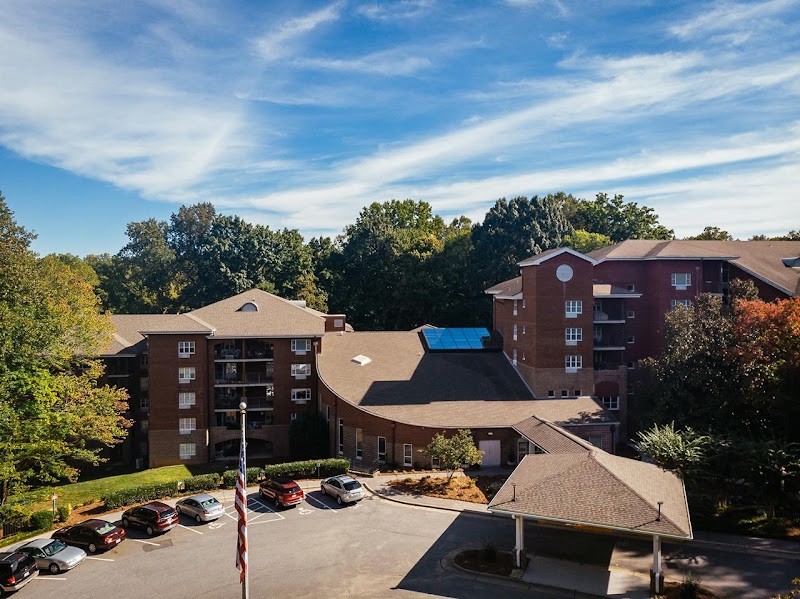
1199 Hayes Forest Drive, Winston-Salem, NC 27106 (336) 759-1044
Non profit - Corporation 77 Beds Independent Data: November 2025
Trust Grade
90/100
#12 of 417 in NC
Last Inspection: August 2025

Inspected within the last 6 months. Data reflects current conditions.

Overview

Brookridge Retirement Community has an excellent Trust Grade of A, indicating a high level of care and quality, making it a recommended choice for families. It ranks #12 out of 417 nursing homes in North Carolina, placing it in the top tier of facilities statewide, and #2 out of 13 in Forsyth County, meaning only one other local option is rated higher. The facility is improving, with a decrease in reported issues from two in 2024 to one in 2025. Staffing is also a strength, with a good turnover rate of 46%, which is below the state average, ensuring that staff are familiar with residents’ needs. However, there have been some concerns, such as staff not properly covering facial hair during food preparation, which could risk food contamination, and a failure to manage waste properly, which resulted in a live opossum being found near the trash compactor. Additionally, there was an incident where a resident's PICC line dressing was not changed as required, highlighting the need for better attention to medical protocols. Overall, while Brookridge Retirement Community has many strengths, families should be aware of these areas for improvement.


Trust Score
A
90/100
In North Carolina
#12/417
Top 2%
Safety Record
Low Risk
No red flags
Inspections
Getting Better
2 → 1 violations
Staff Stability
⚠ Watch
46% turnover. Above average. Higher turnover means staff may not know residents' routines.
Penalties
✓ Good
No fines on record. Clean compliance history, better than most North Carolina facilities.
Skilled Nurses
✓ Good
Each resident gets 45 minutes of Registered Nurse (RN) attention daily — more than average for North Carolina. RNs are trained to catch health problems early.
Violations
✓ Good
Only 5 deficiencies on record. Cleaner than most facilities. Minor issues only.
★★★★★
5.0
Overall Rating
★★★★☆
4.0
Staff Levels
★★★★★
5.0
Care Quality
★★★★☆
4.0
Inspection Score
Stable
2024: 2 issues
2025: 1 issues

The Good

  • 4-Star Staffing Rating · Above-average nurse staffing levels
  • 5-Star Quality Measures · Strong clinical quality outcomes
  • Full Sprinkler Coverage · Fire safety systems throughout facility
  • No fines on record

Facility shows strength in staffing levels, quality measures, fire safety.

The Bad

Staff Turnover: 46%

Near North Carolina avg (46%)

Higher turnover may affect care consistency

The Ugly 5 deficiencies on record

Aug 2025 1 deficiency
CONCERN (D)

Potential for Harm - no one hurt, but risky conditions existed

Deficiency F0694 (Tag F0694)

Could have caused harm · This affected 1 resident

**NOTE- TERMS IN BRACKETS HAVE BEEN EDITED TO PROTECT CONFIDENTIALITY** Based on observation, record review, and interviews with staff, resident, and the Physician the facility failed to change the dr...

Read full inspector narrative →
**NOTE- TERMS IN BRACKETS HAVE BEEN EDITED TO PROTECT CONFIDENTIALITY** Based on observation, record review, and interviews with staff, resident, and the Physician the facility failed to change the dressing for the peripherally inserted central catheter (PICC) for intravenous antibiotic administration according to the order. This deficient practice affected 1 of 3 residents reviewed for intravenous access devices (Resident #63). The findings included: Resident #63's hospital Discharge summary dated [DATE] documented she had a PICC line placed on 7/14/25 into her right antecubital space (front of the elbow) and a clear dressing was placed. The resident was receiving antibiotics for endocarditis (infection of the heart tissue) and sepsis (infection of the blood) through the PICC line. Resident #63 was receiving Ceftriaxone (antibiotic) 2 grams every 12 hours intravenously to continue at the facility. There was no mention of the PICC line dressing change in the hospital discharge summary. Resident #63 was admitted to the facility on [DATE] with diagnoses including septicemia (infection of the blood) and endocarditis. Resident #63's admission nursing note dated 7/16/25 documented she was admitted from the hospital with a PICC line in the right arm. The resident was alert and oriented and able to make her needs known. The care plan for Resident #63 dated 7/16/25 included she was at risk for infection related to peripheral intravenous access. The intervention included monitoring the catheter site for any signs or symptoms of infection. Resident #63's PICC line dressing change order was initiated on 7/21/25 by Nurse #1. The order specified that the PICC line dressing change was to be changed each week on Sunday using aseptic technique. A review of Resident #63's July 2025 Medication Administration Record documented Nurse #1 signed her initials for the PICC line dressing change completion on 7/27/25. On 7/31/25 at 3:00 pm an interview was conducted with Nurse #1. Nurse #1 stated she input the PICC line management order on 7/21/25 for Resident #63 to have the dressing on the PICC line changed once a week on Sunday. The resident was admitted on [DATE] from the hospital with the PICC line in place and a clear dressing dated 7/14/25. Nurse #1 stated she signed for completion of the dressing change on Sunday 7/27/25 in error. The shift was very busy on 7/27/25 and the electronic medical record had been updated which caused problems and error. After the date calendar was reviewed, Nurse #1 stated when she input the PICC line order it was Monday (7/21/25) and the day before Sunday was a missed opportunity to change the dressing within a week from 7/14/25 because the order was not started on admission. On 7/28/25 at 11:10 am an observation and interview were completed with Resident #63. The resident was able to state why she had a PICC line and her antibiotic treatment. The PICC line was observed in the right antecubital space and had an intact clear dressing that was dated 7/14/25. The resident stated the site was without pain and the observation revealed no signs and symptoms of infection. The resident stated the PICC line and dressing was placed at the hospital and the dressing had not been changed at the nursing home. On 7/29/25 at 10:45 am an observation of Resident #63's PICC line was completed with the Administrator. The PICC line had a clear dressing and was dated 7/14/25 and appeared the same as the day before. The Administrator was interviewed on 7/29/25 at 10:50 am. The Administrator stated nursing should have changed the dressing. It was dated 7/14/25 and was required to be changed every week. On 7/30/25 at 11:10 am the Physician was interviewed and informed that Resident #63's PICC line dressing was the original dressing from the hospital dated 7/14/25 when it was placed and the dressing change due on 7/27/25 at the facility was missed. The physician stated it takes a village in response.
May 2024 2 deficiencies
CONCERN (F)

Potential for Harm - no one hurt, but risky conditions existed

Food Safety (Tag F0812)

Could have caused harm · This affected most or all residents

Based on observations and dietary staff interviews, the facility failed to ensure facial hair was covered during food preparation. This practice had the potential for cross-contamination of food serve...

Read full inspector narrative →
Based on observations and dietary staff interviews, the facility failed to ensure facial hair was covered during food preparation. This practice had the potential for cross-contamination of food served to residents. Findings included: During the initial tour of the kitchen on 5/6/24 at 10:00 a.m., the dietary staff were observed cleaning after the breakfast meal service and preparing food for the lunch meal. There were four dietary staff members preparing food in the preparation areas with exposed facial hair (ranging from approximately ½ inch to 3 inches in length). On 5/9/24 at 11:33 a.m. during the meal tray line service in the kitchen, seven dietary staff were observed with exposed/uncovered facial hair ranging from ½ inch to 3 inches in length. During this observation the staff were noted to perform various food service tasks including meal production and service without hair coverings over their facial hair. Three of these staff members were identified as the cook, Executive Chef, and the Kitchen Manager. During an interview on 5/9/24 at 11:40 a.m., the Executive Chef and the Kitchen Manager acknowledged the male dietary staff were required to cover all hair while in the food preparation areas of the kitchen. the Executive Chef and the Kitchen Manager supplied each of the male dietary staff with chin guards. The dietary staff were observed donning the chin guards.
CONCERN (F)

Potential for Harm - no one hurt, but risky conditions existed

Garbage Disposal (Tag F0814)

Could have caused harm · This affected most or all residents

Based on observations and dietary staff interviews, the facility failed to ensure waste was contained in 1 of 1 trash compactor and had no opened areas with exposed trash, debris, and accessibility to...

Read full inspector narrative →
Based on observations and dietary staff interviews, the facility failed to ensure waste was contained in 1 of 1 trash compactor and had no opened areas with exposed trash, debris, and accessibility to animals. These practices had the potential to affect all residents. Findings included: On 5/6/24 at 10:54 a.m., during the observation of the facility's trash compactor accompanied by the Executive Chef and the Clinical Nutritionist, the opened chute area of the compactor consisted of multiple large white bags of trash and a live opossum. The Executive Chef immediately notified the Maintenance Director to remove the opossum. A follow-up observation of the trash compactor was conducted with the Executive Chef, Kitchen Manager, and the Clinical Nutritionist on 5/9/24 at 11:54 a.m. There were multiple large bags of trash observed in the opened chute area of the compactor. During an interview on 5/9/24 at 11:57 a.m., the Executive Chef stated the trash compactor's provider emptied the compactor two times each month. He also stated he routinely checked the trash compactor twice each day (upon his arrival in the morning and at 4:00 p.m.). He revealed the dietary department only used black colored trash bags and the white/clear bags in the compactor were the type used by the facility's housekeeping department.
Jan 2023 2 deficiencies
CONCERN (D)

Potential for Harm - no one hurt, but risky conditions existed

Comprehensive Care Plan (Tag F0656)

Could have caused harm · This affected 1 resident

**NOTE- TERMS IN BRACKETS HAVE BEEN EDITED TO PROTECT CONFIDENTIALITY** 2) Resident #10 was admitted to the facility on [DATE] with diagnoses that included a functional intestinal disorder with ileost...

Read full inspector narrative →
**NOTE- TERMS IN BRACKETS HAVE BEEN EDITED TO PROTECT CONFIDENTIALITY** 2) Resident #10 was admitted to the facility on [DATE] with diagnoses that included a functional intestinal disorder with ileostomy. A review of the most recent quarterly Minimum Data Set (MDS) dated [DATE] identified Resident #10 was cognitively intact and always incontinent of bowel and bladder. The diagnoses section identified the Resident had an ileostomy. A review of the most recent care plan dated 11/14/2022 did not include a care plan focused area for ileostomy care. An observation was conducted on 1/24/2023 at 9:28 a.m. of Resident #10 and she had a bowel elimination bag attached to her abdomen with a red moist stoma (an artificial opening made into a hollow organ, especially one on the surface of the body leading to the gut or trachea). The elimination bag had a small amount of brown stool. There were no lingering odors. An interview was conducted with Resident #10 on 1/24/2023 at 9:28 a.m. and she stated staff assist her with changing of the ileostomy bag and emptying the bag. She revealed some staff had been hesitant or did not assist quickly, as if they were not aware she had the bag or did not know how to provide the care. She added they always return with someone to assist them. An interview was conducted with the MDS Nurse Coordinator on 1/26/2023 at 12:28 p.m. and revealed she was responsible for updating the care plan for a resident. She reviewed the most recent MDS for Resident #10 and the diagnoses list. She then reviewed the most recent care plan dated 11/14/2022 and reported she did not see a focused area for ileostomy/bowel elimination. She added this was a care area that she would place on the care plan and would be added immediately. An interview was conducted with the Administrator on 1/26/2022 at 12:42 p.m. and she revealed she expected a resident to have a care plan focused area for any diagnoses that required specialized care such as an ileostomy. Based on observations, staff interviews and record review, the facility failed to 1) follow the care plan to place floor mats next to the bedside for fall prevention for 1 of 4 residents (Resident #14) reviewed for falls, and 2) failed to implement a care plan for ileostomy care for 1 of 1 resident (Resident #10) reviewed for ileostomy bowel care. Findings included: 1) Resident #14 was admitted to the facility on [DATE] with diagnoses that included, in part, dementia, osteoporosis and repeated falls. The quarterly Minimum Data Set (MDS) assessment dated [DATE] revealed Resident #14 had severe cognitive impairment. She required extensive assistance with transfers and bed mobility. She was coded on the MDS as having one fall with no injury. The care plan, updated 11/24/22, included a focus area of risk for falls. A care plan intervention stated, Fall mats next to bedside while in bed. On 1/23/23 at 10:10 AM, Resident #14 was observed in bed. The bed was in the low position. A fall mat was observed on the floor to the right of the bed. There was no fall mat on the left side of the bed; however, a fall mat was leaned up against the dresser. Nurse #1 was interviewed on 1/24/23 at 1:49 PM. She reported Resident #14 needed one person to assist her when she got out of bed. She acknowledged the resident was unable to use her call light due to confusion and was at risk for falls. She said fall prevention interventions used for Resident #14 included the use of a low bed and staff placed two floor mats on either side of the bed when the resident was in bed. During an observation on 1/24/23 at 1:53 PM, Resident #14 was asleep in bed. A fall mat was on the floor to the right of the resident's bed. There was no fall mat on the floor to the left of the resident's bed. A second fall mat was leaned up against the clothes closet. Interviews were completed with Nurse Aide (NA) #1 on 1/25/23 at 2:15 PM and 1/26/23 at 10:53 AM. She shared Resident #14 required assistance with transfers. NA #1 said the resident had at times tried to get up unassisted and fell. She specified staff looked on the computer and accessed the care plan which revealed to them what fall prevention interventions were to be used when staff cared for a resident. She explained current fall prevention interventions for Resident #14 included a fall mat on both sides of the bed, frequent rounds by staff and the bed placed in the low position. NA #1 verified she worked with Resident #14 on 1/23/23 during the day. When asked why there was only one fall mat observed on the floor next to the resident's bed, NA #1 said she forgot to put the second mat down after she fed the resident breakfast. An attempt to interview NA #2 (who worked with Resident #14 on 1/24/23) was unsuccessful. The Director of Nursing was interviewed on 1/25/23 at 9:37 AM and 1/26/23 at 1:23 PM. She stated Resident #14 was at risk for falls and had a history of attempting to get out of bed unassisted. She shared fall prevention interventions included fall mats at bedside times two, frequent rounding and positioning checks. She added when a new fall prevention intervention was added, the staff were educated to review the care plan and point of care charting system on their tablets and she expected staff to adhere to the interventions listed on the care plan.
MINOR (B)

Minor Issue - procedural, no safety impact

MDS Data Transmission (Tag F0640)

Minor procedural issue · This affected multiple residents

**NOTE- TERMS IN BRACKETS HAVE BEEN EDITED TO PROTECT CONFIDENTIALITY** Based on record review and staff interview, the facility failed to complete a discharge tracking Minimum Data Set (MDS) assessme...

Read full inspector narrative →
**NOTE- TERMS IN BRACKETS HAVE BEEN EDITED TO PROTECT CONFIDENTIALITY** Based on record review and staff interview, the facility failed to complete a discharge tracking Minimum Data Set (MDS) assessment for 3 of 6 residents (Resident #35, #16, and #36) reviewed for closed records. Findings included: 1. Resident #35 was admitted to the facility on [DATE] to a skilled bed and a comprehensive MDS was completed on 9/6/22. The medical record revealed that Resident #35 was discharged to the assisted living section within the facility on 9/20/22 and a discharge MDS was not done. On 1/26/23 at 2:41 PM an interview was completed with MDS Coordinator had been in that position since December 2022. She stated she the discharge MDS assessment should have been completed by the 14th day after discharge. She added that it was the responsibility of the MDS Coordinator to make sure those assessments completed and should have been done by the previous coordinator. 2. Resident #16 was admitted to the facility on [DATE] and a comprehensive MDS was completed on 9/13/22. The medical record revealed that Resident #16 passed away in the facility on 11/10/22 and a discharge MDS was not done. On 1/26/23 at 2:41 PM an interview was completed with MDS Coordinator had been in that position since December 2022. She stated she the discharge MDS assessment should have been completed by the 14th day after discharge. She added that it was the responsibility of the MDS Coordinator to make sure those assessments completed and should have been done by the previous coordinator. 3. Resident #36 was admitted to the facility on [DATE] and a comprehensive MDS was completed on 8/5/22. The medical record revealed that Resident #36 was discharged to an out-of-state assisted living facility on 10/19/22. No discharge MDS was done. On 1/26/23 at 2:41 PM an interview was completed with MDS Coordinator had been in that position since December 2022. She stated she the discharge MDS assessment should have been completed by the 14th day after discharge. She added that it was the responsibility of the MDS Coordinator to make sure those assessments completed and should have been done by the previous coordinator.
Understanding Severity Codes (click to expand)
Life-Threatening (Immediate Jeopardy)
J - Isolated K - Pattern L - Widespread
Actual Harm
G - Isolated H - Pattern I - Widespread
Potential for Harm
D - Isolated E - Pattern F - Widespread
No Harm (Minor)
A - Isolated B - Pattern C - Widespread

Questions to Ask on Your Visit

  • "Can I speak with families of current residents?"
  • "What's your RN coverage like on weekends and overnight?"

Our Honest Assessment

Strengths
  • • Grade A (90/100). Above average facility, better than most options in North Carolina.
  • • No major safety red flags. No abuse findings, life-threatening violations, or SFF status.
  • • No fines on record. Clean compliance history, better than most North Carolina facilities.
  • • Only 5 deficiencies on record. Cleaner than most facilities. Minor issues only.
Concerns
  • • No significant concerns identified. This facility shows no red flags across CMS ratings, staff turnover, or federal penalties.
Bottom line: Generally positive indicators. Standard due diligence and a personal visit recommended.

About This Facility

What is Brookridge Retirement Community's CMS Rating?

CMS assigns Brookridge Retirement Community an overall rating of 5 out of 5 stars, which is considered much above average nationally. Within North Carolina, this rating places the facility higher than 99% of the state's 100 nursing homes. This rating reflects solid performance across the metrics CMS uses to evaluate nursing home quality.

How is Brookridge Retirement Community Staffed?

CMS rates Brookridge Retirement Community's staffing level at 4 out of 5 stars, which is above average compared to other nursing homes. Staff turnover is 46%, compared to the North Carolina average of 46%. This relatively stable workforce can support continuity of care. RN turnover specifically is 62%, which is notably high. RNs provide skilled clinical oversight, so turnover in this role can affect medical care quality.

What Have Inspectors Found at Brookridge Retirement Community?

State health inspectors documented 5 deficiencies at Brookridge Retirement Community during 2023 to 2025. These included: 4 with potential for harm and 1 minor or isolated issues.

Who Owns and Operates Brookridge Retirement Community?

Brookridge Retirement Community is owned by a non-profit organization. Non-profit facilities reinvest revenue into operations rather than distributing to shareholders. The facility operates independently rather than as part of a larger chain. With 77 certified beds and approximately 58 residents (about 75% occupancy), it is a smaller facility located in Winston-Salem, North Carolina.

How Does Brookridge Retirement Community Compare to Other North Carolina Nursing Homes?

Compared to the 100 nursing homes in North Carolina, Brookridge Retirement Community's overall rating (5 stars) is above the state average of 2.8, staff turnover (46%) is near the state average of 46%, and health inspection rating (4 stars) is above the national benchmark.

What Should Families Ask When Visiting Brookridge Retirement Community?

Based on this facility's data, families visiting should ask: "Can I visit during a mealtime to observe dining assistance and food quality?" "How do you handle medical emergencies, and what is your hospital transfer rate?" "Can I speak with family members of current residents about their experience?"

Is Brookridge Retirement Community Safe?

Based on CMS inspection data, Brookridge Retirement Community has a clean safety record: no substantiated abuse findings (meaning no confirmed cases of resident harm), no Immediate Jeopardy citations (the most serious violation level indicating risk of serious injury or death), and is not on the Special Focus Facility watch list (a federal program monitoring the lowest-performing 1% of nursing homes). The facility has a 5-star overall rating and ranks #1 of 100 nursing homes in North Carolina. While no facility is perfect, families should still ask about staff-to-resident ratios and recent inspection results during their visit.

Do Nurses at Brookridge Retirement Community Stick Around?

Brookridge Retirement Community has a staff turnover rate of 46%, which is about average for North Carolina nursing homes (state average: 46%). Moderate turnover is common in nursing homes, but families should still ask about staff tenure and how the facility maintains care continuity when employees leave.

Was Brookridge Retirement Community Ever Fined?

Brookridge Retirement Community has no federal fines on record. CMS issues fines when nursing homes fail to meet care standards or don't correct problems found during inspections. The absence of fines suggests the facility has either maintained compliance or corrected any issues before penalties were assessed. This is a positive indicator, though families should still review recent inspection reports for the full picture.

Is Brookridge Retirement Community on Any Federal Watch List?

Brookridge Retirement Community is not on any federal watch list. The most significant is the Special Focus Facility (SFF) program, which identifies the bottom 1% of nursing homes nationally based on persistent, serious quality problems. Not being on this list means the facility has avoided the pattern of deficiencies that triggers enhanced federal oversight. This is a positive indicator, though families should still review the facility's inspection history directly.