SERIOUS
(G)
📢 Someone Reported This
A family member, employee, or ombudsman was alarmed enough to file a formal complaint
Actual Harm - a resident was hurt due to facility failures
Free from Abuse/Neglect
(Tag F0600)
A resident was harmed · This affected 1 resident
**NOTE- TERMS IN BRACKETS HAVE BEEN EDITED TO PROTECT CONFIDENTIALITY** Based on observations, record review, and Psychiatric Nurse Practitioner, Physician Assistant, and staff interviews, the facilit...
Read full inspector narrative →
**NOTE- TERMS IN BRACKETS HAVE BEEN EDITED TO PROTECT CONFIDENTIALITY** Based on observations, record review, and Psychiatric Nurse Practitioner, Physician Assistant, and staff interviews, the facility failed to protect a vulnerable female resident's right to be free from sexual abuse when Resident #62 was observed by Nurse Aide (NA) #1 to have his hand under a severely cognitively impaired resident's (Resident #57) dress above the resident's thigh. A reasonable person would not expect to experience intentional inappropriate touching in their home and would have experienced intimidation and fear. This was for 1 of 5 residents reviewed for abuse (Resident #57).
Findings included:
Resident #62 was admitted to the facility on [DATE]. Diagnoses included stroke with weakness, non-traumatic brain dysfunction, depression, and vascular dementia.
The Minimum Data Set (MDS) annual assessment dated [DATE] revealed Resident #62 was moderately cognitively impaired and did not exhibit any behaviors. He required extensive assistance with one staff physical assistance with transfers and bed mobility, used a wheelchair and had no impairments. Resident #62 received antidepressant medications.
A plan of care dated 11/20/23 for behavioral symptoms not directed toward others (scratching self, removes briefs, and urinates on self) with a goal that resident would not harm self/and or others secondary to socially inappropriate and or disruptive behaviors with interventions to include: when resident begins to become socially inappropriate/disruptive, provide comfort measure for basic needs, provide care, activities and a daily schedule that resembles the resident's prior lifestyle, avoid over stimulation, maintain a calm environment and approach toward the resident. Assess whether the behavior endangers the resident and or others. A plan of care dated 11/23/23 was also in place for history of alteration in cognitive function/dementia or impaired thought process with a goal that the resident would be able to communicate basic needs on a daily basis. Interventions included ask yes/no questions in order to determine the resident's needs, keep the residents routine consistent and try to provide consistent care givers as much as possible in order to decrease confusion. Reorient and supervise as needed.
Resident #57 was admitted to the facility on [DATE]. Diagnoses included early onset Alzheimer's Disease, traumatic subdural bleed, anxiety, need for assistance with personal care, muscle wasting and atrophy.
The Minimum Data Set quarterly assessment dated [DATE] revealed Resident #57 was severely impaired and demonstrated no behaviors. Resident #57 required extensive assistance of two staff with bed mobility, transfers, and eating. Resident #57 was totally dependent on one staff physical assistance with toileting and used a wheelchair.
Review of Resident #57's care plan updated on 12/01/23 revealed a plan of care for history of alteration in cognitive function/dementia or impaired thought processes related to early onset Alzheimer's Disease and for communication deficit related to little speech with a goal that resident would be able to communicate basic needs on a daily basis with interventions to include use paddle call bell as able for ease of use, keep the resident's routine consistent and try to provide consistent care givers as much as possible and allow time for resident to express needs or wants, repeat resident requests to assure understanding, and anticipate and meet needs.
A written statement dated 12/11/23 by Nurse Aide #1 revealed As I was walking down the hall, I heard [Resident #57] making sounds. As I got closer to the TV room, I saw [Resident #62] with his hand under her dress. I immediately took the trash and sat it on the floor and removed her [Resident #57] from the TV room and explained that it was inappropriate. I asked him why he did what he did and he stated he did not know.
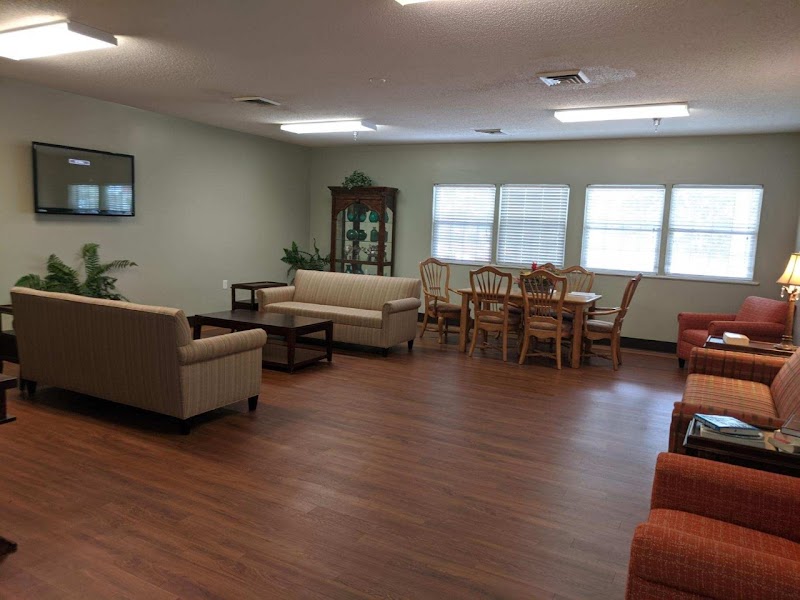
An interview was conducted with Nurse Aide (NA) #1 on 01/08/24 at 4:00 PM. NA #1 revealed on the day of 12/11/23, Resident #57 was in the day room waiting to go to activities. When NA #1 headed back down the hall toward the day room, she heard a noise coming from the day room. NA #1 stated Resident #57 made a distinct sound any time anyone touched her. NA #1 described the sound and stated it was like a giggle, because she would be smiling so it seemed as though it was a giggle, but it was just a distinct sound Resident #57 always made. NA #1 stated that was the sound she heard as she was heading down the hall toward the day room. Resident #62 was in his wheelchair sitting next to Resident #57 who was sitting in her Geri chair. As she entered the day room, she noticed Resident #62's hand was up Resident #57's dress. The NA stated she could not see Resident #62's hand and did not know what his hand was doing while it was under the dress and did not recall seeing any movement of the hand while it was under the dress. She stated she immediately approached Resident #57 and Resident #62 and Resident #62 pulled his hand out from under Resident #57's dress as soon as he saw her (NA #1). NA #1 explained she asked Resident #62 what are you doing? followed by why would you do that? NA #1 reported Resident #62's response was I don't know. NA #1 stated she had never seen Resident #62 demonstrate this kind of behavior before. She stated she separated the residents immediately and brought Resident #57 to her room and Resident #62 to his room. NA #1 reported she immediately reported what she had observed to the Unit Manager, the Director of Nursing, and the Physician Assistant. NA #1 stated Resident #57 was her usual smiley self and did not seem to understand or know what was happening. NA #1 stated the staff were instructed to monitor Resident #62 every 30 minutes after this occurred. NA #1 added, after Resident #62 was brought to his room, he did not seem to recall what had happened when he was asked why he had his hand under Resident #57's dress.
A follow up interview via phone on 01/09/24 at 5:30 PM with NA #1 revealed on the day of 12/11/23, Resident #57 was wearing a dress that came to right above her knee. NA #1 stated the only thing she saw was Resident #62's hand under her dress and could not say if he was inside her brief from where she was standing in the hallway. She did not see his hand moving underneath the dress. She stated his hand did not look wet when he pulled it out from Resident #57's dress but she did not touch or smell his hand. She stated she could see Resident #57's thigh and Resident #62's hand was higher than her thigh. NA #1 added it took two staff to change Resident #62 because it was very difficult to release the tension on her legs. NA #1 stated and anytime they changed Resident #57 she made the same sound she heard when she saw Resident #62 with his hand up her dress. NA #1 stated Resident #62 also had very weak hands and she did not think he would have the strength to open Resident #57's legs. NA #1 stated there were no other residents in the day room and she did not know how long Resident #62 was in the day room with Resident #57. NA #1 stated Resident #62 required assistance getting into his wheelchair, but he could propel himself throughout the facility. NA #1 stated after this incident occurred Resident #62 stayed in his room and 30-minute checks were started.
An interview was conducted with the Unit Manager on 01/08/24 at 4:15 PM. The Unit Manager (UM) stated NA #1 came to her and reported to her and the Director of Nursing Resident #62 had his hand under Resident #57's dress and that she had separated them. The UM stated she got the Physician Assistant and the three of them went to see Resident #57 immediately. When she arrived to the room, Resident #57 was sitting in her Geri chair and was not in any distress. They transferred her to the bed. The UM stated Resident #57's brief was completely intact. They took the brief down and the PA assessed her. There were no visible signs of physical trauma, no redness, and no bruising. The UM stated Resident #57 was at her baseline with her cognition and had no change in her affect during the assessment.
A nursing progress note written on 12/11/23 by the Director of Nursing (DON) revealed Resident #62 was witnessed by a nurse aide in the common TV room with other residents. A male resident [Resident #62] was observed with his hand up the dress of a female resident [Resident #57]. The Nurse Aide immediately separated the residents to ensure safety. Unit Manager, DON and Administrator notified.
A nursing progress note written by the DON on 12/11/23 at 4:10 PM revealed Resident [#57] was sitting in a wheelchair in the common area TV room with other residents. A male resident was observed by staff to have his hand up this resident's dress. Staff member immediately separated the two residents, taking Resident [#57] to the nurse's station for close supervision. Resident [#57] did not appear to have any non-verbal cues of being traumatized. The resident's mood appeared to be at baseline. The resident's baseline was non-verbal and smiling.
The PA and DON had staff put Resident [#57] into bed for an assessment. The PA and DON performed a visual assessment of the resident. There was no visible physical or emotional trauma observed.
A Physician Assistant (PA) progress note written on 12/11/23 at 3:10 PM revealed she was notified by staff that another resident [Resident #62] was seen having inappropriate sexual contact with Resident [#57]. The PA and DON went in to see Resident [#57] immediately after the incident was reported. Resident [#57] resting comfortably in her bed. She was smiling and pleasant when spoken to by PA. She appeared at her baseline for mentation and affect. She had no signs of trauma on exam. Staff to monitor closely.
A review of the Physician Assistant's assessment conducted on 12/11/23 at 3:10 PM revealed, in part, vital signs temperature 97.8F, heart rate 70 beats per minute, respiration rate 16 breaths per minutes, blood pressure 128//70. Resident #57 was alert and in no acute distress. Genitourinary (perineal area) showed no outward signs of trauma or redness, and no bruising. Skin was intact. Resident confused at baseline with incoherent garbled speech.
An interview was conducted with the Physician Assistant on 01/10/24 at 9:47 AM. The PA reported she was notified by the Unit Manager that Resident #62 was observed with his hand up Resident #57's dress. She stated she knew Resident #57 very well and went to assess her. The PA reported Resident #57 was not demonstrating any signs of distress or agitation. She was smiling when she entered the room and seemed her complete normal self. The PA stated once the Unit Manager and the DON were able to separate her legs due to her being so rigid, the PA noticed her brief was completely intact. The PA added, while she assessed her perineal area, Resident #57 did not push her hand away or seem as though it was bothering her to be examined. There was no redness to her hips, thighs or groin and no evidence of trauma. The PA stated after she assessed Resident #57, she went to assess Resident #62. The PA stated Resident #62 had no recall of what he had done. The PA stated Resident #62 had never had any sexual behaviors in the past and she was surprised that this had even happened. The PA stated Resident #62 has had no sexual behaviors since 12/11/23 and he was monitored every 30 minutes by staff until he was seen by the Psych Nurse Practitioner.
A nursing progress note written on 12/11/23 at 4:38 PM by the DON revealed Resident #62 was to be on every 30-minute safety checks until evaluated by Psychiatry. Staff were informed.
A written statement dated 12/11/23 by the DON revealed DON spoke to [Resident #62] regarding event that occurred and was witnessed today in the common TV room by nurse aide. [Resident#62] had no memory of the event and stated, I did not do anything.
A review of the Resident Observation / 30 Minutes Monitoring Tool revealed as of 12/11/23 every 30 minutes starting at 3:30 PM until 12/21/23 at 7:30 AM, Resident #62 had been documented as being visually monitored every 30 minutes on all shifts as evidenced by the nursing initials, with a time and date.
A nursing progress note written by the DON on 12/11/23 at 4:39 PM revealed nursing staff were instructed by DON to watch for any change in physical, emotional, or psychological demeanor of Resident #57 and notify the DON if any change was observed.
A nursing progress note written by Nurse #17 on 12/12/23 at 1:13 PM revealed Resident #62 was being monitored frequently. Resident noted in bed resting.
A nursing progress note written by Nurse #17 on 12/12/23 at 6:40 AM revealed continued to monitor Resident #62 throughout the night. Resting in bed.
A Social Worker (SW) progress note written on 12/12/23 at 9:34 AM revealed the clinical team discussed a room change for Resident #62. Resident #62 would be moving to a new room away from Resident #57.
A nursing progress note written by the DON on 12/12/23 at 11:47 AM revealed notified Psychiatry Nurse Practitioner regarding recent event involving Resident #62. The note indicated that a complete medication review would be performed by the Psych Nurse Practitioner when she would see the resident next week.
A 5 day investigation summary was written by the Administrator on 12/15/23 was as follows:
On 12/11/23 at 3:03 PM nurse aides notified the Unit Manager that she witnessed a male resident [Resident #62] with his hand up the dress of female resident [Resident #57] in the common area TV room. Nurse Aide separated the residents immediately. The DON and Administrator were notified by the Unit Manager of the event. The Administrator notified Corporate Compliance and the DON notified the local police department.
The Administrator submitted an initial report to the Department of Health and Human Services (DHHS) on 12/11/23 at 5:20 PM. and submitted a completed investigation report on 12/15/23. These reports included in part:
The Physician Assistant and the DON visually assessed Resident [#57] for visible trauma and resident's brief was intact. No trauma identified. On 12/11/23, the PA evaluated Resident #62 with nothing remarkable noted. Two floor Unit Managers began skin checks and interviews with residents on the 300 short hall. Police arrived and took statement from the Administrator and DON.
On 12/11/23 the facility initiated 30-minute checks on [Resident #62] until Resident was evaluated by Psych Services. Resident [#62] was interviewed on 12/11/23 and he stated he did not recall the incident. On 12/13/23 the facility initiated a room change for Resident [#62] from station 3 to station 2.
Based on staff statements, observation and facility investigation, the allegation of abuse was substantiated. Resident [#62] was moved to a different station in the building to limit any interaction between the two residents Resident [#57] has not suffered any observable psychosocial harm from the incident. Resident [#62] was referred to psych services and has been scheduled to be seen on 12/21/23 with an accompanying medication review. Resident [#62] has had no further episodes of sexually aggressive behavior. Resident [#62] will continue to be monitored for any adverse effects related to this incident. Resident [#62] will continue to be on every 30 minute checks by staff until psych visit was completed and medication review has been conducted and deemed effective. Resident [#62]'s care plan and profile have been updated to reflect this behavior.
A review of an updated care plan dated 12/14/23 revealed Resident #62 had a plan of care for having physical behavioral symptoms toward others (abusing others sexually) with a goal that resident would not harm others secondary to physically abusive behavior with interventions to include avoid power struggles with resident, avoid over stimulation, maintain a calm environment and approach to the resident, assess whether the behavior endangers the resident and or others. Intervene, as necessary.
A Psychiatric Nurse Practitioner note dated 12/21/23 for Resident #62 revealed under assessment and plan: Major neurocognitive disorder likely due to vascular dementia with likely associated depression. Lexapro (antidepressant) started by the Primary Care Physician currently at 10 milligrams (mg) by mouth daily. Informed by the DON that Resident #62 had inappropriate sexual behaviors recently towards a peer. Will taper Lexapro and start Sertraline (antidepressant) to aide in decreasing hypersexual behaviors due to the high incidence of a common side effect of sexual dysfunction/hyposexuality with Sertraline.
An interview was conducted with the Psychiatric Nurse Practitioner (NP) via phone on 01/11/23 at 10:19 AM. The NP revealed she was notified Resident #62 had inappropriate sexual behaviors recently towards a female resident. She stated she evaluated Resident #62 and there had been no previous history of sexual behaviors and none since 12/11/23, but she had discontinued the Lexapro and started Sertraline to aide in decreasing hypersexual behaviors. The NP stated Sertraline had a very strong side effect of decreasing sexual urges.
A review of the Psychiatric Nurse Practitioner orders for Resident #62 on 12/21/23 revealed decrease Lexapro to 5 mg by mouth daily for 7 days then discontinue. Sertraline 25 mg by mouth daily for 7 days then increase to 50 mg by mouth daily.
Review of the Medication Administration Record (MAR) revealed Resident #62 received the medications as ordered as evidenced by a nursing check mark on the MAR from 12/21/23 through 01/11/24.
An observation was conducted of Resident #57 on 01/08/24 with Nurse Aide (NA) #1 at 4:10 PM. NA #1 attempted to reposition Resident #57's arm and she did make a giggle like sound, and she was smiling. NA #1 attempted to reposition Resident #57's legs and when she touched her legs, they were difficult to open with significant resistance from Resident #57.
An observation of Resident #62 on 01/08/24 at 10:00 AM revealed an alert resident lying in bed resting in his room.
Writer attempted to interview Resident #62 on 01/08/24 at 10:00 AM. He was confused and not able to answer questions reliably.
An interview was conducted with the Director of Nursing on 01/12/23 at 12:30 PM. The DON reported the residents were in a common area 12/11/23 and the staff had no way of knowing Resident #62 was going to put his hand up Resident 57's dress. The DON added, Resident #62 had never demonstrated any sexual behaviors. The DON stated we monitored Resident #62 every 30 minutes until he was seen by psych services. She stated since that event happened, Resident #62 rarely came out of his room, but he was now on a different hall and did not go anywhere near Resident #57's hall. The DON stated they monitored the resident for 10 days, he was evaluated by psych, had a med change and no other issues since so they thought they had done all they could do.
An interview was conducted with the Administrator on 01/12/23 at 1:45 PM. He stated he completed the initial report within 2 hours and submitted it to the state and completed a 5- day investigation. He stated he notified the police and Adult Protective Services. The Administrator stated he monitored the two residents and did education with staff regarding the types of abuse and who to report it to, but he did not do continued audits. The Administrator provided the in-service records regarding abuse education and stated all the information he had was in the file. There were no audits found in the file.
CONCERN
(D)
📢 Someone Reported This
A family member, employee, or ombudsman was alarmed enough to file a formal complaint
Potential for Harm - no one hurt, but risky conditions existed
Deficiency F0602
(Tag F0602)
Could have caused harm · This affected 1 resident
**NOTE- TERMS IN BRACKETS HAVE BEEN EDITED TO PROTECT CONFIDENTIALITY** Based on record review and staff interviews, the facility failed to prevent the misappropriation of a resident's controlled medi...
Read full inspector narrative →
**NOTE- TERMS IN BRACKETS HAVE BEEN EDITED TO PROTECT CONFIDENTIALITY** Based on record review and staff interviews, the facility failed to prevent the misappropriation of a resident's controlled medication, (60 Oxycodone/Acetaminophen 5-325 milligrams (mg) pills), which were prescribed by the physician for pain for 1 of 1 resident reviewed for misappropriation of property (Resident #97).
Findings included:
Resident #97 was admitted to the facility on [DATE] with diagnoses that included, in part, pain, adult failure to thrive and COVID-19.
The physician's order for Resident #97 dated 10/20/23 was Oxycodone/Acetaminophen 5-325 mg once every 4 hours as needed (PRN) for severe pain.
Review of an admission Minimum Data Set assessment dated [DATE] revealed Resident #97 had severely impaired cognition. She reported almost constant moderate pain and had received as needed opioid pain medication during the assessment look back period.
On 10/31/23 Resident #97's PRN order for Oxycodone-Acetaminophen was discontinued.
Review of the Controlled Substance Count Summary Report dated 10/31/23 through 11/01/23 documented that Nurse #1 and Nurse #5 wasted 60 Oxycodone-acetaminophen that belonged to Resident #97 leaving a balance of zero. The reason was the medication had been discontinued by the physician.
An Initial Allegation report revealed the facility became aware of the possible misappropriation of a controlled medication on 11/01/23 and an investigation was initiated. Staff reviewed the narcotic count, and the medication (Resident #97's Oxycodone-Acetaminophen) was last known per interviews to be in the facility at the end of 3rd shift/beginning of 1st shift on 11/01/23 with the count off with the oncoming 2nd shift nurse (Nurse #5). Police and Adult Protective Services were notified.
The Investigation Report submitted on 11/07/23 revealed the accused employee was Nurse #1 for an allegation of diversion of Resident #97's drugs. Nurse #1 was placed on administrative leave pending the investigation. The allegation was substantiated and Nurse #1 and terminated from employment on 11/6/23.
In an interview with the Staff Development Coordinator (SDC) nurse on 01/10/24 at 1:25 PM she stated she worked on the medication cart the day shift on 10/31/23 which was the day before the Oxycodone/Acetaminophen came up missing. She counted the narcotics at the beginning of the shift and the end of the shift-both counts were correct. Resident #97 had a blister pack (card) of 60 blue Oxycodone/Acetaminophen in the count. She explained the pills were not from the pharmacy the facility used. She explained Resident #97 was admitted with all her own medications from home. There was an active order for PRN (as needed) Oxycodone/Acetaminophen at the beginning of the shift, but the order was discontinued during the shift by the provider. She stated she left the pills locked in the medication cart even though the order had been discontinued until it could be sent back to the pharmacy to be wasted per facility and pharmacy protocol. She explained she had left the discontinued medication in the locked cart at the end of her shift instead of processing it to be returned to the pharmacy because she was tired.
In an interview with Nurse #12 on 01/11/24 at 3:10 PM he stated on 10/31/23 when he counted the narcotics on the medication cart at the beginning of his shift with the SDC Nurse the count was correct. The SDC Nurse had told him the Oxycodone/Acetaminophen for Resident #97 had been discontinued but remained in the cart until it could be sent to the pharmacy to be wasted. He didn't know what to do with the Oxycodone/Acetaminophen because it had been brought in by the family from a different pharmacy, so he left it in the cart to be counted.
In an interview with Nurse #6 on 01/11/24 at 10:50 AM he stated he had worked 3rd shift on 10/31/23 into the morning of 11/01/23. He said he counted the narcotics with Nurse #12 at 11:00 PM on 10/31/23 and the 60 Oxycodone/Acetaminophen pills for Resident #97 were in the cart. At 7:00 AM on 11/01/23 he counted the narcotics again on the cart with Nurse #1 who was coming onto first shift and the bubble pack of 60 Oxycodone/Acetaminophen were in the drawer and in the count. The count was correct when he left his shift.
In an interview with Nurse #5 on 1/10/24 at 3:20 PM she stated she reported to work on 11/01/23 to relieve Nurse #1 on the 300 long hall medication cart. Resident #97's 60 Oxycodone/Acetaminophen pills showed on the computer screen as discontinued during the narcotic count. Nurse #1 and Nurse #5 finished the rest of the count and went back to the Oxycodone/Acetaminophen because it wasn't in the cart. Typically, discontinued bubble packs were kept on the right in the narcotic drawer when they were discontinued, and it wasn't there (the active bubble packs were kept on the left in the drawer). She asked Nurse #1 where the Oxycodone/Acetaminophen pills were, and Nurse #1 told her the Nurse Coordinator had it and was taking care of it; that it just needed to be cleared from the count and it took two nurses to clear it. Because Nurse #1 was a new employee, she showed Nurse #1 how to clear the medication from the count on the computer. She then went to the Nurse Coordinator she saw in the hall to ask if she had the Oxycodone/Acetaminophen to send back to the pharmacy. The Nurse Coordinator told her she did not have the medication. She asked the SDC Nurse if she had them, called the pharmacy, checked the medication rooms and the other medication carts, but the pills were not found. She and the Nurse Coordinator thoroughly checked all the medication carts. When the pills could not be found she and the Nurse Coordinator went to the DON.
In an interview with the Nurse Coordinator on 01/10/24 at 1:40 PM she stated on 11/01/23 Nurse #5 asked her if she had taken care of the Oxycodone/Acetaminophen that had been discontinued for Resident #97 and she (Nurse Coordinator) said, no. Nurse #5 told her she was suspicious about where the narcotics were because for 2 days they had counted the Oxycodone/Acetaminophen in the medication cart and suddenly the pills were not in the cart. She and Nurse #5 reported immediately to the DON that the Oxycodone/Acetaminophen pills were missing. She noted Nurse #5 called the pharmacy that day and they had not received them. She and Nurse #5 went through both medication carts on the 300 halls and all the medication rooms. She noted when narcotics were sent back to the pharmacy for disposal, they were locked in the 200 hall medication room because that was where pharmacy picked up and dropped off medications. They checked the 200 hall medication room and they were not there either.
The following statement written by Nurse #1 dated 11/01/23 was reviewed: I did morning count without seeing narc [narcotic] screen. I never saw what was supposed to match screen. I only counted meds in the cart. At 3 pm count, I noticed meds were listed that wasn't in the cart, I asked 3-11 nurse [Nurse #5] to show me how to remove meds that have been sent back. 3-11 nurse showed me how to remove them and then we counted cards. I gave report and clocked out and left the facility.
In an interview with Nurse #1 via telephone on 1/10/24 at 2:12 PM she stated on 11/01/23 herself and another nurse wasted the 60 Oxycodone/Acetaminophen tablets that belonged to Resident #97 and that the other nurse, Nurse #5, witnessed her wasting the pills. She put the pills in the drug buster container to dissolve the discontinued pills, Nurse #5 witnessed it, and witnessed her taking the pills out of the electronic narcotic reconciliation record in the computer. She stated she had only been at the facility for 2 weeks and didn't know how to send pills back to the pharmacy because she had not been trained in the procedure, so she did what most facilities do and wasted the pills. She stated she popped the pills into a cup and put them in the drug buster, and Nurse #5 co-signed that the drugs were wasted. She could not recall how many pills were wasted, 59 or 60. She was told later by the Director of Nursing (DON) 60 pills were missing but it may have been 59. She said she was kept at the facility on 11/01/23 until 9:00 PM. The police came and found no wrongdoing. She insisted she didn't do anything wrong as a nurse wasted the pills with her (Nurse #5). The written statement Nurse #1 provided to the facility on [DATE] was reviewed with her. She stated the statement she wrote was written late at night and was not completely accurate. She recanted the above explanation that she had wasted the Oxycodone/Acetaminophen and stated it was not true that she and Nurse #5 wasted the pills. She clarified she had just said that the pills were wasted because she didn't want to get anyone else in trouble because, in fact, she never saw the card of Oxycodone/Acetaminophen in the cart. She stated she told the story about wasting the pills to avoid causing trouble for any other nurses. She confirmed she never actually wasted the medication with Nurse #5 like she told the police and had just repeated during this conversation. She stated she had no idea where the pills went. She concluded she never came back to work at the facility because she didn't want to work there.
In an interview with the DON on 01/09/24 at 1:15 PM she stated she was working at the facility when the drugs were determined to be diverted from Resident #97. She reported the facility substantiated Nurse #1 had taken the 60 pills that belonged to Resident #97. She was told by the Corporate Consultant that because it was an isolated incident no plan of correction was needed so she did not do one. She stated she re-educated the nursing staff on completion of a narcotic reconciliation count and emphasized during the training that a nurse was to never sign that a medication had been wasted when it had not.
In a follow up interview with the DON on 01/12/24 at 11:50 AM she stated no drugs should ever be diverted, the narcotic count should always be correct, and nurses should never sign that they wasted a medication when they had not. She concluded if an investigation had been started at the time the narcotic count was incorrect the diversion may have been stopped.
In an interview with the Administrator on 01/12/24 at 10:30 AM he explained he was not the administrator at the facility when this had occurred but would expect drugs to never be diverted from any facility.
CONCERN
(D)
Potential for Harm - no one hurt, but risky conditions existed
Quality of Care
(Tag F0684)
Could have caused harm · This affected 1 resident
**NOTE- TERMS IN BRACKETS HAVE BEEN EDITED TO PROTECT CONFIDENTIALITY** Based on observations, record review and staff and Physician Assistant interviews, the facility failed to assess and implement t...
Read full inspector narrative →
**NOTE- TERMS IN BRACKETS HAVE BEEN EDITED TO PROTECT CONFIDENTIALITY** Based on observations, record review and staff and Physician Assistant interviews, the facility failed to assess and implement treatments to two skin impairment areas for 1 of 1 resident (Resident #73) observed.
Findings included:
Resident #73 was admitted to the facility on [DATE]. Diagnoses included adult failure to thrive, Alzheimer's, anxiety, and stroke.
The Minimum Data Set significant change assessment dated [DATE] revealed Resident #73 was severely cognitively impaired and demonstrated no behaviors. Resident #73 had no impairments, used a wheelchair, was always incontinent of bowel and bladder, and had no skin issues. Resident #73 required extensive assistance with one staff physical assistance with bed mobility and 2 staff physical assistance with transfers.
A review of Resident #73's care plan revealed a plan of care was in place on 10/11/23 and updated on 12/10/23 for wandering (moves with no rational purpose, seemingly oblivious to needs or safety) with a goal that resident would wander safely within specified boundaries. Approaches included develop a pathway for resident to follow and keep pathway free of obstacles.
During the initial tour of the facility upon arrival on 01/07/24 at 2:00 PM Resident #73 was observed in the day room with family. She was noted to have a bloody bandage on her left hand and an open wound (uncovered with dried blood) to her right arm. She was confused and appeared to have no pain or discomfort.
An interview was conducted with Nurse #2 on 01/07/24 at 2:18 PM. Nurse #2 revealed she was not aware Resident #73 had a bandage on her left hand or an open area to her right arm. Nurse #2 stated she had not assessed Resident #73 as of this time. Nurse #2 reviewed the physician orders and did not see any orders to apply a bandage to the left hand for any reason. At this time, Nurse #2 assessed Resident #73 and she removed the bloody bandage from the left hand and noted it was actively bleeding. Nurse #2 stated Someone put a dressing on it, but there was no order or explanation in the nursing progress notes as to what had happened. Nurse #2 then assessed the right arm which was noted to be an open area with dried blood. Nurse #2 stated both areas looked like skin tears, but she was not made aware of any new skin tears. Nurse #2 reviewed the weekly skin assessments and she reported the last weekly skin assessment was done on 01/03/24 and Resident #73 did not have any preexisting or new skin impairments indicated by a checkmark at answer no. Nurse #2 reported this assessment was noted to be completed by Nurse #4. Nurse #2 stated she would let the Wound Treatment Nurse of the new skin impairments so that he could implement orders to treat. Nurse #2 stated she was not made aware of any new skin impairments on Resident #73 when she got report from Nurse #7 at the start of her shift on the morning of 01/07/24.
A review of the physician orders on 01/07/24 at 2:30 PM revealed there were no treatment orders for the left hand or right arm skin impairments for Resident #73.
A review of the Medication Administration and Treatment Administration records on 01/07/24 at 2:30 PM revealed there were no orders in place to treat a wound to the left hand or right arm for Resident #73.
An interview was conducted with Nurse #4 on 01/11/24 at 4:00 PM. Nurse #4 reported she completed the assessment on 01/03/24, and at that time, Resident #73 did not have any skin impairments new or existing to document on the weekly skin assessment. Nurse #4 was not aware of any new skin impairments to Resident #73's left hand or right arm since 01/03/24.
An interview was conducted with Nurse #7 via phone on 01/12/24 at 5:30 AM. Nurse #7 stated she worked the evening of 01/06/24 going into 01/07/24 and was assigned to Resident #73. Nurse #7 reported she was not aware of any new skin impairments on Resident #73's left hand or her right arm. If she noted there were any skin impairments, she would have documented her findings in the computer system and initiated an event so that the Wound Treatment Nurse could evaluate the resident. Nurse #7 denied putting a dressing on Resident #73's left hand due to a skin impairment and denied ever seeing the right arm impairment. Nurse #7 stated Resident #73 was prone to getting skin tears due to her wandering throughout the facility in her wheelchair, but Resident #73 slept through the night on 01/06/24 and did come out of her room. Nurse #7 stated she did not know how she would have obtained any skin impairments during her shift.
An interview was conducted with Nurse #8 via phone on 01/12/24 at 5:30 PM. Nurse #8 reported she worked the day shift on 01/06/24 and she was not made aware of any skin impairments on Resident #73's left hand or right arm. She stated she did not put a dressing on Resident #73's left hand. Nurse #8 stated the Medication Aide #2 took over her assignment when she left at 3:00 PM on 01/06/24, but added, Medication Aides did not apply dressings to any type of wound. Nurse #8 indicated if the Medication Aide identified a skin tear or wound he would notify the nurse on duty to implement a treatment.
An interview was attempted with the Medication Aide #2 who worked on 01/06/24 on the 3:00 PM to 11:00 PM shift. Medication Aide #2 did not return the phone call.
An interview with Nurse #5 on 01/11/24 at 2:00 PM revealed she was not aware of any skin impairments on Resident #73 when she worked on 01/06/24 from 3:00 PM to 11:00 PM. Nurse #5 was not aware Resident #73 had a dressing to her left hand or an open area to her right arm on 01/06/24. Nurse #5 stated Medication Aide #2 was assigned to that hall on 01/06/24 and if he had identified any new skin issues he should have reported it to her. She stated Medications Aides do not implement dressing orders for any kind of wound.
A review of a nursing progress note written by the Wound Treatment Nurse on 01/07/24 at 5:21 PM revealed this writer was made aware of skin tears on residents' right arm and left hand. Resident was assessed and a skin event was created and treatments entered into the medication administration record (MAR). Family in visiting this shift and made aware. Resident was active on the unit, and self-propelled in her wheelchair in the hall.
Review of the physician orders on 01/08/24 at 8:00 AM revealed an order for Resident #73 was started on 01/07/24 for left hand skin tear and right arm skin tear to be cleansed with normal saline or wound cleanser, skin prep edges, calcium alginate gel, and cover with dry dressing daily on Monday/Wednesday/Friday and as needed every shift.
Review of the Medication Administration Record on 01/08/24 at 8:00 AM revealed the order was on the MAR as written and signed off as completed by the Wound treatment Nurse on 01/07/24.
An interview was conducted with the Wound Treatment Nurse on 01/10/24 at 3:10 PM. The Wound Treatment Nurse revealed whenever the nurses identify a new skin area they were to document their findings in the progress note and create a skin event in the computer system. He stated this would alert him that there was a new area to assess. The Wound Treatment Nurse stated he was never made aware of any skin impairments to Resident #73 until the late afternoon on 01/07/24. He stated once he was made aware, he went to Resident #73 and assessed her and found her to have two skin tears: one to the left hand and one to the right arm. He stated Resident #73 was rarely in her room and she would self-propel in her wheelchair throughout the facility and often would bump into the walls or carts and get skin tears. He stated he believed that was how she obtained the one to her left hand and right arm. The Wound Treatment Nurse reported he implemented orders right away to treat and updated her care plan. The Wound Treatment Nurse stated he would have expected whoever identified those skin tears at the time and decided to put a bandage on it, should have notified the PA and RP of the new skin tears and obtained an order from the PA for a wound treatment.
An interview was conducted with the Physician Assistant (PA) on 01/10/24 at 4:00 PM. The PA revealed anytime a resident had skin injuries she would expect the nursing staff to notify her or the Physician and the Wound Treatment Nurse and obtain orders to treat the skin. The PA added, she would not expect a nurse to apply a dressing to any wound without assessing the wound or obtaining orders and would have expected the new finding to be documented. The PA added, there was a process in place for managing wounds and the nurses should be following it.
An interview was conducted with the Director of Nursing (DON) on 01/12/24 at 12:30 PM. The DON stated whoever applied the dressing to Resident #73 should have documented their assessment and initiated a skin event for the Wound Treatment Nurse to assess. The DON added, the nurse should have notified the Physician Assistant for orders to treat the skin impairments and notified the Wound Treatment Nurse according to the process.
CONCERN
(D)
📢 Someone Reported This
A family member, employee, or ombudsman was alarmed enough to file a formal complaint
Potential for Harm - no one hurt, but risky conditions existed
Deficiency F0685
(Tag F0685)
Could have caused harm · This affected 1 resident
**NOTE- TERMS IN BRACKETS HAVE BEEN EDITED TO PROTECT CONFIDENTIALITY** Based on record review, observation, and interviews with the Physician Assistant (PA), Responsible Party (RP), resident, and sta...
Read full inspector narrative →
**NOTE- TERMS IN BRACKETS HAVE BEEN EDITED TO PROTECT CONFIDENTIALITY** Based on record review, observation, and interviews with the Physician Assistant (PA), Responsible Party (RP), resident, and staff, the facility failed to facilitate an optometrist appointment for 1 of 1 resident reviewed for vision (Resident #20).
Findings included:
Resident #20 was admitted to the facility on [DATE] with diagnosis which included dry-eye -syndrome of bilateral lacrimal glands (glands are located within the orbit above the lateral end of the eye, and continually releases fluid which cleanses and protects the eye's surface as it lubricates and moistens it).
Resident #20's admission physician orders dated 1/10/23 indicated the resident had an optometrist appointment scheduled for 3/11/23 at 11:45 AM.
A review of the Electronic Medical Record for Resident #20 revealed a calendar that listed appointments the resident was scheduled for. The calendar indicated the 3/11/23 optometrist appointment was cancelled due to the resident experiencing loose stools.
Resident #20's Annual Minimum Data Set (MDS) dated [DATE] indicated that resident had moderate cognitive impairment.
A review of Resident #20's most recent Medication Administration Record (MAR) dated 01/2024 revealed to give resident carboxymethylcellulose sodium eye drops 1-drop in both eyes three times per day and as needed for dry-eye-syndrome of bilateral lacrimal glands with a start date of 01/10/23.
A review of Resident #20's medical record on 01/07/24 revealed no evidence that Resident #20's 3/11/23 appointment had been rescheduled.
An interview conducted with the facility's Transportation Scheduler/Central Supply Clerk on 01/10/24 at 8:08 AM. He said he scheduled outside appointments for residents. The Transportation Scheduler/Central Supply Clerk said Resident #20 had a 03/11/23 eye appointment scheduled but that nursing cancelled resident's appointment due to her having loose stools. He said he did not know why the eye appointment was not rescheduled after nursing staff cancelled it. He indicated nursing staff never let him know it needed to be re-scheduled. He said the facility did not have a good follow-up process in place to reschedule missed, refused, or cancelled appointments.
An interview was conducted with Resident #20 and her Responsible Party (RP) on 01/10/24 at 10:13 AM. The RP revealed Resident #20 had an eye appointment set-up for 03/11/23 but it was cancelled. She indicated as far as she knew the eye appointment was never rescheduled and should have been rescheduled by the nurse who cancelled it. Resident #20 said she had never been seen by an eye doctor since she had been at the facility. The resident and RP both said an eye appointment was warranted due to the resident's dry-eyes, which needed to be checked on from time to time.
An interview was conducted with the Nurse Unit Manager on the 100/200 halls on 01/11/24 at 1:20 PM. He revealed Resident #20's cancelled 03/11/23 eye appointment should have been rescheduled and did not know why it wasn't. He said the facility's scheduling process needed to be improved. He explained there was no specific procedure put down on paper. He indicated the resident's missed eye appointment was brought to his attention today (1/11/24). He stated the eye appointment was re-scheduled for 01/19/24 at 1:40 PM.
An interview was conducted on 01/12/24 at 11:00 AM with the Physician Assistant (PA). She revealed that it was her expectation that Resident #20's cancelled 03/11/23 eye appointment should have been rescheduled and was not.
An interview was conducted on 01/12/24 at 11:25 AM with the Director of Nursing (DON). DON further revealed it was expected for Resident #20 to have seen an optometrist timely, after it was cancelled on 03/11/23. The DON then said she was ultimately responsible for not following up with missed or rescheduled physician visits, and for the facility not having a clear process and procedure put down on paper to re-schedule or follow-up on completed physician visits.
An interview conducted with the Administrator on 01/10/24 at 1:57 PM revealed Resident #20 should not have been overlooked for an outside appointment. The Administrator further revealed Resident #20 should have seen an optometrist if scheduled or if the resident/RP requested to see one.
CONCERN
(D)
Potential for Harm - no one hurt, but risky conditions existed
Infection Control
(Tag F0880)
Could have caused harm · This affected 1 resident
**NOTE- TERMS IN BRACKETS HAVE BEEN EDITED TO PROTECT CONFIDENTIALITY** Based on observations, record review and staff and Physician Assistant interviews, the facility failed to perform daily skin ass...
Read full inspector narrative →
**NOTE- TERMS IN BRACKETS HAVE BEEN EDITED TO PROTECT CONFIDENTIALITY** Based on observations, record review and staff and Physician Assistant interviews, the facility failed to perform daily skin assessments to assess for any signs or symptoms of a scabies infection on a resident (Resident #73) who was sharing a room with another resident (Resident #3) who had an active diagnoses of scabies and was on isolation precautions for 1 of 9 residents reviewed for infection control. This had the potential to affect all facility residents.
Findings included:
Review of the facility's scabies policy dated July 2019 revealed the purpose of the policy was to treat residents infected with and sensitized to Sarcoptic Scabiei (scabies) and to prevent the spread of scabies to other residents and staff. The treatment included, in part, a resident sharing a room with a suspected scabies case should be examined carefully for scabies. If symptoms were present, the resident should be treated and if symptoms were not present, daily assessments should be made.
Resident #73 was admitted to the facility on [DATE]. Diagnoses included, in part, Alzheimer's, anxiety, and stroke.
Resident #3 was admitted to the facility on [DATE]. Diagnoses included, in part, active scabies infection and history of scabies infection.
A nursing progress note written by the Wound Treatment Nurse (WTN) on 01/02/24 at 11:15 AM revealed resident had a new abrasion on right calf. The wound measured 5.5 x 4 x 5 x 0.1 with 100% granulation (healthy tissue). The wound was cleansed and a dry dressing placed. Resident stated it itched and denied pain. Resident observed using mattress to scratch leg upon entry to the room.
Review of the physician orders written on 01/03/24 revealed an order for Permethrin 5% cream to be applied to affected area and removed in 8 hours, once removed, repeat administration of Permethrin 5%, and remove in 8 hours and an order for Ivermectin (a medication to kill parasites) 200 mg; give one dose daily for 14 days.
During the initial tour on 01/07/24 at 2:00 PM, an observation of Resident #73's door to her assigned room revealed there was a sign indicating contact precautions. The sign indicated to use personal protective equipment to include gloves and gown when providing care. The personal protective equipment was available on the door for use. The sign also indicated to see nurse prior to entering.
On 01/07/24 at 2:00 PM, Resident #73 was observed in the day room with family.
An interview was conducted with a family member while in the day room on 01/07/24 at 2:00 PM. The family member indicated she did not know why Resident #73 had a sign on her door indicating the room was on contact precautions. The family member stated when she visited Resident #73, they usually were out of the room and in the day room or outside if the weather was nice.
An interview was conducted with Nurse #2 on 01/07/24 at 2:35 PM. Nurse #2 stated Resident #3 (Resident #73's roommate) had a diagnosis of scabies since 01/03/24 and that was why there was a sign on the door for contact precautions. Nurse #2 reported she was not told that Resident #73 needed to remain in her room due to Resident #3's diagnosis. Nurse #2 stated Resident #3 did not get out of bed on her own nor did she come out of her room. Nurse #2 stated she did not assess Resident #73 to see if she had signs or symptoms of scabies and there was no order to assess Resident #73. Nurse #2 added, scabies was spread through contact and she believed Resident #73 did not wander on to Resident #3's side of the room. Nurse #2 stated she did not know if Resident #73 was demonstrating any signs or symptoms of scabies.
An interview was conducted with the Director of Nursing (DON) on 01/07/24 at 2:45 PM. The DON stated she would speak with the family member regarding the contact precautions for Resident #73's room.
A nursing progress note written on 01/07/24 at 3:46 PM revealed The DON spoke to the family member while she was visiting Resident #73 regarding the contact precautions for Resident #3. Without violating the Health Insurance Portability and Accountability Act (HIIPA), she assured the family member that Resident #73 was safe to be in the room and that it [the infection] was only spread through contact and the two roommates do not touch each other. Reassured the family member that the facility was keeping a close eye on Resident #73 just as a precaution.
A physician's order written by the DON on 01/07/24 at 3:46 PM for Resident #73 revealed an order indicating special instructions: complete daily skin check due to roommate's condition.
Review of the Medication Administration Record revealed daily skin checks for Resident #73 started on 01/08/24 as evidenced by nursing initials and a check mark.
An interview was conducted with the Staff Development Coordinator (SDC) Nurse on 01/09/24 at 11:14 AM. The SDC Nurse stated she was the infection control preventionist for the facility. The SDC nurse stated the Wound Treatment Nurse (WTN) first identified the abrasion on Resident #3's leg on 01/02/24 and that he noticed there were dry crusted scabs to her lower right leg. The SDC Nurse reported she did not believe the WTN realized what he was looking at right then, but on 01/03/24 she informed the WTN of Resident #3's history and recommended performing a line test. The SDC nurse explained the line test was conducted to identify the burrow line of the scabies. She added, the process was to draw a line with a marker, wipe the marker off and a visual marker under the skin confirmed the diagnoses of scabies. The SDC Nurse added at this time staff showered Resident #3, stripped her linens on the bed, and disinfected the mattress and the pillow. The SDC Nurse stated the WTN obtained an order for a topical ointment called Permethrin (a scabicide lotion) 5% to be applied at 4:00 AM and removed at 1:00 PM and reapplied on 01/03/24 at 1:00 PM and removed on 9:00 PM. The SDC Nurse added, additionally an oral medication called Ivermectin (an anti-parasite medication) 200 milligrams was ordered on 01/03/24 daily until 01/18/24 as a precautionary measure due to Resident #3's history of the scabies. The SDC Nurse stated once the cream was applied and 24 hours had passed, according to the facility policy, Resident #3 could have been taken off precautions, but since she had the history of scabies, they kept her on precautions until the oral medication prescription was completed. The SDC nurse stated the facility policy had no direct verbiage that Resident #73 was required to be on isolation. The SDC Nurse stated Resident #73 should have had an order in place to assess Resident #73's skin daily since she was sharing a room with Resident #3 to ensure she was not developing the scabies as well. The SDC Nurse added, she did not have a good reason as to why the skin assessments were not ordered for Resident #73, but it should have been ordered to assess, monitor and prevent the spread of further scabies since she was not required to stay in her room.
An interview was conducted with the Regional Infection Control Consultant at the Public Health Department on 01/09/24 at 1:27 PM via phone. The Regional Infection Control Consultant stated it would be best practice to have the active resident with scabies alone in a room, but if that could not be done, then the roommate's skin should be monitored daily to assess for exposure. The Regional Infection Control Consultant stated if the exposed resident had been treated and the roommate had no signs or symptoms of exposure, the roommate would be fine to move about in the facility.
An interview was conducted with the Physician Assistant (PA) on 01/10/24 at 12:10 PM. The PA revealed she would have expected skin assessments to be completed daily for Resident #73 to assess for any signs or symptoms of scabies to prevent further spread of the scabies especially since Resident #73 was allowed to come out of her room and wandered about the facility. She stated the order for skin assessments should have been in place the day Resident #3 was diagnosed.
An interview was conducted with the Director of Nursing (DON) on 01/12/24 at 12:30 PM. The DON stated the SCD Nurse or the WTN should have initiated skin assessments on 01/03/24 the day Resident #3 was diagnosed with scabies especially since Resident #73 was allowed to come out of her room and wandered freely throughout the facility. The DON also added, the skin assessments should have started the day the order was written on 01/07/24 and not on 01/08/24.
CONCERN
(E)
Potential for Harm - no one hurt, but risky conditions existed
Comprehensive Care Plan
(Tag F0656)
Could have caused harm · This affected multiple residents
**NOTE- TERMS IN BRACKETS HAVE BEEN EDITED TO PROTECT CONFIDENTIALITY** Based on observations, record review, and staff interviews the facility failed to implement a care planned intervention by not p...
Read full inspector narrative →
**NOTE- TERMS IN BRACKETS HAVE BEEN EDITED TO PROTECT CONFIDENTIALITY** Based on observations, record review, and staff interviews the facility failed to implement a care planned intervention by not placing a fall mat at the bedside for a resident with a history of falls (Resident #90). This occurred for 1 of 6 residents reviewed for accidents.
Findings included.
Resident #90 was admitted to the facility on [DATE] with diagnoses including Multiple Sclerosis, muscle weakness and gait abnormality.
A progress note dated 10/18/2023 at 08:00 AM documented by Unit Manager #1 revealed Resident #90 was observed on the floor next to her bed.
An Interdisciplinary Team (IDT) progress note dated 10/25/23 at 1:49 PM Resident #90 was at risk for falls and fell on [DATE]. She was observed beside the bed with no injuries. Interventions included: Fall mat to the dominant side of the bed.
The care plan revised on 10/25/23 revealed Resident #90 was at risk for falls related to her diagnoses. Interventions included in part; fall mat to the non-dominant side of the bed and to keep the bed in low position.
The Minimum Data Set (MDS) quarterly assessment dated [DATE] revealed Resident #90 was cognitively intact. She required total staff assistance with transfers and used a wheelchair for mobility. She had one fall at the time of the assessment.
During an observation and interview on 01/11/24 at 2:00 PM Resident #90 was observed lying in bed. She was alert and oriented. There was no fall mat at the bedside, and the bed was in low position. She stated there had never been a fall mat at her bedside and indicated she would want a fall mat at the bedside to prevent injuries if she fell.
During an interview on 01/11/24 at 3:00 PM Nurse Aide #5 stated she was not Resident 90's assigned Nurse Aide and indicated the nurses were to inform the nurse aides of any new care planned interventions.
During an interview on 01/11/24 at 3:15 PM Nurse Aide #12 stated she was the assigned Nurse Aide and routinely provided care to Resident #90. She indicated she was not aware Resident #90 was care planned to have a fall mat at the bedside, and she was not informed by the nurse. She stated Resident #90 did have a history of falls, but she did not recall her ever having a fall mat at the bedside.
During an interview on 01/11/24 at 3:30 PM Unit Manager #1 stated Resident #90 would slide down off the edge of the bed and at times she would put herself on the floor. He stated fall interventions were decided on in the IDT meetings and if a floor mat was to be implemented it would be put in the electronic maintenance notification system by a member of the IDT team and then the Maintenance Director would be the person that placed the mat at the bedside. He stated he did not know why the mat was not placed by Resident #90's bed.
The Maintenance Director was on leave during the survey and was unable to be interviewed.
During an interview on 01/12/23 at 12:00 PM the Director of Nursing (DON) stated the care planned interventions for Resident #90 should have been implemented and a fall mat should have been placed at the bedside. She stated she would make sure the fall mat was placed at the bedside immediately.
CONCERN
(E)
Potential for Harm - no one hurt, but risky conditions existed
Deficiency F0698
(Tag F0698)
Could have caused harm · This affected multiple residents
**NOTE- TERMS IN BRACKETS HAVE BEEN EDITED TO PROTECT CONFIDENTIALITY** Based on record review, staff interviews, and the Physician Assistant's interview the facility failed to implement a process to ...
Read full inspector narrative →
**NOTE- TERMS IN BRACKETS HAVE BEEN EDITED TO PROTECT CONFIDENTIALITY** Based on record review, staff interviews, and the Physician Assistant's interview the facility failed to implement a process to maintain ongoing communication and collaboration with the dialysis facility to share necessary information on the resident's condition before and after dialysis treatments . This occurred for 1 of 1 resident (Resident #22) reviewed for dialysis care.
Findings included.
Resident #22 was admitted to the facility on [DATE] with diagnoses including end stage renal disease, and dependence on renal dialysis.
A physicians order dated 12/20/20 was in place for Resident #22 to receive Hemodialysis - three days per week on Monday, Wednesday, and Friday.
The Minimum Data Set (MDS) annual assessment dated [DATE] revealed Resident #22 was cognitively intact. He received hemodialysis.
A care plan dated 12/01/23 revealed Resident #22 required hemodialysis and was at risk for associated complications. Interventions included in part; to receive dialysis treatments per the physicians order.
During an interview on 01/11/24 at 1:30 PM Unit Manager #1stated residents were sent to dialysis with a communication binder that included a dialysis transfer form that the nurse would complete with the residents name, vital signs, assessment of the dialysis access site and any significant information. He indicated the residents nurse was responsible for ensuring the dialysis transfer forms were completed and sent with the resident to dialysis. He indicated there was no process in place to ensure the dialysis communication forms were being completed. He was not aware that Resident #22's dialysis transfers forms were not being completed.
Review of Resident #22's dialysis communication notebook on 01/11/24 revealed no evidence that communication was relayed between the facility and the dialysis center on the dialysis transfer forms. The communication notebook for Resident #22 had the dialysis transfer forms in the notebook with dates ranging from 11/01/23 through 01/07/24 however the communication forms were not completed by the facility staff or the dialysis center to include assessments, vital signs, or any pertinent information regarding Resident #22.
During an interview on 01/07/24 at 2:00 PM Resident #22 was observed lying in bed. He was oriented to person, place, and time. He stated he went to dialysis three days a week on Monday, Wednesday, and Friday. He voiced no concerns with receiving dialysis services. He indicated he was not aware of a communication notebook that went with him to and from dialysis.
During an interview on 01/11/24 at 1:00 PM Nurse #9 stated he routinely provided care to Resident #22, and he received hemodialysis three days per week at a nearby dialysis center. He stated the facility communicated with the dialysis center through the use of an individualized communication notebook that went with each resident to dialysis. The notebook contained information on a dialysis transfer form that included vital signs, assessment of the residents cognition, and assessment of the dialysis access site for the presence of a bruit and thrill (auscultation and palpation used to assess the arteriovenous fistula (dialysis access site) which indicated how well the dialysis access was functioning). He stated the dialysis transfer form also included any medications taken or withheld that morning, and any order changes or anything significant regarding the resident. He indicated the communication notebook was given to the resident or to the transportation aide when they left the facility. He stated following the dialysis treatment the dialysis staff would fill in their part on the dialysis transfer form with any pertinent information including vitals, weights, labs, or significant changes and this would be placed in the communication notebook and returned to the facility. He indicated the communication notebook was the primary form of communication between the facility and the dialysis center, and they would also call the dialysis center if or when needed. He stated he also documented the residents vital signs and assessment of the bruit and thrill in the residents electronic medical record.
During an interview on 01/11/24 at 3:44 PM Physician's Assistant #1 stated communication was very important between the facility and the dialysis center staff. She indicated the expectation was for facility staff to send any pertinent information with the resident to dialysis and the dialysis center to communicate pertinent information after each dialysis treatment. She stated pertinent information would include in part; vital signs, weights, labs, medications administered, or behaviors. She indicated better communication was needed between the facility and the dialysis center. She stated she was not aware the dialysis communication forms were not being completed by the facility staff or the dialysis staff.
During an interview on 01/11/24 at 4:00 PM the Director of Nursing (DON) indicated she was not aware that the dialysis transfer sheets between the facility and dialysis staff were not being maintained. She stated after becoming aware of this during the survey, she set up a meeting for the following week to meet with the Director of the dialysis center to discuss better communication strategies. She stated they would be implementing a plan to improve this process.
CONCERN
(E)
📢 Someone Reported This
A family member, employee, or ombudsman was alarmed enough to file a formal complaint
Potential for Harm - no one hurt, but risky conditions existed
Deficiency F0745
(Tag F0745)
Could have caused harm · This affected multiple residents
**NOTE- TERMS IN BRACKETS HAVE BEEN EDITED TO PROTECT CONFIDENTIALITY** Based on record review, family and staff interviews the facility failed to ensure a resident attended an outside medical appoint...
Read full inspector narrative →
**NOTE- TERMS IN BRACKETS HAVE BEEN EDITED TO PROTECT CONFIDENTIALITY** Based on record review, family and staff interviews the facility failed to ensure a resident attended an outside medical appointment since February 2023 regarding the treatment of rheumatoid arthritis for 1 of 1 sampled resident reviewed for medically related social services (Resident #20).
Findings included:
Resident #20 was admitted to the facility on [DATE] with diagnosis which included Rheumatoid arthritis.
A review of Resident #20's medical record revealed Resident #20 was scheduled to see a Rheumatologist on 02/23/23, for a routine visit.
Further review of the medical record revealed there was no documentation to indicate Resident #20 was seen by a Rheumatologist following the 02/23/23 order.
Resident #20's Annual Minimum Data Set, dated [DATE] indicated that resident had moderate cognitive impairments. The resident needed extensive assistance for all activities for daily living.
A review of Resident #20's most recent Medication Administration Record dated 01/2024 revealed she was receiving hydroxychloroquine for rheumatoid arthritis, methotrexate for rheumatoid arthritis, and tramadol for pain.
An interview was conducted with the facility's transportation scheduler/central supply clerk on 01/10/24 at 8:08 AM. He said he scheduled outside appointments for residents. The scheduler said Resident #20 had a 02/23/23 Rheumatologist appointment scheduled but had no idea why the resident never went to the appointment, after reviewing their transport service log for 02/2023. He said nursing never lets him know if an appointment was missed or refused or if another appointment needed to be made. He said he just set up appointments and put them on the calendar.
An interview was conducted with Resident #20 on 01/10/24 at 10:13 AM. The resident said a Rheumatologist appointment was needed due to her Rheumatoid Arthritis which was painful and needed to be checked on from time to time. She reported the nursing staff she spoke with were unable to give a reason the 02/23/23 appointment was missed. Resident #20 stated she did not have any uncontrolled symptoms since the missed appointments but she wanted the follow up appointments with the Rhemalologist to review her arthritis medications.
An interview with the Administrator on 01/10/24 at 1:57 PM revealed Resident #20 should have not missed her scheduled Rheumatologist appointment and that the facility needed to re-evaluate their outside physician visit process to ensure visits were kept.
An interview was conducted with the Nurse Unit Manager on the 100/200 halls on 01/11/24 at 1:20 PM. He revealed Resident #20's Rheumatologist appointment should have been kept and was not able to find out why it was not kept. He said the facility's scheduling process needed to be improved. He said when the resident's 02/23/23 missed Rheumatologist appointment was brought to the facility's attention by the Surveyor, it was re-ordered on 01/10/24 for the next available date.
An interview was conducted on 01/12/24 at 11:00 AM with the Physician Assistant (PA). She revealed that it was her expectation that Resident #20's 02/23/24 Rheumatologist appointment should have been kept due to the resident having problems related to RA, and the need for RA follow-up and pain control.
An interview was conducted on 01/12/24 at 11:25 AM with the Director of Nursing (DON). The DON revealed it was expected for Resident #20 to have seen her Rheumatologist timely on 03/11/23. The DON said she was ultimately responsible for not following up with missed physician visits, and for the facility not having a clear process in place to ensure a resident attended their medical appointments.
An interview was conducted with the Administrator on 01/12/24 at 11:30 AM. The Administrator stated he expected residents' scheduled appointments to be set up and for residents to go to those appointments. The Administrator further revealed Resident #20 should have seen her Rheumatologist on 02/23/23 and for an unknown reason did not.
CONCERN
(E)
Potential for Harm - no one hurt, but risky conditions existed
Deficiency F0849
(Tag F0849)
Could have caused harm · This affected multiple residents
**NOTE- TERMS IN BRACKETS HAVE BEEN EDITED TO PROTECT CONFIDENTIALITY** 2. Resident #59 was most recently admitted to the facility on [DATE] with diagnoses that included, in part, dementia, metabolic ...
Read full inspector narrative →
**NOTE- TERMS IN BRACKETS HAVE BEEN EDITED TO PROTECT CONFIDENTIALITY** 2. Resident #59 was most recently admitted to the facility on [DATE] with diagnoses that included, in part, dementia, metabolic encephalopathy, and traumatic subdural hemorrhage.
Review of a quarterly Minimum Data Set assessment dated [DATE] revealed Resident #59 had severely impaired cognition with a short term memory impairment. She was dependent for all care.
Record review revealed hospice services for Resident #59 began on 04/20/23.
Review of a care plan for Resident #59 dated 04/22/23 and revised on 12/01/23 documented the following problem: End of Life Care Hospice/Palliative. The goal was to keep Resident #59 comfortable with decreased pain by the next review. Interventions included, in part, to coordinate care with hospice and encourage participation in care plan meetings; family support; anticipate and provide all care needs; respect resident rights to refuse treatments or medications; encourage activities; monitor for status changes; and educate family related to end of life issues.
Review of the facility documents revealed no care plan was available from the Hospice Provider. Review of the progress notes in the electronic record revealed notes from the Hospice Chaplain and the Social Worker.
In an interview with the Administrator on 01/12/24 at 10:30 AM he stated he would expect any resident who received hospice services to have a care plan from hospice for nursing staff to access.
In an interview with the DON on 1/12/24 at 11:50 AM she stated she had requested documentation for the past 4 months for all hospice residents to include care plans and progress notes. She said to improve communication going forward each resident on hospice would have a notebook at each nursing station. The notebook would contain the hospice care plan and progress notes. She was working on making sure residents who received hospice services had a physician order but had missed some and was not sure of the documentation that Medical Records received from hospice. She explained that Medical Records received the hospice documents and was supposed to scan them into the system. She had not been monitoring the hospice documentation.
In an interview with Nurse #10 who cared for Resident #59 on 1/11/24 at 1:30 PM she stated the Hospice Nurse would ask her for a report on the resident when she arrived but did not report back when she left. She noted she had never seen a hospice care plan for Resident #59.
In a telephone interview with the Hospice Director of Quality Compliance on 01/11/24 at 2:15 PM she stated the facility wanted all documents emailed to them. She reported there had been problems with the electronic system so documents had been hand delivered to the facility. She stated she did not know what documents had been delivered to the facility. She noted Hospice wanted to figure out where the communication break was and how to fix it.
3) Resident #73 was admitted to the facility on [DATE] with diagnoses included adult failure to thrive, Alzheimer's, anxiety, and stroke.
A physician's order was written on 11/20/23 to admit to hospice care.
A hospice agreement dated 11/20/23 was noted in the medical records and it was valid for 90 days (expiring on 01/18/24).
The Minimum Data Set (MDS) significant change assessment dated [DATE] revealed Resident #73 was severely cognitively impaired. Resident #73 was coded as receiving hospice services while a resident.
A review of Resident #73's care plan revealed a plan of care was in place for end of life care/hospice with a start date of 11/21/23 and last reviewed 12/10/23 with a goal that resident would be kept comfortable and have decreased pain by the next review. Interventions included: coordinate care with hospice and encourage participation in care plan meetings, family support as needed, monitor for complaints of pain, discomfort, and anxiety, and provide comfort measures.
A review of Resident #73's medical record revealed there was no hospice plan of care or any progress notes by the Hospice Nurse to support Resident #73 had been visited by the nurse. The only documented hospice records found for Resident #73 were handwritten progress notes by the Social Worker who had visited Resident #73 upon admission to hospice on 11/21/23, 12/10/23, and on 01/05/24.
An interview was conducted with the MDS Nurse on 01/10/24 at 11:05 AM. The MDS Nurse revealed she was not aware that she needed to have a care plan from the hospice provider for Resident #73. She stated she would have to call the Corporate Office to find out the process.
A follow up interview with the MDS Nurse on 01/10/24 at 11:27 AM revealed she spoke with the Corporate Office and they said the facility should have a care plan from the hospice provider and instructed the MDS Nurse to notify the hospice provider and have them send it to the facility's medical records department to be sure it was downloaded in the medical record.
An interview was conducted with Medical Records on 01/12/24 at 10:50 AM. Medical Records confirmed Resident #73 was under hospice care since 11/21/23. Medical Records stated Resident #73's comprehensive care plan that addressed her specific hospice plan of care should have been provided to the facility by the hospice provider, but she had not received it.
An interview was conducted with the Director of Nursing (DON) on 01/11/24 at 2:17 PM. The DON reported that it was important to have an updated hospice plan of care for any resident who was receiving hospice services because the plan would reflect the resident's current care that needs to be provided. The DON stated it was her expectation that there be a complete verbal and paper communication process between the hospice staff and her nursing staff. The DON added that she was ultimately responsible for not following up with the Hospice Provider as she should have, and for the facility not having a clear process in place to obtain and scan residents' hospice medical records timely into their electronic medical records and she would work toward achieving a better system between the hospice provider and the facility.
An interview was conducted with the Administrator on 01/12/24 at 11:30 AM. The Administrator stated it was his expectation that the Hospice Nurse and Hospice Provider follow the Nursing Facility Hospice Services Agreement dated 02/01/19 to provide to the facility all of the hospice documentation timely.
A phone interview was conducted with the Hospice Liaison on 01/12/24 at 2:10 PM. The Liaison was the spokesperson for the Hospice Provider. She stated it was her expectation that Resident #73's complete hospice medical records be available to facility staff.
Based on record review, staff interviews, and hospice staff interviews the facility failed to maintain communication and coordination of services provided by hospice in the medical record complete with hospice admission documentation, hospice plan of care, and hospice visit notes in the facility's electronic medical record and failed to obtain physician orders for hospice services for 3 of 3 residents reviewed for hospice, (Resident #60, Resident #59, and #73).
Findings included:
The Hospice Long Term Care Agreement for Hospice Services dated 02/01/2019 read in part: Hospice shall promote open and frequent communication with Facility and shall provide Facility with sufficient information to ensure that the provision of Facility Services under this Agreement is in accordance with the Hospice Patient's Plan of Care, assessments, treatment planning and care coordination. At a minimum, Hospice shall provide the following information to Facility for each Hospice Patient residing at Facility: Plan of Care, Medications and orders, Election form, and Certifications. Each Clinical record shall completely, promptly, and accurately document all services provided to, and events concerning, each Hospice Patient, including evaluations, treatments, progress notes, authorizations to admission to Hospice and/or Facility, physician orders entered pursuant to this Agreement and discharge summaries. Each record shall document that the specific services are furnished in accordance with this Agreement and shall be readily accessible and systemically organized to facilitate retrieval by either party.
1. Resident #60 was admitted to the facility on [DATE] with diagnoses that included dementia and atrial fibrillation.
Review of Resident #60's Quarterly Minimum Data Set (MDS) assessment dated [DATE] revealed Resident #60 with severe cognitive impairment. Resident #60 was coded as receiving Hospice services while a resident.
A review of Resident #60's medical record revealed no: physician order for hospice services, hospice plan of care, facility hospice care plan, hospice patient information form, hospice certification statement, hospice nursing visit record forms, and no election of hospice form. The only documented hospice record found for Resident #60 were four handwritten Hospice Chaplain and Hospice Social Worker visit notes progress note located in resident's paper chart.
An interview was conducted on interview with Medical Records on 01/11/24 at 9:50 AM. Medical Records confirmed Resident #60 was under Hospice care since 03/14/23. Medical Records stated resident's comprehensive care plan that addressed hospice care plan, hospice admission documentation, and hospice physician's order for hospice services should have been provided by hospice and were not.
An interview was conducted on 01/11/24 at 12:40 PM with the Director of Nursing (DON). She revealed that it was her expectation that Hospice should have communicated more fully to facility staff as well as provided Hospice Nurse's complete visit documentation prior to leaving the facility and did not. She said hospice failed to provide them with Resident #60's complete hospice record complete with hospice admission documentation, hospice plan of care, hospice visit notes, and documented hospice physician order. The DON said it was her expectation that there be a complete verbal and paper communication process between hospice and her nursing staff, and there was not. The DON then said she was ultimately responsible for not following up with hospice as she should have, and for the facility not having a clear process in place to obtain and scan residents hospice medical records timely into their electronic medical records.
An interview was conducted on 01/11/24 at 2:00 PM with the Hospice Nurse Aide (NA) #7. She stated Resident #60 was visited weekly by her weekly. She stated the resident was being well cared for by her and the facility's nursing staff. The NA revealed she provided facility nursing staff with a verbal summary of her visit.
An interview was conducted on 01/12/24 at 8:45 AM with Hospice Nurse #14. She stated the resident was visited weekly by her and 2-3-times per week by a Hospice Aide. She stated the resident was being well cared for by her and the facility's nursing staff and if further assistance was needed, the facility could reach her 24/7 by phone. The Hospice Nurse revealed that not all hospice documentation had been provided to the facility to scan into their electronic medical record. She said it was her expectation that Resident #60's complete Hospice medical records be available to facility staff.
A follow-up interview was conducted on 01/12/24 at 11:30 AM with the facility Administrator revealed that it was his expectation that the Hospice Nurse follow the Nursing Facility Hospice Services Agreement dated 02/01/19 to provide to the facility all of the Hospice documentation timely, which was not being done per Hospice agreement.
An interview was conducted on 01/12/24 at 2:10 PM with Hospice Liaison #1, which was a spokesperson for their Hospice Provider. She stated the resident was visited weekly by a Hospice Nurse and a Hospice Aide. She said it was her expectation that Resident #60's complete Hospice medical records be available to facility staff, per facility agreement, and were not.
CONCERN
(F)
Potential for Harm - no one hurt, but risky conditions existed
Food Safety
(Tag F0812)
Could have caused harm · This affected most or all residents
Based on observation and staff interviews the facility failed to: 1) maintain sanitizing solutions used in the kitchen at the strength recommended by the manufacturer; 2) maintain a clean and sanitize...
Read full inspector narrative →
Based on observation and staff interviews the facility failed to: 1) maintain sanitizing solutions used in the kitchen at the strength recommended by the manufacturer; 2) maintain a clean and sanitized kitchen area for food preparation; and 3) ensure refrigerated items were sealed and labeled. These practices had the potential to affect food quality and kitchen sanitation safety.
Findings included:
1. An initial kitchen tour was conducted on 01/07/24 at 5:00 PM with the Temporary Dietary Manager (DM) #1. An observation on 01/07/24 at 5:35 PM test strips were used to check the sanitizing solution in the kitchen's low temperature dishwasher during a rinse cycle. The solution in the washer's rinse cycle registered 0-parts per million (PPM) of sanitizer. The dishwasher was not being utilized at the time, being that dinner meal was still in progress.
An observation on 01/07/24 at 5:30 PM test strips were used to check the sanitizing solution in the kitchen's only red sanitizing bucket and low temperature dishwasher. The solution in the bucket registered 0-parts per million (PPM) of quaternary sanitizer. DM #1 reported she or her staff did not check the strength of the sanitizing solution in the bucket when it was filled. DM said she did not know when the bucket was filled and did not know if it was utilized by kitchen staff or not.
An interview was conducted on 01/07/24 at 5:40 PM with the DM #1. DM #1 reported that she or her staff did not check the strength of the sanitizing solution in the rinse cycles. Further observations revealed the 5-gallon rinse solution bucket next to the washer was nearly empty, revealing no sanitizing solution was available to be drawn up into the washer to sanitize the dishes. DM #1 reported she or her staff did not check the strength of the sanitizing solution in the washer rinse cycle prior to usage or checked that the empty 5-gallon rinse sanitizing solution bucket needed to be replaced. DM #1 said it was her first day at the facility and that she was asked by their corporate staff to fill in temporally until DM #2 returned from sick leave. DM #1 said she could not find a PPM log, or any record of washer rinse cycle being tested by staff, they only had a temp log.
A follow-up interview and observation were conducted on 01/07/24 at 5:45 PM with the DM #1. She said the quaternary solution in the red sanitizer bucket and low-temperature dish washer rinse cycle needed to register 200 - 300 PPM when checked with the appropriate strips. She reported when the strength was less than this there was a chance that the surfaces being wiped down or dishes being washed were not properly disinfected. She commented that the strength of the sanitizing solutions in the bucket and dish washer should be checked throughout the day and should not have registered 0-PPM. The DM #1 was then observed to replace the empty 5-gallon rinse solution bucket with a new one and refilled the red bucket with sanitizing solution. After the replacements, she re-tested the red bucket and low temperature washer's rinse cycle with appropriate test strips, with both registering appropriate PPM.
2. Located in the kitchen revealed black tinged substances and debris littering the kitchen's floor and along the kitchen's baseboards, with multiple soiled kitchen rags discarded on the floor or left on top of tables and shelves used for food preparation.
An interview was conducted on 01/07/24 at 5:05 PM with DM #1. The DM #1 stated the floors should have been swept and mopped before food preparation began and the soiled kitchen rags should not have been thrown on the floor or kept on top of food preparation areas but kept in red sanitizing buckets for safety and sanitation reasons, which they were not. She said kitchen staff were supposed to clean and mop the kitchen floors and wipe down the food preparation tables with sanitizing solution from the red sanitizing buckets, which they also did not do. The DM stated the food preparation tables and floors needed to be consistently cleaned and sanitized to prevent mold or water borne pathogens from developing. The DM stated the soiled kitchen rags she observed should not have been placed on top of the food preparation areas or thrown on the floor, which could adversely affect the health of residents.
3. An observation on 01/07/24 at 5:20 PM of the kitchen's reach in refrigerator with the DM #1 revealed two hard boiled eggs in a clear plastic bag open to air, undated and unlabeled.
An interview was conducted with the DM #1 on 01/07/24 at 5:25 PM. DM #1 was unable to explain why the two hardboiled eggs were stored in the kitchen's reach-in refrigerated undated, unlabeled, and open to air. She said the DM monitored the items in the refrigerators and freezers weekly when conducting inventory. She stated the two hard-boiled eggs should have been sealed, dated, and not opened to air.
An interview was conducted with the Administrator on 01/07/24 at 6:00 PM. He reported it was his expectation for the facility's kitchen staff to follow all regulatory guidelines for food and kitchen sanitation safety, which they did not do.
CONCERN
(F)
Potential for Harm - no one hurt, but risky conditions existed
QAPI Program
(Tag F0867)
Could have caused harm · This affected most or all residents
Based on observations, record review and Physician Assistant and staff interviews, the facility's Quality Assurance and Performance Improvement Program (QAPI) failed to maintain implemented procedures...
Read full inspector narrative →
Based on observations, record review and Physician Assistant and staff interviews, the facility's Quality Assurance and Performance Improvement Program (QAPI) failed to maintain implemented procedures and monitor interventions that the committee put into place following a recertification and complaint investigation of 04/15/21 for three deficiencies that were originally cited in area of quality of care (F684), dietary services (F812) and infection control (880). These deficiencies were subsequently recited on the current recertification and complaint survey of 01/12/24. The continued failure during a previous survey of record showed a pattern of the facility's inability to sustain an effective Quality Assurance Program.
Findings included:
This tag is cross referenced to:
F684: Based on observations, record review and staff and Physician Assistant interviews, the facility failed to assess two skin impairment areas and implement physician wound orders for 1 of 1 resident (Resident #73) observed.
During a recertification and complaint survey of 04/15/21, the facility failed to follow the physician orders for compression stockings, pressure relief boots, and a resting left hand splint.
F812: Based on observations and staff interviews the facility failed to: 1) maintain sanitizing solutions used in the kitchen at the strength recommended by the manufacturer; 2) failed to maintain a clean and sanitized kitchen area for food preparation; and 3) failed to ensure refrigerated items were sealed and labeled. These practices had the potential to affect food quality and kitchen sanitation safety.
During a recertification and complaint survey of 04/15/21, the facility failed to discard green peppers that were spoiled and put an open date on thickened liquid containers that were opened and indicated to use within 7 days after opening.
F880: Based on observations, record review and staff and Physician Assistant interviews, the facility failed to perform daily skin assessments to assess for any signs or symptoms of a scabies infection on a resident (Resident #73) who was sharing a room with another resident (Resident #3) who had an active diagnoses of scabies and was on isolation precautions for 1 of 9 residents reviewed for infection control. This had the potential to affect all facility residents.
During a recertification and complaint survey of 04/15/21, the facility failed to implement the facility's COVID-19 Plan and Protocols for wearing the personal protective equipment required for providing care and services to residents who were quarantined and on enhanced observation droplet isolation precautions.
An interview was conducted with the Administrator on 01/12/24 at 1:45 PM. The Administrator stated he would not be able to speak as to why the quality assurance process did not work for the previous citations because he was not the Administrator until 11/07/23. The Administrator added a process would be in place for a thorough quality assurance process to ensure ongoing audits/monitoring, and education was provided and was effective to prevent repeat citations.
MINOR
(B)
Minor Issue - procedural, no safety impact
Grievances
(Tag F0585)
Minor procedural issue · This affected multiple residents
**NOTE- TERMS IN BRACKETS HAVE BEEN EDITED TO PROTECT CONFIDENTIALITY** Based on record reviews, residents, family members, and staff interviews the facility failed to ensure the Resident's right to f...
Read full inspector narrative →
**NOTE- TERMS IN BRACKETS HAVE BEEN EDITED TO PROTECT CONFIDENTIALITY** Based on record reviews, residents, family members, and staff interviews the facility failed to ensure the Resident's right to file a grievance and receive a written decision regarding the grievance investigation. This occurred for 4 of 4 residents reviewed for the grievance process (Residents #30, #59, #45, and #52).
The findings included:
The facility policy, Grievance Reporting, documented the following: 8. The resident, or person filing the grievance and/or complaint on behalf of the resident, will be informed of the findings of the investigation and the actions that will be taken to correct any identified problems. Such report will be made orally by the administrator, or his or her designee, within 5 working days of the filing of the grievance or complaint with the facility. The resident will also be offered a copy of the written grievance decision. The completed grievance form will be filed in the Social Services office.
1. Resident #30 was admitted to the facility on [DATE].
A review of the quarterly Minimum Data Set (MDS) dated [DATE] revealed Resident #30 was cognitively intact.
Review of grievances filed since the last standard recertification survey on 08/18/22 revealed Resident #30 had filed 15 grievances with the facility dated 09/14/22, 06/01/23, 06/12/23, 08/11/23 x 2, 08/24/23 x 5, 10/03/23 x 3, 10/24/23 and 11/13/23.
An interview was conducted with Resident #30 on 01/10/24 at 1:00 PM and she reported she had only received two (2) written grievance resolutions in the past. She explained she had not received a written resolution regarding the outcomes of the other grievances she had reported and had not been told verbally.
In an interview with the Administrator on 1/11/24 at 4:00 PM he stated Resident #30 had been told verbally of grievance outcomes but was not provided a written resolution. He stated he believed the Social Worker was responsible for coordinating the grievance process.
2. Resident #59 was admitted to the facility on [DATE].
A review of the quarterly Minimum Data Set (MDS) dated [DATE] revealed Resident #59 had severely impaired cognition.
Review of grievances filed since the last standard recertification survey on 08/18/22 revealed five (5) grievances had been filed on behalf of Resident #59 by her Power of Attorney (POA) dated 05/09/23, 05/18/23, 06/09/23, 10/09/23 and 10/25/24\3.
A telephone interview was conducted with the POA for Resident #59 on 01/12/24 at 10:05 AM. She stated she had never been provided with a written resolution to any grievance she had filed with the facility. She noted she had several conversations with the previous Administrator who had informed her of what the facility was going to do for Resident #59.
In an interview with the Administrator on 01/11/24 at 4:00 PM he stated the POA for Resident #59 had been told verbally of grievance outcomes but had not been provided a written statement of the grievance resolutions.
In an interview with the Social Worker on 1/12/24 at 10:45 AM she stated she was the holder of the grievance log and concerns were given to her first. She then took the grievance forms to the clinical meeting each morning for discussion and distribution to the concerned Department Head. The Department Head was then supposed to process the complaint and let the complainant know the outcome of the investigation. This was done either in person verbally or by telephone. She stated the complainant was offered a copy of the completed grievance form when contacted. She said she would coordinate with the Administrator to change the process going forward to provide each complainant with a written resolution after the completion of an investigation.
3. Resident #45 was admitted to the facility on [DATE].
The Minimum Data Set quarterly assessment dated [DATE] revealed Resident #45 was severely cognitively impaired.
Review of grievances filed since the last standard recertification survey on 08/18/22 revealed two (2) grievances had been filed on behalf of Resident #45 by her Power of Attorney (POA) dated 07/20/23 and 07/26/23.
A phone interview was conducted with the POA for Resident #45 on 01/10/24 at 1:00 PM and she reported she had never received a written resolution regarding the outcomes of the grievances she had reported and she had not been told verbally that the concerns had been addressed.
An interview was conducted with the Social Worker (SW) on 01/11/24 at 2:10 PM. The SW revealed the process for managing the grievance forms was that any grievance that was written was given to her. She stated she would then bring them to the clinical meeting each morning for discussion and distribute the grievance to the appropriate department head. The SW continued and stated the department head was then supposed to address the concern and let the complainant know the outcome of the investigation. This was done either in person verbally or by telephone. The SW reviewed the grievance form filed on behalf of Resident #45 and confirmed that the complainant did not receive a written grievance summary for the two grievances that were filed on 07/20/23 and 07/26/23. The SW revealed that she did not know that she needed to provide a written grievance summary to a grievance/concern to the complainant and added, that she thought a verbal summary was okay. The SW stated she knows now that a written resolution should be provided to the complainant for each grievance filed.
An interview was conducted on 01/12/24 at 12:00 PM with the Maintenance Director. He stated he received the grievances regarding Resident #45 back in July 2023. The Maintenance Director recalled the two grievances having to do with trash on the floor and under the bed. He stated he and his assistant checked Resident #45's room and noted the room had been cleaned by the time they got in there. He stated education was provided to his housekeeping staff to be sure they were cleaning the rooms thoroughly including sweeping under the bed. The Maintenance Director added, once he was completed addressing the concern, he documented the conclusion of his investigation along with the date and his signature and gave it back to the Social Worker. The Maintenance Director stated he did not know he was supposed to notify the complainant in writing; he thought the Social Worker took care of that.
In an interview with the Administrator on 01/12/24 at 12:30 PM, he revealed he understood that the providing a written resolution regarding a grievance needed to be provided to conform with the regulations and he would ensure that the process would be in place going forward.
4. Resident #52's quarterly Minimum Data Set (MDS) dated [DATE] indicated that resident had no cognitive impairments. The resident needed limited assistance for all activities for daily living (ADL).
A review of the facility's grievance log revealed two grievances from Resident #52, one for not cleaning his room for three weeks, and the second for constant roaches in his room. On the bottom page of the first grievance dated 05/30/23 read, Spoke with housekeeper and she told me she had done room daily. I will monitor the resident's room for the next month. On the bottom page of the second grievance dated 10/25/23 read, The Resident stated there's constantly roaches in his room and requested his room to be sprayed for bugs. Neither of the two grievance/concern forms reviewed had the back page summary or findings filled out, with copy grievance decision given to the resident was left blank and next line was checked NO for not given a copy.
An interview was conducted on 01/08/24 at 12:00 PM with the Maintenance Director. He stated he did receive a grievance from Resident #52 on 10/25/24, per her request, to spray his room for pests. He said the facility and Resident #52's room was treated for pests by their exterminator company on 11/06/23.
An interview was conducted on 01/10/24 at 12:10 PM with the Social Worker. She revealed Resident #52 did not receive a written grievance summary for his two grievances about his room needing to be cleaned and roaches in his room. The Social Worker (SW) revealed that she did not know until today that she needed to provide a written grievance summary to a grievance/concern complainant. She said she thought a verbal summary was okay. She said before today, she had only called or spoken to the complainant in person and verbally summarized the grievance, with nothing given to them in writing. She said now she knows to provide a written grievance summary to every complainant.
An interview was conducted on 01/10/24 at 12:50 PM with Resident #52. He revealed he put in grievances that his room needed to be cleaned and roaches in his room. He said he did not receive a written grievance summary from the facility for any of his grievances.
An interview was conducted on 01/10/24 at 3:00 PM with the Housekeeping/Laundry Manager. He stated he did receive a grievance from Resident #52 on 05/30/23, per her request, to clean his room. The Housekeeping Manager said his staff cleaned and waxed Resident #52's room, even though it was not scheduled to be deep cleaned.
An interview was conducted on 01/12/24 at 11:30 AM with the facility's Administrator and Director of Nursing (DON). They revealed they did not know a grievance/concern complainant needed to receive a written summary of their grievance findings.
MINOR
(B)
Minor Issue - procedural, no safety impact
Transfer Notice
(Tag F0623)
Minor procedural issue · This affected multiple residents
**NOTE- TERMS IN BRACKETS HAVE BEEN EDITED TO PROTECT CONFIDENTIALITY** Based on record review, staff interviews, and the Regional Ombudsman interview the facility failed to notify the Regional Ombuds...
Read full inspector narrative →
**NOTE- TERMS IN BRACKETS HAVE BEEN EDITED TO PROTECT CONFIDENTIALITY** Based on record review, staff interviews, and the Regional Ombudsman interview the facility failed to notify the Regional Ombudsman in writing when 2 of 2 sampled residents were discharged to the hospital (Resident #92, Resident #248).
Findings included.
a.) Resident #92 was admitted to the facility on [DATE].
The Minimum Data Set (MDS) quarterly assessment dated [DATE] revealed Resident #92 was cognitively intact.
Review of Resident #92's progress notes revealed he was transferred to the hospital on [DATE] and readmitted to the facility on [DATE].
Review of Resident #92's medical record on 01/08/23 revealed no documentation in the medical record that the Regional Ombudsman was notified of the transfer to the hospital.
b.) Resident #248 was admitted to the facility on [DATE].
The Minimum Data Set (MDS) annual assessment dated [DATE] revealed Resident #248 had severely impaired cognition.
Review of Resident #248's progress noted revealed he was transferred to the hospital on [DATE] and did not return to the facility.
Review of Resident #248's medical record on 01/08/23 revealed no documentation in the medical record that the Regional Ombudsman was notified of the transfer to the hospital.
During an interview on 01/09/23 at 1:00 PM Social Worker #1 stated she was not aware that it was her responsibility to notify the Regional Ombudsman of resident transfers or discharges. She stated she began working in the facility in March 2023 and was not made aware of the notification requirement.
During a phone interview on 01/10/23 at 10:00 AM the Regional Ombudsman stated she had not received notification from the facility of resident transfers or discharges over the last several months.
During an interview on 01/10/23 at 3:00 PM the Administrator indicated he began working in the facility in November 2023 and was not aware the Ombudsman was not notified of resident transfers or discharges. He stated the Social Worker was responsible for the Ombudsman notification. He indicated the Ombudsman was contacted during the survey regarding this issue and she would be notified of all resident transfers and discharges moving forward.