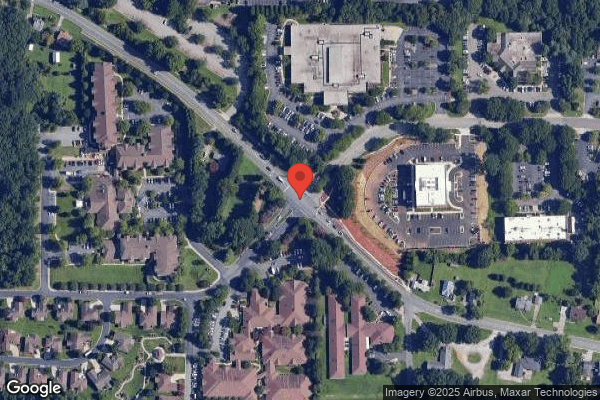
Homestead Hills

2101 Homestead Hills Drive, Winston-Salem, NC 27103 (336) 659-0386
For profit - Corporation 40 Beds SENIOR LIVING COMMUNITIES Data: November 2025
Trust Grade
85/100
#40 of 417 in NC
Last Inspection: May 2025

Inspected within the last 6 months. Data reflects current conditions.

Overview

Homestead Hills in Winston-Salem, North Carolina, has received a Trust Grade of B+, which indicates it is above average and recommended for families considering care options. It ranks #40 out of 417 facilities in North Carolina, placing it in the top half, and #3 of 13 in Forsyth County, showing that only two local facilities are rated higher. The facility is improving, with issues decreasing from one in 2024 to none in 2025. However, staffing is a concern with a turnover rate of 68%, which is higher than the state average of 49%, although the overall staffing rating is still good at 4 out of 5 stars. There have been no fines, which is a positive sign, and the facility has average RN coverage, which is important for catching potential health issues. On the downside, recent inspections found some deficiencies, including a failure to provide an arbitration agreement with the necessary rights for residents to rescind it within 30 days and to select a neutral arbitrator. Additionally, the facility did not obtain required blood work for two residents, which could lead to health risks. While there are strengths to consider, such as the excellent health inspection rating and lack of fines, families should weigh these deficiencies carefully when making their decision.

Trust Score
B+
85/100
In North Carolina
#40/417
Top 9%
Safety Record
Low Risk
No red flags
Inspections
Getting Better
1 → 0 violations
Staff Stability
⚠ Watch
68% turnover. Above average. Higher turnover means staff may not know residents' routines.
Penalties
✓ Good
No fines on record. Clean compliance history, better than most North Carolina facilities.
Skilled Nurses
✓ Good
Each resident gets 45 minutes of Registered Nurse (RN) attention daily — more than average for North Carolina. RNs are trained to catch health problems early.
Violations
○ Average
6 deficiencies on record. Average for a facility this size. Mostly minor or procedural issues.
★★★★★
5.0
Overall Rating
★★★★☆
4.0
Staff Levels
★★★★☆
4.0
Care Quality
★★★★★
5.0
Inspection Score
Stable
2024: 1 issues
2025: 0 issues

The Good

  • 4-Star Staffing Rating · Above-average nurse staffing levels
  • 4-Star Quality Measures · Strong clinical quality outcomes
  • Full Sprinkler Coverage · Fire safety systems throughout facility
  • No fines on record

Facility shows strength in staffing levels, quality measures, fire safety.

The Bad

Staff Turnover: 68%

22pts above North Carolina avg (46%)

Frequent staff changes - ask about care continuity

Chain: SENIOR LIVING COMMUNITIES

Part of a multi-facility chain

Ask about local staffing decisions and management

Staff turnover is elevated (68%)

20 points above North Carolina average of 48%

The Ugly 6 deficiencies on record

Apr 2024 1 deficiency
CONCERN (D)

Potential for Harm - no one hurt, but risky conditions existed

Laboratory Services (Tag F0770)

Could have caused harm · This affected 1 resident

**NOTE- TERMS IN BRACKETS HAVE BEEN EDITED TO PROTECT CONFIDENTIALITY** Based on record review and staff interviews, the facility failed to obtain laboratory blood work as ordered for 2 of 5 residents...

Read full inspector narrative →
**NOTE- TERMS IN BRACKETS HAVE BEEN EDITED TO PROTECT CONFIDENTIALITY** Based on record review and staff interviews, the facility failed to obtain laboratory blood work as ordered for 2 of 5 residents reviewed for unnecessary medications. (Resident #4 and Resident #7) The findings included: 1.Resident #4 was admitted to the facility 1/3/24 with diagnoses type 2 diabetes mellitus, cognitive impairment, and lymphoma. Resident #4's admission Minimum Data Set (MDS) dated [DATE] revealed he was severely cognitively impaired and Resident #4 took insulin injections. An order for Resident #4 dated 1/3/2024 for a routine Complete Metabolic Panel (CMP), a Complete Blood Count (CBC) with differential, a Lipid Panel, and a Hemoglobin A1C was marked as completed by Nurse #5. Attempts to reach Nurse #5 were unsuccessful. Further review of Resident #4's medical record revealed there were no lab results for the 1/3/2024 order. During an interview with the Nurse Practitioner on 4/24/24 at 2:09 pm, she stated that when she orders blood work for a resident, she will either enter the order in the electronic chart herself or she will let the staff do it for her. She stated that she ordered blood work for this patient as a baseline upon admission due to his diagnosis of diabetes. She was unaware of the process used by the facility to communicate to the lab that a resident needed blood work drawn. She stated her expectation was she would order the lab work and the staff would ensure that it was done. She was unaware that Resident #4 had not had blood work completed by the lab. During and interview with the Director of Nursing (DON) on 4/25/24 at 10:47 am, she stated that with the current electronic chart system, the nurse will review any orders made by the nurse practitioner or doctor, submit all laboratory orders via paper requisition that the nurse fills out and it is placed in the external lab book at the nurse's station. She stated that the lab technician will come 5 or 6 times a week, draw the ordered lab work based on the requisitions in his/her notebook, and then send the results to the facility via fax when completed. The DON was unaware that two residents had not received their blood work as ordered and was unable to say why the order was marked completed. 2. Resident #7 was admitted to the facility on [DATE] with diagnoses dementia, type 2 diabetes mellitus, vitamin d deficiency and chronic kidney disease. Resident #7's quarterly MDS dated [DATE] revealed she was severely cognitively impaired. An order for Resident #7 dated 3/13/2024 for a routine Hemoglobin A1C, Vitamin D level, and a TSH (Thyroid stimulating hormone), was marked as completed by Nurse #5. Further record review showed there was no evidence of the lab being drawn. Attempts to reach Nurse #5 were unsuccessful. During an interview with the Nurse Practitioner on 4/24/24 at 2:09 pm, she stated that when she orders blood work for a resident, she will either enter the order in the electronic chart herself or she will let the staff do it for her. She stated that she ordered blood work for this patient as a 6 month monitor for her diabetes and vitamin d deficiency diagnoses. She was unaware of the process used by the facility to communicate to the lab that a resident needed blood work drawn. She stated her expectation was she would order the lab work and the staff would ensure that it was done. She was unaware that Resident #7 had not had blood work completed by the lab. During an interview with the Director of Nursing (DON) on 4/25/24 at 10:47 am, she stated that with the current electronic chart system, the nurse will review any orders made by the nurse practitioner or doctor, submit all laboratory orders via paper requisition that the nurse fills out and it is placed in the external lab book at the nurse's station. She stated that the lab technician will come 5 or 6 times a week, draw the ordered lab work based on the requisitions in his/her notebook, and then send the results to the facility via fax when completed. The DON was unaware that two residents had not received their blood work as ordered and was unable to say why the order was marked completed.
Feb 2023 5 deficiencies
CONCERN (D)

Potential for Harm - no one hurt, but risky conditions existed

Report Alleged Abuse (Tag F0609)

Could have caused harm · This affected 1 resident

**NOTE- TERMS IN BRACKETS HAVE BEEN EDITED TO PROTECT CONFIDENTIALITY** Based on record review and staff interviews the facility failed to report an injury of unknown origin to the state agency for 1 ...

Read full inspector narrative →
**NOTE- TERMS IN BRACKETS HAVE BEEN EDITED TO PROTECT CONFIDENTIALITY** Based on record review and staff interviews the facility failed to report an injury of unknown origin to the state agency for 1 of 4 residents (Resident #10) reviewed for accident prevention. The findings included: Resident #10 was admitted on [DATE] with diagnoses of dementia, osteopenia, and major depressive disorder with psychotic symptoms. A review of Resident #10's significant change Minimum Data Set (MDS) dated [DATE] revealed she had severe cognitive impairment, required extensive assistance of two staff members with bed mobility, transfers, locomotion on the unit, toilet use, and dressing and total assistance of two staff members with personal hygiene. A review of the progress notes for Resident #10 documented on 10/20/2022 the Resident was discovered lying on her left side in the floor. The assessment reported no injuries and no pain. A review of the incident report for Resident #10 for the unwitnessed fall on 10/20/2022 documented the Resident was observed lying on her left side in the floor when a nurse walked past the room. A full body assessment was conducted, and vital signs preformed, with no apparent signs of injury observed. The Resident reported she was trying to transfer to the bed from the wheelchair and forgot to lock the brakes. The Resident was educated to call staff for assistance. A review of the nurse progress note dated 10/27/2022 documented the Resident was sent to the hospital due to a right-side lean, facial drooping, and weakness on the left lower extremity. She was unable to feed herself without staff assistance. A review of the Hospital emergency room records for 10/27/2022 revealed Resident #10 had a computed tomography (CT) scan of the head that was negative and a urine culture that was positive with an order for the same antibiotic previously ordered at the skilled nursing facility. No signs of an acute injury. She was not admitted and was transported back to the skilled nursing facility. A progress note dated 10/30/2022 documented the OT and the nursing assistant (NA) observed yellow bruising to the left thigh, left knee, and extended down the left leg. Range of motion (ROM) was preformed and no grimacing or pain was observed but the NA reported the Resident told her it hurt while doing ROM. A call was placed to the NP and an order to x ray the left leg was received. A progress note dated 10/31/2022 documented the x ray results were received and the Resident had a left hip comminuted fracture with moderate osteo arthritis at the left knee. On 11/1/2022 the Resident was transferred to the hospital for a surgical repair of the left hip. She was readmitted to the skilled nursing facility on [DATE]. An interview was conducted with the Administrator on 2/07/2023 at 2:18 p.m. and he revealed the facility had no reportable incidents for the last week of October and the month of November 2022. An interview was conducted with the DON on 2/7/2023 at 2:42 p.m. and she reviewed the incident report for the fall dated 10/20/2022 and all of the progress notes until the Resident's discharge on [DATE]. She stated an investigation into this injury did not occur because she had made the decision the bruising and fractured hip had occurred during the 10/20/2022 unwitnessed fall. When asked if multiple staff members had observed the Residents extremities from 10/20/2022 through 10/30/2022 she reported yes. When asked if they reported or documented observing bruising to the left lower extremity prior to 10/30/2022, she replied no. She added that when looking at the documentation, laid out all together, she felt an investigation should have been conducted for an injury of unknown origin. A follow up interview was conducted with the facility Administrator on 2/8/2023 at 11:53 a.m. and the Administrator stated an investigation was conducted for the bruising and injury, but the facility failed to thoroughly investigate all aspects of how the injury could have happened and did not report the incident to the state.
CONCERN (D)

Potential for Harm - no one hurt, but risky conditions existed

Assessment Accuracy (Tag F0641)

Could have caused harm · This affected 1 resident

**NOTE- TERMS IN BRACKETS HAVE BEEN EDITED TO PROTECT CONFIDENTIALITY** Based on record review and staff interviews the facility failed to accurately code the Minimum Data Set (MDS) assessment for 1 o...

Read full inspector narrative →
**NOTE- TERMS IN BRACKETS HAVE BEEN EDITED TO PROTECT CONFIDENTIALITY** Based on record review and staff interviews the facility failed to accurately code the Minimum Data Set (MDS) assessment for 1 of 8 residents (Resident #26) whose MDS assessments were reviewed. The findings included: Resident #26 was admitted to the facility on [DATE]. A review of the discharge return not anticipated MDS dated [DATE], indicated Resident #26 was discharged to an acute care hospital. A progress note dated 12/27/2022 documented Resident #26 was discharged to their home. An interview was conducted with the MDS coordinator on 2/10/2022 at 6:48 p.m. She revealed Resident #26 discharged home and she had entered the discharged to the hospital in error.
CONCERN (D)

Potential for Harm - no one hurt, but risky conditions existed

ADL Care (Tag F0677)

Could have caused harm · This affected 1 resident

**NOTE- TERMS IN BRACKETS HAVE BEEN EDITED TO PROTECT CONFIDENTIALITY** Based on observations, record reviews, and staff interview, the facility failed to ensure 1 of 4 sampled dependent residents (Re...

Read full inspector narrative →
**NOTE- TERMS IN BRACKETS HAVE BEEN EDITED TO PROTECT CONFIDENTIALITY** Based on observations, record reviews, and staff interview, the facility failed to ensure 1 of 4 sampled dependent residents (Resident #13) reviewed for activities of daily living (ADL), received nail care. Findings included: Resident #13 was admitted to the facility on [DATE] with diagnoses which included: Alzheimer's disease, atrial fibrillation, venous insufficiency, and abnormalities of gait and mobility. The care plan dated 9/16/22 revealed Resident #13 had a self-care deficit requiring extensive to total assistance with bathing and hygiene. Interventions included: staff to assist with ADLs (bathing, grooming, toileting, feeding, ambulating); and nursing assistants were to clean and manicure the resident's fingernails, as needed. The quarterly Minimum Data Set, dated [DATE] indicated Resident #13 had moderately, impaired cognition requiring limited assistance with his hygiene and total assistance with his baths. The resident also had no behaviors of rejecting care. During an observation and interview on 2/8/23 at 10:13 a.m., Resident #13 was sitting in a motorized wheelchair in the front, living room area of the facility. The resident was dressed in day clothes but his fingernails on both hands were uneven/jagged and dirty with dark brown/black debris beneath the nails. When asked about receiving nail care, Resident #13 revealed the staff had never cleaned or trimmed his fingernails. The resident stated that he would prefer the staff trim and clean his fingernails, rather than attempting the task, himself. On 2/9/23 at 12:15 p.m., Resident #13 was observed in the dining room feeding himself lunch. The resident's nails were uneven/jagged and dirty with dark brown/black debris beneath nails. During an observation on 2/10/23 at 11:20 a.m., Resident #13 was sitting in his motorized wheelchair in the front, living room area of the facility. The resident's fingernails were jagged/uneven and dirty with dark brown/black debris beneath the nail tips. During an interview on 2/10/23 at 11:55 a.m., Nursing Assistant (NA#1) stated Resident #13 required assistance with ADL care (bathing, washing hands and face, grooming). She revealed that earlier that morning, she provided the resident with a bedbath which included washing his face and hands. NA#1 stated she did not clean or trim the resident's fingernails because she did not have the correct nail supplies and she did not know if the resident was diabetic. NA#1 stated that she was not a permanent employee at the facility but acknowledged she should have asked the nurse about the location of the supplies to clean Resident #13's fingernails. On 2/10/23 at 1:00 p.m., the Director of Nursing stated that nail cleaning and trimming supplies were available for use by nursing staff to clean and trim residents' nails. She confirmed NA#1 should have requested assistance in obtaining supplies needed to provide ADL care to Resident #13.
CONCERN (E)

Potential for Harm - no one hurt, but risky conditions existed

Deficiency F0847 (Tag F0847)

Could have caused harm · This affected multiple residents

Based on a review of the facility arbitration agreement and administrative staff interviews, the facility failed to provide an arbitration agreement that 1) explicitly granted the resident or their re...

Read full inspector narrative →
Based on a review of the facility arbitration agreement and administrative staff interviews, the facility failed to provide an arbitration agreement that 1) explicitly granted the resident or their representative the right to rescind the agreement within 30 days of signing it and 2) explicitly stated that neither the resident nor their representative were required to sign an agreement as a condition of admission to the facility. This agreement was provided in the admission packet and signed during the admission process for all residents residing in the facility. The findings included: A review of the facility arbitration agreement titled, Arbitration Agreement, was conducted. The Arbitration agreement stated to please read this agreement carefully, it waives certain rights that you may have, including your right to have a jury trial on any claims that you may have against the community or its affiliates. The remainder of the arbitration agreement did not include verbiage that stated the resident or representative had the right to rescind the agreement in 30 days and that they were not required to sign the agreement as a condition of admission to the facility. An interview was conducted with the Administrator on 2/7/2022 at 10:01 a.m. He revealed that both he and the Executive Director reviewed the arbitration agreement, and it did not include the verbiage that the agreement was not required for admission or that the resident or representative had the right to rescind the agreement in 30 days. When the Administrator was asked if he had been aware of the regulatory requirements, he had stated he thought the admission agreement had covered the arbitration agreement as well.
CONCERN (E)

Potential for Harm - no one hurt, but risky conditions existed

Deficiency F0848 (Tag F0848)

Could have caused harm · This affected multiple residents

Based on a review of the facility arbitration agreement and administrative staff interviews, the facility failed to provide an arbitration agreement that provided for 1) a selection of a neutral arbit...

Read full inspector narrative →
Based on a review of the facility arbitration agreement and administrative staff interviews, the facility failed to provide an arbitration agreement that provided for 1) a selection of a neutral arbitrator agreed upon by both parties and 2) the selection of a venue that was convenient to both parties. This agreement was provided in the admission packet and signed during the admission process for all residents residing in the facility. The findings included: A review of the facility arbitration agreement titled, Arbitration Agreement, was conducted. The Arbitration agreement stated to please read this agreement carefully, it waives certain rights that you may have, including your right to have a jury trial on any claims that you may have against the community or its affiliates. The agreement under section A) bullet point c) stated any dispute involving a resident's stay in the community shall be settled exclusively by binding arbitration conducted in accordance with the consumer rules of the American health law association. Any disputes concerning the scope, validity, or enforceability of this arbitration agreement shall be decided by an arbitrator, not a court. Any award of the arbitrator may be entered as a judgement in any court having jurisdiction. The remainder of the arbitration agreement did not include verbiage that stated a neutral arbitrator would be agreed upon by both parties (the facility representative and the resident or their representative) and did not state a venue would be selected that was convenient to both parties. An interview was conducted with the Administrator on 2/7/2022 at 10:01 a.m. He revealed that both he and the Executive Director reviewed the arbitration agreement, and it did not include the verbiage that an arbitrator would be selected by both parties and a venue convenient to both parties would be selected. When the Administrator was asked if he had been aware of the regulatory requirements, he had stated he thought the admission agreement had covered the arbitration agreement as well.
Understanding Severity Codes (click to expand)
Life-Threatening (Immediate Jeopardy)
J - Isolated K - Pattern L - Widespread
Actual Harm
G - Isolated H - Pattern I - Widespread
Potential for Harm
D - Isolated E - Pattern F - Widespread
No Harm (Minor)
A - Isolated B - Pattern C - Widespread

Questions to Ask on Your Visit

  • "Why is there high staff turnover? How do you retain staff?"
  • "Can I speak with families of current residents?"
  • "What's your RN coverage like on weekends and overnight?"

Our Honest Assessment

Strengths
  • • Grade B+ (85/100). Above average facility, better than most options in North Carolina.
  • • No major safety red flags. No abuse findings, life-threatening violations, or SFF status.
  • • No fines on record. Clean compliance history, better than most North Carolina facilities.
Concerns
  • • 68% turnover. Above average. Higher turnover means staff may not know residents' routines.
Bottom line: Generally positive indicators. Standard due diligence and a personal visit recommended.

About This Facility

What is Homestead Hills's CMS Rating?

CMS assigns Homestead Hills an overall rating of 5 out of 5 stars, which is considered much above average nationally. Within North Carolina, this rating places the facility higher than 99% of the state's 100 nursing homes. This rating reflects solid performance across the metrics CMS uses to evaluate nursing home quality.

How is Homestead Hills Staffed?

CMS rates Homestead Hills's staffing level at 4 out of 5 stars, which is above average compared to other nursing homes. Staff turnover is 68%, which is 22 percentage points above the North Carolina average of 46%. High turnover can affect care consistency as new staff learn residents' individual needs. RN turnover specifically is 62%, which is notably high. RNs provide skilled clinical oversight, so turnover in this role can affect medical care quality.

What Have Inspectors Found at Homestead Hills?

State health inspectors documented 6 deficiencies at Homestead Hills during 2023 to 2024. These included: 6 with potential for harm.

Who Owns and Operates Homestead Hills?

Homestead Hills is owned by a for-profit company. For-profit facilities operate as businesses with obligations to shareholders or private owners. The facility is operated by SENIOR LIVING COMMUNITIES, a chain that manages multiple nursing homes. With 40 certified beds and approximately 31 residents (about 78% occupancy), it is a smaller facility located in Winston-Salem, North Carolina.

How Does Homestead Hills Compare to Other North Carolina Nursing Homes?

Compared to the 100 nursing homes in North Carolina, Homestead Hills's overall rating (5 stars) is above the state average of 2.8, staff turnover (68%) is significantly higher than the state average of 46%, and health inspection rating (5 stars) is much above the national benchmark.

What Should Families Ask When Visiting Homestead Hills?

Based on this facility's data, families visiting should ask: "How do you ensure continuity of care given staff turnover, and what is your staff retention strategy?" "Can I visit during a mealtime to observe dining assistance and food quality?" "How do you handle medical emergencies, and what is your hospital transfer rate?" "Can I speak with family members of current residents about their experience?" These questions are particularly relevant given the facility's high staff turnover rate.

Is Homestead Hills Safe?

Based on CMS inspection data, Homestead Hills has a clean safety record: no substantiated abuse findings (meaning no confirmed cases of resident harm), no Immediate Jeopardy citations (the most serious violation level indicating risk of serious injury or death), and is not on the Special Focus Facility watch list (a federal program monitoring the lowest-performing 1% of nursing homes). The facility has a 5-star overall rating and ranks #1 of 100 nursing homes in North Carolina. While no facility is perfect, families should still ask about staff-to-resident ratios and recent inspection results during their visit.

Do Nurses at Homestead Hills Stick Around?

Staff turnover at Homestead Hills is high. At 68%, the facility is 22 percentage points above the North Carolina average of 46%. Registered Nurse turnover is particularly concerning at 62%. RNs handle complex medical decisions and coordinate care — frequent RN changes can directly impact care quality. High turnover means new staff may not know residents' individual needs, medications, or preferences. It can also be disorienting for residents, especially those with dementia who rely on familiar faces. Families should ask: What is causing the turnover? What retention programs are in place? How do you ensure care continuity during staff transitions?

Was Homestead Hills Ever Fined?

Homestead Hills has no federal fines on record. CMS issues fines when nursing homes fail to meet care standards or don't correct problems found during inspections. The absence of fines suggests the facility has either maintained compliance or corrected any issues before penalties were assessed. This is a positive indicator, though families should still review recent inspection reports for the full picture.

Is Homestead Hills on Any Federal Watch List?

Homestead Hills is not on any federal watch list. The most significant is the Special Focus Facility (SFF) program, which identifies the bottom 1% of nursing homes nationally based on persistent, serious quality problems. Not being on this list means the facility has avoided the pattern of deficiencies that triggers enhanced federal oversight. This is a positive indicator, though families should still review the facility's inspection history directly.