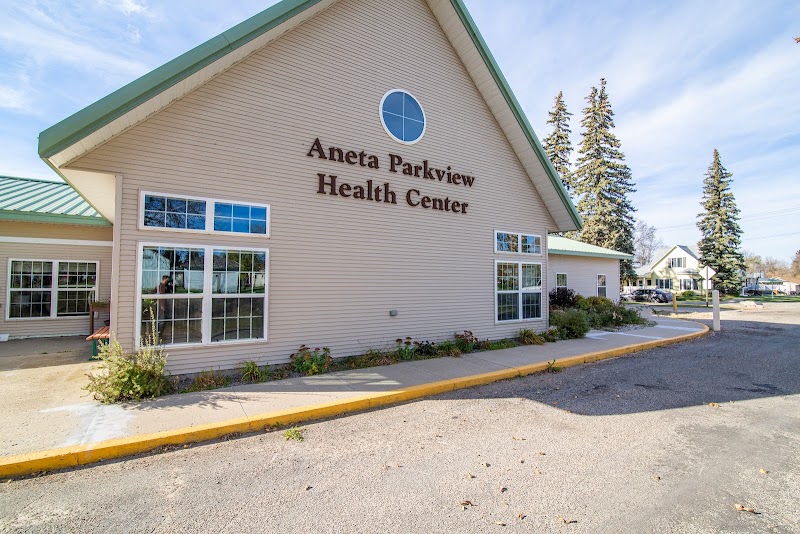
ANETA PARKVIEW HEALTH CTR
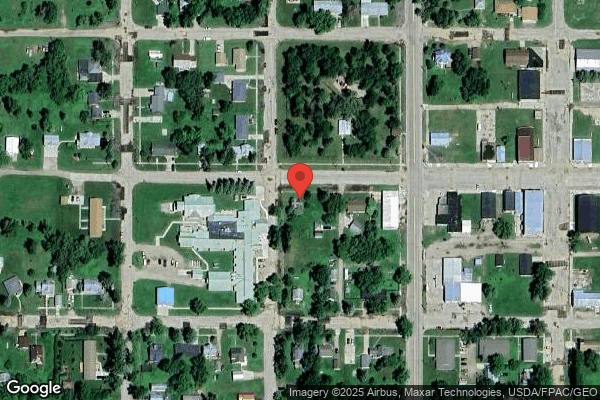

113 5TH ST S, ANETA, ND 58212 (701) 326-4234
Non profit - Corporation 35 Beds Independent Data: November 2025
Trust Grade
85/100
#1 of 72 in ND
Last Inspection: November 2024

Within standard 12-15 month inspection cycle. Federal law requires annual inspections.

Overview

Aneta Parkview Health Center has a Trust Grade of B+, which means it is recommended and performs above average compared to other facilities. It ranks #1 out of 72 nursing homes in North Dakota and #1 out of 3 in Nelson County, placing it in the top tier of local options. The facility is improving, with a decrease in issues from 2 in 2023 to 1 in 2024. Staffing is rated 5 out of 5 stars, indicating a strength, although the turnover rate is concerning at 69%, which is higher than the state average of 48%. The center has not incurred any fines, which is a positive sign, and it offers more registered nurse coverage than 82% of similar facilities, ensuring better oversight of resident care. However, there are some weaknesses to consider. Recent inspections revealed that the facility did not adequately monitor a resident at risk of elopement, which could have jeopardized their safety. Additionally, there were failures to apply necessary barrier cream for a resident with a history of pressure ulcers and a lack of proper documentation for the use of a psychotropic medication, which raises concerns about potential over-medication. Overall, while Aneta Parkview Health Center has many strengths, families should weigh these specific incidents carefully when making their decision.

Trust Score
B+
85/100
In North Dakota
#1/72
Top 1%
Safety Record
Low Risk
No red flags
Inspections
Getting Better
2 → 1 violations
Staff Stability
⚠ Watch
69% turnover. Above average. Higher turnover means staff may not know residents' routines.
Penalties
✓ Good
No fines on record. Clean compliance history, better than most North Dakota facilities.
Skilled Nurses
✓ Good
Each resident gets 64 minutes of Registered Nurse (RN) attention daily — more than 97% of North Dakota nursing homes. RNs are the most trained staff who catch health problems before they become serious.
Violations
✓ Good
Only 5 deficiencies on record. Cleaner than most facilities. Minor issues only.
★★★★★
5.0
Overall Rating
★★★★★
5.0
Staff Levels
★★☆☆☆
2.0
Care Quality
★★★★★
5.0
Inspection Score
Stable
2023: 2 issues
2024: 1 issues

The Good

  • 5-Star Staffing Rating · Excellent nurse staffing levels
  • Full Sprinkler Coverage · Fire safety systems throughout facility
  • No fines on record

Facility shows strength in staffing levels, fire safety.

The Bad

Staff Turnover: 69%

23pts above North Dakota avg (46%)

Frequent staff changes - ask about care continuity

Staff turnover is elevated (69%)

21 points above North Dakota average of 48%

The Ugly 5 deficiencies on record

Oct 2024 1 deficiency
CONCERN (D) 📢 Someone Reported This

A family member, employee, or ombudsman was alarmed enough to file a formal complaint

Potential for Harm - no one hurt, but risky conditions existed

Accident Prevention (Tag F0689)

Could have caused harm · This affected 1 resident

Based on record review, review of facility policy, and staff interview, the facility failed to ensure residents received adequate supervision and/or monitoring for 1 of 1 sampled resident (Resident #1...

Read full inspector narrative →
Based on record review, review of facility policy, and staff interview, the facility failed to ensure residents received adequate supervision and/or monitoring for 1 of 1 sampled resident (Resident #1) with an elopement. Failure to adequately monitor and supervise a resident with a known elopement risk placed the resident's health and safety at risk. This citation is considered past non-compliance based on review of the corrective action the facility implemented immediately following the incident. Findings include: This surveyor determined a deficient practice existed on 10/22/24. The facility implemented corrective action and completed staff education on 10/22/24. Review of the facility policy titled Standards of Care and Practice occurred on 10/23/24. This policy, dated April 2018, stated, . Each of the following is part of the routine care provided by caregivers, unless otherwise directed. Complete rounds every 2-3 hours during the day and night. Review of Resident #1's medical record occurred on 10/23/24 and included the diagnoses of generalized anxiety disorder, unspecified dementia, and schizoaffective disorder. The care plan, edited 10/22/24, stated, . I may try [sic] elope and have a history of sleep walking. Wanderguard: Due to being disorientation [sic], there are concerns I may try to elope or even sleep walk. Please help redirect me and ensure my safety. A physician's order, dated 09/30/24, stated, Check wanderguard placement each shift . Resident #1's progress notes included the following: * 09/30/24 at 4:05 p.m. Resident noted to be anxious, confused, and wandering in common area. Resident stated she is looking for her brother. Resident's brother told SS [social services] that resident is risk for elopement and has hx [history] of UTI [urinary tract infection] with confusion and anxiety. Wanderguard brace applied on R) [right] wrist. * 10/22/24 at 1:00 a.m. Resident was anxious and confused this evening . sat one on one with resident in common area for awhile and resident calmed down, warm blanket given and walked resident back to her room and she laid down to go to sleep. * 10/22/24 at 5:50 a.m. Resident set off the door alarm this evening. Resident also then this morning followed the exit signs to the employee exit and got out without sounding the alarm. Writer found resident when writer was coming in from grabbing something from writer's car. Resident confused and was looking for a way home. During interviews on 10/23/24 an administrative nurse (#1) stated the facility investigation determined Resident #1 exited the building at 3:22 a.m. on 10/22/24 and staff returned the resident to the building at approximately 5:40 a.m. The staff member (#1) reported she expected night shift staff to complete rounds on residents every two hours at 12:00 a.m., 2:00 a.m., 4:00 a.m., and 6:00 a.m. She confirmed staff failed to complete rounds as expected, and failed to discover the resident's elopement in a timely manner. Based on the following information, non-compliance at F689 is considered past non-compliance. The facility implemented corrective actions to ensure the deficient practice does not recur by: * All staff were educated on 10/22/24 as to the importance of monitoring residents at risk of elopement and those who currently utilize wanderguards. * The facility determined the wanderguard alarm system malfunctioned, and no alert sounded when Resident #1 exited the building. The facility contacted the alarm company immediately and reset the system to ensure proper functioning on 10/22/24. * Audits of the wanderguard system and staff rounding began 10/22/24.
Oct 2023 2 deficiencies
CONCERN (D)

Potential for Harm - no one hurt, but risky conditions existed

Pressure Ulcer Prevention (Tag F0686)

Could have caused harm · This affected 1 resident

Based on observation and record review, the facility failed to provide care and services to aid the healing or prevent the development of pressure ulcers for 1 of 2 sampled residents (Resident #32) wi...

Read full inspector narrative →
Based on observation and record review, the facility failed to provide care and services to aid the healing or prevent the development of pressure ulcers for 1 of 2 sampled residents (Resident #32) with a history of pressure ulcers. Failure to apply barrier cream after toileting may result in the development of new pressure ulcers. Findings include: Review of Resident #32's medical record occurred on all days of survey. Diagnoses included a history of a pressure ulcer to the right buttocks. A nurse's note identified, . 10/10/23 Care conference note: No skin concerns. Pressure ulcer to his bottom is a scab, healing nicely. Skin protectant applied to buttocks after toileting. Current physician's orders included, Skin protectant to be applied after toileting Every Shift Day, Evening, Night. The resident's current care plan stated, . Problem Start Date: 10/12/2023 I have the potential of skin breakdown because I am incontinent and I have a diagnosis of Dementia. Approach Start Date: 10/12/2023 Protective ointment to my buttocks after toileting. Observation on 10/24/23 at 11:07 a.m. showed a certified nurse aide (CNA) (#1) assisted Resident #32 to the bathroom. Upon completion of toileting, the CNA failed to apply barrier cream to Resident #32's buttocks. Observation on 10/24/23 at 4:34 p.m. showed a CNA (#2) assisted Resident #32 to the bathroom. Upon completion of toileting, the CNA failed to apply barrier cream to Resident #32's buttocks.
CONCERN (D)

Potential for Harm - no one hurt, but risky conditions existed

Medication Errors (Tag F0758)

Could have caused harm · This affected 1 resident

Based on record review, the facility failed to ensure a rationale and duration for the use of an as needed (PRN) psychotropic medication for 1 of 3 sampled residents (Resident #31) with a prn psychotr...

Read full inspector narrative →
Based on record review, the facility failed to ensure a rationale and duration for the use of an as needed (PRN) psychotropic medication for 1 of 3 sampled residents (Resident #31) with a prn psychotropic. Failure to ensure a rationale and duration of prn medications places residents at risk for receiving unnecessary medications and experiencing adverse consequences related to their use. Findings include: Review of Resident #31's medical record occurred on all days of survey. Diagnoses included Alzheimer's disease, insomnia, and unspecified psychosis. Physician's orders included trazodone (an antidepressant) PRN at bedtime, initiated 09/16/22. Communication with the physician regarding renewals of the trazodone failed to identify a rationale for its continued use or indicate a duration (i.e., end date) for the PRN order.
Jul 2022 2 deficiencies
CONCERN (D)

Potential for Harm - no one hurt, but risky conditions existed

Deficiency F0657 (Tag F0657)

Could have caused harm · This affected 1 resident

**NOTE- TERMS IN BRACKETS HAVE BEEN EDITED TO PROTECT CONFIDENTIALITY** Based on record review, review of facility policy, and staff interview, the facility failed to review and revise the comprehensi...

Read full inspector narrative →
**NOTE- TERMS IN BRACKETS HAVE BEEN EDITED TO PROTECT CONFIDENTIALITY** Based on record review, review of facility policy, and staff interview, the facility failed to review and revise the comprehensive care plan to reflect the resident's status for 1 of 2 sampled residents (Resident #27) with a change in mobility. Failure to revise the care plan may limit staff's ability to communicate care needs and ensure continuity of care for each resident. Findings include: Review of the facility's undated policy titled Care Plans/Care Conferences Procedure stated, . Care plans are to be reviewed at least quarterly and whenever there is any significant change in the resident's condition . Review of Resident #27's medical record occurred on all days of survey. Diagnoses included Alzheimer's disease, right femur fracture, and right artificial hip joint. A quarterly Minimum Data Set (MDS), dated [DATE], identified limited assistance with transfers and a significant change MDS, dated [DATE], identified extensive assistance for transfers. The current care plan showed the following: * 05/10/21 Assist of 1 for transfers with FWW [front wheeled walker]. Use stand lift PRN [as needed] if lethargic. * 05/10/21 Can stand pivot transfer independent in room form [sic] bed, chair, and toilet from w/c [wheelchair]. Assist with transfer and use stand lift PRN, if lethargic or weak. An Interdisciplinary Care Conference Form, dated 6/1/22, stated, . Care Conference 5/31/2022 . ADL [activities of daily living] functioning: Assist of one for bed mobility, transfers, . Currently not walking at all. Nursing staff failed to revise Resident #27's care plan to reflect her need for increased assistance with transfers. During an interview on 07/07/22 at 1:48 p.m., an administrative staff member (#2) agreed the facility failed to update Resident #27's care plan to reflect current mobility issues.
CONCERN (D)

Potential for Harm - no one hurt, but risky conditions existed

Accident Prevention (Tag F0689)

Could have caused harm · This affected 1 resident

Based on observation, record review, policy review and staff interview, the facility failed to provide adequate assistance for 1 of 5 sampled residents (Resident #27) observed during pivot transfers. ...

Read full inspector narrative →
Based on observation, record review, policy review and staff interview, the facility failed to provide adequate assistance for 1 of 5 sampled residents (Resident #27) observed during pivot transfers. Failure to lock wheelchair brakes and utilize a gait belt and front wheeled walker during transfer placed the resident at risk for falls, pain, and/or injury. Findings include: Review of the facility policy titled Transferring and Positioning Residents - Moving and Transferring occurred on 07/07/22. This policy, dated March 2011, stated, . Procedure: Assisting resident from bed to chair/wheelchair. 1. Place chair or wheelchair so it touches bed and faces foot of bed at a 45 degree angle. 2. Lock brakes on wheelchair and fold or lift up footrests. 3. Explain procedure to resident. 4. Assist resident to sit up and swing legs over side of bed. 5. Assist resident to step to floor, place legs close to chair, place hands on arms of chair, and sit in chair. A gait belt should be used to help support resident. Review of Resident #27's medical record occurred on all days of survey. Diagnoses included Alzheimer's disease, right femur fracture, and right artificial hip joint. A significant change Minimum Data Set (MDS), date 05/25/22, identified extensive assistance for transfers. The current care plan showed the following: * 05/10/21 Assist of 1 for transfers with FWW [front wheeled walker]. Use stand lift PRN [as needed] if lethargic. * 05/10/21 Can stand pivot transfer independent in room form [sic] bed, chair, and toilet from w/c [wheelchair]. Assist with transfer and use stand lift PRN, if lethargic or weak. * 03/02/22 I'm at risk for falling because I receive a daily scheduled antidepressant med. I have slipped and fallen in my bathroom and fractured my R) [right] hip. The facility's interventions of assist of 1 for transfers with FWW and can stand pivot transfer independent in room contradicted each other. See F657. A fall risk assessment completed 5/25/22 stated, . Gait/Balance . N/A-not able to perform function . Decreased muscular coordination . Balance Problem when walking . Requires use of assuasive devices (cane, w/c, walker, furniture) . Score=10 or more high risk for falls. Observation on 07/05/22 at 4:13 p.m. showed a certified nursing assistant (CNA) (#1) entered Resident #27's room to transfer the resident from the bed to a wheelchair. The CNA (#1) positioned the wheelchair near the foot of the bed at an angle and locked the left brake. The CNA stated she did not have a large enough gait belt and asked the resident if she needed assistance or if she could transfer on her own. The resident stated she would transfer by herself. The CNA assisted the resident to sit at the edge of the bed by holding onto the CNA's hands. The resident stood unsteadily and with much exertion, by holding onto the bed rail behind her on her right-hand side. The CNA (#1) provided no support on the resident's left-hand side until the resident was able to take three shuffling steps toward the wheelchair and grab the left arm rest. The resident then started to sit in the wheelchair as the right wheel started to swing backward. The CNA (#1) quickly stopped the resident, locked the right brake, and allowed the resident to sit down. The CNA (#1) failed to lock both wheelchair brakes, use a gait belt, or offer the front wheeled walker for support during the transfer. During an interview on 07/07/22 at 1:48 p.m., an administrative staff member (#2) stated she expected staff to lock the wheelchair brakes and provide transfer assistance as care planned.
Understanding Severity Codes (click to expand)
Life-Threatening (Immediate Jeopardy)
J - Isolated K - Pattern L - Widespread
Actual Harm
G - Isolated H - Pattern I - Widespread
Potential for Harm
D - Isolated E - Pattern F - Widespread
No Harm (Minor)
A - Isolated B - Pattern C - Widespread

Questions to Ask on Your Visit

  • "Why is there high staff turnover? How do you retain staff?"
  • "Can I speak with families of current residents?"
  • "What's your RN coverage like on weekends and overnight?"

Our Honest Assessment

Strengths
  • • Grade B+ (85/100). Above average facility, better than most options in North Dakota.
  • • No major safety red flags. No abuse findings, life-threatening violations, or SFF status.
  • • No fines on record. Clean compliance history, better than most North Dakota facilities.
  • • Only 5 deficiencies on record. Cleaner than most facilities. Minor issues only.
Concerns
  • • 69% turnover. Above average. Higher turnover means staff may not know residents' routines.
Bottom line: Generally positive indicators. Standard due diligence and a personal visit recommended.

About This Facility

What is Aneta Parkview Health Ctr's CMS Rating?

CMS assigns ANETA PARKVIEW HEALTH CTR an overall rating of 5 out of 5 stars, which is considered much above average nationally. Within North Dakota, this rating places the facility higher than 99% of the state's 100 nursing homes. This rating reflects solid performance across the metrics CMS uses to evaluate nursing home quality.
How is Aneta Parkview Health Ctr Staffed?

CMS rates ANETA PARKVIEW HEALTH CTR's staffing level at 5 out of 5 stars, which is much above average compared to other nursing homes. Staff turnover is 69%, which is 23 percentage points above the North Dakota average of 46%. High turnover can affect care consistency as new staff learn residents' individual needs.

What Have Inspectors Found at Aneta Parkview Health Ctr?

State health inspectors documented 5 deficiencies at ANETA PARKVIEW HEALTH CTR during 2022 to 2024. These included: 5 with potential for harm.
Who Owns and Operates Aneta Parkview Health Ctr?

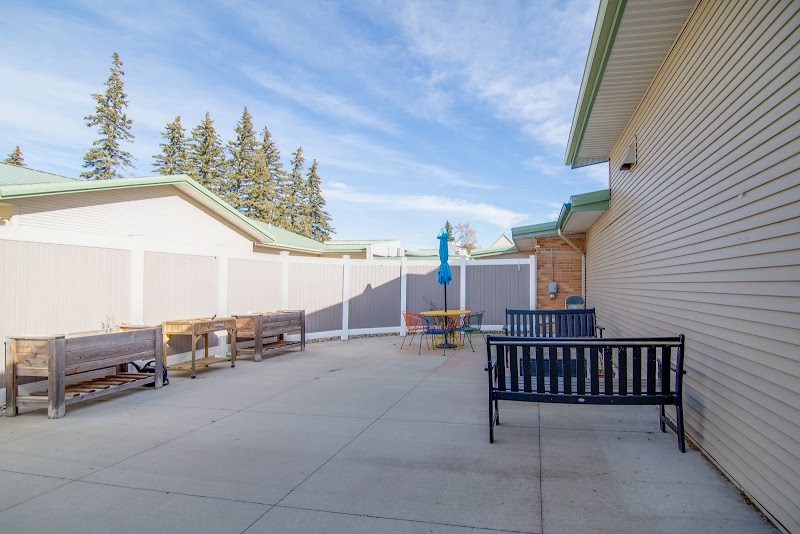
ANETA PARKVIEW HEALTH CTR is owned by a non-profit organization. Non-profit facilities reinvest revenue into operations rather than distributing to shareholders. The facility operates independently rather than as part of a larger chain. With 35 certified beds and approximately 31 residents (about 89% occupancy), it is a smaller facility located in ANETA, North Dakota.
How Does Aneta Parkview Health Ctr Compare to Other North Dakota Nursing Homes?

Compared to the 100 nursing homes in North Dakota, ANETA PARKVIEW HEALTH CTR's overall rating (5 stars) is above the state average of 3.1, staff turnover (69%) is significantly higher than the state average of 46%, and health inspection rating (5 stars) is much above the national benchmark.

What Should Families Ask When Visiting Aneta Parkview Health Ctr?

Based on this facility's data, families visiting should ask: "How do you ensure continuity of care given staff turnover, and what is your staff retention strategy?" "Can I visit during a mealtime to observe dining assistance and food quality?" "How do you handle medical emergencies, and what is your hospital transfer rate?" "Can I speak with family members of current residents about their experience?" These questions are particularly relevant given the facility's high staff turnover rate.

Is Aneta Parkview Health Ctr Safe?

Based on CMS inspection data, ANETA PARKVIEW HEALTH CTR has a clean safety record: no substantiated abuse findings (meaning no confirmed cases of resident harm), no Immediate Jeopardy citations (the most serious violation level indicating risk of serious injury or death), and is not on the Special Focus Facility watch list (a federal program monitoring the lowest-performing 1% of nursing homes). The facility has a 5-star overall rating and ranks #1 of 100 nursing homes in North Dakota. While no facility is perfect, families should still ask about staff-to-resident ratios and recent inspection results during their visit.

Do Nurses at Aneta Parkview Health Ctr Stick Around?

Staff turnover at ANETA PARKVIEW HEALTH CTR is high. At 69%, the facility is 23 percentage points above the North Dakota average of 46%. High turnover means new staff may not know residents' individual needs, medications, or preferences. It can also be disorienting for residents, especially those with dementia who rely on familiar faces. Families should ask: What is causing the turnover? What retention programs are in place? How do you ensure care continuity during staff transitions?

Was Aneta Parkview Health Ctr Ever Fined?

ANETA PARKVIEW HEALTH CTR has no federal fines on record. CMS issues fines when nursing homes fail to meet care standards or don't correct problems found during inspections. The absence of fines suggests the facility has either maintained compliance or corrected any issues before penalties were assessed. This is a positive indicator, though families should still review recent inspection reports for the full picture.

Is Aneta Parkview Health Ctr on Any Federal Watch List?

ANETA PARKVIEW HEALTH CTR is not on any federal watch list. The most significant is the Special Focus Facility (SFF) program, which identifies the bottom 1% of nursing homes nationally based on persistent, serious quality problems. Not being on this list means the facility has avoided the pattern of deficiencies that triggers enhanced federal oversight. This is a positive indicator, though families should still review the facility's inspection history directly.