


EVENTIDE FARGO

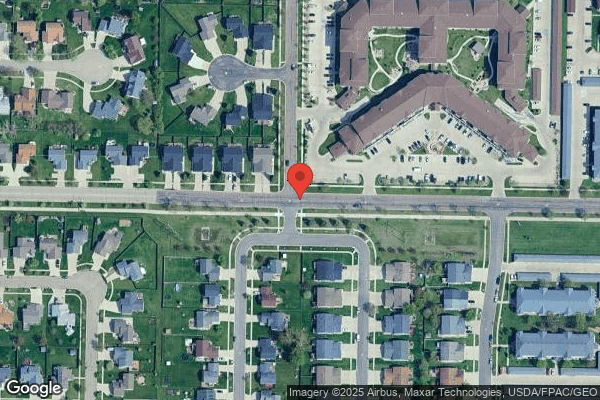
3225 51ST ST S, FARGO, ND 58104 (701) 478-1800
Non profit - Corporation 98 Beds Independent Data: November 2025
Trust Grade
63/100
#35 of 72 in ND
Last Inspection: August 2024

Within standard 12-15 month inspection cycle. Federal law requires annual inspections.

Overview

Eventide Fargo has a Trust Grade of C+, indicating that it is slightly above average. With a state rank of #35 out of 72 facilities in North Dakota, it is positioned in the top half, but it ranks #7 out of 8 in Cass County, meaning only one local option is better. The facility is experiencing a worsening trend, with issues increasing from 3 in 2024 to 5 in 2025. Staffing is a strength, with a 0% turnover rate, indicating that employees stay long-term, which is beneficial for resident care. However, the facility has faced $7,585 in fines, which is average, and it has received some concerning inspection findings, including a serious incident where a resident fell and fractured a bone due to a lack of supervision while toileting, and instances of inadequate infection control practices. Overall, while there are strengths in staffing stability, families should be aware of the rising issues and specific incidents that could impact care quality.

Trust Score
C+
63/100
In North Dakota
#35/72
Top 48%
Safety Record
Moderate
Needs review
Inspections
Getting Worse
3 → 5 violations
Staff Stability
○ Average
Turnover data not reported for this facility.
Penalties
⚠ Watch
$7,585 in fines. Higher than 97% of North Dakota facilities. Major compliance failures.
Skilled Nurses
✓ Good
Each resident gets 48 minutes of Registered Nurse (RN) attention daily — more than average for North Dakota. RNs are trained to catch health problems early.
Violations
⚠ Watch
11 deficiencies on record. Higher than average. Multiple issues found across inspections.
★★★☆☆
3.0
Overall Rating
★★★☆☆
3.0
Staff Levels
★★★★☆
4.0
Care Quality
★★★☆☆
3.0
Inspection Score
Stable
2024: 3 issues
2025: 5 issues

The Good

  • 4-Star Quality Measures · Strong clinical quality outcomes
  • Full Sprinkler Coverage · Fire safety systems throughout facility
  • No fines on record

Facility shows strength in quality measures, fire safety.

The Bad

3-Star Overall Rating

Near North Dakota average (3.1)

Meets federal standards, typical of most facilities

Federal Fines: $7,585

Below median ($33,413)

Minor penalties assessed

The Ugly 11 deficiencies on record

1 actual harm
Sept 2025 4 deficiencies
CONCERN (D) 📢 Someone Reported This

A family member, employee, or ombudsman was alarmed enough to file a formal complaint

Potential for Harm - no one hurt, but risky conditions existed

Assessment Accuracy (Tag F0641)

Could have caused harm · This affected 1 resident

**NOTE- TERMS IN BRACKETS HAVE BEEN EDITED TO PROTECT CONFIDENTIALITY** Based on record review, review of the Long-Term Care Facility Resident Assessment Instrument (RAI) 3.0 User's Manual (Version 1....

Read full inspector narrative →
**NOTE- TERMS IN BRACKETS HAVE BEEN EDITED TO PROTECT CONFIDENTIALITY** Based on record review, review of the Long-Term Care Facility Resident Assessment Instrument (RAI) 3.0 User's Manual (Version 1.19.1), and staff interview, the facility failed to ensure accurate coding of the Minimum Data Set (MDS) for 2 of 22 sampled residents (Resident #7 and #8). Failure to accurately complete the MDS does not allow each resident's assessment to reflect their current status and may affect the accurate development of a comprehensive care plan and the care provided to the residents. Findings include:SECTION J: HEATLH CONDITIONSThe Long-Term Care Facility RAI User's Manual, revised October 2024, pages J 27-28, stated, . J1400 Prognosis: Does the resident have a condition or chronic disease that may result in a life expectancy of less than 6 months? . Code 1, yes: if the medical record includes physician documentation: 1) that the resident is terminally ill; or 2) the resident is receiving hospice services.SECTION M: SKIN CONDITIONSThe Long-Term Care Facility RAI User's Manual, revised October 2024, page M 23-24, stated, . M0300F1: Enter the number of pressure ulcers that are unstageable related to slough [non-viable tissue] and/or eschar [dead or devitalized tissue].Review of Resident #7's medical record occurred on all days of survey and identified a terminal illness, hospice services beginning on 05/22/25, and unstageable wounds to the right heel and great toe. A Wound Care Flow Sheet, dated 07/23/25, stated, Right heel - 3 [centimeters (cm)] x 2.7 [cm] x 0 [cm] unstageable, and R. [right] great toe is 0.6 [cm] x 0.6 [cm] x 0 [cm], unstageable. Eschar [thick, dry, crusty layer of dead tissue that forms over a wound]. The quarterly MDS, dated [DATE], failed to identify a prognosis of life expectancy less than 6 months and the presence of an unstageable pressure ulcer.During an interview on 09/17/25 at 10:44 a.m., an MDS nurse (#4) agreed staff failed to code life expectancy of less than six months and an unstageable pressure ulcer.SECTION N: MEDICATIONSThe Long-Term Care Facility RAI User's Manual, revised October 2024, page N-4, stated, . N0415: High-Risk Drug Classes . Check if the resident is taking any medications by pharmacological classification, not how it is used, during the last 7 days . C. Antidepressant .Review of Resident #8's medical record occurred on all days of survey. A physician's order, dated 07/31/25, stated, Venlafaxine [antidepressant medication] . one time a day for depression/anxiety. The significant change MDS, dated [DATE], failed to identify the resident received an antidepressant.During an interview on 09/17/25 at 4:06 p.m., an MDS nurse (#4) stated, I must have just missed it [coding venlafaxine].
CONCERN (D) 📢 Someone Reported This

A family member, employee, or ombudsman was alarmed enough to file a formal complaint

Potential for Harm - no one hurt, but risky conditions existed

Deficiency F0698 (Tag F0698)

Could have caused harm · This affected 1 resident

This REQUIREMENT is NOT MET as evidenced by: Based on record review, policy and procedure review, professional reference review, and staff interview, the facility failed to provide the care and servic...

Read full inspector narrative →
This REQUIREMENT is NOT MET as evidenced by: Based on record review, policy and procedure review, professional reference review, and staff interview, the facility failed to provide the care and services for 1 of 1 sampled resident (Resident #5) on hemodialysis with a Permacath (a type of vascular access for dialysis). Failure to assess the hemodialysis vascular access site may result in complications and adverse effects, such as clotting and possible loss of the access site. Findings include: Review of the facility policy titled “Hemodialysis Access Sites” occurred on 09/18/25. This policy, revised April 2022, stated, “. The facility is responsible to . Provide ongoing monitoring and care of the resident's vascular access . Central Venous Access . Assess site BID [two times per day]. Observe for redness, warmth, drainage. Report problems immediately to physician/practitioner/dialysis center . Review of the Core Curriculum for the Dialysis Technician - A Compressive Review of Dialysis, Fifth Edition, page 121 and 127 stated, . Vascular access makes chronic hemodialysis (HD) possible . An access is an HD patient's lifeline. Each access must be cared for as if it is the last one a patient can have. access failure means loss of the HD life-line. The access must be repaired or replaced - if the patient has a site left. Access problems can cause hospital stays, surgery illness, limb loss, and death. Review of Resident #5's medical record occurred on all days of survey and included a diagnosis of End Stage Renal Disease (ESRD). The current care plan stated, . Monitor CMS [circulation, motion, sensation] of extremity with access site per facility policy. Update provider/dialysis center if concerns are noted . Resident receives dialysis (M/W/F) [Monday/Wednesday/Friday] . Review of Resident #5's nurses' notes identified the following: *06/23/25 at 3:29 p.m., . No longer using fistula [a surgical connection between an artery and a vein to make it possible for hemodialysis]. Utilizing port to R [right] upper chest. Dressing in place. No obvious bruising, bleeding, redness, or drainage. *07/28/25 at 12:55 p.m., . returned from Dialysis early. Per report from [Resident #5], she has a clot to her dialysis cath and will need to have it replaced.*08/20/25 at 6:44 p.m., . Resident had dialysis today, her Perma Cath. blew during dialysis. *08/21/25 at 9:31 p.m., . Perma cath replacement. During an interview on 09/17/25 at 2:36 p.m., a nurse manager (#5) confirmed the medical record lacked documentation of assessment of Resident #5's vascular access site twice a day.
CONCERN (D) 📢 Someone Reported This

A family member, employee, or ombudsman was alarmed enough to file a formal complaint

Potential for Harm - no one hurt, but risky conditions existed

Deficiency F0761 (Tag F0761)

Could have caused harm · This affected 1 resident

Based on observation, record review, review of facility policy, review of facility pharmacy guidelines, and staff interview, the facility failed to ensure accurate labeling of medications for 2 supple...

Read full inspector narrative →
Based on observation, record review, review of facility policy, review of facility pharmacy guidelines, and staff interview, the facility failed to ensure accurate labeling of medications for 2 supplemental residents (Resident #22 and #55) observed during medication administration. Failure to obtain new medication labels from the pharmacy for oral medications and insulin or affix a label noting change in the directions, may result in residents receiving an incorrect dose of medications.Findings include:Review of the facility policy titled Medications: Administration and Storage occurred on 9/18/25. This policy revised March 2025, stated, . Medications will be administered according to the following directives . to provide safe and effective drug therapy for the residents . Medications will be labeled according to accepted pharmacy standards . Multi dose vials must be labeled when opened .Review of the facility's contracted pharmacy guidelines regarding label changes for existing medication orders occurred on 9/18/25. This guideline states, . To meet all federal and state labeling requirements . upon receiving a medication direction change [the facility], will place a 'refer to MAR' sticker on the existing medication and follow the MAR [medication administration record] directions when administering the medication to the resident. Pharmacy will supply a new and correct label .-Observation on 9/17/25 at 8:12 a.m. showed a nurse (#10) removed a medication container from the medication cart for Resident #22. The container label identified Norvasc 5mg [milligram], [heart medication] take 2 tablets daily . Review of Resident #22's current physician orders and MAR identified a dosage change on 06/11/25 from 2 tablets a day to 1 tablet a day. The container lacked a refer to MAR sticker. The nurse (#10) confirmed the label affixed to the container as incorrect, and staff failed to order a new label. -Observation on 9/17/25 at 4:38 p.m. showed a nurse (#11) removed a Novolog insulin pen from the medication cart for Resident #55. The insulin pen label included the resident's name and directions for administration which stated, Give Novolog flex pen 10 units SQ [subcutaneous] TID [three times a day] before meals. Review of Resident #55's physician orders and MAR stated, Give Novolog, 8 units SQ TID before meals. The insulin pen lacked a refer to MAR sticker over the label. The nurse (#11) confirmed the label affixed to the insulin pen as incorrect and staff failed to order a new label. During an interview on 9/17/25 at 4:10 p.m., an administrative nurse (#1) confirmed she expected staff to follow facility policy and ensure medications have a refer to MAR sticker or a correct dose label on them.
CONCERN (E) 📢 Someone Reported This

A family member, employee, or ombudsman was alarmed enough to file a formal complaint

Potential for Harm - no one hurt, but risky conditions existed

Infection Control (Tag F0880)

Could have caused harm · This affected multiple residents

Based on observation, record review, review of facility policy, and staff interview, the facility failed to follow standards of infection control and prevention for 4 of 12 sampled residents (Resident...

Read full inspector narrative →
Based on observation, record review, review of facility policy, and staff interview, the facility failed to follow standards of infection control and prevention for 4 of 12 sampled residents (Resident #3, #13, #17, and #45) observed during cares. Failure to practice infection control standards related to bodily fluid spills, hand hygiene, and enhanced barrier precautions (EBP) has the potential to spread infection throughout the facility.Findings include: Review of the facility policy titled Blood and Body Fluid Clean-up occurred on 09/18/25. This policy, revised July 2025, stated, . requires that all body fluids. be cleaned and disinfected with an appropriate disinfectant. Resident Care Staff is responsible for this. To maintain a safe environment to prevent cross-contamination. Review of the policy/procedure titled Transmission-Based Precautions occurred on 09/18/25. This policy, revised December 2024, stated, provide staff with guidance to reduce or prevent the indirect transmission of infectious diseases through personal contact, surfaces, and equipment used for the residents . to prevent transmission of infection using the least restrictive approach possible that adequately protects the resident's and others . Enhanced barrier precautions. used to limit or prevent the spread of resistant organisms during high-contact resident care activities . put on gown and gloves before all high-risk activities . in addition to standard precautions, gown and gloves must be worn during high-contact resident care activities such as . transferring in room, providing hygiene, changing briefs, and assisting with toileting .” Review of Resident #45's medical record occurred on all days of survey and identified EBP related to sutures. - Observations of Resident #45 showed the following: *9/15/24 at 4:15 p.m., a certified nurse aide (CNA) (#7) entered the room to provide incontinent cares. After providing incontinent cares, the CNA (#7) applied a clean brief and pulled up the resident's pants. The CNA (#7) then removed the soiled gloves, her gloves, applied new gloves, cleaned bowel movement (BM) and urine on the toilet, and removed the soiled gloves. Without performing hand hygiene, the CNA (#7) removed the gait belt from the resident's waist and transported him/her to the dining room. *9/16/25 at 7:27 a.m., CNA (#8) provided perineal cares in the resident's bathroom. The CNA (#8) failed to wear a gown or gloves during perineal cares. During an interview on 9/16/25 at 8:01 a.m., a nurse (#9) confirmed staff are expected to perform hand hygiene before and after glove changes and wear a gown and gloves during personal cares with residents on enhanced barrier precautions. - Observation on 09/15/25 at 3:06 p.m. showed two CNAs (#2 and #3) transferred Resident #3 from her wheelchair to bed with a full-body mechanical lift and removed her wet pants and brief. The wheelchair cushion was visibly soiled with urine. One CNA (#2) provided perineal care and handed the soiled wipes to the other CNA (#3) to discard in the trash. Both CNAs removed the soiled gloves and without performing hand hygiene, pulled up the resident's clean pants and placed the lift sling under the resident before completing hand hygiene. During an interview on 09/16/25 at 3:00 p.m., an administrative nurse (#5) stated she expected staff to ensure all cushions have covers and are clean. - Review of Resident #17's medical record occurred on all days of survey. The current care plan stated, . has a . catheter in place . A progress note, dated 10/09/24 at 5:07 p.m., stated, . Family voiced concerns of catheter bag often leaking. Observation on 09/16/25 at 7:54 a.m. showed an EBP sign outside of Resident #17's door. A CNA (#2) applied a gown and gloves and entered the resident's room. Resident #17 rested in bed with the catheter drainage bag hung on the side of bed and a dark, dried substance on the floor under the catheter bag. The CNA (#2) emptied the catheter bag into a container and a small amount of urine spilled on the floor. The CNA (#2) emptied the container into the toilet. The CNA removed the soiled gloves, performed hand hygiene, applied new gloves and transferred Resident #17 from bed to the toilet with the sit to stand lift. The CNA removed the resident's soiled brief, removed the soiled gloves, and without performing hand hygiene, removed the sit to stand lift and sling. The CNA (#2) then performed hand hygiene, applied new gloves, and performed morning cares. The CNA removed the soiled gloves, and without performing hand hygiene, brought the sit to stand lift back to the bathroom, applied new gloves, stood the resident up, performed perineal care, removed the soiled gloves. Without performing hand hygiene and applying new gloves, adjusted the resident's pants, transferred the resident to the wheelchair, placed the catheter bag under the wheelchair, made the bed, gathered the linen and garbage, applied new gloves and sanitized the lift. The CNA (#2) then removed the gown and gloves, performed hand hygiene and exited the room. The CNA (#2) failed to clean the spilled urine from the floor, and failed to perform hand hygiene after removing soiled gloves, before touching other surfaces, and before applying clean gloves. - Review of Resident #13's medical record occurred on all days of survey. The current care plan stated, . catheter in place . Observation on 09/16/25 at 4:07 p.m. showed an EBP sign on the wall outside of Resident #13's door. A CNA (#12) applied a gown and gloves, entered the resident's room, emptied the catheter bag, removed her gloves, and without performing hand hygiene, applied a new pair of gloves to dress Resident #13. The CNA (#12) failed to perform hand hygiene after removing gloves and before applying clean gloves. During an interview on 09/17/25 at 2:50 p.m., an administrative nurse (#6) confirmed she expected staff to perform hand hygiene after removing gloves, before applying clean gloves, and to clean the floor after a urine spill.
Aug 2025 1 deficiency
CONCERN (D) 📢 Someone Reported This

A family member, employee, or ombudsman was alarmed enough to file a formal complaint

Potential for Harm - no one hurt, but risky conditions existed

Deficiency F0687 (Tag F0687)

Could have caused harm · This affected 1 resident

**NOTE- TERMS IN BRACKETS HAVE BEEN EDITED TO PROTECT CONFIDENTIALITY** Based on record review, review of facility policy, and staff interview, the facility failed to ensure 1 of 1 sampled resident (R...

Read full inspector narrative →
**NOTE- TERMS IN BRACKETS HAVE BEEN EDITED TO PROTECT CONFIDENTIALITY** Based on record review, review of facility policy, and staff interview, the facility failed to ensure 1 of 1 sampled resident (Resident #6) received proper treatment and care to maintain good foot health. Failure to confirm podiatry were aware of and assessed the wounds to Resident #6's right toes, may have contributed to the foot amputation.Findings include: Review of the facility's policy titled Skin Assessment occurred on 08/06/25. This policy, revised December 2023, stated, . The nurse is responsible for: Accurately assessing skin . Identifying and evaluating . changes in resident's condition, Providing treatment per facility protocol or provider order . If a problem is identified the nurse will . Notify the provider . Review of Resident #6's medical record occurred on all days of survey. Diagnoses included abnormalities of mobility, amputation of the 5th toe on the right foot, chronic osteomyelitis (infection of the bone), diabetes with diabetic neuropathy, edema, foot ulcer, obesity, and venous insufficiency. The admission Minimum Data Set (MDS), dated [DATE], identified diabetic foot ulcer and at risk for developing pressure ulcer. The record showed staff treated the right foot arterial wounds with betadine (an antiseptic). The care plan stated, . [Resident #6] has potential for skin breakdown . Current chronic diabetic ulcer to L [left] foot . 4/3/25 Arterial wounds to tops of R [right] 2nd, 3rd, 4th toes. Air mattress . Foot board extended, Foot cradle to foot of bed, Monitor for changes in skin integrity when providing cares and provide appropriate follow up if areas of concern are noted, Podiatry consult as needed, Prevalon [pressure relieving] boots as ordered, Treatment as ordered . Review of the weekly Wound Care Flow Sheets from 04/03/25 to 6/4/25 showed an increase in wound size and deterioration of Resident #6's right toe wounds as follows: 2nd toe: 1.1 centimeters (cm) by (X) 0.5 cm to 6 cm X 2.5 cm 3rd toe: 1.8 cm X 1.2 cm to 4 cm X 1.5 cm 4th toe: 1.3 cm X 1.3 cm to 3 X 2 cm The nurses' progress notes identified the following: *04/04/25 at 10:21 a.m., . [Podiatry] . Reason for appointment: L) heel callus worsening R) toes arterial wounds . 4/11/25 11:30 [a.m.] . Must see [Podiatry Nurse Practitioner (NP) (#1)] as she is the wound care podiatrist, so appt [appointment] was rescheduled from 4/7/25. * 05/19/25 at 3:44 p.m., identified, . Healing scab continues to R 5th digit [right 5th toe had previously been amputated]. Dark brown and intact. 2+ pitting edema noted to bilateral lower extremities with rubor [redness] noted. [Resident #6] continues to have healing arterial wounds to the tops of the left 2nd, 3rd, 4th toes. There is black intact eschar [dead tissue] with peeling yellow callus surrounding each scab. While assessing . his toenails [were] coming off . Updated provider on loss of 2nd toenail. [Resident #6] is already followed by podiatry . The nurse described Resident #6's wounds as continuing to heal at the same time she identified black eschar and lost nails.* 06/02/25 at 6:36 p.m., . Continues with necrotic tissue to his R) 2nd, 3rd, and 4th toes .* 06/04/25 at 6:22 p.m., . Continues with eschar tissue covering 2-4th toes on R foot .* 06/06/25 at 9:23 a.m., . Foul odor noted from right toes this AM [morning] when applying treatment . Will be seen at podiatry this AM .A Foot and Ankle Surgery [Podiatry] - Follow Up report, dated 04/11/25, stated, . [Resident #6] . presents . for follow up [left] heel ulcer . Ulcer is progressing . Follow up as needed if worsening . The Podiatry NP (#1) failed to address the arterial wounds on Resident #6's toes/right foot and the facility failed to follow up with podiatry regarding the wounds. A physician's progress note, dated 04/23/25, stated, . Diabetic ulcer present on the left sole some arterial ulcer [sic] present on the 2nd, 3rd, and 4th toe on the right foot . His [Resident #6's] arterial ulcers of the toe [sic] as well as the diabetic ulcers are healing well, also being followed by specialist . Follow up with the patient in few months or sooner if the need arises . The physician (#5) indicated Resident #6 was under the care of a specialist. However, the medical record lacked evidence of an assessment by podiatry of the arterial ulcers to Resident #6's right toes. A Foot and Ankle Surgery [Podiatry] - Follow Up report, dated 05/09/25, stated, [Resident #6] . presents to clinic today for follow up heel ulcer . LOWER EXREMITY Exam: Left heel ulcer: healed over at this time. The Podiatry NP (#1) failed to address the arterial wounds on Resident #6's toes/right foot and the facility failed to follow up with podiatry regarding the wounds. A Foot and Ankle Surgery [Podiatry] - Follow Up report, dated 06/06/25, stated, . [Resident #6] . presents to clinic today with right foot toes turning black . States that they started getting discolored about 3 weeks ago. Have continued to progress. Son states that he noticed starting at the tip of the little toe and has slowly been spreading . LOWER EXTREMITY Exam: Right toes: wet eschar, odor present, Redness to midfoot, Non-palpable pulses, No pain due to severe neuropathy . Recommend being sent to the ED [Emergency Department [for progressing cellulitis, IR [Interventional Radiology] intervention . Podiatry will follow peripherally once revascularized and stabilized, will more than likely need TMA [Transmetatarsal (all or part of the forefoot) Amputation] . During interviews on 08/06/25 at 1:40 p.m. and 5:40 p.m., an administrative nurse (#6) indicated staff would notify a provider of a change in the resident's condition if it was an emergency. The facility failed to follow up with podiatry after Resident #6's appointment on 04/11/25 and 05/09/25 and failed to notify the resident's provider or podiatry when the resident's toes became necrotic and odorous.
Aug 2024 3 deficiencies
CONCERN (D)

Potential for Harm - no one hurt, but risky conditions existed

Assessment Accuracy (Tag F0641)

Could have caused harm · This affected 1 resident

**NOTE- TERMS IN BRACKETS HAVE BEEN EDITED TO PROTECT CONFIDENTIALITY** Based on record review, review of the Long-Term Care Facility Resident Assessment Instrument (RAI) 3.0 User's Manual (Version 1....

Read full inspector narrative →
**NOTE- TERMS IN BRACKETS HAVE BEEN EDITED TO PROTECT CONFIDENTIALITY** Based on record review, review of the Long-Term Care Facility Resident Assessment Instrument (RAI) 3.0 User's Manual (Version 1.18.11), and staff interview, the facility failed to ensure accurate coding of the Minimum Data Set (MDS) for 2 of 20 sampled residents (Resident #58 and #85). Failure to accurately complete the MDS does not allow each resident's assessment to reflect their current status/needs and may affect the accurate development of a comprehensive care plan and the care provided to the residents. Findings include: SECTION N: MEDICATIONS The Long-Term Care Facility RAI User's Manual, revised October 2023, pages N-6 to N-8 stated, . N0415: High-Risk Drug Classes: Use and Indication . Coding Instructions . N0415G1. Diuretic: Check if a diuretic medication was taken by the resident at any time during the 7-day look-back period . N0415I1. Antiplatelet: Check if an antiplatelet medication (e.g., aspirin .) was taken by the resident at any time during the 7-day observation period . - Review of Resident #58's medical record occurred on all days of survey. A physician's order, dated 05/30/24, stated Aspirin Oral Capsule 81 MG [milligram] . give 81 mg by mouth one time a day . The quarterly MDS, dated [DATE], showed staff failed to identify Resident #58 received an antiplatelet medication. - Review of Resident #85's medical record occurred on all days of survey. The quarterly MDS, dated [DATE], showed N0415G1 coded as the resident received a diuretic medication within the 7-day look back period. The resident's medical record lacked documentation Resident #85 received a diuretic during the look back period. During an interview on 08/28/24 at 2:07 p.m., an administrative staff member (#1) agreed staff failed to code the MDS correctly for Resident #58 and #85.
CONCERN (D)

Potential for Harm - no one hurt, but risky conditions existed

Deficiency F0658 (Tag F0658)

Could have caused harm · This affected 1 resident

Based on observation, review of facility policy, review of profession reference, and staff interview, the facility failed to follow professional standards of practice for 2 of 2 sampled residents (#28...

Read full inspector narrative →
Based on observation, review of facility policy, review of profession reference, and staff interview, the facility failed to follow professional standards of practice for 2 of 2 sampled residents (#28 and #51) and 1 supplemental resident (#47) observed for insulin preparations and administrations. Failure to clean the end of the insulin pens prior to placing on a new needle, and failure to prime the insulin pens correctly may result in infections and/or the residents receiving an inaccurate dose of insulin. Findings include: Review of professional reference, How to Use an Insulin Pen found at https://www.learningabout diabetes, stated, . take the cover off the pen. use alcohol to clean the end of the pen where the needle twist on . peel back the cover on the needle. Screw the needle onto the pen. Review of the facility policy Insulin-Subcutaneous occurred on 08/29/24. This policy, revised May 2022, stated, . Prime the insulin pen by turning the dosage knob to the 2 units indicator. With the pen pointing upward, push the knob all the way. At least one drop of insulin should appear. Observation on 08/26/24 at 5:00 p.m. showed a nurse (#2) prepared Resident #28's Humalog insulin pen for administration. The nurse (#2) removed the cap from the insulin pen and without cleaning the end of the pen with alcohol, applied a new needle. Observation on 08/26/24 at 5:15 p.m. showed a nurse (#2) prepared Resident #51's Aspart insulin pen for administration. The nurse (#2) removed the cap from the insulin pen and without cleaning the end of the pen with alcohol, applied a new needle. Observation on 08/27/24 at 8:00 a.m. showed a nurse (#3) prepared Resident #47's Novolog and Levemir insulin pens for administration. The nurse (#3) removed the caps from the insulin pens and without cleaning the end of the pens with alcohol, applied new needles. The nurse (#3) dialed each insulin pen to 2 units and primed both with the pens in a horizontal position. During an interview on 08/28/24 at 10:08 a.m., an administrative nurse (#4) stated she expected staff to clean the end of the insulin pen with alcohol prior to placement of a new needle and to prime insulin pens vertical as per policy.
CONCERN (D)

Potential for Harm - no one hurt, but risky conditions existed

Deficiency F0849 (Tag F0849)

Could have caused harm · This affected 1 resident

Based on record review, review of the hospice contract, and staff interview, the facility failed to ensure residents' records contained the hospice election form, most recent hospice plan of care, and...

Read full inspector narrative →
Based on record review, review of the hospice contract, and staff interview, the facility failed to ensure residents' records contained the hospice election form, most recent hospice plan of care, and/or certification of terminal illness for 2 of 5 sampled residents (Resident #4 and #83) receiving hospice services. Failure to obtain these documents limits staff's ability to ensure coordination of care between the facility and the hospice. Findings include: The hospice contract for (hospice agency name), signed 01/30/20, stated, . The designated interdisciplinary team member is responsible for . obtaining the following information from Hospice: (A) the most recent Hospice plan of care specific to each resident; (B) Hospice election form; (C) physician certification and recertification of the terminal illness specific to each resident . - Review of Resident #4's medical record occurred on all days of survey. A nurse's note, dated 05/31/24, stated, . Resident plans to remain in LTC [long-term care] with [name of organization] hospice services. [Resident's daughter] signed all necessary documents and writer answered all questions. Resident #4's medical record failed to contain the hospice election form and certification of terminal illness. Resident #4 elected hospice services on 03/13/24 (prior to admission). - Review of Resident #83's medical record occurred on all days of survey. A nurse's note, dated 07/25/24, stated, . [Resident #83] is [name of hospice] for CHF [congestive heart failure] and HTN [hypertension] . Resident #83's medical record failed to contain the hospice election form, plan of care, and certification of terminal illness. Resident #83 elected hospice services on 04/12/24 (prior to admission). During an interview on the afternoon of 08/28/24, an administrative nurse (#1) confirmed Resident #4 and #83's medical records lacked all required hospice information.
Nov 2023 1 deficiency 1 Harm
SERIOUS (G) 📢 Someone Reported This

A family member, employee, or ombudsman was alarmed enough to file a formal complaint

Actual Harm - a resident was hurt due to facility failures

Accident Prevention (Tag F0689)

A resident was harmed · This affected 1 resident

Based on record review, review of facility investigation, and review of facility policy, the facility failed to ensure adequate supervision and assistance for 1 of 2 sampled residents (Resident #3) wh...

Read full inspector narrative →
Based on record review, review of facility investigation, and review of facility policy, the facility failed to ensure adequate supervision and assistance for 1 of 2 sampled residents (Resident #3) who required staff supervision while toileting. Failure to provide supervision in the bathroom resulted in an avoidable fall and fracture. Findings include: Review of the facility policy titled Standards of Care occurred on 11/08/23. This policy, last revised October 2016, stated, . Each staff member providing direct nursing care will have in their possession throughout their shift the written plan of care for each resident and will perform specific cares as directed according to this form. Review of Resident #3's medical record occurred on 11/08/23. Resident #3's care plan at the time of the fall stated, Do not leave alone on toilet. Nursing progress notes identified the following: *10/02/23 at 5:52 p.m., . According to [Resident #3] she was trying to reposition herself on the toilet and fell forward on her face. Staff ran in to help her and found her lying in a pool of blood with her face stuck to the wall. Staff were able to remove her from the wall, called the ambulance, and cleaned her up. A large laceration was noted to the left side of her head. [Resident #3] was transferred to [hospital name] ER [emergency room] for further evaluation d/t [due to] the head injury. *10/02/23 at 6:47 p.m., . Time of fall: 1600 [4:00 p.m.] Description of event: Staff called that [Resident #3] was on the floor face down in her bathroom in a pool of blood. Writer ran in there and found resident bleeding profusely. Was the fall witnessed?: no Did the resident hit their head?: yes . *10/02/23 at 6:52 p.m., Fall Update . Staff called for assistance in [Resident #3]'s bathroom at 1600 stating that she had fallen. Writer entered the bathroom to find [Resident #3] face down on the bathroom floor to the right of the toilet with her head pushed into the wall, her L [left] arm under her body, and her R [right] arm tucked back to her R side. There was a large amount of blood noted on the floor under [Resident #3]'s face. Staff were directed to call the ambulance. Writer asked [Resident #3] what she was doing prior to falling off the toilet, and she said she was leaning forward to reposition her buttocks on the toilet. She said as she leaned forward she 'toppled over' onto the floor. *10/02/23 at 10:21 p.m., .Update from [hospital name] ER: Resident will be admitted to hospital with dx [diagnosis] of C2 [cervical axis] vertebra fx [fracture] and laceration to forehead. Review of the facility's investigation of the incident identified the following: . [Resident #3] is . assist of 2 to transfer on and off of toilet with hoyer lift [full body lift] for toileting. [Resident #3] had an unwitnessed fall on 10/2/23 at 1600. C.N.As [certified nurse aides] [(CNA (#4) and CNA (#5)] assisted [Resident #3] onto the toilet per [Resident #3]'s request using hoyer lift. [Resident #3] asked to sit on the toilet for a bit. CNA (#4) stepped out of the bathroom to provide [Resident #3] privacy, per [Resident #3]'s preference, keeping the door ajar and remained in [Resident #3]'s room ready to assist her when she was done using the toilet. [Resident #3] reports she had leaned forward to reposition her buttocks on the toilet and toppled over onto the floor. Staff heard the sound of [Resident #3] falling from just outside her bathroom door and rushed to her. C.N.A [CNA (#4)] found [Resident #3] on the floor face down on her stomach. The right side of her head was against the wall, her left arm under her body, and her right arm tucked back to her right side. On 11/08/23 at 4:13 p.m., an administrative staff member (#1) confirmed facility staff unhooked Resident #3's sling from the full body lift after positioning her on the toilet. The facility failed to ensure Resident #3 received adequate supervision to attain the highest degree of safety possible while toileting which resulted in a fall with a fracture.
Aug 2023 2 deficiencies
CONCERN (D)

Potential for Harm - no one hurt, but risky conditions existed

Quality of Care (Tag F0684)

Could have caused harm · This affected 1 resident

Based on observation, record review, and resident and staff interview, the facility failed to provide treatment and care in accordance with professional standards for 1 of 1 sampled resident (Resident...

Read full inspector narrative →
Based on observation, record review, and resident and staff interview, the facility failed to provide treatment and care in accordance with professional standards for 1 of 1 sampled resident (Resident #38) observed to have an unprescribed over-the-counter medication on the bedside table. Failure to identify all medication may result in adverse health effects for the resident. Findings include: Review of Resident #38's medical record occurred on all days of survey. Diagnosis included hypomagnesemia (an electrolyte disturbance caused by a low magnesium level in the blood). The residents current care plan stated, . [Resident] has diagnosis of osteoporosis. She also has noted other vitamin deficiencies (Vitamin B, Magnesium, Vitamin D). Review of physician's orders stated Magnesium Oxide Oral Tablet 400 milligrams (mg) by mouth two times a day for hypomagnesemia. Observation and interview on 08/29/23 at 11:07 a.m., showed a bottle of Magnesium Phosphate 30X for pain and muscle cramps on resident's bedside table. Resident (#38) stated, It's all natural and I take it once in a while when I get a cramp. Resident #38 stated he/she does not notify staff when taking the Magnesium from personal supply. The medical record failed to identify the additional magnesium supplement observed in the resident's room and lacked a physician's order. During an interview on 08/30/23 at 3:05 p.m. an administrative staff (#1) stated Resident #38 does not have an order for this medication and was unaware the resident had it.
CONCERN (D)

Potential for Harm - no one hurt, but risky conditions existed

Respiratory Care (Tag F0695)

Could have caused harm · This affected 1 resident

Based on observation, record review, review of facility policy, and staff interviews, the facility failed to provide respiratory care consistent with professional standards of practice for 1 of 3 samp...

Read full inspector narrative →
Based on observation, record review, review of facility policy, and staff interviews, the facility failed to provide respiratory care consistent with professional standards of practice for 1 of 3 sampled residents (Residents #48) receiving oxygen by nasal cannula. Failure to administer oxygen according to the physician's order may result in complications and compromise the residents' respiratory status. Findings include: Review of the facility policy titled Oxygen Use and Storage occurred on 08/31/23. This policy, dated July 2023, stated, Oxygen will be administered per practitioner orders . Review of Resident #48's medical record occurred on all days of survey and identified a physician's order, dated 05/02/23, Oxygen at 2 liters/minute per nasal cannula as needed for dyspnea [shortness of breath]. The treatment administration record failed to show Resident #48 receiving oxygen. Observation on 08/29/23 at 10:10 a.m. and 08/30/23 at 1:40 p.m. showed Resident #48 receiving oxygen at three liters/minute per nasal cannula. During an interview on 08/30/23 at 1:40 p.m. an administrative nurse (#3) verified Resident #48's oxygen at three liters per nasal cannula. During an interview on 08/31/23 at 9:45 a.m. two administrative nurses (#1 and #2) confirmed Resident #48's did not have an order for oxygen at three liters/minute and the treatment administration record failed to identify Resident #48 receiving oxygen.
Understanding Severity Codes (click to expand)
Life-Threatening (Immediate Jeopardy)
J - Isolated K - Pattern L - Widespread
Actual Harm
G - Isolated H - Pattern I - Widespread
Potential for Harm
D - Isolated E - Pattern F - Widespread
No Harm (Minor)
A - Isolated B - Pattern C - Widespread

Questions to Ask on Your Visit

  • "Can I speak with families of current residents?"
  • "What's your RN coverage like on weekends and overnight?"

Our Honest Assessment

Strengths
  • • Licensed and certified facility. Meets minimum state requirements.
Concerns
  • • 11 deficiencies on record, including 1 serious (caused harm) violation. Ask about corrective actions taken.
Bottom line: Mixed indicators with Trust Score of 63/100. Visit in person and ask pointed questions.

About This Facility

What is Eventide Fargo's CMS Rating?

CMS assigns EVENTIDE FARGO an overall rating of 3 out of 5 stars, which is considered average nationally. Within North Dakota, this rating places the facility higher than 0% of the state's 100 nursing homes. This mid-range rating indicates the facility meets federal standards but may have areas for improvement.

How is Eventide Fargo Staffed?

CMS rates EVENTIDE FARGO's staffing level at 3 out of 5 stars, which is average compared to other nursing homes.

What Have Inspectors Found at Eventide Fargo?

State health inspectors documented 11 deficiencies at EVENTIDE FARGO during 2023 to 2025. These included: 1 that caused actual resident harm and 10 with potential for harm. Deficiencies causing actual harm indicate documented cases where residents experienced negative health consequences.

Who Owns and Operates Eventide Fargo?

EVENTIDE FARGO is owned by a non-profit organization. Non-profit facilities reinvest revenue into operations rather than distributing to shareholders. The facility operates independently rather than as part of a larger chain. With 98 certified beds and approximately 95 residents (about 97% occupancy), it is a smaller facility located in FARGO, North Dakota.

How Does Eventide Fargo Compare to Other North Dakota Nursing Homes?

Compared to the 100 nursing homes in North Dakota, EVENTIDE FARGO's overall rating (3 stars) is below the state average of 3.1 and health inspection rating (3 stars) is at the national benchmark.

What Should Families Ask When Visiting Eventide Fargo?

Based on this facility's data, families visiting should ask: "Can I visit during a mealtime to observe dining assistance and food quality?" "How do you handle medical emergencies, and what is your hospital transfer rate?" "Can I speak with family members of current residents about their experience?"

Is Eventide Fargo Safe?

Based on CMS inspection data, EVENTIDE FARGO has a clean safety record: no substantiated abuse findings (meaning no confirmed cases of resident harm), no Immediate Jeopardy citations (the most serious violation level indicating risk of serious injury or death), and is not on the Special Focus Facility watch list (a federal program monitoring the lowest-performing 1% of nursing homes). The facility has a 3-star overall rating and ranks #100 of 100 nursing homes in North Dakota. While no facility is perfect, families should still ask about staff-to-resident ratios and recent inspection results during their visit.

Do Nurses at Eventide Fargo Stick Around?

EVENTIDE FARGO has not reported staff turnover data to CMS. Staff turnover matters because consistent caregivers learn residents' individual needs, medications, and preferences. When staff frequently change, this institutional knowledge is lost. Families should ask the facility directly about their staff retention rates and average employee tenure.

Was Eventide Fargo Ever Fined?

EVENTIDE FARGO has been fined $7,585 across 1 penalty action. This is below the North Dakota average of $33,155. While any fine indicates a compliance issue, fines under $50,000 are relatively common and typically reflect isolated problems that were subsequently corrected. Families should ask what specific issues led to these fines and confirm they've been resolved.

Is Eventide Fargo on Any Federal Watch List?

EVENTIDE FARGO is not on any federal watch list. The most significant is the Special Focus Facility (SFF) program, which identifies the bottom 1% of nursing homes nationally based on persistent, serious quality problems. Not being on this list means the facility has avoided the pattern of deficiencies that triggers enhanced federal oversight. This is a positive indicator, though families should still review the facility's inspection history directly.