SMP HEALTH - ST CATHERINE SOUTH
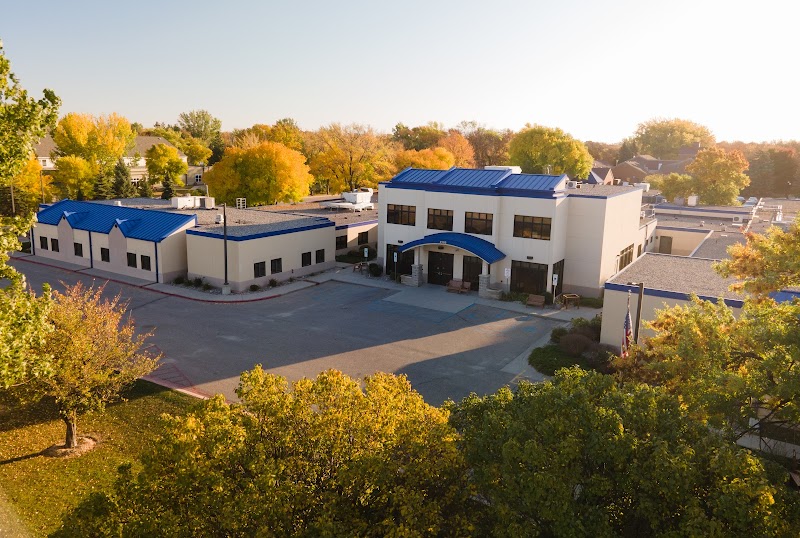
3102 S UNIVERSITY DR, FARGO, ND 58103 (701) 293-7750
Non profit - Corporation 98 Beds SMP HEALTH Data: November 2025
Trust Grade
93/100
#14 of 72 in ND
Last Inspection: June 2025

Inspected within the last 6 months. Data reflects current conditions.

Overview

SMP Health - St. Catherine South has an excellent Trust Grade of A, indicating a high level of quality and care. They are ranked #14 out of 72 nursing homes in North Dakota, placing them in the top half of facilities in the state and #5 out of 8 in Cass County, meaning only a few local options are better. The facility is improving, having reduced issues from 4 in 2024 to 2 in 2025, and it has a strong staffing rating with a turnover rate of just 25%, significantly lower than the state average. They have no fines, which is a positive indicator of compliance, and while RN coverage is average, it still ensures that residents receive necessary medical attention. However, there have been specific concerns, including failures in infection control practices for several residents, inaccurate coding of resident assessments, and a lack of oral hygiene care for a dependent resident, highlighting areas that need improvement despite the overall positive rating.

Trust Score
A
93/100
In North Dakota
#14/72
Top 19%
Safety Record
Low Risk
No red flags
Inspections
Getting Better
4 → 2 violations
Staff Stability
✓ Good
25% annual turnover. Excellent stability, 23 points below North Dakota's 48% average. Staff who stay learn residents' needs.
Penalties
✓ Good
No fines on record. Clean compliance history, better than most North Dakota facilities.
Skilled Nurses
✓ Good
Each resident gets 64 minutes of Registered Nurse (RN) attention daily — more than 97% of North Dakota nursing homes. RNs are the most trained staff who catch health problems before they become serious.
Violations
○ Average
10 deficiencies on record. Average for a facility this size. Mostly minor or procedural issues.
★★★★★
5.0
Overall Rating
★★★★★
5.0
Staff Levels
★★☆☆☆
2.0
Care Quality
★★★★★
5.0
Inspection Score
Stable
2024: 4 issues
2025: 2 issues

The Good

  • 5-Star Staffing Rating · Excellent nurse staffing levels
  • Low Staff Turnover (25%) · Staff stability means consistent care
  • Full Sprinkler Coverage · Fire safety systems throughout facility
  • No fines on record
  • Staff turnover is low (25%)

    23 points below North Dakota average of 48%

Facility shows strength in staffing levels, staff retention, fire safety.

The Bad

Chain: SMP HEALTH

Part of a multi-facility chain

Ask about local staffing decisions and management

The Ugly 10 deficiencies on record

Jun 2025 2 deficiencies
CONCERN (D)

Potential for Harm - no one hurt, but risky conditions existed

Infection Control (Tag F0880)

Could have caused harm · This affected 1 resident

Based on observation, review of facility policy, and staff interview, the facility failed to follow standards of infection control and prevention for 3 of 20 sampled residents (#10, #35, and #191) obs...

Read full inspector narrative →
Based on observation, review of facility policy, and staff interview, the facility failed to follow standards of infection control and prevention for 3 of 20 sampled residents (#10, #35, and #191) observed during personal cares. Failure to practice infection control standards related to hand hygiene/glove use and enhanced barrier precautions has the potential to spread infection throughout the facility. Findings include: Review of the facility policy titled Hand Hygiene occurred on 06/12/25. This policy, revised May 2024, stated, . Hand hygiene is indicated and will be performed under the conditions listed . Before applying and after removing personal protective equipment (PPE), including gloves . After assistance with personal body functions (e.g., elimination) . Review of the facility policy titled Enhanced Barrier Precautions occurred on 6/12/25. This policy, revised June 2025, stated, . Enhanced barrier precautions (EBP) are used to limit or prevent the spread of resistant organisms during high-contact resident care activities. These may be indicated for residents with . indwelling medical devices (e.g. central lines . ) . when performing transfers . EBP should be used for the duration of the affected resident's stay in the facility . until the resolution or discontinuation of the indwelling medical device that placed them at higher risk . - Observation on 06/10/25 at 9:15 a.m. showed two certified nurse aides (CNAs) (#2 and #3) applied gloves and the CNA (#3) removed Resident #10's brief, soiled with bowel movement, provided perineal cares, and placed a new brief under the resident. The CNA (#3) removed the soiled gloves, and without performing hand hygiene, applied new gloves. Both CNAs (#2 and #3) repositioned Resident #10, adjusted/secured the brief, and removed their gloves. The CNA (#3) handed the phone to the resident, placed a wedge under the resident's legs, placed a nasal cannula, attached the call light to the resident's side pillow, and then performed hand hygiene. - Observation on 06/10/25 at 9:00 a.m. showed a CNA (#1) applied gloves, removed Resident #35's soiled brief, performed perineal cares, and removed the soiled gloves. Without performing hand hygiene, the CNA (#1) applied new gloves, applied barrier cream to the resident's buttocks, and placed a new brief under the resident. The CNA (#1) removed the soiled gloves, and without performing hand hygiene, applied new gloves, adjusted/secured the resident's brief, adjusted the resident's pants, removed the gloves, and then performed hand hygiene. - Review of Resident #191's medical record occurred on all days of survey. Medical diagnoses included osteomyelitis (infection of the bone) and staphylococcus (infection of the skin). The current care plan stated, . on Enhanced Barrier Precautions r/t [related to] indwelling device PICC Line [a peripheral central catheter inserted into a vein in the upper arm] . use appropriate PPE when providing high level ADL's [activities of daily living] . use hand hygiene when visiting me . Observation on 6/09/25 at 4:04 p.m. showed an EBP sign on Resident #191 door. An unidentified CNA and a nurse (#5) entered Resident #191's room without performing hand hygiene or applying PPE. The CNA assisted Resident #191 out of a chair and the nurse (#5) applied a gait belt, and walked the resident to the bathroom. OPbservation showed the nurse (#5) touched areas of the resident's body, the walker, and the door during toileting cares and transfer assistance. The nurse (#5) admitted she should have performed hand hygiene and applied PPE prior to entering the room. During an interview on 6/11/25 at 3:48 p.m., an administrative nurse (#4) stated she expected staff to follow appropriate EBP.
MINOR (C)

Minor Issue - procedural, no safety impact

Staffing Information (Tag F0732)

Minor procedural issue · This affected most or all residents

Based on observation and staff interview, the facility failed to post the actual hours worked by nursing staff directly responsible for resident care on 2 of 4 days of survey (June 10-11, 2025). Failu...

Read full inspector narrative →
Based on observation and staff interview, the facility failed to post the actual hours worked by nursing staff directly responsible for resident care on 2 of 4 days of survey (June 10-11, 2025). Failure to post the actual hours worked by licensed and unlicensed nursing staff per shift and in a visible location does not allow residents and/or their families to be aware of the number of staff on duty. Findings include: Observations on 06/10/25 at 4:10 p.m. and 06/11/25 at 4:05 p.m. showed the posting of staff forms on the unit manager's open door, resulting in the forms inside the office and not visible to residents and/or their families. The forms contained staffing data for the day shift, but not the p.m. shift. During an interview on 06/11/25 at 5:15 p.m., an administrative nurse (#4) confirmed the day shift hours are from 6:00 a.m. to 2:30 p.m. and the p.m. shift hours are from 2:00 p.m. to 10:30 p.m. The facility failed to ensure updated staffing information for every shift and post it in a visible location.
Jun 2024 4 deficiencies
CONCERN (D)

Potential for Harm - no one hurt, but risky conditions existed

Assessment Accuracy (Tag F0641)

Could have caused harm · This affected 1 resident

**NOTE- TERMS IN BRACKETS HAVE BEEN EDITED TO PROTECT CONFIDENTIALITY** Based on record review, review of the Long-Term Care Facility Resident Assessment Instrument (RAI) 3.0 User's Manual (Version 1....

Read full inspector narrative →
**NOTE- TERMS IN BRACKETS HAVE BEEN EDITED TO PROTECT CONFIDENTIALITY** Based on record review, review of the Long-Term Care Facility Resident Assessment Instrument (RAI) 3.0 User's Manual (Version 1.18.11) and staff interview, the facility failed to ensure accurate coding of the Minimum Data Set (MDS) for 2 of 20 sampled residents (Resident #35 and #79). Failure to accurately complete the MDS does not allow each resident's assessment to reflect their current status/needs and may affect the accurate development of a comprehensive care plan and the care provided to the residents. Findings include: SECTION A: IDENTIFICATION INFORMATION & SECTION J: HEALTH CONDITIONS The Long-Term Care Facility RAI User's Manual, revised October 2023, page A6, stated, . Coding Instructions for A0310E, Is This Assessment the First Assessment (OBRA, Scheduled PPS, or OBRA Discharge) since the Most Recent Admission/Entry or Reentry? . Code 1, yes: if this assessment is the first of these assessments since the most recent admission/entry or reentry. Pages J-30 and J-31, stated, . J1700. Fall History on Admission/Entry or Reentry. Complete only if . A0310E = 1 . Coding Instructions for J1700A, Did the Resident Have a Fall Any Time in the Last Month Prior to Admission/Entry or Reentry? . Code 1, yes: if resident or family report or transfer records or medical records document a fall in the month preceding the resident's entry date item (A1600). Review of Resident #79's medical record occurred on all days of survey and identified the resident experienced a fall on 04/22/24. An X-ray performed on 05/03/24 identified a left femoral neck fracture. The resident transferred to the hospital on [DATE] and returned to the facility on [DATE]. Review of Resident #79's completed MDSs are as follows: * 05/03/24, Discharge Return Anticipated (an OBRA assessment) * 05/07/24, Entry (back to the facility) * 05/13/24, Quarterly (an OBRA assessment) Review of the 05/13/24 quarterly MDS identified the facility coded A0310E as 0, no even though this is the first assessment since reentry on 05/07/24. Review of J1700A identified the facility coded 0, no falls in the last month prior to reentry. Resident #79's medical record identified a fall on 04/22/23. The facility failed to accurately code A0310E and J1700A on Resident #79's quarterly MDS. SECTION N: MEDICATIONS The Long-Term Care Facility Resident Assessment Instrument (RAI) 3.0 User's Manual, Version 1.18.11, revised October 2023, pages N-6 and N-7, stated, . N0415: High-Risk Drug Classes: Use and Indication . Coding Instructions . N0415E1. Anticoagulant (e.g., [for example] warfarin, heparin, or low-molecular weight heparin): Check if an anticoagulant medication was taken by the resident at any time during the 7-day look-back period . Review of Resident #35's medical record occurred on all days of survey and showed a physician's order for Eliquis, an anticoagulant. The annual MDS, dated [DATE], showed staff failed to identify Resident #35 received an anticoagulant during the look-back period. During an interview on 06/13/24 at 10:01 a.m., an administrative staff member (#8) confirmed staff failed to code the MDS for an anticoagulant.
CONCERN (D)

Potential for Harm - no one hurt, but risky conditions existed

ADL Care (Tag F0677)

Could have caused harm · This affected 1 resident

Based on observation, record review, review of facility policy, and staff interview, the facility failed to ensure residents received the necessary services to maintain oral hygiene for 1 of 3 sampled...

Read full inspector narrative →
Based on observation, record review, review of facility policy, and staff interview, the facility failed to ensure residents received the necessary services to maintain oral hygiene for 1 of 3 sampled residents (Resident #28) dependent on staff for oral cares. Failure to provide oral care for a dependent resident may result in poor hygiene, increased oral/dental problems, and potential for adverse health effects. Findings include: Review of the facility policy titled STANDARDS OF CARE occurred on 06/13/24. This policy, dated May 2023, stated, Each of the following is part of the routine care provided by caregivers . Oral care will be done in the morning and at bedtime. Daily Morning Cares . Provide oral care . Review of Resident #28's medical record occurred on all days of survey. The current care plan stated, . I have ADL [activities of daily living] deficit related to: inability to communicate needs, Impaired mobility . ORAL CARE: I require complete help with mouth care. Observation on 06/11/24 at 8:51 a.m. showed two certified nurse aides (CNAs) (#3 and #4) provided Resident #28's morning cares. The CNAs failed to provide oral cares. Observations on 06/12/24 at 8:23 a.m., 8:52 a.m., and 11:21 a.m. showed a nurse (#5) provided cares to Resident #28. A dry white substance covered part of the resident's upper and lower lips and a wet white substance on the inside of the lips when he/she opened his/her mouth on each of these observations. The nurse failed to provide oral cares. During an interview on 06/12/24 at 3:18 p.m., an administrative staff member (#1) stated she expects staff to provide oral cares twice a day and as needed.
CONCERN (D)

Potential for Harm - no one hurt, but risky conditions existed

Deficiency F0760 (Tag F0760)

Could have caused harm · This affected 1 resident

Based on observation, record review, review of facility policy, and staff interview, the facility failed to ensure residents remained free from significant medication errors for 1 of 3 sampled residen...

Read full inspector narrative →
Based on observation, record review, review of facility policy, and staff interview, the facility failed to ensure residents remained free from significant medication errors for 1 of 3 sampled residents (Resident #28) observed receiving insulin. Failure to administer insulin according to a physician's order may result in adverse health effects for the residents. Findings include: Review of the facility policy titled Insulin Pen occurred on 06/13/24. This policy, revised June 2024, stated, . Prime the insulin pen . Set the insulin dose: a. Turn the dose selector to ordered dose. A click will be heard for each unit dialed. Check the dose a second time. Review of Resident #28's medical record occurred on all days of survey. Diagnoses included type-2 diabetes mellitus with hyperglycemia (high blood sugar). Physician's orders included 46 units of aspart insulin at 12:00 p.m. Observation on 06/11/24 at 11:39 a.m. showed a nurse (#6) primed Resident #28's aspart insulin pen by the medication cart in the hallway outside the resident's room. The nurse entered the resident's room, cleansed an area of the abdomen, and without dialing up the ordered dose of insulin (46 units), removed the insulin pen needle cover, inserted the needle into the resident's abdomen, and pushed the pen's plunger. When asked by the surveyor, the nurse (#6) acknowledged she failed to prepare and administer the ordered 46 units of insulin. The nurse (#6) then attached a new needle to the pen, primed the pen, dialed up the 46 units of insulin, and administered the insulin.
CONCERN (D)

Potential for Harm - no one hurt, but risky conditions existed

Infection Control (Tag F0880)

Could have caused harm · This affected 1 resident

Based on observation, record review, review of facility policy, review of professional reference, and staff interview, the facility failed to follow standards of infection control and prevention for 2...

Read full inspector narrative →
Based on observation, record review, review of facility policy, review of professional reference, and staff interview, the facility failed to follow standards of infection control and prevention for 2 of 12 sampled residents (Resident #28 and #79) and one supplemental resident (Resident #43) observed during cares. Failure to practice infection control standards related to use of personal protective equipment (PPE) and hand hygiene has the potential to spread infection throughout the facility. Findings include: Review of the facility policy titled Enhanced Barrier Precautions occurred on 06/13/24. This policy, revised April 2024, stated,. Enhanced barrier precautions will be implemented for residents with any of the following . indwelling medical devices (e.g. [for example], . feeding tubes [G-tube, a tube inserted into the gastrointestinal tract], tracheostomy [a surgical opening in the trachea that allows a tube to assist with breathing] .) . Infection or colonization with a CDC [Centers for Disease Control and Prevention]-targeted MDRO [multidrug resistant organism] . face protection may also be needed if performing activity with risk of splash or spray (i.e. [that is], . tracheostomy care). PPE for enhanced barrier precautions is only necessary when performing high-contact care activities . High-contact resident care activities include . Device care or use . feeding tubes, tracheostomy . Review of the facility policy titled Hand Hygiene occurred on 06/12/24. This policy, dated May 2024, stated, . Hand hygiene is indicated and will be performed . after assistance with personal body functions (e.g. elimination .) . Kozier & Erb's Fundamentals of Nursing, Concepts, Process and Practice, 11th Edition eText, 2021, Pearson, Boston, Massachusetts, page 678, stated, . Hand hygiene is important in every setting . It is important for both the nurses' and the clients' hands to be cleansed . after the hands have come in contact with any body substances . ENHANCED BARRIER PRECAUTIONS Review of Resident #28's medical record occurred on all days of survey. The current care plan stated, I am on enhanced barrier precautions r/t [related to] indwelling device: Tracheostomy, G-Tube, and a history of a MDRO. Use appropriate PPE when providing high levels of ADLs [activities of daily living]. Observation on 06/12/24 at 8:52 a.m. showed a nurse (#5) gathered supplies to complete Resident #28's G-tube dressing change. The nurse donned gloves, and without donning a gown, removed the soiled G-tube dressing, cleansed the G-tube site with warm soapy water, removed his/her gloves, performed hand hygiene, donned new gloves, and emptied the basin. The nurse (#5) then donned a gown and acknowledged he/she forgot to apply it earlier and continued with cares. Observation on 06/12/24 at 11:21 a.m. showed a nurse (#5) performed tracheostomy cares for Resident #28. During the cares, the resident began to cough and expelled mucus through the cannula (tube inserted into the tracheostomy hole) across the foot of his/her bed. The nurse (#5) failed to apply face protection before providing tracheostomy cares. During an interview on 06/12/24 at 3:18 p.m., an administrative staff member (#1) stated she expected staff to follow enhanced barrier precaution as stated in the facility policy. HAND HYGIENE Review of Resident #79's medical record occurred on all days of survey. The record identified a colostomy and dependence on staff for colostomy cares. Observation on 06/10/24 at 12:50 p.m. showed a certified nurse aide (CNA) (#7) performed colostomy cares for Resident #79. The resident periodically assisted the CNA by touching/positioning the colostomy bag and the graduate the bowel emptied into. After completing the cares, the CNA removed his/her gown and gloves and performed hand hygiene. The CNA failed to offer/provide hand hygiene to Resident #79. Observation on 06/11/24 at 11:22 a.m. showed a CNA (#2) performed incontinence cares for Resident #43 after a bowel movement. The CNA (#2) transferred the resident to a recliner, unhooked the leg straps and the mechanical lift sling, collected the garbage, and then removed the soiled gloves and performed hand hygiene. During an interview on 06/12/24 at 3:18 p.m., an administrative staff member (#1) confirmed she expected staff to provide Resident #79 hand hygiene after the colostomy cares and expected staff to remove gloves and perform hand hygiene after incontinence cares.
Jun 2023 4 deficiencies
CONCERN (D)

Potential for Harm - no one hurt, but risky conditions existed

Deficiency F0582 (Tag F0582)

Could have caused harm · This affected 1 resident

Based on review of Medicare Part A letters/notices and staff interview, the facility failed to ensure the completion of the Centers for Medicare/Medicaid Services (CMS) Skilled Nursing Facility Advanc...

Read full inspector narrative →
Based on review of Medicare Part A letters/notices and staff interview, the facility failed to ensure the completion of the Centers for Medicare/Medicaid Services (CMS) Skilled Nursing Facility Advance Beneficiary Notice of Non-coverage (SNFABN) form CMS-10055 for 1 of 2 residents (Resident #78) discharged from Medicare Part A services who remained in the facility. Failure to ensure the resident and/or resident representative received all available options for care and the option to appeal the termination of coverage has the potential to hinder the residents' right to an expedited review of a service termination. Findings include: Review of the Medicare Part A letters/notices for Resident #78 occurred the afternoon of 06/21/23 and identified the facility provided the SNFABN form to Resident #78's representative on 03/21/23. The facility failed to obtain documentation of the resident's wishes for continued services and/or the option to appeal the termination of Medicare Part A coverage prior to termination of Medicare Part A coverage on 03/25/23. During an interview on 06/21/23 at 3:05 p.m., a business office staff member (#1) confirmed staff failed to obtain the resident/resident representative option on the SNFABN form for Resident #78.
CONCERN (D)

Potential for Harm - no one hurt, but risky conditions existed

Deficiency F0699 (Tag F0699)

Could have caused harm · This affected 1 resident

Based on record review, review of facility policy, and staff interview, the facility failed to identify a resident's history of trauma, and/or triggers for 1 of 3 sampled residents (Resident #26) revi...

Read full inspector narrative →
Based on record review, review of facility policy, and staff interview, the facility failed to identify a resident's history of trauma, and/or triggers for 1 of 3 sampled residents (Resident #26) reviewed for Post-Traumatic Stress Disorder (PTSD) and/or Trauma. Failure to identify a resident's history of trauma, and/or triggers may cause re-traumatization. Findings include: Review of the facility policy and procedure titled Trauma Informed Care occurred on 06/21/23 at 2:04 p.m. This policy/procedure dated November 2019, stated, .The facility will account for residents' experiences, preferences, and cultural differences in order to eliminate or mitigate triggers that may cause re-traumatization of the resident. Review of Resident #26's medical record occurred on all days of survey and identified a diagnosis of PTSD. The record lack documentation of an assessment and the development of a plan of care that identified the resident's history of trauma, and/or potential triggers which may cause re-traumatization. During an interview on 06/21/23 at 10:21 a.m. an administrative staff member (#5) confirmed the facility failed to address Resident #26's PTSD and/or trauma diagnosis and potential triggers.
CONCERN (D)

Potential for Harm - no one hurt, but risky conditions existed

Deficiency F0761 (Tag F0761)

Could have caused harm · This affected 1 resident

Based on observation, review of facility policy, and staff interview, the facility failed to ensure accurate labeling of medications for 1 of 2 medication carts (Friendship Unit) observed during medic...

Read full inspector narrative →
Based on observation, review of facility policy, and staff interview, the facility failed to ensure accurate labeling of medications for 1 of 2 medication carts (Friendship Unit) observed during medication storage review. Failure to correctly label an insulin pen increases the risk of the wrong resident receiving the insulin. Finding include: Review of the facility policy titled Insulin Pen occurred on 06/22/23. This policy, dated February 2018, stated, . Insulin pens must be clearly labeled with the resident name. Observation of the medication cart on the Friendship Unit with staff nurse (#7) occurred on 06/21/23 at 4:36 p.m., and showed the following insulin pen for Resident #18: * Basaglar Kwik pen [a long acting insulin], displayed a label with only the first name visible. During an interview on 06/21/23 at 5:50 p.m., two administrative nurses (#4 and #6) confirmed the insulin pen failed to contain the full name of Resident #18.
CONCERN (D)

Potential for Harm - no one hurt, but risky conditions existed

Infection Control (Tag F0880)

Could have caused harm · This affected 1 resident

Based on observation and review of facility policy, the facility failed to follow standards of infection control for 1 of 1 sampled resident (Resident #46) observed during personal cares and applicati...

Read full inspector narrative →
Based on observation and review of facility policy, the facility failed to follow standards of infection control for 1 of 1 sampled resident (Resident #46) observed during personal cares and application of a dressing. Failure to follow infection control practices regarding hand hygiene during cares and dressing application has the potential for transmission of communicable diseases and infections to residents, staff, and visitors. Findings include: Review of the facility policy and procedure titled Hand Hygiene occurred on 06/22/23. This policy/procedure, dated December 2017, stated, Procedure: Hand hygiene is to be performed: . h) After removing gloves. Review of the facility policy and procedure titled Dressing Change: Nonsterile occurred on 06/22/23. This policy/procedure, dated June 2023, stated, . Procedure: . 2. Assemble all equipment in apartment [resident room]. 3. Establish clean field for dressing change. 5. Perform hand hygiene and apply and change gloves as appropriate during procedure. Observation on 06/20/23 at 9:10 a.m. showed a certified nurse aide (CNA) (#2) performed morning cares for Resident #46. The CNA (#2) changed gloves while providing care but failed to complete hand hygiene before donning clean gloves. When the CNA (#2) completed the resident's cares and cleaned up the supplies removed her gloves. Without performing hand hygiene, the CNA (#2) handed Resident #46, the phone, bed controls, call light, moved the overbed table, and handed the resident a drink, which the resident drank. The CNA (#2) failed to perform hand hygiene after and before performing other tasks. During this same observation, the nurse (#3) provided the application of a new dressing to Resident #46's sacral area. The nurse (#3), upon entering the room, set the clean supplies for the dressing on top of the soiled linen hamper. When the CNA (#2) finished, the nurse (#3) moved the supplies to the bedside stand. The nurse (#3), working from the bedside stand, donned gloves, cleansed the skin with sterile saline and gauze, removed gloves, donned clean gloves, and applied the foam dressing. The nurse (#3) failed to set up a clean field and failed to perform hand hygiene between glove changes.
Understanding Severity Codes (click to expand)
Life-Threatening (Immediate Jeopardy)
J - Isolated K - Pattern L - Widespread
Actual Harm
G - Isolated H - Pattern I - Widespread
Potential for Harm
D - Isolated E - Pattern F - Widespread
No Harm (Minor)
A - Isolated B - Pattern C - Widespread

Questions to Ask on Your Visit

  • "Can I speak with families of current residents?"
  • "What's your RN coverage like on weekends and overnight?"

Our Honest Assessment

Strengths
  • • Grade A (93/100). Above average facility, better than most options in North Dakota.
  • • No major safety red flags. No abuse findings, life-threatening violations, or SFF status.
  • • No fines on record. Clean compliance history, better than most North Dakota facilities.
  • • 25% annual turnover. Excellent stability, 23 points below North Dakota's 48% average. Staff who stay learn residents' needs.
Concerns
  • • No significant concerns identified. This facility shows no red flags across CMS ratings, staff turnover, or federal penalties.
Bottom line: Generally positive indicators. Standard due diligence and a personal visit recommended.

About This Facility

What is Smp Health - St Catherine South's CMS Rating?

CMS assigns SMP HEALTH - ST CATHERINE SOUTH an overall rating of 5 out of 5 stars, which is considered much above average nationally. Within North Dakota, this rating places the facility higher than 99% of the state's 100 nursing homes. This rating reflects solid performance across the metrics CMS uses to evaluate nursing home quality.
How is Smp Health - St Catherine South Staffed?

CMS rates SMP HEALTH - ST CATHERINE SOUTH's staffing level at 5 out of 5 stars, which is much above average compared to other nursing homes. Staff turnover is 25%, compared to the North Dakota average of 46%. This relatively stable workforce can support continuity of care.

What Have Inspectors Found at Smp Health - St Catherine South?

State health inspectors documented 10 deficiencies at SMP HEALTH - ST CATHERINE SOUTH during 2023 to 2025. These included: 9 with potential for harm and 1 minor or isolated issues.
Who Owns and Operates Smp Health - St Catherine South?

SMP HEALTH - ST CATHERINE SOUTH is owned by a non-profit organization. Non-profit facilities reinvest revenue into operations rather than distributing to shareholders. The facility is operated by SMP HEALTH, a chain that manages multiple nursing homes. With 98 certified beds and approximately 87 residents (about 89% occupancy), it is a smaller facility located in FARGO, North Dakota.
How Does Smp Health - St Catherine South Compare to Other North Dakota Nursing Homes?

Compared to the 100 nursing homes in North Dakota, SMP HEALTH - ST CATHERINE SOUTH's overall rating (5 stars) is above the state average of 3.1, staff turnover (25%) is significantly lower than the state average of 46%, and health inspection rating (5 stars) is much above the national benchmark.

What Should Families Ask When Visiting Smp Health - St Catherine South?

Based on this facility's data, families visiting should ask: "Can I visit during a mealtime to observe dining assistance and food quality?" "How do you handle medical emergencies, and what is your hospital transfer rate?" "Can I speak with family members of current residents about their experience?"

Is Smp Health - St Catherine South Safe?

Based on CMS inspection data, SMP HEALTH - ST CATHERINE SOUTH has a clean safety record: no substantiated abuse findings (meaning no confirmed cases of resident harm), no Immediate Jeopardy citations (the most serious violation level indicating risk of serious injury or death), and is not on the Special Focus Facility watch list (a federal program monitoring the lowest-performing 1% of nursing homes). The facility has a 5-star overall rating and ranks #1 of 100 nursing homes in North Dakota. While no facility is perfect, families should still ask about staff-to-resident ratios and recent inspection results during their visit.

Do Nurses at Smp Health - St Catherine South Stick Around?

Staff at SMP HEALTH - ST CATHERINE SOUTH tend to stick around. With a turnover rate of 25%, the facility is 21 percentage points below the North Dakota average of 46%. Low turnover is a positive sign. It means caregivers have time to learn each resident's needs, medications, and personal preferences. Consistent staff also notice subtle changes in a resident's condition more quickly. Registered Nurse turnover is also low at 28%, meaning experienced RNs are available to handle complex medical needs.

Was Smp Health - St Catherine South Ever Fined?

SMP HEALTH - ST CATHERINE SOUTH has no federal fines on record. CMS issues fines when nursing homes fail to meet care standards or don't correct problems found during inspections. The absence of fines suggests the facility has either maintained compliance or corrected any issues before penalties were assessed. This is a positive indicator, though families should still review recent inspection reports for the full picture.

Is Smp Health - St Catherine South on Any Federal Watch List?

SMP HEALTH - ST CATHERINE SOUTH is not on any federal watch list. The most significant is the Special Focus Facility (SFF) program, which identifies the bottom 1% of nursing homes nationally based on persistent, serious quality problems. Not being on this list means the facility has avoided the pattern of deficiencies that triggers enhanced federal oversight. This is a positive indicator, though families should still review the facility's inspection history directly.