LUTHER MEMORIAL HOME
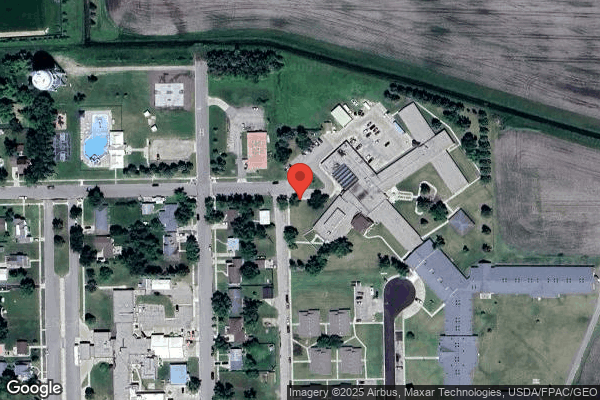
750 MAIN ST E, MAYVILLE, ND 58257 (701) 786-3401
Non profit - Corporation 60 Beds Independent Data: November 2025 1 Immediate Jeopardy citation
Trust Grade
66/100
#25 of 72 in ND
Last Inspection: October 2024

Within standard 12-15 month inspection cycle. Federal law requires annual inspections.

Overview

Luther Memorial Home in Mayville, North Dakota, has a Trust Grade of C+, indicating it is slightly above average but not quite at the top tier of facilities. It ranks #25 out of 72 in the state, placing it in the top half, and #2 out of 3 in Traill County, meaning only one local nursing home is rated higher. Unfortunately, the facility is experiencing a worsening trend, with issues increasing from 1 in 2023 to 3 in 2024. Staffing is a strong point, rated 5 out of 5 stars, though the turnover rate is average at 50%. However, the facility has faced concerning incidents, including a failure to monitor a resident’s blood glucose levels, which led to a critical situation where the resident was found unresponsive. Additionally, there were lapses in infection control practices and inaccuracies in resident assessments that could affect care plans. Overall, while there are strengths in staffing, the facility needs improvement in several care areas.

Trust Score
C+
66/100
In North Dakota
#25/72
Top 34%
Safety Record
High Risk
Review needed
Inspections
Getting Worse
1 → 3 violations
Staff Stability
⚠ Watch
50% turnover. Above average. Higher turnover means staff may not know residents' routines.
Penalties
✓ Good
$5,814 in fines. Lower than most North Dakota facilities. Relatively clean record.
Skilled Nurses
✓ Good
Each resident gets 59 minutes of Registered Nurse (RN) attention daily — more than average for North Dakota. RNs are trained to catch health problems early.
Violations
○ Average
8 deficiencies on record. Average for a facility this size. Mostly minor or procedural issues.
★★★★☆
4.0
Overall Rating
★★★★★
5.0
Staff Levels
★★★★☆
4.0
Care Quality
★★★☆☆
3.0
Inspection Score
Stable
2023: 1 issues
2024: 3 issues

The Good

  • 5-Star Staffing Rating · Excellent nurse staffing levels
  • 4-Star Quality Measures · Strong clinical quality outcomes
  • Full Sprinkler Coverage · Fire safety systems throughout facility
  • No fines on record

Facility shows strength in staffing levels, quality measures, fire safety.

The Bad

Staff Turnover: 50%

Near North Dakota avg (46%)

Higher turnover may affect care consistency

Federal Fines: $5,814

Below median ($33,413)

Minor penalties assessed

The Ugly 8 deficiencies on record

1 life-threatening
Oct 2024 2 deficiencies
CONCERN (D) 📢 Someone Reported This

A family member, employee, or ombudsman was alarmed enough to file a formal complaint

Potential for Harm - no one hurt, but risky conditions existed

Assessment Accuracy (Tag F0641)

Could have caused harm · This affected 1 resident

Based on record review, review of the Long-Term Care Facility Resident Assessment Instrument (RAI) 3.0 User's Manual (Version 1.18.11), and staff interview, the facility failed to ensure accurate codi...

Read full inspector narrative →
Based on record review, review of the Long-Term Care Facility Resident Assessment Instrument (RAI) 3.0 User's Manual (Version 1.18.11), and staff interview, the facility failed to ensure accurate coding of the Minimum Data Set (MDS) for 1 of 15 sampled residents (Resident #49). Failure to accurately complete the MDS does not allow the resident's assessment to reflect their current status/needs and may affect the accurate development of a comprehensive care plan and the care provided to the resident. Findings include: Section K: SWALLOWING/NUTRITION STATUS The Long-Term Care Facility RAI Manual, revised October 2023, page K6, stated, . K0300 Weight Loss . Code 2, yes, not on physician-prescribed weight-loss regimen: if the resident has experienced a weight loss of 5% or more in the past 30 days or 10% or more in the last 180 days, and the weight loss was not planned and prescribed by a physician. Review of Resident #49's medical record occurred on all days of survey. Two quarterly MDSs, dated 06/21/24 and 09/21/24, identified section K0300 coded as 2 for weight loss; however, record review failed to identify Resident #49 experienced a weight loss. Facility staff failed to accurately code the quarterly MDSs as 0 indicating Resident #49 did not have a 5% weight loss in 30 days or a 10% weight loss in 180 days. During an interview on 10/10/24 at 10:21 a.m., a dietary supervisor (#3) confirmed staff failed to code the MDS correctly for Resident #49.
CONCERN (D) 📢 Someone Reported This

A family member, employee, or ombudsman was alarmed enough to file a formal complaint

Potential for Harm - no one hurt, but risky conditions existed

Infection Control (Tag F0880)

Could have caused harm · This affected 1 resident

Based on observation, record review, review of facility policy, and staff interview, the facility failed to follow standards of infection control and prevention for 1 of 5 sampled residents (Resident ...

Read full inspector narrative →
Based on observation, record review, review of facility policy, and staff interview, the facility failed to follow standards of infection control and prevention for 1 of 5 sampled residents (Resident #16) on enhanced barrier precautions (EBP) observed during cares. Failure to practice infection control standards related to EBP has the potential to spread infection throughout the facility. Findings include: Review of the facility's policy titled Enhanced Barrier Precautions occurred on 10/09/24. This policy, revised 04/01/24, stated, . Enhanced barrier precautions (EBP) refer to an infection control intervention designed to reduce transmission of multidrug-resistant organisms [MDRO] that employs targeted gown and gloves use during high contact resident care activities. 2. Initiation of Enhanced Barrier Precautions: . b. enhanced barrier precautions will be used for residents with any of the following: . i. Wounds (e.g., chronic wounds such as pressure ulcers. diabetic foot ulcers. unhealed surgical wounds, and chronic venous stasis ulcers) . 3. Implementation of enhanced Barrier Precautions: a. Make gowns and gloves available immediately near or upon entry of the resident's room . 4. High-contact resident care activities include: . c. Transferring. d. Providing hygiene . f. assisting with toileting . h. Wound care: any skin opening requiring a dressing . 9. enhanced barrier precautions should be used . until resolution of the wound . Review of Resident #16's medical record occurred on all days of survey and identified the onset of an open stage two pressure ulcer to the right buttocks on 10/05/24. The care plan stated, . Problem start date: 10/05/24 . Impaired skin integrity/Pressure sore to right buttocks-scarred area is now open . Enhanced Barrier Precautions (EBP) initiated . Observation on 10/07/24 at 4:23 p.m. showed no EBP sign or supply cart located outside/inside of Resident #16's room. A certified nurse aide (CNA) (#2) entered Resident #16's room and without donning a gown or gloves transferred the resident from the wheelchair to the toilet and performed perineal cares. During an interview on 10/08/24 at 3:30 p.m., an administrative nurse (#1) stated she expected signage, appropriate PPE available, and staff to follow the policy.
Feb 2024 1 deficiency 1 IJ
CRITICAL (J) 📢 Someone Reported This

A family member, employee, or ombudsman was alarmed enough to file a formal complaint

Immediate Jeopardy (IJ) - the most serious Medicare violation

Quality of Care (Tag F0684)

Someone could have died · This affected 1 resident

Based on record review, review of facility policy, and staff interview, the facility failed to provide care and services for 1 of 1 closed record (Resident #1) with diabetes. Failure to ensure residen...

Read full inspector narrative →
Based on record review, review of facility policy, and staff interview, the facility failed to provide care and services for 1 of 1 closed record (Resident #1) with diabetes. Failure to ensure residents receive treatment and care according to professional standards of practice related to blood glucose monitoring increases the risk of serious harm, impairment, or death. During the complaint survey, the team determined an Immediate Jeopardy (IJ) situation existed on 02/01/24 at 5:22 p.m. The IJ resulted from staff failure to recheck a resident's glucose [sugar] or take additional interventions after a test result of 61 mg/dL (milligrams per deciliter) on 01/13/24. Staff found Resident #1 unresponsive and could not be revived. * 02/01/24 at 4:03 p.m., the survey team contacted the State Survey Agency (SSA) to report the findings, discuss, and confirm the presence of IJ. * 02/01/24 at 5:22 p.m., the survey team notified the administrator and the director of nursing (DON) of the IJ situation, provided them with the IJ template, and requested they develop a plan for removal of the IJ. * 02/02/24 at 11:33 a.m., the DON emailed the IJ removal plan for the SSA to review. The removal plan contained the following: * For all diabetic residents with orders for blood sugar [BS] checks the facility revised the orders in the electronic medical record [EMR] so if the BS is less than 70 the nurse is prompted to complete required task interventions and complete a BS recheck 15 minutes after the intervention until the BS is greater than 70. The nurse will not be able to sign off the order until all required tasks are completed. The nurses will also be required to enter the BS result in the task before it can be signed off. * The facility updated the blood glucose protocol to incorporate these changes. * All nurses will be educated on this updated facility blood glucose protocol prior to working their next shift. * Added specific education for the blood glucose protocol to the nurse orientation checklist. * 02/02/24 at 11:35 a.m., the SSA reviewed and accepted the facility's removal plan for the IJ. * 02/02/24 at 11:43 a.m., the SSA notified CMS (Centers for Medicare & Medicaid Services) location of the presence of IJ and emailed the IJ template to CMS. * 02/05/23 at 5:05 p.m., the survey team verified the implementation of the facility's IJ removal plan. The deficient practice remained at a G scope and severity following the removal of the IJ. Findings include: Review of the facility policy and procedure titled Blood Glucose - Protocol if Abnormal occurred on 02/01/24. This policy, dated 05/17/23, stated, . Low glucose is considered below 70. For GLC [glucose] 60-70 - give 15 g [grams] CHO [carbohydrate] * 4 oz juice * 4 oz regular soda * 1 tablespoon sugar (4 packets), honey, jam or jelly * 5 or 6 pieces of hard candy * 6 large Jelly beans, 5 gum drops, 12 [sic] gummi bears, 4 Starburst, 1.S [sic] Skittles. Wait 15 minutes then re-check glucose. If still low repeat this procedure. Once glucose is above 70 a snack containing carbohydrate and fat/protein should be provided, unless the next meal is within 30 minutes. If someone has a glucose above 70 but below 120 at bedtime or several hours before the next meal, they should be given a snack that contains carbohydrate and fat/protein. Review of Resident #1's medical record occurred on 02/01/24. Physician orders included: * 09/20/23, Novolog Flexpen U-100 Insulin [fast-acting insulin] . 100 unit/mL [milliliter] . 30 units; subcutaneous [under the skin] Once A Day 05:00 PM * 09/03/16, Tresiba FlexTouch U-100 [long-acting insulin] . 30 units; subcutaneous Special Instructions: HOLD FOR BS LESS THAN 150 At Bedtime 08:00 PM Resident #1's Medication Administration Record (MAR) for 01/13/24 showed the following: * 5:00 p.m., Novolog Insulin, 30 units administered by a nurse (#1) * 8:00 p.m., Blood Sugar Check, a nurse (#1) documented at 10:37 p.m., Administered late Comment: Administering care * 8:00 p.m., Tresiba Insulin, 30 units, a nurse (#1) documented two different entries at 10:37 p.m. Administered late Comment: Administering care and Site: Not Charted: On Hold Comment: bs 61 The medical record documentation showed a delay in completion of 8:00 p.m. orders. The nurses' notes stated the following: * 01/13/24 at 2:12 p.m. Emesis: Staff report resident had emesis of indigested food. Assisted with cleaning up. Will continue to monitor and have oncoming nurse assess. * 01/13/24 at 9:15 p.m. (created 01/15/24 06:56 a.m.) According to protocol, [resident's name] Tresiba was placed on hold because his Bs [BS] 83, which was less than the 150 the required amount to enable him to have one. In order to help bring his Bs up I gave him some cranberry juice, honey and cookie, which he ate a little, after lots of prompting. I came back after 30mins [sic] to recheck him and see if his Bs had improved, but instead his Bs has decreased further to 61. So I decided to tried [sic] again and gave him a little more juice, cookie and honey with the help of other staff members. After more prompting [resident name] was able to drink some of the juice, take the honey and eat some of cookie and he went to bed. Staff came to his room around 10:30 to changed [sic] and get him ready for bed. According to them he responded well. Around 11 [p.m.] he was heard hitting the wall and talking, which he does usually when he is in his room. When he was checked on the next time around 00: 15 [sic] [a.m.] he was found unresponsive and cold to touch and could not be revived. * 01/14/24 12:22 a.m. This writer entered resident's room and round [sic] resident expired. Body cold to touch. Yellow emesis and large amounts of clear phlegm found on bed next to mouth. Apical [specific point on the chest] HR [heart rate] absent for 1 minute, double verified by other charge nurse. During an interview on 02/01/24 at 3:49 p.m., an administrative staff member (#2) reported she called the certified nurse aide (CNA) (#3) on 02/01/24 to obtain her recollection of her interaction with Resident #1 on 01/13/2024 after 10:45 p.m. An administrative staff member (#2) reported the CNA (#3) confirmed she worked that night, arriving at 10:45 p.m. The CNA (#3) reported Resident #1 was not banging on the wall, but knocking, as he did all the time. He would play with his light and mess around. The nurse (#1) asked the CNA (#3) to bring the resident four ounces of cranberry juice and a whole packet of honey. The CNA (#3) gave Resident #1 the cranberry juice between 11:00 p.m. and 11:15 p.m. and it did not take the resident long to drink it. The CNA (#3) stated the resident coughed a little bit while drinking the cranberry juice. The CNA (#3) left the resident's head of the bed up because he looked comfortable and had closed his eyes. Resident #1's blood sugars included: 09/02/23 5:28 a.m. - 68 mg/dL - Failed to indicate what staff gave to the resident to increase blood sugar and re-check glucose after 15 minutes. 12/19/23 8:20 p.m. - 69 mg/dL - Failed to indicate what staff gave to the resident to increase blood sugar and re-check glucose after 15 minutes. 01/10/24 8:00 p.m. - 58 mg/dL, 8:20 p.m. - 80 mg/dL - Failed to indicate what staff gave to the resident to increase blood sugar. 01/11/24 7:37 p.m. - 78 mg/dL - Failed to indicate if snack was given at bedtime. 01/13/24 4:45 p.m. - 146 mg/dL - A nurse's note, dated 01/13/24 at 9:15 p.m., referenced blood sugars of 83 mg/dL and 61 mg/dL but failed to document the times staff obtained the blood sugars. During an interview on 02/01/24 at 2:40 p.m., two administrative staff members (#2 and #4) confirmed the following: * Staff are expected to follow the protocol [Blood Glucose - Protocol if Abnormal] unless there are other orders in place by the provider when a blood sugar is low. * Nurse (#1) had been the nurse on the 01/13/24 evening shift and hadn't charted the events from 01/13/24 so we requested documentation of a late entry on 01/15/24. * It is unknown what time the nurse obtained the blood glucoses of 83 mg/dL and 61 mg/dL. * The nurse should have rechecked the resident's blood sugar after he drank the juice following the BS of 61 mg/dL. * The record lacked documentation of an assessment following the resident's emesis on 01/13/24 at 2:12 p.m. * Staff were expected to offer Resident #1 a bedtime snack if his BS was less than 120 mg/dL. The record lacked evidence Resident #1 received a bedtime snack on 01/13/24. Facility staff failed to: * Re-check blood glucoses after 15 minutes when a blood glucose is below 70 mg/dL. * Document interventions for low blood glucoses or between 70 mg/dL and 120 mg/dL at bedtime. * Complete 01/13/24 8:00 p.m. orders in a timely manner. * Document the times the staff obtained blood sugars of 83 mg/dL and 61 mg/dL as referenced in a progress note dated 01/13/24 at 9:15 p.m. * Assess the resident following an emesis, as indicated in the progress note dated 01/13/24 at 2:12 p.m. * Create a progress note in a timely manner. The nurse created the 01/13/24 9:15 p.m. progress note over 33 hours later. * Provide an HS snack when blood sugars are between 70 mg/dL and 120 mg/dL at bedtime.
Sept 2023 1 deficiency
CONCERN (D)

Potential for Harm - no one hurt, but risky conditions existed

Accident Prevention (Tag F0689)

Could have caused harm · This affected 1 resident

Based on observation, record review, and staff interview, the facility failed to ensure an environment free of accidents and hazards for 1 of 1 resident (#25) with a hot liquid spill and 1 of 1 reside...

Read full inspector narrative →
Based on observation, record review, and staff interview, the facility failed to ensure an environment free of accidents and hazards for 1 of 1 resident (#25) with a hot liquid spill and 1 of 1 resident (#9) who smoked cigarettes. Failure to ensure appropriate interventions and assessments for residents drinking hot liquids and smoking may result in serious burns/injuries to residents. Findings include: The facility failed to provide a policy regarding hot liquid spills and completing smoking assessments. - Review of Resident #25's medical record occurred on all days of survey and included a diagnosis of dementia. The care plan stated, . At assist table, for supervision/cuing . A progress note, dated 09/18/23, stated, . Resident spilt [sic] hot tea on her stomach. No redness noted. Will monitor for 72 hours. An incident report, dated 09/18/23, identified Resident #25 had spilled hot tea on her abdomen with no injuries. During an interview on 09/26/23 at 3:40 p.m. a dietary manager (#3), stated she was not aware of Resident #25's hot liquid spill and had not put any interventions into place to prevent serious burns and/or injuries. During an interview on 09/27/23 at 8:10 a.m. a licensed nurse (#2) verified the hot liquid spill occurred when Resident #25 was alone in her room with hot tea, which did not have a lid on. During an interview on 09/27/23 at 8:20 a.m. an administrative nurse (#1), confirmed the facility failed to put interventions in place after Resident #25's hot liquid spill. - Review of Resident #9's medical record occurred on all days of survey. An admission assessment, dated 08/14/23, identified the use of tobacco. Diagnoses included reduced mobility, and chronic obstructive pulmonary disease. The care plan stated, I do smoke cigarettes and am aware that my family can assist me off . premises to smoke. Lock box in residents [sic] room for tobacco product storage. COPD - Alteration in respiratory status - uses O2 [oxygen] continuously. is aware that family needs to take her out of facility/off grounds to do this. During an interview on 09/26/23 at 9:00 a.m., Resident #9, stated his/her cigarettes are in a locked box in a drawer of the cupboard and family or staff walk him/her to the front door to leave the facility by him/herself to smoke. During an interview on 09/27/23 at 2:15 p.m., staff member (#2) stated staff could take Resident #9 to the front door to smoke, but were not allowed to go outside with the resident. The staff member (#2) stated residents need to sign in and out when leaving the facility. During an interview on 09/27/23 at 3:10 p.m., an administrative nurse (#1), stated he/she was unaware Resident #9 left the facility to smoke alone and the facility had not assessed the resident's ability to smoke alone. The facility failed to complete a tobacco use assessment for Resident #9 upon admission.
Aug 2022 4 deficiencies
CONCERN (D)

Potential for Harm - no one hurt, but risky conditions existed

Deficiency F0658 (Tag F0658)

Could have caused harm · This affected 1 resident

Based on observation, record review, and review of facility policy, the facility failed to ensure staff followed professional standards of practice for 1 of 1 sampled resident (Resident #58) with a fe...

Read full inspector narrative →
Based on observation, record review, and review of facility policy, the facility failed to ensure staff followed professional standards of practice for 1 of 1 sampled resident (Resident #58) with a feeding tube. Failure to ensure residents received their complete dose of medication during administration may lead to reduced efficacy and adverse health effects. Findings include: Review of the facility policy titled, Medication Administration occurred on 08/31/22. This policy, revised/reviewed July 2018, stated, . Prepare medication for administration, using these rules: Observe the Five Rights of Medication Administration . Right dosage. Review of Resident #58's medical record occurred on all days of survey. Diagnoses included epilepsy. A physician's order identified oxcarbazepine (anti-seizure) tablet; 300 mg [milligram]; amt: [amount] 600 mg; gastric tube Twice A Day at 08:00 AM, 08:00 PM. During an observation on 08/30/22 at 9:15 a.m., a facility nurse (#1) administered Resident #58's medication via the feeding tube. The nurse crushed and mixed all medications with water in separate labeled medication cups, and administered them one at a time with a 10 cubic centimeter (cc) water flush between each med. After the nurse finished administering the medication, the cup labeled oxcarbazepine contained a layer of medication that covered the bottom of the cup. The nurse failed to administer the complete dose of the medication.
CONCERN (D)

Potential for Harm - no one hurt, but risky conditions existed

Deficiency F0692 (Tag F0692)

Could have caused harm · This affected 1 resident

**NOTE- TERMS IN BRACKETS HAVE BEEN EDITED TO PROTECT CONFIDENTIALITY** Based on observation, record review, policy review, and staff interview, the facility failed to ensure acceptable parameters of ...

Read full inspector narrative →
**NOTE- TERMS IN BRACKETS HAVE BEEN EDITED TO PROTECT CONFIDENTIALITY** Based on observation, record review, policy review, and staff interview, the facility failed to ensure acceptable parameters of nutritional status for 1 of 6 sampled residents (Resident #9) with weight loss. Failure to adequately monitor and evaluate weights, complete nutritional assessments, assess the effectiveness of existing interventions, and re-evaluate the need for updated or additional interventions may result in weight loss, inadequate nutrition, and/or delayed wound healing. Findings include: Review of the facility policy titled Weight Loss Protocol occurred on 08/30/22. This policy, dated June 2000, stated, . residents with a 3# [pound] or greater weight change . will be monitored via weights, intakes, etc. to determine if interventions are necessary to prevent further weight loss. Changes to be documented in resident chart. Review of Resident #9's medical record occurred on all days of survey. Diagnoses included Alzheimer's disease and Dementia. The quarterly Minimum Data Set (MDS), dated [DATE], identified a significant weight loss and not on a physician-prescribed weight loss program. The record lacked a nutritional assessment to address Resident #9's weight loss. Review of Resident #9's weights showed the following. 02/27/22 (122.5 lbs) 08/28/22 (110 lbs) (02/27/22 to 08/28/22 = 10.2% decrease in weight) The current care plan stated, I will maintain weight above 115# thru [sic] next review. Resident would benefit from supplements but has been unwilling to take them. Observations of Resident #9 throughout the survey showed the resident ate independently, without supplements offered at meals. The record lacked evidence that high calorie foods were offered. During an interview on the morning of 08/31/22, an administrative nurse (#6) stated she expected staff to implement supplements and monitor weights. The dietary manager (#7) stated Resident #9 will not take supplements and only wants half portions. Both staff failed to explain the facility's system for identifying weight loss and implemention of interventions. The dietary manager (#7) failed to provide documentation of interventions regarding Resident #9's weight loss.
CONCERN (D)

Potential for Harm - no one hurt, but risky conditions existed

Deficiency F0761 (Tag F0761)

Could have caused harm · This affected 1 resident

Based on observation, review of facility policy, and staff interview, the facility failed to ensure proper labeling of multi-dose insulin pens during 1 of 1 medication storage rooms (Unit B) observed....

Read full inspector narrative →
Based on observation, review of facility policy, and staff interview, the facility failed to ensure proper labeling of multi-dose insulin pens during 1 of 1 medication storage rooms (Unit B) observed. Failure to correctly label insulin pens increases the risk of residents receiving inaccurate doses of medications. Findings include: Kozier & Erb's Fundamentals of Nursing, Concepts, Process and Practice, 11th Edition, 2021, Pearson, Boston, Massachusetts, page 840, states, .The labeling of all medications, medication containers, and other solutions is a risk-reduction activity consistent with safe medication management. Review of the facility policy titled Process for Relabeling Medication Cards occurred on 08/31/22. This policy, revised September 2018 stated, Luther Memorial Home [Facility name] will ensure drugs and biologicals used withing the facility are labeled accurately and in accordance with currently accepted professional pharmacy requirements. Review of facility policy titled Medication Administration occurred on 08/31/22. This policy, revised July 2018 stated, . Never administer medication from an unlabeled supply. - Observation during medication storage and labeling on Unit B for Resident #57 on 08/31/22 at 8:20 a.m., with a staff nurse (#8) identified the following: * A Levemir insulin pen was without a label or original container. * A Novolog insulin pen was without a label or original container. During an interview on 8/31/22 at 1:03 p.m., an administrative nurse (#6) confirmed the insulin pens lacked labeling and/or original container.
CONCERN (D)

Potential for Harm - no one hurt, but risky conditions existed

Infection Control (Tag F0880)

Could have caused harm · This affected 1 resident

Based on observation, review of facility policy, and staff interview, the facility failed to follow infection control practices for 1 of 9 sampled residents (Resident #23) and 1 supplemental resident ...

Read full inspector narrative →
Based on observation, review of facility policy, and staff interview, the facility failed to follow infection control practices for 1 of 9 sampled residents (Resident #23) and 1 supplemental resident (Resident #42) observed during perineal care. Failure to follow infection control practices related to hand hygiene has the potential to transmit infections to other residents, staff, and visitors. Findings include: Review of the facility policy titled Hand Washing and Hand Hygiene occurred on 08/31/22. This undated policy stated, . To provide guidelines to employees for proper and appropriate hand washing techniques that will aid in the prevention or the transmission of infections. When to wash hands with soap and water or alcohol based hand rubs: 1. Hand hygiene should be performed . After contact with a resident's mucous membranes and body fluids or excretions. After removing gloves . If moving from a contaminated body site to a clean body site during resident care. - Observation on 08/29/22 at 3:19 p.m. showed two certified nursing assistants (CNAs) (#4 and #5) transferred Resident #42 from the wheelchair to the bed. The CNAs performed hand hygiene, donned gloves, lowered the front of the resident's brief, performed perineal cares, and rolled the resident onto her left side. One CNA (#4) cleansed the rectal area of bowel movement (BM) with a disposable wipe. Without removing gloves, the CNA (#4) removed the soiled brief, placed a new brief under the resident, obtained a tube of barrier cream from the nightstand, and applied the cream to the resident's buttocks. The CNA (#4) then removed her gloves, adjusted the brief, and placed the the tube of barrier cream back into the resident's nightstand. The CNA (#4) failed to remove her soiled gloves and perform hand hygiene after cleansing the resident's rectal area and before touching other objects and/or applying barrier cream. - Observation on 08/30/22 at 10:38 a.m. showed two CNAs (#2 and #3) transferred Resident #23 from the wheelchair to the bed. The CNA's performed hand hygiene, donned gloves, lowered the front of the resident's brief, performed perineal cares, and rolled the resident onto his left side. One CNA (#2) cleansed the rectal area of BM with a disposable wipe and rolled the soiled brief under the resident. Without removing her gloves, the CNA (#2) obtained a tube of barrier cream from the windowsill and applied the cream to the residents buttocks. The CNA (#2) then placed the tube of cream back onto the windowsill, removed her gloves and held the resident's hand as he rolled onto his right side. The CNA (#2) failed to remove the soiled gloves and perform hand hygiene after cleansing the resident's rectal area and before touching other objects, applying barrier cream and/or holding the resident's hand. During an interview on 08/31/22 at 12:55 p.m., an administrative nurse (#6) confirmed she expects staff to follow the facility's policy regarding hand hygiene.
Understanding Severity Codes (click to expand)
Life-Threatening (Immediate Jeopardy)
J - Isolated K - Pattern L - Widespread
Actual Harm
G - Isolated H - Pattern I - Widespread
Potential for Harm
D - Isolated E - Pattern F - Widespread
No Harm (Minor)
A - Isolated B - Pattern C - Widespread

Questions to Ask on Your Visit

  • "What changes have you made since the serious inspection findings?"
  • "Can I speak with families of current residents?"
  • "What's your RN coverage like on weekends and overnight?"

Our Honest Assessment

Strengths
  • • Licensed and certified facility. Meets minimum state requirements.
Concerns
  • • Multiple safety concerns identified: 1 life-threatening violation(s). Review inspection reports carefully.
  • • 8 deficiencies on record, including 1 critical (life-threatening) violation. These warrant careful review before choosing this facility.
Bottom line: Mixed indicators with Trust Score of 66/100. Visit in person and ask pointed questions.

About This Facility

What is Luther Memorial Home's CMS Rating?

CMS assigns LUTHER MEMORIAL HOME an overall rating of 4 out of 5 stars, which is considered above average nationally. Within North Dakota, this rating places the facility higher than 99% of the state's 100 nursing homes. This rating reflects solid performance across the metrics CMS uses to evaluate nursing home quality.

How is Luther Memorial Home Staffed?

CMS rates LUTHER MEMORIAL HOME's staffing level at 5 out of 5 stars, which is much above average compared to other nursing homes. Staff turnover is 50%, compared to the North Dakota average of 46%.

What Have Inspectors Found at Luther Memorial Home?

State health inspectors documented 8 deficiencies at LUTHER MEMORIAL HOME during 2022 to 2024. These included: 1 Immediate Jeopardy (the most serious level, indicating potential for serious harm or death) and 7 with potential for harm. Immediate Jeopardy findings are rare and represent the most serious regulatory concerns. They require immediate corrective action.

Who Owns and Operates Luther Memorial Home?

LUTHER MEMORIAL HOME is owned by a non-profit organization. Non-profit facilities reinvest revenue into operations rather than distributing to shareholders. The facility operates independently rather than as part of a larger chain. With 60 certified beds and approximately 60 residents (about 100% occupancy), it is a smaller facility located in MAYVILLE, North Dakota.

How Does Luther Memorial Home Compare to Other North Dakota Nursing Homes?

Compared to the 100 nursing homes in North Dakota, LUTHER MEMORIAL HOME's overall rating (4 stars) is above the state average of 3.1, staff turnover (50%) is near the state average of 46%, and health inspection rating (3 stars) is at the national benchmark.

What Should Families Ask When Visiting Luther Memorial Home?

Based on this facility's data, families visiting should ask: "What changes have been made since the serious inspection findings, and how are you preventing similar issues?" "Can I visit during a mealtime to observe dining assistance and food quality?" "How do you handle medical emergencies, and what is your hospital transfer rate?" "Can I speak with family members of current residents about their experience?" These questions are particularly relevant given the facility's Immediate Jeopardy citations.

Is Luther Memorial Home Safe?

Based on CMS inspection data, LUTHER MEMORIAL HOME has documented safety concerns. Inspectors have issued 1 Immediate Jeopardy citation (the most serious violation level indicating risk of serious injury or death). The facility has a 4-star overall rating and ranks #1 of 100 nursing homes in North Dakota. Families considering this facility should ask detailed questions about what corrective actions have been taken since these incidents.

Do Nurses at Luther Memorial Home Stick Around?

LUTHER MEMORIAL HOME has a staff turnover rate of 50%, which is about average for North Dakota nursing homes (state average: 46%). Moderate turnover is common in nursing homes, but families should still ask about staff tenure and how the facility maintains care continuity when employees leave.

Was Luther Memorial Home Ever Fined?

LUTHER MEMORIAL HOME has been fined $5,814 across 1 penalty action. This is below the North Dakota average of $33,137. While any fine indicates a compliance issue, fines under $50,000 are relatively common and typically reflect isolated problems that were subsequently corrected. Families should ask what specific issues led to these fines and confirm they've been resolved.

Is Luther Memorial Home on Any Federal Watch List?

LUTHER MEMORIAL HOME is not on any federal watch list. The most significant is the Special Focus Facility (SFF) program, which identifies the bottom 1% of nursing homes nationally based on persistent, serious quality problems. Not being on this list means the facility has avoided the pattern of deficiencies that triggers enhanced federal oversight. This is a positive indicator, though families should still review the facility's inspection history directly.