SHEYENNE CROSSINGS CARE CENTER/TCU
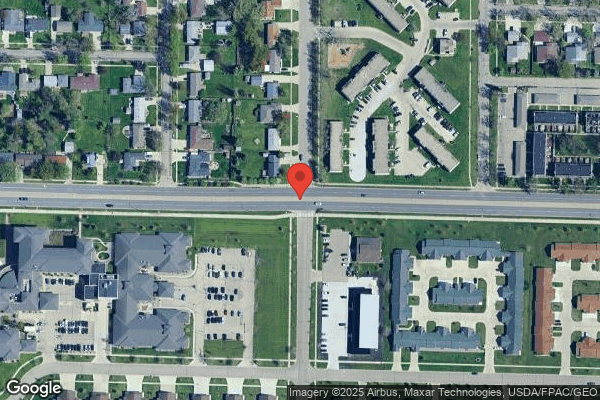
125 13TH AVENUE WEST, WEST FARGO, ND 58078 (701) 478-6100
Non profit - Corporation 64 Beds Independent Data: November 2025
Trust Grade
80/100
#27 of 72 in ND
Last Inspection: December 2024

Within standard 12-15 month inspection cycle. Federal law requires annual inspections.

Overview

Sheyenne Crossings Care Center in West Fargo, North Dakota, has a Trust Grade of B+, which indicates it is above average and recommended for families considering care options. It ranks #27 out of 72 facilities in North Dakota, placing it in the top half, and #6 out of 8 in Cass County, meaning there are only two local facilities considered better. However, the facility is experiencing a concerning trend, as reported issues have increased from 2 in 2023 to 5 in 2024. Staffing is a relative strength, with a turnover rate of 0%, which is significantly lower than the state average, although RN coverage is below that of 94% of North Dakota facilities, raising some concerns about nursing oversight. While there are no fines on record, which is a positive sign, recent inspections revealed some issues. For example, medications were not properly secured, with narcotics left in an unlocked cart, and hand hygiene protocols were not followed during care for multiple residents, which could lead to infection risks. Additionally, food storage practices in the kitchen failed to meet sanitary standards, posing potential health risks. Overall, while there are strengths in staffing and no fines, families should consider the facility's recent deficiencies and the trend of worsening inspection results.

Trust Score
B+
80/100
In North Dakota
#27/72
Top 37%
Safety Record
Low Risk
No red flags
Inspections
Getting Worse
2 → 5 violations
Staff Stability
○ Average
Turnover data not reported for this facility.
Penalties
✓ Good
No fines on record. Clean compliance history, better than most North Dakota facilities.
Skilled Nurses
○ Average
Each resident gets 36 minutes of Registered Nurse (RN) attention daily — about average for North Dakota. RNs are the most trained staff who monitor for health changes.
Violations
⚠ Watch
11 deficiencies on record. Higher than average. Multiple issues found across inspections.
★★★★☆
4.0
Overall Rating
★★★☆☆
3.0
Staff Levels
★★★☆☆
3.0
Care Quality
★★★★☆
4.0
Inspection Score
Stable
2023: 2 issues
2024: 5 issues

The Good

  • Full Sprinkler Coverage · Fire safety systems throughout facility
  • No fines on record

Facility shows strength in fire safety.

The Bad

No Significant Concerns Identified

This facility shows no red flags. Among North Dakota's 100 nursing homes, only 0% achieve this.

The Ugly 11 deficiencies on record

Dec 2024 4 deficiencies
CONCERN (D) 📢 Someone Reported This

A family member, employee, or ombudsman was alarmed enough to file a formal complaint

Potential for Harm - no one hurt, but risky conditions existed

Deficiency F0578 (Tag F0578)

Could have caused harm · This affected 1 resident

**NOTE- TERMS IN BRACKETS HAVE BEEN EDITED TO PROTECT CONFIDENTIALITY** Based on record review, review of facility policy, resident, family, and staff interview, the facility failed to ensure all form...

Read full inspector narrative →
**NOTE- TERMS IN BRACKETS HAVE BEEN EDITED TO PROTECT CONFIDENTIALITY** Based on record review, review of facility policy, resident, family, and staff interview, the facility failed to ensure all forms of communication related to code level status accurately reflected the residents' wishes for 2 of 18 sampled residents (Resident #30 and #48) and 1 supplemental resident (#14) reviewed for advance directives. Failure to ensure the medical record and other forms of communication accurately reflected the resident's code status limited the facility's ability to communicate to direct care staff and emergency personnel the resident's choice in the event of a medical emergency. Findings Include: Review of the facility policy titled CPR [cardiopulmonary resuscitation]/AED [automated external defibrillator]/Code Level occurred on [DATE]. This policy, revised [DATE], stated, . Uniform Code Levels (Code 1 and Code 2) and cardiac arrests will be discussed with all new residents and/or responsible party upon admission, hospital return, and annually with completion of the MDS [minimum data set]. Their wishes will be obtained, the Uniform Code Level Form will be completed, and documentation will be made in the resident's chart. A provider's order must be received . This is to ensure that a resident's wishes regarding CPR are followed in a time of crisis . - Review of Resident #14's medical record occurred on all days of survey. The Uniform Code Level Directives for Cardiopulmonary Resuscitation, signed by the resident on [DATE], indicated Code Level 2. The form identified code level 2 as No intervention will be made in the event of a cardiac or respiratory arrest including defibrillation, chest compression, artificial respiration, or chemical resuscitation. Other conditions will be treated as medically appropriate The face sheet, physician order summary, and electronic medication administration record (EMAR) identified a code level 2. The care plan identified a code level 1 All available reasonable technology is used in the event of cardiac or respiratory arrest. During an interview on [DATE] at 2:15 p.m., an administrative staff member (#1) confirmed the care plan failed to identify Resident #14's current code status. - Review of Resident #30's medical record occurred on all days of survey. The Uniform Code Level Directives for Cardiopulmonary Resuscitation, signed by the resident's representative on [DATE], indicated Code Level 2. The face sheet, physician order summary, and EMAR failed to identify a code status. The care plan identified a code level 1. During an interview on [DATE] at 3:30 p.m., an administrative nurse (#2) confirmed the resident's face sheet, physician order summary EMAR, and care plan failed to identify Resident #30's current code status. - Review of Resident #48's medical record occurred on all days of survey. The Uniform Code Level Directives for Cardiopulmonary Resuscitation, signed by the resident's significant other on [DATE], indicated Code Level 2. The face sheet, physician order summary, EMAR, and care plan indicated a code level 1. During an interview on [DATE] at 5:15 p.m., Resident #48 and her significant other verified the code level 2 as accurate.
CONCERN (D) 📢 Someone Reported This

A family member, employee, or ombudsman was alarmed enough to file a formal complaint

Potential for Harm - no one hurt, but risky conditions existed

Assessment Accuracy (Tag F0641)

Could have caused harm · This affected 1 resident

**NOTE- TERMS IN BRACKETS HAVE BEEN EDITED TO PROTECT CONFIDENTIALITY** Based on record review, review of the Long-Term Care Facility Resident Assessment Instrument (RAI) 3.0 User's Manual (Version 1....

Read full inspector narrative →
**NOTE- TERMS IN BRACKETS HAVE BEEN EDITED TO PROTECT CONFIDENTIALITY** Based on record review, review of the Long-Term Care Facility Resident Assessment Instrument (RAI) 3.0 User's Manual (Version 1.19.1), and staff interview, the facility failed to ensure accurate coding of the Minimum Data Set (MDS) for 1 of 18 sampled residents (Resident #29). Failure to accurately code the MDS does not allow each resident's assessment to reflect their current status/needs and may affect the accurate development of a comprehensive care plan and the care provided to the residents. Findings include: SECTION I: Active Diagnosis The Long-Term Care Facility RAI 3.0 User's Manual, revised October 2024, pages I-8, I-10, and I-12, states, . Coding Instructions: Code diseases that have a documented diagnosis in the last 60 days and have a direct relationship to the resident's current functional status, cognitive status, mood or behavior status, medical treatments, nursing monitoring . during the 7-day look-back period . Musculoskeletal . I4000, other fracture . Specific documentation may be found in progress notes, most recent history and physical, transfer notes, hospital discharge summary, etc. Review of Resident #29's medical record occurred on all days of survey and identified the following progress notes: * 10/25/2024 at 2:33 a.m.: Fall. Time of fall: 0125 [1:25 a.m.] . Resident self-transferring and fell. Small laceration on bridge of nose and nose is red and swollen. * 10/27/2024 at 1:23 p.m. Hospital Return. Resident admitted from: [hospital] . Reason for admission: Recent fall and nasal fracture. A significant change MDS, dated [DATE], identified staff failed to code Resident #29's nasal fracture in I4000. During an interview on 12/18/24 at 3:09 p.m., a nurse (#3) confirmed staff failed to code the nasal fracture on the significant change MDS. SECTION J: HEALTH CONDITIONS The Long-Term Care Facility RAI 3.0 User's Manual, revised October 2024, page J-34 states, . J1800: Any Falls Since Admission/Entry or Reentry or Prior Assessment . whichever is more recent. If this is not the first assessment/entry or reentry (A0310E = 0), the review period is from the day after the ARD [assessment reference date] of the last MDS assessment to the ARD of the current assessment. DEFINITION PRIOR ASSESSMENT: Most recent MDS assessment that reported on falls. . Code 0, no: if the resident has not had any fall since the last assessment. Review of Resident #29's medical record occurred on all days of survey. A discharge return anticipated MDS, dated [DATE], identified staff coded the resident's fall on item J1800. A significant change MDS, dated [DATE], identified staff coded a fall on item J1800 since the last MDS. The medical record did not identify a fall between 10/25/24 and 11/01/24. The facility miscoded Resident #29's significant change MDS for J1800 as the medical record lacked evidence of a fall occurring after the date of the prior assessment on 10/25/24. During an interview on 12/17/24 at 5:18 p.m., a nurse (#3) confirmed staff miscoded the significant change MDS for falls.
CONCERN (E) 📢 Someone Reported This

A family member, employee, or ombudsman was alarmed enough to file a formal complaint

Potential for Harm - no one hurt, but risky conditions existed

Deficiency F0761 (Tag F0761)

Could have caused harm · This affected multiple residents

Based on observation and staff interview, the facility failed to ensure safe and secure storage of medications and controlled substances (narcotics) in 1 of 1 unit (Transitional Care Unit (TCU)) obser...

Read full inspector narrative →
Based on observation and staff interview, the facility failed to ensure safe and secure storage of medications and controlled substances (narcotics) in 1 of 1 unit (Transitional Care Unit (TCU)) observed. Failure to secure medications and controlled substances may result in unauthorized access to medications. Findings include: The facility failed to provide a policy on storage of medications and controlled substances. - Observation on 12/18/24 at 1:37 p.m., of the TCU medication cart with a medication aide (MA) (#5) showed narcotic medication cards within the cart not stored in a locked box. The MA stated, When I walk away, I lock the cart and put the keys in my pocket. I do not lock these in a lock box [referencing narcotic cards]. - Observation on 12/18/24 at 1:49 p.m., showed the TCU medication storage room door and the narcotic storage cupboard door unlocked and ajar with non-nursing personnel present. A staff nurse (#4) was unaware of why both doors were unlocked and ajar. During an interview on 12/18/24 at 2:05 p.m., an administrative nurse (#2) confirmed she expected staff to lock the medication storage room door and narcotic cupboard doors, and store narcotics in the lock box in the medication cart.
CONCERN (E) 📢 Someone Reported This

A family member, employee, or ombudsman was alarmed enough to file a formal complaint

Potential for Harm - no one hurt, but risky conditions existed

Infection Control (Tag F0880)

Could have caused harm · This affected multiple residents

Based on observation, record review, review of facility policy, and staff interview, the facility failed to follow standards of infection control and prevention for 5 of 16 sampled residents (Resident...

Read full inspector narrative →
Based on observation, record review, review of facility policy, and staff interview, the facility failed to follow standards of infection control and prevention for 5 of 16 sampled residents (Resident #8, #9, #17, #32, and #36) and 2 supplemental residents (#7 and #46) observed during cares/dressing change. Failure to practice infection control standards related to hand hygiene, enhanced barrier precautions (EBP), during a dressing change, and disinfection of equipment has the potential to spread infection throughout the facility. Findings include: Review of the facility policy titled Hand Hygiene Policy occurred on 12/18/24. This policy, revised January 2024, stated, . Hand hygiene will be done a.) Before and After resident contact (before you leave the room) . Review of the facility policy titled Transmission-Based Precautions occurred on 12/18/24. This policy, revised January 2024, stated, . Enhanced barrier precaution - These are used to limit or prevent the spread of resistant organisms during high-contact resident care activities. In addition to standard precautions gown and gloves must be worn during high-contact resident care activities such as: . Transferring in the resident's room . Review of the facility policy titled Dressing Changes/Bandages occurred on 12/18/24. This policy, revised March of 2022, stated, . Clean area where supplies will be placed with germicidal wipes . - Review of Resident #8's medical record occurred on all days of survey. The current care plan stated, . Enhanced Barrier Precautions for indwelling catheter. Observation on all days of survey showed an EBP sign outside of Resident #8's room. Observation on 12/17/24 at 9:50 a.m. showed Resident #8 seated in a wheelchair and the certified nurse aide (CNA) (#8) transferred the resident into bed. The CNA failed to don gloves and a gown before transferring Resident #8. - Review of Resident #36's medical record occurred on all days of survey. The current care plan stated, . Enhanced Barrier Precautions in place. Observation on all days of survey showed an EBP sign outside of Resident #36's room. Observation on 12/17/24 at 9:58 a.m. showed a CNA (#9) and a nurse (#10) failed to don gloves or a gown and entered Resident #36's room to perform a transfer. The CNA and nurse used a full body mechanical lift to transfer the resident from the wheelchair to the bed. - Review of Resident #32's medical record occurred on all days of survey. The current care plan stated, . Enhanced Barrier Precautions due to ulcers to feet. Observation on all days of survey showed an EBP sign outside of Resident #32's room. Observation on 12/17/24 at 10:31 a.m. showed a CNA (#11) donned gloves and a gown to assist Resident #32 onto the toilet. A second CNA (#9) entered the room to assist with the transfer and failed to don gloves and a gown. After the transfer, the CNA (#9) failed to perform hand hygiene before exiting the room. During an interview on 12/17/24 at 10:55 a.m., an administrative nurse (#2) stated she expected staff to wear appropriate personal protective equipment when transferring residents in an EBP room and expected staff to complete hand hygiene before leaving a resident's room after assisting with a transfer. - Observation on 12/16/24 at 1:40 p.m. showed two CNAs (#5 and #13) entered Resident #17's room with a full body mechanical lift and transferred the resident from the wheelchair to the bed. While performing cares, CNA (#5) failed to perform hand hygiene between glove changes and failed to perform hand hygiene or disinfect the lift when exiting the room. - Observation on 12/16/24 at 1:54 p.m. showed two CNAs (#5 and #13) entered Resident #7's room with the full body mechanical lift the CNAs failed to disinfect during the observation and transferred Resident #7. The CNAs failed to perform hand hygiene upon entering Resident #7's room, assisted with personal cares and failed to perform hand hygiene in between glove changes, before exiting the room, and failed to disinfect the mechanical lift when exiting the room. - Observation on 12/17/24 at 10:56 a.m. showed two CNAs (#6 and #7) assisted Resident #9 to the bathroom using the full body mechanical lift. After assisting the resident, the CNA (#7) exited the resident's room without disinfecting the lift. During an interview on 12/17/24 at 11:20 a.m., a CNA (#7) stated, It is our policy to sanitize between residents. I did forget to wipe the lift down. - Observation on 12/17/24 at 1:46 p.m. showed a CNA (#14) entered Resident #46's room to perform personal cares. The CNA failed to perform hand hygiene between gloves changes with cares and failed to perform hand hygiene before exiting the room. - Observation on 12/18/24 at 12:10 p.m. showed a licensed nurse (#12) entered Resident #36's room to perform a dressing change. The nurse failed to clean the bedside table with a germicidal wipe and placed the dressing supplies directly on the resident's bedside table. During an interview on 12/18/24 at 10:30 a.m., an administrative nurse (#2) confirmed staff are expected to complete hand hygiene during resident cares and sanitize equipment after each use.
May 2024 1 deficiency
CONCERN (D) 📢 Someone Reported This

A family member, employee, or ombudsman was alarmed enough to file a formal complaint

Potential for Harm - no one hurt, but risky conditions existed

Accident Prevention (Tag F0689)

Could have caused harm · This affected 1 resident

Based on observation, record review, review of facility policy, and staff interview, the facility failed to provide adequate supervision and assistive devices for 1 of 2 sampled residents (Resident #1...

Read full inspector narrative →
Based on observation, record review, review of facility policy, and staff interview, the facility failed to provide adequate supervision and assistive devices for 1 of 2 sampled residents (Resident #1) observed during a transfer. Failure to use a gait belt during transfers placed the resident at risk for accidents, falls, or injuries. Findings include: Review of the facility policy titled Standards of Care occurred on 05/02/24. This policy, revised January 2024, stated, . A gait belt will be used for all assisted transfers and ambulation . Review of Resident #1's medical record occurred on 05/02/24. Diagnoses included history of falling and symptoms and signs involving cognitive functions and awareness. The current care plan stated, Ambulation, Transfers and Toileting: assist x [times] 1 FWW [front wheeled walker]. Observation on 05/02/24 at 11:47 a.m., showed a certified nurse aide (CNA) (#1) assisted Resident #1 from the resident's bed to the wheelchair and again from the wheelchair to the toilet without utilizing a gait belt. During an interview on 05/02/24 at 12:50 p.m., an administrative nurse (#2) stated she expected staff to use the gait belt during all assisted transfers.
Nov 2023 2 deficiencies
CONCERN (D) 📢 Someone Reported This

A family member, employee, or ombudsman was alarmed enough to file a formal complaint

Potential for Harm - no one hurt, but risky conditions existed

Deficiency F0692 (Tag F0692)

Could have caused harm · This affected 1 resident

Based on record review and staff interview, the facility failed to ensure acceptable parameters of nutritional status for 1 of 6 sampled residents (Resident #22) with significant weight loss. Failure ...

Read full inspector narrative →
Based on record review and staff interview, the facility failed to ensure acceptable parameters of nutritional status for 1 of 6 sampled residents (Resident #22) with significant weight loss. Failure to change and/or implement additional interventions to prevent further loss weight loss resulted in continued significant weight loss for the resident. Findings include: Review of Resident #22's medical record occurred on all days of survey. The medical record identified the following weights: 04/28/23 - 127.4 pounds (lbs) 08/29/23 - 123.2 lbs 09/26/23 - 115.4 lbs, 6.3% weight loss in 30 days 10/31/23 - 112.2 lbs, 11.9% weight loss in six months Nutrition Assessments completed on 10/25/23 and 11/03/23 identified a daily nutritional supplement as the only nutritional intervention for weight maintenance, despite noting a continued weight loss. The facility completed a significant change minimum data set assessment on 10/25/23 due to Resident #22 having changes in activities of daily living and a significant weight loss of 5% or more. The facility notified the practitioner of a 12% weight change on 11/06/23 and identified the resident remained on a daily nutritional supplement for weight maintenance. During an interview on 11/15/23 at 2:04 p.m., a dietary member (#3) identified no further interventions have been added for Resident #22's weight loss and was waiting for today's weight before deciding what to do for Resident #22. The facility failed to identify the 6.3% weight loss in September and the resident continued to a 12% significant weight loss over six months, reported to the provider. The facility failed to add other dietary interventions and the resident continued to lose weight.
CONCERN (E) 📢 Someone Reported This

A family member, employee, or ombudsman was alarmed enough to file a formal complaint

Potential for Harm - no one hurt, but risky conditions existed

Food Safety (Tag F0812)

Could have caused harm · This affected multiple residents

Based on observation, review of the Food and Drug Administration (FDA) 2022 Food Code, and staff interview, the facility failed to store food under sanitary conditions in 1 of 1 kitchen. Failure to st...

Read full inspector narrative →
Based on observation, review of the Food and Drug Administration (FDA) 2022 Food Code, and staff interview, the facility failed to store food under sanitary conditions in 1 of 1 kitchen. Failure to store food in a sanitary environment in the walk-in freezer has the potential to result in contamination of food and could result in a foodborne illness. Findings include: The 2022 Food Code, pages 81-82, stated, 3-305.11 Food Storage. FOOD shall be protected from contamination by storing the FOOD: (1) In a clean, dry location; (2) Where it is not exposed to splash, dust, or other contamination; . 3-305.12 Food Storage, Prohibited Areas. FOOD may not be stored: . (G) Under leaking water lines, including leaking automatic fire sprinkler heads, or under lines on which water has condensed; . or (I) Under other sources of contamination. Observation on 11/13/23 at 11:41 a.m. in the main kitchen walk-in freezer showed an open box of chicken on the top shelf. The chicken stored in an open plastic bag, showed frost and ice buildup from water dripping from above condensation. During an interview on 11/13/23 at 11:46 a.m., a dietary staff member (#3) discarded the open box of chicken and stated maintenance was aware of the condenser line and will be fixing the problem. During an interview on 11/14/23 at 5:25 p.m., an administrative staff member (#2) stated she expected all food to be covered.
Oct 2022 4 deficiencies
CONCERN (D)

Potential for Harm - no one hurt, but risky conditions existed

Deficiency F0554 (Tag F0554)

Could have caused harm · This affected 1 resident

Based on observation, record review, review of facility policy, staff and resident interview, the facility failed to ensure the interdisciplinary team assessed the appropriateness to self-administer m...

Read full inspector narrative →
Based on observation, record review, review of facility policy, staff and resident interview, the facility failed to ensure the interdisciplinary team assessed the appropriateness to self-administer medications (SAM) for 1 of 2 sampled residents (Resident #38) with medications observed in the resident's room. Failure to determine whether SAM is a safe practice has the potential to limit a resident's right to SAM or result in a medication error and/or harm to a resident. Findings include: Review of the facility policy titled Medication-Self-Administration of Meds [Medications] occurred on 10/19/22. This policy, revised December 2021, stated, . Ask the resident if they would like to self-administer medication . If the resident wishes to do this complete the Self-Administration of Medication Assessment . Observation on the afternoon of 10/17/22, showed two nasal spray medications on Resident #38's bedside table. The resident reported he uses the nasal sprays in the morning and at bedtime. Review of Resident #38's medical record occurred on all days of survey. A physician's order dated 02/17/22 stated, . Resident may do own nasal spray - Please observe he is doing correctly . The record lacked a SAM assessment indicating Resident #38 can safely self-administer medications. During an interview on 10/18/22 at 11:30 a.m., an administrative nurse (#1) confirmed staff failed to complete the SAM assessment for Resident #38.
CONCERN (D)

Potential for Harm - no one hurt, but risky conditions existed

Deficiency F0658 (Tag F0658)

Could have caused harm · This affected 1 resident

Based on record review, review of facility policy, review of professional literature, and staff interview, the facility failed to follow professional standards of practice for 2 of 2 sample residents ...

Read full inspector narrative →
Based on record review, review of facility policy, review of professional literature, and staff interview, the facility failed to follow professional standards of practice for 2 of 2 sample residents (Resident #52 and #63) reviewed with fluid restrictions. Failure to accurately transcribe Resident #52's fluid restriction order onto the Medication Administration Record (MAR) and to enter Resident #63's fluid restriction order onto the MAR when received placed the residents at risk for exacerbation of current diagnoses and/or decline in health status. Findings include: Review of the facility policy titled Fluid Restriction occurred on 10/20/22. This policy, dated October 2019, stated, . The policy of Eventide is to monitor fluid intake on residents who have provider orders for fluid restrictions. Fluids will be recorded by the following process: Nurse/TMA [medication aide] will record all fluid provided with medications and between meals on the MAR. Kozier & Erb's Fundamentals of Nursing, Concepts, Process and Practice, 11th Edition eText, 2021, Pearson, Boston, Massachusetts, page 62, stated, . Carrying Out a Physician's Order. Nurses are expected to analyze procedures and medications ordered by the physician or primary care provider. If the order is neither ambiguous nor apparently erroneous, the nurse is responsible for carrying it out. - Review of Resident #52's medical record occurred on all days of survey. Diagnoses included congestive heart failure (CHF) (fluid build up in the heart). Resident #52's medical record identified a 6-day hospital stay in September 2022 for respiratory failure (difficulty to breath) with hypoxia (poor oxygenation to body tissues). The physician's discharge orders stated, . Limit fluid intake to about 1500 mL [milliliters] per day [24 hours]. Review of Resident #52's MAR for September 19 through October 18, 2022 stated, 1500 ml Fluid Restriction every shift [eight hours] for Fluid Overload . - Review of Resident #363's medical record occurred on all days of survey. Diagnoses included CHF. A physician's order, dated 10/02/22, stated, . 1500 mL fluid restriction . Review of Resident #363's October 02-18, 2022 MAR lacked an order for fluid restrictions. During an interview the morning of 10/19/22, an administrative staff member (#1) and a dietary manager (#2) confirmed Resident #52 and #363's physician orders are 1500 ml per 24 hours, not per shift, the order transcribed to Resident #52's MAR did not match the physician's order, and Resident #363's MAR lacked a fluid restriction order.
CONCERN (D)

Potential for Harm - no one hurt, but risky conditions existed

Infection Control (Tag F0880)

Could have caused harm · This affected 1 resident

Based on observation, review of facility policy, and review of professional literature, the facility failed to follow standards of infection control for 2 of 14 sampled residents (Residents #1 and #6)...

Read full inspector narrative →
Based on observation, review of facility policy, and review of professional literature, the facility failed to follow standards of infection control for 2 of 14 sampled residents (Residents #1 and #6) observed during cares. Failure to follow infection control standards has the potential for transmission of communicable diseases and infections to residents, staff, and visitors. Findings include: Kozier & Erb's Fundamentals of Nursing, Concepts, Process and Practice, 11th Edition eText, 2021, Pearson, Boston, Massachusetts, page 744, stated, . clean penis . from center outward and wash down . Use a clean area of the washcloth or a new washcloth when washing a new area. prevents cross-contamination. Wash and dry . posterior [groin] folds . tends to be more soiled than the penis because of its proximity to the rectum . This follows the principle of cleaning from the least contamination to that of the greatest. Review of the facility policy titled Gloves-Guidelines for Wearing occurred on 10/20/22. This policy, revised May 2022, stated, . Gloves are disposable, and should be changed between residents and between dirty to clean procedures on same resident. Always perform hand hygiene before and after gloving. Review of the facility policy titled Hand Hygiene occurred on 10/20/22. This policy, revised May 2022, stated, . Hand hygiene will be done a. Before and after resident contact (before you leave the room) b. Before every clean procedure c. After dirty procedure . - Observation on 10/18/22 at 8:11 a.m. showed a certified nurse aid (CNA) (#5) provided frontal perineal cares to Resident #6 while seated on the toilet. The CNA (#5) donned gloves and used a washcloth to cleanse the resident's groin. Without rinsing/folding the washcloth or obtaining a new washcloth, the CNA wiped the penis tip. The CNA removed her gloves, and without hand hygiene, applied new gloves and shaved the resident's face. The CNA (#5) then assisted Resident #1 to stand, cleansed bowel with disposable wipes, completed the back perineal cares, and removed her gloves. Without performing hand hygiene, the CNA (#5) donned new gloves, pulled up the resident's brief and pants, transferred him into his wheelchair, and moved the wheelchair to the sink. The CNA (#5) set Resident #1 up to brush his teeth and applied toothpaste on his toothbrush. The CNA (#5) then removed her gloves, and without performing hand hygiene, exited the resident's room. - Observation on 10/18/22 at 9:07 a.m. showed a CNA (#5) provided perineal cares to Resident #1 while in bed. The CNA (#5) used a washcloth the cleanse the resident's groin, and without rinsing/folding the washcloth or obtaining a new washcloth, wiped the penis tip.
CONCERN (E)

Potential for Harm - no one hurt, but risky conditions existed

Grievances (Tag F0585)

Could have caused harm · This affected multiple residents

Based on observation, resident interviews, and review of resident council meeting minutes the facility failed to resolve grievances related to dietary concerns for 7 of 20 confidential residents (Resi...

Read full inspector narrative →
Based on observation, resident interviews, and review of resident council meeting minutes the facility failed to resolve grievances related to dietary concerns for 7 of 20 confidential residents (Residents A, B, C, D, E, F, and G) interviewed on the Transitional Care Unit (TCU). Failure to resolve the resident's concerns in a timely manner resulted in continued dissatisfaction regarding cold food. Findings include: During the afternoons of 10/17/22 and 10/19/22, Residents A, B, C, D, E, F, and G reported food is cold when served. Each resident indicated they had reported this to staff and the food is still cold when served. During the supper meal on 10/19/22 at 6:00 p.m., four residents at one table reported the roast beef and mashed potatoes were cold when delivered. Review of the Resident Council Minutes, dated 06/23/22 and 08/16/22, identified food is sometimes cold when delivered, food wait times are some days good and some days bad, and the resident's feel there is at times an issue with the delivery of meals. Observation on 10/19/22 of the evening meal served on the TCU showed the following: * First meal plated at 5:50 p.m. and the last plated meal delivered at 6:36 p.m. * After plating the hot foods the staff member put a plate on a serving tray and failed to cover the food immediately. * On two separate occasions the dietary staff member (#4) left plated foods uncovered during the time he/she retrieved more plate covers. * At times, the resident meal trays sat on the counter for several minutes before delivered. During an interview on 10/20/22 at 8:39 a.m., a dietary manager (#2) stated she expected all meals to be served within a 30 minute or so area and agreed the issue of cold foods may be related to the meal service/tray delivery process.
Understanding Severity Codes (click to expand)
Life-Threatening (Immediate Jeopardy)
J - Isolated K - Pattern L - Widespread
Actual Harm
G - Isolated H - Pattern I - Widespread
Potential for Harm
D - Isolated E - Pattern F - Widespread
No Harm (Minor)
A - Isolated B - Pattern C - Widespread

Questions to Ask on Your Visit

  • "Can I speak with families of current residents?"
  • "What's your RN coverage like on weekends and overnight?"

Our Honest Assessment

Strengths
  • • Grade B+ (80/100). Above average facility, better than most options in North Dakota.
  • • No major safety red flags. No abuse findings, life-threatening violations, or SFF status.
  • • No fines on record. Clean compliance history, better than most North Dakota facilities.
Concerns
  • • 11 deficiencies on record. Higher than average. Multiple issues found across inspections.
Bottom line: Generally positive indicators. Standard due diligence and a personal visit recommended.

About This Facility

What is Sheyenne Crossings/Tcu's CMS Rating?

CMS assigns SHEYENNE CROSSINGS CARE CENTER/TCU an overall rating of 4 out of 5 stars, which is considered above average nationally. Within North Dakota, this rating places the facility higher than 99% of the state's 100 nursing homes. This rating reflects solid performance across the metrics CMS uses to evaluate nursing home quality.

How is Sheyenne Crossings/Tcu Staffed?

CMS rates SHEYENNE CROSSINGS CARE CENTER/TCU's staffing level at 3 out of 5 stars, which is average compared to other nursing homes.

What Have Inspectors Found at Sheyenne Crossings/Tcu?

State health inspectors documented 11 deficiencies at SHEYENNE CROSSINGS CARE CENTER/TCU during 2022 to 2024. These included: 11 with potential for harm.

Who Owns and Operates Sheyenne Crossings/Tcu?

SHEYENNE CROSSINGS CARE CENTER/TCU is owned by a non-profit organization. Non-profit facilities reinvest revenue into operations rather than distributing to shareholders. The facility operates independently rather than as part of a larger chain. With 64 certified beds and approximately 58 residents (about 91% occupancy), it is a smaller facility located in WEST FARGO, North Dakota.

How Does Sheyenne Crossings/Tcu Compare to Other North Dakota Nursing Homes?

Compared to the 100 nursing homes in North Dakota, SHEYENNE CROSSINGS CARE CENTER/TCU's overall rating (4 stars) is above the state average of 3.1 and health inspection rating (4 stars) is above the national benchmark.

What Should Families Ask When Visiting Sheyenne Crossings/Tcu?

Based on this facility's data, families visiting should ask: "Can I visit during a mealtime to observe dining assistance and food quality?" "How do you handle medical emergencies, and what is your hospital transfer rate?" "Can I speak with family members of current residents about their experience?"

Is Sheyenne Crossings/Tcu Safe?

Based on CMS inspection data, SHEYENNE CROSSINGS CARE CENTER/TCU has a clean safety record: no substantiated abuse findings (meaning no confirmed cases of resident harm), no Immediate Jeopardy citations (the most serious violation level indicating risk of serious injury or death), and is not on the Special Focus Facility watch list (a federal program monitoring the lowest-performing 1% of nursing homes). The facility has a 4-star overall rating and ranks #1 of 100 nursing homes in North Dakota. While no facility is perfect, families should still ask about staff-to-resident ratios and recent inspection results during their visit.

Do Nurses at Sheyenne Crossings/Tcu Stick Around?

SHEYENNE CROSSINGS CARE CENTER/TCU has not reported staff turnover data to CMS. Staff turnover matters because consistent caregivers learn residents' individual needs, medications, and preferences. When staff frequently change, this institutional knowledge is lost. Families should ask the facility directly about their staff retention rates and average employee tenure.

Was Sheyenne Crossings/Tcu Ever Fined?

SHEYENNE CROSSINGS CARE CENTER/TCU has no federal fines on record. CMS issues fines when nursing homes fail to meet care standards or don't correct problems found during inspections. The absence of fines suggests the facility has either maintained compliance or corrected any issues before penalties were assessed. This is a positive indicator, though families should still review recent inspection reports for the full picture.

Is Sheyenne Crossings/Tcu on Any Federal Watch List?

SHEYENNE CROSSINGS CARE CENTER/TCU is not on any federal watch list. The most significant is the Special Focus Facility (SFF) program, which identifies the bottom 1% of nursing homes nationally based on persistent, serious quality problems. Not being on this list means the facility has avoided the pattern of deficiencies that triggers enhanced federal oversight. This is a positive indicator, though families should still review the facility's inspection history directly.